This article was originally published on the Lucy Cavendish College website.
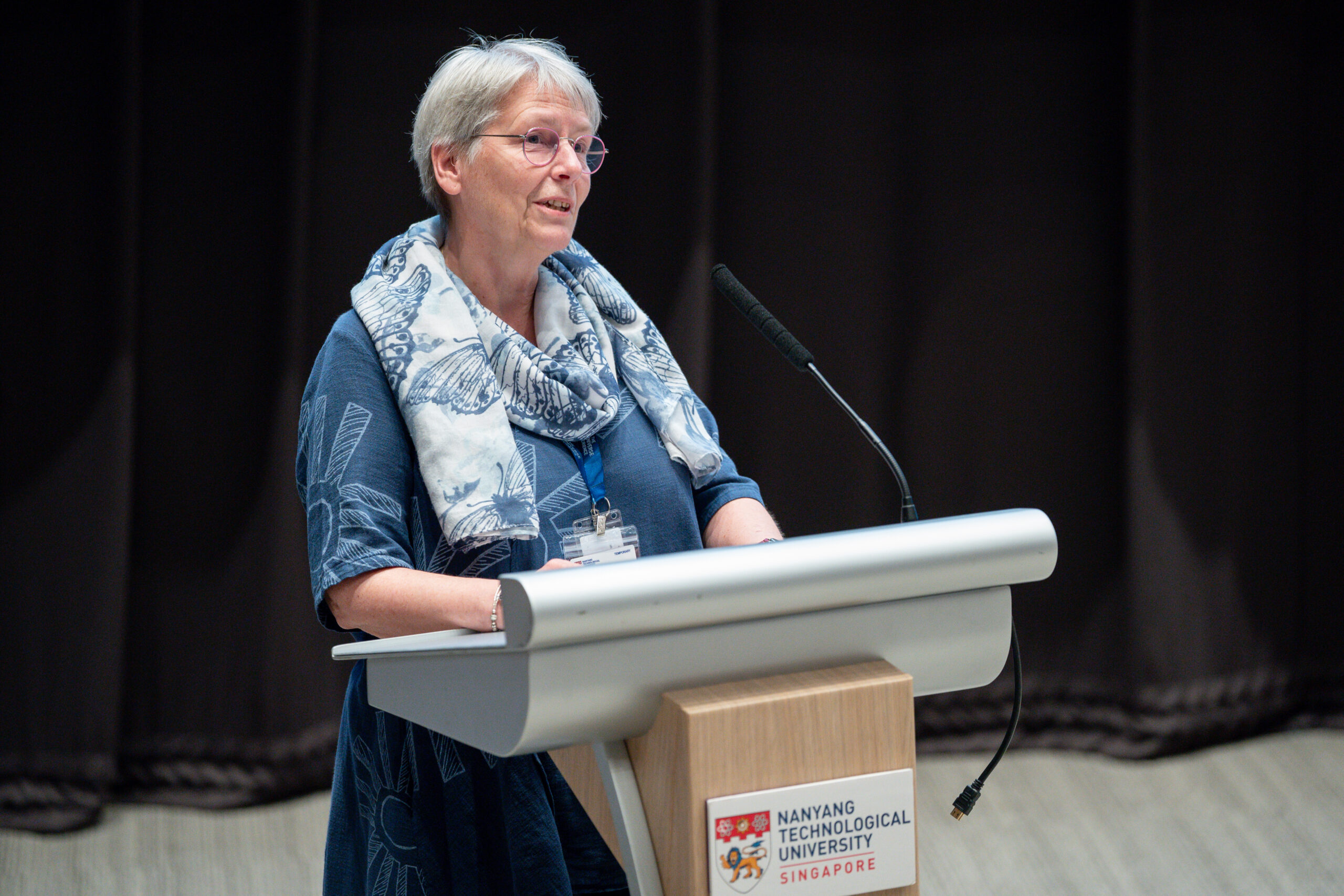
From learning Chinese to splitting her time between Cambridge and Singapore, Lucy Fellow Prof Henriëtte Hendriks has followed her curiosity across languages and continents. She reflects on the journey that has led her to become Deputy Director of a research programme in Singapore.
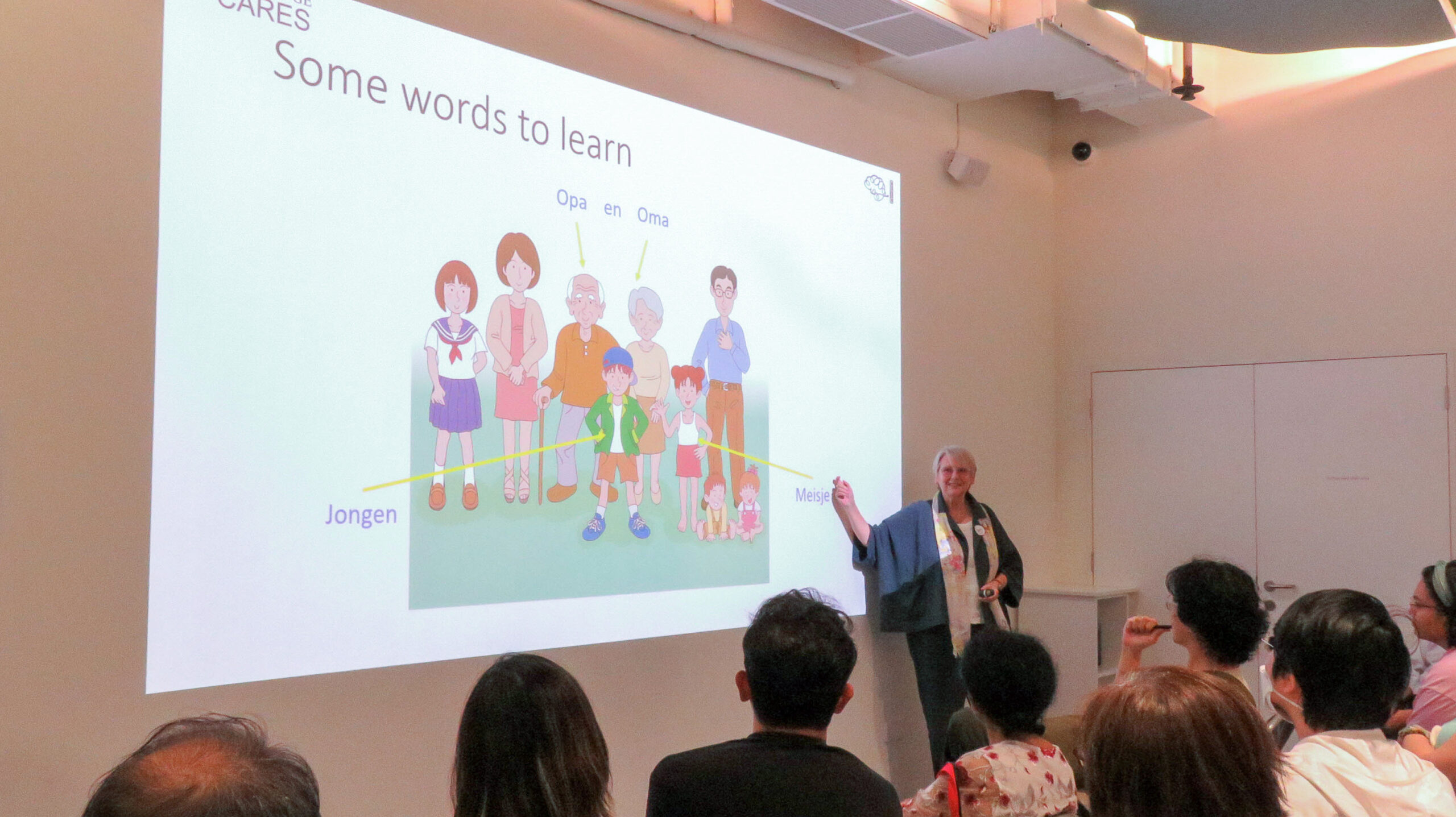
I have always been interested in languages and learning more languages. Living in the Netherlands, we were brought up with the idea that realistically few people would be learning Dutch, so if we wanted to connect with those outside of our country, we would likely have to acquire their languages. Connecting with other people and cultures was another interest of mine.
I learnt a few languages at school and then decided to study Chinese, drawn by how different its structure and writing system were from anything European. At the time, I did not know of the term ‘linguistics’, but through my studies realised that I was interested in the linguistic features that made Chinese different. From there, I more or less by chance found a job at the Max-Planck Institute for Psycholinguistics, and I had found my main research interest: language acquisition, an important branch of applied linguistics.
That path eventually led me to Singapore, where I now serve as Deputy Director of the Centre for Lifelong Learning and Individualised Cognition (CLIC) at CARES, Cambridge’s first overseas research centre.
Language and Cognitive Flexibility
CLIC explores how we can help the Singapore population be more flexible so that they can navigate the big decisions the world is facing as well as their own everyday decisions.
We address this by trying to improve cognitive flexibility, one of the executive functions (EFs) that help regulate human behaviour like deciding when to take a risk or when to stop for an approaching car. Cognitive flexibility as an executive function also links the overall study to our interest in multilingualism.
Over 100 years ago, monolingualism was thought to be the “norm” and bilingualism an aberration. It was even believed that being bilingual might cause children to get behind in their schoolwork or general cognitive development. Since the 1960s, researchers have been trying to disprove this (Peal and Lambert, 1962), but it has been tricky.
In most studies so far, researchers have either compared monolinguals with multilinguals and argued that multilinguals have the advantage or simply looked at correlations between mono-/bilingualism and cognitive functions. This does not necessarily tell us: does being multilingual make you more cognitive flexible, or are people who are more cognitive flexible more likely to learn multiple languages and become multilingual?
In the language study within CLIC, we are trying to shed more light on this question.
We are following a group of young Singaporean bilinguals (all students at Nanyang Technological University) who enrolled in a language learning module before they heard of our research. We assess their cognitive flexibility before and after their language course and compare their results with students who did not learn a third language during the term. Although the study is still ongoing, we have already seen an effect in one of the cognitive flexibility tasks we administered.
Working Across the World
Having a residency in Singapore of around 3 months each year is a unique requirement of the research grant awarded to the project, and certainly not a typical working arrangement for Cambridge Professors. It has, however, given me the opportunity to experience first-hand how multilingual (not everyone is equally bilingual) and multi-ethnic the country is, and how these characteristics shape its society. I could have read many books about the country, but I would never have gained the same in-depth understanding I now have (and I know there is still much more to learn!).
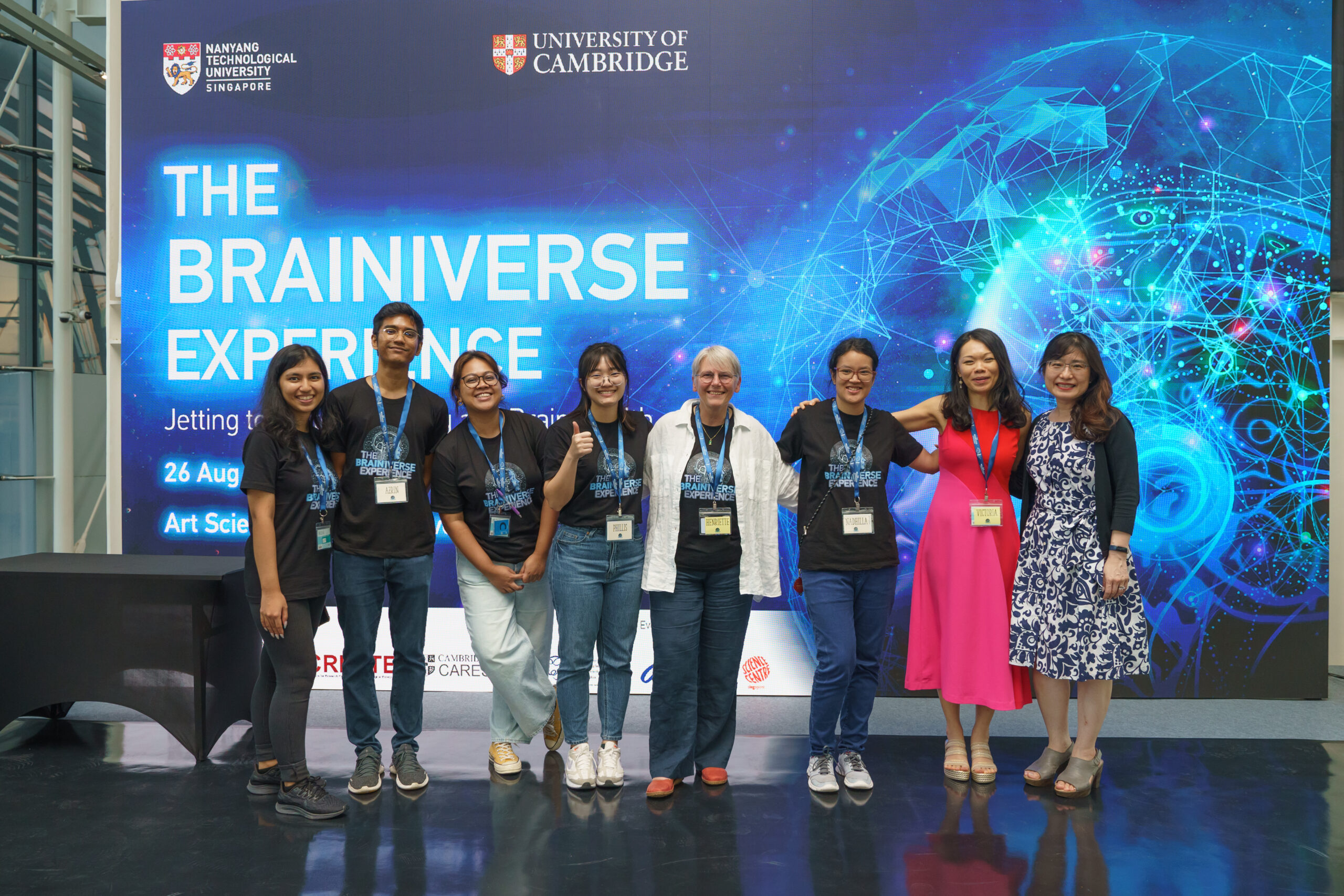
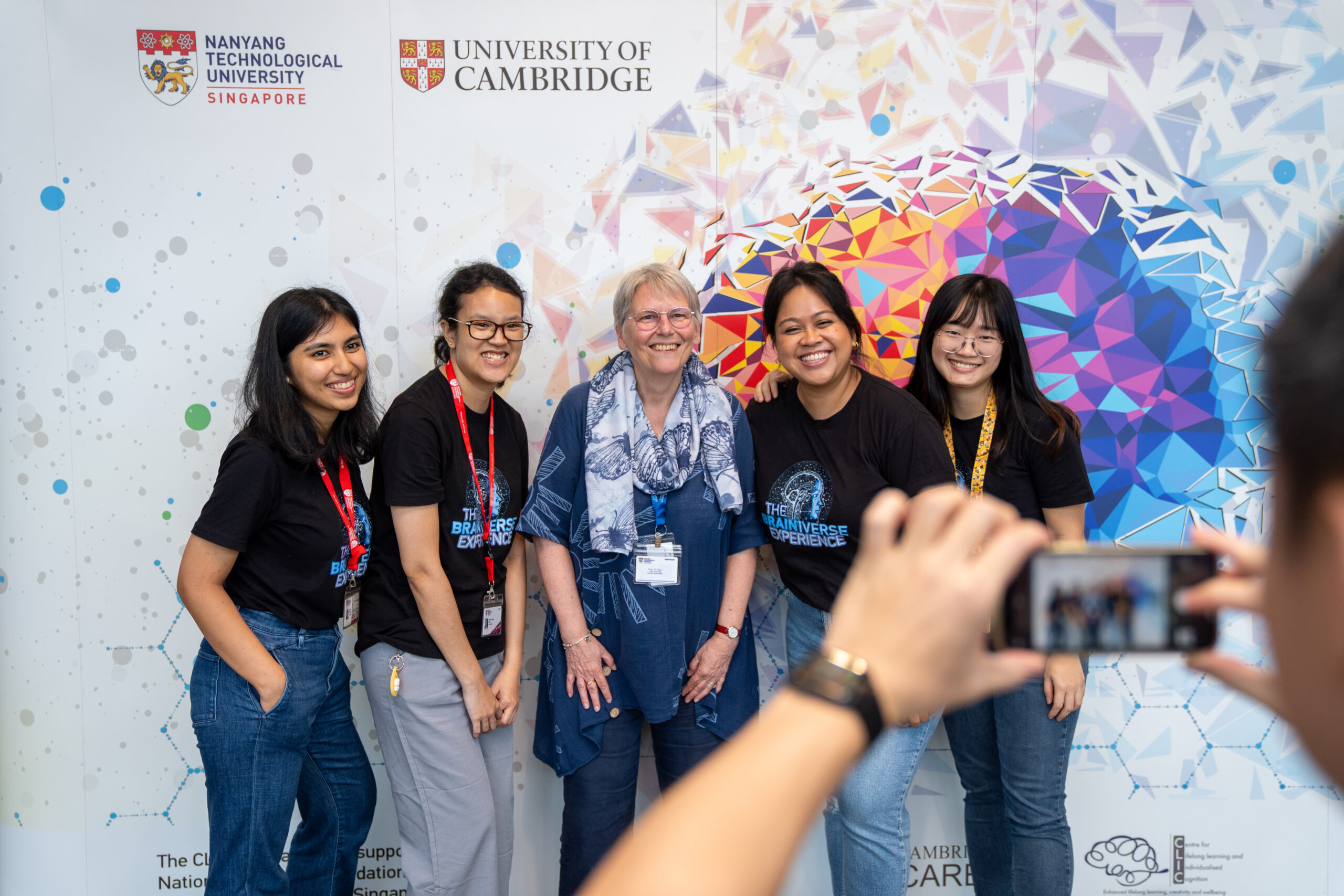
More importantly, being based here means being fully immersed in the research. It has allowed me to work day-to-day with a fabulous team of Singapore-based Principal Investigators and young researchers at CLIC.
Although the working days are typically a lot longer, they are also often more fruitful. The time difference also allows me to focus more on some projects during the day (when Cambridge is asleep) but when I want to go to bed, Cambridge wakes up…
The Lucy Community
Being a Fellow means being a part of a community that is working together for a greater good: to provide the ideal context for young students coming to Cambridge to pursue their studies, and for “fellow” fellows to find a warm, inclusive and innovative community in which to do our research and teach. I much enjoy that way of working as a team and learning from and sharing with each other.
I am constantly amazed about how cognitive flexible our students are and need to be, in our increasingly uncertain world, and it inspires me to understand the concept more, and to see how I can help instil it in future generations of students.
Peal, E., & Lambert, W. E. (1962). The relation of bilingualism to intelligence. Psychological Monographs: General and Applied, 76(27), 1–23. https://doi.org/10.1037/h0093840
CLIC is supported by the National Research Foundation, Prime Minister’s Office, Singapore under its Campus for Research Excellence and Technological Enterprise (CREATE) programme.