
Profile
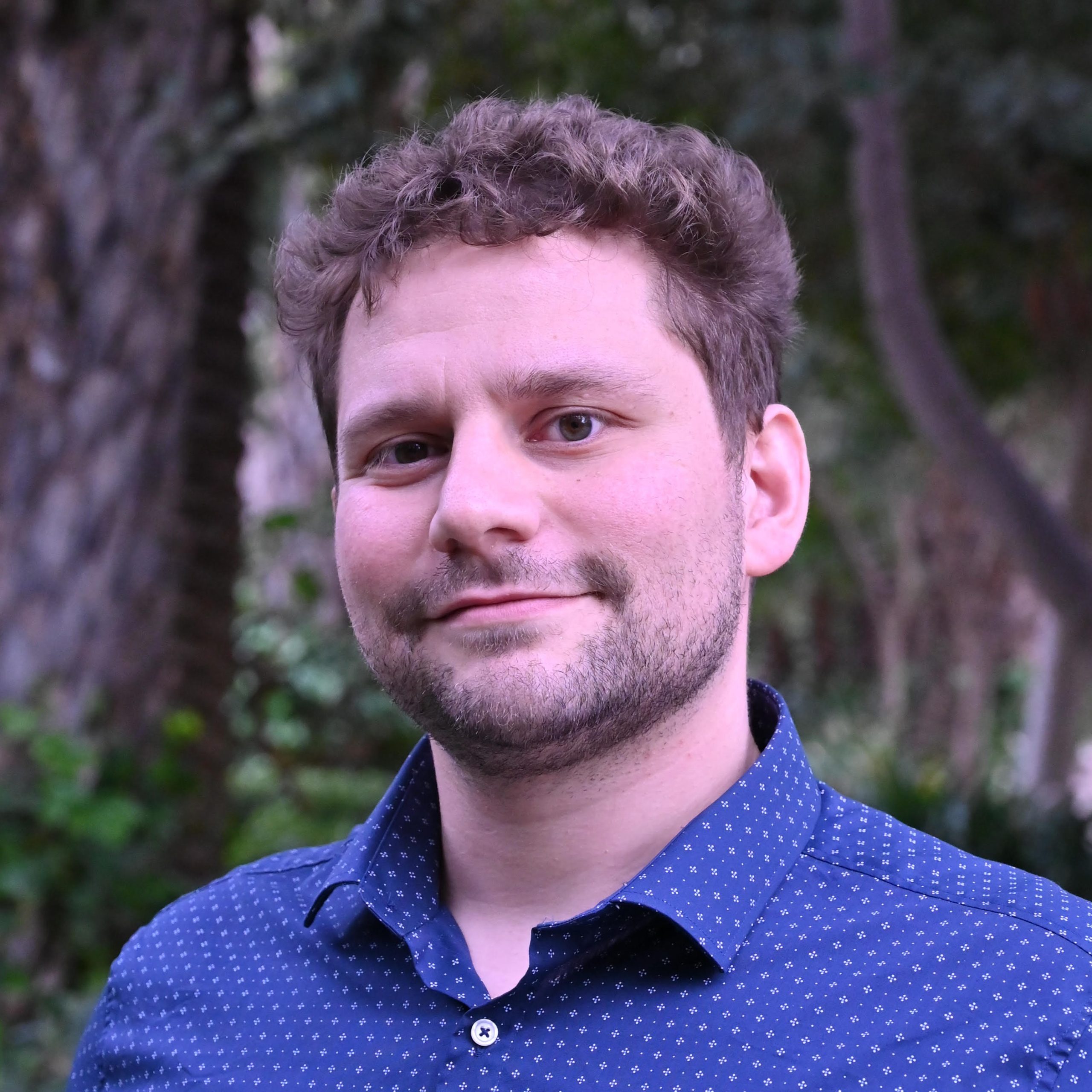
Dr Savvas GKANTONAS
Senior Research Associate, University of Cambridge
Dr Savvas Gkantonas is a Senior Research Associate in the Department of Engineering at the University of Cambridge. He specialises in computational fluid dynamics and novel turbulent reacting flow modelling, addressing fundamental and practical problems in transport, power, human health, and the environment. He has authored or co-authored over 40 articles in high-impact journals and conference proceedings, and his works has been integrated into the practices of industry leaders such as Rolls Royce, Siemens Energy, the UK Aerospace Technology Institute, and two university spinout companies where he holds leading roles.
During his visit, Dr Gkantonas delivered a talk and contributed to CARES' latest HYCOMBS project, which aims to advance the use of hydrogen and ammonia for propulsion and power generation in Singapore.
Date of CARES visit: August 2024
Presentation title: A novel approach to wildfire risk forecasting and mitigation in a changing climate
Abstract: Wildfires are a global challenge, impacting lives, property, and economies both near and far from their origins. Despite their destructive potential, wildfires play a crucial role in maintaining forest health by clearing dead vegetation and promoting new growth. We need to envision and prepare for a future where wildfires can be swiftly and accurately forecasted and detected, allowing for the safe management of beneficial fires and the rapid suppression of destructive ones. This is a delicate balancing act, given the uncertainties of the behaviour and spread dynamics of each wildfire, and the larger vicious cycle between carbon emissions from burning vegetation and rising temperatures that drive wildfire occurrence. Society, governments, and firefighters are currently ill-equipped to develop effective management strategies in this changing climate without new technology and innovative, interdisciplinary modelling approaches. In response, I have co-invented a new modelling framework for wildfire behaviour and spread, inspired by previous research on turbulent flame propagation and jet engine ignition at Cambridge. The underlying model fully accounts for the physical phenomena present in fires propagating in the wildland or at the interface with built environment, i.e., Wildland-Urban Interface (WUI). WUI fires, in particular, can have devastating consequences and have been difficult to describe theoretically until now. I will present various validation cases demonstrating the model’s effectiveness within the WUI and discuss its integration with earth observation technologies and machine learning for accurate detection, faster-than-real-time prediction and selfimprovement of the propagation characterisation. Additionally, I will discuss novel risk assessment and forecasting methods for planning, insurance purposes, and optimisation strategies for predicting fire outbreak risks and managing resources during firefighting.
Cambridge
Past Visiting Scientists
Profile
Dr Savvas GKANTONAS
Senior Research Associate, University of Cambridge
Dr Savvas Gkantonas is a Senior Research Associate in the Department of Engineering at the University of Cambridge. He specialises in computational fluid dynamics and novel turbulent reacting flow modelling, addressing fundamental and practical problems in transport, power, human health, and the environment. He has authored or co-authored over 40 articles in high-impact journals and conference proceedings, and his works has been integrated into the practices of industry leaders such as Rolls Royce, Siemens Energy, the UK Aerospace Technology Institute, and two university spinout companies where he holds leading roles.
During his visit, Dr Gkantonas delivered a talk and contributed to CARES' latest HYCOMBS project, which aims to advance the use of hydrogen and ammonia for propulsion and power generation in Singapore.
Date of CARES visit: August 2024
Presentation title: A novel approach to wildfire risk forecasting and mitigation in a changing climate
Abstract: Wildfires are a global challenge, impacting lives, property, and economies both near and far from their origins. Despite their destructive potential, wildfires play a crucial role in maintaining forest health by clearing dead vegetation and promoting new growth. We need to envision and prepare for a future where wildfires can be swiftly and accurately forecasted and detected, allowing for the safe management of beneficial fires and the rapid suppression of destructive ones. This is a delicate balancing act, given the uncertainties of the behaviour and spread dynamics of each wildfire, and the larger vicious cycle between carbon emissions from burning vegetation and rising temperatures that drive wildfire occurrence. Society, governments, and firefighters are currently ill-equipped to develop effective management strategies in this changing climate without new technology and innovative, interdisciplinary modelling approaches. In response, I have co-invented a new modelling framework for wildfire behaviour and spread, inspired by previous research on turbulent flame propagation and jet engine ignition at Cambridge. The underlying model fully accounts for the physical phenomena present in fires propagating in the wildland or at the interface with built environment, i.e., Wildland-Urban Interface (WUI). WUI fires, in particular, can have devastating consequences and have been difficult to describe theoretically until now. I will present various validation cases demonstrating the model’s effectiveness within the WUI and discuss its integration with earth observation technologies and machine learning for accurate detection, faster-than-real-time prediction and selfimprovement of the propagation characterisation. Additionally, I will discuss novel risk assessment and forecasting methods for planning, insurance purposes, and optimisation strategies for predicting fire outbreak risks and managing resources during firefighting.
Cambridge
Past Visiting Scientists
Profile
Dr Savvas GKANTONAS
Senior Research Associate, University of Cambridge
Dr Savvas Gkantonas is a Senior Research Associate in the Department of Engineering at the University of Cambridge. He specialises in computational fluid dynamics and novel turbulent reacting flow modelling, addressing fundamental and practical problems in transport, power, human health, and the environment. He has authored or co-authored over 40 articles in high-impact journals and conference proceedings, and his works has been integrated into the practices of industry leaders such as Rolls Royce, Siemens Energy, the UK Aerospace Technology Institute, and two university spinout companies where he holds leading roles.
During his visit, Dr Gkantonas delivered a talk and contributed to CARES' latest HYCOMBS project, which aims to advance the use of hydrogen and ammonia for propulsion and power generation in Singapore.
Date of CARES visit: August 2024
Presentation title: A novel approach to wildfire risk forecasting and mitigation in a changing climate
Abstract: Wildfires are a global challenge, impacting lives, property, and economies both near and far from their origins. Despite their destructive potential, wildfires play a crucial role in maintaining forest health by clearing dead vegetation and promoting new growth. We need to envision and prepare for a future where wildfires can be swiftly and accurately forecasted and detected, allowing for the safe management of beneficial fires and the rapid suppression of destructive ones. This is a delicate balancing act, given the uncertainties of the behaviour and spread dynamics of each wildfire, and the larger vicious cycle between carbon emissions from burning vegetation and rising temperatures that drive wildfire occurrence. Society, governments, and firefighters are currently ill-equipped to develop effective management strategies in this changing climate without new technology and innovative, interdisciplinary modelling approaches. In response, I have co-invented a new modelling framework for wildfire behaviour and spread, inspired by previous research on turbulent flame propagation and jet engine ignition at Cambridge. The underlying model fully accounts for the physical phenomena present in fires propagating in the wildland or at the interface with built environment, i.e., Wildland-Urban Interface (WUI). WUI fires, in particular, can have devastating consequences and have been difficult to describe theoretically until now. I will present various validation cases demonstrating the model’s effectiveness within the WUI and discuss its integration with earth observation technologies and machine learning for accurate detection, faster-than-real-time prediction and selfimprovement of the propagation characterisation. Additionally, I will discuss novel risk assessment and forecasting methods for planning, insurance purposes, and optimisation strategies for predicting fire outbreak risks and managing resources during firefighting.
Cambridge
Past Visiting Scientists
Profile
Dr Savvas GKANTONAS
Senior Research Associate, University of Cambridge
Dr Savvas Gkantonas is a Senior Research Associate in the Department of Engineering at the University of Cambridge. He specialises in computational fluid dynamics and novel turbulent reacting flow modelling, addressing fundamental and practical problems in transport, power, human health, and the environment. He has authored or co-authored over 40 articles in high-impact journals and conference proceedings, and his works has been integrated into the practices of industry leaders such as Rolls Royce, Siemens Energy, the UK Aerospace Technology Institute, and two university spinout companies where he holds leading roles.
During his visit, Dr Gkantonas delivered a talk and contributed to CARES' latest HYCOMBS project, which aims to advance the use of hydrogen and ammonia for propulsion and power generation in Singapore.
Date of CARES visit: August 2024
Presentation title: A novel approach to wildfire risk forecasting and mitigation in a changing climate
Abstract: Wildfires are a global challenge, impacting lives, property, and economies both near and far from their origins. Despite their destructive potential, wildfires play a crucial role in maintaining forest health by clearing dead vegetation and promoting new growth. We need to envision and prepare for a future where wildfires can be swiftly and accurately forecasted and detected, allowing for the safe management of beneficial fires and the rapid suppression of destructive ones. This is a delicate balancing act, given the uncertainties of the behaviour and spread dynamics of each wildfire, and the larger vicious cycle between carbon emissions from burning vegetation and rising temperatures that drive wildfire occurrence. Society, governments, and firefighters are currently ill-equipped to develop effective management strategies in this changing climate without new technology and innovative, interdisciplinary modelling approaches. In response, I have co-invented a new modelling framework for wildfire behaviour and spread, inspired by previous research on turbulent flame propagation and jet engine ignition at Cambridge. The underlying model fully accounts for the physical phenomena present in fires propagating in the wildland or at the interface with built environment, i.e., Wildland-Urban Interface (WUI). WUI fires, in particular, can have devastating consequences and have been difficult to describe theoretically until now. I will present various validation cases demonstrating the model’s effectiveness within the WUI and discuss its integration with earth observation technologies and machine learning for accurate detection, faster-than-real-time prediction and selfimprovement of the propagation characterisation. Additionally, I will discuss novel risk assessment and forecasting methods for planning, insurance purposes, and optimisation strategies for predicting fire outbreak risks and managing resources during firefighting.
Cambridge
Past Visiting Scientists
Profile
Dr Savvas GKANTONAS
Senior Research Associate, University of Cambridge
Dr Savvas Gkantonas is a Senior Research Associate in the Department of Engineering at the University of Cambridge. He specialises in computational fluid dynamics and novel turbulent reacting flow modelling, addressing fundamental and practical problems in transport, power, human health, and the environment. He has authored or co-authored over 40 articles in high-impact journals and conference proceedings, and his works has been integrated into the practices of industry leaders such as Rolls Royce, Siemens Energy, the UK Aerospace Technology Institute, and two university spinout companies where he holds leading roles.
During his visit, Dr Gkantonas delivered a talk and contributed to CARES' latest HYCOMBS project, which aims to advance the use of hydrogen and ammonia for propulsion and power generation in Singapore.
Date of CARES visit: August 2024
Presentation title: A novel approach to wildfire risk forecasting and mitigation in a changing climate
Abstract: Wildfires are a global challenge, impacting lives, property, and economies both near and far from their origins. Despite their destructive potential, wildfires play a crucial role in maintaining forest health by clearing dead vegetation and promoting new growth. We need to envision and prepare for a future where wildfires can be swiftly and accurately forecasted and detected, allowing for the safe management of beneficial fires and the rapid suppression of destructive ones. This is a delicate balancing act, given the uncertainties of the behaviour and spread dynamics of each wildfire, and the larger vicious cycle between carbon emissions from burning vegetation and rising temperatures that drive wildfire occurrence. Society, governments, and firefighters are currently ill-equipped to develop effective management strategies in this changing climate without new technology and innovative, interdisciplinary modelling approaches. In response, I have co-invented a new modelling framework for wildfire behaviour and spread, inspired by previous research on turbulent flame propagation and jet engine ignition at Cambridge. The underlying model fully accounts for the physical phenomena present in fires propagating in the wildland or at the interface with built environment, i.e., Wildland-Urban Interface (WUI). WUI fires, in particular, can have devastating consequences and have been difficult to describe theoretically until now. I will present various validation cases demonstrating the model’s effectiveness within the WUI and discuss its integration with earth observation technologies and machine learning for accurate detection, faster-than-real-time prediction and selfimprovement of the propagation characterisation. Additionally, I will discuss novel risk assessment and forecasting methods for planning, insurance purposes, and optimisation strategies for predicting fire outbreak risks and managing resources during firefighting.
Cambridge
Past Visiting Scientists
Profile
Dr Savvas GKANTONAS
Senior Research Associate, University of Cambridge
Dr Savvas Gkantonas is a Senior Research Associate in the Department of Engineering at the University of Cambridge. He specialises in computational fluid dynamics and novel turbulent reacting flow modelling, addressing fundamental and practical problems in transport, power, human health, and the environment. He has authored or co-authored over 40 articles in high-impact journals and conference proceedings, and his works has been integrated into the practices of industry leaders such as Rolls Royce, Siemens Energy, the UK Aerospace Technology Institute, and two university spinout companies where he holds leading roles.
During his visit, Dr Gkantonas delivered a talk and contributed to CARES' latest HYCOMBS project, which aims to advance the use of hydrogen and ammonia for propulsion and power generation in Singapore.
Date of CARES visit: August 2024
Presentation title: A novel approach to wildfire risk forecasting and mitigation in a changing climate
Abstract: Wildfires are a global challenge, impacting lives, property, and economies both near and far from their origins. Despite their destructive potential, wildfires play a crucial role in maintaining forest health by clearing dead vegetation and promoting new growth. We need to envision and prepare for a future where wildfires can be swiftly and accurately forecasted and detected, allowing for the safe management of beneficial fires and the rapid suppression of destructive ones. This is a delicate balancing act, given the uncertainties of the behaviour and spread dynamics of each wildfire, and the larger vicious cycle between carbon emissions from burning vegetation and rising temperatures that drive wildfire occurrence. Society, governments, and firefighters are currently ill-equipped to develop effective management strategies in this changing climate without new technology and innovative, interdisciplinary modelling approaches. In response, I have co-invented a new modelling framework for wildfire behaviour and spread, inspired by previous research on turbulent flame propagation and jet engine ignition at Cambridge. The underlying model fully accounts for the physical phenomena present in fires propagating in the wildland or at the interface with built environment, i.e., Wildland-Urban Interface (WUI). WUI fires, in particular, can have devastating consequences and have been difficult to describe theoretically until now. I will present various validation cases demonstrating the model’s effectiveness within the WUI and discuss its integration with earth observation technologies and machine learning for accurate detection, faster-than-real-time prediction and selfimprovement of the propagation characterisation. Additionally, I will discuss novel risk assessment and forecasting methods for planning, insurance purposes, and optimisation strategies for predicting fire outbreak risks and managing resources during firefighting.
Cambridge
Past Visiting Scientists
Profile
Dr Savvas GKANTONAS
Senior Research Associate, University of Cambridge
Dr Savvas Gkantonas is a Senior Research Associate in the Department of Engineering at the University of Cambridge. He specialises in computational fluid dynamics and novel turbulent reacting flow modelling, addressing fundamental and practical problems in transport, power, human health, and the environment. He has authored or co-authored over 40 articles in high-impact journals and conference proceedings, and his works has been integrated into the practices of industry leaders such as Rolls Royce, Siemens Energy, the UK Aerospace Technology Institute, and two university spinout companies where he holds leading roles.
During his visit, Dr Gkantonas delivered a talk and contributed to CARES' latest HYCOMBS project, which aims to advance the use of hydrogen and ammonia for propulsion and power generation in Singapore.
Date of CARES visit: August 2024
Presentation title: A novel approach to wildfire risk forecasting and mitigation in a changing climate
Abstract: Wildfires are a global challenge, impacting lives, property, and economies both near and far from their origins. Despite their destructive potential, wildfires play a crucial role in maintaining forest health by clearing dead vegetation and promoting new growth. We need to envision and prepare for a future where wildfires can be swiftly and accurately forecasted and detected, allowing for the safe management of beneficial fires and the rapid suppression of destructive ones. This is a delicate balancing act, given the uncertainties of the behaviour and spread dynamics of each wildfire, and the larger vicious cycle between carbon emissions from burning vegetation and rising temperatures that drive wildfire occurrence. Society, governments, and firefighters are currently ill-equipped to develop effective management strategies in this changing climate without new technology and innovative, interdisciplinary modelling approaches. In response, I have co-invented a new modelling framework for wildfire behaviour and spread, inspired by previous research on turbulent flame propagation and jet engine ignition at Cambridge. The underlying model fully accounts for the physical phenomena present in fires propagating in the wildland or at the interface with built environment, i.e., Wildland-Urban Interface (WUI). WUI fires, in particular, can have devastating consequences and have been difficult to describe theoretically until now. I will present various validation cases demonstrating the model’s effectiveness within the WUI and discuss its integration with earth observation technologies and machine learning for accurate detection, faster-than-real-time prediction and selfimprovement of the propagation characterisation. Additionally, I will discuss novel risk assessment and forecasting methods for planning, insurance purposes, and optimisation strategies for predicting fire outbreak risks and managing resources during firefighting.
Cambridge
Past Visiting Scientists
Profile
Dr Savvas GKANTONAS
Senior Research Associate, University of Cambridge
Dr Savvas Gkantonas is a Senior Research Associate in the Department of Engineering at the University of Cambridge. He specialises in computational fluid dynamics and novel turbulent reacting flow modelling, addressing fundamental and practical problems in transport, power, human health, and the environment. He has authored or co-authored over 40 articles in high-impact journals and conference proceedings, and his works has been integrated into the practices of industry leaders such as Rolls Royce, Siemens Energy, the UK Aerospace Technology Institute, and two university spinout companies where he holds leading roles.
During his visit, Dr Gkantonas delivered a talk and contributed to CARES' latest HYCOMBS project, which aims to advance the use of hydrogen and ammonia for propulsion and power generation in Singapore.
Date of CARES visit: August 2024
Presentation title: A novel approach to wildfire risk forecasting and mitigation in a changing climate
Abstract: Wildfires are a global challenge, impacting lives, property, and economies both near and far from their origins. Despite their destructive potential, wildfires play a crucial role in maintaining forest health by clearing dead vegetation and promoting new growth. We need to envision and prepare for a future where wildfires can be swiftly and accurately forecasted and detected, allowing for the safe management of beneficial fires and the rapid suppression of destructive ones. This is a delicate balancing act, given the uncertainties of the behaviour and spread dynamics of each wildfire, and the larger vicious cycle between carbon emissions from burning vegetation and rising temperatures that drive wildfire occurrence. Society, governments, and firefighters are currently ill-equipped to develop effective management strategies in this changing climate without new technology and innovative, interdisciplinary modelling approaches. In response, I have co-invented a new modelling framework for wildfire behaviour and spread, inspired by previous research on turbulent flame propagation and jet engine ignition at Cambridge. The underlying model fully accounts for the physical phenomena present in fires propagating in the wildland or at the interface with built environment, i.e., Wildland-Urban Interface (WUI). WUI fires, in particular, can have devastating consequences and have been difficult to describe theoretically until now. I will present various validation cases demonstrating the model’s effectiveness within the WUI and discuss its integration with earth observation technologies and machine learning for accurate detection, faster-than-real-time prediction and selfimprovement of the propagation characterisation. Additionally, I will discuss novel risk assessment and forecasting methods for planning, insurance purposes, and optimisation strategies for predicting fire outbreak risks and managing resources during firefighting.
Cambridge
Past Visiting Scientists
Profile
Dr Savvas GKANTONAS
Senior Research Associate, University of Cambridge
Dr Savvas Gkantonas is a Senior Research Associate in the Department of Engineering at the University of Cambridge. He specialises in computational fluid dynamics and novel turbulent reacting flow modelling, addressing fundamental and practical problems in transport, power, human health, and the environment. He has authored or co-authored over 40 articles in high-impact journals and conference proceedings, and his works has been integrated into the practices of industry leaders such as Rolls Royce, Siemens Energy, the UK Aerospace Technology Institute, and two university spinout companies where he holds leading roles.
During his visit, Dr Gkantonas delivered a talk and contributed to CARES' latest HYCOMBS project, which aims to advance the use of hydrogen and ammonia for propulsion and power generation in Singapore.
Date of CARES visit: August 2024
Presentation title: A novel approach to wildfire risk forecasting and mitigation in a changing climate
Abstract: Wildfires are a global challenge, impacting lives, property, and economies both near and far from their origins. Despite their destructive potential, wildfires play a crucial role in maintaining forest health by clearing dead vegetation and promoting new growth. We need to envision and prepare for a future where wildfires can be swiftly and accurately forecasted and detected, allowing for the safe management of beneficial fires and the rapid suppression of destructive ones. This is a delicate balancing act, given the uncertainties of the behaviour and spread dynamics of each wildfire, and the larger vicious cycle between carbon emissions from burning vegetation and rising temperatures that drive wildfire occurrence. Society, governments, and firefighters are currently ill-equipped to develop effective management strategies in this changing climate without new technology and innovative, interdisciplinary modelling approaches. In response, I have co-invented a new modelling framework for wildfire behaviour and spread, inspired by previous research on turbulent flame propagation and jet engine ignition at Cambridge. The underlying model fully accounts for the physical phenomena present in fires propagating in the wildland or at the interface with built environment, i.e., Wildland-Urban Interface (WUI). WUI fires, in particular, can have devastating consequences and have been difficult to describe theoretically until now. I will present various validation cases demonstrating the model’s effectiveness within the WUI and discuss its integration with earth observation technologies and machine learning for accurate detection, faster-than-real-time prediction and selfimprovement of the propagation characterisation. Additionally, I will discuss novel risk assessment and forecasting methods for planning, insurance purposes, and optimisation strategies for predicting fire outbreak risks and managing resources during firefighting.
Cambridge
Past Visiting Scientists
Profile
Dr Savvas GKANTONAS
Senior Research Associate, University of Cambridge
Dr Savvas Gkantonas is a Senior Research Associate in the Department of Engineering at the University of Cambridge. He specialises in computational fluid dynamics and novel turbulent reacting flow modelling, addressing fundamental and practical problems in transport, power, human health, and the environment. He has authored or co-authored over 40 articles in high-impact journals and conference proceedings, and his works has been integrated into the practices of industry leaders such as Rolls Royce, Siemens Energy, the UK Aerospace Technology Institute, and two university spinout companies where he holds leading roles.
During his visit, Dr Gkantonas delivered a talk and contributed to CARES' latest HYCOMBS project, which aims to advance the use of hydrogen and ammonia for propulsion and power generation in Singapore.
Date of CARES visit: August 2024
Presentation title: A novel approach to wildfire risk forecasting and mitigation in a changing climate
Abstract: Wildfires are a global challenge, impacting lives, property, and economies both near and far from their origins. Despite their destructive potential, wildfires play a crucial role in maintaining forest health by clearing dead vegetation and promoting new growth. We need to envision and prepare for a future where wildfires can be swiftly and accurately forecasted and detected, allowing for the safe management of beneficial fires and the rapid suppression of destructive ones. This is a delicate balancing act, given the uncertainties of the behaviour and spread dynamics of each wildfire, and the larger vicious cycle between carbon emissions from burning vegetation and rising temperatures that drive wildfire occurrence. Society, governments, and firefighters are currently ill-equipped to develop effective management strategies in this changing climate without new technology and innovative, interdisciplinary modelling approaches. In response, I have co-invented a new modelling framework for wildfire behaviour and spread, inspired by previous research on turbulent flame propagation and jet engine ignition at Cambridge. The underlying model fully accounts for the physical phenomena present in fires propagating in the wildland or at the interface with built environment, i.e., Wildland-Urban Interface (WUI). WUI fires, in particular, can have devastating consequences and have been difficult to describe theoretically until now. I will present various validation cases demonstrating the model’s effectiveness within the WUI and discuss its integration with earth observation technologies and machine learning for accurate detection, faster-than-real-time prediction and selfimprovement of the propagation characterisation. Additionally, I will discuss novel risk assessment and forecasting methods for planning, insurance purposes, and optimisation strategies for predicting fire outbreak risks and managing resources during firefighting.
Cambridge
Past Visiting Scientists
Profile
Dr Savvas GKANTONAS
Senior Research Associate, University of Cambridge
Dr Savvas Gkantonas is a Senior Research Associate in the Department of Engineering at the University of Cambridge. He specialises in computational fluid dynamics and novel turbulent reacting flow modelling, addressing fundamental and practical problems in transport, power, human health, and the environment. He has authored or co-authored over 40 articles in high-impact journals and conference proceedings, and his works has been integrated into the practices of industry leaders such as Rolls Royce, Siemens Energy, the UK Aerospace Technology Institute, and two university spinout companies where he holds leading roles.
During his visit, Dr Gkantonas delivered a talk and contributed to CARES' latest HYCOMBS project, which aims to advance the use of hydrogen and ammonia for propulsion and power generation in Singapore.
Date of CARES visit: August 2024
Presentation title: A novel approach to wildfire risk forecasting and mitigation in a changing climate
Abstract: Wildfires are a global challenge, impacting lives, property, and economies both near and far from their origins. Despite their destructive potential, wildfires play a crucial role in maintaining forest health by clearing dead vegetation and promoting new growth. We need to envision and prepare for a future where wildfires can be swiftly and accurately forecasted and detected, allowing for the safe management of beneficial fires and the rapid suppression of destructive ones. This is a delicate balancing act, given the uncertainties of the behaviour and spread dynamics of each wildfire, and the larger vicious cycle between carbon emissions from burning vegetation and rising temperatures that drive wildfire occurrence. Society, governments, and firefighters are currently ill-equipped to develop effective management strategies in this changing climate without new technology and innovative, interdisciplinary modelling approaches. In response, I have co-invented a new modelling framework for wildfire behaviour and spread, inspired by previous research on turbulent flame propagation and jet engine ignition at Cambridge. The underlying model fully accounts for the physical phenomena present in fires propagating in the wildland or at the interface with built environment, i.e., Wildland-Urban Interface (WUI). WUI fires, in particular, can have devastating consequences and have been difficult to describe theoretically until now. I will present various validation cases demonstrating the model’s effectiveness within the WUI and discuss its integration with earth observation technologies and machine learning for accurate detection, faster-than-real-time prediction and selfimprovement of the propagation characterisation. Additionally, I will discuss novel risk assessment and forecasting methods for planning, insurance purposes, and optimisation strategies for predicting fire outbreak risks and managing resources during firefighting.
Cambridge
Past Visiting Scientists
Profile
Dr Savvas GKANTONAS
Senior Research Associate, University of Cambridge
Dr Savvas Gkantonas is a Senior Research Associate in the Department of Engineering at the University of Cambridge. He specialises in computational fluid dynamics and novel turbulent reacting flow modelling, addressing fundamental and practical problems in transport, power, human health, and the environment. He has authored or co-authored over 40 articles in high-impact journals and conference proceedings, and his works has been integrated into the practices of industry leaders such as Rolls Royce, Siemens Energy, the UK Aerospace Technology Institute, and two university spinout companies where he holds leading roles.
During his visit, Dr Gkantonas delivered a talk and contributed to CARES' latest HYCOMBS project, which aims to advance the use of hydrogen and ammonia for propulsion and power generation in Singapore.
Date of CARES visit: August 2024
Presentation title: A novel approach to wildfire risk forecasting and mitigation in a changing climate
Abstract: Wildfires are a global challenge, impacting lives, property, and economies both near and far from their origins. Despite their destructive potential, wildfires play a crucial role in maintaining forest health by clearing dead vegetation and promoting new growth. We need to envision and prepare for a future where wildfires can be swiftly and accurately forecasted and detected, allowing for the safe management of beneficial fires and the rapid suppression of destructive ones. This is a delicate balancing act, given the uncertainties of the behaviour and spread dynamics of each wildfire, and the larger vicious cycle between carbon emissions from burning vegetation and rising temperatures that drive wildfire occurrence. Society, governments, and firefighters are currently ill-equipped to develop effective management strategies in this changing climate without new technology and innovative, interdisciplinary modelling approaches. In response, I have co-invented a new modelling framework for wildfire behaviour and spread, inspired by previous research on turbulent flame propagation and jet engine ignition at Cambridge. The underlying model fully accounts for the physical phenomena present in fires propagating in the wildland or at the interface with built environment, i.e., Wildland-Urban Interface (WUI). WUI fires, in particular, can have devastating consequences and have been difficult to describe theoretically until now. I will present various validation cases demonstrating the model’s effectiveness within the WUI and discuss its integration with earth observation technologies and machine learning for accurate detection, faster-than-real-time prediction and selfimprovement of the propagation characterisation. Additionally, I will discuss novel risk assessment and forecasting methods for planning, insurance purposes, and optimisation strategies for predicting fire outbreak risks and managing resources during firefighting.
Cambridge
Past Visiting Scientists
Profile
Dr Savvas GKANTONAS
Senior Research Associate, University of Cambridge
Dr Savvas Gkantonas is a Senior Research Associate in the Department of Engineering at the University of Cambridge. He specialises in computational fluid dynamics and novel turbulent reacting flow modelling, addressing fundamental and practical problems in transport, power, human health, and the environment. He has authored or co-authored over 40 articles in high-impact journals and conference proceedings, and his works has been integrated into the practices of industry leaders such as Rolls Royce, Siemens Energy, the UK Aerospace Technology Institute, and two university spinout companies where he holds leading roles.
During his visit, Dr Gkantonas delivered a talk and contributed to CARES' latest HYCOMBS project, which aims to advance the use of hydrogen and ammonia for propulsion and power generation in Singapore.
Date of CARES visit: August 2024
Presentation title: A novel approach to wildfire risk forecasting and mitigation in a changing climate
Abstract: Wildfires are a global challenge, impacting lives, property, and economies both near and far from their origins. Despite their destructive potential, wildfires play a crucial role in maintaining forest health by clearing dead vegetation and promoting new growth. We need to envision and prepare for a future where wildfires can be swiftly and accurately forecasted and detected, allowing for the safe management of beneficial fires and the rapid suppression of destructive ones. This is a delicate balancing act, given the uncertainties of the behaviour and spread dynamics of each wildfire, and the larger vicious cycle between carbon emissions from burning vegetation and rising temperatures that drive wildfire occurrence. Society, governments, and firefighters are currently ill-equipped to develop effective management strategies in this changing climate without new technology and innovative, interdisciplinary modelling approaches. In response, I have co-invented a new modelling framework for wildfire behaviour and spread, inspired by previous research on turbulent flame propagation and jet engine ignition at Cambridge. The underlying model fully accounts for the physical phenomena present in fires propagating in the wildland or at the interface with built environment, i.e., Wildland-Urban Interface (WUI). WUI fires, in particular, can have devastating consequences and have been difficult to describe theoretically until now. I will present various validation cases demonstrating the model’s effectiveness within the WUI and discuss its integration with earth observation technologies and machine learning for accurate detection, faster-than-real-time prediction and selfimprovement of the propagation characterisation. Additionally, I will discuss novel risk assessment and forecasting methods for planning, insurance purposes, and optimisation strategies for predicting fire outbreak risks and managing resources during firefighting.
Cambridge
Past Visiting Scientists
Profile
Dr Savvas GKANTONAS
Senior Research Associate, University of Cambridge
Dr Savvas Gkantonas is a Senior Research Associate in the Department of Engineering at the University of Cambridge. He specialises in computational fluid dynamics and novel turbulent reacting flow modelling, addressing fundamental and practical problems in transport, power, human health, and the environment. He has authored or co-authored over 40 articles in high-impact journals and conference proceedings, and his works has been integrated into the practices of industry leaders such as Rolls Royce, Siemens Energy, the UK Aerospace Technology Institute, and two university spinout companies where he holds leading roles.
During his visit, Dr Gkantonas delivered a talk and contributed to CARES' latest HYCOMBS project, which aims to advance the use of hydrogen and ammonia for propulsion and power generation in Singapore.
Date of CARES visit: August 2024
Presentation title: A novel approach to wildfire risk forecasting and mitigation in a changing climate
Abstract: Wildfires are a global challenge, impacting lives, property, and economies both near and far from their origins. Despite their destructive potential, wildfires play a crucial role in maintaining forest health by clearing dead vegetation and promoting new growth. We need to envision and prepare for a future where wildfires can be swiftly and accurately forecasted and detected, allowing for the safe management of beneficial fires and the rapid suppression of destructive ones. This is a delicate balancing act, given the uncertainties of the behaviour and spread dynamics of each wildfire, and the larger vicious cycle between carbon emissions from burning vegetation and rising temperatures that drive wildfire occurrence. Society, governments, and firefighters are currently ill-equipped to develop effective management strategies in this changing climate without new technology and innovative, interdisciplinary modelling approaches. In response, I have co-invented a new modelling framework for wildfire behaviour and spread, inspired by previous research on turbulent flame propagation and jet engine ignition at Cambridge. The underlying model fully accounts for the physical phenomena present in fires propagating in the wildland or at the interface with built environment, i.e., Wildland-Urban Interface (WUI). WUI fires, in particular, can have devastating consequences and have been difficult to describe theoretically until now. I will present various validation cases demonstrating the model’s effectiveness within the WUI and discuss its integration with earth observation technologies and machine learning for accurate detection, faster-than-real-time prediction and selfimprovement of the propagation characterisation. Additionally, I will discuss novel risk assessment and forecasting methods for planning, insurance purposes, and optimisation strategies for predicting fire outbreak risks and managing resources during firefighting.
Cambridge
Past Visiting Scientists
Profile
Dr Savvas GKANTONAS
Senior Research Associate, University of Cambridge
Dr Savvas Gkantonas is a Senior Research Associate in the Department of Engineering at the University of Cambridge. He specialises in computational fluid dynamics and novel turbulent reacting flow modelling, addressing fundamental and practical problems in transport, power, human health, and the environment. He has authored or co-authored over 40 articles in high-impact journals and conference proceedings, and his works has been integrated into the practices of industry leaders such as Rolls Royce, Siemens Energy, the UK Aerospace Technology Institute, and two university spinout companies where he holds leading roles.
During his visit, Dr Gkantonas delivered a talk and contributed to CARES' latest HYCOMBS project, which aims to advance the use of hydrogen and ammonia for propulsion and power generation in Singapore.
Date of CARES visit: August 2024
Presentation title: A novel approach to wildfire risk forecasting and mitigation in a changing climate
Abstract: Wildfires are a global challenge, impacting lives, property, and economies both near and far from their origins. Despite their destructive potential, wildfires play a crucial role in maintaining forest health by clearing dead vegetation and promoting new growth. We need to envision and prepare for a future where wildfires can be swiftly and accurately forecasted and detected, allowing for the safe management of beneficial fires and the rapid suppression of destructive ones. This is a delicate balancing act, given the uncertainties of the behaviour and spread dynamics of each wildfire, and the larger vicious cycle between carbon emissions from burning vegetation and rising temperatures that drive wildfire occurrence. Society, governments, and firefighters are currently ill-equipped to develop effective management strategies in this changing climate without new technology and innovative, interdisciplinary modelling approaches. In response, I have co-invented a new modelling framework for wildfire behaviour and spread, inspired by previous research on turbulent flame propagation and jet engine ignition at Cambridge. The underlying model fully accounts for the physical phenomena present in fires propagating in the wildland or at the interface with built environment, i.e., Wildland-Urban Interface (WUI). WUI fires, in particular, can have devastating consequences and have been difficult to describe theoretically until now. I will present various validation cases demonstrating the model’s effectiveness within the WUI and discuss its integration with earth observation technologies and machine learning for accurate detection, faster-than-real-time prediction and selfimprovement of the propagation characterisation. Additionally, I will discuss novel risk assessment and forecasting methods for planning, insurance purposes, and optimisation strategies for predicting fire outbreak risks and managing resources during firefighting.
Cambridge
Past Visiting Scientists
Profile
Dr Savvas GKANTONAS
Senior Research Associate, University of Cambridge
Dr Savvas Gkantonas is a Senior Research Associate in the Department of Engineering at the University of Cambridge. He specialises in computational fluid dynamics and novel turbulent reacting flow modelling, addressing fundamental and practical problems in transport, power, human health, and the environment. He has authored or co-authored over 40 articles in high-impact journals and conference proceedings, and his works has been integrated into the practices of industry leaders such as Rolls Royce, Siemens Energy, the UK Aerospace Technology Institute, and two university spinout companies where he holds leading roles.
During his visit, Dr Gkantonas delivered a talk and contributed to CARES' latest HYCOMBS project, which aims to advance the use of hydrogen and ammonia for propulsion and power generation in Singapore.
Date of CARES visit: August 2024
Presentation title: A novel approach to wildfire risk forecasting and mitigation in a changing climate
Abstract: Wildfires are a global challenge, impacting lives, property, and economies both near and far from their origins. Despite their destructive potential, wildfires play a crucial role in maintaining forest health by clearing dead vegetation and promoting new growth. We need to envision and prepare for a future where wildfires can be swiftly and accurately forecasted and detected, allowing for the safe management of beneficial fires and the rapid suppression of destructive ones. This is a delicate balancing act, given the uncertainties of the behaviour and spread dynamics of each wildfire, and the larger vicious cycle between carbon emissions from burning vegetation and rising temperatures that drive wildfire occurrence. Society, governments, and firefighters are currently ill-equipped to develop effective management strategies in this changing climate without new technology and innovative, interdisciplinary modelling approaches. In response, I have co-invented a new modelling framework for wildfire behaviour and spread, inspired by previous research on turbulent flame propagation and jet engine ignition at Cambridge. The underlying model fully accounts for the physical phenomena present in fires propagating in the wildland or at the interface with built environment, i.e., Wildland-Urban Interface (WUI). WUI fires, in particular, can have devastating consequences and have been difficult to describe theoretically until now. I will present various validation cases demonstrating the model’s effectiveness within the WUI and discuss its integration with earth observation technologies and machine learning for accurate detection, faster-than-real-time prediction and selfimprovement of the propagation characterisation. Additionally, I will discuss novel risk assessment and forecasting methods for planning, insurance purposes, and optimisation strategies for predicting fire outbreak risks and managing resources during firefighting.
Cambridge
Past Visiting Scientists
Profile
Dr Savvas GKANTONAS
Senior Research Associate, University of Cambridge
Dr Savvas Gkantonas is a Senior Research Associate in the Department of Engineering at the University of Cambridge. He specialises in computational fluid dynamics and novel turbulent reacting flow modelling, addressing fundamental and practical problems in transport, power, human health, and the environment. He has authored or co-authored over 40 articles in high-impact journals and conference proceedings, and his works has been integrated into the practices of industry leaders such as Rolls Royce, Siemens Energy, the UK Aerospace Technology Institute, and two university spinout companies where he holds leading roles.
During his visit, Dr Gkantonas delivered a talk and contributed to CARES' latest HYCOMBS project, which aims to advance the use of hydrogen and ammonia for propulsion and power generation in Singapore.
Date of CARES visit: August 2024
Presentation title: A novel approach to wildfire risk forecasting and mitigation in a changing climate
Abstract: Wildfires are a global challenge, impacting lives, property, and economies both near and far from their origins. Despite their destructive potential, wildfires play a crucial role in maintaining forest health by clearing dead vegetation and promoting new growth. We need to envision and prepare for a future where wildfires can be swiftly and accurately forecasted and detected, allowing for the safe management of beneficial fires and the rapid suppression of destructive ones. This is a delicate balancing act, given the uncertainties of the behaviour and spread dynamics of each wildfire, and the larger vicious cycle between carbon emissions from burning vegetation and rising temperatures that drive wildfire occurrence. Society, governments, and firefighters are currently ill-equipped to develop effective management strategies in this changing climate without new technology and innovative, interdisciplinary modelling approaches. In response, I have co-invented a new modelling framework for wildfire behaviour and spread, inspired by previous research on turbulent flame propagation and jet engine ignition at Cambridge. The underlying model fully accounts for the physical phenomena present in fires propagating in the wildland or at the interface with built environment, i.e., Wildland-Urban Interface (WUI). WUI fires, in particular, can have devastating consequences and have been difficult to describe theoretically until now. I will present various validation cases demonstrating the model’s effectiveness within the WUI and discuss its integration with earth observation technologies and machine learning for accurate detection, faster-than-real-time prediction and selfimprovement of the propagation characterisation. Additionally, I will discuss novel risk assessment and forecasting methods for planning, insurance purposes, and optimisation strategies for predicting fire outbreak risks and managing resources during firefighting.
Cambridge
Past Visiting Scientists
Profile
Dr Savvas GKANTONAS
Senior Research Associate, University of Cambridge
Dr Savvas Gkantonas is a Senior Research Associate in the Department of Engineering at the University of Cambridge. He specialises in computational fluid dynamics and novel turbulent reacting flow modelling, addressing fundamental and practical problems in transport, power, human health, and the environment. He has authored or co-authored over 40 articles in high-impact journals and conference proceedings, and his works has been integrated into the practices of industry leaders such as Rolls Royce, Siemens Energy, the UK Aerospace Technology Institute, and two university spinout companies where he holds leading roles.
During his visit, Dr Gkantonas delivered a talk and contributed to CARES' latest HYCOMBS project, which aims to advance the use of hydrogen and ammonia for propulsion and power generation in Singapore.
Date of CARES visit: August 2024
Presentation title: A novel approach to wildfire risk forecasting and mitigation in a changing climate
Abstract: Wildfires are a global challenge, impacting lives, property, and economies both near and far from their origins. Despite their destructive potential, wildfires play a crucial role in maintaining forest health by clearing dead vegetation and promoting new growth. We need to envision and prepare for a future where wildfires can be swiftly and accurately forecasted and detected, allowing for the safe management of beneficial fires and the rapid suppression of destructive ones. This is a delicate balancing act, given the uncertainties of the behaviour and spread dynamics of each wildfire, and the larger vicious cycle between carbon emissions from burning vegetation and rising temperatures that drive wildfire occurrence. Society, governments, and firefighters are currently ill-equipped to develop effective management strategies in this changing climate without new technology and innovative, interdisciplinary modelling approaches. In response, I have co-invented a new modelling framework for wildfire behaviour and spread, inspired by previous research on turbulent flame propagation and jet engine ignition at Cambridge. The underlying model fully accounts for the physical phenomena present in fires propagating in the wildland or at the interface with built environment, i.e., Wildland-Urban Interface (WUI). WUI fires, in particular, can have devastating consequences and have been difficult to describe theoretically until now. I will present various validation cases demonstrating the model’s effectiveness within the WUI and discuss its integration with earth observation technologies and machine learning for accurate detection, faster-than-real-time prediction and selfimprovement of the propagation characterisation. Additionally, I will discuss novel risk assessment and forecasting methods for planning, insurance purposes, and optimisation strategies for predicting fire outbreak risks and managing resources during firefighting.
Cambridge
Past Visiting Scientists
Profile
Dr Savvas GKANTONAS
Senior Research Associate, University of Cambridge
Dr Savvas Gkantonas is a Senior Research Associate in the Department of Engineering at the University of Cambridge. He specialises in computational fluid dynamics and novel turbulent reacting flow modelling, addressing fundamental and practical problems in transport, power, human health, and the environment. He has authored or co-authored over 40 articles in high-impact journals and conference proceedings, and his works has been integrated into the practices of industry leaders such as Rolls Royce, Siemens Energy, the UK Aerospace Technology Institute, and two university spinout companies where he holds leading roles.
During his visit, Dr Gkantonas delivered a talk and contributed to CARES' latest HYCOMBS project, which aims to advance the use of hydrogen and ammonia for propulsion and power generation in Singapore.
Date of CARES visit: August 2024
Presentation title: A novel approach to wildfire risk forecasting and mitigation in a changing climate
Abstract: Wildfires are a global challenge, impacting lives, property, and economies both near and far from their origins. Despite their destructive potential, wildfires play a crucial role in maintaining forest health by clearing dead vegetation and promoting new growth. We need to envision and prepare for a future where wildfires can be swiftly and accurately forecasted and detected, allowing for the safe management of beneficial fires and the rapid suppression of destructive ones. This is a delicate balancing act, given the uncertainties of the behaviour and spread dynamics of each wildfire, and the larger vicious cycle between carbon emissions from burning vegetation and rising temperatures that drive wildfire occurrence. Society, governments, and firefighters are currently ill-equipped to develop effective management strategies in this changing climate without new technology and innovative, interdisciplinary modelling approaches. In response, I have co-invented a new modelling framework for wildfire behaviour and spread, inspired by previous research on turbulent flame propagation and jet engine ignition at Cambridge. The underlying model fully accounts for the physical phenomena present in fires propagating in the wildland or at the interface with built environment, i.e., Wildland-Urban Interface (WUI). WUI fires, in particular, can have devastating consequences and have been difficult to describe theoretically until now. I will present various validation cases demonstrating the model’s effectiveness within the WUI and discuss its integration with earth observation technologies and machine learning for accurate detection, faster-than-real-time prediction and selfimprovement of the propagation characterisation. Additionally, I will discuss novel risk assessment and forecasting methods for planning, insurance purposes, and optimisation strategies for predicting fire outbreak risks and managing resources during firefighting.
Cambridge
Past Visiting Scientists
Profile
Dr Savvas GKANTONAS
Senior Research Associate, University of Cambridge
Dr Savvas Gkantonas is a Senior Research Associate in the Department of Engineering at the University of Cambridge. He specialises in computational fluid dynamics and novel turbulent reacting flow modelling, addressing fundamental and practical problems in transport, power, human health, and the environment. He has authored or co-authored over 40 articles in high-impact journals and conference proceedings, and his works has been integrated into the practices of industry leaders such as Rolls Royce, Siemens Energy, the UK Aerospace Technology Institute, and two university spinout companies where he holds leading roles.
During his visit, Dr Gkantonas delivered a talk and contributed to CARES' latest HYCOMBS project, which aims to advance the use of hydrogen and ammonia for propulsion and power generation in Singapore.
Date of CARES visit: August 2024
Presentation title: A novel approach to wildfire risk forecasting and mitigation in a changing climate
Abstract: Wildfires are a global challenge, impacting lives, property, and economies both near and far from their origins. Despite their destructive potential, wildfires play a crucial role in maintaining forest health by clearing dead vegetation and promoting new growth. We need to envision and prepare for a future where wildfires can be swiftly and accurately forecasted and detected, allowing for the safe management of beneficial fires and the rapid suppression of destructive ones. This is a delicate balancing act, given the uncertainties of the behaviour and spread dynamics of each wildfire, and the larger vicious cycle between carbon emissions from burning vegetation and rising temperatures that drive wildfire occurrence. Society, governments, and firefighters are currently ill-equipped to develop effective management strategies in this changing climate without new technology and innovative, interdisciplinary modelling approaches. In response, I have co-invented a new modelling framework for wildfire behaviour and spread, inspired by previous research on turbulent flame propagation and jet engine ignition at Cambridge. The underlying model fully accounts for the physical phenomena present in fires propagating in the wildland or at the interface with built environment, i.e., Wildland-Urban Interface (WUI). WUI fires, in particular, can have devastating consequences and have been difficult to describe theoretically until now. I will present various validation cases demonstrating the model’s effectiveness within the WUI and discuss its integration with earth observation technologies and machine learning for accurate detection, faster-than-real-time prediction and selfimprovement of the propagation characterisation. Additionally, I will discuss novel risk assessment and forecasting methods for planning, insurance purposes, and optimisation strategies for predicting fire outbreak risks and managing resources during firefighting.
Cambridge
Past Visiting Scientists
Profile
Dr Savvas GKANTONAS
Senior Research Associate, University of Cambridge
Dr Savvas Gkantonas is a Senior Research Associate in the Department of Engineering at the University of Cambridge. He specialises in computational fluid dynamics and novel turbulent reacting flow modelling, addressing fundamental and practical problems in transport, power, human health, and the environment. He has authored or co-authored over 40 articles in high-impact journals and conference proceedings, and his works has been integrated into the practices of industry leaders such as Rolls Royce, Siemens Energy, the UK Aerospace Technology Institute, and two university spinout companies where he holds leading roles.
During his visit, Dr Gkantonas delivered a talk and contributed to CARES' latest HYCOMBS project, which aims to advance the use of hydrogen and ammonia for propulsion and power generation in Singapore.
Date of CARES visit: August 2024
Presentation title: A novel approach to wildfire risk forecasting and mitigation in a changing climate
Abstract: Wildfires are a global challenge, impacting lives, property, and economies both near and far from their origins. Despite their destructive potential, wildfires play a crucial role in maintaining forest health by clearing dead vegetation and promoting new growth. We need to envision and prepare for a future where wildfires can be swiftly and accurately forecasted and detected, allowing for the safe management of beneficial fires and the rapid suppression of destructive ones. This is a delicate balancing act, given the uncertainties of the behaviour and spread dynamics of each wildfire, and the larger vicious cycle between carbon emissions from burning vegetation and rising temperatures that drive wildfire occurrence. Society, governments, and firefighters are currently ill-equipped to develop effective management strategies in this changing climate without new technology and innovative, interdisciplinary modelling approaches. In response, I have co-invented a new modelling framework for wildfire behaviour and spread, inspired by previous research on turbulent flame propagation and jet engine ignition at Cambridge. The underlying model fully accounts for the physical phenomena present in fires propagating in the wildland or at the interface with built environment, i.e., Wildland-Urban Interface (WUI). WUI fires, in particular, can have devastating consequences and have been difficult to describe theoretically until now. I will present various validation cases demonstrating the model’s effectiveness within the WUI and discuss its integration with earth observation technologies and machine learning for accurate detection, faster-than-real-time prediction and selfimprovement of the propagation characterisation. Additionally, I will discuss novel risk assessment and forecasting methods for planning, insurance purposes, and optimisation strategies for predicting fire outbreak risks and managing resources during firefighting.
Cambridge
Past Visiting Scientists
Profile
Dr Savvas GKANTONAS
Senior Research Associate, University of Cambridge
Dr Savvas Gkantonas is a Senior Research Associate in the Department of Engineering at the University of Cambridge. He specialises in computational fluid dynamics and novel turbulent reacting flow modelling, addressing fundamental and practical problems in transport, power, human health, and the environment. He has authored or co-authored over 40 articles in high-impact journals and conference proceedings, and his works has been integrated into the practices of industry leaders such as Rolls Royce, Siemens Energy, the UK Aerospace Technology Institute, and two university spinout companies where he holds leading roles.
During his visit, Dr Gkantonas delivered a talk and contributed to CARES' latest HYCOMBS project, which aims to advance the use of hydrogen and ammonia for propulsion and power generation in Singapore.
Date of CARES visit: August 2024
Presentation title: A novel approach to wildfire risk forecasting and mitigation in a changing climate
Abstract: Wildfires are a global challenge, impacting lives, property, and economies both near and far from their origins. Despite their destructive potential, wildfires play a crucial role in maintaining forest health by clearing dead vegetation and promoting new growth. We need to envision and prepare for a future where wildfires can be swiftly and accurately forecasted and detected, allowing for the safe management of beneficial fires and the rapid suppression of destructive ones. This is a delicate balancing act, given the uncertainties of the behaviour and spread dynamics of each wildfire, and the larger vicious cycle between carbon emissions from burning vegetation and rising temperatures that drive wildfire occurrence. Society, governments, and firefighters are currently ill-equipped to develop effective management strategies in this changing climate without new technology and innovative, interdisciplinary modelling approaches. In response, I have co-invented a new modelling framework for wildfire behaviour and spread, inspired by previous research on turbulent flame propagation and jet engine ignition at Cambridge. The underlying model fully accounts for the physical phenomena present in fires propagating in the wildland or at the interface with built environment, i.e., Wildland-Urban Interface (WUI). WUI fires, in particular, can have devastating consequences and have been difficult to describe theoretically until now. I will present various validation cases demonstrating the model’s effectiveness within the WUI and discuss its integration with earth observation technologies and machine learning for accurate detection, faster-than-real-time prediction and selfimprovement of the propagation characterisation. Additionally, I will discuss novel risk assessment and forecasting methods for planning, insurance purposes, and optimisation strategies for predicting fire outbreak risks and managing resources during firefighting.
Cambridge
Past Visiting Scientists
Profile
Dr Savvas GKANTONAS
Senior Research Associate, University of Cambridge
Dr Savvas Gkantonas is a Senior Research Associate in the Department of Engineering at the University of Cambridge. He specialises in computational fluid dynamics and novel turbulent reacting flow modelling, addressing fundamental and practical problems in transport, power, human health, and the environment. He has authored or co-authored over 40 articles in high-impact journals and conference proceedings, and his works has been integrated into the practices of industry leaders such as Rolls Royce, Siemens Energy, the UK Aerospace Technology Institute, and two university spinout companies where he holds leading roles.
During his visit, Dr Gkantonas delivered a talk and contributed to CARES' latest HYCOMBS project, which aims to advance the use of hydrogen and ammonia for propulsion and power generation in Singapore.
Date of CARES visit: August 2024
Presentation title: A novel approach to wildfire risk forecasting and mitigation in a changing climate
Abstract: Wildfires are a global challenge, impacting lives, property, and economies both near and far from their origins. Despite their destructive potential, wildfires play a crucial role in maintaining forest health by clearing dead vegetation and promoting new growth. We need to envision and prepare for a future where wildfires can be swiftly and accurately forecasted and detected, allowing for the safe management of beneficial fires and the rapid suppression of destructive ones. This is a delicate balancing act, given the uncertainties of the behaviour and spread dynamics of each wildfire, and the larger vicious cycle between carbon emissions from burning vegetation and rising temperatures that drive wildfire occurrence. Society, governments, and firefighters are currently ill-equipped to develop effective management strategies in this changing climate without new technology and innovative, interdisciplinary modelling approaches. In response, I have co-invented a new modelling framework for wildfire behaviour and spread, inspired by previous research on turbulent flame propagation and jet engine ignition at Cambridge. The underlying model fully accounts for the physical phenomena present in fires propagating in the wildland or at the interface with built environment, i.e., Wildland-Urban Interface (WUI). WUI fires, in particular, can have devastating consequences and have been difficult to describe theoretically until now. I will present various validation cases demonstrating the model’s effectiveness within the WUI and discuss its integration with earth observation technologies and machine learning for accurate detection, faster-than-real-time prediction and selfimprovement of the propagation characterisation. Additionally, I will discuss novel risk assessment and forecasting methods for planning, insurance purposes, and optimisation strategies for predicting fire outbreak risks and managing resources during firefighting.
Cambridge
Past Visiting Scientists
Profile
Dr Savvas GKANTONAS
Senior Research Associate, University of Cambridge
Dr Savvas Gkantonas is a Senior Research Associate in the Department of Engineering at the University of Cambridge. He specialises in computational fluid dynamics and novel turbulent reacting flow modelling, addressing fundamental and practical problems in transport, power, human health, and the environment. He has authored or co-authored over 40 articles in high-impact journals and conference proceedings, and his works has been integrated into the practices of industry leaders such as Rolls Royce, Siemens Energy, the UK Aerospace Technology Institute, and two university spinout companies where he holds leading roles.
During his visit, Dr Gkantonas delivered a talk and contributed to CARES' latest HYCOMBS project, which aims to advance the use of hydrogen and ammonia for propulsion and power generation in Singapore.
Date of CARES visit: August 2024
Presentation title: A novel approach to wildfire risk forecasting and mitigation in a changing climate
Abstract: Wildfires are a global challenge, impacting lives, property, and economies both near and far from their origins. Despite their destructive potential, wildfires play a crucial role in maintaining forest health by clearing dead vegetation and promoting new growth. We need to envision and prepare for a future where wildfires can be swiftly and accurately forecasted and detected, allowing for the safe management of beneficial fires and the rapid suppression of destructive ones. This is a delicate balancing act, given the uncertainties of the behaviour and spread dynamics of each wildfire, and the larger vicious cycle between carbon emissions from burning vegetation and rising temperatures that drive wildfire occurrence. Society, governments, and firefighters are currently ill-equipped to develop effective management strategies in this changing climate without new technology and innovative, interdisciplinary modelling approaches. In response, I have co-invented a new modelling framework for wildfire behaviour and spread, inspired by previous research on turbulent flame propagation and jet engine ignition at Cambridge. The underlying model fully accounts for the physical phenomena present in fires propagating in the wildland or at the interface with built environment, i.e., Wildland-Urban Interface (WUI). WUI fires, in particular, can have devastating consequences and have been difficult to describe theoretically until now. I will present various validation cases demonstrating the model’s effectiveness within the WUI and discuss its integration with earth observation technologies and machine learning for accurate detection, faster-than-real-time prediction and selfimprovement of the propagation characterisation. Additionally, I will discuss novel risk assessment and forecasting methods for planning, insurance purposes, and optimisation strategies for predicting fire outbreak risks and managing resources during firefighting.
Cambridge
Past Visiting Scientists
Profile
Dr Savvas GKANTONAS
Senior Research Associate, University of Cambridge
Dr Savvas Gkantonas is a Senior Research Associate in the Department of Engineering at the University of Cambridge. He specialises in computational fluid dynamics and novel turbulent reacting flow modelling, addressing fundamental and practical problems in transport, power, human health, and the environment. He has authored or co-authored over 40 articles in high-impact journals and conference proceedings, and his works has been integrated into the practices of industry leaders such as Rolls Royce, Siemens Energy, the UK Aerospace Technology Institute, and two university spinout companies where he holds leading roles.
During his visit, Dr Gkantonas delivered a talk and contributed to CARES' latest HYCOMBS project, which aims to advance the use of hydrogen and ammonia for propulsion and power generation in Singapore.
Date of CARES visit: August 2024
Presentation title: A novel approach to wildfire risk forecasting and mitigation in a changing climate
Abstract: Wildfires are a global challenge, impacting lives, property, and economies both near and far from their origins. Despite their destructive potential, wildfires play a crucial role in maintaining forest health by clearing dead vegetation and promoting new growth. We need to envision and prepare for a future where wildfires can be swiftly and accurately forecasted and detected, allowing for the safe management of beneficial fires and the rapid suppression of destructive ones. This is a delicate balancing act, given the uncertainties of the behaviour and spread dynamics of each wildfire, and the larger vicious cycle between carbon emissions from burning vegetation and rising temperatures that drive wildfire occurrence. Society, governments, and firefighters are currently ill-equipped to develop effective management strategies in this changing climate without new technology and innovative, interdisciplinary modelling approaches. In response, I have co-invented a new modelling framework for wildfire behaviour and spread, inspired by previous research on turbulent flame propagation and jet engine ignition at Cambridge. The underlying model fully accounts for the physical phenomena present in fires propagating in the wildland or at the interface with built environment, i.e., Wildland-Urban Interface (WUI). WUI fires, in particular, can have devastating consequences and have been difficult to describe theoretically until now. I will present various validation cases demonstrating the model’s effectiveness within the WUI and discuss its integration with earth observation technologies and machine learning for accurate detection, faster-than-real-time prediction and selfimprovement of the propagation characterisation. Additionally, I will discuss novel risk assessment and forecasting methods for planning, insurance purposes, and optimisation strategies for predicting fire outbreak risks and managing resources during firefighting.
Cambridge
Past Visiting Scientists
Profile
Dr Savvas GKANTONAS
Senior Research Associate, University of Cambridge
Dr Savvas Gkantonas is a Senior Research Associate in the Department of Engineering at the University of Cambridge. He specialises in computational fluid dynamics and novel turbulent reacting flow modelling, addressing fundamental and practical problems in transport, power, human health, and the environment. He has authored or co-authored over 40 articles in high-impact journals and conference proceedings, and his works has been integrated into the practices of industry leaders such as Rolls Royce, Siemens Energy, the UK Aerospace Technology Institute, and two university spinout companies where he holds leading roles.
During his visit, Dr Gkantonas delivered a talk and contributed to CARES' latest HYCOMBS project, which aims to advance the use of hydrogen and ammonia for propulsion and power generation in Singapore.
Date of CARES visit: August 2024
Presentation title: A novel approach to wildfire risk forecasting and mitigation in a changing climate
Abstract: Wildfires are a global challenge, impacting lives, property, and economies both near and far from their origins. Despite their destructive potential, wildfires play a crucial role in maintaining forest health by clearing dead vegetation and promoting new growth. We need to envision and prepare for a future where wildfires can be swiftly and accurately forecasted and detected, allowing for the safe management of beneficial fires and the rapid suppression of destructive ones. This is a delicate balancing act, given the uncertainties of the behaviour and spread dynamics of each wildfire, and the larger vicious cycle between carbon emissions from burning vegetation and rising temperatures that drive wildfire occurrence. Society, governments, and firefighters are currently ill-equipped to develop effective management strategies in this changing climate without new technology and innovative, interdisciplinary modelling approaches. In response, I have co-invented a new modelling framework for wildfire behaviour and spread, inspired by previous research on turbulent flame propagation and jet engine ignition at Cambridge. The underlying model fully accounts for the physical phenomena present in fires propagating in the wildland or at the interface with built environment, i.e., Wildland-Urban Interface (WUI). WUI fires, in particular, can have devastating consequences and have been difficult to describe theoretically until now. I will present various validation cases demonstrating the model’s effectiveness within the WUI and discuss its integration with earth observation technologies and machine learning for accurate detection, faster-than-real-time prediction and selfimprovement of the propagation characterisation. Additionally, I will discuss novel risk assessment and forecasting methods for planning, insurance purposes, and optimisation strategies for predicting fire outbreak risks and managing resources during firefighting.
Cambridge
Past Visiting Scientists
Profile
Dr Savvas GKANTONAS
Senior Research Associate, University of Cambridge
Dr Savvas Gkantonas is a Senior Research Associate in the Department of Engineering at the University of Cambridge. He specialises in computational fluid dynamics and novel turbulent reacting flow modelling, addressing fundamental and practical problems in transport, power, human health, and the environment. He has authored or co-authored over 40 articles in high-impact journals and conference proceedings, and his works has been integrated into the practices of industry leaders such as Rolls Royce, Siemens Energy, the UK Aerospace Technology Institute, and two university spinout companies where he holds leading roles.
During his visit, Dr Gkantonas delivered a talk and contributed to CARES' latest HYCOMBS project, which aims to advance the use of hydrogen and ammonia for propulsion and power generation in Singapore.
Date of CARES visit: August 2024
Presentation title: A novel approach to wildfire risk forecasting and mitigation in a changing climate
Abstract: Wildfires are a global challenge, impacting lives, property, and economies both near and far from their origins. Despite their destructive potential, wildfires play a crucial role in maintaining forest health by clearing dead vegetation and promoting new growth. We need to envision and prepare for a future where wildfires can be swiftly and accurately forecasted and detected, allowing for the safe management of beneficial fires and the rapid suppression of destructive ones. This is a delicate balancing act, given the uncertainties of the behaviour and spread dynamics of each wildfire, and the larger vicious cycle between carbon emissions from burning vegetation and rising temperatures that drive wildfire occurrence. Society, governments, and firefighters are currently ill-equipped to develop effective management strategies in this changing climate without new technology and innovative, interdisciplinary modelling approaches. In response, I have co-invented a new modelling framework for wildfire behaviour and spread, inspired by previous research on turbulent flame propagation and jet engine ignition at Cambridge. The underlying model fully accounts for the physical phenomena present in fires propagating in the wildland or at the interface with built environment, i.e., Wildland-Urban Interface (WUI). WUI fires, in particular, can have devastating consequences and have been difficult to describe theoretically until now. I will present various validation cases demonstrating the model’s effectiveness within the WUI and discuss its integration with earth observation technologies and machine learning for accurate detection, faster-than-real-time prediction and selfimprovement of the propagation characterisation. Additionally, I will discuss novel risk assessment and forecasting methods for planning, insurance purposes, and optimisation strategies for predicting fire outbreak risks and managing resources during firefighting.
Cambridge
Past Visiting Scientists
Profile
Dr Savvas GKANTONAS
Senior Research Associate, University of Cambridge
Dr Savvas Gkantonas is a Senior Research Associate in the Department of Engineering at the University of Cambridge. He specialises in computational fluid dynamics and novel turbulent reacting flow modelling, addressing fundamental and practical problems in transport, power, human health, and the environment. He has authored or co-authored over 40 articles in high-impact journals and conference proceedings, and his works has been integrated into the practices of industry leaders such as Rolls Royce, Siemens Energy, the UK Aerospace Technology Institute, and two university spinout companies where he holds leading roles.
During his visit, Dr Gkantonas delivered a talk and contributed to CARES' latest HYCOMBS project, which aims to advance the use of hydrogen and ammonia for propulsion and power generation in Singapore.
Date of CARES visit: August 2024
Presentation title: A novel approach to wildfire risk forecasting and mitigation in a changing climate
Abstract: Wildfires are a global challenge, impacting lives, property, and economies both near and far from their origins. Despite their destructive potential, wildfires play a crucial role in maintaining forest health by clearing dead vegetation and promoting new growth. We need to envision and prepare for a future where wildfires can be swiftly and accurately forecasted and detected, allowing for the safe management of beneficial fires and the rapid suppression of destructive ones. This is a delicate balancing act, given the uncertainties of the behaviour and spread dynamics of each wildfire, and the larger vicious cycle between carbon emissions from burning vegetation and rising temperatures that drive wildfire occurrence. Society, governments, and firefighters are currently ill-equipped to develop effective management strategies in this changing climate without new technology and innovative, interdisciplinary modelling approaches. In response, I have co-invented a new modelling framework for wildfire behaviour and spread, inspired by previous research on turbulent flame propagation and jet engine ignition at Cambridge. The underlying model fully accounts for the physical phenomena present in fires propagating in the wildland or at the interface with built environment, i.e., Wildland-Urban Interface (WUI). WUI fires, in particular, can have devastating consequences and have been difficult to describe theoretically until now. I will present various validation cases demonstrating the model’s effectiveness within the WUI and discuss its integration with earth observation technologies and machine learning for accurate detection, faster-than-real-time prediction and selfimprovement of the propagation characterisation. Additionally, I will discuss novel risk assessment and forecasting methods for planning, insurance purposes, and optimisation strategies for predicting fire outbreak risks and managing resources during firefighting.
Cambridge
Past Visiting Scientists
Profile
Dr Savvas GKANTONAS
Senior Research Associate, University of Cambridge
Dr Savvas Gkantonas is a Senior Research Associate in the Department of Engineering at the University of Cambridge. He specialises in computational fluid dynamics and novel turbulent reacting flow modelling, addressing fundamental and practical problems in transport, power, human health, and the environment. He has authored or co-authored over 40 articles in high-impact journals and conference proceedings, and his works has been integrated into the practices of industry leaders such as Rolls Royce, Siemens Energy, the UK Aerospace Technology Institute, and two university spinout companies where he holds leading roles.
During his visit, Dr Gkantonas delivered a talk and contributed to CARES' latest HYCOMBS project, which aims to advance the use of hydrogen and ammonia for propulsion and power generation in Singapore.
Date of CARES visit: August 2024
Presentation title: A novel approach to wildfire risk forecasting and mitigation in a changing climate
Abstract: Wildfires are a global challenge, impacting lives, property, and economies both near and far from their origins. Despite their destructive potential, wildfires play a crucial role in maintaining forest health by clearing dead vegetation and promoting new growth. We need to envision and prepare for a future where wildfires can be swiftly and accurately forecasted and detected, allowing for the safe management of beneficial fires and the rapid suppression of destructive ones. This is a delicate balancing act, given the uncertainties of the behaviour and spread dynamics of each wildfire, and the larger vicious cycle between carbon emissions from burning vegetation and rising temperatures that drive wildfire occurrence. Society, governments, and firefighters are currently ill-equipped to develop effective management strategies in this changing climate without new technology and innovative, interdisciplinary modelling approaches. In response, I have co-invented a new modelling framework for wildfire behaviour and spread, inspired by previous research on turbulent flame propagation and jet engine ignition at Cambridge. The underlying model fully accounts for the physical phenomena present in fires propagating in the wildland or at the interface with built environment, i.e., Wildland-Urban Interface (WUI). WUI fires, in particular, can have devastating consequences and have been difficult to describe theoretically until now. I will present various validation cases demonstrating the model’s effectiveness within the WUI and discuss its integration with earth observation technologies and machine learning for accurate detection, faster-than-real-time prediction and selfimprovement of the propagation characterisation. Additionally, I will discuss novel risk assessment and forecasting methods for planning, insurance purposes, and optimisation strategies for predicting fire outbreak risks and managing resources during firefighting.
Cambridge
Past Visiting Scientists
Profile
Dr Savvas GKANTONAS
Senior Research Associate, University of Cambridge
Dr Savvas Gkantonas is a Senior Research Associate in the Department of Engineering at the University of Cambridge. He specialises in computational fluid dynamics and novel turbulent reacting flow modelling, addressing fundamental and practical problems in transport, power, human health, and the environment. He has authored or co-authored over 40 articles in high-impact journals and conference proceedings, and his works has been integrated into the practices of industry leaders such as Rolls Royce, Siemens Energy, the UK Aerospace Technology Institute, and two university spinout companies where he holds leading roles.
During his visit, Dr Gkantonas delivered a talk and contributed to CARES' latest HYCOMBS project, which aims to advance the use of hydrogen and ammonia for propulsion and power generation in Singapore.
Date of CARES visit: August 2024
Presentation title: A novel approach to wildfire risk forecasting and mitigation in a changing climate
Abstract: Wildfires are a global challenge, impacting lives, property, and economies both near and far from their origins. Despite their destructive potential, wildfires play a crucial role in maintaining forest health by clearing dead vegetation and promoting new growth. We need to envision and prepare for a future where wildfires can be swiftly and accurately forecasted and detected, allowing for the safe management of beneficial fires and the rapid suppression of destructive ones. This is a delicate balancing act, given the uncertainties of the behaviour and spread dynamics of each wildfire, and the larger vicious cycle between carbon emissions from burning vegetation and rising temperatures that drive wildfire occurrence. Society, governments, and firefighters are currently ill-equipped to develop effective management strategies in this changing climate without new technology and innovative, interdisciplinary modelling approaches. In response, I have co-invented a new modelling framework for wildfire behaviour and spread, inspired by previous research on turbulent flame propagation and jet engine ignition at Cambridge. The underlying model fully accounts for the physical phenomena present in fires propagating in the wildland or at the interface with built environment, i.e., Wildland-Urban Interface (WUI). WUI fires, in particular, can have devastating consequences and have been difficult to describe theoretically until now. I will present various validation cases demonstrating the model’s effectiveness within the WUI and discuss its integration with earth observation technologies and machine learning for accurate detection, faster-than-real-time prediction and selfimprovement of the propagation characterisation. Additionally, I will discuss novel risk assessment and forecasting methods for planning, insurance purposes, and optimisation strategies for predicting fire outbreak risks and managing resources during firefighting.
Cambridge
Past Visiting Scientists
Profile
Dr Savvas GKANTONAS
Senior Research Associate, University of Cambridge
Dr Savvas Gkantonas is a Senior Research Associate in the Department of Engineering at the University of Cambridge. He specialises in computational fluid dynamics and novel turbulent reacting flow modelling, addressing fundamental and practical problems in transport, power, human health, and the environment. He has authored or co-authored over 40 articles in high-impact journals and conference proceedings, and his works has been integrated into the practices of industry leaders such as Rolls Royce, Siemens Energy, the UK Aerospace Technology Institute, and two university spinout companies where he holds leading roles.
During his visit, Dr Gkantonas delivered a talk and contributed to CARES' latest HYCOMBS project, which aims to advance the use of hydrogen and ammonia for propulsion and power generation in Singapore.
Date of CARES visit: August 2024
Presentation title: A novel approach to wildfire risk forecasting and mitigation in a changing climate
Abstract: Wildfires are a global challenge, impacting lives, property, and economies both near and far from their origins. Despite their destructive potential, wildfires play a crucial role in maintaining forest health by clearing dead vegetation and promoting new growth. We need to envision and prepare for a future where wildfires can be swiftly and accurately forecasted and detected, allowing for the safe management of beneficial fires and the rapid suppression of destructive ones. This is a delicate balancing act, given the uncertainties of the behaviour and spread dynamics of each wildfire, and the larger vicious cycle between carbon emissions from burning vegetation and rising temperatures that drive wildfire occurrence. Society, governments, and firefighters are currently ill-equipped to develop effective management strategies in this changing climate without new technology and innovative, interdisciplinary modelling approaches. In response, I have co-invented a new modelling framework for wildfire behaviour and spread, inspired by previous research on turbulent flame propagation and jet engine ignition at Cambridge. The underlying model fully accounts for the physical phenomena present in fires propagating in the wildland or at the interface with built environment, i.e., Wildland-Urban Interface (WUI). WUI fires, in particular, can have devastating consequences and have been difficult to describe theoretically until now. I will present various validation cases demonstrating the model’s effectiveness within the WUI and discuss its integration with earth observation technologies and machine learning for accurate detection, faster-than-real-time prediction and selfimprovement of the propagation characterisation. Additionally, I will discuss novel risk assessment and forecasting methods for planning, insurance purposes, and optimisation strategies for predicting fire outbreak risks and managing resources during firefighting.
Cambridge
Past Visiting Scientists
Profile
Dr Savvas GKANTONAS
Senior Research Associate, University of Cambridge
Dr Savvas Gkantonas is a Senior Research Associate in the Department of Engineering at the University of Cambridge. He specialises in computational fluid dynamics and novel turbulent reacting flow modelling, addressing fundamental and practical problems in transport, power, human health, and the environment. He has authored or co-authored over 40 articles in high-impact journals and conference proceedings, and his works has been integrated into the practices of industry leaders such as Rolls Royce, Siemens Energy, the UK Aerospace Technology Institute, and two university spinout companies where he holds leading roles.
During his visit, Dr Gkantonas delivered a talk and contributed to CARES' latest HYCOMBS project, which aims to advance the use of hydrogen and ammonia for propulsion and power generation in Singapore.
Date of CARES visit: August 2024
Presentation title: A novel approach to wildfire risk forecasting and mitigation in a changing climate
Abstract: Wildfires are a global challenge, impacting lives, property, and economies both near and far from their origins. Despite their destructive potential, wildfires play a crucial role in maintaining forest health by clearing dead vegetation and promoting new growth. We need to envision and prepare for a future where wildfires can be swiftly and accurately forecasted and detected, allowing for the safe management of beneficial fires and the rapid suppression of destructive ones. This is a delicate balancing act, given the uncertainties of the behaviour and spread dynamics of each wildfire, and the larger vicious cycle between carbon emissions from burning vegetation and rising temperatures that drive wildfire occurrence. Society, governments, and firefighters are currently ill-equipped to develop effective management strategies in this changing climate without new technology and innovative, interdisciplinary modelling approaches. In response, I have co-invented a new modelling framework for wildfire behaviour and spread, inspired by previous research on turbulent flame propagation and jet engine ignition at Cambridge. The underlying model fully accounts for the physical phenomena present in fires propagating in the wildland or at the interface with built environment, i.e., Wildland-Urban Interface (WUI). WUI fires, in particular, can have devastating consequences and have been difficult to describe theoretically until now. I will present various validation cases demonstrating the model’s effectiveness within the WUI and discuss its integration with earth observation technologies and machine learning for accurate detection, faster-than-real-time prediction and selfimprovement of the propagation characterisation. Additionally, I will discuss novel risk assessment and forecasting methods for planning, insurance purposes, and optimisation strategies for predicting fire outbreak risks and managing resources during firefighting.
Cambridge
Past Visiting Scientists
Profile
Dr Savvas GKANTONAS
Senior Research Associate, University of Cambridge
Dr Savvas Gkantonas is a Senior Research Associate in the Department of Engineering at the University of Cambridge. He specialises in computational fluid dynamics and novel turbulent reacting flow modelling, addressing fundamental and practical problems in transport, power, human health, and the environment. He has authored or co-authored over 40 articles in high-impact journals and conference proceedings, and his works has been integrated into the practices of industry leaders such as Rolls Royce, Siemens Energy, the UK Aerospace Technology Institute, and two university spinout companies where he holds leading roles.
During his visit, Dr Gkantonas delivered a talk and contributed to CARES' latest HYCOMBS project, which aims to advance the use of hydrogen and ammonia for propulsion and power generation in Singapore.
Date of CARES visit: August 2024
Presentation title: A novel approach to wildfire risk forecasting and mitigation in a changing climate
Abstract: Wildfires are a global challenge, impacting lives, property, and economies both near and far from their origins. Despite their destructive potential, wildfires play a crucial role in maintaining forest health by clearing dead vegetation and promoting new growth. We need to envision and prepare for a future where wildfires can be swiftly and accurately forecasted and detected, allowing for the safe management of beneficial fires and the rapid suppression of destructive ones. This is a delicate balancing act, given the uncertainties of the behaviour and spread dynamics of each wildfire, and the larger vicious cycle between carbon emissions from burning vegetation and rising temperatures that drive wildfire occurrence. Society, governments, and firefighters are currently ill-equipped to develop effective management strategies in this changing climate without new technology and innovative, interdisciplinary modelling approaches. In response, I have co-invented a new modelling framework for wildfire behaviour and spread, inspired by previous research on turbulent flame propagation and jet engine ignition at Cambridge. The underlying model fully accounts for the physical phenomena present in fires propagating in the wildland or at the interface with built environment, i.e., Wildland-Urban Interface (WUI). WUI fires, in particular, can have devastating consequences and have been difficult to describe theoretically until now. I will present various validation cases demonstrating the model’s effectiveness within the WUI and discuss its integration with earth observation technologies and machine learning for accurate detection, faster-than-real-time prediction and selfimprovement of the propagation characterisation. Additionally, I will discuss novel risk assessment and forecasting methods for planning, insurance purposes, and optimisation strategies for predicting fire outbreak risks and managing resources during firefighting.
Cambridge
Past Visiting Scientists
Profile
Dr Savvas GKANTONAS
Senior Research Associate, University of Cambridge
Dr Savvas Gkantonas is a Senior Research Associate in the Department of Engineering at the University of Cambridge. He specialises in computational fluid dynamics and novel turbulent reacting flow modelling, addressing fundamental and practical problems in transport, power, human health, and the environment. He has authored or co-authored over 40 articles in high-impact journals and conference proceedings, and his works has been integrated into the practices of industry leaders such as Rolls Royce, Siemens Energy, the UK Aerospace Technology Institute, and two university spinout companies where he holds leading roles.
During his visit, Dr Gkantonas delivered a talk and contributed to CARES' latest HYCOMBS project, which aims to advance the use of hydrogen and ammonia for propulsion and power generation in Singapore.
Date of CARES visit: August 2024
Presentation title: A novel approach to wildfire risk forecasting and mitigation in a changing climate
Abstract: Wildfires are a global challenge, impacting lives, property, and economies both near and far from their origins. Despite their destructive potential, wildfires play a crucial role in maintaining forest health by clearing dead vegetation and promoting new growth. We need to envision and prepare for a future where wildfires can be swiftly and accurately forecasted and detected, allowing for the safe management of beneficial fires and the rapid suppression of destructive ones. This is a delicate balancing act, given the uncertainties of the behaviour and spread dynamics of each wildfire, and the larger vicious cycle between carbon emissions from burning vegetation and rising temperatures that drive wildfire occurrence. Society, governments, and firefighters are currently ill-equipped to develop effective management strategies in this changing climate without new technology and innovative, interdisciplinary modelling approaches. In response, I have co-invented a new modelling framework for wildfire behaviour and spread, inspired by previous research on turbulent flame propagation and jet engine ignition at Cambridge. The underlying model fully accounts for the physical phenomena present in fires propagating in the wildland or at the interface with built environment, i.e., Wildland-Urban Interface (WUI). WUI fires, in particular, can have devastating consequences and have been difficult to describe theoretically until now. I will present various validation cases demonstrating the model’s effectiveness within the WUI and discuss its integration with earth observation technologies and machine learning for accurate detection, faster-than-real-time prediction and selfimprovement of the propagation characterisation. Additionally, I will discuss novel risk assessment and forecasting methods for planning, insurance purposes, and optimisation strategies for predicting fire outbreak risks and managing resources during firefighting.
Cambridge
Past Visiting Scientists
Profile
Dr Savvas GKANTONAS
Senior Research Associate, University of Cambridge
Dr Savvas Gkantonas is a Senior Research Associate in the Department of Engineering at the University of Cambridge. He specialises in computational fluid dynamics and novel turbulent reacting flow modelling, addressing fundamental and practical problems in transport, power, human health, and the environment. He has authored or co-authored over 40 articles in high-impact journals and conference proceedings, and his works has been integrated into the practices of industry leaders such as Rolls Royce, Siemens Energy, the UK Aerospace Technology Institute, and two university spinout companies where he holds leading roles.
During his visit, Dr Gkantonas delivered a talk and contributed to CARES' latest HYCOMBS project, which aims to advance the use of hydrogen and ammonia for propulsion and power generation in Singapore.
Date of CARES visit: August 2024
Presentation title: A novel approach to wildfire risk forecasting and mitigation in a changing climate
Abstract: Wildfires are a global challenge, impacting lives, property, and economies both near and far from their origins. Despite their destructive potential, wildfires play a crucial role in maintaining forest health by clearing dead vegetation and promoting new growth. We need to envision and prepare for a future where wildfires can be swiftly and accurately forecasted and detected, allowing for the safe management of beneficial fires and the rapid suppression of destructive ones. This is a delicate balancing act, given the uncertainties of the behaviour and spread dynamics of each wildfire, and the larger vicious cycle between carbon emissions from burning vegetation and rising temperatures that drive wildfire occurrence. Society, governments, and firefighters are currently ill-equipped to develop effective management strategies in this changing climate without new technology and innovative, interdisciplinary modelling approaches. In response, I have co-invented a new modelling framework for wildfire behaviour and spread, inspired by previous research on turbulent flame propagation and jet engine ignition at Cambridge. The underlying model fully accounts for the physical phenomena present in fires propagating in the wildland or at the interface with built environment, i.e., Wildland-Urban Interface (WUI). WUI fires, in particular, can have devastating consequences and have been difficult to describe theoretically until now. I will present various validation cases demonstrating the model’s effectiveness within the WUI and discuss its integration with earth observation technologies and machine learning for accurate detection, faster-than-real-time prediction and selfimprovement of the propagation characterisation. Additionally, I will discuss novel risk assessment and forecasting methods for planning, insurance purposes, and optimisation strategies for predicting fire outbreak risks and managing resources during firefighting.
Cambridge
Past Visiting Scientists
Profile
Dr Savvas GKANTONAS
Senior Research Associate, University of Cambridge
Dr Savvas Gkantonas is a Senior Research Associate in the Department of Engineering at the University of Cambridge. He specialises in computational fluid dynamics and novel turbulent reacting flow modelling, addressing fundamental and practical problems in transport, power, human health, and the environment. He has authored or co-authored over 40 articles in high-impact journals and conference proceedings, and his works has been integrated into the practices of industry leaders such as Rolls Royce, Siemens Energy, the UK Aerospace Technology Institute, and two university spinout companies where he holds leading roles.
During his visit, Dr Gkantonas delivered a talk and contributed to CARES' latest HYCOMBS project, which aims to advance the use of hydrogen and ammonia for propulsion and power generation in Singapore.
Date of CARES visit: August 2024
Presentation title: A novel approach to wildfire risk forecasting and mitigation in a changing climate
Abstract: Wildfires are a global challenge, impacting lives, property, and economies both near and far from their origins. Despite their destructive potential, wildfires play a crucial role in maintaining forest health by clearing dead vegetation and promoting new growth. We need to envision and prepare for a future where wildfires can be swiftly and accurately forecasted and detected, allowing for the safe management of beneficial fires and the rapid suppression of destructive ones. This is a delicate balancing act, given the uncertainties of the behaviour and spread dynamics of each wildfire, and the larger vicious cycle between carbon emissions from burning vegetation and rising temperatures that drive wildfire occurrence. Society, governments, and firefighters are currently ill-equipped to develop effective management strategies in this changing climate without new technology and innovative, interdisciplinary modelling approaches. In response, I have co-invented a new modelling framework for wildfire behaviour and spread, inspired by previous research on turbulent flame propagation and jet engine ignition at Cambridge. The underlying model fully accounts for the physical phenomena present in fires propagating in the wildland or at the interface with built environment, i.e., Wildland-Urban Interface (WUI). WUI fires, in particular, can have devastating consequences and have been difficult to describe theoretically until now. I will present various validation cases demonstrating the model’s effectiveness within the WUI and discuss its integration with earth observation technologies and machine learning for accurate detection, faster-than-real-time prediction and selfimprovement of the propagation characterisation. Additionally, I will discuss novel risk assessment and forecasting methods for planning, insurance purposes, and optimisation strategies for predicting fire outbreak risks and managing resources during firefighting.
Cambridge
Past Visiting Scientists
Profile
Dr Savvas GKANTONAS
Senior Research Associate, University of Cambridge
Dr Savvas Gkantonas is a Senior Research Associate in the Department of Engineering at the University of Cambridge. He specialises in computational fluid dynamics and novel turbulent reacting flow modelling, addressing fundamental and practical problems in transport, power, human health, and the environment. He has authored or co-authored over 40 articles in high-impact journals and conference proceedings, and his works has been integrated into the practices of industry leaders such as Rolls Royce, Siemens Energy, the UK Aerospace Technology Institute, and two university spinout companies where he holds leading roles.
During his visit, Dr Gkantonas delivered a talk and contributed to CARES' latest HYCOMBS project, which aims to advance the use of hydrogen and ammonia for propulsion and power generation in Singapore.
Date of CARES visit: August 2024
Presentation title: A novel approach to wildfire risk forecasting and mitigation in a changing climate
Abstract: Wildfires are a global challenge, impacting lives, property, and economies both near and far from their origins. Despite their destructive potential, wildfires play a crucial role in maintaining forest health by clearing dead vegetation and promoting new growth. We need to envision and prepare for a future where wildfires can be swiftly and accurately forecasted and detected, allowing for the safe management of beneficial fires and the rapid suppression of destructive ones. This is a delicate balancing act, given the uncertainties of the behaviour and spread dynamics of each wildfire, and the larger vicious cycle between carbon emissions from burning vegetation and rising temperatures that drive wildfire occurrence. Society, governments, and firefighters are currently ill-equipped to develop effective management strategies in this changing climate without new technology and innovative, interdisciplinary modelling approaches. In response, I have co-invented a new modelling framework for wildfire behaviour and spread, inspired by previous research on turbulent flame propagation and jet engine ignition at Cambridge. The underlying model fully accounts for the physical phenomena present in fires propagating in the wildland or at the interface with built environment, i.e., Wildland-Urban Interface (WUI). WUI fires, in particular, can have devastating consequences and have been difficult to describe theoretically until now. I will present various validation cases demonstrating the model’s effectiveness within the WUI and discuss its integration with earth observation technologies and machine learning for accurate detection, faster-than-real-time prediction and selfimprovement of the propagation characterisation. Additionally, I will discuss novel risk assessment and forecasting methods for planning, insurance purposes, and optimisation strategies for predicting fire outbreak risks and managing resources during firefighting.
Cambridge
Past Visiting Scientists
Profile
Dr Savvas GKANTONAS
Senior Research Associate, University of Cambridge
Dr Savvas Gkantonas is a Senior Research Associate in the Department of Engineering at the University of Cambridge. He specialises in computational fluid dynamics and novel turbulent reacting flow modelling, addressing fundamental and practical problems in transport, power, human health, and the environment. He has authored or co-authored over 40 articles in high-impact journals and conference proceedings, and his works has been integrated into the practices of industry leaders such as Rolls Royce, Siemens Energy, the UK Aerospace Technology Institute, and two university spinout companies where he holds leading roles.
During his visit, Dr Gkantonas delivered a talk and contributed to CARES' latest HYCOMBS project, which aims to advance the use of hydrogen and ammonia for propulsion and power generation in Singapore.
Date of CARES visit: August 2024
Presentation title: A novel approach to wildfire risk forecasting and mitigation in a changing climate
Abstract: Wildfires are a global challenge, impacting lives, property, and economies both near and far from their origins. Despite their destructive potential, wildfires play a crucial role in maintaining forest health by clearing dead vegetation and promoting new growth. We need to envision and prepare for a future where wildfires can be swiftly and accurately forecasted and detected, allowing for the safe management of beneficial fires and the rapid suppression of destructive ones. This is a delicate balancing act, given the uncertainties of the behaviour and spread dynamics of each wildfire, and the larger vicious cycle between carbon emissions from burning vegetation and rising temperatures that drive wildfire occurrence. Society, governments, and firefighters are currently ill-equipped to develop effective management strategies in this changing climate without new technology and innovative, interdisciplinary modelling approaches. In response, I have co-invented a new modelling framework for wildfire behaviour and spread, inspired by previous research on turbulent flame propagation and jet engine ignition at Cambridge. The underlying model fully accounts for the physical phenomena present in fires propagating in the wildland or at the interface with built environment, i.e., Wildland-Urban Interface (WUI). WUI fires, in particular, can have devastating consequences and have been difficult to describe theoretically until now. I will present various validation cases demonstrating the model’s effectiveness within the WUI and discuss its integration with earth observation technologies and machine learning for accurate detection, faster-than-real-time prediction and selfimprovement of the propagation characterisation. Additionally, I will discuss novel risk assessment and forecasting methods for planning, insurance purposes, and optimisation strategies for predicting fire outbreak risks and managing resources during firefighting.
Cambridge
Past Visiting Scientists
Profile
Dr Savvas GKANTONAS
Senior Research Associate, University of Cambridge
Dr Savvas Gkantonas is a Senior Research Associate in the Department of Engineering at the University of Cambridge. He specialises in computational fluid dynamics and novel turbulent reacting flow modelling, addressing fundamental and practical problems in transport, power, human health, and the environment. He has authored or co-authored over 40 articles in high-impact journals and conference proceedings, and his works has been integrated into the practices of industry leaders such as Rolls Royce, Siemens Energy, the UK Aerospace Technology Institute, and two university spinout companies where he holds leading roles.
During his visit, Dr Gkantonas delivered a talk and contributed to CARES' latest HYCOMBS project, which aims to advance the use of hydrogen and ammonia for propulsion and power generation in Singapore.
Date of CARES visit: August 2024
Presentation title: A novel approach to wildfire risk forecasting and mitigation in a changing climate
Abstract: Wildfires are a global challenge, impacting lives, property, and economies both near and far from their origins. Despite their destructive potential, wildfires play a crucial role in maintaining forest health by clearing dead vegetation and promoting new growth. We need to envision and prepare for a future where wildfires can be swiftly and accurately forecasted and detected, allowing for the safe management of beneficial fires and the rapid suppression of destructive ones. This is a delicate balancing act, given the uncertainties of the behaviour and spread dynamics of each wildfire, and the larger vicious cycle between carbon emissions from burning vegetation and rising temperatures that drive wildfire occurrence. Society, governments, and firefighters are currently ill-equipped to develop effective management strategies in this changing climate without new technology and innovative, interdisciplinary modelling approaches. In response, I have co-invented a new modelling framework for wildfire behaviour and spread, inspired by previous research on turbulent flame propagation and jet engine ignition at Cambridge. The underlying model fully accounts for the physical phenomena present in fires propagating in the wildland or at the interface with built environment, i.e., Wildland-Urban Interface (WUI). WUI fires, in particular, can have devastating consequences and have been difficult to describe theoretically until now. I will present various validation cases demonstrating the model’s effectiveness within the WUI and discuss its integration with earth observation technologies and machine learning for accurate detection, faster-than-real-time prediction and selfimprovement of the propagation characterisation. Additionally, I will discuss novel risk assessment and forecasting methods for planning, insurance purposes, and optimisation strategies for predicting fire outbreak risks and managing resources during firefighting.
Cambridge
Past Visiting Scientists
Profile
Dr Savvas GKANTONAS
Senior Research Associate, University of Cambridge
Dr Savvas Gkantonas is a Senior Research Associate in the Department of Engineering at the University of Cambridge. He specialises in computational fluid dynamics and novel turbulent reacting flow modelling, addressing fundamental and practical problems in transport, power, human health, and the environment. He has authored or co-authored over 40 articles in high-impact journals and conference proceedings, and his works has been integrated into the practices of industry leaders such as Rolls Royce, Siemens Energy, the UK Aerospace Technology Institute, and two university spinout companies where he holds leading roles.
During his visit, Dr Gkantonas delivered a talk and contributed to CARES' latest HYCOMBS project, which aims to advance the use of hydrogen and ammonia for propulsion and power generation in Singapore.
Date of CARES visit: August 2024
Presentation title: A novel approach to wildfire risk forecasting and mitigation in a changing climate
Abstract: Wildfires are a global challenge, impacting lives, property, and economies both near and far from their origins. Despite their destructive potential, wildfires play a crucial role in maintaining forest health by clearing dead vegetation and promoting new growth. We need to envision and prepare for a future where wildfires can be swiftly and accurately forecasted and detected, allowing for the safe management of beneficial fires and the rapid suppression of destructive ones. This is a delicate balancing act, given the uncertainties of the behaviour and spread dynamics of each wildfire, and the larger vicious cycle between carbon emissions from burning vegetation and rising temperatures that drive wildfire occurrence. Society, governments, and firefighters are currently ill-equipped to develop effective management strategies in this changing climate without new technology and innovative, interdisciplinary modelling approaches. In response, I have co-invented a new modelling framework for wildfire behaviour and spread, inspired by previous research on turbulent flame propagation and jet engine ignition at Cambridge. The underlying model fully accounts for the physical phenomena present in fires propagating in the wildland or at the interface with built environment, i.e., Wildland-Urban Interface (WUI). WUI fires, in particular, can have devastating consequences and have been difficult to describe theoretically until now. I will present various validation cases demonstrating the model’s effectiveness within the WUI and discuss its integration with earth observation technologies and machine learning for accurate detection, faster-than-real-time prediction and selfimprovement of the propagation characterisation. Additionally, I will discuss novel risk assessment and forecasting methods for planning, insurance purposes, and optimisation strategies for predicting fire outbreak risks and managing resources during firefighting.
Cambridge
Past Visiting Scientists
Profile
Dr Savvas GKANTONAS
Senior Research Associate, University of Cambridge
Dr Savvas Gkantonas is a Senior Research Associate in the Department of Engineering at the University of Cambridge. He specialises in computational fluid dynamics and novel turbulent reacting flow modelling, addressing fundamental and practical problems in transport, power, human health, and the environment. He has authored or co-authored over 40 articles in high-impact journals and conference proceedings, and his works has been integrated into the practices of industry leaders such as Rolls Royce, Siemens Energy, the UK Aerospace Technology Institute, and two university spinout companies where he holds leading roles.
During his visit, Dr Gkantonas delivered a talk and contributed to CARES' latest HYCOMBS project, which aims to advance the use of hydrogen and ammonia for propulsion and power generation in Singapore.
Date of CARES visit: August 2024
Presentation title: A novel approach to wildfire risk forecasting and mitigation in a changing climate
Abstract: Wildfires are a global challenge, impacting lives, property, and economies both near and far from their origins. Despite their destructive potential, wildfires play a crucial role in maintaining forest health by clearing dead vegetation and promoting new growth. We need to envision and prepare for a future where wildfires can be swiftly and accurately forecasted and detected, allowing for the safe management of beneficial fires and the rapid suppression of destructive ones. This is a delicate balancing act, given the uncertainties of the behaviour and spread dynamics of each wildfire, and the larger vicious cycle between carbon emissions from burning vegetation and rising temperatures that drive wildfire occurrence. Society, governments, and firefighters are currently ill-equipped to develop effective management strategies in this changing climate without new technology and innovative, interdisciplinary modelling approaches. In response, I have co-invented a new modelling framework for wildfire behaviour and spread, inspired by previous research on turbulent flame propagation and jet engine ignition at Cambridge. The underlying model fully accounts for the physical phenomena present in fires propagating in the wildland or at the interface with built environment, i.e., Wildland-Urban Interface (WUI). WUI fires, in particular, can have devastating consequences and have been difficult to describe theoretically until now. I will present various validation cases demonstrating the model’s effectiveness within the WUI and discuss its integration with earth observation technologies and machine learning for accurate detection, faster-than-real-time prediction and selfimprovement of the propagation characterisation. Additionally, I will discuss novel risk assessment and forecasting methods for planning, insurance purposes, and optimisation strategies for predicting fire outbreak risks and managing resources during firefighting.
Cambridge
Past Visiting Scientists
Profile
Dr Savvas GKANTONAS
Senior Research Associate, University of Cambridge
Dr Savvas Gkantonas is a Senior Research Associate in the Department of Engineering at the University of Cambridge. He specialises in computational fluid dynamics and novel turbulent reacting flow modelling, addressing fundamental and practical problems in transport, power, human health, and the environment. He has authored or co-authored over 40 articles in high-impact journals and conference proceedings, and his works has been integrated into the practices of industry leaders such as Rolls Royce, Siemens Energy, the UK Aerospace Technology Institute, and two university spinout companies where he holds leading roles.
During his visit, Dr Gkantonas delivered a talk and contributed to CARES' latest HYCOMBS project, which aims to advance the use of hydrogen and ammonia for propulsion and power generation in Singapore.
Date of CARES visit: August 2024
Presentation title: A novel approach to wildfire risk forecasting and mitigation in a changing climate
Abstract: Wildfires are a global challenge, impacting lives, property, and economies both near and far from their origins. Despite their destructive potential, wildfires play a crucial role in maintaining forest health by clearing dead vegetation and promoting new growth. We need to envision and prepare for a future where wildfires can be swiftly and accurately forecasted and detected, allowing for the safe management of beneficial fires and the rapid suppression of destructive ones. This is a delicate balancing act, given the uncertainties of the behaviour and spread dynamics of each wildfire, and the larger vicious cycle between carbon emissions from burning vegetation and rising temperatures that drive wildfire occurrence. Society, governments, and firefighters are currently ill-equipped to develop effective management strategies in this changing climate without new technology and innovative, interdisciplinary modelling approaches. In response, I have co-invented a new modelling framework for wildfire behaviour and spread, inspired by previous research on turbulent flame propagation and jet engine ignition at Cambridge. The underlying model fully accounts for the physical phenomena present in fires propagating in the wildland or at the interface with built environment, i.e., Wildland-Urban Interface (WUI). WUI fires, in particular, can have devastating consequences and have been difficult to describe theoretically until now. I will present various validation cases demonstrating the model’s effectiveness within the WUI and discuss its integration with earth observation technologies and machine learning for accurate detection, faster-than-real-time prediction and selfimprovement of the propagation characterisation. Additionally, I will discuss novel risk assessment and forecasting methods for planning, insurance purposes, and optimisation strategies for predicting fire outbreak risks and managing resources during firefighting.
Cambridge
Past Visiting Scientists
Profile
Dr Savvas GKANTONAS
Senior Research Associate, University of Cambridge
Dr Savvas Gkantonas is a Senior Research Associate in the Department of Engineering at the University of Cambridge. He specialises in computational fluid dynamics and novel turbulent reacting flow modelling, addressing fundamental and practical problems in transport, power, human health, and the environment. He has authored or co-authored over 40 articles in high-impact journals and conference proceedings, and his works has been integrated into the practices of industry leaders such as Rolls Royce, Siemens Energy, the UK Aerospace Technology Institute, and two university spinout companies where he holds leading roles.
During his visit, Dr Gkantonas delivered a talk and contributed to CARES' latest HYCOMBS project, which aims to advance the use of hydrogen and ammonia for propulsion and power generation in Singapore.
Date of CARES visit: August 2024
Presentation title: A novel approach to wildfire risk forecasting and mitigation in a changing climate
Abstract: Wildfires are a global challenge, impacting lives, property, and economies both near and far from their origins. Despite their destructive potential, wildfires play a crucial role in maintaining forest health by clearing dead vegetation and promoting new growth. We need to envision and prepare for a future where wildfires can be swiftly and accurately forecasted and detected, allowing for the safe management of beneficial fires and the rapid suppression of destructive ones. This is a delicate balancing act, given the uncertainties of the behaviour and spread dynamics of each wildfire, and the larger vicious cycle between carbon emissions from burning vegetation and rising temperatures that drive wildfire occurrence. Society, governments, and firefighters are currently ill-equipped to develop effective management strategies in this changing climate without new technology and innovative, interdisciplinary modelling approaches. In response, I have co-invented a new modelling framework for wildfire behaviour and spread, inspired by previous research on turbulent flame propagation and jet engine ignition at Cambridge. The underlying model fully accounts for the physical phenomena present in fires propagating in the wildland or at the interface with built environment, i.e., Wildland-Urban Interface (WUI). WUI fires, in particular, can have devastating consequences and have been difficult to describe theoretically until now. I will present various validation cases demonstrating the model’s effectiveness within the WUI and discuss its integration with earth observation technologies and machine learning for accurate detection, faster-than-real-time prediction and selfimprovement of the propagation characterisation. Additionally, I will discuss novel risk assessment and forecasting methods for planning, insurance purposes, and optimisation strategies for predicting fire outbreak risks and managing resources during firefighting.
Cambridge
Past Visiting Scientists
Profile
Dr Savvas GKANTONAS
Senior Research Associate, University of Cambridge
Dr Savvas Gkantonas is a Senior Research Associate in the Department of Engineering at the University of Cambridge. He specialises in computational fluid dynamics and novel turbulent reacting flow modelling, addressing fundamental and practical problems in transport, power, human health, and the environment. He has authored or co-authored over 40 articles in high-impact journals and conference proceedings, and his works has been integrated into the practices of industry leaders such as Rolls Royce, Siemens Energy, the UK Aerospace Technology Institute, and two university spinout companies where he holds leading roles.
During his visit, Dr Gkantonas delivered a talk and contributed to CARES' latest HYCOMBS project, which aims to advance the use of hydrogen and ammonia for propulsion and power generation in Singapore.
Date of CARES visit: August 2024
Presentation title: A novel approach to wildfire risk forecasting and mitigation in a changing climate
Abstract: Wildfires are a global challenge, impacting lives, property, and economies both near and far from their origins. Despite their destructive potential, wildfires play a crucial role in maintaining forest health by clearing dead vegetation and promoting new growth. We need to envision and prepare for a future where wildfires can be swiftly and accurately forecasted and detected, allowing for the safe management of beneficial fires and the rapid suppression of destructive ones. This is a delicate balancing act, given the uncertainties of the behaviour and spread dynamics of each wildfire, and the larger vicious cycle between carbon emissions from burning vegetation and rising temperatures that drive wildfire occurrence. Society, governments, and firefighters are currently ill-equipped to develop effective management strategies in this changing climate without new technology and innovative, interdisciplinary modelling approaches. In response, I have co-invented a new modelling framework for wildfire behaviour and spread, inspired by previous research on turbulent flame propagation and jet engine ignition at Cambridge. The underlying model fully accounts for the physical phenomena present in fires propagating in the wildland or at the interface with built environment, i.e., Wildland-Urban Interface (WUI). WUI fires, in particular, can have devastating consequences and have been difficult to describe theoretically until now. I will present various validation cases demonstrating the model’s effectiveness within the WUI and discuss its integration with earth observation technologies and machine learning for accurate detection, faster-than-real-time prediction and selfimprovement of the propagation characterisation. Additionally, I will discuss novel risk assessment and forecasting methods for planning, insurance purposes, and optimisation strategies for predicting fire outbreak risks and managing resources during firefighting.
Cambridge
Past Visiting Scientists
Profile
Dr Savvas GKANTONAS
Senior Research Associate, University of Cambridge
Dr Savvas Gkantonas is a Senior Research Associate in the Department of Engineering at the University of Cambridge. He specialises in computational fluid dynamics and novel turbulent reacting flow modelling, addressing fundamental and practical problems in transport, power, human health, and the environment. He has authored or co-authored over 40 articles in high-impact journals and conference proceedings, and his works has been integrated into the practices of industry leaders such as Rolls Royce, Siemens Energy, the UK Aerospace Technology Institute, and two university spinout companies where he holds leading roles.
During his visit, Dr Gkantonas delivered a talk and contributed to CARES' latest HYCOMBS project, which aims to advance the use of hydrogen and ammonia for propulsion and power generation in Singapore.
Date of CARES visit: August 2024
Presentation title: A novel approach to wildfire risk forecasting and mitigation in a changing climate
Abstract: Wildfires are a global challenge, impacting lives, property, and economies both near and far from their origins. Despite their destructive potential, wildfires play a crucial role in maintaining forest health by clearing dead vegetation and promoting new growth. We need to envision and prepare for a future where wildfires can be swiftly and accurately forecasted and detected, allowing for the safe management of beneficial fires and the rapid suppression of destructive ones. This is a delicate balancing act, given the uncertainties of the behaviour and spread dynamics of each wildfire, and the larger vicious cycle between carbon emissions from burning vegetation and rising temperatures that drive wildfire occurrence. Society, governments, and firefighters are currently ill-equipped to develop effective management strategies in this changing climate without new technology and innovative, interdisciplinary modelling approaches. In response, I have co-invented a new modelling framework for wildfire behaviour and spread, inspired by previous research on turbulent flame propagation and jet engine ignition at Cambridge. The underlying model fully accounts for the physical phenomena present in fires propagating in the wildland or at the interface with built environment, i.e., Wildland-Urban Interface (WUI). WUI fires, in particular, can have devastating consequences and have been difficult to describe theoretically until now. I will present various validation cases demonstrating the model’s effectiveness within the WUI and discuss its integration with earth observation technologies and machine learning for accurate detection, faster-than-real-time prediction and selfimprovement of the propagation characterisation. Additionally, I will discuss novel risk assessment and forecasting methods for planning, insurance purposes, and optimisation strategies for predicting fire outbreak risks and managing resources during firefighting.
Cambridge
Past Visiting Scientists
Profile
Dr Savvas GKANTONAS
Senior Research Associate, University of Cambridge
Dr Savvas Gkantonas is a Senior Research Associate in the Department of Engineering at the University of Cambridge. He specialises in computational fluid dynamics and novel turbulent reacting flow modelling, addressing fundamental and practical problems in transport, power, human health, and the environment. He has authored or co-authored over 40 articles in high-impact journals and conference proceedings, and his works has been integrated into the practices of industry leaders such as Rolls Royce, Siemens Energy, the UK Aerospace Technology Institute, and two university spinout companies where he holds leading roles.
During his visit, Dr Gkantonas delivered a talk and contributed to CARES' latest HYCOMBS project, which aims to advance the use of hydrogen and ammonia for propulsion and power generation in Singapore.
Date of CARES visit: August 2024
Presentation title: A novel approach to wildfire risk forecasting and mitigation in a changing climate
Abstract: Wildfires are a global challenge, impacting lives, property, and economies both near and far from their origins. Despite their destructive potential, wildfires play a crucial role in maintaining forest health by clearing dead vegetation and promoting new growth. We need to envision and prepare for a future where wildfires can be swiftly and accurately forecasted and detected, allowing for the safe management of beneficial fires and the rapid suppression of destructive ones. This is a delicate balancing act, given the uncertainties of the behaviour and spread dynamics of each wildfire, and the larger vicious cycle between carbon emissions from burning vegetation and rising temperatures that drive wildfire occurrence. Society, governments, and firefighters are currently ill-equipped to develop effective management strategies in this changing climate without new technology and innovative, interdisciplinary modelling approaches. In response, I have co-invented a new modelling framework for wildfire behaviour and spread, inspired by previous research on turbulent flame propagation and jet engine ignition at Cambridge. The underlying model fully accounts for the physical phenomena present in fires propagating in the wildland or at the interface with built environment, i.e., Wildland-Urban Interface (WUI). WUI fires, in particular, can have devastating consequences and have been difficult to describe theoretically until now. I will present various validation cases demonstrating the model’s effectiveness within the WUI and discuss its integration with earth observation technologies and machine learning for accurate detection, faster-than-real-time prediction and selfimprovement of the propagation characterisation. Additionally, I will discuss novel risk assessment and forecasting methods for planning, insurance purposes, and optimisation strategies for predicting fire outbreak risks and managing resources during firefighting.
Cambridge
Past Visiting Scientists
Profile
Dr Savvas GKANTONAS
Senior Research Associate, University of Cambridge
Dr Savvas Gkantonas is a Senior Research Associate in the Department of Engineering at the University of Cambridge. He specialises in computational fluid dynamics and novel turbulent reacting flow modelling, addressing fundamental and practical problems in transport, power, human health, and the environment. He has authored or co-authored over 40 articles in high-impact journals and conference proceedings, and his works has been integrated into the practices of industry leaders such as Rolls Royce, Siemens Energy, the UK Aerospace Technology Institute, and two university spinout companies where he holds leading roles.
During his visit, Dr Gkantonas delivered a talk and contributed to CARES' latest HYCOMBS project, which aims to advance the use of hydrogen and ammonia for propulsion and power generation in Singapore.
Date of CARES visit: August 2024
Presentation title: A novel approach to wildfire risk forecasting and mitigation in a changing climate
Abstract: Wildfires are a global challenge, impacting lives, property, and economies both near and far from their origins. Despite their destructive potential, wildfires play a crucial role in maintaining forest health by clearing dead vegetation and promoting new growth. We need to envision and prepare for a future where wildfires can be swiftly and accurately forecasted and detected, allowing for the safe management of beneficial fires and the rapid suppression of destructive ones. This is a delicate balancing act, given the uncertainties of the behaviour and spread dynamics of each wildfire, and the larger vicious cycle between carbon emissions from burning vegetation and rising temperatures that drive wildfire occurrence. Society, governments, and firefighters are currently ill-equipped to develop effective management strategies in this changing climate without new technology and innovative, interdisciplinary modelling approaches. In response, I have co-invented a new modelling framework for wildfire behaviour and spread, inspired by previous research on turbulent flame propagation and jet engine ignition at Cambridge. The underlying model fully accounts for the physical phenomena present in fires propagating in the wildland or at the interface with built environment, i.e., Wildland-Urban Interface (WUI). WUI fires, in particular, can have devastating consequences and have been difficult to describe theoretically until now. I will present various validation cases demonstrating the model’s effectiveness within the WUI and discuss its integration with earth observation technologies and machine learning for accurate detection, faster-than-real-time prediction and selfimprovement of the propagation characterisation. Additionally, I will discuss novel risk assessment and forecasting methods for planning, insurance purposes, and optimisation strategies for predicting fire outbreak risks and managing resources during firefighting.
Cambridge
Past Visiting Scientists
Profile
Dr Savvas GKANTONAS
Senior Research Associate, University of Cambridge
Dr Savvas Gkantonas is a Senior Research Associate in the Department of Engineering at the University of Cambridge. He specialises in computational fluid dynamics and novel turbulent reacting flow modelling, addressing fundamental and practical problems in transport, power, human health, and the environment. He has authored or co-authored over 40 articles in high-impact journals and conference proceedings, and his works has been integrated into the practices of industry leaders such as Rolls Royce, Siemens Energy, the UK Aerospace Technology Institute, and two university spinout companies where he holds leading roles.
During his visit, Dr Gkantonas delivered a talk and contributed to CARES' latest HYCOMBS project, which aims to advance the use of hydrogen and ammonia for propulsion and power generation in Singapore.
Date of CARES visit: August 2024
Presentation title: A novel approach to wildfire risk forecasting and mitigation in a changing climate
Abstract: Wildfires are a global challenge, impacting lives, property, and economies both near and far from their origins. Despite their destructive potential, wildfires play a crucial role in maintaining forest health by clearing dead vegetation and promoting new growth. We need to envision and prepare for a future where wildfires can be swiftly and accurately forecasted and detected, allowing for the safe management of beneficial fires and the rapid suppression of destructive ones. This is a delicate balancing act, given the uncertainties of the behaviour and spread dynamics of each wildfire, and the larger vicious cycle between carbon emissions from burning vegetation and rising temperatures that drive wildfire occurrence. Society, governments, and firefighters are currently ill-equipped to develop effective management strategies in this changing climate without new technology and innovative, interdisciplinary modelling approaches. In response, I have co-invented a new modelling framework for wildfire behaviour and spread, inspired by previous research on turbulent flame propagation and jet engine ignition at Cambridge. The underlying model fully accounts for the physical phenomena present in fires propagating in the wildland or at the interface with built environment, i.e., Wildland-Urban Interface (WUI). WUI fires, in particular, can have devastating consequences and have been difficult to describe theoretically until now. I will present various validation cases demonstrating the model’s effectiveness within the WUI and discuss its integration with earth observation technologies and machine learning for accurate detection, faster-than-real-time prediction and selfimprovement of the propagation characterisation. Additionally, I will discuss novel risk assessment and forecasting methods for planning, insurance purposes, and optimisation strategies for predicting fire outbreak risks and managing resources during firefighting.
Cambridge
Past Visiting Scientists
Profile
Dr Savvas GKANTONAS
Senior Research Associate, University of Cambridge
Dr Savvas Gkantonas is a Senior Research Associate in the Department of Engineering at the University of Cambridge. He specialises in computational fluid dynamics and novel turbulent reacting flow modelling, addressing fundamental and practical problems in transport, power, human health, and the environment. He has authored or co-authored over 40 articles in high-impact journals and conference proceedings, and his works has been integrated into the practices of industry leaders such as Rolls Royce, Siemens Energy, the UK Aerospace Technology Institute, and two university spinout companies where he holds leading roles.
During his visit, Dr Gkantonas delivered a talk and contributed to CARES' latest HYCOMBS project, which aims to advance the use of hydrogen and ammonia for propulsion and power generation in Singapore.
Date of CARES visit: August 2024
Presentation title: A novel approach to wildfire risk forecasting and mitigation in a changing climate
Abstract: Wildfires are a global challenge, impacting lives, property, and economies both near and far from their origins. Despite their destructive potential, wildfires play a crucial role in maintaining forest health by clearing dead vegetation and promoting new growth. We need to envision and prepare for a future where wildfires can be swiftly and accurately forecasted and detected, allowing for the safe management of beneficial fires and the rapid suppression of destructive ones. This is a delicate balancing act, given the uncertainties of the behaviour and spread dynamics of each wildfire, and the larger vicious cycle between carbon emissions from burning vegetation and rising temperatures that drive wildfire occurrence. Society, governments, and firefighters are currently ill-equipped to develop effective management strategies in this changing climate without new technology and innovative, interdisciplinary modelling approaches. In response, I have co-invented a new modelling framework for wildfire behaviour and spread, inspired by previous research on turbulent flame propagation and jet engine ignition at Cambridge. The underlying model fully accounts for the physical phenomena present in fires propagating in the wildland or at the interface with built environment, i.e., Wildland-Urban Interface (WUI). WUI fires, in particular, can have devastating consequences and have been difficult to describe theoretically until now. I will present various validation cases demonstrating the model’s effectiveness within the WUI and discuss its integration with earth observation technologies and machine learning for accurate detection, faster-than-real-time prediction and selfimprovement of the propagation characterisation. Additionally, I will discuss novel risk assessment and forecasting methods for planning, insurance purposes, and optimisation strategies for predicting fire outbreak risks and managing resources during firefighting.
Cambridge
Past Visiting Scientists
Profile
Dr Savvas GKANTONAS
Senior Research Associate, University of Cambridge
Dr Savvas Gkantonas is a Senior Research Associate in the Department of Engineering at the University of Cambridge. He specialises in computational fluid dynamics and novel turbulent reacting flow modelling, addressing fundamental and practical problems in transport, power, human health, and the environment. He has authored or co-authored over 40 articles in high-impact journals and conference proceedings, and his works has been integrated into the practices of industry leaders such as Rolls Royce, Siemens Energy, the UK Aerospace Technology Institute, and two university spinout companies where he holds leading roles.
During his visit, Dr Gkantonas delivered a talk and contributed to CARES' latest HYCOMBS project, which aims to advance the use of hydrogen and ammonia for propulsion and power generation in Singapore.
Date of CARES visit: August 2024
Presentation title: A novel approach to wildfire risk forecasting and mitigation in a changing climate
Abstract: Wildfires are a global challenge, impacting lives, property, and economies both near and far from their origins. Despite their destructive potential, wildfires play a crucial role in maintaining forest health by clearing dead vegetation and promoting new growth. We need to envision and prepare for a future where wildfires can be swiftly and accurately forecasted and detected, allowing for the safe management of beneficial fires and the rapid suppression of destructive ones. This is a delicate balancing act, given the uncertainties of the behaviour and spread dynamics of each wildfire, and the larger vicious cycle between carbon emissions from burning vegetation and rising temperatures that drive wildfire occurrence. Society, governments, and firefighters are currently ill-equipped to develop effective management strategies in this changing climate without new technology and innovative, interdisciplinary modelling approaches. In response, I have co-invented a new modelling framework for wildfire behaviour and spread, inspired by previous research on turbulent flame propagation and jet engine ignition at Cambridge. The underlying model fully accounts for the physical phenomena present in fires propagating in the wildland or at the interface with built environment, i.e., Wildland-Urban Interface (WUI). WUI fires, in particular, can have devastating consequences and have been difficult to describe theoretically until now. I will present various validation cases demonstrating the model’s effectiveness within the WUI and discuss its integration with earth observation technologies and machine learning for accurate detection, faster-than-real-time prediction and selfimprovement of the propagation characterisation. Additionally, I will discuss novel risk assessment and forecasting methods for planning, insurance purposes, and optimisation strategies for predicting fire outbreak risks and managing resources during firefighting.
Cambridge
Past Visiting Scientists
Profile
Dr Savvas GKANTONAS
Senior Research Associate, University of Cambridge
Dr Savvas Gkantonas is a Senior Research Associate in the Department of Engineering at the University of Cambridge. He specialises in computational fluid dynamics and novel turbulent reacting flow modelling, addressing fundamental and practical problems in transport, power, human health, and the environment. He has authored or co-authored over 40 articles in high-impact journals and conference proceedings, and his works has been integrated into the practices of industry leaders such as Rolls Royce, Siemens Energy, the UK Aerospace Technology Institute, and two university spinout companies where he holds leading roles.
During his visit, Dr Gkantonas delivered a talk and contributed to CARES' latest HYCOMBS project, which aims to advance the use of hydrogen and ammonia for propulsion and power generation in Singapore.
Date of CARES visit: August 2024
Presentation title: A novel approach to wildfire risk forecasting and mitigation in a changing climate
Abstract: Wildfires are a global challenge, impacting lives, property, and economies both near and far from their origins. Despite their destructive potential, wildfires play a crucial role in maintaining forest health by clearing dead vegetation and promoting new growth. We need to envision and prepare for a future where wildfires can be swiftly and accurately forecasted and detected, allowing for the safe management of beneficial fires and the rapid suppression of destructive ones. This is a delicate balancing act, given the uncertainties of the behaviour and spread dynamics of each wildfire, and the larger vicious cycle between carbon emissions from burning vegetation and rising temperatures that drive wildfire occurrence. Society, governments, and firefighters are currently ill-equipped to develop effective management strategies in this changing climate without new technology and innovative, interdisciplinary modelling approaches. In response, I have co-invented a new modelling framework for wildfire behaviour and spread, inspired by previous research on turbulent flame propagation and jet engine ignition at Cambridge. The underlying model fully accounts for the physical phenomena present in fires propagating in the wildland or at the interface with built environment, i.e., Wildland-Urban Interface (WUI). WUI fires, in particular, can have devastating consequences and have been difficult to describe theoretically until now. I will present various validation cases demonstrating the model’s effectiveness within the WUI and discuss its integration with earth observation technologies and machine learning for accurate detection, faster-than-real-time prediction and selfimprovement of the propagation characterisation. Additionally, I will discuss novel risk assessment and forecasting methods for planning, insurance purposes, and optimisation strategies for predicting fire outbreak risks and managing resources during firefighting.
Cambridge
Past Visiting Scientists
Profile
Dr Savvas GKANTONAS
Senior Research Associate, University of Cambridge
Dr Savvas Gkantonas is a Senior Research Associate in the Department of Engineering at the University of Cambridge. He specialises in computational fluid dynamics and novel turbulent reacting flow modelling, addressing fundamental and practical problems in transport, power, human health, and the environment. He has authored or co-authored over 40 articles in high-impact journals and conference proceedings, and his works has been integrated into the practices of industry leaders such as Rolls Royce, Siemens Energy, the UK Aerospace Technology Institute, and two university spinout companies where he holds leading roles.
During his visit, Dr Gkantonas delivered a talk and contributed to CARES' latest HYCOMBS project, which aims to advance the use of hydrogen and ammonia for propulsion and power generation in Singapore.
Date of CARES visit: August 2024
Presentation title: A novel approach to wildfire risk forecasting and mitigation in a changing climate
Abstract: Wildfires are a global challenge, impacting lives, property, and economies both near and far from their origins. Despite their destructive potential, wildfires play a crucial role in maintaining forest health by clearing dead vegetation and promoting new growth. We need to envision and prepare for a future where wildfires can be swiftly and accurately forecasted and detected, allowing for the safe management of beneficial fires and the rapid suppression of destructive ones. This is a delicate balancing act, given the uncertainties of the behaviour and spread dynamics of each wildfire, and the larger vicious cycle between carbon emissions from burning vegetation and rising temperatures that drive wildfire occurrence. Society, governments, and firefighters are currently ill-equipped to develop effective management strategies in this changing climate without new technology and innovative, interdisciplinary modelling approaches. In response, I have co-invented a new modelling framework for wildfire behaviour and spread, inspired by previous research on turbulent flame propagation and jet engine ignition at Cambridge. The underlying model fully accounts for the physical phenomena present in fires propagating in the wildland or at the interface with built environment, i.e., Wildland-Urban Interface (WUI). WUI fires, in particular, can have devastating consequences and have been difficult to describe theoretically until now. I will present various validation cases demonstrating the model’s effectiveness within the WUI and discuss its integration with earth observation technologies and machine learning for accurate detection, faster-than-real-time prediction and selfimprovement of the propagation characterisation. Additionally, I will discuss novel risk assessment and forecasting methods for planning, insurance purposes, and optimisation strategies for predicting fire outbreak risks and managing resources during firefighting.
Cambridge
Past Visiting Scientists
Profile
Dr Savvas GKANTONAS
Senior Research Associate, University of Cambridge
Dr Savvas Gkantonas is a Senior Research Associate in the Department of Engineering at the University of Cambridge. He specialises in computational fluid dynamics and novel turbulent reacting flow modelling, addressing fundamental and practical problems in transport, power, human health, and the environment. He has authored or co-authored over 40 articles in high-impact journals and conference proceedings, and his works has been integrated into the practices of industry leaders such as Rolls Royce, Siemens Energy, the UK Aerospace Technology Institute, and two university spinout companies where he holds leading roles.
During his visit, Dr Gkantonas delivered a talk and contributed to CARES' latest HYCOMBS project, which aims to advance the use of hydrogen and ammonia for propulsion and power generation in Singapore.
Date of CARES visit: August 2024
Presentation title: A novel approach to wildfire risk forecasting and mitigation in a changing climate
Abstract: Wildfires are a global challenge, impacting lives, property, and economies both near and far from their origins. Despite their destructive potential, wildfires play a crucial role in maintaining forest health by clearing dead vegetation and promoting new growth. We need to envision and prepare for a future where wildfires can be swiftly and accurately forecasted and detected, allowing for the safe management of beneficial fires and the rapid suppression of destructive ones. This is a delicate balancing act, given the uncertainties of the behaviour and spread dynamics of each wildfire, and the larger vicious cycle between carbon emissions from burning vegetation and rising temperatures that drive wildfire occurrence. Society, governments, and firefighters are currently ill-equipped to develop effective management strategies in this changing climate without new technology and innovative, interdisciplinary modelling approaches. In response, I have co-invented a new modelling framework for wildfire behaviour and spread, inspired by previous research on turbulent flame propagation and jet engine ignition at Cambridge. The underlying model fully accounts for the physical phenomena present in fires propagating in the wildland or at the interface with built environment, i.e., Wildland-Urban Interface (WUI). WUI fires, in particular, can have devastating consequences and have been difficult to describe theoretically until now. I will present various validation cases demonstrating the model’s effectiveness within the WUI and discuss its integration with earth observation technologies and machine learning for accurate detection, faster-than-real-time prediction and selfimprovement of the propagation characterisation. Additionally, I will discuss novel risk assessment and forecasting methods for planning, insurance purposes, and optimisation strategies for predicting fire outbreak risks and managing resources during firefighting.
Cambridge
Past Visiting Scientists
Profile
Dr Savvas GKANTONAS
Senior Research Associate, University of Cambridge
Dr Savvas Gkantonas is a Senior Research Associate in the Department of Engineering at the University of Cambridge. He specialises in computational fluid dynamics and novel turbulent reacting flow modelling, addressing fundamental and practical problems in transport, power, human health, and the environment. He has authored or co-authored over 40 articles in high-impact journals and conference proceedings, and his works has been integrated into the practices of industry leaders such as Rolls Royce, Siemens Energy, the UK Aerospace Technology Institute, and two university spinout companies where he holds leading roles.
During his visit, Dr Gkantonas delivered a talk and contributed to CARES' latest HYCOMBS project, which aims to advance the use of hydrogen and ammonia for propulsion and power generation in Singapore.
Date of CARES visit: August 2024
Presentation title: A novel approach to wildfire risk forecasting and mitigation in a changing climate
Abstract: Wildfires are a global challenge, impacting lives, property, and economies both near and far from their origins. Despite their destructive potential, wildfires play a crucial role in maintaining forest health by clearing dead vegetation and promoting new growth. We need to envision and prepare for a future where wildfires can be swiftly and accurately forecasted and detected, allowing for the safe management of beneficial fires and the rapid suppression of destructive ones. This is a delicate balancing act, given the uncertainties of the behaviour and spread dynamics of each wildfire, and the larger vicious cycle between carbon emissions from burning vegetation and rising temperatures that drive wildfire occurrence. Society, governments, and firefighters are currently ill-equipped to develop effective management strategies in this changing climate without new technology and innovative, interdisciplinary modelling approaches. In response, I have co-invented a new modelling framework for wildfire behaviour and spread, inspired by previous research on turbulent flame propagation and jet engine ignition at Cambridge. The underlying model fully accounts for the physical phenomena present in fires propagating in the wildland or at the interface with built environment, i.e., Wildland-Urban Interface (WUI). WUI fires, in particular, can have devastating consequences and have been difficult to describe theoretically until now. I will present various validation cases demonstrating the model’s effectiveness within the WUI and discuss its integration with earth observation technologies and machine learning for accurate detection, faster-than-real-time prediction and selfimprovement of the propagation characterisation. Additionally, I will discuss novel risk assessment and forecasting methods for planning, insurance purposes, and optimisation strategies for predicting fire outbreak risks and managing resources during firefighting.
Cambridge
Past Visiting Scientists
Profile
Dr Savvas GKANTONAS
Senior Research Associate, University of Cambridge
Dr Savvas Gkantonas is a Senior Research Associate in the Department of Engineering at the University of Cambridge. He specialises in computational fluid dynamics and novel turbulent reacting flow modelling, addressing fundamental and practical problems in transport, power, human health, and the environment. He has authored or co-authored over 40 articles in high-impact journals and conference proceedings, and his works has been integrated into the practices of industry leaders such as Rolls Royce, Siemens Energy, the UK Aerospace Technology Institute, and two university spinout companies where he holds leading roles.
During his visit, Dr Gkantonas delivered a talk and contributed to CARES' latest HYCOMBS project, which aims to advance the use of hydrogen and ammonia for propulsion and power generation in Singapore.
Date of CARES visit: August 2024
Presentation title: A novel approach to wildfire risk forecasting and mitigation in a changing climate
Abstract: Wildfires are a global challenge, impacting lives, property, and economies both near and far from their origins. Despite their destructive potential, wildfires play a crucial role in maintaining forest health by clearing dead vegetation and promoting new growth. We need to envision and prepare for a future where wildfires can be swiftly and accurately forecasted and detected, allowing for the safe management of beneficial fires and the rapid suppression of destructive ones. This is a delicate balancing act, given the uncertainties of the behaviour and spread dynamics of each wildfire, and the larger vicious cycle between carbon emissions from burning vegetation and rising temperatures that drive wildfire occurrence. Society, governments, and firefighters are currently ill-equipped to develop effective management strategies in this changing climate without new technology and innovative, interdisciplinary modelling approaches. In response, I have co-invented a new modelling framework for wildfire behaviour and spread, inspired by previous research on turbulent flame propagation and jet engine ignition at Cambridge. The underlying model fully accounts for the physical phenomena present in fires propagating in the wildland or at the interface with built environment, i.e., Wildland-Urban Interface (WUI). WUI fires, in particular, can have devastating consequences and have been difficult to describe theoretically until now. I will present various validation cases demonstrating the model’s effectiveness within the WUI and discuss its integration with earth observation technologies and machine learning for accurate detection, faster-than-real-time prediction and selfimprovement of the propagation characterisation. Additionally, I will discuss novel risk assessment and forecasting methods for planning, insurance purposes, and optimisation strategies for predicting fire outbreak risks and managing resources during firefighting.
Cambridge
Past Visiting Scientists
Profile
Dr Savvas GKANTONAS
Senior Research Associate, University of Cambridge
Dr Savvas Gkantonas is a Senior Research Associate in the Department of Engineering at the University of Cambridge. He specialises in computational fluid dynamics and novel turbulent reacting flow modelling, addressing fundamental and practical problems in transport, power, human health, and the environment. He has authored or co-authored over 40 articles in high-impact journals and conference proceedings, and his works has been integrated into the practices of industry leaders such as Rolls Royce, Siemens Energy, the UK Aerospace Technology Institute, and two university spinout companies where he holds leading roles.
During his visit, Dr Gkantonas delivered a talk and contributed to CARES' latest HYCOMBS project, which aims to advance the use of hydrogen and ammonia for propulsion and power generation in Singapore.
Date of CARES visit: August 2024
Presentation title: A novel approach to wildfire risk forecasting and mitigation in a changing climate
Abstract: Wildfires are a global challenge, impacting lives, property, and economies both near and far from their origins. Despite their destructive potential, wildfires play a crucial role in maintaining forest health by clearing dead vegetation and promoting new growth. We need to envision and prepare for a future where wildfires can be swiftly and accurately forecasted and detected, allowing for the safe management of beneficial fires and the rapid suppression of destructive ones. This is a delicate balancing act, given the uncertainties of the behaviour and spread dynamics of each wildfire, and the larger vicious cycle between carbon emissions from burning vegetation and rising temperatures that drive wildfire occurrence. Society, governments, and firefighters are currently ill-equipped to develop effective management strategies in this changing climate without new technology and innovative, interdisciplinary modelling approaches. In response, I have co-invented a new modelling framework for wildfire behaviour and spread, inspired by previous research on turbulent flame propagation and jet engine ignition at Cambridge. The underlying model fully accounts for the physical phenomena present in fires propagating in the wildland or at the interface with built environment, i.e., Wildland-Urban Interface (WUI). WUI fires, in particular, can have devastating consequences and have been difficult to describe theoretically until now. I will present various validation cases demonstrating the model’s effectiveness within the WUI and discuss its integration with earth observation technologies and machine learning for accurate detection, faster-than-real-time prediction and selfimprovement of the propagation characterisation. Additionally, I will discuss novel risk assessment and forecasting methods for planning, insurance purposes, and optimisation strategies for predicting fire outbreak risks and managing resources during firefighting.
Cambridge
Past Visiting Scientists
Profile
Dr Savvas GKANTONAS
Senior Research Associate, University of Cambridge
Dr Savvas Gkantonas is a Senior Research Associate in the Department of Engineering at the University of Cambridge. He specialises in computational fluid dynamics and novel turbulent reacting flow modelling, addressing fundamental and practical problems in transport, power, human health, and the environment. He has authored or co-authored over 40 articles in high-impact journals and conference proceedings, and his works has been integrated into the practices of industry leaders such as Rolls Royce, Siemens Energy, the UK Aerospace Technology Institute, and two university spinout companies where he holds leading roles.
During his visit, Dr Gkantonas delivered a talk and contributed to CARES' latest HYCOMBS project, which aims to advance the use of hydrogen and ammonia for propulsion and power generation in Singapore.
Date of CARES visit: August 2024
Presentation title: A novel approach to wildfire risk forecasting and mitigation in a changing climate
Abstract: Wildfires are a global challenge, impacting lives, property, and economies both near and far from their origins. Despite their destructive potential, wildfires play a crucial role in maintaining forest health by clearing dead vegetation and promoting new growth. We need to envision and prepare for a future where wildfires can be swiftly and accurately forecasted and detected, allowing for the safe management of beneficial fires and the rapid suppression of destructive ones. This is a delicate balancing act, given the uncertainties of the behaviour and spread dynamics of each wildfire, and the larger vicious cycle between carbon emissions from burning vegetation and rising temperatures that drive wildfire occurrence. Society, governments, and firefighters are currently ill-equipped to develop effective management strategies in this changing climate without new technology and innovative, interdisciplinary modelling approaches. In response, I have co-invented a new modelling framework for wildfire behaviour and spread, inspired by previous research on turbulent flame propagation and jet engine ignition at Cambridge. The underlying model fully accounts for the physical phenomena present in fires propagating in the wildland or at the interface with built environment, i.e., Wildland-Urban Interface (WUI). WUI fires, in particular, can have devastating consequences and have been difficult to describe theoretically until now. I will present various validation cases demonstrating the model’s effectiveness within the WUI and discuss its integration with earth observation technologies and machine learning for accurate detection, faster-than-real-time prediction and selfimprovement of the propagation characterisation. Additionally, I will discuss novel risk assessment and forecasting methods for planning, insurance purposes, and optimisation strategies for predicting fire outbreak risks and managing resources during firefighting.
Cambridge
Past Visiting Scientists
Profile
Dr Savvas GKANTONAS
Senior Research Associate, University of Cambridge
Dr Savvas Gkantonas is a Senior Research Associate in the Department of Engineering at the University of Cambridge. He specialises in computational fluid dynamics and novel turbulent reacting flow modelling, addressing fundamental and practical problems in transport, power, human health, and the environment. He has authored or co-authored over 40 articles in high-impact journals and conference proceedings, and his works has been integrated into the practices of industry leaders such as Rolls Royce, Siemens Energy, the UK Aerospace Technology Institute, and two university spinout companies where he holds leading roles.
During his visit, Dr Gkantonas delivered a talk and contributed to CARES' latest HYCOMBS project, which aims to advance the use of hydrogen and ammonia for propulsion and power generation in Singapore.
Date of CARES visit: August 2024
Presentation title: A novel approach to wildfire risk forecasting and mitigation in a changing climate
Abstract: Wildfires are a global challenge, impacting lives, property, and economies both near and far from their origins. Despite their destructive potential, wildfires play a crucial role in maintaining forest health by clearing dead vegetation and promoting new growth. We need to envision and prepare for a future where wildfires can be swiftly and accurately forecasted and detected, allowing for the safe management of beneficial fires and the rapid suppression of destructive ones. This is a delicate balancing act, given the uncertainties of the behaviour and spread dynamics of each wildfire, and the larger vicious cycle between carbon emissions from burning vegetation and rising temperatures that drive wildfire occurrence. Society, governments, and firefighters are currently ill-equipped to develop effective management strategies in this changing climate without new technology and innovative, interdisciplinary modelling approaches. In response, I have co-invented a new modelling framework for wildfire behaviour and spread, inspired by previous research on turbulent flame propagation and jet engine ignition at Cambridge. The underlying model fully accounts for the physical phenomena present in fires propagating in the wildland or at the interface with built environment, i.e., Wildland-Urban Interface (WUI). WUI fires, in particular, can have devastating consequences and have been difficult to describe theoretically until now. I will present various validation cases demonstrating the model’s effectiveness within the WUI and discuss its integration with earth observation technologies and machine learning for accurate detection, faster-than-real-time prediction and selfimprovement of the propagation characterisation. Additionally, I will discuss novel risk assessment and forecasting methods for planning, insurance purposes, and optimisation strategies for predicting fire outbreak risks and managing resources during firefighting.
Cambridge
Past Visiting Scientists
Profile
Dr Savvas GKANTONAS
Senior Research Associate, University of Cambridge
Dr Savvas Gkantonas is a Senior Research Associate in the Department of Engineering at the University of Cambridge. He specialises in computational fluid dynamics and novel turbulent reacting flow modelling, addressing fundamental and practical problems in transport, power, human health, and the environment. He has authored or co-authored over 40 articles in high-impact journals and conference proceedings, and his works has been integrated into the practices of industry leaders such as Rolls Royce, Siemens Energy, the UK Aerospace Technology Institute, and two university spinout companies where he holds leading roles.
During his visit, Dr Gkantonas delivered a talk and contributed to CARES' latest HYCOMBS project, which aims to advance the use of hydrogen and ammonia for propulsion and power generation in Singapore.
Date of CARES visit: August 2024
Presentation title: A novel approach to wildfire risk forecasting and mitigation in a changing climate
Abstract: Wildfires are a global challenge, impacting lives, property, and economies both near and far from their origins. Despite their destructive potential, wildfires play a crucial role in maintaining forest health by clearing dead vegetation and promoting new growth. We need to envision and prepare for a future where wildfires can be swiftly and accurately forecasted and detected, allowing for the safe management of beneficial fires and the rapid suppression of destructive ones. This is a delicate balancing act, given the uncertainties of the behaviour and spread dynamics of each wildfire, and the larger vicious cycle between carbon emissions from burning vegetation and rising temperatures that drive wildfire occurrence. Society, governments, and firefighters are currently ill-equipped to develop effective management strategies in this changing climate without new technology and innovative, interdisciplinary modelling approaches. In response, I have co-invented a new modelling framework for wildfire behaviour and spread, inspired by previous research on turbulent flame propagation and jet engine ignition at Cambridge. The underlying model fully accounts for the physical phenomena present in fires propagating in the wildland or at the interface with built environment, i.e., Wildland-Urban Interface (WUI). WUI fires, in particular, can have devastating consequences and have been difficult to describe theoretically until now. I will present various validation cases demonstrating the model’s effectiveness within the WUI and discuss its integration with earth observation technologies and machine learning for accurate detection, faster-than-real-time prediction and selfimprovement of the propagation characterisation. Additionally, I will discuss novel risk assessment and forecasting methods for planning, insurance purposes, and optimisation strategies for predicting fire outbreak risks and managing resources during firefighting.
Cambridge
Past Visiting Scientists
Profile
Dr Savvas GKANTONAS
Senior Research Associate, University of Cambridge
Dr Savvas Gkantonas is a Senior Research Associate in the Department of Engineering at the University of Cambridge. He specialises in computational fluid dynamics and novel turbulent reacting flow modelling, addressing fundamental and practical problems in transport, power, human health, and the environment. He has authored or co-authored over 40 articles in high-impact journals and conference proceedings, and his works has been integrated into the practices of industry leaders such as Rolls Royce, Siemens Energy, the UK Aerospace Technology Institute, and two university spinout companies where he holds leading roles.
During his visit, Dr Gkantonas delivered a talk and contributed to CARES' latest HYCOMBS project, which aims to advance the use of hydrogen and ammonia for propulsion and power generation in Singapore.
Date of CARES visit: August 2024
Presentation title: A novel approach to wildfire risk forecasting and mitigation in a changing climate
Abstract: Wildfires are a global challenge, impacting lives, property, and economies both near and far from their origins. Despite their destructive potential, wildfires play a crucial role in maintaining forest health by clearing dead vegetation and promoting new growth. We need to envision and prepare for a future where wildfires can be swiftly and accurately forecasted and detected, allowing for the safe management of beneficial fires and the rapid suppression of destructive ones. This is a delicate balancing act, given the uncertainties of the behaviour and spread dynamics of each wildfire, and the larger vicious cycle between carbon emissions from burning vegetation and rising temperatures that drive wildfire occurrence. Society, governments, and firefighters are currently ill-equipped to develop effective management strategies in this changing climate without new technology and innovative, interdisciplinary modelling approaches. In response, I have co-invented a new modelling framework for wildfire behaviour and spread, inspired by previous research on turbulent flame propagation and jet engine ignition at Cambridge. The underlying model fully accounts for the physical phenomena present in fires propagating in the wildland or at the interface with built environment, i.e., Wildland-Urban Interface (WUI). WUI fires, in particular, can have devastating consequences and have been difficult to describe theoretically until now. I will present various validation cases demonstrating the model’s effectiveness within the WUI and discuss its integration with earth observation technologies and machine learning for accurate detection, faster-than-real-time prediction and selfimprovement of the propagation characterisation. Additionally, I will discuss novel risk assessment and forecasting methods for planning, insurance purposes, and optimisation strategies for predicting fire outbreak risks and managing resources during firefighting.
Cambridge
Past Visiting Scientists
Profile
Dr Savvas GKANTONAS
Senior Research Associate, University of Cambridge
Dr Savvas Gkantonas is a Senior Research Associate in the Department of Engineering at the University of Cambridge. He specialises in computational fluid dynamics and novel turbulent reacting flow modelling, addressing fundamental and practical problems in transport, power, human health, and the environment. He has authored or co-authored over 40 articles in high-impact journals and conference proceedings, and his works has been integrated into the practices of industry leaders such as Rolls Royce, Siemens Energy, the UK Aerospace Technology Institute, and two university spinout companies where he holds leading roles.
During his visit, Dr Gkantonas delivered a talk and contributed to CARES' latest HYCOMBS project, which aims to advance the use of hydrogen and ammonia for propulsion and power generation in Singapore.
Date of CARES visit: August 2024
Presentation title: A novel approach to wildfire risk forecasting and mitigation in a changing climate
Abstract: Wildfires are a global challenge, impacting lives, property, and economies both near and far from their origins. Despite their destructive potential, wildfires play a crucial role in maintaining forest health by clearing dead vegetation and promoting new growth. We need to envision and prepare for a future where wildfires can be swiftly and accurately forecasted and detected, allowing for the safe management of beneficial fires and the rapid suppression of destructive ones. This is a delicate balancing act, given the uncertainties of the behaviour and spread dynamics of each wildfire, and the larger vicious cycle between carbon emissions from burning vegetation and rising temperatures that drive wildfire occurrence. Society, governments, and firefighters are currently ill-equipped to develop effective management strategies in this changing climate without new technology and innovative, interdisciplinary modelling approaches. In response, I have co-invented a new modelling framework for wildfire behaviour and spread, inspired by previous research on turbulent flame propagation and jet engine ignition at Cambridge. The underlying model fully accounts for the physical phenomena present in fires propagating in the wildland or at the interface with built environment, i.e., Wildland-Urban Interface (WUI). WUI fires, in particular, can have devastating consequences and have been difficult to describe theoretically until now. I will present various validation cases demonstrating the model’s effectiveness within the WUI and discuss its integration with earth observation technologies and machine learning for accurate detection, faster-than-real-time prediction and selfimprovement of the propagation characterisation. Additionally, I will discuss novel risk assessment and forecasting methods for planning, insurance purposes, and optimisation strategies for predicting fire outbreak risks and managing resources during firefighting.
Cambridge
Past Visiting Scientists
Profile
Dr Savvas GKANTONAS
Senior Research Associate, University of Cambridge
Dr Savvas Gkantonas is a Senior Research Associate in the Department of Engineering at the University of Cambridge. He specialises in computational fluid dynamics and novel turbulent reacting flow modelling, addressing fundamental and practical problems in transport, power, human health, and the environment. He has authored or co-authored over 40 articles in high-impact journals and conference proceedings, and his works has been integrated into the practices of industry leaders such as Rolls Royce, Siemens Energy, the UK Aerospace Technology Institute, and two university spinout companies where he holds leading roles.
During his visit, Dr Gkantonas delivered a talk and contributed to CARES' latest HYCOMBS project, which aims to advance the use of hydrogen and ammonia for propulsion and power generation in Singapore.
Date of CARES visit: August 2024
Presentation title: A novel approach to wildfire risk forecasting and mitigation in a changing climate
Abstract: Wildfires are a global challenge, impacting lives, property, and economies both near and far from their origins. Despite their destructive potential, wildfires play a crucial role in maintaining forest health by clearing dead vegetation and promoting new growth. We need to envision and prepare for a future where wildfires can be swiftly and accurately forecasted and detected, allowing for the safe management of beneficial fires and the rapid suppression of destructive ones. This is a delicate balancing act, given the uncertainties of the behaviour and spread dynamics of each wildfire, and the larger vicious cycle between carbon emissions from burning vegetation and rising temperatures that drive wildfire occurrence. Society, governments, and firefighters are currently ill-equipped to develop effective management strategies in this changing climate without new technology and innovative, interdisciplinary modelling approaches. In response, I have co-invented a new modelling framework for wildfire behaviour and spread, inspired by previous research on turbulent flame propagation and jet engine ignition at Cambridge. The underlying model fully accounts for the physical phenomena present in fires propagating in the wildland or at the interface with built environment, i.e., Wildland-Urban Interface (WUI). WUI fires, in particular, can have devastating consequences and have been difficult to describe theoretically until now. I will present various validation cases demonstrating the model’s effectiveness within the WUI and discuss its integration with earth observation technologies and machine learning for accurate detection, faster-than-real-time prediction and selfimprovement of the propagation characterisation. Additionally, I will discuss novel risk assessment and forecasting methods for planning, insurance purposes, and optimisation strategies for predicting fire outbreak risks and managing resources during firefighting.
Cambridge
Past Visiting Scientists
Profile
Dr Savvas GKANTONAS
Senior Research Associate, University of Cambridge
Dr Savvas Gkantonas is a Senior Research Associate in the Department of Engineering at the University of Cambridge. He specialises in computational fluid dynamics and novel turbulent reacting flow modelling, addressing fundamental and practical problems in transport, power, human health, and the environment. He has authored or co-authored over 40 articles in high-impact journals and conference proceedings, and his works has been integrated into the practices of industry leaders such as Rolls Royce, Siemens Energy, the UK Aerospace Technology Institute, and two university spinout companies where he holds leading roles.
During his visit, Dr Gkantonas delivered a talk and contributed to CARES' latest HYCOMBS project, which aims to advance the use of hydrogen and ammonia for propulsion and power generation in Singapore.
Date of CARES visit: August 2024
Presentation title: A novel approach to wildfire risk forecasting and mitigation in a changing climate
Abstract: Wildfires are a global challenge, impacting lives, property, and economies both near and far from their origins. Despite their destructive potential, wildfires play a crucial role in maintaining forest health by clearing dead vegetation and promoting new growth. We need to envision and prepare for a future where wildfires can be swiftly and accurately forecasted and detected, allowing for the safe management of beneficial fires and the rapid suppression of destructive ones. This is a delicate balancing act, given the uncertainties of the behaviour and spread dynamics of each wildfire, and the larger vicious cycle between carbon emissions from burning vegetation and rising temperatures that drive wildfire occurrence. Society, governments, and firefighters are currently ill-equipped to develop effective management strategies in this changing climate without new technology and innovative, interdisciplinary modelling approaches. In response, I have co-invented a new modelling framework for wildfire behaviour and spread, inspired by previous research on turbulent flame propagation and jet engine ignition at Cambridge. The underlying model fully accounts for the physical phenomena present in fires propagating in the wildland or at the interface with built environment, i.e., Wildland-Urban Interface (WUI). WUI fires, in particular, can have devastating consequences and have been difficult to describe theoretically until now. I will present various validation cases demonstrating the model’s effectiveness within the WUI and discuss its integration with earth observation technologies and machine learning for accurate detection, faster-than-real-time prediction and selfimprovement of the propagation characterisation. Additionally, I will discuss novel risk assessment and forecasting methods for planning, insurance purposes, and optimisation strategies for predicting fire outbreak risks and managing resources during firefighting.
Cambridge
Past Visiting Scientists
Profile
Dr Savvas GKANTONAS
Senior Research Associate, University of Cambridge
Dr Savvas Gkantonas is a Senior Research Associate in the Department of Engineering at the University of Cambridge. He specialises in computational fluid dynamics and novel turbulent reacting flow modelling, addressing fundamental and practical problems in transport, power, human health, and the environment. He has authored or co-authored over 40 articles in high-impact journals and conference proceedings, and his works has been integrated into the practices of industry leaders such as Rolls Royce, Siemens Energy, the UK Aerospace Technology Institute, and two university spinout companies where he holds leading roles.
During his visit, Dr Gkantonas delivered a talk and contributed to CARES' latest HYCOMBS project, which aims to advance the use of hydrogen and ammonia for propulsion and power generation in Singapore.
Date of CARES visit: August 2024
Presentation title: A novel approach to wildfire risk forecasting and mitigation in a changing climate
Abstract: Wildfires are a global challenge, impacting lives, property, and economies both near and far from their origins. Despite their destructive potential, wildfires play a crucial role in maintaining forest health by clearing dead vegetation and promoting new growth. We need to envision and prepare for a future where wildfires can be swiftly and accurately forecasted and detected, allowing for the safe management of beneficial fires and the rapid suppression of destructive ones. This is a delicate balancing act, given the uncertainties of the behaviour and spread dynamics of each wildfire, and the larger vicious cycle between carbon emissions from burning vegetation and rising temperatures that drive wildfire occurrence. Society, governments, and firefighters are currently ill-equipped to develop effective management strategies in this changing climate without new technology and innovative, interdisciplinary modelling approaches. In response, I have co-invented a new modelling framework for wildfire behaviour and spread, inspired by previous research on turbulent flame propagation and jet engine ignition at Cambridge. The underlying model fully accounts for the physical phenomena present in fires propagating in the wildland or at the interface with built environment, i.e., Wildland-Urban Interface (WUI). WUI fires, in particular, can have devastating consequences and have been difficult to describe theoretically until now. I will present various validation cases demonstrating the model’s effectiveness within the WUI and discuss its integration with earth observation technologies and machine learning for accurate detection, faster-than-real-time prediction and selfimprovement of the propagation characterisation. Additionally, I will discuss novel risk assessment and forecasting methods for planning, insurance purposes, and optimisation strategies for predicting fire outbreak risks and managing resources during firefighting.
Cambridge
Past Visiting Scientists
Profile
Dr Savvas GKANTONAS
Senior Research Associate, University of Cambridge
Dr Savvas Gkantonas is a Senior Research Associate in the Department of Engineering at the University of Cambridge. He specialises in computational fluid dynamics and novel turbulent reacting flow modelling, addressing fundamental and practical problems in transport, power, human health, and the environment. He has authored or co-authored over 40 articles in high-impact journals and conference proceedings, and his works has been integrated into the practices of industry leaders such as Rolls Royce, Siemens Energy, the UK Aerospace Technology Institute, and two university spinout companies where he holds leading roles.
During his visit, Dr Gkantonas delivered a talk and contributed to CARES' latest HYCOMBS project, which aims to advance the use of hydrogen and ammonia for propulsion and power generation in Singapore.
Date of CARES visit: August 2024
Presentation title: A novel approach to wildfire risk forecasting and mitigation in a changing climate
Abstract: Wildfires are a global challenge, impacting lives, property, and economies both near and far from their origins. Despite their destructive potential, wildfires play a crucial role in maintaining forest health by clearing dead vegetation and promoting new growth. We need to envision and prepare for a future where wildfires can be swiftly and accurately forecasted and detected, allowing for the safe management of beneficial fires and the rapid suppression of destructive ones. This is a delicate balancing act, given the uncertainties of the behaviour and spread dynamics of each wildfire, and the larger vicious cycle between carbon emissions from burning vegetation and rising temperatures that drive wildfire occurrence. Society, governments, and firefighters are currently ill-equipped to develop effective management strategies in this changing climate without new technology and innovative, interdisciplinary modelling approaches. In response, I have co-invented a new modelling framework for wildfire behaviour and spread, inspired by previous research on turbulent flame propagation and jet engine ignition at Cambridge. The underlying model fully accounts for the physical phenomena present in fires propagating in the wildland or at the interface with built environment, i.e., Wildland-Urban Interface (WUI). WUI fires, in particular, can have devastating consequences and have been difficult to describe theoretically until now. I will present various validation cases demonstrating the model’s effectiveness within the WUI and discuss its integration with earth observation technologies and machine learning for accurate detection, faster-than-real-time prediction and selfimprovement of the propagation characterisation. Additionally, I will discuss novel risk assessment and forecasting methods for planning, insurance purposes, and optimisation strategies for predicting fire outbreak risks and managing resources during firefighting.
Cambridge
Past Visiting Scientists
Profile
Dr Savvas GKANTONAS
Senior Research Associate, University of Cambridge
Dr Savvas Gkantonas is a Senior Research Associate in the Department of Engineering at the University of Cambridge. He specialises in computational fluid dynamics and novel turbulent reacting flow modelling, addressing fundamental and practical problems in transport, power, human health, and the environment. He has authored or co-authored over 40 articles in high-impact journals and conference proceedings, and his works has been integrated into the practices of industry leaders such as Rolls Royce, Siemens Energy, the UK Aerospace Technology Institute, and two university spinout companies where he holds leading roles.
During his visit, Dr Gkantonas delivered a talk and contributed to CARES' latest HYCOMBS project, which aims to advance the use of hydrogen and ammonia for propulsion and power generation in Singapore.
Date of CARES visit: August 2024
Presentation title: A novel approach to wildfire risk forecasting and mitigation in a changing climate
Abstract: Wildfires are a global challenge, impacting lives, property, and economies both near and far from their origins. Despite their destructive potential, wildfires play a crucial role in maintaining forest health by clearing dead vegetation and promoting new growth. We need to envision and prepare for a future where wildfires can be swiftly and accurately forecasted and detected, allowing for the safe management of beneficial fires and the rapid suppression of destructive ones. This is a delicate balancing act, given the uncertainties of the behaviour and spread dynamics of each wildfire, and the larger vicious cycle between carbon emissions from burning vegetation and rising temperatures that drive wildfire occurrence. Society, governments, and firefighters are currently ill-equipped to develop effective management strategies in this changing climate without new technology and innovative, interdisciplinary modelling approaches. In response, I have co-invented a new modelling framework for wildfire behaviour and spread, inspired by previous research on turbulent flame propagation and jet engine ignition at Cambridge. The underlying model fully accounts for the physical phenomena present in fires propagating in the wildland or at the interface with built environment, i.e., Wildland-Urban Interface (WUI). WUI fires, in particular, can have devastating consequences and have been difficult to describe theoretically until now. I will present various validation cases demonstrating the model’s effectiveness within the WUI and discuss its integration with earth observation technologies and machine learning for accurate detection, faster-than-real-time prediction and selfimprovement of the propagation characterisation. Additionally, I will discuss novel risk assessment and forecasting methods for planning, insurance purposes, and optimisation strategies for predicting fire outbreak risks and managing resources during firefighting.
Cambridge
Past Visiting Scientists
Profile
Dr Savvas GKANTONAS
Senior Research Associate, University of Cambridge
Dr Savvas Gkantonas is a Senior Research Associate in the Department of Engineering at the University of Cambridge. He specialises in computational fluid dynamics and novel turbulent reacting flow modelling, addressing fundamental and practical problems in transport, power, human health, and the environment. He has authored or co-authored over 40 articles in high-impact journals and conference proceedings, and his works has been integrated into the practices of industry leaders such as Rolls Royce, Siemens Energy, the UK Aerospace Technology Institute, and two university spinout companies where he holds leading roles.
During his visit, Dr Gkantonas delivered a talk and contributed to CARES' latest HYCOMBS project, which aims to advance the use of hydrogen and ammonia for propulsion and power generation in Singapore.
Date of CARES visit: August 2024
Presentation title: A novel approach to wildfire risk forecasting and mitigation in a changing climate
Abstract: Wildfires are a global challenge, impacting lives, property, and economies both near and far from their origins. Despite their destructive potential, wildfires play a crucial role in maintaining forest health by clearing dead vegetation and promoting new growth. We need to envision and prepare for a future where wildfires can be swiftly and accurately forecasted and detected, allowing for the safe management of beneficial fires and the rapid suppression of destructive ones. This is a delicate balancing act, given the uncertainties of the behaviour and spread dynamics of each wildfire, and the larger vicious cycle between carbon emissions from burning vegetation and rising temperatures that drive wildfire occurrence. Society, governments, and firefighters are currently ill-equipped to develop effective management strategies in this changing climate without new technology and innovative, interdisciplinary modelling approaches. In response, I have co-invented a new modelling framework for wildfire behaviour and spread, inspired by previous research on turbulent flame propagation and jet engine ignition at Cambridge. The underlying model fully accounts for the physical phenomena present in fires propagating in the wildland or at the interface with built environment, i.e., Wildland-Urban Interface (WUI). WUI fires, in particular, can have devastating consequences and have been difficult to describe theoretically until now. I will present various validation cases demonstrating the model’s effectiveness within the WUI and discuss its integration with earth observation technologies and machine learning for accurate detection, faster-than-real-time prediction and selfimprovement of the propagation characterisation. Additionally, I will discuss novel risk assessment and forecasting methods for planning, insurance purposes, and optimisation strategies for predicting fire outbreak risks and managing resources during firefighting.
Cambridge
Past Visiting Scientists
Profile
Dr Savvas GKANTONAS
Senior Research Associate, University of Cambridge
Dr Savvas Gkantonas is a Senior Research Associate in the Department of Engineering at the University of Cambridge. He specialises in computational fluid dynamics and novel turbulent reacting flow modelling, addressing fundamental and practical problems in transport, power, human health, and the environment. He has authored or co-authored over 40 articles in high-impact journals and conference proceedings, and his works has been integrated into the practices of industry leaders such as Rolls Royce, Siemens Energy, the UK Aerospace Technology Institute, and two university spinout companies where he holds leading roles.
During his visit, Dr Gkantonas delivered a talk and contributed to CARES' latest HYCOMBS project, which aims to advance the use of hydrogen and ammonia for propulsion and power generation in Singapore.
Date of CARES visit: August 2024
Presentation title: A novel approach to wildfire risk forecasting and mitigation in a changing climate
Abstract: Wildfires are a global challenge, impacting lives, property, and economies both near and far from their origins. Despite their destructive potential, wildfires play a crucial role in maintaining forest health by clearing dead vegetation and promoting new growth. We need to envision and prepare for a future where wildfires can be swiftly and accurately forecasted and detected, allowing for the safe management of beneficial fires and the rapid suppression of destructive ones. This is a delicate balancing act, given the uncertainties of the behaviour and spread dynamics of each wildfire, and the larger vicious cycle between carbon emissions from burning vegetation and rising temperatures that drive wildfire occurrence. Society, governments, and firefighters are currently ill-equipped to develop effective management strategies in this changing climate without new technology and innovative, interdisciplinary modelling approaches. In response, I have co-invented a new modelling framework for wildfire behaviour and spread, inspired by previous research on turbulent flame propagation and jet engine ignition at Cambridge. The underlying model fully accounts for the physical phenomena present in fires propagating in the wildland or at the interface with built environment, i.e., Wildland-Urban Interface (WUI). WUI fires, in particular, can have devastating consequences and have been difficult to describe theoretically until now. I will present various validation cases demonstrating the model’s effectiveness within the WUI and discuss its integration with earth observation technologies and machine learning for accurate detection, faster-than-real-time prediction and selfimprovement of the propagation characterisation. Additionally, I will discuss novel risk assessment and forecasting methods for planning, insurance purposes, and optimisation strategies for predicting fire outbreak risks and managing resources during firefighting.
Cambridge
Past Visiting Scientists
Profile
Dr Savvas GKANTONAS
Senior Research Associate, University of Cambridge
Dr Savvas Gkantonas is a Senior Research Associate in the Department of Engineering at the University of Cambridge. He specialises in computational fluid dynamics and novel turbulent reacting flow modelling, addressing fundamental and practical problems in transport, power, human health, and the environment. He has authored or co-authored over 40 articles in high-impact journals and conference proceedings, and his works has been integrated into the practices of industry leaders such as Rolls Royce, Siemens Energy, the UK Aerospace Technology Institute, and two university spinout companies where he holds leading roles.
During his visit, Dr Gkantonas delivered a talk and contributed to CARES' latest HYCOMBS project, which aims to advance the use of hydrogen and ammonia for propulsion and power generation in Singapore.
Date of CARES visit: August 2024
Presentation title: A novel approach to wildfire risk forecasting and mitigation in a changing climate
Abstract: Wildfires are a global challenge, impacting lives, property, and economies both near and far from their origins. Despite their destructive potential, wildfires play a crucial role in maintaining forest health by clearing dead vegetation and promoting new growth. We need to envision and prepare for a future where wildfires can be swiftly and accurately forecasted and detected, allowing for the safe management of beneficial fires and the rapid suppression of destructive ones. This is a delicate balancing act, given the uncertainties of the behaviour and spread dynamics of each wildfire, and the larger vicious cycle between carbon emissions from burning vegetation and rising temperatures that drive wildfire occurrence. Society, governments, and firefighters are currently ill-equipped to develop effective management strategies in this changing climate without new technology and innovative, interdisciplinary modelling approaches. In response, I have co-invented a new modelling framework for wildfire behaviour and spread, inspired by previous research on turbulent flame propagation and jet engine ignition at Cambridge. The underlying model fully accounts for the physical phenomena present in fires propagating in the wildland or at the interface with built environment, i.e., Wildland-Urban Interface (WUI). WUI fires, in particular, can have devastating consequences and have been difficult to describe theoretically until now. I will present various validation cases demonstrating the model’s effectiveness within the WUI and discuss its integration with earth observation technologies and machine learning for accurate detection, faster-than-real-time prediction and selfimprovement of the propagation characterisation. Additionally, I will discuss novel risk assessment and forecasting methods for planning, insurance purposes, and optimisation strategies for predicting fire outbreak risks and managing resources during firefighting.
Cambridge
Past Visiting Scientists
Profile
Dr Savvas GKANTONAS
Senior Research Associate, University of Cambridge
Dr Savvas Gkantonas is a Senior Research Associate in the Department of Engineering at the University of Cambridge. He specialises in computational fluid dynamics and novel turbulent reacting flow modelling, addressing fundamental and practical problems in transport, power, human health, and the environment. He has authored or co-authored over 40 articles in high-impact journals and conference proceedings, and his works has been integrated into the practices of industry leaders such as Rolls Royce, Siemens Energy, the UK Aerospace Technology Institute, and two university spinout companies where he holds leading roles.
During his visit, Dr Gkantonas delivered a talk and contributed to CARES' latest HYCOMBS project, which aims to advance the use of hydrogen and ammonia for propulsion and power generation in Singapore.
Date of CARES visit: August 2024
Presentation title: A novel approach to wildfire risk forecasting and mitigation in a changing climate
Abstract: Wildfires are a global challenge, impacting lives, property, and economies both near and far from their origins. Despite their destructive potential, wildfires play a crucial role in maintaining forest health by clearing dead vegetation and promoting new growth. We need to envision and prepare for a future where wildfires can be swiftly and accurately forecasted and detected, allowing for the safe management of beneficial fires and the rapid suppression of destructive ones. This is a delicate balancing act, given the uncertainties of the behaviour and spread dynamics of each wildfire, and the larger vicious cycle between carbon emissions from burning vegetation and rising temperatures that drive wildfire occurrence. Society, governments, and firefighters are currently ill-equipped to develop effective management strategies in this changing climate without new technology and innovative, interdisciplinary modelling approaches. In response, I have co-invented a new modelling framework for wildfire behaviour and spread, inspired by previous research on turbulent flame propagation and jet engine ignition at Cambridge. The underlying model fully accounts for the physical phenomena present in fires propagating in the wildland or at the interface with built environment, i.e., Wildland-Urban Interface (WUI). WUI fires, in particular, can have devastating consequences and have been difficult to describe theoretically until now. I will present various validation cases demonstrating the model’s effectiveness within the WUI and discuss its integration with earth observation technologies and machine learning for accurate detection, faster-than-real-time prediction and selfimprovement of the propagation characterisation. Additionally, I will discuss novel risk assessment and forecasting methods for planning, insurance purposes, and optimisation strategies for predicting fire outbreak risks and managing resources during firefighting.
Cambridge
Past Visiting Scientists
Profile
Dr Savvas GKANTONAS
Senior Research Associate, University of Cambridge
Dr Savvas Gkantonas is a Senior Research Associate in the Department of Engineering at the University of Cambridge. He specialises in computational fluid dynamics and novel turbulent reacting flow modelling, addressing fundamental and practical problems in transport, power, human health, and the environment. He has authored or co-authored over 40 articles in high-impact journals and conference proceedings, and his works has been integrated into the practices of industry leaders such as Rolls Royce, Siemens Energy, the UK Aerospace Technology Institute, and two university spinout companies where he holds leading roles.
During his visit, Dr Gkantonas delivered a talk and contributed to CARES' latest HYCOMBS project, which aims to advance the use of hydrogen and ammonia for propulsion and power generation in Singapore.
Date of CARES visit: August 2024
Presentation title: A novel approach to wildfire risk forecasting and mitigation in a changing climate
Abstract: Wildfires are a global challenge, impacting lives, property, and economies both near and far from their origins. Despite their destructive potential, wildfires play a crucial role in maintaining forest health by clearing dead vegetation and promoting new growth. We need to envision and prepare for a future where wildfires can be swiftly and accurately forecasted and detected, allowing for the safe management of beneficial fires and the rapid suppression of destructive ones. This is a delicate balancing act, given the uncertainties of the behaviour and spread dynamics of each wildfire, and the larger vicious cycle between carbon emissions from burning vegetation and rising temperatures that drive wildfire occurrence. Society, governments, and firefighters are currently ill-equipped to develop effective management strategies in this changing climate without new technology and innovative, interdisciplinary modelling approaches. In response, I have co-invented a new modelling framework for wildfire behaviour and spread, inspired by previous research on turbulent flame propagation and jet engine ignition at Cambridge. The underlying model fully accounts for the physical phenomena present in fires propagating in the wildland or at the interface with built environment, i.e., Wildland-Urban Interface (WUI). WUI fires, in particular, can have devastating consequences and have been difficult to describe theoretically until now. I will present various validation cases demonstrating the model’s effectiveness within the WUI and discuss its integration with earth observation technologies and machine learning for accurate detection, faster-than-real-time prediction and selfimprovement of the propagation characterisation. Additionally, I will discuss novel risk assessment and forecasting methods for planning, insurance purposes, and optimisation strategies for predicting fire outbreak risks and managing resources during firefighting.
Cambridge
Past Visiting Scientists
Profile
Dr Savvas GKANTONAS
Senior Research Associate, University of Cambridge
Dr Savvas Gkantonas is a Senior Research Associate in the Department of Engineering at the University of Cambridge. He specialises in computational fluid dynamics and novel turbulent reacting flow modelling, addressing fundamental and practical problems in transport, power, human health, and the environment. He has authored or co-authored over 40 articles in high-impact journals and conference proceedings, and his works has been integrated into the practices of industry leaders such as Rolls Royce, Siemens Energy, the UK Aerospace Technology Institute, and two university spinout companies where he holds leading roles.
During his visit, Dr Gkantonas delivered a talk and contributed to CARES' latest HYCOMBS project, which aims to advance the use of hydrogen and ammonia for propulsion and power generation in Singapore.
Date of CARES visit: August 2024
Presentation title: A novel approach to wildfire risk forecasting and mitigation in a changing climate
Abstract: Wildfires are a global challenge, impacting lives, property, and economies both near and far from their origins. Despite their destructive potential, wildfires play a crucial role in maintaining forest health by clearing dead vegetation and promoting new growth. We need to envision and prepare for a future where wildfires can be swiftly and accurately forecasted and detected, allowing for the safe management of beneficial fires and the rapid suppression of destructive ones. This is a delicate balancing act, given the uncertainties of the behaviour and spread dynamics of each wildfire, and the larger vicious cycle between carbon emissions from burning vegetation and rising temperatures that drive wildfire occurrence. Society, governments, and firefighters are currently ill-equipped to develop effective management strategies in this changing climate without new technology and innovative, interdisciplinary modelling approaches. In response, I have co-invented a new modelling framework for wildfire behaviour and spread, inspired by previous research on turbulent flame propagation and jet engine ignition at Cambridge. The underlying model fully accounts for the physical phenomena present in fires propagating in the wildland or at the interface with built environment, i.e., Wildland-Urban Interface (WUI). WUI fires, in particular, can have devastating consequences and have been difficult to describe theoretically until now. I will present various validation cases demonstrating the model’s effectiveness within the WUI and discuss its integration with earth observation technologies and machine learning for accurate detection, faster-than-real-time prediction and selfimprovement of the propagation characterisation. Additionally, I will discuss novel risk assessment and forecasting methods for planning, insurance purposes, and optimisation strategies for predicting fire outbreak risks and managing resources during firefighting.
Cambridge
Past Visiting Scientists
Profile
Dr Savvas GKANTONAS
Senior Research Associate, University of Cambridge
Dr Savvas Gkantonas is a Senior Research Associate in the Department of Engineering at the University of Cambridge. He specialises in computational fluid dynamics and novel turbulent reacting flow modelling, addressing fundamental and practical problems in transport, power, human health, and the environment. He has authored or co-authored over 40 articles in high-impact journals and conference proceedings, and his works has been integrated into the practices of industry leaders such as Rolls Royce, Siemens Energy, the UK Aerospace Technology Institute, and two university spinout companies where he holds leading roles.
During his visit, Dr Gkantonas delivered a talk and contributed to CARES' latest HYCOMBS project, which aims to advance the use of hydrogen and ammonia for propulsion and power generation in Singapore.
Date of CARES visit: August 2024
Presentation title: A novel approach to wildfire risk forecasting and mitigation in a changing climate
Abstract: Wildfires are a global challenge, impacting lives, property, and economies both near and far from their origins. Despite their destructive potential, wildfires play a crucial role in maintaining forest health by clearing dead vegetation and promoting new growth. We need to envision and prepare for a future where wildfires can be swiftly and accurately forecasted and detected, allowing for the safe management of beneficial fires and the rapid suppression of destructive ones. This is a delicate balancing act, given the uncertainties of the behaviour and spread dynamics of each wildfire, and the larger vicious cycle between carbon emissions from burning vegetation and rising temperatures that drive wildfire occurrence. Society, governments, and firefighters are currently ill-equipped to develop effective management strategies in this changing climate without new technology and innovative, interdisciplinary modelling approaches. In response, I have co-invented a new modelling framework for wildfire behaviour and spread, inspired by previous research on turbulent flame propagation and jet engine ignition at Cambridge. The underlying model fully accounts for the physical phenomena present in fires propagating in the wildland or at the interface with built environment, i.e., Wildland-Urban Interface (WUI). WUI fires, in particular, can have devastating consequences and have been difficult to describe theoretically until now. I will present various validation cases demonstrating the model’s effectiveness within the WUI and discuss its integration with earth observation technologies and machine learning for accurate detection, faster-than-real-time prediction and selfimprovement of the propagation characterisation. Additionally, I will discuss novel risk assessment and forecasting methods for planning, insurance purposes, and optimisation strategies for predicting fire outbreak risks and managing resources during firefighting.
Cambridge
Past Visiting Scientists
Profile
Dr Savvas GKANTONAS
Senior Research Associate, University of Cambridge
Dr Savvas Gkantonas is a Senior Research Associate in the Department of Engineering at the University of Cambridge. He specialises in computational fluid dynamics and novel turbulent reacting flow modelling, addressing fundamental and practical problems in transport, power, human health, and the environment. He has authored or co-authored over 40 articles in high-impact journals and conference proceedings, and his works has been integrated into the practices of industry leaders such as Rolls Royce, Siemens Energy, the UK Aerospace Technology Institute, and two university spinout companies where he holds leading roles.
During his visit, Dr Gkantonas delivered a talk and contributed to CARES' latest HYCOMBS project, which aims to advance the use of hydrogen and ammonia for propulsion and power generation in Singapore.
Date of CARES visit: August 2024
Presentation title: A novel approach to wildfire risk forecasting and mitigation in a changing climate
Abstract: Wildfires are a global challenge, impacting lives, property, and economies both near and far from their origins. Despite their destructive potential, wildfires play a crucial role in maintaining forest health by clearing dead vegetation and promoting new growth. We need to envision and prepare for a future where wildfires can be swiftly and accurately forecasted and detected, allowing for the safe management of beneficial fires and the rapid suppression of destructive ones. This is a delicate balancing act, given the uncertainties of the behaviour and spread dynamics of each wildfire, and the larger vicious cycle between carbon emissions from burning vegetation and rising temperatures that drive wildfire occurrence. Society, governments, and firefighters are currently ill-equipped to develop effective management strategies in this changing climate without new technology and innovative, interdisciplinary modelling approaches. In response, I have co-invented a new modelling framework for wildfire behaviour and spread, inspired by previous research on turbulent flame propagation and jet engine ignition at Cambridge. The underlying model fully accounts for the physical phenomena present in fires propagating in the wildland or at the interface with built environment, i.e., Wildland-Urban Interface (WUI). WUI fires, in particular, can have devastating consequences and have been difficult to describe theoretically until now. I will present various validation cases demonstrating the model’s effectiveness within the WUI and discuss its integration with earth observation technologies and machine learning for accurate detection, faster-than-real-time prediction and selfimprovement of the propagation characterisation. Additionally, I will discuss novel risk assessment and forecasting methods for planning, insurance purposes, and optimisation strategies for predicting fire outbreak risks and managing resources during firefighting.
Cambridge
Past Visiting Scientists
Profile
Dr Savvas GKANTONAS
Senior Research Associate, University of Cambridge
Dr Savvas Gkantonas is a Senior Research Associate in the Department of Engineering at the University of Cambridge. He specialises in computational fluid dynamics and novel turbulent reacting flow modelling, addressing fundamental and practical problems in transport, power, human health, and the environment. He has authored or co-authored over 40 articles in high-impact journals and conference proceedings, and his works has been integrated into the practices of industry leaders such as Rolls Royce, Siemens Energy, the UK Aerospace Technology Institute, and two university spinout companies where he holds leading roles.
During his visit, Dr Gkantonas delivered a talk and contributed to CARES' latest HYCOMBS project, which aims to advance the use of hydrogen and ammonia for propulsion and power generation in Singapore.
Date of CARES visit: August 2024
Presentation title: A novel approach to wildfire risk forecasting and mitigation in a changing climate
Abstract: Wildfires are a global challenge, impacting lives, property, and economies both near and far from their origins. Despite their destructive potential, wildfires play a crucial role in maintaining forest health by clearing dead vegetation and promoting new growth. We need to envision and prepare for a future where wildfires can be swiftly and accurately forecasted and detected, allowing for the safe management of beneficial fires and the rapid suppression of destructive ones. This is a delicate balancing act, given the uncertainties of the behaviour and spread dynamics of each wildfire, and the larger vicious cycle between carbon emissions from burning vegetation and rising temperatures that drive wildfire occurrence. Society, governments, and firefighters are currently ill-equipped to develop effective management strategies in this changing climate without new technology and innovative, interdisciplinary modelling approaches. In response, I have co-invented a new modelling framework for wildfire behaviour and spread, inspired by previous research on turbulent flame propagation and jet engine ignition at Cambridge. The underlying model fully accounts for the physical phenomena present in fires propagating in the wildland or at the interface with built environment, i.e., Wildland-Urban Interface (WUI). WUI fires, in particular, can have devastating consequences and have been difficult to describe theoretically until now. I will present various validation cases demonstrating the model’s effectiveness within the WUI and discuss its integration with earth observation technologies and machine learning for accurate detection, faster-than-real-time prediction and selfimprovement of the propagation characterisation. Additionally, I will discuss novel risk assessment and forecasting methods for planning, insurance purposes, and optimisation strategies for predicting fire outbreak risks and managing resources during firefighting.
Cambridge
Past Visiting Scientists
Profile
Dr Savvas GKANTONAS
Senior Research Associate, University of Cambridge
Dr Savvas Gkantonas is a Senior Research Associate in the Department of Engineering at the University of Cambridge. He specialises in computational fluid dynamics and novel turbulent reacting flow modelling, addressing fundamental and practical problems in transport, power, human health, and the environment. He has authored or co-authored over 40 articles in high-impact journals and conference proceedings, and his works has been integrated into the practices of industry leaders such as Rolls Royce, Siemens Energy, the UK Aerospace Technology Institute, and two university spinout companies where he holds leading roles.
During his visit, Dr Gkantonas delivered a talk and contributed to CARES' latest HYCOMBS project, which aims to advance the use of hydrogen and ammonia for propulsion and power generation in Singapore.
Date of CARES visit: August 2024
Presentation title: A novel approach to wildfire risk forecasting and mitigation in a changing climate
Abstract: Wildfires are a global challenge, impacting lives, property, and economies both near and far from their origins. Despite their destructive potential, wildfires play a crucial role in maintaining forest health by clearing dead vegetation and promoting new growth. We need to envision and prepare for a future where wildfires can be swiftly and accurately forecasted and detected, allowing for the safe management of beneficial fires and the rapid suppression of destructive ones. This is a delicate balancing act, given the uncertainties of the behaviour and spread dynamics of each wildfire, and the larger vicious cycle between carbon emissions from burning vegetation and rising temperatures that drive wildfire occurrence. Society, governments, and firefighters are currently ill-equipped to develop effective management strategies in this changing climate without new technology and innovative, interdisciplinary modelling approaches. In response, I have co-invented a new modelling framework for wildfire behaviour and spread, inspired by previous research on turbulent flame propagation and jet engine ignition at Cambridge. The underlying model fully accounts for the physical phenomena present in fires propagating in the wildland or at the interface with built environment, i.e., Wildland-Urban Interface (WUI). WUI fires, in particular, can have devastating consequences and have been difficult to describe theoretically until now. I will present various validation cases demonstrating the model’s effectiveness within the WUI and discuss its integration with earth observation technologies and machine learning for accurate detection, faster-than-real-time prediction and selfimprovement of the propagation characterisation. Additionally, I will discuss novel risk assessment and forecasting methods for planning, insurance purposes, and optimisation strategies for predicting fire outbreak risks and managing resources during firefighting.
Cambridge
Past Visiting Scientists
Profile
Dr Savvas GKANTONAS
Senior Research Associate, University of Cambridge
Dr Savvas Gkantonas is a Senior Research Associate in the Department of Engineering at the University of Cambridge. He specialises in computational fluid dynamics and novel turbulent reacting flow modelling, addressing fundamental and practical problems in transport, power, human health, and the environment. He has authored or co-authored over 40 articles in high-impact journals and conference proceedings, and his works has been integrated into the practices of industry leaders such as Rolls Royce, Siemens Energy, the UK Aerospace Technology Institute, and two university spinout companies where he holds leading roles.
During his visit, Dr Gkantonas delivered a talk and contributed to CARES' latest HYCOMBS project, which aims to advance the use of hydrogen and ammonia for propulsion and power generation in Singapore.
Date of CARES visit: August 2024
Presentation title: A novel approach to wildfire risk forecasting and mitigation in a changing climate
Abstract: Wildfires are a global challenge, impacting lives, property, and economies both near and far from their origins. Despite their destructive potential, wildfires play a crucial role in maintaining forest health by clearing dead vegetation and promoting new growth. We need to envision and prepare for a future where wildfires can be swiftly and accurately forecasted and detected, allowing for the safe management of beneficial fires and the rapid suppression of destructive ones. This is a delicate balancing act, given the uncertainties of the behaviour and spread dynamics of each wildfire, and the larger vicious cycle between carbon emissions from burning vegetation and rising temperatures that drive wildfire occurrence. Society, governments, and firefighters are currently ill-equipped to develop effective management strategies in this changing climate without new technology and innovative, interdisciplinary modelling approaches. In response, I have co-invented a new modelling framework for wildfire behaviour and spread, inspired by previous research on turbulent flame propagation and jet engine ignition at Cambridge. The underlying model fully accounts for the physical phenomena present in fires propagating in the wildland or at the interface with built environment, i.e., Wildland-Urban Interface (WUI). WUI fires, in particular, can have devastating consequences and have been difficult to describe theoretically until now. I will present various validation cases demonstrating the model’s effectiveness within the WUI and discuss its integration with earth observation technologies and machine learning for accurate detection, faster-than-real-time prediction and selfimprovement of the propagation characterisation. Additionally, I will discuss novel risk assessment and forecasting methods for planning, insurance purposes, and optimisation strategies for predicting fire outbreak risks and managing resources during firefighting.
Cambridge
Past Visiting Scientists
Profile
Dr Savvas GKANTONAS
Senior Research Associate, University of Cambridge
Dr Savvas Gkantonas is a Senior Research Associate in the Department of Engineering at the University of Cambridge. He specialises in computational fluid dynamics and novel turbulent reacting flow modelling, addressing fundamental and practical problems in transport, power, human health, and the environment. He has authored or co-authored over 40 articles in high-impact journals and conference proceedings, and his works has been integrated into the practices of industry leaders such as Rolls Royce, Siemens Energy, the UK Aerospace Technology Institute, and two university spinout companies where he holds leading roles.
During his visit, Dr Gkantonas delivered a talk and contributed to CARES' latest HYCOMBS project, which aims to advance the use of hydrogen and ammonia for propulsion and power generation in Singapore.
Date of CARES visit: August 2024
Presentation title: A novel approach to wildfire risk forecasting and mitigation in a changing climate
Abstract: Wildfires are a global challenge, impacting lives, property, and economies both near and far from their origins. Despite their destructive potential, wildfires play a crucial role in maintaining forest health by clearing dead vegetation and promoting new growth. We need to envision and prepare for a future where wildfires can be swiftly and accurately forecasted and detected, allowing for the safe management of beneficial fires and the rapid suppression of destructive ones. This is a delicate balancing act, given the uncertainties of the behaviour and spread dynamics of each wildfire, and the larger vicious cycle between carbon emissions from burning vegetation and rising temperatures that drive wildfire occurrence. Society, governments, and firefighters are currently ill-equipped to develop effective management strategies in this changing climate without new technology and innovative, interdisciplinary modelling approaches. In response, I have co-invented a new modelling framework for wildfire behaviour and spread, inspired by previous research on turbulent flame propagation and jet engine ignition at Cambridge. The underlying model fully accounts for the physical phenomena present in fires propagating in the wildland or at the interface with built environment, i.e., Wildland-Urban Interface (WUI). WUI fires, in particular, can have devastating consequences and have been difficult to describe theoretically until now. I will present various validation cases demonstrating the model’s effectiveness within the WUI and discuss its integration with earth observation technologies and machine learning for accurate detection, faster-than-real-time prediction and selfimprovement of the propagation characterisation. Additionally, I will discuss novel risk assessment and forecasting methods for planning, insurance purposes, and optimisation strategies for predicting fire outbreak risks and managing resources during firefighting.
Cambridge
Past Visiting Scientists
Profile
Dr Savvas GKANTONAS
Senior Research Associate, University of Cambridge
Dr Savvas Gkantonas is a Senior Research Associate in the Department of Engineering at the University of Cambridge. He specialises in computational fluid dynamics and novel turbulent reacting flow modelling, addressing fundamental and practical problems in transport, power, human health, and the environment. He has authored or co-authored over 40 articles in high-impact journals and conference proceedings, and his works has been integrated into the practices of industry leaders such as Rolls Royce, Siemens Energy, the UK Aerospace Technology Institute, and two university spinout companies where he holds leading roles.
During his visit, Dr Gkantonas delivered a talk and contributed to CARES' latest HYCOMBS project, which aims to advance the use of hydrogen and ammonia for propulsion and power generation in Singapore.
Date of CARES visit: August 2024
Presentation title: A novel approach to wildfire risk forecasting and mitigation in a changing climate
Abstract: Wildfires are a global challenge, impacting lives, property, and economies both near and far from their origins. Despite their destructive potential, wildfires play a crucial role in maintaining forest health by clearing dead vegetation and promoting new growth. We need to envision and prepare for a future where wildfires can be swiftly and accurately forecasted and detected, allowing for the safe management of beneficial fires and the rapid suppression of destructive ones. This is a delicate balancing act, given the uncertainties of the behaviour and spread dynamics of each wildfire, and the larger vicious cycle between carbon emissions from burning vegetation and rising temperatures that drive wildfire occurrence. Society, governments, and firefighters are currently ill-equipped to develop effective management strategies in this changing climate without new technology and innovative, interdisciplinary modelling approaches. In response, I have co-invented a new modelling framework for wildfire behaviour and spread, inspired by previous research on turbulent flame propagation and jet engine ignition at Cambridge. The underlying model fully accounts for the physical phenomena present in fires propagating in the wildland or at the interface with built environment, i.e., Wildland-Urban Interface (WUI). WUI fires, in particular, can have devastating consequences and have been difficult to describe theoretically until now. I will present various validation cases demonstrating the model’s effectiveness within the WUI and discuss its integration with earth observation technologies and machine learning for accurate detection, faster-than-real-time prediction and selfimprovement of the propagation characterisation. Additionally, I will discuss novel risk assessment and forecasting methods for planning, insurance purposes, and optimisation strategies for predicting fire outbreak risks and managing resources during firefighting.
Cambridge
Past Visiting Scientists
Profile
Dr Savvas GKANTONAS
Senior Research Associate, University of Cambridge
Dr Savvas Gkantonas is a Senior Research Associate in the Department of Engineering at the University of Cambridge. He specialises in computational fluid dynamics and novel turbulent reacting flow modelling, addressing fundamental and practical problems in transport, power, human health, and the environment. He has authored or co-authored over 40 articles in high-impact journals and conference proceedings, and his works has been integrated into the practices of industry leaders such as Rolls Royce, Siemens Energy, the UK Aerospace Technology Institute, and two university spinout companies where he holds leading roles.
During his visit, Dr Gkantonas delivered a talk and contributed to CARES' latest HYCOMBS project, which aims to advance the use of hydrogen and ammonia for propulsion and power generation in Singapore.
Date of CARES visit: August 2024
Presentation title: A novel approach to wildfire risk forecasting and mitigation in a changing climate
Abstract: Wildfires are a global challenge, impacting lives, property, and economies both near and far from their origins. Despite their destructive potential, wildfires play a crucial role in maintaining forest health by clearing dead vegetation and promoting new growth. We need to envision and prepare for a future where wildfires can be swiftly and accurately forecasted and detected, allowing for the safe management of beneficial fires and the rapid suppression of destructive ones. This is a delicate balancing act, given the uncertainties of the behaviour and spread dynamics of each wildfire, and the larger vicious cycle between carbon emissions from burning vegetation and rising temperatures that drive wildfire occurrence. Society, governments, and firefighters are currently ill-equipped to develop effective management strategies in this changing climate without new technology and innovative, interdisciplinary modelling approaches. In response, I have co-invented a new modelling framework for wildfire behaviour and spread, inspired by previous research on turbulent flame propagation and jet engine ignition at Cambridge. The underlying model fully accounts for the physical phenomena present in fires propagating in the wildland or at the interface with built environment, i.e., Wildland-Urban Interface (WUI). WUI fires, in particular, can have devastating consequences and have been difficult to describe theoretically until now. I will present various validation cases demonstrating the model’s effectiveness within the WUI and discuss its integration with earth observation technologies and machine learning for accurate detection, faster-than-real-time prediction and selfimprovement of the propagation characterisation. Additionally, I will discuss novel risk assessment and forecasting methods for planning, insurance purposes, and optimisation strategies for predicting fire outbreak risks and managing resources during firefighting.
Cambridge
Past Visiting Scientists
Profile
Dr Savvas GKANTONAS
Senior Research Associate, University of Cambridge
Dr Savvas Gkantonas is a Senior Research Associate in the Department of Engineering at the University of Cambridge. He specialises in computational fluid dynamics and novel turbulent reacting flow modelling, addressing fundamental and practical problems in transport, power, human health, and the environment. He has authored or co-authored over 40 articles in high-impact journals and conference proceedings, and his works has been integrated into the practices of industry leaders such as Rolls Royce, Siemens Energy, the UK Aerospace Technology Institute, and two university spinout companies where he holds leading roles.
During his visit, Dr Gkantonas delivered a talk and contributed to CARES' latest HYCOMBS project, which aims to advance the use of hydrogen and ammonia for propulsion and power generation in Singapore.
Date of CARES visit: August 2024
Presentation title: A novel approach to wildfire risk forecasting and mitigation in a changing climate
Abstract: Wildfires are a global challenge, impacting lives, property, and economies both near and far from their origins. Despite their destructive potential, wildfires play a crucial role in maintaining forest health by clearing dead vegetation and promoting new growth. We need to envision and prepare for a future where wildfires can be swiftly and accurately forecasted and detected, allowing for the safe management of beneficial fires and the rapid suppression of destructive ones. This is a delicate balancing act, given the uncertainties of the behaviour and spread dynamics of each wildfire, and the larger vicious cycle between carbon emissions from burning vegetation and rising temperatures that drive wildfire occurrence. Society, governments, and firefighters are currently ill-equipped to develop effective management strategies in this changing climate without new technology and innovative, interdisciplinary modelling approaches. In response, I have co-invented a new modelling framework for wildfire behaviour and spread, inspired by previous research on turbulent flame propagation and jet engine ignition at Cambridge. The underlying model fully accounts for the physical phenomena present in fires propagating in the wildland or at the interface with built environment, i.e., Wildland-Urban Interface (WUI). WUI fires, in particular, can have devastating consequences and have been difficult to describe theoretically until now. I will present various validation cases demonstrating the model’s effectiveness within the WUI and discuss its integration with earth observation technologies and machine learning for accurate detection, faster-than-real-time prediction and selfimprovement of the propagation characterisation. Additionally, I will discuss novel risk assessment and forecasting methods for planning, insurance purposes, and optimisation strategies for predicting fire outbreak risks and managing resources during firefighting.
Cambridge
Past Visiting Scientists
Profile
Dr Savvas GKANTONAS
Senior Research Associate, University of Cambridge
Dr Savvas Gkantonas is a Senior Research Associate in the Department of Engineering at the University of Cambridge. He specialises in computational fluid dynamics and novel turbulent reacting flow modelling, addressing fundamental and practical problems in transport, power, human health, and the environment. He has authored or co-authored over 40 articles in high-impact journals and conference proceedings, and his works has been integrated into the practices of industry leaders such as Rolls Royce, Siemens Energy, the UK Aerospace Technology Institute, and two university spinout companies where he holds leading roles.
During his visit, Dr Gkantonas delivered a talk and contributed to CARES' latest HYCOMBS project, which aims to advance the use of hydrogen and ammonia for propulsion and power generation in Singapore.
Date of CARES visit: August 2024
Presentation title: A novel approach to wildfire risk forecasting and mitigation in a changing climate
Abstract: Wildfires are a global challenge, impacting lives, property, and economies both near and far from their origins. Despite their destructive potential, wildfires play a crucial role in maintaining forest health by clearing dead vegetation and promoting new growth. We need to envision and prepare for a future where wildfires can be swiftly and accurately forecasted and detected, allowing for the safe management of beneficial fires and the rapid suppression of destructive ones. This is a delicate balancing act, given the uncertainties of the behaviour and spread dynamics of each wildfire, and the larger vicious cycle between carbon emissions from burning vegetation and rising temperatures that drive wildfire occurrence. Society, governments, and firefighters are currently ill-equipped to develop effective management strategies in this changing climate without new technology and innovative, interdisciplinary modelling approaches. In response, I have co-invented a new modelling framework for wildfire behaviour and spread, inspired by previous research on turbulent flame propagation and jet engine ignition at Cambridge. The underlying model fully accounts for the physical phenomena present in fires propagating in the wildland or at the interface with built environment, i.e., Wildland-Urban Interface (WUI). WUI fires, in particular, can have devastating consequences and have been difficult to describe theoretically until now. I will present various validation cases demonstrating the model’s effectiveness within the WUI and discuss its integration with earth observation technologies and machine learning for accurate detection, faster-than-real-time prediction and selfimprovement of the propagation characterisation. Additionally, I will discuss novel risk assessment and forecasting methods for planning, insurance purposes, and optimisation strategies for predicting fire outbreak risks and managing resources during firefighting.
Cambridge
Past Visiting Scientists
Profile
Dr Savvas GKANTONAS
Senior Research Associate, University of Cambridge
Dr Savvas Gkantonas is a Senior Research Associate in the Department of Engineering at the University of Cambridge. He specialises in computational fluid dynamics and novel turbulent reacting flow modelling, addressing fundamental and practical problems in transport, power, human health, and the environment. He has authored or co-authored over 40 articles in high-impact journals and conference proceedings, and his works has been integrated into the practices of industry leaders such as Rolls Royce, Siemens Energy, the UK Aerospace Technology Institute, and two university spinout companies where he holds leading roles.
During his visit, Dr Gkantonas delivered a talk and contributed to CARES' latest HYCOMBS project, which aims to advance the use of hydrogen and ammonia for propulsion and power generation in Singapore.
Date of CARES visit: August 2024
Presentation title: A novel approach to wildfire risk forecasting and mitigation in a changing climate
Abstract: Wildfires are a global challenge, impacting lives, property, and economies both near and far from their origins. Despite their destructive potential, wildfires play a crucial role in maintaining forest health by clearing dead vegetation and promoting new growth. We need to envision and prepare for a future where wildfires can be swiftly and accurately forecasted and detected, allowing for the safe management of beneficial fires and the rapid suppression of destructive ones. This is a delicate balancing act, given the uncertainties of the behaviour and spread dynamics of each wildfire, and the larger vicious cycle between carbon emissions from burning vegetation and rising temperatures that drive wildfire occurrence. Society, governments, and firefighters are currently ill-equipped to develop effective management strategies in this changing climate without new technology and innovative, interdisciplinary modelling approaches. In response, I have co-invented a new modelling framework for wildfire behaviour and spread, inspired by previous research on turbulent flame propagation and jet engine ignition at Cambridge. The underlying model fully accounts for the physical phenomena present in fires propagating in the wildland or at the interface with built environment, i.e., Wildland-Urban Interface (WUI). WUI fires, in particular, can have devastating consequences and have been difficult to describe theoretically until now. I will present various validation cases demonstrating the model’s effectiveness within the WUI and discuss its integration with earth observation technologies and machine learning for accurate detection, faster-than-real-time prediction and selfimprovement of the propagation characterisation. Additionally, I will discuss novel risk assessment and forecasting methods for planning, insurance purposes, and optimisation strategies for predicting fire outbreak risks and managing resources during firefighting.
Cambridge
Past Visiting Scientists
Profile
Dr Savvas GKANTONAS
Senior Research Associate, University of Cambridge
Dr Savvas Gkantonas is a Senior Research Associate in the Department of Engineering at the University of Cambridge. He specialises in computational fluid dynamics and novel turbulent reacting flow modelling, addressing fundamental and practical problems in transport, power, human health, and the environment. He has authored or co-authored over 40 articles in high-impact journals and conference proceedings, and his works has been integrated into the practices of industry leaders such as Rolls Royce, Siemens Energy, the UK Aerospace Technology Institute, and two university spinout companies where he holds leading roles.
During his visit, Dr Gkantonas delivered a talk and contributed to CARES' latest HYCOMBS project, which aims to advance the use of hydrogen and ammonia for propulsion and power generation in Singapore.
Date of CARES visit: August 2024
Presentation title: A novel approach to wildfire risk forecasting and mitigation in a changing climate
Abstract: Wildfires are a global challenge, impacting lives, property, and economies both near and far from their origins. Despite their destructive potential, wildfires play a crucial role in maintaining forest health by clearing dead vegetation and promoting new growth. We need to envision and prepare for a future where wildfires can be swiftly and accurately forecasted and detected, allowing for the safe management of beneficial fires and the rapid suppression of destructive ones. This is a delicate balancing act, given the uncertainties of the behaviour and spread dynamics of each wildfire, and the larger vicious cycle between carbon emissions from burning vegetation and rising temperatures that drive wildfire occurrence. Society, governments, and firefighters are currently ill-equipped to develop effective management strategies in this changing climate without new technology and innovative, interdisciplinary modelling approaches. In response, I have co-invented a new modelling framework for wildfire behaviour and spread, inspired by previous research on turbulent flame propagation and jet engine ignition at Cambridge. The underlying model fully accounts for the physical phenomena present in fires propagating in the wildland or at the interface with built environment, i.e., Wildland-Urban Interface (WUI). WUI fires, in particular, can have devastating consequences and have been difficult to describe theoretically until now. I will present various validation cases demonstrating the model’s effectiveness within the WUI and discuss its integration with earth observation technologies and machine learning for accurate detection, faster-than-real-time prediction and selfimprovement of the propagation characterisation. Additionally, I will discuss novel risk assessment and forecasting methods for planning, insurance purposes, and optimisation strategies for predicting fire outbreak risks and managing resources during firefighting.
Cambridge
Past Visiting Scientists
Profile
Dr Savvas GKANTONAS
Senior Research Associate, University of Cambridge
Dr Savvas Gkantonas is a Senior Research Associate in the Department of Engineering at the University of Cambridge. He specialises in computational fluid dynamics and novel turbulent reacting flow modelling, addressing fundamental and practical problems in transport, power, human health, and the environment. He has authored or co-authored over 40 articles in high-impact journals and conference proceedings, and his works has been integrated into the practices of industry leaders such as Rolls Royce, Siemens Energy, the UK Aerospace Technology Institute, and two university spinout companies where he holds leading roles.
During his visit, Dr Gkantonas delivered a talk and contributed to CARES' latest HYCOMBS project, which aims to advance the use of hydrogen and ammonia for propulsion and power generation in Singapore.
Date of CARES visit: August 2024
Presentation title: A novel approach to wildfire risk forecasting and mitigation in a changing climate
Abstract: Wildfires are a global challenge, impacting lives, property, and economies both near and far from their origins. Despite their destructive potential, wildfires play a crucial role in maintaining forest health by clearing dead vegetation and promoting new growth. We need to envision and prepare for a future where wildfires can be swiftly and accurately forecasted and detected, allowing for the safe management of beneficial fires and the rapid suppression of destructive ones. This is a delicate balancing act, given the uncertainties of the behaviour and spread dynamics of each wildfire, and the larger vicious cycle between carbon emissions from burning vegetation and rising temperatures that drive wildfire occurrence. Society, governments, and firefighters are currently ill-equipped to develop effective management strategies in this changing climate without new technology and innovative, interdisciplinary modelling approaches. In response, I have co-invented a new modelling framework for wildfire behaviour and spread, inspired by previous research on turbulent flame propagation and jet engine ignition at Cambridge. The underlying model fully accounts for the physical phenomena present in fires propagating in the wildland or at the interface with built environment, i.e., Wildland-Urban Interface (WUI). WUI fires, in particular, can have devastating consequences and have been difficult to describe theoretically until now. I will present various validation cases demonstrating the model’s effectiveness within the WUI and discuss its integration with earth observation technologies and machine learning for accurate detection, faster-than-real-time prediction and selfimprovement of the propagation characterisation. Additionally, I will discuss novel risk assessment and forecasting methods for planning, insurance purposes, and optimisation strategies for predicting fire outbreak risks and managing resources during firefighting.
Cambridge
Past Visiting Scientists
Profile
Dr Savvas GKANTONAS
Senior Research Associate, University of Cambridge
Dr Savvas Gkantonas is a Senior Research Associate in the Department of Engineering at the University of Cambridge. He specialises in computational fluid dynamics and novel turbulent reacting flow modelling, addressing fundamental and practical problems in transport, power, human health, and the environment. He has authored or co-authored over 40 articles in high-impact journals and conference proceedings, and his works has been integrated into the practices of industry leaders such as Rolls Royce, Siemens Energy, the UK Aerospace Technology Institute, and two university spinout companies where he holds leading roles.
During his visit, Dr Gkantonas delivered a talk and contributed to CARES' latest HYCOMBS project, which aims to advance the use of hydrogen and ammonia for propulsion and power generation in Singapore.
Date of CARES visit: August 2024
Presentation title: A novel approach to wildfire risk forecasting and mitigation in a changing climate
Abstract: Wildfires are a global challenge, impacting lives, property, and economies both near and far from their origins. Despite their destructive potential, wildfires play a crucial role in maintaining forest health by clearing dead vegetation and promoting new growth. We need to envision and prepare for a future where wildfires can be swiftly and accurately forecasted and detected, allowing for the safe management of beneficial fires and the rapid suppression of destructive ones. This is a delicate balancing act, given the uncertainties of the behaviour and spread dynamics of each wildfire, and the larger vicious cycle between carbon emissions from burning vegetation and rising temperatures that drive wildfire occurrence. Society, governments, and firefighters are currently ill-equipped to develop effective management strategies in this changing climate without new technology and innovative, interdisciplinary modelling approaches. In response, I have co-invented a new modelling framework for wildfire behaviour and spread, inspired by previous research on turbulent flame propagation and jet engine ignition at Cambridge. The underlying model fully accounts for the physical phenomena present in fires propagating in the wildland or at the interface with built environment, i.e., Wildland-Urban Interface (WUI). WUI fires, in particular, can have devastating consequences and have been difficult to describe theoretically until now. I will present various validation cases demonstrating the model’s effectiveness within the WUI and discuss its integration with earth observation technologies and machine learning for accurate detection, faster-than-real-time prediction and selfimprovement of the propagation characterisation. Additionally, I will discuss novel risk assessment and forecasting methods for planning, insurance purposes, and optimisation strategies for predicting fire outbreak risks and managing resources during firefighting.
Cambridge
Past Visiting Scientists
Profile
Dr Savvas GKANTONAS
Senior Research Associate, University of Cambridge
Dr Savvas Gkantonas is a Senior Research Associate in the Department of Engineering at the University of Cambridge. He specialises in computational fluid dynamics and novel turbulent reacting flow modelling, addressing fundamental and practical problems in transport, power, human health, and the environment. He has authored or co-authored over 40 articles in high-impact journals and conference proceedings, and his works has been integrated into the practices of industry leaders such as Rolls Royce, Siemens Energy, the UK Aerospace Technology Institute, and two university spinout companies where he holds leading roles.
During his visit, Dr Gkantonas delivered a talk and contributed to CARES' latest HYCOMBS project, which aims to advance the use of hydrogen and ammonia for propulsion and power generation in Singapore.
Date of CARES visit: August 2024
Presentation title: A novel approach to wildfire risk forecasting and mitigation in a changing climate
Abstract: Wildfires are a global challenge, impacting lives, property, and economies both near and far from their origins. Despite their destructive potential, wildfires play a crucial role in maintaining forest health by clearing dead vegetation and promoting new growth. We need to envision and prepare for a future where wildfires can be swiftly and accurately forecasted and detected, allowing for the safe management of beneficial fires and the rapid suppression of destructive ones. This is a delicate balancing act, given the uncertainties of the behaviour and spread dynamics of each wildfire, and the larger vicious cycle between carbon emissions from burning vegetation and rising temperatures that drive wildfire occurrence. Society, governments, and firefighters are currently ill-equipped to develop effective management strategies in this changing climate without new technology and innovative, interdisciplinary modelling approaches. In response, I have co-invented a new modelling framework for wildfire behaviour and spread, inspired by previous research on turbulent flame propagation and jet engine ignition at Cambridge. The underlying model fully accounts for the physical phenomena present in fires propagating in the wildland or at the interface with built environment, i.e., Wildland-Urban Interface (WUI). WUI fires, in particular, can have devastating consequences and have been difficult to describe theoretically until now. I will present various validation cases demonstrating the model’s effectiveness within the WUI and discuss its integration with earth observation technologies and machine learning for accurate detection, faster-than-real-time prediction and selfimprovement of the propagation characterisation. Additionally, I will discuss novel risk assessment and forecasting methods for planning, insurance purposes, and optimisation strategies for predicting fire outbreak risks and managing resources during firefighting.
Cambridge
Past Visiting Scientists
Profile
Dr Savvas GKANTONAS
Senior Research Associate, University of Cambridge
Dr Savvas Gkantonas is a Senior Research Associate in the Department of Engineering at the University of Cambridge. He specialises in computational fluid dynamics and novel turbulent reacting flow modelling, addressing fundamental and practical problems in transport, power, human health, and the environment. He has authored or co-authored over 40 articles in high-impact journals and conference proceedings, and his works has been integrated into the practices of industry leaders such as Rolls Royce, Siemens Energy, the UK Aerospace Technology Institute, and two university spinout companies where he holds leading roles.
During his visit, Dr Gkantonas delivered a talk and contributed to CARES' latest HYCOMBS project, which aims to advance the use of hydrogen and ammonia for propulsion and power generation in Singapore.
Date of CARES visit: August 2024
Presentation title: A novel approach to wildfire risk forecasting and mitigation in a changing climate
Abstract: Wildfires are a global challenge, impacting lives, property, and economies both near and far from their origins. Despite their destructive potential, wildfires play a crucial role in maintaining forest health by clearing dead vegetation and promoting new growth. We need to envision and prepare for a future where wildfires can be swiftly and accurately forecasted and detected, allowing for the safe management of beneficial fires and the rapid suppression of destructive ones. This is a delicate balancing act, given the uncertainties of the behaviour and spread dynamics of each wildfire, and the larger vicious cycle between carbon emissions from burning vegetation and rising temperatures that drive wildfire occurrence. Society, governments, and firefighters are currently ill-equipped to develop effective management strategies in this changing climate without new technology and innovative, interdisciplinary modelling approaches. In response, I have co-invented a new modelling framework for wildfire behaviour and spread, inspired by previous research on turbulent flame propagation and jet engine ignition at Cambridge. The underlying model fully accounts for the physical phenomena present in fires propagating in the wildland or at the interface with built environment, i.e., Wildland-Urban Interface (WUI). WUI fires, in particular, can have devastating consequences and have been difficult to describe theoretically until now. I will present various validation cases demonstrating the model’s effectiveness within the WUI and discuss its integration with earth observation technologies and machine learning for accurate detection, faster-than-real-time prediction and selfimprovement of the propagation characterisation. Additionally, I will discuss novel risk assessment and forecasting methods for planning, insurance purposes, and optimisation strategies for predicting fire outbreak risks and managing resources during firefighting.
Cambridge
Past Visiting Scientists
Profile
Dr Savvas GKANTONAS
Senior Research Associate, University of Cambridge
Dr Savvas Gkantonas is a Senior Research Associate in the Department of Engineering at the University of Cambridge. He specialises in computational fluid dynamics and novel turbulent reacting flow modelling, addressing fundamental and practical problems in transport, power, human health, and the environment. He has authored or co-authored over 40 articles in high-impact journals and conference proceedings, and his works has been integrated into the practices of industry leaders such as Rolls Royce, Siemens Energy, the UK Aerospace Technology Institute, and two university spinout companies where he holds leading roles.
During his visit, Dr Gkantonas delivered a talk and contributed to CARES' latest HYCOMBS project, which aims to advance the use of hydrogen and ammonia for propulsion and power generation in Singapore.
Date of CARES visit: August 2024
Presentation title: A novel approach to wildfire risk forecasting and mitigation in a changing climate
Abstract: Wildfires are a global challenge, impacting lives, property, and economies both near and far from their origins. Despite their destructive potential, wildfires play a crucial role in maintaining forest health by clearing dead vegetation and promoting new growth. We need to envision and prepare for a future where wildfires can be swiftly and accurately forecasted and detected, allowing for the safe management of beneficial fires and the rapid suppression of destructive ones. This is a delicate balancing act, given the uncertainties of the behaviour and spread dynamics of each wildfire, and the larger vicious cycle between carbon emissions from burning vegetation and rising temperatures that drive wildfire occurrence. Society, governments, and firefighters are currently ill-equipped to develop effective management strategies in this changing climate without new technology and innovative, interdisciplinary modelling approaches. In response, I have co-invented a new modelling framework for wildfire behaviour and spread, inspired by previous research on turbulent flame propagation and jet engine ignition at Cambridge. The underlying model fully accounts for the physical phenomena present in fires propagating in the wildland or at the interface with built environment, i.e., Wildland-Urban Interface (WUI). WUI fires, in particular, can have devastating consequences and have been difficult to describe theoretically until now. I will present various validation cases demonstrating the model’s effectiveness within the WUI and discuss its integration with earth observation technologies and machine learning for accurate detection, faster-than-real-time prediction and selfimprovement of the propagation characterisation. Additionally, I will discuss novel risk assessment and forecasting methods for planning, insurance purposes, and optimisation strategies for predicting fire outbreak risks and managing resources during firefighting.
Cambridge
Past Visiting Scientists
Profile
Dr Savvas GKANTONAS
Senior Research Associate, University of Cambridge
Dr Savvas Gkantonas is a Senior Research Associate in the Department of Engineering at the University of Cambridge. He specialises in computational fluid dynamics and novel turbulent reacting flow modelling, addressing fundamental and practical problems in transport, power, human health, and the environment. He has authored or co-authored over 40 articles in high-impact journals and conference proceedings, and his works has been integrated into the practices of industry leaders such as Rolls Royce, Siemens Energy, the UK Aerospace Technology Institute, and two university spinout companies where he holds leading roles.
During his visit, Dr Gkantonas delivered a talk and contributed to CARES' latest HYCOMBS project, which aims to advance the use of hydrogen and ammonia for propulsion and power generation in Singapore.
Date of CARES visit: August 2024
Presentation title: A novel approach to wildfire risk forecasting and mitigation in a changing climate
Abstract: Wildfires are a global challenge, impacting lives, property, and economies both near and far from their origins. Despite their destructive potential, wildfires play a crucial role in maintaining forest health by clearing dead vegetation and promoting new growth. We need to envision and prepare for a future where wildfires can be swiftly and accurately forecasted and detected, allowing for the safe management of beneficial fires and the rapid suppression of destructive ones. This is a delicate balancing act, given the uncertainties of the behaviour and spread dynamics of each wildfire, and the larger vicious cycle between carbon emissions from burning vegetation and rising temperatures that drive wildfire occurrence. Society, governments, and firefighters are currently ill-equipped to develop effective management strategies in this changing climate without new technology and innovative, interdisciplinary modelling approaches. In response, I have co-invented a new modelling framework for wildfire behaviour and spread, inspired by previous research on turbulent flame propagation and jet engine ignition at Cambridge. The underlying model fully accounts for the physical phenomena present in fires propagating in the wildland or at the interface with built environment, i.e., Wildland-Urban Interface (WUI). WUI fires, in particular, can have devastating consequences and have been difficult to describe theoretically until now. I will present various validation cases demonstrating the model’s effectiveness within the WUI and discuss its integration with earth observation technologies and machine learning for accurate detection, faster-than-real-time prediction and selfimprovement of the propagation characterisation. Additionally, I will discuss novel risk assessment and forecasting methods for planning, insurance purposes, and optimisation strategies for predicting fire outbreak risks and managing resources during firefighting.
Cambridge
Past Visiting Scientists
Profile
Dr Savvas GKANTONAS
Senior Research Associate, University of Cambridge
Dr Savvas Gkantonas is a Senior Research Associate in the Department of Engineering at the University of Cambridge. He specialises in computational fluid dynamics and novel turbulent reacting flow modelling, addressing fundamental and practical problems in transport, power, human health, and the environment. He has authored or co-authored over 40 articles in high-impact journals and conference proceedings, and his works has been integrated into the practices of industry leaders such as Rolls Royce, Siemens Energy, the UK Aerospace Technology Institute, and two university spinout companies where he holds leading roles.
During his visit, Dr Gkantonas delivered a talk and contributed to CARES' latest HYCOMBS project, which aims to advance the use of hydrogen and ammonia for propulsion and power generation in Singapore.
Date of CARES visit: August 2024
Presentation title: A novel approach to wildfire risk forecasting and mitigation in a changing climate
Abstract: Wildfires are a global challenge, impacting lives, property, and economies both near and far from their origins. Despite their destructive potential, wildfires play a crucial role in maintaining forest health by clearing dead vegetation and promoting new growth. We need to envision and prepare for a future where wildfires can be swiftly and accurately forecasted and detected, allowing for the safe management of beneficial fires and the rapid suppression of destructive ones. This is a delicate balancing act, given the uncertainties of the behaviour and spread dynamics of each wildfire, and the larger vicious cycle between carbon emissions from burning vegetation and rising temperatures that drive wildfire occurrence. Society, governments, and firefighters are currently ill-equipped to develop effective management strategies in this changing climate without new technology and innovative, interdisciplinary modelling approaches. In response, I have co-invented a new modelling framework for wildfire behaviour and spread, inspired by previous research on turbulent flame propagation and jet engine ignition at Cambridge. The underlying model fully accounts for the physical phenomena present in fires propagating in the wildland or at the interface with built environment, i.e., Wildland-Urban Interface (WUI). WUI fires, in particular, can have devastating consequences and have been difficult to describe theoretically until now. I will present various validation cases demonstrating the model’s effectiveness within the WUI and discuss its integration with earth observation technologies and machine learning for accurate detection, faster-than-real-time prediction and selfimprovement of the propagation characterisation. Additionally, I will discuss novel risk assessment and forecasting methods for planning, insurance purposes, and optimisation strategies for predicting fire outbreak risks and managing resources during firefighting.
Cambridge
Past Visiting Scientists
Profile
Dr Savvas GKANTONAS
Senior Research Associate, University of Cambridge
Dr Savvas Gkantonas is a Senior Research Associate in the Department of Engineering at the University of Cambridge. He specialises in computational fluid dynamics and novel turbulent reacting flow modelling, addressing fundamental and practical problems in transport, power, human health, and the environment. He has authored or co-authored over 40 articles in high-impact journals and conference proceedings, and his works has been integrated into the practices of industry leaders such as Rolls Royce, Siemens Energy, the UK Aerospace Technology Institute, and two university spinout companies where he holds leading roles.
During his visit, Dr Gkantonas delivered a talk and contributed to CARES' latest HYCOMBS project, which aims to advance the use of hydrogen and ammonia for propulsion and power generation in Singapore.
Date of CARES visit: August 2024
Presentation title: A novel approach to wildfire risk forecasting and mitigation in a changing climate
Abstract: Wildfires are a global challenge, impacting lives, property, and economies both near and far from their origins. Despite their destructive potential, wildfires play a crucial role in maintaining forest health by clearing dead vegetation and promoting new growth. We need to envision and prepare for a future where wildfires can be swiftly and accurately forecasted and detected, allowing for the safe management of beneficial fires and the rapid suppression of destructive ones. This is a delicate balancing act, given the uncertainties of the behaviour and spread dynamics of each wildfire, and the larger vicious cycle between carbon emissions from burning vegetation and rising temperatures that drive wildfire occurrence. Society, governments, and firefighters are currently ill-equipped to develop effective management strategies in this changing climate without new technology and innovative, interdisciplinary modelling approaches. In response, I have co-invented a new modelling framework for wildfire behaviour and spread, inspired by previous research on turbulent flame propagation and jet engine ignition at Cambridge. The underlying model fully accounts for the physical phenomena present in fires propagating in the wildland or at the interface with built environment, i.e., Wildland-Urban Interface (WUI). WUI fires, in particular, can have devastating consequences and have been difficult to describe theoretically until now. I will present various validation cases demonstrating the model’s effectiveness within the WUI and discuss its integration with earth observation technologies and machine learning for accurate detection, faster-than-real-time prediction and selfimprovement of the propagation characterisation. Additionally, I will discuss novel risk assessment and forecasting methods for planning, insurance purposes, and optimisation strategies for predicting fire outbreak risks and managing resources during firefighting.
Cambridge
Past Visiting Scientists
Profile
Dr Savvas GKANTONAS
Senior Research Associate, University of Cambridge
Dr Savvas Gkantonas is a Senior Research Associate in the Department of Engineering at the University of Cambridge. He specialises in computational fluid dynamics and novel turbulent reacting flow modelling, addressing fundamental and practical problems in transport, power, human health, and the environment. He has authored or co-authored over 40 articles in high-impact journals and conference proceedings, and his works has been integrated into the practices of industry leaders such as Rolls Royce, Siemens Energy, the UK Aerospace Technology Institute, and two university spinout companies where he holds leading roles.
During his visit, Dr Gkantonas delivered a talk and contributed to CARES' latest HYCOMBS project, which aims to advance the use of hydrogen and ammonia for propulsion and power generation in Singapore.
Date of CARES visit: August 2024
Presentation title: A novel approach to wildfire risk forecasting and mitigation in a changing climate
Abstract: Wildfires are a global challenge, impacting lives, property, and economies both near and far from their origins. Despite their destructive potential, wildfires play a crucial role in maintaining forest health by clearing dead vegetation and promoting new growth. We need to envision and prepare for a future where wildfires can be swiftly and accurately forecasted and detected, allowing for the safe management of beneficial fires and the rapid suppression of destructive ones. This is a delicate balancing act, given the uncertainties of the behaviour and spread dynamics of each wildfire, and the larger vicious cycle between carbon emissions from burning vegetation and rising temperatures that drive wildfire occurrence. Society, governments, and firefighters are currently ill-equipped to develop effective management strategies in this changing climate without new technology and innovative, interdisciplinary modelling approaches. In response, I have co-invented a new modelling framework for wildfire behaviour and spread, inspired by previous research on turbulent flame propagation and jet engine ignition at Cambridge. The underlying model fully accounts for the physical phenomena present in fires propagating in the wildland or at the interface with built environment, i.e., Wildland-Urban Interface (WUI). WUI fires, in particular, can have devastating consequences and have been difficult to describe theoretically until now. I will present various validation cases demonstrating the model’s effectiveness within the WUI and discuss its integration with earth observation technologies and machine learning for accurate detection, faster-than-real-time prediction and selfimprovement of the propagation characterisation. Additionally, I will discuss novel risk assessment and forecasting methods for planning, insurance purposes, and optimisation strategies for predicting fire outbreak risks and managing resources during firefighting.
Cambridge
Past Visiting Scientists
Profile
Dr Savvas GKANTONAS
Senior Research Associate, University of Cambridge
Dr Savvas Gkantonas is a Senior Research Associate in the Department of Engineering at the University of Cambridge. He specialises in computational fluid dynamics and novel turbulent reacting flow modelling, addressing fundamental and practical problems in transport, power, human health, and the environment. He has authored or co-authored over 40 articles in high-impact journals and conference proceedings, and his works has been integrated into the practices of industry leaders such as Rolls Royce, Siemens Energy, the UK Aerospace Technology Institute, and two university spinout companies where he holds leading roles.
During his visit, Dr Gkantonas delivered a talk and contributed to CARES' latest HYCOMBS project, which aims to advance the use of hydrogen and ammonia for propulsion and power generation in Singapore.
Date of CARES visit: August 2024
Presentation title: A novel approach to wildfire risk forecasting and mitigation in a changing climate
Abstract: Wildfires are a global challenge, impacting lives, property, and economies both near and far from their origins. Despite their destructive potential, wildfires play a crucial role in maintaining forest health by clearing dead vegetation and promoting new growth. We need to envision and prepare for a future where wildfires can be swiftly and accurately forecasted and detected, allowing for the safe management of beneficial fires and the rapid suppression of destructive ones. This is a delicate balancing act, given the uncertainties of the behaviour and spread dynamics of each wildfire, and the larger vicious cycle between carbon emissions from burning vegetation and rising temperatures that drive wildfire occurrence. Society, governments, and firefighters are currently ill-equipped to develop effective management strategies in this changing climate without new technology and innovative, interdisciplinary modelling approaches. In response, I have co-invented a new modelling framework for wildfire behaviour and spread, inspired by previous research on turbulent flame propagation and jet engine ignition at Cambridge. The underlying model fully accounts for the physical phenomena present in fires propagating in the wildland or at the interface with built environment, i.e., Wildland-Urban Interface (WUI). WUI fires, in particular, can have devastating consequences and have been difficult to describe theoretically until now. I will present various validation cases demonstrating the model’s effectiveness within the WUI and discuss its integration with earth observation technologies and machine learning for accurate detection, faster-than-real-time prediction and selfimprovement of the propagation characterisation. Additionally, I will discuss novel risk assessment and forecasting methods for planning, insurance purposes, and optimisation strategies for predicting fire outbreak risks and managing resources during firefighting.
Cambridge
Past Visiting Scientists
Profile
Dr Savvas GKANTONAS
Senior Research Associate, University of Cambridge
Dr Savvas Gkantonas is a Senior Research Associate in the Department of Engineering at the University of Cambridge. He specialises in computational fluid dynamics and novel turbulent reacting flow modelling, addressing fundamental and practical problems in transport, power, human health, and the environment. He has authored or co-authored over 40 articles in high-impact journals and conference proceedings, and his works has been integrated into the practices of industry leaders such as Rolls Royce, Siemens Energy, the UK Aerospace Technology Institute, and two university spinout companies where he holds leading roles.
During his visit, Dr Gkantonas delivered a talk and contributed to CARES' latest HYCOMBS project, which aims to advance the use of hydrogen and ammonia for propulsion and power generation in Singapore.
Date of CARES visit: August 2024
Presentation title: A novel approach to wildfire risk forecasting and mitigation in a changing climate
Abstract: Wildfires are a global challenge, impacting lives, property, and economies both near and far from their origins. Despite their destructive potential, wildfires play a crucial role in maintaining forest health by clearing dead vegetation and promoting new growth. We need to envision and prepare for a future where wildfires can be swiftly and accurately forecasted and detected, allowing for the safe management of beneficial fires and the rapid suppression of destructive ones. This is a delicate balancing act, given the uncertainties of the behaviour and spread dynamics of each wildfire, and the larger vicious cycle between carbon emissions from burning vegetation and rising temperatures that drive wildfire occurrence. Society, governments, and firefighters are currently ill-equipped to develop effective management strategies in this changing climate without new technology and innovative, interdisciplinary modelling approaches. In response, I have co-invented a new modelling framework for wildfire behaviour and spread, inspired by previous research on turbulent flame propagation and jet engine ignition at Cambridge. The underlying model fully accounts for the physical phenomena present in fires propagating in the wildland or at the interface with built environment, i.e., Wildland-Urban Interface (WUI). WUI fires, in particular, can have devastating consequences and have been difficult to describe theoretically until now. I will present various validation cases demonstrating the model’s effectiveness within the WUI and discuss its integration with earth observation technologies and machine learning for accurate detection, faster-than-real-time prediction and selfimprovement of the propagation characterisation. Additionally, I will discuss novel risk assessment and forecasting methods for planning, insurance purposes, and optimisation strategies for predicting fire outbreak risks and managing resources during firefighting.
Cambridge
Past Visiting Scientists
Profile
Dr Savvas GKANTONAS
Senior Research Associate, University of Cambridge
Dr Savvas Gkantonas is a Senior Research Associate in the Department of Engineering at the University of Cambridge. He specialises in computational fluid dynamics and novel turbulent reacting flow modelling, addressing fundamental and practical problems in transport, power, human health, and the environment. He has authored or co-authored over 40 articles in high-impact journals and conference proceedings, and his works has been integrated into the practices of industry leaders such as Rolls Royce, Siemens Energy, the UK Aerospace Technology Institute, and two university spinout companies where he holds leading roles.
During his visit, Dr Gkantonas delivered a talk and contributed to CARES' latest HYCOMBS project, which aims to advance the use of hydrogen and ammonia for propulsion and power generation in Singapore.
Date of CARES visit: August 2024
Presentation title: A novel approach to wildfire risk forecasting and mitigation in a changing climate
Abstract: Wildfires are a global challenge, impacting lives, property, and economies both near and far from their origins. Despite their destructive potential, wildfires play a crucial role in maintaining forest health by clearing dead vegetation and promoting new growth. We need to envision and prepare for a future where wildfires can be swiftly and accurately forecasted and detected, allowing for the safe management of beneficial fires and the rapid suppression of destructive ones. This is a delicate balancing act, given the uncertainties of the behaviour and spread dynamics of each wildfire, and the larger vicious cycle between carbon emissions from burning vegetation and rising temperatures that drive wildfire occurrence. Society, governments, and firefighters are currently ill-equipped to develop effective management strategies in this changing climate without new technology and innovative, interdisciplinary modelling approaches. In response, I have co-invented a new modelling framework for wildfire behaviour and spread, inspired by previous research on turbulent flame propagation and jet engine ignition at Cambridge. The underlying model fully accounts for the physical phenomena present in fires propagating in the wildland or at the interface with built environment, i.e., Wildland-Urban Interface (WUI). WUI fires, in particular, can have devastating consequences and have been difficult to describe theoretically until now. I will present various validation cases demonstrating the model’s effectiveness within the WUI and discuss its integration with earth observation technologies and machine learning for accurate detection, faster-than-real-time prediction and selfimprovement of the propagation characterisation. Additionally, I will discuss novel risk assessment and forecasting methods for planning, insurance purposes, and optimisation strategies for predicting fire outbreak risks and managing resources during firefighting.
Cambridge
Past Visiting Scientists
Profile
Dr Savvas GKANTONAS
Senior Research Associate, University of Cambridge
Dr Savvas Gkantonas is a Senior Research Associate in the Department of Engineering at the University of Cambridge. He specialises in computational fluid dynamics and novel turbulent reacting flow modelling, addressing fundamental and practical problems in transport, power, human health, and the environment. He has authored or co-authored over 40 articles in high-impact journals and conference proceedings, and his works has been integrated into the practices of industry leaders such as Rolls Royce, Siemens Energy, the UK Aerospace Technology Institute, and two university spinout companies where he holds leading roles.
During his visit, Dr Gkantonas delivered a talk and contributed to CARES' latest HYCOMBS project, which aims to advance the use of hydrogen and ammonia for propulsion and power generation in Singapore.
Date of CARES visit: August 2024
Presentation title: A novel approach to wildfire risk forecasting and mitigation in a changing climate
Abstract: Wildfires are a global challenge, impacting lives, property, and economies both near and far from their origins. Despite their destructive potential, wildfires play a crucial role in maintaining forest health by clearing dead vegetation and promoting new growth. We need to envision and prepare for a future where wildfires can be swiftly and accurately forecasted and detected, allowing for the safe management of beneficial fires and the rapid suppression of destructive ones. This is a delicate balancing act, given the uncertainties of the behaviour and spread dynamics of each wildfire, and the larger vicious cycle between carbon emissions from burning vegetation and rising temperatures that drive wildfire occurrence. Society, governments, and firefighters are currently ill-equipped to develop effective management strategies in this changing climate without new technology and innovative, interdisciplinary modelling approaches. In response, I have co-invented a new modelling framework for wildfire behaviour and spread, inspired by previous research on turbulent flame propagation and jet engine ignition at Cambridge. The underlying model fully accounts for the physical phenomena present in fires propagating in the wildland or at the interface with built environment, i.e., Wildland-Urban Interface (WUI). WUI fires, in particular, can have devastating consequences and have been difficult to describe theoretically until now. I will present various validation cases demonstrating the model’s effectiveness within the WUI and discuss its integration with earth observation technologies and machine learning for accurate detection, faster-than-real-time prediction and selfimprovement of the propagation characterisation. Additionally, I will discuss novel risk assessment and forecasting methods for planning, insurance purposes, and optimisation strategies for predicting fire outbreak risks and managing resources during firefighting.
Cambridge
Past Visiting Scientists
Profile
Dr Savvas GKANTONAS
Senior Research Associate, University of Cambridge
Dr Savvas Gkantonas is a Senior Research Associate in the Department of Engineering at the University of Cambridge. He specialises in computational fluid dynamics and novel turbulent reacting flow modelling, addressing fundamental and practical problems in transport, power, human health, and the environment. He has authored or co-authored over 40 articles in high-impact journals and conference proceedings, and his works has been integrated into the practices of industry leaders such as Rolls Royce, Siemens Energy, the UK Aerospace Technology Institute, and two university spinout companies where he holds leading roles.
During his visit, Dr Gkantonas delivered a talk and contributed to CARES' latest HYCOMBS project, which aims to advance the use of hydrogen and ammonia for propulsion and power generation in Singapore.
Date of CARES visit: August 2024
Presentation title: A novel approach to wildfire risk forecasting and mitigation in a changing climate
Abstract: Wildfires are a global challenge, impacting lives, property, and economies both near and far from their origins. Despite their destructive potential, wildfires play a crucial role in maintaining forest health by clearing dead vegetation and promoting new growth. We need to envision and prepare for a future where wildfires can be swiftly and accurately forecasted and detected, allowing for the safe management of beneficial fires and the rapid suppression of destructive ones. This is a delicate balancing act, given the uncertainties of the behaviour and spread dynamics of each wildfire, and the larger vicious cycle between carbon emissions from burning vegetation and rising temperatures that drive wildfire occurrence. Society, governments, and firefighters are currently ill-equipped to develop effective management strategies in this changing climate without new technology and innovative, interdisciplinary modelling approaches. In response, I have co-invented a new modelling framework for wildfire behaviour and spread, inspired by previous research on turbulent flame propagation and jet engine ignition at Cambridge. The underlying model fully accounts for the physical phenomena present in fires propagating in the wildland or at the interface with built environment, i.e., Wildland-Urban Interface (WUI). WUI fires, in particular, can have devastating consequences and have been difficult to describe theoretically until now. I will present various validation cases demonstrating the model’s effectiveness within the WUI and discuss its integration with earth observation technologies and machine learning for accurate detection, faster-than-real-time prediction and selfimprovement of the propagation characterisation. Additionally, I will discuss novel risk assessment and forecasting methods for planning, insurance purposes, and optimisation strategies for predicting fire outbreak risks and managing resources during firefighting.
Cambridge
Past Visiting Scientists
Profile
Dr Savvas GKANTONAS
Senior Research Associate, University of Cambridge
Dr Savvas Gkantonas is a Senior Research Associate in the Department of Engineering at the University of Cambridge. He specialises in computational fluid dynamics and novel turbulent reacting flow modelling, addressing fundamental and practical problems in transport, power, human health, and the environment. He has authored or co-authored over 40 articles in high-impact journals and conference proceedings, and his works has been integrated into the practices of industry leaders such as Rolls Royce, Siemens Energy, the UK Aerospace Technology Institute, and two university spinout companies where he holds leading roles.
During his visit, Dr Gkantonas delivered a talk and contributed to CARES' latest HYCOMBS project, which aims to advance the use of hydrogen and ammonia for propulsion and power generation in Singapore.
Date of CARES visit: August 2024
Presentation title: A novel approach to wildfire risk forecasting and mitigation in a changing climate
Abstract: Wildfires are a global challenge, impacting lives, property, and economies both near and far from their origins. Despite their destructive potential, wildfires play a crucial role in maintaining forest health by clearing dead vegetation and promoting new growth. We need to envision and prepare for a future where wildfires can be swiftly and accurately forecasted and detected, allowing for the safe management of beneficial fires and the rapid suppression of destructive ones. This is a delicate balancing act, given the uncertainties of the behaviour and spread dynamics of each wildfire, and the larger vicious cycle between carbon emissions from burning vegetation and rising temperatures that drive wildfire occurrence. Society, governments, and firefighters are currently ill-equipped to develop effective management strategies in this changing climate without new technology and innovative, interdisciplinary modelling approaches. In response, I have co-invented a new modelling framework for wildfire behaviour and spread, inspired by previous research on turbulent flame propagation and jet engine ignition at Cambridge. The underlying model fully accounts for the physical phenomena present in fires propagating in the wildland or at the interface with built environment, i.e., Wildland-Urban Interface (WUI). WUI fires, in particular, can have devastating consequences and have been difficult to describe theoretically until now. I will present various validation cases demonstrating the model’s effectiveness within the WUI and discuss its integration with earth observation technologies and machine learning for accurate detection, faster-than-real-time prediction and selfimprovement of the propagation characterisation. Additionally, I will discuss novel risk assessment and forecasting methods for planning, insurance purposes, and optimisation strategies for predicting fire outbreak risks and managing resources during firefighting.
Cambridge
Past Visiting Scientists
Profile
Dr Savvas GKANTONAS
Senior Research Associate, University of Cambridge
Dr Savvas Gkantonas is a Senior Research Associate in the Department of Engineering at the University of Cambridge. He specialises in computational fluid dynamics and novel turbulent reacting flow modelling, addressing fundamental and practical problems in transport, power, human health, and the environment. He has authored or co-authored over 40 articles in high-impact journals and conference proceedings, and his works has been integrated into the practices of industry leaders such as Rolls Royce, Siemens Energy, the UK Aerospace Technology Institute, and two university spinout companies where he holds leading roles.
During his visit, Dr Gkantonas delivered a talk and contributed to CARES' latest HYCOMBS project, which aims to advance the use of hydrogen and ammonia for propulsion and power generation in Singapore.
Date of CARES visit: August 2024
Presentation title: A novel approach to wildfire risk forecasting and mitigation in a changing climate
Abstract: Wildfires are a global challenge, impacting lives, property, and economies both near and far from their origins. Despite their destructive potential, wildfires play a crucial role in maintaining forest health by clearing dead vegetation and promoting new growth. We need to envision and prepare for a future where wildfires can be swiftly and accurately forecasted and detected, allowing for the safe management of beneficial fires and the rapid suppression of destructive ones. This is a delicate balancing act, given the uncertainties of the behaviour and spread dynamics of each wildfire, and the larger vicious cycle between carbon emissions from burning vegetation and rising temperatures that drive wildfire occurrence. Society, governments, and firefighters are currently ill-equipped to develop effective management strategies in this changing climate without new technology and innovative, interdisciplinary modelling approaches. In response, I have co-invented a new modelling framework for wildfire behaviour and spread, inspired by previous research on turbulent flame propagation and jet engine ignition at Cambridge. The underlying model fully accounts for the physical phenomena present in fires propagating in the wildland or at the interface with built environment, i.e., Wildland-Urban Interface (WUI). WUI fires, in particular, can have devastating consequences and have been difficult to describe theoretically until now. I will present various validation cases demonstrating the model’s effectiveness within the WUI and discuss its integration with earth observation technologies and machine learning for accurate detection, faster-than-real-time prediction and selfimprovement of the propagation characterisation. Additionally, I will discuss novel risk assessment and forecasting methods for planning, insurance purposes, and optimisation strategies for predicting fire outbreak risks and managing resources during firefighting.
Cambridge
Past Visiting Scientists
Profile
Dr Savvas GKANTONAS
Senior Research Associate, University of Cambridge
Dr Savvas Gkantonas is a Senior Research Associate in the Department of Engineering at the University of Cambridge. He specialises in computational fluid dynamics and novel turbulent reacting flow modelling, addressing fundamental and practical problems in transport, power, human health, and the environment. He has authored or co-authored over 40 articles in high-impact journals and conference proceedings, and his works has been integrated into the practices of industry leaders such as Rolls Royce, Siemens Energy, the UK Aerospace Technology Institute, and two university spinout companies where he holds leading roles.
During his visit, Dr Gkantonas delivered a talk and contributed to CARES' latest HYCOMBS project, which aims to advance the use of hydrogen and ammonia for propulsion and power generation in Singapore.
Date of CARES visit: August 2024
Presentation title: A novel approach to wildfire risk forecasting and mitigation in a changing climate
Abstract: Wildfires are a global challenge, impacting lives, property, and economies both near and far from their origins. Despite their destructive potential, wildfires play a crucial role in maintaining forest health by clearing dead vegetation and promoting new growth. We need to envision and prepare for a future where wildfires can be swiftly and accurately forecasted and detected, allowing for the safe management of beneficial fires and the rapid suppression of destructive ones. This is a delicate balancing act, given the uncertainties of the behaviour and spread dynamics of each wildfire, and the larger vicious cycle between carbon emissions from burning vegetation and rising temperatures that drive wildfire occurrence. Society, governments, and firefighters are currently ill-equipped to develop effective management strategies in this changing climate without new technology and innovative, interdisciplinary modelling approaches. In response, I have co-invented a new modelling framework for wildfire behaviour and spread, inspired by previous research on turbulent flame propagation and jet engine ignition at Cambridge. The underlying model fully accounts for the physical phenomena present in fires propagating in the wildland or at the interface with built environment, i.e., Wildland-Urban Interface (WUI). WUI fires, in particular, can have devastating consequences and have been difficult to describe theoretically until now. I will present various validation cases demonstrating the model’s effectiveness within the WUI and discuss its integration with earth observation technologies and machine learning for accurate detection, faster-than-real-time prediction and selfimprovement of the propagation characterisation. Additionally, I will discuss novel risk assessment and forecasting methods for planning, insurance purposes, and optimisation strategies for predicting fire outbreak risks and managing resources during firefighting.
Cambridge
Past Visiting Scientists
Profile
Dr Savvas GKANTONAS
Senior Research Associate, University of Cambridge
Dr Savvas Gkantonas is a Senior Research Associate in the Department of Engineering at the University of Cambridge. He specialises in computational fluid dynamics and novel turbulent reacting flow modelling, addressing fundamental and practical problems in transport, power, human health, and the environment. He has authored or co-authored over 40 articles in high-impact journals and conference proceedings, and his works has been integrated into the practices of industry leaders such as Rolls Royce, Siemens Energy, the UK Aerospace Technology Institute, and two university spinout companies where he holds leading roles.
During his visit, Dr Gkantonas delivered a talk and contributed to CARES' latest HYCOMBS project, which aims to advance the use of hydrogen and ammonia for propulsion and power generation in Singapore.
Date of CARES visit: August 2024
Presentation title: A novel approach to wildfire risk forecasting and mitigation in a changing climate
Abstract: Wildfires are a global challenge, impacting lives, property, and economies both near and far from their origins. Despite their destructive potential, wildfires play a crucial role in maintaining forest health by clearing dead vegetation and promoting new growth. We need to envision and prepare for a future where wildfires can be swiftly and accurately forecasted and detected, allowing for the safe management of beneficial fires and the rapid suppression of destructive ones. This is a delicate balancing act, given the uncertainties of the behaviour and spread dynamics of each wildfire, and the larger vicious cycle between carbon emissions from burning vegetation and rising temperatures that drive wildfire occurrence. Society, governments, and firefighters are currently ill-equipped to develop effective management strategies in this changing climate without new technology and innovative, interdisciplinary modelling approaches. In response, I have co-invented a new modelling framework for wildfire behaviour and spread, inspired by previous research on turbulent flame propagation and jet engine ignition at Cambridge. The underlying model fully accounts for the physical phenomena present in fires propagating in the wildland or at the interface with built environment, i.e., Wildland-Urban Interface (WUI). WUI fires, in particular, can have devastating consequences and have been difficult to describe theoretically until now. I will present various validation cases demonstrating the model’s effectiveness within the WUI and discuss its integration with earth observation technologies and machine learning for accurate detection, faster-than-real-time prediction and selfimprovement of the propagation characterisation. Additionally, I will discuss novel risk assessment and forecasting methods for planning, insurance purposes, and optimisation strategies for predicting fire outbreak risks and managing resources during firefighting.
Cambridge
Past Visiting Scientists
Profile
Dr Savvas GKANTONAS
Senior Research Associate, University of Cambridge
Dr Savvas Gkantonas is a Senior Research Associate in the Department of Engineering at the University of Cambridge. He specialises in computational fluid dynamics and novel turbulent reacting flow modelling, addressing fundamental and practical problems in transport, power, human health, and the environment. He has authored or co-authored over 40 articles in high-impact journals and conference proceedings, and his works has been integrated into the practices of industry leaders such as Rolls Royce, Siemens Energy, the UK Aerospace Technology Institute, and two university spinout companies where he holds leading roles.
During his visit, Dr Gkantonas delivered a talk and contributed to CARES' latest HYCOMBS project, which aims to advance the use of hydrogen and ammonia for propulsion and power generation in Singapore.
Date of CARES visit: August 2024
Presentation title: A novel approach to wildfire risk forecasting and mitigation in a changing climate
Abstract: Wildfires are a global challenge, impacting lives, property, and economies both near and far from their origins. Despite their destructive potential, wildfires play a crucial role in maintaining forest health by clearing dead vegetation and promoting new growth. We need to envision and prepare for a future where wildfires can be swiftly and accurately forecasted and detected, allowing for the safe management of beneficial fires and the rapid suppression of destructive ones. This is a delicate balancing act, given the uncertainties of the behaviour and spread dynamics of each wildfire, and the larger vicious cycle between carbon emissions from burning vegetation and rising temperatures that drive wildfire occurrence. Society, governments, and firefighters are currently ill-equipped to develop effective management strategies in this changing climate without new technology and innovative, interdisciplinary modelling approaches. In response, I have co-invented a new modelling framework for wildfire behaviour and spread, inspired by previous research on turbulent flame propagation and jet engine ignition at Cambridge. The underlying model fully accounts for the physical phenomena present in fires propagating in the wildland or at the interface with built environment, i.e., Wildland-Urban Interface (WUI). WUI fires, in particular, can have devastating consequences and have been difficult to describe theoretically until now. I will present various validation cases demonstrating the model’s effectiveness within the WUI and discuss its integration with earth observation technologies and machine learning for accurate detection, faster-than-real-time prediction and selfimprovement of the propagation characterisation. Additionally, I will discuss novel risk assessment and forecasting methods for planning, insurance purposes, and optimisation strategies for predicting fire outbreak risks and managing resources during firefighting.
Cambridge
Past Visiting Scientists
Profile
Dr Savvas GKANTONAS
Senior Research Associate, University of Cambridge
Dr Savvas Gkantonas is a Senior Research Associate in the Department of Engineering at the University of Cambridge. He specialises in computational fluid dynamics and novel turbulent reacting flow modelling, addressing fundamental and practical problems in transport, power, human health, and the environment. He has authored or co-authored over 40 articles in high-impact journals and conference proceedings, and his works has been integrated into the practices of industry leaders such as Rolls Royce, Siemens Energy, the UK Aerospace Technology Institute, and two university spinout companies where he holds leading roles.
During his visit, Dr Gkantonas delivered a talk and contributed to CARES' latest HYCOMBS project, which aims to advance the use of hydrogen and ammonia for propulsion and power generation in Singapore.
Date of CARES visit: August 2024
Presentation title: A novel approach to wildfire risk forecasting and mitigation in a changing climate
Abstract: Wildfires are a global challenge, impacting lives, property, and economies both near and far from their origins. Despite their destructive potential, wildfires play a crucial role in maintaining forest health by clearing dead vegetation and promoting new growth. We need to envision and prepare for a future where wildfires can be swiftly and accurately forecasted and detected, allowing for the safe management of beneficial fires and the rapid suppression of destructive ones. This is a delicate balancing act, given the uncertainties of the behaviour and spread dynamics of each wildfire, and the larger vicious cycle between carbon emissions from burning vegetation and rising temperatures that drive wildfire occurrence. Society, governments, and firefighters are currently ill-equipped to develop effective management strategies in this changing climate without new technology and innovative, interdisciplinary modelling approaches. In response, I have co-invented a new modelling framework for wildfire behaviour and spread, inspired by previous research on turbulent flame propagation and jet engine ignition at Cambridge. The underlying model fully accounts for the physical phenomena present in fires propagating in the wildland or at the interface with built environment, i.e., Wildland-Urban Interface (WUI). WUI fires, in particular, can have devastating consequences and have been difficult to describe theoretically until now. I will present various validation cases demonstrating the model’s effectiveness within the WUI and discuss its integration with earth observation technologies and machine learning for accurate detection, faster-than-real-time prediction and selfimprovement of the propagation characterisation. Additionally, I will discuss novel risk assessment and forecasting methods for planning, insurance purposes, and optimisation strategies for predicting fire outbreak risks and managing resources during firefighting.
Cambridge
Past Visiting Scientists
Profile
Dr Savvas GKANTONAS
Senior Research Associate, University of Cambridge
Dr Savvas Gkantonas is a Senior Research Associate in the Department of Engineering at the University of Cambridge. He specialises in computational fluid dynamics and novel turbulent reacting flow modelling, addressing fundamental and practical problems in transport, power, human health, and the environment. He has authored or co-authored over 40 articles in high-impact journals and conference proceedings, and his works has been integrated into the practices of industry leaders such as Rolls Royce, Siemens Energy, the UK Aerospace Technology Institute, and two university spinout companies where he holds leading roles.
During his visit, Dr Gkantonas delivered a talk and contributed to CARES' latest HYCOMBS project, which aims to advance the use of hydrogen and ammonia for propulsion and power generation in Singapore.
Date of CARES visit: August 2024
Presentation title: A novel approach to wildfire risk forecasting and mitigation in a changing climate
Abstract: Wildfires are a global challenge, impacting lives, property, and economies both near and far from their origins. Despite their destructive potential, wildfires play a crucial role in maintaining forest health by clearing dead vegetation and promoting new growth. We need to envision and prepare for a future where wildfires can be swiftly and accurately forecasted and detected, allowing for the safe management of beneficial fires and the rapid suppression of destructive ones. This is a delicate balancing act, given the uncertainties of the behaviour and spread dynamics of each wildfire, and the larger vicious cycle between carbon emissions from burning vegetation and rising temperatures that drive wildfire occurrence. Society, governments, and firefighters are currently ill-equipped to develop effective management strategies in this changing climate without new technology and innovative, interdisciplinary modelling approaches. In response, I have co-invented a new modelling framework for wildfire behaviour and spread, inspired by previous research on turbulent flame propagation and jet engine ignition at Cambridge. The underlying model fully accounts for the physical phenomena present in fires propagating in the wildland or at the interface with built environment, i.e., Wildland-Urban Interface (WUI). WUI fires, in particular, can have devastating consequences and have been difficult to describe theoretically until now. I will present various validation cases demonstrating the model’s effectiveness within the WUI and discuss its integration with earth observation technologies and machine learning for accurate detection, faster-than-real-time prediction and selfimprovement of the propagation characterisation. Additionally, I will discuss novel risk assessment and forecasting methods for planning, insurance purposes, and optimisation strategies for predicting fire outbreak risks and managing resources during firefighting.
Cambridge
Past Visiting Scientists
Profile
Dr Savvas GKANTONAS
Senior Research Associate, University of Cambridge
Dr Savvas Gkantonas is a Senior Research Associate in the Department of Engineering at the University of Cambridge. He specialises in computational fluid dynamics and novel turbulent reacting flow modelling, addressing fundamental and practical problems in transport, power, human health, and the environment. He has authored or co-authored over 40 articles in high-impact journals and conference proceedings, and his works has been integrated into the practices of industry leaders such as Rolls Royce, Siemens Energy, the UK Aerospace Technology Institute, and two university spinout companies where he holds leading roles.
During his visit, Dr Gkantonas delivered a talk and contributed to CARES' latest HYCOMBS project, which aims to advance the use of hydrogen and ammonia for propulsion and power generation in Singapore.
Date of CARES visit: August 2024
Presentation title: A novel approach to wildfire risk forecasting and mitigation in a changing climate
Abstract: Wildfires are a global challenge, impacting lives, property, and economies both near and far from their origins. Despite their destructive potential, wildfires play a crucial role in maintaining forest health by clearing dead vegetation and promoting new growth. We need to envision and prepare for a future where wildfires can be swiftly and accurately forecasted and detected, allowing for the safe management of beneficial fires and the rapid suppression of destructive ones. This is a delicate balancing act, given the uncertainties of the behaviour and spread dynamics of each wildfire, and the larger vicious cycle between carbon emissions from burning vegetation and rising temperatures that drive wildfire occurrence. Society, governments, and firefighters are currently ill-equipped to develop effective management strategies in this changing climate without new technology and innovative, interdisciplinary modelling approaches. In response, I have co-invented a new modelling framework for wildfire behaviour and spread, inspired by previous research on turbulent flame propagation and jet engine ignition at Cambridge. The underlying model fully accounts for the physical phenomena present in fires propagating in the wildland or at the interface with built environment, i.e., Wildland-Urban Interface (WUI). WUI fires, in particular, can have devastating consequences and have been difficult to describe theoretically until now. I will present various validation cases demonstrating the model’s effectiveness within the WUI and discuss its integration with earth observation technologies and machine learning for accurate detection, faster-than-real-time prediction and selfimprovement of the propagation characterisation. Additionally, I will discuss novel risk assessment and forecasting methods for planning, insurance purposes, and optimisation strategies for predicting fire outbreak risks and managing resources during firefighting.
Cambridge
Past Visiting Scientists
Profile
Dr Savvas GKANTONAS
Senior Research Associate, University of Cambridge
Dr Savvas Gkantonas is a Senior Research Associate in the Department of Engineering at the University of Cambridge. He specialises in computational fluid dynamics and novel turbulent reacting flow modelling, addressing fundamental and practical problems in transport, power, human health, and the environment. He has authored or co-authored over 40 articles in high-impact journals and conference proceedings, and his works has been integrated into the practices of industry leaders such as Rolls Royce, Siemens Energy, the UK Aerospace Technology Institute, and two university spinout companies where he holds leading roles.
During his visit, Dr Gkantonas delivered a talk and contributed to CARES' latest HYCOMBS project, which aims to advance the use of hydrogen and ammonia for propulsion and power generation in Singapore.
Date of CARES visit: August 2024
Presentation title: A novel approach to wildfire risk forecasting and mitigation in a changing climate
Abstract: Wildfires are a global challenge, impacting lives, property, and economies both near and far from their origins. Despite their destructive potential, wildfires play a crucial role in maintaining forest health by clearing dead vegetation and promoting new growth. We need to envision and prepare for a future where wildfires can be swiftly and accurately forecasted and detected, allowing for the safe management of beneficial fires and the rapid suppression of destructive ones. This is a delicate balancing act, given the uncertainties of the behaviour and spread dynamics of each wildfire, and the larger vicious cycle between carbon emissions from burning vegetation and rising temperatures that drive wildfire occurrence. Society, governments, and firefighters are currently ill-equipped to develop effective management strategies in this changing climate without new technology and innovative, interdisciplinary modelling approaches. In response, I have co-invented a new modelling framework for wildfire behaviour and spread, inspired by previous research on turbulent flame propagation and jet engine ignition at Cambridge. The underlying model fully accounts for the physical phenomena present in fires propagating in the wildland or at the interface with built environment, i.e., Wildland-Urban Interface (WUI). WUI fires, in particular, can have devastating consequences and have been difficult to describe theoretically until now. I will present various validation cases demonstrating the model’s effectiveness within the WUI and discuss its integration with earth observation technologies and machine learning for accurate detection, faster-than-real-time prediction and selfimprovement of the propagation characterisation. Additionally, I will discuss novel risk assessment and forecasting methods for planning, insurance purposes, and optimisation strategies for predicting fire outbreak risks and managing resources during firefighting.
Cambridge
Past Visiting Scientists
Profile
Dr Savvas GKANTONAS
Senior Research Associate, University of Cambridge
Dr Savvas Gkantonas is a Senior Research Associate in the Department of Engineering at the University of Cambridge. He specialises in computational fluid dynamics and novel turbulent reacting flow modelling, addressing fundamental and practical problems in transport, power, human health, and the environment. He has authored or co-authored over 40 articles in high-impact journals and conference proceedings, and his works has been integrated into the practices of industry leaders such as Rolls Royce, Siemens Energy, the UK Aerospace Technology Institute, and two university spinout companies where he holds leading roles.
During his visit, Dr Gkantonas delivered a talk and contributed to CARES' latest HYCOMBS project, which aims to advance the use of hydrogen and ammonia for propulsion and power generation in Singapore.
Date of CARES visit: August 2024
Presentation title: A novel approach to wildfire risk forecasting and mitigation in a changing climate
Abstract: Wildfires are a global challenge, impacting lives, property, and economies both near and far from their origins. Despite their destructive potential, wildfires play a crucial role in maintaining forest health by clearing dead vegetation and promoting new growth. We need to envision and prepare for a future where wildfires can be swiftly and accurately forecasted and detected, allowing for the safe management of beneficial fires and the rapid suppression of destructive ones. This is a delicate balancing act, given the uncertainties of the behaviour and spread dynamics of each wildfire, and the larger vicious cycle between carbon emissions from burning vegetation and rising temperatures that drive wildfire occurrence. Society, governments, and firefighters are currently ill-equipped to develop effective management strategies in this changing climate without new technology and innovative, interdisciplinary modelling approaches. In response, I have co-invented a new modelling framework for wildfire behaviour and spread, inspired by previous research on turbulent flame propagation and jet engine ignition at Cambridge. The underlying model fully accounts for the physical phenomena present in fires propagating in the wildland or at the interface with built environment, i.e., Wildland-Urban Interface (WUI). WUI fires, in particular, can have devastating consequences and have been difficult to describe theoretically until now. I will present various validation cases demonstrating the model’s effectiveness within the WUI and discuss its integration with earth observation technologies and machine learning for accurate detection, faster-than-real-time prediction and selfimprovement of the propagation characterisation. Additionally, I will discuss novel risk assessment and forecasting methods for planning, insurance purposes, and optimisation strategies for predicting fire outbreak risks and managing resources during firefighting.
Cambridge
Past Visiting Scientists
Profile
Dr Savvas GKANTONAS
Senior Research Associate, University of Cambridge
Dr Savvas Gkantonas is a Senior Research Associate in the Department of Engineering at the University of Cambridge. He specialises in computational fluid dynamics and novel turbulent reacting flow modelling, addressing fundamental and practical problems in transport, power, human health, and the environment. He has authored or co-authored over 40 articles in high-impact journals and conference proceedings, and his works has been integrated into the practices of industry leaders such as Rolls Royce, Siemens Energy, the UK Aerospace Technology Institute, and two university spinout companies where he holds leading roles.
During his visit, Dr Gkantonas delivered a talk and contributed to CARES' latest HYCOMBS project, which aims to advance the use of hydrogen and ammonia for propulsion and power generation in Singapore.
Date of CARES visit: August 2024
Presentation title: A novel approach to wildfire risk forecasting and mitigation in a changing climate
Abstract: Wildfires are a global challenge, impacting lives, property, and economies both near and far from their origins. Despite their destructive potential, wildfires play a crucial role in maintaining forest health by clearing dead vegetation and promoting new growth. We need to envision and prepare for a future where wildfires can be swiftly and accurately forecasted and detected, allowing for the safe management of beneficial fires and the rapid suppression of destructive ones. This is a delicate balancing act, given the uncertainties of the behaviour and spread dynamics of each wildfire, and the larger vicious cycle between carbon emissions from burning vegetation and rising temperatures that drive wildfire occurrence. Society, governments, and firefighters are currently ill-equipped to develop effective management strategies in this changing climate without new technology and innovative, interdisciplinary modelling approaches. In response, I have co-invented a new modelling framework for wildfire behaviour and spread, inspired by previous research on turbulent flame propagation and jet engine ignition at Cambridge. The underlying model fully accounts for the physical phenomena present in fires propagating in the wildland or at the interface with built environment, i.e., Wildland-Urban Interface (WUI). WUI fires, in particular, can have devastating consequences and have been difficult to describe theoretically until now. I will present various validation cases demonstrating the model’s effectiveness within the WUI and discuss its integration with earth observation technologies and machine learning for accurate detection, faster-than-real-time prediction and selfimprovement of the propagation characterisation. Additionally, I will discuss novel risk assessment and forecasting methods for planning, insurance purposes, and optimisation strategies for predicting fire outbreak risks and managing resources during firefighting.
Cambridge
Past Visiting Scientists
Profile
Dr Savvas GKANTONAS
Senior Research Associate, University of Cambridge
Dr Savvas Gkantonas is a Senior Research Associate in the Department of Engineering at the University of Cambridge. He specialises in computational fluid dynamics and novel turbulent reacting flow modelling, addressing fundamental and practical problems in transport, power, human health, and the environment. He has authored or co-authored over 40 articles in high-impact journals and conference proceedings, and his works has been integrated into the practices of industry leaders such as Rolls Royce, Siemens Energy, the UK Aerospace Technology Institute, and two university spinout companies where he holds leading roles.
During his visit, Dr Gkantonas delivered a talk and contributed to CARES' latest HYCOMBS project, which aims to advance the use of hydrogen and ammonia for propulsion and power generation in Singapore.
Date of CARES visit: August 2024
Presentation title: A novel approach to wildfire risk forecasting and mitigation in a changing climate
Abstract: Wildfires are a global challenge, impacting lives, property, and economies both near and far from their origins. Despite their destructive potential, wildfires play a crucial role in maintaining forest health by clearing dead vegetation and promoting new growth. We need to envision and prepare for a future where wildfires can be swiftly and accurately forecasted and detected, allowing for the safe management of beneficial fires and the rapid suppression of destructive ones. This is a delicate balancing act, given the uncertainties of the behaviour and spread dynamics of each wildfire, and the larger vicious cycle between carbon emissions from burning vegetation and rising temperatures that drive wildfire occurrence. Society, governments, and firefighters are currently ill-equipped to develop effective management strategies in this changing climate without new technology and innovative, interdisciplinary modelling approaches. In response, I have co-invented a new modelling framework for wildfire behaviour and spread, inspired by previous research on turbulent flame propagation and jet engine ignition at Cambridge. The underlying model fully accounts for the physical phenomena present in fires propagating in the wildland or at the interface with built environment, i.e., Wildland-Urban Interface (WUI). WUI fires, in particular, can have devastating consequences and have been difficult to describe theoretically until now. I will present various validation cases demonstrating the model’s effectiveness within the WUI and discuss its integration with earth observation technologies and machine learning for accurate detection, faster-than-real-time prediction and selfimprovement of the propagation characterisation. Additionally, I will discuss novel risk assessment and forecasting methods for planning, insurance purposes, and optimisation strategies for predicting fire outbreak risks and managing resources during firefighting.
Cambridge
Past Visiting Scientists
Profile
Dr Savvas GKANTONAS
Senior Research Associate, University of Cambridge
Dr Savvas Gkantonas is a Senior Research Associate in the Department of Engineering at the University of Cambridge. He specialises in computational fluid dynamics and novel turbulent reacting flow modelling, addressing fundamental and practical problems in transport, power, human health, and the environment. He has authored or co-authored over 40 articles in high-impact journals and conference proceedings, and his works has been integrated into the practices of industry leaders such as Rolls Royce, Siemens Energy, the UK Aerospace Technology Institute, and two university spinout companies where he holds leading roles.
During his visit, Dr Gkantonas delivered a talk and contributed to CARES' latest HYCOMBS project, which aims to advance the use of hydrogen and ammonia for propulsion and power generation in Singapore.
Date of CARES visit: August 2024
Presentation title: A novel approach to wildfire risk forecasting and mitigation in a changing climate
Abstract: Wildfires are a global challenge, impacting lives, property, and economies both near and far from their origins. Despite their destructive potential, wildfires play a crucial role in maintaining forest health by clearing dead vegetation and promoting new growth. We need to envision and prepare for a future where wildfires can be swiftly and accurately forecasted and detected, allowing for the safe management of beneficial fires and the rapid suppression of destructive ones. This is a delicate balancing act, given the uncertainties of the behaviour and spread dynamics of each wildfire, and the larger vicious cycle between carbon emissions from burning vegetation and rising temperatures that drive wildfire occurrence. Society, governments, and firefighters are currently ill-equipped to develop effective management strategies in this changing climate without new technology and innovative, interdisciplinary modelling approaches. In response, I have co-invented a new modelling framework for wildfire behaviour and spread, inspired by previous research on turbulent flame propagation and jet engine ignition at Cambridge. The underlying model fully accounts for the physical phenomena present in fires propagating in the wildland or at the interface with built environment, i.e., Wildland-Urban Interface (WUI). WUI fires, in particular, can have devastating consequences and have been difficult to describe theoretically until now. I will present various validation cases demonstrating the model’s effectiveness within the WUI and discuss its integration with earth observation technologies and machine learning for accurate detection, faster-than-real-time prediction and selfimprovement of the propagation characterisation. Additionally, I will discuss novel risk assessment and forecasting methods for planning, insurance purposes, and optimisation strategies for predicting fire outbreak risks and managing resources during firefighting.
Cambridge
Past Visiting Scientists
Profile
Dr Savvas GKANTONAS
Senior Research Associate, University of Cambridge
Dr Savvas Gkantonas is a Senior Research Associate in the Department of Engineering at the University of Cambridge. He specialises in computational fluid dynamics and novel turbulent reacting flow modelling, addressing fundamental and practical problems in transport, power, human health, and the environment. He has authored or co-authored over 40 articles in high-impact journals and conference proceedings, and his works has been integrated into the practices of industry leaders such as Rolls Royce, Siemens Energy, the UK Aerospace Technology Institute, and two university spinout companies where he holds leading roles.
During his visit, Dr Gkantonas delivered a talk and contributed to CARES' latest HYCOMBS project, which aims to advance the use of hydrogen and ammonia for propulsion and power generation in Singapore.
Date of CARES visit: August 2024
Presentation title: A novel approach to wildfire risk forecasting and mitigation in a changing climate
Abstract: Wildfires are a global challenge, impacting lives, property, and economies both near and far from their origins. Despite their destructive potential, wildfires play a crucial role in maintaining forest health by clearing dead vegetation and promoting new growth. We need to envision and prepare for a future where wildfires can be swiftly and accurately forecasted and detected, allowing for the safe management of beneficial fires and the rapid suppression of destructive ones. This is a delicate balancing act, given the uncertainties of the behaviour and spread dynamics of each wildfire, and the larger vicious cycle between carbon emissions from burning vegetation and rising temperatures that drive wildfire occurrence. Society, governments, and firefighters are currently ill-equipped to develop effective management strategies in this changing climate without new technology and innovative, interdisciplinary modelling approaches. In response, I have co-invented a new modelling framework for wildfire behaviour and spread, inspired by previous research on turbulent flame propagation and jet engine ignition at Cambridge. The underlying model fully accounts for the physical phenomena present in fires propagating in the wildland or at the interface with built environment, i.e., Wildland-Urban Interface (WUI). WUI fires, in particular, can have devastating consequences and have been difficult to describe theoretically until now. I will present various validation cases demonstrating the model’s effectiveness within the WUI and discuss its integration with earth observation technologies and machine learning for accurate detection, faster-than-real-time prediction and selfimprovement of the propagation characterisation. Additionally, I will discuss novel risk assessment and forecasting methods for planning, insurance purposes, and optimisation strategies for predicting fire outbreak risks and managing resources during firefighting.
Cambridge
Past Visiting Scientists
Profile
Dr Savvas GKANTONAS
Senior Research Associate, University of Cambridge
Dr Savvas Gkantonas is a Senior Research Associate in the Department of Engineering at the University of Cambridge. He specialises in computational fluid dynamics and novel turbulent reacting flow modelling, addressing fundamental and practical problems in transport, power, human health, and the environment. He has authored or co-authored over 40 articles in high-impact journals and conference proceedings, and his works has been integrated into the practices of industry leaders such as Rolls Royce, Siemens Energy, the UK Aerospace Technology Institute, and two university spinout companies where he holds leading roles.
During his visit, Dr Gkantonas delivered a talk and contributed to CARES' latest HYCOMBS project, which aims to advance the use of hydrogen and ammonia for propulsion and power generation in Singapore.
Date of CARES visit: August 2024
Presentation title: A novel approach to wildfire risk forecasting and mitigation in a changing climate
Abstract: Wildfires are a global challenge, impacting lives, property, and economies both near and far from their origins. Despite their destructive potential, wildfires play a crucial role in maintaining forest health by clearing dead vegetation and promoting new growth. We need to envision and prepare for a future where wildfires can be swiftly and accurately forecasted and detected, allowing for the safe management of beneficial fires and the rapid suppression of destructive ones. This is a delicate balancing act, given the uncertainties of the behaviour and spread dynamics of each wildfire, and the larger vicious cycle between carbon emissions from burning vegetation and rising temperatures that drive wildfire occurrence. Society, governments, and firefighters are currently ill-equipped to develop effective management strategies in this changing climate without new technology and innovative, interdisciplinary modelling approaches. In response, I have co-invented a new modelling framework for wildfire behaviour and spread, inspired by previous research on turbulent flame propagation and jet engine ignition at Cambridge. The underlying model fully accounts for the physical phenomena present in fires propagating in the wildland or at the interface with built environment, i.e., Wildland-Urban Interface (WUI). WUI fires, in particular, can have devastating consequences and have been difficult to describe theoretically until now. I will present various validation cases demonstrating the model’s effectiveness within the WUI and discuss its integration with earth observation technologies and machine learning for accurate detection, faster-than-real-time prediction and selfimprovement of the propagation characterisation. Additionally, I will discuss novel risk assessment and forecasting methods for planning, insurance purposes, and optimisation strategies for predicting fire outbreak risks and managing resources during firefighting.
Cambridge
Past Visiting Scientists
Profile
Dr Savvas GKANTONAS
Senior Research Associate, University of Cambridge
Dr Savvas Gkantonas is a Senior Research Associate in the Department of Engineering at the University of Cambridge. He specialises in computational fluid dynamics and novel turbulent reacting flow modelling, addressing fundamental and practical problems in transport, power, human health, and the environment. He has authored or co-authored over 40 articles in high-impact journals and conference proceedings, and his works has been integrated into the practices of industry leaders such as Rolls Royce, Siemens Energy, the UK Aerospace Technology Institute, and two university spinout companies where he holds leading roles.
During his visit, Dr Gkantonas delivered a talk and contributed to CARES' latest HYCOMBS project, which aims to advance the use of hydrogen and ammonia for propulsion and power generation in Singapore.
Date of CARES visit: August 2024
Presentation title: A novel approach to wildfire risk forecasting and mitigation in a changing climate
Abstract: Wildfires are a global challenge, impacting lives, property, and economies both near and far from their origins. Despite their destructive potential, wildfires play a crucial role in maintaining forest health by clearing dead vegetation and promoting new growth. We need to envision and prepare for a future where wildfires can be swiftly and accurately forecasted and detected, allowing for the safe management of beneficial fires and the rapid suppression of destructive ones. This is a delicate balancing act, given the uncertainties of the behaviour and spread dynamics of each wildfire, and the larger vicious cycle between carbon emissions from burning vegetation and rising temperatures that drive wildfire occurrence. Society, governments, and firefighters are currently ill-equipped to develop effective management strategies in this changing climate without new technology and innovative, interdisciplinary modelling approaches. In response, I have co-invented a new modelling framework for wildfire behaviour and spread, inspired by previous research on turbulent flame propagation and jet engine ignition at Cambridge. The underlying model fully accounts for the physical phenomena present in fires propagating in the wildland or at the interface with built environment, i.e., Wildland-Urban Interface (WUI). WUI fires, in particular, can have devastating consequences and have been difficult to describe theoretically until now. I will present various validation cases demonstrating the model’s effectiveness within the WUI and discuss its integration with earth observation technologies and machine learning for accurate detection, faster-than-real-time prediction and selfimprovement of the propagation characterisation. Additionally, I will discuss novel risk assessment and forecasting methods for planning, insurance purposes, and optimisation strategies for predicting fire outbreak risks and managing resources during firefighting.
Cambridge
Past Visiting Scientists
Profile
Dr Savvas GKANTONAS
Senior Research Associate, University of Cambridge
Dr Savvas Gkantonas is a Senior Research Associate in the Department of Engineering at the University of Cambridge. He specialises in computational fluid dynamics and novel turbulent reacting flow modelling, addressing fundamental and practical problems in transport, power, human health, and the environment. He has authored or co-authored over 40 articles in high-impact journals and conference proceedings, and his works has been integrated into the practices of industry leaders such as Rolls Royce, Siemens Energy, the UK Aerospace Technology Institute, and two university spinout companies where he holds leading roles.
During his visit, Dr Gkantonas delivered a talk and contributed to CARES' latest HYCOMBS project, which aims to advance the use of hydrogen and ammonia for propulsion and power generation in Singapore.
Date of CARES visit: August 2024
Presentation title: A novel approach to wildfire risk forecasting and mitigation in a changing climate
Abstract: Wildfires are a global challenge, impacting lives, property, and economies both near and far from their origins. Despite their destructive potential, wildfires play a crucial role in maintaining forest health by clearing dead vegetation and promoting new growth. We need to envision and prepare for a future where wildfires can be swiftly and accurately forecasted and detected, allowing for the safe management of beneficial fires and the rapid suppression of destructive ones. This is a delicate balancing act, given the uncertainties of the behaviour and spread dynamics of each wildfire, and the larger vicious cycle between carbon emissions from burning vegetation and rising temperatures that drive wildfire occurrence. Society, governments, and firefighters are currently ill-equipped to develop effective management strategies in this changing climate without new technology and innovative, interdisciplinary modelling approaches. In response, I have co-invented a new modelling framework for wildfire behaviour and spread, inspired by previous research on turbulent flame propagation and jet engine ignition at Cambridge. The underlying model fully accounts for the physical phenomena present in fires propagating in the wildland or at the interface with built environment, i.e., Wildland-Urban Interface (WUI). WUI fires, in particular, can have devastating consequences and have been difficult to describe theoretically until now. I will present various validation cases demonstrating the model’s effectiveness within the WUI and discuss its integration with earth observation technologies and machine learning for accurate detection, faster-than-real-time prediction and selfimprovement of the propagation characterisation. Additionally, I will discuss novel risk assessment and forecasting methods for planning, insurance purposes, and optimisation strategies for predicting fire outbreak risks and managing resources during firefighting.
Cambridge
Past Visiting Scientists
Profile
Dr Savvas GKANTONAS
Senior Research Associate, University of Cambridge
Dr Savvas Gkantonas is a Senior Research Associate in the Department of Engineering at the University of Cambridge. He specialises in computational fluid dynamics and novel turbulent reacting flow modelling, addressing fundamental and practical problems in transport, power, human health, and the environment. He has authored or co-authored over 40 articles in high-impact journals and conference proceedings, and his works has been integrated into the practices of industry leaders such as Rolls Royce, Siemens Energy, the UK Aerospace Technology Institute, and two university spinout companies where he holds leading roles.
During his visit, Dr Gkantonas delivered a talk and contributed to CARES' latest HYCOMBS project, which aims to advance the use of hydrogen and ammonia for propulsion and power generation in Singapore.
Date of CARES visit: August 2024
Presentation title: A novel approach to wildfire risk forecasting and mitigation in a changing climate
Abstract: Wildfires are a global challenge, impacting lives, property, and economies both near and far from their origins. Despite their destructive potential, wildfires play a crucial role in maintaining forest health by clearing dead vegetation and promoting new growth. We need to envision and prepare for a future where wildfires can be swiftly and accurately forecasted and detected, allowing for the safe management of beneficial fires and the rapid suppression of destructive ones. This is a delicate balancing act, given the uncertainties of the behaviour and spread dynamics of each wildfire, and the larger vicious cycle between carbon emissions from burning vegetation and rising temperatures that drive wildfire occurrence. Society, governments, and firefighters are currently ill-equipped to develop effective management strategies in this changing climate without new technology and innovative, interdisciplinary modelling approaches. In response, I have co-invented a new modelling framework for wildfire behaviour and spread, inspired by previous research on turbulent flame propagation and jet engine ignition at Cambridge. The underlying model fully accounts for the physical phenomena present in fires propagating in the wildland or at the interface with built environment, i.e., Wildland-Urban Interface (WUI). WUI fires, in particular, can have devastating consequences and have been difficult to describe theoretically until now. I will present various validation cases demonstrating the model’s effectiveness within the WUI and discuss its integration with earth observation technologies and machine learning for accurate detection, faster-than-real-time prediction and selfimprovement of the propagation characterisation. Additionally, I will discuss novel risk assessment and forecasting methods for planning, insurance purposes, and optimisation strategies for predicting fire outbreak risks and managing resources during firefighting.
Cambridge
Past Visiting Scientists
Profile
Dr Savvas GKANTONAS
Senior Research Associate, University of Cambridge
Dr Savvas Gkantonas is a Senior Research Associate in the Department of Engineering at the University of Cambridge. He specialises in computational fluid dynamics and novel turbulent reacting flow modelling, addressing fundamental and practical problems in transport, power, human health, and the environment. He has authored or co-authored over 40 articles in high-impact journals and conference proceedings, and his works has been integrated into the practices of industry leaders such as Rolls Royce, Siemens Energy, the UK Aerospace Technology Institute, and two university spinout companies where he holds leading roles.
During his visit, Dr Gkantonas delivered a talk and contributed to CARES' latest HYCOMBS project, which aims to advance the use of hydrogen and ammonia for propulsion and power generation in Singapore.
Date of CARES visit: August 2024
Presentation title: A novel approach to wildfire risk forecasting and mitigation in a changing climate
Abstract: Wildfires are a global challenge, impacting lives, property, and economies both near and far from their origins. Despite their destructive potential, wildfires play a crucial role in maintaining forest health by clearing dead vegetation and promoting new growth. We need to envision and prepare for a future where wildfires can be swiftly and accurately forecasted and detected, allowing for the safe management of beneficial fires and the rapid suppression of destructive ones. This is a delicate balancing act, given the uncertainties of the behaviour and spread dynamics of each wildfire, and the larger vicious cycle between carbon emissions from burning vegetation and rising temperatures that drive wildfire occurrence. Society, governments, and firefighters are currently ill-equipped to develop effective management strategies in this changing climate without new technology and innovative, interdisciplinary modelling approaches. In response, I have co-invented a new modelling framework for wildfire behaviour and spread, inspired by previous research on turbulent flame propagation and jet engine ignition at Cambridge. The underlying model fully accounts for the physical phenomena present in fires propagating in the wildland or at the interface with built environment, i.e., Wildland-Urban Interface (WUI). WUI fires, in particular, can have devastating consequences and have been difficult to describe theoretically until now. I will present various validation cases demonstrating the model’s effectiveness within the WUI and discuss its integration with earth observation technologies and machine learning for accurate detection, faster-than-real-time prediction and selfimprovement of the propagation characterisation. Additionally, I will discuss novel risk assessment and forecasting methods for planning, insurance purposes, and optimisation strategies for predicting fire outbreak risks and managing resources during firefighting.
Cambridge
Past Visiting Scientists
Profile
Dr Savvas GKANTONAS
Senior Research Associate, University of Cambridge
Dr Savvas Gkantonas is a Senior Research Associate in the Department of Engineering at the University of Cambridge. He specialises in computational fluid dynamics and novel turbulent reacting flow modelling, addressing fundamental and practical problems in transport, power, human health, and the environment. He has authored or co-authored over 40 articles in high-impact journals and conference proceedings, and his works has been integrated into the practices of industry leaders such as Rolls Royce, Siemens Energy, the UK Aerospace Technology Institute, and two university spinout companies where he holds leading roles.
During his visit, Dr Gkantonas delivered a talk and contributed to CARES' latest HYCOMBS project, which aims to advance the use of hydrogen and ammonia for propulsion and power generation in Singapore.
Date of CARES visit: August 2024
Presentation title: A novel approach to wildfire risk forecasting and mitigation in a changing climate
Abstract: Wildfires are a global challenge, impacting lives, property, and economies both near and far from their origins. Despite their destructive potential, wildfires play a crucial role in maintaining forest health by clearing dead vegetation and promoting new growth. We need to envision and prepare for a future where wildfires can be swiftly and accurately forecasted and detected, allowing for the safe management of beneficial fires and the rapid suppression of destructive ones. This is a delicate balancing act, given the uncertainties of the behaviour and spread dynamics of each wildfire, and the larger vicious cycle between carbon emissions from burning vegetation and rising temperatures that drive wildfire occurrence. Society, governments, and firefighters are currently ill-equipped to develop effective management strategies in this changing climate without new technology and innovative, interdisciplinary modelling approaches. In response, I have co-invented a new modelling framework for wildfire behaviour and spread, inspired by previous research on turbulent flame propagation and jet engine ignition at Cambridge. The underlying model fully accounts for the physical phenomena present in fires propagating in the wildland or at the interface with built environment, i.e., Wildland-Urban Interface (WUI). WUI fires, in particular, can have devastating consequences and have been difficult to describe theoretically until now. I will present various validation cases demonstrating the model’s effectiveness within the WUI and discuss its integration with earth observation technologies and machine learning for accurate detection, faster-than-real-time prediction and selfimprovement of the propagation characterisation. Additionally, I will discuss novel risk assessment and forecasting methods for planning, insurance purposes, and optimisation strategies for predicting fire outbreak risks and managing resources during firefighting.
Cambridge
Past Visiting Scientists
Profile
Dr Savvas GKANTONAS
Senior Research Associate, University of Cambridge
Dr Savvas Gkantonas is a Senior Research Associate in the Department of Engineering at the University of Cambridge. He specialises in computational fluid dynamics and novel turbulent reacting flow modelling, addressing fundamental and practical problems in transport, power, human health, and the environment. He has authored or co-authored over 40 articles in high-impact journals and conference proceedings, and his works has been integrated into the practices of industry leaders such as Rolls Royce, Siemens Energy, the UK Aerospace Technology Institute, and two university spinout companies where he holds leading roles.
During his visit, Dr Gkantonas delivered a talk and contributed to CARES' latest HYCOMBS project, which aims to advance the use of hydrogen and ammonia for propulsion and power generation in Singapore.
Date of CARES visit: August 2024
Presentation title: A novel approach to wildfire risk forecasting and mitigation in a changing climate
Abstract: Wildfires are a global challenge, impacting lives, property, and economies both near and far from their origins. Despite their destructive potential, wildfires play a crucial role in maintaining forest health by clearing dead vegetation and promoting new growth. We need to envision and prepare for a future where wildfires can be swiftly and accurately forecasted and detected, allowing for the safe management of beneficial fires and the rapid suppression of destructive ones. This is a delicate balancing act, given the uncertainties of the behaviour and spread dynamics of each wildfire, and the larger vicious cycle between carbon emissions from burning vegetation and rising temperatures that drive wildfire occurrence. Society, governments, and firefighters are currently ill-equipped to develop effective management strategies in this changing climate without new technology and innovative, interdisciplinary modelling approaches. In response, I have co-invented a new modelling framework for wildfire behaviour and spread, inspired by previous research on turbulent flame propagation and jet engine ignition at Cambridge. The underlying model fully accounts for the physical phenomena present in fires propagating in the wildland or at the interface with built environment, i.e., Wildland-Urban Interface (WUI). WUI fires, in particular, can have devastating consequences and have been difficult to describe theoretically until now. I will present various validation cases demonstrating the model’s effectiveness within the WUI and discuss its integration with earth observation technologies and machine learning for accurate detection, faster-than-real-time prediction and selfimprovement of the propagation characterisation. Additionally, I will discuss novel risk assessment and forecasting methods for planning, insurance purposes, and optimisation strategies for predicting fire outbreak risks and managing resources during firefighting.
Cambridge
Past Visiting Scientists
Profile
Dr Savvas GKANTONAS
Senior Research Associate, University of Cambridge
Dr Savvas Gkantonas is a Senior Research Associate in the Department of Engineering at the University of Cambridge. He specialises in computational fluid dynamics and novel turbulent reacting flow modelling, addressing fundamental and practical problems in transport, power, human health, and the environment. He has authored or co-authored over 40 articles in high-impact journals and conference proceedings, and his works has been integrated into the practices of industry leaders such as Rolls Royce, Siemens Energy, the UK Aerospace Technology Institute, and two university spinout companies where he holds leading roles.
During his visit, Dr Gkantonas delivered a talk and contributed to CARES' latest HYCOMBS project, which aims to advance the use of hydrogen and ammonia for propulsion and power generation in Singapore.
Date of CARES visit: August 2024
Presentation title: A novel approach to wildfire risk forecasting and mitigation in a changing climate
Abstract: Wildfires are a global challenge, impacting lives, property, and economies both near and far from their origins. Despite their destructive potential, wildfires play a crucial role in maintaining forest health by clearing dead vegetation and promoting new growth. We need to envision and prepare for a future where wildfires can be swiftly and accurately forecasted and detected, allowing for the safe management of beneficial fires and the rapid suppression of destructive ones. This is a delicate balancing act, given the uncertainties of the behaviour and spread dynamics of each wildfire, and the larger vicious cycle between carbon emissions from burning vegetation and rising temperatures that drive wildfire occurrence. Society, governments, and firefighters are currently ill-equipped to develop effective management strategies in this changing climate without new technology and innovative, interdisciplinary modelling approaches. In response, I have co-invented a new modelling framework for wildfire behaviour and spread, inspired by previous research on turbulent flame propagation and jet engine ignition at Cambridge. The underlying model fully accounts for the physical phenomena present in fires propagating in the wildland or at the interface with built environment, i.e., Wildland-Urban Interface (WUI). WUI fires, in particular, can have devastating consequences and have been difficult to describe theoretically until now. I will present various validation cases demonstrating the model’s effectiveness within the WUI and discuss its integration with earth observation technologies and machine learning for accurate detection, faster-than-real-time prediction and selfimprovement of the propagation characterisation. Additionally, I will discuss novel risk assessment and forecasting methods for planning, insurance purposes, and optimisation strategies for predicting fire outbreak risks and managing resources during firefighting.
Cambridge
Past Visiting Scientists
Profile
Dr Savvas GKANTONAS
Senior Research Associate, University of Cambridge
Dr Savvas Gkantonas is a Senior Research Associate in the Department of Engineering at the University of Cambridge. He specialises in computational fluid dynamics and novel turbulent reacting flow modelling, addressing fundamental and practical problems in transport, power, human health, and the environment. He has authored or co-authored over 40 articles in high-impact journals and conference proceedings, and his works has been integrated into the practices of industry leaders such as Rolls Royce, Siemens Energy, the UK Aerospace Technology Institute, and two university spinout companies where he holds leading roles.
During his visit, Dr Gkantonas delivered a talk and contributed to CARES' latest HYCOMBS project, which aims to advance the use of hydrogen and ammonia for propulsion and power generation in Singapore.
Date of CARES visit: August 2024
Presentation title: A novel approach to wildfire risk forecasting and mitigation in a changing climate
Abstract: Wildfires are a global challenge, impacting lives, property, and economies both near and far from their origins. Despite their destructive potential, wildfires play a crucial role in maintaining forest health by clearing dead vegetation and promoting new growth. We need to envision and prepare for a future where wildfires can be swiftly and accurately forecasted and detected, allowing for the safe management of beneficial fires and the rapid suppression of destructive ones. This is a delicate balancing act, given the uncertainties of the behaviour and spread dynamics of each wildfire, and the larger vicious cycle between carbon emissions from burning vegetation and rising temperatures that drive wildfire occurrence. Society, governments, and firefighters are currently ill-equipped to develop effective management strategies in this changing climate without new technology and innovative, interdisciplinary modelling approaches. In response, I have co-invented a new modelling framework for wildfire behaviour and spread, inspired by previous research on turbulent flame propagation and jet engine ignition at Cambridge. The underlying model fully accounts for the physical phenomena present in fires propagating in the wildland or at the interface with built environment, i.e., Wildland-Urban Interface (WUI). WUI fires, in particular, can have devastating consequences and have been difficult to describe theoretically until now. I will present various validation cases demonstrating the model’s effectiveness within the WUI and discuss its integration with earth observation technologies and machine learning for accurate detection, faster-than-real-time prediction and selfimprovement of the propagation characterisation. Additionally, I will discuss novel risk assessment and forecasting methods for planning, insurance purposes, and optimisation strategies for predicting fire outbreak risks and managing resources during firefighting.
Cambridge
Past Visiting Scientists
Profile
Dr Savvas GKANTONAS
Senior Research Associate, University of Cambridge
Dr Savvas Gkantonas is a Senior Research Associate in the Department of Engineering at the University of Cambridge. He specialises in computational fluid dynamics and novel turbulent reacting flow modelling, addressing fundamental and practical problems in transport, power, human health, and the environment. He has authored or co-authored over 40 articles in high-impact journals and conference proceedings, and his works has been integrated into the practices of industry leaders such as Rolls Royce, Siemens Energy, the UK Aerospace Technology Institute, and two university spinout companies where he holds leading roles.
During his visit, Dr Gkantonas delivered a talk and contributed to CARES' latest HYCOMBS project, which aims to advance the use of hydrogen and ammonia for propulsion and power generation in Singapore.
Date of CARES visit: August 2024
Presentation title: A novel approach to wildfire risk forecasting and mitigation in a changing climate
Abstract: Wildfires are a global challenge, impacting lives, property, and economies both near and far from their origins. Despite their destructive potential, wildfires play a crucial role in maintaining forest health by clearing dead vegetation and promoting new growth. We need to envision and prepare for a future where wildfires can be swiftly and accurately forecasted and detected, allowing for the safe management of beneficial fires and the rapid suppression of destructive ones. This is a delicate balancing act, given the uncertainties of the behaviour and spread dynamics of each wildfire, and the larger vicious cycle between carbon emissions from burning vegetation and rising temperatures that drive wildfire occurrence. Society, governments, and firefighters are currently ill-equipped to develop effective management strategies in this changing climate without new technology and innovative, interdisciplinary modelling approaches. In response, I have co-invented a new modelling framework for wildfire behaviour and spread, inspired by previous research on turbulent flame propagation and jet engine ignition at Cambridge. The underlying model fully accounts for the physical phenomena present in fires propagating in the wildland or at the interface with built environment, i.e., Wildland-Urban Interface (WUI). WUI fires, in particular, can have devastating consequences and have been difficult to describe theoretically until now. I will present various validation cases demonstrating the model’s effectiveness within the WUI and discuss its integration with earth observation technologies and machine learning for accurate detection, faster-than-real-time prediction and selfimprovement of the propagation characterisation. Additionally, I will discuss novel risk assessment and forecasting methods for planning, insurance purposes, and optimisation strategies for predicting fire outbreak risks and managing resources during firefighting.
Cambridge
Past Visiting Scientists
Profile
Dr Savvas GKANTONAS
Senior Research Associate, University of Cambridge
Dr Savvas Gkantonas is a Senior Research Associate in the Department of Engineering at the University of Cambridge. He specialises in computational fluid dynamics and novel turbulent reacting flow modelling, addressing fundamental and practical problems in transport, power, human health, and the environment. He has authored or co-authored over 40 articles in high-impact journals and conference proceedings, and his works has been integrated into the practices of industry leaders such as Rolls Royce, Siemens Energy, the UK Aerospace Technology Institute, and two university spinout companies where he holds leading roles.
During his visit, Dr Gkantonas delivered a talk and contributed to CARES' latest HYCOMBS project, which aims to advance the use of hydrogen and ammonia for propulsion and power generation in Singapore.
Date of CARES visit: August 2024
Presentation title: A novel approach to wildfire risk forecasting and mitigation in a changing climate
Abstract: Wildfires are a global challenge, impacting lives, property, and economies both near and far from their origins. Despite their destructive potential, wildfires play a crucial role in maintaining forest health by clearing dead vegetation and promoting new growth. We need to envision and prepare for a future where wildfires can be swiftly and accurately forecasted and detected, allowing for the safe management of beneficial fires and the rapid suppression of destructive ones. This is a delicate balancing act, given the uncertainties of the behaviour and spread dynamics of each wildfire, and the larger vicious cycle between carbon emissions from burning vegetation and rising temperatures that drive wildfire occurrence. Society, governments, and firefighters are currently ill-equipped to develop effective management strategies in this changing climate without new technology and innovative, interdisciplinary modelling approaches. In response, I have co-invented a new modelling framework for wildfire behaviour and spread, inspired by previous research on turbulent flame propagation and jet engine ignition at Cambridge. The underlying model fully accounts for the physical phenomena present in fires propagating in the wildland or at the interface with built environment, i.e., Wildland-Urban Interface (WUI). WUI fires, in particular, can have devastating consequences and have been difficult to describe theoretically until now. I will present various validation cases demonstrating the model’s effectiveness within the WUI and discuss its integration with earth observation technologies and machine learning for accurate detection, faster-than-real-time prediction and selfimprovement of the propagation characterisation. Additionally, I will discuss novel risk assessment and forecasting methods for planning, insurance purposes, and optimisation strategies for predicting fire outbreak risks and managing resources during firefighting.
Cambridge
Past Visiting Scientists
Profile
Dr Savvas GKANTONAS
Senior Research Associate, University of Cambridge
Dr Savvas Gkantonas is a Senior Research Associate in the Department of Engineering at the University of Cambridge. He specialises in computational fluid dynamics and novel turbulent reacting flow modelling, addressing fundamental and practical problems in transport, power, human health, and the environment. He has authored or co-authored over 40 articles in high-impact journals and conference proceedings, and his works has been integrated into the practices of industry leaders such as Rolls Royce, Siemens Energy, the UK Aerospace Technology Institute, and two university spinout companies where he holds leading roles.
During his visit, Dr Gkantonas delivered a talk and contributed to CARES' latest HYCOMBS project, which aims to advance the use of hydrogen and ammonia for propulsion and power generation in Singapore.
Date of CARES visit: August 2024
Presentation title: A novel approach to wildfire risk forecasting and mitigation in a changing climate
Abstract: Wildfires are a global challenge, impacting lives, property, and economies both near and far from their origins. Despite their destructive potential, wildfires play a crucial role in maintaining forest health by clearing dead vegetation and promoting new growth. We need to envision and prepare for a future where wildfires can be swiftly and accurately forecasted and detected, allowing for the safe management of beneficial fires and the rapid suppression of destructive ones. This is a delicate balancing act, given the uncertainties of the behaviour and spread dynamics of each wildfire, and the larger vicious cycle between carbon emissions from burning vegetation and rising temperatures that drive wildfire occurrence. Society, governments, and firefighters are currently ill-equipped to develop effective management strategies in this changing climate without new technology and innovative, interdisciplinary modelling approaches. In response, I have co-invented a new modelling framework for wildfire behaviour and spread, inspired by previous research on turbulent flame propagation and jet engine ignition at Cambridge. The underlying model fully accounts for the physical phenomena present in fires propagating in the wildland or at the interface with built environment, i.e., Wildland-Urban Interface (WUI). WUI fires, in particular, can have devastating consequences and have been difficult to describe theoretically until now. I will present various validation cases demonstrating the model’s effectiveness within the WUI and discuss its integration with earth observation technologies and machine learning for accurate detection, faster-than-real-time prediction and selfimprovement of the propagation characterisation. Additionally, I will discuss novel risk assessment and forecasting methods for planning, insurance purposes, and optimisation strategies for predicting fire outbreak risks and managing resources during firefighting.
Cambridge
Past Visiting Scientists
Profile
Dr Savvas GKANTONAS
Senior Research Associate, University of Cambridge
Dr Savvas Gkantonas is a Senior Research Associate in the Department of Engineering at the University of Cambridge. He specialises in computational fluid dynamics and novel turbulent reacting flow modelling, addressing fundamental and practical problems in transport, power, human health, and the environment. He has authored or co-authored over 40 articles in high-impact journals and conference proceedings, and his works has been integrated into the practices of industry leaders such as Rolls Royce, Siemens Energy, the UK Aerospace Technology Institute, and two university spinout companies where he holds leading roles.
During his visit, Dr Gkantonas delivered a talk and contributed to CARES' latest HYCOMBS project, which aims to advance the use of hydrogen and ammonia for propulsion and power generation in Singapore.
Date of CARES visit: August 2024
Presentation title: A novel approach to wildfire risk forecasting and mitigation in a changing climate
Abstract: Wildfires are a global challenge, impacting lives, property, and economies both near and far from their origins. Despite their destructive potential, wildfires play a crucial role in maintaining forest health by clearing dead vegetation and promoting new growth. We need to envision and prepare for a future where wildfires can be swiftly and accurately forecasted and detected, allowing for the safe management of beneficial fires and the rapid suppression of destructive ones. This is a delicate balancing act, given the uncertainties of the behaviour and spread dynamics of each wildfire, and the larger vicious cycle between carbon emissions from burning vegetation and rising temperatures that drive wildfire occurrence. Society, governments, and firefighters are currently ill-equipped to develop effective management strategies in this changing climate without new technology and innovative, interdisciplinary modelling approaches. In response, I have co-invented a new modelling framework for wildfire behaviour and spread, inspired by previous research on turbulent flame propagation and jet engine ignition at Cambridge. The underlying model fully accounts for the physical phenomena present in fires propagating in the wildland or at the interface with built environment, i.e., Wildland-Urban Interface (WUI). WUI fires, in particular, can have devastating consequences and have been difficult to describe theoretically until now. I will present various validation cases demonstrating the model’s effectiveness within the WUI and discuss its integration with earth observation technologies and machine learning for accurate detection, faster-than-real-time prediction and selfimprovement of the propagation characterisation. Additionally, I will discuss novel risk assessment and forecasting methods for planning, insurance purposes, and optimisation strategies for predicting fire outbreak risks and managing resources during firefighting.
Cambridge
Past Visiting Scientists
Profile
Dr Savvas GKANTONAS
Senior Research Associate, University of Cambridge
Dr Savvas Gkantonas is a Senior Research Associate in the Department of Engineering at the University of Cambridge. He specialises in computational fluid dynamics and novel turbulent reacting flow modelling, addressing fundamental and practical problems in transport, power, human health, and the environment. He has authored or co-authored over 40 articles in high-impact journals and conference proceedings, and his works has been integrated into the practices of industry leaders such as Rolls Royce, Siemens Energy, the UK Aerospace Technology Institute, and two university spinout companies where he holds leading roles.
During his visit, Dr Gkantonas delivered a talk and contributed to CARES' latest HYCOMBS project, which aims to advance the use of hydrogen and ammonia for propulsion and power generation in Singapore.
Date of CARES visit: August 2024
Presentation title: A novel approach to wildfire risk forecasting and mitigation in a changing climate
Abstract: Wildfires are a global challenge, impacting lives, property, and economies both near and far from their origins. Despite their destructive potential, wildfires play a crucial role in maintaining forest health by clearing dead vegetation and promoting new growth. We need to envision and prepare for a future where wildfires can be swiftly and accurately forecasted and detected, allowing for the safe management of beneficial fires and the rapid suppression of destructive ones. This is a delicate balancing act, given the uncertainties of the behaviour and spread dynamics of each wildfire, and the larger vicious cycle between carbon emissions from burning vegetation and rising temperatures that drive wildfire occurrence. Society, governments, and firefighters are currently ill-equipped to develop effective management strategies in this changing climate without new technology and innovative, interdisciplinary modelling approaches. In response, I have co-invented a new modelling framework for wildfire behaviour and spread, inspired by previous research on turbulent flame propagation and jet engine ignition at Cambridge. The underlying model fully accounts for the physical phenomena present in fires propagating in the wildland or at the interface with built environment, i.e., Wildland-Urban Interface (WUI). WUI fires, in particular, can have devastating consequences and have been difficult to describe theoretically until now. I will present various validation cases demonstrating the model’s effectiveness within the WUI and discuss its integration with earth observation technologies and machine learning for accurate detection, faster-than-real-time prediction and selfimprovement of the propagation characterisation. Additionally, I will discuss novel risk assessment and forecasting methods for planning, insurance purposes, and optimisation strategies for predicting fire outbreak risks and managing resources during firefighting.
Cambridge
Past Visiting Scientists
Profile
Dr Savvas GKANTONAS
Senior Research Associate, University of Cambridge
Dr Savvas Gkantonas is a Senior Research Associate in the Department of Engineering at the University of Cambridge. He specialises in computational fluid dynamics and novel turbulent reacting flow modelling, addressing fundamental and practical problems in transport, power, human health, and the environment. He has authored or co-authored over 40 articles in high-impact journals and conference proceedings, and his works has been integrated into the practices of industry leaders such as Rolls Royce, Siemens Energy, the UK Aerospace Technology Institute, and two university spinout companies where he holds leading roles.
During his visit, Dr Gkantonas delivered a talk and contributed to CARES' latest HYCOMBS project, which aims to advance the use of hydrogen and ammonia for propulsion and power generation in Singapore.
Date of CARES visit: August 2024
Presentation title: A novel approach to wildfire risk forecasting and mitigation in a changing climate
Abstract: Wildfires are a global challenge, impacting lives, property, and economies both near and far from their origins. Despite their destructive potential, wildfires play a crucial role in maintaining forest health by clearing dead vegetation and promoting new growth. We need to envision and prepare for a future where wildfires can be swiftly and accurately forecasted and detected, allowing for the safe management of beneficial fires and the rapid suppression of destructive ones. This is a delicate balancing act, given the uncertainties of the behaviour and spread dynamics of each wildfire, and the larger vicious cycle between carbon emissions from burning vegetation and rising temperatures that drive wildfire occurrence. Society, governments, and firefighters are currently ill-equipped to develop effective management strategies in this changing climate without new technology and innovative, interdisciplinary modelling approaches. In response, I have co-invented a new modelling framework for wildfire behaviour and spread, inspired by previous research on turbulent flame propagation and jet engine ignition at Cambridge. The underlying model fully accounts for the physical phenomena present in fires propagating in the wildland or at the interface with built environment, i.e., Wildland-Urban Interface (WUI). WUI fires, in particular, can have devastating consequences and have been difficult to describe theoretically until now. I will present various validation cases demonstrating the model’s effectiveness within the WUI and discuss its integration with earth observation technologies and machine learning for accurate detection, faster-than-real-time prediction and selfimprovement of the propagation characterisation. Additionally, I will discuss novel risk assessment and forecasting methods for planning, insurance purposes, and optimisation strategies for predicting fire outbreak risks and managing resources during firefighting.
Cambridge
Past Visiting Scientists
Profile
Dr Savvas GKANTONAS
Senior Research Associate, University of Cambridge
Dr Savvas Gkantonas is a Senior Research Associate in the Department of Engineering at the University of Cambridge. He specialises in computational fluid dynamics and novel turbulent reacting flow modelling, addressing fundamental and practical problems in transport, power, human health, and the environment. He has authored or co-authored over 40 articles in high-impact journals and conference proceedings, and his works has been integrated into the practices of industry leaders such as Rolls Royce, Siemens Energy, the UK Aerospace Technology Institute, and two university spinout companies where he holds leading roles.
During his visit, Dr Gkantonas delivered a talk and contributed to CARES' latest HYCOMBS project, which aims to advance the use of hydrogen and ammonia for propulsion and power generation in Singapore.
Date of CARES visit: August 2024
Presentation title: A novel approach to wildfire risk forecasting and mitigation in a changing climate
Abstract: Wildfires are a global challenge, impacting lives, property, and economies both near and far from their origins. Despite their destructive potential, wildfires play a crucial role in maintaining forest health by clearing dead vegetation and promoting new growth. We need to envision and prepare for a future where wildfires can be swiftly and accurately forecasted and detected, allowing for the safe management of beneficial fires and the rapid suppression of destructive ones. This is a delicate balancing act, given the uncertainties of the behaviour and spread dynamics of each wildfire, and the larger vicious cycle between carbon emissions from burning vegetation and rising temperatures that drive wildfire occurrence. Society, governments, and firefighters are currently ill-equipped to develop effective management strategies in this changing climate without new technology and innovative, interdisciplinary modelling approaches. In response, I have co-invented a new modelling framework for wildfire behaviour and spread, inspired by previous research on turbulent flame propagation and jet engine ignition at Cambridge. The underlying model fully accounts for the physical phenomena present in fires propagating in the wildland or at the interface with built environment, i.e., Wildland-Urban Interface (WUI). WUI fires, in particular, can have devastating consequences and have been difficult to describe theoretically until now. I will present various validation cases demonstrating the model’s effectiveness within the WUI and discuss its integration with earth observation technologies and machine learning for accurate detection, faster-than-real-time prediction and selfimprovement of the propagation characterisation. Additionally, I will discuss novel risk assessment and forecasting methods for planning, insurance purposes, and optimisation strategies for predicting fire outbreak risks and managing resources during firefighting.
Cambridge
Past Visiting Scientists
Profile
Dr Savvas GKANTONAS
Senior Research Associate, University of Cambridge
Dr Savvas Gkantonas is a Senior Research Associate in the Department of Engineering at the University of Cambridge. He specialises in computational fluid dynamics and novel turbulent reacting flow modelling, addressing fundamental and practical problems in transport, power, human health, and the environment. He has authored or co-authored over 40 articles in high-impact journals and conference proceedings, and his works has been integrated into the practices of industry leaders such as Rolls Royce, Siemens Energy, the UK Aerospace Technology Institute, and two university spinout companies where he holds leading roles.
During his visit, Dr Gkantonas delivered a talk and contributed to CARES' latest HYCOMBS project, which aims to advance the use of hydrogen and ammonia for propulsion and power generation in Singapore.
Date of CARES visit: August 2024
Presentation title: A novel approach to wildfire risk forecasting and mitigation in a changing climate
Abstract: Wildfires are a global challenge, impacting lives, property, and economies both near and far from their origins. Despite their destructive potential, wildfires play a crucial role in maintaining forest health by clearing dead vegetation and promoting new growth. We need to envision and prepare for a future where wildfires can be swiftly and accurately forecasted and detected, allowing for the safe management of beneficial fires and the rapid suppression of destructive ones. This is a delicate balancing act, given the uncertainties of the behaviour and spread dynamics of each wildfire, and the larger vicious cycle between carbon emissions from burning vegetation and rising temperatures that drive wildfire occurrence. Society, governments, and firefighters are currently ill-equipped to develop effective management strategies in this changing climate without new technology and innovative, interdisciplinary modelling approaches. In response, I have co-invented a new modelling framework for wildfire behaviour and spread, inspired by previous research on turbulent flame propagation and jet engine ignition at Cambridge. The underlying model fully accounts for the physical phenomena present in fires propagating in the wildland or at the interface with built environment, i.e., Wildland-Urban Interface (WUI). WUI fires, in particular, can have devastating consequences and have been difficult to describe theoretically until now. I will present various validation cases demonstrating the model’s effectiveness within the WUI and discuss its integration with earth observation technologies and machine learning for accurate detection, faster-than-real-time prediction and selfimprovement of the propagation characterisation. Additionally, I will discuss novel risk assessment and forecasting methods for planning, insurance purposes, and optimisation strategies for predicting fire outbreak risks and managing resources during firefighting.
Cambridge
Past Visiting Scientists
Profile
Dr Savvas GKANTONAS
Senior Research Associate, University of Cambridge
Dr Savvas Gkantonas is a Senior Research Associate in the Department of Engineering at the University of Cambridge. He specialises in computational fluid dynamics and novel turbulent reacting flow modelling, addressing fundamental and practical problems in transport, power, human health, and the environment. He has authored or co-authored over 40 articles in high-impact journals and conference proceedings, and his works has been integrated into the practices of industry leaders such as Rolls Royce, Siemens Energy, the UK Aerospace Technology Institute, and two university spinout companies where he holds leading roles.
During his visit, Dr Gkantonas delivered a talk and contributed to CARES' latest HYCOMBS project, which aims to advance the use of hydrogen and ammonia for propulsion and power generation in Singapore.
Date of CARES visit: August 2024
Presentation title: A novel approach to wildfire risk forecasting and mitigation in a changing climate
Abstract: Wildfires are a global challenge, impacting lives, property, and economies both near and far from their origins. Despite their destructive potential, wildfires play a crucial role in maintaining forest health by clearing dead vegetation and promoting new growth. We need to envision and prepare for a future where wildfires can be swiftly and accurately forecasted and detected, allowing for the safe management of beneficial fires and the rapid suppression of destructive ones. This is a delicate balancing act, given the uncertainties of the behaviour and spread dynamics of each wildfire, and the larger vicious cycle between carbon emissions from burning vegetation and rising temperatures that drive wildfire occurrence. Society, governments, and firefighters are currently ill-equipped to develop effective management strategies in this changing climate without new technology and innovative, interdisciplinary modelling approaches. In response, I have co-invented a new modelling framework for wildfire behaviour and spread, inspired by previous research on turbulent flame propagation and jet engine ignition at Cambridge. The underlying model fully accounts for the physical phenomena present in fires propagating in the wildland or at the interface with built environment, i.e., Wildland-Urban Interface (WUI). WUI fires, in particular, can have devastating consequences and have been difficult to describe theoretically until now. I will present various validation cases demonstrating the model’s effectiveness within the WUI and discuss its integration with earth observation technologies and machine learning for accurate detection, faster-than-real-time prediction and selfimprovement of the propagation characterisation. Additionally, I will discuss novel risk assessment and forecasting methods for planning, insurance purposes, and optimisation strategies for predicting fire outbreak risks and managing resources during firefighting.
Cambridge
Past Visiting Scientists
Profile
Dr Savvas GKANTONAS
Senior Research Associate, University of Cambridge
Dr Savvas Gkantonas is a Senior Research Associate in the Department of Engineering at the University of Cambridge. He specialises in computational fluid dynamics and novel turbulent reacting flow modelling, addressing fundamental and practical problems in transport, power, human health, and the environment. He has authored or co-authored over 40 articles in high-impact journals and conference proceedings, and his works has been integrated into the practices of industry leaders such as Rolls Royce, Siemens Energy, the UK Aerospace Technology Institute, and two university spinout companies where he holds leading roles.
During his visit, Dr Gkantonas delivered a talk and contributed to CARES' latest HYCOMBS project, which aims to advance the use of hydrogen and ammonia for propulsion and power generation in Singapore.
Date of CARES visit: August 2024
Presentation title: A novel approach to wildfire risk forecasting and mitigation in a changing climate
Abstract: Wildfires are a global challenge, impacting lives, property, and economies both near and far from their origins. Despite their destructive potential, wildfires play a crucial role in maintaining forest health by clearing dead vegetation and promoting new growth. We need to envision and prepare for a future where wildfires can be swiftly and accurately forecasted and detected, allowing for the safe management of beneficial fires and the rapid suppression of destructive ones. This is a delicate balancing act, given the uncertainties of the behaviour and spread dynamics of each wildfire, and the larger vicious cycle between carbon emissions from burning vegetation and rising temperatures that drive wildfire occurrence. Society, governments, and firefighters are currently ill-equipped to develop effective management strategies in this changing climate without new technology and innovative, interdisciplinary modelling approaches. In response, I have co-invented a new modelling framework for wildfire behaviour and spread, inspired by previous research on turbulent flame propagation and jet engine ignition at Cambridge. The underlying model fully accounts for the physical phenomena present in fires propagating in the wildland or at the interface with built environment, i.e., Wildland-Urban Interface (WUI). WUI fires, in particular, can have devastating consequences and have been difficult to describe theoretically until now. I will present various validation cases demonstrating the model’s effectiveness within the WUI and discuss its integration with earth observation technologies and machine learning for accurate detection, faster-than-real-time prediction and selfimprovement of the propagation characterisation. Additionally, I will discuss novel risk assessment and forecasting methods for planning, insurance purposes, and optimisation strategies for predicting fire outbreak risks and managing resources during firefighting.
Cambridge
Past Visiting Scientists
Profile
Dr Savvas GKANTONAS
Senior Research Associate, University of Cambridge
Dr Savvas Gkantonas is a Senior Research Associate in the Department of Engineering at the University of Cambridge. He specialises in computational fluid dynamics and novel turbulent reacting flow modelling, addressing fundamental and practical problems in transport, power, human health, and the environment. He has authored or co-authored over 40 articles in high-impact journals and conference proceedings, and his works has been integrated into the practices of industry leaders such as Rolls Royce, Siemens Energy, the UK Aerospace Technology Institute, and two university spinout companies where he holds leading roles.
During his visit, Dr Gkantonas delivered a talk and contributed to CARES' latest HYCOMBS project, which aims to advance the use of hydrogen and ammonia for propulsion and power generation in Singapore.
Date of CARES visit: August 2024
Presentation title: A novel approach to wildfire risk forecasting and mitigation in a changing climate
Abstract: Wildfires are a global challenge, impacting lives, property, and economies both near and far from their origins. Despite their destructive potential, wildfires play a crucial role in maintaining forest health by clearing dead vegetation and promoting new growth. We need to envision and prepare for a future where wildfires can be swiftly and accurately forecasted and detected, allowing for the safe management of beneficial fires and the rapid suppression of destructive ones. This is a delicate balancing act, given the uncertainties of the behaviour and spread dynamics of each wildfire, and the larger vicious cycle between carbon emissions from burning vegetation and rising temperatures that drive wildfire occurrence. Society, governments, and firefighters are currently ill-equipped to develop effective management strategies in this changing climate without new technology and innovative, interdisciplinary modelling approaches. In response, I have co-invented a new modelling framework for wildfire behaviour and spread, inspired by previous research on turbulent flame propagation and jet engine ignition at Cambridge. The underlying model fully accounts for the physical phenomena present in fires propagating in the wildland or at the interface with built environment, i.e., Wildland-Urban Interface (WUI). WUI fires, in particular, can have devastating consequences and have been difficult to describe theoretically until now. I will present various validation cases demonstrating the model’s effectiveness within the WUI and discuss its integration with earth observation technologies and machine learning for accurate detection, faster-than-real-time prediction and selfimprovement of the propagation characterisation. Additionally, I will discuss novel risk assessment and forecasting methods for planning, insurance purposes, and optimisation strategies for predicting fire outbreak risks and managing resources during firefighting.
Cambridge
Past Visiting Scientists
Profile
Dr Savvas GKANTONAS
Senior Research Associate, University of Cambridge
Dr Savvas Gkantonas is a Senior Research Associate in the Department of Engineering at the University of Cambridge. He specialises in computational fluid dynamics and novel turbulent reacting flow modelling, addressing fundamental and practical problems in transport, power, human health, and the environment. He has authored or co-authored over 40 articles in high-impact journals and conference proceedings, and his works has been integrated into the practices of industry leaders such as Rolls Royce, Siemens Energy, the UK Aerospace Technology Institute, and two university spinout companies where he holds leading roles.
During his visit, Dr Gkantonas delivered a talk and contributed to CARES' latest HYCOMBS project, which aims to advance the use of hydrogen and ammonia for propulsion and power generation in Singapore.
Date of CARES visit: August 2024
Presentation title: A novel approach to wildfire risk forecasting and mitigation in a changing climate
Abstract: Wildfires are a global challenge, impacting lives, property, and economies both near and far from their origins. Despite their destructive potential, wildfires play a crucial role in maintaining forest health by clearing dead vegetation and promoting new growth. We need to envision and prepare for a future where wildfires can be swiftly and accurately forecasted and detected, allowing for the safe management of beneficial fires and the rapid suppression of destructive ones. This is a delicate balancing act, given the uncertainties of the behaviour and spread dynamics of each wildfire, and the larger vicious cycle between carbon emissions from burning vegetation and rising temperatures that drive wildfire occurrence. Society, governments, and firefighters are currently ill-equipped to develop effective management strategies in this changing climate without new technology and innovative, interdisciplinary modelling approaches. In response, I have co-invented a new modelling framework for wildfire behaviour and spread, inspired by previous research on turbulent flame propagation and jet engine ignition at Cambridge. The underlying model fully accounts for the physical phenomena present in fires propagating in the wildland or at the interface with built environment, i.e., Wildland-Urban Interface (WUI). WUI fires, in particular, can have devastating consequences and have been difficult to describe theoretically until now. I will present various validation cases demonstrating the model’s effectiveness within the WUI and discuss its integration with earth observation technologies and machine learning for accurate detection, faster-than-real-time prediction and selfimprovement of the propagation characterisation. Additionally, I will discuss novel risk assessment and forecasting methods for planning, insurance purposes, and optimisation strategies for predicting fire outbreak risks and managing resources during firefighting.
Cambridge
Past Visiting Scientists
Profile
Dr Savvas GKANTONAS
Senior Research Associate, University of Cambridge
Dr Savvas Gkantonas is a Senior Research Associate in the Department of Engineering at the University of Cambridge. He specialises in computational fluid dynamics and novel turbulent reacting flow modelling, addressing fundamental and practical problems in transport, power, human health, and the environment. He has authored or co-authored over 40 articles in high-impact journals and conference proceedings, and his works has been integrated into the practices of industry leaders such as Rolls Royce, Siemens Energy, the UK Aerospace Technology Institute, and two university spinout companies where he holds leading roles.
During his visit, Dr Gkantonas delivered a talk and contributed to CARES' latest HYCOMBS project, which aims to advance the use of hydrogen and ammonia for propulsion and power generation in Singapore.
Date of CARES visit: August 2024
Presentation title: A novel approach to wildfire risk forecasting and mitigation in a changing climate
Abstract: Wildfires are a global challenge, impacting lives, property, and economies both near and far from their origins. Despite their destructive potential, wildfires play a crucial role in maintaining forest health by clearing dead vegetation and promoting new growth. We need to envision and prepare for a future where wildfires can be swiftly and accurately forecasted and detected, allowing for the safe management of beneficial fires and the rapid suppression of destructive ones. This is a delicate balancing act, given the uncertainties of the behaviour and spread dynamics of each wildfire, and the larger vicious cycle between carbon emissions from burning vegetation and rising temperatures that drive wildfire occurrence. Society, governments, and firefighters are currently ill-equipped to develop effective management strategies in this changing climate without new technology and innovative, interdisciplinary modelling approaches. In response, I have co-invented a new modelling framework for wildfire behaviour and spread, inspired by previous research on turbulent flame propagation and jet engine ignition at Cambridge. The underlying model fully accounts for the physical phenomena present in fires propagating in the wildland or at the interface with built environment, i.e., Wildland-Urban Interface (WUI). WUI fires, in particular, can have devastating consequences and have been difficult to describe theoretically until now. I will present various validation cases demonstrating the model’s effectiveness within the WUI and discuss its integration with earth observation technologies and machine learning for accurate detection, faster-than-real-time prediction and selfimprovement of the propagation characterisation. Additionally, I will discuss novel risk assessment and forecasting methods for planning, insurance purposes, and optimisation strategies for predicting fire outbreak risks and managing resources during firefighting.
Cambridge
Past Visiting Scientists
Profile
Dr Savvas GKANTONAS
Senior Research Associate, University of Cambridge
Dr Savvas Gkantonas is a Senior Research Associate in the Department of Engineering at the University of Cambridge. He specialises in computational fluid dynamics and novel turbulent reacting flow modelling, addressing fundamental and practical problems in transport, power, human health, and the environment. He has authored or co-authored over 40 articles in high-impact journals and conference proceedings, and his works has been integrated into the practices of industry leaders such as Rolls Royce, Siemens Energy, the UK Aerospace Technology Institute, and two university spinout companies where he holds leading roles.
During his visit, Dr Gkantonas delivered a talk and contributed to CARES' latest HYCOMBS project, which aims to advance the use of hydrogen and ammonia for propulsion and power generation in Singapore.
Date of CARES visit: August 2024
Presentation title: A novel approach to wildfire risk forecasting and mitigation in a changing climate
Abstract: Wildfires are a global challenge, impacting lives, property, and economies both near and far from their origins. Despite their destructive potential, wildfires play a crucial role in maintaining forest health by clearing dead vegetation and promoting new growth. We need to envision and prepare for a future where wildfires can be swiftly and accurately forecasted and detected, allowing for the safe management of beneficial fires and the rapid suppression of destructive ones. This is a delicate balancing act, given the uncertainties of the behaviour and spread dynamics of each wildfire, and the larger vicious cycle between carbon emissions from burning vegetation and rising temperatures that drive wildfire occurrence. Society, governments, and firefighters are currently ill-equipped to develop effective management strategies in this changing climate without new technology and innovative, interdisciplinary modelling approaches. In response, I have co-invented a new modelling framework for wildfire behaviour and spread, inspired by previous research on turbulent flame propagation and jet engine ignition at Cambridge. The underlying model fully accounts for the physical phenomena present in fires propagating in the wildland or at the interface with built environment, i.e., Wildland-Urban Interface (WUI). WUI fires, in particular, can have devastating consequences and have been difficult to describe theoretically until now. I will present various validation cases demonstrating the model’s effectiveness within the WUI and discuss its integration with earth observation technologies and machine learning for accurate detection, faster-than-real-time prediction and selfimprovement of the propagation characterisation. Additionally, I will discuss novel risk assessment and forecasting methods for planning, insurance purposes, and optimisation strategies for predicting fire outbreak risks and managing resources during firefighting.
Cambridge
Past Visiting Scientists
Profile
Dr Savvas GKANTONAS
Senior Research Associate, University of Cambridge
Dr Savvas Gkantonas is a Senior Research Associate in the Department of Engineering at the University of Cambridge. He specialises in computational fluid dynamics and novel turbulent reacting flow modelling, addressing fundamental and practical problems in transport, power, human health, and the environment. He has authored or co-authored over 40 articles in high-impact journals and conference proceedings, and his works has been integrated into the practices of industry leaders such as Rolls Royce, Siemens Energy, the UK Aerospace Technology Institute, and two university spinout companies where he holds leading roles.
During his visit, Dr Gkantonas delivered a talk and contributed to CARES' latest HYCOMBS project, which aims to advance the use of hydrogen and ammonia for propulsion and power generation in Singapore.
Date of CARES visit: August 2024
Presentation title: A novel approach to wildfire risk forecasting and mitigation in a changing climate
Abstract: Wildfires are a global challenge, impacting lives, property, and economies both near and far from their origins. Despite their destructive potential, wildfires play a crucial role in maintaining forest health by clearing dead vegetation and promoting new growth. We need to envision and prepare for a future where wildfires can be swiftly and accurately forecasted and detected, allowing for the safe management of beneficial fires and the rapid suppression of destructive ones. This is a delicate balancing act, given the uncertainties of the behaviour and spread dynamics of each wildfire, and the larger vicious cycle between carbon emissions from burning vegetation and rising temperatures that drive wildfire occurrence. Society, governments, and firefighters are currently ill-equipped to develop effective management strategies in this changing climate without new technology and innovative, interdisciplinary modelling approaches. In response, I have co-invented a new modelling framework for wildfire behaviour and spread, inspired by previous research on turbulent flame propagation and jet engine ignition at Cambridge. The underlying model fully accounts for the physical phenomena present in fires propagating in the wildland or at the interface with built environment, i.e., Wildland-Urban Interface (WUI). WUI fires, in particular, can have devastating consequences and have been difficult to describe theoretically until now. I will present various validation cases demonstrating the model’s effectiveness within the WUI and discuss its integration with earth observation technologies and machine learning for accurate detection, faster-than-real-time prediction and selfimprovement of the propagation characterisation. Additionally, I will discuss novel risk assessment and forecasting methods for planning, insurance purposes, and optimisation strategies for predicting fire outbreak risks and managing resources during firefighting.
Cambridge
Past Visiting Scientists
Profile
Dr Savvas GKANTONAS
Senior Research Associate, University of Cambridge
Dr Savvas Gkantonas is a Senior Research Associate in the Department of Engineering at the University of Cambridge. He specialises in computational fluid dynamics and novel turbulent reacting flow modelling, addressing fundamental and practical problems in transport, power, human health, and the environment. He has authored or co-authored over 40 articles in high-impact journals and conference proceedings, and his works has been integrated into the practices of industry leaders such as Rolls Royce, Siemens Energy, the UK Aerospace Technology Institute, and two university spinout companies where he holds leading roles.
During his visit, Dr Gkantonas delivered a talk and contributed to CARES' latest HYCOMBS project, which aims to advance the use of hydrogen and ammonia for propulsion and power generation in Singapore.
Date of CARES visit: August 2024
Presentation title: A novel approach to wildfire risk forecasting and mitigation in a changing climate
Abstract: Wildfires are a global challenge, impacting lives, property, and economies both near and far from their origins. Despite their destructive potential, wildfires play a crucial role in maintaining forest health by clearing dead vegetation and promoting new growth. We need to envision and prepare for a future where wildfires can be swiftly and accurately forecasted and detected, allowing for the safe management of beneficial fires and the rapid suppression of destructive ones. This is a delicate balancing act, given the uncertainties of the behaviour and spread dynamics of each wildfire, and the larger vicious cycle between carbon emissions from burning vegetation and rising temperatures that drive wildfire occurrence. Society, governments, and firefighters are currently ill-equipped to develop effective management strategies in this changing climate without new technology and innovative, interdisciplinary modelling approaches. In response, I have co-invented a new modelling framework for wildfire behaviour and spread, inspired by previous research on turbulent flame propagation and jet engine ignition at Cambridge. The underlying model fully accounts for the physical phenomena present in fires propagating in the wildland or at the interface with built environment, i.e., Wildland-Urban Interface (WUI). WUI fires, in particular, can have devastating consequences and have been difficult to describe theoretically until now. I will present various validation cases demonstrating the model’s effectiveness within the WUI and discuss its integration with earth observation technologies and machine learning for accurate detection, faster-than-real-time prediction and selfimprovement of the propagation characterisation. Additionally, I will discuss novel risk assessment and forecasting methods for planning, insurance purposes, and optimisation strategies for predicting fire outbreak risks and managing resources during firefighting.
Cambridge
Past Visiting Scientists
Profile
Dr Savvas GKANTONAS
Senior Research Associate, University of Cambridge
Dr Savvas Gkantonas is a Senior Research Associate in the Department of Engineering at the University of Cambridge. He specialises in computational fluid dynamics and novel turbulent reacting flow modelling, addressing fundamental and practical problems in transport, power, human health, and the environment. He has authored or co-authored over 40 articles in high-impact journals and conference proceedings, and his works has been integrated into the practices of industry leaders such as Rolls Royce, Siemens Energy, the UK Aerospace Technology Institute, and two university spinout companies where he holds leading roles.
During his visit, Dr Gkantonas delivered a talk and contributed to CARES' latest HYCOMBS project, which aims to advance the use of hydrogen and ammonia for propulsion and power generation in Singapore.
Date of CARES visit: August 2024
Presentation title: A novel approach to wildfire risk forecasting and mitigation in a changing climate
Abstract: Wildfires are a global challenge, impacting lives, property, and economies both near and far from their origins. Despite their destructive potential, wildfires play a crucial role in maintaining forest health by clearing dead vegetation and promoting new growth. We need to envision and prepare for a future where wildfires can be swiftly and accurately forecasted and detected, allowing for the safe management of beneficial fires and the rapid suppression of destructive ones. This is a delicate balancing act, given the uncertainties of the behaviour and spread dynamics of each wildfire, and the larger vicious cycle between carbon emissions from burning vegetation and rising temperatures that drive wildfire occurrence. Society, governments, and firefighters are currently ill-equipped to develop effective management strategies in this changing climate without new technology and innovative, interdisciplinary modelling approaches. In response, I have co-invented a new modelling framework for wildfire behaviour and spread, inspired by previous research on turbulent flame propagation and jet engine ignition at Cambridge. The underlying model fully accounts for the physical phenomena present in fires propagating in the wildland or at the interface with built environment, i.e., Wildland-Urban Interface (WUI). WUI fires, in particular, can have devastating consequences and have been difficult to describe theoretically until now. I will present various validation cases demonstrating the model’s effectiveness within the WUI and discuss its integration with earth observation technologies and machine learning for accurate detection, faster-than-real-time prediction and selfimprovement of the propagation characterisation. Additionally, I will discuss novel risk assessment and forecasting methods for planning, insurance purposes, and optimisation strategies for predicting fire outbreak risks and managing resources during firefighting.
Cambridge
Past Visiting Scientists
Profile
Dr Savvas GKANTONAS
Senior Research Associate, University of Cambridge
Dr Savvas Gkantonas is a Senior Research Associate in the Department of Engineering at the University of Cambridge. He specialises in computational fluid dynamics and novel turbulent reacting flow modelling, addressing fundamental and practical problems in transport, power, human health, and the environment. He has authored or co-authored over 40 articles in high-impact journals and conference proceedings, and his works has been integrated into the practices of industry leaders such as Rolls Royce, Siemens Energy, the UK Aerospace Technology Institute, and two university spinout companies where he holds leading roles.
During his visit, Dr Gkantonas delivered a talk and contributed to CARES' latest HYCOMBS project, which aims to advance the use of hydrogen and ammonia for propulsion and power generation in Singapore.
Date of CARES visit: August 2024
Presentation title: A novel approach to wildfire risk forecasting and mitigation in a changing climate
Abstract: Wildfires are a global challenge, impacting lives, property, and economies both near and far from their origins. Despite their destructive potential, wildfires play a crucial role in maintaining forest health by clearing dead vegetation and promoting new growth. We need to envision and prepare for a future where wildfires can be swiftly and accurately forecasted and detected, allowing for the safe management of beneficial fires and the rapid suppression of destructive ones. This is a delicate balancing act, given the uncertainties of the behaviour and spread dynamics of each wildfire, and the larger vicious cycle between carbon emissions from burning vegetation and rising temperatures that drive wildfire occurrence. Society, governments, and firefighters are currently ill-equipped to develop effective management strategies in this changing climate without new technology and innovative, interdisciplinary modelling approaches. In response, I have co-invented a new modelling framework for wildfire behaviour and spread, inspired by previous research on turbulent flame propagation and jet engine ignition at Cambridge. The underlying model fully accounts for the physical phenomena present in fires propagating in the wildland or at the interface with built environment, i.e., Wildland-Urban Interface (WUI). WUI fires, in particular, can have devastating consequences and have been difficult to describe theoretically until now. I will present various validation cases demonstrating the model’s effectiveness within the WUI and discuss its integration with earth observation technologies and machine learning for accurate detection, faster-than-real-time prediction and selfimprovement of the propagation characterisation. Additionally, I will discuss novel risk assessment and forecasting methods for planning, insurance purposes, and optimisation strategies for predicting fire outbreak risks and managing resources during firefighting.
Cambridge
Past Visiting Scientists
Profile
Dr Savvas GKANTONAS
Senior Research Associate, University of Cambridge
Dr Savvas Gkantonas is a Senior Research Associate in the Department of Engineering at the University of Cambridge. He specialises in computational fluid dynamics and novel turbulent reacting flow modelling, addressing fundamental and practical problems in transport, power, human health, and the environment. He has authored or co-authored over 40 articles in high-impact journals and conference proceedings, and his works has been integrated into the practices of industry leaders such as Rolls Royce, Siemens Energy, the UK Aerospace Technology Institute, and two university spinout companies where he holds leading roles.
During his visit, Dr Gkantonas delivered a talk and contributed to CARES' latest HYCOMBS project, which aims to advance the use of hydrogen and ammonia for propulsion and power generation in Singapore.
Date of CARES visit: August 2024
Presentation title: A novel approach to wildfire risk forecasting and mitigation in a changing climate
Abstract: Wildfires are a global challenge, impacting lives, property, and economies both near and far from their origins. Despite their destructive potential, wildfires play a crucial role in maintaining forest health by clearing dead vegetation and promoting new growth. We need to envision and prepare for a future where wildfires can be swiftly and accurately forecasted and detected, allowing for the safe management of beneficial fires and the rapid suppression of destructive ones. This is a delicate balancing act, given the uncertainties of the behaviour and spread dynamics of each wildfire, and the larger vicious cycle between carbon emissions from burning vegetation and rising temperatures that drive wildfire occurrence. Society, governments, and firefighters are currently ill-equipped to develop effective management strategies in this changing climate without new technology and innovative, interdisciplinary modelling approaches. In response, I have co-invented a new modelling framework for wildfire behaviour and spread, inspired by previous research on turbulent flame propagation and jet engine ignition at Cambridge. The underlying model fully accounts for the physical phenomena present in fires propagating in the wildland or at the interface with built environment, i.e., Wildland-Urban Interface (WUI). WUI fires, in particular, can have devastating consequences and have been difficult to describe theoretically until now. I will present various validation cases demonstrating the model’s effectiveness within the WUI and discuss its integration with earth observation technologies and machine learning for accurate detection, faster-than-real-time prediction and selfimprovement of the propagation characterisation. Additionally, I will discuss novel risk assessment and forecasting methods for planning, insurance purposes, and optimisation strategies for predicting fire outbreak risks and managing resources during firefighting.
Cambridge
Past Visiting Scientists
Profile
Dr Savvas GKANTONAS
Senior Research Associate, University of Cambridge
Dr Savvas Gkantonas is a Senior Research Associate in the Department of Engineering at the University of Cambridge. He specialises in computational fluid dynamics and novel turbulent reacting flow modelling, addressing fundamental and practical problems in transport, power, human health, and the environment. He has authored or co-authored over 40 articles in high-impact journals and conference proceedings, and his works has been integrated into the practices of industry leaders such as Rolls Royce, Siemens Energy, the UK Aerospace Technology Institute, and two university spinout companies where he holds leading roles.
During his visit, Dr Gkantonas delivered a talk and contributed to CARES' latest HYCOMBS project, which aims to advance the use of hydrogen and ammonia for propulsion and power generation in Singapore.
Date of CARES visit: August 2024
Presentation title: A novel approach to wildfire risk forecasting and mitigation in a changing climate
Abstract: Wildfires are a global challenge, impacting lives, property, and economies both near and far from their origins. Despite their destructive potential, wildfires play a crucial role in maintaining forest health by clearing dead vegetation and promoting new growth. We need to envision and prepare for a future where wildfires can be swiftly and accurately forecasted and detected, allowing for the safe management of beneficial fires and the rapid suppression of destructive ones. This is a delicate balancing act, given the uncertainties of the behaviour and spread dynamics of each wildfire, and the larger vicious cycle between carbon emissions from burning vegetation and rising temperatures that drive wildfire occurrence. Society, governments, and firefighters are currently ill-equipped to develop effective management strategies in this changing climate without new technology and innovative, interdisciplinary modelling approaches. In response, I have co-invented a new modelling framework for wildfire behaviour and spread, inspired by previous research on turbulent flame propagation and jet engine ignition at Cambridge. The underlying model fully accounts for the physical phenomena present in fires propagating in the wildland or at the interface with built environment, i.e., Wildland-Urban Interface (WUI). WUI fires, in particular, can have devastating consequences and have been difficult to describe theoretically until now. I will present various validation cases demonstrating the model’s effectiveness within the WUI and discuss its integration with earth observation technologies and machine learning for accurate detection, faster-than-real-time prediction and selfimprovement of the propagation characterisation. Additionally, I will discuss novel risk assessment and forecasting methods for planning, insurance purposes, and optimisation strategies for predicting fire outbreak risks and managing resources during firefighting.
Cambridge
Past Visiting Scientists
Profile
Dr Savvas GKANTONAS
Senior Research Associate, University of Cambridge
Dr Savvas Gkantonas is a Senior Research Associate in the Department of Engineering at the University of Cambridge. He specialises in computational fluid dynamics and novel turbulent reacting flow modelling, addressing fundamental and practical problems in transport, power, human health, and the environment. He has authored or co-authored over 40 articles in high-impact journals and conference proceedings, and his works has been integrated into the practices of industry leaders such as Rolls Royce, Siemens Energy, the UK Aerospace Technology Institute, and two university spinout companies where he holds leading roles.
During his visit, Dr Gkantonas delivered a talk and contributed to CARES' latest HYCOMBS project, which aims to advance the use of hydrogen and ammonia for propulsion and power generation in Singapore.
Date of CARES visit: August 2024
Presentation title: A novel approach to wildfire risk forecasting and mitigation in a changing climate
Abstract: Wildfires are a global challenge, impacting lives, property, and economies both near and far from their origins. Despite their destructive potential, wildfires play a crucial role in maintaining forest health by clearing dead vegetation and promoting new growth. We need to envision and prepare for a future where wildfires can be swiftly and accurately forecasted and detected, allowing for the safe management of beneficial fires and the rapid suppression of destructive ones. This is a delicate balancing act, given the uncertainties of the behaviour and spread dynamics of each wildfire, and the larger vicious cycle between carbon emissions from burning vegetation and rising temperatures that drive wildfire occurrence. Society, governments, and firefighters are currently ill-equipped to develop effective management strategies in this changing climate without new technology and innovative, interdisciplinary modelling approaches. In response, I have co-invented a new modelling framework for wildfire behaviour and spread, inspired by previous research on turbulent flame propagation and jet engine ignition at Cambridge. The underlying model fully accounts for the physical phenomena present in fires propagating in the wildland or at the interface with built environment, i.e., Wildland-Urban Interface (WUI). WUI fires, in particular, can have devastating consequences and have been difficult to describe theoretically until now. I will present various validation cases demonstrating the model’s effectiveness within the WUI and discuss its integration with earth observation technologies and machine learning for accurate detection, faster-than-real-time prediction and selfimprovement of the propagation characterisation. Additionally, I will discuss novel risk assessment and forecasting methods for planning, insurance purposes, and optimisation strategies for predicting fire outbreak risks and managing resources during firefighting.
Cambridge
Past Visiting Scientists
Profile
Dr Savvas GKANTONAS
Senior Research Associate, University of Cambridge
Dr Savvas Gkantonas is a Senior Research Associate in the Department of Engineering at the University of Cambridge. He specialises in computational fluid dynamics and novel turbulent reacting flow modelling, addressing fundamental and practical problems in transport, power, human health, and the environment. He has authored or co-authored over 40 articles in high-impact journals and conference proceedings, and his works has been integrated into the practices of industry leaders such as Rolls Royce, Siemens Energy, the UK Aerospace Technology Institute, and two university spinout companies where he holds leading roles.
During his visit, Dr Gkantonas delivered a talk and contributed to CARES' latest HYCOMBS project, which aims to advance the use of hydrogen and ammonia for propulsion and power generation in Singapore.
Date of CARES visit: August 2024
Presentation title: A novel approach to wildfire risk forecasting and mitigation in a changing climate
Abstract: Wildfires are a global challenge, impacting lives, property, and economies both near and far from their origins. Despite their destructive potential, wildfires play a crucial role in maintaining forest health by clearing dead vegetation and promoting new growth. We need to envision and prepare for a future where wildfires can be swiftly and accurately forecasted and detected, allowing for the safe management of beneficial fires and the rapid suppression of destructive ones. This is a delicate balancing act, given the uncertainties of the behaviour and spread dynamics of each wildfire, and the larger vicious cycle between carbon emissions from burning vegetation and rising temperatures that drive wildfire occurrence. Society, governments, and firefighters are currently ill-equipped to develop effective management strategies in this changing climate without new technology and innovative, interdisciplinary modelling approaches. In response, I have co-invented a new modelling framework for wildfire behaviour and spread, inspired by previous research on turbulent flame propagation and jet engine ignition at Cambridge. The underlying model fully accounts for the physical phenomena present in fires propagating in the wildland or at the interface with built environment, i.e., Wildland-Urban Interface (WUI). WUI fires, in particular, can have devastating consequences and have been difficult to describe theoretically until now. I will present various validation cases demonstrating the model’s effectiveness within the WUI and discuss its integration with earth observation technologies and machine learning for accurate detection, faster-than-real-time prediction and selfimprovement of the propagation characterisation. Additionally, I will discuss novel risk assessment and forecasting methods for planning, insurance purposes, and optimisation strategies for predicting fire outbreak risks and managing resources during firefighting.
Cambridge
Past Visiting Scientists
Profile
Dr Savvas GKANTONAS
Senior Research Associate, University of Cambridge
Dr Savvas Gkantonas is a Senior Research Associate in the Department of Engineering at the University of Cambridge. He specialises in computational fluid dynamics and novel turbulent reacting flow modelling, addressing fundamental and practical problems in transport, power, human health, and the environment. He has authored or co-authored over 40 articles in high-impact journals and conference proceedings, and his works has been integrated into the practices of industry leaders such as Rolls Royce, Siemens Energy, the UK Aerospace Technology Institute, and two university spinout companies where he holds leading roles.
During his visit, Dr Gkantonas delivered a talk and contributed to CARES' latest HYCOMBS project, which aims to advance the use of hydrogen and ammonia for propulsion and power generation in Singapore.
Date of CARES visit: August 2024
Presentation title: A novel approach to wildfire risk forecasting and mitigation in a changing climate
Abstract: Wildfires are a global challenge, impacting lives, property, and economies both near and far from their origins. Despite their destructive potential, wildfires play a crucial role in maintaining forest health by clearing dead vegetation and promoting new growth. We need to envision and prepare for a future where wildfires can be swiftly and accurately forecasted and detected, allowing for the safe management of beneficial fires and the rapid suppression of destructive ones. This is a delicate balancing act, given the uncertainties of the behaviour and spread dynamics of each wildfire, and the larger vicious cycle between carbon emissions from burning vegetation and rising temperatures that drive wildfire occurrence. Society, governments, and firefighters are currently ill-equipped to develop effective management strategies in this changing climate without new technology and innovative, interdisciplinary modelling approaches. In response, I have co-invented a new modelling framework for wildfire behaviour and spread, inspired by previous research on turbulent flame propagation and jet engine ignition at Cambridge. The underlying model fully accounts for the physical phenomena present in fires propagating in the wildland or at the interface with built environment, i.e., Wildland-Urban Interface (WUI). WUI fires, in particular, can have devastating consequences and have been difficult to describe theoretically until now. I will present various validation cases demonstrating the model’s effectiveness within the WUI and discuss its integration with earth observation technologies and machine learning for accurate detection, faster-than-real-time prediction and selfimprovement of the propagation characterisation. Additionally, I will discuss novel risk assessment and forecasting methods for planning, insurance purposes, and optimisation strategies for predicting fire outbreak risks and managing resources during firefighting.
Cambridge
Past Visiting Scientists
Profile
Dr Savvas GKANTONAS
Senior Research Associate, University of Cambridge
Dr Savvas Gkantonas is a Senior Research Associate in the Department of Engineering at the University of Cambridge. He specialises in computational fluid dynamics and novel turbulent reacting flow modelling, addressing fundamental and practical problems in transport, power, human health, and the environment. He has authored or co-authored over 40 articles in high-impact journals and conference proceedings, and his works has been integrated into the practices of industry leaders such as Rolls Royce, Siemens Energy, the UK Aerospace Technology Institute, and two university spinout companies where he holds leading roles.
During his visit, Dr Gkantonas delivered a talk and contributed to CARES' latest HYCOMBS project, which aims to advance the use of hydrogen and ammonia for propulsion and power generation in Singapore.
Date of CARES visit: August 2024
Presentation title: A novel approach to wildfire risk forecasting and mitigation in a changing climate
Abstract: Wildfires are a global challenge, impacting lives, property, and economies both near and far from their origins. Despite their destructive potential, wildfires play a crucial role in maintaining forest health by clearing dead vegetation and promoting new growth. We need to envision and prepare for a future where wildfires can be swiftly and accurately forecasted and detected, allowing for the safe management of beneficial fires and the rapid suppression of destructive ones. This is a delicate balancing act, given the uncertainties of the behaviour and spread dynamics of each wildfire, and the larger vicious cycle between carbon emissions from burning vegetation and rising temperatures that drive wildfire occurrence. Society, governments, and firefighters are currently ill-equipped to develop effective management strategies in this changing climate without new technology and innovative, interdisciplinary modelling approaches. In response, I have co-invented a new modelling framework for wildfire behaviour and spread, inspired by previous research on turbulent flame propagation and jet engine ignition at Cambridge. The underlying model fully accounts for the physical phenomena present in fires propagating in the wildland or at the interface with built environment, i.e., Wildland-Urban Interface (WUI). WUI fires, in particular, can have devastating consequences and have been difficult to describe theoretically until now. I will present various validation cases demonstrating the model’s effectiveness within the WUI and discuss its integration with earth observation technologies and machine learning for accurate detection, faster-than-real-time prediction and selfimprovement of the propagation characterisation. Additionally, I will discuss novel risk assessment and forecasting methods for planning, insurance purposes, and optimisation strategies for predicting fire outbreak risks and managing resources during firefighting.
Cambridge
Past Visiting Scientists
Profile
Dr Savvas GKANTONAS
Senior Research Associate, University of Cambridge
Dr Savvas Gkantonas is a Senior Research Associate in the Department of Engineering at the University of Cambridge. He specialises in computational fluid dynamics and novel turbulent reacting flow modelling, addressing fundamental and practical problems in transport, power, human health, and the environment. He has authored or co-authored over 40 articles in high-impact journals and conference proceedings, and his works has been integrated into the practices of industry leaders such as Rolls Royce, Siemens Energy, the UK Aerospace Technology Institute, and two university spinout companies where he holds leading roles.
During his visit, Dr Gkantonas delivered a talk and contributed to CARES' latest HYCOMBS project, which aims to advance the use of hydrogen and ammonia for propulsion and power generation in Singapore.
Date of CARES visit: August 2024
Presentation title: A novel approach to wildfire risk forecasting and mitigation in a changing climate
Abstract: Wildfires are a global challenge, impacting lives, property, and economies both near and far from their origins. Despite their destructive potential, wildfires play a crucial role in maintaining forest health by clearing dead vegetation and promoting new growth. We need to envision and prepare for a future where wildfires can be swiftly and accurately forecasted and detected, allowing for the safe management of beneficial fires and the rapid suppression of destructive ones. This is a delicate balancing act, given the uncertainties of the behaviour and spread dynamics of each wildfire, and the larger vicious cycle between carbon emissions from burning vegetation and rising temperatures that drive wildfire occurrence. Society, governments, and firefighters are currently ill-equipped to develop effective management strategies in this changing climate without new technology and innovative, interdisciplinary modelling approaches. In response, I have co-invented a new modelling framework for wildfire behaviour and spread, inspired by previous research on turbulent flame propagation and jet engine ignition at Cambridge. The underlying model fully accounts for the physical phenomena present in fires propagating in the wildland or at the interface with built environment, i.e., Wildland-Urban Interface (WUI). WUI fires, in particular, can have devastating consequences and have been difficult to describe theoretically until now. I will present various validation cases demonstrating the model’s effectiveness within the WUI and discuss its integration with earth observation technologies and machine learning for accurate detection, faster-than-real-time prediction and selfimprovement of the propagation characterisation. Additionally, I will discuss novel risk assessment and forecasting methods for planning, insurance purposes, and optimisation strategies for predicting fire outbreak risks and managing resources during firefighting.
Cambridge
Past Visiting Scientists
Profile
Dr Savvas GKANTONAS
Senior Research Associate, University of Cambridge
Dr Savvas Gkantonas is a Senior Research Associate in the Department of Engineering at the University of Cambridge. He specialises in computational fluid dynamics and novel turbulent reacting flow modelling, addressing fundamental and practical problems in transport, power, human health, and the environment. He has authored or co-authored over 40 articles in high-impact journals and conference proceedings, and his works has been integrated into the practices of industry leaders such as Rolls Royce, Siemens Energy, the UK Aerospace Technology Institute, and two university spinout companies where he holds leading roles.
During his visit, Dr Gkantonas delivered a talk and contributed to CARES' latest HYCOMBS project, which aims to advance the use of hydrogen and ammonia for propulsion and power generation in Singapore.
Date of CARES visit: August 2024
Presentation title: A novel approach to wildfire risk forecasting and mitigation in a changing climate
Abstract: Wildfires are a global challenge, impacting lives, property, and economies both near and far from their origins. Despite their destructive potential, wildfires play a crucial role in maintaining forest health by clearing dead vegetation and promoting new growth. We need to envision and prepare for a future where wildfires can be swiftly and accurately forecasted and detected, allowing for the safe management of beneficial fires and the rapid suppression of destructive ones. This is a delicate balancing act, given the uncertainties of the behaviour and spread dynamics of each wildfire, and the larger vicious cycle between carbon emissions from burning vegetation and rising temperatures that drive wildfire occurrence. Society, governments, and firefighters are currently ill-equipped to develop effective management strategies in this changing climate without new technology and innovative, interdisciplinary modelling approaches. In response, I have co-invented a new modelling framework for wildfire behaviour and spread, inspired by previous research on turbulent flame propagation and jet engine ignition at Cambridge. The underlying model fully accounts for the physical phenomena present in fires propagating in the wildland or at the interface with built environment, i.e., Wildland-Urban Interface (WUI). WUI fires, in particular, can have devastating consequences and have been difficult to describe theoretically until now. I will present various validation cases demonstrating the model’s effectiveness within the WUI and discuss its integration with earth observation technologies and machine learning for accurate detection, faster-than-real-time prediction and selfimprovement of the propagation characterisation. Additionally, I will discuss novel risk assessment and forecasting methods for planning, insurance purposes, and optimisation strategies for predicting fire outbreak risks and managing resources during firefighting.
Cambridge
Past Visiting Scientists
Profile
Dr Savvas GKANTONAS
Senior Research Associate, University of Cambridge
Dr Savvas Gkantonas is a Senior Research Associate in the Department of Engineering at the University of Cambridge. He specialises in computational fluid dynamics and novel turbulent reacting flow modelling, addressing fundamental and practical problems in transport, power, human health, and the environment. He has authored or co-authored over 40 articles in high-impact journals and conference proceedings, and his works has been integrated into the practices of industry leaders such as Rolls Royce, Siemens Energy, the UK Aerospace Technology Institute, and two university spinout companies where he holds leading roles.
During his visit, Dr Gkantonas delivered a talk and contributed to CARES' latest HYCOMBS project, which aims to advance the use of hydrogen and ammonia for propulsion and power generation in Singapore.
Date of CARES visit: August 2024
Presentation title: A novel approach to wildfire risk forecasting and mitigation in a changing climate
Abstract: Wildfires are a global challenge, impacting lives, property, and economies both near and far from their origins. Despite their destructive potential, wildfires play a crucial role in maintaining forest health by clearing dead vegetation and promoting new growth. We need to envision and prepare for a future where wildfires can be swiftly and accurately forecasted and detected, allowing for the safe management of beneficial fires and the rapid suppression of destructive ones. This is a delicate balancing act, given the uncertainties of the behaviour and spread dynamics of each wildfire, and the larger vicious cycle between carbon emissions from burning vegetation and rising temperatures that drive wildfire occurrence. Society, governments, and firefighters are currently ill-equipped to develop effective management strategies in this changing climate without new technology and innovative, interdisciplinary modelling approaches. In response, I have co-invented a new modelling framework for wildfire behaviour and spread, inspired by previous research on turbulent flame propagation and jet engine ignition at Cambridge. The underlying model fully accounts for the physical phenomena present in fires propagating in the wildland or at the interface with built environment, i.e., Wildland-Urban Interface (WUI). WUI fires, in particular, can have devastating consequences and have been difficult to describe theoretically until now. I will present various validation cases demonstrating the model’s effectiveness within the WUI and discuss its integration with earth observation technologies and machine learning for accurate detection, faster-than-real-time prediction and selfimprovement of the propagation characterisation. Additionally, I will discuss novel risk assessment and forecasting methods for planning, insurance purposes, and optimisation strategies for predicting fire outbreak risks and managing resources during firefighting.
Cambridge
Past Visiting Scientists
Profile
Dr Savvas GKANTONAS
Senior Research Associate, University of Cambridge
Dr Savvas Gkantonas is a Senior Research Associate in the Department of Engineering at the University of Cambridge. He specialises in computational fluid dynamics and novel turbulent reacting flow modelling, addressing fundamental and practical problems in transport, power, human health, and the environment. He has authored or co-authored over 40 articles in high-impact journals and conference proceedings, and his works has been integrated into the practices of industry leaders such as Rolls Royce, Siemens Energy, the UK Aerospace Technology Institute, and two university spinout companies where he holds leading roles.
During his visit, Dr Gkantonas delivered a talk and contributed to CARES' latest HYCOMBS project, which aims to advance the use of hydrogen and ammonia for propulsion and power generation in Singapore.
Date of CARES visit: August 2024
Presentation title: A novel approach to wildfire risk forecasting and mitigation in a changing climate
Abstract: Wildfires are a global challenge, impacting lives, property, and economies both near and far from their origins. Despite their destructive potential, wildfires play a crucial role in maintaining forest health by clearing dead vegetation and promoting new growth. We need to envision and prepare for a future where wildfires can be swiftly and accurately forecasted and detected, allowing for the safe management of beneficial fires and the rapid suppression of destructive ones. This is a delicate balancing act, given the uncertainties of the behaviour and spread dynamics of each wildfire, and the larger vicious cycle between carbon emissions from burning vegetation and rising temperatures that drive wildfire occurrence. Society, governments, and firefighters are currently ill-equipped to develop effective management strategies in this changing climate without new technology and innovative, interdisciplinary modelling approaches. In response, I have co-invented a new modelling framework for wildfire behaviour and spread, inspired by previous research on turbulent flame propagation and jet engine ignition at Cambridge. The underlying model fully accounts for the physical phenomena present in fires propagating in the wildland or at the interface with built environment, i.e., Wildland-Urban Interface (WUI). WUI fires, in particular, can have devastating consequences and have been difficult to describe theoretically until now. I will present various validation cases demonstrating the model’s effectiveness within the WUI and discuss its integration with earth observation technologies and machine learning for accurate detection, faster-than-real-time prediction and selfimprovement of the propagation characterisation. Additionally, I will discuss novel risk assessment and forecasting methods for planning, insurance purposes, and optimisation strategies for predicting fire outbreak risks and managing resources during firefighting.
Cambridge
Past Visiting Scientists
Profile
Dr Savvas GKANTONAS
Senior Research Associate, University of Cambridge
Dr Savvas Gkantonas is a Senior Research Associate in the Department of Engineering at the University of Cambridge. He specialises in computational fluid dynamics and novel turbulent reacting flow modelling, addressing fundamental and practical problems in transport, power, human health, and the environment. He has authored or co-authored over 40 articles in high-impact journals and conference proceedings, and his works has been integrated into the practices of industry leaders such as Rolls Royce, Siemens Energy, the UK Aerospace Technology Institute, and two university spinout companies where he holds leading roles.
During his visit, Dr Gkantonas delivered a talk and contributed to CARES' latest HYCOMBS project, which aims to advance the use of hydrogen and ammonia for propulsion and power generation in Singapore.
Date of CARES visit: August 2024
Presentation title: A novel approach to wildfire risk forecasting and mitigation in a changing climate
Abstract: Wildfires are a global challenge, impacting lives, property, and economies both near and far from their origins. Despite their destructive potential, wildfires play a crucial role in maintaining forest health by clearing dead vegetation and promoting new growth. We need to envision and prepare for a future where wildfires can be swiftly and accurately forecasted and detected, allowing for the safe management of beneficial fires and the rapid suppression of destructive ones. This is a delicate balancing act, given the uncertainties of the behaviour and spread dynamics of each wildfire, and the larger vicious cycle between carbon emissions from burning vegetation and rising temperatures that drive wildfire occurrence. Society, governments, and firefighters are currently ill-equipped to develop effective management strategies in this changing climate without new technology and innovative, interdisciplinary modelling approaches. In response, I have co-invented a new modelling framework for wildfire behaviour and spread, inspired by previous research on turbulent flame propagation and jet engine ignition at Cambridge. The underlying model fully accounts for the physical phenomena present in fires propagating in the wildland or at the interface with built environment, i.e., Wildland-Urban Interface (WUI). WUI fires, in particular, can have devastating consequences and have been difficult to describe theoretically until now. I will present various validation cases demonstrating the model’s effectiveness within the WUI and discuss its integration with earth observation technologies and machine learning for accurate detection, faster-than-real-time prediction and selfimprovement of the propagation characterisation. Additionally, I will discuss novel risk assessment and forecasting methods for planning, insurance purposes, and optimisation strategies for predicting fire outbreak risks and managing resources during firefighting.
Cambridge
Past Visiting Scientists
Profile
Dr Savvas GKANTONAS
Senior Research Associate, University of Cambridge
Dr Savvas Gkantonas is a Senior Research Associate in the Department of Engineering at the University of Cambridge. He specialises in computational fluid dynamics and novel turbulent reacting flow modelling, addressing fundamental and practical problems in transport, power, human health, and the environment. He has authored or co-authored over 40 articles in high-impact journals and conference proceedings, and his works has been integrated into the practices of industry leaders such as Rolls Royce, Siemens Energy, the UK Aerospace Technology Institute, and two university spinout companies where he holds leading roles.
During his visit, Dr Gkantonas delivered a talk and contributed to CARES' latest HYCOMBS project, which aims to advance the use of hydrogen and ammonia for propulsion and power generation in Singapore.
Date of CARES visit: August 2024
Presentation title: A novel approach to wildfire risk forecasting and mitigation in a changing climate
Abstract: Wildfires are a global challenge, impacting lives, property, and economies both near and far from their origins. Despite their destructive potential, wildfires play a crucial role in maintaining forest health by clearing dead vegetation and promoting new growth. We need to envision and prepare for a future where wildfires can be swiftly and accurately forecasted and detected, allowing for the safe management of beneficial fires and the rapid suppression of destructive ones. This is a delicate balancing act, given the uncertainties of the behaviour and spread dynamics of each wildfire, and the larger vicious cycle between carbon emissions from burning vegetation and rising temperatures that drive wildfire occurrence. Society, governments, and firefighters are currently ill-equipped to develop effective management strategies in this changing climate without new technology and innovative, interdisciplinary modelling approaches. In response, I have co-invented a new modelling framework for wildfire behaviour and spread, inspired by previous research on turbulent flame propagation and jet engine ignition at Cambridge. The underlying model fully accounts for the physical phenomena present in fires propagating in the wildland or at the interface with built environment, i.e., Wildland-Urban Interface (WUI). WUI fires, in particular, can have devastating consequences and have been difficult to describe theoretically until now. I will present various validation cases demonstrating the model’s effectiveness within the WUI and discuss its integration with earth observation technologies and machine learning for accurate detection, faster-than-real-time prediction and selfimprovement of the propagation characterisation. Additionally, I will discuss novel risk assessment and forecasting methods for planning, insurance purposes, and optimisation strategies for predicting fire outbreak risks and managing resources during firefighting.
Cambridge
Past Visiting Scientists
Profile
Dr Savvas GKANTONAS
Senior Research Associate, University of Cambridge
Dr Savvas Gkantonas is a Senior Research Associate in the Department of Engineering at the University of Cambridge. He specialises in computational fluid dynamics and novel turbulent reacting flow modelling, addressing fundamental and practical problems in transport, power, human health, and the environment. He has authored or co-authored over 40 articles in high-impact journals and conference proceedings, and his works has been integrated into the practices of industry leaders such as Rolls Royce, Siemens Energy, the UK Aerospace Technology Institute, and two university spinout companies where he holds leading roles.
During his visit, Dr Gkantonas delivered a talk and contributed to CARES' latest HYCOMBS project, which aims to advance the use of hydrogen and ammonia for propulsion and power generation in Singapore.
Date of CARES visit: August 2024
Presentation title: A novel approach to wildfire risk forecasting and mitigation in a changing climate
Abstract: Wildfires are a global challenge, impacting lives, property, and economies both near and far from their origins. Despite their destructive potential, wildfires play a crucial role in maintaining forest health by clearing dead vegetation and promoting new growth. We need to envision and prepare for a future where wildfires can be swiftly and accurately forecasted and detected, allowing for the safe management of beneficial fires and the rapid suppression of destructive ones. This is a delicate balancing act, given the uncertainties of the behaviour and spread dynamics of each wildfire, and the larger vicious cycle between carbon emissions from burning vegetation and rising temperatures that drive wildfire occurrence. Society, governments, and firefighters are currently ill-equipped to develop effective management strategies in this changing climate without new technology and innovative, interdisciplinary modelling approaches. In response, I have co-invented a new modelling framework for wildfire behaviour and spread, inspired by previous research on turbulent flame propagation and jet engine ignition at Cambridge. The underlying model fully accounts for the physical phenomena present in fires propagating in the wildland or at the interface with built environment, i.e., Wildland-Urban Interface (WUI). WUI fires, in particular, can have devastating consequences and have been difficult to describe theoretically until now. I will present various validation cases demonstrating the model’s effectiveness within the WUI and discuss its integration with earth observation technologies and machine learning for accurate detection, faster-than-real-time prediction and selfimprovement of the propagation characterisation. Additionally, I will discuss novel risk assessment and forecasting methods for planning, insurance purposes, and optimisation strategies for predicting fire outbreak risks and managing resources during firefighting.
Cambridge
Past Visiting Scientists
Profile
Dr Savvas GKANTONAS
Senior Research Associate, University of Cambridge
Dr Savvas Gkantonas is a Senior Research Associate in the Department of Engineering at the University of Cambridge. He specialises in computational fluid dynamics and novel turbulent reacting flow modelling, addressing fundamental and practical problems in transport, power, human health, and the environment. He has authored or co-authored over 40 articles in high-impact journals and conference proceedings, and his works has been integrated into the practices of industry leaders such as Rolls Royce, Siemens Energy, the UK Aerospace Technology Institute, and two university spinout companies where he holds leading roles.
During his visit, Dr Gkantonas delivered a talk and contributed to CARES' latest HYCOMBS project, which aims to advance the use of hydrogen and ammonia for propulsion and power generation in Singapore.
Date of CARES visit: August 2024
Presentation title: A novel approach to wildfire risk forecasting and mitigation in a changing climate
Abstract: Wildfires are a global challenge, impacting lives, property, and economies both near and far from their origins. Despite their destructive potential, wildfires play a crucial role in maintaining forest health by clearing dead vegetation and promoting new growth. We need to envision and prepare for a future where wildfires can be swiftly and accurately forecasted and detected, allowing for the safe management of beneficial fires and the rapid suppression of destructive ones. This is a delicate balancing act, given the uncertainties of the behaviour and spread dynamics of each wildfire, and the larger vicious cycle between carbon emissions from burning vegetation and rising temperatures that drive wildfire occurrence. Society, governments, and firefighters are currently ill-equipped to develop effective management strategies in this changing climate without new technology and innovative, interdisciplinary modelling approaches. In response, I have co-invented a new modelling framework for wildfire behaviour and spread, inspired by previous research on turbulent flame propagation and jet engine ignition at Cambridge. The underlying model fully accounts for the physical phenomena present in fires propagating in the wildland or at the interface with built environment, i.e., Wildland-Urban Interface (WUI). WUI fires, in particular, can have devastating consequences and have been difficult to describe theoretically until now. I will present various validation cases demonstrating the model’s effectiveness within the WUI and discuss its integration with earth observation technologies and machine learning for accurate detection, faster-than-real-time prediction and selfimprovement of the propagation characterisation. Additionally, I will discuss novel risk assessment and forecasting methods for planning, insurance purposes, and optimisation strategies for predicting fire outbreak risks and managing resources during firefighting.
Cambridge
Past Visiting Scientists
Profile
Dr Savvas GKANTONAS
Senior Research Associate, University of Cambridge
Dr Savvas Gkantonas is a Senior Research Associate in the Department of Engineering at the University of Cambridge. He specialises in computational fluid dynamics and novel turbulent reacting flow modelling, addressing fundamental and practical problems in transport, power, human health, and the environment. He has authored or co-authored over 40 articles in high-impact journals and conference proceedings, and his works has been integrated into the practices of industry leaders such as Rolls Royce, Siemens Energy, the UK Aerospace Technology Institute, and two university spinout companies where he holds leading roles.
During his visit, Dr Gkantonas delivered a talk and contributed to CARES' latest HYCOMBS project, which aims to advance the use of hydrogen and ammonia for propulsion and power generation in Singapore.
Date of CARES visit: August 2024
Presentation title: A novel approach to wildfire risk forecasting and mitigation in a changing climate
Abstract: Wildfires are a global challenge, impacting lives, property, and economies both near and far from their origins. Despite their destructive potential, wildfires play a crucial role in maintaining forest health by clearing dead vegetation and promoting new growth. We need to envision and prepare for a future where wildfires can be swiftly and accurately forecasted and detected, allowing for the safe management of beneficial fires and the rapid suppression of destructive ones. This is a delicate balancing act, given the uncertainties of the behaviour and spread dynamics of each wildfire, and the larger vicious cycle between carbon emissions from burning vegetation and rising temperatures that drive wildfire occurrence. Society, governments, and firefighters are currently ill-equipped to develop effective management strategies in this changing climate without new technology and innovative, interdisciplinary modelling approaches. In response, I have co-invented a new modelling framework for wildfire behaviour and spread, inspired by previous research on turbulent flame propagation and jet engine ignition at Cambridge. The underlying model fully accounts for the physical phenomena present in fires propagating in the wildland or at the interface with built environment, i.e., Wildland-Urban Interface (WUI). WUI fires, in particular, can have devastating consequences and have been difficult to describe theoretically until now. I will present various validation cases demonstrating the model’s effectiveness within the WUI and discuss its integration with earth observation technologies and machine learning for accurate detection, faster-than-real-time prediction and selfimprovement of the propagation characterisation. Additionally, I will discuss novel risk assessment and forecasting methods for planning, insurance purposes, and optimisation strategies for predicting fire outbreak risks and managing resources during firefighting.
Cambridge
Past Visiting Scientists
Profile
Dr Savvas GKANTONAS
Senior Research Associate, University of Cambridge
Dr Savvas Gkantonas is a Senior Research Associate in the Department of Engineering at the University of Cambridge. He specialises in computational fluid dynamics and novel turbulent reacting flow modelling, addressing fundamental and practical problems in transport, power, human health, and the environment. He has authored or co-authored over 40 articles in high-impact journals and conference proceedings, and his works has been integrated into the practices of industry leaders such as Rolls Royce, Siemens Energy, the UK Aerospace Technology Institute, and two university spinout companies where he holds leading roles.
During his visit, Dr Gkantonas delivered a talk and contributed to CARES' latest HYCOMBS project, which aims to advance the use of hydrogen and ammonia for propulsion and power generation in Singapore.
Date of CARES visit: August 2024
Presentation title: A novel approach to wildfire risk forecasting and mitigation in a changing climate
Abstract: Wildfires are a global challenge, impacting lives, property, and economies both near and far from their origins. Despite their destructive potential, wildfires play a crucial role in maintaining forest health by clearing dead vegetation and promoting new growth. We need to envision and prepare for a future where wildfires can be swiftly and accurately forecasted and detected, allowing for the safe management of beneficial fires and the rapid suppression of destructive ones. This is a delicate balancing act, given the uncertainties of the behaviour and spread dynamics of each wildfire, and the larger vicious cycle between carbon emissions from burning vegetation and rising temperatures that drive wildfire occurrence. Society, governments, and firefighters are currently ill-equipped to develop effective management strategies in this changing climate without new technology and innovative, interdisciplinary modelling approaches. In response, I have co-invented a new modelling framework for wildfire behaviour and spread, inspired by previous research on turbulent flame propagation and jet engine ignition at Cambridge. The underlying model fully accounts for the physical phenomena present in fires propagating in the wildland or at the interface with built environment, i.e., Wildland-Urban Interface (WUI). WUI fires, in particular, can have devastating consequences and have been difficult to describe theoretically until now. I will present various validation cases demonstrating the model’s effectiveness within the WUI and discuss its integration with earth observation technologies and machine learning for accurate detection, faster-than-real-time prediction and selfimprovement of the propagation characterisation. Additionally, I will discuss novel risk assessment and forecasting methods for planning, insurance purposes, and optimisation strategies for predicting fire outbreak risks and managing resources during firefighting.
Cambridge
Past Visiting Scientists
Profile
Dr Savvas GKANTONAS
Senior Research Associate, University of Cambridge
Dr Savvas Gkantonas is a Senior Research Associate in the Department of Engineering at the University of Cambridge. He specialises in computational fluid dynamics and novel turbulent reacting flow modelling, addressing fundamental and practical problems in transport, power, human health, and the environment. He has authored or co-authored over 40 articles in high-impact journals and conference proceedings, and his works has been integrated into the practices of industry leaders such as Rolls Royce, Siemens Energy, the UK Aerospace Technology Institute, and two university spinout companies where he holds leading roles.
During his visit, Dr Gkantonas delivered a talk and contributed to CARES' latest HYCOMBS project, which aims to advance the use of hydrogen and ammonia for propulsion and power generation in Singapore.
Date of CARES visit: August 2024
Presentation title: A novel approach to wildfire risk forecasting and mitigation in a changing climate
Abstract: Wildfires are a global challenge, impacting lives, property, and economies both near and far from their origins. Despite their destructive potential, wildfires play a crucial role in maintaining forest health by clearing dead vegetation and promoting new growth. We need to envision and prepare for a future where wildfires can be swiftly and accurately forecasted and detected, allowing for the safe management of beneficial fires and the rapid suppression of destructive ones. This is a delicate balancing act, given the uncertainties of the behaviour and spread dynamics of each wildfire, and the larger vicious cycle between carbon emissions from burning vegetation and rising temperatures that drive wildfire occurrence. Society, governments, and firefighters are currently ill-equipped to develop effective management strategies in this changing climate without new technology and innovative, interdisciplinary modelling approaches. In response, I have co-invented a new modelling framework for wildfire behaviour and spread, inspired by previous research on turbulent flame propagation and jet engine ignition at Cambridge. The underlying model fully accounts for the physical phenomena present in fires propagating in the wildland or at the interface with built environment, i.e., Wildland-Urban Interface (WUI). WUI fires, in particular, can have devastating consequences and have been difficult to describe theoretically until now. I will present various validation cases demonstrating the model’s effectiveness within the WUI and discuss its integration with earth observation technologies and machine learning for accurate detection, faster-than-real-time prediction and selfimprovement of the propagation characterisation. Additionally, I will discuss novel risk assessment and forecasting methods for planning, insurance purposes, and optimisation strategies for predicting fire outbreak risks and managing resources during firefighting.
Cambridge
Past Visiting Scientists
Profile
Dr Savvas GKANTONAS
Senior Research Associate, University of Cambridge
Dr Savvas Gkantonas is a Senior Research Associate in the Department of Engineering at the University of Cambridge. He specialises in computational fluid dynamics and novel turbulent reacting flow modelling, addressing fundamental and practical problems in transport, power, human health, and the environment. He has authored or co-authored over 40 articles in high-impact journals and conference proceedings, and his works has been integrated into the practices of industry leaders such as Rolls Royce, Siemens Energy, the UK Aerospace Technology Institute, and two university spinout companies where he holds leading roles.
During his visit, Dr Gkantonas delivered a talk and contributed to CARES' latest HYCOMBS project, which aims to advance the use of hydrogen and ammonia for propulsion and power generation in Singapore.
Date of CARES visit: August 2024
Presentation title: A novel approach to wildfire risk forecasting and mitigation in a changing climate
Abstract: Wildfires are a global challenge, impacting lives, property, and economies both near and far from their origins. Despite their destructive potential, wildfires play a crucial role in maintaining forest health by clearing dead vegetation and promoting new growth. We need to envision and prepare for a future where wildfires can be swiftly and accurately forecasted and detected, allowing for the safe management of beneficial fires and the rapid suppression of destructive ones. This is a delicate balancing act, given the uncertainties of the behaviour and spread dynamics of each wildfire, and the larger vicious cycle between carbon emissions from burning vegetation and rising temperatures that drive wildfire occurrence. Society, governments, and firefighters are currently ill-equipped to develop effective management strategies in this changing climate without new technology and innovative, interdisciplinary modelling approaches. In response, I have co-invented a new modelling framework for wildfire behaviour and spread, inspired by previous research on turbulent flame propagation and jet engine ignition at Cambridge. The underlying model fully accounts for the physical phenomena present in fires propagating in the wildland or at the interface with built environment, i.e., Wildland-Urban Interface (WUI). WUI fires, in particular, can have devastating consequences and have been difficult to describe theoretically until now. I will present various validation cases demonstrating the model’s effectiveness within the WUI and discuss its integration with earth observation technologies and machine learning for accurate detection, faster-than-real-time prediction and selfimprovement of the propagation characterisation. Additionally, I will discuss novel risk assessment and forecasting methods for planning, insurance purposes, and optimisation strategies for predicting fire outbreak risks and managing resources during firefighting.
Cambridge
Past Visiting Scientists
Profile
Dr Savvas GKANTONAS
Senior Research Associate, University of Cambridge
Dr Savvas Gkantonas is a Senior Research Associate in the Department of Engineering at the University of Cambridge. He specialises in computational fluid dynamics and novel turbulent reacting flow modelling, addressing fundamental and practical problems in transport, power, human health, and the environment. He has authored or co-authored over 40 articles in high-impact journals and conference proceedings, and his works has been integrated into the practices of industry leaders such as Rolls Royce, Siemens Energy, the UK Aerospace Technology Institute, and two university spinout companies where he holds leading roles.
During his visit, Dr Gkantonas delivered a talk and contributed to CARES' latest HYCOMBS project, which aims to advance the use of hydrogen and ammonia for propulsion and power generation in Singapore.
Date of CARES visit: August 2024
Presentation title: A novel approach to wildfire risk forecasting and mitigation in a changing climate
Abstract: Wildfires are a global challenge, impacting lives, property, and economies both near and far from their origins. Despite their destructive potential, wildfires play a crucial role in maintaining forest health by clearing dead vegetation and promoting new growth. We need to envision and prepare for a future where wildfires can be swiftly and accurately forecasted and detected, allowing for the safe management of beneficial fires and the rapid suppression of destructive ones. This is a delicate balancing act, given the uncertainties of the behaviour and spread dynamics of each wildfire, and the larger vicious cycle between carbon emissions from burning vegetation and rising temperatures that drive wildfire occurrence. Society, governments, and firefighters are currently ill-equipped to develop effective management strategies in this changing climate without new technology and innovative, interdisciplinary modelling approaches. In response, I have co-invented a new modelling framework for wildfire behaviour and spread, inspired by previous research on turbulent flame propagation and jet engine ignition at Cambridge. The underlying model fully accounts for the physical phenomena present in fires propagating in the wildland or at the interface with built environment, i.e., Wildland-Urban Interface (WUI). WUI fires, in particular, can have devastating consequences and have been difficult to describe theoretically until now. I will present various validation cases demonstrating the model’s effectiveness within the WUI and discuss its integration with earth observation technologies and machine learning for accurate detection, faster-than-real-time prediction and selfimprovement of the propagation characterisation. Additionally, I will discuss novel risk assessment and forecasting methods for planning, insurance purposes, and optimisation strategies for predicting fire outbreak risks and managing resources during firefighting.
Cambridge
Past Visiting Scientists
Profile
Dr Savvas GKANTONAS
Senior Research Associate, University of Cambridge
Dr Savvas Gkantonas is a Senior Research Associate in the Department of Engineering at the University of Cambridge. He specialises in computational fluid dynamics and novel turbulent reacting flow modelling, addressing fundamental and practical problems in transport, power, human health, and the environment. He has authored or co-authored over 40 articles in high-impact journals and conference proceedings, and his works has been integrated into the practices of industry leaders such as Rolls Royce, Siemens Energy, the UK Aerospace Technology Institute, and two university spinout companies where he holds leading roles.
During his visit, Dr Gkantonas delivered a talk and contributed to CARES' latest HYCOMBS project, which aims to advance the use of hydrogen and ammonia for propulsion and power generation in Singapore.
Date of CARES visit: August 2024
Presentation title: A novel approach to wildfire risk forecasting and mitigation in a changing climate
Abstract: Wildfires are a global challenge, impacting lives, property, and economies both near and far from their origins. Despite their destructive potential, wildfires play a crucial role in maintaining forest health by clearing dead vegetation and promoting new growth. We need to envision and prepare for a future where wildfires can be swiftly and accurately forecasted and detected, allowing for the safe management of beneficial fires and the rapid suppression of destructive ones. This is a delicate balancing act, given the uncertainties of the behaviour and spread dynamics of each wildfire, and the larger vicious cycle between carbon emissions from burning vegetation and rising temperatures that drive wildfire occurrence. Society, governments, and firefighters are currently ill-equipped to develop effective management strategies in this changing climate without new technology and innovative, interdisciplinary modelling approaches. In response, I have co-invented a new modelling framework for wildfire behaviour and spread, inspired by previous research on turbulent flame propagation and jet engine ignition at Cambridge. The underlying model fully accounts for the physical phenomena present in fires propagating in the wildland or at the interface with built environment, i.e., Wildland-Urban Interface (WUI). WUI fires, in particular, can have devastating consequences and have been difficult to describe theoretically until now. I will present various validation cases demonstrating the model’s effectiveness within the WUI and discuss its integration with earth observation technologies and machine learning for accurate detection, faster-than-real-time prediction and selfimprovement of the propagation characterisation. Additionally, I will discuss novel risk assessment and forecasting methods for planning, insurance purposes, and optimisation strategies for predicting fire outbreak risks and managing resources during firefighting.
Cambridge
Past Visiting Scientists
Profile
Dr Savvas GKANTONAS
Senior Research Associate, University of Cambridge
Dr Savvas Gkantonas is a Senior Research Associate in the Department of Engineering at the University of Cambridge. He specialises in computational fluid dynamics and novel turbulent reacting flow modelling, addressing fundamental and practical problems in transport, power, human health, and the environment. He has authored or co-authored over 40 articles in high-impact journals and conference proceedings, and his works has been integrated into the practices of industry leaders such as Rolls Royce, Siemens Energy, the UK Aerospace Technology Institute, and two university spinout companies where he holds leading roles.
During his visit, Dr Gkantonas delivered a talk and contributed to CARES' latest HYCOMBS project, which aims to advance the use of hydrogen and ammonia for propulsion and power generation in Singapore.
Date of CARES visit: August 2024
Presentation title: A novel approach to wildfire risk forecasting and mitigation in a changing climate
Abstract: Wildfires are a global challenge, impacting lives, property, and economies both near and far from their origins. Despite their destructive potential, wildfires play a crucial role in maintaining forest health by clearing dead vegetation and promoting new growth. We need to envision and prepare for a future where wildfires can be swiftly and accurately forecasted and detected, allowing for the safe management of beneficial fires and the rapid suppression of destructive ones. This is a delicate balancing act, given the uncertainties of the behaviour and spread dynamics of each wildfire, and the larger vicious cycle between carbon emissions from burning vegetation and rising temperatures that drive wildfire occurrence. Society, governments, and firefighters are currently ill-equipped to develop effective management strategies in this changing climate without new technology and innovative, interdisciplinary modelling approaches. In response, I have co-invented a new modelling framework for wildfire behaviour and spread, inspired by previous research on turbulent flame propagation and jet engine ignition at Cambridge. The underlying model fully accounts for the physical phenomena present in fires propagating in the wildland or at the interface with built environment, i.e., Wildland-Urban Interface (WUI). WUI fires, in particular, can have devastating consequences and have been difficult to describe theoretically until now. I will present various validation cases demonstrating the model’s effectiveness within the WUI and discuss its integration with earth observation technologies and machine learning for accurate detection, faster-than-real-time prediction and selfimprovement of the propagation characterisation. Additionally, I will discuss novel risk assessment and forecasting methods for planning, insurance purposes, and optimisation strategies for predicting fire outbreak risks and managing resources during firefighting.
Cambridge
Past Visiting Scientists
Profile
Dr Savvas GKANTONAS
Senior Research Associate, University of Cambridge
Dr Savvas Gkantonas is a Senior Research Associate in the Department of Engineering at the University of Cambridge. He specialises in computational fluid dynamics and novel turbulent reacting flow modelling, addressing fundamental and practical problems in transport, power, human health, and the environment. He has authored or co-authored over 40 articles in high-impact journals and conference proceedings, and his works has been integrated into the practices of industry leaders such as Rolls Royce, Siemens Energy, the UK Aerospace Technology Institute, and two university spinout companies where he holds leading roles.
During his visit, Dr Gkantonas delivered a talk and contributed to CARES' latest HYCOMBS project, which aims to advance the use of hydrogen and ammonia for propulsion and power generation in Singapore.
Date of CARES visit: August 2024
Presentation title: A novel approach to wildfire risk forecasting and mitigation in a changing climate
Abstract: Wildfires are a global challenge, impacting lives, property, and economies both near and far from their origins. Despite their destructive potential, wildfires play a crucial role in maintaining forest health by clearing dead vegetation and promoting new growth. We need to envision and prepare for a future where wildfires can be swiftly and accurately forecasted and detected, allowing for the safe management of beneficial fires and the rapid suppression of destructive ones. This is a delicate balancing act, given the uncertainties of the behaviour and spread dynamics of each wildfire, and the larger vicious cycle between carbon emissions from burning vegetation and rising temperatures that drive wildfire occurrence. Society, governments, and firefighters are currently ill-equipped to develop effective management strategies in this changing climate without new technology and innovative, interdisciplinary modelling approaches. In response, I have co-invented a new modelling framework for wildfire behaviour and spread, inspired by previous research on turbulent flame propagation and jet engine ignition at Cambridge. The underlying model fully accounts for the physical phenomena present in fires propagating in the wildland or at the interface with built environment, i.e., Wildland-Urban Interface (WUI). WUI fires, in particular, can have devastating consequences and have been difficult to describe theoretically until now. I will present various validation cases demonstrating the model’s effectiveness within the WUI and discuss its integration with earth observation technologies and machine learning for accurate detection, faster-than-real-time prediction and selfimprovement of the propagation characterisation. Additionally, I will discuss novel risk assessment and forecasting methods for planning, insurance purposes, and optimisation strategies for predicting fire outbreak risks and managing resources during firefighting.
Cambridge
Past Visiting Scientists
Profile
Dr Savvas GKANTONAS
Senior Research Associate, University of Cambridge
Dr Savvas Gkantonas is a Senior Research Associate in the Department of Engineering at the University of Cambridge. He specialises in computational fluid dynamics and novel turbulent reacting flow modelling, addressing fundamental and practical problems in transport, power, human health, and the environment. He has authored or co-authored over 40 articles in high-impact journals and conference proceedings, and his works has been integrated into the practices of industry leaders such as Rolls Royce, Siemens Energy, the UK Aerospace Technology Institute, and two university spinout companies where he holds leading roles.
During his visit, Dr Gkantonas delivered a talk and contributed to CARES' latest HYCOMBS project, which aims to advance the use of hydrogen and ammonia for propulsion and power generation in Singapore.
Date of CARES visit: August 2024
Presentation title: A novel approach to wildfire risk forecasting and mitigation in a changing climate
Abstract: Wildfires are a global challenge, impacting lives, property, and economies both near and far from their origins. Despite their destructive potential, wildfires play a crucial role in maintaining forest health by clearing dead vegetation and promoting new growth. We need to envision and prepare for a future where wildfires can be swiftly and accurately forecasted and detected, allowing for the safe management of beneficial fires and the rapid suppression of destructive ones. This is a delicate balancing act, given the uncertainties of the behaviour and spread dynamics of each wildfire, and the larger vicious cycle between carbon emissions from burning vegetation and rising temperatures that drive wildfire occurrence. Society, governments, and firefighters are currently ill-equipped to develop effective management strategies in this changing climate without new technology and innovative, interdisciplinary modelling approaches. In response, I have co-invented a new modelling framework for wildfire behaviour and spread, inspired by previous research on turbulent flame propagation and jet engine ignition at Cambridge. The underlying model fully accounts for the physical phenomena present in fires propagating in the wildland or at the interface with built environment, i.e., Wildland-Urban Interface (WUI). WUI fires, in particular, can have devastating consequences and have been difficult to describe theoretically until now. I will present various validation cases demonstrating the model’s effectiveness within the WUI and discuss its integration with earth observation technologies and machine learning for accurate detection, faster-than-real-time prediction and selfimprovement of the propagation characterisation. Additionally, I will discuss novel risk assessment and forecasting methods for planning, insurance purposes, and optimisation strategies for predicting fire outbreak risks and managing resources during firefighting.
Cambridge
Past Visiting Scientists
Profile
Dr Savvas GKANTONAS
Senior Research Associate, University of Cambridge
Dr Savvas Gkantonas is a Senior Research Associate in the Department of Engineering at the University of Cambridge. He specialises in computational fluid dynamics and novel turbulent reacting flow modelling, addressing fundamental and practical problems in transport, power, human health, and the environment. He has authored or co-authored over 40 articles in high-impact journals and conference proceedings, and his works has been integrated into the practices of industry leaders such as Rolls Royce, Siemens Energy, the UK Aerospace Technology Institute, and two university spinout companies where he holds leading roles.
During his visit, Dr Gkantonas delivered a talk and contributed to CARES' latest HYCOMBS project, which aims to advance the use of hydrogen and ammonia for propulsion and power generation in Singapore.
Date of CARES visit: August 2024
Presentation title: A novel approach to wildfire risk forecasting and mitigation in a changing climate
Abstract: Wildfires are a global challenge, impacting lives, property, and economies both near and far from their origins. Despite their destructive potential, wildfires play a crucial role in maintaining forest health by clearing dead vegetation and promoting new growth. We need to envision and prepare for a future where wildfires can be swiftly and accurately forecasted and detected, allowing for the safe management of beneficial fires and the rapid suppression of destructive ones. This is a delicate balancing act, given the uncertainties of the behaviour and spread dynamics of each wildfire, and the larger vicious cycle between carbon emissions from burning vegetation and rising temperatures that drive wildfire occurrence. Society, governments, and firefighters are currently ill-equipped to develop effective management strategies in this changing climate without new technology and innovative, interdisciplinary modelling approaches. In response, I have co-invented a new modelling framework for wildfire behaviour and spread, inspired by previous research on turbulent flame propagation and jet engine ignition at Cambridge. The underlying model fully accounts for the physical phenomena present in fires propagating in the wildland or at the interface with built environment, i.e., Wildland-Urban Interface (WUI). WUI fires, in particular, can have devastating consequences and have been difficult to describe theoretically until now. I will present various validation cases demonstrating the model’s effectiveness within the WUI and discuss its integration with earth observation technologies and machine learning for accurate detection, faster-than-real-time prediction and selfimprovement of the propagation characterisation. Additionally, I will discuss novel risk assessment and forecasting methods for planning, insurance purposes, and optimisation strategies for predicting fire outbreak risks and managing resources during firefighting.
Cambridge
Past Visiting Scientists
Profile
Dr Savvas GKANTONAS
Senior Research Associate, University of Cambridge
Dr Savvas Gkantonas is a Senior Research Associate in the Department of Engineering at the University of Cambridge. He specialises in computational fluid dynamics and novel turbulent reacting flow modelling, addressing fundamental and practical problems in transport, power, human health, and the environment. He has authored or co-authored over 40 articles in high-impact journals and conference proceedings, and his works has been integrated into the practices of industry leaders such as Rolls Royce, Siemens Energy, the UK Aerospace Technology Institute, and two university spinout companies where he holds leading roles.
During his visit, Dr Gkantonas delivered a talk and contributed to CARES' latest HYCOMBS project, which aims to advance the use of hydrogen and ammonia for propulsion and power generation in Singapore.
Date of CARES visit: August 2024
Presentation title: A novel approach to wildfire risk forecasting and mitigation in a changing climate
Abstract: Wildfires are a global challenge, impacting lives, property, and economies both near and far from their origins. Despite their destructive potential, wildfires play a crucial role in maintaining forest health by clearing dead vegetation and promoting new growth. We need to envision and prepare for a future where wildfires can be swiftly and accurately forecasted and detected, allowing for the safe management of beneficial fires and the rapid suppression of destructive ones. This is a delicate balancing act, given the uncertainties of the behaviour and spread dynamics of each wildfire, and the larger vicious cycle between carbon emissions from burning vegetation and rising temperatures that drive wildfire occurrence. Society, governments, and firefighters are currently ill-equipped to develop effective management strategies in this changing climate without new technology and innovative, interdisciplinary modelling approaches. In response, I have co-invented a new modelling framework for wildfire behaviour and spread, inspired by previous research on turbulent flame propagation and jet engine ignition at Cambridge. The underlying model fully accounts for the physical phenomena present in fires propagating in the wildland or at the interface with built environment, i.e., Wildland-Urban Interface (WUI). WUI fires, in particular, can have devastating consequences and have been difficult to describe theoretically until now. I will present various validation cases demonstrating the model’s effectiveness within the WUI and discuss its integration with earth observation technologies and machine learning for accurate detection, faster-than-real-time prediction and selfimprovement of the propagation characterisation. Additionally, I will discuss novel risk assessment and forecasting methods for planning, insurance purposes, and optimisation strategies for predicting fire outbreak risks and managing resources during firefighting.
Cambridge
Past Visiting Scientists
Profile
Dr Savvas GKANTONAS
Senior Research Associate, University of Cambridge
Dr Savvas Gkantonas is a Senior Research Associate in the Department of Engineering at the University of Cambridge. He specialises in computational fluid dynamics and novel turbulent reacting flow modelling, addressing fundamental and practical problems in transport, power, human health, and the environment. He has authored or co-authored over 40 articles in high-impact journals and conference proceedings, and his works has been integrated into the practices of industry leaders such as Rolls Royce, Siemens Energy, the UK Aerospace Technology Institute, and two university spinout companies where he holds leading roles.
During his visit, Dr Gkantonas delivered a talk and contributed to CARES' latest HYCOMBS project, which aims to advance the use of hydrogen and ammonia for propulsion and power generation in Singapore.
Date of CARES visit: August 2024
Presentation title: A novel approach to wildfire risk forecasting and mitigation in a changing climate
Abstract: Wildfires are a global challenge, impacting lives, property, and economies both near and far from their origins. Despite their destructive potential, wildfires play a crucial role in maintaining forest health by clearing dead vegetation and promoting new growth. We need to envision and prepare for a future where wildfires can be swiftly and accurately forecasted and detected, allowing for the safe management of beneficial fires and the rapid suppression of destructive ones. This is a delicate balancing act, given the uncertainties of the behaviour and spread dynamics of each wildfire, and the larger vicious cycle between carbon emissions from burning vegetation and rising temperatures that drive wildfire occurrence. Society, governments, and firefighters are currently ill-equipped to develop effective management strategies in this changing climate without new technology and innovative, interdisciplinary modelling approaches. In response, I have co-invented a new modelling framework for wildfire behaviour and spread, inspired by previous research on turbulent flame propagation and jet engine ignition at Cambridge. The underlying model fully accounts for the physical phenomena present in fires propagating in the wildland or at the interface with built environment, i.e., Wildland-Urban Interface (WUI). WUI fires, in particular, can have devastating consequences and have been difficult to describe theoretically until now. I will present various validation cases demonstrating the model’s effectiveness within the WUI and discuss its integration with earth observation technologies and machine learning for accurate detection, faster-than-real-time prediction and selfimprovement of the propagation characterisation. Additionally, I will discuss novel risk assessment and forecasting methods for planning, insurance purposes, and optimisation strategies for predicting fire outbreak risks and managing resources during firefighting.
Cambridge
Past Visiting Scientists
Profile
Dr Savvas GKANTONAS
Senior Research Associate, University of Cambridge
Dr Savvas Gkantonas is a Senior Research Associate in the Department of Engineering at the University of Cambridge. He specialises in computational fluid dynamics and novel turbulent reacting flow modelling, addressing fundamental and practical problems in transport, power, human health, and the environment. He has authored or co-authored over 40 articles in high-impact journals and conference proceedings, and his works has been integrated into the practices of industry leaders such as Rolls Royce, Siemens Energy, the UK Aerospace Technology Institute, and two university spinout companies where he holds leading roles.
During his visit, Dr Gkantonas delivered a talk and contributed to CARES' latest HYCOMBS project, which aims to advance the use of hydrogen and ammonia for propulsion and power generation in Singapore.
Date of CARES visit: August 2024
Presentation title: A novel approach to wildfire risk forecasting and mitigation in a changing climate
Abstract: Wildfires are a global challenge, impacting lives, property, and economies both near and far from their origins. Despite their destructive potential, wildfires play a crucial role in maintaining forest health by clearing dead vegetation and promoting new growth. We need to envision and prepare for a future where wildfires can be swiftly and accurately forecasted and detected, allowing for the safe management of beneficial fires and the rapid suppression of destructive ones. This is a delicate balancing act, given the uncertainties of the behaviour and spread dynamics of each wildfire, and the larger vicious cycle between carbon emissions from burning vegetation and rising temperatures that drive wildfire occurrence. Society, governments, and firefighters are currently ill-equipped to develop effective management strategies in this changing climate without new technology and innovative, interdisciplinary modelling approaches. In response, I have co-invented a new modelling framework for wildfire behaviour and spread, inspired by previous research on turbulent flame propagation and jet engine ignition at Cambridge. The underlying model fully accounts for the physical phenomena present in fires propagating in the wildland or at the interface with built environment, i.e., Wildland-Urban Interface (WUI). WUI fires, in particular, can have devastating consequences and have been difficult to describe theoretically until now. I will present various validation cases demonstrating the model’s effectiveness within the WUI and discuss its integration with earth observation technologies and machine learning for accurate detection, faster-than-real-time prediction and selfimprovement of the propagation characterisation. Additionally, I will discuss novel risk assessment and forecasting methods for planning, insurance purposes, and optimisation strategies for predicting fire outbreak risks and managing resources during firefighting.
Cambridge
Past Visiting Scientists
Profile
Dr Savvas GKANTONAS
Senior Research Associate, University of Cambridge
Dr Savvas Gkantonas is a Senior Research Associate in the Department of Engineering at the University of Cambridge. He specialises in computational fluid dynamics and novel turbulent reacting flow modelling, addressing fundamental and practical problems in transport, power, human health, and the environment. He has authored or co-authored over 40 articles in high-impact journals and conference proceedings, and his works has been integrated into the practices of industry leaders such as Rolls Royce, Siemens Energy, the UK Aerospace Technology Institute, and two university spinout companies where he holds leading roles.
During his visit, Dr Gkantonas delivered a talk and contributed to CARES' latest HYCOMBS project, which aims to advance the use of hydrogen and ammonia for propulsion and power generation in Singapore.
Date of CARES visit: August 2024
Presentation title: A novel approach to wildfire risk forecasting and mitigation in a changing climate
Abstract: Wildfires are a global challenge, impacting lives, property, and economies both near and far from their origins. Despite their destructive potential, wildfires play a crucial role in maintaining forest health by clearing dead vegetation and promoting new growth. We need to envision and prepare for a future where wildfires can be swiftly and accurately forecasted and detected, allowing for the safe management of beneficial fires and the rapid suppression of destructive ones. This is a delicate balancing act, given the uncertainties of the behaviour and spread dynamics of each wildfire, and the larger vicious cycle between carbon emissions from burning vegetation and rising temperatures that drive wildfire occurrence. Society, governments, and firefighters are currently ill-equipped to develop effective management strategies in this changing climate without new technology and innovative, interdisciplinary modelling approaches. In response, I have co-invented a new modelling framework for wildfire behaviour and spread, inspired by previous research on turbulent flame propagation and jet engine ignition at Cambridge. The underlying model fully accounts for the physical phenomena present in fires propagating in the wildland or at the interface with built environment, i.e., Wildland-Urban Interface (WUI). WUI fires, in particular, can have devastating consequences and have been difficult to describe theoretically until now. I will present various validation cases demonstrating the model’s effectiveness within the WUI and discuss its integration with earth observation technologies and machine learning for accurate detection, faster-than-real-time prediction and selfimprovement of the propagation characterisation. Additionally, I will discuss novel risk assessment and forecasting methods for planning, insurance purposes, and optimisation strategies for predicting fire outbreak risks and managing resources during firefighting.
Cambridge
Past Visiting Scientists
Profile
Dr Savvas GKANTONAS
Senior Research Associate, University of Cambridge
Dr Savvas Gkantonas is a Senior Research Associate in the Department of Engineering at the University of Cambridge. He specialises in computational fluid dynamics and novel turbulent reacting flow modelling, addressing fundamental and practical problems in transport, power, human health, and the environment. He has authored or co-authored over 40 articles in high-impact journals and conference proceedings, and his works has been integrated into the practices of industry leaders such as Rolls Royce, Siemens Energy, the UK Aerospace Technology Institute, and two university spinout companies where he holds leading roles.
During his visit, Dr Gkantonas delivered a talk and contributed to CARES' latest HYCOMBS project, which aims to advance the use of hydrogen and ammonia for propulsion and power generation in Singapore.
Date of CARES visit: August 2024
Presentation title: A novel approach to wildfire risk forecasting and mitigation in a changing climate
Abstract: Wildfires are a global challenge, impacting lives, property, and economies both near and far from their origins. Despite their destructive potential, wildfires play a crucial role in maintaining forest health by clearing dead vegetation and promoting new growth. We need to envision and prepare for a future where wildfires can be swiftly and accurately forecasted and detected, allowing for the safe management of beneficial fires and the rapid suppression of destructive ones. This is a delicate balancing act, given the uncertainties of the behaviour and spread dynamics of each wildfire, and the larger vicious cycle between carbon emissions from burning vegetation and rising temperatures that drive wildfire occurrence. Society, governments, and firefighters are currently ill-equipped to develop effective management strategies in this changing climate without new technology and innovative, interdisciplinary modelling approaches. In response, I have co-invented a new modelling framework for wildfire behaviour and spread, inspired by previous research on turbulent flame propagation and jet engine ignition at Cambridge. The underlying model fully accounts for the physical phenomena present in fires propagating in the wildland or at the interface with built environment, i.e., Wildland-Urban Interface (WUI). WUI fires, in particular, can have devastating consequences and have been difficult to describe theoretically until now. I will present various validation cases demonstrating the model’s effectiveness within the WUI and discuss its integration with earth observation technologies and machine learning for accurate detection, faster-than-real-time prediction and selfimprovement of the propagation characterisation. Additionally, I will discuss novel risk assessment and forecasting methods for planning, insurance purposes, and optimisation strategies for predicting fire outbreak risks and managing resources during firefighting.
Cambridge
Past Visiting Scientists
Profile
Dr Savvas GKANTONAS
Senior Research Associate, University of Cambridge
Dr Savvas Gkantonas is a Senior Research Associate in the Department of Engineering at the University of Cambridge. He specialises in computational fluid dynamics and novel turbulent reacting flow modelling, addressing fundamental and practical problems in transport, power, human health, and the environment. He has authored or co-authored over 40 articles in high-impact journals and conference proceedings, and his works has been integrated into the practices of industry leaders such as Rolls Royce, Siemens Energy, the UK Aerospace Technology Institute, and two university spinout companies where he holds leading roles.
During his visit, Dr Gkantonas delivered a talk and contributed to CARES' latest HYCOMBS project, which aims to advance the use of hydrogen and ammonia for propulsion and power generation in Singapore.
Date of CARES visit: August 2024
Presentation title: A novel approach to wildfire risk forecasting and mitigation in a changing climate
Abstract: Wildfires are a global challenge, impacting lives, property, and economies both near and far from their origins. Despite their destructive potential, wildfires play a crucial role in maintaining forest health by clearing dead vegetation and promoting new growth. We need to envision and prepare for a future where wildfires can be swiftly and accurately forecasted and detected, allowing for the safe management of beneficial fires and the rapid suppression of destructive ones. This is a delicate balancing act, given the uncertainties of the behaviour and spread dynamics of each wildfire, and the larger vicious cycle between carbon emissions from burning vegetation and rising temperatures that drive wildfire occurrence. Society, governments, and firefighters are currently ill-equipped to develop effective management strategies in this changing climate without new technology and innovative, interdisciplinary modelling approaches. In response, I have co-invented a new modelling framework for wildfire behaviour and spread, inspired by previous research on turbulent flame propagation and jet engine ignition at Cambridge. The underlying model fully accounts for the physical phenomena present in fires propagating in the wildland or at the interface with built environment, i.e., Wildland-Urban Interface (WUI). WUI fires, in particular, can have devastating consequences and have been difficult to describe theoretically until now. I will present various validation cases demonstrating the model’s effectiveness within the WUI and discuss its integration with earth observation technologies and machine learning for accurate detection, faster-than-real-time prediction and selfimprovement of the propagation characterisation. Additionally, I will discuss novel risk assessment and forecasting methods for planning, insurance purposes, and optimisation strategies for predicting fire outbreak risks and managing resources during firefighting.
Cambridge
Past Visiting Scientists
Profile
Dr Savvas GKANTONAS
Senior Research Associate, University of Cambridge
Dr Savvas Gkantonas is a Senior Research Associate in the Department of Engineering at the University of Cambridge. He specialises in computational fluid dynamics and novel turbulent reacting flow modelling, addressing fundamental and practical problems in transport, power, human health, and the environment. He has authored or co-authored over 40 articles in high-impact journals and conference proceedings, and his works has been integrated into the practices of industry leaders such as Rolls Royce, Siemens Energy, the UK Aerospace Technology Institute, and two university spinout companies where he holds leading roles.
During his visit, Dr Gkantonas delivered a talk and contributed to CARES' latest HYCOMBS project, which aims to advance the use of hydrogen and ammonia for propulsion and power generation in Singapore.
Date of CARES visit: August 2024
Presentation title: A novel approach to wildfire risk forecasting and mitigation in a changing climate
Abstract: Wildfires are a global challenge, impacting lives, property, and economies both near and far from their origins. Despite their destructive potential, wildfires play a crucial role in maintaining forest health by clearing dead vegetation and promoting new growth. We need to envision and prepare for a future where wildfires can be swiftly and accurately forecasted and detected, allowing for the safe management of beneficial fires and the rapid suppression of destructive ones. This is a delicate balancing act, given the uncertainties of the behaviour and spread dynamics of each wildfire, and the larger vicious cycle between carbon emissions from burning vegetation and rising temperatures that drive wildfire occurrence. Society, governments, and firefighters are currently ill-equipped to develop effective management strategies in this changing climate without new technology and innovative, interdisciplinary modelling approaches. In response, I have co-invented a new modelling framework for wildfire behaviour and spread, inspired by previous research on turbulent flame propagation and jet engine ignition at Cambridge. The underlying model fully accounts for the physical phenomena present in fires propagating in the wildland or at the interface with built environment, i.e., Wildland-Urban Interface (WUI). WUI fires, in particular, can have devastating consequences and have been difficult to describe theoretically until now. I will present various validation cases demonstrating the model’s effectiveness within the WUI and discuss its integration with earth observation technologies and machine learning for accurate detection, faster-than-real-time prediction and selfimprovement of the propagation characterisation. Additionally, I will discuss novel risk assessment and forecasting methods for planning, insurance purposes, and optimisation strategies for predicting fire outbreak risks and managing resources during firefighting.
Cambridge
Past Visiting Scientists
Profile
Dr Savvas GKANTONAS
Senior Research Associate, University of Cambridge
Dr Savvas Gkantonas is a Senior Research Associate in the Department of Engineering at the University of Cambridge. He specialises in computational fluid dynamics and novel turbulent reacting flow modelling, addressing fundamental and practical problems in transport, power, human health, and the environment. He has authored or co-authored over 40 articles in high-impact journals and conference proceedings, and his works has been integrated into the practices of industry leaders such as Rolls Royce, Siemens Energy, the UK Aerospace Technology Institute, and two university spinout companies where he holds leading roles.
During his visit, Dr Gkantonas delivered a talk and contributed to CARES' latest HYCOMBS project, which aims to advance the use of hydrogen and ammonia for propulsion and power generation in Singapore.
Date of CARES visit: August 2024
Presentation title: A novel approach to wildfire risk forecasting and mitigation in a changing climate
Abstract: Wildfires are a global challenge, impacting lives, property, and economies both near and far from their origins. Despite their destructive potential, wildfires play a crucial role in maintaining forest health by clearing dead vegetation and promoting new growth. We need to envision and prepare for a future where wildfires can be swiftly and accurately forecasted and detected, allowing for the safe management of beneficial fires and the rapid suppression of destructive ones. This is a delicate balancing act, given the uncertainties of the behaviour and spread dynamics of each wildfire, and the larger vicious cycle between carbon emissions from burning vegetation and rising temperatures that drive wildfire occurrence. Society, governments, and firefighters are currently ill-equipped to develop effective management strategies in this changing climate without new technology and innovative, interdisciplinary modelling approaches. In response, I have co-invented a new modelling framework for wildfire behaviour and spread, inspired by previous research on turbulent flame propagation and jet engine ignition at Cambridge. The underlying model fully accounts for the physical phenomena present in fires propagating in the wildland or at the interface with built environment, i.e., Wildland-Urban Interface (WUI). WUI fires, in particular, can have devastating consequences and have been difficult to describe theoretically until now. I will present various validation cases demonstrating the model’s effectiveness within the WUI and discuss its integration with earth observation technologies and machine learning for accurate detection, faster-than-real-time prediction and selfimprovement of the propagation characterisation. Additionally, I will discuss novel risk assessment and forecasting methods for planning, insurance purposes, and optimisation strategies for predicting fire outbreak risks and managing resources during firefighting.
Cambridge
Past Visiting Scientists
Profile
Dr Savvas GKANTONAS
Senior Research Associate, University of Cambridge
Dr Savvas Gkantonas is a Senior Research Associate in the Department of Engineering at the University of Cambridge. He specialises in computational fluid dynamics and novel turbulent reacting flow modelling, addressing fundamental and practical problems in transport, power, human health, and the environment. He has authored or co-authored over 40 articles in high-impact journals and conference proceedings, and his works has been integrated into the practices of industry leaders such as Rolls Royce, Siemens Energy, the UK Aerospace Technology Institute, and two university spinout companies where he holds leading roles.
During his visit, Dr Gkantonas delivered a talk and contributed to CARES' latest HYCOMBS project, which aims to advance the use of hydrogen and ammonia for propulsion and power generation in Singapore.
Date of CARES visit: August 2024
Presentation title: A novel approach to wildfire risk forecasting and mitigation in a changing climate
Abstract: Wildfires are a global challenge, impacting lives, property, and economies both near and far from their origins. Despite their destructive potential, wildfires play a crucial role in maintaining forest health by clearing dead vegetation and promoting new growth. We need to envision and prepare for a future where wildfires can be swiftly and accurately forecasted and detected, allowing for the safe management of beneficial fires and the rapid suppression of destructive ones. This is a delicate balancing act, given the uncertainties of the behaviour and spread dynamics of each wildfire, and the larger vicious cycle between carbon emissions from burning vegetation and rising temperatures that drive wildfire occurrence. Society, governments, and firefighters are currently ill-equipped to develop effective management strategies in this changing climate without new technology and innovative, interdisciplinary modelling approaches. In response, I have co-invented a new modelling framework for wildfire behaviour and spread, inspired by previous research on turbulent flame propagation and jet engine ignition at Cambridge. The underlying model fully accounts for the physical phenomena present in fires propagating in the wildland or at the interface with built environment, i.e., Wildland-Urban Interface (WUI). WUI fires, in particular, can have devastating consequences and have been difficult to describe theoretically until now. I will present various validation cases demonstrating the model’s effectiveness within the WUI and discuss its integration with earth observation technologies and machine learning for accurate detection, faster-than-real-time prediction and selfimprovement of the propagation characterisation. Additionally, I will discuss novel risk assessment and forecasting methods for planning, insurance purposes, and optimisation strategies for predicting fire outbreak risks and managing resources during firefighting.
Cambridge
Past Visiting Scientists
Profile
Dr Savvas GKANTONAS
Senior Research Associate, University of Cambridge
Dr Savvas Gkantonas is a Senior Research Associate in the Department of Engineering at the University of Cambridge. He specialises in computational fluid dynamics and novel turbulent reacting flow modelling, addressing fundamental and practical problems in transport, power, human health, and the environment. He has authored or co-authored over 40 articles in high-impact journals and conference proceedings, and his works has been integrated into the practices of industry leaders such as Rolls Royce, Siemens Energy, the UK Aerospace Technology Institute, and two university spinout companies where he holds leading roles.
During his visit, Dr Gkantonas delivered a talk and contributed to CARES' latest HYCOMBS project, which aims to advance the use of hydrogen and ammonia for propulsion and power generation in Singapore.
Date of CARES visit: August 2024
Presentation title: A novel approach to wildfire risk forecasting and mitigation in a changing climate
Abstract: Wildfires are a global challenge, impacting lives, property, and economies both near and far from their origins. Despite their destructive potential, wildfires play a crucial role in maintaining forest health by clearing dead vegetation and promoting new growth. We need to envision and prepare for a future where wildfires can be swiftly and accurately forecasted and detected, allowing for the safe management of beneficial fires and the rapid suppression of destructive ones. This is a delicate balancing act, given the uncertainties of the behaviour and spread dynamics of each wildfire, and the larger vicious cycle between carbon emissions from burning vegetation and rising temperatures that drive wildfire occurrence. Society, governments, and firefighters are currently ill-equipped to develop effective management strategies in this changing climate without new technology and innovative, interdisciplinary modelling approaches. In response, I have co-invented a new modelling framework for wildfire behaviour and spread, inspired by previous research on turbulent flame propagation and jet engine ignition at Cambridge. The underlying model fully accounts for the physical phenomena present in fires propagating in the wildland or at the interface with built environment, i.e., Wildland-Urban Interface (WUI). WUI fires, in particular, can have devastating consequences and have been difficult to describe theoretically until now. I will present various validation cases demonstrating the model’s effectiveness within the WUI and discuss its integration with earth observation technologies and machine learning for accurate detection, faster-than-real-time prediction and selfimprovement of the propagation characterisation. Additionally, I will discuss novel risk assessment and forecasting methods for planning, insurance purposes, and optimisation strategies for predicting fire outbreak risks and managing resources during firefighting.
Cambridge
Past Visiting Scientists
Profile
Dr Savvas GKANTONAS
Senior Research Associate, University of Cambridge
Dr Savvas Gkantonas is a Senior Research Associate in the Department of Engineering at the University of Cambridge. He specialises in computational fluid dynamics and novel turbulent reacting flow modelling, addressing fundamental and practical problems in transport, power, human health, and the environment. He has authored or co-authored over 40 articles in high-impact journals and conference proceedings, and his works has been integrated into the practices of industry leaders such as Rolls Royce, Siemens Energy, the UK Aerospace Technology Institute, and two university spinout companies where he holds leading roles.
During his visit, Dr Gkantonas delivered a talk and contributed to CARES' latest HYCOMBS project, which aims to advance the use of hydrogen and ammonia for propulsion and power generation in Singapore.
Date of CARES visit: August 2024
Presentation title: A novel approach to wildfire risk forecasting and mitigation in a changing climate
Abstract: Wildfires are a global challenge, impacting lives, property, and economies both near and far from their origins. Despite their destructive potential, wildfires play a crucial role in maintaining forest health by clearing dead vegetation and promoting new growth. We need to envision and prepare for a future where wildfires can be swiftly and accurately forecasted and detected, allowing for the safe management of beneficial fires and the rapid suppression of destructive ones. This is a delicate balancing act, given the uncertainties of the behaviour and spread dynamics of each wildfire, and the larger vicious cycle between carbon emissions from burning vegetation and rising temperatures that drive wildfire occurrence. Society, governments, and firefighters are currently ill-equipped to develop effective management strategies in this changing climate without new technology and innovative, interdisciplinary modelling approaches. In response, I have co-invented a new modelling framework for wildfire behaviour and spread, inspired by previous research on turbulent flame propagation and jet engine ignition at Cambridge. The underlying model fully accounts for the physical phenomena present in fires propagating in the wildland or at the interface with built environment, i.e., Wildland-Urban Interface (WUI). WUI fires, in particular, can have devastating consequences and have been difficult to describe theoretically until now. I will present various validation cases demonstrating the model’s effectiveness within the WUI and discuss its integration with earth observation technologies and machine learning for accurate detection, faster-than-real-time prediction and selfimprovement of the propagation characterisation. Additionally, I will discuss novel risk assessment and forecasting methods for planning, insurance purposes, and optimisation strategies for predicting fire outbreak risks and managing resources during firefighting.
Cambridge
Past Visiting Scientists
Profile
Dr Savvas GKANTONAS
Senior Research Associate, University of Cambridge
Dr Savvas Gkantonas is a Senior Research Associate in the Department of Engineering at the University of Cambridge. He specialises in computational fluid dynamics and novel turbulent reacting flow modelling, addressing fundamental and practical problems in transport, power, human health, and the environment. He has authored or co-authored over 40 articles in high-impact journals and conference proceedings, and his works has been integrated into the practices of industry leaders such as Rolls Royce, Siemens Energy, the UK Aerospace Technology Institute, and two university spinout companies where he holds leading roles.
During his visit, Dr Gkantonas delivered a talk and contributed to CARES' latest HYCOMBS project, which aims to advance the use of hydrogen and ammonia for propulsion and power generation in Singapore.
Date of CARES visit: August 2024
Presentation title: A novel approach to wildfire risk forecasting and mitigation in a changing climate
Abstract: Wildfires are a global challenge, impacting lives, property, and economies both near and far from their origins. Despite their destructive potential, wildfires play a crucial role in maintaining forest health by clearing dead vegetation and promoting new growth. We need to envision and prepare for a future where wildfires can be swiftly and accurately forecasted and detected, allowing for the safe management of beneficial fires and the rapid suppression of destructive ones. This is a delicate balancing act, given the uncertainties of the behaviour and spread dynamics of each wildfire, and the larger vicious cycle between carbon emissions from burning vegetation and rising temperatures that drive wildfire occurrence. Society, governments, and firefighters are currently ill-equipped to develop effective management strategies in this changing climate without new technology and innovative, interdisciplinary modelling approaches. In response, I have co-invented a new modelling framework for wildfire behaviour and spread, inspired by previous research on turbulent flame propagation and jet engine ignition at Cambridge. The underlying model fully accounts for the physical phenomena present in fires propagating in the wildland or at the interface with built environment, i.e., Wildland-Urban Interface (WUI). WUI fires, in particular, can have devastating consequences and have been difficult to describe theoretically until now. I will present various validation cases demonstrating the model’s effectiveness within the WUI and discuss its integration with earth observation technologies and machine learning for accurate detection, faster-than-real-time prediction and selfimprovement of the propagation characterisation. Additionally, I will discuss novel risk assessment and forecasting methods for planning, insurance purposes, and optimisation strategies for predicting fire outbreak risks and managing resources during firefighting.
Cambridge
Past Visiting Scientists
Profile
Dr Savvas GKANTONAS
Senior Research Associate, University of Cambridge
Dr Savvas Gkantonas is a Senior Research Associate in the Department of Engineering at the University of Cambridge. He specialises in computational fluid dynamics and novel turbulent reacting flow modelling, addressing fundamental and practical problems in transport, power, human health, and the environment. He has authored or co-authored over 40 articles in high-impact journals and conference proceedings, and his works has been integrated into the practices of industry leaders such as Rolls Royce, Siemens Energy, the UK Aerospace Technology Institute, and two university spinout companies where he holds leading roles.
During his visit, Dr Gkantonas delivered a talk and contributed to CARES' latest HYCOMBS project, which aims to advance the use of hydrogen and ammonia for propulsion and power generation in Singapore.
Date of CARES visit: August 2024
Presentation title: A novel approach to wildfire risk forecasting and mitigation in a changing climate
Abstract: Wildfires are a global challenge, impacting lives, property, and economies both near and far from their origins. Despite their destructive potential, wildfires play a crucial role in maintaining forest health by clearing dead vegetation and promoting new growth. We need to envision and prepare for a future where wildfires can be swiftly and accurately forecasted and detected, allowing for the safe management of beneficial fires and the rapid suppression of destructive ones. This is a delicate balancing act, given the uncertainties of the behaviour and spread dynamics of each wildfire, and the larger vicious cycle between carbon emissions from burning vegetation and rising temperatures that drive wildfire occurrence. Society, governments, and firefighters are currently ill-equipped to develop effective management strategies in this changing climate without new technology and innovative, interdisciplinary modelling approaches. In response, I have co-invented a new modelling framework for wildfire behaviour and spread, inspired by previous research on turbulent flame propagation and jet engine ignition at Cambridge. The underlying model fully accounts for the physical phenomena present in fires propagating in the wildland or at the interface with built environment, i.e., Wildland-Urban Interface (WUI). WUI fires, in particular, can have devastating consequences and have been difficult to describe theoretically until now. I will present various validation cases demonstrating the model’s effectiveness within the WUI and discuss its integration with earth observation technologies and machine learning for accurate detection, faster-than-real-time prediction and selfimprovement of the propagation characterisation. Additionally, I will discuss novel risk assessment and forecasting methods for planning, insurance purposes, and optimisation strategies for predicting fire outbreak risks and managing resources during firefighting.
Cambridge
Past Visiting Scientists
Profile
Dr Savvas GKANTONAS
Senior Research Associate, University of Cambridge
Dr Savvas Gkantonas is a Senior Research Associate in the Department of Engineering at the University of Cambridge. He specialises in computational fluid dynamics and novel turbulent reacting flow modelling, addressing fundamental and practical problems in transport, power, human health, and the environment. He has authored or co-authored over 40 articles in high-impact journals and conference proceedings, and his works has been integrated into the practices of industry leaders such as Rolls Royce, Siemens Energy, the UK Aerospace Technology Institute, and two university spinout companies where he holds leading roles.
During his visit, Dr Gkantonas delivered a talk and contributed to CARES' latest HYCOMBS project, which aims to advance the use of hydrogen and ammonia for propulsion and power generation in Singapore.
Date of CARES visit: August 2024
Presentation title: A novel approach to wildfire risk forecasting and mitigation in a changing climate
Abstract: Wildfires are a global challenge, impacting lives, property, and economies both near and far from their origins. Despite their destructive potential, wildfires play a crucial role in maintaining forest health by clearing dead vegetation and promoting new growth. We need to envision and prepare for a future where wildfires can be swiftly and accurately forecasted and detected, allowing for the safe management of beneficial fires and the rapid suppression of destructive ones. This is a delicate balancing act, given the uncertainties of the behaviour and spread dynamics of each wildfire, and the larger vicious cycle between carbon emissions from burning vegetation and rising temperatures that drive wildfire occurrence. Society, governments, and firefighters are currently ill-equipped to develop effective management strategies in this changing climate without new technology and innovative, interdisciplinary modelling approaches. In response, I have co-invented a new modelling framework for wildfire behaviour and spread, inspired by previous research on turbulent flame propagation and jet engine ignition at Cambridge. The underlying model fully accounts for the physical phenomena present in fires propagating in the wildland or at the interface with built environment, i.e., Wildland-Urban Interface (WUI). WUI fires, in particular, can have devastating consequences and have been difficult to describe theoretically until now. I will present various validation cases demonstrating the model’s effectiveness within the WUI and discuss its integration with earth observation technologies and machine learning for accurate detection, faster-than-real-time prediction and selfimprovement of the propagation characterisation. Additionally, I will discuss novel risk assessment and forecasting methods for planning, insurance purposes, and optimisation strategies for predicting fire outbreak risks and managing resources during firefighting.
Cambridge
Past Visiting Scientists
Profile
Dr Savvas GKANTONAS
Senior Research Associate, University of Cambridge
Dr Savvas Gkantonas is a Senior Research Associate in the Department of Engineering at the University of Cambridge. He specialises in computational fluid dynamics and novel turbulent reacting flow modelling, addressing fundamental and practical problems in transport, power, human health, and the environment. He has authored or co-authored over 40 articles in high-impact journals and conference proceedings, and his works has been integrated into the practices of industry leaders such as Rolls Royce, Siemens Energy, the UK Aerospace Technology Institute, and two university spinout companies where he holds leading roles.
During his visit, Dr Gkantonas delivered a talk and contributed to CARES' latest HYCOMBS project, which aims to advance the use of hydrogen and ammonia for propulsion and power generation in Singapore.
Date of CARES visit: August 2024
Presentation title: A novel approach to wildfire risk forecasting and mitigation in a changing climate
Abstract: Wildfires are a global challenge, impacting lives, property, and economies both near and far from their origins. Despite their destructive potential, wildfires play a crucial role in maintaining forest health by clearing dead vegetation and promoting new growth. We need to envision and prepare for a future where wildfires can be swiftly and accurately forecasted and detected, allowing for the safe management of beneficial fires and the rapid suppression of destructive ones. This is a delicate balancing act, given the uncertainties of the behaviour and spread dynamics of each wildfire, and the larger vicious cycle between carbon emissions from burning vegetation and rising temperatures that drive wildfire occurrence. Society, governments, and firefighters are currently ill-equipped to develop effective management strategies in this changing climate without new technology and innovative, interdisciplinary modelling approaches. In response, I have co-invented a new modelling framework for wildfire behaviour and spread, inspired by previous research on turbulent flame propagation and jet engine ignition at Cambridge. The underlying model fully accounts for the physical phenomena present in fires propagating in the wildland or at the interface with built environment, i.e., Wildland-Urban Interface (WUI). WUI fires, in particular, can have devastating consequences and have been difficult to describe theoretically until now. I will present various validation cases demonstrating the model’s effectiveness within the WUI and discuss its integration with earth observation technologies and machine learning for accurate detection, faster-than-real-time prediction and selfimprovement of the propagation characterisation. Additionally, I will discuss novel risk assessment and forecasting methods for planning, insurance purposes, and optimisation strategies for predicting fire outbreak risks and managing resources during firefighting.
Cambridge
Past Visiting Scientists
Profile
Dr Savvas GKANTONAS
Senior Research Associate, University of Cambridge
Dr Savvas Gkantonas is a Senior Research Associate in the Department of Engineering at the University of Cambridge. He specialises in computational fluid dynamics and novel turbulent reacting flow modelling, addressing fundamental and practical problems in transport, power, human health, and the environment. He has authored or co-authored over 40 articles in high-impact journals and conference proceedings, and his works has been integrated into the practices of industry leaders such as Rolls Royce, Siemens Energy, the UK Aerospace Technology Institute, and two university spinout companies where he holds leading roles.
During his visit, Dr Gkantonas delivered a talk and contributed to CARES' latest HYCOMBS project, which aims to advance the use of hydrogen and ammonia for propulsion and power generation in Singapore.
Date of CARES visit: August 2024
Presentation title: A novel approach to wildfire risk forecasting and mitigation in a changing climate
Abstract: Wildfires are a global challenge, impacting lives, property, and economies both near and far from their origins. Despite their destructive potential, wildfires play a crucial role in maintaining forest health by clearing dead vegetation and promoting new growth. We need to envision and prepare for a future where wildfires can be swiftly and accurately forecasted and detected, allowing for the safe management of beneficial fires and the rapid suppression of destructive ones. This is a delicate balancing act, given the uncertainties of the behaviour and spread dynamics of each wildfire, and the larger vicious cycle between carbon emissions from burning vegetation and rising temperatures that drive wildfire occurrence. Society, governments, and firefighters are currently ill-equipped to develop effective management strategies in this changing climate without new technology and innovative, interdisciplinary modelling approaches. In response, I have co-invented a new modelling framework for wildfire behaviour and spread, inspired by previous research on turbulent flame propagation and jet engine ignition at Cambridge. The underlying model fully accounts for the physical phenomena present in fires propagating in the wildland or at the interface with built environment, i.e., Wildland-Urban Interface (WUI). WUI fires, in particular, can have devastating consequences and have been difficult to describe theoretically until now. I will present various validation cases demonstrating the model’s effectiveness within the WUI and discuss its integration with earth observation technologies and machine learning for accurate detection, faster-than-real-time prediction and selfimprovement of the propagation characterisation. Additionally, I will discuss novel risk assessment and forecasting methods for planning, insurance purposes, and optimisation strategies for predicting fire outbreak risks and managing resources during firefighting.
Cambridge
Past Visiting Scientists
Profile
Dr Savvas GKANTONAS
Senior Research Associate, University of Cambridge
Dr Savvas Gkantonas is a Senior Research Associate in the Department of Engineering at the University of Cambridge. He specialises in computational fluid dynamics and novel turbulent reacting flow modelling, addressing fundamental and practical problems in transport, power, human health, and the environment. He has authored or co-authored over 40 articles in high-impact journals and conference proceedings, and his works has been integrated into the practices of industry leaders such as Rolls Royce, Siemens Energy, the UK Aerospace Technology Institute, and two university spinout companies where he holds leading roles.
During his visit, Dr Gkantonas delivered a talk and contributed to CARES' latest HYCOMBS project, which aims to advance the use of hydrogen and ammonia for propulsion and power generation in Singapore.
Date of CARES visit: August 2024
Presentation title: A novel approach to wildfire risk forecasting and mitigation in a changing climate
Abstract: Wildfires are a global challenge, impacting lives, property, and economies both near and far from their origins. Despite their destructive potential, wildfires play a crucial role in maintaining forest health by clearing dead vegetation and promoting new growth. We need to envision and prepare for a future where wildfires can be swiftly and accurately forecasted and detected, allowing for the safe management of beneficial fires and the rapid suppression of destructive ones. This is a delicate balancing act, given the uncertainties of the behaviour and spread dynamics of each wildfire, and the larger vicious cycle between carbon emissions from burning vegetation and rising temperatures that drive wildfire occurrence. Society, governments, and firefighters are currently ill-equipped to develop effective management strategies in this changing climate without new technology and innovative, interdisciplinary modelling approaches. In response, I have co-invented a new modelling framework for wildfire behaviour and spread, inspired by previous research on turbulent flame propagation and jet engine ignition at Cambridge. The underlying model fully accounts for the physical phenomena present in fires propagating in the wildland or at the interface with built environment, i.e., Wildland-Urban Interface (WUI). WUI fires, in particular, can have devastating consequences and have been difficult to describe theoretically until now. I will present various validation cases demonstrating the model’s effectiveness within the WUI and discuss its integration with earth observation technologies and machine learning for accurate detection, faster-than-real-time prediction and selfimprovement of the propagation characterisation. Additionally, I will discuss novel risk assessment and forecasting methods for planning, insurance purposes, and optimisation strategies for predicting fire outbreak risks and managing resources during firefighting.
Cambridge
Past Visiting Scientists
Profile
Dr Savvas GKANTONAS
Senior Research Associate, University of Cambridge
Dr Savvas Gkantonas is a Senior Research Associate in the Department of Engineering at the University of Cambridge. He specialises in computational fluid dynamics and novel turbulent reacting flow modelling, addressing fundamental and practical problems in transport, power, human health, and the environment. He has authored or co-authored over 40 articles in high-impact journals and conference proceedings, and his works has been integrated into the practices of industry leaders such as Rolls Royce, Siemens Energy, the UK Aerospace Technology Institute, and two university spinout companies where he holds leading roles.
During his visit, Dr Gkantonas delivered a talk and contributed to CARES' latest HYCOMBS project, which aims to advance the use of hydrogen and ammonia for propulsion and power generation in Singapore.
Date of CARES visit: August 2024
Presentation title: A novel approach to wildfire risk forecasting and mitigation in a changing climate
Abstract: Wildfires are a global challenge, impacting lives, property, and economies both near and far from their origins. Despite their destructive potential, wildfires play a crucial role in maintaining forest health by clearing dead vegetation and promoting new growth. We need to envision and prepare for a future where wildfires can be swiftly and accurately forecasted and detected, allowing for the safe management of beneficial fires and the rapid suppression of destructive ones. This is a delicate balancing act, given the uncertainties of the behaviour and spread dynamics of each wildfire, and the larger vicious cycle between carbon emissions from burning vegetation and rising temperatures that drive wildfire occurrence. Society, governments, and firefighters are currently ill-equipped to develop effective management strategies in this changing climate without new technology and innovative, interdisciplinary modelling approaches. In response, I have co-invented a new modelling framework for wildfire behaviour and spread, inspired by previous research on turbulent flame propagation and jet engine ignition at Cambridge. The underlying model fully accounts for the physical phenomena present in fires propagating in the wildland or at the interface with built environment, i.e., Wildland-Urban Interface (WUI). WUI fires, in particular, can have devastating consequences and have been difficult to describe theoretically until now. I will present various validation cases demonstrating the model’s effectiveness within the WUI and discuss its integration with earth observation technologies and machine learning for accurate detection, faster-than-real-time prediction and selfimprovement of the propagation characterisation. Additionally, I will discuss novel risk assessment and forecasting methods for planning, insurance purposes, and optimisation strategies for predicting fire outbreak risks and managing resources during firefighting.
Cambridge
Past Visiting Scientists
Profile
Dr Savvas GKANTONAS
Senior Research Associate, University of Cambridge
Dr Savvas Gkantonas is a Senior Research Associate in the Department of Engineering at the University of Cambridge. He specialises in computational fluid dynamics and novel turbulent reacting flow modelling, addressing fundamental and practical problems in transport, power, human health, and the environment. He has authored or co-authored over 40 articles in high-impact journals and conference proceedings, and his works has been integrated into the practices of industry leaders such as Rolls Royce, Siemens Energy, the UK Aerospace Technology Institute, and two university spinout companies where he holds leading roles.
During his visit, Dr Gkantonas delivered a talk and contributed to CARES' latest HYCOMBS project, which aims to advance the use of hydrogen and ammonia for propulsion and power generation in Singapore.
Date of CARES visit: August 2024
Presentation title: A novel approach to wildfire risk forecasting and mitigation in a changing climate
Abstract: Wildfires are a global challenge, impacting lives, property, and economies both near and far from their origins. Despite their destructive potential, wildfires play a crucial role in maintaining forest health by clearing dead vegetation and promoting new growth. We need to envision and prepare for a future where wildfires can be swiftly and accurately forecasted and detected, allowing for the safe management of beneficial fires and the rapid suppression of destructive ones. This is a delicate balancing act, given the uncertainties of the behaviour and spread dynamics of each wildfire, and the larger vicious cycle between carbon emissions from burning vegetation and rising temperatures that drive wildfire occurrence. Society, governments, and firefighters are currently ill-equipped to develop effective management strategies in this changing climate without new technology and innovative, interdisciplinary modelling approaches. In response, I have co-invented a new modelling framework for wildfire behaviour and spread, inspired by previous research on turbulent flame propagation and jet engine ignition at Cambridge. The underlying model fully accounts for the physical phenomena present in fires propagating in the wildland or at the interface with built environment, i.e., Wildland-Urban Interface (WUI). WUI fires, in particular, can have devastating consequences and have been difficult to describe theoretically until now. I will present various validation cases demonstrating the model’s effectiveness within the WUI and discuss its integration with earth observation technologies and machine learning for accurate detection, faster-than-real-time prediction and selfimprovement of the propagation characterisation. Additionally, I will discuss novel risk assessment and forecasting methods for planning, insurance purposes, and optimisation strategies for predicting fire outbreak risks and managing resources during firefighting.
Cambridge
Past Visiting Scientists
Profile
Dr Savvas GKANTONAS
Senior Research Associate, University of Cambridge
Dr Savvas Gkantonas is a Senior Research Associate in the Department of Engineering at the University of Cambridge. He specialises in computational fluid dynamics and novel turbulent reacting flow modelling, addressing fundamental and practical problems in transport, power, human health, and the environment. He has authored or co-authored over 40 articles in high-impact journals and conference proceedings, and his works has been integrated into the practices of industry leaders such as Rolls Royce, Siemens Energy, the UK Aerospace Technology Institute, and two university spinout companies where he holds leading roles.
During his visit, Dr Gkantonas delivered a talk and contributed to CARES' latest HYCOMBS project, which aims to advance the use of hydrogen and ammonia for propulsion and power generation in Singapore.
Date of CARES visit: August 2024
Presentation title: A novel approach to wildfire risk forecasting and mitigation in a changing climate
Abstract: Wildfires are a global challenge, impacting lives, property, and economies both near and far from their origins. Despite their destructive potential, wildfires play a crucial role in maintaining forest health by clearing dead vegetation and promoting new growth. We need to envision and prepare for a future where wildfires can be swiftly and accurately forecasted and detected, allowing for the safe management of beneficial fires and the rapid suppression of destructive ones. This is a delicate balancing act, given the uncertainties of the behaviour and spread dynamics of each wildfire, and the larger vicious cycle between carbon emissions from burning vegetation and rising temperatures that drive wildfire occurrence. Society, governments, and firefighters are currently ill-equipped to develop effective management strategies in this changing climate without new technology and innovative, interdisciplinary modelling approaches. In response, I have co-invented a new modelling framework for wildfire behaviour and spread, inspired by previous research on turbulent flame propagation and jet engine ignition at Cambridge. The underlying model fully accounts for the physical phenomena present in fires propagating in the wildland or at the interface with built environment, i.e., Wildland-Urban Interface (WUI). WUI fires, in particular, can have devastating consequences and have been difficult to describe theoretically until now. I will present various validation cases demonstrating the model’s effectiveness within the WUI and discuss its integration with earth observation technologies and machine learning for accurate detection, faster-than-real-time prediction and selfimprovement of the propagation characterisation. Additionally, I will discuss novel risk assessment and forecasting methods for planning, insurance purposes, and optimisation strategies for predicting fire outbreak risks and managing resources during firefighting.
Cambridge
Past Visiting Scientists
Profile
Dr Savvas GKANTONAS
Senior Research Associate, University of Cambridge
Dr Savvas Gkantonas is a Senior Research Associate in the Department of Engineering at the University of Cambridge. He specialises in computational fluid dynamics and novel turbulent reacting flow modelling, addressing fundamental and practical problems in transport, power, human health, and the environment. He has authored or co-authored over 40 articles in high-impact journals and conference proceedings, and his works has been integrated into the practices of industry leaders such as Rolls Royce, Siemens Energy, the UK Aerospace Technology Institute, and two university spinout companies where he holds leading roles.
During his visit, Dr Gkantonas delivered a talk and contributed to CARES' latest HYCOMBS project, which aims to advance the use of hydrogen and ammonia for propulsion and power generation in Singapore.
Date of CARES visit: August 2024
Presentation title: A novel approach to wildfire risk forecasting and mitigation in a changing climate
Abstract: Wildfires are a global challenge, impacting lives, property, and economies both near and far from their origins. Despite their destructive potential, wildfires play a crucial role in maintaining forest health by clearing dead vegetation and promoting new growth. We need to envision and prepare for a future where wildfires can be swiftly and accurately forecasted and detected, allowing for the safe management of beneficial fires and the rapid suppression of destructive ones. This is a delicate balancing act, given the uncertainties of the behaviour and spread dynamics of each wildfire, and the larger vicious cycle between carbon emissions from burning vegetation and rising temperatures that drive wildfire occurrence. Society, governments, and firefighters are currently ill-equipped to develop effective management strategies in this changing climate without new technology and innovative, interdisciplinary modelling approaches. In response, I have co-invented a new modelling framework for wildfire behaviour and spread, inspired by previous research on turbulent flame propagation and jet engine ignition at Cambridge. The underlying model fully accounts for the physical phenomena present in fires propagating in the wildland or at the interface with built environment, i.e., Wildland-Urban Interface (WUI). WUI fires, in particular, can have devastating consequences and have been difficult to describe theoretically until now. I will present various validation cases demonstrating the model’s effectiveness within the WUI and discuss its integration with earth observation technologies and machine learning for accurate detection, faster-than-real-time prediction and selfimprovement of the propagation characterisation. Additionally, I will discuss novel risk assessment and forecasting methods for planning, insurance purposes, and optimisation strategies for predicting fire outbreak risks and managing resources during firefighting.
Cambridge
Past Visiting Scientists
Profile
Dr Savvas GKANTONAS
Senior Research Associate, University of Cambridge
Dr Savvas Gkantonas is a Senior Research Associate in the Department of Engineering at the University of Cambridge. He specialises in computational fluid dynamics and novel turbulent reacting flow modelling, addressing fundamental and practical problems in transport, power, human health, and the environment. He has authored or co-authored over 40 articles in high-impact journals and conference proceedings, and his works has been integrated into the practices of industry leaders such as Rolls Royce, Siemens Energy, the UK Aerospace Technology Institute, and two university spinout companies where he holds leading roles.
During his visit, Dr Gkantonas delivered a talk and contributed to CARES' latest HYCOMBS project, which aims to advance the use of hydrogen and ammonia for propulsion and power generation in Singapore.
Date of CARES visit: August 2024
Presentation title: A novel approach to wildfire risk forecasting and mitigation in a changing climate
Abstract: Wildfires are a global challenge, impacting lives, property, and economies both near and far from their origins. Despite their destructive potential, wildfires play a crucial role in maintaining forest health by clearing dead vegetation and promoting new growth. We need to envision and prepare for a future where wildfires can be swiftly and accurately forecasted and detected, allowing for the safe management of beneficial fires and the rapid suppression of destructive ones. This is a delicate balancing act, given the uncertainties of the behaviour and spread dynamics of each wildfire, and the larger vicious cycle between carbon emissions from burning vegetation and rising temperatures that drive wildfire occurrence. Society, governments, and firefighters are currently ill-equipped to develop effective management strategies in this changing climate without new technology and innovative, interdisciplinary modelling approaches. In response, I have co-invented a new modelling framework for wildfire behaviour and spread, inspired by previous research on turbulent flame propagation and jet engine ignition at Cambridge. The underlying model fully accounts for the physical phenomena present in fires propagating in the wildland or at the interface with built environment, i.e., Wildland-Urban Interface (WUI). WUI fires, in particular, can have devastating consequences and have been difficult to describe theoretically until now. I will present various validation cases demonstrating the model’s effectiveness within the WUI and discuss its integration with earth observation technologies and machine learning for accurate detection, faster-than-real-time prediction and selfimprovement of the propagation characterisation. Additionally, I will discuss novel risk assessment and forecasting methods for planning, insurance purposes, and optimisation strategies for predicting fire outbreak risks and managing resources during firefighting.
Cambridge
Past Visiting Scientists
Profile
Dr Savvas GKANTONAS
Senior Research Associate, University of Cambridge
Dr Savvas Gkantonas is a Senior Research Associate in the Department of Engineering at the University of Cambridge. He specialises in computational fluid dynamics and novel turbulent reacting flow modelling, addressing fundamental and practical problems in transport, power, human health, and the environment. He has authored or co-authored over 40 articles in high-impact journals and conference proceedings, and his works has been integrated into the practices of industry leaders such as Rolls Royce, Siemens Energy, the UK Aerospace Technology Institute, and two university spinout companies where he holds leading roles.
During his visit, Dr Gkantonas delivered a talk and contributed to CARES' latest HYCOMBS project, which aims to advance the use of hydrogen and ammonia for propulsion and power generation in Singapore.
Date of CARES visit: August 2024
Presentation title: A novel approach to wildfire risk forecasting and mitigation in a changing climate
Abstract: Wildfires are a global challenge, impacting lives, property, and economies both near and far from their origins. Despite their destructive potential, wildfires play a crucial role in maintaining forest health by clearing dead vegetation and promoting new growth. We need to envision and prepare for a future where wildfires can be swiftly and accurately forecasted and detected, allowing for the safe management of beneficial fires and the rapid suppression of destructive ones. This is a delicate balancing act, given the uncertainties of the behaviour and spread dynamics of each wildfire, and the larger vicious cycle between carbon emissions from burning vegetation and rising temperatures that drive wildfire occurrence. Society, governments, and firefighters are currently ill-equipped to develop effective management strategies in this changing climate without new technology and innovative, interdisciplinary modelling approaches. In response, I have co-invented a new modelling framework for wildfire behaviour and spread, inspired by previous research on turbulent flame propagation and jet engine ignition at Cambridge. The underlying model fully accounts for the physical phenomena present in fires propagating in the wildland or at the interface with built environment, i.e., Wildland-Urban Interface (WUI). WUI fires, in particular, can have devastating consequences and have been difficult to describe theoretically until now. I will present various validation cases demonstrating the model’s effectiveness within the WUI and discuss its integration with earth observation technologies and machine learning for accurate detection, faster-than-real-time prediction and selfimprovement of the propagation characterisation. Additionally, I will discuss novel risk assessment and forecasting methods for planning, insurance purposes, and optimisation strategies for predicting fire outbreak risks and managing resources during firefighting.
Cambridge
Past Visiting Scientists
Profile
Dr Savvas GKANTONAS
Senior Research Associate, University of Cambridge
Dr Savvas Gkantonas is a Senior Research Associate in the Department of Engineering at the University of Cambridge. He specialises in computational fluid dynamics and novel turbulent reacting flow modelling, addressing fundamental and practical problems in transport, power, human health, and the environment. He has authored or co-authored over 40 articles in high-impact journals and conference proceedings, and his works has been integrated into the practices of industry leaders such as Rolls Royce, Siemens Energy, the UK Aerospace Technology Institute, and two university spinout companies where he holds leading roles.
During his visit, Dr Gkantonas delivered a talk and contributed to CARES' latest HYCOMBS project, which aims to advance the use of hydrogen and ammonia for propulsion and power generation in Singapore.
Date of CARES visit: August 2024
Presentation title: A novel approach to wildfire risk forecasting and mitigation in a changing climate
Abstract: Wildfires are a global challenge, impacting lives, property, and economies both near and far from their origins. Despite their destructive potential, wildfires play a crucial role in maintaining forest health by clearing dead vegetation and promoting new growth. We need to envision and prepare for a future where wildfires can be swiftly and accurately forecasted and detected, allowing for the safe management of beneficial fires and the rapid suppression of destructive ones. This is a delicate balancing act, given the uncertainties of the behaviour and spread dynamics of each wildfire, and the larger vicious cycle between carbon emissions from burning vegetation and rising temperatures that drive wildfire occurrence. Society, governments, and firefighters are currently ill-equipped to develop effective management strategies in this changing climate without new technology and innovative, interdisciplinary modelling approaches. In response, I have co-invented a new modelling framework for wildfire behaviour and spread, inspired by previous research on turbulent flame propagation and jet engine ignition at Cambridge. The underlying model fully accounts for the physical phenomena present in fires propagating in the wildland or at the interface with built environment, i.e., Wildland-Urban Interface (WUI). WUI fires, in particular, can have devastating consequences and have been difficult to describe theoretically until now. I will present various validation cases demonstrating the model’s effectiveness within the WUI and discuss its integration with earth observation technologies and machine learning for accurate detection, faster-than-real-time prediction and selfimprovement of the propagation characterisation. Additionally, I will discuss novel risk assessment and forecasting methods for planning, insurance purposes, and optimisation strategies for predicting fire outbreak risks and managing resources during firefighting.
Cambridge
Past Visiting Scientists
Profile
Dr Savvas GKANTONAS
Senior Research Associate, University of Cambridge
Dr Savvas Gkantonas is a Senior Research Associate in the Department of Engineering at the University of Cambridge. He specialises in computational fluid dynamics and novel turbulent reacting flow modelling, addressing fundamental and practical problems in transport, power, human health, and the environment. He has authored or co-authored over 40 articles in high-impact journals and conference proceedings, and his works has been integrated into the practices of industry leaders such as Rolls Royce, Siemens Energy, the UK Aerospace Technology Institute, and two university spinout companies where he holds leading roles.
During his visit, Dr Gkantonas delivered a talk and contributed to CARES' latest HYCOMBS project, which aims to advance the use of hydrogen and ammonia for propulsion and power generation in Singapore.
Date of CARES visit: August 2024
Presentation title: A novel approach to wildfire risk forecasting and mitigation in a changing climate
Abstract: Wildfires are a global challenge, impacting lives, property, and economies both near and far from their origins. Despite their destructive potential, wildfires play a crucial role in maintaining forest health by clearing dead vegetation and promoting new growth. We need to envision and prepare for a future where wildfires can be swiftly and accurately forecasted and detected, allowing for the safe management of beneficial fires and the rapid suppression of destructive ones. This is a delicate balancing act, given the uncertainties of the behaviour and spread dynamics of each wildfire, and the larger vicious cycle between carbon emissions from burning vegetation and rising temperatures that drive wildfire occurrence. Society, governments, and firefighters are currently ill-equipped to develop effective management strategies in this changing climate without new technology and innovative, interdisciplinary modelling approaches. In response, I have co-invented a new modelling framework for wildfire behaviour and spread, inspired by previous research on turbulent flame propagation and jet engine ignition at Cambridge. The underlying model fully accounts for the physical phenomena present in fires propagating in the wildland or at the interface with built environment, i.e., Wildland-Urban Interface (WUI). WUI fires, in particular, can have devastating consequences and have been difficult to describe theoretically until now. I will present various validation cases demonstrating the model’s effectiveness within the WUI and discuss its integration with earth observation technologies and machine learning for accurate detection, faster-than-real-time prediction and selfimprovement of the propagation characterisation. Additionally, I will discuss novel risk assessment and forecasting methods for planning, insurance purposes, and optimisation strategies for predicting fire outbreak risks and managing resources during firefighting.
Cambridge
Past Visiting Scientists
Profile
Dr Savvas GKANTONAS
Senior Research Associate, University of Cambridge
Dr Savvas Gkantonas is a Senior Research Associate in the Department of Engineering at the University of Cambridge. He specialises in computational fluid dynamics and novel turbulent reacting flow modelling, addressing fundamental and practical problems in transport, power, human health, and the environment. He has authored or co-authored over 40 articles in high-impact journals and conference proceedings, and his works has been integrated into the practices of industry leaders such as Rolls Royce, Siemens Energy, the UK Aerospace Technology Institute, and two university spinout companies where he holds leading roles.
During his visit, Dr Gkantonas delivered a talk and contributed to CARES' latest HYCOMBS project, which aims to advance the use of hydrogen and ammonia for propulsion and power generation in Singapore.
Date of CARES visit: August 2024
Presentation title: A novel approach to wildfire risk forecasting and mitigation in a changing climate
Abstract: Wildfires are a global challenge, impacting lives, property, and economies both near and far from their origins. Despite their destructive potential, wildfires play a crucial role in maintaining forest health by clearing dead vegetation and promoting new growth. We need to envision and prepare for a future where wildfires can be swiftly and accurately forecasted and detected, allowing for the safe management of beneficial fires and the rapid suppression of destructive ones. This is a delicate balancing act, given the uncertainties of the behaviour and spread dynamics of each wildfire, and the larger vicious cycle between carbon emissions from burning vegetation and rising temperatures that drive wildfire occurrence. Society, governments, and firefighters are currently ill-equipped to develop effective management strategies in this changing climate without new technology and innovative, interdisciplinary modelling approaches. In response, I have co-invented a new modelling framework for wildfire behaviour and spread, inspired by previous research on turbulent flame propagation and jet engine ignition at Cambridge. The underlying model fully accounts for the physical phenomena present in fires propagating in the wildland or at the interface with built environment, i.e., Wildland-Urban Interface (WUI). WUI fires, in particular, can have devastating consequences and have been difficult to describe theoretically until now. I will present various validation cases demonstrating the model’s effectiveness within the WUI and discuss its integration with earth observation technologies and machine learning for accurate detection, faster-than-real-time prediction and selfimprovement of the propagation characterisation. Additionally, I will discuss novel risk assessment and forecasting methods for planning, insurance purposes, and optimisation strategies for predicting fire outbreak risks and managing resources during firefighting.
Cambridge
Past Visiting Scientists
Profile
Dr Savvas GKANTONAS
Senior Research Associate, University of Cambridge
Dr Savvas Gkantonas is a Senior Research Associate in the Department of Engineering at the University of Cambridge. He specialises in computational fluid dynamics and novel turbulent reacting flow modelling, addressing fundamental and practical problems in transport, power, human health, and the environment. He has authored or co-authored over 40 articles in high-impact journals and conference proceedings, and his works has been integrated into the practices of industry leaders such as Rolls Royce, Siemens Energy, the UK Aerospace Technology Institute, and two university spinout companies where he holds leading roles.
During his visit, Dr Gkantonas delivered a talk and contributed to CARES' latest HYCOMBS project, which aims to advance the use of hydrogen and ammonia for propulsion and power generation in Singapore.
Date of CARES visit: August 2024
Presentation title: A novel approach to wildfire risk forecasting and mitigation in a changing climate
Abstract: Wildfires are a global challenge, impacting lives, property, and economies both near and far from their origins. Despite their destructive potential, wildfires play a crucial role in maintaining forest health by clearing dead vegetation and promoting new growth. We need to envision and prepare for a future where wildfires can be swiftly and accurately forecasted and detected, allowing for the safe management of beneficial fires and the rapid suppression of destructive ones. This is a delicate balancing act, given the uncertainties of the behaviour and spread dynamics of each wildfire, and the larger vicious cycle between carbon emissions from burning vegetation and rising temperatures that drive wildfire occurrence. Society, governments, and firefighters are currently ill-equipped to develop effective management strategies in this changing climate without new technology and innovative, interdisciplinary modelling approaches. In response, I have co-invented a new modelling framework for wildfire behaviour and spread, inspired by previous research on turbulent flame propagation and jet engine ignition at Cambridge. The underlying model fully accounts for the physical phenomena present in fires propagating in the wildland or at the interface with built environment, i.e., Wildland-Urban Interface (WUI). WUI fires, in particular, can have devastating consequences and have been difficult to describe theoretically until now. I will present various validation cases demonstrating the model’s effectiveness within the WUI and discuss its integration with earth observation technologies and machine learning for accurate detection, faster-than-real-time prediction and selfimprovement of the propagation characterisation. Additionally, I will discuss novel risk assessment and forecasting methods for planning, insurance purposes, and optimisation strategies for predicting fire outbreak risks and managing resources during firefighting.
Cambridge
Past Visiting Scientists
Profile
Dr Savvas GKANTONAS
Senior Research Associate, University of Cambridge
Dr Savvas Gkantonas is a Senior Research Associate in the Department of Engineering at the University of Cambridge. He specialises in computational fluid dynamics and novel turbulent reacting flow modelling, addressing fundamental and practical problems in transport, power, human health, and the environment. He has authored or co-authored over 40 articles in high-impact journals and conference proceedings, and his works has been integrated into the practices of industry leaders such as Rolls Royce, Siemens Energy, the UK Aerospace Technology Institute, and two university spinout companies where he holds leading roles.
During his visit, Dr Gkantonas delivered a talk and contributed to CARES' latest HYCOMBS project, which aims to advance the use of hydrogen and ammonia for propulsion and power generation in Singapore.
Date of CARES visit: August 2024
Presentation title: A novel approach to wildfire risk forecasting and mitigation in a changing climate
Abstract: Wildfires are a global challenge, impacting lives, property, and economies both near and far from their origins. Despite their destructive potential, wildfires play a crucial role in maintaining forest health by clearing dead vegetation and promoting new growth. We need to envision and prepare for a future where wildfires can be swiftly and accurately forecasted and detected, allowing for the safe management of beneficial fires and the rapid suppression of destructive ones. This is a delicate balancing act, given the uncertainties of the behaviour and spread dynamics of each wildfire, and the larger vicious cycle between carbon emissions from burning vegetation and rising temperatures that drive wildfire occurrence. Society, governments, and firefighters are currently ill-equipped to develop effective management strategies in this changing climate without new technology and innovative, interdisciplinary modelling approaches. In response, I have co-invented a new modelling framework for wildfire behaviour and spread, inspired by previous research on turbulent flame propagation and jet engine ignition at Cambridge. The underlying model fully accounts for the physical phenomena present in fires propagating in the wildland or at the interface with built environment, i.e., Wildland-Urban Interface (WUI). WUI fires, in particular, can have devastating consequences and have been difficult to describe theoretically until now. I will present various validation cases demonstrating the model’s effectiveness within the WUI and discuss its integration with earth observation technologies and machine learning for accurate detection, faster-than-real-time prediction and selfimprovement of the propagation characterisation. Additionally, I will discuss novel risk assessment and forecasting methods for planning, insurance purposes, and optimisation strategies for predicting fire outbreak risks and managing resources during firefighting.
Cambridge
Past Visiting Scientists
Profile
Dr Savvas GKANTONAS
Senior Research Associate, University of Cambridge
Dr Savvas Gkantonas is a Senior Research Associate in the Department of Engineering at the University of Cambridge. He specialises in computational fluid dynamics and novel turbulent reacting flow modelling, addressing fundamental and practical problems in transport, power, human health, and the environment. He has authored or co-authored over 40 articles in high-impact journals and conference proceedings, and his works has been integrated into the practices of industry leaders such as Rolls Royce, Siemens Energy, the UK Aerospace Technology Institute, and two university spinout companies where he holds leading roles.
During his visit, Dr Gkantonas delivered a talk and contributed to CARES' latest HYCOMBS project, which aims to advance the use of hydrogen and ammonia for propulsion and power generation in Singapore.
Date of CARES visit: August 2024
Presentation title: A novel approach to wildfire risk forecasting and mitigation in a changing climate
Abstract: Wildfires are a global challenge, impacting lives, property, and economies both near and far from their origins. Despite their destructive potential, wildfires play a crucial role in maintaining forest health by clearing dead vegetation and promoting new growth. We need to envision and prepare for a future where wildfires can be swiftly and accurately forecasted and detected, allowing for the safe management of beneficial fires and the rapid suppression of destructive ones. This is a delicate balancing act, given the uncertainties of the behaviour and spread dynamics of each wildfire, and the larger vicious cycle between carbon emissions from burning vegetation and rising temperatures that drive wildfire occurrence. Society, governments, and firefighters are currently ill-equipped to develop effective management strategies in this changing climate without new technology and innovative, interdisciplinary modelling approaches. In response, I have co-invented a new modelling framework for wildfire behaviour and spread, inspired by previous research on turbulent flame propagation and jet engine ignition at Cambridge. The underlying model fully accounts for the physical phenomena present in fires propagating in the wildland or at the interface with built environment, i.e., Wildland-Urban Interface (WUI). WUI fires, in particular, can have devastating consequences and have been difficult to describe theoretically until now. I will present various validation cases demonstrating the model’s effectiveness within the WUI and discuss its integration with earth observation technologies and machine learning for accurate detection, faster-than-real-time prediction and selfimprovement of the propagation characterisation. Additionally, I will discuss novel risk assessment and forecasting methods for planning, insurance purposes, and optimisation strategies for predicting fire outbreak risks and managing resources during firefighting.
Cambridge
Past Visiting Scientists
Profile
Dr Savvas GKANTONAS
Senior Research Associate, University of Cambridge
Dr Savvas Gkantonas is a Senior Research Associate in the Department of Engineering at the University of Cambridge. He specialises in computational fluid dynamics and novel turbulent reacting flow modelling, addressing fundamental and practical problems in transport, power, human health, and the environment. He has authored or co-authored over 40 articles in high-impact journals and conference proceedings, and his works has been integrated into the practices of industry leaders such as Rolls Royce, Siemens Energy, the UK Aerospace Technology Institute, and two university spinout companies where he holds leading roles.
During his visit, Dr Gkantonas delivered a talk and contributed to CARES' latest HYCOMBS project, which aims to advance the use of hydrogen and ammonia for propulsion and power generation in Singapore.
Date of CARES visit: August 2024
Presentation title: A novel approach to wildfire risk forecasting and mitigation in a changing climate
Abstract: Wildfires are a global challenge, impacting lives, property, and economies both near and far from their origins. Despite their destructive potential, wildfires play a crucial role in maintaining forest health by clearing dead vegetation and promoting new growth. We need to envision and prepare for a future where wildfires can be swiftly and accurately forecasted and detected, allowing for the safe management of beneficial fires and the rapid suppression of destructive ones. This is a delicate balancing act, given the uncertainties of the behaviour and spread dynamics of each wildfire, and the larger vicious cycle between carbon emissions from burning vegetation and rising temperatures that drive wildfire occurrence. Society, governments, and firefighters are currently ill-equipped to develop effective management strategies in this changing climate without new technology and innovative, interdisciplinary modelling approaches. In response, I have co-invented a new modelling framework for wildfire behaviour and spread, inspired by previous research on turbulent flame propagation and jet engine ignition at Cambridge. The underlying model fully accounts for the physical phenomena present in fires propagating in the wildland or at the interface with built environment, i.e., Wildland-Urban Interface (WUI). WUI fires, in particular, can have devastating consequences and have been difficult to describe theoretically until now. I will present various validation cases demonstrating the model’s effectiveness within the WUI and discuss its integration with earth observation technologies and machine learning for accurate detection, faster-than-real-time prediction and selfimprovement of the propagation characterisation. Additionally, I will discuss novel risk assessment and forecasting methods for planning, insurance purposes, and optimisation strategies for predicting fire outbreak risks and managing resources during firefighting.
Cambridge
Past Visiting Scientists
Profile
Dr Savvas GKANTONAS
Senior Research Associate, University of Cambridge
Dr Savvas Gkantonas is a Senior Research Associate in the Department of Engineering at the University of Cambridge. He specialises in computational fluid dynamics and novel turbulent reacting flow modelling, addressing fundamental and practical problems in transport, power, human health, and the environment. He has authored or co-authored over 40 articles in high-impact journals and conference proceedings, and his works has been integrated into the practices of industry leaders such as Rolls Royce, Siemens Energy, the UK Aerospace Technology Institute, and two university spinout companies where he holds leading roles.
During his visit, Dr Gkantonas delivered a talk and contributed to CARES' latest HYCOMBS project, which aims to advance the use of hydrogen and ammonia for propulsion and power generation in Singapore.
Date of CARES visit: August 2024
Presentation title: A novel approach to wildfire risk forecasting and mitigation in a changing climate
Abstract: Wildfires are a global challenge, impacting lives, property, and economies both near and far from their origins. Despite their destructive potential, wildfires play a crucial role in maintaining forest health by clearing dead vegetation and promoting new growth. We need to envision and prepare for a future where wildfires can be swiftly and accurately forecasted and detected, allowing for the safe management of beneficial fires and the rapid suppression of destructive ones. This is a delicate balancing act, given the uncertainties of the behaviour and spread dynamics of each wildfire, and the larger vicious cycle between carbon emissions from burning vegetation and rising temperatures that drive wildfire occurrence. Society, governments, and firefighters are currently ill-equipped to develop effective management strategies in this changing climate without new technology and innovative, interdisciplinary modelling approaches. In response, I have co-invented a new modelling framework for wildfire behaviour and spread, inspired by previous research on turbulent flame propagation and jet engine ignition at Cambridge. The underlying model fully accounts for the physical phenomena present in fires propagating in the wildland or at the interface with built environment, i.e., Wildland-Urban Interface (WUI). WUI fires, in particular, can have devastating consequences and have been difficult to describe theoretically until now. I will present various validation cases demonstrating the model’s effectiveness within the WUI and discuss its integration with earth observation technologies and machine learning for accurate detection, faster-than-real-time prediction and selfimprovement of the propagation characterisation. Additionally, I will discuss novel risk assessment and forecasting methods for planning, insurance purposes, and optimisation strategies for predicting fire outbreak risks and managing resources during firefighting.
Cambridge
Past Visiting Scientists
Profile
Dr Savvas GKANTONAS
Senior Research Associate, University of Cambridge
Dr Savvas Gkantonas is a Senior Research Associate in the Department of Engineering at the University of Cambridge. He specialises in computational fluid dynamics and novel turbulent reacting flow modelling, addressing fundamental and practical problems in transport, power, human health, and the environment. He has authored or co-authored over 40 articles in high-impact journals and conference proceedings, and his works has been integrated into the practices of industry leaders such as Rolls Royce, Siemens Energy, the UK Aerospace Technology Institute, and two university spinout companies where he holds leading roles.
During his visit, Dr Gkantonas delivered a talk and contributed to CARES' latest HYCOMBS project, which aims to advance the use of hydrogen and ammonia for propulsion and power generation in Singapore.
Date of CARES visit: August 2024
Presentation title: A novel approach to wildfire risk forecasting and mitigation in a changing climate
Abstract: Wildfires are a global challenge, impacting lives, property, and economies both near and far from their origins. Despite their destructive potential, wildfires play a crucial role in maintaining forest health by clearing dead vegetation and promoting new growth. We need to envision and prepare for a future where wildfires can be swiftly and accurately forecasted and detected, allowing for the safe management of beneficial fires and the rapid suppression of destructive ones. This is a delicate balancing act, given the uncertainties of the behaviour and spread dynamics of each wildfire, and the larger vicious cycle between carbon emissions from burning vegetation and rising temperatures that drive wildfire occurrence. Society, governments, and firefighters are currently ill-equipped to develop effective management strategies in this changing climate without new technology and innovative, interdisciplinary modelling approaches. In response, I have co-invented a new modelling framework for wildfire behaviour and spread, inspired by previous research on turbulent flame propagation and jet engine ignition at Cambridge. The underlying model fully accounts for the physical phenomena present in fires propagating in the wildland or at the interface with built environment, i.e., Wildland-Urban Interface (WUI). WUI fires, in particular, can have devastating consequences and have been difficult to describe theoretically until now. I will present various validation cases demonstrating the model’s effectiveness within the WUI and discuss its integration with earth observation technologies and machine learning for accurate detection, faster-than-real-time prediction and selfimprovement of the propagation characterisation. Additionally, I will discuss novel risk assessment and forecasting methods for planning, insurance purposes, and optimisation strategies for predicting fire outbreak risks and managing resources during firefighting.
Cambridge
Past Visiting Scientists
Profile
Dr Savvas GKANTONAS
Senior Research Associate, University of Cambridge
Dr Savvas Gkantonas is a Senior Research Associate in the Department of Engineering at the University of Cambridge. He specialises in computational fluid dynamics and novel turbulent reacting flow modelling, addressing fundamental and practical problems in transport, power, human health, and the environment. He has authored or co-authored over 40 articles in high-impact journals and conference proceedings, and his works has been integrated into the practices of industry leaders such as Rolls Royce, Siemens Energy, the UK Aerospace Technology Institute, and two university spinout companies where he holds leading roles.
During his visit, Dr Gkantonas delivered a talk and contributed to CARES' latest HYCOMBS project, which aims to advance the use of hydrogen and ammonia for propulsion and power generation in Singapore.
Date of CARES visit: August 2024
Presentation title: A novel approach to wildfire risk forecasting and mitigation in a changing climate
Abstract: Wildfires are a global challenge, impacting lives, property, and economies both near and far from their origins. Despite their destructive potential, wildfires play a crucial role in maintaining forest health by clearing dead vegetation and promoting new growth. We need to envision and prepare for a future where wildfires can be swiftly and accurately forecasted and detected, allowing for the safe management of beneficial fires and the rapid suppression of destructive ones. This is a delicate balancing act, given the uncertainties of the behaviour and spread dynamics of each wildfire, and the larger vicious cycle between carbon emissions from burning vegetation and rising temperatures that drive wildfire occurrence. Society, governments, and firefighters are currently ill-equipped to develop effective management strategies in this changing climate without new technology and innovative, interdisciplinary modelling approaches. In response, I have co-invented a new modelling framework for wildfire behaviour and spread, inspired by previous research on turbulent flame propagation and jet engine ignition at Cambridge. The underlying model fully accounts for the physical phenomena present in fires propagating in the wildland or at the interface with built environment, i.e., Wildland-Urban Interface (WUI). WUI fires, in particular, can have devastating consequences and have been difficult to describe theoretically until now. I will present various validation cases demonstrating the model’s effectiveness within the WUI and discuss its integration with earth observation technologies and machine learning for accurate detection, faster-than-real-time prediction and selfimprovement of the propagation characterisation. Additionally, I will discuss novel risk assessment and forecasting methods for planning, insurance purposes, and optimisation strategies for predicting fire outbreak risks and managing resources during firefighting.
Cambridge
Past Visiting Scientists
Profile
Dr Savvas GKANTONAS
Senior Research Associate, University of Cambridge
Dr Savvas Gkantonas is a Senior Research Associate in the Department of Engineering at the University of Cambridge. He specialises in computational fluid dynamics and novel turbulent reacting flow modelling, addressing fundamental and practical problems in transport, power, human health, and the environment. He has authored or co-authored over 40 articles in high-impact journals and conference proceedings, and his works has been integrated into the practices of industry leaders such as Rolls Royce, Siemens Energy, the UK Aerospace Technology Institute, and two university spinout companies where he holds leading roles.
During his visit, Dr Gkantonas delivered a talk and contributed to CARES' latest HYCOMBS project, which aims to advance the use of hydrogen and ammonia for propulsion and power generation in Singapore.
Date of CARES visit: August 2024
Presentation title: A novel approach to wildfire risk forecasting and mitigation in a changing climate
Abstract: Wildfires are a global challenge, impacting lives, property, and economies both near and far from their origins. Despite their destructive potential, wildfires play a crucial role in maintaining forest health by clearing dead vegetation and promoting new growth. We need to envision and prepare for a future where wildfires can be swiftly and accurately forecasted and detected, allowing for the safe management of beneficial fires and the rapid suppression of destructive ones. This is a delicate balancing act, given the uncertainties of the behaviour and spread dynamics of each wildfire, and the larger vicious cycle between carbon emissions from burning vegetation and rising temperatures that drive wildfire occurrence. Society, governments, and firefighters are currently ill-equipped to develop effective management strategies in this changing climate without new technology and innovative, interdisciplinary modelling approaches. In response, I have co-invented a new modelling framework for wildfire behaviour and spread, inspired by previous research on turbulent flame propagation and jet engine ignition at Cambridge. The underlying model fully accounts for the physical phenomena present in fires propagating in the wildland or at the interface with built environment, i.e., Wildland-Urban Interface (WUI). WUI fires, in particular, can have devastating consequences and have been difficult to describe theoretically until now. I will present various validation cases demonstrating the model’s effectiveness within the WUI and discuss its integration with earth observation technologies and machine learning for accurate detection, faster-than-real-time prediction and selfimprovement of the propagation characterisation. Additionally, I will discuss novel risk assessment and forecasting methods for planning, insurance purposes, and optimisation strategies for predicting fire outbreak risks and managing resources during firefighting.
Cambridge
Past Visiting Scientists
Profile
Dr Savvas GKANTONAS
Senior Research Associate, University of Cambridge
Dr Savvas Gkantonas is a Senior Research Associate in the Department of Engineering at the University of Cambridge. He specialises in computational fluid dynamics and novel turbulent reacting flow modelling, addressing fundamental and practical problems in transport, power, human health, and the environment. He has authored or co-authored over 40 articles in high-impact journals and conference proceedings, and his works has been integrated into the practices of industry leaders such as Rolls Royce, Siemens Energy, the UK Aerospace Technology Institute, and two university spinout companies where he holds leading roles.
During his visit, Dr Gkantonas delivered a talk and contributed to CARES' latest HYCOMBS project, which aims to advance the use of hydrogen and ammonia for propulsion and power generation in Singapore.
Date of CARES visit: August 2024
Presentation title: A novel approach to wildfire risk forecasting and mitigation in a changing climate
Abstract: Wildfires are a global challenge, impacting lives, property, and economies both near and far from their origins. Despite their destructive potential, wildfires play a crucial role in maintaining forest health by clearing dead vegetation and promoting new growth. We need to envision and prepare for a future where wildfires can be swiftly and accurately forecasted and detected, allowing for the safe management of beneficial fires and the rapid suppression of destructive ones. This is a delicate balancing act, given the uncertainties of the behaviour and spread dynamics of each wildfire, and the larger vicious cycle between carbon emissions from burning vegetation and rising temperatures that drive wildfire occurrence. Society, governments, and firefighters are currently ill-equipped to develop effective management strategies in this changing climate without new technology and innovative, interdisciplinary modelling approaches. In response, I have co-invented a new modelling framework for wildfire behaviour and spread, inspired by previous research on turbulent flame propagation and jet engine ignition at Cambridge. The underlying model fully accounts for the physical phenomena present in fires propagating in the wildland or at the interface with built environment, i.e., Wildland-Urban Interface (WUI). WUI fires, in particular, can have devastating consequences and have been difficult to describe theoretically until now. I will present various validation cases demonstrating the model’s effectiveness within the WUI and discuss its integration with earth observation technologies and machine learning for accurate detection, faster-than-real-time prediction and selfimprovement of the propagation characterisation. Additionally, I will discuss novel risk assessment and forecasting methods for planning, insurance purposes, and optimisation strategies for predicting fire outbreak risks and managing resources during firefighting.
Cambridge
Past Visiting Scientists
Profile
Dr Savvas GKANTONAS
Senior Research Associate, University of Cambridge
Dr Savvas Gkantonas is a Senior Research Associate in the Department of Engineering at the University of Cambridge. He specialises in computational fluid dynamics and novel turbulent reacting flow modelling, addressing fundamental and practical problems in transport, power, human health, and the environment. He has authored or co-authored over 40 articles in high-impact journals and conference proceedings, and his works has been integrated into the practices of industry leaders such as Rolls Royce, Siemens Energy, the UK Aerospace Technology Institute, and two university spinout companies where he holds leading roles.
During his visit, Dr Gkantonas delivered a talk and contributed to CARES' latest HYCOMBS project, which aims to advance the use of hydrogen and ammonia for propulsion and power generation in Singapore.
Date of CARES visit: August 2024
Presentation title: A novel approach to wildfire risk forecasting and mitigation in a changing climate
Abstract: Wildfires are a global challenge, impacting lives, property, and economies both near and far from their origins. Despite their destructive potential, wildfires play a crucial role in maintaining forest health by clearing dead vegetation and promoting new growth. We need to envision and prepare for a future where wildfires can be swiftly and accurately forecasted and detected, allowing for the safe management of beneficial fires and the rapid suppression of destructive ones. This is a delicate balancing act, given the uncertainties of the behaviour and spread dynamics of each wildfire, and the larger vicious cycle between carbon emissions from burning vegetation and rising temperatures that drive wildfire occurrence. Society, governments, and firefighters are currently ill-equipped to develop effective management strategies in this changing climate without new technology and innovative, interdisciplinary modelling approaches. In response, I have co-invented a new modelling framework for wildfire behaviour and spread, inspired by previous research on turbulent flame propagation and jet engine ignition at Cambridge. The underlying model fully accounts for the physical phenomena present in fires propagating in the wildland or at the interface with built environment, i.e., Wildland-Urban Interface (WUI). WUI fires, in particular, can have devastating consequences and have been difficult to describe theoretically until now. I will present various validation cases demonstrating the model’s effectiveness within the WUI and discuss its integration with earth observation technologies and machine learning for accurate detection, faster-than-real-time prediction and selfimprovement of the propagation characterisation. Additionally, I will discuss novel risk assessment and forecasting methods for planning, insurance purposes, and optimisation strategies for predicting fire outbreak risks and managing resources during firefighting.
Cambridge
Past Visiting Scientists
Profile
Dr Savvas GKANTONAS
Senior Research Associate, University of Cambridge
Dr Savvas Gkantonas is a Senior Research Associate in the Department of Engineering at the University of Cambridge. He specialises in computational fluid dynamics and novel turbulent reacting flow modelling, addressing fundamental and practical problems in transport, power, human health, and the environment. He has authored or co-authored over 40 articles in high-impact journals and conference proceedings, and his works has been integrated into the practices of industry leaders such as Rolls Royce, Siemens Energy, the UK Aerospace Technology Institute, and two university spinout companies where he holds leading roles.
During his visit, Dr Gkantonas delivered a talk and contributed to CARES' latest HYCOMBS project, which aims to advance the use of hydrogen and ammonia for propulsion and power generation in Singapore.
Date of CARES visit: August 2024
Presentation title: A novel approach to wildfire risk forecasting and mitigation in a changing climate
Abstract: Wildfires are a global challenge, impacting lives, property, and economies both near and far from their origins. Despite their destructive potential, wildfires play a crucial role in maintaining forest health by clearing dead vegetation and promoting new growth. We need to envision and prepare for a future where wildfires can be swiftly and accurately forecasted and detected, allowing for the safe management of beneficial fires and the rapid suppression of destructive ones. This is a delicate balancing act, given the uncertainties of the behaviour and spread dynamics of each wildfire, and the larger vicious cycle between carbon emissions from burning vegetation and rising temperatures that drive wildfire occurrence. Society, governments, and firefighters are currently ill-equipped to develop effective management strategies in this changing climate without new technology and innovative, interdisciplinary modelling approaches. In response, I have co-invented a new modelling framework for wildfire behaviour and spread, inspired by previous research on turbulent flame propagation and jet engine ignition at Cambridge. The underlying model fully accounts for the physical phenomena present in fires propagating in the wildland or at the interface with built environment, i.e., Wildland-Urban Interface (WUI). WUI fires, in particular, can have devastating consequences and have been difficult to describe theoretically until now. I will present various validation cases demonstrating the model’s effectiveness within the WUI and discuss its integration with earth observation technologies and machine learning for accurate detection, faster-than-real-time prediction and selfimprovement of the propagation characterisation. Additionally, I will discuss novel risk assessment and forecasting methods for planning, insurance purposes, and optimisation strategies for predicting fire outbreak risks and managing resources during firefighting.
Cambridge
Past Visiting Scientists
Profile
Dr Savvas GKANTONAS
Senior Research Associate, University of Cambridge
Dr Savvas Gkantonas is a Senior Research Associate in the Department of Engineering at the University of Cambridge. He specialises in computational fluid dynamics and novel turbulent reacting flow modelling, addressing fundamental and practical problems in transport, power, human health, and the environment. He has authored or co-authored over 40 articles in high-impact journals and conference proceedings, and his works has been integrated into the practices of industry leaders such as Rolls Royce, Siemens Energy, the UK Aerospace Technology Institute, and two university spinout companies where he holds leading roles.
During his visit, Dr Gkantonas delivered a talk and contributed to CARES' latest HYCOMBS project, which aims to advance the use of hydrogen and ammonia for propulsion and power generation in Singapore.
Date of CARES visit: August 2024
Presentation title: A novel approach to wildfire risk forecasting and mitigation in a changing climate
Abstract: Wildfires are a global challenge, impacting lives, property, and economies both near and far from their origins. Despite their destructive potential, wildfires play a crucial role in maintaining forest health by clearing dead vegetation and promoting new growth. We need to envision and prepare for a future where wildfires can be swiftly and accurately forecasted and detected, allowing for the safe management of beneficial fires and the rapid suppression of destructive ones. This is a delicate balancing act, given the uncertainties of the behaviour and spread dynamics of each wildfire, and the larger vicious cycle between carbon emissions from burning vegetation and rising temperatures that drive wildfire occurrence. Society, governments, and firefighters are currently ill-equipped to develop effective management strategies in this changing climate without new technology and innovative, interdisciplinary modelling approaches. In response, I have co-invented a new modelling framework for wildfire behaviour and spread, inspired by previous research on turbulent flame propagation and jet engine ignition at Cambridge. The underlying model fully accounts for the physical phenomena present in fires propagating in the wildland or at the interface with built environment, i.e., Wildland-Urban Interface (WUI). WUI fires, in particular, can have devastating consequences and have been difficult to describe theoretically until now. I will present various validation cases demonstrating the model’s effectiveness within the WUI and discuss its integration with earth observation technologies and machine learning for accurate detection, faster-than-real-time prediction and selfimprovement of the propagation characterisation. Additionally, I will discuss novel risk assessment and forecasting methods for planning, insurance purposes, and optimisation strategies for predicting fire outbreak risks and managing resources during firefighting.
Cambridge
Past Visiting Scientists
Profile
Dr Savvas GKANTONAS
Senior Research Associate, University of Cambridge
Dr Savvas Gkantonas is a Senior Research Associate in the Department of Engineering at the University of Cambridge. He specialises in computational fluid dynamics and novel turbulent reacting flow modelling, addressing fundamental and practical problems in transport, power, human health, and the environment. He has authored or co-authored over 40 articles in high-impact journals and conference proceedings, and his works has been integrated into the practices of industry leaders such as Rolls Royce, Siemens Energy, the UK Aerospace Technology Institute, and two university spinout companies where he holds leading roles.
During his visit, Dr Gkantonas delivered a talk and contributed to CARES' latest HYCOMBS project, which aims to advance the use of hydrogen and ammonia for propulsion and power generation in Singapore.
Date of CARES visit: August 2024
Presentation title: A novel approach to wildfire risk forecasting and mitigation in a changing climate
Abstract: Wildfires are a global challenge, impacting lives, property, and economies both near and far from their origins. Despite their destructive potential, wildfires play a crucial role in maintaining forest health by clearing dead vegetation and promoting new growth. We need to envision and prepare for a future where wildfires can be swiftly and accurately forecasted and detected, allowing for the safe management of beneficial fires and the rapid suppression of destructive ones. This is a delicate balancing act, given the uncertainties of the behaviour and spread dynamics of each wildfire, and the larger vicious cycle between carbon emissions from burning vegetation and rising temperatures that drive wildfire occurrence. Society, governments, and firefighters are currently ill-equipped to develop effective management strategies in this changing climate without new technology and innovative, interdisciplinary modelling approaches. In response, I have co-invented a new modelling framework for wildfire behaviour and spread, inspired by previous research on turbulent flame propagation and jet engine ignition at Cambridge. The underlying model fully accounts for the physical phenomena present in fires propagating in the wildland or at the interface with built environment, i.e., Wildland-Urban Interface (WUI). WUI fires, in particular, can have devastating consequences and have been difficult to describe theoretically until now. I will present various validation cases demonstrating the model’s effectiveness within the WUI and discuss its integration with earth observation technologies and machine learning for accurate detection, faster-than-real-time prediction and selfimprovement of the propagation characterisation. Additionally, I will discuss novel risk assessment and forecasting methods for planning, insurance purposes, and optimisation strategies for predicting fire outbreak risks and managing resources during firefighting.
Cambridge
Past Visiting Scientists
Profile
Dr Savvas GKANTONAS
Senior Research Associate, University of Cambridge
Dr Savvas Gkantonas is a Senior Research Associate in the Department of Engineering at the University of Cambridge. He specialises in computational fluid dynamics and novel turbulent reacting flow modelling, addressing fundamental and practical problems in transport, power, human health, and the environment. He has authored or co-authored over 40 articles in high-impact journals and conference proceedings, and his works has been integrated into the practices of industry leaders such as Rolls Royce, Siemens Energy, the UK Aerospace Technology Institute, and two university spinout companies where he holds leading roles.
During his visit, Dr Gkantonas delivered a talk and contributed to CARES' latest HYCOMBS project, which aims to advance the use of hydrogen and ammonia for propulsion and power generation in Singapore.
Date of CARES visit: August 2024
Presentation title: A novel approach to wildfire risk forecasting and mitigation in a changing climate
Abstract: Wildfires are a global challenge, impacting lives, property, and economies both near and far from their origins. Despite their destructive potential, wildfires play a crucial role in maintaining forest health by clearing dead vegetation and promoting new growth. We need to envision and prepare for a future where wildfires can be swiftly and accurately forecasted and detected, allowing for the safe management of beneficial fires and the rapid suppression of destructive ones. This is a delicate balancing act, given the uncertainties of the behaviour and spread dynamics of each wildfire, and the larger vicious cycle between carbon emissions from burning vegetation and rising temperatures that drive wildfire occurrence. Society, governments, and firefighters are currently ill-equipped to develop effective management strategies in this changing climate without new technology and innovative, interdisciplinary modelling approaches. In response, I have co-invented a new modelling framework for wildfire behaviour and spread, inspired by previous research on turbulent flame propagation and jet engine ignition at Cambridge. The underlying model fully accounts for the physical phenomena present in fires propagating in the wildland or at the interface with built environment, i.e., Wildland-Urban Interface (WUI). WUI fires, in particular, can have devastating consequences and have been difficult to describe theoretically until now. I will present various validation cases demonstrating the model’s effectiveness within the WUI and discuss its integration with earth observation technologies and machine learning for accurate detection, faster-than-real-time prediction and selfimprovement of the propagation characterisation. Additionally, I will discuss novel risk assessment and forecasting methods for planning, insurance purposes, and optimisation strategies for predicting fire outbreak risks and managing resources during firefighting.
Cambridge
Past Visiting Scientists
Profile
Dr Savvas GKANTONAS
Senior Research Associate, University of Cambridge
Dr Savvas Gkantonas is a Senior Research Associate in the Department of Engineering at the University of Cambridge. He specialises in computational fluid dynamics and novel turbulent reacting flow modelling, addressing fundamental and practical problems in transport, power, human health, and the environment. He has authored or co-authored over 40 articles in high-impact journals and conference proceedings, and his works has been integrated into the practices of industry leaders such as Rolls Royce, Siemens Energy, the UK Aerospace Technology Institute, and two university spinout companies where he holds leading roles.
During his visit, Dr Gkantonas delivered a talk and contributed to CARES' latest HYCOMBS project, which aims to advance the use of hydrogen and ammonia for propulsion and power generation in Singapore.
Date of CARES visit: August 2024
Presentation title: A novel approach to wildfire risk forecasting and mitigation in a changing climate
Abstract: Wildfires are a global challenge, impacting lives, property, and economies both near and far from their origins. Despite their destructive potential, wildfires play a crucial role in maintaining forest health by clearing dead vegetation and promoting new growth. We need to envision and prepare for a future where wildfires can be swiftly and accurately forecasted and detected, allowing for the safe management of beneficial fires and the rapid suppression of destructive ones. This is a delicate balancing act, given the uncertainties of the behaviour and spread dynamics of each wildfire, and the larger vicious cycle between carbon emissions from burning vegetation and rising temperatures that drive wildfire occurrence. Society, governments, and firefighters are currently ill-equipped to develop effective management strategies in this changing climate without new technology and innovative, interdisciplinary modelling approaches. In response, I have co-invented a new modelling framework for wildfire behaviour and spread, inspired by previous research on turbulent flame propagation and jet engine ignition at Cambridge. The underlying model fully accounts for the physical phenomena present in fires propagating in the wildland or at the interface with built environment, i.e., Wildland-Urban Interface (WUI). WUI fires, in particular, can have devastating consequences and have been difficult to describe theoretically until now. I will present various validation cases demonstrating the model’s effectiveness within the WUI and discuss its integration with earth observation technologies and machine learning for accurate detection, faster-than-real-time prediction and selfimprovement of the propagation characterisation. Additionally, I will discuss novel risk assessment and forecasting methods for planning, insurance purposes, and optimisation strategies for predicting fire outbreak risks and managing resources during firefighting.
Cambridge
Past Visiting Scientists
Profile
Dr Savvas GKANTONAS
Senior Research Associate, University of Cambridge
Dr Savvas Gkantonas is a Senior Research Associate in the Department of Engineering at the University of Cambridge. He specialises in computational fluid dynamics and novel turbulent reacting flow modelling, addressing fundamental and practical problems in transport, power, human health, and the environment. He has authored or co-authored over 40 articles in high-impact journals and conference proceedings, and his works has been integrated into the practices of industry leaders such as Rolls Royce, Siemens Energy, the UK Aerospace Technology Institute, and two university spinout companies where he holds leading roles.
During his visit, Dr Gkantonas delivered a talk and contributed to CARES' latest HYCOMBS project, which aims to advance the use of hydrogen and ammonia for propulsion and power generation in Singapore.
Date of CARES visit: August 2024
Presentation title: A novel approach to wildfire risk forecasting and mitigation in a changing climate
Abstract: Wildfires are a global challenge, impacting lives, property, and economies both near and far from their origins. Despite their destructive potential, wildfires play a crucial role in maintaining forest health by clearing dead vegetation and promoting new growth. We need to envision and prepare for a future where wildfires can be swiftly and accurately forecasted and detected, allowing for the safe management of beneficial fires and the rapid suppression of destructive ones. This is a delicate balancing act, given the uncertainties of the behaviour and spread dynamics of each wildfire, and the larger vicious cycle between carbon emissions from burning vegetation and rising temperatures that drive wildfire occurrence. Society, governments, and firefighters are currently ill-equipped to develop effective management strategies in this changing climate without new technology and innovative, interdisciplinary modelling approaches. In response, I have co-invented a new modelling framework for wildfire behaviour and spread, inspired by previous research on turbulent flame propagation and jet engine ignition at Cambridge. The underlying model fully accounts for the physical phenomena present in fires propagating in the wildland or at the interface with built environment, i.e., Wildland-Urban Interface (WUI). WUI fires, in particular, can have devastating consequences and have been difficult to describe theoretically until now. I will present various validation cases demonstrating the model’s effectiveness within the WUI and discuss its integration with earth observation technologies and machine learning for accurate detection, faster-than-real-time prediction and selfimprovement of the propagation characterisation. Additionally, I will discuss novel risk assessment and forecasting methods for planning, insurance purposes, and optimisation strategies for predicting fire outbreak risks and managing resources during firefighting.
Cambridge
Past Visiting Scientists
Profile
Dr Savvas GKANTONAS
Senior Research Associate, University of Cambridge
Dr Savvas Gkantonas is a Senior Research Associate in the Department of Engineering at the University of Cambridge. He specialises in computational fluid dynamics and novel turbulent reacting flow modelling, addressing fundamental and practical problems in transport, power, human health, and the environment. He has authored or co-authored over 40 articles in high-impact journals and conference proceedings, and his works has been integrated into the practices of industry leaders such as Rolls Royce, Siemens Energy, the UK Aerospace Technology Institute, and two university spinout companies where he holds leading roles.
During his visit, Dr Gkantonas delivered a talk and contributed to CARES' latest HYCOMBS project, which aims to advance the use of hydrogen and ammonia for propulsion and power generation in Singapore.
Date of CARES visit: August 2024
Presentation title: A novel approach to wildfire risk forecasting and mitigation in a changing climate
Abstract: Wildfires are a global challenge, impacting lives, property, and economies both near and far from their origins. Despite their destructive potential, wildfires play a crucial role in maintaining forest health by clearing dead vegetation and promoting new growth. We need to envision and prepare for a future where wildfires can be swiftly and accurately forecasted and detected, allowing for the safe management of beneficial fires and the rapid suppression of destructive ones. This is a delicate balancing act, given the uncertainties of the behaviour and spread dynamics of each wildfire, and the larger vicious cycle between carbon emissions from burning vegetation and rising temperatures that drive wildfire occurrence. Society, governments, and firefighters are currently ill-equipped to develop effective management strategies in this changing climate without new technology and innovative, interdisciplinary modelling approaches. In response, I have co-invented a new modelling framework for wildfire behaviour and spread, inspired by previous research on turbulent flame propagation and jet engine ignition at Cambridge. The underlying model fully accounts for the physical phenomena present in fires propagating in the wildland or at the interface with built environment, i.e., Wildland-Urban Interface (WUI). WUI fires, in particular, can have devastating consequences and have been difficult to describe theoretically until now. I will present various validation cases demonstrating the model’s effectiveness within the WUI and discuss its integration with earth observation technologies and machine learning for accurate detection, faster-than-real-time prediction and selfimprovement of the propagation characterisation. Additionally, I will discuss novel risk assessment and forecasting methods for planning, insurance purposes, and optimisation strategies for predicting fire outbreak risks and managing resources during firefighting.
Cambridge
Past Visiting Scientists
Profile
Dr Savvas GKANTONAS
Senior Research Associate, University of Cambridge
Dr Savvas Gkantonas is a Senior Research Associate in the Department of Engineering at the University of Cambridge. He specialises in computational fluid dynamics and novel turbulent reacting flow modelling, addressing fundamental and practical problems in transport, power, human health, and the environment. He has authored or co-authored over 40 articles in high-impact journals and conference proceedings, and his works has been integrated into the practices of industry leaders such as Rolls Royce, Siemens Energy, the UK Aerospace Technology Institute, and two university spinout companies where he holds leading roles.
During his visit, Dr Gkantonas delivered a talk and contributed to CARES' latest HYCOMBS project, which aims to advance the use of hydrogen and ammonia for propulsion and power generation in Singapore.
Date of CARES visit: August 2024
Presentation title: A novel approach to wildfire risk forecasting and mitigation in a changing climate
Abstract: Wildfires are a global challenge, impacting lives, property, and economies both near and far from their origins. Despite their destructive potential, wildfires play a crucial role in maintaining forest health by clearing dead vegetation and promoting new growth. We need to envision and prepare for a future where wildfires can be swiftly and accurately forecasted and detected, allowing for the safe management of beneficial fires and the rapid suppression of destructive ones. This is a delicate balancing act, given the uncertainties of the behaviour and spread dynamics of each wildfire, and the larger vicious cycle between carbon emissions from burning vegetation and rising temperatures that drive wildfire occurrence. Society, governments, and firefighters are currently ill-equipped to develop effective management strategies in this changing climate without new technology and innovative, interdisciplinary modelling approaches. In response, I have co-invented a new modelling framework for wildfire behaviour and spread, inspired by previous research on turbulent flame propagation and jet engine ignition at Cambridge. The underlying model fully accounts for the physical phenomena present in fires propagating in the wildland or at the interface with built environment, i.e., Wildland-Urban Interface (WUI). WUI fires, in particular, can have devastating consequences and have been difficult to describe theoretically until now. I will present various validation cases demonstrating the model’s effectiveness within the WUI and discuss its integration with earth observation technologies and machine learning for accurate detection, faster-than-real-time prediction and selfimprovement of the propagation characterisation. Additionally, I will discuss novel risk assessment and forecasting methods for planning, insurance purposes, and optimisation strategies for predicting fire outbreak risks and managing resources during firefighting.
Cambridge
Past Visiting Scientists
Profile
Dr Savvas GKANTONAS
Senior Research Associate, University of Cambridge
Dr Savvas Gkantonas is a Senior Research Associate in the Department of Engineering at the University of Cambridge. He specialises in computational fluid dynamics and novel turbulent reacting flow modelling, addressing fundamental and practical problems in transport, power, human health, and the environment. He has authored or co-authored over 40 articles in high-impact journals and conference proceedings, and his works has been integrated into the practices of industry leaders such as Rolls Royce, Siemens Energy, the UK Aerospace Technology Institute, and two university spinout companies where he holds leading roles.
During his visit, Dr Gkantonas delivered a talk and contributed to CARES' latest HYCOMBS project, which aims to advance the use of hydrogen and ammonia for propulsion and power generation in Singapore.
Date of CARES visit: August 2024
Presentation title: A novel approach to wildfire risk forecasting and mitigation in a changing climate
Abstract: Wildfires are a global challenge, impacting lives, property, and economies both near and far from their origins. Despite their destructive potential, wildfires play a crucial role in maintaining forest health by clearing dead vegetation and promoting new growth. We need to envision and prepare for a future where wildfires can be swiftly and accurately forecasted and detected, allowing for the safe management of beneficial fires and the rapid suppression of destructive ones. This is a delicate balancing act, given the uncertainties of the behaviour and spread dynamics of each wildfire, and the larger vicious cycle between carbon emissions from burning vegetation and rising temperatures that drive wildfire occurrence. Society, governments, and firefighters are currently ill-equipped to develop effective management strategies in this changing climate without new technology and innovative, interdisciplinary modelling approaches. In response, I have co-invented a new modelling framework for wildfire behaviour and spread, inspired by previous research on turbulent flame propagation and jet engine ignition at Cambridge. The underlying model fully accounts for the physical phenomena present in fires propagating in the wildland or at the interface with built environment, i.e., Wildland-Urban Interface (WUI). WUI fires, in particular, can have devastating consequences and have been difficult to describe theoretically until now. I will present various validation cases demonstrating the model’s effectiveness within the WUI and discuss its integration with earth observation technologies and machine learning for accurate detection, faster-than-real-time prediction and selfimprovement of the propagation characterisation. Additionally, I will discuss novel risk assessment and forecasting methods for planning, insurance purposes, and optimisation strategies for predicting fire outbreak risks and managing resources during firefighting.
Cambridge
Past Visiting Scientists
Profile
Dr Savvas GKANTONAS
Senior Research Associate, University of Cambridge
Dr Savvas Gkantonas is a Senior Research Associate in the Department of Engineering at the University of Cambridge. He specialises in computational fluid dynamics and novel turbulent reacting flow modelling, addressing fundamental and practical problems in transport, power, human health, and the environment. He has authored or co-authored over 40 articles in high-impact journals and conference proceedings, and his works has been integrated into the practices of industry leaders such as Rolls Royce, Siemens Energy, the UK Aerospace Technology Institute, and two university spinout companies where he holds leading roles.
During his visit, Dr Gkantonas delivered a talk and contributed to CARES' latest HYCOMBS project, which aims to advance the use of hydrogen and ammonia for propulsion and power generation in Singapore.
Date of CARES visit: August 2024
Presentation title: A novel approach to wildfire risk forecasting and mitigation in a changing climate
Abstract: Wildfires are a global challenge, impacting lives, property, and economies both near and far from their origins. Despite their destructive potential, wildfires play a crucial role in maintaining forest health by clearing dead vegetation and promoting new growth. We need to envision and prepare for a future where wildfires can be swiftly and accurately forecasted and detected, allowing for the safe management of beneficial fires and the rapid suppression of destructive ones. This is a delicate balancing act, given the uncertainties of the behaviour and spread dynamics of each wildfire, and the larger vicious cycle between carbon emissions from burning vegetation and rising temperatures that drive wildfire occurrence. Society, governments, and firefighters are currently ill-equipped to develop effective management strategies in this changing climate without new technology and innovative, interdisciplinary modelling approaches. In response, I have co-invented a new modelling framework for wildfire behaviour and spread, inspired by previous research on turbulent flame propagation and jet engine ignition at Cambridge. The underlying model fully accounts for the physical phenomena present in fires propagating in the wildland or at the interface with built environment, i.e., Wildland-Urban Interface (WUI). WUI fires, in particular, can have devastating consequences and have been difficult to describe theoretically until now. I will present various validation cases demonstrating the model’s effectiveness within the WUI and discuss its integration with earth observation technologies and machine learning for accurate detection, faster-than-real-time prediction and selfimprovement of the propagation characterisation. Additionally, I will discuss novel risk assessment and forecasting methods for planning, insurance purposes, and optimisation strategies for predicting fire outbreak risks and managing resources during firefighting.
Cambridge
Past Visiting Scientists
Profile
Dr Savvas GKANTONAS
Senior Research Associate, University of Cambridge
Dr Savvas Gkantonas is a Senior Research Associate in the Department of Engineering at the University of Cambridge. He specialises in computational fluid dynamics and novel turbulent reacting flow modelling, addressing fundamental and practical problems in transport, power, human health, and the environment. He has authored or co-authored over 40 articles in high-impact journals and conference proceedings, and his works has been integrated into the practices of industry leaders such as Rolls Royce, Siemens Energy, the UK Aerospace Technology Institute, and two university spinout companies where he holds leading roles.
During his visit, Dr Gkantonas delivered a talk and contributed to CARES' latest HYCOMBS project, which aims to advance the use of hydrogen and ammonia for propulsion and power generation in Singapore.
Date of CARES visit: August 2024
Presentation title: A novel approach to wildfire risk forecasting and mitigation in a changing climate
Abstract: Wildfires are a global challenge, impacting lives, property, and economies both near and far from their origins. Despite their destructive potential, wildfires play a crucial role in maintaining forest health by clearing dead vegetation and promoting new growth. We need to envision and prepare for a future where wildfires can be swiftly and accurately forecasted and detected, allowing for the safe management of beneficial fires and the rapid suppression of destructive ones. This is a delicate balancing act, given the uncertainties of the behaviour and spread dynamics of each wildfire, and the larger vicious cycle between carbon emissions from burning vegetation and rising temperatures that drive wildfire occurrence. Society, governments, and firefighters are currently ill-equipped to develop effective management strategies in this changing climate without new technology and innovative, interdisciplinary modelling approaches. In response, I have co-invented a new modelling framework for wildfire behaviour and spread, inspired by previous research on turbulent flame propagation and jet engine ignition at Cambridge. The underlying model fully accounts for the physical phenomena present in fires propagating in the wildland or at the interface with built environment, i.e., Wildland-Urban Interface (WUI). WUI fires, in particular, can have devastating consequences and have been difficult to describe theoretically until now. I will present various validation cases demonstrating the model’s effectiveness within the WUI and discuss its integration with earth observation technologies and machine learning for accurate detection, faster-than-real-time prediction and selfimprovement of the propagation characterisation. Additionally, I will discuss novel risk assessment and forecasting methods for planning, insurance purposes, and optimisation strategies for predicting fire outbreak risks and managing resources during firefighting.
Cambridge
Past Visiting Scientists
Profile
Dr Savvas GKANTONAS
Senior Research Associate, University of Cambridge
Dr Savvas Gkantonas is a Senior Research Associate in the Department of Engineering at the University of Cambridge. He specialises in computational fluid dynamics and novel turbulent reacting flow modelling, addressing fundamental and practical problems in transport, power, human health, and the environment. He has authored or co-authored over 40 articles in high-impact journals and conference proceedings, and his works has been integrated into the practices of industry leaders such as Rolls Royce, Siemens Energy, the UK Aerospace Technology Institute, and two university spinout companies where he holds leading roles.
During his visit, Dr Gkantonas delivered a talk and contributed to CARES' latest HYCOMBS project, which aims to advance the use of hydrogen and ammonia for propulsion and power generation in Singapore.
Date of CARES visit: August 2024
Presentation title: A novel approach to wildfire risk forecasting and mitigation in a changing climate
Abstract: Wildfires are a global challenge, impacting lives, property, and economies both near and far from their origins. Despite their destructive potential, wildfires play a crucial role in maintaining forest health by clearing dead vegetation and promoting new growth. We need to envision and prepare for a future where wildfires can be swiftly and accurately forecasted and detected, allowing for the safe management of beneficial fires and the rapid suppression of destructive ones. This is a delicate balancing act, given the uncertainties of the behaviour and spread dynamics of each wildfire, and the larger vicious cycle between carbon emissions from burning vegetation and rising temperatures that drive wildfire occurrence. Society, governments, and firefighters are currently ill-equipped to develop effective management strategies in this changing climate without new technology and innovative, interdisciplinary modelling approaches. In response, I have co-invented a new modelling framework for wildfire behaviour and spread, inspired by previous research on turbulent flame propagation and jet engine ignition at Cambridge. The underlying model fully accounts for the physical phenomena present in fires propagating in the wildland or at the interface with built environment, i.e., Wildland-Urban Interface (WUI). WUI fires, in particular, can have devastating consequences and have been difficult to describe theoretically until now. I will present various validation cases demonstrating the model’s effectiveness within the WUI and discuss its integration with earth observation technologies and machine learning for accurate detection, faster-than-real-time prediction and selfimprovement of the propagation characterisation. Additionally, I will discuss novel risk assessment and forecasting methods for planning, insurance purposes, and optimisation strategies for predicting fire outbreak risks and managing resources during firefighting.
Cambridge
Past Visiting Scientists
Profile
Dr Savvas GKANTONAS
Senior Research Associate, University of Cambridge
Dr Savvas Gkantonas is a Senior Research Associate in the Department of Engineering at the University of Cambridge. He specialises in computational fluid dynamics and novel turbulent reacting flow modelling, addressing fundamental and practical problems in transport, power, human health, and the environment. He has authored or co-authored over 40 articles in high-impact journals and conference proceedings, and his works has been integrated into the practices of industry leaders such as Rolls Royce, Siemens Energy, the UK Aerospace Technology Institute, and two university spinout companies where he holds leading roles.
During his visit, Dr Gkantonas delivered a talk and contributed to CARES' latest HYCOMBS project, which aims to advance the use of hydrogen and ammonia for propulsion and power generation in Singapore.
Date of CARES visit: August 2024
Presentation title: A novel approach to wildfire risk forecasting and mitigation in a changing climate
Abstract: Wildfires are a global challenge, impacting lives, property, and economies both near and far from their origins. Despite their destructive potential, wildfires play a crucial role in maintaining forest health by clearing dead vegetation and promoting new growth. We need to envision and prepare for a future where wildfires can be swiftly and accurately forecasted and detected, allowing for the safe management of beneficial fires and the rapid suppression of destructive ones. This is a delicate balancing act, given the uncertainties of the behaviour and spread dynamics of each wildfire, and the larger vicious cycle between carbon emissions from burning vegetation and rising temperatures that drive wildfire occurrence. Society, governments, and firefighters are currently ill-equipped to develop effective management strategies in this changing climate without new technology and innovative, interdisciplinary modelling approaches. In response, I have co-invented a new modelling framework for wildfire behaviour and spread, inspired by previous research on turbulent flame propagation and jet engine ignition at Cambridge. The underlying model fully accounts for the physical phenomena present in fires propagating in the wildland or at the interface with built environment, i.e., Wildland-Urban Interface (WUI). WUI fires, in particular, can have devastating consequences and have been difficult to describe theoretically until now. I will present various validation cases demonstrating the model’s effectiveness within the WUI and discuss its integration with earth observation technologies and machine learning for accurate detection, faster-than-real-time prediction and selfimprovement of the propagation characterisation. Additionally, I will discuss novel risk assessment and forecasting methods for planning, insurance purposes, and optimisation strategies for predicting fire outbreak risks and managing resources during firefighting.
Cambridge
Past Visiting Scientists
Profile
Dr Savvas GKANTONAS
Senior Research Associate, University of Cambridge
Dr Savvas Gkantonas is a Senior Research Associate in the Department of Engineering at the University of Cambridge. He specialises in computational fluid dynamics and novel turbulent reacting flow modelling, addressing fundamental and practical problems in transport, power, human health, and the environment. He has authored or co-authored over 40 articles in high-impact journals and conference proceedings, and his works has been integrated into the practices of industry leaders such as Rolls Royce, Siemens Energy, the UK Aerospace Technology Institute, and two university spinout companies where he holds leading roles.
During his visit, Dr Gkantonas delivered a talk and contributed to CARES' latest HYCOMBS project, which aims to advance the use of hydrogen and ammonia for propulsion and power generation in Singapore.
Date of CARES visit: August 2024
Presentation title: A novel approach to wildfire risk forecasting and mitigation in a changing climate
Abstract: Wildfires are a global challenge, impacting lives, property, and economies both near and far from their origins. Despite their destructive potential, wildfires play a crucial role in maintaining forest health by clearing dead vegetation and promoting new growth. We need to envision and prepare for a future where wildfires can be swiftly and accurately forecasted and detected, allowing for the safe management of beneficial fires and the rapid suppression of destructive ones. This is a delicate balancing act, given the uncertainties of the behaviour and spread dynamics of each wildfire, and the larger vicious cycle between carbon emissions from burning vegetation and rising temperatures that drive wildfire occurrence. Society, governments, and firefighters are currently ill-equipped to develop effective management strategies in this changing climate without new technology and innovative, interdisciplinary modelling approaches. In response, I have co-invented a new modelling framework for wildfire behaviour and spread, inspired by previous research on turbulent flame propagation and jet engine ignition at Cambridge. The underlying model fully accounts for the physical phenomena present in fires propagating in the wildland or at the interface with built environment, i.e., Wildland-Urban Interface (WUI). WUI fires, in particular, can have devastating consequences and have been difficult to describe theoretically until now. I will present various validation cases demonstrating the model’s effectiveness within the WUI and discuss its integration with earth observation technologies and machine learning for accurate detection, faster-than-real-time prediction and selfimprovement of the propagation characterisation. Additionally, I will discuss novel risk assessment and forecasting methods for planning, insurance purposes, and optimisation strategies for predicting fire outbreak risks and managing resources during firefighting.
Cambridge
Past Visiting Scientists
Profile
Dr Savvas GKANTONAS
Senior Research Associate, University of Cambridge
Dr Savvas Gkantonas is a Senior Research Associate in the Department of Engineering at the University of Cambridge. He specialises in computational fluid dynamics and novel turbulent reacting flow modelling, addressing fundamental and practical problems in transport, power, human health, and the environment. He has authored or co-authored over 40 articles in high-impact journals and conference proceedings, and his works has been integrated into the practices of industry leaders such as Rolls Royce, Siemens Energy, the UK Aerospace Technology Institute, and two university spinout companies where he holds leading roles.
During his visit, Dr Gkantonas delivered a talk and contributed to CARES' latest HYCOMBS project, which aims to advance the use of hydrogen and ammonia for propulsion and power generation in Singapore.
Date of CARES visit: August 2024
Presentation title: A novel approach to wildfire risk forecasting and mitigation in a changing climate
Abstract: Wildfires are a global challenge, impacting lives, property, and economies both near and far from their origins. Despite their destructive potential, wildfires play a crucial role in maintaining forest health by clearing dead vegetation and promoting new growth. We need to envision and prepare for a future where wildfires can be swiftly and accurately forecasted and detected, allowing for the safe management of beneficial fires and the rapid suppression of destructive ones. This is a delicate balancing act, given the uncertainties of the behaviour and spread dynamics of each wildfire, and the larger vicious cycle between carbon emissions from burning vegetation and rising temperatures that drive wildfire occurrence. Society, governments, and firefighters are currently ill-equipped to develop effective management strategies in this changing climate without new technology and innovative, interdisciplinary modelling approaches. In response, I have co-invented a new modelling framework for wildfire behaviour and spread, inspired by previous research on turbulent flame propagation and jet engine ignition at Cambridge. The underlying model fully accounts for the physical phenomena present in fires propagating in the wildland or at the interface with built environment, i.e., Wildland-Urban Interface (WUI). WUI fires, in particular, can have devastating consequences and have been difficult to describe theoretically until now. I will present various validation cases demonstrating the model’s effectiveness within the WUI and discuss its integration with earth observation technologies and machine learning for accurate detection, faster-than-real-time prediction and selfimprovement of the propagation characterisation. Additionally, I will discuss novel risk assessment and forecasting methods for planning, insurance purposes, and optimisation strategies for predicting fire outbreak risks and managing resources during firefighting.
Cambridge
Past Visiting Scientists
Profile
Dr Savvas GKANTONAS
Senior Research Associate, University of Cambridge
Dr Savvas Gkantonas is a Senior Research Associate in the Department of Engineering at the University of Cambridge. He specialises in computational fluid dynamics and novel turbulent reacting flow modelling, addressing fundamental and practical problems in transport, power, human health, and the environment. He has authored or co-authored over 40 articles in high-impact journals and conference proceedings, and his works has been integrated into the practices of industry leaders such as Rolls Royce, Siemens Energy, the UK Aerospace Technology Institute, and two university spinout companies where he holds leading roles.
During his visit, Dr Gkantonas delivered a talk and contributed to CARES' latest HYCOMBS project, which aims to advance the use of hydrogen and ammonia for propulsion and power generation in Singapore.
Date of CARES visit: August 2024
Presentation title: A novel approach to wildfire risk forecasting and mitigation in a changing climate
Abstract: Wildfires are a global challenge, impacting lives, property, and economies both near and far from their origins. Despite their destructive potential, wildfires play a crucial role in maintaining forest health by clearing dead vegetation and promoting new growth. We need to envision and prepare for a future where wildfires can be swiftly and accurately forecasted and detected, allowing for the safe management of beneficial fires and the rapid suppression of destructive ones. This is a delicate balancing act, given the uncertainties of the behaviour and spread dynamics of each wildfire, and the larger vicious cycle between carbon emissions from burning vegetation and rising temperatures that drive wildfire occurrence. Society, governments, and firefighters are currently ill-equipped to develop effective management strategies in this changing climate without new technology and innovative, interdisciplinary modelling approaches. In response, I have co-invented a new modelling framework for wildfire behaviour and spread, inspired by previous research on turbulent flame propagation and jet engine ignition at Cambridge. The underlying model fully accounts for the physical phenomena present in fires propagating in the wildland or at the interface with built environment, i.e., Wildland-Urban Interface (WUI). WUI fires, in particular, can have devastating consequences and have been difficult to describe theoretically until now. I will present various validation cases demonstrating the model’s effectiveness within the WUI and discuss its integration with earth observation technologies and machine learning for accurate detection, faster-than-real-time prediction and selfimprovement of the propagation characterisation. Additionally, I will discuss novel risk assessment and forecasting methods for planning, insurance purposes, and optimisation strategies for predicting fire outbreak risks and managing resources during firefighting.
Cambridge
Past Visiting Scientists
Profile
Dr Savvas GKANTONAS
Senior Research Associate, University of Cambridge
Dr Savvas Gkantonas is a Senior Research Associate in the Department of Engineering at the University of Cambridge. He specialises in computational fluid dynamics and novel turbulent reacting flow modelling, addressing fundamental and practical problems in transport, power, human health, and the environment. He has authored or co-authored over 40 articles in high-impact journals and conference proceedings, and his works has been integrated into the practices of industry leaders such as Rolls Royce, Siemens Energy, the UK Aerospace Technology Institute, and two university spinout companies where he holds leading roles.
During his visit, Dr Gkantonas delivered a talk and contributed to CARES' latest HYCOMBS project, which aims to advance the use of hydrogen and ammonia for propulsion and power generation in Singapore.
Date of CARES visit: August 2024
Presentation title: A novel approach to wildfire risk forecasting and mitigation in a changing climate
Abstract: Wildfires are a global challenge, impacting lives, property, and economies both near and far from their origins. Despite their destructive potential, wildfires play a crucial role in maintaining forest health by clearing dead vegetation and promoting new growth. We need to envision and prepare for a future where wildfires can be swiftly and accurately forecasted and detected, allowing for the safe management of beneficial fires and the rapid suppression of destructive ones. This is a delicate balancing act, given the uncertainties of the behaviour and spread dynamics of each wildfire, and the larger vicious cycle between carbon emissions from burning vegetation and rising temperatures that drive wildfire occurrence. Society, governments, and firefighters are currently ill-equipped to develop effective management strategies in this changing climate without new technology and innovative, interdisciplinary modelling approaches. In response, I have co-invented a new modelling framework for wildfire behaviour and spread, inspired by previous research on turbulent flame propagation and jet engine ignition at Cambridge. The underlying model fully accounts for the physical phenomena present in fires propagating in the wildland or at the interface with built environment, i.e., Wildland-Urban Interface (WUI). WUI fires, in particular, can have devastating consequences and have been difficult to describe theoretically until now. I will present various validation cases demonstrating the model’s effectiveness within the WUI and discuss its integration with earth observation technologies and machine learning for accurate detection, faster-than-real-time prediction and selfimprovement of the propagation characterisation. Additionally, I will discuss novel risk assessment and forecasting methods for planning, insurance purposes, and optimisation strategies for predicting fire outbreak risks and managing resources during firefighting.
Cambridge
Past Visiting Scientists
Profile
Dr Savvas GKANTONAS
Senior Research Associate, University of Cambridge
Dr Savvas Gkantonas is a Senior Research Associate in the Department of Engineering at the University of Cambridge. He specialises in computational fluid dynamics and novel turbulent reacting flow modelling, addressing fundamental and practical problems in transport, power, human health, and the environment. He has authored or co-authored over 40 articles in high-impact journals and conference proceedings, and his works has been integrated into the practices of industry leaders such as Rolls Royce, Siemens Energy, the UK Aerospace Technology Institute, and two university spinout companies where he holds leading roles.
During his visit, Dr Gkantonas delivered a talk and contributed to CARES' latest HYCOMBS project, which aims to advance the use of hydrogen and ammonia for propulsion and power generation in Singapore.
Date of CARES visit: August 2024
Presentation title: A novel approach to wildfire risk forecasting and mitigation in a changing climate
Abstract: Wildfires are a global challenge, impacting lives, property, and economies both near and far from their origins. Despite their destructive potential, wildfires play a crucial role in maintaining forest health by clearing dead vegetation and promoting new growth. We need to envision and prepare for a future where wildfires can be swiftly and accurately forecasted and detected, allowing for the safe management of beneficial fires and the rapid suppression of destructive ones. This is a delicate balancing act, given the uncertainties of the behaviour and spread dynamics of each wildfire, and the larger vicious cycle between carbon emissions from burning vegetation and rising temperatures that drive wildfire occurrence. Society, governments, and firefighters are currently ill-equipped to develop effective management strategies in this changing climate without new technology and innovative, interdisciplinary modelling approaches. In response, I have co-invented a new modelling framework for wildfire behaviour and spread, inspired by previous research on turbulent flame propagation and jet engine ignition at Cambridge. The underlying model fully accounts for the physical phenomena present in fires propagating in the wildland or at the interface with built environment, i.e., Wildland-Urban Interface (WUI). WUI fires, in particular, can have devastating consequences and have been difficult to describe theoretically until now. I will present various validation cases demonstrating the model’s effectiveness within the WUI and discuss its integration with earth observation technologies and machine learning for accurate detection, faster-than-real-time prediction and selfimprovement of the propagation characterisation. Additionally, I will discuss novel risk assessment and forecasting methods for planning, insurance purposes, and optimisation strategies for predicting fire outbreak risks and managing resources during firefighting.
Cambridge
Past Visiting Scientists
Profile
Dr Savvas GKANTONAS
Senior Research Associate, University of Cambridge
Dr Savvas Gkantonas is a Senior Research Associate in the Department of Engineering at the University of Cambridge. He specialises in computational fluid dynamics and novel turbulent reacting flow modelling, addressing fundamental and practical problems in transport, power, human health, and the environment. He has authored or co-authored over 40 articles in high-impact journals and conference proceedings, and his works has been integrated into the practices of industry leaders such as Rolls Royce, Siemens Energy, the UK Aerospace Technology Institute, and two university spinout companies where he holds leading roles.
During his visit, Dr Gkantonas delivered a talk and contributed to CARES' latest HYCOMBS project, which aims to advance the use of hydrogen and ammonia for propulsion and power generation in Singapore.
Date of CARES visit: August 2024
Presentation title: A novel approach to wildfire risk forecasting and mitigation in a changing climate
Abstract: Wildfires are a global challenge, impacting lives, property, and economies both near and far from their origins. Despite their destructive potential, wildfires play a crucial role in maintaining forest health by clearing dead vegetation and promoting new growth. We need to envision and prepare for a future where wildfires can be swiftly and accurately forecasted and detected, allowing for the safe management of beneficial fires and the rapid suppression of destructive ones. This is a delicate balancing act, given the uncertainties of the behaviour and spread dynamics of each wildfire, and the larger vicious cycle between carbon emissions from burning vegetation and rising temperatures that drive wildfire occurrence. Society, governments, and firefighters are currently ill-equipped to develop effective management strategies in this changing climate without new technology and innovative, interdisciplinary modelling approaches. In response, I have co-invented a new modelling framework for wildfire behaviour and spread, inspired by previous research on turbulent flame propagation and jet engine ignition at Cambridge. The underlying model fully accounts for the physical phenomena present in fires propagating in the wildland or at the interface with built environment, i.e., Wildland-Urban Interface (WUI). WUI fires, in particular, can have devastating consequences and have been difficult to describe theoretically until now. I will present various validation cases demonstrating the model’s effectiveness within the WUI and discuss its integration with earth observation technologies and machine learning for accurate detection, faster-than-real-time prediction and selfimprovement of the propagation characterisation. Additionally, I will discuss novel risk assessment and forecasting methods for planning, insurance purposes, and optimisation strategies for predicting fire outbreak risks and managing resources during firefighting.
Cambridge
Past Visiting Scientists
Profile
Dr Savvas GKANTONAS
Senior Research Associate, University of Cambridge
Dr Savvas Gkantonas is a Senior Research Associate in the Department of Engineering at the University of Cambridge. He specialises in computational fluid dynamics and novel turbulent reacting flow modelling, addressing fundamental and practical problems in transport, power, human health, and the environment. He has authored or co-authored over 40 articles in high-impact journals and conference proceedings, and his works has been integrated into the practices of industry leaders such as Rolls Royce, Siemens Energy, the UK Aerospace Technology Institute, and two university spinout companies where he holds leading roles.
During his visit, Dr Gkantonas delivered a talk and contributed to CARES' latest HYCOMBS project, which aims to advance the use of hydrogen and ammonia for propulsion and power generation in Singapore.
Date of CARES visit: August 2024
Presentation title: A novel approach to wildfire risk forecasting and mitigation in a changing climate
Abstract: Wildfires are a global challenge, impacting lives, property, and economies both near and far from their origins. Despite their destructive potential, wildfires play a crucial role in maintaining forest health by clearing dead vegetation and promoting new growth. We need to envision and prepare for a future where wildfires can be swiftly and accurately forecasted and detected, allowing for the safe management of beneficial fires and the rapid suppression of destructive ones. This is a delicate balancing act, given the uncertainties of the behaviour and spread dynamics of each wildfire, and the larger vicious cycle between carbon emissions from burning vegetation and rising temperatures that drive wildfire occurrence. Society, governments, and firefighters are currently ill-equipped to develop effective management strategies in this changing climate without new technology and innovative, interdisciplinary modelling approaches. In response, I have co-invented a new modelling framework for wildfire behaviour and spread, inspired by previous research on turbulent flame propagation and jet engine ignition at Cambridge. The underlying model fully accounts for the physical phenomena present in fires propagating in the wildland or at the interface with built environment, i.e., Wildland-Urban Interface (WUI). WUI fires, in particular, can have devastating consequences and have been difficult to describe theoretically until now. I will present various validation cases demonstrating the model’s effectiveness within the WUI and discuss its integration with earth observation technologies and machine learning for accurate detection, faster-than-real-time prediction and selfimprovement of the propagation characterisation. Additionally, I will discuss novel risk assessment and forecasting methods for planning, insurance purposes, and optimisation strategies for predicting fire outbreak risks and managing resources during firefighting.
Cambridge
Past Visiting Scientists
Profile
Dr Savvas GKANTONAS
Senior Research Associate, University of Cambridge
Dr Savvas Gkantonas is a Senior Research Associate in the Department of Engineering at the University of Cambridge. He specialises in computational fluid dynamics and novel turbulent reacting flow modelling, addressing fundamental and practical problems in transport, power, human health, and the environment. He has authored or co-authored over 40 articles in high-impact journals and conference proceedings, and his works has been integrated into the practices of industry leaders such as Rolls Royce, Siemens Energy, the UK Aerospace Technology Institute, and two university spinout companies where he holds leading roles.
During his visit, Dr Gkantonas delivered a talk and contributed to CARES' latest HYCOMBS project, which aims to advance the use of hydrogen and ammonia for propulsion and power generation in Singapore.
Date of CARES visit: August 2024
Presentation title: A novel approach to wildfire risk forecasting and mitigation in a changing climate
Abstract: Wildfires are a global challenge, impacting lives, property, and economies both near and far from their origins. Despite their destructive potential, wildfires play a crucial role in maintaining forest health by clearing dead vegetation and promoting new growth. We need to envision and prepare for a future where wildfires can be swiftly and accurately forecasted and detected, allowing for the safe management of beneficial fires and the rapid suppression of destructive ones. This is a delicate balancing act, given the uncertainties of the behaviour and spread dynamics of each wildfire, and the larger vicious cycle between carbon emissions from burning vegetation and rising temperatures that drive wildfire occurrence. Society, governments, and firefighters are currently ill-equipped to develop effective management strategies in this changing climate without new technology and innovative, interdisciplinary modelling approaches. In response, I have co-invented a new modelling framework for wildfire behaviour and spread, inspired by previous research on turbulent flame propagation and jet engine ignition at Cambridge. The underlying model fully accounts for the physical phenomena present in fires propagating in the wildland or at the interface with built environment, i.e., Wildland-Urban Interface (WUI). WUI fires, in particular, can have devastating consequences and have been difficult to describe theoretically until now. I will present various validation cases demonstrating the model’s effectiveness within the WUI and discuss its integration with earth observation technologies and machine learning for accurate detection, faster-than-real-time prediction and selfimprovement of the propagation characterisation. Additionally, I will discuss novel risk assessment and forecasting methods for planning, insurance purposes, and optimisation strategies for predicting fire outbreak risks and managing resources during firefighting.
Cambridge
Past Visiting Scientists
Profile
Dr Savvas GKANTONAS
Senior Research Associate, University of Cambridge
Dr Savvas Gkantonas is a Senior Research Associate in the Department of Engineering at the University of Cambridge. He specialises in computational fluid dynamics and novel turbulent reacting flow modelling, addressing fundamental and practical problems in transport, power, human health, and the environment. He has authored or co-authored over 40 articles in high-impact journals and conference proceedings, and his works has been integrated into the practices of industry leaders such as Rolls Royce, Siemens Energy, the UK Aerospace Technology Institute, and two university spinout companies where he holds leading roles.
During his visit, Dr Gkantonas delivered a talk and contributed to CARES' latest HYCOMBS project, which aims to advance the use of hydrogen and ammonia for propulsion and power generation in Singapore.
Date of CARES visit: August 2024
Presentation title: A novel approach to wildfire risk forecasting and mitigation in a changing climate
Abstract: Wildfires are a global challenge, impacting lives, property, and economies both near and far from their origins. Despite their destructive potential, wildfires play a crucial role in maintaining forest health by clearing dead vegetation and promoting new growth. We need to envision and prepare for a future where wildfires can be swiftly and accurately forecasted and detected, allowing for the safe management of beneficial fires and the rapid suppression of destructive ones. This is a delicate balancing act, given the uncertainties of the behaviour and spread dynamics of each wildfire, and the larger vicious cycle between carbon emissions from burning vegetation and rising temperatures that drive wildfire occurrence. Society, governments, and firefighters are currently ill-equipped to develop effective management strategies in this changing climate without new technology and innovative, interdisciplinary modelling approaches. In response, I have co-invented a new modelling framework for wildfire behaviour and spread, inspired by previous research on turbulent flame propagation and jet engine ignition at Cambridge. The underlying model fully accounts for the physical phenomena present in fires propagating in the wildland or at the interface with built environment, i.e., Wildland-Urban Interface (WUI). WUI fires, in particular, can have devastating consequences and have been difficult to describe theoretically until now. I will present various validation cases demonstrating the model’s effectiveness within the WUI and discuss its integration with earth observation technologies and machine learning for accurate detection, faster-than-real-time prediction and selfimprovement of the propagation characterisation. Additionally, I will discuss novel risk assessment and forecasting methods for planning, insurance purposes, and optimisation strategies for predicting fire outbreak risks and managing resources during firefighting.
Cambridge
Past Visiting Scientists
Profile
Dr Savvas GKANTONAS
Senior Research Associate, University of Cambridge
Dr Savvas Gkantonas is a Senior Research Associate in the Department of Engineering at the University of Cambridge. He specialises in computational fluid dynamics and novel turbulent reacting flow modelling, addressing fundamental and practical problems in transport, power, human health, and the environment. He has authored or co-authored over 40 articles in high-impact journals and conference proceedings, and his works has been integrated into the practices of industry leaders such as Rolls Royce, Siemens Energy, the UK Aerospace Technology Institute, and two university spinout companies where he holds leading roles.
During his visit, Dr Gkantonas delivered a talk and contributed to CARES' latest HYCOMBS project, which aims to advance the use of hydrogen and ammonia for propulsion and power generation in Singapore.
Date of CARES visit: August 2024
Presentation title: A novel approach to wildfire risk forecasting and mitigation in a changing climate
Abstract: Wildfires are a global challenge, impacting lives, property, and economies both near and far from their origins. Despite their destructive potential, wildfires play a crucial role in maintaining forest health by clearing dead vegetation and promoting new growth. We need to envision and prepare for a future where wildfires can be swiftly and accurately forecasted and detected, allowing for the safe management of beneficial fires and the rapid suppression of destructive ones. This is a delicate balancing act, given the uncertainties of the behaviour and spread dynamics of each wildfire, and the larger vicious cycle between carbon emissions from burning vegetation and rising temperatures that drive wildfire occurrence. Society, governments, and firefighters are currently ill-equipped to develop effective management strategies in this changing climate without new technology and innovative, interdisciplinary modelling approaches. In response, I have co-invented a new modelling framework for wildfire behaviour and spread, inspired by previous research on turbulent flame propagation and jet engine ignition at Cambridge. The underlying model fully accounts for the physical phenomena present in fires propagating in the wildland or at the interface with built environment, i.e., Wildland-Urban Interface (WUI). WUI fires, in particular, can have devastating consequences and have been difficult to describe theoretically until now. I will present various validation cases demonstrating the model’s effectiveness within the WUI and discuss its integration with earth observation technologies and machine learning for accurate detection, faster-than-real-time prediction and selfimprovement of the propagation characterisation. Additionally, I will discuss novel risk assessment and forecasting methods for planning, insurance purposes, and optimisation strategies for predicting fire outbreak risks and managing resources during firefighting.
Cambridge
Past Visiting Scientists
Profile
Dr Savvas GKANTONAS
Senior Research Associate, University of Cambridge
Dr Savvas Gkantonas is a Senior Research Associate in the Department of Engineering at the University of Cambridge. He specialises in computational fluid dynamics and novel turbulent reacting flow modelling, addressing fundamental and practical problems in transport, power, human health, and the environment. He has authored or co-authored over 40 articles in high-impact journals and conference proceedings, and his works has been integrated into the practices of industry leaders such as Rolls Royce, Siemens Energy, the UK Aerospace Technology Institute, and two university spinout companies where he holds leading roles.
During his visit, Dr Gkantonas delivered a talk and contributed to CARES' latest HYCOMBS project, which aims to advance the use of hydrogen and ammonia for propulsion and power generation in Singapore.
Date of CARES visit: August 2024
Presentation title: A novel approach to wildfire risk forecasting and mitigation in a changing climate
Abstract: Wildfires are a global challenge, impacting lives, property, and economies both near and far from their origins. Despite their destructive potential, wildfires play a crucial role in maintaining forest health by clearing dead vegetation and promoting new growth. We need to envision and prepare for a future where wildfires can be swiftly and accurately forecasted and detected, allowing for the safe management of beneficial fires and the rapid suppression of destructive ones. This is a delicate balancing act, given the uncertainties of the behaviour and spread dynamics of each wildfire, and the larger vicious cycle between carbon emissions from burning vegetation and rising temperatures that drive wildfire occurrence. Society, governments, and firefighters are currently ill-equipped to develop effective management strategies in this changing climate without new technology and innovative, interdisciplinary modelling approaches. In response, I have co-invented a new modelling framework for wildfire behaviour and spread, inspired by previous research on turbulent flame propagation and jet engine ignition at Cambridge. The underlying model fully accounts for the physical phenomena present in fires propagating in the wildland or at the interface with built environment, i.e., Wildland-Urban Interface (WUI). WUI fires, in particular, can have devastating consequences and have been difficult to describe theoretically until now. I will present various validation cases demonstrating the model’s effectiveness within the WUI and discuss its integration with earth observation technologies and machine learning for accurate detection, faster-than-real-time prediction and selfimprovement of the propagation characterisation. Additionally, I will discuss novel risk assessment and forecasting methods for planning, insurance purposes, and optimisation strategies for predicting fire outbreak risks and managing resources during firefighting.
Cambridge
Past Visiting Scientists
Profile
Dr Savvas GKANTONAS
Senior Research Associate, University of Cambridge
Dr Savvas Gkantonas is a Senior Research Associate in the Department of Engineering at the University of Cambridge. He specialises in computational fluid dynamics and novel turbulent reacting flow modelling, addressing fundamental and practical problems in transport, power, human health, and the environment. He has authored or co-authored over 40 articles in high-impact journals and conference proceedings, and his works has been integrated into the practices of industry leaders such as Rolls Royce, Siemens Energy, the UK Aerospace Technology Institute, and two university spinout companies where he holds leading roles.
During his visit, Dr Gkantonas delivered a talk and contributed to CARES' latest HYCOMBS project, which aims to advance the use of hydrogen and ammonia for propulsion and power generation in Singapore.
Date of CARES visit: August 2024
Presentation title: A novel approach to wildfire risk forecasting and mitigation in a changing climate
Abstract: Wildfires are a global challenge, impacting lives, property, and economies both near and far from their origins. Despite their destructive potential, wildfires play a crucial role in maintaining forest health by clearing dead vegetation and promoting new growth. We need to envision and prepare for a future where wildfires can be swiftly and accurately forecasted and detected, allowing for the safe management of beneficial fires and the rapid suppression of destructive ones. This is a delicate balancing act, given the uncertainties of the behaviour and spread dynamics of each wildfire, and the larger vicious cycle between carbon emissions from burning vegetation and rising temperatures that drive wildfire occurrence. Society, governments, and firefighters are currently ill-equipped to develop effective management strategies in this changing climate without new technology and innovative, interdisciplinary modelling approaches. In response, I have co-invented a new modelling framework for wildfire behaviour and spread, inspired by previous research on turbulent flame propagation and jet engine ignition at Cambridge. The underlying model fully accounts for the physical phenomena present in fires propagating in the wildland or at the interface with built environment, i.e., Wildland-Urban Interface (WUI). WUI fires, in particular, can have devastating consequences and have been difficult to describe theoretically until now. I will present various validation cases demonstrating the model’s effectiveness within the WUI and discuss its integration with earth observation technologies and machine learning for accurate detection, faster-than-real-time prediction and selfimprovement of the propagation characterisation. Additionally, I will discuss novel risk assessment and forecasting methods for planning, insurance purposes, and optimisation strategies for predicting fire outbreak risks and managing resources during firefighting.
Cambridge
Past Visiting Scientists
Profile
Dr Savvas GKANTONAS
Senior Research Associate, University of Cambridge
Dr Savvas Gkantonas is a Senior Research Associate in the Department of Engineering at the University of Cambridge. He specialises in computational fluid dynamics and novel turbulent reacting flow modelling, addressing fundamental and practical problems in transport, power, human health, and the environment. He has authored or co-authored over 40 articles in high-impact journals and conference proceedings, and his works has been integrated into the practices of industry leaders such as Rolls Royce, Siemens Energy, the UK Aerospace Technology Institute, and two university spinout companies where he holds leading roles.
During his visit, Dr Gkantonas delivered a talk and contributed to CARES' latest HYCOMBS project, which aims to advance the use of hydrogen and ammonia for propulsion and power generation in Singapore.
Date of CARES visit: August 2024
Presentation title: A novel approach to wildfire risk forecasting and mitigation in a changing climate
Abstract: Wildfires are a global challenge, impacting lives, property, and economies both near and far from their origins. Despite their destructive potential, wildfires play a crucial role in maintaining forest health by clearing dead vegetation and promoting new growth. We need to envision and prepare for a future where wildfires can be swiftly and accurately forecasted and detected, allowing for the safe management of beneficial fires and the rapid suppression of destructive ones. This is a delicate balancing act, given the uncertainties of the behaviour and spread dynamics of each wildfire, and the larger vicious cycle between carbon emissions from burning vegetation and rising temperatures that drive wildfire occurrence. Society, governments, and firefighters are currently ill-equipped to develop effective management strategies in this changing climate without new technology and innovative, interdisciplinary modelling approaches. In response, I have co-invented a new modelling framework for wildfire behaviour and spread, inspired by previous research on turbulent flame propagation and jet engine ignition at Cambridge. The underlying model fully accounts for the physical phenomena present in fires propagating in the wildland or at the interface with built environment, i.e., Wildland-Urban Interface (WUI). WUI fires, in particular, can have devastating consequences and have been difficult to describe theoretically until now. I will present various validation cases demonstrating the model’s effectiveness within the WUI and discuss its integration with earth observation technologies and machine learning for accurate detection, faster-than-real-time prediction and selfimprovement of the propagation characterisation. Additionally, I will discuss novel risk assessment and forecasting methods for planning, insurance purposes, and optimisation strategies for predicting fire outbreak risks and managing resources during firefighting.
Cambridge
Past Visiting Scientists
Profile
Dr Savvas GKANTONAS
Senior Research Associate, University of Cambridge
Dr Savvas Gkantonas is a Senior Research Associate in the Department of Engineering at the University of Cambridge. He specialises in computational fluid dynamics and novel turbulent reacting flow modelling, addressing fundamental and practical problems in transport, power, human health, and the environment. He has authored or co-authored over 40 articles in high-impact journals and conference proceedings, and his works has been integrated into the practices of industry leaders such as Rolls Royce, Siemens Energy, the UK Aerospace Technology Institute, and two university spinout companies where he holds leading roles.
During his visit, Dr Gkantonas delivered a talk and contributed to CARES' latest HYCOMBS project, which aims to advance the use of hydrogen and ammonia for propulsion and power generation in Singapore.
Date of CARES visit: August 2024
Presentation title: A novel approach to wildfire risk forecasting and mitigation in a changing climate
Abstract: Wildfires are a global challenge, impacting lives, property, and economies both near and far from their origins. Despite their destructive potential, wildfires play a crucial role in maintaining forest health by clearing dead vegetation and promoting new growth. We need to envision and prepare for a future where wildfires can be swiftly and accurately forecasted and detected, allowing for the safe management of beneficial fires and the rapid suppression of destructive ones. This is a delicate balancing act, given the uncertainties of the behaviour and spread dynamics of each wildfire, and the larger vicious cycle between carbon emissions from burning vegetation and rising temperatures that drive wildfire occurrence. Society, governments, and firefighters are currently ill-equipped to develop effective management strategies in this changing climate without new technology and innovative, interdisciplinary modelling approaches. In response, I have co-invented a new modelling framework for wildfire behaviour and spread, inspired by previous research on turbulent flame propagation and jet engine ignition at Cambridge. The underlying model fully accounts for the physical phenomena present in fires propagating in the wildland or at the interface with built environment, i.e., Wildland-Urban Interface (WUI). WUI fires, in particular, can have devastating consequences and have been difficult to describe theoretically until now. I will present various validation cases demonstrating the model’s effectiveness within the WUI and discuss its integration with earth observation technologies and machine learning for accurate detection, faster-than-real-time prediction and selfimprovement of the propagation characterisation. Additionally, I will discuss novel risk assessment and forecasting methods for planning, insurance purposes, and optimisation strategies for predicting fire outbreak risks and managing resources during firefighting.
Cambridge
Past Visiting Scientists
Profile
Dr Savvas GKANTONAS
Senior Research Associate, University of Cambridge
Dr Savvas Gkantonas is a Senior Research Associate in the Department of Engineering at the University of Cambridge. He specialises in computational fluid dynamics and novel turbulent reacting flow modelling, addressing fundamental and practical problems in transport, power, human health, and the environment. He has authored or co-authored over 40 articles in high-impact journals and conference proceedings, and his works has been integrated into the practices of industry leaders such as Rolls Royce, Siemens Energy, the UK Aerospace Technology Institute, and two university spinout companies where he holds leading roles.
During his visit, Dr Gkantonas delivered a talk and contributed to CARES' latest HYCOMBS project, which aims to advance the use of hydrogen and ammonia for propulsion and power generation in Singapore.
Date of CARES visit: August 2024
Presentation title: A novel approach to wildfire risk forecasting and mitigation in a changing climate
Abstract: Wildfires are a global challenge, impacting lives, property, and economies both near and far from their origins. Despite their destructive potential, wildfires play a crucial role in maintaining forest health by clearing dead vegetation and promoting new growth. We need to envision and prepare for a future where wildfires can be swiftly and accurately forecasted and detected, allowing for the safe management of beneficial fires and the rapid suppression of destructive ones. This is a delicate balancing act, given the uncertainties of the behaviour and spread dynamics of each wildfire, and the larger vicious cycle between carbon emissions from burning vegetation and rising temperatures that drive wildfire occurrence. Society, governments, and firefighters are currently ill-equipped to develop effective management strategies in this changing climate without new technology and innovative, interdisciplinary modelling approaches. In response, I have co-invented a new modelling framework for wildfire behaviour and spread, inspired by previous research on turbulent flame propagation and jet engine ignition at Cambridge. The underlying model fully accounts for the physical phenomena present in fires propagating in the wildland or at the interface with built environment, i.e., Wildland-Urban Interface (WUI). WUI fires, in particular, can have devastating consequences and have been difficult to describe theoretically until now. I will present various validation cases demonstrating the model’s effectiveness within the WUI and discuss its integration with earth observation technologies and machine learning for accurate detection, faster-than-real-time prediction and selfimprovement of the propagation characterisation. Additionally, I will discuss novel risk assessment and forecasting methods for planning, insurance purposes, and optimisation strategies for predicting fire outbreak risks and managing resources during firefighting.
Cambridge
Past Visiting Scientists
Profile
Dr Savvas GKANTONAS
Senior Research Associate, University of Cambridge
Dr Savvas Gkantonas is a Senior Research Associate in the Department of Engineering at the University of Cambridge. He specialises in computational fluid dynamics and novel turbulent reacting flow modelling, addressing fundamental and practical problems in transport, power, human health, and the environment. He has authored or co-authored over 40 articles in high-impact journals and conference proceedings, and his works has been integrated into the practices of industry leaders such as Rolls Royce, Siemens Energy, the UK Aerospace Technology Institute, and two university spinout companies where he holds leading roles.
During his visit, Dr Gkantonas delivered a talk and contributed to CARES' latest HYCOMBS project, which aims to advance the use of hydrogen and ammonia for propulsion and power generation in Singapore.
Date of CARES visit: August 2024
Presentation title: A novel approach to wildfire risk forecasting and mitigation in a changing climate
Abstract: Wildfires are a global challenge, impacting lives, property, and economies both near and far from their origins. Despite their destructive potential, wildfires play a crucial role in maintaining forest health by clearing dead vegetation and promoting new growth. We need to envision and prepare for a future where wildfires can be swiftly and accurately forecasted and detected, allowing for the safe management of beneficial fires and the rapid suppression of destructive ones. This is a delicate balancing act, given the uncertainties of the behaviour and spread dynamics of each wildfire, and the larger vicious cycle between carbon emissions from burning vegetation and rising temperatures that drive wildfire occurrence. Society, governments, and firefighters are currently ill-equipped to develop effective management strategies in this changing climate without new technology and innovative, interdisciplinary modelling approaches. In response, I have co-invented a new modelling framework for wildfire behaviour and spread, inspired by previous research on turbulent flame propagation and jet engine ignition at Cambridge. The underlying model fully accounts for the physical phenomena present in fires propagating in the wildland or at the interface with built environment, i.e., Wildland-Urban Interface (WUI). WUI fires, in particular, can have devastating consequences and have been difficult to describe theoretically until now. I will present various validation cases demonstrating the model’s effectiveness within the WUI and discuss its integration with earth observation technologies and machine learning for accurate detection, faster-than-real-time prediction and selfimprovement of the propagation characterisation. Additionally, I will discuss novel risk assessment and forecasting methods for planning, insurance purposes, and optimisation strategies for predicting fire outbreak risks and managing resources during firefighting.
Cambridge
Past Visiting Scientists
Profile
Dr Savvas GKANTONAS
Senior Research Associate, University of Cambridge
Dr Savvas Gkantonas is a Senior Research Associate in the Department of Engineering at the University of Cambridge. He specialises in computational fluid dynamics and novel turbulent reacting flow modelling, addressing fundamental and practical problems in transport, power, human health, and the environment. He has authored or co-authored over 40 articles in high-impact journals and conference proceedings, and his works has been integrated into the practices of industry leaders such as Rolls Royce, Siemens Energy, the UK Aerospace Technology Institute, and two university spinout companies where he holds leading roles.
During his visit, Dr Gkantonas delivered a talk and contributed to CARES' latest HYCOMBS project, which aims to advance the use of hydrogen and ammonia for propulsion and power generation in Singapore.
Date of CARES visit: August 2024
Presentation title: A novel approach to wildfire risk forecasting and mitigation in a changing climate
Abstract: Wildfires are a global challenge, impacting lives, property, and economies both near and far from their origins. Despite their destructive potential, wildfires play a crucial role in maintaining forest health by clearing dead vegetation and promoting new growth. We need to envision and prepare for a future where wildfires can be swiftly and accurately forecasted and detected, allowing for the safe management of beneficial fires and the rapid suppression of destructive ones. This is a delicate balancing act, given the uncertainties of the behaviour and spread dynamics of each wildfire, and the larger vicious cycle between carbon emissions from burning vegetation and rising temperatures that drive wildfire occurrence. Society, governments, and firefighters are currently ill-equipped to develop effective management strategies in this changing climate without new technology and innovative, interdisciplinary modelling approaches. In response, I have co-invented a new modelling framework for wildfire behaviour and spread, inspired by previous research on turbulent flame propagation and jet engine ignition at Cambridge. The underlying model fully accounts for the physical phenomena present in fires propagating in the wildland or at the interface with built environment, i.e., Wildland-Urban Interface (WUI). WUI fires, in particular, can have devastating consequences and have been difficult to describe theoretically until now. I will present various validation cases demonstrating the model’s effectiveness within the WUI and discuss its integration with earth observation technologies and machine learning for accurate detection, faster-than-real-time prediction and selfimprovement of the propagation characterisation. Additionally, I will discuss novel risk assessment and forecasting methods for planning, insurance purposes, and optimisation strategies for predicting fire outbreak risks and managing resources during firefighting.
Cambridge
Past Visiting Scientists
Profile
Dr Savvas GKANTONAS
Senior Research Associate, University of Cambridge
Dr Savvas Gkantonas is a Senior Research Associate in the Department of Engineering at the University of Cambridge. He specialises in computational fluid dynamics and novel turbulent reacting flow modelling, addressing fundamental and practical problems in transport, power, human health, and the environment. He has authored or co-authored over 40 articles in high-impact journals and conference proceedings, and his works has been integrated into the practices of industry leaders such as Rolls Royce, Siemens Energy, the UK Aerospace Technology Institute, and two university spinout companies where he holds leading roles.
During his visit, Dr Gkantonas delivered a talk and contributed to CARES' latest HYCOMBS project, which aims to advance the use of hydrogen and ammonia for propulsion and power generation in Singapore.
Date of CARES visit: August 2024
Presentation title: A novel approach to wildfire risk forecasting and mitigation in a changing climate
Abstract: Wildfires are a global challenge, impacting lives, property, and economies both near and far from their origins. Despite their destructive potential, wildfires play a crucial role in maintaining forest health by clearing dead vegetation and promoting new growth. We need to envision and prepare for a future where wildfires can be swiftly and accurately forecasted and detected, allowing for the safe management of beneficial fires and the rapid suppression of destructive ones. This is a delicate balancing act, given the uncertainties of the behaviour and spread dynamics of each wildfire, and the larger vicious cycle between carbon emissions from burning vegetation and rising temperatures that drive wildfire occurrence. Society, governments, and firefighters are currently ill-equipped to develop effective management strategies in this changing climate without new technology and innovative, interdisciplinary modelling approaches. In response, I have co-invented a new modelling framework for wildfire behaviour and spread, inspired by previous research on turbulent flame propagation and jet engine ignition at Cambridge. The underlying model fully accounts for the physical phenomena present in fires propagating in the wildland or at the interface with built environment, i.e., Wildland-Urban Interface (WUI). WUI fires, in particular, can have devastating consequences and have been difficult to describe theoretically until now. I will present various validation cases demonstrating the model’s effectiveness within the WUI and discuss its integration with earth observation technologies and machine learning for accurate detection, faster-than-real-time prediction and selfimprovement of the propagation characterisation. Additionally, I will discuss novel risk assessment and forecasting methods for planning, insurance purposes, and optimisation strategies for predicting fire outbreak risks and managing resources during firefighting.
Cambridge
Past Visiting Scientists
Profile
Dr Savvas GKANTONAS
Senior Research Associate, University of Cambridge
Dr Savvas Gkantonas is a Senior Research Associate in the Department of Engineering at the University of Cambridge. He specialises in computational fluid dynamics and novel turbulent reacting flow modelling, addressing fundamental and practical problems in transport, power, human health, and the environment. He has authored or co-authored over 40 articles in high-impact journals and conference proceedings, and his works has been integrated into the practices of industry leaders such as Rolls Royce, Siemens Energy, the UK Aerospace Technology Institute, and two university spinout companies where he holds leading roles.
During his visit, Dr Gkantonas delivered a talk and contributed to CARES' latest HYCOMBS project, which aims to advance the use of hydrogen and ammonia for propulsion and power generation in Singapore.
Date of CARES visit: August 2024
Presentation title: A novel approach to wildfire risk forecasting and mitigation in a changing climate
Abstract: Wildfires are a global challenge, impacting lives, property, and economies both near and far from their origins. Despite their destructive potential, wildfires play a crucial role in maintaining forest health by clearing dead vegetation and promoting new growth. We need to envision and prepare for a future where wildfires can be swiftly and accurately forecasted and detected, allowing for the safe management of beneficial fires and the rapid suppression of destructive ones. This is a delicate balancing act, given the uncertainties of the behaviour and spread dynamics of each wildfire, and the larger vicious cycle between carbon emissions from burning vegetation and rising temperatures that drive wildfire occurrence. Society, governments, and firefighters are currently ill-equipped to develop effective management strategies in this changing climate without new technology and innovative, interdisciplinary modelling approaches. In response, I have co-invented a new modelling framework for wildfire behaviour and spread, inspired by previous research on turbulent flame propagation and jet engine ignition at Cambridge. The underlying model fully accounts for the physical phenomena present in fires propagating in the wildland or at the interface with built environment, i.e., Wildland-Urban Interface (WUI). WUI fires, in particular, can have devastating consequences and have been difficult to describe theoretically until now. I will present various validation cases demonstrating the model’s effectiveness within the WUI and discuss its integration with earth observation technologies and machine learning for accurate detection, faster-than-real-time prediction and selfimprovement of the propagation characterisation. Additionally, I will discuss novel risk assessment and forecasting methods for planning, insurance purposes, and optimisation strategies for predicting fire outbreak risks and managing resources during firefighting.
Cambridge
Past Visiting Scientists
Profile
Dr Savvas GKANTONAS
Senior Research Associate, University of Cambridge
Dr Savvas Gkantonas is a Senior Research Associate in the Department of Engineering at the University of Cambridge. He specialises in computational fluid dynamics and novel turbulent reacting flow modelling, addressing fundamental and practical problems in transport, power, human health, and the environment. He has authored or co-authored over 40 articles in high-impact journals and conference proceedings, and his works has been integrated into the practices of industry leaders such as Rolls Royce, Siemens Energy, the UK Aerospace Technology Institute, and two university spinout companies where he holds leading roles.
During his visit, Dr Gkantonas delivered a talk and contributed to CARES' latest HYCOMBS project, which aims to advance the use of hydrogen and ammonia for propulsion and power generation in Singapore.
Date of CARES visit: August 2024
Presentation title: A novel approach to wildfire risk forecasting and mitigation in a changing climate
Abstract: Wildfires are a global challenge, impacting lives, property, and economies both near and far from their origins. Despite their destructive potential, wildfires play a crucial role in maintaining forest health by clearing dead vegetation and promoting new growth. We need to envision and prepare for a future where wildfires can be swiftly and accurately forecasted and detected, allowing for the safe management of beneficial fires and the rapid suppression of destructive ones. This is a delicate balancing act, given the uncertainties of the behaviour and spread dynamics of each wildfire, and the larger vicious cycle between carbon emissions from burning vegetation and rising temperatures that drive wildfire occurrence. Society, governments, and firefighters are currently ill-equipped to develop effective management strategies in this changing climate without new technology and innovative, interdisciplinary modelling approaches. In response, I have co-invented a new modelling framework for wildfire behaviour and spread, inspired by previous research on turbulent flame propagation and jet engine ignition at Cambridge. The underlying model fully accounts for the physical phenomena present in fires propagating in the wildland or at the interface with built environment, i.e., Wildland-Urban Interface (WUI). WUI fires, in particular, can have devastating consequences and have been difficult to describe theoretically until now. I will present various validation cases demonstrating the model’s effectiveness within the WUI and discuss its integration with earth observation technologies and machine learning for accurate detection, faster-than-real-time prediction and selfimprovement of the propagation characterisation. Additionally, I will discuss novel risk assessment and forecasting methods for planning, insurance purposes, and optimisation strategies for predicting fire outbreak risks and managing resources during firefighting.
Cambridge
Past Visiting Scientists
Profile
Dr Savvas GKANTONAS
Senior Research Associate, University of Cambridge
Dr Savvas Gkantonas is a Senior Research Associate in the Department of Engineering at the University of Cambridge. He specialises in computational fluid dynamics and novel turbulent reacting flow modelling, addressing fundamental and practical problems in transport, power, human health, and the environment. He has authored or co-authored over 40 articles in high-impact journals and conference proceedings, and his works has been integrated into the practices of industry leaders such as Rolls Royce, Siemens Energy, the UK Aerospace Technology Institute, and two university spinout companies where he holds leading roles.
During his visit, Dr Gkantonas delivered a talk and contributed to CARES' latest HYCOMBS project, which aims to advance the use of hydrogen and ammonia for propulsion and power generation in Singapore.
Date of CARES visit: August 2024
Presentation title: A novel approach to wildfire risk forecasting and mitigation in a changing climate
Abstract: Wildfires are a global challenge, impacting lives, property, and economies both near and far from their origins. Despite their destructive potential, wildfires play a crucial role in maintaining forest health by clearing dead vegetation and promoting new growth. We need to envision and prepare for a future where wildfires can be swiftly and accurately forecasted and detected, allowing for the safe management of beneficial fires and the rapid suppression of destructive ones. This is a delicate balancing act, given the uncertainties of the behaviour and spread dynamics of each wildfire, and the larger vicious cycle between carbon emissions from burning vegetation and rising temperatures that drive wildfire occurrence. Society, governments, and firefighters are currently ill-equipped to develop effective management strategies in this changing climate without new technology and innovative, interdisciplinary modelling approaches. In response, I have co-invented a new modelling framework for wildfire behaviour and spread, inspired by previous research on turbulent flame propagation and jet engine ignition at Cambridge. The underlying model fully accounts for the physical phenomena present in fires propagating in the wildland or at the interface with built environment, i.e., Wildland-Urban Interface (WUI). WUI fires, in particular, can have devastating consequences and have been difficult to describe theoretically until now. I will present various validation cases demonstrating the model’s effectiveness within the WUI and discuss its integration with earth observation technologies and machine learning for accurate detection, faster-than-real-time prediction and selfimprovement of the propagation characterisation. Additionally, I will discuss novel risk assessment and forecasting methods for planning, insurance purposes, and optimisation strategies for predicting fire outbreak risks and managing resources during firefighting.
Cambridge
Past Visiting Scientists
Profile
Dr Savvas GKANTONAS
Senior Research Associate, University of Cambridge
Dr Savvas Gkantonas is a Senior Research Associate in the Department of Engineering at the University of Cambridge. He specialises in computational fluid dynamics and novel turbulent reacting flow modelling, addressing fundamental and practical problems in transport, power, human health, and the environment. He has authored or co-authored over 40 articles in high-impact journals and conference proceedings, and his works has been integrated into the practices of industry leaders such as Rolls Royce, Siemens Energy, the UK Aerospace Technology Institute, and two university spinout companies where he holds leading roles.
During his visit, Dr Gkantonas delivered a talk and contributed to CARES' latest HYCOMBS project, which aims to advance the use of hydrogen and ammonia for propulsion and power generation in Singapore.
Date of CARES visit: August 2024
Presentation title: A novel approach to wildfire risk forecasting and mitigation in a changing climate
Abstract: Wildfires are a global challenge, impacting lives, property, and economies both near and far from their origins. Despite their destructive potential, wildfires play a crucial role in maintaining forest health by clearing dead vegetation and promoting new growth. We need to envision and prepare for a future where wildfires can be swiftly and accurately forecasted and detected, allowing for the safe management of beneficial fires and the rapid suppression of destructive ones. This is a delicate balancing act, given the uncertainties of the behaviour and spread dynamics of each wildfire, and the larger vicious cycle between carbon emissions from burning vegetation and rising temperatures that drive wildfire occurrence. Society, governments, and firefighters are currently ill-equipped to develop effective management strategies in this changing climate without new technology and innovative, interdisciplinary modelling approaches. In response, I have co-invented a new modelling framework for wildfire behaviour and spread, inspired by previous research on turbulent flame propagation and jet engine ignition at Cambridge. The underlying model fully accounts for the physical phenomena present in fires propagating in the wildland or at the interface with built environment, i.e., Wildland-Urban Interface (WUI). WUI fires, in particular, can have devastating consequences and have been difficult to describe theoretically until now. I will present various validation cases demonstrating the model’s effectiveness within the WUI and discuss its integration with earth observation technologies and machine learning for accurate detection, faster-than-real-time prediction and selfimprovement of the propagation characterisation. Additionally, I will discuss novel risk assessment and forecasting methods for planning, insurance purposes, and optimisation strategies for predicting fire outbreak risks and managing resources during firefighting.
Cambridge
Past Visiting Scientists
Profile
Dr Savvas GKANTONAS
Senior Research Associate, University of Cambridge
Dr Savvas Gkantonas is a Senior Research Associate in the Department of Engineering at the University of Cambridge. He specialises in computational fluid dynamics and novel turbulent reacting flow modelling, addressing fundamental and practical problems in transport, power, human health, and the environment. He has authored or co-authored over 40 articles in high-impact journals and conference proceedings, and his works has been integrated into the practices of industry leaders such as Rolls Royce, Siemens Energy, the UK Aerospace Technology Institute, and two university spinout companies where he holds leading roles.
During his visit, Dr Gkantonas delivered a talk and contributed to CARES' latest HYCOMBS project, which aims to advance the use of hydrogen and ammonia for propulsion and power generation in Singapore.
Date of CARES visit: August 2024
Presentation title: A novel approach to wildfire risk forecasting and mitigation in a changing climate
Abstract: Wildfires are a global challenge, impacting lives, property, and economies both near and far from their origins. Despite their destructive potential, wildfires play a crucial role in maintaining forest health by clearing dead vegetation and promoting new growth. We need to envision and prepare for a future where wildfires can be swiftly and accurately forecasted and detected, allowing for the safe management of beneficial fires and the rapid suppression of destructive ones. This is a delicate balancing act, given the uncertainties of the behaviour and spread dynamics of each wildfire, and the larger vicious cycle between carbon emissions from burning vegetation and rising temperatures that drive wildfire occurrence. Society, governments, and firefighters are currently ill-equipped to develop effective management strategies in this changing climate without new technology and innovative, interdisciplinary modelling approaches. In response, I have co-invented a new modelling framework for wildfire behaviour and spread, inspired by previous research on turbulent flame propagation and jet engine ignition at Cambridge. The underlying model fully accounts for the physical phenomena present in fires propagating in the wildland or at the interface with built environment, i.e., Wildland-Urban Interface (WUI). WUI fires, in particular, can have devastating consequences and have been difficult to describe theoretically until now. I will present various validation cases demonstrating the model’s effectiveness within the WUI and discuss its integration with earth observation technologies and machine learning for accurate detection, faster-than-real-time prediction and selfimprovement of the propagation characterisation. Additionally, I will discuss novel risk assessment and forecasting methods for planning, insurance purposes, and optimisation strategies for predicting fire outbreak risks and managing resources during firefighting.
Cambridge
Past Visiting Scientists
Profile
Dr Savvas GKANTONAS
Senior Research Associate, University of Cambridge
Dr Savvas Gkantonas is a Senior Research Associate in the Department of Engineering at the University of Cambridge. He specialises in computational fluid dynamics and novel turbulent reacting flow modelling, addressing fundamental and practical problems in transport, power, human health, and the environment. He has authored or co-authored over 40 articles in high-impact journals and conference proceedings, and his works has been integrated into the practices of industry leaders such as Rolls Royce, Siemens Energy, the UK Aerospace Technology Institute, and two university spinout companies where he holds leading roles.
During his visit, Dr Gkantonas delivered a talk and contributed to CARES' latest HYCOMBS project, which aims to advance the use of hydrogen and ammonia for propulsion and power generation in Singapore.
Date of CARES visit: August 2024
Presentation title: A novel approach to wildfire risk forecasting and mitigation in a changing climate
Abstract: Wildfires are a global challenge, impacting lives, property, and economies both near and far from their origins. Despite their destructive potential, wildfires play a crucial role in maintaining forest health by clearing dead vegetation and promoting new growth. We need to envision and prepare for a future where wildfires can be swiftly and accurately forecasted and detected, allowing for the safe management of beneficial fires and the rapid suppression of destructive ones. This is a delicate balancing act, given the uncertainties of the behaviour and spread dynamics of each wildfire, and the larger vicious cycle between carbon emissions from burning vegetation and rising temperatures that drive wildfire occurrence. Society, governments, and firefighters are currently ill-equipped to develop effective management strategies in this changing climate without new technology and innovative, interdisciplinary modelling approaches. In response, I have co-invented a new modelling framework for wildfire behaviour and spread, inspired by previous research on turbulent flame propagation and jet engine ignition at Cambridge. The underlying model fully accounts for the physical phenomena present in fires propagating in the wildland or at the interface with built environment, i.e., Wildland-Urban Interface (WUI). WUI fires, in particular, can have devastating consequences and have been difficult to describe theoretically until now. I will present various validation cases demonstrating the model’s effectiveness within the WUI and discuss its integration with earth observation technologies and machine learning for accurate detection, faster-than-real-time prediction and selfimprovement of the propagation characterisation. Additionally, I will discuss novel risk assessment and forecasting methods for planning, insurance purposes, and optimisation strategies for predicting fire outbreak risks and managing resources during firefighting.
Cambridge
Past Visiting Scientists
Profile
Dr Savvas GKANTONAS
Senior Research Associate, University of Cambridge
Dr Savvas Gkantonas is a Senior Research Associate in the Department of Engineering at the University of Cambridge. He specialises in computational fluid dynamics and novel turbulent reacting flow modelling, addressing fundamental and practical problems in transport, power, human health, and the environment. He has authored or co-authored over 40 articles in high-impact journals and conference proceedings, and his works has been integrated into the practices of industry leaders such as Rolls Royce, Siemens Energy, the UK Aerospace Technology Institute, and two university spinout companies where he holds leading roles.
During his visit, Dr Gkantonas delivered a talk and contributed to CARES' latest HYCOMBS project, which aims to advance the use of hydrogen and ammonia for propulsion and power generation in Singapore.
Date of CARES visit: August 2024
Presentation title: A novel approach to wildfire risk forecasting and mitigation in a changing climate
Abstract: Wildfires are a global challenge, impacting lives, property, and economies both near and far from their origins. Despite their destructive potential, wildfires play a crucial role in maintaining forest health by clearing dead vegetation and promoting new growth. We need to envision and prepare for a future where wildfires can be swiftly and accurately forecasted and detected, allowing for the safe management of beneficial fires and the rapid suppression of destructive ones. This is a delicate balancing act, given the uncertainties of the behaviour and spread dynamics of each wildfire, and the larger vicious cycle between carbon emissions from burning vegetation and rising temperatures that drive wildfire occurrence. Society, governments, and firefighters are currently ill-equipped to develop effective management strategies in this changing climate without new technology and innovative, interdisciplinary modelling approaches. In response, I have co-invented a new modelling framework for wildfire behaviour and spread, inspired by previous research on turbulent flame propagation and jet engine ignition at Cambridge. The underlying model fully accounts for the physical phenomena present in fires propagating in the wildland or at the interface with built environment, i.e., Wildland-Urban Interface (WUI). WUI fires, in particular, can have devastating consequences and have been difficult to describe theoretically until now. I will present various validation cases demonstrating the model’s effectiveness within the WUI and discuss its integration with earth observation technologies and machine learning for accurate detection, faster-than-real-time prediction and selfimprovement of the propagation characterisation. Additionally, I will discuss novel risk assessment and forecasting methods for planning, insurance purposes, and optimisation strategies for predicting fire outbreak risks and managing resources during firefighting.
Cambridge
Past Visiting Scientists
Profile
Dr Savvas GKANTONAS
Senior Research Associate, University of Cambridge
Dr Savvas Gkantonas is a Senior Research Associate in the Department of Engineering at the University of Cambridge. He specialises in computational fluid dynamics and novel turbulent reacting flow modelling, addressing fundamental and practical problems in transport, power, human health, and the environment. He has authored or co-authored over 40 articles in high-impact journals and conference proceedings, and his works has been integrated into the practices of industry leaders such as Rolls Royce, Siemens Energy, the UK Aerospace Technology Institute, and two university spinout companies where he holds leading roles.
During his visit, Dr Gkantonas delivered a talk and contributed to CARES' latest HYCOMBS project, which aims to advance the use of hydrogen and ammonia for propulsion and power generation in Singapore.
Date of CARES visit: August 2024
Presentation title: A novel approach to wildfire risk forecasting and mitigation in a changing climate
Abstract: Wildfires are a global challenge, impacting lives, property, and economies both near and far from their origins. Despite their destructive potential, wildfires play a crucial role in maintaining forest health by clearing dead vegetation and promoting new growth. We need to envision and prepare for a future where wildfires can be swiftly and accurately forecasted and detected, allowing for the safe management of beneficial fires and the rapid suppression of destructive ones. This is a delicate balancing act, given the uncertainties of the behaviour and spread dynamics of each wildfire, and the larger vicious cycle between carbon emissions from burning vegetation and rising temperatures that drive wildfire occurrence. Society, governments, and firefighters are currently ill-equipped to develop effective management strategies in this changing climate without new technology and innovative, interdisciplinary modelling approaches. In response, I have co-invented a new modelling framework for wildfire behaviour and spread, inspired by previous research on turbulent flame propagation and jet engine ignition at Cambridge. The underlying model fully accounts for the physical phenomena present in fires propagating in the wildland or at the interface with built environment, i.e., Wildland-Urban Interface (WUI). WUI fires, in particular, can have devastating consequences and have been difficult to describe theoretically until now. I will present various validation cases demonstrating the model’s effectiveness within the WUI and discuss its integration with earth observation technologies and machine learning for accurate detection, faster-than-real-time prediction and selfimprovement of the propagation characterisation. Additionally, I will discuss novel risk assessment and forecasting methods for planning, insurance purposes, and optimisation strategies for predicting fire outbreak risks and managing resources during firefighting.
Cambridge
Past Visiting Scientists
Profile
Dr Savvas GKANTONAS
Senior Research Associate, University of Cambridge
Dr Savvas Gkantonas is a Senior Research Associate in the Department of Engineering at the University of Cambridge. He specialises in computational fluid dynamics and novel turbulent reacting flow modelling, addressing fundamental and practical problems in transport, power, human health, and the environment. He has authored or co-authored over 40 articles in high-impact journals and conference proceedings, and his works has been integrated into the practices of industry leaders such as Rolls Royce, Siemens Energy, the UK Aerospace Technology Institute, and two university spinout companies where he holds leading roles.
During his visit, Dr Gkantonas delivered a talk and contributed to CARES' latest HYCOMBS project, which aims to advance the use of hydrogen and ammonia for propulsion and power generation in Singapore.
Date of CARES visit: August 2024
Presentation title: A novel approach to wildfire risk forecasting and mitigation in a changing climate
Abstract: Wildfires are a global challenge, impacting lives, property, and economies both near and far from their origins. Despite their destructive potential, wildfires play a crucial role in maintaining forest health by clearing dead vegetation and promoting new growth. We need to envision and prepare for a future where wildfires can be swiftly and accurately forecasted and detected, allowing for the safe management of beneficial fires and the rapid suppression of destructive ones. This is a delicate balancing act, given the uncertainties of the behaviour and spread dynamics of each wildfire, and the larger vicious cycle between carbon emissions from burning vegetation and rising temperatures that drive wildfire occurrence. Society, governments, and firefighters are currently ill-equipped to develop effective management strategies in this changing climate without new technology and innovative, interdisciplinary modelling approaches. In response, I have co-invented a new modelling framework for wildfire behaviour and spread, inspired by previous research on turbulent flame propagation and jet engine ignition at Cambridge. The underlying model fully accounts for the physical phenomena present in fires propagating in the wildland or at the interface with built environment, i.e., Wildland-Urban Interface (WUI). WUI fires, in particular, can have devastating consequences and have been difficult to describe theoretically until now. I will present various validation cases demonstrating the model’s effectiveness within the WUI and discuss its integration with earth observation technologies and machine learning for accurate detection, faster-than-real-time prediction and selfimprovement of the propagation characterisation. Additionally, I will discuss novel risk assessment and forecasting methods for planning, insurance purposes, and optimisation strategies for predicting fire outbreak risks and managing resources during firefighting.
Cambridge
Past Visiting Scientists
Profile
Dr Savvas GKANTONAS
Senior Research Associate, University of Cambridge
Dr Savvas Gkantonas is a Senior Research Associate in the Department of Engineering at the University of Cambridge. He specialises in computational fluid dynamics and novel turbulent reacting flow modelling, addressing fundamental and practical problems in transport, power, human health, and the environment. He has authored or co-authored over 40 articles in high-impact journals and conference proceedings, and his works has been integrated into the practices of industry leaders such as Rolls Royce, Siemens Energy, the UK Aerospace Technology Institute, and two university spinout companies where he holds leading roles.
During his visit, Dr Gkantonas delivered a talk and contributed to CARES' latest HYCOMBS project, which aims to advance the use of hydrogen and ammonia for propulsion and power generation in Singapore.
Date of CARES visit: August 2024
Presentation title: A novel approach to wildfire risk forecasting and mitigation in a changing climate
Abstract: Wildfires are a global challenge, impacting lives, property, and economies both near and far from their origins. Despite their destructive potential, wildfires play a crucial role in maintaining forest health by clearing dead vegetation and promoting new growth. We need to envision and prepare for a future where wildfires can be swiftly and accurately forecasted and detected, allowing for the safe management of beneficial fires and the rapid suppression of destructive ones. This is a delicate balancing act, given the uncertainties of the behaviour and spread dynamics of each wildfire, and the larger vicious cycle between carbon emissions from burning vegetation and rising temperatures that drive wildfire occurrence. Society, governments, and firefighters are currently ill-equipped to develop effective management strategies in this changing climate without new technology and innovative, interdisciplinary modelling approaches. In response, I have co-invented a new modelling framework for wildfire behaviour and spread, inspired by previous research on turbulent flame propagation and jet engine ignition at Cambridge. The underlying model fully accounts for the physical phenomena present in fires propagating in the wildland or at the interface with built environment, i.e., Wildland-Urban Interface (WUI). WUI fires, in particular, can have devastating consequences and have been difficult to describe theoretically until now. I will present various validation cases demonstrating the model’s effectiveness within the WUI and discuss its integration with earth observation technologies and machine learning for accurate detection, faster-than-real-time prediction and selfimprovement of the propagation characterisation. Additionally, I will discuss novel risk assessment and forecasting methods for planning, insurance purposes, and optimisation strategies for predicting fire outbreak risks and managing resources during firefighting.
Cambridge
Past Visiting Scientists
Profile
Dr Savvas GKANTONAS
Senior Research Associate, University of Cambridge
Dr Savvas Gkantonas is a Senior Research Associate in the Department of Engineering at the University of Cambridge. He specialises in computational fluid dynamics and novel turbulent reacting flow modelling, addressing fundamental and practical problems in transport, power, human health, and the environment. He has authored or co-authored over 40 articles in high-impact journals and conference proceedings, and his works has been integrated into the practices of industry leaders such as Rolls Royce, Siemens Energy, the UK Aerospace Technology Institute, and two university spinout companies where he holds leading roles.
During his visit, Dr Gkantonas delivered a talk and contributed to CARES' latest HYCOMBS project, which aims to advance the use of hydrogen and ammonia for propulsion and power generation in Singapore.
Date of CARES visit: August 2024
Presentation title: A novel approach to wildfire risk forecasting and mitigation in a changing climate
Abstract: Wildfires are a global challenge, impacting lives, property, and economies both near and far from their origins. Despite their destructive potential, wildfires play a crucial role in maintaining forest health by clearing dead vegetation and promoting new growth. We need to envision and prepare for a future where wildfires can be swiftly and accurately forecasted and detected, allowing for the safe management of beneficial fires and the rapid suppression of destructive ones. This is a delicate balancing act, given the uncertainties of the behaviour and spread dynamics of each wildfire, and the larger vicious cycle between carbon emissions from burning vegetation and rising temperatures that drive wildfire occurrence. Society, governments, and firefighters are currently ill-equipped to develop effective management strategies in this changing climate without new technology and innovative, interdisciplinary modelling approaches. In response, I have co-invented a new modelling framework for wildfire behaviour and spread, inspired by previous research on turbulent flame propagation and jet engine ignition at Cambridge. The underlying model fully accounts for the physical phenomena present in fires propagating in the wildland or at the interface with built environment, i.e., Wildland-Urban Interface (WUI). WUI fires, in particular, can have devastating consequences and have been difficult to describe theoretically until now. I will present various validation cases demonstrating the model’s effectiveness within the WUI and discuss its integration with earth observation technologies and machine learning for accurate detection, faster-than-real-time prediction and selfimprovement of the propagation characterisation. Additionally, I will discuss novel risk assessment and forecasting methods for planning, insurance purposes, and optimisation strategies for predicting fire outbreak risks and managing resources during firefighting.
Cambridge
Past Visiting Scientists
Profile
Dr Savvas GKANTONAS
Senior Research Associate, University of Cambridge
Dr Savvas Gkantonas is a Senior Research Associate in the Department of Engineering at the University of Cambridge. He specialises in computational fluid dynamics and novel turbulent reacting flow modelling, addressing fundamental and practical problems in transport, power, human health, and the environment. He has authored or co-authored over 40 articles in high-impact journals and conference proceedings, and his works has been integrated into the practices of industry leaders such as Rolls Royce, Siemens Energy, the UK Aerospace Technology Institute, and two university spinout companies where he holds leading roles.
During his visit, Dr Gkantonas delivered a talk and contributed to CARES' latest HYCOMBS project, which aims to advance the use of hydrogen and ammonia for propulsion and power generation in Singapore.
Date of CARES visit: August 2024
Presentation title: A novel approach to wildfire risk forecasting and mitigation in a changing climate
Abstract: Wildfires are a global challenge, impacting lives, property, and economies both near and far from their origins. Despite their destructive potential, wildfires play a crucial role in maintaining forest health by clearing dead vegetation and promoting new growth. We need to envision and prepare for a future where wildfires can be swiftly and accurately forecasted and detected, allowing for the safe management of beneficial fires and the rapid suppression of destructive ones. This is a delicate balancing act, given the uncertainties of the behaviour and spread dynamics of each wildfire, and the larger vicious cycle between carbon emissions from burning vegetation and rising temperatures that drive wildfire occurrence. Society, governments, and firefighters are currently ill-equipped to develop effective management strategies in this changing climate without new technology and innovative, interdisciplinary modelling approaches. In response, I have co-invented a new modelling framework for wildfire behaviour and spread, inspired by previous research on turbulent flame propagation and jet engine ignition at Cambridge. The underlying model fully accounts for the physical phenomena present in fires propagating in the wildland or at the interface with built environment, i.e., Wildland-Urban Interface (WUI). WUI fires, in particular, can have devastating consequences and have been difficult to describe theoretically until now. I will present various validation cases demonstrating the model’s effectiveness within the WUI and discuss its integration with earth observation technologies and machine learning for accurate detection, faster-than-real-time prediction and selfimprovement of the propagation characterisation. Additionally, I will discuss novel risk assessment and forecasting methods for planning, insurance purposes, and optimisation strategies for predicting fire outbreak risks and managing resources during firefighting.
Cambridge
Past Visiting Scientists
Profile
Dr Savvas GKANTONAS
Senior Research Associate, University of Cambridge
Dr Savvas Gkantonas is a Senior Research Associate in the Department of Engineering at the University of Cambridge. He specialises in computational fluid dynamics and novel turbulent reacting flow modelling, addressing fundamental and practical problems in transport, power, human health, and the environment. He has authored or co-authored over 40 articles in high-impact journals and conference proceedings, and his works has been integrated into the practices of industry leaders such as Rolls Royce, Siemens Energy, the UK Aerospace Technology Institute, and two university spinout companies where he holds leading roles.
During his visit, Dr Gkantonas delivered a talk and contributed to CARES' latest HYCOMBS project, which aims to advance the use of hydrogen and ammonia for propulsion and power generation in Singapore.
Date of CARES visit: August 2024
Presentation title: A novel approach to wildfire risk forecasting and mitigation in a changing climate
Abstract: Wildfires are a global challenge, impacting lives, property, and economies both near and far from their origins. Despite their destructive potential, wildfires play a crucial role in maintaining forest health by clearing dead vegetation and promoting new growth. We need to envision and prepare for a future where wildfires can be swiftly and accurately forecasted and detected, allowing for the safe management of beneficial fires and the rapid suppression of destructive ones. This is a delicate balancing act, given the uncertainties of the behaviour and spread dynamics of each wildfire, and the larger vicious cycle between carbon emissions from burning vegetation and rising temperatures that drive wildfire occurrence. Society, governments, and firefighters are currently ill-equipped to develop effective management strategies in this changing climate without new technology and innovative, interdisciplinary modelling approaches. In response, I have co-invented a new modelling framework for wildfire behaviour and spread, inspired by previous research on turbulent flame propagation and jet engine ignition at Cambridge. The underlying model fully accounts for the physical phenomena present in fires propagating in the wildland or at the interface with built environment, i.e., Wildland-Urban Interface (WUI). WUI fires, in particular, can have devastating consequences and have been difficult to describe theoretically until now. I will present various validation cases demonstrating the model’s effectiveness within the WUI and discuss its integration with earth observation technologies and machine learning for accurate detection, faster-than-real-time prediction and selfimprovement of the propagation characterisation. Additionally, I will discuss novel risk assessment and forecasting methods for planning, insurance purposes, and optimisation strategies for predicting fire outbreak risks and managing resources during firefighting.
Cambridge
Past Visiting Scientists
Profile
Dr Savvas GKANTONAS
Senior Research Associate, University of Cambridge
Dr Savvas Gkantonas is a Senior Research Associate in the Department of Engineering at the University of Cambridge. He specialises in computational fluid dynamics and novel turbulent reacting flow modelling, addressing fundamental and practical problems in transport, power, human health, and the environment. He has authored or co-authored over 40 articles in high-impact journals and conference proceedings, and his works has been integrated into the practices of industry leaders such as Rolls Royce, Siemens Energy, the UK Aerospace Technology Institute, and two university spinout companies where he holds leading roles.
During his visit, Dr Gkantonas delivered a talk and contributed to CARES' latest HYCOMBS project, which aims to advance the use of hydrogen and ammonia for propulsion and power generation in Singapore.
Date of CARES visit: August 2024
Presentation title: A novel approach to wildfire risk forecasting and mitigation in a changing climate
Abstract: Wildfires are a global challenge, impacting lives, property, and economies both near and far from their origins. Despite their destructive potential, wildfires play a crucial role in maintaining forest health by clearing dead vegetation and promoting new growth. We need to envision and prepare for a future where wildfires can be swiftly and accurately forecasted and detected, allowing for the safe management of beneficial fires and the rapid suppression of destructive ones. This is a delicate balancing act, given the uncertainties of the behaviour and spread dynamics of each wildfire, and the larger vicious cycle between carbon emissions from burning vegetation and rising temperatures that drive wildfire occurrence. Society, governments, and firefighters are currently ill-equipped to develop effective management strategies in this changing climate without new technology and innovative, interdisciplinary modelling approaches. In response, I have co-invented a new modelling framework for wildfire behaviour and spread, inspired by previous research on turbulent flame propagation and jet engine ignition at Cambridge. The underlying model fully accounts for the physical phenomena present in fires propagating in the wildland or at the interface with built environment, i.e., Wildland-Urban Interface (WUI). WUI fires, in particular, can have devastating consequences and have been difficult to describe theoretically until now. I will present various validation cases demonstrating the model’s effectiveness within the WUI and discuss its integration with earth observation technologies and machine learning for accurate detection, faster-than-real-time prediction and selfimprovement of the propagation characterisation. Additionally, I will discuss novel risk assessment and forecasting methods for planning, insurance purposes, and optimisation strategies for predicting fire outbreak risks and managing resources during firefighting.
Cambridge
Past Visiting Scientists
Profile
Dr Savvas GKANTONAS
Senior Research Associate, University of Cambridge
Dr Savvas Gkantonas is a Senior Research Associate in the Department of Engineering at the University of Cambridge. He specialises in computational fluid dynamics and novel turbulent reacting flow modelling, addressing fundamental and practical problems in transport, power, human health, and the environment. He has authored or co-authored over 40 articles in high-impact journals and conference proceedings, and his works has been integrated into the practices of industry leaders such as Rolls Royce, Siemens Energy, the UK Aerospace Technology Institute, and two university spinout companies where he holds leading roles.
During his visit, Dr Gkantonas delivered a talk and contributed to CARES' latest HYCOMBS project, which aims to advance the use of hydrogen and ammonia for propulsion and power generation in Singapore.
Date of CARES visit: August 2024
Presentation title: A novel approach to wildfire risk forecasting and mitigation in a changing climate
Abstract: Wildfires are a global challenge, impacting lives, property, and economies both near and far from their origins. Despite their destructive potential, wildfires play a crucial role in maintaining forest health by clearing dead vegetation and promoting new growth. We need to envision and prepare for a future where wildfires can be swiftly and accurately forecasted and detected, allowing for the safe management of beneficial fires and the rapid suppression of destructive ones. This is a delicate balancing act, given the uncertainties of the behaviour and spread dynamics of each wildfire, and the larger vicious cycle between carbon emissions from burning vegetation and rising temperatures that drive wildfire occurrence. Society, governments, and firefighters are currently ill-equipped to develop effective management strategies in this changing climate without new technology and innovative, interdisciplinary modelling approaches. In response, I have co-invented a new modelling framework for wildfire behaviour and spread, inspired by previous research on turbulent flame propagation and jet engine ignition at Cambridge. The underlying model fully accounts for the physical phenomena present in fires propagating in the wildland or at the interface with built environment, i.e., Wildland-Urban Interface (WUI). WUI fires, in particular, can have devastating consequences and have been difficult to describe theoretically until now. I will present various validation cases demonstrating the model’s effectiveness within the WUI and discuss its integration with earth observation technologies and machine learning for accurate detection, faster-than-real-time prediction and selfimprovement of the propagation characterisation. Additionally, I will discuss novel risk assessment and forecasting methods for planning, insurance purposes, and optimisation strategies for predicting fire outbreak risks and managing resources during firefighting.
Cambridge
Past Visiting Scientists
Profile
Dr Savvas GKANTONAS
Senior Research Associate, University of Cambridge
Dr Savvas Gkantonas is a Senior Research Associate in the Department of Engineering at the University of Cambridge. He specialises in computational fluid dynamics and novel turbulent reacting flow modelling, addressing fundamental and practical problems in transport, power, human health, and the environment. He has authored or co-authored over 40 articles in high-impact journals and conference proceedings, and his works has been integrated into the practices of industry leaders such as Rolls Royce, Siemens Energy, the UK Aerospace Technology Institute, and two university spinout companies where he holds leading roles.
During his visit, Dr Gkantonas delivered a talk and contributed to CARES' latest HYCOMBS project, which aims to advance the use of hydrogen and ammonia for propulsion and power generation in Singapore.
Date of CARES visit: August 2024
Presentation title: A novel approach to wildfire risk forecasting and mitigation in a changing climate
Abstract: Wildfires are a global challenge, impacting lives, property, and economies both near and far from their origins. Despite their destructive potential, wildfires play a crucial role in maintaining forest health by clearing dead vegetation and promoting new growth. We need to envision and prepare for a future where wildfires can be swiftly and accurately forecasted and detected, allowing for the safe management of beneficial fires and the rapid suppression of destructive ones. This is a delicate balancing act, given the uncertainties of the behaviour and spread dynamics of each wildfire, and the larger vicious cycle between carbon emissions from burning vegetation and rising temperatures that drive wildfire occurrence. Society, governments, and firefighters are currently ill-equipped to develop effective management strategies in this changing climate without new technology and innovative, interdisciplinary modelling approaches. In response, I have co-invented a new modelling framework for wildfire behaviour and spread, inspired by previous research on turbulent flame propagation and jet engine ignition at Cambridge. The underlying model fully accounts for the physical phenomena present in fires propagating in the wildland or at the interface with built environment, i.e., Wildland-Urban Interface (WUI). WUI fires, in particular, can have devastating consequences and have been difficult to describe theoretically until now. I will present various validation cases demonstrating the model’s effectiveness within the WUI and discuss its integration with earth observation technologies and machine learning for accurate detection, faster-than-real-time prediction and selfimprovement of the propagation characterisation. Additionally, I will discuss novel risk assessment and forecasting methods for planning, insurance purposes, and optimisation strategies for predicting fire outbreak risks and managing resources during firefighting.
Cambridge
Past Visiting Scientists
Profile
Dr Savvas GKANTONAS
Senior Research Associate, University of Cambridge
Dr Savvas Gkantonas is a Senior Research Associate in the Department of Engineering at the University of Cambridge. He specialises in computational fluid dynamics and novel turbulent reacting flow modelling, addressing fundamental and practical problems in transport, power, human health, and the environment. He has authored or co-authored over 40 articles in high-impact journals and conference proceedings, and his works has been integrated into the practices of industry leaders such as Rolls Royce, Siemens Energy, the UK Aerospace Technology Institute, and two university spinout companies where he holds leading roles.
During his visit, Dr Gkantonas delivered a talk and contributed to CARES' latest HYCOMBS project, which aims to advance the use of hydrogen and ammonia for propulsion and power generation in Singapore.
Date of CARES visit: August 2024
Presentation title: A novel approach to wildfire risk forecasting and mitigation in a changing climate
Abstract: Wildfires are a global challenge, impacting lives, property, and economies both near and far from their origins. Despite their destructive potential, wildfires play a crucial role in maintaining forest health by clearing dead vegetation and promoting new growth. We need to envision and prepare for a future where wildfires can be swiftly and accurately forecasted and detected, allowing for the safe management of beneficial fires and the rapid suppression of destructive ones. This is a delicate balancing act, given the uncertainties of the behaviour and spread dynamics of each wildfire, and the larger vicious cycle between carbon emissions from burning vegetation and rising temperatures that drive wildfire occurrence. Society, governments, and firefighters are currently ill-equipped to develop effective management strategies in this changing climate without new technology and innovative, interdisciplinary modelling approaches. In response, I have co-invented a new modelling framework for wildfire behaviour and spread, inspired by previous research on turbulent flame propagation and jet engine ignition at Cambridge. The underlying model fully accounts for the physical phenomena present in fires propagating in the wildland or at the interface with built environment, i.e., Wildland-Urban Interface (WUI). WUI fires, in particular, can have devastating consequences and have been difficult to describe theoretically until now. I will present various validation cases demonstrating the model’s effectiveness within the WUI and discuss its integration with earth observation technologies and machine learning for accurate detection, faster-than-real-time prediction and selfimprovement of the propagation characterisation. Additionally, I will discuss novel risk assessment and forecasting methods for planning, insurance purposes, and optimisation strategies for predicting fire outbreak risks and managing resources during firefighting.
Cambridge
Past Visiting Scientists
Profile
Dr Savvas GKANTONAS
Senior Research Associate, University of Cambridge
Dr Savvas Gkantonas is a Senior Research Associate in the Department of Engineering at the University of Cambridge. He specialises in computational fluid dynamics and novel turbulent reacting flow modelling, addressing fundamental and practical problems in transport, power, human health, and the environment. He has authored or co-authored over 40 articles in high-impact journals and conference proceedings, and his works has been integrated into the practices of industry leaders such as Rolls Royce, Siemens Energy, the UK Aerospace Technology Institute, and two university spinout companies where he holds leading roles.
During his visit, Dr Gkantonas delivered a talk and contributed to CARES' latest HYCOMBS project, which aims to advance the use of hydrogen and ammonia for propulsion and power generation in Singapore.
Date of CARES visit: August 2024
Presentation title: A novel approach to wildfire risk forecasting and mitigation in a changing climate
Abstract: Wildfires are a global challenge, impacting lives, property, and economies both near and far from their origins. Despite their destructive potential, wildfires play a crucial role in maintaining forest health by clearing dead vegetation and promoting new growth. We need to envision and prepare for a future where wildfires can be swiftly and accurately forecasted and detected, allowing for the safe management of beneficial fires and the rapid suppression of destructive ones. This is a delicate balancing act, given the uncertainties of the behaviour and spread dynamics of each wildfire, and the larger vicious cycle between carbon emissions from burning vegetation and rising temperatures that drive wildfire occurrence. Society, governments, and firefighters are currently ill-equipped to develop effective management strategies in this changing climate without new technology and innovative, interdisciplinary modelling approaches. In response, I have co-invented a new modelling framework for wildfire behaviour and spread, inspired by previous research on turbulent flame propagation and jet engine ignition at Cambridge. The underlying model fully accounts for the physical phenomena present in fires propagating in the wildland or at the interface with built environment, i.e., Wildland-Urban Interface (WUI). WUI fires, in particular, can have devastating consequences and have been difficult to describe theoretically until now. I will present various validation cases demonstrating the model’s effectiveness within the WUI and discuss its integration with earth observation technologies and machine learning for accurate detection, faster-than-real-time prediction and selfimprovement of the propagation characterisation. Additionally, I will discuss novel risk assessment and forecasting methods for planning, insurance purposes, and optimisation strategies for predicting fire outbreak risks and managing resources during firefighting.
Cambridge
Past Visiting Scientists
Profile
Dr Savvas GKANTONAS
Senior Research Associate, University of Cambridge
Dr Savvas Gkantonas is a Senior Research Associate in the Department of Engineering at the University of Cambridge. He specialises in computational fluid dynamics and novel turbulent reacting flow modelling, addressing fundamental and practical problems in transport, power, human health, and the environment. He has authored or co-authored over 40 articles in high-impact journals and conference proceedings, and his works has been integrated into the practices of industry leaders such as Rolls Royce, Siemens Energy, the UK Aerospace Technology Institute, and two university spinout companies where he holds leading roles.
During his visit, Dr Gkantonas delivered a talk and contributed to CARES' latest HYCOMBS project, which aims to advance the use of hydrogen and ammonia for propulsion and power generation in Singapore.
Date of CARES visit: August 2024
Presentation title: A novel approach to wildfire risk forecasting and mitigation in a changing climate
Abstract: Wildfires are a global challenge, impacting lives, property, and economies both near and far from their origins. Despite their destructive potential, wildfires play a crucial role in maintaining forest health by clearing dead vegetation and promoting new growth. We need to envision and prepare for a future where wildfires can be swiftly and accurately forecasted and detected, allowing for the safe management of beneficial fires and the rapid suppression of destructive ones. This is a delicate balancing act, given the uncertainties of the behaviour and spread dynamics of each wildfire, and the larger vicious cycle between carbon emissions from burning vegetation and rising temperatures that drive wildfire occurrence. Society, governments, and firefighters are currently ill-equipped to develop effective management strategies in this changing climate without new technology and innovative, interdisciplinary modelling approaches. In response, I have co-invented a new modelling framework for wildfire behaviour and spread, inspired by previous research on turbulent flame propagation and jet engine ignition at Cambridge. The underlying model fully accounts for the physical phenomena present in fires propagating in the wildland or at the interface with built environment, i.e., Wildland-Urban Interface (WUI). WUI fires, in particular, can have devastating consequences and have been difficult to describe theoretically until now. I will present various validation cases demonstrating the model’s effectiveness within the WUI and discuss its integration with earth observation technologies and machine learning for accurate detection, faster-than-real-time prediction and selfimprovement of the propagation characterisation. Additionally, I will discuss novel risk assessment and forecasting methods for planning, insurance purposes, and optimisation strategies for predicting fire outbreak risks and managing resources during firefighting.
Cambridge
Past Visiting Scientists
Profile
Dr Savvas GKANTONAS
Senior Research Associate, University of Cambridge
Dr Savvas Gkantonas is a Senior Research Associate in the Department of Engineering at the University of Cambridge. He specialises in computational fluid dynamics and novel turbulent reacting flow modelling, addressing fundamental and practical problems in transport, power, human health, and the environment. He has authored or co-authored over 40 articles in high-impact journals and conference proceedings, and his works has been integrated into the practices of industry leaders such as Rolls Royce, Siemens Energy, the UK Aerospace Technology Institute, and two university spinout companies where he holds leading roles.
During his visit, Dr Gkantonas delivered a talk and contributed to CARES' latest HYCOMBS project, which aims to advance the use of hydrogen and ammonia for propulsion and power generation in Singapore.
Date of CARES visit: August 2024
Presentation title: A novel approach to wildfire risk forecasting and mitigation in a changing climate
Abstract: Wildfires are a global challenge, impacting lives, property, and economies both near and far from their origins. Despite their destructive potential, wildfires play a crucial role in maintaining forest health by clearing dead vegetation and promoting new growth. We need to envision and prepare for a future where wildfires can be swiftly and accurately forecasted and detected, allowing for the safe management of beneficial fires and the rapid suppression of destructive ones. This is a delicate balancing act, given the uncertainties of the behaviour and spread dynamics of each wildfire, and the larger vicious cycle between carbon emissions from burning vegetation and rising temperatures that drive wildfire occurrence. Society, governments, and firefighters are currently ill-equipped to develop effective management strategies in this changing climate without new technology and innovative, interdisciplinary modelling approaches. In response, I have co-invented a new modelling framework for wildfire behaviour and spread, inspired by previous research on turbulent flame propagation and jet engine ignition at Cambridge. The underlying model fully accounts for the physical phenomena present in fires propagating in the wildland or at the interface with built environment, i.e., Wildland-Urban Interface (WUI). WUI fires, in particular, can have devastating consequences and have been difficult to describe theoretically until now. I will present various validation cases demonstrating the model’s effectiveness within the WUI and discuss its integration with earth observation technologies and machine learning for accurate detection, faster-than-real-time prediction and selfimprovement of the propagation characterisation. Additionally, I will discuss novel risk assessment and forecasting methods for planning, insurance purposes, and optimisation strategies for predicting fire outbreak risks and managing resources during firefighting.
Cambridge
Past Visiting Scientists
Profile
Dr Savvas GKANTONAS
Senior Research Associate, University of Cambridge
Dr Savvas Gkantonas is a Senior Research Associate in the Department of Engineering at the University of Cambridge. He specialises in computational fluid dynamics and novel turbulent reacting flow modelling, addressing fundamental and practical problems in transport, power, human health, and the environment. He has authored or co-authored over 40 articles in high-impact journals and conference proceedings, and his works has been integrated into the practices of industry leaders such as Rolls Royce, Siemens Energy, the UK Aerospace Technology Institute, and two university spinout companies where he holds leading roles.
During his visit, Dr Gkantonas delivered a talk and contributed to CARES' latest HYCOMBS project, which aims to advance the use of hydrogen and ammonia for propulsion and power generation in Singapore.
Date of CARES visit: August 2024
Presentation title: A novel approach to wildfire risk forecasting and mitigation in a changing climate
Abstract: Wildfires are a global challenge, impacting lives, property, and economies both near and far from their origins. Despite their destructive potential, wildfires play a crucial role in maintaining forest health by clearing dead vegetation and promoting new growth. We need to envision and prepare for a future where wildfires can be swiftly and accurately forecasted and detected, allowing for the safe management of beneficial fires and the rapid suppression of destructive ones. This is a delicate balancing act, given the uncertainties of the behaviour and spread dynamics of each wildfire, and the larger vicious cycle between carbon emissions from burning vegetation and rising temperatures that drive wildfire occurrence. Society, governments, and firefighters are currently ill-equipped to develop effective management strategies in this changing climate without new technology and innovative, interdisciplinary modelling approaches. In response, I have co-invented a new modelling framework for wildfire behaviour and spread, inspired by previous research on turbulent flame propagation and jet engine ignition at Cambridge. The underlying model fully accounts for the physical phenomena present in fires propagating in the wildland or at the interface with built environment, i.e., Wildland-Urban Interface (WUI). WUI fires, in particular, can have devastating consequences and have been difficult to describe theoretically until now. I will present various validation cases demonstrating the model’s effectiveness within the WUI and discuss its integration with earth observation technologies and machine learning for accurate detection, faster-than-real-time prediction and selfimprovement of the propagation characterisation. Additionally, I will discuss novel risk assessment and forecasting methods for planning, insurance purposes, and optimisation strategies for predicting fire outbreak risks and managing resources during firefighting.
Cambridge
Past Visiting Scientists
Profile
Dr Savvas GKANTONAS
Senior Research Associate, University of Cambridge
Dr Savvas Gkantonas is a Senior Research Associate in the Department of Engineering at the University of Cambridge. He specialises in computational fluid dynamics and novel turbulent reacting flow modelling, addressing fundamental and practical problems in transport, power, human health, and the environment. He has authored or co-authored over 40 articles in high-impact journals and conference proceedings, and his works has been integrated into the practices of industry leaders such as Rolls Royce, Siemens Energy, the UK Aerospace Technology Institute, and two university spinout companies where he holds leading roles.
During his visit, Dr Gkantonas delivered a talk and contributed to CARES' latest HYCOMBS project, which aims to advance the use of hydrogen and ammonia for propulsion and power generation in Singapore.
Date of CARES visit: August 2024
Presentation title: A novel approach to wildfire risk forecasting and mitigation in a changing climate
Abstract: Wildfires are a global challenge, impacting lives, property, and economies both near and far from their origins. Despite their destructive potential, wildfires play a crucial role in maintaining forest health by clearing dead vegetation and promoting new growth. We need to envision and prepare for a future where wildfires can be swiftly and accurately forecasted and detected, allowing for the safe management of beneficial fires and the rapid suppression of destructive ones. This is a delicate balancing act, given the uncertainties of the behaviour and spread dynamics of each wildfire, and the larger vicious cycle between carbon emissions from burning vegetation and rising temperatures that drive wildfire occurrence. Society, governments, and firefighters are currently ill-equipped to develop effective management strategies in this changing climate without new technology and innovative, interdisciplinary modelling approaches. In response, I have co-invented a new modelling framework for wildfire behaviour and spread, inspired by previous research on turbulent flame propagation and jet engine ignition at Cambridge. The underlying model fully accounts for the physical phenomena present in fires propagating in the wildland or at the interface with built environment, i.e., Wildland-Urban Interface (WUI). WUI fires, in particular, can have devastating consequences and have been difficult to describe theoretically until now. I will present various validation cases demonstrating the model’s effectiveness within the WUI and discuss its integration with earth observation technologies and machine learning for accurate detection, faster-than-real-time prediction and selfimprovement of the propagation characterisation. Additionally, I will discuss novel risk assessment and forecasting methods for planning, insurance purposes, and optimisation strategies for predicting fire outbreak risks and managing resources during firefighting.
Cambridge
Past Visiting Scientists
Profile
Dr Savvas GKANTONAS
Senior Research Associate, University of Cambridge
Dr Savvas Gkantonas is a Senior Research Associate in the Department of Engineering at the University of Cambridge. He specialises in computational fluid dynamics and novel turbulent reacting flow modelling, addressing fundamental and practical problems in transport, power, human health, and the environment. He has authored or co-authored over 40 articles in high-impact journals and conference proceedings, and his works has been integrated into the practices of industry leaders such as Rolls Royce, Siemens Energy, the UK Aerospace Technology Institute, and two university spinout companies where he holds leading roles.
During his visit, Dr Gkantonas delivered a talk and contributed to CARES' latest HYCOMBS project, which aims to advance the use of hydrogen and ammonia for propulsion and power generation in Singapore.
Date of CARES visit: August 2024
Presentation title: A novel approach to wildfire risk forecasting and mitigation in a changing climate
Abstract: Wildfires are a global challenge, impacting lives, property, and economies both near and far from their origins. Despite their destructive potential, wildfires play a crucial role in maintaining forest health by clearing dead vegetation and promoting new growth. We need to envision and prepare for a future where wildfires can be swiftly and accurately forecasted and detected, allowing for the safe management of beneficial fires and the rapid suppression of destructive ones. This is a delicate balancing act, given the uncertainties of the behaviour and spread dynamics of each wildfire, and the larger vicious cycle between carbon emissions from burning vegetation and rising temperatures that drive wildfire occurrence. Society, governments, and firefighters are currently ill-equipped to develop effective management strategies in this changing climate without new technology and innovative, interdisciplinary modelling approaches. In response, I have co-invented a new modelling framework for wildfire behaviour and spread, inspired by previous research on turbulent flame propagation and jet engine ignition at Cambridge. The underlying model fully accounts for the physical phenomena present in fires propagating in the wildland or at the interface with built environment, i.e., Wildland-Urban Interface (WUI). WUI fires, in particular, can have devastating consequences and have been difficult to describe theoretically until now. I will present various validation cases demonstrating the model’s effectiveness within the WUI and discuss its integration with earth observation technologies and machine learning for accurate detection, faster-than-real-time prediction and selfimprovement of the propagation characterisation. Additionally, I will discuss novel risk assessment and forecasting methods for planning, insurance purposes, and optimisation strategies for predicting fire outbreak risks and managing resources during firefighting.
Cambridge
Past Visiting Scientists
Profile
Dr Savvas GKANTONAS
Senior Research Associate, University of Cambridge
Dr Savvas Gkantonas is a Senior Research Associate in the Department of Engineering at the University of Cambridge. He specialises in computational fluid dynamics and novel turbulent reacting flow modelling, addressing fundamental and practical problems in transport, power, human health, and the environment. He has authored or co-authored over 40 articles in high-impact journals and conference proceedings, and his works has been integrated into the practices of industry leaders such as Rolls Royce, Siemens Energy, the UK Aerospace Technology Institute, and two university spinout companies where he holds leading roles.
During his visit, Dr Gkantonas delivered a talk and contributed to CARES' latest HYCOMBS project, which aims to advance the use of hydrogen and ammonia for propulsion and power generation in Singapore.
Date of CARES visit: August 2024
Presentation title: A novel approach to wildfire risk forecasting and mitigation in a changing climate
Abstract: Wildfires are a global challenge, impacting lives, property, and economies both near and far from their origins. Despite their destructive potential, wildfires play a crucial role in maintaining forest health by clearing dead vegetation and promoting new growth. We need to envision and prepare for a future where wildfires can be swiftly and accurately forecasted and detected, allowing for the safe management of beneficial fires and the rapid suppression of destructive ones. This is a delicate balancing act, given the uncertainties of the behaviour and spread dynamics of each wildfire, and the larger vicious cycle between carbon emissions from burning vegetation and rising temperatures that drive wildfire occurrence. Society, governments, and firefighters are currently ill-equipped to develop effective management strategies in this changing climate without new technology and innovative, interdisciplinary modelling approaches. In response, I have co-invented a new modelling framework for wildfire behaviour and spread, inspired by previous research on turbulent flame propagation and jet engine ignition at Cambridge. The underlying model fully accounts for the physical phenomena present in fires propagating in the wildland or at the interface with built environment, i.e., Wildland-Urban Interface (WUI). WUI fires, in particular, can have devastating consequences and have been difficult to describe theoretically until now. I will present various validation cases demonstrating the model’s effectiveness within the WUI and discuss its integration with earth observation technologies and machine learning for accurate detection, faster-than-real-time prediction and selfimprovement of the propagation characterisation. Additionally, I will discuss novel risk assessment and forecasting methods for planning, insurance purposes, and optimisation strategies for predicting fire outbreak risks and managing resources during firefighting.
Cambridge
Past Visiting Scientists
Profile
Dr Savvas GKANTONAS
Senior Research Associate, University of Cambridge
Dr Savvas Gkantonas is a Senior Research Associate in the Department of Engineering at the University of Cambridge. He specialises in computational fluid dynamics and novel turbulent reacting flow modelling, addressing fundamental and practical problems in transport, power, human health, and the environment. He has authored or co-authored over 40 articles in high-impact journals and conference proceedings, and his works has been integrated into the practices of industry leaders such as Rolls Royce, Siemens Energy, the UK Aerospace Technology Institute, and two university spinout companies where he holds leading roles.
During his visit, Dr Gkantonas delivered a talk and contributed to CARES' latest HYCOMBS project, which aims to advance the use of hydrogen and ammonia for propulsion and power generation in Singapore.
Date of CARES visit: August 2024
Presentation title: A novel approach to wildfire risk forecasting and mitigation in a changing climate
Abstract: Wildfires are a global challenge, impacting lives, property, and economies both near and far from their origins. Despite their destructive potential, wildfires play a crucial role in maintaining forest health by clearing dead vegetation and promoting new growth. We need to envision and prepare for a future where wildfires can be swiftly and accurately forecasted and detected, allowing for the safe management of beneficial fires and the rapid suppression of destructive ones. This is a delicate balancing act, given the uncertainties of the behaviour and spread dynamics of each wildfire, and the larger vicious cycle between carbon emissions from burning vegetation and rising temperatures that drive wildfire occurrence. Society, governments, and firefighters are currently ill-equipped to develop effective management strategies in this changing climate without new technology and innovative, interdisciplinary modelling approaches. In response, I have co-invented a new modelling framework for wildfire behaviour and spread, inspired by previous research on turbulent flame propagation and jet engine ignition at Cambridge. The underlying model fully accounts for the physical phenomena present in fires propagating in the wildland or at the interface with built environment, i.e., Wildland-Urban Interface (WUI). WUI fires, in particular, can have devastating consequences and have been difficult to describe theoretically until now. I will present various validation cases demonstrating the model’s effectiveness within the WUI and discuss its integration with earth observation technologies and machine learning for accurate detection, faster-than-real-time prediction and selfimprovement of the propagation characterisation. Additionally, I will discuss novel risk assessment and forecasting methods for planning, insurance purposes, and optimisation strategies for predicting fire outbreak risks and managing resources during firefighting.
Cambridge
Past Visiting Scientists
Profile
Dr Savvas GKANTONAS
Senior Research Associate, University of Cambridge
Dr Savvas Gkantonas is a Senior Research Associate in the Department of Engineering at the University of Cambridge. He specialises in computational fluid dynamics and novel turbulent reacting flow modelling, addressing fundamental and practical problems in transport, power, human health, and the environment. He has authored or co-authored over 40 articles in high-impact journals and conference proceedings, and his works has been integrated into the practices of industry leaders such as Rolls Royce, Siemens Energy, the UK Aerospace Technology Institute, and two university spinout companies where he holds leading roles.
During his visit, Dr Gkantonas delivered a talk and contributed to CARES' latest HYCOMBS project, which aims to advance the use of hydrogen and ammonia for propulsion and power generation in Singapore.
Date of CARES visit: August 2024
Presentation title: A novel approach to wildfire risk forecasting and mitigation in a changing climate
Abstract: Wildfires are a global challenge, impacting lives, property, and economies both near and far from their origins. Despite their destructive potential, wildfires play a crucial role in maintaining forest health by clearing dead vegetation and promoting new growth. We need to envision and prepare for a future where wildfires can be swiftly and accurately forecasted and detected, allowing for the safe management of beneficial fires and the rapid suppression of destructive ones. This is a delicate balancing act, given the uncertainties of the behaviour and spread dynamics of each wildfire, and the larger vicious cycle between carbon emissions from burning vegetation and rising temperatures that drive wildfire occurrence. Society, governments, and firefighters are currently ill-equipped to develop effective management strategies in this changing climate without new technology and innovative, interdisciplinary modelling approaches. In response, I have co-invented a new modelling framework for wildfire behaviour and spread, inspired by previous research on turbulent flame propagation and jet engine ignition at Cambridge. The underlying model fully accounts for the physical phenomena present in fires propagating in the wildland or at the interface with built environment, i.e., Wildland-Urban Interface (WUI). WUI fires, in particular, can have devastating consequences and have been difficult to describe theoretically until now. I will present various validation cases demonstrating the model’s effectiveness within the WUI and discuss its integration with earth observation technologies and machine learning for accurate detection, faster-than-real-time prediction and selfimprovement of the propagation characterisation. Additionally, I will discuss novel risk assessment and forecasting methods for planning, insurance purposes, and optimisation strategies for predicting fire outbreak risks and managing resources during firefighting.
Cambridge
Past Visiting Scientists
Profile
Dr Savvas GKANTONAS
Senior Research Associate, University of Cambridge
Dr Savvas Gkantonas is a Senior Research Associate in the Department of Engineering at the University of Cambridge. He specialises in computational fluid dynamics and novel turbulent reacting flow modelling, addressing fundamental and practical problems in transport, power, human health, and the environment. He has authored or co-authored over 40 articles in high-impact journals and conference proceedings, and his works has been integrated into the practices of industry leaders such as Rolls Royce, Siemens Energy, the UK Aerospace Technology Institute, and two university spinout companies where he holds leading roles.
During his visit, Dr Gkantonas delivered a talk and contributed to CARES' latest HYCOMBS project, which aims to advance the use of hydrogen and ammonia for propulsion and power generation in Singapore.
Date of CARES visit: August 2024
Presentation title: A novel approach to wildfire risk forecasting and mitigation in a changing climate
Abstract: Wildfires are a global challenge, impacting lives, property, and economies both near and far from their origins. Despite their destructive potential, wildfires play a crucial role in maintaining forest health by clearing dead vegetation and promoting new growth. We need to envision and prepare for a future where wildfires can be swiftly and accurately forecasted and detected, allowing for the safe management of beneficial fires and the rapid suppression of destructive ones. This is a delicate balancing act, given the uncertainties of the behaviour and spread dynamics of each wildfire, and the larger vicious cycle between carbon emissions from burning vegetation and rising temperatures that drive wildfire occurrence. Society, governments, and firefighters are currently ill-equipped to develop effective management strategies in this changing climate without new technology and innovative, interdisciplinary modelling approaches. In response, I have co-invented a new modelling framework for wildfire behaviour and spread, inspired by previous research on turbulent flame propagation and jet engine ignition at Cambridge. The underlying model fully accounts for the physical phenomena present in fires propagating in the wildland or at the interface with built environment, i.e., Wildland-Urban Interface (WUI). WUI fires, in particular, can have devastating consequences and have been difficult to describe theoretically until now. I will present various validation cases demonstrating the model’s effectiveness within the WUI and discuss its integration with earth observation technologies and machine learning for accurate detection, faster-than-real-time prediction and selfimprovement of the propagation characterisation. Additionally, I will discuss novel risk assessment and forecasting methods for planning, insurance purposes, and optimisation strategies for predicting fire outbreak risks and managing resources during firefighting.
Cambridge
Past Visiting Scientists
Profile
Dr Savvas GKANTONAS
Senior Research Associate, University of Cambridge
Dr Savvas Gkantonas is a Senior Research Associate in the Department of Engineering at the University of Cambridge. He specialises in computational fluid dynamics and novel turbulent reacting flow modelling, addressing fundamental and practical problems in transport, power, human health, and the environment. He has authored or co-authored over 40 articles in high-impact journals and conference proceedings, and his works has been integrated into the practices of industry leaders such as Rolls Royce, Siemens Energy, the UK Aerospace Technology Institute, and two university spinout companies where he holds leading roles.
During his visit, Dr Gkantonas delivered a talk and contributed to CARES' latest HYCOMBS project, which aims to advance the use of hydrogen and ammonia for propulsion and power generation in Singapore.
Date of CARES visit: August 2024
Presentation title: A novel approach to wildfire risk forecasting and mitigation in a changing climate
Abstract: Wildfires are a global challenge, impacting lives, property, and economies both near and far from their origins. Despite their destructive potential, wildfires play a crucial role in maintaining forest health by clearing dead vegetation and promoting new growth. We need to envision and prepare for a future where wildfires can be swiftly and accurately forecasted and detected, allowing for the safe management of beneficial fires and the rapid suppression of destructive ones. This is a delicate balancing act, given the uncertainties of the behaviour and spread dynamics of each wildfire, and the larger vicious cycle between carbon emissions from burning vegetation and rising temperatures that drive wildfire occurrence. Society, governments, and firefighters are currently ill-equipped to develop effective management strategies in this changing climate without new technology and innovative, interdisciplinary modelling approaches. In response, I have co-invented a new modelling framework for wildfire behaviour and spread, inspired by previous research on turbulent flame propagation and jet engine ignition at Cambridge. The underlying model fully accounts for the physical phenomena present in fires propagating in the wildland or at the interface with built environment, i.e., Wildland-Urban Interface (WUI). WUI fires, in particular, can have devastating consequences and have been difficult to describe theoretically until now. I will present various validation cases demonstrating the model’s effectiveness within the WUI and discuss its integration with earth observation technologies and machine learning for accurate detection, faster-than-real-time prediction and selfimprovement of the propagation characterisation. Additionally, I will discuss novel risk assessment and forecasting methods for planning, insurance purposes, and optimisation strategies for predicting fire outbreak risks and managing resources during firefighting.
Cambridge
Past Visiting Scientists
Profile
Dr Savvas GKANTONAS
Senior Research Associate, University of Cambridge
Dr Savvas Gkantonas is a Senior Research Associate in the Department of Engineering at the University of Cambridge. He specialises in computational fluid dynamics and novel turbulent reacting flow modelling, addressing fundamental and practical problems in transport, power, human health, and the environment. He has authored or co-authored over 40 articles in high-impact journals and conference proceedings, and his works has been integrated into the practices of industry leaders such as Rolls Royce, Siemens Energy, the UK Aerospace Technology Institute, and two university spinout companies where he holds leading roles.
During his visit, Dr Gkantonas delivered a talk and contributed to CARES' latest HYCOMBS project, which aims to advance the use of hydrogen and ammonia for propulsion and power generation in Singapore.
Date of CARES visit: August 2024
Presentation title: A novel approach to wildfire risk forecasting and mitigation in a changing climate
Abstract: Wildfires are a global challenge, impacting lives, property, and economies both near and far from their origins. Despite their destructive potential, wildfires play a crucial role in maintaining forest health by clearing dead vegetation and promoting new growth. We need to envision and prepare for a future where wildfires can be swiftly and accurately forecasted and detected, allowing for the safe management of beneficial fires and the rapid suppression of destructive ones. This is a delicate balancing act, given the uncertainties of the behaviour and spread dynamics of each wildfire, and the larger vicious cycle between carbon emissions from burning vegetation and rising temperatures that drive wildfire occurrence. Society, governments, and firefighters are currently ill-equipped to develop effective management strategies in this changing climate without new technology and innovative, interdisciplinary modelling approaches. In response, I have co-invented a new modelling framework for wildfire behaviour and spread, inspired by previous research on turbulent flame propagation and jet engine ignition at Cambridge. The underlying model fully accounts for the physical phenomena present in fires propagating in the wildland or at the interface with built environment, i.e., Wildland-Urban Interface (WUI). WUI fires, in particular, can have devastating consequences and have been difficult to describe theoretically until now. I will present various validation cases demonstrating the model’s effectiveness within the WUI and discuss its integration with earth observation technologies and machine learning for accurate detection, faster-than-real-time prediction and selfimprovement of the propagation characterisation. Additionally, I will discuss novel risk assessment and forecasting methods for planning, insurance purposes, and optimisation strategies for predicting fire outbreak risks and managing resources during firefighting.
Cambridge
Past Visiting Scientists
Profile
Dr Savvas GKANTONAS
Senior Research Associate, University of Cambridge
Dr Savvas Gkantonas is a Senior Research Associate in the Department of Engineering at the University of Cambridge. He specialises in computational fluid dynamics and novel turbulent reacting flow modelling, addressing fundamental and practical problems in transport, power, human health, and the environment. He has authored or co-authored over 40 articles in high-impact journals and conference proceedings, and his works has been integrated into the practices of industry leaders such as Rolls Royce, Siemens Energy, the UK Aerospace Technology Institute, and two university spinout companies where he holds leading roles.
During his visit, Dr Gkantonas delivered a talk and contributed to CARES' latest HYCOMBS project, which aims to advance the use of hydrogen and ammonia for propulsion and power generation in Singapore.
Date of CARES visit: August 2024
Presentation title: A novel approach to wildfire risk forecasting and mitigation in a changing climate
Abstract: Wildfires are a global challenge, impacting lives, property, and economies both near and far from their origins. Despite their destructive potential, wildfires play a crucial role in maintaining forest health by clearing dead vegetation and promoting new growth. We need to envision and prepare for a future where wildfires can be swiftly and accurately forecasted and detected, allowing for the safe management of beneficial fires and the rapid suppression of destructive ones. This is a delicate balancing act, given the uncertainties of the behaviour and spread dynamics of each wildfire, and the larger vicious cycle between carbon emissions from burning vegetation and rising temperatures that drive wildfire occurrence. Society, governments, and firefighters are currently ill-equipped to develop effective management strategies in this changing climate without new technology and innovative, interdisciplinary modelling approaches. In response, I have co-invented a new modelling framework for wildfire behaviour and spread, inspired by previous research on turbulent flame propagation and jet engine ignition at Cambridge. The underlying model fully accounts for the physical phenomena present in fires propagating in the wildland or at the interface with built environment, i.e., Wildland-Urban Interface (WUI). WUI fires, in particular, can have devastating consequences and have been difficult to describe theoretically until now. I will present various validation cases demonstrating the model’s effectiveness within the WUI and discuss its integration with earth observation technologies and machine learning for accurate detection, faster-than-real-time prediction and selfimprovement of the propagation characterisation. Additionally, I will discuss novel risk assessment and forecasting methods for planning, insurance purposes, and optimisation strategies for predicting fire outbreak risks and managing resources during firefighting.
Cambridge
Past Visiting Scientists
Profile
Dr Savvas GKANTONAS
Senior Research Associate, University of Cambridge
Dr Savvas Gkantonas is a Senior Research Associate in the Department of Engineering at the University of Cambridge. He specialises in computational fluid dynamics and novel turbulent reacting flow modelling, addressing fundamental and practical problems in transport, power, human health, and the environment. He has authored or co-authored over 40 articles in high-impact journals and conference proceedings, and his works has been integrated into the practices of industry leaders such as Rolls Royce, Siemens Energy, the UK Aerospace Technology Institute, and two university spinout companies where he holds leading roles.
During his visit, Dr Gkantonas delivered a talk and contributed to CARES' latest HYCOMBS project, which aims to advance the use of hydrogen and ammonia for propulsion and power generation in Singapore.
Date of CARES visit: August 2024
Presentation title: A novel approach to wildfire risk forecasting and mitigation in a changing climate
Abstract: Wildfires are a global challenge, impacting lives, property, and economies both near and far from their origins. Despite their destructive potential, wildfires play a crucial role in maintaining forest health by clearing dead vegetation and promoting new growth. We need to envision and prepare for a future where wildfires can be swiftly and accurately forecasted and detected, allowing for the safe management of beneficial fires and the rapid suppression of destructive ones. This is a delicate balancing act, given the uncertainties of the behaviour and spread dynamics of each wildfire, and the larger vicious cycle between carbon emissions from burning vegetation and rising temperatures that drive wildfire occurrence. Society, governments, and firefighters are currently ill-equipped to develop effective management strategies in this changing climate without new technology and innovative, interdisciplinary modelling approaches. In response, I have co-invented a new modelling framework for wildfire behaviour and spread, inspired by previous research on turbulent flame propagation and jet engine ignition at Cambridge. The underlying model fully accounts for the physical phenomena present in fires propagating in the wildland or at the interface with built environment, i.e., Wildland-Urban Interface (WUI). WUI fires, in particular, can have devastating consequences and have been difficult to describe theoretically until now. I will present various validation cases demonstrating the model’s effectiveness within the WUI and discuss its integration with earth observation technologies and machine learning for accurate detection, faster-than-real-time prediction and selfimprovement of the propagation characterisation. Additionally, I will discuss novel risk assessment and forecasting methods for planning, insurance purposes, and optimisation strategies for predicting fire outbreak risks and managing resources during firefighting.
Cambridge
Past Visiting Scientists
Profile
Dr Savvas GKANTONAS
Senior Research Associate, University of Cambridge
Dr Savvas Gkantonas is a Senior Research Associate in the Department of Engineering at the University of Cambridge. He specialises in computational fluid dynamics and novel turbulent reacting flow modelling, addressing fundamental and practical problems in transport, power, human health, and the environment. He has authored or co-authored over 40 articles in high-impact journals and conference proceedings, and his works has been integrated into the practices of industry leaders such as Rolls Royce, Siemens Energy, the UK Aerospace Technology Institute, and two university spinout companies where he holds leading roles.
During his visit, Dr Gkantonas delivered a talk and contributed to CARES' latest HYCOMBS project, which aims to advance the use of hydrogen and ammonia for propulsion and power generation in Singapore.
Date of CARES visit: August 2024
Presentation title: A novel approach to wildfire risk forecasting and mitigation in a changing climate
Abstract: Wildfires are a global challenge, impacting lives, property, and economies both near and far from their origins. Despite their destructive potential, wildfires play a crucial role in maintaining forest health by clearing dead vegetation and promoting new growth. We need to envision and prepare for a future where wildfires can be swiftly and accurately forecasted and detected, allowing for the safe management of beneficial fires and the rapid suppression of destructive ones. This is a delicate balancing act, given the uncertainties of the behaviour and spread dynamics of each wildfire, and the larger vicious cycle between carbon emissions from burning vegetation and rising temperatures that drive wildfire occurrence. Society, governments, and firefighters are currently ill-equipped to develop effective management strategies in this changing climate without new technology and innovative, interdisciplinary modelling approaches. In response, I have co-invented a new modelling framework for wildfire behaviour and spread, inspired by previous research on turbulent flame propagation and jet engine ignition at Cambridge. The underlying model fully accounts for the physical phenomena present in fires propagating in the wildland or at the interface with built environment, i.e., Wildland-Urban Interface (WUI). WUI fires, in particular, can have devastating consequences and have been difficult to describe theoretically until now. I will present various validation cases demonstrating the model’s effectiveness within the WUI and discuss its integration with earth observation technologies and machine learning for accurate detection, faster-than-real-time prediction and selfimprovement of the propagation characterisation. Additionally, I will discuss novel risk assessment and forecasting methods for planning, insurance purposes, and optimisation strategies for predicting fire outbreak risks and managing resources during firefighting.
Cambridge
Past Visiting Scientists
Profile
Dr Savvas GKANTONAS
Senior Research Associate, University of Cambridge
Dr Savvas Gkantonas is a Senior Research Associate in the Department of Engineering at the University of Cambridge. He specialises in computational fluid dynamics and novel turbulent reacting flow modelling, addressing fundamental and practical problems in transport, power, human health, and the environment. He has authored or co-authored over 40 articles in high-impact journals and conference proceedings, and his works has been integrated into the practices of industry leaders such as Rolls Royce, Siemens Energy, the UK Aerospace Technology Institute, and two university spinout companies where he holds leading roles.
During his visit, Dr Gkantonas delivered a talk and contributed to CARES' latest HYCOMBS project, which aims to advance the use of hydrogen and ammonia for propulsion and power generation in Singapore.
Date of CARES visit: August 2024
Presentation title: A novel approach to wildfire risk forecasting and mitigation in a changing climate
Abstract: Wildfires are a global challenge, impacting lives, property, and economies both near and far from their origins. Despite their destructive potential, wildfires play a crucial role in maintaining forest health by clearing dead vegetation and promoting new growth. We need to envision and prepare for a future where wildfires can be swiftly and accurately forecasted and detected, allowing for the safe management of beneficial fires and the rapid suppression of destructive ones. This is a delicate balancing act, given the uncertainties of the behaviour and spread dynamics of each wildfire, and the larger vicious cycle between carbon emissions from burning vegetation and rising temperatures that drive wildfire occurrence. Society, governments, and firefighters are currently ill-equipped to develop effective management strategies in this changing climate without new technology and innovative, interdisciplinary modelling approaches. In response, I have co-invented a new modelling framework for wildfire behaviour and spread, inspired by previous research on turbulent flame propagation and jet engine ignition at Cambridge. The underlying model fully accounts for the physical phenomena present in fires propagating in the wildland or at the interface with built environment, i.e., Wildland-Urban Interface (WUI). WUI fires, in particular, can have devastating consequences and have been difficult to describe theoretically until now. I will present various validation cases demonstrating the model’s effectiveness within the WUI and discuss its integration with earth observation technologies and machine learning for accurate detection, faster-than-real-time prediction and selfimprovement of the propagation characterisation. Additionally, I will discuss novel risk assessment and forecasting methods for planning, insurance purposes, and optimisation strategies for predicting fire outbreak risks and managing resources during firefighting.
Cambridge
Past Visiting Scientists
Profile
Dr Savvas GKANTONAS
Senior Research Associate, University of Cambridge
Dr Savvas Gkantonas is a Senior Research Associate in the Department of Engineering at the University of Cambridge. He specialises in computational fluid dynamics and novel turbulent reacting flow modelling, addressing fundamental and practical problems in transport, power, human health, and the environment. He has authored or co-authored over 40 articles in high-impact journals and conference proceedings, and his works has been integrated into the practices of industry leaders such as Rolls Royce, Siemens Energy, the UK Aerospace Technology Institute, and two university spinout companies where he holds leading roles.
During his visit, Dr Gkantonas delivered a talk and contributed to CARES' latest HYCOMBS project, which aims to advance the use of hydrogen and ammonia for propulsion and power generation in Singapore.
Date of CARES visit: August 2024
Presentation title: A novel approach to wildfire risk forecasting and mitigation in a changing climate
Abstract: Wildfires are a global challenge, impacting lives, property, and economies both near and far from their origins. Despite their destructive potential, wildfires play a crucial role in maintaining forest health by clearing dead vegetation and promoting new growth. We need to envision and prepare for a future where wildfires can be swiftly and accurately forecasted and detected, allowing for the safe management of beneficial fires and the rapid suppression of destructive ones. This is a delicate balancing act, given the uncertainties of the behaviour and spread dynamics of each wildfire, and the larger vicious cycle between carbon emissions from burning vegetation and rising temperatures that drive wildfire occurrence. Society, governments, and firefighters are currently ill-equipped to develop effective management strategies in this changing climate without new technology and innovative, interdisciplinary modelling approaches. In response, I have co-invented a new modelling framework for wildfire behaviour and spread, inspired by previous research on turbulent flame propagation and jet engine ignition at Cambridge. The underlying model fully accounts for the physical phenomena present in fires propagating in the wildland or at the interface with built environment, i.e., Wildland-Urban Interface (WUI). WUI fires, in particular, can have devastating consequences and have been difficult to describe theoretically until now. I will present various validation cases demonstrating the model’s effectiveness within the WUI and discuss its integration with earth observation technologies and machine learning for accurate detection, faster-than-real-time prediction and selfimprovement of the propagation characterisation. Additionally, I will discuss novel risk assessment and forecasting methods for planning, insurance purposes, and optimisation strategies for predicting fire outbreak risks and managing resources during firefighting.
Cambridge
Past Visiting Scientists
Profile
Dr Savvas GKANTONAS
Senior Research Associate, University of Cambridge
Dr Savvas Gkantonas is a Senior Research Associate in the Department of Engineering at the University of Cambridge. He specialises in computational fluid dynamics and novel turbulent reacting flow modelling, addressing fundamental and practical problems in transport, power, human health, and the environment. He has authored or co-authored over 40 articles in high-impact journals and conference proceedings, and his works has been integrated into the practices of industry leaders such as Rolls Royce, Siemens Energy, the UK Aerospace Technology Institute, and two university spinout companies where he holds leading roles.
During his visit, Dr Gkantonas delivered a talk and contributed to CARES' latest HYCOMBS project, which aims to advance the use of hydrogen and ammonia for propulsion and power generation in Singapore.
Date of CARES visit: August 2024
Presentation title: A novel approach to wildfire risk forecasting and mitigation in a changing climate
Abstract: Wildfires are a global challenge, impacting lives, property, and economies both near and far from their origins. Despite their destructive potential, wildfires play a crucial role in maintaining forest health by clearing dead vegetation and promoting new growth. We need to envision and prepare for a future where wildfires can be swiftly and accurately forecasted and detected, allowing for the safe management of beneficial fires and the rapid suppression of destructive ones. This is a delicate balancing act, given the uncertainties of the behaviour and spread dynamics of each wildfire, and the larger vicious cycle between carbon emissions from burning vegetation and rising temperatures that drive wildfire occurrence. Society, governments, and firefighters are currently ill-equipped to develop effective management strategies in this changing climate without new technology and innovative, interdisciplinary modelling approaches. In response, I have co-invented a new modelling framework for wildfire behaviour and spread, inspired by previous research on turbulent flame propagation and jet engine ignition at Cambridge. The underlying model fully accounts for the physical phenomena present in fires propagating in the wildland or at the interface with built environment, i.e., Wildland-Urban Interface (WUI). WUI fires, in particular, can have devastating consequences and have been difficult to describe theoretically until now. I will present various validation cases demonstrating the model’s effectiveness within the WUI and discuss its integration with earth observation technologies and machine learning for accurate detection, faster-than-real-time prediction and selfimprovement of the propagation characterisation. Additionally, I will discuss novel risk assessment and forecasting methods for planning, insurance purposes, and optimisation strategies for predicting fire outbreak risks and managing resources during firefighting.
Cambridge
Past Visiting Scientists
Profile
Dr Savvas GKANTONAS
Senior Research Associate, University of Cambridge
Dr Savvas Gkantonas is a Senior Research Associate in the Department of Engineering at the University of Cambridge. He specialises in computational fluid dynamics and novel turbulent reacting flow modelling, addressing fundamental and practical problems in transport, power, human health, and the environment. He has authored or co-authored over 40 articles in high-impact journals and conference proceedings, and his works has been integrated into the practices of industry leaders such as Rolls Royce, Siemens Energy, the UK Aerospace Technology Institute, and two university spinout companies where he holds leading roles.
During his visit, Dr Gkantonas delivered a talk and contributed to CARES' latest HYCOMBS project, which aims to advance the use of hydrogen and ammonia for propulsion and power generation in Singapore.
Date of CARES visit: August 2024
Presentation title: A novel approach to wildfire risk forecasting and mitigation in a changing climate
Abstract: Wildfires are a global challenge, impacting lives, property, and economies both near and far from their origins. Despite their destructive potential, wildfires play a crucial role in maintaining forest health by clearing dead vegetation and promoting new growth. We need to envision and prepare for a future where wildfires can be swiftly and accurately forecasted and detected, allowing for the safe management of beneficial fires and the rapid suppression of destructive ones. This is a delicate balancing act, given the uncertainties of the behaviour and spread dynamics of each wildfire, and the larger vicious cycle between carbon emissions from burning vegetation and rising temperatures that drive wildfire occurrence. Society, governments, and firefighters are currently ill-equipped to develop effective management strategies in this changing climate without new technology and innovative, interdisciplinary modelling approaches. In response, I have co-invented a new modelling framework for wildfire behaviour and spread, inspired by previous research on turbulent flame propagation and jet engine ignition at Cambridge. The underlying model fully accounts for the physical phenomena present in fires propagating in the wildland or at the interface with built environment, i.e., Wildland-Urban Interface (WUI). WUI fires, in particular, can have devastating consequences and have been difficult to describe theoretically until now. I will present various validation cases demonstrating the model’s effectiveness within the WUI and discuss its integration with earth observation technologies and machine learning for accurate detection, faster-than-real-time prediction and selfimprovement of the propagation characterisation. Additionally, I will discuss novel risk assessment and forecasting methods for planning, insurance purposes, and optimisation strategies for predicting fire outbreak risks and managing resources during firefighting.
Cambridge
Past Visiting Scientists
Profile
Dr Savvas GKANTONAS
Senior Research Associate, University of Cambridge
Dr Savvas Gkantonas is a Senior Research Associate in the Department of Engineering at the University of Cambridge. He specialises in computational fluid dynamics and novel turbulent reacting flow modelling, addressing fundamental and practical problems in transport, power, human health, and the environment. He has authored or co-authored over 40 articles in high-impact journals and conference proceedings, and his works has been integrated into the practices of industry leaders such as Rolls Royce, Siemens Energy, the UK Aerospace Technology Institute, and two university spinout companies where he holds leading roles.
During his visit, Dr Gkantonas delivered a talk and contributed to CARES' latest HYCOMBS project, which aims to advance the use of hydrogen and ammonia for propulsion and power generation in Singapore.
Date of CARES visit: August 2024
Presentation title: A novel approach to wildfire risk forecasting and mitigation in a changing climate
Abstract: Wildfires are a global challenge, impacting lives, property, and economies both near and far from their origins. Despite their destructive potential, wildfires play a crucial role in maintaining forest health by clearing dead vegetation and promoting new growth. We need to envision and prepare for a future where wildfires can be swiftly and accurately forecasted and detected, allowing for the safe management of beneficial fires and the rapid suppression of destructive ones. This is a delicate balancing act, given the uncertainties of the behaviour and spread dynamics of each wildfire, and the larger vicious cycle between carbon emissions from burning vegetation and rising temperatures that drive wildfire occurrence. Society, governments, and firefighters are currently ill-equipped to develop effective management strategies in this changing climate without new technology and innovative, interdisciplinary modelling approaches. In response, I have co-invented a new modelling framework for wildfire behaviour and spread, inspired by previous research on turbulent flame propagation and jet engine ignition at Cambridge. The underlying model fully accounts for the physical phenomena present in fires propagating in the wildland or at the interface with built environment, i.e., Wildland-Urban Interface (WUI). WUI fires, in particular, can have devastating consequences and have been difficult to describe theoretically until now. I will present various validation cases demonstrating the model’s effectiveness within the WUI and discuss its integration with earth observation technologies and machine learning for accurate detection, faster-than-real-time prediction and selfimprovement of the propagation characterisation. Additionally, I will discuss novel risk assessment and forecasting methods for planning, insurance purposes, and optimisation strategies for predicting fire outbreak risks and managing resources during firefighting.
Cambridge
Past Visiting Scientists
Profile
Dr Savvas GKANTONAS
Senior Research Associate, University of Cambridge
Dr Savvas Gkantonas is a Senior Research Associate in the Department of Engineering at the University of Cambridge. He specialises in computational fluid dynamics and novel turbulent reacting flow modelling, addressing fundamental and practical problems in transport, power, human health, and the environment. He has authored or co-authored over 40 articles in high-impact journals and conference proceedings, and his works has been integrated into the practices of industry leaders such as Rolls Royce, Siemens Energy, the UK Aerospace Technology Institute, and two university spinout companies where he holds leading roles.
During his visit, Dr Gkantonas delivered a talk and contributed to CARES' latest HYCOMBS project, which aims to advance the use of hydrogen and ammonia for propulsion and power generation in Singapore.
Date of CARES visit: August 2024
Presentation title: A novel approach to wildfire risk forecasting and mitigation in a changing climate
Abstract: Wildfires are a global challenge, impacting lives, property, and economies both near and far from their origins. Despite their destructive potential, wildfires play a crucial role in maintaining forest health by clearing dead vegetation and promoting new growth. We need to envision and prepare for a future where wildfires can be swiftly and accurately forecasted and detected, allowing for the safe management of beneficial fires and the rapid suppression of destructive ones. This is a delicate balancing act, given the uncertainties of the behaviour and spread dynamics of each wildfire, and the larger vicious cycle between carbon emissions from burning vegetation and rising temperatures that drive wildfire occurrence. Society, governments, and firefighters are currently ill-equipped to develop effective management strategies in this changing climate without new technology and innovative, interdisciplinary modelling approaches. In response, I have co-invented a new modelling framework for wildfire behaviour and spread, inspired by previous research on turbulent flame propagation and jet engine ignition at Cambridge. The underlying model fully accounts for the physical phenomena present in fires propagating in the wildland or at the interface with built environment, i.e., Wildland-Urban Interface (WUI). WUI fires, in particular, can have devastating consequences and have been difficult to describe theoretically until now. I will present various validation cases demonstrating the model’s effectiveness within the WUI and discuss its integration with earth observation technologies and machine learning for accurate detection, faster-than-real-time prediction and selfimprovement of the propagation characterisation. Additionally, I will discuss novel risk assessment and forecasting methods for planning, insurance purposes, and optimisation strategies for predicting fire outbreak risks and managing resources during firefighting.
Cambridge
Past Visiting Scientists
Profile
Dr Savvas GKANTONAS
Senior Research Associate, University of Cambridge
Dr Savvas Gkantonas is a Senior Research Associate in the Department of Engineering at the University of Cambridge. He specialises in computational fluid dynamics and novel turbulent reacting flow modelling, addressing fundamental and practical problems in transport, power, human health, and the environment. He has authored or co-authored over 40 articles in high-impact journals and conference proceedings, and his works has been integrated into the practices of industry leaders such as Rolls Royce, Siemens Energy, the UK Aerospace Technology Institute, and two university spinout companies where he holds leading roles.
During his visit, Dr Gkantonas delivered a talk and contributed to CARES' latest HYCOMBS project, which aims to advance the use of hydrogen and ammonia for propulsion and power generation in Singapore.
Date of CARES visit: August 2024
Presentation title: A novel approach to wildfire risk forecasting and mitigation in a changing climate
Abstract: Wildfires are a global challenge, impacting lives, property, and economies both near and far from their origins. Despite their destructive potential, wildfires play a crucial role in maintaining forest health by clearing dead vegetation and promoting new growth. We need to envision and prepare for a future where wildfires can be swiftly and accurately forecasted and detected, allowing for the safe management of beneficial fires and the rapid suppression of destructive ones. This is a delicate balancing act, given the uncertainties of the behaviour and spread dynamics of each wildfire, and the larger vicious cycle between carbon emissions from burning vegetation and rising temperatures that drive wildfire occurrence. Society, governments, and firefighters are currently ill-equipped to develop effective management strategies in this changing climate without new technology and innovative, interdisciplinary modelling approaches. In response, I have co-invented a new modelling framework for wildfire behaviour and spread, inspired by previous research on turbulent flame propagation and jet engine ignition at Cambridge. The underlying model fully accounts for the physical phenomena present in fires propagating in the wildland or at the interface with built environment, i.e., Wildland-Urban Interface (WUI). WUI fires, in particular, can have devastating consequences and have been difficult to describe theoretically until now. I will present various validation cases demonstrating the model’s effectiveness within the WUI and discuss its integration with earth observation technologies and machine learning for accurate detection, faster-than-real-time prediction and selfimprovement of the propagation characterisation. Additionally, I will discuss novel risk assessment and forecasting methods for planning, insurance purposes, and optimisation strategies for predicting fire outbreak risks and managing resources during firefighting.
Cambridge
Past Visiting Scientists
Profile
Dr Savvas GKANTONAS
Senior Research Associate, University of Cambridge
Dr Savvas Gkantonas is a Senior Research Associate in the Department of Engineering at the University of Cambridge. He specialises in computational fluid dynamics and novel turbulent reacting flow modelling, addressing fundamental and practical problems in transport, power, human health, and the environment. He has authored or co-authored over 40 articles in high-impact journals and conference proceedings, and his works has been integrated into the practices of industry leaders such as Rolls Royce, Siemens Energy, the UK Aerospace Technology Institute, and two university spinout companies where he holds leading roles.
During his visit, Dr Gkantonas delivered a talk and contributed to CARES' latest HYCOMBS project, which aims to advance the use of hydrogen and ammonia for propulsion and power generation in Singapore.
Date of CARES visit: August 2024
Presentation title: A novel approach to wildfire risk forecasting and mitigation in a changing climate
Abstract: Wildfires are a global challenge, impacting lives, property, and economies both near and far from their origins. Despite their destructive potential, wildfires play a crucial role in maintaining forest health by clearing dead vegetation and promoting new growth. We need to envision and prepare for a future where wildfires can be swiftly and accurately forecasted and detected, allowing for the safe management of beneficial fires and the rapid suppression of destructive ones. This is a delicate balancing act, given the uncertainties of the behaviour and spread dynamics of each wildfire, and the larger vicious cycle between carbon emissions from burning vegetation and rising temperatures that drive wildfire occurrence. Society, governments, and firefighters are currently ill-equipped to develop effective management strategies in this changing climate without new technology and innovative, interdisciplinary modelling approaches. In response, I have co-invented a new modelling framework for wildfire behaviour and spread, inspired by previous research on turbulent flame propagation and jet engine ignition at Cambridge. The underlying model fully accounts for the physical phenomena present in fires propagating in the wildland or at the interface with built environment, i.e., Wildland-Urban Interface (WUI). WUI fires, in particular, can have devastating consequences and have been difficult to describe theoretically until now. I will present various validation cases demonstrating the model’s effectiveness within the WUI and discuss its integration with earth observation technologies and machine learning for accurate detection, faster-than-real-time prediction and selfimprovement of the propagation characterisation. Additionally, I will discuss novel risk assessment and forecasting methods for planning, insurance purposes, and optimisation strategies for predicting fire outbreak risks and managing resources during firefighting.
Cambridge
Past Visiting Scientists
Profile
Dr Savvas GKANTONAS
Senior Research Associate, University of Cambridge
Dr Savvas Gkantonas is a Senior Research Associate in the Department of Engineering at the University of Cambridge. He specialises in computational fluid dynamics and novel turbulent reacting flow modelling, addressing fundamental and practical problems in transport, power, human health, and the environment. He has authored or co-authored over 40 articles in high-impact journals and conference proceedings, and his works has been integrated into the practices of industry leaders such as Rolls Royce, Siemens Energy, the UK Aerospace Technology Institute, and two university spinout companies where he holds leading roles.
During his visit, Dr Gkantonas delivered a talk and contributed to CARES' latest HYCOMBS project, which aims to advance the use of hydrogen and ammonia for propulsion and power generation in Singapore.
Date of CARES visit: August 2024
Presentation title: A novel approach to wildfire risk forecasting and mitigation in a changing climate
Abstract: Wildfires are a global challenge, impacting lives, property, and economies both near and far from their origins. Despite their destructive potential, wildfires play a crucial role in maintaining forest health by clearing dead vegetation and promoting new growth. We need to envision and prepare for a future where wildfires can be swiftly and accurately forecasted and detected, allowing for the safe management of beneficial fires and the rapid suppression of destructive ones. This is a delicate balancing act, given the uncertainties of the behaviour and spread dynamics of each wildfire, and the larger vicious cycle between carbon emissions from burning vegetation and rising temperatures that drive wildfire occurrence. Society, governments, and firefighters are currently ill-equipped to develop effective management strategies in this changing climate without new technology and innovative, interdisciplinary modelling approaches. In response, I have co-invented a new modelling framework for wildfire behaviour and spread, inspired by previous research on turbulent flame propagation and jet engine ignition at Cambridge. The underlying model fully accounts for the physical phenomena present in fires propagating in the wildland or at the interface with built environment, i.e., Wildland-Urban Interface (WUI). WUI fires, in particular, can have devastating consequences and have been difficult to describe theoretically until now. I will present various validation cases demonstrating the model’s effectiveness within the WUI and discuss its integration with earth observation technologies and machine learning for accurate detection, faster-than-real-time prediction and selfimprovement of the propagation characterisation. Additionally, I will discuss novel risk assessment and forecasting methods for planning, insurance purposes, and optimisation strategies for predicting fire outbreak risks and managing resources during firefighting.
Cambridge
Past Visiting Scientists
Profile
Dr Savvas GKANTONAS
Senior Research Associate, University of Cambridge
Dr Savvas Gkantonas is a Senior Research Associate in the Department of Engineering at the University of Cambridge. He specialises in computational fluid dynamics and novel turbulent reacting flow modelling, addressing fundamental and practical problems in transport, power, human health, and the environment. He has authored or co-authored over 40 articles in high-impact journals and conference proceedings, and his works has been integrated into the practices of industry leaders such as Rolls Royce, Siemens Energy, the UK Aerospace Technology Institute, and two university spinout companies where he holds leading roles.
During his visit, Dr Gkantonas delivered a talk and contributed to CARES' latest HYCOMBS project, which aims to advance the use of hydrogen and ammonia for propulsion and power generation in Singapore.
Date of CARES visit: August 2024
Presentation title: A novel approach to wildfire risk forecasting and mitigation in a changing climate
Abstract: Wildfires are a global challenge, impacting lives, property, and economies both near and far from their origins. Despite their destructive potential, wildfires play a crucial role in maintaining forest health by clearing dead vegetation and promoting new growth. We need to envision and prepare for a future where wildfires can be swiftly and accurately forecasted and detected, allowing for the safe management of beneficial fires and the rapid suppression of destructive ones. This is a delicate balancing act, given the uncertainties of the behaviour and spread dynamics of each wildfire, and the larger vicious cycle between carbon emissions from burning vegetation and rising temperatures that drive wildfire occurrence. Society, governments, and firefighters are currently ill-equipped to develop effective management strategies in this changing climate without new technology and innovative, interdisciplinary modelling approaches. In response, I have co-invented a new modelling framework for wildfire behaviour and spread, inspired by previous research on turbulent flame propagation and jet engine ignition at Cambridge. The underlying model fully accounts for the physical phenomena present in fires propagating in the wildland or at the interface with built environment, i.e., Wildland-Urban Interface (WUI). WUI fires, in particular, can have devastating consequences and have been difficult to describe theoretically until now. I will present various validation cases demonstrating the model’s effectiveness within the WUI and discuss its integration with earth observation technologies and machine learning for accurate detection, faster-than-real-time prediction and selfimprovement of the propagation characterisation. Additionally, I will discuss novel risk assessment and forecasting methods for planning, insurance purposes, and optimisation strategies for predicting fire outbreak risks and managing resources during firefighting.
Cambridge
Past Visiting Scientists
Profile
Dr Savvas GKANTONAS
Senior Research Associate, University of Cambridge
Dr Savvas Gkantonas is a Senior Research Associate in the Department of Engineering at the University of Cambridge. He specialises in computational fluid dynamics and novel turbulent reacting flow modelling, addressing fundamental and practical problems in transport, power, human health, and the environment. He has authored or co-authored over 40 articles in high-impact journals and conference proceedings, and his works has been integrated into the practices of industry leaders such as Rolls Royce, Siemens Energy, the UK Aerospace Technology Institute, and two university spinout companies where he holds leading roles.
During his visit, Dr Gkantonas delivered a talk and contributed to CARES' latest HYCOMBS project, which aims to advance the use of hydrogen and ammonia for propulsion and power generation in Singapore.
Date of CARES visit: August 2024
Presentation title: A novel approach to wildfire risk forecasting and mitigation in a changing climate
Abstract: Wildfires are a global challenge, impacting lives, property, and economies both near and far from their origins. Despite their destructive potential, wildfires play a crucial role in maintaining forest health by clearing dead vegetation and promoting new growth. We need to envision and prepare for a future where wildfires can be swiftly and accurately forecasted and detected, allowing for the safe management of beneficial fires and the rapid suppression of destructive ones. This is a delicate balancing act, given the uncertainties of the behaviour and spread dynamics of each wildfire, and the larger vicious cycle between carbon emissions from burning vegetation and rising temperatures that drive wildfire occurrence. Society, governments, and firefighters are currently ill-equipped to develop effective management strategies in this changing climate without new technology and innovative, interdisciplinary modelling approaches. In response, I have co-invented a new modelling framework for wildfire behaviour and spread, inspired by previous research on turbulent flame propagation and jet engine ignition at Cambridge. The underlying model fully accounts for the physical phenomena present in fires propagating in the wildland or at the interface with built environment, i.e., Wildland-Urban Interface (WUI). WUI fires, in particular, can have devastating consequences and have been difficult to describe theoretically until now. I will present various validation cases demonstrating the model’s effectiveness within the WUI and discuss its integration with earth observation technologies and machine learning for accurate detection, faster-than-real-time prediction and selfimprovement of the propagation characterisation. Additionally, I will discuss novel risk assessment and forecasting methods for planning, insurance purposes, and optimisation strategies for predicting fire outbreak risks and managing resources during firefighting.
Cambridge
Past Visiting Scientists
Profile
Dr Savvas GKANTONAS
Senior Research Associate, University of Cambridge
Dr Savvas Gkantonas is a Senior Research Associate in the Department of Engineering at the University of Cambridge. He specialises in computational fluid dynamics and novel turbulent reacting flow modelling, addressing fundamental and practical problems in transport, power, human health, and the environment. He has authored or co-authored over 40 articles in high-impact journals and conference proceedings, and his works has been integrated into the practices of industry leaders such as Rolls Royce, Siemens Energy, the UK Aerospace Technology Institute, and two university spinout companies where he holds leading roles.
During his visit, Dr Gkantonas delivered a talk and contributed to CARES' latest HYCOMBS project, which aims to advance the use of hydrogen and ammonia for propulsion and power generation in Singapore.
Date of CARES visit: August 2024
Presentation title: A novel approach to wildfire risk forecasting and mitigation in a changing climate
Abstract: Wildfires are a global challenge, impacting lives, property, and economies both near and far from their origins. Despite their destructive potential, wildfires play a crucial role in maintaining forest health by clearing dead vegetation and promoting new growth. We need to envision and prepare for a future where wildfires can be swiftly and accurately forecasted and detected, allowing for the safe management of beneficial fires and the rapid suppression of destructive ones. This is a delicate balancing act, given the uncertainties of the behaviour and spread dynamics of each wildfire, and the larger vicious cycle between carbon emissions from burning vegetation and rising temperatures that drive wildfire occurrence. Society, governments, and firefighters are currently ill-equipped to develop effective management strategies in this changing climate without new technology and innovative, interdisciplinary modelling approaches. In response, I have co-invented a new modelling framework for wildfire behaviour and spread, inspired by previous research on turbulent flame propagation and jet engine ignition at Cambridge. The underlying model fully accounts for the physical phenomena present in fires propagating in the wildland or at the interface with built environment, i.e., Wildland-Urban Interface (WUI). WUI fires, in particular, can have devastating consequences and have been difficult to describe theoretically until now. I will present various validation cases demonstrating the model’s effectiveness within the WUI and discuss its integration with earth observation technologies and machine learning for accurate detection, faster-than-real-time prediction and selfimprovement of the propagation characterisation. Additionally, I will discuss novel risk assessment and forecasting methods for planning, insurance purposes, and optimisation strategies for predicting fire outbreak risks and managing resources during firefighting.
Cambridge
Past Visiting Scientists
Profile
Dr Savvas GKANTONAS
Senior Research Associate, University of Cambridge
Dr Savvas Gkantonas is a Senior Research Associate in the Department of Engineering at the University of Cambridge. He specialises in computational fluid dynamics and novel turbulent reacting flow modelling, addressing fundamental and practical problems in transport, power, human health, and the environment. He has authored or co-authored over 40 articles in high-impact journals and conference proceedings, and his works has been integrated into the practices of industry leaders such as Rolls Royce, Siemens Energy, the UK Aerospace Technology Institute, and two university spinout companies where he holds leading roles.
During his visit, Dr Gkantonas delivered a talk and contributed to CARES' latest HYCOMBS project, which aims to advance the use of hydrogen and ammonia for propulsion and power generation in Singapore.
Date of CARES visit: August 2024
Presentation title: A novel approach to wildfire risk forecasting and mitigation in a changing climate
Abstract: Wildfires are a global challenge, impacting lives, property, and economies both near and far from their origins. Despite their destructive potential, wildfires play a crucial role in maintaining forest health by clearing dead vegetation and promoting new growth. We need to envision and prepare for a future where wildfires can be swiftly and accurately forecasted and detected, allowing for the safe management of beneficial fires and the rapid suppression of destructive ones. This is a delicate balancing act, given the uncertainties of the behaviour and spread dynamics of each wildfire, and the larger vicious cycle between carbon emissions from burning vegetation and rising temperatures that drive wildfire occurrence. Society, governments, and firefighters are currently ill-equipped to develop effective management strategies in this changing climate without new technology and innovative, interdisciplinary modelling approaches. In response, I have co-invented a new modelling framework for wildfire behaviour and spread, inspired by previous research on turbulent flame propagation and jet engine ignition at Cambridge. The underlying model fully accounts for the physical phenomena present in fires propagating in the wildland or at the interface with built environment, i.e., Wildland-Urban Interface (WUI). WUI fires, in particular, can have devastating consequences and have been difficult to describe theoretically until now. I will present various validation cases demonstrating the model’s effectiveness within the WUI and discuss its integration with earth observation technologies and machine learning for accurate detection, faster-than-real-time prediction and selfimprovement of the propagation characterisation. Additionally, I will discuss novel risk assessment and forecasting methods for planning, insurance purposes, and optimisation strategies for predicting fire outbreak risks and managing resources during firefighting.
Cambridge
Past Visiting Scientists
Profile
Dr Savvas GKANTONAS
Senior Research Associate, University of Cambridge
Dr Savvas Gkantonas is a Senior Research Associate in the Department of Engineering at the University of Cambridge. He specialises in computational fluid dynamics and novel turbulent reacting flow modelling, addressing fundamental and practical problems in transport, power, human health, and the environment. He has authored or co-authored over 40 articles in high-impact journals and conference proceedings, and his works has been integrated into the practices of industry leaders such as Rolls Royce, Siemens Energy, the UK Aerospace Technology Institute, and two university spinout companies where he holds leading roles.
During his visit, Dr Gkantonas delivered a talk and contributed to CARES' latest HYCOMBS project, which aims to advance the use of hydrogen and ammonia for propulsion and power generation in Singapore.
Date of CARES visit: August 2024
Presentation title: A novel approach to wildfire risk forecasting and mitigation in a changing climate
Abstract: Wildfires are a global challenge, impacting lives, property, and economies both near and far from their origins. Despite their destructive potential, wildfires play a crucial role in maintaining forest health by clearing dead vegetation and promoting new growth. We need to envision and prepare for a future where wildfires can be swiftly and accurately forecasted and detected, allowing for the safe management of beneficial fires and the rapid suppression of destructive ones. This is a delicate balancing act, given the uncertainties of the behaviour and spread dynamics of each wildfire, and the larger vicious cycle between carbon emissions from burning vegetation and rising temperatures that drive wildfire occurrence. Society, governments, and firefighters are currently ill-equipped to develop effective management strategies in this changing climate without new technology and innovative, interdisciplinary modelling approaches. In response, I have co-invented a new modelling framework for wildfire behaviour and spread, inspired by previous research on turbulent flame propagation and jet engine ignition at Cambridge. The underlying model fully accounts for the physical phenomena present in fires propagating in the wildland or at the interface with built environment, i.e., Wildland-Urban Interface (WUI). WUI fires, in particular, can have devastating consequences and have been difficult to describe theoretically until now. I will present various validation cases demonstrating the model’s effectiveness within the WUI and discuss its integration with earth observation technologies and machine learning for accurate detection, faster-than-real-time prediction and selfimprovement of the propagation characterisation. Additionally, I will discuss novel risk assessment and forecasting methods for planning, insurance purposes, and optimisation strategies for predicting fire outbreak risks and managing resources during firefighting.
Cambridge
Past Visiting Scientists
Profile
Dr Savvas GKANTONAS
Senior Research Associate, University of Cambridge
Dr Savvas Gkantonas is a Senior Research Associate in the Department of Engineering at the University of Cambridge. He specialises in computational fluid dynamics and novel turbulent reacting flow modelling, addressing fundamental and practical problems in transport, power, human health, and the environment. He has authored or co-authored over 40 articles in high-impact journals and conference proceedings, and his works has been integrated into the practices of industry leaders such as Rolls Royce, Siemens Energy, the UK Aerospace Technology Institute, and two university spinout companies where he holds leading roles.
During his visit, Dr Gkantonas delivered a talk and contributed to CARES' latest HYCOMBS project, which aims to advance the use of hydrogen and ammonia for propulsion and power generation in Singapore.
Date of CARES visit: August 2024
Presentation title: A novel approach to wildfire risk forecasting and mitigation in a changing climate
Abstract: Wildfires are a global challenge, impacting lives, property, and economies both near and far from their origins. Despite their destructive potential, wildfires play a crucial role in maintaining forest health by clearing dead vegetation and promoting new growth. We need to envision and prepare for a future where wildfires can be swiftly and accurately forecasted and detected, allowing for the safe management of beneficial fires and the rapid suppression of destructive ones. This is a delicate balancing act, given the uncertainties of the behaviour and spread dynamics of each wildfire, and the larger vicious cycle between carbon emissions from burning vegetation and rising temperatures that drive wildfire occurrence. Society, governments, and firefighters are currently ill-equipped to develop effective management strategies in this changing climate without new technology and innovative, interdisciplinary modelling approaches. In response, I have co-invented a new modelling framework for wildfire behaviour and spread, inspired by previous research on turbulent flame propagation and jet engine ignition at Cambridge. The underlying model fully accounts for the physical phenomena present in fires propagating in the wildland or at the interface with built environment, i.e., Wildland-Urban Interface (WUI). WUI fires, in particular, can have devastating consequences and have been difficult to describe theoretically until now. I will present various validation cases demonstrating the model’s effectiveness within the WUI and discuss its integration with earth observation technologies and machine learning for accurate detection, faster-than-real-time prediction and selfimprovement of the propagation characterisation. Additionally, I will discuss novel risk assessment and forecasting methods for planning, insurance purposes, and optimisation strategies for predicting fire outbreak risks and managing resources during firefighting.
Cambridge
Past Visiting Scientists
Profile
Dr Savvas GKANTONAS
Senior Research Associate, University of Cambridge
Dr Savvas Gkantonas is a Senior Research Associate in the Department of Engineering at the University of Cambridge. He specialises in computational fluid dynamics and novel turbulent reacting flow modelling, addressing fundamental and practical problems in transport, power, human health, and the environment. He has authored or co-authored over 40 articles in high-impact journals and conference proceedings, and his works has been integrated into the practices of industry leaders such as Rolls Royce, Siemens Energy, the UK Aerospace Technology Institute, and two university spinout companies where he holds leading roles.
During his visit, Dr Gkantonas delivered a talk and contributed to CARES' latest HYCOMBS project, which aims to advance the use of hydrogen and ammonia for propulsion and power generation in Singapore.
Date of CARES visit: August 2024
Presentation title: A novel approach to wildfire risk forecasting and mitigation in a changing climate
Abstract: Wildfires are a global challenge, impacting lives, property, and economies both near and far from their origins. Despite their destructive potential, wildfires play a crucial role in maintaining forest health by clearing dead vegetation and promoting new growth. We need to envision and prepare for a future where wildfires can be swiftly and accurately forecasted and detected, allowing for the safe management of beneficial fires and the rapid suppression of destructive ones. This is a delicate balancing act, given the uncertainties of the behaviour and spread dynamics of each wildfire, and the larger vicious cycle between carbon emissions from burning vegetation and rising temperatures that drive wildfire occurrence. Society, governments, and firefighters are currently ill-equipped to develop effective management strategies in this changing climate without new technology and innovative, interdisciplinary modelling approaches. In response, I have co-invented a new modelling framework for wildfire behaviour and spread, inspired by previous research on turbulent flame propagation and jet engine ignition at Cambridge. The underlying model fully accounts for the physical phenomena present in fires propagating in the wildland or at the interface with built environment, i.e., Wildland-Urban Interface (WUI). WUI fires, in particular, can have devastating consequences and have been difficult to describe theoretically until now. I will present various validation cases demonstrating the model’s effectiveness within the WUI and discuss its integration with earth observation technologies and machine learning for accurate detection, faster-than-real-time prediction and selfimprovement of the propagation characterisation. Additionally, I will discuss novel risk assessment and forecasting methods for planning, insurance purposes, and optimisation strategies for predicting fire outbreak risks and managing resources during firefighting.
Cambridge
Past Visiting Scientists
Profile
Dr Savvas GKANTONAS
Senior Research Associate, University of Cambridge
Dr Savvas Gkantonas is a Senior Research Associate in the Department of Engineering at the University of Cambridge. He specialises in computational fluid dynamics and novel turbulent reacting flow modelling, addressing fundamental and practical problems in transport, power, human health, and the environment. He has authored or co-authored over 40 articles in high-impact journals and conference proceedings, and his works has been integrated into the practices of industry leaders such as Rolls Royce, Siemens Energy, the UK Aerospace Technology Institute, and two university spinout companies where he holds leading roles.
During his visit, Dr Gkantonas delivered a talk and contributed to CARES' latest HYCOMBS project, which aims to advance the use of hydrogen and ammonia for propulsion and power generation in Singapore.
Date of CARES visit: August 2024
Presentation title: A novel approach to wildfire risk forecasting and mitigation in a changing climate
Abstract: Wildfires are a global challenge, impacting lives, property, and economies both near and far from their origins. Despite their destructive potential, wildfires play a crucial role in maintaining forest health by clearing dead vegetation and promoting new growth. We need to envision and prepare for a future where wildfires can be swiftly and accurately forecasted and detected, allowing for the safe management of beneficial fires and the rapid suppression of destructive ones. This is a delicate balancing act, given the uncertainties of the behaviour and spread dynamics of each wildfire, and the larger vicious cycle between carbon emissions from burning vegetation and rising temperatures that drive wildfire occurrence. Society, governments, and firefighters are currently ill-equipped to develop effective management strategies in this changing climate without new technology and innovative, interdisciplinary modelling approaches. In response, I have co-invented a new modelling framework for wildfire behaviour and spread, inspired by previous research on turbulent flame propagation and jet engine ignition at Cambridge. The underlying model fully accounts for the physical phenomena present in fires propagating in the wildland or at the interface with built environment, i.e., Wildland-Urban Interface (WUI). WUI fires, in particular, can have devastating consequences and have been difficult to describe theoretically until now. I will present various validation cases demonstrating the model’s effectiveness within the WUI and discuss its integration with earth observation technologies and machine learning for accurate detection, faster-than-real-time prediction and selfimprovement of the propagation characterisation. Additionally, I will discuss novel risk assessment and forecasting methods for planning, insurance purposes, and optimisation strategies for predicting fire outbreak risks and managing resources during firefighting.
Cambridge
Past Visiting Scientists
Profile
Dr Savvas GKANTONAS
Senior Research Associate, University of Cambridge
Dr Savvas Gkantonas is a Senior Research Associate in the Department of Engineering at the University of Cambridge. He specialises in computational fluid dynamics and novel turbulent reacting flow modelling, addressing fundamental and practical problems in transport, power, human health, and the environment. He has authored or co-authored over 40 articles in high-impact journals and conference proceedings, and his works has been integrated into the practices of industry leaders such as Rolls Royce, Siemens Energy, the UK Aerospace Technology Institute, and two university spinout companies where he holds leading roles.
During his visit, Dr Gkantonas delivered a talk and contributed to CARES' latest HYCOMBS project, which aims to advance the use of hydrogen and ammonia for propulsion and power generation in Singapore.
Date of CARES visit: August 2024
Presentation title: A novel approach to wildfire risk forecasting and mitigation in a changing climate
Abstract: Wildfires are a global challenge, impacting lives, property, and economies both near and far from their origins. Despite their destructive potential, wildfires play a crucial role in maintaining forest health by clearing dead vegetation and promoting new growth. We need to envision and prepare for a future where wildfires can be swiftly and accurately forecasted and detected, allowing for the safe management of beneficial fires and the rapid suppression of destructive ones. This is a delicate balancing act, given the uncertainties of the behaviour and spread dynamics of each wildfire, and the larger vicious cycle between carbon emissions from burning vegetation and rising temperatures that drive wildfire occurrence. Society, governments, and firefighters are currently ill-equipped to develop effective management strategies in this changing climate without new technology and innovative, interdisciplinary modelling approaches. In response, I have co-invented a new modelling framework for wildfire behaviour and spread, inspired by previous research on turbulent flame propagation and jet engine ignition at Cambridge. The underlying model fully accounts for the physical phenomena present in fires propagating in the wildland or at the interface with built environment, i.e., Wildland-Urban Interface (WUI). WUI fires, in particular, can have devastating consequences and have been difficult to describe theoretically until now. I will present various validation cases demonstrating the model’s effectiveness within the WUI and discuss its integration with earth observation technologies and machine learning for accurate detection, faster-than-real-time prediction and selfimprovement of the propagation characterisation. Additionally, I will discuss novel risk assessment and forecasting methods for planning, insurance purposes, and optimisation strategies for predicting fire outbreak risks and managing resources during firefighting.
Cambridge
Past Visiting Scientists
Profile
Dr Savvas GKANTONAS
Senior Research Associate, University of Cambridge
Dr Savvas Gkantonas is a Senior Research Associate in the Department of Engineering at the University of Cambridge. He specialises in computational fluid dynamics and novel turbulent reacting flow modelling, addressing fundamental and practical problems in transport, power, human health, and the environment. He has authored or co-authored over 40 articles in high-impact journals and conference proceedings, and his works has been integrated into the practices of industry leaders such as Rolls Royce, Siemens Energy, the UK Aerospace Technology Institute, and two university spinout companies where he holds leading roles.
During his visit, Dr Gkantonas delivered a talk and contributed to CARES' latest HYCOMBS project, which aims to advance the use of hydrogen and ammonia for propulsion and power generation in Singapore.
Date of CARES visit: August 2024
Presentation title: A novel approach to wildfire risk forecasting and mitigation in a changing climate
Abstract: Wildfires are a global challenge, impacting lives, property, and economies both near and far from their origins. Despite their destructive potential, wildfires play a crucial role in maintaining forest health by clearing dead vegetation and promoting new growth. We need to envision and prepare for a future where wildfires can be swiftly and accurately forecasted and detected, allowing for the safe management of beneficial fires and the rapid suppression of destructive ones. This is a delicate balancing act, given the uncertainties of the behaviour and spread dynamics of each wildfire, and the larger vicious cycle between carbon emissions from burning vegetation and rising temperatures that drive wildfire occurrence. Society, governments, and firefighters are currently ill-equipped to develop effective management strategies in this changing climate without new technology and innovative, interdisciplinary modelling approaches. In response, I have co-invented a new modelling framework for wildfire behaviour and spread, inspired by previous research on turbulent flame propagation and jet engine ignition at Cambridge. The underlying model fully accounts for the physical phenomena present in fires propagating in the wildland or at the interface with built environment, i.e., Wildland-Urban Interface (WUI). WUI fires, in particular, can have devastating consequences and have been difficult to describe theoretically until now. I will present various validation cases demonstrating the model’s effectiveness within the WUI and discuss its integration with earth observation technologies and machine learning for accurate detection, faster-than-real-time prediction and selfimprovement of the propagation characterisation. Additionally, I will discuss novel risk assessment and forecasting methods for planning, insurance purposes, and optimisation strategies for predicting fire outbreak risks and managing resources during firefighting.
Cambridge
Past Visiting Scientists
Profile
Dr Savvas GKANTONAS
Senior Research Associate, University of Cambridge
Dr Savvas Gkantonas is a Senior Research Associate in the Department of Engineering at the University of Cambridge. He specialises in computational fluid dynamics and novel turbulent reacting flow modelling, addressing fundamental and practical problems in transport, power, human health, and the environment. He has authored or co-authored over 40 articles in high-impact journals and conference proceedings, and his works has been integrated into the practices of industry leaders such as Rolls Royce, Siemens Energy, the UK Aerospace Technology Institute, and two university spinout companies where he holds leading roles.
During his visit, Dr Gkantonas delivered a talk and contributed to CARES' latest HYCOMBS project, which aims to advance the use of hydrogen and ammonia for propulsion and power generation in Singapore.
Date of CARES visit: August 2024
Presentation title: A novel approach to wildfire risk forecasting and mitigation in a changing climate
Abstract: Wildfires are a global challenge, impacting lives, property, and economies both near and far from their origins. Despite their destructive potential, wildfires play a crucial role in maintaining forest health by clearing dead vegetation and promoting new growth. We need to envision and prepare for a future where wildfires can be swiftly and accurately forecasted and detected, allowing for the safe management of beneficial fires and the rapid suppression of destructive ones. This is a delicate balancing act, given the uncertainties of the behaviour and spread dynamics of each wildfire, and the larger vicious cycle between carbon emissions from burning vegetation and rising temperatures that drive wildfire occurrence. Society, governments, and firefighters are currently ill-equipped to develop effective management strategies in this changing climate without new technology and innovative, interdisciplinary modelling approaches. In response, I have co-invented a new modelling framework for wildfire behaviour and spread, inspired by previous research on turbulent flame propagation and jet engine ignition at Cambridge. The underlying model fully accounts for the physical phenomena present in fires propagating in the wildland or at the interface with built environment, i.e., Wildland-Urban Interface (WUI). WUI fires, in particular, can have devastating consequences and have been difficult to describe theoretically until now. I will present various validation cases demonstrating the model’s effectiveness within the WUI and discuss its integration with earth observation technologies and machine learning for accurate detection, faster-than-real-time prediction and selfimprovement of the propagation characterisation. Additionally, I will discuss novel risk assessment and forecasting methods for planning, insurance purposes, and optimisation strategies for predicting fire outbreak risks and managing resources during firefighting.
Cambridge
Past Visiting Scientists
Profile
Dr Savvas GKANTONAS
Senior Research Associate, University of Cambridge
Dr Savvas Gkantonas is a Senior Research Associate in the Department of Engineering at the University of Cambridge. He specialises in computational fluid dynamics and novel turbulent reacting flow modelling, addressing fundamental and practical problems in transport, power, human health, and the environment. He has authored or co-authored over 40 articles in high-impact journals and conference proceedings, and his works has been integrated into the practices of industry leaders such as Rolls Royce, Siemens Energy, the UK Aerospace Technology Institute, and two university spinout companies where he holds leading roles.
During his visit, Dr Gkantonas delivered a talk and contributed to CARES' latest HYCOMBS project, which aims to advance the use of hydrogen and ammonia for propulsion and power generation in Singapore.
Date of CARES visit: August 2024
Presentation title: A novel approach to wildfire risk forecasting and mitigation in a changing climate
Abstract: Wildfires are a global challenge, impacting lives, property, and economies both near and far from their origins. Despite their destructive potential, wildfires play a crucial role in maintaining forest health by clearing dead vegetation and promoting new growth. We need to envision and prepare for a future where wildfires can be swiftly and accurately forecasted and detected, allowing for the safe management of beneficial fires and the rapid suppression of destructive ones. This is a delicate balancing act, given the uncertainties of the behaviour and spread dynamics of each wildfire, and the larger vicious cycle between carbon emissions from burning vegetation and rising temperatures that drive wildfire occurrence. Society, governments, and firefighters are currently ill-equipped to develop effective management strategies in this changing climate without new technology and innovative, interdisciplinary modelling approaches. In response, I have co-invented a new modelling framework for wildfire behaviour and spread, inspired by previous research on turbulent flame propagation and jet engine ignition at Cambridge. The underlying model fully accounts for the physical phenomena present in fires propagating in the wildland or at the interface with built environment, i.e., Wildland-Urban Interface (WUI). WUI fires, in particular, can have devastating consequences and have been difficult to describe theoretically until now. I will present various validation cases demonstrating the model’s effectiveness within the WUI and discuss its integration with earth observation technologies and machine learning for accurate detection, faster-than-real-time prediction and selfimprovement of the propagation characterisation. Additionally, I will discuss novel risk assessment and forecasting methods for planning, insurance purposes, and optimisation strategies for predicting fire outbreak risks and managing resources during firefighting.
Cambridge
Past Visiting Scientists
Profile
Dr Savvas GKANTONAS
Senior Research Associate, University of Cambridge
Dr Savvas Gkantonas is a Senior Research Associate in the Department of Engineering at the University of Cambridge. He specialises in computational fluid dynamics and novel turbulent reacting flow modelling, addressing fundamental and practical problems in transport, power, human health, and the environment. He has authored or co-authored over 40 articles in high-impact journals and conference proceedings, and his works has been integrated into the practices of industry leaders such as Rolls Royce, Siemens Energy, the UK Aerospace Technology Institute, and two university spinout companies where he holds leading roles.
During his visit, Dr Gkantonas delivered a talk and contributed to CARES' latest HYCOMBS project, which aims to advance the use of hydrogen and ammonia for propulsion and power generation in Singapore.
Date of CARES visit: August 2024
Presentation title: A novel approach to wildfire risk forecasting and mitigation in a changing climate
Abstract: Wildfires are a global challenge, impacting lives, property, and economies both near and far from their origins. Despite their destructive potential, wildfires play a crucial role in maintaining forest health by clearing dead vegetation and promoting new growth. We need to envision and prepare for a future where wildfires can be swiftly and accurately forecasted and detected, allowing for the safe management of beneficial fires and the rapid suppression of destructive ones. This is a delicate balancing act, given the uncertainties of the behaviour and spread dynamics of each wildfire, and the larger vicious cycle between carbon emissions from burning vegetation and rising temperatures that drive wildfire occurrence. Society, governments, and firefighters are currently ill-equipped to develop effective management strategies in this changing climate without new technology and innovative, interdisciplinary modelling approaches. In response, I have co-invented a new modelling framework for wildfire behaviour and spread, inspired by previous research on turbulent flame propagation and jet engine ignition at Cambridge. The underlying model fully accounts for the physical phenomena present in fires propagating in the wildland or at the interface with built environment, i.e., Wildland-Urban Interface (WUI). WUI fires, in particular, can have devastating consequences and have been difficult to describe theoretically until now. I will present various validation cases demonstrating the model’s effectiveness within the WUI and discuss its integration with earth observation technologies and machine learning for accurate detection, faster-than-real-time prediction and selfimprovement of the propagation characterisation. Additionally, I will discuss novel risk assessment and forecasting methods for planning, insurance purposes, and optimisation strategies for predicting fire outbreak risks and managing resources during firefighting.
Cambridge
Past Visiting Scientists
Profile
Dr Savvas GKANTONAS
Senior Research Associate, University of Cambridge
Dr Savvas Gkantonas is a Senior Research Associate in the Department of Engineering at the University of Cambridge. He specialises in computational fluid dynamics and novel turbulent reacting flow modelling, addressing fundamental and practical problems in transport, power, human health, and the environment. He has authored or co-authored over 40 articles in high-impact journals and conference proceedings, and his works has been integrated into the practices of industry leaders such as Rolls Royce, Siemens Energy, the UK Aerospace Technology Institute, and two university spinout companies where he holds leading roles.
During his visit, Dr Gkantonas delivered a talk and contributed to CARES' latest HYCOMBS project, which aims to advance the use of hydrogen and ammonia for propulsion and power generation in Singapore.
Date of CARES visit: August 2024
Presentation title: A novel approach to wildfire risk forecasting and mitigation in a changing climate
Abstract: Wildfires are a global challenge, impacting lives, property, and economies both near and far from their origins. Despite their destructive potential, wildfires play a crucial role in maintaining forest health by clearing dead vegetation and promoting new growth. We need to envision and prepare for a future where wildfires can be swiftly and accurately forecasted and detected, allowing for the safe management of beneficial fires and the rapid suppression of destructive ones. This is a delicate balancing act, given the uncertainties of the behaviour and spread dynamics of each wildfire, and the larger vicious cycle between carbon emissions from burning vegetation and rising temperatures that drive wildfire occurrence. Society, governments, and firefighters are currently ill-equipped to develop effective management strategies in this changing climate without new technology and innovative, interdisciplinary modelling approaches. In response, I have co-invented a new modelling framework for wildfire behaviour and spread, inspired by previous research on turbulent flame propagation and jet engine ignition at Cambridge. The underlying model fully accounts for the physical phenomena present in fires propagating in the wildland or at the interface with built environment, i.e., Wildland-Urban Interface (WUI). WUI fires, in particular, can have devastating consequences and have been difficult to describe theoretically until now. I will present various validation cases demonstrating the model’s effectiveness within the WUI and discuss its integration with earth observation technologies and machine learning for accurate detection, faster-than-real-time prediction and selfimprovement of the propagation characterisation. Additionally, I will discuss novel risk assessment and forecasting methods for planning, insurance purposes, and optimisation strategies for predicting fire outbreak risks and managing resources during firefighting.
Cambridge
Past Visiting Scientists
Profile
Dr Savvas GKANTONAS
Senior Research Associate, University of Cambridge
Dr Savvas Gkantonas is a Senior Research Associate in the Department of Engineering at the University of Cambridge. He specialises in computational fluid dynamics and novel turbulent reacting flow modelling, addressing fundamental and practical problems in transport, power, human health, and the environment. He has authored or co-authored over 40 articles in high-impact journals and conference proceedings, and his works has been integrated into the practices of industry leaders such as Rolls Royce, Siemens Energy, the UK Aerospace Technology Institute, and two university spinout companies where he holds leading roles.
During his visit, Dr Gkantonas delivered a talk and contributed to CARES' latest HYCOMBS project, which aims to advance the use of hydrogen and ammonia for propulsion and power generation in Singapore.
Date of CARES visit: August 2024
Presentation title: A novel approach to wildfire risk forecasting and mitigation in a changing climate
Abstract: Wildfires are a global challenge, impacting lives, property, and economies both near and far from their origins. Despite their destructive potential, wildfires play a crucial role in maintaining forest health by clearing dead vegetation and promoting new growth. We need to envision and prepare for a future where wildfires can be swiftly and accurately forecasted and detected, allowing for the safe management of beneficial fires and the rapid suppression of destructive ones. This is a delicate balancing act, given the uncertainties of the behaviour and spread dynamics of each wildfire, and the larger vicious cycle between carbon emissions from burning vegetation and rising temperatures that drive wildfire occurrence. Society, governments, and firefighters are currently ill-equipped to develop effective management strategies in this changing climate without new technology and innovative, interdisciplinary modelling approaches. In response, I have co-invented a new modelling framework for wildfire behaviour and spread, inspired by previous research on turbulent flame propagation and jet engine ignition at Cambridge. The underlying model fully accounts for the physical phenomena present in fires propagating in the wildland or at the interface with built environment, i.e., Wildland-Urban Interface (WUI). WUI fires, in particular, can have devastating consequences and have been difficult to describe theoretically until now. I will present various validation cases demonstrating the model’s effectiveness within the WUI and discuss its integration with earth observation technologies and machine learning for accurate detection, faster-than-real-time prediction and selfimprovement of the propagation characterisation. Additionally, I will discuss novel risk assessment and forecasting methods for planning, insurance purposes, and optimisation strategies for predicting fire outbreak risks and managing resources during firefighting.
Cambridge
Past Visiting Scientists
Profile
Dr Savvas GKANTONAS
Senior Research Associate, University of Cambridge
Dr Savvas Gkantonas is a Senior Research Associate in the Department of Engineering at the University of Cambridge. He specialises in computational fluid dynamics and novel turbulent reacting flow modelling, addressing fundamental and practical problems in transport, power, human health, and the environment. He has authored or co-authored over 40 articles in high-impact journals and conference proceedings, and his works has been integrated into the practices of industry leaders such as Rolls Royce, Siemens Energy, the UK Aerospace Technology Institute, and two university spinout companies where he holds leading roles.
During his visit, Dr Gkantonas delivered a talk and contributed to CARES' latest HYCOMBS project, which aims to advance the use of hydrogen and ammonia for propulsion and power generation in Singapore.
Date of CARES visit: August 2024
Presentation title: A novel approach to wildfire risk forecasting and mitigation in a changing climate
Abstract: Wildfires are a global challenge, impacting lives, property, and economies both near and far from their origins. Despite their destructive potential, wildfires play a crucial role in maintaining forest health by clearing dead vegetation and promoting new growth. We need to envision and prepare for a future where wildfires can be swiftly and accurately forecasted and detected, allowing for the safe management of beneficial fires and the rapid suppression of destructive ones. This is a delicate balancing act, given the uncertainties of the behaviour and spread dynamics of each wildfire, and the larger vicious cycle between carbon emissions from burning vegetation and rising temperatures that drive wildfire occurrence. Society, governments, and firefighters are currently ill-equipped to develop effective management strategies in this changing climate without new technology and innovative, interdisciplinary modelling approaches. In response, I have co-invented a new modelling framework for wildfire behaviour and spread, inspired by previous research on turbulent flame propagation and jet engine ignition at Cambridge. The underlying model fully accounts for the physical phenomena present in fires propagating in the wildland or at the interface with built environment, i.e., Wildland-Urban Interface (WUI). WUI fires, in particular, can have devastating consequences and have been difficult to describe theoretically until now. I will present various validation cases demonstrating the model’s effectiveness within the WUI and discuss its integration with earth observation technologies and machine learning for accurate detection, faster-than-real-time prediction and selfimprovement of the propagation characterisation. Additionally, I will discuss novel risk assessment and forecasting methods for planning, insurance purposes, and optimisation strategies for predicting fire outbreak risks and managing resources during firefighting.
Cambridge
Past Visiting Scientists
Profile
Dr Savvas GKANTONAS
Senior Research Associate, University of Cambridge
Dr Savvas Gkantonas is a Senior Research Associate in the Department of Engineering at the University of Cambridge. He specialises in computational fluid dynamics and novel turbulent reacting flow modelling, addressing fundamental and practical problems in transport, power, human health, and the environment. He has authored or co-authored over 40 articles in high-impact journals and conference proceedings, and his works has been integrated into the practices of industry leaders such as Rolls Royce, Siemens Energy, the UK Aerospace Technology Institute, and two university spinout companies where he holds leading roles.
During his visit, Dr Gkantonas delivered a talk and contributed to CARES' latest HYCOMBS project, which aims to advance the use of hydrogen and ammonia for propulsion and power generation in Singapore.
Date of CARES visit: August 2024
Presentation title: A novel approach to wildfire risk forecasting and mitigation in a changing climate
Abstract: Wildfires are a global challenge, impacting lives, property, and economies both near and far from their origins. Despite their destructive potential, wildfires play a crucial role in maintaining forest health by clearing dead vegetation and promoting new growth. We need to envision and prepare for a future where wildfires can be swiftly and accurately forecasted and detected, allowing for the safe management of beneficial fires and the rapid suppression of destructive ones. This is a delicate balancing act, given the uncertainties of the behaviour and spread dynamics of each wildfire, and the larger vicious cycle between carbon emissions from burning vegetation and rising temperatures that drive wildfire occurrence. Society, governments, and firefighters are currently ill-equipped to develop effective management strategies in this changing climate without new technology and innovative, interdisciplinary modelling approaches. In response, I have co-invented a new modelling framework for wildfire behaviour and spread, inspired by previous research on turbulent flame propagation and jet engine ignition at Cambridge. The underlying model fully accounts for the physical phenomena present in fires propagating in the wildland or at the interface with built environment, i.e., Wildland-Urban Interface (WUI). WUI fires, in particular, can have devastating consequences and have been difficult to describe theoretically until now. I will present various validation cases demonstrating the model’s effectiveness within the WUI and discuss its integration with earth observation technologies and machine learning for accurate detection, faster-than-real-time prediction and selfimprovement of the propagation characterisation. Additionally, I will discuss novel risk assessment and forecasting methods for planning, insurance purposes, and optimisation strategies for predicting fire outbreak risks and managing resources during firefighting.
Cambridge
Past Visiting Scientists
Profile
Dr Savvas GKANTONAS
Senior Research Associate, University of Cambridge
Dr Savvas Gkantonas is a Senior Research Associate in the Department of Engineering at the University of Cambridge. He specialises in computational fluid dynamics and novel turbulent reacting flow modelling, addressing fundamental and practical problems in transport, power, human health, and the environment. He has authored or co-authored over 40 articles in high-impact journals and conference proceedings, and his works has been integrated into the practices of industry leaders such as Rolls Royce, Siemens Energy, the UK Aerospace Technology Institute, and two university spinout companies where he holds leading roles.
During his visit, Dr Gkantonas delivered a talk and contributed to CARES' latest HYCOMBS project, which aims to advance the use of hydrogen and ammonia for propulsion and power generation in Singapore.
Date of CARES visit: August 2024
Presentation title: A novel approach to wildfire risk forecasting and mitigation in a changing climate
Abstract: Wildfires are a global challenge, impacting lives, property, and economies both near and far from their origins. Despite their destructive potential, wildfires play a crucial role in maintaining forest health by clearing dead vegetation and promoting new growth. We need to envision and prepare for a future where wildfires can be swiftly and accurately forecasted and detected, allowing for the safe management of beneficial fires and the rapid suppression of destructive ones. This is a delicate balancing act, given the uncertainties of the behaviour and spread dynamics of each wildfire, and the larger vicious cycle between carbon emissions from burning vegetation and rising temperatures that drive wildfire occurrence. Society, governments, and firefighters are currently ill-equipped to develop effective management strategies in this changing climate without new technology and innovative, interdisciplinary modelling approaches. In response, I have co-invented a new modelling framework for wildfire behaviour and spread, inspired by previous research on turbulent flame propagation and jet engine ignition at Cambridge. The underlying model fully accounts for the physical phenomena present in fires propagating in the wildland or at the interface with built environment, i.e., Wildland-Urban Interface (WUI). WUI fires, in particular, can have devastating consequences and have been difficult to describe theoretically until now. I will present various validation cases demonstrating the model’s effectiveness within the WUI and discuss its integration with earth observation technologies and machine learning for accurate detection, faster-than-real-time prediction and selfimprovement of the propagation characterisation. Additionally, I will discuss novel risk assessment and forecasting methods for planning, insurance purposes, and optimisation strategies for predicting fire outbreak risks and managing resources during firefighting.
Cambridge
Past Visiting Scientists
Profile
Dr Savvas GKANTONAS
Senior Research Associate, University of Cambridge
Dr Savvas Gkantonas is a Senior Research Associate in the Department of Engineering at the University of Cambridge. He specialises in computational fluid dynamics and novel turbulent reacting flow modelling, addressing fundamental and practical problems in transport, power, human health, and the environment. He has authored or co-authored over 40 articles in high-impact journals and conference proceedings, and his works has been integrated into the practices of industry leaders such as Rolls Royce, Siemens Energy, the UK Aerospace Technology Institute, and two university spinout companies where he holds leading roles.
During his visit, Dr Gkantonas delivered a talk and contributed to CARES' latest HYCOMBS project, which aims to advance the use of hydrogen and ammonia for propulsion and power generation in Singapore.
Date of CARES visit: August 2024
Presentation title: A novel approach to wildfire risk forecasting and mitigation in a changing climate
Abstract: Wildfires are a global challenge, impacting lives, property, and economies both near and far from their origins. Despite their destructive potential, wildfires play a crucial role in maintaining forest health by clearing dead vegetation and promoting new growth. We need to envision and prepare for a future where wildfires can be swiftly and accurately forecasted and detected, allowing for the safe management of beneficial fires and the rapid suppression of destructive ones. This is a delicate balancing act, given the uncertainties of the behaviour and spread dynamics of each wildfire, and the larger vicious cycle between carbon emissions from burning vegetation and rising temperatures that drive wildfire occurrence. Society, governments, and firefighters are currently ill-equipped to develop effective management strategies in this changing climate without new technology and innovative, interdisciplinary modelling approaches. In response, I have co-invented a new modelling framework for wildfire behaviour and spread, inspired by previous research on turbulent flame propagation and jet engine ignition at Cambridge. The underlying model fully accounts for the physical phenomena present in fires propagating in the wildland or at the interface with built environment, i.e., Wildland-Urban Interface (WUI). WUI fires, in particular, can have devastating consequences and have been difficult to describe theoretically until now. I will present various validation cases demonstrating the model’s effectiveness within the WUI and discuss its integration with earth observation technologies and machine learning for accurate detection, faster-than-real-time prediction and selfimprovement of the propagation characterisation. Additionally, I will discuss novel risk assessment and forecasting methods for planning, insurance purposes, and optimisation strategies for predicting fire outbreak risks and managing resources during firefighting.
Cambridge
Past Visiting Scientists
Profile
Dr Savvas GKANTONAS
Senior Research Associate, University of Cambridge
Dr Savvas Gkantonas is a Senior Research Associate in the Department of Engineering at the University of Cambridge. He specialises in computational fluid dynamics and novel turbulent reacting flow modelling, addressing fundamental and practical problems in transport, power, human health, and the environment. He has authored or co-authored over 40 articles in high-impact journals and conference proceedings, and his works has been integrated into the practices of industry leaders such as Rolls Royce, Siemens Energy, the UK Aerospace Technology Institute, and two university spinout companies where he holds leading roles.
During his visit, Dr Gkantonas delivered a talk and contributed to CARES' latest HYCOMBS project, which aims to advance the use of hydrogen and ammonia for propulsion and power generation in Singapore.
Date of CARES visit: August 2024
Presentation title: A novel approach to wildfire risk forecasting and mitigation in a changing climate
Abstract: Wildfires are a global challenge, impacting lives, property, and economies both near and far from their origins. Despite their destructive potential, wildfires play a crucial role in maintaining forest health by clearing dead vegetation and promoting new growth. We need to envision and prepare for a future where wildfires can be swiftly and accurately forecasted and detected, allowing for the safe management of beneficial fires and the rapid suppression of destructive ones. This is a delicate balancing act, given the uncertainties of the behaviour and spread dynamics of each wildfire, and the larger vicious cycle between carbon emissions from burning vegetation and rising temperatures that drive wildfire occurrence. Society, governments, and firefighters are currently ill-equipped to develop effective management strategies in this changing climate without new technology and innovative, interdisciplinary modelling approaches. In response, I have co-invented a new modelling framework for wildfire behaviour and spread, inspired by previous research on turbulent flame propagation and jet engine ignition at Cambridge. The underlying model fully accounts for the physical phenomena present in fires propagating in the wildland or at the interface with built environment, i.e., Wildland-Urban Interface (WUI). WUI fires, in particular, can have devastating consequences and have been difficult to describe theoretically until now. I will present various validation cases demonstrating the model’s effectiveness within the WUI and discuss its integration with earth observation technologies and machine learning for accurate detection, faster-than-real-time prediction and selfimprovement of the propagation characterisation. Additionally, I will discuss novel risk assessment and forecasting methods for planning, insurance purposes, and optimisation strategies for predicting fire outbreak risks and managing resources during firefighting.
Cambridge
Past Visiting Scientists
Profile
Dr Savvas GKANTONAS
Senior Research Associate, University of Cambridge
Dr Savvas Gkantonas is a Senior Research Associate in the Department of Engineering at the University of Cambridge. He specialises in computational fluid dynamics and novel turbulent reacting flow modelling, addressing fundamental and practical problems in transport, power, human health, and the environment. He has authored or co-authored over 40 articles in high-impact journals and conference proceedings, and his works has been integrated into the practices of industry leaders such as Rolls Royce, Siemens Energy, the UK Aerospace Technology Institute, and two university spinout companies where he holds leading roles.
During his visit, Dr Gkantonas delivered a talk and contributed to CARES' latest HYCOMBS project, which aims to advance the use of hydrogen and ammonia for propulsion and power generation in Singapore.
Date of CARES visit: August 2024
Presentation title: A novel approach to wildfire risk forecasting and mitigation in a changing climate
Abstract: Wildfires are a global challenge, impacting lives, property, and economies both near and far from their origins. Despite their destructive potential, wildfires play a crucial role in maintaining forest health by clearing dead vegetation and promoting new growth. We need to envision and prepare for a future where wildfires can be swiftly and accurately forecasted and detected, allowing for the safe management of beneficial fires and the rapid suppression of destructive ones. This is a delicate balancing act, given the uncertainties of the behaviour and spread dynamics of each wildfire, and the larger vicious cycle between carbon emissions from burning vegetation and rising temperatures that drive wildfire occurrence. Society, governments, and firefighters are currently ill-equipped to develop effective management strategies in this changing climate without new technology and innovative, interdisciplinary modelling approaches. In response, I have co-invented a new modelling framework for wildfire behaviour and spread, inspired by previous research on turbulent flame propagation and jet engine ignition at Cambridge. The underlying model fully accounts for the physical phenomena present in fires propagating in the wildland or at the interface with built environment, i.e., Wildland-Urban Interface (WUI). WUI fires, in particular, can have devastating consequences and have been difficult to describe theoretically until now. I will present various validation cases demonstrating the model’s effectiveness within the WUI and discuss its integration with earth observation technologies and machine learning for accurate detection, faster-than-real-time prediction and selfimprovement of the propagation characterisation. Additionally, I will discuss novel risk assessment and forecasting methods for planning, insurance purposes, and optimisation strategies for predicting fire outbreak risks and managing resources during firefighting.
Cambridge
Past Visiting Scientists
Profile
Dr Savvas GKANTONAS
Senior Research Associate, University of Cambridge
Dr Savvas Gkantonas is a Senior Research Associate in the Department of Engineering at the University of Cambridge. He specialises in computational fluid dynamics and novel turbulent reacting flow modelling, addressing fundamental and practical problems in transport, power, human health, and the environment. He has authored or co-authored over 40 articles in high-impact journals and conference proceedings, and his works has been integrated into the practices of industry leaders such as Rolls Royce, Siemens Energy, the UK Aerospace Technology Institute, and two university spinout companies where he holds leading roles.
During his visit, Dr Gkantonas delivered a talk and contributed to CARES' latest HYCOMBS project, which aims to advance the use of hydrogen and ammonia for propulsion and power generation in Singapore.
Date of CARES visit: August 2024
Presentation title: A novel approach to wildfire risk forecasting and mitigation in a changing climate
Abstract: Wildfires are a global challenge, impacting lives, property, and economies both near and far from their origins. Despite their destructive potential, wildfires play a crucial role in maintaining forest health by clearing dead vegetation and promoting new growth. We need to envision and prepare for a future where wildfires can be swiftly and accurately forecasted and detected, allowing for the safe management of beneficial fires and the rapid suppression of destructive ones. This is a delicate balancing act, given the uncertainties of the behaviour and spread dynamics of each wildfire, and the larger vicious cycle between carbon emissions from burning vegetation and rising temperatures that drive wildfire occurrence. Society, governments, and firefighters are currently ill-equipped to develop effective management strategies in this changing climate without new technology and innovative, interdisciplinary modelling approaches. In response, I have co-invented a new modelling framework for wildfire behaviour and spread, inspired by previous research on turbulent flame propagation and jet engine ignition at Cambridge. The underlying model fully accounts for the physical phenomena present in fires propagating in the wildland or at the interface with built environment, i.e., Wildland-Urban Interface (WUI). WUI fires, in particular, can have devastating consequences and have been difficult to describe theoretically until now. I will present various validation cases demonstrating the model’s effectiveness within the WUI and discuss its integration with earth observation technologies and machine learning for accurate detection, faster-than-real-time prediction and selfimprovement of the propagation characterisation. Additionally, I will discuss novel risk assessment and forecasting methods for planning, insurance purposes, and optimisation strategies for predicting fire outbreak risks and managing resources during firefighting.
Cambridge
Past Visiting Scientists
Profile
Dr Savvas GKANTONAS
Senior Research Associate, University of Cambridge
Dr Savvas Gkantonas is a Senior Research Associate in the Department of Engineering at the University of Cambridge. He specialises in computational fluid dynamics and novel turbulent reacting flow modelling, addressing fundamental and practical problems in transport, power, human health, and the environment. He has authored or co-authored over 40 articles in high-impact journals and conference proceedings, and his works has been integrated into the practices of industry leaders such as Rolls Royce, Siemens Energy, the UK Aerospace Technology Institute, and two university spinout companies where he holds leading roles.
During his visit, Dr Gkantonas delivered a talk and contributed to CARES' latest HYCOMBS project, which aims to advance the use of hydrogen and ammonia for propulsion and power generation in Singapore.
Date of CARES visit: August 2024
Presentation title: A novel approach to wildfire risk forecasting and mitigation in a changing climate
Abstract: Wildfires are a global challenge, impacting lives, property, and economies both near and far from their origins. Despite their destructive potential, wildfires play a crucial role in maintaining forest health by clearing dead vegetation and promoting new growth. We need to envision and prepare for a future where wildfires can be swiftly and accurately forecasted and detected, allowing for the safe management of beneficial fires and the rapid suppression of destructive ones. This is a delicate balancing act, given the uncertainties of the behaviour and spread dynamics of each wildfire, and the larger vicious cycle between carbon emissions from burning vegetation and rising temperatures that drive wildfire occurrence. Society, governments, and firefighters are currently ill-equipped to develop effective management strategies in this changing climate without new technology and innovative, interdisciplinary modelling approaches. In response, I have co-invented a new modelling framework for wildfire behaviour and spread, inspired by previous research on turbulent flame propagation and jet engine ignition at Cambridge. The underlying model fully accounts for the physical phenomena present in fires propagating in the wildland or at the interface with built environment, i.e., Wildland-Urban Interface (WUI). WUI fires, in particular, can have devastating consequences and have been difficult to describe theoretically until now. I will present various validation cases demonstrating the model’s effectiveness within the WUI and discuss its integration with earth observation technologies and machine learning for accurate detection, faster-than-real-time prediction and selfimprovement of the propagation characterisation. Additionally, I will discuss novel risk assessment and forecasting methods for planning, insurance purposes, and optimisation strategies for predicting fire outbreak risks and managing resources during firefighting.
Cambridge
Past Visiting Scientists
Profile
Dr Savvas GKANTONAS
Senior Research Associate, University of Cambridge
Dr Savvas Gkantonas is a Senior Research Associate in the Department of Engineering at the University of Cambridge. He specialises in computational fluid dynamics and novel turbulent reacting flow modelling, addressing fundamental and practical problems in transport, power, human health, and the environment. He has authored or co-authored over 40 articles in high-impact journals and conference proceedings, and his works has been integrated into the practices of industry leaders such as Rolls Royce, Siemens Energy, the UK Aerospace Technology Institute, and two university spinout companies where he holds leading roles.
During his visit, Dr Gkantonas delivered a talk and contributed to CARES' latest HYCOMBS project, which aims to advance the use of hydrogen and ammonia for propulsion and power generation in Singapore.
Date of CARES visit: August 2024
Presentation title: A novel approach to wildfire risk forecasting and mitigation in a changing climate
Abstract: Wildfires are a global challenge, impacting lives, property, and economies both near and far from their origins. Despite their destructive potential, wildfires play a crucial role in maintaining forest health by clearing dead vegetation and promoting new growth. We need to envision and prepare for a future where wildfires can be swiftly and accurately forecasted and detected, allowing for the safe management of beneficial fires and the rapid suppression of destructive ones. This is a delicate balancing act, given the uncertainties of the behaviour and spread dynamics of each wildfire, and the larger vicious cycle between carbon emissions from burning vegetation and rising temperatures that drive wildfire occurrence. Society, governments, and firefighters are currently ill-equipped to develop effective management strategies in this changing climate without new technology and innovative, interdisciplinary modelling approaches. In response, I have co-invented a new modelling framework for wildfire behaviour and spread, inspired by previous research on turbulent flame propagation and jet engine ignition at Cambridge. The underlying model fully accounts for the physical phenomena present in fires propagating in the wildland or at the interface with built environment, i.e., Wildland-Urban Interface (WUI). WUI fires, in particular, can have devastating consequences and have been difficult to describe theoretically until now. I will present various validation cases demonstrating the model’s effectiveness within the WUI and discuss its integration with earth observation technologies and machine learning for accurate detection, faster-than-real-time prediction and selfimprovement of the propagation characterisation. Additionally, I will discuss novel risk assessment and forecasting methods for planning, insurance purposes, and optimisation strategies for predicting fire outbreak risks and managing resources during firefighting.
Cambridge
Past Visiting Scientists
Profile
Dr Savvas GKANTONAS
Senior Research Associate, University of Cambridge
Dr Savvas Gkantonas is a Senior Research Associate in the Department of Engineering at the University of Cambridge. He specialises in computational fluid dynamics and novel turbulent reacting flow modelling, addressing fundamental and practical problems in transport, power, human health, and the environment. He has authored or co-authored over 40 articles in high-impact journals and conference proceedings, and his works has been integrated into the practices of industry leaders such as Rolls Royce, Siemens Energy, the UK Aerospace Technology Institute, and two university spinout companies where he holds leading roles.
During his visit, Dr Gkantonas delivered a talk and contributed to CARES' latest HYCOMBS project, which aims to advance the use of hydrogen and ammonia for propulsion and power generation in Singapore.
Date of CARES visit: August 2024
Presentation title: A novel approach to wildfire risk forecasting and mitigation in a changing climate
Abstract: Wildfires are a global challenge, impacting lives, property, and economies both near and far from their origins. Despite their destructive potential, wildfires play a crucial role in maintaining forest health by clearing dead vegetation and promoting new growth. We need to envision and prepare for a future where wildfires can be swiftly and accurately forecasted and detected, allowing for the safe management of beneficial fires and the rapid suppression of destructive ones. This is a delicate balancing act, given the uncertainties of the behaviour and spread dynamics of each wildfire, and the larger vicious cycle between carbon emissions from burning vegetation and rising temperatures that drive wildfire occurrence. Society, governments, and firefighters are currently ill-equipped to develop effective management strategies in this changing climate without new technology and innovative, interdisciplinary modelling approaches. In response, I have co-invented a new modelling framework for wildfire behaviour and spread, inspired by previous research on turbulent flame propagation and jet engine ignition at Cambridge. The underlying model fully accounts for the physical phenomena present in fires propagating in the wildland or at the interface with built environment, i.e., Wildland-Urban Interface (WUI). WUI fires, in particular, can have devastating consequences and have been difficult to describe theoretically until now. I will present various validation cases demonstrating the model’s effectiveness within the WUI and discuss its integration with earth observation technologies and machine learning for accurate detection, faster-than-real-time prediction and selfimprovement of the propagation characterisation. Additionally, I will discuss novel risk assessment and forecasting methods for planning, insurance purposes, and optimisation strategies for predicting fire outbreak risks and managing resources during firefighting.
Cambridge
Past Visiting Scientists
Profile
Dr Savvas GKANTONAS
Senior Research Associate, University of Cambridge
Dr Savvas Gkantonas is a Senior Research Associate in the Department of Engineering at the University of Cambridge. He specialises in computational fluid dynamics and novel turbulent reacting flow modelling, addressing fundamental and practical problems in transport, power, human health, and the environment. He has authored or co-authored over 40 articles in high-impact journals and conference proceedings, and his works has been integrated into the practices of industry leaders such as Rolls Royce, Siemens Energy, the UK Aerospace Technology Institute, and two university spinout companies where he holds leading roles.
During his visit, Dr Gkantonas delivered a talk and contributed to CARES' latest HYCOMBS project, which aims to advance the use of hydrogen and ammonia for propulsion and power generation in Singapore.
Date of CARES visit: August 2024
Presentation title: A novel approach to wildfire risk forecasting and mitigation in a changing climate
Abstract: Wildfires are a global challenge, impacting lives, property, and economies both near and far from their origins. Despite their destructive potential, wildfires play a crucial role in maintaining forest health by clearing dead vegetation and promoting new growth. We need to envision and prepare for a future where wildfires can be swiftly and accurately forecasted and detected, allowing for the safe management of beneficial fires and the rapid suppression of destructive ones. This is a delicate balancing act, given the uncertainties of the behaviour and spread dynamics of each wildfire, and the larger vicious cycle between carbon emissions from burning vegetation and rising temperatures that drive wildfire occurrence. Society, governments, and firefighters are currently ill-equipped to develop effective management strategies in this changing climate without new technology and innovative, interdisciplinary modelling approaches. In response, I have co-invented a new modelling framework for wildfire behaviour and spread, inspired by previous research on turbulent flame propagation and jet engine ignition at Cambridge. The underlying model fully accounts for the physical phenomena present in fires propagating in the wildland or at the interface with built environment, i.e., Wildland-Urban Interface (WUI). WUI fires, in particular, can have devastating consequences and have been difficult to describe theoretically until now. I will present various validation cases demonstrating the model’s effectiveness within the WUI and discuss its integration with earth observation technologies and machine learning for accurate detection, faster-than-real-time prediction and selfimprovement of the propagation characterisation. Additionally, I will discuss novel risk assessment and forecasting methods for planning, insurance purposes, and optimisation strategies for predicting fire outbreak risks and managing resources during firefighting.
Cambridge
Past Visiting Scientists
Profile
Dr Savvas GKANTONAS
Senior Research Associate, University of Cambridge
Dr Savvas Gkantonas is a Senior Research Associate in the Department of Engineering at the University of Cambridge. He specialises in computational fluid dynamics and novel turbulent reacting flow modelling, addressing fundamental and practical problems in transport, power, human health, and the environment. He has authored or co-authored over 40 articles in high-impact journals and conference proceedings, and his works has been integrated into the practices of industry leaders such as Rolls Royce, Siemens Energy, the UK Aerospace Technology Institute, and two university spinout companies where he holds leading roles.
During his visit, Dr Gkantonas delivered a talk and contributed to CARES' latest HYCOMBS project, which aims to advance the use of hydrogen and ammonia for propulsion and power generation in Singapore.
Date of CARES visit: August 2024
Presentation title: A novel approach to wildfire risk forecasting and mitigation in a changing climate
Abstract: Wildfires are a global challenge, impacting lives, property, and economies both near and far from their origins. Despite their destructive potential, wildfires play a crucial role in maintaining forest health by clearing dead vegetation and promoting new growth. We need to envision and prepare for a future where wildfires can be swiftly and accurately forecasted and detected, allowing for the safe management of beneficial fires and the rapid suppression of destructive ones. This is a delicate balancing act, given the uncertainties of the behaviour and spread dynamics of each wildfire, and the larger vicious cycle between carbon emissions from burning vegetation and rising temperatures that drive wildfire occurrence. Society, governments, and firefighters are currently ill-equipped to develop effective management strategies in this changing climate without new technology and innovative, interdisciplinary modelling approaches. In response, I have co-invented a new modelling framework for wildfire behaviour and spread, inspired by previous research on turbulent flame propagation and jet engine ignition at Cambridge. The underlying model fully accounts for the physical phenomena present in fires propagating in the wildland or at the interface with built environment, i.e., Wildland-Urban Interface (WUI). WUI fires, in particular, can have devastating consequences and have been difficult to describe theoretically until now. I will present various validation cases demonstrating the model’s effectiveness within the WUI and discuss its integration with earth observation technologies and machine learning for accurate detection, faster-than-real-time prediction and selfimprovement of the propagation characterisation. Additionally, I will discuss novel risk assessment and forecasting methods for planning, insurance purposes, and optimisation strategies for predicting fire outbreak risks and managing resources during firefighting.
Cambridge
Past Visiting Scientists
Profile
Dr Savvas GKANTONAS
Senior Research Associate, University of Cambridge
Dr Savvas Gkantonas is a Senior Research Associate in the Department of Engineering at the University of Cambridge. He specialises in computational fluid dynamics and novel turbulent reacting flow modelling, addressing fundamental and practical problems in transport, power, human health, and the environment. He has authored or co-authored over 40 articles in high-impact journals and conference proceedings, and his works has been integrated into the practices of industry leaders such as Rolls Royce, Siemens Energy, the UK Aerospace Technology Institute, and two university spinout companies where he holds leading roles.
During his visit, Dr Gkantonas delivered a talk and contributed to CARES' latest HYCOMBS project, which aims to advance the use of hydrogen and ammonia for propulsion and power generation in Singapore.
Date of CARES visit: August 2024
Presentation title: A novel approach to wildfire risk forecasting and mitigation in a changing climate
Abstract: Wildfires are a global challenge, impacting lives, property, and economies both near and far from their origins. Despite their destructive potential, wildfires play a crucial role in maintaining forest health by clearing dead vegetation and promoting new growth. We need to envision and prepare for a future where wildfires can be swiftly and accurately forecasted and detected, allowing for the safe management of beneficial fires and the rapid suppression of destructive ones. This is a delicate balancing act, given the uncertainties of the behaviour and spread dynamics of each wildfire, and the larger vicious cycle between carbon emissions from burning vegetation and rising temperatures that drive wildfire occurrence. Society, governments, and firefighters are currently ill-equipped to develop effective management strategies in this changing climate without new technology and innovative, interdisciplinary modelling approaches. In response, I have co-invented a new modelling framework for wildfire behaviour and spread, inspired by previous research on turbulent flame propagation and jet engine ignition at Cambridge. The underlying model fully accounts for the physical phenomena present in fires propagating in the wildland or at the interface with built environment, i.e., Wildland-Urban Interface (WUI). WUI fires, in particular, can have devastating consequences and have been difficult to describe theoretically until now. I will present various validation cases demonstrating the model’s effectiveness within the WUI and discuss its integration with earth observation technologies and machine learning for accurate detection, faster-than-real-time prediction and selfimprovement of the propagation characterisation. Additionally, I will discuss novel risk assessment and forecasting methods for planning, insurance purposes, and optimisation strategies for predicting fire outbreak risks and managing resources during firefighting.
Cambridge
Past Visiting Scientists
Profile
Dr Savvas GKANTONAS
Senior Research Associate, University of Cambridge
Dr Savvas Gkantonas is a Senior Research Associate in the Department of Engineering at the University of Cambridge. He specialises in computational fluid dynamics and novel turbulent reacting flow modelling, addressing fundamental and practical problems in transport, power, human health, and the environment. He has authored or co-authored over 40 articles in high-impact journals and conference proceedings, and his works has been integrated into the practices of industry leaders such as Rolls Royce, Siemens Energy, the UK Aerospace Technology Institute, and two university spinout companies where he holds leading roles.
During his visit, Dr Gkantonas delivered a talk and contributed to CARES' latest HYCOMBS project, which aims to advance the use of hydrogen and ammonia for propulsion and power generation in Singapore.
Date of CARES visit: August 2024
Presentation title: A novel approach to wildfire risk forecasting and mitigation in a changing climate
Abstract: Wildfires are a global challenge, impacting lives, property, and economies both near and far from their origins. Despite their destructive potential, wildfires play a crucial role in maintaining forest health by clearing dead vegetation and promoting new growth. We need to envision and prepare for a future where wildfires can be swiftly and accurately forecasted and detected, allowing for the safe management of beneficial fires and the rapid suppression of destructive ones. This is a delicate balancing act, given the uncertainties of the behaviour and spread dynamics of each wildfire, and the larger vicious cycle between carbon emissions from burning vegetation and rising temperatures that drive wildfire occurrence. Society, governments, and firefighters are currently ill-equipped to develop effective management strategies in this changing climate without new technology and innovative, interdisciplinary modelling approaches. In response, I have co-invented a new modelling framework for wildfire behaviour and spread, inspired by previous research on turbulent flame propagation and jet engine ignition at Cambridge. The underlying model fully accounts for the physical phenomena present in fires propagating in the wildland or at the interface with built environment, i.e., Wildland-Urban Interface (WUI). WUI fires, in particular, can have devastating consequences and have been difficult to describe theoretically until now. I will present various validation cases demonstrating the model’s effectiveness within the WUI and discuss its integration with earth observation technologies and machine learning for accurate detection, faster-than-real-time prediction and selfimprovement of the propagation characterisation. Additionally, I will discuss novel risk assessment and forecasting methods for planning, insurance purposes, and optimisation strategies for predicting fire outbreak risks and managing resources during firefighting.
Cambridge
Past Visiting Scientists
Profile
Dr Savvas GKANTONAS
Senior Research Associate, University of Cambridge
Dr Savvas Gkantonas is a Senior Research Associate in the Department of Engineering at the University of Cambridge. He specialises in computational fluid dynamics and novel turbulent reacting flow modelling, addressing fundamental and practical problems in transport, power, human health, and the environment. He has authored or co-authored over 40 articles in high-impact journals and conference proceedings, and his works has been integrated into the practices of industry leaders such as Rolls Royce, Siemens Energy, the UK Aerospace Technology Institute, and two university spinout companies where he holds leading roles.
During his visit, Dr Gkantonas delivered a talk and contributed to CARES' latest HYCOMBS project, which aims to advance the use of hydrogen and ammonia for propulsion and power generation in Singapore.
Date of CARES visit: August 2024
Presentation title: A novel approach to wildfire risk forecasting and mitigation in a changing climate
Abstract: Wildfires are a global challenge, impacting lives, property, and economies both near and far from their origins. Despite their destructive potential, wildfires play a crucial role in maintaining forest health by clearing dead vegetation and promoting new growth. We need to envision and prepare for a future where wildfires can be swiftly and accurately forecasted and detected, allowing for the safe management of beneficial fires and the rapid suppression of destructive ones. This is a delicate balancing act, given the uncertainties of the behaviour and spread dynamics of each wildfire, and the larger vicious cycle between carbon emissions from burning vegetation and rising temperatures that drive wildfire occurrence. Society, governments, and firefighters are currently ill-equipped to develop effective management strategies in this changing climate without new technology and innovative, interdisciplinary modelling approaches. In response, I have co-invented a new modelling framework for wildfire behaviour and spread, inspired by previous research on turbulent flame propagation and jet engine ignition at Cambridge. The underlying model fully accounts for the physical phenomena present in fires propagating in the wildland or at the interface with built environment, i.e., Wildland-Urban Interface (WUI). WUI fires, in particular, can have devastating consequences and have been difficult to describe theoretically until now. I will present various validation cases demonstrating the model’s effectiveness within the WUI and discuss its integration with earth observation technologies and machine learning for accurate detection, faster-than-real-time prediction and selfimprovement of the propagation characterisation. Additionally, I will discuss novel risk assessment and forecasting methods for planning, insurance purposes, and optimisation strategies for predicting fire outbreak risks and managing resources during firefighting.
Cambridge
Past Visiting Scientists
Profile
Dr Savvas GKANTONAS
Senior Research Associate, University of Cambridge
Dr Savvas Gkantonas is a Senior Research Associate in the Department of Engineering at the University of Cambridge. He specialises in computational fluid dynamics and novel turbulent reacting flow modelling, addressing fundamental and practical problems in transport, power, human health, and the environment. He has authored or co-authored over 40 articles in high-impact journals and conference proceedings, and his works has been integrated into the practices of industry leaders such as Rolls Royce, Siemens Energy, the UK Aerospace Technology Institute, and two university spinout companies where he holds leading roles.
During his visit, Dr Gkantonas delivered a talk and contributed to CARES' latest HYCOMBS project, which aims to advance the use of hydrogen and ammonia for propulsion and power generation in Singapore.
Date of CARES visit: August 2024
Presentation title: A novel approach to wildfire risk forecasting and mitigation in a changing climate
Abstract: Wildfires are a global challenge, impacting lives, property, and economies both near and far from their origins. Despite their destructive potential, wildfires play a crucial role in maintaining forest health by clearing dead vegetation and promoting new growth. We need to envision and prepare for a future where wildfires can be swiftly and accurately forecasted and detected, allowing for the safe management of beneficial fires and the rapid suppression of destructive ones. This is a delicate balancing act, given the uncertainties of the behaviour and spread dynamics of each wildfire, and the larger vicious cycle between carbon emissions from burning vegetation and rising temperatures that drive wildfire occurrence. Society, governments, and firefighters are currently ill-equipped to develop effective management strategies in this changing climate without new technology and innovative, interdisciplinary modelling approaches. In response, I have co-invented a new modelling framework for wildfire behaviour and spread, inspired by previous research on turbulent flame propagation and jet engine ignition at Cambridge. The underlying model fully accounts for the physical phenomena present in fires propagating in the wildland or at the interface with built environment, i.e., Wildland-Urban Interface (WUI). WUI fires, in particular, can have devastating consequences and have been difficult to describe theoretically until now. I will present various validation cases demonstrating the model’s effectiveness within the WUI and discuss its integration with earth observation technologies and machine learning for accurate detection, faster-than-real-time prediction and selfimprovement of the propagation characterisation. Additionally, I will discuss novel risk assessment and forecasting methods for planning, insurance purposes, and optimisation strategies for predicting fire outbreak risks and managing resources during firefighting.
Cambridge
Past Visiting Scientists
Profile
Dr Savvas GKANTONAS
Senior Research Associate, University of Cambridge
Dr Savvas Gkantonas is a Senior Research Associate in the Department of Engineering at the University of Cambridge. He specialises in computational fluid dynamics and novel turbulent reacting flow modelling, addressing fundamental and practical problems in transport, power, human health, and the environment. He has authored or co-authored over 40 articles in high-impact journals and conference proceedings, and his works has been integrated into the practices of industry leaders such as Rolls Royce, Siemens Energy, the UK Aerospace Technology Institute, and two university spinout companies where he holds leading roles.
During his visit, Dr Gkantonas delivered a talk and contributed to CARES' latest HYCOMBS project, which aims to advance the use of hydrogen and ammonia for propulsion and power generation in Singapore.
Date of CARES visit: August 2024
Presentation title: A novel approach to wildfire risk forecasting and mitigation in a changing climate
Abstract: Wildfires are a global challenge, impacting lives, property, and economies both near and far from their origins. Despite their destructive potential, wildfires play a crucial role in maintaining forest health by clearing dead vegetation and promoting new growth. We need to envision and prepare for a future where wildfires can be swiftly and accurately forecasted and detected, allowing for the safe management of beneficial fires and the rapid suppression of destructive ones. This is a delicate balancing act, given the uncertainties of the behaviour and spread dynamics of each wildfire, and the larger vicious cycle between carbon emissions from burning vegetation and rising temperatures that drive wildfire occurrence. Society, governments, and firefighters are currently ill-equipped to develop effective management strategies in this changing climate without new technology and innovative, interdisciplinary modelling approaches. In response, I have co-invented a new modelling framework for wildfire behaviour and spread, inspired by previous research on turbulent flame propagation and jet engine ignition at Cambridge. The underlying model fully accounts for the physical phenomena present in fires propagating in the wildland or at the interface with built environment, i.e., Wildland-Urban Interface (WUI). WUI fires, in particular, can have devastating consequences and have been difficult to describe theoretically until now. I will present various validation cases demonstrating the model’s effectiveness within the WUI and discuss its integration with earth observation technologies and machine learning for accurate detection, faster-than-real-time prediction and selfimprovement of the propagation characterisation. Additionally, I will discuss novel risk assessment and forecasting methods for planning, insurance purposes, and optimisation strategies for predicting fire outbreak risks and managing resources during firefighting.
Cambridge
Past Visiting Scientists
Profile
Dr Savvas GKANTONAS
Senior Research Associate, University of Cambridge
Dr Savvas Gkantonas is a Senior Research Associate in the Department of Engineering at the University of Cambridge. He specialises in computational fluid dynamics and novel turbulent reacting flow modelling, addressing fundamental and practical problems in transport, power, human health, and the environment. He has authored or co-authored over 40 articles in high-impact journals and conference proceedings, and his works has been integrated into the practices of industry leaders such as Rolls Royce, Siemens Energy, the UK Aerospace Technology Institute, and two university spinout companies where he holds leading roles.
During his visit, Dr Gkantonas delivered a talk and contributed to CARES' latest HYCOMBS project, which aims to advance the use of hydrogen and ammonia for propulsion and power generation in Singapore.
Date of CARES visit: August 2024
Presentation title: A novel approach to wildfire risk forecasting and mitigation in a changing climate
Abstract: Wildfires are a global challenge, impacting lives, property, and economies both near and far from their origins. Despite their destructive potential, wildfires play a crucial role in maintaining forest health by clearing dead vegetation and promoting new growth. We need to envision and prepare for a future where wildfires can be swiftly and accurately forecasted and detected, allowing for the safe management of beneficial fires and the rapid suppression of destructive ones. This is a delicate balancing act, given the uncertainties of the behaviour and spread dynamics of each wildfire, and the larger vicious cycle between carbon emissions from burning vegetation and rising temperatures that drive wildfire occurrence. Society, governments, and firefighters are currently ill-equipped to develop effective management strategies in this changing climate without new technology and innovative, interdisciplinary modelling approaches. In response, I have co-invented a new modelling framework for wildfire behaviour and spread, inspired by previous research on turbulent flame propagation and jet engine ignition at Cambridge. The underlying model fully accounts for the physical phenomena present in fires propagating in the wildland or at the interface with built environment, i.e., Wildland-Urban Interface (WUI). WUI fires, in particular, can have devastating consequences and have been difficult to describe theoretically until now. I will present various validation cases demonstrating the model’s effectiveness within the WUI and discuss its integration with earth observation technologies and machine learning for accurate detection, faster-than-real-time prediction and selfimprovement of the propagation characterisation. Additionally, I will discuss novel risk assessment and forecasting methods for planning, insurance purposes, and optimisation strategies for predicting fire outbreak risks and managing resources during firefighting.
Cambridge
Past Visiting Scientists
Profile
Dr Savvas GKANTONAS
Senior Research Associate, University of Cambridge
Dr Savvas Gkantonas is a Senior Research Associate in the Department of Engineering at the University of Cambridge. He specialises in computational fluid dynamics and novel turbulent reacting flow modelling, addressing fundamental and practical problems in transport, power, human health, and the environment. He has authored or co-authored over 40 articles in high-impact journals and conference proceedings, and his works has been integrated into the practices of industry leaders such as Rolls Royce, Siemens Energy, the UK Aerospace Technology Institute, and two university spinout companies where he holds leading roles.
During his visit, Dr Gkantonas delivered a talk and contributed to CARES' latest HYCOMBS project, which aims to advance the use of hydrogen and ammonia for propulsion and power generation in Singapore.
Date of CARES visit: August 2024
Presentation title: A novel approach to wildfire risk forecasting and mitigation in a changing climate
Abstract: Wildfires are a global challenge, impacting lives, property, and economies both near and far from their origins. Despite their destructive potential, wildfires play a crucial role in maintaining forest health by clearing dead vegetation and promoting new growth. We need to envision and prepare for a future where wildfires can be swiftly and accurately forecasted and detected, allowing for the safe management of beneficial fires and the rapid suppression of destructive ones. This is a delicate balancing act, given the uncertainties of the behaviour and spread dynamics of each wildfire, and the larger vicious cycle between carbon emissions from burning vegetation and rising temperatures that drive wildfire occurrence. Society, governments, and firefighters are currently ill-equipped to develop effective management strategies in this changing climate without new technology and innovative, interdisciplinary modelling approaches. In response, I have co-invented a new modelling framework for wildfire behaviour and spread, inspired by previous research on turbulent flame propagation and jet engine ignition at Cambridge. The underlying model fully accounts for the physical phenomena present in fires propagating in the wildland or at the interface with built environment, i.e., Wildland-Urban Interface (WUI). WUI fires, in particular, can have devastating consequences and have been difficult to describe theoretically until now. I will present various validation cases demonstrating the model’s effectiveness within the WUI and discuss its integration with earth observation technologies and machine learning for accurate detection, faster-than-real-time prediction and selfimprovement of the propagation characterisation. Additionally, I will discuss novel risk assessment and forecasting methods for planning, insurance purposes, and optimisation strategies for predicting fire outbreak risks and managing resources during firefighting.
Cambridge
Past Visiting Scientists
Profile
Dr Savvas GKANTONAS
Senior Research Associate, University of Cambridge
Dr Savvas Gkantonas is a Senior Research Associate in the Department of Engineering at the University of Cambridge. He specialises in computational fluid dynamics and novel turbulent reacting flow modelling, addressing fundamental and practical problems in transport, power, human health, and the environment. He has authored or co-authored over 40 articles in high-impact journals and conference proceedings, and his works has been integrated into the practices of industry leaders such as Rolls Royce, Siemens Energy, the UK Aerospace Technology Institute, and two university spinout companies where he holds leading roles.
During his visit, Dr Gkantonas delivered a talk and contributed to CARES' latest HYCOMBS project, which aims to advance the use of hydrogen and ammonia for propulsion and power generation in Singapore.
Date of CARES visit: August 2024
Presentation title: A novel approach to wildfire risk forecasting and mitigation in a changing climate
Abstract: Wildfires are a global challenge, impacting lives, property, and economies both near and far from their origins. Despite their destructive potential, wildfires play a crucial role in maintaining forest health by clearing dead vegetation and promoting new growth. We need to envision and prepare for a future where wildfires can be swiftly and accurately forecasted and detected, allowing for the safe management of beneficial fires and the rapid suppression of destructive ones. This is a delicate balancing act, given the uncertainties of the behaviour and spread dynamics of each wildfire, and the larger vicious cycle between carbon emissions from burning vegetation and rising temperatures that drive wildfire occurrence. Society, governments, and firefighters are currently ill-equipped to develop effective management strategies in this changing climate without new technology and innovative, interdisciplinary modelling approaches. In response, I have co-invented a new modelling framework for wildfire behaviour and spread, inspired by previous research on turbulent flame propagation and jet engine ignition at Cambridge. The underlying model fully accounts for the physical phenomena present in fires propagating in the wildland or at the interface with built environment, i.e., Wildland-Urban Interface (WUI). WUI fires, in particular, can have devastating consequences and have been difficult to describe theoretically until now. I will present various validation cases demonstrating the model’s effectiveness within the WUI and discuss its integration with earth observation technologies and machine learning for accurate detection, faster-than-real-time prediction and selfimprovement of the propagation characterisation. Additionally, I will discuss novel risk assessment and forecasting methods for planning, insurance purposes, and optimisation strategies for predicting fire outbreak risks and managing resources during firefighting.
Cambridge
Past Visiting Scientists
Profile
Dr Savvas GKANTONAS
Senior Research Associate, University of Cambridge
Dr Savvas Gkantonas is a Senior Research Associate in the Department of Engineering at the University of Cambridge. He specialises in computational fluid dynamics and novel turbulent reacting flow modelling, addressing fundamental and practical problems in transport, power, human health, and the environment. He has authored or co-authored over 40 articles in high-impact journals and conference proceedings, and his works has been integrated into the practices of industry leaders such as Rolls Royce, Siemens Energy, the UK Aerospace Technology Institute, and two university spinout companies where he holds leading roles.
During his visit, Dr Gkantonas delivered a talk and contributed to CARES' latest HYCOMBS project, which aims to advance the use of hydrogen and ammonia for propulsion and power generation in Singapore.
Date of CARES visit: August 2024
Presentation title: A novel approach to wildfire risk forecasting and mitigation in a changing climate
Abstract: Wildfires are a global challenge, impacting lives, property, and economies both near and far from their origins. Despite their destructive potential, wildfires play a crucial role in maintaining forest health by clearing dead vegetation and promoting new growth. We need to envision and prepare for a future where wildfires can be swiftly and accurately forecasted and detected, allowing for the safe management of beneficial fires and the rapid suppression of destructive ones. This is a delicate balancing act, given the uncertainties of the behaviour and spread dynamics of each wildfire, and the larger vicious cycle between carbon emissions from burning vegetation and rising temperatures that drive wildfire occurrence. Society, governments, and firefighters are currently ill-equipped to develop effective management strategies in this changing climate without new technology and innovative, interdisciplinary modelling approaches. In response, I have co-invented a new modelling framework for wildfire behaviour and spread, inspired by previous research on turbulent flame propagation and jet engine ignition at Cambridge. The underlying model fully accounts for the physical phenomena present in fires propagating in the wildland or at the interface with built environment, i.e., Wildland-Urban Interface (WUI). WUI fires, in particular, can have devastating consequences and have been difficult to describe theoretically until now. I will present various validation cases demonstrating the model’s effectiveness within the WUI and discuss its integration with earth observation technologies and machine learning for accurate detection, faster-than-real-time prediction and selfimprovement of the propagation characterisation. Additionally, I will discuss novel risk assessment and forecasting methods for planning, insurance purposes, and optimisation strategies for predicting fire outbreak risks and managing resources during firefighting.
Cambridge
Past Visiting Scientists
Profile
Dr Savvas GKANTONAS
Senior Research Associate, University of Cambridge
Dr Savvas Gkantonas is a Senior Research Associate in the Department of Engineering at the University of Cambridge. He specialises in computational fluid dynamics and novel turbulent reacting flow modelling, addressing fundamental and practical problems in transport, power, human health, and the environment. He has authored or co-authored over 40 articles in high-impact journals and conference proceedings, and his works has been integrated into the practices of industry leaders such as Rolls Royce, Siemens Energy, the UK Aerospace Technology Institute, and two university spinout companies where he holds leading roles.
During his visit, Dr Gkantonas delivered a talk and contributed to CARES' latest HYCOMBS project, which aims to advance the use of hydrogen and ammonia for propulsion and power generation in Singapore.
Date of CARES visit: August 2024
Presentation title: A novel approach to wildfire risk forecasting and mitigation in a changing climate
Abstract: Wildfires are a global challenge, impacting lives, property, and economies both near and far from their origins. Despite their destructive potential, wildfires play a crucial role in maintaining forest health by clearing dead vegetation and promoting new growth. We need to envision and prepare for a future where wildfires can be swiftly and accurately forecasted and detected, allowing for the safe management of beneficial fires and the rapid suppression of destructive ones. This is a delicate balancing act, given the uncertainties of the behaviour and spread dynamics of each wildfire, and the larger vicious cycle between carbon emissions from burning vegetation and rising temperatures that drive wildfire occurrence. Society, governments, and firefighters are currently ill-equipped to develop effective management strategies in this changing climate without new technology and innovative, interdisciplinary modelling approaches. In response, I have co-invented a new modelling framework for wildfire behaviour and spread, inspired by previous research on turbulent flame propagation and jet engine ignition at Cambridge. The underlying model fully accounts for the physical phenomena present in fires propagating in the wildland or at the interface with built environment, i.e., Wildland-Urban Interface (WUI). WUI fires, in particular, can have devastating consequences and have been difficult to describe theoretically until now. I will present various validation cases demonstrating the model’s effectiveness within the WUI and discuss its integration with earth observation technologies and machine learning for accurate detection, faster-than-real-time prediction and selfimprovement of the propagation characterisation. Additionally, I will discuss novel risk assessment and forecasting methods for planning, insurance purposes, and optimisation strategies for predicting fire outbreak risks and managing resources during firefighting.
Cambridge
Past Visiting Scientists
Profile
Dr Savvas GKANTONAS
Senior Research Associate, University of Cambridge
Dr Savvas Gkantonas is a Senior Research Associate in the Department of Engineering at the University of Cambridge. He specialises in computational fluid dynamics and novel turbulent reacting flow modelling, addressing fundamental and practical problems in transport, power, human health, and the environment. He has authored or co-authored over 40 articles in high-impact journals and conference proceedings, and his works has been integrated into the practices of industry leaders such as Rolls Royce, Siemens Energy, the UK Aerospace Technology Institute, and two university spinout companies where he holds leading roles.
During his visit, Dr Gkantonas delivered a talk and contributed to CARES' latest HYCOMBS project, which aims to advance the use of hydrogen and ammonia for propulsion and power generation in Singapore.
Date of CARES visit: August 2024
Presentation title: A novel approach to wildfire risk forecasting and mitigation in a changing climate
Abstract: Wildfires are a global challenge, impacting lives, property, and economies both near and far from their origins. Despite their destructive potential, wildfires play a crucial role in maintaining forest health by clearing dead vegetation and promoting new growth. We need to envision and prepare for a future where wildfires can be swiftly and accurately forecasted and detected, allowing for the safe management of beneficial fires and the rapid suppression of destructive ones. This is a delicate balancing act, given the uncertainties of the behaviour and spread dynamics of each wildfire, and the larger vicious cycle between carbon emissions from burning vegetation and rising temperatures that drive wildfire occurrence. Society, governments, and firefighters are currently ill-equipped to develop effective management strategies in this changing climate without new technology and innovative, interdisciplinary modelling approaches. In response, I have co-invented a new modelling framework for wildfire behaviour and spread, inspired by previous research on turbulent flame propagation and jet engine ignition at Cambridge. The underlying model fully accounts for the physical phenomena present in fires propagating in the wildland or at the interface with built environment, i.e., Wildland-Urban Interface (WUI). WUI fires, in particular, can have devastating consequences and have been difficult to describe theoretically until now. I will present various validation cases demonstrating the model’s effectiveness within the WUI and discuss its integration with earth observation technologies and machine learning for accurate detection, faster-than-real-time prediction and selfimprovement of the propagation characterisation. Additionally, I will discuss novel risk assessment and forecasting methods for planning, insurance purposes, and optimisation strategies for predicting fire outbreak risks and managing resources during firefighting.
Cambridge
Past Visiting Scientists
Profile
Dr Savvas GKANTONAS
Senior Research Associate, University of Cambridge
Dr Savvas Gkantonas is a Senior Research Associate in the Department of Engineering at the University of Cambridge. He specialises in computational fluid dynamics and novel turbulent reacting flow modelling, addressing fundamental and practical problems in transport, power, human health, and the environment. He has authored or co-authored over 40 articles in high-impact journals and conference proceedings, and his works has been integrated into the practices of industry leaders such as Rolls Royce, Siemens Energy, the UK Aerospace Technology Institute, and two university spinout companies where he holds leading roles.
During his visit, Dr Gkantonas delivered a talk and contributed to CARES' latest HYCOMBS project, which aims to advance the use of hydrogen and ammonia for propulsion and power generation in Singapore.
Date of CARES visit: August 2024
Presentation title: A novel approach to wildfire risk forecasting and mitigation in a changing climate
Abstract: Wildfires are a global challenge, impacting lives, property, and economies both near and far from their origins. Despite their destructive potential, wildfires play a crucial role in maintaining forest health by clearing dead vegetation and promoting new growth. We need to envision and prepare for a future where wildfires can be swiftly and accurately forecasted and detected, allowing for the safe management of beneficial fires and the rapid suppression of destructive ones. This is a delicate balancing act, given the uncertainties of the behaviour and spread dynamics of each wildfire, and the larger vicious cycle between carbon emissions from burning vegetation and rising temperatures that drive wildfire occurrence. Society, governments, and firefighters are currently ill-equipped to develop effective management strategies in this changing climate without new technology and innovative, interdisciplinary modelling approaches. In response, I have co-invented a new modelling framework for wildfire behaviour and spread, inspired by previous research on turbulent flame propagation and jet engine ignition at Cambridge. The underlying model fully accounts for the physical phenomena present in fires propagating in the wildland or at the interface with built environment, i.e., Wildland-Urban Interface (WUI). WUI fires, in particular, can have devastating consequences and have been difficult to describe theoretically until now. I will present various validation cases demonstrating the model’s effectiveness within the WUI and discuss its integration with earth observation technologies and machine learning for accurate detection, faster-than-real-time prediction and selfimprovement of the propagation characterisation. Additionally, I will discuss novel risk assessment and forecasting methods for planning, insurance purposes, and optimisation strategies for predicting fire outbreak risks and managing resources during firefighting.
Cambridge
Past Visiting Scientists
Profile
Dr Savvas GKANTONAS
Senior Research Associate, University of Cambridge
Dr Savvas Gkantonas is a Senior Research Associate in the Department of Engineering at the University of Cambridge. He specialises in computational fluid dynamics and novel turbulent reacting flow modelling, addressing fundamental and practical problems in transport, power, human health, and the environment. He has authored or co-authored over 40 articles in high-impact journals and conference proceedings, and his works has been integrated into the practices of industry leaders such as Rolls Royce, Siemens Energy, the UK Aerospace Technology Institute, and two university spinout companies where he holds leading roles.
During his visit, Dr Gkantonas delivered a talk and contributed to CARES' latest HYCOMBS project, which aims to advance the use of hydrogen and ammonia for propulsion and power generation in Singapore.
Date of CARES visit: August 2024
Presentation title: A novel approach to wildfire risk forecasting and mitigation in a changing climate
Abstract: Wildfires are a global challenge, impacting lives, property, and economies both near and far from their origins. Despite their destructive potential, wildfires play a crucial role in maintaining forest health by clearing dead vegetation and promoting new growth. We need to envision and prepare for a future where wildfires can be swiftly and accurately forecasted and detected, allowing for the safe management of beneficial fires and the rapid suppression of destructive ones. This is a delicate balancing act, given the uncertainties of the behaviour and spread dynamics of each wildfire, and the larger vicious cycle between carbon emissions from burning vegetation and rising temperatures that drive wildfire occurrence. Society, governments, and firefighters are currently ill-equipped to develop effective management strategies in this changing climate without new technology and innovative, interdisciplinary modelling approaches. In response, I have co-invented a new modelling framework for wildfire behaviour and spread, inspired by previous research on turbulent flame propagation and jet engine ignition at Cambridge. The underlying model fully accounts for the physical phenomena present in fires propagating in the wildland or at the interface with built environment, i.e., Wildland-Urban Interface (WUI). WUI fires, in particular, can have devastating consequences and have been difficult to describe theoretically until now. I will present various validation cases demonstrating the model’s effectiveness within the WUI and discuss its integration with earth observation technologies and machine learning for accurate detection, faster-than-real-time prediction and selfimprovement of the propagation characterisation. Additionally, I will discuss novel risk assessment and forecasting methods for planning, insurance purposes, and optimisation strategies for predicting fire outbreak risks and managing resources during firefighting.
Cambridge
Past Visiting Scientists
Profile
Dr Savvas GKANTONAS
Senior Research Associate, University of Cambridge
Dr Savvas Gkantonas is a Senior Research Associate in the Department of Engineering at the University of Cambridge. He specialises in computational fluid dynamics and novel turbulent reacting flow modelling, addressing fundamental and practical problems in transport, power, human health, and the environment. He has authored or co-authored over 40 articles in high-impact journals and conference proceedings, and his works has been integrated into the practices of industry leaders such as Rolls Royce, Siemens Energy, the UK Aerospace Technology Institute, and two university spinout companies where he holds leading roles.
During his visit, Dr Gkantonas delivered a talk and contributed to CARES' latest HYCOMBS project, which aims to advance the use of hydrogen and ammonia for propulsion and power generation in Singapore.
Date of CARES visit: August 2024
Presentation title: A novel approach to wildfire risk forecasting and mitigation in a changing climate
Abstract: Wildfires are a global challenge, impacting lives, property, and economies both near and far from their origins. Despite their destructive potential, wildfires play a crucial role in maintaining forest health by clearing dead vegetation and promoting new growth. We need to envision and prepare for a future where wildfires can be swiftly and accurately forecasted and detected, allowing for the safe management of beneficial fires and the rapid suppression of destructive ones. This is a delicate balancing act, given the uncertainties of the behaviour and spread dynamics of each wildfire, and the larger vicious cycle between carbon emissions from burning vegetation and rising temperatures that drive wildfire occurrence. Society, governments, and firefighters are currently ill-equipped to develop effective management strategies in this changing climate without new technology and innovative, interdisciplinary modelling approaches. In response, I have co-invented a new modelling framework for wildfire behaviour and spread, inspired by previous research on turbulent flame propagation and jet engine ignition at Cambridge. The underlying model fully accounts for the physical phenomena present in fires propagating in the wildland or at the interface with built environment, i.e., Wildland-Urban Interface (WUI). WUI fires, in particular, can have devastating consequences and have been difficult to describe theoretically until now. I will present various validation cases demonstrating the model’s effectiveness within the WUI and discuss its integration with earth observation technologies and machine learning for accurate detection, faster-than-real-time prediction and selfimprovement of the propagation characterisation. Additionally, I will discuss novel risk assessment and forecasting methods for planning, insurance purposes, and optimisation strategies for predicting fire outbreak risks and managing resources during firefighting.
Cambridge
Past Visiting Scientists
Profile
Dr Savvas GKANTONAS
Senior Research Associate, University of Cambridge
Dr Savvas Gkantonas is a Senior Research Associate in the Department of Engineering at the University of Cambridge. He specialises in computational fluid dynamics and novel turbulent reacting flow modelling, addressing fundamental and practical problems in transport, power, human health, and the environment. He has authored or co-authored over 40 articles in high-impact journals and conference proceedings, and his works has been integrated into the practices of industry leaders such as Rolls Royce, Siemens Energy, the UK Aerospace Technology Institute, and two university spinout companies where he holds leading roles.
During his visit, Dr Gkantonas delivered a talk and contributed to CARES' latest HYCOMBS project, which aims to advance the use of hydrogen and ammonia for propulsion and power generation in Singapore.
Date of CARES visit: August 2024
Presentation title: A novel approach to wildfire risk forecasting and mitigation in a changing climate
Abstract: Wildfires are a global challenge, impacting lives, property, and economies both near and far from their origins. Despite their destructive potential, wildfires play a crucial role in maintaining forest health by clearing dead vegetation and promoting new growth. We need to envision and prepare for a future where wildfires can be swiftly and accurately forecasted and detected, allowing for the safe management of beneficial fires and the rapid suppression of destructive ones. This is a delicate balancing act, given the uncertainties of the behaviour and spread dynamics of each wildfire, and the larger vicious cycle between carbon emissions from burning vegetation and rising temperatures that drive wildfire occurrence. Society, governments, and firefighters are currently ill-equipped to develop effective management strategies in this changing climate without new technology and innovative, interdisciplinary modelling approaches. In response, I have co-invented a new modelling framework for wildfire behaviour and spread, inspired by previous research on turbulent flame propagation and jet engine ignition at Cambridge. The underlying model fully accounts for the physical phenomena present in fires propagating in the wildland or at the interface with built environment, i.e., Wildland-Urban Interface (WUI). WUI fires, in particular, can have devastating consequences and have been difficult to describe theoretically until now. I will present various validation cases demonstrating the model’s effectiveness within the WUI and discuss its integration with earth observation technologies and machine learning for accurate detection, faster-than-real-time prediction and selfimprovement of the propagation characterisation. Additionally, I will discuss novel risk assessment and forecasting methods for planning, insurance purposes, and optimisation strategies for predicting fire outbreak risks and managing resources during firefighting.
Cambridge
Past Visiting Scientists
Profile
Dr Savvas GKANTONAS
Senior Research Associate, University of Cambridge
Dr Savvas Gkantonas is a Senior Research Associate in the Department of Engineering at the University of Cambridge. He specialises in computational fluid dynamics and novel turbulent reacting flow modelling, addressing fundamental and practical problems in transport, power, human health, and the environment. He has authored or co-authored over 40 articles in high-impact journals and conference proceedings, and his works has been integrated into the practices of industry leaders such as Rolls Royce, Siemens Energy, the UK Aerospace Technology Institute, and two university spinout companies where he holds leading roles.
During his visit, Dr Gkantonas delivered a talk and contributed to CARES' latest HYCOMBS project, which aims to advance the use of hydrogen and ammonia for propulsion and power generation in Singapore.
Date of CARES visit: August 2024
Presentation title: A novel approach to wildfire risk forecasting and mitigation in a changing climate
Abstract: Wildfires are a global challenge, impacting lives, property, and economies both near and far from their origins. Despite their destructive potential, wildfires play a crucial role in maintaining forest health by clearing dead vegetation and promoting new growth. We need to envision and prepare for a future where wildfires can be swiftly and accurately forecasted and detected, allowing for the safe management of beneficial fires and the rapid suppression of destructive ones. This is a delicate balancing act, given the uncertainties of the behaviour and spread dynamics of each wildfire, and the larger vicious cycle between carbon emissions from burning vegetation and rising temperatures that drive wildfire occurrence. Society, governments, and firefighters are currently ill-equipped to develop effective management strategies in this changing climate without new technology and innovative, interdisciplinary modelling approaches. In response, I have co-invented a new modelling framework for wildfire behaviour and spread, inspired by previous research on turbulent flame propagation and jet engine ignition at Cambridge. The underlying model fully accounts for the physical phenomena present in fires propagating in the wildland or at the interface with built environment, i.e., Wildland-Urban Interface (WUI). WUI fires, in particular, can have devastating consequences and have been difficult to describe theoretically until now. I will present various validation cases demonstrating the model’s effectiveness within the WUI and discuss its integration with earth observation technologies and machine learning for accurate detection, faster-than-real-time prediction and selfimprovement of the propagation characterisation. Additionally, I will discuss novel risk assessment and forecasting methods for planning, insurance purposes, and optimisation strategies for predicting fire outbreak risks and managing resources during firefighting.
Cambridge
Past Visiting Scientists
Profile
Dr Savvas GKANTONAS
Senior Research Associate, University of Cambridge
Dr Savvas Gkantonas is a Senior Research Associate in the Department of Engineering at the University of Cambridge. He specialises in computational fluid dynamics and novel turbulent reacting flow modelling, addressing fundamental and practical problems in transport, power, human health, and the environment. He has authored or co-authored over 40 articles in high-impact journals and conference proceedings, and his works has been integrated into the practices of industry leaders such as Rolls Royce, Siemens Energy, the UK Aerospace Technology Institute, and two university spinout companies where he holds leading roles.
During his visit, Dr Gkantonas delivered a talk and contributed to CARES' latest HYCOMBS project, which aims to advance the use of hydrogen and ammonia for propulsion and power generation in Singapore.
Date of CARES visit: August 2024
Presentation title: A novel approach to wildfire risk forecasting and mitigation in a changing climate
Abstract: Wildfires are a global challenge, impacting lives, property, and economies both near and far from their origins. Despite their destructive potential, wildfires play a crucial role in maintaining forest health by clearing dead vegetation and promoting new growth. We need to envision and prepare for a future where wildfires can be swiftly and accurately forecasted and detected, allowing for the safe management of beneficial fires and the rapid suppression of destructive ones. This is a delicate balancing act, given the uncertainties of the behaviour and spread dynamics of each wildfire, and the larger vicious cycle between carbon emissions from burning vegetation and rising temperatures that drive wildfire occurrence. Society, governments, and firefighters are currently ill-equipped to develop effective management strategies in this changing climate without new technology and innovative, interdisciplinary modelling approaches. In response, I have co-invented a new modelling framework for wildfire behaviour and spread, inspired by previous research on turbulent flame propagation and jet engine ignition at Cambridge. The underlying model fully accounts for the physical phenomena present in fires propagating in the wildland or at the interface with built environment, i.e., Wildland-Urban Interface (WUI). WUI fires, in particular, can have devastating consequences and have been difficult to describe theoretically until now. I will present various validation cases demonstrating the model’s effectiveness within the WUI and discuss its integration with earth observation technologies and machine learning for accurate detection, faster-than-real-time prediction and selfimprovement of the propagation characterisation. Additionally, I will discuss novel risk assessment and forecasting methods for planning, insurance purposes, and optimisation strategies for predicting fire outbreak risks and managing resources during firefighting.
Cambridge
Past Visiting Scientists
Profile
Dr Savvas GKANTONAS
Senior Research Associate, University of Cambridge
Dr Savvas Gkantonas is a Senior Research Associate in the Department of Engineering at the University of Cambridge. He specialises in computational fluid dynamics and novel turbulent reacting flow modelling, addressing fundamental and practical problems in transport, power, human health, and the environment. He has authored or co-authored over 40 articles in high-impact journals and conference proceedings, and his works has been integrated into the practices of industry leaders such as Rolls Royce, Siemens Energy, the UK Aerospace Technology Institute, and two university spinout companies where he holds leading roles.
During his visit, Dr Gkantonas delivered a talk and contributed to CARES' latest HYCOMBS project, which aims to advance the use of hydrogen and ammonia for propulsion and power generation in Singapore.
Date of CARES visit: August 2024
Presentation title: A novel approach to wildfire risk forecasting and mitigation in a changing climate
Abstract: Wildfires are a global challenge, impacting lives, property, and economies both near and far from their origins. Despite their destructive potential, wildfires play a crucial role in maintaining forest health by clearing dead vegetation and promoting new growth. We need to envision and prepare for a future where wildfires can be swiftly and accurately forecasted and detected, allowing for the safe management of beneficial fires and the rapid suppression of destructive ones. This is a delicate balancing act, given the uncertainties of the behaviour and spread dynamics of each wildfire, and the larger vicious cycle between carbon emissions from burning vegetation and rising temperatures that drive wildfire occurrence. Society, governments, and firefighters are currently ill-equipped to develop effective management strategies in this changing climate without new technology and innovative, interdisciplinary modelling approaches. In response, I have co-invented a new modelling framework for wildfire behaviour and spread, inspired by previous research on turbulent flame propagation and jet engine ignition at Cambridge. The underlying model fully accounts for the physical phenomena present in fires propagating in the wildland or at the interface with built environment, i.e., Wildland-Urban Interface (WUI). WUI fires, in particular, can have devastating consequences and have been difficult to describe theoretically until now. I will present various validation cases demonstrating the model’s effectiveness within the WUI and discuss its integration with earth observation technologies and machine learning for accurate detection, faster-than-real-time prediction and selfimprovement of the propagation characterisation. Additionally, I will discuss novel risk assessment and forecasting methods for planning, insurance purposes, and optimisation strategies for predicting fire outbreak risks and managing resources during firefighting.
Cambridge
Past Visiting Scientists
Profile
Dr Savvas GKANTONAS
Senior Research Associate, University of Cambridge
Dr Savvas Gkantonas is a Senior Research Associate in the Department of Engineering at the University of Cambridge. He specialises in computational fluid dynamics and novel turbulent reacting flow modelling, addressing fundamental and practical problems in transport, power, human health, and the environment. He has authored or co-authored over 40 articles in high-impact journals and conference proceedings, and his works has been integrated into the practices of industry leaders such as Rolls Royce, Siemens Energy, the UK Aerospace Technology Institute, and two university spinout companies where he holds leading roles.
During his visit, Dr Gkantonas delivered a talk and contributed to CARES' latest HYCOMBS project, which aims to advance the use of hydrogen and ammonia for propulsion and power generation in Singapore.
Date of CARES visit: August 2024
Presentation title: A novel approach to wildfire risk forecasting and mitigation in a changing climate
Abstract: Wildfires are a global challenge, impacting lives, property, and economies both near and far from their origins. Despite their destructive potential, wildfires play a crucial role in maintaining forest health by clearing dead vegetation and promoting new growth. We need to envision and prepare for a future where wildfires can be swiftly and accurately forecasted and detected, allowing for the safe management of beneficial fires and the rapid suppression of destructive ones. This is a delicate balancing act, given the uncertainties of the behaviour and spread dynamics of each wildfire, and the larger vicious cycle between carbon emissions from burning vegetation and rising temperatures that drive wildfire occurrence. Society, governments, and firefighters are currently ill-equipped to develop effective management strategies in this changing climate without new technology and innovative, interdisciplinary modelling approaches. In response, I have co-invented a new modelling framework for wildfire behaviour and spread, inspired by previous research on turbulent flame propagation and jet engine ignition at Cambridge. The underlying model fully accounts for the physical phenomena present in fires propagating in the wildland or at the interface with built environment, i.e., Wildland-Urban Interface (WUI). WUI fires, in particular, can have devastating consequences and have been difficult to describe theoretically until now. I will present various validation cases demonstrating the model’s effectiveness within the WUI and discuss its integration with earth observation technologies and machine learning for accurate detection, faster-than-real-time prediction and selfimprovement of the propagation characterisation. Additionally, I will discuss novel risk assessment and forecasting methods for planning, insurance purposes, and optimisation strategies for predicting fire outbreak risks and managing resources during firefighting.
Cambridge
Past Visiting Scientists
Profile
Dr Savvas GKANTONAS
Senior Research Associate, University of Cambridge
Dr Savvas Gkantonas is a Senior Research Associate in the Department of Engineering at the University of Cambridge. He specialises in computational fluid dynamics and novel turbulent reacting flow modelling, addressing fundamental and practical problems in transport, power, human health, and the environment. He has authored or co-authored over 40 articles in high-impact journals and conference proceedings, and his works has been integrated into the practices of industry leaders such as Rolls Royce, Siemens Energy, the UK Aerospace Technology Institute, and two university spinout companies where he holds leading roles.
During his visit, Dr Gkantonas delivered a talk and contributed to CARES' latest HYCOMBS project, which aims to advance the use of hydrogen and ammonia for propulsion and power generation in Singapore.
Date of CARES visit: August 2024
Presentation title: A novel approach to wildfire risk forecasting and mitigation in a changing climate
Abstract: Wildfires are a global challenge, impacting lives, property, and economies both near and far from their origins. Despite their destructive potential, wildfires play a crucial role in maintaining forest health by clearing dead vegetation and promoting new growth. We need to envision and prepare for a future where wildfires can be swiftly and accurately forecasted and detected, allowing for the safe management of beneficial fires and the rapid suppression of destructive ones. This is a delicate balancing act, given the uncertainties of the behaviour and spread dynamics of each wildfire, and the larger vicious cycle between carbon emissions from burning vegetation and rising temperatures that drive wildfire occurrence. Society, governments, and firefighters are currently ill-equipped to develop effective management strategies in this changing climate without new technology and innovative, interdisciplinary modelling approaches. In response, I have co-invented a new modelling framework for wildfire behaviour and spread, inspired by previous research on turbulent flame propagation and jet engine ignition at Cambridge. The underlying model fully accounts for the physical phenomena present in fires propagating in the wildland or at the interface with built environment, i.e., Wildland-Urban Interface (WUI). WUI fires, in particular, can have devastating consequences and have been difficult to describe theoretically until now. I will present various validation cases demonstrating the model’s effectiveness within the WUI and discuss its integration with earth observation technologies and machine learning for accurate detection, faster-than-real-time prediction and selfimprovement of the propagation characterisation. Additionally, I will discuss novel risk assessment and forecasting methods for planning, insurance purposes, and optimisation strategies for predicting fire outbreak risks and managing resources during firefighting.
Cambridge
Past Visiting Scientists
Profile
Dr Savvas GKANTONAS
Senior Research Associate, University of Cambridge
Dr Savvas Gkantonas is a Senior Research Associate in the Department of Engineering at the University of Cambridge. He specialises in computational fluid dynamics and novel turbulent reacting flow modelling, addressing fundamental and practical problems in transport, power, human health, and the environment. He has authored or co-authored over 40 articles in high-impact journals and conference proceedings, and his works has been integrated into the practices of industry leaders such as Rolls Royce, Siemens Energy, the UK Aerospace Technology Institute, and two university spinout companies where he holds leading roles.
During his visit, Dr Gkantonas delivered a talk and contributed to CARES' latest HYCOMBS project, which aims to advance the use of hydrogen and ammonia for propulsion and power generation in Singapore.
Date of CARES visit: August 2024
Presentation title: A novel approach to wildfire risk forecasting and mitigation in a changing climate
Abstract: Wildfires are a global challenge, impacting lives, property, and economies both near and far from their origins. Despite their destructive potential, wildfires play a crucial role in maintaining forest health by clearing dead vegetation and promoting new growth. We need to envision and prepare for a future where wildfires can be swiftly and accurately forecasted and detected, allowing for the safe management of beneficial fires and the rapid suppression of destructive ones. This is a delicate balancing act, given the uncertainties of the behaviour and spread dynamics of each wildfire, and the larger vicious cycle between carbon emissions from burning vegetation and rising temperatures that drive wildfire occurrence. Society, governments, and firefighters are currently ill-equipped to develop effective management strategies in this changing climate without new technology and innovative, interdisciplinary modelling approaches. In response, I have co-invented a new modelling framework for wildfire behaviour and spread, inspired by previous research on turbulent flame propagation and jet engine ignition at Cambridge. The underlying model fully accounts for the physical phenomena present in fires propagating in the wildland or at the interface with built environment, i.e., Wildland-Urban Interface (WUI). WUI fires, in particular, can have devastating consequences and have been difficult to describe theoretically until now. I will present various validation cases demonstrating the model’s effectiveness within the WUI and discuss its integration with earth observation technologies and machine learning for accurate detection, faster-than-real-time prediction and selfimprovement of the propagation characterisation. Additionally, I will discuss novel risk assessment and forecasting methods for planning, insurance purposes, and optimisation strategies for predicting fire outbreak risks and managing resources during firefighting.
Cambridge
Past Visiting Scientists
Profile
Dr Savvas GKANTONAS
Senior Research Associate, University of Cambridge
Dr Savvas Gkantonas is a Senior Research Associate in the Department of Engineering at the University of Cambridge. He specialises in computational fluid dynamics and novel turbulent reacting flow modelling, addressing fundamental and practical problems in transport, power, human health, and the environment. He has authored or co-authored over 40 articles in high-impact journals and conference proceedings, and his works has been integrated into the practices of industry leaders such as Rolls Royce, Siemens Energy, the UK Aerospace Technology Institute, and two university spinout companies where he holds leading roles.
During his visit, Dr Gkantonas delivered a talk and contributed to CARES' latest HYCOMBS project, which aims to advance the use of hydrogen and ammonia for propulsion and power generation in Singapore.
Date of CARES visit: August 2024
Presentation title: A novel approach to wildfire risk forecasting and mitigation in a changing climate
Abstract: Wildfires are a global challenge, impacting lives, property, and economies both near and far from their origins. Despite their destructive potential, wildfires play a crucial role in maintaining forest health by clearing dead vegetation and promoting new growth. We need to envision and prepare for a future where wildfires can be swiftly and accurately forecasted and detected, allowing for the safe management of beneficial fires and the rapid suppression of destructive ones. This is a delicate balancing act, given the uncertainties of the behaviour and spread dynamics of each wildfire, and the larger vicious cycle between carbon emissions from burning vegetation and rising temperatures that drive wildfire occurrence. Society, governments, and firefighters are currently ill-equipped to develop effective management strategies in this changing climate without new technology and innovative, interdisciplinary modelling approaches. In response, I have co-invented a new modelling framework for wildfire behaviour and spread, inspired by previous research on turbulent flame propagation and jet engine ignition at Cambridge. The underlying model fully accounts for the physical phenomena present in fires propagating in the wildland or at the interface with built environment, i.e., Wildland-Urban Interface (WUI). WUI fires, in particular, can have devastating consequences and have been difficult to describe theoretically until now. I will present various validation cases demonstrating the model’s effectiveness within the WUI and discuss its integration with earth observation technologies and machine learning for accurate detection, faster-than-real-time prediction and selfimprovement of the propagation characterisation. Additionally, I will discuss novel risk assessment and forecasting methods for planning, insurance purposes, and optimisation strategies for predicting fire outbreak risks and managing resources during firefighting.
Cambridge
Past Visiting Scientists
Profile
Dr Savvas GKANTONAS
Senior Research Associate, University of Cambridge
Dr Savvas Gkantonas is a Senior Research Associate in the Department of Engineering at the University of Cambridge. He specialises in computational fluid dynamics and novel turbulent reacting flow modelling, addressing fundamental and practical problems in transport, power, human health, and the environment. He has authored or co-authored over 40 articles in high-impact journals and conference proceedings, and his works has been integrated into the practices of industry leaders such as Rolls Royce, Siemens Energy, the UK Aerospace Technology Institute, and two university spinout companies where he holds leading roles.
During his visit, Dr Gkantonas delivered a talk and contributed to CARES' latest HYCOMBS project, which aims to advance the use of hydrogen and ammonia for propulsion and power generation in Singapore.
Date of CARES visit: August 2024
Presentation title: A novel approach to wildfire risk forecasting and mitigation in a changing climate
Abstract: Wildfires are a global challenge, impacting lives, property, and economies both near and far from their origins. Despite their destructive potential, wildfires play a crucial role in maintaining forest health by clearing dead vegetation and promoting new growth. We need to envision and prepare for a future where wildfires can be swiftly and accurately forecasted and detected, allowing for the safe management of beneficial fires and the rapid suppression of destructive ones. This is a delicate balancing act, given the uncertainties of the behaviour and spread dynamics of each wildfire, and the larger vicious cycle between carbon emissions from burning vegetation and rising temperatures that drive wildfire occurrence. Society, governments, and firefighters are currently ill-equipped to develop effective management strategies in this changing climate without new technology and innovative, interdisciplinary modelling approaches. In response, I have co-invented a new modelling framework for wildfire behaviour and spread, inspired by previous research on turbulent flame propagation and jet engine ignition at Cambridge. The underlying model fully accounts for the physical phenomena present in fires propagating in the wildland or at the interface with built environment, i.e., Wildland-Urban Interface (WUI). WUI fires, in particular, can have devastating consequences and have been difficult to describe theoretically until now. I will present various validation cases demonstrating the model’s effectiveness within the WUI and discuss its integration with earth observation technologies and machine learning for accurate detection, faster-than-real-time prediction and selfimprovement of the propagation characterisation. Additionally, I will discuss novel risk assessment and forecasting methods for planning, insurance purposes, and optimisation strategies for predicting fire outbreak risks and managing resources during firefighting.
Cambridge
Past Visiting Scientists
Profile
Dr Savvas GKANTONAS
Senior Research Associate, University of Cambridge
Dr Savvas Gkantonas is a Senior Research Associate in the Department of Engineering at the University of Cambridge. He specialises in computational fluid dynamics and novel turbulent reacting flow modelling, addressing fundamental and practical problems in transport, power, human health, and the environment. He has authored or co-authored over 40 articles in high-impact journals and conference proceedings, and his works has been integrated into the practices of industry leaders such as Rolls Royce, Siemens Energy, the UK Aerospace Technology Institute, and two university spinout companies where he holds leading roles.
During his visit, Dr Gkantonas delivered a talk and contributed to CARES' latest HYCOMBS project, which aims to advance the use of hydrogen and ammonia for propulsion and power generation in Singapore.
Date of CARES visit: August 2024
Presentation title: A novel approach to wildfire risk forecasting and mitigation in a changing climate
Abstract: Wildfires are a global challenge, impacting lives, property, and economies both near and far from their origins. Despite their destructive potential, wildfires play a crucial role in maintaining forest health by clearing dead vegetation and promoting new growth. We need to envision and prepare for a future where wildfires can be swiftly and accurately forecasted and detected, allowing for the safe management of beneficial fires and the rapid suppression of destructive ones. This is a delicate balancing act, given the uncertainties of the behaviour and spread dynamics of each wildfire, and the larger vicious cycle between carbon emissions from burning vegetation and rising temperatures that drive wildfire occurrence. Society, governments, and firefighters are currently ill-equipped to develop effective management strategies in this changing climate without new technology and innovative, interdisciplinary modelling approaches. In response, I have co-invented a new modelling framework for wildfire behaviour and spread, inspired by previous research on turbulent flame propagation and jet engine ignition at Cambridge. The underlying model fully accounts for the physical phenomena present in fires propagating in the wildland or at the interface with built environment, i.e., Wildland-Urban Interface (WUI). WUI fires, in particular, can have devastating consequences and have been difficult to describe theoretically until now. I will present various validation cases demonstrating the model’s effectiveness within the WUI and discuss its integration with earth observation technologies and machine learning for accurate detection, faster-than-real-time prediction and selfimprovement of the propagation characterisation. Additionally, I will discuss novel risk assessment and forecasting methods for planning, insurance purposes, and optimisation strategies for predicting fire outbreak risks and managing resources during firefighting.
Cambridge
Past Visiting Scientists
Profile
Dr Savvas GKANTONAS
Senior Research Associate, University of Cambridge
Dr Savvas Gkantonas is a Senior Research Associate in the Department of Engineering at the University of Cambridge. He specialises in computational fluid dynamics and novel turbulent reacting flow modelling, addressing fundamental and practical problems in transport, power, human health, and the environment. He has authored or co-authored over 40 articles in high-impact journals and conference proceedings, and his works has been integrated into the practices of industry leaders such as Rolls Royce, Siemens Energy, the UK Aerospace Technology Institute, and two university spinout companies where he holds leading roles.
During his visit, Dr Gkantonas delivered a talk and contributed to CARES' latest HYCOMBS project, which aims to advance the use of hydrogen and ammonia for propulsion and power generation in Singapore.
Date of CARES visit: August 2024
Presentation title: A novel approach to wildfire risk forecasting and mitigation in a changing climate
Abstract: Wildfires are a global challenge, impacting lives, property, and economies both near and far from their origins. Despite their destructive potential, wildfires play a crucial role in maintaining forest health by clearing dead vegetation and promoting new growth. We need to envision and prepare for a future where wildfires can be swiftly and accurately forecasted and detected, allowing for the safe management of beneficial fires and the rapid suppression of destructive ones. This is a delicate balancing act, given the uncertainties of the behaviour and spread dynamics of each wildfire, and the larger vicious cycle between carbon emissions from burning vegetation and rising temperatures that drive wildfire occurrence. Society, governments, and firefighters are currently ill-equipped to develop effective management strategies in this changing climate without new technology and innovative, interdisciplinary modelling approaches. In response, I have co-invented a new modelling framework for wildfire behaviour and spread, inspired by previous research on turbulent flame propagation and jet engine ignition at Cambridge. The underlying model fully accounts for the physical phenomena present in fires propagating in the wildland or at the interface with built environment, i.e., Wildland-Urban Interface (WUI). WUI fires, in particular, can have devastating consequences and have been difficult to describe theoretically until now. I will present various validation cases demonstrating the model’s effectiveness within the WUI and discuss its integration with earth observation technologies and machine learning for accurate detection, faster-than-real-time prediction and selfimprovement of the propagation characterisation. Additionally, I will discuss novel risk assessment and forecasting methods for planning, insurance purposes, and optimisation strategies for predicting fire outbreak risks and managing resources during firefighting.
Cambridge
Past Visiting Scientists
Profile
Dr Savvas GKANTONAS
Senior Research Associate, University of Cambridge
Dr Savvas Gkantonas is a Senior Research Associate in the Department of Engineering at the University of Cambridge. He specialises in computational fluid dynamics and novel turbulent reacting flow modelling, addressing fundamental and practical problems in transport, power, human health, and the environment. He has authored or co-authored over 40 articles in high-impact journals and conference proceedings, and his works has been integrated into the practices of industry leaders such as Rolls Royce, Siemens Energy, the UK Aerospace Technology Institute, and two university spinout companies where he holds leading roles.
During his visit, Dr Gkantonas delivered a talk and contributed to CARES' latest HYCOMBS project, which aims to advance the use of hydrogen and ammonia for propulsion and power generation in Singapore.
Date of CARES visit: August 2024
Presentation title: A novel approach to wildfire risk forecasting and mitigation in a changing climate
Abstract: Wildfires are a global challenge, impacting lives, property, and economies both near and far from their origins. Despite their destructive potential, wildfires play a crucial role in maintaining forest health by clearing dead vegetation and promoting new growth. We need to envision and prepare for a future where wildfires can be swiftly and accurately forecasted and detected, allowing for the safe management of beneficial fires and the rapid suppression of destructive ones. This is a delicate balancing act, given the uncertainties of the behaviour and spread dynamics of each wildfire, and the larger vicious cycle between carbon emissions from burning vegetation and rising temperatures that drive wildfire occurrence. Society, governments, and firefighters are currently ill-equipped to develop effective management strategies in this changing climate without new technology and innovative, interdisciplinary modelling approaches. In response, I have co-invented a new modelling framework for wildfire behaviour and spread, inspired by previous research on turbulent flame propagation and jet engine ignition at Cambridge. The underlying model fully accounts for the physical phenomena present in fires propagating in the wildland or at the interface with built environment, i.e., Wildland-Urban Interface (WUI). WUI fires, in particular, can have devastating consequences and have been difficult to describe theoretically until now. I will present various validation cases demonstrating the model’s effectiveness within the WUI and discuss its integration with earth observation technologies and machine learning for accurate detection, faster-than-real-time prediction and selfimprovement of the propagation characterisation. Additionally, I will discuss novel risk assessment and forecasting methods for planning, insurance purposes, and optimisation strategies for predicting fire outbreak risks and managing resources during firefighting.
Cambridge
Past Visiting Scientists
Profile
Dr Savvas GKANTONAS
Senior Research Associate, University of Cambridge
Dr Savvas Gkantonas is a Senior Research Associate in the Department of Engineering at the University of Cambridge. He specialises in computational fluid dynamics and novel turbulent reacting flow modelling, addressing fundamental and practical problems in transport, power, human health, and the environment. He has authored or co-authored over 40 articles in high-impact journals and conference proceedings, and his works has been integrated into the practices of industry leaders such as Rolls Royce, Siemens Energy, the UK Aerospace Technology Institute, and two university spinout companies where he holds leading roles.
During his visit, Dr Gkantonas delivered a talk and contributed to CARES' latest HYCOMBS project, which aims to advance the use of hydrogen and ammonia for propulsion and power generation in Singapore.
Date of CARES visit: August 2024
Presentation title: A novel approach to wildfire risk forecasting and mitigation in a changing climate
Abstract: Wildfires are a global challenge, impacting lives, property, and economies both near and far from their origins. Despite their destructive potential, wildfires play a crucial role in maintaining forest health by clearing dead vegetation and promoting new growth. We need to envision and prepare for a future where wildfires can be swiftly and accurately forecasted and detected, allowing for the safe management of beneficial fires and the rapid suppression of destructive ones. This is a delicate balancing act, given the uncertainties of the behaviour and spread dynamics of each wildfire, and the larger vicious cycle between carbon emissions from burning vegetation and rising temperatures that drive wildfire occurrence. Society, governments, and firefighters are currently ill-equipped to develop effective management strategies in this changing climate without new technology and innovative, interdisciplinary modelling approaches. In response, I have co-invented a new modelling framework for wildfire behaviour and spread, inspired by previous research on turbulent flame propagation and jet engine ignition at Cambridge. The underlying model fully accounts for the physical phenomena present in fires propagating in the wildland or at the interface with built environment, i.e., Wildland-Urban Interface (WUI). WUI fires, in particular, can have devastating consequences and have been difficult to describe theoretically until now. I will present various validation cases demonstrating the model’s effectiveness within the WUI and discuss its integration with earth observation technologies and machine learning for accurate detection, faster-than-real-time prediction and selfimprovement of the propagation characterisation. Additionally, I will discuss novel risk assessment and forecasting methods for planning, insurance purposes, and optimisation strategies for predicting fire outbreak risks and managing resources during firefighting.
Cambridge
Past Visiting Scientists
Profile
Dr Savvas GKANTONAS
Senior Research Associate, University of Cambridge
Dr Savvas Gkantonas is a Senior Research Associate in the Department of Engineering at the University of Cambridge. He specialises in computational fluid dynamics and novel turbulent reacting flow modelling, addressing fundamental and practical problems in transport, power, human health, and the environment. He has authored or co-authored over 40 articles in high-impact journals and conference proceedings, and his works has been integrated into the practices of industry leaders such as Rolls Royce, Siemens Energy, the UK Aerospace Technology Institute, and two university spinout companies where he holds leading roles.
During his visit, Dr Gkantonas delivered a talk and contributed to CARES' latest HYCOMBS project, which aims to advance the use of hydrogen and ammonia for propulsion and power generation in Singapore.
Date of CARES visit: August 2024
Presentation title: A novel approach to wildfire risk forecasting and mitigation in a changing climate
Abstract: Wildfires are a global challenge, impacting lives, property, and economies both near and far from their origins. Despite their destructive potential, wildfires play a crucial role in maintaining forest health by clearing dead vegetation and promoting new growth. We need to envision and prepare for a future where wildfires can be swiftly and accurately forecasted and detected, allowing for the safe management of beneficial fires and the rapid suppression of destructive ones. This is a delicate balancing act, given the uncertainties of the behaviour and spread dynamics of each wildfire, and the larger vicious cycle between carbon emissions from burning vegetation and rising temperatures that drive wildfire occurrence. Society, governments, and firefighters are currently ill-equipped to develop effective management strategies in this changing climate without new technology and innovative, interdisciplinary modelling approaches. In response, I have co-invented a new modelling framework for wildfire behaviour and spread, inspired by previous research on turbulent flame propagation and jet engine ignition at Cambridge. The underlying model fully accounts for the physical phenomena present in fires propagating in the wildland or at the interface with built environment, i.e., Wildland-Urban Interface (WUI). WUI fires, in particular, can have devastating consequences and have been difficult to describe theoretically until now. I will present various validation cases demonstrating the model’s effectiveness within the WUI and discuss its integration with earth observation technologies and machine learning for accurate detection, faster-than-real-time prediction and selfimprovement of the propagation characterisation. Additionally, I will discuss novel risk assessment and forecasting methods for planning, insurance purposes, and optimisation strategies for predicting fire outbreak risks and managing resources during firefighting.
Cambridge
Past Visiting Scientists
Profile
Dr Savvas GKANTONAS
Senior Research Associate, University of Cambridge
Dr Savvas Gkantonas is a Senior Research Associate in the Department of Engineering at the University of Cambridge. He specialises in computational fluid dynamics and novel turbulent reacting flow modelling, addressing fundamental and practical problems in transport, power, human health, and the environment. He has authored or co-authored over 40 articles in high-impact journals and conference proceedings, and his works has been integrated into the practices of industry leaders such as Rolls Royce, Siemens Energy, the UK Aerospace Technology Institute, and two university spinout companies where he holds leading roles.
During his visit, Dr Gkantonas delivered a talk and contributed to CARES' latest HYCOMBS project, which aims to advance the use of hydrogen and ammonia for propulsion and power generation in Singapore.
Date of CARES visit: August 2024
Presentation title: A novel approach to wildfire risk forecasting and mitigation in a changing climate
Abstract: Wildfires are a global challenge, impacting lives, property, and economies both near and far from their origins. Despite their destructive potential, wildfires play a crucial role in maintaining forest health by clearing dead vegetation and promoting new growth. We need to envision and prepare for a future where wildfires can be swiftly and accurately forecasted and detected, allowing for the safe management of beneficial fires and the rapid suppression of destructive ones. This is a delicate balancing act, given the uncertainties of the behaviour and spread dynamics of each wildfire, and the larger vicious cycle between carbon emissions from burning vegetation and rising temperatures that drive wildfire occurrence. Society, governments, and firefighters are currently ill-equipped to develop effective management strategies in this changing climate without new technology and innovative, interdisciplinary modelling approaches. In response, I have co-invented a new modelling framework for wildfire behaviour and spread, inspired by previous research on turbulent flame propagation and jet engine ignition at Cambridge. The underlying model fully accounts for the physical phenomena present in fires propagating in the wildland or at the interface with built environment, i.e., Wildland-Urban Interface (WUI). WUI fires, in particular, can have devastating consequences and have been difficult to describe theoretically until now. I will present various validation cases demonstrating the model’s effectiveness within the WUI and discuss its integration with earth observation technologies and machine learning for accurate detection, faster-than-real-time prediction and selfimprovement of the propagation characterisation. Additionally, I will discuss novel risk assessment and forecasting methods for planning, insurance purposes, and optimisation strategies for predicting fire outbreak risks and managing resources during firefighting.
Cambridge
Past Visiting Scientists
Profile
Dr Savvas GKANTONAS
Senior Research Associate, University of Cambridge
Dr Savvas Gkantonas is a Senior Research Associate in the Department of Engineering at the University of Cambridge. He specialises in computational fluid dynamics and novel turbulent reacting flow modelling, addressing fundamental and practical problems in transport, power, human health, and the environment. He has authored or co-authored over 40 articles in high-impact journals and conference proceedings, and his works has been integrated into the practices of industry leaders such as Rolls Royce, Siemens Energy, the UK Aerospace Technology Institute, and two university spinout companies where he holds leading roles.
During his visit, Dr Gkantonas delivered a talk and contributed to CARES' latest HYCOMBS project, which aims to advance the use of hydrogen and ammonia for propulsion and power generation in Singapore.
Date of CARES visit: August 2024
Presentation title: A novel approach to wildfire risk forecasting and mitigation in a changing climate
Abstract: Wildfires are a global challenge, impacting lives, property, and economies both near and far from their origins. Despite their destructive potential, wildfires play a crucial role in maintaining forest health by clearing dead vegetation and promoting new growth. We need to envision and prepare for a future where wildfires can be swiftly and accurately forecasted and detected, allowing for the safe management of beneficial fires and the rapid suppression of destructive ones. This is a delicate balancing act, given the uncertainties of the behaviour and spread dynamics of each wildfire, and the larger vicious cycle between carbon emissions from burning vegetation and rising temperatures that drive wildfire occurrence. Society, governments, and firefighters are currently ill-equipped to develop effective management strategies in this changing climate without new technology and innovative, interdisciplinary modelling approaches. In response, I have co-invented a new modelling framework for wildfire behaviour and spread, inspired by previous research on turbulent flame propagation and jet engine ignition at Cambridge. The underlying model fully accounts for the physical phenomena present in fires propagating in the wildland or at the interface with built environment, i.e., Wildland-Urban Interface (WUI). WUI fires, in particular, can have devastating consequences and have been difficult to describe theoretically until now. I will present various validation cases demonstrating the model’s effectiveness within the WUI and discuss its integration with earth observation technologies and machine learning for accurate detection, faster-than-real-time prediction and selfimprovement of the propagation characterisation. Additionally, I will discuss novel risk assessment and forecasting methods for planning, insurance purposes, and optimisation strategies for predicting fire outbreak risks and managing resources during firefighting.
Cambridge
Past Visiting Scientists
Profile
Dr Savvas GKANTONAS
Senior Research Associate, University of Cambridge
Dr Savvas Gkantonas is a Senior Research Associate in the Department of Engineering at the University of Cambridge. He specialises in computational fluid dynamics and novel turbulent reacting flow modelling, addressing fundamental and practical problems in transport, power, human health, and the environment. He has authored or co-authored over 40 articles in high-impact journals and conference proceedings, and his works has been integrated into the practices of industry leaders such as Rolls Royce, Siemens Energy, the UK Aerospace Technology Institute, and two university spinout companies where he holds leading roles.
During his visit, Dr Gkantonas delivered a talk and contributed to CARES' latest HYCOMBS project, which aims to advance the use of hydrogen and ammonia for propulsion and power generation in Singapore.
Date of CARES visit: August 2024
Presentation title: A novel approach to wildfire risk forecasting and mitigation in a changing climate
Abstract: Wildfires are a global challenge, impacting lives, property, and economies both near and far from their origins. Despite their destructive potential, wildfires play a crucial role in maintaining forest health by clearing dead vegetation and promoting new growth. We need to envision and prepare for a future where wildfires can be swiftly and accurately forecasted and detected, allowing for the safe management of beneficial fires and the rapid suppression of destructive ones. This is a delicate balancing act, given the uncertainties of the behaviour and spread dynamics of each wildfire, and the larger vicious cycle between carbon emissions from burning vegetation and rising temperatures that drive wildfire occurrence. Society, governments, and firefighters are currently ill-equipped to develop effective management strategies in this changing climate without new technology and innovative, interdisciplinary modelling approaches. In response, I have co-invented a new modelling framework for wildfire behaviour and spread, inspired by previous research on turbulent flame propagation and jet engine ignition at Cambridge. The underlying model fully accounts for the physical phenomena present in fires propagating in the wildland or at the interface with built environment, i.e., Wildland-Urban Interface (WUI). WUI fires, in particular, can have devastating consequences and have been difficult to describe theoretically until now. I will present various validation cases demonstrating the model’s effectiveness within the WUI and discuss its integration with earth observation technologies and machine learning for accurate detection, faster-than-real-time prediction and selfimprovement of the propagation characterisation. Additionally, I will discuss novel risk assessment and forecasting methods for planning, insurance purposes, and optimisation strategies for predicting fire outbreak risks and managing resources during firefighting.
Cambridge
Past Visiting Scientists
Profile
Dr Savvas GKANTONAS
Senior Research Associate, University of Cambridge
Dr Savvas Gkantonas is a Senior Research Associate in the Department of Engineering at the University of Cambridge. He specialises in computational fluid dynamics and novel turbulent reacting flow modelling, addressing fundamental and practical problems in transport, power, human health, and the environment. He has authored or co-authored over 40 articles in high-impact journals and conference proceedings, and his works has been integrated into the practices of industry leaders such as Rolls Royce, Siemens Energy, the UK Aerospace Technology Institute, and two university spinout companies where he holds leading roles.
During his visit, Dr Gkantonas delivered a talk and contributed to CARES' latest HYCOMBS project, which aims to advance the use of hydrogen and ammonia for propulsion and power generation in Singapore.
Date of CARES visit: August 2024
Presentation title: A novel approach to wildfire risk forecasting and mitigation in a changing climate
Abstract: Wildfires are a global challenge, impacting lives, property, and economies both near and far from their origins. Despite their destructive potential, wildfires play a crucial role in maintaining forest health by clearing dead vegetation and promoting new growth. We need to envision and prepare for a future where wildfires can be swiftly and accurately forecasted and detected, allowing for the safe management of beneficial fires and the rapid suppression of destructive ones. This is a delicate balancing act, given the uncertainties of the behaviour and spread dynamics of each wildfire, and the larger vicious cycle between carbon emissions from burning vegetation and rising temperatures that drive wildfire occurrence. Society, governments, and firefighters are currently ill-equipped to develop effective management strategies in this changing climate without new technology and innovative, interdisciplinary modelling approaches. In response, I have co-invented a new modelling framework for wildfire behaviour and spread, inspired by previous research on turbulent flame propagation and jet engine ignition at Cambridge. The underlying model fully accounts for the physical phenomena present in fires propagating in the wildland or at the interface with built environment, i.e., Wildland-Urban Interface (WUI). WUI fires, in particular, can have devastating consequences and have been difficult to describe theoretically until now. I will present various validation cases demonstrating the model’s effectiveness within the WUI and discuss its integration with earth observation technologies and machine learning for accurate detection, faster-than-real-time prediction and selfimprovement of the propagation characterisation. Additionally, I will discuss novel risk assessment and forecasting methods for planning, insurance purposes, and optimisation strategies for predicting fire outbreak risks and managing resources during firefighting.
Cambridge
Past Visiting Scientists
Profile
Dr Savvas GKANTONAS
Senior Research Associate, University of Cambridge
Dr Savvas Gkantonas is a Senior Research Associate in the Department of Engineering at the University of Cambridge. He specialises in computational fluid dynamics and novel turbulent reacting flow modelling, addressing fundamental and practical problems in transport, power, human health, and the environment. He has authored or co-authored over 40 articles in high-impact journals and conference proceedings, and his works has been integrated into the practices of industry leaders such as Rolls Royce, Siemens Energy, the UK Aerospace Technology Institute, and two university spinout companies where he holds leading roles.
During his visit, Dr Gkantonas delivered a talk and contributed to CARES' latest HYCOMBS project, which aims to advance the use of hydrogen and ammonia for propulsion and power generation in Singapore.
Date of CARES visit: August 2024
Presentation title: A novel approach to wildfire risk forecasting and mitigation in a changing climate
Abstract: Wildfires are a global challenge, impacting lives, property, and economies both near and far from their origins. Despite their destructive potential, wildfires play a crucial role in maintaining forest health by clearing dead vegetation and promoting new growth. We need to envision and prepare for a future where wildfires can be swiftly and accurately forecasted and detected, allowing for the safe management of beneficial fires and the rapid suppression of destructive ones. This is a delicate balancing act, given the uncertainties of the behaviour and spread dynamics of each wildfire, and the larger vicious cycle between carbon emissions from burning vegetation and rising temperatures that drive wildfire occurrence. Society, governments, and firefighters are currently ill-equipped to develop effective management strategies in this changing climate without new technology and innovative, interdisciplinary modelling approaches. In response, I have co-invented a new modelling framework for wildfire behaviour and spread, inspired by previous research on turbulent flame propagation and jet engine ignition at Cambridge. The underlying model fully accounts for the physical phenomena present in fires propagating in the wildland or at the interface with built environment, i.e., Wildland-Urban Interface (WUI). WUI fires, in particular, can have devastating consequences and have been difficult to describe theoretically until now. I will present various validation cases demonstrating the model’s effectiveness within the WUI and discuss its integration with earth observation technologies and machine learning for accurate detection, faster-than-real-time prediction and selfimprovement of the propagation characterisation. Additionally, I will discuss novel risk assessment and forecasting methods for planning, insurance purposes, and optimisation strategies for predicting fire outbreak risks and managing resources during firefighting.
Cambridge
Past Visiting Scientists
Profile
Dr Savvas GKANTONAS
Senior Research Associate, University of Cambridge
Dr Savvas Gkantonas is a Senior Research Associate in the Department of Engineering at the University of Cambridge. He specialises in computational fluid dynamics and novel turbulent reacting flow modelling, addressing fundamental and practical problems in transport, power, human health, and the environment. He has authored or co-authored over 40 articles in high-impact journals and conference proceedings, and his works has been integrated into the practices of industry leaders such as Rolls Royce, Siemens Energy, the UK Aerospace Technology Institute, and two university spinout companies where he holds leading roles.
During his visit, Dr Gkantonas delivered a talk and contributed to CARES' latest HYCOMBS project, which aims to advance the use of hydrogen and ammonia for propulsion and power generation in Singapore.
Date of CARES visit: August 2024
Presentation title: A novel approach to wildfire risk forecasting and mitigation in a changing climate
Abstract: Wildfires are a global challenge, impacting lives, property, and economies both near and far from their origins. Despite their destructive potential, wildfires play a crucial role in maintaining forest health by clearing dead vegetation and promoting new growth. We need to envision and prepare for a future where wildfires can be swiftly and accurately forecasted and detected, allowing for the safe management of beneficial fires and the rapid suppression of destructive ones. This is a delicate balancing act, given the uncertainties of the behaviour and spread dynamics of each wildfire, and the larger vicious cycle between carbon emissions from burning vegetation and rising temperatures that drive wildfire occurrence. Society, governments, and firefighters are currently ill-equipped to develop effective management strategies in this changing climate without new technology and innovative, interdisciplinary modelling approaches. In response, I have co-invented a new modelling framework for wildfire behaviour and spread, inspired by previous research on turbulent flame propagation and jet engine ignition at Cambridge. The underlying model fully accounts for the physical phenomena present in fires propagating in the wildland or at the interface with built environment, i.e., Wildland-Urban Interface (WUI). WUI fires, in particular, can have devastating consequences and have been difficult to describe theoretically until now. I will present various validation cases demonstrating the model’s effectiveness within the WUI and discuss its integration with earth observation technologies and machine learning for accurate detection, faster-than-real-time prediction and selfimprovement of the propagation characterisation. Additionally, I will discuss novel risk assessment and forecasting methods for planning, insurance purposes, and optimisation strategies for predicting fire outbreak risks and managing resources during firefighting.
Cambridge
Past Visiting Scientists
Profile
Dr Savvas GKANTONAS
Senior Research Associate, University of Cambridge
Dr Savvas Gkantonas is a Senior Research Associate in the Department of Engineering at the University of Cambridge. He specialises in computational fluid dynamics and novel turbulent reacting flow modelling, addressing fundamental and practical problems in transport, power, human health, and the environment. He has authored or co-authored over 40 articles in high-impact journals and conference proceedings, and his works has been integrated into the practices of industry leaders such as Rolls Royce, Siemens Energy, the UK Aerospace Technology Institute, and two university spinout companies where he holds leading roles.
During his visit, Dr Gkantonas delivered a talk and contributed to CARES' latest HYCOMBS project, which aims to advance the use of hydrogen and ammonia for propulsion and power generation in Singapore.
Date of CARES visit: August 2024
Presentation title: A novel approach to wildfire risk forecasting and mitigation in a changing climate
Abstract: Wildfires are a global challenge, impacting lives, property, and economies both near and far from their origins. Despite their destructive potential, wildfires play a crucial role in maintaining forest health by clearing dead vegetation and promoting new growth. We need to envision and prepare for a future where wildfires can be swiftly and accurately forecasted and detected, allowing for the safe management of beneficial fires and the rapid suppression of destructive ones. This is a delicate balancing act, given the uncertainties of the behaviour and spread dynamics of each wildfire, and the larger vicious cycle between carbon emissions from burning vegetation and rising temperatures that drive wildfire occurrence. Society, governments, and firefighters are currently ill-equipped to develop effective management strategies in this changing climate without new technology and innovative, interdisciplinary modelling approaches. In response, I have co-invented a new modelling framework for wildfire behaviour and spread, inspired by previous research on turbulent flame propagation and jet engine ignition at Cambridge. The underlying model fully accounts for the physical phenomena present in fires propagating in the wildland or at the interface with built environment, i.e., Wildland-Urban Interface (WUI). WUI fires, in particular, can have devastating consequences and have been difficult to describe theoretically until now. I will present various validation cases demonstrating the model’s effectiveness within the WUI and discuss its integration with earth observation technologies and machine learning for accurate detection, faster-than-real-time prediction and selfimprovement of the propagation characterisation. Additionally, I will discuss novel risk assessment and forecasting methods for planning, insurance purposes, and optimisation strategies for predicting fire outbreak risks and managing resources during firefighting.
Cambridge
Past Visiting Scientists
Profile
Dr Savvas GKANTONAS
Senior Research Associate, University of Cambridge
Dr Savvas Gkantonas is a Senior Research Associate in the Department of Engineering at the University of Cambridge. He specialises in computational fluid dynamics and novel turbulent reacting flow modelling, addressing fundamental and practical problems in transport, power, human health, and the environment. He has authored or co-authored over 40 articles in high-impact journals and conference proceedings, and his works has been integrated into the practices of industry leaders such as Rolls Royce, Siemens Energy, the UK Aerospace Technology Institute, and two university spinout companies where he holds leading roles.
During his visit, Dr Gkantonas delivered a talk and contributed to CARES' latest HYCOMBS project, which aims to advance the use of hydrogen and ammonia for propulsion and power generation in Singapore.
Date of CARES visit: August 2024
Presentation title: A novel approach to wildfire risk forecasting and mitigation in a changing climate
Abstract: Wildfires are a global challenge, impacting lives, property, and economies both near and far from their origins. Despite their destructive potential, wildfires play a crucial role in maintaining forest health by clearing dead vegetation and promoting new growth. We need to envision and prepare for a future where wildfires can be swiftly and accurately forecasted and detected, allowing for the safe management of beneficial fires and the rapid suppression of destructive ones. This is a delicate balancing act, given the uncertainties of the behaviour and spread dynamics of each wildfire, and the larger vicious cycle between carbon emissions from burning vegetation and rising temperatures that drive wildfire occurrence. Society, governments, and firefighters are currently ill-equipped to develop effective management strategies in this changing climate without new technology and innovative, interdisciplinary modelling approaches. In response, I have co-invented a new modelling framework for wildfire behaviour and spread, inspired by previous research on turbulent flame propagation and jet engine ignition at Cambridge. The underlying model fully accounts for the physical phenomena present in fires propagating in the wildland or at the interface with built environment, i.e., Wildland-Urban Interface (WUI). WUI fires, in particular, can have devastating consequences and have been difficult to describe theoretically until now. I will present various validation cases demonstrating the model’s effectiveness within the WUI and discuss its integration with earth observation technologies and machine learning for accurate detection, faster-than-real-time prediction and selfimprovement of the propagation characterisation. Additionally, I will discuss novel risk assessment and forecasting methods for planning, insurance purposes, and optimisation strategies for predicting fire outbreak risks and managing resources during firefighting.
Cambridge
Past Visiting Scientists
Profile
Dr Savvas GKANTONAS
Senior Research Associate, University of Cambridge
Dr Savvas Gkantonas is a Senior Research Associate in the Department of Engineering at the University of Cambridge. He specialises in computational fluid dynamics and novel turbulent reacting flow modelling, addressing fundamental and practical problems in transport, power, human health, and the environment. He has authored or co-authored over 40 articles in high-impact journals and conference proceedings, and his works has been integrated into the practices of industry leaders such as Rolls Royce, Siemens Energy, the UK Aerospace Technology Institute, and two university spinout companies where he holds leading roles.
During his visit, Dr Gkantonas delivered a talk and contributed to CARES' latest HYCOMBS project, which aims to advance the use of hydrogen and ammonia for propulsion and power generation in Singapore.
Date of CARES visit: August 2024
Presentation title: A novel approach to wildfire risk forecasting and mitigation in a changing climate
Abstract: Wildfires are a global challenge, impacting lives, property, and economies both near and far from their origins. Despite their destructive potential, wildfires play a crucial role in maintaining forest health by clearing dead vegetation and promoting new growth. We need to envision and prepare for a future where wildfires can be swiftly and accurately forecasted and detected, allowing for the safe management of beneficial fires and the rapid suppression of destructive ones. This is a delicate balancing act, given the uncertainties of the behaviour and spread dynamics of each wildfire, and the larger vicious cycle between carbon emissions from burning vegetation and rising temperatures that drive wildfire occurrence. Society, governments, and firefighters are currently ill-equipped to develop effective management strategies in this changing climate without new technology and innovative, interdisciplinary modelling approaches. In response, I have co-invented a new modelling framework for wildfire behaviour and spread, inspired by previous research on turbulent flame propagation and jet engine ignition at Cambridge. The underlying model fully accounts for the physical phenomena present in fires propagating in the wildland or at the interface with built environment, i.e., Wildland-Urban Interface (WUI). WUI fires, in particular, can have devastating consequences and have been difficult to describe theoretically until now. I will present various validation cases demonstrating the model’s effectiveness within the WUI and discuss its integration with earth observation technologies and machine learning for accurate detection, faster-than-real-time prediction and selfimprovement of the propagation characterisation. Additionally, I will discuss novel risk assessment and forecasting methods for planning, insurance purposes, and optimisation strategies for predicting fire outbreak risks and managing resources during firefighting.
Cambridge
Past Visiting Scientists
Profile
Dr Savvas GKANTONAS
Senior Research Associate, University of Cambridge
Dr Savvas Gkantonas is a Senior Research Associate in the Department of Engineering at the University of Cambridge. He specialises in computational fluid dynamics and novel turbulent reacting flow modelling, addressing fundamental and practical problems in transport, power, human health, and the environment. He has authored or co-authored over 40 articles in high-impact journals and conference proceedings, and his works has been integrated into the practices of industry leaders such as Rolls Royce, Siemens Energy, the UK Aerospace Technology Institute, and two university spinout companies where he holds leading roles.
During his visit, Dr Gkantonas delivered a talk and contributed to CARES' latest HYCOMBS project, which aims to advance the use of hydrogen and ammonia for propulsion and power generation in Singapore.
Date of CARES visit: August 2024
Presentation title: A novel approach to wildfire risk forecasting and mitigation in a changing climate
Abstract: Wildfires are a global challenge, impacting lives, property, and economies both near and far from their origins. Despite their destructive potential, wildfires play a crucial role in maintaining forest health by clearing dead vegetation and promoting new growth. We need to envision and prepare for a future where wildfires can be swiftly and accurately forecasted and detected, allowing for the safe management of beneficial fires and the rapid suppression of destructive ones. This is a delicate balancing act, given the uncertainties of the behaviour and spread dynamics of each wildfire, and the larger vicious cycle between carbon emissions from burning vegetation and rising temperatures that drive wildfire occurrence. Society, governments, and firefighters are currently ill-equipped to develop effective management strategies in this changing climate without new technology and innovative, interdisciplinary modelling approaches. In response, I have co-invented a new modelling framework for wildfire behaviour and spread, inspired by previous research on turbulent flame propagation and jet engine ignition at Cambridge. The underlying model fully accounts for the physical phenomena present in fires propagating in the wildland or at the interface with built environment, i.e., Wildland-Urban Interface (WUI). WUI fires, in particular, can have devastating consequences and have been difficult to describe theoretically until now. I will present various validation cases demonstrating the model’s effectiveness within the WUI and discuss its integration with earth observation technologies and machine learning for accurate detection, faster-than-real-time prediction and selfimprovement of the propagation characterisation. Additionally, I will discuss novel risk assessment and forecasting methods for planning, insurance purposes, and optimisation strategies for predicting fire outbreak risks and managing resources during firefighting.
Cambridge
Past Visiting Scientists
Profile
Dr Savvas GKANTONAS
Senior Research Associate, University of Cambridge
Dr Savvas Gkantonas is a Senior Research Associate in the Department of Engineering at the University of Cambridge. He specialises in computational fluid dynamics and novel turbulent reacting flow modelling, addressing fundamental and practical problems in transport, power, human health, and the environment. He has authored or co-authored over 40 articles in high-impact journals and conference proceedings, and his works has been integrated into the practices of industry leaders such as Rolls Royce, Siemens Energy, the UK Aerospace Technology Institute, and two university spinout companies where he holds leading roles.
During his visit, Dr Gkantonas delivered a talk and contributed to CARES' latest HYCOMBS project, which aims to advance the use of hydrogen and ammonia for propulsion and power generation in Singapore.
Date of CARES visit: August 2024
Presentation title: A novel approach to wildfire risk forecasting and mitigation in a changing climate
Abstract: Wildfires are a global challenge, impacting lives, property, and economies both near and far from their origins. Despite their destructive potential, wildfires play a crucial role in maintaining forest health by clearing dead vegetation and promoting new growth. We need to envision and prepare for a future where wildfires can be swiftly and accurately forecasted and detected, allowing for the safe management of beneficial fires and the rapid suppression of destructive ones. This is a delicate balancing act, given the uncertainties of the behaviour and spread dynamics of each wildfire, and the larger vicious cycle between carbon emissions from burning vegetation and rising temperatures that drive wildfire occurrence. Society, governments, and firefighters are currently ill-equipped to develop effective management strategies in this changing climate without new technology and innovative, interdisciplinary modelling approaches. In response, I have co-invented a new modelling framework for wildfire behaviour and spread, inspired by previous research on turbulent flame propagation and jet engine ignition at Cambridge. The underlying model fully accounts for the physical phenomena present in fires propagating in the wildland or at the interface with built environment, i.e., Wildland-Urban Interface (WUI). WUI fires, in particular, can have devastating consequences and have been difficult to describe theoretically until now. I will present various validation cases demonstrating the model’s effectiveness within the WUI and discuss its integration with earth observation technologies and machine learning for accurate detection, faster-than-real-time prediction and selfimprovement of the propagation characterisation. Additionally, I will discuss novel risk assessment and forecasting methods for planning, insurance purposes, and optimisation strategies for predicting fire outbreak risks and managing resources during firefighting.
Cambridge
Past Visiting Scientists
Profile
Dr Savvas GKANTONAS
Senior Research Associate, University of Cambridge
Dr Savvas Gkantonas is a Senior Research Associate in the Department of Engineering at the University of Cambridge. He specialises in computational fluid dynamics and novel turbulent reacting flow modelling, addressing fundamental and practical problems in transport, power, human health, and the environment. He has authored or co-authored over 40 articles in high-impact journals and conference proceedings, and his works has been integrated into the practices of industry leaders such as Rolls Royce, Siemens Energy, the UK Aerospace Technology Institute, and two university spinout companies where he holds leading roles.
During his visit, Dr Gkantonas delivered a talk and contributed to CARES' latest HYCOMBS project, which aims to advance the use of hydrogen and ammonia for propulsion and power generation in Singapore.
Date of CARES visit: August 2024
Presentation title: A novel approach to wildfire risk forecasting and mitigation in a changing climate
Abstract: Wildfires are a global challenge, impacting lives, property, and economies both near and far from their origins. Despite their destructive potential, wildfires play a crucial role in maintaining forest health by clearing dead vegetation and promoting new growth. We need to envision and prepare for a future where wildfires can be swiftly and accurately forecasted and detected, allowing for the safe management of beneficial fires and the rapid suppression of destructive ones. This is a delicate balancing act, given the uncertainties of the behaviour and spread dynamics of each wildfire, and the larger vicious cycle between carbon emissions from burning vegetation and rising temperatures that drive wildfire occurrence. Society, governments, and firefighters are currently ill-equipped to develop effective management strategies in this changing climate without new technology and innovative, interdisciplinary modelling approaches. In response, I have co-invented a new modelling framework for wildfire behaviour and spread, inspired by previous research on turbulent flame propagation and jet engine ignition at Cambridge. The underlying model fully accounts for the physical phenomena present in fires propagating in the wildland or at the interface with built environment, i.e., Wildland-Urban Interface (WUI). WUI fires, in particular, can have devastating consequences and have been difficult to describe theoretically until now. I will present various validation cases demonstrating the model’s effectiveness within the WUI and discuss its integration with earth observation technologies and machine learning for accurate detection, faster-than-real-time prediction and selfimprovement of the propagation characterisation. Additionally, I will discuss novel risk assessment and forecasting methods for planning, insurance purposes, and optimisation strategies for predicting fire outbreak risks and managing resources during firefighting.
Cambridge
Past Visiting Scientists
Profile
Dr Savvas GKANTONAS
Senior Research Associate, University of Cambridge
Dr Savvas Gkantonas is a Senior Research Associate in the Department of Engineering at the University of Cambridge. He specialises in computational fluid dynamics and novel turbulent reacting flow modelling, addressing fundamental and practical problems in transport, power, human health, and the environment. He has authored or co-authored over 40 articles in high-impact journals and conference proceedings, and his works has been integrated into the practices of industry leaders such as Rolls Royce, Siemens Energy, the UK Aerospace Technology Institute, and two university spinout companies where he holds leading roles.
During his visit, Dr Gkantonas delivered a talk and contributed to CARES' latest HYCOMBS project, which aims to advance the use of hydrogen and ammonia for propulsion and power generation in Singapore.
Date of CARES visit: August 2024
Presentation title: A novel approach to wildfire risk forecasting and mitigation in a changing climate
Abstract: Wildfires are a global challenge, impacting lives, property, and economies both near and far from their origins. Despite their destructive potential, wildfires play a crucial role in maintaining forest health by clearing dead vegetation and promoting new growth. We need to envision and prepare for a future where wildfires can be swiftly and accurately forecasted and detected, allowing for the safe management of beneficial fires and the rapid suppression of destructive ones. This is a delicate balancing act, given the uncertainties of the behaviour and spread dynamics of each wildfire, and the larger vicious cycle between carbon emissions from burning vegetation and rising temperatures that drive wildfire occurrence. Society, governments, and firefighters are currently ill-equipped to develop effective management strategies in this changing climate without new technology and innovative, interdisciplinary modelling approaches. In response, I have co-invented a new modelling framework for wildfire behaviour and spread, inspired by previous research on turbulent flame propagation and jet engine ignition at Cambridge. The underlying model fully accounts for the physical phenomena present in fires propagating in the wildland or at the interface with built environment, i.e., Wildland-Urban Interface (WUI). WUI fires, in particular, can have devastating consequences and have been difficult to describe theoretically until now. I will present various validation cases demonstrating the model’s effectiveness within the WUI and discuss its integration with earth observation technologies and machine learning for accurate detection, faster-than-real-time prediction and selfimprovement of the propagation characterisation. Additionally, I will discuss novel risk assessment and forecasting methods for planning, insurance purposes, and optimisation strategies for predicting fire outbreak risks and managing resources during firefighting.
Cambridge
Past Visiting Scientists
Profile
Dr Savvas GKANTONAS
Senior Research Associate, University of Cambridge
Dr Savvas Gkantonas is a Senior Research Associate in the Department of Engineering at the University of Cambridge. He specialises in computational fluid dynamics and novel turbulent reacting flow modelling, addressing fundamental and practical problems in transport, power, human health, and the environment. He has authored or co-authored over 40 articles in high-impact journals and conference proceedings, and his works has been integrated into the practices of industry leaders such as Rolls Royce, Siemens Energy, the UK Aerospace Technology Institute, and two university spinout companies where he holds leading roles.
During his visit, Dr Gkantonas delivered a talk and contributed to CARES' latest HYCOMBS project, which aims to advance the use of hydrogen and ammonia for propulsion and power generation in Singapore.
Date of CARES visit: August 2024
Presentation title: A novel approach to wildfire risk forecasting and mitigation in a changing climate
Abstract: Wildfires are a global challenge, impacting lives, property, and economies both near and far from their origins. Despite their destructive potential, wildfires play a crucial role in maintaining forest health by clearing dead vegetation and promoting new growth. We need to envision and prepare for a future where wildfires can be swiftly and accurately forecasted and detected, allowing for the safe management of beneficial fires and the rapid suppression of destructive ones. This is a delicate balancing act, given the uncertainties of the behaviour and spread dynamics of each wildfire, and the larger vicious cycle between carbon emissions from burning vegetation and rising temperatures that drive wildfire occurrence. Society, governments, and firefighters are currently ill-equipped to develop effective management strategies in this changing climate without new technology and innovative, interdisciplinary modelling approaches. In response, I have co-invented a new modelling framework for wildfire behaviour and spread, inspired by previous research on turbulent flame propagation and jet engine ignition at Cambridge. The underlying model fully accounts for the physical phenomena present in fires propagating in the wildland or at the interface with built environment, i.e., Wildland-Urban Interface (WUI). WUI fires, in particular, can have devastating consequences and have been difficult to describe theoretically until now. I will present various validation cases demonstrating the model’s effectiveness within the WUI and discuss its integration with earth observation technologies and machine learning for accurate detection, faster-than-real-time prediction and selfimprovement of the propagation characterisation. Additionally, I will discuss novel risk assessment and forecasting methods for planning, insurance purposes, and optimisation strategies for predicting fire outbreak risks and managing resources during firefighting.
Cambridge
Past Visiting Scientists
Profile
Dr Savvas GKANTONAS
Senior Research Associate, University of Cambridge
Dr Savvas Gkantonas is a Senior Research Associate in the Department of Engineering at the University of Cambridge. He specialises in computational fluid dynamics and novel turbulent reacting flow modelling, addressing fundamental and practical problems in transport, power, human health, and the environment. He has authored or co-authored over 40 articles in high-impact journals and conference proceedings, and his works has been integrated into the practices of industry leaders such as Rolls Royce, Siemens Energy, the UK Aerospace Technology Institute, and two university spinout companies where he holds leading roles.
During his visit, Dr Gkantonas delivered a talk and contributed to CARES' latest HYCOMBS project, which aims to advance the use of hydrogen and ammonia for propulsion and power generation in Singapore.
Date of CARES visit: August 2024
Presentation title: A novel approach to wildfire risk forecasting and mitigation in a changing climate
Abstract: Wildfires are a global challenge, impacting lives, property, and economies both near and far from their origins. Despite their destructive potential, wildfires play a crucial role in maintaining forest health by clearing dead vegetation and promoting new growth. We need to envision and prepare for a future where wildfires can be swiftly and accurately forecasted and detected, allowing for the safe management of beneficial fires and the rapid suppression of destructive ones. This is a delicate balancing act, given the uncertainties of the behaviour and spread dynamics of each wildfire, and the larger vicious cycle between carbon emissions from burning vegetation and rising temperatures that drive wildfire occurrence. Society, governments, and firefighters are currently ill-equipped to develop effective management strategies in this changing climate without new technology and innovative, interdisciplinary modelling approaches. In response, I have co-invented a new modelling framework for wildfire behaviour and spread, inspired by previous research on turbulent flame propagation and jet engine ignition at Cambridge. The underlying model fully accounts for the physical phenomena present in fires propagating in the wildland or at the interface with built environment, i.e., Wildland-Urban Interface (WUI). WUI fires, in particular, can have devastating consequences and have been difficult to describe theoretically until now. I will present various validation cases demonstrating the model’s effectiveness within the WUI and discuss its integration with earth observation technologies and machine learning for accurate detection, faster-than-real-time prediction and selfimprovement of the propagation characterisation. Additionally, I will discuss novel risk assessment and forecasting methods for planning, insurance purposes, and optimisation strategies for predicting fire outbreak risks and managing resources during firefighting.
Cambridge
Past Visiting Scientists
Profile
Dr Savvas GKANTONAS
Senior Research Associate, University of Cambridge
Dr Savvas Gkantonas is a Senior Research Associate in the Department of Engineering at the University of Cambridge. He specialises in computational fluid dynamics and novel turbulent reacting flow modelling, addressing fundamental and practical problems in transport, power, human health, and the environment. He has authored or co-authored over 40 articles in high-impact journals and conference proceedings, and his works has been integrated into the practices of industry leaders such as Rolls Royce, Siemens Energy, the UK Aerospace Technology Institute, and two university spinout companies where he holds leading roles.
During his visit, Dr Gkantonas delivered a talk and contributed to CARES' latest HYCOMBS project, which aims to advance the use of hydrogen and ammonia for propulsion and power generation in Singapore.
Date of CARES visit: August 2024
Presentation title: A novel approach to wildfire risk forecasting and mitigation in a changing climate
Abstract: Wildfires are a global challenge, impacting lives, property, and economies both near and far from their origins. Despite their destructive potential, wildfires play a crucial role in maintaining forest health by clearing dead vegetation and promoting new growth. We need to envision and prepare for a future where wildfires can be swiftly and accurately forecasted and detected, allowing for the safe management of beneficial fires and the rapid suppression of destructive ones. This is a delicate balancing act, given the uncertainties of the behaviour and spread dynamics of each wildfire, and the larger vicious cycle between carbon emissions from burning vegetation and rising temperatures that drive wildfire occurrence. Society, governments, and firefighters are currently ill-equipped to develop effective management strategies in this changing climate without new technology and innovative, interdisciplinary modelling approaches. In response, I have co-invented a new modelling framework for wildfire behaviour and spread, inspired by previous research on turbulent flame propagation and jet engine ignition at Cambridge. The underlying model fully accounts for the physical phenomena present in fires propagating in the wildland or at the interface with built environment, i.e., Wildland-Urban Interface (WUI). WUI fires, in particular, can have devastating consequences and have been difficult to describe theoretically until now. I will present various validation cases demonstrating the model’s effectiveness within the WUI and discuss its integration with earth observation technologies and machine learning for accurate detection, faster-than-real-time prediction and selfimprovement of the propagation characterisation. Additionally, I will discuss novel risk assessment and forecasting methods for planning, insurance purposes, and optimisation strategies for predicting fire outbreak risks and managing resources during firefighting.
Cambridge
Past Visiting Scientists
Profile
Dr Savvas GKANTONAS
Senior Research Associate, University of Cambridge
Dr Savvas Gkantonas is a Senior Research Associate in the Department of Engineering at the University of Cambridge. He specialises in computational fluid dynamics and novel turbulent reacting flow modelling, addressing fundamental and practical problems in transport, power, human health, and the environment. He has authored or co-authored over 40 articles in high-impact journals and conference proceedings, and his works has been integrated into the practices of industry leaders such as Rolls Royce, Siemens Energy, the UK Aerospace Technology Institute, and two university spinout companies where he holds leading roles.
During his visit, Dr Gkantonas delivered a talk and contributed to CARES' latest HYCOMBS project, which aims to advance the use of hydrogen and ammonia for propulsion and power generation in Singapore.
Date of CARES visit: August 2024
Presentation title: A novel approach to wildfire risk forecasting and mitigation in a changing climate
Abstract: Wildfires are a global challenge, impacting lives, property, and economies both near and far from their origins. Despite their destructive potential, wildfires play a crucial role in maintaining forest health by clearing dead vegetation and promoting new growth. We need to envision and prepare for a future where wildfires can be swiftly and accurately forecasted and detected, allowing for the safe management of beneficial fires and the rapid suppression of destructive ones. This is a delicate balancing act, given the uncertainties of the behaviour and spread dynamics of each wildfire, and the larger vicious cycle between carbon emissions from burning vegetation and rising temperatures that drive wildfire occurrence. Society, governments, and firefighters are currently ill-equipped to develop effective management strategies in this changing climate without new technology and innovative, interdisciplinary modelling approaches. In response, I have co-invented a new modelling framework for wildfire behaviour and spread, inspired by previous research on turbulent flame propagation and jet engine ignition at Cambridge. The underlying model fully accounts for the physical phenomena present in fires propagating in the wildland or at the interface with built environment, i.e., Wildland-Urban Interface (WUI). WUI fires, in particular, can have devastating consequences and have been difficult to describe theoretically until now. I will present various validation cases demonstrating the model’s effectiveness within the WUI and discuss its integration with earth observation technologies and machine learning for accurate detection, faster-than-real-time prediction and selfimprovement of the propagation characterisation. Additionally, I will discuss novel risk assessment and forecasting methods for planning, insurance purposes, and optimisation strategies for predicting fire outbreak risks and managing resources during firefighting.
Cambridge
Past Visiting Scientists
Profile
Dr Savvas GKANTONAS
Senior Research Associate, University of Cambridge
Dr Savvas Gkantonas is a Senior Research Associate in the Department of Engineering at the University of Cambridge. He specialises in computational fluid dynamics and novel turbulent reacting flow modelling, addressing fundamental and practical problems in transport, power, human health, and the environment. He has authored or co-authored over 40 articles in high-impact journals and conference proceedings, and his works has been integrated into the practices of industry leaders such as Rolls Royce, Siemens Energy, the UK Aerospace Technology Institute, and two university spinout companies where he holds leading roles.
During his visit, Dr Gkantonas delivered a talk and contributed to CARES' latest HYCOMBS project, which aims to advance the use of hydrogen and ammonia for propulsion and power generation in Singapore.
Date of CARES visit: August 2024
Presentation title: A novel approach to wildfire risk forecasting and mitigation in a changing climate
Abstract: Wildfires are a global challenge, impacting lives, property, and economies both near and far from their origins. Despite their destructive potential, wildfires play a crucial role in maintaining forest health by clearing dead vegetation and promoting new growth. We need to envision and prepare for a future where wildfires can be swiftly and accurately forecasted and detected, allowing for the safe management of beneficial fires and the rapid suppression of destructive ones. This is a delicate balancing act, given the uncertainties of the behaviour and spread dynamics of each wildfire, and the larger vicious cycle between carbon emissions from burning vegetation and rising temperatures that drive wildfire occurrence. Society, governments, and firefighters are currently ill-equipped to develop effective management strategies in this changing climate without new technology and innovative, interdisciplinary modelling approaches. In response, I have co-invented a new modelling framework for wildfire behaviour and spread, inspired by previous research on turbulent flame propagation and jet engine ignition at Cambridge. The underlying model fully accounts for the physical phenomena present in fires propagating in the wildland or at the interface with built environment, i.e., Wildland-Urban Interface (WUI). WUI fires, in particular, can have devastating consequences and have been difficult to describe theoretically until now. I will present various validation cases demonstrating the model’s effectiveness within the WUI and discuss its integration with earth observation technologies and machine learning for accurate detection, faster-than-real-time prediction and selfimprovement of the propagation characterisation. Additionally, I will discuss novel risk assessment and forecasting methods for planning, insurance purposes, and optimisation strategies for predicting fire outbreak risks and managing resources during firefighting.
Cambridge
Past Visiting Scientists
Profile
Dr Savvas GKANTONAS
Senior Research Associate, University of Cambridge
Dr Savvas Gkantonas is a Senior Research Associate in the Department of Engineering at the University of Cambridge. He specialises in computational fluid dynamics and novel turbulent reacting flow modelling, addressing fundamental and practical problems in transport, power, human health, and the environment. He has authored or co-authored over 40 articles in high-impact journals and conference proceedings, and his works has been integrated into the practices of industry leaders such as Rolls Royce, Siemens Energy, the UK Aerospace Technology Institute, and two university spinout companies where he holds leading roles.
During his visit, Dr Gkantonas delivered a talk and contributed to CARES' latest HYCOMBS project, which aims to advance the use of hydrogen and ammonia for propulsion and power generation in Singapore.
Date of CARES visit: August 2024
Presentation title: A novel approach to wildfire risk forecasting and mitigation in a changing climate
Abstract: Wildfires are a global challenge, impacting lives, property, and economies both near and far from their origins. Despite their destructive potential, wildfires play a crucial role in maintaining forest health by clearing dead vegetation and promoting new growth. We need to envision and prepare for a future where wildfires can be swiftly and accurately forecasted and detected, allowing for the safe management of beneficial fires and the rapid suppression of destructive ones. This is a delicate balancing act, given the uncertainties of the behaviour and spread dynamics of each wildfire, and the larger vicious cycle between carbon emissions from burning vegetation and rising temperatures that drive wildfire occurrence. Society, governments, and firefighters are currently ill-equipped to develop effective management strategies in this changing climate without new technology and innovative, interdisciplinary modelling approaches. In response, I have co-invented a new modelling framework for wildfire behaviour and spread, inspired by previous research on turbulent flame propagation and jet engine ignition at Cambridge. The underlying model fully accounts for the physical phenomena present in fires propagating in the wildland or at the interface with built environment, i.e., Wildland-Urban Interface (WUI). WUI fires, in particular, can have devastating consequences and have been difficult to describe theoretically until now. I will present various validation cases demonstrating the model’s effectiveness within the WUI and discuss its integration with earth observation technologies and machine learning for accurate detection, faster-than-real-time prediction and selfimprovement of the propagation characterisation. Additionally, I will discuss novel risk assessment and forecasting methods for planning, insurance purposes, and optimisation strategies for predicting fire outbreak risks and managing resources during firefighting.
Cambridge
Past Visiting Scientists
Profile
Dr Savvas GKANTONAS
Senior Research Associate, University of Cambridge
Dr Savvas Gkantonas is a Senior Research Associate in the Department of Engineering at the University of Cambridge. He specialises in computational fluid dynamics and novel turbulent reacting flow modelling, addressing fundamental and practical problems in transport, power, human health, and the environment. He has authored or co-authored over 40 articles in high-impact journals and conference proceedings, and his works has been integrated into the practices of industry leaders such as Rolls Royce, Siemens Energy, the UK Aerospace Technology Institute, and two university spinout companies where he holds leading roles.
During his visit, Dr Gkantonas delivered a talk and contributed to CARES' latest HYCOMBS project, which aims to advance the use of hydrogen and ammonia for propulsion and power generation in Singapore.
Date of CARES visit: August 2024
Presentation title: A novel approach to wildfire risk forecasting and mitigation in a changing climate
Abstract: Wildfires are a global challenge, impacting lives, property, and economies both near and far from their origins. Despite their destructive potential, wildfires play a crucial role in maintaining forest health by clearing dead vegetation and promoting new growth. We need to envision and prepare for a future where wildfires can be swiftly and accurately forecasted and detected, allowing for the safe management of beneficial fires and the rapid suppression of destructive ones. This is a delicate balancing act, given the uncertainties of the behaviour and spread dynamics of each wildfire, and the larger vicious cycle between carbon emissions from burning vegetation and rising temperatures that drive wildfire occurrence. Society, governments, and firefighters are currently ill-equipped to develop effective management strategies in this changing climate without new technology and innovative, interdisciplinary modelling approaches. In response, I have co-invented a new modelling framework for wildfire behaviour and spread, inspired by previous research on turbulent flame propagation and jet engine ignition at Cambridge. The underlying model fully accounts for the physical phenomena present in fires propagating in the wildland or at the interface with built environment, i.e., Wildland-Urban Interface (WUI). WUI fires, in particular, can have devastating consequences and have been difficult to describe theoretically until now. I will present various validation cases demonstrating the model’s effectiveness within the WUI and discuss its integration with earth observation technologies and machine learning for accurate detection, faster-than-real-time prediction and selfimprovement of the propagation characterisation. Additionally, I will discuss novel risk assessment and forecasting methods for planning, insurance purposes, and optimisation strategies for predicting fire outbreak risks and managing resources during firefighting.
Cambridge
Past Visiting Scientists
Profile
Dr Savvas GKANTONAS
Senior Research Associate, University of Cambridge
Dr Savvas Gkantonas is a Senior Research Associate in the Department of Engineering at the University of Cambridge. He specialises in computational fluid dynamics and novel turbulent reacting flow modelling, addressing fundamental and practical problems in transport, power, human health, and the environment. He has authored or co-authored over 40 articles in high-impact journals and conference proceedings, and his works has been integrated into the practices of industry leaders such as Rolls Royce, Siemens Energy, the UK Aerospace Technology Institute, and two university spinout companies where he holds leading roles.
During his visit, Dr Gkantonas delivered a talk and contributed to CARES' latest HYCOMBS project, which aims to advance the use of hydrogen and ammonia for propulsion and power generation in Singapore.
Date of CARES visit: August 2024
Presentation title: A novel approach to wildfire risk forecasting and mitigation in a changing climate
Abstract: Wildfires are a global challenge, impacting lives, property, and economies both near and far from their origins. Despite their destructive potential, wildfires play a crucial role in maintaining forest health by clearing dead vegetation and promoting new growth. We need to envision and prepare for a future where wildfires can be swiftly and accurately forecasted and detected, allowing for the safe management of beneficial fires and the rapid suppression of destructive ones. This is a delicate balancing act, given the uncertainties of the behaviour and spread dynamics of each wildfire, and the larger vicious cycle between carbon emissions from burning vegetation and rising temperatures that drive wildfire occurrence. Society, governments, and firefighters are currently ill-equipped to develop effective management strategies in this changing climate without new technology and innovative, interdisciplinary modelling approaches. In response, I have co-invented a new modelling framework for wildfire behaviour and spread, inspired by previous research on turbulent flame propagation and jet engine ignition at Cambridge. The underlying model fully accounts for the physical phenomena present in fires propagating in the wildland or at the interface with built environment, i.e., Wildland-Urban Interface (WUI). WUI fires, in particular, can have devastating consequences and have been difficult to describe theoretically until now. I will present various validation cases demonstrating the model’s effectiveness within the WUI and discuss its integration with earth observation technologies and machine learning for accurate detection, faster-than-real-time prediction and selfimprovement of the propagation characterisation. Additionally, I will discuss novel risk assessment and forecasting methods for planning, insurance purposes, and optimisation strategies for predicting fire outbreak risks and managing resources during firefighting.
Cambridge
Past Visiting Scientists
Profile
Dr Savvas GKANTONAS
Senior Research Associate, University of Cambridge
Dr Savvas Gkantonas is a Senior Research Associate in the Department of Engineering at the University of Cambridge. He specialises in computational fluid dynamics and novel turbulent reacting flow modelling, addressing fundamental and practical problems in transport, power, human health, and the environment. He has authored or co-authored over 40 articles in high-impact journals and conference proceedings, and his works has been integrated into the practices of industry leaders such as Rolls Royce, Siemens Energy, the UK Aerospace Technology Institute, and two university spinout companies where he holds leading roles.
During his visit, Dr Gkantonas delivered a talk and contributed to CARES' latest HYCOMBS project, which aims to advance the use of hydrogen and ammonia for propulsion and power generation in Singapore.
Date of CARES visit: August 2024
Presentation title: A novel approach to wildfire risk forecasting and mitigation in a changing climate
Abstract: Wildfires are a global challenge, impacting lives, property, and economies both near and far from their origins. Despite their destructive potential, wildfires play a crucial role in maintaining forest health by clearing dead vegetation and promoting new growth. We need to envision and prepare for a future where wildfires can be swiftly and accurately forecasted and detected, allowing for the safe management of beneficial fires and the rapid suppression of destructive ones. This is a delicate balancing act, given the uncertainties of the behaviour and spread dynamics of each wildfire, and the larger vicious cycle between carbon emissions from burning vegetation and rising temperatures that drive wildfire occurrence. Society, governments, and firefighters are currently ill-equipped to develop effective management strategies in this changing climate without new technology and innovative, interdisciplinary modelling approaches. In response, I have co-invented a new modelling framework for wildfire behaviour and spread, inspired by previous research on turbulent flame propagation and jet engine ignition at Cambridge. The underlying model fully accounts for the physical phenomena present in fires propagating in the wildland or at the interface with built environment, i.e., Wildland-Urban Interface (WUI). WUI fires, in particular, can have devastating consequences and have been difficult to describe theoretically until now. I will present various validation cases demonstrating the model’s effectiveness within the WUI and discuss its integration with earth observation technologies and machine learning for accurate detection, faster-than-real-time prediction and selfimprovement of the propagation characterisation. Additionally, I will discuss novel risk assessment and forecasting methods for planning, insurance purposes, and optimisation strategies for predicting fire outbreak risks and managing resources during firefighting.
Cambridge
Past Visiting Scientists
Profile
Dr Savvas GKANTONAS
Senior Research Associate, University of Cambridge
Dr Savvas Gkantonas is a Senior Research Associate in the Department of Engineering at the University of Cambridge. He specialises in computational fluid dynamics and novel turbulent reacting flow modelling, addressing fundamental and practical problems in transport, power, human health, and the environment. He has authored or co-authored over 40 articles in high-impact journals and conference proceedings, and his works has been integrated into the practices of industry leaders such as Rolls Royce, Siemens Energy, the UK Aerospace Technology Institute, and two university spinout companies where he holds leading roles.
During his visit, Dr Gkantonas delivered a talk and contributed to CARES' latest HYCOMBS project, which aims to advance the use of hydrogen and ammonia for propulsion and power generation in Singapore.
Date of CARES visit: August 2024
Presentation title: A novel approach to wildfire risk forecasting and mitigation in a changing climate
Abstract: Wildfires are a global challenge, impacting lives, property, and economies both near and far from their origins. Despite their destructive potential, wildfires play a crucial role in maintaining forest health by clearing dead vegetation and promoting new growth. We need to envision and prepare for a future where wildfires can be swiftly and accurately forecasted and detected, allowing for the safe management of beneficial fires and the rapid suppression of destructive ones. This is a delicate balancing act, given the uncertainties of the behaviour and spread dynamics of each wildfire, and the larger vicious cycle between carbon emissions from burning vegetation and rising temperatures that drive wildfire occurrence. Society, governments, and firefighters are currently ill-equipped to develop effective management strategies in this changing climate without new technology and innovative, interdisciplinary modelling approaches. In response, I have co-invented a new modelling framework for wildfire behaviour and spread, inspired by previous research on turbulent flame propagation and jet engine ignition at Cambridge. The underlying model fully accounts for the physical phenomena present in fires propagating in the wildland or at the interface with built environment, i.e., Wildland-Urban Interface (WUI). WUI fires, in particular, can have devastating consequences and have been difficult to describe theoretically until now. I will present various validation cases demonstrating the model’s effectiveness within the WUI and discuss its integration with earth observation technologies and machine learning for accurate detection, faster-than-real-time prediction and selfimprovement of the propagation characterisation. Additionally, I will discuss novel risk assessment and forecasting methods for planning, insurance purposes, and optimisation strategies for predicting fire outbreak risks and managing resources during firefighting.
Cambridge
Past Visiting Scientists
Profile
Dr Savvas GKANTONAS
Senior Research Associate, University of Cambridge
Dr Savvas Gkantonas is a Senior Research Associate in the Department of Engineering at the University of Cambridge. He specialises in computational fluid dynamics and novel turbulent reacting flow modelling, addressing fundamental and practical problems in transport, power, human health, and the environment. He has authored or co-authored over 40 articles in high-impact journals and conference proceedings, and his works has been integrated into the practices of industry leaders such as Rolls Royce, Siemens Energy, the UK Aerospace Technology Institute, and two university spinout companies where he holds leading roles.
During his visit, Dr Gkantonas delivered a talk and contributed to CARES' latest HYCOMBS project, which aims to advance the use of hydrogen and ammonia for propulsion and power generation in Singapore.
Date of CARES visit: August 2024
Presentation title: A novel approach to wildfire risk forecasting and mitigation in a changing climate
Abstract: Wildfires are a global challenge, impacting lives, property, and economies both near and far from their origins. Despite their destructive potential, wildfires play a crucial role in maintaining forest health by clearing dead vegetation and promoting new growth. We need to envision and prepare for a future where wildfires can be swiftly and accurately forecasted and detected, allowing for the safe management of beneficial fires and the rapid suppression of destructive ones. This is a delicate balancing act, given the uncertainties of the behaviour and spread dynamics of each wildfire, and the larger vicious cycle between carbon emissions from burning vegetation and rising temperatures that drive wildfire occurrence. Society, governments, and firefighters are currently ill-equipped to develop effective management strategies in this changing climate without new technology and innovative, interdisciplinary modelling approaches. In response, I have co-invented a new modelling framework for wildfire behaviour and spread, inspired by previous research on turbulent flame propagation and jet engine ignition at Cambridge. The underlying model fully accounts for the physical phenomena present in fires propagating in the wildland or at the interface with built environment, i.e., Wildland-Urban Interface (WUI). WUI fires, in particular, can have devastating consequences and have been difficult to describe theoretically until now. I will present various validation cases demonstrating the model’s effectiveness within the WUI and discuss its integration with earth observation technologies and machine learning for accurate detection, faster-than-real-time prediction and selfimprovement of the propagation characterisation. Additionally, I will discuss novel risk assessment and forecasting methods for planning, insurance purposes, and optimisation strategies for predicting fire outbreak risks and managing resources during firefighting.
Cambridge
Past Visiting Scientists
Profile
Dr Savvas GKANTONAS
Senior Research Associate, University of Cambridge
Dr Savvas Gkantonas is a Senior Research Associate in the Department of Engineering at the University of Cambridge. He specialises in computational fluid dynamics and novel turbulent reacting flow modelling, addressing fundamental and practical problems in transport, power, human health, and the environment. He has authored or co-authored over 40 articles in high-impact journals and conference proceedings, and his works has been integrated into the practices of industry leaders such as Rolls Royce, Siemens Energy, the UK Aerospace Technology Institute, and two university spinout companies where he holds leading roles.
During his visit, Dr Gkantonas delivered a talk and contributed to CARES' latest HYCOMBS project, which aims to advance the use of hydrogen and ammonia for propulsion and power generation in Singapore.
Date of CARES visit: August 2024
Presentation title: A novel approach to wildfire risk forecasting and mitigation in a changing climate
Abstract: Wildfires are a global challenge, impacting lives, property, and economies both near and far from their origins. Despite their destructive potential, wildfires play a crucial role in maintaining forest health by clearing dead vegetation and promoting new growth. We need to envision and prepare for a future where wildfires can be swiftly and accurately forecasted and detected, allowing for the safe management of beneficial fires and the rapid suppression of destructive ones. This is a delicate balancing act, given the uncertainties of the behaviour and spread dynamics of each wildfire, and the larger vicious cycle between carbon emissions from burning vegetation and rising temperatures that drive wildfire occurrence. Society, governments, and firefighters are currently ill-equipped to develop effective management strategies in this changing climate without new technology and innovative, interdisciplinary modelling approaches. In response, I have co-invented a new modelling framework for wildfire behaviour and spread, inspired by previous research on turbulent flame propagation and jet engine ignition at Cambridge. The underlying model fully accounts for the physical phenomena present in fires propagating in the wildland or at the interface with built environment, i.e., Wildland-Urban Interface (WUI). WUI fires, in particular, can have devastating consequences and have been difficult to describe theoretically until now. I will present various validation cases demonstrating the model’s effectiveness within the WUI and discuss its integration with earth observation technologies and machine learning for accurate detection, faster-than-real-time prediction and selfimprovement of the propagation characterisation. Additionally, I will discuss novel risk assessment and forecasting methods for planning, insurance purposes, and optimisation strategies for predicting fire outbreak risks and managing resources during firefighting.
Cambridge
Past Visiting Scientists
Profile
Dr Savvas GKANTONAS
Senior Research Associate, University of Cambridge
Dr Savvas Gkantonas is a Senior Research Associate in the Department of Engineering at the University of Cambridge. He specialises in computational fluid dynamics and novel turbulent reacting flow modelling, addressing fundamental and practical problems in transport, power, human health, and the environment. He has authored or co-authored over 40 articles in high-impact journals and conference proceedings, and his works has been integrated into the practices of industry leaders such as Rolls Royce, Siemens Energy, the UK Aerospace Technology Institute, and two university spinout companies where he holds leading roles.
During his visit, Dr Gkantonas delivered a talk and contributed to CARES' latest HYCOMBS project, which aims to advance the use of hydrogen and ammonia for propulsion and power generation in Singapore.
Date of CARES visit: August 2024
Presentation title: A novel approach to wildfire risk forecasting and mitigation in a changing climate
Abstract: Wildfires are a global challenge, impacting lives, property, and economies both near and far from their origins. Despite their destructive potential, wildfires play a crucial role in maintaining forest health by clearing dead vegetation and promoting new growth. We need to envision and prepare for a future where wildfires can be swiftly and accurately forecasted and detected, allowing for the safe management of beneficial fires and the rapid suppression of destructive ones. This is a delicate balancing act, given the uncertainties of the behaviour and spread dynamics of each wildfire, and the larger vicious cycle between carbon emissions from burning vegetation and rising temperatures that drive wildfire occurrence. Society, governments, and firefighters are currently ill-equipped to develop effective management strategies in this changing climate without new technology and innovative, interdisciplinary modelling approaches. In response, I have co-invented a new modelling framework for wildfire behaviour and spread, inspired by previous research on turbulent flame propagation and jet engine ignition at Cambridge. The underlying model fully accounts for the physical phenomena present in fires propagating in the wildland or at the interface with built environment, i.e., Wildland-Urban Interface (WUI). WUI fires, in particular, can have devastating consequences and have been difficult to describe theoretically until now. I will present various validation cases demonstrating the model’s effectiveness within the WUI and discuss its integration with earth observation technologies and machine learning for accurate detection, faster-than-real-time prediction and selfimprovement of the propagation characterisation. Additionally, I will discuss novel risk assessment and forecasting methods for planning, insurance purposes, and optimisation strategies for predicting fire outbreak risks and managing resources during firefighting.
Cambridge
Past Visiting Scientists
Profile
Dr Savvas GKANTONAS
Senior Research Associate, University of Cambridge
Dr Savvas Gkantonas is a Senior Research Associate in the Department of Engineering at the University of Cambridge. He specialises in computational fluid dynamics and novel turbulent reacting flow modelling, addressing fundamental and practical problems in transport, power, human health, and the environment. He has authored or co-authored over 40 articles in high-impact journals and conference proceedings, and his works has been integrated into the practices of industry leaders such as Rolls Royce, Siemens Energy, the UK Aerospace Technology Institute, and two university spinout companies where he holds leading roles.
During his visit, Dr Gkantonas delivered a talk and contributed to CARES' latest HYCOMBS project, which aims to advance the use of hydrogen and ammonia for propulsion and power generation in Singapore.
Date of CARES visit: August 2024
Presentation title: A novel approach to wildfire risk forecasting and mitigation in a changing climate
Abstract: Wildfires are a global challenge, impacting lives, property, and economies both near and far from their origins. Despite their destructive potential, wildfires play a crucial role in maintaining forest health by clearing dead vegetation and promoting new growth. We need to envision and prepare for a future where wildfires can be swiftly and accurately forecasted and detected, allowing for the safe management of beneficial fires and the rapid suppression of destructive ones. This is a delicate balancing act, given the uncertainties of the behaviour and spread dynamics of each wildfire, and the larger vicious cycle between carbon emissions from burning vegetation and rising temperatures that drive wildfire occurrence. Society, governments, and firefighters are currently ill-equipped to develop effective management strategies in this changing climate without new technology and innovative, interdisciplinary modelling approaches. In response, I have co-invented a new modelling framework for wildfire behaviour and spread, inspired by previous research on turbulent flame propagation and jet engine ignition at Cambridge. The underlying model fully accounts for the physical phenomena present in fires propagating in the wildland or at the interface with built environment, i.e., Wildland-Urban Interface (WUI). WUI fires, in particular, can have devastating consequences and have been difficult to describe theoretically until now. I will present various validation cases demonstrating the model’s effectiveness within the WUI and discuss its integration with earth observation technologies and machine learning for accurate detection, faster-than-real-time prediction and selfimprovement of the propagation characterisation. Additionally, I will discuss novel risk assessment and forecasting methods for planning, insurance purposes, and optimisation strategies for predicting fire outbreak risks and managing resources during firefighting.
Cambridge
Past Visiting Scientists
Profile
Dr Savvas GKANTONAS
Senior Research Associate, University of Cambridge
Dr Savvas Gkantonas is a Senior Research Associate in the Department of Engineering at the University of Cambridge. He specialises in computational fluid dynamics and novel turbulent reacting flow modelling, addressing fundamental and practical problems in transport, power, human health, and the environment. He has authored or co-authored over 40 articles in high-impact journals and conference proceedings, and his works has been integrated into the practices of industry leaders such as Rolls Royce, Siemens Energy, the UK Aerospace Technology Institute, and two university spinout companies where he holds leading roles.
During his visit, Dr Gkantonas delivered a talk and contributed to CARES' latest HYCOMBS project, which aims to advance the use of hydrogen and ammonia for propulsion and power generation in Singapore.
Date of CARES visit: August 2024
Presentation title: A novel approach to wildfire risk forecasting and mitigation in a changing climate
Abstract: Wildfires are a global challenge, impacting lives, property, and economies both near and far from their origins. Despite their destructive potential, wildfires play a crucial role in maintaining forest health by clearing dead vegetation and promoting new growth. We need to envision and prepare for a future where wildfires can be swiftly and accurately forecasted and detected, allowing for the safe management of beneficial fires and the rapid suppression of destructive ones. This is a delicate balancing act, given the uncertainties of the behaviour and spread dynamics of each wildfire, and the larger vicious cycle between carbon emissions from burning vegetation and rising temperatures that drive wildfire occurrence. Society, governments, and firefighters are currently ill-equipped to develop effective management strategies in this changing climate without new technology and innovative, interdisciplinary modelling approaches. In response, I have co-invented a new modelling framework for wildfire behaviour and spread, inspired by previous research on turbulent flame propagation and jet engine ignition at Cambridge. The underlying model fully accounts for the physical phenomena present in fires propagating in the wildland or at the interface with built environment, i.e., Wildland-Urban Interface (WUI). WUI fires, in particular, can have devastating consequences and have been difficult to describe theoretically until now. I will present various validation cases demonstrating the model’s effectiveness within the WUI and discuss its integration with earth observation technologies and machine learning for accurate detection, faster-than-real-time prediction and selfimprovement of the propagation characterisation. Additionally, I will discuss novel risk assessment and forecasting methods for planning, insurance purposes, and optimisation strategies for predicting fire outbreak risks and managing resources during firefighting.
Cambridge
Past Visiting Scientists
Profile
Dr Savvas GKANTONAS
Senior Research Associate, University of Cambridge
Dr Savvas Gkantonas is a Senior Research Associate in the Department of Engineering at the University of Cambridge. He specialises in computational fluid dynamics and novel turbulent reacting flow modelling, addressing fundamental and practical problems in transport, power, human health, and the environment. He has authored or co-authored over 40 articles in high-impact journals and conference proceedings, and his works has been integrated into the practices of industry leaders such as Rolls Royce, Siemens Energy, the UK Aerospace Technology Institute, and two university spinout companies where he holds leading roles.
During his visit, Dr Gkantonas delivered a talk and contributed to CARES' latest HYCOMBS project, which aims to advance the use of hydrogen and ammonia for propulsion and power generation in Singapore.
Date of CARES visit: August 2024
Presentation title: A novel approach to wildfire risk forecasting and mitigation in a changing climate
Abstract: Wildfires are a global challenge, impacting lives, property, and economies both near and far from their origins. Despite their destructive potential, wildfires play a crucial role in maintaining forest health by clearing dead vegetation and promoting new growth. We need to envision and prepare for a future where wildfires can be swiftly and accurately forecasted and detected, allowing for the safe management of beneficial fires and the rapid suppression of destructive ones. This is a delicate balancing act, given the uncertainties of the behaviour and spread dynamics of each wildfire, and the larger vicious cycle between carbon emissions from burning vegetation and rising temperatures that drive wildfire occurrence. Society, governments, and firefighters are currently ill-equipped to develop effective management strategies in this changing climate without new technology and innovative, interdisciplinary modelling approaches. In response, I have co-invented a new modelling framework for wildfire behaviour and spread, inspired by previous research on turbulent flame propagation and jet engine ignition at Cambridge. The underlying model fully accounts for the physical phenomena present in fires propagating in the wildland or at the interface with built environment, i.e., Wildland-Urban Interface (WUI). WUI fires, in particular, can have devastating consequences and have been difficult to describe theoretically until now. I will present various validation cases demonstrating the model’s effectiveness within the WUI and discuss its integration with earth observation technologies and machine learning for accurate detection, faster-than-real-time prediction and selfimprovement of the propagation characterisation. Additionally, I will discuss novel risk assessment and forecasting methods for planning, insurance purposes, and optimisation strategies for predicting fire outbreak risks and managing resources during firefighting.
Cambridge
Past Visiting Scientists
Profile
Dr Savvas GKANTONAS
Senior Research Associate, University of Cambridge
Dr Savvas Gkantonas is a Senior Research Associate in the Department of Engineering at the University of Cambridge. He specialises in computational fluid dynamics and novel turbulent reacting flow modelling, addressing fundamental and practical problems in transport, power, human health, and the environment. He has authored or co-authored over 40 articles in high-impact journals and conference proceedings, and his works has been integrated into the practices of industry leaders such as Rolls Royce, Siemens Energy, the UK Aerospace Technology Institute, and two university spinout companies where he holds leading roles.
During his visit, Dr Gkantonas delivered a talk and contributed to CARES' latest HYCOMBS project, which aims to advance the use of hydrogen and ammonia for propulsion and power generation in Singapore.
Date of CARES visit: August 2024
Presentation title: A novel approach to wildfire risk forecasting and mitigation in a changing climate
Abstract: Wildfires are a global challenge, impacting lives, property, and economies both near and far from their origins. Despite their destructive potential, wildfires play a crucial role in maintaining forest health by clearing dead vegetation and promoting new growth. We need to envision and prepare for a future where wildfires can be swiftly and accurately forecasted and detected, allowing for the safe management of beneficial fires and the rapid suppression of destructive ones. This is a delicate balancing act, given the uncertainties of the behaviour and spread dynamics of each wildfire, and the larger vicious cycle between carbon emissions from burning vegetation and rising temperatures that drive wildfire occurrence. Society, governments, and firefighters are currently ill-equipped to develop effective management strategies in this changing climate without new technology and innovative, interdisciplinary modelling approaches. In response, I have co-invented a new modelling framework for wildfire behaviour and spread, inspired by previous research on turbulent flame propagation and jet engine ignition at Cambridge. The underlying model fully accounts for the physical phenomena present in fires propagating in the wildland or at the interface with built environment, i.e., Wildland-Urban Interface (WUI). WUI fires, in particular, can have devastating consequences and have been difficult to describe theoretically until now. I will present various validation cases demonstrating the model’s effectiveness within the WUI and discuss its integration with earth observation technologies and machine learning for accurate detection, faster-than-real-time prediction and selfimprovement of the propagation characterisation. Additionally, I will discuss novel risk assessment and forecasting methods for planning, insurance purposes, and optimisation strategies for predicting fire outbreak risks and managing resources during firefighting.
Cambridge
Past Visiting Scientists
Profile
Dr Savvas GKANTONAS
Senior Research Associate, University of Cambridge
Dr Savvas Gkantonas is a Senior Research Associate in the Department of Engineering at the University of Cambridge. He specialises in computational fluid dynamics and novel turbulent reacting flow modelling, addressing fundamental and practical problems in transport, power, human health, and the environment. He has authored or co-authored over 40 articles in high-impact journals and conference proceedings, and his works has been integrated into the practices of industry leaders such as Rolls Royce, Siemens Energy, the UK Aerospace Technology Institute, and two university spinout companies where he holds leading roles.
During his visit, Dr Gkantonas delivered a talk and contributed to CARES' latest HYCOMBS project, which aims to advance the use of hydrogen and ammonia for propulsion and power generation in Singapore.
Date of CARES visit: August 2024
Presentation title: A novel approach to wildfire risk forecasting and mitigation in a changing climate
Abstract: Wildfires are a global challenge, impacting lives, property, and economies both near and far from their origins. Despite their destructive potential, wildfires play a crucial role in maintaining forest health by clearing dead vegetation and promoting new growth. We need to envision and prepare for a future where wildfires can be swiftly and accurately forecasted and detected, allowing for the safe management of beneficial fires and the rapid suppression of destructive ones. This is a delicate balancing act, given the uncertainties of the behaviour and spread dynamics of each wildfire, and the larger vicious cycle between carbon emissions from burning vegetation and rising temperatures that drive wildfire occurrence. Society, governments, and firefighters are currently ill-equipped to develop effective management strategies in this changing climate without new technology and innovative, interdisciplinary modelling approaches. In response, I have co-invented a new modelling framework for wildfire behaviour and spread, inspired by previous research on turbulent flame propagation and jet engine ignition at Cambridge. The underlying model fully accounts for the physical phenomena present in fires propagating in the wildland or at the interface with built environment, i.e., Wildland-Urban Interface (WUI). WUI fires, in particular, can have devastating consequences and have been difficult to describe theoretically until now. I will present various validation cases demonstrating the model’s effectiveness within the WUI and discuss its integration with earth observation technologies and machine learning for accurate detection, faster-than-real-time prediction and selfimprovement of the propagation characterisation. Additionally, I will discuss novel risk assessment and forecasting methods for planning, insurance purposes, and optimisation strategies for predicting fire outbreak risks and managing resources during firefighting.
Cambridge
Past Visiting Scientists
Profile
Dr Savvas GKANTONAS
Senior Research Associate, University of Cambridge
Dr Savvas Gkantonas is a Senior Research Associate in the Department of Engineering at the University of Cambridge. He specialises in computational fluid dynamics and novel turbulent reacting flow modelling, addressing fundamental and practical problems in transport, power, human health, and the environment. He has authored or co-authored over 40 articles in high-impact journals and conference proceedings, and his works has been integrated into the practices of industry leaders such as Rolls Royce, Siemens Energy, the UK Aerospace Technology Institute, and two university spinout companies where he holds leading roles.
During his visit, Dr Gkantonas delivered a talk and contributed to CARES' latest HYCOMBS project, which aims to advance the use of hydrogen and ammonia for propulsion and power generation in Singapore.
Date of CARES visit: August 2024
Presentation title: A novel approach to wildfire risk forecasting and mitigation in a changing climate
Abstract: Wildfires are a global challenge, impacting lives, property, and economies both near and far from their origins. Despite their destructive potential, wildfires play a crucial role in maintaining forest health by clearing dead vegetation and promoting new growth. We need to envision and prepare for a future where wildfires can be swiftly and accurately forecasted and detected, allowing for the safe management of beneficial fires and the rapid suppression of destructive ones. This is a delicate balancing act, given the uncertainties of the behaviour and spread dynamics of each wildfire, and the larger vicious cycle between carbon emissions from burning vegetation and rising temperatures that drive wildfire occurrence. Society, governments, and firefighters are currently ill-equipped to develop effective management strategies in this changing climate without new technology and innovative, interdisciplinary modelling approaches. In response, I have co-invented a new modelling framework for wildfire behaviour and spread, inspired by previous research on turbulent flame propagation and jet engine ignition at Cambridge. The underlying model fully accounts for the physical phenomena present in fires propagating in the wildland or at the interface with built environment, i.e., Wildland-Urban Interface (WUI). WUI fires, in particular, can have devastating consequences and have been difficult to describe theoretically until now. I will present various validation cases demonstrating the model’s effectiveness within the WUI and discuss its integration with earth observation technologies and machine learning for accurate detection, faster-than-real-time prediction and selfimprovement of the propagation characterisation. Additionally, I will discuss novel risk assessment and forecasting methods for planning, insurance purposes, and optimisation strategies for predicting fire outbreak risks and managing resources during firefighting.
Cambridge
Past Visiting Scientists
Profile
Dr Savvas GKANTONAS
Senior Research Associate, University of Cambridge
Dr Savvas Gkantonas is a Senior Research Associate in the Department of Engineering at the University of Cambridge. He specialises in computational fluid dynamics and novel turbulent reacting flow modelling, addressing fundamental and practical problems in transport, power, human health, and the environment. He has authored or co-authored over 40 articles in high-impact journals and conference proceedings, and his works has been integrated into the practices of industry leaders such as Rolls Royce, Siemens Energy, the UK Aerospace Technology Institute, and two university spinout companies where he holds leading roles.
During his visit, Dr Gkantonas delivered a talk and contributed to CARES' latest HYCOMBS project, which aims to advance the use of hydrogen and ammonia for propulsion and power generation in Singapore.
Date of CARES visit: August 2024
Presentation title: A novel approach to wildfire risk forecasting and mitigation in a changing climate
Abstract: Wildfires are a global challenge, impacting lives, property, and economies both near and far from their origins. Despite their destructive potential, wildfires play a crucial role in maintaining forest health by clearing dead vegetation and promoting new growth. We need to envision and prepare for a future where wildfires can be swiftly and accurately forecasted and detected, allowing for the safe management of beneficial fires and the rapid suppression of destructive ones. This is a delicate balancing act, given the uncertainties of the behaviour and spread dynamics of each wildfire, and the larger vicious cycle between carbon emissions from burning vegetation and rising temperatures that drive wildfire occurrence. Society, governments, and firefighters are currently ill-equipped to develop effective management strategies in this changing climate without new technology and innovative, interdisciplinary modelling approaches. In response, I have co-invented a new modelling framework for wildfire behaviour and spread, inspired by previous research on turbulent flame propagation and jet engine ignition at Cambridge. The underlying model fully accounts for the physical phenomena present in fires propagating in the wildland or at the interface with built environment, i.e., Wildland-Urban Interface (WUI). WUI fires, in particular, can have devastating consequences and have been difficult to describe theoretically until now. I will present various validation cases demonstrating the model’s effectiveness within the WUI and discuss its integration with earth observation technologies and machine learning for accurate detection, faster-than-real-time prediction and selfimprovement of the propagation characterisation. Additionally, I will discuss novel risk assessment and forecasting methods for planning, insurance purposes, and optimisation strategies for predicting fire outbreak risks and managing resources during firefighting.
Cambridge
Past Visiting Scientists
Profile
Dr Savvas GKANTONAS
Senior Research Associate, University of Cambridge
Dr Savvas Gkantonas is a Senior Research Associate in the Department of Engineering at the University of Cambridge. He specialises in computational fluid dynamics and novel turbulent reacting flow modelling, addressing fundamental and practical problems in transport, power, human health, and the environment. He has authored or co-authored over 40 articles in high-impact journals and conference proceedings, and his works has been integrated into the practices of industry leaders such as Rolls Royce, Siemens Energy, the UK Aerospace Technology Institute, and two university spinout companies where he holds leading roles.
During his visit, Dr Gkantonas delivered a talk and contributed to CARES' latest HYCOMBS project, which aims to advance the use of hydrogen and ammonia for propulsion and power generation in Singapore.
Date of CARES visit: August 2024
Presentation title: A novel approach to wildfire risk forecasting and mitigation in a changing climate
Abstract: Wildfires are a global challenge, impacting lives, property, and economies both near and far from their origins. Despite their destructive potential, wildfires play a crucial role in maintaining forest health by clearing dead vegetation and promoting new growth. We need to envision and prepare for a future where wildfires can be swiftly and accurately forecasted and detected, allowing for the safe management of beneficial fires and the rapid suppression of destructive ones. This is a delicate balancing act, given the uncertainties of the behaviour and spread dynamics of each wildfire, and the larger vicious cycle between carbon emissions from burning vegetation and rising temperatures that drive wildfire occurrence. Society, governments, and firefighters are currently ill-equipped to develop effective management strategies in this changing climate without new technology and innovative, interdisciplinary modelling approaches. In response, I have co-invented a new modelling framework for wildfire behaviour and spread, inspired by previous research on turbulent flame propagation and jet engine ignition at Cambridge. The underlying model fully accounts for the physical phenomena present in fires propagating in the wildland or at the interface with built environment, i.e., Wildland-Urban Interface (WUI). WUI fires, in particular, can have devastating consequences and have been difficult to describe theoretically until now. I will present various validation cases demonstrating the model’s effectiveness within the WUI and discuss its integration with earth observation technologies and machine learning for accurate detection, faster-than-real-time prediction and selfimprovement of the propagation characterisation. Additionally, I will discuss novel risk assessment and forecasting methods for planning, insurance purposes, and optimisation strategies for predicting fire outbreak risks and managing resources during firefighting.
Cambridge
Past Visiting Scientists
Profile
Dr Savvas GKANTONAS
Senior Research Associate, University of Cambridge
Dr Savvas Gkantonas is a Senior Research Associate in the Department of Engineering at the University of Cambridge. He specialises in computational fluid dynamics and novel turbulent reacting flow modelling, addressing fundamental and practical problems in transport, power, human health, and the environment. He has authored or co-authored over 40 articles in high-impact journals and conference proceedings, and his works has been integrated into the practices of industry leaders such as Rolls Royce, Siemens Energy, the UK Aerospace Technology Institute, and two university spinout companies where he holds leading roles.
During his visit, Dr Gkantonas delivered a talk and contributed to CARES' latest HYCOMBS project, which aims to advance the use of hydrogen and ammonia for propulsion and power generation in Singapore.
Date of CARES visit: August 2024
Presentation title: A novel approach to wildfire risk forecasting and mitigation in a changing climate
Abstract: Wildfires are a global challenge, impacting lives, property, and economies both near and far from their origins. Despite their destructive potential, wildfires play a crucial role in maintaining forest health by clearing dead vegetation and promoting new growth. We need to envision and prepare for a future where wildfires can be swiftly and accurately forecasted and detected, allowing for the safe management of beneficial fires and the rapid suppression of destructive ones. This is a delicate balancing act, given the uncertainties of the behaviour and spread dynamics of each wildfire, and the larger vicious cycle between carbon emissions from burning vegetation and rising temperatures that drive wildfire occurrence. Society, governments, and firefighters are currently ill-equipped to develop effective management strategies in this changing climate without new technology and innovative, interdisciplinary modelling approaches. In response, I have co-invented a new modelling framework for wildfire behaviour and spread, inspired by previous research on turbulent flame propagation and jet engine ignition at Cambridge. The underlying model fully accounts for the physical phenomena present in fires propagating in the wildland or at the interface with built environment, i.e., Wildland-Urban Interface (WUI). WUI fires, in particular, can have devastating consequences and have been difficult to describe theoretically until now. I will present various validation cases demonstrating the model’s effectiveness within the WUI and discuss its integration with earth observation technologies and machine learning for accurate detection, faster-than-real-time prediction and selfimprovement of the propagation characterisation. Additionally, I will discuss novel risk assessment and forecasting methods for planning, insurance purposes, and optimisation strategies for predicting fire outbreak risks and managing resources during firefighting.
Cambridge
Past Visiting Scientists
Profile
Dr Savvas GKANTONAS
Senior Research Associate, University of Cambridge
Dr Savvas Gkantonas is a Senior Research Associate in the Department of Engineering at the University of Cambridge. He specialises in computational fluid dynamics and novel turbulent reacting flow modelling, addressing fundamental and practical problems in transport, power, human health, and the environment. He has authored or co-authored over 40 articles in high-impact journals and conference proceedings, and his works has been integrated into the practices of industry leaders such as Rolls Royce, Siemens Energy, the UK Aerospace Technology Institute, and two university spinout companies where he holds leading roles.
During his visit, Dr Gkantonas delivered a talk and contributed to CARES' latest HYCOMBS project, which aims to advance the use of hydrogen and ammonia for propulsion and power generation in Singapore.
Date of CARES visit: August 2024
Presentation title: A novel approach to wildfire risk forecasting and mitigation in a changing climate
Abstract: Wildfires are a global challenge, impacting lives, property, and economies both near and far from their origins. Despite their destructive potential, wildfires play a crucial role in maintaining forest health by clearing dead vegetation and promoting new growth. We need to envision and prepare for a future where wildfires can be swiftly and accurately forecasted and detected, allowing for the safe management of beneficial fires and the rapid suppression of destructive ones. This is a delicate balancing act, given the uncertainties of the behaviour and spread dynamics of each wildfire, and the larger vicious cycle between carbon emissions from burning vegetation and rising temperatures that drive wildfire occurrence. Society, governments, and firefighters are currently ill-equipped to develop effective management strategies in this changing climate without new technology and innovative, interdisciplinary modelling approaches. In response, I have co-invented a new modelling framework for wildfire behaviour and spread, inspired by previous research on turbulent flame propagation and jet engine ignition at Cambridge. The underlying model fully accounts for the physical phenomena present in fires propagating in the wildland or at the interface with built environment, i.e., Wildland-Urban Interface (WUI). WUI fires, in particular, can have devastating consequences and have been difficult to describe theoretically until now. I will present various validation cases demonstrating the model’s effectiveness within the WUI and discuss its integration with earth observation technologies and machine learning for accurate detection, faster-than-real-time prediction and selfimprovement of the propagation characterisation. Additionally, I will discuss novel risk assessment and forecasting methods for planning, insurance purposes, and optimisation strategies for predicting fire outbreak risks and managing resources during firefighting.
Cambridge
Past Visiting Scientists
Profile
Dr Savvas GKANTONAS
Senior Research Associate, University of Cambridge
Dr Savvas Gkantonas is a Senior Research Associate in the Department of Engineering at the University of Cambridge. He specialises in computational fluid dynamics and novel turbulent reacting flow modelling, addressing fundamental and practical problems in transport, power, human health, and the environment. He has authored or co-authored over 40 articles in high-impact journals and conference proceedings, and his works has been integrated into the practices of industry leaders such as Rolls Royce, Siemens Energy, the UK Aerospace Technology Institute, and two university spinout companies where he holds leading roles.
During his visit, Dr Gkantonas delivered a talk and contributed to CARES' latest HYCOMBS project, which aims to advance the use of hydrogen and ammonia for propulsion and power generation in Singapore.
Date of CARES visit: August 2024
Presentation title: A novel approach to wildfire risk forecasting and mitigation in a changing climate
Abstract: Wildfires are a global challenge, impacting lives, property, and economies both near and far from their origins. Despite their destructive potential, wildfires play a crucial role in maintaining forest health by clearing dead vegetation and promoting new growth. We need to envision and prepare for a future where wildfires can be swiftly and accurately forecasted and detected, allowing for the safe management of beneficial fires and the rapid suppression of destructive ones. This is a delicate balancing act, given the uncertainties of the behaviour and spread dynamics of each wildfire, and the larger vicious cycle between carbon emissions from burning vegetation and rising temperatures that drive wildfire occurrence. Society, governments, and firefighters are currently ill-equipped to develop effective management strategies in this changing climate without new technology and innovative, interdisciplinary modelling approaches. In response, I have co-invented a new modelling framework for wildfire behaviour and spread, inspired by previous research on turbulent flame propagation and jet engine ignition at Cambridge. The underlying model fully accounts for the physical phenomena present in fires propagating in the wildland or at the interface with built environment, i.e., Wildland-Urban Interface (WUI). WUI fires, in particular, can have devastating consequences and have been difficult to describe theoretically until now. I will present various validation cases demonstrating the model’s effectiveness within the WUI and discuss its integration with earth observation technologies and machine learning for accurate detection, faster-than-real-time prediction and selfimprovement of the propagation characterisation. Additionally, I will discuss novel risk assessment and forecasting methods for planning, insurance purposes, and optimisation strategies for predicting fire outbreak risks and managing resources during firefighting.
Cambridge
Past Visiting Scientists
Profile
Dr Savvas GKANTONAS
Senior Research Associate, University of Cambridge
Dr Savvas Gkantonas is a Senior Research Associate in the Department of Engineering at the University of Cambridge. He specialises in computational fluid dynamics and novel turbulent reacting flow modelling, addressing fundamental and practical problems in transport, power, human health, and the environment. He has authored or co-authored over 40 articles in high-impact journals and conference proceedings, and his works has been integrated into the practices of industry leaders such as Rolls Royce, Siemens Energy, the UK Aerospace Technology Institute, and two university spinout companies where he holds leading roles.
During his visit, Dr Gkantonas delivered a talk and contributed to CARES' latest HYCOMBS project, which aims to advance the use of hydrogen and ammonia for propulsion and power generation in Singapore.
Date of CARES visit: August 2024
Presentation title: A novel approach to wildfire risk forecasting and mitigation in a changing climate
Abstract: Wildfires are a global challenge, impacting lives, property, and economies both near and far from their origins. Despite their destructive potential, wildfires play a crucial role in maintaining forest health by clearing dead vegetation and promoting new growth. We need to envision and prepare for a future where wildfires can be swiftly and accurately forecasted and detected, allowing for the safe management of beneficial fires and the rapid suppression of destructive ones. This is a delicate balancing act, given the uncertainties of the behaviour and spread dynamics of each wildfire, and the larger vicious cycle between carbon emissions from burning vegetation and rising temperatures that drive wildfire occurrence. Society, governments, and firefighters are currently ill-equipped to develop effective management strategies in this changing climate without new technology and innovative, interdisciplinary modelling approaches. In response, I have co-invented a new modelling framework for wildfire behaviour and spread, inspired by previous research on turbulent flame propagation and jet engine ignition at Cambridge. The underlying model fully accounts for the physical phenomena present in fires propagating in the wildland or at the interface with built environment, i.e., Wildland-Urban Interface (WUI). WUI fires, in particular, can have devastating consequences and have been difficult to describe theoretically until now. I will present various validation cases demonstrating the model’s effectiveness within the WUI and discuss its integration with earth observation technologies and machine learning for accurate detection, faster-than-real-time prediction and selfimprovement of the propagation characterisation. Additionally, I will discuss novel risk assessment and forecasting methods for planning, insurance purposes, and optimisation strategies for predicting fire outbreak risks and managing resources during firefighting.
Cambridge
Past Visiting Scientists
Profile
Dr Savvas GKANTONAS
Senior Research Associate, University of Cambridge
Dr Savvas Gkantonas is a Senior Research Associate in the Department of Engineering at the University of Cambridge. He specialises in computational fluid dynamics and novel turbulent reacting flow modelling, addressing fundamental and practical problems in transport, power, human health, and the environment. He has authored or co-authored over 40 articles in high-impact journals and conference proceedings, and his works has been integrated into the practices of industry leaders such as Rolls Royce, Siemens Energy, the UK Aerospace Technology Institute, and two university spinout companies where he holds leading roles.
During his visit, Dr Gkantonas delivered a talk and contributed to CARES' latest HYCOMBS project, which aims to advance the use of hydrogen and ammonia for propulsion and power generation in Singapore.
Date of CARES visit: August 2024
Presentation title: A novel approach to wildfire risk forecasting and mitigation in a changing climate
Abstract: Wildfires are a global challenge, impacting lives, property, and economies both near and far from their origins. Despite their destructive potential, wildfires play a crucial role in maintaining forest health by clearing dead vegetation and promoting new growth. We need to envision and prepare for a future where wildfires can be swiftly and accurately forecasted and detected, allowing for the safe management of beneficial fires and the rapid suppression of destructive ones. This is a delicate balancing act, given the uncertainties of the behaviour and spread dynamics of each wildfire, and the larger vicious cycle between carbon emissions from burning vegetation and rising temperatures that drive wildfire occurrence. Society, governments, and firefighters are currently ill-equipped to develop effective management strategies in this changing climate without new technology and innovative, interdisciplinary modelling approaches. In response, I have co-invented a new modelling framework for wildfire behaviour and spread, inspired by previous research on turbulent flame propagation and jet engine ignition at Cambridge. The underlying model fully accounts for the physical phenomena present in fires propagating in the wildland or at the interface with built environment, i.e., Wildland-Urban Interface (WUI). WUI fires, in particular, can have devastating consequences and have been difficult to describe theoretically until now. I will present various validation cases demonstrating the model’s effectiveness within the WUI and discuss its integration with earth observation technologies and machine learning for accurate detection, faster-than-real-time prediction and selfimprovement of the propagation characterisation. Additionally, I will discuss novel risk assessment and forecasting methods for planning, insurance purposes, and optimisation strategies for predicting fire outbreak risks and managing resources during firefighting.
Cambridge
Past Visiting Scientists
Profile
Dr Savvas GKANTONAS
Senior Research Associate, University of Cambridge
Dr Savvas Gkantonas is a Senior Research Associate in the Department of Engineering at the University of Cambridge. He specialises in computational fluid dynamics and novel turbulent reacting flow modelling, addressing fundamental and practical problems in transport, power, human health, and the environment. He has authored or co-authored over 40 articles in high-impact journals and conference proceedings, and his works has been integrated into the practices of industry leaders such as Rolls Royce, Siemens Energy, the UK Aerospace Technology Institute, and two university spinout companies where he holds leading roles.
During his visit, Dr Gkantonas delivered a talk and contributed to CARES' latest HYCOMBS project, which aims to advance the use of hydrogen and ammonia for propulsion and power generation in Singapore.
Date of CARES visit: August 2024
Presentation title: A novel approach to wildfire risk forecasting and mitigation in a changing climate
Abstract: Wildfires are a global challenge, impacting lives, property, and economies both near and far from their origins. Despite their destructive potential, wildfires play a crucial role in maintaining forest health by clearing dead vegetation and promoting new growth. We need to envision and prepare for a future where wildfires can be swiftly and accurately forecasted and detected, allowing for the safe management of beneficial fires and the rapid suppression of destructive ones. This is a delicate balancing act, given the uncertainties of the behaviour and spread dynamics of each wildfire, and the larger vicious cycle between carbon emissions from burning vegetation and rising temperatures that drive wildfire occurrence. Society, governments, and firefighters are currently ill-equipped to develop effective management strategies in this changing climate without new technology and innovative, interdisciplinary modelling approaches. In response, I have co-invented a new modelling framework for wildfire behaviour and spread, inspired by previous research on turbulent flame propagation and jet engine ignition at Cambridge. The underlying model fully accounts for the physical phenomena present in fires propagating in the wildland or at the interface with built environment, i.e., Wildland-Urban Interface (WUI). WUI fires, in particular, can have devastating consequences and have been difficult to describe theoretically until now. I will present various validation cases demonstrating the model’s effectiveness within the WUI and discuss its integration with earth observation technologies and machine learning for accurate detection, faster-than-real-time prediction and selfimprovement of the propagation characterisation. Additionally, I will discuss novel risk assessment and forecasting methods for planning, insurance purposes, and optimisation strategies for predicting fire outbreak risks and managing resources during firefighting.
Cambridge
Past Visiting Scientists
Profile
Dr Savvas GKANTONAS
Senior Research Associate, University of Cambridge
Dr Savvas Gkantonas is a Senior Research Associate in the Department of Engineering at the University of Cambridge. He specialises in computational fluid dynamics and novel turbulent reacting flow modelling, addressing fundamental and practical problems in transport, power, human health, and the environment. He has authored or co-authored over 40 articles in high-impact journals and conference proceedings, and his works has been integrated into the practices of industry leaders such as Rolls Royce, Siemens Energy, the UK Aerospace Technology Institute, and two university spinout companies where he holds leading roles.
During his visit, Dr Gkantonas delivered a talk and contributed to CARES' latest HYCOMBS project, which aims to advance the use of hydrogen and ammonia for propulsion and power generation in Singapore.
Date of CARES visit: August 2024
Presentation title: A novel approach to wildfire risk forecasting and mitigation in a changing climate
Abstract: Wildfires are a global challenge, impacting lives, property, and economies both near and far from their origins. Despite their destructive potential, wildfires play a crucial role in maintaining forest health by clearing dead vegetation and promoting new growth. We need to envision and prepare for a future where wildfires can be swiftly and accurately forecasted and detected, allowing for the safe management of beneficial fires and the rapid suppression of destructive ones. This is a delicate balancing act, given the uncertainties of the behaviour and spread dynamics of each wildfire, and the larger vicious cycle between carbon emissions from burning vegetation and rising temperatures that drive wildfire occurrence. Society, governments, and firefighters are currently ill-equipped to develop effective management strategies in this changing climate without new technology and innovative, interdisciplinary modelling approaches. In response, I have co-invented a new modelling framework for wildfire behaviour and spread, inspired by previous research on turbulent flame propagation and jet engine ignition at Cambridge. The underlying model fully accounts for the physical phenomena present in fires propagating in the wildland or at the interface with built environment, i.e., Wildland-Urban Interface (WUI). WUI fires, in particular, can have devastating consequences and have been difficult to describe theoretically until now. I will present various validation cases demonstrating the model’s effectiveness within the WUI and discuss its integration with earth observation technologies and machine learning for accurate detection, faster-than-real-time prediction and selfimprovement of the propagation characterisation. Additionally, I will discuss novel risk assessment and forecasting methods for planning, insurance purposes, and optimisation strategies for predicting fire outbreak risks and managing resources during firefighting.
Cambridge
Past Visiting Scientists
Profile
Dr Savvas GKANTONAS
Senior Research Associate, University of Cambridge
Dr Savvas Gkantonas is a Senior Research Associate in the Department of Engineering at the University of Cambridge. He specialises in computational fluid dynamics and novel turbulent reacting flow modelling, addressing fundamental and practical problems in transport, power, human health, and the environment. He has authored or co-authored over 40 articles in high-impact journals and conference proceedings, and his works has been integrated into the practices of industry leaders such as Rolls Royce, Siemens Energy, the UK Aerospace Technology Institute, and two university spinout companies where he holds leading roles.
During his visit, Dr Gkantonas delivered a talk and contributed to CARES' latest HYCOMBS project, which aims to advance the use of hydrogen and ammonia for propulsion and power generation in Singapore.
Date of CARES visit: August 2024
Presentation title: A novel approach to wildfire risk forecasting and mitigation in a changing climate
Abstract: Wildfires are a global challenge, impacting lives, property, and economies both near and far from their origins. Despite their destructive potential, wildfires play a crucial role in maintaining forest health by clearing dead vegetation and promoting new growth. We need to envision and prepare for a future where wildfires can be swiftly and accurately forecasted and detected, allowing for the safe management of beneficial fires and the rapid suppression of destructive ones. This is a delicate balancing act, given the uncertainties of the behaviour and spread dynamics of each wildfire, and the larger vicious cycle between carbon emissions from burning vegetation and rising temperatures that drive wildfire occurrence. Society, governments, and firefighters are currently ill-equipped to develop effective management strategies in this changing climate without new technology and innovative, interdisciplinary modelling approaches. In response, I have co-invented a new modelling framework for wildfire behaviour and spread, inspired by previous research on turbulent flame propagation and jet engine ignition at Cambridge. The underlying model fully accounts for the physical phenomena present in fires propagating in the wildland or at the interface with built environment, i.e., Wildland-Urban Interface (WUI). WUI fires, in particular, can have devastating consequences and have been difficult to describe theoretically until now. I will present various validation cases demonstrating the model’s effectiveness within the WUI and discuss its integration with earth observation technologies and machine learning for accurate detection, faster-than-real-time prediction and selfimprovement of the propagation characterisation. Additionally, I will discuss novel risk assessment and forecasting methods for planning, insurance purposes, and optimisation strategies for predicting fire outbreak risks and managing resources during firefighting.
Cambridge
Past Visiting Scientists
Profile
Dr Savvas GKANTONAS
Senior Research Associate, University of Cambridge
Dr Savvas Gkantonas is a Senior Research Associate in the Department of Engineering at the University of Cambridge. He specialises in computational fluid dynamics and novel turbulent reacting flow modelling, addressing fundamental and practical problems in transport, power, human health, and the environment. He has authored or co-authored over 40 articles in high-impact journals and conference proceedings, and his works has been integrated into the practices of industry leaders such as Rolls Royce, Siemens Energy, the UK Aerospace Technology Institute, and two university spinout companies where he holds leading roles.
During his visit, Dr Gkantonas delivered a talk and contributed to CARES' latest HYCOMBS project, which aims to advance the use of hydrogen and ammonia for propulsion and power generation in Singapore.
Date of CARES visit: August 2024
Presentation title: A novel approach to wildfire risk forecasting and mitigation in a changing climate
Abstract: Wildfires are a global challenge, impacting lives, property, and economies both near and far from their origins. Despite their destructive potential, wildfires play a crucial role in maintaining forest health by clearing dead vegetation and promoting new growth. We need to envision and prepare for a future where wildfires can be swiftly and accurately forecasted and detected, allowing for the safe management of beneficial fires and the rapid suppression of destructive ones. This is a delicate balancing act, given the uncertainties of the behaviour and spread dynamics of each wildfire, and the larger vicious cycle between carbon emissions from burning vegetation and rising temperatures that drive wildfire occurrence. Society, governments, and firefighters are currently ill-equipped to develop effective management strategies in this changing climate without new technology and innovative, interdisciplinary modelling approaches. In response, I have co-invented a new modelling framework for wildfire behaviour and spread, inspired by previous research on turbulent flame propagation and jet engine ignition at Cambridge. The underlying model fully accounts for the physical phenomena present in fires propagating in the wildland or at the interface with built environment, i.e., Wildland-Urban Interface (WUI). WUI fires, in particular, can have devastating consequences and have been difficult to describe theoretically until now. I will present various validation cases demonstrating the model’s effectiveness within the WUI and discuss its integration with earth observation technologies and machine learning for accurate detection, faster-than-real-time prediction and selfimprovement of the propagation characterisation. Additionally, I will discuss novel risk assessment and forecasting methods for planning, insurance purposes, and optimisation strategies for predicting fire outbreak risks and managing resources during firefighting.
Cambridge
Past Visiting Scientists
Profile
Dr Savvas GKANTONAS
Senior Research Associate, University of Cambridge
Dr Savvas Gkantonas is a Senior Research Associate in the Department of Engineering at the University of Cambridge. He specialises in computational fluid dynamics and novel turbulent reacting flow modelling, addressing fundamental and practical problems in transport, power, human health, and the environment. He has authored or co-authored over 40 articles in high-impact journals and conference proceedings, and his works has been integrated into the practices of industry leaders such as Rolls Royce, Siemens Energy, the UK Aerospace Technology Institute, and two university spinout companies where he holds leading roles.
During his visit, Dr Gkantonas delivered a talk and contributed to CARES' latest HYCOMBS project, which aims to advance the use of hydrogen and ammonia for propulsion and power generation in Singapore.
Date of CARES visit: August 2024
Presentation title: A novel approach to wildfire risk forecasting and mitigation in a changing climate
Abstract: Wildfires are a global challenge, impacting lives, property, and economies both near and far from their origins. Despite their destructive potential, wildfires play a crucial role in maintaining forest health by clearing dead vegetation and promoting new growth. We need to envision and prepare for a future where wildfires can be swiftly and accurately forecasted and detected, allowing for the safe management of beneficial fires and the rapid suppression of destructive ones. This is a delicate balancing act, given the uncertainties of the behaviour and spread dynamics of each wildfire, and the larger vicious cycle between carbon emissions from burning vegetation and rising temperatures that drive wildfire occurrence. Society, governments, and firefighters are currently ill-equipped to develop effective management strategies in this changing climate without new technology and innovative, interdisciplinary modelling approaches. In response, I have co-invented a new modelling framework for wildfire behaviour and spread, inspired by previous research on turbulent flame propagation and jet engine ignition at Cambridge. The underlying model fully accounts for the physical phenomena present in fires propagating in the wildland or at the interface with built environment, i.e., Wildland-Urban Interface (WUI). WUI fires, in particular, can have devastating consequences and have been difficult to describe theoretically until now. I will present various validation cases demonstrating the model’s effectiveness within the WUI and discuss its integration with earth observation technologies and machine learning for accurate detection, faster-than-real-time prediction and selfimprovement of the propagation characterisation. Additionally, I will discuss novel risk assessment and forecasting methods for planning, insurance purposes, and optimisation strategies for predicting fire outbreak risks and managing resources during firefighting.
Cambridge
Past Visiting Scientists
Profile
Dr Savvas GKANTONAS
Senior Research Associate, University of Cambridge
Dr Savvas Gkantonas is a Senior Research Associate in the Department of Engineering at the University of Cambridge. He specialises in computational fluid dynamics and novel turbulent reacting flow modelling, addressing fundamental and practical problems in transport, power, human health, and the environment. He has authored or co-authored over 40 articles in high-impact journals and conference proceedings, and his works has been integrated into the practices of industry leaders such as Rolls Royce, Siemens Energy, the UK Aerospace Technology Institute, and two university spinout companies where he holds leading roles.
During his visit, Dr Gkantonas delivered a talk and contributed to CARES' latest HYCOMBS project, which aims to advance the use of hydrogen and ammonia for propulsion and power generation in Singapore.
Date of CARES visit: August 2024
Presentation title: A novel approach to wildfire risk forecasting and mitigation in a changing climate
Abstract: Wildfires are a global challenge, impacting lives, property, and economies both near and far from their origins. Despite their destructive potential, wildfires play a crucial role in maintaining forest health by clearing dead vegetation and promoting new growth. We need to envision and prepare for a future where wildfires can be swiftly and accurately forecasted and detected, allowing for the safe management of beneficial fires and the rapid suppression of destructive ones. This is a delicate balancing act, given the uncertainties of the behaviour and spread dynamics of each wildfire, and the larger vicious cycle between carbon emissions from burning vegetation and rising temperatures that drive wildfire occurrence. Society, governments, and firefighters are currently ill-equipped to develop effective management strategies in this changing climate without new technology and innovative, interdisciplinary modelling approaches. In response, I have co-invented a new modelling framework for wildfire behaviour and spread, inspired by previous research on turbulent flame propagation and jet engine ignition at Cambridge. The underlying model fully accounts for the physical phenomena present in fires propagating in the wildland or at the interface with built environment, i.e., Wildland-Urban Interface (WUI). WUI fires, in particular, can have devastating consequences and have been difficult to describe theoretically until now. I will present various validation cases demonstrating the model’s effectiveness within the WUI and discuss its integration with earth observation technologies and machine learning for accurate detection, faster-than-real-time prediction and selfimprovement of the propagation characterisation. Additionally, I will discuss novel risk assessment and forecasting methods for planning, insurance purposes, and optimisation strategies for predicting fire outbreak risks and managing resources during firefighting.
Cambridge
Past Visiting Scientists
Profile
Dr Savvas GKANTONAS
Senior Research Associate, University of Cambridge
Dr Savvas Gkantonas is a Senior Research Associate in the Department of Engineering at the University of Cambridge. He specialises in computational fluid dynamics and novel turbulent reacting flow modelling, addressing fundamental and practical problems in transport, power, human health, and the environment. He has authored or co-authored over 40 articles in high-impact journals and conference proceedings, and his works has been integrated into the practices of industry leaders such as Rolls Royce, Siemens Energy, the UK Aerospace Technology Institute, and two university spinout companies where he holds leading roles.
During his visit, Dr Gkantonas delivered a talk and contributed to CARES' latest HYCOMBS project, which aims to advance the use of hydrogen and ammonia for propulsion and power generation in Singapore.
Date of CARES visit: August 2024
Presentation title: A novel approach to wildfire risk forecasting and mitigation in a changing climate
Abstract: Wildfires are a global challenge, impacting lives, property, and economies both near and far from their origins. Despite their destructive potential, wildfires play a crucial role in maintaining forest health by clearing dead vegetation and promoting new growth. We need to envision and prepare for a future where wildfires can be swiftly and accurately forecasted and detected, allowing for the safe management of beneficial fires and the rapid suppression of destructive ones. This is a delicate balancing act, given the uncertainties of the behaviour and spread dynamics of each wildfire, and the larger vicious cycle between carbon emissions from burning vegetation and rising temperatures that drive wildfire occurrence. Society, governments, and firefighters are currently ill-equipped to develop effective management strategies in this changing climate without new technology and innovative, interdisciplinary modelling approaches. In response, I have co-invented a new modelling framework for wildfire behaviour and spread, inspired by previous research on turbulent flame propagation and jet engine ignition at Cambridge. The underlying model fully accounts for the physical phenomena present in fires propagating in the wildland or at the interface with built environment, i.e., Wildland-Urban Interface (WUI). WUI fires, in particular, can have devastating consequences and have been difficult to describe theoretically until now. I will present various validation cases demonstrating the model’s effectiveness within the WUI and discuss its integration with earth observation technologies and machine learning for accurate detection, faster-than-real-time prediction and selfimprovement of the propagation characterisation. Additionally, I will discuss novel risk assessment and forecasting methods for planning, insurance purposes, and optimisation strategies for predicting fire outbreak risks and managing resources during firefighting.
Cambridge
Past Visiting Scientists
Profile
Dr Savvas GKANTONAS
Senior Research Associate, University of Cambridge
Dr Savvas Gkantonas is a Senior Research Associate in the Department of Engineering at the University of Cambridge. He specialises in computational fluid dynamics and novel turbulent reacting flow modelling, addressing fundamental and practical problems in transport, power, human health, and the environment. He has authored or co-authored over 40 articles in high-impact journals and conference proceedings, and his works has been integrated into the practices of industry leaders such as Rolls Royce, Siemens Energy, the UK Aerospace Technology Institute, and two university spinout companies where he holds leading roles.
During his visit, Dr Gkantonas delivered a talk and contributed to CARES' latest HYCOMBS project, which aims to advance the use of hydrogen and ammonia for propulsion and power generation in Singapore.
Date of CARES visit: August 2024
Presentation title: A novel approach to wildfire risk forecasting and mitigation in a changing climate
Abstract: Wildfires are a global challenge, impacting lives, property, and economies both near and far from their origins. Despite their destructive potential, wildfires play a crucial role in maintaining forest health by clearing dead vegetation and promoting new growth. We need to envision and prepare for a future where wildfires can be swiftly and accurately forecasted and detected, allowing for the safe management of beneficial fires and the rapid suppression of destructive ones. This is a delicate balancing act, given the uncertainties of the behaviour and spread dynamics of each wildfire, and the larger vicious cycle between carbon emissions from burning vegetation and rising temperatures that drive wildfire occurrence. Society, governments, and firefighters are currently ill-equipped to develop effective management strategies in this changing climate without new technology and innovative, interdisciplinary modelling approaches. In response, I have co-invented a new modelling framework for wildfire behaviour and spread, inspired by previous research on turbulent flame propagation and jet engine ignition at Cambridge. The underlying model fully accounts for the physical phenomena present in fires propagating in the wildland or at the interface with built environment, i.e., Wildland-Urban Interface (WUI). WUI fires, in particular, can have devastating consequences and have been difficult to describe theoretically until now. I will present various validation cases demonstrating the model’s effectiveness within the WUI and discuss its integration with earth observation technologies and machine learning for accurate detection, faster-than-real-time prediction and selfimprovement of the propagation characterisation. Additionally, I will discuss novel risk assessment and forecasting methods for planning, insurance purposes, and optimisation strategies for predicting fire outbreak risks and managing resources during firefighting.
Cambridge
Past Visiting Scientists
Profile
Dr Savvas GKANTONAS
Senior Research Associate, University of Cambridge
Dr Savvas Gkantonas is a Senior Research Associate in the Department of Engineering at the University of Cambridge. He specialises in computational fluid dynamics and novel turbulent reacting flow modelling, addressing fundamental and practical problems in transport, power, human health, and the environment. He has authored or co-authored over 40 articles in high-impact journals and conference proceedings, and his works has been integrated into the practices of industry leaders such as Rolls Royce, Siemens Energy, the UK Aerospace Technology Institute, and two university spinout companies where he holds leading roles.
During his visit, Dr Gkantonas delivered a talk and contributed to CARES' latest HYCOMBS project, which aims to advance the use of hydrogen and ammonia for propulsion and power generation in Singapore.
Date of CARES visit: August 2024
Presentation title: A novel approach to wildfire risk forecasting and mitigation in a changing climate
Abstract: Wildfires are a global challenge, impacting lives, property, and economies both near and far from their origins. Despite their destructive potential, wildfires play a crucial role in maintaining forest health by clearing dead vegetation and promoting new growth. We need to envision and prepare for a future where wildfires can be swiftly and accurately forecasted and detected, allowing for the safe management of beneficial fires and the rapid suppression of destructive ones. This is a delicate balancing act, given the uncertainties of the behaviour and spread dynamics of each wildfire, and the larger vicious cycle between carbon emissions from burning vegetation and rising temperatures that drive wildfire occurrence. Society, governments, and firefighters are currently ill-equipped to develop effective management strategies in this changing climate without new technology and innovative, interdisciplinary modelling approaches. In response, I have co-invented a new modelling framework for wildfire behaviour and spread, inspired by previous research on turbulent flame propagation and jet engine ignition at Cambridge. The underlying model fully accounts for the physical phenomena present in fires propagating in the wildland or at the interface with built environment, i.e., Wildland-Urban Interface (WUI). WUI fires, in particular, can have devastating consequences and have been difficult to describe theoretically until now. I will present various validation cases demonstrating the model’s effectiveness within the WUI and discuss its integration with earth observation technologies and machine learning for accurate detection, faster-than-real-time prediction and selfimprovement of the propagation characterisation. Additionally, I will discuss novel risk assessment and forecasting methods for planning, insurance purposes, and optimisation strategies for predicting fire outbreak risks and managing resources during firefighting.
Cambridge
Past Visiting Scientists
Profile
Dr Savvas GKANTONAS
Senior Research Associate, University of Cambridge
Dr Savvas Gkantonas is a Senior Research Associate in the Department of Engineering at the University of Cambridge. He specialises in computational fluid dynamics and novel turbulent reacting flow modelling, addressing fundamental and practical problems in transport, power, human health, and the environment. He has authored or co-authored over 40 articles in high-impact journals and conference proceedings, and his works has been integrated into the practices of industry leaders such as Rolls Royce, Siemens Energy, the UK Aerospace Technology Institute, and two university spinout companies where he holds leading roles.
During his visit, Dr Gkantonas delivered a talk and contributed to CARES' latest HYCOMBS project, which aims to advance the use of hydrogen and ammonia for propulsion and power generation in Singapore.
Date of CARES visit: August 2024
Presentation title: A novel approach to wildfire risk forecasting and mitigation in a changing climate
Abstract: Wildfires are a global challenge, impacting lives, property, and economies both near and far from their origins. Despite their destructive potential, wildfires play a crucial role in maintaining forest health by clearing dead vegetation and promoting new growth. We need to envision and prepare for a future where wildfires can be swiftly and accurately forecasted and detected, allowing for the safe management of beneficial fires and the rapid suppression of destructive ones. This is a delicate balancing act, given the uncertainties of the behaviour and spread dynamics of each wildfire, and the larger vicious cycle between carbon emissions from burning vegetation and rising temperatures that drive wildfire occurrence. Society, governments, and firefighters are currently ill-equipped to develop effective management strategies in this changing climate without new technology and innovative, interdisciplinary modelling approaches. In response, I have co-invented a new modelling framework for wildfire behaviour and spread, inspired by previous research on turbulent flame propagation and jet engine ignition at Cambridge. The underlying model fully accounts for the physical phenomena present in fires propagating in the wildland or at the interface with built environment, i.e., Wildland-Urban Interface (WUI). WUI fires, in particular, can have devastating consequences and have been difficult to describe theoretically until now. I will present various validation cases demonstrating the model’s effectiveness within the WUI and discuss its integration with earth observation technologies and machine learning for accurate detection, faster-than-real-time prediction and selfimprovement of the propagation characterisation. Additionally, I will discuss novel risk assessment and forecasting methods for planning, insurance purposes, and optimisation strategies for predicting fire outbreak risks and managing resources during firefighting.
Cambridge
Past Visiting Scientists
Profile
Dr Savvas GKANTONAS
Senior Research Associate, University of Cambridge
Dr Savvas Gkantonas is a Senior Research Associate in the Department of Engineering at the University of Cambridge. He specialises in computational fluid dynamics and novel turbulent reacting flow modelling, addressing fundamental and practical problems in transport, power, human health, and the environment. He has authored or co-authored over 40 articles in high-impact journals and conference proceedings, and his works has been integrated into the practices of industry leaders such as Rolls Royce, Siemens Energy, the UK Aerospace Technology Institute, and two university spinout companies where he holds leading roles.
During his visit, Dr Gkantonas delivered a talk and contributed to CARES' latest HYCOMBS project, which aims to advance the use of hydrogen and ammonia for propulsion and power generation in Singapore.
Date of CARES visit: August 2024
Presentation title: A novel approach to wildfire risk forecasting and mitigation in a changing climate
Abstract: Wildfires are a global challenge, impacting lives, property, and economies both near and far from their origins. Despite their destructive potential, wildfires play a crucial role in maintaining forest health by clearing dead vegetation and promoting new growth. We need to envision and prepare for a future where wildfires can be swiftly and accurately forecasted and detected, allowing for the safe management of beneficial fires and the rapid suppression of destructive ones. This is a delicate balancing act, given the uncertainties of the behaviour and spread dynamics of each wildfire, and the larger vicious cycle between carbon emissions from burning vegetation and rising temperatures that drive wildfire occurrence. Society, governments, and firefighters are currently ill-equipped to develop effective management strategies in this changing climate without new technology and innovative, interdisciplinary modelling approaches. In response, I have co-invented a new modelling framework for wildfire behaviour and spread, inspired by previous research on turbulent flame propagation and jet engine ignition at Cambridge. The underlying model fully accounts for the physical phenomena present in fires propagating in the wildland or at the interface with built environment, i.e., Wildland-Urban Interface (WUI). WUI fires, in particular, can have devastating consequences and have been difficult to describe theoretically until now. I will present various validation cases demonstrating the model’s effectiveness within the WUI and discuss its integration with earth observation technologies and machine learning for accurate detection, faster-than-real-time prediction and selfimprovement of the propagation characterisation. Additionally, I will discuss novel risk assessment and forecasting methods for planning, insurance purposes, and optimisation strategies for predicting fire outbreak risks and managing resources during firefighting.
Cambridge
Past Visiting Scientists
Profile
Dr Savvas GKANTONAS
Senior Research Associate, University of Cambridge
Dr Savvas Gkantonas is a Senior Research Associate in the Department of Engineering at the University of Cambridge. He specialises in computational fluid dynamics and novel turbulent reacting flow modelling, addressing fundamental and practical problems in transport, power, human health, and the environment. He has authored or co-authored over 40 articles in high-impact journals and conference proceedings, and his works has been integrated into the practices of industry leaders such as Rolls Royce, Siemens Energy, the UK Aerospace Technology Institute, and two university spinout companies where he holds leading roles.
During his visit, Dr Gkantonas delivered a talk and contributed to CARES' latest HYCOMBS project, which aims to advance the use of hydrogen and ammonia for propulsion and power generation in Singapore.
Date of CARES visit: August 2024
Presentation title: A novel approach to wildfire risk forecasting and mitigation in a changing climate
Abstract: Wildfires are a global challenge, impacting lives, property, and economies both near and far from their origins. Despite their destructive potential, wildfires play a crucial role in maintaining forest health by clearing dead vegetation and promoting new growth. We need to envision and prepare for a future where wildfires can be swiftly and accurately forecasted and detected, allowing for the safe management of beneficial fires and the rapid suppression of destructive ones. This is a delicate balancing act, given the uncertainties of the behaviour and spread dynamics of each wildfire, and the larger vicious cycle between carbon emissions from burning vegetation and rising temperatures that drive wildfire occurrence. Society, governments, and firefighters are currently ill-equipped to develop effective management strategies in this changing climate without new technology and innovative, interdisciplinary modelling approaches. In response, I have co-invented a new modelling framework for wildfire behaviour and spread, inspired by previous research on turbulent flame propagation and jet engine ignition at Cambridge. The underlying model fully accounts for the physical phenomena present in fires propagating in the wildland or at the interface with built environment, i.e., Wildland-Urban Interface (WUI). WUI fires, in particular, can have devastating consequences and have been difficult to describe theoretically until now. I will present various validation cases demonstrating the model’s effectiveness within the WUI and discuss its integration with earth observation technologies and machine learning for accurate detection, faster-than-real-time prediction and selfimprovement of the propagation characterisation. Additionally, I will discuss novel risk assessment and forecasting methods for planning, insurance purposes, and optimisation strategies for predicting fire outbreak risks and managing resources during firefighting.
Cambridge
Past Visiting Scientists
Profile
Dr Savvas GKANTONAS
Senior Research Associate, University of Cambridge
Dr Savvas Gkantonas is a Senior Research Associate in the Department of Engineering at the University of Cambridge. He specialises in computational fluid dynamics and novel turbulent reacting flow modelling, addressing fundamental and practical problems in transport, power, human health, and the environment. He has authored or co-authored over 40 articles in high-impact journals and conference proceedings, and his works has been integrated into the practices of industry leaders such as Rolls Royce, Siemens Energy, the UK Aerospace Technology Institute, and two university spinout companies where he holds leading roles.
During his visit, Dr Gkantonas delivered a talk and contributed to CARES' latest HYCOMBS project, which aims to advance the use of hydrogen and ammonia for propulsion and power generation in Singapore.
Date of CARES visit: August 2024
Presentation title: A novel approach to wildfire risk forecasting and mitigation in a changing climate
Abstract: Wildfires are a global challenge, impacting lives, property, and economies both near and far from their origins. Despite their destructive potential, wildfires play a crucial role in maintaining forest health by clearing dead vegetation and promoting new growth. We need to envision and prepare for a future where wildfires can be swiftly and accurately forecasted and detected, allowing for the safe management of beneficial fires and the rapid suppression of destructive ones. This is a delicate balancing act, given the uncertainties of the behaviour and spread dynamics of each wildfire, and the larger vicious cycle between carbon emissions from burning vegetation and rising temperatures that drive wildfire occurrence. Society, governments, and firefighters are currently ill-equipped to develop effective management strategies in this changing climate without new technology and innovative, interdisciplinary modelling approaches. In response, I have co-invented a new modelling framework for wildfire behaviour and spread, inspired by previous research on turbulent flame propagation and jet engine ignition at Cambridge. The underlying model fully accounts for the physical phenomena present in fires propagating in the wildland or at the interface with built environment, i.e., Wildland-Urban Interface (WUI). WUI fires, in particular, can have devastating consequences and have been difficult to describe theoretically until now. I will present various validation cases demonstrating the model’s effectiveness within the WUI and discuss its integration with earth observation technologies and machine learning for accurate detection, faster-than-real-time prediction and selfimprovement of the propagation characterisation. Additionally, I will discuss novel risk assessment and forecasting methods for planning, insurance purposes, and optimisation strategies for predicting fire outbreak risks and managing resources during firefighting.
Cambridge
Past Visiting Scientists
Profile
Dr Savvas GKANTONAS
Senior Research Associate, University of Cambridge
Dr Savvas Gkantonas is a Senior Research Associate in the Department of Engineering at the University of Cambridge. He specialises in computational fluid dynamics and novel turbulent reacting flow modelling, addressing fundamental and practical problems in transport, power, human health, and the environment. He has authored or co-authored over 40 articles in high-impact journals and conference proceedings, and his works has been integrated into the practices of industry leaders such as Rolls Royce, Siemens Energy, the UK Aerospace Technology Institute, and two university spinout companies where he holds leading roles.
During his visit, Dr Gkantonas delivered a talk and contributed to CARES' latest HYCOMBS project, which aims to advance the use of hydrogen and ammonia for propulsion and power generation in Singapore.
Date of CARES visit: August 2024
Presentation title: A novel approach to wildfire risk forecasting and mitigation in a changing climate
Abstract: Wildfires are a global challenge, impacting lives, property, and economies both near and far from their origins. Despite their destructive potential, wildfires play a crucial role in maintaining forest health by clearing dead vegetation and promoting new growth. We need to envision and prepare for a future where wildfires can be swiftly and accurately forecasted and detected, allowing for the safe management of beneficial fires and the rapid suppression of destructive ones. This is a delicate balancing act, given the uncertainties of the behaviour and spread dynamics of each wildfire, and the larger vicious cycle between carbon emissions from burning vegetation and rising temperatures that drive wildfire occurrence. Society, governments, and firefighters are currently ill-equipped to develop effective management strategies in this changing climate without new technology and innovative, interdisciplinary modelling approaches. In response, I have co-invented a new modelling framework for wildfire behaviour and spread, inspired by previous research on turbulent flame propagation and jet engine ignition at Cambridge. The underlying model fully accounts for the physical phenomena present in fires propagating in the wildland or at the interface with built environment, i.e., Wildland-Urban Interface (WUI). WUI fires, in particular, can have devastating consequences and have been difficult to describe theoretically until now. I will present various validation cases demonstrating the model’s effectiveness within the WUI and discuss its integration with earth observation technologies and machine learning for accurate detection, faster-than-real-time prediction and selfimprovement of the propagation characterisation. Additionally, I will discuss novel risk assessment and forecasting methods for planning, insurance purposes, and optimisation strategies for predicting fire outbreak risks and managing resources during firefighting.
Cambridge
Past Visiting Scientists
Profile
Dr Savvas GKANTONAS
Senior Research Associate, University of Cambridge
Dr Savvas Gkantonas is a Senior Research Associate in the Department of Engineering at the University of Cambridge. He specialises in computational fluid dynamics and novel turbulent reacting flow modelling, addressing fundamental and practical problems in transport, power, human health, and the environment. He has authored or co-authored over 40 articles in high-impact journals and conference proceedings, and his works has been integrated into the practices of industry leaders such as Rolls Royce, Siemens Energy, the UK Aerospace Technology Institute, and two university spinout companies where he holds leading roles.
During his visit, Dr Gkantonas delivered a talk and contributed to CARES' latest HYCOMBS project, which aims to advance the use of hydrogen and ammonia for propulsion and power generation in Singapore.
Date of CARES visit: August 2024
Presentation title: A novel approach to wildfire risk forecasting and mitigation in a changing climate
Abstract: Wildfires are a global challenge, impacting lives, property, and economies both near and far from their origins. Despite their destructive potential, wildfires play a crucial role in maintaining forest health by clearing dead vegetation and promoting new growth. We need to envision and prepare for a future where wildfires can be swiftly and accurately forecasted and detected, allowing for the safe management of beneficial fires and the rapid suppression of destructive ones. This is a delicate balancing act, given the uncertainties of the behaviour and spread dynamics of each wildfire, and the larger vicious cycle between carbon emissions from burning vegetation and rising temperatures that drive wildfire occurrence. Society, governments, and firefighters are currently ill-equipped to develop effective management strategies in this changing climate without new technology and innovative, interdisciplinary modelling approaches. In response, I have co-invented a new modelling framework for wildfire behaviour and spread, inspired by previous research on turbulent flame propagation and jet engine ignition at Cambridge. The underlying model fully accounts for the physical phenomena present in fires propagating in the wildland or at the interface with built environment, i.e., Wildland-Urban Interface (WUI). WUI fires, in particular, can have devastating consequences and have been difficult to describe theoretically until now. I will present various validation cases demonstrating the model’s effectiveness within the WUI and discuss its integration with earth observation technologies and machine learning for accurate detection, faster-than-real-time prediction and selfimprovement of the propagation characterisation. Additionally, I will discuss novel risk assessment and forecasting methods for planning, insurance purposes, and optimisation strategies for predicting fire outbreak risks and managing resources during firefighting.
Cambridge
Past Visiting Scientists
Profile
Dr Savvas GKANTONAS
Senior Research Associate, University of Cambridge
Dr Savvas Gkantonas is a Senior Research Associate in the Department of Engineering at the University of Cambridge. He specialises in computational fluid dynamics and novel turbulent reacting flow modelling, addressing fundamental and practical problems in transport, power, human health, and the environment. He has authored or co-authored over 40 articles in high-impact journals and conference proceedings, and his works has been integrated into the practices of industry leaders such as Rolls Royce, Siemens Energy, the UK Aerospace Technology Institute, and two university spinout companies where he holds leading roles.
During his visit, Dr Gkantonas delivered a talk and contributed to CARES' latest HYCOMBS project, which aims to advance the use of hydrogen and ammonia for propulsion and power generation in Singapore.
Date of CARES visit: August 2024
Presentation title: A novel approach to wildfire risk forecasting and mitigation in a changing climate
Abstract: Wildfires are a global challenge, impacting lives, property, and economies both near and far from their origins. Despite their destructive potential, wildfires play a crucial role in maintaining forest health by clearing dead vegetation and promoting new growth. We need to envision and prepare for a future where wildfires can be swiftly and accurately forecasted and detected, allowing for the safe management of beneficial fires and the rapid suppression of destructive ones. This is a delicate balancing act, given the uncertainties of the behaviour and spread dynamics of each wildfire, and the larger vicious cycle between carbon emissions from burning vegetation and rising temperatures that drive wildfire occurrence. Society, governments, and firefighters are currently ill-equipped to develop effective management strategies in this changing climate without new technology and innovative, interdisciplinary modelling approaches. In response, I have co-invented a new modelling framework for wildfire behaviour and spread, inspired by previous research on turbulent flame propagation and jet engine ignition at Cambridge. The underlying model fully accounts for the physical phenomena present in fires propagating in the wildland or at the interface with built environment, i.e., Wildland-Urban Interface (WUI). WUI fires, in particular, can have devastating consequences and have been difficult to describe theoretically until now. I will present various validation cases demonstrating the model’s effectiveness within the WUI and discuss its integration with earth observation technologies and machine learning for accurate detection, faster-than-real-time prediction and selfimprovement of the propagation characterisation. Additionally, I will discuss novel risk assessment and forecasting methods for planning, insurance purposes, and optimisation strategies for predicting fire outbreak risks and managing resources during firefighting.
Cambridge
Past Visiting Scientists
Profile
Dr Savvas GKANTONAS
Senior Research Associate, University of Cambridge
Dr Savvas Gkantonas is a Senior Research Associate in the Department of Engineering at the University of Cambridge. He specialises in computational fluid dynamics and novel turbulent reacting flow modelling, addressing fundamental and practical problems in transport, power, human health, and the environment. He has authored or co-authored over 40 articles in high-impact journals and conference proceedings, and his works has been integrated into the practices of industry leaders such as Rolls Royce, Siemens Energy, the UK Aerospace Technology Institute, and two university spinout companies where he holds leading roles.
During his visit, Dr Gkantonas delivered a talk and contributed to CARES' latest HYCOMBS project, which aims to advance the use of hydrogen and ammonia for propulsion and power generation in Singapore.
Date of CARES visit: August 2024
Presentation title: A novel approach to wildfire risk forecasting and mitigation in a changing climate
Abstract: Wildfires are a global challenge, impacting lives, property, and economies both near and far from their origins. Despite their destructive potential, wildfires play a crucial role in maintaining forest health by clearing dead vegetation and promoting new growth. We need to envision and prepare for a future where wildfires can be swiftly and accurately forecasted and detected, allowing for the safe management of beneficial fires and the rapid suppression of destructive ones. This is a delicate balancing act, given the uncertainties of the behaviour and spread dynamics of each wildfire, and the larger vicious cycle between carbon emissions from burning vegetation and rising temperatures that drive wildfire occurrence. Society, governments, and firefighters are currently ill-equipped to develop effective management strategies in this changing climate without new technology and innovative, interdisciplinary modelling approaches. In response, I have co-invented a new modelling framework for wildfire behaviour and spread, inspired by previous research on turbulent flame propagation and jet engine ignition at Cambridge. The underlying model fully accounts for the physical phenomena present in fires propagating in the wildland or at the interface with built environment, i.e., Wildland-Urban Interface (WUI). WUI fires, in particular, can have devastating consequences and have been difficult to describe theoretically until now. I will present various validation cases demonstrating the model’s effectiveness within the WUI and discuss its integration with earth observation technologies and machine learning for accurate detection, faster-than-real-time prediction and selfimprovement of the propagation characterisation. Additionally, I will discuss novel risk assessment and forecasting methods for planning, insurance purposes, and optimisation strategies for predicting fire outbreak risks and managing resources during firefighting.
Cambridge
Past Visiting Scientists
Profile
Dr Savvas GKANTONAS
Senior Research Associate, University of Cambridge
Dr Savvas Gkantonas is a Senior Research Associate in the Department of Engineering at the University of Cambridge. He specialises in computational fluid dynamics and novel turbulent reacting flow modelling, addressing fundamental and practical problems in transport, power, human health, and the environment. He has authored or co-authored over 40 articles in high-impact journals and conference proceedings, and his works has been integrated into the practices of industry leaders such as Rolls Royce, Siemens Energy, the UK Aerospace Technology Institute, and two university spinout companies where he holds leading roles.
During his visit, Dr Gkantonas delivered a talk and contributed to CARES' latest HYCOMBS project, which aims to advance the use of hydrogen and ammonia for propulsion and power generation in Singapore.
Date of CARES visit: August 2024
Presentation title: A novel approach to wildfire risk forecasting and mitigation in a changing climate
Abstract: Wildfires are a global challenge, impacting lives, property, and economies both near and far from their origins. Despite their destructive potential, wildfires play a crucial role in maintaining forest health by clearing dead vegetation and promoting new growth. We need to envision and prepare for a future where wildfires can be swiftly and accurately forecasted and detected, allowing for the safe management of beneficial fires and the rapid suppression of destructive ones. This is a delicate balancing act, given the uncertainties of the behaviour and spread dynamics of each wildfire, and the larger vicious cycle between carbon emissions from burning vegetation and rising temperatures that drive wildfire occurrence. Society, governments, and firefighters are currently ill-equipped to develop effective management strategies in this changing climate without new technology and innovative, interdisciplinary modelling approaches. In response, I have co-invented a new modelling framework for wildfire behaviour and spread, inspired by previous research on turbulent flame propagation and jet engine ignition at Cambridge. The underlying model fully accounts for the physical phenomena present in fires propagating in the wildland or at the interface with built environment, i.e., Wildland-Urban Interface (WUI). WUI fires, in particular, can have devastating consequences and have been difficult to describe theoretically until now. I will present various validation cases demonstrating the model’s effectiveness within the WUI and discuss its integration with earth observation technologies and machine learning for accurate detection, faster-than-real-time prediction and selfimprovement of the propagation characterisation. Additionally, I will discuss novel risk assessment and forecasting methods for planning, insurance purposes, and optimisation strategies for predicting fire outbreak risks and managing resources during firefighting.
Cambridge
Past Visiting Scientists
Profile
Dr Savvas GKANTONAS
Senior Research Associate, University of Cambridge
Dr Savvas Gkantonas is a Senior Research Associate in the Department of Engineering at the University of Cambridge. He specialises in computational fluid dynamics and novel turbulent reacting flow modelling, addressing fundamental and practical problems in transport, power, human health, and the environment. He has authored or co-authored over 40 articles in high-impact journals and conference proceedings, and his works has been integrated into the practices of industry leaders such as Rolls Royce, Siemens Energy, the UK Aerospace Technology Institute, and two university spinout companies where he holds leading roles.
During his visit, Dr Gkantonas delivered a talk and contributed to CARES' latest HYCOMBS project, which aims to advance the use of hydrogen and ammonia for propulsion and power generation in Singapore.
Date of CARES visit: August 2024
Presentation title: A novel approach to wildfire risk forecasting and mitigation in a changing climate
Abstract: Wildfires are a global challenge, impacting lives, property, and economies both near and far from their origins. Despite their destructive potential, wildfires play a crucial role in maintaining forest health by clearing dead vegetation and promoting new growth. We need to envision and prepare for a future where wildfires can be swiftly and accurately forecasted and detected, allowing for the safe management of beneficial fires and the rapid suppression of destructive ones. This is a delicate balancing act, given the uncertainties of the behaviour and spread dynamics of each wildfire, and the larger vicious cycle between carbon emissions from burning vegetation and rising temperatures that drive wildfire occurrence. Society, governments, and firefighters are currently ill-equipped to develop effective management strategies in this changing climate without new technology and innovative, interdisciplinary modelling approaches. In response, I have co-invented a new modelling framework for wildfire behaviour and spread, inspired by previous research on turbulent flame propagation and jet engine ignition at Cambridge. The underlying model fully accounts for the physical phenomena present in fires propagating in the wildland or at the interface with built environment, i.e., Wildland-Urban Interface (WUI). WUI fires, in particular, can have devastating consequences and have been difficult to describe theoretically until now. I will present various validation cases demonstrating the model’s effectiveness within the WUI and discuss its integration with earth observation technologies and machine learning for accurate detection, faster-than-real-time prediction and selfimprovement of the propagation characterisation. Additionally, I will discuss novel risk assessment and forecasting methods for planning, insurance purposes, and optimisation strategies for predicting fire outbreak risks and managing resources during firefighting.
Cambridge
Past Visiting Scientists
Profile
Dr Savvas GKANTONAS
Senior Research Associate, University of Cambridge
Dr Savvas Gkantonas is a Senior Research Associate in the Department of Engineering at the University of Cambridge. He specialises in computational fluid dynamics and novel turbulent reacting flow modelling, addressing fundamental and practical problems in transport, power, human health, and the environment. He has authored or co-authored over 40 articles in high-impact journals and conference proceedings, and his works has been integrated into the practices of industry leaders such as Rolls Royce, Siemens Energy, the UK Aerospace Technology Institute, and two university spinout companies where he holds leading roles.
During his visit, Dr Gkantonas delivered a talk and contributed to CARES' latest HYCOMBS project, which aims to advance the use of hydrogen and ammonia for propulsion and power generation in Singapore.
Date of CARES visit: August 2024
Presentation title: A novel approach to wildfire risk forecasting and mitigation in a changing climate
Abstract: Wildfires are a global challenge, impacting lives, property, and economies both near and far from their origins. Despite their destructive potential, wildfires play a crucial role in maintaining forest health by clearing dead vegetation and promoting new growth. We need to envision and prepare for a future where wildfires can be swiftly and accurately forecasted and detected, allowing for the safe management of beneficial fires and the rapid suppression of destructive ones. This is a delicate balancing act, given the uncertainties of the behaviour and spread dynamics of each wildfire, and the larger vicious cycle between carbon emissions from burning vegetation and rising temperatures that drive wildfire occurrence. Society, governments, and firefighters are currently ill-equipped to develop effective management strategies in this changing climate without new technology and innovative, interdisciplinary modelling approaches. In response, I have co-invented a new modelling framework for wildfire behaviour and spread, inspired by previous research on turbulent flame propagation and jet engine ignition at Cambridge. The underlying model fully accounts for the physical phenomena present in fires propagating in the wildland or at the interface with built environment, i.e., Wildland-Urban Interface (WUI). WUI fires, in particular, can have devastating consequences and have been difficult to describe theoretically until now. I will present various validation cases demonstrating the model’s effectiveness within the WUI and discuss its integration with earth observation technologies and machine learning for accurate detection, faster-than-real-time prediction and selfimprovement of the propagation characterisation. Additionally, I will discuss novel risk assessment and forecasting methods for planning, insurance purposes, and optimisation strategies for predicting fire outbreak risks and managing resources during firefighting.
Cambridge
Past Visiting Scientists
Profile
Dr Savvas GKANTONAS
Senior Research Associate, University of Cambridge
Dr Savvas Gkantonas is a Senior Research Associate in the Department of Engineering at the University of Cambridge. He specialises in computational fluid dynamics and novel turbulent reacting flow modelling, addressing fundamental and practical problems in transport, power, human health, and the environment. He has authored or co-authored over 40 articles in high-impact journals and conference proceedings, and his works has been integrated into the practices of industry leaders such as Rolls Royce, Siemens Energy, the UK Aerospace Technology Institute, and two university spinout companies where he holds leading roles.
During his visit, Dr Gkantonas delivered a talk and contributed to CARES' latest HYCOMBS project, which aims to advance the use of hydrogen and ammonia for propulsion and power generation in Singapore.
Date of CARES visit: August 2024
Presentation title: A novel approach to wildfire risk forecasting and mitigation in a changing climate
Abstract: Wildfires are a global challenge, impacting lives, property, and economies both near and far from their origins. Despite their destructive potential, wildfires play a crucial role in maintaining forest health by clearing dead vegetation and promoting new growth. We need to envision and prepare for a future where wildfires can be swiftly and accurately forecasted and detected, allowing for the safe management of beneficial fires and the rapid suppression of destructive ones. This is a delicate balancing act, given the uncertainties of the behaviour and spread dynamics of each wildfire, and the larger vicious cycle between carbon emissions from burning vegetation and rising temperatures that drive wildfire occurrence. Society, governments, and firefighters are currently ill-equipped to develop effective management strategies in this changing climate without new technology and innovative, interdisciplinary modelling approaches. In response, I have co-invented a new modelling framework for wildfire behaviour and spread, inspired by previous research on turbulent flame propagation and jet engine ignition at Cambridge. The underlying model fully accounts for the physical phenomena present in fires propagating in the wildland or at the interface with built environment, i.e., Wildland-Urban Interface (WUI). WUI fires, in particular, can have devastating consequences and have been difficult to describe theoretically until now. I will present various validation cases demonstrating the model’s effectiveness within the WUI and discuss its integration with earth observation technologies and machine learning for accurate detection, faster-than-real-time prediction and selfimprovement of the propagation characterisation. Additionally, I will discuss novel risk assessment and forecasting methods for planning, insurance purposes, and optimisation strategies for predicting fire outbreak risks and managing resources during firefighting.
Cambridge
Past Visiting Scientists
Profile
Dr Savvas GKANTONAS
Senior Research Associate, University of Cambridge
Dr Savvas Gkantonas is a Senior Research Associate in the Department of Engineering at the University of Cambridge. He specialises in computational fluid dynamics and novel turbulent reacting flow modelling, addressing fundamental and practical problems in transport, power, human health, and the environment. He has authored or co-authored over 40 articles in high-impact journals and conference proceedings, and his works has been integrated into the practices of industry leaders such as Rolls Royce, Siemens Energy, the UK Aerospace Technology Institute, and two university spinout companies where he holds leading roles.
During his visit, Dr Gkantonas delivered a talk and contributed to CARES' latest HYCOMBS project, which aims to advance the use of hydrogen and ammonia for propulsion and power generation in Singapore.
Date of CARES visit: August 2024
Presentation title: A novel approach to wildfire risk forecasting and mitigation in a changing climate
Abstract: Wildfires are a global challenge, impacting lives, property, and economies both near and far from their origins. Despite their destructive potential, wildfires play a crucial role in maintaining forest health by clearing dead vegetation and promoting new growth. We need to envision and prepare for a future where wildfires can be swiftly and accurately forecasted and detected, allowing for the safe management of beneficial fires and the rapid suppression of destructive ones. This is a delicate balancing act, given the uncertainties of the behaviour and spread dynamics of each wildfire, and the larger vicious cycle between carbon emissions from burning vegetation and rising temperatures that drive wildfire occurrence. Society, governments, and firefighters are currently ill-equipped to develop effective management strategies in this changing climate without new technology and innovative, interdisciplinary modelling approaches. In response, I have co-invented a new modelling framework for wildfire behaviour and spread, inspired by previous research on turbulent flame propagation and jet engine ignition at Cambridge. The underlying model fully accounts for the physical phenomena present in fires propagating in the wildland or at the interface with built environment, i.e., Wildland-Urban Interface (WUI). WUI fires, in particular, can have devastating consequences and have been difficult to describe theoretically until now. I will present various validation cases demonstrating the model’s effectiveness within the WUI and discuss its integration with earth observation technologies and machine learning for accurate detection, faster-than-real-time prediction and selfimprovement of the propagation characterisation. Additionally, I will discuss novel risk assessment and forecasting methods for planning, insurance purposes, and optimisation strategies for predicting fire outbreak risks and managing resources during firefighting.
Cambridge
Past Visiting Scientists
Profile
Dr Savvas GKANTONAS
Senior Research Associate, University of Cambridge
Dr Savvas Gkantonas is a Senior Research Associate in the Department of Engineering at the University of Cambridge. He specialises in computational fluid dynamics and novel turbulent reacting flow modelling, addressing fundamental and practical problems in transport, power, human health, and the environment. He has authored or co-authored over 40 articles in high-impact journals and conference proceedings, and his works has been integrated into the practices of industry leaders such as Rolls Royce, Siemens Energy, the UK Aerospace Technology Institute, and two university spinout companies where he holds leading roles.
During his visit, Dr Gkantonas delivered a talk and contributed to CARES' latest HYCOMBS project, which aims to advance the use of hydrogen and ammonia for propulsion and power generation in Singapore.
Date of CARES visit: August 2024
Presentation title: A novel approach to wildfire risk forecasting and mitigation in a changing climate
Abstract: Wildfires are a global challenge, impacting lives, property, and economies both near and far from their origins. Despite their destructive potential, wildfires play a crucial role in maintaining forest health by clearing dead vegetation and promoting new growth. We need to envision and prepare for a future where wildfires can be swiftly and accurately forecasted and detected, allowing for the safe management of beneficial fires and the rapid suppression of destructive ones. This is a delicate balancing act, given the uncertainties of the behaviour and spread dynamics of each wildfire, and the larger vicious cycle between carbon emissions from burning vegetation and rising temperatures that drive wildfire occurrence. Society, governments, and firefighters are currently ill-equipped to develop effective management strategies in this changing climate without new technology and innovative, interdisciplinary modelling approaches. In response, I have co-invented a new modelling framework for wildfire behaviour and spread, inspired by previous research on turbulent flame propagation and jet engine ignition at Cambridge. The underlying model fully accounts for the physical phenomena present in fires propagating in the wildland or at the interface with built environment, i.e., Wildland-Urban Interface (WUI). WUI fires, in particular, can have devastating consequences and have been difficult to describe theoretically until now. I will present various validation cases demonstrating the model’s effectiveness within the WUI and discuss its integration with earth observation technologies and machine learning for accurate detection, faster-than-real-time prediction and selfimprovement of the propagation characterisation. Additionally, I will discuss novel risk assessment and forecasting methods for planning, insurance purposes, and optimisation strategies for predicting fire outbreak risks and managing resources during firefighting.
Cambridge
Past Visiting Scientists
Profile
Dr Savvas GKANTONAS
Senior Research Associate, University of Cambridge
Dr Savvas Gkantonas is a Senior Research Associate in the Department of Engineering at the University of Cambridge. He specialises in computational fluid dynamics and novel turbulent reacting flow modelling, addressing fundamental and practical problems in transport, power, human health, and the environment. He has authored or co-authored over 40 articles in high-impact journals and conference proceedings, and his works has been integrated into the practices of industry leaders such as Rolls Royce, Siemens Energy, the UK Aerospace Technology Institute, and two university spinout companies where he holds leading roles.
During his visit, Dr Gkantonas delivered a talk and contributed to CARES' latest HYCOMBS project, which aims to advance the use of hydrogen and ammonia for propulsion and power generation in Singapore.
Date of CARES visit: August 2024
Presentation title: A novel approach to wildfire risk forecasting and mitigation in a changing climate
Abstract: Wildfires are a global challenge, impacting lives, property, and economies both near and far from their origins. Despite their destructive potential, wildfires play a crucial role in maintaining forest health by clearing dead vegetation and promoting new growth. We need to envision and prepare for a future where wildfires can be swiftly and accurately forecasted and detected, allowing for the safe management of beneficial fires and the rapid suppression of destructive ones. This is a delicate balancing act, given the uncertainties of the behaviour and spread dynamics of each wildfire, and the larger vicious cycle between carbon emissions from burning vegetation and rising temperatures that drive wildfire occurrence. Society, governments, and firefighters are currently ill-equipped to develop effective management strategies in this changing climate without new technology and innovative, interdisciplinary modelling approaches. In response, I have co-invented a new modelling framework for wildfire behaviour and spread, inspired by previous research on turbulent flame propagation and jet engine ignition at Cambridge. The underlying model fully accounts for the physical phenomena present in fires propagating in the wildland or at the interface with built environment, i.e., Wildland-Urban Interface (WUI). WUI fires, in particular, can have devastating consequences and have been difficult to describe theoretically until now. I will present various validation cases demonstrating the model’s effectiveness within the WUI and discuss its integration with earth observation technologies and machine learning for accurate detection, faster-than-real-time prediction and selfimprovement of the propagation characterisation. Additionally, I will discuss novel risk assessment and forecasting methods for planning, insurance purposes, and optimisation strategies for predicting fire outbreak risks and managing resources during firefighting.
Cambridge
Past Visiting Scientists
Profile
Dr Savvas GKANTONAS
Senior Research Associate, University of Cambridge
Dr Savvas Gkantonas is a Senior Research Associate in the Department of Engineering at the University of Cambridge. He specialises in computational fluid dynamics and novel turbulent reacting flow modelling, addressing fundamental and practical problems in transport, power, human health, and the environment. He has authored or co-authored over 40 articles in high-impact journals and conference proceedings, and his works has been integrated into the practices of industry leaders such as Rolls Royce, Siemens Energy, the UK Aerospace Technology Institute, and two university spinout companies where he holds leading roles.
During his visit, Dr Gkantonas delivered a talk and contributed to CARES' latest HYCOMBS project, which aims to advance the use of hydrogen and ammonia for propulsion and power generation in Singapore.
Date of CARES visit: August 2024
Presentation title: A novel approach to wildfire risk forecasting and mitigation in a changing climate
Abstract: Wildfires are a global challenge, impacting lives, property, and economies both near and far from their origins. Despite their destructive potential, wildfires play a crucial role in maintaining forest health by clearing dead vegetation and promoting new growth. We need to envision and prepare for a future where wildfires can be swiftly and accurately forecasted and detected, allowing for the safe management of beneficial fires and the rapid suppression of destructive ones. This is a delicate balancing act, given the uncertainties of the behaviour and spread dynamics of each wildfire, and the larger vicious cycle between carbon emissions from burning vegetation and rising temperatures that drive wildfire occurrence. Society, governments, and firefighters are currently ill-equipped to develop effective management strategies in this changing climate without new technology and innovative, interdisciplinary modelling approaches. In response, I have co-invented a new modelling framework for wildfire behaviour and spread, inspired by previous research on turbulent flame propagation and jet engine ignition at Cambridge. The underlying model fully accounts for the physical phenomena present in fires propagating in the wildland or at the interface with built environment, i.e., Wildland-Urban Interface (WUI). WUI fires, in particular, can have devastating consequences and have been difficult to describe theoretically until now. I will present various validation cases demonstrating the model’s effectiveness within the WUI and discuss its integration with earth observation technologies and machine learning for accurate detection, faster-than-real-time prediction and selfimprovement of the propagation characterisation. Additionally, I will discuss novel risk assessment and forecasting methods for planning, insurance purposes, and optimisation strategies for predicting fire outbreak risks and managing resources during firefighting.
Cambridge
Past Visiting Scientists
Profile
Dr Savvas GKANTONAS
Senior Research Associate, University of Cambridge
Dr Savvas Gkantonas is a Senior Research Associate in the Department of Engineering at the University of Cambridge. He specialises in computational fluid dynamics and novel turbulent reacting flow modelling, addressing fundamental and practical problems in transport, power, human health, and the environment. He has authored or co-authored over 40 articles in high-impact journals and conference proceedings, and his works has been integrated into the practices of industry leaders such as Rolls Royce, Siemens Energy, the UK Aerospace Technology Institute, and two university spinout companies where he holds leading roles.
During his visit, Dr Gkantonas delivered a talk and contributed to CARES' latest HYCOMBS project, which aims to advance the use of hydrogen and ammonia for propulsion and power generation in Singapore.
Date of CARES visit: August 2024
Presentation title: A novel approach to wildfire risk forecasting and mitigation in a changing climate
Abstract: Wildfires are a global challenge, impacting lives, property, and economies both near and far from their origins. Despite their destructive potential, wildfires play a crucial role in maintaining forest health by clearing dead vegetation and promoting new growth. We need to envision and prepare for a future where wildfires can be swiftly and accurately forecasted and detected, allowing for the safe management of beneficial fires and the rapid suppression of destructive ones. This is a delicate balancing act, given the uncertainties of the behaviour and spread dynamics of each wildfire, and the larger vicious cycle between carbon emissions from burning vegetation and rising temperatures that drive wildfire occurrence. Society, governments, and firefighters are currently ill-equipped to develop effective management strategies in this changing climate without new technology and innovative, interdisciplinary modelling approaches. In response, I have co-invented a new modelling framework for wildfire behaviour and spread, inspired by previous research on turbulent flame propagation and jet engine ignition at Cambridge. The underlying model fully accounts for the physical phenomena present in fires propagating in the wildland or at the interface with built environment, i.e., Wildland-Urban Interface (WUI). WUI fires, in particular, can have devastating consequences and have been difficult to describe theoretically until now. I will present various validation cases demonstrating the model’s effectiveness within the WUI and discuss its integration with earth observation technologies and machine learning for accurate detection, faster-than-real-time prediction and selfimprovement of the propagation characterisation. Additionally, I will discuss novel risk assessment and forecasting methods for planning, insurance purposes, and optimisation strategies for predicting fire outbreak risks and managing resources during firefighting.
Cambridge
Past Visiting Scientists
Profile
Dr Savvas GKANTONAS
Senior Research Associate, University of Cambridge
Dr Savvas Gkantonas is a Senior Research Associate in the Department of Engineering at the University of Cambridge. He specialises in computational fluid dynamics and novel turbulent reacting flow modelling, addressing fundamental and practical problems in transport, power, human health, and the environment. He has authored or co-authored over 40 articles in high-impact journals and conference proceedings, and his works has been integrated into the practices of industry leaders such as Rolls Royce, Siemens Energy, the UK Aerospace Technology Institute, and two university spinout companies where he holds leading roles.
During his visit, Dr Gkantonas delivered a talk and contributed to CARES' latest HYCOMBS project, which aims to advance the use of hydrogen and ammonia for propulsion and power generation in Singapore.
Date of CARES visit: August 2024
Presentation title: A novel approach to wildfire risk forecasting and mitigation in a changing climate
Abstract: Wildfires are a global challenge, impacting lives, property, and economies both near and far from their origins. Despite their destructive potential, wildfires play a crucial role in maintaining forest health by clearing dead vegetation and promoting new growth. We need to envision and prepare for a future where wildfires can be swiftly and accurately forecasted and detected, allowing for the safe management of beneficial fires and the rapid suppression of destructive ones. This is a delicate balancing act, given the uncertainties of the behaviour and spread dynamics of each wildfire, and the larger vicious cycle between carbon emissions from burning vegetation and rising temperatures that drive wildfire occurrence. Society, governments, and firefighters are currently ill-equipped to develop effective management strategies in this changing climate without new technology and innovative, interdisciplinary modelling approaches. In response, I have co-invented a new modelling framework for wildfire behaviour and spread, inspired by previous research on turbulent flame propagation and jet engine ignition at Cambridge. The underlying model fully accounts for the physical phenomena present in fires propagating in the wildland or at the interface with built environment, i.e., Wildland-Urban Interface (WUI). WUI fires, in particular, can have devastating consequences and have been difficult to describe theoretically until now. I will present various validation cases demonstrating the model’s effectiveness within the WUI and discuss its integration with earth observation technologies and machine learning for accurate detection, faster-than-real-time prediction and selfimprovement of the propagation characterisation. Additionally, I will discuss novel risk assessment and forecasting methods for planning, insurance purposes, and optimisation strategies for predicting fire outbreak risks and managing resources during firefighting.
Cambridge
Past Visiting Scientists
Profile
Dr Savvas GKANTONAS
Senior Research Associate, University of Cambridge
Dr Savvas Gkantonas is a Senior Research Associate in the Department of Engineering at the University of Cambridge. He specialises in computational fluid dynamics and novel turbulent reacting flow modelling, addressing fundamental and practical problems in transport, power, human health, and the environment. He has authored or co-authored over 40 articles in high-impact journals and conference proceedings, and his works has been integrated into the practices of industry leaders such as Rolls Royce, Siemens Energy, the UK Aerospace Technology Institute, and two university spinout companies where he holds leading roles.
During his visit, Dr Gkantonas delivered a talk and contributed to CARES' latest HYCOMBS project, which aims to advance the use of hydrogen and ammonia for propulsion and power generation in Singapore.
Date of CARES visit: August 2024
Presentation title: A novel approach to wildfire risk forecasting and mitigation in a changing climate
Abstract: Wildfires are a global challenge, impacting lives, property, and economies both near and far from their origins. Despite their destructive potential, wildfires play a crucial role in maintaining forest health by clearing dead vegetation and promoting new growth. We need to envision and prepare for a future where wildfires can be swiftly and accurately forecasted and detected, allowing for the safe management of beneficial fires and the rapid suppression of destructive ones. This is a delicate balancing act, given the uncertainties of the behaviour and spread dynamics of each wildfire, and the larger vicious cycle between carbon emissions from burning vegetation and rising temperatures that drive wildfire occurrence. Society, governments, and firefighters are currently ill-equipped to develop effective management strategies in this changing climate without new technology and innovative, interdisciplinary modelling approaches. In response, I have co-invented a new modelling framework for wildfire behaviour and spread, inspired by previous research on turbulent flame propagation and jet engine ignition at Cambridge. The underlying model fully accounts for the physical phenomena present in fires propagating in the wildland or at the interface with built environment, i.e., Wildland-Urban Interface (WUI). WUI fires, in particular, can have devastating consequences and have been difficult to describe theoretically until now. I will present various validation cases demonstrating the model’s effectiveness within the WUI and discuss its integration with earth observation technologies and machine learning for accurate detection, faster-than-real-time prediction and selfimprovement of the propagation characterisation. Additionally, I will discuss novel risk assessment and forecasting methods for planning, insurance purposes, and optimisation strategies for predicting fire outbreak risks and managing resources during firefighting.
Cambridge
Past Visiting Scientists
Profile
Dr Savvas GKANTONAS
Senior Research Associate, University of Cambridge
Dr Savvas Gkantonas is a Senior Research Associate in the Department of Engineering at the University of Cambridge. He specialises in computational fluid dynamics and novel turbulent reacting flow modelling, addressing fundamental and practical problems in transport, power, human health, and the environment. He has authored or co-authored over 40 articles in high-impact journals and conference proceedings, and his works has been integrated into the practices of industry leaders such as Rolls Royce, Siemens Energy, the UK Aerospace Technology Institute, and two university spinout companies where he holds leading roles.
During his visit, Dr Gkantonas delivered a talk and contributed to CARES' latest HYCOMBS project, which aims to advance the use of hydrogen and ammonia for propulsion and power generation in Singapore.
Date of CARES visit: August 2024
Presentation title: A novel approach to wildfire risk forecasting and mitigation in a changing climate
Abstract: Wildfires are a global challenge, impacting lives, property, and economies both near and far from their origins. Despite their destructive potential, wildfires play a crucial role in maintaining forest health by clearing dead vegetation and promoting new growth. We need to envision and prepare for a future where wildfires can be swiftly and accurately forecasted and detected, allowing for the safe management of beneficial fires and the rapid suppression of destructive ones. This is a delicate balancing act, given the uncertainties of the behaviour and spread dynamics of each wildfire, and the larger vicious cycle between carbon emissions from burning vegetation and rising temperatures that drive wildfire occurrence. Society, governments, and firefighters are currently ill-equipped to develop effective management strategies in this changing climate without new technology and innovative, interdisciplinary modelling approaches. In response, I have co-invented a new modelling framework for wildfire behaviour and spread, inspired by previous research on turbulent flame propagation and jet engine ignition at Cambridge. The underlying model fully accounts for the physical phenomena present in fires propagating in the wildland or at the interface with built environment, i.e., Wildland-Urban Interface (WUI). WUI fires, in particular, can have devastating consequences and have been difficult to describe theoretically until now. I will present various validation cases demonstrating the model’s effectiveness within the WUI and discuss its integration with earth observation technologies and machine learning for accurate detection, faster-than-real-time prediction and selfimprovement of the propagation characterisation. Additionally, I will discuss novel risk assessment and forecasting methods for planning, insurance purposes, and optimisation strategies for predicting fire outbreak risks and managing resources during firefighting.
Cambridge
Past Visiting Scientists
Profile
Dr Savvas GKANTONAS
Senior Research Associate, University of Cambridge
Dr Savvas Gkantonas is a Senior Research Associate in the Department of Engineering at the University of Cambridge. He specialises in computational fluid dynamics and novel turbulent reacting flow modelling, addressing fundamental and practical problems in transport, power, human health, and the environment. He has authored or co-authored over 40 articles in high-impact journals and conference proceedings, and his works has been integrated into the practices of industry leaders such as Rolls Royce, Siemens Energy, the UK Aerospace Technology Institute, and two university spinout companies where he holds leading roles.
During his visit, Dr Gkantonas delivered a talk and contributed to CARES' latest HYCOMBS project, which aims to advance the use of hydrogen and ammonia for propulsion and power generation in Singapore.
Date of CARES visit: August 2024
Presentation title: A novel approach to wildfire risk forecasting and mitigation in a changing climate
Abstract: Wildfires are a global challenge, impacting lives, property, and economies both near and far from their origins. Despite their destructive potential, wildfires play a crucial role in maintaining forest health by clearing dead vegetation and promoting new growth. We need to envision and prepare for a future where wildfires can be swiftly and accurately forecasted and detected, allowing for the safe management of beneficial fires and the rapid suppression of destructive ones. This is a delicate balancing act, given the uncertainties of the behaviour and spread dynamics of each wildfire, and the larger vicious cycle between carbon emissions from burning vegetation and rising temperatures that drive wildfire occurrence. Society, governments, and firefighters are currently ill-equipped to develop effective management strategies in this changing climate without new technology and innovative, interdisciplinary modelling approaches. In response, I have co-invented a new modelling framework for wildfire behaviour and spread, inspired by previous research on turbulent flame propagation and jet engine ignition at Cambridge. The underlying model fully accounts for the physical phenomena present in fires propagating in the wildland or at the interface with built environment, i.e., Wildland-Urban Interface (WUI). WUI fires, in particular, can have devastating consequences and have been difficult to describe theoretically until now. I will present various validation cases demonstrating the model’s effectiveness within the WUI and discuss its integration with earth observation technologies and machine learning for accurate detection, faster-than-real-time prediction and selfimprovement of the propagation characterisation. Additionally, I will discuss novel risk assessment and forecasting methods for planning, insurance purposes, and optimisation strategies for predicting fire outbreak risks and managing resources during firefighting.
Cambridge
Past Visiting Scientists
Profile
Dr Savvas GKANTONAS
Senior Research Associate, University of Cambridge
Dr Savvas Gkantonas is a Senior Research Associate in the Department of Engineering at the University of Cambridge. He specialises in computational fluid dynamics and novel turbulent reacting flow modelling, addressing fundamental and practical problems in transport, power, human health, and the environment. He has authored or co-authored over 40 articles in high-impact journals and conference proceedings, and his works has been integrated into the practices of industry leaders such as Rolls Royce, Siemens Energy, the UK Aerospace Technology Institute, and two university spinout companies where he holds leading roles.
During his visit, Dr Gkantonas delivered a talk and contributed to CARES' latest HYCOMBS project, which aims to advance the use of hydrogen and ammonia for propulsion and power generation in Singapore.
Date of CARES visit: August 2024
Presentation title: A novel approach to wildfire risk forecasting and mitigation in a changing climate
Abstract: Wildfires are a global challenge, impacting lives, property, and economies both near and far from their origins. Despite their destructive potential, wildfires play a crucial role in maintaining forest health by clearing dead vegetation and promoting new growth. We need to envision and prepare for a future where wildfires can be swiftly and accurately forecasted and detected, allowing for the safe management of beneficial fires and the rapid suppression of destructive ones. This is a delicate balancing act, given the uncertainties of the behaviour and spread dynamics of each wildfire, and the larger vicious cycle between carbon emissions from burning vegetation and rising temperatures that drive wildfire occurrence. Society, governments, and firefighters are currently ill-equipped to develop effective management strategies in this changing climate without new technology and innovative, interdisciplinary modelling approaches. In response, I have co-invented a new modelling framework for wildfire behaviour and spread, inspired by previous research on turbulent flame propagation and jet engine ignition at Cambridge. The underlying model fully accounts for the physical phenomena present in fires propagating in the wildland or at the interface with built environment, i.e., Wildland-Urban Interface (WUI). WUI fires, in particular, can have devastating consequences and have been difficult to describe theoretically until now. I will present various validation cases demonstrating the model’s effectiveness within the WUI and discuss its integration with earth observation technologies and machine learning for accurate detection, faster-than-real-time prediction and selfimprovement of the propagation characterisation. Additionally, I will discuss novel risk assessment and forecasting methods for planning, insurance purposes, and optimisation strategies for predicting fire outbreak risks and managing resources during firefighting.
Cambridge
Past Visiting Scientists
Profile
Dr Savvas GKANTONAS
Senior Research Associate, University of Cambridge
Dr Savvas Gkantonas is a Senior Research Associate in the Department of Engineering at the University of Cambridge. He specialises in computational fluid dynamics and novel turbulent reacting flow modelling, addressing fundamental and practical problems in transport, power, human health, and the environment. He has authored or co-authored over 40 articles in high-impact journals and conference proceedings, and his works has been integrated into the practices of industry leaders such as Rolls Royce, Siemens Energy, the UK Aerospace Technology Institute, and two university spinout companies where he holds leading roles.
During his visit, Dr Gkantonas delivered a talk and contributed to CARES' latest HYCOMBS project, which aims to advance the use of hydrogen and ammonia for propulsion and power generation in Singapore.
Date of CARES visit: August 2024
Presentation title: A novel approach to wildfire risk forecasting and mitigation in a changing climate
Abstract: Wildfires are a global challenge, impacting lives, property, and economies both near and far from their origins. Despite their destructive potential, wildfires play a crucial role in maintaining forest health by clearing dead vegetation and promoting new growth. We need to envision and prepare for a future where wildfires can be swiftly and accurately forecasted and detected, allowing for the safe management of beneficial fires and the rapid suppression of destructive ones. This is a delicate balancing act, given the uncertainties of the behaviour and spread dynamics of each wildfire, and the larger vicious cycle between carbon emissions from burning vegetation and rising temperatures that drive wildfire occurrence. Society, governments, and firefighters are currently ill-equipped to develop effective management strategies in this changing climate without new technology and innovative, interdisciplinary modelling approaches. In response, I have co-invented a new modelling framework for wildfire behaviour and spread, inspired by previous research on turbulent flame propagation and jet engine ignition at Cambridge. The underlying model fully accounts for the physical phenomena present in fires propagating in the wildland or at the interface with built environment, i.e., Wildland-Urban Interface (WUI). WUI fires, in particular, can have devastating consequences and have been difficult to describe theoretically until now. I will present various validation cases demonstrating the model’s effectiveness within the WUI and discuss its integration with earth observation technologies and machine learning for accurate detection, faster-than-real-time prediction and selfimprovement of the propagation characterisation. Additionally, I will discuss novel risk assessment and forecasting methods for planning, insurance purposes, and optimisation strategies for predicting fire outbreak risks and managing resources during firefighting.
Cambridge
Past Visiting Scientists
Profile
Dr Savvas GKANTONAS
Senior Research Associate, University of Cambridge
Dr Savvas Gkantonas is a Senior Research Associate in the Department of Engineering at the University of Cambridge. He specialises in computational fluid dynamics and novel turbulent reacting flow modelling, addressing fundamental and practical problems in transport, power, human health, and the environment. He has authored or co-authored over 40 articles in high-impact journals and conference proceedings, and his works has been integrated into the practices of industry leaders such as Rolls Royce, Siemens Energy, the UK Aerospace Technology Institute, and two university spinout companies where he holds leading roles.
During his visit, Dr Gkantonas delivered a talk and contributed to CARES' latest HYCOMBS project, which aims to advance the use of hydrogen and ammonia for propulsion and power generation in Singapore.
Date of CARES visit: August 2024
Presentation title: A novel approach to wildfire risk forecasting and mitigation in a changing climate
Abstract: Wildfires are a global challenge, impacting lives, property, and economies both near and far from their origins. Despite their destructive potential, wildfires play a crucial role in maintaining forest health by clearing dead vegetation and promoting new growth. We need to envision and prepare for a future where wildfires can be swiftly and accurately forecasted and detected, allowing for the safe management of beneficial fires and the rapid suppression of destructive ones. This is a delicate balancing act, given the uncertainties of the behaviour and spread dynamics of each wildfire, and the larger vicious cycle between carbon emissions from burning vegetation and rising temperatures that drive wildfire occurrence. Society, governments, and firefighters are currently ill-equipped to develop effective management strategies in this changing climate without new technology and innovative, interdisciplinary modelling approaches. In response, I have co-invented a new modelling framework for wildfire behaviour and spread, inspired by previous research on turbulent flame propagation and jet engine ignition at Cambridge. The underlying model fully accounts for the physical phenomena present in fires propagating in the wildland or at the interface with built environment, i.e., Wildland-Urban Interface (WUI). WUI fires, in particular, can have devastating consequences and have been difficult to describe theoretically until now. I will present various validation cases demonstrating the model’s effectiveness within the WUI and discuss its integration with earth observation technologies and machine learning for accurate detection, faster-than-real-time prediction and selfimprovement of the propagation characterisation. Additionally, I will discuss novel risk assessment and forecasting methods for planning, insurance purposes, and optimisation strategies for predicting fire outbreak risks and managing resources during firefighting.
Cambridge
Past Visiting Scientists
Profile
Dr Savvas GKANTONAS
Senior Research Associate, University of Cambridge
Dr Savvas Gkantonas is a Senior Research Associate in the Department of Engineering at the University of Cambridge. He specialises in computational fluid dynamics and novel turbulent reacting flow modelling, addressing fundamental and practical problems in transport, power, human health, and the environment. He has authored or co-authored over 40 articles in high-impact journals and conference proceedings, and his works has been integrated into the practices of industry leaders such as Rolls Royce, Siemens Energy, the UK Aerospace Technology Institute, and two university spinout companies where he holds leading roles.
During his visit, Dr Gkantonas delivered a talk and contributed to CARES' latest HYCOMBS project, which aims to advance the use of hydrogen and ammonia for propulsion and power generation in Singapore.
Date of CARES visit: August 2024
Presentation title: A novel approach to wildfire risk forecasting and mitigation in a changing climate
Abstract: Wildfires are a global challenge, impacting lives, property, and economies both near and far from their origins. Despite their destructive potential, wildfires play a crucial role in maintaining forest health by clearing dead vegetation and promoting new growth. We need to envision and prepare for a future where wildfires can be swiftly and accurately forecasted and detected, allowing for the safe management of beneficial fires and the rapid suppression of destructive ones. This is a delicate balancing act, given the uncertainties of the behaviour and spread dynamics of each wildfire, and the larger vicious cycle between carbon emissions from burning vegetation and rising temperatures that drive wildfire occurrence. Society, governments, and firefighters are currently ill-equipped to develop effective management strategies in this changing climate without new technology and innovative, interdisciplinary modelling approaches. In response, I have co-invented a new modelling framework for wildfire behaviour and spread, inspired by previous research on turbulent flame propagation and jet engine ignition at Cambridge. The underlying model fully accounts for the physical phenomena present in fires propagating in the wildland or at the interface with built environment, i.e., Wildland-Urban Interface (WUI). WUI fires, in particular, can have devastating consequences and have been difficult to describe theoretically until now. I will present various validation cases demonstrating the model’s effectiveness within the WUI and discuss its integration with earth observation technologies and machine learning for accurate detection, faster-than-real-time prediction and selfimprovement of the propagation characterisation. Additionally, I will discuss novel risk assessment and forecasting methods for planning, insurance purposes, and optimisation strategies for predicting fire outbreak risks and managing resources during firefighting.
Cambridge
Past Visiting Scientists
Profile
Dr Savvas GKANTONAS
Senior Research Associate, University of Cambridge
Dr Savvas Gkantonas is a Senior Research Associate in the Department of Engineering at the University of Cambridge. He specialises in computational fluid dynamics and novel turbulent reacting flow modelling, addressing fundamental and practical problems in transport, power, human health, and the environment. He has authored or co-authored over 40 articles in high-impact journals and conference proceedings, and his works has been integrated into the practices of industry leaders such as Rolls Royce, Siemens Energy, the UK Aerospace Technology Institute, and two university spinout companies where he holds leading roles.
During his visit, Dr Gkantonas delivered a talk and contributed to CARES' latest HYCOMBS project, which aims to advance the use of hydrogen and ammonia for propulsion and power generation in Singapore.
Date of CARES visit: August 2024
Presentation title: A novel approach to wildfire risk forecasting and mitigation in a changing climate
Abstract: Wildfires are a global challenge, impacting lives, property, and economies both near and far from their origins. Despite their destructive potential, wildfires play a crucial role in maintaining forest health by clearing dead vegetation and promoting new growth. We need to envision and prepare for a future where wildfires can be swiftly and accurately forecasted and detected, allowing for the safe management of beneficial fires and the rapid suppression of destructive ones. This is a delicate balancing act, given the uncertainties of the behaviour and spread dynamics of each wildfire, and the larger vicious cycle between carbon emissions from burning vegetation and rising temperatures that drive wildfire occurrence. Society, governments, and firefighters are currently ill-equipped to develop effective management strategies in this changing climate without new technology and innovative, interdisciplinary modelling approaches. In response, I have co-invented a new modelling framework for wildfire behaviour and spread, inspired by previous research on turbulent flame propagation and jet engine ignition at Cambridge. The underlying model fully accounts for the physical phenomena present in fires propagating in the wildland or at the interface with built environment, i.e., Wildland-Urban Interface (WUI). WUI fires, in particular, can have devastating consequences and have been difficult to describe theoretically until now. I will present various validation cases demonstrating the model’s effectiveness within the WUI and discuss its integration with earth observation technologies and machine learning for accurate detection, faster-than-real-time prediction and selfimprovement of the propagation characterisation. Additionally, I will discuss novel risk assessment and forecasting methods for planning, insurance purposes, and optimisation strategies for predicting fire outbreak risks and managing resources during firefighting.
Cambridge
Past Visiting Scientists
Profile
Dr Savvas GKANTONAS
Senior Research Associate, University of Cambridge
Dr Savvas Gkantonas is a Senior Research Associate in the Department of Engineering at the University of Cambridge. He specialises in computational fluid dynamics and novel turbulent reacting flow modelling, addressing fundamental and practical problems in transport, power, human health, and the environment. He has authored or co-authored over 40 articles in high-impact journals and conference proceedings, and his works has been integrated into the practices of industry leaders such as Rolls Royce, Siemens Energy, the UK Aerospace Technology Institute, and two university spinout companies where he holds leading roles.
During his visit, Dr Gkantonas delivered a talk and contributed to CARES' latest HYCOMBS project, which aims to advance the use of hydrogen and ammonia for propulsion and power generation in Singapore.
Date of CARES visit: August 2024
Presentation title: A novel approach to wildfire risk forecasting and mitigation in a changing climate
Abstract: Wildfires are a global challenge, impacting lives, property, and economies both near and far from their origins. Despite their destructive potential, wildfires play a crucial role in maintaining forest health by clearing dead vegetation and promoting new growth. We need to envision and prepare for a future where wildfires can be swiftly and accurately forecasted and detected, allowing for the safe management of beneficial fires and the rapid suppression of destructive ones. This is a delicate balancing act, given the uncertainties of the behaviour and spread dynamics of each wildfire, and the larger vicious cycle between carbon emissions from burning vegetation and rising temperatures that drive wildfire occurrence. Society, governments, and firefighters are currently ill-equipped to develop effective management strategies in this changing climate without new technology and innovative, interdisciplinary modelling approaches. In response, I have co-invented a new modelling framework for wildfire behaviour and spread, inspired by previous research on turbulent flame propagation and jet engine ignition at Cambridge. The underlying model fully accounts for the physical phenomena present in fires propagating in the wildland or at the interface with built environment, i.e., Wildland-Urban Interface (WUI). WUI fires, in particular, can have devastating consequences and have been difficult to describe theoretically until now. I will present various validation cases demonstrating the model’s effectiveness within the WUI and discuss its integration with earth observation technologies and machine learning for accurate detection, faster-than-real-time prediction and selfimprovement of the propagation characterisation. Additionally, I will discuss novel risk assessment and forecasting methods for planning, insurance purposes, and optimisation strategies for predicting fire outbreak risks and managing resources during firefighting.
Cambridge
Past Visiting Scientists
Profile
Dr Savvas GKANTONAS
Senior Research Associate, University of Cambridge
Dr Savvas Gkantonas is a Senior Research Associate in the Department of Engineering at the University of Cambridge. He specialises in computational fluid dynamics and novel turbulent reacting flow modelling, addressing fundamental and practical problems in transport, power, human health, and the environment. He has authored or co-authored over 40 articles in high-impact journals and conference proceedings, and his works has been integrated into the practices of industry leaders such as Rolls Royce, Siemens Energy, the UK Aerospace Technology Institute, and two university spinout companies where he holds leading roles.
During his visit, Dr Gkantonas delivered a talk and contributed to CARES' latest HYCOMBS project, which aims to advance the use of hydrogen and ammonia for propulsion and power generation in Singapore.
Date of CARES visit: August 2024
Presentation title: A novel approach to wildfire risk forecasting and mitigation in a changing climate
Abstract: Wildfires are a global challenge, impacting lives, property, and economies both near and far from their origins. Despite their destructive potential, wildfires play a crucial role in maintaining forest health by clearing dead vegetation and promoting new growth. We need to envision and prepare for a future where wildfires can be swiftly and accurately forecasted and detected, allowing for the safe management of beneficial fires and the rapid suppression of destructive ones. This is a delicate balancing act, given the uncertainties of the behaviour and spread dynamics of each wildfire, and the larger vicious cycle between carbon emissions from burning vegetation and rising temperatures that drive wildfire occurrence. Society, governments, and firefighters are currently ill-equipped to develop effective management strategies in this changing climate without new technology and innovative, interdisciplinary modelling approaches. In response, I have co-invented a new modelling framework for wildfire behaviour and spread, inspired by previous research on turbulent flame propagation and jet engine ignition at Cambridge. The underlying model fully accounts for the physical phenomena present in fires propagating in the wildland or at the interface with built environment, i.e., Wildland-Urban Interface (WUI). WUI fires, in particular, can have devastating consequences and have been difficult to describe theoretically until now. I will present various validation cases demonstrating the model’s effectiveness within the WUI and discuss its integration with earth observation technologies and machine learning for accurate detection, faster-than-real-time prediction and selfimprovement of the propagation characterisation. Additionally, I will discuss novel risk assessment and forecasting methods for planning, insurance purposes, and optimisation strategies for predicting fire outbreak risks and managing resources during firefighting.
Cambridge
Past Visiting Scientists
Profile
Dr Savvas GKANTONAS
Senior Research Associate, University of Cambridge
Dr Savvas Gkantonas is a Senior Research Associate in the Department of Engineering at the University of Cambridge. He specialises in computational fluid dynamics and novel turbulent reacting flow modelling, addressing fundamental and practical problems in transport, power, human health, and the environment. He has authored or co-authored over 40 articles in high-impact journals and conference proceedings, and his works has been integrated into the practices of industry leaders such as Rolls Royce, Siemens Energy, the UK Aerospace Technology Institute, and two university spinout companies where he holds leading roles.
During his visit, Dr Gkantonas delivered a talk and contributed to CARES' latest HYCOMBS project, which aims to advance the use of hydrogen and ammonia for propulsion and power generation in Singapore.
Date of CARES visit: August 2024
Presentation title: A novel approach to wildfire risk forecasting and mitigation in a changing climate
Abstract: Wildfires are a global challenge, impacting lives, property, and economies both near and far from their origins. Despite their destructive potential, wildfires play a crucial role in maintaining forest health by clearing dead vegetation and promoting new growth. We need to envision and prepare for a future where wildfires can be swiftly and accurately forecasted and detected, allowing for the safe management of beneficial fires and the rapid suppression of destructive ones. This is a delicate balancing act, given the uncertainties of the behaviour and spread dynamics of each wildfire, and the larger vicious cycle between carbon emissions from burning vegetation and rising temperatures that drive wildfire occurrence. Society, governments, and firefighters are currently ill-equipped to develop effective management strategies in this changing climate without new technology and innovative, interdisciplinary modelling approaches. In response, I have co-invented a new modelling framework for wildfire behaviour and spread, inspired by previous research on turbulent flame propagation and jet engine ignition at Cambridge. The underlying model fully accounts for the physical phenomena present in fires propagating in the wildland or at the interface with built environment, i.e., Wildland-Urban Interface (WUI). WUI fires, in particular, can have devastating consequences and have been difficult to describe theoretically until now. I will present various validation cases demonstrating the model’s effectiveness within the WUI and discuss its integration with earth observation technologies and machine learning for accurate detection, faster-than-real-time prediction and selfimprovement of the propagation characterisation. Additionally, I will discuss novel risk assessment and forecasting methods for planning, insurance purposes, and optimisation strategies for predicting fire outbreak risks and managing resources during firefighting.
Cambridge
Past Visiting Scientists
Profile
Dr Savvas GKANTONAS
Senior Research Associate, University of Cambridge
Dr Savvas Gkantonas is a Senior Research Associate in the Department of Engineering at the University of Cambridge. He specialises in computational fluid dynamics and novel turbulent reacting flow modelling, addressing fundamental and practical problems in transport, power, human health, and the environment. He has authored or co-authored over 40 articles in high-impact journals and conference proceedings, and his works has been integrated into the practices of industry leaders such as Rolls Royce, Siemens Energy, the UK Aerospace Technology Institute, and two university spinout companies where he holds leading roles.
During his visit, Dr Gkantonas delivered a talk and contributed to CARES' latest HYCOMBS project, which aims to advance the use of hydrogen and ammonia for propulsion and power generation in Singapore.
Date of CARES visit: August 2024
Presentation title: A novel approach to wildfire risk forecasting and mitigation in a changing climate
Abstract: Wildfires are a global challenge, impacting lives, property, and economies both near and far from their origins. Despite their destructive potential, wildfires play a crucial role in maintaining forest health by clearing dead vegetation and promoting new growth. We need to envision and prepare for a future where wildfires can be swiftly and accurately forecasted and detected, allowing for the safe management of beneficial fires and the rapid suppression of destructive ones. This is a delicate balancing act, given the uncertainties of the behaviour and spread dynamics of each wildfire, and the larger vicious cycle between carbon emissions from burning vegetation and rising temperatures that drive wildfire occurrence. Society, governments, and firefighters are currently ill-equipped to develop effective management strategies in this changing climate without new technology and innovative, interdisciplinary modelling approaches. In response, I have co-invented a new modelling framework for wildfire behaviour and spread, inspired by previous research on turbulent flame propagation and jet engine ignition at Cambridge. The underlying model fully accounts for the physical phenomena present in fires propagating in the wildland or at the interface with built environment, i.e., Wildland-Urban Interface (WUI). WUI fires, in particular, can have devastating consequences and have been difficult to describe theoretically until now. I will present various validation cases demonstrating the model’s effectiveness within the WUI and discuss its integration with earth observation technologies and machine learning for accurate detection, faster-than-real-time prediction and selfimprovement of the propagation characterisation. Additionally, I will discuss novel risk assessment and forecasting methods for planning, insurance purposes, and optimisation strategies for predicting fire outbreak risks and managing resources during firefighting.
Cambridge
Past Visiting Scientists
Profile
Dr Savvas GKANTONAS
Senior Research Associate, University of Cambridge
Dr Savvas Gkantonas is a Senior Research Associate in the Department of Engineering at the University of Cambridge. He specialises in computational fluid dynamics and novel turbulent reacting flow modelling, addressing fundamental and practical problems in transport, power, human health, and the environment. He has authored or co-authored over 40 articles in high-impact journals and conference proceedings, and his works has been integrated into the practices of industry leaders such as Rolls Royce, Siemens Energy, the UK Aerospace Technology Institute, and two university spinout companies where he holds leading roles.
During his visit, Dr Gkantonas delivered a talk and contributed to CARES' latest HYCOMBS project, which aims to advance the use of hydrogen and ammonia for propulsion and power generation in Singapore.
Date of CARES visit: August 2024
Presentation title: A novel approach to wildfire risk forecasting and mitigation in a changing climate
Abstract: Wildfires are a global challenge, impacting lives, property, and economies both near and far from their origins. Despite their destructive potential, wildfires play a crucial role in maintaining forest health by clearing dead vegetation and promoting new growth. We need to envision and prepare for a future where wildfires can be swiftly and accurately forecasted and detected, allowing for the safe management of beneficial fires and the rapid suppression of destructive ones. This is a delicate balancing act, given the uncertainties of the behaviour and spread dynamics of each wildfire, and the larger vicious cycle between carbon emissions from burning vegetation and rising temperatures that drive wildfire occurrence. Society, governments, and firefighters are currently ill-equipped to develop effective management strategies in this changing climate without new technology and innovative, interdisciplinary modelling approaches. In response, I have co-invented a new modelling framework for wildfire behaviour and spread, inspired by previous research on turbulent flame propagation and jet engine ignition at Cambridge. The underlying model fully accounts for the physical phenomena present in fires propagating in the wildland or at the interface with built environment, i.e., Wildland-Urban Interface (WUI). WUI fires, in particular, can have devastating consequences and have been difficult to describe theoretically until now. I will present various validation cases demonstrating the model’s effectiveness within the WUI and discuss its integration with earth observation technologies and machine learning for accurate detection, faster-than-real-time prediction and selfimprovement of the propagation characterisation. Additionally, I will discuss novel risk assessment and forecasting methods for planning, insurance purposes, and optimisation strategies for predicting fire outbreak risks and managing resources during firefighting.
Cambridge
Past Visiting Scientists
Profile
Dr Savvas GKANTONAS
Senior Research Associate, University of Cambridge
Dr Savvas Gkantonas is a Senior Research Associate in the Department of Engineering at the University of Cambridge. He specialises in computational fluid dynamics and novel turbulent reacting flow modelling, addressing fundamental and practical problems in transport, power, human health, and the environment. He has authored or co-authored over 40 articles in high-impact journals and conference proceedings, and his works has been integrated into the practices of industry leaders such as Rolls Royce, Siemens Energy, the UK Aerospace Technology Institute, and two university spinout companies where he holds leading roles.
During his visit, Dr Gkantonas delivered a talk and contributed to CARES' latest HYCOMBS project, which aims to advance the use of hydrogen and ammonia for propulsion and power generation in Singapore.
Date of CARES visit: August 2024
Presentation title: A novel approach to wildfire risk forecasting and mitigation in a changing climate
Abstract: Wildfires are a global challenge, impacting lives, property, and economies both near and far from their origins. Despite their destructive potential, wildfires play a crucial role in maintaining forest health by clearing dead vegetation and promoting new growth. We need to envision and prepare for a future where wildfires can be swiftly and accurately forecasted and detected, allowing for the safe management of beneficial fires and the rapid suppression of destructive ones. This is a delicate balancing act, given the uncertainties of the behaviour and spread dynamics of each wildfire, and the larger vicious cycle between carbon emissions from burning vegetation and rising temperatures that drive wildfire occurrence. Society, governments, and firefighters are currently ill-equipped to develop effective management strategies in this changing climate without new technology and innovative, interdisciplinary modelling approaches. In response, I have co-invented a new modelling framework for wildfire behaviour and spread, inspired by previous research on turbulent flame propagation and jet engine ignition at Cambridge. The underlying model fully accounts for the physical phenomena present in fires propagating in the wildland or at the interface with built environment, i.e., Wildland-Urban Interface (WUI). WUI fires, in particular, can have devastating consequences and have been difficult to describe theoretically until now. I will present various validation cases demonstrating the model’s effectiveness within the WUI and discuss its integration with earth observation technologies and machine learning for accurate detection, faster-than-real-time prediction and selfimprovement of the propagation characterisation. Additionally, I will discuss novel risk assessment and forecasting methods for planning, insurance purposes, and optimisation strategies for predicting fire outbreak risks and managing resources during firefighting.
Cambridge
Past Visiting Scientists
Profile
Dr Savvas GKANTONAS
Senior Research Associate, University of Cambridge
Dr Savvas Gkantonas is a Senior Research Associate in the Department of Engineering at the University of Cambridge. He specialises in computational fluid dynamics and novel turbulent reacting flow modelling, addressing fundamental and practical problems in transport, power, human health, and the environment. He has authored or co-authored over 40 articles in high-impact journals and conference proceedings, and his works has been integrated into the practices of industry leaders such as Rolls Royce, Siemens Energy, the UK Aerospace Technology Institute, and two university spinout companies where he holds leading roles.
During his visit, Dr Gkantonas delivered a talk and contributed to CARES' latest HYCOMBS project, which aims to advance the use of hydrogen and ammonia for propulsion and power generation in Singapore.
Date of CARES visit: August 2024
Presentation title: A novel approach to wildfire risk forecasting and mitigation in a changing climate
Abstract: Wildfires are a global challenge, impacting lives, property, and economies both near and far from their origins. Despite their destructive potential, wildfires play a crucial role in maintaining forest health by clearing dead vegetation and promoting new growth. We need to envision and prepare for a future where wildfires can be swiftly and accurately forecasted and detected, allowing for the safe management of beneficial fires and the rapid suppression of destructive ones. This is a delicate balancing act, given the uncertainties of the behaviour and spread dynamics of each wildfire, and the larger vicious cycle between carbon emissions from burning vegetation and rising temperatures that drive wildfire occurrence. Society, governments, and firefighters are currently ill-equipped to develop effective management strategies in this changing climate without new technology and innovative, interdisciplinary modelling approaches. In response, I have co-invented a new modelling framework for wildfire behaviour and spread, inspired by previous research on turbulent flame propagation and jet engine ignition at Cambridge. The underlying model fully accounts for the physical phenomena present in fires propagating in the wildland or at the interface with built environment, i.e., Wildland-Urban Interface (WUI). WUI fires, in particular, can have devastating consequences and have been difficult to describe theoretically until now. I will present various validation cases demonstrating the model’s effectiveness within the WUI and discuss its integration with earth observation technologies and machine learning for accurate detection, faster-than-real-time prediction and selfimprovement of the propagation characterisation. Additionally, I will discuss novel risk assessment and forecasting methods for planning, insurance purposes, and optimisation strategies for predicting fire outbreak risks and managing resources during firefighting.
Cambridge
Past Visiting Scientists
Profile
Dr Savvas GKANTONAS
Senior Research Associate, University of Cambridge
Dr Savvas Gkantonas is a Senior Research Associate in the Department of Engineering at the University of Cambridge. He specialises in computational fluid dynamics and novel turbulent reacting flow modelling, addressing fundamental and practical problems in transport, power, human health, and the environment. He has authored or co-authored over 40 articles in high-impact journals and conference proceedings, and his works has been integrated into the practices of industry leaders such as Rolls Royce, Siemens Energy, the UK Aerospace Technology Institute, and two university spinout companies where he holds leading roles.
During his visit, Dr Gkantonas delivered a talk and contributed to CARES' latest HYCOMBS project, which aims to advance the use of hydrogen and ammonia for propulsion and power generation in Singapore.
Date of CARES visit: August 2024
Presentation title: A novel approach to wildfire risk forecasting and mitigation in a changing climate
Abstract: Wildfires are a global challenge, impacting lives, property, and economies both near and far from their origins. Despite their destructive potential, wildfires play a crucial role in maintaining forest health by clearing dead vegetation and promoting new growth. We need to envision and prepare for a future where wildfires can be swiftly and accurately forecasted and detected, allowing for the safe management of beneficial fires and the rapid suppression of destructive ones. This is a delicate balancing act, given the uncertainties of the behaviour and spread dynamics of each wildfire, and the larger vicious cycle between carbon emissions from burning vegetation and rising temperatures that drive wildfire occurrence. Society, governments, and firefighters are currently ill-equipped to develop effective management strategies in this changing climate without new technology and innovative, interdisciplinary modelling approaches. In response, I have co-invented a new modelling framework for wildfire behaviour and spread, inspired by previous research on turbulent flame propagation and jet engine ignition at Cambridge. The underlying model fully accounts for the physical phenomena present in fires propagating in the wildland or at the interface with built environment, i.e., Wildland-Urban Interface (WUI). WUI fires, in particular, can have devastating consequences and have been difficult to describe theoretically until now. I will present various validation cases demonstrating the model’s effectiveness within the WUI and discuss its integration with earth observation technologies and machine learning for accurate detection, faster-than-real-time prediction and selfimprovement of the propagation characterisation. Additionally, I will discuss novel risk assessment and forecasting methods for planning, insurance purposes, and optimisation strategies for predicting fire outbreak risks and managing resources during firefighting.
Cambridge
Past Visiting Scientists
Profile
Dr Savvas GKANTONAS
Senior Research Associate, University of Cambridge
Dr Savvas Gkantonas is a Senior Research Associate in the Department of Engineering at the University of Cambridge. He specialises in computational fluid dynamics and novel turbulent reacting flow modelling, addressing fundamental and practical problems in transport, power, human health, and the environment. He has authored or co-authored over 40 articles in high-impact journals and conference proceedings, and his works has been integrated into the practices of industry leaders such as Rolls Royce, Siemens Energy, the UK Aerospace Technology Institute, and two university spinout companies where he holds leading roles.
During his visit, Dr Gkantonas delivered a talk and contributed to CARES' latest HYCOMBS project, which aims to advance the use of hydrogen and ammonia for propulsion and power generation in Singapore.
Date of CARES visit: August 2024
Presentation title: A novel approach to wildfire risk forecasting and mitigation in a changing climate
Abstract: Wildfires are a global challenge, impacting lives, property, and economies both near and far from their origins. Despite their destructive potential, wildfires play a crucial role in maintaining forest health by clearing dead vegetation and promoting new growth. We need to envision and prepare for a future where wildfires can be swiftly and accurately forecasted and detected, allowing for the safe management of beneficial fires and the rapid suppression of destructive ones. This is a delicate balancing act, given the uncertainties of the behaviour and spread dynamics of each wildfire, and the larger vicious cycle between carbon emissions from burning vegetation and rising temperatures that drive wildfire occurrence. Society, governments, and firefighters are currently ill-equipped to develop effective management strategies in this changing climate without new technology and innovative, interdisciplinary modelling approaches. In response, I have co-invented a new modelling framework for wildfire behaviour and spread, inspired by previous research on turbulent flame propagation and jet engine ignition at Cambridge. The underlying model fully accounts for the physical phenomena present in fires propagating in the wildland or at the interface with built environment, i.e., Wildland-Urban Interface (WUI). WUI fires, in particular, can have devastating consequences and have been difficult to describe theoretically until now. I will present various validation cases demonstrating the model’s effectiveness within the WUI and discuss its integration with earth observation technologies and machine learning for accurate detection, faster-than-real-time prediction and selfimprovement of the propagation characterisation. Additionally, I will discuss novel risk assessment and forecasting methods for planning, insurance purposes, and optimisation strategies for predicting fire outbreak risks and managing resources during firefighting.
Cambridge
Past Visiting Scientists
Profile
Dr Savvas GKANTONAS
Senior Research Associate, University of Cambridge
Dr Savvas Gkantonas is a Senior Research Associate in the Department of Engineering at the University of Cambridge. He specialises in computational fluid dynamics and novel turbulent reacting flow modelling, addressing fundamental and practical problems in transport, power, human health, and the environment. He has authored or co-authored over 40 articles in high-impact journals and conference proceedings, and his works has been integrated into the practices of industry leaders such as Rolls Royce, Siemens Energy, the UK Aerospace Technology Institute, and two university spinout companies where he holds leading roles.
During his visit, Dr Gkantonas delivered a talk and contributed to CARES' latest HYCOMBS project, which aims to advance the use of hydrogen and ammonia for propulsion and power generation in Singapore.
Date of CARES visit: August 2024
Presentation title: A novel approach to wildfire risk forecasting and mitigation in a changing climate
Abstract: Wildfires are a global challenge, impacting lives, property, and economies both near and far from their origins. Despite their destructive potential, wildfires play a crucial role in maintaining forest health by clearing dead vegetation and promoting new growth. We need to envision and prepare for a future where wildfires can be swiftly and accurately forecasted and detected, allowing for the safe management of beneficial fires and the rapid suppression of destructive ones. This is a delicate balancing act, given the uncertainties of the behaviour and spread dynamics of each wildfire, and the larger vicious cycle between carbon emissions from burning vegetation and rising temperatures that drive wildfire occurrence. Society, governments, and firefighters are currently ill-equipped to develop effective management strategies in this changing climate without new technology and innovative, interdisciplinary modelling approaches. In response, I have co-invented a new modelling framework for wildfire behaviour and spread, inspired by previous research on turbulent flame propagation and jet engine ignition at Cambridge. The underlying model fully accounts for the physical phenomena present in fires propagating in the wildland or at the interface with built environment, i.e., Wildland-Urban Interface (WUI). WUI fires, in particular, can have devastating consequences and have been difficult to describe theoretically until now. I will present various validation cases demonstrating the model’s effectiveness within the WUI and discuss its integration with earth observation technologies and machine learning for accurate detection, faster-than-real-time prediction and selfimprovement of the propagation characterisation. Additionally, I will discuss novel risk assessment and forecasting methods for planning, insurance purposes, and optimisation strategies for predicting fire outbreak risks and managing resources during firefighting.
Cambridge
Past Visiting Scientists
Profile
Dr Savvas GKANTONAS
Senior Research Associate, University of Cambridge
Dr Savvas Gkantonas is a Senior Research Associate in the Department of Engineering at the University of Cambridge. He specialises in computational fluid dynamics and novel turbulent reacting flow modelling, addressing fundamental and practical problems in transport, power, human health, and the environment. He has authored or co-authored over 40 articles in high-impact journals and conference proceedings, and his works has been integrated into the practices of industry leaders such as Rolls Royce, Siemens Energy, the UK Aerospace Technology Institute, and two university spinout companies where he holds leading roles.
During his visit, Dr Gkantonas delivered a talk and contributed to CARES' latest HYCOMBS project, which aims to advance the use of hydrogen and ammonia for propulsion and power generation in Singapore.
Date of CARES visit: August 2024
Presentation title: A novel approach to wildfire risk forecasting and mitigation in a changing climate
Abstract: Wildfires are a global challenge, impacting lives, property, and economies both near and far from their origins. Despite their destructive potential, wildfires play a crucial role in maintaining forest health by clearing dead vegetation and promoting new growth. We need to envision and prepare for a future where wildfires can be swiftly and accurately forecasted and detected, allowing for the safe management of beneficial fires and the rapid suppression of destructive ones. This is a delicate balancing act, given the uncertainties of the behaviour and spread dynamics of each wildfire, and the larger vicious cycle between carbon emissions from burning vegetation and rising temperatures that drive wildfire occurrence. Society, governments, and firefighters are currently ill-equipped to develop effective management strategies in this changing climate without new technology and innovative, interdisciplinary modelling approaches. In response, I have co-invented a new modelling framework for wildfire behaviour and spread, inspired by previous research on turbulent flame propagation and jet engine ignition at Cambridge. The underlying model fully accounts for the physical phenomena present in fires propagating in the wildland or at the interface with built environment, i.e., Wildland-Urban Interface (WUI). WUI fires, in particular, can have devastating consequences and have been difficult to describe theoretically until now. I will present various validation cases demonstrating the model’s effectiveness within the WUI and discuss its integration with earth observation technologies and machine learning for accurate detection, faster-than-real-time prediction and selfimprovement of the propagation characterisation. Additionally, I will discuss novel risk assessment and forecasting methods for planning, insurance purposes, and optimisation strategies for predicting fire outbreak risks and managing resources during firefighting.
Cambridge
Past Visiting Scientists
Profile
Dr Savvas GKANTONAS
Senior Research Associate, University of Cambridge
Dr Savvas Gkantonas is a Senior Research Associate in the Department of Engineering at the University of Cambridge. He specialises in computational fluid dynamics and novel turbulent reacting flow modelling, addressing fundamental and practical problems in transport, power, human health, and the environment. He has authored or co-authored over 40 articles in high-impact journals and conference proceedings, and his works has been integrated into the practices of industry leaders such as Rolls Royce, Siemens Energy, the UK Aerospace Technology Institute, and two university spinout companies where he holds leading roles.
During his visit, Dr Gkantonas delivered a talk and contributed to CARES' latest HYCOMBS project, which aims to advance the use of hydrogen and ammonia for propulsion and power generation in Singapore.
Date of CARES visit: August 2024
Presentation title: A novel approach to wildfire risk forecasting and mitigation in a changing climate
Abstract: Wildfires are a global challenge, impacting lives, property, and economies both near and far from their origins. Despite their destructive potential, wildfires play a crucial role in maintaining forest health by clearing dead vegetation and promoting new growth. We need to envision and prepare for a future where wildfires can be swiftly and accurately forecasted and detected, allowing for the safe management of beneficial fires and the rapid suppression of destructive ones. This is a delicate balancing act, given the uncertainties of the behaviour and spread dynamics of each wildfire, and the larger vicious cycle between carbon emissions from burning vegetation and rising temperatures that drive wildfire occurrence. Society, governments, and firefighters are currently ill-equipped to develop effective management strategies in this changing climate without new technology and innovative, interdisciplinary modelling approaches. In response, I have co-invented a new modelling framework for wildfire behaviour and spread, inspired by previous research on turbulent flame propagation and jet engine ignition at Cambridge. The underlying model fully accounts for the physical phenomena present in fires propagating in the wildland or at the interface with built environment, i.e., Wildland-Urban Interface (WUI). WUI fires, in particular, can have devastating consequences and have been difficult to describe theoretically until now. I will present various validation cases demonstrating the model’s effectiveness within the WUI and discuss its integration with earth observation technologies and machine learning for accurate detection, faster-than-real-time prediction and selfimprovement of the propagation characterisation. Additionally, I will discuss novel risk assessment and forecasting methods for planning, insurance purposes, and optimisation strategies for predicting fire outbreak risks and managing resources during firefighting.
Cambridge
Past Visiting Scientists
Profile
Dr Savvas GKANTONAS
Senior Research Associate, University of Cambridge
Dr Savvas Gkantonas is a Senior Research Associate in the Department of Engineering at the University of Cambridge. He specialises in computational fluid dynamics and novel turbulent reacting flow modelling, addressing fundamental and practical problems in transport, power, human health, and the environment. He has authored or co-authored over 40 articles in high-impact journals and conference proceedings, and his works has been integrated into the practices of industry leaders such as Rolls Royce, Siemens Energy, the UK Aerospace Technology Institute, and two university spinout companies where he holds leading roles.
During his visit, Dr Gkantonas delivered a talk and contributed to CARES' latest HYCOMBS project, which aims to advance the use of hydrogen and ammonia for propulsion and power generation in Singapore.
Date of CARES visit: August 2024
Presentation title: A novel approach to wildfire risk forecasting and mitigation in a changing climate
Abstract: Wildfires are a global challenge, impacting lives, property, and economies both near and far from their origins. Despite their destructive potential, wildfires play a crucial role in maintaining forest health by clearing dead vegetation and promoting new growth. We need to envision and prepare for a future where wildfires can be swiftly and accurately forecasted and detected, allowing for the safe management of beneficial fires and the rapid suppression of destructive ones. This is a delicate balancing act, given the uncertainties of the behaviour and spread dynamics of each wildfire, and the larger vicious cycle between carbon emissions from burning vegetation and rising temperatures that drive wildfire occurrence. Society, governments, and firefighters are currently ill-equipped to develop effective management strategies in this changing climate without new technology and innovative, interdisciplinary modelling approaches. In response, I have co-invented a new modelling framework for wildfire behaviour and spread, inspired by previous research on turbulent flame propagation and jet engine ignition at Cambridge. The underlying model fully accounts for the physical phenomena present in fires propagating in the wildland or at the interface with built environment, i.e., Wildland-Urban Interface (WUI). WUI fires, in particular, can have devastating consequences and have been difficult to describe theoretically until now. I will present various validation cases demonstrating the model’s effectiveness within the WUI and discuss its integration with earth observation technologies and machine learning for accurate detection, faster-than-real-time prediction and selfimprovement of the propagation characterisation. Additionally, I will discuss novel risk assessment and forecasting methods for planning, insurance purposes, and optimisation strategies for predicting fire outbreak risks and managing resources during firefighting.
Cambridge
Past Visiting Scientists
Profile
Dr Savvas GKANTONAS
Senior Research Associate, University of Cambridge
Dr Savvas Gkantonas is a Senior Research Associate in the Department of Engineering at the University of Cambridge. He specialises in computational fluid dynamics and novel turbulent reacting flow modelling, addressing fundamental and practical problems in transport, power, human health, and the environment. He has authored or co-authored over 40 articles in high-impact journals and conference proceedings, and his works has been integrated into the practices of industry leaders such as Rolls Royce, Siemens Energy, the UK Aerospace Technology Institute, and two university spinout companies where he holds leading roles.
During his visit, Dr Gkantonas delivered a talk and contributed to CARES' latest HYCOMBS project, which aims to advance the use of hydrogen and ammonia for propulsion and power generation in Singapore.
Date of CARES visit: August 2024
Presentation title: A novel approach to wildfire risk forecasting and mitigation in a changing climate
Abstract: Wildfires are a global challenge, impacting lives, property, and economies both near and far from their origins. Despite their destructive potential, wildfires play a crucial role in maintaining forest health by clearing dead vegetation and promoting new growth. We need to envision and prepare for a future where wildfires can be swiftly and accurately forecasted and detected, allowing for the safe management of beneficial fires and the rapid suppression of destructive ones. This is a delicate balancing act, given the uncertainties of the behaviour and spread dynamics of each wildfire, and the larger vicious cycle between carbon emissions from burning vegetation and rising temperatures that drive wildfire occurrence. Society, governments, and firefighters are currently ill-equipped to develop effective management strategies in this changing climate without new technology and innovative, interdisciplinary modelling approaches. In response, I have co-invented a new modelling framework for wildfire behaviour and spread, inspired by previous research on turbulent flame propagation and jet engine ignition at Cambridge. The underlying model fully accounts for the physical phenomena present in fires propagating in the wildland or at the interface with built environment, i.e., Wildland-Urban Interface (WUI). WUI fires, in particular, can have devastating consequences and have been difficult to describe theoretically until now. I will present various validation cases demonstrating the model’s effectiveness within the WUI and discuss its integration with earth observation technologies and machine learning for accurate detection, faster-than-real-time prediction and selfimprovement of the propagation characterisation. Additionally, I will discuss novel risk assessment and forecasting methods for planning, insurance purposes, and optimisation strategies for predicting fire outbreak risks and managing resources during firefighting.
Cambridge
Past Visiting Scientists
Profile
Dr Savvas GKANTONAS
Senior Research Associate, University of Cambridge
Dr Savvas Gkantonas is a Senior Research Associate in the Department of Engineering at the University of Cambridge. He specialises in computational fluid dynamics and novel turbulent reacting flow modelling, addressing fundamental and practical problems in transport, power, human health, and the environment. He has authored or co-authored over 40 articles in high-impact journals and conference proceedings, and his works has been integrated into the practices of industry leaders such as Rolls Royce, Siemens Energy, the UK Aerospace Technology Institute, and two university spinout companies where he holds leading roles.
During his visit, Dr Gkantonas delivered a talk and contributed to CARES' latest HYCOMBS project, which aims to advance the use of hydrogen and ammonia for propulsion and power generation in Singapore.
Date of CARES visit: August 2024
Presentation title: A novel approach to wildfire risk forecasting and mitigation in a changing climate
Abstract: Wildfires are a global challenge, impacting lives, property, and economies both near and far from their origins. Despite their destructive potential, wildfires play a crucial role in maintaining forest health by clearing dead vegetation and promoting new growth. We need to envision and prepare for a future where wildfires can be swiftly and accurately forecasted and detected, allowing for the safe management of beneficial fires and the rapid suppression of destructive ones. This is a delicate balancing act, given the uncertainties of the behaviour and spread dynamics of each wildfire, and the larger vicious cycle between carbon emissions from burning vegetation and rising temperatures that drive wildfire occurrence. Society, governments, and firefighters are currently ill-equipped to develop effective management strategies in this changing climate without new technology and innovative, interdisciplinary modelling approaches. In response, I have co-invented a new modelling framework for wildfire behaviour and spread, inspired by previous research on turbulent flame propagation and jet engine ignition at Cambridge. The underlying model fully accounts for the physical phenomena present in fires propagating in the wildland or at the interface with built environment, i.e., Wildland-Urban Interface (WUI). WUI fires, in particular, can have devastating consequences and have been difficult to describe theoretically until now. I will present various validation cases demonstrating the model’s effectiveness within the WUI and discuss its integration with earth observation technologies and machine learning for accurate detection, faster-than-real-time prediction and selfimprovement of the propagation characterisation. Additionally, I will discuss novel risk assessment and forecasting methods for planning, insurance purposes, and optimisation strategies for predicting fire outbreak risks and managing resources during firefighting.
Cambridge
Past Visiting Scientists
Profile
Dr Savvas GKANTONAS
Senior Research Associate, University of Cambridge
Dr Savvas Gkantonas is a Senior Research Associate in the Department of Engineering at the University of Cambridge. He specialises in computational fluid dynamics and novel turbulent reacting flow modelling, addressing fundamental and practical problems in transport, power, human health, and the environment. He has authored or co-authored over 40 articles in high-impact journals and conference proceedings, and his works has been integrated into the practices of industry leaders such as Rolls Royce, Siemens Energy, the UK Aerospace Technology Institute, and two university spinout companies where he holds leading roles.
During his visit, Dr Gkantonas delivered a talk and contributed to CARES' latest HYCOMBS project, which aims to advance the use of hydrogen and ammonia for propulsion and power generation in Singapore.
Date of CARES visit: August 2024
Presentation title: A novel approach to wildfire risk forecasting and mitigation in a changing climate
Abstract: Wildfires are a global challenge, impacting lives, property, and economies both near and far from their origins. Despite their destructive potential, wildfires play a crucial role in maintaining forest health by clearing dead vegetation and promoting new growth. We need to envision and prepare for a future where wildfires can be swiftly and accurately forecasted and detected, allowing for the safe management of beneficial fires and the rapid suppression of destructive ones. This is a delicate balancing act, given the uncertainties of the behaviour and spread dynamics of each wildfire, and the larger vicious cycle between carbon emissions from burning vegetation and rising temperatures that drive wildfire occurrence. Society, governments, and firefighters are currently ill-equipped to develop effective management strategies in this changing climate without new technology and innovative, interdisciplinary modelling approaches. In response, I have co-invented a new modelling framework for wildfire behaviour and spread, inspired by previous research on turbulent flame propagation and jet engine ignition at Cambridge. The underlying model fully accounts for the physical phenomena present in fires propagating in the wildland or at the interface with built environment, i.e., Wildland-Urban Interface (WUI). WUI fires, in particular, can have devastating consequences and have been difficult to describe theoretically until now. I will present various validation cases demonstrating the model’s effectiveness within the WUI and discuss its integration with earth observation technologies and machine learning for accurate detection, faster-than-real-time prediction and selfimprovement of the propagation characterisation. Additionally, I will discuss novel risk assessment and forecasting methods for planning, insurance purposes, and optimisation strategies for predicting fire outbreak risks and managing resources during firefighting.
Cambridge
Past Visiting Scientists
Profile
Dr Savvas GKANTONAS
Senior Research Associate, University of Cambridge
Dr Savvas Gkantonas is a Senior Research Associate in the Department of Engineering at the University of Cambridge. He specialises in computational fluid dynamics and novel turbulent reacting flow modelling, addressing fundamental and practical problems in transport, power, human health, and the environment. He has authored or co-authored over 40 articles in high-impact journals and conference proceedings, and his works has been integrated into the practices of industry leaders such as Rolls Royce, Siemens Energy, the UK Aerospace Technology Institute, and two university spinout companies where he holds leading roles.
During his visit, Dr Gkantonas delivered a talk and contributed to CARES' latest HYCOMBS project, which aims to advance the use of hydrogen and ammonia for propulsion and power generation in Singapore.
Date of CARES visit: August 2024
Presentation title: A novel approach to wildfire risk forecasting and mitigation in a changing climate
Abstract: Wildfires are a global challenge, impacting lives, property, and economies both near and far from their origins. Despite their destructive potential, wildfires play a crucial role in maintaining forest health by clearing dead vegetation and promoting new growth. We need to envision and prepare for a future where wildfires can be swiftly and accurately forecasted and detected, allowing for the safe management of beneficial fires and the rapid suppression of destructive ones. This is a delicate balancing act, given the uncertainties of the behaviour and spread dynamics of each wildfire, and the larger vicious cycle between carbon emissions from burning vegetation and rising temperatures that drive wildfire occurrence. Society, governments, and firefighters are currently ill-equipped to develop effective management strategies in this changing climate without new technology and innovative, interdisciplinary modelling approaches. In response, I have co-invented a new modelling framework for wildfire behaviour and spread, inspired by previous research on turbulent flame propagation and jet engine ignition at Cambridge. The underlying model fully accounts for the physical phenomena present in fires propagating in the wildland or at the interface with built environment, i.e., Wildland-Urban Interface (WUI). WUI fires, in particular, can have devastating consequences and have been difficult to describe theoretically until now. I will present various validation cases demonstrating the model’s effectiveness within the WUI and discuss its integration with earth observation technologies and machine learning for accurate detection, faster-than-real-time prediction and selfimprovement of the propagation characterisation. Additionally, I will discuss novel risk assessment and forecasting methods for planning, insurance purposes, and optimisation strategies for predicting fire outbreak risks and managing resources during firefighting.
Cambridge
Past Visiting Scientists
Profile
Dr Savvas GKANTONAS
Senior Research Associate, University of Cambridge
Dr Savvas Gkantonas is a Senior Research Associate in the Department of Engineering at the University of Cambridge. He specialises in computational fluid dynamics and novel turbulent reacting flow modelling, addressing fundamental and practical problems in transport, power, human health, and the environment. He has authored or co-authored over 40 articles in high-impact journals and conference proceedings, and his works has been integrated into the practices of industry leaders such as Rolls Royce, Siemens Energy, the UK Aerospace Technology Institute, and two university spinout companies where he holds leading roles.
During his visit, Dr Gkantonas delivered a talk and contributed to CARES' latest HYCOMBS project, which aims to advance the use of hydrogen and ammonia for propulsion and power generation in Singapore.
Date of CARES visit: August 2024
Presentation title: A novel approach to wildfire risk forecasting and mitigation in a changing climate
Abstract: Wildfires are a global challenge, impacting lives, property, and economies both near and far from their origins. Despite their destructive potential, wildfires play a crucial role in maintaining forest health by clearing dead vegetation and promoting new growth. We need to envision and prepare for a future where wildfires can be swiftly and accurately forecasted and detected, allowing for the safe management of beneficial fires and the rapid suppression of destructive ones. This is a delicate balancing act, given the uncertainties of the behaviour and spread dynamics of each wildfire, and the larger vicious cycle between carbon emissions from burning vegetation and rising temperatures that drive wildfire occurrence. Society, governments, and firefighters are currently ill-equipped to develop effective management strategies in this changing climate without new technology and innovative, interdisciplinary modelling approaches. In response, I have co-invented a new modelling framework for wildfire behaviour and spread, inspired by previous research on turbulent flame propagation and jet engine ignition at Cambridge. The underlying model fully accounts for the physical phenomena present in fires propagating in the wildland or at the interface with built environment, i.e., Wildland-Urban Interface (WUI). WUI fires, in particular, can have devastating consequences and have been difficult to describe theoretically until now. I will present various validation cases demonstrating the model’s effectiveness within the WUI and discuss its integration with earth observation technologies and machine learning for accurate detection, faster-than-real-time prediction and selfimprovement of the propagation characterisation. Additionally, I will discuss novel risk assessment and forecasting methods for planning, insurance purposes, and optimisation strategies for predicting fire outbreak risks and managing resources during firefighting.
Cambridge
Past Visiting Scientists
Profile
Dr Savvas GKANTONAS
Senior Research Associate, University of Cambridge
Dr Savvas Gkantonas is a Senior Research Associate in the Department of Engineering at the University of Cambridge. He specialises in computational fluid dynamics and novel turbulent reacting flow modelling, addressing fundamental and practical problems in transport, power, human health, and the environment. He has authored or co-authored over 40 articles in high-impact journals and conference proceedings, and his works has been integrated into the practices of industry leaders such as Rolls Royce, Siemens Energy, the UK Aerospace Technology Institute, and two university spinout companies where he holds leading roles.
During his visit, Dr Gkantonas delivered a talk and contributed to CARES' latest HYCOMBS project, which aims to advance the use of hydrogen and ammonia for propulsion and power generation in Singapore.
Date of CARES visit: August 2024
Presentation title: A novel approach to wildfire risk forecasting and mitigation in a changing climate
Abstract: Wildfires are a global challenge, impacting lives, property, and economies both near and far from their origins. Despite their destructive potential, wildfires play a crucial role in maintaining forest health by clearing dead vegetation and promoting new growth. We need to envision and prepare for a future where wildfires can be swiftly and accurately forecasted and detected, allowing for the safe management of beneficial fires and the rapid suppression of destructive ones. This is a delicate balancing act, given the uncertainties of the behaviour and spread dynamics of each wildfire, and the larger vicious cycle between carbon emissions from burning vegetation and rising temperatures that drive wildfire occurrence. Society, governments, and firefighters are currently ill-equipped to develop effective management strategies in this changing climate without new technology and innovative, interdisciplinary modelling approaches. In response, I have co-invented a new modelling framework for wildfire behaviour and spread, inspired by previous research on turbulent flame propagation and jet engine ignition at Cambridge. The underlying model fully accounts for the physical phenomena present in fires propagating in the wildland or at the interface with built environment, i.e., Wildland-Urban Interface (WUI). WUI fires, in particular, can have devastating consequences and have been difficult to describe theoretically until now. I will present various validation cases demonstrating the model’s effectiveness within the WUI and discuss its integration with earth observation technologies and machine learning for accurate detection, faster-than-real-time prediction and selfimprovement of the propagation characterisation. Additionally, I will discuss novel risk assessment and forecasting methods for planning, insurance purposes, and optimisation strategies for predicting fire outbreak risks and managing resources during firefighting.
Cambridge
Past Visiting Scientists
Profile
Dr Savvas GKANTONAS
Senior Research Associate, University of Cambridge
Dr Savvas Gkantonas is a Senior Research Associate in the Department of Engineering at the University of Cambridge. He specialises in computational fluid dynamics and novel turbulent reacting flow modelling, addressing fundamental and practical problems in transport, power, human health, and the environment. He has authored or co-authored over 40 articles in high-impact journals and conference proceedings, and his works has been integrated into the practices of industry leaders such as Rolls Royce, Siemens Energy, the UK Aerospace Technology Institute, and two university spinout companies where he holds leading roles.
During his visit, Dr Gkantonas delivered a talk and contributed to CARES' latest HYCOMBS project, which aims to advance the use of hydrogen and ammonia for propulsion and power generation in Singapore.
Date of CARES visit: August 2024
Presentation title: A novel approach to wildfire risk forecasting and mitigation in a changing climate
Abstract: Wildfires are a global challenge, impacting lives, property, and economies both near and far from their origins. Despite their destructive potential, wildfires play a crucial role in maintaining forest health by clearing dead vegetation and promoting new growth. We need to envision and prepare for a future where wildfires can be swiftly and accurately forecasted and detected, allowing for the safe management of beneficial fires and the rapid suppression of destructive ones. This is a delicate balancing act, given the uncertainties of the behaviour and spread dynamics of each wildfire, and the larger vicious cycle between carbon emissions from burning vegetation and rising temperatures that drive wildfire occurrence. Society, governments, and firefighters are currently ill-equipped to develop effective management strategies in this changing climate without new technology and innovative, interdisciplinary modelling approaches. In response, I have co-invented a new modelling framework for wildfire behaviour and spread, inspired by previous research on turbulent flame propagation and jet engine ignition at Cambridge. The underlying model fully accounts for the physical phenomena present in fires propagating in the wildland or at the interface with built environment, i.e., Wildland-Urban Interface (WUI). WUI fires, in particular, can have devastating consequences and have been difficult to describe theoretically until now. I will present various validation cases demonstrating the model’s effectiveness within the WUI and discuss its integration with earth observation technologies and machine learning for accurate detection, faster-than-real-time prediction and selfimprovement of the propagation characterisation. Additionally, I will discuss novel risk assessment and forecasting methods for planning, insurance purposes, and optimisation strategies for predicting fire outbreak risks and managing resources during firefighting.
Cambridge
Past Visiting Scientists
Profile
Dr Savvas GKANTONAS
Senior Research Associate, University of Cambridge
Dr Savvas Gkantonas is a Senior Research Associate in the Department of Engineering at the University of Cambridge. He specialises in computational fluid dynamics and novel turbulent reacting flow modelling, addressing fundamental and practical problems in transport, power, human health, and the environment. He has authored or co-authored over 40 articles in high-impact journals and conference proceedings, and his works has been integrated into the practices of industry leaders such as Rolls Royce, Siemens Energy, the UK Aerospace Technology Institute, and two university spinout companies where he holds leading roles.
During his visit, Dr Gkantonas delivered a talk and contributed to CARES' latest HYCOMBS project, which aims to advance the use of hydrogen and ammonia for propulsion and power generation in Singapore.
Date of CARES visit: August 2024
Presentation title: A novel approach to wildfire risk forecasting and mitigation in a changing climate
Abstract: Wildfires are a global challenge, impacting lives, property, and economies both near and far from their origins. Despite their destructive potential, wildfires play a crucial role in maintaining forest health by clearing dead vegetation and promoting new growth. We need to envision and prepare for a future where wildfires can be swiftly and accurately forecasted and detected, allowing for the safe management of beneficial fires and the rapid suppression of destructive ones. This is a delicate balancing act, given the uncertainties of the behaviour and spread dynamics of each wildfire, and the larger vicious cycle between carbon emissions from burning vegetation and rising temperatures that drive wildfire occurrence. Society, governments, and firefighters are currently ill-equipped to develop effective management strategies in this changing climate without new technology and innovative, interdisciplinary modelling approaches. In response, I have co-invented a new modelling framework for wildfire behaviour and spread, inspired by previous research on turbulent flame propagation and jet engine ignition at Cambridge. The underlying model fully accounts for the physical phenomena present in fires propagating in the wildland or at the interface with built environment, i.e., Wildland-Urban Interface (WUI). WUI fires, in particular, can have devastating consequences and have been difficult to describe theoretically until now. I will present various validation cases demonstrating the model’s effectiveness within the WUI and discuss its integration with earth observation technologies and machine learning for accurate detection, faster-than-real-time prediction and selfimprovement of the propagation characterisation. Additionally, I will discuss novel risk assessment and forecasting methods for planning, insurance purposes, and optimisation strategies for predicting fire outbreak risks and managing resources during firefighting.
Cambridge
Past Visiting Scientists
Profile
Dr Savvas GKANTONAS
Senior Research Associate, University of Cambridge
Dr Savvas Gkantonas is a Senior Research Associate in the Department of Engineering at the University of Cambridge. He specialises in computational fluid dynamics and novel turbulent reacting flow modelling, addressing fundamental and practical problems in transport, power, human health, and the environment. He has authored or co-authored over 40 articles in high-impact journals and conference proceedings, and his works has been integrated into the practices of industry leaders such as Rolls Royce, Siemens Energy, the UK Aerospace Technology Institute, and two university spinout companies where he holds leading roles.
During his visit, Dr Gkantonas delivered a talk and contributed to CARES' latest HYCOMBS project, which aims to advance the use of hydrogen and ammonia for propulsion and power generation in Singapore.
Date of CARES visit: August 2024
Presentation title: A novel approach to wildfire risk forecasting and mitigation in a changing climate
Abstract: Wildfires are a global challenge, impacting lives, property, and economies both near and far from their origins. Despite their destructive potential, wildfires play a crucial role in maintaining forest health by clearing dead vegetation and promoting new growth. We need to envision and prepare for a future where wildfires can be swiftly and accurately forecasted and detected, allowing for the safe management of beneficial fires and the rapid suppression of destructive ones. This is a delicate balancing act, given the uncertainties of the behaviour and spread dynamics of each wildfire, and the larger vicious cycle between carbon emissions from burning vegetation and rising temperatures that drive wildfire occurrence. Society, governments, and firefighters are currently ill-equipped to develop effective management strategies in this changing climate without new technology and innovative, interdisciplinary modelling approaches. In response, I have co-invented a new modelling framework for wildfire behaviour and spread, inspired by previous research on turbulent flame propagation and jet engine ignition at Cambridge. The underlying model fully accounts for the physical phenomena present in fires propagating in the wildland or at the interface with built environment, i.e., Wildland-Urban Interface (WUI). WUI fires, in particular, can have devastating consequences and have been difficult to describe theoretically until now. I will present various validation cases demonstrating the model’s effectiveness within the WUI and discuss its integration with earth observation technologies and machine learning for accurate detection, faster-than-real-time prediction and selfimprovement of the propagation characterisation. Additionally, I will discuss novel risk assessment and forecasting methods for planning, insurance purposes, and optimisation strategies for predicting fire outbreak risks and managing resources during firefighting.
Cambridge
Past Visiting Scientists
Profile
Dr Savvas GKANTONAS
Senior Research Associate, University of Cambridge
Dr Savvas Gkantonas is a Senior Research Associate in the Department of Engineering at the University of Cambridge. He specialises in computational fluid dynamics and novel turbulent reacting flow modelling, addressing fundamental and practical problems in transport, power, human health, and the environment. He has authored or co-authored over 40 articles in high-impact journals and conference proceedings, and his works has been integrated into the practices of industry leaders such as Rolls Royce, Siemens Energy, the UK Aerospace Technology Institute, and two university spinout companies where he holds leading roles.
During his visit, Dr Gkantonas delivered a talk and contributed to CARES' latest HYCOMBS project, which aims to advance the use of hydrogen and ammonia for propulsion and power generation in Singapore.
Date of CARES visit: August 2024
Presentation title: A novel approach to wildfire risk forecasting and mitigation in a changing climate
Abstract: Wildfires are a global challenge, impacting lives, property, and economies both near and far from their origins. Despite their destructive potential, wildfires play a crucial role in maintaining forest health by clearing dead vegetation and promoting new growth. We need to envision and prepare for a future where wildfires can be swiftly and accurately forecasted and detected, allowing for the safe management of beneficial fires and the rapid suppression of destructive ones. This is a delicate balancing act, given the uncertainties of the behaviour and spread dynamics of each wildfire, and the larger vicious cycle between carbon emissions from burning vegetation and rising temperatures that drive wildfire occurrence. Society, governments, and firefighters are currently ill-equipped to develop effective management strategies in this changing climate without new technology and innovative, interdisciplinary modelling approaches. In response, I have co-invented a new modelling framework for wildfire behaviour and spread, inspired by previous research on turbulent flame propagation and jet engine ignition at Cambridge. The underlying model fully accounts for the physical phenomena present in fires propagating in the wildland or at the interface with built environment, i.e., Wildland-Urban Interface (WUI). WUI fires, in particular, can have devastating consequences and have been difficult to describe theoretically until now. I will present various validation cases demonstrating the model’s effectiveness within the WUI and discuss its integration with earth observation technologies and machine learning for accurate detection, faster-than-real-time prediction and selfimprovement of the propagation characterisation. Additionally, I will discuss novel risk assessment and forecasting methods for planning, insurance purposes, and optimisation strategies for predicting fire outbreak risks and managing resources during firefighting.
Cambridge
Past Visiting Scientists
Profile
Dr Savvas GKANTONAS
Senior Research Associate, University of Cambridge
Dr Savvas Gkantonas is a Senior Research Associate in the Department of Engineering at the University of Cambridge. He specialises in computational fluid dynamics and novel turbulent reacting flow modelling, addressing fundamental and practical problems in transport, power, human health, and the environment. He has authored or co-authored over 40 articles in high-impact journals and conference proceedings, and his works has been integrated into the practices of industry leaders such as Rolls Royce, Siemens Energy, the UK Aerospace Technology Institute, and two university spinout companies where he holds leading roles.
During his visit, Dr Gkantonas delivered a talk and contributed to CARES' latest HYCOMBS project, which aims to advance the use of hydrogen and ammonia for propulsion and power generation in Singapore.
Date of CARES visit: August 2024
Presentation title: A novel approach to wildfire risk forecasting and mitigation in a changing climate
Abstract: Wildfires are a global challenge, impacting lives, property, and economies both near and far from their origins. Despite their destructive potential, wildfires play a crucial role in maintaining forest health by clearing dead vegetation and promoting new growth. We need to envision and prepare for a future where wildfires can be swiftly and accurately forecasted and detected, allowing for the safe management of beneficial fires and the rapid suppression of destructive ones. This is a delicate balancing act, given the uncertainties of the behaviour and spread dynamics of each wildfire, and the larger vicious cycle between carbon emissions from burning vegetation and rising temperatures that drive wildfire occurrence. Society, governments, and firefighters are currently ill-equipped to develop effective management strategies in this changing climate without new technology and innovative, interdisciplinary modelling approaches. In response, I have co-invented a new modelling framework for wildfire behaviour and spread, inspired by previous research on turbulent flame propagation and jet engine ignition at Cambridge. The underlying model fully accounts for the physical phenomena present in fires propagating in the wildland or at the interface with built environment, i.e., Wildland-Urban Interface (WUI). WUI fires, in particular, can have devastating consequences and have been difficult to describe theoretically until now. I will present various validation cases demonstrating the model’s effectiveness within the WUI and discuss its integration with earth observation technologies and machine learning for accurate detection, faster-than-real-time prediction and selfimprovement of the propagation characterisation. Additionally, I will discuss novel risk assessment and forecasting methods for planning, insurance purposes, and optimisation strategies for predicting fire outbreak risks and managing resources during firefighting.
Cambridge
Past Visiting Scientists
Profile
Dr Savvas GKANTONAS
Senior Research Associate, University of Cambridge
Dr Savvas Gkantonas is a Senior Research Associate in the Department of Engineering at the University of Cambridge. He specialises in computational fluid dynamics and novel turbulent reacting flow modelling, addressing fundamental and practical problems in transport, power, human health, and the environment. He has authored or co-authored over 40 articles in high-impact journals and conference proceedings, and his works has been integrated into the practices of industry leaders such as Rolls Royce, Siemens Energy, the UK Aerospace Technology Institute, and two university spinout companies where he holds leading roles.
During his visit, Dr Gkantonas delivered a talk and contributed to CARES' latest HYCOMBS project, which aims to advance the use of hydrogen and ammonia for propulsion and power generation in Singapore.
Date of CARES visit: August 2024
Presentation title: A novel approach to wildfire risk forecasting and mitigation in a changing climate
Abstract: Wildfires are a global challenge, impacting lives, property, and economies both near and far from their origins. Despite their destructive potential, wildfires play a crucial role in maintaining forest health by clearing dead vegetation and promoting new growth. We need to envision and prepare for a future where wildfires can be swiftly and accurately forecasted and detected, allowing for the safe management of beneficial fires and the rapid suppression of destructive ones. This is a delicate balancing act, given the uncertainties of the behaviour and spread dynamics of each wildfire, and the larger vicious cycle between carbon emissions from burning vegetation and rising temperatures that drive wildfire occurrence. Society, governments, and firefighters are currently ill-equipped to develop effective management strategies in this changing climate without new technology and innovative, interdisciplinary modelling approaches. In response, I have co-invented a new modelling framework for wildfire behaviour and spread, inspired by previous research on turbulent flame propagation and jet engine ignition at Cambridge. The underlying model fully accounts for the physical phenomena present in fires propagating in the wildland or at the interface with built environment, i.e., Wildland-Urban Interface (WUI). WUI fires, in particular, can have devastating consequences and have been difficult to describe theoretically until now. I will present various validation cases demonstrating the model’s effectiveness within the WUI and discuss its integration with earth observation technologies and machine learning for accurate detection, faster-than-real-time prediction and selfimprovement of the propagation characterisation. Additionally, I will discuss novel risk assessment and forecasting methods for planning, insurance purposes, and optimisation strategies for predicting fire outbreak risks and managing resources during firefighting.
Cambridge
Past Visiting Scientists
Profile
Dr Savvas GKANTONAS
Senior Research Associate, University of Cambridge
Dr Savvas Gkantonas is a Senior Research Associate in the Department of Engineering at the University of Cambridge. He specialises in computational fluid dynamics and novel turbulent reacting flow modelling, addressing fundamental and practical problems in transport, power, human health, and the environment. He has authored or co-authored over 40 articles in high-impact journals and conference proceedings, and his works has been integrated into the practices of industry leaders such as Rolls Royce, Siemens Energy, the UK Aerospace Technology Institute, and two university spinout companies where he holds leading roles.
During his visit, Dr Gkantonas delivered a talk and contributed to CARES' latest HYCOMBS project, which aims to advance the use of hydrogen and ammonia for propulsion and power generation in Singapore.
Date of CARES visit: August 2024
Presentation title: A novel approach to wildfire risk forecasting and mitigation in a changing climate
Abstract: Wildfires are a global challenge, impacting lives, property, and economies both near and far from their origins. Despite their destructive potential, wildfires play a crucial role in maintaining forest health by clearing dead vegetation and promoting new growth. We need to envision and prepare for a future where wildfires can be swiftly and accurately forecasted and detected, allowing for the safe management of beneficial fires and the rapid suppression of destructive ones. This is a delicate balancing act, given the uncertainties of the behaviour and spread dynamics of each wildfire, and the larger vicious cycle between carbon emissions from burning vegetation and rising temperatures that drive wildfire occurrence. Society, governments, and firefighters are currently ill-equipped to develop effective management strategies in this changing climate without new technology and innovative, interdisciplinary modelling approaches. In response, I have co-invented a new modelling framework for wildfire behaviour and spread, inspired by previous research on turbulent flame propagation and jet engine ignition at Cambridge. The underlying model fully accounts for the physical phenomena present in fires propagating in the wildland or at the interface with built environment, i.e., Wildland-Urban Interface (WUI). WUI fires, in particular, can have devastating consequences and have been difficult to describe theoretically until now. I will present various validation cases demonstrating the model’s effectiveness within the WUI and discuss its integration with earth observation technologies and machine learning for accurate detection, faster-than-real-time prediction and selfimprovement of the propagation characterisation. Additionally, I will discuss novel risk assessment and forecasting methods for planning, insurance purposes, and optimisation strategies for predicting fire outbreak risks and managing resources during firefighting.
Cambridge
Past Visiting Scientists
Profile
Dr Savvas GKANTONAS
Senior Research Associate, University of Cambridge
Dr Savvas Gkantonas is a Senior Research Associate in the Department of Engineering at the University of Cambridge. He specialises in computational fluid dynamics and novel turbulent reacting flow modelling, addressing fundamental and practical problems in transport, power, human health, and the environment. He has authored or co-authored over 40 articles in high-impact journals and conference proceedings, and his works has been integrated into the practices of industry leaders such as Rolls Royce, Siemens Energy, the UK Aerospace Technology Institute, and two university spinout companies where he holds leading roles.
During his visit, Dr Gkantonas delivered a talk and contributed to CARES' latest HYCOMBS project, which aims to advance the use of hydrogen and ammonia for propulsion and power generation in Singapore.
Date of CARES visit: August 2024
Presentation title: A novel approach to wildfire risk forecasting and mitigation in a changing climate
Abstract: Wildfires are a global challenge, impacting lives, property, and economies both near and far from their origins. Despite their destructive potential, wildfires play a crucial role in maintaining forest health by clearing dead vegetation and promoting new growth. We need to envision and prepare for a future where wildfires can be swiftly and accurately forecasted and detected, allowing for the safe management of beneficial fires and the rapid suppression of destructive ones. This is a delicate balancing act, given the uncertainties of the behaviour and spread dynamics of each wildfire, and the larger vicious cycle between carbon emissions from burning vegetation and rising temperatures that drive wildfire occurrence. Society, governments, and firefighters are currently ill-equipped to develop effective management strategies in this changing climate without new technology and innovative, interdisciplinary modelling approaches. In response, I have co-invented a new modelling framework for wildfire behaviour and spread, inspired by previous research on turbulent flame propagation and jet engine ignition at Cambridge. The underlying model fully accounts for the physical phenomena present in fires propagating in the wildland or at the interface with built environment, i.e., Wildland-Urban Interface (WUI). WUI fires, in particular, can have devastating consequences and have been difficult to describe theoretically until now. I will present various validation cases demonstrating the model’s effectiveness within the WUI and discuss its integration with earth observation technologies and machine learning for accurate detection, faster-than-real-time prediction and selfimprovement of the propagation characterisation. Additionally, I will discuss novel risk assessment and forecasting methods for planning, insurance purposes, and optimisation strategies for predicting fire outbreak risks and managing resources during firefighting.
Cambridge
Past Visiting Scientists
Profile
Dr Savvas GKANTONAS
Senior Research Associate, University of Cambridge
Dr Savvas Gkantonas is a Senior Research Associate in the Department of Engineering at the University of Cambridge. He specialises in computational fluid dynamics and novel turbulent reacting flow modelling, addressing fundamental and practical problems in transport, power, human health, and the environment. He has authored or co-authored over 40 articles in high-impact journals and conference proceedings, and his works has been integrated into the practices of industry leaders such as Rolls Royce, Siemens Energy, the UK Aerospace Technology Institute, and two university spinout companies where he holds leading roles.
During his visit, Dr Gkantonas delivered a talk and contributed to CARES' latest HYCOMBS project, which aims to advance the use of hydrogen and ammonia for propulsion and power generation in Singapore.
Date of CARES visit: August 2024
Presentation title: A novel approach to wildfire risk forecasting and mitigation in a changing climate
Abstract: Wildfires are a global challenge, impacting lives, property, and economies both near and far from their origins. Despite their destructive potential, wildfires play a crucial role in maintaining forest health by clearing dead vegetation and promoting new growth. We need to envision and prepare for a future where wildfires can be swiftly and accurately forecasted and detected, allowing for the safe management of beneficial fires and the rapid suppression of destructive ones. This is a delicate balancing act, given the uncertainties of the behaviour and spread dynamics of each wildfire, and the larger vicious cycle between carbon emissions from burning vegetation and rising temperatures that drive wildfire occurrence. Society, governments, and firefighters are currently ill-equipped to develop effective management strategies in this changing climate without new technology and innovative, interdisciplinary modelling approaches. In response, I have co-invented a new modelling framework for wildfire behaviour and spread, inspired by previous research on turbulent flame propagation and jet engine ignition at Cambridge. The underlying model fully accounts for the physical phenomena present in fires propagating in the wildland or at the interface with built environment, i.e., Wildland-Urban Interface (WUI). WUI fires, in particular, can have devastating consequences and have been difficult to describe theoretically until now. I will present various validation cases demonstrating the model’s effectiveness within the WUI and discuss its integration with earth observation technologies and machine learning for accurate detection, faster-than-real-time prediction and selfimprovement of the propagation characterisation. Additionally, I will discuss novel risk assessment and forecasting methods for planning, insurance purposes, and optimisation strategies for predicting fire outbreak risks and managing resources during firefighting.
Cambridge
Past Visiting Scientists
Profile
Dr Savvas GKANTONAS
Senior Research Associate, University of Cambridge
Dr Savvas Gkantonas is a Senior Research Associate in the Department of Engineering at the University of Cambridge. He specialises in computational fluid dynamics and novel turbulent reacting flow modelling, addressing fundamental and practical problems in transport, power, human health, and the environment. He has authored or co-authored over 40 articles in high-impact journals and conference proceedings, and his works has been integrated into the practices of industry leaders such as Rolls Royce, Siemens Energy, the UK Aerospace Technology Institute, and two university spinout companies where he holds leading roles.
During his visit, Dr Gkantonas delivered a talk and contributed to CARES' latest HYCOMBS project, which aims to advance the use of hydrogen and ammonia for propulsion and power generation in Singapore.
Date of CARES visit: August 2024
Presentation title: A novel approach to wildfire risk forecasting and mitigation in a changing climate
Abstract: Wildfires are a global challenge, impacting lives, property, and economies both near and far from their origins. Despite their destructive potential, wildfires play a crucial role in maintaining forest health by clearing dead vegetation and promoting new growth. We need to envision and prepare for a future where wildfires can be swiftly and accurately forecasted and detected, allowing for the safe management of beneficial fires and the rapid suppression of destructive ones. This is a delicate balancing act, given the uncertainties of the behaviour and spread dynamics of each wildfire, and the larger vicious cycle between carbon emissions from burning vegetation and rising temperatures that drive wildfire occurrence. Society, governments, and firefighters are currently ill-equipped to develop effective management strategies in this changing climate without new technology and innovative, interdisciplinary modelling approaches. In response, I have co-invented a new modelling framework for wildfire behaviour and spread, inspired by previous research on turbulent flame propagation and jet engine ignition at Cambridge. The underlying model fully accounts for the physical phenomena present in fires propagating in the wildland or at the interface with built environment, i.e., Wildland-Urban Interface (WUI). WUI fires, in particular, can have devastating consequences and have been difficult to describe theoretically until now. I will present various validation cases demonstrating the model’s effectiveness within the WUI and discuss its integration with earth observation technologies and machine learning for accurate detection, faster-than-real-time prediction and selfimprovement of the propagation characterisation. Additionally, I will discuss novel risk assessment and forecasting methods for planning, insurance purposes, and optimisation strategies for predicting fire outbreak risks and managing resources during firefighting.
Cambridge
Past Visiting Scientists
Profile
Dr Savvas GKANTONAS
Senior Research Associate, University of Cambridge
Dr Savvas Gkantonas is a Senior Research Associate in the Department of Engineering at the University of Cambridge. He specialises in computational fluid dynamics and novel turbulent reacting flow modelling, addressing fundamental and practical problems in transport, power, human health, and the environment. He has authored or co-authored over 40 articles in high-impact journals and conference proceedings, and his works has been integrated into the practices of industry leaders such as Rolls Royce, Siemens Energy, the UK Aerospace Technology Institute, and two university spinout companies where he holds leading roles.
During his visit, Dr Gkantonas delivered a talk and contributed to CARES' latest HYCOMBS project, which aims to advance the use of hydrogen and ammonia for propulsion and power generation in Singapore.
Date of CARES visit: August 2024
Presentation title: A novel approach to wildfire risk forecasting and mitigation in a changing climate
Abstract: Wildfires are a global challenge, impacting lives, property, and economies both near and far from their origins. Despite their destructive potential, wildfires play a crucial role in maintaining forest health by clearing dead vegetation and promoting new growth. We need to envision and prepare for a future where wildfires can be swiftly and accurately forecasted and detected, allowing for the safe management of beneficial fires and the rapid suppression of destructive ones. This is a delicate balancing act, given the uncertainties of the behaviour and spread dynamics of each wildfire, and the larger vicious cycle between carbon emissions from burning vegetation and rising temperatures that drive wildfire occurrence. Society, governments, and firefighters are currently ill-equipped to develop effective management strategies in this changing climate without new technology and innovative, interdisciplinary modelling approaches. In response, I have co-invented a new modelling framework for wildfire behaviour and spread, inspired by previous research on turbulent flame propagation and jet engine ignition at Cambridge. The underlying model fully accounts for the physical phenomena present in fires propagating in the wildland or at the interface with built environment, i.e., Wildland-Urban Interface (WUI). WUI fires, in particular, can have devastating consequences and have been difficult to describe theoretically until now. I will present various validation cases demonstrating the model’s effectiveness within the WUI and discuss its integration with earth observation technologies and machine learning for accurate detection, faster-than-real-time prediction and selfimprovement of the propagation characterisation. Additionally, I will discuss novel risk assessment and forecasting methods for planning, insurance purposes, and optimisation strategies for predicting fire outbreak risks and managing resources during firefighting.
Cambridge
Past Visiting Scientists
Profile
Dr Savvas GKANTONAS
Senior Research Associate, University of Cambridge
Dr Savvas Gkantonas is a Senior Research Associate in the Department of Engineering at the University of Cambridge. He specialises in computational fluid dynamics and novel turbulent reacting flow modelling, addressing fundamental and practical problems in transport, power, human health, and the environment. He has authored or co-authored over 40 articles in high-impact journals and conference proceedings, and his works has been integrated into the practices of industry leaders such as Rolls Royce, Siemens Energy, the UK Aerospace Technology Institute, and two university spinout companies where he holds leading roles.
During his visit, Dr Gkantonas delivered a talk and contributed to CARES' latest HYCOMBS project, which aims to advance the use of hydrogen and ammonia for propulsion and power generation in Singapore.
Date of CARES visit: August 2024
Presentation title: A novel approach to wildfire risk forecasting and mitigation in a changing climate
Abstract: Wildfires are a global challenge, impacting lives, property, and economies both near and far from their origins. Despite their destructive potential, wildfires play a crucial role in maintaining forest health by clearing dead vegetation and promoting new growth. We need to envision and prepare for a future where wildfires can be swiftly and accurately forecasted and detected, allowing for the safe management of beneficial fires and the rapid suppression of destructive ones. This is a delicate balancing act, given the uncertainties of the behaviour and spread dynamics of each wildfire, and the larger vicious cycle between carbon emissions from burning vegetation and rising temperatures that drive wildfire occurrence. Society, governments, and firefighters are currently ill-equipped to develop effective management strategies in this changing climate without new technology and innovative, interdisciplinary modelling approaches. In response, I have co-invented a new modelling framework for wildfire behaviour and spread, inspired by previous research on turbulent flame propagation and jet engine ignition at Cambridge. The underlying model fully accounts for the physical phenomena present in fires propagating in the wildland or at the interface with built environment, i.e., Wildland-Urban Interface (WUI). WUI fires, in particular, can have devastating consequences and have been difficult to describe theoretically until now. I will present various validation cases demonstrating the model’s effectiveness within the WUI and discuss its integration with earth observation technologies and machine learning for accurate detection, faster-than-real-time prediction and selfimprovement of the propagation characterisation. Additionally, I will discuss novel risk assessment and forecasting methods for planning, insurance purposes, and optimisation strategies for predicting fire outbreak risks and managing resources during firefighting.
Cambridge
Past Visiting Scientists
Profile
Dr Savvas GKANTONAS
Senior Research Associate, University of Cambridge
Dr Savvas Gkantonas is a Senior Research Associate in the Department of Engineering at the University of Cambridge. He specialises in computational fluid dynamics and novel turbulent reacting flow modelling, addressing fundamental and practical problems in transport, power, human health, and the environment. He has authored or co-authored over 40 articles in high-impact journals and conference proceedings, and his works has been integrated into the practices of industry leaders such as Rolls Royce, Siemens Energy, the UK Aerospace Technology Institute, and two university spinout companies where he holds leading roles.
During his visit, Dr Gkantonas delivered a talk and contributed to CARES' latest HYCOMBS project, which aims to advance the use of hydrogen and ammonia for propulsion and power generation in Singapore.
Date of CARES visit: August 2024
Presentation title: A novel approach to wildfire risk forecasting and mitigation in a changing climate
Abstract: Wildfires are a global challenge, impacting lives, property, and economies both near and far from their origins. Despite their destructive potential, wildfires play a crucial role in maintaining forest health by clearing dead vegetation and promoting new growth. We need to envision and prepare for a future where wildfires can be swiftly and accurately forecasted and detected, allowing for the safe management of beneficial fires and the rapid suppression of destructive ones. This is a delicate balancing act, given the uncertainties of the behaviour and spread dynamics of each wildfire, and the larger vicious cycle between carbon emissions from burning vegetation and rising temperatures that drive wildfire occurrence. Society, governments, and firefighters are currently ill-equipped to develop effective management strategies in this changing climate without new technology and innovative, interdisciplinary modelling approaches. In response, I have co-invented a new modelling framework for wildfire behaviour and spread, inspired by previous research on turbulent flame propagation and jet engine ignition at Cambridge. The underlying model fully accounts for the physical phenomena present in fires propagating in the wildland or at the interface with built environment, i.e., Wildland-Urban Interface (WUI). WUI fires, in particular, can have devastating consequences and have been difficult to describe theoretically until now. I will present various validation cases demonstrating the model’s effectiveness within the WUI and discuss its integration with earth observation technologies and machine learning for accurate detection, faster-than-real-time prediction and selfimprovement of the propagation characterisation. Additionally, I will discuss novel risk assessment and forecasting methods for planning, insurance purposes, and optimisation strategies for predicting fire outbreak risks and managing resources during firefighting.
Cambridge
Past Visiting Scientists
Profile
Dr Savvas GKANTONAS
Senior Research Associate, University of Cambridge
Dr Savvas Gkantonas is a Senior Research Associate in the Department of Engineering at the University of Cambridge. He specialises in computational fluid dynamics and novel turbulent reacting flow modelling, addressing fundamental and practical problems in transport, power, human health, and the environment. He has authored or co-authored over 40 articles in high-impact journals and conference proceedings, and his works has been integrated into the practices of industry leaders such as Rolls Royce, Siemens Energy, the UK Aerospace Technology Institute, and two university spinout companies where he holds leading roles.
During his visit, Dr Gkantonas delivered a talk and contributed to CARES' latest HYCOMBS project, which aims to advance the use of hydrogen and ammonia for propulsion and power generation in Singapore.
Date of CARES visit: August 2024
Presentation title: A novel approach to wildfire risk forecasting and mitigation in a changing climate
Abstract: Wildfires are a global challenge, impacting lives, property, and economies both near and far from their origins. Despite their destructive potential, wildfires play a crucial role in maintaining forest health by clearing dead vegetation and promoting new growth. We need to envision and prepare for a future where wildfires can be swiftly and accurately forecasted and detected, allowing for the safe management of beneficial fires and the rapid suppression of destructive ones. This is a delicate balancing act, given the uncertainties of the behaviour and spread dynamics of each wildfire, and the larger vicious cycle between carbon emissions from burning vegetation and rising temperatures that drive wildfire occurrence. Society, governments, and firefighters are currently ill-equipped to develop effective management strategies in this changing climate without new technology and innovative, interdisciplinary modelling approaches. In response, I have co-invented a new modelling framework for wildfire behaviour and spread, inspired by previous research on turbulent flame propagation and jet engine ignition at Cambridge. The underlying model fully accounts for the physical phenomena present in fires propagating in the wildland or at the interface with built environment, i.e., Wildland-Urban Interface (WUI). WUI fires, in particular, can have devastating consequences and have been difficult to describe theoretically until now. I will present various validation cases demonstrating the model’s effectiveness within the WUI and discuss its integration with earth observation technologies and machine learning for accurate detection, faster-than-real-time prediction and selfimprovement of the propagation characterisation. Additionally, I will discuss novel risk assessment and forecasting methods for planning, insurance purposes, and optimisation strategies for predicting fire outbreak risks and managing resources during firefighting.
Cambridge
Past Visiting Scientists
Profile
Dr Savvas GKANTONAS
Senior Research Associate, University of Cambridge
Dr Savvas Gkantonas is a Senior Research Associate in the Department of Engineering at the University of Cambridge. He specialises in computational fluid dynamics and novel turbulent reacting flow modelling, addressing fundamental and practical problems in transport, power, human health, and the environment. He has authored or co-authored over 40 articles in high-impact journals and conference proceedings, and his works has been integrated into the practices of industry leaders such as Rolls Royce, Siemens Energy, the UK Aerospace Technology Institute, and two university spinout companies where he holds leading roles.
During his visit, Dr Gkantonas delivered a talk and contributed to CARES' latest HYCOMBS project, which aims to advance the use of hydrogen and ammonia for propulsion and power generation in Singapore.
Date of CARES visit: August 2024
Presentation title: A novel approach to wildfire risk forecasting and mitigation in a changing climate
Abstract: Wildfires are a global challenge, impacting lives, property, and economies both near and far from their origins. Despite their destructive potential, wildfires play a crucial role in maintaining forest health by clearing dead vegetation and promoting new growth. We need to envision and prepare for a future where wildfires can be swiftly and accurately forecasted and detected, allowing for the safe management of beneficial fires and the rapid suppression of destructive ones. This is a delicate balancing act, given the uncertainties of the behaviour and spread dynamics of each wildfire, and the larger vicious cycle between carbon emissions from burning vegetation and rising temperatures that drive wildfire occurrence. Society, governments, and firefighters are currently ill-equipped to develop effective management strategies in this changing climate without new technology and innovative, interdisciplinary modelling approaches. In response, I have co-invented a new modelling framework for wildfire behaviour and spread, inspired by previous research on turbulent flame propagation and jet engine ignition at Cambridge. The underlying model fully accounts for the physical phenomena present in fires propagating in the wildland or at the interface with built environment, i.e., Wildland-Urban Interface (WUI). WUI fires, in particular, can have devastating consequences and have been difficult to describe theoretically until now. I will present various validation cases demonstrating the model’s effectiveness within the WUI and discuss its integration with earth observation technologies and machine learning for accurate detection, faster-than-real-time prediction and selfimprovement of the propagation characterisation. Additionally, I will discuss novel risk assessment and forecasting methods for planning, insurance purposes, and optimisation strategies for predicting fire outbreak risks and managing resources during firefighting.
Cambridge
Past Visiting Scientists
Profile
Dr Savvas GKANTONAS
Senior Research Associate, University of Cambridge
Dr Savvas Gkantonas is a Senior Research Associate in the Department of Engineering at the University of Cambridge. He specialises in computational fluid dynamics and novel turbulent reacting flow modelling, addressing fundamental and practical problems in transport, power, human health, and the environment. He has authored or co-authored over 40 articles in high-impact journals and conference proceedings, and his works has been integrated into the practices of industry leaders such as Rolls Royce, Siemens Energy, the UK Aerospace Technology Institute, and two university spinout companies where he holds leading roles.
During his visit, Dr Gkantonas delivered a talk and contributed to CARES' latest HYCOMBS project, which aims to advance the use of hydrogen and ammonia for propulsion and power generation in Singapore.
Date of CARES visit: August 2024
Presentation title: A novel approach to wildfire risk forecasting and mitigation in a changing climate
Abstract: Wildfires are a global challenge, impacting lives, property, and economies both near and far from their origins. Despite their destructive potential, wildfires play a crucial role in maintaining forest health by clearing dead vegetation and promoting new growth. We need to envision and prepare for a future where wildfires can be swiftly and accurately forecasted and detected, allowing for the safe management of beneficial fires and the rapid suppression of destructive ones. This is a delicate balancing act, given the uncertainties of the behaviour and spread dynamics of each wildfire, and the larger vicious cycle between carbon emissions from burning vegetation and rising temperatures that drive wildfire occurrence. Society, governments, and firefighters are currently ill-equipped to develop effective management strategies in this changing climate without new technology and innovative, interdisciplinary modelling approaches. In response, I have co-invented a new modelling framework for wildfire behaviour and spread, inspired by previous research on turbulent flame propagation and jet engine ignition at Cambridge. The underlying model fully accounts for the physical phenomena present in fires propagating in the wildland or at the interface with built environment, i.e., Wildland-Urban Interface (WUI). WUI fires, in particular, can have devastating consequences and have been difficult to describe theoretically until now. I will present various validation cases demonstrating the model’s effectiveness within the WUI and discuss its integration with earth observation technologies and machine learning for accurate detection, faster-than-real-time prediction and selfimprovement of the propagation characterisation. Additionally, I will discuss novel risk assessment and forecasting methods for planning, insurance purposes, and optimisation strategies for predicting fire outbreak risks and managing resources during firefighting.
Cambridge
Past Visiting Scientists
Profile
Dr Savvas GKANTONAS
Senior Research Associate, University of Cambridge
Dr Savvas Gkantonas is a Senior Research Associate in the Department of Engineering at the University of Cambridge. He specialises in computational fluid dynamics and novel turbulent reacting flow modelling, addressing fundamental and practical problems in transport, power, human health, and the environment. He has authored or co-authored over 40 articles in high-impact journals and conference proceedings, and his works has been integrated into the practices of industry leaders such as Rolls Royce, Siemens Energy, the UK Aerospace Technology Institute, and two university spinout companies where he holds leading roles.
During his visit, Dr Gkantonas delivered a talk and contributed to CARES' latest HYCOMBS project, which aims to advance the use of hydrogen and ammonia for propulsion and power generation in Singapore.
Date of CARES visit: August 2024
Presentation title: A novel approach to wildfire risk forecasting and mitigation in a changing climate
Abstract: Wildfires are a global challenge, impacting lives, property, and economies both near and far from their origins. Despite their destructive potential, wildfires play a crucial role in maintaining forest health by clearing dead vegetation and promoting new growth. We need to envision and prepare for a future where wildfires can be swiftly and accurately forecasted and detected, allowing for the safe management of beneficial fires and the rapid suppression of destructive ones. This is a delicate balancing act, given the uncertainties of the behaviour and spread dynamics of each wildfire, and the larger vicious cycle between carbon emissions from burning vegetation and rising temperatures that drive wildfire occurrence. Society, governments, and firefighters are currently ill-equipped to develop effective management strategies in this changing climate without new technology and innovative, interdisciplinary modelling approaches. In response, I have co-invented a new modelling framework for wildfire behaviour and spread, inspired by previous research on turbulent flame propagation and jet engine ignition at Cambridge. The underlying model fully accounts for the physical phenomena present in fires propagating in the wildland or at the interface with built environment, i.e., Wildland-Urban Interface (WUI). WUI fires, in particular, can have devastating consequences and have been difficult to describe theoretically until now. I will present various validation cases demonstrating the model’s effectiveness within the WUI and discuss its integration with earth observation technologies and machine learning for accurate detection, faster-than-real-time prediction and selfimprovement of the propagation characterisation. Additionally, I will discuss novel risk assessment and forecasting methods for planning, insurance purposes, and optimisation strategies for predicting fire outbreak risks and managing resources during firefighting.
Cambridge
Past Visiting Scientists
Profile
Dr Savvas GKANTONAS
Senior Research Associate, University of Cambridge
Dr Savvas Gkantonas is a Senior Research Associate in the Department of Engineering at the University of Cambridge. He specialises in computational fluid dynamics and novel turbulent reacting flow modelling, addressing fundamental and practical problems in transport, power, human health, and the environment. He has authored or co-authored over 40 articles in high-impact journals and conference proceedings, and his works has been integrated into the practices of industry leaders such as Rolls Royce, Siemens Energy, the UK Aerospace Technology Institute, and two university spinout companies where he holds leading roles.
During his visit, Dr Gkantonas delivered a talk and contributed to CARES' latest HYCOMBS project, which aims to advance the use of hydrogen and ammonia for propulsion and power generation in Singapore.
Date of CARES visit: August 2024
Presentation title: A novel approach to wildfire risk forecasting and mitigation in a changing climate
Abstract: Wildfires are a global challenge, impacting lives, property, and economies both near and far from their origins. Despite their destructive potential, wildfires play a crucial role in maintaining forest health by clearing dead vegetation and promoting new growth. We need to envision and prepare for a future where wildfires can be swiftly and accurately forecasted and detected, allowing for the safe management of beneficial fires and the rapid suppression of destructive ones. This is a delicate balancing act, given the uncertainties of the behaviour and spread dynamics of each wildfire, and the larger vicious cycle between carbon emissions from burning vegetation and rising temperatures that drive wildfire occurrence. Society, governments, and firefighters are currently ill-equipped to develop effective management strategies in this changing climate without new technology and innovative, interdisciplinary modelling approaches. In response, I have co-invented a new modelling framework for wildfire behaviour and spread, inspired by previous research on turbulent flame propagation and jet engine ignition at Cambridge. The underlying model fully accounts for the physical phenomena present in fires propagating in the wildland or at the interface with built environment, i.e., Wildland-Urban Interface (WUI). WUI fires, in particular, can have devastating consequences and have been difficult to describe theoretically until now. I will present various validation cases demonstrating the model’s effectiveness within the WUI and discuss its integration with earth observation technologies and machine learning for accurate detection, faster-than-real-time prediction and selfimprovement of the propagation characterisation. Additionally, I will discuss novel risk assessment and forecasting methods for planning, insurance purposes, and optimisation strategies for predicting fire outbreak risks and managing resources during firefighting.
Cambridge
Past Visiting Scientists
Profile
Dr Savvas GKANTONAS
Senior Research Associate, University of Cambridge
Dr Savvas Gkantonas is a Senior Research Associate in the Department of Engineering at the University of Cambridge. He specialises in computational fluid dynamics and novel turbulent reacting flow modelling, addressing fundamental and practical problems in transport, power, human health, and the environment. He has authored or co-authored over 40 articles in high-impact journals and conference proceedings, and his works has been integrated into the practices of industry leaders such as Rolls Royce, Siemens Energy, the UK Aerospace Technology Institute, and two university spinout companies where he holds leading roles.
During his visit, Dr Gkantonas delivered a talk and contributed to CARES' latest HYCOMBS project, which aims to advance the use of hydrogen and ammonia for propulsion and power generation in Singapore.
Date of CARES visit: August 2024
Presentation title: A novel approach to wildfire risk forecasting and mitigation in a changing climate
Abstract: Wildfires are a global challenge, impacting lives, property, and economies both near and far from their origins. Despite their destructive potential, wildfires play a crucial role in maintaining forest health by clearing dead vegetation and promoting new growth. We need to envision and prepare for a future where wildfires can be swiftly and accurately forecasted and detected, allowing for the safe management of beneficial fires and the rapid suppression of destructive ones. This is a delicate balancing act, given the uncertainties of the behaviour and spread dynamics of each wildfire, and the larger vicious cycle between carbon emissions from burning vegetation and rising temperatures that drive wildfire occurrence. Society, governments, and firefighters are currently ill-equipped to develop effective management strategies in this changing climate without new technology and innovative, interdisciplinary modelling approaches. In response, I have co-invented a new modelling framework for wildfire behaviour and spread, inspired by previous research on turbulent flame propagation and jet engine ignition at Cambridge. The underlying model fully accounts for the physical phenomena present in fires propagating in the wildland or at the interface with built environment, i.e., Wildland-Urban Interface (WUI). WUI fires, in particular, can have devastating consequences and have been difficult to describe theoretically until now. I will present various validation cases demonstrating the model’s effectiveness within the WUI and discuss its integration with earth observation technologies and machine learning for accurate detection, faster-than-real-time prediction and selfimprovement of the propagation characterisation. Additionally, I will discuss novel risk assessment and forecasting methods for planning, insurance purposes, and optimisation strategies for predicting fire outbreak risks and managing resources during firefighting.
Cambridge
Past Visiting Scientists
Profile
Dr Savvas GKANTONAS
Senior Research Associate, University of Cambridge
Dr Savvas Gkantonas is a Senior Research Associate in the Department of Engineering at the University of Cambridge. He specialises in computational fluid dynamics and novel turbulent reacting flow modelling, addressing fundamental and practical problems in transport, power, human health, and the environment. He has authored or co-authored over 40 articles in high-impact journals and conference proceedings, and his works has been integrated into the practices of industry leaders such as Rolls Royce, Siemens Energy, the UK Aerospace Technology Institute, and two university spinout companies where he holds leading roles.
During his visit, Dr Gkantonas delivered a talk and contributed to CARES' latest HYCOMBS project, which aims to advance the use of hydrogen and ammonia for propulsion and power generation in Singapore.
Date of CARES visit: August 2024
Presentation title: A novel approach to wildfire risk forecasting and mitigation in a changing climate
Abstract: Wildfires are a global challenge, impacting lives, property, and economies both near and far from their origins. Despite their destructive potential, wildfires play a crucial role in maintaining forest health by clearing dead vegetation and promoting new growth. We need to envision and prepare for a future where wildfires can be swiftly and accurately forecasted and detected, allowing for the safe management of beneficial fires and the rapid suppression of destructive ones. This is a delicate balancing act, given the uncertainties of the behaviour and spread dynamics of each wildfire, and the larger vicious cycle between carbon emissions from burning vegetation and rising temperatures that drive wildfire occurrence. Society, governments, and firefighters are currently ill-equipped to develop effective management strategies in this changing climate without new technology and innovative, interdisciplinary modelling approaches. In response, I have co-invented a new modelling framework for wildfire behaviour and spread, inspired by previous research on turbulent flame propagation and jet engine ignition at Cambridge. The underlying model fully accounts for the physical phenomena present in fires propagating in the wildland or at the interface with built environment, i.e., Wildland-Urban Interface (WUI). WUI fires, in particular, can have devastating consequences and have been difficult to describe theoretically until now. I will present various validation cases demonstrating the model’s effectiveness within the WUI and discuss its integration with earth observation technologies and machine learning for accurate detection, faster-than-real-time prediction and selfimprovement of the propagation characterisation. Additionally, I will discuss novel risk assessment and forecasting methods for planning, insurance purposes, and optimisation strategies for predicting fire outbreak risks and managing resources during firefighting.
Cambridge
Past Visiting Scientists
Profile
Dr Savvas GKANTONAS
Senior Research Associate, University of Cambridge
Dr Savvas Gkantonas is a Senior Research Associate in the Department of Engineering at the University of Cambridge. He specialises in computational fluid dynamics and novel turbulent reacting flow modelling, addressing fundamental and practical problems in transport, power, human health, and the environment. He has authored or co-authored over 40 articles in high-impact journals and conference proceedings, and his works has been integrated into the practices of industry leaders such as Rolls Royce, Siemens Energy, the UK Aerospace Technology Institute, and two university spinout companies where he holds leading roles.
During his visit, Dr Gkantonas delivered a talk and contributed to CARES' latest HYCOMBS project, which aims to advance the use of hydrogen and ammonia for propulsion and power generation in Singapore.
Date of CARES visit: August 2024
Presentation title: A novel approach to wildfire risk forecasting and mitigation in a changing climate
Abstract: Wildfires are a global challenge, impacting lives, property, and economies both near and far from their origins. Despite their destructive potential, wildfires play a crucial role in maintaining forest health by clearing dead vegetation and promoting new growth. We need to envision and prepare for a future where wildfires can be swiftly and accurately forecasted and detected, allowing for the safe management of beneficial fires and the rapid suppression of destructive ones. This is a delicate balancing act, given the uncertainties of the behaviour and spread dynamics of each wildfire, and the larger vicious cycle between carbon emissions from burning vegetation and rising temperatures that drive wildfire occurrence. Society, governments, and firefighters are currently ill-equipped to develop effective management strategies in this changing climate without new technology and innovative, interdisciplinary modelling approaches. In response, I have co-invented a new modelling framework for wildfire behaviour and spread, inspired by previous research on turbulent flame propagation and jet engine ignition at Cambridge. The underlying model fully accounts for the physical phenomena present in fires propagating in the wildland or at the interface with built environment, i.e., Wildland-Urban Interface (WUI). WUI fires, in particular, can have devastating consequences and have been difficult to describe theoretically until now. I will present various validation cases demonstrating the model’s effectiveness within the WUI and discuss its integration with earth observation technologies and machine learning for accurate detection, faster-than-real-time prediction and selfimprovement of the propagation characterisation. Additionally, I will discuss novel risk assessment and forecasting methods for planning, insurance purposes, and optimisation strategies for predicting fire outbreak risks and managing resources during firefighting.
Cambridge
Past Visiting Scientists
Profile
Dr Savvas GKANTONAS
Senior Research Associate, University of Cambridge
Dr Savvas Gkantonas is a Senior Research Associate in the Department of Engineering at the University of Cambridge. He specialises in computational fluid dynamics and novel turbulent reacting flow modelling, addressing fundamental and practical problems in transport, power, human health, and the environment. He has authored or co-authored over 40 articles in high-impact journals and conference proceedings, and his works has been integrated into the practices of industry leaders such as Rolls Royce, Siemens Energy, the UK Aerospace Technology Institute, and two university spinout companies where he holds leading roles.
During his visit, Dr Gkantonas delivered a talk and contributed to CARES' latest HYCOMBS project, which aims to advance the use of hydrogen and ammonia for propulsion and power generation in Singapore.
Date of CARES visit: August 2024
Presentation title: A novel approach to wildfire risk forecasting and mitigation in a changing climate
Abstract: Wildfires are a global challenge, impacting lives, property, and economies both near and far from their origins. Despite their destructive potential, wildfires play a crucial role in maintaining forest health by clearing dead vegetation and promoting new growth. We need to envision and prepare for a future where wildfires can be swiftly and accurately forecasted and detected, allowing for the safe management of beneficial fires and the rapid suppression of destructive ones. This is a delicate balancing act, given the uncertainties of the behaviour and spread dynamics of each wildfire, and the larger vicious cycle between carbon emissions from burning vegetation and rising temperatures that drive wildfire occurrence. Society, governments, and firefighters are currently ill-equipped to develop effective management strategies in this changing climate without new technology and innovative, interdisciplinary modelling approaches. In response, I have co-invented a new modelling framework for wildfire behaviour and spread, inspired by previous research on turbulent flame propagation and jet engine ignition at Cambridge. The underlying model fully accounts for the physical phenomena present in fires propagating in the wildland or at the interface with built environment, i.e., Wildland-Urban Interface (WUI). WUI fires, in particular, can have devastating consequences and have been difficult to describe theoretically until now. I will present various validation cases demonstrating the model’s effectiveness within the WUI and discuss its integration with earth observation technologies and machine learning for accurate detection, faster-than-real-time prediction and selfimprovement of the propagation characterisation. Additionally, I will discuss novel risk assessment and forecasting methods for planning, insurance purposes, and optimisation strategies for predicting fire outbreak risks and managing resources during firefighting.
Cambridge
Past Visiting Scientists
Profile
Dr Savvas GKANTONAS
Senior Research Associate, University of Cambridge
Dr Savvas Gkantonas is a Senior Research Associate in the Department of Engineering at the University of Cambridge. He specialises in computational fluid dynamics and novel turbulent reacting flow modelling, addressing fundamental and practical problems in transport, power, human health, and the environment. He has authored or co-authored over 40 articles in high-impact journals and conference proceedings, and his works has been integrated into the practices of industry leaders such as Rolls Royce, Siemens Energy, the UK Aerospace Technology Institute, and two university spinout companies where he holds leading roles.
During his visit, Dr Gkantonas delivered a talk and contributed to CARES' latest HYCOMBS project, which aims to advance the use of hydrogen and ammonia for propulsion and power generation in Singapore.
Date of CARES visit: August 2024
Presentation title: A novel approach to wildfire risk forecasting and mitigation in a changing climate
Abstract: Wildfires are a global challenge, impacting lives, property, and economies both near and far from their origins. Despite their destructive potential, wildfires play a crucial role in maintaining forest health by clearing dead vegetation and promoting new growth. We need to envision and prepare for a future where wildfires can be swiftly and accurately forecasted and detected, allowing for the safe management of beneficial fires and the rapid suppression of destructive ones. This is a delicate balancing act, given the uncertainties of the behaviour and spread dynamics of each wildfire, and the larger vicious cycle between carbon emissions from burning vegetation and rising temperatures that drive wildfire occurrence. Society, governments, and firefighters are currently ill-equipped to develop effective management strategies in this changing climate without new technology and innovative, interdisciplinary modelling approaches. In response, I have co-invented a new modelling framework for wildfire behaviour and spread, inspired by previous research on turbulent flame propagation and jet engine ignition at Cambridge. The underlying model fully accounts for the physical phenomena present in fires propagating in the wildland or at the interface with built environment, i.e., Wildland-Urban Interface (WUI). WUI fires, in particular, can have devastating consequences and have been difficult to describe theoretically until now. I will present various validation cases demonstrating the model’s effectiveness within the WUI and discuss its integration with earth observation technologies and machine learning for accurate detection, faster-than-real-time prediction and selfimprovement of the propagation characterisation. Additionally, I will discuss novel risk assessment and forecasting methods for planning, insurance purposes, and optimisation strategies for predicting fire outbreak risks and managing resources during firefighting.
Cambridge
Past Visiting Scientists
Profile
Dr Savvas GKANTONAS
Senior Research Associate, University of Cambridge
Dr Savvas Gkantonas is a Senior Research Associate in the Department of Engineering at the University of Cambridge. He specialises in computational fluid dynamics and novel turbulent reacting flow modelling, addressing fundamental and practical problems in transport, power, human health, and the environment. He has authored or co-authored over 40 articles in high-impact journals and conference proceedings, and his works has been integrated into the practices of industry leaders such as Rolls Royce, Siemens Energy, the UK Aerospace Technology Institute, and two university spinout companies where he holds leading roles.
During his visit, Dr Gkantonas delivered a talk and contributed to CARES' latest HYCOMBS project, which aims to advance the use of hydrogen and ammonia for propulsion and power generation in Singapore.
Date of CARES visit: August 2024
Presentation title: A novel approach to wildfire risk forecasting and mitigation in a changing climate
Abstract: Wildfires are a global challenge, impacting lives, property, and economies both near and far from their origins. Despite their destructive potential, wildfires play a crucial role in maintaining forest health by clearing dead vegetation and promoting new growth. We need to envision and prepare for a future where wildfires can be swiftly and accurately forecasted and detected, allowing for the safe management of beneficial fires and the rapid suppression of destructive ones. This is a delicate balancing act, given the uncertainties of the behaviour and spread dynamics of each wildfire, and the larger vicious cycle between carbon emissions from burning vegetation and rising temperatures that drive wildfire occurrence. Society, governments, and firefighters are currently ill-equipped to develop effective management strategies in this changing climate without new technology and innovative, interdisciplinary modelling approaches. In response, I have co-invented a new modelling framework for wildfire behaviour and spread, inspired by previous research on turbulent flame propagation and jet engine ignition at Cambridge. The underlying model fully accounts for the physical phenomena present in fires propagating in the wildland or at the interface with built environment, i.e., Wildland-Urban Interface (WUI). WUI fires, in particular, can have devastating consequences and have been difficult to describe theoretically until now. I will present various validation cases demonstrating the model’s effectiveness within the WUI and discuss its integration with earth observation technologies and machine learning for accurate detection, faster-than-real-time prediction and selfimprovement of the propagation characterisation. Additionally, I will discuss novel risk assessment and forecasting methods for planning, insurance purposes, and optimisation strategies for predicting fire outbreak risks and managing resources during firefighting.
Cambridge
Past Visiting Scientists
Profile
Dr Savvas GKANTONAS
Senior Research Associate, University of Cambridge
Dr Savvas Gkantonas is a Senior Research Associate in the Department of Engineering at the University of Cambridge. He specialises in computational fluid dynamics and novel turbulent reacting flow modelling, addressing fundamental and practical problems in transport, power, human health, and the environment. He has authored or co-authored over 40 articles in high-impact journals and conference proceedings, and his works has been integrated into the practices of industry leaders such as Rolls Royce, Siemens Energy, the UK Aerospace Technology Institute, and two university spinout companies where he holds leading roles.
During his visit, Dr Gkantonas delivered a talk and contributed to CARES' latest HYCOMBS project, which aims to advance the use of hydrogen and ammonia for propulsion and power generation in Singapore.
Date of CARES visit: August 2024
Presentation title: A novel approach to wildfire risk forecasting and mitigation in a changing climate
Abstract: Wildfires are a global challenge, impacting lives, property, and economies both near and far from their origins. Despite their destructive potential, wildfires play a crucial role in maintaining forest health by clearing dead vegetation and promoting new growth. We need to envision and prepare for a future where wildfires can be swiftly and accurately forecasted and detected, allowing for the safe management of beneficial fires and the rapid suppression of destructive ones. This is a delicate balancing act, given the uncertainties of the behaviour and spread dynamics of each wildfire, and the larger vicious cycle between carbon emissions from burning vegetation and rising temperatures that drive wildfire occurrence. Society, governments, and firefighters are currently ill-equipped to develop effective management strategies in this changing climate without new technology and innovative, interdisciplinary modelling approaches. In response, I have co-invented a new modelling framework for wildfire behaviour and spread, inspired by previous research on turbulent flame propagation and jet engine ignition at Cambridge. The underlying model fully accounts for the physical phenomena present in fires propagating in the wildland or at the interface with built environment, i.e., Wildland-Urban Interface (WUI). WUI fires, in particular, can have devastating consequences and have been difficult to describe theoretically until now. I will present various validation cases demonstrating the model’s effectiveness within the WUI and discuss its integration with earth observation technologies and machine learning for accurate detection, faster-than-real-time prediction and selfimprovement of the propagation characterisation. Additionally, I will discuss novel risk assessment and forecasting methods for planning, insurance purposes, and optimisation strategies for predicting fire outbreak risks and managing resources during firefighting.
Cambridge
Past Visiting Scientists
Profile
Dr Savvas GKANTONAS
Senior Research Associate, University of Cambridge
Dr Savvas Gkantonas is a Senior Research Associate in the Department of Engineering at the University of Cambridge. He specialises in computational fluid dynamics and novel turbulent reacting flow modelling, addressing fundamental and practical problems in transport, power, human health, and the environment. He has authored or co-authored over 40 articles in high-impact journals and conference proceedings, and his works has been integrated into the practices of industry leaders such as Rolls Royce, Siemens Energy, the UK Aerospace Technology Institute, and two university spinout companies where he holds leading roles.
During his visit, Dr Gkantonas delivered a talk and contributed to CARES' latest HYCOMBS project, which aims to advance the use of hydrogen and ammonia for propulsion and power generation in Singapore.
Date of CARES visit: August 2024
Presentation title: A novel approach to wildfire risk forecasting and mitigation in a changing climate
Abstract: Wildfires are a global challenge, impacting lives, property, and economies both near and far from their origins. Despite their destructive potential, wildfires play a crucial role in maintaining forest health by clearing dead vegetation and promoting new growth. We need to envision and prepare for a future where wildfires can be swiftly and accurately forecasted and detected, allowing for the safe management of beneficial fires and the rapid suppression of destructive ones. This is a delicate balancing act, given the uncertainties of the behaviour and spread dynamics of each wildfire, and the larger vicious cycle between carbon emissions from burning vegetation and rising temperatures that drive wildfire occurrence. Society, governments, and firefighters are currently ill-equipped to develop effective management strategies in this changing climate without new technology and innovative, interdisciplinary modelling approaches. In response, I have co-invented a new modelling framework for wildfire behaviour and spread, inspired by previous research on turbulent flame propagation and jet engine ignition at Cambridge. The underlying model fully accounts for the physical phenomena present in fires propagating in the wildland or at the interface with built environment, i.e., Wildland-Urban Interface (WUI). WUI fires, in particular, can have devastating consequences and have been difficult to describe theoretically until now. I will present various validation cases demonstrating the model’s effectiveness within the WUI and discuss its integration with earth observation technologies and machine learning for accurate detection, faster-than-real-time prediction and selfimprovement of the propagation characterisation. Additionally, I will discuss novel risk assessment and forecasting methods for planning, insurance purposes, and optimisation strategies for predicting fire outbreak risks and managing resources during firefighting.
Cambridge
Past Visiting Scientists
Profile
Dr Savvas GKANTONAS
Senior Research Associate, University of Cambridge
Dr Savvas Gkantonas is a Senior Research Associate in the Department of Engineering at the University of Cambridge. He specialises in computational fluid dynamics and novel turbulent reacting flow modelling, addressing fundamental and practical problems in transport, power, human health, and the environment. He has authored or co-authored over 40 articles in high-impact journals and conference proceedings, and his works has been integrated into the practices of industry leaders such as Rolls Royce, Siemens Energy, the UK Aerospace Technology Institute, and two university spinout companies where he holds leading roles.
During his visit, Dr Gkantonas delivered a talk and contributed to CARES' latest HYCOMBS project, which aims to advance the use of hydrogen and ammonia for propulsion and power generation in Singapore.
Date of CARES visit: August 2024
Presentation title: A novel approach to wildfire risk forecasting and mitigation in a changing climate
Abstract: Wildfires are a global challenge, impacting lives, property, and economies both near and far from their origins. Despite their destructive potential, wildfires play a crucial role in maintaining forest health by clearing dead vegetation and promoting new growth. We need to envision and prepare for a future where wildfires can be swiftly and accurately forecasted and detected, allowing for the safe management of beneficial fires and the rapid suppression of destructive ones. This is a delicate balancing act, given the uncertainties of the behaviour and spread dynamics of each wildfire, and the larger vicious cycle between carbon emissions from burning vegetation and rising temperatures that drive wildfire occurrence. Society, governments, and firefighters are currently ill-equipped to develop effective management strategies in this changing climate without new technology and innovative, interdisciplinary modelling approaches. In response, I have co-invented a new modelling framework for wildfire behaviour and spread, inspired by previous research on turbulent flame propagation and jet engine ignition at Cambridge. The underlying model fully accounts for the physical phenomena present in fires propagating in the wildland or at the interface with built environment, i.e., Wildland-Urban Interface (WUI). WUI fires, in particular, can have devastating consequences and have been difficult to describe theoretically until now. I will present various validation cases demonstrating the model’s effectiveness within the WUI and discuss its integration with earth observation technologies and machine learning for accurate detection, faster-than-real-time prediction and selfimprovement of the propagation characterisation. Additionally, I will discuss novel risk assessment and forecasting methods for planning, insurance purposes, and optimisation strategies for predicting fire outbreak risks and managing resources during firefighting.
Cambridge
Past Visiting Scientists
Profile
Dr Savvas GKANTONAS
Senior Research Associate, University of Cambridge
Dr Savvas Gkantonas is a Senior Research Associate in the Department of Engineering at the University of Cambridge. He specialises in computational fluid dynamics and novel turbulent reacting flow modelling, addressing fundamental and practical problems in transport, power, human health, and the environment. He has authored or co-authored over 40 articles in high-impact journals and conference proceedings, and his works has been integrated into the practices of industry leaders such as Rolls Royce, Siemens Energy, the UK Aerospace Technology Institute, and two university spinout companies where he holds leading roles.
During his visit, Dr Gkantonas delivered a talk and contributed to CARES' latest HYCOMBS project, which aims to advance the use of hydrogen and ammonia for propulsion and power generation in Singapore.
Date of CARES visit: August 2024
Presentation title: A novel approach to wildfire risk forecasting and mitigation in a changing climate
Abstract: Wildfires are a global challenge, impacting lives, property, and economies both near and far from their origins. Despite their destructive potential, wildfires play a crucial role in maintaining forest health by clearing dead vegetation and promoting new growth. We need to envision and prepare for a future where wildfires can be swiftly and accurately forecasted and detected, allowing for the safe management of beneficial fires and the rapid suppression of destructive ones. This is a delicate balancing act, given the uncertainties of the behaviour and spread dynamics of each wildfire, and the larger vicious cycle between carbon emissions from burning vegetation and rising temperatures that drive wildfire occurrence. Society, governments, and firefighters are currently ill-equipped to develop effective management strategies in this changing climate without new technology and innovative, interdisciplinary modelling approaches. In response, I have co-invented a new modelling framework for wildfire behaviour and spread, inspired by previous research on turbulent flame propagation and jet engine ignition at Cambridge. The underlying model fully accounts for the physical phenomena present in fires propagating in the wildland or at the interface with built environment, i.e., Wildland-Urban Interface (WUI). WUI fires, in particular, can have devastating consequences and have been difficult to describe theoretically until now. I will present various validation cases demonstrating the model’s effectiveness within the WUI and discuss its integration with earth observation technologies and machine learning for accurate detection, faster-than-real-time prediction and selfimprovement of the propagation characterisation. Additionally, I will discuss novel risk assessment and forecasting methods for planning, insurance purposes, and optimisation strategies for predicting fire outbreak risks and managing resources during firefighting.
Cambridge
Past Visiting Scientists
Profile
Dr Savvas GKANTONAS
Senior Research Associate, University of Cambridge
Dr Savvas Gkantonas is a Senior Research Associate in the Department of Engineering at the University of Cambridge. He specialises in computational fluid dynamics and novel turbulent reacting flow modelling, addressing fundamental and practical problems in transport, power, human health, and the environment. He has authored or co-authored over 40 articles in high-impact journals and conference proceedings, and his works has been integrated into the practices of industry leaders such as Rolls Royce, Siemens Energy, the UK Aerospace Technology Institute, and two university spinout companies where he holds leading roles.
During his visit, Dr Gkantonas delivered a talk and contributed to CARES' latest HYCOMBS project, which aims to advance the use of hydrogen and ammonia for propulsion and power generation in Singapore.
Date of CARES visit: August 2024
Presentation title: A novel approach to wildfire risk forecasting and mitigation in a changing climate
Abstract: Wildfires are a global challenge, impacting lives, property, and economies both near and far from their origins. Despite their destructive potential, wildfires play a crucial role in maintaining forest health by clearing dead vegetation and promoting new growth. We need to envision and prepare for a future where wildfires can be swiftly and accurately forecasted and detected, allowing for the safe management of beneficial fires and the rapid suppression of destructive ones. This is a delicate balancing act, given the uncertainties of the behaviour and spread dynamics of each wildfire, and the larger vicious cycle between carbon emissions from burning vegetation and rising temperatures that drive wildfire occurrence. Society, governments, and firefighters are currently ill-equipped to develop effective management strategies in this changing climate without new technology and innovative, interdisciplinary modelling approaches. In response, I have co-invented a new modelling framework for wildfire behaviour and spread, inspired by previous research on turbulent flame propagation and jet engine ignition at Cambridge. The underlying model fully accounts for the physical phenomena present in fires propagating in the wildland or at the interface with built environment, i.e., Wildland-Urban Interface (WUI). WUI fires, in particular, can have devastating consequences and have been difficult to describe theoretically until now. I will present various validation cases demonstrating the model’s effectiveness within the WUI and discuss its integration with earth observation technologies and machine learning for accurate detection, faster-than-real-time prediction and selfimprovement of the propagation characterisation. Additionally, I will discuss novel risk assessment and forecasting methods for planning, insurance purposes, and optimisation strategies for predicting fire outbreak risks and managing resources during firefighting.
Cambridge
Past Visiting Scientists
Profile
Dr Savvas GKANTONAS
Senior Research Associate, University of Cambridge
Dr Savvas Gkantonas is a Senior Research Associate in the Department of Engineering at the University of Cambridge. He specialises in computational fluid dynamics and novel turbulent reacting flow modelling, addressing fundamental and practical problems in transport, power, human health, and the environment. He has authored or co-authored over 40 articles in high-impact journals and conference proceedings, and his works has been integrated into the practices of industry leaders such as Rolls Royce, Siemens Energy, the UK Aerospace Technology Institute, and two university spinout companies where he holds leading roles.
During his visit, Dr Gkantonas delivered a talk and contributed to CARES' latest HYCOMBS project, which aims to advance the use of hydrogen and ammonia for propulsion and power generation in Singapore.
Date of CARES visit: August 2024
Presentation title: A novel approach to wildfire risk forecasting and mitigation in a changing climate
Abstract: Wildfires are a global challenge, impacting lives, property, and economies both near and far from their origins. Despite their destructive potential, wildfires play a crucial role in maintaining forest health by clearing dead vegetation and promoting new growth. We need to envision and prepare for a future where wildfires can be swiftly and accurately forecasted and detected, allowing for the safe management of beneficial fires and the rapid suppression of destructive ones. This is a delicate balancing act, given the uncertainties of the behaviour and spread dynamics of each wildfire, and the larger vicious cycle between carbon emissions from burning vegetation and rising temperatures that drive wildfire occurrence. Society, governments, and firefighters are currently ill-equipped to develop effective management strategies in this changing climate without new technology and innovative, interdisciplinary modelling approaches. In response, I have co-invented a new modelling framework for wildfire behaviour and spread, inspired by previous research on turbulent flame propagation and jet engine ignition at Cambridge. The underlying model fully accounts for the physical phenomena present in fires propagating in the wildland or at the interface with built environment, i.e., Wildland-Urban Interface (WUI). WUI fires, in particular, can have devastating consequences and have been difficult to describe theoretically until now. I will present various validation cases demonstrating the model’s effectiveness within the WUI and discuss its integration with earth observation technologies and machine learning for accurate detection, faster-than-real-time prediction and selfimprovement of the propagation characterisation. Additionally, I will discuss novel risk assessment and forecasting methods for planning, insurance purposes, and optimisation strategies for predicting fire outbreak risks and managing resources during firefighting.
Cambridge
Past Visiting Scientists
Profile
Dr Savvas GKANTONAS
Senior Research Associate, University of Cambridge
Dr Savvas Gkantonas is a Senior Research Associate in the Department of Engineering at the University of Cambridge. He specialises in computational fluid dynamics and novel turbulent reacting flow modelling, addressing fundamental and practical problems in transport, power, human health, and the environment. He has authored or co-authored over 40 articles in high-impact journals and conference proceedings, and his works has been integrated into the practices of industry leaders such as Rolls Royce, Siemens Energy, the UK Aerospace Technology Institute, and two university spinout companies where he holds leading roles.
During his visit, Dr Gkantonas delivered a talk and contributed to CARES' latest HYCOMBS project, which aims to advance the use of hydrogen and ammonia for propulsion and power generation in Singapore.
Date of CARES visit: August 2024
Presentation title: A novel approach to wildfire risk forecasting and mitigation in a changing climate
Abstract: Wildfires are a global challenge, impacting lives, property, and economies both near and far from their origins. Despite their destructive potential, wildfires play a crucial role in maintaining forest health by clearing dead vegetation and promoting new growth. We need to envision and prepare for a future where wildfires can be swiftly and accurately forecasted and detected, allowing for the safe management of beneficial fires and the rapid suppression of destructive ones. This is a delicate balancing act, given the uncertainties of the behaviour and spread dynamics of each wildfire, and the larger vicious cycle between carbon emissions from burning vegetation and rising temperatures that drive wildfire occurrence. Society, governments, and firefighters are currently ill-equipped to develop effective management strategies in this changing climate without new technology and innovative, interdisciplinary modelling approaches. In response, I have co-invented a new modelling framework for wildfire behaviour and spread, inspired by previous research on turbulent flame propagation and jet engine ignition at Cambridge. The underlying model fully accounts for the physical phenomena present in fires propagating in the wildland or at the interface with built environment, i.e., Wildland-Urban Interface (WUI). WUI fires, in particular, can have devastating consequences and have been difficult to describe theoretically until now. I will present various validation cases demonstrating the model’s effectiveness within the WUI and discuss its integration with earth observation technologies and machine learning for accurate detection, faster-than-real-time prediction and selfimprovement of the propagation characterisation. Additionally, I will discuss novel risk assessment and forecasting methods for planning, insurance purposes, and optimisation strategies for predicting fire outbreak risks and managing resources during firefighting.
Cambridge
Past Visiting Scientists
Profile
Dr Savvas GKANTONAS
Senior Research Associate, University of Cambridge
Dr Savvas Gkantonas is a Senior Research Associate in the Department of Engineering at the University of Cambridge. He specialises in computational fluid dynamics and novel turbulent reacting flow modelling, addressing fundamental and practical problems in transport, power, human health, and the environment. He has authored or co-authored over 40 articles in high-impact journals and conference proceedings, and his works has been integrated into the practices of industry leaders such as Rolls Royce, Siemens Energy, the UK Aerospace Technology Institute, and two university spinout companies where he holds leading roles.
During his visit, Dr Gkantonas delivered a talk and contributed to CARES' latest HYCOMBS project, which aims to advance the use of hydrogen and ammonia for propulsion and power generation in Singapore.
Date of CARES visit: August 2024
Presentation title: A novel approach to wildfire risk forecasting and mitigation in a changing climate
Abstract: Wildfires are a global challenge, impacting lives, property, and economies both near and far from their origins. Despite their destructive potential, wildfires play a crucial role in maintaining forest health by clearing dead vegetation and promoting new growth. We need to envision and prepare for a future where wildfires can be swiftly and accurately forecasted and detected, allowing for the safe management of beneficial fires and the rapid suppression of destructive ones. This is a delicate balancing act, given the uncertainties of the behaviour and spread dynamics of each wildfire, and the larger vicious cycle between carbon emissions from burning vegetation and rising temperatures that drive wildfire occurrence. Society, governments, and firefighters are currently ill-equipped to develop effective management strategies in this changing climate without new technology and innovative, interdisciplinary modelling approaches. In response, I have co-invented a new modelling framework for wildfire behaviour and spread, inspired by previous research on turbulent flame propagation and jet engine ignition at Cambridge. The underlying model fully accounts for the physical phenomena present in fires propagating in the wildland or at the interface with built environment, i.e., Wildland-Urban Interface (WUI). WUI fires, in particular, can have devastating consequences and have been difficult to describe theoretically until now. I will present various validation cases demonstrating the model’s effectiveness within the WUI and discuss its integration with earth observation technologies and machine learning for accurate detection, faster-than-real-time prediction and selfimprovement of the propagation characterisation. Additionally, I will discuss novel risk assessment and forecasting methods for planning, insurance purposes, and optimisation strategies for predicting fire outbreak risks and managing resources during firefighting.
Cambridge
Past Visiting Scientists
Profile
Dr Savvas GKANTONAS
Senior Research Associate, University of Cambridge
Dr Savvas Gkantonas is a Senior Research Associate in the Department of Engineering at the University of Cambridge. He specialises in computational fluid dynamics and novel turbulent reacting flow modelling, addressing fundamental and practical problems in transport, power, human health, and the environment. He has authored or co-authored over 40 articles in high-impact journals and conference proceedings, and his works has been integrated into the practices of industry leaders such as Rolls Royce, Siemens Energy, the UK Aerospace Technology Institute, and two university spinout companies where he holds leading roles.
During his visit, Dr Gkantonas delivered a talk and contributed to CARES' latest HYCOMBS project, which aims to advance the use of hydrogen and ammonia for propulsion and power generation in Singapore.
Date of CARES visit: August 2024
Presentation title: A novel approach to wildfire risk forecasting and mitigation in a changing climate
Abstract: Wildfires are a global challenge, impacting lives, property, and economies both near and far from their origins. Despite their destructive potential, wildfires play a crucial role in maintaining forest health by clearing dead vegetation and promoting new growth. We need to envision and prepare for a future where wildfires can be swiftly and accurately forecasted and detected, allowing for the safe management of beneficial fires and the rapid suppression of destructive ones. This is a delicate balancing act, given the uncertainties of the behaviour and spread dynamics of each wildfire, and the larger vicious cycle between carbon emissions from burning vegetation and rising temperatures that drive wildfire occurrence. Society, governments, and firefighters are currently ill-equipped to develop effective management strategies in this changing climate without new technology and innovative, interdisciplinary modelling approaches. In response, I have co-invented a new modelling framework for wildfire behaviour and spread, inspired by previous research on turbulent flame propagation and jet engine ignition at Cambridge. The underlying model fully accounts for the physical phenomena present in fires propagating in the wildland or at the interface with built environment, i.e., Wildland-Urban Interface (WUI). WUI fires, in particular, can have devastating consequences and have been difficult to describe theoretically until now. I will present various validation cases demonstrating the model’s effectiveness within the WUI and discuss its integration with earth observation technologies and machine learning for accurate detection, faster-than-real-time prediction and selfimprovement of the propagation characterisation. Additionally, I will discuss novel risk assessment and forecasting methods for planning, insurance purposes, and optimisation strategies for predicting fire outbreak risks and managing resources during firefighting.
Cambridge
Past Visiting Scientists
Profile
Dr Savvas GKANTONAS
Senior Research Associate, University of Cambridge
Dr Savvas Gkantonas is a Senior Research Associate in the Department of Engineering at the University of Cambridge. He specialises in computational fluid dynamics and novel turbulent reacting flow modelling, addressing fundamental and practical problems in transport, power, human health, and the environment. He has authored or co-authored over 40 articles in high-impact journals and conference proceedings, and his works has been integrated into the practices of industry leaders such as Rolls Royce, Siemens Energy, the UK Aerospace Technology Institute, and two university spinout companies where he holds leading roles.
During his visit, Dr Gkantonas delivered a talk and contributed to CARES' latest HYCOMBS project, which aims to advance the use of hydrogen and ammonia for propulsion and power generation in Singapore.
Date of CARES visit: August 2024
Presentation title: A novel approach to wildfire risk forecasting and mitigation in a changing climate
Abstract: Wildfires are a global challenge, impacting lives, property, and economies both near and far from their origins. Despite their destructive potential, wildfires play a crucial role in maintaining forest health by clearing dead vegetation and promoting new growth. We need to envision and prepare for a future where wildfires can be swiftly and accurately forecasted and detected, allowing for the safe management of beneficial fires and the rapid suppression of destructive ones. This is a delicate balancing act, given the uncertainties of the behaviour and spread dynamics of each wildfire, and the larger vicious cycle between carbon emissions from burning vegetation and rising temperatures that drive wildfire occurrence. Society, governments, and firefighters are currently ill-equipped to develop effective management strategies in this changing climate without new technology and innovative, interdisciplinary modelling approaches. In response, I have co-invented a new modelling framework for wildfire behaviour and spread, inspired by previous research on turbulent flame propagation and jet engine ignition at Cambridge. The underlying model fully accounts for the physical phenomena present in fires propagating in the wildland or at the interface with built environment, i.e., Wildland-Urban Interface (WUI). WUI fires, in particular, can have devastating consequences and have been difficult to describe theoretically until now. I will present various validation cases demonstrating the model’s effectiveness within the WUI and discuss its integration with earth observation technologies and machine learning for accurate detection, faster-than-real-time prediction and selfimprovement of the propagation characterisation. Additionally, I will discuss novel risk assessment and forecasting methods for planning, insurance purposes, and optimisation strategies for predicting fire outbreak risks and managing resources during firefighting.
Cambridge
Past Visiting Scientists
Profile
Dr Savvas GKANTONAS
Senior Research Associate, University of Cambridge
Dr Savvas Gkantonas is a Senior Research Associate in the Department of Engineering at the University of Cambridge. He specialises in computational fluid dynamics and novel turbulent reacting flow modelling, addressing fundamental and practical problems in transport, power, human health, and the environment. He has authored or co-authored over 40 articles in high-impact journals and conference proceedings, and his works has been integrated into the practices of industry leaders such as Rolls Royce, Siemens Energy, the UK Aerospace Technology Institute, and two university spinout companies where he holds leading roles.
During his visit, Dr Gkantonas delivered a talk and contributed to CARES' latest HYCOMBS project, which aims to advance the use of hydrogen and ammonia for propulsion and power generation in Singapore.
Date of CARES visit: August 2024
Presentation title: A novel approach to wildfire risk forecasting and mitigation in a changing climate
Abstract: Wildfires are a global challenge, impacting lives, property, and economies both near and far from their origins. Despite their destructive potential, wildfires play a crucial role in maintaining forest health by clearing dead vegetation and promoting new growth. We need to envision and prepare for a future where wildfires can be swiftly and accurately forecasted and detected, allowing for the safe management of beneficial fires and the rapid suppression of destructive ones. This is a delicate balancing act, given the uncertainties of the behaviour and spread dynamics of each wildfire, and the larger vicious cycle between carbon emissions from burning vegetation and rising temperatures that drive wildfire occurrence. Society, governments, and firefighters are currently ill-equipped to develop effective management strategies in this changing climate without new technology and innovative, interdisciplinary modelling approaches. In response, I have co-invented a new modelling framework for wildfire behaviour and spread, inspired by previous research on turbulent flame propagation and jet engine ignition at Cambridge. The underlying model fully accounts for the physical phenomena present in fires propagating in the wildland or at the interface with built environment, i.e., Wildland-Urban Interface (WUI). WUI fires, in particular, can have devastating consequences and have been difficult to describe theoretically until now. I will present various validation cases demonstrating the model’s effectiveness within the WUI and discuss its integration with earth observation technologies and machine learning for accurate detection, faster-than-real-time prediction and selfimprovement of the propagation characterisation. Additionally, I will discuss novel risk assessment and forecasting methods for planning, insurance purposes, and optimisation strategies for predicting fire outbreak risks and managing resources during firefighting.
Cambridge
Past Visiting Scientists
Profile
Dr Savvas GKANTONAS
Senior Research Associate, University of Cambridge
Dr Savvas Gkantonas is a Senior Research Associate in the Department of Engineering at the University of Cambridge. He specialises in computational fluid dynamics and novel turbulent reacting flow modelling, addressing fundamental and practical problems in transport, power, human health, and the environment. He has authored or co-authored over 40 articles in high-impact journals and conference proceedings, and his works has been integrated into the practices of industry leaders such as Rolls Royce, Siemens Energy, the UK Aerospace Technology Institute, and two university spinout companies where he holds leading roles.
During his visit, Dr Gkantonas delivered a talk and contributed to CARES' latest HYCOMBS project, which aims to advance the use of hydrogen and ammonia for propulsion and power generation in Singapore.
Date of CARES visit: August 2024
Presentation title: A novel approach to wildfire risk forecasting and mitigation in a changing climate
Abstract: Wildfires are a global challenge, impacting lives, property, and economies both near and far from their origins. Despite their destructive potential, wildfires play a crucial role in maintaining forest health by clearing dead vegetation and promoting new growth. We need to envision and prepare for a future where wildfires can be swiftly and accurately forecasted and detected, allowing for the safe management of beneficial fires and the rapid suppression of destructive ones. This is a delicate balancing act, given the uncertainties of the behaviour and spread dynamics of each wildfire, and the larger vicious cycle between carbon emissions from burning vegetation and rising temperatures that drive wildfire occurrence. Society, governments, and firefighters are currently ill-equipped to develop effective management strategies in this changing climate without new technology and innovative, interdisciplinary modelling approaches. In response, I have co-invented a new modelling framework for wildfire behaviour and spread, inspired by previous research on turbulent flame propagation and jet engine ignition at Cambridge. The underlying model fully accounts for the physical phenomena present in fires propagating in the wildland or at the interface with built environment, i.e., Wildland-Urban Interface (WUI). WUI fires, in particular, can have devastating consequences and have been difficult to describe theoretically until now. I will present various validation cases demonstrating the model’s effectiveness within the WUI and discuss its integration with earth observation technologies and machine learning for accurate detection, faster-than-real-time prediction and selfimprovement of the propagation characterisation. Additionally, I will discuss novel risk assessment and forecasting methods for planning, insurance purposes, and optimisation strategies for predicting fire outbreak risks and managing resources during firefighting.
Cambridge
Past Visiting Scientists
Profile
Dr Savvas GKANTONAS
Senior Research Associate, University of Cambridge
Dr Savvas Gkantonas is a Senior Research Associate in the Department of Engineering at the University of Cambridge. He specialises in computational fluid dynamics and novel turbulent reacting flow modelling, addressing fundamental and practical problems in transport, power, human health, and the environment. He has authored or co-authored over 40 articles in high-impact journals and conference proceedings, and his works has been integrated into the practices of industry leaders such as Rolls Royce, Siemens Energy, the UK Aerospace Technology Institute, and two university spinout companies where he holds leading roles.
During his visit, Dr Gkantonas delivered a talk and contributed to CARES' latest HYCOMBS project, which aims to advance the use of hydrogen and ammonia for propulsion and power generation in Singapore.
Date of CARES visit: August 2024
Presentation title: A novel approach to wildfire risk forecasting and mitigation in a changing climate
Abstract: Wildfires are a global challenge, impacting lives, property, and economies both near and far from their origins. Despite their destructive potential, wildfires play a crucial role in maintaining forest health by clearing dead vegetation and promoting new growth. We need to envision and prepare for a future where wildfires can be swiftly and accurately forecasted and detected, allowing for the safe management of beneficial fires and the rapid suppression of destructive ones. This is a delicate balancing act, given the uncertainties of the behaviour and spread dynamics of each wildfire, and the larger vicious cycle between carbon emissions from burning vegetation and rising temperatures that drive wildfire occurrence. Society, governments, and firefighters are currently ill-equipped to develop effective management strategies in this changing climate without new technology and innovative, interdisciplinary modelling approaches. In response, I have co-invented a new modelling framework for wildfire behaviour and spread, inspired by previous research on turbulent flame propagation and jet engine ignition at Cambridge. The underlying model fully accounts for the physical phenomena present in fires propagating in the wildland or at the interface with built environment, i.e., Wildland-Urban Interface (WUI). WUI fires, in particular, can have devastating consequences and have been difficult to describe theoretically until now. I will present various validation cases demonstrating the model’s effectiveness within the WUI and discuss its integration with earth observation technologies and machine learning for accurate detection, faster-than-real-time prediction and selfimprovement of the propagation characterisation. Additionally, I will discuss novel risk assessment and forecasting methods for planning, insurance purposes, and optimisation strategies for predicting fire outbreak risks and managing resources during firefighting.
Cambridge
Past Visiting Scientists
Profile
Dr Savvas GKANTONAS
Senior Research Associate, University of Cambridge
Dr Savvas Gkantonas is a Senior Research Associate in the Department of Engineering at the University of Cambridge. He specialises in computational fluid dynamics and novel turbulent reacting flow modelling, addressing fundamental and practical problems in transport, power, human health, and the environment. He has authored or co-authored over 40 articles in high-impact journals and conference proceedings, and his works has been integrated into the practices of industry leaders such as Rolls Royce, Siemens Energy, the UK Aerospace Technology Institute, and two university spinout companies where he holds leading roles.
During his visit, Dr Gkantonas delivered a talk and contributed to CARES' latest HYCOMBS project, which aims to advance the use of hydrogen and ammonia for propulsion and power generation in Singapore.
Date of CARES visit: August 2024
Presentation title: A novel approach to wildfire risk forecasting and mitigation in a changing climate
Abstract: Wildfires are a global challenge, impacting lives, property, and economies both near and far from their origins. Despite their destructive potential, wildfires play a crucial role in maintaining forest health by clearing dead vegetation and promoting new growth. We need to envision and prepare for a future where wildfires can be swiftly and accurately forecasted and detected, allowing for the safe management of beneficial fires and the rapid suppression of destructive ones. This is a delicate balancing act, given the uncertainties of the behaviour and spread dynamics of each wildfire, and the larger vicious cycle between carbon emissions from burning vegetation and rising temperatures that drive wildfire occurrence. Society, governments, and firefighters are currently ill-equipped to develop effective management strategies in this changing climate without new technology and innovative, interdisciplinary modelling approaches. In response, I have co-invented a new modelling framework for wildfire behaviour and spread, inspired by previous research on turbulent flame propagation and jet engine ignition at Cambridge. The underlying model fully accounts for the physical phenomena present in fires propagating in the wildland or at the interface with built environment, i.e., Wildland-Urban Interface (WUI). WUI fires, in particular, can have devastating consequences and have been difficult to describe theoretically until now. I will present various validation cases demonstrating the model’s effectiveness within the WUI and discuss its integration with earth observation technologies and machine learning for accurate detection, faster-than-real-time prediction and selfimprovement of the propagation characterisation. Additionally, I will discuss novel risk assessment and forecasting methods for planning, insurance purposes, and optimisation strategies for predicting fire outbreak risks and managing resources during firefighting.
Cambridge
Past Visiting Scientists
Profile
Dr Savvas GKANTONAS
Senior Research Associate, University of Cambridge
Dr Savvas Gkantonas is a Senior Research Associate in the Department of Engineering at the University of Cambridge. He specialises in computational fluid dynamics and novel turbulent reacting flow modelling, addressing fundamental and practical problems in transport, power, human health, and the environment. He has authored or co-authored over 40 articles in high-impact journals and conference proceedings, and his works has been integrated into the practices of industry leaders such as Rolls Royce, Siemens Energy, the UK Aerospace Technology Institute, and two university spinout companies where he holds leading roles.
During his visit, Dr Gkantonas delivered a talk and contributed to CARES' latest HYCOMBS project, which aims to advance the use of hydrogen and ammonia for propulsion and power generation in Singapore.
Date of CARES visit: August 2024
Presentation title: A novel approach to wildfire risk forecasting and mitigation in a changing climate
Abstract: Wildfires are a global challenge, impacting lives, property, and economies both near and far from their origins. Despite their destructive potential, wildfires play a crucial role in maintaining forest health by clearing dead vegetation and promoting new growth. We need to envision and prepare for a future where wildfires can be swiftly and accurately forecasted and detected, allowing for the safe management of beneficial fires and the rapid suppression of destructive ones. This is a delicate balancing act, given the uncertainties of the behaviour and spread dynamics of each wildfire, and the larger vicious cycle between carbon emissions from burning vegetation and rising temperatures that drive wildfire occurrence. Society, governments, and firefighters are currently ill-equipped to develop effective management strategies in this changing climate without new technology and innovative, interdisciplinary modelling approaches. In response, I have co-invented a new modelling framework for wildfire behaviour and spread, inspired by previous research on turbulent flame propagation and jet engine ignition at Cambridge. The underlying model fully accounts for the physical phenomena present in fires propagating in the wildland or at the interface with built environment, i.e., Wildland-Urban Interface (WUI). WUI fires, in particular, can have devastating consequences and have been difficult to describe theoretically until now. I will present various validation cases demonstrating the model’s effectiveness within the WUI and discuss its integration with earth observation technologies and machine learning for accurate detection, faster-than-real-time prediction and selfimprovement of the propagation characterisation. Additionally, I will discuss novel risk assessment and forecasting methods for planning, insurance purposes, and optimisation strategies for predicting fire outbreak risks and managing resources during firefighting.
Cambridge
Past Visiting Scientists
Profile
Dr Savvas GKANTONAS
Senior Research Associate, University of Cambridge
Dr Savvas Gkantonas is a Senior Research Associate in the Department of Engineering at the University of Cambridge. He specialises in computational fluid dynamics and novel turbulent reacting flow modelling, addressing fundamental and practical problems in transport, power, human health, and the environment. He has authored or co-authored over 40 articles in high-impact journals and conference proceedings, and his works has been integrated into the practices of industry leaders such as Rolls Royce, Siemens Energy, the UK Aerospace Technology Institute, and two university spinout companies where he holds leading roles.
During his visit, Dr Gkantonas delivered a talk and contributed to CARES' latest HYCOMBS project, which aims to advance the use of hydrogen and ammonia for propulsion and power generation in Singapore.
Date of CARES visit: August 2024
Presentation title: A novel approach to wildfire risk forecasting and mitigation in a changing climate
Abstract: Wildfires are a global challenge, impacting lives, property, and economies both near and far from their origins. Despite their destructive potential, wildfires play a crucial role in maintaining forest health by clearing dead vegetation and promoting new growth. We need to envision and prepare for a future where wildfires can be swiftly and accurately forecasted and detected, allowing for the safe management of beneficial fires and the rapid suppression of destructive ones. This is a delicate balancing act, given the uncertainties of the behaviour and spread dynamics of each wildfire, and the larger vicious cycle between carbon emissions from burning vegetation and rising temperatures that drive wildfire occurrence. Society, governments, and firefighters are currently ill-equipped to develop effective management strategies in this changing climate without new technology and innovative, interdisciplinary modelling approaches. In response, I have co-invented a new modelling framework for wildfire behaviour and spread, inspired by previous research on turbulent flame propagation and jet engine ignition at Cambridge. The underlying model fully accounts for the physical phenomena present in fires propagating in the wildland or at the interface with built environment, i.e., Wildland-Urban Interface (WUI). WUI fires, in particular, can have devastating consequences and have been difficult to describe theoretically until now. I will present various validation cases demonstrating the model’s effectiveness within the WUI and discuss its integration with earth observation technologies and machine learning for accurate detection, faster-than-real-time prediction and selfimprovement of the propagation characterisation. Additionally, I will discuss novel risk assessment and forecasting methods for planning, insurance purposes, and optimisation strategies for predicting fire outbreak risks and managing resources during firefighting.
Cambridge
Past Visiting Scientists
Profile
Dr Savvas GKANTONAS
Senior Research Associate, University of Cambridge
Dr Savvas Gkantonas is a Senior Research Associate in the Department of Engineering at the University of Cambridge. He specialises in computational fluid dynamics and novel turbulent reacting flow modelling, addressing fundamental and practical problems in transport, power, human health, and the environment. He has authored or co-authored over 40 articles in high-impact journals and conference proceedings, and his works has been integrated into the practices of industry leaders such as Rolls Royce, Siemens Energy, the UK Aerospace Technology Institute, and two university spinout companies where he holds leading roles.
During his visit, Dr Gkantonas delivered a talk and contributed to CARES' latest HYCOMBS project, which aims to advance the use of hydrogen and ammonia for propulsion and power generation in Singapore.
Date of CARES visit: August 2024
Presentation title: A novel approach to wildfire risk forecasting and mitigation in a changing climate
Abstract: Wildfires are a global challenge, impacting lives, property, and economies both near and far from their origins. Despite their destructive potential, wildfires play a crucial role in maintaining forest health by clearing dead vegetation and promoting new growth. We need to envision and prepare for a future where wildfires can be swiftly and accurately forecasted and detected, allowing for the safe management of beneficial fires and the rapid suppression of destructive ones. This is a delicate balancing act, given the uncertainties of the behaviour and spread dynamics of each wildfire, and the larger vicious cycle between carbon emissions from burning vegetation and rising temperatures that drive wildfire occurrence. Society, governments, and firefighters are currently ill-equipped to develop effective management strategies in this changing climate without new technology and innovative, interdisciplinary modelling approaches. In response, I have co-invented a new modelling framework for wildfire behaviour and spread, inspired by previous research on turbulent flame propagation and jet engine ignition at Cambridge. The underlying model fully accounts for the physical phenomena present in fires propagating in the wildland or at the interface with built environment, i.e., Wildland-Urban Interface (WUI). WUI fires, in particular, can have devastating consequences and have been difficult to describe theoretically until now. I will present various validation cases demonstrating the model’s effectiveness within the WUI and discuss its integration with earth observation technologies and machine learning for accurate detection, faster-than-real-time prediction and selfimprovement of the propagation characterisation. Additionally, I will discuss novel risk assessment and forecasting methods for planning, insurance purposes, and optimisation strategies for predicting fire outbreak risks and managing resources during firefighting.
Cambridge
Past Visiting Scientists
Profile
Dr Savvas GKANTONAS
Senior Research Associate, University of Cambridge
Dr Savvas Gkantonas is a Senior Research Associate in the Department of Engineering at the University of Cambridge. He specialises in computational fluid dynamics and novel turbulent reacting flow modelling, addressing fundamental and practical problems in transport, power, human health, and the environment. He has authored or co-authored over 40 articles in high-impact journals and conference proceedings, and his works has been integrated into the practices of industry leaders such as Rolls Royce, Siemens Energy, the UK Aerospace Technology Institute, and two university spinout companies where he holds leading roles.
During his visit, Dr Gkantonas delivered a talk and contributed to CARES' latest HYCOMBS project, which aims to advance the use of hydrogen and ammonia for propulsion and power generation in Singapore.
Date of CARES visit: August 2024
Presentation title: A novel approach to wildfire risk forecasting and mitigation in a changing climate
Abstract: Wildfires are a global challenge, impacting lives, property, and economies both near and far from their origins. Despite their destructive potential, wildfires play a crucial role in maintaining forest health by clearing dead vegetation and promoting new growth. We need to envision and prepare for a future where wildfires can be swiftly and accurately forecasted and detected, allowing for the safe management of beneficial fires and the rapid suppression of destructive ones. This is a delicate balancing act, given the uncertainties of the behaviour and spread dynamics of each wildfire, and the larger vicious cycle between carbon emissions from burning vegetation and rising temperatures that drive wildfire occurrence. Society, governments, and firefighters are currently ill-equipped to develop effective management strategies in this changing climate without new technology and innovative, interdisciplinary modelling approaches. In response, I have co-invented a new modelling framework for wildfire behaviour and spread, inspired by previous research on turbulent flame propagation and jet engine ignition at Cambridge. The underlying model fully accounts for the physical phenomena present in fires propagating in the wildland or at the interface with built environment, i.e., Wildland-Urban Interface (WUI). WUI fires, in particular, can have devastating consequences and have been difficult to describe theoretically until now. I will present various validation cases demonstrating the model’s effectiveness within the WUI and discuss its integration with earth observation technologies and machine learning for accurate detection, faster-than-real-time prediction and selfimprovement of the propagation characterisation. Additionally, I will discuss novel risk assessment and forecasting methods for planning, insurance purposes, and optimisation strategies for predicting fire outbreak risks and managing resources during firefighting.
Cambridge
Past Visiting Scientists
Profile
Dr Savvas GKANTONAS
Senior Research Associate, University of Cambridge
Dr Savvas Gkantonas is a Senior Research Associate in the Department of Engineering at the University of Cambridge. He specialises in computational fluid dynamics and novel turbulent reacting flow modelling, addressing fundamental and practical problems in transport, power, human health, and the environment. He has authored or co-authored over 40 articles in high-impact journals and conference proceedings, and his works has been integrated into the practices of industry leaders such as Rolls Royce, Siemens Energy, the UK Aerospace Technology Institute, and two university spinout companies where he holds leading roles.
During his visit, Dr Gkantonas delivered a talk and contributed to CARES' latest HYCOMBS project, which aims to advance the use of hydrogen and ammonia for propulsion and power generation in Singapore.
Date of CARES visit: August 2024
Presentation title: A novel approach to wildfire risk forecasting and mitigation in a changing climate
Abstract: Wildfires are a global challenge, impacting lives, property, and economies both near and far from their origins. Despite their destructive potential, wildfires play a crucial role in maintaining forest health by clearing dead vegetation and promoting new growth. We need to envision and prepare for a future where wildfires can be swiftly and accurately forecasted and detected, allowing for the safe management of beneficial fires and the rapid suppression of destructive ones. This is a delicate balancing act, given the uncertainties of the behaviour and spread dynamics of each wildfire, and the larger vicious cycle between carbon emissions from burning vegetation and rising temperatures that drive wildfire occurrence. Society, governments, and firefighters are currently ill-equipped to develop effective management strategies in this changing climate without new technology and innovative, interdisciplinary modelling approaches. In response, I have co-invented a new modelling framework for wildfire behaviour and spread, inspired by previous research on turbulent flame propagation and jet engine ignition at Cambridge. The underlying model fully accounts for the physical phenomena present in fires propagating in the wildland or at the interface with built environment, i.e., Wildland-Urban Interface (WUI). WUI fires, in particular, can have devastating consequences and have been difficult to describe theoretically until now. I will present various validation cases demonstrating the model’s effectiveness within the WUI and discuss its integration with earth observation technologies and machine learning for accurate detection, faster-than-real-time prediction and selfimprovement of the propagation characterisation. Additionally, I will discuss novel risk assessment and forecasting methods for planning, insurance purposes, and optimisation strategies for predicting fire outbreak risks and managing resources during firefighting.
Cambridge
Past Visiting Scientists
Profile
Dr Savvas GKANTONAS
Senior Research Associate, University of Cambridge
Dr Savvas Gkantonas is a Senior Research Associate in the Department of Engineering at the University of Cambridge. He specialises in computational fluid dynamics and novel turbulent reacting flow modelling, addressing fundamental and practical problems in transport, power, human health, and the environment. He has authored or co-authored over 40 articles in high-impact journals and conference proceedings, and his works has been integrated into the practices of industry leaders such as Rolls Royce, Siemens Energy, the UK Aerospace Technology Institute, and two university spinout companies where he holds leading roles.
During his visit, Dr Gkantonas delivered a talk and contributed to CARES' latest HYCOMBS project, which aims to advance the use of hydrogen and ammonia for propulsion and power generation in Singapore.
Date of CARES visit: August 2024
Presentation title: A novel approach to wildfire risk forecasting and mitigation in a changing climate
Abstract: Wildfires are a global challenge, impacting lives, property, and economies both near and far from their origins. Despite their destructive potential, wildfires play a crucial role in maintaining forest health by clearing dead vegetation and promoting new growth. We need to envision and prepare for a future where wildfires can be swiftly and accurately forecasted and detected, allowing for the safe management of beneficial fires and the rapid suppression of destructive ones. This is a delicate balancing act, given the uncertainties of the behaviour and spread dynamics of each wildfire, and the larger vicious cycle between carbon emissions from burning vegetation and rising temperatures that drive wildfire occurrence. Society, governments, and firefighters are currently ill-equipped to develop effective management strategies in this changing climate without new technology and innovative, interdisciplinary modelling approaches. In response, I have co-invented a new modelling framework for wildfire behaviour and spread, inspired by previous research on turbulent flame propagation and jet engine ignition at Cambridge. The underlying model fully accounts for the physical phenomena present in fires propagating in the wildland or at the interface with built environment, i.e., Wildland-Urban Interface (WUI). WUI fires, in particular, can have devastating consequences and have been difficult to describe theoretically until now. I will present various validation cases demonstrating the model’s effectiveness within the WUI and discuss its integration with earth observation technologies and machine learning for accurate detection, faster-than-real-time prediction and selfimprovement of the propagation characterisation. Additionally, I will discuss novel risk assessment and forecasting methods for planning, insurance purposes, and optimisation strategies for predicting fire outbreak risks and managing resources during firefighting.
Cambridge
Past Visiting Scientists
Profile
Dr Savvas GKANTONAS
Senior Research Associate, University of Cambridge
Dr Savvas Gkantonas is a Senior Research Associate in the Department of Engineering at the University of Cambridge. He specialises in computational fluid dynamics and novel turbulent reacting flow modelling, addressing fundamental and practical problems in transport, power, human health, and the environment. He has authored or co-authored over 40 articles in high-impact journals and conference proceedings, and his works has been integrated into the practices of industry leaders such as Rolls Royce, Siemens Energy, the UK Aerospace Technology Institute, and two university spinout companies where he holds leading roles.
During his visit, Dr Gkantonas delivered a talk and contributed to CARES' latest HYCOMBS project, which aims to advance the use of hydrogen and ammonia for propulsion and power generation in Singapore.
Date of CARES visit: August 2024
Presentation title: A novel approach to wildfire risk forecasting and mitigation in a changing climate
Abstract: Wildfires are a global challenge, impacting lives, property, and economies both near and far from their origins. Despite their destructive potential, wildfires play a crucial role in maintaining forest health by clearing dead vegetation and promoting new growth. We need to envision and prepare for a future where wildfires can be swiftly and accurately forecasted and detected, allowing for the safe management of beneficial fires and the rapid suppression of destructive ones. This is a delicate balancing act, given the uncertainties of the behaviour and spread dynamics of each wildfire, and the larger vicious cycle between carbon emissions from burning vegetation and rising temperatures that drive wildfire occurrence. Society, governments, and firefighters are currently ill-equipped to develop effective management strategies in this changing climate without new technology and innovative, interdisciplinary modelling approaches. In response, I have co-invented a new modelling framework for wildfire behaviour and spread, inspired by previous research on turbulent flame propagation and jet engine ignition at Cambridge. The underlying model fully accounts for the physical phenomena present in fires propagating in the wildland or at the interface with built environment, i.e., Wildland-Urban Interface (WUI). WUI fires, in particular, can have devastating consequences and have been difficult to describe theoretically until now. I will present various validation cases demonstrating the model’s effectiveness within the WUI and discuss its integration with earth observation technologies and machine learning for accurate detection, faster-than-real-time prediction and selfimprovement of the propagation characterisation. Additionally, I will discuss novel risk assessment and forecasting methods for planning, insurance purposes, and optimisation strategies for predicting fire outbreak risks and managing resources during firefighting.
Cambridge
Past Visiting Scientists
Profile
Dr Savvas GKANTONAS
Senior Research Associate, University of Cambridge
Dr Savvas Gkantonas is a Senior Research Associate in the Department of Engineering at the University of Cambridge. He specialises in computational fluid dynamics and novel turbulent reacting flow modelling, addressing fundamental and practical problems in transport, power, human health, and the environment. He has authored or co-authored over 40 articles in high-impact journals and conference proceedings, and his works has been integrated into the practices of industry leaders such as Rolls Royce, Siemens Energy, the UK Aerospace Technology Institute, and two university spinout companies where he holds leading roles.
During his visit, Dr Gkantonas delivered a talk and contributed to CARES' latest HYCOMBS project, which aims to advance the use of hydrogen and ammonia for propulsion and power generation in Singapore.
Date of CARES visit: August 2024
Presentation title: A novel approach to wildfire risk forecasting and mitigation in a changing climate
Abstract: Wildfires are a global challenge, impacting lives, property, and economies both near and far from their origins. Despite their destructive potential, wildfires play a crucial role in maintaining forest health by clearing dead vegetation and promoting new growth. We need to envision and prepare for a future where wildfires can be swiftly and accurately forecasted and detected, allowing for the safe management of beneficial fires and the rapid suppression of destructive ones. This is a delicate balancing act, given the uncertainties of the behaviour and spread dynamics of each wildfire, and the larger vicious cycle between carbon emissions from burning vegetation and rising temperatures that drive wildfire occurrence. Society, governments, and firefighters are currently ill-equipped to develop effective management strategies in this changing climate without new technology and innovative, interdisciplinary modelling approaches. In response, I have co-invented a new modelling framework for wildfire behaviour and spread, inspired by previous research on turbulent flame propagation and jet engine ignition at Cambridge. The underlying model fully accounts for the physical phenomena present in fires propagating in the wildland or at the interface with built environment, i.e., Wildland-Urban Interface (WUI). WUI fires, in particular, can have devastating consequences and have been difficult to describe theoretically until now. I will present various validation cases demonstrating the model’s effectiveness within the WUI and discuss its integration with earth observation technologies and machine learning for accurate detection, faster-than-real-time prediction and selfimprovement of the propagation characterisation. Additionally, I will discuss novel risk assessment and forecasting methods for planning, insurance purposes, and optimisation strategies for predicting fire outbreak risks and managing resources during firefighting.
Cambridge
Past Visiting Scientists
Profile
Dr Savvas GKANTONAS
Senior Research Associate, University of Cambridge
Dr Savvas Gkantonas is a Senior Research Associate in the Department of Engineering at the University of Cambridge. He specialises in computational fluid dynamics and novel turbulent reacting flow modelling, addressing fundamental and practical problems in transport, power, human health, and the environment. He has authored or co-authored over 40 articles in high-impact journals and conference proceedings, and his works has been integrated into the practices of industry leaders such as Rolls Royce, Siemens Energy, the UK Aerospace Technology Institute, and two university spinout companies where he holds leading roles.
During his visit, Dr Gkantonas delivered a talk and contributed to CARES' latest HYCOMBS project, which aims to advance the use of hydrogen and ammonia for propulsion and power generation in Singapore.
Date of CARES visit: August 2024
Presentation title: A novel approach to wildfire risk forecasting and mitigation in a changing climate
Abstract: Wildfires are a global challenge, impacting lives, property, and economies both near and far from their origins. Despite their destructive potential, wildfires play a crucial role in maintaining forest health by clearing dead vegetation and promoting new growth. We need to envision and prepare for a future where wildfires can be swiftly and accurately forecasted and detected, allowing for the safe management of beneficial fires and the rapid suppression of destructive ones. This is a delicate balancing act, given the uncertainties of the behaviour and spread dynamics of each wildfire, and the larger vicious cycle between carbon emissions from burning vegetation and rising temperatures that drive wildfire occurrence. Society, governments, and firefighters are currently ill-equipped to develop effective management strategies in this changing climate without new technology and innovative, interdisciplinary modelling approaches. In response, I have co-invented a new modelling framework for wildfire behaviour and spread, inspired by previous research on turbulent flame propagation and jet engine ignition at Cambridge. The underlying model fully accounts for the physical phenomena present in fires propagating in the wildland or at the interface with built environment, i.e., Wildland-Urban Interface (WUI). WUI fires, in particular, can have devastating consequences and have been difficult to describe theoretically until now. I will present various validation cases demonstrating the model’s effectiveness within the WUI and discuss its integration with earth observation technologies and machine learning for accurate detection, faster-than-real-time prediction and selfimprovement of the propagation characterisation. Additionally, I will discuss novel risk assessment and forecasting methods for planning, insurance purposes, and optimisation strategies for predicting fire outbreak risks and managing resources during firefighting.
Cambridge
Past Visiting Scientists
Profile
Dr Savvas GKANTONAS
Senior Research Associate, University of Cambridge
Dr Savvas Gkantonas is a Senior Research Associate in the Department of Engineering at the University of Cambridge. He specialises in computational fluid dynamics and novel turbulent reacting flow modelling, addressing fundamental and practical problems in transport, power, human health, and the environment. He has authored or co-authored over 40 articles in high-impact journals and conference proceedings, and his works has been integrated into the practices of industry leaders such as Rolls Royce, Siemens Energy, the UK Aerospace Technology Institute, and two university spinout companies where he holds leading roles.
During his visit, Dr Gkantonas delivered a talk and contributed to CARES' latest HYCOMBS project, which aims to advance the use of hydrogen and ammonia for propulsion and power generation in Singapore.
Date of CARES visit: August 2024
Presentation title: A novel approach to wildfire risk forecasting and mitigation in a changing climate
Abstract: Wildfires are a global challenge, impacting lives, property, and economies both near and far from their origins. Despite their destructive potential, wildfires play a crucial role in maintaining forest health by clearing dead vegetation and promoting new growth. We need to envision and prepare for a future where wildfires can be swiftly and accurately forecasted and detected, allowing for the safe management of beneficial fires and the rapid suppression of destructive ones. This is a delicate balancing act, given the uncertainties of the behaviour and spread dynamics of each wildfire, and the larger vicious cycle between carbon emissions from burning vegetation and rising temperatures that drive wildfire occurrence. Society, governments, and firefighters are currently ill-equipped to develop effective management strategies in this changing climate without new technology and innovative, interdisciplinary modelling approaches. In response, I have co-invented a new modelling framework for wildfire behaviour and spread, inspired by previous research on turbulent flame propagation and jet engine ignition at Cambridge. The underlying model fully accounts for the physical phenomena present in fires propagating in the wildland or at the interface with built environment, i.e., Wildland-Urban Interface (WUI). WUI fires, in particular, can have devastating consequences and have been difficult to describe theoretically until now. I will present various validation cases demonstrating the model’s effectiveness within the WUI and discuss its integration with earth observation technologies and machine learning for accurate detection, faster-than-real-time prediction and selfimprovement of the propagation characterisation. Additionally, I will discuss novel risk assessment and forecasting methods for planning, insurance purposes, and optimisation strategies for predicting fire outbreak risks and managing resources during firefighting.
Cambridge
Past Visiting Scientists
Profile
Dr Savvas GKANTONAS
Senior Research Associate, University of Cambridge
Dr Savvas Gkantonas is a Senior Research Associate in the Department of Engineering at the University of Cambridge. He specialises in computational fluid dynamics and novel turbulent reacting flow modelling, addressing fundamental and practical problems in transport, power, human health, and the environment. He has authored or co-authored over 40 articles in high-impact journals and conference proceedings, and his works has been integrated into the practices of industry leaders such as Rolls Royce, Siemens Energy, the UK Aerospace Technology Institute, and two university spinout companies where he holds leading roles.
During his visit, Dr Gkantonas delivered a talk and contributed to CARES' latest HYCOMBS project, which aims to advance the use of hydrogen and ammonia for propulsion and power generation in Singapore.
Date of CARES visit: August 2024
Presentation title: A novel approach to wildfire risk forecasting and mitigation in a changing climate
Abstract: Wildfires are a global challenge, impacting lives, property, and economies both near and far from their origins. Despite their destructive potential, wildfires play a crucial role in maintaining forest health by clearing dead vegetation and promoting new growth. We need to envision and prepare for a future where wildfires can be swiftly and accurately forecasted and detected, allowing for the safe management of beneficial fires and the rapid suppression of destructive ones. This is a delicate balancing act, given the uncertainties of the behaviour and spread dynamics of each wildfire, and the larger vicious cycle between carbon emissions from burning vegetation and rising temperatures that drive wildfire occurrence. Society, governments, and firefighters are currently ill-equipped to develop effective management strategies in this changing climate without new technology and innovative, interdisciplinary modelling approaches. In response, I have co-invented a new modelling framework for wildfire behaviour and spread, inspired by previous research on turbulent flame propagation and jet engine ignition at Cambridge. The underlying model fully accounts for the physical phenomena present in fires propagating in the wildland or at the interface with built environment, i.e., Wildland-Urban Interface (WUI). WUI fires, in particular, can have devastating consequences and have been difficult to describe theoretically until now. I will present various validation cases demonstrating the model’s effectiveness within the WUI and discuss its integration with earth observation technologies and machine learning for accurate detection, faster-than-real-time prediction and selfimprovement of the propagation characterisation. Additionally, I will discuss novel risk assessment and forecasting methods for planning, insurance purposes, and optimisation strategies for predicting fire outbreak risks and managing resources during firefighting.
Cambridge
Past Visiting Scientists
Profile
Dr Savvas GKANTONAS
Senior Research Associate, University of Cambridge
Dr Savvas Gkantonas is a Senior Research Associate in the Department of Engineering at the University of Cambridge. He specialises in computational fluid dynamics and novel turbulent reacting flow modelling, addressing fundamental and practical problems in transport, power, human health, and the environment. He has authored or co-authored over 40 articles in high-impact journals and conference proceedings, and his works has been integrated into the practices of industry leaders such as Rolls Royce, Siemens Energy, the UK Aerospace Technology Institute, and two university spinout companies where he holds leading roles.
During his visit, Dr Gkantonas delivered a talk and contributed to CARES' latest HYCOMBS project, which aims to advance the use of hydrogen and ammonia for propulsion and power generation in Singapore.
Date of CARES visit: August 2024
Presentation title: A novel approach to wildfire risk forecasting and mitigation in a changing climate
Abstract: Wildfires are a global challenge, impacting lives, property, and economies both near and far from their origins. Despite their destructive potential, wildfires play a crucial role in maintaining forest health by clearing dead vegetation and promoting new growth. We need to envision and prepare for a future where wildfires can be swiftly and accurately forecasted and detected, allowing for the safe management of beneficial fires and the rapid suppression of destructive ones. This is a delicate balancing act, given the uncertainties of the behaviour and spread dynamics of each wildfire, and the larger vicious cycle between carbon emissions from burning vegetation and rising temperatures that drive wildfire occurrence. Society, governments, and firefighters are currently ill-equipped to develop effective management strategies in this changing climate without new technology and innovative, interdisciplinary modelling approaches. In response, I have co-invented a new modelling framework for wildfire behaviour and spread, inspired by previous research on turbulent flame propagation and jet engine ignition at Cambridge. The underlying model fully accounts for the physical phenomena present in fires propagating in the wildland or at the interface with built environment, i.e., Wildland-Urban Interface (WUI). WUI fires, in particular, can have devastating consequences and have been difficult to describe theoretically until now. I will present various validation cases demonstrating the model’s effectiveness within the WUI and discuss its integration with earth observation technologies and machine learning for accurate detection, faster-than-real-time prediction and selfimprovement of the propagation characterisation. Additionally, I will discuss novel risk assessment and forecasting methods for planning, insurance purposes, and optimisation strategies for predicting fire outbreak risks and managing resources during firefighting.
Cambridge
Past Visiting Scientists
Profile
Dr Savvas GKANTONAS
Senior Research Associate, University of Cambridge
Dr Savvas Gkantonas is a Senior Research Associate in the Department of Engineering at the University of Cambridge. He specialises in computational fluid dynamics and novel turbulent reacting flow modelling, addressing fundamental and practical problems in transport, power, human health, and the environment. He has authored or co-authored over 40 articles in high-impact journals and conference proceedings, and his works has been integrated into the practices of industry leaders such as Rolls Royce, Siemens Energy, the UK Aerospace Technology Institute, and two university spinout companies where he holds leading roles.
During his visit, Dr Gkantonas delivered a talk and contributed to CARES' latest HYCOMBS project, which aims to advance the use of hydrogen and ammonia for propulsion and power generation in Singapore.
Date of CARES visit: August 2024
Presentation title: A novel approach to wildfire risk forecasting and mitigation in a changing climate
Abstract: Wildfires are a global challenge, impacting lives, property, and economies both near and far from their origins. Despite their destructive potential, wildfires play a crucial role in maintaining forest health by clearing dead vegetation and promoting new growth. We need to envision and prepare for a future where wildfires can be swiftly and accurately forecasted and detected, allowing for the safe management of beneficial fires and the rapid suppression of destructive ones. This is a delicate balancing act, given the uncertainties of the behaviour and spread dynamics of each wildfire, and the larger vicious cycle between carbon emissions from burning vegetation and rising temperatures that drive wildfire occurrence. Society, governments, and firefighters are currently ill-equipped to develop effective management strategies in this changing climate without new technology and innovative, interdisciplinary modelling approaches. In response, I have co-invented a new modelling framework for wildfire behaviour and spread, inspired by previous research on turbulent flame propagation and jet engine ignition at Cambridge. The underlying model fully accounts for the physical phenomena present in fires propagating in the wildland or at the interface with built environment, i.e., Wildland-Urban Interface (WUI). WUI fires, in particular, can have devastating consequences and have been difficult to describe theoretically until now. I will present various validation cases demonstrating the model’s effectiveness within the WUI and discuss its integration with earth observation technologies and machine learning for accurate detection, faster-than-real-time prediction and selfimprovement of the propagation characterisation. Additionally, I will discuss novel risk assessment and forecasting methods for planning, insurance purposes, and optimisation strategies for predicting fire outbreak risks and managing resources during firefighting.
Cambridge
Past Visiting Scientists
Profile
Dr Savvas GKANTONAS
Senior Research Associate, University of Cambridge
Dr Savvas Gkantonas is a Senior Research Associate in the Department of Engineering at the University of Cambridge. He specialises in computational fluid dynamics and novel turbulent reacting flow modelling, addressing fundamental and practical problems in transport, power, human health, and the environment. He has authored or co-authored over 40 articles in high-impact journals and conference proceedings, and his works has been integrated into the practices of industry leaders such as Rolls Royce, Siemens Energy, the UK Aerospace Technology Institute, and two university spinout companies where he holds leading roles.
During his visit, Dr Gkantonas delivered a talk and contributed to CARES' latest HYCOMBS project, which aims to advance the use of hydrogen and ammonia for propulsion and power generation in Singapore.
Date of CARES visit: August 2024
Presentation title: A novel approach to wildfire risk forecasting and mitigation in a changing climate
Abstract: Wildfires are a global challenge, impacting lives, property, and economies both near and far from their origins. Despite their destructive potential, wildfires play a crucial role in maintaining forest health by clearing dead vegetation and promoting new growth. We need to envision and prepare for a future where wildfires can be swiftly and accurately forecasted and detected, allowing for the safe management of beneficial fires and the rapid suppression of destructive ones. This is a delicate balancing act, given the uncertainties of the behaviour and spread dynamics of each wildfire, and the larger vicious cycle between carbon emissions from burning vegetation and rising temperatures that drive wildfire occurrence. Society, governments, and firefighters are currently ill-equipped to develop effective management strategies in this changing climate without new technology and innovative, interdisciplinary modelling approaches. In response, I have co-invented a new modelling framework for wildfire behaviour and spread, inspired by previous research on turbulent flame propagation and jet engine ignition at Cambridge. The underlying model fully accounts for the physical phenomena present in fires propagating in the wildland or at the interface with built environment, i.e., Wildland-Urban Interface (WUI). WUI fires, in particular, can have devastating consequences and have been difficult to describe theoretically until now. I will present various validation cases demonstrating the model’s effectiveness within the WUI and discuss its integration with earth observation technologies and machine learning for accurate detection, faster-than-real-time prediction and selfimprovement of the propagation characterisation. Additionally, I will discuss novel risk assessment and forecasting methods for planning, insurance purposes, and optimisation strategies for predicting fire outbreak risks and managing resources during firefighting.
Cambridge
Past Visiting Scientists
Profile
Dr Savvas GKANTONAS
Senior Research Associate, University of Cambridge
Dr Savvas Gkantonas is a Senior Research Associate in the Department of Engineering at the University of Cambridge. He specialises in computational fluid dynamics and novel turbulent reacting flow modelling, addressing fundamental and practical problems in transport, power, human health, and the environment. He has authored or co-authored over 40 articles in high-impact journals and conference proceedings, and his works has been integrated into the practices of industry leaders such as Rolls Royce, Siemens Energy, the UK Aerospace Technology Institute, and two university spinout companies where he holds leading roles.
During his visit, Dr Gkantonas delivered a talk and contributed to CARES' latest HYCOMBS project, which aims to advance the use of hydrogen and ammonia for propulsion and power generation in Singapore.
Date of CARES visit: August 2024
Presentation title: A novel approach to wildfire risk forecasting and mitigation in a changing climate
Abstract: Wildfires are a global challenge, impacting lives, property, and economies both near and far from their origins. Despite their destructive potential, wildfires play a crucial role in maintaining forest health by clearing dead vegetation and promoting new growth. We need to envision and prepare for a future where wildfires can be swiftly and accurately forecasted and detected, allowing for the safe management of beneficial fires and the rapid suppression of destructive ones. This is a delicate balancing act, given the uncertainties of the behaviour and spread dynamics of each wildfire, and the larger vicious cycle between carbon emissions from burning vegetation and rising temperatures that drive wildfire occurrence. Society, governments, and firefighters are currently ill-equipped to develop effective management strategies in this changing climate without new technology and innovative, interdisciplinary modelling approaches. In response, I have co-invented a new modelling framework for wildfire behaviour and spread, inspired by previous research on turbulent flame propagation and jet engine ignition at Cambridge. The underlying model fully accounts for the physical phenomena present in fires propagating in the wildland or at the interface with built environment, i.e., Wildland-Urban Interface (WUI). WUI fires, in particular, can have devastating consequences and have been difficult to describe theoretically until now. I will present various validation cases demonstrating the model’s effectiveness within the WUI and discuss its integration with earth observation technologies and machine learning for accurate detection, faster-than-real-time prediction and selfimprovement of the propagation characterisation. Additionally, I will discuss novel risk assessment and forecasting methods for planning, insurance purposes, and optimisation strategies for predicting fire outbreak risks and managing resources during firefighting.
Cambridge
Past Visiting Scientists
Profile
Dr Savvas GKANTONAS
Senior Research Associate, University of Cambridge
Dr Savvas Gkantonas is a Senior Research Associate in the Department of Engineering at the University of Cambridge. He specialises in computational fluid dynamics and novel turbulent reacting flow modelling, addressing fundamental and practical problems in transport, power, human health, and the environment. He has authored or co-authored over 40 articles in high-impact journals and conference proceedings, and his works has been integrated into the practices of industry leaders such as Rolls Royce, Siemens Energy, the UK Aerospace Technology Institute, and two university spinout companies where he holds leading roles.
During his visit, Dr Gkantonas delivered a talk and contributed to CARES' latest HYCOMBS project, which aims to advance the use of hydrogen and ammonia for propulsion and power generation in Singapore.
Date of CARES visit: August 2024
Presentation title: A novel approach to wildfire risk forecasting and mitigation in a changing climate
Abstract: Wildfires are a global challenge, impacting lives, property, and economies both near and far from their origins. Despite their destructive potential, wildfires play a crucial role in maintaining forest health by clearing dead vegetation and promoting new growth. We need to envision and prepare for a future where wildfires can be swiftly and accurately forecasted and detected, allowing for the safe management of beneficial fires and the rapid suppression of destructive ones. This is a delicate balancing act, given the uncertainties of the behaviour and spread dynamics of each wildfire, and the larger vicious cycle between carbon emissions from burning vegetation and rising temperatures that drive wildfire occurrence. Society, governments, and firefighters are currently ill-equipped to develop effective management strategies in this changing climate without new technology and innovative, interdisciplinary modelling approaches. In response, I have co-invented a new modelling framework for wildfire behaviour and spread, inspired by previous research on turbulent flame propagation and jet engine ignition at Cambridge. The underlying model fully accounts for the physical phenomena present in fires propagating in the wildland or at the interface with built environment, i.e., Wildland-Urban Interface (WUI). WUI fires, in particular, can have devastating consequences and have been difficult to describe theoretically until now. I will present various validation cases demonstrating the model’s effectiveness within the WUI and discuss its integration with earth observation technologies and machine learning for accurate detection, faster-than-real-time prediction and selfimprovement of the propagation characterisation. Additionally, I will discuss novel risk assessment and forecasting methods for planning, insurance purposes, and optimisation strategies for predicting fire outbreak risks and managing resources during firefighting.
Cambridge
Past Visiting Scientists
Profile
Dr Savvas GKANTONAS
Senior Research Associate, University of Cambridge
Dr Savvas Gkantonas is a Senior Research Associate in the Department of Engineering at the University of Cambridge. He specialises in computational fluid dynamics and novel turbulent reacting flow modelling, addressing fundamental and practical problems in transport, power, human health, and the environment. He has authored or co-authored over 40 articles in high-impact journals and conference proceedings, and his works has been integrated into the practices of industry leaders such as Rolls Royce, Siemens Energy, the UK Aerospace Technology Institute, and two university spinout companies where he holds leading roles.
During his visit, Dr Gkantonas delivered a talk and contributed to CARES' latest HYCOMBS project, which aims to advance the use of hydrogen and ammonia for propulsion and power generation in Singapore.
Date of CARES visit: August 2024
Presentation title: A novel approach to wildfire risk forecasting and mitigation in a changing climate
Abstract: Wildfires are a global challenge, impacting lives, property, and economies both near and far from their origins. Despite their destructive potential, wildfires play a crucial role in maintaining forest health by clearing dead vegetation and promoting new growth. We need to envision and prepare for a future where wildfires can be swiftly and accurately forecasted and detected, allowing for the safe management of beneficial fires and the rapid suppression of destructive ones. This is a delicate balancing act, given the uncertainties of the behaviour and spread dynamics of each wildfire, and the larger vicious cycle between carbon emissions from burning vegetation and rising temperatures that drive wildfire occurrence. Society, governments, and firefighters are currently ill-equipped to develop effective management strategies in this changing climate without new technology and innovative, interdisciplinary modelling approaches. In response, I have co-invented a new modelling framework for wildfire behaviour and spread, inspired by previous research on turbulent flame propagation and jet engine ignition at Cambridge. The underlying model fully accounts for the physical phenomena present in fires propagating in the wildland or at the interface with built environment, i.e., Wildland-Urban Interface (WUI). WUI fires, in particular, can have devastating consequences and have been difficult to describe theoretically until now. I will present various validation cases demonstrating the model’s effectiveness within the WUI and discuss its integration with earth observation technologies and machine learning for accurate detection, faster-than-real-time prediction and selfimprovement of the propagation characterisation. Additionally, I will discuss novel risk assessment and forecasting methods for planning, insurance purposes, and optimisation strategies for predicting fire outbreak risks and managing resources during firefighting.
Cambridge
Past Visiting Scientists
Profile
Dr Savvas GKANTONAS
Senior Research Associate, University of Cambridge
Dr Savvas Gkantonas is a Senior Research Associate in the Department of Engineering at the University of Cambridge. He specialises in computational fluid dynamics and novel turbulent reacting flow modelling, addressing fundamental and practical problems in transport, power, human health, and the environment. He has authored or co-authored over 40 articles in high-impact journals and conference proceedings, and his works has been integrated into the practices of industry leaders such as Rolls Royce, Siemens Energy, the UK Aerospace Technology Institute, and two university spinout companies where he holds leading roles.
During his visit, Dr Gkantonas delivered a talk and contributed to CARES' latest HYCOMBS project, which aims to advance the use of hydrogen and ammonia for propulsion and power generation in Singapore.
Date of CARES visit: August 2024
Presentation title: A novel approach to wildfire risk forecasting and mitigation in a changing climate
Abstract: Wildfires are a global challenge, impacting lives, property, and economies both near and far from their origins. Despite their destructive potential, wildfires play a crucial role in maintaining forest health by clearing dead vegetation and promoting new growth. We need to envision and prepare for a future where wildfires can be swiftly and accurately forecasted and detected, allowing for the safe management of beneficial fires and the rapid suppression of destructive ones. This is a delicate balancing act, given the uncertainties of the behaviour and spread dynamics of each wildfire, and the larger vicious cycle between carbon emissions from burning vegetation and rising temperatures that drive wildfire occurrence. Society, governments, and firefighters are currently ill-equipped to develop effective management strategies in this changing climate without new technology and innovative, interdisciplinary modelling approaches. In response, I have co-invented a new modelling framework for wildfire behaviour and spread, inspired by previous research on turbulent flame propagation and jet engine ignition at Cambridge. The underlying model fully accounts for the physical phenomena present in fires propagating in the wildland or at the interface with built environment, i.e., Wildland-Urban Interface (WUI). WUI fires, in particular, can have devastating consequences and have been difficult to describe theoretically until now. I will present various validation cases demonstrating the model’s effectiveness within the WUI and discuss its integration with earth observation technologies and machine learning for accurate detection, faster-than-real-time prediction and selfimprovement of the propagation characterisation. Additionally, I will discuss novel risk assessment and forecasting methods for planning, insurance purposes, and optimisation strategies for predicting fire outbreak risks and managing resources during firefighting.
Cambridge
Past Visiting Scientists
Profile
Dr Savvas GKANTONAS
Senior Research Associate, University of Cambridge
Dr Savvas Gkantonas is a Senior Research Associate in the Department of Engineering at the University of Cambridge. He specialises in computational fluid dynamics and novel turbulent reacting flow modelling, addressing fundamental and practical problems in transport, power, human health, and the environment. He has authored or co-authored over 40 articles in high-impact journals and conference proceedings, and his works has been integrated into the practices of industry leaders such as Rolls Royce, Siemens Energy, the UK Aerospace Technology Institute, and two university spinout companies where he holds leading roles.
During his visit, Dr Gkantonas delivered a talk and contributed to CARES' latest HYCOMBS project, which aims to advance the use of hydrogen and ammonia for propulsion and power generation in Singapore.
Date of CARES visit: August 2024
Presentation title: A novel approach to wildfire risk forecasting and mitigation in a changing climate
Abstract: Wildfires are a global challenge, impacting lives, property, and economies both near and far from their origins. Despite their destructive potential, wildfires play a crucial role in maintaining forest health by clearing dead vegetation and promoting new growth. We need to envision and prepare for a future where wildfires can be swiftly and accurately forecasted and detected, allowing for the safe management of beneficial fires and the rapid suppression of destructive ones. This is a delicate balancing act, given the uncertainties of the behaviour and spread dynamics of each wildfire, and the larger vicious cycle between carbon emissions from burning vegetation and rising temperatures that drive wildfire occurrence. Society, governments, and firefighters are currently ill-equipped to develop effective management strategies in this changing climate without new technology and innovative, interdisciplinary modelling approaches. In response, I have co-invented a new modelling framework for wildfire behaviour and spread, inspired by previous research on turbulent flame propagation and jet engine ignition at Cambridge. The underlying model fully accounts for the physical phenomena present in fires propagating in the wildland or at the interface with built environment, i.e., Wildland-Urban Interface (WUI). WUI fires, in particular, can have devastating consequences and have been difficult to describe theoretically until now. I will present various validation cases demonstrating the model’s effectiveness within the WUI and discuss its integration with earth observation technologies and machine learning for accurate detection, faster-than-real-time prediction and selfimprovement of the propagation characterisation. Additionally, I will discuss novel risk assessment and forecasting methods for planning, insurance purposes, and optimisation strategies for predicting fire outbreak risks and managing resources during firefighting.
Cambridge
Past Visiting Scientists
Profile
Dr Savvas GKANTONAS
Senior Research Associate, University of Cambridge
Dr Savvas Gkantonas is a Senior Research Associate in the Department of Engineering at the University of Cambridge. He specialises in computational fluid dynamics and novel turbulent reacting flow modelling, addressing fundamental and practical problems in transport, power, human health, and the environment. He has authored or co-authored over 40 articles in high-impact journals and conference proceedings, and his works has been integrated into the practices of industry leaders such as Rolls Royce, Siemens Energy, the UK Aerospace Technology Institute, and two university spinout companies where he holds leading roles.
During his visit, Dr Gkantonas delivered a talk and contributed to CARES' latest HYCOMBS project, which aims to advance the use of hydrogen and ammonia for propulsion and power generation in Singapore.
Date of CARES visit: August 2024
Presentation title: A novel approach to wildfire risk forecasting and mitigation in a changing climate
Abstract: Wildfires are a global challenge, impacting lives, property, and economies both near and far from their origins. Despite their destructive potential, wildfires play a crucial role in maintaining forest health by clearing dead vegetation and promoting new growth. We need to envision and prepare for a future where wildfires can be swiftly and accurately forecasted and detected, allowing for the safe management of beneficial fires and the rapid suppression of destructive ones. This is a delicate balancing act, given the uncertainties of the behaviour and spread dynamics of each wildfire, and the larger vicious cycle between carbon emissions from burning vegetation and rising temperatures that drive wildfire occurrence. Society, governments, and firefighters are currently ill-equipped to develop effective management strategies in this changing climate without new technology and innovative, interdisciplinary modelling approaches. In response, I have co-invented a new modelling framework for wildfire behaviour and spread, inspired by previous research on turbulent flame propagation and jet engine ignition at Cambridge. The underlying model fully accounts for the physical phenomena present in fires propagating in the wildland or at the interface with built environment, i.e., Wildland-Urban Interface (WUI). WUI fires, in particular, can have devastating consequences and have been difficult to describe theoretically until now. I will present various validation cases demonstrating the model’s effectiveness within the WUI and discuss its integration with earth observation technologies and machine learning for accurate detection, faster-than-real-time prediction and selfimprovement of the propagation characterisation. Additionally, I will discuss novel risk assessment and forecasting methods for planning, insurance purposes, and optimisation strategies for predicting fire outbreak risks and managing resources during firefighting.
Cambridge
Past Visiting Scientists
Profile
Dr Savvas GKANTONAS
Senior Research Associate, University of Cambridge
Dr Savvas Gkantonas is a Senior Research Associate in the Department of Engineering at the University of Cambridge. He specialises in computational fluid dynamics and novel turbulent reacting flow modelling, addressing fundamental and practical problems in transport, power, human health, and the environment. He has authored or co-authored over 40 articles in high-impact journals and conference proceedings, and his works has been integrated into the practices of industry leaders such as Rolls Royce, Siemens Energy, the UK Aerospace Technology Institute, and two university spinout companies where he holds leading roles.
During his visit, Dr Gkantonas delivered a talk and contributed to CARES' latest HYCOMBS project, which aims to advance the use of hydrogen and ammonia for propulsion and power generation in Singapore.
Date of CARES visit: August 2024
Presentation title: A novel approach to wildfire risk forecasting and mitigation in a changing climate
Abstract: Wildfires are a global challenge, impacting lives, property, and economies both near and far from their origins. Despite their destructive potential, wildfires play a crucial role in maintaining forest health by clearing dead vegetation and promoting new growth. We need to envision and prepare for a future where wildfires can be swiftly and accurately forecasted and detected, allowing for the safe management of beneficial fires and the rapid suppression of destructive ones. This is a delicate balancing act, given the uncertainties of the behaviour and spread dynamics of each wildfire, and the larger vicious cycle between carbon emissions from burning vegetation and rising temperatures that drive wildfire occurrence. Society, governments, and firefighters are currently ill-equipped to develop effective management strategies in this changing climate without new technology and innovative, interdisciplinary modelling approaches. In response, I have co-invented a new modelling framework for wildfire behaviour and spread, inspired by previous research on turbulent flame propagation and jet engine ignition at Cambridge. The underlying model fully accounts for the physical phenomena present in fires propagating in the wildland or at the interface with built environment, i.e., Wildland-Urban Interface (WUI). WUI fires, in particular, can have devastating consequences and have been difficult to describe theoretically until now. I will present various validation cases demonstrating the model’s effectiveness within the WUI and discuss its integration with earth observation technologies and machine learning for accurate detection, faster-than-real-time prediction and selfimprovement of the propagation characterisation. Additionally, I will discuss novel risk assessment and forecasting methods for planning, insurance purposes, and optimisation strategies for predicting fire outbreak risks and managing resources during firefighting.
Cambridge
Past Visiting Scientists
Profile
Dr Savvas GKANTONAS
Senior Research Associate, University of Cambridge
Dr Savvas Gkantonas is a Senior Research Associate in the Department of Engineering at the University of Cambridge. He specialises in computational fluid dynamics and novel turbulent reacting flow modelling, addressing fundamental and practical problems in transport, power, human health, and the environment. He has authored or co-authored over 40 articles in high-impact journals and conference proceedings, and his works has been integrated into the practices of industry leaders such as Rolls Royce, Siemens Energy, the UK Aerospace Technology Institute, and two university spinout companies where he holds leading roles.
During his visit, Dr Gkantonas delivered a talk and contributed to CARES' latest HYCOMBS project, which aims to advance the use of hydrogen and ammonia for propulsion and power generation in Singapore.
Date of CARES visit: August 2024
Presentation title: A novel approach to wildfire risk forecasting and mitigation in a changing climate
Abstract: Wildfires are a global challenge, impacting lives, property, and economies both near and far from their origins. Despite their destructive potential, wildfires play a crucial role in maintaining forest health by clearing dead vegetation and promoting new growth. We need to envision and prepare for a future where wildfires can be swiftly and accurately forecasted and detected, allowing for the safe management of beneficial fires and the rapid suppression of destructive ones. This is a delicate balancing act, given the uncertainties of the behaviour and spread dynamics of each wildfire, and the larger vicious cycle between carbon emissions from burning vegetation and rising temperatures that drive wildfire occurrence. Society, governments, and firefighters are currently ill-equipped to develop effective management strategies in this changing climate without new technology and innovative, interdisciplinary modelling approaches. In response, I have co-invented a new modelling framework for wildfire behaviour and spread, inspired by previous research on turbulent flame propagation and jet engine ignition at Cambridge. The underlying model fully accounts for the physical phenomena present in fires propagating in the wildland or at the interface with built environment, i.e., Wildland-Urban Interface (WUI). WUI fires, in particular, can have devastating consequences and have been difficult to describe theoretically until now. I will present various validation cases demonstrating the model’s effectiveness within the WUI and discuss its integration with earth observation technologies and machine learning for accurate detection, faster-than-real-time prediction and selfimprovement of the propagation characterisation. Additionally, I will discuss novel risk assessment and forecasting methods for planning, insurance purposes, and optimisation strategies for predicting fire outbreak risks and managing resources during firefighting.
Cambridge
Past Visiting Scientists
Profile
Dr Savvas GKANTONAS
Senior Research Associate, University of Cambridge
Dr Savvas Gkantonas is a Senior Research Associate in the Department of Engineering at the University of Cambridge. He specialises in computational fluid dynamics and novel turbulent reacting flow modelling, addressing fundamental and practical problems in transport, power, human health, and the environment. He has authored or co-authored over 40 articles in high-impact journals and conference proceedings, and his works has been integrated into the practices of industry leaders such as Rolls Royce, Siemens Energy, the UK Aerospace Technology Institute, and two university spinout companies where he holds leading roles.
During his visit, Dr Gkantonas delivered a talk and contributed to CARES' latest HYCOMBS project, which aims to advance the use of hydrogen and ammonia for propulsion and power generation in Singapore.
Date of CARES visit: August 2024
Presentation title: A novel approach to wildfire risk forecasting and mitigation in a changing climate
Abstract: Wildfires are a global challenge, impacting lives, property, and economies both near and far from their origins. Despite their destructive potential, wildfires play a crucial role in maintaining forest health by clearing dead vegetation and promoting new growth. We need to envision and prepare for a future where wildfires can be swiftly and accurately forecasted and detected, allowing for the safe management of beneficial fires and the rapid suppression of destructive ones. This is a delicate balancing act, given the uncertainties of the behaviour and spread dynamics of each wildfire, and the larger vicious cycle between carbon emissions from burning vegetation and rising temperatures that drive wildfire occurrence. Society, governments, and firefighters are currently ill-equipped to develop effective management strategies in this changing climate without new technology and innovative, interdisciplinary modelling approaches. In response, I have co-invented a new modelling framework for wildfire behaviour and spread, inspired by previous research on turbulent flame propagation and jet engine ignition at Cambridge. The underlying model fully accounts for the physical phenomena present in fires propagating in the wildland or at the interface with built environment, i.e., Wildland-Urban Interface (WUI). WUI fires, in particular, can have devastating consequences and have been difficult to describe theoretically until now. I will present various validation cases demonstrating the model’s effectiveness within the WUI and discuss its integration with earth observation technologies and machine learning for accurate detection, faster-than-real-time prediction and selfimprovement of the propagation characterisation. Additionally, I will discuss novel risk assessment and forecasting methods for planning, insurance purposes, and optimisation strategies for predicting fire outbreak risks and managing resources during firefighting.
Cambridge
Past Visiting Scientists
Profile
Dr Savvas GKANTONAS
Senior Research Associate, University of Cambridge
Dr Savvas Gkantonas is a Senior Research Associate in the Department of Engineering at the University of Cambridge. He specialises in computational fluid dynamics and novel turbulent reacting flow modelling, addressing fundamental and practical problems in transport, power, human health, and the environment. He has authored or co-authored over 40 articles in high-impact journals and conference proceedings, and his works has been integrated into the practices of industry leaders such as Rolls Royce, Siemens Energy, the UK Aerospace Technology Institute, and two university spinout companies where he holds leading roles.
During his visit, Dr Gkantonas delivered a talk and contributed to CARES' latest HYCOMBS project, which aims to advance the use of hydrogen and ammonia for propulsion and power generation in Singapore.
Date of CARES visit: August 2024
Presentation title: A novel approach to wildfire risk forecasting and mitigation in a changing climate
Abstract: Wildfires are a global challenge, impacting lives, property, and economies both near and far from their origins. Despite their destructive potential, wildfires play a crucial role in maintaining forest health by clearing dead vegetation and promoting new growth. We need to envision and prepare for a future where wildfires can be swiftly and accurately forecasted and detected, allowing for the safe management of beneficial fires and the rapid suppression of destructive ones. This is a delicate balancing act, given the uncertainties of the behaviour and spread dynamics of each wildfire, and the larger vicious cycle between carbon emissions from burning vegetation and rising temperatures that drive wildfire occurrence. Society, governments, and firefighters are currently ill-equipped to develop effective management strategies in this changing climate without new technology and innovative, interdisciplinary modelling approaches. In response, I have co-invented a new modelling framework for wildfire behaviour and spread, inspired by previous research on turbulent flame propagation and jet engine ignition at Cambridge. The underlying model fully accounts for the physical phenomena present in fires propagating in the wildland or at the interface with built environment, i.e., Wildland-Urban Interface (WUI). WUI fires, in particular, can have devastating consequences and have been difficult to describe theoretically until now. I will present various validation cases demonstrating the model’s effectiveness within the WUI and discuss its integration with earth observation technologies and machine learning for accurate detection, faster-than-real-time prediction and selfimprovement of the propagation characterisation. Additionally, I will discuss novel risk assessment and forecasting methods for planning, insurance purposes, and optimisation strategies for predicting fire outbreak risks and managing resources during firefighting.
Cambridge
Past Visiting Scientists
Profile
Dr Savvas GKANTONAS
Senior Research Associate, University of Cambridge
Dr Savvas Gkantonas is a Senior Research Associate in the Department of Engineering at the University of Cambridge. He specialises in computational fluid dynamics and novel turbulent reacting flow modelling, addressing fundamental and practical problems in transport, power, human health, and the environment. He has authored or co-authored over 40 articles in high-impact journals and conference proceedings, and his works has been integrated into the practices of industry leaders such as Rolls Royce, Siemens Energy, the UK Aerospace Technology Institute, and two university spinout companies where he holds leading roles.
During his visit, Dr Gkantonas delivered a talk and contributed to CARES' latest HYCOMBS project, which aims to advance the use of hydrogen and ammonia for propulsion and power generation in Singapore.
Date of CARES visit: August 2024
Presentation title: A novel approach to wildfire risk forecasting and mitigation in a changing climate
Abstract: Wildfires are a global challenge, impacting lives, property, and economies both near and far from their origins. Despite their destructive potential, wildfires play a crucial role in maintaining forest health by clearing dead vegetation and promoting new growth. We need to envision and prepare for a future where wildfires can be swiftly and accurately forecasted and detected, allowing for the safe management of beneficial fires and the rapid suppression of destructive ones. This is a delicate balancing act, given the uncertainties of the behaviour and spread dynamics of each wildfire, and the larger vicious cycle between carbon emissions from burning vegetation and rising temperatures that drive wildfire occurrence. Society, governments, and firefighters are currently ill-equipped to develop effective management strategies in this changing climate without new technology and innovative, interdisciplinary modelling approaches. In response, I have co-invented a new modelling framework for wildfire behaviour and spread, inspired by previous research on turbulent flame propagation and jet engine ignition at Cambridge. The underlying model fully accounts for the physical phenomena present in fires propagating in the wildland or at the interface with built environment, i.e., Wildland-Urban Interface (WUI). WUI fires, in particular, can have devastating consequences and have been difficult to describe theoretically until now. I will present various validation cases demonstrating the model’s effectiveness within the WUI and discuss its integration with earth observation technologies and machine learning for accurate detection, faster-than-real-time prediction and selfimprovement of the propagation characterisation. Additionally, I will discuss novel risk assessment and forecasting methods for planning, insurance purposes, and optimisation strategies for predicting fire outbreak risks and managing resources during firefighting.
Cambridge
Past Visiting Scientists
Profile
Dr Savvas GKANTONAS
Senior Research Associate, University of Cambridge
Dr Savvas Gkantonas is a Senior Research Associate in the Department of Engineering at the University of Cambridge. He specialises in computational fluid dynamics and novel turbulent reacting flow modelling, addressing fundamental and practical problems in transport, power, human health, and the environment. He has authored or co-authored over 40 articles in high-impact journals and conference proceedings, and his works has been integrated into the practices of industry leaders such as Rolls Royce, Siemens Energy, the UK Aerospace Technology Institute, and two university spinout companies where he holds leading roles.
During his visit, Dr Gkantonas delivered a talk and contributed to CARES' latest HYCOMBS project, which aims to advance the use of hydrogen and ammonia for propulsion and power generation in Singapore.
Date of CARES visit: August 2024
Presentation title: A novel approach to wildfire risk forecasting and mitigation in a changing climate
Abstract: Wildfires are a global challenge, impacting lives, property, and economies both near and far from their origins. Despite their destructive potential, wildfires play a crucial role in maintaining forest health by clearing dead vegetation and promoting new growth. We need to envision and prepare for a future where wildfires can be swiftly and accurately forecasted and detected, allowing for the safe management of beneficial fires and the rapid suppression of destructive ones. This is a delicate balancing act, given the uncertainties of the behaviour and spread dynamics of each wildfire, and the larger vicious cycle between carbon emissions from burning vegetation and rising temperatures that drive wildfire occurrence. Society, governments, and firefighters are currently ill-equipped to develop effective management strategies in this changing climate without new technology and innovative, interdisciplinary modelling approaches. In response, I have co-invented a new modelling framework for wildfire behaviour and spread, inspired by previous research on turbulent flame propagation and jet engine ignition at Cambridge. The underlying model fully accounts for the physical phenomena present in fires propagating in the wildland or at the interface with built environment, i.e., Wildland-Urban Interface (WUI). WUI fires, in particular, can have devastating consequences and have been difficult to describe theoretically until now. I will present various validation cases demonstrating the model’s effectiveness within the WUI and discuss its integration with earth observation technologies and machine learning for accurate detection, faster-than-real-time prediction and selfimprovement of the propagation characterisation. Additionally, I will discuss novel risk assessment and forecasting methods for planning, insurance purposes, and optimisation strategies for predicting fire outbreak risks and managing resources during firefighting.
Cambridge
Past Visiting Scientists
Profile
Dr Savvas GKANTONAS
Senior Research Associate, University of Cambridge
Dr Savvas Gkantonas is a Senior Research Associate in the Department of Engineering at the University of Cambridge. He specialises in computational fluid dynamics and novel turbulent reacting flow modelling, addressing fundamental and practical problems in transport, power, human health, and the environment. He has authored or co-authored over 40 articles in high-impact journals and conference proceedings, and his works has been integrated into the practices of industry leaders such as Rolls Royce, Siemens Energy, the UK Aerospace Technology Institute, and two university spinout companies where he holds leading roles.
During his visit, Dr Gkantonas delivered a talk and contributed to CARES' latest HYCOMBS project, which aims to advance the use of hydrogen and ammonia for propulsion and power generation in Singapore.
Date of CARES visit: August 2024
Presentation title: A novel approach to wildfire risk forecasting and mitigation in a changing climate
Abstract: Wildfires are a global challenge, impacting lives, property, and economies both near and far from their origins. Despite their destructive potential, wildfires play a crucial role in maintaining forest health by clearing dead vegetation and promoting new growth. We need to envision and prepare for a future where wildfires can be swiftly and accurately forecasted and detected, allowing for the safe management of beneficial fires and the rapid suppression of destructive ones. This is a delicate balancing act, given the uncertainties of the behaviour and spread dynamics of each wildfire, and the larger vicious cycle between carbon emissions from burning vegetation and rising temperatures that drive wildfire occurrence. Society, governments, and firefighters are currently ill-equipped to develop effective management strategies in this changing climate without new technology and innovative, interdisciplinary modelling approaches. In response, I have co-invented a new modelling framework for wildfire behaviour and spread, inspired by previous research on turbulent flame propagation and jet engine ignition at Cambridge. The underlying model fully accounts for the physical phenomena present in fires propagating in the wildland or at the interface with built environment, i.e., Wildland-Urban Interface (WUI). WUI fires, in particular, can have devastating consequences and have been difficult to describe theoretically until now. I will present various validation cases demonstrating the model’s effectiveness within the WUI and discuss its integration with earth observation technologies and machine learning for accurate detection, faster-than-real-time prediction and selfimprovement of the propagation characterisation. Additionally, I will discuss novel risk assessment and forecasting methods for planning, insurance purposes, and optimisation strategies for predicting fire outbreak risks and managing resources during firefighting.
Cambridge
Past Visiting Scientists
Profile
Dr Savvas GKANTONAS
Senior Research Associate, University of Cambridge
Dr Savvas Gkantonas is a Senior Research Associate in the Department of Engineering at the University of Cambridge. He specialises in computational fluid dynamics and novel turbulent reacting flow modelling, addressing fundamental and practical problems in transport, power, human health, and the environment. He has authored or co-authored over 40 articles in high-impact journals and conference proceedings, and his works has been integrated into the practices of industry leaders such as Rolls Royce, Siemens Energy, the UK Aerospace Technology Institute, and two university spinout companies where he holds leading roles.
During his visit, Dr Gkantonas delivered a talk and contributed to CARES' latest HYCOMBS project, which aims to advance the use of hydrogen and ammonia for propulsion and power generation in Singapore.
Date of CARES visit: August 2024
Presentation title: A novel approach to wildfire risk forecasting and mitigation in a changing climate
Abstract: Wildfires are a global challenge, impacting lives, property, and economies both near and far from their origins. Despite their destructive potential, wildfires play a crucial role in maintaining forest health by clearing dead vegetation and promoting new growth. We need to envision and prepare for a future where wildfires can be swiftly and accurately forecasted and detected, allowing for the safe management of beneficial fires and the rapid suppression of destructive ones. This is a delicate balancing act, given the uncertainties of the behaviour and spread dynamics of each wildfire, and the larger vicious cycle between carbon emissions from burning vegetation and rising temperatures that drive wildfire occurrence. Society, governments, and firefighters are currently ill-equipped to develop effective management strategies in this changing climate without new technology and innovative, interdisciplinary modelling approaches. In response, I have co-invented a new modelling framework for wildfire behaviour and spread, inspired by previous research on turbulent flame propagation and jet engine ignition at Cambridge. The underlying model fully accounts for the physical phenomena present in fires propagating in the wildland or at the interface with built environment, i.e., Wildland-Urban Interface (WUI). WUI fires, in particular, can have devastating consequences and have been difficult to describe theoretically until now. I will present various validation cases demonstrating the model’s effectiveness within the WUI and discuss its integration with earth observation technologies and machine learning for accurate detection, faster-than-real-time prediction and selfimprovement of the propagation characterisation. Additionally, I will discuss novel risk assessment and forecasting methods for planning, insurance purposes, and optimisation strategies for predicting fire outbreak risks and managing resources during firefighting.
Cambridge
Past Visiting Scientists
Profile
Dr Savvas GKANTONAS
Senior Research Associate, University of Cambridge
Dr Savvas Gkantonas is a Senior Research Associate in the Department of Engineering at the University of Cambridge. He specialises in computational fluid dynamics and novel turbulent reacting flow modelling, addressing fundamental and practical problems in transport, power, human health, and the environment. He has authored or co-authored over 40 articles in high-impact journals and conference proceedings, and his works has been integrated into the practices of industry leaders such as Rolls Royce, Siemens Energy, the UK Aerospace Technology Institute, and two university spinout companies where he holds leading roles.
During his visit, Dr Gkantonas delivered a talk and contributed to CARES' latest HYCOMBS project, which aims to advance the use of hydrogen and ammonia for propulsion and power generation in Singapore.
Date of CARES visit: August 2024
Presentation title: A novel approach to wildfire risk forecasting and mitigation in a changing climate
Abstract: Wildfires are a global challenge, impacting lives, property, and economies both near and far from their origins. Despite their destructive potential, wildfires play a crucial role in maintaining forest health by clearing dead vegetation and promoting new growth. We need to envision and prepare for a future where wildfires can be swiftly and accurately forecasted and detected, allowing for the safe management of beneficial fires and the rapid suppression of destructive ones. This is a delicate balancing act, given the uncertainties of the behaviour and spread dynamics of each wildfire, and the larger vicious cycle between carbon emissions from burning vegetation and rising temperatures that drive wildfire occurrence. Society, governments, and firefighters are currently ill-equipped to develop effective management strategies in this changing climate without new technology and innovative, interdisciplinary modelling approaches. In response, I have co-invented a new modelling framework for wildfire behaviour and spread, inspired by previous research on turbulent flame propagation and jet engine ignition at Cambridge. The underlying model fully accounts for the physical phenomena present in fires propagating in the wildland or at the interface with built environment, i.e., Wildland-Urban Interface (WUI). WUI fires, in particular, can have devastating consequences and have been difficult to describe theoretically until now. I will present various validation cases demonstrating the model’s effectiveness within the WUI and discuss its integration with earth observation technologies and machine learning for accurate detection, faster-than-real-time prediction and selfimprovement of the propagation characterisation. Additionally, I will discuss novel risk assessment and forecasting methods for planning, insurance purposes, and optimisation strategies for predicting fire outbreak risks and managing resources during firefighting.
Cambridge
Past Visiting Scientists
Profile
Dr Savvas GKANTONAS
Senior Research Associate, University of Cambridge
Dr Savvas Gkantonas is a Senior Research Associate in the Department of Engineering at the University of Cambridge. He specialises in computational fluid dynamics and novel turbulent reacting flow modelling, addressing fundamental and practical problems in transport, power, human health, and the environment. He has authored or co-authored over 40 articles in high-impact journals and conference proceedings, and his works has been integrated into the practices of industry leaders such as Rolls Royce, Siemens Energy, the UK Aerospace Technology Institute, and two university spinout companies where he holds leading roles.
During his visit, Dr Gkantonas delivered a talk and contributed to CARES' latest HYCOMBS project, which aims to advance the use of hydrogen and ammonia for propulsion and power generation in Singapore.
Date of CARES visit: August 2024
Presentation title: A novel approach to wildfire risk forecasting and mitigation in a changing climate
Abstract: Wildfires are a global challenge, impacting lives, property, and economies both near and far from their origins. Despite their destructive potential, wildfires play a crucial role in maintaining forest health by clearing dead vegetation and promoting new growth. We need to envision and prepare for a future where wildfires can be swiftly and accurately forecasted and detected, allowing for the safe management of beneficial fires and the rapid suppression of destructive ones. This is a delicate balancing act, given the uncertainties of the behaviour and spread dynamics of each wildfire, and the larger vicious cycle between carbon emissions from burning vegetation and rising temperatures that drive wildfire occurrence. Society, governments, and firefighters are currently ill-equipped to develop effective management strategies in this changing climate without new technology and innovative, interdisciplinary modelling approaches. In response, I have co-invented a new modelling framework for wildfire behaviour and spread, inspired by previous research on turbulent flame propagation and jet engine ignition at Cambridge. The underlying model fully accounts for the physical phenomena present in fires propagating in the wildland or at the interface with built environment, i.e., Wildland-Urban Interface (WUI). WUI fires, in particular, can have devastating consequences and have been difficult to describe theoretically until now. I will present various validation cases demonstrating the model’s effectiveness within the WUI and discuss its integration with earth observation technologies and machine learning for accurate detection, faster-than-real-time prediction and selfimprovement of the propagation characterisation. Additionally, I will discuss novel risk assessment and forecasting methods for planning, insurance purposes, and optimisation strategies for predicting fire outbreak risks and managing resources during firefighting.
Cambridge
Past Visiting Scientists
Profile
Dr Savvas GKANTONAS
Senior Research Associate, University of Cambridge
Dr Savvas Gkantonas is a Senior Research Associate in the Department of Engineering at the University of Cambridge. He specialises in computational fluid dynamics and novel turbulent reacting flow modelling, addressing fundamental and practical problems in transport, power, human health, and the environment. He has authored or co-authored over 40 articles in high-impact journals and conference proceedings, and his works has been integrated into the practices of industry leaders such as Rolls Royce, Siemens Energy, the UK Aerospace Technology Institute, and two university spinout companies where he holds leading roles.
During his visit, Dr Gkantonas delivered a talk and contributed to CARES' latest HYCOMBS project, which aims to advance the use of hydrogen and ammonia for propulsion and power generation in Singapore.
Date of CARES visit: August 2024
Presentation title: A novel approach to wildfire risk forecasting and mitigation in a changing climate
Abstract: Wildfires are a global challenge, impacting lives, property, and economies both near and far from their origins. Despite their destructive potential, wildfires play a crucial role in maintaining forest health by clearing dead vegetation and promoting new growth. We need to envision and prepare for a future where wildfires can be swiftly and accurately forecasted and detected, allowing for the safe management of beneficial fires and the rapid suppression of destructive ones. This is a delicate balancing act, given the uncertainties of the behaviour and spread dynamics of each wildfire, and the larger vicious cycle between carbon emissions from burning vegetation and rising temperatures that drive wildfire occurrence. Society, governments, and firefighters are currently ill-equipped to develop effective management strategies in this changing climate without new technology and innovative, interdisciplinary modelling approaches. In response, I have co-invented a new modelling framework for wildfire behaviour and spread, inspired by previous research on turbulent flame propagation and jet engine ignition at Cambridge. The underlying model fully accounts for the physical phenomena present in fires propagating in the wildland or at the interface with built environment, i.e., Wildland-Urban Interface (WUI). WUI fires, in particular, can have devastating consequences and have been difficult to describe theoretically until now. I will present various validation cases demonstrating the model’s effectiveness within the WUI and discuss its integration with earth observation technologies and machine learning for accurate detection, faster-than-real-time prediction and selfimprovement of the propagation characterisation. Additionally, I will discuss novel risk assessment and forecasting methods for planning, insurance purposes, and optimisation strategies for predicting fire outbreak risks and managing resources during firefighting.
Cambridge
Past Visiting Scientists
Profile
Dr Savvas GKANTONAS
Senior Research Associate, University of Cambridge
Dr Savvas Gkantonas is a Senior Research Associate in the Department of Engineering at the University of Cambridge. He specialises in computational fluid dynamics and novel turbulent reacting flow modelling, addressing fundamental and practical problems in transport, power, human health, and the environment. He has authored or co-authored over 40 articles in high-impact journals and conference proceedings, and his works has been integrated into the practices of industry leaders such as Rolls Royce, Siemens Energy, the UK Aerospace Technology Institute, and two university spinout companies where he holds leading roles.
During his visit, Dr Gkantonas delivered a talk and contributed to CARES' latest HYCOMBS project, which aims to advance the use of hydrogen and ammonia for propulsion and power generation in Singapore.
Date of CARES visit: August 2024
Presentation title: A novel approach to wildfire risk forecasting and mitigation in a changing climate
Abstract: Wildfires are a global challenge, impacting lives, property, and economies both near and far from their origins. Despite their destructive potential, wildfires play a crucial role in maintaining forest health by clearing dead vegetation and promoting new growth. We need to envision and prepare for a future where wildfires can be swiftly and accurately forecasted and detected, allowing for the safe management of beneficial fires and the rapid suppression of destructive ones. This is a delicate balancing act, given the uncertainties of the behaviour and spread dynamics of each wildfire, and the larger vicious cycle between carbon emissions from burning vegetation and rising temperatures that drive wildfire occurrence. Society, governments, and firefighters are currently ill-equipped to develop effective management strategies in this changing climate without new technology and innovative, interdisciplinary modelling approaches. In response, I have co-invented a new modelling framework for wildfire behaviour and spread, inspired by previous research on turbulent flame propagation and jet engine ignition at Cambridge. The underlying model fully accounts for the physical phenomena present in fires propagating in the wildland or at the interface with built environment, i.e., Wildland-Urban Interface (WUI). WUI fires, in particular, can have devastating consequences and have been difficult to describe theoretically until now. I will present various validation cases demonstrating the model’s effectiveness within the WUI and discuss its integration with earth observation technologies and machine learning for accurate detection, faster-than-real-time prediction and selfimprovement of the propagation characterisation. Additionally, I will discuss novel risk assessment and forecasting methods for planning, insurance purposes, and optimisation strategies for predicting fire outbreak risks and managing resources during firefighting.
Cambridge
Past Visiting Scientists
Profile
Dr Savvas GKANTONAS
Senior Research Associate, University of Cambridge
Dr Savvas Gkantonas is a Senior Research Associate in the Department of Engineering at the University of Cambridge. He specialises in computational fluid dynamics and novel turbulent reacting flow modelling, addressing fundamental and practical problems in transport, power, human health, and the environment. He has authored or co-authored over 40 articles in high-impact journals and conference proceedings, and his works has been integrated into the practices of industry leaders such as Rolls Royce, Siemens Energy, the UK Aerospace Technology Institute, and two university spinout companies where he holds leading roles.
During his visit, Dr Gkantonas delivered a talk and contributed to CARES' latest HYCOMBS project, which aims to advance the use of hydrogen and ammonia for propulsion and power generation in Singapore.
Date of CARES visit: August 2024
Presentation title: A novel approach to wildfire risk forecasting and mitigation in a changing climate
Abstract: Wildfires are a global challenge, impacting lives, property, and economies both near and far from their origins. Despite their destructive potential, wildfires play a crucial role in maintaining forest health by clearing dead vegetation and promoting new growth. We need to envision and prepare for a future where wildfires can be swiftly and accurately forecasted and detected, allowing for the safe management of beneficial fires and the rapid suppression of destructive ones. This is a delicate balancing act, given the uncertainties of the behaviour and spread dynamics of each wildfire, and the larger vicious cycle between carbon emissions from burning vegetation and rising temperatures that drive wildfire occurrence. Society, governments, and firefighters are currently ill-equipped to develop effective management strategies in this changing climate without new technology and innovative, interdisciplinary modelling approaches. In response, I have co-invented a new modelling framework for wildfire behaviour and spread, inspired by previous research on turbulent flame propagation and jet engine ignition at Cambridge. The underlying model fully accounts for the physical phenomena present in fires propagating in the wildland or at the interface with built environment, i.e., Wildland-Urban Interface (WUI). WUI fires, in particular, can have devastating consequences and have been difficult to describe theoretically until now. I will present various validation cases demonstrating the model’s effectiveness within the WUI and discuss its integration with earth observation technologies and machine learning for accurate detection, faster-than-real-time prediction and selfimprovement of the propagation characterisation. Additionally, I will discuss novel risk assessment and forecasting methods for planning, insurance purposes, and optimisation strategies for predicting fire outbreak risks and managing resources during firefighting.
Cambridge
Past Visiting Scientists
Profile
Dr Savvas GKANTONAS
Senior Research Associate, University of Cambridge
Dr Savvas Gkantonas is a Senior Research Associate in the Department of Engineering at the University of Cambridge. He specialises in computational fluid dynamics and novel turbulent reacting flow modelling, addressing fundamental and practical problems in transport, power, human health, and the environment. He has authored or co-authored over 40 articles in high-impact journals and conference proceedings, and his works has been integrated into the practices of industry leaders such as Rolls Royce, Siemens Energy, the UK Aerospace Technology Institute, and two university spinout companies where he holds leading roles.
During his visit, Dr Gkantonas delivered a talk and contributed to CARES' latest HYCOMBS project, which aims to advance the use of hydrogen and ammonia for propulsion and power generation in Singapore.
Date of CARES visit: August 2024
Presentation title: A novel approach to wildfire risk forecasting and mitigation in a changing climate
Abstract: Wildfires are a global challenge, impacting lives, property, and economies both near and far from their origins. Despite their destructive potential, wildfires play a crucial role in maintaining forest health by clearing dead vegetation and promoting new growth. We need to envision and prepare for a future where wildfires can be swiftly and accurately forecasted and detected, allowing for the safe management of beneficial fires and the rapid suppression of destructive ones. This is a delicate balancing act, given the uncertainties of the behaviour and spread dynamics of each wildfire, and the larger vicious cycle between carbon emissions from burning vegetation and rising temperatures that drive wildfire occurrence. Society, governments, and firefighters are currently ill-equipped to develop effective management strategies in this changing climate without new technology and innovative, interdisciplinary modelling approaches. In response, I have co-invented a new modelling framework for wildfire behaviour and spread, inspired by previous research on turbulent flame propagation and jet engine ignition at Cambridge. The underlying model fully accounts for the physical phenomena present in fires propagating in the wildland or at the interface with built environment, i.e., Wildland-Urban Interface (WUI). WUI fires, in particular, can have devastating consequences and have been difficult to describe theoretically until now. I will present various validation cases demonstrating the model’s effectiveness within the WUI and discuss its integration with earth observation technologies and machine learning for accurate detection, faster-than-real-time prediction and selfimprovement of the propagation characterisation. Additionally, I will discuss novel risk assessment and forecasting methods for planning, insurance purposes, and optimisation strategies for predicting fire outbreak risks and managing resources during firefighting.
Cambridge
Past Visiting Scientists
Profile
Dr Savvas GKANTONAS
Senior Research Associate, University of Cambridge
Dr Savvas Gkantonas is a Senior Research Associate in the Department of Engineering at the University of Cambridge. He specialises in computational fluid dynamics and novel turbulent reacting flow modelling, addressing fundamental and practical problems in transport, power, human health, and the environment. He has authored or co-authored over 40 articles in high-impact journals and conference proceedings, and his works has been integrated into the practices of industry leaders such as Rolls Royce, Siemens Energy, the UK Aerospace Technology Institute, and two university spinout companies where he holds leading roles.
During his visit, Dr Gkantonas delivered a talk and contributed to CARES' latest HYCOMBS project, which aims to advance the use of hydrogen and ammonia for propulsion and power generation in Singapore.
Date of CARES visit: August 2024
Presentation title: A novel approach to wildfire risk forecasting and mitigation in a changing climate
Abstract: Wildfires are a global challenge, impacting lives, property, and economies both near and far from their origins. Despite their destructive potential, wildfires play a crucial role in maintaining forest health by clearing dead vegetation and promoting new growth. We need to envision and prepare for a future where wildfires can be swiftly and accurately forecasted and detected, allowing for the safe management of beneficial fires and the rapid suppression of destructive ones. This is a delicate balancing act, given the uncertainties of the behaviour and spread dynamics of each wildfire, and the larger vicious cycle between carbon emissions from burning vegetation and rising temperatures that drive wildfire occurrence. Society, governments, and firefighters are currently ill-equipped to develop effective management strategies in this changing climate without new technology and innovative, interdisciplinary modelling approaches. In response, I have co-invented a new modelling framework for wildfire behaviour and spread, inspired by previous research on turbulent flame propagation and jet engine ignition at Cambridge. The underlying model fully accounts for the physical phenomena present in fires propagating in the wildland or at the interface with built environment, i.e., Wildland-Urban Interface (WUI). WUI fires, in particular, can have devastating consequences and have been difficult to describe theoretically until now. I will present various validation cases demonstrating the model’s effectiveness within the WUI and discuss its integration with earth observation technologies and machine learning for accurate detection, faster-than-real-time prediction and selfimprovement of the propagation characterisation. Additionally, I will discuss novel risk assessment and forecasting methods for planning, insurance purposes, and optimisation strategies for predicting fire outbreak risks and managing resources during firefighting.
Cambridge
Past Visiting Scientists
Profile
Dr Savvas GKANTONAS
Senior Research Associate, University of Cambridge
Dr Savvas Gkantonas is a Senior Research Associate in the Department of Engineering at the University of Cambridge. He specialises in computational fluid dynamics and novel turbulent reacting flow modelling, addressing fundamental and practical problems in transport, power, human health, and the environment. He has authored or co-authored over 40 articles in high-impact journals and conference proceedings, and his works has been integrated into the practices of industry leaders such as Rolls Royce, Siemens Energy, the UK Aerospace Technology Institute, and two university spinout companies where he holds leading roles.
During his visit, Dr Gkantonas delivered a talk and contributed to CARES' latest HYCOMBS project, which aims to advance the use of hydrogen and ammonia for propulsion and power generation in Singapore.
Date of CARES visit: August 2024
Presentation title: A novel approach to wildfire risk forecasting and mitigation in a changing climate
Abstract: Wildfires are a global challenge, impacting lives, property, and economies both near and far from their origins. Despite their destructive potential, wildfires play a crucial role in maintaining forest health by clearing dead vegetation and promoting new growth. We need to envision and prepare for a future where wildfires can be swiftly and accurately forecasted and detected, allowing for the safe management of beneficial fires and the rapid suppression of destructive ones. This is a delicate balancing act, given the uncertainties of the behaviour and spread dynamics of each wildfire, and the larger vicious cycle between carbon emissions from burning vegetation and rising temperatures that drive wildfire occurrence. Society, governments, and firefighters are currently ill-equipped to develop effective management strategies in this changing climate without new technology and innovative, interdisciplinary modelling approaches. In response, I have co-invented a new modelling framework for wildfire behaviour and spread, inspired by previous research on turbulent flame propagation and jet engine ignition at Cambridge. The underlying model fully accounts for the physical phenomena present in fires propagating in the wildland or at the interface with built environment, i.e., Wildland-Urban Interface (WUI). WUI fires, in particular, can have devastating consequences and have been difficult to describe theoretically until now. I will present various validation cases demonstrating the model’s effectiveness within the WUI and discuss its integration with earth observation technologies and machine learning for accurate detection, faster-than-real-time prediction and selfimprovement of the propagation characterisation. Additionally, I will discuss novel risk assessment and forecasting methods for planning, insurance purposes, and optimisation strategies for predicting fire outbreak risks and managing resources during firefighting.
Cambridge
Past Visiting Scientists
Profile
Dr Savvas GKANTONAS
Senior Research Associate, University of Cambridge
Dr Savvas Gkantonas is a Senior Research Associate in the Department of Engineering at the University of Cambridge. He specialises in computational fluid dynamics and novel turbulent reacting flow modelling, addressing fundamental and practical problems in transport, power, human health, and the environment. He has authored or co-authored over 40 articles in high-impact journals and conference proceedings, and his works has been integrated into the practices of industry leaders such as Rolls Royce, Siemens Energy, the UK Aerospace Technology Institute, and two university spinout companies where he holds leading roles.
During his visit, Dr Gkantonas delivered a talk and contributed to CARES' latest HYCOMBS project, which aims to advance the use of hydrogen and ammonia for propulsion and power generation in Singapore.
Date of CARES visit: August 2024
Presentation title: A novel approach to wildfire risk forecasting and mitigation in a changing climate
Abstract: Wildfires are a global challenge, impacting lives, property, and economies both near and far from their origins. Despite their destructive potential, wildfires play a crucial role in maintaining forest health by clearing dead vegetation and promoting new growth. We need to envision and prepare for a future where wildfires can be swiftly and accurately forecasted and detected, allowing for the safe management of beneficial fires and the rapid suppression of destructive ones. This is a delicate balancing act, given the uncertainties of the behaviour and spread dynamics of each wildfire, and the larger vicious cycle between carbon emissions from burning vegetation and rising temperatures that drive wildfire occurrence. Society, governments, and firefighters are currently ill-equipped to develop effective management strategies in this changing climate without new technology and innovative, interdisciplinary modelling approaches. In response, I have co-invented a new modelling framework for wildfire behaviour and spread, inspired by previous research on turbulent flame propagation and jet engine ignition at Cambridge. The underlying model fully accounts for the physical phenomena present in fires propagating in the wildland or at the interface with built environment, i.e., Wildland-Urban Interface (WUI). WUI fires, in particular, can have devastating consequences and have been difficult to describe theoretically until now. I will present various validation cases demonstrating the model’s effectiveness within the WUI and discuss its integration with earth observation technologies and machine learning for accurate detection, faster-than-real-time prediction and selfimprovement of the propagation characterisation. Additionally, I will discuss novel risk assessment and forecasting methods for planning, insurance purposes, and optimisation strategies for predicting fire outbreak risks and managing resources during firefighting.
Cambridge
Past Visiting Scientists
Profile
Dr Savvas GKANTONAS
Senior Research Associate, University of Cambridge
Dr Savvas Gkantonas is a Senior Research Associate in the Department of Engineering at the University of Cambridge. He specialises in computational fluid dynamics and novel turbulent reacting flow modelling, addressing fundamental and practical problems in transport, power, human health, and the environment. He has authored or co-authored over 40 articles in high-impact journals and conference proceedings, and his works has been integrated into the practices of industry leaders such as Rolls Royce, Siemens Energy, the UK Aerospace Technology Institute, and two university spinout companies where he holds leading roles.
During his visit, Dr Gkantonas delivered a talk and contributed to CARES' latest HYCOMBS project, which aims to advance the use of hydrogen and ammonia for propulsion and power generation in Singapore.
Date of CARES visit: August 2024
Presentation title: A novel approach to wildfire risk forecasting and mitigation in a changing climate
Abstract: Wildfires are a global challenge, impacting lives, property, and economies both near and far from their origins. Despite their destructive potential, wildfires play a crucial role in maintaining forest health by clearing dead vegetation and promoting new growth. We need to envision and prepare for a future where wildfires can be swiftly and accurately forecasted and detected, allowing for the safe management of beneficial fires and the rapid suppression of destructive ones. This is a delicate balancing act, given the uncertainties of the behaviour and spread dynamics of each wildfire, and the larger vicious cycle between carbon emissions from burning vegetation and rising temperatures that drive wildfire occurrence. Society, governments, and firefighters are currently ill-equipped to develop effective management strategies in this changing climate without new technology and innovative, interdisciplinary modelling approaches. In response, I have co-invented a new modelling framework for wildfire behaviour and spread, inspired by previous research on turbulent flame propagation and jet engine ignition at Cambridge. The underlying model fully accounts for the physical phenomena present in fires propagating in the wildland or at the interface with built environment, i.e., Wildland-Urban Interface (WUI). WUI fires, in particular, can have devastating consequences and have been difficult to describe theoretically until now. I will present various validation cases demonstrating the model’s effectiveness within the WUI and discuss its integration with earth observation technologies and machine learning for accurate detection, faster-than-real-time prediction and selfimprovement of the propagation characterisation. Additionally, I will discuss novel risk assessment and forecasting methods for planning, insurance purposes, and optimisation strategies for predicting fire outbreak risks and managing resources during firefighting.
Cambridge
Past Visiting Scientists
Profile
Dr Savvas GKANTONAS
Senior Research Associate, University of Cambridge
Dr Savvas Gkantonas is a Senior Research Associate in the Department of Engineering at the University of Cambridge. He specialises in computational fluid dynamics and novel turbulent reacting flow modelling, addressing fundamental and practical problems in transport, power, human health, and the environment. He has authored or co-authored over 40 articles in high-impact journals and conference proceedings, and his works has been integrated into the practices of industry leaders such as Rolls Royce, Siemens Energy, the UK Aerospace Technology Institute, and two university spinout companies where he holds leading roles.
During his visit, Dr Gkantonas delivered a talk and contributed to CARES' latest HYCOMBS project, which aims to advance the use of hydrogen and ammonia for propulsion and power generation in Singapore.
Date of CARES visit: August 2024
Presentation title: A novel approach to wildfire risk forecasting and mitigation in a changing climate
Abstract: Wildfires are a global challenge, impacting lives, property, and economies both near and far from their origins. Despite their destructive potential, wildfires play a crucial role in maintaining forest health by clearing dead vegetation and promoting new growth. We need to envision and prepare for a future where wildfires can be swiftly and accurately forecasted and detected, allowing for the safe management of beneficial fires and the rapid suppression of destructive ones. This is a delicate balancing act, given the uncertainties of the behaviour and spread dynamics of each wildfire, and the larger vicious cycle between carbon emissions from burning vegetation and rising temperatures that drive wildfire occurrence. Society, governments, and firefighters are currently ill-equipped to develop effective management strategies in this changing climate without new technology and innovative, interdisciplinary modelling approaches. In response, I have co-invented a new modelling framework for wildfire behaviour and spread, inspired by previous research on turbulent flame propagation and jet engine ignition at Cambridge. The underlying model fully accounts for the physical phenomena present in fires propagating in the wildland or at the interface with built environment, i.e., Wildland-Urban Interface (WUI). WUI fires, in particular, can have devastating consequences and have been difficult to describe theoretically until now. I will present various validation cases demonstrating the model’s effectiveness within the WUI and discuss its integration with earth observation technologies and machine learning for accurate detection, faster-than-real-time prediction and selfimprovement of the propagation characterisation. Additionally, I will discuss novel risk assessment and forecasting methods for planning, insurance purposes, and optimisation strategies for predicting fire outbreak risks and managing resources during firefighting.
Cambridge
Past Visiting Scientists
Profile
Dr Savvas GKANTONAS
Senior Research Associate, University of Cambridge
Dr Savvas Gkantonas is a Senior Research Associate in the Department of Engineering at the University of Cambridge. He specialises in computational fluid dynamics and novel turbulent reacting flow modelling, addressing fundamental and practical problems in transport, power, human health, and the environment. He has authored or co-authored over 40 articles in high-impact journals and conference proceedings, and his works has been integrated into the practices of industry leaders such as Rolls Royce, Siemens Energy, the UK Aerospace Technology Institute, and two university spinout companies where he holds leading roles.
During his visit, Dr Gkantonas delivered a talk and contributed to CARES' latest HYCOMBS project, which aims to advance the use of hydrogen and ammonia for propulsion and power generation in Singapore.
Date of CARES visit: August 2024
Presentation title: A novel approach to wildfire risk forecasting and mitigation in a changing climate
Abstract: Wildfires are a global challenge, impacting lives, property, and economies both near and far from their origins. Despite their destructive potential, wildfires play a crucial role in maintaining forest health by clearing dead vegetation and promoting new growth. We need to envision and prepare for a future where wildfires can be swiftly and accurately forecasted and detected, allowing for the safe management of beneficial fires and the rapid suppression of destructive ones. This is a delicate balancing act, given the uncertainties of the behaviour and spread dynamics of each wildfire, and the larger vicious cycle between carbon emissions from burning vegetation and rising temperatures that drive wildfire occurrence. Society, governments, and firefighters are currently ill-equipped to develop effective management strategies in this changing climate without new technology and innovative, interdisciplinary modelling approaches. In response, I have co-invented a new modelling framework for wildfire behaviour and spread, inspired by previous research on turbulent flame propagation and jet engine ignition at Cambridge. The underlying model fully accounts for the physical phenomena present in fires propagating in the wildland or at the interface with built environment, i.e., Wildland-Urban Interface (WUI). WUI fires, in particular, can have devastating consequences and have been difficult to describe theoretically until now. I will present various validation cases demonstrating the model’s effectiveness within the WUI and discuss its integration with earth observation technologies and machine learning for accurate detection, faster-than-real-time prediction and selfimprovement of the propagation characterisation. Additionally, I will discuss novel risk assessment and forecasting methods for planning, insurance purposes, and optimisation strategies for predicting fire outbreak risks and managing resources during firefighting.
Cambridge
Past Visiting Scientists
Profile
Dr Savvas GKANTONAS
Senior Research Associate, University of Cambridge
Dr Savvas Gkantonas is a Senior Research Associate in the Department of Engineering at the University of Cambridge. He specialises in computational fluid dynamics and novel turbulent reacting flow modelling, addressing fundamental and practical problems in transport, power, human health, and the environment. He has authored or co-authored over 40 articles in high-impact journals and conference proceedings, and his works has been integrated into the practices of industry leaders such as Rolls Royce, Siemens Energy, the UK Aerospace Technology Institute, and two university spinout companies where he holds leading roles.
During his visit, Dr Gkantonas delivered a talk and contributed to CARES' latest HYCOMBS project, which aims to advance the use of hydrogen and ammonia for propulsion and power generation in Singapore.
Date of CARES visit: August 2024
Presentation title: A novel approach to wildfire risk forecasting and mitigation in a changing climate
Abstract: Wildfires are a global challenge, impacting lives, property, and economies both near and far from their origins. Despite their destructive potential, wildfires play a crucial role in maintaining forest health by clearing dead vegetation and promoting new growth. We need to envision and prepare for a future where wildfires can be swiftly and accurately forecasted and detected, allowing for the safe management of beneficial fires and the rapid suppression of destructive ones. This is a delicate balancing act, given the uncertainties of the behaviour and spread dynamics of each wildfire, and the larger vicious cycle between carbon emissions from burning vegetation and rising temperatures that drive wildfire occurrence. Society, governments, and firefighters are currently ill-equipped to develop effective management strategies in this changing climate without new technology and innovative, interdisciplinary modelling approaches. In response, I have co-invented a new modelling framework for wildfire behaviour and spread, inspired by previous research on turbulent flame propagation and jet engine ignition at Cambridge. The underlying model fully accounts for the physical phenomena present in fires propagating in the wildland or at the interface with built environment, i.e., Wildland-Urban Interface (WUI). WUI fires, in particular, can have devastating consequences and have been difficult to describe theoretically until now. I will present various validation cases demonstrating the model’s effectiveness within the WUI and discuss its integration with earth observation technologies and machine learning for accurate detection, faster-than-real-time prediction and selfimprovement of the propagation characterisation. Additionally, I will discuss novel risk assessment and forecasting methods for planning, insurance purposes, and optimisation strategies for predicting fire outbreak risks and managing resources during firefighting.
Cambridge
Past Visiting Scientists
Profile
Dr Savvas GKANTONAS
Senior Research Associate, University of Cambridge
Dr Savvas Gkantonas is a Senior Research Associate in the Department of Engineering at the University of Cambridge. He specialises in computational fluid dynamics and novel turbulent reacting flow modelling, addressing fundamental and practical problems in transport, power, human health, and the environment. He has authored or co-authored over 40 articles in high-impact journals and conference proceedings, and his works has been integrated into the practices of industry leaders such as Rolls Royce, Siemens Energy, the UK Aerospace Technology Institute, and two university spinout companies where he holds leading roles.
During his visit, Dr Gkantonas delivered a talk and contributed to CARES' latest HYCOMBS project, which aims to advance the use of hydrogen and ammonia for propulsion and power generation in Singapore.
Date of CARES visit: August 2024
Presentation title: A novel approach to wildfire risk forecasting and mitigation in a changing climate
Abstract: Wildfires are a global challenge, impacting lives, property, and economies both near and far from their origins. Despite their destructive potential, wildfires play a crucial role in maintaining forest health by clearing dead vegetation and promoting new growth. We need to envision and prepare for a future where wildfires can be swiftly and accurately forecasted and detected, allowing for the safe management of beneficial fires and the rapid suppression of destructive ones. This is a delicate balancing act, given the uncertainties of the behaviour and spread dynamics of each wildfire, and the larger vicious cycle between carbon emissions from burning vegetation and rising temperatures that drive wildfire occurrence. Society, governments, and firefighters are currently ill-equipped to develop effective management strategies in this changing climate without new technology and innovative, interdisciplinary modelling approaches. In response, I have co-invented a new modelling framework for wildfire behaviour and spread, inspired by previous research on turbulent flame propagation and jet engine ignition at Cambridge. The underlying model fully accounts for the physical phenomena present in fires propagating in the wildland or at the interface with built environment, i.e., Wildland-Urban Interface (WUI). WUI fires, in particular, can have devastating consequences and have been difficult to describe theoretically until now. I will present various validation cases demonstrating the model’s effectiveness within the WUI and discuss its integration with earth observation technologies and machine learning for accurate detection, faster-than-real-time prediction and selfimprovement of the propagation characterisation. Additionally, I will discuss novel risk assessment and forecasting methods for planning, insurance purposes, and optimisation strategies for predicting fire outbreak risks and managing resources during firefighting.
Cambridge
Past Visiting Scientists
Profile
Dr Savvas GKANTONAS
Senior Research Associate, University of Cambridge
Dr Savvas Gkantonas is a Senior Research Associate in the Department of Engineering at the University of Cambridge. He specialises in computational fluid dynamics and novel turbulent reacting flow modelling, addressing fundamental and practical problems in transport, power, human health, and the environment. He has authored or co-authored over 40 articles in high-impact journals and conference proceedings, and his works has been integrated into the practices of industry leaders such as Rolls Royce, Siemens Energy, the UK Aerospace Technology Institute, and two university spinout companies where he holds leading roles.
During his visit, Dr Gkantonas delivered a talk and contributed to CARES' latest HYCOMBS project, which aims to advance the use of hydrogen and ammonia for propulsion and power generation in Singapore.
Date of CARES visit: August 2024
Presentation title: A novel approach to wildfire risk forecasting and mitigation in a changing climate
Abstract: Wildfires are a global challenge, impacting lives, property, and economies both near and far from their origins. Despite their destructive potential, wildfires play a crucial role in maintaining forest health by clearing dead vegetation and promoting new growth. We need to envision and prepare for a future where wildfires can be swiftly and accurately forecasted and detected, allowing for the safe management of beneficial fires and the rapid suppression of destructive ones. This is a delicate balancing act, given the uncertainties of the behaviour and spread dynamics of each wildfire, and the larger vicious cycle between carbon emissions from burning vegetation and rising temperatures that drive wildfire occurrence. Society, governments, and firefighters are currently ill-equipped to develop effective management strategies in this changing climate without new technology and innovative, interdisciplinary modelling approaches. In response, I have co-invented a new modelling framework for wildfire behaviour and spread, inspired by previous research on turbulent flame propagation and jet engine ignition at Cambridge. The underlying model fully accounts for the physical phenomena present in fires propagating in the wildland or at the interface with built environment, i.e., Wildland-Urban Interface (WUI). WUI fires, in particular, can have devastating consequences and have been difficult to describe theoretically until now. I will present various validation cases demonstrating the model’s effectiveness within the WUI and discuss its integration with earth observation technologies and machine learning for accurate detection, faster-than-real-time prediction and selfimprovement of the propagation characterisation. Additionally, I will discuss novel risk assessment and forecasting methods for planning, insurance purposes, and optimisation strategies for predicting fire outbreak risks and managing resources during firefighting.
Cambridge
Past Visiting Scientists
Profile
Dr Savvas GKANTONAS
Senior Research Associate, University of Cambridge
Dr Savvas Gkantonas is a Senior Research Associate in the Department of Engineering at the University of Cambridge. He specialises in computational fluid dynamics and novel turbulent reacting flow modelling, addressing fundamental and practical problems in transport, power, human health, and the environment. He has authored or co-authored over 40 articles in high-impact journals and conference proceedings, and his works has been integrated into the practices of industry leaders such as Rolls Royce, Siemens Energy, the UK Aerospace Technology Institute, and two university spinout companies where he holds leading roles.
During his visit, Dr Gkantonas delivered a talk and contributed to CARES' latest HYCOMBS project, which aims to advance the use of hydrogen and ammonia for propulsion and power generation in Singapore.
Date of CARES visit: August 2024
Presentation title: A novel approach to wildfire risk forecasting and mitigation in a changing climate
Abstract: Wildfires are a global challenge, impacting lives, property, and economies both near and far from their origins. Despite their destructive potential, wildfires play a crucial role in maintaining forest health by clearing dead vegetation and promoting new growth. We need to envision and prepare for a future where wildfires can be swiftly and accurately forecasted and detected, allowing for the safe management of beneficial fires and the rapid suppression of destructive ones. This is a delicate balancing act, given the uncertainties of the behaviour and spread dynamics of each wildfire, and the larger vicious cycle between carbon emissions from burning vegetation and rising temperatures that drive wildfire occurrence. Society, governments, and firefighters are currently ill-equipped to develop effective management strategies in this changing climate without new technology and innovative, interdisciplinary modelling approaches. In response, I have co-invented a new modelling framework for wildfire behaviour and spread, inspired by previous research on turbulent flame propagation and jet engine ignition at Cambridge. The underlying model fully accounts for the physical phenomena present in fires propagating in the wildland or at the interface with built environment, i.e., Wildland-Urban Interface (WUI). WUI fires, in particular, can have devastating consequences and have been difficult to describe theoretically until now. I will present various validation cases demonstrating the model’s effectiveness within the WUI and discuss its integration with earth observation technologies and machine learning for accurate detection, faster-than-real-time prediction and selfimprovement of the propagation characterisation. Additionally, I will discuss novel risk assessment and forecasting methods for planning, insurance purposes, and optimisation strategies for predicting fire outbreak risks and managing resources during firefighting.
Cambridge
Past Visiting Scientists
Profile
Dr Savvas GKANTONAS
Senior Research Associate, University of Cambridge
Dr Savvas Gkantonas is a Senior Research Associate in the Department of Engineering at the University of Cambridge. He specialises in computational fluid dynamics and novel turbulent reacting flow modelling, addressing fundamental and practical problems in transport, power, human health, and the environment. He has authored or co-authored over 40 articles in high-impact journals and conference proceedings, and his works has been integrated into the practices of industry leaders such as Rolls Royce, Siemens Energy, the UK Aerospace Technology Institute, and two university spinout companies where he holds leading roles.
During his visit, Dr Gkantonas delivered a talk and contributed to CARES' latest HYCOMBS project, which aims to advance the use of hydrogen and ammonia for propulsion and power generation in Singapore.
Date of CARES visit: August 2024
Presentation title: A novel approach to wildfire risk forecasting and mitigation in a changing climate
Abstract: Wildfires are a global challenge, impacting lives, property, and economies both near and far from their origins. Despite their destructive potential, wildfires play a crucial role in maintaining forest health by clearing dead vegetation and promoting new growth. We need to envision and prepare for a future where wildfires can be swiftly and accurately forecasted and detected, allowing for the safe management of beneficial fires and the rapid suppression of destructive ones. This is a delicate balancing act, given the uncertainties of the behaviour and spread dynamics of each wildfire, and the larger vicious cycle between carbon emissions from burning vegetation and rising temperatures that drive wildfire occurrence. Society, governments, and firefighters are currently ill-equipped to develop effective management strategies in this changing climate without new technology and innovative, interdisciplinary modelling approaches. In response, I have co-invented a new modelling framework for wildfire behaviour and spread, inspired by previous research on turbulent flame propagation and jet engine ignition at Cambridge. The underlying model fully accounts for the physical phenomena present in fires propagating in the wildland or at the interface with built environment, i.e., Wildland-Urban Interface (WUI). WUI fires, in particular, can have devastating consequences and have been difficult to describe theoretically until now. I will present various validation cases demonstrating the model’s effectiveness within the WUI and discuss its integration with earth observation technologies and machine learning for accurate detection, faster-than-real-time prediction and selfimprovement of the propagation characterisation. Additionally, I will discuss novel risk assessment and forecasting methods for planning, insurance purposes, and optimisation strategies for predicting fire outbreak risks and managing resources during firefighting.
Cambridge
Past Visiting Scientists
Profile
Dr Savvas GKANTONAS
Senior Research Associate, University of Cambridge
Dr Savvas Gkantonas is a Senior Research Associate in the Department of Engineering at the University of Cambridge. He specialises in computational fluid dynamics and novel turbulent reacting flow modelling, addressing fundamental and practical problems in transport, power, human health, and the environment. He has authored or co-authored over 40 articles in high-impact journals and conference proceedings, and his works has been integrated into the practices of industry leaders such as Rolls Royce, Siemens Energy, the UK Aerospace Technology Institute, and two university spinout companies where he holds leading roles.
During his visit, Dr Gkantonas delivered a talk and contributed to CARES' latest HYCOMBS project, which aims to advance the use of hydrogen and ammonia for propulsion and power generation in Singapore.
Date of CARES visit: August 2024
Presentation title: A novel approach to wildfire risk forecasting and mitigation in a changing climate
Abstract: Wildfires are a global challenge, impacting lives, property, and economies both near and far from their origins. Despite their destructive potential, wildfires play a crucial role in maintaining forest health by clearing dead vegetation and promoting new growth. We need to envision and prepare for a future where wildfires can be swiftly and accurately forecasted and detected, allowing for the safe management of beneficial fires and the rapid suppression of destructive ones. This is a delicate balancing act, given the uncertainties of the behaviour and spread dynamics of each wildfire, and the larger vicious cycle between carbon emissions from burning vegetation and rising temperatures that drive wildfire occurrence. Society, governments, and firefighters are currently ill-equipped to develop effective management strategies in this changing climate without new technology and innovative, interdisciplinary modelling approaches. In response, I have co-invented a new modelling framework for wildfire behaviour and spread, inspired by previous research on turbulent flame propagation and jet engine ignition at Cambridge. The underlying model fully accounts for the physical phenomena present in fires propagating in the wildland or at the interface with built environment, i.e., Wildland-Urban Interface (WUI). WUI fires, in particular, can have devastating consequences and have been difficult to describe theoretically until now. I will present various validation cases demonstrating the model’s effectiveness within the WUI and discuss its integration with earth observation technologies and machine learning for accurate detection, faster-than-real-time prediction and selfimprovement of the propagation characterisation. Additionally, I will discuss novel risk assessment and forecasting methods for planning, insurance purposes, and optimisation strategies for predicting fire outbreak risks and managing resources during firefighting.
Cambridge
Past Visiting Scientists
Profile
Dr Savvas GKANTONAS
Senior Research Associate, University of Cambridge
Dr Savvas Gkantonas is a Senior Research Associate in the Department of Engineering at the University of Cambridge. He specialises in computational fluid dynamics and novel turbulent reacting flow modelling, addressing fundamental and practical problems in transport, power, human health, and the environment. He has authored or co-authored over 40 articles in high-impact journals and conference proceedings, and his works has been integrated into the practices of industry leaders such as Rolls Royce, Siemens Energy, the UK Aerospace Technology Institute, and two university spinout companies where he holds leading roles.
During his visit, Dr Gkantonas delivered a talk and contributed to CARES' latest HYCOMBS project, which aims to advance the use of hydrogen and ammonia for propulsion and power generation in Singapore.
Date of CARES visit: August 2024
Presentation title: A novel approach to wildfire risk forecasting and mitigation in a changing climate
Abstract: Wildfires are a global challenge, impacting lives, property, and economies both near and far from their origins. Despite their destructive potential, wildfires play a crucial role in maintaining forest health by clearing dead vegetation and promoting new growth. We need to envision and prepare for a future where wildfires can be swiftly and accurately forecasted and detected, allowing for the safe management of beneficial fires and the rapid suppression of destructive ones. This is a delicate balancing act, given the uncertainties of the behaviour and spread dynamics of each wildfire, and the larger vicious cycle between carbon emissions from burning vegetation and rising temperatures that drive wildfire occurrence. Society, governments, and firefighters are currently ill-equipped to develop effective management strategies in this changing climate without new technology and innovative, interdisciplinary modelling approaches. In response, I have co-invented a new modelling framework for wildfire behaviour and spread, inspired by previous research on turbulent flame propagation and jet engine ignition at Cambridge. The underlying model fully accounts for the physical phenomena present in fires propagating in the wildland or at the interface with built environment, i.e., Wildland-Urban Interface (WUI). WUI fires, in particular, can have devastating consequences and have been difficult to describe theoretically until now. I will present various validation cases demonstrating the model’s effectiveness within the WUI and discuss its integration with earth observation technologies and machine learning for accurate detection, faster-than-real-time prediction and selfimprovement of the propagation characterisation. Additionally, I will discuss novel risk assessment and forecasting methods for planning, insurance purposes, and optimisation strategies for predicting fire outbreak risks and managing resources during firefighting.
Cambridge
Past Visiting Scientists
Profile
Dr Savvas GKANTONAS
Senior Research Associate, University of Cambridge
Dr Savvas Gkantonas is a Senior Research Associate in the Department of Engineering at the University of Cambridge. He specialises in computational fluid dynamics and novel turbulent reacting flow modelling, addressing fundamental and practical problems in transport, power, human health, and the environment. He has authored or co-authored over 40 articles in high-impact journals and conference proceedings, and his works has been integrated into the practices of industry leaders such as Rolls Royce, Siemens Energy, the UK Aerospace Technology Institute, and two university spinout companies where he holds leading roles.
During his visit, Dr Gkantonas delivered a talk and contributed to CARES' latest HYCOMBS project, which aims to advance the use of hydrogen and ammonia for propulsion and power generation in Singapore.
Date of CARES visit: August 2024
Presentation title: A novel approach to wildfire risk forecasting and mitigation in a changing climate
Abstract: Wildfires are a global challenge, impacting lives, property, and economies both near and far from their origins. Despite their destructive potential, wildfires play a crucial role in maintaining forest health by clearing dead vegetation and promoting new growth. We need to envision and prepare for a future where wildfires can be swiftly and accurately forecasted and detected, allowing for the safe management of beneficial fires and the rapid suppression of destructive ones. This is a delicate balancing act, given the uncertainties of the behaviour and spread dynamics of each wildfire, and the larger vicious cycle between carbon emissions from burning vegetation and rising temperatures that drive wildfire occurrence. Society, governments, and firefighters are currently ill-equipped to develop effective management strategies in this changing climate without new technology and innovative, interdisciplinary modelling approaches. In response, I have co-invented a new modelling framework for wildfire behaviour and spread, inspired by previous research on turbulent flame propagation and jet engine ignition at Cambridge. The underlying model fully accounts for the physical phenomena present in fires propagating in the wildland or at the interface with built environment, i.e., Wildland-Urban Interface (WUI). WUI fires, in particular, can have devastating consequences and have been difficult to describe theoretically until now. I will present various validation cases demonstrating the model’s effectiveness within the WUI and discuss its integration with earth observation technologies and machine learning for accurate detection, faster-than-real-time prediction and selfimprovement of the propagation characterisation. Additionally, I will discuss novel risk assessment and forecasting methods for planning, insurance purposes, and optimisation strategies for predicting fire outbreak risks and managing resources during firefighting.
Cambridge
Past Visiting Scientists
Profile
Dr Savvas GKANTONAS
Senior Research Associate, University of Cambridge
Dr Savvas Gkantonas is a Senior Research Associate in the Department of Engineering at the University of Cambridge. He specialises in computational fluid dynamics and novel turbulent reacting flow modelling, addressing fundamental and practical problems in transport, power, human health, and the environment. He has authored or co-authored over 40 articles in high-impact journals and conference proceedings, and his works has been integrated into the practices of industry leaders such as Rolls Royce, Siemens Energy, the UK Aerospace Technology Institute, and two university spinout companies where he holds leading roles.
During his visit, Dr Gkantonas delivered a talk and contributed to CARES' latest HYCOMBS project, which aims to advance the use of hydrogen and ammonia for propulsion and power generation in Singapore.
Date of CARES visit: August 2024
Presentation title: A novel approach to wildfire risk forecasting and mitigation in a changing climate
Abstract: Wildfires are a global challenge, impacting lives, property, and economies both near and far from their origins. Despite their destructive potential, wildfires play a crucial role in maintaining forest health by clearing dead vegetation and promoting new growth. We need to envision and prepare for a future where wildfires can be swiftly and accurately forecasted and detected, allowing for the safe management of beneficial fires and the rapid suppression of destructive ones. This is a delicate balancing act, given the uncertainties of the behaviour and spread dynamics of each wildfire, and the larger vicious cycle between carbon emissions from burning vegetation and rising temperatures that drive wildfire occurrence. Society, governments, and firefighters are currently ill-equipped to develop effective management strategies in this changing climate without new technology and innovative, interdisciplinary modelling approaches. In response, I have co-invented a new modelling framework for wildfire behaviour and spread, inspired by previous research on turbulent flame propagation and jet engine ignition at Cambridge. The underlying model fully accounts for the physical phenomena present in fires propagating in the wildland or at the interface with built environment, i.e., Wildland-Urban Interface (WUI). WUI fires, in particular, can have devastating consequences and have been difficult to describe theoretically until now. I will present various validation cases demonstrating the model’s effectiveness within the WUI and discuss its integration with earth observation technologies and machine learning for accurate detection, faster-than-real-time prediction and selfimprovement of the propagation characterisation. Additionally, I will discuss novel risk assessment and forecasting methods for planning, insurance purposes, and optimisation strategies for predicting fire outbreak risks and managing resources during firefighting.
Cambridge
Past Visiting Scientists
Profile
Dr Savvas GKANTONAS
Senior Research Associate, University of Cambridge
Dr Savvas Gkantonas is a Senior Research Associate in the Department of Engineering at the University of Cambridge. He specialises in computational fluid dynamics and novel turbulent reacting flow modelling, addressing fundamental and practical problems in transport, power, human health, and the environment. He has authored or co-authored over 40 articles in high-impact journals and conference proceedings, and his works has been integrated into the practices of industry leaders such as Rolls Royce, Siemens Energy, the UK Aerospace Technology Institute, and two university spinout companies where he holds leading roles.
During his visit, Dr Gkantonas delivered a talk and contributed to CARES' latest HYCOMBS project, which aims to advance the use of hydrogen and ammonia for propulsion and power generation in Singapore.
Date of CARES visit: August 2024
Presentation title: A novel approach to wildfire risk forecasting and mitigation in a changing climate
Abstract: Wildfires are a global challenge, impacting lives, property, and economies both near and far from their origins. Despite their destructive potential, wildfires play a crucial role in maintaining forest health by clearing dead vegetation and promoting new growth. We need to envision and prepare for a future where wildfires can be swiftly and accurately forecasted and detected, allowing for the safe management of beneficial fires and the rapid suppression of destructive ones. This is a delicate balancing act, given the uncertainties of the behaviour and spread dynamics of each wildfire, and the larger vicious cycle between carbon emissions from burning vegetation and rising temperatures that drive wildfire occurrence. Society, governments, and firefighters are currently ill-equipped to develop effective management strategies in this changing climate without new technology and innovative, interdisciplinary modelling approaches. In response, I have co-invented a new modelling framework for wildfire behaviour and spread, inspired by previous research on turbulent flame propagation and jet engine ignition at Cambridge. The underlying model fully accounts for the physical phenomena present in fires propagating in the wildland or at the interface with built environment, i.e., Wildland-Urban Interface (WUI). WUI fires, in particular, can have devastating consequences and have been difficult to describe theoretically until now. I will present various validation cases demonstrating the model’s effectiveness within the WUI and discuss its integration with earth observation technologies and machine learning for accurate detection, faster-than-real-time prediction and selfimprovement of the propagation characterisation. Additionally, I will discuss novel risk assessment and forecasting methods for planning, insurance purposes, and optimisation strategies for predicting fire outbreak risks and managing resources during firefighting.
Cambridge
Past Visiting Scientists
Profile
Dr Savvas GKANTONAS
Senior Research Associate, University of Cambridge
Dr Savvas Gkantonas is a Senior Research Associate in the Department of Engineering at the University of Cambridge. He specialises in computational fluid dynamics and novel turbulent reacting flow modelling, addressing fundamental and practical problems in transport, power, human health, and the environment. He has authored or co-authored over 40 articles in high-impact journals and conference proceedings, and his works has been integrated into the practices of industry leaders such as Rolls Royce, Siemens Energy, the UK Aerospace Technology Institute, and two university spinout companies where he holds leading roles.
During his visit, Dr Gkantonas delivered a talk and contributed to CARES' latest HYCOMBS project, which aims to advance the use of hydrogen and ammonia for propulsion and power generation in Singapore.
Date of CARES visit: August 2024
Presentation title: A novel approach to wildfire risk forecasting and mitigation in a changing climate
Abstract: Wildfires are a global challenge, impacting lives, property, and economies both near and far from their origins. Despite their destructive potential, wildfires play a crucial role in maintaining forest health by clearing dead vegetation and promoting new growth. We need to envision and prepare for a future where wildfires can be swiftly and accurately forecasted and detected, allowing for the safe management of beneficial fires and the rapid suppression of destructive ones. This is a delicate balancing act, given the uncertainties of the behaviour and spread dynamics of each wildfire, and the larger vicious cycle between carbon emissions from burning vegetation and rising temperatures that drive wildfire occurrence. Society, governments, and firefighters are currently ill-equipped to develop effective management strategies in this changing climate without new technology and innovative, interdisciplinary modelling approaches. In response, I have co-invented a new modelling framework for wildfire behaviour and spread, inspired by previous research on turbulent flame propagation and jet engine ignition at Cambridge. The underlying model fully accounts for the physical phenomena present in fires propagating in the wildland or at the interface with built environment, i.e., Wildland-Urban Interface (WUI). WUI fires, in particular, can have devastating consequences and have been difficult to describe theoretically until now. I will present various validation cases demonstrating the model’s effectiveness within the WUI and discuss its integration with earth observation technologies and machine learning for accurate detection, faster-than-real-time prediction and selfimprovement of the propagation characterisation. Additionally, I will discuss novel risk assessment and forecasting methods for planning, insurance purposes, and optimisation strategies for predicting fire outbreak risks and managing resources during firefighting.
Cambridge
Past Visiting Scientists
Profile
Dr Savvas GKANTONAS
Senior Research Associate, University of Cambridge
Dr Savvas Gkantonas is a Senior Research Associate in the Department of Engineering at the University of Cambridge. He specialises in computational fluid dynamics and novel turbulent reacting flow modelling, addressing fundamental and practical problems in transport, power, human health, and the environment. He has authored or co-authored over 40 articles in high-impact journals and conference proceedings, and his works has been integrated into the practices of industry leaders such as Rolls Royce, Siemens Energy, the UK Aerospace Technology Institute, and two university spinout companies where he holds leading roles.
During his visit, Dr Gkantonas delivered a talk and contributed to CARES' latest HYCOMBS project, which aims to advance the use of hydrogen and ammonia for propulsion and power generation in Singapore.
Date of CARES visit: August 2024
Presentation title: A novel approach to wildfire risk forecasting and mitigation in a changing climate
Abstract: Wildfires are a global challenge, impacting lives, property, and economies both near and far from their origins. Despite their destructive potential, wildfires play a crucial role in maintaining forest health by clearing dead vegetation and promoting new growth. We need to envision and prepare for a future where wildfires can be swiftly and accurately forecasted and detected, allowing for the safe management of beneficial fires and the rapid suppression of destructive ones. This is a delicate balancing act, given the uncertainties of the behaviour and spread dynamics of each wildfire, and the larger vicious cycle between carbon emissions from burning vegetation and rising temperatures that drive wildfire occurrence. Society, governments, and firefighters are currently ill-equipped to develop effective management strategies in this changing climate without new technology and innovative, interdisciplinary modelling approaches. In response, I have co-invented a new modelling framework for wildfire behaviour and spread, inspired by previous research on turbulent flame propagation and jet engine ignition at Cambridge. The underlying model fully accounts for the physical phenomena present in fires propagating in the wildland or at the interface with built environment, i.e., Wildland-Urban Interface (WUI). WUI fires, in particular, can have devastating consequences and have been difficult to describe theoretically until now. I will present various validation cases demonstrating the model’s effectiveness within the WUI and discuss its integration with earth observation technologies and machine learning for accurate detection, faster-than-real-time prediction and selfimprovement of the propagation characterisation. Additionally, I will discuss novel risk assessment and forecasting methods for planning, insurance purposes, and optimisation strategies for predicting fire outbreak risks and managing resources during firefighting.
Cambridge
Past Visiting Scientists
Profile
Dr Savvas GKANTONAS
Senior Research Associate, University of Cambridge
Dr Savvas Gkantonas is a Senior Research Associate in the Department of Engineering at the University of Cambridge. He specialises in computational fluid dynamics and novel turbulent reacting flow modelling, addressing fundamental and practical problems in transport, power, human health, and the environment. He has authored or co-authored over 40 articles in high-impact journals and conference proceedings, and his works has been integrated into the practices of industry leaders such as Rolls Royce, Siemens Energy, the UK Aerospace Technology Institute, and two university spinout companies where he holds leading roles.
During his visit, Dr Gkantonas delivered a talk and contributed to CARES' latest HYCOMBS project, which aims to advance the use of hydrogen and ammonia for propulsion and power generation in Singapore.
Date of CARES visit: August 2024
Presentation title: A novel approach to wildfire risk forecasting and mitigation in a changing climate
Abstract: Wildfires are a global challenge, impacting lives, property, and economies both near and far from their origins. Despite their destructive potential, wildfires play a crucial role in maintaining forest health by clearing dead vegetation and promoting new growth. We need to envision and prepare for a future where wildfires can be swiftly and accurately forecasted and detected, allowing for the safe management of beneficial fires and the rapid suppression of destructive ones. This is a delicate balancing act, given the uncertainties of the behaviour and spread dynamics of each wildfire, and the larger vicious cycle between carbon emissions from burning vegetation and rising temperatures that drive wildfire occurrence. Society, governments, and firefighters are currently ill-equipped to develop effective management strategies in this changing climate without new technology and innovative, interdisciplinary modelling approaches. In response, I have co-invented a new modelling framework for wildfire behaviour and spread, inspired by previous research on turbulent flame propagation and jet engine ignition at Cambridge. The underlying model fully accounts for the physical phenomena present in fires propagating in the wildland or at the interface with built environment, i.e., Wildland-Urban Interface (WUI). WUI fires, in particular, can have devastating consequences and have been difficult to describe theoretically until now. I will present various validation cases demonstrating the model’s effectiveness within the WUI and discuss its integration with earth observation technologies and machine learning for accurate detection, faster-than-real-time prediction and selfimprovement of the propagation characterisation. Additionally, I will discuss novel risk assessment and forecasting methods for planning, insurance purposes, and optimisation strategies for predicting fire outbreak risks and managing resources during firefighting.
Cambridge
Past Visiting Scientists
Profile
Dr Savvas GKANTONAS
Senior Research Associate, University of Cambridge
Dr Savvas Gkantonas is a Senior Research Associate in the Department of Engineering at the University of Cambridge. He specialises in computational fluid dynamics and novel turbulent reacting flow modelling, addressing fundamental and practical problems in transport, power, human health, and the environment. He has authored or co-authored over 40 articles in high-impact journals and conference proceedings, and his works has been integrated into the practices of industry leaders such as Rolls Royce, Siemens Energy, the UK Aerospace Technology Institute, and two university spinout companies where he holds leading roles.
During his visit, Dr Gkantonas delivered a talk and contributed to CARES' latest HYCOMBS project, which aims to advance the use of hydrogen and ammonia for propulsion and power generation in Singapore.
Date of CARES visit: August 2024
Presentation title: A novel approach to wildfire risk forecasting and mitigation in a changing climate
Abstract: Wildfires are a global challenge, impacting lives, property, and economies both near and far from their origins. Despite their destructive potential, wildfires play a crucial role in maintaining forest health by clearing dead vegetation and promoting new growth. We need to envision and prepare for a future where wildfires can be swiftly and accurately forecasted and detected, allowing for the safe management of beneficial fires and the rapid suppression of destructive ones. This is a delicate balancing act, given the uncertainties of the behaviour and spread dynamics of each wildfire, and the larger vicious cycle between carbon emissions from burning vegetation and rising temperatures that drive wildfire occurrence. Society, governments, and firefighters are currently ill-equipped to develop effective management strategies in this changing climate without new technology and innovative, interdisciplinary modelling approaches. In response, I have co-invented a new modelling framework for wildfire behaviour and spread, inspired by previous research on turbulent flame propagation and jet engine ignition at Cambridge. The underlying model fully accounts for the physical phenomena present in fires propagating in the wildland or at the interface with built environment, i.e., Wildland-Urban Interface (WUI). WUI fires, in particular, can have devastating consequences and have been difficult to describe theoretically until now. I will present various validation cases demonstrating the model’s effectiveness within the WUI and discuss its integration with earth observation technologies and machine learning for accurate detection, faster-than-real-time prediction and selfimprovement of the propagation characterisation. Additionally, I will discuss novel risk assessment and forecasting methods for planning, insurance purposes, and optimisation strategies for predicting fire outbreak risks and managing resources during firefighting.
Cambridge
Past Visiting Scientists
Profile
Dr Savvas GKANTONAS
Senior Research Associate, University of Cambridge
Dr Savvas Gkantonas is a Senior Research Associate in the Department of Engineering at the University of Cambridge. He specialises in computational fluid dynamics and novel turbulent reacting flow modelling, addressing fundamental and practical problems in transport, power, human health, and the environment. He has authored or co-authored over 40 articles in high-impact journals and conference proceedings, and his works has been integrated into the practices of industry leaders such as Rolls Royce, Siemens Energy, the UK Aerospace Technology Institute, and two university spinout companies where he holds leading roles.
During his visit, Dr Gkantonas delivered a talk and contributed to CARES' latest HYCOMBS project, which aims to advance the use of hydrogen and ammonia for propulsion and power generation in Singapore.
Date of CARES visit: August 2024
Presentation title: A novel approach to wildfire risk forecasting and mitigation in a changing climate
Abstract: Wildfires are a global challenge, impacting lives, property, and economies both near and far from their origins. Despite their destructive potential, wildfires play a crucial role in maintaining forest health by clearing dead vegetation and promoting new growth. We need to envision and prepare for a future where wildfires can be swiftly and accurately forecasted and detected, allowing for the safe management of beneficial fires and the rapid suppression of destructive ones. This is a delicate balancing act, given the uncertainties of the behaviour and spread dynamics of each wildfire, and the larger vicious cycle between carbon emissions from burning vegetation and rising temperatures that drive wildfire occurrence. Society, governments, and firefighters are currently ill-equipped to develop effective management strategies in this changing climate without new technology and innovative, interdisciplinary modelling approaches. In response, I have co-invented a new modelling framework for wildfire behaviour and spread, inspired by previous research on turbulent flame propagation and jet engine ignition at Cambridge. The underlying model fully accounts for the physical phenomena present in fires propagating in the wildland or at the interface with built environment, i.e., Wildland-Urban Interface (WUI). WUI fires, in particular, can have devastating consequences and have been difficult to describe theoretically until now. I will present various validation cases demonstrating the model’s effectiveness within the WUI and discuss its integration with earth observation technologies and machine learning for accurate detection, faster-than-real-time prediction and selfimprovement of the propagation characterisation. Additionally, I will discuss novel risk assessment and forecasting methods for planning, insurance purposes, and optimisation strategies for predicting fire outbreak risks and managing resources during firefighting.
Cambridge
Past Visiting Scientists
Profile
Dr Savvas GKANTONAS
Senior Research Associate, University of Cambridge
Dr Savvas Gkantonas is a Senior Research Associate in the Department of Engineering at the University of Cambridge. He specialises in computational fluid dynamics and novel turbulent reacting flow modelling, addressing fundamental and practical problems in transport, power, human health, and the environment. He has authored or co-authored over 40 articles in high-impact journals and conference proceedings, and his works has been integrated into the practices of industry leaders such as Rolls Royce, Siemens Energy, the UK Aerospace Technology Institute, and two university spinout companies where he holds leading roles.
During his visit, Dr Gkantonas delivered a talk and contributed to CARES' latest HYCOMBS project, which aims to advance the use of hydrogen and ammonia for propulsion and power generation in Singapore.
Date of CARES visit: August 2024
Presentation title: A novel approach to wildfire risk forecasting and mitigation in a changing climate
Abstract: Wildfires are a global challenge, impacting lives, property, and economies both near and far from their origins. Despite their destructive potential, wildfires play a crucial role in maintaining forest health by clearing dead vegetation and promoting new growth. We need to envision and prepare for a future where wildfires can be swiftly and accurately forecasted and detected, allowing for the safe management of beneficial fires and the rapid suppression of destructive ones. This is a delicate balancing act, given the uncertainties of the behaviour and spread dynamics of each wildfire, and the larger vicious cycle between carbon emissions from burning vegetation and rising temperatures that drive wildfire occurrence. Society, governments, and firefighters are currently ill-equipped to develop effective management strategies in this changing climate without new technology and innovative, interdisciplinary modelling approaches. In response, I have co-invented a new modelling framework for wildfire behaviour and spread, inspired by previous research on turbulent flame propagation and jet engine ignition at Cambridge. The underlying model fully accounts for the physical phenomena present in fires propagating in the wildland or at the interface with built environment, i.e., Wildland-Urban Interface (WUI). WUI fires, in particular, can have devastating consequences and have been difficult to describe theoretically until now. I will present various validation cases demonstrating the model’s effectiveness within the WUI and discuss its integration with earth observation technologies and machine learning for accurate detection, faster-than-real-time prediction and selfimprovement of the propagation characterisation. Additionally, I will discuss novel risk assessment and forecasting methods for planning, insurance purposes, and optimisation strategies for predicting fire outbreak risks and managing resources during firefighting.
Cambridge
Past Visiting Scientists
Profile
Dr Savvas GKANTONAS
Senior Research Associate, University of Cambridge
Dr Savvas Gkantonas is a Senior Research Associate in the Department of Engineering at the University of Cambridge. He specialises in computational fluid dynamics and novel turbulent reacting flow modelling, addressing fundamental and practical problems in transport, power, human health, and the environment. He has authored or co-authored over 40 articles in high-impact journals and conference proceedings, and his works has been integrated into the practices of industry leaders such as Rolls Royce, Siemens Energy, the UK Aerospace Technology Institute, and two university spinout companies where he holds leading roles.
During his visit, Dr Gkantonas delivered a talk and contributed to CARES' latest HYCOMBS project, which aims to advance the use of hydrogen and ammonia for propulsion and power generation in Singapore.
Date of CARES visit: August 2024
Presentation title: A novel approach to wildfire risk forecasting and mitigation in a changing climate
Abstract: Wildfires are a global challenge, impacting lives, property, and economies both near and far from their origins. Despite their destructive potential, wildfires play a crucial role in maintaining forest health by clearing dead vegetation and promoting new growth. We need to envision and prepare for a future where wildfires can be swiftly and accurately forecasted and detected, allowing for the safe management of beneficial fires and the rapid suppression of destructive ones. This is a delicate balancing act, given the uncertainties of the behaviour and spread dynamics of each wildfire, and the larger vicious cycle between carbon emissions from burning vegetation and rising temperatures that drive wildfire occurrence. Society, governments, and firefighters are currently ill-equipped to develop effective management strategies in this changing climate without new technology and innovative, interdisciplinary modelling approaches. In response, I have co-invented a new modelling framework for wildfire behaviour and spread, inspired by previous research on turbulent flame propagation and jet engine ignition at Cambridge. The underlying model fully accounts for the physical phenomena present in fires propagating in the wildland or at the interface with built environment, i.e., Wildland-Urban Interface (WUI). WUI fires, in particular, can have devastating consequences and have been difficult to describe theoretically until now. I will present various validation cases demonstrating the model’s effectiveness within the WUI and discuss its integration with earth observation technologies and machine learning for accurate detection, faster-than-real-time prediction and selfimprovement of the propagation characterisation. Additionally, I will discuss novel risk assessment and forecasting methods for planning, insurance purposes, and optimisation strategies for predicting fire outbreak risks and managing resources during firefighting.
Cambridge
Past Visiting Scientists
Profile
Dr Savvas GKANTONAS
Senior Research Associate, University of Cambridge
Dr Savvas Gkantonas is a Senior Research Associate in the Department of Engineering at the University of Cambridge. He specialises in computational fluid dynamics and novel turbulent reacting flow modelling, addressing fundamental and practical problems in transport, power, human health, and the environment. He has authored or co-authored over 40 articles in high-impact journals and conference proceedings, and his works has been integrated into the practices of industry leaders such as Rolls Royce, Siemens Energy, the UK Aerospace Technology Institute, and two university spinout companies where he holds leading roles.
During his visit, Dr Gkantonas delivered a talk and contributed to CARES' latest HYCOMBS project, which aims to advance the use of hydrogen and ammonia for propulsion and power generation in Singapore.
Date of CARES visit: August 2024
Presentation title: A novel approach to wildfire risk forecasting and mitigation in a changing climate
Abstract: Wildfires are a global challenge, impacting lives, property, and economies both near and far from their origins. Despite their destructive potential, wildfires play a crucial role in maintaining forest health by clearing dead vegetation and promoting new growth. We need to envision and prepare for a future where wildfires can be swiftly and accurately forecasted and detected, allowing for the safe management of beneficial fires and the rapid suppression of destructive ones. This is a delicate balancing act, given the uncertainties of the behaviour and spread dynamics of each wildfire, and the larger vicious cycle between carbon emissions from burning vegetation and rising temperatures that drive wildfire occurrence. Society, governments, and firefighters are currently ill-equipped to develop effective management strategies in this changing climate without new technology and innovative, interdisciplinary modelling approaches. In response, I have co-invented a new modelling framework for wildfire behaviour and spread, inspired by previous research on turbulent flame propagation and jet engine ignition at Cambridge. The underlying model fully accounts for the physical phenomena present in fires propagating in the wildland or at the interface with built environment, i.e., Wildland-Urban Interface (WUI). WUI fires, in particular, can have devastating consequences and have been difficult to describe theoretically until now. I will present various validation cases demonstrating the model’s effectiveness within the WUI and discuss its integration with earth observation technologies and machine learning for accurate detection, faster-than-real-time prediction and selfimprovement of the propagation characterisation. Additionally, I will discuss novel risk assessment and forecasting methods for planning, insurance purposes, and optimisation strategies for predicting fire outbreak risks and managing resources during firefighting.
Cambridge
Past Visiting Scientists
Profile
Dr Savvas GKANTONAS
Senior Research Associate, University of Cambridge
Dr Savvas Gkantonas is a Senior Research Associate in the Department of Engineering at the University of Cambridge. He specialises in computational fluid dynamics and novel turbulent reacting flow modelling, addressing fundamental and practical problems in transport, power, human health, and the environment. He has authored or co-authored over 40 articles in high-impact journals and conference proceedings, and his works has been integrated into the practices of industry leaders such as Rolls Royce, Siemens Energy, the UK Aerospace Technology Institute, and two university spinout companies where he holds leading roles.
During his visit, Dr Gkantonas delivered a talk and contributed to CARES' latest HYCOMBS project, which aims to advance the use of hydrogen and ammonia for propulsion and power generation in Singapore.
Date of CARES visit: August 2024
Presentation title: A novel approach to wildfire risk forecasting and mitigation in a changing climate
Abstract: Wildfires are a global challenge, impacting lives, property, and economies both near and far from their origins. Despite their destructive potential, wildfires play a crucial role in maintaining forest health by clearing dead vegetation and promoting new growth. We need to envision and prepare for a future where wildfires can be swiftly and accurately forecasted and detected, allowing for the safe management of beneficial fires and the rapid suppression of destructive ones. This is a delicate balancing act, given the uncertainties of the behaviour and spread dynamics of each wildfire, and the larger vicious cycle between carbon emissions from burning vegetation and rising temperatures that drive wildfire occurrence. Society, governments, and firefighters are currently ill-equipped to develop effective management strategies in this changing climate without new technology and innovative, interdisciplinary modelling approaches. In response, I have co-invented a new modelling framework for wildfire behaviour and spread, inspired by previous research on turbulent flame propagation and jet engine ignition at Cambridge. The underlying model fully accounts for the physical phenomena present in fires propagating in the wildland or at the interface with built environment, i.e., Wildland-Urban Interface (WUI). WUI fires, in particular, can have devastating consequences and have been difficult to describe theoretically until now. I will present various validation cases demonstrating the model’s effectiveness within the WUI and discuss its integration with earth observation technologies and machine learning for accurate detection, faster-than-real-time prediction and selfimprovement of the propagation characterisation. Additionally, I will discuss novel risk assessment and forecasting methods for planning, insurance purposes, and optimisation strategies for predicting fire outbreak risks and managing resources during firefighting.
Cambridge
Past Visiting Scientists
Profile
Dr Savvas GKANTONAS
Senior Research Associate, University of Cambridge
Dr Savvas Gkantonas is a Senior Research Associate in the Department of Engineering at the University of Cambridge. He specialises in computational fluid dynamics and novel turbulent reacting flow modelling, addressing fundamental and practical problems in transport, power, human health, and the environment. He has authored or co-authored over 40 articles in high-impact journals and conference proceedings, and his works has been integrated into the practices of industry leaders such as Rolls Royce, Siemens Energy, the UK Aerospace Technology Institute, and two university spinout companies where he holds leading roles.
During his visit, Dr Gkantonas delivered a talk and contributed to CARES' latest HYCOMBS project, which aims to advance the use of hydrogen and ammonia for propulsion and power generation in Singapore.
Date of CARES visit: August 2024
Presentation title: A novel approach to wildfire risk forecasting and mitigation in a changing climate
Abstract: Wildfires are a global challenge, impacting lives, property, and economies both near and far from their origins. Despite their destructive potential, wildfires play a crucial role in maintaining forest health by clearing dead vegetation and promoting new growth. We need to envision and prepare for a future where wildfires can be swiftly and accurately forecasted and detected, allowing for the safe management of beneficial fires and the rapid suppression of destructive ones. This is a delicate balancing act, given the uncertainties of the behaviour and spread dynamics of each wildfire, and the larger vicious cycle between carbon emissions from burning vegetation and rising temperatures that drive wildfire occurrence. Society, governments, and firefighters are currently ill-equipped to develop effective management strategies in this changing climate without new technology and innovative, interdisciplinary modelling approaches. In response, I have co-invented a new modelling framework for wildfire behaviour and spread, inspired by previous research on turbulent flame propagation and jet engine ignition at Cambridge. The underlying model fully accounts for the physical phenomena present in fires propagating in the wildland or at the interface with built environment, i.e., Wildland-Urban Interface (WUI). WUI fires, in particular, can have devastating consequences and have been difficult to describe theoretically until now. I will present various validation cases demonstrating the model’s effectiveness within the WUI and discuss its integration with earth observation technologies and machine learning for accurate detection, faster-than-real-time prediction and selfimprovement of the propagation characterisation. Additionally, I will discuss novel risk assessment and forecasting methods for planning, insurance purposes, and optimisation strategies for predicting fire outbreak risks and managing resources during firefighting.
Cambridge
Past Visiting Scientists
Profile
Dr Savvas GKANTONAS
Senior Research Associate, University of Cambridge
Dr Savvas Gkantonas is a Senior Research Associate in the Department of Engineering at the University of Cambridge. He specialises in computational fluid dynamics and novel turbulent reacting flow modelling, addressing fundamental and practical problems in transport, power, human health, and the environment. He has authored or co-authored over 40 articles in high-impact journals and conference proceedings, and his works has been integrated into the practices of industry leaders such as Rolls Royce, Siemens Energy, the UK Aerospace Technology Institute, and two university spinout companies where he holds leading roles.
During his visit, Dr Gkantonas delivered a talk and contributed to CARES' latest HYCOMBS project, which aims to advance the use of hydrogen and ammonia for propulsion and power generation in Singapore.
Date of CARES visit: August 2024
Presentation title: A novel approach to wildfire risk forecasting and mitigation in a changing climate
Abstract: Wildfires are a global challenge, impacting lives, property, and economies both near and far from their origins. Despite their destructive potential, wildfires play a crucial role in maintaining forest health by clearing dead vegetation and promoting new growth. We need to envision and prepare for a future where wildfires can be swiftly and accurately forecasted and detected, allowing for the safe management of beneficial fires and the rapid suppression of destructive ones. This is a delicate balancing act, given the uncertainties of the behaviour and spread dynamics of each wildfire, and the larger vicious cycle between carbon emissions from burning vegetation and rising temperatures that drive wildfire occurrence. Society, governments, and firefighters are currently ill-equipped to develop effective management strategies in this changing climate without new technology and innovative, interdisciplinary modelling approaches. In response, I have co-invented a new modelling framework for wildfire behaviour and spread, inspired by previous research on turbulent flame propagation and jet engine ignition at Cambridge. The underlying model fully accounts for the physical phenomena present in fires propagating in the wildland or at the interface with built environment, i.e., Wildland-Urban Interface (WUI). WUI fires, in particular, can have devastating consequences and have been difficult to describe theoretically until now. I will present various validation cases demonstrating the model’s effectiveness within the WUI and discuss its integration with earth observation technologies and machine learning for accurate detection, faster-than-real-time prediction and selfimprovement of the propagation characterisation. Additionally, I will discuss novel risk assessment and forecasting methods for planning, insurance purposes, and optimisation strategies for predicting fire outbreak risks and managing resources during firefighting.
Cambridge
Past Visiting Scientists
Profile
Dr Savvas GKANTONAS
Senior Research Associate, University of Cambridge
Dr Savvas Gkantonas is a Senior Research Associate in the Department of Engineering at the University of Cambridge. He specialises in computational fluid dynamics and novel turbulent reacting flow modelling, addressing fundamental and practical problems in transport, power, human health, and the environment. He has authored or co-authored over 40 articles in high-impact journals and conference proceedings, and his works has been integrated into the practices of industry leaders such as Rolls Royce, Siemens Energy, the UK Aerospace Technology Institute, and two university spinout companies where he holds leading roles.
During his visit, Dr Gkantonas delivered a talk and contributed to CARES' latest HYCOMBS project, which aims to advance the use of hydrogen and ammonia for propulsion and power generation in Singapore.
Date of CARES visit: August 2024
Presentation title: A novel approach to wildfire risk forecasting and mitigation in a changing climate
Abstract: Wildfires are a global challenge, impacting lives, property, and economies both near and far from their origins. Despite their destructive potential, wildfires play a crucial role in maintaining forest health by clearing dead vegetation and promoting new growth. We need to envision and prepare for a future where wildfires can be swiftly and accurately forecasted and detected, allowing for the safe management of beneficial fires and the rapid suppression of destructive ones. This is a delicate balancing act, given the uncertainties of the behaviour and spread dynamics of each wildfire, and the larger vicious cycle between carbon emissions from burning vegetation and rising temperatures that drive wildfire occurrence. Society, governments, and firefighters are currently ill-equipped to develop effective management strategies in this changing climate without new technology and innovative, interdisciplinary modelling approaches. In response, I have co-invented a new modelling framework for wildfire behaviour and spread, inspired by previous research on turbulent flame propagation and jet engine ignition at Cambridge. The underlying model fully accounts for the physical phenomena present in fires propagating in the wildland or at the interface with built environment, i.e., Wildland-Urban Interface (WUI). WUI fires, in particular, can have devastating consequences and have been difficult to describe theoretically until now. I will present various validation cases demonstrating the model’s effectiveness within the WUI and discuss its integration with earth observation technologies and machine learning for accurate detection, faster-than-real-time prediction and selfimprovement of the propagation characterisation. Additionally, I will discuss novel risk assessment and forecasting methods for planning, insurance purposes, and optimisation strategies for predicting fire outbreak risks and managing resources during firefighting.
Cambridge
Past Visiting Scientists
Profile
Dr Savvas GKANTONAS
Senior Research Associate, University of Cambridge
Dr Savvas Gkantonas is a Senior Research Associate in the Department of Engineering at the University of Cambridge. He specialises in computational fluid dynamics and novel turbulent reacting flow modelling, addressing fundamental and practical problems in transport, power, human health, and the environment. He has authored or co-authored over 40 articles in high-impact journals and conference proceedings, and his works has been integrated into the practices of industry leaders such as Rolls Royce, Siemens Energy, the UK Aerospace Technology Institute, and two university spinout companies where he holds leading roles.
During his visit, Dr Gkantonas delivered a talk and contributed to CARES' latest HYCOMBS project, which aims to advance the use of hydrogen and ammonia for propulsion and power generation in Singapore.
Date of CARES visit: August 2024
Presentation title: A novel approach to wildfire risk forecasting and mitigation in a changing climate
Abstract: Wildfires are a global challenge, impacting lives, property, and economies both near and far from their origins. Despite their destructive potential, wildfires play a crucial role in maintaining forest health by clearing dead vegetation and promoting new growth. We need to envision and prepare for a future where wildfires can be swiftly and accurately forecasted and detected, allowing for the safe management of beneficial fires and the rapid suppression of destructive ones. This is a delicate balancing act, given the uncertainties of the behaviour and spread dynamics of each wildfire, and the larger vicious cycle between carbon emissions from burning vegetation and rising temperatures that drive wildfire occurrence. Society, governments, and firefighters are currently ill-equipped to develop effective management strategies in this changing climate without new technology and innovative, interdisciplinary modelling approaches. In response, I have co-invented a new modelling framework for wildfire behaviour and spread, inspired by previous research on turbulent flame propagation and jet engine ignition at Cambridge. The underlying model fully accounts for the physical phenomena present in fires propagating in the wildland or at the interface with built environment, i.e., Wildland-Urban Interface (WUI). WUI fires, in particular, can have devastating consequences and have been difficult to describe theoretically until now. I will present various validation cases demonstrating the model’s effectiveness within the WUI and discuss its integration with earth observation technologies and machine learning for accurate detection, faster-than-real-time prediction and selfimprovement of the propagation characterisation. Additionally, I will discuss novel risk assessment and forecasting methods for planning, insurance purposes, and optimisation strategies for predicting fire outbreak risks and managing resources during firefighting.
Cambridge
Past Visiting Scientists
Profile
Dr Savvas GKANTONAS
Senior Research Associate, University of Cambridge
Dr Savvas Gkantonas is a Senior Research Associate in the Department of Engineering at the University of Cambridge. He specialises in computational fluid dynamics and novel turbulent reacting flow modelling, addressing fundamental and practical problems in transport, power, human health, and the environment. He has authored or co-authored over 40 articles in high-impact journals and conference proceedings, and his works has been integrated into the practices of industry leaders such as Rolls Royce, Siemens Energy, the UK Aerospace Technology Institute, and two university spinout companies where he holds leading roles.
During his visit, Dr Gkantonas delivered a talk and contributed to CARES' latest HYCOMBS project, which aims to advance the use of hydrogen and ammonia for propulsion and power generation in Singapore.
Date of CARES visit: August 2024
Presentation title: A novel approach to wildfire risk forecasting and mitigation in a changing climate
Abstract: Wildfires are a global challenge, impacting lives, property, and economies both near and far from their origins. Despite their destructive potential, wildfires play a crucial role in maintaining forest health by clearing dead vegetation and promoting new growth. We need to envision and prepare for a future where wildfires can be swiftly and accurately forecasted and detected, allowing for the safe management of beneficial fires and the rapid suppression of destructive ones. This is a delicate balancing act, given the uncertainties of the behaviour and spread dynamics of each wildfire, and the larger vicious cycle between carbon emissions from burning vegetation and rising temperatures that drive wildfire occurrence. Society, governments, and firefighters are currently ill-equipped to develop effective management strategies in this changing climate without new technology and innovative, interdisciplinary modelling approaches. In response, I have co-invented a new modelling framework for wildfire behaviour and spread, inspired by previous research on turbulent flame propagation and jet engine ignition at Cambridge. The underlying model fully accounts for the physical phenomena present in fires propagating in the wildland or at the interface with built environment, i.e., Wildland-Urban Interface (WUI). WUI fires, in particular, can have devastating consequences and have been difficult to describe theoretically until now. I will present various validation cases demonstrating the model’s effectiveness within the WUI and discuss its integration with earth observation technologies and machine learning for accurate detection, faster-than-real-time prediction and selfimprovement of the propagation characterisation. Additionally, I will discuss novel risk assessment and forecasting methods for planning, insurance purposes, and optimisation strategies for predicting fire outbreak risks and managing resources during firefighting.
Cambridge
Past Visiting Scientists
Profile
Dr Savvas GKANTONAS
Senior Research Associate, University of Cambridge
Dr Savvas Gkantonas is a Senior Research Associate in the Department of Engineering at the University of Cambridge. He specialises in computational fluid dynamics and novel turbulent reacting flow modelling, addressing fundamental and practical problems in transport, power, human health, and the environment. He has authored or co-authored over 40 articles in high-impact journals and conference proceedings, and his works has been integrated into the practices of industry leaders such as Rolls Royce, Siemens Energy, the UK Aerospace Technology Institute, and two university spinout companies where he holds leading roles.
During his visit, Dr Gkantonas delivered a talk and contributed to CARES' latest HYCOMBS project, which aims to advance the use of hydrogen and ammonia for propulsion and power generation in Singapore.
Date of CARES visit: August 2024
Presentation title: A novel approach to wildfire risk forecasting and mitigation in a changing climate
Abstract: Wildfires are a global challenge, impacting lives, property, and economies both near and far from their origins. Despite their destructive potential, wildfires play a crucial role in maintaining forest health by clearing dead vegetation and promoting new growth. We need to envision and prepare for a future where wildfires can be swiftly and accurately forecasted and detected, allowing for the safe management of beneficial fires and the rapid suppression of destructive ones. This is a delicate balancing act, given the uncertainties of the behaviour and spread dynamics of each wildfire, and the larger vicious cycle between carbon emissions from burning vegetation and rising temperatures that drive wildfire occurrence. Society, governments, and firefighters are currently ill-equipped to develop effective management strategies in this changing climate without new technology and innovative, interdisciplinary modelling approaches. In response, I have co-invented a new modelling framework for wildfire behaviour and spread, inspired by previous research on turbulent flame propagation and jet engine ignition at Cambridge. The underlying model fully accounts for the physical phenomena present in fires propagating in the wildland or at the interface with built environment, i.e., Wildland-Urban Interface (WUI). WUI fires, in particular, can have devastating consequences and have been difficult to describe theoretically until now. I will present various validation cases demonstrating the model’s effectiveness within the WUI and discuss its integration with earth observation technologies and machine learning for accurate detection, faster-than-real-time prediction and selfimprovement of the propagation characterisation. Additionally, I will discuss novel risk assessment and forecasting methods for planning, insurance purposes, and optimisation strategies for predicting fire outbreak risks and managing resources during firefighting.
Cambridge
Past Visiting Scientists
Profile
Dr Savvas GKANTONAS
Senior Research Associate, University of Cambridge
Dr Savvas Gkantonas is a Senior Research Associate in the Department of Engineering at the University of Cambridge. He specialises in computational fluid dynamics and novel turbulent reacting flow modelling, addressing fundamental and practical problems in transport, power, human health, and the environment. He has authored or co-authored over 40 articles in high-impact journals and conference proceedings, and his works has been integrated into the practices of industry leaders such as Rolls Royce, Siemens Energy, the UK Aerospace Technology Institute, and two university spinout companies where he holds leading roles.
During his visit, Dr Gkantonas delivered a talk and contributed to CARES' latest HYCOMBS project, which aims to advance the use of hydrogen and ammonia for propulsion and power generation in Singapore.
Date of CARES visit: August 2024
Presentation title: A novel approach to wildfire risk forecasting and mitigation in a changing climate
Abstract: Wildfires are a global challenge, impacting lives, property, and economies both near and far from their origins. Despite their destructive potential, wildfires play a crucial role in maintaining forest health by clearing dead vegetation and promoting new growth. We need to envision and prepare for a future where wildfires can be swiftly and accurately forecasted and detected, allowing for the safe management of beneficial fires and the rapid suppression of destructive ones. This is a delicate balancing act, given the uncertainties of the behaviour and spread dynamics of each wildfire, and the larger vicious cycle between carbon emissions from burning vegetation and rising temperatures that drive wildfire occurrence. Society, governments, and firefighters are currently ill-equipped to develop effective management strategies in this changing climate without new technology and innovative, interdisciplinary modelling approaches. In response, I have co-invented a new modelling framework for wildfire behaviour and spread, inspired by previous research on turbulent flame propagation and jet engine ignition at Cambridge. The underlying model fully accounts for the physical phenomena present in fires propagating in the wildland or at the interface with built environment, i.e., Wildland-Urban Interface (WUI). WUI fires, in particular, can have devastating consequences and have been difficult to describe theoretically until now. I will present various validation cases demonstrating the model’s effectiveness within the WUI and discuss its integration with earth observation technologies and machine learning for accurate detection, faster-than-real-time prediction and selfimprovement of the propagation characterisation. Additionally, I will discuss novel risk assessment and forecasting methods for planning, insurance purposes, and optimisation strategies for predicting fire outbreak risks and managing resources during firefighting.
Cambridge
Past Visiting Scientists
Profile
Dr Savvas GKANTONAS
Senior Research Associate, University of Cambridge
Dr Savvas Gkantonas is a Senior Research Associate in the Department of Engineering at the University of Cambridge. He specialises in computational fluid dynamics and novel turbulent reacting flow modelling, addressing fundamental and practical problems in transport, power, human health, and the environment. He has authored or co-authored over 40 articles in high-impact journals and conference proceedings, and his works has been integrated into the practices of industry leaders such as Rolls Royce, Siemens Energy, the UK Aerospace Technology Institute, and two university spinout companies where he holds leading roles.
During his visit, Dr Gkantonas delivered a talk and contributed to CARES' latest HYCOMBS project, which aims to advance the use of hydrogen and ammonia for propulsion and power generation in Singapore.
Date of CARES visit: August 2024
Presentation title: A novel approach to wildfire risk forecasting and mitigation in a changing climate
Abstract: Wildfires are a global challenge, impacting lives, property, and economies both near and far from their origins. Despite their destructive potential, wildfires play a crucial role in maintaining forest health by clearing dead vegetation and promoting new growth. We need to envision and prepare for a future where wildfires can be swiftly and accurately forecasted and detected, allowing for the safe management of beneficial fires and the rapid suppression of destructive ones. This is a delicate balancing act, given the uncertainties of the behaviour and spread dynamics of each wildfire, and the larger vicious cycle between carbon emissions from burning vegetation and rising temperatures that drive wildfire occurrence. Society, governments, and firefighters are currently ill-equipped to develop effective management strategies in this changing climate without new technology and innovative, interdisciplinary modelling approaches. In response, I have co-invented a new modelling framework for wildfire behaviour and spread, inspired by previous research on turbulent flame propagation and jet engine ignition at Cambridge. The underlying model fully accounts for the physical phenomena present in fires propagating in the wildland or at the interface with built environment, i.e., Wildland-Urban Interface (WUI). WUI fires, in particular, can have devastating consequences and have been difficult to describe theoretically until now. I will present various validation cases demonstrating the model’s effectiveness within the WUI and discuss its integration with earth observation technologies and machine learning for accurate detection, faster-than-real-time prediction and selfimprovement of the propagation characterisation. Additionally, I will discuss novel risk assessment and forecasting methods for planning, insurance purposes, and optimisation strategies for predicting fire outbreak risks and managing resources during firefighting.
Cambridge
Past Visiting Scientists
Profile
Dr Savvas GKANTONAS
Senior Research Associate, University of Cambridge
Dr Savvas Gkantonas is a Senior Research Associate in the Department of Engineering at the University of Cambridge. He specialises in computational fluid dynamics and novel turbulent reacting flow modelling, addressing fundamental and practical problems in transport, power, human health, and the environment. He has authored or co-authored over 40 articles in high-impact journals and conference proceedings, and his works has been integrated into the practices of industry leaders such as Rolls Royce, Siemens Energy, the UK Aerospace Technology Institute, and two university spinout companies where he holds leading roles.
During his visit, Dr Gkantonas delivered a talk and contributed to CARES' latest HYCOMBS project, which aims to advance the use of hydrogen and ammonia for propulsion and power generation in Singapore.
Date of CARES visit: August 2024
Presentation title: A novel approach to wildfire risk forecasting and mitigation in a changing climate
Abstract: Wildfires are a global challenge, impacting lives, property, and economies both near and far from their origins. Despite their destructive potential, wildfires play a crucial role in maintaining forest health by clearing dead vegetation and promoting new growth. We need to envision and prepare for a future where wildfires can be swiftly and accurately forecasted and detected, allowing for the safe management of beneficial fires and the rapid suppression of destructive ones. This is a delicate balancing act, given the uncertainties of the behaviour and spread dynamics of each wildfire, and the larger vicious cycle between carbon emissions from burning vegetation and rising temperatures that drive wildfire occurrence. Society, governments, and firefighters are currently ill-equipped to develop effective management strategies in this changing climate without new technology and innovative, interdisciplinary modelling approaches. In response, I have co-invented a new modelling framework for wildfire behaviour and spread, inspired by previous research on turbulent flame propagation and jet engine ignition at Cambridge. The underlying model fully accounts for the physical phenomena present in fires propagating in the wildland or at the interface with built environment, i.e., Wildland-Urban Interface (WUI). WUI fires, in particular, can have devastating consequences and have been difficult to describe theoretically until now. I will present various validation cases demonstrating the model’s effectiveness within the WUI and discuss its integration with earth observation technologies and machine learning for accurate detection, faster-than-real-time prediction and selfimprovement of the propagation characterisation. Additionally, I will discuss novel risk assessment and forecasting methods for planning, insurance purposes, and optimisation strategies for predicting fire outbreak risks and managing resources during firefighting.
Cambridge
Past Visiting Scientists
Profile
Dr Savvas GKANTONAS
Senior Research Associate, University of Cambridge
Dr Savvas Gkantonas is a Senior Research Associate in the Department of Engineering at the University of Cambridge. He specialises in computational fluid dynamics and novel turbulent reacting flow modelling, addressing fundamental and practical problems in transport, power, human health, and the environment. He has authored or co-authored over 40 articles in high-impact journals and conference proceedings, and his works has been integrated into the practices of industry leaders such as Rolls Royce, Siemens Energy, the UK Aerospace Technology Institute, and two university spinout companies where he holds leading roles.
During his visit, Dr Gkantonas delivered a talk and contributed to CARES' latest HYCOMBS project, which aims to advance the use of hydrogen and ammonia for propulsion and power generation in Singapore.
Date of CARES visit: August 2024
Presentation title: A novel approach to wildfire risk forecasting and mitigation in a changing climate
Abstract: Wildfires are a global challenge, impacting lives, property, and economies both near and far from their origins. Despite their destructive potential, wildfires play a crucial role in maintaining forest health by clearing dead vegetation and promoting new growth. We need to envision and prepare for a future where wildfires can be swiftly and accurately forecasted and detected, allowing for the safe management of beneficial fires and the rapid suppression of destructive ones. This is a delicate balancing act, given the uncertainties of the behaviour and spread dynamics of each wildfire, and the larger vicious cycle between carbon emissions from burning vegetation and rising temperatures that drive wildfire occurrence. Society, governments, and firefighters are currently ill-equipped to develop effective management strategies in this changing climate without new technology and innovative, interdisciplinary modelling approaches. In response, I have co-invented a new modelling framework for wildfire behaviour and spread, inspired by previous research on turbulent flame propagation and jet engine ignition at Cambridge. The underlying model fully accounts for the physical phenomena present in fires propagating in the wildland or at the interface with built environment, i.e., Wildland-Urban Interface (WUI). WUI fires, in particular, can have devastating consequences and have been difficult to describe theoretically until now. I will present various validation cases demonstrating the model’s effectiveness within the WUI and discuss its integration with earth observation technologies and machine learning for accurate detection, faster-than-real-time prediction and selfimprovement of the propagation characterisation. Additionally, I will discuss novel risk assessment and forecasting methods for planning, insurance purposes, and optimisation strategies for predicting fire outbreak risks and managing resources during firefighting.
Cambridge
Past Visiting Scientists