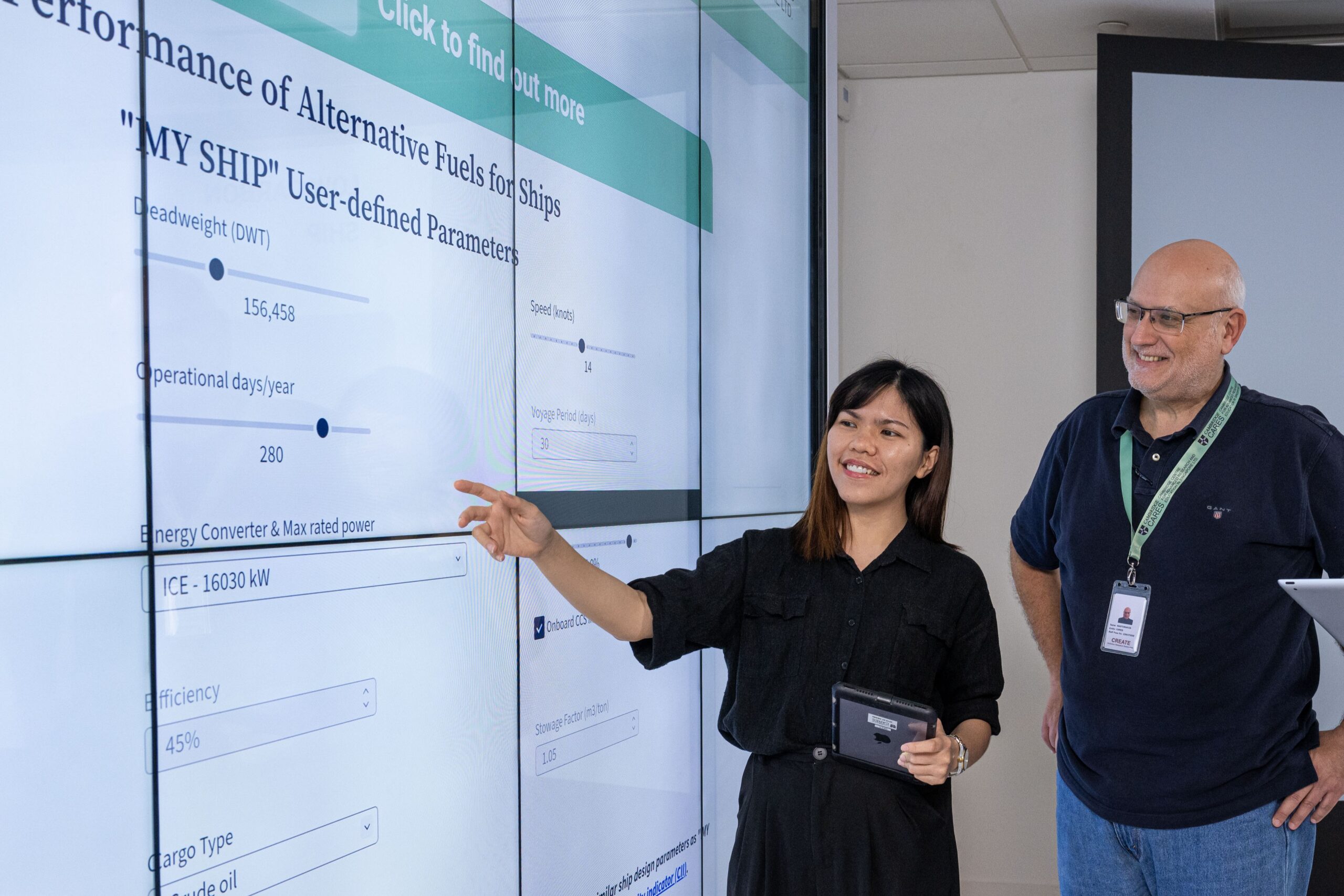
Industry collaborations benefit companies and research by creating robust insights for real-world operations. CARES and Cambridge researchers use historical vessel data to evaluate the performance of several low-carbon solutions and optimise bunkering strategies for a shipping vessel.
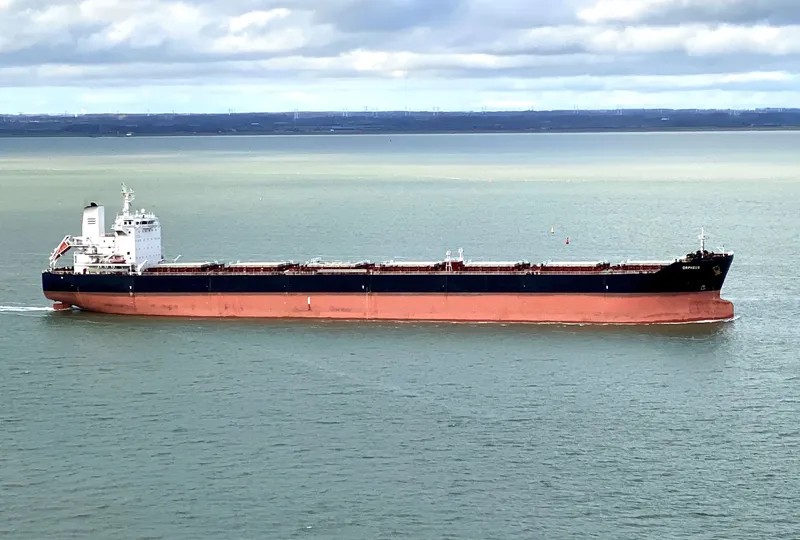
CARES and Cambridge researchers analyse historical vessel performance from this bulk carrier managed by Laskaridis Shipping.
Developing new low-carbon technologies is one way that industries such as the maritime and shipping trade can reduce their carbon emissions. An equally important step is implementation; balancing operational needs with regulatory requirements and the cost of decarbonisation will influence which solutions are adopted and how quickly the transition takes.
 |
“When new technologies are developed, shipowners do not necessarily have to install the largest possible system. Research can help determine the appropriate capacity of the technology. Instead, we can model a practical system size that achieves the required carbon dioxide (CO2) reduction at a lower price,” Law says.
“I met Laskaridis Shipping while presenting my research at a conference in Greece, and they agreed to provide historical vessel data for this study. The goal was for the vessel to meet the increasingly stringent emission targets by International Maritime Organisation (IMO) and FuelEU Maritime while managing the cost of CO2 reduction.”
It’s not easy being green
“Using industrial data, I can estimate the required storage capacity of fuel based on the historical voyages and the energy demand of each trip. This allows me to build robust models that more accurately mimic real-world operations,” Law explains.
She analysed seven decarbonisation pathways: natural gas, hydrogen, ammonia, methanol, electricity, biodiesel, and on-board carbon capture systems. Each pathway branched further as each fuel can be produced using different methods and raw materials (feedstocks), and be used with different propulsion and energy-conversion systems.
Cost is another major consideration. This study accounts for factors such as fluctuating fuel prices, capital and operating costs, revenue loss when cargo space is used to install the new low-carbon technologies, and the potential cost of regulatory non-compliance.
Green fuels are produced using renewable energy, while blue fuels are generally produced from fossil fuels with a system that captures the CO2 emitted (carbon capture). Lifecycle assessments compare the carbon emissions from both fuels fairly as it includes the fuel production stage, transport, and onboard vessel use.
Additionally, Law also compared pre- and post-combustion onboard carbon capture. These systems differ in energy penalty, capture efficiency and system complexity, but both could enable the lower-emission use of fossil-based fuels during the maritime transition.
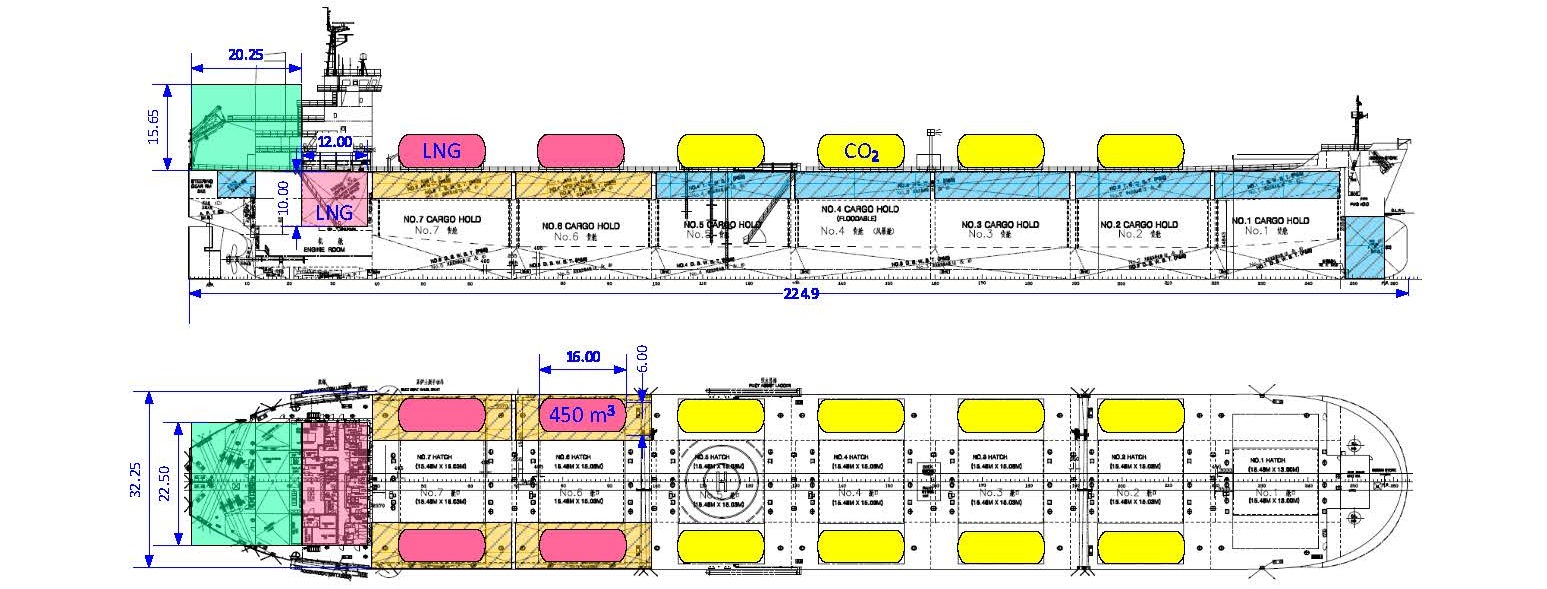
An example of Dr Law’s conceptual design for a pre-combustion carbon capture scenario. The green and red shaded regions indicate the proposed locations of the hydrogen production and the carbon capture technology, and the red and yellow tanks indicate storage of natural gas fuel (feedstock) and the separated liquefied CO2.
Law redesigns the vessel for each scenario to make the comparisons meaningful. In most cases, the added fuel tanks and equipment are positioned optimally to minimise the loss of cargo space. Certain scenarios are unfeasible for this vessel, such as full-battery electric propulsion, which would require a heavy battery weight and large storage space for its long voyages.
Wen Lin Tan, a student in the Department of Engineering at the University of Cambridge, worked with Law to add the perspective of voyage-specific biofuel bunkering. Their study, published in the Journal of Cleaner Production, showed that the type of feedstock used for biofuels continue to have the biggest impact on the marine fuel’s lifecycle, also known as well-to-wake emissions.
Waste-based biofuels outperformed other biofuel types, such as crops and biodiesel blends, achieving the lowest well-to-wake emissions. Biofuel technology is also relatively mature and may require fewer vessel modifications. Its subsequent cost and availability at port will become increasingly important in fuel adoptability.
Untangling millions of data points
“This vessel, managed by Laskaridis Shipping, was already equipped with onboard sensors and a data-collection system provided by METIS Cybertechnology. I could build a complete picture of the vessel performance by combining vessel data with the more dynamic operational dataset,” Law explains.
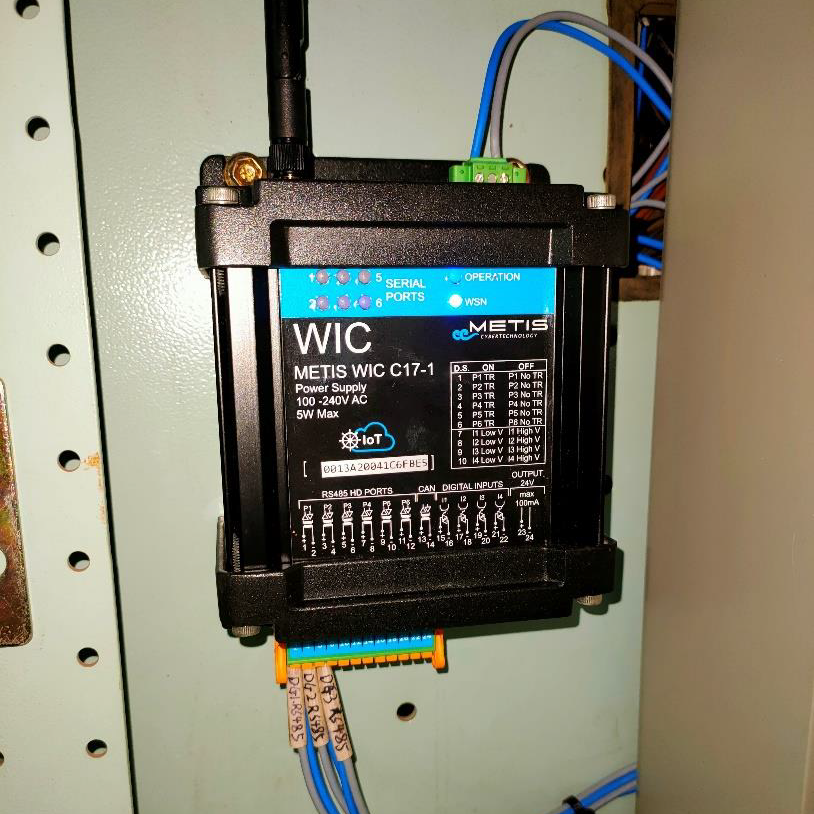
The payoff now is that Dr Law has built a piece of software that can repeat the same analysis much faster for different vessels, particularly those using similar data-collection systems. Her goal is to incorporate this piece of technology into her company, EMICAST, to create an adaptive digital twin to support predictive maintenance and optimise shipping operations, such as drift time.
Engineer Turned Scientist
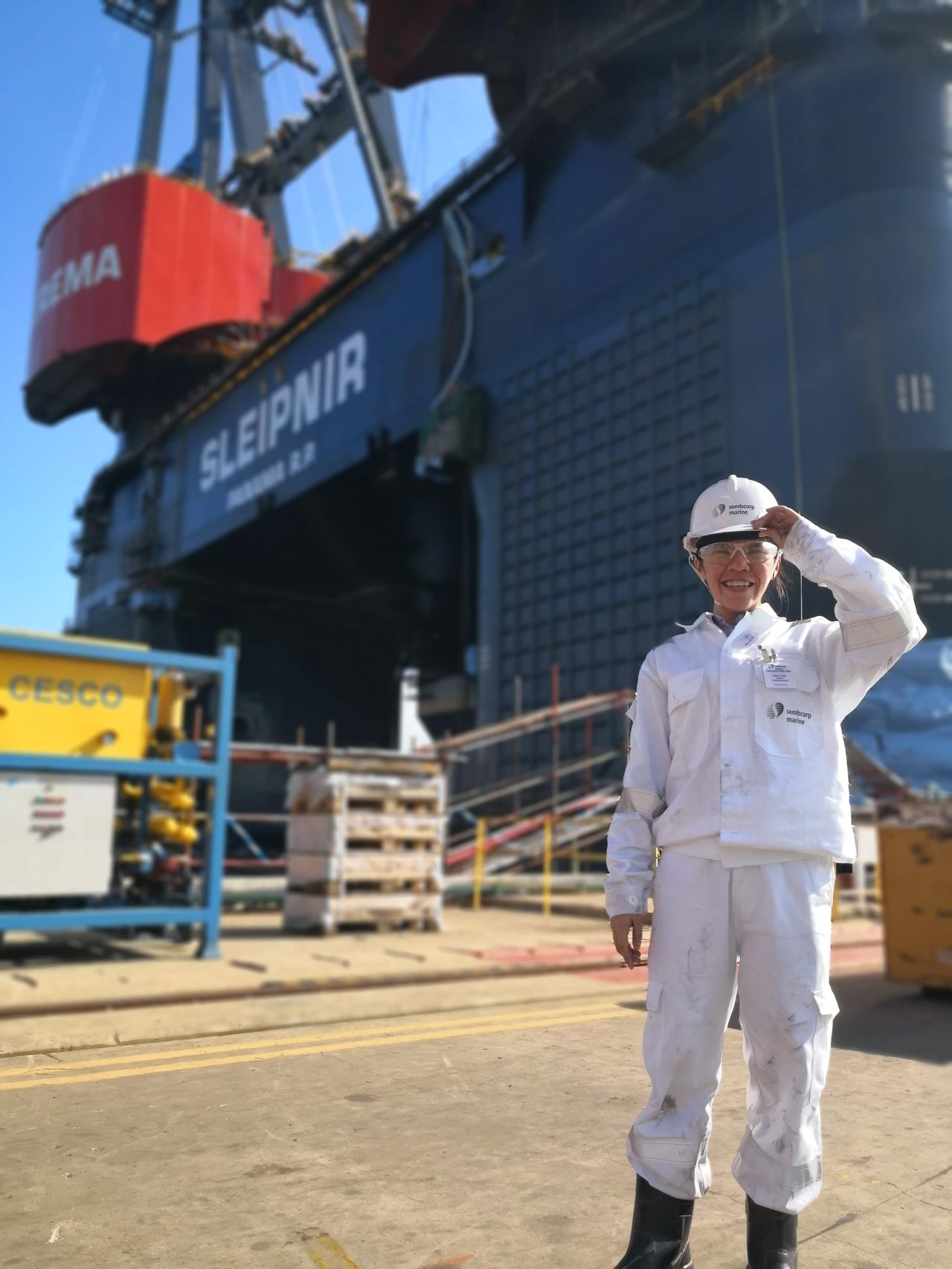
Law’s insights into a vessel’s behaviour and performance come from her background in the shipbuilding industry at Sembcorp Marine. Her know-how on the placement and function of ship systems carries weight when designing low-carbon solutions.
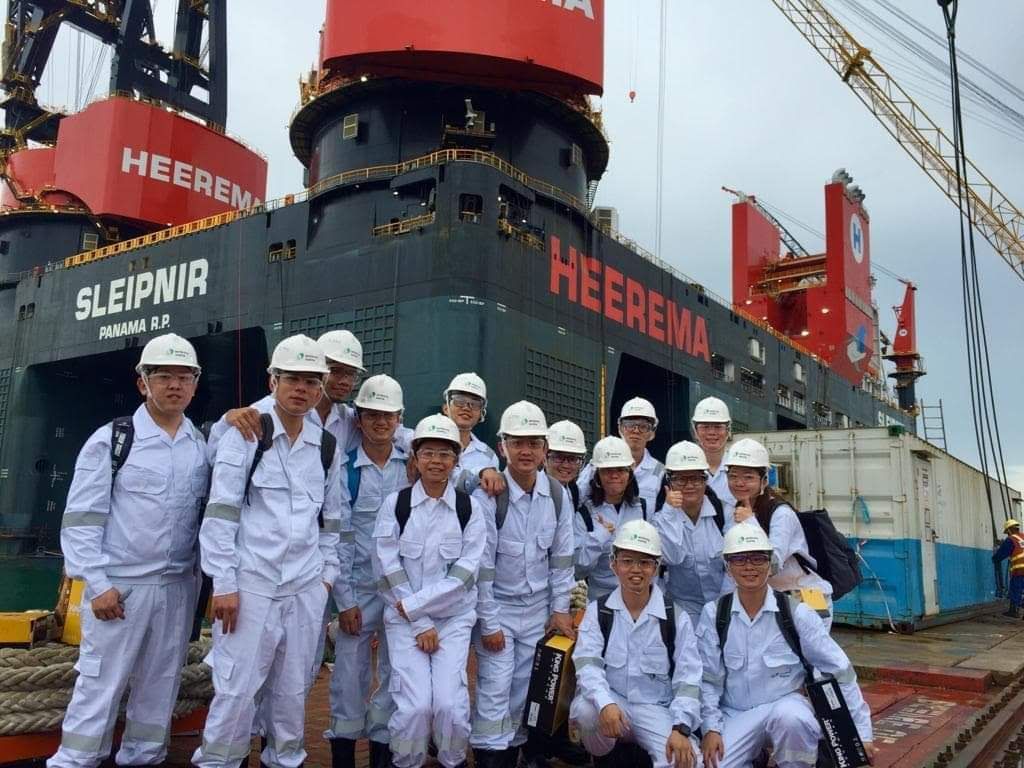
Law and colleagues from her previous job stepping onto Heerema Slepnir, a semi-submersible crane vessel they had designed together.
“Emerging regulations could soon be a turning point for many shipping companies to make decisions on how and when to upgrade their fleet. Through EMICAST, I hope to assess more vessels and determine whether the findings from this study are observed across different ship types and operating profiles,” Law says.
“Evidence from one ship is less convincing, but consistent findings across multiple vessels could give companies greater confidence to act.”
Law recently completed her PhD on carbon capture. Prof Mastorakos, her supervisor at CARES, and Law now research a range of low-carbon marine-relevant fuels and technologies. Prof Mastorakos says,
“For an academic, working with people who may actually have to take multi-million investment decisions based on the accuracy of our models is a sobering exercise. This wonderful collaboration taught us how to help maritime industry and we hope, on their side, that the nuances of lifecycle analyses of future marine fuels including hydrogen and ammonia were appreciated. Having access to data from real ship operations helped enormously with the reliability of the comparison between the different future options.”
Read Law’s research papers, (1) “Data-driven decarbonisation strategies for ships, part 1: Technical feasibility and emissions modelling” and (2) “Data-driven decarbonisation strategies for ships, Part 2: Financial Projections”, both in Energy Reports. (3) “Voyage-based optimisation of biofuel bunkering strategies using real ship data” in Journal of Cleaner Production.
Law works on the Hydrogen and Ammonia Combustion in Singapore (HYCOMBS) programme at CARES. HYCOMBS is part of the CREATE Thematic Programme in Decarbonisation and is supported by the National Research Foundation, Prime Minister’s Office, Singapore under its Campus for Research Excellence and Technological Enterprise (CREATE) programme.
Images photo credit: (1 and 5) ; (2, 4, and 6) Dr Li Chin Law; (3) CARES