
Profile

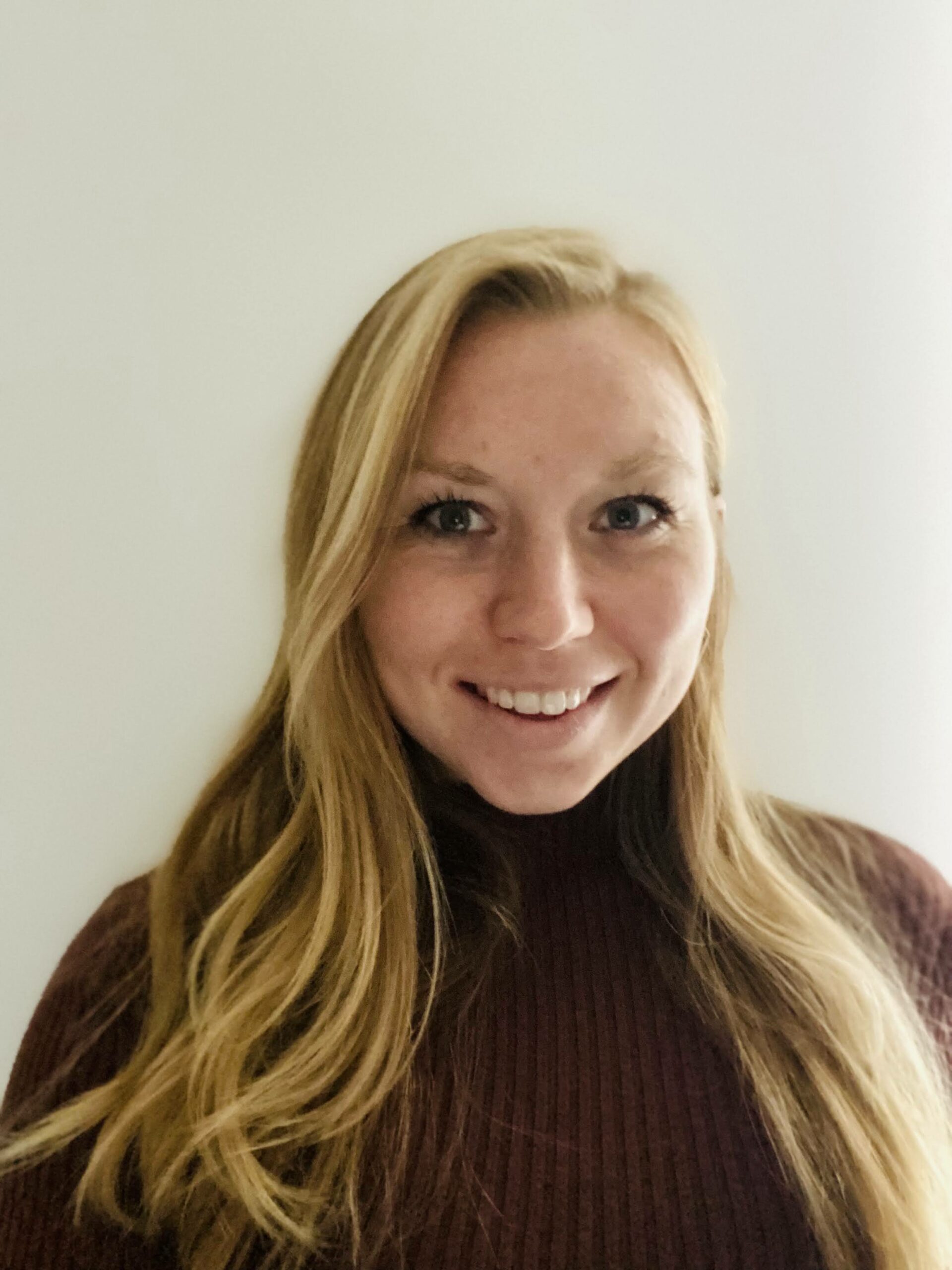
Dr Molly HAUGEN

Senior Research Associate, University of Cambridge

Dr Molly Haugen is a Senior Research Associate in Emissions Measurement at the University of Cambridge. Her work with Prof Epaminondas Mastorakos (Cambridge PI on the C4T IRP4 programme) focuses on plume dispersion in ports and urban environments. Her projects include:

1. Using drones to measure maritime emissions for use by political, academic, industrial, and regulatory industries
2. Developing an easy-to-use, low-cost particle counter (commercialization and laboratory experiments)
3. Development of tyre and brake wear generation rigs (large-scale and bench-top versions)
4. Generating brake and tyres wear to characterize particle metrics and toxicological effects

Date of CARES visit: April 2023

Presentation title: Using an Unmanned Aerial Vehicle for Monitoring Urban and Maritime Pollution [with live demo]

Abstract: An unmanned aerial vehicle was used to monitor particle emissions for in-use maritime vessels in Rafina, Greece, a port serving primarily passenger ferries to nearby islands, in September 2021. This field campaign had two primary objectives: 1) Collect dronebased measurements that would measure the vertical component for a direct plume dispersion that can be used in emission modelling communities, by the public health sector, as well as decarbonisation initiatives, and 2) To show how both urban and maritime pollution can be monitored using an unmanned aerial vehicle to get spatially resolved information on harmful pollutants. The sensors used included AethLab Aethalometers that measure black carbon, TSI P-Traks that measure the number of particles in a given sample volume, and Naneos Partectors that determine Lung Deposited Surface Area (LDSA) of a particle. Although particle sensors were used for this campaign, gaseous sensors can also be used.

Read: Dr Haugen's seminar in Singapore and watch highlights from the outdoor demonstration
Read: Monitoring maritime emissions at land and sea using drones and handheld particle sensors

Cambridge

Past Visiting Scientists

Key Publications

Molly J. Haugen, Savvas Gkantonas, Ingrid El Helou, Rohit Pathania, Epaminondas Mastorakos, and Adam M. Boies. 2022. Measurements and modelling of the three-dimensional near-field dispersion of particulate matter emitted from passenger ships in a port environment, Atmospheric Environment, https://doi.org/10.1016/j.atmosenv.2022.119384.

Profile

Dr Molly HAUGEN

Senior Research Associate, University of Cambridge

Dr Molly Haugen is a Senior Research Associate in Emissions Measurement at the University of Cambridge. Her work with Prof Epaminondas Mastorakos (Cambridge PI on the C4T IRP4 programme) focuses on plume dispersion in ports and urban environments. Her projects include:

1. Using drones to measure maritime emissions for use by political, academic, industrial, and regulatory industries
2. Developing an easy-to-use, low-cost particle counter (commercialization and laboratory experiments)
3. Development of tyre and brake wear generation rigs (large-scale and bench-top versions)
4. Generating brake and tyres wear to characterize particle metrics and toxicological effects

Date of CARES visit: April 2023

Presentation title: Using an Unmanned Aerial Vehicle for Monitoring Urban and Maritime Pollution [with live demo]

Abstract: An unmanned aerial vehicle was used to monitor particle emissions for in-use maritime vessels in Rafina, Greece, a port serving primarily passenger ferries to nearby islands, in September 2021. This field campaign had two primary objectives: 1) Collect dronebased measurements that would measure the vertical component for a direct plume dispersion that can be used in emission modelling communities, by the public health sector, as well as decarbonisation initiatives, and 2) To show how both urban and maritime pollution can be monitored using an unmanned aerial vehicle to get spatially resolved information on harmful pollutants. The sensors used included AethLab Aethalometers that measure black carbon, TSI P-Traks that measure the number of particles in a given sample volume, and Naneos Partectors that determine Lung Deposited Surface Area (LDSA) of a particle. Although particle sensors were used for this campaign, gaseous sensors can also be used.

Read: Dr Haugen's seminar in Singapore and watch highlights from the outdoor demonstration
Read: Monitoring maritime emissions at land and sea using drones and handheld particle sensors

Cambridge

Past Visiting Scientists

Key Publications

Molly J. Haugen, Savvas Gkantonas, Ingrid El Helou, Rohit Pathania, Epaminondas Mastorakos, and Adam M. Boies. 2022. Measurements and modelling of the three-dimensional near-field dispersion of particulate matter emitted from passenger ships in a port environment, Atmospheric Environment, https://doi.org/10.1016/j.atmosenv.2022.119384.

Profile

Dr Molly HAUGEN

Senior Research Associate, University of Cambridge

Dr Molly Haugen is a Senior Research Associate in Emissions Measurement at the University of Cambridge. Her work with Prof Epaminondas Mastorakos (Cambridge PI on the C4T IRP4 programme) focuses on plume dispersion in ports and urban environments. Her projects include:

1. Using drones to measure maritime emissions for use by political, academic, industrial, and regulatory industries
2. Developing an easy-to-use, low-cost particle counter (commercialization and laboratory experiments)
3. Development of tyre and brake wear generation rigs (large-scale and bench-top versions)
4. Generating brake and tyres wear to characterize particle metrics and toxicological effects

Date of CARES visit: April 2023

Presentation title: Using an Unmanned Aerial Vehicle for Monitoring Urban and Maritime Pollution [with live demo]

Abstract: An unmanned aerial vehicle was used to monitor particle emissions for in-use maritime vessels in Rafina, Greece, a port serving primarily passenger ferries to nearby islands, in September 2021. This field campaign had two primary objectives: 1) Collect dronebased measurements that would measure the vertical component for a direct plume dispersion that can be used in emission modelling communities, by the public health sector, as well as decarbonisation initiatives, and 2) To show how both urban and maritime pollution can be monitored using an unmanned aerial vehicle to get spatially resolved information on harmful pollutants. The sensors used included AethLab Aethalometers that measure black carbon, TSI P-Traks that measure the number of particles in a given sample volume, and Naneos Partectors that determine Lung Deposited Surface Area (LDSA) of a particle. Although particle sensors were used for this campaign, gaseous sensors can also be used.

Read: Dr Haugen's seminar in Singapore and watch highlights from the outdoor demonstration
Read: Monitoring maritime emissions at land and sea using drones and handheld particle sensors

Cambridge

Past Visiting Scientists

Key Publications

Molly J. Haugen, Savvas Gkantonas, Ingrid El Helou, Rohit Pathania, Epaminondas Mastorakos, and Adam M. Boies. 2022. Measurements and modelling of the three-dimensional near-field dispersion of particulate matter emitted from passenger ships in a port environment, Atmospheric Environment, https://doi.org/10.1016/j.atmosenv.2022.119384.

Profile

Dr Molly HAUGEN

Senior Research Associate, University of Cambridge

Dr Molly Haugen is a Senior Research Associate in Emissions Measurement at the University of Cambridge. Her work with Prof Epaminondas Mastorakos (Cambridge PI on the C4T IRP4 programme) focuses on plume dispersion in ports and urban environments. Her projects include:

1. Using drones to measure maritime emissions for use by political, academic, industrial, and regulatory industries
2. Developing an easy-to-use, low-cost particle counter (commercialization and laboratory experiments)
3. Development of tyre and brake wear generation rigs (large-scale and bench-top versions)
4. Generating brake and tyres wear to characterize particle metrics and toxicological effects

Date of CARES visit: April 2023

Presentation title: Using an Unmanned Aerial Vehicle for Monitoring Urban and Maritime Pollution [with live demo]

Abstract: An unmanned aerial vehicle was used to monitor particle emissions for in-use maritime vessels in Rafina, Greece, a port serving primarily passenger ferries to nearby islands, in September 2021. This field campaign had two primary objectives: 1) Collect dronebased measurements that would measure the vertical component for a direct plume dispersion that can be used in emission modelling communities, by the public health sector, as well as decarbonisation initiatives, and 2) To show how both urban and maritime pollution can be monitored using an unmanned aerial vehicle to get spatially resolved information on harmful pollutants. The sensors used included AethLab Aethalometers that measure black carbon, TSI P-Traks that measure the number of particles in a given sample volume, and Naneos Partectors that determine Lung Deposited Surface Area (LDSA) of a particle. Although particle sensors were used for this campaign, gaseous sensors can also be used.

Read: Dr Haugen's seminar in Singapore and watch highlights from the outdoor demonstration
Read: Monitoring maritime emissions at land and sea using drones and handheld particle sensors

Cambridge

Past Visiting Scientists

Key Publications

Molly J. Haugen, Savvas Gkantonas, Ingrid El Helou, Rohit Pathania, Epaminondas Mastorakos, and Adam M. Boies. 2022. Measurements and modelling of the three-dimensional near-field dispersion of particulate matter emitted from passenger ships in a port environment, Atmospheric Environment, https://doi.org/10.1016/j.atmosenv.2022.119384.

Profile

Dr Molly HAUGEN

Senior Research Associate, University of Cambridge

Dr Molly Haugen is a Senior Research Associate in Emissions Measurement at the University of Cambridge. Her work with Prof Epaminondas Mastorakos (Cambridge PI on the C4T IRP4 programme) focuses on plume dispersion in ports and urban environments. Her projects include:

1. Using drones to measure maritime emissions for use by political, academic, industrial, and regulatory industries
2. Developing an easy-to-use, low-cost particle counter (commercialization and laboratory experiments)
3. Development of tyre and brake wear generation rigs (large-scale and bench-top versions)
4. Generating brake and tyres wear to characterize particle metrics and toxicological effects

Date of CARES visit: April 2023

Presentation title: Using an Unmanned Aerial Vehicle for Monitoring Urban and Maritime Pollution [with live demo]

Abstract: An unmanned aerial vehicle was used to monitor particle emissions for in-use maritime vessels in Rafina, Greece, a port serving primarily passenger ferries to nearby islands, in September 2021. This field campaign had two primary objectives: 1) Collect dronebased measurements that would measure the vertical component for a direct plume dispersion that can be used in emission modelling communities, by the public health sector, as well as decarbonisation initiatives, and 2) To show how both urban and maritime pollution can be monitored using an unmanned aerial vehicle to get spatially resolved information on harmful pollutants. The sensors used included AethLab Aethalometers that measure black carbon, TSI P-Traks that measure the number of particles in a given sample volume, and Naneos Partectors that determine Lung Deposited Surface Area (LDSA) of a particle. Although particle sensors were used for this campaign, gaseous sensors can also be used.

Read: Dr Haugen's seminar in Singapore and watch highlights from the outdoor demonstration
Read: Monitoring maritime emissions at land and sea using drones and handheld particle sensors

Cambridge

Past Visiting Scientists

Key Publications

Molly J. Haugen, Savvas Gkantonas, Ingrid El Helou, Rohit Pathania, Epaminondas Mastorakos, and Adam M. Boies. 2022. Measurements and modelling of the three-dimensional near-field dispersion of particulate matter emitted from passenger ships in a port environment, Atmospheric Environment, https://doi.org/10.1016/j.atmosenv.2022.119384.

Profile

Dr Molly HAUGEN

Senior Research Associate, University of Cambridge

Dr Molly Haugen is a Senior Research Associate in Emissions Measurement at the University of Cambridge. Her work with Prof Epaminondas Mastorakos (Cambridge PI on the C4T IRP4 programme) focuses on plume dispersion in ports and urban environments. Her projects include:

1. Using drones to measure maritime emissions for use by political, academic, industrial, and regulatory industries
2. Developing an easy-to-use, low-cost particle counter (commercialization and laboratory experiments)
3. Development of tyre and brake wear generation rigs (large-scale and bench-top versions)
4. Generating brake and tyres wear to characterize particle metrics and toxicological effects

Date of CARES visit: April 2023

Presentation title: Using an Unmanned Aerial Vehicle for Monitoring Urban and Maritime Pollution [with live demo]

Abstract: An unmanned aerial vehicle was used to monitor particle emissions for in-use maritime vessels in Rafina, Greece, a port serving primarily passenger ferries to nearby islands, in September 2021. This field campaign had two primary objectives: 1) Collect dronebased measurements that would measure the vertical component for a direct plume dispersion that can be used in emission modelling communities, by the public health sector, as well as decarbonisation initiatives, and 2) To show how both urban and maritime pollution can be monitored using an unmanned aerial vehicle to get spatially resolved information on harmful pollutants. The sensors used included AethLab Aethalometers that measure black carbon, TSI P-Traks that measure the number of particles in a given sample volume, and Naneos Partectors that determine Lung Deposited Surface Area (LDSA) of a particle. Although particle sensors were used for this campaign, gaseous sensors can also be used.

Read: Dr Haugen's seminar in Singapore and watch highlights from the outdoor demonstration
Read: Monitoring maritime emissions at land and sea using drones and handheld particle sensors

Cambridge

Past Visiting Scientists

Key Publications

Molly J. Haugen, Savvas Gkantonas, Ingrid El Helou, Rohit Pathania, Epaminondas Mastorakos, and Adam M. Boies. 2022. Measurements and modelling of the three-dimensional near-field dispersion of particulate matter emitted from passenger ships in a port environment, Atmospheric Environment, https://doi.org/10.1016/j.atmosenv.2022.119384.

Profile

Dr Molly HAUGEN

Senior Research Associate, University of Cambridge

Dr Molly Haugen is a Senior Research Associate in Emissions Measurement at the University of Cambridge. Her work with Prof Epaminondas Mastorakos (Cambridge PI on the C4T IRP4 programme) focuses on plume dispersion in ports and urban environments. Her projects include:

1. Using drones to measure maritime emissions for use by political, academic, industrial, and regulatory industries
2. Developing an easy-to-use, low-cost particle counter (commercialization and laboratory experiments)
3. Development of tyre and brake wear generation rigs (large-scale and bench-top versions)
4. Generating brake and tyres wear to characterize particle metrics and toxicological effects

Date of CARES visit: April 2023

Presentation title: Using an Unmanned Aerial Vehicle for Monitoring Urban and Maritime Pollution [with live demo]

Abstract: An unmanned aerial vehicle was used to monitor particle emissions for in-use maritime vessels in Rafina, Greece, a port serving primarily passenger ferries to nearby islands, in September 2021. This field campaign had two primary objectives: 1) Collect dronebased measurements that would measure the vertical component for a direct plume dispersion that can be used in emission modelling communities, by the public health sector, as well as decarbonisation initiatives, and 2) To show how both urban and maritime pollution can be monitored using an unmanned aerial vehicle to get spatially resolved information on harmful pollutants. The sensors used included AethLab Aethalometers that measure black carbon, TSI P-Traks that measure the number of particles in a given sample volume, and Naneos Partectors that determine Lung Deposited Surface Area (LDSA) of a particle. Although particle sensors were used for this campaign, gaseous sensors can also be used.

Read: Dr Haugen's seminar in Singapore and watch highlights from the outdoor demonstration
Read: Monitoring maritime emissions at land and sea using drones and handheld particle sensors

Cambridge

Past Visiting Scientists

Key Publications

Molly J. Haugen, Savvas Gkantonas, Ingrid El Helou, Rohit Pathania, Epaminondas Mastorakos, and Adam M. Boies. 2022. Measurements and modelling of the three-dimensional near-field dispersion of particulate matter emitted from passenger ships in a port environment, Atmospheric Environment, https://doi.org/10.1016/j.atmosenv.2022.119384.

Profile

Dr Molly HAUGEN

Senior Research Associate, University of Cambridge

Dr Molly Haugen is a Senior Research Associate in Emissions Measurement at the University of Cambridge. Her work with Prof Epaminondas Mastorakos (Cambridge PI on the C4T IRP4 programme) focuses on plume dispersion in ports and urban environments. Her projects include:

1. Using drones to measure maritime emissions for use by political, academic, industrial, and regulatory industries
2. Developing an easy-to-use, low-cost particle counter (commercialization and laboratory experiments)
3. Development of tyre and brake wear generation rigs (large-scale and bench-top versions)
4. Generating brake and tyres wear to characterize particle metrics and toxicological effects

Date of CARES visit: April 2023

Presentation title: Using an Unmanned Aerial Vehicle for Monitoring Urban and Maritime Pollution [with live demo]

Abstract: An unmanned aerial vehicle was used to monitor particle emissions for in-use maritime vessels in Rafina, Greece, a port serving primarily passenger ferries to nearby islands, in September 2021. This field campaign had two primary objectives: 1) Collect dronebased measurements that would measure the vertical component for a direct plume dispersion that can be used in emission modelling communities, by the public health sector, as well as decarbonisation initiatives, and 2) To show how both urban and maritime pollution can be monitored using an unmanned aerial vehicle to get spatially resolved information on harmful pollutants. The sensors used included AethLab Aethalometers that measure black carbon, TSI P-Traks that measure the number of particles in a given sample volume, and Naneos Partectors that determine Lung Deposited Surface Area (LDSA) of a particle. Although particle sensors were used for this campaign, gaseous sensors can also be used.

Read: Dr Haugen's seminar in Singapore and watch highlights from the outdoor demonstration
Read: Monitoring maritime emissions at land and sea using drones and handheld particle sensors

Cambridge

Past Visiting Scientists

Key Publications

Molly J. Haugen, Savvas Gkantonas, Ingrid El Helou, Rohit Pathania, Epaminondas Mastorakos, and Adam M. Boies. 2022. Measurements and modelling of the three-dimensional near-field dispersion of particulate matter emitted from passenger ships in a port environment, Atmospheric Environment, https://doi.org/10.1016/j.atmosenv.2022.119384.

Profile

Dr Molly HAUGEN

Senior Research Associate, University of Cambridge

Dr Molly Haugen is a Senior Research Associate in Emissions Measurement at the University of Cambridge. Her work with Prof Epaminondas Mastorakos (Cambridge PI on the C4T IRP4 programme) focuses on plume dispersion in ports and urban environments. Her projects include:

1. Using drones to measure maritime emissions for use by political, academic, industrial, and regulatory industries
2. Developing an easy-to-use, low-cost particle counter (commercialization and laboratory experiments)
3. Development of tyre and brake wear generation rigs (large-scale and bench-top versions)
4. Generating brake and tyres wear to characterize particle metrics and toxicological effects

Date of CARES visit: April 2023

Presentation title: Using an Unmanned Aerial Vehicle for Monitoring Urban and Maritime Pollution [with live demo]

Abstract: An unmanned aerial vehicle was used to monitor particle emissions for in-use maritime vessels in Rafina, Greece, a port serving primarily passenger ferries to nearby islands, in September 2021. This field campaign had two primary objectives: 1) Collect dronebased measurements that would measure the vertical component for a direct plume dispersion that can be used in emission modelling communities, by the public health sector, as well as decarbonisation initiatives, and 2) To show how both urban and maritime pollution can be monitored using an unmanned aerial vehicle to get spatially resolved information on harmful pollutants. The sensors used included AethLab Aethalometers that measure black carbon, TSI P-Traks that measure the number of particles in a given sample volume, and Naneos Partectors that determine Lung Deposited Surface Area (LDSA) of a particle. Although particle sensors were used for this campaign, gaseous sensors can also be used.

Read: Dr Haugen's seminar in Singapore and watch highlights from the outdoor demonstration
Read: Monitoring maritime emissions at land and sea using drones and handheld particle sensors

Cambridge

Past Visiting Scientists

Key Publications

Molly J. Haugen, Savvas Gkantonas, Ingrid El Helou, Rohit Pathania, Epaminondas Mastorakos, and Adam M. Boies. 2022. Measurements and modelling of the three-dimensional near-field dispersion of particulate matter emitted from passenger ships in a port environment, Atmospheric Environment, https://doi.org/10.1016/j.atmosenv.2022.119384.

Profile

Dr Molly HAUGEN

Senior Research Associate, University of Cambridge

Dr Molly Haugen is a Senior Research Associate in Emissions Measurement at the University of Cambridge. Her work with Prof Epaminondas Mastorakos (Cambridge PI on the C4T IRP4 programme) focuses on plume dispersion in ports and urban environments. Her projects include:

1. Using drones to measure maritime emissions for use by political, academic, industrial, and regulatory industries
2. Developing an easy-to-use, low-cost particle counter (commercialization and laboratory experiments)
3. Development of tyre and brake wear generation rigs (large-scale and bench-top versions)
4. Generating brake and tyres wear to characterize particle metrics and toxicological effects

Date of CARES visit: April 2023

Presentation title: Using an Unmanned Aerial Vehicle for Monitoring Urban and Maritime Pollution [with live demo]

Abstract: An unmanned aerial vehicle was used to monitor particle emissions for in-use maritime vessels in Rafina, Greece, a port serving primarily passenger ferries to nearby islands, in September 2021. This field campaign had two primary objectives: 1) Collect dronebased measurements that would measure the vertical component for a direct plume dispersion that can be used in emission modelling communities, by the public health sector, as well as decarbonisation initiatives, and 2) To show how both urban and maritime pollution can be monitored using an unmanned aerial vehicle to get spatially resolved information on harmful pollutants. The sensors used included AethLab Aethalometers that measure black carbon, TSI P-Traks that measure the number of particles in a given sample volume, and Naneos Partectors that determine Lung Deposited Surface Area (LDSA) of a particle. Although particle sensors were used for this campaign, gaseous sensors can also be used.

Read: Dr Haugen's seminar in Singapore and watch highlights from the outdoor demonstration
Read: Monitoring maritime emissions at land and sea using drones and handheld particle sensors

Cambridge

Past Visiting Scientists

Key Publications

Molly J. Haugen, Savvas Gkantonas, Ingrid El Helou, Rohit Pathania, Epaminondas Mastorakos, and Adam M. Boies. 2022. Measurements and modelling of the three-dimensional near-field dispersion of particulate matter emitted from passenger ships in a port environment, Atmospheric Environment, https://doi.org/10.1016/j.atmosenv.2022.119384.

Profile

Dr Molly HAUGEN

Senior Research Associate, University of Cambridge

Dr Molly Haugen is a Senior Research Associate in Emissions Measurement at the University of Cambridge. Her work with Prof Epaminondas Mastorakos (Cambridge PI on the C4T IRP4 programme) focuses on plume dispersion in ports and urban environments. Her projects include:

1. Using drones to measure maritime emissions for use by political, academic, industrial, and regulatory industries
2. Developing an easy-to-use, low-cost particle counter (commercialization and laboratory experiments)
3. Development of tyre and brake wear generation rigs (large-scale and bench-top versions)
4. Generating brake and tyres wear to characterize particle metrics and toxicological effects

Date of CARES visit: April 2023

Presentation title: Using an Unmanned Aerial Vehicle for Monitoring Urban and Maritime Pollution [with live demo]

Abstract: An unmanned aerial vehicle was used to monitor particle emissions for in-use maritime vessels in Rafina, Greece, a port serving primarily passenger ferries to nearby islands, in September 2021. This field campaign had two primary objectives: 1) Collect dronebased measurements that would measure the vertical component for a direct plume dispersion that can be used in emission modelling communities, by the public health sector, as well as decarbonisation initiatives, and 2) To show how both urban and maritime pollution can be monitored using an unmanned aerial vehicle to get spatially resolved information on harmful pollutants. The sensors used included AethLab Aethalometers that measure black carbon, TSI P-Traks that measure the number of particles in a given sample volume, and Naneos Partectors that determine Lung Deposited Surface Area (LDSA) of a particle. Although particle sensors were used for this campaign, gaseous sensors can also be used.

Read: Dr Haugen's seminar in Singapore and watch highlights from the outdoor demonstration
Read: Monitoring maritime emissions at land and sea using drones and handheld particle sensors

Cambridge

Past Visiting Scientists

Key Publications

Molly J. Haugen, Savvas Gkantonas, Ingrid El Helou, Rohit Pathania, Epaminondas Mastorakos, and Adam M. Boies. 2022. Measurements and modelling of the three-dimensional near-field dispersion of particulate matter emitted from passenger ships in a port environment, Atmospheric Environment, https://doi.org/10.1016/j.atmosenv.2022.119384.

Profile

Dr Molly HAUGEN

Senior Research Associate, University of Cambridge

Dr Molly Haugen is a Senior Research Associate in Emissions Measurement at the University of Cambridge. Her work with Prof Epaminondas Mastorakos (Cambridge PI on the C4T IRP4 programme) focuses on plume dispersion in ports and urban environments. Her projects include:

1. Using drones to measure maritime emissions for use by political, academic, industrial, and regulatory industries
2. Developing an easy-to-use, low-cost particle counter (commercialization and laboratory experiments)
3. Development of tyre and brake wear generation rigs (large-scale and bench-top versions)
4. Generating brake and tyres wear to characterize particle metrics and toxicological effects

Date of CARES visit: April 2023

Presentation title: Using an Unmanned Aerial Vehicle for Monitoring Urban and Maritime Pollution [with live demo]

Abstract: An unmanned aerial vehicle was used to monitor particle emissions for in-use maritime vessels in Rafina, Greece, a port serving primarily passenger ferries to nearby islands, in September 2021. This field campaign had two primary objectives: 1) Collect dronebased measurements that would measure the vertical component for a direct plume dispersion that can be used in emission modelling communities, by the public health sector, as well as decarbonisation initiatives, and 2) To show how both urban and maritime pollution can be monitored using an unmanned aerial vehicle to get spatially resolved information on harmful pollutants. The sensors used included AethLab Aethalometers that measure black carbon, TSI P-Traks that measure the number of particles in a given sample volume, and Naneos Partectors that determine Lung Deposited Surface Area (LDSA) of a particle. Although particle sensors were used for this campaign, gaseous sensors can also be used.

Read: Dr Haugen's seminar in Singapore and watch highlights from the outdoor demonstration
Read: Monitoring maritime emissions at land and sea using drones and handheld particle sensors

Cambridge

Past Visiting Scientists

Key Publications

Molly J. Haugen, Savvas Gkantonas, Ingrid El Helou, Rohit Pathania, Epaminondas Mastorakos, and Adam M. Boies. 2022. Measurements and modelling of the three-dimensional near-field dispersion of particulate matter emitted from passenger ships in a port environment, Atmospheric Environment, https://doi.org/10.1016/j.atmosenv.2022.119384.

Profile

Dr Molly HAUGEN

Senior Research Associate, University of Cambridge

Dr Molly Haugen is a Senior Research Associate in Emissions Measurement at the University of Cambridge. Her work with Prof Epaminondas Mastorakos (Cambridge PI on the C4T IRP4 programme) focuses on plume dispersion in ports and urban environments. Her projects include:

1. Using drones to measure maritime emissions for use by political, academic, industrial, and regulatory industries
2. Developing an easy-to-use, low-cost particle counter (commercialization and laboratory experiments)
3. Development of tyre and brake wear generation rigs (large-scale and bench-top versions)
4. Generating brake and tyres wear to characterize particle metrics and toxicological effects

Date of CARES visit: April 2023

Presentation title: Using an Unmanned Aerial Vehicle for Monitoring Urban and Maritime Pollution [with live demo]

Abstract: An unmanned aerial vehicle was used to monitor particle emissions for in-use maritime vessels in Rafina, Greece, a port serving primarily passenger ferries to nearby islands, in September 2021. This field campaign had two primary objectives: 1) Collect dronebased measurements that would measure the vertical component for a direct plume dispersion that can be used in emission modelling communities, by the public health sector, as well as decarbonisation initiatives, and 2) To show how both urban and maritime pollution can be monitored using an unmanned aerial vehicle to get spatially resolved information on harmful pollutants. The sensors used included AethLab Aethalometers that measure black carbon, TSI P-Traks that measure the number of particles in a given sample volume, and Naneos Partectors that determine Lung Deposited Surface Area (LDSA) of a particle. Although particle sensors were used for this campaign, gaseous sensors can also be used.

Read: Dr Haugen's seminar in Singapore and watch highlights from the outdoor demonstration
Read: Monitoring maritime emissions at land and sea using drones and handheld particle sensors

Cambridge

Past Visiting Scientists

Key Publications

Molly J. Haugen, Savvas Gkantonas, Ingrid El Helou, Rohit Pathania, Epaminondas Mastorakos, and Adam M. Boies. 2022. Measurements and modelling of the three-dimensional near-field dispersion of particulate matter emitted from passenger ships in a port environment, Atmospheric Environment, https://doi.org/10.1016/j.atmosenv.2022.119384.

Profile

Dr Molly HAUGEN

Senior Research Associate, University of Cambridge

Dr Molly Haugen is a Senior Research Associate in Emissions Measurement at the University of Cambridge. Her work with Prof Epaminondas Mastorakos (Cambridge PI on the C4T IRP4 programme) focuses on plume dispersion in ports and urban environments. Her projects include:

1. Using drones to measure maritime emissions for use by political, academic, industrial, and regulatory industries
2. Developing an easy-to-use, low-cost particle counter (commercialization and laboratory experiments)
3. Development of tyre and brake wear generation rigs (large-scale and bench-top versions)
4. Generating brake and tyres wear to characterize particle metrics and toxicological effects

Date of CARES visit: April 2023

Presentation title: Using an Unmanned Aerial Vehicle for Monitoring Urban and Maritime Pollution [with live demo]

Abstract: An unmanned aerial vehicle was used to monitor particle emissions for in-use maritime vessels in Rafina, Greece, a port serving primarily passenger ferries to nearby islands, in September 2021. This field campaign had two primary objectives: 1) Collect dronebased measurements that would measure the vertical component for a direct plume dispersion that can be used in emission modelling communities, by the public health sector, as well as decarbonisation initiatives, and 2) To show how both urban and maritime pollution can be monitored using an unmanned aerial vehicle to get spatially resolved information on harmful pollutants. The sensors used included AethLab Aethalometers that measure black carbon, TSI P-Traks that measure the number of particles in a given sample volume, and Naneos Partectors that determine Lung Deposited Surface Area (LDSA) of a particle. Although particle sensors were used for this campaign, gaseous sensors can also be used.

Read: Dr Haugen's seminar in Singapore and watch highlights from the outdoor demonstration
Read: Monitoring maritime emissions at land and sea using drones and handheld particle sensors

Cambridge

Past Visiting Scientists

Key Publications

Molly J. Haugen, Savvas Gkantonas, Ingrid El Helou, Rohit Pathania, Epaminondas Mastorakos, and Adam M. Boies. 2022. Measurements and modelling of the three-dimensional near-field dispersion of particulate matter emitted from passenger ships in a port environment, Atmospheric Environment, https://doi.org/10.1016/j.atmosenv.2022.119384.

Profile

Dr Molly HAUGEN

Senior Research Associate, University of Cambridge

Dr Molly Haugen is a Senior Research Associate in Emissions Measurement at the University of Cambridge. Her work with Prof Epaminondas Mastorakos (Cambridge PI on the C4T IRP4 programme) focuses on plume dispersion in ports and urban environments. Her projects include:

1. Using drones to measure maritime emissions for use by political, academic, industrial, and regulatory industries
2. Developing an easy-to-use, low-cost particle counter (commercialization and laboratory experiments)
3. Development of tyre and brake wear generation rigs (large-scale and bench-top versions)
4. Generating brake and tyres wear to characterize particle metrics and toxicological effects

Date of CARES visit: April 2023

Presentation title: Using an Unmanned Aerial Vehicle for Monitoring Urban and Maritime Pollution [with live demo]

Abstract: An unmanned aerial vehicle was used to monitor particle emissions for in-use maritime vessels in Rafina, Greece, a port serving primarily passenger ferries to nearby islands, in September 2021. This field campaign had two primary objectives: 1) Collect dronebased measurements that would measure the vertical component for a direct plume dispersion that can be used in emission modelling communities, by the public health sector, as well as decarbonisation initiatives, and 2) To show how both urban and maritime pollution can be monitored using an unmanned aerial vehicle to get spatially resolved information on harmful pollutants. The sensors used included AethLab Aethalometers that measure black carbon, TSI P-Traks that measure the number of particles in a given sample volume, and Naneos Partectors that determine Lung Deposited Surface Area (LDSA) of a particle. Although particle sensors were used for this campaign, gaseous sensors can also be used.

Read: Dr Haugen's seminar in Singapore and watch highlights from the outdoor demonstration
Read: Monitoring maritime emissions at land and sea using drones and handheld particle sensors

Cambridge

Past Visiting Scientists

Key Publications

Molly J. Haugen, Savvas Gkantonas, Ingrid El Helou, Rohit Pathania, Epaminondas Mastorakos, and Adam M. Boies. 2022. Measurements and modelling of the three-dimensional near-field dispersion of particulate matter emitted from passenger ships in a port environment, Atmospheric Environment, https://doi.org/10.1016/j.atmosenv.2022.119384.

Profile

Dr Molly HAUGEN

Senior Research Associate, University of Cambridge

Dr Molly Haugen is a Senior Research Associate in Emissions Measurement at the University of Cambridge. Her work with Prof Epaminondas Mastorakos (Cambridge PI on the C4T IRP4 programme) focuses on plume dispersion in ports and urban environments. Her projects include:

1. Using drones to measure maritime emissions for use by political, academic, industrial, and regulatory industries
2. Developing an easy-to-use, low-cost particle counter (commercialization and laboratory experiments)
3. Development of tyre and brake wear generation rigs (large-scale and bench-top versions)
4. Generating brake and tyres wear to characterize particle metrics and toxicological effects

Date of CARES visit: April 2023

Presentation title: Using an Unmanned Aerial Vehicle for Monitoring Urban and Maritime Pollution [with live demo]

Abstract: An unmanned aerial vehicle was used to monitor particle emissions for in-use maritime vessels in Rafina, Greece, a port serving primarily passenger ferries to nearby islands, in September 2021. This field campaign had two primary objectives: 1) Collect dronebased measurements that would measure the vertical component for a direct plume dispersion that can be used in emission modelling communities, by the public health sector, as well as decarbonisation initiatives, and 2) To show how both urban and maritime pollution can be monitored using an unmanned aerial vehicle to get spatially resolved information on harmful pollutants. The sensors used included AethLab Aethalometers that measure black carbon, TSI P-Traks that measure the number of particles in a given sample volume, and Naneos Partectors that determine Lung Deposited Surface Area (LDSA) of a particle. Although particle sensors were used for this campaign, gaseous sensors can also be used.

Read: Dr Haugen's seminar in Singapore and watch highlights from the outdoor demonstration
Read: Monitoring maritime emissions at land and sea using drones and handheld particle sensors

Cambridge

Past Visiting Scientists

Key Publications

Molly J. Haugen, Savvas Gkantonas, Ingrid El Helou, Rohit Pathania, Epaminondas Mastorakos, and Adam M. Boies. 2022. Measurements and modelling of the three-dimensional near-field dispersion of particulate matter emitted from passenger ships in a port environment, Atmospheric Environment, https://doi.org/10.1016/j.atmosenv.2022.119384.

Profile

Dr Molly HAUGEN

Senior Research Associate, University of Cambridge

Dr Molly Haugen is a Senior Research Associate in Emissions Measurement at the University of Cambridge. Her work with Prof Epaminondas Mastorakos (Cambridge PI on the C4T IRP4 programme) focuses on plume dispersion in ports and urban environments. Her projects include:

1. Using drones to measure maritime emissions for use by political, academic, industrial, and regulatory industries
2. Developing an easy-to-use, low-cost particle counter (commercialization and laboratory experiments)
3. Development of tyre and brake wear generation rigs (large-scale and bench-top versions)
4. Generating brake and tyres wear to characterize particle metrics and toxicological effects

Date of CARES visit: April 2023

Presentation title: Using an Unmanned Aerial Vehicle for Monitoring Urban and Maritime Pollution [with live demo]

Abstract: An unmanned aerial vehicle was used to monitor particle emissions for in-use maritime vessels in Rafina, Greece, a port serving primarily passenger ferries to nearby islands, in September 2021. This field campaign had two primary objectives: 1) Collect dronebased measurements that would measure the vertical component for a direct plume dispersion that can be used in emission modelling communities, by the public health sector, as well as decarbonisation initiatives, and 2) To show how both urban and maritime pollution can be monitored using an unmanned aerial vehicle to get spatially resolved information on harmful pollutants. The sensors used included AethLab Aethalometers that measure black carbon, TSI P-Traks that measure the number of particles in a given sample volume, and Naneos Partectors that determine Lung Deposited Surface Area (LDSA) of a particle. Although particle sensors were used for this campaign, gaseous sensors can also be used.

Read: Dr Haugen's seminar in Singapore and watch highlights from the outdoor demonstration
Read: Monitoring maritime emissions at land and sea using drones and handheld particle sensors

Cambridge

Past Visiting Scientists

Key Publications

Molly J. Haugen, Savvas Gkantonas, Ingrid El Helou, Rohit Pathania, Epaminondas Mastorakos, and Adam M. Boies. 2022. Measurements and modelling of the three-dimensional near-field dispersion of particulate matter emitted from passenger ships in a port environment, Atmospheric Environment, https://doi.org/10.1016/j.atmosenv.2022.119384.

Profile

Dr Molly HAUGEN

Senior Research Associate, University of Cambridge

Dr Molly Haugen is a Senior Research Associate in Emissions Measurement at the University of Cambridge. Her work with Prof Epaminondas Mastorakos (Cambridge PI on the C4T IRP4 programme) focuses on plume dispersion in ports and urban environments. Her projects include:

1. Using drones to measure maritime emissions for use by political, academic, industrial, and regulatory industries
2. Developing an easy-to-use, low-cost particle counter (commercialization and laboratory experiments)
3. Development of tyre and brake wear generation rigs (large-scale and bench-top versions)
4. Generating brake and tyres wear to characterize particle metrics and toxicological effects

Date of CARES visit: April 2023

Presentation title: Using an Unmanned Aerial Vehicle for Monitoring Urban and Maritime Pollution [with live demo]

Abstract: An unmanned aerial vehicle was used to monitor particle emissions for in-use maritime vessels in Rafina, Greece, a port serving primarily passenger ferries to nearby islands, in September 2021. This field campaign had two primary objectives: 1) Collect dronebased measurements that would measure the vertical component for a direct plume dispersion that can be used in emission modelling communities, by the public health sector, as well as decarbonisation initiatives, and 2) To show how both urban and maritime pollution can be monitored using an unmanned aerial vehicle to get spatially resolved information on harmful pollutants. The sensors used included AethLab Aethalometers that measure black carbon, TSI P-Traks that measure the number of particles in a given sample volume, and Naneos Partectors that determine Lung Deposited Surface Area (LDSA) of a particle. Although particle sensors were used for this campaign, gaseous sensors can also be used.

Read: Dr Haugen's seminar in Singapore and watch highlights from the outdoor demonstration
Read: Monitoring maritime emissions at land and sea using drones and handheld particle sensors

Cambridge

Past Visiting Scientists

Key Publications

Molly J. Haugen, Savvas Gkantonas, Ingrid El Helou, Rohit Pathania, Epaminondas Mastorakos, and Adam M. Boies. 2022. Measurements and modelling of the three-dimensional near-field dispersion of particulate matter emitted from passenger ships in a port environment, Atmospheric Environment, https://doi.org/10.1016/j.atmosenv.2022.119384.

Profile

Dr Molly HAUGEN

Senior Research Associate, University of Cambridge

Dr Molly Haugen is a Senior Research Associate in Emissions Measurement at the University of Cambridge. Her work with Prof Epaminondas Mastorakos (Cambridge PI on the C4T IRP4 programme) focuses on plume dispersion in ports and urban environments. Her projects include:

1. Using drones to measure maritime emissions for use by political, academic, industrial, and regulatory industries
2. Developing an easy-to-use, low-cost particle counter (commercialization and laboratory experiments)
3. Development of tyre and brake wear generation rigs (large-scale and bench-top versions)
4. Generating brake and tyres wear to characterize particle metrics and toxicological effects

Date of CARES visit: April 2023

Presentation title: Using an Unmanned Aerial Vehicle for Monitoring Urban and Maritime Pollution [with live demo]

Abstract: An unmanned aerial vehicle was used to monitor particle emissions for in-use maritime vessels in Rafina, Greece, a port serving primarily passenger ferries to nearby islands, in September 2021. This field campaign had two primary objectives: 1) Collect dronebased measurements that would measure the vertical component for a direct plume dispersion that can be used in emission modelling communities, by the public health sector, as well as decarbonisation initiatives, and 2) To show how both urban and maritime pollution can be monitored using an unmanned aerial vehicle to get spatially resolved information on harmful pollutants. The sensors used included AethLab Aethalometers that measure black carbon, TSI P-Traks that measure the number of particles in a given sample volume, and Naneos Partectors that determine Lung Deposited Surface Area (LDSA) of a particle. Although particle sensors were used for this campaign, gaseous sensors can also be used.

Read: Dr Haugen's seminar in Singapore and watch highlights from the outdoor demonstration
Read: Monitoring maritime emissions at land and sea using drones and handheld particle sensors

Cambridge

Past Visiting Scientists

Key Publications

Molly J. Haugen, Savvas Gkantonas, Ingrid El Helou, Rohit Pathania, Epaminondas Mastorakos, and Adam M. Boies. 2022. Measurements and modelling of the three-dimensional near-field dispersion of particulate matter emitted from passenger ships in a port environment, Atmospheric Environment, https://doi.org/10.1016/j.atmosenv.2022.119384.

Profile

Dr Molly HAUGEN

Senior Research Associate, University of Cambridge

Dr Molly Haugen is a Senior Research Associate in Emissions Measurement at the University of Cambridge. Her work with Prof Epaminondas Mastorakos (Cambridge PI on the C4T IRP4 programme) focuses on plume dispersion in ports and urban environments. Her projects include:

1. Using drones to measure maritime emissions for use by political, academic, industrial, and regulatory industries
2. Developing an easy-to-use, low-cost particle counter (commercialization and laboratory experiments)
3. Development of tyre and brake wear generation rigs (large-scale and bench-top versions)
4. Generating brake and tyres wear to characterize particle metrics and toxicological effects

Date of CARES visit: April 2023

Presentation title: Using an Unmanned Aerial Vehicle for Monitoring Urban and Maritime Pollution [with live demo]

Abstract: An unmanned aerial vehicle was used to monitor particle emissions for in-use maritime vessels in Rafina, Greece, a port serving primarily passenger ferries to nearby islands, in September 2021. This field campaign had two primary objectives: 1) Collect dronebased measurements that would measure the vertical component for a direct plume dispersion that can be used in emission modelling communities, by the public health sector, as well as decarbonisation initiatives, and 2) To show how both urban and maritime pollution can be monitored using an unmanned aerial vehicle to get spatially resolved information on harmful pollutants. The sensors used included AethLab Aethalometers that measure black carbon, TSI P-Traks that measure the number of particles in a given sample volume, and Naneos Partectors that determine Lung Deposited Surface Area (LDSA) of a particle. Although particle sensors were used for this campaign, gaseous sensors can also be used.

Read: Dr Haugen's seminar in Singapore and watch highlights from the outdoor demonstration
Read: Monitoring maritime emissions at land and sea using drones and handheld particle sensors

Cambridge

Past Visiting Scientists

Key Publications

Molly J. Haugen, Savvas Gkantonas, Ingrid El Helou, Rohit Pathania, Epaminondas Mastorakos, and Adam M. Boies. 2022. Measurements and modelling of the three-dimensional near-field dispersion of particulate matter emitted from passenger ships in a port environment, Atmospheric Environment, https://doi.org/10.1016/j.atmosenv.2022.119384.

Profile

Dr Molly HAUGEN

Senior Research Associate, University of Cambridge

Dr Molly Haugen is a Senior Research Associate in Emissions Measurement at the University of Cambridge. Her work with Prof Epaminondas Mastorakos (Cambridge PI on the C4T IRP4 programme) focuses on plume dispersion in ports and urban environments. Her projects include:

1. Using drones to measure maritime emissions for use by political, academic, industrial, and regulatory industries
2. Developing an easy-to-use, low-cost particle counter (commercialization and laboratory experiments)
3. Development of tyre and brake wear generation rigs (large-scale and bench-top versions)
4. Generating brake and tyres wear to characterize particle metrics and toxicological effects

Date of CARES visit: April 2023

Presentation title: Using an Unmanned Aerial Vehicle for Monitoring Urban and Maritime Pollution [with live demo]

Abstract: An unmanned aerial vehicle was used to monitor particle emissions for in-use maritime vessels in Rafina, Greece, a port serving primarily passenger ferries to nearby islands, in September 2021. This field campaign had two primary objectives: 1) Collect dronebased measurements that would measure the vertical component for a direct plume dispersion that can be used in emission modelling communities, by the public health sector, as well as decarbonisation initiatives, and 2) To show how both urban and maritime pollution can be monitored using an unmanned aerial vehicle to get spatially resolved information on harmful pollutants. The sensors used included AethLab Aethalometers that measure black carbon, TSI P-Traks that measure the number of particles in a given sample volume, and Naneos Partectors that determine Lung Deposited Surface Area (LDSA) of a particle. Although particle sensors were used for this campaign, gaseous sensors can also be used.

Read: Dr Haugen's seminar in Singapore and watch highlights from the outdoor demonstration
Read: Monitoring maritime emissions at land and sea using drones and handheld particle sensors

Cambridge

Past Visiting Scientists

Key Publications

Molly J. Haugen, Savvas Gkantonas, Ingrid El Helou, Rohit Pathania, Epaminondas Mastorakos, and Adam M. Boies. 2022. Measurements and modelling of the three-dimensional near-field dispersion of particulate matter emitted from passenger ships in a port environment, Atmospheric Environment, https://doi.org/10.1016/j.atmosenv.2022.119384.

Profile

Dr Molly HAUGEN

Senior Research Associate, University of Cambridge

Dr Molly Haugen is a Senior Research Associate in Emissions Measurement at the University of Cambridge. Her work with Prof Epaminondas Mastorakos (Cambridge PI on the C4T IRP4 programme) focuses on plume dispersion in ports and urban environments. Her projects include:

1. Using drones to measure maritime emissions for use by political, academic, industrial, and regulatory industries
2. Developing an easy-to-use, low-cost particle counter (commercialization and laboratory experiments)
3. Development of tyre and brake wear generation rigs (large-scale and bench-top versions)
4. Generating brake and tyres wear to characterize particle metrics and toxicological effects

Date of CARES visit: April 2023

Presentation title: Using an Unmanned Aerial Vehicle for Monitoring Urban and Maritime Pollution [with live demo]

Abstract: An unmanned aerial vehicle was used to monitor particle emissions for in-use maritime vessels in Rafina, Greece, a port serving primarily passenger ferries to nearby islands, in September 2021. This field campaign had two primary objectives: 1) Collect dronebased measurements that would measure the vertical component for a direct plume dispersion that can be used in emission modelling communities, by the public health sector, as well as decarbonisation initiatives, and 2) To show how both urban and maritime pollution can be monitored using an unmanned aerial vehicle to get spatially resolved information on harmful pollutants. The sensors used included AethLab Aethalometers that measure black carbon, TSI P-Traks that measure the number of particles in a given sample volume, and Naneos Partectors that determine Lung Deposited Surface Area (LDSA) of a particle. Although particle sensors were used for this campaign, gaseous sensors can also be used.

Read: Dr Haugen's seminar in Singapore and watch highlights from the outdoor demonstration
Read: Monitoring maritime emissions at land and sea using drones and handheld particle sensors

Cambridge

Past Visiting Scientists

Key Publications

Molly J. Haugen, Savvas Gkantonas, Ingrid El Helou, Rohit Pathania, Epaminondas Mastorakos, and Adam M. Boies. 2022. Measurements and modelling of the three-dimensional near-field dispersion of particulate matter emitted from passenger ships in a port environment, Atmospheric Environment, https://doi.org/10.1016/j.atmosenv.2022.119384.

Profile

Dr Molly HAUGEN

Senior Research Associate, University of Cambridge

Dr Molly Haugen is a Senior Research Associate in Emissions Measurement at the University of Cambridge. Her work with Prof Epaminondas Mastorakos (Cambridge PI on the C4T IRP4 programme) focuses on plume dispersion in ports and urban environments. Her projects include:

1. Using drones to measure maritime emissions for use by political, academic, industrial, and regulatory industries
2. Developing an easy-to-use, low-cost particle counter (commercialization and laboratory experiments)
3. Development of tyre and brake wear generation rigs (large-scale and bench-top versions)
4. Generating brake and tyres wear to characterize particle metrics and toxicological effects

Date of CARES visit: April 2023

Presentation title: Using an Unmanned Aerial Vehicle for Monitoring Urban and Maritime Pollution [with live demo]

Abstract: An unmanned aerial vehicle was used to monitor particle emissions for in-use maritime vessels in Rafina, Greece, a port serving primarily passenger ferries to nearby islands, in September 2021. This field campaign had two primary objectives: 1) Collect dronebased measurements that would measure the vertical component for a direct plume dispersion that can be used in emission modelling communities, by the public health sector, as well as decarbonisation initiatives, and 2) To show how both urban and maritime pollution can be monitored using an unmanned aerial vehicle to get spatially resolved information on harmful pollutants. The sensors used included AethLab Aethalometers that measure black carbon, TSI P-Traks that measure the number of particles in a given sample volume, and Naneos Partectors that determine Lung Deposited Surface Area (LDSA) of a particle. Although particle sensors were used for this campaign, gaseous sensors can also be used.

Read: Dr Haugen's seminar in Singapore and watch highlights from the outdoor demonstration
Read: Monitoring maritime emissions at land and sea using drones and handheld particle sensors

Cambridge

Past Visiting Scientists

Key Publications

Molly J. Haugen, Savvas Gkantonas, Ingrid El Helou, Rohit Pathania, Epaminondas Mastorakos, and Adam M. Boies. 2022. Measurements and modelling of the three-dimensional near-field dispersion of particulate matter emitted from passenger ships in a port environment, Atmospheric Environment, https://doi.org/10.1016/j.atmosenv.2022.119384.

Profile

Dr Molly HAUGEN

Senior Research Associate, University of Cambridge

Dr Molly Haugen is a Senior Research Associate in Emissions Measurement at the University of Cambridge. Her work with Prof Epaminondas Mastorakos (Cambridge PI on the C4T IRP4 programme) focuses on plume dispersion in ports and urban environments. Her projects include:

1. Using drones to measure maritime emissions for use by political, academic, industrial, and regulatory industries
2. Developing an easy-to-use, low-cost particle counter (commercialization and laboratory experiments)
3. Development of tyre and brake wear generation rigs (large-scale and bench-top versions)
4. Generating brake and tyres wear to characterize particle metrics and toxicological effects

Date of CARES visit: April 2023

Presentation title: Using an Unmanned Aerial Vehicle for Monitoring Urban and Maritime Pollution [with live demo]

Abstract: An unmanned aerial vehicle was used to monitor particle emissions for in-use maritime vessels in Rafina, Greece, a port serving primarily passenger ferries to nearby islands, in September 2021. This field campaign had two primary objectives: 1) Collect dronebased measurements that would measure the vertical component for a direct plume dispersion that can be used in emission modelling communities, by the public health sector, as well as decarbonisation initiatives, and 2) To show how both urban and maritime pollution can be monitored using an unmanned aerial vehicle to get spatially resolved information on harmful pollutants. The sensors used included AethLab Aethalometers that measure black carbon, TSI P-Traks that measure the number of particles in a given sample volume, and Naneos Partectors that determine Lung Deposited Surface Area (LDSA) of a particle. Although particle sensors were used for this campaign, gaseous sensors can also be used.

Read: Dr Haugen's seminar in Singapore and watch highlights from the outdoor demonstration
Read: Monitoring maritime emissions at land and sea using drones and handheld particle sensors

Cambridge

Past Visiting Scientists

Key Publications

Molly J. Haugen, Savvas Gkantonas, Ingrid El Helou, Rohit Pathania, Epaminondas Mastorakos, and Adam M. Boies. 2022. Measurements and modelling of the three-dimensional near-field dispersion of particulate matter emitted from passenger ships in a port environment, Atmospheric Environment, https://doi.org/10.1016/j.atmosenv.2022.119384.

Profile

Dr Molly HAUGEN

Senior Research Associate, University of Cambridge

Dr Molly Haugen is a Senior Research Associate in Emissions Measurement at the University of Cambridge. Her work with Prof Epaminondas Mastorakos (Cambridge PI on the C4T IRP4 programme) focuses on plume dispersion in ports and urban environments. Her projects include:

1. Using drones to measure maritime emissions for use by political, academic, industrial, and regulatory industries
2. Developing an easy-to-use, low-cost particle counter (commercialization and laboratory experiments)
3. Development of tyre and brake wear generation rigs (large-scale and bench-top versions)
4. Generating brake and tyres wear to characterize particle metrics and toxicological effects

Date of CARES visit: April 2023

Presentation title: Using an Unmanned Aerial Vehicle for Monitoring Urban and Maritime Pollution [with live demo]

Abstract: An unmanned aerial vehicle was used to monitor particle emissions for in-use maritime vessels in Rafina, Greece, a port serving primarily passenger ferries to nearby islands, in September 2021. This field campaign had two primary objectives: 1) Collect dronebased measurements that would measure the vertical component for a direct plume dispersion that can be used in emission modelling communities, by the public health sector, as well as decarbonisation initiatives, and 2) To show how both urban and maritime pollution can be monitored using an unmanned aerial vehicle to get spatially resolved information on harmful pollutants. The sensors used included AethLab Aethalometers that measure black carbon, TSI P-Traks that measure the number of particles in a given sample volume, and Naneos Partectors that determine Lung Deposited Surface Area (LDSA) of a particle. Although particle sensors were used for this campaign, gaseous sensors can also be used.

Read: Dr Haugen's seminar in Singapore and watch highlights from the outdoor demonstration
Read: Monitoring maritime emissions at land and sea using drones and handheld particle sensors

Cambridge

Past Visiting Scientists

Key Publications

Molly J. Haugen, Savvas Gkantonas, Ingrid El Helou, Rohit Pathania, Epaminondas Mastorakos, and Adam M. Boies. 2022. Measurements and modelling of the three-dimensional near-field dispersion of particulate matter emitted from passenger ships in a port environment, Atmospheric Environment, https://doi.org/10.1016/j.atmosenv.2022.119384.

Profile

Dr Molly HAUGEN

Senior Research Associate, University of Cambridge

Dr Molly Haugen is a Senior Research Associate in Emissions Measurement at the University of Cambridge. Her work with Prof Epaminondas Mastorakos (Cambridge PI on the C4T IRP4 programme) focuses on plume dispersion in ports and urban environments. Her projects include:

1. Using drones to measure maritime emissions for use by political, academic, industrial, and regulatory industries
2. Developing an easy-to-use, low-cost particle counter (commercialization and laboratory experiments)
3. Development of tyre and brake wear generation rigs (large-scale and bench-top versions)
4. Generating brake and tyres wear to characterize particle metrics and toxicological effects

Date of CARES visit: April 2023

Presentation title: Using an Unmanned Aerial Vehicle for Monitoring Urban and Maritime Pollution [with live demo]

Abstract: An unmanned aerial vehicle was used to monitor particle emissions for in-use maritime vessels in Rafina, Greece, a port serving primarily passenger ferries to nearby islands, in September 2021. This field campaign had two primary objectives: 1) Collect dronebased measurements that would measure the vertical component for a direct plume dispersion that can be used in emission modelling communities, by the public health sector, as well as decarbonisation initiatives, and 2) To show how both urban and maritime pollution can be monitored using an unmanned aerial vehicle to get spatially resolved information on harmful pollutants. The sensors used included AethLab Aethalometers that measure black carbon, TSI P-Traks that measure the number of particles in a given sample volume, and Naneos Partectors that determine Lung Deposited Surface Area (LDSA) of a particle. Although particle sensors were used for this campaign, gaseous sensors can also be used.

Read: Dr Haugen's seminar in Singapore and watch highlights from the outdoor demonstration
Read: Monitoring maritime emissions at land and sea using drones and handheld particle sensors

Cambridge

Past Visiting Scientists

Key Publications

Molly J. Haugen, Savvas Gkantonas, Ingrid El Helou, Rohit Pathania, Epaminondas Mastorakos, and Adam M. Boies. 2022. Measurements and modelling of the three-dimensional near-field dispersion of particulate matter emitted from passenger ships in a port environment, Atmospheric Environment, https://doi.org/10.1016/j.atmosenv.2022.119384.

Profile

Dr Molly HAUGEN

Senior Research Associate, University of Cambridge

Dr Molly Haugen is a Senior Research Associate in Emissions Measurement at the University of Cambridge. Her work with Prof Epaminondas Mastorakos (Cambridge PI on the C4T IRP4 programme) focuses on plume dispersion in ports and urban environments. Her projects include:

1. Using drones to measure maritime emissions for use by political, academic, industrial, and regulatory industries
2. Developing an easy-to-use, low-cost particle counter (commercialization and laboratory experiments)
3. Development of tyre and brake wear generation rigs (large-scale and bench-top versions)
4. Generating brake and tyres wear to characterize particle metrics and toxicological effects

Date of CARES visit: April 2023

Presentation title: Using an Unmanned Aerial Vehicle for Monitoring Urban and Maritime Pollution [with live demo]

Abstract: An unmanned aerial vehicle was used to monitor particle emissions for in-use maritime vessels in Rafina, Greece, a port serving primarily passenger ferries to nearby islands, in September 2021. This field campaign had two primary objectives: 1) Collect dronebased measurements that would measure the vertical component for a direct plume dispersion that can be used in emission modelling communities, by the public health sector, as well as decarbonisation initiatives, and 2) To show how both urban and maritime pollution can be monitored using an unmanned aerial vehicle to get spatially resolved information on harmful pollutants. The sensors used included AethLab Aethalometers that measure black carbon, TSI P-Traks that measure the number of particles in a given sample volume, and Naneos Partectors that determine Lung Deposited Surface Area (LDSA) of a particle. Although particle sensors were used for this campaign, gaseous sensors can also be used.

Read: Dr Haugen's seminar in Singapore and watch highlights from the outdoor demonstration
Read: Monitoring maritime emissions at land and sea using drones and handheld particle sensors

Cambridge

Past Visiting Scientists

Key Publications

Molly J. Haugen, Savvas Gkantonas, Ingrid El Helou, Rohit Pathania, Epaminondas Mastorakos, and Adam M. Boies. 2022. Measurements and modelling of the three-dimensional near-field dispersion of particulate matter emitted from passenger ships in a port environment, Atmospheric Environment, https://doi.org/10.1016/j.atmosenv.2022.119384.

Profile

Dr Molly HAUGEN

Senior Research Associate, University of Cambridge

Dr Molly Haugen is a Senior Research Associate in Emissions Measurement at the University of Cambridge. Her work with Prof Epaminondas Mastorakos (Cambridge PI on the C4T IRP4 programme) focuses on plume dispersion in ports and urban environments. Her projects include:

1. Using drones to measure maritime emissions for use by political, academic, industrial, and regulatory industries
2. Developing an easy-to-use, low-cost particle counter (commercialization and laboratory experiments)
3. Development of tyre and brake wear generation rigs (large-scale and bench-top versions)
4. Generating brake and tyres wear to characterize particle metrics and toxicological effects

Date of CARES visit: April 2023

Presentation title: Using an Unmanned Aerial Vehicle for Monitoring Urban and Maritime Pollution [with live demo]

Abstract: An unmanned aerial vehicle was used to monitor particle emissions for in-use maritime vessels in Rafina, Greece, a port serving primarily passenger ferries to nearby islands, in September 2021. This field campaign had two primary objectives: 1) Collect dronebased measurements that would measure the vertical component for a direct plume dispersion that can be used in emission modelling communities, by the public health sector, as well as decarbonisation initiatives, and 2) To show how both urban and maritime pollution can be monitored using an unmanned aerial vehicle to get spatially resolved information on harmful pollutants. The sensors used included AethLab Aethalometers that measure black carbon, TSI P-Traks that measure the number of particles in a given sample volume, and Naneos Partectors that determine Lung Deposited Surface Area (LDSA) of a particle. Although particle sensors were used for this campaign, gaseous sensors can also be used.

Read: Dr Haugen's seminar in Singapore and watch highlights from the outdoor demonstration
Read: Monitoring maritime emissions at land and sea using drones and handheld particle sensors

Cambridge

Past Visiting Scientists

Key Publications

Molly J. Haugen, Savvas Gkantonas, Ingrid El Helou, Rohit Pathania, Epaminondas Mastorakos, and Adam M. Boies. 2022. Measurements and modelling of the three-dimensional near-field dispersion of particulate matter emitted from passenger ships in a port environment, Atmospheric Environment, https://doi.org/10.1016/j.atmosenv.2022.119384.

Profile

Dr Molly HAUGEN

Senior Research Associate, University of Cambridge

Dr Molly Haugen is a Senior Research Associate in Emissions Measurement at the University of Cambridge. Her work with Prof Epaminondas Mastorakos (Cambridge PI on the C4T IRP4 programme) focuses on plume dispersion in ports and urban environments. Her projects include:

1. Using drones to measure maritime emissions for use by political, academic, industrial, and regulatory industries
2. Developing an easy-to-use, low-cost particle counter (commercialization and laboratory experiments)
3. Development of tyre and brake wear generation rigs (large-scale and bench-top versions)
4. Generating brake and tyres wear to characterize particle metrics and toxicological effects

Date of CARES visit: April 2023

Presentation title: Using an Unmanned Aerial Vehicle for Monitoring Urban and Maritime Pollution [with live demo]

Abstract: An unmanned aerial vehicle was used to monitor particle emissions for in-use maritime vessels in Rafina, Greece, a port serving primarily passenger ferries to nearby islands, in September 2021. This field campaign had two primary objectives: 1) Collect dronebased measurements that would measure the vertical component for a direct plume dispersion that can be used in emission modelling communities, by the public health sector, as well as decarbonisation initiatives, and 2) To show how both urban and maritime pollution can be monitored using an unmanned aerial vehicle to get spatially resolved information on harmful pollutants. The sensors used included AethLab Aethalometers that measure black carbon, TSI P-Traks that measure the number of particles in a given sample volume, and Naneos Partectors that determine Lung Deposited Surface Area (LDSA) of a particle. Although particle sensors were used for this campaign, gaseous sensors can also be used.

Read: Dr Haugen's seminar in Singapore and watch highlights from the outdoor demonstration
Read: Monitoring maritime emissions at land and sea using drones and handheld particle sensors

Cambridge

Past Visiting Scientists

Key Publications

Molly J. Haugen, Savvas Gkantonas, Ingrid El Helou, Rohit Pathania, Epaminondas Mastorakos, and Adam M. Boies. 2022. Measurements and modelling of the three-dimensional near-field dispersion of particulate matter emitted from passenger ships in a port environment, Atmospheric Environment, https://doi.org/10.1016/j.atmosenv.2022.119384.

Profile

Dr Molly HAUGEN

Senior Research Associate, University of Cambridge

Dr Molly Haugen is a Senior Research Associate in Emissions Measurement at the University of Cambridge. Her work with Prof Epaminondas Mastorakos (Cambridge PI on the C4T IRP4 programme) focuses on plume dispersion in ports and urban environments. Her projects include:

1. Using drones to measure maritime emissions for use by political, academic, industrial, and regulatory industries
2. Developing an easy-to-use, low-cost particle counter (commercialization and laboratory experiments)
3. Development of tyre and brake wear generation rigs (large-scale and bench-top versions)
4. Generating brake and tyres wear to characterize particle metrics and toxicological effects

Date of CARES visit: April 2023

Presentation title: Using an Unmanned Aerial Vehicle for Monitoring Urban and Maritime Pollution [with live demo]

Abstract: An unmanned aerial vehicle was used to monitor particle emissions for in-use maritime vessels in Rafina, Greece, a port serving primarily passenger ferries to nearby islands, in September 2021. This field campaign had two primary objectives: 1) Collect dronebased measurements that would measure the vertical component for a direct plume dispersion that can be used in emission modelling communities, by the public health sector, as well as decarbonisation initiatives, and 2) To show how both urban and maritime pollution can be monitored using an unmanned aerial vehicle to get spatially resolved information on harmful pollutants. The sensors used included AethLab Aethalometers that measure black carbon, TSI P-Traks that measure the number of particles in a given sample volume, and Naneos Partectors that determine Lung Deposited Surface Area (LDSA) of a particle. Although particle sensors were used for this campaign, gaseous sensors can also be used.

Read: Dr Haugen's seminar in Singapore and watch highlights from the outdoor demonstration
Read: Monitoring maritime emissions at land and sea using drones and handheld particle sensors

Cambridge

Past Visiting Scientists

Key Publications

Molly J. Haugen, Savvas Gkantonas, Ingrid El Helou, Rohit Pathania, Epaminondas Mastorakos, and Adam M. Boies. 2022. Measurements and modelling of the three-dimensional near-field dispersion of particulate matter emitted from passenger ships in a port environment, Atmospheric Environment, https://doi.org/10.1016/j.atmosenv.2022.119384.

Profile

Dr Molly HAUGEN

Senior Research Associate, University of Cambridge

Dr Molly Haugen is a Senior Research Associate in Emissions Measurement at the University of Cambridge. Her work with Prof Epaminondas Mastorakos (Cambridge PI on the C4T IRP4 programme) focuses on plume dispersion in ports and urban environments. Her projects include:

1. Using drones to measure maritime emissions for use by political, academic, industrial, and regulatory industries
2. Developing an easy-to-use, low-cost particle counter (commercialization and laboratory experiments)
3. Development of tyre and brake wear generation rigs (large-scale and bench-top versions)
4. Generating brake and tyres wear to characterize particle metrics and toxicological effects

Date of CARES visit: April 2023

Presentation title: Using an Unmanned Aerial Vehicle for Monitoring Urban and Maritime Pollution [with live demo]

Abstract: An unmanned aerial vehicle was used to monitor particle emissions for in-use maritime vessels in Rafina, Greece, a port serving primarily passenger ferries to nearby islands, in September 2021. This field campaign had two primary objectives: 1) Collect dronebased measurements that would measure the vertical component for a direct plume dispersion that can be used in emission modelling communities, by the public health sector, as well as decarbonisation initiatives, and 2) To show how both urban and maritime pollution can be monitored using an unmanned aerial vehicle to get spatially resolved information on harmful pollutants. The sensors used included AethLab Aethalometers that measure black carbon, TSI P-Traks that measure the number of particles in a given sample volume, and Naneos Partectors that determine Lung Deposited Surface Area (LDSA) of a particle. Although particle sensors were used for this campaign, gaseous sensors can also be used.

Read: Dr Haugen's seminar in Singapore and watch highlights from the outdoor demonstration
Read: Monitoring maritime emissions at land and sea using drones and handheld particle sensors

Cambridge

Past Visiting Scientists

Key Publications

Molly J. Haugen, Savvas Gkantonas, Ingrid El Helou, Rohit Pathania, Epaminondas Mastorakos, and Adam M. Boies. 2022. Measurements and modelling of the three-dimensional near-field dispersion of particulate matter emitted from passenger ships in a port environment, Atmospheric Environment, https://doi.org/10.1016/j.atmosenv.2022.119384.

Profile

Dr Molly HAUGEN

Senior Research Associate, University of Cambridge

Dr Molly Haugen is a Senior Research Associate in Emissions Measurement at the University of Cambridge. Her work with Prof Epaminondas Mastorakos (Cambridge PI on the C4T IRP4 programme) focuses on plume dispersion in ports and urban environments. Her projects include:

1. Using drones to measure maritime emissions for use by political, academic, industrial, and regulatory industries
2. Developing an easy-to-use, low-cost particle counter (commercialization and laboratory experiments)
3. Development of tyre and brake wear generation rigs (large-scale and bench-top versions)
4. Generating brake and tyres wear to characterize particle metrics and toxicological effects

Date of CARES visit: April 2023

Presentation title: Using an Unmanned Aerial Vehicle for Monitoring Urban and Maritime Pollution [with live demo]

Abstract: An unmanned aerial vehicle was used to monitor particle emissions for in-use maritime vessels in Rafina, Greece, a port serving primarily passenger ferries to nearby islands, in September 2021. This field campaign had two primary objectives: 1) Collect dronebased measurements that would measure the vertical component for a direct plume dispersion that can be used in emission modelling communities, by the public health sector, as well as decarbonisation initiatives, and 2) To show how both urban and maritime pollution can be monitored using an unmanned aerial vehicle to get spatially resolved information on harmful pollutants. The sensors used included AethLab Aethalometers that measure black carbon, TSI P-Traks that measure the number of particles in a given sample volume, and Naneos Partectors that determine Lung Deposited Surface Area (LDSA) of a particle. Although particle sensors were used for this campaign, gaseous sensors can also be used.

Read: Dr Haugen's seminar in Singapore and watch highlights from the outdoor demonstration
Read: Monitoring maritime emissions at land and sea using drones and handheld particle sensors

Cambridge

Past Visiting Scientists

Key Publications

Molly J. Haugen, Savvas Gkantonas, Ingrid El Helou, Rohit Pathania, Epaminondas Mastorakos, and Adam M. Boies. 2022. Measurements and modelling of the three-dimensional near-field dispersion of particulate matter emitted from passenger ships in a port environment, Atmospheric Environment, https://doi.org/10.1016/j.atmosenv.2022.119384.

Profile

Dr Molly HAUGEN

Senior Research Associate, University of Cambridge

Dr Molly Haugen is a Senior Research Associate in Emissions Measurement at the University of Cambridge. Her work with Prof Epaminondas Mastorakos (Cambridge PI on the C4T IRP4 programme) focuses on plume dispersion in ports and urban environments. Her projects include:

1. Using drones to measure maritime emissions for use by political, academic, industrial, and regulatory industries
2. Developing an easy-to-use, low-cost particle counter (commercialization and laboratory experiments)
3. Development of tyre and brake wear generation rigs (large-scale and bench-top versions)
4. Generating brake and tyres wear to characterize particle metrics and toxicological effects

Date of CARES visit: April 2023

Presentation title: Using an Unmanned Aerial Vehicle for Monitoring Urban and Maritime Pollution [with live demo]

Abstract: An unmanned aerial vehicle was used to monitor particle emissions for in-use maritime vessels in Rafina, Greece, a port serving primarily passenger ferries to nearby islands, in September 2021. This field campaign had two primary objectives: 1) Collect dronebased measurements that would measure the vertical component for a direct plume dispersion that can be used in emission modelling communities, by the public health sector, as well as decarbonisation initiatives, and 2) To show how both urban and maritime pollution can be monitored using an unmanned aerial vehicle to get spatially resolved information on harmful pollutants. The sensors used included AethLab Aethalometers that measure black carbon, TSI P-Traks that measure the number of particles in a given sample volume, and Naneos Partectors that determine Lung Deposited Surface Area (LDSA) of a particle. Although particle sensors were used for this campaign, gaseous sensors can also be used.

Read: Dr Haugen's seminar in Singapore and watch highlights from the outdoor demonstration
Read: Monitoring maritime emissions at land and sea using drones and handheld particle sensors

Cambridge

Past Visiting Scientists

Key Publications

Molly J. Haugen, Savvas Gkantonas, Ingrid El Helou, Rohit Pathania, Epaminondas Mastorakos, and Adam M. Boies. 2022. Measurements and modelling of the three-dimensional near-field dispersion of particulate matter emitted from passenger ships in a port environment, Atmospheric Environment, https://doi.org/10.1016/j.atmosenv.2022.119384.

Profile

Dr Molly HAUGEN

Senior Research Associate, University of Cambridge

Dr Molly Haugen is a Senior Research Associate in Emissions Measurement at the University of Cambridge. Her work with Prof Epaminondas Mastorakos (Cambridge PI on the C4T IRP4 programme) focuses on plume dispersion in ports and urban environments. Her projects include:

1. Using drones to measure maritime emissions for use by political, academic, industrial, and regulatory industries
2. Developing an easy-to-use, low-cost particle counter (commercialization and laboratory experiments)
3. Development of tyre and brake wear generation rigs (large-scale and bench-top versions)
4. Generating brake and tyres wear to characterize particle metrics and toxicological effects

Date of CARES visit: April 2023

Presentation title: Using an Unmanned Aerial Vehicle for Monitoring Urban and Maritime Pollution [with live demo]

Abstract: An unmanned aerial vehicle was used to monitor particle emissions for in-use maritime vessels in Rafina, Greece, a port serving primarily passenger ferries to nearby islands, in September 2021. This field campaign had two primary objectives: 1) Collect dronebased measurements that would measure the vertical component for a direct plume dispersion that can be used in emission modelling communities, by the public health sector, as well as decarbonisation initiatives, and 2) To show how both urban and maritime pollution can be monitored using an unmanned aerial vehicle to get spatially resolved information on harmful pollutants. The sensors used included AethLab Aethalometers that measure black carbon, TSI P-Traks that measure the number of particles in a given sample volume, and Naneos Partectors that determine Lung Deposited Surface Area (LDSA) of a particle. Although particle sensors were used for this campaign, gaseous sensors can also be used.

Read: Dr Haugen's seminar in Singapore and watch highlights from the outdoor demonstration
Read: Monitoring maritime emissions at land and sea using drones and handheld particle sensors

Cambridge

Past Visiting Scientists

Key Publications

Molly J. Haugen, Savvas Gkantonas, Ingrid El Helou, Rohit Pathania, Epaminondas Mastorakos, and Adam M. Boies. 2022. Measurements and modelling of the three-dimensional near-field dispersion of particulate matter emitted from passenger ships in a port environment, Atmospheric Environment, https://doi.org/10.1016/j.atmosenv.2022.119384.

Profile

Dr Molly HAUGEN

Senior Research Associate, University of Cambridge

Dr Molly Haugen is a Senior Research Associate in Emissions Measurement at the University of Cambridge. Her work with Prof Epaminondas Mastorakos (Cambridge PI on the C4T IRP4 programme) focuses on plume dispersion in ports and urban environments. Her projects include:

1. Using drones to measure maritime emissions for use by political, academic, industrial, and regulatory industries
2. Developing an easy-to-use, low-cost particle counter (commercialization and laboratory experiments)
3. Development of tyre and brake wear generation rigs (large-scale and bench-top versions)
4. Generating brake and tyres wear to characterize particle metrics and toxicological effects

Date of CARES visit: April 2023

Presentation title: Using an Unmanned Aerial Vehicle for Monitoring Urban and Maritime Pollution [with live demo]

Abstract: An unmanned aerial vehicle was used to monitor particle emissions for in-use maritime vessels in Rafina, Greece, a port serving primarily passenger ferries to nearby islands, in September 2021. This field campaign had two primary objectives: 1) Collect dronebased measurements that would measure the vertical component for a direct plume dispersion that can be used in emission modelling communities, by the public health sector, as well as decarbonisation initiatives, and 2) To show how both urban and maritime pollution can be monitored using an unmanned aerial vehicle to get spatially resolved information on harmful pollutants. The sensors used included AethLab Aethalometers that measure black carbon, TSI P-Traks that measure the number of particles in a given sample volume, and Naneos Partectors that determine Lung Deposited Surface Area (LDSA) of a particle. Although particle sensors were used for this campaign, gaseous sensors can also be used.

Read: Dr Haugen's seminar in Singapore and watch highlights from the outdoor demonstration
Read: Monitoring maritime emissions at land and sea using drones and handheld particle sensors

Cambridge

Past Visiting Scientists

Key Publications

Molly J. Haugen, Savvas Gkantonas, Ingrid El Helou, Rohit Pathania, Epaminondas Mastorakos, and Adam M. Boies. 2022. Measurements and modelling of the three-dimensional near-field dispersion of particulate matter emitted from passenger ships in a port environment, Atmospheric Environment, https://doi.org/10.1016/j.atmosenv.2022.119384.

Profile

Dr Molly HAUGEN

Senior Research Associate, University of Cambridge

Dr Molly Haugen is a Senior Research Associate in Emissions Measurement at the University of Cambridge. Her work with Prof Epaminondas Mastorakos (Cambridge PI on the C4T IRP4 programme) focuses on plume dispersion in ports and urban environments. Her projects include:

1. Using drones to measure maritime emissions for use by political, academic, industrial, and regulatory industries
2. Developing an easy-to-use, low-cost particle counter (commercialization and laboratory experiments)
3. Development of tyre and brake wear generation rigs (large-scale and bench-top versions)
4. Generating brake and tyres wear to characterize particle metrics and toxicological effects

Date of CARES visit: April 2023

Presentation title: Using an Unmanned Aerial Vehicle for Monitoring Urban and Maritime Pollution [with live demo]

Abstract: An unmanned aerial vehicle was used to monitor particle emissions for in-use maritime vessels in Rafina, Greece, a port serving primarily passenger ferries to nearby islands, in September 2021. This field campaign had two primary objectives: 1) Collect dronebased measurements that would measure the vertical component for a direct plume dispersion that can be used in emission modelling communities, by the public health sector, as well as decarbonisation initiatives, and 2) To show how both urban and maritime pollution can be monitored using an unmanned aerial vehicle to get spatially resolved information on harmful pollutants. The sensors used included AethLab Aethalometers that measure black carbon, TSI P-Traks that measure the number of particles in a given sample volume, and Naneos Partectors that determine Lung Deposited Surface Area (LDSA) of a particle. Although particle sensors were used for this campaign, gaseous sensors can also be used.

Read: Dr Haugen's seminar in Singapore and watch highlights from the outdoor demonstration
Read: Monitoring maritime emissions at land and sea using drones and handheld particle sensors

Cambridge

Past Visiting Scientists

Key Publications

Molly J. Haugen, Savvas Gkantonas, Ingrid El Helou, Rohit Pathania, Epaminondas Mastorakos, and Adam M. Boies. 2022. Measurements and modelling of the three-dimensional near-field dispersion of particulate matter emitted from passenger ships in a port environment, Atmospheric Environment, https://doi.org/10.1016/j.atmosenv.2022.119384.

Profile

Dr Molly HAUGEN

Senior Research Associate, University of Cambridge

Dr Molly Haugen is a Senior Research Associate in Emissions Measurement at the University of Cambridge. Her work with Prof Epaminondas Mastorakos (Cambridge PI on the C4T IRP4 programme) focuses on plume dispersion in ports and urban environments. Her projects include:

1. Using drones to measure maritime emissions for use by political, academic, industrial, and regulatory industries
2. Developing an easy-to-use, low-cost particle counter (commercialization and laboratory experiments)
3. Development of tyre and brake wear generation rigs (large-scale and bench-top versions)
4. Generating brake and tyres wear to characterize particle metrics and toxicological effects

Date of CARES visit: April 2023

Presentation title: Using an Unmanned Aerial Vehicle for Monitoring Urban and Maritime Pollution [with live demo]

Abstract: An unmanned aerial vehicle was used to monitor particle emissions for in-use maritime vessels in Rafina, Greece, a port serving primarily passenger ferries to nearby islands, in September 2021. This field campaign had two primary objectives: 1) Collect dronebased measurements that would measure the vertical component for a direct plume dispersion that can be used in emission modelling communities, by the public health sector, as well as decarbonisation initiatives, and 2) To show how both urban and maritime pollution can be monitored using an unmanned aerial vehicle to get spatially resolved information on harmful pollutants. The sensors used included AethLab Aethalometers that measure black carbon, TSI P-Traks that measure the number of particles in a given sample volume, and Naneos Partectors that determine Lung Deposited Surface Area (LDSA) of a particle. Although particle sensors were used for this campaign, gaseous sensors can also be used.

Read: Dr Haugen's seminar in Singapore and watch highlights from the outdoor demonstration
Read: Monitoring maritime emissions at land and sea using drones and handheld particle sensors

Cambridge

Past Visiting Scientists

Key Publications

Molly J. Haugen, Savvas Gkantonas, Ingrid El Helou, Rohit Pathania, Epaminondas Mastorakos, and Adam M. Boies. 2022. Measurements and modelling of the three-dimensional near-field dispersion of particulate matter emitted from passenger ships in a port environment, Atmospheric Environment, https://doi.org/10.1016/j.atmosenv.2022.119384.

Profile

Dr Molly HAUGEN

Senior Research Associate, University of Cambridge

Dr Molly Haugen is a Senior Research Associate in Emissions Measurement at the University of Cambridge. Her work with Prof Epaminondas Mastorakos (Cambridge PI on the C4T IRP4 programme) focuses on plume dispersion in ports and urban environments. Her projects include:

1. Using drones to measure maritime emissions for use by political, academic, industrial, and regulatory industries
2. Developing an easy-to-use, low-cost particle counter (commercialization and laboratory experiments)
3. Development of tyre and brake wear generation rigs (large-scale and bench-top versions)
4. Generating brake and tyres wear to characterize particle metrics and toxicological effects

Date of CARES visit: April 2023

Presentation title: Using an Unmanned Aerial Vehicle for Monitoring Urban and Maritime Pollution [with live demo]

Abstract: An unmanned aerial vehicle was used to monitor particle emissions for in-use maritime vessels in Rafina, Greece, a port serving primarily passenger ferries to nearby islands, in September 2021. This field campaign had two primary objectives: 1) Collect dronebased measurements that would measure the vertical component for a direct plume dispersion that can be used in emission modelling communities, by the public health sector, as well as decarbonisation initiatives, and 2) To show how both urban and maritime pollution can be monitored using an unmanned aerial vehicle to get spatially resolved information on harmful pollutants. The sensors used included AethLab Aethalometers that measure black carbon, TSI P-Traks that measure the number of particles in a given sample volume, and Naneos Partectors that determine Lung Deposited Surface Area (LDSA) of a particle. Although particle sensors were used for this campaign, gaseous sensors can also be used.

Read: Dr Haugen's seminar in Singapore and watch highlights from the outdoor demonstration
Read: Monitoring maritime emissions at land and sea using drones and handheld particle sensors

Cambridge

Past Visiting Scientists

Key Publications

Molly J. Haugen, Savvas Gkantonas, Ingrid El Helou, Rohit Pathania, Epaminondas Mastorakos, and Adam M. Boies. 2022. Measurements and modelling of the three-dimensional near-field dispersion of particulate matter emitted from passenger ships in a port environment, Atmospheric Environment, https://doi.org/10.1016/j.atmosenv.2022.119384.

Profile

Dr Molly HAUGEN

Senior Research Associate, University of Cambridge

Dr Molly Haugen is a Senior Research Associate in Emissions Measurement at the University of Cambridge. Her work with Prof Epaminondas Mastorakos (Cambridge PI on the C4T IRP4 programme) focuses on plume dispersion in ports and urban environments. Her projects include:

1. Using drones to measure maritime emissions for use by political, academic, industrial, and regulatory industries
2. Developing an easy-to-use, low-cost particle counter (commercialization and laboratory experiments)
3. Development of tyre and brake wear generation rigs (large-scale and bench-top versions)
4. Generating brake and tyres wear to characterize particle metrics and toxicological effects

Date of CARES visit: April 2023

Presentation title: Using an Unmanned Aerial Vehicle for Monitoring Urban and Maritime Pollution [with live demo]

Abstract: An unmanned aerial vehicle was used to monitor particle emissions for in-use maritime vessels in Rafina, Greece, a port serving primarily passenger ferries to nearby islands, in September 2021. This field campaign had two primary objectives: 1) Collect dronebased measurements that would measure the vertical component for a direct plume dispersion that can be used in emission modelling communities, by the public health sector, as well as decarbonisation initiatives, and 2) To show how both urban and maritime pollution can be monitored using an unmanned aerial vehicle to get spatially resolved information on harmful pollutants. The sensors used included AethLab Aethalometers that measure black carbon, TSI P-Traks that measure the number of particles in a given sample volume, and Naneos Partectors that determine Lung Deposited Surface Area (LDSA) of a particle. Although particle sensors were used for this campaign, gaseous sensors can also be used.

Read: Dr Haugen's seminar in Singapore and watch highlights from the outdoor demonstration
Read: Monitoring maritime emissions at land and sea using drones and handheld particle sensors

Cambridge

Past Visiting Scientists

Key Publications

Molly J. Haugen, Savvas Gkantonas, Ingrid El Helou, Rohit Pathania, Epaminondas Mastorakos, and Adam M. Boies. 2022. Measurements and modelling of the three-dimensional near-field dispersion of particulate matter emitted from passenger ships in a port environment, Atmospheric Environment, https://doi.org/10.1016/j.atmosenv.2022.119384.

Profile

Dr Molly HAUGEN

Senior Research Associate, University of Cambridge

Dr Molly Haugen is a Senior Research Associate in Emissions Measurement at the University of Cambridge. Her work with Prof Epaminondas Mastorakos (Cambridge PI on the C4T IRP4 programme) focuses on plume dispersion in ports and urban environments. Her projects include:

1. Using drones to measure maritime emissions for use by political, academic, industrial, and regulatory industries
2. Developing an easy-to-use, low-cost particle counter (commercialization and laboratory experiments)
3. Development of tyre and brake wear generation rigs (large-scale and bench-top versions)
4. Generating brake and tyres wear to characterize particle metrics and toxicological effects

Date of CARES visit: April 2023

Presentation title: Using an Unmanned Aerial Vehicle for Monitoring Urban and Maritime Pollution [with live demo]

Abstract: An unmanned aerial vehicle was used to monitor particle emissions for in-use maritime vessels in Rafina, Greece, a port serving primarily passenger ferries to nearby islands, in September 2021. This field campaign had two primary objectives: 1) Collect dronebased measurements that would measure the vertical component for a direct plume dispersion that can be used in emission modelling communities, by the public health sector, as well as decarbonisation initiatives, and 2) To show how both urban and maritime pollution can be monitored using an unmanned aerial vehicle to get spatially resolved information on harmful pollutants. The sensors used included AethLab Aethalometers that measure black carbon, TSI P-Traks that measure the number of particles in a given sample volume, and Naneos Partectors that determine Lung Deposited Surface Area (LDSA) of a particle. Although particle sensors were used for this campaign, gaseous sensors can also be used.

Read: Dr Haugen's seminar in Singapore and watch highlights from the outdoor demonstration
Read: Monitoring maritime emissions at land and sea using drones and handheld particle sensors

Cambridge

Past Visiting Scientists

Key Publications

Molly J. Haugen, Savvas Gkantonas, Ingrid El Helou, Rohit Pathania, Epaminondas Mastorakos, and Adam M. Boies. 2022. Measurements and modelling of the three-dimensional near-field dispersion of particulate matter emitted from passenger ships in a port environment, Atmospheric Environment, https://doi.org/10.1016/j.atmosenv.2022.119384.

Profile

Dr Molly HAUGEN

Senior Research Associate, University of Cambridge

Dr Molly Haugen is a Senior Research Associate in Emissions Measurement at the University of Cambridge. Her work with Prof Epaminondas Mastorakos (Cambridge PI on the C4T IRP4 programme) focuses on plume dispersion in ports and urban environments. Her projects include:

1. Using drones to measure maritime emissions for use by political, academic, industrial, and regulatory industries
2. Developing an easy-to-use, low-cost particle counter (commercialization and laboratory experiments)
3. Development of tyre and brake wear generation rigs (large-scale and bench-top versions)
4. Generating brake and tyres wear to characterize particle metrics and toxicological effects

Date of CARES visit: April 2023

Presentation title: Using an Unmanned Aerial Vehicle for Monitoring Urban and Maritime Pollution [with live demo]

Abstract: An unmanned aerial vehicle was used to monitor particle emissions for in-use maritime vessels in Rafina, Greece, a port serving primarily passenger ferries to nearby islands, in September 2021. This field campaign had two primary objectives: 1) Collect dronebased measurements that would measure the vertical component for a direct plume dispersion that can be used in emission modelling communities, by the public health sector, as well as decarbonisation initiatives, and 2) To show how both urban and maritime pollution can be monitored using an unmanned aerial vehicle to get spatially resolved information on harmful pollutants. The sensors used included AethLab Aethalometers that measure black carbon, TSI P-Traks that measure the number of particles in a given sample volume, and Naneos Partectors that determine Lung Deposited Surface Area (LDSA) of a particle. Although particle sensors were used for this campaign, gaseous sensors can also be used.

Read: Dr Haugen's seminar in Singapore and watch highlights from the outdoor demonstration
Read: Monitoring maritime emissions at land and sea using drones and handheld particle sensors

Cambridge

Past Visiting Scientists

Key Publications

Molly J. Haugen, Savvas Gkantonas, Ingrid El Helou, Rohit Pathania, Epaminondas Mastorakos, and Adam M. Boies. 2022. Measurements and modelling of the three-dimensional near-field dispersion of particulate matter emitted from passenger ships in a port environment, Atmospheric Environment, https://doi.org/10.1016/j.atmosenv.2022.119384.

Profile

Dr Molly HAUGEN

Senior Research Associate, University of Cambridge

Dr Molly Haugen is a Senior Research Associate in Emissions Measurement at the University of Cambridge. Her work with Prof Epaminondas Mastorakos (Cambridge PI on the C4T IRP4 programme) focuses on plume dispersion in ports and urban environments. Her projects include:

1. Using drones to measure maritime emissions for use by political, academic, industrial, and regulatory industries
2. Developing an easy-to-use, low-cost particle counter (commercialization and laboratory experiments)
3. Development of tyre and brake wear generation rigs (large-scale and bench-top versions)
4. Generating brake and tyres wear to characterize particle metrics and toxicological effects

Date of CARES visit: April 2023

Presentation title: Using an Unmanned Aerial Vehicle for Monitoring Urban and Maritime Pollution [with live demo]

Abstract: An unmanned aerial vehicle was used to monitor particle emissions for in-use maritime vessels in Rafina, Greece, a port serving primarily passenger ferries to nearby islands, in September 2021. This field campaign had two primary objectives: 1) Collect dronebased measurements that would measure the vertical component for a direct plume dispersion that can be used in emission modelling communities, by the public health sector, as well as decarbonisation initiatives, and 2) To show how both urban and maritime pollution can be monitored using an unmanned aerial vehicle to get spatially resolved information on harmful pollutants. The sensors used included AethLab Aethalometers that measure black carbon, TSI P-Traks that measure the number of particles in a given sample volume, and Naneos Partectors that determine Lung Deposited Surface Area (LDSA) of a particle. Although particle sensors were used for this campaign, gaseous sensors can also be used.

Read: Dr Haugen's seminar in Singapore and watch highlights from the outdoor demonstration
Read: Monitoring maritime emissions at land and sea using drones and handheld particle sensors

Cambridge

Past Visiting Scientists

Key Publications

Molly J. Haugen, Savvas Gkantonas, Ingrid El Helou, Rohit Pathania, Epaminondas Mastorakos, and Adam M. Boies. 2022. Measurements and modelling of the three-dimensional near-field dispersion of particulate matter emitted from passenger ships in a port environment, Atmospheric Environment, https://doi.org/10.1016/j.atmosenv.2022.119384.

Profile

Dr Molly HAUGEN

Senior Research Associate, University of Cambridge

Dr Molly Haugen is a Senior Research Associate in Emissions Measurement at the University of Cambridge. Her work with Prof Epaminondas Mastorakos (Cambridge PI on the C4T IRP4 programme) focuses on plume dispersion in ports and urban environments. Her projects include:

1. Using drones to measure maritime emissions for use by political, academic, industrial, and regulatory industries
2. Developing an easy-to-use, low-cost particle counter (commercialization and laboratory experiments)
3. Development of tyre and brake wear generation rigs (large-scale and bench-top versions)
4. Generating brake and tyres wear to characterize particle metrics and toxicological effects

Date of CARES visit: April 2023

Presentation title: Using an Unmanned Aerial Vehicle for Monitoring Urban and Maritime Pollution [with live demo]

Abstract: An unmanned aerial vehicle was used to monitor particle emissions for in-use maritime vessels in Rafina, Greece, a port serving primarily passenger ferries to nearby islands, in September 2021. This field campaign had two primary objectives: 1) Collect dronebased measurements that would measure the vertical component for a direct plume dispersion that can be used in emission modelling communities, by the public health sector, as well as decarbonisation initiatives, and 2) To show how both urban and maritime pollution can be monitored using an unmanned aerial vehicle to get spatially resolved information on harmful pollutants. The sensors used included AethLab Aethalometers that measure black carbon, TSI P-Traks that measure the number of particles in a given sample volume, and Naneos Partectors that determine Lung Deposited Surface Area (LDSA) of a particle. Although particle sensors were used for this campaign, gaseous sensors can also be used.

Read: Dr Haugen's seminar in Singapore and watch highlights from the outdoor demonstration
Read: Monitoring maritime emissions at land and sea using drones and handheld particle sensors

Cambridge

Past Visiting Scientists

Key Publications

Molly J. Haugen, Savvas Gkantonas, Ingrid El Helou, Rohit Pathania, Epaminondas Mastorakos, and Adam M. Boies. 2022. Measurements and modelling of the three-dimensional near-field dispersion of particulate matter emitted from passenger ships in a port environment, Atmospheric Environment, https://doi.org/10.1016/j.atmosenv.2022.119384.

Profile

Dr Molly HAUGEN

Senior Research Associate, University of Cambridge

Dr Molly Haugen is a Senior Research Associate in Emissions Measurement at the University of Cambridge. Her work with Prof Epaminondas Mastorakos (Cambridge PI on the C4T IRP4 programme) focuses on plume dispersion in ports and urban environments. Her projects include:

1. Using drones to measure maritime emissions for use by political, academic, industrial, and regulatory industries
2. Developing an easy-to-use, low-cost particle counter (commercialization and laboratory experiments)
3. Development of tyre and brake wear generation rigs (large-scale and bench-top versions)
4. Generating brake and tyres wear to characterize particle metrics and toxicological effects

Date of CARES visit: April 2023

Presentation title: Using an Unmanned Aerial Vehicle for Monitoring Urban and Maritime Pollution [with live demo]

Abstract: An unmanned aerial vehicle was used to monitor particle emissions for in-use maritime vessels in Rafina, Greece, a port serving primarily passenger ferries to nearby islands, in September 2021. This field campaign had two primary objectives: 1) Collect dronebased measurements that would measure the vertical component for a direct plume dispersion that can be used in emission modelling communities, by the public health sector, as well as decarbonisation initiatives, and 2) To show how both urban and maritime pollution can be monitored using an unmanned aerial vehicle to get spatially resolved information on harmful pollutants. The sensors used included AethLab Aethalometers that measure black carbon, TSI P-Traks that measure the number of particles in a given sample volume, and Naneos Partectors that determine Lung Deposited Surface Area (LDSA) of a particle. Although particle sensors were used for this campaign, gaseous sensors can also be used.

Read: Dr Haugen's seminar in Singapore and watch highlights from the outdoor demonstration
Read: Monitoring maritime emissions at land and sea using drones and handheld particle sensors

Cambridge

Past Visiting Scientists

Key Publications

Molly J. Haugen, Savvas Gkantonas, Ingrid El Helou, Rohit Pathania, Epaminondas Mastorakos, and Adam M. Boies. 2022. Measurements and modelling of the three-dimensional near-field dispersion of particulate matter emitted from passenger ships in a port environment, Atmospheric Environment, https://doi.org/10.1016/j.atmosenv.2022.119384.

Profile

Dr Molly HAUGEN

Senior Research Associate, University of Cambridge

Dr Molly Haugen is a Senior Research Associate in Emissions Measurement at the University of Cambridge. Her work with Prof Epaminondas Mastorakos (Cambridge PI on the C4T IRP4 programme) focuses on plume dispersion in ports and urban environments. Her projects include:

1. Using drones to measure maritime emissions for use by political, academic, industrial, and regulatory industries
2. Developing an easy-to-use, low-cost particle counter (commercialization and laboratory experiments)
3. Development of tyre and brake wear generation rigs (large-scale and bench-top versions)
4. Generating brake and tyres wear to characterize particle metrics and toxicological effects

Date of CARES visit: April 2023

Presentation title: Using an Unmanned Aerial Vehicle for Monitoring Urban and Maritime Pollution [with live demo]

Abstract: An unmanned aerial vehicle was used to monitor particle emissions for in-use maritime vessels in Rafina, Greece, a port serving primarily passenger ferries to nearby islands, in September 2021. This field campaign had two primary objectives: 1) Collect dronebased measurements that would measure the vertical component for a direct plume dispersion that can be used in emission modelling communities, by the public health sector, as well as decarbonisation initiatives, and 2) To show how both urban and maritime pollution can be monitored using an unmanned aerial vehicle to get spatially resolved information on harmful pollutants. The sensors used included AethLab Aethalometers that measure black carbon, TSI P-Traks that measure the number of particles in a given sample volume, and Naneos Partectors that determine Lung Deposited Surface Area (LDSA) of a particle. Although particle sensors were used for this campaign, gaseous sensors can also be used.

Read: Dr Haugen's seminar in Singapore and watch highlights from the outdoor demonstration
Read: Monitoring maritime emissions at land and sea using drones and handheld particle sensors

Cambridge

Past Visiting Scientists

Key Publications

Molly J. Haugen, Savvas Gkantonas, Ingrid El Helou, Rohit Pathania, Epaminondas Mastorakos, and Adam M. Boies. 2022. Measurements and modelling of the three-dimensional near-field dispersion of particulate matter emitted from passenger ships in a port environment, Atmospheric Environment, https://doi.org/10.1016/j.atmosenv.2022.119384.

Profile

Dr Molly HAUGEN

Senior Research Associate, University of Cambridge

Dr Molly Haugen is a Senior Research Associate in Emissions Measurement at the University of Cambridge. Her work with Prof Epaminondas Mastorakos (Cambridge PI on the C4T IRP4 programme) focuses on plume dispersion in ports and urban environments. Her projects include:

1. Using drones to measure maritime emissions for use by political, academic, industrial, and regulatory industries
2. Developing an easy-to-use, low-cost particle counter (commercialization and laboratory experiments)
3. Development of tyre and brake wear generation rigs (large-scale and bench-top versions)
4. Generating brake and tyres wear to characterize particle metrics and toxicological effects

Date of CARES visit: April 2023

Presentation title: Using an Unmanned Aerial Vehicle for Monitoring Urban and Maritime Pollution [with live demo]

Abstract: An unmanned aerial vehicle was used to monitor particle emissions for in-use maritime vessels in Rafina, Greece, a port serving primarily passenger ferries to nearby islands, in September 2021. This field campaign had two primary objectives: 1) Collect dronebased measurements that would measure the vertical component for a direct plume dispersion that can be used in emission modelling communities, by the public health sector, as well as decarbonisation initiatives, and 2) To show how both urban and maritime pollution can be monitored using an unmanned aerial vehicle to get spatially resolved information on harmful pollutants. The sensors used included AethLab Aethalometers that measure black carbon, TSI P-Traks that measure the number of particles in a given sample volume, and Naneos Partectors that determine Lung Deposited Surface Area (LDSA) of a particle. Although particle sensors were used for this campaign, gaseous sensors can also be used.

Read: Dr Haugen's seminar in Singapore and watch highlights from the outdoor demonstration
Read: Monitoring maritime emissions at land and sea using drones and handheld particle sensors

Cambridge

Past Visiting Scientists

Key Publications

Molly J. Haugen, Savvas Gkantonas, Ingrid El Helou, Rohit Pathania, Epaminondas Mastorakos, and Adam M. Boies. 2022. Measurements and modelling of the three-dimensional near-field dispersion of particulate matter emitted from passenger ships in a port environment, Atmospheric Environment, https://doi.org/10.1016/j.atmosenv.2022.119384.

Profile

Dr Molly HAUGEN

Senior Research Associate, University of Cambridge

Dr Molly Haugen is a Senior Research Associate in Emissions Measurement at the University of Cambridge. Her work with Prof Epaminondas Mastorakos (Cambridge PI on the C4T IRP4 programme) focuses on plume dispersion in ports and urban environments. Her projects include:

1. Using drones to measure maritime emissions for use by political, academic, industrial, and regulatory industries
2. Developing an easy-to-use, low-cost particle counter (commercialization and laboratory experiments)
3. Development of tyre and brake wear generation rigs (large-scale and bench-top versions)
4. Generating brake and tyres wear to characterize particle metrics and toxicological effects

Date of CARES visit: April 2023

Presentation title: Using an Unmanned Aerial Vehicle for Monitoring Urban and Maritime Pollution [with live demo]

Abstract: An unmanned aerial vehicle was used to monitor particle emissions for in-use maritime vessels in Rafina, Greece, a port serving primarily passenger ferries to nearby islands, in September 2021. This field campaign had two primary objectives: 1) Collect dronebased measurements that would measure the vertical component for a direct plume dispersion that can be used in emission modelling communities, by the public health sector, as well as decarbonisation initiatives, and 2) To show how both urban and maritime pollution can be monitored using an unmanned aerial vehicle to get spatially resolved information on harmful pollutants. The sensors used included AethLab Aethalometers that measure black carbon, TSI P-Traks that measure the number of particles in a given sample volume, and Naneos Partectors that determine Lung Deposited Surface Area (LDSA) of a particle. Although particle sensors were used for this campaign, gaseous sensors can also be used.

Read: Dr Haugen's seminar in Singapore and watch highlights from the outdoor demonstration
Read: Monitoring maritime emissions at land and sea using drones and handheld particle sensors

Cambridge

Past Visiting Scientists

Key Publications

Molly J. Haugen, Savvas Gkantonas, Ingrid El Helou, Rohit Pathania, Epaminondas Mastorakos, and Adam M. Boies. 2022. Measurements and modelling of the three-dimensional near-field dispersion of particulate matter emitted from passenger ships in a port environment, Atmospheric Environment, https://doi.org/10.1016/j.atmosenv.2022.119384.

Profile

Dr Molly HAUGEN

Senior Research Associate, University of Cambridge

Dr Molly Haugen is a Senior Research Associate in Emissions Measurement at the University of Cambridge. Her work with Prof Epaminondas Mastorakos (Cambridge PI on the C4T IRP4 programme) focuses on plume dispersion in ports and urban environments. Her projects include:

1. Using drones to measure maritime emissions for use by political, academic, industrial, and regulatory industries
2. Developing an easy-to-use, low-cost particle counter (commercialization and laboratory experiments)
3. Development of tyre and brake wear generation rigs (large-scale and bench-top versions)
4. Generating brake and tyres wear to characterize particle metrics and toxicological effects

Date of CARES visit: April 2023

Presentation title: Using an Unmanned Aerial Vehicle for Monitoring Urban and Maritime Pollution [with live demo]

Abstract: An unmanned aerial vehicle was used to monitor particle emissions for in-use maritime vessels in Rafina, Greece, a port serving primarily passenger ferries to nearby islands, in September 2021. This field campaign had two primary objectives: 1) Collect dronebased measurements that would measure the vertical component for a direct plume dispersion that can be used in emission modelling communities, by the public health sector, as well as decarbonisation initiatives, and 2) To show how both urban and maritime pollution can be monitored using an unmanned aerial vehicle to get spatially resolved information on harmful pollutants. The sensors used included AethLab Aethalometers that measure black carbon, TSI P-Traks that measure the number of particles in a given sample volume, and Naneos Partectors that determine Lung Deposited Surface Area (LDSA) of a particle. Although particle sensors were used for this campaign, gaseous sensors can also be used.

Read: Dr Haugen's seminar in Singapore and watch highlights from the outdoor demonstration
Read: Monitoring maritime emissions at land and sea using drones and handheld particle sensors

Cambridge

Past Visiting Scientists

Key Publications

Molly J. Haugen, Savvas Gkantonas, Ingrid El Helou, Rohit Pathania, Epaminondas Mastorakos, and Adam M. Boies. 2022. Measurements and modelling of the three-dimensional near-field dispersion of particulate matter emitted from passenger ships in a port environment, Atmospheric Environment, https://doi.org/10.1016/j.atmosenv.2022.119384.

Profile

Dr Molly HAUGEN

Senior Research Associate, University of Cambridge

Dr Molly Haugen is a Senior Research Associate in Emissions Measurement at the University of Cambridge. Her work with Prof Epaminondas Mastorakos (Cambridge PI on the C4T IRP4 programme) focuses on plume dispersion in ports and urban environments. Her projects include:

1. Using drones to measure maritime emissions for use by political, academic, industrial, and regulatory industries
2. Developing an easy-to-use, low-cost particle counter (commercialization and laboratory experiments)
3. Development of tyre and brake wear generation rigs (large-scale and bench-top versions)
4. Generating brake and tyres wear to characterize particle metrics and toxicological effects

Date of CARES visit: April 2023

Presentation title: Using an Unmanned Aerial Vehicle for Monitoring Urban and Maritime Pollution [with live demo]

Abstract: An unmanned aerial vehicle was used to monitor particle emissions for in-use maritime vessels in Rafina, Greece, a port serving primarily passenger ferries to nearby islands, in September 2021. This field campaign had two primary objectives: 1) Collect dronebased measurements that would measure the vertical component for a direct plume dispersion that can be used in emission modelling communities, by the public health sector, as well as decarbonisation initiatives, and 2) To show how both urban and maritime pollution can be monitored using an unmanned aerial vehicle to get spatially resolved information on harmful pollutants. The sensors used included AethLab Aethalometers that measure black carbon, TSI P-Traks that measure the number of particles in a given sample volume, and Naneos Partectors that determine Lung Deposited Surface Area (LDSA) of a particle. Although particle sensors were used for this campaign, gaseous sensors can also be used.

Read: Dr Haugen's seminar in Singapore and watch highlights from the outdoor demonstration
Read: Monitoring maritime emissions at land and sea using drones and handheld particle sensors

Cambridge

Past Visiting Scientists

Key Publications

Molly J. Haugen, Savvas Gkantonas, Ingrid El Helou, Rohit Pathania, Epaminondas Mastorakos, and Adam M. Boies. 2022. Measurements and modelling of the three-dimensional near-field dispersion of particulate matter emitted from passenger ships in a port environment, Atmospheric Environment, https://doi.org/10.1016/j.atmosenv.2022.119384.

Profile

Dr Molly HAUGEN

Senior Research Associate, University of Cambridge

Dr Molly Haugen is a Senior Research Associate in Emissions Measurement at the University of Cambridge. Her work with Prof Epaminondas Mastorakos (Cambridge PI on the C4T IRP4 programme) focuses on plume dispersion in ports and urban environments. Her projects include:

1. Using drones to measure maritime emissions for use by political, academic, industrial, and regulatory industries
2. Developing an easy-to-use, low-cost particle counter (commercialization and laboratory experiments)
3. Development of tyre and brake wear generation rigs (large-scale and bench-top versions)
4. Generating brake and tyres wear to characterize particle metrics and toxicological effects

Date of CARES visit: April 2023

Presentation title: Using an Unmanned Aerial Vehicle for Monitoring Urban and Maritime Pollution [with live demo]

Abstract: An unmanned aerial vehicle was used to monitor particle emissions for in-use maritime vessels in Rafina, Greece, a port serving primarily passenger ferries to nearby islands, in September 2021. This field campaign had two primary objectives: 1) Collect dronebased measurements that would measure the vertical component for a direct plume dispersion that can be used in emission modelling communities, by the public health sector, as well as decarbonisation initiatives, and 2) To show how both urban and maritime pollution can be monitored using an unmanned aerial vehicle to get spatially resolved information on harmful pollutants. The sensors used included AethLab Aethalometers that measure black carbon, TSI P-Traks that measure the number of particles in a given sample volume, and Naneos Partectors that determine Lung Deposited Surface Area (LDSA) of a particle. Although particle sensors were used for this campaign, gaseous sensors can also be used.

Read: Dr Haugen's seminar in Singapore and watch highlights from the outdoor demonstration
Read: Monitoring maritime emissions at land and sea using drones and handheld particle sensors

Cambridge

Past Visiting Scientists

Key Publications

Molly J. Haugen, Savvas Gkantonas, Ingrid El Helou, Rohit Pathania, Epaminondas Mastorakos, and Adam M. Boies. 2022. Measurements and modelling of the three-dimensional near-field dispersion of particulate matter emitted from passenger ships in a port environment, Atmospheric Environment, https://doi.org/10.1016/j.atmosenv.2022.119384.

Profile

Dr Molly HAUGEN

Senior Research Associate, University of Cambridge

Dr Molly Haugen is a Senior Research Associate in Emissions Measurement at the University of Cambridge. Her work with Prof Epaminondas Mastorakos (Cambridge PI on the C4T IRP4 programme) focuses on plume dispersion in ports and urban environments. Her projects include:

1. Using drones to measure maritime emissions for use by political, academic, industrial, and regulatory industries
2. Developing an easy-to-use, low-cost particle counter (commercialization and laboratory experiments)
3. Development of tyre and brake wear generation rigs (large-scale and bench-top versions)
4. Generating brake and tyres wear to characterize particle metrics and toxicological effects

Date of CARES visit: April 2023

Presentation title: Using an Unmanned Aerial Vehicle for Monitoring Urban and Maritime Pollution [with live demo]

Abstract: An unmanned aerial vehicle was used to monitor particle emissions for in-use maritime vessels in Rafina, Greece, a port serving primarily passenger ferries to nearby islands, in September 2021. This field campaign had two primary objectives: 1) Collect dronebased measurements that would measure the vertical component for a direct plume dispersion that can be used in emission modelling communities, by the public health sector, as well as decarbonisation initiatives, and 2) To show how both urban and maritime pollution can be monitored using an unmanned aerial vehicle to get spatially resolved information on harmful pollutants. The sensors used included AethLab Aethalometers that measure black carbon, TSI P-Traks that measure the number of particles in a given sample volume, and Naneos Partectors that determine Lung Deposited Surface Area (LDSA) of a particle. Although particle sensors were used for this campaign, gaseous sensors can also be used.

Read: Dr Haugen's seminar in Singapore and watch highlights from the outdoor demonstration
Read: Monitoring maritime emissions at land and sea using drones and handheld particle sensors

Cambridge

Past Visiting Scientists

Key Publications

Molly J. Haugen, Savvas Gkantonas, Ingrid El Helou, Rohit Pathania, Epaminondas Mastorakos, and Adam M. Boies. 2022. Measurements and modelling of the three-dimensional near-field dispersion of particulate matter emitted from passenger ships in a port environment, Atmospheric Environment, https://doi.org/10.1016/j.atmosenv.2022.119384.

Profile

Dr Molly HAUGEN

Senior Research Associate, University of Cambridge

Dr Molly Haugen is a Senior Research Associate in Emissions Measurement at the University of Cambridge. Her work with Prof Epaminondas Mastorakos (Cambridge PI on the C4T IRP4 programme) focuses on plume dispersion in ports and urban environments. Her projects include:

1. Using drones to measure maritime emissions for use by political, academic, industrial, and regulatory industries
2. Developing an easy-to-use, low-cost particle counter (commercialization and laboratory experiments)
3. Development of tyre and brake wear generation rigs (large-scale and bench-top versions)
4. Generating brake and tyres wear to characterize particle metrics and toxicological effects

Date of CARES visit: April 2023

Presentation title: Using an Unmanned Aerial Vehicle for Monitoring Urban and Maritime Pollution [with live demo]

Abstract: An unmanned aerial vehicle was used to monitor particle emissions for in-use maritime vessels in Rafina, Greece, a port serving primarily passenger ferries to nearby islands, in September 2021. This field campaign had two primary objectives: 1) Collect dronebased measurements that would measure the vertical component for a direct plume dispersion that can be used in emission modelling communities, by the public health sector, as well as decarbonisation initiatives, and 2) To show how both urban and maritime pollution can be monitored using an unmanned aerial vehicle to get spatially resolved information on harmful pollutants. The sensors used included AethLab Aethalometers that measure black carbon, TSI P-Traks that measure the number of particles in a given sample volume, and Naneos Partectors that determine Lung Deposited Surface Area (LDSA) of a particle. Although particle sensors were used for this campaign, gaseous sensors can also be used.

Read: Dr Haugen's seminar in Singapore and watch highlights from the outdoor demonstration
Read: Monitoring maritime emissions at land and sea using drones and handheld particle sensors

Cambridge

Past Visiting Scientists

Key Publications

Molly J. Haugen, Savvas Gkantonas, Ingrid El Helou, Rohit Pathania, Epaminondas Mastorakos, and Adam M. Boies. 2022. Measurements and modelling of the three-dimensional near-field dispersion of particulate matter emitted from passenger ships in a port environment, Atmospheric Environment, https://doi.org/10.1016/j.atmosenv.2022.119384.

Profile

Dr Molly HAUGEN

Senior Research Associate, University of Cambridge

Dr Molly Haugen is a Senior Research Associate in Emissions Measurement at the University of Cambridge. Her work with Prof Epaminondas Mastorakos (Cambridge PI on the C4T IRP4 programme) focuses on plume dispersion in ports and urban environments. Her projects include:

1. Using drones to measure maritime emissions for use by political, academic, industrial, and regulatory industries
2. Developing an easy-to-use, low-cost particle counter (commercialization and laboratory experiments)
3. Development of tyre and brake wear generation rigs (large-scale and bench-top versions)
4. Generating brake and tyres wear to characterize particle metrics and toxicological effects

Date of CARES visit: April 2023

Presentation title: Using an Unmanned Aerial Vehicle for Monitoring Urban and Maritime Pollution [with live demo]

Abstract: An unmanned aerial vehicle was used to monitor particle emissions for in-use maritime vessels in Rafina, Greece, a port serving primarily passenger ferries to nearby islands, in September 2021. This field campaign had two primary objectives: 1) Collect dronebased measurements that would measure the vertical component for a direct plume dispersion that can be used in emission modelling communities, by the public health sector, as well as decarbonisation initiatives, and 2) To show how both urban and maritime pollution can be monitored using an unmanned aerial vehicle to get spatially resolved information on harmful pollutants. The sensors used included AethLab Aethalometers that measure black carbon, TSI P-Traks that measure the number of particles in a given sample volume, and Naneos Partectors that determine Lung Deposited Surface Area (LDSA) of a particle. Although particle sensors were used for this campaign, gaseous sensors can also be used.

Read: Dr Haugen's seminar in Singapore and watch highlights from the outdoor demonstration
Read: Monitoring maritime emissions at land and sea using drones and handheld particle sensors

Cambridge

Past Visiting Scientists

Key Publications

Molly J. Haugen, Savvas Gkantonas, Ingrid El Helou, Rohit Pathania, Epaminondas Mastorakos, and Adam M. Boies. 2022. Measurements and modelling of the three-dimensional near-field dispersion of particulate matter emitted from passenger ships in a port environment, Atmospheric Environment, https://doi.org/10.1016/j.atmosenv.2022.119384.

Profile

Dr Molly HAUGEN

Senior Research Associate, University of Cambridge

Dr Molly Haugen is a Senior Research Associate in Emissions Measurement at the University of Cambridge. Her work with Prof Epaminondas Mastorakos (Cambridge PI on the C4T IRP4 programme) focuses on plume dispersion in ports and urban environments. Her projects include:

1. Using drones to measure maritime emissions for use by political, academic, industrial, and regulatory industries
2. Developing an easy-to-use, low-cost particle counter (commercialization and laboratory experiments)
3. Development of tyre and brake wear generation rigs (large-scale and bench-top versions)
4. Generating brake and tyres wear to characterize particle metrics and toxicological effects

Date of CARES visit: April 2023

Presentation title: Using an Unmanned Aerial Vehicle for Monitoring Urban and Maritime Pollution [with live demo]

Abstract: An unmanned aerial vehicle was used to monitor particle emissions for in-use maritime vessels in Rafina, Greece, a port serving primarily passenger ferries to nearby islands, in September 2021. This field campaign had two primary objectives: 1) Collect dronebased measurements that would measure the vertical component for a direct plume dispersion that can be used in emission modelling communities, by the public health sector, as well as decarbonisation initiatives, and 2) To show how both urban and maritime pollution can be monitored using an unmanned aerial vehicle to get spatially resolved information on harmful pollutants. The sensors used included AethLab Aethalometers that measure black carbon, TSI P-Traks that measure the number of particles in a given sample volume, and Naneos Partectors that determine Lung Deposited Surface Area (LDSA) of a particle. Although particle sensors were used for this campaign, gaseous sensors can also be used.

Read: Dr Haugen's seminar in Singapore and watch highlights from the outdoor demonstration
Read: Monitoring maritime emissions at land and sea using drones and handheld particle sensors

Cambridge

Past Visiting Scientists

Key Publications

Molly J. Haugen, Savvas Gkantonas, Ingrid El Helou, Rohit Pathania, Epaminondas Mastorakos, and Adam M. Boies. 2022. Measurements and modelling of the three-dimensional near-field dispersion of particulate matter emitted from passenger ships in a port environment, Atmospheric Environment, https://doi.org/10.1016/j.atmosenv.2022.119384.

Profile

Dr Molly HAUGEN

Senior Research Associate, University of Cambridge

Dr Molly Haugen is a Senior Research Associate in Emissions Measurement at the University of Cambridge. Her work with Prof Epaminondas Mastorakos (Cambridge PI on the C4T IRP4 programme) focuses on plume dispersion in ports and urban environments. Her projects include:

1. Using drones to measure maritime emissions for use by political, academic, industrial, and regulatory industries
2. Developing an easy-to-use, low-cost particle counter (commercialization and laboratory experiments)
3. Development of tyre and brake wear generation rigs (large-scale and bench-top versions)
4. Generating brake and tyres wear to characterize particle metrics and toxicological effects

Date of CARES visit: April 2023

Presentation title: Using an Unmanned Aerial Vehicle for Monitoring Urban and Maritime Pollution [with live demo]

Abstract: An unmanned aerial vehicle was used to monitor particle emissions for in-use maritime vessels in Rafina, Greece, a port serving primarily passenger ferries to nearby islands, in September 2021. This field campaign had two primary objectives: 1) Collect dronebased measurements that would measure the vertical component for a direct plume dispersion that can be used in emission modelling communities, by the public health sector, as well as decarbonisation initiatives, and 2) To show how both urban and maritime pollution can be monitored using an unmanned aerial vehicle to get spatially resolved information on harmful pollutants. The sensors used included AethLab Aethalometers that measure black carbon, TSI P-Traks that measure the number of particles in a given sample volume, and Naneos Partectors that determine Lung Deposited Surface Area (LDSA) of a particle. Although particle sensors were used for this campaign, gaseous sensors can also be used.

Read: Dr Haugen's seminar in Singapore and watch highlights from the outdoor demonstration
Read: Monitoring maritime emissions at land and sea using drones and handheld particle sensors

Cambridge

Past Visiting Scientists

Key Publications

Molly J. Haugen, Savvas Gkantonas, Ingrid El Helou, Rohit Pathania, Epaminondas Mastorakos, and Adam M. Boies. 2022. Measurements and modelling of the three-dimensional near-field dispersion of particulate matter emitted from passenger ships in a port environment, Atmospheric Environment, https://doi.org/10.1016/j.atmosenv.2022.119384.

Profile

Dr Molly HAUGEN

Senior Research Associate, University of Cambridge

Dr Molly Haugen is a Senior Research Associate in Emissions Measurement at the University of Cambridge. Her work with Prof Epaminondas Mastorakos (Cambridge PI on the C4T IRP4 programme) focuses on plume dispersion in ports and urban environments. Her projects include:

1. Using drones to measure maritime emissions for use by political, academic, industrial, and regulatory industries
2. Developing an easy-to-use, low-cost particle counter (commercialization and laboratory experiments)
3. Development of tyre and brake wear generation rigs (large-scale and bench-top versions)
4. Generating brake and tyres wear to characterize particle metrics and toxicological effects

Date of CARES visit: April 2023

Presentation title: Using an Unmanned Aerial Vehicle for Monitoring Urban and Maritime Pollution [with live demo]

Abstract: An unmanned aerial vehicle was used to monitor particle emissions for in-use maritime vessels in Rafina, Greece, a port serving primarily passenger ferries to nearby islands, in September 2021. This field campaign had two primary objectives: 1) Collect dronebased measurements that would measure the vertical component for a direct plume dispersion that can be used in emission modelling communities, by the public health sector, as well as decarbonisation initiatives, and 2) To show how both urban and maritime pollution can be monitored using an unmanned aerial vehicle to get spatially resolved information on harmful pollutants. The sensors used included AethLab Aethalometers that measure black carbon, TSI P-Traks that measure the number of particles in a given sample volume, and Naneos Partectors that determine Lung Deposited Surface Area (LDSA) of a particle. Although particle sensors were used for this campaign, gaseous sensors can also be used.

Read: Dr Haugen's seminar in Singapore and watch highlights from the outdoor demonstration
Read: Monitoring maritime emissions at land and sea using drones and handheld particle sensors

Cambridge

Past Visiting Scientists

Key Publications

Molly J. Haugen, Savvas Gkantonas, Ingrid El Helou, Rohit Pathania, Epaminondas Mastorakos, and Adam M. Boies. 2022. Measurements and modelling of the three-dimensional near-field dispersion of particulate matter emitted from passenger ships in a port environment, Atmospheric Environment, https://doi.org/10.1016/j.atmosenv.2022.119384.

Profile

Dr Molly HAUGEN

Senior Research Associate, University of Cambridge

Dr Molly Haugen is a Senior Research Associate in Emissions Measurement at the University of Cambridge. Her work with Prof Epaminondas Mastorakos (Cambridge PI on the C4T IRP4 programme) focuses on plume dispersion in ports and urban environments. Her projects include:

1. Using drones to measure maritime emissions for use by political, academic, industrial, and regulatory industries
2. Developing an easy-to-use, low-cost particle counter (commercialization and laboratory experiments)
3. Development of tyre and brake wear generation rigs (large-scale and bench-top versions)
4. Generating brake and tyres wear to characterize particle metrics and toxicological effects

Date of CARES visit: April 2023

Presentation title: Using an Unmanned Aerial Vehicle for Monitoring Urban and Maritime Pollution [with live demo]

Abstract: An unmanned aerial vehicle was used to monitor particle emissions for in-use maritime vessels in Rafina, Greece, a port serving primarily passenger ferries to nearby islands, in September 2021. This field campaign had two primary objectives: 1) Collect dronebased measurements that would measure the vertical component for a direct plume dispersion that can be used in emission modelling communities, by the public health sector, as well as decarbonisation initiatives, and 2) To show how both urban and maritime pollution can be monitored using an unmanned aerial vehicle to get spatially resolved information on harmful pollutants. The sensors used included AethLab Aethalometers that measure black carbon, TSI P-Traks that measure the number of particles in a given sample volume, and Naneos Partectors that determine Lung Deposited Surface Area (LDSA) of a particle. Although particle sensors were used for this campaign, gaseous sensors can also be used.

Read: Dr Haugen's seminar in Singapore and watch highlights from the outdoor demonstration
Read: Monitoring maritime emissions at land and sea using drones and handheld particle sensors

Cambridge

Past Visiting Scientists

Key Publications

Molly J. Haugen, Savvas Gkantonas, Ingrid El Helou, Rohit Pathania, Epaminondas Mastorakos, and Adam M. Boies. 2022. Measurements and modelling of the three-dimensional near-field dispersion of particulate matter emitted from passenger ships in a port environment, Atmospheric Environment, https://doi.org/10.1016/j.atmosenv.2022.119384.

Profile

Dr Molly HAUGEN

Senior Research Associate, University of Cambridge

Dr Molly Haugen is a Senior Research Associate in Emissions Measurement at the University of Cambridge. Her work with Prof Epaminondas Mastorakos (Cambridge PI on the C4T IRP4 programme) focuses on plume dispersion in ports and urban environments. Her projects include:

1. Using drones to measure maritime emissions for use by political, academic, industrial, and regulatory industries
2. Developing an easy-to-use, low-cost particle counter (commercialization and laboratory experiments)
3. Development of tyre and brake wear generation rigs (large-scale and bench-top versions)
4. Generating brake and tyres wear to characterize particle metrics and toxicological effects

Date of CARES visit: April 2023

Presentation title: Using an Unmanned Aerial Vehicle for Monitoring Urban and Maritime Pollution [with live demo]

Abstract: An unmanned aerial vehicle was used to monitor particle emissions for in-use maritime vessels in Rafina, Greece, a port serving primarily passenger ferries to nearby islands, in September 2021. This field campaign had two primary objectives: 1) Collect dronebased measurements that would measure the vertical component for a direct plume dispersion that can be used in emission modelling communities, by the public health sector, as well as decarbonisation initiatives, and 2) To show how both urban and maritime pollution can be monitored using an unmanned aerial vehicle to get spatially resolved information on harmful pollutants. The sensors used included AethLab Aethalometers that measure black carbon, TSI P-Traks that measure the number of particles in a given sample volume, and Naneos Partectors that determine Lung Deposited Surface Area (LDSA) of a particle. Although particle sensors were used for this campaign, gaseous sensors can also be used.

Read: Dr Haugen's seminar in Singapore and watch highlights from the outdoor demonstration
Read: Monitoring maritime emissions at land and sea using drones and handheld particle sensors

Cambridge

Past Visiting Scientists

Key Publications

Molly J. Haugen, Savvas Gkantonas, Ingrid El Helou, Rohit Pathania, Epaminondas Mastorakos, and Adam M. Boies. 2022. Measurements and modelling of the three-dimensional near-field dispersion of particulate matter emitted from passenger ships in a port environment, Atmospheric Environment, https://doi.org/10.1016/j.atmosenv.2022.119384.

Profile

Dr Molly HAUGEN

Senior Research Associate, University of Cambridge

Dr Molly Haugen is a Senior Research Associate in Emissions Measurement at the University of Cambridge. Her work with Prof Epaminondas Mastorakos (Cambridge PI on the C4T IRP4 programme) focuses on plume dispersion in ports and urban environments. Her projects include:

1. Using drones to measure maritime emissions for use by political, academic, industrial, and regulatory industries
2. Developing an easy-to-use, low-cost particle counter (commercialization and laboratory experiments)
3. Development of tyre and brake wear generation rigs (large-scale and bench-top versions)
4. Generating brake and tyres wear to characterize particle metrics and toxicological effects

Date of CARES visit: April 2023

Presentation title: Using an Unmanned Aerial Vehicle for Monitoring Urban and Maritime Pollution [with live demo]

Abstract: An unmanned aerial vehicle was used to monitor particle emissions for in-use maritime vessels in Rafina, Greece, a port serving primarily passenger ferries to nearby islands, in September 2021. This field campaign had two primary objectives: 1) Collect dronebased measurements that would measure the vertical component for a direct plume dispersion that can be used in emission modelling communities, by the public health sector, as well as decarbonisation initiatives, and 2) To show how both urban and maritime pollution can be monitored using an unmanned aerial vehicle to get spatially resolved information on harmful pollutants. The sensors used included AethLab Aethalometers that measure black carbon, TSI P-Traks that measure the number of particles in a given sample volume, and Naneos Partectors that determine Lung Deposited Surface Area (LDSA) of a particle. Although particle sensors were used for this campaign, gaseous sensors can also be used.

Read: Dr Haugen's seminar in Singapore and watch highlights from the outdoor demonstration
Read: Monitoring maritime emissions at land and sea using drones and handheld particle sensors

Cambridge

Past Visiting Scientists

Key Publications

Molly J. Haugen, Savvas Gkantonas, Ingrid El Helou, Rohit Pathania, Epaminondas Mastorakos, and Adam M. Boies. 2022. Measurements and modelling of the three-dimensional near-field dispersion of particulate matter emitted from passenger ships in a port environment, Atmospheric Environment, https://doi.org/10.1016/j.atmosenv.2022.119384.

Profile

Dr Molly HAUGEN

Senior Research Associate, University of Cambridge

Dr Molly Haugen is a Senior Research Associate in Emissions Measurement at the University of Cambridge. Her work with Prof Epaminondas Mastorakos (Cambridge PI on the C4T IRP4 programme) focuses on plume dispersion in ports and urban environments. Her projects include:

1. Using drones to measure maritime emissions for use by political, academic, industrial, and regulatory industries
2. Developing an easy-to-use, low-cost particle counter (commercialization and laboratory experiments)
3. Development of tyre and brake wear generation rigs (large-scale and bench-top versions)
4. Generating brake and tyres wear to characterize particle metrics and toxicological effects

Date of CARES visit: April 2023

Presentation title: Using an Unmanned Aerial Vehicle for Monitoring Urban and Maritime Pollution [with live demo]

Abstract: An unmanned aerial vehicle was used to monitor particle emissions for in-use maritime vessels in Rafina, Greece, a port serving primarily passenger ferries to nearby islands, in September 2021. This field campaign had two primary objectives: 1) Collect dronebased measurements that would measure the vertical component for a direct plume dispersion that can be used in emission modelling communities, by the public health sector, as well as decarbonisation initiatives, and 2) To show how both urban and maritime pollution can be monitored using an unmanned aerial vehicle to get spatially resolved information on harmful pollutants. The sensors used included AethLab Aethalometers that measure black carbon, TSI P-Traks that measure the number of particles in a given sample volume, and Naneos Partectors that determine Lung Deposited Surface Area (LDSA) of a particle. Although particle sensors were used for this campaign, gaseous sensors can also be used.

Read: Dr Haugen's seminar in Singapore and watch highlights from the outdoor demonstration
Read: Monitoring maritime emissions at land and sea using drones and handheld particle sensors

Cambridge

Past Visiting Scientists

Key Publications

Molly J. Haugen, Savvas Gkantonas, Ingrid El Helou, Rohit Pathania, Epaminondas Mastorakos, and Adam M. Boies. 2022. Measurements and modelling of the three-dimensional near-field dispersion of particulate matter emitted from passenger ships in a port environment, Atmospheric Environment, https://doi.org/10.1016/j.atmosenv.2022.119384.

Profile

Dr Molly HAUGEN

Senior Research Associate, University of Cambridge

Dr Molly Haugen is a Senior Research Associate in Emissions Measurement at the University of Cambridge. Her work with Prof Epaminondas Mastorakos (Cambridge PI on the C4T IRP4 programme) focuses on plume dispersion in ports and urban environments. Her projects include:

1. Using drones to measure maritime emissions for use by political, academic, industrial, and regulatory industries
2. Developing an easy-to-use, low-cost particle counter (commercialization and laboratory experiments)
3. Development of tyre and brake wear generation rigs (large-scale and bench-top versions)
4. Generating brake and tyres wear to characterize particle metrics and toxicological effects

Date of CARES visit: April 2023

Presentation title: Using an Unmanned Aerial Vehicle for Monitoring Urban and Maritime Pollution [with live demo]

Abstract: An unmanned aerial vehicle was used to monitor particle emissions for in-use maritime vessels in Rafina, Greece, a port serving primarily passenger ferries to nearby islands, in September 2021. This field campaign had two primary objectives: 1) Collect dronebased measurements that would measure the vertical component for a direct plume dispersion that can be used in emission modelling communities, by the public health sector, as well as decarbonisation initiatives, and 2) To show how both urban and maritime pollution can be monitored using an unmanned aerial vehicle to get spatially resolved information on harmful pollutants. The sensors used included AethLab Aethalometers that measure black carbon, TSI P-Traks that measure the number of particles in a given sample volume, and Naneos Partectors that determine Lung Deposited Surface Area (LDSA) of a particle. Although particle sensors were used for this campaign, gaseous sensors can also be used.

Read: Dr Haugen's seminar in Singapore and watch highlights from the outdoor demonstration
Read: Monitoring maritime emissions at land and sea using drones and handheld particle sensors

Cambridge

Past Visiting Scientists

Key Publications

Molly J. Haugen, Savvas Gkantonas, Ingrid El Helou, Rohit Pathania, Epaminondas Mastorakos, and Adam M. Boies. 2022. Measurements and modelling of the three-dimensional near-field dispersion of particulate matter emitted from passenger ships in a port environment, Atmospheric Environment, https://doi.org/10.1016/j.atmosenv.2022.119384.

Profile

Dr Molly HAUGEN

Senior Research Associate, University of Cambridge

Dr Molly Haugen is a Senior Research Associate in Emissions Measurement at the University of Cambridge. Her work with Prof Epaminondas Mastorakos (Cambridge PI on the C4T IRP4 programme) focuses on plume dispersion in ports and urban environments. Her projects include:

1. Using drones to measure maritime emissions for use by political, academic, industrial, and regulatory industries
2. Developing an easy-to-use, low-cost particle counter (commercialization and laboratory experiments)
3. Development of tyre and brake wear generation rigs (large-scale and bench-top versions)
4. Generating brake and tyres wear to characterize particle metrics and toxicological effects

Date of CARES visit: April 2023

Presentation title: Using an Unmanned Aerial Vehicle for Monitoring Urban and Maritime Pollution [with live demo]

Abstract: An unmanned aerial vehicle was used to monitor particle emissions for in-use maritime vessels in Rafina, Greece, a port serving primarily passenger ferries to nearby islands, in September 2021. This field campaign had two primary objectives: 1) Collect dronebased measurements that would measure the vertical component for a direct plume dispersion that can be used in emission modelling communities, by the public health sector, as well as decarbonisation initiatives, and 2) To show how both urban and maritime pollution can be monitored using an unmanned aerial vehicle to get spatially resolved information on harmful pollutants. The sensors used included AethLab Aethalometers that measure black carbon, TSI P-Traks that measure the number of particles in a given sample volume, and Naneos Partectors that determine Lung Deposited Surface Area (LDSA) of a particle. Although particle sensors were used for this campaign, gaseous sensors can also be used.

Read: Dr Haugen's seminar in Singapore and watch highlights from the outdoor demonstration
Read: Monitoring maritime emissions at land and sea using drones and handheld particle sensors

Cambridge

Past Visiting Scientists

Key Publications

Molly J. Haugen, Savvas Gkantonas, Ingrid El Helou, Rohit Pathania, Epaminondas Mastorakos, and Adam M. Boies. 2022. Measurements and modelling of the three-dimensional near-field dispersion of particulate matter emitted from passenger ships in a port environment, Atmospheric Environment, https://doi.org/10.1016/j.atmosenv.2022.119384.

Profile

Dr Molly HAUGEN

Senior Research Associate, University of Cambridge

Dr Molly Haugen is a Senior Research Associate in Emissions Measurement at the University of Cambridge. Her work with Prof Epaminondas Mastorakos (Cambridge PI on the C4T IRP4 programme) focuses on plume dispersion in ports and urban environments. Her projects include:

1. Using drones to measure maritime emissions for use by political, academic, industrial, and regulatory industries
2. Developing an easy-to-use, low-cost particle counter (commercialization and laboratory experiments)
3. Development of tyre and brake wear generation rigs (large-scale and bench-top versions)
4. Generating brake and tyres wear to characterize particle metrics and toxicological effects

Date of CARES visit: April 2023

Presentation title: Using an Unmanned Aerial Vehicle for Monitoring Urban and Maritime Pollution [with live demo]

Abstract: An unmanned aerial vehicle was used to monitor particle emissions for in-use maritime vessels in Rafina, Greece, a port serving primarily passenger ferries to nearby islands, in September 2021. This field campaign had two primary objectives: 1) Collect dronebased measurements that would measure the vertical component for a direct plume dispersion that can be used in emission modelling communities, by the public health sector, as well as decarbonisation initiatives, and 2) To show how both urban and maritime pollution can be monitored using an unmanned aerial vehicle to get spatially resolved information on harmful pollutants. The sensors used included AethLab Aethalometers that measure black carbon, TSI P-Traks that measure the number of particles in a given sample volume, and Naneos Partectors that determine Lung Deposited Surface Area (LDSA) of a particle. Although particle sensors were used for this campaign, gaseous sensors can also be used.

Read: Dr Haugen's seminar in Singapore and watch highlights from the outdoor demonstration
Read: Monitoring maritime emissions at land and sea using drones and handheld particle sensors

Cambridge

Past Visiting Scientists

Key Publications

Molly J. Haugen, Savvas Gkantonas, Ingrid El Helou, Rohit Pathania, Epaminondas Mastorakos, and Adam M. Boies. 2022. Measurements and modelling of the three-dimensional near-field dispersion of particulate matter emitted from passenger ships in a port environment, Atmospheric Environment, https://doi.org/10.1016/j.atmosenv.2022.119384.

Profile

Dr Molly HAUGEN

Senior Research Associate, University of Cambridge

Dr Molly Haugen is a Senior Research Associate in Emissions Measurement at the University of Cambridge. Her work with Prof Epaminondas Mastorakos (Cambridge PI on the C4T IRP4 programme) focuses on plume dispersion in ports and urban environments. Her projects include:

1. Using drones to measure maritime emissions for use by political, academic, industrial, and regulatory industries
2. Developing an easy-to-use, low-cost particle counter (commercialization and laboratory experiments)
3. Development of tyre and brake wear generation rigs (large-scale and bench-top versions)
4. Generating brake and tyres wear to characterize particle metrics and toxicological effects

Date of CARES visit: April 2023

Presentation title: Using an Unmanned Aerial Vehicle for Monitoring Urban and Maritime Pollution [with live demo]

Abstract: An unmanned aerial vehicle was used to monitor particle emissions for in-use maritime vessels in Rafina, Greece, a port serving primarily passenger ferries to nearby islands, in September 2021. This field campaign had two primary objectives: 1) Collect dronebased measurements that would measure the vertical component for a direct plume dispersion that can be used in emission modelling communities, by the public health sector, as well as decarbonisation initiatives, and 2) To show how both urban and maritime pollution can be monitored using an unmanned aerial vehicle to get spatially resolved information on harmful pollutants. The sensors used included AethLab Aethalometers that measure black carbon, TSI P-Traks that measure the number of particles in a given sample volume, and Naneos Partectors that determine Lung Deposited Surface Area (LDSA) of a particle. Although particle sensors were used for this campaign, gaseous sensors can also be used.

Read: Dr Haugen's seminar in Singapore and watch highlights from the outdoor demonstration
Read: Monitoring maritime emissions at land and sea using drones and handheld particle sensors

Cambridge

Past Visiting Scientists

Key Publications

Molly J. Haugen, Savvas Gkantonas, Ingrid El Helou, Rohit Pathania, Epaminondas Mastorakos, and Adam M. Boies. 2022. Measurements and modelling of the three-dimensional near-field dispersion of particulate matter emitted from passenger ships in a port environment, Atmospheric Environment, https://doi.org/10.1016/j.atmosenv.2022.119384.

Profile

Dr Molly HAUGEN

Senior Research Associate, University of Cambridge

Dr Molly Haugen is a Senior Research Associate in Emissions Measurement at the University of Cambridge. Her work with Prof Epaminondas Mastorakos (Cambridge PI on the C4T IRP4 programme) focuses on plume dispersion in ports and urban environments. Her projects include:

1. Using drones to measure maritime emissions for use by political, academic, industrial, and regulatory industries
2. Developing an easy-to-use, low-cost particle counter (commercialization and laboratory experiments)
3. Development of tyre and brake wear generation rigs (large-scale and bench-top versions)
4. Generating brake and tyres wear to characterize particle metrics and toxicological effects

Date of CARES visit: April 2023

Presentation title: Using an Unmanned Aerial Vehicle for Monitoring Urban and Maritime Pollution [with live demo]

Abstract: An unmanned aerial vehicle was used to monitor particle emissions for in-use maritime vessels in Rafina, Greece, a port serving primarily passenger ferries to nearby islands, in September 2021. This field campaign had two primary objectives: 1) Collect dronebased measurements that would measure the vertical component for a direct plume dispersion that can be used in emission modelling communities, by the public health sector, as well as decarbonisation initiatives, and 2) To show how both urban and maritime pollution can be monitored using an unmanned aerial vehicle to get spatially resolved information on harmful pollutants. The sensors used included AethLab Aethalometers that measure black carbon, TSI P-Traks that measure the number of particles in a given sample volume, and Naneos Partectors that determine Lung Deposited Surface Area (LDSA) of a particle. Although particle sensors were used for this campaign, gaseous sensors can also be used.

Read: Dr Haugen's seminar in Singapore and watch highlights from the outdoor demonstration
Read: Monitoring maritime emissions at land and sea using drones and handheld particle sensors

Cambridge

Past Visiting Scientists

Key Publications

Molly J. Haugen, Savvas Gkantonas, Ingrid El Helou, Rohit Pathania, Epaminondas Mastorakos, and Adam M. Boies. 2022. Measurements and modelling of the three-dimensional near-field dispersion of particulate matter emitted from passenger ships in a port environment, Atmospheric Environment, https://doi.org/10.1016/j.atmosenv.2022.119384.

Profile

Dr Molly HAUGEN

Senior Research Associate, University of Cambridge

Dr Molly Haugen is a Senior Research Associate in Emissions Measurement at the University of Cambridge. Her work with Prof Epaminondas Mastorakos (Cambridge PI on the C4T IRP4 programme) focuses on plume dispersion in ports and urban environments. Her projects include:

1. Using drones to measure maritime emissions for use by political, academic, industrial, and regulatory industries
2. Developing an easy-to-use, low-cost particle counter (commercialization and laboratory experiments)
3. Development of tyre and brake wear generation rigs (large-scale and bench-top versions)
4. Generating brake and tyres wear to characterize particle metrics and toxicological effects

Date of CARES visit: April 2023

Presentation title: Using an Unmanned Aerial Vehicle for Monitoring Urban and Maritime Pollution [with live demo]

Abstract: An unmanned aerial vehicle was used to monitor particle emissions for in-use maritime vessels in Rafina, Greece, a port serving primarily passenger ferries to nearby islands, in September 2021. This field campaign had two primary objectives: 1) Collect dronebased measurements that would measure the vertical component for a direct plume dispersion that can be used in emission modelling communities, by the public health sector, as well as decarbonisation initiatives, and 2) To show how both urban and maritime pollution can be monitored using an unmanned aerial vehicle to get spatially resolved information on harmful pollutants. The sensors used included AethLab Aethalometers that measure black carbon, TSI P-Traks that measure the number of particles in a given sample volume, and Naneos Partectors that determine Lung Deposited Surface Area (LDSA) of a particle. Although particle sensors were used for this campaign, gaseous sensors can also be used.

Read: Dr Haugen's seminar in Singapore and watch highlights from the outdoor demonstration
Read: Monitoring maritime emissions at land and sea using drones and handheld particle sensors

Cambridge

Past Visiting Scientists

Key Publications

Molly J. Haugen, Savvas Gkantonas, Ingrid El Helou, Rohit Pathania, Epaminondas Mastorakos, and Adam M. Boies. 2022. Measurements and modelling of the three-dimensional near-field dispersion of particulate matter emitted from passenger ships in a port environment, Atmospheric Environment, https://doi.org/10.1016/j.atmosenv.2022.119384.

Profile

Dr Molly HAUGEN

Senior Research Associate, University of Cambridge

Dr Molly Haugen is a Senior Research Associate in Emissions Measurement at the University of Cambridge. Her work with Prof Epaminondas Mastorakos (Cambridge PI on the C4T IRP4 programme) focuses on plume dispersion in ports and urban environments. Her projects include:

1. Using drones to measure maritime emissions for use by political, academic, industrial, and regulatory industries
2. Developing an easy-to-use, low-cost particle counter (commercialization and laboratory experiments)
3. Development of tyre and brake wear generation rigs (large-scale and bench-top versions)
4. Generating brake and tyres wear to characterize particle metrics and toxicological effects

Date of CARES visit: April 2023

Presentation title: Using an Unmanned Aerial Vehicle for Monitoring Urban and Maritime Pollution [with live demo]

Abstract: An unmanned aerial vehicle was used to monitor particle emissions for in-use maritime vessels in Rafina, Greece, a port serving primarily passenger ferries to nearby islands, in September 2021. This field campaign had two primary objectives: 1) Collect dronebased measurements that would measure the vertical component for a direct plume dispersion that can be used in emission modelling communities, by the public health sector, as well as decarbonisation initiatives, and 2) To show how both urban and maritime pollution can be monitored using an unmanned aerial vehicle to get spatially resolved information on harmful pollutants. The sensors used included AethLab Aethalometers that measure black carbon, TSI P-Traks that measure the number of particles in a given sample volume, and Naneos Partectors that determine Lung Deposited Surface Area (LDSA) of a particle. Although particle sensors were used for this campaign, gaseous sensors can also be used.

Read: Dr Haugen's seminar in Singapore and watch highlights from the outdoor demonstration
Read: Monitoring maritime emissions at land and sea using drones and handheld particle sensors

Cambridge

Past Visiting Scientists

Key Publications

Molly J. Haugen, Savvas Gkantonas, Ingrid El Helou, Rohit Pathania, Epaminondas Mastorakos, and Adam M. Boies. 2022. Measurements and modelling of the three-dimensional near-field dispersion of particulate matter emitted from passenger ships in a port environment, Atmospheric Environment, https://doi.org/10.1016/j.atmosenv.2022.119384.

Profile

Dr Molly HAUGEN

Senior Research Associate, University of Cambridge

Dr Molly Haugen is a Senior Research Associate in Emissions Measurement at the University of Cambridge. Her work with Prof Epaminondas Mastorakos (Cambridge PI on the C4T IRP4 programme) focuses on plume dispersion in ports and urban environments. Her projects include:

1. Using drones to measure maritime emissions for use by political, academic, industrial, and regulatory industries
2. Developing an easy-to-use, low-cost particle counter (commercialization and laboratory experiments)
3. Development of tyre and brake wear generation rigs (large-scale and bench-top versions)
4. Generating brake and tyres wear to characterize particle metrics and toxicological effects

Date of CARES visit: April 2023

Presentation title: Using an Unmanned Aerial Vehicle for Monitoring Urban and Maritime Pollution [with live demo]

Abstract: An unmanned aerial vehicle was used to monitor particle emissions for in-use maritime vessels in Rafina, Greece, a port serving primarily passenger ferries to nearby islands, in September 2021. This field campaign had two primary objectives: 1) Collect dronebased measurements that would measure the vertical component for a direct plume dispersion that can be used in emission modelling communities, by the public health sector, as well as decarbonisation initiatives, and 2) To show how both urban and maritime pollution can be monitored using an unmanned aerial vehicle to get spatially resolved information on harmful pollutants. The sensors used included AethLab Aethalometers that measure black carbon, TSI P-Traks that measure the number of particles in a given sample volume, and Naneos Partectors that determine Lung Deposited Surface Area (LDSA) of a particle. Although particle sensors were used for this campaign, gaseous sensors can also be used.

Read: Dr Haugen's seminar in Singapore and watch highlights from the outdoor demonstration
Read: Monitoring maritime emissions at land and sea using drones and handheld particle sensors

Cambridge

Past Visiting Scientists

Key Publications

Molly J. Haugen, Savvas Gkantonas, Ingrid El Helou, Rohit Pathania, Epaminondas Mastorakos, and Adam M. Boies. 2022. Measurements and modelling of the three-dimensional near-field dispersion of particulate matter emitted from passenger ships in a port environment, Atmospheric Environment, https://doi.org/10.1016/j.atmosenv.2022.119384.

Profile

Dr Molly HAUGEN

Senior Research Associate, University of Cambridge

Dr Molly Haugen is a Senior Research Associate in Emissions Measurement at the University of Cambridge. Her work with Prof Epaminondas Mastorakos (Cambridge PI on the C4T IRP4 programme) focuses on plume dispersion in ports and urban environments. Her projects include:

1. Using drones to measure maritime emissions for use by political, academic, industrial, and regulatory industries
2. Developing an easy-to-use, low-cost particle counter (commercialization and laboratory experiments)
3. Development of tyre and brake wear generation rigs (large-scale and bench-top versions)
4. Generating brake and tyres wear to characterize particle metrics and toxicological effects

Date of CARES visit: April 2023

Presentation title: Using an Unmanned Aerial Vehicle for Monitoring Urban and Maritime Pollution [with live demo]

Abstract: An unmanned aerial vehicle was used to monitor particle emissions for in-use maritime vessels in Rafina, Greece, a port serving primarily passenger ferries to nearby islands, in September 2021. This field campaign had two primary objectives: 1) Collect dronebased measurements that would measure the vertical component for a direct plume dispersion that can be used in emission modelling communities, by the public health sector, as well as decarbonisation initiatives, and 2) To show how both urban and maritime pollution can be monitored using an unmanned aerial vehicle to get spatially resolved information on harmful pollutants. The sensors used included AethLab Aethalometers that measure black carbon, TSI P-Traks that measure the number of particles in a given sample volume, and Naneos Partectors that determine Lung Deposited Surface Area (LDSA) of a particle. Although particle sensors were used for this campaign, gaseous sensors can also be used.

Read: Dr Haugen's seminar in Singapore and watch highlights from the outdoor demonstration
Read: Monitoring maritime emissions at land and sea using drones and handheld particle sensors

Cambridge

Past Visiting Scientists

Key Publications

Molly J. Haugen, Savvas Gkantonas, Ingrid El Helou, Rohit Pathania, Epaminondas Mastorakos, and Adam M. Boies. 2022. Measurements and modelling of the three-dimensional near-field dispersion of particulate matter emitted from passenger ships in a port environment, Atmospheric Environment, https://doi.org/10.1016/j.atmosenv.2022.119384.

Profile

Dr Molly HAUGEN

Senior Research Associate, University of Cambridge

Dr Molly Haugen is a Senior Research Associate in Emissions Measurement at the University of Cambridge. Her work with Prof Epaminondas Mastorakos (Cambridge PI on the C4T IRP4 programme) focuses on plume dispersion in ports and urban environments. Her projects include:

1. Using drones to measure maritime emissions for use by political, academic, industrial, and regulatory industries
2. Developing an easy-to-use, low-cost particle counter (commercialization and laboratory experiments)
3. Development of tyre and brake wear generation rigs (large-scale and bench-top versions)
4. Generating brake and tyres wear to characterize particle metrics and toxicological effects

Date of CARES visit: April 2023

Presentation title: Using an Unmanned Aerial Vehicle for Monitoring Urban and Maritime Pollution [with live demo]

Abstract: An unmanned aerial vehicle was used to monitor particle emissions for in-use maritime vessels in Rafina, Greece, a port serving primarily passenger ferries to nearby islands, in September 2021. This field campaign had two primary objectives: 1) Collect dronebased measurements that would measure the vertical component for a direct plume dispersion that can be used in emission modelling communities, by the public health sector, as well as decarbonisation initiatives, and 2) To show how both urban and maritime pollution can be monitored using an unmanned aerial vehicle to get spatially resolved information on harmful pollutants. The sensors used included AethLab Aethalometers that measure black carbon, TSI P-Traks that measure the number of particles in a given sample volume, and Naneos Partectors that determine Lung Deposited Surface Area (LDSA) of a particle. Although particle sensors were used for this campaign, gaseous sensors can also be used.

Read: Dr Haugen's seminar in Singapore and watch highlights from the outdoor demonstration
Read: Monitoring maritime emissions at land and sea using drones and handheld particle sensors

Cambridge

Past Visiting Scientists

Key Publications

Molly J. Haugen, Savvas Gkantonas, Ingrid El Helou, Rohit Pathania, Epaminondas Mastorakos, and Adam M. Boies. 2022. Measurements and modelling of the three-dimensional near-field dispersion of particulate matter emitted from passenger ships in a port environment, Atmospheric Environment, https://doi.org/10.1016/j.atmosenv.2022.119384.

Profile

Dr Molly HAUGEN

Senior Research Associate, University of Cambridge

Dr Molly Haugen is a Senior Research Associate in Emissions Measurement at the University of Cambridge. Her work with Prof Epaminondas Mastorakos (Cambridge PI on the C4T IRP4 programme) focuses on plume dispersion in ports and urban environments. Her projects include:

1. Using drones to measure maritime emissions for use by political, academic, industrial, and regulatory industries
2. Developing an easy-to-use, low-cost particle counter (commercialization and laboratory experiments)
3. Development of tyre and brake wear generation rigs (large-scale and bench-top versions)
4. Generating brake and tyres wear to characterize particle metrics and toxicological effects

Date of CARES visit: April 2023

Presentation title: Using an Unmanned Aerial Vehicle for Monitoring Urban and Maritime Pollution [with live demo]

Abstract: An unmanned aerial vehicle was used to monitor particle emissions for in-use maritime vessels in Rafina, Greece, a port serving primarily passenger ferries to nearby islands, in September 2021. This field campaign had two primary objectives: 1) Collect dronebased measurements that would measure the vertical component for a direct plume dispersion that can be used in emission modelling communities, by the public health sector, as well as decarbonisation initiatives, and 2) To show how both urban and maritime pollution can be monitored using an unmanned aerial vehicle to get spatially resolved information on harmful pollutants. The sensors used included AethLab Aethalometers that measure black carbon, TSI P-Traks that measure the number of particles in a given sample volume, and Naneos Partectors that determine Lung Deposited Surface Area (LDSA) of a particle. Although particle sensors were used for this campaign, gaseous sensors can also be used.

Read: Dr Haugen's seminar in Singapore and watch highlights from the outdoor demonstration
Read: Monitoring maritime emissions at land and sea using drones and handheld particle sensors

Cambridge

Past Visiting Scientists

Key Publications

Molly J. Haugen, Savvas Gkantonas, Ingrid El Helou, Rohit Pathania, Epaminondas Mastorakos, and Adam M. Boies. 2022. Measurements and modelling of the three-dimensional near-field dispersion of particulate matter emitted from passenger ships in a port environment, Atmospheric Environment, https://doi.org/10.1016/j.atmosenv.2022.119384.

Profile

Dr Molly HAUGEN

Senior Research Associate, University of Cambridge

Dr Molly Haugen is a Senior Research Associate in Emissions Measurement at the University of Cambridge. Her work with Prof Epaminondas Mastorakos (Cambridge PI on the C4T IRP4 programme) focuses on plume dispersion in ports and urban environments. Her projects include:

1. Using drones to measure maritime emissions for use by political, academic, industrial, and regulatory industries
2. Developing an easy-to-use, low-cost particle counter (commercialization and laboratory experiments)
3. Development of tyre and brake wear generation rigs (large-scale and bench-top versions)
4. Generating brake and tyres wear to characterize particle metrics and toxicological effects

Date of CARES visit: April 2023

Presentation title: Using an Unmanned Aerial Vehicle for Monitoring Urban and Maritime Pollution [with live demo]

Abstract: An unmanned aerial vehicle was used to monitor particle emissions for in-use maritime vessels in Rafina, Greece, a port serving primarily passenger ferries to nearby islands, in September 2021. This field campaign had two primary objectives: 1) Collect dronebased measurements that would measure the vertical component for a direct plume dispersion that can be used in emission modelling communities, by the public health sector, as well as decarbonisation initiatives, and 2) To show how both urban and maritime pollution can be monitored using an unmanned aerial vehicle to get spatially resolved information on harmful pollutants. The sensors used included AethLab Aethalometers that measure black carbon, TSI P-Traks that measure the number of particles in a given sample volume, and Naneos Partectors that determine Lung Deposited Surface Area (LDSA) of a particle. Although particle sensors were used for this campaign, gaseous sensors can also be used.

Read: Dr Haugen's seminar in Singapore and watch highlights from the outdoor demonstration
Read: Monitoring maritime emissions at land and sea using drones and handheld particle sensors

Cambridge

Past Visiting Scientists

Key Publications

Molly J. Haugen, Savvas Gkantonas, Ingrid El Helou, Rohit Pathania, Epaminondas Mastorakos, and Adam M. Boies. 2022. Measurements and modelling of the three-dimensional near-field dispersion of particulate matter emitted from passenger ships in a port environment, Atmospheric Environment, https://doi.org/10.1016/j.atmosenv.2022.119384.

Profile

Dr Molly HAUGEN

Senior Research Associate, University of Cambridge

Dr Molly Haugen is a Senior Research Associate in Emissions Measurement at the University of Cambridge. Her work with Prof Epaminondas Mastorakos (Cambridge PI on the C4T IRP4 programme) focuses on plume dispersion in ports and urban environments. Her projects include:

1. Using drones to measure maritime emissions for use by political, academic, industrial, and regulatory industries
2. Developing an easy-to-use, low-cost particle counter (commercialization and laboratory experiments)
3. Development of tyre and brake wear generation rigs (large-scale and bench-top versions)
4. Generating brake and tyres wear to characterize particle metrics and toxicological effects

Date of CARES visit: April 2023

Presentation title: Using an Unmanned Aerial Vehicle for Monitoring Urban and Maritime Pollution [with live demo]

Abstract: An unmanned aerial vehicle was used to monitor particle emissions for in-use maritime vessels in Rafina, Greece, a port serving primarily passenger ferries to nearby islands, in September 2021. This field campaign had two primary objectives: 1) Collect dronebased measurements that would measure the vertical component for a direct plume dispersion that can be used in emission modelling communities, by the public health sector, as well as decarbonisation initiatives, and 2) To show how both urban and maritime pollution can be monitored using an unmanned aerial vehicle to get spatially resolved information on harmful pollutants. The sensors used included AethLab Aethalometers that measure black carbon, TSI P-Traks that measure the number of particles in a given sample volume, and Naneos Partectors that determine Lung Deposited Surface Area (LDSA) of a particle. Although particle sensors were used for this campaign, gaseous sensors can also be used.

Read: Dr Haugen's seminar in Singapore and watch highlights from the outdoor demonstration
Read: Monitoring maritime emissions at land and sea using drones and handheld particle sensors

Cambridge

Past Visiting Scientists

Key Publications

Molly J. Haugen, Savvas Gkantonas, Ingrid El Helou, Rohit Pathania, Epaminondas Mastorakos, and Adam M. Boies. 2022. Measurements and modelling of the three-dimensional near-field dispersion of particulate matter emitted from passenger ships in a port environment, Atmospheric Environment, https://doi.org/10.1016/j.atmosenv.2022.119384.

Profile

Dr Molly HAUGEN

Senior Research Associate, University of Cambridge

Dr Molly Haugen is a Senior Research Associate in Emissions Measurement at the University of Cambridge. Her work with Prof Epaminondas Mastorakos (Cambridge PI on the C4T IRP4 programme) focuses on plume dispersion in ports and urban environments. Her projects include:

1. Using drones to measure maritime emissions for use by political, academic, industrial, and regulatory industries
2. Developing an easy-to-use, low-cost particle counter (commercialization and laboratory experiments)
3. Development of tyre and brake wear generation rigs (large-scale and bench-top versions)
4. Generating brake and tyres wear to characterize particle metrics and toxicological effects

Date of CARES visit: April 2023

Presentation title: Using an Unmanned Aerial Vehicle for Monitoring Urban and Maritime Pollution [with live demo]

Abstract: An unmanned aerial vehicle was used to monitor particle emissions for in-use maritime vessels in Rafina, Greece, a port serving primarily passenger ferries to nearby islands, in September 2021. This field campaign had two primary objectives: 1) Collect dronebased measurements that would measure the vertical component for a direct plume dispersion that can be used in emission modelling communities, by the public health sector, as well as decarbonisation initiatives, and 2) To show how both urban and maritime pollution can be monitored using an unmanned aerial vehicle to get spatially resolved information on harmful pollutants. The sensors used included AethLab Aethalometers that measure black carbon, TSI P-Traks that measure the number of particles in a given sample volume, and Naneos Partectors that determine Lung Deposited Surface Area (LDSA) of a particle. Although particle sensors were used for this campaign, gaseous sensors can also be used.

Read: Dr Haugen's seminar in Singapore and watch highlights from the outdoor demonstration
Read: Monitoring maritime emissions at land and sea using drones and handheld particle sensors

Cambridge

Past Visiting Scientists

Key Publications

Molly J. Haugen, Savvas Gkantonas, Ingrid El Helou, Rohit Pathania, Epaminondas Mastorakos, and Adam M. Boies. 2022. Measurements and modelling of the three-dimensional near-field dispersion of particulate matter emitted from passenger ships in a port environment, Atmospheric Environment, https://doi.org/10.1016/j.atmosenv.2022.119384.

Profile

Dr Molly HAUGEN

Senior Research Associate, University of Cambridge

Dr Molly Haugen is a Senior Research Associate in Emissions Measurement at the University of Cambridge. Her work with Prof Epaminondas Mastorakos (Cambridge PI on the C4T IRP4 programme) focuses on plume dispersion in ports and urban environments. Her projects include:

1. Using drones to measure maritime emissions for use by political, academic, industrial, and regulatory industries
2. Developing an easy-to-use, low-cost particle counter (commercialization and laboratory experiments)
3. Development of tyre and brake wear generation rigs (large-scale and bench-top versions)
4. Generating brake and tyres wear to characterize particle metrics and toxicological effects

Date of CARES visit: April 2023

Presentation title: Using an Unmanned Aerial Vehicle for Monitoring Urban and Maritime Pollution [with live demo]

Abstract: An unmanned aerial vehicle was used to monitor particle emissions for in-use maritime vessels in Rafina, Greece, a port serving primarily passenger ferries to nearby islands, in September 2021. This field campaign had two primary objectives: 1) Collect dronebased measurements that would measure the vertical component for a direct plume dispersion that can be used in emission modelling communities, by the public health sector, as well as decarbonisation initiatives, and 2) To show how both urban and maritime pollution can be monitored using an unmanned aerial vehicle to get spatially resolved information on harmful pollutants. The sensors used included AethLab Aethalometers that measure black carbon, TSI P-Traks that measure the number of particles in a given sample volume, and Naneos Partectors that determine Lung Deposited Surface Area (LDSA) of a particle. Although particle sensors were used for this campaign, gaseous sensors can also be used.

Read: Dr Haugen's seminar in Singapore and watch highlights from the outdoor demonstration
Read: Monitoring maritime emissions at land and sea using drones and handheld particle sensors

Cambridge

Past Visiting Scientists

Key Publications

Molly J. Haugen, Savvas Gkantonas, Ingrid El Helou, Rohit Pathania, Epaminondas Mastorakos, and Adam M. Boies. 2022. Measurements and modelling of the three-dimensional near-field dispersion of particulate matter emitted from passenger ships in a port environment, Atmospheric Environment, https://doi.org/10.1016/j.atmosenv.2022.119384.

Profile

Dr Molly HAUGEN

Senior Research Associate, University of Cambridge

Dr Molly Haugen is a Senior Research Associate in Emissions Measurement at the University of Cambridge. Her work with Prof Epaminondas Mastorakos (Cambridge PI on the C4T IRP4 programme) focuses on plume dispersion in ports and urban environments. Her projects include:

1. Using drones to measure maritime emissions for use by political, academic, industrial, and regulatory industries
2. Developing an easy-to-use, low-cost particle counter (commercialization and laboratory experiments)
3. Development of tyre and brake wear generation rigs (large-scale and bench-top versions)
4. Generating brake and tyres wear to characterize particle metrics and toxicological effects

Date of CARES visit: April 2023

Presentation title: Using an Unmanned Aerial Vehicle for Monitoring Urban and Maritime Pollution [with live demo]

Abstract: An unmanned aerial vehicle was used to monitor particle emissions for in-use maritime vessels in Rafina, Greece, a port serving primarily passenger ferries to nearby islands, in September 2021. This field campaign had two primary objectives: 1) Collect dronebased measurements that would measure the vertical component for a direct plume dispersion that can be used in emission modelling communities, by the public health sector, as well as decarbonisation initiatives, and 2) To show how both urban and maritime pollution can be monitored using an unmanned aerial vehicle to get spatially resolved information on harmful pollutants. The sensors used included AethLab Aethalometers that measure black carbon, TSI P-Traks that measure the number of particles in a given sample volume, and Naneos Partectors that determine Lung Deposited Surface Area (LDSA) of a particle. Although particle sensors were used for this campaign, gaseous sensors can also be used.

Read: Dr Haugen's seminar in Singapore and watch highlights from the outdoor demonstration
Read: Monitoring maritime emissions at land and sea using drones and handheld particle sensors

Cambridge

Past Visiting Scientists

Key Publications

Molly J. Haugen, Savvas Gkantonas, Ingrid El Helou, Rohit Pathania, Epaminondas Mastorakos, and Adam M. Boies. 2022. Measurements and modelling of the three-dimensional near-field dispersion of particulate matter emitted from passenger ships in a port environment, Atmospheric Environment, https://doi.org/10.1016/j.atmosenv.2022.119384.

Profile

Dr Molly HAUGEN

Senior Research Associate, University of Cambridge

Dr Molly Haugen is a Senior Research Associate in Emissions Measurement at the University of Cambridge. Her work with Prof Epaminondas Mastorakos (Cambridge PI on the C4T IRP4 programme) focuses on plume dispersion in ports and urban environments. Her projects include:

1. Using drones to measure maritime emissions for use by political, academic, industrial, and regulatory industries
2. Developing an easy-to-use, low-cost particle counter (commercialization and laboratory experiments)
3. Development of tyre and brake wear generation rigs (large-scale and bench-top versions)
4. Generating brake and tyres wear to characterize particle metrics and toxicological effects

Date of CARES visit: April 2023

Presentation title: Using an Unmanned Aerial Vehicle for Monitoring Urban and Maritime Pollution [with live demo]

Abstract: An unmanned aerial vehicle was used to monitor particle emissions for in-use maritime vessels in Rafina, Greece, a port serving primarily passenger ferries to nearby islands, in September 2021. This field campaign had two primary objectives: 1) Collect dronebased measurements that would measure the vertical component for a direct plume dispersion that can be used in emission modelling communities, by the public health sector, as well as decarbonisation initiatives, and 2) To show how both urban and maritime pollution can be monitored using an unmanned aerial vehicle to get spatially resolved information on harmful pollutants. The sensors used included AethLab Aethalometers that measure black carbon, TSI P-Traks that measure the number of particles in a given sample volume, and Naneos Partectors that determine Lung Deposited Surface Area (LDSA) of a particle. Although particle sensors were used for this campaign, gaseous sensors can also be used.

Read: Dr Haugen's seminar in Singapore and watch highlights from the outdoor demonstration
Read: Monitoring maritime emissions at land and sea using drones and handheld particle sensors

Cambridge

Past Visiting Scientists

Key Publications

Molly J. Haugen, Savvas Gkantonas, Ingrid El Helou, Rohit Pathania, Epaminondas Mastorakos, and Adam M. Boies. 2022. Measurements and modelling of the three-dimensional near-field dispersion of particulate matter emitted from passenger ships in a port environment, Atmospheric Environment, https://doi.org/10.1016/j.atmosenv.2022.119384.

Profile

Dr Molly HAUGEN

Senior Research Associate, University of Cambridge

Dr Molly Haugen is a Senior Research Associate in Emissions Measurement at the University of Cambridge. Her work with Prof Epaminondas Mastorakos (Cambridge PI on the C4T IRP4 programme) focuses on plume dispersion in ports and urban environments. Her projects include:

1. Using drones to measure maritime emissions for use by political, academic, industrial, and regulatory industries
2. Developing an easy-to-use, low-cost particle counter (commercialization and laboratory experiments)
3. Development of tyre and brake wear generation rigs (large-scale and bench-top versions)
4. Generating brake and tyres wear to characterize particle metrics and toxicological effects

Date of CARES visit: April 2023

Presentation title: Using an Unmanned Aerial Vehicle for Monitoring Urban and Maritime Pollution [with live demo]

Abstract: An unmanned aerial vehicle was used to monitor particle emissions for in-use maritime vessels in Rafina, Greece, a port serving primarily passenger ferries to nearby islands, in September 2021. This field campaign had two primary objectives: 1) Collect dronebased measurements that would measure the vertical component for a direct plume dispersion that can be used in emission modelling communities, by the public health sector, as well as decarbonisation initiatives, and 2) To show how both urban and maritime pollution can be monitored using an unmanned aerial vehicle to get spatially resolved information on harmful pollutants. The sensors used included AethLab Aethalometers that measure black carbon, TSI P-Traks that measure the number of particles in a given sample volume, and Naneos Partectors that determine Lung Deposited Surface Area (LDSA) of a particle. Although particle sensors were used for this campaign, gaseous sensors can also be used.

Read: Dr Haugen's seminar in Singapore and watch highlights from the outdoor demonstration
Read: Monitoring maritime emissions at land and sea using drones and handheld particle sensors

Cambridge

Past Visiting Scientists

Key Publications

Molly J. Haugen, Savvas Gkantonas, Ingrid El Helou, Rohit Pathania, Epaminondas Mastorakos, and Adam M. Boies. 2022. Measurements and modelling of the three-dimensional near-field dispersion of particulate matter emitted from passenger ships in a port environment, Atmospheric Environment, https://doi.org/10.1016/j.atmosenv.2022.119384.

Profile

Dr Molly HAUGEN

Senior Research Associate, University of Cambridge

Dr Molly Haugen is a Senior Research Associate in Emissions Measurement at the University of Cambridge. Her work with Prof Epaminondas Mastorakos (Cambridge PI on the C4T IRP4 programme) focuses on plume dispersion in ports and urban environments. Her projects include:

1. Using drones to measure maritime emissions for use by political, academic, industrial, and regulatory industries
2. Developing an easy-to-use, low-cost particle counter (commercialization and laboratory experiments)
3. Development of tyre and brake wear generation rigs (large-scale and bench-top versions)
4. Generating brake and tyres wear to characterize particle metrics and toxicological effects

Date of CARES visit: April 2023

Presentation title: Using an Unmanned Aerial Vehicle for Monitoring Urban and Maritime Pollution [with live demo]

Abstract: An unmanned aerial vehicle was used to monitor particle emissions for in-use maritime vessels in Rafina, Greece, a port serving primarily passenger ferries to nearby islands, in September 2021. This field campaign had two primary objectives: 1) Collect dronebased measurements that would measure the vertical component for a direct plume dispersion that can be used in emission modelling communities, by the public health sector, as well as decarbonisation initiatives, and 2) To show how both urban and maritime pollution can be monitored using an unmanned aerial vehicle to get spatially resolved information on harmful pollutants. The sensors used included AethLab Aethalometers that measure black carbon, TSI P-Traks that measure the number of particles in a given sample volume, and Naneos Partectors that determine Lung Deposited Surface Area (LDSA) of a particle. Although particle sensors were used for this campaign, gaseous sensors can also be used.

Read: Dr Haugen's seminar in Singapore and watch highlights from the outdoor demonstration
Read: Monitoring maritime emissions at land and sea using drones and handheld particle sensors

Cambridge

Past Visiting Scientists

Key Publications

Molly J. Haugen, Savvas Gkantonas, Ingrid El Helou, Rohit Pathania, Epaminondas Mastorakos, and Adam M. Boies. 2022. Measurements and modelling of the three-dimensional near-field dispersion of particulate matter emitted from passenger ships in a port environment, Atmospheric Environment, https://doi.org/10.1016/j.atmosenv.2022.119384.

Profile

Dr Molly HAUGEN

Senior Research Associate, University of Cambridge

Dr Molly Haugen is a Senior Research Associate in Emissions Measurement at the University of Cambridge. Her work with Prof Epaminondas Mastorakos (Cambridge PI on the C4T IRP4 programme) focuses on plume dispersion in ports and urban environments. Her projects include:

1. Using drones to measure maritime emissions for use by political, academic, industrial, and regulatory industries
2. Developing an easy-to-use, low-cost particle counter (commercialization and laboratory experiments)
3. Development of tyre and brake wear generation rigs (large-scale and bench-top versions)
4. Generating brake and tyres wear to characterize particle metrics and toxicological effects

Date of CARES visit: April 2023

Presentation title: Using an Unmanned Aerial Vehicle for Monitoring Urban and Maritime Pollution [with live demo]

Abstract: An unmanned aerial vehicle was used to monitor particle emissions for in-use maritime vessels in Rafina, Greece, a port serving primarily passenger ferries to nearby islands, in September 2021. This field campaign had two primary objectives: 1) Collect dronebased measurements that would measure the vertical component for a direct plume dispersion that can be used in emission modelling communities, by the public health sector, as well as decarbonisation initiatives, and 2) To show how both urban and maritime pollution can be monitored using an unmanned aerial vehicle to get spatially resolved information on harmful pollutants. The sensors used included AethLab Aethalometers that measure black carbon, TSI P-Traks that measure the number of particles in a given sample volume, and Naneos Partectors that determine Lung Deposited Surface Area (LDSA) of a particle. Although particle sensors were used for this campaign, gaseous sensors can also be used.

Read: Dr Haugen's seminar in Singapore and watch highlights from the outdoor demonstration
Read: Monitoring maritime emissions at land and sea using drones and handheld particle sensors

Cambridge

Past Visiting Scientists

Key Publications

Molly J. Haugen, Savvas Gkantonas, Ingrid El Helou, Rohit Pathania, Epaminondas Mastorakos, and Adam M. Boies. 2022. Measurements and modelling of the three-dimensional near-field dispersion of particulate matter emitted from passenger ships in a port environment, Atmospheric Environment, https://doi.org/10.1016/j.atmosenv.2022.119384.

Profile

Dr Molly HAUGEN

Senior Research Associate, University of Cambridge

Dr Molly Haugen is a Senior Research Associate in Emissions Measurement at the University of Cambridge. Her work with Prof Epaminondas Mastorakos (Cambridge PI on the C4T IRP4 programme) focuses on plume dispersion in ports and urban environments. Her projects include:

1. Using drones to measure maritime emissions for use by political, academic, industrial, and regulatory industries
2. Developing an easy-to-use, low-cost particle counter (commercialization and laboratory experiments)
3. Development of tyre and brake wear generation rigs (large-scale and bench-top versions)
4. Generating brake and tyres wear to characterize particle metrics and toxicological effects

Date of CARES visit: April 2023

Presentation title: Using an Unmanned Aerial Vehicle for Monitoring Urban and Maritime Pollution [with live demo]

Abstract: An unmanned aerial vehicle was used to monitor particle emissions for in-use maritime vessels in Rafina, Greece, a port serving primarily passenger ferries to nearby islands, in September 2021. This field campaign had two primary objectives: 1) Collect dronebased measurements that would measure the vertical component for a direct plume dispersion that can be used in emission modelling communities, by the public health sector, as well as decarbonisation initiatives, and 2) To show how both urban and maritime pollution can be monitored using an unmanned aerial vehicle to get spatially resolved information on harmful pollutants. The sensors used included AethLab Aethalometers that measure black carbon, TSI P-Traks that measure the number of particles in a given sample volume, and Naneos Partectors that determine Lung Deposited Surface Area (LDSA) of a particle. Although particle sensors were used for this campaign, gaseous sensors can also be used.

Read: Dr Haugen's seminar in Singapore and watch highlights from the outdoor demonstration
Read: Monitoring maritime emissions at land and sea using drones and handheld particle sensors

Cambridge

Past Visiting Scientists

Key Publications

Molly J. Haugen, Savvas Gkantonas, Ingrid El Helou, Rohit Pathania, Epaminondas Mastorakos, and Adam M. Boies. 2022. Measurements and modelling of the three-dimensional near-field dispersion of particulate matter emitted from passenger ships in a port environment, Atmospheric Environment, https://doi.org/10.1016/j.atmosenv.2022.119384.

Profile

Dr Molly HAUGEN

Senior Research Associate, University of Cambridge

Dr Molly Haugen is a Senior Research Associate in Emissions Measurement at the University of Cambridge. Her work with Prof Epaminondas Mastorakos (Cambridge PI on the C4T IRP4 programme) focuses on plume dispersion in ports and urban environments. Her projects include:

1. Using drones to measure maritime emissions for use by political, academic, industrial, and regulatory industries
2. Developing an easy-to-use, low-cost particle counter (commercialization and laboratory experiments)
3. Development of tyre and brake wear generation rigs (large-scale and bench-top versions)
4. Generating brake and tyres wear to characterize particle metrics and toxicological effects

Date of CARES visit: April 2023

Presentation title: Using an Unmanned Aerial Vehicle for Monitoring Urban and Maritime Pollution [with live demo]

Abstract: An unmanned aerial vehicle was used to monitor particle emissions for in-use maritime vessels in Rafina, Greece, a port serving primarily passenger ferries to nearby islands, in September 2021. This field campaign had two primary objectives: 1) Collect dronebased measurements that would measure the vertical component for a direct plume dispersion that can be used in emission modelling communities, by the public health sector, as well as decarbonisation initiatives, and 2) To show how both urban and maritime pollution can be monitored using an unmanned aerial vehicle to get spatially resolved information on harmful pollutants. The sensors used included AethLab Aethalometers that measure black carbon, TSI P-Traks that measure the number of particles in a given sample volume, and Naneos Partectors that determine Lung Deposited Surface Area (LDSA) of a particle. Although particle sensors were used for this campaign, gaseous sensors can also be used.

Read: Dr Haugen's seminar in Singapore and watch highlights from the outdoor demonstration
Read: Monitoring maritime emissions at land and sea using drones and handheld particle sensors

Cambridge

Past Visiting Scientists

Key Publications

Molly J. Haugen, Savvas Gkantonas, Ingrid El Helou, Rohit Pathania, Epaminondas Mastorakos, and Adam M. Boies. 2022. Measurements and modelling of the three-dimensional near-field dispersion of particulate matter emitted from passenger ships in a port environment, Atmospheric Environment, https://doi.org/10.1016/j.atmosenv.2022.119384.

Profile

Dr Molly HAUGEN

Senior Research Associate, University of Cambridge

Dr Molly Haugen is a Senior Research Associate in Emissions Measurement at the University of Cambridge. Her work with Prof Epaminondas Mastorakos (Cambridge PI on the C4T IRP4 programme) focuses on plume dispersion in ports and urban environments. Her projects include:

1. Using drones to measure maritime emissions for use by political, academic, industrial, and regulatory industries
2. Developing an easy-to-use, low-cost particle counter (commercialization and laboratory experiments)
3. Development of tyre and brake wear generation rigs (large-scale and bench-top versions)
4. Generating brake and tyres wear to characterize particle metrics and toxicological effects

Date of CARES visit: April 2023

Presentation title: Using an Unmanned Aerial Vehicle for Monitoring Urban and Maritime Pollution [with live demo]

Abstract: An unmanned aerial vehicle was used to monitor particle emissions for in-use maritime vessels in Rafina, Greece, a port serving primarily passenger ferries to nearby islands, in September 2021. This field campaign had two primary objectives: 1) Collect dronebased measurements that would measure the vertical component for a direct plume dispersion that can be used in emission modelling communities, by the public health sector, as well as decarbonisation initiatives, and 2) To show how both urban and maritime pollution can be monitored using an unmanned aerial vehicle to get spatially resolved information on harmful pollutants. The sensors used included AethLab Aethalometers that measure black carbon, TSI P-Traks that measure the number of particles in a given sample volume, and Naneos Partectors that determine Lung Deposited Surface Area (LDSA) of a particle. Although particle sensors were used for this campaign, gaseous sensors can also be used.

Read: Dr Haugen's seminar in Singapore and watch highlights from the outdoor demonstration
Read: Monitoring maritime emissions at land and sea using drones and handheld particle sensors

Cambridge

Past Visiting Scientists

Key Publications

Molly J. Haugen, Savvas Gkantonas, Ingrid El Helou, Rohit Pathania, Epaminondas Mastorakos, and Adam M. Boies. 2022. Measurements and modelling of the three-dimensional near-field dispersion of particulate matter emitted from passenger ships in a port environment, Atmospheric Environment, https://doi.org/10.1016/j.atmosenv.2022.119384.

Profile

Dr Molly HAUGEN

Senior Research Associate, University of Cambridge

Dr Molly Haugen is a Senior Research Associate in Emissions Measurement at the University of Cambridge. Her work with Prof Epaminondas Mastorakos (Cambridge PI on the C4T IRP4 programme) focuses on plume dispersion in ports and urban environments. Her projects include:

1. Using drones to measure maritime emissions for use by political, academic, industrial, and regulatory industries
2. Developing an easy-to-use, low-cost particle counter (commercialization and laboratory experiments)
3. Development of tyre and brake wear generation rigs (large-scale and bench-top versions)
4. Generating brake and tyres wear to characterize particle metrics and toxicological effects

Date of CARES visit: April 2023

Presentation title: Using an Unmanned Aerial Vehicle for Monitoring Urban and Maritime Pollution [with live demo]

Abstract: An unmanned aerial vehicle was used to monitor particle emissions for in-use maritime vessels in Rafina, Greece, a port serving primarily passenger ferries to nearby islands, in September 2021. This field campaign had two primary objectives: 1) Collect dronebased measurements that would measure the vertical component for a direct plume dispersion that can be used in emission modelling communities, by the public health sector, as well as decarbonisation initiatives, and 2) To show how both urban and maritime pollution can be monitored using an unmanned aerial vehicle to get spatially resolved information on harmful pollutants. The sensors used included AethLab Aethalometers that measure black carbon, TSI P-Traks that measure the number of particles in a given sample volume, and Naneos Partectors that determine Lung Deposited Surface Area (LDSA) of a particle. Although particle sensors were used for this campaign, gaseous sensors can also be used.

Read: Dr Haugen's seminar in Singapore and watch highlights from the outdoor demonstration
Read: Monitoring maritime emissions at land and sea using drones and handheld particle sensors

Cambridge

Past Visiting Scientists

Key Publications

Molly J. Haugen, Savvas Gkantonas, Ingrid El Helou, Rohit Pathania, Epaminondas Mastorakos, and Adam M. Boies. 2022. Measurements and modelling of the three-dimensional near-field dispersion of particulate matter emitted from passenger ships in a port environment, Atmospheric Environment, https://doi.org/10.1016/j.atmosenv.2022.119384.

Profile

Dr Molly HAUGEN

Senior Research Associate, University of Cambridge

Dr Molly Haugen is a Senior Research Associate in Emissions Measurement at the University of Cambridge. Her work with Prof Epaminondas Mastorakos (Cambridge PI on the C4T IRP4 programme) focuses on plume dispersion in ports and urban environments. Her projects include:

1. Using drones to measure maritime emissions for use by political, academic, industrial, and regulatory industries
2. Developing an easy-to-use, low-cost particle counter (commercialization and laboratory experiments)
3. Development of tyre and brake wear generation rigs (large-scale and bench-top versions)
4. Generating brake and tyres wear to characterize particle metrics and toxicological effects

Date of CARES visit: April 2023

Presentation title: Using an Unmanned Aerial Vehicle for Monitoring Urban and Maritime Pollution [with live demo]

Abstract: An unmanned aerial vehicle was used to monitor particle emissions for in-use maritime vessels in Rafina, Greece, a port serving primarily passenger ferries to nearby islands, in September 2021. This field campaign had two primary objectives: 1) Collect dronebased measurements that would measure the vertical component for a direct plume dispersion that can be used in emission modelling communities, by the public health sector, as well as decarbonisation initiatives, and 2) To show how both urban and maritime pollution can be monitored using an unmanned aerial vehicle to get spatially resolved information on harmful pollutants. The sensors used included AethLab Aethalometers that measure black carbon, TSI P-Traks that measure the number of particles in a given sample volume, and Naneos Partectors that determine Lung Deposited Surface Area (LDSA) of a particle. Although particle sensors were used for this campaign, gaseous sensors can also be used.

Read: Dr Haugen's seminar in Singapore and watch highlights from the outdoor demonstration
Read: Monitoring maritime emissions at land and sea using drones and handheld particle sensors

Cambridge

Past Visiting Scientists

Key Publications

Molly J. Haugen, Savvas Gkantonas, Ingrid El Helou, Rohit Pathania, Epaminondas Mastorakos, and Adam M. Boies. 2022. Measurements and modelling of the three-dimensional near-field dispersion of particulate matter emitted from passenger ships in a port environment, Atmospheric Environment, https://doi.org/10.1016/j.atmosenv.2022.119384.

Profile

Dr Molly HAUGEN

Senior Research Associate, University of Cambridge

Dr Molly Haugen is a Senior Research Associate in Emissions Measurement at the University of Cambridge. Her work with Prof Epaminondas Mastorakos (Cambridge PI on the C4T IRP4 programme) focuses on plume dispersion in ports and urban environments. Her projects include:

1. Using drones to measure maritime emissions for use by political, academic, industrial, and regulatory industries
2. Developing an easy-to-use, low-cost particle counter (commercialization and laboratory experiments)
3. Development of tyre and brake wear generation rigs (large-scale and bench-top versions)
4. Generating brake and tyres wear to characterize particle metrics and toxicological effects

Date of CARES visit: April 2023

Presentation title: Using an Unmanned Aerial Vehicle for Monitoring Urban and Maritime Pollution [with live demo]

Abstract: An unmanned aerial vehicle was used to monitor particle emissions for in-use maritime vessels in Rafina, Greece, a port serving primarily passenger ferries to nearby islands, in September 2021. This field campaign had two primary objectives: 1) Collect dronebased measurements that would measure the vertical component for a direct plume dispersion that can be used in emission modelling communities, by the public health sector, as well as decarbonisation initiatives, and 2) To show how both urban and maritime pollution can be monitored using an unmanned aerial vehicle to get spatially resolved information on harmful pollutants. The sensors used included AethLab Aethalometers that measure black carbon, TSI P-Traks that measure the number of particles in a given sample volume, and Naneos Partectors that determine Lung Deposited Surface Area (LDSA) of a particle. Although particle sensors were used for this campaign, gaseous sensors can also be used.

Read: Dr Haugen's seminar in Singapore and watch highlights from the outdoor demonstration
Read: Monitoring maritime emissions at land and sea using drones and handheld particle sensors

Cambridge

Past Visiting Scientists

Key Publications

Molly J. Haugen, Savvas Gkantonas, Ingrid El Helou, Rohit Pathania, Epaminondas Mastorakos, and Adam M. Boies. 2022. Measurements and modelling of the three-dimensional near-field dispersion of particulate matter emitted from passenger ships in a port environment, Atmospheric Environment, https://doi.org/10.1016/j.atmosenv.2022.119384.

Profile

Dr Molly HAUGEN

Senior Research Associate, University of Cambridge

Dr Molly Haugen is a Senior Research Associate in Emissions Measurement at the University of Cambridge. Her work with Prof Epaminondas Mastorakos (Cambridge PI on the C4T IRP4 programme) focuses on plume dispersion in ports and urban environments. Her projects include:

1. Using drones to measure maritime emissions for use by political, academic, industrial, and regulatory industries
2. Developing an easy-to-use, low-cost particle counter (commercialization and laboratory experiments)
3. Development of tyre and brake wear generation rigs (large-scale and bench-top versions)
4. Generating brake and tyres wear to characterize particle metrics and toxicological effects

Date of CARES visit: April 2023

Presentation title: Using an Unmanned Aerial Vehicle for Monitoring Urban and Maritime Pollution [with live demo]

Abstract: An unmanned aerial vehicle was used to monitor particle emissions for in-use maritime vessels in Rafina, Greece, a port serving primarily passenger ferries to nearby islands, in September 2021. This field campaign had two primary objectives: 1) Collect dronebased measurements that would measure the vertical component for a direct plume dispersion that can be used in emission modelling communities, by the public health sector, as well as decarbonisation initiatives, and 2) To show how both urban and maritime pollution can be monitored using an unmanned aerial vehicle to get spatially resolved information on harmful pollutants. The sensors used included AethLab Aethalometers that measure black carbon, TSI P-Traks that measure the number of particles in a given sample volume, and Naneos Partectors that determine Lung Deposited Surface Area (LDSA) of a particle. Although particle sensors were used for this campaign, gaseous sensors can also be used.

Read: Dr Haugen's seminar in Singapore and watch highlights from the outdoor demonstration
Read: Monitoring maritime emissions at land and sea using drones and handheld particle sensors

Cambridge

Past Visiting Scientists

Key Publications

Molly J. Haugen, Savvas Gkantonas, Ingrid El Helou, Rohit Pathania, Epaminondas Mastorakos, and Adam M. Boies. 2022. Measurements and modelling of the three-dimensional near-field dispersion of particulate matter emitted from passenger ships in a port environment, Atmospheric Environment, https://doi.org/10.1016/j.atmosenv.2022.119384.

Profile

Dr Molly HAUGEN

Senior Research Associate, University of Cambridge

Dr Molly Haugen is a Senior Research Associate in Emissions Measurement at the University of Cambridge. Her work with Prof Epaminondas Mastorakos (Cambridge PI on the C4T IRP4 programme) focuses on plume dispersion in ports and urban environments. Her projects include:

1. Using drones to measure maritime emissions for use by political, academic, industrial, and regulatory industries
2. Developing an easy-to-use, low-cost particle counter (commercialization and laboratory experiments)
3. Development of tyre and brake wear generation rigs (large-scale and bench-top versions)
4. Generating brake and tyres wear to characterize particle metrics and toxicological effects

Date of CARES visit: April 2023

Presentation title: Using an Unmanned Aerial Vehicle for Monitoring Urban and Maritime Pollution [with live demo]

Abstract: An unmanned aerial vehicle was used to monitor particle emissions for in-use maritime vessels in Rafina, Greece, a port serving primarily passenger ferries to nearby islands, in September 2021. This field campaign had two primary objectives: 1) Collect dronebased measurements that would measure the vertical component for a direct plume dispersion that can be used in emission modelling communities, by the public health sector, as well as decarbonisation initiatives, and 2) To show how both urban and maritime pollution can be monitored using an unmanned aerial vehicle to get spatially resolved information on harmful pollutants. The sensors used included AethLab Aethalometers that measure black carbon, TSI P-Traks that measure the number of particles in a given sample volume, and Naneos Partectors that determine Lung Deposited Surface Area (LDSA) of a particle. Although particle sensors were used for this campaign, gaseous sensors can also be used.

Read: Dr Haugen's seminar in Singapore and watch highlights from the outdoor demonstration
Read: Monitoring maritime emissions at land and sea using drones and handheld particle sensors

Cambridge

Past Visiting Scientists

Key Publications

Molly J. Haugen, Savvas Gkantonas, Ingrid El Helou, Rohit Pathania, Epaminondas Mastorakos, and Adam M. Boies. 2022. Measurements and modelling of the three-dimensional near-field dispersion of particulate matter emitted from passenger ships in a port environment, Atmospheric Environment, https://doi.org/10.1016/j.atmosenv.2022.119384.

Profile

Dr Molly HAUGEN

Senior Research Associate, University of Cambridge

Dr Molly Haugen is a Senior Research Associate in Emissions Measurement at the University of Cambridge. Her work with Prof Epaminondas Mastorakos (Cambridge PI on the C4T IRP4 programme) focuses on plume dispersion in ports and urban environments. Her projects include:

1. Using drones to measure maritime emissions for use by political, academic, industrial, and regulatory industries
2. Developing an easy-to-use, low-cost particle counter (commercialization and laboratory experiments)
3. Development of tyre and brake wear generation rigs (large-scale and bench-top versions)
4. Generating brake and tyres wear to characterize particle metrics and toxicological effects

Date of CARES visit: April 2023

Presentation title: Using an Unmanned Aerial Vehicle for Monitoring Urban and Maritime Pollution [with live demo]

Abstract: An unmanned aerial vehicle was used to monitor particle emissions for in-use maritime vessels in Rafina, Greece, a port serving primarily passenger ferries to nearby islands, in September 2021. This field campaign had two primary objectives: 1) Collect dronebased measurements that would measure the vertical component for a direct plume dispersion that can be used in emission modelling communities, by the public health sector, as well as decarbonisation initiatives, and 2) To show how both urban and maritime pollution can be monitored using an unmanned aerial vehicle to get spatially resolved information on harmful pollutants. The sensors used included AethLab Aethalometers that measure black carbon, TSI P-Traks that measure the number of particles in a given sample volume, and Naneos Partectors that determine Lung Deposited Surface Area (LDSA) of a particle. Although particle sensors were used for this campaign, gaseous sensors can also be used.

Read: Dr Haugen's seminar in Singapore and watch highlights from the outdoor demonstration
Read: Monitoring maritime emissions at land and sea using drones and handheld particle sensors

Cambridge

Past Visiting Scientists

Key Publications

Molly J. Haugen, Savvas Gkantonas, Ingrid El Helou, Rohit Pathania, Epaminondas Mastorakos, and Adam M. Boies. 2022. Measurements and modelling of the three-dimensional near-field dispersion of particulate matter emitted from passenger ships in a port environment, Atmospheric Environment, https://doi.org/10.1016/j.atmosenv.2022.119384.

Profile

Dr Molly HAUGEN

Senior Research Associate, University of Cambridge

Dr Molly Haugen is a Senior Research Associate in Emissions Measurement at the University of Cambridge. Her work with Prof Epaminondas Mastorakos (Cambridge PI on the C4T IRP4 programme) focuses on plume dispersion in ports and urban environments. Her projects include:

1. Using drones to measure maritime emissions for use by political, academic, industrial, and regulatory industries
2. Developing an easy-to-use, low-cost particle counter (commercialization and laboratory experiments)
3. Development of tyre and brake wear generation rigs (large-scale and bench-top versions)
4. Generating brake and tyres wear to characterize particle metrics and toxicological effects

Date of CARES visit: April 2023

Presentation title: Using an Unmanned Aerial Vehicle for Monitoring Urban and Maritime Pollution [with live demo]

Abstract: An unmanned aerial vehicle was used to monitor particle emissions for in-use maritime vessels in Rafina, Greece, a port serving primarily passenger ferries to nearby islands, in September 2021. This field campaign had two primary objectives: 1) Collect dronebased measurements that would measure the vertical component for a direct plume dispersion that can be used in emission modelling communities, by the public health sector, as well as decarbonisation initiatives, and 2) To show how both urban and maritime pollution can be monitored using an unmanned aerial vehicle to get spatially resolved information on harmful pollutants. The sensors used included AethLab Aethalometers that measure black carbon, TSI P-Traks that measure the number of particles in a given sample volume, and Naneos Partectors that determine Lung Deposited Surface Area (LDSA) of a particle. Although particle sensors were used for this campaign, gaseous sensors can also be used.

Read: Dr Haugen's seminar in Singapore and watch highlights from the outdoor demonstration
Read: Monitoring maritime emissions at land and sea using drones and handheld particle sensors

Cambridge

Past Visiting Scientists

Key Publications

Molly J. Haugen, Savvas Gkantonas, Ingrid El Helou, Rohit Pathania, Epaminondas Mastorakos, and Adam M. Boies. 2022. Measurements and modelling of the three-dimensional near-field dispersion of particulate matter emitted from passenger ships in a port environment, Atmospheric Environment, https://doi.org/10.1016/j.atmosenv.2022.119384.

Profile

Dr Molly HAUGEN

Senior Research Associate, University of Cambridge

Dr Molly Haugen is a Senior Research Associate in Emissions Measurement at the University of Cambridge. Her work with Prof Epaminondas Mastorakos (Cambridge PI on the C4T IRP4 programme) focuses on plume dispersion in ports and urban environments. Her projects include:

1. Using drones to measure maritime emissions for use by political, academic, industrial, and regulatory industries
2. Developing an easy-to-use, low-cost particle counter (commercialization and laboratory experiments)
3. Development of tyre and brake wear generation rigs (large-scale and bench-top versions)
4. Generating brake and tyres wear to characterize particle metrics and toxicological effects

Date of CARES visit: April 2023

Presentation title: Using an Unmanned Aerial Vehicle for Monitoring Urban and Maritime Pollution [with live demo]

Abstract: An unmanned aerial vehicle was used to monitor particle emissions for in-use maritime vessels in Rafina, Greece, a port serving primarily passenger ferries to nearby islands, in September 2021. This field campaign had two primary objectives: 1) Collect dronebased measurements that would measure the vertical component for a direct plume dispersion that can be used in emission modelling communities, by the public health sector, as well as decarbonisation initiatives, and 2) To show how both urban and maritime pollution can be monitored using an unmanned aerial vehicle to get spatially resolved information on harmful pollutants. The sensors used included AethLab Aethalometers that measure black carbon, TSI P-Traks that measure the number of particles in a given sample volume, and Naneos Partectors that determine Lung Deposited Surface Area (LDSA) of a particle. Although particle sensors were used for this campaign, gaseous sensors can also be used.

Read: Dr Haugen's seminar in Singapore and watch highlights from the outdoor demonstration
Read: Monitoring maritime emissions at land and sea using drones and handheld particle sensors

Cambridge

Past Visiting Scientists

Key Publications

Molly J. Haugen, Savvas Gkantonas, Ingrid El Helou, Rohit Pathania, Epaminondas Mastorakos, and Adam M. Boies. 2022. Measurements and modelling of the three-dimensional near-field dispersion of particulate matter emitted from passenger ships in a port environment, Atmospheric Environment, https://doi.org/10.1016/j.atmosenv.2022.119384.

Profile

Dr Molly HAUGEN

Senior Research Associate, University of Cambridge

Dr Molly Haugen is a Senior Research Associate in Emissions Measurement at the University of Cambridge. Her work with Prof Epaminondas Mastorakos (Cambridge PI on the C4T IRP4 programme) focuses on plume dispersion in ports and urban environments. Her projects include:

1. Using drones to measure maritime emissions for use by political, academic, industrial, and regulatory industries
2. Developing an easy-to-use, low-cost particle counter (commercialization and laboratory experiments)
3. Development of tyre and brake wear generation rigs (large-scale and bench-top versions)
4. Generating brake and tyres wear to characterize particle metrics and toxicological effects

Date of CARES visit: April 2023

Presentation title: Using an Unmanned Aerial Vehicle for Monitoring Urban and Maritime Pollution [with live demo]

Abstract: An unmanned aerial vehicle was used to monitor particle emissions for in-use maritime vessels in Rafina, Greece, a port serving primarily passenger ferries to nearby islands, in September 2021. This field campaign had two primary objectives: 1) Collect dronebased measurements that would measure the vertical component for a direct plume dispersion that can be used in emission modelling communities, by the public health sector, as well as decarbonisation initiatives, and 2) To show how both urban and maritime pollution can be monitored using an unmanned aerial vehicle to get spatially resolved information on harmful pollutants. The sensors used included AethLab Aethalometers that measure black carbon, TSI P-Traks that measure the number of particles in a given sample volume, and Naneos Partectors that determine Lung Deposited Surface Area (LDSA) of a particle. Although particle sensors were used for this campaign, gaseous sensors can also be used.

Read: Dr Haugen's seminar in Singapore and watch highlights from the outdoor demonstration
Read: Monitoring maritime emissions at land and sea using drones and handheld particle sensors

Cambridge

Past Visiting Scientists

Key Publications

Molly J. Haugen, Savvas Gkantonas, Ingrid El Helou, Rohit Pathania, Epaminondas Mastorakos, and Adam M. Boies. 2022. Measurements and modelling of the three-dimensional near-field dispersion of particulate matter emitted from passenger ships in a port environment, Atmospheric Environment, https://doi.org/10.1016/j.atmosenv.2022.119384.

Profile

Dr Molly HAUGEN

Senior Research Associate, University of Cambridge

Dr Molly Haugen is a Senior Research Associate in Emissions Measurement at the University of Cambridge. Her work with Prof Epaminondas Mastorakos (Cambridge PI on the C4T IRP4 programme) focuses on plume dispersion in ports and urban environments. Her projects include:

1. Using drones to measure maritime emissions for use by political, academic, industrial, and regulatory industries
2. Developing an easy-to-use, low-cost particle counter (commercialization and laboratory experiments)
3. Development of tyre and brake wear generation rigs (large-scale and bench-top versions)
4. Generating brake and tyres wear to characterize particle metrics and toxicological effects

Date of CARES visit: April 2023

Presentation title: Using an Unmanned Aerial Vehicle for Monitoring Urban and Maritime Pollution [with live demo]

Abstract: An unmanned aerial vehicle was used to monitor particle emissions for in-use maritime vessels in Rafina, Greece, a port serving primarily passenger ferries to nearby islands, in September 2021. This field campaign had two primary objectives: 1) Collect dronebased measurements that would measure the vertical component for a direct plume dispersion that can be used in emission modelling communities, by the public health sector, as well as decarbonisation initiatives, and 2) To show how both urban and maritime pollution can be monitored using an unmanned aerial vehicle to get spatially resolved information on harmful pollutants. The sensors used included AethLab Aethalometers that measure black carbon, TSI P-Traks that measure the number of particles in a given sample volume, and Naneos Partectors that determine Lung Deposited Surface Area (LDSA) of a particle. Although particle sensors were used for this campaign, gaseous sensors can also be used.

Read: Dr Haugen's seminar in Singapore and watch highlights from the outdoor demonstration
Read: Monitoring maritime emissions at land and sea using drones and handheld particle sensors

Cambridge

Past Visiting Scientists

Key Publications

Molly J. Haugen, Savvas Gkantonas, Ingrid El Helou, Rohit Pathania, Epaminondas Mastorakos, and Adam M. Boies. 2022. Measurements and modelling of the three-dimensional near-field dispersion of particulate matter emitted from passenger ships in a port environment, Atmospheric Environment, https://doi.org/10.1016/j.atmosenv.2022.119384.

Profile

Dr Molly HAUGEN

Senior Research Associate, University of Cambridge

Dr Molly Haugen is a Senior Research Associate in Emissions Measurement at the University of Cambridge. Her work with Prof Epaminondas Mastorakos (Cambridge PI on the C4T IRP4 programme) focuses on plume dispersion in ports and urban environments. Her projects include:

1. Using drones to measure maritime emissions for use by political, academic, industrial, and regulatory industries
2. Developing an easy-to-use, low-cost particle counter (commercialization and laboratory experiments)
3. Development of tyre and brake wear generation rigs (large-scale and bench-top versions)
4. Generating brake and tyres wear to characterize particle metrics and toxicological effects

Date of CARES visit: April 2023

Presentation title: Using an Unmanned Aerial Vehicle for Monitoring Urban and Maritime Pollution [with live demo]

Abstract: An unmanned aerial vehicle was used to monitor particle emissions for in-use maritime vessels in Rafina, Greece, a port serving primarily passenger ferries to nearby islands, in September 2021. This field campaign had two primary objectives: 1) Collect dronebased measurements that would measure the vertical component for a direct plume dispersion that can be used in emission modelling communities, by the public health sector, as well as decarbonisation initiatives, and 2) To show how both urban and maritime pollution can be monitored using an unmanned aerial vehicle to get spatially resolved information on harmful pollutants. The sensors used included AethLab Aethalometers that measure black carbon, TSI P-Traks that measure the number of particles in a given sample volume, and Naneos Partectors that determine Lung Deposited Surface Area (LDSA) of a particle. Although particle sensors were used for this campaign, gaseous sensors can also be used.

Read: Dr Haugen's seminar in Singapore and watch highlights from the outdoor demonstration
Read: Monitoring maritime emissions at land and sea using drones and handheld particle sensors

Cambridge

Past Visiting Scientists

Key Publications

Molly J. Haugen, Savvas Gkantonas, Ingrid El Helou, Rohit Pathania, Epaminondas Mastorakos, and Adam M. Boies. 2022. Measurements and modelling of the three-dimensional near-field dispersion of particulate matter emitted from passenger ships in a port environment, Atmospheric Environment, https://doi.org/10.1016/j.atmosenv.2022.119384.

Profile

Dr Molly HAUGEN

Senior Research Associate, University of Cambridge

Dr Molly Haugen is a Senior Research Associate in Emissions Measurement at the University of Cambridge. Her work with Prof Epaminondas Mastorakos (Cambridge PI on the C4T IRP4 programme) focuses on plume dispersion in ports and urban environments. Her projects include:

1. Using drones to measure maritime emissions for use by political, academic, industrial, and regulatory industries
2. Developing an easy-to-use, low-cost particle counter (commercialization and laboratory experiments)
3. Development of tyre and brake wear generation rigs (large-scale and bench-top versions)
4. Generating brake and tyres wear to characterize particle metrics and toxicological effects

Date of CARES visit: April 2023

Presentation title: Using an Unmanned Aerial Vehicle for Monitoring Urban and Maritime Pollution [with live demo]

Abstract: An unmanned aerial vehicle was used to monitor particle emissions for in-use maritime vessels in Rafina, Greece, a port serving primarily passenger ferries to nearby islands, in September 2021. This field campaign had two primary objectives: 1) Collect dronebased measurements that would measure the vertical component for a direct plume dispersion that can be used in emission modelling communities, by the public health sector, as well as decarbonisation initiatives, and 2) To show how both urban and maritime pollution can be monitored using an unmanned aerial vehicle to get spatially resolved information on harmful pollutants. The sensors used included AethLab Aethalometers that measure black carbon, TSI P-Traks that measure the number of particles in a given sample volume, and Naneos Partectors that determine Lung Deposited Surface Area (LDSA) of a particle. Although particle sensors were used for this campaign, gaseous sensors can also be used.

Read: Dr Haugen's seminar in Singapore and watch highlights from the outdoor demonstration
Read: Monitoring maritime emissions at land and sea using drones and handheld particle sensors

Cambridge

Past Visiting Scientists

Key Publications

Molly J. Haugen, Savvas Gkantonas, Ingrid El Helou, Rohit Pathania, Epaminondas Mastorakos, and Adam M. Boies. 2022. Measurements and modelling of the three-dimensional near-field dispersion of particulate matter emitted from passenger ships in a port environment, Atmospheric Environment, https://doi.org/10.1016/j.atmosenv.2022.119384.

Profile

Dr Molly HAUGEN

Senior Research Associate, University of Cambridge

Dr Molly Haugen is a Senior Research Associate in Emissions Measurement at the University of Cambridge. Her work with Prof Epaminondas Mastorakos (Cambridge PI on the C4T IRP4 programme) focuses on plume dispersion in ports and urban environments. Her projects include:

1. Using drones to measure maritime emissions for use by political, academic, industrial, and regulatory industries
2. Developing an easy-to-use, low-cost particle counter (commercialization and laboratory experiments)
3. Development of tyre and brake wear generation rigs (large-scale and bench-top versions)
4. Generating brake and tyres wear to characterize particle metrics and toxicological effects

Date of CARES visit: April 2023

Presentation title: Using an Unmanned Aerial Vehicle for Monitoring Urban and Maritime Pollution [with live demo]

Abstract: An unmanned aerial vehicle was used to monitor particle emissions for in-use maritime vessels in Rafina, Greece, a port serving primarily passenger ferries to nearby islands, in September 2021. This field campaign had two primary objectives: 1) Collect dronebased measurements that would measure the vertical component for a direct plume dispersion that can be used in emission modelling communities, by the public health sector, as well as decarbonisation initiatives, and 2) To show how both urban and maritime pollution can be monitored using an unmanned aerial vehicle to get spatially resolved information on harmful pollutants. The sensors used included AethLab Aethalometers that measure black carbon, TSI P-Traks that measure the number of particles in a given sample volume, and Naneos Partectors that determine Lung Deposited Surface Area (LDSA) of a particle. Although particle sensors were used for this campaign, gaseous sensors can also be used.

Read: Dr Haugen's seminar in Singapore and watch highlights from the outdoor demonstration
Read: Monitoring maritime emissions at land and sea using drones and handheld particle sensors

Cambridge

Past Visiting Scientists

Key Publications

Molly J. Haugen, Savvas Gkantonas, Ingrid El Helou, Rohit Pathania, Epaminondas Mastorakos, and Adam M. Boies. 2022. Measurements and modelling of the three-dimensional near-field dispersion of particulate matter emitted from passenger ships in a port environment, Atmospheric Environment, https://doi.org/10.1016/j.atmosenv.2022.119384.

Profile

Dr Molly HAUGEN

Senior Research Associate, University of Cambridge

Dr Molly Haugen is a Senior Research Associate in Emissions Measurement at the University of Cambridge. Her work with Prof Epaminondas Mastorakos (Cambridge PI on the C4T IRP4 programme) focuses on plume dispersion in ports and urban environments. Her projects include:

1. Using drones to measure maritime emissions for use by political, academic, industrial, and regulatory industries
2. Developing an easy-to-use, low-cost particle counter (commercialization and laboratory experiments)
3. Development of tyre and brake wear generation rigs (large-scale and bench-top versions)
4. Generating brake and tyres wear to characterize particle metrics and toxicological effects

Date of CARES visit: April 2023

Presentation title: Using an Unmanned Aerial Vehicle for Monitoring Urban and Maritime Pollution [with live demo]

Abstract: An unmanned aerial vehicle was used to monitor particle emissions for in-use maritime vessels in Rafina, Greece, a port serving primarily passenger ferries to nearby islands, in September 2021. This field campaign had two primary objectives: 1) Collect dronebased measurements that would measure the vertical component for a direct plume dispersion that can be used in emission modelling communities, by the public health sector, as well as decarbonisation initiatives, and 2) To show how both urban and maritime pollution can be monitored using an unmanned aerial vehicle to get spatially resolved information on harmful pollutants. The sensors used included AethLab Aethalometers that measure black carbon, TSI P-Traks that measure the number of particles in a given sample volume, and Naneos Partectors that determine Lung Deposited Surface Area (LDSA) of a particle. Although particle sensors were used for this campaign, gaseous sensors can also be used.

Read: Dr Haugen's seminar in Singapore and watch highlights from the outdoor demonstration
Read: Monitoring maritime emissions at land and sea using drones and handheld particle sensors

Cambridge

Past Visiting Scientists

Key Publications

Molly J. Haugen, Savvas Gkantonas, Ingrid El Helou, Rohit Pathania, Epaminondas Mastorakos, and Adam M. Boies. 2022. Measurements and modelling of the three-dimensional near-field dispersion of particulate matter emitted from passenger ships in a port environment, Atmospheric Environment, https://doi.org/10.1016/j.atmosenv.2022.119384.

Profile

Dr Molly HAUGEN

Senior Research Associate, University of Cambridge

Dr Molly Haugen is a Senior Research Associate in Emissions Measurement at the University of Cambridge. Her work with Prof Epaminondas Mastorakos (Cambridge PI on the C4T IRP4 programme) focuses on plume dispersion in ports and urban environments. Her projects include:

1. Using drones to measure maritime emissions for use by political, academic, industrial, and regulatory industries
2. Developing an easy-to-use, low-cost particle counter (commercialization and laboratory experiments)
3. Development of tyre and brake wear generation rigs (large-scale and bench-top versions)
4. Generating brake and tyres wear to characterize particle metrics and toxicological effects

Date of CARES visit: April 2023

Presentation title: Using an Unmanned Aerial Vehicle for Monitoring Urban and Maritime Pollution [with live demo]

Abstract: An unmanned aerial vehicle was used to monitor particle emissions for in-use maritime vessels in Rafina, Greece, a port serving primarily passenger ferries to nearby islands, in September 2021. This field campaign had two primary objectives: 1) Collect dronebased measurements that would measure the vertical component for a direct plume dispersion that can be used in emission modelling communities, by the public health sector, as well as decarbonisation initiatives, and 2) To show how both urban and maritime pollution can be monitored using an unmanned aerial vehicle to get spatially resolved information on harmful pollutants. The sensors used included AethLab Aethalometers that measure black carbon, TSI P-Traks that measure the number of particles in a given sample volume, and Naneos Partectors that determine Lung Deposited Surface Area (LDSA) of a particle. Although particle sensors were used for this campaign, gaseous sensors can also be used.

Read: Dr Haugen's seminar in Singapore and watch highlights from the outdoor demonstration
Read: Monitoring maritime emissions at land and sea using drones and handheld particle sensors

Cambridge

Past Visiting Scientists

Key Publications

Molly J. Haugen, Savvas Gkantonas, Ingrid El Helou, Rohit Pathania, Epaminondas Mastorakos, and Adam M. Boies. 2022. Measurements and modelling of the three-dimensional near-field dispersion of particulate matter emitted from passenger ships in a port environment, Atmospheric Environment, https://doi.org/10.1016/j.atmosenv.2022.119384.

Profile

Dr Molly HAUGEN

Senior Research Associate, University of Cambridge

Dr Molly Haugen is a Senior Research Associate in Emissions Measurement at the University of Cambridge. Her work with Prof Epaminondas Mastorakos (Cambridge PI on the C4T IRP4 programme) focuses on plume dispersion in ports and urban environments. Her projects include:

1. Using drones to measure maritime emissions for use by political, academic, industrial, and regulatory industries
2. Developing an easy-to-use, low-cost particle counter (commercialization and laboratory experiments)
3. Development of tyre and brake wear generation rigs (large-scale and bench-top versions)
4. Generating brake and tyres wear to characterize particle metrics and toxicological effects

Date of CARES visit: April 2023

Presentation title: Using an Unmanned Aerial Vehicle for Monitoring Urban and Maritime Pollution [with live demo]

Abstract: An unmanned aerial vehicle was used to monitor particle emissions for in-use maritime vessels in Rafina, Greece, a port serving primarily passenger ferries to nearby islands, in September 2021. This field campaign had two primary objectives: 1) Collect dronebased measurements that would measure the vertical component for a direct plume dispersion that can be used in emission modelling communities, by the public health sector, as well as decarbonisation initiatives, and 2) To show how both urban and maritime pollution can be monitored using an unmanned aerial vehicle to get spatially resolved information on harmful pollutants. The sensors used included AethLab Aethalometers that measure black carbon, TSI P-Traks that measure the number of particles in a given sample volume, and Naneos Partectors that determine Lung Deposited Surface Area (LDSA) of a particle. Although particle sensors were used for this campaign, gaseous sensors can also be used.

Read: Dr Haugen's seminar in Singapore and watch highlights from the outdoor demonstration
Read: Monitoring maritime emissions at land and sea using drones and handheld particle sensors

Cambridge

Past Visiting Scientists

Key Publications

Molly J. Haugen, Savvas Gkantonas, Ingrid El Helou, Rohit Pathania, Epaminondas Mastorakos, and Adam M. Boies. 2022. Measurements and modelling of the three-dimensional near-field dispersion of particulate matter emitted from passenger ships in a port environment, Atmospheric Environment, https://doi.org/10.1016/j.atmosenv.2022.119384.

Profile

Dr Molly HAUGEN

Senior Research Associate, University of Cambridge

Dr Molly Haugen is a Senior Research Associate in Emissions Measurement at the University of Cambridge. Her work with Prof Epaminondas Mastorakos (Cambridge PI on the C4T IRP4 programme) focuses on plume dispersion in ports and urban environments. Her projects include:

1. Using drones to measure maritime emissions for use by political, academic, industrial, and regulatory industries
2. Developing an easy-to-use, low-cost particle counter (commercialization and laboratory experiments)
3. Development of tyre and brake wear generation rigs (large-scale and bench-top versions)
4. Generating brake and tyres wear to characterize particle metrics and toxicological effects

Date of CARES visit: April 2023

Presentation title: Using an Unmanned Aerial Vehicle for Monitoring Urban and Maritime Pollution [with live demo]

Abstract: An unmanned aerial vehicle was used to monitor particle emissions for in-use maritime vessels in Rafina, Greece, a port serving primarily passenger ferries to nearby islands, in September 2021. This field campaign had two primary objectives: 1) Collect dronebased measurements that would measure the vertical component for a direct plume dispersion that can be used in emission modelling communities, by the public health sector, as well as decarbonisation initiatives, and 2) To show how both urban and maritime pollution can be monitored using an unmanned aerial vehicle to get spatially resolved information on harmful pollutants. The sensors used included AethLab Aethalometers that measure black carbon, TSI P-Traks that measure the number of particles in a given sample volume, and Naneos Partectors that determine Lung Deposited Surface Area (LDSA) of a particle. Although particle sensors were used for this campaign, gaseous sensors can also be used.

Read: Dr Haugen's seminar in Singapore and watch highlights from the outdoor demonstration
Read: Monitoring maritime emissions at land and sea using drones and handheld particle sensors

Cambridge

Past Visiting Scientists

Key Publications

Molly J. Haugen, Savvas Gkantonas, Ingrid El Helou, Rohit Pathania, Epaminondas Mastorakos, and Adam M. Boies. 2022. Measurements and modelling of the three-dimensional near-field dispersion of particulate matter emitted from passenger ships in a port environment, Atmospheric Environment, https://doi.org/10.1016/j.atmosenv.2022.119384.

Profile

Dr Molly HAUGEN

Senior Research Associate, University of Cambridge

Dr Molly Haugen is a Senior Research Associate in Emissions Measurement at the University of Cambridge. Her work with Prof Epaminondas Mastorakos (Cambridge PI on the C4T IRP4 programme) focuses on plume dispersion in ports and urban environments. Her projects include:

1. Using drones to measure maritime emissions for use by political, academic, industrial, and regulatory industries
2. Developing an easy-to-use, low-cost particle counter (commercialization and laboratory experiments)
3. Development of tyre and brake wear generation rigs (large-scale and bench-top versions)
4. Generating brake and tyres wear to characterize particle metrics and toxicological effects

Date of CARES visit: April 2023

Presentation title: Using an Unmanned Aerial Vehicle for Monitoring Urban and Maritime Pollution [with live demo]

Abstract: An unmanned aerial vehicle was used to monitor particle emissions for in-use maritime vessels in Rafina, Greece, a port serving primarily passenger ferries to nearby islands, in September 2021. This field campaign had two primary objectives: 1) Collect dronebased measurements that would measure the vertical component for a direct plume dispersion that can be used in emission modelling communities, by the public health sector, as well as decarbonisation initiatives, and 2) To show how both urban and maritime pollution can be monitored using an unmanned aerial vehicle to get spatially resolved information on harmful pollutants. The sensors used included AethLab Aethalometers that measure black carbon, TSI P-Traks that measure the number of particles in a given sample volume, and Naneos Partectors that determine Lung Deposited Surface Area (LDSA) of a particle. Although particle sensors were used for this campaign, gaseous sensors can also be used.

Read: Dr Haugen's seminar in Singapore and watch highlights from the outdoor demonstration
Read: Monitoring maritime emissions at land and sea using drones and handheld particle sensors

Cambridge

Past Visiting Scientists

Key Publications

Molly J. Haugen, Savvas Gkantonas, Ingrid El Helou, Rohit Pathania, Epaminondas Mastorakos, and Adam M. Boies. 2022. Measurements and modelling of the three-dimensional near-field dispersion of particulate matter emitted from passenger ships in a port environment, Atmospheric Environment, https://doi.org/10.1016/j.atmosenv.2022.119384.

Profile

Dr Molly HAUGEN

Senior Research Associate, University of Cambridge

Dr Molly Haugen is a Senior Research Associate in Emissions Measurement at the University of Cambridge. Her work with Prof Epaminondas Mastorakos (Cambridge PI on the C4T IRP4 programme) focuses on plume dispersion in ports and urban environments. Her projects include:

1. Using drones to measure maritime emissions for use by political, academic, industrial, and regulatory industries
2. Developing an easy-to-use, low-cost particle counter (commercialization and laboratory experiments)
3. Development of tyre and brake wear generation rigs (large-scale and bench-top versions)
4. Generating brake and tyres wear to characterize particle metrics and toxicological effects

Date of CARES visit: April 2023

Presentation title: Using an Unmanned Aerial Vehicle for Monitoring Urban and Maritime Pollution [with live demo]

Abstract: An unmanned aerial vehicle was used to monitor particle emissions for in-use maritime vessels in Rafina, Greece, a port serving primarily passenger ferries to nearby islands, in September 2021. This field campaign had two primary objectives: 1) Collect dronebased measurements that would measure the vertical component for a direct plume dispersion that can be used in emission modelling communities, by the public health sector, as well as decarbonisation initiatives, and 2) To show how both urban and maritime pollution can be monitored using an unmanned aerial vehicle to get spatially resolved information on harmful pollutants. The sensors used included AethLab Aethalometers that measure black carbon, TSI P-Traks that measure the number of particles in a given sample volume, and Naneos Partectors that determine Lung Deposited Surface Area (LDSA) of a particle. Although particle sensors were used for this campaign, gaseous sensors can also be used.

Read: Dr Haugen's seminar in Singapore and watch highlights from the outdoor demonstration
Read: Monitoring maritime emissions at land and sea using drones and handheld particle sensors

Cambridge

Past Visiting Scientists

Key Publications

Molly J. Haugen, Savvas Gkantonas, Ingrid El Helou, Rohit Pathania, Epaminondas Mastorakos, and Adam M. Boies. 2022. Measurements and modelling of the three-dimensional near-field dispersion of particulate matter emitted from passenger ships in a port environment, Atmospheric Environment, https://doi.org/10.1016/j.atmosenv.2022.119384.

Profile

Dr Molly HAUGEN

Senior Research Associate, University of Cambridge

Dr Molly Haugen is a Senior Research Associate in Emissions Measurement at the University of Cambridge. Her work with Prof Epaminondas Mastorakos (Cambridge PI on the C4T IRP4 programme) focuses on plume dispersion in ports and urban environments. Her projects include:

1. Using drones to measure maritime emissions for use by political, academic, industrial, and regulatory industries
2. Developing an easy-to-use, low-cost particle counter (commercialization and laboratory experiments)
3. Development of tyre and brake wear generation rigs (large-scale and bench-top versions)
4. Generating brake and tyres wear to characterize particle metrics and toxicological effects

Date of CARES visit: April 2023

Presentation title: Using an Unmanned Aerial Vehicle for Monitoring Urban and Maritime Pollution [with live demo]

Abstract: An unmanned aerial vehicle was used to monitor particle emissions for in-use maritime vessels in Rafina, Greece, a port serving primarily passenger ferries to nearby islands, in September 2021. This field campaign had two primary objectives: 1) Collect dronebased measurements that would measure the vertical component for a direct plume dispersion that can be used in emission modelling communities, by the public health sector, as well as decarbonisation initiatives, and 2) To show how both urban and maritime pollution can be monitored using an unmanned aerial vehicle to get spatially resolved information on harmful pollutants. The sensors used included AethLab Aethalometers that measure black carbon, TSI P-Traks that measure the number of particles in a given sample volume, and Naneos Partectors that determine Lung Deposited Surface Area (LDSA) of a particle. Although particle sensors were used for this campaign, gaseous sensors can also be used.

Read: Dr Haugen's seminar in Singapore and watch highlights from the outdoor demonstration
Read: Monitoring maritime emissions at land and sea using drones and handheld particle sensors

Cambridge

Past Visiting Scientists

Key Publications

Molly J. Haugen, Savvas Gkantonas, Ingrid El Helou, Rohit Pathania, Epaminondas Mastorakos, and Adam M. Boies. 2022. Measurements and modelling of the three-dimensional near-field dispersion of particulate matter emitted from passenger ships in a port environment, Atmospheric Environment, https://doi.org/10.1016/j.atmosenv.2022.119384.

Profile

Dr Molly HAUGEN

Senior Research Associate, University of Cambridge

Dr Molly Haugen is a Senior Research Associate in Emissions Measurement at the University of Cambridge. Her work with Prof Epaminondas Mastorakos (Cambridge PI on the C4T IRP4 programme) focuses on plume dispersion in ports and urban environments. Her projects include:

1. Using drones to measure maritime emissions for use by political, academic, industrial, and regulatory industries
2. Developing an easy-to-use, low-cost particle counter (commercialization and laboratory experiments)
3. Development of tyre and brake wear generation rigs (large-scale and bench-top versions)
4. Generating brake and tyres wear to characterize particle metrics and toxicological effects

Date of CARES visit: April 2023

Presentation title: Using an Unmanned Aerial Vehicle for Monitoring Urban and Maritime Pollution [with live demo]

Abstract: An unmanned aerial vehicle was used to monitor particle emissions for in-use maritime vessels in Rafina, Greece, a port serving primarily passenger ferries to nearby islands, in September 2021. This field campaign had two primary objectives: 1) Collect dronebased measurements that would measure the vertical component for a direct plume dispersion that can be used in emission modelling communities, by the public health sector, as well as decarbonisation initiatives, and 2) To show how both urban and maritime pollution can be monitored using an unmanned aerial vehicle to get spatially resolved information on harmful pollutants. The sensors used included AethLab Aethalometers that measure black carbon, TSI P-Traks that measure the number of particles in a given sample volume, and Naneos Partectors that determine Lung Deposited Surface Area (LDSA) of a particle. Although particle sensors were used for this campaign, gaseous sensors can also be used.

Read: Dr Haugen's seminar in Singapore and watch highlights from the outdoor demonstration
Read: Monitoring maritime emissions at land and sea using drones and handheld particle sensors

Cambridge

Past Visiting Scientists

Key Publications

Molly J. Haugen, Savvas Gkantonas, Ingrid El Helou, Rohit Pathania, Epaminondas Mastorakos, and Adam M. Boies. 2022. Measurements and modelling of the three-dimensional near-field dispersion of particulate matter emitted from passenger ships in a port environment, Atmospheric Environment, https://doi.org/10.1016/j.atmosenv.2022.119384.

Profile

Dr Molly HAUGEN

Senior Research Associate, University of Cambridge

Dr Molly Haugen is a Senior Research Associate in Emissions Measurement at the University of Cambridge. Her work with Prof Epaminondas Mastorakos (Cambridge PI on the C4T IRP4 programme) focuses on plume dispersion in ports and urban environments. Her projects include:

1. Using drones to measure maritime emissions for use by political, academic, industrial, and regulatory industries
2. Developing an easy-to-use, low-cost particle counter (commercialization and laboratory experiments)
3. Development of tyre and brake wear generation rigs (large-scale and bench-top versions)
4. Generating brake and tyres wear to characterize particle metrics and toxicological effects

Date of CARES visit: April 2023

Presentation title: Using an Unmanned Aerial Vehicle for Monitoring Urban and Maritime Pollution [with live demo]

Abstract: An unmanned aerial vehicle was used to monitor particle emissions for in-use maritime vessels in Rafina, Greece, a port serving primarily passenger ferries to nearby islands, in September 2021. This field campaign had two primary objectives: 1) Collect dronebased measurements that would measure the vertical component for a direct plume dispersion that can be used in emission modelling communities, by the public health sector, as well as decarbonisation initiatives, and 2) To show how both urban and maritime pollution can be monitored using an unmanned aerial vehicle to get spatially resolved information on harmful pollutants. The sensors used included AethLab Aethalometers that measure black carbon, TSI P-Traks that measure the number of particles in a given sample volume, and Naneos Partectors that determine Lung Deposited Surface Area (LDSA) of a particle. Although particle sensors were used for this campaign, gaseous sensors can also be used.

Read: Dr Haugen's seminar in Singapore and watch highlights from the outdoor demonstration
Read: Monitoring maritime emissions at land and sea using drones and handheld particle sensors

Cambridge

Past Visiting Scientists

Key Publications

Molly J. Haugen, Savvas Gkantonas, Ingrid El Helou, Rohit Pathania, Epaminondas Mastorakos, and Adam M. Boies. 2022. Measurements and modelling of the three-dimensional near-field dispersion of particulate matter emitted from passenger ships in a port environment, Atmospheric Environment, https://doi.org/10.1016/j.atmosenv.2022.119384.

Profile

Dr Molly HAUGEN

Senior Research Associate, University of Cambridge

Dr Molly Haugen is a Senior Research Associate in Emissions Measurement at the University of Cambridge. Her work with Prof Epaminondas Mastorakos (Cambridge PI on the C4T IRP4 programme) focuses on plume dispersion in ports and urban environments. Her projects include:

1. Using drones to measure maritime emissions for use by political, academic, industrial, and regulatory industries
2. Developing an easy-to-use, low-cost particle counter (commercialization and laboratory experiments)
3. Development of tyre and brake wear generation rigs (large-scale and bench-top versions)
4. Generating brake and tyres wear to characterize particle metrics and toxicological effects

Date of CARES visit: April 2023

Presentation title: Using an Unmanned Aerial Vehicle for Monitoring Urban and Maritime Pollution [with live demo]

Abstract: An unmanned aerial vehicle was used to monitor particle emissions for in-use maritime vessels in Rafina, Greece, a port serving primarily passenger ferries to nearby islands, in September 2021. This field campaign had two primary objectives: 1) Collect dronebased measurements that would measure the vertical component for a direct plume dispersion that can be used in emission modelling communities, by the public health sector, as well as decarbonisation initiatives, and 2) To show how both urban and maritime pollution can be monitored using an unmanned aerial vehicle to get spatially resolved information on harmful pollutants. The sensors used included AethLab Aethalometers that measure black carbon, TSI P-Traks that measure the number of particles in a given sample volume, and Naneos Partectors that determine Lung Deposited Surface Area (LDSA) of a particle. Although particle sensors were used for this campaign, gaseous sensors can also be used.

Read: Dr Haugen's seminar in Singapore and watch highlights from the outdoor demonstration
Read: Monitoring maritime emissions at land and sea using drones and handheld particle sensors

Cambridge

Past Visiting Scientists

Key Publications

Molly J. Haugen, Savvas Gkantonas, Ingrid El Helou, Rohit Pathania, Epaminondas Mastorakos, and Adam M. Boies. 2022. Measurements and modelling of the three-dimensional near-field dispersion of particulate matter emitted from passenger ships in a port environment, Atmospheric Environment, https://doi.org/10.1016/j.atmosenv.2022.119384.

Profile

Dr Molly HAUGEN

Senior Research Associate, University of Cambridge

Dr Molly Haugen is a Senior Research Associate in Emissions Measurement at the University of Cambridge. Her work with Prof Epaminondas Mastorakos (Cambridge PI on the C4T IRP4 programme) focuses on plume dispersion in ports and urban environments. Her projects include:

1. Using drones to measure maritime emissions for use by political, academic, industrial, and regulatory industries
2. Developing an easy-to-use, low-cost particle counter (commercialization and laboratory experiments)
3. Development of tyre and brake wear generation rigs (large-scale and bench-top versions)
4. Generating brake and tyres wear to characterize particle metrics and toxicological effects

Date of CARES visit: April 2023

Presentation title: Using an Unmanned Aerial Vehicle for Monitoring Urban and Maritime Pollution [with live demo]

Abstract: An unmanned aerial vehicle was used to monitor particle emissions for in-use maritime vessels in Rafina, Greece, a port serving primarily passenger ferries to nearby islands, in September 2021. This field campaign had two primary objectives: 1) Collect dronebased measurements that would measure the vertical component for a direct plume dispersion that can be used in emission modelling communities, by the public health sector, as well as decarbonisation initiatives, and 2) To show how both urban and maritime pollution can be monitored using an unmanned aerial vehicle to get spatially resolved information on harmful pollutants. The sensors used included AethLab Aethalometers that measure black carbon, TSI P-Traks that measure the number of particles in a given sample volume, and Naneos Partectors that determine Lung Deposited Surface Area (LDSA) of a particle. Although particle sensors were used for this campaign, gaseous sensors can also be used.

Read: Dr Haugen's seminar in Singapore and watch highlights from the outdoor demonstration
Read: Monitoring maritime emissions at land and sea using drones and handheld particle sensors

Cambridge

Past Visiting Scientists

Key Publications

Molly J. Haugen, Savvas Gkantonas, Ingrid El Helou, Rohit Pathania, Epaminondas Mastorakos, and Adam M. Boies. 2022. Measurements and modelling of the three-dimensional near-field dispersion of particulate matter emitted from passenger ships in a port environment, Atmospheric Environment, https://doi.org/10.1016/j.atmosenv.2022.119384.

Profile

Dr Molly HAUGEN

Senior Research Associate, University of Cambridge

Dr Molly Haugen is a Senior Research Associate in Emissions Measurement at the University of Cambridge. Her work with Prof Epaminondas Mastorakos (Cambridge PI on the C4T IRP4 programme) focuses on plume dispersion in ports and urban environments. Her projects include:

1. Using drones to measure maritime emissions for use by political, academic, industrial, and regulatory industries
2. Developing an easy-to-use, low-cost particle counter (commercialization and laboratory experiments)
3. Development of tyre and brake wear generation rigs (large-scale and bench-top versions)
4. Generating brake and tyres wear to characterize particle metrics and toxicological effects

Date of CARES visit: April 2023

Presentation title: Using an Unmanned Aerial Vehicle for Monitoring Urban and Maritime Pollution [with live demo]

Abstract: An unmanned aerial vehicle was used to monitor particle emissions for in-use maritime vessels in Rafina, Greece, a port serving primarily passenger ferries to nearby islands, in September 2021. This field campaign had two primary objectives: 1) Collect dronebased measurements that would measure the vertical component for a direct plume dispersion that can be used in emission modelling communities, by the public health sector, as well as decarbonisation initiatives, and 2) To show how both urban and maritime pollution can be monitored using an unmanned aerial vehicle to get spatially resolved information on harmful pollutants. The sensors used included AethLab Aethalometers that measure black carbon, TSI P-Traks that measure the number of particles in a given sample volume, and Naneos Partectors that determine Lung Deposited Surface Area (LDSA) of a particle. Although particle sensors were used for this campaign, gaseous sensors can also be used.

Read: Dr Haugen's seminar in Singapore and watch highlights from the outdoor demonstration
Read: Monitoring maritime emissions at land and sea using drones and handheld particle sensors

Cambridge

Past Visiting Scientists

Key Publications

Molly J. Haugen, Savvas Gkantonas, Ingrid El Helou, Rohit Pathania, Epaminondas Mastorakos, and Adam M. Boies. 2022. Measurements and modelling of the three-dimensional near-field dispersion of particulate matter emitted from passenger ships in a port environment, Atmospheric Environment, https://doi.org/10.1016/j.atmosenv.2022.119384.

Profile

Dr Molly HAUGEN

Senior Research Associate, University of Cambridge

Dr Molly Haugen is a Senior Research Associate in Emissions Measurement at the University of Cambridge. Her work with Prof Epaminondas Mastorakos (Cambridge PI on the C4T IRP4 programme) focuses on plume dispersion in ports and urban environments. Her projects include:

1. Using drones to measure maritime emissions for use by political, academic, industrial, and regulatory industries
2. Developing an easy-to-use, low-cost particle counter (commercialization and laboratory experiments)
3. Development of tyre and brake wear generation rigs (large-scale and bench-top versions)
4. Generating brake and tyres wear to characterize particle metrics and toxicological effects

Date of CARES visit: April 2023

Presentation title: Using an Unmanned Aerial Vehicle for Monitoring Urban and Maritime Pollution [with live demo]

Abstract: An unmanned aerial vehicle was used to monitor particle emissions for in-use maritime vessels in Rafina, Greece, a port serving primarily passenger ferries to nearby islands, in September 2021. This field campaign had two primary objectives: 1) Collect dronebased measurements that would measure the vertical component for a direct plume dispersion that can be used in emission modelling communities, by the public health sector, as well as decarbonisation initiatives, and 2) To show how both urban and maritime pollution can be monitored using an unmanned aerial vehicle to get spatially resolved information on harmful pollutants. The sensors used included AethLab Aethalometers that measure black carbon, TSI P-Traks that measure the number of particles in a given sample volume, and Naneos Partectors that determine Lung Deposited Surface Area (LDSA) of a particle. Although particle sensors were used for this campaign, gaseous sensors can also be used.

Read: Dr Haugen's seminar in Singapore and watch highlights from the outdoor demonstration
Read: Monitoring maritime emissions at land and sea using drones and handheld particle sensors

Cambridge

Past Visiting Scientists

Key Publications

Molly J. Haugen, Savvas Gkantonas, Ingrid El Helou, Rohit Pathania, Epaminondas Mastorakos, and Adam M. Boies. 2022. Measurements and modelling of the three-dimensional near-field dispersion of particulate matter emitted from passenger ships in a port environment, Atmospheric Environment, https://doi.org/10.1016/j.atmosenv.2022.119384.

Profile

Dr Molly HAUGEN

Senior Research Associate, University of Cambridge

Dr Molly Haugen is a Senior Research Associate in Emissions Measurement at the University of Cambridge. Her work with Prof Epaminondas Mastorakos (Cambridge PI on the C4T IRP4 programme) focuses on plume dispersion in ports and urban environments. Her projects include:

1. Using drones to measure maritime emissions for use by political, academic, industrial, and regulatory industries
2. Developing an easy-to-use, low-cost particle counter (commercialization and laboratory experiments)
3. Development of tyre and brake wear generation rigs (large-scale and bench-top versions)
4. Generating brake and tyres wear to characterize particle metrics and toxicological effects

Date of CARES visit: April 2023

Presentation title: Using an Unmanned Aerial Vehicle for Monitoring Urban and Maritime Pollution [with live demo]

Abstract: An unmanned aerial vehicle was used to monitor particle emissions for in-use maritime vessels in Rafina, Greece, a port serving primarily passenger ferries to nearby islands, in September 2021. This field campaign had two primary objectives: 1) Collect dronebased measurements that would measure the vertical component for a direct plume dispersion that can be used in emission modelling communities, by the public health sector, as well as decarbonisation initiatives, and 2) To show how both urban and maritime pollution can be monitored using an unmanned aerial vehicle to get spatially resolved information on harmful pollutants. The sensors used included AethLab Aethalometers that measure black carbon, TSI P-Traks that measure the number of particles in a given sample volume, and Naneos Partectors that determine Lung Deposited Surface Area (LDSA) of a particle. Although particle sensors were used for this campaign, gaseous sensors can also be used.

Read: Dr Haugen's seminar in Singapore and watch highlights from the outdoor demonstration
Read: Monitoring maritime emissions at land and sea using drones and handheld particle sensors

Cambridge

Past Visiting Scientists

Key Publications

Molly J. Haugen, Savvas Gkantonas, Ingrid El Helou, Rohit Pathania, Epaminondas Mastorakos, and Adam M. Boies. 2022. Measurements and modelling of the three-dimensional near-field dispersion of particulate matter emitted from passenger ships in a port environment, Atmospheric Environment, https://doi.org/10.1016/j.atmosenv.2022.119384.

Profile

Dr Molly HAUGEN

Senior Research Associate, University of Cambridge

Dr Molly Haugen is a Senior Research Associate in Emissions Measurement at the University of Cambridge. Her work with Prof Epaminondas Mastorakos (Cambridge PI on the C4T IRP4 programme) focuses on plume dispersion in ports and urban environments. Her projects include:

1. Using drones to measure maritime emissions for use by political, academic, industrial, and regulatory industries
2. Developing an easy-to-use, low-cost particle counter (commercialization and laboratory experiments)
3. Development of tyre and brake wear generation rigs (large-scale and bench-top versions)
4. Generating brake and tyres wear to characterize particle metrics and toxicological effects

Date of CARES visit: April 2023

Presentation title: Using an Unmanned Aerial Vehicle for Monitoring Urban and Maritime Pollution [with live demo]

Abstract: An unmanned aerial vehicle was used to monitor particle emissions for in-use maritime vessels in Rafina, Greece, a port serving primarily passenger ferries to nearby islands, in September 2021. This field campaign had two primary objectives: 1) Collect dronebased measurements that would measure the vertical component for a direct plume dispersion that can be used in emission modelling communities, by the public health sector, as well as decarbonisation initiatives, and 2) To show how both urban and maritime pollution can be monitored using an unmanned aerial vehicle to get spatially resolved information on harmful pollutants. The sensors used included AethLab Aethalometers that measure black carbon, TSI P-Traks that measure the number of particles in a given sample volume, and Naneos Partectors that determine Lung Deposited Surface Area (LDSA) of a particle. Although particle sensors were used for this campaign, gaseous sensors can also be used.

Read: Dr Haugen's seminar in Singapore and watch highlights from the outdoor demonstration
Read: Monitoring maritime emissions at land and sea using drones and handheld particle sensors

Cambridge

Past Visiting Scientists

Key Publications

Molly J. Haugen, Savvas Gkantonas, Ingrid El Helou, Rohit Pathania, Epaminondas Mastorakos, and Adam M. Boies. 2022. Measurements and modelling of the three-dimensional near-field dispersion of particulate matter emitted from passenger ships in a port environment, Atmospheric Environment, https://doi.org/10.1016/j.atmosenv.2022.119384.

Profile

Dr Molly HAUGEN

Senior Research Associate, University of Cambridge

Dr Molly Haugen is a Senior Research Associate in Emissions Measurement at the University of Cambridge. Her work with Prof Epaminondas Mastorakos (Cambridge PI on the C4T IRP4 programme) focuses on plume dispersion in ports and urban environments. Her projects include:

1. Using drones to measure maritime emissions for use by political, academic, industrial, and regulatory industries
2. Developing an easy-to-use, low-cost particle counter (commercialization and laboratory experiments)
3. Development of tyre and brake wear generation rigs (large-scale and bench-top versions)
4. Generating brake and tyres wear to characterize particle metrics and toxicological effects

Date of CARES visit: April 2023

Presentation title: Using an Unmanned Aerial Vehicle for Monitoring Urban and Maritime Pollution [with live demo]

Abstract: An unmanned aerial vehicle was used to monitor particle emissions for in-use maritime vessels in Rafina, Greece, a port serving primarily passenger ferries to nearby islands, in September 2021. This field campaign had two primary objectives: 1) Collect dronebased measurements that would measure the vertical component for a direct plume dispersion that can be used in emission modelling communities, by the public health sector, as well as decarbonisation initiatives, and 2) To show how both urban and maritime pollution can be monitored using an unmanned aerial vehicle to get spatially resolved information on harmful pollutants. The sensors used included AethLab Aethalometers that measure black carbon, TSI P-Traks that measure the number of particles in a given sample volume, and Naneos Partectors that determine Lung Deposited Surface Area (LDSA) of a particle. Although particle sensors were used for this campaign, gaseous sensors can also be used.

Read: Dr Haugen's seminar in Singapore and watch highlights from the outdoor demonstration
Read: Monitoring maritime emissions at land and sea using drones and handheld particle sensors

Cambridge

Past Visiting Scientists

Key Publications

Molly J. Haugen, Savvas Gkantonas, Ingrid El Helou, Rohit Pathania, Epaminondas Mastorakos, and Adam M. Boies. 2022. Measurements and modelling of the three-dimensional near-field dispersion of particulate matter emitted from passenger ships in a port environment, Atmospheric Environment, https://doi.org/10.1016/j.atmosenv.2022.119384.

Profile

Dr Molly HAUGEN

Senior Research Associate, University of Cambridge

Dr Molly Haugen is a Senior Research Associate in Emissions Measurement at the University of Cambridge. Her work with Prof Epaminondas Mastorakos (Cambridge PI on the C4T IRP4 programme) focuses on plume dispersion in ports and urban environments. Her projects include:

1. Using drones to measure maritime emissions for use by political, academic, industrial, and regulatory industries
2. Developing an easy-to-use, low-cost particle counter (commercialization and laboratory experiments)
3. Development of tyre and brake wear generation rigs (large-scale and bench-top versions)
4. Generating brake and tyres wear to characterize particle metrics and toxicological effects

Date of CARES visit: April 2023

Presentation title: Using an Unmanned Aerial Vehicle for Monitoring Urban and Maritime Pollution [with live demo]

Abstract: An unmanned aerial vehicle was used to monitor particle emissions for in-use maritime vessels in Rafina, Greece, a port serving primarily passenger ferries to nearby islands, in September 2021. This field campaign had two primary objectives: 1) Collect dronebased measurements that would measure the vertical component for a direct plume dispersion that can be used in emission modelling communities, by the public health sector, as well as decarbonisation initiatives, and 2) To show how both urban and maritime pollution can be monitored using an unmanned aerial vehicle to get spatially resolved information on harmful pollutants. The sensors used included AethLab Aethalometers that measure black carbon, TSI P-Traks that measure the number of particles in a given sample volume, and Naneos Partectors that determine Lung Deposited Surface Area (LDSA) of a particle. Although particle sensors were used for this campaign, gaseous sensors can also be used.

Read: Dr Haugen's seminar in Singapore and watch highlights from the outdoor demonstration
Read: Monitoring maritime emissions at land and sea using drones and handheld particle sensors

Cambridge

Past Visiting Scientists

Key Publications

Molly J. Haugen, Savvas Gkantonas, Ingrid El Helou, Rohit Pathania, Epaminondas Mastorakos, and Adam M. Boies. 2022. Measurements and modelling of the three-dimensional near-field dispersion of particulate matter emitted from passenger ships in a port environment, Atmospheric Environment, https://doi.org/10.1016/j.atmosenv.2022.119384.

Profile

Dr Molly HAUGEN

Senior Research Associate, University of Cambridge

Dr Molly Haugen is a Senior Research Associate in Emissions Measurement at the University of Cambridge. Her work with Prof Epaminondas Mastorakos (Cambridge PI on the C4T IRP4 programme) focuses on plume dispersion in ports and urban environments. Her projects include:

1. Using drones to measure maritime emissions for use by political, academic, industrial, and regulatory industries
2. Developing an easy-to-use, low-cost particle counter (commercialization and laboratory experiments)
3. Development of tyre and brake wear generation rigs (large-scale and bench-top versions)
4. Generating brake and tyres wear to characterize particle metrics and toxicological effects

Date of CARES visit: April 2023

Presentation title: Using an Unmanned Aerial Vehicle for Monitoring Urban and Maritime Pollution [with live demo]

Abstract: An unmanned aerial vehicle was used to monitor particle emissions for in-use maritime vessels in Rafina, Greece, a port serving primarily passenger ferries to nearby islands, in September 2021. This field campaign had two primary objectives: 1) Collect dronebased measurements that would measure the vertical component for a direct plume dispersion that can be used in emission modelling communities, by the public health sector, as well as decarbonisation initiatives, and 2) To show how both urban and maritime pollution can be monitored using an unmanned aerial vehicle to get spatially resolved information on harmful pollutants. The sensors used included AethLab Aethalometers that measure black carbon, TSI P-Traks that measure the number of particles in a given sample volume, and Naneos Partectors that determine Lung Deposited Surface Area (LDSA) of a particle. Although particle sensors were used for this campaign, gaseous sensors can also be used.

Read: Dr Haugen's seminar in Singapore and watch highlights from the outdoor demonstration
Read: Monitoring maritime emissions at land and sea using drones and handheld particle sensors

Cambridge

Past Visiting Scientists

Key Publications

Molly J. Haugen, Savvas Gkantonas, Ingrid El Helou, Rohit Pathania, Epaminondas Mastorakos, and Adam M. Boies. 2022. Measurements and modelling of the three-dimensional near-field dispersion of particulate matter emitted from passenger ships in a port environment, Atmospheric Environment, https://doi.org/10.1016/j.atmosenv.2022.119384.

Profile

Dr Molly HAUGEN

Senior Research Associate, University of Cambridge

Dr Molly Haugen is a Senior Research Associate in Emissions Measurement at the University of Cambridge. Her work with Prof Epaminondas Mastorakos (Cambridge PI on the C4T IRP4 programme) focuses on plume dispersion in ports and urban environments. Her projects include:

1. Using drones to measure maritime emissions for use by political, academic, industrial, and regulatory industries
2. Developing an easy-to-use, low-cost particle counter (commercialization and laboratory experiments)
3. Development of tyre and brake wear generation rigs (large-scale and bench-top versions)
4. Generating brake and tyres wear to characterize particle metrics and toxicological effects

Date of CARES visit: April 2023

Presentation title: Using an Unmanned Aerial Vehicle for Monitoring Urban and Maritime Pollution [with live demo]

Abstract: An unmanned aerial vehicle was used to monitor particle emissions for in-use maritime vessels in Rafina, Greece, a port serving primarily passenger ferries to nearby islands, in September 2021. This field campaign had two primary objectives: 1) Collect dronebased measurements that would measure the vertical component for a direct plume dispersion that can be used in emission modelling communities, by the public health sector, as well as decarbonisation initiatives, and 2) To show how both urban and maritime pollution can be monitored using an unmanned aerial vehicle to get spatially resolved information on harmful pollutants. The sensors used included AethLab Aethalometers that measure black carbon, TSI P-Traks that measure the number of particles in a given sample volume, and Naneos Partectors that determine Lung Deposited Surface Area (LDSA) of a particle. Although particle sensors were used for this campaign, gaseous sensors can also be used.

Read: Dr Haugen's seminar in Singapore and watch highlights from the outdoor demonstration
Read: Monitoring maritime emissions at land and sea using drones and handheld particle sensors

Cambridge

Past Visiting Scientists

Key Publications

Molly J. Haugen, Savvas Gkantonas, Ingrid El Helou, Rohit Pathania, Epaminondas Mastorakos, and Adam M. Boies. 2022. Measurements and modelling of the three-dimensional near-field dispersion of particulate matter emitted from passenger ships in a port environment, Atmospheric Environment, https://doi.org/10.1016/j.atmosenv.2022.119384.

Profile

Dr Molly HAUGEN

Senior Research Associate, University of Cambridge

Dr Molly Haugen is a Senior Research Associate in Emissions Measurement at the University of Cambridge. Her work with Prof Epaminondas Mastorakos (Cambridge PI on the C4T IRP4 programme) focuses on plume dispersion in ports and urban environments. Her projects include:

1. Using drones to measure maritime emissions for use by political, academic, industrial, and regulatory industries
2. Developing an easy-to-use, low-cost particle counter (commercialization and laboratory experiments)
3. Development of tyre and brake wear generation rigs (large-scale and bench-top versions)
4. Generating brake and tyres wear to characterize particle metrics and toxicological effects

Date of CARES visit: April 2023

Presentation title: Using an Unmanned Aerial Vehicle for Monitoring Urban and Maritime Pollution [with live demo]

Abstract: An unmanned aerial vehicle was used to monitor particle emissions for in-use maritime vessels in Rafina, Greece, a port serving primarily passenger ferries to nearby islands, in September 2021. This field campaign had two primary objectives: 1) Collect dronebased measurements that would measure the vertical component for a direct plume dispersion that can be used in emission modelling communities, by the public health sector, as well as decarbonisation initiatives, and 2) To show how both urban and maritime pollution can be monitored using an unmanned aerial vehicle to get spatially resolved information on harmful pollutants. The sensors used included AethLab Aethalometers that measure black carbon, TSI P-Traks that measure the number of particles in a given sample volume, and Naneos Partectors that determine Lung Deposited Surface Area (LDSA) of a particle. Although particle sensors were used for this campaign, gaseous sensors can also be used.

Read: Dr Haugen's seminar in Singapore and watch highlights from the outdoor demonstration
Read: Monitoring maritime emissions at land and sea using drones and handheld particle sensors

Cambridge

Past Visiting Scientists

Key Publications

Molly J. Haugen, Savvas Gkantonas, Ingrid El Helou, Rohit Pathania, Epaminondas Mastorakos, and Adam M. Boies. 2022. Measurements and modelling of the three-dimensional near-field dispersion of particulate matter emitted from passenger ships in a port environment, Atmospheric Environment, https://doi.org/10.1016/j.atmosenv.2022.119384.

Profile

Dr Molly HAUGEN

Senior Research Associate, University of Cambridge

Dr Molly Haugen is a Senior Research Associate in Emissions Measurement at the University of Cambridge. Her work with Prof Epaminondas Mastorakos (Cambridge PI on the C4T IRP4 programme) focuses on plume dispersion in ports and urban environments. Her projects include:

1. Using drones to measure maritime emissions for use by political, academic, industrial, and regulatory industries
2. Developing an easy-to-use, low-cost particle counter (commercialization and laboratory experiments)
3. Development of tyre and brake wear generation rigs (large-scale and bench-top versions)
4. Generating brake and tyres wear to characterize particle metrics and toxicological effects

Date of CARES visit: April 2023

Presentation title: Using an Unmanned Aerial Vehicle for Monitoring Urban and Maritime Pollution [with live demo]

Abstract: An unmanned aerial vehicle was used to monitor particle emissions for in-use maritime vessels in Rafina, Greece, a port serving primarily passenger ferries to nearby islands, in September 2021. This field campaign had two primary objectives: 1) Collect dronebased measurements that would measure the vertical component for a direct plume dispersion that can be used in emission modelling communities, by the public health sector, as well as decarbonisation initiatives, and 2) To show how both urban and maritime pollution can be monitored using an unmanned aerial vehicle to get spatially resolved information on harmful pollutants. The sensors used included AethLab Aethalometers that measure black carbon, TSI P-Traks that measure the number of particles in a given sample volume, and Naneos Partectors that determine Lung Deposited Surface Area (LDSA) of a particle. Although particle sensors were used for this campaign, gaseous sensors can also be used.

Read: Dr Haugen's seminar in Singapore and watch highlights from the outdoor demonstration
Read: Monitoring maritime emissions at land and sea using drones and handheld particle sensors

Cambridge

Past Visiting Scientists

Key Publications

Molly J. Haugen, Savvas Gkantonas, Ingrid El Helou, Rohit Pathania, Epaminondas Mastorakos, and Adam M. Boies. 2022. Measurements and modelling of the three-dimensional near-field dispersion of particulate matter emitted from passenger ships in a port environment, Atmospheric Environment, https://doi.org/10.1016/j.atmosenv.2022.119384.

Profile

Dr Molly HAUGEN

Senior Research Associate, University of Cambridge

Dr Molly Haugen is a Senior Research Associate in Emissions Measurement at the University of Cambridge. Her work with Prof Epaminondas Mastorakos (Cambridge PI on the C4T IRP4 programme) focuses on plume dispersion in ports and urban environments. Her projects include:

1. Using drones to measure maritime emissions for use by political, academic, industrial, and regulatory industries
2. Developing an easy-to-use, low-cost particle counter (commercialization and laboratory experiments)
3. Development of tyre and brake wear generation rigs (large-scale and bench-top versions)
4. Generating brake and tyres wear to characterize particle metrics and toxicological effects

Date of CARES visit: April 2023

Presentation title: Using an Unmanned Aerial Vehicle for Monitoring Urban and Maritime Pollution [with live demo]

Abstract: An unmanned aerial vehicle was used to monitor particle emissions for in-use maritime vessels in Rafina, Greece, a port serving primarily passenger ferries to nearby islands, in September 2021. This field campaign had two primary objectives: 1) Collect dronebased measurements that would measure the vertical component for a direct plume dispersion that can be used in emission modelling communities, by the public health sector, as well as decarbonisation initiatives, and 2) To show how both urban and maritime pollution can be monitored using an unmanned aerial vehicle to get spatially resolved information on harmful pollutants. The sensors used included AethLab Aethalometers that measure black carbon, TSI P-Traks that measure the number of particles in a given sample volume, and Naneos Partectors that determine Lung Deposited Surface Area (LDSA) of a particle. Although particle sensors were used for this campaign, gaseous sensors can also be used.

Read: Dr Haugen's seminar in Singapore and watch highlights from the outdoor demonstration
Read: Monitoring maritime emissions at land and sea using drones and handheld particle sensors

Cambridge

Past Visiting Scientists

Key Publications

Molly J. Haugen, Savvas Gkantonas, Ingrid El Helou, Rohit Pathania, Epaminondas Mastorakos, and Adam M. Boies. 2022. Measurements and modelling of the three-dimensional near-field dispersion of particulate matter emitted from passenger ships in a port environment, Atmospheric Environment, https://doi.org/10.1016/j.atmosenv.2022.119384.

Profile

Dr Molly HAUGEN

Senior Research Associate, University of Cambridge

Dr Molly Haugen is a Senior Research Associate in Emissions Measurement at the University of Cambridge. Her work with Prof Epaminondas Mastorakos (Cambridge PI on the C4T IRP4 programme) focuses on plume dispersion in ports and urban environments. Her projects include:

1. Using drones to measure maritime emissions for use by political, academic, industrial, and regulatory industries
2. Developing an easy-to-use, low-cost particle counter (commercialization and laboratory experiments)
3. Development of tyre and brake wear generation rigs (large-scale and bench-top versions)
4. Generating brake and tyres wear to characterize particle metrics and toxicological effects

Date of CARES visit: April 2023

Presentation title: Using an Unmanned Aerial Vehicle for Monitoring Urban and Maritime Pollution [with live demo]

Abstract: An unmanned aerial vehicle was used to monitor particle emissions for in-use maritime vessels in Rafina, Greece, a port serving primarily passenger ferries to nearby islands, in September 2021. This field campaign had two primary objectives: 1) Collect dronebased measurements that would measure the vertical component for a direct plume dispersion that can be used in emission modelling communities, by the public health sector, as well as decarbonisation initiatives, and 2) To show how both urban and maritime pollution can be monitored using an unmanned aerial vehicle to get spatially resolved information on harmful pollutants. The sensors used included AethLab Aethalometers that measure black carbon, TSI P-Traks that measure the number of particles in a given sample volume, and Naneos Partectors that determine Lung Deposited Surface Area (LDSA) of a particle. Although particle sensors were used for this campaign, gaseous sensors can also be used.

Read: Dr Haugen's seminar in Singapore and watch highlights from the outdoor demonstration
Read: Monitoring maritime emissions at land and sea using drones and handheld particle sensors

Cambridge

Past Visiting Scientists

Key Publications

Molly J. Haugen, Savvas Gkantonas, Ingrid El Helou, Rohit Pathania, Epaminondas Mastorakos, and Adam M. Boies. 2022. Measurements and modelling of the three-dimensional near-field dispersion of particulate matter emitted from passenger ships in a port environment, Atmospheric Environment, https://doi.org/10.1016/j.atmosenv.2022.119384.

Profile

Dr Molly HAUGEN

Senior Research Associate, University of Cambridge

Dr Molly Haugen is a Senior Research Associate in Emissions Measurement at the University of Cambridge. Her work with Prof Epaminondas Mastorakos (Cambridge PI on the C4T IRP4 programme) focuses on plume dispersion in ports and urban environments. Her projects include:

1. Using drones to measure maritime emissions for use by political, academic, industrial, and regulatory industries
2. Developing an easy-to-use, low-cost particle counter (commercialization and laboratory experiments)
3. Development of tyre and brake wear generation rigs (large-scale and bench-top versions)
4. Generating brake and tyres wear to characterize particle metrics and toxicological effects

Date of CARES visit: April 2023

Presentation title: Using an Unmanned Aerial Vehicle for Monitoring Urban and Maritime Pollution [with live demo]

Abstract: An unmanned aerial vehicle was used to monitor particle emissions for in-use maritime vessels in Rafina, Greece, a port serving primarily passenger ferries to nearby islands, in September 2021. This field campaign had two primary objectives: 1) Collect dronebased measurements that would measure the vertical component for a direct plume dispersion that can be used in emission modelling communities, by the public health sector, as well as decarbonisation initiatives, and 2) To show how both urban and maritime pollution can be monitored using an unmanned aerial vehicle to get spatially resolved information on harmful pollutants. The sensors used included AethLab Aethalometers that measure black carbon, TSI P-Traks that measure the number of particles in a given sample volume, and Naneos Partectors that determine Lung Deposited Surface Area (LDSA) of a particle. Although particle sensors were used for this campaign, gaseous sensors can also be used.

Read: Dr Haugen's seminar in Singapore and watch highlights from the outdoor demonstration
Read: Monitoring maritime emissions at land and sea using drones and handheld particle sensors

Cambridge

Past Visiting Scientists

Key Publications

Molly J. Haugen, Savvas Gkantonas, Ingrid El Helou, Rohit Pathania, Epaminondas Mastorakos, and Adam M. Boies. 2022. Measurements and modelling of the three-dimensional near-field dispersion of particulate matter emitted from passenger ships in a port environment, Atmospheric Environment, https://doi.org/10.1016/j.atmosenv.2022.119384.

Profile

Dr Molly HAUGEN

Senior Research Associate, University of Cambridge

Dr Molly Haugen is a Senior Research Associate in Emissions Measurement at the University of Cambridge. Her work with Prof Epaminondas Mastorakos (Cambridge PI on the C4T IRP4 programme) focuses on plume dispersion in ports and urban environments. Her projects include:

1. Using drones to measure maritime emissions for use by political, academic, industrial, and regulatory industries
2. Developing an easy-to-use, low-cost particle counter (commercialization and laboratory experiments)
3. Development of tyre and brake wear generation rigs (large-scale and bench-top versions)
4. Generating brake and tyres wear to characterize particle metrics and toxicological effects

Date of CARES visit: April 2023

Presentation title: Using an Unmanned Aerial Vehicle for Monitoring Urban and Maritime Pollution [with live demo]

Abstract: An unmanned aerial vehicle was used to monitor particle emissions for in-use maritime vessels in Rafina, Greece, a port serving primarily passenger ferries to nearby islands, in September 2021. This field campaign had two primary objectives: 1) Collect dronebased measurements that would measure the vertical component for a direct plume dispersion that can be used in emission modelling communities, by the public health sector, as well as decarbonisation initiatives, and 2) To show how both urban and maritime pollution can be monitored using an unmanned aerial vehicle to get spatially resolved information on harmful pollutants. The sensors used included AethLab Aethalometers that measure black carbon, TSI P-Traks that measure the number of particles in a given sample volume, and Naneos Partectors that determine Lung Deposited Surface Area (LDSA) of a particle. Although particle sensors were used for this campaign, gaseous sensors can also be used.

Read: Dr Haugen's seminar in Singapore and watch highlights from the outdoor demonstration
Read: Monitoring maritime emissions at land and sea using drones and handheld particle sensors

Cambridge

Past Visiting Scientists

Key Publications

Molly J. Haugen, Savvas Gkantonas, Ingrid El Helou, Rohit Pathania, Epaminondas Mastorakos, and Adam M. Boies. 2022. Measurements and modelling of the three-dimensional near-field dispersion of particulate matter emitted from passenger ships in a port environment, Atmospheric Environment, https://doi.org/10.1016/j.atmosenv.2022.119384.

Profile

Dr Molly HAUGEN

Senior Research Associate, University of Cambridge

Dr Molly Haugen is a Senior Research Associate in Emissions Measurement at the University of Cambridge. Her work with Prof Epaminondas Mastorakos (Cambridge PI on the C4T IRP4 programme) focuses on plume dispersion in ports and urban environments. Her projects include:

1. Using drones to measure maritime emissions for use by political, academic, industrial, and regulatory industries
2. Developing an easy-to-use, low-cost particle counter (commercialization and laboratory experiments)
3. Development of tyre and brake wear generation rigs (large-scale and bench-top versions)
4. Generating brake and tyres wear to characterize particle metrics and toxicological effects

Date of CARES visit: April 2023

Presentation title: Using an Unmanned Aerial Vehicle for Monitoring Urban and Maritime Pollution [with live demo]

Abstract: An unmanned aerial vehicle was used to monitor particle emissions for in-use maritime vessels in Rafina, Greece, a port serving primarily passenger ferries to nearby islands, in September 2021. This field campaign had two primary objectives: 1) Collect dronebased measurements that would measure the vertical component for a direct plume dispersion that can be used in emission modelling communities, by the public health sector, as well as decarbonisation initiatives, and 2) To show how both urban and maritime pollution can be monitored using an unmanned aerial vehicle to get spatially resolved information on harmful pollutants. The sensors used included AethLab Aethalometers that measure black carbon, TSI P-Traks that measure the number of particles in a given sample volume, and Naneos Partectors that determine Lung Deposited Surface Area (LDSA) of a particle. Although particle sensors were used for this campaign, gaseous sensors can also be used.

Read: Dr Haugen's seminar in Singapore and watch highlights from the outdoor demonstration
Read: Monitoring maritime emissions at land and sea using drones and handheld particle sensors

Cambridge

Past Visiting Scientists

Key Publications

Molly J. Haugen, Savvas Gkantonas, Ingrid El Helou, Rohit Pathania, Epaminondas Mastorakos, and Adam M. Boies. 2022. Measurements and modelling of the three-dimensional near-field dispersion of particulate matter emitted from passenger ships in a port environment, Atmospheric Environment, https://doi.org/10.1016/j.atmosenv.2022.119384.

Profile

Dr Molly HAUGEN

Senior Research Associate, University of Cambridge

Dr Molly Haugen is a Senior Research Associate in Emissions Measurement at the University of Cambridge. Her work with Prof Epaminondas Mastorakos (Cambridge PI on the C4T IRP4 programme) focuses on plume dispersion in ports and urban environments. Her projects include:

1. Using drones to measure maritime emissions for use by political, academic, industrial, and regulatory industries
2. Developing an easy-to-use, low-cost particle counter (commercialization and laboratory experiments)
3. Development of tyre and brake wear generation rigs (large-scale and bench-top versions)
4. Generating brake and tyres wear to characterize particle metrics and toxicological effects

Date of CARES visit: April 2023

Presentation title: Using an Unmanned Aerial Vehicle for Monitoring Urban and Maritime Pollution [with live demo]

Abstract: An unmanned aerial vehicle was used to monitor particle emissions for in-use maritime vessels in Rafina, Greece, a port serving primarily passenger ferries to nearby islands, in September 2021. This field campaign had two primary objectives: 1) Collect dronebased measurements that would measure the vertical component for a direct plume dispersion that can be used in emission modelling communities, by the public health sector, as well as decarbonisation initiatives, and 2) To show how both urban and maritime pollution can be monitored using an unmanned aerial vehicle to get spatially resolved information on harmful pollutants. The sensors used included AethLab Aethalometers that measure black carbon, TSI P-Traks that measure the number of particles in a given sample volume, and Naneos Partectors that determine Lung Deposited Surface Area (LDSA) of a particle. Although particle sensors were used for this campaign, gaseous sensors can also be used.

Read: Dr Haugen's seminar in Singapore and watch highlights from the outdoor demonstration
Read: Monitoring maritime emissions at land and sea using drones and handheld particle sensors

Cambridge

Past Visiting Scientists

Key Publications

Molly J. Haugen, Savvas Gkantonas, Ingrid El Helou, Rohit Pathania, Epaminondas Mastorakos, and Adam M. Boies. 2022. Measurements and modelling of the three-dimensional near-field dispersion of particulate matter emitted from passenger ships in a port environment, Atmospheric Environment, https://doi.org/10.1016/j.atmosenv.2022.119384.

Profile

Dr Molly HAUGEN

Senior Research Associate, University of Cambridge

Dr Molly Haugen is a Senior Research Associate in Emissions Measurement at the University of Cambridge. Her work with Prof Epaminondas Mastorakos (Cambridge PI on the C4T IRP4 programme) focuses on plume dispersion in ports and urban environments. Her projects include:

1. Using drones to measure maritime emissions for use by political, academic, industrial, and regulatory industries
2. Developing an easy-to-use, low-cost particle counter (commercialization and laboratory experiments)
3. Development of tyre and brake wear generation rigs (large-scale and bench-top versions)
4. Generating brake and tyres wear to characterize particle metrics and toxicological effects

Date of CARES visit: April 2023

Presentation title: Using an Unmanned Aerial Vehicle for Monitoring Urban and Maritime Pollution [with live demo]

Abstract: An unmanned aerial vehicle was used to monitor particle emissions for in-use maritime vessels in Rafina, Greece, a port serving primarily passenger ferries to nearby islands, in September 2021. This field campaign had two primary objectives: 1) Collect dronebased measurements that would measure the vertical component for a direct plume dispersion that can be used in emission modelling communities, by the public health sector, as well as decarbonisation initiatives, and 2) To show how both urban and maritime pollution can be monitored using an unmanned aerial vehicle to get spatially resolved information on harmful pollutants. The sensors used included AethLab Aethalometers that measure black carbon, TSI P-Traks that measure the number of particles in a given sample volume, and Naneos Partectors that determine Lung Deposited Surface Area (LDSA) of a particle. Although particle sensors were used for this campaign, gaseous sensors can also be used.

Read: Dr Haugen's seminar in Singapore and watch highlights from the outdoor demonstration
Read: Monitoring maritime emissions at land and sea using drones and handheld particle sensors

Cambridge

Past Visiting Scientists

Key Publications

Molly J. Haugen, Savvas Gkantonas, Ingrid El Helou, Rohit Pathania, Epaminondas Mastorakos, and Adam M. Boies. 2022. Measurements and modelling of the three-dimensional near-field dispersion of particulate matter emitted from passenger ships in a port environment, Atmospheric Environment, https://doi.org/10.1016/j.atmosenv.2022.119384.

Profile

Dr Molly HAUGEN

Senior Research Associate, University of Cambridge

Dr Molly Haugen is a Senior Research Associate in Emissions Measurement at the University of Cambridge. Her work with Prof Epaminondas Mastorakos (Cambridge PI on the C4T IRP4 programme) focuses on plume dispersion in ports and urban environments. Her projects include:

1. Using drones to measure maritime emissions for use by political, academic, industrial, and regulatory industries
2. Developing an easy-to-use, low-cost particle counter (commercialization and laboratory experiments)
3. Development of tyre and brake wear generation rigs (large-scale and bench-top versions)
4. Generating brake and tyres wear to characterize particle metrics and toxicological effects

Date of CARES visit: April 2023

Presentation title: Using an Unmanned Aerial Vehicle for Monitoring Urban and Maritime Pollution [with live demo]

Abstract: An unmanned aerial vehicle was used to monitor particle emissions for in-use maritime vessels in Rafina, Greece, a port serving primarily passenger ferries to nearby islands, in September 2021. This field campaign had two primary objectives: 1) Collect dronebased measurements that would measure the vertical component for a direct plume dispersion that can be used in emission modelling communities, by the public health sector, as well as decarbonisation initiatives, and 2) To show how both urban and maritime pollution can be monitored using an unmanned aerial vehicle to get spatially resolved information on harmful pollutants. The sensors used included AethLab Aethalometers that measure black carbon, TSI P-Traks that measure the number of particles in a given sample volume, and Naneos Partectors that determine Lung Deposited Surface Area (LDSA) of a particle. Although particle sensors were used for this campaign, gaseous sensors can also be used.

Read: Dr Haugen's seminar in Singapore and watch highlights from the outdoor demonstration
Read: Monitoring maritime emissions at land and sea using drones and handheld particle sensors

Cambridge

Past Visiting Scientists

Key Publications

Molly J. Haugen, Savvas Gkantonas, Ingrid El Helou, Rohit Pathania, Epaminondas Mastorakos, and Adam M. Boies. 2022. Measurements and modelling of the three-dimensional near-field dispersion of particulate matter emitted from passenger ships in a port environment, Atmospheric Environment, https://doi.org/10.1016/j.atmosenv.2022.119384.

Profile

Dr Molly HAUGEN

Senior Research Associate, University of Cambridge

Dr Molly Haugen is a Senior Research Associate in Emissions Measurement at the University of Cambridge. Her work with Prof Epaminondas Mastorakos (Cambridge PI on the C4T IRP4 programme) focuses on plume dispersion in ports and urban environments. Her projects include:

1. Using drones to measure maritime emissions for use by political, academic, industrial, and regulatory industries
2. Developing an easy-to-use, low-cost particle counter (commercialization and laboratory experiments)
3. Development of tyre and brake wear generation rigs (large-scale and bench-top versions)
4. Generating brake and tyres wear to characterize particle metrics and toxicological effects

Date of CARES visit: April 2023

Presentation title: Using an Unmanned Aerial Vehicle for Monitoring Urban and Maritime Pollution [with live demo]

Abstract: An unmanned aerial vehicle was used to monitor particle emissions for in-use maritime vessels in Rafina, Greece, a port serving primarily passenger ferries to nearby islands, in September 2021. This field campaign had two primary objectives: 1) Collect dronebased measurements that would measure the vertical component for a direct plume dispersion that can be used in emission modelling communities, by the public health sector, as well as decarbonisation initiatives, and 2) To show how both urban and maritime pollution can be monitored using an unmanned aerial vehicle to get spatially resolved information on harmful pollutants. The sensors used included AethLab Aethalometers that measure black carbon, TSI P-Traks that measure the number of particles in a given sample volume, and Naneos Partectors that determine Lung Deposited Surface Area (LDSA) of a particle. Although particle sensors were used for this campaign, gaseous sensors can also be used.

Read: Dr Haugen's seminar in Singapore and watch highlights from the outdoor demonstration
Read: Monitoring maritime emissions at land and sea using drones and handheld particle sensors

Cambridge

Past Visiting Scientists

Key Publications

Molly J. Haugen, Savvas Gkantonas, Ingrid El Helou, Rohit Pathania, Epaminondas Mastorakos, and Adam M. Boies. 2022. Measurements and modelling of the three-dimensional near-field dispersion of particulate matter emitted from passenger ships in a port environment, Atmospheric Environment, https://doi.org/10.1016/j.atmosenv.2022.119384.

Profile

Dr Molly HAUGEN

Senior Research Associate, University of Cambridge

Dr Molly Haugen is a Senior Research Associate in Emissions Measurement at the University of Cambridge. Her work with Prof Epaminondas Mastorakos (Cambridge PI on the C4T IRP4 programme) focuses on plume dispersion in ports and urban environments. Her projects include:

1. Using drones to measure maritime emissions for use by political, academic, industrial, and regulatory industries
2. Developing an easy-to-use, low-cost particle counter (commercialization and laboratory experiments)
3. Development of tyre and brake wear generation rigs (large-scale and bench-top versions)
4. Generating brake and tyres wear to characterize particle metrics and toxicological effects

Date of CARES visit: April 2023

Presentation title: Using an Unmanned Aerial Vehicle for Monitoring Urban and Maritime Pollution [with live demo]

Abstract: An unmanned aerial vehicle was used to monitor particle emissions for in-use maritime vessels in Rafina, Greece, a port serving primarily passenger ferries to nearby islands, in September 2021. This field campaign had two primary objectives: 1) Collect dronebased measurements that would measure the vertical component for a direct plume dispersion that can be used in emission modelling communities, by the public health sector, as well as decarbonisation initiatives, and 2) To show how both urban and maritime pollution can be monitored using an unmanned aerial vehicle to get spatially resolved information on harmful pollutants. The sensors used included AethLab Aethalometers that measure black carbon, TSI P-Traks that measure the number of particles in a given sample volume, and Naneos Partectors that determine Lung Deposited Surface Area (LDSA) of a particle. Although particle sensors were used for this campaign, gaseous sensors can also be used.

Read: Dr Haugen's seminar in Singapore and watch highlights from the outdoor demonstration
Read: Monitoring maritime emissions at land and sea using drones and handheld particle sensors

Cambridge

Past Visiting Scientists

Key Publications

Molly J. Haugen, Savvas Gkantonas, Ingrid El Helou, Rohit Pathania, Epaminondas Mastorakos, and Adam M. Boies. 2022. Measurements and modelling of the three-dimensional near-field dispersion of particulate matter emitted from passenger ships in a port environment, Atmospheric Environment, https://doi.org/10.1016/j.atmosenv.2022.119384.

Profile

Dr Molly HAUGEN

Senior Research Associate, University of Cambridge

Dr Molly Haugen is a Senior Research Associate in Emissions Measurement at the University of Cambridge. Her work with Prof Epaminondas Mastorakos (Cambridge PI on the C4T IRP4 programme) focuses on plume dispersion in ports and urban environments. Her projects include:

1. Using drones to measure maritime emissions for use by political, academic, industrial, and regulatory industries
2. Developing an easy-to-use, low-cost particle counter (commercialization and laboratory experiments)
3. Development of tyre and brake wear generation rigs (large-scale and bench-top versions)
4. Generating brake and tyres wear to characterize particle metrics and toxicological effects

Date of CARES visit: April 2023

Presentation title: Using an Unmanned Aerial Vehicle for Monitoring Urban and Maritime Pollution [with live demo]

Abstract: An unmanned aerial vehicle was used to monitor particle emissions for in-use maritime vessels in Rafina, Greece, a port serving primarily passenger ferries to nearby islands, in September 2021. This field campaign had two primary objectives: 1) Collect dronebased measurements that would measure the vertical component for a direct plume dispersion that can be used in emission modelling communities, by the public health sector, as well as decarbonisation initiatives, and 2) To show how both urban and maritime pollution can be monitored using an unmanned aerial vehicle to get spatially resolved information on harmful pollutants. The sensors used included AethLab Aethalometers that measure black carbon, TSI P-Traks that measure the number of particles in a given sample volume, and Naneos Partectors that determine Lung Deposited Surface Area (LDSA) of a particle. Although particle sensors were used for this campaign, gaseous sensors can also be used.

Read: Dr Haugen's seminar in Singapore and watch highlights from the outdoor demonstration
Read: Monitoring maritime emissions at land and sea using drones and handheld particle sensors

Cambridge

Past Visiting Scientists

Key Publications

Molly J. Haugen, Savvas Gkantonas, Ingrid El Helou, Rohit Pathania, Epaminondas Mastorakos, and Adam M. Boies. 2022. Measurements and modelling of the three-dimensional near-field dispersion of particulate matter emitted from passenger ships in a port environment, Atmospheric Environment, https://doi.org/10.1016/j.atmosenv.2022.119384.

Profile

Dr Molly HAUGEN

Senior Research Associate, University of Cambridge

Dr Molly Haugen is a Senior Research Associate in Emissions Measurement at the University of Cambridge. Her work with Prof Epaminondas Mastorakos (Cambridge PI on the C4T IRP4 programme) focuses on plume dispersion in ports and urban environments. Her projects include:

1. Using drones to measure maritime emissions for use by political, academic, industrial, and regulatory industries
2. Developing an easy-to-use, low-cost particle counter (commercialization and laboratory experiments)
3. Development of tyre and brake wear generation rigs (large-scale and bench-top versions)
4. Generating brake and tyres wear to characterize particle metrics and toxicological effects

Date of CARES visit: April 2023

Presentation title: Using an Unmanned Aerial Vehicle for Monitoring Urban and Maritime Pollution [with live demo]

Abstract: An unmanned aerial vehicle was used to monitor particle emissions for in-use maritime vessels in Rafina, Greece, a port serving primarily passenger ferries to nearby islands, in September 2021. This field campaign had two primary objectives: 1) Collect dronebased measurements that would measure the vertical component for a direct plume dispersion that can be used in emission modelling communities, by the public health sector, as well as decarbonisation initiatives, and 2) To show how both urban and maritime pollution can be monitored using an unmanned aerial vehicle to get spatially resolved information on harmful pollutants. The sensors used included AethLab Aethalometers that measure black carbon, TSI P-Traks that measure the number of particles in a given sample volume, and Naneos Partectors that determine Lung Deposited Surface Area (LDSA) of a particle. Although particle sensors were used for this campaign, gaseous sensors can also be used.

Read: Dr Haugen's seminar in Singapore and watch highlights from the outdoor demonstration
Read: Monitoring maritime emissions at land and sea using drones and handheld particle sensors

Cambridge

Past Visiting Scientists

Key Publications

Molly J. Haugen, Savvas Gkantonas, Ingrid El Helou, Rohit Pathania, Epaminondas Mastorakos, and Adam M. Boies. 2022. Measurements and modelling of the three-dimensional near-field dispersion of particulate matter emitted from passenger ships in a port environment, Atmospheric Environment, https://doi.org/10.1016/j.atmosenv.2022.119384.

Profile

Dr Molly HAUGEN

Senior Research Associate, University of Cambridge

Dr Molly Haugen is a Senior Research Associate in Emissions Measurement at the University of Cambridge. Her work with Prof Epaminondas Mastorakos (Cambridge PI on the C4T IRP4 programme) focuses on plume dispersion in ports and urban environments. Her projects include:

1. Using drones to measure maritime emissions for use by political, academic, industrial, and regulatory industries
2. Developing an easy-to-use, low-cost particle counter (commercialization and laboratory experiments)
3. Development of tyre and brake wear generation rigs (large-scale and bench-top versions)
4. Generating brake and tyres wear to characterize particle metrics and toxicological effects

Date of CARES visit: April 2023

Presentation title: Using an Unmanned Aerial Vehicle for Monitoring Urban and Maritime Pollution [with live demo]

Abstract: An unmanned aerial vehicle was used to monitor particle emissions for in-use maritime vessels in Rafina, Greece, a port serving primarily passenger ferries to nearby islands, in September 2021. This field campaign had two primary objectives: 1) Collect dronebased measurements that would measure the vertical component for a direct plume dispersion that can be used in emission modelling communities, by the public health sector, as well as decarbonisation initiatives, and 2) To show how both urban and maritime pollution can be monitored using an unmanned aerial vehicle to get spatially resolved information on harmful pollutants. The sensors used included AethLab Aethalometers that measure black carbon, TSI P-Traks that measure the number of particles in a given sample volume, and Naneos Partectors that determine Lung Deposited Surface Area (LDSA) of a particle. Although particle sensors were used for this campaign, gaseous sensors can also be used.

Read: Dr Haugen's seminar in Singapore and watch highlights from the outdoor demonstration
Read: Monitoring maritime emissions at land and sea using drones and handheld particle sensors

Cambridge

Past Visiting Scientists

Key Publications

Molly J. Haugen, Savvas Gkantonas, Ingrid El Helou, Rohit Pathania, Epaminondas Mastorakos, and Adam M. Boies. 2022. Measurements and modelling of the three-dimensional near-field dispersion of particulate matter emitted from passenger ships in a port environment, Atmospheric Environment, https://doi.org/10.1016/j.atmosenv.2022.119384.

Profile

Dr Molly HAUGEN

Senior Research Associate, University of Cambridge

Dr Molly Haugen is a Senior Research Associate in Emissions Measurement at the University of Cambridge. Her work with Prof Epaminondas Mastorakos (Cambridge PI on the C4T IRP4 programme) focuses on plume dispersion in ports and urban environments. Her projects include:

1. Using drones to measure maritime emissions for use by political, academic, industrial, and regulatory industries
2. Developing an easy-to-use, low-cost particle counter (commercialization and laboratory experiments)
3. Development of tyre and brake wear generation rigs (large-scale and bench-top versions)
4. Generating brake and tyres wear to characterize particle metrics and toxicological effects

Date of CARES visit: April 2023

Presentation title: Using an Unmanned Aerial Vehicle for Monitoring Urban and Maritime Pollution [with live demo]

Abstract: An unmanned aerial vehicle was used to monitor particle emissions for in-use maritime vessels in Rafina, Greece, a port serving primarily passenger ferries to nearby islands, in September 2021. This field campaign had two primary objectives: 1) Collect dronebased measurements that would measure the vertical component for a direct plume dispersion that can be used in emission modelling communities, by the public health sector, as well as decarbonisation initiatives, and 2) To show how both urban and maritime pollution can be monitored using an unmanned aerial vehicle to get spatially resolved information on harmful pollutants. The sensors used included AethLab Aethalometers that measure black carbon, TSI P-Traks that measure the number of particles in a given sample volume, and Naneos Partectors that determine Lung Deposited Surface Area (LDSA) of a particle. Although particle sensors were used for this campaign, gaseous sensors can also be used.

Read: Dr Haugen's seminar in Singapore and watch highlights from the outdoor demonstration
Read: Monitoring maritime emissions at land and sea using drones and handheld particle sensors

Cambridge

Past Visiting Scientists

Key Publications

Molly J. Haugen, Savvas Gkantonas, Ingrid El Helou, Rohit Pathania, Epaminondas Mastorakos, and Adam M. Boies. 2022. Measurements and modelling of the three-dimensional near-field dispersion of particulate matter emitted from passenger ships in a port environment, Atmospheric Environment, https://doi.org/10.1016/j.atmosenv.2022.119384.

Profile

Dr Molly HAUGEN

Senior Research Associate, University of Cambridge

Dr Molly Haugen is a Senior Research Associate in Emissions Measurement at the University of Cambridge. Her work with Prof Epaminondas Mastorakos (Cambridge PI on the C4T IRP4 programme) focuses on plume dispersion in ports and urban environments. Her projects include:

1. Using drones to measure maritime emissions for use by political, academic, industrial, and regulatory industries
2. Developing an easy-to-use, low-cost particle counter (commercialization and laboratory experiments)
3. Development of tyre and brake wear generation rigs (large-scale and bench-top versions)
4. Generating brake and tyres wear to characterize particle metrics and toxicological effects

Date of CARES visit: April 2023

Presentation title: Using an Unmanned Aerial Vehicle for Monitoring Urban and Maritime Pollution [with live demo]

Abstract: An unmanned aerial vehicle was used to monitor particle emissions for in-use maritime vessels in Rafina, Greece, a port serving primarily passenger ferries to nearby islands, in September 2021. This field campaign had two primary objectives: 1) Collect dronebased measurements that would measure the vertical component for a direct plume dispersion that can be used in emission modelling communities, by the public health sector, as well as decarbonisation initiatives, and 2) To show how both urban and maritime pollution can be monitored using an unmanned aerial vehicle to get spatially resolved information on harmful pollutants. The sensors used included AethLab Aethalometers that measure black carbon, TSI P-Traks that measure the number of particles in a given sample volume, and Naneos Partectors that determine Lung Deposited Surface Area (LDSA) of a particle. Although particle sensors were used for this campaign, gaseous sensors can also be used.

Read: Dr Haugen's seminar in Singapore and watch highlights from the outdoor demonstration
Read: Monitoring maritime emissions at land and sea using drones and handheld particle sensors

Cambridge

Past Visiting Scientists

Key Publications

Molly J. Haugen, Savvas Gkantonas, Ingrid El Helou, Rohit Pathania, Epaminondas Mastorakos, and Adam M. Boies. 2022. Measurements and modelling of the three-dimensional near-field dispersion of particulate matter emitted from passenger ships in a port environment, Atmospheric Environment, https://doi.org/10.1016/j.atmosenv.2022.119384.

Profile

Dr Molly HAUGEN

Senior Research Associate, University of Cambridge

Dr Molly Haugen is a Senior Research Associate in Emissions Measurement at the University of Cambridge. Her work with Prof Epaminondas Mastorakos (Cambridge PI on the C4T IRP4 programme) focuses on plume dispersion in ports and urban environments. Her projects include:

1. Using drones to measure maritime emissions for use by political, academic, industrial, and regulatory industries
2. Developing an easy-to-use, low-cost particle counter (commercialization and laboratory experiments)
3. Development of tyre and brake wear generation rigs (large-scale and bench-top versions)
4. Generating brake and tyres wear to characterize particle metrics and toxicological effects

Date of CARES visit: April 2023

Presentation title: Using an Unmanned Aerial Vehicle for Monitoring Urban and Maritime Pollution [with live demo]

Abstract: An unmanned aerial vehicle was used to monitor particle emissions for in-use maritime vessels in Rafina, Greece, a port serving primarily passenger ferries to nearby islands, in September 2021. This field campaign had two primary objectives: 1) Collect dronebased measurements that would measure the vertical component for a direct plume dispersion that can be used in emission modelling communities, by the public health sector, as well as decarbonisation initiatives, and 2) To show how both urban and maritime pollution can be monitored using an unmanned aerial vehicle to get spatially resolved information on harmful pollutants. The sensors used included AethLab Aethalometers that measure black carbon, TSI P-Traks that measure the number of particles in a given sample volume, and Naneos Partectors that determine Lung Deposited Surface Area (LDSA) of a particle. Although particle sensors were used for this campaign, gaseous sensors can also be used.

Read: Dr Haugen's seminar in Singapore and watch highlights from the outdoor demonstration
Read: Monitoring maritime emissions at land and sea using drones and handheld particle sensors

Cambridge

Past Visiting Scientists

Key Publications

Molly J. Haugen, Savvas Gkantonas, Ingrid El Helou, Rohit Pathania, Epaminondas Mastorakos, and Adam M. Boies. 2022. Measurements and modelling of the three-dimensional near-field dispersion of particulate matter emitted from passenger ships in a port environment, Atmospheric Environment, https://doi.org/10.1016/j.atmosenv.2022.119384.

Profile

Dr Molly HAUGEN

Senior Research Associate, University of Cambridge

Dr Molly Haugen is a Senior Research Associate in Emissions Measurement at the University of Cambridge. Her work with Prof Epaminondas Mastorakos (Cambridge PI on the C4T IRP4 programme) focuses on plume dispersion in ports and urban environments. Her projects include:

1. Using drones to measure maritime emissions for use by political, academic, industrial, and regulatory industries
2. Developing an easy-to-use, low-cost particle counter (commercialization and laboratory experiments)
3. Development of tyre and brake wear generation rigs (large-scale and bench-top versions)
4. Generating brake and tyres wear to characterize particle metrics and toxicological effects

Date of CARES visit: April 2023

Presentation title: Using an Unmanned Aerial Vehicle for Monitoring Urban and Maritime Pollution [with live demo]

Abstract: An unmanned aerial vehicle was used to monitor particle emissions for in-use maritime vessels in Rafina, Greece, a port serving primarily passenger ferries to nearby islands, in September 2021. This field campaign had two primary objectives: 1) Collect dronebased measurements that would measure the vertical component for a direct plume dispersion that can be used in emission modelling communities, by the public health sector, as well as decarbonisation initiatives, and 2) To show how both urban and maritime pollution can be monitored using an unmanned aerial vehicle to get spatially resolved information on harmful pollutants. The sensors used included AethLab Aethalometers that measure black carbon, TSI P-Traks that measure the number of particles in a given sample volume, and Naneos Partectors that determine Lung Deposited Surface Area (LDSA) of a particle. Although particle sensors were used for this campaign, gaseous sensors can also be used.

Read: Dr Haugen's seminar in Singapore and watch highlights from the outdoor demonstration
Read: Monitoring maritime emissions at land and sea using drones and handheld particle sensors

Cambridge

Past Visiting Scientists

Key Publications

Molly J. Haugen, Savvas Gkantonas, Ingrid El Helou, Rohit Pathania, Epaminondas Mastorakos, and Adam M. Boies. 2022. Measurements and modelling of the three-dimensional near-field dispersion of particulate matter emitted from passenger ships in a port environment, Atmospheric Environment, https://doi.org/10.1016/j.atmosenv.2022.119384.

Profile

Dr Molly HAUGEN

Senior Research Associate, University of Cambridge

Dr Molly Haugen is a Senior Research Associate in Emissions Measurement at the University of Cambridge. Her work with Prof Epaminondas Mastorakos (Cambridge PI on the C4T IRP4 programme) focuses on plume dispersion in ports and urban environments. Her projects include:

1. Using drones to measure maritime emissions for use by political, academic, industrial, and regulatory industries
2. Developing an easy-to-use, low-cost particle counter (commercialization and laboratory experiments)
3. Development of tyre and brake wear generation rigs (large-scale and bench-top versions)
4. Generating brake and tyres wear to characterize particle metrics and toxicological effects

Date of CARES visit: April 2023

Presentation title: Using an Unmanned Aerial Vehicle for Monitoring Urban and Maritime Pollution [with live demo]

Abstract: An unmanned aerial vehicle was used to monitor particle emissions for in-use maritime vessels in Rafina, Greece, a port serving primarily passenger ferries to nearby islands, in September 2021. This field campaign had two primary objectives: 1) Collect dronebased measurements that would measure the vertical component for a direct plume dispersion that can be used in emission modelling communities, by the public health sector, as well as decarbonisation initiatives, and 2) To show how both urban and maritime pollution can be monitored using an unmanned aerial vehicle to get spatially resolved information on harmful pollutants. The sensors used included AethLab Aethalometers that measure black carbon, TSI P-Traks that measure the number of particles in a given sample volume, and Naneos Partectors that determine Lung Deposited Surface Area (LDSA) of a particle. Although particle sensors were used for this campaign, gaseous sensors can also be used.

Read: Dr Haugen's seminar in Singapore and watch highlights from the outdoor demonstration
Read: Monitoring maritime emissions at land and sea using drones and handheld particle sensors

Cambridge

Past Visiting Scientists

Key Publications

Molly J. Haugen, Savvas Gkantonas, Ingrid El Helou, Rohit Pathania, Epaminondas Mastorakos, and Adam M. Boies. 2022. Measurements and modelling of the three-dimensional near-field dispersion of particulate matter emitted from passenger ships in a port environment, Atmospheric Environment, https://doi.org/10.1016/j.atmosenv.2022.119384.

Profile

Dr Molly HAUGEN

Senior Research Associate, University of Cambridge

Dr Molly Haugen is a Senior Research Associate in Emissions Measurement at the University of Cambridge. Her work with Prof Epaminondas Mastorakos (Cambridge PI on the C4T IRP4 programme) focuses on plume dispersion in ports and urban environments. Her projects include:

1. Using drones to measure maritime emissions for use by political, academic, industrial, and regulatory industries
2. Developing an easy-to-use, low-cost particle counter (commercialization and laboratory experiments)
3. Development of tyre and brake wear generation rigs (large-scale and bench-top versions)
4. Generating brake and tyres wear to characterize particle metrics and toxicological effects

Date of CARES visit: April 2023

Presentation title: Using an Unmanned Aerial Vehicle for Monitoring Urban and Maritime Pollution [with live demo]

Abstract: An unmanned aerial vehicle was used to monitor particle emissions for in-use maritime vessels in Rafina, Greece, a port serving primarily passenger ferries to nearby islands, in September 2021. This field campaign had two primary objectives: 1) Collect dronebased measurements that would measure the vertical component for a direct plume dispersion that can be used in emission modelling communities, by the public health sector, as well as decarbonisation initiatives, and 2) To show how both urban and maritime pollution can be monitored using an unmanned aerial vehicle to get spatially resolved information on harmful pollutants. The sensors used included AethLab Aethalometers that measure black carbon, TSI P-Traks that measure the number of particles in a given sample volume, and Naneos Partectors that determine Lung Deposited Surface Area (LDSA) of a particle. Although particle sensors were used for this campaign, gaseous sensors can also be used.

Read: Dr Haugen's seminar in Singapore and watch highlights from the outdoor demonstration
Read: Monitoring maritime emissions at land and sea using drones and handheld particle sensors

Cambridge

Past Visiting Scientists

Key Publications

Molly J. Haugen, Savvas Gkantonas, Ingrid El Helou, Rohit Pathania, Epaminondas Mastorakos, and Adam M. Boies. 2022. Measurements and modelling of the three-dimensional near-field dispersion of particulate matter emitted from passenger ships in a port environment, Atmospheric Environment, https://doi.org/10.1016/j.atmosenv.2022.119384.

Profile

Dr Molly HAUGEN

Senior Research Associate, University of Cambridge

Dr Molly Haugen is a Senior Research Associate in Emissions Measurement at the University of Cambridge. Her work with Prof Epaminondas Mastorakos (Cambridge PI on the C4T IRP4 programme) focuses on plume dispersion in ports and urban environments. Her projects include:

1. Using drones to measure maritime emissions for use by political, academic, industrial, and regulatory industries
2. Developing an easy-to-use, low-cost particle counter (commercialization and laboratory experiments)
3. Development of tyre and brake wear generation rigs (large-scale and bench-top versions)
4. Generating brake and tyres wear to characterize particle metrics and toxicological effects

Date of CARES visit: April 2023

Presentation title: Using an Unmanned Aerial Vehicle for Monitoring Urban and Maritime Pollution [with live demo]

Abstract: An unmanned aerial vehicle was used to monitor particle emissions for in-use maritime vessels in Rafina, Greece, a port serving primarily passenger ferries to nearby islands, in September 2021. This field campaign had two primary objectives: 1) Collect dronebased measurements that would measure the vertical component for a direct plume dispersion that can be used in emission modelling communities, by the public health sector, as well as decarbonisation initiatives, and 2) To show how both urban and maritime pollution can be monitored using an unmanned aerial vehicle to get spatially resolved information on harmful pollutants. The sensors used included AethLab Aethalometers that measure black carbon, TSI P-Traks that measure the number of particles in a given sample volume, and Naneos Partectors that determine Lung Deposited Surface Area (LDSA) of a particle. Although particle sensors were used for this campaign, gaseous sensors can also be used.

Read: Dr Haugen's seminar in Singapore and watch highlights from the outdoor demonstration
Read: Monitoring maritime emissions at land and sea using drones and handheld particle sensors

Cambridge

Past Visiting Scientists

Key Publications

Molly J. Haugen, Savvas Gkantonas, Ingrid El Helou, Rohit Pathania, Epaminondas Mastorakos, and Adam M. Boies. 2022. Measurements and modelling of the three-dimensional near-field dispersion of particulate matter emitted from passenger ships in a port environment, Atmospheric Environment, https://doi.org/10.1016/j.atmosenv.2022.119384.

Profile

Dr Molly HAUGEN

Senior Research Associate, University of Cambridge

Dr Molly Haugen is a Senior Research Associate in Emissions Measurement at the University of Cambridge. Her work with Prof Epaminondas Mastorakos (Cambridge PI on the C4T IRP4 programme) focuses on plume dispersion in ports and urban environments. Her projects include:

1. Using drones to measure maritime emissions for use by political, academic, industrial, and regulatory industries
2. Developing an easy-to-use, low-cost particle counter (commercialization and laboratory experiments)
3. Development of tyre and brake wear generation rigs (large-scale and bench-top versions)
4. Generating brake and tyres wear to characterize particle metrics and toxicological effects

Date of CARES visit: April 2023

Presentation title: Using an Unmanned Aerial Vehicle for Monitoring Urban and Maritime Pollution [with live demo]

Abstract: An unmanned aerial vehicle was used to monitor particle emissions for in-use maritime vessels in Rafina, Greece, a port serving primarily passenger ferries to nearby islands, in September 2021. This field campaign had two primary objectives: 1) Collect dronebased measurements that would measure the vertical component for a direct plume dispersion that can be used in emission modelling communities, by the public health sector, as well as decarbonisation initiatives, and 2) To show how both urban and maritime pollution can be monitored using an unmanned aerial vehicle to get spatially resolved information on harmful pollutants. The sensors used included AethLab Aethalometers that measure black carbon, TSI P-Traks that measure the number of particles in a given sample volume, and Naneos Partectors that determine Lung Deposited Surface Area (LDSA) of a particle. Although particle sensors were used for this campaign, gaseous sensors can also be used.

Read: Dr Haugen's seminar in Singapore and watch highlights from the outdoor demonstration
Read: Monitoring maritime emissions at land and sea using drones and handheld particle sensors

Cambridge

Past Visiting Scientists

Key Publications

Molly J. Haugen, Savvas Gkantonas, Ingrid El Helou, Rohit Pathania, Epaminondas Mastorakos, and Adam M. Boies. 2022. Measurements and modelling of the three-dimensional near-field dispersion of particulate matter emitted from passenger ships in a port environment, Atmospheric Environment, https://doi.org/10.1016/j.atmosenv.2022.119384.

Profile

Dr Molly HAUGEN

Senior Research Associate, University of Cambridge

Dr Molly Haugen is a Senior Research Associate in Emissions Measurement at the University of Cambridge. Her work with Prof Epaminondas Mastorakos (Cambridge PI on the C4T IRP4 programme) focuses on plume dispersion in ports and urban environments. Her projects include:

1. Using drones to measure maritime emissions for use by political, academic, industrial, and regulatory industries
2. Developing an easy-to-use, low-cost particle counter (commercialization and laboratory experiments)
3. Development of tyre and brake wear generation rigs (large-scale and bench-top versions)
4. Generating brake and tyres wear to characterize particle metrics and toxicological effects

Date of CARES visit: April 2023

Presentation title: Using an Unmanned Aerial Vehicle for Monitoring Urban and Maritime Pollution [with live demo]

Abstract: An unmanned aerial vehicle was used to monitor particle emissions for in-use maritime vessels in Rafina, Greece, a port serving primarily passenger ferries to nearby islands, in September 2021. This field campaign had two primary objectives: 1) Collect dronebased measurements that would measure the vertical component for a direct plume dispersion that can be used in emission modelling communities, by the public health sector, as well as decarbonisation initiatives, and 2) To show how both urban and maritime pollution can be monitored using an unmanned aerial vehicle to get spatially resolved information on harmful pollutants. The sensors used included AethLab Aethalometers that measure black carbon, TSI P-Traks that measure the number of particles in a given sample volume, and Naneos Partectors that determine Lung Deposited Surface Area (LDSA) of a particle. Although particle sensors were used for this campaign, gaseous sensors can also be used.

Read: Dr Haugen's seminar in Singapore and watch highlights from the outdoor demonstration
Read: Monitoring maritime emissions at land and sea using drones and handheld particle sensors

Cambridge

Past Visiting Scientists

Key Publications

Molly J. Haugen, Savvas Gkantonas, Ingrid El Helou, Rohit Pathania, Epaminondas Mastorakos, and Adam M. Boies. 2022. Measurements and modelling of the three-dimensional near-field dispersion of particulate matter emitted from passenger ships in a port environment, Atmospheric Environment, https://doi.org/10.1016/j.atmosenv.2022.119384.

Profile

Dr Molly HAUGEN

Senior Research Associate, University of Cambridge

Dr Molly Haugen is a Senior Research Associate in Emissions Measurement at the University of Cambridge. Her work with Prof Epaminondas Mastorakos (Cambridge PI on the C4T IRP4 programme) focuses on plume dispersion in ports and urban environments. Her projects include:

1. Using drones to measure maritime emissions for use by political, academic, industrial, and regulatory industries
2. Developing an easy-to-use, low-cost particle counter (commercialization and laboratory experiments)
3. Development of tyre and brake wear generation rigs (large-scale and bench-top versions)
4. Generating brake and tyres wear to characterize particle metrics and toxicological effects

Date of CARES visit: April 2023

Presentation title: Using an Unmanned Aerial Vehicle for Monitoring Urban and Maritime Pollution [with live demo]

Abstract: An unmanned aerial vehicle was used to monitor particle emissions for in-use maritime vessels in Rafina, Greece, a port serving primarily passenger ferries to nearby islands, in September 2021. This field campaign had two primary objectives: 1) Collect dronebased measurements that would measure the vertical component for a direct plume dispersion that can be used in emission modelling communities, by the public health sector, as well as decarbonisation initiatives, and 2) To show how both urban and maritime pollution can be monitored using an unmanned aerial vehicle to get spatially resolved information on harmful pollutants. The sensors used included AethLab Aethalometers that measure black carbon, TSI P-Traks that measure the number of particles in a given sample volume, and Naneos Partectors that determine Lung Deposited Surface Area (LDSA) of a particle. Although particle sensors were used for this campaign, gaseous sensors can also be used.

Read: Dr Haugen's seminar in Singapore and watch highlights from the outdoor demonstration
Read: Monitoring maritime emissions at land and sea using drones and handheld particle sensors

Cambridge

Past Visiting Scientists

Key Publications

Molly J. Haugen, Savvas Gkantonas, Ingrid El Helou, Rohit Pathania, Epaminondas Mastorakos, and Adam M. Boies. 2022. Measurements and modelling of the three-dimensional near-field dispersion of particulate matter emitted from passenger ships in a port environment, Atmospheric Environment, https://doi.org/10.1016/j.atmosenv.2022.119384.

Profile

Dr Molly HAUGEN

Senior Research Associate, University of Cambridge

Dr Molly Haugen is a Senior Research Associate in Emissions Measurement at the University of Cambridge. Her work with Prof Epaminondas Mastorakos (Cambridge PI on the C4T IRP4 programme) focuses on plume dispersion in ports and urban environments. Her projects include:

1. Using drones to measure maritime emissions for use by political, academic, industrial, and regulatory industries
2. Developing an easy-to-use, low-cost particle counter (commercialization and laboratory experiments)
3. Development of tyre and brake wear generation rigs (large-scale and bench-top versions)
4. Generating brake and tyres wear to characterize particle metrics and toxicological effects

Date of CARES visit: April 2023

Presentation title: Using an Unmanned Aerial Vehicle for Monitoring Urban and Maritime Pollution [with live demo]

Abstract: An unmanned aerial vehicle was used to monitor particle emissions for in-use maritime vessels in Rafina, Greece, a port serving primarily passenger ferries to nearby islands, in September 2021. This field campaign had two primary objectives: 1) Collect dronebased measurements that would measure the vertical component for a direct plume dispersion that can be used in emission modelling communities, by the public health sector, as well as decarbonisation initiatives, and 2) To show how both urban and maritime pollution can be monitored using an unmanned aerial vehicle to get spatially resolved information on harmful pollutants. The sensors used included AethLab Aethalometers that measure black carbon, TSI P-Traks that measure the number of particles in a given sample volume, and Naneos Partectors that determine Lung Deposited Surface Area (LDSA) of a particle. Although particle sensors were used for this campaign, gaseous sensors can also be used.

Read: Dr Haugen's seminar in Singapore and watch highlights from the outdoor demonstration
Read: Monitoring maritime emissions at land and sea using drones and handheld particle sensors

Cambridge

Past Visiting Scientists

Key Publications

Molly J. Haugen, Savvas Gkantonas, Ingrid El Helou, Rohit Pathania, Epaminondas Mastorakos, and Adam M. Boies. 2022. Measurements and modelling of the three-dimensional near-field dispersion of particulate matter emitted from passenger ships in a port environment, Atmospheric Environment, https://doi.org/10.1016/j.atmosenv.2022.119384.

Profile

Dr Molly HAUGEN

Senior Research Associate, University of Cambridge

Dr Molly Haugen is a Senior Research Associate in Emissions Measurement at the University of Cambridge. Her work with Prof Epaminondas Mastorakos (Cambridge PI on the C4T IRP4 programme) focuses on plume dispersion in ports and urban environments. Her projects include:

1. Using drones to measure maritime emissions for use by political, academic, industrial, and regulatory industries
2. Developing an easy-to-use, low-cost particle counter (commercialization and laboratory experiments)
3. Development of tyre and brake wear generation rigs (large-scale and bench-top versions)
4. Generating brake and tyres wear to characterize particle metrics and toxicological effects

Date of CARES visit: April 2023

Presentation title: Using an Unmanned Aerial Vehicle for Monitoring Urban and Maritime Pollution [with live demo]

Abstract: An unmanned aerial vehicle was used to monitor particle emissions for in-use maritime vessels in Rafina, Greece, a port serving primarily passenger ferries to nearby islands, in September 2021. This field campaign had two primary objectives: 1) Collect dronebased measurements that would measure the vertical component for a direct plume dispersion that can be used in emission modelling communities, by the public health sector, as well as decarbonisation initiatives, and 2) To show how both urban and maritime pollution can be monitored using an unmanned aerial vehicle to get spatially resolved information on harmful pollutants. The sensors used included AethLab Aethalometers that measure black carbon, TSI P-Traks that measure the number of particles in a given sample volume, and Naneos Partectors that determine Lung Deposited Surface Area (LDSA) of a particle. Although particle sensors were used for this campaign, gaseous sensors can also be used.

Read: Dr Haugen's seminar in Singapore and watch highlights from the outdoor demonstration
Read: Monitoring maritime emissions at land and sea using drones and handheld particle sensors

Cambridge

Past Visiting Scientists

Key Publications

Molly J. Haugen, Savvas Gkantonas, Ingrid El Helou, Rohit Pathania, Epaminondas Mastorakos, and Adam M. Boies. 2022. Measurements and modelling of the three-dimensional near-field dispersion of particulate matter emitted from passenger ships in a port environment, Atmospheric Environment, https://doi.org/10.1016/j.atmosenv.2022.119384.

Profile

Dr Molly HAUGEN

Senior Research Associate, University of Cambridge

Dr Molly Haugen is a Senior Research Associate in Emissions Measurement at the University of Cambridge. Her work with Prof Epaminondas Mastorakos (Cambridge PI on the C4T IRP4 programme) focuses on plume dispersion in ports and urban environments. Her projects include:

1. Using drones to measure maritime emissions for use by political, academic, industrial, and regulatory industries
2. Developing an easy-to-use, low-cost particle counter (commercialization and laboratory experiments)
3. Development of tyre and brake wear generation rigs (large-scale and bench-top versions)
4. Generating brake and tyres wear to characterize particle metrics and toxicological effects

Date of CARES visit: April 2023

Presentation title: Using an Unmanned Aerial Vehicle for Monitoring Urban and Maritime Pollution [with live demo]

Abstract: An unmanned aerial vehicle was used to monitor particle emissions for in-use maritime vessels in Rafina, Greece, a port serving primarily passenger ferries to nearby islands, in September 2021. This field campaign had two primary objectives: 1) Collect dronebased measurements that would measure the vertical component for a direct plume dispersion that can be used in emission modelling communities, by the public health sector, as well as decarbonisation initiatives, and 2) To show how both urban and maritime pollution can be monitored using an unmanned aerial vehicle to get spatially resolved information on harmful pollutants. The sensors used included AethLab Aethalometers that measure black carbon, TSI P-Traks that measure the number of particles in a given sample volume, and Naneos Partectors that determine Lung Deposited Surface Area (LDSA) of a particle. Although particle sensors were used for this campaign, gaseous sensors can also be used.

Read: Dr Haugen's seminar in Singapore and watch highlights from the outdoor demonstration
Read: Monitoring maritime emissions at land and sea using drones and handheld particle sensors

Cambridge

Past Visiting Scientists

Key Publications

Molly J. Haugen, Savvas Gkantonas, Ingrid El Helou, Rohit Pathania, Epaminondas Mastorakos, and Adam M. Boies. 2022. Measurements and modelling of the three-dimensional near-field dispersion of particulate matter emitted from passenger ships in a port environment, Atmospheric Environment, https://doi.org/10.1016/j.atmosenv.2022.119384.

Profile

Dr Molly HAUGEN

Senior Research Associate, University of Cambridge

Dr Molly Haugen is a Senior Research Associate in Emissions Measurement at the University of Cambridge. Her work with Prof Epaminondas Mastorakos (Cambridge PI on the C4T IRP4 programme) focuses on plume dispersion in ports and urban environments. Her projects include:

1. Using drones to measure maritime emissions for use by political, academic, industrial, and regulatory industries
2. Developing an easy-to-use, low-cost particle counter (commercialization and laboratory experiments)
3. Development of tyre and brake wear generation rigs (large-scale and bench-top versions)
4. Generating brake and tyres wear to characterize particle metrics and toxicological effects

Date of CARES visit: April 2023

Presentation title: Using an Unmanned Aerial Vehicle for Monitoring Urban and Maritime Pollution [with live demo]

Abstract: An unmanned aerial vehicle was used to monitor particle emissions for in-use maritime vessels in Rafina, Greece, a port serving primarily passenger ferries to nearby islands, in September 2021. This field campaign had two primary objectives: 1) Collect dronebased measurements that would measure the vertical component for a direct plume dispersion that can be used in emission modelling communities, by the public health sector, as well as decarbonisation initiatives, and 2) To show how both urban and maritime pollution can be monitored using an unmanned aerial vehicle to get spatially resolved information on harmful pollutants. The sensors used included AethLab Aethalometers that measure black carbon, TSI P-Traks that measure the number of particles in a given sample volume, and Naneos Partectors that determine Lung Deposited Surface Area (LDSA) of a particle. Although particle sensors were used for this campaign, gaseous sensors can also be used.

Read: Dr Haugen's seminar in Singapore and watch highlights from the outdoor demonstration
Read: Monitoring maritime emissions at land and sea using drones and handheld particle sensors

Cambridge

Past Visiting Scientists

Key Publications

Molly J. Haugen, Savvas Gkantonas, Ingrid El Helou, Rohit Pathania, Epaminondas Mastorakos, and Adam M. Boies. 2022. Measurements and modelling of the three-dimensional near-field dispersion of particulate matter emitted from passenger ships in a port environment, Atmospheric Environment, https://doi.org/10.1016/j.atmosenv.2022.119384.

Profile

Dr Molly HAUGEN

Senior Research Associate, University of Cambridge

Dr Molly Haugen is a Senior Research Associate in Emissions Measurement at the University of Cambridge. Her work with Prof Epaminondas Mastorakos (Cambridge PI on the C4T IRP4 programme) focuses on plume dispersion in ports and urban environments. Her projects include:

1. Using drones to measure maritime emissions for use by political, academic, industrial, and regulatory industries
2. Developing an easy-to-use, low-cost particle counter (commercialization and laboratory experiments)
3. Development of tyre and brake wear generation rigs (large-scale and bench-top versions)
4. Generating brake and tyres wear to characterize particle metrics and toxicological effects

Date of CARES visit: April 2023

Presentation title: Using an Unmanned Aerial Vehicle for Monitoring Urban and Maritime Pollution [with live demo]

Abstract: An unmanned aerial vehicle was used to monitor particle emissions for in-use maritime vessels in Rafina, Greece, a port serving primarily passenger ferries to nearby islands, in September 2021. This field campaign had two primary objectives: 1) Collect dronebased measurements that would measure the vertical component for a direct plume dispersion that can be used in emission modelling communities, by the public health sector, as well as decarbonisation initiatives, and 2) To show how both urban and maritime pollution can be monitored using an unmanned aerial vehicle to get spatially resolved information on harmful pollutants. The sensors used included AethLab Aethalometers that measure black carbon, TSI P-Traks that measure the number of particles in a given sample volume, and Naneos Partectors that determine Lung Deposited Surface Area (LDSA) of a particle. Although particle sensors were used for this campaign, gaseous sensors can also be used.

Read: Dr Haugen's seminar in Singapore and watch highlights from the outdoor demonstration
Read: Monitoring maritime emissions at land and sea using drones and handheld particle sensors

Cambridge

Past Visiting Scientists

Key Publications

Molly J. Haugen, Savvas Gkantonas, Ingrid El Helou, Rohit Pathania, Epaminondas Mastorakos, and Adam M. Boies. 2022. Measurements and modelling of the three-dimensional near-field dispersion of particulate matter emitted from passenger ships in a port environment, Atmospheric Environment, https://doi.org/10.1016/j.atmosenv.2022.119384.

Profile

Dr Molly HAUGEN

Senior Research Associate, University of Cambridge

Dr Molly Haugen is a Senior Research Associate in Emissions Measurement at the University of Cambridge. Her work with Prof Epaminondas Mastorakos (Cambridge PI on the C4T IRP4 programme) focuses on plume dispersion in ports and urban environments. Her projects include:

1. Using drones to measure maritime emissions for use by political, academic, industrial, and regulatory industries
2. Developing an easy-to-use, low-cost particle counter (commercialization and laboratory experiments)
3. Development of tyre and brake wear generation rigs (large-scale and bench-top versions)
4. Generating brake and tyres wear to characterize particle metrics and toxicological effects

Date of CARES visit: April 2023

Presentation title: Using an Unmanned Aerial Vehicle for Monitoring Urban and Maritime Pollution [with live demo]

Abstract: An unmanned aerial vehicle was used to monitor particle emissions for in-use maritime vessels in Rafina, Greece, a port serving primarily passenger ferries to nearby islands, in September 2021. This field campaign had two primary objectives: 1) Collect dronebased measurements that would measure the vertical component for a direct plume dispersion that can be used in emission modelling communities, by the public health sector, as well as decarbonisation initiatives, and 2) To show how both urban and maritime pollution can be monitored using an unmanned aerial vehicle to get spatially resolved information on harmful pollutants. The sensors used included AethLab Aethalometers that measure black carbon, TSI P-Traks that measure the number of particles in a given sample volume, and Naneos Partectors that determine Lung Deposited Surface Area (LDSA) of a particle. Although particle sensors were used for this campaign, gaseous sensors can also be used.

Read: Dr Haugen's seminar in Singapore and watch highlights from the outdoor demonstration
Read: Monitoring maritime emissions at land and sea using drones and handheld particle sensors

Cambridge

Past Visiting Scientists

Key Publications

Molly J. Haugen, Savvas Gkantonas, Ingrid El Helou, Rohit Pathania, Epaminondas Mastorakos, and Adam M. Boies. 2022. Measurements and modelling of the three-dimensional near-field dispersion of particulate matter emitted from passenger ships in a port environment, Atmospheric Environment, https://doi.org/10.1016/j.atmosenv.2022.119384.

Profile

Dr Molly HAUGEN

Senior Research Associate, University of Cambridge

Dr Molly Haugen is a Senior Research Associate in Emissions Measurement at the University of Cambridge. Her work with Prof Epaminondas Mastorakos (Cambridge PI on the C4T IRP4 programme) focuses on plume dispersion in ports and urban environments. Her projects include:

1. Using drones to measure maritime emissions for use by political, academic, industrial, and regulatory industries
2. Developing an easy-to-use, low-cost particle counter (commercialization and laboratory experiments)
3. Development of tyre and brake wear generation rigs (large-scale and bench-top versions)
4. Generating brake and tyres wear to characterize particle metrics and toxicological effects

Date of CARES visit: April 2023

Presentation title: Using an Unmanned Aerial Vehicle for Monitoring Urban and Maritime Pollution [with live demo]

Abstract: An unmanned aerial vehicle was used to monitor particle emissions for in-use maritime vessels in Rafina, Greece, a port serving primarily passenger ferries to nearby islands, in September 2021. This field campaign had two primary objectives: 1) Collect dronebased measurements that would measure the vertical component for a direct plume dispersion that can be used in emission modelling communities, by the public health sector, as well as decarbonisation initiatives, and 2) To show how both urban and maritime pollution can be monitored using an unmanned aerial vehicle to get spatially resolved information on harmful pollutants. The sensors used included AethLab Aethalometers that measure black carbon, TSI P-Traks that measure the number of particles in a given sample volume, and Naneos Partectors that determine Lung Deposited Surface Area (LDSA) of a particle. Although particle sensors were used for this campaign, gaseous sensors can also be used.

Read: Dr Haugen's seminar in Singapore and watch highlights from the outdoor demonstration
Read: Monitoring maritime emissions at land and sea using drones and handheld particle sensors

Cambridge

Past Visiting Scientists

Key Publications

Molly J. Haugen, Savvas Gkantonas, Ingrid El Helou, Rohit Pathania, Epaminondas Mastorakos, and Adam M. Boies. 2022. Measurements and modelling of the three-dimensional near-field dispersion of particulate matter emitted from passenger ships in a port environment, Atmospheric Environment, https://doi.org/10.1016/j.atmosenv.2022.119384.

Profile

Dr Molly HAUGEN

Senior Research Associate, University of Cambridge

Dr Molly Haugen is a Senior Research Associate in Emissions Measurement at the University of Cambridge. Her work with Prof Epaminondas Mastorakos (Cambridge PI on the C4T IRP4 programme) focuses on plume dispersion in ports and urban environments. Her projects include:

1. Using drones to measure maritime emissions for use by political, academic, industrial, and regulatory industries
2. Developing an easy-to-use, low-cost particle counter (commercialization and laboratory experiments)
3. Development of tyre and brake wear generation rigs (large-scale and bench-top versions)
4. Generating brake and tyres wear to characterize particle metrics and toxicological effects

Date of CARES visit: April 2023

Presentation title: Using an Unmanned Aerial Vehicle for Monitoring Urban and Maritime Pollution [with live demo]

Abstract: An unmanned aerial vehicle was used to monitor particle emissions for in-use maritime vessels in Rafina, Greece, a port serving primarily passenger ferries to nearby islands, in September 2021. This field campaign had two primary objectives: 1) Collect dronebased measurements that would measure the vertical component for a direct plume dispersion that can be used in emission modelling communities, by the public health sector, as well as decarbonisation initiatives, and 2) To show how both urban and maritime pollution can be monitored using an unmanned aerial vehicle to get spatially resolved information on harmful pollutants. The sensors used included AethLab Aethalometers that measure black carbon, TSI P-Traks that measure the number of particles in a given sample volume, and Naneos Partectors that determine Lung Deposited Surface Area (LDSA) of a particle. Although particle sensors were used for this campaign, gaseous sensors can also be used.

Read: Dr Haugen's seminar in Singapore and watch highlights from the outdoor demonstration
Read: Monitoring maritime emissions at land and sea using drones and handheld particle sensors

Cambridge

Past Visiting Scientists

Key Publications

Molly J. Haugen, Savvas Gkantonas, Ingrid El Helou, Rohit Pathania, Epaminondas Mastorakos, and Adam M. Boies. 2022. Measurements and modelling of the three-dimensional near-field dispersion of particulate matter emitted from passenger ships in a port environment, Atmospheric Environment, https://doi.org/10.1016/j.atmosenv.2022.119384.

Profile

Dr Molly HAUGEN

Senior Research Associate, University of Cambridge

Dr Molly Haugen is a Senior Research Associate in Emissions Measurement at the University of Cambridge. Her work with Prof Epaminondas Mastorakos (Cambridge PI on the C4T IRP4 programme) focuses on plume dispersion in ports and urban environments. Her projects include:

1. Using drones to measure maritime emissions for use by political, academic, industrial, and regulatory industries
2. Developing an easy-to-use, low-cost particle counter (commercialization and laboratory experiments)
3. Development of tyre and brake wear generation rigs (large-scale and bench-top versions)
4. Generating brake and tyres wear to characterize particle metrics and toxicological effects

Date of CARES visit: April 2023

Presentation title: Using an Unmanned Aerial Vehicle for Monitoring Urban and Maritime Pollution [with live demo]

Abstract: An unmanned aerial vehicle was used to monitor particle emissions for in-use maritime vessels in Rafina, Greece, a port serving primarily passenger ferries to nearby islands, in September 2021. This field campaign had two primary objectives: 1) Collect dronebased measurements that would measure the vertical component for a direct plume dispersion that can be used in emission modelling communities, by the public health sector, as well as decarbonisation initiatives, and 2) To show how both urban and maritime pollution can be monitored using an unmanned aerial vehicle to get spatially resolved information on harmful pollutants. The sensors used included AethLab Aethalometers that measure black carbon, TSI P-Traks that measure the number of particles in a given sample volume, and Naneos Partectors that determine Lung Deposited Surface Area (LDSA) of a particle. Although particle sensors were used for this campaign, gaseous sensors can also be used.

Read: Dr Haugen's seminar in Singapore and watch highlights from the outdoor demonstration
Read: Monitoring maritime emissions at land and sea using drones and handheld particle sensors

Cambridge

Past Visiting Scientists

Key Publications

Molly J. Haugen, Savvas Gkantonas, Ingrid El Helou, Rohit Pathania, Epaminondas Mastorakos, and Adam M. Boies. 2022. Measurements and modelling of the three-dimensional near-field dispersion of particulate matter emitted from passenger ships in a port environment, Atmospheric Environment, https://doi.org/10.1016/j.atmosenv.2022.119384.

Profile

Dr Molly HAUGEN

Senior Research Associate, University of Cambridge

Dr Molly Haugen is a Senior Research Associate in Emissions Measurement at the University of Cambridge. Her work with Prof Epaminondas Mastorakos (Cambridge PI on the C4T IRP4 programme) focuses on plume dispersion in ports and urban environments. Her projects include:

1. Using drones to measure maritime emissions for use by political, academic, industrial, and regulatory industries
2. Developing an easy-to-use, low-cost particle counter (commercialization and laboratory experiments)
3. Development of tyre and brake wear generation rigs (large-scale and bench-top versions)
4. Generating brake and tyres wear to characterize particle metrics and toxicological effects

Date of CARES visit: April 2023

Presentation title: Using an Unmanned Aerial Vehicle for Monitoring Urban and Maritime Pollution [with live demo]

Abstract: An unmanned aerial vehicle was used to monitor particle emissions for in-use maritime vessels in Rafina, Greece, a port serving primarily passenger ferries to nearby islands, in September 2021. This field campaign had two primary objectives: 1) Collect dronebased measurements that would measure the vertical component for a direct plume dispersion that can be used in emission modelling communities, by the public health sector, as well as decarbonisation initiatives, and 2) To show how both urban and maritime pollution can be monitored using an unmanned aerial vehicle to get spatially resolved information on harmful pollutants. The sensors used included AethLab Aethalometers that measure black carbon, TSI P-Traks that measure the number of particles in a given sample volume, and Naneos Partectors that determine Lung Deposited Surface Area (LDSA) of a particle. Although particle sensors were used for this campaign, gaseous sensors can also be used.

Read: Dr Haugen's seminar in Singapore and watch highlights from the outdoor demonstration
Read: Monitoring maritime emissions at land and sea using drones and handheld particle sensors

Cambridge

Past Visiting Scientists

Key Publications

Molly J. Haugen, Savvas Gkantonas, Ingrid El Helou, Rohit Pathania, Epaminondas Mastorakos, and Adam M. Boies. 2022. Measurements and modelling of the three-dimensional near-field dispersion of particulate matter emitted from passenger ships in a port environment, Atmospheric Environment, https://doi.org/10.1016/j.atmosenv.2022.119384.

Profile

Dr Molly HAUGEN

Senior Research Associate, University of Cambridge

Dr Molly Haugen is a Senior Research Associate in Emissions Measurement at the University of Cambridge. Her work with Prof Epaminondas Mastorakos (Cambridge PI on the C4T IRP4 programme) focuses on plume dispersion in ports and urban environments. Her projects include:

1. Using drones to measure maritime emissions for use by political, academic, industrial, and regulatory industries
2. Developing an easy-to-use, low-cost particle counter (commercialization and laboratory experiments)
3. Development of tyre and brake wear generation rigs (large-scale and bench-top versions)
4. Generating brake and tyres wear to characterize particle metrics and toxicological effects

Date of CARES visit: April 2023

Presentation title: Using an Unmanned Aerial Vehicle for Monitoring Urban and Maritime Pollution [with live demo]

Abstract: An unmanned aerial vehicle was used to monitor particle emissions for in-use maritime vessels in Rafina, Greece, a port serving primarily passenger ferries to nearby islands, in September 2021. This field campaign had two primary objectives: 1) Collect dronebased measurements that would measure the vertical component for a direct plume dispersion that can be used in emission modelling communities, by the public health sector, as well as decarbonisation initiatives, and 2) To show how both urban and maritime pollution can be monitored using an unmanned aerial vehicle to get spatially resolved information on harmful pollutants. The sensors used included AethLab Aethalometers that measure black carbon, TSI P-Traks that measure the number of particles in a given sample volume, and Naneos Partectors that determine Lung Deposited Surface Area (LDSA) of a particle. Although particle sensors were used for this campaign, gaseous sensors can also be used.

Read: Dr Haugen's seminar in Singapore and watch highlights from the outdoor demonstration
Read: Monitoring maritime emissions at land and sea using drones and handheld particle sensors

Cambridge

Past Visiting Scientists

Key Publications

Molly J. Haugen, Savvas Gkantonas, Ingrid El Helou, Rohit Pathania, Epaminondas Mastorakos, and Adam M. Boies. 2022. Measurements and modelling of the three-dimensional near-field dispersion of particulate matter emitted from passenger ships in a port environment, Atmospheric Environment, https://doi.org/10.1016/j.atmosenv.2022.119384.

Profile

Dr Molly HAUGEN

Senior Research Associate, University of Cambridge

Dr Molly Haugen is a Senior Research Associate in Emissions Measurement at the University of Cambridge. Her work with Prof Epaminondas Mastorakos (Cambridge PI on the C4T IRP4 programme) focuses on plume dispersion in ports and urban environments. Her projects include:

1. Using drones to measure maritime emissions for use by political, academic, industrial, and regulatory industries
2. Developing an easy-to-use, low-cost particle counter (commercialization and laboratory experiments)
3. Development of tyre and brake wear generation rigs (large-scale and bench-top versions)
4. Generating brake and tyres wear to characterize particle metrics and toxicological effects

Date of CARES visit: April 2023

Presentation title: Using an Unmanned Aerial Vehicle for Monitoring Urban and Maritime Pollution [with live demo]

Abstract: An unmanned aerial vehicle was used to monitor particle emissions for in-use maritime vessels in Rafina, Greece, a port serving primarily passenger ferries to nearby islands, in September 2021. This field campaign had two primary objectives: 1) Collect dronebased measurements that would measure the vertical component for a direct plume dispersion that can be used in emission modelling communities, by the public health sector, as well as decarbonisation initiatives, and 2) To show how both urban and maritime pollution can be monitored using an unmanned aerial vehicle to get spatially resolved information on harmful pollutants. The sensors used included AethLab Aethalometers that measure black carbon, TSI P-Traks that measure the number of particles in a given sample volume, and Naneos Partectors that determine Lung Deposited Surface Area (LDSA) of a particle. Although particle sensors were used for this campaign, gaseous sensors can also be used.

Read: Dr Haugen's seminar in Singapore and watch highlights from the outdoor demonstration
Read: Monitoring maritime emissions at land and sea using drones and handheld particle sensors

Cambridge

Past Visiting Scientists

Key Publications

Molly J. Haugen, Savvas Gkantonas, Ingrid El Helou, Rohit Pathania, Epaminondas Mastorakos, and Adam M. Boies. 2022. Measurements and modelling of the three-dimensional near-field dispersion of particulate matter emitted from passenger ships in a port environment, Atmospheric Environment, https://doi.org/10.1016/j.atmosenv.2022.119384.

Profile

Dr Molly HAUGEN

Senior Research Associate, University of Cambridge

Dr Molly Haugen is a Senior Research Associate in Emissions Measurement at the University of Cambridge. Her work with Prof Epaminondas Mastorakos (Cambridge PI on the C4T IRP4 programme) focuses on plume dispersion in ports and urban environments. Her projects include:

1. Using drones to measure maritime emissions for use by political, academic, industrial, and regulatory industries
2. Developing an easy-to-use, low-cost particle counter (commercialization and laboratory experiments)
3. Development of tyre and brake wear generation rigs (large-scale and bench-top versions)
4. Generating brake and tyres wear to characterize particle metrics and toxicological effects

Date of CARES visit: April 2023

Presentation title: Using an Unmanned Aerial Vehicle for Monitoring Urban and Maritime Pollution [with live demo]

Abstract: An unmanned aerial vehicle was used to monitor particle emissions for in-use maritime vessels in Rafina, Greece, a port serving primarily passenger ferries to nearby islands, in September 2021. This field campaign had two primary objectives: 1) Collect dronebased measurements that would measure the vertical component for a direct plume dispersion that can be used in emission modelling communities, by the public health sector, as well as decarbonisation initiatives, and 2) To show how both urban and maritime pollution can be monitored using an unmanned aerial vehicle to get spatially resolved information on harmful pollutants. The sensors used included AethLab Aethalometers that measure black carbon, TSI P-Traks that measure the number of particles in a given sample volume, and Naneos Partectors that determine Lung Deposited Surface Area (LDSA) of a particle. Although particle sensors were used for this campaign, gaseous sensors can also be used.

Read: Dr Haugen's seminar in Singapore and watch highlights from the outdoor demonstration
Read: Monitoring maritime emissions at land and sea using drones and handheld particle sensors

Cambridge

Past Visiting Scientists

Key Publications

Molly J. Haugen, Savvas Gkantonas, Ingrid El Helou, Rohit Pathania, Epaminondas Mastorakos, and Adam M. Boies. 2022. Measurements and modelling of the three-dimensional near-field dispersion of particulate matter emitted from passenger ships in a port environment, Atmospheric Environment, https://doi.org/10.1016/j.atmosenv.2022.119384.

Profile

Dr Molly HAUGEN

Senior Research Associate, University of Cambridge

Dr Molly Haugen is a Senior Research Associate in Emissions Measurement at the University of Cambridge. Her work with Prof Epaminondas Mastorakos (Cambridge PI on the C4T IRP4 programme) focuses on plume dispersion in ports and urban environments. Her projects include:

1. Using drones to measure maritime emissions for use by political, academic, industrial, and regulatory industries
2. Developing an easy-to-use, low-cost particle counter (commercialization and laboratory experiments)
3. Development of tyre and brake wear generation rigs (large-scale and bench-top versions)
4. Generating brake and tyres wear to characterize particle metrics and toxicological effects

Date of CARES visit: April 2023

Presentation title: Using an Unmanned Aerial Vehicle for Monitoring Urban and Maritime Pollution [with live demo]

Abstract: An unmanned aerial vehicle was used to monitor particle emissions for in-use maritime vessels in Rafina, Greece, a port serving primarily passenger ferries to nearby islands, in September 2021. This field campaign had two primary objectives: 1) Collect dronebased measurements that would measure the vertical component for a direct plume dispersion that can be used in emission modelling communities, by the public health sector, as well as decarbonisation initiatives, and 2) To show how both urban and maritime pollution can be monitored using an unmanned aerial vehicle to get spatially resolved information on harmful pollutants. The sensors used included AethLab Aethalometers that measure black carbon, TSI P-Traks that measure the number of particles in a given sample volume, and Naneos Partectors that determine Lung Deposited Surface Area (LDSA) of a particle. Although particle sensors were used for this campaign, gaseous sensors can also be used.

Read: Dr Haugen's seminar in Singapore and watch highlights from the outdoor demonstration
Read: Monitoring maritime emissions at land and sea using drones and handheld particle sensors

Cambridge

Past Visiting Scientists

Key Publications

Molly J. Haugen, Savvas Gkantonas, Ingrid El Helou, Rohit Pathania, Epaminondas Mastorakos, and Adam M. Boies. 2022. Measurements and modelling of the three-dimensional near-field dispersion of particulate matter emitted from passenger ships in a port environment, Atmospheric Environment, https://doi.org/10.1016/j.atmosenv.2022.119384.

Profile

Dr Molly HAUGEN

Senior Research Associate, University of Cambridge

Dr Molly Haugen is a Senior Research Associate in Emissions Measurement at the University of Cambridge. Her work with Prof Epaminondas Mastorakos (Cambridge PI on the C4T IRP4 programme) focuses on plume dispersion in ports and urban environments. Her projects include:

1. Using drones to measure maritime emissions for use by political, academic, industrial, and regulatory industries
2. Developing an easy-to-use, low-cost particle counter (commercialization and laboratory experiments)
3. Development of tyre and brake wear generation rigs (large-scale and bench-top versions)
4. Generating brake and tyres wear to characterize particle metrics and toxicological effects

Date of CARES visit: April 2023

Presentation title: Using an Unmanned Aerial Vehicle for Monitoring Urban and Maritime Pollution [with live demo]

Abstract: An unmanned aerial vehicle was used to monitor particle emissions for in-use maritime vessels in Rafina, Greece, a port serving primarily passenger ferries to nearby islands, in September 2021. This field campaign had two primary objectives: 1) Collect dronebased measurements that would measure the vertical component for a direct plume dispersion that can be used in emission modelling communities, by the public health sector, as well as decarbonisation initiatives, and 2) To show how both urban and maritime pollution can be monitored using an unmanned aerial vehicle to get spatially resolved information on harmful pollutants. The sensors used included AethLab Aethalometers that measure black carbon, TSI P-Traks that measure the number of particles in a given sample volume, and Naneos Partectors that determine Lung Deposited Surface Area (LDSA) of a particle. Although particle sensors were used for this campaign, gaseous sensors can also be used.

Read: Dr Haugen's seminar in Singapore and watch highlights from the outdoor demonstration
Read: Monitoring maritime emissions at land and sea using drones and handheld particle sensors

Cambridge

Past Visiting Scientists

Key Publications

Molly J. Haugen, Savvas Gkantonas, Ingrid El Helou, Rohit Pathania, Epaminondas Mastorakos, and Adam M. Boies. 2022. Measurements and modelling of the three-dimensional near-field dispersion of particulate matter emitted from passenger ships in a port environment, Atmospheric Environment, https://doi.org/10.1016/j.atmosenv.2022.119384.

Profile

Dr Molly HAUGEN

Senior Research Associate, University of Cambridge

Dr Molly Haugen is a Senior Research Associate in Emissions Measurement at the University of Cambridge. Her work with Prof Epaminondas Mastorakos (Cambridge PI on the C4T IRP4 programme) focuses on plume dispersion in ports and urban environments. Her projects include:

1. Using drones to measure maritime emissions for use by political, academic, industrial, and regulatory industries
2. Developing an easy-to-use, low-cost particle counter (commercialization and laboratory experiments)
3. Development of tyre and brake wear generation rigs (large-scale and bench-top versions)
4. Generating brake and tyres wear to characterize particle metrics and toxicological effects

Date of CARES visit: April 2023

Presentation title: Using an Unmanned Aerial Vehicle for Monitoring Urban and Maritime Pollution [with live demo]

Abstract: An unmanned aerial vehicle was used to monitor particle emissions for in-use maritime vessels in Rafina, Greece, a port serving primarily passenger ferries to nearby islands, in September 2021. This field campaign had two primary objectives: 1) Collect dronebased measurements that would measure the vertical component for a direct plume dispersion that can be used in emission modelling communities, by the public health sector, as well as decarbonisation initiatives, and 2) To show how both urban and maritime pollution can be monitored using an unmanned aerial vehicle to get spatially resolved information on harmful pollutants. The sensors used included AethLab Aethalometers that measure black carbon, TSI P-Traks that measure the number of particles in a given sample volume, and Naneos Partectors that determine Lung Deposited Surface Area (LDSA) of a particle. Although particle sensors were used for this campaign, gaseous sensors can also be used.

Read: Dr Haugen's seminar in Singapore and watch highlights from the outdoor demonstration
Read: Monitoring maritime emissions at land and sea using drones and handheld particle sensors

Cambridge

Past Visiting Scientists

Key Publications

Molly J. Haugen, Savvas Gkantonas, Ingrid El Helou, Rohit Pathania, Epaminondas Mastorakos, and Adam M. Boies. 2022. Measurements and modelling of the three-dimensional near-field dispersion of particulate matter emitted from passenger ships in a port environment, Atmospheric Environment, https://doi.org/10.1016/j.atmosenv.2022.119384.

Profile

Dr Molly HAUGEN

Senior Research Associate, University of Cambridge

Dr Molly Haugen is a Senior Research Associate in Emissions Measurement at the University of Cambridge. Her work with Prof Epaminondas Mastorakos (Cambridge PI on the C4T IRP4 programme) focuses on plume dispersion in ports and urban environments. Her projects include:

1. Using drones to measure maritime emissions for use by political, academic, industrial, and regulatory industries
2. Developing an easy-to-use, low-cost particle counter (commercialization and laboratory experiments)
3. Development of tyre and brake wear generation rigs (large-scale and bench-top versions)
4. Generating brake and tyres wear to characterize particle metrics and toxicological effects

Date of CARES visit: April 2023

Presentation title: Using an Unmanned Aerial Vehicle for Monitoring Urban and Maritime Pollution [with live demo]

Abstract: An unmanned aerial vehicle was used to monitor particle emissions for in-use maritime vessels in Rafina, Greece, a port serving primarily passenger ferries to nearby islands, in September 2021. This field campaign had two primary objectives: 1) Collect dronebased measurements that would measure the vertical component for a direct plume dispersion that can be used in emission modelling communities, by the public health sector, as well as decarbonisation initiatives, and 2) To show how both urban and maritime pollution can be monitored using an unmanned aerial vehicle to get spatially resolved information on harmful pollutants. The sensors used included AethLab Aethalometers that measure black carbon, TSI P-Traks that measure the number of particles in a given sample volume, and Naneos Partectors that determine Lung Deposited Surface Area (LDSA) of a particle. Although particle sensors were used for this campaign, gaseous sensors can also be used.

Read: Dr Haugen's seminar in Singapore and watch highlights from the outdoor demonstration
Read: Monitoring maritime emissions at land and sea using drones and handheld particle sensors

Cambridge

Past Visiting Scientists

Key Publications

Molly J. Haugen, Savvas Gkantonas, Ingrid El Helou, Rohit Pathania, Epaminondas Mastorakos, and Adam M. Boies. 2022. Measurements and modelling of the three-dimensional near-field dispersion of particulate matter emitted from passenger ships in a port environment, Atmospheric Environment, https://doi.org/10.1016/j.atmosenv.2022.119384.

Profile

Dr Molly HAUGEN

Senior Research Associate, University of Cambridge

Dr Molly Haugen is a Senior Research Associate in Emissions Measurement at the University of Cambridge. Her work with Prof Epaminondas Mastorakos (Cambridge PI on the C4T IRP4 programme) focuses on plume dispersion in ports and urban environments. Her projects include:

1. Using drones to measure maritime emissions for use by political, academic, industrial, and regulatory industries
2. Developing an easy-to-use, low-cost particle counter (commercialization and laboratory experiments)
3. Development of tyre and brake wear generation rigs (large-scale and bench-top versions)
4. Generating brake and tyres wear to characterize particle metrics and toxicological effects

Date of CARES visit: April 2023

Presentation title: Using an Unmanned Aerial Vehicle for Monitoring Urban and Maritime Pollution [with live demo]

Abstract: An unmanned aerial vehicle was used to monitor particle emissions for in-use maritime vessels in Rafina, Greece, a port serving primarily passenger ferries to nearby islands, in September 2021. This field campaign had two primary objectives: 1) Collect dronebased measurements that would measure the vertical component for a direct plume dispersion that can be used in emission modelling communities, by the public health sector, as well as decarbonisation initiatives, and 2) To show how both urban and maritime pollution can be monitored using an unmanned aerial vehicle to get spatially resolved information on harmful pollutants. The sensors used included AethLab Aethalometers that measure black carbon, TSI P-Traks that measure the number of particles in a given sample volume, and Naneos Partectors that determine Lung Deposited Surface Area (LDSA) of a particle. Although particle sensors were used for this campaign, gaseous sensors can also be used.

Read: Dr Haugen's seminar in Singapore and watch highlights from the outdoor demonstration
Read: Monitoring maritime emissions at land and sea using drones and handheld particle sensors

Cambridge

Past Visiting Scientists

Key Publications

Molly J. Haugen, Savvas Gkantonas, Ingrid El Helou, Rohit Pathania, Epaminondas Mastorakos, and Adam M. Boies. 2022. Measurements and modelling of the three-dimensional near-field dispersion of particulate matter emitted from passenger ships in a port environment, Atmospheric Environment, https://doi.org/10.1016/j.atmosenv.2022.119384.

Profile

Dr Molly HAUGEN

Senior Research Associate, University of Cambridge

Dr Molly Haugen is a Senior Research Associate in Emissions Measurement at the University of Cambridge. Her work with Prof Epaminondas Mastorakos (Cambridge PI on the C4T IRP4 programme) focuses on plume dispersion in ports and urban environments. Her projects include:

1. Using drones to measure maritime emissions for use by political, academic, industrial, and regulatory industries
2. Developing an easy-to-use, low-cost particle counter (commercialization and laboratory experiments)
3. Development of tyre and brake wear generation rigs (large-scale and bench-top versions)
4. Generating brake and tyres wear to characterize particle metrics and toxicological effects

Date of CARES visit: April 2023

Presentation title: Using an Unmanned Aerial Vehicle for Monitoring Urban and Maritime Pollution [with live demo]

Abstract: An unmanned aerial vehicle was used to monitor particle emissions for in-use maritime vessels in Rafina, Greece, a port serving primarily passenger ferries to nearby islands, in September 2021. This field campaign had two primary objectives: 1) Collect dronebased measurements that would measure the vertical component for a direct plume dispersion that can be used in emission modelling communities, by the public health sector, as well as decarbonisation initiatives, and 2) To show how both urban and maritime pollution can be monitored using an unmanned aerial vehicle to get spatially resolved information on harmful pollutants. The sensors used included AethLab Aethalometers that measure black carbon, TSI P-Traks that measure the number of particles in a given sample volume, and Naneos Partectors that determine Lung Deposited Surface Area (LDSA) of a particle. Although particle sensors were used for this campaign, gaseous sensors can also be used.

Read: Dr Haugen's seminar in Singapore and watch highlights from the outdoor demonstration
Read: Monitoring maritime emissions at land and sea using drones and handheld particle sensors

Cambridge

Past Visiting Scientists

Key Publications

Molly J. Haugen, Savvas Gkantonas, Ingrid El Helou, Rohit Pathania, Epaminondas Mastorakos, and Adam M. Boies. 2022. Measurements and modelling of the three-dimensional near-field dispersion of particulate matter emitted from passenger ships in a port environment, Atmospheric Environment, https://doi.org/10.1016/j.atmosenv.2022.119384.

Profile

Dr Molly HAUGEN

Senior Research Associate, University of Cambridge

Dr Molly Haugen is a Senior Research Associate in Emissions Measurement at the University of Cambridge. Her work with Prof Epaminondas Mastorakos (Cambridge PI on the C4T IRP4 programme) focuses on plume dispersion in ports and urban environments. Her projects include:

1. Using drones to measure maritime emissions for use by political, academic, industrial, and regulatory industries
2. Developing an easy-to-use, low-cost particle counter (commercialization and laboratory experiments)
3. Development of tyre and brake wear generation rigs (large-scale and bench-top versions)
4. Generating brake and tyres wear to characterize particle metrics and toxicological effects

Date of CARES visit: April 2023

Presentation title: Using an Unmanned Aerial Vehicle for Monitoring Urban and Maritime Pollution [with live demo]

Abstract: An unmanned aerial vehicle was used to monitor particle emissions for in-use maritime vessels in Rafina, Greece, a port serving primarily passenger ferries to nearby islands, in September 2021. This field campaign had two primary objectives: 1) Collect dronebased measurements that would measure the vertical component for a direct plume dispersion that can be used in emission modelling communities, by the public health sector, as well as decarbonisation initiatives, and 2) To show how both urban and maritime pollution can be monitored using an unmanned aerial vehicle to get spatially resolved information on harmful pollutants. The sensors used included AethLab Aethalometers that measure black carbon, TSI P-Traks that measure the number of particles in a given sample volume, and Naneos Partectors that determine Lung Deposited Surface Area (LDSA) of a particle. Although particle sensors were used for this campaign, gaseous sensors can also be used.

Read: Dr Haugen's seminar in Singapore and watch highlights from the outdoor demonstration
Read: Monitoring maritime emissions at land and sea using drones and handheld particle sensors

Cambridge

Past Visiting Scientists

Key Publications

Molly J. Haugen, Savvas Gkantonas, Ingrid El Helou, Rohit Pathania, Epaminondas Mastorakos, and Adam M. Boies. 2022. Measurements and modelling of the three-dimensional near-field dispersion of particulate matter emitted from passenger ships in a port environment, Atmospheric Environment, https://doi.org/10.1016/j.atmosenv.2022.119384.

Profile

Dr Molly HAUGEN

Senior Research Associate, University of Cambridge

Dr Molly Haugen is a Senior Research Associate in Emissions Measurement at the University of Cambridge. Her work with Prof Epaminondas Mastorakos (Cambridge PI on the C4T IRP4 programme) focuses on plume dispersion in ports and urban environments. Her projects include:

1. Using drones to measure maritime emissions for use by political, academic, industrial, and regulatory industries
2. Developing an easy-to-use, low-cost particle counter (commercialization and laboratory experiments)
3. Development of tyre and brake wear generation rigs (large-scale and bench-top versions)
4. Generating brake and tyres wear to characterize particle metrics and toxicological effects

Date of CARES visit: April 2023

Presentation title: Using an Unmanned Aerial Vehicle for Monitoring Urban and Maritime Pollution [with live demo]

Abstract: An unmanned aerial vehicle was used to monitor particle emissions for in-use maritime vessels in Rafina, Greece, a port serving primarily passenger ferries to nearby islands, in September 2021. This field campaign had two primary objectives: 1) Collect dronebased measurements that would measure the vertical component for a direct plume dispersion that can be used in emission modelling communities, by the public health sector, as well as decarbonisation initiatives, and 2) To show how both urban and maritime pollution can be monitored using an unmanned aerial vehicle to get spatially resolved information on harmful pollutants. The sensors used included AethLab Aethalometers that measure black carbon, TSI P-Traks that measure the number of particles in a given sample volume, and Naneos Partectors that determine Lung Deposited Surface Area (LDSA) of a particle. Although particle sensors were used for this campaign, gaseous sensors can also be used.

Read: Dr Haugen's seminar in Singapore and watch highlights from the outdoor demonstration
Read: Monitoring maritime emissions at land and sea using drones and handheld particle sensors

Cambridge

Past Visiting Scientists

Key Publications

Molly J. Haugen, Savvas Gkantonas, Ingrid El Helou, Rohit Pathania, Epaminondas Mastorakos, and Adam M. Boies. 2022. Measurements and modelling of the three-dimensional near-field dispersion of particulate matter emitted from passenger ships in a port environment, Atmospheric Environment, https://doi.org/10.1016/j.atmosenv.2022.119384.

Profile

Dr Molly HAUGEN

Senior Research Associate, University of Cambridge

Dr Molly Haugen is a Senior Research Associate in Emissions Measurement at the University of Cambridge. Her work with Prof Epaminondas Mastorakos (Cambridge PI on the C4T IRP4 programme) focuses on plume dispersion in ports and urban environments. Her projects include:

1. Using drones to measure maritime emissions for use by political, academic, industrial, and regulatory industries
2. Developing an easy-to-use, low-cost particle counter (commercialization and laboratory experiments)
3. Development of tyre and brake wear generation rigs (large-scale and bench-top versions)
4. Generating brake and tyres wear to characterize particle metrics and toxicological effects

Date of CARES visit: April 2023

Presentation title: Using an Unmanned Aerial Vehicle for Monitoring Urban and Maritime Pollution [with live demo]

Abstract: An unmanned aerial vehicle was used to monitor particle emissions for in-use maritime vessels in Rafina, Greece, a port serving primarily passenger ferries to nearby islands, in September 2021. This field campaign had two primary objectives: 1) Collect dronebased measurements that would measure the vertical component for a direct plume dispersion that can be used in emission modelling communities, by the public health sector, as well as decarbonisation initiatives, and 2) To show how both urban and maritime pollution can be monitored using an unmanned aerial vehicle to get spatially resolved information on harmful pollutants. The sensors used included AethLab Aethalometers that measure black carbon, TSI P-Traks that measure the number of particles in a given sample volume, and Naneos Partectors that determine Lung Deposited Surface Area (LDSA) of a particle. Although particle sensors were used for this campaign, gaseous sensors can also be used.

Read: Dr Haugen's seminar in Singapore and watch highlights from the outdoor demonstration
Read: Monitoring maritime emissions at land and sea using drones and handheld particle sensors

Cambridge

Past Visiting Scientists

Key Publications

Molly J. Haugen, Savvas Gkantonas, Ingrid El Helou, Rohit Pathania, Epaminondas Mastorakos, and Adam M. Boies. 2022. Measurements and modelling of the three-dimensional near-field dispersion of particulate matter emitted from passenger ships in a port environment, Atmospheric Environment, https://doi.org/10.1016/j.atmosenv.2022.119384.

Profile

Dr Molly HAUGEN

Senior Research Associate, University of Cambridge

Dr Molly Haugen is a Senior Research Associate in Emissions Measurement at the University of Cambridge. Her work with Prof Epaminondas Mastorakos (Cambridge PI on the C4T IRP4 programme) focuses on plume dispersion in ports and urban environments. Her projects include:

1. Using drones to measure maritime emissions for use by political, academic, industrial, and regulatory industries
2. Developing an easy-to-use, low-cost particle counter (commercialization and laboratory experiments)
3. Development of tyre and brake wear generation rigs (large-scale and bench-top versions)
4. Generating brake and tyres wear to characterize particle metrics and toxicological effects

Date of CARES visit: April 2023

Presentation title: Using an Unmanned Aerial Vehicle for Monitoring Urban and Maritime Pollution [with live demo]

Abstract: An unmanned aerial vehicle was used to monitor particle emissions for in-use maritime vessels in Rafina, Greece, a port serving primarily passenger ferries to nearby islands, in September 2021. This field campaign had two primary objectives: 1) Collect dronebased measurements that would measure the vertical component for a direct plume dispersion that can be used in emission modelling communities, by the public health sector, as well as decarbonisation initiatives, and 2) To show how both urban and maritime pollution can be monitored using an unmanned aerial vehicle to get spatially resolved information on harmful pollutants. The sensors used included AethLab Aethalometers that measure black carbon, TSI P-Traks that measure the number of particles in a given sample volume, and Naneos Partectors that determine Lung Deposited Surface Area (LDSA) of a particle. Although particle sensors were used for this campaign, gaseous sensors can also be used.

Read: Dr Haugen's seminar in Singapore and watch highlights from the outdoor demonstration
Read: Monitoring maritime emissions at land and sea using drones and handheld particle sensors

Cambridge

Past Visiting Scientists

Key Publications

Molly J. Haugen, Savvas Gkantonas, Ingrid El Helou, Rohit Pathania, Epaminondas Mastorakos, and Adam M. Boies. 2022. Measurements and modelling of the three-dimensional near-field dispersion of particulate matter emitted from passenger ships in a port environment, Atmospheric Environment, https://doi.org/10.1016/j.atmosenv.2022.119384.

Profile

Dr Molly HAUGEN

Senior Research Associate, University of Cambridge

Dr Molly Haugen is a Senior Research Associate in Emissions Measurement at the University of Cambridge. Her work with Prof Epaminondas Mastorakos (Cambridge PI on the C4T IRP4 programme) focuses on plume dispersion in ports and urban environments. Her projects include:

1. Using drones to measure maritime emissions for use by political, academic, industrial, and regulatory industries
2. Developing an easy-to-use, low-cost particle counter (commercialization and laboratory experiments)
3. Development of tyre and brake wear generation rigs (large-scale and bench-top versions)
4. Generating brake and tyres wear to characterize particle metrics and toxicological effects

Date of CARES visit: April 2023

Presentation title: Using an Unmanned Aerial Vehicle for Monitoring Urban and Maritime Pollution [with live demo]

Abstract: An unmanned aerial vehicle was used to monitor particle emissions for in-use maritime vessels in Rafina, Greece, a port serving primarily passenger ferries to nearby islands, in September 2021. This field campaign had two primary objectives: 1) Collect dronebased measurements that would measure the vertical component for a direct plume dispersion that can be used in emission modelling communities, by the public health sector, as well as decarbonisation initiatives, and 2) To show how both urban and maritime pollution can be monitored using an unmanned aerial vehicle to get spatially resolved information on harmful pollutants. The sensors used included AethLab Aethalometers that measure black carbon, TSI P-Traks that measure the number of particles in a given sample volume, and Naneos Partectors that determine Lung Deposited Surface Area (LDSA) of a particle. Although particle sensors were used for this campaign, gaseous sensors can also be used.

Read: Dr Haugen's seminar in Singapore and watch highlights from the outdoor demonstration
Read: Monitoring maritime emissions at land and sea using drones and handheld particle sensors

Cambridge

Past Visiting Scientists

Key Publications

Molly J. Haugen, Savvas Gkantonas, Ingrid El Helou, Rohit Pathania, Epaminondas Mastorakos, and Adam M. Boies. 2022. Measurements and modelling of the three-dimensional near-field dispersion of particulate matter emitted from passenger ships in a port environment, Atmospheric Environment, https://doi.org/10.1016/j.atmosenv.2022.119384.

Profile

Dr Molly HAUGEN

Senior Research Associate, University of Cambridge

Dr Molly Haugen is a Senior Research Associate in Emissions Measurement at the University of Cambridge. Her work with Prof Epaminondas Mastorakos (Cambridge PI on the C4T IRP4 programme) focuses on plume dispersion in ports and urban environments. Her projects include:

1. Using drones to measure maritime emissions for use by political, academic, industrial, and regulatory industries
2. Developing an easy-to-use, low-cost particle counter (commercialization and laboratory experiments)
3. Development of tyre and brake wear generation rigs (large-scale and bench-top versions)
4. Generating brake and tyres wear to characterize particle metrics and toxicological effects

Date of CARES visit: April 2023

Presentation title: Using an Unmanned Aerial Vehicle for Monitoring Urban and Maritime Pollution [with live demo]

Abstract: An unmanned aerial vehicle was used to monitor particle emissions for in-use maritime vessels in Rafina, Greece, a port serving primarily passenger ferries to nearby islands, in September 2021. This field campaign had two primary objectives: 1) Collect dronebased measurements that would measure the vertical component for a direct plume dispersion that can be used in emission modelling communities, by the public health sector, as well as decarbonisation initiatives, and 2) To show how both urban and maritime pollution can be monitored using an unmanned aerial vehicle to get spatially resolved information on harmful pollutants. The sensors used included AethLab Aethalometers that measure black carbon, TSI P-Traks that measure the number of particles in a given sample volume, and Naneos Partectors that determine Lung Deposited Surface Area (LDSA) of a particle. Although particle sensors were used for this campaign, gaseous sensors can also be used.

Read: Dr Haugen's seminar in Singapore and watch highlights from the outdoor demonstration
Read: Monitoring maritime emissions at land and sea using drones and handheld particle sensors

Cambridge

Past Visiting Scientists

Key Publications

Molly J. Haugen, Savvas Gkantonas, Ingrid El Helou, Rohit Pathania, Epaminondas Mastorakos, and Adam M. Boies. 2022. Measurements and modelling of the three-dimensional near-field dispersion of particulate matter emitted from passenger ships in a port environment, Atmospheric Environment, https://doi.org/10.1016/j.atmosenv.2022.119384.

Profile

Dr Molly HAUGEN

Senior Research Associate, University of Cambridge

Dr Molly Haugen is a Senior Research Associate in Emissions Measurement at the University of Cambridge. Her work with Prof Epaminondas Mastorakos (Cambridge PI on the C4T IRP4 programme) focuses on plume dispersion in ports and urban environments. Her projects include:

1. Using drones to measure maritime emissions for use by political, academic, industrial, and regulatory industries
2. Developing an easy-to-use, low-cost particle counter (commercialization and laboratory experiments)
3. Development of tyre and brake wear generation rigs (large-scale and bench-top versions)
4. Generating brake and tyres wear to characterize particle metrics and toxicological effects

Date of CARES visit: April 2023

Presentation title: Using an Unmanned Aerial Vehicle for Monitoring Urban and Maritime Pollution [with live demo]

Abstract: An unmanned aerial vehicle was used to monitor particle emissions for in-use maritime vessels in Rafina, Greece, a port serving primarily passenger ferries to nearby islands, in September 2021. This field campaign had two primary objectives: 1) Collect dronebased measurements that would measure the vertical component for a direct plume dispersion that can be used in emission modelling communities, by the public health sector, as well as decarbonisation initiatives, and 2) To show how both urban and maritime pollution can be monitored using an unmanned aerial vehicle to get spatially resolved information on harmful pollutants. The sensors used included AethLab Aethalometers that measure black carbon, TSI P-Traks that measure the number of particles in a given sample volume, and Naneos Partectors that determine Lung Deposited Surface Area (LDSA) of a particle. Although particle sensors were used for this campaign, gaseous sensors can also be used.

Read: Dr Haugen's seminar in Singapore and watch highlights from the outdoor demonstration
Read: Monitoring maritime emissions at land and sea using drones and handheld particle sensors

Cambridge

Past Visiting Scientists

Key Publications

Molly J. Haugen, Savvas Gkantonas, Ingrid El Helou, Rohit Pathania, Epaminondas Mastorakos, and Adam M. Boies. 2022. Measurements and modelling of the three-dimensional near-field dispersion of particulate matter emitted from passenger ships in a port environment, Atmospheric Environment, https://doi.org/10.1016/j.atmosenv.2022.119384.

Profile

Dr Molly HAUGEN

Senior Research Associate, University of Cambridge

Dr Molly Haugen is a Senior Research Associate in Emissions Measurement at the University of Cambridge. Her work with Prof Epaminondas Mastorakos (Cambridge PI on the C4T IRP4 programme) focuses on plume dispersion in ports and urban environments. Her projects include:

1. Using drones to measure maritime emissions for use by political, academic, industrial, and regulatory industries
2. Developing an easy-to-use, low-cost particle counter (commercialization and laboratory experiments)
3. Development of tyre and brake wear generation rigs (large-scale and bench-top versions)
4. Generating brake and tyres wear to characterize particle metrics and toxicological effects

Date of CARES visit: April 2023

Presentation title: Using an Unmanned Aerial Vehicle for Monitoring Urban and Maritime Pollution [with live demo]

Abstract: An unmanned aerial vehicle was used to monitor particle emissions for in-use maritime vessels in Rafina, Greece, a port serving primarily passenger ferries to nearby islands, in September 2021. This field campaign had two primary objectives: 1) Collect dronebased measurements that would measure the vertical component for a direct plume dispersion that can be used in emission modelling communities, by the public health sector, as well as decarbonisation initiatives, and 2) To show how both urban and maritime pollution can be monitored using an unmanned aerial vehicle to get spatially resolved information on harmful pollutants. The sensors used included AethLab Aethalometers that measure black carbon, TSI P-Traks that measure the number of particles in a given sample volume, and Naneos Partectors that determine Lung Deposited Surface Area (LDSA) of a particle. Although particle sensors were used for this campaign, gaseous sensors can also be used.

Read: Dr Haugen's seminar in Singapore and watch highlights from the outdoor demonstration
Read: Monitoring maritime emissions at land and sea using drones and handheld particle sensors

Cambridge

Past Visiting Scientists

Key Publications

Molly J. Haugen, Savvas Gkantonas, Ingrid El Helou, Rohit Pathania, Epaminondas Mastorakos, and Adam M. Boies. 2022. Measurements and modelling of the three-dimensional near-field dispersion of particulate matter emitted from passenger ships in a port environment, Atmospheric Environment, https://doi.org/10.1016/j.atmosenv.2022.119384.

Profile

Dr Molly HAUGEN

Senior Research Associate, University of Cambridge

Dr Molly Haugen is a Senior Research Associate in Emissions Measurement at the University of Cambridge. Her work with Prof Epaminondas Mastorakos (Cambridge PI on the C4T IRP4 programme) focuses on plume dispersion in ports and urban environments. Her projects include:

1. Using drones to measure maritime emissions for use by political, academic, industrial, and regulatory industries
2. Developing an easy-to-use, low-cost particle counter (commercialization and laboratory experiments)
3. Development of tyre and brake wear generation rigs (large-scale and bench-top versions)
4. Generating brake and tyres wear to characterize particle metrics and toxicological effects

Date of CARES visit: April 2023

Presentation title: Using an Unmanned Aerial Vehicle for Monitoring Urban and Maritime Pollution [with live demo]

Abstract: An unmanned aerial vehicle was used to monitor particle emissions for in-use maritime vessels in Rafina, Greece, a port serving primarily passenger ferries to nearby islands, in September 2021. This field campaign had two primary objectives: 1) Collect dronebased measurements that would measure the vertical component for a direct plume dispersion that can be used in emission modelling communities, by the public health sector, as well as decarbonisation initiatives, and 2) To show how both urban and maritime pollution can be monitored using an unmanned aerial vehicle to get spatially resolved information on harmful pollutants. The sensors used included AethLab Aethalometers that measure black carbon, TSI P-Traks that measure the number of particles in a given sample volume, and Naneos Partectors that determine Lung Deposited Surface Area (LDSA) of a particle. Although particle sensors were used for this campaign, gaseous sensors can also be used.

Read: Dr Haugen's seminar in Singapore and watch highlights from the outdoor demonstration
Read: Monitoring maritime emissions at land and sea using drones and handheld particle sensors

Cambridge

Past Visiting Scientists

Key Publications

Molly J. Haugen, Savvas Gkantonas, Ingrid El Helou, Rohit Pathania, Epaminondas Mastorakos, and Adam M. Boies. 2022. Measurements and modelling of the three-dimensional near-field dispersion of particulate matter emitted from passenger ships in a port environment, Atmospheric Environment, https://doi.org/10.1016/j.atmosenv.2022.119384.

Profile

Dr Molly HAUGEN

Senior Research Associate, University of Cambridge

Dr Molly Haugen is a Senior Research Associate in Emissions Measurement at the University of Cambridge. Her work with Prof Epaminondas Mastorakos (Cambridge PI on the C4T IRP4 programme) focuses on plume dispersion in ports and urban environments. Her projects include:

1. Using drones to measure maritime emissions for use by political, academic, industrial, and regulatory industries
2. Developing an easy-to-use, low-cost particle counter (commercialization and laboratory experiments)
3. Development of tyre and brake wear generation rigs (large-scale and bench-top versions)
4. Generating brake and tyres wear to characterize particle metrics and toxicological effects

Date of CARES visit: April 2023

Presentation title: Using an Unmanned Aerial Vehicle for Monitoring Urban and Maritime Pollution [with live demo]

Abstract: An unmanned aerial vehicle was used to monitor particle emissions for in-use maritime vessels in Rafina, Greece, a port serving primarily passenger ferries to nearby islands, in September 2021. This field campaign had two primary objectives: 1) Collect dronebased measurements that would measure the vertical component for a direct plume dispersion that can be used in emission modelling communities, by the public health sector, as well as decarbonisation initiatives, and 2) To show how both urban and maritime pollution can be monitored using an unmanned aerial vehicle to get spatially resolved information on harmful pollutants. The sensors used included AethLab Aethalometers that measure black carbon, TSI P-Traks that measure the number of particles in a given sample volume, and Naneos Partectors that determine Lung Deposited Surface Area (LDSA) of a particle. Although particle sensors were used for this campaign, gaseous sensors can also be used.

Read: Dr Haugen's seminar in Singapore and watch highlights from the outdoor demonstration
Read: Monitoring maritime emissions at land and sea using drones and handheld particle sensors

Cambridge

Past Visiting Scientists

Key Publications

Molly J. Haugen, Savvas Gkantonas, Ingrid El Helou, Rohit Pathania, Epaminondas Mastorakos, and Adam M. Boies. 2022. Measurements and modelling of the three-dimensional near-field dispersion of particulate matter emitted from passenger ships in a port environment, Atmospheric Environment, https://doi.org/10.1016/j.atmosenv.2022.119384.

Profile

Dr Molly HAUGEN

Senior Research Associate, University of Cambridge

Dr Molly Haugen is a Senior Research Associate in Emissions Measurement at the University of Cambridge. Her work with Prof Epaminondas Mastorakos (Cambridge PI on the C4T IRP4 programme) focuses on plume dispersion in ports and urban environments. Her projects include:

1. Using drones to measure maritime emissions for use by political, academic, industrial, and regulatory industries
2. Developing an easy-to-use, low-cost particle counter (commercialization and laboratory experiments)
3. Development of tyre and brake wear generation rigs (large-scale and bench-top versions)
4. Generating brake and tyres wear to characterize particle metrics and toxicological effects

Date of CARES visit: April 2023

Presentation title: Using an Unmanned Aerial Vehicle for Monitoring Urban and Maritime Pollution [with live demo]

Abstract: An unmanned aerial vehicle was used to monitor particle emissions for in-use maritime vessels in Rafina, Greece, a port serving primarily passenger ferries to nearby islands, in September 2021. This field campaign had two primary objectives: 1) Collect dronebased measurements that would measure the vertical component for a direct plume dispersion that can be used in emission modelling communities, by the public health sector, as well as decarbonisation initiatives, and 2) To show how both urban and maritime pollution can be monitored using an unmanned aerial vehicle to get spatially resolved information on harmful pollutants. The sensors used included AethLab Aethalometers that measure black carbon, TSI P-Traks that measure the number of particles in a given sample volume, and Naneos Partectors that determine Lung Deposited Surface Area (LDSA) of a particle. Although particle sensors were used for this campaign, gaseous sensors can also be used.

Read: Dr Haugen's seminar in Singapore and watch highlights from the outdoor demonstration
Read: Monitoring maritime emissions at land and sea using drones and handheld particle sensors

Cambridge

Past Visiting Scientists

Key Publications

Molly J. Haugen, Savvas Gkantonas, Ingrid El Helou, Rohit Pathania, Epaminondas Mastorakos, and Adam M. Boies. 2022. Measurements and modelling of the three-dimensional near-field dispersion of particulate matter emitted from passenger ships in a port environment, Atmospheric Environment, https://doi.org/10.1016/j.atmosenv.2022.119384.

Profile

Dr Molly HAUGEN

Senior Research Associate, University of Cambridge

Dr Molly Haugen is a Senior Research Associate in Emissions Measurement at the University of Cambridge. Her work with Prof Epaminondas Mastorakos (Cambridge PI on the C4T IRP4 programme) focuses on plume dispersion in ports and urban environments. Her projects include:

1. Using drones to measure maritime emissions for use by political, academic, industrial, and regulatory industries
2. Developing an easy-to-use, low-cost particle counter (commercialization and laboratory experiments)
3. Development of tyre and brake wear generation rigs (large-scale and bench-top versions)
4. Generating brake and tyres wear to characterize particle metrics and toxicological effects

Date of CARES visit: April 2023

Presentation title: Using an Unmanned Aerial Vehicle for Monitoring Urban and Maritime Pollution [with live demo]

Abstract: An unmanned aerial vehicle was used to monitor particle emissions for in-use maritime vessels in Rafina, Greece, a port serving primarily passenger ferries to nearby islands, in September 2021. This field campaign had two primary objectives: 1) Collect dronebased measurements that would measure the vertical component for a direct plume dispersion that can be used in emission modelling communities, by the public health sector, as well as decarbonisation initiatives, and 2) To show how both urban and maritime pollution can be monitored using an unmanned aerial vehicle to get spatially resolved information on harmful pollutants. The sensors used included AethLab Aethalometers that measure black carbon, TSI P-Traks that measure the number of particles in a given sample volume, and Naneos Partectors that determine Lung Deposited Surface Area (LDSA) of a particle. Although particle sensors were used for this campaign, gaseous sensors can also be used.

Read: Dr Haugen's seminar in Singapore and watch highlights from the outdoor demonstration
Read: Monitoring maritime emissions at land and sea using drones and handheld particle sensors

Cambridge

Past Visiting Scientists

Key Publications

Molly J. Haugen, Savvas Gkantonas, Ingrid El Helou, Rohit Pathania, Epaminondas Mastorakos, and Adam M. Boies. 2022. Measurements and modelling of the three-dimensional near-field dispersion of particulate matter emitted from passenger ships in a port environment, Atmospheric Environment, https://doi.org/10.1016/j.atmosenv.2022.119384.

Profile

Dr Molly HAUGEN

Senior Research Associate, University of Cambridge

Dr Molly Haugen is a Senior Research Associate in Emissions Measurement at the University of Cambridge. Her work with Prof Epaminondas Mastorakos (Cambridge PI on the C4T IRP4 programme) focuses on plume dispersion in ports and urban environments. Her projects include:

1. Using drones to measure maritime emissions for use by political, academic, industrial, and regulatory industries
2. Developing an easy-to-use, low-cost particle counter (commercialization and laboratory experiments)
3. Development of tyre and brake wear generation rigs (large-scale and bench-top versions)
4. Generating brake and tyres wear to characterize particle metrics and toxicological effects

Date of CARES visit: April 2023

Presentation title: Using an Unmanned Aerial Vehicle for Monitoring Urban and Maritime Pollution [with live demo]

Abstract: An unmanned aerial vehicle was used to monitor particle emissions for in-use maritime vessels in Rafina, Greece, a port serving primarily passenger ferries to nearby islands, in September 2021. This field campaign had two primary objectives: 1) Collect dronebased measurements that would measure the vertical component for a direct plume dispersion that can be used in emission modelling communities, by the public health sector, as well as decarbonisation initiatives, and 2) To show how both urban and maritime pollution can be monitored using an unmanned aerial vehicle to get spatially resolved information on harmful pollutants. The sensors used included AethLab Aethalometers that measure black carbon, TSI P-Traks that measure the number of particles in a given sample volume, and Naneos Partectors that determine Lung Deposited Surface Area (LDSA) of a particle. Although particle sensors were used for this campaign, gaseous sensors can also be used.

Read: Dr Haugen's seminar in Singapore and watch highlights from the outdoor demonstration
Read: Monitoring maritime emissions at land and sea using drones and handheld particle sensors

Cambridge

Past Visiting Scientists

Key Publications

Molly J. Haugen, Savvas Gkantonas, Ingrid El Helou, Rohit Pathania, Epaminondas Mastorakos, and Adam M. Boies. 2022. Measurements and modelling of the three-dimensional near-field dispersion of particulate matter emitted from passenger ships in a port environment, Atmospheric Environment, https://doi.org/10.1016/j.atmosenv.2022.119384.

Profile

Dr Molly HAUGEN

Senior Research Associate, University of Cambridge

Dr Molly Haugen is a Senior Research Associate in Emissions Measurement at the University of Cambridge. Her work with Prof Epaminondas Mastorakos (Cambridge PI on the C4T IRP4 programme) focuses on plume dispersion in ports and urban environments. Her projects include:

1. Using drones to measure maritime emissions for use by political, academic, industrial, and regulatory industries
2. Developing an easy-to-use, low-cost particle counter (commercialization and laboratory experiments)
3. Development of tyre and brake wear generation rigs (large-scale and bench-top versions)
4. Generating brake and tyres wear to characterize particle metrics and toxicological effects

Date of CARES visit: April 2023

Presentation title: Using an Unmanned Aerial Vehicle for Monitoring Urban and Maritime Pollution [with live demo]

Abstract: An unmanned aerial vehicle was used to monitor particle emissions for in-use maritime vessels in Rafina, Greece, a port serving primarily passenger ferries to nearby islands, in September 2021. This field campaign had two primary objectives: 1) Collect dronebased measurements that would measure the vertical component for a direct plume dispersion that can be used in emission modelling communities, by the public health sector, as well as decarbonisation initiatives, and 2) To show how both urban and maritime pollution can be monitored using an unmanned aerial vehicle to get spatially resolved information on harmful pollutants. The sensors used included AethLab Aethalometers that measure black carbon, TSI P-Traks that measure the number of particles in a given sample volume, and Naneos Partectors that determine Lung Deposited Surface Area (LDSA) of a particle. Although particle sensors were used for this campaign, gaseous sensors can also be used.

Read: Dr Haugen's seminar in Singapore and watch highlights from the outdoor demonstration
Read: Monitoring maritime emissions at land and sea using drones and handheld particle sensors

Cambridge

Past Visiting Scientists

Key Publications

Molly J. Haugen, Savvas Gkantonas, Ingrid El Helou, Rohit Pathania, Epaminondas Mastorakos, and Adam M. Boies. 2022. Measurements and modelling of the three-dimensional near-field dispersion of particulate matter emitted from passenger ships in a port environment, Atmospheric Environment, https://doi.org/10.1016/j.atmosenv.2022.119384.

Profile

Dr Molly HAUGEN

Senior Research Associate, University of Cambridge

Dr Molly Haugen is a Senior Research Associate in Emissions Measurement at the University of Cambridge. Her work with Prof Epaminondas Mastorakos (Cambridge PI on the C4T IRP4 programme) focuses on plume dispersion in ports and urban environments. Her projects include:

1. Using drones to measure maritime emissions for use by political, academic, industrial, and regulatory industries
2. Developing an easy-to-use, low-cost particle counter (commercialization and laboratory experiments)
3. Development of tyre and brake wear generation rigs (large-scale and bench-top versions)
4. Generating brake and tyres wear to characterize particle metrics and toxicological effects

Date of CARES visit: April 2023

Presentation title: Using an Unmanned Aerial Vehicle for Monitoring Urban and Maritime Pollution [with live demo]

Abstract: An unmanned aerial vehicle was used to monitor particle emissions for in-use maritime vessels in Rafina, Greece, a port serving primarily passenger ferries to nearby islands, in September 2021. This field campaign had two primary objectives: 1) Collect dronebased measurements that would measure the vertical component for a direct plume dispersion that can be used in emission modelling communities, by the public health sector, as well as decarbonisation initiatives, and 2) To show how both urban and maritime pollution can be monitored using an unmanned aerial vehicle to get spatially resolved information on harmful pollutants. The sensors used included AethLab Aethalometers that measure black carbon, TSI P-Traks that measure the number of particles in a given sample volume, and Naneos Partectors that determine Lung Deposited Surface Area (LDSA) of a particle. Although particle sensors were used for this campaign, gaseous sensors can also be used.

Read: Dr Haugen's seminar in Singapore and watch highlights from the outdoor demonstration
Read: Monitoring maritime emissions at land and sea using drones and handheld particle sensors

Cambridge

Past Visiting Scientists

Key Publications

Molly J. Haugen, Savvas Gkantonas, Ingrid El Helou, Rohit Pathania, Epaminondas Mastorakos, and Adam M. Boies. 2022. Measurements and modelling of the three-dimensional near-field dispersion of particulate matter emitted from passenger ships in a port environment, Atmospheric Environment, https://doi.org/10.1016/j.atmosenv.2022.119384.

Profile

Dr Molly HAUGEN

Senior Research Associate, University of Cambridge

Dr Molly Haugen is a Senior Research Associate in Emissions Measurement at the University of Cambridge. Her work with Prof Epaminondas Mastorakos (Cambridge PI on the C4T IRP4 programme) focuses on plume dispersion in ports and urban environments. Her projects include:

1. Using drones to measure maritime emissions for use by political, academic, industrial, and regulatory industries
2. Developing an easy-to-use, low-cost particle counter (commercialization and laboratory experiments)
3. Development of tyre and brake wear generation rigs (large-scale and bench-top versions)
4. Generating brake and tyres wear to characterize particle metrics and toxicological effects

Date of CARES visit: April 2023

Presentation title: Using an Unmanned Aerial Vehicle for Monitoring Urban and Maritime Pollution [with live demo]

Abstract: An unmanned aerial vehicle was used to monitor particle emissions for in-use maritime vessels in Rafina, Greece, a port serving primarily passenger ferries to nearby islands, in September 2021. This field campaign had two primary objectives: 1) Collect dronebased measurements that would measure the vertical component for a direct plume dispersion that can be used in emission modelling communities, by the public health sector, as well as decarbonisation initiatives, and 2) To show how both urban and maritime pollution can be monitored using an unmanned aerial vehicle to get spatially resolved information on harmful pollutants. The sensors used included AethLab Aethalometers that measure black carbon, TSI P-Traks that measure the number of particles in a given sample volume, and Naneos Partectors that determine Lung Deposited Surface Area (LDSA) of a particle. Although particle sensors were used for this campaign, gaseous sensors can also be used.

Read: Dr Haugen's seminar in Singapore and watch highlights from the outdoor demonstration
Read: Monitoring maritime emissions at land and sea using drones and handheld particle sensors

Cambridge

Past Visiting Scientists

Key Publications

Molly J. Haugen, Savvas Gkantonas, Ingrid El Helou, Rohit Pathania, Epaminondas Mastorakos, and Adam M. Boies. 2022. Measurements and modelling of the three-dimensional near-field dispersion of particulate matter emitted from passenger ships in a port environment, Atmospheric Environment, https://doi.org/10.1016/j.atmosenv.2022.119384.

Profile

Dr Molly HAUGEN

Senior Research Associate, University of Cambridge

Dr Molly Haugen is a Senior Research Associate in Emissions Measurement at the University of Cambridge. Her work with Prof Epaminondas Mastorakos (Cambridge PI on the C4T IRP4 programme) focuses on plume dispersion in ports and urban environments. Her projects include:

1. Using drones to measure maritime emissions for use by political, academic, industrial, and regulatory industries
2. Developing an easy-to-use, low-cost particle counter (commercialization and laboratory experiments)
3. Development of tyre and brake wear generation rigs (large-scale and bench-top versions)
4. Generating brake and tyres wear to characterize particle metrics and toxicological effects

Date of CARES visit: April 2023

Presentation title: Using an Unmanned Aerial Vehicle for Monitoring Urban and Maritime Pollution [with live demo]

Abstract: An unmanned aerial vehicle was used to monitor particle emissions for in-use maritime vessels in Rafina, Greece, a port serving primarily passenger ferries to nearby islands, in September 2021. This field campaign had two primary objectives: 1) Collect dronebased measurements that would measure the vertical component for a direct plume dispersion that can be used in emission modelling communities, by the public health sector, as well as decarbonisation initiatives, and 2) To show how both urban and maritime pollution can be monitored using an unmanned aerial vehicle to get spatially resolved information on harmful pollutants. The sensors used included AethLab Aethalometers that measure black carbon, TSI P-Traks that measure the number of particles in a given sample volume, and Naneos Partectors that determine Lung Deposited Surface Area (LDSA) of a particle. Although particle sensors were used for this campaign, gaseous sensors can also be used.

Read: Dr Haugen's seminar in Singapore and watch highlights from the outdoor demonstration
Read: Monitoring maritime emissions at land and sea using drones and handheld particle sensors

Cambridge

Past Visiting Scientists

Key Publications

Molly J. Haugen, Savvas Gkantonas, Ingrid El Helou, Rohit Pathania, Epaminondas Mastorakos, and Adam M. Boies. 2022. Measurements and modelling of the three-dimensional near-field dispersion of particulate matter emitted from passenger ships in a port environment, Atmospheric Environment, https://doi.org/10.1016/j.atmosenv.2022.119384.

Profile

Dr Molly HAUGEN

Senior Research Associate, University of Cambridge

Dr Molly Haugen is a Senior Research Associate in Emissions Measurement at the University of Cambridge. Her work with Prof Epaminondas Mastorakos (Cambridge PI on the C4T IRP4 programme) focuses on plume dispersion in ports and urban environments. Her projects include:

1. Using drones to measure maritime emissions for use by political, academic, industrial, and regulatory industries
2. Developing an easy-to-use, low-cost particle counter (commercialization and laboratory experiments)
3. Development of tyre and brake wear generation rigs (large-scale and bench-top versions)
4. Generating brake and tyres wear to characterize particle metrics and toxicological effects

Date of CARES visit: April 2023

Presentation title: Using an Unmanned Aerial Vehicle for Monitoring Urban and Maritime Pollution [with live demo]

Abstract: An unmanned aerial vehicle was used to monitor particle emissions for in-use maritime vessels in Rafina, Greece, a port serving primarily passenger ferries to nearby islands, in September 2021. This field campaign had two primary objectives: 1) Collect dronebased measurements that would measure the vertical component for a direct plume dispersion that can be used in emission modelling communities, by the public health sector, as well as decarbonisation initiatives, and 2) To show how both urban and maritime pollution can be monitored using an unmanned aerial vehicle to get spatially resolved information on harmful pollutants. The sensors used included AethLab Aethalometers that measure black carbon, TSI P-Traks that measure the number of particles in a given sample volume, and Naneos Partectors that determine Lung Deposited Surface Area (LDSA) of a particle. Although particle sensors were used for this campaign, gaseous sensors can also be used.

Read: Dr Haugen's seminar in Singapore and watch highlights from the outdoor demonstration
Read: Monitoring maritime emissions at land and sea using drones and handheld particle sensors

Cambridge

Past Visiting Scientists

Key Publications

Molly J. Haugen, Savvas Gkantonas, Ingrid El Helou, Rohit Pathania, Epaminondas Mastorakos, and Adam M. Boies. 2022. Measurements and modelling of the three-dimensional near-field dispersion of particulate matter emitted from passenger ships in a port environment, Atmospheric Environment, https://doi.org/10.1016/j.atmosenv.2022.119384.

Profile

Dr Molly HAUGEN

Senior Research Associate, University of Cambridge

Dr Molly Haugen is a Senior Research Associate in Emissions Measurement at the University of Cambridge. Her work with Prof Epaminondas Mastorakos (Cambridge PI on the C4T IRP4 programme) focuses on plume dispersion in ports and urban environments. Her projects include:

1. Using drones to measure maritime emissions for use by political, academic, industrial, and regulatory industries
2. Developing an easy-to-use, low-cost particle counter (commercialization and laboratory experiments)
3. Development of tyre and brake wear generation rigs (large-scale and bench-top versions)
4. Generating brake and tyres wear to characterize particle metrics and toxicological effects

Date of CARES visit: April 2023

Presentation title: Using an Unmanned Aerial Vehicle for Monitoring Urban and Maritime Pollution [with live demo]

Abstract: An unmanned aerial vehicle was used to monitor particle emissions for in-use maritime vessels in Rafina, Greece, a port serving primarily passenger ferries to nearby islands, in September 2021. This field campaign had two primary objectives: 1) Collect dronebased measurements that would measure the vertical component for a direct plume dispersion that can be used in emission modelling communities, by the public health sector, as well as decarbonisation initiatives, and 2) To show how both urban and maritime pollution can be monitored using an unmanned aerial vehicle to get spatially resolved information on harmful pollutants. The sensors used included AethLab Aethalometers that measure black carbon, TSI P-Traks that measure the number of particles in a given sample volume, and Naneos Partectors that determine Lung Deposited Surface Area (LDSA) of a particle. Although particle sensors were used for this campaign, gaseous sensors can also be used.

Read: Dr Haugen's seminar in Singapore and watch highlights from the outdoor demonstration
Read: Monitoring maritime emissions at land and sea using drones and handheld particle sensors

Cambridge

Past Visiting Scientists

Key Publications

Molly J. Haugen, Savvas Gkantonas, Ingrid El Helou, Rohit Pathania, Epaminondas Mastorakos, and Adam M. Boies. 2022. Measurements and modelling of the three-dimensional near-field dispersion of particulate matter emitted from passenger ships in a port environment, Atmospheric Environment, https://doi.org/10.1016/j.atmosenv.2022.119384.

Profile

Dr Molly HAUGEN

Senior Research Associate, University of Cambridge

Dr Molly Haugen is a Senior Research Associate in Emissions Measurement at the University of Cambridge. Her work with Prof Epaminondas Mastorakos (Cambridge PI on the C4T IRP4 programme) focuses on plume dispersion in ports and urban environments. Her projects include:

1. Using drones to measure maritime emissions for use by political, academic, industrial, and regulatory industries
2. Developing an easy-to-use, low-cost particle counter (commercialization and laboratory experiments)
3. Development of tyre and brake wear generation rigs (large-scale and bench-top versions)
4. Generating brake and tyres wear to characterize particle metrics and toxicological effects

Date of CARES visit: April 2023

Presentation title: Using an Unmanned Aerial Vehicle for Monitoring Urban and Maritime Pollution [with live demo]

Abstract: An unmanned aerial vehicle was used to monitor particle emissions for in-use maritime vessels in Rafina, Greece, a port serving primarily passenger ferries to nearby islands, in September 2021. This field campaign had two primary objectives: 1) Collect dronebased measurements that would measure the vertical component for a direct plume dispersion that can be used in emission modelling communities, by the public health sector, as well as decarbonisation initiatives, and 2) To show how both urban and maritime pollution can be monitored using an unmanned aerial vehicle to get spatially resolved information on harmful pollutants. The sensors used included AethLab Aethalometers that measure black carbon, TSI P-Traks that measure the number of particles in a given sample volume, and Naneos Partectors that determine Lung Deposited Surface Area (LDSA) of a particle. Although particle sensors were used for this campaign, gaseous sensors can also be used.

Read: Dr Haugen's seminar in Singapore and watch highlights from the outdoor demonstration
Read: Monitoring maritime emissions at land and sea using drones and handheld particle sensors

Cambridge

Past Visiting Scientists

Key Publications

Molly J. Haugen, Savvas Gkantonas, Ingrid El Helou, Rohit Pathania, Epaminondas Mastorakos, and Adam M. Boies. 2022. Measurements and modelling of the three-dimensional near-field dispersion of particulate matter emitted from passenger ships in a port environment, Atmospheric Environment, https://doi.org/10.1016/j.atmosenv.2022.119384.

Profile

Dr Molly HAUGEN

Senior Research Associate, University of Cambridge

Dr Molly Haugen is a Senior Research Associate in Emissions Measurement at the University of Cambridge. Her work with Prof Epaminondas Mastorakos (Cambridge PI on the C4T IRP4 programme) focuses on plume dispersion in ports and urban environments. Her projects include:

1. Using drones to measure maritime emissions for use by political, academic, industrial, and regulatory industries
2. Developing an easy-to-use, low-cost particle counter (commercialization and laboratory experiments)
3. Development of tyre and brake wear generation rigs (large-scale and bench-top versions)
4. Generating brake and tyres wear to characterize particle metrics and toxicological effects

Date of CARES visit: April 2023

Presentation title: Using an Unmanned Aerial Vehicle for Monitoring Urban and Maritime Pollution [with live demo]

Abstract: An unmanned aerial vehicle was used to monitor particle emissions for in-use maritime vessels in Rafina, Greece, a port serving primarily passenger ferries to nearby islands, in September 2021. This field campaign had two primary objectives: 1) Collect dronebased measurements that would measure the vertical component for a direct plume dispersion that can be used in emission modelling communities, by the public health sector, as well as decarbonisation initiatives, and 2) To show how both urban and maritime pollution can be monitored using an unmanned aerial vehicle to get spatially resolved information on harmful pollutants. The sensors used included AethLab Aethalometers that measure black carbon, TSI P-Traks that measure the number of particles in a given sample volume, and Naneos Partectors that determine Lung Deposited Surface Area (LDSA) of a particle. Although particle sensors were used for this campaign, gaseous sensors can also be used.

Read: Dr Haugen's seminar in Singapore and watch highlights from the outdoor demonstration
Read: Monitoring maritime emissions at land and sea using drones and handheld particle sensors

Cambridge

Past Visiting Scientists

Key Publications

Molly J. Haugen, Savvas Gkantonas, Ingrid El Helou, Rohit Pathania, Epaminondas Mastorakos, and Adam M. Boies. 2022. Measurements and modelling of the three-dimensional near-field dispersion of particulate matter emitted from passenger ships in a port environment, Atmospheric Environment, https://doi.org/10.1016/j.atmosenv.2022.119384.

Profile

Dr Molly HAUGEN

Senior Research Associate, University of Cambridge

Dr Molly Haugen is a Senior Research Associate in Emissions Measurement at the University of Cambridge. Her work with Prof Epaminondas Mastorakos (Cambridge PI on the C4T IRP4 programme) focuses on plume dispersion in ports and urban environments. Her projects include:

1. Using drones to measure maritime emissions for use by political, academic, industrial, and regulatory industries
2. Developing an easy-to-use, low-cost particle counter (commercialization and laboratory experiments)
3. Development of tyre and brake wear generation rigs (large-scale and bench-top versions)
4. Generating brake and tyres wear to characterize particle metrics and toxicological effects

Date of CARES visit: April 2023

Presentation title: Using an Unmanned Aerial Vehicle for Monitoring Urban and Maritime Pollution [with live demo]

Abstract: An unmanned aerial vehicle was used to monitor particle emissions for in-use maritime vessels in Rafina, Greece, a port serving primarily passenger ferries to nearby islands, in September 2021. This field campaign had two primary objectives: 1) Collect dronebased measurements that would measure the vertical component for a direct plume dispersion that can be used in emission modelling communities, by the public health sector, as well as decarbonisation initiatives, and 2) To show how both urban and maritime pollution can be monitored using an unmanned aerial vehicle to get spatially resolved information on harmful pollutants. The sensors used included AethLab Aethalometers that measure black carbon, TSI P-Traks that measure the number of particles in a given sample volume, and Naneos Partectors that determine Lung Deposited Surface Area (LDSA) of a particle. Although particle sensors were used for this campaign, gaseous sensors can also be used.

Read: Dr Haugen's seminar in Singapore and watch highlights from the outdoor demonstration
Read: Monitoring maritime emissions at land and sea using drones and handheld particle sensors

Cambridge

Past Visiting Scientists

Key Publications

Molly J. Haugen, Savvas Gkantonas, Ingrid El Helou, Rohit Pathania, Epaminondas Mastorakos, and Adam M. Boies. 2022. Measurements and modelling of the three-dimensional near-field dispersion of particulate matter emitted from passenger ships in a port environment, Atmospheric Environment, https://doi.org/10.1016/j.atmosenv.2022.119384.

Profile

Dr Molly HAUGEN

Senior Research Associate, University of Cambridge

Dr Molly Haugen is a Senior Research Associate in Emissions Measurement at the University of Cambridge. Her work with Prof Epaminondas Mastorakos (Cambridge PI on the C4T IRP4 programme) focuses on plume dispersion in ports and urban environments. Her projects include:

1. Using drones to measure maritime emissions for use by political, academic, industrial, and regulatory industries
2. Developing an easy-to-use, low-cost particle counter (commercialization and laboratory experiments)
3. Development of tyre and brake wear generation rigs (large-scale and bench-top versions)
4. Generating brake and tyres wear to characterize particle metrics and toxicological effects

Date of CARES visit: April 2023

Presentation title: Using an Unmanned Aerial Vehicle for Monitoring Urban and Maritime Pollution [with live demo]

Abstract: An unmanned aerial vehicle was used to monitor particle emissions for in-use maritime vessels in Rafina, Greece, a port serving primarily passenger ferries to nearby islands, in September 2021. This field campaign had two primary objectives: 1) Collect dronebased measurements that would measure the vertical component for a direct plume dispersion that can be used in emission modelling communities, by the public health sector, as well as decarbonisation initiatives, and 2) To show how both urban and maritime pollution can be monitored using an unmanned aerial vehicle to get spatially resolved information on harmful pollutants. The sensors used included AethLab Aethalometers that measure black carbon, TSI P-Traks that measure the number of particles in a given sample volume, and Naneos Partectors that determine Lung Deposited Surface Area (LDSA) of a particle. Although particle sensors were used for this campaign, gaseous sensors can also be used.

Read: Dr Haugen's seminar in Singapore and watch highlights from the outdoor demonstration
Read: Monitoring maritime emissions at land and sea using drones and handheld particle sensors

Cambridge

Past Visiting Scientists

Key Publications

Molly J. Haugen, Savvas Gkantonas, Ingrid El Helou, Rohit Pathania, Epaminondas Mastorakos, and Adam M. Boies. 2022. Measurements and modelling of the three-dimensional near-field dispersion of particulate matter emitted from passenger ships in a port environment, Atmospheric Environment, https://doi.org/10.1016/j.atmosenv.2022.119384.

Profile

Dr Molly HAUGEN

Senior Research Associate, University of Cambridge

Dr Molly Haugen is a Senior Research Associate in Emissions Measurement at the University of Cambridge. Her work with Prof Epaminondas Mastorakos (Cambridge PI on the C4T IRP4 programme) focuses on plume dispersion in ports and urban environments. Her projects include:

1. Using drones to measure maritime emissions for use by political, academic, industrial, and regulatory industries
2. Developing an easy-to-use, low-cost particle counter (commercialization and laboratory experiments)
3. Development of tyre and brake wear generation rigs (large-scale and bench-top versions)
4. Generating brake and tyres wear to characterize particle metrics and toxicological effects

Date of CARES visit: April 2023

Presentation title: Using an Unmanned Aerial Vehicle for Monitoring Urban and Maritime Pollution [with live demo]

Abstract: An unmanned aerial vehicle was used to monitor particle emissions for in-use maritime vessels in Rafina, Greece, a port serving primarily passenger ferries to nearby islands, in September 2021. This field campaign had two primary objectives: 1) Collect dronebased measurements that would measure the vertical component for a direct plume dispersion that can be used in emission modelling communities, by the public health sector, as well as decarbonisation initiatives, and 2) To show how both urban and maritime pollution can be monitored using an unmanned aerial vehicle to get spatially resolved information on harmful pollutants. The sensors used included AethLab Aethalometers that measure black carbon, TSI P-Traks that measure the number of particles in a given sample volume, and Naneos Partectors that determine Lung Deposited Surface Area (LDSA) of a particle. Although particle sensors were used for this campaign, gaseous sensors can also be used.

Read: Dr Haugen's seminar in Singapore and watch highlights from the outdoor demonstration
Read: Monitoring maritime emissions at land and sea using drones and handheld particle sensors

Cambridge

Past Visiting Scientists

Key Publications

Molly J. Haugen, Savvas Gkantonas, Ingrid El Helou, Rohit Pathania, Epaminondas Mastorakos, and Adam M. Boies. 2022. Measurements and modelling of the three-dimensional near-field dispersion of particulate matter emitted from passenger ships in a port environment, Atmospheric Environment, https://doi.org/10.1016/j.atmosenv.2022.119384.

Profile

Dr Molly HAUGEN

Senior Research Associate, University of Cambridge

Dr Molly Haugen is a Senior Research Associate in Emissions Measurement at the University of Cambridge. Her work with Prof Epaminondas Mastorakos (Cambridge PI on the C4T IRP4 programme) focuses on plume dispersion in ports and urban environments. Her projects include:

1. Using drones to measure maritime emissions for use by political, academic, industrial, and regulatory industries
2. Developing an easy-to-use, low-cost particle counter (commercialization and laboratory experiments)
3. Development of tyre and brake wear generation rigs (large-scale and bench-top versions)
4. Generating brake and tyres wear to characterize particle metrics and toxicological effects

Date of CARES visit: April 2023

Presentation title: Using an Unmanned Aerial Vehicle for Monitoring Urban and Maritime Pollution [with live demo]

Abstract: An unmanned aerial vehicle was used to monitor particle emissions for in-use maritime vessels in Rafina, Greece, a port serving primarily passenger ferries to nearby islands, in September 2021. This field campaign had two primary objectives: 1) Collect dronebased measurements that would measure the vertical component for a direct plume dispersion that can be used in emission modelling communities, by the public health sector, as well as decarbonisation initiatives, and 2) To show how both urban and maritime pollution can be monitored using an unmanned aerial vehicle to get spatially resolved information on harmful pollutants. The sensors used included AethLab Aethalometers that measure black carbon, TSI P-Traks that measure the number of particles in a given sample volume, and Naneos Partectors that determine Lung Deposited Surface Area (LDSA) of a particle. Although particle sensors were used for this campaign, gaseous sensors can also be used.

Read: Dr Haugen's seminar in Singapore and watch highlights from the outdoor demonstration
Read: Monitoring maritime emissions at land and sea using drones and handheld particle sensors

Cambridge

Past Visiting Scientists

Key Publications

Molly J. Haugen, Savvas Gkantonas, Ingrid El Helou, Rohit Pathania, Epaminondas Mastorakos, and Adam M. Boies. 2022. Measurements and modelling of the three-dimensional near-field dispersion of particulate matter emitted from passenger ships in a port environment, Atmospheric Environment, https://doi.org/10.1016/j.atmosenv.2022.119384.

Profile

Dr Molly HAUGEN

Senior Research Associate, University of Cambridge

Dr Molly Haugen is a Senior Research Associate in Emissions Measurement at the University of Cambridge. Her work with Prof Epaminondas Mastorakos (Cambridge PI on the C4T IRP4 programme) focuses on plume dispersion in ports and urban environments. Her projects include:

1. Using drones to measure maritime emissions for use by political, academic, industrial, and regulatory industries
2. Developing an easy-to-use, low-cost particle counter (commercialization and laboratory experiments)
3. Development of tyre and brake wear generation rigs (large-scale and bench-top versions)
4. Generating brake and tyres wear to characterize particle metrics and toxicological effects

Date of CARES visit: April 2023

Presentation title: Using an Unmanned Aerial Vehicle for Monitoring Urban and Maritime Pollution [with live demo]

Abstract: An unmanned aerial vehicle was used to monitor particle emissions for in-use maritime vessels in Rafina, Greece, a port serving primarily passenger ferries to nearby islands, in September 2021. This field campaign had two primary objectives: 1) Collect dronebased measurements that would measure the vertical component for a direct plume dispersion that can be used in emission modelling communities, by the public health sector, as well as decarbonisation initiatives, and 2) To show how both urban and maritime pollution can be monitored using an unmanned aerial vehicle to get spatially resolved information on harmful pollutants. The sensors used included AethLab Aethalometers that measure black carbon, TSI P-Traks that measure the number of particles in a given sample volume, and Naneos Partectors that determine Lung Deposited Surface Area (LDSA) of a particle. Although particle sensors were used for this campaign, gaseous sensors can also be used.

Read: Dr Haugen's seminar in Singapore and watch highlights from the outdoor demonstration
Read: Monitoring maritime emissions at land and sea using drones and handheld particle sensors

Cambridge

Past Visiting Scientists

Key Publications

Molly J. Haugen, Savvas Gkantonas, Ingrid El Helou, Rohit Pathania, Epaminondas Mastorakos, and Adam M. Boies. 2022. Measurements and modelling of the three-dimensional near-field dispersion of particulate matter emitted from passenger ships in a port environment, Atmospheric Environment, https://doi.org/10.1016/j.atmosenv.2022.119384.

Profile

Dr Molly HAUGEN

Senior Research Associate, University of Cambridge

Dr Molly Haugen is a Senior Research Associate in Emissions Measurement at the University of Cambridge. Her work with Prof Epaminondas Mastorakos (Cambridge PI on the C4T IRP4 programme) focuses on plume dispersion in ports and urban environments. Her projects include:

1. Using drones to measure maritime emissions for use by political, academic, industrial, and regulatory industries
2. Developing an easy-to-use, low-cost particle counter (commercialization and laboratory experiments)
3. Development of tyre and brake wear generation rigs (large-scale and bench-top versions)
4. Generating brake and tyres wear to characterize particle metrics and toxicological effects

Date of CARES visit: April 2023

Presentation title: Using an Unmanned Aerial Vehicle for Monitoring Urban and Maritime Pollution [with live demo]

Abstract: An unmanned aerial vehicle was used to monitor particle emissions for in-use maritime vessels in Rafina, Greece, a port serving primarily passenger ferries to nearby islands, in September 2021. This field campaign had two primary objectives: 1) Collect dronebased measurements that would measure the vertical component for a direct plume dispersion that can be used in emission modelling communities, by the public health sector, as well as decarbonisation initiatives, and 2) To show how both urban and maritime pollution can be monitored using an unmanned aerial vehicle to get spatially resolved information on harmful pollutants. The sensors used included AethLab Aethalometers that measure black carbon, TSI P-Traks that measure the number of particles in a given sample volume, and Naneos Partectors that determine Lung Deposited Surface Area (LDSA) of a particle. Although particle sensors were used for this campaign, gaseous sensors can also be used.

Read: Dr Haugen's seminar in Singapore and watch highlights from the outdoor demonstration
Read: Monitoring maritime emissions at land and sea using drones and handheld particle sensors

Cambridge

Past Visiting Scientists

Key Publications

Molly J. Haugen, Savvas Gkantonas, Ingrid El Helou, Rohit Pathania, Epaminondas Mastorakos, and Adam M. Boies. 2022. Measurements and modelling of the three-dimensional near-field dispersion of particulate matter emitted from passenger ships in a port environment, Atmospheric Environment, https://doi.org/10.1016/j.atmosenv.2022.119384.

Profile

Dr Molly HAUGEN

Senior Research Associate, University of Cambridge

Dr Molly Haugen is a Senior Research Associate in Emissions Measurement at the University of Cambridge. Her work with Prof Epaminondas Mastorakos (Cambridge PI on the C4T IRP4 programme) focuses on plume dispersion in ports and urban environments. Her projects include:

1. Using drones to measure maritime emissions for use by political, academic, industrial, and regulatory industries
2. Developing an easy-to-use, low-cost particle counter (commercialization and laboratory experiments)
3. Development of tyre and brake wear generation rigs (large-scale and bench-top versions)
4. Generating brake and tyres wear to characterize particle metrics and toxicological effects

Date of CARES visit: April 2023

Presentation title: Using an Unmanned Aerial Vehicle for Monitoring Urban and Maritime Pollution [with live demo]

Abstract: An unmanned aerial vehicle was used to monitor particle emissions for in-use maritime vessels in Rafina, Greece, a port serving primarily passenger ferries to nearby islands, in September 2021. This field campaign had two primary objectives: 1) Collect dronebased measurements that would measure the vertical component for a direct plume dispersion that can be used in emission modelling communities, by the public health sector, as well as decarbonisation initiatives, and 2) To show how both urban and maritime pollution can be monitored using an unmanned aerial vehicle to get spatially resolved information on harmful pollutants. The sensors used included AethLab Aethalometers that measure black carbon, TSI P-Traks that measure the number of particles in a given sample volume, and Naneos Partectors that determine Lung Deposited Surface Area (LDSA) of a particle. Although particle sensors were used for this campaign, gaseous sensors can also be used.

Read: Dr Haugen's seminar in Singapore and watch highlights from the outdoor demonstration
Read: Monitoring maritime emissions at land and sea using drones and handheld particle sensors

Cambridge

Past Visiting Scientists

Key Publications

Molly J. Haugen, Savvas Gkantonas, Ingrid El Helou, Rohit Pathania, Epaminondas Mastorakos, and Adam M. Boies. 2022. Measurements and modelling of the three-dimensional near-field dispersion of particulate matter emitted from passenger ships in a port environment, Atmospheric Environment, https://doi.org/10.1016/j.atmosenv.2022.119384.

Profile

Dr Molly HAUGEN

Senior Research Associate, University of Cambridge

Dr Molly Haugen is a Senior Research Associate in Emissions Measurement at the University of Cambridge. Her work with Prof Epaminondas Mastorakos (Cambridge PI on the C4T IRP4 programme) focuses on plume dispersion in ports and urban environments. Her projects include:

1. Using drones to measure maritime emissions for use by political, academic, industrial, and regulatory industries
2. Developing an easy-to-use, low-cost particle counter (commercialization and laboratory experiments)
3. Development of tyre and brake wear generation rigs (large-scale and bench-top versions)
4. Generating brake and tyres wear to characterize particle metrics and toxicological effects

Date of CARES visit: April 2023

Presentation title: Using an Unmanned Aerial Vehicle for Monitoring Urban and Maritime Pollution [with live demo]

Abstract: An unmanned aerial vehicle was used to monitor particle emissions for in-use maritime vessels in Rafina, Greece, a port serving primarily passenger ferries to nearby islands, in September 2021. This field campaign had two primary objectives: 1) Collect dronebased measurements that would measure the vertical component for a direct plume dispersion that can be used in emission modelling communities, by the public health sector, as well as decarbonisation initiatives, and 2) To show how both urban and maritime pollution can be monitored using an unmanned aerial vehicle to get spatially resolved information on harmful pollutants. The sensors used included AethLab Aethalometers that measure black carbon, TSI P-Traks that measure the number of particles in a given sample volume, and Naneos Partectors that determine Lung Deposited Surface Area (LDSA) of a particle. Although particle sensors were used for this campaign, gaseous sensors can also be used.

Read: Dr Haugen's seminar in Singapore and watch highlights from the outdoor demonstration
Read: Monitoring maritime emissions at land and sea using drones and handheld particle sensors

Cambridge

Past Visiting Scientists

Key Publications

Molly J. Haugen, Savvas Gkantonas, Ingrid El Helou, Rohit Pathania, Epaminondas Mastorakos, and Adam M. Boies. 2022. Measurements and modelling of the three-dimensional near-field dispersion of particulate matter emitted from passenger ships in a port environment, Atmospheric Environment, https://doi.org/10.1016/j.atmosenv.2022.119384.

Profile

Dr Molly HAUGEN

Senior Research Associate, University of Cambridge

Dr Molly Haugen is a Senior Research Associate in Emissions Measurement at the University of Cambridge. Her work with Prof Epaminondas Mastorakos (Cambridge PI on the C4T IRP4 programme) focuses on plume dispersion in ports and urban environments. Her projects include:

1. Using drones to measure maritime emissions for use by political, academic, industrial, and regulatory industries
2. Developing an easy-to-use, low-cost particle counter (commercialization and laboratory experiments)
3. Development of tyre and brake wear generation rigs (large-scale and bench-top versions)
4. Generating brake and tyres wear to characterize particle metrics and toxicological effects

Date of CARES visit: April 2023

Presentation title: Using an Unmanned Aerial Vehicle for Monitoring Urban and Maritime Pollution [with live demo]

Abstract: An unmanned aerial vehicle was used to monitor particle emissions for in-use maritime vessels in Rafina, Greece, a port serving primarily passenger ferries to nearby islands, in September 2021. This field campaign had two primary objectives: 1) Collect dronebased measurements that would measure the vertical component for a direct plume dispersion that can be used in emission modelling communities, by the public health sector, as well as decarbonisation initiatives, and 2) To show how both urban and maritime pollution can be monitored using an unmanned aerial vehicle to get spatially resolved information on harmful pollutants. The sensors used included AethLab Aethalometers that measure black carbon, TSI P-Traks that measure the number of particles in a given sample volume, and Naneos Partectors that determine Lung Deposited Surface Area (LDSA) of a particle. Although particle sensors were used for this campaign, gaseous sensors can also be used.

Read: Dr Haugen's seminar in Singapore and watch highlights from the outdoor demonstration
Read: Monitoring maritime emissions at land and sea using drones and handheld particle sensors

Cambridge

Past Visiting Scientists

Key Publications

Molly J. Haugen, Savvas Gkantonas, Ingrid El Helou, Rohit Pathania, Epaminondas Mastorakos, and Adam M. Boies. 2022. Measurements and modelling of the three-dimensional near-field dispersion of particulate matter emitted from passenger ships in a port environment, Atmospheric Environment, https://doi.org/10.1016/j.atmosenv.2022.119384.

Profile

Dr Molly HAUGEN

Senior Research Associate, University of Cambridge

Dr Molly Haugen is a Senior Research Associate in Emissions Measurement at the University of Cambridge. Her work with Prof Epaminondas Mastorakos (Cambridge PI on the C4T IRP4 programme) focuses on plume dispersion in ports and urban environments. Her projects include:

1. Using drones to measure maritime emissions for use by political, academic, industrial, and regulatory industries
2. Developing an easy-to-use, low-cost particle counter (commercialization and laboratory experiments)
3. Development of tyre and brake wear generation rigs (large-scale and bench-top versions)
4. Generating brake and tyres wear to characterize particle metrics and toxicological effects

Date of CARES visit: April 2023

Presentation title: Using an Unmanned Aerial Vehicle for Monitoring Urban and Maritime Pollution [with live demo]

Abstract: An unmanned aerial vehicle was used to monitor particle emissions for in-use maritime vessels in Rafina, Greece, a port serving primarily passenger ferries to nearby islands, in September 2021. This field campaign had two primary objectives: 1) Collect dronebased measurements that would measure the vertical component for a direct plume dispersion that can be used in emission modelling communities, by the public health sector, as well as decarbonisation initiatives, and 2) To show how both urban and maritime pollution can be monitored using an unmanned aerial vehicle to get spatially resolved information on harmful pollutants. The sensors used included AethLab Aethalometers that measure black carbon, TSI P-Traks that measure the number of particles in a given sample volume, and Naneos Partectors that determine Lung Deposited Surface Area (LDSA) of a particle. Although particle sensors were used for this campaign, gaseous sensors can also be used.

Read: Dr Haugen's seminar in Singapore and watch highlights from the outdoor demonstration
Read: Monitoring maritime emissions at land and sea using drones and handheld particle sensors

Cambridge

Past Visiting Scientists

Key Publications

Molly J. Haugen, Savvas Gkantonas, Ingrid El Helou, Rohit Pathania, Epaminondas Mastorakos, and Adam M. Boies. 2022. Measurements and modelling of the three-dimensional near-field dispersion of particulate matter emitted from passenger ships in a port environment, Atmospheric Environment, https://doi.org/10.1016/j.atmosenv.2022.119384.

Profile

Dr Molly HAUGEN

Senior Research Associate, University of Cambridge

Dr Molly Haugen is a Senior Research Associate in Emissions Measurement at the University of Cambridge. Her work with Prof Epaminondas Mastorakos (Cambridge PI on the C4T IRP4 programme) focuses on plume dispersion in ports and urban environments. Her projects include:

1. Using drones to measure maritime emissions for use by political, academic, industrial, and regulatory industries
2. Developing an easy-to-use, low-cost particle counter (commercialization and laboratory experiments)
3. Development of tyre and brake wear generation rigs (large-scale and bench-top versions)
4. Generating brake and tyres wear to characterize particle metrics and toxicological effects

Date of CARES visit: April 2023

Presentation title: Using an Unmanned Aerial Vehicle for Monitoring Urban and Maritime Pollution [with live demo]

Abstract: An unmanned aerial vehicle was used to monitor particle emissions for in-use maritime vessels in Rafina, Greece, a port serving primarily passenger ferries to nearby islands, in September 2021. This field campaign had two primary objectives: 1) Collect dronebased measurements that would measure the vertical component for a direct plume dispersion that can be used in emission modelling communities, by the public health sector, as well as decarbonisation initiatives, and 2) To show how both urban and maritime pollution can be monitored using an unmanned aerial vehicle to get spatially resolved information on harmful pollutants. The sensors used included AethLab Aethalometers that measure black carbon, TSI P-Traks that measure the number of particles in a given sample volume, and Naneos Partectors that determine Lung Deposited Surface Area (LDSA) of a particle. Although particle sensors were used for this campaign, gaseous sensors can also be used.

Read: Dr Haugen's seminar in Singapore and watch highlights from the outdoor demonstration
Read: Monitoring maritime emissions at land and sea using drones and handheld particle sensors

Cambridge

Past Visiting Scientists

Key Publications

Molly J. Haugen, Savvas Gkantonas, Ingrid El Helou, Rohit Pathania, Epaminondas Mastorakos, and Adam M. Boies. 2022. Measurements and modelling of the three-dimensional near-field dispersion of particulate matter emitted from passenger ships in a port environment, Atmospheric Environment, https://doi.org/10.1016/j.atmosenv.2022.119384.

Profile

Dr Molly HAUGEN

Senior Research Associate, University of Cambridge

Dr Molly Haugen is a Senior Research Associate in Emissions Measurement at the University of Cambridge. Her work with Prof Epaminondas Mastorakos (Cambridge PI on the C4T IRP4 programme) focuses on plume dispersion in ports and urban environments. Her projects include:

1. Using drones to measure maritime emissions for use by political, academic, industrial, and regulatory industries
2. Developing an easy-to-use, low-cost particle counter (commercialization and laboratory experiments)
3. Development of tyre and brake wear generation rigs (large-scale and bench-top versions)
4. Generating brake and tyres wear to characterize particle metrics and toxicological effects

Date of CARES visit: April 2023

Presentation title: Using an Unmanned Aerial Vehicle for Monitoring Urban and Maritime Pollution [with live demo]

Abstract: An unmanned aerial vehicle was used to monitor particle emissions for in-use maritime vessels in Rafina, Greece, a port serving primarily passenger ferries to nearby islands, in September 2021. This field campaign had two primary objectives: 1) Collect dronebased measurements that would measure the vertical component for a direct plume dispersion that can be used in emission modelling communities, by the public health sector, as well as decarbonisation initiatives, and 2) To show how both urban and maritime pollution can be monitored using an unmanned aerial vehicle to get spatially resolved information on harmful pollutants. The sensors used included AethLab Aethalometers that measure black carbon, TSI P-Traks that measure the number of particles in a given sample volume, and Naneos Partectors that determine Lung Deposited Surface Area (LDSA) of a particle. Although particle sensors were used for this campaign, gaseous sensors can also be used.

Read: Dr Haugen's seminar in Singapore and watch highlights from the outdoor demonstration
Read: Monitoring maritime emissions at land and sea using drones and handheld particle sensors

Cambridge

Past Visiting Scientists

Key Publications

Molly J. Haugen, Savvas Gkantonas, Ingrid El Helou, Rohit Pathania, Epaminondas Mastorakos, and Adam M. Boies. 2022. Measurements and modelling of the three-dimensional near-field dispersion of particulate matter emitted from passenger ships in a port environment, Atmospheric Environment, https://doi.org/10.1016/j.atmosenv.2022.119384.

Profile

Dr Molly HAUGEN

Senior Research Associate, University of Cambridge

Dr Molly Haugen is a Senior Research Associate in Emissions Measurement at the University of Cambridge. Her work with Prof Epaminondas Mastorakos (Cambridge PI on the C4T IRP4 programme) focuses on plume dispersion in ports and urban environments. Her projects include:

1. Using drones to measure maritime emissions for use by political, academic, industrial, and regulatory industries
2. Developing an easy-to-use, low-cost particle counter (commercialization and laboratory experiments)
3. Development of tyre and brake wear generation rigs (large-scale and bench-top versions)
4. Generating brake and tyres wear to characterize particle metrics and toxicological effects

Date of CARES visit: April 2023

Presentation title: Using an Unmanned Aerial Vehicle for Monitoring Urban and Maritime Pollution [with live demo]

Abstract: An unmanned aerial vehicle was used to monitor particle emissions for in-use maritime vessels in Rafina, Greece, a port serving primarily passenger ferries to nearby islands, in September 2021. This field campaign had two primary objectives: 1) Collect dronebased measurements that would measure the vertical component for a direct plume dispersion that can be used in emission modelling communities, by the public health sector, as well as decarbonisation initiatives, and 2) To show how both urban and maritime pollution can be monitored using an unmanned aerial vehicle to get spatially resolved information on harmful pollutants. The sensors used included AethLab Aethalometers that measure black carbon, TSI P-Traks that measure the number of particles in a given sample volume, and Naneos Partectors that determine Lung Deposited Surface Area (LDSA) of a particle. Although particle sensors were used for this campaign, gaseous sensors can also be used.

Read: Dr Haugen's seminar in Singapore and watch highlights from the outdoor demonstration
Read: Monitoring maritime emissions at land and sea using drones and handheld particle sensors

Cambridge

Past Visiting Scientists

Key Publications

Molly J. Haugen, Savvas Gkantonas, Ingrid El Helou, Rohit Pathania, Epaminondas Mastorakos, and Adam M. Boies. 2022. Measurements and modelling of the three-dimensional near-field dispersion of particulate matter emitted from passenger ships in a port environment, Atmospheric Environment, https://doi.org/10.1016/j.atmosenv.2022.119384.

Profile

Dr Molly HAUGEN

Senior Research Associate, University of Cambridge

Dr Molly Haugen is a Senior Research Associate in Emissions Measurement at the University of Cambridge. Her work with Prof Epaminondas Mastorakos (Cambridge PI on the C4T IRP4 programme) focuses on plume dispersion in ports and urban environments. Her projects include:

1. Using drones to measure maritime emissions for use by political, academic, industrial, and regulatory industries
2. Developing an easy-to-use, low-cost particle counter (commercialization and laboratory experiments)
3. Development of tyre and brake wear generation rigs (large-scale and bench-top versions)
4. Generating brake and tyres wear to characterize particle metrics and toxicological effects

Date of CARES visit: April 2023

Presentation title: Using an Unmanned Aerial Vehicle for Monitoring Urban and Maritime Pollution [with live demo]

Abstract: An unmanned aerial vehicle was used to monitor particle emissions for in-use maritime vessels in Rafina, Greece, a port serving primarily passenger ferries to nearby islands, in September 2021. This field campaign had two primary objectives: 1) Collect dronebased measurements that would measure the vertical component for a direct plume dispersion that can be used in emission modelling communities, by the public health sector, as well as decarbonisation initiatives, and 2) To show how both urban and maritime pollution can be monitored using an unmanned aerial vehicle to get spatially resolved information on harmful pollutants. The sensors used included AethLab Aethalometers that measure black carbon, TSI P-Traks that measure the number of particles in a given sample volume, and Naneos Partectors that determine Lung Deposited Surface Area (LDSA) of a particle. Although particle sensors were used for this campaign, gaseous sensors can also be used.

Read: Dr Haugen's seminar in Singapore and watch highlights from the outdoor demonstration
Read: Monitoring maritime emissions at land and sea using drones and handheld particle sensors

Cambridge

Past Visiting Scientists

Key Publications

Molly J. Haugen, Savvas Gkantonas, Ingrid El Helou, Rohit Pathania, Epaminondas Mastorakos, and Adam M. Boies. 2022. Measurements and modelling of the three-dimensional near-field dispersion of particulate matter emitted from passenger ships in a port environment, Atmospheric Environment, https://doi.org/10.1016/j.atmosenv.2022.119384.

Profile

Dr Molly HAUGEN

Senior Research Associate, University of Cambridge

Dr Molly Haugen is a Senior Research Associate in Emissions Measurement at the University of Cambridge. Her work with Prof Epaminondas Mastorakos (Cambridge PI on the C4T IRP4 programme) focuses on plume dispersion in ports and urban environments. Her projects include:

1. Using drones to measure maritime emissions for use by political, academic, industrial, and regulatory industries
2. Developing an easy-to-use, low-cost particle counter (commercialization and laboratory experiments)
3. Development of tyre and brake wear generation rigs (large-scale and bench-top versions)
4. Generating brake and tyres wear to characterize particle metrics and toxicological effects

Date of CARES visit: April 2023

Presentation title: Using an Unmanned Aerial Vehicle for Monitoring Urban and Maritime Pollution [with live demo]

Abstract: An unmanned aerial vehicle was used to monitor particle emissions for in-use maritime vessels in Rafina, Greece, a port serving primarily passenger ferries to nearby islands, in September 2021. This field campaign had two primary objectives: 1) Collect dronebased measurements that would measure the vertical component for a direct plume dispersion that can be used in emission modelling communities, by the public health sector, as well as decarbonisation initiatives, and 2) To show how both urban and maritime pollution can be monitored using an unmanned aerial vehicle to get spatially resolved information on harmful pollutants. The sensors used included AethLab Aethalometers that measure black carbon, TSI P-Traks that measure the number of particles in a given sample volume, and Naneos Partectors that determine Lung Deposited Surface Area (LDSA) of a particle. Although particle sensors were used for this campaign, gaseous sensors can also be used.

Read: Dr Haugen's seminar in Singapore and watch highlights from the outdoor demonstration
Read: Monitoring maritime emissions at land and sea using drones and handheld particle sensors

Cambridge

Past Visiting Scientists

Key Publications

Molly J. Haugen, Savvas Gkantonas, Ingrid El Helou, Rohit Pathania, Epaminondas Mastorakos, and Adam M. Boies. 2022. Measurements and modelling of the three-dimensional near-field dispersion of particulate matter emitted from passenger ships in a port environment, Atmospheric Environment, https://doi.org/10.1016/j.atmosenv.2022.119384.

Profile

Dr Molly HAUGEN

Senior Research Associate, University of Cambridge

Dr Molly Haugen is a Senior Research Associate in Emissions Measurement at the University of Cambridge. Her work with Prof Epaminondas Mastorakos (Cambridge PI on the C4T IRP4 programme) focuses on plume dispersion in ports and urban environments. Her projects include:

1. Using drones to measure maritime emissions for use by political, academic, industrial, and regulatory industries
2. Developing an easy-to-use, low-cost particle counter (commercialization and laboratory experiments)
3. Development of tyre and brake wear generation rigs (large-scale and bench-top versions)
4. Generating brake and tyres wear to characterize particle metrics and toxicological effects

Date of CARES visit: April 2023

Presentation title: Using an Unmanned Aerial Vehicle for Monitoring Urban and Maritime Pollution [with live demo]

Abstract: An unmanned aerial vehicle was used to monitor particle emissions for in-use maritime vessels in Rafina, Greece, a port serving primarily passenger ferries to nearby islands, in September 2021. This field campaign had two primary objectives: 1) Collect dronebased measurements that would measure the vertical component for a direct plume dispersion that can be used in emission modelling communities, by the public health sector, as well as decarbonisation initiatives, and 2) To show how both urban and maritime pollution can be monitored using an unmanned aerial vehicle to get spatially resolved information on harmful pollutants. The sensors used included AethLab Aethalometers that measure black carbon, TSI P-Traks that measure the number of particles in a given sample volume, and Naneos Partectors that determine Lung Deposited Surface Area (LDSA) of a particle. Although particle sensors were used for this campaign, gaseous sensors can also be used.

Read: Dr Haugen's seminar in Singapore and watch highlights from the outdoor demonstration
Read: Monitoring maritime emissions at land and sea using drones and handheld particle sensors

Cambridge

Past Visiting Scientists

Key Publications

Molly J. Haugen, Savvas Gkantonas, Ingrid El Helou, Rohit Pathania, Epaminondas Mastorakos, and Adam M. Boies. 2022. Measurements and modelling of the three-dimensional near-field dispersion of particulate matter emitted from passenger ships in a port environment, Atmospheric Environment, https://doi.org/10.1016/j.atmosenv.2022.119384.

Profile

Dr Molly HAUGEN

Senior Research Associate, University of Cambridge

Dr Molly Haugen is a Senior Research Associate in Emissions Measurement at the University of Cambridge. Her work with Prof Epaminondas Mastorakos (Cambridge PI on the C4T IRP4 programme) focuses on plume dispersion in ports and urban environments. Her projects include:

1. Using drones to measure maritime emissions for use by political, academic, industrial, and regulatory industries
2. Developing an easy-to-use, low-cost particle counter (commercialization and laboratory experiments)
3. Development of tyre and brake wear generation rigs (large-scale and bench-top versions)
4. Generating brake and tyres wear to characterize particle metrics and toxicological effects

Date of CARES visit: April 2023

Presentation title: Using an Unmanned Aerial Vehicle for Monitoring Urban and Maritime Pollution [with live demo]

Abstract: An unmanned aerial vehicle was used to monitor particle emissions for in-use maritime vessels in Rafina, Greece, a port serving primarily passenger ferries to nearby islands, in September 2021. This field campaign had two primary objectives: 1) Collect dronebased measurements that would measure the vertical component for a direct plume dispersion that can be used in emission modelling communities, by the public health sector, as well as decarbonisation initiatives, and 2) To show how both urban and maritime pollution can be monitored using an unmanned aerial vehicle to get spatially resolved information on harmful pollutants. The sensors used included AethLab Aethalometers that measure black carbon, TSI P-Traks that measure the number of particles in a given sample volume, and Naneos Partectors that determine Lung Deposited Surface Area (LDSA) of a particle. Although particle sensors were used for this campaign, gaseous sensors can also be used.

Read: Dr Haugen's seminar in Singapore and watch highlights from the outdoor demonstration
Read: Monitoring maritime emissions at land and sea using drones and handheld particle sensors

Cambridge

Past Visiting Scientists

Key Publications

Molly J. Haugen, Savvas Gkantonas, Ingrid El Helou, Rohit Pathania, Epaminondas Mastorakos, and Adam M. Boies. 2022. Measurements and modelling of the three-dimensional near-field dispersion of particulate matter emitted from passenger ships in a port environment, Atmospheric Environment, https://doi.org/10.1016/j.atmosenv.2022.119384.

Profile

Dr Molly HAUGEN

Senior Research Associate, University of Cambridge

Dr Molly Haugen is a Senior Research Associate in Emissions Measurement at the University of Cambridge. Her work with Prof Epaminondas Mastorakos (Cambridge PI on the C4T IRP4 programme) focuses on plume dispersion in ports and urban environments. Her projects include:

1. Using drones to measure maritime emissions for use by political, academic, industrial, and regulatory industries
2. Developing an easy-to-use, low-cost particle counter (commercialization and laboratory experiments)
3. Development of tyre and brake wear generation rigs (large-scale and bench-top versions)
4. Generating brake and tyres wear to characterize particle metrics and toxicological effects

Date of CARES visit: April 2023

Presentation title: Using an Unmanned Aerial Vehicle for Monitoring Urban and Maritime Pollution [with live demo]

Abstract: An unmanned aerial vehicle was used to monitor particle emissions for in-use maritime vessels in Rafina, Greece, a port serving primarily passenger ferries to nearby islands, in September 2021. This field campaign had two primary objectives: 1) Collect dronebased measurements that would measure the vertical component for a direct plume dispersion that can be used in emission modelling communities, by the public health sector, as well as decarbonisation initiatives, and 2) To show how both urban and maritime pollution can be monitored using an unmanned aerial vehicle to get spatially resolved information on harmful pollutants. The sensors used included AethLab Aethalometers that measure black carbon, TSI P-Traks that measure the number of particles in a given sample volume, and Naneos Partectors that determine Lung Deposited Surface Area (LDSA) of a particle. Although particle sensors were used for this campaign, gaseous sensors can also be used.

Read: Dr Haugen's seminar in Singapore and watch highlights from the outdoor demonstration
Read: Monitoring maritime emissions at land and sea using drones and handheld particle sensors

Cambridge

Past Visiting Scientists

Key Publications

Molly J. Haugen, Savvas Gkantonas, Ingrid El Helou, Rohit Pathania, Epaminondas Mastorakos, and Adam M. Boies. 2022. Measurements and modelling of the three-dimensional near-field dispersion of particulate matter emitted from passenger ships in a port environment, Atmospheric Environment, https://doi.org/10.1016/j.atmosenv.2022.119384.

Profile

Dr Molly HAUGEN

Senior Research Associate, University of Cambridge

Dr Molly Haugen is a Senior Research Associate in Emissions Measurement at the University of Cambridge. Her work with Prof Epaminondas Mastorakos (Cambridge PI on the C4T IRP4 programme) focuses on plume dispersion in ports and urban environments. Her projects include:

1. Using drones to measure maritime emissions for use by political, academic, industrial, and regulatory industries
2. Developing an easy-to-use, low-cost particle counter (commercialization and laboratory experiments)
3. Development of tyre and brake wear generation rigs (large-scale and bench-top versions)
4. Generating brake and tyres wear to characterize particle metrics and toxicological effects

Date of CARES visit: April 2023

Presentation title: Using an Unmanned Aerial Vehicle for Monitoring Urban and Maritime Pollution [with live demo]

Abstract: An unmanned aerial vehicle was used to monitor particle emissions for in-use maritime vessels in Rafina, Greece, a port serving primarily passenger ferries to nearby islands, in September 2021. This field campaign had two primary objectives: 1) Collect dronebased measurements that would measure the vertical component for a direct plume dispersion that can be used in emission modelling communities, by the public health sector, as well as decarbonisation initiatives, and 2) To show how both urban and maritime pollution can be monitored using an unmanned aerial vehicle to get spatially resolved information on harmful pollutants. The sensors used included AethLab Aethalometers that measure black carbon, TSI P-Traks that measure the number of particles in a given sample volume, and Naneos Partectors that determine Lung Deposited Surface Area (LDSA) of a particle. Although particle sensors were used for this campaign, gaseous sensors can also be used.

Read: Dr Haugen's seminar in Singapore and watch highlights from the outdoor demonstration
Read: Monitoring maritime emissions at land and sea using drones and handheld particle sensors

Cambridge

Past Visiting Scientists

Key Publications

Molly J. Haugen, Savvas Gkantonas, Ingrid El Helou, Rohit Pathania, Epaminondas Mastorakos, and Adam M. Boies. 2022. Measurements and modelling of the three-dimensional near-field dispersion of particulate matter emitted from passenger ships in a port environment, Atmospheric Environment, https://doi.org/10.1016/j.atmosenv.2022.119384.

Profile

Dr Molly HAUGEN

Senior Research Associate, University of Cambridge

Dr Molly Haugen is a Senior Research Associate in Emissions Measurement at the University of Cambridge. Her work with Prof Epaminondas Mastorakos (Cambridge PI on the C4T IRP4 programme) focuses on plume dispersion in ports and urban environments. Her projects include:

1. Using drones to measure maritime emissions for use by political, academic, industrial, and regulatory industries
2. Developing an easy-to-use, low-cost particle counter (commercialization and laboratory experiments)
3. Development of tyre and brake wear generation rigs (large-scale and bench-top versions)
4. Generating brake and tyres wear to characterize particle metrics and toxicological effects

Date of CARES visit: April 2023

Presentation title: Using an Unmanned Aerial Vehicle for Monitoring Urban and Maritime Pollution [with live demo]

Abstract: An unmanned aerial vehicle was used to monitor particle emissions for in-use maritime vessels in Rafina, Greece, a port serving primarily passenger ferries to nearby islands, in September 2021. This field campaign had two primary objectives: 1) Collect dronebased measurements that would measure the vertical component for a direct plume dispersion that can be used in emission modelling communities, by the public health sector, as well as decarbonisation initiatives, and 2) To show how both urban and maritime pollution can be monitored using an unmanned aerial vehicle to get spatially resolved information on harmful pollutants. The sensors used included AethLab Aethalometers that measure black carbon, TSI P-Traks that measure the number of particles in a given sample volume, and Naneos Partectors that determine Lung Deposited Surface Area (LDSA) of a particle. Although particle sensors were used for this campaign, gaseous sensors can also be used.

Read: Dr Haugen's seminar in Singapore and watch highlights from the outdoor demonstration
Read: Monitoring maritime emissions at land and sea using drones and handheld particle sensors

Cambridge

Past Visiting Scientists

Key Publications

Molly J. Haugen, Savvas Gkantonas, Ingrid El Helou, Rohit Pathania, Epaminondas Mastorakos, and Adam M. Boies. 2022. Measurements and modelling of the three-dimensional near-field dispersion of particulate matter emitted from passenger ships in a port environment, Atmospheric Environment, https://doi.org/10.1016/j.atmosenv.2022.119384.

Profile

Dr Molly HAUGEN

Senior Research Associate, University of Cambridge

Dr Molly Haugen is a Senior Research Associate in Emissions Measurement at the University of Cambridge. Her work with Prof Epaminondas Mastorakos (Cambridge PI on the C4T IRP4 programme) focuses on plume dispersion in ports and urban environments. Her projects include:

1. Using drones to measure maritime emissions for use by political, academic, industrial, and regulatory industries
2. Developing an easy-to-use, low-cost particle counter (commercialization and laboratory experiments)
3. Development of tyre and brake wear generation rigs (large-scale and bench-top versions)
4. Generating brake and tyres wear to characterize particle metrics and toxicological effects

Date of CARES visit: April 2023

Presentation title: Using an Unmanned Aerial Vehicle for Monitoring Urban and Maritime Pollution [with live demo]

Abstract: An unmanned aerial vehicle was used to monitor particle emissions for in-use maritime vessels in Rafina, Greece, a port serving primarily passenger ferries to nearby islands, in September 2021. This field campaign had two primary objectives: 1) Collect dronebased measurements that would measure the vertical component for a direct plume dispersion that can be used in emission modelling communities, by the public health sector, as well as decarbonisation initiatives, and 2) To show how both urban and maritime pollution can be monitored using an unmanned aerial vehicle to get spatially resolved information on harmful pollutants. The sensors used included AethLab Aethalometers that measure black carbon, TSI P-Traks that measure the number of particles in a given sample volume, and Naneos Partectors that determine Lung Deposited Surface Area (LDSA) of a particle. Although particle sensors were used for this campaign, gaseous sensors can also be used.

Read: Dr Haugen's seminar in Singapore and watch highlights from the outdoor demonstration
Read: Monitoring maritime emissions at land and sea using drones and handheld particle sensors

Cambridge

Past Visiting Scientists

Key Publications

Molly J. Haugen, Savvas Gkantonas, Ingrid El Helou, Rohit Pathania, Epaminondas Mastorakos, and Adam M. Boies. 2022. Measurements and modelling of the three-dimensional near-field dispersion of particulate matter emitted from passenger ships in a port environment, Atmospheric Environment, https://doi.org/10.1016/j.atmosenv.2022.119384.

Profile

Dr Molly HAUGEN

Senior Research Associate, University of Cambridge

Dr Molly Haugen is a Senior Research Associate in Emissions Measurement at the University of Cambridge. Her work with Prof Epaminondas Mastorakos (Cambridge PI on the C4T IRP4 programme) focuses on plume dispersion in ports and urban environments. Her projects include:

1. Using drones to measure maritime emissions for use by political, academic, industrial, and regulatory industries
2. Developing an easy-to-use, low-cost particle counter (commercialization and laboratory experiments)
3. Development of tyre and brake wear generation rigs (large-scale and bench-top versions)
4. Generating brake and tyres wear to characterize particle metrics and toxicological effects

Date of CARES visit: April 2023

Presentation title: Using an Unmanned Aerial Vehicle for Monitoring Urban and Maritime Pollution [with live demo]

Abstract: An unmanned aerial vehicle was used to monitor particle emissions for in-use maritime vessels in Rafina, Greece, a port serving primarily passenger ferries to nearby islands, in September 2021. This field campaign had two primary objectives: 1) Collect dronebased measurements that would measure the vertical component for a direct plume dispersion that can be used in emission modelling communities, by the public health sector, as well as decarbonisation initiatives, and 2) To show how both urban and maritime pollution can be monitored using an unmanned aerial vehicle to get spatially resolved information on harmful pollutants. The sensors used included AethLab Aethalometers that measure black carbon, TSI P-Traks that measure the number of particles in a given sample volume, and Naneos Partectors that determine Lung Deposited Surface Area (LDSA) of a particle. Although particle sensors were used for this campaign, gaseous sensors can also be used.

Read: Dr Haugen's seminar in Singapore and watch highlights from the outdoor demonstration
Read: Monitoring maritime emissions at land and sea using drones and handheld particle sensors

Cambridge

Past Visiting Scientists

Key Publications

Molly J. Haugen, Savvas Gkantonas, Ingrid El Helou, Rohit Pathania, Epaminondas Mastorakos, and Adam M. Boies. 2022. Measurements and modelling of the three-dimensional near-field dispersion of particulate matter emitted from passenger ships in a port environment, Atmospheric Environment, https://doi.org/10.1016/j.atmosenv.2022.119384.

Profile

Dr Molly HAUGEN

Senior Research Associate, University of Cambridge

Dr Molly Haugen is a Senior Research Associate in Emissions Measurement at the University of Cambridge. Her work with Prof Epaminondas Mastorakos (Cambridge PI on the C4T IRP4 programme) focuses on plume dispersion in ports and urban environments. Her projects include:

1. Using drones to measure maritime emissions for use by political, academic, industrial, and regulatory industries
2. Developing an easy-to-use, low-cost particle counter (commercialization and laboratory experiments)
3. Development of tyre and brake wear generation rigs (large-scale and bench-top versions)
4. Generating brake and tyres wear to characterize particle metrics and toxicological effects

Date of CARES visit: April 2023

Presentation title: Using an Unmanned Aerial Vehicle for Monitoring Urban and Maritime Pollution [with live demo]

Abstract: An unmanned aerial vehicle was used to monitor particle emissions for in-use maritime vessels in Rafina, Greece, a port serving primarily passenger ferries to nearby islands, in September 2021. This field campaign had two primary objectives: 1) Collect dronebased measurements that would measure the vertical component for a direct plume dispersion that can be used in emission modelling communities, by the public health sector, as well as decarbonisation initiatives, and 2) To show how both urban and maritime pollution can be monitored using an unmanned aerial vehicle to get spatially resolved information on harmful pollutants. The sensors used included AethLab Aethalometers that measure black carbon, TSI P-Traks that measure the number of particles in a given sample volume, and Naneos Partectors that determine Lung Deposited Surface Area (LDSA) of a particle. Although particle sensors were used for this campaign, gaseous sensors can also be used.

Read: Dr Haugen's seminar in Singapore and watch highlights from the outdoor demonstration
Read: Monitoring maritime emissions at land and sea using drones and handheld particle sensors

Cambridge

Past Visiting Scientists

Key Publications

Molly J. Haugen, Savvas Gkantonas, Ingrid El Helou, Rohit Pathania, Epaminondas Mastorakos, and Adam M. Boies. 2022. Measurements and modelling of the three-dimensional near-field dispersion of particulate matter emitted from passenger ships in a port environment, Atmospheric Environment, https://doi.org/10.1016/j.atmosenv.2022.119384.

Profile

Dr Molly HAUGEN

Senior Research Associate, University of Cambridge

Dr Molly Haugen is a Senior Research Associate in Emissions Measurement at the University of Cambridge. Her work with Prof Epaminondas Mastorakos (Cambridge PI on the C4T IRP4 programme) focuses on plume dispersion in ports and urban environments. Her projects include:

1. Using drones to measure maritime emissions for use by political, academic, industrial, and regulatory industries
2. Developing an easy-to-use, low-cost particle counter (commercialization and laboratory experiments)
3. Development of tyre and brake wear generation rigs (large-scale and bench-top versions)
4. Generating brake and tyres wear to characterize particle metrics and toxicological effects

Date of CARES visit: April 2023

Presentation title: Using an Unmanned Aerial Vehicle for Monitoring Urban and Maritime Pollution [with live demo]

Abstract: An unmanned aerial vehicle was used to monitor particle emissions for in-use maritime vessels in Rafina, Greece, a port serving primarily passenger ferries to nearby islands, in September 2021. This field campaign had two primary objectives: 1) Collect dronebased measurements that would measure the vertical component for a direct plume dispersion that can be used in emission modelling communities, by the public health sector, as well as decarbonisation initiatives, and 2) To show how both urban and maritime pollution can be monitored using an unmanned aerial vehicle to get spatially resolved information on harmful pollutants. The sensors used included AethLab Aethalometers that measure black carbon, TSI P-Traks that measure the number of particles in a given sample volume, and Naneos Partectors that determine Lung Deposited Surface Area (LDSA) of a particle. Although particle sensors were used for this campaign, gaseous sensors can also be used.

Read: Dr Haugen's seminar in Singapore and watch highlights from the outdoor demonstration
Read: Monitoring maritime emissions at land and sea using drones and handheld particle sensors

Cambridge

Past Visiting Scientists

Key Publications

Molly J. Haugen, Savvas Gkantonas, Ingrid El Helou, Rohit Pathania, Epaminondas Mastorakos, and Adam M. Boies. 2022. Measurements and modelling of the three-dimensional near-field dispersion of particulate matter emitted from passenger ships in a port environment, Atmospheric Environment, https://doi.org/10.1016/j.atmosenv.2022.119384.

Profile

Dr Molly HAUGEN

Senior Research Associate, University of Cambridge

Dr Molly Haugen is a Senior Research Associate in Emissions Measurement at the University of Cambridge. Her work with Prof Epaminondas Mastorakos (Cambridge PI on the C4T IRP4 programme) focuses on plume dispersion in ports and urban environments. Her projects include:

1. Using drones to measure maritime emissions for use by political, academic, industrial, and regulatory industries
2. Developing an easy-to-use, low-cost particle counter (commercialization and laboratory experiments)
3. Development of tyre and brake wear generation rigs (large-scale and bench-top versions)
4. Generating brake and tyres wear to characterize particle metrics and toxicological effects

Date of CARES visit: April 2023

Presentation title: Using an Unmanned Aerial Vehicle for Monitoring Urban and Maritime Pollution [with live demo]

Abstract: An unmanned aerial vehicle was used to monitor particle emissions for in-use maritime vessels in Rafina, Greece, a port serving primarily passenger ferries to nearby islands, in September 2021. This field campaign had two primary objectives: 1) Collect dronebased measurements that would measure the vertical component for a direct plume dispersion that can be used in emission modelling communities, by the public health sector, as well as decarbonisation initiatives, and 2) To show how both urban and maritime pollution can be monitored using an unmanned aerial vehicle to get spatially resolved information on harmful pollutants. The sensors used included AethLab Aethalometers that measure black carbon, TSI P-Traks that measure the number of particles in a given sample volume, and Naneos Partectors that determine Lung Deposited Surface Area (LDSA) of a particle. Although particle sensors were used for this campaign, gaseous sensors can also be used.

Read: Dr Haugen's seminar in Singapore and watch highlights from the outdoor demonstration
Read: Monitoring maritime emissions at land and sea using drones and handheld particle sensors

Cambridge

Past Visiting Scientists

Key Publications

Molly J. Haugen, Savvas Gkantonas, Ingrid El Helou, Rohit Pathania, Epaminondas Mastorakos, and Adam M. Boies. 2022. Measurements and modelling of the three-dimensional near-field dispersion of particulate matter emitted from passenger ships in a port environment, Atmospheric Environment, https://doi.org/10.1016/j.atmosenv.2022.119384.

Profile

Dr Molly HAUGEN

Senior Research Associate, University of Cambridge

Dr Molly Haugen is a Senior Research Associate in Emissions Measurement at the University of Cambridge. Her work with Prof Epaminondas Mastorakos (Cambridge PI on the C4T IRP4 programme) focuses on plume dispersion in ports and urban environments. Her projects include:

1. Using drones to measure maritime emissions for use by political, academic, industrial, and regulatory industries
2. Developing an easy-to-use, low-cost particle counter (commercialization and laboratory experiments)
3. Development of tyre and brake wear generation rigs (large-scale and bench-top versions)
4. Generating brake and tyres wear to characterize particle metrics and toxicological effects

Date of CARES visit: April 2023

Presentation title: Using an Unmanned Aerial Vehicle for Monitoring Urban and Maritime Pollution [with live demo]

Abstract: An unmanned aerial vehicle was used to monitor particle emissions for in-use maritime vessels in Rafina, Greece, a port serving primarily passenger ferries to nearby islands, in September 2021. This field campaign had two primary objectives: 1) Collect dronebased measurements that would measure the vertical component for a direct plume dispersion that can be used in emission modelling communities, by the public health sector, as well as decarbonisation initiatives, and 2) To show how both urban and maritime pollution can be monitored using an unmanned aerial vehicle to get spatially resolved information on harmful pollutants. The sensors used included AethLab Aethalometers that measure black carbon, TSI P-Traks that measure the number of particles in a given sample volume, and Naneos Partectors that determine Lung Deposited Surface Area (LDSA) of a particle. Although particle sensors were used for this campaign, gaseous sensors can also be used.

Read: Dr Haugen's seminar in Singapore and watch highlights from the outdoor demonstration
Read: Monitoring maritime emissions at land and sea using drones and handheld particle sensors

Cambridge

Past Visiting Scientists

Key Publications

Molly J. Haugen, Savvas Gkantonas, Ingrid El Helou, Rohit Pathania, Epaminondas Mastorakos, and Adam M. Boies. 2022. Measurements and modelling of the three-dimensional near-field dispersion of particulate matter emitted from passenger ships in a port environment, Atmospheric Environment, https://doi.org/10.1016/j.atmosenv.2022.119384.

Profile

Dr Molly HAUGEN

Senior Research Associate, University of Cambridge

Dr Molly Haugen is a Senior Research Associate in Emissions Measurement at the University of Cambridge. Her work with Prof Epaminondas Mastorakos (Cambridge PI on the C4T IRP4 programme) focuses on plume dispersion in ports and urban environments. Her projects include:

1. Using drones to measure maritime emissions for use by political, academic, industrial, and regulatory industries
2. Developing an easy-to-use, low-cost particle counter (commercialization and laboratory experiments)
3. Development of tyre and brake wear generation rigs (large-scale and bench-top versions)
4. Generating brake and tyres wear to characterize particle metrics and toxicological effects

Date of CARES visit: April 2023

Presentation title: Using an Unmanned Aerial Vehicle for Monitoring Urban and Maritime Pollution [with live demo]

Abstract: An unmanned aerial vehicle was used to monitor particle emissions for in-use maritime vessels in Rafina, Greece, a port serving primarily passenger ferries to nearby islands, in September 2021. This field campaign had two primary objectives: 1) Collect dronebased measurements that would measure the vertical component for a direct plume dispersion that can be used in emission modelling communities, by the public health sector, as well as decarbonisation initiatives, and 2) To show how both urban and maritime pollution can be monitored using an unmanned aerial vehicle to get spatially resolved information on harmful pollutants. The sensors used included AethLab Aethalometers that measure black carbon, TSI P-Traks that measure the number of particles in a given sample volume, and Naneos Partectors that determine Lung Deposited Surface Area (LDSA) of a particle. Although particle sensors were used for this campaign, gaseous sensors can also be used.

Read: Dr Haugen's seminar in Singapore and watch highlights from the outdoor demonstration
Read: Monitoring maritime emissions at land and sea using drones and handheld particle sensors

Cambridge

Past Visiting Scientists

Key Publications

Molly J. Haugen, Savvas Gkantonas, Ingrid El Helou, Rohit Pathania, Epaminondas Mastorakos, and Adam M. Boies. 2022. Measurements and modelling of the three-dimensional near-field dispersion of particulate matter emitted from passenger ships in a port environment, Atmospheric Environment, https://doi.org/10.1016/j.atmosenv.2022.119384.

Profile

Dr Molly HAUGEN

Senior Research Associate, University of Cambridge

Dr Molly Haugen is a Senior Research Associate in Emissions Measurement at the University of Cambridge. Her work with Prof Epaminondas Mastorakos (Cambridge PI on the C4T IRP4 programme) focuses on plume dispersion in ports and urban environments. Her projects include:

1. Using drones to measure maritime emissions for use by political, academic, industrial, and regulatory industries
2. Developing an easy-to-use, low-cost particle counter (commercialization and laboratory experiments)
3. Development of tyre and brake wear generation rigs (large-scale and bench-top versions)
4. Generating brake and tyres wear to characterize particle metrics and toxicological effects

Date of CARES visit: April 2023

Presentation title: Using an Unmanned Aerial Vehicle for Monitoring Urban and Maritime Pollution [with live demo]

Abstract: An unmanned aerial vehicle was used to monitor particle emissions for in-use maritime vessels in Rafina, Greece, a port serving primarily passenger ferries to nearby islands, in September 2021. This field campaign had two primary objectives: 1) Collect dronebased measurements that would measure the vertical component for a direct plume dispersion that can be used in emission modelling communities, by the public health sector, as well as decarbonisation initiatives, and 2) To show how both urban and maritime pollution can be monitored using an unmanned aerial vehicle to get spatially resolved information on harmful pollutants. The sensors used included AethLab Aethalometers that measure black carbon, TSI P-Traks that measure the number of particles in a given sample volume, and Naneos Partectors that determine Lung Deposited Surface Area (LDSA) of a particle. Although particle sensors were used for this campaign, gaseous sensors can also be used.

Read: Dr Haugen's seminar in Singapore and watch highlights from the outdoor demonstration
Read: Monitoring maritime emissions at land and sea using drones and handheld particle sensors

Cambridge

Past Visiting Scientists

Key Publications

Molly J. Haugen, Savvas Gkantonas, Ingrid El Helou, Rohit Pathania, Epaminondas Mastorakos, and Adam M. Boies. 2022. Measurements and modelling of the three-dimensional near-field dispersion of particulate matter emitted from passenger ships in a port environment, Atmospheric Environment, https://doi.org/10.1016/j.atmosenv.2022.119384.

Profile

Dr Molly HAUGEN

Senior Research Associate, University of Cambridge

Dr Molly Haugen is a Senior Research Associate in Emissions Measurement at the University of Cambridge. Her work with Prof Epaminondas Mastorakos (Cambridge PI on the C4T IRP4 programme) focuses on plume dispersion in ports and urban environments. Her projects include:

1. Using drones to measure maritime emissions for use by political, academic, industrial, and regulatory industries
2. Developing an easy-to-use, low-cost particle counter (commercialization and laboratory experiments)
3. Development of tyre and brake wear generation rigs (large-scale and bench-top versions)
4. Generating brake and tyres wear to characterize particle metrics and toxicological effects

Date of CARES visit: April 2023

Presentation title: Using an Unmanned Aerial Vehicle for Monitoring Urban and Maritime Pollution [with live demo]

Abstract: An unmanned aerial vehicle was used to monitor particle emissions for in-use maritime vessels in Rafina, Greece, a port serving primarily passenger ferries to nearby islands, in September 2021. This field campaign had two primary objectives: 1) Collect dronebased measurements that would measure the vertical component for a direct plume dispersion that can be used in emission modelling communities, by the public health sector, as well as decarbonisation initiatives, and 2) To show how both urban and maritime pollution can be monitored using an unmanned aerial vehicle to get spatially resolved information on harmful pollutants. The sensors used included AethLab Aethalometers that measure black carbon, TSI P-Traks that measure the number of particles in a given sample volume, and Naneos Partectors that determine Lung Deposited Surface Area (LDSA) of a particle. Although particle sensors were used for this campaign, gaseous sensors can also be used.

Read: Dr Haugen's seminar in Singapore and watch highlights from the outdoor demonstration
Read: Monitoring maritime emissions at land and sea using drones and handheld particle sensors

Cambridge

Past Visiting Scientists

Key Publications

Molly J. Haugen, Savvas Gkantonas, Ingrid El Helou, Rohit Pathania, Epaminondas Mastorakos, and Adam M. Boies. 2022. Measurements and modelling of the three-dimensional near-field dispersion of particulate matter emitted from passenger ships in a port environment, Atmospheric Environment, https://doi.org/10.1016/j.atmosenv.2022.119384.

Profile

Dr Molly HAUGEN

Senior Research Associate, University of Cambridge

Dr Molly Haugen is a Senior Research Associate in Emissions Measurement at the University of Cambridge. Her work with Prof Epaminondas Mastorakos (Cambridge PI on the C4T IRP4 programme) focuses on plume dispersion in ports and urban environments. Her projects include:

1. Using drones to measure maritime emissions for use by political, academic, industrial, and regulatory industries
2. Developing an easy-to-use, low-cost particle counter (commercialization and laboratory experiments)
3. Development of tyre and brake wear generation rigs (large-scale and bench-top versions)
4. Generating brake and tyres wear to characterize particle metrics and toxicological effects

Date of CARES visit: April 2023

Presentation title: Using an Unmanned Aerial Vehicle for Monitoring Urban and Maritime Pollution [with live demo]

Abstract: An unmanned aerial vehicle was used to monitor particle emissions for in-use maritime vessels in Rafina, Greece, a port serving primarily passenger ferries to nearby islands, in September 2021. This field campaign had two primary objectives: 1) Collect dronebased measurements that would measure the vertical component for a direct plume dispersion that can be used in emission modelling communities, by the public health sector, as well as decarbonisation initiatives, and 2) To show how both urban and maritime pollution can be monitored using an unmanned aerial vehicle to get spatially resolved information on harmful pollutants. The sensors used included AethLab Aethalometers that measure black carbon, TSI P-Traks that measure the number of particles in a given sample volume, and Naneos Partectors that determine Lung Deposited Surface Area (LDSA) of a particle. Although particle sensors were used for this campaign, gaseous sensors can also be used.

Read: Dr Haugen's seminar in Singapore and watch highlights from the outdoor demonstration
Read: Monitoring maritime emissions at land and sea using drones and handheld particle sensors

Cambridge

Past Visiting Scientists

Key Publications

Molly J. Haugen, Savvas Gkantonas, Ingrid El Helou, Rohit Pathania, Epaminondas Mastorakos, and Adam M. Boies. 2022. Measurements and modelling of the three-dimensional near-field dispersion of particulate matter emitted from passenger ships in a port environment, Atmospheric Environment, https://doi.org/10.1016/j.atmosenv.2022.119384.

Profile

Dr Molly HAUGEN

Senior Research Associate, University of Cambridge

Dr Molly Haugen is a Senior Research Associate in Emissions Measurement at the University of Cambridge. Her work with Prof Epaminondas Mastorakos (Cambridge PI on the C4T IRP4 programme) focuses on plume dispersion in ports and urban environments. Her projects include:

1. Using drones to measure maritime emissions for use by political, academic, industrial, and regulatory industries
2. Developing an easy-to-use, low-cost particle counter (commercialization and laboratory experiments)
3. Development of tyre and brake wear generation rigs (large-scale and bench-top versions)
4. Generating brake and tyres wear to characterize particle metrics and toxicological effects

Date of CARES visit: April 2023

Presentation title: Using an Unmanned Aerial Vehicle for Monitoring Urban and Maritime Pollution [with live demo]

Abstract: An unmanned aerial vehicle was used to monitor particle emissions for in-use maritime vessels in Rafina, Greece, a port serving primarily passenger ferries to nearby islands, in September 2021. This field campaign had two primary objectives: 1) Collect dronebased measurements that would measure the vertical component for a direct plume dispersion that can be used in emission modelling communities, by the public health sector, as well as decarbonisation initiatives, and 2) To show how both urban and maritime pollution can be monitored using an unmanned aerial vehicle to get spatially resolved information on harmful pollutants. The sensors used included AethLab Aethalometers that measure black carbon, TSI P-Traks that measure the number of particles in a given sample volume, and Naneos Partectors that determine Lung Deposited Surface Area (LDSA) of a particle. Although particle sensors were used for this campaign, gaseous sensors can also be used.

Read: Dr Haugen's seminar in Singapore and watch highlights from the outdoor demonstration
Read: Monitoring maritime emissions at land and sea using drones and handheld particle sensors

Cambridge

Past Visiting Scientists

Key Publications

Molly J. Haugen, Savvas Gkantonas, Ingrid El Helou, Rohit Pathania, Epaminondas Mastorakos, and Adam M. Boies. 2022. Measurements and modelling of the three-dimensional near-field dispersion of particulate matter emitted from passenger ships in a port environment, Atmospheric Environment, https://doi.org/10.1016/j.atmosenv.2022.119384.

Profile

Dr Molly HAUGEN

Senior Research Associate, University of Cambridge

Dr Molly Haugen is a Senior Research Associate in Emissions Measurement at the University of Cambridge. Her work with Prof Epaminondas Mastorakos (Cambridge PI on the C4T IRP4 programme) focuses on plume dispersion in ports and urban environments. Her projects include:

1. Using drones to measure maritime emissions for use by political, academic, industrial, and regulatory industries
2. Developing an easy-to-use, low-cost particle counter (commercialization and laboratory experiments)
3. Development of tyre and brake wear generation rigs (large-scale and bench-top versions)
4. Generating brake and tyres wear to characterize particle metrics and toxicological effects

Date of CARES visit: April 2023

Presentation title: Using an Unmanned Aerial Vehicle for Monitoring Urban and Maritime Pollution [with live demo]

Abstract: An unmanned aerial vehicle was used to monitor particle emissions for in-use maritime vessels in Rafina, Greece, a port serving primarily passenger ferries to nearby islands, in September 2021. This field campaign had two primary objectives: 1) Collect dronebased measurements that would measure the vertical component for a direct plume dispersion that can be used in emission modelling communities, by the public health sector, as well as decarbonisation initiatives, and 2) To show how both urban and maritime pollution can be monitored using an unmanned aerial vehicle to get spatially resolved information on harmful pollutants. The sensors used included AethLab Aethalometers that measure black carbon, TSI P-Traks that measure the number of particles in a given sample volume, and Naneos Partectors that determine Lung Deposited Surface Area (LDSA) of a particle. Although particle sensors were used for this campaign, gaseous sensors can also be used.

Read: Dr Haugen's seminar in Singapore and watch highlights from the outdoor demonstration
Read: Monitoring maritime emissions at land and sea using drones and handheld particle sensors

Cambridge

Past Visiting Scientists

Key Publications

Molly J. Haugen, Savvas Gkantonas, Ingrid El Helou, Rohit Pathania, Epaminondas Mastorakos, and Adam M. Boies. 2022. Measurements and modelling of the three-dimensional near-field dispersion of particulate matter emitted from passenger ships in a port environment, Atmospheric Environment, https://doi.org/10.1016/j.atmosenv.2022.119384.

Profile

Dr Molly HAUGEN

Senior Research Associate, University of Cambridge

Dr Molly Haugen is a Senior Research Associate in Emissions Measurement at the University of Cambridge. Her work with Prof Epaminondas Mastorakos (Cambridge PI on the C4T IRP4 programme) focuses on plume dispersion in ports and urban environments. Her projects include:

1. Using drones to measure maritime emissions for use by political, academic, industrial, and regulatory industries
2. Developing an easy-to-use, low-cost particle counter (commercialization and laboratory experiments)
3. Development of tyre and brake wear generation rigs (large-scale and bench-top versions)
4. Generating brake and tyres wear to characterize particle metrics and toxicological effects

Date of CARES visit: April 2023

Presentation title: Using an Unmanned Aerial Vehicle for Monitoring Urban and Maritime Pollution [with live demo]

Abstract: An unmanned aerial vehicle was used to monitor particle emissions for in-use maritime vessels in Rafina, Greece, a port serving primarily passenger ferries to nearby islands, in September 2021. This field campaign had two primary objectives: 1) Collect dronebased measurements that would measure the vertical component for a direct plume dispersion that can be used in emission modelling communities, by the public health sector, as well as decarbonisation initiatives, and 2) To show how both urban and maritime pollution can be monitored using an unmanned aerial vehicle to get spatially resolved information on harmful pollutants. The sensors used included AethLab Aethalometers that measure black carbon, TSI P-Traks that measure the number of particles in a given sample volume, and Naneos Partectors that determine Lung Deposited Surface Area (LDSA) of a particle. Although particle sensors were used for this campaign, gaseous sensors can also be used.

Read: Dr Haugen's seminar in Singapore and watch highlights from the outdoor demonstration
Read: Monitoring maritime emissions at land and sea using drones and handheld particle sensors

Cambridge

Past Visiting Scientists

Key Publications

Molly J. Haugen, Savvas Gkantonas, Ingrid El Helou, Rohit Pathania, Epaminondas Mastorakos, and Adam M. Boies. 2022. Measurements and modelling of the three-dimensional near-field dispersion of particulate matter emitted from passenger ships in a port environment, Atmospheric Environment, https://doi.org/10.1016/j.atmosenv.2022.119384.

Profile

Dr Molly HAUGEN

Senior Research Associate, University of Cambridge

Dr Molly Haugen is a Senior Research Associate in Emissions Measurement at the University of Cambridge. Her work with Prof Epaminondas Mastorakos (Cambridge PI on the C4T IRP4 programme) focuses on plume dispersion in ports and urban environments. Her projects include:

1. Using drones to measure maritime emissions for use by political, academic, industrial, and regulatory industries
2. Developing an easy-to-use, low-cost particle counter (commercialization and laboratory experiments)
3. Development of tyre and brake wear generation rigs (large-scale and bench-top versions)
4. Generating brake and tyres wear to characterize particle metrics and toxicological effects

Date of CARES visit: April 2023

Presentation title: Using an Unmanned Aerial Vehicle for Monitoring Urban and Maritime Pollution [with live demo]

Abstract: An unmanned aerial vehicle was used to monitor particle emissions for in-use maritime vessels in Rafina, Greece, a port serving primarily passenger ferries to nearby islands, in September 2021. This field campaign had two primary objectives: 1) Collect dronebased measurements that would measure the vertical component for a direct plume dispersion that can be used in emission modelling communities, by the public health sector, as well as decarbonisation initiatives, and 2) To show how both urban and maritime pollution can be monitored using an unmanned aerial vehicle to get spatially resolved information on harmful pollutants. The sensors used included AethLab Aethalometers that measure black carbon, TSI P-Traks that measure the number of particles in a given sample volume, and Naneos Partectors that determine Lung Deposited Surface Area (LDSA) of a particle. Although particle sensors were used for this campaign, gaseous sensors can also be used.

Read: Dr Haugen's seminar in Singapore and watch highlights from the outdoor demonstration
Read: Monitoring maritime emissions at land and sea using drones and handheld particle sensors

Cambridge

Past Visiting Scientists

Key Publications

Molly J. Haugen, Savvas Gkantonas, Ingrid El Helou, Rohit Pathania, Epaminondas Mastorakos, and Adam M. Boies. 2022. Measurements and modelling of the three-dimensional near-field dispersion of particulate matter emitted from passenger ships in a port environment, Atmospheric Environment, https://doi.org/10.1016/j.atmosenv.2022.119384.

Profile

Dr Molly HAUGEN

Senior Research Associate, University of Cambridge

Dr Molly Haugen is a Senior Research Associate in Emissions Measurement at the University of Cambridge. Her work with Prof Epaminondas Mastorakos (Cambridge PI on the C4T IRP4 programme) focuses on plume dispersion in ports and urban environments. Her projects include:

1. Using drones to measure maritime emissions for use by political, academic, industrial, and regulatory industries
2. Developing an easy-to-use, low-cost particle counter (commercialization and laboratory experiments)
3. Development of tyre and brake wear generation rigs (large-scale and bench-top versions)
4. Generating brake and tyres wear to characterize particle metrics and toxicological effects

Date of CARES visit: April 2023

Presentation title: Using an Unmanned Aerial Vehicle for Monitoring Urban and Maritime Pollution [with live demo]

Abstract: An unmanned aerial vehicle was used to monitor particle emissions for in-use maritime vessels in Rafina, Greece, a port serving primarily passenger ferries to nearby islands, in September 2021. This field campaign had two primary objectives: 1) Collect dronebased measurements that would measure the vertical component for a direct plume dispersion that can be used in emission modelling communities, by the public health sector, as well as decarbonisation initiatives, and 2) To show how both urban and maritime pollution can be monitored using an unmanned aerial vehicle to get spatially resolved information on harmful pollutants. The sensors used included AethLab Aethalometers that measure black carbon, TSI P-Traks that measure the number of particles in a given sample volume, and Naneos Partectors that determine Lung Deposited Surface Area (LDSA) of a particle. Although particle sensors were used for this campaign, gaseous sensors can also be used.

Read: Dr Haugen's seminar in Singapore and watch highlights from the outdoor demonstration
Read: Monitoring maritime emissions at land and sea using drones and handheld particle sensors

Cambridge

Past Visiting Scientists

Key Publications

Molly J. Haugen, Savvas Gkantonas, Ingrid El Helou, Rohit Pathania, Epaminondas Mastorakos, and Adam M. Boies. 2022. Measurements and modelling of the three-dimensional near-field dispersion of particulate matter emitted from passenger ships in a port environment, Atmospheric Environment, https://doi.org/10.1016/j.atmosenv.2022.119384.

Profile

Dr Molly HAUGEN

Senior Research Associate, University of Cambridge

Dr Molly Haugen is a Senior Research Associate in Emissions Measurement at the University of Cambridge. Her work with Prof Epaminondas Mastorakos (Cambridge PI on the C4T IRP4 programme) focuses on plume dispersion in ports and urban environments. Her projects include:

1. Using drones to measure maritime emissions for use by political, academic, industrial, and regulatory industries
2. Developing an easy-to-use, low-cost particle counter (commercialization and laboratory experiments)
3. Development of tyre and brake wear generation rigs (large-scale and bench-top versions)
4. Generating brake and tyres wear to characterize particle metrics and toxicological effects

Date of CARES visit: April 2023

Presentation title: Using an Unmanned Aerial Vehicle for Monitoring Urban and Maritime Pollution [with live demo]

Abstract: An unmanned aerial vehicle was used to monitor particle emissions for in-use maritime vessels in Rafina, Greece, a port serving primarily passenger ferries to nearby islands, in September 2021. This field campaign had two primary objectives: 1) Collect dronebased measurements that would measure the vertical component for a direct plume dispersion that can be used in emission modelling communities, by the public health sector, as well as decarbonisation initiatives, and 2) To show how both urban and maritime pollution can be monitored using an unmanned aerial vehicle to get spatially resolved information on harmful pollutants. The sensors used included AethLab Aethalometers that measure black carbon, TSI P-Traks that measure the number of particles in a given sample volume, and Naneos Partectors that determine Lung Deposited Surface Area (LDSA) of a particle. Although particle sensors were used for this campaign, gaseous sensors can also be used.

Read: Dr Haugen's seminar in Singapore and watch highlights from the outdoor demonstration
Read: Monitoring maritime emissions at land and sea using drones and handheld particle sensors

Cambridge

Past Visiting Scientists

Key Publications

Molly J. Haugen, Savvas Gkantonas, Ingrid El Helou, Rohit Pathania, Epaminondas Mastorakos, and Adam M. Boies. 2022. Measurements and modelling of the three-dimensional near-field dispersion of particulate matter emitted from passenger ships in a port environment, Atmospheric Environment, https://doi.org/10.1016/j.atmosenv.2022.119384.

Profile

Dr Molly HAUGEN

Senior Research Associate, University of Cambridge

Dr Molly Haugen is a Senior Research Associate in Emissions Measurement at the University of Cambridge. Her work with Prof Epaminondas Mastorakos (Cambridge PI on the C4T IRP4 programme) focuses on plume dispersion in ports and urban environments. Her projects include:

1. Using drones to measure maritime emissions for use by political, academic, industrial, and regulatory industries
2. Developing an easy-to-use, low-cost particle counter (commercialization and laboratory experiments)
3. Development of tyre and brake wear generation rigs (large-scale and bench-top versions)
4. Generating brake and tyres wear to characterize particle metrics and toxicological effects

Date of CARES visit: April 2023

Presentation title: Using an Unmanned Aerial Vehicle for Monitoring Urban and Maritime Pollution [with live demo]

Abstract: An unmanned aerial vehicle was used to monitor particle emissions for in-use maritime vessels in Rafina, Greece, a port serving primarily passenger ferries to nearby islands, in September 2021. This field campaign had two primary objectives: 1) Collect dronebased measurements that would measure the vertical component for a direct plume dispersion that can be used in emission modelling communities, by the public health sector, as well as decarbonisation initiatives, and 2) To show how both urban and maritime pollution can be monitored using an unmanned aerial vehicle to get spatially resolved information on harmful pollutants. The sensors used included AethLab Aethalometers that measure black carbon, TSI P-Traks that measure the number of particles in a given sample volume, and Naneos Partectors that determine Lung Deposited Surface Area (LDSA) of a particle. Although particle sensors were used for this campaign, gaseous sensors can also be used.

Read: Dr Haugen's seminar in Singapore and watch highlights from the outdoor demonstration
Read: Monitoring maritime emissions at land and sea using drones and handheld particle sensors

Cambridge

Past Visiting Scientists

Key Publications

Molly J. Haugen, Savvas Gkantonas, Ingrid El Helou, Rohit Pathania, Epaminondas Mastorakos, and Adam M. Boies. 2022. Measurements and modelling of the three-dimensional near-field dispersion of particulate matter emitted from passenger ships in a port environment, Atmospheric Environment, https://doi.org/10.1016/j.atmosenv.2022.119384.

Profile

Dr Molly HAUGEN

Senior Research Associate, University of Cambridge

Dr Molly Haugen is a Senior Research Associate in Emissions Measurement at the University of Cambridge. Her work with Prof Epaminondas Mastorakos (Cambridge PI on the C4T IRP4 programme) focuses on plume dispersion in ports and urban environments. Her projects include:

1. Using drones to measure maritime emissions for use by political, academic, industrial, and regulatory industries
2. Developing an easy-to-use, low-cost particle counter (commercialization and laboratory experiments)
3. Development of tyre and brake wear generation rigs (large-scale and bench-top versions)
4. Generating brake and tyres wear to characterize particle metrics and toxicological effects

Date of CARES visit: April 2023

Presentation title: Using an Unmanned Aerial Vehicle for Monitoring Urban and Maritime Pollution [with live demo]

Abstract: An unmanned aerial vehicle was used to monitor particle emissions for in-use maritime vessels in Rafina, Greece, a port serving primarily passenger ferries to nearby islands, in September 2021. This field campaign had two primary objectives: 1) Collect dronebased measurements that would measure the vertical component for a direct plume dispersion that can be used in emission modelling communities, by the public health sector, as well as decarbonisation initiatives, and 2) To show how both urban and maritime pollution can be monitored using an unmanned aerial vehicle to get spatially resolved information on harmful pollutants. The sensors used included AethLab Aethalometers that measure black carbon, TSI P-Traks that measure the number of particles in a given sample volume, and Naneos Partectors that determine Lung Deposited Surface Area (LDSA) of a particle. Although particle sensors were used for this campaign, gaseous sensors can also be used.

Read: Dr Haugen's seminar in Singapore and watch highlights from the outdoor demonstration
Read: Monitoring maritime emissions at land and sea using drones and handheld particle sensors

Cambridge

Past Visiting Scientists

Key Publications

Molly J. Haugen, Savvas Gkantonas, Ingrid El Helou, Rohit Pathania, Epaminondas Mastorakos, and Adam M. Boies. 2022. Measurements and modelling of the three-dimensional near-field dispersion of particulate matter emitted from passenger ships in a port environment, Atmospheric Environment, https://doi.org/10.1016/j.atmosenv.2022.119384.

Profile

Dr Molly HAUGEN

Senior Research Associate, University of Cambridge

Dr Molly Haugen is a Senior Research Associate in Emissions Measurement at the University of Cambridge. Her work with Prof Epaminondas Mastorakos (Cambridge PI on the C4T IRP4 programme) focuses on plume dispersion in ports and urban environments. Her projects include:

1. Using drones to measure maritime emissions for use by political, academic, industrial, and regulatory industries
2. Developing an easy-to-use, low-cost particle counter (commercialization and laboratory experiments)
3. Development of tyre and brake wear generation rigs (large-scale and bench-top versions)
4. Generating brake and tyres wear to characterize particle metrics and toxicological effects

Date of CARES visit: April 2023

Presentation title: Using an Unmanned Aerial Vehicle for Monitoring Urban and Maritime Pollution [with live demo]

Abstract: An unmanned aerial vehicle was used to monitor particle emissions for in-use maritime vessels in Rafina, Greece, a port serving primarily passenger ferries to nearby islands, in September 2021. This field campaign had two primary objectives: 1) Collect dronebased measurements that would measure the vertical component for a direct plume dispersion that can be used in emission modelling communities, by the public health sector, as well as decarbonisation initiatives, and 2) To show how both urban and maritime pollution can be monitored using an unmanned aerial vehicle to get spatially resolved information on harmful pollutants. The sensors used included AethLab Aethalometers that measure black carbon, TSI P-Traks that measure the number of particles in a given sample volume, and Naneos Partectors that determine Lung Deposited Surface Area (LDSA) of a particle. Although particle sensors were used for this campaign, gaseous sensors can also be used.

Read: Dr Haugen's seminar in Singapore and watch highlights from the outdoor demonstration
Read: Monitoring maritime emissions at land and sea using drones and handheld particle sensors

Cambridge

Past Visiting Scientists

Key Publications

Molly J. Haugen, Savvas Gkantonas, Ingrid El Helou, Rohit Pathania, Epaminondas Mastorakos, and Adam M. Boies. 2022. Measurements and modelling of the three-dimensional near-field dispersion of particulate matter emitted from passenger ships in a port environment, Atmospheric Environment, https://doi.org/10.1016/j.atmosenv.2022.119384.

Profile

Dr Molly HAUGEN

Senior Research Associate, University of Cambridge

Dr Molly Haugen is a Senior Research Associate in Emissions Measurement at the University of Cambridge. Her work with Prof Epaminondas Mastorakos (Cambridge PI on the C4T IRP4 programme) focuses on plume dispersion in ports and urban environments. Her projects include:

1. Using drones to measure maritime emissions for use by political, academic, industrial, and regulatory industries
2. Developing an easy-to-use, low-cost particle counter (commercialization and laboratory experiments)
3. Development of tyre and brake wear generation rigs (large-scale and bench-top versions)
4. Generating brake and tyres wear to characterize particle metrics and toxicological effects

Date of CARES visit: April 2023

Presentation title: Using an Unmanned Aerial Vehicle for Monitoring Urban and Maritime Pollution [with live demo]

Abstract: An unmanned aerial vehicle was used to monitor particle emissions for in-use maritime vessels in Rafina, Greece, a port serving primarily passenger ferries to nearby islands, in September 2021. This field campaign had two primary objectives: 1) Collect dronebased measurements that would measure the vertical component for a direct plume dispersion that can be used in emission modelling communities, by the public health sector, as well as decarbonisation initiatives, and 2) To show how both urban and maritime pollution can be monitored using an unmanned aerial vehicle to get spatially resolved information on harmful pollutants. The sensors used included AethLab Aethalometers that measure black carbon, TSI P-Traks that measure the number of particles in a given sample volume, and Naneos Partectors that determine Lung Deposited Surface Area (LDSA) of a particle. Although particle sensors were used for this campaign, gaseous sensors can also be used.

Read: Dr Haugen's seminar in Singapore and watch highlights from the outdoor demonstration
Read: Monitoring maritime emissions at land and sea using drones and handheld particle sensors

Cambridge

Past Visiting Scientists

Key Publications

Molly J. Haugen, Savvas Gkantonas, Ingrid El Helou, Rohit Pathania, Epaminondas Mastorakos, and Adam M. Boies. 2022. Measurements and modelling of the three-dimensional near-field dispersion of particulate matter emitted from passenger ships in a port environment, Atmospheric Environment, https://doi.org/10.1016/j.atmosenv.2022.119384.

Profile

Dr Molly HAUGEN

Senior Research Associate, University of Cambridge

Dr Molly Haugen is a Senior Research Associate in Emissions Measurement at the University of Cambridge. Her work with Prof Epaminondas Mastorakos (Cambridge PI on the C4T IRP4 programme) focuses on plume dispersion in ports and urban environments. Her projects include:

1. Using drones to measure maritime emissions for use by political, academic, industrial, and regulatory industries
2. Developing an easy-to-use, low-cost particle counter (commercialization and laboratory experiments)
3. Development of tyre and brake wear generation rigs (large-scale and bench-top versions)
4. Generating brake and tyres wear to characterize particle metrics and toxicological effects

Date of CARES visit: April 2023

Presentation title: Using an Unmanned Aerial Vehicle for Monitoring Urban and Maritime Pollution [with live demo]

Abstract: An unmanned aerial vehicle was used to monitor particle emissions for in-use maritime vessels in Rafina, Greece, a port serving primarily passenger ferries to nearby islands, in September 2021. This field campaign had two primary objectives: 1) Collect dronebased measurements that would measure the vertical component for a direct plume dispersion that can be used in emission modelling communities, by the public health sector, as well as decarbonisation initiatives, and 2) To show how both urban and maritime pollution can be monitored using an unmanned aerial vehicle to get spatially resolved information on harmful pollutants. The sensors used included AethLab Aethalometers that measure black carbon, TSI P-Traks that measure the number of particles in a given sample volume, and Naneos Partectors that determine Lung Deposited Surface Area (LDSA) of a particle. Although particle sensors were used for this campaign, gaseous sensors can also be used.

Read: Dr Haugen's seminar in Singapore and watch highlights from the outdoor demonstration
Read: Monitoring maritime emissions at land and sea using drones and handheld particle sensors

Cambridge

Past Visiting Scientists

Key Publications

Molly J. Haugen, Savvas Gkantonas, Ingrid El Helou, Rohit Pathania, Epaminondas Mastorakos, and Adam M. Boies. 2022. Measurements and modelling of the three-dimensional near-field dispersion of particulate matter emitted from passenger ships in a port environment, Atmospheric Environment, https://doi.org/10.1016/j.atmosenv.2022.119384.

Profile

Dr Molly HAUGEN

Senior Research Associate, University of Cambridge

Dr Molly Haugen is a Senior Research Associate in Emissions Measurement at the University of Cambridge. Her work with Prof Epaminondas Mastorakos (Cambridge PI on the C4T IRP4 programme) focuses on plume dispersion in ports and urban environments. Her projects include:

1. Using drones to measure maritime emissions for use by political, academic, industrial, and regulatory industries
2. Developing an easy-to-use, low-cost particle counter (commercialization and laboratory experiments)
3. Development of tyre and brake wear generation rigs (large-scale and bench-top versions)
4. Generating brake and tyres wear to characterize particle metrics and toxicological effects

Date of CARES visit: April 2023

Presentation title: Using an Unmanned Aerial Vehicle for Monitoring Urban and Maritime Pollution [with live demo]

Abstract: An unmanned aerial vehicle was used to monitor particle emissions for in-use maritime vessels in Rafina, Greece, a port serving primarily passenger ferries to nearby islands, in September 2021. This field campaign had two primary objectives: 1) Collect dronebased measurements that would measure the vertical component for a direct plume dispersion that can be used in emission modelling communities, by the public health sector, as well as decarbonisation initiatives, and 2) To show how both urban and maritime pollution can be monitored using an unmanned aerial vehicle to get spatially resolved information on harmful pollutants. The sensors used included AethLab Aethalometers that measure black carbon, TSI P-Traks that measure the number of particles in a given sample volume, and Naneos Partectors that determine Lung Deposited Surface Area (LDSA) of a particle. Although particle sensors were used for this campaign, gaseous sensors can also be used.

Read: Dr Haugen's seminar in Singapore and watch highlights from the outdoor demonstration
Read: Monitoring maritime emissions at land and sea using drones and handheld particle sensors

Cambridge

Past Visiting Scientists

Key Publications

Molly J. Haugen, Savvas Gkantonas, Ingrid El Helou, Rohit Pathania, Epaminondas Mastorakos, and Adam M. Boies. 2022. Measurements and modelling of the three-dimensional near-field dispersion of particulate matter emitted from passenger ships in a port environment, Atmospheric Environment, https://doi.org/10.1016/j.atmosenv.2022.119384.

Profile

Dr Molly HAUGEN

Senior Research Associate, University of Cambridge

Dr Molly Haugen is a Senior Research Associate in Emissions Measurement at the University of Cambridge. Her work with Prof Epaminondas Mastorakos (Cambridge PI on the C4T IRP4 programme) focuses on plume dispersion in ports and urban environments. Her projects include:

1. Using drones to measure maritime emissions for use by political, academic, industrial, and regulatory industries
2. Developing an easy-to-use, low-cost particle counter (commercialization and laboratory experiments)
3. Development of tyre and brake wear generation rigs (large-scale and bench-top versions)
4. Generating brake and tyres wear to characterize particle metrics and toxicological effects

Date of CARES visit: April 2023

Presentation title: Using an Unmanned Aerial Vehicle for Monitoring Urban and Maritime Pollution [with live demo]

Abstract: An unmanned aerial vehicle was used to monitor particle emissions for in-use maritime vessels in Rafina, Greece, a port serving primarily passenger ferries to nearby islands, in September 2021. This field campaign had two primary objectives: 1) Collect dronebased measurements that would measure the vertical component for a direct plume dispersion that can be used in emission modelling communities, by the public health sector, as well as decarbonisation initiatives, and 2) To show how both urban and maritime pollution can be monitored using an unmanned aerial vehicle to get spatially resolved information on harmful pollutants. The sensors used included AethLab Aethalometers that measure black carbon, TSI P-Traks that measure the number of particles in a given sample volume, and Naneos Partectors that determine Lung Deposited Surface Area (LDSA) of a particle. Although particle sensors were used for this campaign, gaseous sensors can also be used.

Read: Dr Haugen's seminar in Singapore and watch highlights from the outdoor demonstration
Read: Monitoring maritime emissions at land and sea using drones and handheld particle sensors

Cambridge

Past Visiting Scientists

Key Publications

Molly J. Haugen, Savvas Gkantonas, Ingrid El Helou, Rohit Pathania, Epaminondas Mastorakos, and Adam M. Boies. 2022. Measurements and modelling of the three-dimensional near-field dispersion of particulate matter emitted from passenger ships in a port environment, Atmospheric Environment, https://doi.org/10.1016/j.atmosenv.2022.119384.

Profile

Dr Molly HAUGEN

Senior Research Associate, University of Cambridge

Dr Molly Haugen is a Senior Research Associate in Emissions Measurement at the University of Cambridge. Her work with Prof Epaminondas Mastorakos (Cambridge PI on the C4T IRP4 programme) focuses on plume dispersion in ports and urban environments. Her projects include:

1. Using drones to measure maritime emissions for use by political, academic, industrial, and regulatory industries
2. Developing an easy-to-use, low-cost particle counter (commercialization and laboratory experiments)
3. Development of tyre and brake wear generation rigs (large-scale and bench-top versions)
4. Generating brake and tyres wear to characterize particle metrics and toxicological effects

Date of CARES visit: April 2023

Presentation title: Using an Unmanned Aerial Vehicle for Monitoring Urban and Maritime Pollution [with live demo]

Abstract: An unmanned aerial vehicle was used to monitor particle emissions for in-use maritime vessels in Rafina, Greece, a port serving primarily passenger ferries to nearby islands, in September 2021. This field campaign had two primary objectives: 1) Collect dronebased measurements that would measure the vertical component for a direct plume dispersion that can be used in emission modelling communities, by the public health sector, as well as decarbonisation initiatives, and 2) To show how both urban and maritime pollution can be monitored using an unmanned aerial vehicle to get spatially resolved information on harmful pollutants. The sensors used included AethLab Aethalometers that measure black carbon, TSI P-Traks that measure the number of particles in a given sample volume, and Naneos Partectors that determine Lung Deposited Surface Area (LDSA) of a particle. Although particle sensors were used for this campaign, gaseous sensors can also be used.

Read: Dr Haugen's seminar in Singapore and watch highlights from the outdoor demonstration
Read: Monitoring maritime emissions at land and sea using drones and handheld particle sensors

Cambridge

Past Visiting Scientists

Key Publications

Molly J. Haugen, Savvas Gkantonas, Ingrid El Helou, Rohit Pathania, Epaminondas Mastorakos, and Adam M. Boies. 2022. Measurements and modelling of the three-dimensional near-field dispersion of particulate matter emitted from passenger ships in a port environment, Atmospheric Environment, https://doi.org/10.1016/j.atmosenv.2022.119384.

Profile

Dr Molly HAUGEN

Senior Research Associate, University of Cambridge

Dr Molly Haugen is a Senior Research Associate in Emissions Measurement at the University of Cambridge. Her work with Prof Epaminondas Mastorakos (Cambridge PI on the C4T IRP4 programme) focuses on plume dispersion in ports and urban environments. Her projects include:

1. Using drones to measure maritime emissions for use by political, academic, industrial, and regulatory industries
2. Developing an easy-to-use, low-cost particle counter (commercialization and laboratory experiments)
3. Development of tyre and brake wear generation rigs (large-scale and bench-top versions)
4. Generating brake and tyres wear to characterize particle metrics and toxicological effects

Date of CARES visit: April 2023

Presentation title: Using an Unmanned Aerial Vehicle for Monitoring Urban and Maritime Pollution [with live demo]

Abstract: An unmanned aerial vehicle was used to monitor particle emissions for in-use maritime vessels in Rafina, Greece, a port serving primarily passenger ferries to nearby islands, in September 2021. This field campaign had two primary objectives: 1) Collect dronebased measurements that would measure the vertical component for a direct plume dispersion that can be used in emission modelling communities, by the public health sector, as well as decarbonisation initiatives, and 2) To show how both urban and maritime pollution can be monitored using an unmanned aerial vehicle to get spatially resolved information on harmful pollutants. The sensors used included AethLab Aethalometers that measure black carbon, TSI P-Traks that measure the number of particles in a given sample volume, and Naneos Partectors that determine Lung Deposited Surface Area (LDSA) of a particle. Although particle sensors were used for this campaign, gaseous sensors can also be used.

Read: Dr Haugen's seminar in Singapore and watch highlights from the outdoor demonstration
Read: Monitoring maritime emissions at land and sea using drones and handheld particle sensors

Cambridge

Past Visiting Scientists

Key Publications

Molly J. Haugen, Savvas Gkantonas, Ingrid El Helou, Rohit Pathania, Epaminondas Mastorakos, and Adam M. Boies. 2022. Measurements and modelling of the three-dimensional near-field dispersion of particulate matter emitted from passenger ships in a port environment, Atmospheric Environment, https://doi.org/10.1016/j.atmosenv.2022.119384.

Profile

Dr Molly HAUGEN

Senior Research Associate, University of Cambridge

Dr Molly Haugen is a Senior Research Associate in Emissions Measurement at the University of Cambridge. Her work with Prof Epaminondas Mastorakos (Cambridge PI on the C4T IRP4 programme) focuses on plume dispersion in ports and urban environments. Her projects include:

1. Using drones to measure maritime emissions for use by political, academic, industrial, and regulatory industries
2. Developing an easy-to-use, low-cost particle counter (commercialization and laboratory experiments)
3. Development of tyre and brake wear generation rigs (large-scale and bench-top versions)
4. Generating brake and tyres wear to characterize particle metrics and toxicological effects

Date of CARES visit: April 2023

Presentation title: Using an Unmanned Aerial Vehicle for Monitoring Urban and Maritime Pollution [with live demo]

Abstract: An unmanned aerial vehicle was used to monitor particle emissions for in-use maritime vessels in Rafina, Greece, a port serving primarily passenger ferries to nearby islands, in September 2021. This field campaign had two primary objectives: 1) Collect dronebased measurements that would measure the vertical component for a direct plume dispersion that can be used in emission modelling communities, by the public health sector, as well as decarbonisation initiatives, and 2) To show how both urban and maritime pollution can be monitored using an unmanned aerial vehicle to get spatially resolved information on harmful pollutants. The sensors used included AethLab Aethalometers that measure black carbon, TSI P-Traks that measure the number of particles in a given sample volume, and Naneos Partectors that determine Lung Deposited Surface Area (LDSA) of a particle. Although particle sensors were used for this campaign, gaseous sensors can also be used.

Read: Dr Haugen's seminar in Singapore and watch highlights from the outdoor demonstration
Read: Monitoring maritime emissions at land and sea using drones and handheld particle sensors

Cambridge

Past Visiting Scientists

Key Publications

Molly J. Haugen, Savvas Gkantonas, Ingrid El Helou, Rohit Pathania, Epaminondas Mastorakos, and Adam M. Boies. 2022. Measurements and modelling of the three-dimensional near-field dispersion of particulate matter emitted from passenger ships in a port environment, Atmospheric Environment, https://doi.org/10.1016/j.atmosenv.2022.119384.

Profile

Dr Molly HAUGEN

Senior Research Associate, University of Cambridge

Dr Molly Haugen is a Senior Research Associate in Emissions Measurement at the University of Cambridge. Her work with Prof Epaminondas Mastorakos (Cambridge PI on the C4T IRP4 programme) focuses on plume dispersion in ports and urban environments. Her projects include:

1. Using drones to measure maritime emissions for use by political, academic, industrial, and regulatory industries
2. Developing an easy-to-use, low-cost particle counter (commercialization and laboratory experiments)
3. Development of tyre and brake wear generation rigs (large-scale and bench-top versions)
4. Generating brake and tyres wear to characterize particle metrics and toxicological effects

Date of CARES visit: April 2023

Presentation title: Using an Unmanned Aerial Vehicle for Monitoring Urban and Maritime Pollution [with live demo]

Abstract: An unmanned aerial vehicle was used to monitor particle emissions for in-use maritime vessels in Rafina, Greece, a port serving primarily passenger ferries to nearby islands, in September 2021. This field campaign had two primary objectives: 1) Collect dronebased measurements that would measure the vertical component for a direct plume dispersion that can be used in emission modelling communities, by the public health sector, as well as decarbonisation initiatives, and 2) To show how both urban and maritime pollution can be monitored using an unmanned aerial vehicle to get spatially resolved information on harmful pollutants. The sensors used included AethLab Aethalometers that measure black carbon, TSI P-Traks that measure the number of particles in a given sample volume, and Naneos Partectors that determine Lung Deposited Surface Area (LDSA) of a particle. Although particle sensors were used for this campaign, gaseous sensors can also be used.

Read: Dr Haugen's seminar in Singapore and watch highlights from the outdoor demonstration
Read: Monitoring maritime emissions at land and sea using drones and handheld particle sensors

Cambridge

Past Visiting Scientists

Key Publications

Molly J. Haugen, Savvas Gkantonas, Ingrid El Helou, Rohit Pathania, Epaminondas Mastorakos, and Adam M. Boies. 2022. Measurements and modelling of the three-dimensional near-field dispersion of particulate matter emitted from passenger ships in a port environment, Atmospheric Environment, https://doi.org/10.1016/j.atmosenv.2022.119384.

Profile

Dr Molly HAUGEN

Senior Research Associate, University of Cambridge

Dr Molly Haugen is a Senior Research Associate in Emissions Measurement at the University of Cambridge. Her work with Prof Epaminondas Mastorakos (Cambridge PI on the C4T IRP4 programme) focuses on plume dispersion in ports and urban environments. Her projects include:

1. Using drones to measure maritime emissions for use by political, academic, industrial, and regulatory industries
2. Developing an easy-to-use, low-cost particle counter (commercialization and laboratory experiments)
3. Development of tyre and brake wear generation rigs (large-scale and bench-top versions)
4. Generating brake and tyres wear to characterize particle metrics and toxicological effects

Date of CARES visit: April 2023

Presentation title: Using an Unmanned Aerial Vehicle for Monitoring Urban and Maritime Pollution [with live demo]

Abstract: An unmanned aerial vehicle was used to monitor particle emissions for in-use maritime vessels in Rafina, Greece, a port serving primarily passenger ferries to nearby islands, in September 2021. This field campaign had two primary objectives: 1) Collect dronebased measurements that would measure the vertical component for a direct plume dispersion that can be used in emission modelling communities, by the public health sector, as well as decarbonisation initiatives, and 2) To show how both urban and maritime pollution can be monitored using an unmanned aerial vehicle to get spatially resolved information on harmful pollutants. The sensors used included AethLab Aethalometers that measure black carbon, TSI P-Traks that measure the number of particles in a given sample volume, and Naneos Partectors that determine Lung Deposited Surface Area (LDSA) of a particle. Although particle sensors were used for this campaign, gaseous sensors can also be used.

Read: Dr Haugen's seminar in Singapore and watch highlights from the outdoor demonstration
Read: Monitoring maritime emissions at land and sea using drones and handheld particle sensors

Cambridge

Past Visiting Scientists

Key Publications

Molly J. Haugen, Savvas Gkantonas, Ingrid El Helou, Rohit Pathania, Epaminondas Mastorakos, and Adam M. Boies. 2022. Measurements and modelling of the three-dimensional near-field dispersion of particulate matter emitted from passenger ships in a port environment, Atmospheric Environment, https://doi.org/10.1016/j.atmosenv.2022.119384.

Profile

Dr Molly HAUGEN

Senior Research Associate, University of Cambridge

Dr Molly Haugen is a Senior Research Associate in Emissions Measurement at the University of Cambridge. Her work with Prof Epaminondas Mastorakos (Cambridge PI on the C4T IRP4 programme) focuses on plume dispersion in ports and urban environments. Her projects include:

1. Using drones to measure maritime emissions for use by political, academic, industrial, and regulatory industries
2. Developing an easy-to-use, low-cost particle counter (commercialization and laboratory experiments)
3. Development of tyre and brake wear generation rigs (large-scale and bench-top versions)
4. Generating brake and tyres wear to characterize particle metrics and toxicological effects

Date of CARES visit: April 2023

Presentation title: Using an Unmanned Aerial Vehicle for Monitoring Urban and Maritime Pollution [with live demo]

Abstract: An unmanned aerial vehicle was used to monitor particle emissions for in-use maritime vessels in Rafina, Greece, a port serving primarily passenger ferries to nearby islands, in September 2021. This field campaign had two primary objectives: 1) Collect dronebased measurements that would measure the vertical component for a direct plume dispersion that can be used in emission modelling communities, by the public health sector, as well as decarbonisation initiatives, and 2) To show how both urban and maritime pollution can be monitored using an unmanned aerial vehicle to get spatially resolved information on harmful pollutants. The sensors used included AethLab Aethalometers that measure black carbon, TSI P-Traks that measure the number of particles in a given sample volume, and Naneos Partectors that determine Lung Deposited Surface Area (LDSA) of a particle. Although particle sensors were used for this campaign, gaseous sensors can also be used.

Read: Dr Haugen's seminar in Singapore and watch highlights from the outdoor demonstration
Read: Monitoring maritime emissions at land and sea using drones and handheld particle sensors

Cambridge

Past Visiting Scientists

Key Publications

Molly J. Haugen, Savvas Gkantonas, Ingrid El Helou, Rohit Pathania, Epaminondas Mastorakos, and Adam M. Boies. 2022. Measurements and modelling of the three-dimensional near-field dispersion of particulate matter emitted from passenger ships in a port environment, Atmospheric Environment, https://doi.org/10.1016/j.atmosenv.2022.119384.

Profile

Dr Molly HAUGEN

Senior Research Associate, University of Cambridge

Dr Molly Haugen is a Senior Research Associate in Emissions Measurement at the University of Cambridge. Her work with Prof Epaminondas Mastorakos (Cambridge PI on the C4T IRP4 programme) focuses on plume dispersion in ports and urban environments. Her projects include:

1. Using drones to measure maritime emissions for use by political, academic, industrial, and regulatory industries
2. Developing an easy-to-use, low-cost particle counter (commercialization and laboratory experiments)
3. Development of tyre and brake wear generation rigs (large-scale and bench-top versions)
4. Generating brake and tyres wear to characterize particle metrics and toxicological effects

Date of CARES visit: April 2023

Presentation title: Using an Unmanned Aerial Vehicle for Monitoring Urban and Maritime Pollution [with live demo]

Abstract: An unmanned aerial vehicle was used to monitor particle emissions for in-use maritime vessels in Rafina, Greece, a port serving primarily passenger ferries to nearby islands, in September 2021. This field campaign had two primary objectives: 1) Collect dronebased measurements that would measure the vertical component for a direct plume dispersion that can be used in emission modelling communities, by the public health sector, as well as decarbonisation initiatives, and 2) To show how both urban and maritime pollution can be monitored using an unmanned aerial vehicle to get spatially resolved information on harmful pollutants. The sensors used included AethLab Aethalometers that measure black carbon, TSI P-Traks that measure the number of particles in a given sample volume, and Naneos Partectors that determine Lung Deposited Surface Area (LDSA) of a particle. Although particle sensors were used for this campaign, gaseous sensors can also be used.

Read: Dr Haugen's seminar in Singapore and watch highlights from the outdoor demonstration
Read: Monitoring maritime emissions at land and sea using drones and handheld particle sensors

Cambridge

Past Visiting Scientists

Key Publications

Molly J. Haugen, Savvas Gkantonas, Ingrid El Helou, Rohit Pathania, Epaminondas Mastorakos, and Adam M. Boies. 2022. Measurements and modelling of the three-dimensional near-field dispersion of particulate matter emitted from passenger ships in a port environment, Atmospheric Environment, https://doi.org/10.1016/j.atmosenv.2022.119384.

Profile

Dr Molly HAUGEN

Senior Research Associate, University of Cambridge

Dr Molly Haugen is a Senior Research Associate in Emissions Measurement at the University of Cambridge. Her work with Prof Epaminondas Mastorakos (Cambridge PI on the C4T IRP4 programme) focuses on plume dispersion in ports and urban environments. Her projects include:

1. Using drones to measure maritime emissions for use by political, academic, industrial, and regulatory industries
2. Developing an easy-to-use, low-cost particle counter (commercialization and laboratory experiments)
3. Development of tyre and brake wear generation rigs (large-scale and bench-top versions)
4. Generating brake and tyres wear to characterize particle metrics and toxicological effects

Date of CARES visit: April 2023

Presentation title: Using an Unmanned Aerial Vehicle for Monitoring Urban and Maritime Pollution [with live demo]

Abstract: An unmanned aerial vehicle was used to monitor particle emissions for in-use maritime vessels in Rafina, Greece, a port serving primarily passenger ferries to nearby islands, in September 2021. This field campaign had two primary objectives: 1) Collect dronebased measurements that would measure the vertical component for a direct plume dispersion that can be used in emission modelling communities, by the public health sector, as well as decarbonisation initiatives, and 2) To show how both urban and maritime pollution can be monitored using an unmanned aerial vehicle to get spatially resolved information on harmful pollutants. The sensors used included AethLab Aethalometers that measure black carbon, TSI P-Traks that measure the number of particles in a given sample volume, and Naneos Partectors that determine Lung Deposited Surface Area (LDSA) of a particle. Although particle sensors were used for this campaign, gaseous sensors can also be used.

Read: Dr Haugen's seminar in Singapore and watch highlights from the outdoor demonstration
Read: Monitoring maritime emissions at land and sea using drones and handheld particle sensors

Cambridge

Past Visiting Scientists

Key Publications

Molly J. Haugen, Savvas Gkantonas, Ingrid El Helou, Rohit Pathania, Epaminondas Mastorakos, and Adam M. Boies. 2022. Measurements and modelling of the three-dimensional near-field dispersion of particulate matter emitted from passenger ships in a port environment, Atmospheric Environment, https://doi.org/10.1016/j.atmosenv.2022.119384.

Profile

Dr Molly HAUGEN

Senior Research Associate, University of Cambridge

Dr Molly Haugen is a Senior Research Associate in Emissions Measurement at the University of Cambridge. Her work with Prof Epaminondas Mastorakos (Cambridge PI on the C4T IRP4 programme) focuses on plume dispersion in ports and urban environments. Her projects include:

1. Using drones to measure maritime emissions for use by political, academic, industrial, and regulatory industries
2. Developing an easy-to-use, low-cost particle counter (commercialization and laboratory experiments)
3. Development of tyre and brake wear generation rigs (large-scale and bench-top versions)
4. Generating brake and tyres wear to characterize particle metrics and toxicological effects

Date of CARES visit: April 2023

Presentation title: Using an Unmanned Aerial Vehicle for Monitoring Urban and Maritime Pollution [with live demo]

Abstract: An unmanned aerial vehicle was used to monitor particle emissions for in-use maritime vessels in Rafina, Greece, a port serving primarily passenger ferries to nearby islands, in September 2021. This field campaign had two primary objectives: 1) Collect dronebased measurements that would measure the vertical component for a direct plume dispersion that can be used in emission modelling communities, by the public health sector, as well as decarbonisation initiatives, and 2) To show how both urban and maritime pollution can be monitored using an unmanned aerial vehicle to get spatially resolved information on harmful pollutants. The sensors used included AethLab Aethalometers that measure black carbon, TSI P-Traks that measure the number of particles in a given sample volume, and Naneos Partectors that determine Lung Deposited Surface Area (LDSA) of a particle. Although particle sensors were used for this campaign, gaseous sensors can also be used.

Read: Dr Haugen's seminar in Singapore and watch highlights from the outdoor demonstration
Read: Monitoring maritime emissions at land and sea using drones and handheld particle sensors

Cambridge

Past Visiting Scientists

Key Publications

Molly J. Haugen, Savvas Gkantonas, Ingrid El Helou, Rohit Pathania, Epaminondas Mastorakos, and Adam M. Boies. 2022. Measurements and modelling of the three-dimensional near-field dispersion of particulate matter emitted from passenger ships in a port environment, Atmospheric Environment, https://doi.org/10.1016/j.atmosenv.2022.119384.

Profile

Dr Molly HAUGEN

Senior Research Associate, University of Cambridge

Dr Molly Haugen is a Senior Research Associate in Emissions Measurement at the University of Cambridge. Her work with Prof Epaminondas Mastorakos (Cambridge PI on the C4T IRP4 programme) focuses on plume dispersion in ports and urban environments. Her projects include:

1. Using drones to measure maritime emissions for use by political, academic, industrial, and regulatory industries
2. Developing an easy-to-use, low-cost particle counter (commercialization and laboratory experiments)
3. Development of tyre and brake wear generation rigs (large-scale and bench-top versions)
4. Generating brake and tyres wear to characterize particle metrics and toxicological effects

Date of CARES visit: April 2023

Presentation title: Using an Unmanned Aerial Vehicle for Monitoring Urban and Maritime Pollution [with live demo]

Abstract: An unmanned aerial vehicle was used to monitor particle emissions for in-use maritime vessels in Rafina, Greece, a port serving primarily passenger ferries to nearby islands, in September 2021. This field campaign had two primary objectives: 1) Collect dronebased measurements that would measure the vertical component for a direct plume dispersion that can be used in emission modelling communities, by the public health sector, as well as decarbonisation initiatives, and 2) To show how both urban and maritime pollution can be monitored using an unmanned aerial vehicle to get spatially resolved information on harmful pollutants. The sensors used included AethLab Aethalometers that measure black carbon, TSI P-Traks that measure the number of particles in a given sample volume, and Naneos Partectors that determine Lung Deposited Surface Area (LDSA) of a particle. Although particle sensors were used for this campaign, gaseous sensors can also be used.

Read: Dr Haugen's seminar in Singapore and watch highlights from the outdoor demonstration
Read: Monitoring maritime emissions at land and sea using drones and handheld particle sensors

Cambridge

Past Visiting Scientists

Key Publications

Molly J. Haugen, Savvas Gkantonas, Ingrid El Helou, Rohit Pathania, Epaminondas Mastorakos, and Adam M. Boies. 2022. Measurements and modelling of the three-dimensional near-field dispersion of particulate matter emitted from passenger ships in a port environment, Atmospheric Environment, https://doi.org/10.1016/j.atmosenv.2022.119384.

Profile

Dr Molly HAUGEN

Senior Research Associate, University of Cambridge

Dr Molly Haugen is a Senior Research Associate in Emissions Measurement at the University of Cambridge. Her work with Prof Epaminondas Mastorakos (Cambridge PI on the C4T IRP4 programme) focuses on plume dispersion in ports and urban environments. Her projects include:

1. Using drones to measure maritime emissions for use by political, academic, industrial, and regulatory industries
2. Developing an easy-to-use, low-cost particle counter (commercialization and laboratory experiments)
3. Development of tyre and brake wear generation rigs (large-scale and bench-top versions)
4. Generating brake and tyres wear to characterize particle metrics and toxicological effects

Date of CARES visit: April 2023

Presentation title: Using an Unmanned Aerial Vehicle for Monitoring Urban and Maritime Pollution [with live demo]

Abstract: An unmanned aerial vehicle was used to monitor particle emissions for in-use maritime vessels in Rafina, Greece, a port serving primarily passenger ferries to nearby islands, in September 2021. This field campaign had two primary objectives: 1) Collect dronebased measurements that would measure the vertical component for a direct plume dispersion that can be used in emission modelling communities, by the public health sector, as well as decarbonisation initiatives, and 2) To show how both urban and maritime pollution can be monitored using an unmanned aerial vehicle to get spatially resolved information on harmful pollutants. The sensors used included AethLab Aethalometers that measure black carbon, TSI P-Traks that measure the number of particles in a given sample volume, and Naneos Partectors that determine Lung Deposited Surface Area (LDSA) of a particle. Although particle sensors were used for this campaign, gaseous sensors can also be used.

Read: Dr Haugen's seminar in Singapore and watch highlights from the outdoor demonstration
Read: Monitoring maritime emissions at land and sea using drones and handheld particle sensors

Cambridge

Past Visiting Scientists

Key Publications

Molly J. Haugen, Savvas Gkantonas, Ingrid El Helou, Rohit Pathania, Epaminondas Mastorakos, and Adam M. Boies. 2022. Measurements and modelling of the three-dimensional near-field dispersion of particulate matter emitted from passenger ships in a port environment, Atmospheric Environment, https://doi.org/10.1016/j.atmosenv.2022.119384.

Profile

Dr Molly HAUGEN

Senior Research Associate, University of Cambridge

Dr Molly Haugen is a Senior Research Associate in Emissions Measurement at the University of Cambridge. Her work with Prof Epaminondas Mastorakos (Cambridge PI on the C4T IRP4 programme) focuses on plume dispersion in ports and urban environments. Her projects include:

1. Using drones to measure maritime emissions for use by political, academic, industrial, and regulatory industries
2. Developing an easy-to-use, low-cost particle counter (commercialization and laboratory experiments)
3. Development of tyre and brake wear generation rigs (large-scale and bench-top versions)
4. Generating brake and tyres wear to characterize particle metrics and toxicological effects

Date of CARES visit: April 2023

Presentation title: Using an Unmanned Aerial Vehicle for Monitoring Urban and Maritime Pollution [with live demo]

Abstract: An unmanned aerial vehicle was used to monitor particle emissions for in-use maritime vessels in Rafina, Greece, a port serving primarily passenger ferries to nearby islands, in September 2021. This field campaign had two primary objectives: 1) Collect dronebased measurements that would measure the vertical component for a direct plume dispersion that can be used in emission modelling communities, by the public health sector, as well as decarbonisation initiatives, and 2) To show how both urban and maritime pollution can be monitored using an unmanned aerial vehicle to get spatially resolved information on harmful pollutants. The sensors used included AethLab Aethalometers that measure black carbon, TSI P-Traks that measure the number of particles in a given sample volume, and Naneos Partectors that determine Lung Deposited Surface Area (LDSA) of a particle. Although particle sensors were used for this campaign, gaseous sensors can also be used.

Read: Dr Haugen's seminar in Singapore and watch highlights from the outdoor demonstration
Read: Monitoring maritime emissions at land and sea using drones and handheld particle sensors

Cambridge

Past Visiting Scientists

Key Publications

Molly J. Haugen, Savvas Gkantonas, Ingrid El Helou, Rohit Pathania, Epaminondas Mastorakos, and Adam M. Boies. 2022. Measurements and modelling of the three-dimensional near-field dispersion of particulate matter emitted from passenger ships in a port environment, Atmospheric Environment, https://doi.org/10.1016/j.atmosenv.2022.119384.

Profile

Dr Molly HAUGEN

Senior Research Associate, University of Cambridge

Dr Molly Haugen is a Senior Research Associate in Emissions Measurement at the University of Cambridge. Her work with Prof Epaminondas Mastorakos (Cambridge PI on the C4T IRP4 programme) focuses on plume dispersion in ports and urban environments. Her projects include:

1. Using drones to measure maritime emissions for use by political, academic, industrial, and regulatory industries
2. Developing an easy-to-use, low-cost particle counter (commercialization and laboratory experiments)
3. Development of tyre and brake wear generation rigs (large-scale and bench-top versions)
4. Generating brake and tyres wear to characterize particle metrics and toxicological effects

Date of CARES visit: April 2023

Presentation title: Using an Unmanned Aerial Vehicle for Monitoring Urban and Maritime Pollution [with live demo]

Abstract: An unmanned aerial vehicle was used to monitor particle emissions for in-use maritime vessels in Rafina, Greece, a port serving primarily passenger ferries to nearby islands, in September 2021. This field campaign had two primary objectives: 1) Collect dronebased measurements that would measure the vertical component for a direct plume dispersion that can be used in emission modelling communities, by the public health sector, as well as decarbonisation initiatives, and 2) To show how both urban and maritime pollution can be monitored using an unmanned aerial vehicle to get spatially resolved information on harmful pollutants. The sensors used included AethLab Aethalometers that measure black carbon, TSI P-Traks that measure the number of particles in a given sample volume, and Naneos Partectors that determine Lung Deposited Surface Area (LDSA) of a particle. Although particle sensors were used for this campaign, gaseous sensors can also be used.

Read: Dr Haugen's seminar in Singapore and watch highlights from the outdoor demonstration
Read: Monitoring maritime emissions at land and sea using drones and handheld particle sensors

Cambridge

Past Visiting Scientists

Key Publications

Molly J. Haugen, Savvas Gkantonas, Ingrid El Helou, Rohit Pathania, Epaminondas Mastorakos, and Adam M. Boies. 2022. Measurements and modelling of the three-dimensional near-field dispersion of particulate matter emitted from passenger ships in a port environment, Atmospheric Environment, https://doi.org/10.1016/j.atmosenv.2022.119384.

Profile

Dr Molly HAUGEN

Senior Research Associate, University of Cambridge

Dr Molly Haugen is a Senior Research Associate in Emissions Measurement at the University of Cambridge. Her work with Prof Epaminondas Mastorakos (Cambridge PI on the C4T IRP4 programme) focuses on plume dispersion in ports and urban environments. Her projects include:

1. Using drones to measure maritime emissions for use by political, academic, industrial, and regulatory industries
2. Developing an easy-to-use, low-cost particle counter (commercialization and laboratory experiments)
3. Development of tyre and brake wear generation rigs (large-scale and bench-top versions)
4. Generating brake and tyres wear to characterize particle metrics and toxicological effects

Date of CARES visit: April 2023

Presentation title: Using an Unmanned Aerial Vehicle for Monitoring Urban and Maritime Pollution [with live demo]

Abstract: An unmanned aerial vehicle was used to monitor particle emissions for in-use maritime vessels in Rafina, Greece, a port serving primarily passenger ferries to nearby islands, in September 2021. This field campaign had two primary objectives: 1) Collect dronebased measurements that would measure the vertical component for a direct plume dispersion that can be used in emission modelling communities, by the public health sector, as well as decarbonisation initiatives, and 2) To show how both urban and maritime pollution can be monitored using an unmanned aerial vehicle to get spatially resolved information on harmful pollutants. The sensors used included AethLab Aethalometers that measure black carbon, TSI P-Traks that measure the number of particles in a given sample volume, and Naneos Partectors that determine Lung Deposited Surface Area (LDSA) of a particle. Although particle sensors were used for this campaign, gaseous sensors can also be used.

Read: Dr Haugen's seminar in Singapore and watch highlights from the outdoor demonstration
Read: Monitoring maritime emissions at land and sea using drones and handheld particle sensors

Cambridge

Past Visiting Scientists

Key Publications

Molly J. Haugen, Savvas Gkantonas, Ingrid El Helou, Rohit Pathania, Epaminondas Mastorakos, and Adam M. Boies. 2022. Measurements and modelling of the three-dimensional near-field dispersion of particulate matter emitted from passenger ships in a port environment, Atmospheric Environment, https://doi.org/10.1016/j.atmosenv.2022.119384.

Profile

Dr Molly HAUGEN

Senior Research Associate, University of Cambridge

Dr Molly Haugen is a Senior Research Associate in Emissions Measurement at the University of Cambridge. Her work with Prof Epaminondas Mastorakos (Cambridge PI on the C4T IRP4 programme) focuses on plume dispersion in ports and urban environments. Her projects include:

1. Using drones to measure maritime emissions for use by political, academic, industrial, and regulatory industries
2. Developing an easy-to-use, low-cost particle counter (commercialization and laboratory experiments)
3. Development of tyre and brake wear generation rigs (large-scale and bench-top versions)
4. Generating brake and tyres wear to characterize particle metrics and toxicological effects

Date of CARES visit: April 2023

Presentation title: Using an Unmanned Aerial Vehicle for Monitoring Urban and Maritime Pollution [with live demo]

Abstract: An unmanned aerial vehicle was used to monitor particle emissions for in-use maritime vessels in Rafina, Greece, a port serving primarily passenger ferries to nearby islands, in September 2021. This field campaign had two primary objectives: 1) Collect dronebased measurements that would measure the vertical component for a direct plume dispersion that can be used in emission modelling communities, by the public health sector, as well as decarbonisation initiatives, and 2) To show how both urban and maritime pollution can be monitored using an unmanned aerial vehicle to get spatially resolved information on harmful pollutants. The sensors used included AethLab Aethalometers that measure black carbon, TSI P-Traks that measure the number of particles in a given sample volume, and Naneos Partectors that determine Lung Deposited Surface Area (LDSA) of a particle. Although particle sensors were used for this campaign, gaseous sensors can also be used.

Read: Dr Haugen's seminar in Singapore and watch highlights from the outdoor demonstration
Read: Monitoring maritime emissions at land and sea using drones and handheld particle sensors

Cambridge

Past Visiting Scientists

Key Publications

Molly J. Haugen, Savvas Gkantonas, Ingrid El Helou, Rohit Pathania, Epaminondas Mastorakos, and Adam M. Boies. 2022. Measurements and modelling of the three-dimensional near-field dispersion of particulate matter emitted from passenger ships in a port environment, Atmospheric Environment, https://doi.org/10.1016/j.atmosenv.2022.119384.

Profile

Dr Molly HAUGEN

Senior Research Associate, University of Cambridge

Dr Molly Haugen is a Senior Research Associate in Emissions Measurement at the University of Cambridge. Her work with Prof Epaminondas Mastorakos (Cambridge PI on the C4T IRP4 programme) focuses on plume dispersion in ports and urban environments. Her projects include:

1. Using drones to measure maritime emissions for use by political, academic, industrial, and regulatory industries
2. Developing an easy-to-use, low-cost particle counter (commercialization and laboratory experiments)
3. Development of tyre and brake wear generation rigs (large-scale and bench-top versions)
4. Generating brake and tyres wear to characterize particle metrics and toxicological effects

Date of CARES visit: April 2023

Presentation title: Using an Unmanned Aerial Vehicle for Monitoring Urban and Maritime Pollution [with live demo]

Abstract: An unmanned aerial vehicle was used to monitor particle emissions for in-use maritime vessels in Rafina, Greece, a port serving primarily passenger ferries to nearby islands, in September 2021. This field campaign had two primary objectives: 1) Collect dronebased measurements that would measure the vertical component for a direct plume dispersion that can be used in emission modelling communities, by the public health sector, as well as decarbonisation initiatives, and 2) To show how both urban and maritime pollution can be monitored using an unmanned aerial vehicle to get spatially resolved information on harmful pollutants. The sensors used included AethLab Aethalometers that measure black carbon, TSI P-Traks that measure the number of particles in a given sample volume, and Naneos Partectors that determine Lung Deposited Surface Area (LDSA) of a particle. Although particle sensors were used for this campaign, gaseous sensors can also be used.

Read: Dr Haugen's seminar in Singapore and watch highlights from the outdoor demonstration
Read: Monitoring maritime emissions at land and sea using drones and handheld particle sensors

Cambridge

Past Visiting Scientists

Key Publications

Molly J. Haugen, Savvas Gkantonas, Ingrid El Helou, Rohit Pathania, Epaminondas Mastorakos, and Adam M. Boies. 2022. Measurements and modelling of the three-dimensional near-field dispersion of particulate matter emitted from passenger ships in a port environment, Atmospheric Environment, https://doi.org/10.1016/j.atmosenv.2022.119384.

Profile

Dr Molly HAUGEN

Senior Research Associate, University of Cambridge

Dr Molly Haugen is a Senior Research Associate in Emissions Measurement at the University of Cambridge. Her work with Prof Epaminondas Mastorakos (Cambridge PI on the C4T IRP4 programme) focuses on plume dispersion in ports and urban environments. Her projects include:

1. Using drones to measure maritime emissions for use by political, academic, industrial, and regulatory industries
2. Developing an easy-to-use, low-cost particle counter (commercialization and laboratory experiments)
3. Development of tyre and brake wear generation rigs (large-scale and bench-top versions)
4. Generating brake and tyres wear to characterize particle metrics and toxicological effects

Date of CARES visit: April 2023

Presentation title: Using an Unmanned Aerial Vehicle for Monitoring Urban and Maritime Pollution [with live demo]

Abstract: An unmanned aerial vehicle was used to monitor particle emissions for in-use maritime vessels in Rafina, Greece, a port serving primarily passenger ferries to nearby islands, in September 2021. This field campaign had two primary objectives: 1) Collect dronebased measurements that would measure the vertical component for a direct plume dispersion that can be used in emission modelling communities, by the public health sector, as well as decarbonisation initiatives, and 2) To show how both urban and maritime pollution can be monitored using an unmanned aerial vehicle to get spatially resolved information on harmful pollutants. The sensors used included AethLab Aethalometers that measure black carbon, TSI P-Traks that measure the number of particles in a given sample volume, and Naneos Partectors that determine Lung Deposited Surface Area (LDSA) of a particle. Although particle sensors were used for this campaign, gaseous sensors can also be used.

Read: Dr Haugen's seminar in Singapore and watch highlights from the outdoor demonstration
Read: Monitoring maritime emissions at land and sea using drones and handheld particle sensors

Cambridge

Past Visiting Scientists

Key Publications

Molly J. Haugen, Savvas Gkantonas, Ingrid El Helou, Rohit Pathania, Epaminondas Mastorakos, and Adam M. Boies. 2022. Measurements and modelling of the three-dimensional near-field dispersion of particulate matter emitted from passenger ships in a port environment, Atmospheric Environment, https://doi.org/10.1016/j.atmosenv.2022.119384.

Profile

Dr Molly HAUGEN

Senior Research Associate, University of Cambridge

Dr Molly Haugen is a Senior Research Associate in Emissions Measurement at the University of Cambridge. Her work with Prof Epaminondas Mastorakos (Cambridge PI on the C4T IRP4 programme) focuses on plume dispersion in ports and urban environments. Her projects include:

1. Using drones to measure maritime emissions for use by political, academic, industrial, and regulatory industries
2. Developing an easy-to-use, low-cost particle counter (commercialization and laboratory experiments)
3. Development of tyre and brake wear generation rigs (large-scale and bench-top versions)
4. Generating brake and tyres wear to characterize particle metrics and toxicological effects

Date of CARES visit: April 2023

Presentation title: Using an Unmanned Aerial Vehicle for Monitoring Urban and Maritime Pollution [with live demo]

Abstract: An unmanned aerial vehicle was used to monitor particle emissions for in-use maritime vessels in Rafina, Greece, a port serving primarily passenger ferries to nearby islands, in September 2021. This field campaign had two primary objectives: 1) Collect dronebased measurements that would measure the vertical component for a direct plume dispersion that can be used in emission modelling communities, by the public health sector, as well as decarbonisation initiatives, and 2) To show how both urban and maritime pollution can be monitored using an unmanned aerial vehicle to get spatially resolved information on harmful pollutants. The sensors used included AethLab Aethalometers that measure black carbon, TSI P-Traks that measure the number of particles in a given sample volume, and Naneos Partectors that determine Lung Deposited Surface Area (LDSA) of a particle. Although particle sensors were used for this campaign, gaseous sensors can also be used.

Read: Dr Haugen's seminar in Singapore and watch highlights from the outdoor demonstration
Read: Monitoring maritime emissions at land and sea using drones and handheld particle sensors

Cambridge

Past Visiting Scientists

Key Publications

Molly J. Haugen, Savvas Gkantonas, Ingrid El Helou, Rohit Pathania, Epaminondas Mastorakos, and Adam M. Boies. 2022. Measurements and modelling of the three-dimensional near-field dispersion of particulate matter emitted from passenger ships in a port environment, Atmospheric Environment, https://doi.org/10.1016/j.atmosenv.2022.119384.

Profile

Dr Molly HAUGEN

Senior Research Associate, University of Cambridge

Dr Molly Haugen is a Senior Research Associate in Emissions Measurement at the University of Cambridge. Her work with Prof Epaminondas Mastorakos (Cambridge PI on the C4T IRP4 programme) focuses on plume dispersion in ports and urban environments. Her projects include:

1. Using drones to measure maritime emissions for use by political, academic, industrial, and regulatory industries
2. Developing an easy-to-use, low-cost particle counter (commercialization and laboratory experiments)
3. Development of tyre and brake wear generation rigs (large-scale and bench-top versions)
4. Generating brake and tyres wear to characterize particle metrics and toxicological effects

Date of CARES visit: April 2023

Presentation title: Using an Unmanned Aerial Vehicle for Monitoring Urban and Maritime Pollution [with live demo]

Abstract: An unmanned aerial vehicle was used to monitor particle emissions for in-use maritime vessels in Rafina, Greece, a port serving primarily passenger ferries to nearby islands, in September 2021. This field campaign had two primary objectives: 1) Collect dronebased measurements that would measure the vertical component for a direct plume dispersion that can be used in emission modelling communities, by the public health sector, as well as decarbonisation initiatives, and 2) To show how both urban and maritime pollution can be monitored using an unmanned aerial vehicle to get spatially resolved information on harmful pollutants. The sensors used included AethLab Aethalometers that measure black carbon, TSI P-Traks that measure the number of particles in a given sample volume, and Naneos Partectors that determine Lung Deposited Surface Area (LDSA) of a particle. Although particle sensors were used for this campaign, gaseous sensors can also be used.

Read: Dr Haugen's seminar in Singapore and watch highlights from the outdoor demonstration
Read: Monitoring maritime emissions at land and sea using drones and handheld particle sensors

Cambridge

Past Visiting Scientists

Key Publications

Molly J. Haugen, Savvas Gkantonas, Ingrid El Helou, Rohit Pathania, Epaminondas Mastorakos, and Adam M. Boies. 2022. Measurements and modelling of the three-dimensional near-field dispersion of particulate matter emitted from passenger ships in a port environment, Atmospheric Environment, https://doi.org/10.1016/j.atmosenv.2022.119384.

Profile

Dr Molly HAUGEN

Senior Research Associate, University of Cambridge

Dr Molly Haugen is a Senior Research Associate in Emissions Measurement at the University of Cambridge. Her work with Prof Epaminondas Mastorakos (Cambridge PI on the C4T IRP4 programme) focuses on plume dispersion in ports and urban environments. Her projects include:

1. Using drones to measure maritime emissions for use by political, academic, industrial, and regulatory industries
2. Developing an easy-to-use, low-cost particle counter (commercialization and laboratory experiments)
3. Development of tyre and brake wear generation rigs (large-scale and bench-top versions)
4. Generating brake and tyres wear to characterize particle metrics and toxicological effects

Date of CARES visit: April 2023

Presentation title: Using an Unmanned Aerial Vehicle for Monitoring Urban and Maritime Pollution [with live demo]

Abstract: An unmanned aerial vehicle was used to monitor particle emissions for in-use maritime vessels in Rafina, Greece, a port serving primarily passenger ferries to nearby islands, in September 2021. This field campaign had two primary objectives: 1) Collect dronebased measurements that would measure the vertical component for a direct plume dispersion that can be used in emission modelling communities, by the public health sector, as well as decarbonisation initiatives, and 2) To show how both urban and maritime pollution can be monitored using an unmanned aerial vehicle to get spatially resolved information on harmful pollutants. The sensors used included AethLab Aethalometers that measure black carbon, TSI P-Traks that measure the number of particles in a given sample volume, and Naneos Partectors that determine Lung Deposited Surface Area (LDSA) of a particle. Although particle sensors were used for this campaign, gaseous sensors can also be used.

Read: Dr Haugen's seminar in Singapore and watch highlights from the outdoor demonstration
Read: Monitoring maritime emissions at land and sea using drones and handheld particle sensors

Cambridge

Past Visiting Scientists

Key Publications

Molly J. Haugen, Savvas Gkantonas, Ingrid El Helou, Rohit Pathania, Epaminondas Mastorakos, and Adam M. Boies. 2022. Measurements and modelling of the three-dimensional near-field dispersion of particulate matter emitted from passenger ships in a port environment, Atmospheric Environment, https://doi.org/10.1016/j.atmosenv.2022.119384.

Profile

Dr Molly HAUGEN

Senior Research Associate, University of Cambridge

Dr Molly Haugen is a Senior Research Associate in Emissions Measurement at the University of Cambridge. Her work with Prof Epaminondas Mastorakos (Cambridge PI on the C4T IRP4 programme) focuses on plume dispersion in ports and urban environments. Her projects include:

1. Using drones to measure maritime emissions for use by political, academic, industrial, and regulatory industries
2. Developing an easy-to-use, low-cost particle counter (commercialization and laboratory experiments)
3. Development of tyre and brake wear generation rigs (large-scale and bench-top versions)
4. Generating brake and tyres wear to characterize particle metrics and toxicological effects

Date of CARES visit: April 2023

Presentation title: Using an Unmanned Aerial Vehicle for Monitoring Urban and Maritime Pollution [with live demo]

Abstract: An unmanned aerial vehicle was used to monitor particle emissions for in-use maritime vessels in Rafina, Greece, a port serving primarily passenger ferries to nearby islands, in September 2021. This field campaign had two primary objectives: 1) Collect dronebased measurements that would measure the vertical component for a direct plume dispersion that can be used in emission modelling communities, by the public health sector, as well as decarbonisation initiatives, and 2) To show how both urban and maritime pollution can be monitored using an unmanned aerial vehicle to get spatially resolved information on harmful pollutants. The sensors used included AethLab Aethalometers that measure black carbon, TSI P-Traks that measure the number of particles in a given sample volume, and Naneos Partectors that determine Lung Deposited Surface Area (LDSA) of a particle. Although particle sensors were used for this campaign, gaseous sensors can also be used.

Read: Dr Haugen's seminar in Singapore and watch highlights from the outdoor demonstration
Read: Monitoring maritime emissions at land and sea using drones and handheld particle sensors

Cambridge

Past Visiting Scientists

Key Publications

Molly J. Haugen, Savvas Gkantonas, Ingrid El Helou, Rohit Pathania, Epaminondas Mastorakos, and Adam M. Boies. 2022. Measurements and modelling of the three-dimensional near-field dispersion of particulate matter emitted from passenger ships in a port environment, Atmospheric Environment, https://doi.org/10.1016/j.atmosenv.2022.119384.

Profile

Dr Molly HAUGEN

Senior Research Associate, University of Cambridge

Dr Molly Haugen is a Senior Research Associate in Emissions Measurement at the University of Cambridge. Her work with Prof Epaminondas Mastorakos (Cambridge PI on the C4T IRP4 programme) focuses on plume dispersion in ports and urban environments. Her projects include:

1. Using drones to measure maritime emissions for use by political, academic, industrial, and regulatory industries
2. Developing an easy-to-use, low-cost particle counter (commercialization and laboratory experiments)
3. Development of tyre and brake wear generation rigs (large-scale and bench-top versions)
4. Generating brake and tyres wear to characterize particle metrics and toxicological effects

Date of CARES visit: April 2023

Presentation title: Using an Unmanned Aerial Vehicle for Monitoring Urban and Maritime Pollution [with live demo]

Abstract: An unmanned aerial vehicle was used to monitor particle emissions for in-use maritime vessels in Rafina, Greece, a port serving primarily passenger ferries to nearby islands, in September 2021. This field campaign had two primary objectives: 1) Collect dronebased measurements that would measure the vertical component for a direct plume dispersion that can be used in emission modelling communities, by the public health sector, as well as decarbonisation initiatives, and 2) To show how both urban and maritime pollution can be monitored using an unmanned aerial vehicle to get spatially resolved information on harmful pollutants. The sensors used included AethLab Aethalometers that measure black carbon, TSI P-Traks that measure the number of particles in a given sample volume, and Naneos Partectors that determine Lung Deposited Surface Area (LDSA) of a particle. Although particle sensors were used for this campaign, gaseous sensors can also be used.

Read: Dr Haugen's seminar in Singapore and watch highlights from the outdoor demonstration
Read: Monitoring maritime emissions at land and sea using drones and handheld particle sensors

Cambridge

Past Visiting Scientists

Key Publications

Molly J. Haugen, Savvas Gkantonas, Ingrid El Helou, Rohit Pathania, Epaminondas Mastorakos, and Adam M. Boies. 2022. Measurements and modelling of the three-dimensional near-field dispersion of particulate matter emitted from passenger ships in a port environment, Atmospheric Environment, https://doi.org/10.1016/j.atmosenv.2022.119384.

Profile

Dr Molly HAUGEN

Senior Research Associate, University of Cambridge

Dr Molly Haugen is a Senior Research Associate in Emissions Measurement at the University of Cambridge. Her work with Prof Epaminondas Mastorakos (Cambridge PI on the C4T IRP4 programme) focuses on plume dispersion in ports and urban environments. Her projects include:

1. Using drones to measure maritime emissions for use by political, academic, industrial, and regulatory industries
2. Developing an easy-to-use, low-cost particle counter (commercialization and laboratory experiments)
3. Development of tyre and brake wear generation rigs (large-scale and bench-top versions)
4. Generating brake and tyres wear to characterize particle metrics and toxicological effects

Date of CARES visit: April 2023

Presentation title: Using an Unmanned Aerial Vehicle for Monitoring Urban and Maritime Pollution [with live demo]

Abstract: An unmanned aerial vehicle was used to monitor particle emissions for in-use maritime vessels in Rafina, Greece, a port serving primarily passenger ferries to nearby islands, in September 2021. This field campaign had two primary objectives: 1) Collect dronebased measurements that would measure the vertical component for a direct plume dispersion that can be used in emission modelling communities, by the public health sector, as well as decarbonisation initiatives, and 2) To show how both urban and maritime pollution can be monitored using an unmanned aerial vehicle to get spatially resolved information on harmful pollutants. The sensors used included AethLab Aethalometers that measure black carbon, TSI P-Traks that measure the number of particles in a given sample volume, and Naneos Partectors that determine Lung Deposited Surface Area (LDSA) of a particle. Although particle sensors were used for this campaign, gaseous sensors can also be used.

Read: Dr Haugen's seminar in Singapore and watch highlights from the outdoor demonstration
Read: Monitoring maritime emissions at land and sea using drones and handheld particle sensors

Cambridge

Past Visiting Scientists

Key Publications

Molly J. Haugen, Savvas Gkantonas, Ingrid El Helou, Rohit Pathania, Epaminondas Mastorakos, and Adam M. Boies. 2022. Measurements and modelling of the three-dimensional near-field dispersion of particulate matter emitted from passenger ships in a port environment, Atmospheric Environment, https://doi.org/10.1016/j.atmosenv.2022.119384.

Profile

Dr Molly HAUGEN

Senior Research Associate, University of Cambridge

Dr Molly Haugen is a Senior Research Associate in Emissions Measurement at the University of Cambridge. Her work with Prof Epaminondas Mastorakos (Cambridge PI on the C4T IRP4 programme) focuses on plume dispersion in ports and urban environments. Her projects include:

1. Using drones to measure maritime emissions for use by political, academic, industrial, and regulatory industries
2. Developing an easy-to-use, low-cost particle counter (commercialization and laboratory experiments)
3. Development of tyre and brake wear generation rigs (large-scale and bench-top versions)
4. Generating brake and tyres wear to characterize particle metrics and toxicological effects

Date of CARES visit: April 2023

Presentation title: Using an Unmanned Aerial Vehicle for Monitoring Urban and Maritime Pollution [with live demo]

Abstract: An unmanned aerial vehicle was used to monitor particle emissions for in-use maritime vessels in Rafina, Greece, a port serving primarily passenger ferries to nearby islands, in September 2021. This field campaign had two primary objectives: 1) Collect dronebased measurements that would measure the vertical component for a direct plume dispersion that can be used in emission modelling communities, by the public health sector, as well as decarbonisation initiatives, and 2) To show how both urban and maritime pollution can be monitored using an unmanned aerial vehicle to get spatially resolved information on harmful pollutants. The sensors used included AethLab Aethalometers that measure black carbon, TSI P-Traks that measure the number of particles in a given sample volume, and Naneos Partectors that determine Lung Deposited Surface Area (LDSA) of a particle. Although particle sensors were used for this campaign, gaseous sensors can also be used.

Read: Dr Haugen's seminar in Singapore and watch highlights from the outdoor demonstration
Read: Monitoring maritime emissions at land and sea using drones and handheld particle sensors

Cambridge

Past Visiting Scientists

Key Publications

Molly J. Haugen, Savvas Gkantonas, Ingrid El Helou, Rohit Pathania, Epaminondas Mastorakos, and Adam M. Boies. 2022. Measurements and modelling of the three-dimensional near-field dispersion of particulate matter emitted from passenger ships in a port environment, Atmospheric Environment, https://doi.org/10.1016/j.atmosenv.2022.119384.

Profile

Dr Molly HAUGEN

Senior Research Associate, University of Cambridge

Dr Molly Haugen is a Senior Research Associate in Emissions Measurement at the University of Cambridge. Her work with Prof Epaminondas Mastorakos (Cambridge PI on the C4T IRP4 programme) focuses on plume dispersion in ports and urban environments. Her projects include:

1. Using drones to measure maritime emissions for use by political, academic, industrial, and regulatory industries
2. Developing an easy-to-use, low-cost particle counter (commercialization and laboratory experiments)
3. Development of tyre and brake wear generation rigs (large-scale and bench-top versions)
4. Generating brake and tyres wear to characterize particle metrics and toxicological effects

Date of CARES visit: April 2023

Presentation title: Using an Unmanned Aerial Vehicle for Monitoring Urban and Maritime Pollution [with live demo]

Abstract: An unmanned aerial vehicle was used to monitor particle emissions for in-use maritime vessels in Rafina, Greece, a port serving primarily passenger ferries to nearby islands, in September 2021. This field campaign had two primary objectives: 1) Collect dronebased measurements that would measure the vertical component for a direct plume dispersion that can be used in emission modelling communities, by the public health sector, as well as decarbonisation initiatives, and 2) To show how both urban and maritime pollution can be monitored using an unmanned aerial vehicle to get spatially resolved information on harmful pollutants. The sensors used included AethLab Aethalometers that measure black carbon, TSI P-Traks that measure the number of particles in a given sample volume, and Naneos Partectors that determine Lung Deposited Surface Area (LDSA) of a particle. Although particle sensors were used for this campaign, gaseous sensors can also be used.

Read: Dr Haugen's seminar in Singapore and watch highlights from the outdoor demonstration
Read: Monitoring maritime emissions at land and sea using drones and handheld particle sensors

Cambridge

Past Visiting Scientists

Key Publications

Molly J. Haugen, Savvas Gkantonas, Ingrid El Helou, Rohit Pathania, Epaminondas Mastorakos, and Adam M. Boies. 2022. Measurements and modelling of the three-dimensional near-field dispersion of particulate matter emitted from passenger ships in a port environment, Atmospheric Environment, https://doi.org/10.1016/j.atmosenv.2022.119384.

Profile

Dr Molly HAUGEN

Senior Research Associate, University of Cambridge

Dr Molly Haugen is a Senior Research Associate in Emissions Measurement at the University of Cambridge. Her work with Prof Epaminondas Mastorakos (Cambridge PI on the C4T IRP4 programme) focuses on plume dispersion in ports and urban environments. Her projects include:

1. Using drones to measure maritime emissions for use by political, academic, industrial, and regulatory industries
2. Developing an easy-to-use, low-cost particle counter (commercialization and laboratory experiments)
3. Development of tyre and brake wear generation rigs (large-scale and bench-top versions)
4. Generating brake and tyres wear to characterize particle metrics and toxicological effects

Date of CARES visit: April 2023

Presentation title: Using an Unmanned Aerial Vehicle for Monitoring Urban and Maritime Pollution [with live demo]

Abstract: An unmanned aerial vehicle was used to monitor particle emissions for in-use maritime vessels in Rafina, Greece, a port serving primarily passenger ferries to nearby islands, in September 2021. This field campaign had two primary objectives: 1) Collect dronebased measurements that would measure the vertical component for a direct plume dispersion that can be used in emission modelling communities, by the public health sector, as well as decarbonisation initiatives, and 2) To show how both urban and maritime pollution can be monitored using an unmanned aerial vehicle to get spatially resolved information on harmful pollutants. The sensors used included AethLab Aethalometers that measure black carbon, TSI P-Traks that measure the number of particles in a given sample volume, and Naneos Partectors that determine Lung Deposited Surface Area (LDSA) of a particle. Although particle sensors were used for this campaign, gaseous sensors can also be used.

Read: Dr Haugen's seminar in Singapore and watch highlights from the outdoor demonstration
Read: Monitoring maritime emissions at land and sea using drones and handheld particle sensors

Cambridge

Past Visiting Scientists

Key Publications

Molly J. Haugen, Savvas Gkantonas, Ingrid El Helou, Rohit Pathania, Epaminondas Mastorakos, and Adam M. Boies. 2022. Measurements and modelling of the three-dimensional near-field dispersion of particulate matter emitted from passenger ships in a port environment, Atmospheric Environment, https://doi.org/10.1016/j.atmosenv.2022.119384.

Profile

Dr Molly HAUGEN

Senior Research Associate, University of Cambridge

Dr Molly Haugen is a Senior Research Associate in Emissions Measurement at the University of Cambridge. Her work with Prof Epaminondas Mastorakos (Cambridge PI on the C4T IRP4 programme) focuses on plume dispersion in ports and urban environments. Her projects include:

1. Using drones to measure maritime emissions for use by political, academic, industrial, and regulatory industries
2. Developing an easy-to-use, low-cost particle counter (commercialization and laboratory experiments)
3. Development of tyre and brake wear generation rigs (large-scale and bench-top versions)
4. Generating brake and tyres wear to characterize particle metrics and toxicological effects

Date of CARES visit: April 2023

Presentation title: Using an Unmanned Aerial Vehicle for Monitoring Urban and Maritime Pollution [with live demo]

Abstract: An unmanned aerial vehicle was used to monitor particle emissions for in-use maritime vessels in Rafina, Greece, a port serving primarily passenger ferries to nearby islands, in September 2021. This field campaign had two primary objectives: 1) Collect dronebased measurements that would measure the vertical component for a direct plume dispersion that can be used in emission modelling communities, by the public health sector, as well as decarbonisation initiatives, and 2) To show how both urban and maritime pollution can be monitored using an unmanned aerial vehicle to get spatially resolved information on harmful pollutants. The sensors used included AethLab Aethalometers that measure black carbon, TSI P-Traks that measure the number of particles in a given sample volume, and Naneos Partectors that determine Lung Deposited Surface Area (LDSA) of a particle. Although particle sensors were used for this campaign, gaseous sensors can also be used.

Read: Dr Haugen's seminar in Singapore and watch highlights from the outdoor demonstration
Read: Monitoring maritime emissions at land and sea using drones and handheld particle sensors

Cambridge

Past Visiting Scientists

Key Publications

Molly J. Haugen, Savvas Gkantonas, Ingrid El Helou, Rohit Pathania, Epaminondas Mastorakos, and Adam M. Boies. 2022. Measurements and modelling of the three-dimensional near-field dispersion of particulate matter emitted from passenger ships in a port environment, Atmospheric Environment, https://doi.org/10.1016/j.atmosenv.2022.119384.

Profile

Dr Molly HAUGEN

Senior Research Associate, University of Cambridge

Dr Molly Haugen is a Senior Research Associate in Emissions Measurement at the University of Cambridge. Her work with Prof Epaminondas Mastorakos (Cambridge PI on the C4T IRP4 programme) focuses on plume dispersion in ports and urban environments. Her projects include:

1. Using drones to measure maritime emissions for use by political, academic, industrial, and regulatory industries
2. Developing an easy-to-use, low-cost particle counter (commercialization and laboratory experiments)
3. Development of tyre and brake wear generation rigs (large-scale and bench-top versions)
4. Generating brake and tyres wear to characterize particle metrics and toxicological effects

Date of CARES visit: April 2023

Presentation title: Using an Unmanned Aerial Vehicle for Monitoring Urban and Maritime Pollution [with live demo]

Abstract: An unmanned aerial vehicle was used to monitor particle emissions for in-use maritime vessels in Rafina, Greece, a port serving primarily passenger ferries to nearby islands, in September 2021. This field campaign had two primary objectives: 1) Collect dronebased measurements that would measure the vertical component for a direct plume dispersion that can be used in emission modelling communities, by the public health sector, as well as decarbonisation initiatives, and 2) To show how both urban and maritime pollution can be monitored using an unmanned aerial vehicle to get spatially resolved information on harmful pollutants. The sensors used included AethLab Aethalometers that measure black carbon, TSI P-Traks that measure the number of particles in a given sample volume, and Naneos Partectors that determine Lung Deposited Surface Area (LDSA) of a particle. Although particle sensors were used for this campaign, gaseous sensors can also be used.

Read: Dr Haugen's seminar in Singapore and watch highlights from the outdoor demonstration
Read: Monitoring maritime emissions at land and sea using drones and handheld particle sensors

Cambridge

Past Visiting Scientists

Key Publications

Molly J. Haugen, Savvas Gkantonas, Ingrid El Helou, Rohit Pathania, Epaminondas Mastorakos, and Adam M. Boies. 2022. Measurements and modelling of the three-dimensional near-field dispersion of particulate matter emitted from passenger ships in a port environment, Atmospheric Environment, https://doi.org/10.1016/j.atmosenv.2022.119384.

Profile

Dr Molly HAUGEN

Senior Research Associate, University of Cambridge

Dr Molly Haugen is a Senior Research Associate in Emissions Measurement at the University of Cambridge. Her work with Prof Epaminondas Mastorakos (Cambridge PI on the C4T IRP4 programme) focuses on plume dispersion in ports and urban environments. Her projects include:

1. Using drones to measure maritime emissions for use by political, academic, industrial, and regulatory industries
2. Developing an easy-to-use, low-cost particle counter (commercialization and laboratory experiments)
3. Development of tyre and brake wear generation rigs (large-scale and bench-top versions)
4. Generating brake and tyres wear to characterize particle metrics and toxicological effects

Date of CARES visit: April 2023

Presentation title: Using an Unmanned Aerial Vehicle for Monitoring Urban and Maritime Pollution [with live demo]

Abstract: An unmanned aerial vehicle was used to monitor particle emissions for in-use maritime vessels in Rafina, Greece, a port serving primarily passenger ferries to nearby islands, in September 2021. This field campaign had two primary objectives: 1) Collect dronebased measurements that would measure the vertical component for a direct plume dispersion that can be used in emission modelling communities, by the public health sector, as well as decarbonisation initiatives, and 2) To show how both urban and maritime pollution can be monitored using an unmanned aerial vehicle to get spatially resolved information on harmful pollutants. The sensors used included AethLab Aethalometers that measure black carbon, TSI P-Traks that measure the number of particles in a given sample volume, and Naneos Partectors that determine Lung Deposited Surface Area (LDSA) of a particle. Although particle sensors were used for this campaign, gaseous sensors can also be used.

Read: Dr Haugen's seminar in Singapore and watch highlights from the outdoor demonstration
Read: Monitoring maritime emissions at land and sea using drones and handheld particle sensors

Cambridge

Past Visiting Scientists

Key Publications

Molly J. Haugen, Savvas Gkantonas, Ingrid El Helou, Rohit Pathania, Epaminondas Mastorakos, and Adam M. Boies. 2022. Measurements and modelling of the three-dimensional near-field dispersion of particulate matter emitted from passenger ships in a port environment, Atmospheric Environment, https://doi.org/10.1016/j.atmosenv.2022.119384.

Profile

Dr Molly HAUGEN

Senior Research Associate, University of Cambridge

Dr Molly Haugen is a Senior Research Associate in Emissions Measurement at the University of Cambridge. Her work with Prof Epaminondas Mastorakos (Cambridge PI on the C4T IRP4 programme) focuses on plume dispersion in ports and urban environments. Her projects include:

1. Using drones to measure maritime emissions for use by political, academic, industrial, and regulatory industries
2. Developing an easy-to-use, low-cost particle counter (commercialization and laboratory experiments)
3. Development of tyre and brake wear generation rigs (large-scale and bench-top versions)
4. Generating brake and tyres wear to characterize particle metrics and toxicological effects

Date of CARES visit: April 2023

Presentation title: Using an Unmanned Aerial Vehicle for Monitoring Urban and Maritime Pollution [with live demo]

Abstract: An unmanned aerial vehicle was used to monitor particle emissions for in-use maritime vessels in Rafina, Greece, a port serving primarily passenger ferries to nearby islands, in September 2021. This field campaign had two primary objectives: 1) Collect dronebased measurements that would measure the vertical component for a direct plume dispersion that can be used in emission modelling communities, by the public health sector, as well as decarbonisation initiatives, and 2) To show how both urban and maritime pollution can be monitored using an unmanned aerial vehicle to get spatially resolved information on harmful pollutants. The sensors used included AethLab Aethalometers that measure black carbon, TSI P-Traks that measure the number of particles in a given sample volume, and Naneos Partectors that determine Lung Deposited Surface Area (LDSA) of a particle. Although particle sensors were used for this campaign, gaseous sensors can also be used.

Read: Dr Haugen's seminar in Singapore and watch highlights from the outdoor demonstration
Read: Monitoring maritime emissions at land and sea using drones and handheld particle sensors

Cambridge

Past Visiting Scientists

Key Publications

Molly J. Haugen, Savvas Gkantonas, Ingrid El Helou, Rohit Pathania, Epaminondas Mastorakos, and Adam M. Boies. 2022. Measurements and modelling of the three-dimensional near-field dispersion of particulate matter emitted from passenger ships in a port environment, Atmospheric Environment, https://doi.org/10.1016/j.atmosenv.2022.119384.

Profile

Dr Molly HAUGEN

Senior Research Associate, University of Cambridge

Dr Molly Haugen is a Senior Research Associate in Emissions Measurement at the University of Cambridge. Her work with Prof Epaminondas Mastorakos (Cambridge PI on the C4T IRP4 programme) focuses on plume dispersion in ports and urban environments. Her projects include:

1. Using drones to measure maritime emissions for use by political, academic, industrial, and regulatory industries
2. Developing an easy-to-use, low-cost particle counter (commercialization and laboratory experiments)
3. Development of tyre and brake wear generation rigs (large-scale and bench-top versions)
4. Generating brake and tyres wear to characterize particle metrics and toxicological effects

Date of CARES visit: April 2023

Presentation title: Using an Unmanned Aerial Vehicle for Monitoring Urban and Maritime Pollution [with live demo]

Abstract: An unmanned aerial vehicle was used to monitor particle emissions for in-use maritime vessels in Rafina, Greece, a port serving primarily passenger ferries to nearby islands, in September 2021. This field campaign had two primary objectives: 1) Collect dronebased measurements that would measure the vertical component for a direct plume dispersion that can be used in emission modelling communities, by the public health sector, as well as decarbonisation initiatives, and 2) To show how both urban and maritime pollution can be monitored using an unmanned aerial vehicle to get spatially resolved information on harmful pollutants. The sensors used included AethLab Aethalometers that measure black carbon, TSI P-Traks that measure the number of particles in a given sample volume, and Naneos Partectors that determine Lung Deposited Surface Area (LDSA) of a particle. Although particle sensors were used for this campaign, gaseous sensors can also be used.

Read: Dr Haugen's seminar in Singapore and watch highlights from the outdoor demonstration
Read: Monitoring maritime emissions at land and sea using drones and handheld particle sensors

Cambridge

Past Visiting Scientists

Key Publications

Molly J. Haugen, Savvas Gkantonas, Ingrid El Helou, Rohit Pathania, Epaminondas Mastorakos, and Adam M. Boies. 2022. Measurements and modelling of the three-dimensional near-field dispersion of particulate matter emitted from passenger ships in a port environment, Atmospheric Environment, https://doi.org/10.1016/j.atmosenv.2022.119384.

Profile

Dr Molly HAUGEN

Senior Research Associate, University of Cambridge

Dr Molly Haugen is a Senior Research Associate in Emissions Measurement at the University of Cambridge. Her work with Prof Epaminondas Mastorakos (Cambridge PI on the C4T IRP4 programme) focuses on plume dispersion in ports and urban environments. Her projects include:

1. Using drones to measure maritime emissions for use by political, academic, industrial, and regulatory industries
2. Developing an easy-to-use, low-cost particle counter (commercialization and laboratory experiments)
3. Development of tyre and brake wear generation rigs (large-scale and bench-top versions)
4. Generating brake and tyres wear to characterize particle metrics and toxicological effects

Date of CARES visit: April 2023

Presentation title: Using an Unmanned Aerial Vehicle for Monitoring Urban and Maritime Pollution [with live demo]

Abstract: An unmanned aerial vehicle was used to monitor particle emissions for in-use maritime vessels in Rafina, Greece, a port serving primarily passenger ferries to nearby islands, in September 2021. This field campaign had two primary objectives: 1) Collect dronebased measurements that would measure the vertical component for a direct plume dispersion that can be used in emission modelling communities, by the public health sector, as well as decarbonisation initiatives, and 2) To show how both urban and maritime pollution can be monitored using an unmanned aerial vehicle to get spatially resolved information on harmful pollutants. The sensors used included AethLab Aethalometers that measure black carbon, TSI P-Traks that measure the number of particles in a given sample volume, and Naneos Partectors that determine Lung Deposited Surface Area (LDSA) of a particle. Although particle sensors were used for this campaign, gaseous sensors can also be used.

Read: Dr Haugen's seminar in Singapore and watch highlights from the outdoor demonstration
Read: Monitoring maritime emissions at land and sea using drones and handheld particle sensors

Cambridge

Past Visiting Scientists

Key Publications

Molly J. Haugen, Savvas Gkantonas, Ingrid El Helou, Rohit Pathania, Epaminondas Mastorakos, and Adam M. Boies. 2022. Measurements and modelling of the three-dimensional near-field dispersion of particulate matter emitted from passenger ships in a port environment, Atmospheric Environment, https://doi.org/10.1016/j.atmosenv.2022.119384.

Profile

Dr Molly HAUGEN

Senior Research Associate, University of Cambridge

Dr Molly Haugen is a Senior Research Associate in Emissions Measurement at the University of Cambridge. Her work with Prof Epaminondas Mastorakos (Cambridge PI on the C4T IRP4 programme) focuses on plume dispersion in ports and urban environments. Her projects include:

1. Using drones to measure maritime emissions for use by political, academic, industrial, and regulatory industries
2. Developing an easy-to-use, low-cost particle counter (commercialization and laboratory experiments)
3. Development of tyre and brake wear generation rigs (large-scale and bench-top versions)
4. Generating brake and tyres wear to characterize particle metrics and toxicological effects

Date of CARES visit: April 2023

Presentation title: Using an Unmanned Aerial Vehicle for Monitoring Urban and Maritime Pollution [with live demo]

Abstract: An unmanned aerial vehicle was used to monitor particle emissions for in-use maritime vessels in Rafina, Greece, a port serving primarily passenger ferries to nearby islands, in September 2021. This field campaign had two primary objectives: 1) Collect dronebased measurements that would measure the vertical component for a direct plume dispersion that can be used in emission modelling communities, by the public health sector, as well as decarbonisation initiatives, and 2) To show how both urban and maritime pollution can be monitored using an unmanned aerial vehicle to get spatially resolved information on harmful pollutants. The sensors used included AethLab Aethalometers that measure black carbon, TSI P-Traks that measure the number of particles in a given sample volume, and Naneos Partectors that determine Lung Deposited Surface Area (LDSA) of a particle. Although particle sensors were used for this campaign, gaseous sensors can also be used.

Read: Dr Haugen's seminar in Singapore and watch highlights from the outdoor demonstration
Read: Monitoring maritime emissions at land and sea using drones and handheld particle sensors

Cambridge

Past Visiting Scientists

Key Publications

Molly J. Haugen, Savvas Gkantonas, Ingrid El Helou, Rohit Pathania, Epaminondas Mastorakos, and Adam M. Boies. 2022. Measurements and modelling of the three-dimensional near-field dispersion of particulate matter emitted from passenger ships in a port environment, Atmospheric Environment, https://doi.org/10.1016/j.atmosenv.2022.119384.

Profile

Dr Molly HAUGEN

Senior Research Associate, University of Cambridge

Dr Molly Haugen is a Senior Research Associate in Emissions Measurement at the University of Cambridge. Her work with Prof Epaminondas Mastorakos (Cambridge PI on the C4T IRP4 programme) focuses on plume dispersion in ports and urban environments. Her projects include:

1. Using drones to measure maritime emissions for use by political, academic, industrial, and regulatory industries
2. Developing an easy-to-use, low-cost particle counter (commercialization and laboratory experiments)
3. Development of tyre and brake wear generation rigs (large-scale and bench-top versions)
4. Generating brake and tyres wear to characterize particle metrics and toxicological effects

Date of CARES visit: April 2023

Presentation title: Using an Unmanned Aerial Vehicle for Monitoring Urban and Maritime Pollution [with live demo]

Abstract: An unmanned aerial vehicle was used to monitor particle emissions for in-use maritime vessels in Rafina, Greece, a port serving primarily passenger ferries to nearby islands, in September 2021. This field campaign had two primary objectives: 1) Collect dronebased measurements that would measure the vertical component for a direct plume dispersion that can be used in emission modelling communities, by the public health sector, as well as decarbonisation initiatives, and 2) To show how both urban and maritime pollution can be monitored using an unmanned aerial vehicle to get spatially resolved information on harmful pollutants. The sensors used included AethLab Aethalometers that measure black carbon, TSI P-Traks that measure the number of particles in a given sample volume, and Naneos Partectors that determine Lung Deposited Surface Area (LDSA) of a particle. Although particle sensors were used for this campaign, gaseous sensors can also be used.

Read: Dr Haugen's seminar in Singapore and watch highlights from the outdoor demonstration
Read: Monitoring maritime emissions at land and sea using drones and handheld particle sensors

Cambridge

Past Visiting Scientists

Key Publications

Molly J. Haugen, Savvas Gkantonas, Ingrid El Helou, Rohit Pathania, Epaminondas Mastorakos, and Adam M. Boies. 2022. Measurements and modelling of the three-dimensional near-field dispersion of particulate matter emitted from passenger ships in a port environment, Atmospheric Environment, https://doi.org/10.1016/j.atmosenv.2022.119384.

Profile

Dr Molly HAUGEN

Senior Research Associate, University of Cambridge

Dr Molly Haugen is a Senior Research Associate in Emissions Measurement at the University of Cambridge. Her work with Prof Epaminondas Mastorakos (Cambridge PI on the C4T IRP4 programme) focuses on plume dispersion in ports and urban environments. Her projects include:

1. Using drones to measure maritime emissions for use by political, academic, industrial, and regulatory industries
2. Developing an easy-to-use, low-cost particle counter (commercialization and laboratory experiments)
3. Development of tyre and brake wear generation rigs (large-scale and bench-top versions)
4. Generating brake and tyres wear to characterize particle metrics and toxicological effects

Date of CARES visit: April 2023

Presentation title: Using an Unmanned Aerial Vehicle for Monitoring Urban and Maritime Pollution [with live demo]

Abstract: An unmanned aerial vehicle was used to monitor particle emissions for in-use maritime vessels in Rafina, Greece, a port serving primarily passenger ferries to nearby islands, in September 2021. This field campaign had two primary objectives: 1) Collect dronebased measurements that would measure the vertical component for a direct plume dispersion that can be used in emission modelling communities, by the public health sector, as well as decarbonisation initiatives, and 2) To show how both urban and maritime pollution can be monitored using an unmanned aerial vehicle to get spatially resolved information on harmful pollutants. The sensors used included AethLab Aethalometers that measure black carbon, TSI P-Traks that measure the number of particles in a given sample volume, and Naneos Partectors that determine Lung Deposited Surface Area (LDSA) of a particle. Although particle sensors were used for this campaign, gaseous sensors can also be used.

Read: Dr Haugen's seminar in Singapore and watch highlights from the outdoor demonstration
Read: Monitoring maritime emissions at land and sea using drones and handheld particle sensors

Cambridge

Past Visiting Scientists

Key Publications

Molly J. Haugen, Savvas Gkantonas, Ingrid El Helou, Rohit Pathania, Epaminondas Mastorakos, and Adam M. Boies. 2022. Measurements and modelling of the three-dimensional near-field dispersion of particulate matter emitted from passenger ships in a port environment, Atmospheric Environment, https://doi.org/10.1016/j.atmosenv.2022.119384.

Profile

Dr Molly HAUGEN

Senior Research Associate, University of Cambridge

Dr Molly Haugen is a Senior Research Associate in Emissions Measurement at the University of Cambridge. Her work with Prof Epaminondas Mastorakos (Cambridge PI on the C4T IRP4 programme) focuses on plume dispersion in ports and urban environments. Her projects include:

1. Using drones to measure maritime emissions for use by political, academic, industrial, and regulatory industries
2. Developing an easy-to-use, low-cost particle counter (commercialization and laboratory experiments)
3. Development of tyre and brake wear generation rigs (large-scale and bench-top versions)
4. Generating brake and tyres wear to characterize particle metrics and toxicological effects

Date of CARES visit: April 2023

Presentation title: Using an Unmanned Aerial Vehicle for Monitoring Urban and Maritime Pollution [with live demo]

Abstract: An unmanned aerial vehicle was used to monitor particle emissions for in-use maritime vessels in Rafina, Greece, a port serving primarily passenger ferries to nearby islands, in September 2021. This field campaign had two primary objectives: 1) Collect dronebased measurements that would measure the vertical component for a direct plume dispersion that can be used in emission modelling communities, by the public health sector, as well as decarbonisation initiatives, and 2) To show how both urban and maritime pollution can be monitored using an unmanned aerial vehicle to get spatially resolved information on harmful pollutants. The sensors used included AethLab Aethalometers that measure black carbon, TSI P-Traks that measure the number of particles in a given sample volume, and Naneos Partectors that determine Lung Deposited Surface Area (LDSA) of a particle. Although particle sensors were used for this campaign, gaseous sensors can also be used.

Read: Dr Haugen's seminar in Singapore and watch highlights from the outdoor demonstration
Read: Monitoring maritime emissions at land and sea using drones and handheld particle sensors

Cambridge

Past Visiting Scientists

Key Publications

Molly J. Haugen, Savvas Gkantonas, Ingrid El Helou, Rohit Pathania, Epaminondas Mastorakos, and Adam M. Boies. 2022. Measurements and modelling of the three-dimensional near-field dispersion of particulate matter emitted from passenger ships in a port environment, Atmospheric Environment, https://doi.org/10.1016/j.atmosenv.2022.119384.

Profile

Dr Molly HAUGEN

Senior Research Associate, University of Cambridge

Dr Molly Haugen is a Senior Research Associate in Emissions Measurement at the University of Cambridge. Her work with Prof Epaminondas Mastorakos (Cambridge PI on the C4T IRP4 programme) focuses on plume dispersion in ports and urban environments. Her projects include:

1. Using drones to measure maritime emissions for use by political, academic, industrial, and regulatory industries
2. Developing an easy-to-use, low-cost particle counter (commercialization and laboratory experiments)
3. Development of tyre and brake wear generation rigs (large-scale and bench-top versions)
4. Generating brake and tyres wear to characterize particle metrics and toxicological effects

Date of CARES visit: April 2023

Presentation title: Using an Unmanned Aerial Vehicle for Monitoring Urban and Maritime Pollution [with live demo]

Abstract: An unmanned aerial vehicle was used to monitor particle emissions for in-use maritime vessels in Rafina, Greece, a port serving primarily passenger ferries to nearby islands, in September 2021. This field campaign had two primary objectives: 1) Collect dronebased measurements that would measure the vertical component for a direct plume dispersion that can be used in emission modelling communities, by the public health sector, as well as decarbonisation initiatives, and 2) To show how both urban and maritime pollution can be monitored using an unmanned aerial vehicle to get spatially resolved information on harmful pollutants. The sensors used included AethLab Aethalometers that measure black carbon, TSI P-Traks that measure the number of particles in a given sample volume, and Naneos Partectors that determine Lung Deposited Surface Area (LDSA) of a particle. Although particle sensors were used for this campaign, gaseous sensors can also be used.

Read: Dr Haugen's seminar in Singapore and watch highlights from the outdoor demonstration
Read: Monitoring maritime emissions at land and sea using drones and handheld particle sensors

Cambridge

Past Visiting Scientists

Key Publications

Molly J. Haugen, Savvas Gkantonas, Ingrid El Helou, Rohit Pathania, Epaminondas Mastorakos, and Adam M. Boies. 2022. Measurements and modelling of the three-dimensional near-field dispersion of particulate matter emitted from passenger ships in a port environment, Atmospheric Environment, https://doi.org/10.1016/j.atmosenv.2022.119384.

Profile

Dr Molly HAUGEN

Senior Research Associate, University of Cambridge

Dr Molly Haugen is a Senior Research Associate in Emissions Measurement at the University of Cambridge. Her work with Prof Epaminondas Mastorakos (Cambridge PI on the C4T IRP4 programme) focuses on plume dispersion in ports and urban environments. Her projects include:

1. Using drones to measure maritime emissions for use by political, academic, industrial, and regulatory industries
2. Developing an easy-to-use, low-cost particle counter (commercialization and laboratory experiments)
3. Development of tyre and brake wear generation rigs (large-scale and bench-top versions)
4. Generating brake and tyres wear to characterize particle metrics and toxicological effects

Date of CARES visit: April 2023

Presentation title: Using an Unmanned Aerial Vehicle for Monitoring Urban and Maritime Pollution [with live demo]

Abstract: An unmanned aerial vehicle was used to monitor particle emissions for in-use maritime vessels in Rafina, Greece, a port serving primarily passenger ferries to nearby islands, in September 2021. This field campaign had two primary objectives: 1) Collect dronebased measurements that would measure the vertical component for a direct plume dispersion that can be used in emission modelling communities, by the public health sector, as well as decarbonisation initiatives, and 2) To show how both urban and maritime pollution can be monitored using an unmanned aerial vehicle to get spatially resolved information on harmful pollutants. The sensors used included AethLab Aethalometers that measure black carbon, TSI P-Traks that measure the number of particles in a given sample volume, and Naneos Partectors that determine Lung Deposited Surface Area (LDSA) of a particle. Although particle sensors were used for this campaign, gaseous sensors can also be used.

Read: Dr Haugen's seminar in Singapore and watch highlights from the outdoor demonstration
Read: Monitoring maritime emissions at land and sea using drones and handheld particle sensors

Cambridge

Past Visiting Scientists

Key Publications

Molly J. Haugen, Savvas Gkantonas, Ingrid El Helou, Rohit Pathania, Epaminondas Mastorakos, and Adam M. Boies. 2022. Measurements and modelling of the three-dimensional near-field dispersion of particulate matter emitted from passenger ships in a port environment, Atmospheric Environment, https://doi.org/10.1016/j.atmosenv.2022.119384.

Profile

Dr Molly HAUGEN

Senior Research Associate, University of Cambridge

Dr Molly Haugen is a Senior Research Associate in Emissions Measurement at the University of Cambridge. Her work with Prof Epaminondas Mastorakos (Cambridge PI on the C4T IRP4 programme) focuses on plume dispersion in ports and urban environments. Her projects include:

1. Using drones to measure maritime emissions for use by political, academic, industrial, and regulatory industries
2. Developing an easy-to-use, low-cost particle counter (commercialization and laboratory experiments)
3. Development of tyre and brake wear generation rigs (large-scale and bench-top versions)
4. Generating brake and tyres wear to characterize particle metrics and toxicological effects

Date of CARES visit: April 2023

Presentation title: Using an Unmanned Aerial Vehicle for Monitoring Urban and Maritime Pollution [with live demo]

Abstract: An unmanned aerial vehicle was used to monitor particle emissions for in-use maritime vessels in Rafina, Greece, a port serving primarily passenger ferries to nearby islands, in September 2021. This field campaign had two primary objectives: 1) Collect dronebased measurements that would measure the vertical component for a direct plume dispersion that can be used in emission modelling communities, by the public health sector, as well as decarbonisation initiatives, and 2) To show how both urban and maritime pollution can be monitored using an unmanned aerial vehicle to get spatially resolved information on harmful pollutants. The sensors used included AethLab Aethalometers that measure black carbon, TSI P-Traks that measure the number of particles in a given sample volume, and Naneos Partectors that determine Lung Deposited Surface Area (LDSA) of a particle. Although particle sensors were used for this campaign, gaseous sensors can also be used.

Read: Dr Haugen's seminar in Singapore and watch highlights from the outdoor demonstration
Read: Monitoring maritime emissions at land and sea using drones and handheld particle sensors

Cambridge

Past Visiting Scientists

Key Publications

Molly J. Haugen, Savvas Gkantonas, Ingrid El Helou, Rohit Pathania, Epaminondas Mastorakos, and Adam M. Boies. 2022. Measurements and modelling of the three-dimensional near-field dispersion of particulate matter emitted from passenger ships in a port environment, Atmospheric Environment, https://doi.org/10.1016/j.atmosenv.2022.119384.

Profile

Dr Molly HAUGEN

Senior Research Associate, University of Cambridge

Dr Molly Haugen is a Senior Research Associate in Emissions Measurement at the University of Cambridge. Her work with Prof Epaminondas Mastorakos (Cambridge PI on the C4T IRP4 programme) focuses on plume dispersion in ports and urban environments. Her projects include:

1. Using drones to measure maritime emissions for use by political, academic, industrial, and regulatory industries
2. Developing an easy-to-use, low-cost particle counter (commercialization and laboratory experiments)
3. Development of tyre and brake wear generation rigs (large-scale and bench-top versions)
4. Generating brake and tyres wear to characterize particle metrics and toxicological effects

Date of CARES visit: April 2023

Presentation title: Using an Unmanned Aerial Vehicle for Monitoring Urban and Maritime Pollution [with live demo]

Abstract: An unmanned aerial vehicle was used to monitor particle emissions for in-use maritime vessels in Rafina, Greece, a port serving primarily passenger ferries to nearby islands, in September 2021. This field campaign had two primary objectives: 1) Collect dronebased measurements that would measure the vertical component for a direct plume dispersion that can be used in emission modelling communities, by the public health sector, as well as decarbonisation initiatives, and 2) To show how both urban and maritime pollution can be monitored using an unmanned aerial vehicle to get spatially resolved information on harmful pollutants. The sensors used included AethLab Aethalometers that measure black carbon, TSI P-Traks that measure the number of particles in a given sample volume, and Naneos Partectors that determine Lung Deposited Surface Area (LDSA) of a particle. Although particle sensors were used for this campaign, gaseous sensors can also be used.

Read: Dr Haugen's seminar in Singapore and watch highlights from the outdoor demonstration
Read: Monitoring maritime emissions at land and sea using drones and handheld particle sensors

Cambridge

Past Visiting Scientists

Key Publications

Molly J. Haugen, Savvas Gkantonas, Ingrid El Helou, Rohit Pathania, Epaminondas Mastorakos, and Adam M. Boies. 2022. Measurements and modelling of the three-dimensional near-field dispersion of particulate matter emitted from passenger ships in a port environment, Atmospheric Environment, https://doi.org/10.1016/j.atmosenv.2022.119384.

Profile

Dr Molly HAUGEN

Senior Research Associate, University of Cambridge

Dr Molly Haugen is a Senior Research Associate in Emissions Measurement at the University of Cambridge. Her work with Prof Epaminondas Mastorakos (Cambridge PI on the C4T IRP4 programme) focuses on plume dispersion in ports and urban environments. Her projects include:

1. Using drones to measure maritime emissions for use by political, academic, industrial, and regulatory industries
2. Developing an easy-to-use, low-cost particle counter (commercialization and laboratory experiments)
3. Development of tyre and brake wear generation rigs (large-scale and bench-top versions)
4. Generating brake and tyres wear to characterize particle metrics and toxicological effects

Date of CARES visit: April 2023

Presentation title: Using an Unmanned Aerial Vehicle for Monitoring Urban and Maritime Pollution [with live demo]

Abstract: An unmanned aerial vehicle was used to monitor particle emissions for in-use maritime vessels in Rafina, Greece, a port serving primarily passenger ferries to nearby islands, in September 2021. This field campaign had two primary objectives: 1) Collect dronebased measurements that would measure the vertical component for a direct plume dispersion that can be used in emission modelling communities, by the public health sector, as well as decarbonisation initiatives, and 2) To show how both urban and maritime pollution can be monitored using an unmanned aerial vehicle to get spatially resolved information on harmful pollutants. The sensors used included AethLab Aethalometers that measure black carbon, TSI P-Traks that measure the number of particles in a given sample volume, and Naneos Partectors that determine Lung Deposited Surface Area (LDSA) of a particle. Although particle sensors were used for this campaign, gaseous sensors can also be used.

Read: Dr Haugen's seminar in Singapore and watch highlights from the outdoor demonstration
Read: Monitoring maritime emissions at land and sea using drones and handheld particle sensors

Cambridge

Past Visiting Scientists

Key Publications

Molly J. Haugen, Savvas Gkantonas, Ingrid El Helou, Rohit Pathania, Epaminondas Mastorakos, and Adam M. Boies. 2022. Measurements and modelling of the three-dimensional near-field dispersion of particulate matter emitted from passenger ships in a port environment, Atmospheric Environment, https://doi.org/10.1016/j.atmosenv.2022.119384.

Profile

Dr Molly HAUGEN

Senior Research Associate, University of Cambridge

Dr Molly Haugen is a Senior Research Associate in Emissions Measurement at the University of Cambridge. Her work with Prof Epaminondas Mastorakos (Cambridge PI on the C4T IRP4 programme) focuses on plume dispersion in ports and urban environments. Her projects include:

1. Using drones to measure maritime emissions for use by political, academic, industrial, and regulatory industries
2. Developing an easy-to-use, low-cost particle counter (commercialization and laboratory experiments)
3. Development of tyre and brake wear generation rigs (large-scale and bench-top versions)
4. Generating brake and tyres wear to characterize particle metrics and toxicological effects

Date of CARES visit: April 2023

Presentation title: Using an Unmanned Aerial Vehicle for Monitoring Urban and Maritime Pollution [with live demo]

Abstract: An unmanned aerial vehicle was used to monitor particle emissions for in-use maritime vessels in Rafina, Greece, a port serving primarily passenger ferries to nearby islands, in September 2021. This field campaign had two primary objectives: 1) Collect dronebased measurements that would measure the vertical component for a direct plume dispersion that can be used in emission modelling communities, by the public health sector, as well as decarbonisation initiatives, and 2) To show how both urban and maritime pollution can be monitored using an unmanned aerial vehicle to get spatially resolved information on harmful pollutants. The sensors used included AethLab Aethalometers that measure black carbon, TSI P-Traks that measure the number of particles in a given sample volume, and Naneos Partectors that determine Lung Deposited Surface Area (LDSA) of a particle. Although particle sensors were used for this campaign, gaseous sensors can also be used.

Read: Dr Haugen's seminar in Singapore and watch highlights from the outdoor demonstration
Read: Monitoring maritime emissions at land and sea using drones and handheld particle sensors

Cambridge

Past Visiting Scientists

Key Publications

Molly J. Haugen, Savvas Gkantonas, Ingrid El Helou, Rohit Pathania, Epaminondas Mastorakos, and Adam M. Boies. 2022. Measurements and modelling of the three-dimensional near-field dispersion of particulate matter emitted from passenger ships in a port environment, Atmospheric Environment, https://doi.org/10.1016/j.atmosenv.2022.119384.

Profile

Dr Molly HAUGEN

Senior Research Associate, University of Cambridge

Dr Molly Haugen is a Senior Research Associate in Emissions Measurement at the University of Cambridge. Her work with Prof Epaminondas Mastorakos (Cambridge PI on the C4T IRP4 programme) focuses on plume dispersion in ports and urban environments. Her projects include:

1. Using drones to measure maritime emissions for use by political, academic, industrial, and regulatory industries
2. Developing an easy-to-use, low-cost particle counter (commercialization and laboratory experiments)
3. Development of tyre and brake wear generation rigs (large-scale and bench-top versions)
4. Generating brake and tyres wear to characterize particle metrics and toxicological effects

Date of CARES visit: April 2023

Presentation title: Using an Unmanned Aerial Vehicle for Monitoring Urban and Maritime Pollution [with live demo]

Abstract: An unmanned aerial vehicle was used to monitor particle emissions for in-use maritime vessels in Rafina, Greece, a port serving primarily passenger ferries to nearby islands, in September 2021. This field campaign had two primary objectives: 1) Collect dronebased measurements that would measure the vertical component for a direct plume dispersion that can be used in emission modelling communities, by the public health sector, as well as decarbonisation initiatives, and 2) To show how both urban and maritime pollution can be monitored using an unmanned aerial vehicle to get spatially resolved information on harmful pollutants. The sensors used included AethLab Aethalometers that measure black carbon, TSI P-Traks that measure the number of particles in a given sample volume, and Naneos Partectors that determine Lung Deposited Surface Area (LDSA) of a particle. Although particle sensors were used for this campaign, gaseous sensors can also be used.

Read: Dr Haugen's seminar in Singapore and watch highlights from the outdoor demonstration
Read: Monitoring maritime emissions at land and sea using drones and handheld particle sensors

Cambridge

Past Visiting Scientists

Key Publications

Molly J. Haugen, Savvas Gkantonas, Ingrid El Helou, Rohit Pathania, Epaminondas Mastorakos, and Adam M. Boies. 2022. Measurements and modelling of the three-dimensional near-field dispersion of particulate matter emitted from passenger ships in a port environment, Atmospheric Environment, https://doi.org/10.1016/j.atmosenv.2022.119384.

Profile

Dr Molly HAUGEN

Senior Research Associate, University of Cambridge

Dr Molly Haugen is a Senior Research Associate in Emissions Measurement at the University of Cambridge. Her work with Prof Epaminondas Mastorakos (Cambridge PI on the C4T IRP4 programme) focuses on plume dispersion in ports and urban environments. Her projects include:

1. Using drones to measure maritime emissions for use by political, academic, industrial, and regulatory industries
2. Developing an easy-to-use, low-cost particle counter (commercialization and laboratory experiments)
3. Development of tyre and brake wear generation rigs (large-scale and bench-top versions)
4. Generating brake and tyres wear to characterize particle metrics and toxicological effects

Date of CARES visit: April 2023

Presentation title: Using an Unmanned Aerial Vehicle for Monitoring Urban and Maritime Pollution [with live demo]

Abstract: An unmanned aerial vehicle was used to monitor particle emissions for in-use maritime vessels in Rafina, Greece, a port serving primarily passenger ferries to nearby islands, in September 2021. This field campaign had two primary objectives: 1) Collect dronebased measurements that would measure the vertical component for a direct plume dispersion that can be used in emission modelling communities, by the public health sector, as well as decarbonisation initiatives, and 2) To show how both urban and maritime pollution can be monitored using an unmanned aerial vehicle to get spatially resolved information on harmful pollutants. The sensors used included AethLab Aethalometers that measure black carbon, TSI P-Traks that measure the number of particles in a given sample volume, and Naneos Partectors that determine Lung Deposited Surface Area (LDSA) of a particle. Although particle sensors were used for this campaign, gaseous sensors can also be used.

Read: Dr Haugen's seminar in Singapore and watch highlights from the outdoor demonstration
Read: Monitoring maritime emissions at land and sea using drones and handheld particle sensors

Cambridge

Past Visiting Scientists

Key Publications

Molly J. Haugen, Savvas Gkantonas, Ingrid El Helou, Rohit Pathania, Epaminondas Mastorakos, and Adam M. Boies. 2022. Measurements and modelling of the three-dimensional near-field dispersion of particulate matter emitted from passenger ships in a port environment, Atmospheric Environment, https://doi.org/10.1016/j.atmosenv.2022.119384.

Profile

Dr Molly HAUGEN

Senior Research Associate, University of Cambridge

Dr Molly Haugen is a Senior Research Associate in Emissions Measurement at the University of Cambridge. Her work with Prof Epaminondas Mastorakos (Cambridge PI on the C4T IRP4 programme) focuses on plume dispersion in ports and urban environments. Her projects include:

1. Using drones to measure maritime emissions for use by political, academic, industrial, and regulatory industries
2. Developing an easy-to-use, low-cost particle counter (commercialization and laboratory experiments)
3. Development of tyre and brake wear generation rigs (large-scale and bench-top versions)
4. Generating brake and tyres wear to characterize particle metrics and toxicological effects

Date of CARES visit: April 2023

Presentation title: Using an Unmanned Aerial Vehicle for Monitoring Urban and Maritime Pollution [with live demo]

Abstract: An unmanned aerial vehicle was used to monitor particle emissions for in-use maritime vessels in Rafina, Greece, a port serving primarily passenger ferries to nearby islands, in September 2021. This field campaign had two primary objectives: 1) Collect dronebased measurements that would measure the vertical component for a direct plume dispersion that can be used in emission modelling communities, by the public health sector, as well as decarbonisation initiatives, and 2) To show how both urban and maritime pollution can be monitored using an unmanned aerial vehicle to get spatially resolved information on harmful pollutants. The sensors used included AethLab Aethalometers that measure black carbon, TSI P-Traks that measure the number of particles in a given sample volume, and Naneos Partectors that determine Lung Deposited Surface Area (LDSA) of a particle. Although particle sensors were used for this campaign, gaseous sensors can also be used.

Read: Dr Haugen's seminar in Singapore and watch highlights from the outdoor demonstration
Read: Monitoring maritime emissions at land and sea using drones and handheld particle sensors

Cambridge

Past Visiting Scientists

Key Publications

Molly J. Haugen, Savvas Gkantonas, Ingrid El Helou, Rohit Pathania, Epaminondas Mastorakos, and Adam M. Boies. 2022. Measurements and modelling of the three-dimensional near-field dispersion of particulate matter emitted from passenger ships in a port environment, Atmospheric Environment, https://doi.org/10.1016/j.atmosenv.2022.119384.

Profile

Dr Molly HAUGEN

Senior Research Associate, University of Cambridge

Dr Molly Haugen is a Senior Research Associate in Emissions Measurement at the University of Cambridge. Her work with Prof Epaminondas Mastorakos (Cambridge PI on the C4T IRP4 programme) focuses on plume dispersion in ports and urban environments. Her projects include:

1. Using drones to measure maritime emissions for use by political, academic, industrial, and regulatory industries
2. Developing an easy-to-use, low-cost particle counter (commercialization and laboratory experiments)
3. Development of tyre and brake wear generation rigs (large-scale and bench-top versions)
4. Generating brake and tyres wear to characterize particle metrics and toxicological effects

Date of CARES visit: April 2023

Presentation title: Using an Unmanned Aerial Vehicle for Monitoring Urban and Maritime Pollution [with live demo]

Abstract: An unmanned aerial vehicle was used to monitor particle emissions for in-use maritime vessels in Rafina, Greece, a port serving primarily passenger ferries to nearby islands, in September 2021. This field campaign had two primary objectives: 1) Collect dronebased measurements that would measure the vertical component for a direct plume dispersion that can be used in emission modelling communities, by the public health sector, as well as decarbonisation initiatives, and 2) To show how both urban and maritime pollution can be monitored using an unmanned aerial vehicle to get spatially resolved information on harmful pollutants. The sensors used included AethLab Aethalometers that measure black carbon, TSI P-Traks that measure the number of particles in a given sample volume, and Naneos Partectors that determine Lung Deposited Surface Area (LDSA) of a particle. Although particle sensors were used for this campaign, gaseous sensors can also be used.

Read: Dr Haugen's seminar in Singapore and watch highlights from the outdoor demonstration
Read: Monitoring maritime emissions at land and sea using drones and handheld particle sensors

Cambridge

Past Visiting Scientists

Key Publications

Molly J. Haugen, Savvas Gkantonas, Ingrid El Helou, Rohit Pathania, Epaminondas Mastorakos, and Adam M. Boies. 2022. Measurements and modelling of the three-dimensional near-field dispersion of particulate matter emitted from passenger ships in a port environment, Atmospheric Environment, https://doi.org/10.1016/j.atmosenv.2022.119384.

Profile

Dr Molly HAUGEN

Senior Research Associate, University of Cambridge

Dr Molly Haugen is a Senior Research Associate in Emissions Measurement at the University of Cambridge. Her work with Prof Epaminondas Mastorakos (Cambridge PI on the C4T IRP4 programme) focuses on plume dispersion in ports and urban environments. Her projects include:

1. Using drones to measure maritime emissions for use by political, academic, industrial, and regulatory industries
2. Developing an easy-to-use, low-cost particle counter (commercialization and laboratory experiments)
3. Development of tyre and brake wear generation rigs (large-scale and bench-top versions)
4. Generating brake and tyres wear to characterize particle metrics and toxicological effects

Date of CARES visit: April 2023

Presentation title: Using an Unmanned Aerial Vehicle for Monitoring Urban and Maritime Pollution [with live demo]

Abstract: An unmanned aerial vehicle was used to monitor particle emissions for in-use maritime vessels in Rafina, Greece, a port serving primarily passenger ferries to nearby islands, in September 2021. This field campaign had two primary objectives: 1) Collect dronebased measurements that would measure the vertical component for a direct plume dispersion that can be used in emission modelling communities, by the public health sector, as well as decarbonisation initiatives, and 2) To show how both urban and maritime pollution can be monitored using an unmanned aerial vehicle to get spatially resolved information on harmful pollutants. The sensors used included AethLab Aethalometers that measure black carbon, TSI P-Traks that measure the number of particles in a given sample volume, and Naneos Partectors that determine Lung Deposited Surface Area (LDSA) of a particle. Although particle sensors were used for this campaign, gaseous sensors can also be used.

Read: Dr Haugen's seminar in Singapore and watch highlights from the outdoor demonstration
Read: Monitoring maritime emissions at land and sea using drones and handheld particle sensors

Cambridge

Past Visiting Scientists

Key Publications

Molly J. Haugen, Savvas Gkantonas, Ingrid El Helou, Rohit Pathania, Epaminondas Mastorakos, and Adam M. Boies. 2022. Measurements and modelling of the three-dimensional near-field dispersion of particulate matter emitted from passenger ships in a port environment, Atmospheric Environment, https://doi.org/10.1016/j.atmosenv.2022.119384.

Profile

Dr Molly HAUGEN

Senior Research Associate, University of Cambridge

Dr Molly Haugen is a Senior Research Associate in Emissions Measurement at the University of Cambridge. Her work with Prof Epaminondas Mastorakos (Cambridge PI on the C4T IRP4 programme) focuses on plume dispersion in ports and urban environments. Her projects include:

1. Using drones to measure maritime emissions for use by political, academic, industrial, and regulatory industries
2. Developing an easy-to-use, low-cost particle counter (commercialization and laboratory experiments)
3. Development of tyre and brake wear generation rigs (large-scale and bench-top versions)
4. Generating brake and tyres wear to characterize particle metrics and toxicological effects

Date of CARES visit: April 2023

Presentation title: Using an Unmanned Aerial Vehicle for Monitoring Urban and Maritime Pollution [with live demo]

Abstract: An unmanned aerial vehicle was used to monitor particle emissions for in-use maritime vessels in Rafina, Greece, a port serving primarily passenger ferries to nearby islands, in September 2021. This field campaign had two primary objectives: 1) Collect dronebased measurements that would measure the vertical component for a direct plume dispersion that can be used in emission modelling communities, by the public health sector, as well as decarbonisation initiatives, and 2) To show how both urban and maritime pollution can be monitored using an unmanned aerial vehicle to get spatially resolved information on harmful pollutants. The sensors used included AethLab Aethalometers that measure black carbon, TSI P-Traks that measure the number of particles in a given sample volume, and Naneos Partectors that determine Lung Deposited Surface Area (LDSA) of a particle. Although particle sensors were used for this campaign, gaseous sensors can also be used.

Read: Dr Haugen's seminar in Singapore and watch highlights from the outdoor demonstration
Read: Monitoring maritime emissions at land and sea using drones and handheld particle sensors

Cambridge

Past Visiting Scientists

Key Publications

Molly J. Haugen, Savvas Gkantonas, Ingrid El Helou, Rohit Pathania, Epaminondas Mastorakos, and Adam M. Boies. 2022. Measurements and modelling of the three-dimensional near-field dispersion of particulate matter emitted from passenger ships in a port environment, Atmospheric Environment, https://doi.org/10.1016/j.atmosenv.2022.119384.

Profile

Dr Molly HAUGEN

Senior Research Associate, University of Cambridge

Dr Molly Haugen is a Senior Research Associate in Emissions Measurement at the University of Cambridge. Her work with Prof Epaminondas Mastorakos (Cambridge PI on the C4T IRP4 programme) focuses on plume dispersion in ports and urban environments. Her projects include:

1. Using drones to measure maritime emissions for use by political, academic, industrial, and regulatory industries
2. Developing an easy-to-use, low-cost particle counter (commercialization and laboratory experiments)
3. Development of tyre and brake wear generation rigs (large-scale and bench-top versions)
4. Generating brake and tyres wear to characterize particle metrics and toxicological effects

Date of CARES visit: April 2023

Presentation title: Using an Unmanned Aerial Vehicle for Monitoring Urban and Maritime Pollution [with live demo]

Abstract: An unmanned aerial vehicle was used to monitor particle emissions for in-use maritime vessels in Rafina, Greece, a port serving primarily passenger ferries to nearby islands, in September 2021. This field campaign had two primary objectives: 1) Collect dronebased measurements that would measure the vertical component for a direct plume dispersion that can be used in emission modelling communities, by the public health sector, as well as decarbonisation initiatives, and 2) To show how both urban and maritime pollution can be monitored using an unmanned aerial vehicle to get spatially resolved information on harmful pollutants. The sensors used included AethLab Aethalometers that measure black carbon, TSI P-Traks that measure the number of particles in a given sample volume, and Naneos Partectors that determine Lung Deposited Surface Area (LDSA) of a particle. Although particle sensors were used for this campaign, gaseous sensors can also be used.

Read: Dr Haugen's seminar in Singapore and watch highlights from the outdoor demonstration
Read: Monitoring maritime emissions at land and sea using drones and handheld particle sensors

Cambridge

Past Visiting Scientists

Key Publications

Molly J. Haugen, Savvas Gkantonas, Ingrid El Helou, Rohit Pathania, Epaminondas Mastorakos, and Adam M. Boies. 2022. Measurements and modelling of the three-dimensional near-field dispersion of particulate matter emitted from passenger ships in a port environment, Atmospheric Environment, https://doi.org/10.1016/j.atmosenv.2022.119384.

Profile

Dr Molly HAUGEN

Senior Research Associate, University of Cambridge

Dr Molly Haugen is a Senior Research Associate in Emissions Measurement at the University of Cambridge. Her work with Prof Epaminondas Mastorakos (Cambridge PI on the C4T IRP4 programme) focuses on plume dispersion in ports and urban environments. Her projects include:

1. Using drones to measure maritime emissions for use by political, academic, industrial, and regulatory industries
2. Developing an easy-to-use, low-cost particle counter (commercialization and laboratory experiments)
3. Development of tyre and brake wear generation rigs (large-scale and bench-top versions)
4. Generating brake and tyres wear to characterize particle metrics and toxicological effects

Date of CARES visit: April 2023

Presentation title: Using an Unmanned Aerial Vehicle for Monitoring Urban and Maritime Pollution [with live demo]

Abstract: An unmanned aerial vehicle was used to monitor particle emissions for in-use maritime vessels in Rafina, Greece, a port serving primarily passenger ferries to nearby islands, in September 2021. This field campaign had two primary objectives: 1) Collect dronebased measurements that would measure the vertical component for a direct plume dispersion that can be used in emission modelling communities, by the public health sector, as well as decarbonisation initiatives, and 2) To show how both urban and maritime pollution can be monitored using an unmanned aerial vehicle to get spatially resolved information on harmful pollutants. The sensors used included AethLab Aethalometers that measure black carbon, TSI P-Traks that measure the number of particles in a given sample volume, and Naneos Partectors that determine Lung Deposited Surface Area (LDSA) of a particle. Although particle sensors were used for this campaign, gaseous sensors can also be used.

Read: Dr Haugen's seminar in Singapore and watch highlights from the outdoor demonstration
Read: Monitoring maritime emissions at land and sea using drones and handheld particle sensors

Cambridge

Past Visiting Scientists

Key Publications

Molly J. Haugen, Savvas Gkantonas, Ingrid El Helou, Rohit Pathania, Epaminondas Mastorakos, and Adam M. Boies. 2022. Measurements and modelling of the three-dimensional near-field dispersion of particulate matter emitted from passenger ships in a port environment, Atmospheric Environment, https://doi.org/10.1016/j.atmosenv.2022.119384.

Profile

Dr Molly HAUGEN

Senior Research Associate, University of Cambridge

Dr Molly Haugen is a Senior Research Associate in Emissions Measurement at the University of Cambridge. Her work with Prof Epaminondas Mastorakos (Cambridge PI on the C4T IRP4 programme) focuses on plume dispersion in ports and urban environments. Her projects include:

1. Using drones to measure maritime emissions for use by political, academic, industrial, and regulatory industries
2. Developing an easy-to-use, low-cost particle counter (commercialization and laboratory experiments)
3. Development of tyre and brake wear generation rigs (large-scale and bench-top versions)
4. Generating brake and tyres wear to characterize particle metrics and toxicological effects

Date of CARES visit: April 2023

Presentation title: Using an Unmanned Aerial Vehicle for Monitoring Urban and Maritime Pollution [with live demo]

Abstract: An unmanned aerial vehicle was used to monitor particle emissions for in-use maritime vessels in Rafina, Greece, a port serving primarily passenger ferries to nearby islands, in September 2021. This field campaign had two primary objectives: 1) Collect dronebased measurements that would measure the vertical component for a direct plume dispersion that can be used in emission modelling communities, by the public health sector, as well as decarbonisation initiatives, and 2) To show how both urban and maritime pollution can be monitored using an unmanned aerial vehicle to get spatially resolved information on harmful pollutants. The sensors used included AethLab Aethalometers that measure black carbon, TSI P-Traks that measure the number of particles in a given sample volume, and Naneos Partectors that determine Lung Deposited Surface Area (LDSA) of a particle. Although particle sensors were used for this campaign, gaseous sensors can also be used.

Read: Dr Haugen's seminar in Singapore and watch highlights from the outdoor demonstration
Read: Monitoring maritime emissions at land and sea using drones and handheld particle sensors

Cambridge

Past Visiting Scientists

Key Publications

Molly J. Haugen, Savvas Gkantonas, Ingrid El Helou, Rohit Pathania, Epaminondas Mastorakos, and Adam M. Boies. 2022. Measurements and modelling of the three-dimensional near-field dispersion of particulate matter emitted from passenger ships in a port environment, Atmospheric Environment, https://doi.org/10.1016/j.atmosenv.2022.119384.

Profile

Dr Molly HAUGEN

Senior Research Associate, University of Cambridge

Dr Molly Haugen is a Senior Research Associate in Emissions Measurement at the University of Cambridge. Her work with Prof Epaminondas Mastorakos (Cambridge PI on the C4T IRP4 programme) focuses on plume dispersion in ports and urban environments. Her projects include:

1. Using drones to measure maritime emissions for use by political, academic, industrial, and regulatory industries
2. Developing an easy-to-use, low-cost particle counter (commercialization and laboratory experiments)
3. Development of tyre and brake wear generation rigs (large-scale and bench-top versions)
4. Generating brake and tyres wear to characterize particle metrics and toxicological effects

Date of CARES visit: April 2023

Presentation title: Using an Unmanned Aerial Vehicle for Monitoring Urban and Maritime Pollution [with live demo]

Abstract: An unmanned aerial vehicle was used to monitor particle emissions for in-use maritime vessels in Rafina, Greece, a port serving primarily passenger ferries to nearby islands, in September 2021. This field campaign had two primary objectives: 1) Collect dronebased measurements that would measure the vertical component for a direct plume dispersion that can be used in emission modelling communities, by the public health sector, as well as decarbonisation initiatives, and 2) To show how both urban and maritime pollution can be monitored using an unmanned aerial vehicle to get spatially resolved information on harmful pollutants. The sensors used included AethLab Aethalometers that measure black carbon, TSI P-Traks that measure the number of particles in a given sample volume, and Naneos Partectors that determine Lung Deposited Surface Area (LDSA) of a particle. Although particle sensors were used for this campaign, gaseous sensors can also be used.

Read: Dr Haugen's seminar in Singapore and watch highlights from the outdoor demonstration
Read: Monitoring maritime emissions at land and sea using drones and handheld particle sensors

Cambridge

Past Visiting Scientists

Key Publications

Molly J. Haugen, Savvas Gkantonas, Ingrid El Helou, Rohit Pathania, Epaminondas Mastorakos, and Adam M. Boies. 2022. Measurements and modelling of the three-dimensional near-field dispersion of particulate matter emitted from passenger ships in a port environment, Atmospheric Environment, https://doi.org/10.1016/j.atmosenv.2022.119384.

Profile

Dr Molly HAUGEN

Senior Research Associate, University of Cambridge

Dr Molly Haugen is a Senior Research Associate in Emissions Measurement at the University of Cambridge. Her work with Prof Epaminondas Mastorakos (Cambridge PI on the C4T IRP4 programme) focuses on plume dispersion in ports and urban environments. Her projects include:

1. Using drones to measure maritime emissions for use by political, academic, industrial, and regulatory industries
2. Developing an easy-to-use, low-cost particle counter (commercialization and laboratory experiments)
3. Development of tyre and brake wear generation rigs (large-scale and bench-top versions)
4. Generating brake and tyres wear to characterize particle metrics and toxicological effects

Date of CARES visit: April 2023

Presentation title: Using an Unmanned Aerial Vehicle for Monitoring Urban and Maritime Pollution [with live demo]

Abstract: An unmanned aerial vehicle was used to monitor particle emissions for in-use maritime vessels in Rafina, Greece, a port serving primarily passenger ferries to nearby islands, in September 2021. This field campaign had two primary objectives: 1) Collect dronebased measurements that would measure the vertical component for a direct plume dispersion that can be used in emission modelling communities, by the public health sector, as well as decarbonisation initiatives, and 2) To show how both urban and maritime pollution can be monitored using an unmanned aerial vehicle to get spatially resolved information on harmful pollutants. The sensors used included AethLab Aethalometers that measure black carbon, TSI P-Traks that measure the number of particles in a given sample volume, and Naneos Partectors that determine Lung Deposited Surface Area (LDSA) of a particle. Although particle sensors were used for this campaign, gaseous sensors can also be used.

Read: Dr Haugen's seminar in Singapore and watch highlights from the outdoor demonstration
Read: Monitoring maritime emissions at land and sea using drones and handheld particle sensors

Cambridge

Past Visiting Scientists

Key Publications

Molly J. Haugen, Savvas Gkantonas, Ingrid El Helou, Rohit Pathania, Epaminondas Mastorakos, and Adam M. Boies. 2022. Measurements and modelling of the three-dimensional near-field dispersion of particulate matter emitted from passenger ships in a port environment, Atmospheric Environment, https://doi.org/10.1016/j.atmosenv.2022.119384.

Profile

Dr Molly HAUGEN

Senior Research Associate, University of Cambridge

Dr Molly Haugen is a Senior Research Associate in Emissions Measurement at the University of Cambridge. Her work with Prof Epaminondas Mastorakos (Cambridge PI on the C4T IRP4 programme) focuses on plume dispersion in ports and urban environments. Her projects include:

1. Using drones to measure maritime emissions for use by political, academic, industrial, and regulatory industries
2. Developing an easy-to-use, low-cost particle counter (commercialization and laboratory experiments)
3. Development of tyre and brake wear generation rigs (large-scale and bench-top versions)
4. Generating brake and tyres wear to characterize particle metrics and toxicological effects

Date of CARES visit: April 2023

Presentation title: Using an Unmanned Aerial Vehicle for Monitoring Urban and Maritime Pollution [with live demo]

Abstract: An unmanned aerial vehicle was used to monitor particle emissions for in-use maritime vessels in Rafina, Greece, a port serving primarily passenger ferries to nearby islands, in September 2021. This field campaign had two primary objectives: 1) Collect dronebased measurements that would measure the vertical component for a direct plume dispersion that can be used in emission modelling communities, by the public health sector, as well as decarbonisation initiatives, and 2) To show how both urban and maritime pollution can be monitored using an unmanned aerial vehicle to get spatially resolved information on harmful pollutants. The sensors used included AethLab Aethalometers that measure black carbon, TSI P-Traks that measure the number of particles in a given sample volume, and Naneos Partectors that determine Lung Deposited Surface Area (LDSA) of a particle. Although particle sensors were used for this campaign, gaseous sensors can also be used.

Read: Dr Haugen's seminar in Singapore and watch highlights from the outdoor demonstration
Read: Monitoring maritime emissions at land and sea using drones and handheld particle sensors

Cambridge

Past Visiting Scientists

Key Publications

Molly J. Haugen, Savvas Gkantonas, Ingrid El Helou, Rohit Pathania, Epaminondas Mastorakos, and Adam M. Boies. 2022. Measurements and modelling of the three-dimensional near-field dispersion of particulate matter emitted from passenger ships in a port environment, Atmospheric Environment, https://doi.org/10.1016/j.atmosenv.2022.119384.

Profile

Dr Molly HAUGEN

Senior Research Associate, University of Cambridge

Dr Molly Haugen is a Senior Research Associate in Emissions Measurement at the University of Cambridge. Her work with Prof Epaminondas Mastorakos (Cambridge PI on the C4T IRP4 programme) focuses on plume dispersion in ports and urban environments. Her projects include:

1. Using drones to measure maritime emissions for use by political, academic, industrial, and regulatory industries
2. Developing an easy-to-use, low-cost particle counter (commercialization and laboratory experiments)
3. Development of tyre and brake wear generation rigs (large-scale and bench-top versions)
4. Generating brake and tyres wear to characterize particle metrics and toxicological effects

Date of CARES visit: April 2023

Presentation title: Using an Unmanned Aerial Vehicle for Monitoring Urban and Maritime Pollution [with live demo]

Abstract: An unmanned aerial vehicle was used to monitor particle emissions for in-use maritime vessels in Rafina, Greece, a port serving primarily passenger ferries to nearby islands, in September 2021. This field campaign had two primary objectives: 1) Collect dronebased measurements that would measure the vertical component for a direct plume dispersion that can be used in emission modelling communities, by the public health sector, as well as decarbonisation initiatives, and 2) To show how both urban and maritime pollution can be monitored using an unmanned aerial vehicle to get spatially resolved information on harmful pollutants. The sensors used included AethLab Aethalometers that measure black carbon, TSI P-Traks that measure the number of particles in a given sample volume, and Naneos Partectors that determine Lung Deposited Surface Area (LDSA) of a particle. Although particle sensors were used for this campaign, gaseous sensors can also be used.

Read: Dr Haugen's seminar in Singapore and watch highlights from the outdoor demonstration
Read: Monitoring maritime emissions at land and sea using drones and handheld particle sensors

Cambridge

Past Visiting Scientists

Key Publications

Molly J. Haugen, Savvas Gkantonas, Ingrid El Helou, Rohit Pathania, Epaminondas Mastorakos, and Adam M. Boies. 2022. Measurements and modelling of the three-dimensional near-field dispersion of particulate matter emitted from passenger ships in a port environment, Atmospheric Environment, https://doi.org/10.1016/j.atmosenv.2022.119384.

Profile

Dr Molly HAUGEN

Senior Research Associate, University of Cambridge

Dr Molly Haugen is a Senior Research Associate in Emissions Measurement at the University of Cambridge. Her work with Prof Epaminondas Mastorakos (Cambridge PI on the C4T IRP4 programme) focuses on plume dispersion in ports and urban environments. Her projects include:

1. Using drones to measure maritime emissions for use by political, academic, industrial, and regulatory industries
2. Developing an easy-to-use, low-cost particle counter (commercialization and laboratory experiments)
3. Development of tyre and brake wear generation rigs (large-scale and bench-top versions)
4. Generating brake and tyres wear to characterize particle metrics and toxicological effects

Date of CARES visit: April 2023

Presentation title: Using an Unmanned Aerial Vehicle for Monitoring Urban and Maritime Pollution [with live demo]

Abstract: An unmanned aerial vehicle was used to monitor particle emissions for in-use maritime vessels in Rafina, Greece, a port serving primarily passenger ferries to nearby islands, in September 2021. This field campaign had two primary objectives: 1) Collect dronebased measurements that would measure the vertical component for a direct plume dispersion that can be used in emission modelling communities, by the public health sector, as well as decarbonisation initiatives, and 2) To show how both urban and maritime pollution can be monitored using an unmanned aerial vehicle to get spatially resolved information on harmful pollutants. The sensors used included AethLab Aethalometers that measure black carbon, TSI P-Traks that measure the number of particles in a given sample volume, and Naneos Partectors that determine Lung Deposited Surface Area (LDSA) of a particle. Although particle sensors were used for this campaign, gaseous sensors can also be used.

Read: Dr Haugen's seminar in Singapore and watch highlights from the outdoor demonstration
Read: Monitoring maritime emissions at land and sea using drones and handheld particle sensors

Cambridge

Past Visiting Scientists

Key Publications

Molly J. Haugen, Savvas Gkantonas, Ingrid El Helou, Rohit Pathania, Epaminondas Mastorakos, and Adam M. Boies. 2022. Measurements and modelling of the three-dimensional near-field dispersion of particulate matter emitted from passenger ships in a port environment, Atmospheric Environment, https://doi.org/10.1016/j.atmosenv.2022.119384.

Profile

Dr Molly HAUGEN

Senior Research Associate, University of Cambridge

Dr Molly Haugen is a Senior Research Associate in Emissions Measurement at the University of Cambridge. Her work with Prof Epaminondas Mastorakos (Cambridge PI on the C4T IRP4 programme) focuses on plume dispersion in ports and urban environments. Her projects include:

1. Using drones to measure maritime emissions for use by political, academic, industrial, and regulatory industries
2. Developing an easy-to-use, low-cost particle counter (commercialization and laboratory experiments)
3. Development of tyre and brake wear generation rigs (large-scale and bench-top versions)
4. Generating brake and tyres wear to characterize particle metrics and toxicological effects

Date of CARES visit: April 2023

Presentation title: Using an Unmanned Aerial Vehicle for Monitoring Urban and Maritime Pollution [with live demo]

Abstract: An unmanned aerial vehicle was used to monitor particle emissions for in-use maritime vessels in Rafina, Greece, a port serving primarily passenger ferries to nearby islands, in September 2021. This field campaign had two primary objectives: 1) Collect dronebased measurements that would measure the vertical component for a direct plume dispersion that can be used in emission modelling communities, by the public health sector, as well as decarbonisation initiatives, and 2) To show how both urban and maritime pollution can be monitored using an unmanned aerial vehicle to get spatially resolved information on harmful pollutants. The sensors used included AethLab Aethalometers that measure black carbon, TSI P-Traks that measure the number of particles in a given sample volume, and Naneos Partectors that determine Lung Deposited Surface Area (LDSA) of a particle. Although particle sensors were used for this campaign, gaseous sensors can also be used.

Read: Dr Haugen's seminar in Singapore and watch highlights from the outdoor demonstration
Read: Monitoring maritime emissions at land and sea using drones and handheld particle sensors

Cambridge

Past Visiting Scientists

Key Publications

Molly J. Haugen, Savvas Gkantonas, Ingrid El Helou, Rohit Pathania, Epaminondas Mastorakos, and Adam M. Boies. 2022. Measurements and modelling of the three-dimensional near-field dispersion of particulate matter emitted from passenger ships in a port environment, Atmospheric Environment, https://doi.org/10.1016/j.atmosenv.2022.119384.

Profile

Dr Molly HAUGEN

Senior Research Associate, University of Cambridge

Dr Molly Haugen is a Senior Research Associate in Emissions Measurement at the University of Cambridge. Her work with Prof Epaminondas Mastorakos (Cambridge PI on the C4T IRP4 programme) focuses on plume dispersion in ports and urban environments. Her projects include:

1. Using drones to measure maritime emissions for use by political, academic, industrial, and regulatory industries
2. Developing an easy-to-use, low-cost particle counter (commercialization and laboratory experiments)
3. Development of tyre and brake wear generation rigs (large-scale and bench-top versions)
4. Generating brake and tyres wear to characterize particle metrics and toxicological effects

Date of CARES visit: April 2023

Presentation title: Using an Unmanned Aerial Vehicle for Monitoring Urban and Maritime Pollution [with live demo]

Abstract: An unmanned aerial vehicle was used to monitor particle emissions for in-use maritime vessels in Rafina, Greece, a port serving primarily passenger ferries to nearby islands, in September 2021. This field campaign had two primary objectives: 1) Collect dronebased measurements that would measure the vertical component for a direct plume dispersion that can be used in emission modelling communities, by the public health sector, as well as decarbonisation initiatives, and 2) To show how both urban and maritime pollution can be monitored using an unmanned aerial vehicle to get spatially resolved information on harmful pollutants. The sensors used included AethLab Aethalometers that measure black carbon, TSI P-Traks that measure the number of particles in a given sample volume, and Naneos Partectors that determine Lung Deposited Surface Area (LDSA) of a particle. Although particle sensors were used for this campaign, gaseous sensors can also be used.

Read: Dr Haugen's seminar in Singapore and watch highlights from the outdoor demonstration
Read: Monitoring maritime emissions at land and sea using drones and handheld particle sensors

Cambridge

Past Visiting Scientists

Key Publications

Molly J. Haugen, Savvas Gkantonas, Ingrid El Helou, Rohit Pathania, Epaminondas Mastorakos, and Adam M. Boies. 2022. Measurements and modelling of the three-dimensional near-field dispersion of particulate matter emitted from passenger ships in a port environment, Atmospheric Environment, https://doi.org/10.1016/j.atmosenv.2022.119384.

Profile

Dr Molly HAUGEN

Senior Research Associate, University of Cambridge

Dr Molly Haugen is a Senior Research Associate in Emissions Measurement at the University of Cambridge. Her work with Prof Epaminondas Mastorakos (Cambridge PI on the C4T IRP4 programme) focuses on plume dispersion in ports and urban environments. Her projects include:

1. Using drones to measure maritime emissions for use by political, academic, industrial, and regulatory industries
2. Developing an easy-to-use, low-cost particle counter (commercialization and laboratory experiments)
3. Development of tyre and brake wear generation rigs (large-scale and bench-top versions)
4. Generating brake and tyres wear to characterize particle metrics and toxicological effects

Date of CARES visit: April 2023

Presentation title: Using an Unmanned Aerial Vehicle for Monitoring Urban and Maritime Pollution [with live demo]

Abstract: An unmanned aerial vehicle was used to monitor particle emissions for in-use maritime vessels in Rafina, Greece, a port serving primarily passenger ferries to nearby islands, in September 2021. This field campaign had two primary objectives: 1) Collect dronebased measurements that would measure the vertical component for a direct plume dispersion that can be used in emission modelling communities, by the public health sector, as well as decarbonisation initiatives, and 2) To show how both urban and maritime pollution can be monitored using an unmanned aerial vehicle to get spatially resolved information on harmful pollutants. The sensors used included AethLab Aethalometers that measure black carbon, TSI P-Traks that measure the number of particles in a given sample volume, and Naneos Partectors that determine Lung Deposited Surface Area (LDSA) of a particle. Although particle sensors were used for this campaign, gaseous sensors can also be used.

Read: Dr Haugen's seminar in Singapore and watch highlights from the outdoor demonstration
Read: Monitoring maritime emissions at land and sea using drones and handheld particle sensors

Cambridge

Past Visiting Scientists

Key Publications

Molly J. Haugen, Savvas Gkantonas, Ingrid El Helou, Rohit Pathania, Epaminondas Mastorakos, and Adam M. Boies. 2022. Measurements and modelling of the three-dimensional near-field dispersion of particulate matter emitted from passenger ships in a port environment, Atmospheric Environment, https://doi.org/10.1016/j.atmosenv.2022.119384.

Profile

Dr Molly HAUGEN

Senior Research Associate, University of Cambridge

Dr Molly Haugen is a Senior Research Associate in Emissions Measurement at the University of Cambridge. Her work with Prof Epaminondas Mastorakos (Cambridge PI on the C4T IRP4 programme) focuses on plume dispersion in ports and urban environments. Her projects include:

1. Using drones to measure maritime emissions for use by political, academic, industrial, and regulatory industries
2. Developing an easy-to-use, low-cost particle counter (commercialization and laboratory experiments)
3. Development of tyre and brake wear generation rigs (large-scale and bench-top versions)
4. Generating brake and tyres wear to characterize particle metrics and toxicological effects

Date of CARES visit: April 2023

Presentation title: Using an Unmanned Aerial Vehicle for Monitoring Urban and Maritime Pollution [with live demo]

Abstract: An unmanned aerial vehicle was used to monitor particle emissions for in-use maritime vessels in Rafina, Greece, a port serving primarily passenger ferries to nearby islands, in September 2021. This field campaign had two primary objectives: 1) Collect dronebased measurements that would measure the vertical component for a direct plume dispersion that can be used in emission modelling communities, by the public health sector, as well as decarbonisation initiatives, and 2) To show how both urban and maritime pollution can be monitored using an unmanned aerial vehicle to get spatially resolved information on harmful pollutants. The sensors used included AethLab Aethalometers that measure black carbon, TSI P-Traks that measure the number of particles in a given sample volume, and Naneos Partectors that determine Lung Deposited Surface Area (LDSA) of a particle. Although particle sensors were used for this campaign, gaseous sensors can also be used.

Read: Dr Haugen's seminar in Singapore and watch highlights from the outdoor demonstration
Read: Monitoring maritime emissions at land and sea using drones and handheld particle sensors

Cambridge

Past Visiting Scientists

Key Publications

Molly J. Haugen, Savvas Gkantonas, Ingrid El Helou, Rohit Pathania, Epaminondas Mastorakos, and Adam M. Boies. 2022. Measurements and modelling of the three-dimensional near-field dispersion of particulate matter emitted from passenger ships in a port environment, Atmospheric Environment, https://doi.org/10.1016/j.atmosenv.2022.119384.

Profile

Dr Molly HAUGEN

Senior Research Associate, University of Cambridge

Dr Molly Haugen is a Senior Research Associate in Emissions Measurement at the University of Cambridge. Her work with Prof Epaminondas Mastorakos (Cambridge PI on the C4T IRP4 programme) focuses on plume dispersion in ports and urban environments. Her projects include:

1. Using drones to measure maritime emissions for use by political, academic, industrial, and regulatory industries
2. Developing an easy-to-use, low-cost particle counter (commercialization and laboratory experiments)
3. Development of tyre and brake wear generation rigs (large-scale and bench-top versions)
4. Generating brake and tyres wear to characterize particle metrics and toxicological effects

Date of CARES visit: April 2023

Presentation title: Using an Unmanned Aerial Vehicle for Monitoring Urban and Maritime Pollution [with live demo]

Abstract: An unmanned aerial vehicle was used to monitor particle emissions for in-use maritime vessels in Rafina, Greece, a port serving primarily passenger ferries to nearby islands, in September 2021. This field campaign had two primary objectives: 1) Collect dronebased measurements that would measure the vertical component for a direct plume dispersion that can be used in emission modelling communities, by the public health sector, as well as decarbonisation initiatives, and 2) To show how both urban and maritime pollution can be monitored using an unmanned aerial vehicle to get spatially resolved information on harmful pollutants. The sensors used included AethLab Aethalometers that measure black carbon, TSI P-Traks that measure the number of particles in a given sample volume, and Naneos Partectors that determine Lung Deposited Surface Area (LDSA) of a particle. Although particle sensors were used for this campaign, gaseous sensors can also be used.

Read: Dr Haugen's seminar in Singapore and watch highlights from the outdoor demonstration
Read: Monitoring maritime emissions at land and sea using drones and handheld particle sensors

Cambridge

Past Visiting Scientists

Key Publications

Molly J. Haugen, Savvas Gkantonas, Ingrid El Helou, Rohit Pathania, Epaminondas Mastorakos, and Adam M. Boies. 2022. Measurements and modelling of the three-dimensional near-field dispersion of particulate matter emitted from passenger ships in a port environment, Atmospheric Environment, https://doi.org/10.1016/j.atmosenv.2022.119384.

Profile

Dr Molly HAUGEN

Senior Research Associate, University of Cambridge

Dr Molly Haugen is a Senior Research Associate in Emissions Measurement at the University of Cambridge. Her work with Prof Epaminondas Mastorakos (Cambridge PI on the C4T IRP4 programme) focuses on plume dispersion in ports and urban environments. Her projects include:

1. Using drones to measure maritime emissions for use by political, academic, industrial, and regulatory industries
2. Developing an easy-to-use, low-cost particle counter (commercialization and laboratory experiments)
3. Development of tyre and brake wear generation rigs (large-scale and bench-top versions)
4. Generating brake and tyres wear to characterize particle metrics and toxicological effects

Date of CARES visit: April 2023

Presentation title: Using an Unmanned Aerial Vehicle for Monitoring Urban and Maritime Pollution [with live demo]

Abstract: An unmanned aerial vehicle was used to monitor particle emissions for in-use maritime vessels in Rafina, Greece, a port serving primarily passenger ferries to nearby islands, in September 2021. This field campaign had two primary objectives: 1) Collect dronebased measurements that would measure the vertical component for a direct plume dispersion that can be used in emission modelling communities, by the public health sector, as well as decarbonisation initiatives, and 2) To show how both urban and maritime pollution can be monitored using an unmanned aerial vehicle to get spatially resolved information on harmful pollutants. The sensors used included AethLab Aethalometers that measure black carbon, TSI P-Traks that measure the number of particles in a given sample volume, and Naneos Partectors that determine Lung Deposited Surface Area (LDSA) of a particle. Although particle sensors were used for this campaign, gaseous sensors can also be used.

Read: Dr Haugen's seminar in Singapore and watch highlights from the outdoor demonstration
Read: Monitoring maritime emissions at land and sea using drones and handheld particle sensors

Cambridge

Past Visiting Scientists

Key Publications

Molly J. Haugen, Savvas Gkantonas, Ingrid El Helou, Rohit Pathania, Epaminondas Mastorakos, and Adam M. Boies. 2022. Measurements and modelling of the three-dimensional near-field dispersion of particulate matter emitted from passenger ships in a port environment, Atmospheric Environment, https://doi.org/10.1016/j.atmosenv.2022.119384.

Profile

Dr Molly HAUGEN

Senior Research Associate, University of Cambridge

Dr Molly Haugen is a Senior Research Associate in Emissions Measurement at the University of Cambridge. Her work with Prof Epaminondas Mastorakos (Cambridge PI on the C4T IRP4 programme) focuses on plume dispersion in ports and urban environments. Her projects include:

1. Using drones to measure maritime emissions for use by political, academic, industrial, and regulatory industries
2. Developing an easy-to-use, low-cost particle counter (commercialization and laboratory experiments)
3. Development of tyre and brake wear generation rigs (large-scale and bench-top versions)
4. Generating brake and tyres wear to characterize particle metrics and toxicological effects

Date of CARES visit: April 2023

Presentation title: Using an Unmanned Aerial Vehicle for Monitoring Urban and Maritime Pollution [with live demo]

Abstract: An unmanned aerial vehicle was used to monitor particle emissions for in-use maritime vessels in Rafina, Greece, a port serving primarily passenger ferries to nearby islands, in September 2021. This field campaign had two primary objectives: 1) Collect dronebased measurements that would measure the vertical component for a direct plume dispersion that can be used in emission modelling communities, by the public health sector, as well as decarbonisation initiatives, and 2) To show how both urban and maritime pollution can be monitored using an unmanned aerial vehicle to get spatially resolved information on harmful pollutants. The sensors used included AethLab Aethalometers that measure black carbon, TSI P-Traks that measure the number of particles in a given sample volume, and Naneos Partectors that determine Lung Deposited Surface Area (LDSA) of a particle. Although particle sensors were used for this campaign, gaseous sensors can also be used.

Read: Dr Haugen's seminar in Singapore and watch highlights from the outdoor demonstration
Read: Monitoring maritime emissions at land and sea using drones and handheld particle sensors

Cambridge

Past Visiting Scientists

Key Publications

Molly J. Haugen, Savvas Gkantonas, Ingrid El Helou, Rohit Pathania, Epaminondas Mastorakos, and Adam M. Boies. 2022. Measurements and modelling of the three-dimensional near-field dispersion of particulate matter emitted from passenger ships in a port environment, Atmospheric Environment, https://doi.org/10.1016/j.atmosenv.2022.119384.

Profile

Dr Molly HAUGEN

Senior Research Associate, University of Cambridge

Dr Molly Haugen is a Senior Research Associate in Emissions Measurement at the University of Cambridge. Her work with Prof Epaminondas Mastorakos (Cambridge PI on the C4T IRP4 programme) focuses on plume dispersion in ports and urban environments. Her projects include:

1. Using drones to measure maritime emissions for use by political, academic, industrial, and regulatory industries
2. Developing an easy-to-use, low-cost particle counter (commercialization and laboratory experiments)
3. Development of tyre and brake wear generation rigs (large-scale and bench-top versions)
4. Generating brake and tyres wear to characterize particle metrics and toxicological effects

Date of CARES visit: April 2023

Presentation title: Using an Unmanned Aerial Vehicle for Monitoring Urban and Maritime Pollution [with live demo]

Abstract: An unmanned aerial vehicle was used to monitor particle emissions for in-use maritime vessels in Rafina, Greece, a port serving primarily passenger ferries to nearby islands, in September 2021. This field campaign had two primary objectives: 1) Collect dronebased measurements that would measure the vertical component for a direct plume dispersion that can be used in emission modelling communities, by the public health sector, as well as decarbonisation initiatives, and 2) To show how both urban and maritime pollution can be monitored using an unmanned aerial vehicle to get spatially resolved information on harmful pollutants. The sensors used included AethLab Aethalometers that measure black carbon, TSI P-Traks that measure the number of particles in a given sample volume, and Naneos Partectors that determine Lung Deposited Surface Area (LDSA) of a particle. Although particle sensors were used for this campaign, gaseous sensors can also be used.

Read: Dr Haugen's seminar in Singapore and watch highlights from the outdoor demonstration
Read: Monitoring maritime emissions at land and sea using drones and handheld particle sensors

Cambridge

Past Visiting Scientists

Key Publications

Molly J. Haugen, Savvas Gkantonas, Ingrid El Helou, Rohit Pathania, Epaminondas Mastorakos, and Adam M. Boies. 2022. Measurements and modelling of the three-dimensional near-field dispersion of particulate matter emitted from passenger ships in a port environment, Atmospheric Environment, https://doi.org/10.1016/j.atmosenv.2022.119384.

Profile

Dr Molly HAUGEN

Senior Research Associate, University of Cambridge

Dr Molly Haugen is a Senior Research Associate in Emissions Measurement at the University of Cambridge. Her work with Prof Epaminondas Mastorakos (Cambridge PI on the C4T IRP4 programme) focuses on plume dispersion in ports and urban environments. Her projects include:

1. Using drones to measure maritime emissions for use by political, academic, industrial, and regulatory industries
2. Developing an easy-to-use, low-cost particle counter (commercialization and laboratory experiments)
3. Development of tyre and brake wear generation rigs (large-scale and bench-top versions)
4. Generating brake and tyres wear to characterize particle metrics and toxicological effects

Date of CARES visit: April 2023

Presentation title: Using an Unmanned Aerial Vehicle for Monitoring Urban and Maritime Pollution [with live demo]

Abstract: An unmanned aerial vehicle was used to monitor particle emissions for in-use maritime vessels in Rafina, Greece, a port serving primarily passenger ferries to nearby islands, in September 2021. This field campaign had two primary objectives: 1) Collect dronebased measurements that would measure the vertical component for a direct plume dispersion that can be used in emission modelling communities, by the public health sector, as well as decarbonisation initiatives, and 2) To show how both urban and maritime pollution can be monitored using an unmanned aerial vehicle to get spatially resolved information on harmful pollutants. The sensors used included AethLab Aethalometers that measure black carbon, TSI P-Traks that measure the number of particles in a given sample volume, and Naneos Partectors that determine Lung Deposited Surface Area (LDSA) of a particle. Although particle sensors were used for this campaign, gaseous sensors can also be used.

Read: Dr Haugen's seminar in Singapore and watch highlights from the outdoor demonstration
Read: Monitoring maritime emissions at land and sea using drones and handheld particle sensors

Cambridge

Past Visiting Scientists

Key Publications

Molly J. Haugen, Savvas Gkantonas, Ingrid El Helou, Rohit Pathania, Epaminondas Mastorakos, and Adam M. Boies. 2022. Measurements and modelling of the three-dimensional near-field dispersion of particulate matter emitted from passenger ships in a port environment, Atmospheric Environment, https://doi.org/10.1016/j.atmosenv.2022.119384.

Profile

Dr Molly HAUGEN

Senior Research Associate, University of Cambridge

Dr Molly Haugen is a Senior Research Associate in Emissions Measurement at the University of Cambridge. Her work with Prof Epaminondas Mastorakos (Cambridge PI on the C4T IRP4 programme) focuses on plume dispersion in ports and urban environments. Her projects include:

1. Using drones to measure maritime emissions for use by political, academic, industrial, and regulatory industries
2. Developing an easy-to-use, low-cost particle counter (commercialization and laboratory experiments)
3. Development of tyre and brake wear generation rigs (large-scale and bench-top versions)
4. Generating brake and tyres wear to characterize particle metrics and toxicological effects

Date of CARES visit: April 2023

Presentation title: Using an Unmanned Aerial Vehicle for Monitoring Urban and Maritime Pollution [with live demo]

Abstract: An unmanned aerial vehicle was used to monitor particle emissions for in-use maritime vessels in Rafina, Greece, a port serving primarily passenger ferries to nearby islands, in September 2021. This field campaign had two primary objectives: 1) Collect dronebased measurements that would measure the vertical component for a direct plume dispersion that can be used in emission modelling communities, by the public health sector, as well as decarbonisation initiatives, and 2) To show how both urban and maritime pollution can be monitored using an unmanned aerial vehicle to get spatially resolved information on harmful pollutants. The sensors used included AethLab Aethalometers that measure black carbon, TSI P-Traks that measure the number of particles in a given sample volume, and Naneos Partectors that determine Lung Deposited Surface Area (LDSA) of a particle. Although particle sensors were used for this campaign, gaseous sensors can also be used.

Read: Dr Haugen's seminar in Singapore and watch highlights from the outdoor demonstration
Read: Monitoring maritime emissions at land and sea using drones and handheld particle sensors

Cambridge

Past Visiting Scientists

Key Publications

Molly J. Haugen, Savvas Gkantonas, Ingrid El Helou, Rohit Pathania, Epaminondas Mastorakos, and Adam M. Boies. 2022. Measurements and modelling of the three-dimensional near-field dispersion of particulate matter emitted from passenger ships in a port environment, Atmospheric Environment, https://doi.org/10.1016/j.atmosenv.2022.119384.

Profile

Dr Molly HAUGEN

Senior Research Associate, University of Cambridge

Dr Molly Haugen is a Senior Research Associate in Emissions Measurement at the University of Cambridge. Her work with Prof Epaminondas Mastorakos (Cambridge PI on the C4T IRP4 programme) focuses on plume dispersion in ports and urban environments. Her projects include:

1. Using drones to measure maritime emissions for use by political, academic, industrial, and regulatory industries
2. Developing an easy-to-use, low-cost particle counter (commercialization and laboratory experiments)
3. Development of tyre and brake wear generation rigs (large-scale and bench-top versions)
4. Generating brake and tyres wear to characterize particle metrics and toxicological effects

Date of CARES visit: April 2023

Presentation title: Using an Unmanned Aerial Vehicle for Monitoring Urban and Maritime Pollution [with live demo]

Abstract: An unmanned aerial vehicle was used to monitor particle emissions for in-use maritime vessels in Rafina, Greece, a port serving primarily passenger ferries to nearby islands, in September 2021. This field campaign had two primary objectives: 1) Collect dronebased measurements that would measure the vertical component for a direct plume dispersion that can be used in emission modelling communities, by the public health sector, as well as decarbonisation initiatives, and 2) To show how both urban and maritime pollution can be monitored using an unmanned aerial vehicle to get spatially resolved information on harmful pollutants. The sensors used included AethLab Aethalometers that measure black carbon, TSI P-Traks that measure the number of particles in a given sample volume, and Naneos Partectors that determine Lung Deposited Surface Area (LDSA) of a particle. Although particle sensors were used for this campaign, gaseous sensors can also be used.

Read: Dr Haugen's seminar in Singapore and watch highlights from the outdoor demonstration
Read: Monitoring maritime emissions at land and sea using drones and handheld particle sensors

Cambridge

Past Visiting Scientists

Key Publications

Molly J. Haugen, Savvas Gkantonas, Ingrid El Helou, Rohit Pathania, Epaminondas Mastorakos, and Adam M. Boies. 2022. Measurements and modelling of the three-dimensional near-field dispersion of particulate matter emitted from passenger ships in a port environment, Atmospheric Environment, https://doi.org/10.1016/j.atmosenv.2022.119384.

Profile

Dr Molly HAUGEN

Senior Research Associate, University of Cambridge

Dr Molly Haugen is a Senior Research Associate in Emissions Measurement at the University of Cambridge. Her work with Prof Epaminondas Mastorakos (Cambridge PI on the C4T IRP4 programme) focuses on plume dispersion in ports and urban environments. Her projects include:

1. Using drones to measure maritime emissions for use by political, academic, industrial, and regulatory industries
2. Developing an easy-to-use, low-cost particle counter (commercialization and laboratory experiments)
3. Development of tyre and brake wear generation rigs (large-scale and bench-top versions)
4. Generating brake and tyres wear to characterize particle metrics and toxicological effects

Date of CARES visit: April 2023

Presentation title: Using an Unmanned Aerial Vehicle for Monitoring Urban and Maritime Pollution [with live demo]

Abstract: An unmanned aerial vehicle was used to monitor particle emissions for in-use maritime vessels in Rafina, Greece, a port serving primarily passenger ferries to nearby islands, in September 2021. This field campaign had two primary objectives: 1) Collect dronebased measurements that would measure the vertical component for a direct plume dispersion that can be used in emission modelling communities, by the public health sector, as well as decarbonisation initiatives, and 2) To show how both urban and maritime pollution can be monitored using an unmanned aerial vehicle to get spatially resolved information on harmful pollutants. The sensors used included AethLab Aethalometers that measure black carbon, TSI P-Traks that measure the number of particles in a given sample volume, and Naneos Partectors that determine Lung Deposited Surface Area (LDSA) of a particle. Although particle sensors were used for this campaign, gaseous sensors can also be used.

Read: Dr Haugen's seminar in Singapore and watch highlights from the outdoor demonstration
Read: Monitoring maritime emissions at land and sea using drones and handheld particle sensors

Cambridge

Past Visiting Scientists

Key Publications

Molly J. Haugen, Savvas Gkantonas, Ingrid El Helou, Rohit Pathania, Epaminondas Mastorakos, and Adam M. Boies. 2022. Measurements and modelling of the three-dimensional near-field dispersion of particulate matter emitted from passenger ships in a port environment, Atmospheric Environment, https://doi.org/10.1016/j.atmosenv.2022.119384.

Profile

Dr Molly HAUGEN

Senior Research Associate, University of Cambridge

Dr Molly Haugen is a Senior Research Associate in Emissions Measurement at the University of Cambridge. Her work with Prof Epaminondas Mastorakos (Cambridge PI on the C4T IRP4 programme) focuses on plume dispersion in ports and urban environments. Her projects include:

1. Using drones to measure maritime emissions for use by political, academic, industrial, and regulatory industries
2. Developing an easy-to-use, low-cost particle counter (commercialization and laboratory experiments)
3. Development of tyre and brake wear generation rigs (large-scale and bench-top versions)
4. Generating brake and tyres wear to characterize particle metrics and toxicological effects

Date of CARES visit: April 2023

Presentation title: Using an Unmanned Aerial Vehicle for Monitoring Urban and Maritime Pollution [with live demo]

Abstract: An unmanned aerial vehicle was used to monitor particle emissions for in-use maritime vessels in Rafina, Greece, a port serving primarily passenger ferries to nearby islands, in September 2021. This field campaign had two primary objectives: 1) Collect dronebased measurements that would measure the vertical component for a direct plume dispersion that can be used in emission modelling communities, by the public health sector, as well as decarbonisation initiatives, and 2) To show how both urban and maritime pollution can be monitored using an unmanned aerial vehicle to get spatially resolved information on harmful pollutants. The sensors used included AethLab Aethalometers that measure black carbon, TSI P-Traks that measure the number of particles in a given sample volume, and Naneos Partectors that determine Lung Deposited Surface Area (LDSA) of a particle. Although particle sensors were used for this campaign, gaseous sensors can also be used.

Read: Dr Haugen's seminar in Singapore and watch highlights from the outdoor demonstration
Read: Monitoring maritime emissions at land and sea using drones and handheld particle sensors

Cambridge

Past Visiting Scientists

Key Publications

Molly J. Haugen, Savvas Gkantonas, Ingrid El Helou, Rohit Pathania, Epaminondas Mastorakos, and Adam M. Boies. 2022. Measurements and modelling of the three-dimensional near-field dispersion of particulate matter emitted from passenger ships in a port environment, Atmospheric Environment, https://doi.org/10.1016/j.atmosenv.2022.119384.

Profile

Dr Molly HAUGEN

Senior Research Associate, University of Cambridge

Dr Molly Haugen is a Senior Research Associate in Emissions Measurement at the University of Cambridge. Her work with Prof Epaminondas Mastorakos (Cambridge PI on the C4T IRP4 programme) focuses on plume dispersion in ports and urban environments. Her projects include:

1. Using drones to measure maritime emissions for use by political, academic, industrial, and regulatory industries
2. Developing an easy-to-use, low-cost particle counter (commercialization and laboratory experiments)
3. Development of tyre and brake wear generation rigs (large-scale and bench-top versions)
4. Generating brake and tyres wear to characterize particle metrics and toxicological effects

Date of CARES visit: April 2023

Presentation title: Using an Unmanned Aerial Vehicle for Monitoring Urban and Maritime Pollution [with live demo]

Abstract: An unmanned aerial vehicle was used to monitor particle emissions for in-use maritime vessels in Rafina, Greece, a port serving primarily passenger ferries to nearby islands, in September 2021. This field campaign had two primary objectives: 1) Collect dronebased measurements that would measure the vertical component for a direct plume dispersion that can be used in emission modelling communities, by the public health sector, as well as decarbonisation initiatives, and 2) To show how both urban and maritime pollution can be monitored using an unmanned aerial vehicle to get spatially resolved information on harmful pollutants. The sensors used included AethLab Aethalometers that measure black carbon, TSI P-Traks that measure the number of particles in a given sample volume, and Naneos Partectors that determine Lung Deposited Surface Area (LDSA) of a particle. Although particle sensors were used for this campaign, gaseous sensors can also be used.

Read: Dr Haugen's seminar in Singapore and watch highlights from the outdoor demonstration
Read: Monitoring maritime emissions at land and sea using drones and handheld particle sensors

Cambridge

Past Visiting Scientists

Key Publications

Molly J. Haugen, Savvas Gkantonas, Ingrid El Helou, Rohit Pathania, Epaminondas Mastorakos, and Adam M. Boies. 2022. Measurements and modelling of the three-dimensional near-field dispersion of particulate matter emitted from passenger ships in a port environment, Atmospheric Environment, https://doi.org/10.1016/j.atmosenv.2022.119384.

Profile

Dr Molly HAUGEN

Senior Research Associate, University of Cambridge

Dr Molly Haugen is a Senior Research Associate in Emissions Measurement at the University of Cambridge. Her work with Prof Epaminondas Mastorakos (Cambridge PI on the C4T IRP4 programme) focuses on plume dispersion in ports and urban environments. Her projects include:

1. Using drones to measure maritime emissions for use by political, academic, industrial, and regulatory industries
2. Developing an easy-to-use, low-cost particle counter (commercialization and laboratory experiments)
3. Development of tyre and brake wear generation rigs (large-scale and bench-top versions)
4. Generating brake and tyres wear to characterize particle metrics and toxicological effects

Date of CARES visit: April 2023

Presentation title: Using an Unmanned Aerial Vehicle for Monitoring Urban and Maritime Pollution [with live demo]

Abstract: An unmanned aerial vehicle was used to monitor particle emissions for in-use maritime vessels in Rafina, Greece, a port serving primarily passenger ferries to nearby islands, in September 2021. This field campaign had two primary objectives: 1) Collect dronebased measurements that would measure the vertical component for a direct plume dispersion that can be used in emission modelling communities, by the public health sector, as well as decarbonisation initiatives, and 2) To show how both urban and maritime pollution can be monitored using an unmanned aerial vehicle to get spatially resolved information on harmful pollutants. The sensors used included AethLab Aethalometers that measure black carbon, TSI P-Traks that measure the number of particles in a given sample volume, and Naneos Partectors that determine Lung Deposited Surface Area (LDSA) of a particle. Although particle sensors were used for this campaign, gaseous sensors can also be used.

Read: Dr Haugen's seminar in Singapore and watch highlights from the outdoor demonstration
Read: Monitoring maritime emissions at land and sea using drones and handheld particle sensors

Cambridge

Past Visiting Scientists

Key Publications

Molly J. Haugen, Savvas Gkantonas, Ingrid El Helou, Rohit Pathania, Epaminondas Mastorakos, and Adam M. Boies. 2022. Measurements and modelling of the three-dimensional near-field dispersion of particulate matter emitted from passenger ships in a port environment, Atmospheric Environment, https://doi.org/10.1016/j.atmosenv.2022.119384.

Profile

Dr Molly HAUGEN

Senior Research Associate, University of Cambridge

Dr Molly Haugen is a Senior Research Associate in Emissions Measurement at the University of Cambridge. Her work with Prof Epaminondas Mastorakos (Cambridge PI on the C4T IRP4 programme) focuses on plume dispersion in ports and urban environments. Her projects include:

1. Using drones to measure maritime emissions for use by political, academic, industrial, and regulatory industries
2. Developing an easy-to-use, low-cost particle counter (commercialization and laboratory experiments)
3. Development of tyre and brake wear generation rigs (large-scale and bench-top versions)
4. Generating brake and tyres wear to characterize particle metrics and toxicological effects

Date of CARES visit: April 2023

Presentation title: Using an Unmanned Aerial Vehicle for Monitoring Urban and Maritime Pollution [with live demo]

Abstract: An unmanned aerial vehicle was used to monitor particle emissions for in-use maritime vessels in Rafina, Greece, a port serving primarily passenger ferries to nearby islands, in September 2021. This field campaign had two primary objectives: 1) Collect dronebased measurements that would measure the vertical component for a direct plume dispersion that can be used in emission modelling communities, by the public health sector, as well as decarbonisation initiatives, and 2) To show how both urban and maritime pollution can be monitored using an unmanned aerial vehicle to get spatially resolved information on harmful pollutants. The sensors used included AethLab Aethalometers that measure black carbon, TSI P-Traks that measure the number of particles in a given sample volume, and Naneos Partectors that determine Lung Deposited Surface Area (LDSA) of a particle. Although particle sensors were used for this campaign, gaseous sensors can also be used.

Read: Dr Haugen's seminar in Singapore and watch highlights from the outdoor demonstration
Read: Monitoring maritime emissions at land and sea using drones and handheld particle sensors

Cambridge

Past Visiting Scientists

Key Publications

Molly J. Haugen, Savvas Gkantonas, Ingrid El Helou, Rohit Pathania, Epaminondas Mastorakos, and Adam M. Boies. 2022. Measurements and modelling of the three-dimensional near-field dispersion of particulate matter emitted from passenger ships in a port environment, Atmospheric Environment, https://doi.org/10.1016/j.atmosenv.2022.119384.

Profile

Dr Molly HAUGEN

Senior Research Associate, University of Cambridge

Dr Molly Haugen is a Senior Research Associate in Emissions Measurement at the University of Cambridge. Her work with Prof Epaminondas Mastorakos (Cambridge PI on the C4T IRP4 programme) focuses on plume dispersion in ports and urban environments. Her projects include:

1. Using drones to measure maritime emissions for use by political, academic, industrial, and regulatory industries
2. Developing an easy-to-use, low-cost particle counter (commercialization and laboratory experiments)
3. Development of tyre and brake wear generation rigs (large-scale and bench-top versions)
4. Generating brake and tyres wear to characterize particle metrics and toxicological effects

Date of CARES visit: April 2023

Presentation title: Using an Unmanned Aerial Vehicle for Monitoring Urban and Maritime Pollution [with live demo]

Abstract: An unmanned aerial vehicle was used to monitor particle emissions for in-use maritime vessels in Rafina, Greece, a port serving primarily passenger ferries to nearby islands, in September 2021. This field campaign had two primary objectives: 1) Collect dronebased measurements that would measure the vertical component for a direct plume dispersion that can be used in emission modelling communities, by the public health sector, as well as decarbonisation initiatives, and 2) To show how both urban and maritime pollution can be monitored using an unmanned aerial vehicle to get spatially resolved information on harmful pollutants. The sensors used included AethLab Aethalometers that measure black carbon, TSI P-Traks that measure the number of particles in a given sample volume, and Naneos Partectors that determine Lung Deposited Surface Area (LDSA) of a particle. Although particle sensors were used for this campaign, gaseous sensors can also be used.

Read: Dr Haugen's seminar in Singapore and watch highlights from the outdoor demonstration
Read: Monitoring maritime emissions at land and sea using drones and handheld particle sensors

Cambridge

Past Visiting Scientists

Key Publications

Molly J. Haugen, Savvas Gkantonas, Ingrid El Helou, Rohit Pathania, Epaminondas Mastorakos, and Adam M. Boies. 2022. Measurements and modelling of the three-dimensional near-field dispersion of particulate matter emitted from passenger ships in a port environment, Atmospheric Environment, https://doi.org/10.1016/j.atmosenv.2022.119384.

Profile

Dr Molly HAUGEN

Senior Research Associate, University of Cambridge

Dr Molly Haugen is a Senior Research Associate in Emissions Measurement at the University of Cambridge. Her work with Prof Epaminondas Mastorakos (Cambridge PI on the C4T IRP4 programme) focuses on plume dispersion in ports and urban environments. Her projects include:

1. Using drones to measure maritime emissions for use by political, academic, industrial, and regulatory industries
2. Developing an easy-to-use, low-cost particle counter (commercialization and laboratory experiments)
3. Development of tyre and brake wear generation rigs (large-scale and bench-top versions)
4. Generating brake and tyres wear to characterize particle metrics and toxicological effects

Date of CARES visit: April 2023

Presentation title: Using an Unmanned Aerial Vehicle for Monitoring Urban and Maritime Pollution [with live demo]

Abstract: An unmanned aerial vehicle was used to monitor particle emissions for in-use maritime vessels in Rafina, Greece, a port serving primarily passenger ferries to nearby islands, in September 2021. This field campaign had two primary objectives: 1) Collect dronebased measurements that would measure the vertical component for a direct plume dispersion that can be used in emission modelling communities, by the public health sector, as well as decarbonisation initiatives, and 2) To show how both urban and maritime pollution can be monitored using an unmanned aerial vehicle to get spatially resolved information on harmful pollutants. The sensors used included AethLab Aethalometers that measure black carbon, TSI P-Traks that measure the number of particles in a given sample volume, and Naneos Partectors that determine Lung Deposited Surface Area (LDSA) of a particle. Although particle sensors were used for this campaign, gaseous sensors can also be used.

Read: Dr Haugen's seminar in Singapore and watch highlights from the outdoor demonstration
Read: Monitoring maritime emissions at land and sea using drones and handheld particle sensors

Cambridge

Past Visiting Scientists

Key Publications

Molly J. Haugen, Savvas Gkantonas, Ingrid El Helou, Rohit Pathania, Epaminondas Mastorakos, and Adam M. Boies. 2022. Measurements and modelling of the three-dimensional near-field dispersion of particulate matter emitted from passenger ships in a port environment, Atmospheric Environment, https://doi.org/10.1016/j.atmosenv.2022.119384.

Profile

Dr Molly HAUGEN

Senior Research Associate, University of Cambridge

Dr Molly Haugen is a Senior Research Associate in Emissions Measurement at the University of Cambridge. Her work with Prof Epaminondas Mastorakos (Cambridge PI on the C4T IRP4 programme) focuses on plume dispersion in ports and urban environments. Her projects include:

1. Using drones to measure maritime emissions for use by political, academic, industrial, and regulatory industries
2. Developing an easy-to-use, low-cost particle counter (commercialization and laboratory experiments)
3. Development of tyre and brake wear generation rigs (large-scale and bench-top versions)
4. Generating brake and tyres wear to characterize particle metrics and toxicological effects

Date of CARES visit: April 2023

Presentation title: Using an Unmanned Aerial Vehicle for Monitoring Urban and Maritime Pollution [with live demo]

Abstract: An unmanned aerial vehicle was used to monitor particle emissions for in-use maritime vessels in Rafina, Greece, a port serving primarily passenger ferries to nearby islands, in September 2021. This field campaign had two primary objectives: 1) Collect dronebased measurements that would measure the vertical component for a direct plume dispersion that can be used in emission modelling communities, by the public health sector, as well as decarbonisation initiatives, and 2) To show how both urban and maritime pollution can be monitored using an unmanned aerial vehicle to get spatially resolved information on harmful pollutants. The sensors used included AethLab Aethalometers that measure black carbon, TSI P-Traks that measure the number of particles in a given sample volume, and Naneos Partectors that determine Lung Deposited Surface Area (LDSA) of a particle. Although particle sensors were used for this campaign, gaseous sensors can also be used.

Read: Dr Haugen's seminar in Singapore and watch highlights from the outdoor demonstration
Read: Monitoring maritime emissions at land and sea using drones and handheld particle sensors

Cambridge

Past Visiting Scientists

Key Publications

Molly J. Haugen, Savvas Gkantonas, Ingrid El Helou, Rohit Pathania, Epaminondas Mastorakos, and Adam M. Boies. 2022. Measurements and modelling of the three-dimensional near-field dispersion of particulate matter emitted from passenger ships in a port environment, Atmospheric Environment, https://doi.org/10.1016/j.atmosenv.2022.119384.

Profile

Dr Molly HAUGEN

Senior Research Associate, University of Cambridge

Dr Molly Haugen is a Senior Research Associate in Emissions Measurement at the University of Cambridge. Her work with Prof Epaminondas Mastorakos (Cambridge PI on the C4T IRP4 programme) focuses on plume dispersion in ports and urban environments. Her projects include:

1. Using drones to measure maritime emissions for use by political, academic, industrial, and regulatory industries
2. Developing an easy-to-use, low-cost particle counter (commercialization and laboratory experiments)
3. Development of tyre and brake wear generation rigs (large-scale and bench-top versions)
4. Generating brake and tyres wear to characterize particle metrics and toxicological effects

Date of CARES visit: April 2023

Presentation title: Using an Unmanned Aerial Vehicle for Monitoring Urban and Maritime Pollution [with live demo]

Abstract: An unmanned aerial vehicle was used to monitor particle emissions for in-use maritime vessels in Rafina, Greece, a port serving primarily passenger ferries to nearby islands, in September 2021. This field campaign had two primary objectives: 1) Collect dronebased measurements that would measure the vertical component for a direct plume dispersion that can be used in emission modelling communities, by the public health sector, as well as decarbonisation initiatives, and 2) To show how both urban and maritime pollution can be monitored using an unmanned aerial vehicle to get spatially resolved information on harmful pollutants. The sensors used included AethLab Aethalometers that measure black carbon, TSI P-Traks that measure the number of particles in a given sample volume, and Naneos Partectors that determine Lung Deposited Surface Area (LDSA) of a particle. Although particle sensors were used for this campaign, gaseous sensors can also be used.

Read: Dr Haugen's seminar in Singapore and watch highlights from the outdoor demonstration
Read: Monitoring maritime emissions at land and sea using drones and handheld particle sensors

Cambridge

Past Visiting Scientists

Key Publications

Molly J. Haugen, Savvas Gkantonas, Ingrid El Helou, Rohit Pathania, Epaminondas Mastorakos, and Adam M. Boies. 2022. Measurements and modelling of the three-dimensional near-field dispersion of particulate matter emitted from passenger ships in a port environment, Atmospheric Environment, https://doi.org/10.1016/j.atmosenv.2022.119384.

Profile

Dr Molly HAUGEN

Senior Research Associate, University of Cambridge

Dr Molly Haugen is a Senior Research Associate in Emissions Measurement at the University of Cambridge. Her work with Prof Epaminondas Mastorakos (Cambridge PI on the C4T IRP4 programme) focuses on plume dispersion in ports and urban environments. Her projects include:

1. Using drones to measure maritime emissions for use by political, academic, industrial, and regulatory industries
2. Developing an easy-to-use, low-cost particle counter (commercialization and laboratory experiments)
3. Development of tyre and brake wear generation rigs (large-scale and bench-top versions)
4. Generating brake and tyres wear to characterize particle metrics and toxicological effects

Date of CARES visit: April 2023

Presentation title: Using an Unmanned Aerial Vehicle for Monitoring Urban and Maritime Pollution [with live demo]

Abstract: An unmanned aerial vehicle was used to monitor particle emissions for in-use maritime vessels in Rafina, Greece, a port serving primarily passenger ferries to nearby islands, in September 2021. This field campaign had two primary objectives: 1) Collect dronebased measurements that would measure the vertical component for a direct plume dispersion that can be used in emission modelling communities, by the public health sector, as well as decarbonisation initiatives, and 2) To show how both urban and maritime pollution can be monitored using an unmanned aerial vehicle to get spatially resolved information on harmful pollutants. The sensors used included AethLab Aethalometers that measure black carbon, TSI P-Traks that measure the number of particles in a given sample volume, and Naneos Partectors that determine Lung Deposited Surface Area (LDSA) of a particle. Although particle sensors were used for this campaign, gaseous sensors can also be used.

Read: Dr Haugen's seminar in Singapore and watch highlights from the outdoor demonstration
Read: Monitoring maritime emissions at land and sea using drones and handheld particle sensors

Cambridge

Past Visiting Scientists

Key Publications

Molly J. Haugen, Savvas Gkantonas, Ingrid El Helou, Rohit Pathania, Epaminondas Mastorakos, and Adam M. Boies. 2022. Measurements and modelling of the three-dimensional near-field dispersion of particulate matter emitted from passenger ships in a port environment, Atmospheric Environment, https://doi.org/10.1016/j.atmosenv.2022.119384.

Profile

Dr Molly HAUGEN

Senior Research Associate, University of Cambridge

Dr Molly Haugen is a Senior Research Associate in Emissions Measurement at the University of Cambridge. Her work with Prof Epaminondas Mastorakos (Cambridge PI on the C4T IRP4 programme) focuses on plume dispersion in ports and urban environments. Her projects include:

1. Using drones to measure maritime emissions for use by political, academic, industrial, and regulatory industries
2. Developing an easy-to-use, low-cost particle counter (commercialization and laboratory experiments)
3. Development of tyre and brake wear generation rigs (large-scale and bench-top versions)
4. Generating brake and tyres wear to characterize particle metrics and toxicological effects

Date of CARES visit: April 2023

Presentation title: Using an Unmanned Aerial Vehicle for Monitoring Urban and Maritime Pollution [with live demo]

Abstract: An unmanned aerial vehicle was used to monitor particle emissions for in-use maritime vessels in Rafina, Greece, a port serving primarily passenger ferries to nearby islands, in September 2021. This field campaign had two primary objectives: 1) Collect dronebased measurements that would measure the vertical component for a direct plume dispersion that can be used in emission modelling communities, by the public health sector, as well as decarbonisation initiatives, and 2) To show how both urban and maritime pollution can be monitored using an unmanned aerial vehicle to get spatially resolved information on harmful pollutants. The sensors used included AethLab Aethalometers that measure black carbon, TSI P-Traks that measure the number of particles in a given sample volume, and Naneos Partectors that determine Lung Deposited Surface Area (LDSA) of a particle. Although particle sensors were used for this campaign, gaseous sensors can also be used.

Read: Dr Haugen's seminar in Singapore and watch highlights from the outdoor demonstration
Read: Monitoring maritime emissions at land and sea using drones and handheld particle sensors

Cambridge

Past Visiting Scientists

Key Publications

Molly J. Haugen, Savvas Gkantonas, Ingrid El Helou, Rohit Pathania, Epaminondas Mastorakos, and Adam M. Boies. 2022. Measurements and modelling of the three-dimensional near-field dispersion of particulate matter emitted from passenger ships in a port environment, Atmospheric Environment, https://doi.org/10.1016/j.atmosenv.2022.119384.

Profile

Dr Molly HAUGEN

Senior Research Associate, University of Cambridge

Dr Molly Haugen is a Senior Research Associate in Emissions Measurement at the University of Cambridge. Her work with Prof Epaminondas Mastorakos (Cambridge PI on the C4T IRP4 programme) focuses on plume dispersion in ports and urban environments. Her projects include:

1. Using drones to measure maritime emissions for use by political, academic, industrial, and regulatory industries
2. Developing an easy-to-use, low-cost particle counter (commercialization and laboratory experiments)
3. Development of tyre and brake wear generation rigs (large-scale and bench-top versions)
4. Generating brake and tyres wear to characterize particle metrics and toxicological effects

Date of CARES visit: April 2023

Presentation title: Using an Unmanned Aerial Vehicle for Monitoring Urban and Maritime Pollution [with live demo]

Abstract: An unmanned aerial vehicle was used to monitor particle emissions for in-use maritime vessels in Rafina, Greece, a port serving primarily passenger ferries to nearby islands, in September 2021. This field campaign had two primary objectives: 1) Collect dronebased measurements that would measure the vertical component for a direct plume dispersion that can be used in emission modelling communities, by the public health sector, as well as decarbonisation initiatives, and 2) To show how both urban and maritime pollution can be monitored using an unmanned aerial vehicle to get spatially resolved information on harmful pollutants. The sensors used included AethLab Aethalometers that measure black carbon, TSI P-Traks that measure the number of particles in a given sample volume, and Naneos Partectors that determine Lung Deposited Surface Area (LDSA) of a particle. Although particle sensors were used for this campaign, gaseous sensors can also be used.

Read: Dr Haugen's seminar in Singapore and watch highlights from the outdoor demonstration
Read: Monitoring maritime emissions at land and sea using drones and handheld particle sensors

Cambridge

Past Visiting Scientists

Key Publications

Molly J. Haugen, Savvas Gkantonas, Ingrid El Helou, Rohit Pathania, Epaminondas Mastorakos, and Adam M. Boies. 2022. Measurements and modelling of the three-dimensional near-field dispersion of particulate matter emitted from passenger ships in a port environment, Atmospheric Environment, https://doi.org/10.1016/j.atmosenv.2022.119384.

Profile

Dr Molly HAUGEN

Senior Research Associate, University of Cambridge

Dr Molly Haugen is a Senior Research Associate in Emissions Measurement at the University of Cambridge. Her work with Prof Epaminondas Mastorakos (Cambridge PI on the C4T IRP4 programme) focuses on plume dispersion in ports and urban environments. Her projects include:

1. Using drones to measure maritime emissions for use by political, academic, industrial, and regulatory industries
2. Developing an easy-to-use, low-cost particle counter (commercialization and laboratory experiments)
3. Development of tyre and brake wear generation rigs (large-scale and bench-top versions)
4. Generating brake and tyres wear to characterize particle metrics and toxicological effects

Date of CARES visit: April 2023

Presentation title: Using an Unmanned Aerial Vehicle for Monitoring Urban and Maritime Pollution [with live demo]

Abstract: An unmanned aerial vehicle was used to monitor particle emissions for in-use maritime vessels in Rafina, Greece, a port serving primarily passenger ferries to nearby islands, in September 2021. This field campaign had two primary objectives: 1) Collect dronebased measurements that would measure the vertical component for a direct plume dispersion that can be used in emission modelling communities, by the public health sector, as well as decarbonisation initiatives, and 2) To show how both urban and maritime pollution can be monitored using an unmanned aerial vehicle to get spatially resolved information on harmful pollutants. The sensors used included AethLab Aethalometers that measure black carbon, TSI P-Traks that measure the number of particles in a given sample volume, and Naneos Partectors that determine Lung Deposited Surface Area (LDSA) of a particle. Although particle sensors were used for this campaign, gaseous sensors can also be used.

Read: Dr Haugen's seminar in Singapore and watch highlights from the outdoor demonstration
Read: Monitoring maritime emissions at land and sea using drones and handheld particle sensors

Cambridge

Past Visiting Scientists

Key Publications

Molly J. Haugen, Savvas Gkantonas, Ingrid El Helou, Rohit Pathania, Epaminondas Mastorakos, and Adam M. Boies. 2022. Measurements and modelling of the three-dimensional near-field dispersion of particulate matter emitted from passenger ships in a port environment, Atmospheric Environment, https://doi.org/10.1016/j.atmosenv.2022.119384.

Profile

Dr Molly HAUGEN

Senior Research Associate, University of Cambridge

Dr Molly Haugen is a Senior Research Associate in Emissions Measurement at the University of Cambridge. Her work with Prof Epaminondas Mastorakos (Cambridge PI on the C4T IRP4 programme) focuses on plume dispersion in ports and urban environments. Her projects include:

1. Using drones to measure maritime emissions for use by political, academic, industrial, and regulatory industries
2. Developing an easy-to-use, low-cost particle counter (commercialization and laboratory experiments)
3. Development of tyre and brake wear generation rigs (large-scale and bench-top versions)
4. Generating brake and tyres wear to characterize particle metrics and toxicological effects

Date of CARES visit: April 2023

Presentation title: Using an Unmanned Aerial Vehicle for Monitoring Urban and Maritime Pollution [with live demo]

Abstract: An unmanned aerial vehicle was used to monitor particle emissions for in-use maritime vessels in Rafina, Greece, a port serving primarily passenger ferries to nearby islands, in September 2021. This field campaign had two primary objectives: 1) Collect dronebased measurements that would measure the vertical component for a direct plume dispersion that can be used in emission modelling communities, by the public health sector, as well as decarbonisation initiatives, and 2) To show how both urban and maritime pollution can be monitored using an unmanned aerial vehicle to get spatially resolved information on harmful pollutants. The sensors used included AethLab Aethalometers that measure black carbon, TSI P-Traks that measure the number of particles in a given sample volume, and Naneos Partectors that determine Lung Deposited Surface Area (LDSA) of a particle. Although particle sensors were used for this campaign, gaseous sensors can also be used.

Read: Dr Haugen's seminar in Singapore and watch highlights from the outdoor demonstration
Read: Monitoring maritime emissions at land and sea using drones and handheld particle sensors

Cambridge

Past Visiting Scientists

Key Publications

Molly J. Haugen, Savvas Gkantonas, Ingrid El Helou, Rohit Pathania, Epaminondas Mastorakos, and Adam M. Boies. 2022. Measurements and modelling of the three-dimensional near-field dispersion of particulate matter emitted from passenger ships in a port environment, Atmospheric Environment, https://doi.org/10.1016/j.atmosenv.2022.119384.

Profile

Dr Molly HAUGEN

Senior Research Associate, University of Cambridge

Dr Molly Haugen is a Senior Research Associate in Emissions Measurement at the University of Cambridge. Her work with Prof Epaminondas Mastorakos (Cambridge PI on the C4T IRP4 programme) focuses on plume dispersion in ports and urban environments. Her projects include:

1. Using drones to measure maritime emissions for use by political, academic, industrial, and regulatory industries
2. Developing an easy-to-use, low-cost particle counter (commercialization and laboratory experiments)
3. Development of tyre and brake wear generation rigs (large-scale and bench-top versions)
4. Generating brake and tyres wear to characterize particle metrics and toxicological effects

Date of CARES visit: April 2023

Presentation title: Using an Unmanned Aerial Vehicle for Monitoring Urban and Maritime Pollution [with live demo]

Abstract: An unmanned aerial vehicle was used to monitor particle emissions for in-use maritime vessels in Rafina, Greece, a port serving primarily passenger ferries to nearby islands, in September 2021. This field campaign had two primary objectives: 1) Collect dronebased measurements that would measure the vertical component for a direct plume dispersion that can be used in emission modelling communities, by the public health sector, as well as decarbonisation initiatives, and 2) To show how both urban and maritime pollution can be monitored using an unmanned aerial vehicle to get spatially resolved information on harmful pollutants. The sensors used included AethLab Aethalometers that measure black carbon, TSI P-Traks that measure the number of particles in a given sample volume, and Naneos Partectors that determine Lung Deposited Surface Area (LDSA) of a particle. Although particle sensors were used for this campaign, gaseous sensors can also be used.

Read: Dr Haugen's seminar in Singapore and watch highlights from the outdoor demonstration
Read: Monitoring maritime emissions at land and sea using drones and handheld particle sensors

Cambridge

Past Visiting Scientists

Key Publications

Molly J. Haugen, Savvas Gkantonas, Ingrid El Helou, Rohit Pathania, Epaminondas Mastorakos, and Adam M. Boies. 2022. Measurements and modelling of the three-dimensional near-field dispersion of particulate matter emitted from passenger ships in a port environment, Atmospheric Environment, https://doi.org/10.1016/j.atmosenv.2022.119384.

Profile

Dr Molly HAUGEN

Senior Research Associate, University of Cambridge

Dr Molly Haugen is a Senior Research Associate in Emissions Measurement at the University of Cambridge. Her work with Prof Epaminondas Mastorakos (Cambridge PI on the C4T IRP4 programme) focuses on plume dispersion in ports and urban environments. Her projects include:

1. Using drones to measure maritime emissions for use by political, academic, industrial, and regulatory industries
2. Developing an easy-to-use, low-cost particle counter (commercialization and laboratory experiments)
3. Development of tyre and brake wear generation rigs (large-scale and bench-top versions)
4. Generating brake and tyres wear to characterize particle metrics and toxicological effects

Date of CARES visit: April 2023

Presentation title: Using an Unmanned Aerial Vehicle for Monitoring Urban and Maritime Pollution [with live demo]

Abstract: An unmanned aerial vehicle was used to monitor particle emissions for in-use maritime vessels in Rafina, Greece, a port serving primarily passenger ferries to nearby islands, in September 2021. This field campaign had two primary objectives: 1) Collect dronebased measurements that would measure the vertical component for a direct plume dispersion that can be used in emission modelling communities, by the public health sector, as well as decarbonisation initiatives, and 2) To show how both urban and maritime pollution can be monitored using an unmanned aerial vehicle to get spatially resolved information on harmful pollutants. The sensors used included AethLab Aethalometers that measure black carbon, TSI P-Traks that measure the number of particles in a given sample volume, and Naneos Partectors that determine Lung Deposited Surface Area (LDSA) of a particle. Although particle sensors were used for this campaign, gaseous sensors can also be used.

Read: Dr Haugen's seminar in Singapore and watch highlights from the outdoor demonstration
Read: Monitoring maritime emissions at land and sea using drones and handheld particle sensors

Cambridge

Past Visiting Scientists

Key Publications

Molly J. Haugen, Savvas Gkantonas, Ingrid El Helou, Rohit Pathania, Epaminondas Mastorakos, and Adam M. Boies. 2022. Measurements and modelling of the three-dimensional near-field dispersion of particulate matter emitted from passenger ships in a port environment, Atmospheric Environment, https://doi.org/10.1016/j.atmosenv.2022.119384.

Profile

Dr Molly HAUGEN

Senior Research Associate, University of Cambridge

Dr Molly Haugen is a Senior Research Associate in Emissions Measurement at the University of Cambridge. Her work with Prof Epaminondas Mastorakos (Cambridge PI on the C4T IRP4 programme) focuses on plume dispersion in ports and urban environments. Her projects include:

1. Using drones to measure maritime emissions for use by political, academic, industrial, and regulatory industries
2. Developing an easy-to-use, low-cost particle counter (commercialization and laboratory experiments)
3. Development of tyre and brake wear generation rigs (large-scale and bench-top versions)
4. Generating brake and tyres wear to characterize particle metrics and toxicological effects

Date of CARES visit: April 2023

Presentation title: Using an Unmanned Aerial Vehicle for Monitoring Urban and Maritime Pollution [with live demo]

Abstract: An unmanned aerial vehicle was used to monitor particle emissions for in-use maritime vessels in Rafina, Greece, a port serving primarily passenger ferries to nearby islands, in September 2021. This field campaign had two primary objectives: 1) Collect dronebased measurements that would measure the vertical component for a direct plume dispersion that can be used in emission modelling communities, by the public health sector, as well as decarbonisation initiatives, and 2) To show how both urban and maritime pollution can be monitored using an unmanned aerial vehicle to get spatially resolved information on harmful pollutants. The sensors used included AethLab Aethalometers that measure black carbon, TSI P-Traks that measure the number of particles in a given sample volume, and Naneos Partectors that determine Lung Deposited Surface Area (LDSA) of a particle. Although particle sensors were used for this campaign, gaseous sensors can also be used.

Read: Dr Haugen's seminar in Singapore and watch highlights from the outdoor demonstration
Read: Monitoring maritime emissions at land and sea using drones and handheld particle sensors

Cambridge

Past Visiting Scientists

Key Publications

Molly J. Haugen, Savvas Gkantonas, Ingrid El Helou, Rohit Pathania, Epaminondas Mastorakos, and Adam M. Boies. 2022. Measurements and modelling of the three-dimensional near-field dispersion of particulate matter emitted from passenger ships in a port environment, Atmospheric Environment, https://doi.org/10.1016/j.atmosenv.2022.119384.

Profile

Dr Molly HAUGEN

Senior Research Associate, University of Cambridge

Dr Molly Haugen is a Senior Research Associate in Emissions Measurement at the University of Cambridge. Her work with Prof Epaminondas Mastorakos (Cambridge PI on the C4T IRP4 programme) focuses on plume dispersion in ports and urban environments. Her projects include:

1. Using drones to measure maritime emissions for use by political, academic, industrial, and regulatory industries
2. Developing an easy-to-use, low-cost particle counter (commercialization and laboratory experiments)
3. Development of tyre and brake wear generation rigs (large-scale and bench-top versions)
4. Generating brake and tyres wear to characterize particle metrics and toxicological effects

Date of CARES visit: April 2023

Presentation title: Using an Unmanned Aerial Vehicle for Monitoring Urban and Maritime Pollution [with live demo]

Abstract: An unmanned aerial vehicle was used to monitor particle emissions for in-use maritime vessels in Rafina, Greece, a port serving primarily passenger ferries to nearby islands, in September 2021. This field campaign had two primary objectives: 1) Collect dronebased measurements that would measure the vertical component for a direct plume dispersion that can be used in emission modelling communities, by the public health sector, as well as decarbonisation initiatives, and 2) To show how both urban and maritime pollution can be monitored using an unmanned aerial vehicle to get spatially resolved information on harmful pollutants. The sensors used included AethLab Aethalometers that measure black carbon, TSI P-Traks that measure the number of particles in a given sample volume, and Naneos Partectors that determine Lung Deposited Surface Area (LDSA) of a particle. Although particle sensors were used for this campaign, gaseous sensors can also be used.

Read: Dr Haugen's seminar in Singapore and watch highlights from the outdoor demonstration
Read: Monitoring maritime emissions at land and sea using drones and handheld particle sensors

Cambridge

Past Visiting Scientists

Key Publications

Molly J. Haugen, Savvas Gkantonas, Ingrid El Helou, Rohit Pathania, Epaminondas Mastorakos, and Adam M. Boies. 2022. Measurements and modelling of the three-dimensional near-field dispersion of particulate matter emitted from passenger ships in a port environment, Atmospheric Environment, https://doi.org/10.1016/j.atmosenv.2022.119384.

Profile

Dr Molly HAUGEN

Senior Research Associate, University of Cambridge

Dr Molly Haugen is a Senior Research Associate in Emissions Measurement at the University of Cambridge. Her work with Prof Epaminondas Mastorakos (Cambridge PI on the C4T IRP4 programme) focuses on plume dispersion in ports and urban environments. Her projects include:

1. Using drones to measure maritime emissions for use by political, academic, industrial, and regulatory industries
2. Developing an easy-to-use, low-cost particle counter (commercialization and laboratory experiments)
3. Development of tyre and brake wear generation rigs (large-scale and bench-top versions)
4. Generating brake and tyres wear to characterize particle metrics and toxicological effects

Date of CARES visit: April 2023

Presentation title: Using an Unmanned Aerial Vehicle for Monitoring Urban and Maritime Pollution [with live demo]

Abstract: An unmanned aerial vehicle was used to monitor particle emissions for in-use maritime vessels in Rafina, Greece, a port serving primarily passenger ferries to nearby islands, in September 2021. This field campaign had two primary objectives: 1) Collect dronebased measurements that would measure the vertical component for a direct plume dispersion that can be used in emission modelling communities, by the public health sector, as well as decarbonisation initiatives, and 2) To show how both urban and maritime pollution can be monitored using an unmanned aerial vehicle to get spatially resolved information on harmful pollutants. The sensors used included AethLab Aethalometers that measure black carbon, TSI P-Traks that measure the number of particles in a given sample volume, and Naneos Partectors that determine Lung Deposited Surface Area (LDSA) of a particle. Although particle sensors were used for this campaign, gaseous sensors can also be used.

Read: Dr Haugen's seminar in Singapore and watch highlights from the outdoor demonstration
Read: Monitoring maritime emissions at land and sea using drones and handheld particle sensors

Cambridge

Past Visiting Scientists

Key Publications

Molly J. Haugen, Savvas Gkantonas, Ingrid El Helou, Rohit Pathania, Epaminondas Mastorakos, and Adam M. Boies. 2022. Measurements and modelling of the three-dimensional near-field dispersion of particulate matter emitted from passenger ships in a port environment, Atmospheric Environment, https://doi.org/10.1016/j.atmosenv.2022.119384.

Profile

Dr Molly HAUGEN

Senior Research Associate, University of Cambridge

Dr Molly Haugen is a Senior Research Associate in Emissions Measurement at the University of Cambridge. Her work with Prof Epaminondas Mastorakos (Cambridge PI on the C4T IRP4 programme) focuses on plume dispersion in ports and urban environments. Her projects include:

1. Using drones to measure maritime emissions for use by political, academic, industrial, and regulatory industries
2. Developing an easy-to-use, low-cost particle counter (commercialization and laboratory experiments)
3. Development of tyre and brake wear generation rigs (large-scale and bench-top versions)
4. Generating brake and tyres wear to characterize particle metrics and toxicological effects

Date of CARES visit: April 2023

Presentation title: Using an Unmanned Aerial Vehicle for Monitoring Urban and Maritime Pollution [with live demo]

Abstract: An unmanned aerial vehicle was used to monitor particle emissions for in-use maritime vessels in Rafina, Greece, a port serving primarily passenger ferries to nearby islands, in September 2021. This field campaign had two primary objectives: 1) Collect dronebased measurements that would measure the vertical component for a direct plume dispersion that can be used in emission modelling communities, by the public health sector, as well as decarbonisation initiatives, and 2) To show how both urban and maritime pollution can be monitored using an unmanned aerial vehicle to get spatially resolved information on harmful pollutants. The sensors used included AethLab Aethalometers that measure black carbon, TSI P-Traks that measure the number of particles in a given sample volume, and Naneos Partectors that determine Lung Deposited Surface Area (LDSA) of a particle. Although particle sensors were used for this campaign, gaseous sensors can also be used.

Read: Dr Haugen's seminar in Singapore and watch highlights from the outdoor demonstration
Read: Monitoring maritime emissions at land and sea using drones and handheld particle sensors

Cambridge

Past Visiting Scientists

Key Publications

Molly J. Haugen, Savvas Gkantonas, Ingrid El Helou, Rohit Pathania, Epaminondas Mastorakos, and Adam M. Boies. 2022. Measurements and modelling of the three-dimensional near-field dispersion of particulate matter emitted from passenger ships in a port environment, Atmospheric Environment, https://doi.org/10.1016/j.atmosenv.2022.119384.

Profile

Dr Molly HAUGEN

Senior Research Associate, University of Cambridge

Dr Molly Haugen is a Senior Research Associate in Emissions Measurement at the University of Cambridge. Her work with Prof Epaminondas Mastorakos (Cambridge PI on the C4T IRP4 programme) focuses on plume dispersion in ports and urban environments. Her projects include:

1. Using drones to measure maritime emissions for use by political, academic, industrial, and regulatory industries
2. Developing an easy-to-use, low-cost particle counter (commercialization and laboratory experiments)
3. Development of tyre and brake wear generation rigs (large-scale and bench-top versions)
4. Generating brake and tyres wear to characterize particle metrics and toxicological effects

Date of CARES visit: April 2023

Presentation title: Using an Unmanned Aerial Vehicle for Monitoring Urban and Maritime Pollution [with live demo]

Abstract: An unmanned aerial vehicle was used to monitor particle emissions for in-use maritime vessels in Rafina, Greece, a port serving primarily passenger ferries to nearby islands, in September 2021. This field campaign had two primary objectives: 1) Collect dronebased measurements that would measure the vertical component for a direct plume dispersion that can be used in emission modelling communities, by the public health sector, as well as decarbonisation initiatives, and 2) To show how both urban and maritime pollution can be monitored using an unmanned aerial vehicle to get spatially resolved information on harmful pollutants. The sensors used included AethLab Aethalometers that measure black carbon, TSI P-Traks that measure the number of particles in a given sample volume, and Naneos Partectors that determine Lung Deposited Surface Area (LDSA) of a particle. Although particle sensors were used for this campaign, gaseous sensors can also be used.

Read: Dr Haugen's seminar in Singapore and watch highlights from the outdoor demonstration
Read: Monitoring maritime emissions at land and sea using drones and handheld particle sensors

Cambridge

Past Visiting Scientists

Key Publications

Molly J. Haugen, Savvas Gkantonas, Ingrid El Helou, Rohit Pathania, Epaminondas Mastorakos, and Adam M. Boies. 2022. Measurements and modelling of the three-dimensional near-field dispersion of particulate matter emitted from passenger ships in a port environment, Atmospheric Environment, https://doi.org/10.1016/j.atmosenv.2022.119384.

Profile

Dr Molly HAUGEN

Senior Research Associate, University of Cambridge

Dr Molly Haugen is a Senior Research Associate in Emissions Measurement at the University of Cambridge. Her work with Prof Epaminondas Mastorakos (Cambridge PI on the C4T IRP4 programme) focuses on plume dispersion in ports and urban environments. Her projects include:

1. Using drones to measure maritime emissions for use by political, academic, industrial, and regulatory industries
2. Developing an easy-to-use, low-cost particle counter (commercialization and laboratory experiments)
3. Development of tyre and brake wear generation rigs (large-scale and bench-top versions)
4. Generating brake and tyres wear to characterize particle metrics and toxicological effects

Date of CARES visit: April 2023

Presentation title: Using an Unmanned Aerial Vehicle for Monitoring Urban and Maritime Pollution [with live demo]

Abstract: An unmanned aerial vehicle was used to monitor particle emissions for in-use maritime vessels in Rafina, Greece, a port serving primarily passenger ferries to nearby islands, in September 2021. This field campaign had two primary objectives: 1) Collect dronebased measurements that would measure the vertical component for a direct plume dispersion that can be used in emission modelling communities, by the public health sector, as well as decarbonisation initiatives, and 2) To show how both urban and maritime pollution can be monitored using an unmanned aerial vehicle to get spatially resolved information on harmful pollutants. The sensors used included AethLab Aethalometers that measure black carbon, TSI P-Traks that measure the number of particles in a given sample volume, and Naneos Partectors that determine Lung Deposited Surface Area (LDSA) of a particle. Although particle sensors were used for this campaign, gaseous sensors can also be used.

Read: Dr Haugen's seminar in Singapore and watch highlights from the outdoor demonstration
Read: Monitoring maritime emissions at land and sea using drones and handheld particle sensors

Cambridge

Past Visiting Scientists

Key Publications

Molly J. Haugen, Savvas Gkantonas, Ingrid El Helou, Rohit Pathania, Epaminondas Mastorakos, and Adam M. Boies. 2022. Measurements and modelling of the three-dimensional near-field dispersion of particulate matter emitted from passenger ships in a port environment, Atmospheric Environment, https://doi.org/10.1016/j.atmosenv.2022.119384.

Profile

Dr Molly HAUGEN

Senior Research Associate, University of Cambridge

Dr Molly Haugen is a Senior Research Associate in Emissions Measurement at the University of Cambridge. Her work with Prof Epaminondas Mastorakos (Cambridge PI on the C4T IRP4 programme) focuses on plume dispersion in ports and urban environments. Her projects include:

1. Using drones to measure maritime emissions for use by political, academic, industrial, and regulatory industries
2. Developing an easy-to-use, low-cost particle counter (commercialization and laboratory experiments)
3. Development of tyre and brake wear generation rigs (large-scale and bench-top versions)
4. Generating brake and tyres wear to characterize particle metrics and toxicological effects

Date of CARES visit: April 2023

Presentation title: Using an Unmanned Aerial Vehicle for Monitoring Urban and Maritime Pollution [with live demo]

Abstract: An unmanned aerial vehicle was used to monitor particle emissions for in-use maritime vessels in Rafina, Greece, a port serving primarily passenger ferries to nearby islands, in September 2021. This field campaign had two primary objectives: 1) Collect dronebased measurements that would measure the vertical component for a direct plume dispersion that can be used in emission modelling communities, by the public health sector, as well as decarbonisation initiatives, and 2) To show how both urban and maritime pollution can be monitored using an unmanned aerial vehicle to get spatially resolved information on harmful pollutants. The sensors used included AethLab Aethalometers that measure black carbon, TSI P-Traks that measure the number of particles in a given sample volume, and Naneos Partectors that determine Lung Deposited Surface Area (LDSA) of a particle. Although particle sensors were used for this campaign, gaseous sensors can also be used.

Read: Dr Haugen's seminar in Singapore and watch highlights from the outdoor demonstration
Read: Monitoring maritime emissions at land and sea using drones and handheld particle sensors

Cambridge

Past Visiting Scientists

Key Publications

Molly J. Haugen, Savvas Gkantonas, Ingrid El Helou, Rohit Pathania, Epaminondas Mastorakos, and Adam M. Boies. 2022. Measurements and modelling of the three-dimensional near-field dispersion of particulate matter emitted from passenger ships in a port environment, Atmospheric Environment, https://doi.org/10.1016/j.atmosenv.2022.119384.

Profile

Dr Molly HAUGEN

Senior Research Associate, University of Cambridge

Dr Molly Haugen is a Senior Research Associate in Emissions Measurement at the University of Cambridge. Her work with Prof Epaminondas Mastorakos (Cambridge PI on the C4T IRP4 programme) focuses on plume dispersion in ports and urban environments. Her projects include:

1. Using drones to measure maritime emissions for use by political, academic, industrial, and regulatory industries
2. Developing an easy-to-use, low-cost particle counter (commercialization and laboratory experiments)
3. Development of tyre and brake wear generation rigs (large-scale and bench-top versions)
4. Generating brake and tyres wear to characterize particle metrics and toxicological effects

Date of CARES visit: April 2023

Presentation title: Using an Unmanned Aerial Vehicle for Monitoring Urban and Maritime Pollution [with live demo]

Abstract: An unmanned aerial vehicle was used to monitor particle emissions for in-use maritime vessels in Rafina, Greece, a port serving primarily passenger ferries to nearby islands, in September 2021. This field campaign had two primary objectives: 1) Collect dronebased measurements that would measure the vertical component for a direct plume dispersion that can be used in emission modelling communities, by the public health sector, as well as decarbonisation initiatives, and 2) To show how both urban and maritime pollution can be monitored using an unmanned aerial vehicle to get spatially resolved information on harmful pollutants. The sensors used included AethLab Aethalometers that measure black carbon, TSI P-Traks that measure the number of particles in a given sample volume, and Naneos Partectors that determine Lung Deposited Surface Area (LDSA) of a particle. Although particle sensors were used for this campaign, gaseous sensors can also be used.

Read: Dr Haugen's seminar in Singapore and watch highlights from the outdoor demonstration
Read: Monitoring maritime emissions at land and sea using drones and handheld particle sensors

Cambridge

Past Visiting Scientists

Key Publications

Molly J. Haugen, Savvas Gkantonas, Ingrid El Helou, Rohit Pathania, Epaminondas Mastorakos, and Adam M. Boies. 2022. Measurements and modelling of the three-dimensional near-field dispersion of particulate matter emitted from passenger ships in a port environment, Atmospheric Environment, https://doi.org/10.1016/j.atmosenv.2022.119384.

Profile

Dr Molly HAUGEN

Senior Research Associate, University of Cambridge

Dr Molly Haugen is a Senior Research Associate in Emissions Measurement at the University of Cambridge. Her work with Prof Epaminondas Mastorakos (Cambridge PI on the C4T IRP4 programme) focuses on plume dispersion in ports and urban environments. Her projects include:

1. Using drones to measure maritime emissions for use by political, academic, industrial, and regulatory industries
2. Developing an easy-to-use, low-cost particle counter (commercialization and laboratory experiments)
3. Development of tyre and brake wear generation rigs (large-scale and bench-top versions)
4. Generating brake and tyres wear to characterize particle metrics and toxicological effects

Date of CARES visit: April 2023

Presentation title: Using an Unmanned Aerial Vehicle for Monitoring Urban and Maritime Pollution [with live demo]

Abstract: An unmanned aerial vehicle was used to monitor particle emissions for in-use maritime vessels in Rafina, Greece, a port serving primarily passenger ferries to nearby islands, in September 2021. This field campaign had two primary objectives: 1) Collect dronebased measurements that would measure the vertical component for a direct plume dispersion that can be used in emission modelling communities, by the public health sector, as well as decarbonisation initiatives, and 2) To show how both urban and maritime pollution can be monitored using an unmanned aerial vehicle to get spatially resolved information on harmful pollutants. The sensors used included AethLab Aethalometers that measure black carbon, TSI P-Traks that measure the number of particles in a given sample volume, and Naneos Partectors that determine Lung Deposited Surface Area (LDSA) of a particle. Although particle sensors were used for this campaign, gaseous sensors can also be used.

Read: Dr Haugen's seminar in Singapore and watch highlights from the outdoor demonstration
Read: Monitoring maritime emissions at land and sea using drones and handheld particle sensors

Cambridge

Past Visiting Scientists

Key Publications

Molly J. Haugen, Savvas Gkantonas, Ingrid El Helou, Rohit Pathania, Epaminondas Mastorakos, and Adam M. Boies. 2022. Measurements and modelling of the three-dimensional near-field dispersion of particulate matter emitted from passenger ships in a port environment, Atmospheric Environment, https://doi.org/10.1016/j.atmosenv.2022.119384.

Profile

Dr Molly HAUGEN

Senior Research Associate, University of Cambridge

Dr Molly Haugen is a Senior Research Associate in Emissions Measurement at the University of Cambridge. Her work with Prof Epaminondas Mastorakos (Cambridge PI on the C4T IRP4 programme) focuses on plume dispersion in ports and urban environments. Her projects include:

1. Using drones to measure maritime emissions for use by political, academic, industrial, and regulatory industries
2. Developing an easy-to-use, low-cost particle counter (commercialization and laboratory experiments)
3. Development of tyre and brake wear generation rigs (large-scale and bench-top versions)
4. Generating brake and tyres wear to characterize particle metrics and toxicological effects

Date of CARES visit: April 2023

Presentation title: Using an Unmanned Aerial Vehicle for Monitoring Urban and Maritime Pollution [with live demo]

Abstract: An unmanned aerial vehicle was used to monitor particle emissions for in-use maritime vessels in Rafina, Greece, a port serving primarily passenger ferries to nearby islands, in September 2021. This field campaign had two primary objectives: 1) Collect dronebased measurements that would measure the vertical component for a direct plume dispersion that can be used in emission modelling communities, by the public health sector, as well as decarbonisation initiatives, and 2) To show how both urban and maritime pollution can be monitored using an unmanned aerial vehicle to get spatially resolved information on harmful pollutants. The sensors used included AethLab Aethalometers that measure black carbon, TSI P-Traks that measure the number of particles in a given sample volume, and Naneos Partectors that determine Lung Deposited Surface Area (LDSA) of a particle. Although particle sensors were used for this campaign, gaseous sensors can also be used.

Read: Dr Haugen's seminar in Singapore and watch highlights from the outdoor demonstration
Read: Monitoring maritime emissions at land and sea using drones and handheld particle sensors

Cambridge

Past Visiting Scientists

Key Publications

Molly J. Haugen, Savvas Gkantonas, Ingrid El Helou, Rohit Pathania, Epaminondas Mastorakos, and Adam M. Boies. 2022. Measurements and modelling of the three-dimensional near-field dispersion of particulate matter emitted from passenger ships in a port environment, Atmospheric Environment, https://doi.org/10.1016/j.atmosenv.2022.119384.

Profile

Dr Molly HAUGEN

Senior Research Associate, University of Cambridge

Dr Molly Haugen is a Senior Research Associate in Emissions Measurement at the University of Cambridge. Her work with Prof Epaminondas Mastorakos (Cambridge PI on the C4T IRP4 programme) focuses on plume dispersion in ports and urban environments. Her projects include:

1. Using drones to measure maritime emissions for use by political, academic, industrial, and regulatory industries
2. Developing an easy-to-use, low-cost particle counter (commercialization and laboratory experiments)
3. Development of tyre and brake wear generation rigs (large-scale and bench-top versions)
4. Generating brake and tyres wear to characterize particle metrics and toxicological effects

Date of CARES visit: April 2023

Presentation title: Using an Unmanned Aerial Vehicle for Monitoring Urban and Maritime Pollution [with live demo]

Abstract: An unmanned aerial vehicle was used to monitor particle emissions for in-use maritime vessels in Rafina, Greece, a port serving primarily passenger ferries to nearby islands, in September 2021. This field campaign had two primary objectives: 1) Collect dronebased measurements that would measure the vertical component for a direct plume dispersion that can be used in emission modelling communities, by the public health sector, as well as decarbonisation initiatives, and 2) To show how both urban and maritime pollution can be monitored using an unmanned aerial vehicle to get spatially resolved information on harmful pollutants. The sensors used included AethLab Aethalometers that measure black carbon, TSI P-Traks that measure the number of particles in a given sample volume, and Naneos Partectors that determine Lung Deposited Surface Area (LDSA) of a particle. Although particle sensors were used for this campaign, gaseous sensors can also be used.

Read: Dr Haugen's seminar in Singapore and watch highlights from the outdoor demonstration
Read: Monitoring maritime emissions at land and sea using drones and handheld particle sensors

Cambridge

Past Visiting Scientists

Key Publications

Molly J. Haugen, Savvas Gkantonas, Ingrid El Helou, Rohit Pathania, Epaminondas Mastorakos, and Adam M. Boies. 2022. Measurements and modelling of the three-dimensional near-field dispersion of particulate matter emitted from passenger ships in a port environment, Atmospheric Environment, https://doi.org/10.1016/j.atmosenv.2022.119384.

Profile

Dr Molly HAUGEN

Senior Research Associate, University of Cambridge

Dr Molly Haugen is a Senior Research Associate in Emissions Measurement at the University of Cambridge. Her work with Prof Epaminondas Mastorakos (Cambridge PI on the C4T IRP4 programme) focuses on plume dispersion in ports and urban environments. Her projects include:

1. Using drones to measure maritime emissions for use by political, academic, industrial, and regulatory industries
2. Developing an easy-to-use, low-cost particle counter (commercialization and laboratory experiments)
3. Development of tyre and brake wear generation rigs (large-scale and bench-top versions)
4. Generating brake and tyres wear to characterize particle metrics and toxicological effects

Date of CARES visit: April 2023

Presentation title: Using an Unmanned Aerial Vehicle for Monitoring Urban and Maritime Pollution [with live demo]

Abstract: An unmanned aerial vehicle was used to monitor particle emissions for in-use maritime vessels in Rafina, Greece, a port serving primarily passenger ferries to nearby islands, in September 2021. This field campaign had two primary objectives: 1) Collect dronebased measurements that would measure the vertical component for a direct plume dispersion that can be used in emission modelling communities, by the public health sector, as well as decarbonisation initiatives, and 2) To show how both urban and maritime pollution can be monitored using an unmanned aerial vehicle to get spatially resolved information on harmful pollutants. The sensors used included AethLab Aethalometers that measure black carbon, TSI P-Traks that measure the number of particles in a given sample volume, and Naneos Partectors that determine Lung Deposited Surface Area (LDSA) of a particle. Although particle sensors were used for this campaign, gaseous sensors can also be used.

Read: Dr Haugen's seminar in Singapore and watch highlights from the outdoor demonstration
Read: Monitoring maritime emissions at land and sea using drones and handheld particle sensors

Cambridge

Past Visiting Scientists

Key Publications

Molly J. Haugen, Savvas Gkantonas, Ingrid El Helou, Rohit Pathania, Epaminondas Mastorakos, and Adam M. Boies. 2022. Measurements and modelling of the three-dimensional near-field dispersion of particulate matter emitted from passenger ships in a port environment, Atmospheric Environment, https://doi.org/10.1016/j.atmosenv.2022.119384.

Profile

Dr Molly HAUGEN

Senior Research Associate, University of Cambridge

Dr Molly Haugen is a Senior Research Associate in Emissions Measurement at the University of Cambridge. Her work with Prof Epaminondas Mastorakos (Cambridge PI on the C4T IRP4 programme) focuses on plume dispersion in ports and urban environments. Her projects include:

1. Using drones to measure maritime emissions for use by political, academic, industrial, and regulatory industries
2. Developing an easy-to-use, low-cost particle counter (commercialization and laboratory experiments)
3. Development of tyre and brake wear generation rigs (large-scale and bench-top versions)
4. Generating brake and tyres wear to characterize particle metrics and toxicological effects

Date of CARES visit: April 2023

Presentation title: Using an Unmanned Aerial Vehicle for Monitoring Urban and Maritime Pollution [with live demo]

Abstract: An unmanned aerial vehicle was used to monitor particle emissions for in-use maritime vessels in Rafina, Greece, a port serving primarily passenger ferries to nearby islands, in September 2021. This field campaign had two primary objectives: 1) Collect dronebased measurements that would measure the vertical component for a direct plume dispersion that can be used in emission modelling communities, by the public health sector, as well as decarbonisation initiatives, and 2) To show how both urban and maritime pollution can be monitored using an unmanned aerial vehicle to get spatially resolved information on harmful pollutants. The sensors used included AethLab Aethalometers that measure black carbon, TSI P-Traks that measure the number of particles in a given sample volume, and Naneos Partectors that determine Lung Deposited Surface Area (LDSA) of a particle. Although particle sensors were used for this campaign, gaseous sensors can also be used.

Read: Dr Haugen's seminar in Singapore and watch highlights from the outdoor demonstration
Read: Monitoring maritime emissions at land and sea using drones and handheld particle sensors

Cambridge

Past Visiting Scientists

Key Publications

Molly J. Haugen, Savvas Gkantonas, Ingrid El Helou, Rohit Pathania, Epaminondas Mastorakos, and Adam M. Boies. 2022. Measurements and modelling of the three-dimensional near-field dispersion of particulate matter emitted from passenger ships in a port environment, Atmospheric Environment, https://doi.org/10.1016/j.atmosenv.2022.119384.

Profile

Dr Molly HAUGEN

Senior Research Associate, University of Cambridge

Dr Molly Haugen is a Senior Research Associate in Emissions Measurement at the University of Cambridge. Her work with Prof Epaminondas Mastorakos (Cambridge PI on the C4T IRP4 programme) focuses on plume dispersion in ports and urban environments. Her projects include:

1. Using drones to measure maritime emissions for use by political, academic, industrial, and regulatory industries
2. Developing an easy-to-use, low-cost particle counter (commercialization and laboratory experiments)
3. Development of tyre and brake wear generation rigs (large-scale and bench-top versions)
4. Generating brake and tyres wear to characterize particle metrics and toxicological effects

Date of CARES visit: April 2023

Presentation title: Using an Unmanned Aerial Vehicle for Monitoring Urban and Maritime Pollution [with live demo]

Abstract: An unmanned aerial vehicle was used to monitor particle emissions for in-use maritime vessels in Rafina, Greece, a port serving primarily passenger ferries to nearby islands, in September 2021. This field campaign had two primary objectives: 1) Collect dronebased measurements that would measure the vertical component for a direct plume dispersion that can be used in emission modelling communities, by the public health sector, as well as decarbonisation initiatives, and 2) To show how both urban and maritime pollution can be monitored using an unmanned aerial vehicle to get spatially resolved information on harmful pollutants. The sensors used included AethLab Aethalometers that measure black carbon, TSI P-Traks that measure the number of particles in a given sample volume, and Naneos Partectors that determine Lung Deposited Surface Area (LDSA) of a particle. Although particle sensors were used for this campaign, gaseous sensors can also be used.

Read: Dr Haugen's seminar in Singapore and watch highlights from the outdoor demonstration
Read: Monitoring maritime emissions at land and sea using drones and handheld particle sensors

Cambridge

Past Visiting Scientists

Key Publications

Molly J. Haugen, Savvas Gkantonas, Ingrid El Helou, Rohit Pathania, Epaminondas Mastorakos, and Adam M. Boies. 2022. Measurements and modelling of the three-dimensional near-field dispersion of particulate matter emitted from passenger ships in a port environment, Atmospheric Environment, https://doi.org/10.1016/j.atmosenv.2022.119384.

Profile

Dr Molly HAUGEN

Senior Research Associate, University of Cambridge

Dr Molly Haugen is a Senior Research Associate in Emissions Measurement at the University of Cambridge. Her work with Prof Epaminondas Mastorakos (Cambridge PI on the C4T IRP4 programme) focuses on plume dispersion in ports and urban environments. Her projects include:

1. Using drones to measure maritime emissions for use by political, academic, industrial, and regulatory industries
2. Developing an easy-to-use, low-cost particle counter (commercialization and laboratory experiments)
3. Development of tyre and brake wear generation rigs (large-scale and bench-top versions)
4. Generating brake and tyres wear to characterize particle metrics and toxicological effects

Date of CARES visit: April 2023

Presentation title: Using an Unmanned Aerial Vehicle for Monitoring Urban and Maritime Pollution [with live demo]

Abstract: An unmanned aerial vehicle was used to monitor particle emissions for in-use maritime vessels in Rafina, Greece, a port serving primarily passenger ferries to nearby islands, in September 2021. This field campaign had two primary objectives: 1) Collect dronebased measurements that would measure the vertical component for a direct plume dispersion that can be used in emission modelling communities, by the public health sector, as well as decarbonisation initiatives, and 2) To show how both urban and maritime pollution can be monitored using an unmanned aerial vehicle to get spatially resolved information on harmful pollutants. The sensors used included AethLab Aethalometers that measure black carbon, TSI P-Traks that measure the number of particles in a given sample volume, and Naneos Partectors that determine Lung Deposited Surface Area (LDSA) of a particle. Although particle sensors were used for this campaign, gaseous sensors can also be used.

Read: Dr Haugen's seminar in Singapore and watch highlights from the outdoor demonstration
Read: Monitoring maritime emissions at land and sea using drones and handheld particle sensors

Cambridge

Past Visiting Scientists

Key Publications

Molly J. Haugen, Savvas Gkantonas, Ingrid El Helou, Rohit Pathania, Epaminondas Mastorakos, and Adam M. Boies. 2022. Measurements and modelling of the three-dimensional near-field dispersion of particulate matter emitted from passenger ships in a port environment, Atmospheric Environment, https://doi.org/10.1016/j.atmosenv.2022.119384.

Profile

Dr Molly HAUGEN

Senior Research Associate, University of Cambridge

Dr Molly Haugen is a Senior Research Associate in Emissions Measurement at the University of Cambridge. Her work with Prof Epaminondas Mastorakos (Cambridge PI on the C4T IRP4 programme) focuses on plume dispersion in ports and urban environments. Her projects include:

1. Using drones to measure maritime emissions for use by political, academic, industrial, and regulatory industries
2. Developing an easy-to-use, low-cost particle counter (commercialization and laboratory experiments)
3. Development of tyre and brake wear generation rigs (large-scale and bench-top versions)
4. Generating brake and tyres wear to characterize particle metrics and toxicological effects

Date of CARES visit: April 2023

Presentation title: Using an Unmanned Aerial Vehicle for Monitoring Urban and Maritime Pollution [with live demo]

Abstract: An unmanned aerial vehicle was used to monitor particle emissions for in-use maritime vessels in Rafina, Greece, a port serving primarily passenger ferries to nearby islands, in September 2021. This field campaign had two primary objectives: 1) Collect dronebased measurements that would measure the vertical component for a direct plume dispersion that can be used in emission modelling communities, by the public health sector, as well as decarbonisation initiatives, and 2) To show how both urban and maritime pollution can be monitored using an unmanned aerial vehicle to get spatially resolved information on harmful pollutants. The sensors used included AethLab Aethalometers that measure black carbon, TSI P-Traks that measure the number of particles in a given sample volume, and Naneos Partectors that determine Lung Deposited Surface Area (LDSA) of a particle. Although particle sensors were used for this campaign, gaseous sensors can also be used.

Read: Dr Haugen's seminar in Singapore and watch highlights from the outdoor demonstration
Read: Monitoring maritime emissions at land and sea using drones and handheld particle sensors

Cambridge

Past Visiting Scientists

Key Publications

Molly J. Haugen, Savvas Gkantonas, Ingrid El Helou, Rohit Pathania, Epaminondas Mastorakos, and Adam M. Boies. 2022. Measurements and modelling of the three-dimensional near-field dispersion of particulate matter emitted from passenger ships in a port environment, Atmospheric Environment, https://doi.org/10.1016/j.atmosenv.2022.119384.

Profile

Dr Molly HAUGEN

Senior Research Associate, University of Cambridge

Dr Molly Haugen is a Senior Research Associate in Emissions Measurement at the University of Cambridge. Her work with Prof Epaminondas Mastorakos (Cambridge PI on the C4T IRP4 programme) focuses on plume dispersion in ports and urban environments. Her projects include:

1. Using drones to measure maritime emissions for use by political, academic, industrial, and regulatory industries
2. Developing an easy-to-use, low-cost particle counter (commercialization and laboratory experiments)
3. Development of tyre and brake wear generation rigs (large-scale and bench-top versions)
4. Generating brake and tyres wear to characterize particle metrics and toxicological effects

Date of CARES visit: April 2023

Presentation title: Using an Unmanned Aerial Vehicle for Monitoring Urban and Maritime Pollution [with live demo]

Abstract: An unmanned aerial vehicle was used to monitor particle emissions for in-use maritime vessels in Rafina, Greece, a port serving primarily passenger ferries to nearby islands, in September 2021. This field campaign had two primary objectives: 1) Collect dronebased measurements that would measure the vertical component for a direct plume dispersion that can be used in emission modelling communities, by the public health sector, as well as decarbonisation initiatives, and 2) To show how both urban and maritime pollution can be monitored using an unmanned aerial vehicle to get spatially resolved information on harmful pollutants. The sensors used included AethLab Aethalometers that measure black carbon, TSI P-Traks that measure the number of particles in a given sample volume, and Naneos Partectors that determine Lung Deposited Surface Area (LDSA) of a particle. Although particle sensors were used for this campaign, gaseous sensors can also be used.

Read: Dr Haugen's seminar in Singapore and watch highlights from the outdoor demonstration
Read: Monitoring maritime emissions at land and sea using drones and handheld particle sensors

Cambridge

Past Visiting Scientists

Key Publications

Molly J. Haugen, Savvas Gkantonas, Ingrid El Helou, Rohit Pathania, Epaminondas Mastorakos, and Adam M. Boies. 2022. Measurements and modelling of the three-dimensional near-field dispersion of particulate matter emitted from passenger ships in a port environment, Atmospheric Environment, https://doi.org/10.1016/j.atmosenv.2022.119384.

Profile

Dr Molly HAUGEN

Senior Research Associate, University of Cambridge

Dr Molly Haugen is a Senior Research Associate in Emissions Measurement at the University of Cambridge. Her work with Prof Epaminondas Mastorakos (Cambridge PI on the C4T IRP4 programme) focuses on plume dispersion in ports and urban environments. Her projects include:

1. Using drones to measure maritime emissions for use by political, academic, industrial, and regulatory industries
2. Developing an easy-to-use, low-cost particle counter (commercialization and laboratory experiments)
3. Development of tyre and brake wear generation rigs (large-scale and bench-top versions)
4. Generating brake and tyres wear to characterize particle metrics and toxicological effects

Date of CARES visit: April 2023

Presentation title: Using an Unmanned Aerial Vehicle for Monitoring Urban and Maritime Pollution [with live demo]

Abstract: An unmanned aerial vehicle was used to monitor particle emissions for in-use maritime vessels in Rafina, Greece, a port serving primarily passenger ferries to nearby islands, in September 2021. This field campaign had two primary objectives: 1) Collect dronebased measurements that would measure the vertical component for a direct plume dispersion that can be used in emission modelling communities, by the public health sector, as well as decarbonisation initiatives, and 2) To show how both urban and maritime pollution can be monitored using an unmanned aerial vehicle to get spatially resolved information on harmful pollutants. The sensors used included AethLab Aethalometers that measure black carbon, TSI P-Traks that measure the number of particles in a given sample volume, and Naneos Partectors that determine Lung Deposited Surface Area (LDSA) of a particle. Although particle sensors were used for this campaign, gaseous sensors can also be used.

Read: Dr Haugen's seminar in Singapore and watch highlights from the outdoor demonstration
Read: Monitoring maritime emissions at land and sea using drones and handheld particle sensors

Cambridge

Past Visiting Scientists

Key Publications

Molly J. Haugen, Savvas Gkantonas, Ingrid El Helou, Rohit Pathania, Epaminondas Mastorakos, and Adam M. Boies. 2022. Measurements and modelling of the three-dimensional near-field dispersion of particulate matter emitted from passenger ships in a port environment, Atmospheric Environment, https://doi.org/10.1016/j.atmosenv.2022.119384.

Profile

Dr Molly HAUGEN

Senior Research Associate, University of Cambridge

Dr Molly Haugen is a Senior Research Associate in Emissions Measurement at the University of Cambridge. Her work with Prof Epaminondas Mastorakos (Cambridge PI on the C4T IRP4 programme) focuses on plume dispersion in ports and urban environments. Her projects include:

1. Using drones to measure maritime emissions for use by political, academic, industrial, and regulatory industries
2. Developing an easy-to-use, low-cost particle counter (commercialization and laboratory experiments)
3. Development of tyre and brake wear generation rigs (large-scale and bench-top versions)
4. Generating brake and tyres wear to characterize particle metrics and toxicological effects

Date of CARES visit: April 2023

Presentation title: Using an Unmanned Aerial Vehicle for Monitoring Urban and Maritime Pollution [with live demo]

Abstract: An unmanned aerial vehicle was used to monitor particle emissions for in-use maritime vessels in Rafina, Greece, a port serving primarily passenger ferries to nearby islands, in September 2021. This field campaign had two primary objectives: 1) Collect dronebased measurements that would measure the vertical component for a direct plume dispersion that can be used in emission modelling communities, by the public health sector, as well as decarbonisation initiatives, and 2) To show how both urban and maritime pollution can be monitored using an unmanned aerial vehicle to get spatially resolved information on harmful pollutants. The sensors used included AethLab Aethalometers that measure black carbon, TSI P-Traks that measure the number of particles in a given sample volume, and Naneos Partectors that determine Lung Deposited Surface Area (LDSA) of a particle. Although particle sensors were used for this campaign, gaseous sensors can also be used.

Read: Dr Haugen's seminar in Singapore and watch highlights from the outdoor demonstration
Read: Monitoring maritime emissions at land and sea using drones and handheld particle sensors

Cambridge

Past Visiting Scientists

Key Publications

Molly J. Haugen, Savvas Gkantonas, Ingrid El Helou, Rohit Pathania, Epaminondas Mastorakos, and Adam M. Boies. 2022. Measurements and modelling of the three-dimensional near-field dispersion of particulate matter emitted from passenger ships in a port environment, Atmospheric Environment, https://doi.org/10.1016/j.atmosenv.2022.119384.

Profile

Dr Molly HAUGEN

Senior Research Associate, University of Cambridge

Dr Molly Haugen is a Senior Research Associate in Emissions Measurement at the University of Cambridge. Her work with Prof Epaminondas Mastorakos (Cambridge PI on the C4T IRP4 programme) focuses on plume dispersion in ports and urban environments. Her projects include:

1. Using drones to measure maritime emissions for use by political, academic, industrial, and regulatory industries
2. Developing an easy-to-use, low-cost particle counter (commercialization and laboratory experiments)
3. Development of tyre and brake wear generation rigs (large-scale and bench-top versions)
4. Generating brake and tyres wear to characterize particle metrics and toxicological effects

Date of CARES visit: April 2023

Presentation title: Using an Unmanned Aerial Vehicle for Monitoring Urban and Maritime Pollution [with live demo]

Abstract: An unmanned aerial vehicle was used to monitor particle emissions for in-use maritime vessels in Rafina, Greece, a port serving primarily passenger ferries to nearby islands, in September 2021. This field campaign had two primary objectives: 1) Collect dronebased measurements that would measure the vertical component for a direct plume dispersion that can be used in emission modelling communities, by the public health sector, as well as decarbonisation initiatives, and 2) To show how both urban and maritime pollution can be monitored using an unmanned aerial vehicle to get spatially resolved information on harmful pollutants. The sensors used included AethLab Aethalometers that measure black carbon, TSI P-Traks that measure the number of particles in a given sample volume, and Naneos Partectors that determine Lung Deposited Surface Area (LDSA) of a particle. Although particle sensors were used for this campaign, gaseous sensors can also be used.

Read: Dr Haugen's seminar in Singapore and watch highlights from the outdoor demonstration
Read: Monitoring maritime emissions at land and sea using drones and handheld particle sensors

Cambridge

Past Visiting Scientists

Key Publications

Molly J. Haugen, Savvas Gkantonas, Ingrid El Helou, Rohit Pathania, Epaminondas Mastorakos, and Adam M. Boies. 2022. Measurements and modelling of the three-dimensional near-field dispersion of particulate matter emitted from passenger ships in a port environment, Atmospheric Environment, https://doi.org/10.1016/j.atmosenv.2022.119384.

Profile

Dr Molly HAUGEN

Senior Research Associate, University of Cambridge

Dr Molly Haugen is a Senior Research Associate in Emissions Measurement at the University of Cambridge. Her work with Prof Epaminondas Mastorakos (Cambridge PI on the C4T IRP4 programme) focuses on plume dispersion in ports and urban environments. Her projects include:

1. Using drones to measure maritime emissions for use by political, academic, industrial, and regulatory industries
2. Developing an easy-to-use, low-cost particle counter (commercialization and laboratory experiments)
3. Development of tyre and brake wear generation rigs (large-scale and bench-top versions)
4. Generating brake and tyres wear to characterize particle metrics and toxicological effects

Date of CARES visit: April 2023

Presentation title: Using an Unmanned Aerial Vehicle for Monitoring Urban and Maritime Pollution [with live demo]

Abstract: An unmanned aerial vehicle was used to monitor particle emissions for in-use maritime vessels in Rafina, Greece, a port serving primarily passenger ferries to nearby islands, in September 2021. This field campaign had two primary objectives: 1) Collect dronebased measurements that would measure the vertical component for a direct plume dispersion that can be used in emission modelling communities, by the public health sector, as well as decarbonisation initiatives, and 2) To show how both urban and maritime pollution can be monitored using an unmanned aerial vehicle to get spatially resolved information on harmful pollutants. The sensors used included AethLab Aethalometers that measure black carbon, TSI P-Traks that measure the number of particles in a given sample volume, and Naneos Partectors that determine Lung Deposited Surface Area (LDSA) of a particle. Although particle sensors were used for this campaign, gaseous sensors can also be used.

Read: Dr Haugen's seminar in Singapore and watch highlights from the outdoor demonstration
Read: Monitoring maritime emissions at land and sea using drones and handheld particle sensors

Cambridge

Past Visiting Scientists

Key Publications

Molly J. Haugen, Savvas Gkantonas, Ingrid El Helou, Rohit Pathania, Epaminondas Mastorakos, and Adam M. Boies. 2022. Measurements and modelling of the three-dimensional near-field dispersion of particulate matter emitted from passenger ships in a port environment, Atmospheric Environment, https://doi.org/10.1016/j.atmosenv.2022.119384.

Profile

Dr Molly HAUGEN

Senior Research Associate, University of Cambridge

Dr Molly Haugen is a Senior Research Associate in Emissions Measurement at the University of Cambridge. Her work with Prof Epaminondas Mastorakos (Cambridge PI on the C4T IRP4 programme) focuses on plume dispersion in ports and urban environments. Her projects include:

1. Using drones to measure maritime emissions for use by political, academic, industrial, and regulatory industries
2. Developing an easy-to-use, low-cost particle counter (commercialization and laboratory experiments)
3. Development of tyre and brake wear generation rigs (large-scale and bench-top versions)
4. Generating brake and tyres wear to characterize particle metrics and toxicological effects

Date of CARES visit: April 2023

Presentation title: Using an Unmanned Aerial Vehicle for Monitoring Urban and Maritime Pollution [with live demo]

Abstract: An unmanned aerial vehicle was used to monitor particle emissions for in-use maritime vessels in Rafina, Greece, a port serving primarily passenger ferries to nearby islands, in September 2021. This field campaign had two primary objectives: 1) Collect dronebased measurements that would measure the vertical component for a direct plume dispersion that can be used in emission modelling communities, by the public health sector, as well as decarbonisation initiatives, and 2) To show how both urban and maritime pollution can be monitored using an unmanned aerial vehicle to get spatially resolved information on harmful pollutants. The sensors used included AethLab Aethalometers that measure black carbon, TSI P-Traks that measure the number of particles in a given sample volume, and Naneos Partectors that determine Lung Deposited Surface Area (LDSA) of a particle. Although particle sensors were used for this campaign, gaseous sensors can also be used.

Read: Dr Haugen's seminar in Singapore and watch highlights from the outdoor demonstration
Read: Monitoring maritime emissions at land and sea using drones and handheld particle sensors

Cambridge

Past Visiting Scientists

Key Publications

Molly J. Haugen, Savvas Gkantonas, Ingrid El Helou, Rohit Pathania, Epaminondas Mastorakos, and Adam M. Boies. 2022. Measurements and modelling of the three-dimensional near-field dispersion of particulate matter emitted from passenger ships in a port environment, Atmospheric Environment, https://doi.org/10.1016/j.atmosenv.2022.119384.

Profile

Dr Molly HAUGEN

Senior Research Associate, University of Cambridge

Dr Molly Haugen is a Senior Research Associate in Emissions Measurement at the University of Cambridge. Her work with Prof Epaminondas Mastorakos (Cambridge PI on the C4T IRP4 programme) focuses on plume dispersion in ports and urban environments. Her projects include:

1. Using drones to measure maritime emissions for use by political, academic, industrial, and regulatory industries
2. Developing an easy-to-use, low-cost particle counter (commercialization and laboratory experiments)
3. Development of tyre and brake wear generation rigs (large-scale and bench-top versions)
4. Generating brake and tyres wear to characterize particle metrics and toxicological effects

Date of CARES visit: April 2023

Presentation title: Using an Unmanned Aerial Vehicle for Monitoring Urban and Maritime Pollution [with live demo]

Abstract: An unmanned aerial vehicle was used to monitor particle emissions for in-use maritime vessels in Rafina, Greece, a port serving primarily passenger ferries to nearby islands, in September 2021. This field campaign had two primary objectives: 1) Collect dronebased measurements that would measure the vertical component for a direct plume dispersion that can be used in emission modelling communities, by the public health sector, as well as decarbonisation initiatives, and 2) To show how both urban and maritime pollution can be monitored using an unmanned aerial vehicle to get spatially resolved information on harmful pollutants. The sensors used included AethLab Aethalometers that measure black carbon, TSI P-Traks that measure the number of particles in a given sample volume, and Naneos Partectors that determine Lung Deposited Surface Area (LDSA) of a particle. Although particle sensors were used for this campaign, gaseous sensors can also be used.

Read: Dr Haugen's seminar in Singapore and watch highlights from the outdoor demonstration
Read: Monitoring maritime emissions at land and sea using drones and handheld particle sensors

Cambridge

Past Visiting Scientists

Key Publications

Molly J. Haugen, Savvas Gkantonas, Ingrid El Helou, Rohit Pathania, Epaminondas Mastorakos, and Adam M. Boies. 2022. Measurements and modelling of the three-dimensional near-field dispersion of particulate matter emitted from passenger ships in a port environment, Atmospheric Environment, https://doi.org/10.1016/j.atmosenv.2022.119384.

Profile

Dr Molly HAUGEN

Senior Research Associate, University of Cambridge

Dr Molly Haugen is a Senior Research Associate in Emissions Measurement at the University of Cambridge. Her work with Prof Epaminondas Mastorakos (Cambridge PI on the C4T IRP4 programme) focuses on plume dispersion in ports and urban environments. Her projects include:

1. Using drones to measure maritime emissions for use by political, academic, industrial, and regulatory industries
2. Developing an easy-to-use, low-cost particle counter (commercialization and laboratory experiments)
3. Development of tyre and brake wear generation rigs (large-scale and bench-top versions)
4. Generating brake and tyres wear to characterize particle metrics and toxicological effects

Date of CARES visit: April 2023

Presentation title: Using an Unmanned Aerial Vehicle for Monitoring Urban and Maritime Pollution [with live demo]

Abstract: An unmanned aerial vehicle was used to monitor particle emissions for in-use maritime vessels in Rafina, Greece, a port serving primarily passenger ferries to nearby islands, in September 2021. This field campaign had two primary objectives: 1) Collect dronebased measurements that would measure the vertical component for a direct plume dispersion that can be used in emission modelling communities, by the public health sector, as well as decarbonisation initiatives, and 2) To show how both urban and maritime pollution can be monitored using an unmanned aerial vehicle to get spatially resolved information on harmful pollutants. The sensors used included AethLab Aethalometers that measure black carbon, TSI P-Traks that measure the number of particles in a given sample volume, and Naneos Partectors that determine Lung Deposited Surface Area (LDSA) of a particle. Although particle sensors were used for this campaign, gaseous sensors can also be used.

Read: Dr Haugen's seminar in Singapore and watch highlights from the outdoor demonstration
Read: Monitoring maritime emissions at land and sea using drones and handheld particle sensors

Cambridge

Past Visiting Scientists

Key Publications

Molly J. Haugen, Savvas Gkantonas, Ingrid El Helou, Rohit Pathania, Epaminondas Mastorakos, and Adam M. Boies. 2022. Measurements and modelling of the three-dimensional near-field dispersion of particulate matter emitted from passenger ships in a port environment, Atmospheric Environment, https://doi.org/10.1016/j.atmosenv.2022.119384.

Profile

Dr Molly HAUGEN

Senior Research Associate, University of Cambridge

Dr Molly Haugen is a Senior Research Associate in Emissions Measurement at the University of Cambridge. Her work with Prof Epaminondas Mastorakos (Cambridge PI on the C4T IRP4 programme) focuses on plume dispersion in ports and urban environments. Her projects include:

1. Using drones to measure maritime emissions for use by political, academic, industrial, and regulatory industries
2. Developing an easy-to-use, low-cost particle counter (commercialization and laboratory experiments)
3. Development of tyre and brake wear generation rigs (large-scale and bench-top versions)
4. Generating brake and tyres wear to characterize particle metrics and toxicological effects

Date of CARES visit: April 2023

Presentation title: Using an Unmanned Aerial Vehicle for Monitoring Urban and Maritime Pollution [with live demo]

Abstract: An unmanned aerial vehicle was used to monitor particle emissions for in-use maritime vessels in Rafina, Greece, a port serving primarily passenger ferries to nearby islands, in September 2021. This field campaign had two primary objectives: 1) Collect dronebased measurements that would measure the vertical component for a direct plume dispersion that can be used in emission modelling communities, by the public health sector, as well as decarbonisation initiatives, and 2) To show how both urban and maritime pollution can be monitored using an unmanned aerial vehicle to get spatially resolved information on harmful pollutants. The sensors used included AethLab Aethalometers that measure black carbon, TSI P-Traks that measure the number of particles in a given sample volume, and Naneos Partectors that determine Lung Deposited Surface Area (LDSA) of a particle. Although particle sensors were used for this campaign, gaseous sensors can also be used.

Read: Dr Haugen's seminar in Singapore and watch highlights from the outdoor demonstration
Read: Monitoring maritime emissions at land and sea using drones and handheld particle sensors

Cambridge

Past Visiting Scientists

Key Publications

Molly J. Haugen, Savvas Gkantonas, Ingrid El Helou, Rohit Pathania, Epaminondas Mastorakos, and Adam M. Boies. 2022. Measurements and modelling of the three-dimensional near-field dispersion of particulate matter emitted from passenger ships in a port environment, Atmospheric Environment, https://doi.org/10.1016/j.atmosenv.2022.119384.

Profile

Dr Molly HAUGEN

Senior Research Associate, University of Cambridge

Dr Molly Haugen is a Senior Research Associate in Emissions Measurement at the University of Cambridge. Her work with Prof Epaminondas Mastorakos (Cambridge PI on the C4T IRP4 programme) focuses on plume dispersion in ports and urban environments. Her projects include:

1. Using drones to measure maritime emissions for use by political, academic, industrial, and regulatory industries
2. Developing an easy-to-use, low-cost particle counter (commercialization and laboratory experiments)
3. Development of tyre and brake wear generation rigs (large-scale and bench-top versions)
4. Generating brake and tyres wear to characterize particle metrics and toxicological effects

Date of CARES visit: April 2023

Presentation title: Using an Unmanned Aerial Vehicle for Monitoring Urban and Maritime Pollution [with live demo]

Abstract: An unmanned aerial vehicle was used to monitor particle emissions for in-use maritime vessels in Rafina, Greece, a port serving primarily passenger ferries to nearby islands, in September 2021. This field campaign had two primary objectives: 1) Collect dronebased measurements that would measure the vertical component for a direct plume dispersion that can be used in emission modelling communities, by the public health sector, as well as decarbonisation initiatives, and 2) To show how both urban and maritime pollution can be monitored using an unmanned aerial vehicle to get spatially resolved information on harmful pollutants. The sensors used included AethLab Aethalometers that measure black carbon, TSI P-Traks that measure the number of particles in a given sample volume, and Naneos Partectors that determine Lung Deposited Surface Area (LDSA) of a particle. Although particle sensors were used for this campaign, gaseous sensors can also be used.

Read: Dr Haugen's seminar in Singapore and watch highlights from the outdoor demonstration
Read: Monitoring maritime emissions at land and sea using drones and handheld particle sensors

Cambridge

Past Visiting Scientists

Key Publications

Molly J. Haugen, Savvas Gkantonas, Ingrid El Helou, Rohit Pathania, Epaminondas Mastorakos, and Adam M. Boies. 2022. Measurements and modelling of the three-dimensional near-field dispersion of particulate matter emitted from passenger ships in a port environment, Atmospheric Environment, https://doi.org/10.1016/j.atmosenv.2022.119384.

Profile

Dr Molly HAUGEN

Senior Research Associate, University of Cambridge

Dr Molly Haugen is a Senior Research Associate in Emissions Measurement at the University of Cambridge. Her work with Prof Epaminondas Mastorakos (Cambridge PI on the C4T IRP4 programme) focuses on plume dispersion in ports and urban environments. Her projects include:

1. Using drones to measure maritime emissions for use by political, academic, industrial, and regulatory industries
2. Developing an easy-to-use, low-cost particle counter (commercialization and laboratory experiments)
3. Development of tyre and brake wear generation rigs (large-scale and bench-top versions)
4. Generating brake and tyres wear to characterize particle metrics and toxicological effects

Date of CARES visit: April 2023

Presentation title: Using an Unmanned Aerial Vehicle for Monitoring Urban and Maritime Pollution [with live demo]

Abstract: An unmanned aerial vehicle was used to monitor particle emissions for in-use maritime vessels in Rafina, Greece, a port serving primarily passenger ferries to nearby islands, in September 2021. This field campaign had two primary objectives: 1) Collect dronebased measurements that would measure the vertical component for a direct plume dispersion that can be used in emission modelling communities, by the public health sector, as well as decarbonisation initiatives, and 2) To show how both urban and maritime pollution can be monitored using an unmanned aerial vehicle to get spatially resolved information on harmful pollutants. The sensors used included AethLab Aethalometers that measure black carbon, TSI P-Traks that measure the number of particles in a given sample volume, and Naneos Partectors that determine Lung Deposited Surface Area (LDSA) of a particle. Although particle sensors were used for this campaign, gaseous sensors can also be used.

Read: Dr Haugen's seminar in Singapore and watch highlights from the outdoor demonstration
Read: Monitoring maritime emissions at land and sea using drones and handheld particle sensors

Cambridge

Past Visiting Scientists

Key Publications

Molly J. Haugen, Savvas Gkantonas, Ingrid El Helou, Rohit Pathania, Epaminondas Mastorakos, and Adam M. Boies. 2022. Measurements and modelling of the three-dimensional near-field dispersion of particulate matter emitted from passenger ships in a port environment, Atmospheric Environment, https://doi.org/10.1016/j.atmosenv.2022.119384.

Profile

Dr Molly HAUGEN

Senior Research Associate, University of Cambridge

Dr Molly Haugen is a Senior Research Associate in Emissions Measurement at the University of Cambridge. Her work with Prof Epaminondas Mastorakos (Cambridge PI on the C4T IRP4 programme) focuses on plume dispersion in ports and urban environments. Her projects include:

1. Using drones to measure maritime emissions for use by political, academic, industrial, and regulatory industries
2. Developing an easy-to-use, low-cost particle counter (commercialization and laboratory experiments)
3. Development of tyre and brake wear generation rigs (large-scale and bench-top versions)
4. Generating brake and tyres wear to characterize particle metrics and toxicological effects

Date of CARES visit: April 2023

Presentation title: Using an Unmanned Aerial Vehicle for Monitoring Urban and Maritime Pollution [with live demo]

Abstract: An unmanned aerial vehicle was used to monitor particle emissions for in-use maritime vessels in Rafina, Greece, a port serving primarily passenger ferries to nearby islands, in September 2021. This field campaign had two primary objectives: 1) Collect dronebased measurements that would measure the vertical component for a direct plume dispersion that can be used in emission modelling communities, by the public health sector, as well as decarbonisation initiatives, and 2) To show how both urban and maritime pollution can be monitored using an unmanned aerial vehicle to get spatially resolved information on harmful pollutants. The sensors used included AethLab Aethalometers that measure black carbon, TSI P-Traks that measure the number of particles in a given sample volume, and Naneos Partectors that determine Lung Deposited Surface Area (LDSA) of a particle. Although particle sensors were used for this campaign, gaseous sensors can also be used.

Read: Dr Haugen's seminar in Singapore and watch highlights from the outdoor demonstration
Read: Monitoring maritime emissions at land and sea using drones and handheld particle sensors

Cambridge

Past Visiting Scientists

Key Publications

Molly J. Haugen, Savvas Gkantonas, Ingrid El Helou, Rohit Pathania, Epaminondas Mastorakos, and Adam M. Boies. 2022. Measurements and modelling of the three-dimensional near-field dispersion of particulate matter emitted from passenger ships in a port environment, Atmospheric Environment, https://doi.org/10.1016/j.atmosenv.2022.119384.

Profile

Dr Molly HAUGEN

Senior Research Associate, University of Cambridge

Dr Molly Haugen is a Senior Research Associate in Emissions Measurement at the University of Cambridge. Her work with Prof Epaminondas Mastorakos (Cambridge PI on the C4T IRP4 programme) focuses on plume dispersion in ports and urban environments. Her projects include:

1. Using drones to measure maritime emissions for use by political, academic, industrial, and regulatory industries
2. Developing an easy-to-use, low-cost particle counter (commercialization and laboratory experiments)
3. Development of tyre and brake wear generation rigs (large-scale and bench-top versions)
4. Generating brake and tyres wear to characterize particle metrics and toxicological effects

Date of CARES visit: April 2023

Presentation title: Using an Unmanned Aerial Vehicle for Monitoring Urban and Maritime Pollution [with live demo]

Abstract: An unmanned aerial vehicle was used to monitor particle emissions for in-use maritime vessels in Rafina, Greece, a port serving primarily passenger ferries to nearby islands, in September 2021. This field campaign had two primary objectives: 1) Collect dronebased measurements that would measure the vertical component for a direct plume dispersion that can be used in emission modelling communities, by the public health sector, as well as decarbonisation initiatives, and 2) To show how both urban and maritime pollution can be monitored using an unmanned aerial vehicle to get spatially resolved information on harmful pollutants. The sensors used included AethLab Aethalometers that measure black carbon, TSI P-Traks that measure the number of particles in a given sample volume, and Naneos Partectors that determine Lung Deposited Surface Area (LDSA) of a particle. Although particle sensors were used for this campaign, gaseous sensors can also be used.

Read: Dr Haugen's seminar in Singapore and watch highlights from the outdoor demonstration
Read: Monitoring maritime emissions at land and sea using drones and handheld particle sensors

Cambridge

Past Visiting Scientists

Key Publications

Molly J. Haugen, Savvas Gkantonas, Ingrid El Helou, Rohit Pathania, Epaminondas Mastorakos, and Adam M. Boies. 2022. Measurements and modelling of the three-dimensional near-field dispersion of particulate matter emitted from passenger ships in a port environment, Atmospheric Environment, https://doi.org/10.1016/j.atmosenv.2022.119384.

Profile

Dr Molly HAUGEN

Senior Research Associate, University of Cambridge

Dr Molly Haugen is a Senior Research Associate in Emissions Measurement at the University of Cambridge. Her work with Prof Epaminondas Mastorakos (Cambridge PI on the C4T IRP4 programme) focuses on plume dispersion in ports and urban environments. Her projects include:

1. Using drones to measure maritime emissions for use by political, academic, industrial, and regulatory industries
2. Developing an easy-to-use, low-cost particle counter (commercialization and laboratory experiments)
3. Development of tyre and brake wear generation rigs (large-scale and bench-top versions)
4. Generating brake and tyres wear to characterize particle metrics and toxicological effects

Date of CARES visit: April 2023

Presentation title: Using an Unmanned Aerial Vehicle for Monitoring Urban and Maritime Pollution [with live demo]

Abstract: An unmanned aerial vehicle was used to monitor particle emissions for in-use maritime vessels in Rafina, Greece, a port serving primarily passenger ferries to nearby islands, in September 2021. This field campaign had two primary objectives: 1) Collect dronebased measurements that would measure the vertical component for a direct plume dispersion that can be used in emission modelling communities, by the public health sector, as well as decarbonisation initiatives, and 2) To show how both urban and maritime pollution can be monitored using an unmanned aerial vehicle to get spatially resolved information on harmful pollutants. The sensors used included AethLab Aethalometers that measure black carbon, TSI P-Traks that measure the number of particles in a given sample volume, and Naneos Partectors that determine Lung Deposited Surface Area (LDSA) of a particle. Although particle sensors were used for this campaign, gaseous sensors can also be used.

Read: Dr Haugen's seminar in Singapore and watch highlights from the outdoor demonstration
Read: Monitoring maritime emissions at land and sea using drones and handheld particle sensors

Cambridge

Past Visiting Scientists

Key Publications

Molly J. Haugen, Savvas Gkantonas, Ingrid El Helou, Rohit Pathania, Epaminondas Mastorakos, and Adam M. Boies. 2022. Measurements and modelling of the three-dimensional near-field dispersion of particulate matter emitted from passenger ships in a port environment, Atmospheric Environment, https://doi.org/10.1016/j.atmosenv.2022.119384.

Profile

Dr Molly HAUGEN

Senior Research Associate, University of Cambridge

Dr Molly Haugen is a Senior Research Associate in Emissions Measurement at the University of Cambridge. Her work with Prof Epaminondas Mastorakos (Cambridge PI on the C4T IRP4 programme) focuses on plume dispersion in ports and urban environments. Her projects include:

1. Using drones to measure maritime emissions for use by political, academic, industrial, and regulatory industries
2. Developing an easy-to-use, low-cost particle counter (commercialization and laboratory experiments)
3. Development of tyre and brake wear generation rigs (large-scale and bench-top versions)
4. Generating brake and tyres wear to characterize particle metrics and toxicological effects

Date of CARES visit: April 2023

Presentation title: Using an Unmanned Aerial Vehicle for Monitoring Urban and Maritime Pollution [with live demo]

Abstract: An unmanned aerial vehicle was used to monitor particle emissions for in-use maritime vessels in Rafina, Greece, a port serving primarily passenger ferries to nearby islands, in September 2021. This field campaign had two primary objectives: 1) Collect dronebased measurements that would measure the vertical component for a direct plume dispersion that can be used in emission modelling communities, by the public health sector, as well as decarbonisation initiatives, and 2) To show how both urban and maritime pollution can be monitored using an unmanned aerial vehicle to get spatially resolved information on harmful pollutants. The sensors used included AethLab Aethalometers that measure black carbon, TSI P-Traks that measure the number of particles in a given sample volume, and Naneos Partectors that determine Lung Deposited Surface Area (LDSA) of a particle. Although particle sensors were used for this campaign, gaseous sensors can also be used.

Read: Dr Haugen's seminar in Singapore and watch highlights from the outdoor demonstration
Read: Monitoring maritime emissions at land and sea using drones and handheld particle sensors

Cambridge

Past Visiting Scientists

Key Publications

Molly J. Haugen, Savvas Gkantonas, Ingrid El Helou, Rohit Pathania, Epaminondas Mastorakos, and Adam M. Boies. 2022. Measurements and modelling of the three-dimensional near-field dispersion of particulate matter emitted from passenger ships in a port environment, Atmospheric Environment, https://doi.org/10.1016/j.atmosenv.2022.119384.

Profile

Dr Molly HAUGEN

Senior Research Associate, University of Cambridge

Dr Molly Haugen is a Senior Research Associate in Emissions Measurement at the University of Cambridge. Her work with Prof Epaminondas Mastorakos (Cambridge PI on the C4T IRP4 programme) focuses on plume dispersion in ports and urban environments. Her projects include:

1. Using drones to measure maritime emissions for use by political, academic, industrial, and regulatory industries
2. Developing an easy-to-use, low-cost particle counter (commercialization and laboratory experiments)
3. Development of tyre and brake wear generation rigs (large-scale and bench-top versions)
4. Generating brake and tyres wear to characterize particle metrics and toxicological effects

Date of CARES visit: April 2023

Presentation title: Using an Unmanned Aerial Vehicle for Monitoring Urban and Maritime Pollution [with live demo]

Abstract: An unmanned aerial vehicle was used to monitor particle emissions for in-use maritime vessels in Rafina, Greece, a port serving primarily passenger ferries to nearby islands, in September 2021. This field campaign had two primary objectives: 1) Collect dronebased measurements that would measure the vertical component for a direct plume dispersion that can be used in emission modelling communities, by the public health sector, as well as decarbonisation initiatives, and 2) To show how both urban and maritime pollution can be monitored using an unmanned aerial vehicle to get spatially resolved information on harmful pollutants. The sensors used included AethLab Aethalometers that measure black carbon, TSI P-Traks that measure the number of particles in a given sample volume, and Naneos Partectors that determine Lung Deposited Surface Area (LDSA) of a particle. Although particle sensors were used for this campaign, gaseous sensors can also be used.

Read: Dr Haugen's seminar in Singapore and watch highlights from the outdoor demonstration
Read: Monitoring maritime emissions at land and sea using drones and handheld particle sensors

Cambridge

Past Visiting Scientists

Key Publications

Molly J. Haugen, Savvas Gkantonas, Ingrid El Helou, Rohit Pathania, Epaminondas Mastorakos, and Adam M. Boies. 2022. Measurements and modelling of the three-dimensional near-field dispersion of particulate matter emitted from passenger ships in a port environment, Atmospheric Environment, https://doi.org/10.1016/j.atmosenv.2022.119384.

Profile

Dr Molly HAUGEN

Senior Research Associate, University of Cambridge

Dr Molly Haugen is a Senior Research Associate in Emissions Measurement at the University of Cambridge. Her work with Prof Epaminondas Mastorakos (Cambridge PI on the C4T IRP4 programme) focuses on plume dispersion in ports and urban environments. Her projects include:

1. Using drones to measure maritime emissions for use by political, academic, industrial, and regulatory industries
2. Developing an easy-to-use, low-cost particle counter (commercialization and laboratory experiments)
3. Development of tyre and brake wear generation rigs (large-scale and bench-top versions)
4. Generating brake and tyres wear to characterize particle metrics and toxicological effects

Date of CARES visit: April 2023

Presentation title: Using an Unmanned Aerial Vehicle for Monitoring Urban and Maritime Pollution [with live demo]

Abstract: An unmanned aerial vehicle was used to monitor particle emissions for in-use maritime vessels in Rafina, Greece, a port serving primarily passenger ferries to nearby islands, in September 2021. This field campaign had two primary objectives: 1) Collect dronebased measurements that would measure the vertical component for a direct plume dispersion that can be used in emission modelling communities, by the public health sector, as well as decarbonisation initiatives, and 2) To show how both urban and maritime pollution can be monitored using an unmanned aerial vehicle to get spatially resolved information on harmful pollutants. The sensors used included AethLab Aethalometers that measure black carbon, TSI P-Traks that measure the number of particles in a given sample volume, and Naneos Partectors that determine Lung Deposited Surface Area (LDSA) of a particle. Although particle sensors were used for this campaign, gaseous sensors can also be used.

Read: Dr Haugen's seminar in Singapore and watch highlights from the outdoor demonstration
Read: Monitoring maritime emissions at land and sea using drones and handheld particle sensors

Cambridge

Past Visiting Scientists

Key Publications

Molly J. Haugen, Savvas Gkantonas, Ingrid El Helou, Rohit Pathania, Epaminondas Mastorakos, and Adam M. Boies. 2022. Measurements and modelling of the three-dimensional near-field dispersion of particulate matter emitted from passenger ships in a port environment, Atmospheric Environment, https://doi.org/10.1016/j.atmosenv.2022.119384.

Profile

Dr Molly HAUGEN

Senior Research Associate, University of Cambridge

Dr Molly Haugen is a Senior Research Associate in Emissions Measurement at the University of Cambridge. Her work with Prof Epaminondas Mastorakos (Cambridge PI on the C4T IRP4 programme) focuses on plume dispersion in ports and urban environments. Her projects include:

1. Using drones to measure maritime emissions for use by political, academic, industrial, and regulatory industries
2. Developing an easy-to-use, low-cost particle counter (commercialization and laboratory experiments)
3. Development of tyre and brake wear generation rigs (large-scale and bench-top versions)
4. Generating brake and tyres wear to characterize particle metrics and toxicological effects

Date of CARES visit: April 2023

Presentation title: Using an Unmanned Aerial Vehicle for Monitoring Urban and Maritime Pollution [with live demo]

Abstract: An unmanned aerial vehicle was used to monitor particle emissions for in-use maritime vessels in Rafina, Greece, a port serving primarily passenger ferries to nearby islands, in September 2021. This field campaign had two primary objectives: 1) Collect dronebased measurements that would measure the vertical component for a direct plume dispersion that can be used in emission modelling communities, by the public health sector, as well as decarbonisation initiatives, and 2) To show how both urban and maritime pollution can be monitored using an unmanned aerial vehicle to get spatially resolved information on harmful pollutants. The sensors used included AethLab Aethalometers that measure black carbon, TSI P-Traks that measure the number of particles in a given sample volume, and Naneos Partectors that determine Lung Deposited Surface Area (LDSA) of a particle. Although particle sensors were used for this campaign, gaseous sensors can also be used.

Read: Dr Haugen's seminar in Singapore and watch highlights from the outdoor demonstration
Read: Monitoring maritime emissions at land and sea using drones and handheld particle sensors

Cambridge

Past Visiting Scientists

Key Publications

Molly J. Haugen, Savvas Gkantonas, Ingrid El Helou, Rohit Pathania, Epaminondas Mastorakos, and Adam M. Boies. 2022. Measurements and modelling of the three-dimensional near-field dispersion of particulate matter emitted from passenger ships in a port environment, Atmospheric Environment, https://doi.org/10.1016/j.atmosenv.2022.119384.

Profile

Dr Molly HAUGEN

Senior Research Associate, University of Cambridge

Dr Molly Haugen is a Senior Research Associate in Emissions Measurement at the University of Cambridge. Her work with Prof Epaminondas Mastorakos (Cambridge PI on the C4T IRP4 programme) focuses on plume dispersion in ports and urban environments. Her projects include:

1. Using drones to measure maritime emissions for use by political, academic, industrial, and regulatory industries
2. Developing an easy-to-use, low-cost particle counter (commercialization and laboratory experiments)
3. Development of tyre and brake wear generation rigs (large-scale and bench-top versions)
4. Generating brake and tyres wear to characterize particle metrics and toxicological effects

Date of CARES visit: April 2023

Presentation title: Using an Unmanned Aerial Vehicle for Monitoring Urban and Maritime Pollution [with live demo]

Abstract: An unmanned aerial vehicle was used to monitor particle emissions for in-use maritime vessels in Rafina, Greece, a port serving primarily passenger ferries to nearby islands, in September 2021. This field campaign had two primary objectives: 1) Collect dronebased measurements that would measure the vertical component for a direct plume dispersion that can be used in emission modelling communities, by the public health sector, as well as decarbonisation initiatives, and 2) To show how both urban and maritime pollution can be monitored using an unmanned aerial vehicle to get spatially resolved information on harmful pollutants. The sensors used included AethLab Aethalometers that measure black carbon, TSI P-Traks that measure the number of particles in a given sample volume, and Naneos Partectors that determine Lung Deposited Surface Area (LDSA) of a particle. Although particle sensors were used for this campaign, gaseous sensors can also be used.

Read: Dr Haugen's seminar in Singapore and watch highlights from the outdoor demonstration
Read: Monitoring maritime emissions at land and sea using drones and handheld particle sensors

Cambridge

Past Visiting Scientists

Key Publications

Molly J. Haugen, Savvas Gkantonas, Ingrid El Helou, Rohit Pathania, Epaminondas Mastorakos, and Adam M. Boies. 2022. Measurements and modelling of the three-dimensional near-field dispersion of particulate matter emitted from passenger ships in a port environment, Atmospheric Environment, https://doi.org/10.1016/j.atmosenv.2022.119384.

Profile

Dr Molly HAUGEN

Senior Research Associate, University of Cambridge

Dr Molly Haugen is a Senior Research Associate in Emissions Measurement at the University of Cambridge. Her work with Prof Epaminondas Mastorakos (Cambridge PI on the C4T IRP4 programme) focuses on plume dispersion in ports and urban environments. Her projects include:

1. Using drones to measure maritime emissions for use by political, academic, industrial, and regulatory industries
2. Developing an easy-to-use, low-cost particle counter (commercialization and laboratory experiments)
3. Development of tyre and brake wear generation rigs (large-scale and bench-top versions)
4. Generating brake and tyres wear to characterize particle metrics and toxicological effects

Date of CARES visit: April 2023

Presentation title: Using an Unmanned Aerial Vehicle for Monitoring Urban and Maritime Pollution [with live demo]

Abstract: An unmanned aerial vehicle was used to monitor particle emissions for in-use maritime vessels in Rafina, Greece, a port serving primarily passenger ferries to nearby islands, in September 2021. This field campaign had two primary objectives: 1) Collect dronebased measurements that would measure the vertical component for a direct plume dispersion that can be used in emission modelling communities, by the public health sector, as well as decarbonisation initiatives, and 2) To show how both urban and maritime pollution can be monitored using an unmanned aerial vehicle to get spatially resolved information on harmful pollutants. The sensors used included AethLab Aethalometers that measure black carbon, TSI P-Traks that measure the number of particles in a given sample volume, and Naneos Partectors that determine Lung Deposited Surface Area (LDSA) of a particle. Although particle sensors were used for this campaign, gaseous sensors can also be used.

Read: Dr Haugen's seminar in Singapore and watch highlights from the outdoor demonstration
Read: Monitoring maritime emissions at land and sea using drones and handheld particle sensors

Cambridge

Past Visiting Scientists

Key Publications

Molly J. Haugen, Savvas Gkantonas, Ingrid El Helou, Rohit Pathania, Epaminondas Mastorakos, and Adam M. Boies. 2022. Measurements and modelling of the three-dimensional near-field dispersion of particulate matter emitted from passenger ships in a port environment, Atmospheric Environment, https://doi.org/10.1016/j.atmosenv.2022.119384.

Profile

Dr Molly HAUGEN

Senior Research Associate, University of Cambridge

Dr Molly Haugen is a Senior Research Associate in Emissions Measurement at the University of Cambridge. Her work with Prof Epaminondas Mastorakos (Cambridge PI on the C4T IRP4 programme) focuses on plume dispersion in ports and urban environments. Her projects include:

1. Using drones to measure maritime emissions for use by political, academic, industrial, and regulatory industries
2. Developing an easy-to-use, low-cost particle counter (commercialization and laboratory experiments)
3. Development of tyre and brake wear generation rigs (large-scale and bench-top versions)
4. Generating brake and tyres wear to characterize particle metrics and toxicological effects

Date of CARES visit: April 2023

Presentation title: Using an Unmanned Aerial Vehicle for Monitoring Urban and Maritime Pollution [with live demo]

Abstract: An unmanned aerial vehicle was used to monitor particle emissions for in-use maritime vessels in Rafina, Greece, a port serving primarily passenger ferries to nearby islands, in September 2021. This field campaign had two primary objectives: 1) Collect dronebased measurements that would measure the vertical component for a direct plume dispersion that can be used in emission modelling communities, by the public health sector, as well as decarbonisation initiatives, and 2) To show how both urban and maritime pollution can be monitored using an unmanned aerial vehicle to get spatially resolved information on harmful pollutants. The sensors used included AethLab Aethalometers that measure black carbon, TSI P-Traks that measure the number of particles in a given sample volume, and Naneos Partectors that determine Lung Deposited Surface Area (LDSA) of a particle. Although particle sensors were used for this campaign, gaseous sensors can also be used.

Read: Dr Haugen's seminar in Singapore and watch highlights from the outdoor demonstration
Read: Monitoring maritime emissions at land and sea using drones and handheld particle sensors

Cambridge

Past Visiting Scientists

Key Publications

Molly J. Haugen, Savvas Gkantonas, Ingrid El Helou, Rohit Pathania, Epaminondas Mastorakos, and Adam M. Boies. 2022. Measurements and modelling of the three-dimensional near-field dispersion of particulate matter emitted from passenger ships in a port environment, Atmospheric Environment, https://doi.org/10.1016/j.atmosenv.2022.119384.

Profile

Dr Molly HAUGEN

Senior Research Associate, University of Cambridge

Dr Molly Haugen is a Senior Research Associate in Emissions Measurement at the University of Cambridge. Her work with Prof Epaminondas Mastorakos (Cambridge PI on the C4T IRP4 programme) focuses on plume dispersion in ports and urban environments. Her projects include:

1. Using drones to measure maritime emissions for use by political, academic, industrial, and regulatory industries
2. Developing an easy-to-use, low-cost particle counter (commercialization and laboratory experiments)
3. Development of tyre and brake wear generation rigs (large-scale and bench-top versions)
4. Generating brake and tyres wear to characterize particle metrics and toxicological effects

Date of CARES visit: April 2023

Presentation title: Using an Unmanned Aerial Vehicle for Monitoring Urban and Maritime Pollution [with live demo]

Abstract: An unmanned aerial vehicle was used to monitor particle emissions for in-use maritime vessels in Rafina, Greece, a port serving primarily passenger ferries to nearby islands, in September 2021. This field campaign had two primary objectives: 1) Collect dronebased measurements that would measure the vertical component for a direct plume dispersion that can be used in emission modelling communities, by the public health sector, as well as decarbonisation initiatives, and 2) To show how both urban and maritime pollution can be monitored using an unmanned aerial vehicle to get spatially resolved information on harmful pollutants. The sensors used included AethLab Aethalometers that measure black carbon, TSI P-Traks that measure the number of particles in a given sample volume, and Naneos Partectors that determine Lung Deposited Surface Area (LDSA) of a particle. Although particle sensors were used for this campaign, gaseous sensors can also be used.

Read: Dr Haugen's seminar in Singapore and watch highlights from the outdoor demonstration
Read: Monitoring maritime emissions at land and sea using drones and handheld particle sensors

Cambridge

Past Visiting Scientists

Key Publications

Molly J. Haugen, Savvas Gkantonas, Ingrid El Helou, Rohit Pathania, Epaminondas Mastorakos, and Adam M. Boies. 2022. Measurements and modelling of the three-dimensional near-field dispersion of particulate matter emitted from passenger ships in a port environment, Atmospheric Environment, https://doi.org/10.1016/j.atmosenv.2022.119384.

Profile

Dr Molly HAUGEN

Senior Research Associate, University of Cambridge

Dr Molly Haugen is a Senior Research Associate in Emissions Measurement at the University of Cambridge. Her work with Prof Epaminondas Mastorakos (Cambridge PI on the C4T IRP4 programme) focuses on plume dispersion in ports and urban environments. Her projects include:

1. Using drones to measure maritime emissions for use by political, academic, industrial, and regulatory industries
2. Developing an easy-to-use, low-cost particle counter (commercialization and laboratory experiments)
3. Development of tyre and brake wear generation rigs (large-scale and bench-top versions)
4. Generating brake and tyres wear to characterize particle metrics and toxicological effects

Date of CARES visit: April 2023

Presentation title: Using an Unmanned Aerial Vehicle for Monitoring Urban and Maritime Pollution [with live demo]

Abstract: An unmanned aerial vehicle was used to monitor particle emissions for in-use maritime vessels in Rafina, Greece, a port serving primarily passenger ferries to nearby islands, in September 2021. This field campaign had two primary objectives: 1) Collect dronebased measurements that would measure the vertical component for a direct plume dispersion that can be used in emission modelling communities, by the public health sector, as well as decarbonisation initiatives, and 2) To show how both urban and maritime pollution can be monitored using an unmanned aerial vehicle to get spatially resolved information on harmful pollutants. The sensors used included AethLab Aethalometers that measure black carbon, TSI P-Traks that measure the number of particles in a given sample volume, and Naneos Partectors that determine Lung Deposited Surface Area (LDSA) of a particle. Although particle sensors were used for this campaign, gaseous sensors can also be used.

Read: Dr Haugen's seminar in Singapore and watch highlights from the outdoor demonstration
Read: Monitoring maritime emissions at land and sea using drones and handheld particle sensors

Cambridge

Past Visiting Scientists

Key Publications

Molly J. Haugen, Savvas Gkantonas, Ingrid El Helou, Rohit Pathania, Epaminondas Mastorakos, and Adam M. Boies. 2022. Measurements and modelling of the three-dimensional near-field dispersion of particulate matter emitted from passenger ships in a port environment, Atmospheric Environment, https://doi.org/10.1016/j.atmosenv.2022.119384.

Profile

Dr Molly HAUGEN

Senior Research Associate, University of Cambridge

Dr Molly Haugen is a Senior Research Associate in Emissions Measurement at the University of Cambridge. Her work with Prof Epaminondas Mastorakos (Cambridge PI on the C4T IRP4 programme) focuses on plume dispersion in ports and urban environments. Her projects include:

1. Using drones to measure maritime emissions for use by political, academic, industrial, and regulatory industries
2. Developing an easy-to-use, low-cost particle counter (commercialization and laboratory experiments)
3. Development of tyre and brake wear generation rigs (large-scale and bench-top versions)
4. Generating brake and tyres wear to characterize particle metrics and toxicological effects

Date of CARES visit: April 2023

Presentation title: Using an Unmanned Aerial Vehicle for Monitoring Urban and Maritime Pollution [with live demo]

Abstract: An unmanned aerial vehicle was used to monitor particle emissions for in-use maritime vessels in Rafina, Greece, a port serving primarily passenger ferries to nearby islands, in September 2021. This field campaign had two primary objectives: 1) Collect dronebased measurements that would measure the vertical component for a direct plume dispersion that can be used in emission modelling communities, by the public health sector, as well as decarbonisation initiatives, and 2) To show how both urban and maritime pollution can be monitored using an unmanned aerial vehicle to get spatially resolved information on harmful pollutants. The sensors used included AethLab Aethalometers that measure black carbon, TSI P-Traks that measure the number of particles in a given sample volume, and Naneos Partectors that determine Lung Deposited Surface Area (LDSA) of a particle. Although particle sensors were used for this campaign, gaseous sensors can also be used.

Read: Dr Haugen's seminar in Singapore and watch highlights from the outdoor demonstration
Read: Monitoring maritime emissions at land and sea using drones and handheld particle sensors

Cambridge

Past Visiting Scientists

Key Publications

Molly J. Haugen, Savvas Gkantonas, Ingrid El Helou, Rohit Pathania, Epaminondas Mastorakos, and Adam M. Boies. 2022. Measurements and modelling of the three-dimensional near-field dispersion of particulate matter emitted from passenger ships in a port environment, Atmospheric Environment, https://doi.org/10.1016/j.atmosenv.2022.119384.

Profile

Dr Molly HAUGEN

Senior Research Associate, University of Cambridge

Dr Molly Haugen is a Senior Research Associate in Emissions Measurement at the University of Cambridge. Her work with Prof Epaminondas Mastorakos (Cambridge PI on the C4T IRP4 programme) focuses on plume dispersion in ports and urban environments. Her projects include:

1. Using drones to measure maritime emissions for use by political, academic, industrial, and regulatory industries
2. Developing an easy-to-use, low-cost particle counter (commercialization and laboratory experiments)
3. Development of tyre and brake wear generation rigs (large-scale and bench-top versions)
4. Generating brake and tyres wear to characterize particle metrics and toxicological effects

Date of CARES visit: April 2023

Presentation title: Using an Unmanned Aerial Vehicle for Monitoring Urban and Maritime Pollution [with live demo]

Abstract: An unmanned aerial vehicle was used to monitor particle emissions for in-use maritime vessels in Rafina, Greece, a port serving primarily passenger ferries to nearby islands, in September 2021. This field campaign had two primary objectives: 1) Collect dronebased measurements that would measure the vertical component for a direct plume dispersion that can be used in emission modelling communities, by the public health sector, as well as decarbonisation initiatives, and 2) To show how both urban and maritime pollution can be monitored using an unmanned aerial vehicle to get spatially resolved information on harmful pollutants. The sensors used included AethLab Aethalometers that measure black carbon, TSI P-Traks that measure the number of particles in a given sample volume, and Naneos Partectors that determine Lung Deposited Surface Area (LDSA) of a particle. Although particle sensors were used for this campaign, gaseous sensors can also be used.

Read: Dr Haugen's seminar in Singapore and watch highlights from the outdoor demonstration
Read: Monitoring maritime emissions at land and sea using drones and handheld particle sensors

Cambridge

Past Visiting Scientists

Key Publications

Molly J. Haugen, Savvas Gkantonas, Ingrid El Helou, Rohit Pathania, Epaminondas Mastorakos, and Adam M. Boies. 2022. Measurements and modelling of the three-dimensional near-field dispersion of particulate matter emitted from passenger ships in a port environment, Atmospheric Environment, https://doi.org/10.1016/j.atmosenv.2022.119384.

Profile

Dr Molly HAUGEN

Senior Research Associate, University of Cambridge

Dr Molly Haugen is a Senior Research Associate in Emissions Measurement at the University of Cambridge. Her work with Prof Epaminondas Mastorakos (Cambridge PI on the C4T IRP4 programme) focuses on plume dispersion in ports and urban environments. Her projects include:

1. Using drones to measure maritime emissions for use by political, academic, industrial, and regulatory industries
2. Developing an easy-to-use, low-cost particle counter (commercialization and laboratory experiments)
3. Development of tyre and brake wear generation rigs (large-scale and bench-top versions)
4. Generating brake and tyres wear to characterize particle metrics and toxicological effects

Date of CARES visit: April 2023

Presentation title: Using an Unmanned Aerial Vehicle for Monitoring Urban and Maritime Pollution [with live demo]

Abstract: An unmanned aerial vehicle was used to monitor particle emissions for in-use maritime vessels in Rafina, Greece, a port serving primarily passenger ferries to nearby islands, in September 2021. This field campaign had two primary objectives: 1) Collect dronebased measurements that would measure the vertical component for a direct plume dispersion that can be used in emission modelling communities, by the public health sector, as well as decarbonisation initiatives, and 2) To show how both urban and maritime pollution can be monitored using an unmanned aerial vehicle to get spatially resolved information on harmful pollutants. The sensors used included AethLab Aethalometers that measure black carbon, TSI P-Traks that measure the number of particles in a given sample volume, and Naneos Partectors that determine Lung Deposited Surface Area (LDSA) of a particle. Although particle sensors were used for this campaign, gaseous sensors can also be used.

Read: Dr Haugen's seminar in Singapore and watch highlights from the outdoor demonstration
Read: Monitoring maritime emissions at land and sea using drones and handheld particle sensors

Cambridge

Past Visiting Scientists

Key Publications

Molly J. Haugen, Savvas Gkantonas, Ingrid El Helou, Rohit Pathania, Epaminondas Mastorakos, and Adam M. Boies. 2022. Measurements and modelling of the three-dimensional near-field dispersion of particulate matter emitted from passenger ships in a port environment, Atmospheric Environment, https://doi.org/10.1016/j.atmosenv.2022.119384.

Profile

Dr Molly HAUGEN

Senior Research Associate, University of Cambridge

Dr Molly Haugen is a Senior Research Associate in Emissions Measurement at the University of Cambridge. Her work with Prof Epaminondas Mastorakos (Cambridge PI on the C4T IRP4 programme) focuses on plume dispersion in ports and urban environments. Her projects include:

1. Using drones to measure maritime emissions for use by political, academic, industrial, and regulatory industries
2. Developing an easy-to-use, low-cost particle counter (commercialization and laboratory experiments)
3. Development of tyre and brake wear generation rigs (large-scale and bench-top versions)
4. Generating brake and tyres wear to characterize particle metrics and toxicological effects

Date of CARES visit: April 2023

Presentation title: Using an Unmanned Aerial Vehicle for Monitoring Urban and Maritime Pollution [with live demo]

Abstract: An unmanned aerial vehicle was used to monitor particle emissions for in-use maritime vessels in Rafina, Greece, a port serving primarily passenger ferries to nearby islands, in September 2021. This field campaign had two primary objectives: 1) Collect dronebased measurements that would measure the vertical component for a direct plume dispersion that can be used in emission modelling communities, by the public health sector, as well as decarbonisation initiatives, and 2) To show how both urban and maritime pollution can be monitored using an unmanned aerial vehicle to get spatially resolved information on harmful pollutants. The sensors used included AethLab Aethalometers that measure black carbon, TSI P-Traks that measure the number of particles in a given sample volume, and Naneos Partectors that determine Lung Deposited Surface Area (LDSA) of a particle. Although particle sensors were used for this campaign, gaseous sensors can also be used.

Read: Dr Haugen's seminar in Singapore and watch highlights from the outdoor demonstration
Read: Monitoring maritime emissions at land and sea using drones and handheld particle sensors

Cambridge

Past Visiting Scientists

Key Publications

Molly J. Haugen, Savvas Gkantonas, Ingrid El Helou, Rohit Pathania, Epaminondas Mastorakos, and Adam M. Boies. 2022. Measurements and modelling of the three-dimensional near-field dispersion of particulate matter emitted from passenger ships in a port environment, Atmospheric Environment, https://doi.org/10.1016/j.atmosenv.2022.119384.

Profile

Dr Molly HAUGEN

Senior Research Associate, University of Cambridge

Dr Molly Haugen is a Senior Research Associate in Emissions Measurement at the University of Cambridge. Her work with Prof Epaminondas Mastorakos (Cambridge PI on the C4T IRP4 programme) focuses on plume dispersion in ports and urban environments. Her projects include:

1. Using drones to measure maritime emissions for use by political, academic, industrial, and regulatory industries
2. Developing an easy-to-use, low-cost particle counter (commercialization and laboratory experiments)
3. Development of tyre and brake wear generation rigs (large-scale and bench-top versions)
4. Generating brake and tyres wear to characterize particle metrics and toxicological effects

Date of CARES visit: April 2023

Presentation title: Using an Unmanned Aerial Vehicle for Monitoring Urban and Maritime Pollution [with live demo]

Abstract: An unmanned aerial vehicle was used to monitor particle emissions for in-use maritime vessels in Rafina, Greece, a port serving primarily passenger ferries to nearby islands, in September 2021. This field campaign had two primary objectives: 1) Collect dronebased measurements that would measure the vertical component for a direct plume dispersion that can be used in emission modelling communities, by the public health sector, as well as decarbonisation initiatives, and 2) To show how both urban and maritime pollution can be monitored using an unmanned aerial vehicle to get spatially resolved information on harmful pollutants. The sensors used included AethLab Aethalometers that measure black carbon, TSI P-Traks that measure the number of particles in a given sample volume, and Naneos Partectors that determine Lung Deposited Surface Area (LDSA) of a particle. Although particle sensors were used for this campaign, gaseous sensors can also be used.

Read: Dr Haugen's seminar in Singapore and watch highlights from the outdoor demonstration
Read: Monitoring maritime emissions at land and sea using drones and handheld particle sensors

Cambridge

Past Visiting Scientists

Key Publications

Molly J. Haugen, Savvas Gkantonas, Ingrid El Helou, Rohit Pathania, Epaminondas Mastorakos, and Adam M. Boies. 2022. Measurements and modelling of the three-dimensional near-field dispersion of particulate matter emitted from passenger ships in a port environment, Atmospheric Environment, https://doi.org/10.1016/j.atmosenv.2022.119384.

Profile

Dr Molly HAUGEN

Senior Research Associate, University of Cambridge

Dr Molly Haugen is a Senior Research Associate in Emissions Measurement at the University of Cambridge. Her work with Prof Epaminondas Mastorakos (Cambridge PI on the C4T IRP4 programme) focuses on plume dispersion in ports and urban environments. Her projects include:

1. Using drones to measure maritime emissions for use by political, academic, industrial, and regulatory industries
2. Developing an easy-to-use, low-cost particle counter (commercialization and laboratory experiments)
3. Development of tyre and brake wear generation rigs (large-scale and bench-top versions)
4. Generating brake and tyres wear to characterize particle metrics and toxicological effects

Date of CARES visit: April 2023

Presentation title: Using an Unmanned Aerial Vehicle for Monitoring Urban and Maritime Pollution [with live demo]

Abstract: An unmanned aerial vehicle was used to monitor particle emissions for in-use maritime vessels in Rafina, Greece, a port serving primarily passenger ferries to nearby islands, in September 2021. This field campaign had two primary objectives: 1) Collect dronebased measurements that would measure the vertical component for a direct plume dispersion that can be used in emission modelling communities, by the public health sector, as well as decarbonisation initiatives, and 2) To show how both urban and maritime pollution can be monitored using an unmanned aerial vehicle to get spatially resolved information on harmful pollutants. The sensors used included AethLab Aethalometers that measure black carbon, TSI P-Traks that measure the number of particles in a given sample volume, and Naneos Partectors that determine Lung Deposited Surface Area (LDSA) of a particle. Although particle sensors were used for this campaign, gaseous sensors can also be used.

Read: Dr Haugen's seminar in Singapore and watch highlights from the outdoor demonstration
Read: Monitoring maritime emissions at land and sea using drones and handheld particle sensors

Cambridge

Past Visiting Scientists

Key Publications

Molly J. Haugen, Savvas Gkantonas, Ingrid El Helou, Rohit Pathania, Epaminondas Mastorakos, and Adam M. Boies. 2022. Measurements and modelling of the three-dimensional near-field dispersion of particulate matter emitted from passenger ships in a port environment, Atmospheric Environment, https://doi.org/10.1016/j.atmosenv.2022.119384.

Profile

Dr Molly HAUGEN

Senior Research Associate, University of Cambridge

Dr Molly Haugen is a Senior Research Associate in Emissions Measurement at the University of Cambridge. Her work with Prof Epaminondas Mastorakos (Cambridge PI on the C4T IRP4 programme) focuses on plume dispersion in ports and urban environments. Her projects include:

1. Using drones to measure maritime emissions for use by political, academic, industrial, and regulatory industries
2. Developing an easy-to-use, low-cost particle counter (commercialization and laboratory experiments)
3. Development of tyre and brake wear generation rigs (large-scale and bench-top versions)
4. Generating brake and tyres wear to characterize particle metrics and toxicological effects

Date of CARES visit: April 2023

Presentation title: Using an Unmanned Aerial Vehicle for Monitoring Urban and Maritime Pollution [with live demo]

Abstract: An unmanned aerial vehicle was used to monitor particle emissions for in-use maritime vessels in Rafina, Greece, a port serving primarily passenger ferries to nearby islands, in September 2021. This field campaign had two primary objectives: 1) Collect dronebased measurements that would measure the vertical component for a direct plume dispersion that can be used in emission modelling communities, by the public health sector, as well as decarbonisation initiatives, and 2) To show how both urban and maritime pollution can be monitored using an unmanned aerial vehicle to get spatially resolved information on harmful pollutants. The sensors used included AethLab Aethalometers that measure black carbon, TSI P-Traks that measure the number of particles in a given sample volume, and Naneos Partectors that determine Lung Deposited Surface Area (LDSA) of a particle. Although particle sensors were used for this campaign, gaseous sensors can also be used.

Read: Dr Haugen's seminar in Singapore and watch highlights from the outdoor demonstration
Read: Monitoring maritime emissions at land and sea using drones and handheld particle sensors

Cambridge

Past Visiting Scientists

Key Publications

Molly J. Haugen, Savvas Gkantonas, Ingrid El Helou, Rohit Pathania, Epaminondas Mastorakos, and Adam M. Boies. 2022. Measurements and modelling of the three-dimensional near-field dispersion of particulate matter emitted from passenger ships in a port environment, Atmospheric Environment, https://doi.org/10.1016/j.atmosenv.2022.119384.

Profile

Dr Molly HAUGEN

Senior Research Associate, University of Cambridge

Dr Molly Haugen is a Senior Research Associate in Emissions Measurement at the University of Cambridge. Her work with Prof Epaminondas Mastorakos (Cambridge PI on the C4T IRP4 programme) focuses on plume dispersion in ports and urban environments. Her projects include:

1. Using drones to measure maritime emissions for use by political, academic, industrial, and regulatory industries
2. Developing an easy-to-use, low-cost particle counter (commercialization and laboratory experiments)
3. Development of tyre and brake wear generation rigs (large-scale and bench-top versions)
4. Generating brake and tyres wear to characterize particle metrics and toxicological effects

Date of CARES visit: April 2023

Presentation title: Using an Unmanned Aerial Vehicle for Monitoring Urban and Maritime Pollution [with live demo]

Abstract: An unmanned aerial vehicle was used to monitor particle emissions for in-use maritime vessels in Rafina, Greece, a port serving primarily passenger ferries to nearby islands, in September 2021. This field campaign had two primary objectives: 1) Collect dronebased measurements that would measure the vertical component for a direct plume dispersion that can be used in emission modelling communities, by the public health sector, as well as decarbonisation initiatives, and 2) To show how both urban and maritime pollution can be monitored using an unmanned aerial vehicle to get spatially resolved information on harmful pollutants. The sensors used included AethLab Aethalometers that measure black carbon, TSI P-Traks that measure the number of particles in a given sample volume, and Naneos Partectors that determine Lung Deposited Surface Area (LDSA) of a particle. Although particle sensors were used for this campaign, gaseous sensors can also be used.

Read: Dr Haugen's seminar in Singapore and watch highlights from the outdoor demonstration
Read: Monitoring maritime emissions at land and sea using drones and handheld particle sensors

Cambridge

Past Visiting Scientists

Key Publications

Molly J. Haugen, Savvas Gkantonas, Ingrid El Helou, Rohit Pathania, Epaminondas Mastorakos, and Adam M. Boies. 2022. Measurements and modelling of the three-dimensional near-field dispersion of particulate matter emitted from passenger ships in a port environment, Atmospheric Environment, https://doi.org/10.1016/j.atmosenv.2022.119384.

Profile

Dr Molly HAUGEN

Senior Research Associate, University of Cambridge

Dr Molly Haugen is a Senior Research Associate in Emissions Measurement at the University of Cambridge. Her work with Prof Epaminondas Mastorakos (Cambridge PI on the C4T IRP4 programme) focuses on plume dispersion in ports and urban environments. Her projects include:

1. Using drones to measure maritime emissions for use by political, academic, industrial, and regulatory industries
2. Developing an easy-to-use, low-cost particle counter (commercialization and laboratory experiments)
3. Development of tyre and brake wear generation rigs (large-scale and bench-top versions)
4. Generating brake and tyres wear to characterize particle metrics and toxicological effects

Date of CARES visit: April 2023

Presentation title: Using an Unmanned Aerial Vehicle for Monitoring Urban and Maritime Pollution [with live demo]

Abstract: An unmanned aerial vehicle was used to monitor particle emissions for in-use maritime vessels in Rafina, Greece, a port serving primarily passenger ferries to nearby islands, in September 2021. This field campaign had two primary objectives: 1) Collect dronebased measurements that would measure the vertical component for a direct plume dispersion that can be used in emission modelling communities, by the public health sector, as well as decarbonisation initiatives, and 2) To show how both urban and maritime pollution can be monitored using an unmanned aerial vehicle to get spatially resolved information on harmful pollutants. The sensors used included AethLab Aethalometers that measure black carbon, TSI P-Traks that measure the number of particles in a given sample volume, and Naneos Partectors that determine Lung Deposited Surface Area (LDSA) of a particle. Although particle sensors were used for this campaign, gaseous sensors can also be used.

Read: Dr Haugen's seminar in Singapore and watch highlights from the outdoor demonstration
Read: Monitoring maritime emissions at land and sea using drones and handheld particle sensors

Cambridge

Past Visiting Scientists

Key Publications

Molly J. Haugen, Savvas Gkantonas, Ingrid El Helou, Rohit Pathania, Epaminondas Mastorakos, and Adam M. Boies. 2022. Measurements and modelling of the three-dimensional near-field dispersion of particulate matter emitted from passenger ships in a port environment, Atmospheric Environment, https://doi.org/10.1016/j.atmosenv.2022.119384.

Profile

Dr Molly HAUGEN

Senior Research Associate, University of Cambridge

Dr Molly Haugen is a Senior Research Associate in Emissions Measurement at the University of Cambridge. Her work with Prof Epaminondas Mastorakos (Cambridge PI on the C4T IRP4 programme) focuses on plume dispersion in ports and urban environments. Her projects include:

1. Using drones to measure maritime emissions for use by political, academic, industrial, and regulatory industries
2. Developing an easy-to-use, low-cost particle counter (commercialization and laboratory experiments)
3. Development of tyre and brake wear generation rigs (large-scale and bench-top versions)
4. Generating brake and tyres wear to characterize particle metrics and toxicological effects

Date of CARES visit: April 2023

Presentation title: Using an Unmanned Aerial Vehicle for Monitoring Urban and Maritime Pollution [with live demo]

Abstract: An unmanned aerial vehicle was used to monitor particle emissions for in-use maritime vessels in Rafina, Greece, a port serving primarily passenger ferries to nearby islands, in September 2021. This field campaign had two primary objectives: 1) Collect dronebased measurements that would measure the vertical component for a direct plume dispersion that can be used in emission modelling communities, by the public health sector, as well as decarbonisation initiatives, and 2) To show how both urban and maritime pollution can be monitored using an unmanned aerial vehicle to get spatially resolved information on harmful pollutants. The sensors used included AethLab Aethalometers that measure black carbon, TSI P-Traks that measure the number of particles in a given sample volume, and Naneos Partectors that determine Lung Deposited Surface Area (LDSA) of a particle. Although particle sensors were used for this campaign, gaseous sensors can also be used.

Read: Dr Haugen's seminar in Singapore and watch highlights from the outdoor demonstration
Read: Monitoring maritime emissions at land and sea using drones and handheld particle sensors

Cambridge

Past Visiting Scientists

Key Publications

Molly J. Haugen, Savvas Gkantonas, Ingrid El Helou, Rohit Pathania, Epaminondas Mastorakos, and Adam M. Boies. 2022. Measurements and modelling of the three-dimensional near-field dispersion of particulate matter emitted from passenger ships in a port environment, Atmospheric Environment, https://doi.org/10.1016/j.atmosenv.2022.119384.

Profile

Dr Molly HAUGEN

Senior Research Associate, University of Cambridge

Dr Molly Haugen is a Senior Research Associate in Emissions Measurement at the University of Cambridge. Her work with Prof Epaminondas Mastorakos (Cambridge PI on the C4T IRP4 programme) focuses on plume dispersion in ports and urban environments. Her projects include:

1. Using drones to measure maritime emissions for use by political, academic, industrial, and regulatory industries
2. Developing an easy-to-use, low-cost particle counter (commercialization and laboratory experiments)
3. Development of tyre and brake wear generation rigs (large-scale and bench-top versions)
4. Generating brake and tyres wear to characterize particle metrics and toxicological effects

Date of CARES visit: April 2023

Presentation title: Using an Unmanned Aerial Vehicle for Monitoring Urban and Maritime Pollution [with live demo]

Abstract: An unmanned aerial vehicle was used to monitor particle emissions for in-use maritime vessels in Rafina, Greece, a port serving primarily passenger ferries to nearby islands, in September 2021. This field campaign had two primary objectives: 1) Collect dronebased measurements that would measure the vertical component for a direct plume dispersion that can be used in emission modelling communities, by the public health sector, as well as decarbonisation initiatives, and 2) To show how both urban and maritime pollution can be monitored using an unmanned aerial vehicle to get spatially resolved information on harmful pollutants. The sensors used included AethLab Aethalometers that measure black carbon, TSI P-Traks that measure the number of particles in a given sample volume, and Naneos Partectors that determine Lung Deposited Surface Area (LDSA) of a particle. Although particle sensors were used for this campaign, gaseous sensors can also be used.

Read: Dr Haugen's seminar in Singapore and watch highlights from the outdoor demonstration
Read: Monitoring maritime emissions at land and sea using drones and handheld particle sensors

Cambridge

Past Visiting Scientists

Key Publications

Molly J. Haugen, Savvas Gkantonas, Ingrid El Helou, Rohit Pathania, Epaminondas Mastorakos, and Adam M. Boies. 2022. Measurements and modelling of the three-dimensional near-field dispersion of particulate matter emitted from passenger ships in a port environment, Atmospheric Environment, https://doi.org/10.1016/j.atmosenv.2022.119384.

Profile

Dr Molly HAUGEN

Senior Research Associate, University of Cambridge

Dr Molly Haugen is a Senior Research Associate in Emissions Measurement at the University of Cambridge. Her work with Prof Epaminondas Mastorakos (Cambridge PI on the C4T IRP4 programme) focuses on plume dispersion in ports and urban environments. Her projects include:

1. Using drones to measure maritime emissions for use by political, academic, industrial, and regulatory industries
2. Developing an easy-to-use, low-cost particle counter (commercialization and laboratory experiments)
3. Development of tyre and brake wear generation rigs (large-scale and bench-top versions)
4. Generating brake and tyres wear to characterize particle metrics and toxicological effects

Date of CARES visit: April 2023

Presentation title: Using an Unmanned Aerial Vehicle for Monitoring Urban and Maritime Pollution [with live demo]

Abstract: An unmanned aerial vehicle was used to monitor particle emissions for in-use maritime vessels in Rafina, Greece, a port serving primarily passenger ferries to nearby islands, in September 2021. This field campaign had two primary objectives: 1) Collect dronebased measurements that would measure the vertical component for a direct plume dispersion that can be used in emission modelling communities, by the public health sector, as well as decarbonisation initiatives, and 2) To show how both urban and maritime pollution can be monitored using an unmanned aerial vehicle to get spatially resolved information on harmful pollutants. The sensors used included AethLab Aethalometers that measure black carbon, TSI P-Traks that measure the number of particles in a given sample volume, and Naneos Partectors that determine Lung Deposited Surface Area (LDSA) of a particle. Although particle sensors were used for this campaign, gaseous sensors can also be used.

Read: Dr Haugen's seminar in Singapore and watch highlights from the outdoor demonstration
Read: Monitoring maritime emissions at land and sea using drones and handheld particle sensors

Cambridge

Past Visiting Scientists

Key Publications

Molly J. Haugen, Savvas Gkantonas, Ingrid El Helou, Rohit Pathania, Epaminondas Mastorakos, and Adam M. Boies. 2022. Measurements and modelling of the three-dimensional near-field dispersion of particulate matter emitted from passenger ships in a port environment, Atmospheric Environment, https://doi.org/10.1016/j.atmosenv.2022.119384.

Profile

Dr Molly HAUGEN

Senior Research Associate, University of Cambridge

Dr Molly Haugen is a Senior Research Associate in Emissions Measurement at the University of Cambridge. Her work with Prof Epaminondas Mastorakos (Cambridge PI on the C4T IRP4 programme) focuses on plume dispersion in ports and urban environments. Her projects include:

1. Using drones to measure maritime emissions for use by political, academic, industrial, and regulatory industries
2. Developing an easy-to-use, low-cost particle counter (commercialization and laboratory experiments)
3. Development of tyre and brake wear generation rigs (large-scale and bench-top versions)
4. Generating brake and tyres wear to characterize particle metrics and toxicological effects

Date of CARES visit: April 2023

Presentation title: Using an Unmanned Aerial Vehicle for Monitoring Urban and Maritime Pollution [with live demo]

Abstract: An unmanned aerial vehicle was used to monitor particle emissions for in-use maritime vessels in Rafina, Greece, a port serving primarily passenger ferries to nearby islands, in September 2021. This field campaign had two primary objectives: 1) Collect dronebased measurements that would measure the vertical component for a direct plume dispersion that can be used in emission modelling communities, by the public health sector, as well as decarbonisation initiatives, and 2) To show how both urban and maritime pollution can be monitored using an unmanned aerial vehicle to get spatially resolved information on harmful pollutants. The sensors used included AethLab Aethalometers that measure black carbon, TSI P-Traks that measure the number of particles in a given sample volume, and Naneos Partectors that determine Lung Deposited Surface Area (LDSA) of a particle. Although particle sensors were used for this campaign, gaseous sensors can also be used.

Read: Dr Haugen's seminar in Singapore and watch highlights from the outdoor demonstration
Read: Monitoring maritime emissions at land and sea using drones and handheld particle sensors

Cambridge

Past Visiting Scientists

Key Publications

Molly J. Haugen, Savvas Gkantonas, Ingrid El Helou, Rohit Pathania, Epaminondas Mastorakos, and Adam M. Boies. 2022. Measurements and modelling of the three-dimensional near-field dispersion of particulate matter emitted from passenger ships in a port environment, Atmospheric Environment, https://doi.org/10.1016/j.atmosenv.2022.119384.

Profile

Dr Molly HAUGEN

Senior Research Associate, University of Cambridge

Dr Molly Haugen is a Senior Research Associate in Emissions Measurement at the University of Cambridge. Her work with Prof Epaminondas Mastorakos (Cambridge PI on the C4T IRP4 programme) focuses on plume dispersion in ports and urban environments. Her projects include:

1. Using drones to measure maritime emissions for use by political, academic, industrial, and regulatory industries
2. Developing an easy-to-use, low-cost particle counter (commercialization and laboratory experiments)
3. Development of tyre and brake wear generation rigs (large-scale and bench-top versions)
4. Generating brake and tyres wear to characterize particle metrics and toxicological effects

Date of CARES visit: April 2023

Presentation title: Using an Unmanned Aerial Vehicle for Monitoring Urban and Maritime Pollution [with live demo]

Abstract: An unmanned aerial vehicle was used to monitor particle emissions for in-use maritime vessels in Rafina, Greece, a port serving primarily passenger ferries to nearby islands, in September 2021. This field campaign had two primary objectives: 1) Collect dronebased measurements that would measure the vertical component for a direct plume dispersion that can be used in emission modelling communities, by the public health sector, as well as decarbonisation initiatives, and 2) To show how both urban and maritime pollution can be monitored using an unmanned aerial vehicle to get spatially resolved information on harmful pollutants. The sensors used included AethLab Aethalometers that measure black carbon, TSI P-Traks that measure the number of particles in a given sample volume, and Naneos Partectors that determine Lung Deposited Surface Area (LDSA) of a particle. Although particle sensors were used for this campaign, gaseous sensors can also be used.

Read: Dr Haugen's seminar in Singapore and watch highlights from the outdoor demonstration
Read: Monitoring maritime emissions at land and sea using drones and handheld particle sensors

Cambridge

Past Visiting Scientists

Key Publications

Molly J. Haugen, Savvas Gkantonas, Ingrid El Helou, Rohit Pathania, Epaminondas Mastorakos, and Adam M. Boies. 2022. Measurements and modelling of the three-dimensional near-field dispersion of particulate matter emitted from passenger ships in a port environment, Atmospheric Environment, https://doi.org/10.1016/j.atmosenv.2022.119384.

Profile

Dr Molly HAUGEN

Senior Research Associate, University of Cambridge

Dr Molly Haugen is a Senior Research Associate in Emissions Measurement at the University of Cambridge. Her work with Prof Epaminondas Mastorakos (Cambridge PI on the C4T IRP4 programme) focuses on plume dispersion in ports and urban environments. Her projects include:

1. Using drones to measure maritime emissions for use by political, academic, industrial, and regulatory industries
2. Developing an easy-to-use, low-cost particle counter (commercialization and laboratory experiments)
3. Development of tyre and brake wear generation rigs (large-scale and bench-top versions)
4. Generating brake and tyres wear to characterize particle metrics and toxicological effects

Date of CARES visit: April 2023

Presentation title: Using an Unmanned Aerial Vehicle for Monitoring Urban and Maritime Pollution [with live demo]

Abstract: An unmanned aerial vehicle was used to monitor particle emissions for in-use maritime vessels in Rafina, Greece, a port serving primarily passenger ferries to nearby islands, in September 2021. This field campaign had two primary objectives: 1) Collect dronebased measurements that would measure the vertical component for a direct plume dispersion that can be used in emission modelling communities, by the public health sector, as well as decarbonisation initiatives, and 2) To show how both urban and maritime pollution can be monitored using an unmanned aerial vehicle to get spatially resolved information on harmful pollutants. The sensors used included AethLab Aethalometers that measure black carbon, TSI P-Traks that measure the number of particles in a given sample volume, and Naneos Partectors that determine Lung Deposited Surface Area (LDSA) of a particle. Although particle sensors were used for this campaign, gaseous sensors can also be used.

Read: Dr Haugen's seminar in Singapore and watch highlights from the outdoor demonstration
Read: Monitoring maritime emissions at land and sea using drones and handheld particle sensors

Cambridge

Past Visiting Scientists

Key Publications

Molly J. Haugen, Savvas Gkantonas, Ingrid El Helou, Rohit Pathania, Epaminondas Mastorakos, and Adam M. Boies. 2022. Measurements and modelling of the three-dimensional near-field dispersion of particulate matter emitted from passenger ships in a port environment, Atmospheric Environment, https://doi.org/10.1016/j.atmosenv.2022.119384.

Profile

Dr Molly HAUGEN

Senior Research Associate, University of Cambridge

Dr Molly Haugen is a Senior Research Associate in Emissions Measurement at the University of Cambridge. Her work with Prof Epaminondas Mastorakos (Cambridge PI on the C4T IRP4 programme) focuses on plume dispersion in ports and urban environments. Her projects include:

1. Using drones to measure maritime emissions for use by political, academic, industrial, and regulatory industries
2. Developing an easy-to-use, low-cost particle counter (commercialization and laboratory experiments)
3. Development of tyre and brake wear generation rigs (large-scale and bench-top versions)
4. Generating brake and tyres wear to characterize particle metrics and toxicological effects

Date of CARES visit: April 2023

Presentation title: Using an Unmanned Aerial Vehicle for Monitoring Urban and Maritime Pollution [with live demo]

Abstract: An unmanned aerial vehicle was used to monitor particle emissions for in-use maritime vessels in Rafina, Greece, a port serving primarily passenger ferries to nearby islands, in September 2021. This field campaign had two primary objectives: 1) Collect dronebased measurements that would measure the vertical component for a direct plume dispersion that can be used in emission modelling communities, by the public health sector, as well as decarbonisation initiatives, and 2) To show how both urban and maritime pollution can be monitored using an unmanned aerial vehicle to get spatially resolved information on harmful pollutants. The sensors used included AethLab Aethalometers that measure black carbon, TSI P-Traks that measure the number of particles in a given sample volume, and Naneos Partectors that determine Lung Deposited Surface Area (LDSA) of a particle. Although particle sensors were used for this campaign, gaseous sensors can also be used.

Read: Dr Haugen's seminar in Singapore and watch highlights from the outdoor demonstration
Read: Monitoring maritime emissions at land and sea using drones and handheld particle sensors

Cambridge

Past Visiting Scientists

Key Publications

Molly J. Haugen, Savvas Gkantonas, Ingrid El Helou, Rohit Pathania, Epaminondas Mastorakos, and Adam M. Boies. 2022. Measurements and modelling of the three-dimensional near-field dispersion of particulate matter emitted from passenger ships in a port environment, Atmospheric Environment, https://doi.org/10.1016/j.atmosenv.2022.119384.

Profile

Dr Molly HAUGEN

Senior Research Associate, University of Cambridge

Dr Molly Haugen is a Senior Research Associate in Emissions Measurement at the University of Cambridge. Her work with Prof Epaminondas Mastorakos (Cambridge PI on the C4T IRP4 programme) focuses on plume dispersion in ports and urban environments. Her projects include:

1. Using drones to measure maritime emissions for use by political, academic, industrial, and regulatory industries
2. Developing an easy-to-use, low-cost particle counter (commercialization and laboratory experiments)
3. Development of tyre and brake wear generation rigs (large-scale and bench-top versions)
4. Generating brake and tyres wear to characterize particle metrics and toxicological effects

Date of CARES visit: April 2023

Presentation title: Using an Unmanned Aerial Vehicle for Monitoring Urban and Maritime Pollution [with live demo]

Abstract: An unmanned aerial vehicle was used to monitor particle emissions for in-use maritime vessels in Rafina, Greece, a port serving primarily passenger ferries to nearby islands, in September 2021. This field campaign had two primary objectives: 1) Collect dronebased measurements that would measure the vertical component for a direct plume dispersion that can be used in emission modelling communities, by the public health sector, as well as decarbonisation initiatives, and 2) To show how both urban and maritime pollution can be monitored using an unmanned aerial vehicle to get spatially resolved information on harmful pollutants. The sensors used included AethLab Aethalometers that measure black carbon, TSI P-Traks that measure the number of particles in a given sample volume, and Naneos Partectors that determine Lung Deposited Surface Area (LDSA) of a particle. Although particle sensors were used for this campaign, gaseous sensors can also be used.

Read: Dr Haugen's seminar in Singapore and watch highlights from the outdoor demonstration
Read: Monitoring maritime emissions at land and sea using drones and handheld particle sensors

Cambridge

Past Visiting Scientists

Key Publications

Molly J. Haugen, Savvas Gkantonas, Ingrid El Helou, Rohit Pathania, Epaminondas Mastorakos, and Adam M. Boies. 2022. Measurements and modelling of the three-dimensional near-field dispersion of particulate matter emitted from passenger ships in a port environment, Atmospheric Environment, https://doi.org/10.1016/j.atmosenv.2022.119384.

Profile

Dr Molly HAUGEN

Senior Research Associate, University of Cambridge

Dr Molly Haugen is a Senior Research Associate in Emissions Measurement at the University of Cambridge. Her work with Prof Epaminondas Mastorakos (Cambridge PI on the C4T IRP4 programme) focuses on plume dispersion in ports and urban environments. Her projects include:

1. Using drones to measure maritime emissions for use by political, academic, industrial, and regulatory industries
2. Developing an easy-to-use, low-cost particle counter (commercialization and laboratory experiments)
3. Development of tyre and brake wear generation rigs (large-scale and bench-top versions)
4. Generating brake and tyres wear to characterize particle metrics and toxicological effects

Date of CARES visit: April 2023

Presentation title: Using an Unmanned Aerial Vehicle for Monitoring Urban and Maritime Pollution [with live demo]

Abstract: An unmanned aerial vehicle was used to monitor particle emissions for in-use maritime vessels in Rafina, Greece, a port serving primarily passenger ferries to nearby islands, in September 2021. This field campaign had two primary objectives: 1) Collect dronebased measurements that would measure the vertical component for a direct plume dispersion that can be used in emission modelling communities, by the public health sector, as well as decarbonisation initiatives, and 2) To show how both urban and maritime pollution can be monitored using an unmanned aerial vehicle to get spatially resolved information on harmful pollutants. The sensors used included AethLab Aethalometers that measure black carbon, TSI P-Traks that measure the number of particles in a given sample volume, and Naneos Partectors that determine Lung Deposited Surface Area (LDSA) of a particle. Although particle sensors were used for this campaign, gaseous sensors can also be used.

Read: Dr Haugen's seminar in Singapore and watch highlights from the outdoor demonstration
Read: Monitoring maritime emissions at land and sea using drones and handheld particle sensors

Cambridge

Past Visiting Scientists

Key Publications

Molly J. Haugen, Savvas Gkantonas, Ingrid El Helou, Rohit Pathania, Epaminondas Mastorakos, and Adam M. Boies. 2022. Measurements and modelling of the three-dimensional near-field dispersion of particulate matter emitted from passenger ships in a port environment, Atmospheric Environment, https://doi.org/10.1016/j.atmosenv.2022.119384.

Profile

Dr Molly HAUGEN

Senior Research Associate, University of Cambridge

Dr Molly Haugen is a Senior Research Associate in Emissions Measurement at the University of Cambridge. Her work with Prof Epaminondas Mastorakos (Cambridge PI on the C4T IRP4 programme) focuses on plume dispersion in ports and urban environments. Her projects include:

1. Using drones to measure maritime emissions for use by political, academic, industrial, and regulatory industries
2. Developing an easy-to-use, low-cost particle counter (commercialization and laboratory experiments)
3. Development of tyre and brake wear generation rigs (large-scale and bench-top versions)
4. Generating brake and tyres wear to characterize particle metrics and toxicological effects

Date of CARES visit: April 2023

Presentation title: Using an Unmanned Aerial Vehicle for Monitoring Urban and Maritime Pollution [with live demo]

Abstract: An unmanned aerial vehicle was used to monitor particle emissions for in-use maritime vessels in Rafina, Greece, a port serving primarily passenger ferries to nearby islands, in September 2021. This field campaign had two primary objectives: 1) Collect dronebased measurements that would measure the vertical component for a direct plume dispersion that can be used in emission modelling communities, by the public health sector, as well as decarbonisation initiatives, and 2) To show how both urban and maritime pollution can be monitored using an unmanned aerial vehicle to get spatially resolved information on harmful pollutants. The sensors used included AethLab Aethalometers that measure black carbon, TSI P-Traks that measure the number of particles in a given sample volume, and Naneos Partectors that determine Lung Deposited Surface Area (LDSA) of a particle. Although particle sensors were used for this campaign, gaseous sensors can also be used.

Read: Dr Haugen's seminar in Singapore and watch highlights from the outdoor demonstration
Read: Monitoring maritime emissions at land and sea using drones and handheld particle sensors

Cambridge

Past Visiting Scientists

Key Publications

Molly J. Haugen, Savvas Gkantonas, Ingrid El Helou, Rohit Pathania, Epaminondas Mastorakos, and Adam M. Boies. 2022. Measurements and modelling of the three-dimensional near-field dispersion of particulate matter emitted from passenger ships in a port environment, Atmospheric Environment, https://doi.org/10.1016/j.atmosenv.2022.119384.

Profile

Dr Molly HAUGEN

Senior Research Associate, University of Cambridge

Dr Molly Haugen is a Senior Research Associate in Emissions Measurement at the University of Cambridge. Her work with Prof Epaminondas Mastorakos (Cambridge PI on the C4T IRP4 programme) focuses on plume dispersion in ports and urban environments. Her projects include:

1. Using drones to measure maritime emissions for use by political, academic, industrial, and regulatory industries
2. Developing an easy-to-use, low-cost particle counter (commercialization and laboratory experiments)
3. Development of tyre and brake wear generation rigs (large-scale and bench-top versions)
4. Generating brake and tyres wear to characterize particle metrics and toxicological effects

Date of CARES visit: April 2023

Presentation title: Using an Unmanned Aerial Vehicle for Monitoring Urban and Maritime Pollution [with live demo]

Abstract: An unmanned aerial vehicle was used to monitor particle emissions for in-use maritime vessels in Rafina, Greece, a port serving primarily passenger ferries to nearby islands, in September 2021. This field campaign had two primary objectives: 1) Collect dronebased measurements that would measure the vertical component for a direct plume dispersion that can be used in emission modelling communities, by the public health sector, as well as decarbonisation initiatives, and 2) To show how both urban and maritime pollution can be monitored using an unmanned aerial vehicle to get spatially resolved information on harmful pollutants. The sensors used included AethLab Aethalometers that measure black carbon, TSI P-Traks that measure the number of particles in a given sample volume, and Naneos Partectors that determine Lung Deposited Surface Area (LDSA) of a particle. Although particle sensors were used for this campaign, gaseous sensors can also be used.

Read: Dr Haugen's seminar in Singapore and watch highlights from the outdoor demonstration
Read: Monitoring maritime emissions at land and sea using drones and handheld particle sensors

Cambridge

Past Visiting Scientists

Key Publications

Molly J. Haugen, Savvas Gkantonas, Ingrid El Helou, Rohit Pathania, Epaminondas Mastorakos, and Adam M. Boies. 2022. Measurements and modelling of the three-dimensional near-field dispersion of particulate matter emitted from passenger ships in a port environment, Atmospheric Environment, https://doi.org/10.1016/j.atmosenv.2022.119384.

Profile

Dr Molly HAUGEN

Senior Research Associate, University of Cambridge

Dr Molly Haugen is a Senior Research Associate in Emissions Measurement at the University of Cambridge. Her work with Prof Epaminondas Mastorakos (Cambridge PI on the C4T IRP4 programme) focuses on plume dispersion in ports and urban environments. Her projects include:

1. Using drones to measure maritime emissions for use by political, academic, industrial, and regulatory industries
2. Developing an easy-to-use, low-cost particle counter (commercialization and laboratory experiments)
3. Development of tyre and brake wear generation rigs (large-scale and bench-top versions)
4. Generating brake and tyres wear to characterize particle metrics and toxicological effects

Date of CARES visit: April 2023

Presentation title: Using an Unmanned Aerial Vehicle for Monitoring Urban and Maritime Pollution [with live demo]

Abstract: An unmanned aerial vehicle was used to monitor particle emissions for in-use maritime vessels in Rafina, Greece, a port serving primarily passenger ferries to nearby islands, in September 2021. This field campaign had two primary objectives: 1) Collect dronebased measurements that would measure the vertical component for a direct plume dispersion that can be used in emission modelling communities, by the public health sector, as well as decarbonisation initiatives, and 2) To show how both urban and maritime pollution can be monitored using an unmanned aerial vehicle to get spatially resolved information on harmful pollutants. The sensors used included AethLab Aethalometers that measure black carbon, TSI P-Traks that measure the number of particles in a given sample volume, and Naneos Partectors that determine Lung Deposited Surface Area (LDSA) of a particle. Although particle sensors were used for this campaign, gaseous sensors can also be used.

Read: Dr Haugen's seminar in Singapore and watch highlights from the outdoor demonstration
Read: Monitoring maritime emissions at land and sea using drones and handheld particle sensors

Cambridge

Past Visiting Scientists

Key Publications

Molly J. Haugen, Savvas Gkantonas, Ingrid El Helou, Rohit Pathania, Epaminondas Mastorakos, and Adam M. Boies. 2022. Measurements and modelling of the three-dimensional near-field dispersion of particulate matter emitted from passenger ships in a port environment, Atmospheric Environment, https://doi.org/10.1016/j.atmosenv.2022.119384.

Profile

Dr Molly HAUGEN

Senior Research Associate, University of Cambridge

Dr Molly Haugen is a Senior Research Associate in Emissions Measurement at the University of Cambridge. Her work with Prof Epaminondas Mastorakos (Cambridge PI on the C4T IRP4 programme) focuses on plume dispersion in ports and urban environments. Her projects include:

1. Using drones to measure maritime emissions for use by political, academic, industrial, and regulatory industries
2. Developing an easy-to-use, low-cost particle counter (commercialization and laboratory experiments)
3. Development of tyre and brake wear generation rigs (large-scale and bench-top versions)
4. Generating brake and tyres wear to characterize particle metrics and toxicological effects

Date of CARES visit: April 2023

Presentation title: Using an Unmanned Aerial Vehicle for Monitoring Urban and Maritime Pollution [with live demo]

Abstract: An unmanned aerial vehicle was used to monitor particle emissions for in-use maritime vessels in Rafina, Greece, a port serving primarily passenger ferries to nearby islands, in September 2021. This field campaign had two primary objectives: 1) Collect dronebased measurements that would measure the vertical component for a direct plume dispersion that can be used in emission modelling communities, by the public health sector, as well as decarbonisation initiatives, and 2) To show how both urban and maritime pollution can be monitored using an unmanned aerial vehicle to get spatially resolved information on harmful pollutants. The sensors used included AethLab Aethalometers that measure black carbon, TSI P-Traks that measure the number of particles in a given sample volume, and Naneos Partectors that determine Lung Deposited Surface Area (LDSA) of a particle. Although particle sensors were used for this campaign, gaseous sensors can also be used.

Read: Dr Haugen's seminar in Singapore and watch highlights from the outdoor demonstration
Read: Monitoring maritime emissions at land and sea using drones and handheld particle sensors

Cambridge

Past Visiting Scientists

Key Publications

Molly J. Haugen, Savvas Gkantonas, Ingrid El Helou, Rohit Pathania, Epaminondas Mastorakos, and Adam M. Boies. 2022. Measurements and modelling of the three-dimensional near-field dispersion of particulate matter emitted from passenger ships in a port environment, Atmospheric Environment, https://doi.org/10.1016/j.atmosenv.2022.119384.

Profile

Dr Molly HAUGEN

Senior Research Associate, University of Cambridge

Dr Molly Haugen is a Senior Research Associate in Emissions Measurement at the University of Cambridge. Her work with Prof Epaminondas Mastorakos (Cambridge PI on the C4T IRP4 programme) focuses on plume dispersion in ports and urban environments. Her projects include:

1. Using drones to measure maritime emissions for use by political, academic, industrial, and regulatory industries
2. Developing an easy-to-use, low-cost particle counter (commercialization and laboratory experiments)
3. Development of tyre and brake wear generation rigs (large-scale and bench-top versions)
4. Generating brake and tyres wear to characterize particle metrics and toxicological effects

Date of CARES visit: April 2023

Presentation title: Using an Unmanned Aerial Vehicle for Monitoring Urban and Maritime Pollution [with live demo]

Abstract: An unmanned aerial vehicle was used to monitor particle emissions for in-use maritime vessels in Rafina, Greece, a port serving primarily passenger ferries to nearby islands, in September 2021. This field campaign had two primary objectives: 1) Collect dronebased measurements that would measure the vertical component for a direct plume dispersion that can be used in emission modelling communities, by the public health sector, as well as decarbonisation initiatives, and 2) To show how both urban and maritime pollution can be monitored using an unmanned aerial vehicle to get spatially resolved information on harmful pollutants. The sensors used included AethLab Aethalometers that measure black carbon, TSI P-Traks that measure the number of particles in a given sample volume, and Naneos Partectors that determine Lung Deposited Surface Area (LDSA) of a particle. Although particle sensors were used for this campaign, gaseous sensors can also be used.

Read: Dr Haugen's seminar in Singapore and watch highlights from the outdoor demonstration
Read: Monitoring maritime emissions at land and sea using drones and handheld particle sensors

Cambridge

Past Visiting Scientists

Key Publications

Molly J. Haugen, Savvas Gkantonas, Ingrid El Helou, Rohit Pathania, Epaminondas Mastorakos, and Adam M. Boies. 2022. Measurements and modelling of the three-dimensional near-field dispersion of particulate matter emitted from passenger ships in a port environment, Atmospheric Environment, https://doi.org/10.1016/j.atmosenv.2022.119384.

Profile

Dr Molly HAUGEN

Senior Research Associate, University of Cambridge

Dr Molly Haugen is a Senior Research Associate in Emissions Measurement at the University of Cambridge. Her work with Prof Epaminondas Mastorakos (Cambridge PI on the C4T IRP4 programme) focuses on plume dispersion in ports and urban environments. Her projects include:

1. Using drones to measure maritime emissions for use by political, academic, industrial, and regulatory industries
2. Developing an easy-to-use, low-cost particle counter (commercialization and laboratory experiments)
3. Development of tyre and brake wear generation rigs (large-scale and bench-top versions)
4. Generating brake and tyres wear to characterize particle metrics and toxicological effects

Date of CARES visit: April 2023

Presentation title: Using an Unmanned Aerial Vehicle for Monitoring Urban and Maritime Pollution [with live demo]

Abstract: An unmanned aerial vehicle was used to monitor particle emissions for in-use maritime vessels in Rafina, Greece, a port serving primarily passenger ferries to nearby islands, in September 2021. This field campaign had two primary objectives: 1) Collect dronebased measurements that would measure the vertical component for a direct plume dispersion that can be used in emission modelling communities, by the public health sector, as well as decarbonisation initiatives, and 2) To show how both urban and maritime pollution can be monitored using an unmanned aerial vehicle to get spatially resolved information on harmful pollutants. The sensors used included AethLab Aethalometers that measure black carbon, TSI P-Traks that measure the number of particles in a given sample volume, and Naneos Partectors that determine Lung Deposited Surface Area (LDSA) of a particle. Although particle sensors were used for this campaign, gaseous sensors can also be used.

Read: Dr Haugen's seminar in Singapore and watch highlights from the outdoor demonstration
Read: Monitoring maritime emissions at land and sea using drones and handheld particle sensors

Cambridge

Past Visiting Scientists

Key Publications

Molly J. Haugen, Savvas Gkantonas, Ingrid El Helou, Rohit Pathania, Epaminondas Mastorakos, and Adam M. Boies. 2022. Measurements and modelling of the three-dimensional near-field dispersion of particulate matter emitted from passenger ships in a port environment, Atmospheric Environment, https://doi.org/10.1016/j.atmosenv.2022.119384.

Profile

Dr Molly HAUGEN

Senior Research Associate, University of Cambridge

Dr Molly Haugen is a Senior Research Associate in Emissions Measurement at the University of Cambridge. Her work with Prof Epaminondas Mastorakos (Cambridge PI on the C4T IRP4 programme) focuses on plume dispersion in ports and urban environments. Her projects include:

1. Using drones to measure maritime emissions for use by political, academic, industrial, and regulatory industries
2. Developing an easy-to-use, low-cost particle counter (commercialization and laboratory experiments)
3. Development of tyre and brake wear generation rigs (large-scale and bench-top versions)
4. Generating brake and tyres wear to characterize particle metrics and toxicological effects

Date of CARES visit: April 2023

Presentation title: Using an Unmanned Aerial Vehicle for Monitoring Urban and Maritime Pollution [with live demo]

Abstract: An unmanned aerial vehicle was used to monitor particle emissions for in-use maritime vessels in Rafina, Greece, a port serving primarily passenger ferries to nearby islands, in September 2021. This field campaign had two primary objectives: 1) Collect dronebased measurements that would measure the vertical component for a direct plume dispersion that can be used in emission modelling communities, by the public health sector, as well as decarbonisation initiatives, and 2) To show how both urban and maritime pollution can be monitored using an unmanned aerial vehicle to get spatially resolved information on harmful pollutants. The sensors used included AethLab Aethalometers that measure black carbon, TSI P-Traks that measure the number of particles in a given sample volume, and Naneos Partectors that determine Lung Deposited Surface Area (LDSA) of a particle. Although particle sensors were used for this campaign, gaseous sensors can also be used.

Read: Dr Haugen's seminar in Singapore and watch highlights from the outdoor demonstration
Read: Monitoring maritime emissions at land and sea using drones and handheld particle sensors

Cambridge

Past Visiting Scientists

Key Publications

Molly J. Haugen, Savvas Gkantonas, Ingrid El Helou, Rohit Pathania, Epaminondas Mastorakos, and Adam M. Boies. 2022. Measurements and modelling of the three-dimensional near-field dispersion of particulate matter emitted from passenger ships in a port environment, Atmospheric Environment, https://doi.org/10.1016/j.atmosenv.2022.119384.

Profile

Dr Molly HAUGEN

Senior Research Associate, University of Cambridge

Dr Molly Haugen is a Senior Research Associate in Emissions Measurement at the University of Cambridge. Her work with Prof Epaminondas Mastorakos (Cambridge PI on the C4T IRP4 programme) focuses on plume dispersion in ports and urban environments. Her projects include:

1. Using drones to measure maritime emissions for use by political, academic, industrial, and regulatory industries
2. Developing an easy-to-use, low-cost particle counter (commercialization and laboratory experiments)
3. Development of tyre and brake wear generation rigs (large-scale and bench-top versions)
4. Generating brake and tyres wear to characterize particle metrics and toxicological effects

Date of CARES visit: April 2023

Presentation title: Using an Unmanned Aerial Vehicle for Monitoring Urban and Maritime Pollution [with live demo]

Abstract: An unmanned aerial vehicle was used to monitor particle emissions for in-use maritime vessels in Rafina, Greece, a port serving primarily passenger ferries to nearby islands, in September 2021. This field campaign had two primary objectives: 1) Collect dronebased measurements that would measure the vertical component for a direct plume dispersion that can be used in emission modelling communities, by the public health sector, as well as decarbonisation initiatives, and 2) To show how both urban and maritime pollution can be monitored using an unmanned aerial vehicle to get spatially resolved information on harmful pollutants. The sensors used included AethLab Aethalometers that measure black carbon, TSI P-Traks that measure the number of particles in a given sample volume, and Naneos Partectors that determine Lung Deposited Surface Area (LDSA) of a particle. Although particle sensors were used for this campaign, gaseous sensors can also be used.

Read: Dr Haugen's seminar in Singapore and watch highlights from the outdoor demonstration
Read: Monitoring maritime emissions at land and sea using drones and handheld particle sensors

Cambridge

Past Visiting Scientists

Key Publications

Molly J. Haugen, Savvas Gkantonas, Ingrid El Helou, Rohit Pathania, Epaminondas Mastorakos, and Adam M. Boies. 2022. Measurements and modelling of the three-dimensional near-field dispersion of particulate matter emitted from passenger ships in a port environment, Atmospheric Environment, https://doi.org/10.1016/j.atmosenv.2022.119384.

Profile

Dr Molly HAUGEN

Senior Research Associate, University of Cambridge

Dr Molly Haugen is a Senior Research Associate in Emissions Measurement at the University of Cambridge. Her work with Prof Epaminondas Mastorakos (Cambridge PI on the C4T IRP4 programme) focuses on plume dispersion in ports and urban environments. Her projects include:

1. Using drones to measure maritime emissions for use by political, academic, industrial, and regulatory industries
2. Developing an easy-to-use, low-cost particle counter (commercialization and laboratory experiments)
3. Development of tyre and brake wear generation rigs (large-scale and bench-top versions)
4. Generating brake and tyres wear to characterize particle metrics and toxicological effects

Date of CARES visit: April 2023

Presentation title: Using an Unmanned Aerial Vehicle for Monitoring Urban and Maritime Pollution [with live demo]

Abstract: An unmanned aerial vehicle was used to monitor particle emissions for in-use maritime vessels in Rafina, Greece, a port serving primarily passenger ferries to nearby islands, in September 2021. This field campaign had two primary objectives: 1) Collect dronebased measurements that would measure the vertical component for a direct plume dispersion that can be used in emission modelling communities, by the public health sector, as well as decarbonisation initiatives, and 2) To show how both urban and maritime pollution can be monitored using an unmanned aerial vehicle to get spatially resolved information on harmful pollutants. The sensors used included AethLab Aethalometers that measure black carbon, TSI P-Traks that measure the number of particles in a given sample volume, and Naneos Partectors that determine Lung Deposited Surface Area (LDSA) of a particle. Although particle sensors were used for this campaign, gaseous sensors can also be used.

Read: Dr Haugen's seminar in Singapore and watch highlights from the outdoor demonstration
Read: Monitoring maritime emissions at land and sea using drones and handheld particle sensors

Cambridge

Past Visiting Scientists

Key Publications

Molly J. Haugen, Savvas Gkantonas, Ingrid El Helou, Rohit Pathania, Epaminondas Mastorakos, and Adam M. Boies. 2022. Measurements and modelling of the three-dimensional near-field dispersion of particulate matter emitted from passenger ships in a port environment, Atmospheric Environment, https://doi.org/10.1016/j.atmosenv.2022.119384.

Profile

Dr Molly HAUGEN

Senior Research Associate, University of Cambridge

Dr Molly Haugen is a Senior Research Associate in Emissions Measurement at the University of Cambridge. Her work with Prof Epaminondas Mastorakos (Cambridge PI on the C4T IRP4 programme) focuses on plume dispersion in ports and urban environments. Her projects include:

1. Using drones to measure maritime emissions for use by political, academic, industrial, and regulatory industries
2. Developing an easy-to-use, low-cost particle counter (commercialization and laboratory experiments)
3. Development of tyre and brake wear generation rigs (large-scale and bench-top versions)
4. Generating brake and tyres wear to characterize particle metrics and toxicological effects

Date of CARES visit: April 2023

Presentation title: Using an Unmanned Aerial Vehicle for Monitoring Urban and Maritime Pollution [with live demo]

Abstract: An unmanned aerial vehicle was used to monitor particle emissions for in-use maritime vessels in Rafina, Greece, a port serving primarily passenger ferries to nearby islands, in September 2021. This field campaign had two primary objectives: 1) Collect dronebased measurements that would measure the vertical component for a direct plume dispersion that can be used in emission modelling communities, by the public health sector, as well as decarbonisation initiatives, and 2) To show how both urban and maritime pollution can be monitored using an unmanned aerial vehicle to get spatially resolved information on harmful pollutants. The sensors used included AethLab Aethalometers that measure black carbon, TSI P-Traks that measure the number of particles in a given sample volume, and Naneos Partectors that determine Lung Deposited Surface Area (LDSA) of a particle. Although particle sensors were used for this campaign, gaseous sensors can also be used.

Read: Dr Haugen's seminar in Singapore and watch highlights from the outdoor demonstration
Read: Monitoring maritime emissions at land and sea using drones and handheld particle sensors

Cambridge

Past Visiting Scientists

Key Publications

Molly J. Haugen, Savvas Gkantonas, Ingrid El Helou, Rohit Pathania, Epaminondas Mastorakos, and Adam M. Boies. 2022. Measurements and modelling of the three-dimensional near-field dispersion of particulate matter emitted from passenger ships in a port environment, Atmospheric Environment, https://doi.org/10.1016/j.atmosenv.2022.119384.

Profile

Dr Molly HAUGEN

Senior Research Associate, University of Cambridge

Dr Molly Haugen is a Senior Research Associate in Emissions Measurement at the University of Cambridge. Her work with Prof Epaminondas Mastorakos (Cambridge PI on the C4T IRP4 programme) focuses on plume dispersion in ports and urban environments. Her projects include:

1. Using drones to measure maritime emissions for use by political, academic, industrial, and regulatory industries
2. Developing an easy-to-use, low-cost particle counter (commercialization and laboratory experiments)
3. Development of tyre and brake wear generation rigs (large-scale and bench-top versions)
4. Generating brake and tyres wear to characterize particle metrics and toxicological effects

Date of CARES visit: April 2023

Presentation title: Using an Unmanned Aerial Vehicle for Monitoring Urban and Maritime Pollution [with live demo]

Abstract: An unmanned aerial vehicle was used to monitor particle emissions for in-use maritime vessels in Rafina, Greece, a port serving primarily passenger ferries to nearby islands, in September 2021. This field campaign had two primary objectives: 1) Collect dronebased measurements that would measure the vertical component for a direct plume dispersion that can be used in emission modelling communities, by the public health sector, as well as decarbonisation initiatives, and 2) To show how both urban and maritime pollution can be monitored using an unmanned aerial vehicle to get spatially resolved information on harmful pollutants. The sensors used included AethLab Aethalometers that measure black carbon, TSI P-Traks that measure the number of particles in a given sample volume, and Naneos Partectors that determine Lung Deposited Surface Area (LDSA) of a particle. Although particle sensors were used for this campaign, gaseous sensors can also be used.

Read: Dr Haugen's seminar in Singapore and watch highlights from the outdoor demonstration
Read: Monitoring maritime emissions at land and sea using drones and handheld particle sensors

Cambridge

Past Visiting Scientists

Key Publications

Molly J. Haugen, Savvas Gkantonas, Ingrid El Helou, Rohit Pathania, Epaminondas Mastorakos, and Adam M. Boies. 2022. Measurements and modelling of the three-dimensional near-field dispersion of particulate matter emitted from passenger ships in a port environment, Atmospheric Environment, https://doi.org/10.1016/j.atmosenv.2022.119384.

Profile

Dr Molly HAUGEN

Senior Research Associate, University of Cambridge

Dr Molly Haugen is a Senior Research Associate in Emissions Measurement at the University of Cambridge. Her work with Prof Epaminondas Mastorakos (Cambridge PI on the C4T IRP4 programme) focuses on plume dispersion in ports and urban environments. Her projects include:

1. Using drones to measure maritime emissions for use by political, academic, industrial, and regulatory industries
2. Developing an easy-to-use, low-cost particle counter (commercialization and laboratory experiments)
3. Development of tyre and brake wear generation rigs (large-scale and bench-top versions)
4. Generating brake and tyres wear to characterize particle metrics and toxicological effects

Date of CARES visit: April 2023

Presentation title: Using an Unmanned Aerial Vehicle for Monitoring Urban and Maritime Pollution [with live demo]

Abstract: An unmanned aerial vehicle was used to monitor particle emissions for in-use maritime vessels in Rafina, Greece, a port serving primarily passenger ferries to nearby islands, in September 2021. This field campaign had two primary objectives: 1) Collect dronebased measurements that would measure the vertical component for a direct plume dispersion that can be used in emission modelling communities, by the public health sector, as well as decarbonisation initiatives, and 2) To show how both urban and maritime pollution can be monitored using an unmanned aerial vehicle to get spatially resolved information on harmful pollutants. The sensors used included AethLab Aethalometers that measure black carbon, TSI P-Traks that measure the number of particles in a given sample volume, and Naneos Partectors that determine Lung Deposited Surface Area (LDSA) of a particle. Although particle sensors were used for this campaign, gaseous sensors can also be used.

Read: Dr Haugen's seminar in Singapore and watch highlights from the outdoor demonstration
Read: Monitoring maritime emissions at land and sea using drones and handheld particle sensors

Cambridge

Past Visiting Scientists

Key Publications

Molly J. Haugen, Savvas Gkantonas, Ingrid El Helou, Rohit Pathania, Epaminondas Mastorakos, and Adam M. Boies. 2022. Measurements and modelling of the three-dimensional near-field dispersion of particulate matter emitted from passenger ships in a port environment, Atmospheric Environment, https://doi.org/10.1016/j.atmosenv.2022.119384.

Profile

Dr Molly HAUGEN

Senior Research Associate, University of Cambridge

Dr Molly Haugen is a Senior Research Associate in Emissions Measurement at the University of Cambridge. Her work with Prof Epaminondas Mastorakos (Cambridge PI on the C4T IRP4 programme) focuses on plume dispersion in ports and urban environments. Her projects include:

1. Using drones to measure maritime emissions for use by political, academic, industrial, and regulatory industries
2. Developing an easy-to-use, low-cost particle counter (commercialization and laboratory experiments)
3. Development of tyre and brake wear generation rigs (large-scale and bench-top versions)
4. Generating brake and tyres wear to characterize particle metrics and toxicological effects

Date of CARES visit: April 2023

Presentation title: Using an Unmanned Aerial Vehicle for Monitoring Urban and Maritime Pollution [with live demo]

Abstract: An unmanned aerial vehicle was used to monitor particle emissions for in-use maritime vessels in Rafina, Greece, a port serving primarily passenger ferries to nearby islands, in September 2021. This field campaign had two primary objectives: 1) Collect dronebased measurements that would measure the vertical component for a direct plume dispersion that can be used in emission modelling communities, by the public health sector, as well as decarbonisation initiatives, and 2) To show how both urban and maritime pollution can be monitored using an unmanned aerial vehicle to get spatially resolved information on harmful pollutants. The sensors used included AethLab Aethalometers that measure black carbon, TSI P-Traks that measure the number of particles in a given sample volume, and Naneos Partectors that determine Lung Deposited Surface Area (LDSA) of a particle. Although particle sensors were used for this campaign, gaseous sensors can also be used.

Read: Dr Haugen's seminar in Singapore and watch highlights from the outdoor demonstration
Read: Monitoring maritime emissions at land and sea using drones and handheld particle sensors

Cambridge

Past Visiting Scientists

Key Publications

Molly J. Haugen, Savvas Gkantonas, Ingrid El Helou, Rohit Pathania, Epaminondas Mastorakos, and Adam M. Boies. 2022. Measurements and modelling of the three-dimensional near-field dispersion of particulate matter emitted from passenger ships in a port environment, Atmospheric Environment, https://doi.org/10.1016/j.atmosenv.2022.119384.

Profile

Dr Molly HAUGEN

Senior Research Associate, University of Cambridge

Dr Molly Haugen is a Senior Research Associate in Emissions Measurement at the University of Cambridge. Her work with Prof Epaminondas Mastorakos (Cambridge PI on the C4T IRP4 programme) focuses on plume dispersion in ports and urban environments. Her projects include:

1. Using drones to measure maritime emissions for use by political, academic, industrial, and regulatory industries
2. Developing an easy-to-use, low-cost particle counter (commercialization and laboratory experiments)
3. Development of tyre and brake wear generation rigs (large-scale and bench-top versions)
4. Generating brake and tyres wear to characterize particle metrics and toxicological effects

Date of CARES visit: April 2023

Presentation title: Using an Unmanned Aerial Vehicle for Monitoring Urban and Maritime Pollution [with live demo]

Abstract: An unmanned aerial vehicle was used to monitor particle emissions for in-use maritime vessels in Rafina, Greece, a port serving primarily passenger ferries to nearby islands, in September 2021. This field campaign had two primary objectives: 1) Collect dronebased measurements that would measure the vertical component for a direct plume dispersion that can be used in emission modelling communities, by the public health sector, as well as decarbonisation initiatives, and 2) To show how both urban and maritime pollution can be monitored using an unmanned aerial vehicle to get spatially resolved information on harmful pollutants. The sensors used included AethLab Aethalometers that measure black carbon, TSI P-Traks that measure the number of particles in a given sample volume, and Naneos Partectors that determine Lung Deposited Surface Area (LDSA) of a particle. Although particle sensors were used for this campaign, gaseous sensors can also be used.

Read: Dr Haugen's seminar in Singapore and watch highlights from the outdoor demonstration
Read: Monitoring maritime emissions at land and sea using drones and handheld particle sensors

Cambridge

Past Visiting Scientists

Key Publications

Molly J. Haugen, Savvas Gkantonas, Ingrid El Helou, Rohit Pathania, Epaminondas Mastorakos, and Adam M. Boies. 2022. Measurements and modelling of the three-dimensional near-field dispersion of particulate matter emitted from passenger ships in a port environment, Atmospheric Environment, https://doi.org/10.1016/j.atmosenv.2022.119384.

Profile

Dr Molly HAUGEN

Senior Research Associate, University of Cambridge

Dr Molly Haugen is a Senior Research Associate in Emissions Measurement at the University of Cambridge. Her work with Prof Epaminondas Mastorakos (Cambridge PI on the C4T IRP4 programme) focuses on plume dispersion in ports and urban environments. Her projects include:

1. Using drones to measure maritime emissions for use by political, academic, industrial, and regulatory industries
2. Developing an easy-to-use, low-cost particle counter (commercialization and laboratory experiments)
3. Development of tyre and brake wear generation rigs (large-scale and bench-top versions)
4. Generating brake and tyres wear to characterize particle metrics and toxicological effects

Date of CARES visit: April 2023

Presentation title: Using an Unmanned Aerial Vehicle for Monitoring Urban and Maritime Pollution [with live demo]

Abstract: An unmanned aerial vehicle was used to monitor particle emissions for in-use maritime vessels in Rafina, Greece, a port serving primarily passenger ferries to nearby islands, in September 2021. This field campaign had two primary objectives: 1) Collect dronebased measurements that would measure the vertical component for a direct plume dispersion that can be used in emission modelling communities, by the public health sector, as well as decarbonisation initiatives, and 2) To show how both urban and maritime pollution can be monitored using an unmanned aerial vehicle to get spatially resolved information on harmful pollutants. The sensors used included AethLab Aethalometers that measure black carbon, TSI P-Traks that measure the number of particles in a given sample volume, and Naneos Partectors that determine Lung Deposited Surface Area (LDSA) of a particle. Although particle sensors were used for this campaign, gaseous sensors can also be used.

Read: Dr Haugen's seminar in Singapore and watch highlights from the outdoor demonstration
Read: Monitoring maritime emissions at land and sea using drones and handheld particle sensors

Cambridge

Past Visiting Scientists

Key Publications

Molly J. Haugen, Savvas Gkantonas, Ingrid El Helou, Rohit Pathania, Epaminondas Mastorakos, and Adam M. Boies. 2022. Measurements and modelling of the three-dimensional near-field dispersion of particulate matter emitted from passenger ships in a port environment, Atmospheric Environment, https://doi.org/10.1016/j.atmosenv.2022.119384.

Profile

Dr Molly HAUGEN

Senior Research Associate, University of Cambridge

Dr Molly Haugen is a Senior Research Associate in Emissions Measurement at the University of Cambridge. Her work with Prof Epaminondas Mastorakos (Cambridge PI on the C4T IRP4 programme) focuses on plume dispersion in ports and urban environments. Her projects include:

1. Using drones to measure maritime emissions for use by political, academic, industrial, and regulatory industries
2. Developing an easy-to-use, low-cost particle counter (commercialization and laboratory experiments)
3. Development of tyre and brake wear generation rigs (large-scale and bench-top versions)
4. Generating brake and tyres wear to characterize particle metrics and toxicological effects

Date of CARES visit: April 2023

Presentation title: Using an Unmanned Aerial Vehicle for Monitoring Urban and Maritime Pollution [with live demo]

Abstract: An unmanned aerial vehicle was used to monitor particle emissions for in-use maritime vessels in Rafina, Greece, a port serving primarily passenger ferries to nearby islands, in September 2021. This field campaign had two primary objectives: 1) Collect dronebased measurements that would measure the vertical component for a direct plume dispersion that can be used in emission modelling communities, by the public health sector, as well as decarbonisation initiatives, and 2) To show how both urban and maritime pollution can be monitored using an unmanned aerial vehicle to get spatially resolved information on harmful pollutants. The sensors used included AethLab Aethalometers that measure black carbon, TSI P-Traks that measure the number of particles in a given sample volume, and Naneos Partectors that determine Lung Deposited Surface Area (LDSA) of a particle. Although particle sensors were used for this campaign, gaseous sensors can also be used.

Read: Dr Haugen's seminar in Singapore and watch highlights from the outdoor demonstration
Read: Monitoring maritime emissions at land and sea using drones and handheld particle sensors

Cambridge

Past Visiting Scientists

Key Publications

Molly J. Haugen, Savvas Gkantonas, Ingrid El Helou, Rohit Pathania, Epaminondas Mastorakos, and Adam M. Boies. 2022. Measurements and modelling of the three-dimensional near-field dispersion of particulate matter emitted from passenger ships in a port environment, Atmospheric Environment, https://doi.org/10.1016/j.atmosenv.2022.119384.

Profile

Dr Molly HAUGEN

Senior Research Associate, University of Cambridge

Dr Molly Haugen is a Senior Research Associate in Emissions Measurement at the University of Cambridge. Her work with Prof Epaminondas Mastorakos (Cambridge PI on the C4T IRP4 programme) focuses on plume dispersion in ports and urban environments. Her projects include:

1. Using drones to measure maritime emissions for use by political, academic, industrial, and regulatory industries
2. Developing an easy-to-use, low-cost particle counter (commercialization and laboratory experiments)
3. Development of tyre and brake wear generation rigs (large-scale and bench-top versions)
4. Generating brake and tyres wear to characterize particle metrics and toxicological effects

Date of CARES visit: April 2023

Presentation title: Using an Unmanned Aerial Vehicle for Monitoring Urban and Maritime Pollution [with live demo]

Abstract: An unmanned aerial vehicle was used to monitor particle emissions for in-use maritime vessels in Rafina, Greece, a port serving primarily passenger ferries to nearby islands, in September 2021. This field campaign had two primary objectives: 1) Collect dronebased measurements that would measure the vertical component for a direct plume dispersion that can be used in emission modelling communities, by the public health sector, as well as decarbonisation initiatives, and 2) To show how both urban and maritime pollution can be monitored using an unmanned aerial vehicle to get spatially resolved information on harmful pollutants. The sensors used included AethLab Aethalometers that measure black carbon, TSI P-Traks that measure the number of particles in a given sample volume, and Naneos Partectors that determine Lung Deposited Surface Area (LDSA) of a particle. Although particle sensors were used for this campaign, gaseous sensors can also be used.

Read: Dr Haugen's seminar in Singapore and watch highlights from the outdoor demonstration
Read: Monitoring maritime emissions at land and sea using drones and handheld particle sensors

Cambridge

Past Visiting Scientists

Key Publications

Molly J. Haugen, Savvas Gkantonas, Ingrid El Helou, Rohit Pathania, Epaminondas Mastorakos, and Adam M. Boies. 2022. Measurements and modelling of the three-dimensional near-field dispersion of particulate matter emitted from passenger ships in a port environment, Atmospheric Environment, https://doi.org/10.1016/j.atmosenv.2022.119384.

Profile

Dr Molly HAUGEN

Senior Research Associate, University of Cambridge

Dr Molly Haugen is a Senior Research Associate in Emissions Measurement at the University of Cambridge. Her work with Prof Epaminondas Mastorakos (Cambridge PI on the C4T IRP4 programme) focuses on plume dispersion in ports and urban environments. Her projects include:

1. Using drones to measure maritime emissions for use by political, academic, industrial, and regulatory industries
2. Developing an easy-to-use, low-cost particle counter (commercialization and laboratory experiments)
3. Development of tyre and brake wear generation rigs (large-scale and bench-top versions)
4. Generating brake and tyres wear to characterize particle metrics and toxicological effects

Date of CARES visit: April 2023

Presentation title: Using an Unmanned Aerial Vehicle for Monitoring Urban and Maritime Pollution [with live demo]

Abstract: An unmanned aerial vehicle was used to monitor particle emissions for in-use maritime vessels in Rafina, Greece, a port serving primarily passenger ferries to nearby islands, in September 2021. This field campaign had two primary objectives: 1) Collect dronebased measurements that would measure the vertical component for a direct plume dispersion that can be used in emission modelling communities, by the public health sector, as well as decarbonisation initiatives, and 2) To show how both urban and maritime pollution can be monitored using an unmanned aerial vehicle to get spatially resolved information on harmful pollutants. The sensors used included AethLab Aethalometers that measure black carbon, TSI P-Traks that measure the number of particles in a given sample volume, and Naneos Partectors that determine Lung Deposited Surface Area (LDSA) of a particle. Although particle sensors were used for this campaign, gaseous sensors can also be used.

Read: Dr Haugen's seminar in Singapore and watch highlights from the outdoor demonstration
Read: Monitoring maritime emissions at land and sea using drones and handheld particle sensors

Cambridge

Past Visiting Scientists

Key Publications

Molly J. Haugen, Savvas Gkantonas, Ingrid El Helou, Rohit Pathania, Epaminondas Mastorakos, and Adam M. Boies. 2022. Measurements and modelling of the three-dimensional near-field dispersion of particulate matter emitted from passenger ships in a port environment, Atmospheric Environment, https://doi.org/10.1016/j.atmosenv.2022.119384.

Profile

Dr Molly HAUGEN

Senior Research Associate, University of Cambridge

Dr Molly Haugen is a Senior Research Associate in Emissions Measurement at the University of Cambridge. Her work with Prof Epaminondas Mastorakos (Cambridge PI on the C4T IRP4 programme) focuses on plume dispersion in ports and urban environments. Her projects include:

1. Using drones to measure maritime emissions for use by political, academic, industrial, and regulatory industries
2. Developing an easy-to-use, low-cost particle counter (commercialization and laboratory experiments)
3. Development of tyre and brake wear generation rigs (large-scale and bench-top versions)
4. Generating brake and tyres wear to characterize particle metrics and toxicological effects

Date of CARES visit: April 2023

Presentation title: Using an Unmanned Aerial Vehicle for Monitoring Urban and Maritime Pollution [with live demo]

Abstract: An unmanned aerial vehicle was used to monitor particle emissions for in-use maritime vessels in Rafina, Greece, a port serving primarily passenger ferries to nearby islands, in September 2021. This field campaign had two primary objectives: 1) Collect dronebased measurements that would measure the vertical component for a direct plume dispersion that can be used in emission modelling communities, by the public health sector, as well as decarbonisation initiatives, and 2) To show how both urban and maritime pollution can be monitored using an unmanned aerial vehicle to get spatially resolved information on harmful pollutants. The sensors used included AethLab Aethalometers that measure black carbon, TSI P-Traks that measure the number of particles in a given sample volume, and Naneos Partectors that determine Lung Deposited Surface Area (LDSA) of a particle. Although particle sensors were used for this campaign, gaseous sensors can also be used.

Read: Dr Haugen's seminar in Singapore and watch highlights from the outdoor demonstration
Read: Monitoring maritime emissions at land and sea using drones and handheld particle sensors

Cambridge

Past Visiting Scientists

Key Publications

Molly J. Haugen, Savvas Gkantonas, Ingrid El Helou, Rohit Pathania, Epaminondas Mastorakos, and Adam M. Boies. 2022. Measurements and modelling of the three-dimensional near-field dispersion of particulate matter emitted from passenger ships in a port environment, Atmospheric Environment, https://doi.org/10.1016/j.atmosenv.2022.119384.

Profile

Dr Molly HAUGEN

Senior Research Associate, University of Cambridge

Dr Molly Haugen is a Senior Research Associate in Emissions Measurement at the University of Cambridge. Her work with Prof Epaminondas Mastorakos (Cambridge PI on the C4T IRP4 programme) focuses on plume dispersion in ports and urban environments. Her projects include:

1. Using drones to measure maritime emissions for use by political, academic, industrial, and regulatory industries
2. Developing an easy-to-use, low-cost particle counter (commercialization and laboratory experiments)
3. Development of tyre and brake wear generation rigs (large-scale and bench-top versions)
4. Generating brake and tyres wear to characterize particle metrics and toxicological effects

Date of CARES visit: April 2023

Presentation title: Using an Unmanned Aerial Vehicle for Monitoring Urban and Maritime Pollution [with live demo]

Abstract: An unmanned aerial vehicle was used to monitor particle emissions for in-use maritime vessels in Rafina, Greece, a port serving primarily passenger ferries to nearby islands, in September 2021. This field campaign had two primary objectives: 1) Collect dronebased measurements that would measure the vertical component for a direct plume dispersion that can be used in emission modelling communities, by the public health sector, as well as decarbonisation initiatives, and 2) To show how both urban and maritime pollution can be monitored using an unmanned aerial vehicle to get spatially resolved information on harmful pollutants. The sensors used included AethLab Aethalometers that measure black carbon, TSI P-Traks that measure the number of particles in a given sample volume, and Naneos Partectors that determine Lung Deposited Surface Area (LDSA) of a particle. Although particle sensors were used for this campaign, gaseous sensors can also be used.

Read: Dr Haugen's seminar in Singapore and watch highlights from the outdoor demonstration
Read: Monitoring maritime emissions at land and sea using drones and handheld particle sensors

Cambridge

Past Visiting Scientists

Key Publications

Molly J. Haugen, Savvas Gkantonas, Ingrid El Helou, Rohit Pathania, Epaminondas Mastorakos, and Adam M. Boies. 2022. Measurements and modelling of the three-dimensional near-field dispersion of particulate matter emitted from passenger ships in a port environment, Atmospheric Environment, https://doi.org/10.1016/j.atmosenv.2022.119384.

Profile

Dr Molly HAUGEN

Senior Research Associate, University of Cambridge

Dr Molly Haugen is a Senior Research Associate in Emissions Measurement at the University of Cambridge. Her work with Prof Epaminondas Mastorakos (Cambridge PI on the C4T IRP4 programme) focuses on plume dispersion in ports and urban environments. Her projects include:

1. Using drones to measure maritime emissions for use by political, academic, industrial, and regulatory industries
2. Developing an easy-to-use, low-cost particle counter (commercialization and laboratory experiments)
3. Development of tyre and brake wear generation rigs (large-scale and bench-top versions)
4. Generating brake and tyres wear to characterize particle metrics and toxicological effects

Date of CARES visit: April 2023

Presentation title: Using an Unmanned Aerial Vehicle for Monitoring Urban and Maritime Pollution [with live demo]

Abstract: An unmanned aerial vehicle was used to monitor particle emissions for in-use maritime vessels in Rafina, Greece, a port serving primarily passenger ferries to nearby islands, in September 2021. This field campaign had two primary objectives: 1) Collect dronebased measurements that would measure the vertical component for a direct plume dispersion that can be used in emission modelling communities, by the public health sector, as well as decarbonisation initiatives, and 2) To show how both urban and maritime pollution can be monitored using an unmanned aerial vehicle to get spatially resolved information on harmful pollutants. The sensors used included AethLab Aethalometers that measure black carbon, TSI P-Traks that measure the number of particles in a given sample volume, and Naneos Partectors that determine Lung Deposited Surface Area (LDSA) of a particle. Although particle sensors were used for this campaign, gaseous sensors can also be used.

Read: Dr Haugen's seminar in Singapore and watch highlights from the outdoor demonstration
Read: Monitoring maritime emissions at land and sea using drones and handheld particle sensors

Cambridge

Past Visiting Scientists

Key Publications

Molly J. Haugen, Savvas Gkantonas, Ingrid El Helou, Rohit Pathania, Epaminondas Mastorakos, and Adam M. Boies. 2022. Measurements and modelling of the three-dimensional near-field dispersion of particulate matter emitted from passenger ships in a port environment, Atmospheric Environment, https://doi.org/10.1016/j.atmosenv.2022.119384.

Profile

Dr Molly HAUGEN

Senior Research Associate, University of Cambridge

Dr Molly Haugen is a Senior Research Associate in Emissions Measurement at the University of Cambridge. Her work with Prof Epaminondas Mastorakos (Cambridge PI on the C4T IRP4 programme) focuses on plume dispersion in ports and urban environments. Her projects include:

1. Using drones to measure maritime emissions for use by political, academic, industrial, and regulatory industries
2. Developing an easy-to-use, low-cost particle counter (commercialization and laboratory experiments)
3. Development of tyre and brake wear generation rigs (large-scale and bench-top versions)
4. Generating brake and tyres wear to characterize particle metrics and toxicological effects

Date of CARES visit: April 2023

Presentation title: Using an Unmanned Aerial Vehicle for Monitoring Urban and Maritime Pollution [with live demo]

Abstract: An unmanned aerial vehicle was used to monitor particle emissions for in-use maritime vessels in Rafina, Greece, a port serving primarily passenger ferries to nearby islands, in September 2021. This field campaign had two primary objectives: 1) Collect dronebased measurements that would measure the vertical component for a direct plume dispersion that can be used in emission modelling communities, by the public health sector, as well as decarbonisation initiatives, and 2) To show how both urban and maritime pollution can be monitored using an unmanned aerial vehicle to get spatially resolved information on harmful pollutants. The sensors used included AethLab Aethalometers that measure black carbon, TSI P-Traks that measure the number of particles in a given sample volume, and Naneos Partectors that determine Lung Deposited Surface Area (LDSA) of a particle. Although particle sensors were used for this campaign, gaseous sensors can also be used.

Read: Dr Haugen's seminar in Singapore and watch highlights from the outdoor demonstration
Read: Monitoring maritime emissions at land and sea using drones and handheld particle sensors

Cambridge

Past Visiting Scientists

Key Publications

Molly J. Haugen, Savvas Gkantonas, Ingrid El Helou, Rohit Pathania, Epaminondas Mastorakos, and Adam M. Boies. 2022. Measurements and modelling of the three-dimensional near-field dispersion of particulate matter emitted from passenger ships in a port environment, Atmospheric Environment, https://doi.org/10.1016/j.atmosenv.2022.119384.

Profile

Dr Molly HAUGEN

Senior Research Associate, University of Cambridge

Dr Molly Haugen is a Senior Research Associate in Emissions Measurement at the University of Cambridge. Her work with Prof Epaminondas Mastorakos (Cambridge PI on the C4T IRP4 programme) focuses on plume dispersion in ports and urban environments. Her projects include:

1. Using drones to measure maritime emissions for use by political, academic, industrial, and regulatory industries
2. Developing an easy-to-use, low-cost particle counter (commercialization and laboratory experiments)
3. Development of tyre and brake wear generation rigs (large-scale and bench-top versions)
4. Generating brake and tyres wear to characterize particle metrics and toxicological effects

Date of CARES visit: April 2023

Presentation title: Using an Unmanned Aerial Vehicle for Monitoring Urban and Maritime Pollution [with live demo]

Abstract: An unmanned aerial vehicle was used to monitor particle emissions for in-use maritime vessels in Rafina, Greece, a port serving primarily passenger ferries to nearby islands, in September 2021. This field campaign had two primary objectives: 1) Collect dronebased measurements that would measure the vertical component for a direct plume dispersion that can be used in emission modelling communities, by the public health sector, as well as decarbonisation initiatives, and 2) To show how both urban and maritime pollution can be monitored using an unmanned aerial vehicle to get spatially resolved information on harmful pollutants. The sensors used included AethLab Aethalometers that measure black carbon, TSI P-Traks that measure the number of particles in a given sample volume, and Naneos Partectors that determine Lung Deposited Surface Area (LDSA) of a particle. Although particle sensors were used for this campaign, gaseous sensors can also be used.

Read: Dr Haugen's seminar in Singapore and watch highlights from the outdoor demonstration
Read: Monitoring maritime emissions at land and sea using drones and handheld particle sensors

Cambridge

Past Visiting Scientists

Key Publications

Molly J. Haugen, Savvas Gkantonas, Ingrid El Helou, Rohit Pathania, Epaminondas Mastorakos, and Adam M. Boies. 2022. Measurements and modelling of the three-dimensional near-field dispersion of particulate matter emitted from passenger ships in a port environment, Atmospheric Environment, https://doi.org/10.1016/j.atmosenv.2022.119384.

Profile

Dr Molly HAUGEN

Senior Research Associate, University of Cambridge

Dr Molly Haugen is a Senior Research Associate in Emissions Measurement at the University of Cambridge. Her work with Prof Epaminondas Mastorakos (Cambridge PI on the C4T IRP4 programme) focuses on plume dispersion in ports and urban environments. Her projects include:

1. Using drones to measure maritime emissions for use by political, academic, industrial, and regulatory industries
2. Developing an easy-to-use, low-cost particle counter (commercialization and laboratory experiments)
3. Development of tyre and brake wear generation rigs (large-scale and bench-top versions)
4. Generating brake and tyres wear to characterize particle metrics and toxicological effects

Date of CARES visit: April 2023

Presentation title: Using an Unmanned Aerial Vehicle for Monitoring Urban and Maritime Pollution [with live demo]

Abstract: An unmanned aerial vehicle was used to monitor particle emissions for in-use maritime vessels in Rafina, Greece, a port serving primarily passenger ferries to nearby islands, in September 2021. This field campaign had two primary objectives: 1) Collect dronebased measurements that would measure the vertical component for a direct plume dispersion that can be used in emission modelling communities, by the public health sector, as well as decarbonisation initiatives, and 2) To show how both urban and maritime pollution can be monitored using an unmanned aerial vehicle to get spatially resolved information on harmful pollutants. The sensors used included AethLab Aethalometers that measure black carbon, TSI P-Traks that measure the number of particles in a given sample volume, and Naneos Partectors that determine Lung Deposited Surface Area (LDSA) of a particle. Although particle sensors were used for this campaign, gaseous sensors can also be used.

Read: Dr Haugen's seminar in Singapore and watch highlights from the outdoor demonstration
Read: Monitoring maritime emissions at land and sea using drones and handheld particle sensors

Cambridge

Past Visiting Scientists

Key Publications

Molly J. Haugen, Savvas Gkantonas, Ingrid El Helou, Rohit Pathania, Epaminondas Mastorakos, and Adam M. Boies. 2022. Measurements and modelling of the three-dimensional near-field dispersion of particulate matter emitted from passenger ships in a port environment, Atmospheric Environment, https://doi.org/10.1016/j.atmosenv.2022.119384.

Profile

Dr Molly HAUGEN

Senior Research Associate, University of Cambridge

Dr Molly Haugen is a Senior Research Associate in Emissions Measurement at the University of Cambridge. Her work with Prof Epaminondas Mastorakos (Cambridge PI on the C4T IRP4 programme) focuses on plume dispersion in ports and urban environments. Her projects include:

1. Using drones to measure maritime emissions for use by political, academic, industrial, and regulatory industries
2. Developing an easy-to-use, low-cost particle counter (commercialization and laboratory experiments)
3. Development of tyre and brake wear generation rigs (large-scale and bench-top versions)
4. Generating brake and tyres wear to characterize particle metrics and toxicological effects

Date of CARES visit: April 2023

Presentation title: Using an Unmanned Aerial Vehicle for Monitoring Urban and Maritime Pollution [with live demo]

Abstract: An unmanned aerial vehicle was used to monitor particle emissions for in-use maritime vessels in Rafina, Greece, a port serving primarily passenger ferries to nearby islands, in September 2021. This field campaign had two primary objectives: 1) Collect dronebased measurements that would measure the vertical component for a direct plume dispersion that can be used in emission modelling communities, by the public health sector, as well as decarbonisation initiatives, and 2) To show how both urban and maritime pollution can be monitored using an unmanned aerial vehicle to get spatially resolved information on harmful pollutants. The sensors used included AethLab Aethalometers that measure black carbon, TSI P-Traks that measure the number of particles in a given sample volume, and Naneos Partectors that determine Lung Deposited Surface Area (LDSA) of a particle. Although particle sensors were used for this campaign, gaseous sensors can also be used.

Read: Dr Haugen's seminar in Singapore and watch highlights from the outdoor demonstration
Read: Monitoring maritime emissions at land and sea using drones and handheld particle sensors

Cambridge

Past Visiting Scientists

Key Publications

Molly J. Haugen, Savvas Gkantonas, Ingrid El Helou, Rohit Pathania, Epaminondas Mastorakos, and Adam M. Boies. 2022. Measurements and modelling of the three-dimensional near-field dispersion of particulate matter emitted from passenger ships in a port environment, Atmospheric Environment, https://doi.org/10.1016/j.atmosenv.2022.119384.

Profile

Dr Molly HAUGEN

Senior Research Associate, University of Cambridge

Dr Molly Haugen is a Senior Research Associate in Emissions Measurement at the University of Cambridge. Her work with Prof Epaminondas Mastorakos (Cambridge PI on the C4T IRP4 programme) focuses on plume dispersion in ports and urban environments. Her projects include:

1. Using drones to measure maritime emissions for use by political, academic, industrial, and regulatory industries
2. Developing an easy-to-use, low-cost particle counter (commercialization and laboratory experiments)
3. Development of tyre and brake wear generation rigs (large-scale and bench-top versions)
4. Generating brake and tyres wear to characterize particle metrics and toxicological effects

Date of CARES visit: April 2023

Presentation title: Using an Unmanned Aerial Vehicle for Monitoring Urban and Maritime Pollution [with live demo]

Abstract: An unmanned aerial vehicle was used to monitor particle emissions for in-use maritime vessels in Rafina, Greece, a port serving primarily passenger ferries to nearby islands, in September 2021. This field campaign had two primary objectives: 1) Collect dronebased measurements that would measure the vertical component for a direct plume dispersion that can be used in emission modelling communities, by the public health sector, as well as decarbonisation initiatives, and 2) To show how both urban and maritime pollution can be monitored using an unmanned aerial vehicle to get spatially resolved information on harmful pollutants. The sensors used included AethLab Aethalometers that measure black carbon, TSI P-Traks that measure the number of particles in a given sample volume, and Naneos Partectors that determine Lung Deposited Surface Area (LDSA) of a particle. Although particle sensors were used for this campaign, gaseous sensors can also be used.

Read: Dr Haugen's seminar in Singapore and watch highlights from the outdoor demonstration
Read: Monitoring maritime emissions at land and sea using drones and handheld particle sensors

Cambridge

Past Visiting Scientists

Key Publications

Molly J. Haugen, Savvas Gkantonas, Ingrid El Helou, Rohit Pathania, Epaminondas Mastorakos, and Adam M. Boies. 2022. Measurements and modelling of the three-dimensional near-field dispersion of particulate matter emitted from passenger ships in a port environment, Atmospheric Environment, https://doi.org/10.1016/j.atmosenv.2022.119384.

Profile

Dr Molly HAUGEN

Senior Research Associate, University of Cambridge

Dr Molly Haugen is a Senior Research Associate in Emissions Measurement at the University of Cambridge. Her work with Prof Epaminondas Mastorakos (Cambridge PI on the C4T IRP4 programme) focuses on plume dispersion in ports and urban environments. Her projects include:

1. Using drones to measure maritime emissions for use by political, academic, industrial, and regulatory industries
2. Developing an easy-to-use, low-cost particle counter (commercialization and laboratory experiments)
3. Development of tyre and brake wear generation rigs (large-scale and bench-top versions)
4. Generating brake and tyres wear to characterize particle metrics and toxicological effects

Date of CARES visit: April 2023

Presentation title: Using an Unmanned Aerial Vehicle for Monitoring Urban and Maritime Pollution [with live demo]

Abstract: An unmanned aerial vehicle was used to monitor particle emissions for in-use maritime vessels in Rafina, Greece, a port serving primarily passenger ferries to nearby islands, in September 2021. This field campaign had two primary objectives: 1) Collect dronebased measurements that would measure the vertical component for a direct plume dispersion that can be used in emission modelling communities, by the public health sector, as well as decarbonisation initiatives, and 2) To show how both urban and maritime pollution can be monitored using an unmanned aerial vehicle to get spatially resolved information on harmful pollutants. The sensors used included AethLab Aethalometers that measure black carbon, TSI P-Traks that measure the number of particles in a given sample volume, and Naneos Partectors that determine Lung Deposited Surface Area (LDSA) of a particle. Although particle sensors were used for this campaign, gaseous sensors can also be used.

Read: Dr Haugen's seminar in Singapore and watch highlights from the outdoor demonstration
Read: Monitoring maritime emissions at land and sea using drones and handheld particle sensors

Cambridge

Past Visiting Scientists

Key Publications

Molly J. Haugen, Savvas Gkantonas, Ingrid El Helou, Rohit Pathania, Epaminondas Mastorakos, and Adam M. Boies. 2022. Measurements and modelling of the three-dimensional near-field dispersion of particulate matter emitted from passenger ships in a port environment, Atmospheric Environment, https://doi.org/10.1016/j.atmosenv.2022.119384.

Profile

Dr Molly HAUGEN

Senior Research Associate, University of Cambridge

Dr Molly Haugen is a Senior Research Associate in Emissions Measurement at the University of Cambridge. Her work with Prof Epaminondas Mastorakos (Cambridge PI on the C4T IRP4 programme) focuses on plume dispersion in ports and urban environments. Her projects include:

1. Using drones to measure maritime emissions for use by political, academic, industrial, and regulatory industries
2. Developing an easy-to-use, low-cost particle counter (commercialization and laboratory experiments)
3. Development of tyre and brake wear generation rigs (large-scale and bench-top versions)
4. Generating brake and tyres wear to characterize particle metrics and toxicological effects

Date of CARES visit: April 2023

Presentation title: Using an Unmanned Aerial Vehicle for Monitoring Urban and Maritime Pollution [with live demo]

Abstract: An unmanned aerial vehicle was used to monitor particle emissions for in-use maritime vessels in Rafina, Greece, a port serving primarily passenger ferries to nearby islands, in September 2021. This field campaign had two primary objectives: 1) Collect dronebased measurements that would measure the vertical component for a direct plume dispersion that can be used in emission modelling communities, by the public health sector, as well as decarbonisation initiatives, and 2) To show how both urban and maritime pollution can be monitored using an unmanned aerial vehicle to get spatially resolved information on harmful pollutants. The sensors used included AethLab Aethalometers that measure black carbon, TSI P-Traks that measure the number of particles in a given sample volume, and Naneos Partectors that determine Lung Deposited Surface Area (LDSA) of a particle. Although particle sensors were used for this campaign, gaseous sensors can also be used.

Read: Dr Haugen's seminar in Singapore and watch highlights from the outdoor demonstration
Read: Monitoring maritime emissions at land and sea using drones and handheld particle sensors

Cambridge

Past Visiting Scientists

Key Publications

Molly J. Haugen, Savvas Gkantonas, Ingrid El Helou, Rohit Pathania, Epaminondas Mastorakos, and Adam M. Boies. 2022. Measurements and modelling of the three-dimensional near-field dispersion of particulate matter emitted from passenger ships in a port environment, Atmospheric Environment, https://doi.org/10.1016/j.atmosenv.2022.119384.

Profile

Dr Molly HAUGEN

Senior Research Associate, University of Cambridge

Dr Molly Haugen is a Senior Research Associate in Emissions Measurement at the University of Cambridge. Her work with Prof Epaminondas Mastorakos (Cambridge PI on the C4T IRP4 programme) focuses on plume dispersion in ports and urban environments. Her projects include:

1. Using drones to measure maritime emissions for use by political, academic, industrial, and regulatory industries
2. Developing an easy-to-use, low-cost particle counter (commercialization and laboratory experiments)
3. Development of tyre and brake wear generation rigs (large-scale and bench-top versions)
4. Generating brake and tyres wear to characterize particle metrics and toxicological effects

Date of CARES visit: April 2023

Presentation title: Using an Unmanned Aerial Vehicle for Monitoring Urban and Maritime Pollution [with live demo]

Abstract: An unmanned aerial vehicle was used to monitor particle emissions for in-use maritime vessels in Rafina, Greece, a port serving primarily passenger ferries to nearby islands, in September 2021. This field campaign had two primary objectives: 1) Collect dronebased measurements that would measure the vertical component for a direct plume dispersion that can be used in emission modelling communities, by the public health sector, as well as decarbonisation initiatives, and 2) To show how both urban and maritime pollution can be monitored using an unmanned aerial vehicle to get spatially resolved information on harmful pollutants. The sensors used included AethLab Aethalometers that measure black carbon, TSI P-Traks that measure the number of particles in a given sample volume, and Naneos Partectors that determine Lung Deposited Surface Area (LDSA) of a particle. Although particle sensors were used for this campaign, gaseous sensors can also be used.

Read: Dr Haugen's seminar in Singapore and watch highlights from the outdoor demonstration
Read: Monitoring maritime emissions at land and sea using drones and handheld particle sensors

Cambridge

Past Visiting Scientists

Key Publications

Molly J. Haugen, Savvas Gkantonas, Ingrid El Helou, Rohit Pathania, Epaminondas Mastorakos, and Adam M. Boies. 2022. Measurements and modelling of the three-dimensional near-field dispersion of particulate matter emitted from passenger ships in a port environment, Atmospheric Environment, https://doi.org/10.1016/j.atmosenv.2022.119384.

Profile

Dr Molly HAUGEN

Senior Research Associate, University of Cambridge

Dr Molly Haugen is a Senior Research Associate in Emissions Measurement at the University of Cambridge. Her work with Prof Epaminondas Mastorakos (Cambridge PI on the C4T IRP4 programme) focuses on plume dispersion in ports and urban environments. Her projects include:

1. Using drones to measure maritime emissions for use by political, academic, industrial, and regulatory industries
2. Developing an easy-to-use, low-cost particle counter (commercialization and laboratory experiments)
3. Development of tyre and brake wear generation rigs (large-scale and bench-top versions)
4. Generating brake and tyres wear to characterize particle metrics and toxicological effects

Date of CARES visit: April 2023

Presentation title: Using an Unmanned Aerial Vehicle for Monitoring Urban and Maritime Pollution [with live demo]

Abstract: An unmanned aerial vehicle was used to monitor particle emissions for in-use maritime vessels in Rafina, Greece, a port serving primarily passenger ferries to nearby islands, in September 2021. This field campaign had two primary objectives: 1) Collect dronebased measurements that would measure the vertical component for a direct plume dispersion that can be used in emission modelling communities, by the public health sector, as well as decarbonisation initiatives, and 2) To show how both urban and maritime pollution can be monitored using an unmanned aerial vehicle to get spatially resolved information on harmful pollutants. The sensors used included AethLab Aethalometers that measure black carbon, TSI P-Traks that measure the number of particles in a given sample volume, and Naneos Partectors that determine Lung Deposited Surface Area (LDSA) of a particle. Although particle sensors were used for this campaign, gaseous sensors can also be used.

Read: Dr Haugen's seminar in Singapore and watch highlights from the outdoor demonstration
Read: Monitoring maritime emissions at land and sea using drones and handheld particle sensors

Cambridge

Past Visiting Scientists

Key Publications

Molly J. Haugen, Savvas Gkantonas, Ingrid El Helou, Rohit Pathania, Epaminondas Mastorakos, and Adam M. Boies. 2022. Measurements and modelling of the three-dimensional near-field dispersion of particulate matter emitted from passenger ships in a port environment, Atmospheric Environment, https://doi.org/10.1016/j.atmosenv.2022.119384.

Profile

Dr Molly HAUGEN

Senior Research Associate, University of Cambridge

Dr Molly Haugen is a Senior Research Associate in Emissions Measurement at the University of Cambridge. Her work with Prof Epaminondas Mastorakos (Cambridge PI on the C4T IRP4 programme) focuses on plume dispersion in ports and urban environments. Her projects include:

1. Using drones to measure maritime emissions for use by political, academic, industrial, and regulatory industries
2. Developing an easy-to-use, low-cost particle counter (commercialization and laboratory experiments)
3. Development of tyre and brake wear generation rigs (large-scale and bench-top versions)
4. Generating brake and tyres wear to characterize particle metrics and toxicological effects

Date of CARES visit: April 2023

Presentation title: Using an Unmanned Aerial Vehicle for Monitoring Urban and Maritime Pollution [with live demo]

Abstract: An unmanned aerial vehicle was used to monitor particle emissions for in-use maritime vessels in Rafina, Greece, a port serving primarily passenger ferries to nearby islands, in September 2021. This field campaign had two primary objectives: 1) Collect dronebased measurements that would measure the vertical component for a direct plume dispersion that can be used in emission modelling communities, by the public health sector, as well as decarbonisation initiatives, and 2) To show how both urban and maritime pollution can be monitored using an unmanned aerial vehicle to get spatially resolved information on harmful pollutants. The sensors used included AethLab Aethalometers that measure black carbon, TSI P-Traks that measure the number of particles in a given sample volume, and Naneos Partectors that determine Lung Deposited Surface Area (LDSA) of a particle. Although particle sensors were used for this campaign, gaseous sensors can also be used.

Read: Dr Haugen's seminar in Singapore and watch highlights from the outdoor demonstration
Read: Monitoring maritime emissions at land and sea using drones and handheld particle sensors

Cambridge

Past Visiting Scientists

Key Publications

Molly J. Haugen, Savvas Gkantonas, Ingrid El Helou, Rohit Pathania, Epaminondas Mastorakos, and Adam M. Boies. 2022. Measurements and modelling of the three-dimensional near-field dispersion of particulate matter emitted from passenger ships in a port environment, Atmospheric Environment, https://doi.org/10.1016/j.atmosenv.2022.119384.

Profile

Dr Molly HAUGEN

Senior Research Associate, University of Cambridge

Dr Molly Haugen is a Senior Research Associate in Emissions Measurement at the University of Cambridge. Her work with Prof Epaminondas Mastorakos (Cambridge PI on the C4T IRP4 programme) focuses on plume dispersion in ports and urban environments. Her projects include:

1. Using drones to measure maritime emissions for use by political, academic, industrial, and regulatory industries
2. Developing an easy-to-use, low-cost particle counter (commercialization and laboratory experiments)
3. Development of tyre and brake wear generation rigs (large-scale and bench-top versions)
4. Generating brake and tyres wear to characterize particle metrics and toxicological effects

Date of CARES visit: April 2023

Presentation title: Using an Unmanned Aerial Vehicle for Monitoring Urban and Maritime Pollution [with live demo]

Abstract: An unmanned aerial vehicle was used to monitor particle emissions for in-use maritime vessels in Rafina, Greece, a port serving primarily passenger ferries to nearby islands, in September 2021. This field campaign had two primary objectives: 1) Collect dronebased measurements that would measure the vertical component for a direct plume dispersion that can be used in emission modelling communities, by the public health sector, as well as decarbonisation initiatives, and 2) To show how both urban and maritime pollution can be monitored using an unmanned aerial vehicle to get spatially resolved information on harmful pollutants. The sensors used included AethLab Aethalometers that measure black carbon, TSI P-Traks that measure the number of particles in a given sample volume, and Naneos Partectors that determine Lung Deposited Surface Area (LDSA) of a particle. Although particle sensors were used for this campaign, gaseous sensors can also be used.

Read: Dr Haugen's seminar in Singapore and watch highlights from the outdoor demonstration
Read: Monitoring maritime emissions at land and sea using drones and handheld particle sensors

Cambridge

Past Visiting Scientists

Key Publications

Molly J. Haugen, Savvas Gkantonas, Ingrid El Helou, Rohit Pathania, Epaminondas Mastorakos, and Adam M. Boies. 2022. Measurements and modelling of the three-dimensional near-field dispersion of particulate matter emitted from passenger ships in a port environment, Atmospheric Environment, https://doi.org/10.1016/j.atmosenv.2022.119384.

Profile

Dr Molly HAUGEN

Senior Research Associate, University of Cambridge

Dr Molly Haugen is a Senior Research Associate in Emissions Measurement at the University of Cambridge. Her work with Prof Epaminondas Mastorakos (Cambridge PI on the C4T IRP4 programme) focuses on plume dispersion in ports and urban environments. Her projects include:

1. Using drones to measure maritime emissions for use by political, academic, industrial, and regulatory industries
2. Developing an easy-to-use, low-cost particle counter (commercialization and laboratory experiments)
3. Development of tyre and brake wear generation rigs (large-scale and bench-top versions)
4. Generating brake and tyres wear to characterize particle metrics and toxicological effects

Date of CARES visit: April 2023

Presentation title: Using an Unmanned Aerial Vehicle for Monitoring Urban and Maritime Pollution [with live demo]

Abstract: An unmanned aerial vehicle was used to monitor particle emissions for in-use maritime vessels in Rafina, Greece, a port serving primarily passenger ferries to nearby islands, in September 2021. This field campaign had two primary objectives: 1) Collect dronebased measurements that would measure the vertical component for a direct plume dispersion that can be used in emission modelling communities, by the public health sector, as well as decarbonisation initiatives, and 2) To show how both urban and maritime pollution can be monitored using an unmanned aerial vehicle to get spatially resolved information on harmful pollutants. The sensors used included AethLab Aethalometers that measure black carbon, TSI P-Traks that measure the number of particles in a given sample volume, and Naneos Partectors that determine Lung Deposited Surface Area (LDSA) of a particle. Although particle sensors were used for this campaign, gaseous sensors can also be used.

Read: Dr Haugen's seminar in Singapore and watch highlights from the outdoor demonstration
Read: Monitoring maritime emissions at land and sea using drones and handheld particle sensors

Cambridge

Past Visiting Scientists

Key Publications

Molly J. Haugen, Savvas Gkantonas, Ingrid El Helou, Rohit Pathania, Epaminondas Mastorakos, and Adam M. Boies. 2022. Measurements and modelling of the three-dimensional near-field dispersion of particulate matter emitted from passenger ships in a port environment, Atmospheric Environment, https://doi.org/10.1016/j.atmosenv.2022.119384.

Profile

Dr Molly HAUGEN

Senior Research Associate, University of Cambridge

Dr Molly Haugen is a Senior Research Associate in Emissions Measurement at the University of Cambridge. Her work with Prof Epaminondas Mastorakos (Cambridge PI on the C4T IRP4 programme) focuses on plume dispersion in ports and urban environments. Her projects include:

1. Using drones to measure maritime emissions for use by political, academic, industrial, and regulatory industries
2. Developing an easy-to-use, low-cost particle counter (commercialization and laboratory experiments)
3. Development of tyre and brake wear generation rigs (large-scale and bench-top versions)
4. Generating brake and tyres wear to characterize particle metrics and toxicological effects

Date of CARES visit: April 2023

Presentation title: Using an Unmanned Aerial Vehicle for Monitoring Urban and Maritime Pollution [with live demo]

Abstract: An unmanned aerial vehicle was used to monitor particle emissions for in-use maritime vessels in Rafina, Greece, a port serving primarily passenger ferries to nearby islands, in September 2021. This field campaign had two primary objectives: 1) Collect dronebased measurements that would measure the vertical component for a direct plume dispersion that can be used in emission modelling communities, by the public health sector, as well as decarbonisation initiatives, and 2) To show how both urban and maritime pollution can be monitored using an unmanned aerial vehicle to get spatially resolved information on harmful pollutants. The sensors used included AethLab Aethalometers that measure black carbon, TSI P-Traks that measure the number of particles in a given sample volume, and Naneos Partectors that determine Lung Deposited Surface Area (LDSA) of a particle. Although particle sensors were used for this campaign, gaseous sensors can also be used.

Read: Dr Haugen's seminar in Singapore and watch highlights from the outdoor demonstration
Read: Monitoring maritime emissions at land and sea using drones and handheld particle sensors

Cambridge

Past Visiting Scientists

Key Publications

Molly J. Haugen, Savvas Gkantonas, Ingrid El Helou, Rohit Pathania, Epaminondas Mastorakos, and Adam M. Boies. 2022. Measurements and modelling of the three-dimensional near-field dispersion of particulate matter emitted from passenger ships in a port environment, Atmospheric Environment, https://doi.org/10.1016/j.atmosenv.2022.119384.

Profile

Dr Molly HAUGEN

Senior Research Associate, University of Cambridge

Dr Molly Haugen is a Senior Research Associate in Emissions Measurement at the University of Cambridge. Her work with Prof Epaminondas Mastorakos (Cambridge PI on the C4T IRP4 programme) focuses on plume dispersion in ports and urban environments. Her projects include:

1. Using drones to measure maritime emissions for use by political, academic, industrial, and regulatory industries
2. Developing an easy-to-use, low-cost particle counter (commercialization and laboratory experiments)
3. Development of tyre and brake wear generation rigs (large-scale and bench-top versions)
4. Generating brake and tyres wear to characterize particle metrics and toxicological effects

Date of CARES visit: April 2023

Presentation title: Using an Unmanned Aerial Vehicle for Monitoring Urban and Maritime Pollution [with live demo]

Abstract: An unmanned aerial vehicle was used to monitor particle emissions for in-use maritime vessels in Rafina, Greece, a port serving primarily passenger ferries to nearby islands, in September 2021. This field campaign had two primary objectives: 1) Collect dronebased measurements that would measure the vertical component for a direct plume dispersion that can be used in emission modelling communities, by the public health sector, as well as decarbonisation initiatives, and 2) To show how both urban and maritime pollution can be monitored using an unmanned aerial vehicle to get spatially resolved information on harmful pollutants. The sensors used included AethLab Aethalometers that measure black carbon, TSI P-Traks that measure the number of particles in a given sample volume, and Naneos Partectors that determine Lung Deposited Surface Area (LDSA) of a particle. Although particle sensors were used for this campaign, gaseous sensors can also be used.

Read: Dr Haugen's seminar in Singapore and watch highlights from the outdoor demonstration
Read: Monitoring maritime emissions at land and sea using drones and handheld particle sensors

Cambridge

Past Visiting Scientists

Key Publications

Molly J. Haugen, Savvas Gkantonas, Ingrid El Helou, Rohit Pathania, Epaminondas Mastorakos, and Adam M. Boies. 2022. Measurements and modelling of the three-dimensional near-field dispersion of particulate matter emitted from passenger ships in a port environment, Atmospheric Environment, https://doi.org/10.1016/j.atmosenv.2022.119384.

Profile

Dr Molly HAUGEN

Senior Research Associate, University of Cambridge

Dr Molly Haugen is a Senior Research Associate in Emissions Measurement at the University of Cambridge. Her work with Prof Epaminondas Mastorakos (Cambridge PI on the C4T IRP4 programme) focuses on plume dispersion in ports and urban environments. Her projects include:

1. Using drones to measure maritime emissions for use by political, academic, industrial, and regulatory industries
2. Developing an easy-to-use, low-cost particle counter (commercialization and laboratory experiments)
3. Development of tyre and brake wear generation rigs (large-scale and bench-top versions)
4. Generating brake and tyres wear to characterize particle metrics and toxicological effects

Date of CARES visit: April 2023

Presentation title: Using an Unmanned Aerial Vehicle for Monitoring Urban and Maritime Pollution [with live demo]

Abstract: An unmanned aerial vehicle was used to monitor particle emissions for in-use maritime vessels in Rafina, Greece, a port serving primarily passenger ferries to nearby islands, in September 2021. This field campaign had two primary objectives: 1) Collect dronebased measurements that would measure the vertical component for a direct plume dispersion that can be used in emission modelling communities, by the public health sector, as well as decarbonisation initiatives, and 2) To show how both urban and maritime pollution can be monitored using an unmanned aerial vehicle to get spatially resolved information on harmful pollutants. The sensors used included AethLab Aethalometers that measure black carbon, TSI P-Traks that measure the number of particles in a given sample volume, and Naneos Partectors that determine Lung Deposited Surface Area (LDSA) of a particle. Although particle sensors were used for this campaign, gaseous sensors can also be used.

Read: Dr Haugen's seminar in Singapore and watch highlights from the outdoor demonstration
Read: Monitoring maritime emissions at land and sea using drones and handheld particle sensors

Cambridge

Past Visiting Scientists

Key Publications

Molly J. Haugen, Savvas Gkantonas, Ingrid El Helou, Rohit Pathania, Epaminondas Mastorakos, and Adam M. Boies. 2022. Measurements and modelling of the three-dimensional near-field dispersion of particulate matter emitted from passenger ships in a port environment, Atmospheric Environment, https://doi.org/10.1016/j.atmosenv.2022.119384.

Profile

Dr Molly HAUGEN

Senior Research Associate, University of Cambridge

Dr Molly Haugen is a Senior Research Associate in Emissions Measurement at the University of Cambridge. Her work with Prof Epaminondas Mastorakos (Cambridge PI on the C4T IRP4 programme) focuses on plume dispersion in ports and urban environments. Her projects include:

1. Using drones to measure maritime emissions for use by political, academic, industrial, and regulatory industries
2. Developing an easy-to-use, low-cost particle counter (commercialization and laboratory experiments)
3. Development of tyre and brake wear generation rigs (large-scale and bench-top versions)
4. Generating brake and tyres wear to characterize particle metrics and toxicological effects

Date of CARES visit: April 2023

Presentation title: Using an Unmanned Aerial Vehicle for Monitoring Urban and Maritime Pollution [with live demo]

Abstract: An unmanned aerial vehicle was used to monitor particle emissions for in-use maritime vessels in Rafina, Greece, a port serving primarily passenger ferries to nearby islands, in September 2021. This field campaign had two primary objectives: 1) Collect dronebased measurements that would measure the vertical component for a direct plume dispersion that can be used in emission modelling communities, by the public health sector, as well as decarbonisation initiatives, and 2) To show how both urban and maritime pollution can be monitored using an unmanned aerial vehicle to get spatially resolved information on harmful pollutants. The sensors used included AethLab Aethalometers that measure black carbon, TSI P-Traks that measure the number of particles in a given sample volume, and Naneos Partectors that determine Lung Deposited Surface Area (LDSA) of a particle. Although particle sensors were used for this campaign, gaseous sensors can also be used.

Read: Dr Haugen's seminar in Singapore and watch highlights from the outdoor demonstration
Read: Monitoring maritime emissions at land and sea using drones and handheld particle sensors

Cambridge

Past Visiting Scientists

Key Publications

Molly J. Haugen, Savvas Gkantonas, Ingrid El Helou, Rohit Pathania, Epaminondas Mastorakos, and Adam M. Boies. 2022. Measurements and modelling of the three-dimensional near-field dispersion of particulate matter emitted from passenger ships in a port environment, Atmospheric Environment, https://doi.org/10.1016/j.atmosenv.2022.119384.

Profile

Dr Molly HAUGEN

Senior Research Associate, University of Cambridge

Dr Molly Haugen is a Senior Research Associate in Emissions Measurement at the University of Cambridge. Her work with Prof Epaminondas Mastorakos (Cambridge PI on the C4T IRP4 programme) focuses on plume dispersion in ports and urban environments. Her projects include:

1. Using drones to measure maritime emissions for use by political, academic, industrial, and regulatory industries
2. Developing an easy-to-use, low-cost particle counter (commercialization and laboratory experiments)
3. Development of tyre and brake wear generation rigs (large-scale and bench-top versions)
4. Generating brake and tyres wear to characterize particle metrics and toxicological effects

Date of CARES visit: April 2023

Presentation title: Using an Unmanned Aerial Vehicle for Monitoring Urban and Maritime Pollution [with live demo]

Abstract: An unmanned aerial vehicle was used to monitor particle emissions for in-use maritime vessels in Rafina, Greece, a port serving primarily passenger ferries to nearby islands, in September 2021. This field campaign had two primary objectives: 1) Collect dronebased measurements that would measure the vertical component for a direct plume dispersion that can be used in emission modelling communities, by the public health sector, as well as decarbonisation initiatives, and 2) To show how both urban and maritime pollution can be monitored using an unmanned aerial vehicle to get spatially resolved information on harmful pollutants. The sensors used included AethLab Aethalometers that measure black carbon, TSI P-Traks that measure the number of particles in a given sample volume, and Naneos Partectors that determine Lung Deposited Surface Area (LDSA) of a particle. Although particle sensors were used for this campaign, gaseous sensors can also be used.

Read: Dr Haugen's seminar in Singapore and watch highlights from the outdoor demonstration
Read: Monitoring maritime emissions at land and sea using drones and handheld particle sensors

Cambridge

Past Visiting Scientists

Key Publications

Molly J. Haugen, Savvas Gkantonas, Ingrid El Helou, Rohit Pathania, Epaminondas Mastorakos, and Adam M. Boies. 2022. Measurements and modelling of the three-dimensional near-field dispersion of particulate matter emitted from passenger ships in a port environment, Atmospheric Environment, https://doi.org/10.1016/j.atmosenv.2022.119384.

Profile

Dr Molly HAUGEN

Senior Research Associate, University of Cambridge

Dr Molly Haugen is a Senior Research Associate in Emissions Measurement at the University of Cambridge. Her work with Prof Epaminondas Mastorakos (Cambridge PI on the C4T IRP4 programme) focuses on plume dispersion in ports and urban environments. Her projects include:

1. Using drones to measure maritime emissions for use by political, academic, industrial, and regulatory industries
2. Developing an easy-to-use, low-cost particle counter (commercialization and laboratory experiments)
3. Development of tyre and brake wear generation rigs (large-scale and bench-top versions)
4. Generating brake and tyres wear to characterize particle metrics and toxicological effects

Date of CARES visit: April 2023

Presentation title: Using an Unmanned Aerial Vehicle for Monitoring Urban and Maritime Pollution [with live demo]

Abstract: An unmanned aerial vehicle was used to monitor particle emissions for in-use maritime vessels in Rafina, Greece, a port serving primarily passenger ferries to nearby islands, in September 2021. This field campaign had two primary objectives: 1) Collect dronebased measurements that would measure the vertical component for a direct plume dispersion that can be used in emission modelling communities, by the public health sector, as well as decarbonisation initiatives, and 2) To show how both urban and maritime pollution can be monitored using an unmanned aerial vehicle to get spatially resolved information on harmful pollutants. The sensors used included AethLab Aethalometers that measure black carbon, TSI P-Traks that measure the number of particles in a given sample volume, and Naneos Partectors that determine Lung Deposited Surface Area (LDSA) of a particle. Although particle sensors were used for this campaign, gaseous sensors can also be used.

Read: Dr Haugen's seminar in Singapore and watch highlights from the outdoor demonstration
Read: Monitoring maritime emissions at land and sea using drones and handheld particle sensors

Cambridge

Past Visiting Scientists

Key Publications

Molly J. Haugen, Savvas Gkantonas, Ingrid El Helou, Rohit Pathania, Epaminondas Mastorakos, and Adam M. Boies. 2022. Measurements and modelling of the three-dimensional near-field dispersion of particulate matter emitted from passenger ships in a port environment, Atmospheric Environment, https://doi.org/10.1016/j.atmosenv.2022.119384.

Profile

Dr Molly HAUGEN

Senior Research Associate, University of Cambridge

Dr Molly Haugen is a Senior Research Associate in Emissions Measurement at the University of Cambridge. Her work with Prof Epaminondas Mastorakos (Cambridge PI on the C4T IRP4 programme) focuses on plume dispersion in ports and urban environments. Her projects include:

1. Using drones to measure maritime emissions for use by political, academic, industrial, and regulatory industries
2. Developing an easy-to-use, low-cost particle counter (commercialization and laboratory experiments)
3. Development of tyre and brake wear generation rigs (large-scale and bench-top versions)
4. Generating brake and tyres wear to characterize particle metrics and toxicological effects

Date of CARES visit: April 2023

Presentation title: Using an Unmanned Aerial Vehicle for Monitoring Urban and Maritime Pollution [with live demo]

Abstract: An unmanned aerial vehicle was used to monitor particle emissions for in-use maritime vessels in Rafina, Greece, a port serving primarily passenger ferries to nearby islands, in September 2021. This field campaign had two primary objectives: 1) Collect dronebased measurements that would measure the vertical component for a direct plume dispersion that can be used in emission modelling communities, by the public health sector, as well as decarbonisation initiatives, and 2) To show how both urban and maritime pollution can be monitored using an unmanned aerial vehicle to get spatially resolved information on harmful pollutants. The sensors used included AethLab Aethalometers that measure black carbon, TSI P-Traks that measure the number of particles in a given sample volume, and Naneos Partectors that determine Lung Deposited Surface Area (LDSA) of a particle. Although particle sensors were used for this campaign, gaseous sensors can also be used.

Read: Dr Haugen's seminar in Singapore and watch highlights from the outdoor demonstration
Read: Monitoring maritime emissions at land and sea using drones and handheld particle sensors

Cambridge

Past Visiting Scientists

Key Publications

Molly J. Haugen, Savvas Gkantonas, Ingrid El Helou, Rohit Pathania, Epaminondas Mastorakos, and Adam M. Boies. 2022. Measurements and modelling of the three-dimensional near-field dispersion of particulate matter emitted from passenger ships in a port environment, Atmospheric Environment, https://doi.org/10.1016/j.atmosenv.2022.119384.

Profile

Dr Molly HAUGEN

Senior Research Associate, University of Cambridge

Dr Molly Haugen is a Senior Research Associate in Emissions Measurement at the University of Cambridge. Her work with Prof Epaminondas Mastorakos (Cambridge PI on the C4T IRP4 programme) focuses on plume dispersion in ports and urban environments. Her projects include:

1. Using drones to measure maritime emissions for use by political, academic, industrial, and regulatory industries
2. Developing an easy-to-use, low-cost particle counter (commercialization and laboratory experiments)
3. Development of tyre and brake wear generation rigs (large-scale and bench-top versions)
4. Generating brake and tyres wear to characterize particle metrics and toxicological effects

Date of CARES visit: April 2023

Presentation title: Using an Unmanned Aerial Vehicle for Monitoring Urban and Maritime Pollution [with live demo]

Abstract: An unmanned aerial vehicle was used to monitor particle emissions for in-use maritime vessels in Rafina, Greece, a port serving primarily passenger ferries to nearby islands, in September 2021. This field campaign had two primary objectives: 1) Collect dronebased measurements that would measure the vertical component for a direct plume dispersion that can be used in emission modelling communities, by the public health sector, as well as decarbonisation initiatives, and 2) To show how both urban and maritime pollution can be monitored using an unmanned aerial vehicle to get spatially resolved information on harmful pollutants. The sensors used included AethLab Aethalometers that measure black carbon, TSI P-Traks that measure the number of particles in a given sample volume, and Naneos Partectors that determine Lung Deposited Surface Area (LDSA) of a particle. Although particle sensors were used for this campaign, gaseous sensors can also be used.

Read: Dr Haugen's seminar in Singapore and watch highlights from the outdoor demonstration
Read: Monitoring maritime emissions at land and sea using drones and handheld particle sensors

Cambridge

Past Visiting Scientists

Key Publications

Molly J. Haugen, Savvas Gkantonas, Ingrid El Helou, Rohit Pathania, Epaminondas Mastorakos, and Adam M. Boies. 2022. Measurements and modelling of the three-dimensional near-field dispersion of particulate matter emitted from passenger ships in a port environment, Atmospheric Environment, https://doi.org/10.1016/j.atmosenv.2022.119384.

Profile

Dr Molly HAUGEN

Senior Research Associate, University of Cambridge

Dr Molly Haugen is a Senior Research Associate in Emissions Measurement at the University of Cambridge. Her work with Prof Epaminondas Mastorakos (Cambridge PI on the C4T IRP4 programme) focuses on plume dispersion in ports and urban environments. Her projects include:

1. Using drones to measure maritime emissions for use by political, academic, industrial, and regulatory industries
2. Developing an easy-to-use, low-cost particle counter (commercialization and laboratory experiments)
3. Development of tyre and brake wear generation rigs (large-scale and bench-top versions)
4. Generating brake and tyres wear to characterize particle metrics and toxicological effects

Date of CARES visit: April 2023

Presentation title: Using an Unmanned Aerial Vehicle for Monitoring Urban and Maritime Pollution [with live demo]

Abstract: An unmanned aerial vehicle was used to monitor particle emissions for in-use maritime vessels in Rafina, Greece, a port serving primarily passenger ferries to nearby islands, in September 2021. This field campaign had two primary objectives: 1) Collect dronebased measurements that would measure the vertical component for a direct plume dispersion that can be used in emission modelling communities, by the public health sector, as well as decarbonisation initiatives, and 2) To show how both urban and maritime pollution can be monitored using an unmanned aerial vehicle to get spatially resolved information on harmful pollutants. The sensors used included AethLab Aethalometers that measure black carbon, TSI P-Traks that measure the number of particles in a given sample volume, and Naneos Partectors that determine Lung Deposited Surface Area (LDSA) of a particle. Although particle sensors were used for this campaign, gaseous sensors can also be used.

Read: Dr Haugen's seminar in Singapore and watch highlights from the outdoor demonstration
Read: Monitoring maritime emissions at land and sea using drones and handheld particle sensors

Cambridge

Past Visiting Scientists

Key Publications

Molly J. Haugen, Savvas Gkantonas, Ingrid El Helou, Rohit Pathania, Epaminondas Mastorakos, and Adam M. Boies. 2022. Measurements and modelling of the three-dimensional near-field dispersion of particulate matter emitted from passenger ships in a port environment, Atmospheric Environment, https://doi.org/10.1016/j.atmosenv.2022.119384.

Profile

Dr Molly HAUGEN

Senior Research Associate, University of Cambridge

Dr Molly Haugen is a Senior Research Associate in Emissions Measurement at the University of Cambridge. Her work with Prof Epaminondas Mastorakos (Cambridge PI on the C4T IRP4 programme) focuses on plume dispersion in ports and urban environments. Her projects include:

1. Using drones to measure maritime emissions for use by political, academic, industrial, and regulatory industries
2. Developing an easy-to-use, low-cost particle counter (commercialization and laboratory experiments)
3. Development of tyre and brake wear generation rigs (large-scale and bench-top versions)
4. Generating brake and tyres wear to characterize particle metrics and toxicological effects

Date of CARES visit: April 2023

Presentation title: Using an Unmanned Aerial Vehicle for Monitoring Urban and Maritime Pollution [with live demo]

Abstract: An unmanned aerial vehicle was used to monitor particle emissions for in-use maritime vessels in Rafina, Greece, a port serving primarily passenger ferries to nearby islands, in September 2021. This field campaign had two primary objectives: 1) Collect dronebased measurements that would measure the vertical component for a direct plume dispersion that can be used in emission modelling communities, by the public health sector, as well as decarbonisation initiatives, and 2) To show how both urban and maritime pollution can be monitored using an unmanned aerial vehicle to get spatially resolved information on harmful pollutants. The sensors used included AethLab Aethalometers that measure black carbon, TSI P-Traks that measure the number of particles in a given sample volume, and Naneos Partectors that determine Lung Deposited Surface Area (LDSA) of a particle. Although particle sensors were used for this campaign, gaseous sensors can also be used.

Read: Dr Haugen's seminar in Singapore and watch highlights from the outdoor demonstration
Read: Monitoring maritime emissions at land and sea using drones and handheld particle sensors

Cambridge

Past Visiting Scientists

Key Publications

Molly J. Haugen, Savvas Gkantonas, Ingrid El Helou, Rohit Pathania, Epaminondas Mastorakos, and Adam M. Boies. 2022. Measurements and modelling of the three-dimensional near-field dispersion of particulate matter emitted from passenger ships in a port environment, Atmospheric Environment, https://doi.org/10.1016/j.atmosenv.2022.119384.

Profile

Dr Molly HAUGEN

Senior Research Associate, University of Cambridge

Dr Molly Haugen is a Senior Research Associate in Emissions Measurement at the University of Cambridge. Her work with Prof Epaminondas Mastorakos (Cambridge PI on the C4T IRP4 programme) focuses on plume dispersion in ports and urban environments. Her projects include:

1. Using drones to measure maritime emissions for use by political, academic, industrial, and regulatory industries
2. Developing an easy-to-use, low-cost particle counter (commercialization and laboratory experiments)
3. Development of tyre and brake wear generation rigs (large-scale and bench-top versions)
4. Generating brake and tyres wear to characterize particle metrics and toxicological effects

Date of CARES visit: April 2023

Presentation title: Using an Unmanned Aerial Vehicle for Monitoring Urban and Maritime Pollution [with live demo]

Abstract: An unmanned aerial vehicle was used to monitor particle emissions for in-use maritime vessels in Rafina, Greece, a port serving primarily passenger ferries to nearby islands, in September 2021. This field campaign had two primary objectives: 1) Collect dronebased measurements that would measure the vertical component for a direct plume dispersion that can be used in emission modelling communities, by the public health sector, as well as decarbonisation initiatives, and 2) To show how both urban and maritime pollution can be monitored using an unmanned aerial vehicle to get spatially resolved information on harmful pollutants. The sensors used included AethLab Aethalometers that measure black carbon, TSI P-Traks that measure the number of particles in a given sample volume, and Naneos Partectors that determine Lung Deposited Surface Area (LDSA) of a particle. Although particle sensors were used for this campaign, gaseous sensors can also be used.

Read: Dr Haugen's seminar in Singapore and watch highlights from the outdoor demonstration
Read: Monitoring maritime emissions at land and sea using drones and handheld particle sensors

Cambridge

Past Visiting Scientists

Key Publications

Molly J. Haugen, Savvas Gkantonas, Ingrid El Helou, Rohit Pathania, Epaminondas Mastorakos, and Adam M. Boies. 2022. Measurements and modelling of the three-dimensional near-field dispersion of particulate matter emitted from passenger ships in a port environment, Atmospheric Environment, https://doi.org/10.1016/j.atmosenv.2022.119384.

Profile

Dr Molly HAUGEN

Senior Research Associate, University of Cambridge

Dr Molly Haugen is a Senior Research Associate in Emissions Measurement at the University of Cambridge. Her work with Prof Epaminondas Mastorakos (Cambridge PI on the C4T IRP4 programme) focuses on plume dispersion in ports and urban environments. Her projects include:

1. Using drones to measure maritime emissions for use by political, academic, industrial, and regulatory industries
2. Developing an easy-to-use, low-cost particle counter (commercialization and laboratory experiments)
3. Development of tyre and brake wear generation rigs (large-scale and bench-top versions)
4. Generating brake and tyres wear to characterize particle metrics and toxicological effects

Date of CARES visit: April 2023

Presentation title: Using an Unmanned Aerial Vehicle for Monitoring Urban and Maritime Pollution [with live demo]

Abstract: An unmanned aerial vehicle was used to monitor particle emissions for in-use maritime vessels in Rafina, Greece, a port serving primarily passenger ferries to nearby islands, in September 2021. This field campaign had two primary objectives: 1) Collect dronebased measurements that would measure the vertical component for a direct plume dispersion that can be used in emission modelling communities, by the public health sector, as well as decarbonisation initiatives, and 2) To show how both urban and maritime pollution can be monitored using an unmanned aerial vehicle to get spatially resolved information on harmful pollutants. The sensors used included AethLab Aethalometers that measure black carbon, TSI P-Traks that measure the number of particles in a given sample volume, and Naneos Partectors that determine Lung Deposited Surface Area (LDSA) of a particle. Although particle sensors were used for this campaign, gaseous sensors can also be used.

Read: Dr Haugen's seminar in Singapore and watch highlights from the outdoor demonstration
Read: Monitoring maritime emissions at land and sea using drones and handheld particle sensors

Cambridge

Past Visiting Scientists

Key Publications

Molly J. Haugen, Savvas Gkantonas, Ingrid El Helou, Rohit Pathania, Epaminondas Mastorakos, and Adam M. Boies. 2022. Measurements and modelling of the three-dimensional near-field dispersion of particulate matter emitted from passenger ships in a port environment, Atmospheric Environment, https://doi.org/10.1016/j.atmosenv.2022.119384.

Profile

Dr Molly HAUGEN

Senior Research Associate, University of Cambridge

Dr Molly Haugen is a Senior Research Associate in Emissions Measurement at the University of Cambridge. Her work with Prof Epaminondas Mastorakos (Cambridge PI on the C4T IRP4 programme) focuses on plume dispersion in ports and urban environments. Her projects include:

1. Using drones to measure maritime emissions for use by political, academic, industrial, and regulatory industries
2. Developing an easy-to-use, low-cost particle counter (commercialization and laboratory experiments)
3. Development of tyre and brake wear generation rigs (large-scale and bench-top versions)
4. Generating brake and tyres wear to characterize particle metrics and toxicological effects

Date of CARES visit: April 2023

Presentation title: Using an Unmanned Aerial Vehicle for Monitoring Urban and Maritime Pollution [with live demo]

Abstract: An unmanned aerial vehicle was used to monitor particle emissions for in-use maritime vessels in Rafina, Greece, a port serving primarily passenger ferries to nearby islands, in September 2021. This field campaign had two primary objectives: 1) Collect dronebased measurements that would measure the vertical component for a direct plume dispersion that can be used in emission modelling communities, by the public health sector, as well as decarbonisation initiatives, and 2) To show how both urban and maritime pollution can be monitored using an unmanned aerial vehicle to get spatially resolved information on harmful pollutants. The sensors used included AethLab Aethalometers that measure black carbon, TSI P-Traks that measure the number of particles in a given sample volume, and Naneos Partectors that determine Lung Deposited Surface Area (LDSA) of a particle. Although particle sensors were used for this campaign, gaseous sensors can also be used.

Read: Dr Haugen's seminar in Singapore and watch highlights from the outdoor demonstration
Read: Monitoring maritime emissions at land and sea using drones and handheld particle sensors

Cambridge

Past Visiting Scientists

Key Publications

Molly J. Haugen, Savvas Gkantonas, Ingrid El Helou, Rohit Pathania, Epaminondas Mastorakos, and Adam M. Boies. 2022. Measurements and modelling of the three-dimensional near-field dispersion of particulate matter emitted from passenger ships in a port environment, Atmospheric Environment, https://doi.org/10.1016/j.atmosenv.2022.119384.

Profile

Dr Molly HAUGEN

Senior Research Associate, University of Cambridge

Dr Molly Haugen is a Senior Research Associate in Emissions Measurement at the University of Cambridge. Her work with Prof Epaminondas Mastorakos (Cambridge PI on the C4T IRP4 programme) focuses on plume dispersion in ports and urban environments. Her projects include:

1. Using drones to measure maritime emissions for use by political, academic, industrial, and regulatory industries
2. Developing an easy-to-use, low-cost particle counter (commercialization and laboratory experiments)
3. Development of tyre and brake wear generation rigs (large-scale and bench-top versions)
4. Generating brake and tyres wear to characterize particle metrics and toxicological effects

Date of CARES visit: April 2023

Presentation title: Using an Unmanned Aerial Vehicle for Monitoring Urban and Maritime Pollution [with live demo]

Abstract: An unmanned aerial vehicle was used to monitor particle emissions for in-use maritime vessels in Rafina, Greece, a port serving primarily passenger ferries to nearby islands, in September 2021. This field campaign had two primary objectives: 1) Collect dronebased measurements that would measure the vertical component for a direct plume dispersion that can be used in emission modelling communities, by the public health sector, as well as decarbonisation initiatives, and 2) To show how both urban and maritime pollution can be monitored using an unmanned aerial vehicle to get spatially resolved information on harmful pollutants. The sensors used included AethLab Aethalometers that measure black carbon, TSI P-Traks that measure the number of particles in a given sample volume, and Naneos Partectors that determine Lung Deposited Surface Area (LDSA) of a particle. Although particle sensors were used for this campaign, gaseous sensors can also be used.

Read: Dr Haugen's seminar in Singapore and watch highlights from the outdoor demonstration
Read: Monitoring maritime emissions at land and sea using drones and handheld particle sensors

Cambridge

Past Visiting Scientists

Key Publications

Molly J. Haugen, Savvas Gkantonas, Ingrid El Helou, Rohit Pathania, Epaminondas Mastorakos, and Adam M. Boies. 2022. Measurements and modelling of the three-dimensional near-field dispersion of particulate matter emitted from passenger ships in a port environment, Atmospheric Environment, https://doi.org/10.1016/j.atmosenv.2022.119384.

Profile

Dr Molly HAUGEN

Senior Research Associate, University of Cambridge

Dr Molly Haugen is a Senior Research Associate in Emissions Measurement at the University of Cambridge. Her work with Prof Epaminondas Mastorakos (Cambridge PI on the C4T IRP4 programme) focuses on plume dispersion in ports and urban environments. Her projects include:

1. Using drones to measure maritime emissions for use by political, academic, industrial, and regulatory industries
2. Developing an easy-to-use, low-cost particle counter (commercialization and laboratory experiments)
3. Development of tyre and brake wear generation rigs (large-scale and bench-top versions)
4. Generating brake and tyres wear to characterize particle metrics and toxicological effects

Date of CARES visit: April 2023

Presentation title: Using an Unmanned Aerial Vehicle for Monitoring Urban and Maritime Pollution [with live demo]

Abstract: An unmanned aerial vehicle was used to monitor particle emissions for in-use maritime vessels in Rafina, Greece, a port serving primarily passenger ferries to nearby islands, in September 2021. This field campaign had two primary objectives: 1) Collect dronebased measurements that would measure the vertical component for a direct plume dispersion that can be used in emission modelling communities, by the public health sector, as well as decarbonisation initiatives, and 2) To show how both urban and maritime pollution can be monitored using an unmanned aerial vehicle to get spatially resolved information on harmful pollutants. The sensors used included AethLab Aethalometers that measure black carbon, TSI P-Traks that measure the number of particles in a given sample volume, and Naneos Partectors that determine Lung Deposited Surface Area (LDSA) of a particle. Although particle sensors were used for this campaign, gaseous sensors can also be used.

Read: Dr Haugen's seminar in Singapore and watch highlights from the outdoor demonstration
Read: Monitoring maritime emissions at land and sea using drones and handheld particle sensors

Cambridge

Past Visiting Scientists

Key Publications

Molly J. Haugen, Savvas Gkantonas, Ingrid El Helou, Rohit Pathania, Epaminondas Mastorakos, and Adam M. Boies. 2022. Measurements and modelling of the three-dimensional near-field dispersion of particulate matter emitted from passenger ships in a port environment, Atmospheric Environment, https://doi.org/10.1016/j.atmosenv.2022.119384.

Profile

Dr Molly HAUGEN

Senior Research Associate, University of Cambridge

Dr Molly Haugen is a Senior Research Associate in Emissions Measurement at the University of Cambridge. Her work with Prof Epaminondas Mastorakos (Cambridge PI on the C4T IRP4 programme) focuses on plume dispersion in ports and urban environments. Her projects include:

1. Using drones to measure maritime emissions for use by political, academic, industrial, and regulatory industries
2. Developing an easy-to-use, low-cost particle counter (commercialization and laboratory experiments)
3. Development of tyre and brake wear generation rigs (large-scale and bench-top versions)
4. Generating brake and tyres wear to characterize particle metrics and toxicological effects

Date of CARES visit: April 2023

Presentation title: Using an Unmanned Aerial Vehicle for Monitoring Urban and Maritime Pollution [with live demo]

Abstract: An unmanned aerial vehicle was used to monitor particle emissions for in-use maritime vessels in Rafina, Greece, a port serving primarily passenger ferries to nearby islands, in September 2021. This field campaign had two primary objectives: 1) Collect dronebased measurements that would measure the vertical component for a direct plume dispersion that can be used in emission modelling communities, by the public health sector, as well as decarbonisation initiatives, and 2) To show how both urban and maritime pollution can be monitored using an unmanned aerial vehicle to get spatially resolved information on harmful pollutants. The sensors used included AethLab Aethalometers that measure black carbon, TSI P-Traks that measure the number of particles in a given sample volume, and Naneos Partectors that determine Lung Deposited Surface Area (LDSA) of a particle. Although particle sensors were used for this campaign, gaseous sensors can also be used.

Read: Dr Haugen's seminar in Singapore and watch highlights from the outdoor demonstration
Read: Monitoring maritime emissions at land and sea using drones and handheld particle sensors

Cambridge

Past Visiting Scientists

Key Publications

Molly J. Haugen, Savvas Gkantonas, Ingrid El Helou, Rohit Pathania, Epaminondas Mastorakos, and Adam M. Boies. 2022. Measurements and modelling of the three-dimensional near-field dispersion of particulate matter emitted from passenger ships in a port environment, Atmospheric Environment, https://doi.org/10.1016/j.atmosenv.2022.119384.

Profile

Dr Molly HAUGEN

Senior Research Associate, University of Cambridge

Dr Molly Haugen is a Senior Research Associate in Emissions Measurement at the University of Cambridge. Her work with Prof Epaminondas Mastorakos (Cambridge PI on the C4T IRP4 programme) focuses on plume dispersion in ports and urban environments. Her projects include:

1. Using drones to measure maritime emissions for use by political, academic, industrial, and regulatory industries
2. Developing an easy-to-use, low-cost particle counter (commercialization and laboratory experiments)
3. Development of tyre and brake wear generation rigs (large-scale and bench-top versions)
4. Generating brake and tyres wear to characterize particle metrics and toxicological effects

Date of CARES visit: April 2023

Presentation title: Using an Unmanned Aerial Vehicle for Monitoring Urban and Maritime Pollution [with live demo]

Abstract: An unmanned aerial vehicle was used to monitor particle emissions for in-use maritime vessels in Rafina, Greece, a port serving primarily passenger ferries to nearby islands, in September 2021. This field campaign had two primary objectives: 1) Collect dronebased measurements that would measure the vertical component for a direct plume dispersion that can be used in emission modelling communities, by the public health sector, as well as decarbonisation initiatives, and 2) To show how both urban and maritime pollution can be monitored using an unmanned aerial vehicle to get spatially resolved information on harmful pollutants. The sensors used included AethLab Aethalometers that measure black carbon, TSI P-Traks that measure the number of particles in a given sample volume, and Naneos Partectors that determine Lung Deposited Surface Area (LDSA) of a particle. Although particle sensors were used for this campaign, gaseous sensors can also be used.

Read: Dr Haugen's seminar in Singapore and watch highlights from the outdoor demonstration
Read: Monitoring maritime emissions at land and sea using drones and handheld particle sensors

Cambridge

Past Visiting Scientists

Key Publications

Molly J. Haugen, Savvas Gkantonas, Ingrid El Helou, Rohit Pathania, Epaminondas Mastorakos, and Adam M. Boies. 2022. Measurements and modelling of the three-dimensional near-field dispersion of particulate matter emitted from passenger ships in a port environment, Atmospheric Environment, https://doi.org/10.1016/j.atmosenv.2022.119384.

Profile

Dr Molly HAUGEN

Senior Research Associate, University of Cambridge

Dr Molly Haugen is a Senior Research Associate in Emissions Measurement at the University of Cambridge. Her work with Prof Epaminondas Mastorakos (Cambridge PI on the C4T IRP4 programme) focuses on plume dispersion in ports and urban environments. Her projects include:

1. Using drones to measure maritime emissions for use by political, academic, industrial, and regulatory industries
2. Developing an easy-to-use, low-cost particle counter (commercialization and laboratory experiments)
3. Development of tyre and brake wear generation rigs (large-scale and bench-top versions)
4. Generating brake and tyres wear to characterize particle metrics and toxicological effects

Date of CARES visit: April 2023

Presentation title: Using an Unmanned Aerial Vehicle for Monitoring Urban and Maritime Pollution [with live demo]

Abstract: An unmanned aerial vehicle was used to monitor particle emissions for in-use maritime vessels in Rafina, Greece, a port serving primarily passenger ferries to nearby islands, in September 2021. This field campaign had two primary objectives: 1) Collect dronebased measurements that would measure the vertical component for a direct plume dispersion that can be used in emission modelling communities, by the public health sector, as well as decarbonisation initiatives, and 2) To show how both urban and maritime pollution can be monitored using an unmanned aerial vehicle to get spatially resolved information on harmful pollutants. The sensors used included AethLab Aethalometers that measure black carbon, TSI P-Traks that measure the number of particles in a given sample volume, and Naneos Partectors that determine Lung Deposited Surface Area (LDSA) of a particle. Although particle sensors were used for this campaign, gaseous sensors can also be used.

Read: Dr Haugen's seminar in Singapore and watch highlights from the outdoor demonstration
Read: Monitoring maritime emissions at land and sea using drones and handheld particle sensors

Cambridge

Past Visiting Scientists

Key Publications

Molly J. Haugen, Savvas Gkantonas, Ingrid El Helou, Rohit Pathania, Epaminondas Mastorakos, and Adam M. Boies. 2022. Measurements and modelling of the three-dimensional near-field dispersion of particulate matter emitted from passenger ships in a port environment, Atmospheric Environment, https://doi.org/10.1016/j.atmosenv.2022.119384.

Profile

Dr Molly HAUGEN

Senior Research Associate, University of Cambridge

Dr Molly Haugen is a Senior Research Associate in Emissions Measurement at the University of Cambridge. Her work with Prof Epaminondas Mastorakos (Cambridge PI on the C4T IRP4 programme) focuses on plume dispersion in ports and urban environments. Her projects include:

1. Using drones to measure maritime emissions for use by political, academic, industrial, and regulatory industries
2. Developing an easy-to-use, low-cost particle counter (commercialization and laboratory experiments)
3. Development of tyre and brake wear generation rigs (large-scale and bench-top versions)
4. Generating brake and tyres wear to characterize particle metrics and toxicological effects

Date of CARES visit: April 2023

Presentation title: Using an Unmanned Aerial Vehicle for Monitoring Urban and Maritime Pollution [with live demo]

Abstract: An unmanned aerial vehicle was used to monitor particle emissions for in-use maritime vessels in Rafina, Greece, a port serving primarily passenger ferries to nearby islands, in September 2021. This field campaign had two primary objectives: 1) Collect dronebased measurements that would measure the vertical component for a direct plume dispersion that can be used in emission modelling communities, by the public health sector, as well as decarbonisation initiatives, and 2) To show how both urban and maritime pollution can be monitored using an unmanned aerial vehicle to get spatially resolved information on harmful pollutants. The sensors used included AethLab Aethalometers that measure black carbon, TSI P-Traks that measure the number of particles in a given sample volume, and Naneos Partectors that determine Lung Deposited Surface Area (LDSA) of a particle. Although particle sensors were used for this campaign, gaseous sensors can also be used.

Read: Dr Haugen's seminar in Singapore and watch highlights from the outdoor demonstration
Read: Monitoring maritime emissions at land and sea using drones and handheld particle sensors

Cambridge

Past Visiting Scientists

Key Publications

Molly J. Haugen, Savvas Gkantonas, Ingrid El Helou, Rohit Pathania, Epaminondas Mastorakos, and Adam M. Boies. 2022. Measurements and modelling of the three-dimensional near-field dispersion of particulate matter emitted from passenger ships in a port environment, Atmospheric Environment, https://doi.org/10.1016/j.atmosenv.2022.119384.

Profile

Dr Molly HAUGEN

Senior Research Associate, University of Cambridge

Dr Molly Haugen is a Senior Research Associate in Emissions Measurement at the University of Cambridge. Her work with Prof Epaminondas Mastorakos (Cambridge PI on the C4T IRP4 programme) focuses on plume dispersion in ports and urban environments. Her projects include:

1. Using drones to measure maritime emissions for use by political, academic, industrial, and regulatory industries
2. Developing an easy-to-use, low-cost particle counter (commercialization and laboratory experiments)
3. Development of tyre and brake wear generation rigs (large-scale and bench-top versions)
4. Generating brake and tyres wear to characterize particle metrics and toxicological effects

Date of CARES visit: April 2023

Presentation title: Using an Unmanned Aerial Vehicle for Monitoring Urban and Maritime Pollution [with live demo]

Abstract: An unmanned aerial vehicle was used to monitor particle emissions for in-use maritime vessels in Rafina, Greece, a port serving primarily passenger ferries to nearby islands, in September 2021. This field campaign had two primary objectives: 1) Collect dronebased measurements that would measure the vertical component for a direct plume dispersion that can be used in emission modelling communities, by the public health sector, as well as decarbonisation initiatives, and 2) To show how both urban and maritime pollution can be monitored using an unmanned aerial vehicle to get spatially resolved information on harmful pollutants. The sensors used included AethLab Aethalometers that measure black carbon, TSI P-Traks that measure the number of particles in a given sample volume, and Naneos Partectors that determine Lung Deposited Surface Area (LDSA) of a particle. Although particle sensors were used for this campaign, gaseous sensors can also be used.

Read: Dr Haugen's seminar in Singapore and watch highlights from the outdoor demonstration
Read: Monitoring maritime emissions at land and sea using drones and handheld particle sensors

Cambridge

Past Visiting Scientists

Key Publications

Molly J. Haugen, Savvas Gkantonas, Ingrid El Helou, Rohit Pathania, Epaminondas Mastorakos, and Adam M. Boies. 2022. Measurements and modelling of the three-dimensional near-field dispersion of particulate matter emitted from passenger ships in a port environment, Atmospheric Environment, https://doi.org/10.1016/j.atmosenv.2022.119384.

Profile

Dr Molly HAUGEN

Senior Research Associate, University of Cambridge

Dr Molly Haugen is a Senior Research Associate in Emissions Measurement at the University of Cambridge. Her work with Prof Epaminondas Mastorakos (Cambridge PI on the C4T IRP4 programme) focuses on plume dispersion in ports and urban environments. Her projects include:

1. Using drones to measure maritime emissions for use by political, academic, industrial, and regulatory industries
2. Developing an easy-to-use, low-cost particle counter (commercialization and laboratory experiments)
3. Development of tyre and brake wear generation rigs (large-scale and bench-top versions)
4. Generating brake and tyres wear to characterize particle metrics and toxicological effects

Date of CARES visit: April 2023

Presentation title: Using an Unmanned Aerial Vehicle for Monitoring Urban and Maritime Pollution [with live demo]

Abstract: An unmanned aerial vehicle was used to monitor particle emissions for in-use maritime vessels in Rafina, Greece, a port serving primarily passenger ferries to nearby islands, in September 2021. This field campaign had two primary objectives: 1) Collect dronebased measurements that would measure the vertical component for a direct plume dispersion that can be used in emission modelling communities, by the public health sector, as well as decarbonisation initiatives, and 2) To show how both urban and maritime pollution can be monitored using an unmanned aerial vehicle to get spatially resolved information on harmful pollutants. The sensors used included AethLab Aethalometers that measure black carbon, TSI P-Traks that measure the number of particles in a given sample volume, and Naneos Partectors that determine Lung Deposited Surface Area (LDSA) of a particle. Although particle sensors were used for this campaign, gaseous sensors can also be used.

Read: Dr Haugen's seminar in Singapore and watch highlights from the outdoor demonstration
Read: Monitoring maritime emissions at land and sea using drones and handheld particle sensors

Cambridge

Past Visiting Scientists

Key Publications

Molly J. Haugen, Savvas Gkantonas, Ingrid El Helou, Rohit Pathania, Epaminondas Mastorakos, and Adam M. Boies. 2022. Measurements and modelling of the three-dimensional near-field dispersion of particulate matter emitted from passenger ships in a port environment, Atmospheric Environment, https://doi.org/10.1016/j.atmosenv.2022.119384.

Profile

Dr Molly HAUGEN

Senior Research Associate, University of Cambridge

Dr Molly Haugen is a Senior Research Associate in Emissions Measurement at the University of Cambridge. Her work with Prof Epaminondas Mastorakos (Cambridge PI on the C4T IRP4 programme) focuses on plume dispersion in ports and urban environments. Her projects include:

1. Using drones to measure maritime emissions for use by political, academic, industrial, and regulatory industries
2. Developing an easy-to-use, low-cost particle counter (commercialization and laboratory experiments)
3. Development of tyre and brake wear generation rigs (large-scale and bench-top versions)
4. Generating brake and tyres wear to characterize particle metrics and toxicological effects

Date of CARES visit: April 2023

Presentation title: Using an Unmanned Aerial Vehicle for Monitoring Urban and Maritime Pollution [with live demo]

Abstract: An unmanned aerial vehicle was used to monitor particle emissions for in-use maritime vessels in Rafina, Greece, a port serving primarily passenger ferries to nearby islands, in September 2021. This field campaign had two primary objectives: 1) Collect dronebased measurements that would measure the vertical component for a direct plume dispersion that can be used in emission modelling communities, by the public health sector, as well as decarbonisation initiatives, and 2) To show how both urban and maritime pollution can be monitored using an unmanned aerial vehicle to get spatially resolved information on harmful pollutants. The sensors used included AethLab Aethalometers that measure black carbon, TSI P-Traks that measure the number of particles in a given sample volume, and Naneos Partectors that determine Lung Deposited Surface Area (LDSA) of a particle. Although particle sensors were used for this campaign, gaseous sensors can also be used.

Read: Dr Haugen's seminar in Singapore and watch highlights from the outdoor demonstration
Read: Monitoring maritime emissions at land and sea using drones and handheld particle sensors

Cambridge

Past Visiting Scientists

Key Publications

Molly J. Haugen, Savvas Gkantonas, Ingrid El Helou, Rohit Pathania, Epaminondas Mastorakos, and Adam M. Boies. 2022. Measurements and modelling of the three-dimensional near-field dispersion of particulate matter emitted from passenger ships in a port environment, Atmospheric Environment, https://doi.org/10.1016/j.atmosenv.2022.119384.

Profile

Dr Molly HAUGEN

Senior Research Associate, University of Cambridge

Dr Molly Haugen is a Senior Research Associate in Emissions Measurement at the University of Cambridge. Her work with Prof Epaminondas Mastorakos (Cambridge PI on the C4T IRP4 programme) focuses on plume dispersion in ports and urban environments. Her projects include:

1. Using drones to measure maritime emissions for use by political, academic, industrial, and regulatory industries
2. Developing an easy-to-use, low-cost particle counter (commercialization and laboratory experiments)
3. Development of tyre and brake wear generation rigs (large-scale and bench-top versions)
4. Generating brake and tyres wear to characterize particle metrics and toxicological effects

Date of CARES visit: April 2023

Presentation title: Using an Unmanned Aerial Vehicle for Monitoring Urban and Maritime Pollution [with live demo]

Abstract: An unmanned aerial vehicle was used to monitor particle emissions for in-use maritime vessels in Rafina, Greece, a port serving primarily passenger ferries to nearby islands, in September 2021. This field campaign had two primary objectives: 1) Collect dronebased measurements that would measure the vertical component for a direct plume dispersion that can be used in emission modelling communities, by the public health sector, as well as decarbonisation initiatives, and 2) To show how both urban and maritime pollution can be monitored using an unmanned aerial vehicle to get spatially resolved information on harmful pollutants. The sensors used included AethLab Aethalometers that measure black carbon, TSI P-Traks that measure the number of particles in a given sample volume, and Naneos Partectors that determine Lung Deposited Surface Area (LDSA) of a particle. Although particle sensors were used for this campaign, gaseous sensors can also be used.

Read: Dr Haugen's seminar in Singapore and watch highlights from the outdoor demonstration
Read: Monitoring maritime emissions at land and sea using drones and handheld particle sensors

Cambridge

Past Visiting Scientists

Key Publications

Molly J. Haugen, Savvas Gkantonas, Ingrid El Helou, Rohit Pathania, Epaminondas Mastorakos, and Adam M. Boies. 2022. Measurements and modelling of the three-dimensional near-field dispersion of particulate matter emitted from passenger ships in a port environment, Atmospheric Environment, https://doi.org/10.1016/j.atmosenv.2022.119384.

Profile

Dr Molly HAUGEN

Senior Research Associate, University of Cambridge

Dr Molly Haugen is a Senior Research Associate in Emissions Measurement at the University of Cambridge. Her work with Prof Epaminondas Mastorakos (Cambridge PI on the C4T IRP4 programme) focuses on plume dispersion in ports and urban environments. Her projects include:

1. Using drones to measure maritime emissions for use by political, academic, industrial, and regulatory industries
2. Developing an easy-to-use, low-cost particle counter (commercialization and laboratory experiments)
3. Development of tyre and brake wear generation rigs (large-scale and bench-top versions)
4. Generating brake and tyres wear to characterize particle metrics and toxicological effects

Date of CARES visit: April 2023

Presentation title: Using an Unmanned Aerial Vehicle for Monitoring Urban and Maritime Pollution [with live demo]

Abstract: An unmanned aerial vehicle was used to monitor particle emissions for in-use maritime vessels in Rafina, Greece, a port serving primarily passenger ferries to nearby islands, in September 2021. This field campaign had two primary objectives: 1) Collect dronebased measurements that would measure the vertical component for a direct plume dispersion that can be used in emission modelling communities, by the public health sector, as well as decarbonisation initiatives, and 2) To show how both urban and maritime pollution can be monitored using an unmanned aerial vehicle to get spatially resolved information on harmful pollutants. The sensors used included AethLab Aethalometers that measure black carbon, TSI P-Traks that measure the number of particles in a given sample volume, and Naneos Partectors that determine Lung Deposited Surface Area (LDSA) of a particle. Although particle sensors were used for this campaign, gaseous sensors can also be used.

Read: Dr Haugen's seminar in Singapore and watch highlights from the outdoor demonstration
Read: Monitoring maritime emissions at land and sea using drones and handheld particle sensors

Cambridge

Past Visiting Scientists

Key Publications

Molly J. Haugen, Savvas Gkantonas, Ingrid El Helou, Rohit Pathania, Epaminondas Mastorakos, and Adam M. Boies. 2022. Measurements and modelling of the three-dimensional near-field dispersion of particulate matter emitted from passenger ships in a port environment, Atmospheric Environment, https://doi.org/10.1016/j.atmosenv.2022.119384.

Profile

Dr Molly HAUGEN

Senior Research Associate, University of Cambridge

Dr Molly Haugen is a Senior Research Associate in Emissions Measurement at the University of Cambridge. Her work with Prof Epaminondas Mastorakos (Cambridge PI on the C4T IRP4 programme) focuses on plume dispersion in ports and urban environments. Her projects include:

1. Using drones to measure maritime emissions for use by political, academic, industrial, and regulatory industries
2. Developing an easy-to-use, low-cost particle counter (commercialization and laboratory experiments)
3. Development of tyre and brake wear generation rigs (large-scale and bench-top versions)
4. Generating brake and tyres wear to characterize particle metrics and toxicological effects

Date of CARES visit: April 2023

Presentation title: Using an Unmanned Aerial Vehicle for Monitoring Urban and Maritime Pollution [with live demo]

Abstract: An unmanned aerial vehicle was used to monitor particle emissions for in-use maritime vessels in Rafina, Greece, a port serving primarily passenger ferries to nearby islands, in September 2021. This field campaign had two primary objectives: 1) Collect dronebased measurements that would measure the vertical component for a direct plume dispersion that can be used in emission modelling communities, by the public health sector, as well as decarbonisation initiatives, and 2) To show how both urban and maritime pollution can be monitored using an unmanned aerial vehicle to get spatially resolved information on harmful pollutants. The sensors used included AethLab Aethalometers that measure black carbon, TSI P-Traks that measure the number of particles in a given sample volume, and Naneos Partectors that determine Lung Deposited Surface Area (LDSA) of a particle. Although particle sensors were used for this campaign, gaseous sensors can also be used.

Read: Dr Haugen's seminar in Singapore and watch highlights from the outdoor demonstration
Read: Monitoring maritime emissions at land and sea using drones and handheld particle sensors

Cambridge

Past Visiting Scientists

Key Publications

Molly J. Haugen, Savvas Gkantonas, Ingrid El Helou, Rohit Pathania, Epaminondas Mastorakos, and Adam M. Boies. 2022. Measurements and modelling of the three-dimensional near-field dispersion of particulate matter emitted from passenger ships in a port environment, Atmospheric Environment, https://doi.org/10.1016/j.atmosenv.2022.119384.

Profile

Dr Molly HAUGEN

Senior Research Associate, University of Cambridge

Dr Molly Haugen is a Senior Research Associate in Emissions Measurement at the University of Cambridge. Her work with Prof Epaminondas Mastorakos (Cambridge PI on the C4T IRP4 programme) focuses on plume dispersion in ports and urban environments. Her projects include:

1. Using drones to measure maritime emissions for use by political, academic, industrial, and regulatory industries
2. Developing an easy-to-use, low-cost particle counter (commercialization and laboratory experiments)
3. Development of tyre and brake wear generation rigs (large-scale and bench-top versions)
4. Generating brake and tyres wear to characterize particle metrics and toxicological effects

Date of CARES visit: April 2023

Presentation title: Using an Unmanned Aerial Vehicle for Monitoring Urban and Maritime Pollution [with live demo]

Abstract: An unmanned aerial vehicle was used to monitor particle emissions for in-use maritime vessels in Rafina, Greece, a port serving primarily passenger ferries to nearby islands, in September 2021. This field campaign had two primary objectives: 1) Collect dronebased measurements that would measure the vertical component for a direct plume dispersion that can be used in emission modelling communities, by the public health sector, as well as decarbonisation initiatives, and 2) To show how both urban and maritime pollution can be monitored using an unmanned aerial vehicle to get spatially resolved information on harmful pollutants. The sensors used included AethLab Aethalometers that measure black carbon, TSI P-Traks that measure the number of particles in a given sample volume, and Naneos Partectors that determine Lung Deposited Surface Area (LDSA) of a particle. Although particle sensors were used for this campaign, gaseous sensors can also be used.

Read: Dr Haugen's seminar in Singapore and watch highlights from the outdoor demonstration
Read: Monitoring maritime emissions at land and sea using drones and handheld particle sensors

Cambridge

Past Visiting Scientists

Key Publications

Molly J. Haugen, Savvas Gkantonas, Ingrid El Helou, Rohit Pathania, Epaminondas Mastorakos, and Adam M. Boies. 2022. Measurements and modelling of the three-dimensional near-field dispersion of particulate matter emitted from passenger ships in a port environment, Atmospheric Environment, https://doi.org/10.1016/j.atmosenv.2022.119384.

Profile

Dr Molly HAUGEN

Senior Research Associate, University of Cambridge

Dr Molly Haugen is a Senior Research Associate in Emissions Measurement at the University of Cambridge. Her work with Prof Epaminondas Mastorakos (Cambridge PI on the C4T IRP4 programme) focuses on plume dispersion in ports and urban environments. Her projects include:

1. Using drones to measure maritime emissions for use by political, academic, industrial, and regulatory industries
2. Developing an easy-to-use, low-cost particle counter (commercialization and laboratory experiments)
3. Development of tyre and brake wear generation rigs (large-scale and bench-top versions)
4. Generating brake and tyres wear to characterize particle metrics and toxicological effects

Date of CARES visit: April 2023

Presentation title: Using an Unmanned Aerial Vehicle for Monitoring Urban and Maritime Pollution [with live demo]

Abstract: An unmanned aerial vehicle was used to monitor particle emissions for in-use maritime vessels in Rafina, Greece, a port serving primarily passenger ferries to nearby islands, in September 2021. This field campaign had two primary objectives: 1) Collect dronebased measurements that would measure the vertical component for a direct plume dispersion that can be used in emission modelling communities, by the public health sector, as well as decarbonisation initiatives, and 2) To show how both urban and maritime pollution can be monitored using an unmanned aerial vehicle to get spatially resolved information on harmful pollutants. The sensors used included AethLab Aethalometers that measure black carbon, TSI P-Traks that measure the number of particles in a given sample volume, and Naneos Partectors that determine Lung Deposited Surface Area (LDSA) of a particle. Although particle sensors were used for this campaign, gaseous sensors can also be used.

Read: Dr Haugen's seminar in Singapore and watch highlights from the outdoor demonstration
Read: Monitoring maritime emissions at land and sea using drones and handheld particle sensors

Cambridge

Past Visiting Scientists

Key Publications

Molly J. Haugen, Savvas Gkantonas, Ingrid El Helou, Rohit Pathania, Epaminondas Mastorakos, and Adam M. Boies. 2022. Measurements and modelling of the three-dimensional near-field dispersion of particulate matter emitted from passenger ships in a port environment, Atmospheric Environment, https://doi.org/10.1016/j.atmosenv.2022.119384.

Profile

Dr Molly HAUGEN

Senior Research Associate, University of Cambridge

Dr Molly Haugen is a Senior Research Associate in Emissions Measurement at the University of Cambridge. Her work with Prof Epaminondas Mastorakos (Cambridge PI on the C4T IRP4 programme) focuses on plume dispersion in ports and urban environments. Her projects include:

1. Using drones to measure maritime emissions for use by political, academic, industrial, and regulatory industries
2. Developing an easy-to-use, low-cost particle counter (commercialization and laboratory experiments)
3. Development of tyre and brake wear generation rigs (large-scale and bench-top versions)
4. Generating brake and tyres wear to characterize particle metrics and toxicological effects

Date of CARES visit: April 2023

Presentation title: Using an Unmanned Aerial Vehicle for Monitoring Urban and Maritime Pollution [with live demo]

Abstract: An unmanned aerial vehicle was used to monitor particle emissions for in-use maritime vessels in Rafina, Greece, a port serving primarily passenger ferries to nearby islands, in September 2021. This field campaign had two primary objectives: 1) Collect dronebased measurements that would measure the vertical component for a direct plume dispersion that can be used in emission modelling communities, by the public health sector, as well as decarbonisation initiatives, and 2) To show how both urban and maritime pollution can be monitored using an unmanned aerial vehicle to get spatially resolved information on harmful pollutants. The sensors used included AethLab Aethalometers that measure black carbon, TSI P-Traks that measure the number of particles in a given sample volume, and Naneos Partectors that determine Lung Deposited Surface Area (LDSA) of a particle. Although particle sensors were used for this campaign, gaseous sensors can also be used.

Read: Dr Haugen's seminar in Singapore and watch highlights from the outdoor demonstration
Read: Monitoring maritime emissions at land and sea using drones and handheld particle sensors

Cambridge

Past Visiting Scientists

Key Publications

Molly J. Haugen, Savvas Gkantonas, Ingrid El Helou, Rohit Pathania, Epaminondas Mastorakos, and Adam M. Boies. 2022. Measurements and modelling of the three-dimensional near-field dispersion of particulate matter emitted from passenger ships in a port environment, Atmospheric Environment, https://doi.org/10.1016/j.atmosenv.2022.119384.

Profile

Dr Molly HAUGEN

Senior Research Associate, University of Cambridge

Dr Molly Haugen is a Senior Research Associate in Emissions Measurement at the University of Cambridge. Her work with Prof Epaminondas Mastorakos (Cambridge PI on the C4T IRP4 programme) focuses on plume dispersion in ports and urban environments. Her projects include:

1. Using drones to measure maritime emissions for use by political, academic, industrial, and regulatory industries
2. Developing an easy-to-use, low-cost particle counter (commercialization and laboratory experiments)
3. Development of tyre and brake wear generation rigs (large-scale and bench-top versions)
4. Generating brake and tyres wear to characterize particle metrics and toxicological effects

Date of CARES visit: April 2023

Presentation title: Using an Unmanned Aerial Vehicle for Monitoring Urban and Maritime Pollution [with live demo]

Abstract: An unmanned aerial vehicle was used to monitor particle emissions for in-use maritime vessels in Rafina, Greece, a port serving primarily passenger ferries to nearby islands, in September 2021. This field campaign had two primary objectives: 1) Collect dronebased measurements that would measure the vertical component for a direct plume dispersion that can be used in emission modelling communities, by the public health sector, as well as decarbonisation initiatives, and 2) To show how both urban and maritime pollution can be monitored using an unmanned aerial vehicle to get spatially resolved information on harmful pollutants. The sensors used included AethLab Aethalometers that measure black carbon, TSI P-Traks that measure the number of particles in a given sample volume, and Naneos Partectors that determine Lung Deposited Surface Area (LDSA) of a particle. Although particle sensors were used for this campaign, gaseous sensors can also be used.

Read: Dr Haugen's seminar in Singapore and watch highlights from the outdoor demonstration
Read: Monitoring maritime emissions at land and sea using drones and handheld particle sensors

Cambridge

Past Visiting Scientists

Key Publications

Molly J. Haugen, Savvas Gkantonas, Ingrid El Helou, Rohit Pathania, Epaminondas Mastorakos, and Adam M. Boies. 2022. Measurements and modelling of the three-dimensional near-field dispersion of particulate matter emitted from passenger ships in a port environment, Atmospheric Environment, https://doi.org/10.1016/j.atmosenv.2022.119384.

Profile

Dr Molly HAUGEN

Senior Research Associate, University of Cambridge

Dr Molly Haugen is a Senior Research Associate in Emissions Measurement at the University of Cambridge. Her work with Prof Epaminondas Mastorakos (Cambridge PI on the C4T IRP4 programme) focuses on plume dispersion in ports and urban environments. Her projects include:

1. Using drones to measure maritime emissions for use by political, academic, industrial, and regulatory industries
2. Developing an easy-to-use, low-cost particle counter (commercialization and laboratory experiments)
3. Development of tyre and brake wear generation rigs (large-scale and bench-top versions)
4. Generating brake and tyres wear to characterize particle metrics and toxicological effects

Date of CARES visit: April 2023

Presentation title: Using an Unmanned Aerial Vehicle for Monitoring Urban and Maritime Pollution [with live demo]

Abstract: An unmanned aerial vehicle was used to monitor particle emissions for in-use maritime vessels in Rafina, Greece, a port serving primarily passenger ferries to nearby islands, in September 2021. This field campaign had two primary objectives: 1) Collect dronebased measurements that would measure the vertical component for a direct plume dispersion that can be used in emission modelling communities, by the public health sector, as well as decarbonisation initiatives, and 2) To show how both urban and maritime pollution can be monitored using an unmanned aerial vehicle to get spatially resolved information on harmful pollutants. The sensors used included AethLab Aethalometers that measure black carbon, TSI P-Traks that measure the number of particles in a given sample volume, and Naneos Partectors that determine Lung Deposited Surface Area (LDSA) of a particle. Although particle sensors were used for this campaign, gaseous sensors can also be used.

Read: Dr Haugen's seminar in Singapore and watch highlights from the outdoor demonstration
Read: Monitoring maritime emissions at land and sea using drones and handheld particle sensors

Cambridge

Past Visiting Scientists

Key Publications

Molly J. Haugen, Savvas Gkantonas, Ingrid El Helou, Rohit Pathania, Epaminondas Mastorakos, and Adam M. Boies. 2022. Measurements and modelling of the three-dimensional near-field dispersion of particulate matter emitted from passenger ships in a port environment, Atmospheric Environment, https://doi.org/10.1016/j.atmosenv.2022.119384.

Profile

Dr Molly HAUGEN

Senior Research Associate, University of Cambridge

Dr Molly Haugen is a Senior Research Associate in Emissions Measurement at the University of Cambridge. Her work with Prof Epaminondas Mastorakos (Cambridge PI on the C4T IRP4 programme) focuses on plume dispersion in ports and urban environments. Her projects include:

1. Using drones to measure maritime emissions for use by political, academic, industrial, and regulatory industries
2. Developing an easy-to-use, low-cost particle counter (commercialization and laboratory experiments)
3. Development of tyre and brake wear generation rigs (large-scale and bench-top versions)
4. Generating brake and tyres wear to characterize particle metrics and toxicological effects

Date of CARES visit: April 2023

Presentation title: Using an Unmanned Aerial Vehicle for Monitoring Urban and Maritime Pollution [with live demo]

Abstract: An unmanned aerial vehicle was used to monitor particle emissions for in-use maritime vessels in Rafina, Greece, a port serving primarily passenger ferries to nearby islands, in September 2021. This field campaign had two primary objectives: 1) Collect dronebased measurements that would measure the vertical component for a direct plume dispersion that can be used in emission modelling communities, by the public health sector, as well as decarbonisation initiatives, and 2) To show how both urban and maritime pollution can be monitored using an unmanned aerial vehicle to get spatially resolved information on harmful pollutants. The sensors used included AethLab Aethalometers that measure black carbon, TSI P-Traks that measure the number of particles in a given sample volume, and Naneos Partectors that determine Lung Deposited Surface Area (LDSA) of a particle. Although particle sensors were used for this campaign, gaseous sensors can also be used.

Read: Dr Haugen's seminar in Singapore and watch highlights from the outdoor demonstration
Read: Monitoring maritime emissions at land and sea using drones and handheld particle sensors

Cambridge

Past Visiting Scientists

Key Publications

Molly J. Haugen, Savvas Gkantonas, Ingrid El Helou, Rohit Pathania, Epaminondas Mastorakos, and Adam M. Boies. 2022. Measurements and modelling of the three-dimensional near-field dispersion of particulate matter emitted from passenger ships in a port environment, Atmospheric Environment, https://doi.org/10.1016/j.atmosenv.2022.119384.

Profile

Dr Molly HAUGEN

Senior Research Associate, University of Cambridge

Dr Molly Haugen is a Senior Research Associate in Emissions Measurement at the University of Cambridge. Her work with Prof Epaminondas Mastorakos (Cambridge PI on the C4T IRP4 programme) focuses on plume dispersion in ports and urban environments. Her projects include:

1. Using drones to measure maritime emissions for use by political, academic, industrial, and regulatory industries
2. Developing an easy-to-use, low-cost particle counter (commercialization and laboratory experiments)
3. Development of tyre and brake wear generation rigs (large-scale and bench-top versions)
4. Generating brake and tyres wear to characterize particle metrics and toxicological effects

Date of CARES visit: April 2023

Presentation title: Using an Unmanned Aerial Vehicle for Monitoring Urban and Maritime Pollution [with live demo]

Abstract: An unmanned aerial vehicle was used to monitor particle emissions for in-use maritime vessels in Rafina, Greece, a port serving primarily passenger ferries to nearby islands, in September 2021. This field campaign had two primary objectives: 1) Collect dronebased measurements that would measure the vertical component for a direct plume dispersion that can be used in emission modelling communities, by the public health sector, as well as decarbonisation initiatives, and 2) To show how both urban and maritime pollution can be monitored using an unmanned aerial vehicle to get spatially resolved information on harmful pollutants. The sensors used included AethLab Aethalometers that measure black carbon, TSI P-Traks that measure the number of particles in a given sample volume, and Naneos Partectors that determine Lung Deposited Surface Area (LDSA) of a particle. Although particle sensors were used for this campaign, gaseous sensors can also be used.

Read: Dr Haugen's seminar in Singapore and watch highlights from the outdoor demonstration
Read: Monitoring maritime emissions at land and sea using drones and handheld particle sensors

Cambridge

Past Visiting Scientists

Key Publications

Molly J. Haugen, Savvas Gkantonas, Ingrid El Helou, Rohit Pathania, Epaminondas Mastorakos, and Adam M. Boies. 2022. Measurements and modelling of the three-dimensional near-field dispersion of particulate matter emitted from passenger ships in a port environment, Atmospheric Environment, https://doi.org/10.1016/j.atmosenv.2022.119384.

Profile

Dr Molly HAUGEN

Senior Research Associate, University of Cambridge

Dr Molly Haugen is a Senior Research Associate in Emissions Measurement at the University of Cambridge. Her work with Prof Epaminondas Mastorakos (Cambridge PI on the C4T IRP4 programme) focuses on plume dispersion in ports and urban environments. Her projects include:

1. Using drones to measure maritime emissions for use by political, academic, industrial, and regulatory industries
2. Developing an easy-to-use, low-cost particle counter (commercialization and laboratory experiments)
3. Development of tyre and brake wear generation rigs (large-scale and bench-top versions)
4. Generating brake and tyres wear to characterize particle metrics and toxicological effects

Date of CARES visit: April 2023

Presentation title: Using an Unmanned Aerial Vehicle for Monitoring Urban and Maritime Pollution [with live demo]

Abstract: An unmanned aerial vehicle was used to monitor particle emissions for in-use maritime vessels in Rafina, Greece, a port serving primarily passenger ferries to nearby islands, in September 2021. This field campaign had two primary objectives: 1) Collect dronebased measurements that would measure the vertical component for a direct plume dispersion that can be used in emission modelling communities, by the public health sector, as well as decarbonisation initiatives, and 2) To show how both urban and maritime pollution can be monitored using an unmanned aerial vehicle to get spatially resolved information on harmful pollutants. The sensors used included AethLab Aethalometers that measure black carbon, TSI P-Traks that measure the number of particles in a given sample volume, and Naneos Partectors that determine Lung Deposited Surface Area (LDSA) of a particle. Although particle sensors were used for this campaign, gaseous sensors can also be used.

Read: Dr Haugen's seminar in Singapore and watch highlights from the outdoor demonstration
Read: Monitoring maritime emissions at land and sea using drones and handheld particle sensors

Cambridge

Past Visiting Scientists

Key Publications

Molly J. Haugen, Savvas Gkantonas, Ingrid El Helou, Rohit Pathania, Epaminondas Mastorakos, and Adam M. Boies. 2022. Measurements and modelling of the three-dimensional near-field dispersion of particulate matter emitted from passenger ships in a port environment, Atmospheric Environment, https://doi.org/10.1016/j.atmosenv.2022.119384.

Profile

Dr Molly HAUGEN

Senior Research Associate, University of Cambridge

Dr Molly Haugen is a Senior Research Associate in Emissions Measurement at the University of Cambridge. Her work with Prof Epaminondas Mastorakos (Cambridge PI on the C4T IRP4 programme) focuses on plume dispersion in ports and urban environments. Her projects include:

1. Using drones to measure maritime emissions for use by political, academic, industrial, and regulatory industries
2. Developing an easy-to-use, low-cost particle counter (commercialization and laboratory experiments)
3. Development of tyre and brake wear generation rigs (large-scale and bench-top versions)
4. Generating brake and tyres wear to characterize particle metrics and toxicological effects

Date of CARES visit: April 2023

Presentation title: Using an Unmanned Aerial Vehicle for Monitoring Urban and Maritime Pollution [with live demo]

Abstract: An unmanned aerial vehicle was used to monitor particle emissions for in-use maritime vessels in Rafina, Greece, a port serving primarily passenger ferries to nearby islands, in September 2021. This field campaign had two primary objectives: 1) Collect dronebased measurements that would measure the vertical component for a direct plume dispersion that can be used in emission modelling communities, by the public health sector, as well as decarbonisation initiatives, and 2) To show how both urban and maritime pollution can be monitored using an unmanned aerial vehicle to get spatially resolved information on harmful pollutants. The sensors used included AethLab Aethalometers that measure black carbon, TSI P-Traks that measure the number of particles in a given sample volume, and Naneos Partectors that determine Lung Deposited Surface Area (LDSA) of a particle. Although particle sensors were used for this campaign, gaseous sensors can also be used.

Read: Dr Haugen's seminar in Singapore and watch highlights from the outdoor demonstration
Read: Monitoring maritime emissions at land and sea using drones and handheld particle sensors

Cambridge

Past Visiting Scientists

Key Publications

Molly J. Haugen, Savvas Gkantonas, Ingrid El Helou, Rohit Pathania, Epaminondas Mastorakos, and Adam M. Boies. 2022. Measurements and modelling of the three-dimensional near-field dispersion of particulate matter emitted from passenger ships in a port environment, Atmospheric Environment, https://doi.org/10.1016/j.atmosenv.2022.119384.

Profile

Dr Molly HAUGEN

Senior Research Associate, University of Cambridge

Dr Molly Haugen is a Senior Research Associate in Emissions Measurement at the University of Cambridge. Her work with Prof Epaminondas Mastorakos (Cambridge PI on the C4T IRP4 programme) focuses on plume dispersion in ports and urban environments. Her projects include:

1. Using drones to measure maritime emissions for use by political, academic, industrial, and regulatory industries
2. Developing an easy-to-use, low-cost particle counter (commercialization and laboratory experiments)
3. Development of tyre and brake wear generation rigs (large-scale and bench-top versions)
4. Generating brake and tyres wear to characterize particle metrics and toxicological effects

Date of CARES visit: April 2023

Presentation title: Using an Unmanned Aerial Vehicle for Monitoring Urban and Maritime Pollution [with live demo]

Abstract: An unmanned aerial vehicle was used to monitor particle emissions for in-use maritime vessels in Rafina, Greece, a port serving primarily passenger ferries to nearby islands, in September 2021. This field campaign had two primary objectives: 1) Collect dronebased measurements that would measure the vertical component for a direct plume dispersion that can be used in emission modelling communities, by the public health sector, as well as decarbonisation initiatives, and 2) To show how both urban and maritime pollution can be monitored using an unmanned aerial vehicle to get spatially resolved information on harmful pollutants. The sensors used included AethLab Aethalometers that measure black carbon, TSI P-Traks that measure the number of particles in a given sample volume, and Naneos Partectors that determine Lung Deposited Surface Area (LDSA) of a particle. Although particle sensors were used for this campaign, gaseous sensors can also be used.

Read: Dr Haugen's seminar in Singapore and watch highlights from the outdoor demonstration
Read: Monitoring maritime emissions at land and sea using drones and handheld particle sensors

Cambridge

Past Visiting Scientists

Key Publications

Molly J. Haugen, Savvas Gkantonas, Ingrid El Helou, Rohit Pathania, Epaminondas Mastorakos, and Adam M. Boies. 2022. Measurements and modelling of the three-dimensional near-field dispersion of particulate matter emitted from passenger ships in a port environment, Atmospheric Environment, https://doi.org/10.1016/j.atmosenv.2022.119384.

Profile

Dr Molly HAUGEN

Senior Research Associate, University of Cambridge

Dr Molly Haugen is a Senior Research Associate in Emissions Measurement at the University of Cambridge. Her work with Prof Epaminondas Mastorakos (Cambridge PI on the C4T IRP4 programme) focuses on plume dispersion in ports and urban environments. Her projects include:

1. Using drones to measure maritime emissions for use by political, academic, industrial, and regulatory industries
2. Developing an easy-to-use, low-cost particle counter (commercialization and laboratory experiments)
3. Development of tyre and brake wear generation rigs (large-scale and bench-top versions)
4. Generating brake and tyres wear to characterize particle metrics and toxicological effects

Date of CARES visit: April 2023

Presentation title: Using an Unmanned Aerial Vehicle for Monitoring Urban and Maritime Pollution [with live demo]

Abstract: An unmanned aerial vehicle was used to monitor particle emissions for in-use maritime vessels in Rafina, Greece, a port serving primarily passenger ferries to nearby islands, in September 2021. This field campaign had two primary objectives: 1) Collect dronebased measurements that would measure the vertical component for a direct plume dispersion that can be used in emission modelling communities, by the public health sector, as well as decarbonisation initiatives, and 2) To show how both urban and maritime pollution can be monitored using an unmanned aerial vehicle to get spatially resolved information on harmful pollutants. The sensors used included AethLab Aethalometers that measure black carbon, TSI P-Traks that measure the number of particles in a given sample volume, and Naneos Partectors that determine Lung Deposited Surface Area (LDSA) of a particle. Although particle sensors were used for this campaign, gaseous sensors can also be used.

Read: Dr Haugen's seminar in Singapore and watch highlights from the outdoor demonstration
Read: Monitoring maritime emissions at land and sea using drones and handheld particle sensors

Cambridge

Past Visiting Scientists

Key Publications

Molly J. Haugen, Savvas Gkantonas, Ingrid El Helou, Rohit Pathania, Epaminondas Mastorakos, and Adam M. Boies. 2022. Measurements and modelling of the three-dimensional near-field dispersion of particulate matter emitted from passenger ships in a port environment, Atmospheric Environment, https://doi.org/10.1016/j.atmosenv.2022.119384.

Profile

Dr Molly HAUGEN

Senior Research Associate, University of Cambridge

Dr Molly Haugen is a Senior Research Associate in Emissions Measurement at the University of Cambridge. Her work with Prof Epaminondas Mastorakos (Cambridge PI on the C4T IRP4 programme) focuses on plume dispersion in ports and urban environments. Her projects include:

1. Using drones to measure maritime emissions for use by political, academic, industrial, and regulatory industries
2. Developing an easy-to-use, low-cost particle counter (commercialization and laboratory experiments)
3. Development of tyre and brake wear generation rigs (large-scale and bench-top versions)
4. Generating brake and tyres wear to characterize particle metrics and toxicological effects

Date of CARES visit: April 2023

Presentation title: Using an Unmanned Aerial Vehicle for Monitoring Urban and Maritime Pollution [with live demo]

Abstract: An unmanned aerial vehicle was used to monitor particle emissions for in-use maritime vessels in Rafina, Greece, a port serving primarily passenger ferries to nearby islands, in September 2021. This field campaign had two primary objectives: 1) Collect dronebased measurements that would measure the vertical component for a direct plume dispersion that can be used in emission modelling communities, by the public health sector, as well as decarbonisation initiatives, and 2) To show how both urban and maritime pollution can be monitored using an unmanned aerial vehicle to get spatially resolved information on harmful pollutants. The sensors used included AethLab Aethalometers that measure black carbon, TSI P-Traks that measure the number of particles in a given sample volume, and Naneos Partectors that determine Lung Deposited Surface Area (LDSA) of a particle. Although particle sensors were used for this campaign, gaseous sensors can also be used.

Read: Dr Haugen's seminar in Singapore and watch highlights from the outdoor demonstration
Read: Monitoring maritime emissions at land and sea using drones and handheld particle sensors

Cambridge

Past Visiting Scientists

Key Publications

Molly J. Haugen, Savvas Gkantonas, Ingrid El Helou, Rohit Pathania, Epaminondas Mastorakos, and Adam M. Boies. 2022. Measurements and modelling of the three-dimensional near-field dispersion of particulate matter emitted from passenger ships in a port environment, Atmospheric Environment, https://doi.org/10.1016/j.atmosenv.2022.119384.

Profile

Dr Molly HAUGEN

Senior Research Associate, University of Cambridge

Dr Molly Haugen is a Senior Research Associate in Emissions Measurement at the University of Cambridge. Her work with Prof Epaminondas Mastorakos (Cambridge PI on the C4T IRP4 programme) focuses on plume dispersion in ports and urban environments. Her projects include:

1. Using drones to measure maritime emissions for use by political, academic, industrial, and regulatory industries
2. Developing an easy-to-use, low-cost particle counter (commercialization and laboratory experiments)
3. Development of tyre and brake wear generation rigs (large-scale and bench-top versions)
4. Generating brake and tyres wear to characterize particle metrics and toxicological effects

Date of CARES visit: April 2023

Presentation title: Using an Unmanned Aerial Vehicle for Monitoring Urban and Maritime Pollution [with live demo]

Abstract: An unmanned aerial vehicle was used to monitor particle emissions for in-use maritime vessels in Rafina, Greece, a port serving primarily passenger ferries to nearby islands, in September 2021. This field campaign had two primary objectives: 1) Collect dronebased measurements that would measure the vertical component for a direct plume dispersion that can be used in emission modelling communities, by the public health sector, as well as decarbonisation initiatives, and 2) To show how both urban and maritime pollution can be monitored using an unmanned aerial vehicle to get spatially resolved information on harmful pollutants. The sensors used included AethLab Aethalometers that measure black carbon, TSI P-Traks that measure the number of particles in a given sample volume, and Naneos Partectors that determine Lung Deposited Surface Area (LDSA) of a particle. Although particle sensors were used for this campaign, gaseous sensors can also be used.

Read: Dr Haugen's seminar in Singapore and watch highlights from the outdoor demonstration
Read: Monitoring maritime emissions at land and sea using drones and handheld particle sensors

Cambridge

Past Visiting Scientists

Key Publications

Molly J. Haugen, Savvas Gkantonas, Ingrid El Helou, Rohit Pathania, Epaminondas Mastorakos, and Adam M. Boies. 2022. Measurements and modelling of the three-dimensional near-field dispersion of particulate matter emitted from passenger ships in a port environment, Atmospheric Environment, https://doi.org/10.1016/j.atmosenv.2022.119384.

Profile

Dr Molly HAUGEN

Senior Research Associate, University of Cambridge

Dr Molly Haugen is a Senior Research Associate in Emissions Measurement at the University of Cambridge. Her work with Prof Epaminondas Mastorakos (Cambridge PI on the C4T IRP4 programme) focuses on plume dispersion in ports and urban environments. Her projects include:

1. Using drones to measure maritime emissions for use by political, academic, industrial, and regulatory industries
2. Developing an easy-to-use, low-cost particle counter (commercialization and laboratory experiments)
3. Development of tyre and brake wear generation rigs (large-scale and bench-top versions)
4. Generating brake and tyres wear to characterize particle metrics and toxicological effects

Date of CARES visit: April 2023

Presentation title: Using an Unmanned Aerial Vehicle for Monitoring Urban and Maritime Pollution [with live demo]

Abstract: An unmanned aerial vehicle was used to monitor particle emissions for in-use maritime vessels in Rafina, Greece, a port serving primarily passenger ferries to nearby islands, in September 2021. This field campaign had two primary objectives: 1) Collect dronebased measurements that would measure the vertical component for a direct plume dispersion that can be used in emission modelling communities, by the public health sector, as well as decarbonisation initiatives, and 2) To show how both urban and maritime pollution can be monitored using an unmanned aerial vehicle to get spatially resolved information on harmful pollutants. The sensors used included AethLab Aethalometers that measure black carbon, TSI P-Traks that measure the number of particles in a given sample volume, and Naneos Partectors that determine Lung Deposited Surface Area (LDSA) of a particle. Although particle sensors were used for this campaign, gaseous sensors can also be used.

Read: Dr Haugen's seminar in Singapore and watch highlights from the outdoor demonstration
Read: Monitoring maritime emissions at land and sea using drones and handheld particle sensors

Cambridge

Past Visiting Scientists

Key Publications

Molly J. Haugen, Savvas Gkantonas, Ingrid El Helou, Rohit Pathania, Epaminondas Mastorakos, and Adam M. Boies. 2022. Measurements and modelling of the three-dimensional near-field dispersion of particulate matter emitted from passenger ships in a port environment, Atmospheric Environment, https://doi.org/10.1016/j.atmosenv.2022.119384.

Profile

Dr Molly HAUGEN

Senior Research Associate, University of Cambridge

Dr Molly Haugen is a Senior Research Associate in Emissions Measurement at the University of Cambridge. Her work with Prof Epaminondas Mastorakos (Cambridge PI on the C4T IRP4 programme) focuses on plume dispersion in ports and urban environments. Her projects include:

1. Using drones to measure maritime emissions for use by political, academic, industrial, and regulatory industries
2. Developing an easy-to-use, low-cost particle counter (commercialization and laboratory experiments)
3. Development of tyre and brake wear generation rigs (large-scale and bench-top versions)
4. Generating brake and tyres wear to characterize particle metrics and toxicological effects

Date of CARES visit: April 2023

Presentation title: Using an Unmanned Aerial Vehicle for Monitoring Urban and Maritime Pollution [with live demo]

Abstract: An unmanned aerial vehicle was used to monitor particle emissions for in-use maritime vessels in Rafina, Greece, a port serving primarily passenger ferries to nearby islands, in September 2021. This field campaign had two primary objectives: 1) Collect dronebased measurements that would measure the vertical component for a direct plume dispersion that can be used in emission modelling communities, by the public health sector, as well as decarbonisation initiatives, and 2) To show how both urban and maritime pollution can be monitored using an unmanned aerial vehicle to get spatially resolved information on harmful pollutants. The sensors used included AethLab Aethalometers that measure black carbon, TSI P-Traks that measure the number of particles in a given sample volume, and Naneos Partectors that determine Lung Deposited Surface Area (LDSA) of a particle. Although particle sensors were used for this campaign, gaseous sensors can also be used.

Read: Dr Haugen's seminar in Singapore and watch highlights from the outdoor demonstration
Read: Monitoring maritime emissions at land and sea using drones and handheld particle sensors

Cambridge

Past Visiting Scientists

Key Publications

Molly J. Haugen, Savvas Gkantonas, Ingrid El Helou, Rohit Pathania, Epaminondas Mastorakos, and Adam M. Boies. 2022. Measurements and modelling of the three-dimensional near-field dispersion of particulate matter emitted from passenger ships in a port environment, Atmospheric Environment, https://doi.org/10.1016/j.atmosenv.2022.119384.

Profile

Dr Molly HAUGEN

Senior Research Associate, University of Cambridge

Dr Molly Haugen is a Senior Research Associate in Emissions Measurement at the University of Cambridge. Her work with Prof Epaminondas Mastorakos (Cambridge PI on the C4T IRP4 programme) focuses on plume dispersion in ports and urban environments. Her projects include:

1. Using drones to measure maritime emissions for use by political, academic, industrial, and regulatory industries
2. Developing an easy-to-use, low-cost particle counter (commercialization and laboratory experiments)
3. Development of tyre and brake wear generation rigs (large-scale and bench-top versions)
4. Generating brake and tyres wear to characterize particle metrics and toxicological effects

Date of CARES visit: April 2023

Presentation title: Using an Unmanned Aerial Vehicle for Monitoring Urban and Maritime Pollution [with live demo]

Abstract: An unmanned aerial vehicle was used to monitor particle emissions for in-use maritime vessels in Rafina, Greece, a port serving primarily passenger ferries to nearby islands, in September 2021. This field campaign had two primary objectives: 1) Collect dronebased measurements that would measure the vertical component for a direct plume dispersion that can be used in emission modelling communities, by the public health sector, as well as decarbonisation initiatives, and 2) To show how both urban and maritime pollution can be monitored using an unmanned aerial vehicle to get spatially resolved information on harmful pollutants. The sensors used included AethLab Aethalometers that measure black carbon, TSI P-Traks that measure the number of particles in a given sample volume, and Naneos Partectors that determine Lung Deposited Surface Area (LDSA) of a particle. Although particle sensors were used for this campaign, gaseous sensors can also be used.

Read: Dr Haugen's seminar in Singapore and watch highlights from the outdoor demonstration
Read: Monitoring maritime emissions at land and sea using drones and handheld particle sensors

Cambridge

Past Visiting Scientists

Key Publications

Molly J. Haugen, Savvas Gkantonas, Ingrid El Helou, Rohit Pathania, Epaminondas Mastorakos, and Adam M. Boies. 2022. Measurements and modelling of the three-dimensional near-field dispersion of particulate matter emitted from passenger ships in a port environment, Atmospheric Environment, https://doi.org/10.1016/j.atmosenv.2022.119384.

Profile

Dr Molly HAUGEN

Senior Research Associate, University of Cambridge

Dr Molly Haugen is a Senior Research Associate in Emissions Measurement at the University of Cambridge. Her work with Prof Epaminondas Mastorakos (Cambridge PI on the C4T IRP4 programme) focuses on plume dispersion in ports and urban environments. Her projects include:

1. Using drones to measure maritime emissions for use by political, academic, industrial, and regulatory industries
2. Developing an easy-to-use, low-cost particle counter (commercialization and laboratory experiments)
3. Development of tyre and brake wear generation rigs (large-scale and bench-top versions)
4. Generating brake and tyres wear to characterize particle metrics and toxicological effects

Date of CARES visit: April 2023

Presentation title: Using an Unmanned Aerial Vehicle for Monitoring Urban and Maritime Pollution [with live demo]

Abstract: An unmanned aerial vehicle was used to monitor particle emissions for in-use maritime vessels in Rafina, Greece, a port serving primarily passenger ferries to nearby islands, in September 2021. This field campaign had two primary objectives: 1) Collect dronebased measurements that would measure the vertical component for a direct plume dispersion that can be used in emission modelling communities, by the public health sector, as well as decarbonisation initiatives, and 2) To show how both urban and maritime pollution can be monitored using an unmanned aerial vehicle to get spatially resolved information on harmful pollutants. The sensors used included AethLab Aethalometers that measure black carbon, TSI P-Traks that measure the number of particles in a given sample volume, and Naneos Partectors that determine Lung Deposited Surface Area (LDSA) of a particle. Although particle sensors were used for this campaign, gaseous sensors can also be used.

Read: Dr Haugen's seminar in Singapore and watch highlights from the outdoor demonstration
Read: Monitoring maritime emissions at land and sea using drones and handheld particle sensors

Cambridge

Past Visiting Scientists

Key Publications

Molly J. Haugen, Savvas Gkantonas, Ingrid El Helou, Rohit Pathania, Epaminondas Mastorakos, and Adam M. Boies. 2022. Measurements and modelling of the three-dimensional near-field dispersion of particulate matter emitted from passenger ships in a port environment, Atmospheric Environment, https://doi.org/10.1016/j.atmosenv.2022.119384.

Profile

Dr Molly HAUGEN

Senior Research Associate, University of Cambridge

Dr Molly Haugen is a Senior Research Associate in Emissions Measurement at the University of Cambridge. Her work with Prof Epaminondas Mastorakos (Cambridge PI on the C4T IRP4 programme) focuses on plume dispersion in ports and urban environments. Her projects include:

1. Using drones to measure maritime emissions for use by political, academic, industrial, and regulatory industries
2. Developing an easy-to-use, low-cost particle counter (commercialization and laboratory experiments)
3. Development of tyre and brake wear generation rigs (large-scale and bench-top versions)
4. Generating brake and tyres wear to characterize particle metrics and toxicological effects

Date of CARES visit: April 2023

Presentation title: Using an Unmanned Aerial Vehicle for Monitoring Urban and Maritime Pollution [with live demo]

Abstract: An unmanned aerial vehicle was used to monitor particle emissions for in-use maritime vessels in Rafina, Greece, a port serving primarily passenger ferries to nearby islands, in September 2021. This field campaign had two primary objectives: 1) Collect dronebased measurements that would measure the vertical component for a direct plume dispersion that can be used in emission modelling communities, by the public health sector, as well as decarbonisation initiatives, and 2) To show how both urban and maritime pollution can be monitored using an unmanned aerial vehicle to get spatially resolved information on harmful pollutants. The sensors used included AethLab Aethalometers that measure black carbon, TSI P-Traks that measure the number of particles in a given sample volume, and Naneos Partectors that determine Lung Deposited Surface Area (LDSA) of a particle. Although particle sensors were used for this campaign, gaseous sensors can also be used.

Read: Dr Haugen's seminar in Singapore and watch highlights from the outdoor demonstration
Read: Monitoring maritime emissions at land and sea using drones and handheld particle sensors

Cambridge

Past Visiting Scientists

Key Publications

Molly J. Haugen, Savvas Gkantonas, Ingrid El Helou, Rohit Pathania, Epaminondas Mastorakos, and Adam M. Boies. 2022. Measurements and modelling of the three-dimensional near-field dispersion of particulate matter emitted from passenger ships in a port environment, Atmospheric Environment, https://doi.org/10.1016/j.atmosenv.2022.119384.

Profile

Dr Molly HAUGEN

Senior Research Associate, University of Cambridge

Dr Molly Haugen is a Senior Research Associate in Emissions Measurement at the University of Cambridge. Her work with Prof Epaminondas Mastorakos (Cambridge PI on the C4T IRP4 programme) focuses on plume dispersion in ports and urban environments. Her projects include:

1. Using drones to measure maritime emissions for use by political, academic, industrial, and regulatory industries
2. Developing an easy-to-use, low-cost particle counter (commercialization and laboratory experiments)
3. Development of tyre and brake wear generation rigs (large-scale and bench-top versions)
4. Generating brake and tyres wear to characterize particle metrics and toxicological effects

Date of CARES visit: April 2023

Presentation title: Using an Unmanned Aerial Vehicle for Monitoring Urban and Maritime Pollution [with live demo]

Abstract: An unmanned aerial vehicle was used to monitor particle emissions for in-use maritime vessels in Rafina, Greece, a port serving primarily passenger ferries to nearby islands, in September 2021. This field campaign had two primary objectives: 1) Collect dronebased measurements that would measure the vertical component for a direct plume dispersion that can be used in emission modelling communities, by the public health sector, as well as decarbonisation initiatives, and 2) To show how both urban and maritime pollution can be monitored using an unmanned aerial vehicle to get spatially resolved information on harmful pollutants. The sensors used included AethLab Aethalometers that measure black carbon, TSI P-Traks that measure the number of particles in a given sample volume, and Naneos Partectors that determine Lung Deposited Surface Area (LDSA) of a particle. Although particle sensors were used for this campaign, gaseous sensors can also be used.

Read: Dr Haugen's seminar in Singapore and watch highlights from the outdoor demonstration
Read: Monitoring maritime emissions at land and sea using drones and handheld particle sensors

Cambridge

Past Visiting Scientists

Key Publications

Molly J. Haugen, Savvas Gkantonas, Ingrid El Helou, Rohit Pathania, Epaminondas Mastorakos, and Adam M. Boies. 2022. Measurements and modelling of the three-dimensional near-field dispersion of particulate matter emitted from passenger ships in a port environment, Atmospheric Environment, https://doi.org/10.1016/j.atmosenv.2022.119384.

Profile

Dr Molly HAUGEN

Senior Research Associate, University of Cambridge

Dr Molly Haugen is a Senior Research Associate in Emissions Measurement at the University of Cambridge. Her work with Prof Epaminondas Mastorakos (Cambridge PI on the C4T IRP4 programme) focuses on plume dispersion in ports and urban environments. Her projects include:

1. Using drones to measure maritime emissions for use by political, academic, industrial, and regulatory industries
2. Developing an easy-to-use, low-cost particle counter (commercialization and laboratory experiments)
3. Development of tyre and brake wear generation rigs (large-scale and bench-top versions)
4. Generating brake and tyres wear to characterize particle metrics and toxicological effects

Date of CARES visit: April 2023

Presentation title: Using an Unmanned Aerial Vehicle for Monitoring Urban and Maritime Pollution [with live demo]

Abstract: An unmanned aerial vehicle was used to monitor particle emissions for in-use maritime vessels in Rafina, Greece, a port serving primarily passenger ferries to nearby islands, in September 2021. This field campaign had two primary objectives: 1) Collect dronebased measurements that would measure the vertical component for a direct plume dispersion that can be used in emission modelling communities, by the public health sector, as well as decarbonisation initiatives, and 2) To show how both urban and maritime pollution can be monitored using an unmanned aerial vehicle to get spatially resolved information on harmful pollutants. The sensors used included AethLab Aethalometers that measure black carbon, TSI P-Traks that measure the number of particles in a given sample volume, and Naneos Partectors that determine Lung Deposited Surface Area (LDSA) of a particle. Although particle sensors were used for this campaign, gaseous sensors can also be used.

Read: Dr Haugen's seminar in Singapore and watch highlights from the outdoor demonstration
Read: Monitoring maritime emissions at land and sea using drones and handheld particle sensors

Cambridge

Past Visiting Scientists

Key Publications

Molly J. Haugen, Savvas Gkantonas, Ingrid El Helou, Rohit Pathania, Epaminondas Mastorakos, and Adam M. Boies. 2022. Measurements and modelling of the three-dimensional near-field dispersion of particulate matter emitted from passenger ships in a port environment, Atmospheric Environment, https://doi.org/10.1016/j.atmosenv.2022.119384.

Profile

Dr Molly HAUGEN

Senior Research Associate, University of Cambridge

Dr Molly Haugen is a Senior Research Associate in Emissions Measurement at the University of Cambridge. Her work with Prof Epaminondas Mastorakos (Cambridge PI on the C4T IRP4 programme) focuses on plume dispersion in ports and urban environments. Her projects include:

1. Using drones to measure maritime emissions for use by political, academic, industrial, and regulatory industries
2. Developing an easy-to-use, low-cost particle counter (commercialization and laboratory experiments)
3. Development of tyre and brake wear generation rigs (large-scale and bench-top versions)
4. Generating brake and tyres wear to characterize particle metrics and toxicological effects

Date of CARES visit: April 2023

Presentation title: Using an Unmanned Aerial Vehicle for Monitoring Urban and Maritime Pollution [with live demo]

Abstract: An unmanned aerial vehicle was used to monitor particle emissions for in-use maritime vessels in Rafina, Greece, a port serving primarily passenger ferries to nearby islands, in September 2021. This field campaign had two primary objectives: 1) Collect dronebased measurements that would measure the vertical component for a direct plume dispersion that can be used in emission modelling communities, by the public health sector, as well as decarbonisation initiatives, and 2) To show how both urban and maritime pollution can be monitored using an unmanned aerial vehicle to get spatially resolved information on harmful pollutants. The sensors used included AethLab Aethalometers that measure black carbon, TSI P-Traks that measure the number of particles in a given sample volume, and Naneos Partectors that determine Lung Deposited Surface Area (LDSA) of a particle. Although particle sensors were used for this campaign, gaseous sensors can also be used.

Read: Dr Haugen's seminar in Singapore and watch highlights from the outdoor demonstration
Read: Monitoring maritime emissions at land and sea using drones and handheld particle sensors

Cambridge

Past Visiting Scientists

Key Publications

Molly J. Haugen, Savvas Gkantonas, Ingrid El Helou, Rohit Pathania, Epaminondas Mastorakos, and Adam M. Boies. 2022. Measurements and modelling of the three-dimensional near-field dispersion of particulate matter emitted from passenger ships in a port environment, Atmospheric Environment, https://doi.org/10.1016/j.atmosenv.2022.119384.

Profile

Dr Molly HAUGEN

Senior Research Associate, University of Cambridge

Dr Molly Haugen is a Senior Research Associate in Emissions Measurement at the University of Cambridge. Her work with Prof Epaminondas Mastorakos (Cambridge PI on the C4T IRP4 programme) focuses on plume dispersion in ports and urban environments. Her projects include:

1. Using drones to measure maritime emissions for use by political, academic, industrial, and regulatory industries
2. Developing an easy-to-use, low-cost particle counter (commercialization and laboratory experiments)
3. Development of tyre and brake wear generation rigs (large-scale and bench-top versions)
4. Generating brake and tyres wear to characterize particle metrics and toxicological effects

Date of CARES visit: April 2023

Presentation title: Using an Unmanned Aerial Vehicle for Monitoring Urban and Maritime Pollution [with live demo]

Abstract: An unmanned aerial vehicle was used to monitor particle emissions for in-use maritime vessels in Rafina, Greece, a port serving primarily passenger ferries to nearby islands, in September 2021. This field campaign had two primary objectives: 1) Collect dronebased measurements that would measure the vertical component for a direct plume dispersion that can be used in emission modelling communities, by the public health sector, as well as decarbonisation initiatives, and 2) To show how both urban and maritime pollution can be monitored using an unmanned aerial vehicle to get spatially resolved information on harmful pollutants. The sensors used included AethLab Aethalometers that measure black carbon, TSI P-Traks that measure the number of particles in a given sample volume, and Naneos Partectors that determine Lung Deposited Surface Area (LDSA) of a particle. Although particle sensors were used for this campaign, gaseous sensors can also be used.

Read: Dr Haugen's seminar in Singapore and watch highlights from the outdoor demonstration
Read: Monitoring maritime emissions at land and sea using drones and handheld particle sensors

Cambridge

Past Visiting Scientists

Key Publications

Molly J. Haugen, Savvas Gkantonas, Ingrid El Helou, Rohit Pathania, Epaminondas Mastorakos, and Adam M. Boies. 2022. Measurements and modelling of the three-dimensional near-field dispersion of particulate matter emitted from passenger ships in a port environment, Atmospheric Environment, https://doi.org/10.1016/j.atmosenv.2022.119384.

Profile

Dr Molly HAUGEN

Senior Research Associate, University of Cambridge

Dr Molly Haugen is a Senior Research Associate in Emissions Measurement at the University of Cambridge. Her work with Prof Epaminondas Mastorakos (Cambridge PI on the C4T IRP4 programme) focuses on plume dispersion in ports and urban environments. Her projects include:

1. Using drones to measure maritime emissions for use by political, academic, industrial, and regulatory industries
2. Developing an easy-to-use, low-cost particle counter (commercialization and laboratory experiments)
3. Development of tyre and brake wear generation rigs (large-scale and bench-top versions)
4. Generating brake and tyres wear to characterize particle metrics and toxicological effects

Date of CARES visit: April 2023

Presentation title: Using an Unmanned Aerial Vehicle for Monitoring Urban and Maritime Pollution [with live demo]

Abstract: An unmanned aerial vehicle was used to monitor particle emissions for in-use maritime vessels in Rafina, Greece, a port serving primarily passenger ferries to nearby islands, in September 2021. This field campaign had two primary objectives: 1) Collect dronebased measurements that would measure the vertical component for a direct plume dispersion that can be used in emission modelling communities, by the public health sector, as well as decarbonisation initiatives, and 2) To show how both urban and maritime pollution can be monitored using an unmanned aerial vehicle to get spatially resolved information on harmful pollutants. The sensors used included AethLab Aethalometers that measure black carbon, TSI P-Traks that measure the number of particles in a given sample volume, and Naneos Partectors that determine Lung Deposited Surface Area (LDSA) of a particle. Although particle sensors were used for this campaign, gaseous sensors can also be used.

Read: Dr Haugen's seminar in Singapore and watch highlights from the outdoor demonstration
Read: Monitoring maritime emissions at land and sea using drones and handheld particle sensors

Cambridge

Past Visiting Scientists

Key Publications

Molly J. Haugen, Savvas Gkantonas, Ingrid El Helou, Rohit Pathania, Epaminondas Mastorakos, and Adam M. Boies. 2022. Measurements and modelling of the three-dimensional near-field dispersion of particulate matter emitted from passenger ships in a port environment, Atmospheric Environment, https://doi.org/10.1016/j.atmosenv.2022.119384.

Profile

Dr Molly HAUGEN

Senior Research Associate, University of Cambridge

Dr Molly Haugen is a Senior Research Associate in Emissions Measurement at the University of Cambridge. Her work with Prof Epaminondas Mastorakos (Cambridge PI on the C4T IRP4 programme) focuses on plume dispersion in ports and urban environments. Her projects include:

1. Using drones to measure maritime emissions for use by political, academic, industrial, and regulatory industries
2. Developing an easy-to-use, low-cost particle counter (commercialization and laboratory experiments)
3. Development of tyre and brake wear generation rigs (large-scale and bench-top versions)
4. Generating brake and tyres wear to characterize particle metrics and toxicological effects

Date of CARES visit: April 2023

Presentation title: Using an Unmanned Aerial Vehicle for Monitoring Urban and Maritime Pollution [with live demo]

Abstract: An unmanned aerial vehicle was used to monitor particle emissions for in-use maritime vessels in Rafina, Greece, a port serving primarily passenger ferries to nearby islands, in September 2021. This field campaign had two primary objectives: 1) Collect dronebased measurements that would measure the vertical component for a direct plume dispersion that can be used in emission modelling communities, by the public health sector, as well as decarbonisation initiatives, and 2) To show how both urban and maritime pollution can be monitored using an unmanned aerial vehicle to get spatially resolved information on harmful pollutants. The sensors used included AethLab Aethalometers that measure black carbon, TSI P-Traks that measure the number of particles in a given sample volume, and Naneos Partectors that determine Lung Deposited Surface Area (LDSA) of a particle. Although particle sensors were used for this campaign, gaseous sensors can also be used.

Read: Dr Haugen's seminar in Singapore and watch highlights from the outdoor demonstration
Read: Monitoring maritime emissions at land and sea using drones and handheld particle sensors

Cambridge

Past Visiting Scientists

Key Publications

Molly J. Haugen, Savvas Gkantonas, Ingrid El Helou, Rohit Pathania, Epaminondas Mastorakos, and Adam M. Boies. 2022. Measurements and modelling of the three-dimensional near-field dispersion of particulate matter emitted from passenger ships in a port environment, Atmospheric Environment, https://doi.org/10.1016/j.atmosenv.2022.119384.

Profile

Dr Molly HAUGEN

Senior Research Associate, University of Cambridge

Dr Molly Haugen is a Senior Research Associate in Emissions Measurement at the University of Cambridge. Her work with Prof Epaminondas Mastorakos (Cambridge PI on the C4T IRP4 programme) focuses on plume dispersion in ports and urban environments. Her projects include:

1. Using drones to measure maritime emissions for use by political, academic, industrial, and regulatory industries
2. Developing an easy-to-use, low-cost particle counter (commercialization and laboratory experiments)
3. Development of tyre and brake wear generation rigs (large-scale and bench-top versions)
4. Generating brake and tyres wear to characterize particle metrics and toxicological effects

Date of CARES visit: April 2023

Presentation title: Using an Unmanned Aerial Vehicle for Monitoring Urban and Maritime Pollution [with live demo]

Abstract: An unmanned aerial vehicle was used to monitor particle emissions for in-use maritime vessels in Rafina, Greece, a port serving primarily passenger ferries to nearby islands, in September 2021. This field campaign had two primary objectives: 1) Collect dronebased measurements that would measure the vertical component for a direct plume dispersion that can be used in emission modelling communities, by the public health sector, as well as decarbonisation initiatives, and 2) To show how both urban and maritime pollution can be monitored using an unmanned aerial vehicle to get spatially resolved information on harmful pollutants. The sensors used included AethLab Aethalometers that measure black carbon, TSI P-Traks that measure the number of particles in a given sample volume, and Naneos Partectors that determine Lung Deposited Surface Area (LDSA) of a particle. Although particle sensors were used for this campaign, gaseous sensors can also be used.

Read: Dr Haugen's seminar in Singapore and watch highlights from the outdoor demonstration
Read: Monitoring maritime emissions at land and sea using drones and handheld particle sensors

Cambridge

Past Visiting Scientists

Key Publications

Molly J. Haugen, Savvas Gkantonas, Ingrid El Helou, Rohit Pathania, Epaminondas Mastorakos, and Adam M. Boies. 2022. Measurements and modelling of the three-dimensional near-field dispersion of particulate matter emitted from passenger ships in a port environment, Atmospheric Environment, https://doi.org/10.1016/j.atmosenv.2022.119384.

Profile

Dr Molly HAUGEN

Senior Research Associate, University of Cambridge

Dr Molly Haugen is a Senior Research Associate in Emissions Measurement at the University of Cambridge. Her work with Prof Epaminondas Mastorakos (Cambridge PI on the C4T IRP4 programme) focuses on plume dispersion in ports and urban environments. Her projects include:

1. Using drones to measure maritime emissions for use by political, academic, industrial, and regulatory industries
2. Developing an easy-to-use, low-cost particle counter (commercialization and laboratory experiments)
3. Development of tyre and brake wear generation rigs (large-scale and bench-top versions)
4. Generating brake and tyres wear to characterize particle metrics and toxicological effects

Date of CARES visit: April 2023

Presentation title: Using an Unmanned Aerial Vehicle for Monitoring Urban and Maritime Pollution [with live demo]

Abstract: An unmanned aerial vehicle was used to monitor particle emissions for in-use maritime vessels in Rafina, Greece, a port serving primarily passenger ferries to nearby islands, in September 2021. This field campaign had two primary objectives: 1) Collect dronebased measurements that would measure the vertical component for a direct plume dispersion that can be used in emission modelling communities, by the public health sector, as well as decarbonisation initiatives, and 2) To show how both urban and maritime pollution can be monitored using an unmanned aerial vehicle to get spatially resolved information on harmful pollutants. The sensors used included AethLab Aethalometers that measure black carbon, TSI P-Traks that measure the number of particles in a given sample volume, and Naneos Partectors that determine Lung Deposited Surface Area (LDSA) of a particle. Although particle sensors were used for this campaign, gaseous sensors can also be used.

Read: Dr Haugen's seminar in Singapore and watch highlights from the outdoor demonstration
Read: Monitoring maritime emissions at land and sea using drones and handheld particle sensors

Cambridge

Past Visiting Scientists

Key Publications

Molly J. Haugen, Savvas Gkantonas, Ingrid El Helou, Rohit Pathania, Epaminondas Mastorakos, and Adam M. Boies. 2022. Measurements and modelling of the three-dimensional near-field dispersion of particulate matter emitted from passenger ships in a port environment, Atmospheric Environment, https://doi.org/10.1016/j.atmosenv.2022.119384.

Profile

Dr Molly HAUGEN

Senior Research Associate, University of Cambridge

Dr Molly Haugen is a Senior Research Associate in Emissions Measurement at the University of Cambridge. Her work with Prof Epaminondas Mastorakos (Cambridge PI on the C4T IRP4 programme) focuses on plume dispersion in ports and urban environments. Her projects include:

1. Using drones to measure maritime emissions for use by political, academic, industrial, and regulatory industries
2. Developing an easy-to-use, low-cost particle counter (commercialization and laboratory experiments)
3. Development of tyre and brake wear generation rigs (large-scale and bench-top versions)
4. Generating brake and tyres wear to characterize particle metrics and toxicological effects

Date of CARES visit: April 2023

Presentation title: Using an Unmanned Aerial Vehicle for Monitoring Urban and Maritime Pollution [with live demo]

Abstract: An unmanned aerial vehicle was used to monitor particle emissions for in-use maritime vessels in Rafina, Greece, a port serving primarily passenger ferries to nearby islands, in September 2021. This field campaign had two primary objectives: 1) Collect dronebased measurements that would measure the vertical component for a direct plume dispersion that can be used in emission modelling communities, by the public health sector, as well as decarbonisation initiatives, and 2) To show how both urban and maritime pollution can be monitored using an unmanned aerial vehicle to get spatially resolved information on harmful pollutants. The sensors used included AethLab Aethalometers that measure black carbon, TSI P-Traks that measure the number of particles in a given sample volume, and Naneos Partectors that determine Lung Deposited Surface Area (LDSA) of a particle. Although particle sensors were used for this campaign, gaseous sensors can also be used.

Read: Dr Haugen's seminar in Singapore and watch highlights from the outdoor demonstration
Read: Monitoring maritime emissions at land and sea using drones and handheld particle sensors

Cambridge

Past Visiting Scientists

Key Publications

Molly J. Haugen, Savvas Gkantonas, Ingrid El Helou, Rohit Pathania, Epaminondas Mastorakos, and Adam M. Boies. 2022. Measurements and modelling of the three-dimensional near-field dispersion of particulate matter emitted from passenger ships in a port environment, Atmospheric Environment, https://doi.org/10.1016/j.atmosenv.2022.119384.

Profile

Dr Molly HAUGEN

Senior Research Associate, University of Cambridge

Dr Molly Haugen is a Senior Research Associate in Emissions Measurement at the University of Cambridge. Her work with Prof Epaminondas Mastorakos (Cambridge PI on the C4T IRP4 programme) focuses on plume dispersion in ports and urban environments. Her projects include:

1. Using drones to measure maritime emissions for use by political, academic, industrial, and regulatory industries
2. Developing an easy-to-use, low-cost particle counter (commercialization and laboratory experiments)
3. Development of tyre and brake wear generation rigs (large-scale and bench-top versions)
4. Generating brake and tyres wear to characterize particle metrics and toxicological effects

Date of CARES visit: April 2023

Presentation title: Using an Unmanned Aerial Vehicle for Monitoring Urban and Maritime Pollution [with live demo]

Abstract: An unmanned aerial vehicle was used to monitor particle emissions for in-use maritime vessels in Rafina, Greece, a port serving primarily passenger ferries to nearby islands, in September 2021. This field campaign had two primary objectives: 1) Collect dronebased measurements that would measure the vertical component for a direct plume dispersion that can be used in emission modelling communities, by the public health sector, as well as decarbonisation initiatives, and 2) To show how both urban and maritime pollution can be monitored using an unmanned aerial vehicle to get spatially resolved information on harmful pollutants. The sensors used included AethLab Aethalometers that measure black carbon, TSI P-Traks that measure the number of particles in a given sample volume, and Naneos Partectors that determine Lung Deposited Surface Area (LDSA) of a particle. Although particle sensors were used for this campaign, gaseous sensors can also be used.

Read: Dr Haugen's seminar in Singapore and watch highlights from the outdoor demonstration
Read: Monitoring maritime emissions at land and sea using drones and handheld particle sensors

Cambridge

Past Visiting Scientists

Key Publications

Molly J. Haugen, Savvas Gkantonas, Ingrid El Helou, Rohit Pathania, Epaminondas Mastorakos, and Adam M. Boies. 2022. Measurements and modelling of the three-dimensional near-field dispersion of particulate matter emitted from passenger ships in a port environment, Atmospheric Environment, https://doi.org/10.1016/j.atmosenv.2022.119384.

Profile

Dr Molly HAUGEN

Senior Research Associate, University of Cambridge

Dr Molly Haugen is a Senior Research Associate in Emissions Measurement at the University of Cambridge. Her work with Prof Epaminondas Mastorakos (Cambridge PI on the C4T IRP4 programme) focuses on plume dispersion in ports and urban environments. Her projects include:

1. Using drones to measure maritime emissions for use by political, academic, industrial, and regulatory industries
2. Developing an easy-to-use, low-cost particle counter (commercialization and laboratory experiments)
3. Development of tyre and brake wear generation rigs (large-scale and bench-top versions)
4. Generating brake and tyres wear to characterize particle metrics and toxicological effects

Date of CARES visit: April 2023

Presentation title: Using an Unmanned Aerial Vehicle for Monitoring Urban and Maritime Pollution [with live demo]

Abstract: An unmanned aerial vehicle was used to monitor particle emissions for in-use maritime vessels in Rafina, Greece, a port serving primarily passenger ferries to nearby islands, in September 2021. This field campaign had two primary objectives: 1) Collect dronebased measurements that would measure the vertical component for a direct plume dispersion that can be used in emission modelling communities, by the public health sector, as well as decarbonisation initiatives, and 2) To show how both urban and maritime pollution can be monitored using an unmanned aerial vehicle to get spatially resolved information on harmful pollutants. The sensors used included AethLab Aethalometers that measure black carbon, TSI P-Traks that measure the number of particles in a given sample volume, and Naneos Partectors that determine Lung Deposited Surface Area (LDSA) of a particle. Although particle sensors were used for this campaign, gaseous sensors can also be used.

Read: Dr Haugen's seminar in Singapore and watch highlights from the outdoor demonstration
Read: Monitoring maritime emissions at land and sea using drones and handheld particle sensors

Cambridge

Past Visiting Scientists

Key Publications

Molly J. Haugen, Savvas Gkantonas, Ingrid El Helou, Rohit Pathania, Epaminondas Mastorakos, and Adam M. Boies. 2022. Measurements and modelling of the three-dimensional near-field dispersion of particulate matter emitted from passenger ships in a port environment, Atmospheric Environment, https://doi.org/10.1016/j.atmosenv.2022.119384.

Profile

Dr Molly HAUGEN

Senior Research Associate, University of Cambridge

Dr Molly Haugen is a Senior Research Associate in Emissions Measurement at the University of Cambridge. Her work with Prof Epaminondas Mastorakos (Cambridge PI on the C4T IRP4 programme) focuses on plume dispersion in ports and urban environments. Her projects include:

1. Using drones to measure maritime emissions for use by political, academic, industrial, and regulatory industries
2. Developing an easy-to-use, low-cost particle counter (commercialization and laboratory experiments)
3. Development of tyre and brake wear generation rigs (large-scale and bench-top versions)
4. Generating brake and tyres wear to characterize particle metrics and toxicological effects

Date of CARES visit: April 2023

Presentation title: Using an Unmanned Aerial Vehicle for Monitoring Urban and Maritime Pollution [with live demo]

Abstract: An unmanned aerial vehicle was used to monitor particle emissions for in-use maritime vessels in Rafina, Greece, a port serving primarily passenger ferries to nearby islands, in September 2021. This field campaign had two primary objectives: 1) Collect dronebased measurements that would measure the vertical component for a direct plume dispersion that can be used in emission modelling communities, by the public health sector, as well as decarbonisation initiatives, and 2) To show how both urban and maritime pollution can be monitored using an unmanned aerial vehicle to get spatially resolved information on harmful pollutants. The sensors used included AethLab Aethalometers that measure black carbon, TSI P-Traks that measure the number of particles in a given sample volume, and Naneos Partectors that determine Lung Deposited Surface Area (LDSA) of a particle. Although particle sensors were used for this campaign, gaseous sensors can also be used.

Read: Dr Haugen's seminar in Singapore and watch highlights from the outdoor demonstration
Read: Monitoring maritime emissions at land and sea using drones and handheld particle sensors

Cambridge

Past Visiting Scientists

Key Publications

Molly J. Haugen, Savvas Gkantonas, Ingrid El Helou, Rohit Pathania, Epaminondas Mastorakos, and Adam M. Boies. 2022. Measurements and modelling of the three-dimensional near-field dispersion of particulate matter emitted from passenger ships in a port environment, Atmospheric Environment, https://doi.org/10.1016/j.atmosenv.2022.119384.

Profile

Dr Molly HAUGEN

Senior Research Associate, University of Cambridge

Dr Molly Haugen is a Senior Research Associate in Emissions Measurement at the University of Cambridge. Her work with Prof Epaminondas Mastorakos (Cambridge PI on the C4T IRP4 programme) focuses on plume dispersion in ports and urban environments. Her projects include:

1. Using drones to measure maritime emissions for use by political, academic, industrial, and regulatory industries
2. Developing an easy-to-use, low-cost particle counter (commercialization and laboratory experiments)
3. Development of tyre and brake wear generation rigs (large-scale and bench-top versions)
4. Generating brake and tyres wear to characterize particle metrics and toxicological effects

Date of CARES visit: April 2023

Presentation title: Using an Unmanned Aerial Vehicle for Monitoring Urban and Maritime Pollution [with live demo]

Abstract: An unmanned aerial vehicle was used to monitor particle emissions for in-use maritime vessels in Rafina, Greece, a port serving primarily passenger ferries to nearby islands, in September 2021. This field campaign had two primary objectives: 1) Collect dronebased measurements that would measure the vertical component for a direct plume dispersion that can be used in emission modelling communities, by the public health sector, as well as decarbonisation initiatives, and 2) To show how both urban and maritime pollution can be monitored using an unmanned aerial vehicle to get spatially resolved information on harmful pollutants. The sensors used included AethLab Aethalometers that measure black carbon, TSI P-Traks that measure the number of particles in a given sample volume, and Naneos Partectors that determine Lung Deposited Surface Area (LDSA) of a particle. Although particle sensors were used for this campaign, gaseous sensors can also be used.

Read: Dr Haugen's seminar in Singapore and watch highlights from the outdoor demonstration
Read: Monitoring maritime emissions at land and sea using drones and handheld particle sensors

Cambridge

Past Visiting Scientists

Key Publications

Molly J. Haugen, Savvas Gkantonas, Ingrid El Helou, Rohit Pathania, Epaminondas Mastorakos, and Adam M. Boies. 2022. Measurements and modelling of the three-dimensional near-field dispersion of particulate matter emitted from passenger ships in a port environment, Atmospheric Environment, https://doi.org/10.1016/j.atmosenv.2022.119384.

Profile

Dr Molly HAUGEN

Senior Research Associate, University of Cambridge

Dr Molly Haugen is a Senior Research Associate in Emissions Measurement at the University of Cambridge. Her work with Prof Epaminondas Mastorakos (Cambridge PI on the C4T IRP4 programme) focuses on plume dispersion in ports and urban environments. Her projects include:

1. Using drones to measure maritime emissions for use by political, academic, industrial, and regulatory industries
2. Developing an easy-to-use, low-cost particle counter (commercialization and laboratory experiments)
3. Development of tyre and brake wear generation rigs (large-scale and bench-top versions)
4. Generating brake and tyres wear to characterize particle metrics and toxicological effects

Date of CARES visit: April 2023

Presentation title: Using an Unmanned Aerial Vehicle for Monitoring Urban and Maritime Pollution [with live demo]

Abstract: An unmanned aerial vehicle was used to monitor particle emissions for in-use maritime vessels in Rafina, Greece, a port serving primarily passenger ferries to nearby islands, in September 2021. This field campaign had two primary objectives: 1) Collect dronebased measurements that would measure the vertical component for a direct plume dispersion that can be used in emission modelling communities, by the public health sector, as well as decarbonisation initiatives, and 2) To show how both urban and maritime pollution can be monitored using an unmanned aerial vehicle to get spatially resolved information on harmful pollutants. The sensors used included AethLab Aethalometers that measure black carbon, TSI P-Traks that measure the number of particles in a given sample volume, and Naneos Partectors that determine Lung Deposited Surface Area (LDSA) of a particle. Although particle sensors were used for this campaign, gaseous sensors can also be used.

Read: Dr Haugen's seminar in Singapore and watch highlights from the outdoor demonstration
Read: Monitoring maritime emissions at land and sea using drones and handheld particle sensors

Cambridge

Past Visiting Scientists

Key Publications

Molly J. Haugen, Savvas Gkantonas, Ingrid El Helou, Rohit Pathania, Epaminondas Mastorakos, and Adam M. Boies. 2022. Measurements and modelling of the three-dimensional near-field dispersion of particulate matter emitted from passenger ships in a port environment, Atmospheric Environment, https://doi.org/10.1016/j.atmosenv.2022.119384.

Profile

Dr Molly HAUGEN

Senior Research Associate, University of Cambridge

Dr Molly Haugen is a Senior Research Associate in Emissions Measurement at the University of Cambridge. Her work with Prof Epaminondas Mastorakos (Cambridge PI on the C4T IRP4 programme) focuses on plume dispersion in ports and urban environments. Her projects include:

1. Using drones to measure maritime emissions for use by political, academic, industrial, and regulatory industries
2. Developing an easy-to-use, low-cost particle counter (commercialization and laboratory experiments)
3. Development of tyre and brake wear generation rigs (large-scale and bench-top versions)
4. Generating brake and tyres wear to characterize particle metrics and toxicological effects

Date of CARES visit: April 2023

Presentation title: Using an Unmanned Aerial Vehicle for Monitoring Urban and Maritime Pollution [with live demo]

Abstract: An unmanned aerial vehicle was used to monitor particle emissions for in-use maritime vessels in Rafina, Greece, a port serving primarily passenger ferries to nearby islands, in September 2021. This field campaign had two primary objectives: 1) Collect dronebased measurements that would measure the vertical component for a direct plume dispersion that can be used in emission modelling communities, by the public health sector, as well as decarbonisation initiatives, and 2) To show how both urban and maritime pollution can be monitored using an unmanned aerial vehicle to get spatially resolved information on harmful pollutants. The sensors used included AethLab Aethalometers that measure black carbon, TSI P-Traks that measure the number of particles in a given sample volume, and Naneos Partectors that determine Lung Deposited Surface Area (LDSA) of a particle. Although particle sensors were used for this campaign, gaseous sensors can also be used.

Read: Dr Haugen's seminar in Singapore and watch highlights from the outdoor demonstration
Read: Monitoring maritime emissions at land and sea using drones and handheld particle sensors

Cambridge

Past Visiting Scientists

Key Publications

Molly J. Haugen, Savvas Gkantonas, Ingrid El Helou, Rohit Pathania, Epaminondas Mastorakos, and Adam M. Boies. 2022. Measurements and modelling of the three-dimensional near-field dispersion of particulate matter emitted from passenger ships in a port environment, Atmospheric Environment, https://doi.org/10.1016/j.atmosenv.2022.119384.

Profile

Dr Molly HAUGEN

Senior Research Associate, University of Cambridge

Dr Molly Haugen is a Senior Research Associate in Emissions Measurement at the University of Cambridge. Her work with Prof Epaminondas Mastorakos (Cambridge PI on the C4T IRP4 programme) focuses on plume dispersion in ports and urban environments. Her projects include:

1. Using drones to measure maritime emissions for use by political, academic, industrial, and regulatory industries
2. Developing an easy-to-use, low-cost particle counter (commercialization and laboratory experiments)
3. Development of tyre and brake wear generation rigs (large-scale and bench-top versions)
4. Generating brake and tyres wear to characterize particle metrics and toxicological effects

Date of CARES visit: April 2023

Presentation title: Using an Unmanned Aerial Vehicle for Monitoring Urban and Maritime Pollution [with live demo]

Abstract: An unmanned aerial vehicle was used to monitor particle emissions for in-use maritime vessels in Rafina, Greece, a port serving primarily passenger ferries to nearby islands, in September 2021. This field campaign had two primary objectives: 1) Collect dronebased measurements that would measure the vertical component for a direct plume dispersion that can be used in emission modelling communities, by the public health sector, as well as decarbonisation initiatives, and 2) To show how both urban and maritime pollution can be monitored using an unmanned aerial vehicle to get spatially resolved information on harmful pollutants. The sensors used included AethLab Aethalometers that measure black carbon, TSI P-Traks that measure the number of particles in a given sample volume, and Naneos Partectors that determine Lung Deposited Surface Area (LDSA) of a particle. Although particle sensors were used for this campaign, gaseous sensors can also be used.

Read: Dr Haugen's seminar in Singapore and watch highlights from the outdoor demonstration
Read: Monitoring maritime emissions at land and sea using drones and handheld particle sensors

Cambridge

Past Visiting Scientists

Key Publications

Molly J. Haugen, Savvas Gkantonas, Ingrid El Helou, Rohit Pathania, Epaminondas Mastorakos, and Adam M. Boies. 2022. Measurements and modelling of the three-dimensional near-field dispersion of particulate matter emitted from passenger ships in a port environment, Atmospheric Environment, https://doi.org/10.1016/j.atmosenv.2022.119384.

Profile

Dr Molly HAUGEN

Senior Research Associate, University of Cambridge

Dr Molly Haugen is a Senior Research Associate in Emissions Measurement at the University of Cambridge. Her work with Prof Epaminondas Mastorakos (Cambridge PI on the C4T IRP4 programme) focuses on plume dispersion in ports and urban environments. Her projects include:

1. Using drones to measure maritime emissions for use by political, academic, industrial, and regulatory industries
2. Developing an easy-to-use, low-cost particle counter (commercialization and laboratory experiments)
3. Development of tyre and brake wear generation rigs (large-scale and bench-top versions)
4. Generating brake and tyres wear to characterize particle metrics and toxicological effects

Date of CARES visit: April 2023

Presentation title: Using an Unmanned Aerial Vehicle for Monitoring Urban and Maritime Pollution [with live demo]

Abstract: An unmanned aerial vehicle was used to monitor particle emissions for in-use maritime vessels in Rafina, Greece, a port serving primarily passenger ferries to nearby islands, in September 2021. This field campaign had two primary objectives: 1) Collect dronebased measurements that would measure the vertical component for a direct plume dispersion that can be used in emission modelling communities, by the public health sector, as well as decarbonisation initiatives, and 2) To show how both urban and maritime pollution can be monitored using an unmanned aerial vehicle to get spatially resolved information on harmful pollutants. The sensors used included AethLab Aethalometers that measure black carbon, TSI P-Traks that measure the number of particles in a given sample volume, and Naneos Partectors that determine Lung Deposited Surface Area (LDSA) of a particle. Although particle sensors were used for this campaign, gaseous sensors can also be used.

Read: Dr Haugen's seminar in Singapore and watch highlights from the outdoor demonstration
Read: Monitoring maritime emissions at land and sea using drones and handheld particle sensors

Cambridge

Past Visiting Scientists

Key Publications

Molly J. Haugen, Savvas Gkantonas, Ingrid El Helou, Rohit Pathania, Epaminondas Mastorakos, and Adam M. Boies. 2022. Measurements and modelling of the three-dimensional near-field dispersion of particulate matter emitted from passenger ships in a port environment, Atmospheric Environment, https://doi.org/10.1016/j.atmosenv.2022.119384.

Profile

Dr Molly HAUGEN

Senior Research Associate, University of Cambridge

Dr Molly Haugen is a Senior Research Associate in Emissions Measurement at the University of Cambridge. Her work with Prof Epaminondas Mastorakos (Cambridge PI on the C4T IRP4 programme) focuses on plume dispersion in ports and urban environments. Her projects include:

1. Using drones to measure maritime emissions for use by political, academic, industrial, and regulatory industries
2. Developing an easy-to-use, low-cost particle counter (commercialization and laboratory experiments)
3. Development of tyre and brake wear generation rigs (large-scale and bench-top versions)
4. Generating brake and tyres wear to characterize particle metrics and toxicological effects

Date of CARES visit: April 2023

Presentation title: Using an Unmanned Aerial Vehicle for Monitoring Urban and Maritime Pollution [with live demo]

Abstract: An unmanned aerial vehicle was used to monitor particle emissions for in-use maritime vessels in Rafina, Greece, a port serving primarily passenger ferries to nearby islands, in September 2021. This field campaign had two primary objectives: 1) Collect dronebased measurements that would measure the vertical component for a direct plume dispersion that can be used in emission modelling communities, by the public health sector, as well as decarbonisation initiatives, and 2) To show how both urban and maritime pollution can be monitored using an unmanned aerial vehicle to get spatially resolved information on harmful pollutants. The sensors used included AethLab Aethalometers that measure black carbon, TSI P-Traks that measure the number of particles in a given sample volume, and Naneos Partectors that determine Lung Deposited Surface Area (LDSA) of a particle. Although particle sensors were used for this campaign, gaseous sensors can also be used.

Read: Dr Haugen's seminar in Singapore and watch highlights from the outdoor demonstration
Read: Monitoring maritime emissions at land and sea using drones and handheld particle sensors

Cambridge

Past Visiting Scientists

Key Publications

Molly J. Haugen, Savvas Gkantonas, Ingrid El Helou, Rohit Pathania, Epaminondas Mastorakos, and Adam M. Boies. 2022. Measurements and modelling of the three-dimensional near-field dispersion of particulate matter emitted from passenger ships in a port environment, Atmospheric Environment, https://doi.org/10.1016/j.atmosenv.2022.119384.

Profile

Dr Molly HAUGEN

Senior Research Associate, University of Cambridge

Dr Molly Haugen is a Senior Research Associate in Emissions Measurement at the University of Cambridge. Her work with Prof Epaminondas Mastorakos (Cambridge PI on the C4T IRP4 programme) focuses on plume dispersion in ports and urban environments. Her projects include:

1. Using drones to measure maritime emissions for use by political, academic, industrial, and regulatory industries
2. Developing an easy-to-use, low-cost particle counter (commercialization and laboratory experiments)
3. Development of tyre and brake wear generation rigs (large-scale and bench-top versions)
4. Generating brake and tyres wear to characterize particle metrics and toxicological effects

Date of CARES visit: April 2023

Presentation title: Using an Unmanned Aerial Vehicle for Monitoring Urban and Maritime Pollution [with live demo]

Abstract: An unmanned aerial vehicle was used to monitor particle emissions for in-use maritime vessels in Rafina, Greece, a port serving primarily passenger ferries to nearby islands, in September 2021. This field campaign had two primary objectives: 1) Collect dronebased measurements that would measure the vertical component for a direct plume dispersion that can be used in emission modelling communities, by the public health sector, as well as decarbonisation initiatives, and 2) To show how both urban and maritime pollution can be monitored using an unmanned aerial vehicle to get spatially resolved information on harmful pollutants. The sensors used included AethLab Aethalometers that measure black carbon, TSI P-Traks that measure the number of particles in a given sample volume, and Naneos Partectors that determine Lung Deposited Surface Area (LDSA) of a particle. Although particle sensors were used for this campaign, gaseous sensors can also be used.

Read: Dr Haugen's seminar in Singapore and watch highlights from the outdoor demonstration
Read: Monitoring maritime emissions at land and sea using drones and handheld particle sensors

Cambridge

Past Visiting Scientists

Key Publications

Molly J. Haugen, Savvas Gkantonas, Ingrid El Helou, Rohit Pathania, Epaminondas Mastorakos, and Adam M. Boies. 2022. Measurements and modelling of the three-dimensional near-field dispersion of particulate matter emitted from passenger ships in a port environment, Atmospheric Environment, https://doi.org/10.1016/j.atmosenv.2022.119384.

Profile

Dr Molly HAUGEN

Senior Research Associate, University of Cambridge

Dr Molly Haugen is a Senior Research Associate in Emissions Measurement at the University of Cambridge. Her work with Prof Epaminondas Mastorakos (Cambridge PI on the C4T IRP4 programme) focuses on plume dispersion in ports and urban environments. Her projects include:

1. Using drones to measure maritime emissions for use by political, academic, industrial, and regulatory industries
2. Developing an easy-to-use, low-cost particle counter (commercialization and laboratory experiments)
3. Development of tyre and brake wear generation rigs (large-scale and bench-top versions)
4. Generating brake and tyres wear to characterize particle metrics and toxicological effects

Date of CARES visit: April 2023

Presentation title: Using an Unmanned Aerial Vehicle for Monitoring Urban and Maritime Pollution [with live demo]

Abstract: An unmanned aerial vehicle was used to monitor particle emissions for in-use maritime vessels in Rafina, Greece, a port serving primarily passenger ferries to nearby islands, in September 2021. This field campaign had two primary objectives: 1) Collect dronebased measurements that would measure the vertical component for a direct plume dispersion that can be used in emission modelling communities, by the public health sector, as well as decarbonisation initiatives, and 2) To show how both urban and maritime pollution can be monitored using an unmanned aerial vehicle to get spatially resolved information on harmful pollutants. The sensors used included AethLab Aethalometers that measure black carbon, TSI P-Traks that measure the number of particles in a given sample volume, and Naneos Partectors that determine Lung Deposited Surface Area (LDSA) of a particle. Although particle sensors were used for this campaign, gaseous sensors can also be used.

Read: Dr Haugen's seminar in Singapore and watch highlights from the outdoor demonstration
Read: Monitoring maritime emissions at land and sea using drones and handheld particle sensors

Cambridge

Past Visiting Scientists

Key Publications

Molly J. Haugen, Savvas Gkantonas, Ingrid El Helou, Rohit Pathania, Epaminondas Mastorakos, and Adam M. Boies. 2022. Measurements and modelling of the three-dimensional near-field dispersion of particulate matter emitted from passenger ships in a port environment, Atmospheric Environment, https://doi.org/10.1016/j.atmosenv.2022.119384.

Profile

Dr Molly HAUGEN

Senior Research Associate, University of Cambridge

Dr Molly Haugen is a Senior Research Associate in Emissions Measurement at the University of Cambridge. Her work with Prof Epaminondas Mastorakos (Cambridge PI on the C4T IRP4 programme) focuses on plume dispersion in ports and urban environments. Her projects include:

1. Using drones to measure maritime emissions for use by political, academic, industrial, and regulatory industries
2. Developing an easy-to-use, low-cost particle counter (commercialization and laboratory experiments)
3. Development of tyre and brake wear generation rigs (large-scale and bench-top versions)
4. Generating brake and tyres wear to characterize particle metrics and toxicological effects

Date of CARES visit: April 2023

Presentation title: Using an Unmanned Aerial Vehicle for Monitoring Urban and Maritime Pollution [with live demo]

Abstract: An unmanned aerial vehicle was used to monitor particle emissions for in-use maritime vessels in Rafina, Greece, a port serving primarily passenger ferries to nearby islands, in September 2021. This field campaign had two primary objectives: 1) Collect dronebased measurements that would measure the vertical component for a direct plume dispersion that can be used in emission modelling communities, by the public health sector, as well as decarbonisation initiatives, and 2) To show how both urban and maritime pollution can be monitored using an unmanned aerial vehicle to get spatially resolved information on harmful pollutants. The sensors used included AethLab Aethalometers that measure black carbon, TSI P-Traks that measure the number of particles in a given sample volume, and Naneos Partectors that determine Lung Deposited Surface Area (LDSA) of a particle. Although particle sensors were used for this campaign, gaseous sensors can also be used.

Read: Dr Haugen's seminar in Singapore and watch highlights from the outdoor demonstration
Read: Monitoring maritime emissions at land and sea using drones and handheld particle sensors

Cambridge

Past Visiting Scientists

Key Publications

Molly J. Haugen, Savvas Gkantonas, Ingrid El Helou, Rohit Pathania, Epaminondas Mastorakos, and Adam M. Boies. 2022. Measurements and modelling of the three-dimensional near-field dispersion of particulate matter emitted from passenger ships in a port environment, Atmospheric Environment, https://doi.org/10.1016/j.atmosenv.2022.119384.

Profile

Dr Molly HAUGEN

Senior Research Associate, University of Cambridge

Dr Molly Haugen is a Senior Research Associate in Emissions Measurement at the University of Cambridge. Her work with Prof Epaminondas Mastorakos (Cambridge PI on the C4T IRP4 programme) focuses on plume dispersion in ports and urban environments. Her projects include:

1. Using drones to measure maritime emissions for use by political, academic, industrial, and regulatory industries
2. Developing an easy-to-use, low-cost particle counter (commercialization and laboratory experiments)
3. Development of tyre and brake wear generation rigs (large-scale and bench-top versions)
4. Generating brake and tyres wear to characterize particle metrics and toxicological effects

Date of CARES visit: April 2023

Presentation title: Using an Unmanned Aerial Vehicle for Monitoring Urban and Maritime Pollution [with live demo]

Abstract: An unmanned aerial vehicle was used to monitor particle emissions for in-use maritime vessels in Rafina, Greece, a port serving primarily passenger ferries to nearby islands, in September 2021. This field campaign had two primary objectives: 1) Collect dronebased measurements that would measure the vertical component for a direct plume dispersion that can be used in emission modelling communities, by the public health sector, as well as decarbonisation initiatives, and 2) To show how both urban and maritime pollution can be monitored using an unmanned aerial vehicle to get spatially resolved information on harmful pollutants. The sensors used included AethLab Aethalometers that measure black carbon, TSI P-Traks that measure the number of particles in a given sample volume, and Naneos Partectors that determine Lung Deposited Surface Area (LDSA) of a particle. Although particle sensors were used for this campaign, gaseous sensors can also be used.

Read: Dr Haugen's seminar in Singapore and watch highlights from the outdoor demonstration
Read: Monitoring maritime emissions at land and sea using drones and handheld particle sensors

Cambridge

Past Visiting Scientists

Key Publications

Molly J. Haugen, Savvas Gkantonas, Ingrid El Helou, Rohit Pathania, Epaminondas Mastorakos, and Adam M. Boies. 2022. Measurements and modelling of the three-dimensional near-field dispersion of particulate matter emitted from passenger ships in a port environment, Atmospheric Environment, https://doi.org/10.1016/j.atmosenv.2022.119384.

Profile

Dr Molly HAUGEN

Senior Research Associate, University of Cambridge

Dr Molly Haugen is a Senior Research Associate in Emissions Measurement at the University of Cambridge. Her work with Prof Epaminondas Mastorakos (Cambridge PI on the C4T IRP4 programme) focuses on plume dispersion in ports and urban environments. Her projects include:

1. Using drones to measure maritime emissions for use by political, academic, industrial, and regulatory industries
2. Developing an easy-to-use, low-cost particle counter (commercialization and laboratory experiments)
3. Development of tyre and brake wear generation rigs (large-scale and bench-top versions)
4. Generating brake and tyres wear to characterize particle metrics and toxicological effects

Date of CARES visit: April 2023

Presentation title: Using an Unmanned Aerial Vehicle for Monitoring Urban and Maritime Pollution [with live demo]

Abstract: An unmanned aerial vehicle was used to monitor particle emissions for in-use maritime vessels in Rafina, Greece, a port serving primarily passenger ferries to nearby islands, in September 2021. This field campaign had two primary objectives: 1) Collect dronebased measurements that would measure the vertical component for a direct plume dispersion that can be used in emission modelling communities, by the public health sector, as well as decarbonisation initiatives, and 2) To show how both urban and maritime pollution can be monitored using an unmanned aerial vehicle to get spatially resolved information on harmful pollutants. The sensors used included AethLab Aethalometers that measure black carbon, TSI P-Traks that measure the number of particles in a given sample volume, and Naneos Partectors that determine Lung Deposited Surface Area (LDSA) of a particle. Although particle sensors were used for this campaign, gaseous sensors can also be used.

Read: Dr Haugen's seminar in Singapore and watch highlights from the outdoor demonstration
Read: Monitoring maritime emissions at land and sea using drones and handheld particle sensors

Cambridge

Past Visiting Scientists

Key Publications

Molly J. Haugen, Savvas Gkantonas, Ingrid El Helou, Rohit Pathania, Epaminondas Mastorakos, and Adam M. Boies. 2022. Measurements and modelling of the three-dimensional near-field dispersion of particulate matter emitted from passenger ships in a port environment, Atmospheric Environment, https://doi.org/10.1016/j.atmosenv.2022.119384.

Profile

Dr Molly HAUGEN

Senior Research Associate, University of Cambridge

Dr Molly Haugen is a Senior Research Associate in Emissions Measurement at the University of Cambridge. Her work with Prof Epaminondas Mastorakos (Cambridge PI on the C4T IRP4 programme) focuses on plume dispersion in ports and urban environments. Her projects include:

1. Using drones to measure maritime emissions for use by political, academic, industrial, and regulatory industries
2. Developing an easy-to-use, low-cost particle counter (commercialization and laboratory experiments)
3. Development of tyre and brake wear generation rigs (large-scale and bench-top versions)
4. Generating brake and tyres wear to characterize particle metrics and toxicological effects

Date of CARES visit: April 2023

Presentation title: Using an Unmanned Aerial Vehicle for Monitoring Urban and Maritime Pollution [with live demo]

Abstract: An unmanned aerial vehicle was used to monitor particle emissions for in-use maritime vessels in Rafina, Greece, a port serving primarily passenger ferries to nearby islands, in September 2021. This field campaign had two primary objectives: 1) Collect dronebased measurements that would measure the vertical component for a direct plume dispersion that can be used in emission modelling communities, by the public health sector, as well as decarbonisation initiatives, and 2) To show how both urban and maritime pollution can be monitored using an unmanned aerial vehicle to get spatially resolved information on harmful pollutants. The sensors used included AethLab Aethalometers that measure black carbon, TSI P-Traks that measure the number of particles in a given sample volume, and Naneos Partectors that determine Lung Deposited Surface Area (LDSA) of a particle. Although particle sensors were used for this campaign, gaseous sensors can also be used.

Read: Dr Haugen's seminar in Singapore and watch highlights from the outdoor demonstration
Read: Monitoring maritime emissions at land and sea using drones and handheld particle sensors

Cambridge

Past Visiting Scientists

Key Publications

Molly J. Haugen, Savvas Gkantonas, Ingrid El Helou, Rohit Pathania, Epaminondas Mastorakos, and Adam M. Boies. 2022. Measurements and modelling of the three-dimensional near-field dispersion of particulate matter emitted from passenger ships in a port environment, Atmospheric Environment, https://doi.org/10.1016/j.atmosenv.2022.119384.

Profile

Dr Molly HAUGEN

Senior Research Associate, University of Cambridge

Dr Molly Haugen is a Senior Research Associate in Emissions Measurement at the University of Cambridge. Her work with Prof Epaminondas Mastorakos (Cambridge PI on the C4T IRP4 programme) focuses on plume dispersion in ports and urban environments. Her projects include:

1. Using drones to measure maritime emissions for use by political, academic, industrial, and regulatory industries
2. Developing an easy-to-use, low-cost particle counter (commercialization and laboratory experiments)
3. Development of tyre and brake wear generation rigs (large-scale and bench-top versions)
4. Generating brake and tyres wear to characterize particle metrics and toxicological effects

Date of CARES visit: April 2023

Presentation title: Using an Unmanned Aerial Vehicle for Monitoring Urban and Maritime Pollution [with live demo]

Abstract: An unmanned aerial vehicle was used to monitor particle emissions for in-use maritime vessels in Rafina, Greece, a port serving primarily passenger ferries to nearby islands, in September 2021. This field campaign had two primary objectives: 1) Collect dronebased measurements that would measure the vertical component for a direct plume dispersion that can be used in emission modelling communities, by the public health sector, as well as decarbonisation initiatives, and 2) To show how both urban and maritime pollution can be monitored using an unmanned aerial vehicle to get spatially resolved information on harmful pollutants. The sensors used included AethLab Aethalometers that measure black carbon, TSI P-Traks that measure the number of particles in a given sample volume, and Naneos Partectors that determine Lung Deposited Surface Area (LDSA) of a particle. Although particle sensors were used for this campaign, gaseous sensors can also be used.

Read: Dr Haugen's seminar in Singapore and watch highlights from the outdoor demonstration
Read: Monitoring maritime emissions at land and sea using drones and handheld particle sensors

Cambridge

Past Visiting Scientists

Key Publications

Molly J. Haugen, Savvas Gkantonas, Ingrid El Helou, Rohit Pathania, Epaminondas Mastorakos, and Adam M. Boies. 2022. Measurements and modelling of the three-dimensional near-field dispersion of particulate matter emitted from passenger ships in a port environment, Atmospheric Environment, https://doi.org/10.1016/j.atmosenv.2022.119384.

Profile

Dr Molly HAUGEN

Senior Research Associate, University of Cambridge

Dr Molly Haugen is a Senior Research Associate in Emissions Measurement at the University of Cambridge. Her work with Prof Epaminondas Mastorakos (Cambridge PI on the C4T IRP4 programme) focuses on plume dispersion in ports and urban environments. Her projects include:

1. Using drones to measure maritime emissions for use by political, academic, industrial, and regulatory industries
2. Developing an easy-to-use, low-cost particle counter (commercialization and laboratory experiments)
3. Development of tyre and brake wear generation rigs (large-scale and bench-top versions)
4. Generating brake and tyres wear to characterize particle metrics and toxicological effects

Date of CARES visit: April 2023

Presentation title: Using an Unmanned Aerial Vehicle for Monitoring Urban and Maritime Pollution [with live demo]

Abstract: An unmanned aerial vehicle was used to monitor particle emissions for in-use maritime vessels in Rafina, Greece, a port serving primarily passenger ferries to nearby islands, in September 2021. This field campaign had two primary objectives: 1) Collect dronebased measurements that would measure the vertical component for a direct plume dispersion that can be used in emission modelling communities, by the public health sector, as well as decarbonisation initiatives, and 2) To show how both urban and maritime pollution can be monitored using an unmanned aerial vehicle to get spatially resolved information on harmful pollutants. The sensors used included AethLab Aethalometers that measure black carbon, TSI P-Traks that measure the number of particles in a given sample volume, and Naneos Partectors that determine Lung Deposited Surface Area (LDSA) of a particle. Although particle sensors were used for this campaign, gaseous sensors can also be used.

Read: Dr Haugen's seminar in Singapore and watch highlights from the outdoor demonstration
Read: Monitoring maritime emissions at land and sea using drones and handheld particle sensors

Cambridge

Past Visiting Scientists

Key Publications

Molly J. Haugen, Savvas Gkantonas, Ingrid El Helou, Rohit Pathania, Epaminondas Mastorakos, and Adam M. Boies. 2022. Measurements and modelling of the three-dimensional near-field dispersion of particulate matter emitted from passenger ships in a port environment, Atmospheric Environment, https://doi.org/10.1016/j.atmosenv.2022.119384.

Profile

Dr Molly HAUGEN

Senior Research Associate, University of Cambridge

Dr Molly Haugen is a Senior Research Associate in Emissions Measurement at the University of Cambridge. Her work with Prof Epaminondas Mastorakos (Cambridge PI on the C4T IRP4 programme) focuses on plume dispersion in ports and urban environments. Her projects include:

1. Using drones to measure maritime emissions for use by political, academic, industrial, and regulatory industries
2. Developing an easy-to-use, low-cost particle counter (commercialization and laboratory experiments)
3. Development of tyre and brake wear generation rigs (large-scale and bench-top versions)
4. Generating brake and tyres wear to characterize particle metrics and toxicological effects

Date of CARES visit: April 2023

Presentation title: Using an Unmanned Aerial Vehicle for Monitoring Urban and Maritime Pollution [with live demo]

Abstract: An unmanned aerial vehicle was used to monitor particle emissions for in-use maritime vessels in Rafina, Greece, a port serving primarily passenger ferries to nearby islands, in September 2021. This field campaign had two primary objectives: 1) Collect dronebased measurements that would measure the vertical component for a direct plume dispersion that can be used in emission modelling communities, by the public health sector, as well as decarbonisation initiatives, and 2) To show how both urban and maritime pollution can be monitored using an unmanned aerial vehicle to get spatially resolved information on harmful pollutants. The sensors used included AethLab Aethalometers that measure black carbon, TSI P-Traks that measure the number of particles in a given sample volume, and Naneos Partectors that determine Lung Deposited Surface Area (LDSA) of a particle. Although particle sensors were used for this campaign, gaseous sensors can also be used.

Read: Dr Haugen's seminar in Singapore and watch highlights from the outdoor demonstration
Read: Monitoring maritime emissions at land and sea using drones and handheld particle sensors

Cambridge

Past Visiting Scientists

Key Publications

Molly J. Haugen, Savvas Gkantonas, Ingrid El Helou, Rohit Pathania, Epaminondas Mastorakos, and Adam M. Boies. 2022. Measurements and modelling of the three-dimensional near-field dispersion of particulate matter emitted from passenger ships in a port environment, Atmospheric Environment, https://doi.org/10.1016/j.atmosenv.2022.119384.

Profile

Dr Molly HAUGEN

Senior Research Associate, University of Cambridge

Dr Molly Haugen is a Senior Research Associate in Emissions Measurement at the University of Cambridge. Her work with Prof Epaminondas Mastorakos (Cambridge PI on the C4T IRP4 programme) focuses on plume dispersion in ports and urban environments. Her projects include:

1. Using drones to measure maritime emissions for use by political, academic, industrial, and regulatory industries
2. Developing an easy-to-use, low-cost particle counter (commercialization and laboratory experiments)
3. Development of tyre and brake wear generation rigs (large-scale and bench-top versions)
4. Generating brake and tyres wear to characterize particle metrics and toxicological effects

Date of CARES visit: April 2023

Presentation title: Using an Unmanned Aerial Vehicle for Monitoring Urban and Maritime Pollution [with live demo]

Abstract: An unmanned aerial vehicle was used to monitor particle emissions for in-use maritime vessels in Rafina, Greece, a port serving primarily passenger ferries to nearby islands, in September 2021. This field campaign had two primary objectives: 1) Collect dronebased measurements that would measure the vertical component for a direct plume dispersion that can be used in emission modelling communities, by the public health sector, as well as decarbonisation initiatives, and 2) To show how both urban and maritime pollution can be monitored using an unmanned aerial vehicle to get spatially resolved information on harmful pollutants. The sensors used included AethLab Aethalometers that measure black carbon, TSI P-Traks that measure the number of particles in a given sample volume, and Naneos Partectors that determine Lung Deposited Surface Area (LDSA) of a particle. Although particle sensors were used for this campaign, gaseous sensors can also be used.

Read: Dr Haugen's seminar in Singapore and watch highlights from the outdoor demonstration
Read: Monitoring maritime emissions at land and sea using drones and handheld particle sensors

Cambridge

Past Visiting Scientists

Key Publications

Molly J. Haugen, Savvas Gkantonas, Ingrid El Helou, Rohit Pathania, Epaminondas Mastorakos, and Adam M. Boies. 2022. Measurements and modelling of the three-dimensional near-field dispersion of particulate matter emitted from passenger ships in a port environment, Atmospheric Environment, https://doi.org/10.1016/j.atmosenv.2022.119384.

Profile

Dr Molly HAUGEN

Senior Research Associate, University of Cambridge

Dr Molly Haugen is a Senior Research Associate in Emissions Measurement at the University of Cambridge. Her work with Prof Epaminondas Mastorakos (Cambridge PI on the C4T IRP4 programme) focuses on plume dispersion in ports and urban environments. Her projects include:

1. Using drones to measure maritime emissions for use by political, academic, industrial, and regulatory industries
2. Developing an easy-to-use, low-cost particle counter (commercialization and laboratory experiments)
3. Development of tyre and brake wear generation rigs (large-scale and bench-top versions)
4. Generating brake and tyres wear to characterize particle metrics and toxicological effects

Date of CARES visit: April 2023

Presentation title: Using an Unmanned Aerial Vehicle for Monitoring Urban and Maritime Pollution [with live demo]

Abstract: An unmanned aerial vehicle was used to monitor particle emissions for in-use maritime vessels in Rafina, Greece, a port serving primarily passenger ferries to nearby islands, in September 2021. This field campaign had two primary objectives: 1) Collect dronebased measurements that would measure the vertical component for a direct plume dispersion that can be used in emission modelling communities, by the public health sector, as well as decarbonisation initiatives, and 2) To show how both urban and maritime pollution can be monitored using an unmanned aerial vehicle to get spatially resolved information on harmful pollutants. The sensors used included AethLab Aethalometers that measure black carbon, TSI P-Traks that measure the number of particles in a given sample volume, and Naneos Partectors that determine Lung Deposited Surface Area (LDSA) of a particle. Although particle sensors were used for this campaign, gaseous sensors can also be used.

Read: Dr Haugen's seminar in Singapore and watch highlights from the outdoor demonstration
Read: Monitoring maritime emissions at land and sea using drones and handheld particle sensors

Cambridge

Past Visiting Scientists

Key Publications

Molly J. Haugen, Savvas Gkantonas, Ingrid El Helou, Rohit Pathania, Epaminondas Mastorakos, and Adam M. Boies. 2022. Measurements and modelling of the three-dimensional near-field dispersion of particulate matter emitted from passenger ships in a port environment, Atmospheric Environment, https://doi.org/10.1016/j.atmosenv.2022.119384.

Profile

Dr Molly HAUGEN

Senior Research Associate, University of Cambridge

Dr Molly Haugen is a Senior Research Associate in Emissions Measurement at the University of Cambridge. Her work with Prof Epaminondas Mastorakos (Cambridge PI on the C4T IRP4 programme) focuses on plume dispersion in ports and urban environments. Her projects include:

1. Using drones to measure maritime emissions for use by political, academic, industrial, and regulatory industries
2. Developing an easy-to-use, low-cost particle counter (commercialization and laboratory experiments)
3. Development of tyre and brake wear generation rigs (large-scale and bench-top versions)
4. Generating brake and tyres wear to characterize particle metrics and toxicological effects

Date of CARES visit: April 2023

Presentation title: Using an Unmanned Aerial Vehicle for Monitoring Urban and Maritime Pollution [with live demo]

Abstract: An unmanned aerial vehicle was used to monitor particle emissions for in-use maritime vessels in Rafina, Greece, a port serving primarily passenger ferries to nearby islands, in September 2021. This field campaign had two primary objectives: 1) Collect dronebased measurements that would measure the vertical component for a direct plume dispersion that can be used in emission modelling communities, by the public health sector, as well as decarbonisation initiatives, and 2) To show how both urban and maritime pollution can be monitored using an unmanned aerial vehicle to get spatially resolved information on harmful pollutants. The sensors used included AethLab Aethalometers that measure black carbon, TSI P-Traks that measure the number of particles in a given sample volume, and Naneos Partectors that determine Lung Deposited Surface Area (LDSA) of a particle. Although particle sensors were used for this campaign, gaseous sensors can also be used.

Read: Dr Haugen's seminar in Singapore and watch highlights from the outdoor demonstration
Read: Monitoring maritime emissions at land and sea using drones and handheld particle sensors

Cambridge

Past Visiting Scientists

Key Publications

Molly J. Haugen, Savvas Gkantonas, Ingrid El Helou, Rohit Pathania, Epaminondas Mastorakos, and Adam M. Boies. 2022. Measurements and modelling of the three-dimensional near-field dispersion of particulate matter emitted from passenger ships in a port environment, Atmospheric Environment, https://doi.org/10.1016/j.atmosenv.2022.119384.

Profile

Dr Molly HAUGEN

Senior Research Associate, University of Cambridge

Dr Molly Haugen is a Senior Research Associate in Emissions Measurement at the University of Cambridge. Her work with Prof Epaminondas Mastorakos (Cambridge PI on the C4T IRP4 programme) focuses on plume dispersion in ports and urban environments. Her projects include:

1. Using drones to measure maritime emissions for use by political, academic, industrial, and regulatory industries
2. Developing an easy-to-use, low-cost particle counter (commercialization and laboratory experiments)
3. Development of tyre and brake wear generation rigs (large-scale and bench-top versions)
4. Generating brake and tyres wear to characterize particle metrics and toxicological effects

Date of CARES visit: April 2023

Presentation title: Using an Unmanned Aerial Vehicle for Monitoring Urban and Maritime Pollution [with live demo]

Abstract: An unmanned aerial vehicle was used to monitor particle emissions for in-use maritime vessels in Rafina, Greece, a port serving primarily passenger ferries to nearby islands, in September 2021. This field campaign had two primary objectives: 1) Collect dronebased measurements that would measure the vertical component for a direct plume dispersion that can be used in emission modelling communities, by the public health sector, as well as decarbonisation initiatives, and 2) To show how both urban and maritime pollution can be monitored using an unmanned aerial vehicle to get spatially resolved information on harmful pollutants. The sensors used included AethLab Aethalometers that measure black carbon, TSI P-Traks that measure the number of particles in a given sample volume, and Naneos Partectors that determine Lung Deposited Surface Area (LDSA) of a particle. Although particle sensors were used for this campaign, gaseous sensors can also be used.

Read: Dr Haugen's seminar in Singapore and watch highlights from the outdoor demonstration
Read: Monitoring maritime emissions at land and sea using drones and handheld particle sensors

Cambridge

Past Visiting Scientists

Key Publications

Molly J. Haugen, Savvas Gkantonas, Ingrid El Helou, Rohit Pathania, Epaminondas Mastorakos, and Adam M. Boies. 2022. Measurements and modelling of the three-dimensional near-field dispersion of particulate matter emitted from passenger ships in a port environment, Atmospheric Environment, https://doi.org/10.1016/j.atmosenv.2022.119384.

Profile

Dr Molly HAUGEN

Senior Research Associate, University of Cambridge

Dr Molly Haugen is a Senior Research Associate in Emissions Measurement at the University of Cambridge. Her work with Prof Epaminondas Mastorakos (Cambridge PI on the C4T IRP4 programme) focuses on plume dispersion in ports and urban environments. Her projects include:

1. Using drones to measure maritime emissions for use by political, academic, industrial, and regulatory industries
2. Developing an easy-to-use, low-cost particle counter (commercialization and laboratory experiments)
3. Development of tyre and brake wear generation rigs (large-scale and bench-top versions)
4. Generating brake and tyres wear to characterize particle metrics and toxicological effects

Date of CARES visit: April 2023

Presentation title: Using an Unmanned Aerial Vehicle for Monitoring Urban and Maritime Pollution [with live demo]

Abstract: An unmanned aerial vehicle was used to monitor particle emissions for in-use maritime vessels in Rafina, Greece, a port serving primarily passenger ferries to nearby islands, in September 2021. This field campaign had two primary objectives: 1) Collect dronebased measurements that would measure the vertical component for a direct plume dispersion that can be used in emission modelling communities, by the public health sector, as well as decarbonisation initiatives, and 2) To show how both urban and maritime pollution can be monitored using an unmanned aerial vehicle to get spatially resolved information on harmful pollutants. The sensors used included AethLab Aethalometers that measure black carbon, TSI P-Traks that measure the number of particles in a given sample volume, and Naneos Partectors that determine Lung Deposited Surface Area (LDSA) of a particle. Although particle sensors were used for this campaign, gaseous sensors can also be used.

Read: Dr Haugen's seminar in Singapore and watch highlights from the outdoor demonstration
Read: Monitoring maritime emissions at land and sea using drones and handheld particle sensors

Cambridge

Past Visiting Scientists

Key Publications

Molly J. Haugen, Savvas Gkantonas, Ingrid El Helou, Rohit Pathania, Epaminondas Mastorakos, and Adam M. Boies. 2022. Measurements and modelling of the three-dimensional near-field dispersion of particulate matter emitted from passenger ships in a port environment, Atmospheric Environment, https://doi.org/10.1016/j.atmosenv.2022.119384.

Profile

Dr Molly HAUGEN

Senior Research Associate, University of Cambridge

Dr Molly Haugen is a Senior Research Associate in Emissions Measurement at the University of Cambridge. Her work with Prof Epaminondas Mastorakos (Cambridge PI on the C4T IRP4 programme) focuses on plume dispersion in ports and urban environments. Her projects include:

1. Using drones to measure maritime emissions for use by political, academic, industrial, and regulatory industries
2. Developing an easy-to-use, low-cost particle counter (commercialization and laboratory experiments)
3. Development of tyre and brake wear generation rigs (large-scale and bench-top versions)
4. Generating brake and tyres wear to characterize particle metrics and toxicological effects

Date of CARES visit: April 2023

Presentation title: Using an Unmanned Aerial Vehicle for Monitoring Urban and Maritime Pollution [with live demo]

Abstract: An unmanned aerial vehicle was used to monitor particle emissions for in-use maritime vessels in Rafina, Greece, a port serving primarily passenger ferries to nearby islands, in September 2021. This field campaign had two primary objectives: 1) Collect dronebased measurements that would measure the vertical component for a direct plume dispersion that can be used in emission modelling communities, by the public health sector, as well as decarbonisation initiatives, and 2) To show how both urban and maritime pollution can be monitored using an unmanned aerial vehicle to get spatially resolved information on harmful pollutants. The sensors used included AethLab Aethalometers that measure black carbon, TSI P-Traks that measure the number of particles in a given sample volume, and Naneos Partectors that determine Lung Deposited Surface Area (LDSA) of a particle. Although particle sensors were used for this campaign, gaseous sensors can also be used.

Read: Dr Haugen's seminar in Singapore and watch highlights from the outdoor demonstration
Read: Monitoring maritime emissions at land and sea using drones and handheld particle sensors

Cambridge

Past Visiting Scientists

Key Publications

Molly J. Haugen, Savvas Gkantonas, Ingrid El Helou, Rohit Pathania, Epaminondas Mastorakos, and Adam M. Boies. 2022. Measurements and modelling of the three-dimensional near-field dispersion of particulate matter emitted from passenger ships in a port environment, Atmospheric Environment, https://doi.org/10.1016/j.atmosenv.2022.119384.

Profile

Dr Molly HAUGEN

Senior Research Associate, University of Cambridge

Dr Molly Haugen is a Senior Research Associate in Emissions Measurement at the University of Cambridge. Her work with Prof Epaminondas Mastorakos (Cambridge PI on the C4T IRP4 programme) focuses on plume dispersion in ports and urban environments. Her projects include:

1. Using drones to measure maritime emissions for use by political, academic, industrial, and regulatory industries
2. Developing an easy-to-use, low-cost particle counter (commercialization and laboratory experiments)
3. Development of tyre and brake wear generation rigs (large-scale and bench-top versions)
4. Generating brake and tyres wear to characterize particle metrics and toxicological effects

Date of CARES visit: April 2023

Presentation title: Using an Unmanned Aerial Vehicle for Monitoring Urban and Maritime Pollution [with live demo]

Abstract: An unmanned aerial vehicle was used to monitor particle emissions for in-use maritime vessels in Rafina, Greece, a port serving primarily passenger ferries to nearby islands, in September 2021. This field campaign had two primary objectives: 1) Collect dronebased measurements that would measure the vertical component for a direct plume dispersion that can be used in emission modelling communities, by the public health sector, as well as decarbonisation initiatives, and 2) To show how both urban and maritime pollution can be monitored using an unmanned aerial vehicle to get spatially resolved information on harmful pollutants. The sensors used included AethLab Aethalometers that measure black carbon, TSI P-Traks that measure the number of particles in a given sample volume, and Naneos Partectors that determine Lung Deposited Surface Area (LDSA) of a particle. Although particle sensors were used for this campaign, gaseous sensors can also be used.

Read: Dr Haugen's seminar in Singapore and watch highlights from the outdoor demonstration
Read: Monitoring maritime emissions at land and sea using drones and handheld particle sensors

Cambridge

Past Visiting Scientists

Key Publications

Molly J. Haugen, Savvas Gkantonas, Ingrid El Helou, Rohit Pathania, Epaminondas Mastorakos, and Adam M. Boies. 2022. Measurements and modelling of the three-dimensional near-field dispersion of particulate matter emitted from passenger ships in a port environment, Atmospheric Environment, https://doi.org/10.1016/j.atmosenv.2022.119384.

Profile

Dr Molly HAUGEN

Senior Research Associate, University of Cambridge

Dr Molly Haugen is a Senior Research Associate in Emissions Measurement at the University of Cambridge. Her work with Prof Epaminondas Mastorakos (Cambridge PI on the C4T IRP4 programme) focuses on plume dispersion in ports and urban environments. Her projects include:

1. Using drones to measure maritime emissions for use by political, academic, industrial, and regulatory industries
2. Developing an easy-to-use, low-cost particle counter (commercialization and laboratory experiments)
3. Development of tyre and brake wear generation rigs (large-scale and bench-top versions)
4. Generating brake and tyres wear to characterize particle metrics and toxicological effects

Date of CARES visit: April 2023

Presentation title: Using an Unmanned Aerial Vehicle for Monitoring Urban and Maritime Pollution [with live demo]

Abstract: An unmanned aerial vehicle was used to monitor particle emissions for in-use maritime vessels in Rafina, Greece, a port serving primarily passenger ferries to nearby islands, in September 2021. This field campaign had two primary objectives: 1) Collect dronebased measurements that would measure the vertical component for a direct plume dispersion that can be used in emission modelling communities, by the public health sector, as well as decarbonisation initiatives, and 2) To show how both urban and maritime pollution can be monitored using an unmanned aerial vehicle to get spatially resolved information on harmful pollutants. The sensors used included AethLab Aethalometers that measure black carbon, TSI P-Traks that measure the number of particles in a given sample volume, and Naneos Partectors that determine Lung Deposited Surface Area (LDSA) of a particle. Although particle sensors were used for this campaign, gaseous sensors can also be used.

Read: Dr Haugen's seminar in Singapore and watch highlights from the outdoor demonstration
Read: Monitoring maritime emissions at land and sea using drones and handheld particle sensors

Cambridge

Past Visiting Scientists

Key Publications

Molly J. Haugen, Savvas Gkantonas, Ingrid El Helou, Rohit Pathania, Epaminondas Mastorakos, and Adam M. Boies. 2022. Measurements and modelling of the three-dimensional near-field dispersion of particulate matter emitted from passenger ships in a port environment, Atmospheric Environment, https://doi.org/10.1016/j.atmosenv.2022.119384.

Profile

Dr Molly HAUGEN

Senior Research Associate, University of Cambridge

Dr Molly Haugen is a Senior Research Associate in Emissions Measurement at the University of Cambridge. Her work with Prof Epaminondas Mastorakos (Cambridge PI on the C4T IRP4 programme) focuses on plume dispersion in ports and urban environments. Her projects include:

1. Using drones to measure maritime emissions for use by political, academic, industrial, and regulatory industries
2. Developing an easy-to-use, low-cost particle counter (commercialization and laboratory experiments)
3. Development of tyre and brake wear generation rigs (large-scale and bench-top versions)
4. Generating brake and tyres wear to characterize particle metrics and toxicological effects

Date of CARES visit: April 2023

Presentation title: Using an Unmanned Aerial Vehicle for Monitoring Urban and Maritime Pollution [with live demo]

Abstract: An unmanned aerial vehicle was used to monitor particle emissions for in-use maritime vessels in Rafina, Greece, a port serving primarily passenger ferries to nearby islands, in September 2021. This field campaign had two primary objectives: 1) Collect dronebased measurements that would measure the vertical component for a direct plume dispersion that can be used in emission modelling communities, by the public health sector, as well as decarbonisation initiatives, and 2) To show how both urban and maritime pollution can be monitored using an unmanned aerial vehicle to get spatially resolved information on harmful pollutants. The sensors used included AethLab Aethalometers that measure black carbon, TSI P-Traks that measure the number of particles in a given sample volume, and Naneos Partectors that determine Lung Deposited Surface Area (LDSA) of a particle. Although particle sensors were used for this campaign, gaseous sensors can also be used.

Read: Dr Haugen's seminar in Singapore and watch highlights from the outdoor demonstration
Read: Monitoring maritime emissions at land and sea using drones and handheld particle sensors

Cambridge

Past Visiting Scientists

Key Publications

Molly J. Haugen, Savvas Gkantonas, Ingrid El Helou, Rohit Pathania, Epaminondas Mastorakos, and Adam M. Boies. 2022. Measurements and modelling of the three-dimensional near-field dispersion of particulate matter emitted from passenger ships in a port environment, Atmospheric Environment, https://doi.org/10.1016/j.atmosenv.2022.119384.

Profile

Dr Molly HAUGEN

Senior Research Associate, University of Cambridge

Dr Molly Haugen is a Senior Research Associate in Emissions Measurement at the University of Cambridge. Her work with Prof Epaminondas Mastorakos (Cambridge PI on the C4T IRP4 programme) focuses on plume dispersion in ports and urban environments. Her projects include:

1. Using drones to measure maritime emissions for use by political, academic, industrial, and regulatory industries
2. Developing an easy-to-use, low-cost particle counter (commercialization and laboratory experiments)
3. Development of tyre and brake wear generation rigs (large-scale and bench-top versions)
4. Generating brake and tyres wear to characterize particle metrics and toxicological effects

Date of CARES visit: April 2023

Presentation title: Using an Unmanned Aerial Vehicle for Monitoring Urban and Maritime Pollution [with live demo]

Abstract: An unmanned aerial vehicle was used to monitor particle emissions for in-use maritime vessels in Rafina, Greece, a port serving primarily passenger ferries to nearby islands, in September 2021. This field campaign had two primary objectives: 1) Collect dronebased measurements that would measure the vertical component for a direct plume dispersion that can be used in emission modelling communities, by the public health sector, as well as decarbonisation initiatives, and 2) To show how both urban and maritime pollution can be monitored using an unmanned aerial vehicle to get spatially resolved information on harmful pollutants. The sensors used included AethLab Aethalometers that measure black carbon, TSI P-Traks that measure the number of particles in a given sample volume, and Naneos Partectors that determine Lung Deposited Surface Area (LDSA) of a particle. Although particle sensors were used for this campaign, gaseous sensors can also be used.

Read: Dr Haugen's seminar in Singapore and watch highlights from the outdoor demonstration
Read: Monitoring maritime emissions at land and sea using drones and handheld particle sensors

Cambridge

Past Visiting Scientists

Key Publications

Molly J. Haugen, Savvas Gkantonas, Ingrid El Helou, Rohit Pathania, Epaminondas Mastorakos, and Adam M. Boies. 2022. Measurements and modelling of the three-dimensional near-field dispersion of particulate matter emitted from passenger ships in a port environment, Atmospheric Environment, https://doi.org/10.1016/j.atmosenv.2022.119384.

Profile

Dr Molly HAUGEN

Senior Research Associate, University of Cambridge

Dr Molly Haugen is a Senior Research Associate in Emissions Measurement at the University of Cambridge. Her work with Prof Epaminondas Mastorakos (Cambridge PI on the C4T IRP4 programme) focuses on plume dispersion in ports and urban environments. Her projects include:

1. Using drones to measure maritime emissions for use by political, academic, industrial, and regulatory industries
2. Developing an easy-to-use, low-cost particle counter (commercialization and laboratory experiments)
3. Development of tyre and brake wear generation rigs (large-scale and bench-top versions)
4. Generating brake and tyres wear to characterize particle metrics and toxicological effects

Date of CARES visit: April 2023

Presentation title: Using an Unmanned Aerial Vehicle for Monitoring Urban and Maritime Pollution [with live demo]

Abstract: An unmanned aerial vehicle was used to monitor particle emissions for in-use maritime vessels in Rafina, Greece, a port serving primarily passenger ferries to nearby islands, in September 2021. This field campaign had two primary objectives: 1) Collect dronebased measurements that would measure the vertical component for a direct plume dispersion that can be used in emission modelling communities, by the public health sector, as well as decarbonisation initiatives, and 2) To show how both urban and maritime pollution can be monitored using an unmanned aerial vehicle to get spatially resolved information on harmful pollutants. The sensors used included AethLab Aethalometers that measure black carbon, TSI P-Traks that measure the number of particles in a given sample volume, and Naneos Partectors that determine Lung Deposited Surface Area (LDSA) of a particle. Although particle sensors were used for this campaign, gaseous sensors can also be used.

Read: Dr Haugen's seminar in Singapore and watch highlights from the outdoor demonstration
Read: Monitoring maritime emissions at land and sea using drones and handheld particle sensors

Cambridge

Past Visiting Scientists

Key Publications

Molly J. Haugen, Savvas Gkantonas, Ingrid El Helou, Rohit Pathania, Epaminondas Mastorakos, and Adam M. Boies. 2022. Measurements and modelling of the three-dimensional near-field dispersion of particulate matter emitted from passenger ships in a port environment, Atmospheric Environment, https://doi.org/10.1016/j.atmosenv.2022.119384.

Profile

Dr Molly HAUGEN

Senior Research Associate, University of Cambridge

Dr Molly Haugen is a Senior Research Associate in Emissions Measurement at the University of Cambridge. Her work with Prof Epaminondas Mastorakos (Cambridge PI on the C4T IRP4 programme) focuses on plume dispersion in ports and urban environments. Her projects include:

1. Using drones to measure maritime emissions for use by political, academic, industrial, and regulatory industries
2. Developing an easy-to-use, low-cost particle counter (commercialization and laboratory experiments)
3. Development of tyre and brake wear generation rigs (large-scale and bench-top versions)
4. Generating brake and tyres wear to characterize particle metrics and toxicological effects

Date of CARES visit: April 2023

Presentation title: Using an Unmanned Aerial Vehicle for Monitoring Urban and Maritime Pollution [with live demo]

Abstract: An unmanned aerial vehicle was used to monitor particle emissions for in-use maritime vessels in Rafina, Greece, a port serving primarily passenger ferries to nearby islands, in September 2021. This field campaign had two primary objectives: 1) Collect dronebased measurements that would measure the vertical component for a direct plume dispersion that can be used in emission modelling communities, by the public health sector, as well as decarbonisation initiatives, and 2) To show how both urban and maritime pollution can be monitored using an unmanned aerial vehicle to get spatially resolved information on harmful pollutants. The sensors used included AethLab Aethalometers that measure black carbon, TSI P-Traks that measure the number of particles in a given sample volume, and Naneos Partectors that determine Lung Deposited Surface Area (LDSA) of a particle. Although particle sensors were used for this campaign, gaseous sensors can also be used.

Read: Dr Haugen's seminar in Singapore and watch highlights from the outdoor demonstration
Read: Monitoring maritime emissions at land and sea using drones and handheld particle sensors

Cambridge

Past Visiting Scientists

Key Publications

Molly J. Haugen, Savvas Gkantonas, Ingrid El Helou, Rohit Pathania, Epaminondas Mastorakos, and Adam M. Boies. 2022. Measurements and modelling of the three-dimensional near-field dispersion of particulate matter emitted from passenger ships in a port environment, Atmospheric Environment, https://doi.org/10.1016/j.atmosenv.2022.119384.

Profile

Dr Molly HAUGEN

Senior Research Associate, University of Cambridge

Dr Molly Haugen is a Senior Research Associate in Emissions Measurement at the University of Cambridge. Her work with Prof Epaminondas Mastorakos (Cambridge PI on the C4T IRP4 programme) focuses on plume dispersion in ports and urban environments. Her projects include:

1. Using drones to measure maritime emissions for use by political, academic, industrial, and regulatory industries
2. Developing an easy-to-use, low-cost particle counter (commercialization and laboratory experiments)
3. Development of tyre and brake wear generation rigs (large-scale and bench-top versions)
4. Generating brake and tyres wear to characterize particle metrics and toxicological effects

Date of CARES visit: April 2023

Presentation title: Using an Unmanned Aerial Vehicle for Monitoring Urban and Maritime Pollution [with live demo]

Abstract: An unmanned aerial vehicle was used to monitor particle emissions for in-use maritime vessels in Rafina, Greece, a port serving primarily passenger ferries to nearby islands, in September 2021. This field campaign had two primary objectives: 1) Collect dronebased measurements that would measure the vertical component for a direct plume dispersion that can be used in emission modelling communities, by the public health sector, as well as decarbonisation initiatives, and 2) To show how both urban and maritime pollution can be monitored using an unmanned aerial vehicle to get spatially resolved information on harmful pollutants. The sensors used included AethLab Aethalometers that measure black carbon, TSI P-Traks that measure the number of particles in a given sample volume, and Naneos Partectors that determine Lung Deposited Surface Area (LDSA) of a particle. Although particle sensors were used for this campaign, gaseous sensors can also be used.

Read: Dr Haugen's seminar in Singapore and watch highlights from the outdoor demonstration
Read: Monitoring maritime emissions at land and sea using drones and handheld particle sensors

Cambridge

Past Visiting Scientists

Key Publications

Molly J. Haugen, Savvas Gkantonas, Ingrid El Helou, Rohit Pathania, Epaminondas Mastorakos, and Adam M. Boies. 2022. Measurements and modelling of the three-dimensional near-field dispersion of particulate matter emitted from passenger ships in a port environment, Atmospheric Environment, https://doi.org/10.1016/j.atmosenv.2022.119384.

Profile

Dr Molly HAUGEN

Senior Research Associate, University of Cambridge

Dr Molly Haugen is a Senior Research Associate in Emissions Measurement at the University of Cambridge. Her work with Prof Epaminondas Mastorakos (Cambridge PI on the C4T IRP4 programme) focuses on plume dispersion in ports and urban environments. Her projects include:

1. Using drones to measure maritime emissions for use by political, academic, industrial, and regulatory industries
2. Developing an easy-to-use, low-cost particle counter (commercialization and laboratory experiments)
3. Development of tyre and brake wear generation rigs (large-scale and bench-top versions)
4. Generating brake and tyres wear to characterize particle metrics and toxicological effects

Date of CARES visit: April 2023

Presentation title: Using an Unmanned Aerial Vehicle for Monitoring Urban and Maritime Pollution [with live demo]

Abstract: An unmanned aerial vehicle was used to monitor particle emissions for in-use maritime vessels in Rafina, Greece, a port serving primarily passenger ferries to nearby islands, in September 2021. This field campaign had two primary objectives: 1) Collect dronebased measurements that would measure the vertical component for a direct plume dispersion that can be used in emission modelling communities, by the public health sector, as well as decarbonisation initiatives, and 2) To show how both urban and maritime pollution can be monitored using an unmanned aerial vehicle to get spatially resolved information on harmful pollutants. The sensors used included AethLab Aethalometers that measure black carbon, TSI P-Traks that measure the number of particles in a given sample volume, and Naneos Partectors that determine Lung Deposited Surface Area (LDSA) of a particle. Although particle sensors were used for this campaign, gaseous sensors can also be used.

Read: Dr Haugen's seminar in Singapore and watch highlights from the outdoor demonstration
Read: Monitoring maritime emissions at land and sea using drones and handheld particle sensors

Cambridge

Past Visiting Scientists

Key Publications

Molly J. Haugen, Savvas Gkantonas, Ingrid El Helou, Rohit Pathania, Epaminondas Mastorakos, and Adam M. Boies. 2022. Measurements and modelling of the three-dimensional near-field dispersion of particulate matter emitted from passenger ships in a port environment, Atmospheric Environment, https://doi.org/10.1016/j.atmosenv.2022.119384.

Profile

Dr Molly HAUGEN

Senior Research Associate, University of Cambridge

Dr Molly Haugen is a Senior Research Associate in Emissions Measurement at the University of Cambridge. Her work with Prof Epaminondas Mastorakos (Cambridge PI on the C4T IRP4 programme) focuses on plume dispersion in ports and urban environments. Her projects include:

1. Using drones to measure maritime emissions for use by political, academic, industrial, and regulatory industries
2. Developing an easy-to-use, low-cost particle counter (commercialization and laboratory experiments)
3. Development of tyre and brake wear generation rigs (large-scale and bench-top versions)
4. Generating brake and tyres wear to characterize particle metrics and toxicological effects

Date of CARES visit: April 2023

Presentation title: Using an Unmanned Aerial Vehicle for Monitoring Urban and Maritime Pollution [with live demo]

Abstract: An unmanned aerial vehicle was used to monitor particle emissions for in-use maritime vessels in Rafina, Greece, a port serving primarily passenger ferries to nearby islands, in September 2021. This field campaign had two primary objectives: 1) Collect dronebased measurements that would measure the vertical component for a direct plume dispersion that can be used in emission modelling communities, by the public health sector, as well as decarbonisation initiatives, and 2) To show how both urban and maritime pollution can be monitored using an unmanned aerial vehicle to get spatially resolved information on harmful pollutants. The sensors used included AethLab Aethalometers that measure black carbon, TSI P-Traks that measure the number of particles in a given sample volume, and Naneos Partectors that determine Lung Deposited Surface Area (LDSA) of a particle. Although particle sensors were used for this campaign, gaseous sensors can also be used.

Read: Dr Haugen's seminar in Singapore and watch highlights from the outdoor demonstration
Read: Monitoring maritime emissions at land and sea using drones and handheld particle sensors

Cambridge

Past Visiting Scientists

Key Publications

Molly J. Haugen, Savvas Gkantonas, Ingrid El Helou, Rohit Pathania, Epaminondas Mastorakos, and Adam M. Boies. 2022. Measurements and modelling of the three-dimensional near-field dispersion of particulate matter emitted from passenger ships in a port environment, Atmospheric Environment, https://doi.org/10.1016/j.atmosenv.2022.119384.

Profile

Dr Molly HAUGEN

Senior Research Associate, University of Cambridge

Dr Molly Haugen is a Senior Research Associate in Emissions Measurement at the University of Cambridge. Her work with Prof Epaminondas Mastorakos (Cambridge PI on the C4T IRP4 programme) focuses on plume dispersion in ports and urban environments. Her projects include:

1. Using drones to measure maritime emissions for use by political, academic, industrial, and regulatory industries
2. Developing an easy-to-use, low-cost particle counter (commercialization and laboratory experiments)
3. Development of tyre and brake wear generation rigs (large-scale and bench-top versions)
4. Generating brake and tyres wear to characterize particle metrics and toxicological effects

Date of CARES visit: April 2023

Presentation title: Using an Unmanned Aerial Vehicle for Monitoring Urban and Maritime Pollution [with live demo]

Abstract: An unmanned aerial vehicle was used to monitor particle emissions for in-use maritime vessels in Rafina, Greece, a port serving primarily passenger ferries to nearby islands, in September 2021. This field campaign had two primary objectives: 1) Collect dronebased measurements that would measure the vertical component for a direct plume dispersion that can be used in emission modelling communities, by the public health sector, as well as decarbonisation initiatives, and 2) To show how both urban and maritime pollution can be monitored using an unmanned aerial vehicle to get spatially resolved information on harmful pollutants. The sensors used included AethLab Aethalometers that measure black carbon, TSI P-Traks that measure the number of particles in a given sample volume, and Naneos Partectors that determine Lung Deposited Surface Area (LDSA) of a particle. Although particle sensors were used for this campaign, gaseous sensors can also be used.

Read: Dr Haugen's seminar in Singapore and watch highlights from the outdoor demonstration
Read: Monitoring maritime emissions at land and sea using drones and handheld particle sensors

Cambridge

Past Visiting Scientists

Key Publications

Molly J. Haugen, Savvas Gkantonas, Ingrid El Helou, Rohit Pathania, Epaminondas Mastorakos, and Adam M. Boies. 2022. Measurements and modelling of the three-dimensional near-field dispersion of particulate matter emitted from passenger ships in a port environment, Atmospheric Environment, https://doi.org/10.1016/j.atmosenv.2022.119384.

Profile

Dr Molly HAUGEN

Senior Research Associate, University of Cambridge

Dr Molly Haugen is a Senior Research Associate in Emissions Measurement at the University of Cambridge. Her work with Prof Epaminondas Mastorakos (Cambridge PI on the C4T IRP4 programme) focuses on plume dispersion in ports and urban environments. Her projects include:

1. Using drones to measure maritime emissions for use by political, academic, industrial, and regulatory industries
2. Developing an easy-to-use, low-cost particle counter (commercialization and laboratory experiments)
3. Development of tyre and brake wear generation rigs (large-scale and bench-top versions)
4. Generating brake and tyres wear to characterize particle metrics and toxicological effects

Date of CARES visit: April 2023

Presentation title: Using an Unmanned Aerial Vehicle for Monitoring Urban and Maritime Pollution [with live demo]

Abstract: An unmanned aerial vehicle was used to monitor particle emissions for in-use maritime vessels in Rafina, Greece, a port serving primarily passenger ferries to nearby islands, in September 2021. This field campaign had two primary objectives: 1) Collect dronebased measurements that would measure the vertical component for a direct plume dispersion that can be used in emission modelling communities, by the public health sector, as well as decarbonisation initiatives, and 2) To show how both urban and maritime pollution can be monitored using an unmanned aerial vehicle to get spatially resolved information on harmful pollutants. The sensors used included AethLab Aethalometers that measure black carbon, TSI P-Traks that measure the number of particles in a given sample volume, and Naneos Partectors that determine Lung Deposited Surface Area (LDSA) of a particle. Although particle sensors were used for this campaign, gaseous sensors can also be used.

Read: Dr Haugen's seminar in Singapore and watch highlights from the outdoor demonstration
Read: Monitoring maritime emissions at land and sea using drones and handheld particle sensors

Cambridge

Past Visiting Scientists

Key Publications

Molly J. Haugen, Savvas Gkantonas, Ingrid El Helou, Rohit Pathania, Epaminondas Mastorakos, and Adam M. Boies. 2022. Measurements and modelling of the three-dimensional near-field dispersion of particulate matter emitted from passenger ships in a port environment, Atmospheric Environment, https://doi.org/10.1016/j.atmosenv.2022.119384.

Profile

Dr Molly HAUGEN

Senior Research Associate, University of Cambridge

Dr Molly Haugen is a Senior Research Associate in Emissions Measurement at the University of Cambridge. Her work with Prof Epaminondas Mastorakos (Cambridge PI on the C4T IRP4 programme) focuses on plume dispersion in ports and urban environments. Her projects include:

1. Using drones to measure maritime emissions for use by political, academic, industrial, and regulatory industries
2. Developing an easy-to-use, low-cost particle counter (commercialization and laboratory experiments)
3. Development of tyre and brake wear generation rigs (large-scale and bench-top versions)
4. Generating brake and tyres wear to characterize particle metrics and toxicological effects

Date of CARES visit: April 2023

Presentation title: Using an Unmanned Aerial Vehicle for Monitoring Urban and Maritime Pollution [with live demo]

Abstract: An unmanned aerial vehicle was used to monitor particle emissions for in-use maritime vessels in Rafina, Greece, a port serving primarily passenger ferries to nearby islands, in September 2021. This field campaign had two primary objectives: 1) Collect dronebased measurements that would measure the vertical component for a direct plume dispersion that can be used in emission modelling communities, by the public health sector, as well as decarbonisation initiatives, and 2) To show how both urban and maritime pollution can be monitored using an unmanned aerial vehicle to get spatially resolved information on harmful pollutants. The sensors used included AethLab Aethalometers that measure black carbon, TSI P-Traks that measure the number of particles in a given sample volume, and Naneos Partectors that determine Lung Deposited Surface Area (LDSA) of a particle. Although particle sensors were used for this campaign, gaseous sensors can also be used.

Read: Dr Haugen's seminar in Singapore and watch highlights from the outdoor demonstration
Read: Monitoring maritime emissions at land and sea using drones and handheld particle sensors

Cambridge

Past Visiting Scientists

Key Publications

Molly J. Haugen, Savvas Gkantonas, Ingrid El Helou, Rohit Pathania, Epaminondas Mastorakos, and Adam M. Boies. 2022. Measurements and modelling of the three-dimensional near-field dispersion of particulate matter emitted from passenger ships in a port environment, Atmospheric Environment, https://doi.org/10.1016/j.atmosenv.2022.119384.

Profile

Dr Molly HAUGEN

Senior Research Associate, University of Cambridge

Dr Molly Haugen is a Senior Research Associate in Emissions Measurement at the University of Cambridge. Her work with Prof Epaminondas Mastorakos (Cambridge PI on the C4T IRP4 programme) focuses on plume dispersion in ports and urban environments. Her projects include:

1. Using drones to measure maritime emissions for use by political, academic, industrial, and regulatory industries
2. Developing an easy-to-use, low-cost particle counter (commercialization and laboratory experiments)
3. Development of tyre and brake wear generation rigs (large-scale and bench-top versions)
4. Generating brake and tyres wear to characterize particle metrics and toxicological effects

Date of CARES visit: April 2023

Presentation title: Using an Unmanned Aerial Vehicle for Monitoring Urban and Maritime Pollution [with live demo]

Abstract: An unmanned aerial vehicle was used to monitor particle emissions for in-use maritime vessels in Rafina, Greece, a port serving primarily passenger ferries to nearby islands, in September 2021. This field campaign had two primary objectives: 1) Collect dronebased measurements that would measure the vertical component for a direct plume dispersion that can be used in emission modelling communities, by the public health sector, as well as decarbonisation initiatives, and 2) To show how both urban and maritime pollution can be monitored using an unmanned aerial vehicle to get spatially resolved information on harmful pollutants. The sensors used included AethLab Aethalometers that measure black carbon, TSI P-Traks that measure the number of particles in a given sample volume, and Naneos Partectors that determine Lung Deposited Surface Area (LDSA) of a particle. Although particle sensors were used for this campaign, gaseous sensors can also be used.

Read: Dr Haugen's seminar in Singapore and watch highlights from the outdoor demonstration
Read: Monitoring maritime emissions at land and sea using drones and handheld particle sensors

Cambridge

Past Visiting Scientists

Key Publications

Molly J. Haugen, Savvas Gkantonas, Ingrid El Helou, Rohit Pathania, Epaminondas Mastorakos, and Adam M. Boies. 2022. Measurements and modelling of the three-dimensional near-field dispersion of particulate matter emitted from passenger ships in a port environment, Atmospheric Environment, https://doi.org/10.1016/j.atmosenv.2022.119384.

Profile

Dr Molly HAUGEN

Senior Research Associate, University of Cambridge

Dr Molly Haugen is a Senior Research Associate in Emissions Measurement at the University of Cambridge. Her work with Prof Epaminondas Mastorakos (Cambridge PI on the C4T IRP4 programme) focuses on plume dispersion in ports and urban environments. Her projects include:

1. Using drones to measure maritime emissions for use by political, academic, industrial, and regulatory industries
2. Developing an easy-to-use, low-cost particle counter (commercialization and laboratory experiments)
3. Development of tyre and brake wear generation rigs (large-scale and bench-top versions)
4. Generating brake and tyres wear to characterize particle metrics and toxicological effects

Date of CARES visit: April 2023

Presentation title: Using an Unmanned Aerial Vehicle for Monitoring Urban and Maritime Pollution [with live demo]

Abstract: An unmanned aerial vehicle was used to monitor particle emissions for in-use maritime vessels in Rafina, Greece, a port serving primarily passenger ferries to nearby islands, in September 2021. This field campaign had two primary objectives: 1) Collect dronebased measurements that would measure the vertical component for a direct plume dispersion that can be used in emission modelling communities, by the public health sector, as well as decarbonisation initiatives, and 2) To show how both urban and maritime pollution can be monitored using an unmanned aerial vehicle to get spatially resolved information on harmful pollutants. The sensors used included AethLab Aethalometers that measure black carbon, TSI P-Traks that measure the number of particles in a given sample volume, and Naneos Partectors that determine Lung Deposited Surface Area (LDSA) of a particle. Although particle sensors were used for this campaign, gaseous sensors can also be used.

Read: Dr Haugen's seminar in Singapore and watch highlights from the outdoor demonstration
Read: Monitoring maritime emissions at land and sea using drones and handheld particle sensors

Cambridge

Past Visiting Scientists

Key Publications

Molly J. Haugen, Savvas Gkantonas, Ingrid El Helou, Rohit Pathania, Epaminondas Mastorakos, and Adam M. Boies. 2022. Measurements and modelling of the three-dimensional near-field dispersion of particulate matter emitted from passenger ships in a port environment, Atmospheric Environment, https://doi.org/10.1016/j.atmosenv.2022.119384.

Profile

Dr Molly HAUGEN

Senior Research Associate, University of Cambridge

Dr Molly Haugen is a Senior Research Associate in Emissions Measurement at the University of Cambridge. Her work with Prof Epaminondas Mastorakos (Cambridge PI on the C4T IRP4 programme) focuses on plume dispersion in ports and urban environments. Her projects include:

1. Using drones to measure maritime emissions for use by political, academic, industrial, and regulatory industries
2. Developing an easy-to-use, low-cost particle counter (commercialization and laboratory experiments)
3. Development of tyre and brake wear generation rigs (large-scale and bench-top versions)
4. Generating brake and tyres wear to characterize particle metrics and toxicological effects

Date of CARES visit: April 2023

Presentation title: Using an Unmanned Aerial Vehicle for Monitoring Urban and Maritime Pollution [with live demo]

Abstract: An unmanned aerial vehicle was used to monitor particle emissions for in-use maritime vessels in Rafina, Greece, a port serving primarily passenger ferries to nearby islands, in September 2021. This field campaign had two primary objectives: 1) Collect dronebased measurements that would measure the vertical component for a direct plume dispersion that can be used in emission modelling communities, by the public health sector, as well as decarbonisation initiatives, and 2) To show how both urban and maritime pollution can be monitored using an unmanned aerial vehicle to get spatially resolved information on harmful pollutants. The sensors used included AethLab Aethalometers that measure black carbon, TSI P-Traks that measure the number of particles in a given sample volume, and Naneos Partectors that determine Lung Deposited Surface Area (LDSA) of a particle. Although particle sensors were used for this campaign, gaseous sensors can also be used.

Read: Dr Haugen's seminar in Singapore and watch highlights from the outdoor demonstration
Read: Monitoring maritime emissions at land and sea using drones and handheld particle sensors

Cambridge

Past Visiting Scientists

Key Publications

Molly J. Haugen, Savvas Gkantonas, Ingrid El Helou, Rohit Pathania, Epaminondas Mastorakos, and Adam M. Boies. 2022. Measurements and modelling of the three-dimensional near-field dispersion of particulate matter emitted from passenger ships in a port environment, Atmospheric Environment, https://doi.org/10.1016/j.atmosenv.2022.119384.

Profile

Dr Molly HAUGEN

Senior Research Associate, University of Cambridge

Dr Molly Haugen is a Senior Research Associate in Emissions Measurement at the University of Cambridge. Her work with Prof Epaminondas Mastorakos (Cambridge PI on the C4T IRP4 programme) focuses on plume dispersion in ports and urban environments. Her projects include:

1. Using drones to measure maritime emissions for use by political, academic, industrial, and regulatory industries
2. Developing an easy-to-use, low-cost particle counter (commercialization and laboratory experiments)
3. Development of tyre and brake wear generation rigs (large-scale and bench-top versions)
4. Generating brake and tyres wear to characterize particle metrics and toxicological effects

Date of CARES visit: April 2023

Presentation title: Using an Unmanned Aerial Vehicle for Monitoring Urban and Maritime Pollution [with live demo]

Abstract: An unmanned aerial vehicle was used to monitor particle emissions for in-use maritime vessels in Rafina, Greece, a port serving primarily passenger ferries to nearby islands, in September 2021. This field campaign had two primary objectives: 1) Collect dronebased measurements that would measure the vertical component for a direct plume dispersion that can be used in emission modelling communities, by the public health sector, as well as decarbonisation initiatives, and 2) To show how both urban and maritime pollution can be monitored using an unmanned aerial vehicle to get spatially resolved information on harmful pollutants. The sensors used included AethLab Aethalometers that measure black carbon, TSI P-Traks that measure the number of particles in a given sample volume, and Naneos Partectors that determine Lung Deposited Surface Area (LDSA) of a particle. Although particle sensors were used for this campaign, gaseous sensors can also be used.

Read: Dr Haugen's seminar in Singapore and watch highlights from the outdoor demonstration
Read: Monitoring maritime emissions at land and sea using drones and handheld particle sensors

Cambridge

Past Visiting Scientists

Key Publications

Molly J. Haugen, Savvas Gkantonas, Ingrid El Helou, Rohit Pathania, Epaminondas Mastorakos, and Adam M. Boies. 2022. Measurements and modelling of the three-dimensional near-field dispersion of particulate matter emitted from passenger ships in a port environment, Atmospheric Environment, https://doi.org/10.1016/j.atmosenv.2022.119384.

Profile

Dr Molly HAUGEN

Senior Research Associate, University of Cambridge

Dr Molly Haugen is a Senior Research Associate in Emissions Measurement at the University of Cambridge. Her work with Prof Epaminondas Mastorakos (Cambridge PI on the C4T IRP4 programme) focuses on plume dispersion in ports and urban environments. Her projects include:

1. Using drones to measure maritime emissions for use by political, academic, industrial, and regulatory industries
2. Developing an easy-to-use, low-cost particle counter (commercialization and laboratory experiments)
3. Development of tyre and brake wear generation rigs (large-scale and bench-top versions)
4. Generating brake and tyres wear to characterize particle metrics and toxicological effects

Date of CARES visit: April 2023

Presentation title: Using an Unmanned Aerial Vehicle for Monitoring Urban and Maritime Pollution [with live demo]

Abstract: An unmanned aerial vehicle was used to monitor particle emissions for in-use maritime vessels in Rafina, Greece, a port serving primarily passenger ferries to nearby islands, in September 2021. This field campaign had two primary objectives: 1) Collect dronebased measurements that would measure the vertical component for a direct plume dispersion that can be used in emission modelling communities, by the public health sector, as well as decarbonisation initiatives, and 2) To show how both urban and maritime pollution can be monitored using an unmanned aerial vehicle to get spatially resolved information on harmful pollutants. The sensors used included AethLab Aethalometers that measure black carbon, TSI P-Traks that measure the number of particles in a given sample volume, and Naneos Partectors that determine Lung Deposited Surface Area (LDSA) of a particle. Although particle sensors were used for this campaign, gaseous sensors can also be used.

Read: Dr Haugen's seminar in Singapore and watch highlights from the outdoor demonstration
Read: Monitoring maritime emissions at land and sea using drones and handheld particle sensors

Cambridge

Past Visiting Scientists

Key Publications

Molly J. Haugen, Savvas Gkantonas, Ingrid El Helou, Rohit Pathania, Epaminondas Mastorakos, and Adam M. Boies. 2022. Measurements and modelling of the three-dimensional near-field dispersion of particulate matter emitted from passenger ships in a port environment, Atmospheric Environment, https://doi.org/10.1016/j.atmosenv.2022.119384.

Profile

Dr Molly HAUGEN

Senior Research Associate, University of Cambridge

Dr Molly Haugen is a Senior Research Associate in Emissions Measurement at the University of Cambridge. Her work with Prof Epaminondas Mastorakos (Cambridge PI on the C4T IRP4 programme) focuses on plume dispersion in ports and urban environments. Her projects include:

1. Using drones to measure maritime emissions for use by political, academic, industrial, and regulatory industries
2. Developing an easy-to-use, low-cost particle counter (commercialization and laboratory experiments)
3. Development of tyre and brake wear generation rigs (large-scale and bench-top versions)
4. Generating brake and tyres wear to characterize particle metrics and toxicological effects

Date of CARES visit: April 2023

Presentation title: Using an Unmanned Aerial Vehicle for Monitoring Urban and Maritime Pollution [with live demo]

Abstract: An unmanned aerial vehicle was used to monitor particle emissions for in-use maritime vessels in Rafina, Greece, a port serving primarily passenger ferries to nearby islands, in September 2021. This field campaign had two primary objectives: 1) Collect dronebased measurements that would measure the vertical component for a direct plume dispersion that can be used in emission modelling communities, by the public health sector, as well as decarbonisation initiatives, and 2) To show how both urban and maritime pollution can be monitored using an unmanned aerial vehicle to get spatially resolved information on harmful pollutants. The sensors used included AethLab Aethalometers that measure black carbon, TSI P-Traks that measure the number of particles in a given sample volume, and Naneos Partectors that determine Lung Deposited Surface Area (LDSA) of a particle. Although particle sensors were used for this campaign, gaseous sensors can also be used.

Read: Dr Haugen's seminar in Singapore and watch highlights from the outdoor demonstration
Read: Monitoring maritime emissions at land and sea using drones and handheld particle sensors

Cambridge

Past Visiting Scientists

Key Publications

Molly J. Haugen, Savvas Gkantonas, Ingrid El Helou, Rohit Pathania, Epaminondas Mastorakos, and Adam M. Boies. 2022. Measurements and modelling of the three-dimensional near-field dispersion of particulate matter emitted from passenger ships in a port environment, Atmospheric Environment, https://doi.org/10.1016/j.atmosenv.2022.119384.

Profile

Dr Molly HAUGEN

Senior Research Associate, University of Cambridge

Dr Molly Haugen is a Senior Research Associate in Emissions Measurement at the University of Cambridge. Her work with Prof Epaminondas Mastorakos (Cambridge PI on the C4T IRP4 programme) focuses on plume dispersion in ports and urban environments. Her projects include:

1. Using drones to measure maritime emissions for use by political, academic, industrial, and regulatory industries
2. Developing an easy-to-use, low-cost particle counter (commercialization and laboratory experiments)
3. Development of tyre and brake wear generation rigs (large-scale and bench-top versions)
4. Generating brake and tyres wear to characterize particle metrics and toxicological effects

Date of CARES visit: April 2023

Presentation title: Using an Unmanned Aerial Vehicle for Monitoring Urban and Maritime Pollution [with live demo]

Abstract: An unmanned aerial vehicle was used to monitor particle emissions for in-use maritime vessels in Rafina, Greece, a port serving primarily passenger ferries to nearby islands, in September 2021. This field campaign had two primary objectives: 1) Collect dronebased measurements that would measure the vertical component for a direct plume dispersion that can be used in emission modelling communities, by the public health sector, as well as decarbonisation initiatives, and 2) To show how both urban and maritime pollution can be monitored using an unmanned aerial vehicle to get spatially resolved information on harmful pollutants. The sensors used included AethLab Aethalometers that measure black carbon, TSI P-Traks that measure the number of particles in a given sample volume, and Naneos Partectors that determine Lung Deposited Surface Area (LDSA) of a particle. Although particle sensors were used for this campaign, gaseous sensors can also be used.

Read: Dr Haugen's seminar in Singapore and watch highlights from the outdoor demonstration
Read: Monitoring maritime emissions at land and sea using drones and handheld particle sensors

Cambridge

Past Visiting Scientists

Key Publications

Molly J. Haugen, Savvas Gkantonas, Ingrid El Helou, Rohit Pathania, Epaminondas Mastorakos, and Adam M. Boies. 2022. Measurements and modelling of the three-dimensional near-field dispersion of particulate matter emitted from passenger ships in a port environment, Atmospheric Environment, https://doi.org/10.1016/j.atmosenv.2022.119384.

Profile

Dr Molly HAUGEN

Senior Research Associate, University of Cambridge

Dr Molly Haugen is a Senior Research Associate in Emissions Measurement at the University of Cambridge. Her work with Prof Epaminondas Mastorakos (Cambridge PI on the C4T IRP4 programme) focuses on plume dispersion in ports and urban environments. Her projects include:

1. Using drones to measure maritime emissions for use by political, academic, industrial, and regulatory industries
2. Developing an easy-to-use, low-cost particle counter (commercialization and laboratory experiments)
3. Development of tyre and brake wear generation rigs (large-scale and bench-top versions)
4. Generating brake and tyres wear to characterize particle metrics and toxicological effects

Date of CARES visit: April 2023

Presentation title: Using an Unmanned Aerial Vehicle for Monitoring Urban and Maritime Pollution [with live demo]

Abstract: An unmanned aerial vehicle was used to monitor particle emissions for in-use maritime vessels in Rafina, Greece, a port serving primarily passenger ferries to nearby islands, in September 2021. This field campaign had two primary objectives: 1) Collect dronebased measurements that would measure the vertical component for a direct plume dispersion that can be used in emission modelling communities, by the public health sector, as well as decarbonisation initiatives, and 2) To show how both urban and maritime pollution can be monitored using an unmanned aerial vehicle to get spatially resolved information on harmful pollutants. The sensors used included AethLab Aethalometers that measure black carbon, TSI P-Traks that measure the number of particles in a given sample volume, and Naneos Partectors that determine Lung Deposited Surface Area (LDSA) of a particle. Although particle sensors were used for this campaign, gaseous sensors can also be used.

Read: Dr Haugen's seminar in Singapore and watch highlights from the outdoor demonstration
Read: Monitoring maritime emissions at land and sea using drones and handheld particle sensors

Cambridge

Past Visiting Scientists

Key Publications

Molly J. Haugen, Savvas Gkantonas, Ingrid El Helou, Rohit Pathania, Epaminondas Mastorakos, and Adam M. Boies. 2022. Measurements and modelling of the three-dimensional near-field dispersion of particulate matter emitted from passenger ships in a port environment, Atmospheric Environment, https://doi.org/10.1016/j.atmosenv.2022.119384.

Profile

Dr Molly HAUGEN

Senior Research Associate, University of Cambridge

Dr Molly Haugen is a Senior Research Associate in Emissions Measurement at the University of Cambridge. Her work with Prof Epaminondas Mastorakos (Cambridge PI on the C4T IRP4 programme) focuses on plume dispersion in ports and urban environments. Her projects include:

1. Using drones to measure maritime emissions for use by political, academic, industrial, and regulatory industries
2. Developing an easy-to-use, low-cost particle counter (commercialization and laboratory experiments)
3. Development of tyre and brake wear generation rigs (large-scale and bench-top versions)
4. Generating brake and tyres wear to characterize particle metrics and toxicological effects

Date of CARES visit: April 2023

Presentation title: Using an Unmanned Aerial Vehicle for Monitoring Urban and Maritime Pollution [with live demo]

Abstract: An unmanned aerial vehicle was used to monitor particle emissions for in-use maritime vessels in Rafina, Greece, a port serving primarily passenger ferries to nearby islands, in September 2021. This field campaign had two primary objectives: 1) Collect dronebased measurements that would measure the vertical component for a direct plume dispersion that can be used in emission modelling communities, by the public health sector, as well as decarbonisation initiatives, and 2) To show how both urban and maritime pollution can be monitored using an unmanned aerial vehicle to get spatially resolved information on harmful pollutants. The sensors used included AethLab Aethalometers that measure black carbon, TSI P-Traks that measure the number of particles in a given sample volume, and Naneos Partectors that determine Lung Deposited Surface Area (LDSA) of a particle. Although particle sensors were used for this campaign, gaseous sensors can also be used.

Read: Dr Haugen's seminar in Singapore and watch highlights from the outdoor demonstration
Read: Monitoring maritime emissions at land and sea using drones and handheld particle sensors

Cambridge

Past Visiting Scientists

Key Publications

Molly J. Haugen, Savvas Gkantonas, Ingrid El Helou, Rohit Pathania, Epaminondas Mastorakos, and Adam M. Boies. 2022. Measurements and modelling of the three-dimensional near-field dispersion of particulate matter emitted from passenger ships in a port environment, Atmospheric Environment, https://doi.org/10.1016/j.atmosenv.2022.119384.

Profile

Dr Molly HAUGEN

Senior Research Associate, University of Cambridge

Dr Molly Haugen is a Senior Research Associate in Emissions Measurement at the University of Cambridge. Her work with Prof Epaminondas Mastorakos (Cambridge PI on the C4T IRP4 programme) focuses on plume dispersion in ports and urban environments. Her projects include:

1. Using drones to measure maritime emissions for use by political, academic, industrial, and regulatory industries
2. Developing an easy-to-use, low-cost particle counter (commercialization and laboratory experiments)
3. Development of tyre and brake wear generation rigs (large-scale and bench-top versions)
4. Generating brake and tyres wear to characterize particle metrics and toxicological effects

Date of CARES visit: April 2023

Presentation title: Using an Unmanned Aerial Vehicle for Monitoring Urban and Maritime Pollution [with live demo]

Abstract: An unmanned aerial vehicle was used to monitor particle emissions for in-use maritime vessels in Rafina, Greece, a port serving primarily passenger ferries to nearby islands, in September 2021. This field campaign had two primary objectives: 1) Collect dronebased measurements that would measure the vertical component for a direct plume dispersion that can be used in emission modelling communities, by the public health sector, as well as decarbonisation initiatives, and 2) To show how both urban and maritime pollution can be monitored using an unmanned aerial vehicle to get spatially resolved information on harmful pollutants. The sensors used included AethLab Aethalometers that measure black carbon, TSI P-Traks that measure the number of particles in a given sample volume, and Naneos Partectors that determine Lung Deposited Surface Area (LDSA) of a particle. Although particle sensors were used for this campaign, gaseous sensors can also be used.

Read: Dr Haugen's seminar in Singapore and watch highlights from the outdoor demonstration
Read: Monitoring maritime emissions at land and sea using drones and handheld particle sensors

Cambridge

Past Visiting Scientists

Key Publications

Molly J. Haugen, Savvas Gkantonas, Ingrid El Helou, Rohit Pathania, Epaminondas Mastorakos, and Adam M. Boies. 2022. Measurements and modelling of the three-dimensional near-field dispersion of particulate matter emitted from passenger ships in a port environment, Atmospheric Environment, https://doi.org/10.1016/j.atmosenv.2022.119384.

Profile

Dr Molly HAUGEN

Senior Research Associate, University of Cambridge

Dr Molly Haugen is a Senior Research Associate in Emissions Measurement at the University of Cambridge. Her work with Prof Epaminondas Mastorakos (Cambridge PI on the C4T IRP4 programme) focuses on plume dispersion in ports and urban environments. Her projects include:

1. Using drones to measure maritime emissions for use by political, academic, industrial, and regulatory industries
2. Developing an easy-to-use, low-cost particle counter (commercialization and laboratory experiments)
3. Development of tyre and brake wear generation rigs (large-scale and bench-top versions)
4. Generating brake and tyres wear to characterize particle metrics and toxicological effects

Date of CARES visit: April 2023

Presentation title: Using an Unmanned Aerial Vehicle for Monitoring Urban and Maritime Pollution [with live demo]

Abstract: An unmanned aerial vehicle was used to monitor particle emissions for in-use maritime vessels in Rafina, Greece, a port serving primarily passenger ferries to nearby islands, in September 2021. This field campaign had two primary objectives: 1) Collect dronebased measurements that would measure the vertical component for a direct plume dispersion that can be used in emission modelling communities, by the public health sector, as well as decarbonisation initiatives, and 2) To show how both urban and maritime pollution can be monitored using an unmanned aerial vehicle to get spatially resolved information on harmful pollutants. The sensors used included AethLab Aethalometers that measure black carbon, TSI P-Traks that measure the number of particles in a given sample volume, and Naneos Partectors that determine Lung Deposited Surface Area (LDSA) of a particle. Although particle sensors were used for this campaign, gaseous sensors can also be used.

Read: Dr Haugen's seminar in Singapore and watch highlights from the outdoor demonstration
Read: Monitoring maritime emissions at land and sea using drones and handheld particle sensors

Cambridge

Past Visiting Scientists

Key Publications

Molly J. Haugen, Savvas Gkantonas, Ingrid El Helou, Rohit Pathania, Epaminondas Mastorakos, and Adam M. Boies. 2022. Measurements and modelling of the three-dimensional near-field dispersion of particulate matter emitted from passenger ships in a port environment, Atmospheric Environment, https://doi.org/10.1016/j.atmosenv.2022.119384.

Profile

Dr Molly HAUGEN

Senior Research Associate, University of Cambridge

Dr Molly Haugen is a Senior Research Associate in Emissions Measurement at the University of Cambridge. Her work with Prof Epaminondas Mastorakos (Cambridge PI on the C4T IRP4 programme) focuses on plume dispersion in ports and urban environments. Her projects include:

1. Using drones to measure maritime emissions for use by political, academic, industrial, and regulatory industries
2. Developing an easy-to-use, low-cost particle counter (commercialization and laboratory experiments)
3. Development of tyre and brake wear generation rigs (large-scale and bench-top versions)
4. Generating brake and tyres wear to characterize particle metrics and toxicological effects

Date of CARES visit: April 2023

Presentation title: Using an Unmanned Aerial Vehicle for Monitoring Urban and Maritime Pollution [with live demo]

Abstract: An unmanned aerial vehicle was used to monitor particle emissions for in-use maritime vessels in Rafina, Greece, a port serving primarily passenger ferries to nearby islands, in September 2021. This field campaign had two primary objectives: 1) Collect dronebased measurements that would measure the vertical component for a direct plume dispersion that can be used in emission modelling communities, by the public health sector, as well as decarbonisation initiatives, and 2) To show how both urban and maritime pollution can be monitored using an unmanned aerial vehicle to get spatially resolved information on harmful pollutants. The sensors used included AethLab Aethalometers that measure black carbon, TSI P-Traks that measure the number of particles in a given sample volume, and Naneos Partectors that determine Lung Deposited Surface Area (LDSA) of a particle. Although particle sensors were used for this campaign, gaseous sensors can also be used.

Read: Dr Haugen's seminar in Singapore and watch highlights from the outdoor demonstration
Read: Monitoring maritime emissions at land and sea using drones and handheld particle sensors

Cambridge

Past Visiting Scientists

Key Publications

Molly J. Haugen, Savvas Gkantonas, Ingrid El Helou, Rohit Pathania, Epaminondas Mastorakos, and Adam M. Boies. 2022. Measurements and modelling of the three-dimensional near-field dispersion of particulate matter emitted from passenger ships in a port environment, Atmospheric Environment, https://doi.org/10.1016/j.atmosenv.2022.119384.

Profile

Dr Molly HAUGEN

Senior Research Associate, University of Cambridge

Dr Molly Haugen is a Senior Research Associate in Emissions Measurement at the University of Cambridge. Her work with Prof Epaminondas Mastorakos (Cambridge PI on the C4T IRP4 programme) focuses on plume dispersion in ports and urban environments. Her projects include:

1. Using drones to measure maritime emissions for use by political, academic, industrial, and regulatory industries
2. Developing an easy-to-use, low-cost particle counter (commercialization and laboratory experiments)
3. Development of tyre and brake wear generation rigs (large-scale and bench-top versions)
4. Generating brake and tyres wear to characterize particle metrics and toxicological effects

Date of CARES visit: April 2023

Presentation title: Using an Unmanned Aerial Vehicle for Monitoring Urban and Maritime Pollution [with live demo]

Abstract: An unmanned aerial vehicle was used to monitor particle emissions for in-use maritime vessels in Rafina, Greece, a port serving primarily passenger ferries to nearby islands, in September 2021. This field campaign had two primary objectives: 1) Collect dronebased measurements that would measure the vertical component for a direct plume dispersion that can be used in emission modelling communities, by the public health sector, as well as decarbonisation initiatives, and 2) To show how both urban and maritime pollution can be monitored using an unmanned aerial vehicle to get spatially resolved information on harmful pollutants. The sensors used included AethLab Aethalometers that measure black carbon, TSI P-Traks that measure the number of particles in a given sample volume, and Naneos Partectors that determine Lung Deposited Surface Area (LDSA) of a particle. Although particle sensors were used for this campaign, gaseous sensors can also be used.

Read: Dr Haugen's seminar in Singapore and watch highlights from the outdoor demonstration
Read: Monitoring maritime emissions at land and sea using drones and handheld particle sensors

Cambridge

Past Visiting Scientists

Key Publications

Molly J. Haugen, Savvas Gkantonas, Ingrid El Helou, Rohit Pathania, Epaminondas Mastorakos, and Adam M. Boies. 2022. Measurements and modelling of the three-dimensional near-field dispersion of particulate matter emitted from passenger ships in a port environment, Atmospheric Environment, https://doi.org/10.1016/j.atmosenv.2022.119384.

Profile

Dr Molly HAUGEN

Senior Research Associate, University of Cambridge

Dr Molly Haugen is a Senior Research Associate in Emissions Measurement at the University of Cambridge. Her work with Prof Epaminondas Mastorakos (Cambridge PI on the C4T IRP4 programme) focuses on plume dispersion in ports and urban environments. Her projects include:

1. Using drones to measure maritime emissions for use by political, academic, industrial, and regulatory industries
2. Developing an easy-to-use, low-cost particle counter (commercialization and laboratory experiments)
3. Development of tyre and brake wear generation rigs (large-scale and bench-top versions)
4. Generating brake and tyres wear to characterize particle metrics and toxicological effects

Date of CARES visit: April 2023

Presentation title: Using an Unmanned Aerial Vehicle for Monitoring Urban and Maritime Pollution [with live demo]

Abstract: An unmanned aerial vehicle was used to monitor particle emissions for in-use maritime vessels in Rafina, Greece, a port serving primarily passenger ferries to nearby islands, in September 2021. This field campaign had two primary objectives: 1) Collect dronebased measurements that would measure the vertical component for a direct plume dispersion that can be used in emission modelling communities, by the public health sector, as well as decarbonisation initiatives, and 2) To show how both urban and maritime pollution can be monitored using an unmanned aerial vehicle to get spatially resolved information on harmful pollutants. The sensors used included AethLab Aethalometers that measure black carbon, TSI P-Traks that measure the number of particles in a given sample volume, and Naneos Partectors that determine Lung Deposited Surface Area (LDSA) of a particle. Although particle sensors were used for this campaign, gaseous sensors can also be used.

Read: Dr Haugen's seminar in Singapore and watch highlights from the outdoor demonstration
Read: Monitoring maritime emissions at land and sea using drones and handheld particle sensors

Cambridge

Past Visiting Scientists

Key Publications

Molly J. Haugen, Savvas Gkantonas, Ingrid El Helou, Rohit Pathania, Epaminondas Mastorakos, and Adam M. Boies. 2022. Measurements and modelling of the three-dimensional near-field dispersion of particulate matter emitted from passenger ships in a port environment, Atmospheric Environment, https://doi.org/10.1016/j.atmosenv.2022.119384.

Profile

Dr Molly HAUGEN

Senior Research Associate, University of Cambridge

Dr Molly Haugen is a Senior Research Associate in Emissions Measurement at the University of Cambridge. Her work with Prof Epaminondas Mastorakos (Cambridge PI on the C4T IRP4 programme) focuses on plume dispersion in ports and urban environments. Her projects include:

1. Using drones to measure maritime emissions for use by political, academic, industrial, and regulatory industries
2. Developing an easy-to-use, low-cost particle counter (commercialization and laboratory experiments)
3. Development of tyre and brake wear generation rigs (large-scale and bench-top versions)
4. Generating brake and tyres wear to characterize particle metrics and toxicological effects

Date of CARES visit: April 2023

Presentation title: Using an Unmanned Aerial Vehicle for Monitoring Urban and Maritime Pollution [with live demo]

Abstract: An unmanned aerial vehicle was used to monitor particle emissions for in-use maritime vessels in Rafina, Greece, a port serving primarily passenger ferries to nearby islands, in September 2021. This field campaign had two primary objectives: 1) Collect dronebased measurements that would measure the vertical component for a direct plume dispersion that can be used in emission modelling communities, by the public health sector, as well as decarbonisation initiatives, and 2) To show how both urban and maritime pollution can be monitored using an unmanned aerial vehicle to get spatially resolved information on harmful pollutants. The sensors used included AethLab Aethalometers that measure black carbon, TSI P-Traks that measure the number of particles in a given sample volume, and Naneos Partectors that determine Lung Deposited Surface Area (LDSA) of a particle. Although particle sensors were used for this campaign, gaseous sensors can also be used.

Read: Dr Haugen's seminar in Singapore and watch highlights from the outdoor demonstration
Read: Monitoring maritime emissions at land and sea using drones and handheld particle sensors

Cambridge

Past Visiting Scientists

Key Publications

Molly J. Haugen, Savvas Gkantonas, Ingrid El Helou, Rohit Pathania, Epaminondas Mastorakos, and Adam M. Boies. 2022. Measurements and modelling of the three-dimensional near-field dispersion of particulate matter emitted from passenger ships in a port environment, Atmospheric Environment, https://doi.org/10.1016/j.atmosenv.2022.119384.

Profile

Dr Molly HAUGEN

Senior Research Associate, University of Cambridge

Dr Molly Haugen is a Senior Research Associate in Emissions Measurement at the University of Cambridge. Her work with Prof Epaminondas Mastorakos (Cambridge PI on the C4T IRP4 programme) focuses on plume dispersion in ports and urban environments. Her projects include:

1. Using drones to measure maritime emissions for use by political, academic, industrial, and regulatory industries
2. Developing an easy-to-use, low-cost particle counter (commercialization and laboratory experiments)
3. Development of tyre and brake wear generation rigs (large-scale and bench-top versions)
4. Generating brake and tyres wear to characterize particle metrics and toxicological effects

Date of CARES visit: April 2023

Presentation title: Using an Unmanned Aerial Vehicle for Monitoring Urban and Maritime Pollution [with live demo]

Abstract: An unmanned aerial vehicle was used to monitor particle emissions for in-use maritime vessels in Rafina, Greece, a port serving primarily passenger ferries to nearby islands, in September 2021. This field campaign had two primary objectives: 1) Collect dronebased measurements that would measure the vertical component for a direct plume dispersion that can be used in emission modelling communities, by the public health sector, as well as decarbonisation initiatives, and 2) To show how both urban and maritime pollution can be monitored using an unmanned aerial vehicle to get spatially resolved information on harmful pollutants. The sensors used included AethLab Aethalometers that measure black carbon, TSI P-Traks that measure the number of particles in a given sample volume, and Naneos Partectors that determine Lung Deposited Surface Area (LDSA) of a particle. Although particle sensors were used for this campaign, gaseous sensors can also be used.

Read: Dr Haugen's seminar in Singapore and watch highlights from the outdoor demonstration
Read: Monitoring maritime emissions at land and sea using drones and handheld particle sensors

Cambridge

Past Visiting Scientists

Key Publications

Molly J. Haugen, Savvas Gkantonas, Ingrid El Helou, Rohit Pathania, Epaminondas Mastorakos, and Adam M. Boies. 2022. Measurements and modelling of the three-dimensional near-field dispersion of particulate matter emitted from passenger ships in a port environment, Atmospheric Environment, https://doi.org/10.1016/j.atmosenv.2022.119384.

Profile

Dr Molly HAUGEN

Senior Research Associate, University of Cambridge

Dr Molly Haugen is a Senior Research Associate in Emissions Measurement at the University of Cambridge. Her work with Prof Epaminondas Mastorakos (Cambridge PI on the C4T IRP4 programme) focuses on plume dispersion in ports and urban environments. Her projects include:

1. Using drones to measure maritime emissions for use by political, academic, industrial, and regulatory industries
2. Developing an easy-to-use, low-cost particle counter (commercialization and laboratory experiments)
3. Development of tyre and brake wear generation rigs (large-scale and bench-top versions)
4. Generating brake and tyres wear to characterize particle metrics and toxicological effects

Date of CARES visit: April 2023

Presentation title: Using an Unmanned Aerial Vehicle for Monitoring Urban and Maritime Pollution [with live demo]

Abstract: An unmanned aerial vehicle was used to monitor particle emissions for in-use maritime vessels in Rafina, Greece, a port serving primarily passenger ferries to nearby islands, in September 2021. This field campaign had two primary objectives: 1) Collect dronebased measurements that would measure the vertical component for a direct plume dispersion that can be used in emission modelling communities, by the public health sector, as well as decarbonisation initiatives, and 2) To show how both urban and maritime pollution can be monitored using an unmanned aerial vehicle to get spatially resolved information on harmful pollutants. The sensors used included AethLab Aethalometers that measure black carbon, TSI P-Traks that measure the number of particles in a given sample volume, and Naneos Partectors that determine Lung Deposited Surface Area (LDSA) of a particle. Although particle sensors were used for this campaign, gaseous sensors can also be used.

Read: Dr Haugen's seminar in Singapore and watch highlights from the outdoor demonstration
Read: Monitoring maritime emissions at land and sea using drones and handheld particle sensors

Cambridge

Past Visiting Scientists

Key Publications

Molly J. Haugen, Savvas Gkantonas, Ingrid El Helou, Rohit Pathania, Epaminondas Mastorakos, and Adam M. Boies. 2022. Measurements and modelling of the three-dimensional near-field dispersion of particulate matter emitted from passenger ships in a port environment, Atmospheric Environment, https://doi.org/10.1016/j.atmosenv.2022.119384.

Profile

Dr Molly HAUGEN

Senior Research Associate, University of Cambridge

Dr Molly Haugen is a Senior Research Associate in Emissions Measurement at the University of Cambridge. Her work with Prof Epaminondas Mastorakos (Cambridge PI on the C4T IRP4 programme) focuses on plume dispersion in ports and urban environments. Her projects include:

1. Using drones to measure maritime emissions for use by political, academic, industrial, and regulatory industries
2. Developing an easy-to-use, low-cost particle counter (commercialization and laboratory experiments)
3. Development of tyre and brake wear generation rigs (large-scale and bench-top versions)
4. Generating brake and tyres wear to characterize particle metrics and toxicological effects

Date of CARES visit: April 2023

Presentation title: Using an Unmanned Aerial Vehicle for Monitoring Urban and Maritime Pollution [with live demo]

Abstract: An unmanned aerial vehicle was used to monitor particle emissions for in-use maritime vessels in Rafina, Greece, a port serving primarily passenger ferries to nearby islands, in September 2021. This field campaign had two primary objectives: 1) Collect dronebased measurements that would measure the vertical component for a direct plume dispersion that can be used in emission modelling communities, by the public health sector, as well as decarbonisation initiatives, and 2) To show how both urban and maritime pollution can be monitored using an unmanned aerial vehicle to get spatially resolved information on harmful pollutants. The sensors used included AethLab Aethalometers that measure black carbon, TSI P-Traks that measure the number of particles in a given sample volume, and Naneos Partectors that determine Lung Deposited Surface Area (LDSA) of a particle. Although particle sensors were used for this campaign, gaseous sensors can also be used.

Read: Dr Haugen's seminar in Singapore and watch highlights from the outdoor demonstration
Read: Monitoring maritime emissions at land and sea using drones and handheld particle sensors

Cambridge

Past Visiting Scientists

Key Publications

Molly J. Haugen, Savvas Gkantonas, Ingrid El Helou, Rohit Pathania, Epaminondas Mastorakos, and Adam M. Boies. 2022. Measurements and modelling of the three-dimensional near-field dispersion of particulate matter emitted from passenger ships in a port environment, Atmospheric Environment, https://doi.org/10.1016/j.atmosenv.2022.119384.

Profile

Dr Molly HAUGEN

Senior Research Associate, University of Cambridge

Dr Molly Haugen is a Senior Research Associate in Emissions Measurement at the University of Cambridge. Her work with Prof Epaminondas Mastorakos (Cambridge PI on the C4T IRP4 programme) focuses on plume dispersion in ports and urban environments. Her projects include:

1. Using drones to measure maritime emissions for use by political, academic, industrial, and regulatory industries
2. Developing an easy-to-use, low-cost particle counter (commercialization and laboratory experiments)
3. Development of tyre and brake wear generation rigs (large-scale and bench-top versions)
4. Generating brake and tyres wear to characterize particle metrics and toxicological effects

Date of CARES visit: April 2023

Presentation title: Using an Unmanned Aerial Vehicle for Monitoring Urban and Maritime Pollution [with live demo]

Abstract: An unmanned aerial vehicle was used to monitor particle emissions for in-use maritime vessels in Rafina, Greece, a port serving primarily passenger ferries to nearby islands, in September 2021. This field campaign had two primary objectives: 1) Collect dronebased measurements that would measure the vertical component for a direct plume dispersion that can be used in emission modelling communities, by the public health sector, as well as decarbonisation initiatives, and 2) To show how both urban and maritime pollution can be monitored using an unmanned aerial vehicle to get spatially resolved information on harmful pollutants. The sensors used included AethLab Aethalometers that measure black carbon, TSI P-Traks that measure the number of particles in a given sample volume, and Naneos Partectors that determine Lung Deposited Surface Area (LDSA) of a particle. Although particle sensors were used for this campaign, gaseous sensors can also be used.

Read: Dr Haugen's seminar in Singapore and watch highlights from the outdoor demonstration
Read: Monitoring maritime emissions at land and sea using drones and handheld particle sensors

Cambridge

Past Visiting Scientists

Key Publications

Molly J. Haugen, Savvas Gkantonas, Ingrid El Helou, Rohit Pathania, Epaminondas Mastorakos, and Adam M. Boies. 2022. Measurements and modelling of the three-dimensional near-field dispersion of particulate matter emitted from passenger ships in a port environment, Atmospheric Environment, https://doi.org/10.1016/j.atmosenv.2022.119384.

Profile

Dr Molly HAUGEN

Senior Research Associate, University of Cambridge

Dr Molly Haugen is a Senior Research Associate in Emissions Measurement at the University of Cambridge. Her work with Prof Epaminondas Mastorakos (Cambridge PI on the C4T IRP4 programme) focuses on plume dispersion in ports and urban environments. Her projects include:

1. Using drones to measure maritime emissions for use by political, academic, industrial, and regulatory industries
2. Developing an easy-to-use, low-cost particle counter (commercialization and laboratory experiments)
3. Development of tyre and brake wear generation rigs (large-scale and bench-top versions)
4. Generating brake and tyres wear to characterize particle metrics and toxicological effects

Date of CARES visit: April 2023

Presentation title: Using an Unmanned Aerial Vehicle for Monitoring Urban and Maritime Pollution [with live demo]

Abstract: An unmanned aerial vehicle was used to monitor particle emissions for in-use maritime vessels in Rafina, Greece, a port serving primarily passenger ferries to nearby islands, in September 2021. This field campaign had two primary objectives: 1) Collect dronebased measurements that would measure the vertical component for a direct plume dispersion that can be used in emission modelling communities, by the public health sector, as well as decarbonisation initiatives, and 2) To show how both urban and maritime pollution can be monitored using an unmanned aerial vehicle to get spatially resolved information on harmful pollutants. The sensors used included AethLab Aethalometers that measure black carbon, TSI P-Traks that measure the number of particles in a given sample volume, and Naneos Partectors that determine Lung Deposited Surface Area (LDSA) of a particle. Although particle sensors were used for this campaign, gaseous sensors can also be used.

Read: Dr Haugen's seminar in Singapore and watch highlights from the outdoor demonstration
Read: Monitoring maritime emissions at land and sea using drones and handheld particle sensors

Cambridge

Past Visiting Scientists

Key Publications

Molly J. Haugen, Savvas Gkantonas, Ingrid El Helou, Rohit Pathania, Epaminondas Mastorakos, and Adam M. Boies. 2022. Measurements and modelling of the three-dimensional near-field dispersion of particulate matter emitted from passenger ships in a port environment, Atmospheric Environment, https://doi.org/10.1016/j.atmosenv.2022.119384.

Profile

Dr Molly HAUGEN

Senior Research Associate, University of Cambridge

Dr Molly Haugen is a Senior Research Associate in Emissions Measurement at the University of Cambridge. Her work with Prof Epaminondas Mastorakos (Cambridge PI on the C4T IRP4 programme) focuses on plume dispersion in ports and urban environments. Her projects include:

1. Using drones to measure maritime emissions for use by political, academic, industrial, and regulatory industries
2. Developing an easy-to-use, low-cost particle counter (commercialization and laboratory experiments)
3. Development of tyre and brake wear generation rigs (large-scale and bench-top versions)
4. Generating brake and tyres wear to characterize particle metrics and toxicological effects

Date of CARES visit: April 2023

Presentation title: Using an Unmanned Aerial Vehicle for Monitoring Urban and Maritime Pollution [with live demo]

Abstract: An unmanned aerial vehicle was used to monitor particle emissions for in-use maritime vessels in Rafina, Greece, a port serving primarily passenger ferries to nearby islands, in September 2021. This field campaign had two primary objectives: 1) Collect dronebased measurements that would measure the vertical component for a direct plume dispersion that can be used in emission modelling communities, by the public health sector, as well as decarbonisation initiatives, and 2) To show how both urban and maritime pollution can be monitored using an unmanned aerial vehicle to get spatially resolved information on harmful pollutants. The sensors used included AethLab Aethalometers that measure black carbon, TSI P-Traks that measure the number of particles in a given sample volume, and Naneos Partectors that determine Lung Deposited Surface Area (LDSA) of a particle. Although particle sensors were used for this campaign, gaseous sensors can also be used.

Read: Dr Haugen's seminar in Singapore and watch highlights from the outdoor demonstration
Read: Monitoring maritime emissions at land and sea using drones and handheld particle sensors

Cambridge

Past Visiting Scientists

Key Publications

Molly J. Haugen, Savvas Gkantonas, Ingrid El Helou, Rohit Pathania, Epaminondas Mastorakos, and Adam M. Boies. 2022. Measurements and modelling of the three-dimensional near-field dispersion of particulate matter emitted from passenger ships in a port environment, Atmospheric Environment, https://doi.org/10.1016/j.atmosenv.2022.119384.

Profile

Dr Molly HAUGEN

Senior Research Associate, University of Cambridge

Dr Molly Haugen is a Senior Research Associate in Emissions Measurement at the University of Cambridge. Her work with Prof Epaminondas Mastorakos (Cambridge PI on the C4T IRP4 programme) focuses on plume dispersion in ports and urban environments. Her projects include:

1. Using drones to measure maritime emissions for use by political, academic, industrial, and regulatory industries
2. Developing an easy-to-use, low-cost particle counter (commercialization and laboratory experiments)
3. Development of tyre and brake wear generation rigs (large-scale and bench-top versions)
4. Generating brake and tyres wear to characterize particle metrics and toxicological effects

Date of CARES visit: April 2023

Presentation title: Using an Unmanned Aerial Vehicle for Monitoring Urban and Maritime Pollution [with live demo]

Abstract: An unmanned aerial vehicle was used to monitor particle emissions for in-use maritime vessels in Rafina, Greece, a port serving primarily passenger ferries to nearby islands, in September 2021. This field campaign had two primary objectives: 1) Collect dronebased measurements that would measure the vertical component for a direct plume dispersion that can be used in emission modelling communities, by the public health sector, as well as decarbonisation initiatives, and 2) To show how both urban and maritime pollution can be monitored using an unmanned aerial vehicle to get spatially resolved information on harmful pollutants. The sensors used included AethLab Aethalometers that measure black carbon, TSI P-Traks that measure the number of particles in a given sample volume, and Naneos Partectors that determine Lung Deposited Surface Area (LDSA) of a particle. Although particle sensors were used for this campaign, gaseous sensors can also be used.

Read: Dr Haugen's seminar in Singapore and watch highlights from the outdoor demonstration
Read: Monitoring maritime emissions at land and sea using drones and handheld particle sensors

Cambridge

Past Visiting Scientists

Key Publications

Molly J. Haugen, Savvas Gkantonas, Ingrid El Helou, Rohit Pathania, Epaminondas Mastorakos, and Adam M. Boies. 2022. Measurements and modelling of the three-dimensional near-field dispersion of particulate matter emitted from passenger ships in a port environment, Atmospheric Environment, https://doi.org/10.1016/j.atmosenv.2022.119384.

Profile

Dr Molly HAUGEN

Senior Research Associate, University of Cambridge

Dr Molly Haugen is a Senior Research Associate in Emissions Measurement at the University of Cambridge. Her work with Prof Epaminondas Mastorakos (Cambridge PI on the C4T IRP4 programme) focuses on plume dispersion in ports and urban environments. Her projects include:

1. Using drones to measure maritime emissions for use by political, academic, industrial, and regulatory industries
2. Developing an easy-to-use, low-cost particle counter (commercialization and laboratory experiments)
3. Development of tyre and brake wear generation rigs (large-scale and bench-top versions)
4. Generating brake and tyres wear to characterize particle metrics and toxicological effects

Date of CARES visit: April 2023

Presentation title: Using an Unmanned Aerial Vehicle for Monitoring Urban and Maritime Pollution [with live demo]

Abstract: An unmanned aerial vehicle was used to monitor particle emissions for in-use maritime vessels in Rafina, Greece, a port serving primarily passenger ferries to nearby islands, in September 2021. This field campaign had two primary objectives: 1) Collect dronebased measurements that would measure the vertical component for a direct plume dispersion that can be used in emission modelling communities, by the public health sector, as well as decarbonisation initiatives, and 2) To show how both urban and maritime pollution can be monitored using an unmanned aerial vehicle to get spatially resolved information on harmful pollutants. The sensors used included AethLab Aethalometers that measure black carbon, TSI P-Traks that measure the number of particles in a given sample volume, and Naneos Partectors that determine Lung Deposited Surface Area (LDSA) of a particle. Although particle sensors were used for this campaign, gaseous sensors can also be used.

Read: Dr Haugen's seminar in Singapore and watch highlights from the outdoor demonstration
Read: Monitoring maritime emissions at land and sea using drones and handheld particle sensors

Cambridge

Past Visiting Scientists

Key Publications

Molly J. Haugen, Savvas Gkantonas, Ingrid El Helou, Rohit Pathania, Epaminondas Mastorakos, and Adam M. Boies. 2022. Measurements and modelling of the three-dimensional near-field dispersion of particulate matter emitted from passenger ships in a port environment, Atmospheric Environment, https://doi.org/10.1016/j.atmosenv.2022.119384.

Profile

Dr Molly HAUGEN

Senior Research Associate, University of Cambridge

Dr Molly Haugen is a Senior Research Associate in Emissions Measurement at the University of Cambridge. Her work with Prof Epaminondas Mastorakos (Cambridge PI on the C4T IRP4 programme) focuses on plume dispersion in ports and urban environments. Her projects include:

1. Using drones to measure maritime emissions for use by political, academic, industrial, and regulatory industries
2. Developing an easy-to-use, low-cost particle counter (commercialization and laboratory experiments)
3. Development of tyre and brake wear generation rigs (large-scale and bench-top versions)
4. Generating brake and tyres wear to characterize particle metrics and toxicological effects

Date of CARES visit: April 2023

Presentation title: Using an Unmanned Aerial Vehicle for Monitoring Urban and Maritime Pollution [with live demo]

Abstract: An unmanned aerial vehicle was used to monitor particle emissions for in-use maritime vessels in Rafina, Greece, a port serving primarily passenger ferries to nearby islands, in September 2021. This field campaign had two primary objectives: 1) Collect dronebased measurements that would measure the vertical component for a direct plume dispersion that can be used in emission modelling communities, by the public health sector, as well as decarbonisation initiatives, and 2) To show how both urban and maritime pollution can be monitored using an unmanned aerial vehicle to get spatially resolved information on harmful pollutants. The sensors used included AethLab Aethalometers that measure black carbon, TSI P-Traks that measure the number of particles in a given sample volume, and Naneos Partectors that determine Lung Deposited Surface Area (LDSA) of a particle. Although particle sensors were used for this campaign, gaseous sensors can also be used.

Read: Dr Haugen's seminar in Singapore and watch highlights from the outdoor demonstration
Read: Monitoring maritime emissions at land and sea using drones and handheld particle sensors

Cambridge

Past Visiting Scientists

Key Publications

Molly J. Haugen, Savvas Gkantonas, Ingrid El Helou, Rohit Pathania, Epaminondas Mastorakos, and Adam M. Boies. 2022. Measurements and modelling of the three-dimensional near-field dispersion of particulate matter emitted from passenger ships in a port environment, Atmospheric Environment, https://doi.org/10.1016/j.atmosenv.2022.119384.

Profile

Dr Molly HAUGEN

Senior Research Associate, University of Cambridge

Dr Molly Haugen is a Senior Research Associate in Emissions Measurement at the University of Cambridge. Her work with Prof Epaminondas Mastorakos (Cambridge PI on the C4T IRP4 programme) focuses on plume dispersion in ports and urban environments. Her projects include:

1. Using drones to measure maritime emissions for use by political, academic, industrial, and regulatory industries
2. Developing an easy-to-use, low-cost particle counter (commercialization and laboratory experiments)
3. Development of tyre and brake wear generation rigs (large-scale and bench-top versions)
4. Generating brake and tyres wear to characterize particle metrics and toxicological effects

Date of CARES visit: April 2023

Presentation title: Using an Unmanned Aerial Vehicle for Monitoring Urban and Maritime Pollution [with live demo]

Abstract: An unmanned aerial vehicle was used to monitor particle emissions for in-use maritime vessels in Rafina, Greece, a port serving primarily passenger ferries to nearby islands, in September 2021. This field campaign had two primary objectives: 1) Collect dronebased measurements that would measure the vertical component for a direct plume dispersion that can be used in emission modelling communities, by the public health sector, as well as decarbonisation initiatives, and 2) To show how both urban and maritime pollution can be monitored using an unmanned aerial vehicle to get spatially resolved information on harmful pollutants. The sensors used included AethLab Aethalometers that measure black carbon, TSI P-Traks that measure the number of particles in a given sample volume, and Naneos Partectors that determine Lung Deposited Surface Area (LDSA) of a particle. Although particle sensors were used for this campaign, gaseous sensors can also be used.

Read: Dr Haugen's seminar in Singapore and watch highlights from the outdoor demonstration
Read: Monitoring maritime emissions at land and sea using drones and handheld particle sensors

Cambridge

Past Visiting Scientists

Key Publications

Molly J. Haugen, Savvas Gkantonas, Ingrid El Helou, Rohit Pathania, Epaminondas Mastorakos, and Adam M. Boies. 2022. Measurements and modelling of the three-dimensional near-field dispersion of particulate matter emitted from passenger ships in a port environment, Atmospheric Environment, https://doi.org/10.1016/j.atmosenv.2022.119384.

Profile

Dr Molly HAUGEN

Senior Research Associate, University of Cambridge

Dr Molly Haugen is a Senior Research Associate in Emissions Measurement at the University of Cambridge. Her work with Prof Epaminondas Mastorakos (Cambridge PI on the C4T IRP4 programme) focuses on plume dispersion in ports and urban environments. Her projects include:

1. Using drones to measure maritime emissions for use by political, academic, industrial, and regulatory industries
2. Developing an easy-to-use, low-cost particle counter (commercialization and laboratory experiments)
3. Development of tyre and brake wear generation rigs (large-scale and bench-top versions)
4. Generating brake and tyres wear to characterize particle metrics and toxicological effects

Date of CARES visit: April 2023

Presentation title: Using an Unmanned Aerial Vehicle for Monitoring Urban and Maritime Pollution [with live demo]

Abstract: An unmanned aerial vehicle was used to monitor particle emissions for in-use maritime vessels in Rafina, Greece, a port serving primarily passenger ferries to nearby islands, in September 2021. This field campaign had two primary objectives: 1) Collect dronebased measurements that would measure the vertical component for a direct plume dispersion that can be used in emission modelling communities, by the public health sector, as well as decarbonisation initiatives, and 2) To show how both urban and maritime pollution can be monitored using an unmanned aerial vehicle to get spatially resolved information on harmful pollutants. The sensors used included AethLab Aethalometers that measure black carbon, TSI P-Traks that measure the number of particles in a given sample volume, and Naneos Partectors that determine Lung Deposited Surface Area (LDSA) of a particle. Although particle sensors were used for this campaign, gaseous sensors can also be used.

Read: Dr Haugen's seminar in Singapore and watch highlights from the outdoor demonstration
Read: Monitoring maritime emissions at land and sea using drones and handheld particle sensors

Cambridge

Past Visiting Scientists

Key Publications

Molly J. Haugen, Savvas Gkantonas, Ingrid El Helou, Rohit Pathania, Epaminondas Mastorakos, and Adam M. Boies. 2022. Measurements and modelling of the three-dimensional near-field dispersion of particulate matter emitted from passenger ships in a port environment, Atmospheric Environment, https://doi.org/10.1016/j.atmosenv.2022.119384.

Profile

Dr Molly HAUGEN

Senior Research Associate, University of Cambridge

Dr Molly Haugen is a Senior Research Associate in Emissions Measurement at the University of Cambridge. Her work with Prof Epaminondas Mastorakos (Cambridge PI on the C4T IRP4 programme) focuses on plume dispersion in ports and urban environments. Her projects include:

1. Using drones to measure maritime emissions for use by political, academic, industrial, and regulatory industries
2. Developing an easy-to-use, low-cost particle counter (commercialization and laboratory experiments)
3. Development of tyre and brake wear generation rigs (large-scale and bench-top versions)
4. Generating brake and tyres wear to characterize particle metrics and toxicological effects

Date of CARES visit: April 2023

Presentation title: Using an Unmanned Aerial Vehicle for Monitoring Urban and Maritime Pollution [with live demo]

Abstract: An unmanned aerial vehicle was used to monitor particle emissions for in-use maritime vessels in Rafina, Greece, a port serving primarily passenger ferries to nearby islands, in September 2021. This field campaign had two primary objectives: 1) Collect dronebased measurements that would measure the vertical component for a direct plume dispersion that can be used in emission modelling communities, by the public health sector, as well as decarbonisation initiatives, and 2) To show how both urban and maritime pollution can be monitored using an unmanned aerial vehicle to get spatially resolved information on harmful pollutants. The sensors used included AethLab Aethalometers that measure black carbon, TSI P-Traks that measure the number of particles in a given sample volume, and Naneos Partectors that determine Lung Deposited Surface Area (LDSA) of a particle. Although particle sensors were used for this campaign, gaseous sensors can also be used.

Read: Dr Haugen's seminar in Singapore and watch highlights from the outdoor demonstration
Read: Monitoring maritime emissions at land and sea using drones and handheld particle sensors

Cambridge

Past Visiting Scientists

Key Publications

Molly J. Haugen, Savvas Gkantonas, Ingrid El Helou, Rohit Pathania, Epaminondas Mastorakos, and Adam M. Boies. 2022. Measurements and modelling of the three-dimensional near-field dispersion of particulate matter emitted from passenger ships in a port environment, Atmospheric Environment, https://doi.org/10.1016/j.atmosenv.2022.119384.

Profile

Dr Molly HAUGEN

Senior Research Associate, University of Cambridge

Dr Molly Haugen is a Senior Research Associate in Emissions Measurement at the University of Cambridge. Her work with Prof Epaminondas Mastorakos (Cambridge PI on the C4T IRP4 programme) focuses on plume dispersion in ports and urban environments. Her projects include:

1. Using drones to measure maritime emissions for use by political, academic, industrial, and regulatory industries
2. Developing an easy-to-use, low-cost particle counter (commercialization and laboratory experiments)
3. Development of tyre and brake wear generation rigs (large-scale and bench-top versions)
4. Generating brake and tyres wear to characterize particle metrics and toxicological effects

Date of CARES visit: April 2023

Presentation title: Using an Unmanned Aerial Vehicle for Monitoring Urban and Maritime Pollution [with live demo]

Abstract: An unmanned aerial vehicle was used to monitor particle emissions for in-use maritime vessels in Rafina, Greece, a port serving primarily passenger ferries to nearby islands, in September 2021. This field campaign had two primary objectives: 1) Collect dronebased measurements that would measure the vertical component for a direct plume dispersion that can be used in emission modelling communities, by the public health sector, as well as decarbonisation initiatives, and 2) To show how both urban and maritime pollution can be monitored using an unmanned aerial vehicle to get spatially resolved information on harmful pollutants. The sensors used included AethLab Aethalometers that measure black carbon, TSI P-Traks that measure the number of particles in a given sample volume, and Naneos Partectors that determine Lung Deposited Surface Area (LDSA) of a particle. Although particle sensors were used for this campaign, gaseous sensors can also be used.

Read: Dr Haugen's seminar in Singapore and watch highlights from the outdoor demonstration
Read: Monitoring maritime emissions at land and sea using drones and handheld particle sensors

Cambridge

Past Visiting Scientists

Key Publications

Molly J. Haugen, Savvas Gkantonas, Ingrid El Helou, Rohit Pathania, Epaminondas Mastorakos, and Adam M. Boies. 2022. Measurements and modelling of the three-dimensional near-field dispersion of particulate matter emitted from passenger ships in a port environment, Atmospheric Environment, https://doi.org/10.1016/j.atmosenv.2022.119384.

Profile

Dr Molly HAUGEN

Senior Research Associate, University of Cambridge

Dr Molly Haugen is a Senior Research Associate in Emissions Measurement at the University of Cambridge. Her work with Prof Epaminondas Mastorakos (Cambridge PI on the C4T IRP4 programme) focuses on plume dispersion in ports and urban environments. Her projects include:

1. Using drones to measure maritime emissions for use by political, academic, industrial, and regulatory industries
2. Developing an easy-to-use, low-cost particle counter (commercialization and laboratory experiments)
3. Development of tyre and brake wear generation rigs (large-scale and bench-top versions)
4. Generating brake and tyres wear to characterize particle metrics and toxicological effects

Date of CARES visit: April 2023

Presentation title: Using an Unmanned Aerial Vehicle for Monitoring Urban and Maritime Pollution [with live demo]

Abstract: An unmanned aerial vehicle was used to monitor particle emissions for in-use maritime vessels in Rafina, Greece, a port serving primarily passenger ferries to nearby islands, in September 2021. This field campaign had two primary objectives: 1) Collect dronebased measurements that would measure the vertical component for a direct plume dispersion that can be used in emission modelling communities, by the public health sector, as well as decarbonisation initiatives, and 2) To show how both urban and maritime pollution can be monitored using an unmanned aerial vehicle to get spatially resolved information on harmful pollutants. The sensors used included AethLab Aethalometers that measure black carbon, TSI P-Traks that measure the number of particles in a given sample volume, and Naneos Partectors that determine Lung Deposited Surface Area (LDSA) of a particle. Although particle sensors were used for this campaign, gaseous sensors can also be used.

Read: Dr Haugen's seminar in Singapore and watch highlights from the outdoor demonstration
Read: Monitoring maritime emissions at land and sea using drones and handheld particle sensors

Cambridge

Past Visiting Scientists

Key Publications

Molly J. Haugen, Savvas Gkantonas, Ingrid El Helou, Rohit Pathania, Epaminondas Mastorakos, and Adam M. Boies. 2022. Measurements and modelling of the three-dimensional near-field dispersion of particulate matter emitted from passenger ships in a port environment, Atmospheric Environment, https://doi.org/10.1016/j.atmosenv.2022.119384.

Profile

Dr Molly HAUGEN

Senior Research Associate, University of Cambridge

Dr Molly Haugen is a Senior Research Associate in Emissions Measurement at the University of Cambridge. Her work with Prof Epaminondas Mastorakos (Cambridge PI on the C4T IRP4 programme) focuses on plume dispersion in ports and urban environments. Her projects include:

1. Using drones to measure maritime emissions for use by political, academic, industrial, and regulatory industries
2. Developing an easy-to-use, low-cost particle counter (commercialization and laboratory experiments)
3. Development of tyre and brake wear generation rigs (large-scale and bench-top versions)
4. Generating brake and tyres wear to characterize particle metrics and toxicological effects

Date of CARES visit: April 2023

Presentation title: Using an Unmanned Aerial Vehicle for Monitoring Urban and Maritime Pollution [with live demo]

Abstract: An unmanned aerial vehicle was used to monitor particle emissions for in-use maritime vessels in Rafina, Greece, a port serving primarily passenger ferries to nearby islands, in September 2021. This field campaign had two primary objectives: 1) Collect dronebased measurements that would measure the vertical component for a direct plume dispersion that can be used in emission modelling communities, by the public health sector, as well as decarbonisation initiatives, and 2) To show how both urban and maritime pollution can be monitored using an unmanned aerial vehicle to get spatially resolved information on harmful pollutants. The sensors used included AethLab Aethalometers that measure black carbon, TSI P-Traks that measure the number of particles in a given sample volume, and Naneos Partectors that determine Lung Deposited Surface Area (LDSA) of a particle. Although particle sensors were used for this campaign, gaseous sensors can also be used.

Read: Dr Haugen's seminar in Singapore and watch highlights from the outdoor demonstration
Read: Monitoring maritime emissions at land and sea using drones and handheld particle sensors

Cambridge

Past Visiting Scientists

Key Publications

Molly J. Haugen, Savvas Gkantonas, Ingrid El Helou, Rohit Pathania, Epaminondas Mastorakos, and Adam M. Boies. 2022. Measurements and modelling of the three-dimensional near-field dispersion of particulate matter emitted from passenger ships in a port environment, Atmospheric Environment, https://doi.org/10.1016/j.atmosenv.2022.119384.

Profile

Dr Molly HAUGEN

Senior Research Associate, University of Cambridge

Dr Molly Haugen is a Senior Research Associate in Emissions Measurement at the University of Cambridge. Her work with Prof Epaminondas Mastorakos (Cambridge PI on the C4T IRP4 programme) focuses on plume dispersion in ports and urban environments. Her projects include:

1. Using drones to measure maritime emissions for use by political, academic, industrial, and regulatory industries
2. Developing an easy-to-use, low-cost particle counter (commercialization and laboratory experiments)
3. Development of tyre and brake wear generation rigs (large-scale and bench-top versions)
4. Generating brake and tyres wear to characterize particle metrics and toxicological effects

Date of CARES visit: April 2023

Presentation title: Using an Unmanned Aerial Vehicle for Monitoring Urban and Maritime Pollution [with live demo]

Abstract: An unmanned aerial vehicle was used to monitor particle emissions for in-use maritime vessels in Rafina, Greece, a port serving primarily passenger ferries to nearby islands, in September 2021. This field campaign had two primary objectives: 1) Collect dronebased measurements that would measure the vertical component for a direct plume dispersion that can be used in emission modelling communities, by the public health sector, as well as decarbonisation initiatives, and 2) To show how both urban and maritime pollution can be monitored using an unmanned aerial vehicle to get spatially resolved information on harmful pollutants. The sensors used included AethLab Aethalometers that measure black carbon, TSI P-Traks that measure the number of particles in a given sample volume, and Naneos Partectors that determine Lung Deposited Surface Area (LDSA) of a particle. Although particle sensors were used for this campaign, gaseous sensors can also be used.

Read: Dr Haugen's seminar in Singapore and watch highlights from the outdoor demonstration
Read: Monitoring maritime emissions at land and sea using drones and handheld particle sensors

Cambridge

Past Visiting Scientists

Key Publications

Molly J. Haugen, Savvas Gkantonas, Ingrid El Helou, Rohit Pathania, Epaminondas Mastorakos, and Adam M. Boies. 2022. Measurements and modelling of the three-dimensional near-field dispersion of particulate matter emitted from passenger ships in a port environment, Atmospheric Environment, https://doi.org/10.1016/j.atmosenv.2022.119384.

Profile

Dr Molly HAUGEN

Senior Research Associate, University of Cambridge

Dr Molly Haugen is a Senior Research Associate in Emissions Measurement at the University of Cambridge. Her work with Prof Epaminondas Mastorakos (Cambridge PI on the C4T IRP4 programme) focuses on plume dispersion in ports and urban environments. Her projects include:

1. Using drones to measure maritime emissions for use by political, academic, industrial, and regulatory industries
2. Developing an easy-to-use, low-cost particle counter (commercialization and laboratory experiments)
3. Development of tyre and brake wear generation rigs (large-scale and bench-top versions)
4. Generating brake and tyres wear to characterize particle metrics and toxicological effects

Date of CARES visit: April 2023

Presentation title: Using an Unmanned Aerial Vehicle for Monitoring Urban and Maritime Pollution [with live demo]

Abstract: An unmanned aerial vehicle was used to monitor particle emissions for in-use maritime vessels in Rafina, Greece, a port serving primarily passenger ferries to nearby islands, in September 2021. This field campaign had two primary objectives: 1) Collect dronebased measurements that would measure the vertical component for a direct plume dispersion that can be used in emission modelling communities, by the public health sector, as well as decarbonisation initiatives, and 2) To show how both urban and maritime pollution can be monitored using an unmanned aerial vehicle to get spatially resolved information on harmful pollutants. The sensors used included AethLab Aethalometers that measure black carbon, TSI P-Traks that measure the number of particles in a given sample volume, and Naneos Partectors that determine Lung Deposited Surface Area (LDSA) of a particle. Although particle sensors were used for this campaign, gaseous sensors can also be used.

Read: Dr Haugen's seminar in Singapore and watch highlights from the outdoor demonstration
Read: Monitoring maritime emissions at land and sea using drones and handheld particle sensors

Cambridge

Past Visiting Scientists

Key Publications

Molly J. Haugen, Savvas Gkantonas, Ingrid El Helou, Rohit Pathania, Epaminondas Mastorakos, and Adam M. Boies. 2022. Measurements and modelling of the three-dimensional near-field dispersion of particulate matter emitted from passenger ships in a port environment, Atmospheric Environment, https://doi.org/10.1016/j.atmosenv.2022.119384.

Profile

Dr Molly HAUGEN

Senior Research Associate, University of Cambridge

Dr Molly Haugen is a Senior Research Associate in Emissions Measurement at the University of Cambridge. Her work with Prof Epaminondas Mastorakos (Cambridge PI on the C4T IRP4 programme) focuses on plume dispersion in ports and urban environments. Her projects include:

1. Using drones to measure maritime emissions for use by political, academic, industrial, and regulatory industries
2. Developing an easy-to-use, low-cost particle counter (commercialization and laboratory experiments)
3. Development of tyre and brake wear generation rigs (large-scale and bench-top versions)
4. Generating brake and tyres wear to characterize particle metrics and toxicological effects

Date of CARES visit: April 2023

Presentation title: Using an Unmanned Aerial Vehicle for Monitoring Urban and Maritime Pollution [with live demo]

Abstract: An unmanned aerial vehicle was used to monitor particle emissions for in-use maritime vessels in Rafina, Greece, a port serving primarily passenger ferries to nearby islands, in September 2021. This field campaign had two primary objectives: 1) Collect dronebased measurements that would measure the vertical component for a direct plume dispersion that can be used in emission modelling communities, by the public health sector, as well as decarbonisation initiatives, and 2) To show how both urban and maritime pollution can be monitored using an unmanned aerial vehicle to get spatially resolved information on harmful pollutants. The sensors used included AethLab Aethalometers that measure black carbon, TSI P-Traks that measure the number of particles in a given sample volume, and Naneos Partectors that determine Lung Deposited Surface Area (LDSA) of a particle. Although particle sensors were used for this campaign, gaseous sensors can also be used.

Read: Dr Haugen's seminar in Singapore and watch highlights from the outdoor demonstration
Read: Monitoring maritime emissions at land and sea using drones and handheld particle sensors

Cambridge

Past Visiting Scientists

Key Publications

Molly J. Haugen, Savvas Gkantonas, Ingrid El Helou, Rohit Pathania, Epaminondas Mastorakos, and Adam M. Boies. 2022. Measurements and modelling of the three-dimensional near-field dispersion of particulate matter emitted from passenger ships in a port environment, Atmospheric Environment, https://doi.org/10.1016/j.atmosenv.2022.119384.

Profile

Dr Molly HAUGEN

Senior Research Associate, University of Cambridge

Dr Molly Haugen is a Senior Research Associate in Emissions Measurement at the University of Cambridge. Her work with Prof Epaminondas Mastorakos (Cambridge PI on the C4T IRP4 programme) focuses on plume dispersion in ports and urban environments. Her projects include:

1. Using drones to measure maritime emissions for use by political, academic, industrial, and regulatory industries
2. Developing an easy-to-use, low-cost particle counter (commercialization and laboratory experiments)
3. Development of tyre and brake wear generation rigs (large-scale and bench-top versions)
4. Generating brake and tyres wear to characterize particle metrics and toxicological effects

Date of CARES visit: April 2023

Presentation title: Using an Unmanned Aerial Vehicle for Monitoring Urban and Maritime Pollution [with live demo]

Abstract: An unmanned aerial vehicle was used to monitor particle emissions for in-use maritime vessels in Rafina, Greece, a port serving primarily passenger ferries to nearby islands, in September 2021. This field campaign had two primary objectives: 1) Collect dronebased measurements that would measure the vertical component for a direct plume dispersion that can be used in emission modelling communities, by the public health sector, as well as decarbonisation initiatives, and 2) To show how both urban and maritime pollution can be monitored using an unmanned aerial vehicle to get spatially resolved information on harmful pollutants. The sensors used included AethLab Aethalometers that measure black carbon, TSI P-Traks that measure the number of particles in a given sample volume, and Naneos Partectors that determine Lung Deposited Surface Area (LDSA) of a particle. Although particle sensors were used for this campaign, gaseous sensors can also be used.

Read: Dr Haugen's seminar in Singapore and watch highlights from the outdoor demonstration
Read: Monitoring maritime emissions at land and sea using drones and handheld particle sensors

Cambridge

Past Visiting Scientists

Key Publications

Molly J. Haugen, Savvas Gkantonas, Ingrid El Helou, Rohit Pathania, Epaminondas Mastorakos, and Adam M. Boies. 2022. Measurements and modelling of the three-dimensional near-field dispersion of particulate matter emitted from passenger ships in a port environment, Atmospheric Environment, https://doi.org/10.1016/j.atmosenv.2022.119384.

Profile

Dr Molly HAUGEN

Senior Research Associate, University of Cambridge

Dr Molly Haugen is a Senior Research Associate in Emissions Measurement at the University of Cambridge. Her work with Prof Epaminondas Mastorakos (Cambridge PI on the C4T IRP4 programme) focuses on plume dispersion in ports and urban environments. Her projects include:

1. Using drones to measure maritime emissions for use by political, academic, industrial, and regulatory industries
2. Developing an easy-to-use, low-cost particle counter (commercialization and laboratory experiments)
3. Development of tyre and brake wear generation rigs (large-scale and bench-top versions)
4. Generating brake and tyres wear to characterize particle metrics and toxicological effects

Date of CARES visit: April 2023

Presentation title: Using an Unmanned Aerial Vehicle for Monitoring Urban and Maritime Pollution [with live demo]

Abstract: An unmanned aerial vehicle was used to monitor particle emissions for in-use maritime vessels in Rafina, Greece, a port serving primarily passenger ferries to nearby islands, in September 2021. This field campaign had two primary objectives: 1) Collect dronebased measurements that would measure the vertical component for a direct plume dispersion that can be used in emission modelling communities, by the public health sector, as well as decarbonisation initiatives, and 2) To show how both urban and maritime pollution can be monitored using an unmanned aerial vehicle to get spatially resolved information on harmful pollutants. The sensors used included AethLab Aethalometers that measure black carbon, TSI P-Traks that measure the number of particles in a given sample volume, and Naneos Partectors that determine Lung Deposited Surface Area (LDSA) of a particle. Although particle sensors were used for this campaign, gaseous sensors can also be used.

Read: Dr Haugen's seminar in Singapore and watch highlights from the outdoor demonstration
Read: Monitoring maritime emissions at land and sea using drones and handheld particle sensors

Cambridge

Past Visiting Scientists

Key Publications

Molly J. Haugen, Savvas Gkantonas, Ingrid El Helou, Rohit Pathania, Epaminondas Mastorakos, and Adam M. Boies. 2022. Measurements and modelling of the three-dimensional near-field dispersion of particulate matter emitted from passenger ships in a port environment, Atmospheric Environment, https://doi.org/10.1016/j.atmosenv.2022.119384.

Profile

Dr Molly HAUGEN

Senior Research Associate, University of Cambridge

Dr Molly Haugen is a Senior Research Associate in Emissions Measurement at the University of Cambridge. Her work with Prof Epaminondas Mastorakos (Cambridge PI on the C4T IRP4 programme) focuses on plume dispersion in ports and urban environments. Her projects include:

1. Using drones to measure maritime emissions for use by political, academic, industrial, and regulatory industries
2. Developing an easy-to-use, low-cost particle counter (commercialization and laboratory experiments)
3. Development of tyre and brake wear generation rigs (large-scale and bench-top versions)
4. Generating brake and tyres wear to characterize particle metrics and toxicological effects

Date of CARES visit: April 2023

Presentation title: Using an Unmanned Aerial Vehicle for Monitoring Urban and Maritime Pollution [with live demo]

Abstract: An unmanned aerial vehicle was used to monitor particle emissions for in-use maritime vessels in Rafina, Greece, a port serving primarily passenger ferries to nearby islands, in September 2021. This field campaign had two primary objectives: 1) Collect dronebased measurements that would measure the vertical component for a direct plume dispersion that can be used in emission modelling communities, by the public health sector, as well as decarbonisation initiatives, and 2) To show how both urban and maritime pollution can be monitored using an unmanned aerial vehicle to get spatially resolved information on harmful pollutants. The sensors used included AethLab Aethalometers that measure black carbon, TSI P-Traks that measure the number of particles in a given sample volume, and Naneos Partectors that determine Lung Deposited Surface Area (LDSA) of a particle. Although particle sensors were used for this campaign, gaseous sensors can also be used.

Read: Dr Haugen's seminar in Singapore and watch highlights from the outdoor demonstration
Read: Monitoring maritime emissions at land and sea using drones and handheld particle sensors

Cambridge

Past Visiting Scientists

Key Publications

Molly J. Haugen, Savvas Gkantonas, Ingrid El Helou, Rohit Pathania, Epaminondas Mastorakos, and Adam M. Boies. 2022. Measurements and modelling of the three-dimensional near-field dispersion of particulate matter emitted from passenger ships in a port environment, Atmospheric Environment, https://doi.org/10.1016/j.atmosenv.2022.119384.

Profile

Dr Molly HAUGEN

Senior Research Associate, University of Cambridge

Dr Molly Haugen is a Senior Research Associate in Emissions Measurement at the University of Cambridge. Her work with Prof Epaminondas Mastorakos (Cambridge PI on the C4T IRP4 programme) focuses on plume dispersion in ports and urban environments. Her projects include:

1. Using drones to measure maritime emissions for use by political, academic, industrial, and regulatory industries
2. Developing an easy-to-use, low-cost particle counter (commercialization and laboratory experiments)
3. Development of tyre and brake wear generation rigs (large-scale and bench-top versions)
4. Generating brake and tyres wear to characterize particle metrics and toxicological effects

Date of CARES visit: April 2023

Presentation title: Using an Unmanned Aerial Vehicle for Monitoring Urban and Maritime Pollution [with live demo]

Abstract: An unmanned aerial vehicle was used to monitor particle emissions for in-use maritime vessels in Rafina, Greece, a port serving primarily passenger ferries to nearby islands, in September 2021. This field campaign had two primary objectives: 1) Collect dronebased measurements that would measure the vertical component for a direct plume dispersion that can be used in emission modelling communities, by the public health sector, as well as decarbonisation initiatives, and 2) To show how both urban and maritime pollution can be monitored using an unmanned aerial vehicle to get spatially resolved information on harmful pollutants. The sensors used included AethLab Aethalometers that measure black carbon, TSI P-Traks that measure the number of particles in a given sample volume, and Naneos Partectors that determine Lung Deposited Surface Area (LDSA) of a particle. Although particle sensors were used for this campaign, gaseous sensors can also be used.

Read: Dr Haugen's seminar in Singapore and watch highlights from the outdoor demonstration
Read: Monitoring maritime emissions at land and sea using drones and handheld particle sensors

Cambridge

Past Visiting Scientists

Key Publications

Molly J. Haugen, Savvas Gkantonas, Ingrid El Helou, Rohit Pathania, Epaminondas Mastorakos, and Adam M. Boies. 2022. Measurements and modelling of the three-dimensional near-field dispersion of particulate matter emitted from passenger ships in a port environment, Atmospheric Environment, https://doi.org/10.1016/j.atmosenv.2022.119384.

Profile

Dr Molly HAUGEN

Senior Research Associate, University of Cambridge

Dr Molly Haugen is a Senior Research Associate in Emissions Measurement at the University of Cambridge. Her work with Prof Epaminondas Mastorakos (Cambridge PI on the C4T IRP4 programme) focuses on plume dispersion in ports and urban environments. Her projects include:

1. Using drones to measure maritime emissions for use by political, academic, industrial, and regulatory industries
2. Developing an easy-to-use, low-cost particle counter (commercialization and laboratory experiments)
3. Development of tyre and brake wear generation rigs (large-scale and bench-top versions)
4. Generating brake and tyres wear to characterize particle metrics and toxicological effects

Date of CARES visit: April 2023

Presentation title: Using an Unmanned Aerial Vehicle for Monitoring Urban and Maritime Pollution [with live demo]

Abstract: An unmanned aerial vehicle was used to monitor particle emissions for in-use maritime vessels in Rafina, Greece, a port serving primarily passenger ferries to nearby islands, in September 2021. This field campaign had two primary objectives: 1) Collect dronebased measurements that would measure the vertical component for a direct plume dispersion that can be used in emission modelling communities, by the public health sector, as well as decarbonisation initiatives, and 2) To show how both urban and maritime pollution can be monitored using an unmanned aerial vehicle to get spatially resolved information on harmful pollutants. The sensors used included AethLab Aethalometers that measure black carbon, TSI P-Traks that measure the number of particles in a given sample volume, and Naneos Partectors that determine Lung Deposited Surface Area (LDSA) of a particle. Although particle sensors were used for this campaign, gaseous sensors can also be used.

Read: Dr Haugen's seminar in Singapore and watch highlights from the outdoor demonstration
Read: Monitoring maritime emissions at land and sea using drones and handheld particle sensors

Cambridge

Past Visiting Scientists

Key Publications

Molly J. Haugen, Savvas Gkantonas, Ingrid El Helou, Rohit Pathania, Epaminondas Mastorakos, and Adam M. Boies. 2022. Measurements and modelling of the three-dimensional near-field dispersion of particulate matter emitted from passenger ships in a port environment, Atmospheric Environment, https://doi.org/10.1016/j.atmosenv.2022.119384.

Profile

Dr Molly HAUGEN

Senior Research Associate, University of Cambridge

Dr Molly Haugen is a Senior Research Associate in Emissions Measurement at the University of Cambridge. Her work with Prof Epaminondas Mastorakos (Cambridge PI on the C4T IRP4 programme) focuses on plume dispersion in ports and urban environments. Her projects include:

1. Using drones to measure maritime emissions for use by political, academic, industrial, and regulatory industries
2. Developing an easy-to-use, low-cost particle counter (commercialization and laboratory experiments)
3. Development of tyre and brake wear generation rigs (large-scale and bench-top versions)
4. Generating brake and tyres wear to characterize particle metrics and toxicological effects

Date of CARES visit: April 2023

Presentation title: Using an Unmanned Aerial Vehicle for Monitoring Urban and Maritime Pollution [with live demo]

Abstract: An unmanned aerial vehicle was used to monitor particle emissions for in-use maritime vessels in Rafina, Greece, a port serving primarily passenger ferries to nearby islands, in September 2021. This field campaign had two primary objectives: 1) Collect dronebased measurements that would measure the vertical component for a direct plume dispersion that can be used in emission modelling communities, by the public health sector, as well as decarbonisation initiatives, and 2) To show how both urban and maritime pollution can be monitored using an unmanned aerial vehicle to get spatially resolved information on harmful pollutants. The sensors used included AethLab Aethalometers that measure black carbon, TSI P-Traks that measure the number of particles in a given sample volume, and Naneos Partectors that determine Lung Deposited Surface Area (LDSA) of a particle. Although particle sensors were used for this campaign, gaseous sensors can also be used.

Read: Dr Haugen's seminar in Singapore and watch highlights from the outdoor demonstration
Read: Monitoring maritime emissions at land and sea using drones and handheld particle sensors

Cambridge

Past Visiting Scientists

Key Publications

Molly J. Haugen, Savvas Gkantonas, Ingrid El Helou, Rohit Pathania, Epaminondas Mastorakos, and Adam M. Boies. 2022. Measurements and modelling of the three-dimensional near-field dispersion of particulate matter emitted from passenger ships in a port environment, Atmospheric Environment, https://doi.org/10.1016/j.atmosenv.2022.119384.

Profile

Dr Molly HAUGEN

Senior Research Associate, University of Cambridge

Dr Molly Haugen is a Senior Research Associate in Emissions Measurement at the University of Cambridge. Her work with Prof Epaminondas Mastorakos (Cambridge PI on the C4T IRP4 programme) focuses on plume dispersion in ports and urban environments. Her projects include:

1. Using drones to measure maritime emissions for use by political, academic, industrial, and regulatory industries
2. Developing an easy-to-use, low-cost particle counter (commercialization and laboratory experiments)
3. Development of tyre and brake wear generation rigs (large-scale and bench-top versions)
4. Generating brake and tyres wear to characterize particle metrics and toxicological effects

Date of CARES visit: April 2023

Presentation title: Using an Unmanned Aerial Vehicle for Monitoring Urban and Maritime Pollution [with live demo]

Abstract: An unmanned aerial vehicle was used to monitor particle emissions for in-use maritime vessels in Rafina, Greece, a port serving primarily passenger ferries to nearby islands, in September 2021. This field campaign had two primary objectives: 1) Collect dronebased measurements that would measure the vertical component for a direct plume dispersion that can be used in emission modelling communities, by the public health sector, as well as decarbonisation initiatives, and 2) To show how both urban and maritime pollution can be monitored using an unmanned aerial vehicle to get spatially resolved information on harmful pollutants. The sensors used included AethLab Aethalometers that measure black carbon, TSI P-Traks that measure the number of particles in a given sample volume, and Naneos Partectors that determine Lung Deposited Surface Area (LDSA) of a particle. Although particle sensors were used for this campaign, gaseous sensors can also be used.

Read: Dr Haugen's seminar in Singapore and watch highlights from the outdoor demonstration
Read: Monitoring maritime emissions at land and sea using drones and handheld particle sensors

Cambridge

Past Visiting Scientists

Key Publications

Molly J. Haugen, Savvas Gkantonas, Ingrid El Helou, Rohit Pathania, Epaminondas Mastorakos, and Adam M. Boies. 2022. Measurements and modelling of the three-dimensional near-field dispersion of particulate matter emitted from passenger ships in a port environment, Atmospheric Environment, https://doi.org/10.1016/j.atmosenv.2022.119384.

Profile

Dr Molly HAUGEN

Senior Research Associate, University of Cambridge

Dr Molly Haugen is a Senior Research Associate in Emissions Measurement at the University of Cambridge. Her work with Prof Epaminondas Mastorakos (Cambridge PI on the C4T IRP4 programme) focuses on plume dispersion in ports and urban environments. Her projects include:

1. Using drones to measure maritime emissions for use by political, academic, industrial, and regulatory industries
2. Developing an easy-to-use, low-cost particle counter (commercialization and laboratory experiments)
3. Development of tyre and brake wear generation rigs (large-scale and bench-top versions)
4. Generating brake and tyres wear to characterize particle metrics and toxicological effects

Date of CARES visit: April 2023

Presentation title: Using an Unmanned Aerial Vehicle for Monitoring Urban and Maritime Pollution [with live demo]

Abstract: An unmanned aerial vehicle was used to monitor particle emissions for in-use maritime vessels in Rafina, Greece, a port serving primarily passenger ferries to nearby islands, in September 2021. This field campaign had two primary objectives: 1) Collect dronebased measurements that would measure the vertical component for a direct plume dispersion that can be used in emission modelling communities, by the public health sector, as well as decarbonisation initiatives, and 2) To show how both urban and maritime pollution can be monitored using an unmanned aerial vehicle to get spatially resolved information on harmful pollutants. The sensors used included AethLab Aethalometers that measure black carbon, TSI P-Traks that measure the number of particles in a given sample volume, and Naneos Partectors that determine Lung Deposited Surface Area (LDSA) of a particle. Although particle sensors were used for this campaign, gaseous sensors can also be used.

Read: Dr Haugen's seminar in Singapore and watch highlights from the outdoor demonstration
Read: Monitoring maritime emissions at land and sea using drones and handheld particle sensors

Cambridge

Past Visiting Scientists

Key Publications

Molly J. Haugen, Savvas Gkantonas, Ingrid El Helou, Rohit Pathania, Epaminondas Mastorakos, and Adam M. Boies. 2022. Measurements and modelling of the three-dimensional near-field dispersion of particulate matter emitted from passenger ships in a port environment, Atmospheric Environment, https://doi.org/10.1016/j.atmosenv.2022.119384.

Profile

Dr Molly HAUGEN

Senior Research Associate, University of Cambridge

Dr Molly Haugen is a Senior Research Associate in Emissions Measurement at the University of Cambridge. Her work with Prof Epaminondas Mastorakos (Cambridge PI on the C4T IRP4 programme) focuses on plume dispersion in ports and urban environments. Her projects include:

1. Using drones to measure maritime emissions for use by political, academic, industrial, and regulatory industries
2. Developing an easy-to-use, low-cost particle counter (commercialization and laboratory experiments)
3. Development of tyre and brake wear generation rigs (large-scale and bench-top versions)
4. Generating brake and tyres wear to characterize particle metrics and toxicological effects

Date of CARES visit: April 2023

Presentation title: Using an Unmanned Aerial Vehicle for Monitoring Urban and Maritime Pollution [with live demo]

Abstract: An unmanned aerial vehicle was used to monitor particle emissions for in-use maritime vessels in Rafina, Greece, a port serving primarily passenger ferries to nearby islands, in September 2021. This field campaign had two primary objectives: 1) Collect dronebased measurements that would measure the vertical component for a direct plume dispersion that can be used in emission modelling communities, by the public health sector, as well as decarbonisation initiatives, and 2) To show how both urban and maritime pollution can be monitored using an unmanned aerial vehicle to get spatially resolved information on harmful pollutants. The sensors used included AethLab Aethalometers that measure black carbon, TSI P-Traks that measure the number of particles in a given sample volume, and Naneos Partectors that determine Lung Deposited Surface Area (LDSA) of a particle. Although particle sensors were used for this campaign, gaseous sensors can also be used.

Read: Dr Haugen's seminar in Singapore and watch highlights from the outdoor demonstration
Read: Monitoring maritime emissions at land and sea using drones and handheld particle sensors

Cambridge

Past Visiting Scientists

Key Publications

Molly J. Haugen, Savvas Gkantonas, Ingrid El Helou, Rohit Pathania, Epaminondas Mastorakos, and Adam M. Boies. 2022. Measurements and modelling of the three-dimensional near-field dispersion of particulate matter emitted from passenger ships in a port environment, Atmospheric Environment, https://doi.org/10.1016/j.atmosenv.2022.119384.