
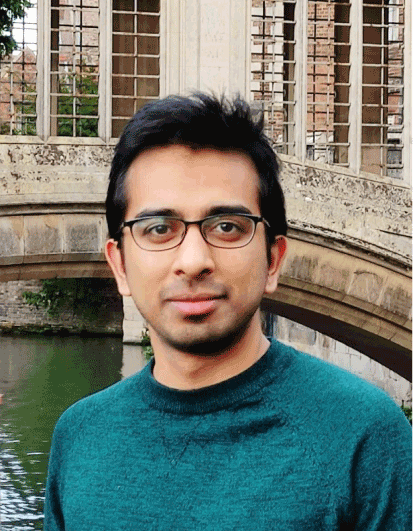
Profile

Subhajit BHATTACHARJEE

PhD candidate, University of Cambridge

Subhajit Bhattacharjee received his integrated bachelor’s and master’s (BS–MS) degree in chemical sciences from the Indian Institute of Science Education and Research (IISER) Kolkata, India in 2019 and is currently pursuing his PhD under Prof Erwin Reisner at the University of Cambridge, U.K. His research broadly lies in the domain of materials and energy sciences, and primarily focuses on the design, development, and engineering of solar and electro-driven technologies for sustainable energy production, waste valorisation, and CO2 utilisation. Some of his projects include: building efficient photoelectrochemical devices and ‘artificial leaves’ for selective waste-to-fuel/chemical production, bio-electrocatalytic olefin generation, chemoenzymatic photoreforming of plastics, and solar-driven CO2 capture and conversion, among others.

Subhajit visited CARES for knowledge exchange and attended the Global Young Scientist Summit (GYSS) event.

Date of CARES visit: January 2023

Presentation title: Sunlight-driven circular economy for a sustainable future: (Photo) electrochemical systems and ‘artificial leaves’ for waste-to-fuel/ chemical production

Abstract: The use of sunlight-driven technologies to utilise abundant solid waste resources and greenhouse gases like CO2 as feedstocks for the generation of sustainable fuels and value-added chemicals emerges as a lucrative strategy to mitigate environmental pollution, tackle our energy crisis and create a circular economy. However, the existing solar waste conversion systems are not yet suitable for practical applications owing to their low efficiencies, poor product selectivity, lack of versatility and nonreusability. We introduce (photo)electrochemical (PEC) platforms that can reform a diverse range of waste streams, including biomass, industrial by-products, and plastics, into industrially relevant value-added chemicals and clean fuels simultaneously without any externally applied bias/voltage. Along with reforming solid waste streams, the PEC systems can produce fuels such as green hydrogen and convert atmospheric CO2 from compressed or captured sources to syngas, CO or formate. The systems achieve 6090% product selectivity and >100 μmol cm‒2 h‒1 product formation rates, which corresponds to 102–104 times higher activity than conventional particulate photoreforming systems. The solar-driven, single-light absorber PEC devices are versatile and can be assembled in either a 'two-compartment' or integrated ‘artificial leaf’ configurations, with each having its specific advantages. The proto-type device demonstrates the potential of PEC assemblies towards waste valorisation, accompanied by sustainable fuel production, approaching the thresholds required for commercial implementation.

Read: Subhajit's testimonial on his experience of the CARES C4T Visiting Scientist Scheme

Cambridge

Past Visiting Scientists

Key Publications

Google Scholar Link

S. Bhattacharjee‡, M. Rahaman‡, V. Andrei, M. Miller, S. Rodríguez-Jiménez, E. Lam, C. Pornrungroj, and E. Reisner*, Photoelectrochemical CO2-to-fuel Conversion with Simultaneous Plastic Reforming, Nat. Synth. 2022 (accepted).

V. Andrei, Q. Wang, T. Uekert, S. Bhattacharjee, and E. Reisner*, Solar Panel Technologies for Light-to-Chemical Conversion, Acc. Chem. Res. 2022, 55, 3376-3386. https://pubs.acs.org/doi/full/10.1021/acs.accounts.2c00477

C. M. Pichler‡, S. Bhattacharjee‡, E. Lam, L. Su, A. Collauto, M. Roessler, S. Cobb, V. M. Badiani, M. Rahaman and E. Reisner*, Bio-electrocatalytic Conversion of Food Waste to Ethylene via Succinic Acid as the Central Intermediate, ACS Catal. 2022, 12, 13360-13371. https://pubs.acs.org/doi/10.1021/acscatal.2c02689

S. Bhattacharjee, V. Andrei, C. Pornrungroj, M. Rahaman, C. M. Pichler and E. Reisner*, Reforming of Soluble Biomass and Plastic Derived Waste using a Bias-Free Cu30Pd70|Perovskite|Pt Photoelectrochemical Device, Adv. Funct. Mater. 2022, 32, 2109313. https://onlinelibrary.wiley.com/doi/full/10.1002/adfm.202109313

S. Das‡, S. Bhattacharjee‡, S. Mondal, S. Dutta, N. Bothra, S. K. Pati and S. Bhattacharyya*, Bimetallic Zero-Valent Alloy with Measured High-Valent Surface States to Reinforce the Bifunctional Activity in Rechargeable Zinc-Air Batteries, ACS Sustainable Chem. Eng. 2021, 9, 44, 14868-14880. https://pubs.acs.org/doi/abs/10.1021/acssuschemeng.1c04970

C. M. Pichler, S. Bhattacharjee, M. Rahaman, T. Uekert and E. Reisner*, Conversion of Polyethylene Waste into Gaseous Hydrocarbons via Integrated Tandem Chemical-Photo/Electrocatalytic Process, ACS Catal. 2021, 11, 9159-9167. https://pubs.acs.org/doi/10.1021/acscatal.1c02133

Profile

Subhajit BHATTACHARJEE

PhD candidate, University of Cambridge

Subhajit Bhattacharjee received his integrated bachelor’s and master’s (BS–MS) degree in chemical sciences from the Indian Institute of Science Education and Research (IISER) Kolkata, India in 2019 and is currently pursuing his PhD under Prof Erwin Reisner at the University of Cambridge, U.K. His research broadly lies in the domain of materials and energy sciences, and primarily focuses on the design, development, and engineering of solar and electro-driven technologies for sustainable energy production, waste valorisation, and CO2 utilisation. Some of his projects include: building efficient photoelectrochemical devices and ‘artificial leaves’ for selective waste-to-fuel/chemical production, bio-electrocatalytic olefin generation, chemoenzymatic photoreforming of plastics, and solar-driven CO2 capture and conversion, among others.

Subhajit visited CARES for knowledge exchange and attended the Global Young Scientist Summit (GYSS) event.

Date of CARES visit: January 2023

Presentation title: Sunlight-driven circular economy for a sustainable future: (Photo) electrochemical systems and ‘artificial leaves’ for waste-to-fuel/ chemical production

Abstract: The use of sunlight-driven technologies to utilise abundant solid waste resources and greenhouse gases like CO2 as feedstocks for the generation of sustainable fuels and value-added chemicals emerges as a lucrative strategy to mitigate environmental pollution, tackle our energy crisis and create a circular economy. However, the existing solar waste conversion systems are not yet suitable for practical applications owing to their low efficiencies, poor product selectivity, lack of versatility and nonreusability. We introduce (photo)electrochemical (PEC) platforms that can reform a diverse range of waste streams, including biomass, industrial by-products, and plastics, into industrially relevant value-added chemicals and clean fuels simultaneously without any externally applied bias/voltage. Along with reforming solid waste streams, the PEC systems can produce fuels such as green hydrogen and convert atmospheric CO2 from compressed or captured sources to syngas, CO or formate. The systems achieve 6090% product selectivity and >100 μmol cm‒2 h‒1 product formation rates, which corresponds to 102–104 times higher activity than conventional particulate photoreforming systems. The solar-driven, single-light absorber PEC devices are versatile and can be assembled in either a 'two-compartment' or integrated ‘artificial leaf’ configurations, with each having its specific advantages. The proto-type device demonstrates the potential of PEC assemblies towards waste valorisation, accompanied by sustainable fuel production, approaching the thresholds required for commercial implementation.

Read: Subhajit's testimonial on his experience of the CARES C4T Visiting Scientist Scheme

Cambridge

Past Visiting Scientists

Key Publications

Google Scholar Link

S. Bhattacharjee‡, M. Rahaman‡, V. Andrei, M. Miller, S. Rodríguez-Jiménez, E. Lam, C. Pornrungroj, and E. Reisner*, Photoelectrochemical CO2-to-fuel Conversion with Simultaneous Plastic Reforming, Nat. Synth. 2022 (accepted).

V. Andrei, Q. Wang, T. Uekert, S. Bhattacharjee, and E. Reisner*, Solar Panel Technologies for Light-to-Chemical Conversion, Acc. Chem. Res. 2022, 55, 3376-3386. https://pubs.acs.org/doi/full/10.1021/acs.accounts.2c00477

C. M. Pichler‡, S. Bhattacharjee‡, E. Lam, L. Su, A. Collauto, M. Roessler, S. Cobb, V. M. Badiani, M. Rahaman and E. Reisner*, Bio-electrocatalytic Conversion of Food Waste to Ethylene via Succinic Acid as the Central Intermediate, ACS Catal. 2022, 12, 13360-13371. https://pubs.acs.org/doi/10.1021/acscatal.2c02689

S. Bhattacharjee, V. Andrei, C. Pornrungroj, M. Rahaman, C. M. Pichler and E. Reisner*, Reforming of Soluble Biomass and Plastic Derived Waste using a Bias-Free Cu30Pd70|Perovskite|Pt Photoelectrochemical Device, Adv. Funct. Mater. 2022, 32, 2109313. https://onlinelibrary.wiley.com/doi/full/10.1002/adfm.202109313

S. Das‡, S. Bhattacharjee‡, S. Mondal, S. Dutta, N. Bothra, S. K. Pati and S. Bhattacharyya*, Bimetallic Zero-Valent Alloy with Measured High-Valent Surface States to Reinforce the Bifunctional Activity in Rechargeable Zinc-Air Batteries, ACS Sustainable Chem. Eng. 2021, 9, 44, 14868-14880. https://pubs.acs.org/doi/abs/10.1021/acssuschemeng.1c04970

C. M. Pichler, S. Bhattacharjee, M. Rahaman, T. Uekert and E. Reisner*, Conversion of Polyethylene Waste into Gaseous Hydrocarbons via Integrated Tandem Chemical-Photo/Electrocatalytic Process, ACS Catal. 2021, 11, 9159-9167. https://pubs.acs.org/doi/10.1021/acscatal.1c02133

Profile

Subhajit BHATTACHARJEE

PhD candidate, University of Cambridge

Subhajit Bhattacharjee received his integrated bachelor’s and master’s (BS–MS) degree in chemical sciences from the Indian Institute of Science Education and Research (IISER) Kolkata, India in 2019 and is currently pursuing his PhD under Prof Erwin Reisner at the University of Cambridge, U.K. His research broadly lies in the domain of materials and energy sciences, and primarily focuses on the design, development, and engineering of solar and electro-driven technologies for sustainable energy production, waste valorisation, and CO2 utilisation. Some of his projects include: building efficient photoelectrochemical devices and ‘artificial leaves’ for selective waste-to-fuel/chemical production, bio-electrocatalytic olefin generation, chemoenzymatic photoreforming of plastics, and solar-driven CO2 capture and conversion, among others.

Subhajit visited CARES for knowledge exchange and attended the Global Young Scientist Summit (GYSS) event.

Date of CARES visit: January 2023

Presentation title: Sunlight-driven circular economy for a sustainable future: (Photo) electrochemical systems and ‘artificial leaves’ for waste-to-fuel/ chemical production

Abstract: The use of sunlight-driven technologies to utilise abundant solid waste resources and greenhouse gases like CO2 as feedstocks for the generation of sustainable fuels and value-added chemicals emerges as a lucrative strategy to mitigate environmental pollution, tackle our energy crisis and create a circular economy. However, the existing solar waste conversion systems are not yet suitable for practical applications owing to their low efficiencies, poor product selectivity, lack of versatility and nonreusability. We introduce (photo)electrochemical (PEC) platforms that can reform a diverse range of waste streams, including biomass, industrial by-products, and plastics, into industrially relevant value-added chemicals and clean fuels simultaneously without any externally applied bias/voltage. Along with reforming solid waste streams, the PEC systems can produce fuels such as green hydrogen and convert atmospheric CO2 from compressed or captured sources to syngas, CO or formate. The systems achieve 6090% product selectivity and >100 μmol cm‒2 h‒1 product formation rates, which corresponds to 102–104 times higher activity than conventional particulate photoreforming systems. The solar-driven, single-light absorber PEC devices are versatile and can be assembled in either a 'two-compartment' or integrated ‘artificial leaf’ configurations, with each having its specific advantages. The proto-type device demonstrates the potential of PEC assemblies towards waste valorisation, accompanied by sustainable fuel production, approaching the thresholds required for commercial implementation.

Read: Subhajit's testimonial on his experience of the CARES C4T Visiting Scientist Scheme

Cambridge

Past Visiting Scientists

Key Publications

Google Scholar Link

S. Bhattacharjee‡, M. Rahaman‡, V. Andrei, M. Miller, S. Rodríguez-Jiménez, E. Lam, C. Pornrungroj, and E. Reisner*, Photoelectrochemical CO2-to-fuel Conversion with Simultaneous Plastic Reforming, Nat. Synth. 2022 (accepted).

V. Andrei, Q. Wang, T. Uekert, S. Bhattacharjee, and E. Reisner*, Solar Panel Technologies for Light-to-Chemical Conversion, Acc. Chem. Res. 2022, 55, 3376-3386. https://pubs.acs.org/doi/full/10.1021/acs.accounts.2c00477

C. M. Pichler‡, S. Bhattacharjee‡, E. Lam, L. Su, A. Collauto, M. Roessler, S. Cobb, V. M. Badiani, M. Rahaman and E. Reisner*, Bio-electrocatalytic Conversion of Food Waste to Ethylene via Succinic Acid as the Central Intermediate, ACS Catal. 2022, 12, 13360-13371. https://pubs.acs.org/doi/10.1021/acscatal.2c02689

S. Bhattacharjee, V. Andrei, C. Pornrungroj, M. Rahaman, C. M. Pichler and E. Reisner*, Reforming of Soluble Biomass and Plastic Derived Waste using a Bias-Free Cu30Pd70|Perovskite|Pt Photoelectrochemical Device, Adv. Funct. Mater. 2022, 32, 2109313. https://onlinelibrary.wiley.com/doi/full/10.1002/adfm.202109313

S. Das‡, S. Bhattacharjee‡, S. Mondal, S. Dutta, N. Bothra, S. K. Pati and S. Bhattacharyya*, Bimetallic Zero-Valent Alloy with Measured High-Valent Surface States to Reinforce the Bifunctional Activity in Rechargeable Zinc-Air Batteries, ACS Sustainable Chem. Eng. 2021, 9, 44, 14868-14880. https://pubs.acs.org/doi/abs/10.1021/acssuschemeng.1c04970

C. M. Pichler, S. Bhattacharjee, M. Rahaman, T. Uekert and E. Reisner*, Conversion of Polyethylene Waste into Gaseous Hydrocarbons via Integrated Tandem Chemical-Photo/Electrocatalytic Process, ACS Catal. 2021, 11, 9159-9167. https://pubs.acs.org/doi/10.1021/acscatal.1c02133

Profile

Subhajit BHATTACHARJEE

PhD candidate, University of Cambridge

Subhajit Bhattacharjee received his integrated bachelor’s and master’s (BS–MS) degree in chemical sciences from the Indian Institute of Science Education and Research (IISER) Kolkata, India in 2019 and is currently pursuing his PhD under Prof Erwin Reisner at the University of Cambridge, U.K. His research broadly lies in the domain of materials and energy sciences, and primarily focuses on the design, development, and engineering of solar and electro-driven technologies for sustainable energy production, waste valorisation, and CO2 utilisation. Some of his projects include: building efficient photoelectrochemical devices and ‘artificial leaves’ for selective waste-to-fuel/chemical production, bio-electrocatalytic olefin generation, chemoenzymatic photoreforming of plastics, and solar-driven CO2 capture and conversion, among others.

Subhajit visited CARES for knowledge exchange and attended the Global Young Scientist Summit (GYSS) event.

Date of CARES visit: January 2023

Presentation title: Sunlight-driven circular economy for a sustainable future: (Photo) electrochemical systems and ‘artificial leaves’ for waste-to-fuel/ chemical production

Abstract: The use of sunlight-driven technologies to utilise abundant solid waste resources and greenhouse gases like CO2 as feedstocks for the generation of sustainable fuels and value-added chemicals emerges as a lucrative strategy to mitigate environmental pollution, tackle our energy crisis and create a circular economy. However, the existing solar waste conversion systems are not yet suitable for practical applications owing to their low efficiencies, poor product selectivity, lack of versatility and nonreusability. We introduce (photo)electrochemical (PEC) platforms that can reform a diverse range of waste streams, including biomass, industrial by-products, and plastics, into industrially relevant value-added chemicals and clean fuels simultaneously without any externally applied bias/voltage. Along with reforming solid waste streams, the PEC systems can produce fuels such as green hydrogen and convert atmospheric CO2 from compressed or captured sources to syngas, CO or formate. The systems achieve 6090% product selectivity and >100 μmol cm‒2 h‒1 product formation rates, which corresponds to 102–104 times higher activity than conventional particulate photoreforming systems. The solar-driven, single-light absorber PEC devices are versatile and can be assembled in either a 'two-compartment' or integrated ‘artificial leaf’ configurations, with each having its specific advantages. The proto-type device demonstrates the potential of PEC assemblies towards waste valorisation, accompanied by sustainable fuel production, approaching the thresholds required for commercial implementation.

Read: Subhajit's testimonial on his experience of the CARES C4T Visiting Scientist Scheme

Cambridge

Past Visiting Scientists

Key Publications

Google Scholar Link

S. Bhattacharjee‡, M. Rahaman‡, V. Andrei, M. Miller, S. Rodríguez-Jiménez, E. Lam, C. Pornrungroj, and E. Reisner*, Photoelectrochemical CO2-to-fuel Conversion with Simultaneous Plastic Reforming, Nat. Synth. 2022 (accepted).

V. Andrei, Q. Wang, T. Uekert, S. Bhattacharjee, and E. Reisner*, Solar Panel Technologies for Light-to-Chemical Conversion, Acc. Chem. Res. 2022, 55, 3376-3386. https://pubs.acs.org/doi/full/10.1021/acs.accounts.2c00477

C. M. Pichler‡, S. Bhattacharjee‡, E. Lam, L. Su, A. Collauto, M. Roessler, S. Cobb, V. M. Badiani, M. Rahaman and E. Reisner*, Bio-electrocatalytic Conversion of Food Waste to Ethylene via Succinic Acid as the Central Intermediate, ACS Catal. 2022, 12, 13360-13371. https://pubs.acs.org/doi/10.1021/acscatal.2c02689

S. Bhattacharjee, V. Andrei, C. Pornrungroj, M. Rahaman, C. M. Pichler and E. Reisner*, Reforming of Soluble Biomass and Plastic Derived Waste using a Bias-Free Cu30Pd70|Perovskite|Pt Photoelectrochemical Device, Adv. Funct. Mater. 2022, 32, 2109313. https://onlinelibrary.wiley.com/doi/full/10.1002/adfm.202109313

S. Das‡, S. Bhattacharjee‡, S. Mondal, S. Dutta, N. Bothra, S. K. Pati and S. Bhattacharyya*, Bimetallic Zero-Valent Alloy with Measured High-Valent Surface States to Reinforce the Bifunctional Activity in Rechargeable Zinc-Air Batteries, ACS Sustainable Chem. Eng. 2021, 9, 44, 14868-14880. https://pubs.acs.org/doi/abs/10.1021/acssuschemeng.1c04970

C. M. Pichler, S. Bhattacharjee, M. Rahaman, T. Uekert and E. Reisner*, Conversion of Polyethylene Waste into Gaseous Hydrocarbons via Integrated Tandem Chemical-Photo/Electrocatalytic Process, ACS Catal. 2021, 11, 9159-9167. https://pubs.acs.org/doi/10.1021/acscatal.1c02133

Profile

Subhajit BHATTACHARJEE

PhD candidate, University of Cambridge

Subhajit Bhattacharjee received his integrated bachelor’s and master’s (BS–MS) degree in chemical sciences from the Indian Institute of Science Education and Research (IISER) Kolkata, India in 2019 and is currently pursuing his PhD under Prof Erwin Reisner at the University of Cambridge, U.K. His research broadly lies in the domain of materials and energy sciences, and primarily focuses on the design, development, and engineering of solar and electro-driven technologies for sustainable energy production, waste valorisation, and CO2 utilisation. Some of his projects include: building efficient photoelectrochemical devices and ‘artificial leaves’ for selective waste-to-fuel/chemical production, bio-electrocatalytic olefin generation, chemoenzymatic photoreforming of plastics, and solar-driven CO2 capture and conversion, among others.

Subhajit visited CARES for knowledge exchange and attended the Global Young Scientist Summit (GYSS) event.

Date of CARES visit: January 2023

Presentation title: Sunlight-driven circular economy for a sustainable future: (Photo) electrochemical systems and ‘artificial leaves’ for waste-to-fuel/ chemical production

Abstract: The use of sunlight-driven technologies to utilise abundant solid waste resources and greenhouse gases like CO2 as feedstocks for the generation of sustainable fuels and value-added chemicals emerges as a lucrative strategy to mitigate environmental pollution, tackle our energy crisis and create a circular economy. However, the existing solar waste conversion systems are not yet suitable for practical applications owing to their low efficiencies, poor product selectivity, lack of versatility and nonreusability. We introduce (photo)electrochemical (PEC) platforms that can reform a diverse range of waste streams, including biomass, industrial by-products, and plastics, into industrially relevant value-added chemicals and clean fuels simultaneously without any externally applied bias/voltage. Along with reforming solid waste streams, the PEC systems can produce fuels such as green hydrogen and convert atmospheric CO2 from compressed or captured sources to syngas, CO or formate. The systems achieve 6090% product selectivity and >100 μmol cm‒2 h‒1 product formation rates, which corresponds to 102–104 times higher activity than conventional particulate photoreforming systems. The solar-driven, single-light absorber PEC devices are versatile and can be assembled in either a 'two-compartment' or integrated ‘artificial leaf’ configurations, with each having its specific advantages. The proto-type device demonstrates the potential of PEC assemblies towards waste valorisation, accompanied by sustainable fuel production, approaching the thresholds required for commercial implementation.

Read: Subhajit's testimonial on his experience of the CARES C4T Visiting Scientist Scheme

Cambridge

Past Visiting Scientists

Key Publications

Google Scholar Link

S. Bhattacharjee‡, M. Rahaman‡, V. Andrei, M. Miller, S. Rodríguez-Jiménez, E. Lam, C. Pornrungroj, and E. Reisner*, Photoelectrochemical CO2-to-fuel Conversion with Simultaneous Plastic Reforming, Nat. Synth. 2022 (accepted).

V. Andrei, Q. Wang, T. Uekert, S. Bhattacharjee, and E. Reisner*, Solar Panel Technologies for Light-to-Chemical Conversion, Acc. Chem. Res. 2022, 55, 3376-3386. https://pubs.acs.org/doi/full/10.1021/acs.accounts.2c00477

C. M. Pichler‡, S. Bhattacharjee‡, E. Lam, L. Su, A. Collauto, M. Roessler, S. Cobb, V. M. Badiani, M. Rahaman and E. Reisner*, Bio-electrocatalytic Conversion of Food Waste to Ethylene via Succinic Acid as the Central Intermediate, ACS Catal. 2022, 12, 13360-13371. https://pubs.acs.org/doi/10.1021/acscatal.2c02689

S. Bhattacharjee, V. Andrei, C. Pornrungroj, M. Rahaman, C. M. Pichler and E. Reisner*, Reforming of Soluble Biomass and Plastic Derived Waste using a Bias-Free Cu30Pd70|Perovskite|Pt Photoelectrochemical Device, Adv. Funct. Mater. 2022, 32, 2109313. https://onlinelibrary.wiley.com/doi/full/10.1002/adfm.202109313

S. Das‡, S. Bhattacharjee‡, S. Mondal, S. Dutta, N. Bothra, S. K. Pati and S. Bhattacharyya*, Bimetallic Zero-Valent Alloy with Measured High-Valent Surface States to Reinforce the Bifunctional Activity in Rechargeable Zinc-Air Batteries, ACS Sustainable Chem. Eng. 2021, 9, 44, 14868-14880. https://pubs.acs.org/doi/abs/10.1021/acssuschemeng.1c04970

C. M. Pichler, S. Bhattacharjee, M. Rahaman, T. Uekert and E. Reisner*, Conversion of Polyethylene Waste into Gaseous Hydrocarbons via Integrated Tandem Chemical-Photo/Electrocatalytic Process, ACS Catal. 2021, 11, 9159-9167. https://pubs.acs.org/doi/10.1021/acscatal.1c02133

Profile

Subhajit BHATTACHARJEE

PhD candidate, University of Cambridge

Subhajit Bhattacharjee received his integrated bachelor’s and master’s (BS–MS) degree in chemical sciences from the Indian Institute of Science Education and Research (IISER) Kolkata, India in 2019 and is currently pursuing his PhD under Prof Erwin Reisner at the University of Cambridge, U.K. His research broadly lies in the domain of materials and energy sciences, and primarily focuses on the design, development, and engineering of solar and electro-driven technologies for sustainable energy production, waste valorisation, and CO2 utilisation. Some of his projects include: building efficient photoelectrochemical devices and ‘artificial leaves’ for selective waste-to-fuel/chemical production, bio-electrocatalytic olefin generation, chemoenzymatic photoreforming of plastics, and solar-driven CO2 capture and conversion, among others.

Subhajit visited CARES for knowledge exchange and attended the Global Young Scientist Summit (GYSS) event.

Date of CARES visit: January 2023

Presentation title: Sunlight-driven circular economy for a sustainable future: (Photo) electrochemical systems and ‘artificial leaves’ for waste-to-fuel/ chemical production

Abstract: The use of sunlight-driven technologies to utilise abundant solid waste resources and greenhouse gases like CO2 as feedstocks for the generation of sustainable fuels and value-added chemicals emerges as a lucrative strategy to mitigate environmental pollution, tackle our energy crisis and create a circular economy. However, the existing solar waste conversion systems are not yet suitable for practical applications owing to their low efficiencies, poor product selectivity, lack of versatility and nonreusability. We introduce (photo)electrochemical (PEC) platforms that can reform a diverse range of waste streams, including biomass, industrial by-products, and plastics, into industrially relevant value-added chemicals and clean fuels simultaneously without any externally applied bias/voltage. Along with reforming solid waste streams, the PEC systems can produce fuels such as green hydrogen and convert atmospheric CO2 from compressed or captured sources to syngas, CO or formate. The systems achieve 6090% product selectivity and >100 μmol cm‒2 h‒1 product formation rates, which corresponds to 102–104 times higher activity than conventional particulate photoreforming systems. The solar-driven, single-light absorber PEC devices are versatile and can be assembled in either a 'two-compartment' or integrated ‘artificial leaf’ configurations, with each having its specific advantages. The proto-type device demonstrates the potential of PEC assemblies towards waste valorisation, accompanied by sustainable fuel production, approaching the thresholds required for commercial implementation.

Read: Subhajit's testimonial on his experience of the CARES C4T Visiting Scientist Scheme

Cambridge

Past Visiting Scientists

Key Publications

Google Scholar Link

S. Bhattacharjee‡, M. Rahaman‡, V. Andrei, M. Miller, S. Rodríguez-Jiménez, E. Lam, C. Pornrungroj, and E. Reisner*, Photoelectrochemical CO2-to-fuel Conversion with Simultaneous Plastic Reforming, Nat. Synth. 2022 (accepted).

V. Andrei, Q. Wang, T. Uekert, S. Bhattacharjee, and E. Reisner*, Solar Panel Technologies for Light-to-Chemical Conversion, Acc. Chem. Res. 2022, 55, 3376-3386. https://pubs.acs.org/doi/full/10.1021/acs.accounts.2c00477

C. M. Pichler‡, S. Bhattacharjee‡, E. Lam, L. Su, A. Collauto, M. Roessler, S. Cobb, V. M. Badiani, M. Rahaman and E. Reisner*, Bio-electrocatalytic Conversion of Food Waste to Ethylene via Succinic Acid as the Central Intermediate, ACS Catal. 2022, 12, 13360-13371. https://pubs.acs.org/doi/10.1021/acscatal.2c02689

S. Bhattacharjee, V. Andrei, C. Pornrungroj, M. Rahaman, C. M. Pichler and E. Reisner*, Reforming of Soluble Biomass and Plastic Derived Waste using a Bias-Free Cu30Pd70|Perovskite|Pt Photoelectrochemical Device, Adv. Funct. Mater. 2022, 32, 2109313. https://onlinelibrary.wiley.com/doi/full/10.1002/adfm.202109313

S. Das‡, S. Bhattacharjee‡, S. Mondal, S. Dutta, N. Bothra, S. K. Pati and S. Bhattacharyya*, Bimetallic Zero-Valent Alloy with Measured High-Valent Surface States to Reinforce the Bifunctional Activity in Rechargeable Zinc-Air Batteries, ACS Sustainable Chem. Eng. 2021, 9, 44, 14868-14880. https://pubs.acs.org/doi/abs/10.1021/acssuschemeng.1c04970

C. M. Pichler, S. Bhattacharjee, M. Rahaman, T. Uekert and E. Reisner*, Conversion of Polyethylene Waste into Gaseous Hydrocarbons via Integrated Tandem Chemical-Photo/Electrocatalytic Process, ACS Catal. 2021, 11, 9159-9167. https://pubs.acs.org/doi/10.1021/acscatal.1c02133

Profile

Subhajit BHATTACHARJEE

PhD candidate, University of Cambridge

Subhajit Bhattacharjee received his integrated bachelor’s and master’s (BS–MS) degree in chemical sciences from the Indian Institute of Science Education and Research (IISER) Kolkata, India in 2019 and is currently pursuing his PhD under Prof Erwin Reisner at the University of Cambridge, U.K. His research broadly lies in the domain of materials and energy sciences, and primarily focuses on the design, development, and engineering of solar and electro-driven technologies for sustainable energy production, waste valorisation, and CO2 utilisation. Some of his projects include: building efficient photoelectrochemical devices and ‘artificial leaves’ for selective waste-to-fuel/chemical production, bio-electrocatalytic olefin generation, chemoenzymatic photoreforming of plastics, and solar-driven CO2 capture and conversion, among others.

Subhajit visited CARES for knowledge exchange and attended the Global Young Scientist Summit (GYSS) event.

Date of CARES visit: January 2023

Presentation title: Sunlight-driven circular economy for a sustainable future: (Photo) electrochemical systems and ‘artificial leaves’ for waste-to-fuel/ chemical production

Abstract: The use of sunlight-driven technologies to utilise abundant solid waste resources and greenhouse gases like CO2 as feedstocks for the generation of sustainable fuels and value-added chemicals emerges as a lucrative strategy to mitigate environmental pollution, tackle our energy crisis and create a circular economy. However, the existing solar waste conversion systems are not yet suitable for practical applications owing to their low efficiencies, poor product selectivity, lack of versatility and nonreusability. We introduce (photo)electrochemical (PEC) platforms that can reform a diverse range of waste streams, including biomass, industrial by-products, and plastics, into industrially relevant value-added chemicals and clean fuels simultaneously without any externally applied bias/voltage. Along with reforming solid waste streams, the PEC systems can produce fuels such as green hydrogen and convert atmospheric CO2 from compressed or captured sources to syngas, CO or formate. The systems achieve 6090% product selectivity and >100 μmol cm‒2 h‒1 product formation rates, which corresponds to 102–104 times higher activity than conventional particulate photoreforming systems. The solar-driven, single-light absorber PEC devices are versatile and can be assembled in either a 'two-compartment' or integrated ‘artificial leaf’ configurations, with each having its specific advantages. The proto-type device demonstrates the potential of PEC assemblies towards waste valorisation, accompanied by sustainable fuel production, approaching the thresholds required for commercial implementation.

Read: Subhajit's testimonial on his experience of the CARES C4T Visiting Scientist Scheme

Cambridge

Past Visiting Scientists

Key Publications

Google Scholar Link

S. Bhattacharjee‡, M. Rahaman‡, V. Andrei, M. Miller, S. Rodríguez-Jiménez, E. Lam, C. Pornrungroj, and E. Reisner*, Photoelectrochemical CO2-to-fuel Conversion with Simultaneous Plastic Reforming, Nat. Synth. 2022 (accepted).

V. Andrei, Q. Wang, T. Uekert, S. Bhattacharjee, and E. Reisner*, Solar Panel Technologies for Light-to-Chemical Conversion, Acc. Chem. Res. 2022, 55, 3376-3386. https://pubs.acs.org/doi/full/10.1021/acs.accounts.2c00477

C. M. Pichler‡, S. Bhattacharjee‡, E. Lam, L. Su, A. Collauto, M. Roessler, S. Cobb, V. M. Badiani, M. Rahaman and E. Reisner*, Bio-electrocatalytic Conversion of Food Waste to Ethylene via Succinic Acid as the Central Intermediate, ACS Catal. 2022, 12, 13360-13371. https://pubs.acs.org/doi/10.1021/acscatal.2c02689

S. Bhattacharjee, V. Andrei, C. Pornrungroj, M. Rahaman, C. M. Pichler and E. Reisner*, Reforming of Soluble Biomass and Plastic Derived Waste using a Bias-Free Cu30Pd70|Perovskite|Pt Photoelectrochemical Device, Adv. Funct. Mater. 2022, 32, 2109313. https://onlinelibrary.wiley.com/doi/full/10.1002/adfm.202109313

S. Das‡, S. Bhattacharjee‡, S. Mondal, S. Dutta, N. Bothra, S. K. Pati and S. Bhattacharyya*, Bimetallic Zero-Valent Alloy with Measured High-Valent Surface States to Reinforce the Bifunctional Activity in Rechargeable Zinc-Air Batteries, ACS Sustainable Chem. Eng. 2021, 9, 44, 14868-14880. https://pubs.acs.org/doi/abs/10.1021/acssuschemeng.1c04970

C. M. Pichler, S. Bhattacharjee, M. Rahaman, T. Uekert and E. Reisner*, Conversion of Polyethylene Waste into Gaseous Hydrocarbons via Integrated Tandem Chemical-Photo/Electrocatalytic Process, ACS Catal. 2021, 11, 9159-9167. https://pubs.acs.org/doi/10.1021/acscatal.1c02133

Profile

Subhajit BHATTACHARJEE

PhD candidate, University of Cambridge

Subhajit Bhattacharjee received his integrated bachelor’s and master’s (BS–MS) degree in chemical sciences from the Indian Institute of Science Education and Research (IISER) Kolkata, India in 2019 and is currently pursuing his PhD under Prof Erwin Reisner at the University of Cambridge, U.K. His research broadly lies in the domain of materials and energy sciences, and primarily focuses on the design, development, and engineering of solar and electro-driven technologies for sustainable energy production, waste valorisation, and CO2 utilisation. Some of his projects include: building efficient photoelectrochemical devices and ‘artificial leaves’ for selective waste-to-fuel/chemical production, bio-electrocatalytic olefin generation, chemoenzymatic photoreforming of plastics, and solar-driven CO2 capture and conversion, among others.

Subhajit visited CARES for knowledge exchange and attended the Global Young Scientist Summit (GYSS) event.

Date of CARES visit: January 2023

Presentation title: Sunlight-driven circular economy for a sustainable future: (Photo) electrochemical systems and ‘artificial leaves’ for waste-to-fuel/ chemical production

Abstract: The use of sunlight-driven technologies to utilise abundant solid waste resources and greenhouse gases like CO2 as feedstocks for the generation of sustainable fuels and value-added chemicals emerges as a lucrative strategy to mitigate environmental pollution, tackle our energy crisis and create a circular economy. However, the existing solar waste conversion systems are not yet suitable for practical applications owing to their low efficiencies, poor product selectivity, lack of versatility and nonreusability. We introduce (photo)electrochemical (PEC) platforms that can reform a diverse range of waste streams, including biomass, industrial by-products, and plastics, into industrially relevant value-added chemicals and clean fuels simultaneously without any externally applied bias/voltage. Along with reforming solid waste streams, the PEC systems can produce fuels such as green hydrogen and convert atmospheric CO2 from compressed or captured sources to syngas, CO or formate. The systems achieve 6090% product selectivity and >100 μmol cm‒2 h‒1 product formation rates, which corresponds to 102–104 times higher activity than conventional particulate photoreforming systems. The solar-driven, single-light absorber PEC devices are versatile and can be assembled in either a 'two-compartment' or integrated ‘artificial leaf’ configurations, with each having its specific advantages. The proto-type device demonstrates the potential of PEC assemblies towards waste valorisation, accompanied by sustainable fuel production, approaching the thresholds required for commercial implementation.

Read: Subhajit's testimonial on his experience of the CARES C4T Visiting Scientist Scheme

Cambridge

Past Visiting Scientists

Key Publications

Google Scholar Link

S. Bhattacharjee‡, M. Rahaman‡, V. Andrei, M. Miller, S. Rodríguez-Jiménez, E. Lam, C. Pornrungroj, and E. Reisner*, Photoelectrochemical CO2-to-fuel Conversion with Simultaneous Plastic Reforming, Nat. Synth. 2022 (accepted).

V. Andrei, Q. Wang, T. Uekert, S. Bhattacharjee, and E. Reisner*, Solar Panel Technologies for Light-to-Chemical Conversion, Acc. Chem. Res. 2022, 55, 3376-3386. https://pubs.acs.org/doi/full/10.1021/acs.accounts.2c00477

C. M. Pichler‡, S. Bhattacharjee‡, E. Lam, L. Su, A. Collauto, M. Roessler, S. Cobb, V. M. Badiani, M. Rahaman and E. Reisner*, Bio-electrocatalytic Conversion of Food Waste to Ethylene via Succinic Acid as the Central Intermediate, ACS Catal. 2022, 12, 13360-13371. https://pubs.acs.org/doi/10.1021/acscatal.2c02689

S. Bhattacharjee, V. Andrei, C. Pornrungroj, M. Rahaman, C. M. Pichler and E. Reisner*, Reforming of Soluble Biomass and Plastic Derived Waste using a Bias-Free Cu30Pd70|Perovskite|Pt Photoelectrochemical Device, Adv. Funct. Mater. 2022, 32, 2109313. https://onlinelibrary.wiley.com/doi/full/10.1002/adfm.202109313

S. Das‡, S. Bhattacharjee‡, S. Mondal, S. Dutta, N. Bothra, S. K. Pati and S. Bhattacharyya*, Bimetallic Zero-Valent Alloy with Measured High-Valent Surface States to Reinforce the Bifunctional Activity in Rechargeable Zinc-Air Batteries, ACS Sustainable Chem. Eng. 2021, 9, 44, 14868-14880. https://pubs.acs.org/doi/abs/10.1021/acssuschemeng.1c04970

C. M. Pichler, S. Bhattacharjee, M. Rahaman, T. Uekert and E. Reisner*, Conversion of Polyethylene Waste into Gaseous Hydrocarbons via Integrated Tandem Chemical-Photo/Electrocatalytic Process, ACS Catal. 2021, 11, 9159-9167. https://pubs.acs.org/doi/10.1021/acscatal.1c02133

Profile

Subhajit BHATTACHARJEE

PhD candidate, University of Cambridge

Subhajit Bhattacharjee received his integrated bachelor’s and master’s (BS–MS) degree in chemical sciences from the Indian Institute of Science Education and Research (IISER) Kolkata, India in 2019 and is currently pursuing his PhD under Prof Erwin Reisner at the University of Cambridge, U.K. His research broadly lies in the domain of materials and energy sciences, and primarily focuses on the design, development, and engineering of solar and electro-driven technologies for sustainable energy production, waste valorisation, and CO2 utilisation. Some of his projects include: building efficient photoelectrochemical devices and ‘artificial leaves’ for selective waste-to-fuel/chemical production, bio-electrocatalytic olefin generation, chemoenzymatic photoreforming of plastics, and solar-driven CO2 capture and conversion, among others.

Subhajit visited CARES for knowledge exchange and attended the Global Young Scientist Summit (GYSS) event.

Date of CARES visit: January 2023

Presentation title: Sunlight-driven circular economy for a sustainable future: (Photo) electrochemical systems and ‘artificial leaves’ for waste-to-fuel/ chemical production

Abstract: The use of sunlight-driven technologies to utilise abundant solid waste resources and greenhouse gases like CO2 as feedstocks for the generation of sustainable fuels and value-added chemicals emerges as a lucrative strategy to mitigate environmental pollution, tackle our energy crisis and create a circular economy. However, the existing solar waste conversion systems are not yet suitable for practical applications owing to their low efficiencies, poor product selectivity, lack of versatility and nonreusability. We introduce (photo)electrochemical (PEC) platforms that can reform a diverse range of waste streams, including biomass, industrial by-products, and plastics, into industrially relevant value-added chemicals and clean fuels simultaneously without any externally applied bias/voltage. Along with reforming solid waste streams, the PEC systems can produce fuels such as green hydrogen and convert atmospheric CO2 from compressed or captured sources to syngas, CO or formate. The systems achieve 6090% product selectivity and >100 μmol cm‒2 h‒1 product formation rates, which corresponds to 102–104 times higher activity than conventional particulate photoreforming systems. The solar-driven, single-light absorber PEC devices are versatile and can be assembled in either a 'two-compartment' or integrated ‘artificial leaf’ configurations, with each having its specific advantages. The proto-type device demonstrates the potential of PEC assemblies towards waste valorisation, accompanied by sustainable fuel production, approaching the thresholds required for commercial implementation.

Read: Subhajit's testimonial on his experience of the CARES C4T Visiting Scientist Scheme

Cambridge

Past Visiting Scientists

Key Publications

Google Scholar Link

S. Bhattacharjee‡, M. Rahaman‡, V. Andrei, M. Miller, S. Rodríguez-Jiménez, E. Lam, C. Pornrungroj, and E. Reisner*, Photoelectrochemical CO2-to-fuel Conversion with Simultaneous Plastic Reforming, Nat. Synth. 2022 (accepted).

V. Andrei, Q. Wang, T. Uekert, S. Bhattacharjee, and E. Reisner*, Solar Panel Technologies for Light-to-Chemical Conversion, Acc. Chem. Res. 2022, 55, 3376-3386. https://pubs.acs.org/doi/full/10.1021/acs.accounts.2c00477

C. M. Pichler‡, S. Bhattacharjee‡, E. Lam, L. Su, A. Collauto, M. Roessler, S. Cobb, V. M. Badiani, M. Rahaman and E. Reisner*, Bio-electrocatalytic Conversion of Food Waste to Ethylene via Succinic Acid as the Central Intermediate, ACS Catal. 2022, 12, 13360-13371. https://pubs.acs.org/doi/10.1021/acscatal.2c02689

S. Bhattacharjee, V. Andrei, C. Pornrungroj, M. Rahaman, C. M. Pichler and E. Reisner*, Reforming of Soluble Biomass and Plastic Derived Waste using a Bias-Free Cu30Pd70|Perovskite|Pt Photoelectrochemical Device, Adv. Funct. Mater. 2022, 32, 2109313. https://onlinelibrary.wiley.com/doi/full/10.1002/adfm.202109313

S. Das‡, S. Bhattacharjee‡, S. Mondal, S. Dutta, N. Bothra, S. K. Pati and S. Bhattacharyya*, Bimetallic Zero-Valent Alloy with Measured High-Valent Surface States to Reinforce the Bifunctional Activity in Rechargeable Zinc-Air Batteries, ACS Sustainable Chem. Eng. 2021, 9, 44, 14868-14880. https://pubs.acs.org/doi/abs/10.1021/acssuschemeng.1c04970

C. M. Pichler, S. Bhattacharjee, M. Rahaman, T. Uekert and E. Reisner*, Conversion of Polyethylene Waste into Gaseous Hydrocarbons via Integrated Tandem Chemical-Photo/Electrocatalytic Process, ACS Catal. 2021, 11, 9159-9167. https://pubs.acs.org/doi/10.1021/acscatal.1c02133

Profile

Subhajit BHATTACHARJEE

PhD candidate, University of Cambridge

Subhajit Bhattacharjee received his integrated bachelor’s and master’s (BS–MS) degree in chemical sciences from the Indian Institute of Science Education and Research (IISER) Kolkata, India in 2019 and is currently pursuing his PhD under Prof Erwin Reisner at the University of Cambridge, U.K. His research broadly lies in the domain of materials and energy sciences, and primarily focuses on the design, development, and engineering of solar and electro-driven technologies for sustainable energy production, waste valorisation, and CO2 utilisation. Some of his projects include: building efficient photoelectrochemical devices and ‘artificial leaves’ for selective waste-to-fuel/chemical production, bio-electrocatalytic olefin generation, chemoenzymatic photoreforming of plastics, and solar-driven CO2 capture and conversion, among others.

Subhajit visited CARES for knowledge exchange and attended the Global Young Scientist Summit (GYSS) event.

Date of CARES visit: January 2023

Presentation title: Sunlight-driven circular economy for a sustainable future: (Photo) electrochemical systems and ‘artificial leaves’ for waste-to-fuel/ chemical production

Abstract: The use of sunlight-driven technologies to utilise abundant solid waste resources and greenhouse gases like CO2 as feedstocks for the generation of sustainable fuels and value-added chemicals emerges as a lucrative strategy to mitigate environmental pollution, tackle our energy crisis and create a circular economy. However, the existing solar waste conversion systems are not yet suitable for practical applications owing to their low efficiencies, poor product selectivity, lack of versatility and nonreusability. We introduce (photo)electrochemical (PEC) platforms that can reform a diverse range of waste streams, including biomass, industrial by-products, and plastics, into industrially relevant value-added chemicals and clean fuels simultaneously without any externally applied bias/voltage. Along with reforming solid waste streams, the PEC systems can produce fuels such as green hydrogen and convert atmospheric CO2 from compressed or captured sources to syngas, CO or formate. The systems achieve 6090% product selectivity and >100 μmol cm‒2 h‒1 product formation rates, which corresponds to 102–104 times higher activity than conventional particulate photoreforming systems. The solar-driven, single-light absorber PEC devices are versatile and can be assembled in either a 'two-compartment' or integrated ‘artificial leaf’ configurations, with each having its specific advantages. The proto-type device demonstrates the potential of PEC assemblies towards waste valorisation, accompanied by sustainable fuel production, approaching the thresholds required for commercial implementation.

Read: Subhajit's testimonial on his experience of the CARES C4T Visiting Scientist Scheme

Cambridge

Past Visiting Scientists

Key Publications

Google Scholar Link

S. Bhattacharjee‡, M. Rahaman‡, V. Andrei, M. Miller, S. Rodríguez-Jiménez, E. Lam, C. Pornrungroj, and E. Reisner*, Photoelectrochemical CO2-to-fuel Conversion with Simultaneous Plastic Reforming, Nat. Synth. 2022 (accepted).

V. Andrei, Q. Wang, T. Uekert, S. Bhattacharjee, and E. Reisner*, Solar Panel Technologies for Light-to-Chemical Conversion, Acc. Chem. Res. 2022, 55, 3376-3386. https://pubs.acs.org/doi/full/10.1021/acs.accounts.2c00477

C. M. Pichler‡, S. Bhattacharjee‡, E. Lam, L. Su, A. Collauto, M. Roessler, S. Cobb, V. M. Badiani, M. Rahaman and E. Reisner*, Bio-electrocatalytic Conversion of Food Waste to Ethylene via Succinic Acid as the Central Intermediate, ACS Catal. 2022, 12, 13360-13371. https://pubs.acs.org/doi/10.1021/acscatal.2c02689

S. Bhattacharjee, V. Andrei, C. Pornrungroj, M. Rahaman, C. M. Pichler and E. Reisner*, Reforming of Soluble Biomass and Plastic Derived Waste using a Bias-Free Cu30Pd70|Perovskite|Pt Photoelectrochemical Device, Adv. Funct. Mater. 2022, 32, 2109313. https://onlinelibrary.wiley.com/doi/full/10.1002/adfm.202109313

S. Das‡, S. Bhattacharjee‡, S. Mondal, S. Dutta, N. Bothra, S. K. Pati and S. Bhattacharyya*, Bimetallic Zero-Valent Alloy with Measured High-Valent Surface States to Reinforce the Bifunctional Activity in Rechargeable Zinc-Air Batteries, ACS Sustainable Chem. Eng. 2021, 9, 44, 14868-14880. https://pubs.acs.org/doi/abs/10.1021/acssuschemeng.1c04970

C. M. Pichler, S. Bhattacharjee, M. Rahaman, T. Uekert and E. Reisner*, Conversion of Polyethylene Waste into Gaseous Hydrocarbons via Integrated Tandem Chemical-Photo/Electrocatalytic Process, ACS Catal. 2021, 11, 9159-9167. https://pubs.acs.org/doi/10.1021/acscatal.1c02133

Profile

Subhajit BHATTACHARJEE

PhD candidate, University of Cambridge

Subhajit Bhattacharjee received his integrated bachelor’s and master’s (BS–MS) degree in chemical sciences from the Indian Institute of Science Education and Research (IISER) Kolkata, India in 2019 and is currently pursuing his PhD under Prof Erwin Reisner at the University of Cambridge, U.K. His research broadly lies in the domain of materials and energy sciences, and primarily focuses on the design, development, and engineering of solar and electro-driven technologies for sustainable energy production, waste valorisation, and CO2 utilisation. Some of his projects include: building efficient photoelectrochemical devices and ‘artificial leaves’ for selective waste-to-fuel/chemical production, bio-electrocatalytic olefin generation, chemoenzymatic photoreforming of plastics, and solar-driven CO2 capture and conversion, among others.

Subhajit visited CARES for knowledge exchange and attended the Global Young Scientist Summit (GYSS) event.

Date of CARES visit: January 2023

Presentation title: Sunlight-driven circular economy for a sustainable future: (Photo) electrochemical systems and ‘artificial leaves’ for waste-to-fuel/ chemical production

Abstract: The use of sunlight-driven technologies to utilise abundant solid waste resources and greenhouse gases like CO2 as feedstocks for the generation of sustainable fuels and value-added chemicals emerges as a lucrative strategy to mitigate environmental pollution, tackle our energy crisis and create a circular economy. However, the existing solar waste conversion systems are not yet suitable for practical applications owing to their low efficiencies, poor product selectivity, lack of versatility and nonreusability. We introduce (photo)electrochemical (PEC) platforms that can reform a diverse range of waste streams, including biomass, industrial by-products, and plastics, into industrially relevant value-added chemicals and clean fuels simultaneously without any externally applied bias/voltage. Along with reforming solid waste streams, the PEC systems can produce fuels such as green hydrogen and convert atmospheric CO2 from compressed or captured sources to syngas, CO or formate. The systems achieve 6090% product selectivity and >100 μmol cm‒2 h‒1 product formation rates, which corresponds to 102–104 times higher activity than conventional particulate photoreforming systems. The solar-driven, single-light absorber PEC devices are versatile and can be assembled in either a 'two-compartment' or integrated ‘artificial leaf’ configurations, with each having its specific advantages. The proto-type device demonstrates the potential of PEC assemblies towards waste valorisation, accompanied by sustainable fuel production, approaching the thresholds required for commercial implementation.

Read: Subhajit's testimonial on his experience of the CARES C4T Visiting Scientist Scheme

Cambridge

Past Visiting Scientists

Key Publications

Google Scholar Link

S. Bhattacharjee‡, M. Rahaman‡, V. Andrei, M. Miller, S. Rodríguez-Jiménez, E. Lam, C. Pornrungroj, and E. Reisner*, Photoelectrochemical CO2-to-fuel Conversion with Simultaneous Plastic Reforming, Nat. Synth. 2022 (accepted).

V. Andrei, Q. Wang, T. Uekert, S. Bhattacharjee, and E. Reisner*, Solar Panel Technologies for Light-to-Chemical Conversion, Acc. Chem. Res. 2022, 55, 3376-3386. https://pubs.acs.org/doi/full/10.1021/acs.accounts.2c00477

C. M. Pichler‡, S. Bhattacharjee‡, E. Lam, L. Su, A. Collauto, M. Roessler, S. Cobb, V. M. Badiani, M. Rahaman and E. Reisner*, Bio-electrocatalytic Conversion of Food Waste to Ethylene via Succinic Acid as the Central Intermediate, ACS Catal. 2022, 12, 13360-13371. https://pubs.acs.org/doi/10.1021/acscatal.2c02689

S. Bhattacharjee, V. Andrei, C. Pornrungroj, M. Rahaman, C. M. Pichler and E. Reisner*, Reforming of Soluble Biomass and Plastic Derived Waste using a Bias-Free Cu30Pd70|Perovskite|Pt Photoelectrochemical Device, Adv. Funct. Mater. 2022, 32, 2109313. https://onlinelibrary.wiley.com/doi/full/10.1002/adfm.202109313

S. Das‡, S. Bhattacharjee‡, S. Mondal, S. Dutta, N. Bothra, S. K. Pati and S. Bhattacharyya*, Bimetallic Zero-Valent Alloy with Measured High-Valent Surface States to Reinforce the Bifunctional Activity in Rechargeable Zinc-Air Batteries, ACS Sustainable Chem. Eng. 2021, 9, 44, 14868-14880. https://pubs.acs.org/doi/abs/10.1021/acssuschemeng.1c04970

C. M. Pichler, S. Bhattacharjee, M. Rahaman, T. Uekert and E. Reisner*, Conversion of Polyethylene Waste into Gaseous Hydrocarbons via Integrated Tandem Chemical-Photo/Electrocatalytic Process, ACS Catal. 2021, 11, 9159-9167. https://pubs.acs.org/doi/10.1021/acscatal.1c02133

Profile

Subhajit BHATTACHARJEE

PhD candidate, University of Cambridge

Subhajit Bhattacharjee received his integrated bachelor’s and master’s (BS–MS) degree in chemical sciences from the Indian Institute of Science Education and Research (IISER) Kolkata, India in 2019 and is currently pursuing his PhD under Prof Erwin Reisner at the University of Cambridge, U.K. His research broadly lies in the domain of materials and energy sciences, and primarily focuses on the design, development, and engineering of solar and electro-driven technologies for sustainable energy production, waste valorisation, and CO2 utilisation. Some of his projects include: building efficient photoelectrochemical devices and ‘artificial leaves’ for selective waste-to-fuel/chemical production, bio-electrocatalytic olefin generation, chemoenzymatic photoreforming of plastics, and solar-driven CO2 capture and conversion, among others.

Subhajit visited CARES for knowledge exchange and attended the Global Young Scientist Summit (GYSS) event.

Date of CARES visit: January 2023

Presentation title: Sunlight-driven circular economy for a sustainable future: (Photo) electrochemical systems and ‘artificial leaves’ for waste-to-fuel/ chemical production

Abstract: The use of sunlight-driven technologies to utilise abundant solid waste resources and greenhouse gases like CO2 as feedstocks for the generation of sustainable fuels and value-added chemicals emerges as a lucrative strategy to mitigate environmental pollution, tackle our energy crisis and create a circular economy. However, the existing solar waste conversion systems are not yet suitable for practical applications owing to their low efficiencies, poor product selectivity, lack of versatility and nonreusability. We introduce (photo)electrochemical (PEC) platforms that can reform a diverse range of waste streams, including biomass, industrial by-products, and plastics, into industrially relevant value-added chemicals and clean fuels simultaneously without any externally applied bias/voltage. Along with reforming solid waste streams, the PEC systems can produce fuels such as green hydrogen and convert atmospheric CO2 from compressed or captured sources to syngas, CO or formate. The systems achieve 6090% product selectivity and >100 μmol cm‒2 h‒1 product formation rates, which corresponds to 102–104 times higher activity than conventional particulate photoreforming systems. The solar-driven, single-light absorber PEC devices are versatile and can be assembled in either a 'two-compartment' or integrated ‘artificial leaf’ configurations, with each having its specific advantages. The proto-type device demonstrates the potential of PEC assemblies towards waste valorisation, accompanied by sustainable fuel production, approaching the thresholds required for commercial implementation.

Read: Subhajit's testimonial on his experience of the CARES C4T Visiting Scientist Scheme

Cambridge

Past Visiting Scientists

Key Publications

Google Scholar Link

S. Bhattacharjee‡, M. Rahaman‡, V. Andrei, M. Miller, S. Rodríguez-Jiménez, E. Lam, C. Pornrungroj, and E. Reisner*, Photoelectrochemical CO2-to-fuel Conversion with Simultaneous Plastic Reforming, Nat. Synth. 2022 (accepted).

V. Andrei, Q. Wang, T. Uekert, S. Bhattacharjee, and E. Reisner*, Solar Panel Technologies for Light-to-Chemical Conversion, Acc. Chem. Res. 2022, 55, 3376-3386. https://pubs.acs.org/doi/full/10.1021/acs.accounts.2c00477

C. M. Pichler‡, S. Bhattacharjee‡, E. Lam, L. Su, A. Collauto, M. Roessler, S. Cobb, V. M. Badiani, M. Rahaman and E. Reisner*, Bio-electrocatalytic Conversion of Food Waste to Ethylene via Succinic Acid as the Central Intermediate, ACS Catal. 2022, 12, 13360-13371. https://pubs.acs.org/doi/10.1021/acscatal.2c02689

S. Bhattacharjee, V. Andrei, C. Pornrungroj, M. Rahaman, C. M. Pichler and E. Reisner*, Reforming of Soluble Biomass and Plastic Derived Waste using a Bias-Free Cu30Pd70|Perovskite|Pt Photoelectrochemical Device, Adv. Funct. Mater. 2022, 32, 2109313. https://onlinelibrary.wiley.com/doi/full/10.1002/adfm.202109313

S. Das‡, S. Bhattacharjee‡, S. Mondal, S. Dutta, N. Bothra, S. K. Pati and S. Bhattacharyya*, Bimetallic Zero-Valent Alloy with Measured High-Valent Surface States to Reinforce the Bifunctional Activity in Rechargeable Zinc-Air Batteries, ACS Sustainable Chem. Eng. 2021, 9, 44, 14868-14880. https://pubs.acs.org/doi/abs/10.1021/acssuschemeng.1c04970

C. M. Pichler, S. Bhattacharjee, M. Rahaman, T. Uekert and E. Reisner*, Conversion of Polyethylene Waste into Gaseous Hydrocarbons via Integrated Tandem Chemical-Photo/Electrocatalytic Process, ACS Catal. 2021, 11, 9159-9167. https://pubs.acs.org/doi/10.1021/acscatal.1c02133

Profile

Subhajit BHATTACHARJEE

PhD candidate, University of Cambridge

Subhajit Bhattacharjee received his integrated bachelor’s and master’s (BS–MS) degree in chemical sciences from the Indian Institute of Science Education and Research (IISER) Kolkata, India in 2019 and is currently pursuing his PhD under Prof Erwin Reisner at the University of Cambridge, U.K. His research broadly lies in the domain of materials and energy sciences, and primarily focuses on the design, development, and engineering of solar and electro-driven technologies for sustainable energy production, waste valorisation, and CO2 utilisation. Some of his projects include: building efficient photoelectrochemical devices and ‘artificial leaves’ for selective waste-to-fuel/chemical production, bio-electrocatalytic olefin generation, chemoenzymatic photoreforming of plastics, and solar-driven CO2 capture and conversion, among others.

Subhajit visited CARES for knowledge exchange and attended the Global Young Scientist Summit (GYSS) event.

Date of CARES visit: January 2023

Presentation title: Sunlight-driven circular economy for a sustainable future: (Photo) electrochemical systems and ‘artificial leaves’ for waste-to-fuel/ chemical production

Abstract: The use of sunlight-driven technologies to utilise abundant solid waste resources and greenhouse gases like CO2 as feedstocks for the generation of sustainable fuels and value-added chemicals emerges as a lucrative strategy to mitigate environmental pollution, tackle our energy crisis and create a circular economy. However, the existing solar waste conversion systems are not yet suitable for practical applications owing to their low efficiencies, poor product selectivity, lack of versatility and nonreusability. We introduce (photo)electrochemical (PEC) platforms that can reform a diverse range of waste streams, including biomass, industrial by-products, and plastics, into industrially relevant value-added chemicals and clean fuels simultaneously without any externally applied bias/voltage. Along with reforming solid waste streams, the PEC systems can produce fuels such as green hydrogen and convert atmospheric CO2 from compressed or captured sources to syngas, CO or formate. The systems achieve 6090% product selectivity and >100 μmol cm‒2 h‒1 product formation rates, which corresponds to 102–104 times higher activity than conventional particulate photoreforming systems. The solar-driven, single-light absorber PEC devices are versatile and can be assembled in either a 'two-compartment' or integrated ‘artificial leaf’ configurations, with each having its specific advantages. The proto-type device demonstrates the potential of PEC assemblies towards waste valorisation, accompanied by sustainable fuel production, approaching the thresholds required for commercial implementation.

Read: Subhajit's testimonial on his experience of the CARES C4T Visiting Scientist Scheme

Cambridge

Past Visiting Scientists

Key Publications

Google Scholar Link

S. Bhattacharjee‡, M. Rahaman‡, V. Andrei, M. Miller, S. Rodríguez-Jiménez, E. Lam, C. Pornrungroj, and E. Reisner*, Photoelectrochemical CO2-to-fuel Conversion with Simultaneous Plastic Reforming, Nat. Synth. 2022 (accepted).

V. Andrei, Q. Wang, T. Uekert, S. Bhattacharjee, and E. Reisner*, Solar Panel Technologies for Light-to-Chemical Conversion, Acc. Chem. Res. 2022, 55, 3376-3386. https://pubs.acs.org/doi/full/10.1021/acs.accounts.2c00477

C. M. Pichler‡, S. Bhattacharjee‡, E. Lam, L. Su, A. Collauto, M. Roessler, S. Cobb, V. M. Badiani, M. Rahaman and E. Reisner*, Bio-electrocatalytic Conversion of Food Waste to Ethylene via Succinic Acid as the Central Intermediate, ACS Catal. 2022, 12, 13360-13371. https://pubs.acs.org/doi/10.1021/acscatal.2c02689

S. Bhattacharjee, V. Andrei, C. Pornrungroj, M. Rahaman, C. M. Pichler and E. Reisner*, Reforming of Soluble Biomass and Plastic Derived Waste using a Bias-Free Cu30Pd70|Perovskite|Pt Photoelectrochemical Device, Adv. Funct. Mater. 2022, 32, 2109313. https://onlinelibrary.wiley.com/doi/full/10.1002/adfm.202109313

S. Das‡, S. Bhattacharjee‡, S. Mondal, S. Dutta, N. Bothra, S. K. Pati and S. Bhattacharyya*, Bimetallic Zero-Valent Alloy with Measured High-Valent Surface States to Reinforce the Bifunctional Activity in Rechargeable Zinc-Air Batteries, ACS Sustainable Chem. Eng. 2021, 9, 44, 14868-14880. https://pubs.acs.org/doi/abs/10.1021/acssuschemeng.1c04970

C. M. Pichler, S. Bhattacharjee, M. Rahaman, T. Uekert and E. Reisner*, Conversion of Polyethylene Waste into Gaseous Hydrocarbons via Integrated Tandem Chemical-Photo/Electrocatalytic Process, ACS Catal. 2021, 11, 9159-9167. https://pubs.acs.org/doi/10.1021/acscatal.1c02133

Profile

Subhajit BHATTACHARJEE

PhD candidate, University of Cambridge

Subhajit Bhattacharjee received his integrated bachelor’s and master’s (BS–MS) degree in chemical sciences from the Indian Institute of Science Education and Research (IISER) Kolkata, India in 2019 and is currently pursuing his PhD under Prof Erwin Reisner at the University of Cambridge, U.K. His research broadly lies in the domain of materials and energy sciences, and primarily focuses on the design, development, and engineering of solar and electro-driven technologies for sustainable energy production, waste valorisation, and CO2 utilisation. Some of his projects include: building efficient photoelectrochemical devices and ‘artificial leaves’ for selective waste-to-fuel/chemical production, bio-electrocatalytic olefin generation, chemoenzymatic photoreforming of plastics, and solar-driven CO2 capture and conversion, among others.

Subhajit visited CARES for knowledge exchange and attended the Global Young Scientist Summit (GYSS) event.

Date of CARES visit: January 2023

Presentation title: Sunlight-driven circular economy for a sustainable future: (Photo) electrochemical systems and ‘artificial leaves’ for waste-to-fuel/ chemical production

Abstract: The use of sunlight-driven technologies to utilise abundant solid waste resources and greenhouse gases like CO2 as feedstocks for the generation of sustainable fuels and value-added chemicals emerges as a lucrative strategy to mitigate environmental pollution, tackle our energy crisis and create a circular economy. However, the existing solar waste conversion systems are not yet suitable for practical applications owing to their low efficiencies, poor product selectivity, lack of versatility and nonreusability. We introduce (photo)electrochemical (PEC) platforms that can reform a diverse range of waste streams, including biomass, industrial by-products, and plastics, into industrially relevant value-added chemicals and clean fuels simultaneously without any externally applied bias/voltage. Along with reforming solid waste streams, the PEC systems can produce fuels such as green hydrogen and convert atmospheric CO2 from compressed or captured sources to syngas, CO or formate. The systems achieve 6090% product selectivity and >100 μmol cm‒2 h‒1 product formation rates, which corresponds to 102–104 times higher activity than conventional particulate photoreforming systems. The solar-driven, single-light absorber PEC devices are versatile and can be assembled in either a 'two-compartment' or integrated ‘artificial leaf’ configurations, with each having its specific advantages. The proto-type device demonstrates the potential of PEC assemblies towards waste valorisation, accompanied by sustainable fuel production, approaching the thresholds required for commercial implementation.

Read: Subhajit's testimonial on his experience of the CARES C4T Visiting Scientist Scheme

Cambridge

Past Visiting Scientists

Key Publications

Google Scholar Link

S. Bhattacharjee‡, M. Rahaman‡, V. Andrei, M. Miller, S. Rodríguez-Jiménez, E. Lam, C. Pornrungroj, and E. Reisner*, Photoelectrochemical CO2-to-fuel Conversion with Simultaneous Plastic Reforming, Nat. Synth. 2022 (accepted).

V. Andrei, Q. Wang, T. Uekert, S. Bhattacharjee, and E. Reisner*, Solar Panel Technologies for Light-to-Chemical Conversion, Acc. Chem. Res. 2022, 55, 3376-3386. https://pubs.acs.org/doi/full/10.1021/acs.accounts.2c00477

C. M. Pichler‡, S. Bhattacharjee‡, E. Lam, L. Su, A. Collauto, M. Roessler, S. Cobb, V. M. Badiani, M. Rahaman and E. Reisner*, Bio-electrocatalytic Conversion of Food Waste to Ethylene via Succinic Acid as the Central Intermediate, ACS Catal. 2022, 12, 13360-13371. https://pubs.acs.org/doi/10.1021/acscatal.2c02689

S. Bhattacharjee, V. Andrei, C. Pornrungroj, M. Rahaman, C. M. Pichler and E. Reisner*, Reforming of Soluble Biomass and Plastic Derived Waste using a Bias-Free Cu30Pd70|Perovskite|Pt Photoelectrochemical Device, Adv. Funct. Mater. 2022, 32, 2109313. https://onlinelibrary.wiley.com/doi/full/10.1002/adfm.202109313

S. Das‡, S. Bhattacharjee‡, S. Mondal, S. Dutta, N. Bothra, S. K. Pati and S. Bhattacharyya*, Bimetallic Zero-Valent Alloy with Measured High-Valent Surface States to Reinforce the Bifunctional Activity in Rechargeable Zinc-Air Batteries, ACS Sustainable Chem. Eng. 2021, 9, 44, 14868-14880. https://pubs.acs.org/doi/abs/10.1021/acssuschemeng.1c04970

C. M. Pichler, S. Bhattacharjee, M. Rahaman, T. Uekert and E. Reisner*, Conversion of Polyethylene Waste into Gaseous Hydrocarbons via Integrated Tandem Chemical-Photo/Electrocatalytic Process, ACS Catal. 2021, 11, 9159-9167. https://pubs.acs.org/doi/10.1021/acscatal.1c02133

Profile

Subhajit BHATTACHARJEE

PhD candidate, University of Cambridge

Subhajit Bhattacharjee received his integrated bachelor’s and master’s (BS–MS) degree in chemical sciences from the Indian Institute of Science Education and Research (IISER) Kolkata, India in 2019 and is currently pursuing his PhD under Prof Erwin Reisner at the University of Cambridge, U.K. His research broadly lies in the domain of materials and energy sciences, and primarily focuses on the design, development, and engineering of solar and electro-driven technologies for sustainable energy production, waste valorisation, and CO2 utilisation. Some of his projects include: building efficient photoelectrochemical devices and ‘artificial leaves’ for selective waste-to-fuel/chemical production, bio-electrocatalytic olefin generation, chemoenzymatic photoreforming of plastics, and solar-driven CO2 capture and conversion, among others.

Subhajit visited CARES for knowledge exchange and attended the Global Young Scientist Summit (GYSS) event.

Date of CARES visit: January 2023

Presentation title: Sunlight-driven circular economy for a sustainable future: (Photo) electrochemical systems and ‘artificial leaves’ for waste-to-fuel/ chemical production

Abstract: The use of sunlight-driven technologies to utilise abundant solid waste resources and greenhouse gases like CO2 as feedstocks for the generation of sustainable fuels and value-added chemicals emerges as a lucrative strategy to mitigate environmental pollution, tackle our energy crisis and create a circular economy. However, the existing solar waste conversion systems are not yet suitable for practical applications owing to their low efficiencies, poor product selectivity, lack of versatility and nonreusability. We introduce (photo)electrochemical (PEC) platforms that can reform a diverse range of waste streams, including biomass, industrial by-products, and plastics, into industrially relevant value-added chemicals and clean fuels simultaneously without any externally applied bias/voltage. Along with reforming solid waste streams, the PEC systems can produce fuels such as green hydrogen and convert atmospheric CO2 from compressed or captured sources to syngas, CO or formate. The systems achieve 6090% product selectivity and >100 μmol cm‒2 h‒1 product formation rates, which corresponds to 102–104 times higher activity than conventional particulate photoreforming systems. The solar-driven, single-light absorber PEC devices are versatile and can be assembled in either a 'two-compartment' or integrated ‘artificial leaf’ configurations, with each having its specific advantages. The proto-type device demonstrates the potential of PEC assemblies towards waste valorisation, accompanied by sustainable fuel production, approaching the thresholds required for commercial implementation.

Read: Subhajit's testimonial on his experience of the CARES C4T Visiting Scientist Scheme

Cambridge

Past Visiting Scientists

Key Publications

Google Scholar Link

S. Bhattacharjee‡, M. Rahaman‡, V. Andrei, M. Miller, S. Rodríguez-Jiménez, E. Lam, C. Pornrungroj, and E. Reisner*, Photoelectrochemical CO2-to-fuel Conversion with Simultaneous Plastic Reforming, Nat. Synth. 2022 (accepted).

V. Andrei, Q. Wang, T. Uekert, S. Bhattacharjee, and E. Reisner*, Solar Panel Technologies for Light-to-Chemical Conversion, Acc. Chem. Res. 2022, 55, 3376-3386. https://pubs.acs.org/doi/full/10.1021/acs.accounts.2c00477

C. M. Pichler‡, S. Bhattacharjee‡, E. Lam, L. Su, A. Collauto, M. Roessler, S. Cobb, V. M. Badiani, M. Rahaman and E. Reisner*, Bio-electrocatalytic Conversion of Food Waste to Ethylene via Succinic Acid as the Central Intermediate, ACS Catal. 2022, 12, 13360-13371. https://pubs.acs.org/doi/10.1021/acscatal.2c02689

S. Bhattacharjee, V. Andrei, C. Pornrungroj, M. Rahaman, C. M. Pichler and E. Reisner*, Reforming of Soluble Biomass and Plastic Derived Waste using a Bias-Free Cu30Pd70|Perovskite|Pt Photoelectrochemical Device, Adv. Funct. Mater. 2022, 32, 2109313. https://onlinelibrary.wiley.com/doi/full/10.1002/adfm.202109313

S. Das‡, S. Bhattacharjee‡, S. Mondal, S. Dutta, N. Bothra, S. K. Pati and S. Bhattacharyya*, Bimetallic Zero-Valent Alloy with Measured High-Valent Surface States to Reinforce the Bifunctional Activity in Rechargeable Zinc-Air Batteries, ACS Sustainable Chem. Eng. 2021, 9, 44, 14868-14880. https://pubs.acs.org/doi/abs/10.1021/acssuschemeng.1c04970

C. M. Pichler, S. Bhattacharjee, M. Rahaman, T. Uekert and E. Reisner*, Conversion of Polyethylene Waste into Gaseous Hydrocarbons via Integrated Tandem Chemical-Photo/Electrocatalytic Process, ACS Catal. 2021, 11, 9159-9167. https://pubs.acs.org/doi/10.1021/acscatal.1c02133

Profile

Subhajit BHATTACHARJEE

PhD candidate, University of Cambridge

Subhajit Bhattacharjee received his integrated bachelor’s and master’s (BS–MS) degree in chemical sciences from the Indian Institute of Science Education and Research (IISER) Kolkata, India in 2019 and is currently pursuing his PhD under Prof Erwin Reisner at the University of Cambridge, U.K. His research broadly lies in the domain of materials and energy sciences, and primarily focuses on the design, development, and engineering of solar and electro-driven technologies for sustainable energy production, waste valorisation, and CO2 utilisation. Some of his projects include: building efficient photoelectrochemical devices and ‘artificial leaves’ for selective waste-to-fuel/chemical production, bio-electrocatalytic olefin generation, chemoenzymatic photoreforming of plastics, and solar-driven CO2 capture and conversion, among others.

Subhajit visited CARES for knowledge exchange and attended the Global Young Scientist Summit (GYSS) event.

Date of CARES visit: January 2023

Presentation title: Sunlight-driven circular economy for a sustainable future: (Photo) electrochemical systems and ‘artificial leaves’ for waste-to-fuel/ chemical production

Abstract: The use of sunlight-driven technologies to utilise abundant solid waste resources and greenhouse gases like CO2 as feedstocks for the generation of sustainable fuels and value-added chemicals emerges as a lucrative strategy to mitigate environmental pollution, tackle our energy crisis and create a circular economy. However, the existing solar waste conversion systems are not yet suitable for practical applications owing to their low efficiencies, poor product selectivity, lack of versatility and nonreusability. We introduce (photo)electrochemical (PEC) platforms that can reform a diverse range of waste streams, including biomass, industrial by-products, and plastics, into industrially relevant value-added chemicals and clean fuels simultaneously without any externally applied bias/voltage. Along with reforming solid waste streams, the PEC systems can produce fuels such as green hydrogen and convert atmospheric CO2 from compressed or captured sources to syngas, CO or formate. The systems achieve 6090% product selectivity and >100 μmol cm‒2 h‒1 product formation rates, which corresponds to 102–104 times higher activity than conventional particulate photoreforming systems. The solar-driven, single-light absorber PEC devices are versatile and can be assembled in either a 'two-compartment' or integrated ‘artificial leaf’ configurations, with each having its specific advantages. The proto-type device demonstrates the potential of PEC assemblies towards waste valorisation, accompanied by sustainable fuel production, approaching the thresholds required for commercial implementation.

Read: Subhajit's testimonial on his experience of the CARES C4T Visiting Scientist Scheme

Cambridge

Past Visiting Scientists

Key Publications

Google Scholar Link

S. Bhattacharjee‡, M. Rahaman‡, V. Andrei, M. Miller, S. Rodríguez-Jiménez, E. Lam, C. Pornrungroj, and E. Reisner*, Photoelectrochemical CO2-to-fuel Conversion with Simultaneous Plastic Reforming, Nat. Synth. 2022 (accepted).

V. Andrei, Q. Wang, T. Uekert, S. Bhattacharjee, and E. Reisner*, Solar Panel Technologies for Light-to-Chemical Conversion, Acc. Chem. Res. 2022, 55, 3376-3386. https://pubs.acs.org/doi/full/10.1021/acs.accounts.2c00477

C. M. Pichler‡, S. Bhattacharjee‡, E. Lam, L. Su, A. Collauto, M. Roessler, S. Cobb, V. M. Badiani, M. Rahaman and E. Reisner*, Bio-electrocatalytic Conversion of Food Waste to Ethylene via Succinic Acid as the Central Intermediate, ACS Catal. 2022, 12, 13360-13371. https://pubs.acs.org/doi/10.1021/acscatal.2c02689

S. Bhattacharjee, V. Andrei, C. Pornrungroj, M. Rahaman, C. M. Pichler and E. Reisner*, Reforming of Soluble Biomass and Plastic Derived Waste using a Bias-Free Cu30Pd70|Perovskite|Pt Photoelectrochemical Device, Adv. Funct. Mater. 2022, 32, 2109313. https://onlinelibrary.wiley.com/doi/full/10.1002/adfm.202109313

S. Das‡, S. Bhattacharjee‡, S. Mondal, S. Dutta, N. Bothra, S. K. Pati and S. Bhattacharyya*, Bimetallic Zero-Valent Alloy with Measured High-Valent Surface States to Reinforce the Bifunctional Activity in Rechargeable Zinc-Air Batteries, ACS Sustainable Chem. Eng. 2021, 9, 44, 14868-14880. https://pubs.acs.org/doi/abs/10.1021/acssuschemeng.1c04970

C. M. Pichler, S. Bhattacharjee, M. Rahaman, T. Uekert and E. Reisner*, Conversion of Polyethylene Waste into Gaseous Hydrocarbons via Integrated Tandem Chemical-Photo/Electrocatalytic Process, ACS Catal. 2021, 11, 9159-9167. https://pubs.acs.org/doi/10.1021/acscatal.1c02133

Profile

Subhajit BHATTACHARJEE

PhD candidate, University of Cambridge

Subhajit Bhattacharjee received his integrated bachelor’s and master’s (BS–MS) degree in chemical sciences from the Indian Institute of Science Education and Research (IISER) Kolkata, India in 2019 and is currently pursuing his PhD under Prof Erwin Reisner at the University of Cambridge, U.K. His research broadly lies in the domain of materials and energy sciences, and primarily focuses on the design, development, and engineering of solar and electro-driven technologies for sustainable energy production, waste valorisation, and CO2 utilisation. Some of his projects include: building efficient photoelectrochemical devices and ‘artificial leaves’ for selective waste-to-fuel/chemical production, bio-electrocatalytic olefin generation, chemoenzymatic photoreforming of plastics, and solar-driven CO2 capture and conversion, among others.

Subhajit visited CARES for knowledge exchange and attended the Global Young Scientist Summit (GYSS) event.

Date of CARES visit: January 2023

Presentation title: Sunlight-driven circular economy for a sustainable future: (Photo) electrochemical systems and ‘artificial leaves’ for waste-to-fuel/ chemical production

Abstract: The use of sunlight-driven technologies to utilise abundant solid waste resources and greenhouse gases like CO2 as feedstocks for the generation of sustainable fuels and value-added chemicals emerges as a lucrative strategy to mitigate environmental pollution, tackle our energy crisis and create a circular economy. However, the existing solar waste conversion systems are not yet suitable for practical applications owing to their low efficiencies, poor product selectivity, lack of versatility and nonreusability. We introduce (photo)electrochemical (PEC) platforms that can reform a diverse range of waste streams, including biomass, industrial by-products, and plastics, into industrially relevant value-added chemicals and clean fuels simultaneously without any externally applied bias/voltage. Along with reforming solid waste streams, the PEC systems can produce fuels such as green hydrogen and convert atmospheric CO2 from compressed or captured sources to syngas, CO or formate. The systems achieve 6090% product selectivity and >100 μmol cm‒2 h‒1 product formation rates, which corresponds to 102–104 times higher activity than conventional particulate photoreforming systems. The solar-driven, single-light absorber PEC devices are versatile and can be assembled in either a 'two-compartment' or integrated ‘artificial leaf’ configurations, with each having its specific advantages. The proto-type device demonstrates the potential of PEC assemblies towards waste valorisation, accompanied by sustainable fuel production, approaching the thresholds required for commercial implementation.

Read: Subhajit's testimonial on his experience of the CARES C4T Visiting Scientist Scheme

Cambridge

Past Visiting Scientists

Key Publications

Google Scholar Link

S. Bhattacharjee‡, M. Rahaman‡, V. Andrei, M. Miller, S. Rodríguez-Jiménez, E. Lam, C. Pornrungroj, and E. Reisner*, Photoelectrochemical CO2-to-fuel Conversion with Simultaneous Plastic Reforming, Nat. Synth. 2022 (accepted).

V. Andrei, Q. Wang, T. Uekert, S. Bhattacharjee, and E. Reisner*, Solar Panel Technologies for Light-to-Chemical Conversion, Acc. Chem. Res. 2022, 55, 3376-3386. https://pubs.acs.org/doi/full/10.1021/acs.accounts.2c00477

C. M. Pichler‡, S. Bhattacharjee‡, E. Lam, L. Su, A. Collauto, M. Roessler, S. Cobb, V. M. Badiani, M. Rahaman and E. Reisner*, Bio-electrocatalytic Conversion of Food Waste to Ethylene via Succinic Acid as the Central Intermediate, ACS Catal. 2022, 12, 13360-13371. https://pubs.acs.org/doi/10.1021/acscatal.2c02689

S. Bhattacharjee, V. Andrei, C. Pornrungroj, M. Rahaman, C. M. Pichler and E. Reisner*, Reforming of Soluble Biomass and Plastic Derived Waste using a Bias-Free Cu30Pd70|Perovskite|Pt Photoelectrochemical Device, Adv. Funct. Mater. 2022, 32, 2109313. https://onlinelibrary.wiley.com/doi/full/10.1002/adfm.202109313

S. Das‡, S. Bhattacharjee‡, S. Mondal, S. Dutta, N. Bothra, S. K. Pati and S. Bhattacharyya*, Bimetallic Zero-Valent Alloy with Measured High-Valent Surface States to Reinforce the Bifunctional Activity in Rechargeable Zinc-Air Batteries, ACS Sustainable Chem. Eng. 2021, 9, 44, 14868-14880. https://pubs.acs.org/doi/abs/10.1021/acssuschemeng.1c04970

C. M. Pichler, S. Bhattacharjee, M. Rahaman, T. Uekert and E. Reisner*, Conversion of Polyethylene Waste into Gaseous Hydrocarbons via Integrated Tandem Chemical-Photo/Electrocatalytic Process, ACS Catal. 2021, 11, 9159-9167. https://pubs.acs.org/doi/10.1021/acscatal.1c02133

Profile

Subhajit BHATTACHARJEE

PhD candidate, University of Cambridge

Subhajit Bhattacharjee received his integrated bachelor’s and master’s (BS–MS) degree in chemical sciences from the Indian Institute of Science Education and Research (IISER) Kolkata, India in 2019 and is currently pursuing his PhD under Prof Erwin Reisner at the University of Cambridge, U.K. His research broadly lies in the domain of materials and energy sciences, and primarily focuses on the design, development, and engineering of solar and electro-driven technologies for sustainable energy production, waste valorisation, and CO2 utilisation. Some of his projects include: building efficient photoelectrochemical devices and ‘artificial leaves’ for selective waste-to-fuel/chemical production, bio-electrocatalytic olefin generation, chemoenzymatic photoreforming of plastics, and solar-driven CO2 capture and conversion, among others.

Subhajit visited CARES for knowledge exchange and attended the Global Young Scientist Summit (GYSS) event.

Date of CARES visit: January 2023

Presentation title: Sunlight-driven circular economy for a sustainable future: (Photo) electrochemical systems and ‘artificial leaves’ for waste-to-fuel/ chemical production

Abstract: The use of sunlight-driven technologies to utilise abundant solid waste resources and greenhouse gases like CO2 as feedstocks for the generation of sustainable fuels and value-added chemicals emerges as a lucrative strategy to mitigate environmental pollution, tackle our energy crisis and create a circular economy. However, the existing solar waste conversion systems are not yet suitable for practical applications owing to their low efficiencies, poor product selectivity, lack of versatility and nonreusability. We introduce (photo)electrochemical (PEC) platforms that can reform a diverse range of waste streams, including biomass, industrial by-products, and plastics, into industrially relevant value-added chemicals and clean fuels simultaneously without any externally applied bias/voltage. Along with reforming solid waste streams, the PEC systems can produce fuels such as green hydrogen and convert atmospheric CO2 from compressed or captured sources to syngas, CO or formate. The systems achieve 6090% product selectivity and >100 μmol cm‒2 h‒1 product formation rates, which corresponds to 102–104 times higher activity than conventional particulate photoreforming systems. The solar-driven, single-light absorber PEC devices are versatile and can be assembled in either a 'two-compartment' or integrated ‘artificial leaf’ configurations, with each having its specific advantages. The proto-type device demonstrates the potential of PEC assemblies towards waste valorisation, accompanied by sustainable fuel production, approaching the thresholds required for commercial implementation.

Read: Subhajit's testimonial on his experience of the CARES C4T Visiting Scientist Scheme

Cambridge

Past Visiting Scientists

Key Publications

Google Scholar Link

S. Bhattacharjee‡, M. Rahaman‡, V. Andrei, M. Miller, S. Rodríguez-Jiménez, E. Lam, C. Pornrungroj, and E. Reisner*, Photoelectrochemical CO2-to-fuel Conversion with Simultaneous Plastic Reforming, Nat. Synth. 2022 (accepted).

V. Andrei, Q. Wang, T. Uekert, S. Bhattacharjee, and E. Reisner*, Solar Panel Technologies for Light-to-Chemical Conversion, Acc. Chem. Res. 2022, 55, 3376-3386. https://pubs.acs.org/doi/full/10.1021/acs.accounts.2c00477

C. M. Pichler‡, S. Bhattacharjee‡, E. Lam, L. Su, A. Collauto, M. Roessler, S. Cobb, V. M. Badiani, M. Rahaman and E. Reisner*, Bio-electrocatalytic Conversion of Food Waste to Ethylene via Succinic Acid as the Central Intermediate, ACS Catal. 2022, 12, 13360-13371. https://pubs.acs.org/doi/10.1021/acscatal.2c02689

S. Bhattacharjee, V. Andrei, C. Pornrungroj, M. Rahaman, C. M. Pichler and E. Reisner*, Reforming of Soluble Biomass and Plastic Derived Waste using a Bias-Free Cu30Pd70|Perovskite|Pt Photoelectrochemical Device, Adv. Funct. Mater. 2022, 32, 2109313. https://onlinelibrary.wiley.com/doi/full/10.1002/adfm.202109313

S. Das‡, S. Bhattacharjee‡, S. Mondal, S. Dutta, N. Bothra, S. K. Pati and S. Bhattacharyya*, Bimetallic Zero-Valent Alloy with Measured High-Valent Surface States to Reinforce the Bifunctional Activity in Rechargeable Zinc-Air Batteries, ACS Sustainable Chem. Eng. 2021, 9, 44, 14868-14880. https://pubs.acs.org/doi/abs/10.1021/acssuschemeng.1c04970

C. M. Pichler, S. Bhattacharjee, M. Rahaman, T. Uekert and E. Reisner*, Conversion of Polyethylene Waste into Gaseous Hydrocarbons via Integrated Tandem Chemical-Photo/Electrocatalytic Process, ACS Catal. 2021, 11, 9159-9167. https://pubs.acs.org/doi/10.1021/acscatal.1c02133

Profile

Subhajit BHATTACHARJEE

PhD candidate, University of Cambridge

Subhajit Bhattacharjee received his integrated bachelor’s and master’s (BS–MS) degree in chemical sciences from the Indian Institute of Science Education and Research (IISER) Kolkata, India in 2019 and is currently pursuing his PhD under Prof Erwin Reisner at the University of Cambridge, U.K. His research broadly lies in the domain of materials and energy sciences, and primarily focuses on the design, development, and engineering of solar and electro-driven technologies for sustainable energy production, waste valorisation, and CO2 utilisation. Some of his projects include: building efficient photoelectrochemical devices and ‘artificial leaves’ for selective waste-to-fuel/chemical production, bio-electrocatalytic olefin generation, chemoenzymatic photoreforming of plastics, and solar-driven CO2 capture and conversion, among others.

Subhajit visited CARES for knowledge exchange and attended the Global Young Scientist Summit (GYSS) event.

Date of CARES visit: January 2023

Presentation title: Sunlight-driven circular economy for a sustainable future: (Photo) electrochemical systems and ‘artificial leaves’ for waste-to-fuel/ chemical production

Abstract: The use of sunlight-driven technologies to utilise abundant solid waste resources and greenhouse gases like CO2 as feedstocks for the generation of sustainable fuels and value-added chemicals emerges as a lucrative strategy to mitigate environmental pollution, tackle our energy crisis and create a circular economy. However, the existing solar waste conversion systems are not yet suitable for practical applications owing to their low efficiencies, poor product selectivity, lack of versatility and nonreusability. We introduce (photo)electrochemical (PEC) platforms that can reform a diverse range of waste streams, including biomass, industrial by-products, and plastics, into industrially relevant value-added chemicals and clean fuels simultaneously without any externally applied bias/voltage. Along with reforming solid waste streams, the PEC systems can produce fuels such as green hydrogen and convert atmospheric CO2 from compressed or captured sources to syngas, CO or formate. The systems achieve 6090% product selectivity and >100 μmol cm‒2 h‒1 product formation rates, which corresponds to 102–104 times higher activity than conventional particulate photoreforming systems. The solar-driven, single-light absorber PEC devices are versatile and can be assembled in either a 'two-compartment' or integrated ‘artificial leaf’ configurations, with each having its specific advantages. The proto-type device demonstrates the potential of PEC assemblies towards waste valorisation, accompanied by sustainable fuel production, approaching the thresholds required for commercial implementation.

Read: Subhajit's testimonial on his experience of the CARES C4T Visiting Scientist Scheme

Cambridge

Past Visiting Scientists

Key Publications

Google Scholar Link

S. Bhattacharjee‡, M. Rahaman‡, V. Andrei, M. Miller, S. Rodríguez-Jiménez, E. Lam, C. Pornrungroj, and E. Reisner*, Photoelectrochemical CO2-to-fuel Conversion with Simultaneous Plastic Reforming, Nat. Synth. 2022 (accepted).

V. Andrei, Q. Wang, T. Uekert, S. Bhattacharjee, and E. Reisner*, Solar Panel Technologies for Light-to-Chemical Conversion, Acc. Chem. Res. 2022, 55, 3376-3386. https://pubs.acs.org/doi/full/10.1021/acs.accounts.2c00477

C. M. Pichler‡, S. Bhattacharjee‡, E. Lam, L. Su, A. Collauto, M. Roessler, S. Cobb, V. M. Badiani, M. Rahaman and E. Reisner*, Bio-electrocatalytic Conversion of Food Waste to Ethylene via Succinic Acid as the Central Intermediate, ACS Catal. 2022, 12, 13360-13371. https://pubs.acs.org/doi/10.1021/acscatal.2c02689

S. Bhattacharjee, V. Andrei, C. Pornrungroj, M. Rahaman, C. M. Pichler and E. Reisner*, Reforming of Soluble Biomass and Plastic Derived Waste using a Bias-Free Cu30Pd70|Perovskite|Pt Photoelectrochemical Device, Adv. Funct. Mater. 2022, 32, 2109313. https://onlinelibrary.wiley.com/doi/full/10.1002/adfm.202109313

S. Das‡, S. Bhattacharjee‡, S. Mondal, S. Dutta, N. Bothra, S. K. Pati and S. Bhattacharyya*, Bimetallic Zero-Valent Alloy with Measured High-Valent Surface States to Reinforce the Bifunctional Activity in Rechargeable Zinc-Air Batteries, ACS Sustainable Chem. Eng. 2021, 9, 44, 14868-14880. https://pubs.acs.org/doi/abs/10.1021/acssuschemeng.1c04970

C. M. Pichler, S. Bhattacharjee, M. Rahaman, T. Uekert and E. Reisner*, Conversion of Polyethylene Waste into Gaseous Hydrocarbons via Integrated Tandem Chemical-Photo/Electrocatalytic Process, ACS Catal. 2021, 11, 9159-9167. https://pubs.acs.org/doi/10.1021/acscatal.1c02133

Profile

Subhajit BHATTACHARJEE

PhD candidate, University of Cambridge

Subhajit Bhattacharjee received his integrated bachelor’s and master’s (BS–MS) degree in chemical sciences from the Indian Institute of Science Education and Research (IISER) Kolkata, India in 2019 and is currently pursuing his PhD under Prof Erwin Reisner at the University of Cambridge, U.K. His research broadly lies in the domain of materials and energy sciences, and primarily focuses on the design, development, and engineering of solar and electro-driven technologies for sustainable energy production, waste valorisation, and CO2 utilisation. Some of his projects include: building efficient photoelectrochemical devices and ‘artificial leaves’ for selective waste-to-fuel/chemical production, bio-electrocatalytic olefin generation, chemoenzymatic photoreforming of plastics, and solar-driven CO2 capture and conversion, among others.

Subhajit visited CARES for knowledge exchange and attended the Global Young Scientist Summit (GYSS) event.

Date of CARES visit: January 2023

Presentation title: Sunlight-driven circular economy for a sustainable future: (Photo) electrochemical systems and ‘artificial leaves’ for waste-to-fuel/ chemical production

Abstract: The use of sunlight-driven technologies to utilise abundant solid waste resources and greenhouse gases like CO2 as feedstocks for the generation of sustainable fuels and value-added chemicals emerges as a lucrative strategy to mitigate environmental pollution, tackle our energy crisis and create a circular economy. However, the existing solar waste conversion systems are not yet suitable for practical applications owing to their low efficiencies, poor product selectivity, lack of versatility and nonreusability. We introduce (photo)electrochemical (PEC) platforms that can reform a diverse range of waste streams, including biomass, industrial by-products, and plastics, into industrially relevant value-added chemicals and clean fuels simultaneously without any externally applied bias/voltage. Along with reforming solid waste streams, the PEC systems can produce fuels such as green hydrogen and convert atmospheric CO2 from compressed or captured sources to syngas, CO or formate. The systems achieve 6090% product selectivity and >100 μmol cm‒2 h‒1 product formation rates, which corresponds to 102–104 times higher activity than conventional particulate photoreforming systems. The solar-driven, single-light absorber PEC devices are versatile and can be assembled in either a 'two-compartment' or integrated ‘artificial leaf’ configurations, with each having its specific advantages. The proto-type device demonstrates the potential of PEC assemblies towards waste valorisation, accompanied by sustainable fuel production, approaching the thresholds required for commercial implementation.

Read: Subhajit's testimonial on his experience of the CARES C4T Visiting Scientist Scheme

Cambridge

Past Visiting Scientists

Key Publications

Google Scholar Link

S. Bhattacharjee‡, M. Rahaman‡, V. Andrei, M. Miller, S. Rodríguez-Jiménez, E. Lam, C. Pornrungroj, and E. Reisner*, Photoelectrochemical CO2-to-fuel Conversion with Simultaneous Plastic Reforming, Nat. Synth. 2022 (accepted).

V. Andrei, Q. Wang, T. Uekert, S. Bhattacharjee, and E. Reisner*, Solar Panel Technologies for Light-to-Chemical Conversion, Acc. Chem. Res. 2022, 55, 3376-3386. https://pubs.acs.org/doi/full/10.1021/acs.accounts.2c00477

C. M. Pichler‡, S. Bhattacharjee‡, E. Lam, L. Su, A. Collauto, M. Roessler, S. Cobb, V. M. Badiani, M. Rahaman and E. Reisner*, Bio-electrocatalytic Conversion of Food Waste to Ethylene via Succinic Acid as the Central Intermediate, ACS Catal. 2022, 12, 13360-13371. https://pubs.acs.org/doi/10.1021/acscatal.2c02689

S. Bhattacharjee, V. Andrei, C. Pornrungroj, M. Rahaman, C. M. Pichler and E. Reisner*, Reforming of Soluble Biomass and Plastic Derived Waste using a Bias-Free Cu30Pd70|Perovskite|Pt Photoelectrochemical Device, Adv. Funct. Mater. 2022, 32, 2109313. https://onlinelibrary.wiley.com/doi/full/10.1002/adfm.202109313

S. Das‡, S. Bhattacharjee‡, S. Mondal, S. Dutta, N. Bothra, S. K. Pati and S. Bhattacharyya*, Bimetallic Zero-Valent Alloy with Measured High-Valent Surface States to Reinforce the Bifunctional Activity in Rechargeable Zinc-Air Batteries, ACS Sustainable Chem. Eng. 2021, 9, 44, 14868-14880. https://pubs.acs.org/doi/abs/10.1021/acssuschemeng.1c04970

C. M. Pichler, S. Bhattacharjee, M. Rahaman, T. Uekert and E. Reisner*, Conversion of Polyethylene Waste into Gaseous Hydrocarbons via Integrated Tandem Chemical-Photo/Electrocatalytic Process, ACS Catal. 2021, 11, 9159-9167. https://pubs.acs.org/doi/10.1021/acscatal.1c02133

Profile

Subhajit BHATTACHARJEE

PhD candidate, University of Cambridge

Subhajit Bhattacharjee received his integrated bachelor’s and master’s (BS–MS) degree in chemical sciences from the Indian Institute of Science Education and Research (IISER) Kolkata, India in 2019 and is currently pursuing his PhD under Prof Erwin Reisner at the University of Cambridge, U.K. His research broadly lies in the domain of materials and energy sciences, and primarily focuses on the design, development, and engineering of solar and electro-driven technologies for sustainable energy production, waste valorisation, and CO2 utilisation. Some of his projects include: building efficient photoelectrochemical devices and ‘artificial leaves’ for selective waste-to-fuel/chemical production, bio-electrocatalytic olefin generation, chemoenzymatic photoreforming of plastics, and solar-driven CO2 capture and conversion, among others.

Subhajit visited CARES for knowledge exchange and attended the Global Young Scientist Summit (GYSS) event.

Date of CARES visit: January 2023

Presentation title: Sunlight-driven circular economy for a sustainable future: (Photo) electrochemical systems and ‘artificial leaves’ for waste-to-fuel/ chemical production

Abstract: The use of sunlight-driven technologies to utilise abundant solid waste resources and greenhouse gases like CO2 as feedstocks for the generation of sustainable fuels and value-added chemicals emerges as a lucrative strategy to mitigate environmental pollution, tackle our energy crisis and create a circular economy. However, the existing solar waste conversion systems are not yet suitable for practical applications owing to their low efficiencies, poor product selectivity, lack of versatility and nonreusability. We introduce (photo)electrochemical (PEC) platforms that can reform a diverse range of waste streams, including biomass, industrial by-products, and plastics, into industrially relevant value-added chemicals and clean fuels simultaneously without any externally applied bias/voltage. Along with reforming solid waste streams, the PEC systems can produce fuels such as green hydrogen and convert atmospheric CO2 from compressed or captured sources to syngas, CO or formate. The systems achieve 6090% product selectivity and >100 μmol cm‒2 h‒1 product formation rates, which corresponds to 102–104 times higher activity than conventional particulate photoreforming systems. The solar-driven, single-light absorber PEC devices are versatile and can be assembled in either a 'two-compartment' or integrated ‘artificial leaf’ configurations, with each having its specific advantages. The proto-type device demonstrates the potential of PEC assemblies towards waste valorisation, accompanied by sustainable fuel production, approaching the thresholds required for commercial implementation.

Read: Subhajit's testimonial on his experience of the CARES C4T Visiting Scientist Scheme

Cambridge

Past Visiting Scientists

Key Publications

Google Scholar Link

S. Bhattacharjee‡, M. Rahaman‡, V. Andrei, M. Miller, S. Rodríguez-Jiménez, E. Lam, C. Pornrungroj, and E. Reisner*, Photoelectrochemical CO2-to-fuel Conversion with Simultaneous Plastic Reforming, Nat. Synth. 2022 (accepted).

V. Andrei, Q. Wang, T. Uekert, S. Bhattacharjee, and E. Reisner*, Solar Panel Technologies for Light-to-Chemical Conversion, Acc. Chem. Res. 2022, 55, 3376-3386. https://pubs.acs.org/doi/full/10.1021/acs.accounts.2c00477

C. M. Pichler‡, S. Bhattacharjee‡, E. Lam, L. Su, A. Collauto, M. Roessler, S. Cobb, V. M. Badiani, M. Rahaman and E. Reisner*, Bio-electrocatalytic Conversion of Food Waste to Ethylene via Succinic Acid as the Central Intermediate, ACS Catal. 2022, 12, 13360-13371. https://pubs.acs.org/doi/10.1021/acscatal.2c02689

S. Bhattacharjee, V. Andrei, C. Pornrungroj, M. Rahaman, C. M. Pichler and E. Reisner*, Reforming of Soluble Biomass and Plastic Derived Waste using a Bias-Free Cu30Pd70|Perovskite|Pt Photoelectrochemical Device, Adv. Funct. Mater. 2022, 32, 2109313. https://onlinelibrary.wiley.com/doi/full/10.1002/adfm.202109313

S. Das‡, S. Bhattacharjee‡, S. Mondal, S. Dutta, N. Bothra, S. K. Pati and S. Bhattacharyya*, Bimetallic Zero-Valent Alloy with Measured High-Valent Surface States to Reinforce the Bifunctional Activity in Rechargeable Zinc-Air Batteries, ACS Sustainable Chem. Eng. 2021, 9, 44, 14868-14880. https://pubs.acs.org/doi/abs/10.1021/acssuschemeng.1c04970

C. M. Pichler, S. Bhattacharjee, M. Rahaman, T. Uekert and E. Reisner*, Conversion of Polyethylene Waste into Gaseous Hydrocarbons via Integrated Tandem Chemical-Photo/Electrocatalytic Process, ACS Catal. 2021, 11, 9159-9167. https://pubs.acs.org/doi/10.1021/acscatal.1c02133

Profile

Subhajit BHATTACHARJEE

PhD candidate, University of Cambridge

Subhajit Bhattacharjee received his integrated bachelor’s and master’s (BS–MS) degree in chemical sciences from the Indian Institute of Science Education and Research (IISER) Kolkata, India in 2019 and is currently pursuing his PhD under Prof Erwin Reisner at the University of Cambridge, U.K. His research broadly lies in the domain of materials and energy sciences, and primarily focuses on the design, development, and engineering of solar and electro-driven technologies for sustainable energy production, waste valorisation, and CO2 utilisation. Some of his projects include: building efficient photoelectrochemical devices and ‘artificial leaves’ for selective waste-to-fuel/chemical production, bio-electrocatalytic olefin generation, chemoenzymatic photoreforming of plastics, and solar-driven CO2 capture and conversion, among others.

Subhajit visited CARES for knowledge exchange and attended the Global Young Scientist Summit (GYSS) event.

Date of CARES visit: January 2023

Presentation title: Sunlight-driven circular economy for a sustainable future: (Photo) electrochemical systems and ‘artificial leaves’ for waste-to-fuel/ chemical production

Abstract: The use of sunlight-driven technologies to utilise abundant solid waste resources and greenhouse gases like CO2 as feedstocks for the generation of sustainable fuels and value-added chemicals emerges as a lucrative strategy to mitigate environmental pollution, tackle our energy crisis and create a circular economy. However, the existing solar waste conversion systems are not yet suitable for practical applications owing to their low efficiencies, poor product selectivity, lack of versatility and nonreusability. We introduce (photo)electrochemical (PEC) platforms that can reform a diverse range of waste streams, including biomass, industrial by-products, and plastics, into industrially relevant value-added chemicals and clean fuels simultaneously without any externally applied bias/voltage. Along with reforming solid waste streams, the PEC systems can produce fuels such as green hydrogen and convert atmospheric CO2 from compressed or captured sources to syngas, CO or formate. The systems achieve 6090% product selectivity and >100 μmol cm‒2 h‒1 product formation rates, which corresponds to 102–104 times higher activity than conventional particulate photoreforming systems. The solar-driven, single-light absorber PEC devices are versatile and can be assembled in either a 'two-compartment' or integrated ‘artificial leaf’ configurations, with each having its specific advantages. The proto-type device demonstrates the potential of PEC assemblies towards waste valorisation, accompanied by sustainable fuel production, approaching the thresholds required for commercial implementation.

Read: Subhajit's testimonial on his experience of the CARES C4T Visiting Scientist Scheme

Cambridge

Past Visiting Scientists

Key Publications

Google Scholar Link

S. Bhattacharjee‡, M. Rahaman‡, V. Andrei, M. Miller, S. Rodríguez-Jiménez, E. Lam, C. Pornrungroj, and E. Reisner*, Photoelectrochemical CO2-to-fuel Conversion with Simultaneous Plastic Reforming, Nat. Synth. 2022 (accepted).

V. Andrei, Q. Wang, T. Uekert, S. Bhattacharjee, and E. Reisner*, Solar Panel Technologies for Light-to-Chemical Conversion, Acc. Chem. Res. 2022, 55, 3376-3386. https://pubs.acs.org/doi/full/10.1021/acs.accounts.2c00477

C. M. Pichler‡, S. Bhattacharjee‡, E. Lam, L. Su, A. Collauto, M. Roessler, S. Cobb, V. M. Badiani, M. Rahaman and E. Reisner*, Bio-electrocatalytic Conversion of Food Waste to Ethylene via Succinic Acid as the Central Intermediate, ACS Catal. 2022, 12, 13360-13371. https://pubs.acs.org/doi/10.1021/acscatal.2c02689

S. Bhattacharjee, V. Andrei, C. Pornrungroj, M. Rahaman, C. M. Pichler and E. Reisner*, Reforming of Soluble Biomass and Plastic Derived Waste using a Bias-Free Cu30Pd70|Perovskite|Pt Photoelectrochemical Device, Adv. Funct. Mater. 2022, 32, 2109313. https://onlinelibrary.wiley.com/doi/full/10.1002/adfm.202109313

S. Das‡, S. Bhattacharjee‡, S. Mondal, S. Dutta, N. Bothra, S. K. Pati and S. Bhattacharyya*, Bimetallic Zero-Valent Alloy with Measured High-Valent Surface States to Reinforce the Bifunctional Activity in Rechargeable Zinc-Air Batteries, ACS Sustainable Chem. Eng. 2021, 9, 44, 14868-14880. https://pubs.acs.org/doi/abs/10.1021/acssuschemeng.1c04970

C. M. Pichler, S. Bhattacharjee, M. Rahaman, T. Uekert and E. Reisner*, Conversion of Polyethylene Waste into Gaseous Hydrocarbons via Integrated Tandem Chemical-Photo/Electrocatalytic Process, ACS Catal. 2021, 11, 9159-9167. https://pubs.acs.org/doi/10.1021/acscatal.1c02133

Profile

Subhajit BHATTACHARJEE

PhD candidate, University of Cambridge

Subhajit Bhattacharjee received his integrated bachelor’s and master’s (BS–MS) degree in chemical sciences from the Indian Institute of Science Education and Research (IISER) Kolkata, India in 2019 and is currently pursuing his PhD under Prof Erwin Reisner at the University of Cambridge, U.K. His research broadly lies in the domain of materials and energy sciences, and primarily focuses on the design, development, and engineering of solar and electro-driven technologies for sustainable energy production, waste valorisation, and CO2 utilisation. Some of his projects include: building efficient photoelectrochemical devices and ‘artificial leaves’ for selective waste-to-fuel/chemical production, bio-electrocatalytic olefin generation, chemoenzymatic photoreforming of plastics, and solar-driven CO2 capture and conversion, among others.

Subhajit visited CARES for knowledge exchange and attended the Global Young Scientist Summit (GYSS) event.

Date of CARES visit: January 2023

Presentation title: Sunlight-driven circular economy for a sustainable future: (Photo) electrochemical systems and ‘artificial leaves’ for waste-to-fuel/ chemical production

Abstract: The use of sunlight-driven technologies to utilise abundant solid waste resources and greenhouse gases like CO2 as feedstocks for the generation of sustainable fuels and value-added chemicals emerges as a lucrative strategy to mitigate environmental pollution, tackle our energy crisis and create a circular economy. However, the existing solar waste conversion systems are not yet suitable for practical applications owing to their low efficiencies, poor product selectivity, lack of versatility and nonreusability. We introduce (photo)electrochemical (PEC) platforms that can reform a diverse range of waste streams, including biomass, industrial by-products, and plastics, into industrially relevant value-added chemicals and clean fuels simultaneously without any externally applied bias/voltage. Along with reforming solid waste streams, the PEC systems can produce fuels such as green hydrogen and convert atmospheric CO2 from compressed or captured sources to syngas, CO or formate. The systems achieve 6090% product selectivity and >100 μmol cm‒2 h‒1 product formation rates, which corresponds to 102–104 times higher activity than conventional particulate photoreforming systems. The solar-driven, single-light absorber PEC devices are versatile and can be assembled in either a 'two-compartment' or integrated ‘artificial leaf’ configurations, with each having its specific advantages. The proto-type device demonstrates the potential of PEC assemblies towards waste valorisation, accompanied by sustainable fuel production, approaching the thresholds required for commercial implementation.

Read: Subhajit's testimonial on his experience of the CARES C4T Visiting Scientist Scheme

Cambridge

Past Visiting Scientists

Key Publications

Google Scholar Link

S. Bhattacharjee‡, M. Rahaman‡, V. Andrei, M. Miller, S. Rodríguez-Jiménez, E. Lam, C. Pornrungroj, and E. Reisner*, Photoelectrochemical CO2-to-fuel Conversion with Simultaneous Plastic Reforming, Nat. Synth. 2022 (accepted).

V. Andrei, Q. Wang, T. Uekert, S. Bhattacharjee, and E. Reisner*, Solar Panel Technologies for Light-to-Chemical Conversion, Acc. Chem. Res. 2022, 55, 3376-3386. https://pubs.acs.org/doi/full/10.1021/acs.accounts.2c00477

C. M. Pichler‡, S. Bhattacharjee‡, E. Lam, L. Su, A. Collauto, M. Roessler, S. Cobb, V. M. Badiani, M. Rahaman and E. Reisner*, Bio-electrocatalytic Conversion of Food Waste to Ethylene via Succinic Acid as the Central Intermediate, ACS Catal. 2022, 12, 13360-13371. https://pubs.acs.org/doi/10.1021/acscatal.2c02689

S. Bhattacharjee, V. Andrei, C. Pornrungroj, M. Rahaman, C. M. Pichler and E. Reisner*, Reforming of Soluble Biomass and Plastic Derived Waste using a Bias-Free Cu30Pd70|Perovskite|Pt Photoelectrochemical Device, Adv. Funct. Mater. 2022, 32, 2109313. https://onlinelibrary.wiley.com/doi/full/10.1002/adfm.202109313

S. Das‡, S. Bhattacharjee‡, S. Mondal, S. Dutta, N. Bothra, S. K. Pati and S. Bhattacharyya*, Bimetallic Zero-Valent Alloy with Measured High-Valent Surface States to Reinforce the Bifunctional Activity in Rechargeable Zinc-Air Batteries, ACS Sustainable Chem. Eng. 2021, 9, 44, 14868-14880. https://pubs.acs.org/doi/abs/10.1021/acssuschemeng.1c04970

C. M. Pichler, S. Bhattacharjee, M. Rahaman, T. Uekert and E. Reisner*, Conversion of Polyethylene Waste into Gaseous Hydrocarbons via Integrated Tandem Chemical-Photo/Electrocatalytic Process, ACS Catal. 2021, 11, 9159-9167. https://pubs.acs.org/doi/10.1021/acscatal.1c02133

Profile

Subhajit BHATTACHARJEE

PhD candidate, University of Cambridge

Subhajit Bhattacharjee received his integrated bachelor’s and master’s (BS–MS) degree in chemical sciences from the Indian Institute of Science Education and Research (IISER) Kolkata, India in 2019 and is currently pursuing his PhD under Prof Erwin Reisner at the University of Cambridge, U.K. His research broadly lies in the domain of materials and energy sciences, and primarily focuses on the design, development, and engineering of solar and electro-driven technologies for sustainable energy production, waste valorisation, and CO2 utilisation. Some of his projects include: building efficient photoelectrochemical devices and ‘artificial leaves’ for selective waste-to-fuel/chemical production, bio-electrocatalytic olefin generation, chemoenzymatic photoreforming of plastics, and solar-driven CO2 capture and conversion, among others.

Subhajit visited CARES for knowledge exchange and attended the Global Young Scientist Summit (GYSS) event.

Date of CARES visit: January 2023

Presentation title: Sunlight-driven circular economy for a sustainable future: (Photo) electrochemical systems and ‘artificial leaves’ for waste-to-fuel/ chemical production

Abstract: The use of sunlight-driven technologies to utilise abundant solid waste resources and greenhouse gases like CO2 as feedstocks for the generation of sustainable fuels and value-added chemicals emerges as a lucrative strategy to mitigate environmental pollution, tackle our energy crisis and create a circular economy. However, the existing solar waste conversion systems are not yet suitable for practical applications owing to their low efficiencies, poor product selectivity, lack of versatility and nonreusability. We introduce (photo)electrochemical (PEC) platforms that can reform a diverse range of waste streams, including biomass, industrial by-products, and plastics, into industrially relevant value-added chemicals and clean fuels simultaneously without any externally applied bias/voltage. Along with reforming solid waste streams, the PEC systems can produce fuels such as green hydrogen and convert atmospheric CO2 from compressed or captured sources to syngas, CO or formate. The systems achieve 6090% product selectivity and >100 μmol cm‒2 h‒1 product formation rates, which corresponds to 102–104 times higher activity than conventional particulate photoreforming systems. The solar-driven, single-light absorber PEC devices are versatile and can be assembled in either a 'two-compartment' or integrated ‘artificial leaf’ configurations, with each having its specific advantages. The proto-type device demonstrates the potential of PEC assemblies towards waste valorisation, accompanied by sustainable fuel production, approaching the thresholds required for commercial implementation.

Read: Subhajit's testimonial on his experience of the CARES C4T Visiting Scientist Scheme

Cambridge

Past Visiting Scientists

Key Publications

Google Scholar Link

S. Bhattacharjee‡, M. Rahaman‡, V. Andrei, M. Miller, S. Rodríguez-Jiménez, E. Lam, C. Pornrungroj, and E. Reisner*, Photoelectrochemical CO2-to-fuel Conversion with Simultaneous Plastic Reforming, Nat. Synth. 2022 (accepted).

V. Andrei, Q. Wang, T. Uekert, S. Bhattacharjee, and E. Reisner*, Solar Panel Technologies for Light-to-Chemical Conversion, Acc. Chem. Res. 2022, 55, 3376-3386. https://pubs.acs.org/doi/full/10.1021/acs.accounts.2c00477

C. M. Pichler‡, S. Bhattacharjee‡, E. Lam, L. Su, A. Collauto, M. Roessler, S. Cobb, V. M. Badiani, M. Rahaman and E. Reisner*, Bio-electrocatalytic Conversion of Food Waste to Ethylene via Succinic Acid as the Central Intermediate, ACS Catal. 2022, 12, 13360-13371. https://pubs.acs.org/doi/10.1021/acscatal.2c02689

S. Bhattacharjee, V. Andrei, C. Pornrungroj, M. Rahaman, C. M. Pichler and E. Reisner*, Reforming of Soluble Biomass and Plastic Derived Waste using a Bias-Free Cu30Pd70|Perovskite|Pt Photoelectrochemical Device, Adv. Funct. Mater. 2022, 32, 2109313. https://onlinelibrary.wiley.com/doi/full/10.1002/adfm.202109313

S. Das‡, S. Bhattacharjee‡, S. Mondal, S. Dutta, N. Bothra, S. K. Pati and S. Bhattacharyya*, Bimetallic Zero-Valent Alloy with Measured High-Valent Surface States to Reinforce the Bifunctional Activity in Rechargeable Zinc-Air Batteries, ACS Sustainable Chem. Eng. 2021, 9, 44, 14868-14880. https://pubs.acs.org/doi/abs/10.1021/acssuschemeng.1c04970

C. M. Pichler, S. Bhattacharjee, M. Rahaman, T. Uekert and E. Reisner*, Conversion of Polyethylene Waste into Gaseous Hydrocarbons via Integrated Tandem Chemical-Photo/Electrocatalytic Process, ACS Catal. 2021, 11, 9159-9167. https://pubs.acs.org/doi/10.1021/acscatal.1c02133

Profile

Subhajit BHATTACHARJEE

PhD candidate, University of Cambridge

Subhajit Bhattacharjee received his integrated bachelor’s and master’s (BS–MS) degree in chemical sciences from the Indian Institute of Science Education and Research (IISER) Kolkata, India in 2019 and is currently pursuing his PhD under Prof Erwin Reisner at the University of Cambridge, U.K. His research broadly lies in the domain of materials and energy sciences, and primarily focuses on the design, development, and engineering of solar and electro-driven technologies for sustainable energy production, waste valorisation, and CO2 utilisation. Some of his projects include: building efficient photoelectrochemical devices and ‘artificial leaves’ for selective waste-to-fuel/chemical production, bio-electrocatalytic olefin generation, chemoenzymatic photoreforming of plastics, and solar-driven CO2 capture and conversion, among others.

Subhajit visited CARES for knowledge exchange and attended the Global Young Scientist Summit (GYSS) event.

Date of CARES visit: January 2023

Presentation title: Sunlight-driven circular economy for a sustainable future: (Photo) electrochemical systems and ‘artificial leaves’ for waste-to-fuel/ chemical production

Abstract: The use of sunlight-driven technologies to utilise abundant solid waste resources and greenhouse gases like CO2 as feedstocks for the generation of sustainable fuels and value-added chemicals emerges as a lucrative strategy to mitigate environmental pollution, tackle our energy crisis and create a circular economy. However, the existing solar waste conversion systems are not yet suitable for practical applications owing to their low efficiencies, poor product selectivity, lack of versatility and nonreusability. We introduce (photo)electrochemical (PEC) platforms that can reform a diverse range of waste streams, including biomass, industrial by-products, and plastics, into industrially relevant value-added chemicals and clean fuels simultaneously without any externally applied bias/voltage. Along with reforming solid waste streams, the PEC systems can produce fuels such as green hydrogen and convert atmospheric CO2 from compressed or captured sources to syngas, CO or formate. The systems achieve 6090% product selectivity and >100 μmol cm‒2 h‒1 product formation rates, which corresponds to 102–104 times higher activity than conventional particulate photoreforming systems. The solar-driven, single-light absorber PEC devices are versatile and can be assembled in either a 'two-compartment' or integrated ‘artificial leaf’ configurations, with each having its specific advantages. The proto-type device demonstrates the potential of PEC assemblies towards waste valorisation, accompanied by sustainable fuel production, approaching the thresholds required for commercial implementation.

Read: Subhajit's testimonial on his experience of the CARES C4T Visiting Scientist Scheme

Cambridge

Past Visiting Scientists

Key Publications

Google Scholar Link

S. Bhattacharjee‡, M. Rahaman‡, V. Andrei, M. Miller, S. Rodríguez-Jiménez, E. Lam, C. Pornrungroj, and E. Reisner*, Photoelectrochemical CO2-to-fuel Conversion with Simultaneous Plastic Reforming, Nat. Synth. 2022 (accepted).

V. Andrei, Q. Wang, T. Uekert, S. Bhattacharjee, and E. Reisner*, Solar Panel Technologies for Light-to-Chemical Conversion, Acc. Chem. Res. 2022, 55, 3376-3386. https://pubs.acs.org/doi/full/10.1021/acs.accounts.2c00477

C. M. Pichler‡, S. Bhattacharjee‡, E. Lam, L. Su, A. Collauto, M. Roessler, S. Cobb, V. M. Badiani, M. Rahaman and E. Reisner*, Bio-electrocatalytic Conversion of Food Waste to Ethylene via Succinic Acid as the Central Intermediate, ACS Catal. 2022, 12, 13360-13371. https://pubs.acs.org/doi/10.1021/acscatal.2c02689

S. Bhattacharjee, V. Andrei, C. Pornrungroj, M. Rahaman, C. M. Pichler and E. Reisner*, Reforming of Soluble Biomass and Plastic Derived Waste using a Bias-Free Cu30Pd70|Perovskite|Pt Photoelectrochemical Device, Adv. Funct. Mater. 2022, 32, 2109313. https://onlinelibrary.wiley.com/doi/full/10.1002/adfm.202109313

S. Das‡, S. Bhattacharjee‡, S. Mondal, S. Dutta, N. Bothra, S. K. Pati and S. Bhattacharyya*, Bimetallic Zero-Valent Alloy with Measured High-Valent Surface States to Reinforce the Bifunctional Activity in Rechargeable Zinc-Air Batteries, ACS Sustainable Chem. Eng. 2021, 9, 44, 14868-14880. https://pubs.acs.org/doi/abs/10.1021/acssuschemeng.1c04970

C. M. Pichler, S. Bhattacharjee, M. Rahaman, T. Uekert and E. Reisner*, Conversion of Polyethylene Waste into Gaseous Hydrocarbons via Integrated Tandem Chemical-Photo/Electrocatalytic Process, ACS Catal. 2021, 11, 9159-9167. https://pubs.acs.org/doi/10.1021/acscatal.1c02133

Profile

Subhajit BHATTACHARJEE

PhD candidate, University of Cambridge

Subhajit Bhattacharjee received his integrated bachelor’s and master’s (BS–MS) degree in chemical sciences from the Indian Institute of Science Education and Research (IISER) Kolkata, India in 2019 and is currently pursuing his PhD under Prof Erwin Reisner at the University of Cambridge, U.K. His research broadly lies in the domain of materials and energy sciences, and primarily focuses on the design, development, and engineering of solar and electro-driven technologies for sustainable energy production, waste valorisation, and CO2 utilisation. Some of his projects include: building efficient photoelectrochemical devices and ‘artificial leaves’ for selective waste-to-fuel/chemical production, bio-electrocatalytic olefin generation, chemoenzymatic photoreforming of plastics, and solar-driven CO2 capture and conversion, among others.

Subhajit visited CARES for knowledge exchange and attended the Global Young Scientist Summit (GYSS) event.

Date of CARES visit: January 2023

Presentation title: Sunlight-driven circular economy for a sustainable future: (Photo) electrochemical systems and ‘artificial leaves’ for waste-to-fuel/ chemical production

Abstract: The use of sunlight-driven technologies to utilise abundant solid waste resources and greenhouse gases like CO2 as feedstocks for the generation of sustainable fuels and value-added chemicals emerges as a lucrative strategy to mitigate environmental pollution, tackle our energy crisis and create a circular economy. However, the existing solar waste conversion systems are not yet suitable for practical applications owing to their low efficiencies, poor product selectivity, lack of versatility and nonreusability. We introduce (photo)electrochemical (PEC) platforms that can reform a diverse range of waste streams, including biomass, industrial by-products, and plastics, into industrially relevant value-added chemicals and clean fuels simultaneously without any externally applied bias/voltage. Along with reforming solid waste streams, the PEC systems can produce fuels such as green hydrogen and convert atmospheric CO2 from compressed or captured sources to syngas, CO or formate. The systems achieve 6090% product selectivity and >100 μmol cm‒2 h‒1 product formation rates, which corresponds to 102–104 times higher activity than conventional particulate photoreforming systems. The solar-driven, single-light absorber PEC devices are versatile and can be assembled in either a 'two-compartment' or integrated ‘artificial leaf’ configurations, with each having its specific advantages. The proto-type device demonstrates the potential of PEC assemblies towards waste valorisation, accompanied by sustainable fuel production, approaching the thresholds required for commercial implementation.

Read: Subhajit's testimonial on his experience of the CARES C4T Visiting Scientist Scheme

Cambridge

Past Visiting Scientists

Key Publications

Google Scholar Link

S. Bhattacharjee‡, M. Rahaman‡, V. Andrei, M. Miller, S. Rodríguez-Jiménez, E. Lam, C. Pornrungroj, and E. Reisner*, Photoelectrochemical CO2-to-fuel Conversion with Simultaneous Plastic Reforming, Nat. Synth. 2022 (accepted).

V. Andrei, Q. Wang, T. Uekert, S. Bhattacharjee, and E. Reisner*, Solar Panel Technologies for Light-to-Chemical Conversion, Acc. Chem. Res. 2022, 55, 3376-3386. https://pubs.acs.org/doi/full/10.1021/acs.accounts.2c00477

C. M. Pichler‡, S. Bhattacharjee‡, E. Lam, L. Su, A. Collauto, M. Roessler, S. Cobb, V. M. Badiani, M. Rahaman and E. Reisner*, Bio-electrocatalytic Conversion of Food Waste to Ethylene via Succinic Acid as the Central Intermediate, ACS Catal. 2022, 12, 13360-13371. https://pubs.acs.org/doi/10.1021/acscatal.2c02689

S. Bhattacharjee, V. Andrei, C. Pornrungroj, M. Rahaman, C. M. Pichler and E. Reisner*, Reforming of Soluble Biomass and Plastic Derived Waste using a Bias-Free Cu30Pd70|Perovskite|Pt Photoelectrochemical Device, Adv. Funct. Mater. 2022, 32, 2109313. https://onlinelibrary.wiley.com/doi/full/10.1002/adfm.202109313

S. Das‡, S. Bhattacharjee‡, S. Mondal, S. Dutta, N. Bothra, S. K. Pati and S. Bhattacharyya*, Bimetallic Zero-Valent Alloy with Measured High-Valent Surface States to Reinforce the Bifunctional Activity in Rechargeable Zinc-Air Batteries, ACS Sustainable Chem. Eng. 2021, 9, 44, 14868-14880. https://pubs.acs.org/doi/abs/10.1021/acssuschemeng.1c04970

C. M. Pichler, S. Bhattacharjee, M. Rahaman, T. Uekert and E. Reisner*, Conversion of Polyethylene Waste into Gaseous Hydrocarbons via Integrated Tandem Chemical-Photo/Electrocatalytic Process, ACS Catal. 2021, 11, 9159-9167. https://pubs.acs.org/doi/10.1021/acscatal.1c02133

Profile

Subhajit BHATTACHARJEE

PhD candidate, University of Cambridge

Subhajit Bhattacharjee received his integrated bachelor’s and master’s (BS–MS) degree in chemical sciences from the Indian Institute of Science Education and Research (IISER) Kolkata, India in 2019 and is currently pursuing his PhD under Prof Erwin Reisner at the University of Cambridge, U.K. His research broadly lies in the domain of materials and energy sciences, and primarily focuses on the design, development, and engineering of solar and electro-driven technologies for sustainable energy production, waste valorisation, and CO2 utilisation. Some of his projects include: building efficient photoelectrochemical devices and ‘artificial leaves’ for selective waste-to-fuel/chemical production, bio-electrocatalytic olefin generation, chemoenzymatic photoreforming of plastics, and solar-driven CO2 capture and conversion, among others.

Subhajit visited CARES for knowledge exchange and attended the Global Young Scientist Summit (GYSS) event.

Date of CARES visit: January 2023

Presentation title: Sunlight-driven circular economy for a sustainable future: (Photo) electrochemical systems and ‘artificial leaves’ for waste-to-fuel/ chemical production

Abstract: The use of sunlight-driven technologies to utilise abundant solid waste resources and greenhouse gases like CO2 as feedstocks for the generation of sustainable fuels and value-added chemicals emerges as a lucrative strategy to mitigate environmental pollution, tackle our energy crisis and create a circular economy. However, the existing solar waste conversion systems are not yet suitable for practical applications owing to their low efficiencies, poor product selectivity, lack of versatility and nonreusability. We introduce (photo)electrochemical (PEC) platforms that can reform a diverse range of waste streams, including biomass, industrial by-products, and plastics, into industrially relevant value-added chemicals and clean fuels simultaneously without any externally applied bias/voltage. Along with reforming solid waste streams, the PEC systems can produce fuels such as green hydrogen and convert atmospheric CO2 from compressed or captured sources to syngas, CO or formate. The systems achieve 6090% product selectivity and >100 μmol cm‒2 h‒1 product formation rates, which corresponds to 102–104 times higher activity than conventional particulate photoreforming systems. The solar-driven, single-light absorber PEC devices are versatile and can be assembled in either a 'two-compartment' or integrated ‘artificial leaf’ configurations, with each having its specific advantages. The proto-type device demonstrates the potential of PEC assemblies towards waste valorisation, accompanied by sustainable fuel production, approaching the thresholds required for commercial implementation.

Read: Subhajit's testimonial on his experience of the CARES C4T Visiting Scientist Scheme

Cambridge

Past Visiting Scientists

Key Publications

Google Scholar Link

S. Bhattacharjee‡, M. Rahaman‡, V. Andrei, M. Miller, S. Rodríguez-Jiménez, E. Lam, C. Pornrungroj, and E. Reisner*, Photoelectrochemical CO2-to-fuel Conversion with Simultaneous Plastic Reforming, Nat. Synth. 2022 (accepted).

V. Andrei, Q. Wang, T. Uekert, S. Bhattacharjee, and E. Reisner*, Solar Panel Technologies for Light-to-Chemical Conversion, Acc. Chem. Res. 2022, 55, 3376-3386. https://pubs.acs.org/doi/full/10.1021/acs.accounts.2c00477

C. M. Pichler‡, S. Bhattacharjee‡, E. Lam, L. Su, A. Collauto, M. Roessler, S. Cobb, V. M. Badiani, M. Rahaman and E. Reisner*, Bio-electrocatalytic Conversion of Food Waste to Ethylene via Succinic Acid as the Central Intermediate, ACS Catal. 2022, 12, 13360-13371. https://pubs.acs.org/doi/10.1021/acscatal.2c02689

S. Bhattacharjee, V. Andrei, C. Pornrungroj, M. Rahaman, C. M. Pichler and E. Reisner*, Reforming of Soluble Biomass and Plastic Derived Waste using a Bias-Free Cu30Pd70|Perovskite|Pt Photoelectrochemical Device, Adv. Funct. Mater. 2022, 32, 2109313. https://onlinelibrary.wiley.com/doi/full/10.1002/adfm.202109313

S. Das‡, S. Bhattacharjee‡, S. Mondal, S. Dutta, N. Bothra, S. K. Pati and S. Bhattacharyya*, Bimetallic Zero-Valent Alloy with Measured High-Valent Surface States to Reinforce the Bifunctional Activity in Rechargeable Zinc-Air Batteries, ACS Sustainable Chem. Eng. 2021, 9, 44, 14868-14880. https://pubs.acs.org/doi/abs/10.1021/acssuschemeng.1c04970

C. M. Pichler, S. Bhattacharjee, M. Rahaman, T. Uekert and E. Reisner*, Conversion of Polyethylene Waste into Gaseous Hydrocarbons via Integrated Tandem Chemical-Photo/Electrocatalytic Process, ACS Catal. 2021, 11, 9159-9167. https://pubs.acs.org/doi/10.1021/acscatal.1c02133

Profile

Subhajit BHATTACHARJEE

PhD candidate, University of Cambridge

Subhajit Bhattacharjee received his integrated bachelor’s and master’s (BS–MS) degree in chemical sciences from the Indian Institute of Science Education and Research (IISER) Kolkata, India in 2019 and is currently pursuing his PhD under Prof Erwin Reisner at the University of Cambridge, U.K. His research broadly lies in the domain of materials and energy sciences, and primarily focuses on the design, development, and engineering of solar and electro-driven technologies for sustainable energy production, waste valorisation, and CO2 utilisation. Some of his projects include: building efficient photoelectrochemical devices and ‘artificial leaves’ for selective waste-to-fuel/chemical production, bio-electrocatalytic olefin generation, chemoenzymatic photoreforming of plastics, and solar-driven CO2 capture and conversion, among others.

Subhajit visited CARES for knowledge exchange and attended the Global Young Scientist Summit (GYSS) event.

Date of CARES visit: January 2023

Presentation title: Sunlight-driven circular economy for a sustainable future: (Photo) electrochemical systems and ‘artificial leaves’ for waste-to-fuel/ chemical production

Abstract: The use of sunlight-driven technologies to utilise abundant solid waste resources and greenhouse gases like CO2 as feedstocks for the generation of sustainable fuels and value-added chemicals emerges as a lucrative strategy to mitigate environmental pollution, tackle our energy crisis and create a circular economy. However, the existing solar waste conversion systems are not yet suitable for practical applications owing to their low efficiencies, poor product selectivity, lack of versatility and nonreusability. We introduce (photo)electrochemical (PEC) platforms that can reform a diverse range of waste streams, including biomass, industrial by-products, and plastics, into industrially relevant value-added chemicals and clean fuels simultaneously without any externally applied bias/voltage. Along with reforming solid waste streams, the PEC systems can produce fuels such as green hydrogen and convert atmospheric CO2 from compressed or captured sources to syngas, CO or formate. The systems achieve 6090% product selectivity and >100 μmol cm‒2 h‒1 product formation rates, which corresponds to 102–104 times higher activity than conventional particulate photoreforming systems. The solar-driven, single-light absorber PEC devices are versatile and can be assembled in either a 'two-compartment' or integrated ‘artificial leaf’ configurations, with each having its specific advantages. The proto-type device demonstrates the potential of PEC assemblies towards waste valorisation, accompanied by sustainable fuel production, approaching the thresholds required for commercial implementation.

Read: Subhajit's testimonial on his experience of the CARES C4T Visiting Scientist Scheme

Cambridge

Past Visiting Scientists

Key Publications

Google Scholar Link

S. Bhattacharjee‡, M. Rahaman‡, V. Andrei, M. Miller, S. Rodríguez-Jiménez, E. Lam, C. Pornrungroj, and E. Reisner*, Photoelectrochemical CO2-to-fuel Conversion with Simultaneous Plastic Reforming, Nat. Synth. 2022 (accepted).

V. Andrei, Q. Wang, T. Uekert, S. Bhattacharjee, and E. Reisner*, Solar Panel Technologies for Light-to-Chemical Conversion, Acc. Chem. Res. 2022, 55, 3376-3386. https://pubs.acs.org/doi/full/10.1021/acs.accounts.2c00477

C. M. Pichler‡, S. Bhattacharjee‡, E. Lam, L. Su, A. Collauto, M. Roessler, S. Cobb, V. M. Badiani, M. Rahaman and E. Reisner*, Bio-electrocatalytic Conversion of Food Waste to Ethylene via Succinic Acid as the Central Intermediate, ACS Catal. 2022, 12, 13360-13371. https://pubs.acs.org/doi/10.1021/acscatal.2c02689

S. Bhattacharjee, V. Andrei, C. Pornrungroj, M. Rahaman, C. M. Pichler and E. Reisner*, Reforming of Soluble Biomass and Plastic Derived Waste using a Bias-Free Cu30Pd70|Perovskite|Pt Photoelectrochemical Device, Adv. Funct. Mater. 2022, 32, 2109313. https://onlinelibrary.wiley.com/doi/full/10.1002/adfm.202109313

S. Das‡, S. Bhattacharjee‡, S. Mondal, S. Dutta, N. Bothra, S. K. Pati and S. Bhattacharyya*, Bimetallic Zero-Valent Alloy with Measured High-Valent Surface States to Reinforce the Bifunctional Activity in Rechargeable Zinc-Air Batteries, ACS Sustainable Chem. Eng. 2021, 9, 44, 14868-14880. https://pubs.acs.org/doi/abs/10.1021/acssuschemeng.1c04970

C. M. Pichler, S. Bhattacharjee, M. Rahaman, T. Uekert and E. Reisner*, Conversion of Polyethylene Waste into Gaseous Hydrocarbons via Integrated Tandem Chemical-Photo/Electrocatalytic Process, ACS Catal. 2021, 11, 9159-9167. https://pubs.acs.org/doi/10.1021/acscatal.1c02133

Profile

Subhajit BHATTACHARJEE

PhD candidate, University of Cambridge

Subhajit Bhattacharjee received his integrated bachelor’s and master’s (BS–MS) degree in chemical sciences from the Indian Institute of Science Education and Research (IISER) Kolkata, India in 2019 and is currently pursuing his PhD under Prof Erwin Reisner at the University of Cambridge, U.K. His research broadly lies in the domain of materials and energy sciences, and primarily focuses on the design, development, and engineering of solar and electro-driven technologies for sustainable energy production, waste valorisation, and CO2 utilisation. Some of his projects include: building efficient photoelectrochemical devices and ‘artificial leaves’ for selective waste-to-fuel/chemical production, bio-electrocatalytic olefin generation, chemoenzymatic photoreforming of plastics, and solar-driven CO2 capture and conversion, among others.

Subhajit visited CARES for knowledge exchange and attended the Global Young Scientist Summit (GYSS) event.

Date of CARES visit: January 2023

Presentation title: Sunlight-driven circular economy for a sustainable future: (Photo) electrochemical systems and ‘artificial leaves’ for waste-to-fuel/ chemical production

Abstract: The use of sunlight-driven technologies to utilise abundant solid waste resources and greenhouse gases like CO2 as feedstocks for the generation of sustainable fuels and value-added chemicals emerges as a lucrative strategy to mitigate environmental pollution, tackle our energy crisis and create a circular economy. However, the existing solar waste conversion systems are not yet suitable for practical applications owing to their low efficiencies, poor product selectivity, lack of versatility and nonreusability. We introduce (photo)electrochemical (PEC) platforms that can reform a diverse range of waste streams, including biomass, industrial by-products, and plastics, into industrially relevant value-added chemicals and clean fuels simultaneously without any externally applied bias/voltage. Along with reforming solid waste streams, the PEC systems can produce fuels such as green hydrogen and convert atmospheric CO2 from compressed or captured sources to syngas, CO or formate. The systems achieve 6090% product selectivity and >100 μmol cm‒2 h‒1 product formation rates, which corresponds to 102–104 times higher activity than conventional particulate photoreforming systems. The solar-driven, single-light absorber PEC devices are versatile and can be assembled in either a 'two-compartment' or integrated ‘artificial leaf’ configurations, with each having its specific advantages. The proto-type device demonstrates the potential of PEC assemblies towards waste valorisation, accompanied by sustainable fuel production, approaching the thresholds required for commercial implementation.

Read: Subhajit's testimonial on his experience of the CARES C4T Visiting Scientist Scheme

Cambridge

Past Visiting Scientists

Key Publications

Google Scholar Link

S. Bhattacharjee‡, M. Rahaman‡, V. Andrei, M. Miller, S. Rodríguez-Jiménez, E. Lam, C. Pornrungroj, and E. Reisner*, Photoelectrochemical CO2-to-fuel Conversion with Simultaneous Plastic Reforming, Nat. Synth. 2022 (accepted).

V. Andrei, Q. Wang, T. Uekert, S. Bhattacharjee, and E. Reisner*, Solar Panel Technologies for Light-to-Chemical Conversion, Acc. Chem. Res. 2022, 55, 3376-3386. https://pubs.acs.org/doi/full/10.1021/acs.accounts.2c00477

C. M. Pichler‡, S. Bhattacharjee‡, E. Lam, L. Su, A. Collauto, M. Roessler, S. Cobb, V. M. Badiani, M. Rahaman and E. Reisner*, Bio-electrocatalytic Conversion of Food Waste to Ethylene via Succinic Acid as the Central Intermediate, ACS Catal. 2022, 12, 13360-13371. https://pubs.acs.org/doi/10.1021/acscatal.2c02689

S. Bhattacharjee, V. Andrei, C. Pornrungroj, M. Rahaman, C. M. Pichler and E. Reisner*, Reforming of Soluble Biomass and Plastic Derived Waste using a Bias-Free Cu30Pd70|Perovskite|Pt Photoelectrochemical Device, Adv. Funct. Mater. 2022, 32, 2109313. https://onlinelibrary.wiley.com/doi/full/10.1002/adfm.202109313

S. Das‡, S. Bhattacharjee‡, S. Mondal, S. Dutta, N. Bothra, S. K. Pati and S. Bhattacharyya*, Bimetallic Zero-Valent Alloy with Measured High-Valent Surface States to Reinforce the Bifunctional Activity in Rechargeable Zinc-Air Batteries, ACS Sustainable Chem. Eng. 2021, 9, 44, 14868-14880. https://pubs.acs.org/doi/abs/10.1021/acssuschemeng.1c04970

C. M. Pichler, S. Bhattacharjee, M. Rahaman, T. Uekert and E. Reisner*, Conversion of Polyethylene Waste into Gaseous Hydrocarbons via Integrated Tandem Chemical-Photo/Electrocatalytic Process, ACS Catal. 2021, 11, 9159-9167. https://pubs.acs.org/doi/10.1021/acscatal.1c02133

Profile

Subhajit BHATTACHARJEE

PhD candidate, University of Cambridge

Subhajit Bhattacharjee received his integrated bachelor’s and master’s (BS–MS) degree in chemical sciences from the Indian Institute of Science Education and Research (IISER) Kolkata, India in 2019 and is currently pursuing his PhD under Prof Erwin Reisner at the University of Cambridge, U.K. His research broadly lies in the domain of materials and energy sciences, and primarily focuses on the design, development, and engineering of solar and electro-driven technologies for sustainable energy production, waste valorisation, and CO2 utilisation. Some of his projects include: building efficient photoelectrochemical devices and ‘artificial leaves’ for selective waste-to-fuel/chemical production, bio-electrocatalytic olefin generation, chemoenzymatic photoreforming of plastics, and solar-driven CO2 capture and conversion, among others.

Subhajit visited CARES for knowledge exchange and attended the Global Young Scientist Summit (GYSS) event.

Date of CARES visit: January 2023

Presentation title: Sunlight-driven circular economy for a sustainable future: (Photo) electrochemical systems and ‘artificial leaves’ for waste-to-fuel/ chemical production

Abstract: The use of sunlight-driven technologies to utilise abundant solid waste resources and greenhouse gases like CO2 as feedstocks for the generation of sustainable fuels and value-added chemicals emerges as a lucrative strategy to mitigate environmental pollution, tackle our energy crisis and create a circular economy. However, the existing solar waste conversion systems are not yet suitable for practical applications owing to their low efficiencies, poor product selectivity, lack of versatility and nonreusability. We introduce (photo)electrochemical (PEC) platforms that can reform a diverse range of waste streams, including biomass, industrial by-products, and plastics, into industrially relevant value-added chemicals and clean fuels simultaneously without any externally applied bias/voltage. Along with reforming solid waste streams, the PEC systems can produce fuels such as green hydrogen and convert atmospheric CO2 from compressed or captured sources to syngas, CO or formate. The systems achieve 6090% product selectivity and >100 μmol cm‒2 h‒1 product formation rates, which corresponds to 102–104 times higher activity than conventional particulate photoreforming systems. The solar-driven, single-light absorber PEC devices are versatile and can be assembled in either a 'two-compartment' or integrated ‘artificial leaf’ configurations, with each having its specific advantages. The proto-type device demonstrates the potential of PEC assemblies towards waste valorisation, accompanied by sustainable fuel production, approaching the thresholds required for commercial implementation.

Read: Subhajit's testimonial on his experience of the CARES C4T Visiting Scientist Scheme

Cambridge

Past Visiting Scientists

Key Publications

Google Scholar Link

S. Bhattacharjee‡, M. Rahaman‡, V. Andrei, M. Miller, S. Rodríguez-Jiménez, E. Lam, C. Pornrungroj, and E. Reisner*, Photoelectrochemical CO2-to-fuel Conversion with Simultaneous Plastic Reforming, Nat. Synth. 2022 (accepted).

V. Andrei, Q. Wang, T. Uekert, S. Bhattacharjee, and E. Reisner*, Solar Panel Technologies for Light-to-Chemical Conversion, Acc. Chem. Res. 2022, 55, 3376-3386. https://pubs.acs.org/doi/full/10.1021/acs.accounts.2c00477

C. M. Pichler‡, S. Bhattacharjee‡, E. Lam, L. Su, A. Collauto, M. Roessler, S. Cobb, V. M. Badiani, M. Rahaman and E. Reisner*, Bio-electrocatalytic Conversion of Food Waste to Ethylene via Succinic Acid as the Central Intermediate, ACS Catal. 2022, 12, 13360-13371. https://pubs.acs.org/doi/10.1021/acscatal.2c02689

S. Bhattacharjee, V. Andrei, C. Pornrungroj, M. Rahaman, C. M. Pichler and E. Reisner*, Reforming of Soluble Biomass and Plastic Derived Waste using a Bias-Free Cu30Pd70|Perovskite|Pt Photoelectrochemical Device, Adv. Funct. Mater. 2022, 32, 2109313. https://onlinelibrary.wiley.com/doi/full/10.1002/adfm.202109313

S. Das‡, S. Bhattacharjee‡, S. Mondal, S. Dutta, N. Bothra, S. K. Pati and S. Bhattacharyya*, Bimetallic Zero-Valent Alloy with Measured High-Valent Surface States to Reinforce the Bifunctional Activity in Rechargeable Zinc-Air Batteries, ACS Sustainable Chem. Eng. 2021, 9, 44, 14868-14880. https://pubs.acs.org/doi/abs/10.1021/acssuschemeng.1c04970

C. M. Pichler, S. Bhattacharjee, M. Rahaman, T. Uekert and E. Reisner*, Conversion of Polyethylene Waste into Gaseous Hydrocarbons via Integrated Tandem Chemical-Photo/Electrocatalytic Process, ACS Catal. 2021, 11, 9159-9167. https://pubs.acs.org/doi/10.1021/acscatal.1c02133

Profile

Subhajit BHATTACHARJEE

PhD candidate, University of Cambridge

Subhajit Bhattacharjee received his integrated bachelor’s and master’s (BS–MS) degree in chemical sciences from the Indian Institute of Science Education and Research (IISER) Kolkata, India in 2019 and is currently pursuing his PhD under Prof Erwin Reisner at the University of Cambridge, U.K. His research broadly lies in the domain of materials and energy sciences, and primarily focuses on the design, development, and engineering of solar and electro-driven technologies for sustainable energy production, waste valorisation, and CO2 utilisation. Some of his projects include: building efficient photoelectrochemical devices and ‘artificial leaves’ for selective waste-to-fuel/chemical production, bio-electrocatalytic olefin generation, chemoenzymatic photoreforming of plastics, and solar-driven CO2 capture and conversion, among others.

Subhajit visited CARES for knowledge exchange and attended the Global Young Scientist Summit (GYSS) event.

Date of CARES visit: January 2023

Presentation title: Sunlight-driven circular economy for a sustainable future: (Photo) electrochemical systems and ‘artificial leaves’ for waste-to-fuel/ chemical production

Abstract: The use of sunlight-driven technologies to utilise abundant solid waste resources and greenhouse gases like CO2 as feedstocks for the generation of sustainable fuels and value-added chemicals emerges as a lucrative strategy to mitigate environmental pollution, tackle our energy crisis and create a circular economy. However, the existing solar waste conversion systems are not yet suitable for practical applications owing to their low efficiencies, poor product selectivity, lack of versatility and nonreusability. We introduce (photo)electrochemical (PEC) platforms that can reform a diverse range of waste streams, including biomass, industrial by-products, and plastics, into industrially relevant value-added chemicals and clean fuels simultaneously without any externally applied bias/voltage. Along with reforming solid waste streams, the PEC systems can produce fuels such as green hydrogen and convert atmospheric CO2 from compressed or captured sources to syngas, CO or formate. The systems achieve 6090% product selectivity and >100 μmol cm‒2 h‒1 product formation rates, which corresponds to 102–104 times higher activity than conventional particulate photoreforming systems. The solar-driven, single-light absorber PEC devices are versatile and can be assembled in either a 'two-compartment' or integrated ‘artificial leaf’ configurations, with each having its specific advantages. The proto-type device demonstrates the potential of PEC assemblies towards waste valorisation, accompanied by sustainable fuel production, approaching the thresholds required for commercial implementation.

Read: Subhajit's testimonial on his experience of the CARES C4T Visiting Scientist Scheme

Cambridge

Past Visiting Scientists

Key Publications

Google Scholar Link

S. Bhattacharjee‡, M. Rahaman‡, V. Andrei, M. Miller, S. Rodríguez-Jiménez, E. Lam, C. Pornrungroj, and E. Reisner*, Photoelectrochemical CO2-to-fuel Conversion with Simultaneous Plastic Reforming, Nat. Synth. 2022 (accepted).

V. Andrei, Q. Wang, T. Uekert, S. Bhattacharjee, and E. Reisner*, Solar Panel Technologies for Light-to-Chemical Conversion, Acc. Chem. Res. 2022, 55, 3376-3386. https://pubs.acs.org/doi/full/10.1021/acs.accounts.2c00477

C. M. Pichler‡, S. Bhattacharjee‡, E. Lam, L. Su, A. Collauto, M. Roessler, S. Cobb, V. M. Badiani, M. Rahaman and E. Reisner*, Bio-electrocatalytic Conversion of Food Waste to Ethylene via Succinic Acid as the Central Intermediate, ACS Catal. 2022, 12, 13360-13371. https://pubs.acs.org/doi/10.1021/acscatal.2c02689

S. Bhattacharjee, V. Andrei, C. Pornrungroj, M. Rahaman, C. M. Pichler and E. Reisner*, Reforming of Soluble Biomass and Plastic Derived Waste using a Bias-Free Cu30Pd70|Perovskite|Pt Photoelectrochemical Device, Adv. Funct. Mater. 2022, 32, 2109313. https://onlinelibrary.wiley.com/doi/full/10.1002/adfm.202109313

S. Das‡, S. Bhattacharjee‡, S. Mondal, S. Dutta, N. Bothra, S. K. Pati and S. Bhattacharyya*, Bimetallic Zero-Valent Alloy with Measured High-Valent Surface States to Reinforce the Bifunctional Activity in Rechargeable Zinc-Air Batteries, ACS Sustainable Chem. Eng. 2021, 9, 44, 14868-14880. https://pubs.acs.org/doi/abs/10.1021/acssuschemeng.1c04970

C. M. Pichler, S. Bhattacharjee, M. Rahaman, T. Uekert and E. Reisner*, Conversion of Polyethylene Waste into Gaseous Hydrocarbons via Integrated Tandem Chemical-Photo/Electrocatalytic Process, ACS Catal. 2021, 11, 9159-9167. https://pubs.acs.org/doi/10.1021/acscatal.1c02133

Profile

Subhajit BHATTACHARJEE

PhD candidate, University of Cambridge

Subhajit Bhattacharjee received his integrated bachelor’s and master’s (BS–MS) degree in chemical sciences from the Indian Institute of Science Education and Research (IISER) Kolkata, India in 2019 and is currently pursuing his PhD under Prof Erwin Reisner at the University of Cambridge, U.K. His research broadly lies in the domain of materials and energy sciences, and primarily focuses on the design, development, and engineering of solar and electro-driven technologies for sustainable energy production, waste valorisation, and CO2 utilisation. Some of his projects include: building efficient photoelectrochemical devices and ‘artificial leaves’ for selective waste-to-fuel/chemical production, bio-electrocatalytic olefin generation, chemoenzymatic photoreforming of plastics, and solar-driven CO2 capture and conversion, among others.

Subhajit visited CARES for knowledge exchange and attended the Global Young Scientist Summit (GYSS) event.

Date of CARES visit: January 2023

Presentation title: Sunlight-driven circular economy for a sustainable future: (Photo) electrochemical systems and ‘artificial leaves’ for waste-to-fuel/ chemical production

Abstract: The use of sunlight-driven technologies to utilise abundant solid waste resources and greenhouse gases like CO2 as feedstocks for the generation of sustainable fuels and value-added chemicals emerges as a lucrative strategy to mitigate environmental pollution, tackle our energy crisis and create a circular economy. However, the existing solar waste conversion systems are not yet suitable for practical applications owing to their low efficiencies, poor product selectivity, lack of versatility and nonreusability. We introduce (photo)electrochemical (PEC) platforms that can reform a diverse range of waste streams, including biomass, industrial by-products, and plastics, into industrially relevant value-added chemicals and clean fuels simultaneously without any externally applied bias/voltage. Along with reforming solid waste streams, the PEC systems can produce fuels such as green hydrogen and convert atmospheric CO2 from compressed or captured sources to syngas, CO or formate. The systems achieve 6090% product selectivity and >100 μmol cm‒2 h‒1 product formation rates, which corresponds to 102–104 times higher activity than conventional particulate photoreforming systems. The solar-driven, single-light absorber PEC devices are versatile and can be assembled in either a 'two-compartment' or integrated ‘artificial leaf’ configurations, with each having its specific advantages. The proto-type device demonstrates the potential of PEC assemblies towards waste valorisation, accompanied by sustainable fuel production, approaching the thresholds required for commercial implementation.

Read: Subhajit's testimonial on his experience of the CARES C4T Visiting Scientist Scheme

Cambridge

Past Visiting Scientists

Key Publications

Google Scholar Link

S. Bhattacharjee‡, M. Rahaman‡, V. Andrei, M. Miller, S. Rodríguez-Jiménez, E. Lam, C. Pornrungroj, and E. Reisner*, Photoelectrochemical CO2-to-fuel Conversion with Simultaneous Plastic Reforming, Nat. Synth. 2022 (accepted).

V. Andrei, Q. Wang, T. Uekert, S. Bhattacharjee, and E. Reisner*, Solar Panel Technologies for Light-to-Chemical Conversion, Acc. Chem. Res. 2022, 55, 3376-3386. https://pubs.acs.org/doi/full/10.1021/acs.accounts.2c00477

C. M. Pichler‡, S. Bhattacharjee‡, E. Lam, L. Su, A. Collauto, M. Roessler, S. Cobb, V. M. Badiani, M. Rahaman and E. Reisner*, Bio-electrocatalytic Conversion of Food Waste to Ethylene via Succinic Acid as the Central Intermediate, ACS Catal. 2022, 12, 13360-13371. https://pubs.acs.org/doi/10.1021/acscatal.2c02689

S. Bhattacharjee, V. Andrei, C. Pornrungroj, M. Rahaman, C. M. Pichler and E. Reisner*, Reforming of Soluble Biomass and Plastic Derived Waste using a Bias-Free Cu30Pd70|Perovskite|Pt Photoelectrochemical Device, Adv. Funct. Mater. 2022, 32, 2109313. https://onlinelibrary.wiley.com/doi/full/10.1002/adfm.202109313

S. Das‡, S. Bhattacharjee‡, S. Mondal, S. Dutta, N. Bothra, S. K. Pati and S. Bhattacharyya*, Bimetallic Zero-Valent Alloy with Measured High-Valent Surface States to Reinforce the Bifunctional Activity in Rechargeable Zinc-Air Batteries, ACS Sustainable Chem. Eng. 2021, 9, 44, 14868-14880. https://pubs.acs.org/doi/abs/10.1021/acssuschemeng.1c04970

C. M. Pichler, S. Bhattacharjee, M. Rahaman, T. Uekert and E. Reisner*, Conversion of Polyethylene Waste into Gaseous Hydrocarbons via Integrated Tandem Chemical-Photo/Electrocatalytic Process, ACS Catal. 2021, 11, 9159-9167. https://pubs.acs.org/doi/10.1021/acscatal.1c02133

Profile

Subhajit BHATTACHARJEE

PhD candidate, University of Cambridge

Subhajit Bhattacharjee received his integrated bachelor’s and master’s (BS–MS) degree in chemical sciences from the Indian Institute of Science Education and Research (IISER) Kolkata, India in 2019 and is currently pursuing his PhD under Prof Erwin Reisner at the University of Cambridge, U.K. His research broadly lies in the domain of materials and energy sciences, and primarily focuses on the design, development, and engineering of solar and electro-driven technologies for sustainable energy production, waste valorisation, and CO2 utilisation. Some of his projects include: building efficient photoelectrochemical devices and ‘artificial leaves’ for selective waste-to-fuel/chemical production, bio-electrocatalytic olefin generation, chemoenzymatic photoreforming of plastics, and solar-driven CO2 capture and conversion, among others.

Subhajit visited CARES for knowledge exchange and attended the Global Young Scientist Summit (GYSS) event.

Date of CARES visit: January 2023

Presentation title: Sunlight-driven circular economy for a sustainable future: (Photo) electrochemical systems and ‘artificial leaves’ for waste-to-fuel/ chemical production

Abstract: The use of sunlight-driven technologies to utilise abundant solid waste resources and greenhouse gases like CO2 as feedstocks for the generation of sustainable fuels and value-added chemicals emerges as a lucrative strategy to mitigate environmental pollution, tackle our energy crisis and create a circular economy. However, the existing solar waste conversion systems are not yet suitable for practical applications owing to their low efficiencies, poor product selectivity, lack of versatility and nonreusability. We introduce (photo)electrochemical (PEC) platforms that can reform a diverse range of waste streams, including biomass, industrial by-products, and plastics, into industrially relevant value-added chemicals and clean fuels simultaneously without any externally applied bias/voltage. Along with reforming solid waste streams, the PEC systems can produce fuels such as green hydrogen and convert atmospheric CO2 from compressed or captured sources to syngas, CO or formate. The systems achieve 6090% product selectivity and >100 μmol cm‒2 h‒1 product formation rates, which corresponds to 102–104 times higher activity than conventional particulate photoreforming systems. The solar-driven, single-light absorber PEC devices are versatile and can be assembled in either a 'two-compartment' or integrated ‘artificial leaf’ configurations, with each having its specific advantages. The proto-type device demonstrates the potential of PEC assemblies towards waste valorisation, accompanied by sustainable fuel production, approaching the thresholds required for commercial implementation.

Read: Subhajit's testimonial on his experience of the CARES C4T Visiting Scientist Scheme

Cambridge

Past Visiting Scientists

Key Publications

Google Scholar Link

S. Bhattacharjee‡, M. Rahaman‡, V. Andrei, M. Miller, S. Rodríguez-Jiménez, E. Lam, C. Pornrungroj, and E. Reisner*, Photoelectrochemical CO2-to-fuel Conversion with Simultaneous Plastic Reforming, Nat. Synth. 2022 (accepted).

V. Andrei, Q. Wang, T. Uekert, S. Bhattacharjee, and E. Reisner*, Solar Panel Technologies for Light-to-Chemical Conversion, Acc. Chem. Res. 2022, 55, 3376-3386. https://pubs.acs.org/doi/full/10.1021/acs.accounts.2c00477

C. M. Pichler‡, S. Bhattacharjee‡, E. Lam, L. Su, A. Collauto, M. Roessler, S. Cobb, V. M. Badiani, M. Rahaman and E. Reisner*, Bio-electrocatalytic Conversion of Food Waste to Ethylene via Succinic Acid as the Central Intermediate, ACS Catal. 2022, 12, 13360-13371. https://pubs.acs.org/doi/10.1021/acscatal.2c02689

S. Bhattacharjee, V. Andrei, C. Pornrungroj, M. Rahaman, C. M. Pichler and E. Reisner*, Reforming of Soluble Biomass and Plastic Derived Waste using a Bias-Free Cu30Pd70|Perovskite|Pt Photoelectrochemical Device, Adv. Funct. Mater. 2022, 32, 2109313. https://onlinelibrary.wiley.com/doi/full/10.1002/adfm.202109313

S. Das‡, S. Bhattacharjee‡, S. Mondal, S. Dutta, N. Bothra, S. K. Pati and S. Bhattacharyya*, Bimetallic Zero-Valent Alloy with Measured High-Valent Surface States to Reinforce the Bifunctional Activity in Rechargeable Zinc-Air Batteries, ACS Sustainable Chem. Eng. 2021, 9, 44, 14868-14880. https://pubs.acs.org/doi/abs/10.1021/acssuschemeng.1c04970

C. M. Pichler, S. Bhattacharjee, M. Rahaman, T. Uekert and E. Reisner*, Conversion of Polyethylene Waste into Gaseous Hydrocarbons via Integrated Tandem Chemical-Photo/Electrocatalytic Process, ACS Catal. 2021, 11, 9159-9167. https://pubs.acs.org/doi/10.1021/acscatal.1c02133

Profile

Subhajit BHATTACHARJEE

PhD candidate, University of Cambridge

Subhajit Bhattacharjee received his integrated bachelor’s and master’s (BS–MS) degree in chemical sciences from the Indian Institute of Science Education and Research (IISER) Kolkata, India in 2019 and is currently pursuing his PhD under Prof Erwin Reisner at the University of Cambridge, U.K. His research broadly lies in the domain of materials and energy sciences, and primarily focuses on the design, development, and engineering of solar and electro-driven technologies for sustainable energy production, waste valorisation, and CO2 utilisation. Some of his projects include: building efficient photoelectrochemical devices and ‘artificial leaves’ for selective waste-to-fuel/chemical production, bio-electrocatalytic olefin generation, chemoenzymatic photoreforming of plastics, and solar-driven CO2 capture and conversion, among others.

Subhajit visited CARES for knowledge exchange and attended the Global Young Scientist Summit (GYSS) event.

Date of CARES visit: January 2023

Presentation title: Sunlight-driven circular economy for a sustainable future: (Photo) electrochemical systems and ‘artificial leaves’ for waste-to-fuel/ chemical production

Abstract: The use of sunlight-driven technologies to utilise abundant solid waste resources and greenhouse gases like CO2 as feedstocks for the generation of sustainable fuels and value-added chemicals emerges as a lucrative strategy to mitigate environmental pollution, tackle our energy crisis and create a circular economy. However, the existing solar waste conversion systems are not yet suitable for practical applications owing to their low efficiencies, poor product selectivity, lack of versatility and nonreusability. We introduce (photo)electrochemical (PEC) platforms that can reform a diverse range of waste streams, including biomass, industrial by-products, and plastics, into industrially relevant value-added chemicals and clean fuels simultaneously without any externally applied bias/voltage. Along with reforming solid waste streams, the PEC systems can produce fuels such as green hydrogen and convert atmospheric CO2 from compressed or captured sources to syngas, CO or formate. The systems achieve 6090% product selectivity and >100 μmol cm‒2 h‒1 product formation rates, which corresponds to 102–104 times higher activity than conventional particulate photoreforming systems. The solar-driven, single-light absorber PEC devices are versatile and can be assembled in either a 'two-compartment' or integrated ‘artificial leaf’ configurations, with each having its specific advantages. The proto-type device demonstrates the potential of PEC assemblies towards waste valorisation, accompanied by sustainable fuel production, approaching the thresholds required for commercial implementation.

Read: Subhajit's testimonial on his experience of the CARES C4T Visiting Scientist Scheme

Cambridge

Past Visiting Scientists

Key Publications

Google Scholar Link

S. Bhattacharjee‡, M. Rahaman‡, V. Andrei, M. Miller, S. Rodríguez-Jiménez, E. Lam, C. Pornrungroj, and E. Reisner*, Photoelectrochemical CO2-to-fuel Conversion with Simultaneous Plastic Reforming, Nat. Synth. 2022 (accepted).

V. Andrei, Q. Wang, T. Uekert, S. Bhattacharjee, and E. Reisner*, Solar Panel Technologies for Light-to-Chemical Conversion, Acc. Chem. Res. 2022, 55, 3376-3386. https://pubs.acs.org/doi/full/10.1021/acs.accounts.2c00477

C. M. Pichler‡, S. Bhattacharjee‡, E. Lam, L. Su, A. Collauto, M. Roessler, S. Cobb, V. M. Badiani, M. Rahaman and E. Reisner*, Bio-electrocatalytic Conversion of Food Waste to Ethylene via Succinic Acid as the Central Intermediate, ACS Catal. 2022, 12, 13360-13371. https://pubs.acs.org/doi/10.1021/acscatal.2c02689

S. Bhattacharjee, V. Andrei, C. Pornrungroj, M. Rahaman, C. M. Pichler and E. Reisner*, Reforming of Soluble Biomass and Plastic Derived Waste using a Bias-Free Cu30Pd70|Perovskite|Pt Photoelectrochemical Device, Adv. Funct. Mater. 2022, 32, 2109313. https://onlinelibrary.wiley.com/doi/full/10.1002/adfm.202109313

S. Das‡, S. Bhattacharjee‡, S. Mondal, S. Dutta, N. Bothra, S. K. Pati and S. Bhattacharyya*, Bimetallic Zero-Valent Alloy with Measured High-Valent Surface States to Reinforce the Bifunctional Activity in Rechargeable Zinc-Air Batteries, ACS Sustainable Chem. Eng. 2021, 9, 44, 14868-14880. https://pubs.acs.org/doi/abs/10.1021/acssuschemeng.1c04970

C. M. Pichler, S. Bhattacharjee, M. Rahaman, T. Uekert and E. Reisner*, Conversion of Polyethylene Waste into Gaseous Hydrocarbons via Integrated Tandem Chemical-Photo/Electrocatalytic Process, ACS Catal. 2021, 11, 9159-9167. https://pubs.acs.org/doi/10.1021/acscatal.1c02133

Profile

Subhajit BHATTACHARJEE

PhD candidate, University of Cambridge

Subhajit Bhattacharjee received his integrated bachelor’s and master’s (BS–MS) degree in chemical sciences from the Indian Institute of Science Education and Research (IISER) Kolkata, India in 2019 and is currently pursuing his PhD under Prof Erwin Reisner at the University of Cambridge, U.K. His research broadly lies in the domain of materials and energy sciences, and primarily focuses on the design, development, and engineering of solar and electro-driven technologies for sustainable energy production, waste valorisation, and CO2 utilisation. Some of his projects include: building efficient photoelectrochemical devices and ‘artificial leaves’ for selective waste-to-fuel/chemical production, bio-electrocatalytic olefin generation, chemoenzymatic photoreforming of plastics, and solar-driven CO2 capture and conversion, among others.

Subhajit visited CARES for knowledge exchange and attended the Global Young Scientist Summit (GYSS) event.

Date of CARES visit: January 2023

Presentation title: Sunlight-driven circular economy for a sustainable future: (Photo) electrochemical systems and ‘artificial leaves’ for waste-to-fuel/ chemical production

Abstract: The use of sunlight-driven technologies to utilise abundant solid waste resources and greenhouse gases like CO2 as feedstocks for the generation of sustainable fuels and value-added chemicals emerges as a lucrative strategy to mitigate environmental pollution, tackle our energy crisis and create a circular economy. However, the existing solar waste conversion systems are not yet suitable for practical applications owing to their low efficiencies, poor product selectivity, lack of versatility and nonreusability. We introduce (photo)electrochemical (PEC) platforms that can reform a diverse range of waste streams, including biomass, industrial by-products, and plastics, into industrially relevant value-added chemicals and clean fuels simultaneously without any externally applied bias/voltage. Along with reforming solid waste streams, the PEC systems can produce fuels such as green hydrogen and convert atmospheric CO2 from compressed or captured sources to syngas, CO or formate. The systems achieve 6090% product selectivity and >100 μmol cm‒2 h‒1 product formation rates, which corresponds to 102–104 times higher activity than conventional particulate photoreforming systems. The solar-driven, single-light absorber PEC devices are versatile and can be assembled in either a 'two-compartment' or integrated ‘artificial leaf’ configurations, with each having its specific advantages. The proto-type device demonstrates the potential of PEC assemblies towards waste valorisation, accompanied by sustainable fuel production, approaching the thresholds required for commercial implementation.

Read: Subhajit's testimonial on his experience of the CARES C4T Visiting Scientist Scheme

Cambridge

Past Visiting Scientists

Key Publications

Google Scholar Link

S. Bhattacharjee‡, M. Rahaman‡, V. Andrei, M. Miller, S. Rodríguez-Jiménez, E. Lam, C. Pornrungroj, and E. Reisner*, Photoelectrochemical CO2-to-fuel Conversion with Simultaneous Plastic Reforming, Nat. Synth. 2022 (accepted).

V. Andrei, Q. Wang, T. Uekert, S. Bhattacharjee, and E. Reisner*, Solar Panel Technologies for Light-to-Chemical Conversion, Acc. Chem. Res. 2022, 55, 3376-3386. https://pubs.acs.org/doi/full/10.1021/acs.accounts.2c00477

C. M. Pichler‡, S. Bhattacharjee‡, E. Lam, L. Su, A. Collauto, M. Roessler, S. Cobb, V. M. Badiani, M. Rahaman and E. Reisner*, Bio-electrocatalytic Conversion of Food Waste to Ethylene via Succinic Acid as the Central Intermediate, ACS Catal. 2022, 12, 13360-13371. https://pubs.acs.org/doi/10.1021/acscatal.2c02689

S. Bhattacharjee, V. Andrei, C. Pornrungroj, M. Rahaman, C. M. Pichler and E. Reisner*, Reforming of Soluble Biomass and Plastic Derived Waste using a Bias-Free Cu30Pd70|Perovskite|Pt Photoelectrochemical Device, Adv. Funct. Mater. 2022, 32, 2109313. https://onlinelibrary.wiley.com/doi/full/10.1002/adfm.202109313

S. Das‡, S. Bhattacharjee‡, S. Mondal, S. Dutta, N. Bothra, S. K. Pati and S. Bhattacharyya*, Bimetallic Zero-Valent Alloy with Measured High-Valent Surface States to Reinforce the Bifunctional Activity in Rechargeable Zinc-Air Batteries, ACS Sustainable Chem. Eng. 2021, 9, 44, 14868-14880. https://pubs.acs.org/doi/abs/10.1021/acssuschemeng.1c04970

C. M. Pichler, S. Bhattacharjee, M. Rahaman, T. Uekert and E. Reisner*, Conversion of Polyethylene Waste into Gaseous Hydrocarbons via Integrated Tandem Chemical-Photo/Electrocatalytic Process, ACS Catal. 2021, 11, 9159-9167. https://pubs.acs.org/doi/10.1021/acscatal.1c02133

Profile

Subhajit BHATTACHARJEE

PhD candidate, University of Cambridge

Subhajit Bhattacharjee received his integrated bachelor’s and master’s (BS–MS) degree in chemical sciences from the Indian Institute of Science Education and Research (IISER) Kolkata, India in 2019 and is currently pursuing his PhD under Prof Erwin Reisner at the University of Cambridge, U.K. His research broadly lies in the domain of materials and energy sciences, and primarily focuses on the design, development, and engineering of solar and electro-driven technologies for sustainable energy production, waste valorisation, and CO2 utilisation. Some of his projects include: building efficient photoelectrochemical devices and ‘artificial leaves’ for selective waste-to-fuel/chemical production, bio-electrocatalytic olefin generation, chemoenzymatic photoreforming of plastics, and solar-driven CO2 capture and conversion, among others.

Subhajit visited CARES for knowledge exchange and attended the Global Young Scientist Summit (GYSS) event.

Date of CARES visit: January 2023

Presentation title: Sunlight-driven circular economy for a sustainable future: (Photo) electrochemical systems and ‘artificial leaves’ for waste-to-fuel/ chemical production

Abstract: The use of sunlight-driven technologies to utilise abundant solid waste resources and greenhouse gases like CO2 as feedstocks for the generation of sustainable fuels and value-added chemicals emerges as a lucrative strategy to mitigate environmental pollution, tackle our energy crisis and create a circular economy. However, the existing solar waste conversion systems are not yet suitable for practical applications owing to their low efficiencies, poor product selectivity, lack of versatility and nonreusability. We introduce (photo)electrochemical (PEC) platforms that can reform a diverse range of waste streams, including biomass, industrial by-products, and plastics, into industrially relevant value-added chemicals and clean fuels simultaneously without any externally applied bias/voltage. Along with reforming solid waste streams, the PEC systems can produce fuels such as green hydrogen and convert atmospheric CO2 from compressed or captured sources to syngas, CO or formate. The systems achieve 6090% product selectivity and >100 μmol cm‒2 h‒1 product formation rates, which corresponds to 102–104 times higher activity than conventional particulate photoreforming systems. The solar-driven, single-light absorber PEC devices are versatile and can be assembled in either a 'two-compartment' or integrated ‘artificial leaf’ configurations, with each having its specific advantages. The proto-type device demonstrates the potential of PEC assemblies towards waste valorisation, accompanied by sustainable fuel production, approaching the thresholds required for commercial implementation.

Read: Subhajit's testimonial on his experience of the CARES C4T Visiting Scientist Scheme

Cambridge

Past Visiting Scientists

Key Publications

Google Scholar Link

S. Bhattacharjee‡, M. Rahaman‡, V. Andrei, M. Miller, S. Rodríguez-Jiménez, E. Lam, C. Pornrungroj, and E. Reisner*, Photoelectrochemical CO2-to-fuel Conversion with Simultaneous Plastic Reforming, Nat. Synth. 2022 (accepted).

V. Andrei, Q. Wang, T. Uekert, S. Bhattacharjee, and E. Reisner*, Solar Panel Technologies for Light-to-Chemical Conversion, Acc. Chem. Res. 2022, 55, 3376-3386. https://pubs.acs.org/doi/full/10.1021/acs.accounts.2c00477

C. M. Pichler‡, S. Bhattacharjee‡, E. Lam, L. Su, A. Collauto, M. Roessler, S. Cobb, V. M. Badiani, M. Rahaman and E. Reisner*, Bio-electrocatalytic Conversion of Food Waste to Ethylene via Succinic Acid as the Central Intermediate, ACS Catal. 2022, 12, 13360-13371. https://pubs.acs.org/doi/10.1021/acscatal.2c02689

S. Bhattacharjee, V. Andrei, C. Pornrungroj, M. Rahaman, C. M. Pichler and E. Reisner*, Reforming of Soluble Biomass and Plastic Derived Waste using a Bias-Free Cu30Pd70|Perovskite|Pt Photoelectrochemical Device, Adv. Funct. Mater. 2022, 32, 2109313. https://onlinelibrary.wiley.com/doi/full/10.1002/adfm.202109313

S. Das‡, S. Bhattacharjee‡, S. Mondal, S. Dutta, N. Bothra, S. K. Pati and S. Bhattacharyya*, Bimetallic Zero-Valent Alloy with Measured High-Valent Surface States to Reinforce the Bifunctional Activity in Rechargeable Zinc-Air Batteries, ACS Sustainable Chem. Eng. 2021, 9, 44, 14868-14880. https://pubs.acs.org/doi/abs/10.1021/acssuschemeng.1c04970

C. M. Pichler, S. Bhattacharjee, M. Rahaman, T. Uekert and E. Reisner*, Conversion of Polyethylene Waste into Gaseous Hydrocarbons via Integrated Tandem Chemical-Photo/Electrocatalytic Process, ACS Catal. 2021, 11, 9159-9167. https://pubs.acs.org/doi/10.1021/acscatal.1c02133

Profile

Subhajit BHATTACHARJEE

PhD candidate, University of Cambridge

Subhajit Bhattacharjee received his integrated bachelor’s and master’s (BS–MS) degree in chemical sciences from the Indian Institute of Science Education and Research (IISER) Kolkata, India in 2019 and is currently pursuing his PhD under Prof Erwin Reisner at the University of Cambridge, U.K. His research broadly lies in the domain of materials and energy sciences, and primarily focuses on the design, development, and engineering of solar and electro-driven technologies for sustainable energy production, waste valorisation, and CO2 utilisation. Some of his projects include: building efficient photoelectrochemical devices and ‘artificial leaves’ for selective waste-to-fuel/chemical production, bio-electrocatalytic olefin generation, chemoenzymatic photoreforming of plastics, and solar-driven CO2 capture and conversion, among others.

Subhajit visited CARES for knowledge exchange and attended the Global Young Scientist Summit (GYSS) event.

Date of CARES visit: January 2023

Presentation title: Sunlight-driven circular economy for a sustainable future: (Photo) electrochemical systems and ‘artificial leaves’ for waste-to-fuel/ chemical production

Abstract: The use of sunlight-driven technologies to utilise abundant solid waste resources and greenhouse gases like CO2 as feedstocks for the generation of sustainable fuels and value-added chemicals emerges as a lucrative strategy to mitigate environmental pollution, tackle our energy crisis and create a circular economy. However, the existing solar waste conversion systems are not yet suitable for practical applications owing to their low efficiencies, poor product selectivity, lack of versatility and nonreusability. We introduce (photo)electrochemical (PEC) platforms that can reform a diverse range of waste streams, including biomass, industrial by-products, and plastics, into industrially relevant value-added chemicals and clean fuels simultaneously without any externally applied bias/voltage. Along with reforming solid waste streams, the PEC systems can produce fuels such as green hydrogen and convert atmospheric CO2 from compressed or captured sources to syngas, CO or formate. The systems achieve 6090% product selectivity and >100 μmol cm‒2 h‒1 product formation rates, which corresponds to 102–104 times higher activity than conventional particulate photoreforming systems. The solar-driven, single-light absorber PEC devices are versatile and can be assembled in either a 'two-compartment' or integrated ‘artificial leaf’ configurations, with each having its specific advantages. The proto-type device demonstrates the potential of PEC assemblies towards waste valorisation, accompanied by sustainable fuel production, approaching the thresholds required for commercial implementation.

Read: Subhajit's testimonial on his experience of the CARES C4T Visiting Scientist Scheme

Cambridge

Past Visiting Scientists

Key Publications

Google Scholar Link

S. Bhattacharjee‡, M. Rahaman‡, V. Andrei, M. Miller, S. Rodríguez-Jiménez, E. Lam, C. Pornrungroj, and E. Reisner*, Photoelectrochemical CO2-to-fuel Conversion with Simultaneous Plastic Reforming, Nat. Synth. 2022 (accepted).

V. Andrei, Q. Wang, T. Uekert, S. Bhattacharjee, and E. Reisner*, Solar Panel Technologies for Light-to-Chemical Conversion, Acc. Chem. Res. 2022, 55, 3376-3386. https://pubs.acs.org/doi/full/10.1021/acs.accounts.2c00477

C. M. Pichler‡, S. Bhattacharjee‡, E. Lam, L. Su, A. Collauto, M. Roessler, S. Cobb, V. M. Badiani, M. Rahaman and E. Reisner*, Bio-electrocatalytic Conversion of Food Waste to Ethylene via Succinic Acid as the Central Intermediate, ACS Catal. 2022, 12, 13360-13371. https://pubs.acs.org/doi/10.1021/acscatal.2c02689

S. Bhattacharjee, V. Andrei, C. Pornrungroj, M. Rahaman, C. M. Pichler and E. Reisner*, Reforming of Soluble Biomass and Plastic Derived Waste using a Bias-Free Cu30Pd70|Perovskite|Pt Photoelectrochemical Device, Adv. Funct. Mater. 2022, 32, 2109313. https://onlinelibrary.wiley.com/doi/full/10.1002/adfm.202109313

S. Das‡, S. Bhattacharjee‡, S. Mondal, S. Dutta, N. Bothra, S. K. Pati and S. Bhattacharyya*, Bimetallic Zero-Valent Alloy with Measured High-Valent Surface States to Reinforce the Bifunctional Activity in Rechargeable Zinc-Air Batteries, ACS Sustainable Chem. Eng. 2021, 9, 44, 14868-14880. https://pubs.acs.org/doi/abs/10.1021/acssuschemeng.1c04970

C. M. Pichler, S. Bhattacharjee, M. Rahaman, T. Uekert and E. Reisner*, Conversion of Polyethylene Waste into Gaseous Hydrocarbons via Integrated Tandem Chemical-Photo/Electrocatalytic Process, ACS Catal. 2021, 11, 9159-9167. https://pubs.acs.org/doi/10.1021/acscatal.1c02133

Profile

Subhajit BHATTACHARJEE

PhD candidate, University of Cambridge

Subhajit Bhattacharjee received his integrated bachelor’s and master’s (BS–MS) degree in chemical sciences from the Indian Institute of Science Education and Research (IISER) Kolkata, India in 2019 and is currently pursuing his PhD under Prof Erwin Reisner at the University of Cambridge, U.K. His research broadly lies in the domain of materials and energy sciences, and primarily focuses on the design, development, and engineering of solar and electro-driven technologies for sustainable energy production, waste valorisation, and CO2 utilisation. Some of his projects include: building efficient photoelectrochemical devices and ‘artificial leaves’ for selective waste-to-fuel/chemical production, bio-electrocatalytic olefin generation, chemoenzymatic photoreforming of plastics, and solar-driven CO2 capture and conversion, among others.

Subhajit visited CARES for knowledge exchange and attended the Global Young Scientist Summit (GYSS) event.

Date of CARES visit: January 2023

Presentation title: Sunlight-driven circular economy for a sustainable future: (Photo) electrochemical systems and ‘artificial leaves’ for waste-to-fuel/ chemical production

Abstract: The use of sunlight-driven technologies to utilise abundant solid waste resources and greenhouse gases like CO2 as feedstocks for the generation of sustainable fuels and value-added chemicals emerges as a lucrative strategy to mitigate environmental pollution, tackle our energy crisis and create a circular economy. However, the existing solar waste conversion systems are not yet suitable for practical applications owing to their low efficiencies, poor product selectivity, lack of versatility and nonreusability. We introduce (photo)electrochemical (PEC) platforms that can reform a diverse range of waste streams, including biomass, industrial by-products, and plastics, into industrially relevant value-added chemicals and clean fuels simultaneously without any externally applied bias/voltage. Along with reforming solid waste streams, the PEC systems can produce fuels such as green hydrogen and convert atmospheric CO2 from compressed or captured sources to syngas, CO or formate. The systems achieve 6090% product selectivity and >100 μmol cm‒2 h‒1 product formation rates, which corresponds to 102–104 times higher activity than conventional particulate photoreforming systems. The solar-driven, single-light absorber PEC devices are versatile and can be assembled in either a 'two-compartment' or integrated ‘artificial leaf’ configurations, with each having its specific advantages. The proto-type device demonstrates the potential of PEC assemblies towards waste valorisation, accompanied by sustainable fuel production, approaching the thresholds required for commercial implementation.

Read: Subhajit's testimonial on his experience of the CARES C4T Visiting Scientist Scheme

Cambridge

Past Visiting Scientists

Key Publications

Google Scholar Link

S. Bhattacharjee‡, M. Rahaman‡, V. Andrei, M. Miller, S. Rodríguez-Jiménez, E. Lam, C. Pornrungroj, and E. Reisner*, Photoelectrochemical CO2-to-fuel Conversion with Simultaneous Plastic Reforming, Nat. Synth. 2022 (accepted).

V. Andrei, Q. Wang, T. Uekert, S. Bhattacharjee, and E. Reisner*, Solar Panel Technologies for Light-to-Chemical Conversion, Acc. Chem. Res. 2022, 55, 3376-3386. https://pubs.acs.org/doi/full/10.1021/acs.accounts.2c00477

C. M. Pichler‡, S. Bhattacharjee‡, E. Lam, L. Su, A. Collauto, M. Roessler, S. Cobb, V. M. Badiani, M. Rahaman and E. Reisner*, Bio-electrocatalytic Conversion of Food Waste to Ethylene via Succinic Acid as the Central Intermediate, ACS Catal. 2022, 12, 13360-13371. https://pubs.acs.org/doi/10.1021/acscatal.2c02689

S. Bhattacharjee, V. Andrei, C. Pornrungroj, M. Rahaman, C. M. Pichler and E. Reisner*, Reforming of Soluble Biomass and Plastic Derived Waste using a Bias-Free Cu30Pd70|Perovskite|Pt Photoelectrochemical Device, Adv. Funct. Mater. 2022, 32, 2109313. https://onlinelibrary.wiley.com/doi/full/10.1002/adfm.202109313

S. Das‡, S. Bhattacharjee‡, S. Mondal, S. Dutta, N. Bothra, S. K. Pati and S. Bhattacharyya*, Bimetallic Zero-Valent Alloy with Measured High-Valent Surface States to Reinforce the Bifunctional Activity in Rechargeable Zinc-Air Batteries, ACS Sustainable Chem. Eng. 2021, 9, 44, 14868-14880. https://pubs.acs.org/doi/abs/10.1021/acssuschemeng.1c04970

C. M. Pichler, S. Bhattacharjee, M. Rahaman, T. Uekert and E. Reisner*, Conversion of Polyethylene Waste into Gaseous Hydrocarbons via Integrated Tandem Chemical-Photo/Electrocatalytic Process, ACS Catal. 2021, 11, 9159-9167. https://pubs.acs.org/doi/10.1021/acscatal.1c02133

Profile

Subhajit BHATTACHARJEE

PhD candidate, University of Cambridge

Subhajit Bhattacharjee received his integrated bachelor’s and master’s (BS–MS) degree in chemical sciences from the Indian Institute of Science Education and Research (IISER) Kolkata, India in 2019 and is currently pursuing his PhD under Prof Erwin Reisner at the University of Cambridge, U.K. His research broadly lies in the domain of materials and energy sciences, and primarily focuses on the design, development, and engineering of solar and electro-driven technologies for sustainable energy production, waste valorisation, and CO2 utilisation. Some of his projects include: building efficient photoelectrochemical devices and ‘artificial leaves’ for selective waste-to-fuel/chemical production, bio-electrocatalytic olefin generation, chemoenzymatic photoreforming of plastics, and solar-driven CO2 capture and conversion, among others.

Subhajit visited CARES for knowledge exchange and attended the Global Young Scientist Summit (GYSS) event.

Date of CARES visit: January 2023

Presentation title: Sunlight-driven circular economy for a sustainable future: (Photo) electrochemical systems and ‘artificial leaves’ for waste-to-fuel/ chemical production

Abstract: The use of sunlight-driven technologies to utilise abundant solid waste resources and greenhouse gases like CO2 as feedstocks for the generation of sustainable fuels and value-added chemicals emerges as a lucrative strategy to mitigate environmental pollution, tackle our energy crisis and create a circular economy. However, the existing solar waste conversion systems are not yet suitable for practical applications owing to their low efficiencies, poor product selectivity, lack of versatility and nonreusability. We introduce (photo)electrochemical (PEC) platforms that can reform a diverse range of waste streams, including biomass, industrial by-products, and plastics, into industrially relevant value-added chemicals and clean fuels simultaneously without any externally applied bias/voltage. Along with reforming solid waste streams, the PEC systems can produce fuels such as green hydrogen and convert atmospheric CO2 from compressed or captured sources to syngas, CO or formate. The systems achieve 6090% product selectivity and >100 μmol cm‒2 h‒1 product formation rates, which corresponds to 102–104 times higher activity than conventional particulate photoreforming systems. The solar-driven, single-light absorber PEC devices are versatile and can be assembled in either a 'two-compartment' or integrated ‘artificial leaf’ configurations, with each having its specific advantages. The proto-type device demonstrates the potential of PEC assemblies towards waste valorisation, accompanied by sustainable fuel production, approaching the thresholds required for commercial implementation.

Read: Subhajit's testimonial on his experience of the CARES C4T Visiting Scientist Scheme

Cambridge

Past Visiting Scientists

Key Publications

Google Scholar Link

S. Bhattacharjee‡, M. Rahaman‡, V. Andrei, M. Miller, S. Rodríguez-Jiménez, E. Lam, C. Pornrungroj, and E. Reisner*, Photoelectrochemical CO2-to-fuel Conversion with Simultaneous Plastic Reforming, Nat. Synth. 2022 (accepted).

V. Andrei, Q. Wang, T. Uekert, S. Bhattacharjee, and E. Reisner*, Solar Panel Technologies for Light-to-Chemical Conversion, Acc. Chem. Res. 2022, 55, 3376-3386. https://pubs.acs.org/doi/full/10.1021/acs.accounts.2c00477

C. M. Pichler‡, S. Bhattacharjee‡, E. Lam, L. Su, A. Collauto, M. Roessler, S. Cobb, V. M. Badiani, M. Rahaman and E. Reisner*, Bio-electrocatalytic Conversion of Food Waste to Ethylene via Succinic Acid as the Central Intermediate, ACS Catal. 2022, 12, 13360-13371. https://pubs.acs.org/doi/10.1021/acscatal.2c02689

S. Bhattacharjee, V. Andrei, C. Pornrungroj, M. Rahaman, C. M. Pichler and E. Reisner*, Reforming of Soluble Biomass and Plastic Derived Waste using a Bias-Free Cu30Pd70|Perovskite|Pt Photoelectrochemical Device, Adv. Funct. Mater. 2022, 32, 2109313. https://onlinelibrary.wiley.com/doi/full/10.1002/adfm.202109313

S. Das‡, S. Bhattacharjee‡, S. Mondal, S. Dutta, N. Bothra, S. K. Pati and S. Bhattacharyya*, Bimetallic Zero-Valent Alloy with Measured High-Valent Surface States to Reinforce the Bifunctional Activity in Rechargeable Zinc-Air Batteries, ACS Sustainable Chem. Eng. 2021, 9, 44, 14868-14880. https://pubs.acs.org/doi/abs/10.1021/acssuschemeng.1c04970

C. M. Pichler, S. Bhattacharjee, M. Rahaman, T. Uekert and E. Reisner*, Conversion of Polyethylene Waste into Gaseous Hydrocarbons via Integrated Tandem Chemical-Photo/Electrocatalytic Process, ACS Catal. 2021, 11, 9159-9167. https://pubs.acs.org/doi/10.1021/acscatal.1c02133

Profile

Subhajit BHATTACHARJEE

PhD candidate, University of Cambridge

Subhajit Bhattacharjee received his integrated bachelor’s and master’s (BS–MS) degree in chemical sciences from the Indian Institute of Science Education and Research (IISER) Kolkata, India in 2019 and is currently pursuing his PhD under Prof Erwin Reisner at the University of Cambridge, U.K. His research broadly lies in the domain of materials and energy sciences, and primarily focuses on the design, development, and engineering of solar and electro-driven technologies for sustainable energy production, waste valorisation, and CO2 utilisation. Some of his projects include: building efficient photoelectrochemical devices and ‘artificial leaves’ for selective waste-to-fuel/chemical production, bio-electrocatalytic olefin generation, chemoenzymatic photoreforming of plastics, and solar-driven CO2 capture and conversion, among others.

Subhajit visited CARES for knowledge exchange and attended the Global Young Scientist Summit (GYSS) event.

Date of CARES visit: January 2023

Presentation title: Sunlight-driven circular economy for a sustainable future: (Photo) electrochemical systems and ‘artificial leaves’ for waste-to-fuel/ chemical production

Abstract: The use of sunlight-driven technologies to utilise abundant solid waste resources and greenhouse gases like CO2 as feedstocks for the generation of sustainable fuels and value-added chemicals emerges as a lucrative strategy to mitigate environmental pollution, tackle our energy crisis and create a circular economy. However, the existing solar waste conversion systems are not yet suitable for practical applications owing to their low efficiencies, poor product selectivity, lack of versatility and nonreusability. We introduce (photo)electrochemical (PEC) platforms that can reform a diverse range of waste streams, including biomass, industrial by-products, and plastics, into industrially relevant value-added chemicals and clean fuels simultaneously without any externally applied bias/voltage. Along with reforming solid waste streams, the PEC systems can produce fuels such as green hydrogen and convert atmospheric CO2 from compressed or captured sources to syngas, CO or formate. The systems achieve 6090% product selectivity and >100 μmol cm‒2 h‒1 product formation rates, which corresponds to 102–104 times higher activity than conventional particulate photoreforming systems. The solar-driven, single-light absorber PEC devices are versatile and can be assembled in either a 'two-compartment' or integrated ‘artificial leaf’ configurations, with each having its specific advantages. The proto-type device demonstrates the potential of PEC assemblies towards waste valorisation, accompanied by sustainable fuel production, approaching the thresholds required for commercial implementation.

Read: Subhajit's testimonial on his experience of the CARES C4T Visiting Scientist Scheme

Cambridge

Past Visiting Scientists

Key Publications

Google Scholar Link

S. Bhattacharjee‡, M. Rahaman‡, V. Andrei, M. Miller, S. Rodríguez-Jiménez, E. Lam, C. Pornrungroj, and E. Reisner*, Photoelectrochemical CO2-to-fuel Conversion with Simultaneous Plastic Reforming, Nat. Synth. 2022 (accepted).

V. Andrei, Q. Wang, T. Uekert, S. Bhattacharjee, and E. Reisner*, Solar Panel Technologies for Light-to-Chemical Conversion, Acc. Chem. Res. 2022, 55, 3376-3386. https://pubs.acs.org/doi/full/10.1021/acs.accounts.2c00477

C. M. Pichler‡, S. Bhattacharjee‡, E. Lam, L. Su, A. Collauto, M. Roessler, S. Cobb, V. M. Badiani, M. Rahaman and E. Reisner*, Bio-electrocatalytic Conversion of Food Waste to Ethylene via Succinic Acid as the Central Intermediate, ACS Catal. 2022, 12, 13360-13371. https://pubs.acs.org/doi/10.1021/acscatal.2c02689

S. Bhattacharjee, V. Andrei, C. Pornrungroj, M. Rahaman, C. M. Pichler and E. Reisner*, Reforming of Soluble Biomass and Plastic Derived Waste using a Bias-Free Cu30Pd70|Perovskite|Pt Photoelectrochemical Device, Adv. Funct. Mater. 2022, 32, 2109313. https://onlinelibrary.wiley.com/doi/full/10.1002/adfm.202109313

S. Das‡, S. Bhattacharjee‡, S. Mondal, S. Dutta, N. Bothra, S. K. Pati and S. Bhattacharyya*, Bimetallic Zero-Valent Alloy with Measured High-Valent Surface States to Reinforce the Bifunctional Activity in Rechargeable Zinc-Air Batteries, ACS Sustainable Chem. Eng. 2021, 9, 44, 14868-14880. https://pubs.acs.org/doi/abs/10.1021/acssuschemeng.1c04970

C. M. Pichler, S. Bhattacharjee, M. Rahaman, T. Uekert and E. Reisner*, Conversion of Polyethylene Waste into Gaseous Hydrocarbons via Integrated Tandem Chemical-Photo/Electrocatalytic Process, ACS Catal. 2021, 11, 9159-9167. https://pubs.acs.org/doi/10.1021/acscatal.1c02133

Profile

Subhajit BHATTACHARJEE

PhD candidate, University of Cambridge

Subhajit Bhattacharjee received his integrated bachelor’s and master’s (BS–MS) degree in chemical sciences from the Indian Institute of Science Education and Research (IISER) Kolkata, India in 2019 and is currently pursuing his PhD under Prof Erwin Reisner at the University of Cambridge, U.K. His research broadly lies in the domain of materials and energy sciences, and primarily focuses on the design, development, and engineering of solar and electro-driven technologies for sustainable energy production, waste valorisation, and CO2 utilisation. Some of his projects include: building efficient photoelectrochemical devices and ‘artificial leaves’ for selective waste-to-fuel/chemical production, bio-electrocatalytic olefin generation, chemoenzymatic photoreforming of plastics, and solar-driven CO2 capture and conversion, among others.

Subhajit visited CARES for knowledge exchange and attended the Global Young Scientist Summit (GYSS) event.

Date of CARES visit: January 2023

Presentation title: Sunlight-driven circular economy for a sustainable future: (Photo) electrochemical systems and ‘artificial leaves’ for waste-to-fuel/ chemical production

Abstract: The use of sunlight-driven technologies to utilise abundant solid waste resources and greenhouse gases like CO2 as feedstocks for the generation of sustainable fuels and value-added chemicals emerges as a lucrative strategy to mitigate environmental pollution, tackle our energy crisis and create a circular economy. However, the existing solar waste conversion systems are not yet suitable for practical applications owing to their low efficiencies, poor product selectivity, lack of versatility and nonreusability. We introduce (photo)electrochemical (PEC) platforms that can reform a diverse range of waste streams, including biomass, industrial by-products, and plastics, into industrially relevant value-added chemicals and clean fuels simultaneously without any externally applied bias/voltage. Along with reforming solid waste streams, the PEC systems can produce fuels such as green hydrogen and convert atmospheric CO2 from compressed or captured sources to syngas, CO or formate. The systems achieve 6090% product selectivity and >100 μmol cm‒2 h‒1 product formation rates, which corresponds to 102–104 times higher activity than conventional particulate photoreforming systems. The solar-driven, single-light absorber PEC devices are versatile and can be assembled in either a 'two-compartment' or integrated ‘artificial leaf’ configurations, with each having its specific advantages. The proto-type device demonstrates the potential of PEC assemblies towards waste valorisation, accompanied by sustainable fuel production, approaching the thresholds required for commercial implementation.

Read: Subhajit's testimonial on his experience of the CARES C4T Visiting Scientist Scheme

Cambridge

Past Visiting Scientists

Key Publications

Google Scholar Link

S. Bhattacharjee‡, M. Rahaman‡, V. Andrei, M. Miller, S. Rodríguez-Jiménez, E. Lam, C. Pornrungroj, and E. Reisner*, Photoelectrochemical CO2-to-fuel Conversion with Simultaneous Plastic Reforming, Nat. Synth. 2022 (accepted).

V. Andrei, Q. Wang, T. Uekert, S. Bhattacharjee, and E. Reisner*, Solar Panel Technologies for Light-to-Chemical Conversion, Acc. Chem. Res. 2022, 55, 3376-3386. https://pubs.acs.org/doi/full/10.1021/acs.accounts.2c00477

C. M. Pichler‡, S. Bhattacharjee‡, E. Lam, L. Su, A. Collauto, M. Roessler, S. Cobb, V. M. Badiani, M. Rahaman and E. Reisner*, Bio-electrocatalytic Conversion of Food Waste to Ethylene via Succinic Acid as the Central Intermediate, ACS Catal. 2022, 12, 13360-13371. https://pubs.acs.org/doi/10.1021/acscatal.2c02689

S. Bhattacharjee, V. Andrei, C. Pornrungroj, M. Rahaman, C. M. Pichler and E. Reisner*, Reforming of Soluble Biomass and Plastic Derived Waste using a Bias-Free Cu30Pd70|Perovskite|Pt Photoelectrochemical Device, Adv. Funct. Mater. 2022, 32, 2109313. https://onlinelibrary.wiley.com/doi/full/10.1002/adfm.202109313

S. Das‡, S. Bhattacharjee‡, S. Mondal, S. Dutta, N. Bothra, S. K. Pati and S. Bhattacharyya*, Bimetallic Zero-Valent Alloy with Measured High-Valent Surface States to Reinforce the Bifunctional Activity in Rechargeable Zinc-Air Batteries, ACS Sustainable Chem. Eng. 2021, 9, 44, 14868-14880. https://pubs.acs.org/doi/abs/10.1021/acssuschemeng.1c04970

C. M. Pichler, S. Bhattacharjee, M. Rahaman, T. Uekert and E. Reisner*, Conversion of Polyethylene Waste into Gaseous Hydrocarbons via Integrated Tandem Chemical-Photo/Electrocatalytic Process, ACS Catal. 2021, 11, 9159-9167. https://pubs.acs.org/doi/10.1021/acscatal.1c02133

Profile

Subhajit BHATTACHARJEE

PhD candidate, University of Cambridge

Subhajit Bhattacharjee received his integrated bachelor’s and master’s (BS–MS) degree in chemical sciences from the Indian Institute of Science Education and Research (IISER) Kolkata, India in 2019 and is currently pursuing his PhD under Prof Erwin Reisner at the University of Cambridge, U.K. His research broadly lies in the domain of materials and energy sciences, and primarily focuses on the design, development, and engineering of solar and electro-driven technologies for sustainable energy production, waste valorisation, and CO2 utilisation. Some of his projects include: building efficient photoelectrochemical devices and ‘artificial leaves’ for selective waste-to-fuel/chemical production, bio-electrocatalytic olefin generation, chemoenzymatic photoreforming of plastics, and solar-driven CO2 capture and conversion, among others.

Subhajit visited CARES for knowledge exchange and attended the Global Young Scientist Summit (GYSS) event.

Date of CARES visit: January 2023

Presentation title: Sunlight-driven circular economy for a sustainable future: (Photo) electrochemical systems and ‘artificial leaves’ for waste-to-fuel/ chemical production

Abstract: The use of sunlight-driven technologies to utilise abundant solid waste resources and greenhouse gases like CO2 as feedstocks for the generation of sustainable fuels and value-added chemicals emerges as a lucrative strategy to mitigate environmental pollution, tackle our energy crisis and create a circular economy. However, the existing solar waste conversion systems are not yet suitable for practical applications owing to their low efficiencies, poor product selectivity, lack of versatility and nonreusability. We introduce (photo)electrochemical (PEC) platforms that can reform a diverse range of waste streams, including biomass, industrial by-products, and plastics, into industrially relevant value-added chemicals and clean fuels simultaneously without any externally applied bias/voltage. Along with reforming solid waste streams, the PEC systems can produce fuels such as green hydrogen and convert atmospheric CO2 from compressed or captured sources to syngas, CO or formate. The systems achieve 6090% product selectivity and >100 μmol cm‒2 h‒1 product formation rates, which corresponds to 102–104 times higher activity than conventional particulate photoreforming systems. The solar-driven, single-light absorber PEC devices are versatile and can be assembled in either a 'two-compartment' or integrated ‘artificial leaf’ configurations, with each having its specific advantages. The proto-type device demonstrates the potential of PEC assemblies towards waste valorisation, accompanied by sustainable fuel production, approaching the thresholds required for commercial implementation.

Read: Subhajit's testimonial on his experience of the CARES C4T Visiting Scientist Scheme

Cambridge

Past Visiting Scientists

Key Publications

Google Scholar Link

S. Bhattacharjee‡, M. Rahaman‡, V. Andrei, M. Miller, S. Rodríguez-Jiménez, E. Lam, C. Pornrungroj, and E. Reisner*, Photoelectrochemical CO2-to-fuel Conversion with Simultaneous Plastic Reforming, Nat. Synth. 2022 (accepted).

V. Andrei, Q. Wang, T. Uekert, S. Bhattacharjee, and E. Reisner*, Solar Panel Technologies for Light-to-Chemical Conversion, Acc. Chem. Res. 2022, 55, 3376-3386. https://pubs.acs.org/doi/full/10.1021/acs.accounts.2c00477

C. M. Pichler‡, S. Bhattacharjee‡, E. Lam, L. Su, A. Collauto, M. Roessler, S. Cobb, V. M. Badiani, M. Rahaman and E. Reisner*, Bio-electrocatalytic Conversion of Food Waste to Ethylene via Succinic Acid as the Central Intermediate, ACS Catal. 2022, 12, 13360-13371. https://pubs.acs.org/doi/10.1021/acscatal.2c02689

S. Bhattacharjee, V. Andrei, C. Pornrungroj, M. Rahaman, C. M. Pichler and E. Reisner*, Reforming of Soluble Biomass and Plastic Derived Waste using a Bias-Free Cu30Pd70|Perovskite|Pt Photoelectrochemical Device, Adv. Funct. Mater. 2022, 32, 2109313. https://onlinelibrary.wiley.com/doi/full/10.1002/adfm.202109313

S. Das‡, S. Bhattacharjee‡, S. Mondal, S. Dutta, N. Bothra, S. K. Pati and S. Bhattacharyya*, Bimetallic Zero-Valent Alloy with Measured High-Valent Surface States to Reinforce the Bifunctional Activity in Rechargeable Zinc-Air Batteries, ACS Sustainable Chem. Eng. 2021, 9, 44, 14868-14880. https://pubs.acs.org/doi/abs/10.1021/acssuschemeng.1c04970

C. M. Pichler, S. Bhattacharjee, M. Rahaman, T. Uekert and E. Reisner*, Conversion of Polyethylene Waste into Gaseous Hydrocarbons via Integrated Tandem Chemical-Photo/Electrocatalytic Process, ACS Catal. 2021, 11, 9159-9167. https://pubs.acs.org/doi/10.1021/acscatal.1c02133

Profile

Subhajit BHATTACHARJEE

PhD candidate, University of Cambridge

Subhajit Bhattacharjee received his integrated bachelor’s and master’s (BS–MS) degree in chemical sciences from the Indian Institute of Science Education and Research (IISER) Kolkata, India in 2019 and is currently pursuing his PhD under Prof Erwin Reisner at the University of Cambridge, U.K. His research broadly lies in the domain of materials and energy sciences, and primarily focuses on the design, development, and engineering of solar and electro-driven technologies for sustainable energy production, waste valorisation, and CO2 utilisation. Some of his projects include: building efficient photoelectrochemical devices and ‘artificial leaves’ for selective waste-to-fuel/chemical production, bio-electrocatalytic olefin generation, chemoenzymatic photoreforming of plastics, and solar-driven CO2 capture and conversion, among others.

Subhajit visited CARES for knowledge exchange and attended the Global Young Scientist Summit (GYSS) event.

Date of CARES visit: January 2023

Presentation title: Sunlight-driven circular economy for a sustainable future: (Photo) electrochemical systems and ‘artificial leaves’ for waste-to-fuel/ chemical production

Abstract: The use of sunlight-driven technologies to utilise abundant solid waste resources and greenhouse gases like CO2 as feedstocks for the generation of sustainable fuels and value-added chemicals emerges as a lucrative strategy to mitigate environmental pollution, tackle our energy crisis and create a circular economy. However, the existing solar waste conversion systems are not yet suitable for practical applications owing to their low efficiencies, poor product selectivity, lack of versatility and nonreusability. We introduce (photo)electrochemical (PEC) platforms that can reform a diverse range of waste streams, including biomass, industrial by-products, and plastics, into industrially relevant value-added chemicals and clean fuels simultaneously without any externally applied bias/voltage. Along with reforming solid waste streams, the PEC systems can produce fuels such as green hydrogen and convert atmospheric CO2 from compressed or captured sources to syngas, CO or formate. The systems achieve 6090% product selectivity and >100 μmol cm‒2 h‒1 product formation rates, which corresponds to 102–104 times higher activity than conventional particulate photoreforming systems. The solar-driven, single-light absorber PEC devices are versatile and can be assembled in either a 'two-compartment' or integrated ‘artificial leaf’ configurations, with each having its specific advantages. The proto-type device demonstrates the potential of PEC assemblies towards waste valorisation, accompanied by sustainable fuel production, approaching the thresholds required for commercial implementation.

Read: Subhajit's testimonial on his experience of the CARES C4T Visiting Scientist Scheme

Cambridge

Past Visiting Scientists

Key Publications

Google Scholar Link

S. Bhattacharjee‡, M. Rahaman‡, V. Andrei, M. Miller, S. Rodríguez-Jiménez, E. Lam, C. Pornrungroj, and E. Reisner*, Photoelectrochemical CO2-to-fuel Conversion with Simultaneous Plastic Reforming, Nat. Synth. 2022 (accepted).

V. Andrei, Q. Wang, T. Uekert, S. Bhattacharjee, and E. Reisner*, Solar Panel Technologies for Light-to-Chemical Conversion, Acc. Chem. Res. 2022, 55, 3376-3386. https://pubs.acs.org/doi/full/10.1021/acs.accounts.2c00477

C. M. Pichler‡, S. Bhattacharjee‡, E. Lam, L. Su, A. Collauto, M. Roessler, S. Cobb, V. M. Badiani, M. Rahaman and E. Reisner*, Bio-electrocatalytic Conversion of Food Waste to Ethylene via Succinic Acid as the Central Intermediate, ACS Catal. 2022, 12, 13360-13371. https://pubs.acs.org/doi/10.1021/acscatal.2c02689

S. Bhattacharjee, V. Andrei, C. Pornrungroj, M. Rahaman, C. M. Pichler and E. Reisner*, Reforming of Soluble Biomass and Plastic Derived Waste using a Bias-Free Cu30Pd70|Perovskite|Pt Photoelectrochemical Device, Adv. Funct. Mater. 2022, 32, 2109313. https://onlinelibrary.wiley.com/doi/full/10.1002/adfm.202109313

S. Das‡, S. Bhattacharjee‡, S. Mondal, S. Dutta, N. Bothra, S. K. Pati and S. Bhattacharyya*, Bimetallic Zero-Valent Alloy with Measured High-Valent Surface States to Reinforce the Bifunctional Activity in Rechargeable Zinc-Air Batteries, ACS Sustainable Chem. Eng. 2021, 9, 44, 14868-14880. https://pubs.acs.org/doi/abs/10.1021/acssuschemeng.1c04970

C. M. Pichler, S. Bhattacharjee, M. Rahaman, T. Uekert and E. Reisner*, Conversion of Polyethylene Waste into Gaseous Hydrocarbons via Integrated Tandem Chemical-Photo/Electrocatalytic Process, ACS Catal. 2021, 11, 9159-9167. https://pubs.acs.org/doi/10.1021/acscatal.1c02133

Profile

Subhajit BHATTACHARJEE

PhD candidate, University of Cambridge

Subhajit Bhattacharjee received his integrated bachelor’s and master’s (BS–MS) degree in chemical sciences from the Indian Institute of Science Education and Research (IISER) Kolkata, India in 2019 and is currently pursuing his PhD under Prof Erwin Reisner at the University of Cambridge, U.K. His research broadly lies in the domain of materials and energy sciences, and primarily focuses on the design, development, and engineering of solar and electro-driven technologies for sustainable energy production, waste valorisation, and CO2 utilisation. Some of his projects include: building efficient photoelectrochemical devices and ‘artificial leaves’ for selective waste-to-fuel/chemical production, bio-electrocatalytic olefin generation, chemoenzymatic photoreforming of plastics, and solar-driven CO2 capture and conversion, among others.

Subhajit visited CARES for knowledge exchange and attended the Global Young Scientist Summit (GYSS) event.

Date of CARES visit: January 2023

Presentation title: Sunlight-driven circular economy for a sustainable future: (Photo) electrochemical systems and ‘artificial leaves’ for waste-to-fuel/ chemical production

Abstract: The use of sunlight-driven technologies to utilise abundant solid waste resources and greenhouse gases like CO2 as feedstocks for the generation of sustainable fuels and value-added chemicals emerges as a lucrative strategy to mitigate environmental pollution, tackle our energy crisis and create a circular economy. However, the existing solar waste conversion systems are not yet suitable for practical applications owing to their low efficiencies, poor product selectivity, lack of versatility and nonreusability. We introduce (photo)electrochemical (PEC) platforms that can reform a diverse range of waste streams, including biomass, industrial by-products, and plastics, into industrially relevant value-added chemicals and clean fuels simultaneously without any externally applied bias/voltage. Along with reforming solid waste streams, the PEC systems can produce fuels such as green hydrogen and convert atmospheric CO2 from compressed or captured sources to syngas, CO or formate. The systems achieve 6090% product selectivity and >100 μmol cm‒2 h‒1 product formation rates, which corresponds to 102–104 times higher activity than conventional particulate photoreforming systems. The solar-driven, single-light absorber PEC devices are versatile and can be assembled in either a 'two-compartment' or integrated ‘artificial leaf’ configurations, with each having its specific advantages. The proto-type device demonstrates the potential of PEC assemblies towards waste valorisation, accompanied by sustainable fuel production, approaching the thresholds required for commercial implementation.

Read: Subhajit's testimonial on his experience of the CARES C4T Visiting Scientist Scheme

Cambridge

Past Visiting Scientists

Key Publications

Google Scholar Link

S. Bhattacharjee‡, M. Rahaman‡, V. Andrei, M. Miller, S. Rodríguez-Jiménez, E. Lam, C. Pornrungroj, and E. Reisner*, Photoelectrochemical CO2-to-fuel Conversion with Simultaneous Plastic Reforming, Nat. Synth. 2022 (accepted).

V. Andrei, Q. Wang, T. Uekert, S. Bhattacharjee, and E. Reisner*, Solar Panel Technologies for Light-to-Chemical Conversion, Acc. Chem. Res. 2022, 55, 3376-3386. https://pubs.acs.org/doi/full/10.1021/acs.accounts.2c00477

C. M. Pichler‡, S. Bhattacharjee‡, E. Lam, L. Su, A. Collauto, M. Roessler, S. Cobb, V. M. Badiani, M. Rahaman and E. Reisner*, Bio-electrocatalytic Conversion of Food Waste to Ethylene via Succinic Acid as the Central Intermediate, ACS Catal. 2022, 12, 13360-13371. https://pubs.acs.org/doi/10.1021/acscatal.2c02689

S. Bhattacharjee, V. Andrei, C. Pornrungroj, M. Rahaman, C. M. Pichler and E. Reisner*, Reforming of Soluble Biomass and Plastic Derived Waste using a Bias-Free Cu30Pd70|Perovskite|Pt Photoelectrochemical Device, Adv. Funct. Mater. 2022, 32, 2109313. https://onlinelibrary.wiley.com/doi/full/10.1002/adfm.202109313

S. Das‡, S. Bhattacharjee‡, S. Mondal, S. Dutta, N. Bothra, S. K. Pati and S. Bhattacharyya*, Bimetallic Zero-Valent Alloy with Measured High-Valent Surface States to Reinforce the Bifunctional Activity in Rechargeable Zinc-Air Batteries, ACS Sustainable Chem. Eng. 2021, 9, 44, 14868-14880. https://pubs.acs.org/doi/abs/10.1021/acssuschemeng.1c04970

C. M. Pichler, S. Bhattacharjee, M. Rahaman, T. Uekert and E. Reisner*, Conversion of Polyethylene Waste into Gaseous Hydrocarbons via Integrated Tandem Chemical-Photo/Electrocatalytic Process, ACS Catal. 2021, 11, 9159-9167. https://pubs.acs.org/doi/10.1021/acscatal.1c02133

Profile

Subhajit BHATTACHARJEE

PhD candidate, University of Cambridge

Subhajit Bhattacharjee received his integrated bachelor’s and master’s (BS–MS) degree in chemical sciences from the Indian Institute of Science Education and Research (IISER) Kolkata, India in 2019 and is currently pursuing his PhD under Prof Erwin Reisner at the University of Cambridge, U.K. His research broadly lies in the domain of materials and energy sciences, and primarily focuses on the design, development, and engineering of solar and electro-driven technologies for sustainable energy production, waste valorisation, and CO2 utilisation. Some of his projects include: building efficient photoelectrochemical devices and ‘artificial leaves’ for selective waste-to-fuel/chemical production, bio-electrocatalytic olefin generation, chemoenzymatic photoreforming of plastics, and solar-driven CO2 capture and conversion, among others.

Subhajit visited CARES for knowledge exchange and attended the Global Young Scientist Summit (GYSS) event.

Date of CARES visit: January 2023

Presentation title: Sunlight-driven circular economy for a sustainable future: (Photo) electrochemical systems and ‘artificial leaves’ for waste-to-fuel/ chemical production

Abstract: The use of sunlight-driven technologies to utilise abundant solid waste resources and greenhouse gases like CO2 as feedstocks for the generation of sustainable fuels and value-added chemicals emerges as a lucrative strategy to mitigate environmental pollution, tackle our energy crisis and create a circular economy. However, the existing solar waste conversion systems are not yet suitable for practical applications owing to their low efficiencies, poor product selectivity, lack of versatility and nonreusability. We introduce (photo)electrochemical (PEC) platforms that can reform a diverse range of waste streams, including biomass, industrial by-products, and plastics, into industrially relevant value-added chemicals and clean fuels simultaneously without any externally applied bias/voltage. Along with reforming solid waste streams, the PEC systems can produce fuels such as green hydrogen and convert atmospheric CO2 from compressed or captured sources to syngas, CO or formate. The systems achieve 6090% product selectivity and >100 μmol cm‒2 h‒1 product formation rates, which corresponds to 102–104 times higher activity than conventional particulate photoreforming systems. The solar-driven, single-light absorber PEC devices are versatile and can be assembled in either a 'two-compartment' or integrated ‘artificial leaf’ configurations, with each having its specific advantages. The proto-type device demonstrates the potential of PEC assemblies towards waste valorisation, accompanied by sustainable fuel production, approaching the thresholds required for commercial implementation.

Read: Subhajit's testimonial on his experience of the CARES C4T Visiting Scientist Scheme

Cambridge

Past Visiting Scientists

Key Publications

Google Scholar Link

S. Bhattacharjee‡, M. Rahaman‡, V. Andrei, M. Miller, S. Rodríguez-Jiménez, E. Lam, C. Pornrungroj, and E. Reisner*, Photoelectrochemical CO2-to-fuel Conversion with Simultaneous Plastic Reforming, Nat. Synth. 2022 (accepted).

V. Andrei, Q. Wang, T. Uekert, S. Bhattacharjee, and E. Reisner*, Solar Panel Technologies for Light-to-Chemical Conversion, Acc. Chem. Res. 2022, 55, 3376-3386. https://pubs.acs.org/doi/full/10.1021/acs.accounts.2c00477

C. M. Pichler‡, S. Bhattacharjee‡, E. Lam, L. Su, A. Collauto, M. Roessler, S. Cobb, V. M. Badiani, M. Rahaman and E. Reisner*, Bio-electrocatalytic Conversion of Food Waste to Ethylene via Succinic Acid as the Central Intermediate, ACS Catal. 2022, 12, 13360-13371. https://pubs.acs.org/doi/10.1021/acscatal.2c02689

S. Bhattacharjee, V. Andrei, C. Pornrungroj, M. Rahaman, C. M. Pichler and E. Reisner*, Reforming of Soluble Biomass and Plastic Derived Waste using a Bias-Free Cu30Pd70|Perovskite|Pt Photoelectrochemical Device, Adv. Funct. Mater. 2022, 32, 2109313. https://onlinelibrary.wiley.com/doi/full/10.1002/adfm.202109313

S. Das‡, S. Bhattacharjee‡, S. Mondal, S. Dutta, N. Bothra, S. K. Pati and S. Bhattacharyya*, Bimetallic Zero-Valent Alloy with Measured High-Valent Surface States to Reinforce the Bifunctional Activity in Rechargeable Zinc-Air Batteries, ACS Sustainable Chem. Eng. 2021, 9, 44, 14868-14880. https://pubs.acs.org/doi/abs/10.1021/acssuschemeng.1c04970

C. M. Pichler, S. Bhattacharjee, M. Rahaman, T. Uekert and E. Reisner*, Conversion of Polyethylene Waste into Gaseous Hydrocarbons via Integrated Tandem Chemical-Photo/Electrocatalytic Process, ACS Catal. 2021, 11, 9159-9167. https://pubs.acs.org/doi/10.1021/acscatal.1c02133

Profile

Subhajit BHATTACHARJEE

PhD candidate, University of Cambridge

Subhajit Bhattacharjee received his integrated bachelor’s and master’s (BS–MS) degree in chemical sciences from the Indian Institute of Science Education and Research (IISER) Kolkata, India in 2019 and is currently pursuing his PhD under Prof Erwin Reisner at the University of Cambridge, U.K. His research broadly lies in the domain of materials and energy sciences, and primarily focuses on the design, development, and engineering of solar and electro-driven technologies for sustainable energy production, waste valorisation, and CO2 utilisation. Some of his projects include: building efficient photoelectrochemical devices and ‘artificial leaves’ for selective waste-to-fuel/chemical production, bio-electrocatalytic olefin generation, chemoenzymatic photoreforming of plastics, and solar-driven CO2 capture and conversion, among others.

Subhajit visited CARES for knowledge exchange and attended the Global Young Scientist Summit (GYSS) event.

Date of CARES visit: January 2023

Presentation title: Sunlight-driven circular economy for a sustainable future: (Photo) electrochemical systems and ‘artificial leaves’ for waste-to-fuel/ chemical production

Abstract: The use of sunlight-driven technologies to utilise abundant solid waste resources and greenhouse gases like CO2 as feedstocks for the generation of sustainable fuels and value-added chemicals emerges as a lucrative strategy to mitigate environmental pollution, tackle our energy crisis and create a circular economy. However, the existing solar waste conversion systems are not yet suitable for practical applications owing to their low efficiencies, poor product selectivity, lack of versatility and nonreusability. We introduce (photo)electrochemical (PEC) platforms that can reform a diverse range of waste streams, including biomass, industrial by-products, and plastics, into industrially relevant value-added chemicals and clean fuels simultaneously without any externally applied bias/voltage. Along with reforming solid waste streams, the PEC systems can produce fuels such as green hydrogen and convert atmospheric CO2 from compressed or captured sources to syngas, CO or formate. The systems achieve 6090% product selectivity and >100 μmol cm‒2 h‒1 product formation rates, which corresponds to 102–104 times higher activity than conventional particulate photoreforming systems. The solar-driven, single-light absorber PEC devices are versatile and can be assembled in either a 'two-compartment' or integrated ‘artificial leaf’ configurations, with each having its specific advantages. The proto-type device demonstrates the potential of PEC assemblies towards waste valorisation, accompanied by sustainable fuel production, approaching the thresholds required for commercial implementation.

Read: Subhajit's testimonial on his experience of the CARES C4T Visiting Scientist Scheme

Cambridge

Past Visiting Scientists

Key Publications

Google Scholar Link

S. Bhattacharjee‡, M. Rahaman‡, V. Andrei, M. Miller, S. Rodríguez-Jiménez, E. Lam, C. Pornrungroj, and E. Reisner*, Photoelectrochemical CO2-to-fuel Conversion with Simultaneous Plastic Reforming, Nat. Synth. 2022 (accepted).

V. Andrei, Q. Wang, T. Uekert, S. Bhattacharjee, and E. Reisner*, Solar Panel Technologies for Light-to-Chemical Conversion, Acc. Chem. Res. 2022, 55, 3376-3386. https://pubs.acs.org/doi/full/10.1021/acs.accounts.2c00477

C. M. Pichler‡, S. Bhattacharjee‡, E. Lam, L. Su, A. Collauto, M. Roessler, S. Cobb, V. M. Badiani, M. Rahaman and E. Reisner*, Bio-electrocatalytic Conversion of Food Waste to Ethylene via Succinic Acid as the Central Intermediate, ACS Catal. 2022, 12, 13360-13371. https://pubs.acs.org/doi/10.1021/acscatal.2c02689

S. Bhattacharjee, V. Andrei, C. Pornrungroj, M. Rahaman, C. M. Pichler and E. Reisner*, Reforming of Soluble Biomass and Plastic Derived Waste using a Bias-Free Cu30Pd70|Perovskite|Pt Photoelectrochemical Device, Adv. Funct. Mater. 2022, 32, 2109313. https://onlinelibrary.wiley.com/doi/full/10.1002/adfm.202109313

S. Das‡, S. Bhattacharjee‡, S. Mondal, S. Dutta, N. Bothra, S. K. Pati and S. Bhattacharyya*, Bimetallic Zero-Valent Alloy with Measured High-Valent Surface States to Reinforce the Bifunctional Activity in Rechargeable Zinc-Air Batteries, ACS Sustainable Chem. Eng. 2021, 9, 44, 14868-14880. https://pubs.acs.org/doi/abs/10.1021/acssuschemeng.1c04970

C. M. Pichler, S. Bhattacharjee, M. Rahaman, T. Uekert and E. Reisner*, Conversion of Polyethylene Waste into Gaseous Hydrocarbons via Integrated Tandem Chemical-Photo/Electrocatalytic Process, ACS Catal. 2021, 11, 9159-9167. https://pubs.acs.org/doi/10.1021/acscatal.1c02133

Profile

Subhajit BHATTACHARJEE

PhD candidate, University of Cambridge

Subhajit Bhattacharjee received his integrated bachelor’s and master’s (BS–MS) degree in chemical sciences from the Indian Institute of Science Education and Research (IISER) Kolkata, India in 2019 and is currently pursuing his PhD under Prof Erwin Reisner at the University of Cambridge, U.K. His research broadly lies in the domain of materials and energy sciences, and primarily focuses on the design, development, and engineering of solar and electro-driven technologies for sustainable energy production, waste valorisation, and CO2 utilisation. Some of his projects include: building efficient photoelectrochemical devices and ‘artificial leaves’ for selective waste-to-fuel/chemical production, bio-electrocatalytic olefin generation, chemoenzymatic photoreforming of plastics, and solar-driven CO2 capture and conversion, among others.

Subhajit visited CARES for knowledge exchange and attended the Global Young Scientist Summit (GYSS) event.

Date of CARES visit: January 2023

Presentation title: Sunlight-driven circular economy for a sustainable future: (Photo) electrochemical systems and ‘artificial leaves’ for waste-to-fuel/ chemical production

Abstract: The use of sunlight-driven technologies to utilise abundant solid waste resources and greenhouse gases like CO2 as feedstocks for the generation of sustainable fuels and value-added chemicals emerges as a lucrative strategy to mitigate environmental pollution, tackle our energy crisis and create a circular economy. However, the existing solar waste conversion systems are not yet suitable for practical applications owing to their low efficiencies, poor product selectivity, lack of versatility and nonreusability. We introduce (photo)electrochemical (PEC) platforms that can reform a diverse range of waste streams, including biomass, industrial by-products, and plastics, into industrially relevant value-added chemicals and clean fuels simultaneously without any externally applied bias/voltage. Along with reforming solid waste streams, the PEC systems can produce fuels such as green hydrogen and convert atmospheric CO2 from compressed or captured sources to syngas, CO or formate. The systems achieve 6090% product selectivity and >100 μmol cm‒2 h‒1 product formation rates, which corresponds to 102–104 times higher activity than conventional particulate photoreforming systems. The solar-driven, single-light absorber PEC devices are versatile and can be assembled in either a 'two-compartment' or integrated ‘artificial leaf’ configurations, with each having its specific advantages. The proto-type device demonstrates the potential of PEC assemblies towards waste valorisation, accompanied by sustainable fuel production, approaching the thresholds required for commercial implementation.

Read: Subhajit's testimonial on his experience of the CARES C4T Visiting Scientist Scheme

Cambridge

Past Visiting Scientists

Key Publications

Google Scholar Link

S. Bhattacharjee‡, M. Rahaman‡, V. Andrei, M. Miller, S. Rodríguez-Jiménez, E. Lam, C. Pornrungroj, and E. Reisner*, Photoelectrochemical CO2-to-fuel Conversion with Simultaneous Plastic Reforming, Nat. Synth. 2022 (accepted).

V. Andrei, Q. Wang, T. Uekert, S. Bhattacharjee, and E. Reisner*, Solar Panel Technologies for Light-to-Chemical Conversion, Acc. Chem. Res. 2022, 55, 3376-3386. https://pubs.acs.org/doi/full/10.1021/acs.accounts.2c00477

C. M. Pichler‡, S. Bhattacharjee‡, E. Lam, L. Su, A. Collauto, M. Roessler, S. Cobb, V. M. Badiani, M. Rahaman and E. Reisner*, Bio-electrocatalytic Conversion of Food Waste to Ethylene via Succinic Acid as the Central Intermediate, ACS Catal. 2022, 12, 13360-13371. https://pubs.acs.org/doi/10.1021/acscatal.2c02689

S. Bhattacharjee, V. Andrei, C. Pornrungroj, M. Rahaman, C. M. Pichler and E. Reisner*, Reforming of Soluble Biomass and Plastic Derived Waste using a Bias-Free Cu30Pd70|Perovskite|Pt Photoelectrochemical Device, Adv. Funct. Mater. 2022, 32, 2109313. https://onlinelibrary.wiley.com/doi/full/10.1002/adfm.202109313

S. Das‡, S. Bhattacharjee‡, S. Mondal, S. Dutta, N. Bothra, S. K. Pati and S. Bhattacharyya*, Bimetallic Zero-Valent Alloy with Measured High-Valent Surface States to Reinforce the Bifunctional Activity in Rechargeable Zinc-Air Batteries, ACS Sustainable Chem. Eng. 2021, 9, 44, 14868-14880. https://pubs.acs.org/doi/abs/10.1021/acssuschemeng.1c04970

C. M. Pichler, S. Bhattacharjee, M. Rahaman, T. Uekert and E. Reisner*, Conversion of Polyethylene Waste into Gaseous Hydrocarbons via Integrated Tandem Chemical-Photo/Electrocatalytic Process, ACS Catal. 2021, 11, 9159-9167. https://pubs.acs.org/doi/10.1021/acscatal.1c02133

Profile

Subhajit BHATTACHARJEE

PhD candidate, University of Cambridge

Subhajit Bhattacharjee received his integrated bachelor’s and master’s (BS–MS) degree in chemical sciences from the Indian Institute of Science Education and Research (IISER) Kolkata, India in 2019 and is currently pursuing his PhD under Prof Erwin Reisner at the University of Cambridge, U.K. His research broadly lies in the domain of materials and energy sciences, and primarily focuses on the design, development, and engineering of solar and electro-driven technologies for sustainable energy production, waste valorisation, and CO2 utilisation. Some of his projects include: building efficient photoelectrochemical devices and ‘artificial leaves’ for selective waste-to-fuel/chemical production, bio-electrocatalytic olefin generation, chemoenzymatic photoreforming of plastics, and solar-driven CO2 capture and conversion, among others.

Subhajit visited CARES for knowledge exchange and attended the Global Young Scientist Summit (GYSS) event.

Date of CARES visit: January 2023

Presentation title: Sunlight-driven circular economy for a sustainable future: (Photo) electrochemical systems and ‘artificial leaves’ for waste-to-fuel/ chemical production

Abstract: The use of sunlight-driven technologies to utilise abundant solid waste resources and greenhouse gases like CO2 as feedstocks for the generation of sustainable fuels and value-added chemicals emerges as a lucrative strategy to mitigate environmental pollution, tackle our energy crisis and create a circular economy. However, the existing solar waste conversion systems are not yet suitable for practical applications owing to their low efficiencies, poor product selectivity, lack of versatility and nonreusability. We introduce (photo)electrochemical (PEC) platforms that can reform a diverse range of waste streams, including biomass, industrial by-products, and plastics, into industrially relevant value-added chemicals and clean fuels simultaneously without any externally applied bias/voltage. Along with reforming solid waste streams, the PEC systems can produce fuels such as green hydrogen and convert atmospheric CO2 from compressed or captured sources to syngas, CO or formate. The systems achieve 6090% product selectivity and >100 μmol cm‒2 h‒1 product formation rates, which corresponds to 102–104 times higher activity than conventional particulate photoreforming systems. The solar-driven, single-light absorber PEC devices are versatile and can be assembled in either a 'two-compartment' or integrated ‘artificial leaf’ configurations, with each having its specific advantages. The proto-type device demonstrates the potential of PEC assemblies towards waste valorisation, accompanied by sustainable fuel production, approaching the thresholds required for commercial implementation.

Read: Subhajit's testimonial on his experience of the CARES C4T Visiting Scientist Scheme

Cambridge

Past Visiting Scientists

Key Publications

Google Scholar Link

S. Bhattacharjee‡, M. Rahaman‡, V. Andrei, M. Miller, S. Rodríguez-Jiménez, E. Lam, C. Pornrungroj, and E. Reisner*, Photoelectrochemical CO2-to-fuel Conversion with Simultaneous Plastic Reforming, Nat. Synth. 2022 (accepted).

V. Andrei, Q. Wang, T. Uekert, S. Bhattacharjee, and E. Reisner*, Solar Panel Technologies for Light-to-Chemical Conversion, Acc. Chem. Res. 2022, 55, 3376-3386. https://pubs.acs.org/doi/full/10.1021/acs.accounts.2c00477

C. M. Pichler‡, S. Bhattacharjee‡, E. Lam, L. Su, A. Collauto, M. Roessler, S. Cobb, V. M. Badiani, M. Rahaman and E. Reisner*, Bio-electrocatalytic Conversion of Food Waste to Ethylene via Succinic Acid as the Central Intermediate, ACS Catal. 2022, 12, 13360-13371. https://pubs.acs.org/doi/10.1021/acscatal.2c02689

S. Bhattacharjee, V. Andrei, C. Pornrungroj, M. Rahaman, C. M. Pichler and E. Reisner*, Reforming of Soluble Biomass and Plastic Derived Waste using a Bias-Free Cu30Pd70|Perovskite|Pt Photoelectrochemical Device, Adv. Funct. Mater. 2022, 32, 2109313. https://onlinelibrary.wiley.com/doi/full/10.1002/adfm.202109313

S. Das‡, S. Bhattacharjee‡, S. Mondal, S. Dutta, N. Bothra, S. K. Pati and S. Bhattacharyya*, Bimetallic Zero-Valent Alloy with Measured High-Valent Surface States to Reinforce the Bifunctional Activity in Rechargeable Zinc-Air Batteries, ACS Sustainable Chem. Eng. 2021, 9, 44, 14868-14880. https://pubs.acs.org/doi/abs/10.1021/acssuschemeng.1c04970

C. M. Pichler, S. Bhattacharjee, M. Rahaman, T. Uekert and E. Reisner*, Conversion of Polyethylene Waste into Gaseous Hydrocarbons via Integrated Tandem Chemical-Photo/Electrocatalytic Process, ACS Catal. 2021, 11, 9159-9167. https://pubs.acs.org/doi/10.1021/acscatal.1c02133

Profile

Subhajit BHATTACHARJEE

PhD candidate, University of Cambridge

Subhajit Bhattacharjee received his integrated bachelor’s and master’s (BS–MS) degree in chemical sciences from the Indian Institute of Science Education and Research (IISER) Kolkata, India in 2019 and is currently pursuing his PhD under Prof Erwin Reisner at the University of Cambridge, U.K. His research broadly lies in the domain of materials and energy sciences, and primarily focuses on the design, development, and engineering of solar and electro-driven technologies for sustainable energy production, waste valorisation, and CO2 utilisation. Some of his projects include: building efficient photoelectrochemical devices and ‘artificial leaves’ for selective waste-to-fuel/chemical production, bio-electrocatalytic olefin generation, chemoenzymatic photoreforming of plastics, and solar-driven CO2 capture and conversion, among others.

Subhajit visited CARES for knowledge exchange and attended the Global Young Scientist Summit (GYSS) event.

Date of CARES visit: January 2023

Presentation title: Sunlight-driven circular economy for a sustainable future: (Photo) electrochemical systems and ‘artificial leaves’ for waste-to-fuel/ chemical production

Abstract: The use of sunlight-driven technologies to utilise abundant solid waste resources and greenhouse gases like CO2 as feedstocks for the generation of sustainable fuels and value-added chemicals emerges as a lucrative strategy to mitigate environmental pollution, tackle our energy crisis and create a circular economy. However, the existing solar waste conversion systems are not yet suitable for practical applications owing to their low efficiencies, poor product selectivity, lack of versatility and nonreusability. We introduce (photo)electrochemical (PEC) platforms that can reform a diverse range of waste streams, including biomass, industrial by-products, and plastics, into industrially relevant value-added chemicals and clean fuels simultaneously without any externally applied bias/voltage. Along with reforming solid waste streams, the PEC systems can produce fuels such as green hydrogen and convert atmospheric CO2 from compressed or captured sources to syngas, CO or formate. The systems achieve 6090% product selectivity and >100 μmol cm‒2 h‒1 product formation rates, which corresponds to 102–104 times higher activity than conventional particulate photoreforming systems. The solar-driven, single-light absorber PEC devices are versatile and can be assembled in either a 'two-compartment' or integrated ‘artificial leaf’ configurations, with each having its specific advantages. The proto-type device demonstrates the potential of PEC assemblies towards waste valorisation, accompanied by sustainable fuel production, approaching the thresholds required for commercial implementation.

Read: Subhajit's testimonial on his experience of the CARES C4T Visiting Scientist Scheme

Cambridge

Past Visiting Scientists

Key Publications

Google Scholar Link

S. Bhattacharjee‡, M. Rahaman‡, V. Andrei, M. Miller, S. Rodríguez-Jiménez, E. Lam, C. Pornrungroj, and E. Reisner*, Photoelectrochemical CO2-to-fuel Conversion with Simultaneous Plastic Reforming, Nat. Synth. 2022 (accepted).

V. Andrei, Q. Wang, T. Uekert, S. Bhattacharjee, and E. Reisner*, Solar Panel Technologies for Light-to-Chemical Conversion, Acc. Chem. Res. 2022, 55, 3376-3386. https://pubs.acs.org/doi/full/10.1021/acs.accounts.2c00477

C. M. Pichler‡, S. Bhattacharjee‡, E. Lam, L. Su, A. Collauto, M. Roessler, S. Cobb, V. M. Badiani, M. Rahaman and E. Reisner*, Bio-electrocatalytic Conversion of Food Waste to Ethylene via Succinic Acid as the Central Intermediate, ACS Catal. 2022, 12, 13360-13371. https://pubs.acs.org/doi/10.1021/acscatal.2c02689

S. Bhattacharjee, V. Andrei, C. Pornrungroj, M. Rahaman, C. M. Pichler and E. Reisner*, Reforming of Soluble Biomass and Plastic Derived Waste using a Bias-Free Cu30Pd70|Perovskite|Pt Photoelectrochemical Device, Adv. Funct. Mater. 2022, 32, 2109313. https://onlinelibrary.wiley.com/doi/full/10.1002/adfm.202109313

S. Das‡, S. Bhattacharjee‡, S. Mondal, S. Dutta, N. Bothra, S. K. Pati and S. Bhattacharyya*, Bimetallic Zero-Valent Alloy with Measured High-Valent Surface States to Reinforce the Bifunctional Activity in Rechargeable Zinc-Air Batteries, ACS Sustainable Chem. Eng. 2021, 9, 44, 14868-14880. https://pubs.acs.org/doi/abs/10.1021/acssuschemeng.1c04970

C. M. Pichler, S. Bhattacharjee, M. Rahaman, T. Uekert and E. Reisner*, Conversion of Polyethylene Waste into Gaseous Hydrocarbons via Integrated Tandem Chemical-Photo/Electrocatalytic Process, ACS Catal. 2021, 11, 9159-9167. https://pubs.acs.org/doi/10.1021/acscatal.1c02133

Profile

Subhajit BHATTACHARJEE

PhD candidate, University of Cambridge

Subhajit Bhattacharjee received his integrated bachelor’s and master’s (BS–MS) degree in chemical sciences from the Indian Institute of Science Education and Research (IISER) Kolkata, India in 2019 and is currently pursuing his PhD under Prof Erwin Reisner at the University of Cambridge, U.K. His research broadly lies in the domain of materials and energy sciences, and primarily focuses on the design, development, and engineering of solar and electro-driven technologies for sustainable energy production, waste valorisation, and CO2 utilisation. Some of his projects include: building efficient photoelectrochemical devices and ‘artificial leaves’ for selective waste-to-fuel/chemical production, bio-electrocatalytic olefin generation, chemoenzymatic photoreforming of plastics, and solar-driven CO2 capture and conversion, among others.

Subhajit visited CARES for knowledge exchange and attended the Global Young Scientist Summit (GYSS) event.

Date of CARES visit: January 2023

Presentation title: Sunlight-driven circular economy for a sustainable future: (Photo) electrochemical systems and ‘artificial leaves’ for waste-to-fuel/ chemical production

Abstract: The use of sunlight-driven technologies to utilise abundant solid waste resources and greenhouse gases like CO2 as feedstocks for the generation of sustainable fuels and value-added chemicals emerges as a lucrative strategy to mitigate environmental pollution, tackle our energy crisis and create a circular economy. However, the existing solar waste conversion systems are not yet suitable for practical applications owing to their low efficiencies, poor product selectivity, lack of versatility and nonreusability. We introduce (photo)electrochemical (PEC) platforms that can reform a diverse range of waste streams, including biomass, industrial by-products, and plastics, into industrially relevant value-added chemicals and clean fuels simultaneously without any externally applied bias/voltage. Along with reforming solid waste streams, the PEC systems can produce fuels such as green hydrogen and convert atmospheric CO2 from compressed or captured sources to syngas, CO or formate. The systems achieve 6090% product selectivity and >100 μmol cm‒2 h‒1 product formation rates, which corresponds to 102–104 times higher activity than conventional particulate photoreforming systems. The solar-driven, single-light absorber PEC devices are versatile and can be assembled in either a 'two-compartment' or integrated ‘artificial leaf’ configurations, with each having its specific advantages. The proto-type device demonstrates the potential of PEC assemblies towards waste valorisation, accompanied by sustainable fuel production, approaching the thresholds required for commercial implementation.

Read: Subhajit's testimonial on his experience of the CARES C4T Visiting Scientist Scheme

Cambridge

Past Visiting Scientists

Key Publications

Google Scholar Link

S. Bhattacharjee‡, M. Rahaman‡, V. Andrei, M. Miller, S. Rodríguez-Jiménez, E. Lam, C. Pornrungroj, and E. Reisner*, Photoelectrochemical CO2-to-fuel Conversion with Simultaneous Plastic Reforming, Nat. Synth. 2022 (accepted).

V. Andrei, Q. Wang, T. Uekert, S. Bhattacharjee, and E. Reisner*, Solar Panel Technologies for Light-to-Chemical Conversion, Acc. Chem. Res. 2022, 55, 3376-3386. https://pubs.acs.org/doi/full/10.1021/acs.accounts.2c00477

C. M. Pichler‡, S. Bhattacharjee‡, E. Lam, L. Su, A. Collauto, M. Roessler, S. Cobb, V. M. Badiani, M. Rahaman and E. Reisner*, Bio-electrocatalytic Conversion of Food Waste to Ethylene via Succinic Acid as the Central Intermediate, ACS Catal. 2022, 12, 13360-13371. https://pubs.acs.org/doi/10.1021/acscatal.2c02689

S. Bhattacharjee, V. Andrei, C. Pornrungroj, M. Rahaman, C. M. Pichler and E. Reisner*, Reforming of Soluble Biomass and Plastic Derived Waste using a Bias-Free Cu30Pd70|Perovskite|Pt Photoelectrochemical Device, Adv. Funct. Mater. 2022, 32, 2109313. https://onlinelibrary.wiley.com/doi/full/10.1002/adfm.202109313

S. Das‡, S. Bhattacharjee‡, S. Mondal, S. Dutta, N. Bothra, S. K. Pati and S. Bhattacharyya*, Bimetallic Zero-Valent Alloy with Measured High-Valent Surface States to Reinforce the Bifunctional Activity in Rechargeable Zinc-Air Batteries, ACS Sustainable Chem. Eng. 2021, 9, 44, 14868-14880. https://pubs.acs.org/doi/abs/10.1021/acssuschemeng.1c04970

C. M. Pichler, S. Bhattacharjee, M. Rahaman, T. Uekert and E. Reisner*, Conversion of Polyethylene Waste into Gaseous Hydrocarbons via Integrated Tandem Chemical-Photo/Electrocatalytic Process, ACS Catal. 2021, 11, 9159-9167. https://pubs.acs.org/doi/10.1021/acscatal.1c02133

Profile

Subhajit BHATTACHARJEE

PhD candidate, University of Cambridge

Subhajit Bhattacharjee received his integrated bachelor’s and master’s (BS–MS) degree in chemical sciences from the Indian Institute of Science Education and Research (IISER) Kolkata, India in 2019 and is currently pursuing his PhD under Prof Erwin Reisner at the University of Cambridge, U.K. His research broadly lies in the domain of materials and energy sciences, and primarily focuses on the design, development, and engineering of solar and electro-driven technologies for sustainable energy production, waste valorisation, and CO2 utilisation. Some of his projects include: building efficient photoelectrochemical devices and ‘artificial leaves’ for selective waste-to-fuel/chemical production, bio-electrocatalytic olefin generation, chemoenzymatic photoreforming of plastics, and solar-driven CO2 capture and conversion, among others.

Subhajit visited CARES for knowledge exchange and attended the Global Young Scientist Summit (GYSS) event.

Date of CARES visit: January 2023

Presentation title: Sunlight-driven circular economy for a sustainable future: (Photo) electrochemical systems and ‘artificial leaves’ for waste-to-fuel/ chemical production

Abstract: The use of sunlight-driven technologies to utilise abundant solid waste resources and greenhouse gases like CO2 as feedstocks for the generation of sustainable fuels and value-added chemicals emerges as a lucrative strategy to mitigate environmental pollution, tackle our energy crisis and create a circular economy. However, the existing solar waste conversion systems are not yet suitable for practical applications owing to their low efficiencies, poor product selectivity, lack of versatility and nonreusability. We introduce (photo)electrochemical (PEC) platforms that can reform a diverse range of waste streams, including biomass, industrial by-products, and plastics, into industrially relevant value-added chemicals and clean fuels simultaneously without any externally applied bias/voltage. Along with reforming solid waste streams, the PEC systems can produce fuels such as green hydrogen and convert atmospheric CO2 from compressed or captured sources to syngas, CO or formate. The systems achieve 6090% product selectivity and >100 μmol cm‒2 h‒1 product formation rates, which corresponds to 102–104 times higher activity than conventional particulate photoreforming systems. The solar-driven, single-light absorber PEC devices are versatile and can be assembled in either a 'two-compartment' or integrated ‘artificial leaf’ configurations, with each having its specific advantages. The proto-type device demonstrates the potential of PEC assemblies towards waste valorisation, accompanied by sustainable fuel production, approaching the thresholds required for commercial implementation.

Read: Subhajit's testimonial on his experience of the CARES C4T Visiting Scientist Scheme

Cambridge

Past Visiting Scientists

Key Publications

Google Scholar Link

S. Bhattacharjee‡, M. Rahaman‡, V. Andrei, M. Miller, S. Rodríguez-Jiménez, E. Lam, C. Pornrungroj, and E. Reisner*, Photoelectrochemical CO2-to-fuel Conversion with Simultaneous Plastic Reforming, Nat. Synth. 2022 (accepted).

V. Andrei, Q. Wang, T. Uekert, S. Bhattacharjee, and E. Reisner*, Solar Panel Technologies for Light-to-Chemical Conversion, Acc. Chem. Res. 2022, 55, 3376-3386. https://pubs.acs.org/doi/full/10.1021/acs.accounts.2c00477

C. M. Pichler‡, S. Bhattacharjee‡, E. Lam, L. Su, A. Collauto, M. Roessler, S. Cobb, V. M. Badiani, M. Rahaman and E. Reisner*, Bio-electrocatalytic Conversion of Food Waste to Ethylene via Succinic Acid as the Central Intermediate, ACS Catal. 2022, 12, 13360-13371. https://pubs.acs.org/doi/10.1021/acscatal.2c02689

S. Bhattacharjee, V. Andrei, C. Pornrungroj, M. Rahaman, C. M. Pichler and E. Reisner*, Reforming of Soluble Biomass and Plastic Derived Waste using a Bias-Free Cu30Pd70|Perovskite|Pt Photoelectrochemical Device, Adv. Funct. Mater. 2022, 32, 2109313. https://onlinelibrary.wiley.com/doi/full/10.1002/adfm.202109313

S. Das‡, S. Bhattacharjee‡, S. Mondal, S. Dutta, N. Bothra, S. K. Pati and S. Bhattacharyya*, Bimetallic Zero-Valent Alloy with Measured High-Valent Surface States to Reinforce the Bifunctional Activity in Rechargeable Zinc-Air Batteries, ACS Sustainable Chem. Eng. 2021, 9, 44, 14868-14880. https://pubs.acs.org/doi/abs/10.1021/acssuschemeng.1c04970

C. M. Pichler, S. Bhattacharjee, M. Rahaman, T. Uekert and E. Reisner*, Conversion of Polyethylene Waste into Gaseous Hydrocarbons via Integrated Tandem Chemical-Photo/Electrocatalytic Process, ACS Catal. 2021, 11, 9159-9167. https://pubs.acs.org/doi/10.1021/acscatal.1c02133

Profile

Subhajit BHATTACHARJEE

PhD candidate, University of Cambridge

Subhajit Bhattacharjee received his integrated bachelor’s and master’s (BS–MS) degree in chemical sciences from the Indian Institute of Science Education and Research (IISER) Kolkata, India in 2019 and is currently pursuing his PhD under Prof Erwin Reisner at the University of Cambridge, U.K. His research broadly lies in the domain of materials and energy sciences, and primarily focuses on the design, development, and engineering of solar and electro-driven technologies for sustainable energy production, waste valorisation, and CO2 utilisation. Some of his projects include: building efficient photoelectrochemical devices and ‘artificial leaves’ for selective waste-to-fuel/chemical production, bio-electrocatalytic olefin generation, chemoenzymatic photoreforming of plastics, and solar-driven CO2 capture and conversion, among others.

Subhajit visited CARES for knowledge exchange and attended the Global Young Scientist Summit (GYSS) event.

Date of CARES visit: January 2023

Presentation title: Sunlight-driven circular economy for a sustainable future: (Photo) electrochemical systems and ‘artificial leaves’ for waste-to-fuel/ chemical production

Abstract: The use of sunlight-driven technologies to utilise abundant solid waste resources and greenhouse gases like CO2 as feedstocks for the generation of sustainable fuels and value-added chemicals emerges as a lucrative strategy to mitigate environmental pollution, tackle our energy crisis and create a circular economy. However, the existing solar waste conversion systems are not yet suitable for practical applications owing to their low efficiencies, poor product selectivity, lack of versatility and nonreusability. We introduce (photo)electrochemical (PEC) platforms that can reform a diverse range of waste streams, including biomass, industrial by-products, and plastics, into industrially relevant value-added chemicals and clean fuels simultaneously without any externally applied bias/voltage. Along with reforming solid waste streams, the PEC systems can produce fuels such as green hydrogen and convert atmospheric CO2 from compressed or captured sources to syngas, CO or formate. The systems achieve 6090% product selectivity and >100 μmol cm‒2 h‒1 product formation rates, which corresponds to 102–104 times higher activity than conventional particulate photoreforming systems. The solar-driven, single-light absorber PEC devices are versatile and can be assembled in either a 'two-compartment' or integrated ‘artificial leaf’ configurations, with each having its specific advantages. The proto-type device demonstrates the potential of PEC assemblies towards waste valorisation, accompanied by sustainable fuel production, approaching the thresholds required for commercial implementation.

Read: Subhajit's testimonial on his experience of the CARES C4T Visiting Scientist Scheme

Cambridge

Past Visiting Scientists

Key Publications

Google Scholar Link

S. Bhattacharjee‡, M. Rahaman‡, V. Andrei, M. Miller, S. Rodríguez-Jiménez, E. Lam, C. Pornrungroj, and E. Reisner*, Photoelectrochemical CO2-to-fuel Conversion with Simultaneous Plastic Reforming, Nat. Synth. 2022 (accepted).

V. Andrei, Q. Wang, T. Uekert, S. Bhattacharjee, and E. Reisner*, Solar Panel Technologies for Light-to-Chemical Conversion, Acc. Chem. Res. 2022, 55, 3376-3386. https://pubs.acs.org/doi/full/10.1021/acs.accounts.2c00477

C. M. Pichler‡, S. Bhattacharjee‡, E. Lam, L. Su, A. Collauto, M. Roessler, S. Cobb, V. M. Badiani, M. Rahaman and E. Reisner*, Bio-electrocatalytic Conversion of Food Waste to Ethylene via Succinic Acid as the Central Intermediate, ACS Catal. 2022, 12, 13360-13371. https://pubs.acs.org/doi/10.1021/acscatal.2c02689

S. Bhattacharjee, V. Andrei, C. Pornrungroj, M. Rahaman, C. M. Pichler and E. Reisner*, Reforming of Soluble Biomass and Plastic Derived Waste using a Bias-Free Cu30Pd70|Perovskite|Pt Photoelectrochemical Device, Adv. Funct. Mater. 2022, 32, 2109313. https://onlinelibrary.wiley.com/doi/full/10.1002/adfm.202109313

S. Das‡, S. Bhattacharjee‡, S. Mondal, S. Dutta, N. Bothra, S. K. Pati and S. Bhattacharyya*, Bimetallic Zero-Valent Alloy with Measured High-Valent Surface States to Reinforce the Bifunctional Activity in Rechargeable Zinc-Air Batteries, ACS Sustainable Chem. Eng. 2021, 9, 44, 14868-14880. https://pubs.acs.org/doi/abs/10.1021/acssuschemeng.1c04970

C. M. Pichler, S. Bhattacharjee, M. Rahaman, T. Uekert and E. Reisner*, Conversion of Polyethylene Waste into Gaseous Hydrocarbons via Integrated Tandem Chemical-Photo/Electrocatalytic Process, ACS Catal. 2021, 11, 9159-9167. https://pubs.acs.org/doi/10.1021/acscatal.1c02133

Profile

Subhajit BHATTACHARJEE

PhD candidate, University of Cambridge

Subhajit Bhattacharjee received his integrated bachelor’s and master’s (BS–MS) degree in chemical sciences from the Indian Institute of Science Education and Research (IISER) Kolkata, India in 2019 and is currently pursuing his PhD under Prof Erwin Reisner at the University of Cambridge, U.K. His research broadly lies in the domain of materials and energy sciences, and primarily focuses on the design, development, and engineering of solar and electro-driven technologies for sustainable energy production, waste valorisation, and CO2 utilisation. Some of his projects include: building efficient photoelectrochemical devices and ‘artificial leaves’ for selective waste-to-fuel/chemical production, bio-electrocatalytic olefin generation, chemoenzymatic photoreforming of plastics, and solar-driven CO2 capture and conversion, among others.

Subhajit visited CARES for knowledge exchange and attended the Global Young Scientist Summit (GYSS) event.

Date of CARES visit: January 2023

Presentation title: Sunlight-driven circular economy for a sustainable future: (Photo) electrochemical systems and ‘artificial leaves’ for waste-to-fuel/ chemical production

Abstract: The use of sunlight-driven technologies to utilise abundant solid waste resources and greenhouse gases like CO2 as feedstocks for the generation of sustainable fuels and value-added chemicals emerges as a lucrative strategy to mitigate environmental pollution, tackle our energy crisis and create a circular economy. However, the existing solar waste conversion systems are not yet suitable for practical applications owing to their low efficiencies, poor product selectivity, lack of versatility and nonreusability. We introduce (photo)electrochemical (PEC) platforms that can reform a diverse range of waste streams, including biomass, industrial by-products, and plastics, into industrially relevant value-added chemicals and clean fuels simultaneously without any externally applied bias/voltage. Along with reforming solid waste streams, the PEC systems can produce fuels such as green hydrogen and convert atmospheric CO2 from compressed or captured sources to syngas, CO or formate. The systems achieve 6090% product selectivity and >100 μmol cm‒2 h‒1 product formation rates, which corresponds to 102–104 times higher activity than conventional particulate photoreforming systems. The solar-driven, single-light absorber PEC devices are versatile and can be assembled in either a 'two-compartment' or integrated ‘artificial leaf’ configurations, with each having its specific advantages. The proto-type device demonstrates the potential of PEC assemblies towards waste valorisation, accompanied by sustainable fuel production, approaching the thresholds required for commercial implementation.

Read: Subhajit's testimonial on his experience of the CARES C4T Visiting Scientist Scheme

Cambridge

Past Visiting Scientists

Key Publications

Google Scholar Link

S. Bhattacharjee‡, M. Rahaman‡, V. Andrei, M. Miller, S. Rodríguez-Jiménez, E. Lam, C. Pornrungroj, and E. Reisner*, Photoelectrochemical CO2-to-fuel Conversion with Simultaneous Plastic Reforming, Nat. Synth. 2022 (accepted).

V. Andrei, Q. Wang, T. Uekert, S. Bhattacharjee, and E. Reisner*, Solar Panel Technologies for Light-to-Chemical Conversion, Acc. Chem. Res. 2022, 55, 3376-3386. https://pubs.acs.org/doi/full/10.1021/acs.accounts.2c00477

C. M. Pichler‡, S. Bhattacharjee‡, E. Lam, L. Su, A. Collauto, M. Roessler, S. Cobb, V. M. Badiani, M. Rahaman and E. Reisner*, Bio-electrocatalytic Conversion of Food Waste to Ethylene via Succinic Acid as the Central Intermediate, ACS Catal. 2022, 12, 13360-13371. https://pubs.acs.org/doi/10.1021/acscatal.2c02689

S. Bhattacharjee, V. Andrei, C. Pornrungroj, M. Rahaman, C. M. Pichler and E. Reisner*, Reforming of Soluble Biomass and Plastic Derived Waste using a Bias-Free Cu30Pd70|Perovskite|Pt Photoelectrochemical Device, Adv. Funct. Mater. 2022, 32, 2109313. https://onlinelibrary.wiley.com/doi/full/10.1002/adfm.202109313

S. Das‡, S. Bhattacharjee‡, S. Mondal, S. Dutta, N. Bothra, S. K. Pati and S. Bhattacharyya*, Bimetallic Zero-Valent Alloy with Measured High-Valent Surface States to Reinforce the Bifunctional Activity in Rechargeable Zinc-Air Batteries, ACS Sustainable Chem. Eng. 2021, 9, 44, 14868-14880. https://pubs.acs.org/doi/abs/10.1021/acssuschemeng.1c04970

C. M. Pichler, S. Bhattacharjee, M. Rahaman, T. Uekert and E. Reisner*, Conversion of Polyethylene Waste into Gaseous Hydrocarbons via Integrated Tandem Chemical-Photo/Electrocatalytic Process, ACS Catal. 2021, 11, 9159-9167. https://pubs.acs.org/doi/10.1021/acscatal.1c02133

Profile

Subhajit BHATTACHARJEE

PhD candidate, University of Cambridge

Subhajit Bhattacharjee received his integrated bachelor’s and master’s (BS–MS) degree in chemical sciences from the Indian Institute of Science Education and Research (IISER) Kolkata, India in 2019 and is currently pursuing his PhD under Prof Erwin Reisner at the University of Cambridge, U.K. His research broadly lies in the domain of materials and energy sciences, and primarily focuses on the design, development, and engineering of solar and electro-driven technologies for sustainable energy production, waste valorisation, and CO2 utilisation. Some of his projects include: building efficient photoelectrochemical devices and ‘artificial leaves’ for selective waste-to-fuel/chemical production, bio-electrocatalytic olefin generation, chemoenzymatic photoreforming of plastics, and solar-driven CO2 capture and conversion, among others.

Subhajit visited CARES for knowledge exchange and attended the Global Young Scientist Summit (GYSS) event.

Date of CARES visit: January 2023

Presentation title: Sunlight-driven circular economy for a sustainable future: (Photo) electrochemical systems and ‘artificial leaves’ for waste-to-fuel/ chemical production

Abstract: The use of sunlight-driven technologies to utilise abundant solid waste resources and greenhouse gases like CO2 as feedstocks for the generation of sustainable fuels and value-added chemicals emerges as a lucrative strategy to mitigate environmental pollution, tackle our energy crisis and create a circular economy. However, the existing solar waste conversion systems are not yet suitable for practical applications owing to their low efficiencies, poor product selectivity, lack of versatility and nonreusability. We introduce (photo)electrochemical (PEC) platforms that can reform a diverse range of waste streams, including biomass, industrial by-products, and plastics, into industrially relevant value-added chemicals and clean fuels simultaneously without any externally applied bias/voltage. Along with reforming solid waste streams, the PEC systems can produce fuels such as green hydrogen and convert atmospheric CO2 from compressed or captured sources to syngas, CO or formate. The systems achieve 6090% product selectivity and >100 μmol cm‒2 h‒1 product formation rates, which corresponds to 102–104 times higher activity than conventional particulate photoreforming systems. The solar-driven, single-light absorber PEC devices are versatile and can be assembled in either a 'two-compartment' or integrated ‘artificial leaf’ configurations, with each having its specific advantages. The proto-type device demonstrates the potential of PEC assemblies towards waste valorisation, accompanied by sustainable fuel production, approaching the thresholds required for commercial implementation.

Read: Subhajit's testimonial on his experience of the CARES C4T Visiting Scientist Scheme

Cambridge

Past Visiting Scientists

Key Publications

Google Scholar Link

S. Bhattacharjee‡, M. Rahaman‡, V. Andrei, M. Miller, S. Rodríguez-Jiménez, E. Lam, C. Pornrungroj, and E. Reisner*, Photoelectrochemical CO2-to-fuel Conversion with Simultaneous Plastic Reforming, Nat. Synth. 2022 (accepted).

V. Andrei, Q. Wang, T. Uekert, S. Bhattacharjee, and E. Reisner*, Solar Panel Technologies for Light-to-Chemical Conversion, Acc. Chem. Res. 2022, 55, 3376-3386. https://pubs.acs.org/doi/full/10.1021/acs.accounts.2c00477

C. M. Pichler‡, S. Bhattacharjee‡, E. Lam, L. Su, A. Collauto, M. Roessler, S. Cobb, V. M. Badiani, M. Rahaman and E. Reisner*, Bio-electrocatalytic Conversion of Food Waste to Ethylene via Succinic Acid as the Central Intermediate, ACS Catal. 2022, 12, 13360-13371. https://pubs.acs.org/doi/10.1021/acscatal.2c02689

S. Bhattacharjee, V. Andrei, C. Pornrungroj, M. Rahaman, C. M. Pichler and E. Reisner*, Reforming of Soluble Biomass and Plastic Derived Waste using a Bias-Free Cu30Pd70|Perovskite|Pt Photoelectrochemical Device, Adv. Funct. Mater. 2022, 32, 2109313. https://onlinelibrary.wiley.com/doi/full/10.1002/adfm.202109313

S. Das‡, S. Bhattacharjee‡, S. Mondal, S. Dutta, N. Bothra, S. K. Pati and S. Bhattacharyya*, Bimetallic Zero-Valent Alloy with Measured High-Valent Surface States to Reinforce the Bifunctional Activity in Rechargeable Zinc-Air Batteries, ACS Sustainable Chem. Eng. 2021, 9, 44, 14868-14880. https://pubs.acs.org/doi/abs/10.1021/acssuschemeng.1c04970

C. M. Pichler, S. Bhattacharjee, M. Rahaman, T. Uekert and E. Reisner*, Conversion of Polyethylene Waste into Gaseous Hydrocarbons via Integrated Tandem Chemical-Photo/Electrocatalytic Process, ACS Catal. 2021, 11, 9159-9167. https://pubs.acs.org/doi/10.1021/acscatal.1c02133

Profile

Subhajit BHATTACHARJEE

PhD candidate, University of Cambridge

Subhajit Bhattacharjee received his integrated bachelor’s and master’s (BS–MS) degree in chemical sciences from the Indian Institute of Science Education and Research (IISER) Kolkata, India in 2019 and is currently pursuing his PhD under Prof Erwin Reisner at the University of Cambridge, U.K. His research broadly lies in the domain of materials and energy sciences, and primarily focuses on the design, development, and engineering of solar and electro-driven technologies for sustainable energy production, waste valorisation, and CO2 utilisation. Some of his projects include: building efficient photoelectrochemical devices and ‘artificial leaves’ for selective waste-to-fuel/chemical production, bio-electrocatalytic olefin generation, chemoenzymatic photoreforming of plastics, and solar-driven CO2 capture and conversion, among others.

Subhajit visited CARES for knowledge exchange and attended the Global Young Scientist Summit (GYSS) event.

Date of CARES visit: January 2023

Presentation title: Sunlight-driven circular economy for a sustainable future: (Photo) electrochemical systems and ‘artificial leaves’ for waste-to-fuel/ chemical production

Abstract: The use of sunlight-driven technologies to utilise abundant solid waste resources and greenhouse gases like CO2 as feedstocks for the generation of sustainable fuels and value-added chemicals emerges as a lucrative strategy to mitigate environmental pollution, tackle our energy crisis and create a circular economy. However, the existing solar waste conversion systems are not yet suitable for practical applications owing to their low efficiencies, poor product selectivity, lack of versatility and nonreusability. We introduce (photo)electrochemical (PEC) platforms that can reform a diverse range of waste streams, including biomass, industrial by-products, and plastics, into industrially relevant value-added chemicals and clean fuels simultaneously without any externally applied bias/voltage. Along with reforming solid waste streams, the PEC systems can produce fuels such as green hydrogen and convert atmospheric CO2 from compressed or captured sources to syngas, CO or formate. The systems achieve 6090% product selectivity and >100 μmol cm‒2 h‒1 product formation rates, which corresponds to 102–104 times higher activity than conventional particulate photoreforming systems. The solar-driven, single-light absorber PEC devices are versatile and can be assembled in either a 'two-compartment' or integrated ‘artificial leaf’ configurations, with each having its specific advantages. The proto-type device demonstrates the potential of PEC assemblies towards waste valorisation, accompanied by sustainable fuel production, approaching the thresholds required for commercial implementation.

Read: Subhajit's testimonial on his experience of the CARES C4T Visiting Scientist Scheme

Cambridge

Past Visiting Scientists

Key Publications

Google Scholar Link

S. Bhattacharjee‡, M. Rahaman‡, V. Andrei, M. Miller, S. Rodríguez-Jiménez, E. Lam, C. Pornrungroj, and E. Reisner*, Photoelectrochemical CO2-to-fuel Conversion with Simultaneous Plastic Reforming, Nat. Synth. 2022 (accepted).

V. Andrei, Q. Wang, T. Uekert, S. Bhattacharjee, and E. Reisner*, Solar Panel Technologies for Light-to-Chemical Conversion, Acc. Chem. Res. 2022, 55, 3376-3386. https://pubs.acs.org/doi/full/10.1021/acs.accounts.2c00477

C. M. Pichler‡, S. Bhattacharjee‡, E. Lam, L. Su, A. Collauto, M. Roessler, S. Cobb, V. M. Badiani, M. Rahaman and E. Reisner*, Bio-electrocatalytic Conversion of Food Waste to Ethylene via Succinic Acid as the Central Intermediate, ACS Catal. 2022, 12, 13360-13371. https://pubs.acs.org/doi/10.1021/acscatal.2c02689

S. Bhattacharjee, V. Andrei, C. Pornrungroj, M. Rahaman, C. M. Pichler and E. Reisner*, Reforming of Soluble Biomass and Plastic Derived Waste using a Bias-Free Cu30Pd70|Perovskite|Pt Photoelectrochemical Device, Adv. Funct. Mater. 2022, 32, 2109313. https://onlinelibrary.wiley.com/doi/full/10.1002/adfm.202109313

S. Das‡, S. Bhattacharjee‡, S. Mondal, S. Dutta, N. Bothra, S. K. Pati and S. Bhattacharyya*, Bimetallic Zero-Valent Alloy with Measured High-Valent Surface States to Reinforce the Bifunctional Activity in Rechargeable Zinc-Air Batteries, ACS Sustainable Chem. Eng. 2021, 9, 44, 14868-14880. https://pubs.acs.org/doi/abs/10.1021/acssuschemeng.1c04970

C. M. Pichler, S. Bhattacharjee, M. Rahaman, T. Uekert and E. Reisner*, Conversion of Polyethylene Waste into Gaseous Hydrocarbons via Integrated Tandem Chemical-Photo/Electrocatalytic Process, ACS Catal. 2021, 11, 9159-9167. https://pubs.acs.org/doi/10.1021/acscatal.1c02133

Profile

Subhajit BHATTACHARJEE

PhD candidate, University of Cambridge

Subhajit Bhattacharjee received his integrated bachelor’s and master’s (BS–MS) degree in chemical sciences from the Indian Institute of Science Education and Research (IISER) Kolkata, India in 2019 and is currently pursuing his PhD under Prof Erwin Reisner at the University of Cambridge, U.K. His research broadly lies in the domain of materials and energy sciences, and primarily focuses on the design, development, and engineering of solar and electro-driven technologies for sustainable energy production, waste valorisation, and CO2 utilisation. Some of his projects include: building efficient photoelectrochemical devices and ‘artificial leaves’ for selective waste-to-fuel/chemical production, bio-electrocatalytic olefin generation, chemoenzymatic photoreforming of plastics, and solar-driven CO2 capture and conversion, among others.

Subhajit visited CARES for knowledge exchange and attended the Global Young Scientist Summit (GYSS) event.

Date of CARES visit: January 2023

Presentation title: Sunlight-driven circular economy for a sustainable future: (Photo) electrochemical systems and ‘artificial leaves’ for waste-to-fuel/ chemical production

Abstract: The use of sunlight-driven technologies to utilise abundant solid waste resources and greenhouse gases like CO2 as feedstocks for the generation of sustainable fuels and value-added chemicals emerges as a lucrative strategy to mitigate environmental pollution, tackle our energy crisis and create a circular economy. However, the existing solar waste conversion systems are not yet suitable for practical applications owing to their low efficiencies, poor product selectivity, lack of versatility and nonreusability. We introduce (photo)electrochemical (PEC) platforms that can reform a diverse range of waste streams, including biomass, industrial by-products, and plastics, into industrially relevant value-added chemicals and clean fuels simultaneously without any externally applied bias/voltage. Along with reforming solid waste streams, the PEC systems can produce fuels such as green hydrogen and convert atmospheric CO2 from compressed or captured sources to syngas, CO or formate. The systems achieve 6090% product selectivity and >100 μmol cm‒2 h‒1 product formation rates, which corresponds to 102–104 times higher activity than conventional particulate photoreforming systems. The solar-driven, single-light absorber PEC devices are versatile and can be assembled in either a 'two-compartment' or integrated ‘artificial leaf’ configurations, with each having its specific advantages. The proto-type device demonstrates the potential of PEC assemblies towards waste valorisation, accompanied by sustainable fuel production, approaching the thresholds required for commercial implementation.

Read: Subhajit's testimonial on his experience of the CARES C4T Visiting Scientist Scheme

Cambridge

Past Visiting Scientists

Key Publications

Google Scholar Link

S. Bhattacharjee‡, M. Rahaman‡, V. Andrei, M. Miller, S. Rodríguez-Jiménez, E. Lam, C. Pornrungroj, and E. Reisner*, Photoelectrochemical CO2-to-fuel Conversion with Simultaneous Plastic Reforming, Nat. Synth. 2022 (accepted).

V. Andrei, Q. Wang, T. Uekert, S. Bhattacharjee, and E. Reisner*, Solar Panel Technologies for Light-to-Chemical Conversion, Acc. Chem. Res. 2022, 55, 3376-3386. https://pubs.acs.org/doi/full/10.1021/acs.accounts.2c00477

C. M. Pichler‡, S. Bhattacharjee‡, E. Lam, L. Su, A. Collauto, M. Roessler, S. Cobb, V. M. Badiani, M. Rahaman and E. Reisner*, Bio-electrocatalytic Conversion of Food Waste to Ethylene via Succinic Acid as the Central Intermediate, ACS Catal. 2022, 12, 13360-13371. https://pubs.acs.org/doi/10.1021/acscatal.2c02689

S. Bhattacharjee, V. Andrei, C. Pornrungroj, M. Rahaman, C. M. Pichler and E. Reisner*, Reforming of Soluble Biomass and Plastic Derived Waste using a Bias-Free Cu30Pd70|Perovskite|Pt Photoelectrochemical Device, Adv. Funct. Mater. 2022, 32, 2109313. https://onlinelibrary.wiley.com/doi/full/10.1002/adfm.202109313

S. Das‡, S. Bhattacharjee‡, S. Mondal, S. Dutta, N. Bothra, S. K. Pati and S. Bhattacharyya*, Bimetallic Zero-Valent Alloy with Measured High-Valent Surface States to Reinforce the Bifunctional Activity in Rechargeable Zinc-Air Batteries, ACS Sustainable Chem. Eng. 2021, 9, 44, 14868-14880. https://pubs.acs.org/doi/abs/10.1021/acssuschemeng.1c04970

C. M. Pichler, S. Bhattacharjee, M. Rahaman, T. Uekert and E. Reisner*, Conversion of Polyethylene Waste into Gaseous Hydrocarbons via Integrated Tandem Chemical-Photo/Electrocatalytic Process, ACS Catal. 2021, 11, 9159-9167. https://pubs.acs.org/doi/10.1021/acscatal.1c02133

Profile

Subhajit BHATTACHARJEE

PhD candidate, University of Cambridge

Subhajit Bhattacharjee received his integrated bachelor’s and master’s (BS–MS) degree in chemical sciences from the Indian Institute of Science Education and Research (IISER) Kolkata, India in 2019 and is currently pursuing his PhD under Prof Erwin Reisner at the University of Cambridge, U.K. His research broadly lies in the domain of materials and energy sciences, and primarily focuses on the design, development, and engineering of solar and electro-driven technologies for sustainable energy production, waste valorisation, and CO2 utilisation. Some of his projects include: building efficient photoelectrochemical devices and ‘artificial leaves’ for selective waste-to-fuel/chemical production, bio-electrocatalytic olefin generation, chemoenzymatic photoreforming of plastics, and solar-driven CO2 capture and conversion, among others.

Subhajit visited CARES for knowledge exchange and attended the Global Young Scientist Summit (GYSS) event.

Date of CARES visit: January 2023

Presentation title: Sunlight-driven circular economy for a sustainable future: (Photo) electrochemical systems and ‘artificial leaves’ for waste-to-fuel/ chemical production

Abstract: The use of sunlight-driven technologies to utilise abundant solid waste resources and greenhouse gases like CO2 as feedstocks for the generation of sustainable fuels and value-added chemicals emerges as a lucrative strategy to mitigate environmental pollution, tackle our energy crisis and create a circular economy. However, the existing solar waste conversion systems are not yet suitable for practical applications owing to their low efficiencies, poor product selectivity, lack of versatility and nonreusability. We introduce (photo)electrochemical (PEC) platforms that can reform a diverse range of waste streams, including biomass, industrial by-products, and plastics, into industrially relevant value-added chemicals and clean fuels simultaneously without any externally applied bias/voltage. Along with reforming solid waste streams, the PEC systems can produce fuels such as green hydrogen and convert atmospheric CO2 from compressed or captured sources to syngas, CO or formate. The systems achieve 6090% product selectivity and >100 μmol cm‒2 h‒1 product formation rates, which corresponds to 102–104 times higher activity than conventional particulate photoreforming systems. The solar-driven, single-light absorber PEC devices are versatile and can be assembled in either a 'two-compartment' or integrated ‘artificial leaf’ configurations, with each having its specific advantages. The proto-type device demonstrates the potential of PEC assemblies towards waste valorisation, accompanied by sustainable fuel production, approaching the thresholds required for commercial implementation.

Read: Subhajit's testimonial on his experience of the CARES C4T Visiting Scientist Scheme

Cambridge

Past Visiting Scientists

Key Publications

Google Scholar Link

S. Bhattacharjee‡, M. Rahaman‡, V. Andrei, M. Miller, S. Rodríguez-Jiménez, E. Lam, C. Pornrungroj, and E. Reisner*, Photoelectrochemical CO2-to-fuel Conversion with Simultaneous Plastic Reforming, Nat. Synth. 2022 (accepted).

V. Andrei, Q. Wang, T. Uekert, S. Bhattacharjee, and E. Reisner*, Solar Panel Technologies for Light-to-Chemical Conversion, Acc. Chem. Res. 2022, 55, 3376-3386. https://pubs.acs.org/doi/full/10.1021/acs.accounts.2c00477

C. M. Pichler‡, S. Bhattacharjee‡, E. Lam, L. Su, A. Collauto, M. Roessler, S. Cobb, V. M. Badiani, M. Rahaman and E. Reisner*, Bio-electrocatalytic Conversion of Food Waste to Ethylene via Succinic Acid as the Central Intermediate, ACS Catal. 2022, 12, 13360-13371. https://pubs.acs.org/doi/10.1021/acscatal.2c02689

S. Bhattacharjee, V. Andrei, C. Pornrungroj, M. Rahaman, C. M. Pichler and E. Reisner*, Reforming of Soluble Biomass and Plastic Derived Waste using a Bias-Free Cu30Pd70|Perovskite|Pt Photoelectrochemical Device, Adv. Funct. Mater. 2022, 32, 2109313. https://onlinelibrary.wiley.com/doi/full/10.1002/adfm.202109313

S. Das‡, S. Bhattacharjee‡, S. Mondal, S. Dutta, N. Bothra, S. K. Pati and S. Bhattacharyya*, Bimetallic Zero-Valent Alloy with Measured High-Valent Surface States to Reinforce the Bifunctional Activity in Rechargeable Zinc-Air Batteries, ACS Sustainable Chem. Eng. 2021, 9, 44, 14868-14880. https://pubs.acs.org/doi/abs/10.1021/acssuschemeng.1c04970

C. M. Pichler, S. Bhattacharjee, M. Rahaman, T. Uekert and E. Reisner*, Conversion of Polyethylene Waste into Gaseous Hydrocarbons via Integrated Tandem Chemical-Photo/Electrocatalytic Process, ACS Catal. 2021, 11, 9159-9167. https://pubs.acs.org/doi/10.1021/acscatal.1c02133

Profile

Subhajit BHATTACHARJEE

PhD candidate, University of Cambridge

Subhajit Bhattacharjee received his integrated bachelor’s and master’s (BS–MS) degree in chemical sciences from the Indian Institute of Science Education and Research (IISER) Kolkata, India in 2019 and is currently pursuing his PhD under Prof Erwin Reisner at the University of Cambridge, U.K. His research broadly lies in the domain of materials and energy sciences, and primarily focuses on the design, development, and engineering of solar and electro-driven technologies for sustainable energy production, waste valorisation, and CO2 utilisation. Some of his projects include: building efficient photoelectrochemical devices and ‘artificial leaves’ for selective waste-to-fuel/chemical production, bio-electrocatalytic olefin generation, chemoenzymatic photoreforming of plastics, and solar-driven CO2 capture and conversion, among others.

Subhajit visited CARES for knowledge exchange and attended the Global Young Scientist Summit (GYSS) event.

Date of CARES visit: January 2023

Presentation title: Sunlight-driven circular economy for a sustainable future: (Photo) electrochemical systems and ‘artificial leaves’ for waste-to-fuel/ chemical production

Abstract: The use of sunlight-driven technologies to utilise abundant solid waste resources and greenhouse gases like CO2 as feedstocks for the generation of sustainable fuels and value-added chemicals emerges as a lucrative strategy to mitigate environmental pollution, tackle our energy crisis and create a circular economy. However, the existing solar waste conversion systems are not yet suitable for practical applications owing to their low efficiencies, poor product selectivity, lack of versatility and nonreusability. We introduce (photo)electrochemical (PEC) platforms that can reform a diverse range of waste streams, including biomass, industrial by-products, and plastics, into industrially relevant value-added chemicals and clean fuels simultaneously without any externally applied bias/voltage. Along with reforming solid waste streams, the PEC systems can produce fuels such as green hydrogen and convert atmospheric CO2 from compressed or captured sources to syngas, CO or formate. The systems achieve 6090% product selectivity and >100 μmol cm‒2 h‒1 product formation rates, which corresponds to 102–104 times higher activity than conventional particulate photoreforming systems. The solar-driven, single-light absorber PEC devices are versatile and can be assembled in either a 'two-compartment' or integrated ‘artificial leaf’ configurations, with each having its specific advantages. The proto-type device demonstrates the potential of PEC assemblies towards waste valorisation, accompanied by sustainable fuel production, approaching the thresholds required for commercial implementation.

Read: Subhajit's testimonial on his experience of the CARES C4T Visiting Scientist Scheme

Cambridge

Past Visiting Scientists

Key Publications

Google Scholar Link

S. Bhattacharjee‡, M. Rahaman‡, V. Andrei, M. Miller, S. Rodríguez-Jiménez, E. Lam, C. Pornrungroj, and E. Reisner*, Photoelectrochemical CO2-to-fuel Conversion with Simultaneous Plastic Reforming, Nat. Synth. 2022 (accepted).

V. Andrei, Q. Wang, T. Uekert, S. Bhattacharjee, and E. Reisner*, Solar Panel Technologies for Light-to-Chemical Conversion, Acc. Chem. Res. 2022, 55, 3376-3386. https://pubs.acs.org/doi/full/10.1021/acs.accounts.2c00477

C. M. Pichler‡, S. Bhattacharjee‡, E. Lam, L. Su, A. Collauto, M. Roessler, S. Cobb, V. M. Badiani, M. Rahaman and E. Reisner*, Bio-electrocatalytic Conversion of Food Waste to Ethylene via Succinic Acid as the Central Intermediate, ACS Catal. 2022, 12, 13360-13371. https://pubs.acs.org/doi/10.1021/acscatal.2c02689

S. Bhattacharjee, V. Andrei, C. Pornrungroj, M. Rahaman, C. M. Pichler and E. Reisner*, Reforming of Soluble Biomass and Plastic Derived Waste using a Bias-Free Cu30Pd70|Perovskite|Pt Photoelectrochemical Device, Adv. Funct. Mater. 2022, 32, 2109313. https://onlinelibrary.wiley.com/doi/full/10.1002/adfm.202109313

S. Das‡, S. Bhattacharjee‡, S. Mondal, S. Dutta, N. Bothra, S. K. Pati and S. Bhattacharyya*, Bimetallic Zero-Valent Alloy with Measured High-Valent Surface States to Reinforce the Bifunctional Activity in Rechargeable Zinc-Air Batteries, ACS Sustainable Chem. Eng. 2021, 9, 44, 14868-14880. https://pubs.acs.org/doi/abs/10.1021/acssuschemeng.1c04970

C. M. Pichler, S. Bhattacharjee, M. Rahaman, T. Uekert and E. Reisner*, Conversion of Polyethylene Waste into Gaseous Hydrocarbons via Integrated Tandem Chemical-Photo/Electrocatalytic Process, ACS Catal. 2021, 11, 9159-9167. https://pubs.acs.org/doi/10.1021/acscatal.1c02133

Profile

Subhajit BHATTACHARJEE

PhD candidate, University of Cambridge

Subhajit Bhattacharjee received his integrated bachelor’s and master’s (BS–MS) degree in chemical sciences from the Indian Institute of Science Education and Research (IISER) Kolkata, India in 2019 and is currently pursuing his PhD under Prof Erwin Reisner at the University of Cambridge, U.K. His research broadly lies in the domain of materials and energy sciences, and primarily focuses on the design, development, and engineering of solar and electro-driven technologies for sustainable energy production, waste valorisation, and CO2 utilisation. Some of his projects include: building efficient photoelectrochemical devices and ‘artificial leaves’ for selective waste-to-fuel/chemical production, bio-electrocatalytic olefin generation, chemoenzymatic photoreforming of plastics, and solar-driven CO2 capture and conversion, among others.

Subhajit visited CARES for knowledge exchange and attended the Global Young Scientist Summit (GYSS) event.

Date of CARES visit: January 2023

Presentation title: Sunlight-driven circular economy for a sustainable future: (Photo) electrochemical systems and ‘artificial leaves’ for waste-to-fuel/ chemical production

Abstract: The use of sunlight-driven technologies to utilise abundant solid waste resources and greenhouse gases like CO2 as feedstocks for the generation of sustainable fuels and value-added chemicals emerges as a lucrative strategy to mitigate environmental pollution, tackle our energy crisis and create a circular economy. However, the existing solar waste conversion systems are not yet suitable for practical applications owing to their low efficiencies, poor product selectivity, lack of versatility and nonreusability. We introduce (photo)electrochemical (PEC) platforms that can reform a diverse range of waste streams, including biomass, industrial by-products, and plastics, into industrially relevant value-added chemicals and clean fuels simultaneously without any externally applied bias/voltage. Along with reforming solid waste streams, the PEC systems can produce fuels such as green hydrogen and convert atmospheric CO2 from compressed or captured sources to syngas, CO or formate. The systems achieve 6090% product selectivity and >100 μmol cm‒2 h‒1 product formation rates, which corresponds to 102–104 times higher activity than conventional particulate photoreforming systems. The solar-driven, single-light absorber PEC devices are versatile and can be assembled in either a 'two-compartment' or integrated ‘artificial leaf’ configurations, with each having its specific advantages. The proto-type device demonstrates the potential of PEC assemblies towards waste valorisation, accompanied by sustainable fuel production, approaching the thresholds required for commercial implementation.

Read: Subhajit's testimonial on his experience of the CARES C4T Visiting Scientist Scheme

Cambridge

Past Visiting Scientists

Key Publications

Google Scholar Link

S. Bhattacharjee‡, M. Rahaman‡, V. Andrei, M. Miller, S. Rodríguez-Jiménez, E. Lam, C. Pornrungroj, and E. Reisner*, Photoelectrochemical CO2-to-fuel Conversion with Simultaneous Plastic Reforming, Nat. Synth. 2022 (accepted).

V. Andrei, Q. Wang, T. Uekert, S. Bhattacharjee, and E. Reisner*, Solar Panel Technologies for Light-to-Chemical Conversion, Acc. Chem. Res. 2022, 55, 3376-3386. https://pubs.acs.org/doi/full/10.1021/acs.accounts.2c00477

C. M. Pichler‡, S. Bhattacharjee‡, E. Lam, L. Su, A. Collauto, M. Roessler, S. Cobb, V. M. Badiani, M. Rahaman and E. Reisner*, Bio-electrocatalytic Conversion of Food Waste to Ethylene via Succinic Acid as the Central Intermediate, ACS Catal. 2022, 12, 13360-13371. https://pubs.acs.org/doi/10.1021/acscatal.2c02689

S. Bhattacharjee, V. Andrei, C. Pornrungroj, M. Rahaman, C. M. Pichler and E. Reisner*, Reforming of Soluble Biomass and Plastic Derived Waste using a Bias-Free Cu30Pd70|Perovskite|Pt Photoelectrochemical Device, Adv. Funct. Mater. 2022, 32, 2109313. https://onlinelibrary.wiley.com/doi/full/10.1002/adfm.202109313

S. Das‡, S. Bhattacharjee‡, S. Mondal, S. Dutta, N. Bothra, S. K. Pati and S. Bhattacharyya*, Bimetallic Zero-Valent Alloy with Measured High-Valent Surface States to Reinforce the Bifunctional Activity in Rechargeable Zinc-Air Batteries, ACS Sustainable Chem. Eng. 2021, 9, 44, 14868-14880. https://pubs.acs.org/doi/abs/10.1021/acssuschemeng.1c04970

C. M. Pichler, S. Bhattacharjee, M. Rahaman, T. Uekert and E. Reisner*, Conversion of Polyethylene Waste into Gaseous Hydrocarbons via Integrated Tandem Chemical-Photo/Electrocatalytic Process, ACS Catal. 2021, 11, 9159-9167. https://pubs.acs.org/doi/10.1021/acscatal.1c02133

Profile

Subhajit BHATTACHARJEE

PhD candidate, University of Cambridge

Subhajit Bhattacharjee received his integrated bachelor’s and master’s (BS–MS) degree in chemical sciences from the Indian Institute of Science Education and Research (IISER) Kolkata, India in 2019 and is currently pursuing his PhD under Prof Erwin Reisner at the University of Cambridge, U.K. His research broadly lies in the domain of materials and energy sciences, and primarily focuses on the design, development, and engineering of solar and electro-driven technologies for sustainable energy production, waste valorisation, and CO2 utilisation. Some of his projects include: building efficient photoelectrochemical devices and ‘artificial leaves’ for selective waste-to-fuel/chemical production, bio-electrocatalytic olefin generation, chemoenzymatic photoreforming of plastics, and solar-driven CO2 capture and conversion, among others.

Subhajit visited CARES for knowledge exchange and attended the Global Young Scientist Summit (GYSS) event.

Date of CARES visit: January 2023

Presentation title: Sunlight-driven circular economy for a sustainable future: (Photo) electrochemical systems and ‘artificial leaves’ for waste-to-fuel/ chemical production

Abstract: The use of sunlight-driven technologies to utilise abundant solid waste resources and greenhouse gases like CO2 as feedstocks for the generation of sustainable fuels and value-added chemicals emerges as a lucrative strategy to mitigate environmental pollution, tackle our energy crisis and create a circular economy. However, the existing solar waste conversion systems are not yet suitable for practical applications owing to their low efficiencies, poor product selectivity, lack of versatility and nonreusability. We introduce (photo)electrochemical (PEC) platforms that can reform a diverse range of waste streams, including biomass, industrial by-products, and plastics, into industrially relevant value-added chemicals and clean fuels simultaneously without any externally applied bias/voltage. Along with reforming solid waste streams, the PEC systems can produce fuels such as green hydrogen and convert atmospheric CO2 from compressed or captured sources to syngas, CO or formate. The systems achieve 6090% product selectivity and >100 μmol cm‒2 h‒1 product formation rates, which corresponds to 102–104 times higher activity than conventional particulate photoreforming systems. The solar-driven, single-light absorber PEC devices are versatile and can be assembled in either a 'two-compartment' or integrated ‘artificial leaf’ configurations, with each having its specific advantages. The proto-type device demonstrates the potential of PEC assemblies towards waste valorisation, accompanied by sustainable fuel production, approaching the thresholds required for commercial implementation.

Read: Subhajit's testimonial on his experience of the CARES C4T Visiting Scientist Scheme

Cambridge

Past Visiting Scientists

Key Publications

Google Scholar Link

S. Bhattacharjee‡, M. Rahaman‡, V. Andrei, M. Miller, S. Rodríguez-Jiménez, E. Lam, C. Pornrungroj, and E. Reisner*, Photoelectrochemical CO2-to-fuel Conversion with Simultaneous Plastic Reforming, Nat. Synth. 2022 (accepted).

V. Andrei, Q. Wang, T. Uekert, S. Bhattacharjee, and E. Reisner*, Solar Panel Technologies for Light-to-Chemical Conversion, Acc. Chem. Res. 2022, 55, 3376-3386. https://pubs.acs.org/doi/full/10.1021/acs.accounts.2c00477

C. M. Pichler‡, S. Bhattacharjee‡, E. Lam, L. Su, A. Collauto, M. Roessler, S. Cobb, V. M. Badiani, M. Rahaman and E. Reisner*, Bio-electrocatalytic Conversion of Food Waste to Ethylene via Succinic Acid as the Central Intermediate, ACS Catal. 2022, 12, 13360-13371. https://pubs.acs.org/doi/10.1021/acscatal.2c02689

S. Bhattacharjee, V. Andrei, C. Pornrungroj, M. Rahaman, C. M. Pichler and E. Reisner*, Reforming of Soluble Biomass and Plastic Derived Waste using a Bias-Free Cu30Pd70|Perovskite|Pt Photoelectrochemical Device, Adv. Funct. Mater. 2022, 32, 2109313. https://onlinelibrary.wiley.com/doi/full/10.1002/adfm.202109313

S. Das‡, S. Bhattacharjee‡, S. Mondal, S. Dutta, N. Bothra, S. K. Pati and S. Bhattacharyya*, Bimetallic Zero-Valent Alloy with Measured High-Valent Surface States to Reinforce the Bifunctional Activity in Rechargeable Zinc-Air Batteries, ACS Sustainable Chem. Eng. 2021, 9, 44, 14868-14880. https://pubs.acs.org/doi/abs/10.1021/acssuschemeng.1c04970

C. M. Pichler, S. Bhattacharjee, M. Rahaman, T. Uekert and E. Reisner*, Conversion of Polyethylene Waste into Gaseous Hydrocarbons via Integrated Tandem Chemical-Photo/Electrocatalytic Process, ACS Catal. 2021, 11, 9159-9167. https://pubs.acs.org/doi/10.1021/acscatal.1c02133

Profile

Subhajit BHATTACHARJEE

PhD candidate, University of Cambridge

Subhajit Bhattacharjee received his integrated bachelor’s and master’s (BS–MS) degree in chemical sciences from the Indian Institute of Science Education and Research (IISER) Kolkata, India in 2019 and is currently pursuing his PhD under Prof Erwin Reisner at the University of Cambridge, U.K. His research broadly lies in the domain of materials and energy sciences, and primarily focuses on the design, development, and engineering of solar and electro-driven technologies for sustainable energy production, waste valorisation, and CO2 utilisation. Some of his projects include: building efficient photoelectrochemical devices and ‘artificial leaves’ for selective waste-to-fuel/chemical production, bio-electrocatalytic olefin generation, chemoenzymatic photoreforming of plastics, and solar-driven CO2 capture and conversion, among others.

Subhajit visited CARES for knowledge exchange and attended the Global Young Scientist Summit (GYSS) event.

Date of CARES visit: January 2023

Presentation title: Sunlight-driven circular economy for a sustainable future: (Photo) electrochemical systems and ‘artificial leaves’ for waste-to-fuel/ chemical production

Abstract: The use of sunlight-driven technologies to utilise abundant solid waste resources and greenhouse gases like CO2 as feedstocks for the generation of sustainable fuels and value-added chemicals emerges as a lucrative strategy to mitigate environmental pollution, tackle our energy crisis and create a circular economy. However, the existing solar waste conversion systems are not yet suitable for practical applications owing to their low efficiencies, poor product selectivity, lack of versatility and nonreusability. We introduce (photo)electrochemical (PEC) platforms that can reform a diverse range of waste streams, including biomass, industrial by-products, and plastics, into industrially relevant value-added chemicals and clean fuels simultaneously without any externally applied bias/voltage. Along with reforming solid waste streams, the PEC systems can produce fuels such as green hydrogen and convert atmospheric CO2 from compressed or captured sources to syngas, CO or formate. The systems achieve 6090% product selectivity and >100 μmol cm‒2 h‒1 product formation rates, which corresponds to 102–104 times higher activity than conventional particulate photoreforming systems. The solar-driven, single-light absorber PEC devices are versatile and can be assembled in either a 'two-compartment' or integrated ‘artificial leaf’ configurations, with each having its specific advantages. The proto-type device demonstrates the potential of PEC assemblies towards waste valorisation, accompanied by sustainable fuel production, approaching the thresholds required for commercial implementation.

Read: Subhajit's testimonial on his experience of the CARES C4T Visiting Scientist Scheme

Cambridge

Past Visiting Scientists

Key Publications

Google Scholar Link

S. Bhattacharjee‡, M. Rahaman‡, V. Andrei, M. Miller, S. Rodríguez-Jiménez, E. Lam, C. Pornrungroj, and E. Reisner*, Photoelectrochemical CO2-to-fuel Conversion with Simultaneous Plastic Reforming, Nat. Synth. 2022 (accepted).

V. Andrei, Q. Wang, T. Uekert, S. Bhattacharjee, and E. Reisner*, Solar Panel Technologies for Light-to-Chemical Conversion, Acc. Chem. Res. 2022, 55, 3376-3386. https://pubs.acs.org/doi/full/10.1021/acs.accounts.2c00477

C. M. Pichler‡, S. Bhattacharjee‡, E. Lam, L. Su, A. Collauto, M. Roessler, S. Cobb, V. M. Badiani, M. Rahaman and E. Reisner*, Bio-electrocatalytic Conversion of Food Waste to Ethylene via Succinic Acid as the Central Intermediate, ACS Catal. 2022, 12, 13360-13371. https://pubs.acs.org/doi/10.1021/acscatal.2c02689

S. Bhattacharjee, V. Andrei, C. Pornrungroj, M. Rahaman, C. M. Pichler and E. Reisner*, Reforming of Soluble Biomass and Plastic Derived Waste using a Bias-Free Cu30Pd70|Perovskite|Pt Photoelectrochemical Device, Adv. Funct. Mater. 2022, 32, 2109313. https://onlinelibrary.wiley.com/doi/full/10.1002/adfm.202109313

S. Das‡, S. Bhattacharjee‡, S. Mondal, S. Dutta, N. Bothra, S. K. Pati and S. Bhattacharyya*, Bimetallic Zero-Valent Alloy with Measured High-Valent Surface States to Reinforce the Bifunctional Activity in Rechargeable Zinc-Air Batteries, ACS Sustainable Chem. Eng. 2021, 9, 44, 14868-14880. https://pubs.acs.org/doi/abs/10.1021/acssuschemeng.1c04970

C. M. Pichler, S. Bhattacharjee, M. Rahaman, T. Uekert and E. Reisner*, Conversion of Polyethylene Waste into Gaseous Hydrocarbons via Integrated Tandem Chemical-Photo/Electrocatalytic Process, ACS Catal. 2021, 11, 9159-9167. https://pubs.acs.org/doi/10.1021/acscatal.1c02133

Profile

Subhajit BHATTACHARJEE

PhD candidate, University of Cambridge

Subhajit Bhattacharjee received his integrated bachelor’s and master’s (BS–MS) degree in chemical sciences from the Indian Institute of Science Education and Research (IISER) Kolkata, India in 2019 and is currently pursuing his PhD under Prof Erwin Reisner at the University of Cambridge, U.K. His research broadly lies in the domain of materials and energy sciences, and primarily focuses on the design, development, and engineering of solar and electro-driven technologies for sustainable energy production, waste valorisation, and CO2 utilisation. Some of his projects include: building efficient photoelectrochemical devices and ‘artificial leaves’ for selective waste-to-fuel/chemical production, bio-electrocatalytic olefin generation, chemoenzymatic photoreforming of plastics, and solar-driven CO2 capture and conversion, among others.

Subhajit visited CARES for knowledge exchange and attended the Global Young Scientist Summit (GYSS) event.

Date of CARES visit: January 2023

Presentation title: Sunlight-driven circular economy for a sustainable future: (Photo) electrochemical systems and ‘artificial leaves’ for waste-to-fuel/ chemical production

Abstract: The use of sunlight-driven technologies to utilise abundant solid waste resources and greenhouse gases like CO2 as feedstocks for the generation of sustainable fuels and value-added chemicals emerges as a lucrative strategy to mitigate environmental pollution, tackle our energy crisis and create a circular economy. However, the existing solar waste conversion systems are not yet suitable for practical applications owing to their low efficiencies, poor product selectivity, lack of versatility and nonreusability. We introduce (photo)electrochemical (PEC) platforms that can reform a diverse range of waste streams, including biomass, industrial by-products, and plastics, into industrially relevant value-added chemicals and clean fuels simultaneously without any externally applied bias/voltage. Along with reforming solid waste streams, the PEC systems can produce fuels such as green hydrogen and convert atmospheric CO2 from compressed or captured sources to syngas, CO or formate. The systems achieve 6090% product selectivity and >100 μmol cm‒2 h‒1 product formation rates, which corresponds to 102–104 times higher activity than conventional particulate photoreforming systems. The solar-driven, single-light absorber PEC devices are versatile and can be assembled in either a 'two-compartment' or integrated ‘artificial leaf’ configurations, with each having its specific advantages. The proto-type device demonstrates the potential of PEC assemblies towards waste valorisation, accompanied by sustainable fuel production, approaching the thresholds required for commercial implementation.

Read: Subhajit's testimonial on his experience of the CARES C4T Visiting Scientist Scheme

Cambridge

Past Visiting Scientists

Key Publications

Google Scholar Link

S. Bhattacharjee‡, M. Rahaman‡, V. Andrei, M. Miller, S. Rodríguez-Jiménez, E. Lam, C. Pornrungroj, and E. Reisner*, Photoelectrochemical CO2-to-fuel Conversion with Simultaneous Plastic Reforming, Nat. Synth. 2022 (accepted).

V. Andrei, Q. Wang, T. Uekert, S. Bhattacharjee, and E. Reisner*, Solar Panel Technologies for Light-to-Chemical Conversion, Acc. Chem. Res. 2022, 55, 3376-3386. https://pubs.acs.org/doi/full/10.1021/acs.accounts.2c00477

C. M. Pichler‡, S. Bhattacharjee‡, E. Lam, L. Su, A. Collauto, M. Roessler, S. Cobb, V. M. Badiani, M. Rahaman and E. Reisner*, Bio-electrocatalytic Conversion of Food Waste to Ethylene via Succinic Acid as the Central Intermediate, ACS Catal. 2022, 12, 13360-13371. https://pubs.acs.org/doi/10.1021/acscatal.2c02689

S. Bhattacharjee, V. Andrei, C. Pornrungroj, M. Rahaman, C. M. Pichler and E. Reisner*, Reforming of Soluble Biomass and Plastic Derived Waste using a Bias-Free Cu30Pd70|Perovskite|Pt Photoelectrochemical Device, Adv. Funct. Mater. 2022, 32, 2109313. https://onlinelibrary.wiley.com/doi/full/10.1002/adfm.202109313

S. Das‡, S. Bhattacharjee‡, S. Mondal, S. Dutta, N. Bothra, S. K. Pati and S. Bhattacharyya*, Bimetallic Zero-Valent Alloy with Measured High-Valent Surface States to Reinforce the Bifunctional Activity in Rechargeable Zinc-Air Batteries, ACS Sustainable Chem. Eng. 2021, 9, 44, 14868-14880. https://pubs.acs.org/doi/abs/10.1021/acssuschemeng.1c04970

C. M. Pichler, S. Bhattacharjee, M. Rahaman, T. Uekert and E. Reisner*, Conversion of Polyethylene Waste into Gaseous Hydrocarbons via Integrated Tandem Chemical-Photo/Electrocatalytic Process, ACS Catal. 2021, 11, 9159-9167. https://pubs.acs.org/doi/10.1021/acscatal.1c02133

Profile

Subhajit BHATTACHARJEE

PhD candidate, University of Cambridge

Subhajit Bhattacharjee received his integrated bachelor’s and master’s (BS–MS) degree in chemical sciences from the Indian Institute of Science Education and Research (IISER) Kolkata, India in 2019 and is currently pursuing his PhD under Prof Erwin Reisner at the University of Cambridge, U.K. His research broadly lies in the domain of materials and energy sciences, and primarily focuses on the design, development, and engineering of solar and electro-driven technologies for sustainable energy production, waste valorisation, and CO2 utilisation. Some of his projects include: building efficient photoelectrochemical devices and ‘artificial leaves’ for selective waste-to-fuel/chemical production, bio-electrocatalytic olefin generation, chemoenzymatic photoreforming of plastics, and solar-driven CO2 capture and conversion, among others.

Subhajit visited CARES for knowledge exchange and attended the Global Young Scientist Summit (GYSS) event.

Date of CARES visit: January 2023

Presentation title: Sunlight-driven circular economy for a sustainable future: (Photo) electrochemical systems and ‘artificial leaves’ for waste-to-fuel/ chemical production

Abstract: The use of sunlight-driven technologies to utilise abundant solid waste resources and greenhouse gases like CO2 as feedstocks for the generation of sustainable fuels and value-added chemicals emerges as a lucrative strategy to mitigate environmental pollution, tackle our energy crisis and create a circular economy. However, the existing solar waste conversion systems are not yet suitable for practical applications owing to their low efficiencies, poor product selectivity, lack of versatility and nonreusability. We introduce (photo)electrochemical (PEC) platforms that can reform a diverse range of waste streams, including biomass, industrial by-products, and plastics, into industrially relevant value-added chemicals and clean fuels simultaneously without any externally applied bias/voltage. Along with reforming solid waste streams, the PEC systems can produce fuels such as green hydrogen and convert atmospheric CO2 from compressed or captured sources to syngas, CO or formate. The systems achieve 6090% product selectivity and >100 μmol cm‒2 h‒1 product formation rates, which corresponds to 102–104 times higher activity than conventional particulate photoreforming systems. The solar-driven, single-light absorber PEC devices are versatile and can be assembled in either a 'two-compartment' or integrated ‘artificial leaf’ configurations, with each having its specific advantages. The proto-type device demonstrates the potential of PEC assemblies towards waste valorisation, accompanied by sustainable fuel production, approaching the thresholds required for commercial implementation.

Read: Subhajit's testimonial on his experience of the CARES C4T Visiting Scientist Scheme

Cambridge

Past Visiting Scientists

Key Publications

Google Scholar Link

S. Bhattacharjee‡, M. Rahaman‡, V. Andrei, M. Miller, S. Rodríguez-Jiménez, E. Lam, C. Pornrungroj, and E. Reisner*, Photoelectrochemical CO2-to-fuel Conversion with Simultaneous Plastic Reforming, Nat. Synth. 2022 (accepted).

V. Andrei, Q. Wang, T. Uekert, S. Bhattacharjee, and E. Reisner*, Solar Panel Technologies for Light-to-Chemical Conversion, Acc. Chem. Res. 2022, 55, 3376-3386. https://pubs.acs.org/doi/full/10.1021/acs.accounts.2c00477

C. M. Pichler‡, S. Bhattacharjee‡, E. Lam, L. Su, A. Collauto, M. Roessler, S. Cobb, V. M. Badiani, M. Rahaman and E. Reisner*, Bio-electrocatalytic Conversion of Food Waste to Ethylene via Succinic Acid as the Central Intermediate, ACS Catal. 2022, 12, 13360-13371. https://pubs.acs.org/doi/10.1021/acscatal.2c02689

S. Bhattacharjee, V. Andrei, C. Pornrungroj, M. Rahaman, C. M. Pichler and E. Reisner*, Reforming of Soluble Biomass and Plastic Derived Waste using a Bias-Free Cu30Pd70|Perovskite|Pt Photoelectrochemical Device, Adv. Funct. Mater. 2022, 32, 2109313. https://onlinelibrary.wiley.com/doi/full/10.1002/adfm.202109313

S. Das‡, S. Bhattacharjee‡, S. Mondal, S. Dutta, N. Bothra, S. K. Pati and S. Bhattacharyya*, Bimetallic Zero-Valent Alloy with Measured High-Valent Surface States to Reinforce the Bifunctional Activity in Rechargeable Zinc-Air Batteries, ACS Sustainable Chem. Eng. 2021, 9, 44, 14868-14880. https://pubs.acs.org/doi/abs/10.1021/acssuschemeng.1c04970

C. M. Pichler, S. Bhattacharjee, M. Rahaman, T. Uekert and E. Reisner*, Conversion of Polyethylene Waste into Gaseous Hydrocarbons via Integrated Tandem Chemical-Photo/Electrocatalytic Process, ACS Catal. 2021, 11, 9159-9167. https://pubs.acs.org/doi/10.1021/acscatal.1c02133

Profile

Subhajit BHATTACHARJEE

PhD candidate, University of Cambridge

Subhajit Bhattacharjee received his integrated bachelor’s and master’s (BS–MS) degree in chemical sciences from the Indian Institute of Science Education and Research (IISER) Kolkata, India in 2019 and is currently pursuing his PhD under Prof Erwin Reisner at the University of Cambridge, U.K. His research broadly lies in the domain of materials and energy sciences, and primarily focuses on the design, development, and engineering of solar and electro-driven technologies for sustainable energy production, waste valorisation, and CO2 utilisation. Some of his projects include: building efficient photoelectrochemical devices and ‘artificial leaves’ for selective waste-to-fuel/chemical production, bio-electrocatalytic olefin generation, chemoenzymatic photoreforming of plastics, and solar-driven CO2 capture and conversion, among others.

Subhajit visited CARES for knowledge exchange and attended the Global Young Scientist Summit (GYSS) event.

Date of CARES visit: January 2023

Presentation title: Sunlight-driven circular economy for a sustainable future: (Photo) electrochemical systems and ‘artificial leaves’ for waste-to-fuel/ chemical production

Abstract: The use of sunlight-driven technologies to utilise abundant solid waste resources and greenhouse gases like CO2 as feedstocks for the generation of sustainable fuels and value-added chemicals emerges as a lucrative strategy to mitigate environmental pollution, tackle our energy crisis and create a circular economy. However, the existing solar waste conversion systems are not yet suitable for practical applications owing to their low efficiencies, poor product selectivity, lack of versatility and nonreusability. We introduce (photo)electrochemical (PEC) platforms that can reform a diverse range of waste streams, including biomass, industrial by-products, and plastics, into industrially relevant value-added chemicals and clean fuels simultaneously without any externally applied bias/voltage. Along with reforming solid waste streams, the PEC systems can produce fuels such as green hydrogen and convert atmospheric CO2 from compressed or captured sources to syngas, CO or formate. The systems achieve 6090% product selectivity and >100 μmol cm‒2 h‒1 product formation rates, which corresponds to 102–104 times higher activity than conventional particulate photoreforming systems. The solar-driven, single-light absorber PEC devices are versatile and can be assembled in either a 'two-compartment' or integrated ‘artificial leaf’ configurations, with each having its specific advantages. The proto-type device demonstrates the potential of PEC assemblies towards waste valorisation, accompanied by sustainable fuel production, approaching the thresholds required for commercial implementation.

Read: Subhajit's testimonial on his experience of the CARES C4T Visiting Scientist Scheme

Cambridge

Past Visiting Scientists

Key Publications

Google Scholar Link

S. Bhattacharjee‡, M. Rahaman‡, V. Andrei, M. Miller, S. Rodríguez-Jiménez, E. Lam, C. Pornrungroj, and E. Reisner*, Photoelectrochemical CO2-to-fuel Conversion with Simultaneous Plastic Reforming, Nat. Synth. 2022 (accepted).

V. Andrei, Q. Wang, T. Uekert, S. Bhattacharjee, and E. Reisner*, Solar Panel Technologies for Light-to-Chemical Conversion, Acc. Chem. Res. 2022, 55, 3376-3386. https://pubs.acs.org/doi/full/10.1021/acs.accounts.2c00477

C. M. Pichler‡, S. Bhattacharjee‡, E. Lam, L. Su, A. Collauto, M. Roessler, S. Cobb, V. M. Badiani, M. Rahaman and E. Reisner*, Bio-electrocatalytic Conversion of Food Waste to Ethylene via Succinic Acid as the Central Intermediate, ACS Catal. 2022, 12, 13360-13371. https://pubs.acs.org/doi/10.1021/acscatal.2c02689

S. Bhattacharjee, V. Andrei, C. Pornrungroj, M. Rahaman, C. M. Pichler and E. Reisner*, Reforming of Soluble Biomass and Plastic Derived Waste using a Bias-Free Cu30Pd70|Perovskite|Pt Photoelectrochemical Device, Adv. Funct. Mater. 2022, 32, 2109313. https://onlinelibrary.wiley.com/doi/full/10.1002/adfm.202109313

S. Das‡, S. Bhattacharjee‡, S. Mondal, S. Dutta, N. Bothra, S. K. Pati and S. Bhattacharyya*, Bimetallic Zero-Valent Alloy with Measured High-Valent Surface States to Reinforce the Bifunctional Activity in Rechargeable Zinc-Air Batteries, ACS Sustainable Chem. Eng. 2021, 9, 44, 14868-14880. https://pubs.acs.org/doi/abs/10.1021/acssuschemeng.1c04970

C. M. Pichler, S. Bhattacharjee, M. Rahaman, T. Uekert and E. Reisner*, Conversion of Polyethylene Waste into Gaseous Hydrocarbons via Integrated Tandem Chemical-Photo/Electrocatalytic Process, ACS Catal. 2021, 11, 9159-9167. https://pubs.acs.org/doi/10.1021/acscatal.1c02133

Profile

Subhajit BHATTACHARJEE

PhD candidate, University of Cambridge

Subhajit Bhattacharjee received his integrated bachelor’s and master’s (BS–MS) degree in chemical sciences from the Indian Institute of Science Education and Research (IISER) Kolkata, India in 2019 and is currently pursuing his PhD under Prof Erwin Reisner at the University of Cambridge, U.K. His research broadly lies in the domain of materials and energy sciences, and primarily focuses on the design, development, and engineering of solar and electro-driven technologies for sustainable energy production, waste valorisation, and CO2 utilisation. Some of his projects include: building efficient photoelectrochemical devices and ‘artificial leaves’ for selective waste-to-fuel/chemical production, bio-electrocatalytic olefin generation, chemoenzymatic photoreforming of plastics, and solar-driven CO2 capture and conversion, among others.

Subhajit visited CARES for knowledge exchange and attended the Global Young Scientist Summit (GYSS) event.

Date of CARES visit: January 2023

Presentation title: Sunlight-driven circular economy for a sustainable future: (Photo) electrochemical systems and ‘artificial leaves’ for waste-to-fuel/ chemical production

Abstract: The use of sunlight-driven technologies to utilise abundant solid waste resources and greenhouse gases like CO2 as feedstocks for the generation of sustainable fuels and value-added chemicals emerges as a lucrative strategy to mitigate environmental pollution, tackle our energy crisis and create a circular economy. However, the existing solar waste conversion systems are not yet suitable for practical applications owing to their low efficiencies, poor product selectivity, lack of versatility and nonreusability. We introduce (photo)electrochemical (PEC) platforms that can reform a diverse range of waste streams, including biomass, industrial by-products, and plastics, into industrially relevant value-added chemicals and clean fuels simultaneously without any externally applied bias/voltage. Along with reforming solid waste streams, the PEC systems can produce fuels such as green hydrogen and convert atmospheric CO2 from compressed or captured sources to syngas, CO or formate. The systems achieve 6090% product selectivity and >100 μmol cm‒2 h‒1 product formation rates, which corresponds to 102–104 times higher activity than conventional particulate photoreforming systems. The solar-driven, single-light absorber PEC devices are versatile and can be assembled in either a 'two-compartment' or integrated ‘artificial leaf’ configurations, with each having its specific advantages. The proto-type device demonstrates the potential of PEC assemblies towards waste valorisation, accompanied by sustainable fuel production, approaching the thresholds required for commercial implementation.

Read: Subhajit's testimonial on his experience of the CARES C4T Visiting Scientist Scheme

Cambridge

Past Visiting Scientists

Key Publications

Google Scholar Link

S. Bhattacharjee‡, M. Rahaman‡, V. Andrei, M. Miller, S. Rodríguez-Jiménez, E. Lam, C. Pornrungroj, and E. Reisner*, Photoelectrochemical CO2-to-fuel Conversion with Simultaneous Plastic Reforming, Nat. Synth. 2022 (accepted).

V. Andrei, Q. Wang, T. Uekert, S. Bhattacharjee, and E. Reisner*, Solar Panel Technologies for Light-to-Chemical Conversion, Acc. Chem. Res. 2022, 55, 3376-3386. https://pubs.acs.org/doi/full/10.1021/acs.accounts.2c00477

C. M. Pichler‡, S. Bhattacharjee‡, E. Lam, L. Su, A. Collauto, M. Roessler, S. Cobb, V. M. Badiani, M. Rahaman and E. Reisner*, Bio-electrocatalytic Conversion of Food Waste to Ethylene via Succinic Acid as the Central Intermediate, ACS Catal. 2022, 12, 13360-13371. https://pubs.acs.org/doi/10.1021/acscatal.2c02689

S. Bhattacharjee, V. Andrei, C. Pornrungroj, M. Rahaman, C. M. Pichler and E. Reisner*, Reforming of Soluble Biomass and Plastic Derived Waste using a Bias-Free Cu30Pd70|Perovskite|Pt Photoelectrochemical Device, Adv. Funct. Mater. 2022, 32, 2109313. https://onlinelibrary.wiley.com/doi/full/10.1002/adfm.202109313

S. Das‡, S. Bhattacharjee‡, S. Mondal, S. Dutta, N. Bothra, S. K. Pati and S. Bhattacharyya*, Bimetallic Zero-Valent Alloy with Measured High-Valent Surface States to Reinforce the Bifunctional Activity in Rechargeable Zinc-Air Batteries, ACS Sustainable Chem. Eng. 2021, 9, 44, 14868-14880. https://pubs.acs.org/doi/abs/10.1021/acssuschemeng.1c04970

C. M. Pichler, S. Bhattacharjee, M. Rahaman, T. Uekert and E. Reisner*, Conversion of Polyethylene Waste into Gaseous Hydrocarbons via Integrated Tandem Chemical-Photo/Electrocatalytic Process, ACS Catal. 2021, 11, 9159-9167. https://pubs.acs.org/doi/10.1021/acscatal.1c02133

Profile

Subhajit BHATTACHARJEE

PhD candidate, University of Cambridge

Subhajit Bhattacharjee received his integrated bachelor’s and master’s (BS–MS) degree in chemical sciences from the Indian Institute of Science Education and Research (IISER) Kolkata, India in 2019 and is currently pursuing his PhD under Prof Erwin Reisner at the University of Cambridge, U.K. His research broadly lies in the domain of materials and energy sciences, and primarily focuses on the design, development, and engineering of solar and electro-driven technologies for sustainable energy production, waste valorisation, and CO2 utilisation. Some of his projects include: building efficient photoelectrochemical devices and ‘artificial leaves’ for selective waste-to-fuel/chemical production, bio-electrocatalytic olefin generation, chemoenzymatic photoreforming of plastics, and solar-driven CO2 capture and conversion, among others.

Subhajit visited CARES for knowledge exchange and attended the Global Young Scientist Summit (GYSS) event.

Date of CARES visit: January 2023

Presentation title: Sunlight-driven circular economy for a sustainable future: (Photo) electrochemical systems and ‘artificial leaves’ for waste-to-fuel/ chemical production

Abstract: The use of sunlight-driven technologies to utilise abundant solid waste resources and greenhouse gases like CO2 as feedstocks for the generation of sustainable fuels and value-added chemicals emerges as a lucrative strategy to mitigate environmental pollution, tackle our energy crisis and create a circular economy. However, the existing solar waste conversion systems are not yet suitable for practical applications owing to their low efficiencies, poor product selectivity, lack of versatility and nonreusability. We introduce (photo)electrochemical (PEC) platforms that can reform a diverse range of waste streams, including biomass, industrial by-products, and plastics, into industrially relevant value-added chemicals and clean fuels simultaneously without any externally applied bias/voltage. Along with reforming solid waste streams, the PEC systems can produce fuels such as green hydrogen and convert atmospheric CO2 from compressed or captured sources to syngas, CO or formate. The systems achieve 6090% product selectivity and >100 μmol cm‒2 h‒1 product formation rates, which corresponds to 102–104 times higher activity than conventional particulate photoreforming systems. The solar-driven, single-light absorber PEC devices are versatile and can be assembled in either a 'two-compartment' or integrated ‘artificial leaf’ configurations, with each having its specific advantages. The proto-type device demonstrates the potential of PEC assemblies towards waste valorisation, accompanied by sustainable fuel production, approaching the thresholds required for commercial implementation.

Read: Subhajit's testimonial on his experience of the CARES C4T Visiting Scientist Scheme

Cambridge

Past Visiting Scientists

Key Publications

Google Scholar Link

S. Bhattacharjee‡, M. Rahaman‡, V. Andrei, M. Miller, S. Rodríguez-Jiménez, E. Lam, C. Pornrungroj, and E. Reisner*, Photoelectrochemical CO2-to-fuel Conversion with Simultaneous Plastic Reforming, Nat. Synth. 2022 (accepted).

V. Andrei, Q. Wang, T. Uekert, S. Bhattacharjee, and E. Reisner*, Solar Panel Technologies for Light-to-Chemical Conversion, Acc. Chem. Res. 2022, 55, 3376-3386. https://pubs.acs.org/doi/full/10.1021/acs.accounts.2c00477

C. M. Pichler‡, S. Bhattacharjee‡, E. Lam, L. Su, A. Collauto, M. Roessler, S. Cobb, V. M. Badiani, M. Rahaman and E. Reisner*, Bio-electrocatalytic Conversion of Food Waste to Ethylene via Succinic Acid as the Central Intermediate, ACS Catal. 2022, 12, 13360-13371. https://pubs.acs.org/doi/10.1021/acscatal.2c02689

S. Bhattacharjee, V. Andrei, C. Pornrungroj, M. Rahaman, C. M. Pichler and E. Reisner*, Reforming of Soluble Biomass and Plastic Derived Waste using a Bias-Free Cu30Pd70|Perovskite|Pt Photoelectrochemical Device, Adv. Funct. Mater. 2022, 32, 2109313. https://onlinelibrary.wiley.com/doi/full/10.1002/adfm.202109313

S. Das‡, S. Bhattacharjee‡, S. Mondal, S. Dutta, N. Bothra, S. K. Pati and S. Bhattacharyya*, Bimetallic Zero-Valent Alloy with Measured High-Valent Surface States to Reinforce the Bifunctional Activity in Rechargeable Zinc-Air Batteries, ACS Sustainable Chem. Eng. 2021, 9, 44, 14868-14880. https://pubs.acs.org/doi/abs/10.1021/acssuschemeng.1c04970

C. M. Pichler, S. Bhattacharjee, M. Rahaman, T. Uekert and E. Reisner*, Conversion of Polyethylene Waste into Gaseous Hydrocarbons via Integrated Tandem Chemical-Photo/Electrocatalytic Process, ACS Catal. 2021, 11, 9159-9167. https://pubs.acs.org/doi/10.1021/acscatal.1c02133

Profile

Subhajit BHATTACHARJEE

PhD candidate, University of Cambridge

Subhajit Bhattacharjee received his integrated bachelor’s and master’s (BS–MS) degree in chemical sciences from the Indian Institute of Science Education and Research (IISER) Kolkata, India in 2019 and is currently pursuing his PhD under Prof Erwin Reisner at the University of Cambridge, U.K. His research broadly lies in the domain of materials and energy sciences, and primarily focuses on the design, development, and engineering of solar and electro-driven technologies for sustainable energy production, waste valorisation, and CO2 utilisation. Some of his projects include: building efficient photoelectrochemical devices and ‘artificial leaves’ for selective waste-to-fuel/chemical production, bio-electrocatalytic olefin generation, chemoenzymatic photoreforming of plastics, and solar-driven CO2 capture and conversion, among others.

Subhajit visited CARES for knowledge exchange and attended the Global Young Scientist Summit (GYSS) event.

Date of CARES visit: January 2023

Presentation title: Sunlight-driven circular economy for a sustainable future: (Photo) electrochemical systems and ‘artificial leaves’ for waste-to-fuel/ chemical production

Abstract: The use of sunlight-driven technologies to utilise abundant solid waste resources and greenhouse gases like CO2 as feedstocks for the generation of sustainable fuels and value-added chemicals emerges as a lucrative strategy to mitigate environmental pollution, tackle our energy crisis and create a circular economy. However, the existing solar waste conversion systems are not yet suitable for practical applications owing to their low efficiencies, poor product selectivity, lack of versatility and nonreusability. We introduce (photo)electrochemical (PEC) platforms that can reform a diverse range of waste streams, including biomass, industrial by-products, and plastics, into industrially relevant value-added chemicals and clean fuels simultaneously without any externally applied bias/voltage. Along with reforming solid waste streams, the PEC systems can produce fuels such as green hydrogen and convert atmospheric CO2 from compressed or captured sources to syngas, CO or formate. The systems achieve 6090% product selectivity and >100 μmol cm‒2 h‒1 product formation rates, which corresponds to 102–104 times higher activity than conventional particulate photoreforming systems. The solar-driven, single-light absorber PEC devices are versatile and can be assembled in either a 'two-compartment' or integrated ‘artificial leaf’ configurations, with each having its specific advantages. The proto-type device demonstrates the potential of PEC assemblies towards waste valorisation, accompanied by sustainable fuel production, approaching the thresholds required for commercial implementation.

Read: Subhajit's testimonial on his experience of the CARES C4T Visiting Scientist Scheme

Cambridge

Past Visiting Scientists

Key Publications

Google Scholar Link

S. Bhattacharjee‡, M. Rahaman‡, V. Andrei, M. Miller, S. Rodríguez-Jiménez, E. Lam, C. Pornrungroj, and E. Reisner*, Photoelectrochemical CO2-to-fuel Conversion with Simultaneous Plastic Reforming, Nat. Synth. 2022 (accepted).

V. Andrei, Q. Wang, T. Uekert, S. Bhattacharjee, and E. Reisner*, Solar Panel Technologies for Light-to-Chemical Conversion, Acc. Chem. Res. 2022, 55, 3376-3386. https://pubs.acs.org/doi/full/10.1021/acs.accounts.2c00477

C. M. Pichler‡, S. Bhattacharjee‡, E. Lam, L. Su, A. Collauto, M. Roessler, S. Cobb, V. M. Badiani, M. Rahaman and E. Reisner*, Bio-electrocatalytic Conversion of Food Waste to Ethylene via Succinic Acid as the Central Intermediate, ACS Catal. 2022, 12, 13360-13371. https://pubs.acs.org/doi/10.1021/acscatal.2c02689

S. Bhattacharjee, V. Andrei, C. Pornrungroj, M. Rahaman, C. M. Pichler and E. Reisner*, Reforming of Soluble Biomass and Plastic Derived Waste using a Bias-Free Cu30Pd70|Perovskite|Pt Photoelectrochemical Device, Adv. Funct. Mater. 2022, 32, 2109313. https://onlinelibrary.wiley.com/doi/full/10.1002/adfm.202109313

S. Das‡, S. Bhattacharjee‡, S. Mondal, S. Dutta, N. Bothra, S. K. Pati and S. Bhattacharyya*, Bimetallic Zero-Valent Alloy with Measured High-Valent Surface States to Reinforce the Bifunctional Activity in Rechargeable Zinc-Air Batteries, ACS Sustainable Chem. Eng. 2021, 9, 44, 14868-14880. https://pubs.acs.org/doi/abs/10.1021/acssuschemeng.1c04970

C. M. Pichler, S. Bhattacharjee, M. Rahaman, T. Uekert and E. Reisner*, Conversion of Polyethylene Waste into Gaseous Hydrocarbons via Integrated Tandem Chemical-Photo/Electrocatalytic Process, ACS Catal. 2021, 11, 9159-9167. https://pubs.acs.org/doi/10.1021/acscatal.1c02133

Profile

Subhajit BHATTACHARJEE

PhD candidate, University of Cambridge

Subhajit Bhattacharjee received his integrated bachelor’s and master’s (BS–MS) degree in chemical sciences from the Indian Institute of Science Education and Research (IISER) Kolkata, India in 2019 and is currently pursuing his PhD under Prof Erwin Reisner at the University of Cambridge, U.K. His research broadly lies in the domain of materials and energy sciences, and primarily focuses on the design, development, and engineering of solar and electro-driven technologies for sustainable energy production, waste valorisation, and CO2 utilisation. Some of his projects include: building efficient photoelectrochemical devices and ‘artificial leaves’ for selective waste-to-fuel/chemical production, bio-electrocatalytic olefin generation, chemoenzymatic photoreforming of plastics, and solar-driven CO2 capture and conversion, among others.

Subhajit visited CARES for knowledge exchange and attended the Global Young Scientist Summit (GYSS) event.

Date of CARES visit: January 2023

Presentation title: Sunlight-driven circular economy for a sustainable future: (Photo) electrochemical systems and ‘artificial leaves’ for waste-to-fuel/ chemical production

Abstract: The use of sunlight-driven technologies to utilise abundant solid waste resources and greenhouse gases like CO2 as feedstocks for the generation of sustainable fuels and value-added chemicals emerges as a lucrative strategy to mitigate environmental pollution, tackle our energy crisis and create a circular economy. However, the existing solar waste conversion systems are not yet suitable for practical applications owing to their low efficiencies, poor product selectivity, lack of versatility and nonreusability. We introduce (photo)electrochemical (PEC) platforms that can reform a diverse range of waste streams, including biomass, industrial by-products, and plastics, into industrially relevant value-added chemicals and clean fuels simultaneously without any externally applied bias/voltage. Along with reforming solid waste streams, the PEC systems can produce fuels such as green hydrogen and convert atmospheric CO2 from compressed or captured sources to syngas, CO or formate. The systems achieve 6090% product selectivity and >100 μmol cm‒2 h‒1 product formation rates, which corresponds to 102–104 times higher activity than conventional particulate photoreforming systems. The solar-driven, single-light absorber PEC devices are versatile and can be assembled in either a 'two-compartment' or integrated ‘artificial leaf’ configurations, with each having its specific advantages. The proto-type device demonstrates the potential of PEC assemblies towards waste valorisation, accompanied by sustainable fuel production, approaching the thresholds required for commercial implementation.

Read: Subhajit's testimonial on his experience of the CARES C4T Visiting Scientist Scheme

Cambridge

Past Visiting Scientists

Key Publications

Google Scholar Link

S. Bhattacharjee‡, M. Rahaman‡, V. Andrei, M. Miller, S. Rodríguez-Jiménez, E. Lam, C. Pornrungroj, and E. Reisner*, Photoelectrochemical CO2-to-fuel Conversion with Simultaneous Plastic Reforming, Nat. Synth. 2022 (accepted).

V. Andrei, Q. Wang, T. Uekert, S. Bhattacharjee, and E. Reisner*, Solar Panel Technologies for Light-to-Chemical Conversion, Acc. Chem. Res. 2022, 55, 3376-3386. https://pubs.acs.org/doi/full/10.1021/acs.accounts.2c00477

C. M. Pichler‡, S. Bhattacharjee‡, E. Lam, L. Su, A. Collauto, M. Roessler, S. Cobb, V. M. Badiani, M. Rahaman and E. Reisner*, Bio-electrocatalytic Conversion of Food Waste to Ethylene via Succinic Acid as the Central Intermediate, ACS Catal. 2022, 12, 13360-13371. https://pubs.acs.org/doi/10.1021/acscatal.2c02689

S. Bhattacharjee, V. Andrei, C. Pornrungroj, M. Rahaman, C. M. Pichler and E. Reisner*, Reforming of Soluble Biomass and Plastic Derived Waste using a Bias-Free Cu30Pd70|Perovskite|Pt Photoelectrochemical Device, Adv. Funct. Mater. 2022, 32, 2109313. https://onlinelibrary.wiley.com/doi/full/10.1002/adfm.202109313

S. Das‡, S. Bhattacharjee‡, S. Mondal, S. Dutta, N. Bothra, S. K. Pati and S. Bhattacharyya*, Bimetallic Zero-Valent Alloy with Measured High-Valent Surface States to Reinforce the Bifunctional Activity in Rechargeable Zinc-Air Batteries, ACS Sustainable Chem. Eng. 2021, 9, 44, 14868-14880. https://pubs.acs.org/doi/abs/10.1021/acssuschemeng.1c04970

C. M. Pichler, S. Bhattacharjee, M. Rahaman, T. Uekert and E. Reisner*, Conversion of Polyethylene Waste into Gaseous Hydrocarbons via Integrated Tandem Chemical-Photo/Electrocatalytic Process, ACS Catal. 2021, 11, 9159-9167. https://pubs.acs.org/doi/10.1021/acscatal.1c02133

Profile

Subhajit BHATTACHARJEE

PhD candidate, University of Cambridge

Subhajit Bhattacharjee received his integrated bachelor’s and master’s (BS–MS) degree in chemical sciences from the Indian Institute of Science Education and Research (IISER) Kolkata, India in 2019 and is currently pursuing his PhD under Prof Erwin Reisner at the University of Cambridge, U.K. His research broadly lies in the domain of materials and energy sciences, and primarily focuses on the design, development, and engineering of solar and electro-driven technologies for sustainable energy production, waste valorisation, and CO2 utilisation. Some of his projects include: building efficient photoelectrochemical devices and ‘artificial leaves’ for selective waste-to-fuel/chemical production, bio-electrocatalytic olefin generation, chemoenzymatic photoreforming of plastics, and solar-driven CO2 capture and conversion, among others.

Subhajit visited CARES for knowledge exchange and attended the Global Young Scientist Summit (GYSS) event.

Date of CARES visit: January 2023

Presentation title: Sunlight-driven circular economy for a sustainable future: (Photo) electrochemical systems and ‘artificial leaves’ for waste-to-fuel/ chemical production

Abstract: The use of sunlight-driven technologies to utilise abundant solid waste resources and greenhouse gases like CO2 as feedstocks for the generation of sustainable fuels and value-added chemicals emerges as a lucrative strategy to mitigate environmental pollution, tackle our energy crisis and create a circular economy. However, the existing solar waste conversion systems are not yet suitable for practical applications owing to their low efficiencies, poor product selectivity, lack of versatility and nonreusability. We introduce (photo)electrochemical (PEC) platforms that can reform a diverse range of waste streams, including biomass, industrial by-products, and plastics, into industrially relevant value-added chemicals and clean fuels simultaneously without any externally applied bias/voltage. Along with reforming solid waste streams, the PEC systems can produce fuels such as green hydrogen and convert atmospheric CO2 from compressed or captured sources to syngas, CO or formate. The systems achieve 6090% product selectivity and >100 μmol cm‒2 h‒1 product formation rates, which corresponds to 102–104 times higher activity than conventional particulate photoreforming systems. The solar-driven, single-light absorber PEC devices are versatile and can be assembled in either a 'two-compartment' or integrated ‘artificial leaf’ configurations, with each having its specific advantages. The proto-type device demonstrates the potential of PEC assemblies towards waste valorisation, accompanied by sustainable fuel production, approaching the thresholds required for commercial implementation.

Read: Subhajit's testimonial on his experience of the CARES C4T Visiting Scientist Scheme

Cambridge

Past Visiting Scientists

Key Publications

Google Scholar Link

S. Bhattacharjee‡, M. Rahaman‡, V. Andrei, M. Miller, S. Rodríguez-Jiménez, E. Lam, C. Pornrungroj, and E. Reisner*, Photoelectrochemical CO2-to-fuel Conversion with Simultaneous Plastic Reforming, Nat. Synth. 2022 (accepted).

V. Andrei, Q. Wang, T. Uekert, S. Bhattacharjee, and E. Reisner*, Solar Panel Technologies for Light-to-Chemical Conversion, Acc. Chem. Res. 2022, 55, 3376-3386. https://pubs.acs.org/doi/full/10.1021/acs.accounts.2c00477

C. M. Pichler‡, S. Bhattacharjee‡, E. Lam, L. Su, A. Collauto, M. Roessler, S. Cobb, V. M. Badiani, M. Rahaman and E. Reisner*, Bio-electrocatalytic Conversion of Food Waste to Ethylene via Succinic Acid as the Central Intermediate, ACS Catal. 2022, 12, 13360-13371. https://pubs.acs.org/doi/10.1021/acscatal.2c02689

S. Bhattacharjee, V. Andrei, C. Pornrungroj, M. Rahaman, C. M. Pichler and E. Reisner*, Reforming of Soluble Biomass and Plastic Derived Waste using a Bias-Free Cu30Pd70|Perovskite|Pt Photoelectrochemical Device, Adv. Funct. Mater. 2022, 32, 2109313. https://onlinelibrary.wiley.com/doi/full/10.1002/adfm.202109313

S. Das‡, S. Bhattacharjee‡, S. Mondal, S. Dutta, N. Bothra, S. K. Pati and S. Bhattacharyya*, Bimetallic Zero-Valent Alloy with Measured High-Valent Surface States to Reinforce the Bifunctional Activity in Rechargeable Zinc-Air Batteries, ACS Sustainable Chem. Eng. 2021, 9, 44, 14868-14880. https://pubs.acs.org/doi/abs/10.1021/acssuschemeng.1c04970

C. M. Pichler, S. Bhattacharjee, M. Rahaman, T. Uekert and E. Reisner*, Conversion of Polyethylene Waste into Gaseous Hydrocarbons via Integrated Tandem Chemical-Photo/Electrocatalytic Process, ACS Catal. 2021, 11, 9159-9167. https://pubs.acs.org/doi/10.1021/acscatal.1c02133

Profile

Subhajit BHATTACHARJEE

PhD candidate, University of Cambridge

Subhajit Bhattacharjee received his integrated bachelor’s and master’s (BS–MS) degree in chemical sciences from the Indian Institute of Science Education and Research (IISER) Kolkata, India in 2019 and is currently pursuing his PhD under Prof Erwin Reisner at the University of Cambridge, U.K. His research broadly lies in the domain of materials and energy sciences, and primarily focuses on the design, development, and engineering of solar and electro-driven technologies for sustainable energy production, waste valorisation, and CO2 utilisation. Some of his projects include: building efficient photoelectrochemical devices and ‘artificial leaves’ for selective waste-to-fuel/chemical production, bio-electrocatalytic olefin generation, chemoenzymatic photoreforming of plastics, and solar-driven CO2 capture and conversion, among others.

Subhajit visited CARES for knowledge exchange and attended the Global Young Scientist Summit (GYSS) event.

Date of CARES visit: January 2023

Presentation title: Sunlight-driven circular economy for a sustainable future: (Photo) electrochemical systems and ‘artificial leaves’ for waste-to-fuel/ chemical production

Abstract: The use of sunlight-driven technologies to utilise abundant solid waste resources and greenhouse gases like CO2 as feedstocks for the generation of sustainable fuels and value-added chemicals emerges as a lucrative strategy to mitigate environmental pollution, tackle our energy crisis and create a circular economy. However, the existing solar waste conversion systems are not yet suitable for practical applications owing to their low efficiencies, poor product selectivity, lack of versatility and nonreusability. We introduce (photo)electrochemical (PEC) platforms that can reform a diverse range of waste streams, including biomass, industrial by-products, and plastics, into industrially relevant value-added chemicals and clean fuels simultaneously without any externally applied bias/voltage. Along with reforming solid waste streams, the PEC systems can produce fuels such as green hydrogen and convert atmospheric CO2 from compressed or captured sources to syngas, CO or formate. The systems achieve 6090% product selectivity and >100 μmol cm‒2 h‒1 product formation rates, which corresponds to 102–104 times higher activity than conventional particulate photoreforming systems. The solar-driven, single-light absorber PEC devices are versatile and can be assembled in either a 'two-compartment' or integrated ‘artificial leaf’ configurations, with each having its specific advantages. The proto-type device demonstrates the potential of PEC assemblies towards waste valorisation, accompanied by sustainable fuel production, approaching the thresholds required for commercial implementation.

Read: Subhajit's testimonial on his experience of the CARES C4T Visiting Scientist Scheme

Cambridge

Past Visiting Scientists

Key Publications

Google Scholar Link

S. Bhattacharjee‡, M. Rahaman‡, V. Andrei, M. Miller, S. Rodríguez-Jiménez, E. Lam, C. Pornrungroj, and E. Reisner*, Photoelectrochemical CO2-to-fuel Conversion with Simultaneous Plastic Reforming, Nat. Synth. 2022 (accepted).

V. Andrei, Q. Wang, T. Uekert, S. Bhattacharjee, and E. Reisner*, Solar Panel Technologies for Light-to-Chemical Conversion, Acc. Chem. Res. 2022, 55, 3376-3386. https://pubs.acs.org/doi/full/10.1021/acs.accounts.2c00477

C. M. Pichler‡, S. Bhattacharjee‡, E. Lam, L. Su, A. Collauto, M. Roessler, S. Cobb, V. M. Badiani, M. Rahaman and E. Reisner*, Bio-electrocatalytic Conversion of Food Waste to Ethylene via Succinic Acid as the Central Intermediate, ACS Catal. 2022, 12, 13360-13371. https://pubs.acs.org/doi/10.1021/acscatal.2c02689

S. Bhattacharjee, V. Andrei, C. Pornrungroj, M. Rahaman, C. M. Pichler and E. Reisner*, Reforming of Soluble Biomass and Plastic Derived Waste using a Bias-Free Cu30Pd70|Perovskite|Pt Photoelectrochemical Device, Adv. Funct. Mater. 2022, 32, 2109313. https://onlinelibrary.wiley.com/doi/full/10.1002/adfm.202109313

S. Das‡, S. Bhattacharjee‡, S. Mondal, S. Dutta, N. Bothra, S. K. Pati and S. Bhattacharyya*, Bimetallic Zero-Valent Alloy with Measured High-Valent Surface States to Reinforce the Bifunctional Activity in Rechargeable Zinc-Air Batteries, ACS Sustainable Chem. Eng. 2021, 9, 44, 14868-14880. https://pubs.acs.org/doi/abs/10.1021/acssuschemeng.1c04970

C. M. Pichler, S. Bhattacharjee, M. Rahaman, T. Uekert and E. Reisner*, Conversion of Polyethylene Waste into Gaseous Hydrocarbons via Integrated Tandem Chemical-Photo/Electrocatalytic Process, ACS Catal. 2021, 11, 9159-9167. https://pubs.acs.org/doi/10.1021/acscatal.1c02133

Profile

Subhajit BHATTACHARJEE

PhD candidate, University of Cambridge

Subhajit Bhattacharjee received his integrated bachelor’s and master’s (BS–MS) degree in chemical sciences from the Indian Institute of Science Education and Research (IISER) Kolkata, India in 2019 and is currently pursuing his PhD under Prof Erwin Reisner at the University of Cambridge, U.K. His research broadly lies in the domain of materials and energy sciences, and primarily focuses on the design, development, and engineering of solar and electro-driven technologies for sustainable energy production, waste valorisation, and CO2 utilisation. Some of his projects include: building efficient photoelectrochemical devices and ‘artificial leaves’ for selective waste-to-fuel/chemical production, bio-electrocatalytic olefin generation, chemoenzymatic photoreforming of plastics, and solar-driven CO2 capture and conversion, among others.

Subhajit visited CARES for knowledge exchange and attended the Global Young Scientist Summit (GYSS) event.

Date of CARES visit: January 2023

Presentation title: Sunlight-driven circular economy for a sustainable future: (Photo) electrochemical systems and ‘artificial leaves’ for waste-to-fuel/ chemical production

Abstract: The use of sunlight-driven technologies to utilise abundant solid waste resources and greenhouse gases like CO2 as feedstocks for the generation of sustainable fuels and value-added chemicals emerges as a lucrative strategy to mitigate environmental pollution, tackle our energy crisis and create a circular economy. However, the existing solar waste conversion systems are not yet suitable for practical applications owing to their low efficiencies, poor product selectivity, lack of versatility and nonreusability. We introduce (photo)electrochemical (PEC) platforms that can reform a diverse range of waste streams, including biomass, industrial by-products, and plastics, into industrially relevant value-added chemicals and clean fuels simultaneously without any externally applied bias/voltage. Along with reforming solid waste streams, the PEC systems can produce fuels such as green hydrogen and convert atmospheric CO2 from compressed or captured sources to syngas, CO or formate. The systems achieve 6090% product selectivity and >100 μmol cm‒2 h‒1 product formation rates, which corresponds to 102–104 times higher activity than conventional particulate photoreforming systems. The solar-driven, single-light absorber PEC devices are versatile and can be assembled in either a 'two-compartment' or integrated ‘artificial leaf’ configurations, with each having its specific advantages. The proto-type device demonstrates the potential of PEC assemblies towards waste valorisation, accompanied by sustainable fuel production, approaching the thresholds required for commercial implementation.

Read: Subhajit's testimonial on his experience of the CARES C4T Visiting Scientist Scheme

Cambridge

Past Visiting Scientists

Key Publications

Google Scholar Link

S. Bhattacharjee‡, M. Rahaman‡, V. Andrei, M. Miller, S. Rodríguez-Jiménez, E. Lam, C. Pornrungroj, and E. Reisner*, Photoelectrochemical CO2-to-fuel Conversion with Simultaneous Plastic Reforming, Nat. Synth. 2022 (accepted).

V. Andrei, Q. Wang, T. Uekert, S. Bhattacharjee, and E. Reisner*, Solar Panel Technologies for Light-to-Chemical Conversion, Acc. Chem. Res. 2022, 55, 3376-3386. https://pubs.acs.org/doi/full/10.1021/acs.accounts.2c00477

C. M. Pichler‡, S. Bhattacharjee‡, E. Lam, L. Su, A. Collauto, M. Roessler, S. Cobb, V. M. Badiani, M. Rahaman and E. Reisner*, Bio-electrocatalytic Conversion of Food Waste to Ethylene via Succinic Acid as the Central Intermediate, ACS Catal. 2022, 12, 13360-13371. https://pubs.acs.org/doi/10.1021/acscatal.2c02689

S. Bhattacharjee, V. Andrei, C. Pornrungroj, M. Rahaman, C. M. Pichler and E. Reisner*, Reforming of Soluble Biomass and Plastic Derived Waste using a Bias-Free Cu30Pd70|Perovskite|Pt Photoelectrochemical Device, Adv. Funct. Mater. 2022, 32, 2109313. https://onlinelibrary.wiley.com/doi/full/10.1002/adfm.202109313

S. Das‡, S. Bhattacharjee‡, S. Mondal, S. Dutta, N. Bothra, S. K. Pati and S. Bhattacharyya*, Bimetallic Zero-Valent Alloy with Measured High-Valent Surface States to Reinforce the Bifunctional Activity in Rechargeable Zinc-Air Batteries, ACS Sustainable Chem. Eng. 2021, 9, 44, 14868-14880. https://pubs.acs.org/doi/abs/10.1021/acssuschemeng.1c04970

C. M. Pichler, S. Bhattacharjee, M. Rahaman, T. Uekert and E. Reisner*, Conversion of Polyethylene Waste into Gaseous Hydrocarbons via Integrated Tandem Chemical-Photo/Electrocatalytic Process, ACS Catal. 2021, 11, 9159-9167. https://pubs.acs.org/doi/10.1021/acscatal.1c02133

Profile

Subhajit BHATTACHARJEE

PhD candidate, University of Cambridge

Subhajit Bhattacharjee received his integrated bachelor’s and master’s (BS–MS) degree in chemical sciences from the Indian Institute of Science Education and Research (IISER) Kolkata, India in 2019 and is currently pursuing his PhD under Prof Erwin Reisner at the University of Cambridge, U.K. His research broadly lies in the domain of materials and energy sciences, and primarily focuses on the design, development, and engineering of solar and electro-driven technologies for sustainable energy production, waste valorisation, and CO2 utilisation. Some of his projects include: building efficient photoelectrochemical devices and ‘artificial leaves’ for selective waste-to-fuel/chemical production, bio-electrocatalytic olefin generation, chemoenzymatic photoreforming of plastics, and solar-driven CO2 capture and conversion, among others.

Subhajit visited CARES for knowledge exchange and attended the Global Young Scientist Summit (GYSS) event.

Date of CARES visit: January 2023

Presentation title: Sunlight-driven circular economy for a sustainable future: (Photo) electrochemical systems and ‘artificial leaves’ for waste-to-fuel/ chemical production

Abstract: The use of sunlight-driven technologies to utilise abundant solid waste resources and greenhouse gases like CO2 as feedstocks for the generation of sustainable fuels and value-added chemicals emerges as a lucrative strategy to mitigate environmental pollution, tackle our energy crisis and create a circular economy. However, the existing solar waste conversion systems are not yet suitable for practical applications owing to their low efficiencies, poor product selectivity, lack of versatility and nonreusability. We introduce (photo)electrochemical (PEC) platforms that can reform a diverse range of waste streams, including biomass, industrial by-products, and plastics, into industrially relevant value-added chemicals and clean fuels simultaneously without any externally applied bias/voltage. Along with reforming solid waste streams, the PEC systems can produce fuels such as green hydrogen and convert atmospheric CO2 from compressed or captured sources to syngas, CO or formate. The systems achieve 6090% product selectivity and >100 μmol cm‒2 h‒1 product formation rates, which corresponds to 102–104 times higher activity than conventional particulate photoreforming systems. The solar-driven, single-light absorber PEC devices are versatile and can be assembled in either a 'two-compartment' or integrated ‘artificial leaf’ configurations, with each having its specific advantages. The proto-type device demonstrates the potential of PEC assemblies towards waste valorisation, accompanied by sustainable fuel production, approaching the thresholds required for commercial implementation.

Read: Subhajit's testimonial on his experience of the CARES C4T Visiting Scientist Scheme

Cambridge

Past Visiting Scientists

Key Publications

Google Scholar Link

S. Bhattacharjee‡, M. Rahaman‡, V. Andrei, M. Miller, S. Rodríguez-Jiménez, E. Lam, C. Pornrungroj, and E. Reisner*, Photoelectrochemical CO2-to-fuel Conversion with Simultaneous Plastic Reforming, Nat. Synth. 2022 (accepted).

V. Andrei, Q. Wang, T. Uekert, S. Bhattacharjee, and E. Reisner*, Solar Panel Technologies for Light-to-Chemical Conversion, Acc. Chem. Res. 2022, 55, 3376-3386. https://pubs.acs.org/doi/full/10.1021/acs.accounts.2c00477

C. M. Pichler‡, S. Bhattacharjee‡, E. Lam, L. Su, A. Collauto, M. Roessler, S. Cobb, V. M. Badiani, M. Rahaman and E. Reisner*, Bio-electrocatalytic Conversion of Food Waste to Ethylene via Succinic Acid as the Central Intermediate, ACS Catal. 2022, 12, 13360-13371. https://pubs.acs.org/doi/10.1021/acscatal.2c02689

S. Bhattacharjee, V. Andrei, C. Pornrungroj, M. Rahaman, C. M. Pichler and E. Reisner*, Reforming of Soluble Biomass and Plastic Derived Waste using a Bias-Free Cu30Pd70|Perovskite|Pt Photoelectrochemical Device, Adv. Funct. Mater. 2022, 32, 2109313. https://onlinelibrary.wiley.com/doi/full/10.1002/adfm.202109313

S. Das‡, S. Bhattacharjee‡, S. Mondal, S. Dutta, N. Bothra, S. K. Pati and S. Bhattacharyya*, Bimetallic Zero-Valent Alloy with Measured High-Valent Surface States to Reinforce the Bifunctional Activity in Rechargeable Zinc-Air Batteries, ACS Sustainable Chem. Eng. 2021, 9, 44, 14868-14880. https://pubs.acs.org/doi/abs/10.1021/acssuschemeng.1c04970

C. M. Pichler, S. Bhattacharjee, M. Rahaman, T. Uekert and E. Reisner*, Conversion of Polyethylene Waste into Gaseous Hydrocarbons via Integrated Tandem Chemical-Photo/Electrocatalytic Process, ACS Catal. 2021, 11, 9159-9167. https://pubs.acs.org/doi/10.1021/acscatal.1c02133

Profile

Subhajit BHATTACHARJEE

PhD candidate, University of Cambridge

Subhajit Bhattacharjee received his integrated bachelor’s and master’s (BS–MS) degree in chemical sciences from the Indian Institute of Science Education and Research (IISER) Kolkata, India in 2019 and is currently pursuing his PhD under Prof Erwin Reisner at the University of Cambridge, U.K. His research broadly lies in the domain of materials and energy sciences, and primarily focuses on the design, development, and engineering of solar and electro-driven technologies for sustainable energy production, waste valorisation, and CO2 utilisation. Some of his projects include: building efficient photoelectrochemical devices and ‘artificial leaves’ for selective waste-to-fuel/chemical production, bio-electrocatalytic olefin generation, chemoenzymatic photoreforming of plastics, and solar-driven CO2 capture and conversion, among others.

Subhajit visited CARES for knowledge exchange and attended the Global Young Scientist Summit (GYSS) event.

Date of CARES visit: January 2023

Presentation title: Sunlight-driven circular economy for a sustainable future: (Photo) electrochemical systems and ‘artificial leaves’ for waste-to-fuel/ chemical production

Abstract: The use of sunlight-driven technologies to utilise abundant solid waste resources and greenhouse gases like CO2 as feedstocks for the generation of sustainable fuels and value-added chemicals emerges as a lucrative strategy to mitigate environmental pollution, tackle our energy crisis and create a circular economy. However, the existing solar waste conversion systems are not yet suitable for practical applications owing to their low efficiencies, poor product selectivity, lack of versatility and nonreusability. We introduce (photo)electrochemical (PEC) platforms that can reform a diverse range of waste streams, including biomass, industrial by-products, and plastics, into industrially relevant value-added chemicals and clean fuels simultaneously without any externally applied bias/voltage. Along with reforming solid waste streams, the PEC systems can produce fuels such as green hydrogen and convert atmospheric CO2 from compressed or captured sources to syngas, CO or formate. The systems achieve 6090% product selectivity and >100 μmol cm‒2 h‒1 product formation rates, which corresponds to 102–104 times higher activity than conventional particulate photoreforming systems. The solar-driven, single-light absorber PEC devices are versatile and can be assembled in either a 'two-compartment' or integrated ‘artificial leaf’ configurations, with each having its specific advantages. The proto-type device demonstrates the potential of PEC assemblies towards waste valorisation, accompanied by sustainable fuel production, approaching the thresholds required for commercial implementation.

Read: Subhajit's testimonial on his experience of the CARES C4T Visiting Scientist Scheme

Cambridge

Past Visiting Scientists

Key Publications

Google Scholar Link

S. Bhattacharjee‡, M. Rahaman‡, V. Andrei, M. Miller, S. Rodríguez-Jiménez, E. Lam, C. Pornrungroj, and E. Reisner*, Photoelectrochemical CO2-to-fuel Conversion with Simultaneous Plastic Reforming, Nat. Synth. 2022 (accepted).

V. Andrei, Q. Wang, T. Uekert, S. Bhattacharjee, and E. Reisner*, Solar Panel Technologies for Light-to-Chemical Conversion, Acc. Chem. Res. 2022, 55, 3376-3386. https://pubs.acs.org/doi/full/10.1021/acs.accounts.2c00477

C. M. Pichler‡, S. Bhattacharjee‡, E. Lam, L. Su, A. Collauto, M. Roessler, S. Cobb, V. M. Badiani, M. Rahaman and E. Reisner*, Bio-electrocatalytic Conversion of Food Waste to Ethylene via Succinic Acid as the Central Intermediate, ACS Catal. 2022, 12, 13360-13371. https://pubs.acs.org/doi/10.1021/acscatal.2c02689

S. Bhattacharjee, V. Andrei, C. Pornrungroj, M. Rahaman, C. M. Pichler and E. Reisner*, Reforming of Soluble Biomass and Plastic Derived Waste using a Bias-Free Cu30Pd70|Perovskite|Pt Photoelectrochemical Device, Adv. Funct. Mater. 2022, 32, 2109313. https://onlinelibrary.wiley.com/doi/full/10.1002/adfm.202109313

S. Das‡, S. Bhattacharjee‡, S. Mondal, S. Dutta, N. Bothra, S. K. Pati and S. Bhattacharyya*, Bimetallic Zero-Valent Alloy with Measured High-Valent Surface States to Reinforce the Bifunctional Activity in Rechargeable Zinc-Air Batteries, ACS Sustainable Chem. Eng. 2021, 9, 44, 14868-14880. https://pubs.acs.org/doi/abs/10.1021/acssuschemeng.1c04970

C. M. Pichler, S. Bhattacharjee, M. Rahaman, T. Uekert and E. Reisner*, Conversion of Polyethylene Waste into Gaseous Hydrocarbons via Integrated Tandem Chemical-Photo/Electrocatalytic Process, ACS Catal. 2021, 11, 9159-9167. https://pubs.acs.org/doi/10.1021/acscatal.1c02133

Profile

Subhajit BHATTACHARJEE

PhD candidate, University of Cambridge

Subhajit Bhattacharjee received his integrated bachelor’s and master’s (BS–MS) degree in chemical sciences from the Indian Institute of Science Education and Research (IISER) Kolkata, India in 2019 and is currently pursuing his PhD under Prof Erwin Reisner at the University of Cambridge, U.K. His research broadly lies in the domain of materials and energy sciences, and primarily focuses on the design, development, and engineering of solar and electro-driven technologies for sustainable energy production, waste valorisation, and CO2 utilisation. Some of his projects include: building efficient photoelectrochemical devices and ‘artificial leaves’ for selective waste-to-fuel/chemical production, bio-electrocatalytic olefin generation, chemoenzymatic photoreforming of plastics, and solar-driven CO2 capture and conversion, among others.

Subhajit visited CARES for knowledge exchange and attended the Global Young Scientist Summit (GYSS) event.

Date of CARES visit: January 2023

Presentation title: Sunlight-driven circular economy for a sustainable future: (Photo) electrochemical systems and ‘artificial leaves’ for waste-to-fuel/ chemical production

Abstract: The use of sunlight-driven technologies to utilise abundant solid waste resources and greenhouse gases like CO2 as feedstocks for the generation of sustainable fuels and value-added chemicals emerges as a lucrative strategy to mitigate environmental pollution, tackle our energy crisis and create a circular economy. However, the existing solar waste conversion systems are not yet suitable for practical applications owing to their low efficiencies, poor product selectivity, lack of versatility and nonreusability. We introduce (photo)electrochemical (PEC) platforms that can reform a diverse range of waste streams, including biomass, industrial by-products, and plastics, into industrially relevant value-added chemicals and clean fuels simultaneously without any externally applied bias/voltage. Along with reforming solid waste streams, the PEC systems can produce fuels such as green hydrogen and convert atmospheric CO2 from compressed or captured sources to syngas, CO or formate. The systems achieve 6090% product selectivity and >100 μmol cm‒2 h‒1 product formation rates, which corresponds to 102–104 times higher activity than conventional particulate photoreforming systems. The solar-driven, single-light absorber PEC devices are versatile and can be assembled in either a 'two-compartment' or integrated ‘artificial leaf’ configurations, with each having its specific advantages. The proto-type device demonstrates the potential of PEC assemblies towards waste valorisation, accompanied by sustainable fuel production, approaching the thresholds required for commercial implementation.

Read: Subhajit's testimonial on his experience of the CARES C4T Visiting Scientist Scheme

Cambridge

Past Visiting Scientists

Key Publications

Google Scholar Link

S. Bhattacharjee‡, M. Rahaman‡, V. Andrei, M. Miller, S. Rodríguez-Jiménez, E. Lam, C. Pornrungroj, and E. Reisner*, Photoelectrochemical CO2-to-fuel Conversion with Simultaneous Plastic Reforming, Nat. Synth. 2022 (accepted).

V. Andrei, Q. Wang, T. Uekert, S. Bhattacharjee, and E. Reisner*, Solar Panel Technologies for Light-to-Chemical Conversion, Acc. Chem. Res. 2022, 55, 3376-3386. https://pubs.acs.org/doi/full/10.1021/acs.accounts.2c00477

C. M. Pichler‡, S. Bhattacharjee‡, E. Lam, L. Su, A. Collauto, M. Roessler, S. Cobb, V. M. Badiani, M. Rahaman and E. Reisner*, Bio-electrocatalytic Conversion of Food Waste to Ethylene via Succinic Acid as the Central Intermediate, ACS Catal. 2022, 12, 13360-13371. https://pubs.acs.org/doi/10.1021/acscatal.2c02689

S. Bhattacharjee, V. Andrei, C. Pornrungroj, M. Rahaman, C. M. Pichler and E. Reisner*, Reforming of Soluble Biomass and Plastic Derived Waste using a Bias-Free Cu30Pd70|Perovskite|Pt Photoelectrochemical Device, Adv. Funct. Mater. 2022, 32, 2109313. https://onlinelibrary.wiley.com/doi/full/10.1002/adfm.202109313

S. Das‡, S. Bhattacharjee‡, S. Mondal, S. Dutta, N. Bothra, S. K. Pati and S. Bhattacharyya*, Bimetallic Zero-Valent Alloy with Measured High-Valent Surface States to Reinforce the Bifunctional Activity in Rechargeable Zinc-Air Batteries, ACS Sustainable Chem. Eng. 2021, 9, 44, 14868-14880. https://pubs.acs.org/doi/abs/10.1021/acssuschemeng.1c04970

C. M. Pichler, S. Bhattacharjee, M. Rahaman, T. Uekert and E. Reisner*, Conversion of Polyethylene Waste into Gaseous Hydrocarbons via Integrated Tandem Chemical-Photo/Electrocatalytic Process, ACS Catal. 2021, 11, 9159-9167. https://pubs.acs.org/doi/10.1021/acscatal.1c02133

Profile

Subhajit BHATTACHARJEE

PhD candidate, University of Cambridge

Subhajit Bhattacharjee received his integrated bachelor’s and master’s (BS–MS) degree in chemical sciences from the Indian Institute of Science Education and Research (IISER) Kolkata, India in 2019 and is currently pursuing his PhD under Prof Erwin Reisner at the University of Cambridge, U.K. His research broadly lies in the domain of materials and energy sciences, and primarily focuses on the design, development, and engineering of solar and electro-driven technologies for sustainable energy production, waste valorisation, and CO2 utilisation. Some of his projects include: building efficient photoelectrochemical devices and ‘artificial leaves’ for selective waste-to-fuel/chemical production, bio-electrocatalytic olefin generation, chemoenzymatic photoreforming of plastics, and solar-driven CO2 capture and conversion, among others.

Subhajit visited CARES for knowledge exchange and attended the Global Young Scientist Summit (GYSS) event.

Date of CARES visit: January 2023

Presentation title: Sunlight-driven circular economy for a sustainable future: (Photo) electrochemical systems and ‘artificial leaves’ for waste-to-fuel/ chemical production

Abstract: The use of sunlight-driven technologies to utilise abundant solid waste resources and greenhouse gases like CO2 as feedstocks for the generation of sustainable fuels and value-added chemicals emerges as a lucrative strategy to mitigate environmental pollution, tackle our energy crisis and create a circular economy. However, the existing solar waste conversion systems are not yet suitable for practical applications owing to their low efficiencies, poor product selectivity, lack of versatility and nonreusability. We introduce (photo)electrochemical (PEC) platforms that can reform a diverse range of waste streams, including biomass, industrial by-products, and plastics, into industrially relevant value-added chemicals and clean fuels simultaneously without any externally applied bias/voltage. Along with reforming solid waste streams, the PEC systems can produce fuels such as green hydrogen and convert atmospheric CO2 from compressed or captured sources to syngas, CO or formate. The systems achieve 6090% product selectivity and >100 μmol cm‒2 h‒1 product formation rates, which corresponds to 102–104 times higher activity than conventional particulate photoreforming systems. The solar-driven, single-light absorber PEC devices are versatile and can be assembled in either a 'two-compartment' or integrated ‘artificial leaf’ configurations, with each having its specific advantages. The proto-type device demonstrates the potential of PEC assemblies towards waste valorisation, accompanied by sustainable fuel production, approaching the thresholds required for commercial implementation.

Read: Subhajit's testimonial on his experience of the CARES C4T Visiting Scientist Scheme

Cambridge

Past Visiting Scientists

Key Publications

Google Scholar Link

S. Bhattacharjee‡, M. Rahaman‡, V. Andrei, M. Miller, S. Rodríguez-Jiménez, E. Lam, C. Pornrungroj, and E. Reisner*, Photoelectrochemical CO2-to-fuel Conversion with Simultaneous Plastic Reforming, Nat. Synth. 2022 (accepted).

V. Andrei, Q. Wang, T. Uekert, S. Bhattacharjee, and E. Reisner*, Solar Panel Technologies for Light-to-Chemical Conversion, Acc. Chem. Res. 2022, 55, 3376-3386. https://pubs.acs.org/doi/full/10.1021/acs.accounts.2c00477

C. M. Pichler‡, S. Bhattacharjee‡, E. Lam, L. Su, A. Collauto, M. Roessler, S. Cobb, V. M. Badiani, M. Rahaman and E. Reisner*, Bio-electrocatalytic Conversion of Food Waste to Ethylene via Succinic Acid as the Central Intermediate, ACS Catal. 2022, 12, 13360-13371. https://pubs.acs.org/doi/10.1021/acscatal.2c02689

S. Bhattacharjee, V. Andrei, C. Pornrungroj, M. Rahaman, C. M. Pichler and E. Reisner*, Reforming of Soluble Biomass and Plastic Derived Waste using a Bias-Free Cu30Pd70|Perovskite|Pt Photoelectrochemical Device, Adv. Funct. Mater. 2022, 32, 2109313. https://onlinelibrary.wiley.com/doi/full/10.1002/adfm.202109313

S. Das‡, S. Bhattacharjee‡, S. Mondal, S. Dutta, N. Bothra, S. K. Pati and S. Bhattacharyya*, Bimetallic Zero-Valent Alloy with Measured High-Valent Surface States to Reinforce the Bifunctional Activity in Rechargeable Zinc-Air Batteries, ACS Sustainable Chem. Eng. 2021, 9, 44, 14868-14880. https://pubs.acs.org/doi/abs/10.1021/acssuschemeng.1c04970

C. M. Pichler, S. Bhattacharjee, M. Rahaman, T. Uekert and E. Reisner*, Conversion of Polyethylene Waste into Gaseous Hydrocarbons via Integrated Tandem Chemical-Photo/Electrocatalytic Process, ACS Catal. 2021, 11, 9159-9167. https://pubs.acs.org/doi/10.1021/acscatal.1c02133

Profile

Subhajit BHATTACHARJEE

PhD candidate, University of Cambridge

Subhajit Bhattacharjee received his integrated bachelor’s and master’s (BS–MS) degree in chemical sciences from the Indian Institute of Science Education and Research (IISER) Kolkata, India in 2019 and is currently pursuing his PhD under Prof Erwin Reisner at the University of Cambridge, U.K. His research broadly lies in the domain of materials and energy sciences, and primarily focuses on the design, development, and engineering of solar and electro-driven technologies for sustainable energy production, waste valorisation, and CO2 utilisation. Some of his projects include: building efficient photoelectrochemical devices and ‘artificial leaves’ for selective waste-to-fuel/chemical production, bio-electrocatalytic olefin generation, chemoenzymatic photoreforming of plastics, and solar-driven CO2 capture and conversion, among others.

Subhajit visited CARES for knowledge exchange and attended the Global Young Scientist Summit (GYSS) event.

Date of CARES visit: January 2023

Presentation title: Sunlight-driven circular economy for a sustainable future: (Photo) electrochemical systems and ‘artificial leaves’ for waste-to-fuel/ chemical production

Abstract: The use of sunlight-driven technologies to utilise abundant solid waste resources and greenhouse gases like CO2 as feedstocks for the generation of sustainable fuels and value-added chemicals emerges as a lucrative strategy to mitigate environmental pollution, tackle our energy crisis and create a circular economy. However, the existing solar waste conversion systems are not yet suitable for practical applications owing to their low efficiencies, poor product selectivity, lack of versatility and nonreusability. We introduce (photo)electrochemical (PEC) platforms that can reform a diverse range of waste streams, including biomass, industrial by-products, and plastics, into industrially relevant value-added chemicals and clean fuels simultaneously without any externally applied bias/voltage. Along with reforming solid waste streams, the PEC systems can produce fuels such as green hydrogen and convert atmospheric CO2 from compressed or captured sources to syngas, CO or formate. The systems achieve 6090% product selectivity and >100 μmol cm‒2 h‒1 product formation rates, which corresponds to 102–104 times higher activity than conventional particulate photoreforming systems. The solar-driven, single-light absorber PEC devices are versatile and can be assembled in either a 'two-compartment' or integrated ‘artificial leaf’ configurations, with each having its specific advantages. The proto-type device demonstrates the potential of PEC assemblies towards waste valorisation, accompanied by sustainable fuel production, approaching the thresholds required for commercial implementation.

Read: Subhajit's testimonial on his experience of the CARES C4T Visiting Scientist Scheme

Cambridge

Past Visiting Scientists

Key Publications

Google Scholar Link

S. Bhattacharjee‡, M. Rahaman‡, V. Andrei, M. Miller, S. Rodríguez-Jiménez, E. Lam, C. Pornrungroj, and E. Reisner*, Photoelectrochemical CO2-to-fuel Conversion with Simultaneous Plastic Reforming, Nat. Synth. 2022 (accepted).

V. Andrei, Q. Wang, T. Uekert, S. Bhattacharjee, and E. Reisner*, Solar Panel Technologies for Light-to-Chemical Conversion, Acc. Chem. Res. 2022, 55, 3376-3386. https://pubs.acs.org/doi/full/10.1021/acs.accounts.2c00477

C. M. Pichler‡, S. Bhattacharjee‡, E. Lam, L. Su, A. Collauto, M. Roessler, S. Cobb, V. M. Badiani, M. Rahaman and E. Reisner*, Bio-electrocatalytic Conversion of Food Waste to Ethylene via Succinic Acid as the Central Intermediate, ACS Catal. 2022, 12, 13360-13371. https://pubs.acs.org/doi/10.1021/acscatal.2c02689

S. Bhattacharjee, V. Andrei, C. Pornrungroj, M. Rahaman, C. M. Pichler and E. Reisner*, Reforming of Soluble Biomass and Plastic Derived Waste using a Bias-Free Cu30Pd70|Perovskite|Pt Photoelectrochemical Device, Adv. Funct. Mater. 2022, 32, 2109313. https://onlinelibrary.wiley.com/doi/full/10.1002/adfm.202109313

S. Das‡, S. Bhattacharjee‡, S. Mondal, S. Dutta, N. Bothra, S. K. Pati and S. Bhattacharyya*, Bimetallic Zero-Valent Alloy with Measured High-Valent Surface States to Reinforce the Bifunctional Activity in Rechargeable Zinc-Air Batteries, ACS Sustainable Chem. Eng. 2021, 9, 44, 14868-14880. https://pubs.acs.org/doi/abs/10.1021/acssuschemeng.1c04970

C. M. Pichler, S. Bhattacharjee, M. Rahaman, T. Uekert and E. Reisner*, Conversion of Polyethylene Waste into Gaseous Hydrocarbons via Integrated Tandem Chemical-Photo/Electrocatalytic Process, ACS Catal. 2021, 11, 9159-9167. https://pubs.acs.org/doi/10.1021/acscatal.1c02133

Profile

Subhajit BHATTACHARJEE

PhD candidate, University of Cambridge

Subhajit Bhattacharjee received his integrated bachelor’s and master’s (BS–MS) degree in chemical sciences from the Indian Institute of Science Education and Research (IISER) Kolkata, India in 2019 and is currently pursuing his PhD under Prof Erwin Reisner at the University of Cambridge, U.K. His research broadly lies in the domain of materials and energy sciences, and primarily focuses on the design, development, and engineering of solar and electro-driven technologies for sustainable energy production, waste valorisation, and CO2 utilisation. Some of his projects include: building efficient photoelectrochemical devices and ‘artificial leaves’ for selective waste-to-fuel/chemical production, bio-electrocatalytic olefin generation, chemoenzymatic photoreforming of plastics, and solar-driven CO2 capture and conversion, among others.

Subhajit visited CARES for knowledge exchange and attended the Global Young Scientist Summit (GYSS) event.

Date of CARES visit: January 2023

Presentation title: Sunlight-driven circular economy for a sustainable future: (Photo) electrochemical systems and ‘artificial leaves’ for waste-to-fuel/ chemical production

Abstract: The use of sunlight-driven technologies to utilise abundant solid waste resources and greenhouse gases like CO2 as feedstocks for the generation of sustainable fuels and value-added chemicals emerges as a lucrative strategy to mitigate environmental pollution, tackle our energy crisis and create a circular economy. However, the existing solar waste conversion systems are not yet suitable for practical applications owing to their low efficiencies, poor product selectivity, lack of versatility and nonreusability. We introduce (photo)electrochemical (PEC) platforms that can reform a diverse range of waste streams, including biomass, industrial by-products, and plastics, into industrially relevant value-added chemicals and clean fuels simultaneously without any externally applied bias/voltage. Along with reforming solid waste streams, the PEC systems can produce fuels such as green hydrogen and convert atmospheric CO2 from compressed or captured sources to syngas, CO or formate. The systems achieve 6090% product selectivity and >100 μmol cm‒2 h‒1 product formation rates, which corresponds to 102–104 times higher activity than conventional particulate photoreforming systems. The solar-driven, single-light absorber PEC devices are versatile and can be assembled in either a 'two-compartment' or integrated ‘artificial leaf’ configurations, with each having its specific advantages. The proto-type device demonstrates the potential of PEC assemblies towards waste valorisation, accompanied by sustainable fuel production, approaching the thresholds required for commercial implementation.

Read: Subhajit's testimonial on his experience of the CARES C4T Visiting Scientist Scheme

Cambridge

Past Visiting Scientists

Key Publications

Google Scholar Link

S. Bhattacharjee‡, M. Rahaman‡, V. Andrei, M. Miller, S. Rodríguez-Jiménez, E. Lam, C. Pornrungroj, and E. Reisner*, Photoelectrochemical CO2-to-fuel Conversion with Simultaneous Plastic Reforming, Nat. Synth. 2022 (accepted).

V. Andrei, Q. Wang, T. Uekert, S. Bhattacharjee, and E. Reisner*, Solar Panel Technologies for Light-to-Chemical Conversion, Acc. Chem. Res. 2022, 55, 3376-3386. https://pubs.acs.org/doi/full/10.1021/acs.accounts.2c00477

C. M. Pichler‡, S. Bhattacharjee‡, E. Lam, L. Su, A. Collauto, M. Roessler, S. Cobb, V. M. Badiani, M. Rahaman and E. Reisner*, Bio-electrocatalytic Conversion of Food Waste to Ethylene via Succinic Acid as the Central Intermediate, ACS Catal. 2022, 12, 13360-13371. https://pubs.acs.org/doi/10.1021/acscatal.2c02689

S. Bhattacharjee, V. Andrei, C. Pornrungroj, M. Rahaman, C. M. Pichler and E. Reisner*, Reforming of Soluble Biomass and Plastic Derived Waste using a Bias-Free Cu30Pd70|Perovskite|Pt Photoelectrochemical Device, Adv. Funct. Mater. 2022, 32, 2109313. https://onlinelibrary.wiley.com/doi/full/10.1002/adfm.202109313

S. Das‡, S. Bhattacharjee‡, S. Mondal, S. Dutta, N. Bothra, S. K. Pati and S. Bhattacharyya*, Bimetallic Zero-Valent Alloy with Measured High-Valent Surface States to Reinforce the Bifunctional Activity in Rechargeable Zinc-Air Batteries, ACS Sustainable Chem. Eng. 2021, 9, 44, 14868-14880. https://pubs.acs.org/doi/abs/10.1021/acssuschemeng.1c04970

C. M. Pichler, S. Bhattacharjee, M. Rahaman, T. Uekert and E. Reisner*, Conversion of Polyethylene Waste into Gaseous Hydrocarbons via Integrated Tandem Chemical-Photo/Electrocatalytic Process, ACS Catal. 2021, 11, 9159-9167. https://pubs.acs.org/doi/10.1021/acscatal.1c02133

Profile

Subhajit BHATTACHARJEE

PhD candidate, University of Cambridge

Subhajit Bhattacharjee received his integrated bachelor’s and master’s (BS–MS) degree in chemical sciences from the Indian Institute of Science Education and Research (IISER) Kolkata, India in 2019 and is currently pursuing his PhD under Prof Erwin Reisner at the University of Cambridge, U.K. His research broadly lies in the domain of materials and energy sciences, and primarily focuses on the design, development, and engineering of solar and electro-driven technologies for sustainable energy production, waste valorisation, and CO2 utilisation. Some of his projects include: building efficient photoelectrochemical devices and ‘artificial leaves’ for selective waste-to-fuel/chemical production, bio-electrocatalytic olefin generation, chemoenzymatic photoreforming of plastics, and solar-driven CO2 capture and conversion, among others.

Subhajit visited CARES for knowledge exchange and attended the Global Young Scientist Summit (GYSS) event.

Date of CARES visit: January 2023

Presentation title: Sunlight-driven circular economy for a sustainable future: (Photo) electrochemical systems and ‘artificial leaves’ for waste-to-fuel/ chemical production

Abstract: The use of sunlight-driven technologies to utilise abundant solid waste resources and greenhouse gases like CO2 as feedstocks for the generation of sustainable fuels and value-added chemicals emerges as a lucrative strategy to mitigate environmental pollution, tackle our energy crisis and create a circular economy. However, the existing solar waste conversion systems are not yet suitable for practical applications owing to their low efficiencies, poor product selectivity, lack of versatility and nonreusability. We introduce (photo)electrochemical (PEC) platforms that can reform a diverse range of waste streams, including biomass, industrial by-products, and plastics, into industrially relevant value-added chemicals and clean fuels simultaneously without any externally applied bias/voltage. Along with reforming solid waste streams, the PEC systems can produce fuels such as green hydrogen and convert atmospheric CO2 from compressed or captured sources to syngas, CO or formate. The systems achieve 6090% product selectivity and >100 μmol cm‒2 h‒1 product formation rates, which corresponds to 102–104 times higher activity than conventional particulate photoreforming systems. The solar-driven, single-light absorber PEC devices are versatile and can be assembled in either a 'two-compartment' or integrated ‘artificial leaf’ configurations, with each having its specific advantages. The proto-type device demonstrates the potential of PEC assemblies towards waste valorisation, accompanied by sustainable fuel production, approaching the thresholds required for commercial implementation.

Read: Subhajit's testimonial on his experience of the CARES C4T Visiting Scientist Scheme

Cambridge

Past Visiting Scientists

Key Publications

Google Scholar Link

S. Bhattacharjee‡, M. Rahaman‡, V. Andrei, M. Miller, S. Rodríguez-Jiménez, E. Lam, C. Pornrungroj, and E. Reisner*, Photoelectrochemical CO2-to-fuel Conversion with Simultaneous Plastic Reforming, Nat. Synth. 2022 (accepted).

V. Andrei, Q. Wang, T. Uekert, S. Bhattacharjee, and E. Reisner*, Solar Panel Technologies for Light-to-Chemical Conversion, Acc. Chem. Res. 2022, 55, 3376-3386. https://pubs.acs.org/doi/full/10.1021/acs.accounts.2c00477

C. M. Pichler‡, S. Bhattacharjee‡, E. Lam, L. Su, A. Collauto, M. Roessler, S. Cobb, V. M. Badiani, M. Rahaman and E. Reisner*, Bio-electrocatalytic Conversion of Food Waste to Ethylene via Succinic Acid as the Central Intermediate, ACS Catal. 2022, 12, 13360-13371. https://pubs.acs.org/doi/10.1021/acscatal.2c02689

S. Bhattacharjee, V. Andrei, C. Pornrungroj, M. Rahaman, C. M. Pichler and E. Reisner*, Reforming of Soluble Biomass and Plastic Derived Waste using a Bias-Free Cu30Pd70|Perovskite|Pt Photoelectrochemical Device, Adv. Funct. Mater. 2022, 32, 2109313. https://onlinelibrary.wiley.com/doi/full/10.1002/adfm.202109313

S. Das‡, S. Bhattacharjee‡, S. Mondal, S. Dutta, N. Bothra, S. K. Pati and S. Bhattacharyya*, Bimetallic Zero-Valent Alloy with Measured High-Valent Surface States to Reinforce the Bifunctional Activity in Rechargeable Zinc-Air Batteries, ACS Sustainable Chem. Eng. 2021, 9, 44, 14868-14880. https://pubs.acs.org/doi/abs/10.1021/acssuschemeng.1c04970

C. M. Pichler, S. Bhattacharjee, M. Rahaman, T. Uekert and E. Reisner*, Conversion of Polyethylene Waste into Gaseous Hydrocarbons via Integrated Tandem Chemical-Photo/Electrocatalytic Process, ACS Catal. 2021, 11, 9159-9167. https://pubs.acs.org/doi/10.1021/acscatal.1c02133

Profile

Subhajit BHATTACHARJEE

PhD candidate, University of Cambridge

Subhajit Bhattacharjee received his integrated bachelor’s and master’s (BS–MS) degree in chemical sciences from the Indian Institute of Science Education and Research (IISER) Kolkata, India in 2019 and is currently pursuing his PhD under Prof Erwin Reisner at the University of Cambridge, U.K. His research broadly lies in the domain of materials and energy sciences, and primarily focuses on the design, development, and engineering of solar and electro-driven technologies for sustainable energy production, waste valorisation, and CO2 utilisation. Some of his projects include: building efficient photoelectrochemical devices and ‘artificial leaves’ for selective waste-to-fuel/chemical production, bio-electrocatalytic olefin generation, chemoenzymatic photoreforming of plastics, and solar-driven CO2 capture and conversion, among others.

Subhajit visited CARES for knowledge exchange and attended the Global Young Scientist Summit (GYSS) event.

Date of CARES visit: January 2023

Presentation title: Sunlight-driven circular economy for a sustainable future: (Photo) electrochemical systems and ‘artificial leaves’ for waste-to-fuel/ chemical production

Abstract: The use of sunlight-driven technologies to utilise abundant solid waste resources and greenhouse gases like CO2 as feedstocks for the generation of sustainable fuels and value-added chemicals emerges as a lucrative strategy to mitigate environmental pollution, tackle our energy crisis and create a circular economy. However, the existing solar waste conversion systems are not yet suitable for practical applications owing to their low efficiencies, poor product selectivity, lack of versatility and nonreusability. We introduce (photo)electrochemical (PEC) platforms that can reform a diverse range of waste streams, including biomass, industrial by-products, and plastics, into industrially relevant value-added chemicals and clean fuels simultaneously without any externally applied bias/voltage. Along with reforming solid waste streams, the PEC systems can produce fuels such as green hydrogen and convert atmospheric CO2 from compressed or captured sources to syngas, CO or formate. The systems achieve 6090% product selectivity and >100 μmol cm‒2 h‒1 product formation rates, which corresponds to 102–104 times higher activity than conventional particulate photoreforming systems. The solar-driven, single-light absorber PEC devices are versatile and can be assembled in either a 'two-compartment' or integrated ‘artificial leaf’ configurations, with each having its specific advantages. The proto-type device demonstrates the potential of PEC assemblies towards waste valorisation, accompanied by sustainable fuel production, approaching the thresholds required for commercial implementation.

Read: Subhajit's testimonial on his experience of the CARES C4T Visiting Scientist Scheme

Cambridge

Past Visiting Scientists

Key Publications

Google Scholar Link

S. Bhattacharjee‡, M. Rahaman‡, V. Andrei, M. Miller, S. Rodríguez-Jiménez, E. Lam, C. Pornrungroj, and E. Reisner*, Photoelectrochemical CO2-to-fuel Conversion with Simultaneous Plastic Reforming, Nat. Synth. 2022 (accepted).

V. Andrei, Q. Wang, T. Uekert, S. Bhattacharjee, and E. Reisner*, Solar Panel Technologies for Light-to-Chemical Conversion, Acc. Chem. Res. 2022, 55, 3376-3386. https://pubs.acs.org/doi/full/10.1021/acs.accounts.2c00477

C. M. Pichler‡, S. Bhattacharjee‡, E. Lam, L. Su, A. Collauto, M. Roessler, S. Cobb, V. M. Badiani, M. Rahaman and E. Reisner*, Bio-electrocatalytic Conversion of Food Waste to Ethylene via Succinic Acid as the Central Intermediate, ACS Catal. 2022, 12, 13360-13371. https://pubs.acs.org/doi/10.1021/acscatal.2c02689

S. Bhattacharjee, V. Andrei, C. Pornrungroj, M. Rahaman, C. M. Pichler and E. Reisner*, Reforming of Soluble Biomass and Plastic Derived Waste using a Bias-Free Cu30Pd70|Perovskite|Pt Photoelectrochemical Device, Adv. Funct. Mater. 2022, 32, 2109313. https://onlinelibrary.wiley.com/doi/full/10.1002/adfm.202109313

S. Das‡, S. Bhattacharjee‡, S. Mondal, S. Dutta, N. Bothra, S. K. Pati and S. Bhattacharyya*, Bimetallic Zero-Valent Alloy with Measured High-Valent Surface States to Reinforce the Bifunctional Activity in Rechargeable Zinc-Air Batteries, ACS Sustainable Chem. Eng. 2021, 9, 44, 14868-14880. https://pubs.acs.org/doi/abs/10.1021/acssuschemeng.1c04970

C. M. Pichler, S. Bhattacharjee, M. Rahaman, T. Uekert and E. Reisner*, Conversion of Polyethylene Waste into Gaseous Hydrocarbons via Integrated Tandem Chemical-Photo/Electrocatalytic Process, ACS Catal. 2021, 11, 9159-9167. https://pubs.acs.org/doi/10.1021/acscatal.1c02133

Profile

Subhajit BHATTACHARJEE

PhD candidate, University of Cambridge

Subhajit Bhattacharjee received his integrated bachelor’s and master’s (BS–MS) degree in chemical sciences from the Indian Institute of Science Education and Research (IISER) Kolkata, India in 2019 and is currently pursuing his PhD under Prof Erwin Reisner at the University of Cambridge, U.K. His research broadly lies in the domain of materials and energy sciences, and primarily focuses on the design, development, and engineering of solar and electro-driven technologies for sustainable energy production, waste valorisation, and CO2 utilisation. Some of his projects include: building efficient photoelectrochemical devices and ‘artificial leaves’ for selective waste-to-fuel/chemical production, bio-electrocatalytic olefin generation, chemoenzymatic photoreforming of plastics, and solar-driven CO2 capture and conversion, among others.

Subhajit visited CARES for knowledge exchange and attended the Global Young Scientist Summit (GYSS) event.

Date of CARES visit: January 2023

Presentation title: Sunlight-driven circular economy for a sustainable future: (Photo) electrochemical systems and ‘artificial leaves’ for waste-to-fuel/ chemical production

Abstract: The use of sunlight-driven technologies to utilise abundant solid waste resources and greenhouse gases like CO2 as feedstocks for the generation of sustainable fuels and value-added chemicals emerges as a lucrative strategy to mitigate environmental pollution, tackle our energy crisis and create a circular economy. However, the existing solar waste conversion systems are not yet suitable for practical applications owing to their low efficiencies, poor product selectivity, lack of versatility and nonreusability. We introduce (photo)electrochemical (PEC) platforms that can reform a diverse range of waste streams, including biomass, industrial by-products, and plastics, into industrially relevant value-added chemicals and clean fuels simultaneously without any externally applied bias/voltage. Along with reforming solid waste streams, the PEC systems can produce fuels such as green hydrogen and convert atmospheric CO2 from compressed or captured sources to syngas, CO or formate. The systems achieve 6090% product selectivity and >100 μmol cm‒2 h‒1 product formation rates, which corresponds to 102–104 times higher activity than conventional particulate photoreforming systems. The solar-driven, single-light absorber PEC devices are versatile and can be assembled in either a 'two-compartment' or integrated ‘artificial leaf’ configurations, with each having its specific advantages. The proto-type device demonstrates the potential of PEC assemblies towards waste valorisation, accompanied by sustainable fuel production, approaching the thresholds required for commercial implementation.

Read: Subhajit's testimonial on his experience of the CARES C4T Visiting Scientist Scheme

Cambridge

Past Visiting Scientists

Key Publications

Google Scholar Link

S. Bhattacharjee‡, M. Rahaman‡, V. Andrei, M. Miller, S. Rodríguez-Jiménez, E. Lam, C. Pornrungroj, and E. Reisner*, Photoelectrochemical CO2-to-fuel Conversion with Simultaneous Plastic Reforming, Nat. Synth. 2022 (accepted).

V. Andrei, Q. Wang, T. Uekert, S. Bhattacharjee, and E. Reisner*, Solar Panel Technologies for Light-to-Chemical Conversion, Acc. Chem. Res. 2022, 55, 3376-3386. https://pubs.acs.org/doi/full/10.1021/acs.accounts.2c00477

C. M. Pichler‡, S. Bhattacharjee‡, E. Lam, L. Su, A. Collauto, M. Roessler, S. Cobb, V. M. Badiani, M. Rahaman and E. Reisner*, Bio-electrocatalytic Conversion of Food Waste to Ethylene via Succinic Acid as the Central Intermediate, ACS Catal. 2022, 12, 13360-13371. https://pubs.acs.org/doi/10.1021/acscatal.2c02689

S. Bhattacharjee, V. Andrei, C. Pornrungroj, M. Rahaman, C. M. Pichler and E. Reisner*, Reforming of Soluble Biomass and Plastic Derived Waste using a Bias-Free Cu30Pd70|Perovskite|Pt Photoelectrochemical Device, Adv. Funct. Mater. 2022, 32, 2109313. https://onlinelibrary.wiley.com/doi/full/10.1002/adfm.202109313

S. Das‡, S. Bhattacharjee‡, S. Mondal, S. Dutta, N. Bothra, S. K. Pati and S. Bhattacharyya*, Bimetallic Zero-Valent Alloy with Measured High-Valent Surface States to Reinforce the Bifunctional Activity in Rechargeable Zinc-Air Batteries, ACS Sustainable Chem. Eng. 2021, 9, 44, 14868-14880. https://pubs.acs.org/doi/abs/10.1021/acssuschemeng.1c04970

C. M. Pichler, S. Bhattacharjee, M. Rahaman, T. Uekert and E. Reisner*, Conversion of Polyethylene Waste into Gaseous Hydrocarbons via Integrated Tandem Chemical-Photo/Electrocatalytic Process, ACS Catal. 2021, 11, 9159-9167. https://pubs.acs.org/doi/10.1021/acscatal.1c02133

Profile

Subhajit BHATTACHARJEE

PhD candidate, University of Cambridge

Subhajit Bhattacharjee received his integrated bachelor’s and master’s (BS–MS) degree in chemical sciences from the Indian Institute of Science Education and Research (IISER) Kolkata, India in 2019 and is currently pursuing his PhD under Prof Erwin Reisner at the University of Cambridge, U.K. His research broadly lies in the domain of materials and energy sciences, and primarily focuses on the design, development, and engineering of solar and electro-driven technologies for sustainable energy production, waste valorisation, and CO2 utilisation. Some of his projects include: building efficient photoelectrochemical devices and ‘artificial leaves’ for selective waste-to-fuel/chemical production, bio-electrocatalytic olefin generation, chemoenzymatic photoreforming of plastics, and solar-driven CO2 capture and conversion, among others.

Subhajit visited CARES for knowledge exchange and attended the Global Young Scientist Summit (GYSS) event.

Date of CARES visit: January 2023

Presentation title: Sunlight-driven circular economy for a sustainable future: (Photo) electrochemical systems and ‘artificial leaves’ for waste-to-fuel/ chemical production

Abstract: The use of sunlight-driven technologies to utilise abundant solid waste resources and greenhouse gases like CO2 as feedstocks for the generation of sustainable fuels and value-added chemicals emerges as a lucrative strategy to mitigate environmental pollution, tackle our energy crisis and create a circular economy. However, the existing solar waste conversion systems are not yet suitable for practical applications owing to their low efficiencies, poor product selectivity, lack of versatility and nonreusability. We introduce (photo)electrochemical (PEC) platforms that can reform a diverse range of waste streams, including biomass, industrial by-products, and plastics, into industrially relevant value-added chemicals and clean fuels simultaneously without any externally applied bias/voltage. Along with reforming solid waste streams, the PEC systems can produce fuels such as green hydrogen and convert atmospheric CO2 from compressed or captured sources to syngas, CO or formate. The systems achieve 6090% product selectivity and >100 μmol cm‒2 h‒1 product formation rates, which corresponds to 102–104 times higher activity than conventional particulate photoreforming systems. The solar-driven, single-light absorber PEC devices are versatile and can be assembled in either a 'two-compartment' or integrated ‘artificial leaf’ configurations, with each having its specific advantages. The proto-type device demonstrates the potential of PEC assemblies towards waste valorisation, accompanied by sustainable fuel production, approaching the thresholds required for commercial implementation.

Read: Subhajit's testimonial on his experience of the CARES C4T Visiting Scientist Scheme

Cambridge

Past Visiting Scientists

Key Publications

Google Scholar Link

S. Bhattacharjee‡, M. Rahaman‡, V. Andrei, M. Miller, S. Rodríguez-Jiménez, E. Lam, C. Pornrungroj, and E. Reisner*, Photoelectrochemical CO2-to-fuel Conversion with Simultaneous Plastic Reforming, Nat. Synth. 2022 (accepted).

V. Andrei, Q. Wang, T. Uekert, S. Bhattacharjee, and E. Reisner*, Solar Panel Technologies for Light-to-Chemical Conversion, Acc. Chem. Res. 2022, 55, 3376-3386. https://pubs.acs.org/doi/full/10.1021/acs.accounts.2c00477

C. M. Pichler‡, S. Bhattacharjee‡, E. Lam, L. Su, A. Collauto, M. Roessler, S. Cobb, V. M. Badiani, M. Rahaman and E. Reisner*, Bio-electrocatalytic Conversion of Food Waste to Ethylene via Succinic Acid as the Central Intermediate, ACS Catal. 2022, 12, 13360-13371. https://pubs.acs.org/doi/10.1021/acscatal.2c02689

S. Bhattacharjee, V. Andrei, C. Pornrungroj, M. Rahaman, C. M. Pichler and E. Reisner*, Reforming of Soluble Biomass and Plastic Derived Waste using a Bias-Free Cu30Pd70|Perovskite|Pt Photoelectrochemical Device, Adv. Funct. Mater. 2022, 32, 2109313. https://onlinelibrary.wiley.com/doi/full/10.1002/adfm.202109313

S. Das‡, S. Bhattacharjee‡, S. Mondal, S. Dutta, N. Bothra, S. K. Pati and S. Bhattacharyya*, Bimetallic Zero-Valent Alloy with Measured High-Valent Surface States to Reinforce the Bifunctional Activity in Rechargeable Zinc-Air Batteries, ACS Sustainable Chem. Eng. 2021, 9, 44, 14868-14880. https://pubs.acs.org/doi/abs/10.1021/acssuschemeng.1c04970

C. M. Pichler, S. Bhattacharjee, M. Rahaman, T. Uekert and E. Reisner*, Conversion of Polyethylene Waste into Gaseous Hydrocarbons via Integrated Tandem Chemical-Photo/Electrocatalytic Process, ACS Catal. 2021, 11, 9159-9167. https://pubs.acs.org/doi/10.1021/acscatal.1c02133

Profile

Subhajit BHATTACHARJEE

PhD candidate, University of Cambridge

Subhajit Bhattacharjee received his integrated bachelor’s and master’s (BS–MS) degree in chemical sciences from the Indian Institute of Science Education and Research (IISER) Kolkata, India in 2019 and is currently pursuing his PhD under Prof Erwin Reisner at the University of Cambridge, U.K. His research broadly lies in the domain of materials and energy sciences, and primarily focuses on the design, development, and engineering of solar and electro-driven technologies for sustainable energy production, waste valorisation, and CO2 utilisation. Some of his projects include: building efficient photoelectrochemical devices and ‘artificial leaves’ for selective waste-to-fuel/chemical production, bio-electrocatalytic olefin generation, chemoenzymatic photoreforming of plastics, and solar-driven CO2 capture and conversion, among others.

Subhajit visited CARES for knowledge exchange and attended the Global Young Scientist Summit (GYSS) event.

Date of CARES visit: January 2023

Presentation title: Sunlight-driven circular economy for a sustainable future: (Photo) electrochemical systems and ‘artificial leaves’ for waste-to-fuel/ chemical production

Abstract: The use of sunlight-driven technologies to utilise abundant solid waste resources and greenhouse gases like CO2 as feedstocks for the generation of sustainable fuels and value-added chemicals emerges as a lucrative strategy to mitigate environmental pollution, tackle our energy crisis and create a circular economy. However, the existing solar waste conversion systems are not yet suitable for practical applications owing to their low efficiencies, poor product selectivity, lack of versatility and nonreusability. We introduce (photo)electrochemical (PEC) platforms that can reform a diverse range of waste streams, including biomass, industrial by-products, and plastics, into industrially relevant value-added chemicals and clean fuels simultaneously without any externally applied bias/voltage. Along with reforming solid waste streams, the PEC systems can produce fuels such as green hydrogen and convert atmospheric CO2 from compressed or captured sources to syngas, CO or formate. The systems achieve 6090% product selectivity and >100 μmol cm‒2 h‒1 product formation rates, which corresponds to 102–104 times higher activity than conventional particulate photoreforming systems. The solar-driven, single-light absorber PEC devices are versatile and can be assembled in either a 'two-compartment' or integrated ‘artificial leaf’ configurations, with each having its specific advantages. The proto-type device demonstrates the potential of PEC assemblies towards waste valorisation, accompanied by sustainable fuel production, approaching the thresholds required for commercial implementation.

Read: Subhajit's testimonial on his experience of the CARES C4T Visiting Scientist Scheme

Cambridge

Past Visiting Scientists

Key Publications

Google Scholar Link

S. Bhattacharjee‡, M. Rahaman‡, V. Andrei, M. Miller, S. Rodríguez-Jiménez, E. Lam, C. Pornrungroj, and E. Reisner*, Photoelectrochemical CO2-to-fuel Conversion with Simultaneous Plastic Reforming, Nat. Synth. 2022 (accepted).

V. Andrei, Q. Wang, T. Uekert, S. Bhattacharjee, and E. Reisner*, Solar Panel Technologies for Light-to-Chemical Conversion, Acc. Chem. Res. 2022, 55, 3376-3386. https://pubs.acs.org/doi/full/10.1021/acs.accounts.2c00477

C. M. Pichler‡, S. Bhattacharjee‡, E. Lam, L. Su, A. Collauto, M. Roessler, S. Cobb, V. M. Badiani, M. Rahaman and E. Reisner*, Bio-electrocatalytic Conversion of Food Waste to Ethylene via Succinic Acid as the Central Intermediate, ACS Catal. 2022, 12, 13360-13371. https://pubs.acs.org/doi/10.1021/acscatal.2c02689

S. Bhattacharjee, V. Andrei, C. Pornrungroj, M. Rahaman, C. M. Pichler and E. Reisner*, Reforming of Soluble Biomass and Plastic Derived Waste using a Bias-Free Cu30Pd70|Perovskite|Pt Photoelectrochemical Device, Adv. Funct. Mater. 2022, 32, 2109313. https://onlinelibrary.wiley.com/doi/full/10.1002/adfm.202109313

S. Das‡, S. Bhattacharjee‡, S. Mondal, S. Dutta, N. Bothra, S. K. Pati and S. Bhattacharyya*, Bimetallic Zero-Valent Alloy with Measured High-Valent Surface States to Reinforce the Bifunctional Activity in Rechargeable Zinc-Air Batteries, ACS Sustainable Chem. Eng. 2021, 9, 44, 14868-14880. https://pubs.acs.org/doi/abs/10.1021/acssuschemeng.1c04970

C. M. Pichler, S. Bhattacharjee, M. Rahaman, T. Uekert and E. Reisner*, Conversion of Polyethylene Waste into Gaseous Hydrocarbons via Integrated Tandem Chemical-Photo/Electrocatalytic Process, ACS Catal. 2021, 11, 9159-9167. https://pubs.acs.org/doi/10.1021/acscatal.1c02133

Profile

Subhajit BHATTACHARJEE

PhD candidate, University of Cambridge

Subhajit Bhattacharjee received his integrated bachelor’s and master’s (BS–MS) degree in chemical sciences from the Indian Institute of Science Education and Research (IISER) Kolkata, India in 2019 and is currently pursuing his PhD under Prof Erwin Reisner at the University of Cambridge, U.K. His research broadly lies in the domain of materials and energy sciences, and primarily focuses on the design, development, and engineering of solar and electro-driven technologies for sustainable energy production, waste valorisation, and CO2 utilisation. Some of his projects include: building efficient photoelectrochemical devices and ‘artificial leaves’ for selective waste-to-fuel/chemical production, bio-electrocatalytic olefin generation, chemoenzymatic photoreforming of plastics, and solar-driven CO2 capture and conversion, among others.

Subhajit visited CARES for knowledge exchange and attended the Global Young Scientist Summit (GYSS) event.

Date of CARES visit: January 2023

Presentation title: Sunlight-driven circular economy for a sustainable future: (Photo) electrochemical systems and ‘artificial leaves’ for waste-to-fuel/ chemical production

Abstract: The use of sunlight-driven technologies to utilise abundant solid waste resources and greenhouse gases like CO2 as feedstocks for the generation of sustainable fuels and value-added chemicals emerges as a lucrative strategy to mitigate environmental pollution, tackle our energy crisis and create a circular economy. However, the existing solar waste conversion systems are not yet suitable for practical applications owing to their low efficiencies, poor product selectivity, lack of versatility and nonreusability. We introduce (photo)electrochemical (PEC) platforms that can reform a diverse range of waste streams, including biomass, industrial by-products, and plastics, into industrially relevant value-added chemicals and clean fuels simultaneously without any externally applied bias/voltage. Along with reforming solid waste streams, the PEC systems can produce fuels such as green hydrogen and convert atmospheric CO2 from compressed or captured sources to syngas, CO or formate. The systems achieve 6090% product selectivity and >100 μmol cm‒2 h‒1 product formation rates, which corresponds to 102–104 times higher activity than conventional particulate photoreforming systems. The solar-driven, single-light absorber PEC devices are versatile and can be assembled in either a 'two-compartment' or integrated ‘artificial leaf’ configurations, with each having its specific advantages. The proto-type device demonstrates the potential of PEC assemblies towards waste valorisation, accompanied by sustainable fuel production, approaching the thresholds required for commercial implementation.

Read: Subhajit's testimonial on his experience of the CARES C4T Visiting Scientist Scheme

Cambridge

Past Visiting Scientists

Key Publications

Google Scholar Link

S. Bhattacharjee‡, M. Rahaman‡, V. Andrei, M. Miller, S. Rodríguez-Jiménez, E. Lam, C. Pornrungroj, and E. Reisner*, Photoelectrochemical CO2-to-fuel Conversion with Simultaneous Plastic Reforming, Nat. Synth. 2022 (accepted).

V. Andrei, Q. Wang, T. Uekert, S. Bhattacharjee, and E. Reisner*, Solar Panel Technologies for Light-to-Chemical Conversion, Acc. Chem. Res. 2022, 55, 3376-3386. https://pubs.acs.org/doi/full/10.1021/acs.accounts.2c00477

C. M. Pichler‡, S. Bhattacharjee‡, E. Lam, L. Su, A. Collauto, M. Roessler, S. Cobb, V. M. Badiani, M. Rahaman and E. Reisner*, Bio-electrocatalytic Conversion of Food Waste to Ethylene via Succinic Acid as the Central Intermediate, ACS Catal. 2022, 12, 13360-13371. https://pubs.acs.org/doi/10.1021/acscatal.2c02689

S. Bhattacharjee, V. Andrei, C. Pornrungroj, M. Rahaman, C. M. Pichler and E. Reisner*, Reforming of Soluble Biomass and Plastic Derived Waste using a Bias-Free Cu30Pd70|Perovskite|Pt Photoelectrochemical Device, Adv. Funct. Mater. 2022, 32, 2109313. https://onlinelibrary.wiley.com/doi/full/10.1002/adfm.202109313

S. Das‡, S. Bhattacharjee‡, S. Mondal, S. Dutta, N. Bothra, S. K. Pati and S. Bhattacharyya*, Bimetallic Zero-Valent Alloy with Measured High-Valent Surface States to Reinforce the Bifunctional Activity in Rechargeable Zinc-Air Batteries, ACS Sustainable Chem. Eng. 2021, 9, 44, 14868-14880. https://pubs.acs.org/doi/abs/10.1021/acssuschemeng.1c04970

C. M. Pichler, S. Bhattacharjee, M. Rahaman, T. Uekert and E. Reisner*, Conversion of Polyethylene Waste into Gaseous Hydrocarbons via Integrated Tandem Chemical-Photo/Electrocatalytic Process, ACS Catal. 2021, 11, 9159-9167. https://pubs.acs.org/doi/10.1021/acscatal.1c02133

Profile

Subhajit BHATTACHARJEE

PhD candidate, University of Cambridge

Subhajit Bhattacharjee received his integrated bachelor’s and master’s (BS–MS) degree in chemical sciences from the Indian Institute of Science Education and Research (IISER) Kolkata, India in 2019 and is currently pursuing his PhD under Prof Erwin Reisner at the University of Cambridge, U.K. His research broadly lies in the domain of materials and energy sciences, and primarily focuses on the design, development, and engineering of solar and electro-driven technologies for sustainable energy production, waste valorisation, and CO2 utilisation. Some of his projects include: building efficient photoelectrochemical devices and ‘artificial leaves’ for selective waste-to-fuel/chemical production, bio-electrocatalytic olefin generation, chemoenzymatic photoreforming of plastics, and solar-driven CO2 capture and conversion, among others.

Subhajit visited CARES for knowledge exchange and attended the Global Young Scientist Summit (GYSS) event.

Date of CARES visit: January 2023

Presentation title: Sunlight-driven circular economy for a sustainable future: (Photo) electrochemical systems and ‘artificial leaves’ for waste-to-fuel/ chemical production

Abstract: The use of sunlight-driven technologies to utilise abundant solid waste resources and greenhouse gases like CO2 as feedstocks for the generation of sustainable fuels and value-added chemicals emerges as a lucrative strategy to mitigate environmental pollution, tackle our energy crisis and create a circular economy. However, the existing solar waste conversion systems are not yet suitable for practical applications owing to their low efficiencies, poor product selectivity, lack of versatility and nonreusability. We introduce (photo)electrochemical (PEC) platforms that can reform a diverse range of waste streams, including biomass, industrial by-products, and plastics, into industrially relevant value-added chemicals and clean fuels simultaneously without any externally applied bias/voltage. Along with reforming solid waste streams, the PEC systems can produce fuels such as green hydrogen and convert atmospheric CO2 from compressed or captured sources to syngas, CO or formate. The systems achieve 6090% product selectivity and >100 μmol cm‒2 h‒1 product formation rates, which corresponds to 102–104 times higher activity than conventional particulate photoreforming systems. The solar-driven, single-light absorber PEC devices are versatile and can be assembled in either a 'two-compartment' or integrated ‘artificial leaf’ configurations, with each having its specific advantages. The proto-type device demonstrates the potential of PEC assemblies towards waste valorisation, accompanied by sustainable fuel production, approaching the thresholds required for commercial implementation.

Read: Subhajit's testimonial on his experience of the CARES C4T Visiting Scientist Scheme

Cambridge

Past Visiting Scientists

Key Publications

Google Scholar Link

S. Bhattacharjee‡, M. Rahaman‡, V. Andrei, M. Miller, S. Rodríguez-Jiménez, E. Lam, C. Pornrungroj, and E. Reisner*, Photoelectrochemical CO2-to-fuel Conversion with Simultaneous Plastic Reforming, Nat. Synth. 2022 (accepted).

V. Andrei, Q. Wang, T. Uekert, S. Bhattacharjee, and E. Reisner*, Solar Panel Technologies for Light-to-Chemical Conversion, Acc. Chem. Res. 2022, 55, 3376-3386. https://pubs.acs.org/doi/full/10.1021/acs.accounts.2c00477

C. M. Pichler‡, S. Bhattacharjee‡, E. Lam, L. Su, A. Collauto, M. Roessler, S. Cobb, V. M. Badiani, M. Rahaman and E. Reisner*, Bio-electrocatalytic Conversion of Food Waste to Ethylene via Succinic Acid as the Central Intermediate, ACS Catal. 2022, 12, 13360-13371. https://pubs.acs.org/doi/10.1021/acscatal.2c02689

S. Bhattacharjee, V. Andrei, C. Pornrungroj, M. Rahaman, C. M. Pichler and E. Reisner*, Reforming of Soluble Biomass and Plastic Derived Waste using a Bias-Free Cu30Pd70|Perovskite|Pt Photoelectrochemical Device, Adv. Funct. Mater. 2022, 32, 2109313. https://onlinelibrary.wiley.com/doi/full/10.1002/adfm.202109313

S. Das‡, S. Bhattacharjee‡, S. Mondal, S. Dutta, N. Bothra, S. K. Pati and S. Bhattacharyya*, Bimetallic Zero-Valent Alloy with Measured High-Valent Surface States to Reinforce the Bifunctional Activity in Rechargeable Zinc-Air Batteries, ACS Sustainable Chem. Eng. 2021, 9, 44, 14868-14880. https://pubs.acs.org/doi/abs/10.1021/acssuschemeng.1c04970

C. M. Pichler, S. Bhattacharjee, M. Rahaman, T. Uekert and E. Reisner*, Conversion of Polyethylene Waste into Gaseous Hydrocarbons via Integrated Tandem Chemical-Photo/Electrocatalytic Process, ACS Catal. 2021, 11, 9159-9167. https://pubs.acs.org/doi/10.1021/acscatal.1c02133

Profile

Subhajit BHATTACHARJEE

PhD candidate, University of Cambridge

Subhajit Bhattacharjee received his integrated bachelor’s and master’s (BS–MS) degree in chemical sciences from the Indian Institute of Science Education and Research (IISER) Kolkata, India in 2019 and is currently pursuing his PhD under Prof Erwin Reisner at the University of Cambridge, U.K. His research broadly lies in the domain of materials and energy sciences, and primarily focuses on the design, development, and engineering of solar and electro-driven technologies for sustainable energy production, waste valorisation, and CO2 utilisation. Some of his projects include: building efficient photoelectrochemical devices and ‘artificial leaves’ for selective waste-to-fuel/chemical production, bio-electrocatalytic olefin generation, chemoenzymatic photoreforming of plastics, and solar-driven CO2 capture and conversion, among others.

Subhajit visited CARES for knowledge exchange and attended the Global Young Scientist Summit (GYSS) event.

Date of CARES visit: January 2023

Presentation title: Sunlight-driven circular economy for a sustainable future: (Photo) electrochemical systems and ‘artificial leaves’ for waste-to-fuel/ chemical production

Abstract: The use of sunlight-driven technologies to utilise abundant solid waste resources and greenhouse gases like CO2 as feedstocks for the generation of sustainable fuels and value-added chemicals emerges as a lucrative strategy to mitigate environmental pollution, tackle our energy crisis and create a circular economy. However, the existing solar waste conversion systems are not yet suitable for practical applications owing to their low efficiencies, poor product selectivity, lack of versatility and nonreusability. We introduce (photo)electrochemical (PEC) platforms that can reform a diverse range of waste streams, including biomass, industrial by-products, and plastics, into industrially relevant value-added chemicals and clean fuels simultaneously without any externally applied bias/voltage. Along with reforming solid waste streams, the PEC systems can produce fuels such as green hydrogen and convert atmospheric CO2 from compressed or captured sources to syngas, CO or formate. The systems achieve 6090% product selectivity and >100 μmol cm‒2 h‒1 product formation rates, which corresponds to 102–104 times higher activity than conventional particulate photoreforming systems. The solar-driven, single-light absorber PEC devices are versatile and can be assembled in either a 'two-compartment' or integrated ‘artificial leaf’ configurations, with each having its specific advantages. The proto-type device demonstrates the potential of PEC assemblies towards waste valorisation, accompanied by sustainable fuel production, approaching the thresholds required for commercial implementation.

Read: Subhajit's testimonial on his experience of the CARES C4T Visiting Scientist Scheme

Cambridge

Past Visiting Scientists

Key Publications

Google Scholar Link

S. Bhattacharjee‡, M. Rahaman‡, V. Andrei, M. Miller, S. Rodríguez-Jiménez, E. Lam, C. Pornrungroj, and E. Reisner*, Photoelectrochemical CO2-to-fuel Conversion with Simultaneous Plastic Reforming, Nat. Synth. 2022 (accepted).

V. Andrei, Q. Wang, T. Uekert, S. Bhattacharjee, and E. Reisner*, Solar Panel Technologies for Light-to-Chemical Conversion, Acc. Chem. Res. 2022, 55, 3376-3386. https://pubs.acs.org/doi/full/10.1021/acs.accounts.2c00477

C. M. Pichler‡, S. Bhattacharjee‡, E. Lam, L. Su, A. Collauto, M. Roessler, S. Cobb, V. M. Badiani, M. Rahaman and E. Reisner*, Bio-electrocatalytic Conversion of Food Waste to Ethylene via Succinic Acid as the Central Intermediate, ACS Catal. 2022, 12, 13360-13371. https://pubs.acs.org/doi/10.1021/acscatal.2c02689

S. Bhattacharjee, V. Andrei, C. Pornrungroj, M. Rahaman, C. M. Pichler and E. Reisner*, Reforming of Soluble Biomass and Plastic Derived Waste using a Bias-Free Cu30Pd70|Perovskite|Pt Photoelectrochemical Device, Adv. Funct. Mater. 2022, 32, 2109313. https://onlinelibrary.wiley.com/doi/full/10.1002/adfm.202109313

S. Das‡, S. Bhattacharjee‡, S. Mondal, S. Dutta, N. Bothra, S. K. Pati and S. Bhattacharyya*, Bimetallic Zero-Valent Alloy with Measured High-Valent Surface States to Reinforce the Bifunctional Activity in Rechargeable Zinc-Air Batteries, ACS Sustainable Chem. Eng. 2021, 9, 44, 14868-14880. https://pubs.acs.org/doi/abs/10.1021/acssuschemeng.1c04970

C. M. Pichler, S. Bhattacharjee, M. Rahaman, T. Uekert and E. Reisner*, Conversion of Polyethylene Waste into Gaseous Hydrocarbons via Integrated Tandem Chemical-Photo/Electrocatalytic Process, ACS Catal. 2021, 11, 9159-9167. https://pubs.acs.org/doi/10.1021/acscatal.1c02133

Profile

Subhajit BHATTACHARJEE

PhD candidate, University of Cambridge

Subhajit Bhattacharjee received his integrated bachelor’s and master’s (BS–MS) degree in chemical sciences from the Indian Institute of Science Education and Research (IISER) Kolkata, India in 2019 and is currently pursuing his PhD under Prof Erwin Reisner at the University of Cambridge, U.K. His research broadly lies in the domain of materials and energy sciences, and primarily focuses on the design, development, and engineering of solar and electro-driven technologies for sustainable energy production, waste valorisation, and CO2 utilisation. Some of his projects include: building efficient photoelectrochemical devices and ‘artificial leaves’ for selective waste-to-fuel/chemical production, bio-electrocatalytic olefin generation, chemoenzymatic photoreforming of plastics, and solar-driven CO2 capture and conversion, among others.

Subhajit visited CARES for knowledge exchange and attended the Global Young Scientist Summit (GYSS) event.

Date of CARES visit: January 2023

Presentation title: Sunlight-driven circular economy for a sustainable future: (Photo) electrochemical systems and ‘artificial leaves’ for waste-to-fuel/ chemical production

Abstract: The use of sunlight-driven technologies to utilise abundant solid waste resources and greenhouse gases like CO2 as feedstocks for the generation of sustainable fuels and value-added chemicals emerges as a lucrative strategy to mitigate environmental pollution, tackle our energy crisis and create a circular economy. However, the existing solar waste conversion systems are not yet suitable for practical applications owing to their low efficiencies, poor product selectivity, lack of versatility and nonreusability. We introduce (photo)electrochemical (PEC) platforms that can reform a diverse range of waste streams, including biomass, industrial by-products, and plastics, into industrially relevant value-added chemicals and clean fuels simultaneously without any externally applied bias/voltage. Along with reforming solid waste streams, the PEC systems can produce fuels such as green hydrogen and convert atmospheric CO2 from compressed or captured sources to syngas, CO or formate. The systems achieve 6090% product selectivity and >100 μmol cm‒2 h‒1 product formation rates, which corresponds to 102–104 times higher activity than conventional particulate photoreforming systems. The solar-driven, single-light absorber PEC devices are versatile and can be assembled in either a 'two-compartment' or integrated ‘artificial leaf’ configurations, with each having its specific advantages. The proto-type device demonstrates the potential of PEC assemblies towards waste valorisation, accompanied by sustainable fuel production, approaching the thresholds required for commercial implementation.

Read: Subhajit's testimonial on his experience of the CARES C4T Visiting Scientist Scheme

Cambridge

Past Visiting Scientists

Key Publications

Google Scholar Link

S. Bhattacharjee‡, M. Rahaman‡, V. Andrei, M. Miller, S. Rodríguez-Jiménez, E. Lam, C. Pornrungroj, and E. Reisner*, Photoelectrochemical CO2-to-fuel Conversion with Simultaneous Plastic Reforming, Nat. Synth. 2022 (accepted).

V. Andrei, Q. Wang, T. Uekert, S. Bhattacharjee, and E. Reisner*, Solar Panel Technologies for Light-to-Chemical Conversion, Acc. Chem. Res. 2022, 55, 3376-3386. https://pubs.acs.org/doi/full/10.1021/acs.accounts.2c00477

C. M. Pichler‡, S. Bhattacharjee‡, E. Lam, L. Su, A. Collauto, M. Roessler, S. Cobb, V. M. Badiani, M. Rahaman and E. Reisner*, Bio-electrocatalytic Conversion of Food Waste to Ethylene via Succinic Acid as the Central Intermediate, ACS Catal. 2022, 12, 13360-13371. https://pubs.acs.org/doi/10.1021/acscatal.2c02689

S. Bhattacharjee, V. Andrei, C. Pornrungroj, M. Rahaman, C. M. Pichler and E. Reisner*, Reforming of Soluble Biomass and Plastic Derived Waste using a Bias-Free Cu30Pd70|Perovskite|Pt Photoelectrochemical Device, Adv. Funct. Mater. 2022, 32, 2109313. https://onlinelibrary.wiley.com/doi/full/10.1002/adfm.202109313

S. Das‡, S. Bhattacharjee‡, S. Mondal, S. Dutta, N. Bothra, S. K. Pati and S. Bhattacharyya*, Bimetallic Zero-Valent Alloy with Measured High-Valent Surface States to Reinforce the Bifunctional Activity in Rechargeable Zinc-Air Batteries, ACS Sustainable Chem. Eng. 2021, 9, 44, 14868-14880. https://pubs.acs.org/doi/abs/10.1021/acssuschemeng.1c04970

C. M. Pichler, S. Bhattacharjee, M. Rahaman, T. Uekert and E. Reisner*, Conversion of Polyethylene Waste into Gaseous Hydrocarbons via Integrated Tandem Chemical-Photo/Electrocatalytic Process, ACS Catal. 2021, 11, 9159-9167. https://pubs.acs.org/doi/10.1021/acscatal.1c02133

Profile

Subhajit BHATTACHARJEE

PhD candidate, University of Cambridge

Subhajit Bhattacharjee received his integrated bachelor’s and master’s (BS–MS) degree in chemical sciences from the Indian Institute of Science Education and Research (IISER) Kolkata, India in 2019 and is currently pursuing his PhD under Prof Erwin Reisner at the University of Cambridge, U.K. His research broadly lies in the domain of materials and energy sciences, and primarily focuses on the design, development, and engineering of solar and electro-driven technologies for sustainable energy production, waste valorisation, and CO2 utilisation. Some of his projects include: building efficient photoelectrochemical devices and ‘artificial leaves’ for selective waste-to-fuel/chemical production, bio-electrocatalytic olefin generation, chemoenzymatic photoreforming of plastics, and solar-driven CO2 capture and conversion, among others.

Subhajit visited CARES for knowledge exchange and attended the Global Young Scientist Summit (GYSS) event.

Date of CARES visit: January 2023

Presentation title: Sunlight-driven circular economy for a sustainable future: (Photo) electrochemical systems and ‘artificial leaves’ for waste-to-fuel/ chemical production

Abstract: The use of sunlight-driven technologies to utilise abundant solid waste resources and greenhouse gases like CO2 as feedstocks for the generation of sustainable fuels and value-added chemicals emerges as a lucrative strategy to mitigate environmental pollution, tackle our energy crisis and create a circular economy. However, the existing solar waste conversion systems are not yet suitable for practical applications owing to their low efficiencies, poor product selectivity, lack of versatility and nonreusability. We introduce (photo)electrochemical (PEC) platforms that can reform a diverse range of waste streams, including biomass, industrial by-products, and plastics, into industrially relevant value-added chemicals and clean fuels simultaneously without any externally applied bias/voltage. Along with reforming solid waste streams, the PEC systems can produce fuels such as green hydrogen and convert atmospheric CO2 from compressed or captured sources to syngas, CO or formate. The systems achieve 6090% product selectivity and >100 μmol cm‒2 h‒1 product formation rates, which corresponds to 102–104 times higher activity than conventional particulate photoreforming systems. The solar-driven, single-light absorber PEC devices are versatile and can be assembled in either a 'two-compartment' or integrated ‘artificial leaf’ configurations, with each having its specific advantages. The proto-type device demonstrates the potential of PEC assemblies towards waste valorisation, accompanied by sustainable fuel production, approaching the thresholds required for commercial implementation.

Read: Subhajit's testimonial on his experience of the CARES C4T Visiting Scientist Scheme

Cambridge

Past Visiting Scientists

Key Publications

Google Scholar Link

S. Bhattacharjee‡, M. Rahaman‡, V. Andrei, M. Miller, S. Rodríguez-Jiménez, E. Lam, C. Pornrungroj, and E. Reisner*, Photoelectrochemical CO2-to-fuel Conversion with Simultaneous Plastic Reforming, Nat. Synth. 2022 (accepted).

V. Andrei, Q. Wang, T. Uekert, S. Bhattacharjee, and E. Reisner*, Solar Panel Technologies for Light-to-Chemical Conversion, Acc. Chem. Res. 2022, 55, 3376-3386. https://pubs.acs.org/doi/full/10.1021/acs.accounts.2c00477

C. M. Pichler‡, S. Bhattacharjee‡, E. Lam, L. Su, A. Collauto, M. Roessler, S. Cobb, V. M. Badiani, M. Rahaman and E. Reisner*, Bio-electrocatalytic Conversion of Food Waste to Ethylene via Succinic Acid as the Central Intermediate, ACS Catal. 2022, 12, 13360-13371. https://pubs.acs.org/doi/10.1021/acscatal.2c02689

S. Bhattacharjee, V. Andrei, C. Pornrungroj, M. Rahaman, C. M. Pichler and E. Reisner*, Reforming of Soluble Biomass and Plastic Derived Waste using a Bias-Free Cu30Pd70|Perovskite|Pt Photoelectrochemical Device, Adv. Funct. Mater. 2022, 32, 2109313. https://onlinelibrary.wiley.com/doi/full/10.1002/adfm.202109313

S. Das‡, S. Bhattacharjee‡, S. Mondal, S. Dutta, N. Bothra, S. K. Pati and S. Bhattacharyya*, Bimetallic Zero-Valent Alloy with Measured High-Valent Surface States to Reinforce the Bifunctional Activity in Rechargeable Zinc-Air Batteries, ACS Sustainable Chem. Eng. 2021, 9, 44, 14868-14880. https://pubs.acs.org/doi/abs/10.1021/acssuschemeng.1c04970

C. M. Pichler, S. Bhattacharjee, M. Rahaman, T. Uekert and E. Reisner*, Conversion of Polyethylene Waste into Gaseous Hydrocarbons via Integrated Tandem Chemical-Photo/Electrocatalytic Process, ACS Catal. 2021, 11, 9159-9167. https://pubs.acs.org/doi/10.1021/acscatal.1c02133

Profile

Subhajit BHATTACHARJEE

PhD candidate, University of Cambridge

Subhajit Bhattacharjee received his integrated bachelor’s and master’s (BS–MS) degree in chemical sciences from the Indian Institute of Science Education and Research (IISER) Kolkata, India in 2019 and is currently pursuing his PhD under Prof Erwin Reisner at the University of Cambridge, U.K. His research broadly lies in the domain of materials and energy sciences, and primarily focuses on the design, development, and engineering of solar and electro-driven technologies for sustainable energy production, waste valorisation, and CO2 utilisation. Some of his projects include: building efficient photoelectrochemical devices and ‘artificial leaves’ for selective waste-to-fuel/chemical production, bio-electrocatalytic olefin generation, chemoenzymatic photoreforming of plastics, and solar-driven CO2 capture and conversion, among others.

Subhajit visited CARES for knowledge exchange and attended the Global Young Scientist Summit (GYSS) event.

Date of CARES visit: January 2023

Presentation title: Sunlight-driven circular economy for a sustainable future: (Photo) electrochemical systems and ‘artificial leaves’ for waste-to-fuel/ chemical production

Abstract: The use of sunlight-driven technologies to utilise abundant solid waste resources and greenhouse gases like CO2 as feedstocks for the generation of sustainable fuels and value-added chemicals emerges as a lucrative strategy to mitigate environmental pollution, tackle our energy crisis and create a circular economy. However, the existing solar waste conversion systems are not yet suitable for practical applications owing to their low efficiencies, poor product selectivity, lack of versatility and nonreusability. We introduce (photo)electrochemical (PEC) platforms that can reform a diverse range of waste streams, including biomass, industrial by-products, and plastics, into industrially relevant value-added chemicals and clean fuels simultaneously without any externally applied bias/voltage. Along with reforming solid waste streams, the PEC systems can produce fuels such as green hydrogen and convert atmospheric CO2 from compressed or captured sources to syngas, CO or formate. The systems achieve 6090% product selectivity and >100 μmol cm‒2 h‒1 product formation rates, which corresponds to 102–104 times higher activity than conventional particulate photoreforming systems. The solar-driven, single-light absorber PEC devices are versatile and can be assembled in either a 'two-compartment' or integrated ‘artificial leaf’ configurations, with each having its specific advantages. The proto-type device demonstrates the potential of PEC assemblies towards waste valorisation, accompanied by sustainable fuel production, approaching the thresholds required for commercial implementation.

Read: Subhajit's testimonial on his experience of the CARES C4T Visiting Scientist Scheme

Cambridge

Past Visiting Scientists

Key Publications

Google Scholar Link

S. Bhattacharjee‡, M. Rahaman‡, V. Andrei, M. Miller, S. Rodríguez-Jiménez, E. Lam, C. Pornrungroj, and E. Reisner*, Photoelectrochemical CO2-to-fuel Conversion with Simultaneous Plastic Reforming, Nat. Synth. 2022 (accepted).

V. Andrei, Q. Wang, T. Uekert, S. Bhattacharjee, and E. Reisner*, Solar Panel Technologies for Light-to-Chemical Conversion, Acc. Chem. Res. 2022, 55, 3376-3386. https://pubs.acs.org/doi/full/10.1021/acs.accounts.2c00477

C. M. Pichler‡, S. Bhattacharjee‡, E. Lam, L. Su, A. Collauto, M. Roessler, S. Cobb, V. M. Badiani, M. Rahaman and E. Reisner*, Bio-electrocatalytic Conversion of Food Waste to Ethylene via Succinic Acid as the Central Intermediate, ACS Catal. 2022, 12, 13360-13371. https://pubs.acs.org/doi/10.1021/acscatal.2c02689

S. Bhattacharjee, V. Andrei, C. Pornrungroj, M. Rahaman, C. M. Pichler and E. Reisner*, Reforming of Soluble Biomass and Plastic Derived Waste using a Bias-Free Cu30Pd70|Perovskite|Pt Photoelectrochemical Device, Adv. Funct. Mater. 2022, 32, 2109313. https://onlinelibrary.wiley.com/doi/full/10.1002/adfm.202109313

S. Das‡, S. Bhattacharjee‡, S. Mondal, S. Dutta, N. Bothra, S. K. Pati and S. Bhattacharyya*, Bimetallic Zero-Valent Alloy with Measured High-Valent Surface States to Reinforce the Bifunctional Activity in Rechargeable Zinc-Air Batteries, ACS Sustainable Chem. Eng. 2021, 9, 44, 14868-14880. https://pubs.acs.org/doi/abs/10.1021/acssuschemeng.1c04970

C. M. Pichler, S. Bhattacharjee, M. Rahaman, T. Uekert and E. Reisner*, Conversion of Polyethylene Waste into Gaseous Hydrocarbons via Integrated Tandem Chemical-Photo/Electrocatalytic Process, ACS Catal. 2021, 11, 9159-9167. https://pubs.acs.org/doi/10.1021/acscatal.1c02133

Profile

Subhajit BHATTACHARJEE

PhD candidate, University of Cambridge

Subhajit Bhattacharjee received his integrated bachelor’s and master’s (BS–MS) degree in chemical sciences from the Indian Institute of Science Education and Research (IISER) Kolkata, India in 2019 and is currently pursuing his PhD under Prof Erwin Reisner at the University of Cambridge, U.K. His research broadly lies in the domain of materials and energy sciences, and primarily focuses on the design, development, and engineering of solar and electro-driven technologies for sustainable energy production, waste valorisation, and CO2 utilisation. Some of his projects include: building efficient photoelectrochemical devices and ‘artificial leaves’ for selective waste-to-fuel/chemical production, bio-electrocatalytic olefin generation, chemoenzymatic photoreforming of plastics, and solar-driven CO2 capture and conversion, among others.

Subhajit visited CARES for knowledge exchange and attended the Global Young Scientist Summit (GYSS) event.

Date of CARES visit: January 2023

Presentation title: Sunlight-driven circular economy for a sustainable future: (Photo) electrochemical systems and ‘artificial leaves’ for waste-to-fuel/ chemical production

Abstract: The use of sunlight-driven technologies to utilise abundant solid waste resources and greenhouse gases like CO2 as feedstocks for the generation of sustainable fuels and value-added chemicals emerges as a lucrative strategy to mitigate environmental pollution, tackle our energy crisis and create a circular economy. However, the existing solar waste conversion systems are not yet suitable for practical applications owing to their low efficiencies, poor product selectivity, lack of versatility and nonreusability. We introduce (photo)electrochemical (PEC) platforms that can reform a diverse range of waste streams, including biomass, industrial by-products, and plastics, into industrially relevant value-added chemicals and clean fuels simultaneously without any externally applied bias/voltage. Along with reforming solid waste streams, the PEC systems can produce fuels such as green hydrogen and convert atmospheric CO2 from compressed or captured sources to syngas, CO or formate. The systems achieve 6090% product selectivity and >100 μmol cm‒2 h‒1 product formation rates, which corresponds to 102–104 times higher activity than conventional particulate photoreforming systems. The solar-driven, single-light absorber PEC devices are versatile and can be assembled in either a 'two-compartment' or integrated ‘artificial leaf’ configurations, with each having its specific advantages. The proto-type device demonstrates the potential of PEC assemblies towards waste valorisation, accompanied by sustainable fuel production, approaching the thresholds required for commercial implementation.

Read: Subhajit's testimonial on his experience of the CARES C4T Visiting Scientist Scheme

Cambridge

Past Visiting Scientists

Key Publications

Google Scholar Link

S. Bhattacharjee‡, M. Rahaman‡, V. Andrei, M. Miller, S. Rodríguez-Jiménez, E. Lam, C. Pornrungroj, and E. Reisner*, Photoelectrochemical CO2-to-fuel Conversion with Simultaneous Plastic Reforming, Nat. Synth. 2022 (accepted).

V. Andrei, Q. Wang, T. Uekert, S. Bhattacharjee, and E. Reisner*, Solar Panel Technologies for Light-to-Chemical Conversion, Acc. Chem. Res. 2022, 55, 3376-3386. https://pubs.acs.org/doi/full/10.1021/acs.accounts.2c00477

C. M. Pichler‡, S. Bhattacharjee‡, E. Lam, L. Su, A. Collauto, M. Roessler, S. Cobb, V. M. Badiani, M. Rahaman and E. Reisner*, Bio-electrocatalytic Conversion of Food Waste to Ethylene via Succinic Acid as the Central Intermediate, ACS Catal. 2022, 12, 13360-13371. https://pubs.acs.org/doi/10.1021/acscatal.2c02689

S. Bhattacharjee, V. Andrei, C. Pornrungroj, M. Rahaman, C. M. Pichler and E. Reisner*, Reforming of Soluble Biomass and Plastic Derived Waste using a Bias-Free Cu30Pd70|Perovskite|Pt Photoelectrochemical Device, Adv. Funct. Mater. 2022, 32, 2109313. https://onlinelibrary.wiley.com/doi/full/10.1002/adfm.202109313

S. Das‡, S. Bhattacharjee‡, S. Mondal, S. Dutta, N. Bothra, S. K. Pati and S. Bhattacharyya*, Bimetallic Zero-Valent Alloy with Measured High-Valent Surface States to Reinforce the Bifunctional Activity in Rechargeable Zinc-Air Batteries, ACS Sustainable Chem. Eng. 2021, 9, 44, 14868-14880. https://pubs.acs.org/doi/abs/10.1021/acssuschemeng.1c04970

C. M. Pichler, S. Bhattacharjee, M. Rahaman, T. Uekert and E. Reisner*, Conversion of Polyethylene Waste into Gaseous Hydrocarbons via Integrated Tandem Chemical-Photo/Electrocatalytic Process, ACS Catal. 2021, 11, 9159-9167. https://pubs.acs.org/doi/10.1021/acscatal.1c02133

Profile

Subhajit BHATTACHARJEE

PhD candidate, University of Cambridge

Subhajit Bhattacharjee received his integrated bachelor’s and master’s (BS–MS) degree in chemical sciences from the Indian Institute of Science Education and Research (IISER) Kolkata, India in 2019 and is currently pursuing his PhD under Prof Erwin Reisner at the University of Cambridge, U.K. His research broadly lies in the domain of materials and energy sciences, and primarily focuses on the design, development, and engineering of solar and electro-driven technologies for sustainable energy production, waste valorisation, and CO2 utilisation. Some of his projects include: building efficient photoelectrochemical devices and ‘artificial leaves’ for selective waste-to-fuel/chemical production, bio-electrocatalytic olefin generation, chemoenzymatic photoreforming of plastics, and solar-driven CO2 capture and conversion, among others.

Subhajit visited CARES for knowledge exchange and attended the Global Young Scientist Summit (GYSS) event.

Date of CARES visit: January 2023

Presentation title: Sunlight-driven circular economy for a sustainable future: (Photo) electrochemical systems and ‘artificial leaves’ for waste-to-fuel/ chemical production

Abstract: The use of sunlight-driven technologies to utilise abundant solid waste resources and greenhouse gases like CO2 as feedstocks for the generation of sustainable fuels and value-added chemicals emerges as a lucrative strategy to mitigate environmental pollution, tackle our energy crisis and create a circular economy. However, the existing solar waste conversion systems are not yet suitable for practical applications owing to their low efficiencies, poor product selectivity, lack of versatility and nonreusability. We introduce (photo)electrochemical (PEC) platforms that can reform a diverse range of waste streams, including biomass, industrial by-products, and plastics, into industrially relevant value-added chemicals and clean fuels simultaneously without any externally applied bias/voltage. Along with reforming solid waste streams, the PEC systems can produce fuels such as green hydrogen and convert atmospheric CO2 from compressed or captured sources to syngas, CO or formate. The systems achieve 6090% product selectivity and >100 μmol cm‒2 h‒1 product formation rates, which corresponds to 102–104 times higher activity than conventional particulate photoreforming systems. The solar-driven, single-light absorber PEC devices are versatile and can be assembled in either a 'two-compartment' or integrated ‘artificial leaf’ configurations, with each having its specific advantages. The proto-type device demonstrates the potential of PEC assemblies towards waste valorisation, accompanied by sustainable fuel production, approaching the thresholds required for commercial implementation.

Read: Subhajit's testimonial on his experience of the CARES C4T Visiting Scientist Scheme

Cambridge

Past Visiting Scientists

Key Publications

Google Scholar Link

S. Bhattacharjee‡, M. Rahaman‡, V. Andrei, M. Miller, S. Rodríguez-Jiménez, E. Lam, C. Pornrungroj, and E. Reisner*, Photoelectrochemical CO2-to-fuel Conversion with Simultaneous Plastic Reforming, Nat. Synth. 2022 (accepted).

V. Andrei, Q. Wang, T. Uekert, S. Bhattacharjee, and E. Reisner*, Solar Panel Technologies for Light-to-Chemical Conversion, Acc. Chem. Res. 2022, 55, 3376-3386. https://pubs.acs.org/doi/full/10.1021/acs.accounts.2c00477

C. M. Pichler‡, S. Bhattacharjee‡, E. Lam, L. Su, A. Collauto, M. Roessler, S. Cobb, V. M. Badiani, M. Rahaman and E. Reisner*, Bio-electrocatalytic Conversion of Food Waste to Ethylene via Succinic Acid as the Central Intermediate, ACS Catal. 2022, 12, 13360-13371. https://pubs.acs.org/doi/10.1021/acscatal.2c02689

S. Bhattacharjee, V. Andrei, C. Pornrungroj, M. Rahaman, C. M. Pichler and E. Reisner*, Reforming of Soluble Biomass and Plastic Derived Waste using a Bias-Free Cu30Pd70|Perovskite|Pt Photoelectrochemical Device, Adv. Funct. Mater. 2022, 32, 2109313. https://onlinelibrary.wiley.com/doi/full/10.1002/adfm.202109313

S. Das‡, S. Bhattacharjee‡, S. Mondal, S. Dutta, N. Bothra, S. K. Pati and S. Bhattacharyya*, Bimetallic Zero-Valent Alloy with Measured High-Valent Surface States to Reinforce the Bifunctional Activity in Rechargeable Zinc-Air Batteries, ACS Sustainable Chem. Eng. 2021, 9, 44, 14868-14880. https://pubs.acs.org/doi/abs/10.1021/acssuschemeng.1c04970

C. M. Pichler, S. Bhattacharjee, M. Rahaman, T. Uekert and E. Reisner*, Conversion of Polyethylene Waste into Gaseous Hydrocarbons via Integrated Tandem Chemical-Photo/Electrocatalytic Process, ACS Catal. 2021, 11, 9159-9167. https://pubs.acs.org/doi/10.1021/acscatal.1c02133

Profile

Subhajit BHATTACHARJEE

PhD candidate, University of Cambridge

Subhajit Bhattacharjee received his integrated bachelor’s and master’s (BS–MS) degree in chemical sciences from the Indian Institute of Science Education and Research (IISER) Kolkata, India in 2019 and is currently pursuing his PhD under Prof Erwin Reisner at the University of Cambridge, U.K. His research broadly lies in the domain of materials and energy sciences, and primarily focuses on the design, development, and engineering of solar and electro-driven technologies for sustainable energy production, waste valorisation, and CO2 utilisation. Some of his projects include: building efficient photoelectrochemical devices and ‘artificial leaves’ for selective waste-to-fuel/chemical production, bio-electrocatalytic olefin generation, chemoenzymatic photoreforming of plastics, and solar-driven CO2 capture and conversion, among others.

Subhajit visited CARES for knowledge exchange and attended the Global Young Scientist Summit (GYSS) event.

Date of CARES visit: January 2023

Presentation title: Sunlight-driven circular economy for a sustainable future: (Photo) electrochemical systems and ‘artificial leaves’ for waste-to-fuel/ chemical production

Abstract: The use of sunlight-driven technologies to utilise abundant solid waste resources and greenhouse gases like CO2 as feedstocks for the generation of sustainable fuels and value-added chemicals emerges as a lucrative strategy to mitigate environmental pollution, tackle our energy crisis and create a circular economy. However, the existing solar waste conversion systems are not yet suitable for practical applications owing to their low efficiencies, poor product selectivity, lack of versatility and nonreusability. We introduce (photo)electrochemical (PEC) platforms that can reform a diverse range of waste streams, including biomass, industrial by-products, and plastics, into industrially relevant value-added chemicals and clean fuels simultaneously without any externally applied bias/voltage. Along with reforming solid waste streams, the PEC systems can produce fuels such as green hydrogen and convert atmospheric CO2 from compressed or captured sources to syngas, CO or formate. The systems achieve 6090% product selectivity and >100 μmol cm‒2 h‒1 product formation rates, which corresponds to 102–104 times higher activity than conventional particulate photoreforming systems. The solar-driven, single-light absorber PEC devices are versatile and can be assembled in either a 'two-compartment' or integrated ‘artificial leaf’ configurations, with each having its specific advantages. The proto-type device demonstrates the potential of PEC assemblies towards waste valorisation, accompanied by sustainable fuel production, approaching the thresholds required for commercial implementation.

Read: Subhajit's testimonial on his experience of the CARES C4T Visiting Scientist Scheme

Cambridge

Past Visiting Scientists

Key Publications

Google Scholar Link

S. Bhattacharjee‡, M. Rahaman‡, V. Andrei, M. Miller, S. Rodríguez-Jiménez, E. Lam, C. Pornrungroj, and E. Reisner*, Photoelectrochemical CO2-to-fuel Conversion with Simultaneous Plastic Reforming, Nat. Synth. 2022 (accepted).

V. Andrei, Q. Wang, T. Uekert, S. Bhattacharjee, and E. Reisner*, Solar Panel Technologies for Light-to-Chemical Conversion, Acc. Chem. Res. 2022, 55, 3376-3386. https://pubs.acs.org/doi/full/10.1021/acs.accounts.2c00477

C. M. Pichler‡, S. Bhattacharjee‡, E. Lam, L. Su, A. Collauto, M. Roessler, S. Cobb, V. M. Badiani, M. Rahaman and E. Reisner*, Bio-electrocatalytic Conversion of Food Waste to Ethylene via Succinic Acid as the Central Intermediate, ACS Catal. 2022, 12, 13360-13371. https://pubs.acs.org/doi/10.1021/acscatal.2c02689

S. Bhattacharjee, V. Andrei, C. Pornrungroj, M. Rahaman, C. M. Pichler and E. Reisner*, Reforming of Soluble Biomass and Plastic Derived Waste using a Bias-Free Cu30Pd70|Perovskite|Pt Photoelectrochemical Device, Adv. Funct. Mater. 2022, 32, 2109313. https://onlinelibrary.wiley.com/doi/full/10.1002/adfm.202109313

S. Das‡, S. Bhattacharjee‡, S. Mondal, S. Dutta, N. Bothra, S. K. Pati and S. Bhattacharyya*, Bimetallic Zero-Valent Alloy with Measured High-Valent Surface States to Reinforce the Bifunctional Activity in Rechargeable Zinc-Air Batteries, ACS Sustainable Chem. Eng. 2021, 9, 44, 14868-14880. https://pubs.acs.org/doi/abs/10.1021/acssuschemeng.1c04970

C. M. Pichler, S. Bhattacharjee, M. Rahaman, T. Uekert and E. Reisner*, Conversion of Polyethylene Waste into Gaseous Hydrocarbons via Integrated Tandem Chemical-Photo/Electrocatalytic Process, ACS Catal. 2021, 11, 9159-9167. https://pubs.acs.org/doi/10.1021/acscatal.1c02133

Profile

Subhajit BHATTACHARJEE

PhD candidate, University of Cambridge

Subhajit Bhattacharjee received his integrated bachelor’s and master’s (BS–MS) degree in chemical sciences from the Indian Institute of Science Education and Research (IISER) Kolkata, India in 2019 and is currently pursuing his PhD under Prof Erwin Reisner at the University of Cambridge, U.K. His research broadly lies in the domain of materials and energy sciences, and primarily focuses on the design, development, and engineering of solar and electro-driven technologies for sustainable energy production, waste valorisation, and CO2 utilisation. Some of his projects include: building efficient photoelectrochemical devices and ‘artificial leaves’ for selective waste-to-fuel/chemical production, bio-electrocatalytic olefin generation, chemoenzymatic photoreforming of plastics, and solar-driven CO2 capture and conversion, among others.

Subhajit visited CARES for knowledge exchange and attended the Global Young Scientist Summit (GYSS) event.

Date of CARES visit: January 2023

Presentation title: Sunlight-driven circular economy for a sustainable future: (Photo) electrochemical systems and ‘artificial leaves’ for waste-to-fuel/ chemical production

Abstract: The use of sunlight-driven technologies to utilise abundant solid waste resources and greenhouse gases like CO2 as feedstocks for the generation of sustainable fuels and value-added chemicals emerges as a lucrative strategy to mitigate environmental pollution, tackle our energy crisis and create a circular economy. However, the existing solar waste conversion systems are not yet suitable for practical applications owing to their low efficiencies, poor product selectivity, lack of versatility and nonreusability. We introduce (photo)electrochemical (PEC) platforms that can reform a diverse range of waste streams, including biomass, industrial by-products, and plastics, into industrially relevant value-added chemicals and clean fuels simultaneously without any externally applied bias/voltage. Along with reforming solid waste streams, the PEC systems can produce fuels such as green hydrogen and convert atmospheric CO2 from compressed or captured sources to syngas, CO or formate. The systems achieve 6090% product selectivity and >100 μmol cm‒2 h‒1 product formation rates, which corresponds to 102–104 times higher activity than conventional particulate photoreforming systems. The solar-driven, single-light absorber PEC devices are versatile and can be assembled in either a 'two-compartment' or integrated ‘artificial leaf’ configurations, with each having its specific advantages. The proto-type device demonstrates the potential of PEC assemblies towards waste valorisation, accompanied by sustainable fuel production, approaching the thresholds required for commercial implementation.

Read: Subhajit's testimonial on his experience of the CARES C4T Visiting Scientist Scheme

Cambridge

Past Visiting Scientists

Key Publications

Google Scholar Link

S. Bhattacharjee‡, M. Rahaman‡, V. Andrei, M. Miller, S. Rodríguez-Jiménez, E. Lam, C. Pornrungroj, and E. Reisner*, Photoelectrochemical CO2-to-fuel Conversion with Simultaneous Plastic Reforming, Nat. Synth. 2022 (accepted).

V. Andrei, Q. Wang, T. Uekert, S. Bhattacharjee, and E. Reisner*, Solar Panel Technologies for Light-to-Chemical Conversion, Acc. Chem. Res. 2022, 55, 3376-3386. https://pubs.acs.org/doi/full/10.1021/acs.accounts.2c00477

C. M. Pichler‡, S. Bhattacharjee‡, E. Lam, L. Su, A. Collauto, M. Roessler, S. Cobb, V. M. Badiani, M. Rahaman and E. Reisner*, Bio-electrocatalytic Conversion of Food Waste to Ethylene via Succinic Acid as the Central Intermediate, ACS Catal. 2022, 12, 13360-13371. https://pubs.acs.org/doi/10.1021/acscatal.2c02689

S. Bhattacharjee, V. Andrei, C. Pornrungroj, M. Rahaman, C. M. Pichler and E. Reisner*, Reforming of Soluble Biomass and Plastic Derived Waste using a Bias-Free Cu30Pd70|Perovskite|Pt Photoelectrochemical Device, Adv. Funct. Mater. 2022, 32, 2109313. https://onlinelibrary.wiley.com/doi/full/10.1002/adfm.202109313

S. Das‡, S. Bhattacharjee‡, S. Mondal, S. Dutta, N. Bothra, S. K. Pati and S. Bhattacharyya*, Bimetallic Zero-Valent Alloy with Measured High-Valent Surface States to Reinforce the Bifunctional Activity in Rechargeable Zinc-Air Batteries, ACS Sustainable Chem. Eng. 2021, 9, 44, 14868-14880. https://pubs.acs.org/doi/abs/10.1021/acssuschemeng.1c04970

C. M. Pichler, S. Bhattacharjee, M. Rahaman, T. Uekert and E. Reisner*, Conversion of Polyethylene Waste into Gaseous Hydrocarbons via Integrated Tandem Chemical-Photo/Electrocatalytic Process, ACS Catal. 2021, 11, 9159-9167. https://pubs.acs.org/doi/10.1021/acscatal.1c02133

Profile

Subhajit BHATTACHARJEE

PhD candidate, University of Cambridge

Subhajit Bhattacharjee received his integrated bachelor’s and master’s (BS–MS) degree in chemical sciences from the Indian Institute of Science Education and Research (IISER) Kolkata, India in 2019 and is currently pursuing his PhD under Prof Erwin Reisner at the University of Cambridge, U.K. His research broadly lies in the domain of materials and energy sciences, and primarily focuses on the design, development, and engineering of solar and electro-driven technologies for sustainable energy production, waste valorisation, and CO2 utilisation. Some of his projects include: building efficient photoelectrochemical devices and ‘artificial leaves’ for selective waste-to-fuel/chemical production, bio-electrocatalytic olefin generation, chemoenzymatic photoreforming of plastics, and solar-driven CO2 capture and conversion, among others.

Subhajit visited CARES for knowledge exchange and attended the Global Young Scientist Summit (GYSS) event.

Date of CARES visit: January 2023

Presentation title: Sunlight-driven circular economy for a sustainable future: (Photo) electrochemical systems and ‘artificial leaves’ for waste-to-fuel/ chemical production

Abstract: The use of sunlight-driven technologies to utilise abundant solid waste resources and greenhouse gases like CO2 as feedstocks for the generation of sustainable fuels and value-added chemicals emerges as a lucrative strategy to mitigate environmental pollution, tackle our energy crisis and create a circular economy. However, the existing solar waste conversion systems are not yet suitable for practical applications owing to their low efficiencies, poor product selectivity, lack of versatility and nonreusability. We introduce (photo)electrochemical (PEC) platforms that can reform a diverse range of waste streams, including biomass, industrial by-products, and plastics, into industrially relevant value-added chemicals and clean fuels simultaneously without any externally applied bias/voltage. Along with reforming solid waste streams, the PEC systems can produce fuels such as green hydrogen and convert atmospheric CO2 from compressed or captured sources to syngas, CO or formate. The systems achieve 6090% product selectivity and >100 μmol cm‒2 h‒1 product formation rates, which corresponds to 102–104 times higher activity than conventional particulate photoreforming systems. The solar-driven, single-light absorber PEC devices are versatile and can be assembled in either a 'two-compartment' or integrated ‘artificial leaf’ configurations, with each having its specific advantages. The proto-type device demonstrates the potential of PEC assemblies towards waste valorisation, accompanied by sustainable fuel production, approaching the thresholds required for commercial implementation.

Read: Subhajit's testimonial on his experience of the CARES C4T Visiting Scientist Scheme

Cambridge

Past Visiting Scientists

Key Publications

Google Scholar Link

S. Bhattacharjee‡, M. Rahaman‡, V. Andrei, M. Miller, S. Rodríguez-Jiménez, E. Lam, C. Pornrungroj, and E. Reisner*, Photoelectrochemical CO2-to-fuel Conversion with Simultaneous Plastic Reforming, Nat. Synth. 2022 (accepted).

V. Andrei, Q. Wang, T. Uekert, S. Bhattacharjee, and E. Reisner*, Solar Panel Technologies for Light-to-Chemical Conversion, Acc. Chem. Res. 2022, 55, 3376-3386. https://pubs.acs.org/doi/full/10.1021/acs.accounts.2c00477

C. M. Pichler‡, S. Bhattacharjee‡, E. Lam, L. Su, A. Collauto, M. Roessler, S. Cobb, V. M. Badiani, M. Rahaman and E. Reisner*, Bio-electrocatalytic Conversion of Food Waste to Ethylene via Succinic Acid as the Central Intermediate, ACS Catal. 2022, 12, 13360-13371. https://pubs.acs.org/doi/10.1021/acscatal.2c02689

S. Bhattacharjee, V. Andrei, C. Pornrungroj, M. Rahaman, C. M. Pichler and E. Reisner*, Reforming of Soluble Biomass and Plastic Derived Waste using a Bias-Free Cu30Pd70|Perovskite|Pt Photoelectrochemical Device, Adv. Funct. Mater. 2022, 32, 2109313. https://onlinelibrary.wiley.com/doi/full/10.1002/adfm.202109313

S. Das‡, S. Bhattacharjee‡, S. Mondal, S. Dutta, N. Bothra, S. K. Pati and S. Bhattacharyya*, Bimetallic Zero-Valent Alloy with Measured High-Valent Surface States to Reinforce the Bifunctional Activity in Rechargeable Zinc-Air Batteries, ACS Sustainable Chem. Eng. 2021, 9, 44, 14868-14880. https://pubs.acs.org/doi/abs/10.1021/acssuschemeng.1c04970

C. M. Pichler, S. Bhattacharjee, M. Rahaman, T. Uekert and E. Reisner*, Conversion of Polyethylene Waste into Gaseous Hydrocarbons via Integrated Tandem Chemical-Photo/Electrocatalytic Process, ACS Catal. 2021, 11, 9159-9167. https://pubs.acs.org/doi/10.1021/acscatal.1c02133

Profile

Subhajit BHATTACHARJEE

PhD candidate, University of Cambridge

Subhajit Bhattacharjee received his integrated bachelor’s and master’s (BS–MS) degree in chemical sciences from the Indian Institute of Science Education and Research (IISER) Kolkata, India in 2019 and is currently pursuing his PhD under Prof Erwin Reisner at the University of Cambridge, U.K. His research broadly lies in the domain of materials and energy sciences, and primarily focuses on the design, development, and engineering of solar and electro-driven technologies for sustainable energy production, waste valorisation, and CO2 utilisation. Some of his projects include: building efficient photoelectrochemical devices and ‘artificial leaves’ for selective waste-to-fuel/chemical production, bio-electrocatalytic olefin generation, chemoenzymatic photoreforming of plastics, and solar-driven CO2 capture and conversion, among others.

Subhajit visited CARES for knowledge exchange and attended the Global Young Scientist Summit (GYSS) event.

Date of CARES visit: January 2023

Presentation title: Sunlight-driven circular economy for a sustainable future: (Photo) electrochemical systems and ‘artificial leaves’ for waste-to-fuel/ chemical production

Abstract: The use of sunlight-driven technologies to utilise abundant solid waste resources and greenhouse gases like CO2 as feedstocks for the generation of sustainable fuels and value-added chemicals emerges as a lucrative strategy to mitigate environmental pollution, tackle our energy crisis and create a circular economy. However, the existing solar waste conversion systems are not yet suitable for practical applications owing to their low efficiencies, poor product selectivity, lack of versatility and nonreusability. We introduce (photo)electrochemical (PEC) platforms that can reform a diverse range of waste streams, including biomass, industrial by-products, and plastics, into industrially relevant value-added chemicals and clean fuels simultaneously without any externally applied bias/voltage. Along with reforming solid waste streams, the PEC systems can produce fuels such as green hydrogen and convert atmospheric CO2 from compressed or captured sources to syngas, CO or formate. The systems achieve 6090% product selectivity and >100 μmol cm‒2 h‒1 product formation rates, which corresponds to 102–104 times higher activity than conventional particulate photoreforming systems. The solar-driven, single-light absorber PEC devices are versatile and can be assembled in either a 'two-compartment' or integrated ‘artificial leaf’ configurations, with each having its specific advantages. The proto-type device demonstrates the potential of PEC assemblies towards waste valorisation, accompanied by sustainable fuel production, approaching the thresholds required for commercial implementation.

Read: Subhajit's testimonial on his experience of the CARES C4T Visiting Scientist Scheme

Cambridge

Past Visiting Scientists

Key Publications

Google Scholar Link

S. Bhattacharjee‡, M. Rahaman‡, V. Andrei, M. Miller, S. Rodríguez-Jiménez, E. Lam, C. Pornrungroj, and E. Reisner*, Photoelectrochemical CO2-to-fuel Conversion with Simultaneous Plastic Reforming, Nat. Synth. 2022 (accepted).

V. Andrei, Q. Wang, T. Uekert, S. Bhattacharjee, and E. Reisner*, Solar Panel Technologies for Light-to-Chemical Conversion, Acc. Chem. Res. 2022, 55, 3376-3386. https://pubs.acs.org/doi/full/10.1021/acs.accounts.2c00477

C. M. Pichler‡, S. Bhattacharjee‡, E. Lam, L. Su, A. Collauto, M. Roessler, S. Cobb, V. M. Badiani, M. Rahaman and E. Reisner*, Bio-electrocatalytic Conversion of Food Waste to Ethylene via Succinic Acid as the Central Intermediate, ACS Catal. 2022, 12, 13360-13371. https://pubs.acs.org/doi/10.1021/acscatal.2c02689

S. Bhattacharjee, V. Andrei, C. Pornrungroj, M. Rahaman, C. M. Pichler and E. Reisner*, Reforming of Soluble Biomass and Plastic Derived Waste using a Bias-Free Cu30Pd70|Perovskite|Pt Photoelectrochemical Device, Adv. Funct. Mater. 2022, 32, 2109313. https://onlinelibrary.wiley.com/doi/full/10.1002/adfm.202109313

S. Das‡, S. Bhattacharjee‡, S. Mondal, S. Dutta, N. Bothra, S. K. Pati and S. Bhattacharyya*, Bimetallic Zero-Valent Alloy with Measured High-Valent Surface States to Reinforce the Bifunctional Activity in Rechargeable Zinc-Air Batteries, ACS Sustainable Chem. Eng. 2021, 9, 44, 14868-14880. https://pubs.acs.org/doi/abs/10.1021/acssuschemeng.1c04970

C. M. Pichler, S. Bhattacharjee, M. Rahaman, T. Uekert and E. Reisner*, Conversion of Polyethylene Waste into Gaseous Hydrocarbons via Integrated Tandem Chemical-Photo/Electrocatalytic Process, ACS Catal. 2021, 11, 9159-9167. https://pubs.acs.org/doi/10.1021/acscatal.1c02133

Profile

Subhajit BHATTACHARJEE

PhD candidate, University of Cambridge

Subhajit Bhattacharjee received his integrated bachelor’s and master’s (BS–MS) degree in chemical sciences from the Indian Institute of Science Education and Research (IISER) Kolkata, India in 2019 and is currently pursuing his PhD under Prof Erwin Reisner at the University of Cambridge, U.K. His research broadly lies in the domain of materials and energy sciences, and primarily focuses on the design, development, and engineering of solar and electro-driven technologies for sustainable energy production, waste valorisation, and CO2 utilisation. Some of his projects include: building efficient photoelectrochemical devices and ‘artificial leaves’ for selective waste-to-fuel/chemical production, bio-electrocatalytic olefin generation, chemoenzymatic photoreforming of plastics, and solar-driven CO2 capture and conversion, among others.

Subhajit visited CARES for knowledge exchange and attended the Global Young Scientist Summit (GYSS) event.

Date of CARES visit: January 2023

Presentation title: Sunlight-driven circular economy for a sustainable future: (Photo) electrochemical systems and ‘artificial leaves’ for waste-to-fuel/ chemical production

Abstract: The use of sunlight-driven technologies to utilise abundant solid waste resources and greenhouse gases like CO2 as feedstocks for the generation of sustainable fuels and value-added chemicals emerges as a lucrative strategy to mitigate environmental pollution, tackle our energy crisis and create a circular economy. However, the existing solar waste conversion systems are not yet suitable for practical applications owing to their low efficiencies, poor product selectivity, lack of versatility and nonreusability. We introduce (photo)electrochemical (PEC) platforms that can reform a diverse range of waste streams, including biomass, industrial by-products, and plastics, into industrially relevant value-added chemicals and clean fuels simultaneously without any externally applied bias/voltage. Along with reforming solid waste streams, the PEC systems can produce fuels such as green hydrogen and convert atmospheric CO2 from compressed or captured sources to syngas, CO or formate. The systems achieve 6090% product selectivity and >100 μmol cm‒2 h‒1 product formation rates, which corresponds to 102–104 times higher activity than conventional particulate photoreforming systems. The solar-driven, single-light absorber PEC devices are versatile and can be assembled in either a 'two-compartment' or integrated ‘artificial leaf’ configurations, with each having its specific advantages. The proto-type device demonstrates the potential of PEC assemblies towards waste valorisation, accompanied by sustainable fuel production, approaching the thresholds required for commercial implementation.

Read: Subhajit's testimonial on his experience of the CARES C4T Visiting Scientist Scheme

Cambridge

Past Visiting Scientists

Key Publications

Google Scholar Link

S. Bhattacharjee‡, M. Rahaman‡, V. Andrei, M. Miller, S. Rodríguez-Jiménez, E. Lam, C. Pornrungroj, and E. Reisner*, Photoelectrochemical CO2-to-fuel Conversion with Simultaneous Plastic Reforming, Nat. Synth. 2022 (accepted).

V. Andrei, Q. Wang, T. Uekert, S. Bhattacharjee, and E. Reisner*, Solar Panel Technologies for Light-to-Chemical Conversion, Acc. Chem. Res. 2022, 55, 3376-3386. https://pubs.acs.org/doi/full/10.1021/acs.accounts.2c00477

C. M. Pichler‡, S. Bhattacharjee‡, E. Lam, L. Su, A. Collauto, M. Roessler, S. Cobb, V. M. Badiani, M. Rahaman and E. Reisner*, Bio-electrocatalytic Conversion of Food Waste to Ethylene via Succinic Acid as the Central Intermediate, ACS Catal. 2022, 12, 13360-13371. https://pubs.acs.org/doi/10.1021/acscatal.2c02689

S. Bhattacharjee, V. Andrei, C. Pornrungroj, M. Rahaman, C. M. Pichler and E. Reisner*, Reforming of Soluble Biomass and Plastic Derived Waste using a Bias-Free Cu30Pd70|Perovskite|Pt Photoelectrochemical Device, Adv. Funct. Mater. 2022, 32, 2109313. https://onlinelibrary.wiley.com/doi/full/10.1002/adfm.202109313

S. Das‡, S. Bhattacharjee‡, S. Mondal, S. Dutta, N. Bothra, S. K. Pati and S. Bhattacharyya*, Bimetallic Zero-Valent Alloy with Measured High-Valent Surface States to Reinforce the Bifunctional Activity in Rechargeable Zinc-Air Batteries, ACS Sustainable Chem. Eng. 2021, 9, 44, 14868-14880. https://pubs.acs.org/doi/abs/10.1021/acssuschemeng.1c04970

C. M. Pichler, S. Bhattacharjee, M. Rahaman, T. Uekert and E. Reisner*, Conversion of Polyethylene Waste into Gaseous Hydrocarbons via Integrated Tandem Chemical-Photo/Electrocatalytic Process, ACS Catal. 2021, 11, 9159-9167. https://pubs.acs.org/doi/10.1021/acscatal.1c02133

Profile

Subhajit BHATTACHARJEE

PhD candidate, University of Cambridge

Subhajit Bhattacharjee received his integrated bachelor’s and master’s (BS–MS) degree in chemical sciences from the Indian Institute of Science Education and Research (IISER) Kolkata, India in 2019 and is currently pursuing his PhD under Prof Erwin Reisner at the University of Cambridge, U.K. His research broadly lies in the domain of materials and energy sciences, and primarily focuses on the design, development, and engineering of solar and electro-driven technologies for sustainable energy production, waste valorisation, and CO2 utilisation. Some of his projects include: building efficient photoelectrochemical devices and ‘artificial leaves’ for selective waste-to-fuel/chemical production, bio-electrocatalytic olefin generation, chemoenzymatic photoreforming of plastics, and solar-driven CO2 capture and conversion, among others.

Subhajit visited CARES for knowledge exchange and attended the Global Young Scientist Summit (GYSS) event.

Date of CARES visit: January 2023

Presentation title: Sunlight-driven circular economy for a sustainable future: (Photo) electrochemical systems and ‘artificial leaves’ for waste-to-fuel/ chemical production

Abstract: The use of sunlight-driven technologies to utilise abundant solid waste resources and greenhouse gases like CO2 as feedstocks for the generation of sustainable fuels and value-added chemicals emerges as a lucrative strategy to mitigate environmental pollution, tackle our energy crisis and create a circular economy. However, the existing solar waste conversion systems are not yet suitable for practical applications owing to their low efficiencies, poor product selectivity, lack of versatility and nonreusability. We introduce (photo)electrochemical (PEC) platforms that can reform a diverse range of waste streams, including biomass, industrial by-products, and plastics, into industrially relevant value-added chemicals and clean fuels simultaneously without any externally applied bias/voltage. Along with reforming solid waste streams, the PEC systems can produce fuels such as green hydrogen and convert atmospheric CO2 from compressed or captured sources to syngas, CO or formate. The systems achieve 6090% product selectivity and >100 μmol cm‒2 h‒1 product formation rates, which corresponds to 102–104 times higher activity than conventional particulate photoreforming systems. The solar-driven, single-light absorber PEC devices are versatile and can be assembled in either a 'two-compartment' or integrated ‘artificial leaf’ configurations, with each having its specific advantages. The proto-type device demonstrates the potential of PEC assemblies towards waste valorisation, accompanied by sustainable fuel production, approaching the thresholds required for commercial implementation.

Read: Subhajit's testimonial on his experience of the CARES C4T Visiting Scientist Scheme

Cambridge

Past Visiting Scientists

Key Publications

Google Scholar Link

S. Bhattacharjee‡, M. Rahaman‡, V. Andrei, M. Miller, S. Rodríguez-Jiménez, E. Lam, C. Pornrungroj, and E. Reisner*, Photoelectrochemical CO2-to-fuel Conversion with Simultaneous Plastic Reforming, Nat. Synth. 2022 (accepted).

V. Andrei, Q. Wang, T. Uekert, S. Bhattacharjee, and E. Reisner*, Solar Panel Technologies for Light-to-Chemical Conversion, Acc. Chem. Res. 2022, 55, 3376-3386. https://pubs.acs.org/doi/full/10.1021/acs.accounts.2c00477

C. M. Pichler‡, S. Bhattacharjee‡, E. Lam, L. Su, A. Collauto, M. Roessler, S. Cobb, V. M. Badiani, M. Rahaman and E. Reisner*, Bio-electrocatalytic Conversion of Food Waste to Ethylene via Succinic Acid as the Central Intermediate, ACS Catal. 2022, 12, 13360-13371. https://pubs.acs.org/doi/10.1021/acscatal.2c02689

S. Bhattacharjee, V. Andrei, C. Pornrungroj, M. Rahaman, C. M. Pichler and E. Reisner*, Reforming of Soluble Biomass and Plastic Derived Waste using a Bias-Free Cu30Pd70|Perovskite|Pt Photoelectrochemical Device, Adv. Funct. Mater. 2022, 32, 2109313. https://onlinelibrary.wiley.com/doi/full/10.1002/adfm.202109313

S. Das‡, S. Bhattacharjee‡, S. Mondal, S. Dutta, N. Bothra, S. K. Pati and S. Bhattacharyya*, Bimetallic Zero-Valent Alloy with Measured High-Valent Surface States to Reinforce the Bifunctional Activity in Rechargeable Zinc-Air Batteries, ACS Sustainable Chem. Eng. 2021, 9, 44, 14868-14880. https://pubs.acs.org/doi/abs/10.1021/acssuschemeng.1c04970

C. M. Pichler, S. Bhattacharjee, M. Rahaman, T. Uekert and E. Reisner*, Conversion of Polyethylene Waste into Gaseous Hydrocarbons via Integrated Tandem Chemical-Photo/Electrocatalytic Process, ACS Catal. 2021, 11, 9159-9167. https://pubs.acs.org/doi/10.1021/acscatal.1c02133

Profile

Subhajit BHATTACHARJEE

PhD candidate, University of Cambridge

Subhajit Bhattacharjee received his integrated bachelor’s and master’s (BS–MS) degree in chemical sciences from the Indian Institute of Science Education and Research (IISER) Kolkata, India in 2019 and is currently pursuing his PhD under Prof Erwin Reisner at the University of Cambridge, U.K. His research broadly lies in the domain of materials and energy sciences, and primarily focuses on the design, development, and engineering of solar and electro-driven technologies for sustainable energy production, waste valorisation, and CO2 utilisation. Some of his projects include: building efficient photoelectrochemical devices and ‘artificial leaves’ for selective waste-to-fuel/chemical production, bio-electrocatalytic olefin generation, chemoenzymatic photoreforming of plastics, and solar-driven CO2 capture and conversion, among others.

Subhajit visited CARES for knowledge exchange and attended the Global Young Scientist Summit (GYSS) event.

Date of CARES visit: January 2023

Presentation title: Sunlight-driven circular economy for a sustainable future: (Photo) electrochemical systems and ‘artificial leaves’ for waste-to-fuel/ chemical production

Abstract: The use of sunlight-driven technologies to utilise abundant solid waste resources and greenhouse gases like CO2 as feedstocks for the generation of sustainable fuels and value-added chemicals emerges as a lucrative strategy to mitigate environmental pollution, tackle our energy crisis and create a circular economy. However, the existing solar waste conversion systems are not yet suitable for practical applications owing to their low efficiencies, poor product selectivity, lack of versatility and nonreusability. We introduce (photo)electrochemical (PEC) platforms that can reform a diverse range of waste streams, including biomass, industrial by-products, and plastics, into industrially relevant value-added chemicals and clean fuels simultaneously without any externally applied bias/voltage. Along with reforming solid waste streams, the PEC systems can produce fuels such as green hydrogen and convert atmospheric CO2 from compressed or captured sources to syngas, CO or formate. The systems achieve 6090% product selectivity and >100 μmol cm‒2 h‒1 product formation rates, which corresponds to 102–104 times higher activity than conventional particulate photoreforming systems. The solar-driven, single-light absorber PEC devices are versatile and can be assembled in either a 'two-compartment' or integrated ‘artificial leaf’ configurations, with each having its specific advantages. The proto-type device demonstrates the potential of PEC assemblies towards waste valorisation, accompanied by sustainable fuel production, approaching the thresholds required for commercial implementation.

Read: Subhajit's testimonial on his experience of the CARES C4T Visiting Scientist Scheme

Cambridge

Past Visiting Scientists

Key Publications

Google Scholar Link

S. Bhattacharjee‡, M. Rahaman‡, V. Andrei, M. Miller, S. Rodríguez-Jiménez, E. Lam, C. Pornrungroj, and E. Reisner*, Photoelectrochemical CO2-to-fuel Conversion with Simultaneous Plastic Reforming, Nat. Synth. 2022 (accepted).

V. Andrei, Q. Wang, T. Uekert, S. Bhattacharjee, and E. Reisner*, Solar Panel Technologies for Light-to-Chemical Conversion, Acc. Chem. Res. 2022, 55, 3376-3386. https://pubs.acs.org/doi/full/10.1021/acs.accounts.2c00477

C. M. Pichler‡, S. Bhattacharjee‡, E. Lam, L. Su, A. Collauto, M. Roessler, S. Cobb, V. M. Badiani, M. Rahaman and E. Reisner*, Bio-electrocatalytic Conversion of Food Waste to Ethylene via Succinic Acid as the Central Intermediate, ACS Catal. 2022, 12, 13360-13371. https://pubs.acs.org/doi/10.1021/acscatal.2c02689

S. Bhattacharjee, V. Andrei, C. Pornrungroj, M. Rahaman, C. M. Pichler and E. Reisner*, Reforming of Soluble Biomass and Plastic Derived Waste using a Bias-Free Cu30Pd70|Perovskite|Pt Photoelectrochemical Device, Adv. Funct. Mater. 2022, 32, 2109313. https://onlinelibrary.wiley.com/doi/full/10.1002/adfm.202109313

S. Das‡, S. Bhattacharjee‡, S. Mondal, S. Dutta, N. Bothra, S. K. Pati and S. Bhattacharyya*, Bimetallic Zero-Valent Alloy with Measured High-Valent Surface States to Reinforce the Bifunctional Activity in Rechargeable Zinc-Air Batteries, ACS Sustainable Chem. Eng. 2021, 9, 44, 14868-14880. https://pubs.acs.org/doi/abs/10.1021/acssuschemeng.1c04970

C. M. Pichler, S. Bhattacharjee, M. Rahaman, T. Uekert and E. Reisner*, Conversion of Polyethylene Waste into Gaseous Hydrocarbons via Integrated Tandem Chemical-Photo/Electrocatalytic Process, ACS Catal. 2021, 11, 9159-9167. https://pubs.acs.org/doi/10.1021/acscatal.1c02133

Profile

Subhajit BHATTACHARJEE

PhD candidate, University of Cambridge

Subhajit Bhattacharjee received his integrated bachelor’s and master’s (BS–MS) degree in chemical sciences from the Indian Institute of Science Education and Research (IISER) Kolkata, India in 2019 and is currently pursuing his PhD under Prof Erwin Reisner at the University of Cambridge, U.K. His research broadly lies in the domain of materials and energy sciences, and primarily focuses on the design, development, and engineering of solar and electro-driven technologies for sustainable energy production, waste valorisation, and CO2 utilisation. Some of his projects include: building efficient photoelectrochemical devices and ‘artificial leaves’ for selective waste-to-fuel/chemical production, bio-electrocatalytic olefin generation, chemoenzymatic photoreforming of plastics, and solar-driven CO2 capture and conversion, among others.

Subhajit visited CARES for knowledge exchange and attended the Global Young Scientist Summit (GYSS) event.

Date of CARES visit: January 2023

Presentation title: Sunlight-driven circular economy for a sustainable future: (Photo) electrochemical systems and ‘artificial leaves’ for waste-to-fuel/ chemical production

Abstract: The use of sunlight-driven technologies to utilise abundant solid waste resources and greenhouse gases like CO2 as feedstocks for the generation of sustainable fuels and value-added chemicals emerges as a lucrative strategy to mitigate environmental pollution, tackle our energy crisis and create a circular economy. However, the existing solar waste conversion systems are not yet suitable for practical applications owing to their low efficiencies, poor product selectivity, lack of versatility and nonreusability. We introduce (photo)electrochemical (PEC) platforms that can reform a diverse range of waste streams, including biomass, industrial by-products, and plastics, into industrially relevant value-added chemicals and clean fuels simultaneously without any externally applied bias/voltage. Along with reforming solid waste streams, the PEC systems can produce fuels such as green hydrogen and convert atmospheric CO2 from compressed or captured sources to syngas, CO or formate. The systems achieve 6090% product selectivity and >100 μmol cm‒2 h‒1 product formation rates, which corresponds to 102–104 times higher activity than conventional particulate photoreforming systems. The solar-driven, single-light absorber PEC devices are versatile and can be assembled in either a 'two-compartment' or integrated ‘artificial leaf’ configurations, with each having its specific advantages. The proto-type device demonstrates the potential of PEC assemblies towards waste valorisation, accompanied by sustainable fuel production, approaching the thresholds required for commercial implementation.

Read: Subhajit's testimonial on his experience of the CARES C4T Visiting Scientist Scheme

Cambridge

Past Visiting Scientists

Key Publications

Google Scholar Link

S. Bhattacharjee‡, M. Rahaman‡, V. Andrei, M. Miller, S. Rodríguez-Jiménez, E. Lam, C. Pornrungroj, and E. Reisner*, Photoelectrochemical CO2-to-fuel Conversion with Simultaneous Plastic Reforming, Nat. Synth. 2022 (accepted).

V. Andrei, Q. Wang, T. Uekert, S. Bhattacharjee, and E. Reisner*, Solar Panel Technologies for Light-to-Chemical Conversion, Acc. Chem. Res. 2022, 55, 3376-3386. https://pubs.acs.org/doi/full/10.1021/acs.accounts.2c00477

C. M. Pichler‡, S. Bhattacharjee‡, E. Lam, L. Su, A. Collauto, M. Roessler, S. Cobb, V. M. Badiani, M. Rahaman and E. Reisner*, Bio-electrocatalytic Conversion of Food Waste to Ethylene via Succinic Acid as the Central Intermediate, ACS Catal. 2022, 12, 13360-13371. https://pubs.acs.org/doi/10.1021/acscatal.2c02689

S. Bhattacharjee, V. Andrei, C. Pornrungroj, M. Rahaman, C. M. Pichler and E. Reisner*, Reforming of Soluble Biomass and Plastic Derived Waste using a Bias-Free Cu30Pd70|Perovskite|Pt Photoelectrochemical Device, Adv. Funct. Mater. 2022, 32, 2109313. https://onlinelibrary.wiley.com/doi/full/10.1002/adfm.202109313

S. Das‡, S. Bhattacharjee‡, S. Mondal, S. Dutta, N. Bothra, S. K. Pati and S. Bhattacharyya*, Bimetallic Zero-Valent Alloy with Measured High-Valent Surface States to Reinforce the Bifunctional Activity in Rechargeable Zinc-Air Batteries, ACS Sustainable Chem. Eng. 2021, 9, 44, 14868-14880. https://pubs.acs.org/doi/abs/10.1021/acssuschemeng.1c04970

C. M. Pichler, S. Bhattacharjee, M. Rahaman, T. Uekert and E. Reisner*, Conversion of Polyethylene Waste into Gaseous Hydrocarbons via Integrated Tandem Chemical-Photo/Electrocatalytic Process, ACS Catal. 2021, 11, 9159-9167. https://pubs.acs.org/doi/10.1021/acscatal.1c02133

Profile

Subhajit BHATTACHARJEE

PhD candidate, University of Cambridge

Subhajit Bhattacharjee received his integrated bachelor’s and master’s (BS–MS) degree in chemical sciences from the Indian Institute of Science Education and Research (IISER) Kolkata, India in 2019 and is currently pursuing his PhD under Prof Erwin Reisner at the University of Cambridge, U.K. His research broadly lies in the domain of materials and energy sciences, and primarily focuses on the design, development, and engineering of solar and electro-driven technologies for sustainable energy production, waste valorisation, and CO2 utilisation. Some of his projects include: building efficient photoelectrochemical devices and ‘artificial leaves’ for selective waste-to-fuel/chemical production, bio-electrocatalytic olefin generation, chemoenzymatic photoreforming of plastics, and solar-driven CO2 capture and conversion, among others.

Subhajit visited CARES for knowledge exchange and attended the Global Young Scientist Summit (GYSS) event.

Date of CARES visit: January 2023

Presentation title: Sunlight-driven circular economy for a sustainable future: (Photo) electrochemical systems and ‘artificial leaves’ for waste-to-fuel/ chemical production

Abstract: The use of sunlight-driven technologies to utilise abundant solid waste resources and greenhouse gases like CO2 as feedstocks for the generation of sustainable fuels and value-added chemicals emerges as a lucrative strategy to mitigate environmental pollution, tackle our energy crisis and create a circular economy. However, the existing solar waste conversion systems are not yet suitable for practical applications owing to their low efficiencies, poor product selectivity, lack of versatility and nonreusability. We introduce (photo)electrochemical (PEC) platforms that can reform a diverse range of waste streams, including biomass, industrial by-products, and plastics, into industrially relevant value-added chemicals and clean fuels simultaneously without any externally applied bias/voltage. Along with reforming solid waste streams, the PEC systems can produce fuels such as green hydrogen and convert atmospheric CO2 from compressed or captured sources to syngas, CO or formate. The systems achieve 6090% product selectivity and >100 μmol cm‒2 h‒1 product formation rates, which corresponds to 102–104 times higher activity than conventional particulate photoreforming systems. The solar-driven, single-light absorber PEC devices are versatile and can be assembled in either a 'two-compartment' or integrated ‘artificial leaf’ configurations, with each having its specific advantages. The proto-type device demonstrates the potential of PEC assemblies towards waste valorisation, accompanied by sustainable fuel production, approaching the thresholds required for commercial implementation.

Read: Subhajit's testimonial on his experience of the CARES C4T Visiting Scientist Scheme

Cambridge

Past Visiting Scientists

Key Publications

Google Scholar Link

S. Bhattacharjee‡, M. Rahaman‡, V. Andrei, M. Miller, S. Rodríguez-Jiménez, E. Lam, C. Pornrungroj, and E. Reisner*, Photoelectrochemical CO2-to-fuel Conversion with Simultaneous Plastic Reforming, Nat. Synth. 2022 (accepted).

V. Andrei, Q. Wang, T. Uekert, S. Bhattacharjee, and E. Reisner*, Solar Panel Technologies for Light-to-Chemical Conversion, Acc. Chem. Res. 2022, 55, 3376-3386. https://pubs.acs.org/doi/full/10.1021/acs.accounts.2c00477

C. M. Pichler‡, S. Bhattacharjee‡, E. Lam, L. Su, A. Collauto, M. Roessler, S. Cobb, V. M. Badiani, M. Rahaman and E. Reisner*, Bio-electrocatalytic Conversion of Food Waste to Ethylene via Succinic Acid as the Central Intermediate, ACS Catal. 2022, 12, 13360-13371. https://pubs.acs.org/doi/10.1021/acscatal.2c02689

S. Bhattacharjee, V. Andrei, C. Pornrungroj, M. Rahaman, C. M. Pichler and E. Reisner*, Reforming of Soluble Biomass and Plastic Derived Waste using a Bias-Free Cu30Pd70|Perovskite|Pt Photoelectrochemical Device, Adv. Funct. Mater. 2022, 32, 2109313. https://onlinelibrary.wiley.com/doi/full/10.1002/adfm.202109313

S. Das‡, S. Bhattacharjee‡, S. Mondal, S. Dutta, N. Bothra, S. K. Pati and S. Bhattacharyya*, Bimetallic Zero-Valent Alloy with Measured High-Valent Surface States to Reinforce the Bifunctional Activity in Rechargeable Zinc-Air Batteries, ACS Sustainable Chem. Eng. 2021, 9, 44, 14868-14880. https://pubs.acs.org/doi/abs/10.1021/acssuschemeng.1c04970

C. M. Pichler, S. Bhattacharjee, M. Rahaman, T. Uekert and E. Reisner*, Conversion of Polyethylene Waste into Gaseous Hydrocarbons via Integrated Tandem Chemical-Photo/Electrocatalytic Process, ACS Catal. 2021, 11, 9159-9167. https://pubs.acs.org/doi/10.1021/acscatal.1c02133

Profile

Subhajit BHATTACHARJEE

PhD candidate, University of Cambridge

Subhajit Bhattacharjee received his integrated bachelor’s and master’s (BS–MS) degree in chemical sciences from the Indian Institute of Science Education and Research (IISER) Kolkata, India in 2019 and is currently pursuing his PhD under Prof Erwin Reisner at the University of Cambridge, U.K. His research broadly lies in the domain of materials and energy sciences, and primarily focuses on the design, development, and engineering of solar and electro-driven technologies for sustainable energy production, waste valorisation, and CO2 utilisation. Some of his projects include: building efficient photoelectrochemical devices and ‘artificial leaves’ for selective waste-to-fuel/chemical production, bio-electrocatalytic olefin generation, chemoenzymatic photoreforming of plastics, and solar-driven CO2 capture and conversion, among others.

Subhajit visited CARES for knowledge exchange and attended the Global Young Scientist Summit (GYSS) event.

Date of CARES visit: January 2023

Presentation title: Sunlight-driven circular economy for a sustainable future: (Photo) electrochemical systems and ‘artificial leaves’ for waste-to-fuel/ chemical production

Abstract: The use of sunlight-driven technologies to utilise abundant solid waste resources and greenhouse gases like CO2 as feedstocks for the generation of sustainable fuels and value-added chemicals emerges as a lucrative strategy to mitigate environmental pollution, tackle our energy crisis and create a circular economy. However, the existing solar waste conversion systems are not yet suitable for practical applications owing to their low efficiencies, poor product selectivity, lack of versatility and nonreusability. We introduce (photo)electrochemical (PEC) platforms that can reform a diverse range of waste streams, including biomass, industrial by-products, and plastics, into industrially relevant value-added chemicals and clean fuels simultaneously without any externally applied bias/voltage. Along with reforming solid waste streams, the PEC systems can produce fuels such as green hydrogen and convert atmospheric CO2 from compressed or captured sources to syngas, CO or formate. The systems achieve 6090% product selectivity and >100 μmol cm‒2 h‒1 product formation rates, which corresponds to 102–104 times higher activity than conventional particulate photoreforming systems. The solar-driven, single-light absorber PEC devices are versatile and can be assembled in either a 'two-compartment' or integrated ‘artificial leaf’ configurations, with each having its specific advantages. The proto-type device demonstrates the potential of PEC assemblies towards waste valorisation, accompanied by sustainable fuel production, approaching the thresholds required for commercial implementation.

Read: Subhajit's testimonial on his experience of the CARES C4T Visiting Scientist Scheme

Cambridge

Past Visiting Scientists

Key Publications

Google Scholar Link

S. Bhattacharjee‡, M. Rahaman‡, V. Andrei, M. Miller, S. Rodríguez-Jiménez, E. Lam, C. Pornrungroj, and E. Reisner*, Photoelectrochemical CO2-to-fuel Conversion with Simultaneous Plastic Reforming, Nat. Synth. 2022 (accepted).

V. Andrei, Q. Wang, T. Uekert, S. Bhattacharjee, and E. Reisner*, Solar Panel Technologies for Light-to-Chemical Conversion, Acc. Chem. Res. 2022, 55, 3376-3386. https://pubs.acs.org/doi/full/10.1021/acs.accounts.2c00477

C. M. Pichler‡, S. Bhattacharjee‡, E. Lam, L. Su, A. Collauto, M. Roessler, S. Cobb, V. M. Badiani, M. Rahaman and E. Reisner*, Bio-electrocatalytic Conversion of Food Waste to Ethylene via Succinic Acid as the Central Intermediate, ACS Catal. 2022, 12, 13360-13371. https://pubs.acs.org/doi/10.1021/acscatal.2c02689

S. Bhattacharjee, V. Andrei, C. Pornrungroj, M. Rahaman, C. M. Pichler and E. Reisner*, Reforming of Soluble Biomass and Plastic Derived Waste using a Bias-Free Cu30Pd70|Perovskite|Pt Photoelectrochemical Device, Adv. Funct. Mater. 2022, 32, 2109313. https://onlinelibrary.wiley.com/doi/full/10.1002/adfm.202109313

S. Das‡, S. Bhattacharjee‡, S. Mondal, S. Dutta, N. Bothra, S. K. Pati and S. Bhattacharyya*, Bimetallic Zero-Valent Alloy with Measured High-Valent Surface States to Reinforce the Bifunctional Activity in Rechargeable Zinc-Air Batteries, ACS Sustainable Chem. Eng. 2021, 9, 44, 14868-14880. https://pubs.acs.org/doi/abs/10.1021/acssuschemeng.1c04970

C. M. Pichler, S. Bhattacharjee, M. Rahaman, T. Uekert and E. Reisner*, Conversion of Polyethylene Waste into Gaseous Hydrocarbons via Integrated Tandem Chemical-Photo/Electrocatalytic Process, ACS Catal. 2021, 11, 9159-9167. https://pubs.acs.org/doi/10.1021/acscatal.1c02133

Profile

Subhajit BHATTACHARJEE

PhD candidate, University of Cambridge

Subhajit Bhattacharjee received his integrated bachelor’s and master’s (BS–MS) degree in chemical sciences from the Indian Institute of Science Education and Research (IISER) Kolkata, India in 2019 and is currently pursuing his PhD under Prof Erwin Reisner at the University of Cambridge, U.K. His research broadly lies in the domain of materials and energy sciences, and primarily focuses on the design, development, and engineering of solar and electro-driven technologies for sustainable energy production, waste valorisation, and CO2 utilisation. Some of his projects include: building efficient photoelectrochemical devices and ‘artificial leaves’ for selective waste-to-fuel/chemical production, bio-electrocatalytic olefin generation, chemoenzymatic photoreforming of plastics, and solar-driven CO2 capture and conversion, among others.

Subhajit visited CARES for knowledge exchange and attended the Global Young Scientist Summit (GYSS) event.

Date of CARES visit: January 2023

Presentation title: Sunlight-driven circular economy for a sustainable future: (Photo) electrochemical systems and ‘artificial leaves’ for waste-to-fuel/ chemical production

Abstract: The use of sunlight-driven technologies to utilise abundant solid waste resources and greenhouse gases like CO2 as feedstocks for the generation of sustainable fuels and value-added chemicals emerges as a lucrative strategy to mitigate environmental pollution, tackle our energy crisis and create a circular economy. However, the existing solar waste conversion systems are not yet suitable for practical applications owing to their low efficiencies, poor product selectivity, lack of versatility and nonreusability. We introduce (photo)electrochemical (PEC) platforms that can reform a diverse range of waste streams, including biomass, industrial by-products, and plastics, into industrially relevant value-added chemicals and clean fuels simultaneously without any externally applied bias/voltage. Along with reforming solid waste streams, the PEC systems can produce fuels such as green hydrogen and convert atmospheric CO2 from compressed or captured sources to syngas, CO or formate. The systems achieve 6090% product selectivity and >100 μmol cm‒2 h‒1 product formation rates, which corresponds to 102–104 times higher activity than conventional particulate photoreforming systems. The solar-driven, single-light absorber PEC devices are versatile and can be assembled in either a 'two-compartment' or integrated ‘artificial leaf’ configurations, with each having its specific advantages. The proto-type device demonstrates the potential of PEC assemblies towards waste valorisation, accompanied by sustainable fuel production, approaching the thresholds required for commercial implementation.

Read: Subhajit's testimonial on his experience of the CARES C4T Visiting Scientist Scheme

Cambridge

Past Visiting Scientists

Key Publications

Google Scholar Link

S. Bhattacharjee‡, M. Rahaman‡, V. Andrei, M. Miller, S. Rodríguez-Jiménez, E. Lam, C. Pornrungroj, and E. Reisner*, Photoelectrochemical CO2-to-fuel Conversion with Simultaneous Plastic Reforming, Nat. Synth. 2022 (accepted).

V. Andrei, Q. Wang, T. Uekert, S. Bhattacharjee, and E. Reisner*, Solar Panel Technologies for Light-to-Chemical Conversion, Acc. Chem. Res. 2022, 55, 3376-3386. https://pubs.acs.org/doi/full/10.1021/acs.accounts.2c00477

C. M. Pichler‡, S. Bhattacharjee‡, E. Lam, L. Su, A. Collauto, M. Roessler, S. Cobb, V. M. Badiani, M. Rahaman and E. Reisner*, Bio-electrocatalytic Conversion of Food Waste to Ethylene via Succinic Acid as the Central Intermediate, ACS Catal. 2022, 12, 13360-13371. https://pubs.acs.org/doi/10.1021/acscatal.2c02689

S. Bhattacharjee, V. Andrei, C. Pornrungroj, M. Rahaman, C. M. Pichler and E. Reisner*, Reforming of Soluble Biomass and Plastic Derived Waste using a Bias-Free Cu30Pd70|Perovskite|Pt Photoelectrochemical Device, Adv. Funct. Mater. 2022, 32, 2109313. https://onlinelibrary.wiley.com/doi/full/10.1002/adfm.202109313

S. Das‡, S. Bhattacharjee‡, S. Mondal, S. Dutta, N. Bothra, S. K. Pati and S. Bhattacharyya*, Bimetallic Zero-Valent Alloy with Measured High-Valent Surface States to Reinforce the Bifunctional Activity in Rechargeable Zinc-Air Batteries, ACS Sustainable Chem. Eng. 2021, 9, 44, 14868-14880. https://pubs.acs.org/doi/abs/10.1021/acssuschemeng.1c04970

C. M. Pichler, S. Bhattacharjee, M. Rahaman, T. Uekert and E. Reisner*, Conversion of Polyethylene Waste into Gaseous Hydrocarbons via Integrated Tandem Chemical-Photo/Electrocatalytic Process, ACS Catal. 2021, 11, 9159-9167. https://pubs.acs.org/doi/10.1021/acscatal.1c02133

Profile

Subhajit BHATTACHARJEE

PhD candidate, University of Cambridge

Subhajit Bhattacharjee received his integrated bachelor’s and master’s (BS–MS) degree in chemical sciences from the Indian Institute of Science Education and Research (IISER) Kolkata, India in 2019 and is currently pursuing his PhD under Prof Erwin Reisner at the University of Cambridge, U.K. His research broadly lies in the domain of materials and energy sciences, and primarily focuses on the design, development, and engineering of solar and electro-driven technologies for sustainable energy production, waste valorisation, and CO2 utilisation. Some of his projects include: building efficient photoelectrochemical devices and ‘artificial leaves’ for selective waste-to-fuel/chemical production, bio-electrocatalytic olefin generation, chemoenzymatic photoreforming of plastics, and solar-driven CO2 capture and conversion, among others.

Subhajit visited CARES for knowledge exchange and attended the Global Young Scientist Summit (GYSS) event.

Date of CARES visit: January 2023

Presentation title: Sunlight-driven circular economy for a sustainable future: (Photo) electrochemical systems and ‘artificial leaves’ for waste-to-fuel/ chemical production

Abstract: The use of sunlight-driven technologies to utilise abundant solid waste resources and greenhouse gases like CO2 as feedstocks for the generation of sustainable fuels and value-added chemicals emerges as a lucrative strategy to mitigate environmental pollution, tackle our energy crisis and create a circular economy. However, the existing solar waste conversion systems are not yet suitable for practical applications owing to their low efficiencies, poor product selectivity, lack of versatility and nonreusability. We introduce (photo)electrochemical (PEC) platforms that can reform a diverse range of waste streams, including biomass, industrial by-products, and plastics, into industrially relevant value-added chemicals and clean fuels simultaneously without any externally applied bias/voltage. Along with reforming solid waste streams, the PEC systems can produce fuels such as green hydrogen and convert atmospheric CO2 from compressed or captured sources to syngas, CO or formate. The systems achieve 6090% product selectivity and >100 μmol cm‒2 h‒1 product formation rates, which corresponds to 102–104 times higher activity than conventional particulate photoreforming systems. The solar-driven, single-light absorber PEC devices are versatile and can be assembled in either a 'two-compartment' or integrated ‘artificial leaf’ configurations, with each having its specific advantages. The proto-type device demonstrates the potential of PEC assemblies towards waste valorisation, accompanied by sustainable fuel production, approaching the thresholds required for commercial implementation.

Read: Subhajit's testimonial on his experience of the CARES C4T Visiting Scientist Scheme

Cambridge

Past Visiting Scientists

Key Publications

Google Scholar Link

S. Bhattacharjee‡, M. Rahaman‡, V. Andrei, M. Miller, S. Rodríguez-Jiménez, E. Lam, C. Pornrungroj, and E. Reisner*, Photoelectrochemical CO2-to-fuel Conversion with Simultaneous Plastic Reforming, Nat. Synth. 2022 (accepted).

V. Andrei, Q. Wang, T. Uekert, S. Bhattacharjee, and E. Reisner*, Solar Panel Technologies for Light-to-Chemical Conversion, Acc. Chem. Res. 2022, 55, 3376-3386. https://pubs.acs.org/doi/full/10.1021/acs.accounts.2c00477

C. M. Pichler‡, S. Bhattacharjee‡, E. Lam, L. Su, A. Collauto, M. Roessler, S. Cobb, V. M. Badiani, M. Rahaman and E. Reisner*, Bio-electrocatalytic Conversion of Food Waste to Ethylene via Succinic Acid as the Central Intermediate, ACS Catal. 2022, 12, 13360-13371. https://pubs.acs.org/doi/10.1021/acscatal.2c02689

S. Bhattacharjee, V. Andrei, C. Pornrungroj, M. Rahaman, C. M. Pichler and E. Reisner*, Reforming of Soluble Biomass and Plastic Derived Waste using a Bias-Free Cu30Pd70|Perovskite|Pt Photoelectrochemical Device, Adv. Funct. Mater. 2022, 32, 2109313. https://onlinelibrary.wiley.com/doi/full/10.1002/adfm.202109313

S. Das‡, S. Bhattacharjee‡, S. Mondal, S. Dutta, N. Bothra, S. K. Pati and S. Bhattacharyya*, Bimetallic Zero-Valent Alloy with Measured High-Valent Surface States to Reinforce the Bifunctional Activity in Rechargeable Zinc-Air Batteries, ACS Sustainable Chem. Eng. 2021, 9, 44, 14868-14880. https://pubs.acs.org/doi/abs/10.1021/acssuschemeng.1c04970

C. M. Pichler, S. Bhattacharjee, M. Rahaman, T. Uekert and E. Reisner*, Conversion of Polyethylene Waste into Gaseous Hydrocarbons via Integrated Tandem Chemical-Photo/Electrocatalytic Process, ACS Catal. 2021, 11, 9159-9167. https://pubs.acs.org/doi/10.1021/acscatal.1c02133

Profile

Subhajit BHATTACHARJEE

PhD candidate, University of Cambridge

Subhajit Bhattacharjee received his integrated bachelor’s and master’s (BS–MS) degree in chemical sciences from the Indian Institute of Science Education and Research (IISER) Kolkata, India in 2019 and is currently pursuing his PhD under Prof Erwin Reisner at the University of Cambridge, U.K. His research broadly lies in the domain of materials and energy sciences, and primarily focuses on the design, development, and engineering of solar and electro-driven technologies for sustainable energy production, waste valorisation, and CO2 utilisation. Some of his projects include: building efficient photoelectrochemical devices and ‘artificial leaves’ for selective waste-to-fuel/chemical production, bio-electrocatalytic olefin generation, chemoenzymatic photoreforming of plastics, and solar-driven CO2 capture and conversion, among others.

Subhajit visited CARES for knowledge exchange and attended the Global Young Scientist Summit (GYSS) event.

Date of CARES visit: January 2023

Presentation title: Sunlight-driven circular economy for a sustainable future: (Photo) electrochemical systems and ‘artificial leaves’ for waste-to-fuel/ chemical production

Abstract: The use of sunlight-driven technologies to utilise abundant solid waste resources and greenhouse gases like CO2 as feedstocks for the generation of sustainable fuels and value-added chemicals emerges as a lucrative strategy to mitigate environmental pollution, tackle our energy crisis and create a circular economy. However, the existing solar waste conversion systems are not yet suitable for practical applications owing to their low efficiencies, poor product selectivity, lack of versatility and nonreusability. We introduce (photo)electrochemical (PEC) platforms that can reform a diverse range of waste streams, including biomass, industrial by-products, and plastics, into industrially relevant value-added chemicals and clean fuels simultaneously without any externally applied bias/voltage. Along with reforming solid waste streams, the PEC systems can produce fuels such as green hydrogen and convert atmospheric CO2 from compressed or captured sources to syngas, CO or formate. The systems achieve 6090% product selectivity and >100 μmol cm‒2 h‒1 product formation rates, which corresponds to 102–104 times higher activity than conventional particulate photoreforming systems. The solar-driven, single-light absorber PEC devices are versatile and can be assembled in either a 'two-compartment' or integrated ‘artificial leaf’ configurations, with each having its specific advantages. The proto-type device demonstrates the potential of PEC assemblies towards waste valorisation, accompanied by sustainable fuel production, approaching the thresholds required for commercial implementation.

Read: Subhajit's testimonial on his experience of the CARES C4T Visiting Scientist Scheme

Cambridge

Past Visiting Scientists

Key Publications

Google Scholar Link

S. Bhattacharjee‡, M. Rahaman‡, V. Andrei, M. Miller, S. Rodríguez-Jiménez, E. Lam, C. Pornrungroj, and E. Reisner*, Photoelectrochemical CO2-to-fuel Conversion with Simultaneous Plastic Reforming, Nat. Synth. 2022 (accepted).

V. Andrei, Q. Wang, T. Uekert, S. Bhattacharjee, and E. Reisner*, Solar Panel Technologies for Light-to-Chemical Conversion, Acc. Chem. Res. 2022, 55, 3376-3386. https://pubs.acs.org/doi/full/10.1021/acs.accounts.2c00477

C. M. Pichler‡, S. Bhattacharjee‡, E. Lam, L. Su, A. Collauto, M. Roessler, S. Cobb, V. M. Badiani, M. Rahaman and E. Reisner*, Bio-electrocatalytic Conversion of Food Waste to Ethylene via Succinic Acid as the Central Intermediate, ACS Catal. 2022, 12, 13360-13371. https://pubs.acs.org/doi/10.1021/acscatal.2c02689

S. Bhattacharjee, V. Andrei, C. Pornrungroj, M. Rahaman, C. M. Pichler and E. Reisner*, Reforming of Soluble Biomass and Plastic Derived Waste using a Bias-Free Cu30Pd70|Perovskite|Pt Photoelectrochemical Device, Adv. Funct. Mater. 2022, 32, 2109313. https://onlinelibrary.wiley.com/doi/full/10.1002/adfm.202109313

S. Das‡, S. Bhattacharjee‡, S. Mondal, S. Dutta, N. Bothra, S. K. Pati and S. Bhattacharyya*, Bimetallic Zero-Valent Alloy with Measured High-Valent Surface States to Reinforce the Bifunctional Activity in Rechargeable Zinc-Air Batteries, ACS Sustainable Chem. Eng. 2021, 9, 44, 14868-14880. https://pubs.acs.org/doi/abs/10.1021/acssuschemeng.1c04970

C. M. Pichler, S. Bhattacharjee, M. Rahaman, T. Uekert and E. Reisner*, Conversion of Polyethylene Waste into Gaseous Hydrocarbons via Integrated Tandem Chemical-Photo/Electrocatalytic Process, ACS Catal. 2021, 11, 9159-9167. https://pubs.acs.org/doi/10.1021/acscatal.1c02133

Profile

Subhajit BHATTACHARJEE

PhD candidate, University of Cambridge

Subhajit Bhattacharjee received his integrated bachelor’s and master’s (BS–MS) degree in chemical sciences from the Indian Institute of Science Education and Research (IISER) Kolkata, India in 2019 and is currently pursuing his PhD under Prof Erwin Reisner at the University of Cambridge, U.K. His research broadly lies in the domain of materials and energy sciences, and primarily focuses on the design, development, and engineering of solar and electro-driven technologies for sustainable energy production, waste valorisation, and CO2 utilisation. Some of his projects include: building efficient photoelectrochemical devices and ‘artificial leaves’ for selective waste-to-fuel/chemical production, bio-electrocatalytic olefin generation, chemoenzymatic photoreforming of plastics, and solar-driven CO2 capture and conversion, among others.

Subhajit visited CARES for knowledge exchange and attended the Global Young Scientist Summit (GYSS) event.

Date of CARES visit: January 2023

Presentation title: Sunlight-driven circular economy for a sustainable future: (Photo) electrochemical systems and ‘artificial leaves’ for waste-to-fuel/ chemical production

Abstract: The use of sunlight-driven technologies to utilise abundant solid waste resources and greenhouse gases like CO2 as feedstocks for the generation of sustainable fuels and value-added chemicals emerges as a lucrative strategy to mitigate environmental pollution, tackle our energy crisis and create a circular economy. However, the existing solar waste conversion systems are not yet suitable for practical applications owing to their low efficiencies, poor product selectivity, lack of versatility and nonreusability. We introduce (photo)electrochemical (PEC) platforms that can reform a diverse range of waste streams, including biomass, industrial by-products, and plastics, into industrially relevant value-added chemicals and clean fuels simultaneously without any externally applied bias/voltage. Along with reforming solid waste streams, the PEC systems can produce fuels such as green hydrogen and convert atmospheric CO2 from compressed or captured sources to syngas, CO or formate. The systems achieve 6090% product selectivity and >100 μmol cm‒2 h‒1 product formation rates, which corresponds to 102–104 times higher activity than conventional particulate photoreforming systems. The solar-driven, single-light absorber PEC devices are versatile and can be assembled in either a 'two-compartment' or integrated ‘artificial leaf’ configurations, with each having its specific advantages. The proto-type device demonstrates the potential of PEC assemblies towards waste valorisation, accompanied by sustainable fuel production, approaching the thresholds required for commercial implementation.

Read: Subhajit's testimonial on his experience of the CARES C4T Visiting Scientist Scheme

Cambridge

Past Visiting Scientists

Key Publications

Google Scholar Link

S. Bhattacharjee‡, M. Rahaman‡, V. Andrei, M. Miller, S. Rodríguez-Jiménez, E. Lam, C. Pornrungroj, and E. Reisner*, Photoelectrochemical CO2-to-fuel Conversion with Simultaneous Plastic Reforming, Nat. Synth. 2022 (accepted).

V. Andrei, Q. Wang, T. Uekert, S. Bhattacharjee, and E. Reisner*, Solar Panel Technologies for Light-to-Chemical Conversion, Acc. Chem. Res. 2022, 55, 3376-3386. https://pubs.acs.org/doi/full/10.1021/acs.accounts.2c00477

C. M. Pichler‡, S. Bhattacharjee‡, E. Lam, L. Su, A. Collauto, M. Roessler, S. Cobb, V. M. Badiani, M. Rahaman and E. Reisner*, Bio-electrocatalytic Conversion of Food Waste to Ethylene via Succinic Acid as the Central Intermediate, ACS Catal. 2022, 12, 13360-13371. https://pubs.acs.org/doi/10.1021/acscatal.2c02689

S. Bhattacharjee, V. Andrei, C. Pornrungroj, M. Rahaman, C. M. Pichler and E. Reisner*, Reforming of Soluble Biomass and Plastic Derived Waste using a Bias-Free Cu30Pd70|Perovskite|Pt Photoelectrochemical Device, Adv. Funct. Mater. 2022, 32, 2109313. https://onlinelibrary.wiley.com/doi/full/10.1002/adfm.202109313

S. Das‡, S. Bhattacharjee‡, S. Mondal, S. Dutta, N. Bothra, S. K. Pati and S. Bhattacharyya*, Bimetallic Zero-Valent Alloy with Measured High-Valent Surface States to Reinforce the Bifunctional Activity in Rechargeable Zinc-Air Batteries, ACS Sustainable Chem. Eng. 2021, 9, 44, 14868-14880. https://pubs.acs.org/doi/abs/10.1021/acssuschemeng.1c04970

C. M. Pichler, S. Bhattacharjee, M. Rahaman, T. Uekert and E. Reisner*, Conversion of Polyethylene Waste into Gaseous Hydrocarbons via Integrated Tandem Chemical-Photo/Electrocatalytic Process, ACS Catal. 2021, 11, 9159-9167. https://pubs.acs.org/doi/10.1021/acscatal.1c02133

Profile

Subhajit BHATTACHARJEE

PhD candidate, University of Cambridge

Subhajit Bhattacharjee received his integrated bachelor’s and master’s (BS–MS) degree in chemical sciences from the Indian Institute of Science Education and Research (IISER) Kolkata, India in 2019 and is currently pursuing his PhD under Prof Erwin Reisner at the University of Cambridge, U.K. His research broadly lies in the domain of materials and energy sciences, and primarily focuses on the design, development, and engineering of solar and electro-driven technologies for sustainable energy production, waste valorisation, and CO2 utilisation. Some of his projects include: building efficient photoelectrochemical devices and ‘artificial leaves’ for selective waste-to-fuel/chemical production, bio-electrocatalytic olefin generation, chemoenzymatic photoreforming of plastics, and solar-driven CO2 capture and conversion, among others.

Subhajit visited CARES for knowledge exchange and attended the Global Young Scientist Summit (GYSS) event.

Date of CARES visit: January 2023

Presentation title: Sunlight-driven circular economy for a sustainable future: (Photo) electrochemical systems and ‘artificial leaves’ for waste-to-fuel/ chemical production

Abstract: The use of sunlight-driven technologies to utilise abundant solid waste resources and greenhouse gases like CO2 as feedstocks for the generation of sustainable fuels and value-added chemicals emerges as a lucrative strategy to mitigate environmental pollution, tackle our energy crisis and create a circular economy. However, the existing solar waste conversion systems are not yet suitable for practical applications owing to their low efficiencies, poor product selectivity, lack of versatility and nonreusability. We introduce (photo)electrochemical (PEC) platforms that can reform a diverse range of waste streams, including biomass, industrial by-products, and plastics, into industrially relevant value-added chemicals and clean fuels simultaneously without any externally applied bias/voltage. Along with reforming solid waste streams, the PEC systems can produce fuels such as green hydrogen and convert atmospheric CO2 from compressed or captured sources to syngas, CO or formate. The systems achieve 6090% product selectivity and >100 μmol cm‒2 h‒1 product formation rates, which corresponds to 102–104 times higher activity than conventional particulate photoreforming systems. The solar-driven, single-light absorber PEC devices are versatile and can be assembled in either a 'two-compartment' or integrated ‘artificial leaf’ configurations, with each having its specific advantages. The proto-type device demonstrates the potential of PEC assemblies towards waste valorisation, accompanied by sustainable fuel production, approaching the thresholds required for commercial implementation.

Read: Subhajit's testimonial on his experience of the CARES C4T Visiting Scientist Scheme

Cambridge

Past Visiting Scientists

Key Publications

Google Scholar Link

S. Bhattacharjee‡, M. Rahaman‡, V. Andrei, M. Miller, S. Rodríguez-Jiménez, E. Lam, C. Pornrungroj, and E. Reisner*, Photoelectrochemical CO2-to-fuel Conversion with Simultaneous Plastic Reforming, Nat. Synth. 2022 (accepted).

V. Andrei, Q. Wang, T. Uekert, S. Bhattacharjee, and E. Reisner*, Solar Panel Technologies for Light-to-Chemical Conversion, Acc. Chem. Res. 2022, 55, 3376-3386. https://pubs.acs.org/doi/full/10.1021/acs.accounts.2c00477

C. M. Pichler‡, S. Bhattacharjee‡, E. Lam, L. Su, A. Collauto, M. Roessler, S. Cobb, V. M. Badiani, M. Rahaman and E. Reisner*, Bio-electrocatalytic Conversion of Food Waste to Ethylene via Succinic Acid as the Central Intermediate, ACS Catal. 2022, 12, 13360-13371. https://pubs.acs.org/doi/10.1021/acscatal.2c02689

S. Bhattacharjee, V. Andrei, C. Pornrungroj, M. Rahaman, C. M. Pichler and E. Reisner*, Reforming of Soluble Biomass and Plastic Derived Waste using a Bias-Free Cu30Pd70|Perovskite|Pt Photoelectrochemical Device, Adv. Funct. Mater. 2022, 32, 2109313. https://onlinelibrary.wiley.com/doi/full/10.1002/adfm.202109313

S. Das‡, S. Bhattacharjee‡, S. Mondal, S. Dutta, N. Bothra, S. K. Pati and S. Bhattacharyya*, Bimetallic Zero-Valent Alloy with Measured High-Valent Surface States to Reinforce the Bifunctional Activity in Rechargeable Zinc-Air Batteries, ACS Sustainable Chem. Eng. 2021, 9, 44, 14868-14880. https://pubs.acs.org/doi/abs/10.1021/acssuschemeng.1c04970

C. M. Pichler, S. Bhattacharjee, M. Rahaman, T. Uekert and E. Reisner*, Conversion of Polyethylene Waste into Gaseous Hydrocarbons via Integrated Tandem Chemical-Photo/Electrocatalytic Process, ACS Catal. 2021, 11, 9159-9167. https://pubs.acs.org/doi/10.1021/acscatal.1c02133

Profile

Subhajit BHATTACHARJEE

PhD candidate, University of Cambridge

Subhajit Bhattacharjee received his integrated bachelor’s and master’s (BS–MS) degree in chemical sciences from the Indian Institute of Science Education and Research (IISER) Kolkata, India in 2019 and is currently pursuing his PhD under Prof Erwin Reisner at the University of Cambridge, U.K. His research broadly lies in the domain of materials and energy sciences, and primarily focuses on the design, development, and engineering of solar and electro-driven technologies for sustainable energy production, waste valorisation, and CO2 utilisation. Some of his projects include: building efficient photoelectrochemical devices and ‘artificial leaves’ for selective waste-to-fuel/chemical production, bio-electrocatalytic olefin generation, chemoenzymatic photoreforming of plastics, and solar-driven CO2 capture and conversion, among others.

Subhajit visited CARES for knowledge exchange and attended the Global Young Scientist Summit (GYSS) event.

Date of CARES visit: January 2023

Presentation title: Sunlight-driven circular economy for a sustainable future: (Photo) electrochemical systems and ‘artificial leaves’ for waste-to-fuel/ chemical production

Abstract: The use of sunlight-driven technologies to utilise abundant solid waste resources and greenhouse gases like CO2 as feedstocks for the generation of sustainable fuels and value-added chemicals emerges as a lucrative strategy to mitigate environmental pollution, tackle our energy crisis and create a circular economy. However, the existing solar waste conversion systems are not yet suitable for practical applications owing to their low efficiencies, poor product selectivity, lack of versatility and nonreusability. We introduce (photo)electrochemical (PEC) platforms that can reform a diverse range of waste streams, including biomass, industrial by-products, and plastics, into industrially relevant value-added chemicals and clean fuels simultaneously without any externally applied bias/voltage. Along with reforming solid waste streams, the PEC systems can produce fuels such as green hydrogen and convert atmospheric CO2 from compressed or captured sources to syngas, CO or formate. The systems achieve 6090% product selectivity and >100 μmol cm‒2 h‒1 product formation rates, which corresponds to 102–104 times higher activity than conventional particulate photoreforming systems. The solar-driven, single-light absorber PEC devices are versatile and can be assembled in either a 'two-compartment' or integrated ‘artificial leaf’ configurations, with each having its specific advantages. The proto-type device demonstrates the potential of PEC assemblies towards waste valorisation, accompanied by sustainable fuel production, approaching the thresholds required for commercial implementation.

Read: Subhajit's testimonial on his experience of the CARES C4T Visiting Scientist Scheme

Cambridge

Past Visiting Scientists

Key Publications

Google Scholar Link

S. Bhattacharjee‡, M. Rahaman‡, V. Andrei, M. Miller, S. Rodríguez-Jiménez, E. Lam, C. Pornrungroj, and E. Reisner*, Photoelectrochemical CO2-to-fuel Conversion with Simultaneous Plastic Reforming, Nat. Synth. 2022 (accepted).

V. Andrei, Q. Wang, T. Uekert, S. Bhattacharjee, and E. Reisner*, Solar Panel Technologies for Light-to-Chemical Conversion, Acc. Chem. Res. 2022, 55, 3376-3386. https://pubs.acs.org/doi/full/10.1021/acs.accounts.2c00477

C. M. Pichler‡, S. Bhattacharjee‡, E. Lam, L. Su, A. Collauto, M. Roessler, S. Cobb, V. M. Badiani, M. Rahaman and E. Reisner*, Bio-electrocatalytic Conversion of Food Waste to Ethylene via Succinic Acid as the Central Intermediate, ACS Catal. 2022, 12, 13360-13371. https://pubs.acs.org/doi/10.1021/acscatal.2c02689

S. Bhattacharjee, V. Andrei, C. Pornrungroj, M. Rahaman, C. M. Pichler and E. Reisner*, Reforming of Soluble Biomass and Plastic Derived Waste using a Bias-Free Cu30Pd70|Perovskite|Pt Photoelectrochemical Device, Adv. Funct. Mater. 2022, 32, 2109313. https://onlinelibrary.wiley.com/doi/full/10.1002/adfm.202109313

S. Das‡, S. Bhattacharjee‡, S. Mondal, S. Dutta, N. Bothra, S. K. Pati and S. Bhattacharyya*, Bimetallic Zero-Valent Alloy with Measured High-Valent Surface States to Reinforce the Bifunctional Activity in Rechargeable Zinc-Air Batteries, ACS Sustainable Chem. Eng. 2021, 9, 44, 14868-14880. https://pubs.acs.org/doi/abs/10.1021/acssuschemeng.1c04970

C. M. Pichler, S. Bhattacharjee, M. Rahaman, T. Uekert and E. Reisner*, Conversion of Polyethylene Waste into Gaseous Hydrocarbons via Integrated Tandem Chemical-Photo/Electrocatalytic Process, ACS Catal. 2021, 11, 9159-9167. https://pubs.acs.org/doi/10.1021/acscatal.1c02133

Profile

Subhajit BHATTACHARJEE

PhD candidate, University of Cambridge

Subhajit Bhattacharjee received his integrated bachelor’s and master’s (BS–MS) degree in chemical sciences from the Indian Institute of Science Education and Research (IISER) Kolkata, India in 2019 and is currently pursuing his PhD under Prof Erwin Reisner at the University of Cambridge, U.K. His research broadly lies in the domain of materials and energy sciences, and primarily focuses on the design, development, and engineering of solar and electro-driven technologies for sustainable energy production, waste valorisation, and CO2 utilisation. Some of his projects include: building efficient photoelectrochemical devices and ‘artificial leaves’ for selective waste-to-fuel/chemical production, bio-electrocatalytic olefin generation, chemoenzymatic photoreforming of plastics, and solar-driven CO2 capture and conversion, among others.

Subhajit visited CARES for knowledge exchange and attended the Global Young Scientist Summit (GYSS) event.

Date of CARES visit: January 2023

Presentation title: Sunlight-driven circular economy for a sustainable future: (Photo) electrochemical systems and ‘artificial leaves’ for waste-to-fuel/ chemical production

Abstract: The use of sunlight-driven technologies to utilise abundant solid waste resources and greenhouse gases like CO2 as feedstocks for the generation of sustainable fuels and value-added chemicals emerges as a lucrative strategy to mitigate environmental pollution, tackle our energy crisis and create a circular economy. However, the existing solar waste conversion systems are not yet suitable for practical applications owing to their low efficiencies, poor product selectivity, lack of versatility and nonreusability. We introduce (photo)electrochemical (PEC) platforms that can reform a diverse range of waste streams, including biomass, industrial by-products, and plastics, into industrially relevant value-added chemicals and clean fuels simultaneously without any externally applied bias/voltage. Along with reforming solid waste streams, the PEC systems can produce fuels such as green hydrogen and convert atmospheric CO2 from compressed or captured sources to syngas, CO or formate. The systems achieve 6090% product selectivity and >100 μmol cm‒2 h‒1 product formation rates, which corresponds to 102–104 times higher activity than conventional particulate photoreforming systems. The solar-driven, single-light absorber PEC devices are versatile and can be assembled in either a 'two-compartment' or integrated ‘artificial leaf’ configurations, with each having its specific advantages. The proto-type device demonstrates the potential of PEC assemblies towards waste valorisation, accompanied by sustainable fuel production, approaching the thresholds required for commercial implementation.

Read: Subhajit's testimonial on his experience of the CARES C4T Visiting Scientist Scheme

Cambridge

Past Visiting Scientists

Key Publications

Google Scholar Link

S. Bhattacharjee‡, M. Rahaman‡, V. Andrei, M. Miller, S. Rodríguez-Jiménez, E. Lam, C. Pornrungroj, and E. Reisner*, Photoelectrochemical CO2-to-fuel Conversion with Simultaneous Plastic Reforming, Nat. Synth. 2022 (accepted).

V. Andrei, Q. Wang, T. Uekert, S. Bhattacharjee, and E. Reisner*, Solar Panel Technologies for Light-to-Chemical Conversion, Acc. Chem. Res. 2022, 55, 3376-3386. https://pubs.acs.org/doi/full/10.1021/acs.accounts.2c00477

C. M. Pichler‡, S. Bhattacharjee‡, E. Lam, L. Su, A. Collauto, M. Roessler, S. Cobb, V. M. Badiani, M. Rahaman and E. Reisner*, Bio-electrocatalytic Conversion of Food Waste to Ethylene via Succinic Acid as the Central Intermediate, ACS Catal. 2022, 12, 13360-13371. https://pubs.acs.org/doi/10.1021/acscatal.2c02689

S. Bhattacharjee, V. Andrei, C. Pornrungroj, M. Rahaman, C. M. Pichler and E. Reisner*, Reforming of Soluble Biomass and Plastic Derived Waste using a Bias-Free Cu30Pd70|Perovskite|Pt Photoelectrochemical Device, Adv. Funct. Mater. 2022, 32, 2109313. https://onlinelibrary.wiley.com/doi/full/10.1002/adfm.202109313

S. Das‡, S. Bhattacharjee‡, S. Mondal, S. Dutta, N. Bothra, S. K. Pati and S. Bhattacharyya*, Bimetallic Zero-Valent Alloy with Measured High-Valent Surface States to Reinforce the Bifunctional Activity in Rechargeable Zinc-Air Batteries, ACS Sustainable Chem. Eng. 2021, 9, 44, 14868-14880. https://pubs.acs.org/doi/abs/10.1021/acssuschemeng.1c04970

C. M. Pichler, S. Bhattacharjee, M. Rahaman, T. Uekert and E. Reisner*, Conversion of Polyethylene Waste into Gaseous Hydrocarbons via Integrated Tandem Chemical-Photo/Electrocatalytic Process, ACS Catal. 2021, 11, 9159-9167. https://pubs.acs.org/doi/10.1021/acscatal.1c02133

Profile

Subhajit BHATTACHARJEE

PhD candidate, University of Cambridge

Subhajit Bhattacharjee received his integrated bachelor’s and master’s (BS–MS) degree in chemical sciences from the Indian Institute of Science Education and Research (IISER) Kolkata, India in 2019 and is currently pursuing his PhD under Prof Erwin Reisner at the University of Cambridge, U.K. His research broadly lies in the domain of materials and energy sciences, and primarily focuses on the design, development, and engineering of solar and electro-driven technologies for sustainable energy production, waste valorisation, and CO2 utilisation. Some of his projects include: building efficient photoelectrochemical devices and ‘artificial leaves’ for selective waste-to-fuel/chemical production, bio-electrocatalytic olefin generation, chemoenzymatic photoreforming of plastics, and solar-driven CO2 capture and conversion, among others.

Subhajit visited CARES for knowledge exchange and attended the Global Young Scientist Summit (GYSS) event.

Date of CARES visit: January 2023

Presentation title: Sunlight-driven circular economy for a sustainable future: (Photo) electrochemical systems and ‘artificial leaves’ for waste-to-fuel/ chemical production

Abstract: The use of sunlight-driven technologies to utilise abundant solid waste resources and greenhouse gases like CO2 as feedstocks for the generation of sustainable fuels and value-added chemicals emerges as a lucrative strategy to mitigate environmental pollution, tackle our energy crisis and create a circular economy. However, the existing solar waste conversion systems are not yet suitable for practical applications owing to their low efficiencies, poor product selectivity, lack of versatility and nonreusability. We introduce (photo)electrochemical (PEC) platforms that can reform a diverse range of waste streams, including biomass, industrial by-products, and plastics, into industrially relevant value-added chemicals and clean fuels simultaneously without any externally applied bias/voltage. Along with reforming solid waste streams, the PEC systems can produce fuels such as green hydrogen and convert atmospheric CO2 from compressed or captured sources to syngas, CO or formate. The systems achieve 6090% product selectivity and >100 μmol cm‒2 h‒1 product formation rates, which corresponds to 102–104 times higher activity than conventional particulate photoreforming systems. The solar-driven, single-light absorber PEC devices are versatile and can be assembled in either a 'two-compartment' or integrated ‘artificial leaf’ configurations, with each having its specific advantages. The proto-type device demonstrates the potential of PEC assemblies towards waste valorisation, accompanied by sustainable fuel production, approaching the thresholds required for commercial implementation.

Read: Subhajit's testimonial on his experience of the CARES C4T Visiting Scientist Scheme

Cambridge

Past Visiting Scientists

Key Publications

Google Scholar Link

S. Bhattacharjee‡, M. Rahaman‡, V. Andrei, M. Miller, S. Rodríguez-Jiménez, E. Lam, C. Pornrungroj, and E. Reisner*, Photoelectrochemical CO2-to-fuel Conversion with Simultaneous Plastic Reforming, Nat. Synth. 2022 (accepted).

V. Andrei, Q. Wang, T. Uekert, S. Bhattacharjee, and E. Reisner*, Solar Panel Technologies for Light-to-Chemical Conversion, Acc. Chem. Res. 2022, 55, 3376-3386. https://pubs.acs.org/doi/full/10.1021/acs.accounts.2c00477

C. M. Pichler‡, S. Bhattacharjee‡, E. Lam, L. Su, A. Collauto, M. Roessler, S. Cobb, V. M. Badiani, M. Rahaman and E. Reisner*, Bio-electrocatalytic Conversion of Food Waste to Ethylene via Succinic Acid as the Central Intermediate, ACS Catal. 2022, 12, 13360-13371. https://pubs.acs.org/doi/10.1021/acscatal.2c02689

S. Bhattacharjee, V. Andrei, C. Pornrungroj, M. Rahaman, C. M. Pichler and E. Reisner*, Reforming of Soluble Biomass and Plastic Derived Waste using a Bias-Free Cu30Pd70|Perovskite|Pt Photoelectrochemical Device, Adv. Funct. Mater. 2022, 32, 2109313. https://onlinelibrary.wiley.com/doi/full/10.1002/adfm.202109313

S. Das‡, S. Bhattacharjee‡, S. Mondal, S. Dutta, N. Bothra, S. K. Pati and S. Bhattacharyya*, Bimetallic Zero-Valent Alloy with Measured High-Valent Surface States to Reinforce the Bifunctional Activity in Rechargeable Zinc-Air Batteries, ACS Sustainable Chem. Eng. 2021, 9, 44, 14868-14880. https://pubs.acs.org/doi/abs/10.1021/acssuschemeng.1c04970

C. M. Pichler, S. Bhattacharjee, M. Rahaman, T. Uekert and E. Reisner*, Conversion of Polyethylene Waste into Gaseous Hydrocarbons via Integrated Tandem Chemical-Photo/Electrocatalytic Process, ACS Catal. 2021, 11, 9159-9167. https://pubs.acs.org/doi/10.1021/acscatal.1c02133

Profile

Subhajit BHATTACHARJEE

PhD candidate, University of Cambridge

Subhajit Bhattacharjee received his integrated bachelor’s and master’s (BS–MS) degree in chemical sciences from the Indian Institute of Science Education and Research (IISER) Kolkata, India in 2019 and is currently pursuing his PhD under Prof Erwin Reisner at the University of Cambridge, U.K. His research broadly lies in the domain of materials and energy sciences, and primarily focuses on the design, development, and engineering of solar and electro-driven technologies for sustainable energy production, waste valorisation, and CO2 utilisation. Some of his projects include: building efficient photoelectrochemical devices and ‘artificial leaves’ for selective waste-to-fuel/chemical production, bio-electrocatalytic olefin generation, chemoenzymatic photoreforming of plastics, and solar-driven CO2 capture and conversion, among others.

Subhajit visited CARES for knowledge exchange and attended the Global Young Scientist Summit (GYSS) event.

Date of CARES visit: January 2023

Presentation title: Sunlight-driven circular economy for a sustainable future: (Photo) electrochemical systems and ‘artificial leaves’ for waste-to-fuel/ chemical production

Abstract: The use of sunlight-driven technologies to utilise abundant solid waste resources and greenhouse gases like CO2 as feedstocks for the generation of sustainable fuels and value-added chemicals emerges as a lucrative strategy to mitigate environmental pollution, tackle our energy crisis and create a circular economy. However, the existing solar waste conversion systems are not yet suitable for practical applications owing to their low efficiencies, poor product selectivity, lack of versatility and nonreusability. We introduce (photo)electrochemical (PEC) platforms that can reform a diverse range of waste streams, including biomass, industrial by-products, and plastics, into industrially relevant value-added chemicals and clean fuels simultaneously without any externally applied bias/voltage. Along with reforming solid waste streams, the PEC systems can produce fuels such as green hydrogen and convert atmospheric CO2 from compressed or captured sources to syngas, CO or formate. The systems achieve 6090% product selectivity and >100 μmol cm‒2 h‒1 product formation rates, which corresponds to 102–104 times higher activity than conventional particulate photoreforming systems. The solar-driven, single-light absorber PEC devices are versatile and can be assembled in either a 'two-compartment' or integrated ‘artificial leaf’ configurations, with each having its specific advantages. The proto-type device demonstrates the potential of PEC assemblies towards waste valorisation, accompanied by sustainable fuel production, approaching the thresholds required for commercial implementation.

Read: Subhajit's testimonial on his experience of the CARES C4T Visiting Scientist Scheme

Cambridge

Past Visiting Scientists

Key Publications

Google Scholar Link

S. Bhattacharjee‡, M. Rahaman‡, V. Andrei, M. Miller, S. Rodríguez-Jiménez, E. Lam, C. Pornrungroj, and E. Reisner*, Photoelectrochemical CO2-to-fuel Conversion with Simultaneous Plastic Reforming, Nat. Synth. 2022 (accepted).

V. Andrei, Q. Wang, T. Uekert, S. Bhattacharjee, and E. Reisner*, Solar Panel Technologies for Light-to-Chemical Conversion, Acc. Chem. Res. 2022, 55, 3376-3386. https://pubs.acs.org/doi/full/10.1021/acs.accounts.2c00477

C. M. Pichler‡, S. Bhattacharjee‡, E. Lam, L. Su, A. Collauto, M. Roessler, S. Cobb, V. M. Badiani, M. Rahaman and E. Reisner*, Bio-electrocatalytic Conversion of Food Waste to Ethylene via Succinic Acid as the Central Intermediate, ACS Catal. 2022, 12, 13360-13371. https://pubs.acs.org/doi/10.1021/acscatal.2c02689

S. Bhattacharjee, V. Andrei, C. Pornrungroj, M. Rahaman, C. M. Pichler and E. Reisner*, Reforming of Soluble Biomass and Plastic Derived Waste using a Bias-Free Cu30Pd70|Perovskite|Pt Photoelectrochemical Device, Adv. Funct. Mater. 2022, 32, 2109313. https://onlinelibrary.wiley.com/doi/full/10.1002/adfm.202109313

S. Das‡, S. Bhattacharjee‡, S. Mondal, S. Dutta, N. Bothra, S. K. Pati and S. Bhattacharyya*, Bimetallic Zero-Valent Alloy with Measured High-Valent Surface States to Reinforce the Bifunctional Activity in Rechargeable Zinc-Air Batteries, ACS Sustainable Chem. Eng. 2021, 9, 44, 14868-14880. https://pubs.acs.org/doi/abs/10.1021/acssuschemeng.1c04970

C. M. Pichler, S. Bhattacharjee, M. Rahaman, T. Uekert and E. Reisner*, Conversion of Polyethylene Waste into Gaseous Hydrocarbons via Integrated Tandem Chemical-Photo/Electrocatalytic Process, ACS Catal. 2021, 11, 9159-9167. https://pubs.acs.org/doi/10.1021/acscatal.1c02133

Profile

Subhajit BHATTACHARJEE

PhD candidate, University of Cambridge

Subhajit Bhattacharjee received his integrated bachelor’s and master’s (BS–MS) degree in chemical sciences from the Indian Institute of Science Education and Research (IISER) Kolkata, India in 2019 and is currently pursuing his PhD under Prof Erwin Reisner at the University of Cambridge, U.K. His research broadly lies in the domain of materials and energy sciences, and primarily focuses on the design, development, and engineering of solar and electro-driven technologies for sustainable energy production, waste valorisation, and CO2 utilisation. Some of his projects include: building efficient photoelectrochemical devices and ‘artificial leaves’ for selective waste-to-fuel/chemical production, bio-electrocatalytic olefin generation, chemoenzymatic photoreforming of plastics, and solar-driven CO2 capture and conversion, among others.

Subhajit visited CARES for knowledge exchange and attended the Global Young Scientist Summit (GYSS) event.

Date of CARES visit: January 2023

Presentation title: Sunlight-driven circular economy for a sustainable future: (Photo) electrochemical systems and ‘artificial leaves’ for waste-to-fuel/ chemical production

Abstract: The use of sunlight-driven technologies to utilise abundant solid waste resources and greenhouse gases like CO2 as feedstocks for the generation of sustainable fuels and value-added chemicals emerges as a lucrative strategy to mitigate environmental pollution, tackle our energy crisis and create a circular economy. However, the existing solar waste conversion systems are not yet suitable for practical applications owing to their low efficiencies, poor product selectivity, lack of versatility and nonreusability. We introduce (photo)electrochemical (PEC) platforms that can reform a diverse range of waste streams, including biomass, industrial by-products, and plastics, into industrially relevant value-added chemicals and clean fuels simultaneously without any externally applied bias/voltage. Along with reforming solid waste streams, the PEC systems can produce fuels such as green hydrogen and convert atmospheric CO2 from compressed or captured sources to syngas, CO or formate. The systems achieve 6090% product selectivity and >100 μmol cm‒2 h‒1 product formation rates, which corresponds to 102–104 times higher activity than conventional particulate photoreforming systems. The solar-driven, single-light absorber PEC devices are versatile and can be assembled in either a 'two-compartment' or integrated ‘artificial leaf’ configurations, with each having its specific advantages. The proto-type device demonstrates the potential of PEC assemblies towards waste valorisation, accompanied by sustainable fuel production, approaching the thresholds required for commercial implementation.

Read: Subhajit's testimonial on his experience of the CARES C4T Visiting Scientist Scheme

Cambridge

Past Visiting Scientists

Key Publications

Google Scholar Link

S. Bhattacharjee‡, M. Rahaman‡, V. Andrei, M. Miller, S. Rodríguez-Jiménez, E. Lam, C. Pornrungroj, and E. Reisner*, Photoelectrochemical CO2-to-fuel Conversion with Simultaneous Plastic Reforming, Nat. Synth. 2022 (accepted).

V. Andrei, Q. Wang, T. Uekert, S. Bhattacharjee, and E. Reisner*, Solar Panel Technologies for Light-to-Chemical Conversion, Acc. Chem. Res. 2022, 55, 3376-3386. https://pubs.acs.org/doi/full/10.1021/acs.accounts.2c00477

C. M. Pichler‡, S. Bhattacharjee‡, E. Lam, L. Su, A. Collauto, M. Roessler, S. Cobb, V. M. Badiani, M. Rahaman and E. Reisner*, Bio-electrocatalytic Conversion of Food Waste to Ethylene via Succinic Acid as the Central Intermediate, ACS Catal. 2022, 12, 13360-13371. https://pubs.acs.org/doi/10.1021/acscatal.2c02689

S. Bhattacharjee, V. Andrei, C. Pornrungroj, M. Rahaman, C. M. Pichler and E. Reisner*, Reforming of Soluble Biomass and Plastic Derived Waste using a Bias-Free Cu30Pd70|Perovskite|Pt Photoelectrochemical Device, Adv. Funct. Mater. 2022, 32, 2109313. https://onlinelibrary.wiley.com/doi/full/10.1002/adfm.202109313

S. Das‡, S. Bhattacharjee‡, S. Mondal, S. Dutta, N. Bothra, S. K. Pati and S. Bhattacharyya*, Bimetallic Zero-Valent Alloy with Measured High-Valent Surface States to Reinforce the Bifunctional Activity in Rechargeable Zinc-Air Batteries, ACS Sustainable Chem. Eng. 2021, 9, 44, 14868-14880. https://pubs.acs.org/doi/abs/10.1021/acssuschemeng.1c04970

C. M. Pichler, S. Bhattacharjee, M. Rahaman, T. Uekert and E. Reisner*, Conversion of Polyethylene Waste into Gaseous Hydrocarbons via Integrated Tandem Chemical-Photo/Electrocatalytic Process, ACS Catal. 2021, 11, 9159-9167. https://pubs.acs.org/doi/10.1021/acscatal.1c02133

Profile

Subhajit BHATTACHARJEE

PhD candidate, University of Cambridge

Subhajit Bhattacharjee received his integrated bachelor’s and master’s (BS–MS) degree in chemical sciences from the Indian Institute of Science Education and Research (IISER) Kolkata, India in 2019 and is currently pursuing his PhD under Prof Erwin Reisner at the University of Cambridge, U.K. His research broadly lies in the domain of materials and energy sciences, and primarily focuses on the design, development, and engineering of solar and electro-driven technologies for sustainable energy production, waste valorisation, and CO2 utilisation. Some of his projects include: building efficient photoelectrochemical devices and ‘artificial leaves’ for selective waste-to-fuel/chemical production, bio-electrocatalytic olefin generation, chemoenzymatic photoreforming of plastics, and solar-driven CO2 capture and conversion, among others.

Subhajit visited CARES for knowledge exchange and attended the Global Young Scientist Summit (GYSS) event.

Date of CARES visit: January 2023

Presentation title: Sunlight-driven circular economy for a sustainable future: (Photo) electrochemical systems and ‘artificial leaves’ for waste-to-fuel/ chemical production

Abstract: The use of sunlight-driven technologies to utilise abundant solid waste resources and greenhouse gases like CO2 as feedstocks for the generation of sustainable fuels and value-added chemicals emerges as a lucrative strategy to mitigate environmental pollution, tackle our energy crisis and create a circular economy. However, the existing solar waste conversion systems are not yet suitable for practical applications owing to their low efficiencies, poor product selectivity, lack of versatility and nonreusability. We introduce (photo)electrochemical (PEC) platforms that can reform a diverse range of waste streams, including biomass, industrial by-products, and plastics, into industrially relevant value-added chemicals and clean fuels simultaneously without any externally applied bias/voltage. Along with reforming solid waste streams, the PEC systems can produce fuels such as green hydrogen and convert atmospheric CO2 from compressed or captured sources to syngas, CO or formate. The systems achieve 6090% product selectivity and >100 μmol cm‒2 h‒1 product formation rates, which corresponds to 102–104 times higher activity than conventional particulate photoreforming systems. The solar-driven, single-light absorber PEC devices are versatile and can be assembled in either a 'two-compartment' or integrated ‘artificial leaf’ configurations, with each having its specific advantages. The proto-type device demonstrates the potential of PEC assemblies towards waste valorisation, accompanied by sustainable fuel production, approaching the thresholds required for commercial implementation.

Read: Subhajit's testimonial on his experience of the CARES C4T Visiting Scientist Scheme

Cambridge

Past Visiting Scientists

Key Publications

Google Scholar Link

S. Bhattacharjee‡, M. Rahaman‡, V. Andrei, M. Miller, S. Rodríguez-Jiménez, E. Lam, C. Pornrungroj, and E. Reisner*, Photoelectrochemical CO2-to-fuel Conversion with Simultaneous Plastic Reforming, Nat. Synth. 2022 (accepted).

V. Andrei, Q. Wang, T. Uekert, S. Bhattacharjee, and E. Reisner*, Solar Panel Technologies for Light-to-Chemical Conversion, Acc. Chem. Res. 2022, 55, 3376-3386. https://pubs.acs.org/doi/full/10.1021/acs.accounts.2c00477

C. M. Pichler‡, S. Bhattacharjee‡, E. Lam, L. Su, A. Collauto, M. Roessler, S. Cobb, V. M. Badiani, M. Rahaman and E. Reisner*, Bio-electrocatalytic Conversion of Food Waste to Ethylene via Succinic Acid as the Central Intermediate, ACS Catal. 2022, 12, 13360-13371. https://pubs.acs.org/doi/10.1021/acscatal.2c02689

S. Bhattacharjee, V. Andrei, C. Pornrungroj, M. Rahaman, C. M. Pichler and E. Reisner*, Reforming of Soluble Biomass and Plastic Derived Waste using a Bias-Free Cu30Pd70|Perovskite|Pt Photoelectrochemical Device, Adv. Funct. Mater. 2022, 32, 2109313. https://onlinelibrary.wiley.com/doi/full/10.1002/adfm.202109313

S. Das‡, S. Bhattacharjee‡, S. Mondal, S. Dutta, N. Bothra, S. K. Pati and S. Bhattacharyya*, Bimetallic Zero-Valent Alloy with Measured High-Valent Surface States to Reinforce the Bifunctional Activity in Rechargeable Zinc-Air Batteries, ACS Sustainable Chem. Eng. 2021, 9, 44, 14868-14880. https://pubs.acs.org/doi/abs/10.1021/acssuschemeng.1c04970

C. M. Pichler, S. Bhattacharjee, M. Rahaman, T. Uekert and E. Reisner*, Conversion of Polyethylene Waste into Gaseous Hydrocarbons via Integrated Tandem Chemical-Photo/Electrocatalytic Process, ACS Catal. 2021, 11, 9159-9167. https://pubs.acs.org/doi/10.1021/acscatal.1c02133

Profile

Subhajit BHATTACHARJEE

PhD candidate, University of Cambridge

Subhajit Bhattacharjee received his integrated bachelor’s and master’s (BS–MS) degree in chemical sciences from the Indian Institute of Science Education and Research (IISER) Kolkata, India in 2019 and is currently pursuing his PhD under Prof Erwin Reisner at the University of Cambridge, U.K. His research broadly lies in the domain of materials and energy sciences, and primarily focuses on the design, development, and engineering of solar and electro-driven technologies for sustainable energy production, waste valorisation, and CO2 utilisation. Some of his projects include: building efficient photoelectrochemical devices and ‘artificial leaves’ for selective waste-to-fuel/chemical production, bio-electrocatalytic olefin generation, chemoenzymatic photoreforming of plastics, and solar-driven CO2 capture and conversion, among others.

Subhajit visited CARES for knowledge exchange and attended the Global Young Scientist Summit (GYSS) event.

Date of CARES visit: January 2023

Presentation title: Sunlight-driven circular economy for a sustainable future: (Photo) electrochemical systems and ‘artificial leaves’ for waste-to-fuel/ chemical production

Abstract: The use of sunlight-driven technologies to utilise abundant solid waste resources and greenhouse gases like CO2 as feedstocks for the generation of sustainable fuels and value-added chemicals emerges as a lucrative strategy to mitigate environmental pollution, tackle our energy crisis and create a circular economy. However, the existing solar waste conversion systems are not yet suitable for practical applications owing to their low efficiencies, poor product selectivity, lack of versatility and nonreusability. We introduce (photo)electrochemical (PEC) platforms that can reform a diverse range of waste streams, including biomass, industrial by-products, and plastics, into industrially relevant value-added chemicals and clean fuels simultaneously without any externally applied bias/voltage. Along with reforming solid waste streams, the PEC systems can produce fuels such as green hydrogen and convert atmospheric CO2 from compressed or captured sources to syngas, CO or formate. The systems achieve 6090% product selectivity and >100 μmol cm‒2 h‒1 product formation rates, which corresponds to 102–104 times higher activity than conventional particulate photoreforming systems. The solar-driven, single-light absorber PEC devices are versatile and can be assembled in either a 'two-compartment' or integrated ‘artificial leaf’ configurations, with each having its specific advantages. The proto-type device demonstrates the potential of PEC assemblies towards waste valorisation, accompanied by sustainable fuel production, approaching the thresholds required for commercial implementation.

Read: Subhajit's testimonial on his experience of the CARES C4T Visiting Scientist Scheme

Cambridge

Past Visiting Scientists

Key Publications

Google Scholar Link

S. Bhattacharjee‡, M. Rahaman‡, V. Andrei, M. Miller, S. Rodríguez-Jiménez, E. Lam, C. Pornrungroj, and E. Reisner*, Photoelectrochemical CO2-to-fuel Conversion with Simultaneous Plastic Reforming, Nat. Synth. 2022 (accepted).

V. Andrei, Q. Wang, T. Uekert, S. Bhattacharjee, and E. Reisner*, Solar Panel Technologies for Light-to-Chemical Conversion, Acc. Chem. Res. 2022, 55, 3376-3386. https://pubs.acs.org/doi/full/10.1021/acs.accounts.2c00477

C. M. Pichler‡, S. Bhattacharjee‡, E. Lam, L. Su, A. Collauto, M. Roessler, S. Cobb, V. M. Badiani, M. Rahaman and E. Reisner*, Bio-electrocatalytic Conversion of Food Waste to Ethylene via Succinic Acid as the Central Intermediate, ACS Catal. 2022, 12, 13360-13371. https://pubs.acs.org/doi/10.1021/acscatal.2c02689

S. Bhattacharjee, V. Andrei, C. Pornrungroj, M. Rahaman, C. M. Pichler and E. Reisner*, Reforming of Soluble Biomass and Plastic Derived Waste using a Bias-Free Cu30Pd70|Perovskite|Pt Photoelectrochemical Device, Adv. Funct. Mater. 2022, 32, 2109313. https://onlinelibrary.wiley.com/doi/full/10.1002/adfm.202109313

S. Das‡, S. Bhattacharjee‡, S. Mondal, S. Dutta, N. Bothra, S. K. Pati and S. Bhattacharyya*, Bimetallic Zero-Valent Alloy with Measured High-Valent Surface States to Reinforce the Bifunctional Activity in Rechargeable Zinc-Air Batteries, ACS Sustainable Chem. Eng. 2021, 9, 44, 14868-14880. https://pubs.acs.org/doi/abs/10.1021/acssuschemeng.1c04970

C. M. Pichler, S. Bhattacharjee, M. Rahaman, T. Uekert and E. Reisner*, Conversion of Polyethylene Waste into Gaseous Hydrocarbons via Integrated Tandem Chemical-Photo/Electrocatalytic Process, ACS Catal. 2021, 11, 9159-9167. https://pubs.acs.org/doi/10.1021/acscatal.1c02133

Profile

Subhajit BHATTACHARJEE

PhD candidate, University of Cambridge

Subhajit Bhattacharjee received his integrated bachelor’s and master’s (BS–MS) degree in chemical sciences from the Indian Institute of Science Education and Research (IISER) Kolkata, India in 2019 and is currently pursuing his PhD under Prof Erwin Reisner at the University of Cambridge, U.K. His research broadly lies in the domain of materials and energy sciences, and primarily focuses on the design, development, and engineering of solar and electro-driven technologies for sustainable energy production, waste valorisation, and CO2 utilisation. Some of his projects include: building efficient photoelectrochemical devices and ‘artificial leaves’ for selective waste-to-fuel/chemical production, bio-electrocatalytic olefin generation, chemoenzymatic photoreforming of plastics, and solar-driven CO2 capture and conversion, among others.

Subhajit visited CARES for knowledge exchange and attended the Global Young Scientist Summit (GYSS) event.

Date of CARES visit: January 2023

Presentation title: Sunlight-driven circular economy for a sustainable future: (Photo) electrochemical systems and ‘artificial leaves’ for waste-to-fuel/ chemical production

Abstract: The use of sunlight-driven technologies to utilise abundant solid waste resources and greenhouse gases like CO2 as feedstocks for the generation of sustainable fuels and value-added chemicals emerges as a lucrative strategy to mitigate environmental pollution, tackle our energy crisis and create a circular economy. However, the existing solar waste conversion systems are not yet suitable for practical applications owing to their low efficiencies, poor product selectivity, lack of versatility and nonreusability. We introduce (photo)electrochemical (PEC) platforms that can reform a diverse range of waste streams, including biomass, industrial by-products, and plastics, into industrially relevant value-added chemicals and clean fuels simultaneously without any externally applied bias/voltage. Along with reforming solid waste streams, the PEC systems can produce fuels such as green hydrogen and convert atmospheric CO2 from compressed or captured sources to syngas, CO or formate. The systems achieve 6090% product selectivity and >100 μmol cm‒2 h‒1 product formation rates, which corresponds to 102–104 times higher activity than conventional particulate photoreforming systems. The solar-driven, single-light absorber PEC devices are versatile and can be assembled in either a 'two-compartment' or integrated ‘artificial leaf’ configurations, with each having its specific advantages. The proto-type device demonstrates the potential of PEC assemblies towards waste valorisation, accompanied by sustainable fuel production, approaching the thresholds required for commercial implementation.

Read: Subhajit's testimonial on his experience of the CARES C4T Visiting Scientist Scheme

Cambridge

Past Visiting Scientists

Key Publications

Google Scholar Link

S. Bhattacharjee‡, M. Rahaman‡, V. Andrei, M. Miller, S. Rodríguez-Jiménez, E. Lam, C. Pornrungroj, and E. Reisner*, Photoelectrochemical CO2-to-fuel Conversion with Simultaneous Plastic Reforming, Nat. Synth. 2022 (accepted).

V. Andrei, Q. Wang, T. Uekert, S. Bhattacharjee, and E. Reisner*, Solar Panel Technologies for Light-to-Chemical Conversion, Acc. Chem. Res. 2022, 55, 3376-3386. https://pubs.acs.org/doi/full/10.1021/acs.accounts.2c00477

C. M. Pichler‡, S. Bhattacharjee‡, E. Lam, L. Su, A. Collauto, M. Roessler, S. Cobb, V. M. Badiani, M. Rahaman and E. Reisner*, Bio-electrocatalytic Conversion of Food Waste to Ethylene via Succinic Acid as the Central Intermediate, ACS Catal. 2022, 12, 13360-13371. https://pubs.acs.org/doi/10.1021/acscatal.2c02689

S. Bhattacharjee, V. Andrei, C. Pornrungroj, M. Rahaman, C. M. Pichler and E. Reisner*, Reforming of Soluble Biomass and Plastic Derived Waste using a Bias-Free Cu30Pd70|Perovskite|Pt Photoelectrochemical Device, Adv. Funct. Mater. 2022, 32, 2109313. https://onlinelibrary.wiley.com/doi/full/10.1002/adfm.202109313

S. Das‡, S. Bhattacharjee‡, S. Mondal, S. Dutta, N. Bothra, S. K. Pati and S. Bhattacharyya*, Bimetallic Zero-Valent Alloy with Measured High-Valent Surface States to Reinforce the Bifunctional Activity in Rechargeable Zinc-Air Batteries, ACS Sustainable Chem. Eng. 2021, 9, 44, 14868-14880. https://pubs.acs.org/doi/abs/10.1021/acssuschemeng.1c04970

C. M. Pichler, S. Bhattacharjee, M. Rahaman, T. Uekert and E. Reisner*, Conversion of Polyethylene Waste into Gaseous Hydrocarbons via Integrated Tandem Chemical-Photo/Electrocatalytic Process, ACS Catal. 2021, 11, 9159-9167. https://pubs.acs.org/doi/10.1021/acscatal.1c02133

Profile

Subhajit BHATTACHARJEE

PhD candidate, University of Cambridge

Subhajit Bhattacharjee received his integrated bachelor’s and master’s (BS–MS) degree in chemical sciences from the Indian Institute of Science Education and Research (IISER) Kolkata, India in 2019 and is currently pursuing his PhD under Prof Erwin Reisner at the University of Cambridge, U.K. His research broadly lies in the domain of materials and energy sciences, and primarily focuses on the design, development, and engineering of solar and electro-driven technologies for sustainable energy production, waste valorisation, and CO2 utilisation. Some of his projects include: building efficient photoelectrochemical devices and ‘artificial leaves’ for selective waste-to-fuel/chemical production, bio-electrocatalytic olefin generation, chemoenzymatic photoreforming of plastics, and solar-driven CO2 capture and conversion, among others.

Subhajit visited CARES for knowledge exchange and attended the Global Young Scientist Summit (GYSS) event.

Date of CARES visit: January 2023

Presentation title: Sunlight-driven circular economy for a sustainable future: (Photo) electrochemical systems and ‘artificial leaves’ for waste-to-fuel/ chemical production

Abstract: The use of sunlight-driven technologies to utilise abundant solid waste resources and greenhouse gases like CO2 as feedstocks for the generation of sustainable fuels and value-added chemicals emerges as a lucrative strategy to mitigate environmental pollution, tackle our energy crisis and create a circular economy. However, the existing solar waste conversion systems are not yet suitable for practical applications owing to their low efficiencies, poor product selectivity, lack of versatility and nonreusability. We introduce (photo)electrochemical (PEC) platforms that can reform a diverse range of waste streams, including biomass, industrial by-products, and plastics, into industrially relevant value-added chemicals and clean fuels simultaneously without any externally applied bias/voltage. Along with reforming solid waste streams, the PEC systems can produce fuels such as green hydrogen and convert atmospheric CO2 from compressed or captured sources to syngas, CO or formate. The systems achieve 6090% product selectivity and >100 μmol cm‒2 h‒1 product formation rates, which corresponds to 102–104 times higher activity than conventional particulate photoreforming systems. The solar-driven, single-light absorber PEC devices are versatile and can be assembled in either a 'two-compartment' or integrated ‘artificial leaf’ configurations, with each having its specific advantages. The proto-type device demonstrates the potential of PEC assemblies towards waste valorisation, accompanied by sustainable fuel production, approaching the thresholds required for commercial implementation.

Read: Subhajit's testimonial on his experience of the CARES C4T Visiting Scientist Scheme

Cambridge

Past Visiting Scientists

Key Publications

Google Scholar Link

S. Bhattacharjee‡, M. Rahaman‡, V. Andrei, M. Miller, S. Rodríguez-Jiménez, E. Lam, C. Pornrungroj, and E. Reisner*, Photoelectrochemical CO2-to-fuel Conversion with Simultaneous Plastic Reforming, Nat. Synth. 2022 (accepted).

V. Andrei, Q. Wang, T. Uekert, S. Bhattacharjee, and E. Reisner*, Solar Panel Technologies for Light-to-Chemical Conversion, Acc. Chem. Res. 2022, 55, 3376-3386. https://pubs.acs.org/doi/full/10.1021/acs.accounts.2c00477

C. M. Pichler‡, S. Bhattacharjee‡, E. Lam, L. Su, A. Collauto, M. Roessler, S. Cobb, V. M. Badiani, M. Rahaman and E. Reisner*, Bio-electrocatalytic Conversion of Food Waste to Ethylene via Succinic Acid as the Central Intermediate, ACS Catal. 2022, 12, 13360-13371. https://pubs.acs.org/doi/10.1021/acscatal.2c02689

S. Bhattacharjee, V. Andrei, C. Pornrungroj, M. Rahaman, C. M. Pichler and E. Reisner*, Reforming of Soluble Biomass and Plastic Derived Waste using a Bias-Free Cu30Pd70|Perovskite|Pt Photoelectrochemical Device, Adv. Funct. Mater. 2022, 32, 2109313. https://onlinelibrary.wiley.com/doi/full/10.1002/adfm.202109313

S. Das‡, S. Bhattacharjee‡, S. Mondal, S. Dutta, N. Bothra, S. K. Pati and S. Bhattacharyya*, Bimetallic Zero-Valent Alloy with Measured High-Valent Surface States to Reinforce the Bifunctional Activity in Rechargeable Zinc-Air Batteries, ACS Sustainable Chem. Eng. 2021, 9, 44, 14868-14880. https://pubs.acs.org/doi/abs/10.1021/acssuschemeng.1c04970

C. M. Pichler, S. Bhattacharjee, M. Rahaman, T. Uekert and E. Reisner*, Conversion of Polyethylene Waste into Gaseous Hydrocarbons via Integrated Tandem Chemical-Photo/Electrocatalytic Process, ACS Catal. 2021, 11, 9159-9167. https://pubs.acs.org/doi/10.1021/acscatal.1c02133

Profile

Subhajit BHATTACHARJEE

PhD candidate, University of Cambridge

Subhajit Bhattacharjee received his integrated bachelor’s and master’s (BS–MS) degree in chemical sciences from the Indian Institute of Science Education and Research (IISER) Kolkata, India in 2019 and is currently pursuing his PhD under Prof Erwin Reisner at the University of Cambridge, U.K. His research broadly lies in the domain of materials and energy sciences, and primarily focuses on the design, development, and engineering of solar and electro-driven technologies for sustainable energy production, waste valorisation, and CO2 utilisation. Some of his projects include: building efficient photoelectrochemical devices and ‘artificial leaves’ for selective waste-to-fuel/chemical production, bio-electrocatalytic olefin generation, chemoenzymatic photoreforming of plastics, and solar-driven CO2 capture and conversion, among others.

Subhajit visited CARES for knowledge exchange and attended the Global Young Scientist Summit (GYSS) event.

Date of CARES visit: January 2023

Presentation title: Sunlight-driven circular economy for a sustainable future: (Photo) electrochemical systems and ‘artificial leaves’ for waste-to-fuel/ chemical production

Abstract: The use of sunlight-driven technologies to utilise abundant solid waste resources and greenhouse gases like CO2 as feedstocks for the generation of sustainable fuels and value-added chemicals emerges as a lucrative strategy to mitigate environmental pollution, tackle our energy crisis and create a circular economy. However, the existing solar waste conversion systems are not yet suitable for practical applications owing to their low efficiencies, poor product selectivity, lack of versatility and nonreusability. We introduce (photo)electrochemical (PEC) platforms that can reform a diverse range of waste streams, including biomass, industrial by-products, and plastics, into industrially relevant value-added chemicals and clean fuels simultaneously without any externally applied bias/voltage. Along with reforming solid waste streams, the PEC systems can produce fuels such as green hydrogen and convert atmospheric CO2 from compressed or captured sources to syngas, CO or formate. The systems achieve 6090% product selectivity and >100 μmol cm‒2 h‒1 product formation rates, which corresponds to 102–104 times higher activity than conventional particulate photoreforming systems. The solar-driven, single-light absorber PEC devices are versatile and can be assembled in either a 'two-compartment' or integrated ‘artificial leaf’ configurations, with each having its specific advantages. The proto-type device demonstrates the potential of PEC assemblies towards waste valorisation, accompanied by sustainable fuel production, approaching the thresholds required for commercial implementation.

Read: Subhajit's testimonial on his experience of the CARES C4T Visiting Scientist Scheme

Cambridge

Past Visiting Scientists

Key Publications

Google Scholar Link

S. Bhattacharjee‡, M. Rahaman‡, V. Andrei, M. Miller, S. Rodríguez-Jiménez, E. Lam, C. Pornrungroj, and E. Reisner*, Photoelectrochemical CO2-to-fuel Conversion with Simultaneous Plastic Reforming, Nat. Synth. 2022 (accepted).

V. Andrei, Q. Wang, T. Uekert, S. Bhattacharjee, and E. Reisner*, Solar Panel Technologies for Light-to-Chemical Conversion, Acc. Chem. Res. 2022, 55, 3376-3386. https://pubs.acs.org/doi/full/10.1021/acs.accounts.2c00477

C. M. Pichler‡, S. Bhattacharjee‡, E. Lam, L. Su, A. Collauto, M. Roessler, S. Cobb, V. M. Badiani, M. Rahaman and E. Reisner*, Bio-electrocatalytic Conversion of Food Waste to Ethylene via Succinic Acid as the Central Intermediate, ACS Catal. 2022, 12, 13360-13371. https://pubs.acs.org/doi/10.1021/acscatal.2c02689

S. Bhattacharjee, V. Andrei, C. Pornrungroj, M. Rahaman, C. M. Pichler and E. Reisner*, Reforming of Soluble Biomass and Plastic Derived Waste using a Bias-Free Cu30Pd70|Perovskite|Pt Photoelectrochemical Device, Adv. Funct. Mater. 2022, 32, 2109313. https://onlinelibrary.wiley.com/doi/full/10.1002/adfm.202109313

S. Das‡, S. Bhattacharjee‡, S. Mondal, S. Dutta, N. Bothra, S. K. Pati and S. Bhattacharyya*, Bimetallic Zero-Valent Alloy with Measured High-Valent Surface States to Reinforce the Bifunctional Activity in Rechargeable Zinc-Air Batteries, ACS Sustainable Chem. Eng. 2021, 9, 44, 14868-14880. https://pubs.acs.org/doi/abs/10.1021/acssuschemeng.1c04970

C. M. Pichler, S. Bhattacharjee, M. Rahaman, T. Uekert and E. Reisner*, Conversion of Polyethylene Waste into Gaseous Hydrocarbons via Integrated Tandem Chemical-Photo/Electrocatalytic Process, ACS Catal. 2021, 11, 9159-9167. https://pubs.acs.org/doi/10.1021/acscatal.1c02133

Profile

Subhajit BHATTACHARJEE

PhD candidate, University of Cambridge

Subhajit Bhattacharjee received his integrated bachelor’s and master’s (BS–MS) degree in chemical sciences from the Indian Institute of Science Education and Research (IISER) Kolkata, India in 2019 and is currently pursuing his PhD under Prof Erwin Reisner at the University of Cambridge, U.K. His research broadly lies in the domain of materials and energy sciences, and primarily focuses on the design, development, and engineering of solar and electro-driven technologies for sustainable energy production, waste valorisation, and CO2 utilisation. Some of his projects include: building efficient photoelectrochemical devices and ‘artificial leaves’ for selective waste-to-fuel/chemical production, bio-electrocatalytic olefin generation, chemoenzymatic photoreforming of plastics, and solar-driven CO2 capture and conversion, among others.

Subhajit visited CARES for knowledge exchange and attended the Global Young Scientist Summit (GYSS) event.

Date of CARES visit: January 2023

Presentation title: Sunlight-driven circular economy for a sustainable future: (Photo) electrochemical systems and ‘artificial leaves’ for waste-to-fuel/ chemical production

Abstract: The use of sunlight-driven technologies to utilise abundant solid waste resources and greenhouse gases like CO2 as feedstocks for the generation of sustainable fuels and value-added chemicals emerges as a lucrative strategy to mitigate environmental pollution, tackle our energy crisis and create a circular economy. However, the existing solar waste conversion systems are not yet suitable for practical applications owing to their low efficiencies, poor product selectivity, lack of versatility and nonreusability. We introduce (photo)electrochemical (PEC) platforms that can reform a diverse range of waste streams, including biomass, industrial by-products, and plastics, into industrially relevant value-added chemicals and clean fuels simultaneously without any externally applied bias/voltage. Along with reforming solid waste streams, the PEC systems can produce fuels such as green hydrogen and convert atmospheric CO2 from compressed or captured sources to syngas, CO or formate. The systems achieve 6090% product selectivity and >100 μmol cm‒2 h‒1 product formation rates, which corresponds to 102–104 times higher activity than conventional particulate photoreforming systems. The solar-driven, single-light absorber PEC devices are versatile and can be assembled in either a 'two-compartment' or integrated ‘artificial leaf’ configurations, with each having its specific advantages. The proto-type device demonstrates the potential of PEC assemblies towards waste valorisation, accompanied by sustainable fuel production, approaching the thresholds required for commercial implementation.

Read: Subhajit's testimonial on his experience of the CARES C4T Visiting Scientist Scheme

Cambridge

Past Visiting Scientists

Key Publications

Google Scholar Link

S. Bhattacharjee‡, M. Rahaman‡, V. Andrei, M. Miller, S. Rodríguez-Jiménez, E. Lam, C. Pornrungroj, and E. Reisner*, Photoelectrochemical CO2-to-fuel Conversion with Simultaneous Plastic Reforming, Nat. Synth. 2022 (accepted).

V. Andrei, Q. Wang, T. Uekert, S. Bhattacharjee, and E. Reisner*, Solar Panel Technologies for Light-to-Chemical Conversion, Acc. Chem. Res. 2022, 55, 3376-3386. https://pubs.acs.org/doi/full/10.1021/acs.accounts.2c00477

C. M. Pichler‡, S. Bhattacharjee‡, E. Lam, L. Su, A. Collauto, M. Roessler, S. Cobb, V. M. Badiani, M. Rahaman and E. Reisner*, Bio-electrocatalytic Conversion of Food Waste to Ethylene via Succinic Acid as the Central Intermediate, ACS Catal. 2022, 12, 13360-13371. https://pubs.acs.org/doi/10.1021/acscatal.2c02689

S. Bhattacharjee, V. Andrei, C. Pornrungroj, M. Rahaman, C. M. Pichler and E. Reisner*, Reforming of Soluble Biomass and Plastic Derived Waste using a Bias-Free Cu30Pd70|Perovskite|Pt Photoelectrochemical Device, Adv. Funct. Mater. 2022, 32, 2109313. https://onlinelibrary.wiley.com/doi/full/10.1002/adfm.202109313

S. Das‡, S. Bhattacharjee‡, S. Mondal, S. Dutta, N. Bothra, S. K. Pati and S. Bhattacharyya*, Bimetallic Zero-Valent Alloy with Measured High-Valent Surface States to Reinforce the Bifunctional Activity in Rechargeable Zinc-Air Batteries, ACS Sustainable Chem. Eng. 2021, 9, 44, 14868-14880. https://pubs.acs.org/doi/abs/10.1021/acssuschemeng.1c04970

C. M. Pichler, S. Bhattacharjee, M. Rahaman, T. Uekert and E. Reisner*, Conversion of Polyethylene Waste into Gaseous Hydrocarbons via Integrated Tandem Chemical-Photo/Electrocatalytic Process, ACS Catal. 2021, 11, 9159-9167. https://pubs.acs.org/doi/10.1021/acscatal.1c02133

Profile

Subhajit BHATTACHARJEE

PhD candidate, University of Cambridge

Subhajit Bhattacharjee received his integrated bachelor’s and master’s (BS–MS) degree in chemical sciences from the Indian Institute of Science Education and Research (IISER) Kolkata, India in 2019 and is currently pursuing his PhD under Prof Erwin Reisner at the University of Cambridge, U.K. His research broadly lies in the domain of materials and energy sciences, and primarily focuses on the design, development, and engineering of solar and electro-driven technologies for sustainable energy production, waste valorisation, and CO2 utilisation. Some of his projects include: building efficient photoelectrochemical devices and ‘artificial leaves’ for selective waste-to-fuel/chemical production, bio-electrocatalytic olefin generation, chemoenzymatic photoreforming of plastics, and solar-driven CO2 capture and conversion, among others.

Subhajit visited CARES for knowledge exchange and attended the Global Young Scientist Summit (GYSS) event.

Date of CARES visit: January 2023

Presentation title: Sunlight-driven circular economy for a sustainable future: (Photo) electrochemical systems and ‘artificial leaves’ for waste-to-fuel/ chemical production

Abstract: The use of sunlight-driven technologies to utilise abundant solid waste resources and greenhouse gases like CO2 as feedstocks for the generation of sustainable fuels and value-added chemicals emerges as a lucrative strategy to mitigate environmental pollution, tackle our energy crisis and create a circular economy. However, the existing solar waste conversion systems are not yet suitable for practical applications owing to their low efficiencies, poor product selectivity, lack of versatility and nonreusability. We introduce (photo)electrochemical (PEC) platforms that can reform a diverse range of waste streams, including biomass, industrial by-products, and plastics, into industrially relevant value-added chemicals and clean fuels simultaneously without any externally applied bias/voltage. Along with reforming solid waste streams, the PEC systems can produce fuels such as green hydrogen and convert atmospheric CO2 from compressed or captured sources to syngas, CO or formate. The systems achieve 6090% product selectivity and >100 μmol cm‒2 h‒1 product formation rates, which corresponds to 102–104 times higher activity than conventional particulate photoreforming systems. The solar-driven, single-light absorber PEC devices are versatile and can be assembled in either a 'two-compartment' or integrated ‘artificial leaf’ configurations, with each having its specific advantages. The proto-type device demonstrates the potential of PEC assemblies towards waste valorisation, accompanied by sustainable fuel production, approaching the thresholds required for commercial implementation.

Read: Subhajit's testimonial on his experience of the CARES C4T Visiting Scientist Scheme

Cambridge

Past Visiting Scientists

Key Publications

Google Scholar Link

S. Bhattacharjee‡, M. Rahaman‡, V. Andrei, M. Miller, S. Rodríguez-Jiménez, E. Lam, C. Pornrungroj, and E. Reisner*, Photoelectrochemical CO2-to-fuel Conversion with Simultaneous Plastic Reforming, Nat. Synth. 2022 (accepted).

V. Andrei, Q. Wang, T. Uekert, S. Bhattacharjee, and E. Reisner*, Solar Panel Technologies for Light-to-Chemical Conversion, Acc. Chem. Res. 2022, 55, 3376-3386. https://pubs.acs.org/doi/full/10.1021/acs.accounts.2c00477

C. M. Pichler‡, S. Bhattacharjee‡, E. Lam, L. Su, A. Collauto, M. Roessler, S. Cobb, V. M. Badiani, M. Rahaman and E. Reisner*, Bio-electrocatalytic Conversion of Food Waste to Ethylene via Succinic Acid as the Central Intermediate, ACS Catal. 2022, 12, 13360-13371. https://pubs.acs.org/doi/10.1021/acscatal.2c02689

S. Bhattacharjee, V. Andrei, C. Pornrungroj, M. Rahaman, C. M. Pichler and E. Reisner*, Reforming of Soluble Biomass and Plastic Derived Waste using a Bias-Free Cu30Pd70|Perovskite|Pt Photoelectrochemical Device, Adv. Funct. Mater. 2022, 32, 2109313. https://onlinelibrary.wiley.com/doi/full/10.1002/adfm.202109313

S. Das‡, S. Bhattacharjee‡, S. Mondal, S. Dutta, N. Bothra, S. K. Pati and S. Bhattacharyya*, Bimetallic Zero-Valent Alloy with Measured High-Valent Surface States to Reinforce the Bifunctional Activity in Rechargeable Zinc-Air Batteries, ACS Sustainable Chem. Eng. 2021, 9, 44, 14868-14880. https://pubs.acs.org/doi/abs/10.1021/acssuschemeng.1c04970

C. M. Pichler, S. Bhattacharjee, M. Rahaman, T. Uekert and E. Reisner*, Conversion of Polyethylene Waste into Gaseous Hydrocarbons via Integrated Tandem Chemical-Photo/Electrocatalytic Process, ACS Catal. 2021, 11, 9159-9167. https://pubs.acs.org/doi/10.1021/acscatal.1c02133

Profile

Subhajit BHATTACHARJEE

PhD candidate, University of Cambridge

Subhajit Bhattacharjee received his integrated bachelor’s and master’s (BS–MS) degree in chemical sciences from the Indian Institute of Science Education and Research (IISER) Kolkata, India in 2019 and is currently pursuing his PhD under Prof Erwin Reisner at the University of Cambridge, U.K. His research broadly lies in the domain of materials and energy sciences, and primarily focuses on the design, development, and engineering of solar and electro-driven technologies for sustainable energy production, waste valorisation, and CO2 utilisation. Some of his projects include: building efficient photoelectrochemical devices and ‘artificial leaves’ for selective waste-to-fuel/chemical production, bio-electrocatalytic olefin generation, chemoenzymatic photoreforming of plastics, and solar-driven CO2 capture and conversion, among others.

Subhajit visited CARES for knowledge exchange and attended the Global Young Scientist Summit (GYSS) event.

Date of CARES visit: January 2023

Presentation title: Sunlight-driven circular economy for a sustainable future: (Photo) electrochemical systems and ‘artificial leaves’ for waste-to-fuel/ chemical production

Abstract: The use of sunlight-driven technologies to utilise abundant solid waste resources and greenhouse gases like CO2 as feedstocks for the generation of sustainable fuels and value-added chemicals emerges as a lucrative strategy to mitigate environmental pollution, tackle our energy crisis and create a circular economy. However, the existing solar waste conversion systems are not yet suitable for practical applications owing to their low efficiencies, poor product selectivity, lack of versatility and nonreusability. We introduce (photo)electrochemical (PEC) platforms that can reform a diverse range of waste streams, including biomass, industrial by-products, and plastics, into industrially relevant value-added chemicals and clean fuels simultaneously without any externally applied bias/voltage. Along with reforming solid waste streams, the PEC systems can produce fuels such as green hydrogen and convert atmospheric CO2 from compressed or captured sources to syngas, CO or formate. The systems achieve 6090% product selectivity and >100 μmol cm‒2 h‒1 product formation rates, which corresponds to 102–104 times higher activity than conventional particulate photoreforming systems. The solar-driven, single-light absorber PEC devices are versatile and can be assembled in either a 'two-compartment' or integrated ‘artificial leaf’ configurations, with each having its specific advantages. The proto-type device demonstrates the potential of PEC assemblies towards waste valorisation, accompanied by sustainable fuel production, approaching the thresholds required for commercial implementation.

Read: Subhajit's testimonial on his experience of the CARES C4T Visiting Scientist Scheme

Cambridge

Past Visiting Scientists

Key Publications

Google Scholar Link

S. Bhattacharjee‡, M. Rahaman‡, V. Andrei, M. Miller, S. Rodríguez-Jiménez, E. Lam, C. Pornrungroj, and E. Reisner*, Photoelectrochemical CO2-to-fuel Conversion with Simultaneous Plastic Reforming, Nat. Synth. 2022 (accepted).

V. Andrei, Q. Wang, T. Uekert, S. Bhattacharjee, and E. Reisner*, Solar Panel Technologies for Light-to-Chemical Conversion, Acc. Chem. Res. 2022, 55, 3376-3386. https://pubs.acs.org/doi/full/10.1021/acs.accounts.2c00477

C. M. Pichler‡, S. Bhattacharjee‡, E. Lam, L. Su, A. Collauto, M. Roessler, S. Cobb, V. M. Badiani, M. Rahaman and E. Reisner*, Bio-electrocatalytic Conversion of Food Waste to Ethylene via Succinic Acid as the Central Intermediate, ACS Catal. 2022, 12, 13360-13371. https://pubs.acs.org/doi/10.1021/acscatal.2c02689

S. Bhattacharjee, V. Andrei, C. Pornrungroj, M. Rahaman, C. M. Pichler and E. Reisner*, Reforming of Soluble Biomass and Plastic Derived Waste using a Bias-Free Cu30Pd70|Perovskite|Pt Photoelectrochemical Device, Adv. Funct. Mater. 2022, 32, 2109313. https://onlinelibrary.wiley.com/doi/full/10.1002/adfm.202109313

S. Das‡, S. Bhattacharjee‡, S. Mondal, S. Dutta, N. Bothra, S. K. Pati and S. Bhattacharyya*, Bimetallic Zero-Valent Alloy with Measured High-Valent Surface States to Reinforce the Bifunctional Activity in Rechargeable Zinc-Air Batteries, ACS Sustainable Chem. Eng. 2021, 9, 44, 14868-14880. https://pubs.acs.org/doi/abs/10.1021/acssuschemeng.1c04970

C. M. Pichler, S. Bhattacharjee, M. Rahaman, T. Uekert and E. Reisner*, Conversion of Polyethylene Waste into Gaseous Hydrocarbons via Integrated Tandem Chemical-Photo/Electrocatalytic Process, ACS Catal. 2021, 11, 9159-9167. https://pubs.acs.org/doi/10.1021/acscatal.1c02133

Profile

Subhajit BHATTACHARJEE

PhD candidate, University of Cambridge

Subhajit Bhattacharjee received his integrated bachelor’s and master’s (BS–MS) degree in chemical sciences from the Indian Institute of Science Education and Research (IISER) Kolkata, India in 2019 and is currently pursuing his PhD under Prof Erwin Reisner at the University of Cambridge, U.K. His research broadly lies in the domain of materials and energy sciences, and primarily focuses on the design, development, and engineering of solar and electro-driven technologies for sustainable energy production, waste valorisation, and CO2 utilisation. Some of his projects include: building efficient photoelectrochemical devices and ‘artificial leaves’ for selective waste-to-fuel/chemical production, bio-electrocatalytic olefin generation, chemoenzymatic photoreforming of plastics, and solar-driven CO2 capture and conversion, among others.

Subhajit visited CARES for knowledge exchange and attended the Global Young Scientist Summit (GYSS) event.

Date of CARES visit: January 2023

Presentation title: Sunlight-driven circular economy for a sustainable future: (Photo) electrochemical systems and ‘artificial leaves’ for waste-to-fuel/ chemical production

Abstract: The use of sunlight-driven technologies to utilise abundant solid waste resources and greenhouse gases like CO2 as feedstocks for the generation of sustainable fuels and value-added chemicals emerges as a lucrative strategy to mitigate environmental pollution, tackle our energy crisis and create a circular economy. However, the existing solar waste conversion systems are not yet suitable for practical applications owing to their low efficiencies, poor product selectivity, lack of versatility and nonreusability. We introduce (photo)electrochemical (PEC) platforms that can reform a diverse range of waste streams, including biomass, industrial by-products, and plastics, into industrially relevant value-added chemicals and clean fuels simultaneously without any externally applied bias/voltage. Along with reforming solid waste streams, the PEC systems can produce fuels such as green hydrogen and convert atmospheric CO2 from compressed or captured sources to syngas, CO or formate. The systems achieve 6090% product selectivity and >100 μmol cm‒2 h‒1 product formation rates, which corresponds to 102–104 times higher activity than conventional particulate photoreforming systems. The solar-driven, single-light absorber PEC devices are versatile and can be assembled in either a 'two-compartment' or integrated ‘artificial leaf’ configurations, with each having its specific advantages. The proto-type device demonstrates the potential of PEC assemblies towards waste valorisation, accompanied by sustainable fuel production, approaching the thresholds required for commercial implementation.

Read: Subhajit's testimonial on his experience of the CARES C4T Visiting Scientist Scheme

Cambridge

Past Visiting Scientists

Key Publications

Google Scholar Link

S. Bhattacharjee‡, M. Rahaman‡, V. Andrei, M. Miller, S. Rodríguez-Jiménez, E. Lam, C. Pornrungroj, and E. Reisner*, Photoelectrochemical CO2-to-fuel Conversion with Simultaneous Plastic Reforming, Nat. Synth. 2022 (accepted).

V. Andrei, Q. Wang, T. Uekert, S. Bhattacharjee, and E. Reisner*, Solar Panel Technologies for Light-to-Chemical Conversion, Acc. Chem. Res. 2022, 55, 3376-3386. https://pubs.acs.org/doi/full/10.1021/acs.accounts.2c00477

C. M. Pichler‡, S. Bhattacharjee‡, E. Lam, L. Su, A. Collauto, M. Roessler, S. Cobb, V. M. Badiani, M. Rahaman and E. Reisner*, Bio-electrocatalytic Conversion of Food Waste to Ethylene via Succinic Acid as the Central Intermediate, ACS Catal. 2022, 12, 13360-13371. https://pubs.acs.org/doi/10.1021/acscatal.2c02689

S. Bhattacharjee, V. Andrei, C. Pornrungroj, M. Rahaman, C. M. Pichler and E. Reisner*, Reforming of Soluble Biomass and Plastic Derived Waste using a Bias-Free Cu30Pd70|Perovskite|Pt Photoelectrochemical Device, Adv. Funct. Mater. 2022, 32, 2109313. https://onlinelibrary.wiley.com/doi/full/10.1002/adfm.202109313

S. Das‡, S. Bhattacharjee‡, S. Mondal, S. Dutta, N. Bothra, S. K. Pati and S. Bhattacharyya*, Bimetallic Zero-Valent Alloy with Measured High-Valent Surface States to Reinforce the Bifunctional Activity in Rechargeable Zinc-Air Batteries, ACS Sustainable Chem. Eng. 2021, 9, 44, 14868-14880. https://pubs.acs.org/doi/abs/10.1021/acssuschemeng.1c04970

C. M. Pichler, S. Bhattacharjee, M. Rahaman, T. Uekert and E. Reisner*, Conversion of Polyethylene Waste into Gaseous Hydrocarbons via Integrated Tandem Chemical-Photo/Electrocatalytic Process, ACS Catal. 2021, 11, 9159-9167. https://pubs.acs.org/doi/10.1021/acscatal.1c02133

Profile

Subhajit BHATTACHARJEE

PhD candidate, University of Cambridge

Subhajit Bhattacharjee received his integrated bachelor’s and master’s (BS–MS) degree in chemical sciences from the Indian Institute of Science Education and Research (IISER) Kolkata, India in 2019 and is currently pursuing his PhD under Prof Erwin Reisner at the University of Cambridge, U.K. His research broadly lies in the domain of materials and energy sciences, and primarily focuses on the design, development, and engineering of solar and electro-driven technologies for sustainable energy production, waste valorisation, and CO2 utilisation. Some of his projects include: building efficient photoelectrochemical devices and ‘artificial leaves’ for selective waste-to-fuel/chemical production, bio-electrocatalytic olefin generation, chemoenzymatic photoreforming of plastics, and solar-driven CO2 capture and conversion, among others.

Subhajit visited CARES for knowledge exchange and attended the Global Young Scientist Summit (GYSS) event.

Date of CARES visit: January 2023

Presentation title: Sunlight-driven circular economy for a sustainable future: (Photo) electrochemical systems and ‘artificial leaves’ for waste-to-fuel/ chemical production

Abstract: The use of sunlight-driven technologies to utilise abundant solid waste resources and greenhouse gases like CO2 as feedstocks for the generation of sustainable fuels and value-added chemicals emerges as a lucrative strategy to mitigate environmental pollution, tackle our energy crisis and create a circular economy. However, the existing solar waste conversion systems are not yet suitable for practical applications owing to their low efficiencies, poor product selectivity, lack of versatility and nonreusability. We introduce (photo)electrochemical (PEC) platforms that can reform a diverse range of waste streams, including biomass, industrial by-products, and plastics, into industrially relevant value-added chemicals and clean fuels simultaneously without any externally applied bias/voltage. Along with reforming solid waste streams, the PEC systems can produce fuels such as green hydrogen and convert atmospheric CO2 from compressed or captured sources to syngas, CO or formate. The systems achieve 6090% product selectivity and >100 μmol cm‒2 h‒1 product formation rates, which corresponds to 102–104 times higher activity than conventional particulate photoreforming systems. The solar-driven, single-light absorber PEC devices are versatile and can be assembled in either a 'two-compartment' or integrated ‘artificial leaf’ configurations, with each having its specific advantages. The proto-type device demonstrates the potential of PEC assemblies towards waste valorisation, accompanied by sustainable fuel production, approaching the thresholds required for commercial implementation.

Read: Subhajit's testimonial on his experience of the CARES C4T Visiting Scientist Scheme

Cambridge

Past Visiting Scientists

Key Publications

Google Scholar Link

S. Bhattacharjee‡, M. Rahaman‡, V. Andrei, M. Miller, S. Rodríguez-Jiménez, E. Lam, C. Pornrungroj, and E. Reisner*, Photoelectrochemical CO2-to-fuel Conversion with Simultaneous Plastic Reforming, Nat. Synth. 2022 (accepted).

V. Andrei, Q. Wang, T. Uekert, S. Bhattacharjee, and E. Reisner*, Solar Panel Technologies for Light-to-Chemical Conversion, Acc. Chem. Res. 2022, 55, 3376-3386. https://pubs.acs.org/doi/full/10.1021/acs.accounts.2c00477

C. M. Pichler‡, S. Bhattacharjee‡, E. Lam, L. Su, A. Collauto, M. Roessler, S. Cobb, V. M. Badiani, M. Rahaman and E. Reisner*, Bio-electrocatalytic Conversion of Food Waste to Ethylene via Succinic Acid as the Central Intermediate, ACS Catal. 2022, 12, 13360-13371. https://pubs.acs.org/doi/10.1021/acscatal.2c02689

S. Bhattacharjee, V. Andrei, C. Pornrungroj, M. Rahaman, C. M. Pichler and E. Reisner*, Reforming of Soluble Biomass and Plastic Derived Waste using a Bias-Free Cu30Pd70|Perovskite|Pt Photoelectrochemical Device, Adv. Funct. Mater. 2022, 32, 2109313. https://onlinelibrary.wiley.com/doi/full/10.1002/adfm.202109313

S. Das‡, S. Bhattacharjee‡, S. Mondal, S. Dutta, N. Bothra, S. K. Pati and S. Bhattacharyya*, Bimetallic Zero-Valent Alloy with Measured High-Valent Surface States to Reinforce the Bifunctional Activity in Rechargeable Zinc-Air Batteries, ACS Sustainable Chem. Eng. 2021, 9, 44, 14868-14880. https://pubs.acs.org/doi/abs/10.1021/acssuschemeng.1c04970

C. M. Pichler, S. Bhattacharjee, M. Rahaman, T. Uekert and E. Reisner*, Conversion of Polyethylene Waste into Gaseous Hydrocarbons via Integrated Tandem Chemical-Photo/Electrocatalytic Process, ACS Catal. 2021, 11, 9159-9167. https://pubs.acs.org/doi/10.1021/acscatal.1c02133

Profile

Subhajit BHATTACHARJEE

PhD candidate, University of Cambridge

Subhajit Bhattacharjee received his integrated bachelor’s and master’s (BS–MS) degree in chemical sciences from the Indian Institute of Science Education and Research (IISER) Kolkata, India in 2019 and is currently pursuing his PhD under Prof Erwin Reisner at the University of Cambridge, U.K. His research broadly lies in the domain of materials and energy sciences, and primarily focuses on the design, development, and engineering of solar and electro-driven technologies for sustainable energy production, waste valorisation, and CO2 utilisation. Some of his projects include: building efficient photoelectrochemical devices and ‘artificial leaves’ for selective waste-to-fuel/chemical production, bio-electrocatalytic olefin generation, chemoenzymatic photoreforming of plastics, and solar-driven CO2 capture and conversion, among others.

Subhajit visited CARES for knowledge exchange and attended the Global Young Scientist Summit (GYSS) event.

Date of CARES visit: January 2023

Presentation title: Sunlight-driven circular economy for a sustainable future: (Photo) electrochemical systems and ‘artificial leaves’ for waste-to-fuel/ chemical production

Abstract: The use of sunlight-driven technologies to utilise abundant solid waste resources and greenhouse gases like CO2 as feedstocks for the generation of sustainable fuels and value-added chemicals emerges as a lucrative strategy to mitigate environmental pollution, tackle our energy crisis and create a circular economy. However, the existing solar waste conversion systems are not yet suitable for practical applications owing to their low efficiencies, poor product selectivity, lack of versatility and nonreusability. We introduce (photo)electrochemical (PEC) platforms that can reform a diverse range of waste streams, including biomass, industrial by-products, and plastics, into industrially relevant value-added chemicals and clean fuels simultaneously without any externally applied bias/voltage. Along with reforming solid waste streams, the PEC systems can produce fuels such as green hydrogen and convert atmospheric CO2 from compressed or captured sources to syngas, CO or formate. The systems achieve 6090% product selectivity and >100 μmol cm‒2 h‒1 product formation rates, which corresponds to 102–104 times higher activity than conventional particulate photoreforming systems. The solar-driven, single-light absorber PEC devices are versatile and can be assembled in either a 'two-compartment' or integrated ‘artificial leaf’ configurations, with each having its specific advantages. The proto-type device demonstrates the potential of PEC assemblies towards waste valorisation, accompanied by sustainable fuel production, approaching the thresholds required for commercial implementation.

Read: Subhajit's testimonial on his experience of the CARES C4T Visiting Scientist Scheme

Cambridge

Past Visiting Scientists

Key Publications

Google Scholar Link

S. Bhattacharjee‡, M. Rahaman‡, V. Andrei, M. Miller, S. Rodríguez-Jiménez, E. Lam, C. Pornrungroj, and E. Reisner*, Photoelectrochemical CO2-to-fuel Conversion with Simultaneous Plastic Reforming, Nat. Synth. 2022 (accepted).

V. Andrei, Q. Wang, T. Uekert, S. Bhattacharjee, and E. Reisner*, Solar Panel Technologies for Light-to-Chemical Conversion, Acc. Chem. Res. 2022, 55, 3376-3386. https://pubs.acs.org/doi/full/10.1021/acs.accounts.2c00477

C. M. Pichler‡, S. Bhattacharjee‡, E. Lam, L. Su, A. Collauto, M. Roessler, S. Cobb, V. M. Badiani, M. Rahaman and E. Reisner*, Bio-electrocatalytic Conversion of Food Waste to Ethylene via Succinic Acid as the Central Intermediate, ACS Catal. 2022, 12, 13360-13371. https://pubs.acs.org/doi/10.1021/acscatal.2c02689

S. Bhattacharjee, V. Andrei, C. Pornrungroj, M. Rahaman, C. M. Pichler and E. Reisner*, Reforming of Soluble Biomass and Plastic Derived Waste using a Bias-Free Cu30Pd70|Perovskite|Pt Photoelectrochemical Device, Adv. Funct. Mater. 2022, 32, 2109313. https://onlinelibrary.wiley.com/doi/full/10.1002/adfm.202109313

S. Das‡, S. Bhattacharjee‡, S. Mondal, S. Dutta, N. Bothra, S. K. Pati and S. Bhattacharyya*, Bimetallic Zero-Valent Alloy with Measured High-Valent Surface States to Reinforce the Bifunctional Activity in Rechargeable Zinc-Air Batteries, ACS Sustainable Chem. Eng. 2021, 9, 44, 14868-14880. https://pubs.acs.org/doi/abs/10.1021/acssuschemeng.1c04970

C. M. Pichler, S. Bhattacharjee, M. Rahaman, T. Uekert and E. Reisner*, Conversion of Polyethylene Waste into Gaseous Hydrocarbons via Integrated Tandem Chemical-Photo/Electrocatalytic Process, ACS Catal. 2021, 11, 9159-9167. https://pubs.acs.org/doi/10.1021/acscatal.1c02133

Profile

Subhajit BHATTACHARJEE

PhD candidate, University of Cambridge

Subhajit Bhattacharjee received his integrated bachelor’s and master’s (BS–MS) degree in chemical sciences from the Indian Institute of Science Education and Research (IISER) Kolkata, India in 2019 and is currently pursuing his PhD under Prof Erwin Reisner at the University of Cambridge, U.K. His research broadly lies in the domain of materials and energy sciences, and primarily focuses on the design, development, and engineering of solar and electro-driven technologies for sustainable energy production, waste valorisation, and CO2 utilisation. Some of his projects include: building efficient photoelectrochemical devices and ‘artificial leaves’ for selective waste-to-fuel/chemical production, bio-electrocatalytic olefin generation, chemoenzymatic photoreforming of plastics, and solar-driven CO2 capture and conversion, among others.

Subhajit visited CARES for knowledge exchange and attended the Global Young Scientist Summit (GYSS) event.

Date of CARES visit: January 2023

Presentation title: Sunlight-driven circular economy for a sustainable future: (Photo) electrochemical systems and ‘artificial leaves’ for waste-to-fuel/ chemical production

Abstract: The use of sunlight-driven technologies to utilise abundant solid waste resources and greenhouse gases like CO2 as feedstocks for the generation of sustainable fuels and value-added chemicals emerges as a lucrative strategy to mitigate environmental pollution, tackle our energy crisis and create a circular economy. However, the existing solar waste conversion systems are not yet suitable for practical applications owing to their low efficiencies, poor product selectivity, lack of versatility and nonreusability. We introduce (photo)electrochemical (PEC) platforms that can reform a diverse range of waste streams, including biomass, industrial by-products, and plastics, into industrially relevant value-added chemicals and clean fuels simultaneously without any externally applied bias/voltage. Along with reforming solid waste streams, the PEC systems can produce fuels such as green hydrogen and convert atmospheric CO2 from compressed or captured sources to syngas, CO or formate. The systems achieve 6090% product selectivity and >100 μmol cm‒2 h‒1 product formation rates, which corresponds to 102–104 times higher activity than conventional particulate photoreforming systems. The solar-driven, single-light absorber PEC devices are versatile and can be assembled in either a 'two-compartment' or integrated ‘artificial leaf’ configurations, with each having its specific advantages. The proto-type device demonstrates the potential of PEC assemblies towards waste valorisation, accompanied by sustainable fuel production, approaching the thresholds required for commercial implementation.

Read: Subhajit's testimonial on his experience of the CARES C4T Visiting Scientist Scheme

Cambridge

Past Visiting Scientists

Key Publications

Google Scholar Link

S. Bhattacharjee‡, M. Rahaman‡, V. Andrei, M. Miller, S. Rodríguez-Jiménez, E. Lam, C. Pornrungroj, and E. Reisner*, Photoelectrochemical CO2-to-fuel Conversion with Simultaneous Plastic Reforming, Nat. Synth. 2022 (accepted).

V. Andrei, Q. Wang, T. Uekert, S. Bhattacharjee, and E. Reisner*, Solar Panel Technologies for Light-to-Chemical Conversion, Acc. Chem. Res. 2022, 55, 3376-3386. https://pubs.acs.org/doi/full/10.1021/acs.accounts.2c00477

C. M. Pichler‡, S. Bhattacharjee‡, E. Lam, L. Su, A. Collauto, M. Roessler, S. Cobb, V. M. Badiani, M. Rahaman and E. Reisner*, Bio-electrocatalytic Conversion of Food Waste to Ethylene via Succinic Acid as the Central Intermediate, ACS Catal. 2022, 12, 13360-13371. https://pubs.acs.org/doi/10.1021/acscatal.2c02689

S. Bhattacharjee, V. Andrei, C. Pornrungroj, M. Rahaman, C. M. Pichler and E. Reisner*, Reforming of Soluble Biomass and Plastic Derived Waste using a Bias-Free Cu30Pd70|Perovskite|Pt Photoelectrochemical Device, Adv. Funct. Mater. 2022, 32, 2109313. https://onlinelibrary.wiley.com/doi/full/10.1002/adfm.202109313

S. Das‡, S. Bhattacharjee‡, S. Mondal, S. Dutta, N. Bothra, S. K. Pati and S. Bhattacharyya*, Bimetallic Zero-Valent Alloy with Measured High-Valent Surface States to Reinforce the Bifunctional Activity in Rechargeable Zinc-Air Batteries, ACS Sustainable Chem. Eng. 2021, 9, 44, 14868-14880. https://pubs.acs.org/doi/abs/10.1021/acssuschemeng.1c04970

C. M. Pichler, S. Bhattacharjee, M. Rahaman, T. Uekert and E. Reisner*, Conversion of Polyethylene Waste into Gaseous Hydrocarbons via Integrated Tandem Chemical-Photo/Electrocatalytic Process, ACS Catal. 2021, 11, 9159-9167. https://pubs.acs.org/doi/10.1021/acscatal.1c02133

Profile

Subhajit BHATTACHARJEE

PhD candidate, University of Cambridge

Subhajit Bhattacharjee received his integrated bachelor’s and master’s (BS–MS) degree in chemical sciences from the Indian Institute of Science Education and Research (IISER) Kolkata, India in 2019 and is currently pursuing his PhD under Prof Erwin Reisner at the University of Cambridge, U.K. His research broadly lies in the domain of materials and energy sciences, and primarily focuses on the design, development, and engineering of solar and electro-driven technologies for sustainable energy production, waste valorisation, and CO2 utilisation. Some of his projects include: building efficient photoelectrochemical devices and ‘artificial leaves’ for selective waste-to-fuel/chemical production, bio-electrocatalytic olefin generation, chemoenzymatic photoreforming of plastics, and solar-driven CO2 capture and conversion, among others.

Subhajit visited CARES for knowledge exchange and attended the Global Young Scientist Summit (GYSS) event.

Date of CARES visit: January 2023

Presentation title: Sunlight-driven circular economy for a sustainable future: (Photo) electrochemical systems and ‘artificial leaves’ for waste-to-fuel/ chemical production

Abstract: The use of sunlight-driven technologies to utilise abundant solid waste resources and greenhouse gases like CO2 as feedstocks for the generation of sustainable fuels and value-added chemicals emerges as a lucrative strategy to mitigate environmental pollution, tackle our energy crisis and create a circular economy. However, the existing solar waste conversion systems are not yet suitable for practical applications owing to their low efficiencies, poor product selectivity, lack of versatility and nonreusability. We introduce (photo)electrochemical (PEC) platforms that can reform a diverse range of waste streams, including biomass, industrial by-products, and plastics, into industrially relevant value-added chemicals and clean fuels simultaneously without any externally applied bias/voltage. Along with reforming solid waste streams, the PEC systems can produce fuels such as green hydrogen and convert atmospheric CO2 from compressed or captured sources to syngas, CO or formate. The systems achieve 6090% product selectivity and >100 μmol cm‒2 h‒1 product formation rates, which corresponds to 102–104 times higher activity than conventional particulate photoreforming systems. The solar-driven, single-light absorber PEC devices are versatile and can be assembled in either a 'two-compartment' or integrated ‘artificial leaf’ configurations, with each having its specific advantages. The proto-type device demonstrates the potential of PEC assemblies towards waste valorisation, accompanied by sustainable fuel production, approaching the thresholds required for commercial implementation.

Read: Subhajit's testimonial on his experience of the CARES C4T Visiting Scientist Scheme

Cambridge

Past Visiting Scientists

Key Publications

Google Scholar Link

S. Bhattacharjee‡, M. Rahaman‡, V. Andrei, M. Miller, S. Rodríguez-Jiménez, E. Lam, C. Pornrungroj, and E. Reisner*, Photoelectrochemical CO2-to-fuel Conversion with Simultaneous Plastic Reforming, Nat. Synth. 2022 (accepted).

V. Andrei, Q. Wang, T. Uekert, S. Bhattacharjee, and E. Reisner*, Solar Panel Technologies for Light-to-Chemical Conversion, Acc. Chem. Res. 2022, 55, 3376-3386. https://pubs.acs.org/doi/full/10.1021/acs.accounts.2c00477

C. M. Pichler‡, S. Bhattacharjee‡, E. Lam, L. Su, A. Collauto, M. Roessler, S. Cobb, V. M. Badiani, M. Rahaman and E. Reisner*, Bio-electrocatalytic Conversion of Food Waste to Ethylene via Succinic Acid as the Central Intermediate, ACS Catal. 2022, 12, 13360-13371. https://pubs.acs.org/doi/10.1021/acscatal.2c02689

S. Bhattacharjee, V. Andrei, C. Pornrungroj, M. Rahaman, C. M. Pichler and E. Reisner*, Reforming of Soluble Biomass and Plastic Derived Waste using a Bias-Free Cu30Pd70|Perovskite|Pt Photoelectrochemical Device, Adv. Funct. Mater. 2022, 32, 2109313. https://onlinelibrary.wiley.com/doi/full/10.1002/adfm.202109313

S. Das‡, S. Bhattacharjee‡, S. Mondal, S. Dutta, N. Bothra, S. K. Pati and S. Bhattacharyya*, Bimetallic Zero-Valent Alloy with Measured High-Valent Surface States to Reinforce the Bifunctional Activity in Rechargeable Zinc-Air Batteries, ACS Sustainable Chem. Eng. 2021, 9, 44, 14868-14880. https://pubs.acs.org/doi/abs/10.1021/acssuschemeng.1c04970

C. M. Pichler, S. Bhattacharjee, M. Rahaman, T. Uekert and E. Reisner*, Conversion of Polyethylene Waste into Gaseous Hydrocarbons via Integrated Tandem Chemical-Photo/Electrocatalytic Process, ACS Catal. 2021, 11, 9159-9167. https://pubs.acs.org/doi/10.1021/acscatal.1c02133

Profile

Subhajit BHATTACHARJEE

PhD candidate, University of Cambridge

Subhajit Bhattacharjee received his integrated bachelor’s and master’s (BS–MS) degree in chemical sciences from the Indian Institute of Science Education and Research (IISER) Kolkata, India in 2019 and is currently pursuing his PhD under Prof Erwin Reisner at the University of Cambridge, U.K. His research broadly lies in the domain of materials and energy sciences, and primarily focuses on the design, development, and engineering of solar and electro-driven technologies for sustainable energy production, waste valorisation, and CO2 utilisation. Some of his projects include: building efficient photoelectrochemical devices and ‘artificial leaves’ for selective waste-to-fuel/chemical production, bio-electrocatalytic olefin generation, chemoenzymatic photoreforming of plastics, and solar-driven CO2 capture and conversion, among others.

Subhajit visited CARES for knowledge exchange and attended the Global Young Scientist Summit (GYSS) event.

Date of CARES visit: January 2023

Presentation title: Sunlight-driven circular economy for a sustainable future: (Photo) electrochemical systems and ‘artificial leaves’ for waste-to-fuel/ chemical production

Abstract: The use of sunlight-driven technologies to utilise abundant solid waste resources and greenhouse gases like CO2 as feedstocks for the generation of sustainable fuels and value-added chemicals emerges as a lucrative strategy to mitigate environmental pollution, tackle our energy crisis and create a circular economy. However, the existing solar waste conversion systems are not yet suitable for practical applications owing to their low efficiencies, poor product selectivity, lack of versatility and nonreusability. We introduce (photo)electrochemical (PEC) platforms that can reform a diverse range of waste streams, including biomass, industrial by-products, and plastics, into industrially relevant value-added chemicals and clean fuels simultaneously without any externally applied bias/voltage. Along with reforming solid waste streams, the PEC systems can produce fuels such as green hydrogen and convert atmospheric CO2 from compressed or captured sources to syngas, CO or formate. The systems achieve 6090% product selectivity and >100 μmol cm‒2 h‒1 product formation rates, which corresponds to 102–104 times higher activity than conventional particulate photoreforming systems. The solar-driven, single-light absorber PEC devices are versatile and can be assembled in either a 'two-compartment' or integrated ‘artificial leaf’ configurations, with each having its specific advantages. The proto-type device demonstrates the potential of PEC assemblies towards waste valorisation, accompanied by sustainable fuel production, approaching the thresholds required for commercial implementation.

Read: Subhajit's testimonial on his experience of the CARES C4T Visiting Scientist Scheme

Cambridge

Past Visiting Scientists

Key Publications

Google Scholar Link

S. Bhattacharjee‡, M. Rahaman‡, V. Andrei, M. Miller, S. Rodríguez-Jiménez, E. Lam, C. Pornrungroj, and E. Reisner*, Photoelectrochemical CO2-to-fuel Conversion with Simultaneous Plastic Reforming, Nat. Synth. 2022 (accepted).

V. Andrei, Q. Wang, T. Uekert, S. Bhattacharjee, and E. Reisner*, Solar Panel Technologies for Light-to-Chemical Conversion, Acc. Chem. Res. 2022, 55, 3376-3386. https://pubs.acs.org/doi/full/10.1021/acs.accounts.2c00477

C. M. Pichler‡, S. Bhattacharjee‡, E. Lam, L. Su, A. Collauto, M. Roessler, S. Cobb, V. M. Badiani, M. Rahaman and E. Reisner*, Bio-electrocatalytic Conversion of Food Waste to Ethylene via Succinic Acid as the Central Intermediate, ACS Catal. 2022, 12, 13360-13371. https://pubs.acs.org/doi/10.1021/acscatal.2c02689

S. Bhattacharjee, V. Andrei, C. Pornrungroj, M. Rahaman, C. M. Pichler and E. Reisner*, Reforming of Soluble Biomass and Plastic Derived Waste using a Bias-Free Cu30Pd70|Perovskite|Pt Photoelectrochemical Device, Adv. Funct. Mater. 2022, 32, 2109313. https://onlinelibrary.wiley.com/doi/full/10.1002/adfm.202109313

S. Das‡, S. Bhattacharjee‡, S. Mondal, S. Dutta, N. Bothra, S. K. Pati and S. Bhattacharyya*, Bimetallic Zero-Valent Alloy with Measured High-Valent Surface States to Reinforce the Bifunctional Activity in Rechargeable Zinc-Air Batteries, ACS Sustainable Chem. Eng. 2021, 9, 44, 14868-14880. https://pubs.acs.org/doi/abs/10.1021/acssuschemeng.1c04970

C. M. Pichler, S. Bhattacharjee, M. Rahaman, T. Uekert and E. Reisner*, Conversion of Polyethylene Waste into Gaseous Hydrocarbons via Integrated Tandem Chemical-Photo/Electrocatalytic Process, ACS Catal. 2021, 11, 9159-9167. https://pubs.acs.org/doi/10.1021/acscatal.1c02133

Profile

Subhajit BHATTACHARJEE

PhD candidate, University of Cambridge

Subhajit Bhattacharjee received his integrated bachelor’s and master’s (BS–MS) degree in chemical sciences from the Indian Institute of Science Education and Research (IISER) Kolkata, India in 2019 and is currently pursuing his PhD under Prof Erwin Reisner at the University of Cambridge, U.K. His research broadly lies in the domain of materials and energy sciences, and primarily focuses on the design, development, and engineering of solar and electro-driven technologies for sustainable energy production, waste valorisation, and CO2 utilisation. Some of his projects include: building efficient photoelectrochemical devices and ‘artificial leaves’ for selective waste-to-fuel/chemical production, bio-electrocatalytic olefin generation, chemoenzymatic photoreforming of plastics, and solar-driven CO2 capture and conversion, among others.

Subhajit visited CARES for knowledge exchange and attended the Global Young Scientist Summit (GYSS) event.

Date of CARES visit: January 2023

Presentation title: Sunlight-driven circular economy for a sustainable future: (Photo) electrochemical systems and ‘artificial leaves’ for waste-to-fuel/ chemical production

Abstract: The use of sunlight-driven technologies to utilise abundant solid waste resources and greenhouse gases like CO2 as feedstocks for the generation of sustainable fuels and value-added chemicals emerges as a lucrative strategy to mitigate environmental pollution, tackle our energy crisis and create a circular economy. However, the existing solar waste conversion systems are not yet suitable for practical applications owing to their low efficiencies, poor product selectivity, lack of versatility and nonreusability. We introduce (photo)electrochemical (PEC) platforms that can reform a diverse range of waste streams, including biomass, industrial by-products, and plastics, into industrially relevant value-added chemicals and clean fuels simultaneously without any externally applied bias/voltage. Along with reforming solid waste streams, the PEC systems can produce fuels such as green hydrogen and convert atmospheric CO2 from compressed or captured sources to syngas, CO or formate. The systems achieve 6090% product selectivity and >100 μmol cm‒2 h‒1 product formation rates, which corresponds to 102–104 times higher activity than conventional particulate photoreforming systems. The solar-driven, single-light absorber PEC devices are versatile and can be assembled in either a 'two-compartment' or integrated ‘artificial leaf’ configurations, with each having its specific advantages. The proto-type device demonstrates the potential of PEC assemblies towards waste valorisation, accompanied by sustainable fuel production, approaching the thresholds required for commercial implementation.

Read: Subhajit's testimonial on his experience of the CARES C4T Visiting Scientist Scheme

Cambridge

Past Visiting Scientists

Key Publications

Google Scholar Link

S. Bhattacharjee‡, M. Rahaman‡, V. Andrei, M. Miller, S. Rodríguez-Jiménez, E. Lam, C. Pornrungroj, and E. Reisner*, Photoelectrochemical CO2-to-fuel Conversion with Simultaneous Plastic Reforming, Nat. Synth. 2022 (accepted).

V. Andrei, Q. Wang, T. Uekert, S. Bhattacharjee, and E. Reisner*, Solar Panel Technologies for Light-to-Chemical Conversion, Acc. Chem. Res. 2022, 55, 3376-3386. https://pubs.acs.org/doi/full/10.1021/acs.accounts.2c00477

C. M. Pichler‡, S. Bhattacharjee‡, E. Lam, L. Su, A. Collauto, M. Roessler, S. Cobb, V. M. Badiani, M. Rahaman and E. Reisner*, Bio-electrocatalytic Conversion of Food Waste to Ethylene via Succinic Acid as the Central Intermediate, ACS Catal. 2022, 12, 13360-13371. https://pubs.acs.org/doi/10.1021/acscatal.2c02689

S. Bhattacharjee, V. Andrei, C. Pornrungroj, M. Rahaman, C. M. Pichler and E. Reisner*, Reforming of Soluble Biomass and Plastic Derived Waste using a Bias-Free Cu30Pd70|Perovskite|Pt Photoelectrochemical Device, Adv. Funct. Mater. 2022, 32, 2109313. https://onlinelibrary.wiley.com/doi/full/10.1002/adfm.202109313

S. Das‡, S. Bhattacharjee‡, S. Mondal, S. Dutta, N. Bothra, S. K. Pati and S. Bhattacharyya*, Bimetallic Zero-Valent Alloy with Measured High-Valent Surface States to Reinforce the Bifunctional Activity in Rechargeable Zinc-Air Batteries, ACS Sustainable Chem. Eng. 2021, 9, 44, 14868-14880. https://pubs.acs.org/doi/abs/10.1021/acssuschemeng.1c04970

C. M. Pichler, S. Bhattacharjee, M. Rahaman, T. Uekert and E. Reisner*, Conversion of Polyethylene Waste into Gaseous Hydrocarbons via Integrated Tandem Chemical-Photo/Electrocatalytic Process, ACS Catal. 2021, 11, 9159-9167. https://pubs.acs.org/doi/10.1021/acscatal.1c02133

Profile

Subhajit BHATTACHARJEE

PhD candidate, University of Cambridge

Subhajit Bhattacharjee received his integrated bachelor’s and master’s (BS–MS) degree in chemical sciences from the Indian Institute of Science Education and Research (IISER) Kolkata, India in 2019 and is currently pursuing his PhD under Prof Erwin Reisner at the University of Cambridge, U.K. His research broadly lies in the domain of materials and energy sciences, and primarily focuses on the design, development, and engineering of solar and electro-driven technologies for sustainable energy production, waste valorisation, and CO2 utilisation. Some of his projects include: building efficient photoelectrochemical devices and ‘artificial leaves’ for selective waste-to-fuel/chemical production, bio-electrocatalytic olefin generation, chemoenzymatic photoreforming of plastics, and solar-driven CO2 capture and conversion, among others.

Subhajit visited CARES for knowledge exchange and attended the Global Young Scientist Summit (GYSS) event.

Date of CARES visit: January 2023

Presentation title: Sunlight-driven circular economy for a sustainable future: (Photo) electrochemical systems and ‘artificial leaves’ for waste-to-fuel/ chemical production

Abstract: The use of sunlight-driven technologies to utilise abundant solid waste resources and greenhouse gases like CO2 as feedstocks for the generation of sustainable fuels and value-added chemicals emerges as a lucrative strategy to mitigate environmental pollution, tackle our energy crisis and create a circular economy. However, the existing solar waste conversion systems are not yet suitable for practical applications owing to their low efficiencies, poor product selectivity, lack of versatility and nonreusability. We introduce (photo)electrochemical (PEC) platforms that can reform a diverse range of waste streams, including biomass, industrial by-products, and plastics, into industrially relevant value-added chemicals and clean fuels simultaneously without any externally applied bias/voltage. Along with reforming solid waste streams, the PEC systems can produce fuels such as green hydrogen and convert atmospheric CO2 from compressed or captured sources to syngas, CO or formate. The systems achieve 6090% product selectivity and >100 μmol cm‒2 h‒1 product formation rates, which corresponds to 102–104 times higher activity than conventional particulate photoreforming systems. The solar-driven, single-light absorber PEC devices are versatile and can be assembled in either a 'two-compartment' or integrated ‘artificial leaf’ configurations, with each having its specific advantages. The proto-type device demonstrates the potential of PEC assemblies towards waste valorisation, accompanied by sustainable fuel production, approaching the thresholds required for commercial implementation.

Read: Subhajit's testimonial on his experience of the CARES C4T Visiting Scientist Scheme

Cambridge

Past Visiting Scientists

Key Publications

Google Scholar Link

S. Bhattacharjee‡, M. Rahaman‡, V. Andrei, M. Miller, S. Rodríguez-Jiménez, E. Lam, C. Pornrungroj, and E. Reisner*, Photoelectrochemical CO2-to-fuel Conversion with Simultaneous Plastic Reforming, Nat. Synth. 2022 (accepted).

V. Andrei, Q. Wang, T. Uekert, S. Bhattacharjee, and E. Reisner*, Solar Panel Technologies for Light-to-Chemical Conversion, Acc. Chem. Res. 2022, 55, 3376-3386. https://pubs.acs.org/doi/full/10.1021/acs.accounts.2c00477

C. M. Pichler‡, S. Bhattacharjee‡, E. Lam, L. Su, A. Collauto, M. Roessler, S. Cobb, V. M. Badiani, M. Rahaman and E. Reisner*, Bio-electrocatalytic Conversion of Food Waste to Ethylene via Succinic Acid as the Central Intermediate, ACS Catal. 2022, 12, 13360-13371. https://pubs.acs.org/doi/10.1021/acscatal.2c02689

S. Bhattacharjee, V. Andrei, C. Pornrungroj, M. Rahaman, C. M. Pichler and E. Reisner*, Reforming of Soluble Biomass and Plastic Derived Waste using a Bias-Free Cu30Pd70|Perovskite|Pt Photoelectrochemical Device, Adv. Funct. Mater. 2022, 32, 2109313. https://onlinelibrary.wiley.com/doi/full/10.1002/adfm.202109313

S. Das‡, S. Bhattacharjee‡, S. Mondal, S. Dutta, N. Bothra, S. K. Pati and S. Bhattacharyya*, Bimetallic Zero-Valent Alloy with Measured High-Valent Surface States to Reinforce the Bifunctional Activity in Rechargeable Zinc-Air Batteries, ACS Sustainable Chem. Eng. 2021, 9, 44, 14868-14880. https://pubs.acs.org/doi/abs/10.1021/acssuschemeng.1c04970

C. M. Pichler, S. Bhattacharjee, M. Rahaman, T. Uekert and E. Reisner*, Conversion of Polyethylene Waste into Gaseous Hydrocarbons via Integrated Tandem Chemical-Photo/Electrocatalytic Process, ACS Catal. 2021, 11, 9159-9167. https://pubs.acs.org/doi/10.1021/acscatal.1c02133

Profile

Subhajit BHATTACHARJEE

PhD candidate, University of Cambridge

Subhajit Bhattacharjee received his integrated bachelor’s and master’s (BS–MS) degree in chemical sciences from the Indian Institute of Science Education and Research (IISER) Kolkata, India in 2019 and is currently pursuing his PhD under Prof Erwin Reisner at the University of Cambridge, U.K. His research broadly lies in the domain of materials and energy sciences, and primarily focuses on the design, development, and engineering of solar and electro-driven technologies for sustainable energy production, waste valorisation, and CO2 utilisation. Some of his projects include: building efficient photoelectrochemical devices and ‘artificial leaves’ for selective waste-to-fuel/chemical production, bio-electrocatalytic olefin generation, chemoenzymatic photoreforming of plastics, and solar-driven CO2 capture and conversion, among others.

Subhajit visited CARES for knowledge exchange and attended the Global Young Scientist Summit (GYSS) event.

Date of CARES visit: January 2023

Presentation title: Sunlight-driven circular economy for a sustainable future: (Photo) electrochemical systems and ‘artificial leaves’ for waste-to-fuel/ chemical production

Abstract: The use of sunlight-driven technologies to utilise abundant solid waste resources and greenhouse gases like CO2 as feedstocks for the generation of sustainable fuels and value-added chemicals emerges as a lucrative strategy to mitigate environmental pollution, tackle our energy crisis and create a circular economy. However, the existing solar waste conversion systems are not yet suitable for practical applications owing to their low efficiencies, poor product selectivity, lack of versatility and nonreusability. We introduce (photo)electrochemical (PEC) platforms that can reform a diverse range of waste streams, including biomass, industrial by-products, and plastics, into industrially relevant value-added chemicals and clean fuels simultaneously without any externally applied bias/voltage. Along with reforming solid waste streams, the PEC systems can produce fuels such as green hydrogen and convert atmospheric CO2 from compressed or captured sources to syngas, CO or formate. The systems achieve 6090% product selectivity and >100 μmol cm‒2 h‒1 product formation rates, which corresponds to 102–104 times higher activity than conventional particulate photoreforming systems. The solar-driven, single-light absorber PEC devices are versatile and can be assembled in either a 'two-compartment' or integrated ‘artificial leaf’ configurations, with each having its specific advantages. The proto-type device demonstrates the potential of PEC assemblies towards waste valorisation, accompanied by sustainable fuel production, approaching the thresholds required for commercial implementation.

Read: Subhajit's testimonial on his experience of the CARES C4T Visiting Scientist Scheme

Cambridge

Past Visiting Scientists

Key Publications

Google Scholar Link

S. Bhattacharjee‡, M. Rahaman‡, V. Andrei, M. Miller, S. Rodríguez-Jiménez, E. Lam, C. Pornrungroj, and E. Reisner*, Photoelectrochemical CO2-to-fuel Conversion with Simultaneous Plastic Reforming, Nat. Synth. 2022 (accepted).

V. Andrei, Q. Wang, T. Uekert, S. Bhattacharjee, and E. Reisner*, Solar Panel Technologies for Light-to-Chemical Conversion, Acc. Chem. Res. 2022, 55, 3376-3386. https://pubs.acs.org/doi/full/10.1021/acs.accounts.2c00477

C. M. Pichler‡, S. Bhattacharjee‡, E. Lam, L. Su, A. Collauto, M. Roessler, S. Cobb, V. M. Badiani, M. Rahaman and E. Reisner*, Bio-electrocatalytic Conversion of Food Waste to Ethylene via Succinic Acid as the Central Intermediate, ACS Catal. 2022, 12, 13360-13371. https://pubs.acs.org/doi/10.1021/acscatal.2c02689

S. Bhattacharjee, V. Andrei, C. Pornrungroj, M. Rahaman, C. M. Pichler and E. Reisner*, Reforming of Soluble Biomass and Plastic Derived Waste using a Bias-Free Cu30Pd70|Perovskite|Pt Photoelectrochemical Device, Adv. Funct. Mater. 2022, 32, 2109313. https://onlinelibrary.wiley.com/doi/full/10.1002/adfm.202109313

S. Das‡, S. Bhattacharjee‡, S. Mondal, S. Dutta, N. Bothra, S. K. Pati and S. Bhattacharyya*, Bimetallic Zero-Valent Alloy with Measured High-Valent Surface States to Reinforce the Bifunctional Activity in Rechargeable Zinc-Air Batteries, ACS Sustainable Chem. Eng. 2021, 9, 44, 14868-14880. https://pubs.acs.org/doi/abs/10.1021/acssuschemeng.1c04970

C. M. Pichler, S. Bhattacharjee, M. Rahaman, T. Uekert and E. Reisner*, Conversion of Polyethylene Waste into Gaseous Hydrocarbons via Integrated Tandem Chemical-Photo/Electrocatalytic Process, ACS Catal. 2021, 11, 9159-9167. https://pubs.acs.org/doi/10.1021/acscatal.1c02133

Profile

Subhajit BHATTACHARJEE

PhD candidate, University of Cambridge

Subhajit Bhattacharjee received his integrated bachelor’s and master’s (BS–MS) degree in chemical sciences from the Indian Institute of Science Education and Research (IISER) Kolkata, India in 2019 and is currently pursuing his PhD under Prof Erwin Reisner at the University of Cambridge, U.K. His research broadly lies in the domain of materials and energy sciences, and primarily focuses on the design, development, and engineering of solar and electro-driven technologies for sustainable energy production, waste valorisation, and CO2 utilisation. Some of his projects include: building efficient photoelectrochemical devices and ‘artificial leaves’ for selective waste-to-fuel/chemical production, bio-electrocatalytic olefin generation, chemoenzymatic photoreforming of plastics, and solar-driven CO2 capture and conversion, among others.

Subhajit visited CARES for knowledge exchange and attended the Global Young Scientist Summit (GYSS) event.

Date of CARES visit: January 2023

Presentation title: Sunlight-driven circular economy for a sustainable future: (Photo) electrochemical systems and ‘artificial leaves’ for waste-to-fuel/ chemical production

Abstract: The use of sunlight-driven technologies to utilise abundant solid waste resources and greenhouse gases like CO2 as feedstocks for the generation of sustainable fuels and value-added chemicals emerges as a lucrative strategy to mitigate environmental pollution, tackle our energy crisis and create a circular economy. However, the existing solar waste conversion systems are not yet suitable for practical applications owing to their low efficiencies, poor product selectivity, lack of versatility and nonreusability. We introduce (photo)electrochemical (PEC) platforms that can reform a diverse range of waste streams, including biomass, industrial by-products, and plastics, into industrially relevant value-added chemicals and clean fuels simultaneously without any externally applied bias/voltage. Along with reforming solid waste streams, the PEC systems can produce fuels such as green hydrogen and convert atmospheric CO2 from compressed or captured sources to syngas, CO or formate. The systems achieve 6090% product selectivity and >100 μmol cm‒2 h‒1 product formation rates, which corresponds to 102–104 times higher activity than conventional particulate photoreforming systems. The solar-driven, single-light absorber PEC devices are versatile and can be assembled in either a 'two-compartment' or integrated ‘artificial leaf’ configurations, with each having its specific advantages. The proto-type device demonstrates the potential of PEC assemblies towards waste valorisation, accompanied by sustainable fuel production, approaching the thresholds required for commercial implementation.

Read: Subhajit's testimonial on his experience of the CARES C4T Visiting Scientist Scheme

Cambridge

Past Visiting Scientists

Key Publications

Google Scholar Link

S. Bhattacharjee‡, M. Rahaman‡, V. Andrei, M. Miller, S. Rodríguez-Jiménez, E. Lam, C. Pornrungroj, and E. Reisner*, Photoelectrochemical CO2-to-fuel Conversion with Simultaneous Plastic Reforming, Nat. Synth. 2022 (accepted).

V. Andrei, Q. Wang, T. Uekert, S. Bhattacharjee, and E. Reisner*, Solar Panel Technologies for Light-to-Chemical Conversion, Acc. Chem. Res. 2022, 55, 3376-3386. https://pubs.acs.org/doi/full/10.1021/acs.accounts.2c00477

C. M. Pichler‡, S. Bhattacharjee‡, E. Lam, L. Su, A. Collauto, M. Roessler, S. Cobb, V. M. Badiani, M. Rahaman and E. Reisner*, Bio-electrocatalytic Conversion of Food Waste to Ethylene via Succinic Acid as the Central Intermediate, ACS Catal. 2022, 12, 13360-13371. https://pubs.acs.org/doi/10.1021/acscatal.2c02689

S. Bhattacharjee, V. Andrei, C. Pornrungroj, M. Rahaman, C. M. Pichler and E. Reisner*, Reforming of Soluble Biomass and Plastic Derived Waste using a Bias-Free Cu30Pd70|Perovskite|Pt Photoelectrochemical Device, Adv. Funct. Mater. 2022, 32, 2109313. https://onlinelibrary.wiley.com/doi/full/10.1002/adfm.202109313

S. Das‡, S. Bhattacharjee‡, S. Mondal, S. Dutta, N. Bothra, S. K. Pati and S. Bhattacharyya*, Bimetallic Zero-Valent Alloy with Measured High-Valent Surface States to Reinforce the Bifunctional Activity in Rechargeable Zinc-Air Batteries, ACS Sustainable Chem. Eng. 2021, 9, 44, 14868-14880. https://pubs.acs.org/doi/abs/10.1021/acssuschemeng.1c04970

C. M. Pichler, S. Bhattacharjee, M. Rahaman, T. Uekert and E. Reisner*, Conversion of Polyethylene Waste into Gaseous Hydrocarbons via Integrated Tandem Chemical-Photo/Electrocatalytic Process, ACS Catal. 2021, 11, 9159-9167. https://pubs.acs.org/doi/10.1021/acscatal.1c02133

Profile

Subhajit BHATTACHARJEE

PhD candidate, University of Cambridge

Subhajit Bhattacharjee received his integrated bachelor’s and master’s (BS–MS) degree in chemical sciences from the Indian Institute of Science Education and Research (IISER) Kolkata, India in 2019 and is currently pursuing his PhD under Prof Erwin Reisner at the University of Cambridge, U.K. His research broadly lies in the domain of materials and energy sciences, and primarily focuses on the design, development, and engineering of solar and electro-driven technologies for sustainable energy production, waste valorisation, and CO2 utilisation. Some of his projects include: building efficient photoelectrochemical devices and ‘artificial leaves’ for selective waste-to-fuel/chemical production, bio-electrocatalytic olefin generation, chemoenzymatic photoreforming of plastics, and solar-driven CO2 capture and conversion, among others.

Subhajit visited CARES for knowledge exchange and attended the Global Young Scientist Summit (GYSS) event.

Date of CARES visit: January 2023

Presentation title: Sunlight-driven circular economy for a sustainable future: (Photo) electrochemical systems and ‘artificial leaves’ for waste-to-fuel/ chemical production

Abstract: The use of sunlight-driven technologies to utilise abundant solid waste resources and greenhouse gases like CO2 as feedstocks for the generation of sustainable fuels and value-added chemicals emerges as a lucrative strategy to mitigate environmental pollution, tackle our energy crisis and create a circular economy. However, the existing solar waste conversion systems are not yet suitable for practical applications owing to their low efficiencies, poor product selectivity, lack of versatility and nonreusability. We introduce (photo)electrochemical (PEC) platforms that can reform a diverse range of waste streams, including biomass, industrial by-products, and plastics, into industrially relevant value-added chemicals and clean fuels simultaneously without any externally applied bias/voltage. Along with reforming solid waste streams, the PEC systems can produce fuels such as green hydrogen and convert atmospheric CO2 from compressed or captured sources to syngas, CO or formate. The systems achieve 6090% product selectivity and >100 μmol cm‒2 h‒1 product formation rates, which corresponds to 102–104 times higher activity than conventional particulate photoreforming systems. The solar-driven, single-light absorber PEC devices are versatile and can be assembled in either a 'two-compartment' or integrated ‘artificial leaf’ configurations, with each having its specific advantages. The proto-type device demonstrates the potential of PEC assemblies towards waste valorisation, accompanied by sustainable fuel production, approaching the thresholds required for commercial implementation.

Read: Subhajit's testimonial on his experience of the CARES C4T Visiting Scientist Scheme

Cambridge

Past Visiting Scientists

Key Publications

Google Scholar Link

S. Bhattacharjee‡, M. Rahaman‡, V. Andrei, M. Miller, S. Rodríguez-Jiménez, E. Lam, C. Pornrungroj, and E. Reisner*, Photoelectrochemical CO2-to-fuel Conversion with Simultaneous Plastic Reforming, Nat. Synth. 2022 (accepted).

V. Andrei, Q. Wang, T. Uekert, S. Bhattacharjee, and E. Reisner*, Solar Panel Technologies for Light-to-Chemical Conversion, Acc. Chem. Res. 2022, 55, 3376-3386. https://pubs.acs.org/doi/full/10.1021/acs.accounts.2c00477

C. M. Pichler‡, S. Bhattacharjee‡, E. Lam, L. Su, A. Collauto, M. Roessler, S. Cobb, V. M. Badiani, M. Rahaman and E. Reisner*, Bio-electrocatalytic Conversion of Food Waste to Ethylene via Succinic Acid as the Central Intermediate, ACS Catal. 2022, 12, 13360-13371. https://pubs.acs.org/doi/10.1021/acscatal.2c02689

S. Bhattacharjee, V. Andrei, C. Pornrungroj, M. Rahaman, C. M. Pichler and E. Reisner*, Reforming of Soluble Biomass and Plastic Derived Waste using a Bias-Free Cu30Pd70|Perovskite|Pt Photoelectrochemical Device, Adv. Funct. Mater. 2022, 32, 2109313. https://onlinelibrary.wiley.com/doi/full/10.1002/adfm.202109313

S. Das‡, S. Bhattacharjee‡, S. Mondal, S. Dutta, N. Bothra, S. K. Pati and S. Bhattacharyya*, Bimetallic Zero-Valent Alloy with Measured High-Valent Surface States to Reinforce the Bifunctional Activity in Rechargeable Zinc-Air Batteries, ACS Sustainable Chem. Eng. 2021, 9, 44, 14868-14880. https://pubs.acs.org/doi/abs/10.1021/acssuschemeng.1c04970

C. M. Pichler, S. Bhattacharjee, M. Rahaman, T. Uekert and E. Reisner*, Conversion of Polyethylene Waste into Gaseous Hydrocarbons via Integrated Tandem Chemical-Photo/Electrocatalytic Process, ACS Catal. 2021, 11, 9159-9167. https://pubs.acs.org/doi/10.1021/acscatal.1c02133

Profile

Subhajit BHATTACHARJEE

PhD candidate, University of Cambridge

Subhajit Bhattacharjee received his integrated bachelor’s and master’s (BS–MS) degree in chemical sciences from the Indian Institute of Science Education and Research (IISER) Kolkata, India in 2019 and is currently pursuing his PhD under Prof Erwin Reisner at the University of Cambridge, U.K. His research broadly lies in the domain of materials and energy sciences, and primarily focuses on the design, development, and engineering of solar and electro-driven technologies for sustainable energy production, waste valorisation, and CO2 utilisation. Some of his projects include: building efficient photoelectrochemical devices and ‘artificial leaves’ for selective waste-to-fuel/chemical production, bio-electrocatalytic olefin generation, chemoenzymatic photoreforming of plastics, and solar-driven CO2 capture and conversion, among others.

Subhajit visited CARES for knowledge exchange and attended the Global Young Scientist Summit (GYSS) event.

Date of CARES visit: January 2023

Presentation title: Sunlight-driven circular economy for a sustainable future: (Photo) electrochemical systems and ‘artificial leaves’ for waste-to-fuel/ chemical production

Abstract: The use of sunlight-driven technologies to utilise abundant solid waste resources and greenhouse gases like CO2 as feedstocks for the generation of sustainable fuels and value-added chemicals emerges as a lucrative strategy to mitigate environmental pollution, tackle our energy crisis and create a circular economy. However, the existing solar waste conversion systems are not yet suitable for practical applications owing to their low efficiencies, poor product selectivity, lack of versatility and nonreusability. We introduce (photo)electrochemical (PEC) platforms that can reform a diverse range of waste streams, including biomass, industrial by-products, and plastics, into industrially relevant value-added chemicals and clean fuels simultaneously without any externally applied bias/voltage. Along with reforming solid waste streams, the PEC systems can produce fuels such as green hydrogen and convert atmospheric CO2 from compressed or captured sources to syngas, CO or formate. The systems achieve 6090% product selectivity and >100 μmol cm‒2 h‒1 product formation rates, which corresponds to 102–104 times higher activity than conventional particulate photoreforming systems. The solar-driven, single-light absorber PEC devices are versatile and can be assembled in either a 'two-compartment' or integrated ‘artificial leaf’ configurations, with each having its specific advantages. The proto-type device demonstrates the potential of PEC assemblies towards waste valorisation, accompanied by sustainable fuel production, approaching the thresholds required for commercial implementation.

Read: Subhajit's testimonial on his experience of the CARES C4T Visiting Scientist Scheme

Cambridge

Past Visiting Scientists

Key Publications

Google Scholar Link

S. Bhattacharjee‡, M. Rahaman‡, V. Andrei, M. Miller, S. Rodríguez-Jiménez, E. Lam, C. Pornrungroj, and E. Reisner*, Photoelectrochemical CO2-to-fuel Conversion with Simultaneous Plastic Reforming, Nat. Synth. 2022 (accepted).

V. Andrei, Q. Wang, T. Uekert, S. Bhattacharjee, and E. Reisner*, Solar Panel Technologies for Light-to-Chemical Conversion, Acc. Chem. Res. 2022, 55, 3376-3386. https://pubs.acs.org/doi/full/10.1021/acs.accounts.2c00477

C. M. Pichler‡, S. Bhattacharjee‡, E. Lam, L. Su, A. Collauto, M. Roessler, S. Cobb, V. M. Badiani, M. Rahaman and E. Reisner*, Bio-electrocatalytic Conversion of Food Waste to Ethylene via Succinic Acid as the Central Intermediate, ACS Catal. 2022, 12, 13360-13371. https://pubs.acs.org/doi/10.1021/acscatal.2c02689

S. Bhattacharjee, V. Andrei, C. Pornrungroj, M. Rahaman, C. M. Pichler and E. Reisner*, Reforming of Soluble Biomass and Plastic Derived Waste using a Bias-Free Cu30Pd70|Perovskite|Pt Photoelectrochemical Device, Adv. Funct. Mater. 2022, 32, 2109313. https://onlinelibrary.wiley.com/doi/full/10.1002/adfm.202109313

S. Das‡, S. Bhattacharjee‡, S. Mondal, S. Dutta, N. Bothra, S. K. Pati and S. Bhattacharyya*, Bimetallic Zero-Valent Alloy with Measured High-Valent Surface States to Reinforce the Bifunctional Activity in Rechargeable Zinc-Air Batteries, ACS Sustainable Chem. Eng. 2021, 9, 44, 14868-14880. https://pubs.acs.org/doi/abs/10.1021/acssuschemeng.1c04970

C. M. Pichler, S. Bhattacharjee, M. Rahaman, T. Uekert and E. Reisner*, Conversion of Polyethylene Waste into Gaseous Hydrocarbons via Integrated Tandem Chemical-Photo/Electrocatalytic Process, ACS Catal. 2021, 11, 9159-9167. https://pubs.acs.org/doi/10.1021/acscatal.1c02133

Profile

Subhajit BHATTACHARJEE

PhD candidate, University of Cambridge

Subhajit Bhattacharjee received his integrated bachelor’s and master’s (BS–MS) degree in chemical sciences from the Indian Institute of Science Education and Research (IISER) Kolkata, India in 2019 and is currently pursuing his PhD under Prof Erwin Reisner at the University of Cambridge, U.K. His research broadly lies in the domain of materials and energy sciences, and primarily focuses on the design, development, and engineering of solar and electro-driven technologies for sustainable energy production, waste valorisation, and CO2 utilisation. Some of his projects include: building efficient photoelectrochemical devices and ‘artificial leaves’ for selective waste-to-fuel/chemical production, bio-electrocatalytic olefin generation, chemoenzymatic photoreforming of plastics, and solar-driven CO2 capture and conversion, among others.

Subhajit visited CARES for knowledge exchange and attended the Global Young Scientist Summit (GYSS) event.

Date of CARES visit: January 2023

Presentation title: Sunlight-driven circular economy for a sustainable future: (Photo) electrochemical systems and ‘artificial leaves’ for waste-to-fuel/ chemical production

Abstract: The use of sunlight-driven technologies to utilise abundant solid waste resources and greenhouse gases like CO2 as feedstocks for the generation of sustainable fuels and value-added chemicals emerges as a lucrative strategy to mitigate environmental pollution, tackle our energy crisis and create a circular economy. However, the existing solar waste conversion systems are not yet suitable for practical applications owing to their low efficiencies, poor product selectivity, lack of versatility and nonreusability. We introduce (photo)electrochemical (PEC) platforms that can reform a diverse range of waste streams, including biomass, industrial by-products, and plastics, into industrially relevant value-added chemicals and clean fuels simultaneously without any externally applied bias/voltage. Along with reforming solid waste streams, the PEC systems can produce fuels such as green hydrogen and convert atmospheric CO2 from compressed or captured sources to syngas, CO or formate. The systems achieve 6090% product selectivity and >100 μmol cm‒2 h‒1 product formation rates, which corresponds to 102–104 times higher activity than conventional particulate photoreforming systems. The solar-driven, single-light absorber PEC devices are versatile and can be assembled in either a 'two-compartment' or integrated ‘artificial leaf’ configurations, with each having its specific advantages. The proto-type device demonstrates the potential of PEC assemblies towards waste valorisation, accompanied by sustainable fuel production, approaching the thresholds required for commercial implementation.

Read: Subhajit's testimonial on his experience of the CARES C4T Visiting Scientist Scheme

Cambridge

Past Visiting Scientists

Key Publications

Google Scholar Link

S. Bhattacharjee‡, M. Rahaman‡, V. Andrei, M. Miller, S. Rodríguez-Jiménez, E. Lam, C. Pornrungroj, and E. Reisner*, Photoelectrochemical CO2-to-fuel Conversion with Simultaneous Plastic Reforming, Nat. Synth. 2022 (accepted).

V. Andrei, Q. Wang, T. Uekert, S. Bhattacharjee, and E. Reisner*, Solar Panel Technologies for Light-to-Chemical Conversion, Acc. Chem. Res. 2022, 55, 3376-3386. https://pubs.acs.org/doi/full/10.1021/acs.accounts.2c00477

C. M. Pichler‡, S. Bhattacharjee‡, E. Lam, L. Su, A. Collauto, M. Roessler, S. Cobb, V. M. Badiani, M. Rahaman and E. Reisner*, Bio-electrocatalytic Conversion of Food Waste to Ethylene via Succinic Acid as the Central Intermediate, ACS Catal. 2022, 12, 13360-13371. https://pubs.acs.org/doi/10.1021/acscatal.2c02689

S. Bhattacharjee, V. Andrei, C. Pornrungroj, M. Rahaman, C. M. Pichler and E. Reisner*, Reforming of Soluble Biomass and Plastic Derived Waste using a Bias-Free Cu30Pd70|Perovskite|Pt Photoelectrochemical Device, Adv. Funct. Mater. 2022, 32, 2109313. https://onlinelibrary.wiley.com/doi/full/10.1002/adfm.202109313

S. Das‡, S. Bhattacharjee‡, S. Mondal, S. Dutta, N. Bothra, S. K. Pati and S. Bhattacharyya*, Bimetallic Zero-Valent Alloy with Measured High-Valent Surface States to Reinforce the Bifunctional Activity in Rechargeable Zinc-Air Batteries, ACS Sustainable Chem. Eng. 2021, 9, 44, 14868-14880. https://pubs.acs.org/doi/abs/10.1021/acssuschemeng.1c04970

C. M. Pichler, S. Bhattacharjee, M. Rahaman, T. Uekert and E. Reisner*, Conversion of Polyethylene Waste into Gaseous Hydrocarbons via Integrated Tandem Chemical-Photo/Electrocatalytic Process, ACS Catal. 2021, 11, 9159-9167. https://pubs.acs.org/doi/10.1021/acscatal.1c02133

Profile

Subhajit BHATTACHARJEE

PhD candidate, University of Cambridge

Subhajit Bhattacharjee received his integrated bachelor’s and master’s (BS–MS) degree in chemical sciences from the Indian Institute of Science Education and Research (IISER) Kolkata, India in 2019 and is currently pursuing his PhD under Prof Erwin Reisner at the University of Cambridge, U.K. His research broadly lies in the domain of materials and energy sciences, and primarily focuses on the design, development, and engineering of solar and electro-driven technologies for sustainable energy production, waste valorisation, and CO2 utilisation. Some of his projects include: building efficient photoelectrochemical devices and ‘artificial leaves’ for selective waste-to-fuel/chemical production, bio-electrocatalytic olefin generation, chemoenzymatic photoreforming of plastics, and solar-driven CO2 capture and conversion, among others.

Subhajit visited CARES for knowledge exchange and attended the Global Young Scientist Summit (GYSS) event.

Date of CARES visit: January 2023

Presentation title: Sunlight-driven circular economy for a sustainable future: (Photo) electrochemical systems and ‘artificial leaves’ for waste-to-fuel/ chemical production

Abstract: The use of sunlight-driven technologies to utilise abundant solid waste resources and greenhouse gases like CO2 as feedstocks for the generation of sustainable fuels and value-added chemicals emerges as a lucrative strategy to mitigate environmental pollution, tackle our energy crisis and create a circular economy. However, the existing solar waste conversion systems are not yet suitable for practical applications owing to their low efficiencies, poor product selectivity, lack of versatility and nonreusability. We introduce (photo)electrochemical (PEC) platforms that can reform a diverse range of waste streams, including biomass, industrial by-products, and plastics, into industrially relevant value-added chemicals and clean fuels simultaneously without any externally applied bias/voltage. Along with reforming solid waste streams, the PEC systems can produce fuels such as green hydrogen and convert atmospheric CO2 from compressed or captured sources to syngas, CO or formate. The systems achieve 6090% product selectivity and >100 μmol cm‒2 h‒1 product formation rates, which corresponds to 102–104 times higher activity than conventional particulate photoreforming systems. The solar-driven, single-light absorber PEC devices are versatile and can be assembled in either a 'two-compartment' or integrated ‘artificial leaf’ configurations, with each having its specific advantages. The proto-type device demonstrates the potential of PEC assemblies towards waste valorisation, accompanied by sustainable fuel production, approaching the thresholds required for commercial implementation.

Read: Subhajit's testimonial on his experience of the CARES C4T Visiting Scientist Scheme

Cambridge

Past Visiting Scientists

Key Publications

Google Scholar Link

S. Bhattacharjee‡, M. Rahaman‡, V. Andrei, M. Miller, S. Rodríguez-Jiménez, E. Lam, C. Pornrungroj, and E. Reisner*, Photoelectrochemical CO2-to-fuel Conversion with Simultaneous Plastic Reforming, Nat. Synth. 2022 (accepted).

V. Andrei, Q. Wang, T. Uekert, S. Bhattacharjee, and E. Reisner*, Solar Panel Technologies for Light-to-Chemical Conversion, Acc. Chem. Res. 2022, 55, 3376-3386. https://pubs.acs.org/doi/full/10.1021/acs.accounts.2c00477

C. M. Pichler‡, S. Bhattacharjee‡, E. Lam, L. Su, A. Collauto, M. Roessler, S. Cobb, V. M. Badiani, M. Rahaman and E. Reisner*, Bio-electrocatalytic Conversion of Food Waste to Ethylene via Succinic Acid as the Central Intermediate, ACS Catal. 2022, 12, 13360-13371. https://pubs.acs.org/doi/10.1021/acscatal.2c02689

S. Bhattacharjee, V. Andrei, C. Pornrungroj, M. Rahaman, C. M. Pichler and E. Reisner*, Reforming of Soluble Biomass and Plastic Derived Waste using a Bias-Free Cu30Pd70|Perovskite|Pt Photoelectrochemical Device, Adv. Funct. Mater. 2022, 32, 2109313. https://onlinelibrary.wiley.com/doi/full/10.1002/adfm.202109313

S. Das‡, S. Bhattacharjee‡, S. Mondal, S. Dutta, N. Bothra, S. K. Pati and S. Bhattacharyya*, Bimetallic Zero-Valent Alloy with Measured High-Valent Surface States to Reinforce the Bifunctional Activity in Rechargeable Zinc-Air Batteries, ACS Sustainable Chem. Eng. 2021, 9, 44, 14868-14880. https://pubs.acs.org/doi/abs/10.1021/acssuschemeng.1c04970

C. M. Pichler, S. Bhattacharjee, M. Rahaman, T. Uekert and E. Reisner*, Conversion of Polyethylene Waste into Gaseous Hydrocarbons via Integrated Tandem Chemical-Photo/Electrocatalytic Process, ACS Catal. 2021, 11, 9159-9167. https://pubs.acs.org/doi/10.1021/acscatal.1c02133

Profile

Subhajit BHATTACHARJEE

PhD candidate, University of Cambridge

Subhajit Bhattacharjee received his integrated bachelor’s and master’s (BS–MS) degree in chemical sciences from the Indian Institute of Science Education and Research (IISER) Kolkata, India in 2019 and is currently pursuing his PhD under Prof Erwin Reisner at the University of Cambridge, U.K. His research broadly lies in the domain of materials and energy sciences, and primarily focuses on the design, development, and engineering of solar and electro-driven technologies for sustainable energy production, waste valorisation, and CO2 utilisation. Some of his projects include: building efficient photoelectrochemical devices and ‘artificial leaves’ for selective waste-to-fuel/chemical production, bio-electrocatalytic olefin generation, chemoenzymatic photoreforming of plastics, and solar-driven CO2 capture and conversion, among others.

Subhajit visited CARES for knowledge exchange and attended the Global Young Scientist Summit (GYSS) event.

Date of CARES visit: January 2023

Presentation title: Sunlight-driven circular economy for a sustainable future: (Photo) electrochemical systems and ‘artificial leaves’ for waste-to-fuel/ chemical production

Abstract: The use of sunlight-driven technologies to utilise abundant solid waste resources and greenhouse gases like CO2 as feedstocks for the generation of sustainable fuels and value-added chemicals emerges as a lucrative strategy to mitigate environmental pollution, tackle our energy crisis and create a circular economy. However, the existing solar waste conversion systems are not yet suitable for practical applications owing to their low efficiencies, poor product selectivity, lack of versatility and nonreusability. We introduce (photo)electrochemical (PEC) platforms that can reform a diverse range of waste streams, including biomass, industrial by-products, and plastics, into industrially relevant value-added chemicals and clean fuels simultaneously without any externally applied bias/voltage. Along with reforming solid waste streams, the PEC systems can produce fuels such as green hydrogen and convert atmospheric CO2 from compressed or captured sources to syngas, CO or formate. The systems achieve 6090% product selectivity and >100 μmol cm‒2 h‒1 product formation rates, which corresponds to 102–104 times higher activity than conventional particulate photoreforming systems. The solar-driven, single-light absorber PEC devices are versatile and can be assembled in either a 'two-compartment' or integrated ‘artificial leaf’ configurations, with each having its specific advantages. The proto-type device demonstrates the potential of PEC assemblies towards waste valorisation, accompanied by sustainable fuel production, approaching the thresholds required for commercial implementation.

Read: Subhajit's testimonial on his experience of the CARES C4T Visiting Scientist Scheme

Cambridge

Past Visiting Scientists

Key Publications

Google Scholar Link

S. Bhattacharjee‡, M. Rahaman‡, V. Andrei, M. Miller, S. Rodríguez-Jiménez, E. Lam, C. Pornrungroj, and E. Reisner*, Photoelectrochemical CO2-to-fuel Conversion with Simultaneous Plastic Reforming, Nat. Synth. 2022 (accepted).

V. Andrei, Q. Wang, T. Uekert, S. Bhattacharjee, and E. Reisner*, Solar Panel Technologies for Light-to-Chemical Conversion, Acc. Chem. Res. 2022, 55, 3376-3386. https://pubs.acs.org/doi/full/10.1021/acs.accounts.2c00477

C. M. Pichler‡, S. Bhattacharjee‡, E. Lam, L. Su, A. Collauto, M. Roessler, S. Cobb, V. M. Badiani, M. Rahaman and E. Reisner*, Bio-electrocatalytic Conversion of Food Waste to Ethylene via Succinic Acid as the Central Intermediate, ACS Catal. 2022, 12, 13360-13371. https://pubs.acs.org/doi/10.1021/acscatal.2c02689

S. Bhattacharjee, V. Andrei, C. Pornrungroj, M. Rahaman, C. M. Pichler and E. Reisner*, Reforming of Soluble Biomass and Plastic Derived Waste using a Bias-Free Cu30Pd70|Perovskite|Pt Photoelectrochemical Device, Adv. Funct. Mater. 2022, 32, 2109313. https://onlinelibrary.wiley.com/doi/full/10.1002/adfm.202109313

S. Das‡, S. Bhattacharjee‡, S. Mondal, S. Dutta, N. Bothra, S. K. Pati and S. Bhattacharyya*, Bimetallic Zero-Valent Alloy with Measured High-Valent Surface States to Reinforce the Bifunctional Activity in Rechargeable Zinc-Air Batteries, ACS Sustainable Chem. Eng. 2021, 9, 44, 14868-14880. https://pubs.acs.org/doi/abs/10.1021/acssuschemeng.1c04970

C. M. Pichler, S. Bhattacharjee, M. Rahaman, T. Uekert and E. Reisner*, Conversion of Polyethylene Waste into Gaseous Hydrocarbons via Integrated Tandem Chemical-Photo/Electrocatalytic Process, ACS Catal. 2021, 11, 9159-9167. https://pubs.acs.org/doi/10.1021/acscatal.1c02133

Profile

Subhajit BHATTACHARJEE

PhD candidate, University of Cambridge

Subhajit Bhattacharjee received his integrated bachelor’s and master’s (BS–MS) degree in chemical sciences from the Indian Institute of Science Education and Research (IISER) Kolkata, India in 2019 and is currently pursuing his PhD under Prof Erwin Reisner at the University of Cambridge, U.K. His research broadly lies in the domain of materials and energy sciences, and primarily focuses on the design, development, and engineering of solar and electro-driven technologies for sustainable energy production, waste valorisation, and CO2 utilisation. Some of his projects include: building efficient photoelectrochemical devices and ‘artificial leaves’ for selective waste-to-fuel/chemical production, bio-electrocatalytic olefin generation, chemoenzymatic photoreforming of plastics, and solar-driven CO2 capture and conversion, among others.

Subhajit visited CARES for knowledge exchange and attended the Global Young Scientist Summit (GYSS) event.

Date of CARES visit: January 2023

Presentation title: Sunlight-driven circular economy for a sustainable future: (Photo) electrochemical systems and ‘artificial leaves’ for waste-to-fuel/ chemical production

Abstract: The use of sunlight-driven technologies to utilise abundant solid waste resources and greenhouse gases like CO2 as feedstocks for the generation of sustainable fuels and value-added chemicals emerges as a lucrative strategy to mitigate environmental pollution, tackle our energy crisis and create a circular economy. However, the existing solar waste conversion systems are not yet suitable for practical applications owing to their low efficiencies, poor product selectivity, lack of versatility and nonreusability. We introduce (photo)electrochemical (PEC) platforms that can reform a diverse range of waste streams, including biomass, industrial by-products, and plastics, into industrially relevant value-added chemicals and clean fuels simultaneously without any externally applied bias/voltage. Along with reforming solid waste streams, the PEC systems can produce fuels such as green hydrogen and convert atmospheric CO2 from compressed or captured sources to syngas, CO or formate. The systems achieve 6090% product selectivity and >100 μmol cm‒2 h‒1 product formation rates, which corresponds to 102–104 times higher activity than conventional particulate photoreforming systems. The solar-driven, single-light absorber PEC devices are versatile and can be assembled in either a 'two-compartment' or integrated ‘artificial leaf’ configurations, with each having its specific advantages. The proto-type device demonstrates the potential of PEC assemblies towards waste valorisation, accompanied by sustainable fuel production, approaching the thresholds required for commercial implementation.

Read: Subhajit's testimonial on his experience of the CARES C4T Visiting Scientist Scheme

Cambridge

Past Visiting Scientists

Key Publications

Google Scholar Link

S. Bhattacharjee‡, M. Rahaman‡, V. Andrei, M. Miller, S. Rodríguez-Jiménez, E. Lam, C. Pornrungroj, and E. Reisner*, Photoelectrochemical CO2-to-fuel Conversion with Simultaneous Plastic Reforming, Nat. Synth. 2022 (accepted).

V. Andrei, Q. Wang, T. Uekert, S. Bhattacharjee, and E. Reisner*, Solar Panel Technologies for Light-to-Chemical Conversion, Acc. Chem. Res. 2022, 55, 3376-3386. https://pubs.acs.org/doi/full/10.1021/acs.accounts.2c00477

C. M. Pichler‡, S. Bhattacharjee‡, E. Lam, L. Su, A. Collauto, M. Roessler, S. Cobb, V. M. Badiani, M. Rahaman and E. Reisner*, Bio-electrocatalytic Conversion of Food Waste to Ethylene via Succinic Acid as the Central Intermediate, ACS Catal. 2022, 12, 13360-13371. https://pubs.acs.org/doi/10.1021/acscatal.2c02689

S. Bhattacharjee, V. Andrei, C. Pornrungroj, M. Rahaman, C. M. Pichler and E. Reisner*, Reforming of Soluble Biomass and Plastic Derived Waste using a Bias-Free Cu30Pd70|Perovskite|Pt Photoelectrochemical Device, Adv. Funct. Mater. 2022, 32, 2109313. https://onlinelibrary.wiley.com/doi/full/10.1002/adfm.202109313

S. Das‡, S. Bhattacharjee‡, S. Mondal, S. Dutta, N. Bothra, S. K. Pati and S. Bhattacharyya*, Bimetallic Zero-Valent Alloy with Measured High-Valent Surface States to Reinforce the Bifunctional Activity in Rechargeable Zinc-Air Batteries, ACS Sustainable Chem. Eng. 2021, 9, 44, 14868-14880. https://pubs.acs.org/doi/abs/10.1021/acssuschemeng.1c04970

C. M. Pichler, S. Bhattacharjee, M. Rahaman, T. Uekert and E. Reisner*, Conversion of Polyethylene Waste into Gaseous Hydrocarbons via Integrated Tandem Chemical-Photo/Electrocatalytic Process, ACS Catal. 2021, 11, 9159-9167. https://pubs.acs.org/doi/10.1021/acscatal.1c02133

Profile

Subhajit BHATTACHARJEE

PhD candidate, University of Cambridge

Subhajit Bhattacharjee received his integrated bachelor’s and master’s (BS–MS) degree in chemical sciences from the Indian Institute of Science Education and Research (IISER) Kolkata, India in 2019 and is currently pursuing his PhD under Prof Erwin Reisner at the University of Cambridge, U.K. His research broadly lies in the domain of materials and energy sciences, and primarily focuses on the design, development, and engineering of solar and electro-driven technologies for sustainable energy production, waste valorisation, and CO2 utilisation. Some of his projects include: building efficient photoelectrochemical devices and ‘artificial leaves’ for selective waste-to-fuel/chemical production, bio-electrocatalytic olefin generation, chemoenzymatic photoreforming of plastics, and solar-driven CO2 capture and conversion, among others.

Subhajit visited CARES for knowledge exchange and attended the Global Young Scientist Summit (GYSS) event.

Date of CARES visit: January 2023

Presentation title: Sunlight-driven circular economy for a sustainable future: (Photo) electrochemical systems and ‘artificial leaves’ for waste-to-fuel/ chemical production

Abstract: The use of sunlight-driven technologies to utilise abundant solid waste resources and greenhouse gases like CO2 as feedstocks for the generation of sustainable fuels and value-added chemicals emerges as a lucrative strategy to mitigate environmental pollution, tackle our energy crisis and create a circular economy. However, the existing solar waste conversion systems are not yet suitable for practical applications owing to their low efficiencies, poor product selectivity, lack of versatility and nonreusability. We introduce (photo)electrochemical (PEC) platforms that can reform a diverse range of waste streams, including biomass, industrial by-products, and plastics, into industrially relevant value-added chemicals and clean fuels simultaneously without any externally applied bias/voltage. Along with reforming solid waste streams, the PEC systems can produce fuels such as green hydrogen and convert atmospheric CO2 from compressed or captured sources to syngas, CO or formate. The systems achieve 6090% product selectivity and >100 μmol cm‒2 h‒1 product formation rates, which corresponds to 102–104 times higher activity than conventional particulate photoreforming systems. The solar-driven, single-light absorber PEC devices are versatile and can be assembled in either a 'two-compartment' or integrated ‘artificial leaf’ configurations, with each having its specific advantages. The proto-type device demonstrates the potential of PEC assemblies towards waste valorisation, accompanied by sustainable fuel production, approaching the thresholds required for commercial implementation.

Read: Subhajit's testimonial on his experience of the CARES C4T Visiting Scientist Scheme

Cambridge

Past Visiting Scientists

Key Publications

Google Scholar Link

S. Bhattacharjee‡, M. Rahaman‡, V. Andrei, M. Miller, S. Rodríguez-Jiménez, E. Lam, C. Pornrungroj, and E. Reisner*, Photoelectrochemical CO2-to-fuel Conversion with Simultaneous Plastic Reforming, Nat. Synth. 2022 (accepted).

V. Andrei, Q. Wang, T. Uekert, S. Bhattacharjee, and E. Reisner*, Solar Panel Technologies for Light-to-Chemical Conversion, Acc. Chem. Res. 2022, 55, 3376-3386. https://pubs.acs.org/doi/full/10.1021/acs.accounts.2c00477

C. M. Pichler‡, S. Bhattacharjee‡, E. Lam, L. Su, A. Collauto, M. Roessler, S. Cobb, V. M. Badiani, M. Rahaman and E. Reisner*, Bio-electrocatalytic Conversion of Food Waste to Ethylene via Succinic Acid as the Central Intermediate, ACS Catal. 2022, 12, 13360-13371. https://pubs.acs.org/doi/10.1021/acscatal.2c02689

S. Bhattacharjee, V. Andrei, C. Pornrungroj, M. Rahaman, C. M. Pichler and E. Reisner*, Reforming of Soluble Biomass and Plastic Derived Waste using a Bias-Free Cu30Pd70|Perovskite|Pt Photoelectrochemical Device, Adv. Funct. Mater. 2022, 32, 2109313. https://onlinelibrary.wiley.com/doi/full/10.1002/adfm.202109313

S. Das‡, S. Bhattacharjee‡, S. Mondal, S. Dutta, N. Bothra, S. K. Pati and S. Bhattacharyya*, Bimetallic Zero-Valent Alloy with Measured High-Valent Surface States to Reinforce the Bifunctional Activity in Rechargeable Zinc-Air Batteries, ACS Sustainable Chem. Eng. 2021, 9, 44, 14868-14880. https://pubs.acs.org/doi/abs/10.1021/acssuschemeng.1c04970

C. M. Pichler, S. Bhattacharjee, M. Rahaman, T. Uekert and E. Reisner*, Conversion of Polyethylene Waste into Gaseous Hydrocarbons via Integrated Tandem Chemical-Photo/Electrocatalytic Process, ACS Catal. 2021, 11, 9159-9167. https://pubs.acs.org/doi/10.1021/acscatal.1c02133

Profile

Subhajit BHATTACHARJEE

PhD candidate, University of Cambridge

Subhajit Bhattacharjee received his integrated bachelor’s and master’s (BS–MS) degree in chemical sciences from the Indian Institute of Science Education and Research (IISER) Kolkata, India in 2019 and is currently pursuing his PhD under Prof Erwin Reisner at the University of Cambridge, U.K. His research broadly lies in the domain of materials and energy sciences, and primarily focuses on the design, development, and engineering of solar and electro-driven technologies for sustainable energy production, waste valorisation, and CO2 utilisation. Some of his projects include: building efficient photoelectrochemical devices and ‘artificial leaves’ for selective waste-to-fuel/chemical production, bio-electrocatalytic olefin generation, chemoenzymatic photoreforming of plastics, and solar-driven CO2 capture and conversion, among others.

Subhajit visited CARES for knowledge exchange and attended the Global Young Scientist Summit (GYSS) event.

Date of CARES visit: January 2023

Presentation title: Sunlight-driven circular economy for a sustainable future: (Photo) electrochemical systems and ‘artificial leaves’ for waste-to-fuel/ chemical production

Abstract: The use of sunlight-driven technologies to utilise abundant solid waste resources and greenhouse gases like CO2 as feedstocks for the generation of sustainable fuels and value-added chemicals emerges as a lucrative strategy to mitigate environmental pollution, tackle our energy crisis and create a circular economy. However, the existing solar waste conversion systems are not yet suitable for practical applications owing to their low efficiencies, poor product selectivity, lack of versatility and nonreusability. We introduce (photo)electrochemical (PEC) platforms that can reform a diverse range of waste streams, including biomass, industrial by-products, and plastics, into industrially relevant value-added chemicals and clean fuels simultaneously without any externally applied bias/voltage. Along with reforming solid waste streams, the PEC systems can produce fuels such as green hydrogen and convert atmospheric CO2 from compressed or captured sources to syngas, CO or formate. The systems achieve 6090% product selectivity and >100 μmol cm‒2 h‒1 product formation rates, which corresponds to 102–104 times higher activity than conventional particulate photoreforming systems. The solar-driven, single-light absorber PEC devices are versatile and can be assembled in either a 'two-compartment' or integrated ‘artificial leaf’ configurations, with each having its specific advantages. The proto-type device demonstrates the potential of PEC assemblies towards waste valorisation, accompanied by sustainable fuel production, approaching the thresholds required for commercial implementation.

Read: Subhajit's testimonial on his experience of the CARES C4T Visiting Scientist Scheme

Cambridge

Past Visiting Scientists

Key Publications

Google Scholar Link

S. Bhattacharjee‡, M. Rahaman‡, V. Andrei, M. Miller, S. Rodríguez-Jiménez, E. Lam, C. Pornrungroj, and E. Reisner*, Photoelectrochemical CO2-to-fuel Conversion with Simultaneous Plastic Reforming, Nat. Synth. 2022 (accepted).

V. Andrei, Q. Wang, T. Uekert, S. Bhattacharjee, and E. Reisner*, Solar Panel Technologies for Light-to-Chemical Conversion, Acc. Chem. Res. 2022, 55, 3376-3386. https://pubs.acs.org/doi/full/10.1021/acs.accounts.2c00477

C. M. Pichler‡, S. Bhattacharjee‡, E. Lam, L. Su, A. Collauto, M. Roessler, S. Cobb, V. M. Badiani, M. Rahaman and E. Reisner*, Bio-electrocatalytic Conversion of Food Waste to Ethylene via Succinic Acid as the Central Intermediate, ACS Catal. 2022, 12, 13360-13371. https://pubs.acs.org/doi/10.1021/acscatal.2c02689

S. Bhattacharjee, V. Andrei, C. Pornrungroj, M. Rahaman, C. M. Pichler and E. Reisner*, Reforming of Soluble Biomass and Plastic Derived Waste using a Bias-Free Cu30Pd70|Perovskite|Pt Photoelectrochemical Device, Adv. Funct. Mater. 2022, 32, 2109313. https://onlinelibrary.wiley.com/doi/full/10.1002/adfm.202109313

S. Das‡, S. Bhattacharjee‡, S. Mondal, S. Dutta, N. Bothra, S. K. Pati and S. Bhattacharyya*, Bimetallic Zero-Valent Alloy with Measured High-Valent Surface States to Reinforce the Bifunctional Activity in Rechargeable Zinc-Air Batteries, ACS Sustainable Chem. Eng. 2021, 9, 44, 14868-14880. https://pubs.acs.org/doi/abs/10.1021/acssuschemeng.1c04970

C. M. Pichler, S. Bhattacharjee, M. Rahaman, T. Uekert and E. Reisner*, Conversion of Polyethylene Waste into Gaseous Hydrocarbons via Integrated Tandem Chemical-Photo/Electrocatalytic Process, ACS Catal. 2021, 11, 9159-9167. https://pubs.acs.org/doi/10.1021/acscatal.1c02133

Profile

Subhajit BHATTACHARJEE

PhD candidate, University of Cambridge

Subhajit Bhattacharjee received his integrated bachelor’s and master’s (BS–MS) degree in chemical sciences from the Indian Institute of Science Education and Research (IISER) Kolkata, India in 2019 and is currently pursuing his PhD under Prof Erwin Reisner at the University of Cambridge, U.K. His research broadly lies in the domain of materials and energy sciences, and primarily focuses on the design, development, and engineering of solar and electro-driven technologies for sustainable energy production, waste valorisation, and CO2 utilisation. Some of his projects include: building efficient photoelectrochemical devices and ‘artificial leaves’ for selective waste-to-fuel/chemical production, bio-electrocatalytic olefin generation, chemoenzymatic photoreforming of plastics, and solar-driven CO2 capture and conversion, among others.

Subhajit visited CARES for knowledge exchange and attended the Global Young Scientist Summit (GYSS) event.

Date of CARES visit: January 2023

Presentation title: Sunlight-driven circular economy for a sustainable future: (Photo) electrochemical systems and ‘artificial leaves’ for waste-to-fuel/ chemical production

Abstract: The use of sunlight-driven technologies to utilise abundant solid waste resources and greenhouse gases like CO2 as feedstocks for the generation of sustainable fuels and value-added chemicals emerges as a lucrative strategy to mitigate environmental pollution, tackle our energy crisis and create a circular economy. However, the existing solar waste conversion systems are not yet suitable for practical applications owing to their low efficiencies, poor product selectivity, lack of versatility and nonreusability. We introduce (photo)electrochemical (PEC) platforms that can reform a diverse range of waste streams, including biomass, industrial by-products, and plastics, into industrially relevant value-added chemicals and clean fuels simultaneously without any externally applied bias/voltage. Along with reforming solid waste streams, the PEC systems can produce fuels such as green hydrogen and convert atmospheric CO2 from compressed or captured sources to syngas, CO or formate. The systems achieve 6090% product selectivity and >100 μmol cm‒2 h‒1 product formation rates, which corresponds to 102–104 times higher activity than conventional particulate photoreforming systems. The solar-driven, single-light absorber PEC devices are versatile and can be assembled in either a 'two-compartment' or integrated ‘artificial leaf’ configurations, with each having its specific advantages. The proto-type device demonstrates the potential of PEC assemblies towards waste valorisation, accompanied by sustainable fuel production, approaching the thresholds required for commercial implementation.

Read: Subhajit's testimonial on his experience of the CARES C4T Visiting Scientist Scheme

Cambridge

Past Visiting Scientists

Key Publications

Google Scholar Link

S. Bhattacharjee‡, M. Rahaman‡, V. Andrei, M. Miller, S. Rodríguez-Jiménez, E. Lam, C. Pornrungroj, and E. Reisner*, Photoelectrochemical CO2-to-fuel Conversion with Simultaneous Plastic Reforming, Nat. Synth. 2022 (accepted).

V. Andrei, Q. Wang, T. Uekert, S. Bhattacharjee, and E. Reisner*, Solar Panel Technologies for Light-to-Chemical Conversion, Acc. Chem. Res. 2022, 55, 3376-3386. https://pubs.acs.org/doi/full/10.1021/acs.accounts.2c00477

C. M. Pichler‡, S. Bhattacharjee‡, E. Lam, L. Su, A. Collauto, M. Roessler, S. Cobb, V. M. Badiani, M. Rahaman and E. Reisner*, Bio-electrocatalytic Conversion of Food Waste to Ethylene via Succinic Acid as the Central Intermediate, ACS Catal. 2022, 12, 13360-13371. https://pubs.acs.org/doi/10.1021/acscatal.2c02689

S. Bhattacharjee, V. Andrei, C. Pornrungroj, M. Rahaman, C. M. Pichler and E. Reisner*, Reforming of Soluble Biomass and Plastic Derived Waste using a Bias-Free Cu30Pd70|Perovskite|Pt Photoelectrochemical Device, Adv. Funct. Mater. 2022, 32, 2109313. https://onlinelibrary.wiley.com/doi/full/10.1002/adfm.202109313

S. Das‡, S. Bhattacharjee‡, S. Mondal, S. Dutta, N. Bothra, S. K. Pati and S. Bhattacharyya*, Bimetallic Zero-Valent Alloy with Measured High-Valent Surface States to Reinforce the Bifunctional Activity in Rechargeable Zinc-Air Batteries, ACS Sustainable Chem. Eng. 2021, 9, 44, 14868-14880. https://pubs.acs.org/doi/abs/10.1021/acssuschemeng.1c04970

C. M. Pichler, S. Bhattacharjee, M. Rahaman, T. Uekert and E. Reisner*, Conversion of Polyethylene Waste into Gaseous Hydrocarbons via Integrated Tandem Chemical-Photo/Electrocatalytic Process, ACS Catal. 2021, 11, 9159-9167. https://pubs.acs.org/doi/10.1021/acscatal.1c02133

Profile

Subhajit BHATTACHARJEE

PhD candidate, University of Cambridge

Subhajit Bhattacharjee received his integrated bachelor’s and master’s (BS–MS) degree in chemical sciences from the Indian Institute of Science Education and Research (IISER) Kolkata, India in 2019 and is currently pursuing his PhD under Prof Erwin Reisner at the University of Cambridge, U.K. His research broadly lies in the domain of materials and energy sciences, and primarily focuses on the design, development, and engineering of solar and electro-driven technologies for sustainable energy production, waste valorisation, and CO2 utilisation. Some of his projects include: building efficient photoelectrochemical devices and ‘artificial leaves’ for selective waste-to-fuel/chemical production, bio-electrocatalytic olefin generation, chemoenzymatic photoreforming of plastics, and solar-driven CO2 capture and conversion, among others.

Subhajit visited CARES for knowledge exchange and attended the Global Young Scientist Summit (GYSS) event.

Date of CARES visit: January 2023

Presentation title: Sunlight-driven circular economy for a sustainable future: (Photo) electrochemical systems and ‘artificial leaves’ for waste-to-fuel/ chemical production

Abstract: The use of sunlight-driven technologies to utilise abundant solid waste resources and greenhouse gases like CO2 as feedstocks for the generation of sustainable fuels and value-added chemicals emerges as a lucrative strategy to mitigate environmental pollution, tackle our energy crisis and create a circular economy. However, the existing solar waste conversion systems are not yet suitable for practical applications owing to their low efficiencies, poor product selectivity, lack of versatility and nonreusability. We introduce (photo)electrochemical (PEC) platforms that can reform a diverse range of waste streams, including biomass, industrial by-products, and plastics, into industrially relevant value-added chemicals and clean fuels simultaneously without any externally applied bias/voltage. Along with reforming solid waste streams, the PEC systems can produce fuels such as green hydrogen and convert atmospheric CO2 from compressed or captured sources to syngas, CO or formate. The systems achieve 6090% product selectivity and >100 μmol cm‒2 h‒1 product formation rates, which corresponds to 102–104 times higher activity than conventional particulate photoreforming systems. The solar-driven, single-light absorber PEC devices are versatile and can be assembled in either a 'two-compartment' or integrated ‘artificial leaf’ configurations, with each having its specific advantages. The proto-type device demonstrates the potential of PEC assemblies towards waste valorisation, accompanied by sustainable fuel production, approaching the thresholds required for commercial implementation.

Read: Subhajit's testimonial on his experience of the CARES C4T Visiting Scientist Scheme

Cambridge

Past Visiting Scientists

Key Publications

Google Scholar Link

S. Bhattacharjee‡, M. Rahaman‡, V. Andrei, M. Miller, S. Rodríguez-Jiménez, E. Lam, C. Pornrungroj, and E. Reisner*, Photoelectrochemical CO2-to-fuel Conversion with Simultaneous Plastic Reforming, Nat. Synth. 2022 (accepted).

V. Andrei, Q. Wang, T. Uekert, S. Bhattacharjee, and E. Reisner*, Solar Panel Technologies for Light-to-Chemical Conversion, Acc. Chem. Res. 2022, 55, 3376-3386. https://pubs.acs.org/doi/full/10.1021/acs.accounts.2c00477

C. M. Pichler‡, S. Bhattacharjee‡, E. Lam, L. Su, A. Collauto, M. Roessler, S. Cobb, V. M. Badiani, M. Rahaman and E. Reisner*, Bio-electrocatalytic Conversion of Food Waste to Ethylene via Succinic Acid as the Central Intermediate, ACS Catal. 2022, 12, 13360-13371. https://pubs.acs.org/doi/10.1021/acscatal.2c02689

S. Bhattacharjee, V. Andrei, C. Pornrungroj, M. Rahaman, C. M. Pichler and E. Reisner*, Reforming of Soluble Biomass and Plastic Derived Waste using a Bias-Free Cu30Pd70|Perovskite|Pt Photoelectrochemical Device, Adv. Funct. Mater. 2022, 32, 2109313. https://onlinelibrary.wiley.com/doi/full/10.1002/adfm.202109313

S. Das‡, S. Bhattacharjee‡, S. Mondal, S. Dutta, N. Bothra, S. K. Pati and S. Bhattacharyya*, Bimetallic Zero-Valent Alloy with Measured High-Valent Surface States to Reinforce the Bifunctional Activity in Rechargeable Zinc-Air Batteries, ACS Sustainable Chem. Eng. 2021, 9, 44, 14868-14880. https://pubs.acs.org/doi/abs/10.1021/acssuschemeng.1c04970

C. M. Pichler, S. Bhattacharjee, M. Rahaman, T. Uekert and E. Reisner*, Conversion of Polyethylene Waste into Gaseous Hydrocarbons via Integrated Tandem Chemical-Photo/Electrocatalytic Process, ACS Catal. 2021, 11, 9159-9167. https://pubs.acs.org/doi/10.1021/acscatal.1c02133

Profile

Subhajit BHATTACHARJEE

PhD candidate, University of Cambridge

Subhajit Bhattacharjee received his integrated bachelor’s and master’s (BS–MS) degree in chemical sciences from the Indian Institute of Science Education and Research (IISER) Kolkata, India in 2019 and is currently pursuing his PhD under Prof Erwin Reisner at the University of Cambridge, U.K. His research broadly lies in the domain of materials and energy sciences, and primarily focuses on the design, development, and engineering of solar and electro-driven technologies for sustainable energy production, waste valorisation, and CO2 utilisation. Some of his projects include: building efficient photoelectrochemical devices and ‘artificial leaves’ for selective waste-to-fuel/chemical production, bio-electrocatalytic olefin generation, chemoenzymatic photoreforming of plastics, and solar-driven CO2 capture and conversion, among others.

Subhajit visited CARES for knowledge exchange and attended the Global Young Scientist Summit (GYSS) event.

Date of CARES visit: January 2023

Presentation title: Sunlight-driven circular economy for a sustainable future: (Photo) electrochemical systems and ‘artificial leaves’ for waste-to-fuel/ chemical production

Abstract: The use of sunlight-driven technologies to utilise abundant solid waste resources and greenhouse gases like CO2 as feedstocks for the generation of sustainable fuels and value-added chemicals emerges as a lucrative strategy to mitigate environmental pollution, tackle our energy crisis and create a circular economy. However, the existing solar waste conversion systems are not yet suitable for practical applications owing to their low efficiencies, poor product selectivity, lack of versatility and nonreusability. We introduce (photo)electrochemical (PEC) platforms that can reform a diverse range of waste streams, including biomass, industrial by-products, and plastics, into industrially relevant value-added chemicals and clean fuels simultaneously without any externally applied bias/voltage. Along with reforming solid waste streams, the PEC systems can produce fuels such as green hydrogen and convert atmospheric CO2 from compressed or captured sources to syngas, CO or formate. The systems achieve 6090% product selectivity and >100 μmol cm‒2 h‒1 product formation rates, which corresponds to 102–104 times higher activity than conventional particulate photoreforming systems. The solar-driven, single-light absorber PEC devices are versatile and can be assembled in either a 'two-compartment' or integrated ‘artificial leaf’ configurations, with each having its specific advantages. The proto-type device demonstrates the potential of PEC assemblies towards waste valorisation, accompanied by sustainable fuel production, approaching the thresholds required for commercial implementation.

Read: Subhajit's testimonial on his experience of the CARES C4T Visiting Scientist Scheme

Cambridge

Past Visiting Scientists

Key Publications

Google Scholar Link

S. Bhattacharjee‡, M. Rahaman‡, V. Andrei, M. Miller, S. Rodríguez-Jiménez, E. Lam, C. Pornrungroj, and E. Reisner*, Photoelectrochemical CO2-to-fuel Conversion with Simultaneous Plastic Reforming, Nat. Synth. 2022 (accepted).

V. Andrei, Q. Wang, T. Uekert, S. Bhattacharjee, and E. Reisner*, Solar Panel Technologies for Light-to-Chemical Conversion, Acc. Chem. Res. 2022, 55, 3376-3386. https://pubs.acs.org/doi/full/10.1021/acs.accounts.2c00477

C. M. Pichler‡, S. Bhattacharjee‡, E. Lam, L. Su, A. Collauto, M. Roessler, S. Cobb, V. M. Badiani, M. Rahaman and E. Reisner*, Bio-electrocatalytic Conversion of Food Waste to Ethylene via Succinic Acid as the Central Intermediate, ACS Catal. 2022, 12, 13360-13371. https://pubs.acs.org/doi/10.1021/acscatal.2c02689

S. Bhattacharjee, V. Andrei, C. Pornrungroj, M. Rahaman, C. M. Pichler and E. Reisner*, Reforming of Soluble Biomass and Plastic Derived Waste using a Bias-Free Cu30Pd70|Perovskite|Pt Photoelectrochemical Device, Adv. Funct. Mater. 2022, 32, 2109313. https://onlinelibrary.wiley.com/doi/full/10.1002/adfm.202109313

S. Das‡, S. Bhattacharjee‡, S. Mondal, S. Dutta, N. Bothra, S. K. Pati and S. Bhattacharyya*, Bimetallic Zero-Valent Alloy with Measured High-Valent Surface States to Reinforce the Bifunctional Activity in Rechargeable Zinc-Air Batteries, ACS Sustainable Chem. Eng. 2021, 9, 44, 14868-14880. https://pubs.acs.org/doi/abs/10.1021/acssuschemeng.1c04970

C. M. Pichler, S. Bhattacharjee, M. Rahaman, T. Uekert and E. Reisner*, Conversion of Polyethylene Waste into Gaseous Hydrocarbons via Integrated Tandem Chemical-Photo/Electrocatalytic Process, ACS Catal. 2021, 11, 9159-9167. https://pubs.acs.org/doi/10.1021/acscatal.1c02133

Profile

Subhajit BHATTACHARJEE

PhD candidate, University of Cambridge

Subhajit Bhattacharjee received his integrated bachelor’s and master’s (BS–MS) degree in chemical sciences from the Indian Institute of Science Education and Research (IISER) Kolkata, India in 2019 and is currently pursuing his PhD under Prof Erwin Reisner at the University of Cambridge, U.K. His research broadly lies in the domain of materials and energy sciences, and primarily focuses on the design, development, and engineering of solar and electro-driven technologies for sustainable energy production, waste valorisation, and CO2 utilisation. Some of his projects include: building efficient photoelectrochemical devices and ‘artificial leaves’ for selective waste-to-fuel/chemical production, bio-electrocatalytic olefin generation, chemoenzymatic photoreforming of plastics, and solar-driven CO2 capture and conversion, among others.

Subhajit visited CARES for knowledge exchange and attended the Global Young Scientist Summit (GYSS) event.

Date of CARES visit: January 2023

Presentation title: Sunlight-driven circular economy for a sustainable future: (Photo) electrochemical systems and ‘artificial leaves’ for waste-to-fuel/ chemical production

Abstract: The use of sunlight-driven technologies to utilise abundant solid waste resources and greenhouse gases like CO2 as feedstocks for the generation of sustainable fuels and value-added chemicals emerges as a lucrative strategy to mitigate environmental pollution, tackle our energy crisis and create a circular economy. However, the existing solar waste conversion systems are not yet suitable for practical applications owing to their low efficiencies, poor product selectivity, lack of versatility and nonreusability. We introduce (photo)electrochemical (PEC) platforms that can reform a diverse range of waste streams, including biomass, industrial by-products, and plastics, into industrially relevant value-added chemicals and clean fuels simultaneously without any externally applied bias/voltage. Along with reforming solid waste streams, the PEC systems can produce fuels such as green hydrogen and convert atmospheric CO2 from compressed or captured sources to syngas, CO or formate. The systems achieve 6090% product selectivity and >100 μmol cm‒2 h‒1 product formation rates, which corresponds to 102–104 times higher activity than conventional particulate photoreforming systems. The solar-driven, single-light absorber PEC devices are versatile and can be assembled in either a 'two-compartment' or integrated ‘artificial leaf’ configurations, with each having its specific advantages. The proto-type device demonstrates the potential of PEC assemblies towards waste valorisation, accompanied by sustainable fuel production, approaching the thresholds required for commercial implementation.

Read: Subhajit's testimonial on his experience of the CARES C4T Visiting Scientist Scheme

Cambridge

Past Visiting Scientists

Key Publications

Google Scholar Link

S. Bhattacharjee‡, M. Rahaman‡, V. Andrei, M. Miller, S. Rodríguez-Jiménez, E. Lam, C. Pornrungroj, and E. Reisner*, Photoelectrochemical CO2-to-fuel Conversion with Simultaneous Plastic Reforming, Nat. Synth. 2022 (accepted).

V. Andrei, Q. Wang, T. Uekert, S. Bhattacharjee, and E. Reisner*, Solar Panel Technologies for Light-to-Chemical Conversion, Acc. Chem. Res. 2022, 55, 3376-3386. https://pubs.acs.org/doi/full/10.1021/acs.accounts.2c00477

C. M. Pichler‡, S. Bhattacharjee‡, E. Lam, L. Su, A. Collauto, M. Roessler, S. Cobb, V. M. Badiani, M. Rahaman and E. Reisner*, Bio-electrocatalytic Conversion of Food Waste to Ethylene via Succinic Acid as the Central Intermediate, ACS Catal. 2022, 12, 13360-13371. https://pubs.acs.org/doi/10.1021/acscatal.2c02689

S. Bhattacharjee, V. Andrei, C. Pornrungroj, M. Rahaman, C. M. Pichler and E. Reisner*, Reforming of Soluble Biomass and Plastic Derived Waste using a Bias-Free Cu30Pd70|Perovskite|Pt Photoelectrochemical Device, Adv. Funct. Mater. 2022, 32, 2109313. https://onlinelibrary.wiley.com/doi/full/10.1002/adfm.202109313

S. Das‡, S. Bhattacharjee‡, S. Mondal, S. Dutta, N. Bothra, S. K. Pati and S. Bhattacharyya*, Bimetallic Zero-Valent Alloy with Measured High-Valent Surface States to Reinforce the Bifunctional Activity in Rechargeable Zinc-Air Batteries, ACS Sustainable Chem. Eng. 2021, 9, 44, 14868-14880. https://pubs.acs.org/doi/abs/10.1021/acssuschemeng.1c04970

C. M. Pichler, S. Bhattacharjee, M. Rahaman, T. Uekert and E. Reisner*, Conversion of Polyethylene Waste into Gaseous Hydrocarbons via Integrated Tandem Chemical-Photo/Electrocatalytic Process, ACS Catal. 2021, 11, 9159-9167. https://pubs.acs.org/doi/10.1021/acscatal.1c02133

Profile

Subhajit BHATTACHARJEE

PhD candidate, University of Cambridge

Subhajit Bhattacharjee received his integrated bachelor’s and master’s (BS–MS) degree in chemical sciences from the Indian Institute of Science Education and Research (IISER) Kolkata, India in 2019 and is currently pursuing his PhD under Prof Erwin Reisner at the University of Cambridge, U.K. His research broadly lies in the domain of materials and energy sciences, and primarily focuses on the design, development, and engineering of solar and electro-driven technologies for sustainable energy production, waste valorisation, and CO2 utilisation. Some of his projects include: building efficient photoelectrochemical devices and ‘artificial leaves’ for selective waste-to-fuel/chemical production, bio-electrocatalytic olefin generation, chemoenzymatic photoreforming of plastics, and solar-driven CO2 capture and conversion, among others.

Subhajit visited CARES for knowledge exchange and attended the Global Young Scientist Summit (GYSS) event.

Date of CARES visit: January 2023

Presentation title: Sunlight-driven circular economy for a sustainable future: (Photo) electrochemical systems and ‘artificial leaves’ for waste-to-fuel/ chemical production

Abstract: The use of sunlight-driven technologies to utilise abundant solid waste resources and greenhouse gases like CO2 as feedstocks for the generation of sustainable fuels and value-added chemicals emerges as a lucrative strategy to mitigate environmental pollution, tackle our energy crisis and create a circular economy. However, the existing solar waste conversion systems are not yet suitable for practical applications owing to their low efficiencies, poor product selectivity, lack of versatility and nonreusability. We introduce (photo)electrochemical (PEC) platforms that can reform a diverse range of waste streams, including biomass, industrial by-products, and plastics, into industrially relevant value-added chemicals and clean fuels simultaneously without any externally applied bias/voltage. Along with reforming solid waste streams, the PEC systems can produce fuels such as green hydrogen and convert atmospheric CO2 from compressed or captured sources to syngas, CO or formate. The systems achieve 6090% product selectivity and >100 μmol cm‒2 h‒1 product formation rates, which corresponds to 102–104 times higher activity than conventional particulate photoreforming systems. The solar-driven, single-light absorber PEC devices are versatile and can be assembled in either a 'two-compartment' or integrated ‘artificial leaf’ configurations, with each having its specific advantages. The proto-type device demonstrates the potential of PEC assemblies towards waste valorisation, accompanied by sustainable fuel production, approaching the thresholds required for commercial implementation.

Read: Subhajit's testimonial on his experience of the CARES C4T Visiting Scientist Scheme

Cambridge

Past Visiting Scientists

Key Publications

Google Scholar Link

S. Bhattacharjee‡, M. Rahaman‡, V. Andrei, M. Miller, S. Rodríguez-Jiménez, E. Lam, C. Pornrungroj, and E. Reisner*, Photoelectrochemical CO2-to-fuel Conversion with Simultaneous Plastic Reforming, Nat. Synth. 2022 (accepted).

V. Andrei, Q. Wang, T. Uekert, S. Bhattacharjee, and E. Reisner*, Solar Panel Technologies for Light-to-Chemical Conversion, Acc. Chem. Res. 2022, 55, 3376-3386. https://pubs.acs.org/doi/full/10.1021/acs.accounts.2c00477

C. M. Pichler‡, S. Bhattacharjee‡, E. Lam, L. Su, A. Collauto, M. Roessler, S. Cobb, V. M. Badiani, M. Rahaman and E. Reisner*, Bio-electrocatalytic Conversion of Food Waste to Ethylene via Succinic Acid as the Central Intermediate, ACS Catal. 2022, 12, 13360-13371. https://pubs.acs.org/doi/10.1021/acscatal.2c02689

S. Bhattacharjee, V. Andrei, C. Pornrungroj, M. Rahaman, C. M. Pichler and E. Reisner*, Reforming of Soluble Biomass and Plastic Derived Waste using a Bias-Free Cu30Pd70|Perovskite|Pt Photoelectrochemical Device, Adv. Funct. Mater. 2022, 32, 2109313. https://onlinelibrary.wiley.com/doi/full/10.1002/adfm.202109313

S. Das‡, S. Bhattacharjee‡, S. Mondal, S. Dutta, N. Bothra, S. K. Pati and S. Bhattacharyya*, Bimetallic Zero-Valent Alloy with Measured High-Valent Surface States to Reinforce the Bifunctional Activity in Rechargeable Zinc-Air Batteries, ACS Sustainable Chem. Eng. 2021, 9, 44, 14868-14880. https://pubs.acs.org/doi/abs/10.1021/acssuschemeng.1c04970

C. M. Pichler, S. Bhattacharjee, M. Rahaman, T. Uekert and E. Reisner*, Conversion of Polyethylene Waste into Gaseous Hydrocarbons via Integrated Tandem Chemical-Photo/Electrocatalytic Process, ACS Catal. 2021, 11, 9159-9167. https://pubs.acs.org/doi/10.1021/acscatal.1c02133

Profile

Subhajit BHATTACHARJEE

PhD candidate, University of Cambridge

Subhajit Bhattacharjee received his integrated bachelor’s and master’s (BS–MS) degree in chemical sciences from the Indian Institute of Science Education and Research (IISER) Kolkata, India in 2019 and is currently pursuing his PhD under Prof Erwin Reisner at the University of Cambridge, U.K. His research broadly lies in the domain of materials and energy sciences, and primarily focuses on the design, development, and engineering of solar and electro-driven technologies for sustainable energy production, waste valorisation, and CO2 utilisation. Some of his projects include: building efficient photoelectrochemical devices and ‘artificial leaves’ for selective waste-to-fuel/chemical production, bio-electrocatalytic olefin generation, chemoenzymatic photoreforming of plastics, and solar-driven CO2 capture and conversion, among others.

Subhajit visited CARES for knowledge exchange and attended the Global Young Scientist Summit (GYSS) event.

Date of CARES visit: January 2023

Presentation title: Sunlight-driven circular economy for a sustainable future: (Photo) electrochemical systems and ‘artificial leaves’ for waste-to-fuel/ chemical production

Abstract: The use of sunlight-driven technologies to utilise abundant solid waste resources and greenhouse gases like CO2 as feedstocks for the generation of sustainable fuels and value-added chemicals emerges as a lucrative strategy to mitigate environmental pollution, tackle our energy crisis and create a circular economy. However, the existing solar waste conversion systems are not yet suitable for practical applications owing to their low efficiencies, poor product selectivity, lack of versatility and nonreusability. We introduce (photo)electrochemical (PEC) platforms that can reform a diverse range of waste streams, including biomass, industrial by-products, and plastics, into industrially relevant value-added chemicals and clean fuels simultaneously without any externally applied bias/voltage. Along with reforming solid waste streams, the PEC systems can produce fuels such as green hydrogen and convert atmospheric CO2 from compressed or captured sources to syngas, CO or formate. The systems achieve 6090% product selectivity and >100 μmol cm‒2 h‒1 product formation rates, which corresponds to 102–104 times higher activity than conventional particulate photoreforming systems. The solar-driven, single-light absorber PEC devices are versatile and can be assembled in either a 'two-compartment' or integrated ‘artificial leaf’ configurations, with each having its specific advantages. The proto-type device demonstrates the potential of PEC assemblies towards waste valorisation, accompanied by sustainable fuel production, approaching the thresholds required for commercial implementation.

Read: Subhajit's testimonial on his experience of the CARES C4T Visiting Scientist Scheme

Cambridge

Past Visiting Scientists

Key Publications

Google Scholar Link

S. Bhattacharjee‡, M. Rahaman‡, V. Andrei, M. Miller, S. Rodríguez-Jiménez, E. Lam, C. Pornrungroj, and E. Reisner*, Photoelectrochemical CO2-to-fuel Conversion with Simultaneous Plastic Reforming, Nat. Synth. 2022 (accepted).

V. Andrei, Q. Wang, T. Uekert, S. Bhattacharjee, and E. Reisner*, Solar Panel Technologies for Light-to-Chemical Conversion, Acc. Chem. Res. 2022, 55, 3376-3386. https://pubs.acs.org/doi/full/10.1021/acs.accounts.2c00477

C. M. Pichler‡, S. Bhattacharjee‡, E. Lam, L. Su, A. Collauto, M. Roessler, S. Cobb, V. M. Badiani, M. Rahaman and E. Reisner*, Bio-electrocatalytic Conversion of Food Waste to Ethylene via Succinic Acid as the Central Intermediate, ACS Catal. 2022, 12, 13360-13371. https://pubs.acs.org/doi/10.1021/acscatal.2c02689

S. Bhattacharjee, V. Andrei, C. Pornrungroj, M. Rahaman, C. M. Pichler and E. Reisner*, Reforming of Soluble Biomass and Plastic Derived Waste using a Bias-Free Cu30Pd70|Perovskite|Pt Photoelectrochemical Device, Adv. Funct. Mater. 2022, 32, 2109313. https://onlinelibrary.wiley.com/doi/full/10.1002/adfm.202109313

S. Das‡, S. Bhattacharjee‡, S. Mondal, S. Dutta, N. Bothra, S. K. Pati and S. Bhattacharyya*, Bimetallic Zero-Valent Alloy with Measured High-Valent Surface States to Reinforce the Bifunctional Activity in Rechargeable Zinc-Air Batteries, ACS Sustainable Chem. Eng. 2021, 9, 44, 14868-14880. https://pubs.acs.org/doi/abs/10.1021/acssuschemeng.1c04970

C. M. Pichler, S. Bhattacharjee, M. Rahaman, T. Uekert and E. Reisner*, Conversion of Polyethylene Waste into Gaseous Hydrocarbons via Integrated Tandem Chemical-Photo/Electrocatalytic Process, ACS Catal. 2021, 11, 9159-9167. https://pubs.acs.org/doi/10.1021/acscatal.1c02133

Profile

Subhajit BHATTACHARJEE

PhD candidate, University of Cambridge

Subhajit Bhattacharjee received his integrated bachelor’s and master’s (BS–MS) degree in chemical sciences from the Indian Institute of Science Education and Research (IISER) Kolkata, India in 2019 and is currently pursuing his PhD under Prof Erwin Reisner at the University of Cambridge, U.K. His research broadly lies in the domain of materials and energy sciences, and primarily focuses on the design, development, and engineering of solar and electro-driven technologies for sustainable energy production, waste valorisation, and CO2 utilisation. Some of his projects include: building efficient photoelectrochemical devices and ‘artificial leaves’ for selective waste-to-fuel/chemical production, bio-electrocatalytic olefin generation, chemoenzymatic photoreforming of plastics, and solar-driven CO2 capture and conversion, among others.

Subhajit visited CARES for knowledge exchange and attended the Global Young Scientist Summit (GYSS) event.

Date of CARES visit: January 2023

Presentation title: Sunlight-driven circular economy for a sustainable future: (Photo) electrochemical systems and ‘artificial leaves’ for waste-to-fuel/ chemical production

Abstract: The use of sunlight-driven technologies to utilise abundant solid waste resources and greenhouse gases like CO2 as feedstocks for the generation of sustainable fuels and value-added chemicals emerges as a lucrative strategy to mitigate environmental pollution, tackle our energy crisis and create a circular economy. However, the existing solar waste conversion systems are not yet suitable for practical applications owing to their low efficiencies, poor product selectivity, lack of versatility and nonreusability. We introduce (photo)electrochemical (PEC) platforms that can reform a diverse range of waste streams, including biomass, industrial by-products, and plastics, into industrially relevant value-added chemicals and clean fuels simultaneously without any externally applied bias/voltage. Along with reforming solid waste streams, the PEC systems can produce fuels such as green hydrogen and convert atmospheric CO2 from compressed or captured sources to syngas, CO or formate. The systems achieve 6090% product selectivity and >100 μmol cm‒2 h‒1 product formation rates, which corresponds to 102–104 times higher activity than conventional particulate photoreforming systems. The solar-driven, single-light absorber PEC devices are versatile and can be assembled in either a 'two-compartment' or integrated ‘artificial leaf’ configurations, with each having its specific advantages. The proto-type device demonstrates the potential of PEC assemblies towards waste valorisation, accompanied by sustainable fuel production, approaching the thresholds required for commercial implementation.

Read: Subhajit's testimonial on his experience of the CARES C4T Visiting Scientist Scheme

Cambridge

Past Visiting Scientists

Key Publications

Google Scholar Link

S. Bhattacharjee‡, M. Rahaman‡, V. Andrei, M. Miller, S. Rodríguez-Jiménez, E. Lam, C. Pornrungroj, and E. Reisner*, Photoelectrochemical CO2-to-fuel Conversion with Simultaneous Plastic Reforming, Nat. Synth. 2022 (accepted).

V. Andrei, Q. Wang, T. Uekert, S. Bhattacharjee, and E. Reisner*, Solar Panel Technologies for Light-to-Chemical Conversion, Acc. Chem. Res. 2022, 55, 3376-3386. https://pubs.acs.org/doi/full/10.1021/acs.accounts.2c00477

C. M. Pichler‡, S. Bhattacharjee‡, E. Lam, L. Su, A. Collauto, M. Roessler, S. Cobb, V. M. Badiani, M. Rahaman and E. Reisner*, Bio-electrocatalytic Conversion of Food Waste to Ethylene via Succinic Acid as the Central Intermediate, ACS Catal. 2022, 12, 13360-13371. https://pubs.acs.org/doi/10.1021/acscatal.2c02689

S. Bhattacharjee, V. Andrei, C. Pornrungroj, M. Rahaman, C. M. Pichler and E. Reisner*, Reforming of Soluble Biomass and Plastic Derived Waste using a Bias-Free Cu30Pd70|Perovskite|Pt Photoelectrochemical Device, Adv. Funct. Mater. 2022, 32, 2109313. https://onlinelibrary.wiley.com/doi/full/10.1002/adfm.202109313

S. Das‡, S. Bhattacharjee‡, S. Mondal, S. Dutta, N. Bothra, S. K. Pati and S. Bhattacharyya*, Bimetallic Zero-Valent Alloy with Measured High-Valent Surface States to Reinforce the Bifunctional Activity in Rechargeable Zinc-Air Batteries, ACS Sustainable Chem. Eng. 2021, 9, 44, 14868-14880. https://pubs.acs.org/doi/abs/10.1021/acssuschemeng.1c04970

C. M. Pichler, S. Bhattacharjee, M. Rahaman, T. Uekert and E. Reisner*, Conversion of Polyethylene Waste into Gaseous Hydrocarbons via Integrated Tandem Chemical-Photo/Electrocatalytic Process, ACS Catal. 2021, 11, 9159-9167. https://pubs.acs.org/doi/10.1021/acscatal.1c02133

Profile

Subhajit BHATTACHARJEE

PhD candidate, University of Cambridge

Subhajit Bhattacharjee received his integrated bachelor’s and master’s (BS–MS) degree in chemical sciences from the Indian Institute of Science Education and Research (IISER) Kolkata, India in 2019 and is currently pursuing his PhD under Prof Erwin Reisner at the University of Cambridge, U.K. His research broadly lies in the domain of materials and energy sciences, and primarily focuses on the design, development, and engineering of solar and electro-driven technologies for sustainable energy production, waste valorisation, and CO2 utilisation. Some of his projects include: building efficient photoelectrochemical devices and ‘artificial leaves’ for selective waste-to-fuel/chemical production, bio-electrocatalytic olefin generation, chemoenzymatic photoreforming of plastics, and solar-driven CO2 capture and conversion, among others.

Subhajit visited CARES for knowledge exchange and attended the Global Young Scientist Summit (GYSS) event.

Date of CARES visit: January 2023

Presentation title: Sunlight-driven circular economy for a sustainable future: (Photo) electrochemical systems and ‘artificial leaves’ for waste-to-fuel/ chemical production

Abstract: The use of sunlight-driven technologies to utilise abundant solid waste resources and greenhouse gases like CO2 as feedstocks for the generation of sustainable fuels and value-added chemicals emerges as a lucrative strategy to mitigate environmental pollution, tackle our energy crisis and create a circular economy. However, the existing solar waste conversion systems are not yet suitable for practical applications owing to their low efficiencies, poor product selectivity, lack of versatility and nonreusability. We introduce (photo)electrochemical (PEC) platforms that can reform a diverse range of waste streams, including biomass, industrial by-products, and plastics, into industrially relevant value-added chemicals and clean fuels simultaneously without any externally applied bias/voltage. Along with reforming solid waste streams, the PEC systems can produce fuels such as green hydrogen and convert atmospheric CO2 from compressed or captured sources to syngas, CO or formate. The systems achieve 6090% product selectivity and >100 μmol cm‒2 h‒1 product formation rates, which corresponds to 102–104 times higher activity than conventional particulate photoreforming systems. The solar-driven, single-light absorber PEC devices are versatile and can be assembled in either a 'two-compartment' or integrated ‘artificial leaf’ configurations, with each having its specific advantages. The proto-type device demonstrates the potential of PEC assemblies towards waste valorisation, accompanied by sustainable fuel production, approaching the thresholds required for commercial implementation.

Read: Subhajit's testimonial on his experience of the CARES C4T Visiting Scientist Scheme

Cambridge

Past Visiting Scientists

Key Publications

Google Scholar Link

S. Bhattacharjee‡, M. Rahaman‡, V. Andrei, M. Miller, S. Rodríguez-Jiménez, E. Lam, C. Pornrungroj, and E. Reisner*, Photoelectrochemical CO2-to-fuel Conversion with Simultaneous Plastic Reforming, Nat. Synth. 2022 (accepted).

V. Andrei, Q. Wang, T. Uekert, S. Bhattacharjee, and E. Reisner*, Solar Panel Technologies for Light-to-Chemical Conversion, Acc. Chem. Res. 2022, 55, 3376-3386. https://pubs.acs.org/doi/full/10.1021/acs.accounts.2c00477

C. M. Pichler‡, S. Bhattacharjee‡, E. Lam, L. Su, A. Collauto, M. Roessler, S. Cobb, V. M. Badiani, M. Rahaman and E. Reisner*, Bio-electrocatalytic Conversion of Food Waste to Ethylene via Succinic Acid as the Central Intermediate, ACS Catal. 2022, 12, 13360-13371. https://pubs.acs.org/doi/10.1021/acscatal.2c02689

S. Bhattacharjee, V. Andrei, C. Pornrungroj, M. Rahaman, C. M. Pichler and E. Reisner*, Reforming of Soluble Biomass and Plastic Derived Waste using a Bias-Free Cu30Pd70|Perovskite|Pt Photoelectrochemical Device, Adv. Funct. Mater. 2022, 32, 2109313. https://onlinelibrary.wiley.com/doi/full/10.1002/adfm.202109313

S. Das‡, S. Bhattacharjee‡, S. Mondal, S. Dutta, N. Bothra, S. K. Pati and S. Bhattacharyya*, Bimetallic Zero-Valent Alloy with Measured High-Valent Surface States to Reinforce the Bifunctional Activity in Rechargeable Zinc-Air Batteries, ACS Sustainable Chem. Eng. 2021, 9, 44, 14868-14880. https://pubs.acs.org/doi/abs/10.1021/acssuschemeng.1c04970

C. M. Pichler, S. Bhattacharjee, M. Rahaman, T. Uekert and E. Reisner*, Conversion of Polyethylene Waste into Gaseous Hydrocarbons via Integrated Tandem Chemical-Photo/Electrocatalytic Process, ACS Catal. 2021, 11, 9159-9167. https://pubs.acs.org/doi/10.1021/acscatal.1c02133

Profile

Subhajit BHATTACHARJEE

PhD candidate, University of Cambridge

Subhajit Bhattacharjee received his integrated bachelor’s and master’s (BS–MS) degree in chemical sciences from the Indian Institute of Science Education and Research (IISER) Kolkata, India in 2019 and is currently pursuing his PhD under Prof Erwin Reisner at the University of Cambridge, U.K. His research broadly lies in the domain of materials and energy sciences, and primarily focuses on the design, development, and engineering of solar and electro-driven technologies for sustainable energy production, waste valorisation, and CO2 utilisation. Some of his projects include: building efficient photoelectrochemical devices and ‘artificial leaves’ for selective waste-to-fuel/chemical production, bio-electrocatalytic olefin generation, chemoenzymatic photoreforming of plastics, and solar-driven CO2 capture and conversion, among others.

Subhajit visited CARES for knowledge exchange and attended the Global Young Scientist Summit (GYSS) event.

Date of CARES visit: January 2023

Presentation title: Sunlight-driven circular economy for a sustainable future: (Photo) electrochemical systems and ‘artificial leaves’ for waste-to-fuel/ chemical production

Abstract: The use of sunlight-driven technologies to utilise abundant solid waste resources and greenhouse gases like CO2 as feedstocks for the generation of sustainable fuels and value-added chemicals emerges as a lucrative strategy to mitigate environmental pollution, tackle our energy crisis and create a circular economy. However, the existing solar waste conversion systems are not yet suitable for practical applications owing to their low efficiencies, poor product selectivity, lack of versatility and nonreusability. We introduce (photo)electrochemical (PEC) platforms that can reform a diverse range of waste streams, including biomass, industrial by-products, and plastics, into industrially relevant value-added chemicals and clean fuels simultaneously without any externally applied bias/voltage. Along with reforming solid waste streams, the PEC systems can produce fuels such as green hydrogen and convert atmospheric CO2 from compressed or captured sources to syngas, CO or formate. The systems achieve 6090% product selectivity and >100 μmol cm‒2 h‒1 product formation rates, which corresponds to 102–104 times higher activity than conventional particulate photoreforming systems. The solar-driven, single-light absorber PEC devices are versatile and can be assembled in either a 'two-compartment' or integrated ‘artificial leaf’ configurations, with each having its specific advantages. The proto-type device demonstrates the potential of PEC assemblies towards waste valorisation, accompanied by sustainable fuel production, approaching the thresholds required for commercial implementation.

Read: Subhajit's testimonial on his experience of the CARES C4T Visiting Scientist Scheme

Cambridge

Past Visiting Scientists

Key Publications

Google Scholar Link

S. Bhattacharjee‡, M. Rahaman‡, V. Andrei, M. Miller, S. Rodríguez-Jiménez, E. Lam, C. Pornrungroj, and E. Reisner*, Photoelectrochemical CO2-to-fuel Conversion with Simultaneous Plastic Reforming, Nat. Synth. 2022 (accepted).

V. Andrei, Q. Wang, T. Uekert, S. Bhattacharjee, and E. Reisner*, Solar Panel Technologies for Light-to-Chemical Conversion, Acc. Chem. Res. 2022, 55, 3376-3386. https://pubs.acs.org/doi/full/10.1021/acs.accounts.2c00477

C. M. Pichler‡, S. Bhattacharjee‡, E. Lam, L. Su, A. Collauto, M. Roessler, S. Cobb, V. M. Badiani, M. Rahaman and E. Reisner*, Bio-electrocatalytic Conversion of Food Waste to Ethylene via Succinic Acid as the Central Intermediate, ACS Catal. 2022, 12, 13360-13371. https://pubs.acs.org/doi/10.1021/acscatal.2c02689

S. Bhattacharjee, V. Andrei, C. Pornrungroj, M. Rahaman, C. M. Pichler and E. Reisner*, Reforming of Soluble Biomass and Plastic Derived Waste using a Bias-Free Cu30Pd70|Perovskite|Pt Photoelectrochemical Device, Adv. Funct. Mater. 2022, 32, 2109313. https://onlinelibrary.wiley.com/doi/full/10.1002/adfm.202109313

S. Das‡, S. Bhattacharjee‡, S. Mondal, S. Dutta, N. Bothra, S. K. Pati and S. Bhattacharyya*, Bimetallic Zero-Valent Alloy with Measured High-Valent Surface States to Reinforce the Bifunctional Activity in Rechargeable Zinc-Air Batteries, ACS Sustainable Chem. Eng. 2021, 9, 44, 14868-14880. https://pubs.acs.org/doi/abs/10.1021/acssuschemeng.1c04970

C. M. Pichler, S. Bhattacharjee, M. Rahaman, T. Uekert and E. Reisner*, Conversion of Polyethylene Waste into Gaseous Hydrocarbons via Integrated Tandem Chemical-Photo/Electrocatalytic Process, ACS Catal. 2021, 11, 9159-9167. https://pubs.acs.org/doi/10.1021/acscatal.1c02133

Profile

Subhajit BHATTACHARJEE

PhD candidate, University of Cambridge

Subhajit Bhattacharjee received his integrated bachelor’s and master’s (BS–MS) degree in chemical sciences from the Indian Institute of Science Education and Research (IISER) Kolkata, India in 2019 and is currently pursuing his PhD under Prof Erwin Reisner at the University of Cambridge, U.K. His research broadly lies in the domain of materials and energy sciences, and primarily focuses on the design, development, and engineering of solar and electro-driven technologies for sustainable energy production, waste valorisation, and CO2 utilisation. Some of his projects include: building efficient photoelectrochemical devices and ‘artificial leaves’ for selective waste-to-fuel/chemical production, bio-electrocatalytic olefin generation, chemoenzymatic photoreforming of plastics, and solar-driven CO2 capture and conversion, among others.

Subhajit visited CARES for knowledge exchange and attended the Global Young Scientist Summit (GYSS) event.

Date of CARES visit: January 2023

Presentation title: Sunlight-driven circular economy for a sustainable future: (Photo) electrochemical systems and ‘artificial leaves’ for waste-to-fuel/ chemical production

Abstract: The use of sunlight-driven technologies to utilise abundant solid waste resources and greenhouse gases like CO2 as feedstocks for the generation of sustainable fuels and value-added chemicals emerges as a lucrative strategy to mitigate environmental pollution, tackle our energy crisis and create a circular economy. However, the existing solar waste conversion systems are not yet suitable for practical applications owing to their low efficiencies, poor product selectivity, lack of versatility and nonreusability. We introduce (photo)electrochemical (PEC) platforms that can reform a diverse range of waste streams, including biomass, industrial by-products, and plastics, into industrially relevant value-added chemicals and clean fuels simultaneously without any externally applied bias/voltage. Along with reforming solid waste streams, the PEC systems can produce fuels such as green hydrogen and convert atmospheric CO2 from compressed or captured sources to syngas, CO or formate. The systems achieve 6090% product selectivity and >100 μmol cm‒2 h‒1 product formation rates, which corresponds to 102–104 times higher activity than conventional particulate photoreforming systems. The solar-driven, single-light absorber PEC devices are versatile and can be assembled in either a 'two-compartment' or integrated ‘artificial leaf’ configurations, with each having its specific advantages. The proto-type device demonstrates the potential of PEC assemblies towards waste valorisation, accompanied by sustainable fuel production, approaching the thresholds required for commercial implementation.

Read: Subhajit's testimonial on his experience of the CARES C4T Visiting Scientist Scheme

Cambridge

Past Visiting Scientists

Key Publications

Google Scholar Link

S. Bhattacharjee‡, M. Rahaman‡, V. Andrei, M. Miller, S. Rodríguez-Jiménez, E. Lam, C. Pornrungroj, and E. Reisner*, Photoelectrochemical CO2-to-fuel Conversion with Simultaneous Plastic Reforming, Nat. Synth. 2022 (accepted).

V. Andrei, Q. Wang, T. Uekert, S. Bhattacharjee, and E. Reisner*, Solar Panel Technologies for Light-to-Chemical Conversion, Acc. Chem. Res. 2022, 55, 3376-3386. https://pubs.acs.org/doi/full/10.1021/acs.accounts.2c00477

C. M. Pichler‡, S. Bhattacharjee‡, E. Lam, L. Su, A. Collauto, M. Roessler, S. Cobb, V. M. Badiani, M. Rahaman and E. Reisner*, Bio-electrocatalytic Conversion of Food Waste to Ethylene via Succinic Acid as the Central Intermediate, ACS Catal. 2022, 12, 13360-13371. https://pubs.acs.org/doi/10.1021/acscatal.2c02689

S. Bhattacharjee, V. Andrei, C. Pornrungroj, M. Rahaman, C. M. Pichler and E. Reisner*, Reforming of Soluble Biomass and Plastic Derived Waste using a Bias-Free Cu30Pd70|Perovskite|Pt Photoelectrochemical Device, Adv. Funct. Mater. 2022, 32, 2109313. https://onlinelibrary.wiley.com/doi/full/10.1002/adfm.202109313

S. Das‡, S. Bhattacharjee‡, S. Mondal, S. Dutta, N. Bothra, S. K. Pati and S. Bhattacharyya*, Bimetallic Zero-Valent Alloy with Measured High-Valent Surface States to Reinforce the Bifunctional Activity in Rechargeable Zinc-Air Batteries, ACS Sustainable Chem. Eng. 2021, 9, 44, 14868-14880. https://pubs.acs.org/doi/abs/10.1021/acssuschemeng.1c04970

C. M. Pichler, S. Bhattacharjee, M. Rahaman, T. Uekert and E. Reisner*, Conversion of Polyethylene Waste into Gaseous Hydrocarbons via Integrated Tandem Chemical-Photo/Electrocatalytic Process, ACS Catal. 2021, 11, 9159-9167. https://pubs.acs.org/doi/10.1021/acscatal.1c02133

Profile

Subhajit BHATTACHARJEE

PhD candidate, University of Cambridge

Subhajit Bhattacharjee received his integrated bachelor’s and master’s (BS–MS) degree in chemical sciences from the Indian Institute of Science Education and Research (IISER) Kolkata, India in 2019 and is currently pursuing his PhD under Prof Erwin Reisner at the University of Cambridge, U.K. His research broadly lies in the domain of materials and energy sciences, and primarily focuses on the design, development, and engineering of solar and electro-driven technologies for sustainable energy production, waste valorisation, and CO2 utilisation. Some of his projects include: building efficient photoelectrochemical devices and ‘artificial leaves’ for selective waste-to-fuel/chemical production, bio-electrocatalytic olefin generation, chemoenzymatic photoreforming of plastics, and solar-driven CO2 capture and conversion, among others.

Subhajit visited CARES for knowledge exchange and attended the Global Young Scientist Summit (GYSS) event.

Date of CARES visit: January 2023

Presentation title: Sunlight-driven circular economy for a sustainable future: (Photo) electrochemical systems and ‘artificial leaves’ for waste-to-fuel/ chemical production

Abstract: The use of sunlight-driven technologies to utilise abundant solid waste resources and greenhouse gases like CO2 as feedstocks for the generation of sustainable fuels and value-added chemicals emerges as a lucrative strategy to mitigate environmental pollution, tackle our energy crisis and create a circular economy. However, the existing solar waste conversion systems are not yet suitable for practical applications owing to their low efficiencies, poor product selectivity, lack of versatility and nonreusability. We introduce (photo)electrochemical (PEC) platforms that can reform a diverse range of waste streams, including biomass, industrial by-products, and plastics, into industrially relevant value-added chemicals and clean fuels simultaneously without any externally applied bias/voltage. Along with reforming solid waste streams, the PEC systems can produce fuels such as green hydrogen and convert atmospheric CO2 from compressed or captured sources to syngas, CO or formate. The systems achieve 6090% product selectivity and >100 μmol cm‒2 h‒1 product formation rates, which corresponds to 102–104 times higher activity than conventional particulate photoreforming systems. The solar-driven, single-light absorber PEC devices are versatile and can be assembled in either a 'two-compartment' or integrated ‘artificial leaf’ configurations, with each having its specific advantages. The proto-type device demonstrates the potential of PEC assemblies towards waste valorisation, accompanied by sustainable fuel production, approaching the thresholds required for commercial implementation.

Read: Subhajit's testimonial on his experience of the CARES C4T Visiting Scientist Scheme

Cambridge

Past Visiting Scientists

Key Publications

Google Scholar Link

S. Bhattacharjee‡, M. Rahaman‡, V. Andrei, M. Miller, S. Rodríguez-Jiménez, E. Lam, C. Pornrungroj, and E. Reisner*, Photoelectrochemical CO2-to-fuel Conversion with Simultaneous Plastic Reforming, Nat. Synth. 2022 (accepted).

V. Andrei, Q. Wang, T. Uekert, S. Bhattacharjee, and E. Reisner*, Solar Panel Technologies for Light-to-Chemical Conversion, Acc. Chem. Res. 2022, 55, 3376-3386. https://pubs.acs.org/doi/full/10.1021/acs.accounts.2c00477

C. M. Pichler‡, S. Bhattacharjee‡, E. Lam, L. Su, A. Collauto, M. Roessler, S. Cobb, V. M. Badiani, M. Rahaman and E. Reisner*, Bio-electrocatalytic Conversion of Food Waste to Ethylene via Succinic Acid as the Central Intermediate, ACS Catal. 2022, 12, 13360-13371. https://pubs.acs.org/doi/10.1021/acscatal.2c02689

S. Bhattacharjee, V. Andrei, C. Pornrungroj, M. Rahaman, C. M. Pichler and E. Reisner*, Reforming of Soluble Biomass and Plastic Derived Waste using a Bias-Free Cu30Pd70|Perovskite|Pt Photoelectrochemical Device, Adv. Funct. Mater. 2022, 32, 2109313. https://onlinelibrary.wiley.com/doi/full/10.1002/adfm.202109313

S. Das‡, S. Bhattacharjee‡, S. Mondal, S. Dutta, N. Bothra, S. K. Pati and S. Bhattacharyya*, Bimetallic Zero-Valent Alloy with Measured High-Valent Surface States to Reinforce the Bifunctional Activity in Rechargeable Zinc-Air Batteries, ACS Sustainable Chem. Eng. 2021, 9, 44, 14868-14880. https://pubs.acs.org/doi/abs/10.1021/acssuschemeng.1c04970

C. M. Pichler, S. Bhattacharjee, M. Rahaman, T. Uekert and E. Reisner*, Conversion of Polyethylene Waste into Gaseous Hydrocarbons via Integrated Tandem Chemical-Photo/Electrocatalytic Process, ACS Catal. 2021, 11, 9159-9167. https://pubs.acs.org/doi/10.1021/acscatal.1c02133

Profile

Subhajit BHATTACHARJEE

PhD candidate, University of Cambridge

Subhajit Bhattacharjee received his integrated bachelor’s and master’s (BS–MS) degree in chemical sciences from the Indian Institute of Science Education and Research (IISER) Kolkata, India in 2019 and is currently pursuing his PhD under Prof Erwin Reisner at the University of Cambridge, U.K. His research broadly lies in the domain of materials and energy sciences, and primarily focuses on the design, development, and engineering of solar and electro-driven technologies for sustainable energy production, waste valorisation, and CO2 utilisation. Some of his projects include: building efficient photoelectrochemical devices and ‘artificial leaves’ for selective waste-to-fuel/chemical production, bio-electrocatalytic olefin generation, chemoenzymatic photoreforming of plastics, and solar-driven CO2 capture and conversion, among others.

Subhajit visited CARES for knowledge exchange and attended the Global Young Scientist Summit (GYSS) event.

Date of CARES visit: January 2023

Presentation title: Sunlight-driven circular economy for a sustainable future: (Photo) electrochemical systems and ‘artificial leaves’ for waste-to-fuel/ chemical production

Abstract: The use of sunlight-driven technologies to utilise abundant solid waste resources and greenhouse gases like CO2 as feedstocks for the generation of sustainable fuels and value-added chemicals emerges as a lucrative strategy to mitigate environmental pollution, tackle our energy crisis and create a circular economy. However, the existing solar waste conversion systems are not yet suitable for practical applications owing to their low efficiencies, poor product selectivity, lack of versatility and nonreusability. We introduce (photo)electrochemical (PEC) platforms that can reform a diverse range of waste streams, including biomass, industrial by-products, and plastics, into industrially relevant value-added chemicals and clean fuels simultaneously without any externally applied bias/voltage. Along with reforming solid waste streams, the PEC systems can produce fuels such as green hydrogen and convert atmospheric CO2 from compressed or captured sources to syngas, CO or formate. The systems achieve 6090% product selectivity and >100 μmol cm‒2 h‒1 product formation rates, which corresponds to 102–104 times higher activity than conventional particulate photoreforming systems. The solar-driven, single-light absorber PEC devices are versatile and can be assembled in either a 'two-compartment' or integrated ‘artificial leaf’ configurations, with each having its specific advantages. The proto-type device demonstrates the potential of PEC assemblies towards waste valorisation, accompanied by sustainable fuel production, approaching the thresholds required for commercial implementation.

Read: Subhajit's testimonial on his experience of the CARES C4T Visiting Scientist Scheme

Cambridge

Past Visiting Scientists

Key Publications

Google Scholar Link

S. Bhattacharjee‡, M. Rahaman‡, V. Andrei, M. Miller, S. Rodríguez-Jiménez, E. Lam, C. Pornrungroj, and E. Reisner*, Photoelectrochemical CO2-to-fuel Conversion with Simultaneous Plastic Reforming, Nat. Synth. 2022 (accepted).

V. Andrei, Q. Wang, T. Uekert, S. Bhattacharjee, and E. Reisner*, Solar Panel Technologies for Light-to-Chemical Conversion, Acc. Chem. Res. 2022, 55, 3376-3386. https://pubs.acs.org/doi/full/10.1021/acs.accounts.2c00477

C. M. Pichler‡, S. Bhattacharjee‡, E. Lam, L. Su, A. Collauto, M. Roessler, S. Cobb, V. M. Badiani, M. Rahaman and E. Reisner*, Bio-electrocatalytic Conversion of Food Waste to Ethylene via Succinic Acid as the Central Intermediate, ACS Catal. 2022, 12, 13360-13371. https://pubs.acs.org/doi/10.1021/acscatal.2c02689

S. Bhattacharjee, V. Andrei, C. Pornrungroj, M. Rahaman, C. M. Pichler and E. Reisner*, Reforming of Soluble Biomass and Plastic Derived Waste using a Bias-Free Cu30Pd70|Perovskite|Pt Photoelectrochemical Device, Adv. Funct. Mater. 2022, 32, 2109313. https://onlinelibrary.wiley.com/doi/full/10.1002/adfm.202109313

S. Das‡, S. Bhattacharjee‡, S. Mondal, S. Dutta, N. Bothra, S. K. Pati and S. Bhattacharyya*, Bimetallic Zero-Valent Alloy with Measured High-Valent Surface States to Reinforce the Bifunctional Activity in Rechargeable Zinc-Air Batteries, ACS Sustainable Chem. Eng. 2021, 9, 44, 14868-14880. https://pubs.acs.org/doi/abs/10.1021/acssuschemeng.1c04970

C. M. Pichler, S. Bhattacharjee, M. Rahaman, T. Uekert and E. Reisner*, Conversion of Polyethylene Waste into Gaseous Hydrocarbons via Integrated Tandem Chemical-Photo/Electrocatalytic Process, ACS Catal. 2021, 11, 9159-9167. https://pubs.acs.org/doi/10.1021/acscatal.1c02133

Profile

Subhajit BHATTACHARJEE

PhD candidate, University of Cambridge

Subhajit Bhattacharjee received his integrated bachelor’s and master’s (BS–MS) degree in chemical sciences from the Indian Institute of Science Education and Research (IISER) Kolkata, India in 2019 and is currently pursuing his PhD under Prof Erwin Reisner at the University of Cambridge, U.K. His research broadly lies in the domain of materials and energy sciences, and primarily focuses on the design, development, and engineering of solar and electro-driven technologies for sustainable energy production, waste valorisation, and CO2 utilisation. Some of his projects include: building efficient photoelectrochemical devices and ‘artificial leaves’ for selective waste-to-fuel/chemical production, bio-electrocatalytic olefin generation, chemoenzymatic photoreforming of plastics, and solar-driven CO2 capture and conversion, among others.

Subhajit visited CARES for knowledge exchange and attended the Global Young Scientist Summit (GYSS) event.

Date of CARES visit: January 2023

Presentation title: Sunlight-driven circular economy for a sustainable future: (Photo) electrochemical systems and ‘artificial leaves’ for waste-to-fuel/ chemical production

Abstract: The use of sunlight-driven technologies to utilise abundant solid waste resources and greenhouse gases like CO2 as feedstocks for the generation of sustainable fuels and value-added chemicals emerges as a lucrative strategy to mitigate environmental pollution, tackle our energy crisis and create a circular economy. However, the existing solar waste conversion systems are not yet suitable for practical applications owing to their low efficiencies, poor product selectivity, lack of versatility and nonreusability. We introduce (photo)electrochemical (PEC) platforms that can reform a diverse range of waste streams, including biomass, industrial by-products, and plastics, into industrially relevant value-added chemicals and clean fuels simultaneously without any externally applied bias/voltage. Along with reforming solid waste streams, the PEC systems can produce fuels such as green hydrogen and convert atmospheric CO2 from compressed or captured sources to syngas, CO or formate. The systems achieve 6090% product selectivity and >100 μmol cm‒2 h‒1 product formation rates, which corresponds to 102–104 times higher activity than conventional particulate photoreforming systems. The solar-driven, single-light absorber PEC devices are versatile and can be assembled in either a 'two-compartment' or integrated ‘artificial leaf’ configurations, with each having its specific advantages. The proto-type device demonstrates the potential of PEC assemblies towards waste valorisation, accompanied by sustainable fuel production, approaching the thresholds required for commercial implementation.

Read: Subhajit's testimonial on his experience of the CARES C4T Visiting Scientist Scheme

Cambridge

Past Visiting Scientists

Key Publications

Google Scholar Link

S. Bhattacharjee‡, M. Rahaman‡, V. Andrei, M. Miller, S. Rodríguez-Jiménez, E. Lam, C. Pornrungroj, and E. Reisner*, Photoelectrochemical CO2-to-fuel Conversion with Simultaneous Plastic Reforming, Nat. Synth. 2022 (accepted).

V. Andrei, Q. Wang, T. Uekert, S. Bhattacharjee, and E. Reisner*, Solar Panel Technologies for Light-to-Chemical Conversion, Acc. Chem. Res. 2022, 55, 3376-3386. https://pubs.acs.org/doi/full/10.1021/acs.accounts.2c00477

C. M. Pichler‡, S. Bhattacharjee‡, E. Lam, L. Su, A. Collauto, M. Roessler, S. Cobb, V. M. Badiani, M. Rahaman and E. Reisner*, Bio-electrocatalytic Conversion of Food Waste to Ethylene via Succinic Acid as the Central Intermediate, ACS Catal. 2022, 12, 13360-13371. https://pubs.acs.org/doi/10.1021/acscatal.2c02689

S. Bhattacharjee, V. Andrei, C. Pornrungroj, M. Rahaman, C. M. Pichler and E. Reisner*, Reforming of Soluble Biomass and Plastic Derived Waste using a Bias-Free Cu30Pd70|Perovskite|Pt Photoelectrochemical Device, Adv. Funct. Mater. 2022, 32, 2109313. https://onlinelibrary.wiley.com/doi/full/10.1002/adfm.202109313

S. Das‡, S. Bhattacharjee‡, S. Mondal, S. Dutta, N. Bothra, S. K. Pati and S. Bhattacharyya*, Bimetallic Zero-Valent Alloy with Measured High-Valent Surface States to Reinforce the Bifunctional Activity in Rechargeable Zinc-Air Batteries, ACS Sustainable Chem. Eng. 2021, 9, 44, 14868-14880. https://pubs.acs.org/doi/abs/10.1021/acssuschemeng.1c04970

C. M. Pichler, S. Bhattacharjee, M. Rahaman, T. Uekert and E. Reisner*, Conversion of Polyethylene Waste into Gaseous Hydrocarbons via Integrated Tandem Chemical-Photo/Electrocatalytic Process, ACS Catal. 2021, 11, 9159-9167. https://pubs.acs.org/doi/10.1021/acscatal.1c02133

Profile

Subhajit BHATTACHARJEE

PhD candidate, University of Cambridge

Subhajit Bhattacharjee received his integrated bachelor’s and master’s (BS–MS) degree in chemical sciences from the Indian Institute of Science Education and Research (IISER) Kolkata, India in 2019 and is currently pursuing his PhD under Prof Erwin Reisner at the University of Cambridge, U.K. His research broadly lies in the domain of materials and energy sciences, and primarily focuses on the design, development, and engineering of solar and electro-driven technologies for sustainable energy production, waste valorisation, and CO2 utilisation. Some of his projects include: building efficient photoelectrochemical devices and ‘artificial leaves’ for selective waste-to-fuel/chemical production, bio-electrocatalytic olefin generation, chemoenzymatic photoreforming of plastics, and solar-driven CO2 capture and conversion, among others.

Subhajit visited CARES for knowledge exchange and attended the Global Young Scientist Summit (GYSS) event.

Date of CARES visit: January 2023

Presentation title: Sunlight-driven circular economy for a sustainable future: (Photo) electrochemical systems and ‘artificial leaves’ for waste-to-fuel/ chemical production

Abstract: The use of sunlight-driven technologies to utilise abundant solid waste resources and greenhouse gases like CO2 as feedstocks for the generation of sustainable fuels and value-added chemicals emerges as a lucrative strategy to mitigate environmental pollution, tackle our energy crisis and create a circular economy. However, the existing solar waste conversion systems are not yet suitable for practical applications owing to their low efficiencies, poor product selectivity, lack of versatility and nonreusability. We introduce (photo)electrochemical (PEC) platforms that can reform a diverse range of waste streams, including biomass, industrial by-products, and plastics, into industrially relevant value-added chemicals and clean fuels simultaneously without any externally applied bias/voltage. Along with reforming solid waste streams, the PEC systems can produce fuels such as green hydrogen and convert atmospheric CO2 from compressed or captured sources to syngas, CO or formate. The systems achieve 6090% product selectivity and >100 μmol cm‒2 h‒1 product formation rates, which corresponds to 102–104 times higher activity than conventional particulate photoreforming systems. The solar-driven, single-light absorber PEC devices are versatile and can be assembled in either a 'two-compartment' or integrated ‘artificial leaf’ configurations, with each having its specific advantages. The proto-type device demonstrates the potential of PEC assemblies towards waste valorisation, accompanied by sustainable fuel production, approaching the thresholds required for commercial implementation.

Read: Subhajit's testimonial on his experience of the CARES C4T Visiting Scientist Scheme

Cambridge

Past Visiting Scientists

Key Publications

Google Scholar Link

S. Bhattacharjee‡, M. Rahaman‡, V. Andrei, M. Miller, S. Rodríguez-Jiménez, E. Lam, C. Pornrungroj, and E. Reisner*, Photoelectrochemical CO2-to-fuel Conversion with Simultaneous Plastic Reforming, Nat. Synth. 2022 (accepted).

V. Andrei, Q. Wang, T. Uekert, S. Bhattacharjee, and E. Reisner*, Solar Panel Technologies for Light-to-Chemical Conversion, Acc. Chem. Res. 2022, 55, 3376-3386. https://pubs.acs.org/doi/full/10.1021/acs.accounts.2c00477

C. M. Pichler‡, S. Bhattacharjee‡, E. Lam, L. Su, A. Collauto, M. Roessler, S. Cobb, V. M. Badiani, M. Rahaman and E. Reisner*, Bio-electrocatalytic Conversion of Food Waste to Ethylene via Succinic Acid as the Central Intermediate, ACS Catal. 2022, 12, 13360-13371. https://pubs.acs.org/doi/10.1021/acscatal.2c02689

S. Bhattacharjee, V. Andrei, C. Pornrungroj, M. Rahaman, C. M. Pichler and E. Reisner*, Reforming of Soluble Biomass and Plastic Derived Waste using a Bias-Free Cu30Pd70|Perovskite|Pt Photoelectrochemical Device, Adv. Funct. Mater. 2022, 32, 2109313. https://onlinelibrary.wiley.com/doi/full/10.1002/adfm.202109313

S. Das‡, S. Bhattacharjee‡, S. Mondal, S. Dutta, N. Bothra, S. K. Pati and S. Bhattacharyya*, Bimetallic Zero-Valent Alloy with Measured High-Valent Surface States to Reinforce the Bifunctional Activity in Rechargeable Zinc-Air Batteries, ACS Sustainable Chem. Eng. 2021, 9, 44, 14868-14880. https://pubs.acs.org/doi/abs/10.1021/acssuschemeng.1c04970

C. M. Pichler, S. Bhattacharjee, M. Rahaman, T. Uekert and E. Reisner*, Conversion of Polyethylene Waste into Gaseous Hydrocarbons via Integrated Tandem Chemical-Photo/Electrocatalytic Process, ACS Catal. 2021, 11, 9159-9167. https://pubs.acs.org/doi/10.1021/acscatal.1c02133

Profile

Subhajit BHATTACHARJEE

PhD candidate, University of Cambridge

Subhajit Bhattacharjee received his integrated bachelor’s and master’s (BS–MS) degree in chemical sciences from the Indian Institute of Science Education and Research (IISER) Kolkata, India in 2019 and is currently pursuing his PhD under Prof Erwin Reisner at the University of Cambridge, U.K. His research broadly lies in the domain of materials and energy sciences, and primarily focuses on the design, development, and engineering of solar and electro-driven technologies for sustainable energy production, waste valorisation, and CO2 utilisation. Some of his projects include: building efficient photoelectrochemical devices and ‘artificial leaves’ for selective waste-to-fuel/chemical production, bio-electrocatalytic olefin generation, chemoenzymatic photoreforming of plastics, and solar-driven CO2 capture and conversion, among others.

Subhajit visited CARES for knowledge exchange and attended the Global Young Scientist Summit (GYSS) event.

Date of CARES visit: January 2023

Presentation title: Sunlight-driven circular economy for a sustainable future: (Photo) electrochemical systems and ‘artificial leaves’ for waste-to-fuel/ chemical production

Abstract: The use of sunlight-driven technologies to utilise abundant solid waste resources and greenhouse gases like CO2 as feedstocks for the generation of sustainable fuels and value-added chemicals emerges as a lucrative strategy to mitigate environmental pollution, tackle our energy crisis and create a circular economy. However, the existing solar waste conversion systems are not yet suitable for practical applications owing to their low efficiencies, poor product selectivity, lack of versatility and nonreusability. We introduce (photo)electrochemical (PEC) platforms that can reform a diverse range of waste streams, including biomass, industrial by-products, and plastics, into industrially relevant value-added chemicals and clean fuels simultaneously without any externally applied bias/voltage. Along with reforming solid waste streams, the PEC systems can produce fuels such as green hydrogen and convert atmospheric CO2 from compressed or captured sources to syngas, CO or formate. The systems achieve 6090% product selectivity and >100 μmol cm‒2 h‒1 product formation rates, which corresponds to 102–104 times higher activity than conventional particulate photoreforming systems. The solar-driven, single-light absorber PEC devices are versatile and can be assembled in either a 'two-compartment' or integrated ‘artificial leaf’ configurations, with each having its specific advantages. The proto-type device demonstrates the potential of PEC assemblies towards waste valorisation, accompanied by sustainable fuel production, approaching the thresholds required for commercial implementation.

Read: Subhajit's testimonial on his experience of the CARES C4T Visiting Scientist Scheme

Cambridge

Past Visiting Scientists

Key Publications

Google Scholar Link

S. Bhattacharjee‡, M. Rahaman‡, V. Andrei, M. Miller, S. Rodríguez-Jiménez, E. Lam, C. Pornrungroj, and E. Reisner*, Photoelectrochemical CO2-to-fuel Conversion with Simultaneous Plastic Reforming, Nat. Synth. 2022 (accepted).

V. Andrei, Q. Wang, T. Uekert, S. Bhattacharjee, and E. Reisner*, Solar Panel Technologies for Light-to-Chemical Conversion, Acc. Chem. Res. 2022, 55, 3376-3386. https://pubs.acs.org/doi/full/10.1021/acs.accounts.2c00477

C. M. Pichler‡, S. Bhattacharjee‡, E. Lam, L. Su, A. Collauto, M. Roessler, S. Cobb, V. M. Badiani, M. Rahaman and E. Reisner*, Bio-electrocatalytic Conversion of Food Waste to Ethylene via Succinic Acid as the Central Intermediate, ACS Catal. 2022, 12, 13360-13371. https://pubs.acs.org/doi/10.1021/acscatal.2c02689

S. Bhattacharjee, V. Andrei, C. Pornrungroj, M. Rahaman, C. M. Pichler and E. Reisner*, Reforming of Soluble Biomass and Plastic Derived Waste using a Bias-Free Cu30Pd70|Perovskite|Pt Photoelectrochemical Device, Adv. Funct. Mater. 2022, 32, 2109313. https://onlinelibrary.wiley.com/doi/full/10.1002/adfm.202109313

S. Das‡, S. Bhattacharjee‡, S. Mondal, S. Dutta, N. Bothra, S. K. Pati and S. Bhattacharyya*, Bimetallic Zero-Valent Alloy with Measured High-Valent Surface States to Reinforce the Bifunctional Activity in Rechargeable Zinc-Air Batteries, ACS Sustainable Chem. Eng. 2021, 9, 44, 14868-14880. https://pubs.acs.org/doi/abs/10.1021/acssuschemeng.1c04970

C. M. Pichler, S. Bhattacharjee, M. Rahaman, T. Uekert and E. Reisner*, Conversion of Polyethylene Waste into Gaseous Hydrocarbons via Integrated Tandem Chemical-Photo/Electrocatalytic Process, ACS Catal. 2021, 11, 9159-9167. https://pubs.acs.org/doi/10.1021/acscatal.1c02133

Profile

Subhajit BHATTACHARJEE

PhD candidate, University of Cambridge

Subhajit Bhattacharjee received his integrated bachelor’s and master’s (BS–MS) degree in chemical sciences from the Indian Institute of Science Education and Research (IISER) Kolkata, India in 2019 and is currently pursuing his PhD under Prof Erwin Reisner at the University of Cambridge, U.K. His research broadly lies in the domain of materials and energy sciences, and primarily focuses on the design, development, and engineering of solar and electro-driven technologies for sustainable energy production, waste valorisation, and CO2 utilisation. Some of his projects include: building efficient photoelectrochemical devices and ‘artificial leaves’ for selective waste-to-fuel/chemical production, bio-electrocatalytic olefin generation, chemoenzymatic photoreforming of plastics, and solar-driven CO2 capture and conversion, among others.

Subhajit visited CARES for knowledge exchange and attended the Global Young Scientist Summit (GYSS) event.

Date of CARES visit: January 2023

Presentation title: Sunlight-driven circular economy for a sustainable future: (Photo) electrochemical systems and ‘artificial leaves’ for waste-to-fuel/ chemical production

Abstract: The use of sunlight-driven technologies to utilise abundant solid waste resources and greenhouse gases like CO2 as feedstocks for the generation of sustainable fuels and value-added chemicals emerges as a lucrative strategy to mitigate environmental pollution, tackle our energy crisis and create a circular economy. However, the existing solar waste conversion systems are not yet suitable for practical applications owing to their low efficiencies, poor product selectivity, lack of versatility and nonreusability. We introduce (photo)electrochemical (PEC) platforms that can reform a diverse range of waste streams, including biomass, industrial by-products, and plastics, into industrially relevant value-added chemicals and clean fuels simultaneously without any externally applied bias/voltage. Along with reforming solid waste streams, the PEC systems can produce fuels such as green hydrogen and convert atmospheric CO2 from compressed or captured sources to syngas, CO or formate. The systems achieve 6090% product selectivity and >100 μmol cm‒2 h‒1 product formation rates, which corresponds to 102–104 times higher activity than conventional particulate photoreforming systems. The solar-driven, single-light absorber PEC devices are versatile and can be assembled in either a 'two-compartment' or integrated ‘artificial leaf’ configurations, with each having its specific advantages. The proto-type device demonstrates the potential of PEC assemblies towards waste valorisation, accompanied by sustainable fuel production, approaching the thresholds required for commercial implementation.

Read: Subhajit's testimonial on his experience of the CARES C4T Visiting Scientist Scheme

Cambridge

Past Visiting Scientists

Key Publications

Google Scholar Link

S. Bhattacharjee‡, M. Rahaman‡, V. Andrei, M. Miller, S. Rodríguez-Jiménez, E. Lam, C. Pornrungroj, and E. Reisner*, Photoelectrochemical CO2-to-fuel Conversion with Simultaneous Plastic Reforming, Nat. Synth. 2022 (accepted).

V. Andrei, Q. Wang, T. Uekert, S. Bhattacharjee, and E. Reisner*, Solar Panel Technologies for Light-to-Chemical Conversion, Acc. Chem. Res. 2022, 55, 3376-3386. https://pubs.acs.org/doi/full/10.1021/acs.accounts.2c00477

C. M. Pichler‡, S. Bhattacharjee‡, E. Lam, L. Su, A. Collauto, M. Roessler, S. Cobb, V. M. Badiani, M. Rahaman and E. Reisner*, Bio-electrocatalytic Conversion of Food Waste to Ethylene via Succinic Acid as the Central Intermediate, ACS Catal. 2022, 12, 13360-13371. https://pubs.acs.org/doi/10.1021/acscatal.2c02689

S. Bhattacharjee, V. Andrei, C. Pornrungroj, M. Rahaman, C. M. Pichler and E. Reisner*, Reforming of Soluble Biomass and Plastic Derived Waste using a Bias-Free Cu30Pd70|Perovskite|Pt Photoelectrochemical Device, Adv. Funct. Mater. 2022, 32, 2109313. https://onlinelibrary.wiley.com/doi/full/10.1002/adfm.202109313

S. Das‡, S. Bhattacharjee‡, S. Mondal, S. Dutta, N. Bothra, S. K. Pati and S. Bhattacharyya*, Bimetallic Zero-Valent Alloy with Measured High-Valent Surface States to Reinforce the Bifunctional Activity in Rechargeable Zinc-Air Batteries, ACS Sustainable Chem. Eng. 2021, 9, 44, 14868-14880. https://pubs.acs.org/doi/abs/10.1021/acssuschemeng.1c04970

C. M. Pichler, S. Bhattacharjee, M. Rahaman, T. Uekert and E. Reisner*, Conversion of Polyethylene Waste into Gaseous Hydrocarbons via Integrated Tandem Chemical-Photo/Electrocatalytic Process, ACS Catal. 2021, 11, 9159-9167. https://pubs.acs.org/doi/10.1021/acscatal.1c02133

Profile

Subhajit BHATTACHARJEE

PhD candidate, University of Cambridge

Subhajit Bhattacharjee received his integrated bachelor’s and master’s (BS–MS) degree in chemical sciences from the Indian Institute of Science Education and Research (IISER) Kolkata, India in 2019 and is currently pursuing his PhD under Prof Erwin Reisner at the University of Cambridge, U.K. His research broadly lies in the domain of materials and energy sciences, and primarily focuses on the design, development, and engineering of solar and electro-driven technologies for sustainable energy production, waste valorisation, and CO2 utilisation. Some of his projects include: building efficient photoelectrochemical devices and ‘artificial leaves’ for selective waste-to-fuel/chemical production, bio-electrocatalytic olefin generation, chemoenzymatic photoreforming of plastics, and solar-driven CO2 capture and conversion, among others.

Subhajit visited CARES for knowledge exchange and attended the Global Young Scientist Summit (GYSS) event.

Date of CARES visit: January 2023

Presentation title: Sunlight-driven circular economy for a sustainable future: (Photo) electrochemical systems and ‘artificial leaves’ for waste-to-fuel/ chemical production

Abstract: The use of sunlight-driven technologies to utilise abundant solid waste resources and greenhouse gases like CO2 as feedstocks for the generation of sustainable fuels and value-added chemicals emerges as a lucrative strategy to mitigate environmental pollution, tackle our energy crisis and create a circular economy. However, the existing solar waste conversion systems are not yet suitable for practical applications owing to their low efficiencies, poor product selectivity, lack of versatility and nonreusability. We introduce (photo)electrochemical (PEC) platforms that can reform a diverse range of waste streams, including biomass, industrial by-products, and plastics, into industrially relevant value-added chemicals and clean fuels simultaneously without any externally applied bias/voltage. Along with reforming solid waste streams, the PEC systems can produce fuels such as green hydrogen and convert atmospheric CO2 from compressed or captured sources to syngas, CO or formate. The systems achieve 6090% product selectivity and >100 μmol cm‒2 h‒1 product formation rates, which corresponds to 102–104 times higher activity than conventional particulate photoreforming systems. The solar-driven, single-light absorber PEC devices are versatile and can be assembled in either a 'two-compartment' or integrated ‘artificial leaf’ configurations, with each having its specific advantages. The proto-type device demonstrates the potential of PEC assemblies towards waste valorisation, accompanied by sustainable fuel production, approaching the thresholds required for commercial implementation.

Read: Subhajit's testimonial on his experience of the CARES C4T Visiting Scientist Scheme

Cambridge

Past Visiting Scientists

Key Publications

Google Scholar Link

S. Bhattacharjee‡, M. Rahaman‡, V. Andrei, M. Miller, S. Rodríguez-Jiménez, E. Lam, C. Pornrungroj, and E. Reisner*, Photoelectrochemical CO2-to-fuel Conversion with Simultaneous Plastic Reforming, Nat. Synth. 2022 (accepted).

V. Andrei, Q. Wang, T. Uekert, S. Bhattacharjee, and E. Reisner*, Solar Panel Technologies for Light-to-Chemical Conversion, Acc. Chem. Res. 2022, 55, 3376-3386. https://pubs.acs.org/doi/full/10.1021/acs.accounts.2c00477

C. M. Pichler‡, S. Bhattacharjee‡, E. Lam, L. Su, A. Collauto, M. Roessler, S. Cobb, V. M. Badiani, M. Rahaman and E. Reisner*, Bio-electrocatalytic Conversion of Food Waste to Ethylene via Succinic Acid as the Central Intermediate, ACS Catal. 2022, 12, 13360-13371. https://pubs.acs.org/doi/10.1021/acscatal.2c02689

S. Bhattacharjee, V. Andrei, C. Pornrungroj, M. Rahaman, C. M. Pichler and E. Reisner*, Reforming of Soluble Biomass and Plastic Derived Waste using a Bias-Free Cu30Pd70|Perovskite|Pt Photoelectrochemical Device, Adv. Funct. Mater. 2022, 32, 2109313. https://onlinelibrary.wiley.com/doi/full/10.1002/adfm.202109313

S. Das‡, S. Bhattacharjee‡, S. Mondal, S. Dutta, N. Bothra, S. K. Pati and S. Bhattacharyya*, Bimetallic Zero-Valent Alloy with Measured High-Valent Surface States to Reinforce the Bifunctional Activity in Rechargeable Zinc-Air Batteries, ACS Sustainable Chem. Eng. 2021, 9, 44, 14868-14880. https://pubs.acs.org/doi/abs/10.1021/acssuschemeng.1c04970

C. M. Pichler, S. Bhattacharjee, M. Rahaman, T. Uekert and E. Reisner*, Conversion of Polyethylene Waste into Gaseous Hydrocarbons via Integrated Tandem Chemical-Photo/Electrocatalytic Process, ACS Catal. 2021, 11, 9159-9167. https://pubs.acs.org/doi/10.1021/acscatal.1c02133

Profile

Subhajit BHATTACHARJEE

PhD candidate, University of Cambridge

Subhajit Bhattacharjee received his integrated bachelor’s and master’s (BS–MS) degree in chemical sciences from the Indian Institute of Science Education and Research (IISER) Kolkata, India in 2019 and is currently pursuing his PhD under Prof Erwin Reisner at the University of Cambridge, U.K. His research broadly lies in the domain of materials and energy sciences, and primarily focuses on the design, development, and engineering of solar and electro-driven technologies for sustainable energy production, waste valorisation, and CO2 utilisation. Some of his projects include: building efficient photoelectrochemical devices and ‘artificial leaves’ for selective waste-to-fuel/chemical production, bio-electrocatalytic olefin generation, chemoenzymatic photoreforming of plastics, and solar-driven CO2 capture and conversion, among others.

Subhajit visited CARES for knowledge exchange and attended the Global Young Scientist Summit (GYSS) event.

Date of CARES visit: January 2023

Presentation title: Sunlight-driven circular economy for a sustainable future: (Photo) electrochemical systems and ‘artificial leaves’ for waste-to-fuel/ chemical production

Abstract: The use of sunlight-driven technologies to utilise abundant solid waste resources and greenhouse gases like CO2 as feedstocks for the generation of sustainable fuels and value-added chemicals emerges as a lucrative strategy to mitigate environmental pollution, tackle our energy crisis and create a circular economy. However, the existing solar waste conversion systems are not yet suitable for practical applications owing to their low efficiencies, poor product selectivity, lack of versatility and nonreusability. We introduce (photo)electrochemical (PEC) platforms that can reform a diverse range of waste streams, including biomass, industrial by-products, and plastics, into industrially relevant value-added chemicals and clean fuels simultaneously without any externally applied bias/voltage. Along with reforming solid waste streams, the PEC systems can produce fuels such as green hydrogen and convert atmospheric CO2 from compressed or captured sources to syngas, CO or formate. The systems achieve 6090% product selectivity and >100 μmol cm‒2 h‒1 product formation rates, which corresponds to 102–104 times higher activity than conventional particulate photoreforming systems. The solar-driven, single-light absorber PEC devices are versatile and can be assembled in either a 'two-compartment' or integrated ‘artificial leaf’ configurations, with each having its specific advantages. The proto-type device demonstrates the potential of PEC assemblies towards waste valorisation, accompanied by sustainable fuel production, approaching the thresholds required for commercial implementation.

Read: Subhajit's testimonial on his experience of the CARES C4T Visiting Scientist Scheme

Cambridge

Past Visiting Scientists

Key Publications

Google Scholar Link

S. Bhattacharjee‡, M. Rahaman‡, V. Andrei, M. Miller, S. Rodríguez-Jiménez, E. Lam, C. Pornrungroj, and E. Reisner*, Photoelectrochemical CO2-to-fuel Conversion with Simultaneous Plastic Reforming, Nat. Synth. 2022 (accepted).

V. Andrei, Q. Wang, T. Uekert, S. Bhattacharjee, and E. Reisner*, Solar Panel Technologies for Light-to-Chemical Conversion, Acc. Chem. Res. 2022, 55, 3376-3386. https://pubs.acs.org/doi/full/10.1021/acs.accounts.2c00477

C. M. Pichler‡, S. Bhattacharjee‡, E. Lam, L. Su, A. Collauto, M. Roessler, S. Cobb, V. M. Badiani, M. Rahaman and E. Reisner*, Bio-electrocatalytic Conversion of Food Waste to Ethylene via Succinic Acid as the Central Intermediate, ACS Catal. 2022, 12, 13360-13371. https://pubs.acs.org/doi/10.1021/acscatal.2c02689

S. Bhattacharjee, V. Andrei, C. Pornrungroj, M. Rahaman, C. M. Pichler and E. Reisner*, Reforming of Soluble Biomass and Plastic Derived Waste using a Bias-Free Cu30Pd70|Perovskite|Pt Photoelectrochemical Device, Adv. Funct. Mater. 2022, 32, 2109313. https://onlinelibrary.wiley.com/doi/full/10.1002/adfm.202109313

S. Das‡, S. Bhattacharjee‡, S. Mondal, S. Dutta, N. Bothra, S. K. Pati and S. Bhattacharyya*, Bimetallic Zero-Valent Alloy with Measured High-Valent Surface States to Reinforce the Bifunctional Activity in Rechargeable Zinc-Air Batteries, ACS Sustainable Chem. Eng. 2021, 9, 44, 14868-14880. https://pubs.acs.org/doi/abs/10.1021/acssuschemeng.1c04970

C. M. Pichler, S. Bhattacharjee, M. Rahaman, T. Uekert and E. Reisner*, Conversion of Polyethylene Waste into Gaseous Hydrocarbons via Integrated Tandem Chemical-Photo/Electrocatalytic Process, ACS Catal. 2021, 11, 9159-9167. https://pubs.acs.org/doi/10.1021/acscatal.1c02133

Profile

Subhajit BHATTACHARJEE

PhD candidate, University of Cambridge

Subhajit Bhattacharjee received his integrated bachelor’s and master’s (BS–MS) degree in chemical sciences from the Indian Institute of Science Education and Research (IISER) Kolkata, India in 2019 and is currently pursuing his PhD under Prof Erwin Reisner at the University of Cambridge, U.K. His research broadly lies in the domain of materials and energy sciences, and primarily focuses on the design, development, and engineering of solar and electro-driven technologies for sustainable energy production, waste valorisation, and CO2 utilisation. Some of his projects include: building efficient photoelectrochemical devices and ‘artificial leaves’ for selective waste-to-fuel/chemical production, bio-electrocatalytic olefin generation, chemoenzymatic photoreforming of plastics, and solar-driven CO2 capture and conversion, among others.

Subhajit visited CARES for knowledge exchange and attended the Global Young Scientist Summit (GYSS) event.

Date of CARES visit: January 2023

Presentation title: Sunlight-driven circular economy for a sustainable future: (Photo) electrochemical systems and ‘artificial leaves’ for waste-to-fuel/ chemical production

Abstract: The use of sunlight-driven technologies to utilise abundant solid waste resources and greenhouse gases like CO2 as feedstocks for the generation of sustainable fuels and value-added chemicals emerges as a lucrative strategy to mitigate environmental pollution, tackle our energy crisis and create a circular economy. However, the existing solar waste conversion systems are not yet suitable for practical applications owing to their low efficiencies, poor product selectivity, lack of versatility and nonreusability. We introduce (photo)electrochemical (PEC) platforms that can reform a diverse range of waste streams, including biomass, industrial by-products, and plastics, into industrially relevant value-added chemicals and clean fuels simultaneously without any externally applied bias/voltage. Along with reforming solid waste streams, the PEC systems can produce fuels such as green hydrogen and convert atmospheric CO2 from compressed or captured sources to syngas, CO or formate. The systems achieve 6090% product selectivity and >100 μmol cm‒2 h‒1 product formation rates, which corresponds to 102–104 times higher activity than conventional particulate photoreforming systems. The solar-driven, single-light absorber PEC devices are versatile and can be assembled in either a 'two-compartment' or integrated ‘artificial leaf’ configurations, with each having its specific advantages. The proto-type device demonstrates the potential of PEC assemblies towards waste valorisation, accompanied by sustainable fuel production, approaching the thresholds required for commercial implementation.

Read: Subhajit's testimonial on his experience of the CARES C4T Visiting Scientist Scheme

Cambridge

Past Visiting Scientists

Key Publications

Google Scholar Link

S. Bhattacharjee‡, M. Rahaman‡, V. Andrei, M. Miller, S. Rodríguez-Jiménez, E. Lam, C. Pornrungroj, and E. Reisner*, Photoelectrochemical CO2-to-fuel Conversion with Simultaneous Plastic Reforming, Nat. Synth. 2022 (accepted).

V. Andrei, Q. Wang, T. Uekert, S. Bhattacharjee, and E. Reisner*, Solar Panel Technologies for Light-to-Chemical Conversion, Acc. Chem. Res. 2022, 55, 3376-3386. https://pubs.acs.org/doi/full/10.1021/acs.accounts.2c00477

C. M. Pichler‡, S. Bhattacharjee‡, E. Lam, L. Su, A. Collauto, M. Roessler, S. Cobb, V. M. Badiani, M. Rahaman and E. Reisner*, Bio-electrocatalytic Conversion of Food Waste to Ethylene via Succinic Acid as the Central Intermediate, ACS Catal. 2022, 12, 13360-13371. https://pubs.acs.org/doi/10.1021/acscatal.2c02689

S. Bhattacharjee, V. Andrei, C. Pornrungroj, M. Rahaman, C. M. Pichler and E. Reisner*, Reforming of Soluble Biomass and Plastic Derived Waste using a Bias-Free Cu30Pd70|Perovskite|Pt Photoelectrochemical Device, Adv. Funct. Mater. 2022, 32, 2109313. https://onlinelibrary.wiley.com/doi/full/10.1002/adfm.202109313

S. Das‡, S. Bhattacharjee‡, S. Mondal, S. Dutta, N. Bothra, S. K. Pati and S. Bhattacharyya*, Bimetallic Zero-Valent Alloy with Measured High-Valent Surface States to Reinforce the Bifunctional Activity in Rechargeable Zinc-Air Batteries, ACS Sustainable Chem. Eng. 2021, 9, 44, 14868-14880. https://pubs.acs.org/doi/abs/10.1021/acssuschemeng.1c04970

C. M. Pichler, S. Bhattacharjee, M. Rahaman, T. Uekert and E. Reisner*, Conversion of Polyethylene Waste into Gaseous Hydrocarbons via Integrated Tandem Chemical-Photo/Electrocatalytic Process, ACS Catal. 2021, 11, 9159-9167. https://pubs.acs.org/doi/10.1021/acscatal.1c02133

Profile

Subhajit BHATTACHARJEE

PhD candidate, University of Cambridge

Subhajit Bhattacharjee received his integrated bachelor’s and master’s (BS–MS) degree in chemical sciences from the Indian Institute of Science Education and Research (IISER) Kolkata, India in 2019 and is currently pursuing his PhD under Prof Erwin Reisner at the University of Cambridge, U.K. His research broadly lies in the domain of materials and energy sciences, and primarily focuses on the design, development, and engineering of solar and electro-driven technologies for sustainable energy production, waste valorisation, and CO2 utilisation. Some of his projects include: building efficient photoelectrochemical devices and ‘artificial leaves’ for selective waste-to-fuel/chemical production, bio-electrocatalytic olefin generation, chemoenzymatic photoreforming of plastics, and solar-driven CO2 capture and conversion, among others.

Subhajit visited CARES for knowledge exchange and attended the Global Young Scientist Summit (GYSS) event.

Date of CARES visit: January 2023

Presentation title: Sunlight-driven circular economy for a sustainable future: (Photo) electrochemical systems and ‘artificial leaves’ for waste-to-fuel/ chemical production

Abstract: The use of sunlight-driven technologies to utilise abundant solid waste resources and greenhouse gases like CO2 as feedstocks for the generation of sustainable fuels and value-added chemicals emerges as a lucrative strategy to mitigate environmental pollution, tackle our energy crisis and create a circular economy. However, the existing solar waste conversion systems are not yet suitable for practical applications owing to their low efficiencies, poor product selectivity, lack of versatility and nonreusability. We introduce (photo)electrochemical (PEC) platforms that can reform a diverse range of waste streams, including biomass, industrial by-products, and plastics, into industrially relevant value-added chemicals and clean fuels simultaneously without any externally applied bias/voltage. Along with reforming solid waste streams, the PEC systems can produce fuels such as green hydrogen and convert atmospheric CO2 from compressed or captured sources to syngas, CO or formate. The systems achieve 6090% product selectivity and >100 μmol cm‒2 h‒1 product formation rates, which corresponds to 102–104 times higher activity than conventional particulate photoreforming systems. The solar-driven, single-light absorber PEC devices are versatile and can be assembled in either a 'two-compartment' or integrated ‘artificial leaf’ configurations, with each having its specific advantages. The proto-type device demonstrates the potential of PEC assemblies towards waste valorisation, accompanied by sustainable fuel production, approaching the thresholds required for commercial implementation.

Read: Subhajit's testimonial on his experience of the CARES C4T Visiting Scientist Scheme

Cambridge

Past Visiting Scientists

Key Publications

Google Scholar Link

S. Bhattacharjee‡, M. Rahaman‡, V. Andrei, M. Miller, S. Rodríguez-Jiménez, E. Lam, C. Pornrungroj, and E. Reisner*, Photoelectrochemical CO2-to-fuel Conversion with Simultaneous Plastic Reforming, Nat. Synth. 2022 (accepted).

V. Andrei, Q. Wang, T. Uekert, S. Bhattacharjee, and E. Reisner*, Solar Panel Technologies for Light-to-Chemical Conversion, Acc. Chem. Res. 2022, 55, 3376-3386. https://pubs.acs.org/doi/full/10.1021/acs.accounts.2c00477

C. M. Pichler‡, S. Bhattacharjee‡, E. Lam, L. Su, A. Collauto, M. Roessler, S. Cobb, V. M. Badiani, M. Rahaman and E. Reisner*, Bio-electrocatalytic Conversion of Food Waste to Ethylene via Succinic Acid as the Central Intermediate, ACS Catal. 2022, 12, 13360-13371. https://pubs.acs.org/doi/10.1021/acscatal.2c02689

S. Bhattacharjee, V. Andrei, C. Pornrungroj, M. Rahaman, C. M. Pichler and E. Reisner*, Reforming of Soluble Biomass and Plastic Derived Waste using a Bias-Free Cu30Pd70|Perovskite|Pt Photoelectrochemical Device, Adv. Funct. Mater. 2022, 32, 2109313. https://onlinelibrary.wiley.com/doi/full/10.1002/adfm.202109313

S. Das‡, S. Bhattacharjee‡, S. Mondal, S. Dutta, N. Bothra, S. K. Pati and S. Bhattacharyya*, Bimetallic Zero-Valent Alloy with Measured High-Valent Surface States to Reinforce the Bifunctional Activity in Rechargeable Zinc-Air Batteries, ACS Sustainable Chem. Eng. 2021, 9, 44, 14868-14880. https://pubs.acs.org/doi/abs/10.1021/acssuschemeng.1c04970

C. M. Pichler, S. Bhattacharjee, M. Rahaman, T. Uekert and E. Reisner*, Conversion of Polyethylene Waste into Gaseous Hydrocarbons via Integrated Tandem Chemical-Photo/Electrocatalytic Process, ACS Catal. 2021, 11, 9159-9167. https://pubs.acs.org/doi/10.1021/acscatal.1c02133

Profile

Subhajit BHATTACHARJEE

PhD candidate, University of Cambridge

Subhajit Bhattacharjee received his integrated bachelor’s and master’s (BS–MS) degree in chemical sciences from the Indian Institute of Science Education and Research (IISER) Kolkata, India in 2019 and is currently pursuing his PhD under Prof Erwin Reisner at the University of Cambridge, U.K. His research broadly lies in the domain of materials and energy sciences, and primarily focuses on the design, development, and engineering of solar and electro-driven technologies for sustainable energy production, waste valorisation, and CO2 utilisation. Some of his projects include: building efficient photoelectrochemical devices and ‘artificial leaves’ for selective waste-to-fuel/chemical production, bio-electrocatalytic olefin generation, chemoenzymatic photoreforming of plastics, and solar-driven CO2 capture and conversion, among others.

Subhajit visited CARES for knowledge exchange and attended the Global Young Scientist Summit (GYSS) event.

Date of CARES visit: January 2023

Presentation title: Sunlight-driven circular economy for a sustainable future: (Photo) electrochemical systems and ‘artificial leaves’ for waste-to-fuel/ chemical production

Abstract: The use of sunlight-driven technologies to utilise abundant solid waste resources and greenhouse gases like CO2 as feedstocks for the generation of sustainable fuels and value-added chemicals emerges as a lucrative strategy to mitigate environmental pollution, tackle our energy crisis and create a circular economy. However, the existing solar waste conversion systems are not yet suitable for practical applications owing to their low efficiencies, poor product selectivity, lack of versatility and nonreusability. We introduce (photo)electrochemical (PEC) platforms that can reform a diverse range of waste streams, including biomass, industrial by-products, and plastics, into industrially relevant value-added chemicals and clean fuels simultaneously without any externally applied bias/voltage. Along with reforming solid waste streams, the PEC systems can produce fuels such as green hydrogen and convert atmospheric CO2 from compressed or captured sources to syngas, CO or formate. The systems achieve 6090% product selectivity and >100 μmol cm‒2 h‒1 product formation rates, which corresponds to 102–104 times higher activity than conventional particulate photoreforming systems. The solar-driven, single-light absorber PEC devices are versatile and can be assembled in either a 'two-compartment' or integrated ‘artificial leaf’ configurations, with each having its specific advantages. The proto-type device demonstrates the potential of PEC assemblies towards waste valorisation, accompanied by sustainable fuel production, approaching the thresholds required for commercial implementation.

Read: Subhajit's testimonial on his experience of the CARES C4T Visiting Scientist Scheme

Cambridge

Past Visiting Scientists

Key Publications

Google Scholar Link

S. Bhattacharjee‡, M. Rahaman‡, V. Andrei, M. Miller, S. Rodríguez-Jiménez, E. Lam, C. Pornrungroj, and E. Reisner*, Photoelectrochemical CO2-to-fuel Conversion with Simultaneous Plastic Reforming, Nat. Synth. 2022 (accepted).

V. Andrei, Q. Wang, T. Uekert, S. Bhattacharjee, and E. Reisner*, Solar Panel Technologies for Light-to-Chemical Conversion, Acc. Chem. Res. 2022, 55, 3376-3386. https://pubs.acs.org/doi/full/10.1021/acs.accounts.2c00477

C. M. Pichler‡, S. Bhattacharjee‡, E. Lam, L. Su, A. Collauto, M. Roessler, S. Cobb, V. M. Badiani, M. Rahaman and E. Reisner*, Bio-electrocatalytic Conversion of Food Waste to Ethylene via Succinic Acid as the Central Intermediate, ACS Catal. 2022, 12, 13360-13371. https://pubs.acs.org/doi/10.1021/acscatal.2c02689

S. Bhattacharjee, V. Andrei, C. Pornrungroj, M. Rahaman, C. M. Pichler and E. Reisner*, Reforming of Soluble Biomass and Plastic Derived Waste using a Bias-Free Cu30Pd70|Perovskite|Pt Photoelectrochemical Device, Adv. Funct. Mater. 2022, 32, 2109313. https://onlinelibrary.wiley.com/doi/full/10.1002/adfm.202109313

S. Das‡, S. Bhattacharjee‡, S. Mondal, S. Dutta, N. Bothra, S. K. Pati and S. Bhattacharyya*, Bimetallic Zero-Valent Alloy with Measured High-Valent Surface States to Reinforce the Bifunctional Activity in Rechargeable Zinc-Air Batteries, ACS Sustainable Chem. Eng. 2021, 9, 44, 14868-14880. https://pubs.acs.org/doi/abs/10.1021/acssuschemeng.1c04970

C. M. Pichler, S. Bhattacharjee, M. Rahaman, T. Uekert and E. Reisner*, Conversion of Polyethylene Waste into Gaseous Hydrocarbons via Integrated Tandem Chemical-Photo/Electrocatalytic Process, ACS Catal. 2021, 11, 9159-9167. https://pubs.acs.org/doi/10.1021/acscatal.1c02133

Profile

Subhajit BHATTACHARJEE

PhD candidate, University of Cambridge

Subhajit Bhattacharjee received his integrated bachelor’s and master’s (BS–MS) degree in chemical sciences from the Indian Institute of Science Education and Research (IISER) Kolkata, India in 2019 and is currently pursuing his PhD under Prof Erwin Reisner at the University of Cambridge, U.K. His research broadly lies in the domain of materials and energy sciences, and primarily focuses on the design, development, and engineering of solar and electro-driven technologies for sustainable energy production, waste valorisation, and CO2 utilisation. Some of his projects include: building efficient photoelectrochemical devices and ‘artificial leaves’ for selective waste-to-fuel/chemical production, bio-electrocatalytic olefin generation, chemoenzymatic photoreforming of plastics, and solar-driven CO2 capture and conversion, among others.

Subhajit visited CARES for knowledge exchange and attended the Global Young Scientist Summit (GYSS) event.

Date of CARES visit: January 2023

Presentation title: Sunlight-driven circular economy for a sustainable future: (Photo) electrochemical systems and ‘artificial leaves’ for waste-to-fuel/ chemical production

Abstract: The use of sunlight-driven technologies to utilise abundant solid waste resources and greenhouse gases like CO2 as feedstocks for the generation of sustainable fuels and value-added chemicals emerges as a lucrative strategy to mitigate environmental pollution, tackle our energy crisis and create a circular economy. However, the existing solar waste conversion systems are not yet suitable for practical applications owing to their low efficiencies, poor product selectivity, lack of versatility and nonreusability. We introduce (photo)electrochemical (PEC) platforms that can reform a diverse range of waste streams, including biomass, industrial by-products, and plastics, into industrially relevant value-added chemicals and clean fuels simultaneously without any externally applied bias/voltage. Along with reforming solid waste streams, the PEC systems can produce fuels such as green hydrogen and convert atmospheric CO2 from compressed or captured sources to syngas, CO or formate. The systems achieve 6090% product selectivity and >100 μmol cm‒2 h‒1 product formation rates, which corresponds to 102–104 times higher activity than conventional particulate photoreforming systems. The solar-driven, single-light absorber PEC devices are versatile and can be assembled in either a 'two-compartment' or integrated ‘artificial leaf’ configurations, with each having its specific advantages. The proto-type device demonstrates the potential of PEC assemblies towards waste valorisation, accompanied by sustainable fuel production, approaching the thresholds required for commercial implementation.

Read: Subhajit's testimonial on his experience of the CARES C4T Visiting Scientist Scheme

Cambridge

Past Visiting Scientists

Key Publications

Google Scholar Link

S. Bhattacharjee‡, M. Rahaman‡, V. Andrei, M. Miller, S. Rodríguez-Jiménez, E. Lam, C. Pornrungroj, and E. Reisner*, Photoelectrochemical CO2-to-fuel Conversion with Simultaneous Plastic Reforming, Nat. Synth. 2022 (accepted).

V. Andrei, Q. Wang, T. Uekert, S. Bhattacharjee, and E. Reisner*, Solar Panel Technologies for Light-to-Chemical Conversion, Acc. Chem. Res. 2022, 55, 3376-3386. https://pubs.acs.org/doi/full/10.1021/acs.accounts.2c00477

C. M. Pichler‡, S. Bhattacharjee‡, E. Lam, L. Su, A. Collauto, M. Roessler, S. Cobb, V. M. Badiani, M. Rahaman and E. Reisner*, Bio-electrocatalytic Conversion of Food Waste to Ethylene via Succinic Acid as the Central Intermediate, ACS Catal. 2022, 12, 13360-13371. https://pubs.acs.org/doi/10.1021/acscatal.2c02689

S. Bhattacharjee, V. Andrei, C. Pornrungroj, M. Rahaman, C. M. Pichler and E. Reisner*, Reforming of Soluble Biomass and Plastic Derived Waste using a Bias-Free Cu30Pd70|Perovskite|Pt Photoelectrochemical Device, Adv. Funct. Mater. 2022, 32, 2109313. https://onlinelibrary.wiley.com/doi/full/10.1002/adfm.202109313

S. Das‡, S. Bhattacharjee‡, S. Mondal, S. Dutta, N. Bothra, S. K. Pati and S. Bhattacharyya*, Bimetallic Zero-Valent Alloy with Measured High-Valent Surface States to Reinforce the Bifunctional Activity in Rechargeable Zinc-Air Batteries, ACS Sustainable Chem. Eng. 2021, 9, 44, 14868-14880. https://pubs.acs.org/doi/abs/10.1021/acssuschemeng.1c04970

C. M. Pichler, S. Bhattacharjee, M. Rahaman, T. Uekert and E. Reisner*, Conversion of Polyethylene Waste into Gaseous Hydrocarbons via Integrated Tandem Chemical-Photo/Electrocatalytic Process, ACS Catal. 2021, 11, 9159-9167. https://pubs.acs.org/doi/10.1021/acscatal.1c02133

Profile

Subhajit BHATTACHARJEE

PhD candidate, University of Cambridge

Subhajit Bhattacharjee received his integrated bachelor’s and master’s (BS–MS) degree in chemical sciences from the Indian Institute of Science Education and Research (IISER) Kolkata, India in 2019 and is currently pursuing his PhD under Prof Erwin Reisner at the University of Cambridge, U.K. His research broadly lies in the domain of materials and energy sciences, and primarily focuses on the design, development, and engineering of solar and electro-driven technologies for sustainable energy production, waste valorisation, and CO2 utilisation. Some of his projects include: building efficient photoelectrochemical devices and ‘artificial leaves’ for selective waste-to-fuel/chemical production, bio-electrocatalytic olefin generation, chemoenzymatic photoreforming of plastics, and solar-driven CO2 capture and conversion, among others.

Subhajit visited CARES for knowledge exchange and attended the Global Young Scientist Summit (GYSS) event.

Date of CARES visit: January 2023

Presentation title: Sunlight-driven circular economy for a sustainable future: (Photo) electrochemical systems and ‘artificial leaves’ for waste-to-fuel/ chemical production

Abstract: The use of sunlight-driven technologies to utilise abundant solid waste resources and greenhouse gases like CO2 as feedstocks for the generation of sustainable fuels and value-added chemicals emerges as a lucrative strategy to mitigate environmental pollution, tackle our energy crisis and create a circular economy. However, the existing solar waste conversion systems are not yet suitable for practical applications owing to their low efficiencies, poor product selectivity, lack of versatility and nonreusability. We introduce (photo)electrochemical (PEC) platforms that can reform a diverse range of waste streams, including biomass, industrial by-products, and plastics, into industrially relevant value-added chemicals and clean fuels simultaneously without any externally applied bias/voltage. Along with reforming solid waste streams, the PEC systems can produce fuels such as green hydrogen and convert atmospheric CO2 from compressed or captured sources to syngas, CO or formate. The systems achieve 6090% product selectivity and >100 μmol cm‒2 h‒1 product formation rates, which corresponds to 102–104 times higher activity than conventional particulate photoreforming systems. The solar-driven, single-light absorber PEC devices are versatile and can be assembled in either a 'two-compartment' or integrated ‘artificial leaf’ configurations, with each having its specific advantages. The proto-type device demonstrates the potential of PEC assemblies towards waste valorisation, accompanied by sustainable fuel production, approaching the thresholds required for commercial implementation.

Read: Subhajit's testimonial on his experience of the CARES C4T Visiting Scientist Scheme

Cambridge

Past Visiting Scientists

Key Publications

Google Scholar Link

S. Bhattacharjee‡, M. Rahaman‡, V. Andrei, M. Miller, S. Rodríguez-Jiménez, E. Lam, C. Pornrungroj, and E. Reisner*, Photoelectrochemical CO2-to-fuel Conversion with Simultaneous Plastic Reforming, Nat. Synth. 2022 (accepted).

V. Andrei, Q. Wang, T. Uekert, S. Bhattacharjee, and E. Reisner*, Solar Panel Technologies for Light-to-Chemical Conversion, Acc. Chem. Res. 2022, 55, 3376-3386. https://pubs.acs.org/doi/full/10.1021/acs.accounts.2c00477

C. M. Pichler‡, S. Bhattacharjee‡, E. Lam, L. Su, A. Collauto, M. Roessler, S. Cobb, V. M. Badiani, M. Rahaman and E. Reisner*, Bio-electrocatalytic Conversion of Food Waste to Ethylene via Succinic Acid as the Central Intermediate, ACS Catal. 2022, 12, 13360-13371. https://pubs.acs.org/doi/10.1021/acscatal.2c02689

S. Bhattacharjee, V. Andrei, C. Pornrungroj, M. Rahaman, C. M. Pichler and E. Reisner*, Reforming of Soluble Biomass and Plastic Derived Waste using a Bias-Free Cu30Pd70|Perovskite|Pt Photoelectrochemical Device, Adv. Funct. Mater. 2022, 32, 2109313. https://onlinelibrary.wiley.com/doi/full/10.1002/adfm.202109313

S. Das‡, S. Bhattacharjee‡, S. Mondal, S. Dutta, N. Bothra, S. K. Pati and S. Bhattacharyya*, Bimetallic Zero-Valent Alloy with Measured High-Valent Surface States to Reinforce the Bifunctional Activity in Rechargeable Zinc-Air Batteries, ACS Sustainable Chem. Eng. 2021, 9, 44, 14868-14880. https://pubs.acs.org/doi/abs/10.1021/acssuschemeng.1c04970

C. M. Pichler, S. Bhattacharjee, M. Rahaman, T. Uekert and E. Reisner*, Conversion of Polyethylene Waste into Gaseous Hydrocarbons via Integrated Tandem Chemical-Photo/Electrocatalytic Process, ACS Catal. 2021, 11, 9159-9167. https://pubs.acs.org/doi/10.1021/acscatal.1c02133

Profile

Subhajit BHATTACHARJEE

PhD candidate, University of Cambridge

Subhajit Bhattacharjee received his integrated bachelor’s and master’s (BS–MS) degree in chemical sciences from the Indian Institute of Science Education and Research (IISER) Kolkata, India in 2019 and is currently pursuing his PhD under Prof Erwin Reisner at the University of Cambridge, U.K. His research broadly lies in the domain of materials and energy sciences, and primarily focuses on the design, development, and engineering of solar and electro-driven technologies for sustainable energy production, waste valorisation, and CO2 utilisation. Some of his projects include: building efficient photoelectrochemical devices and ‘artificial leaves’ for selective waste-to-fuel/chemical production, bio-electrocatalytic olefin generation, chemoenzymatic photoreforming of plastics, and solar-driven CO2 capture and conversion, among others.

Subhajit visited CARES for knowledge exchange and attended the Global Young Scientist Summit (GYSS) event.

Date of CARES visit: January 2023

Presentation title: Sunlight-driven circular economy for a sustainable future: (Photo) electrochemical systems and ‘artificial leaves’ for waste-to-fuel/ chemical production

Abstract: The use of sunlight-driven technologies to utilise abundant solid waste resources and greenhouse gases like CO2 as feedstocks for the generation of sustainable fuels and value-added chemicals emerges as a lucrative strategy to mitigate environmental pollution, tackle our energy crisis and create a circular economy. However, the existing solar waste conversion systems are not yet suitable for practical applications owing to their low efficiencies, poor product selectivity, lack of versatility and nonreusability. We introduce (photo)electrochemical (PEC) platforms that can reform a diverse range of waste streams, including biomass, industrial by-products, and plastics, into industrially relevant value-added chemicals and clean fuels simultaneously without any externally applied bias/voltage. Along with reforming solid waste streams, the PEC systems can produce fuels such as green hydrogen and convert atmospheric CO2 from compressed or captured sources to syngas, CO or formate. The systems achieve 6090% product selectivity and >100 μmol cm‒2 h‒1 product formation rates, which corresponds to 102–104 times higher activity than conventional particulate photoreforming systems. The solar-driven, single-light absorber PEC devices are versatile and can be assembled in either a 'two-compartment' or integrated ‘artificial leaf’ configurations, with each having its specific advantages. The proto-type device demonstrates the potential of PEC assemblies towards waste valorisation, accompanied by sustainable fuel production, approaching the thresholds required for commercial implementation.

Read: Subhajit's testimonial on his experience of the CARES C4T Visiting Scientist Scheme

Cambridge

Past Visiting Scientists

Key Publications

Google Scholar Link

S. Bhattacharjee‡, M. Rahaman‡, V. Andrei, M. Miller, S. Rodríguez-Jiménez, E. Lam, C. Pornrungroj, and E. Reisner*, Photoelectrochemical CO2-to-fuel Conversion with Simultaneous Plastic Reforming, Nat. Synth. 2022 (accepted).

V. Andrei, Q. Wang, T. Uekert, S. Bhattacharjee, and E. Reisner*, Solar Panel Technologies for Light-to-Chemical Conversion, Acc. Chem. Res. 2022, 55, 3376-3386. https://pubs.acs.org/doi/full/10.1021/acs.accounts.2c00477

C. M. Pichler‡, S. Bhattacharjee‡, E. Lam, L. Su, A. Collauto, M. Roessler, S. Cobb, V. M. Badiani, M. Rahaman and E. Reisner*, Bio-electrocatalytic Conversion of Food Waste to Ethylene via Succinic Acid as the Central Intermediate, ACS Catal. 2022, 12, 13360-13371. https://pubs.acs.org/doi/10.1021/acscatal.2c02689

S. Bhattacharjee, V. Andrei, C. Pornrungroj, M. Rahaman, C. M. Pichler and E. Reisner*, Reforming of Soluble Biomass and Plastic Derived Waste using a Bias-Free Cu30Pd70|Perovskite|Pt Photoelectrochemical Device, Adv. Funct. Mater. 2022, 32, 2109313. https://onlinelibrary.wiley.com/doi/full/10.1002/adfm.202109313

S. Das‡, S. Bhattacharjee‡, S. Mondal, S. Dutta, N. Bothra, S. K. Pati and S. Bhattacharyya*, Bimetallic Zero-Valent Alloy with Measured High-Valent Surface States to Reinforce the Bifunctional Activity in Rechargeable Zinc-Air Batteries, ACS Sustainable Chem. Eng. 2021, 9, 44, 14868-14880. https://pubs.acs.org/doi/abs/10.1021/acssuschemeng.1c04970

C. M. Pichler, S. Bhattacharjee, M. Rahaman, T. Uekert and E. Reisner*, Conversion of Polyethylene Waste into Gaseous Hydrocarbons via Integrated Tandem Chemical-Photo/Electrocatalytic Process, ACS Catal. 2021, 11, 9159-9167. https://pubs.acs.org/doi/10.1021/acscatal.1c02133

Profile

Subhajit BHATTACHARJEE

PhD candidate, University of Cambridge

Subhajit Bhattacharjee received his integrated bachelor’s and master’s (BS–MS) degree in chemical sciences from the Indian Institute of Science Education and Research (IISER) Kolkata, India in 2019 and is currently pursuing his PhD under Prof Erwin Reisner at the University of Cambridge, U.K. His research broadly lies in the domain of materials and energy sciences, and primarily focuses on the design, development, and engineering of solar and electro-driven technologies for sustainable energy production, waste valorisation, and CO2 utilisation. Some of his projects include: building efficient photoelectrochemical devices and ‘artificial leaves’ for selective waste-to-fuel/chemical production, bio-electrocatalytic olefin generation, chemoenzymatic photoreforming of plastics, and solar-driven CO2 capture and conversion, among others.

Subhajit visited CARES for knowledge exchange and attended the Global Young Scientist Summit (GYSS) event.

Date of CARES visit: January 2023

Presentation title: Sunlight-driven circular economy for a sustainable future: (Photo) electrochemical systems and ‘artificial leaves’ for waste-to-fuel/ chemical production

Abstract: The use of sunlight-driven technologies to utilise abundant solid waste resources and greenhouse gases like CO2 as feedstocks for the generation of sustainable fuels and value-added chemicals emerges as a lucrative strategy to mitigate environmental pollution, tackle our energy crisis and create a circular economy. However, the existing solar waste conversion systems are not yet suitable for practical applications owing to their low efficiencies, poor product selectivity, lack of versatility and nonreusability. We introduce (photo)electrochemical (PEC) platforms that can reform a diverse range of waste streams, including biomass, industrial by-products, and plastics, into industrially relevant value-added chemicals and clean fuels simultaneously without any externally applied bias/voltage. Along with reforming solid waste streams, the PEC systems can produce fuels such as green hydrogen and convert atmospheric CO2 from compressed or captured sources to syngas, CO or formate. The systems achieve 6090% product selectivity and >100 μmol cm‒2 h‒1 product formation rates, which corresponds to 102–104 times higher activity than conventional particulate photoreforming systems. The solar-driven, single-light absorber PEC devices are versatile and can be assembled in either a 'two-compartment' or integrated ‘artificial leaf’ configurations, with each having its specific advantages. The proto-type device demonstrates the potential of PEC assemblies towards waste valorisation, accompanied by sustainable fuel production, approaching the thresholds required for commercial implementation.

Read: Subhajit's testimonial on his experience of the CARES C4T Visiting Scientist Scheme

Cambridge

Past Visiting Scientists

Key Publications

Google Scholar Link

S. Bhattacharjee‡, M. Rahaman‡, V. Andrei, M. Miller, S. Rodríguez-Jiménez, E. Lam, C. Pornrungroj, and E. Reisner*, Photoelectrochemical CO2-to-fuel Conversion with Simultaneous Plastic Reforming, Nat. Synth. 2022 (accepted).

V. Andrei, Q. Wang, T. Uekert, S. Bhattacharjee, and E. Reisner*, Solar Panel Technologies for Light-to-Chemical Conversion, Acc. Chem. Res. 2022, 55, 3376-3386. https://pubs.acs.org/doi/full/10.1021/acs.accounts.2c00477

C. M. Pichler‡, S. Bhattacharjee‡, E. Lam, L. Su, A. Collauto, M. Roessler, S. Cobb, V. M. Badiani, M. Rahaman and E. Reisner*, Bio-electrocatalytic Conversion of Food Waste to Ethylene via Succinic Acid as the Central Intermediate, ACS Catal. 2022, 12, 13360-13371. https://pubs.acs.org/doi/10.1021/acscatal.2c02689

S. Bhattacharjee, V. Andrei, C. Pornrungroj, M. Rahaman, C. M. Pichler and E. Reisner*, Reforming of Soluble Biomass and Plastic Derived Waste using a Bias-Free Cu30Pd70|Perovskite|Pt Photoelectrochemical Device, Adv. Funct. Mater. 2022, 32, 2109313. https://onlinelibrary.wiley.com/doi/full/10.1002/adfm.202109313

S. Das‡, S. Bhattacharjee‡, S. Mondal, S. Dutta, N. Bothra, S. K. Pati and S. Bhattacharyya*, Bimetallic Zero-Valent Alloy with Measured High-Valent Surface States to Reinforce the Bifunctional Activity in Rechargeable Zinc-Air Batteries, ACS Sustainable Chem. Eng. 2021, 9, 44, 14868-14880. https://pubs.acs.org/doi/abs/10.1021/acssuschemeng.1c04970

C. M. Pichler, S. Bhattacharjee, M. Rahaman, T. Uekert and E. Reisner*, Conversion of Polyethylene Waste into Gaseous Hydrocarbons via Integrated Tandem Chemical-Photo/Electrocatalytic Process, ACS Catal. 2021, 11, 9159-9167. https://pubs.acs.org/doi/10.1021/acscatal.1c02133

Profile

Subhajit BHATTACHARJEE

PhD candidate, University of Cambridge

Subhajit Bhattacharjee received his integrated bachelor’s and master’s (BS–MS) degree in chemical sciences from the Indian Institute of Science Education and Research (IISER) Kolkata, India in 2019 and is currently pursuing his PhD under Prof Erwin Reisner at the University of Cambridge, U.K. His research broadly lies in the domain of materials and energy sciences, and primarily focuses on the design, development, and engineering of solar and electro-driven technologies for sustainable energy production, waste valorisation, and CO2 utilisation. Some of his projects include: building efficient photoelectrochemical devices and ‘artificial leaves’ for selective waste-to-fuel/chemical production, bio-electrocatalytic olefin generation, chemoenzymatic photoreforming of plastics, and solar-driven CO2 capture and conversion, among others.

Subhajit visited CARES for knowledge exchange and attended the Global Young Scientist Summit (GYSS) event.

Date of CARES visit: January 2023

Presentation title: Sunlight-driven circular economy for a sustainable future: (Photo) electrochemical systems and ‘artificial leaves’ for waste-to-fuel/ chemical production

Abstract: The use of sunlight-driven technologies to utilise abundant solid waste resources and greenhouse gases like CO2 as feedstocks for the generation of sustainable fuels and value-added chemicals emerges as a lucrative strategy to mitigate environmental pollution, tackle our energy crisis and create a circular economy. However, the existing solar waste conversion systems are not yet suitable for practical applications owing to their low efficiencies, poor product selectivity, lack of versatility and nonreusability. We introduce (photo)electrochemical (PEC) platforms that can reform a diverse range of waste streams, including biomass, industrial by-products, and plastics, into industrially relevant value-added chemicals and clean fuels simultaneously without any externally applied bias/voltage. Along with reforming solid waste streams, the PEC systems can produce fuels such as green hydrogen and convert atmospheric CO2 from compressed or captured sources to syngas, CO or formate. The systems achieve 6090% product selectivity and >100 μmol cm‒2 h‒1 product formation rates, which corresponds to 102–104 times higher activity than conventional particulate photoreforming systems. The solar-driven, single-light absorber PEC devices are versatile and can be assembled in either a 'two-compartment' or integrated ‘artificial leaf’ configurations, with each having its specific advantages. The proto-type device demonstrates the potential of PEC assemblies towards waste valorisation, accompanied by sustainable fuel production, approaching the thresholds required for commercial implementation.

Read: Subhajit's testimonial on his experience of the CARES C4T Visiting Scientist Scheme

Cambridge

Past Visiting Scientists

Key Publications

Google Scholar Link

S. Bhattacharjee‡, M. Rahaman‡, V. Andrei, M. Miller, S. Rodríguez-Jiménez, E. Lam, C. Pornrungroj, and E. Reisner*, Photoelectrochemical CO2-to-fuel Conversion with Simultaneous Plastic Reforming, Nat. Synth. 2022 (accepted).

V. Andrei, Q. Wang, T. Uekert, S. Bhattacharjee, and E. Reisner*, Solar Panel Technologies for Light-to-Chemical Conversion, Acc. Chem. Res. 2022, 55, 3376-3386. https://pubs.acs.org/doi/full/10.1021/acs.accounts.2c00477

C. M. Pichler‡, S. Bhattacharjee‡, E. Lam, L. Su, A. Collauto, M. Roessler, S. Cobb, V. M. Badiani, M. Rahaman and E. Reisner*, Bio-electrocatalytic Conversion of Food Waste to Ethylene via Succinic Acid as the Central Intermediate, ACS Catal. 2022, 12, 13360-13371. https://pubs.acs.org/doi/10.1021/acscatal.2c02689

S. Bhattacharjee, V. Andrei, C. Pornrungroj, M. Rahaman, C. M. Pichler and E. Reisner*, Reforming of Soluble Biomass and Plastic Derived Waste using a Bias-Free Cu30Pd70|Perovskite|Pt Photoelectrochemical Device, Adv. Funct. Mater. 2022, 32, 2109313. https://onlinelibrary.wiley.com/doi/full/10.1002/adfm.202109313

S. Das‡, S. Bhattacharjee‡, S. Mondal, S. Dutta, N. Bothra, S. K. Pati and S. Bhattacharyya*, Bimetallic Zero-Valent Alloy with Measured High-Valent Surface States to Reinforce the Bifunctional Activity in Rechargeable Zinc-Air Batteries, ACS Sustainable Chem. Eng. 2021, 9, 44, 14868-14880. https://pubs.acs.org/doi/abs/10.1021/acssuschemeng.1c04970

C. M. Pichler, S. Bhattacharjee, M. Rahaman, T. Uekert and E. Reisner*, Conversion of Polyethylene Waste into Gaseous Hydrocarbons via Integrated Tandem Chemical-Photo/Electrocatalytic Process, ACS Catal. 2021, 11, 9159-9167. https://pubs.acs.org/doi/10.1021/acscatal.1c02133

Profile

Subhajit BHATTACHARJEE

PhD candidate, University of Cambridge

Subhajit Bhattacharjee received his integrated bachelor’s and master’s (BS–MS) degree in chemical sciences from the Indian Institute of Science Education and Research (IISER) Kolkata, India in 2019 and is currently pursuing his PhD under Prof Erwin Reisner at the University of Cambridge, U.K. His research broadly lies in the domain of materials and energy sciences, and primarily focuses on the design, development, and engineering of solar and electro-driven technologies for sustainable energy production, waste valorisation, and CO2 utilisation. Some of his projects include: building efficient photoelectrochemical devices and ‘artificial leaves’ for selective waste-to-fuel/chemical production, bio-electrocatalytic olefin generation, chemoenzymatic photoreforming of plastics, and solar-driven CO2 capture and conversion, among others.

Subhajit visited CARES for knowledge exchange and attended the Global Young Scientist Summit (GYSS) event.

Date of CARES visit: January 2023

Presentation title: Sunlight-driven circular economy for a sustainable future: (Photo) electrochemical systems and ‘artificial leaves’ for waste-to-fuel/ chemical production

Abstract: The use of sunlight-driven technologies to utilise abundant solid waste resources and greenhouse gases like CO2 as feedstocks for the generation of sustainable fuels and value-added chemicals emerges as a lucrative strategy to mitigate environmental pollution, tackle our energy crisis and create a circular economy. However, the existing solar waste conversion systems are not yet suitable for practical applications owing to their low efficiencies, poor product selectivity, lack of versatility and nonreusability. We introduce (photo)electrochemical (PEC) platforms that can reform a diverse range of waste streams, including biomass, industrial by-products, and plastics, into industrially relevant value-added chemicals and clean fuels simultaneously without any externally applied bias/voltage. Along with reforming solid waste streams, the PEC systems can produce fuels such as green hydrogen and convert atmospheric CO2 from compressed or captured sources to syngas, CO or formate. The systems achieve 6090% product selectivity and >100 μmol cm‒2 h‒1 product formation rates, which corresponds to 102–104 times higher activity than conventional particulate photoreforming systems. The solar-driven, single-light absorber PEC devices are versatile and can be assembled in either a 'two-compartment' or integrated ‘artificial leaf’ configurations, with each having its specific advantages. The proto-type device demonstrates the potential of PEC assemblies towards waste valorisation, accompanied by sustainable fuel production, approaching the thresholds required for commercial implementation.

Read: Subhajit's testimonial on his experience of the CARES C4T Visiting Scientist Scheme

Cambridge

Past Visiting Scientists

Key Publications

Google Scholar Link

S. Bhattacharjee‡, M. Rahaman‡, V. Andrei, M. Miller, S. Rodríguez-Jiménez, E. Lam, C. Pornrungroj, and E. Reisner*, Photoelectrochemical CO2-to-fuel Conversion with Simultaneous Plastic Reforming, Nat. Synth. 2022 (accepted).

V. Andrei, Q. Wang, T. Uekert, S. Bhattacharjee, and E. Reisner*, Solar Panel Technologies for Light-to-Chemical Conversion, Acc. Chem. Res. 2022, 55, 3376-3386. https://pubs.acs.org/doi/full/10.1021/acs.accounts.2c00477

C. M. Pichler‡, S. Bhattacharjee‡, E. Lam, L. Su, A. Collauto, M. Roessler, S. Cobb, V. M. Badiani, M. Rahaman and E. Reisner*, Bio-electrocatalytic Conversion of Food Waste to Ethylene via Succinic Acid as the Central Intermediate, ACS Catal. 2022, 12, 13360-13371. https://pubs.acs.org/doi/10.1021/acscatal.2c02689

S. Bhattacharjee, V. Andrei, C. Pornrungroj, M. Rahaman, C. M. Pichler and E. Reisner*, Reforming of Soluble Biomass and Plastic Derived Waste using a Bias-Free Cu30Pd70|Perovskite|Pt Photoelectrochemical Device, Adv. Funct. Mater. 2022, 32, 2109313. https://onlinelibrary.wiley.com/doi/full/10.1002/adfm.202109313

S. Das‡, S. Bhattacharjee‡, S. Mondal, S. Dutta, N. Bothra, S. K. Pati and S. Bhattacharyya*, Bimetallic Zero-Valent Alloy with Measured High-Valent Surface States to Reinforce the Bifunctional Activity in Rechargeable Zinc-Air Batteries, ACS Sustainable Chem. Eng. 2021, 9, 44, 14868-14880. https://pubs.acs.org/doi/abs/10.1021/acssuschemeng.1c04970

C. M. Pichler, S. Bhattacharjee, M. Rahaman, T. Uekert and E. Reisner*, Conversion of Polyethylene Waste into Gaseous Hydrocarbons via Integrated Tandem Chemical-Photo/Electrocatalytic Process, ACS Catal. 2021, 11, 9159-9167. https://pubs.acs.org/doi/10.1021/acscatal.1c02133

Profile

Subhajit BHATTACHARJEE

PhD candidate, University of Cambridge

Subhajit Bhattacharjee received his integrated bachelor’s and master’s (BS–MS) degree in chemical sciences from the Indian Institute of Science Education and Research (IISER) Kolkata, India in 2019 and is currently pursuing his PhD under Prof Erwin Reisner at the University of Cambridge, U.K. His research broadly lies in the domain of materials and energy sciences, and primarily focuses on the design, development, and engineering of solar and electro-driven technologies for sustainable energy production, waste valorisation, and CO2 utilisation. Some of his projects include: building efficient photoelectrochemical devices and ‘artificial leaves’ for selective waste-to-fuel/chemical production, bio-electrocatalytic olefin generation, chemoenzymatic photoreforming of plastics, and solar-driven CO2 capture and conversion, among others.

Subhajit visited CARES for knowledge exchange and attended the Global Young Scientist Summit (GYSS) event.

Date of CARES visit: January 2023

Presentation title: Sunlight-driven circular economy for a sustainable future: (Photo) electrochemical systems and ‘artificial leaves’ for waste-to-fuel/ chemical production

Abstract: The use of sunlight-driven technologies to utilise abundant solid waste resources and greenhouse gases like CO2 as feedstocks for the generation of sustainable fuels and value-added chemicals emerges as a lucrative strategy to mitigate environmental pollution, tackle our energy crisis and create a circular economy. However, the existing solar waste conversion systems are not yet suitable for practical applications owing to their low efficiencies, poor product selectivity, lack of versatility and nonreusability. We introduce (photo)electrochemical (PEC) platforms that can reform a diverse range of waste streams, including biomass, industrial by-products, and plastics, into industrially relevant value-added chemicals and clean fuels simultaneously without any externally applied bias/voltage. Along with reforming solid waste streams, the PEC systems can produce fuels such as green hydrogen and convert atmospheric CO2 from compressed or captured sources to syngas, CO or formate. The systems achieve 6090% product selectivity and >100 μmol cm‒2 h‒1 product formation rates, which corresponds to 102–104 times higher activity than conventional particulate photoreforming systems. The solar-driven, single-light absorber PEC devices are versatile and can be assembled in either a 'two-compartment' or integrated ‘artificial leaf’ configurations, with each having its specific advantages. The proto-type device demonstrates the potential of PEC assemblies towards waste valorisation, accompanied by sustainable fuel production, approaching the thresholds required for commercial implementation.

Read: Subhajit's testimonial on his experience of the CARES C4T Visiting Scientist Scheme

Cambridge

Past Visiting Scientists

Key Publications

Google Scholar Link

S. Bhattacharjee‡, M. Rahaman‡, V. Andrei, M. Miller, S. Rodríguez-Jiménez, E. Lam, C. Pornrungroj, and E. Reisner*, Photoelectrochemical CO2-to-fuel Conversion with Simultaneous Plastic Reforming, Nat. Synth. 2022 (accepted).

V. Andrei, Q. Wang, T. Uekert, S. Bhattacharjee, and E. Reisner*, Solar Panel Technologies for Light-to-Chemical Conversion, Acc. Chem. Res. 2022, 55, 3376-3386. https://pubs.acs.org/doi/full/10.1021/acs.accounts.2c00477

C. M. Pichler‡, S. Bhattacharjee‡, E. Lam, L. Su, A. Collauto, M. Roessler, S. Cobb, V. M. Badiani, M. Rahaman and E. Reisner*, Bio-electrocatalytic Conversion of Food Waste to Ethylene via Succinic Acid as the Central Intermediate, ACS Catal. 2022, 12, 13360-13371. https://pubs.acs.org/doi/10.1021/acscatal.2c02689

S. Bhattacharjee, V. Andrei, C. Pornrungroj, M. Rahaman, C. M. Pichler and E. Reisner*, Reforming of Soluble Biomass and Plastic Derived Waste using a Bias-Free Cu30Pd70|Perovskite|Pt Photoelectrochemical Device, Adv. Funct. Mater. 2022, 32, 2109313. https://onlinelibrary.wiley.com/doi/full/10.1002/adfm.202109313

S. Das‡, S. Bhattacharjee‡, S. Mondal, S. Dutta, N. Bothra, S. K. Pati and S. Bhattacharyya*, Bimetallic Zero-Valent Alloy with Measured High-Valent Surface States to Reinforce the Bifunctional Activity in Rechargeable Zinc-Air Batteries, ACS Sustainable Chem. Eng. 2021, 9, 44, 14868-14880. https://pubs.acs.org/doi/abs/10.1021/acssuschemeng.1c04970

C. M. Pichler, S. Bhattacharjee, M. Rahaman, T. Uekert and E. Reisner*, Conversion of Polyethylene Waste into Gaseous Hydrocarbons via Integrated Tandem Chemical-Photo/Electrocatalytic Process, ACS Catal. 2021, 11, 9159-9167. https://pubs.acs.org/doi/10.1021/acscatal.1c02133

Profile

Subhajit BHATTACHARJEE

PhD candidate, University of Cambridge

Subhajit Bhattacharjee received his integrated bachelor’s and master’s (BS–MS) degree in chemical sciences from the Indian Institute of Science Education and Research (IISER) Kolkata, India in 2019 and is currently pursuing his PhD under Prof Erwin Reisner at the University of Cambridge, U.K. His research broadly lies in the domain of materials and energy sciences, and primarily focuses on the design, development, and engineering of solar and electro-driven technologies for sustainable energy production, waste valorisation, and CO2 utilisation. Some of his projects include: building efficient photoelectrochemical devices and ‘artificial leaves’ for selective waste-to-fuel/chemical production, bio-electrocatalytic olefin generation, chemoenzymatic photoreforming of plastics, and solar-driven CO2 capture and conversion, among others.

Subhajit visited CARES for knowledge exchange and attended the Global Young Scientist Summit (GYSS) event.

Date of CARES visit: January 2023

Presentation title: Sunlight-driven circular economy for a sustainable future: (Photo) electrochemical systems and ‘artificial leaves’ for waste-to-fuel/ chemical production

Abstract: The use of sunlight-driven technologies to utilise abundant solid waste resources and greenhouse gases like CO2 as feedstocks for the generation of sustainable fuels and value-added chemicals emerges as a lucrative strategy to mitigate environmental pollution, tackle our energy crisis and create a circular economy. However, the existing solar waste conversion systems are not yet suitable for practical applications owing to their low efficiencies, poor product selectivity, lack of versatility and nonreusability. We introduce (photo)electrochemical (PEC) platforms that can reform a diverse range of waste streams, including biomass, industrial by-products, and plastics, into industrially relevant value-added chemicals and clean fuels simultaneously without any externally applied bias/voltage. Along with reforming solid waste streams, the PEC systems can produce fuels such as green hydrogen and convert atmospheric CO2 from compressed or captured sources to syngas, CO or formate. The systems achieve 6090% product selectivity and >100 μmol cm‒2 h‒1 product formation rates, which corresponds to 102–104 times higher activity than conventional particulate photoreforming systems. The solar-driven, single-light absorber PEC devices are versatile and can be assembled in either a 'two-compartment' or integrated ‘artificial leaf’ configurations, with each having its specific advantages. The proto-type device demonstrates the potential of PEC assemblies towards waste valorisation, accompanied by sustainable fuel production, approaching the thresholds required for commercial implementation.

Read: Subhajit's testimonial on his experience of the CARES C4T Visiting Scientist Scheme

Cambridge

Past Visiting Scientists

Key Publications

Google Scholar Link

S. Bhattacharjee‡, M. Rahaman‡, V. Andrei, M. Miller, S. Rodríguez-Jiménez, E. Lam, C. Pornrungroj, and E. Reisner*, Photoelectrochemical CO2-to-fuel Conversion with Simultaneous Plastic Reforming, Nat. Synth. 2022 (accepted).

V. Andrei, Q. Wang, T. Uekert, S. Bhattacharjee, and E. Reisner*, Solar Panel Technologies for Light-to-Chemical Conversion, Acc. Chem. Res. 2022, 55, 3376-3386. https://pubs.acs.org/doi/full/10.1021/acs.accounts.2c00477

C. M. Pichler‡, S. Bhattacharjee‡, E. Lam, L. Su, A. Collauto, M. Roessler, S. Cobb, V. M. Badiani, M. Rahaman and E. Reisner*, Bio-electrocatalytic Conversion of Food Waste to Ethylene via Succinic Acid as the Central Intermediate, ACS Catal. 2022, 12, 13360-13371. https://pubs.acs.org/doi/10.1021/acscatal.2c02689

S. Bhattacharjee, V. Andrei, C. Pornrungroj, M. Rahaman, C. M. Pichler and E. Reisner*, Reforming of Soluble Biomass and Plastic Derived Waste using a Bias-Free Cu30Pd70|Perovskite|Pt Photoelectrochemical Device, Adv. Funct. Mater. 2022, 32, 2109313. https://onlinelibrary.wiley.com/doi/full/10.1002/adfm.202109313

S. Das‡, S. Bhattacharjee‡, S. Mondal, S. Dutta, N. Bothra, S. K. Pati and S. Bhattacharyya*, Bimetallic Zero-Valent Alloy with Measured High-Valent Surface States to Reinforce the Bifunctional Activity in Rechargeable Zinc-Air Batteries, ACS Sustainable Chem. Eng. 2021, 9, 44, 14868-14880. https://pubs.acs.org/doi/abs/10.1021/acssuschemeng.1c04970

C. M. Pichler, S. Bhattacharjee, M. Rahaman, T. Uekert and E. Reisner*, Conversion of Polyethylene Waste into Gaseous Hydrocarbons via Integrated Tandem Chemical-Photo/Electrocatalytic Process, ACS Catal. 2021, 11, 9159-9167. https://pubs.acs.org/doi/10.1021/acscatal.1c02133

Profile

Subhajit BHATTACHARJEE

PhD candidate, University of Cambridge

Subhajit Bhattacharjee received his integrated bachelor’s and master’s (BS–MS) degree in chemical sciences from the Indian Institute of Science Education and Research (IISER) Kolkata, India in 2019 and is currently pursuing his PhD under Prof Erwin Reisner at the University of Cambridge, U.K. His research broadly lies in the domain of materials and energy sciences, and primarily focuses on the design, development, and engineering of solar and electro-driven technologies for sustainable energy production, waste valorisation, and CO2 utilisation. Some of his projects include: building efficient photoelectrochemical devices and ‘artificial leaves’ for selective waste-to-fuel/chemical production, bio-electrocatalytic olefin generation, chemoenzymatic photoreforming of plastics, and solar-driven CO2 capture and conversion, among others.

Subhajit visited CARES for knowledge exchange and attended the Global Young Scientist Summit (GYSS) event.

Date of CARES visit: January 2023

Presentation title: Sunlight-driven circular economy for a sustainable future: (Photo) electrochemical systems and ‘artificial leaves’ for waste-to-fuel/ chemical production

Abstract: The use of sunlight-driven technologies to utilise abundant solid waste resources and greenhouse gases like CO2 as feedstocks for the generation of sustainable fuels and value-added chemicals emerges as a lucrative strategy to mitigate environmental pollution, tackle our energy crisis and create a circular economy. However, the existing solar waste conversion systems are not yet suitable for practical applications owing to their low efficiencies, poor product selectivity, lack of versatility and nonreusability. We introduce (photo)electrochemical (PEC) platforms that can reform a diverse range of waste streams, including biomass, industrial by-products, and plastics, into industrially relevant value-added chemicals and clean fuels simultaneously without any externally applied bias/voltage. Along with reforming solid waste streams, the PEC systems can produce fuels such as green hydrogen and convert atmospheric CO2 from compressed or captured sources to syngas, CO or formate. The systems achieve 6090% product selectivity and >100 μmol cm‒2 h‒1 product formation rates, which corresponds to 102–104 times higher activity than conventional particulate photoreforming systems. The solar-driven, single-light absorber PEC devices are versatile and can be assembled in either a 'two-compartment' or integrated ‘artificial leaf’ configurations, with each having its specific advantages. The proto-type device demonstrates the potential of PEC assemblies towards waste valorisation, accompanied by sustainable fuel production, approaching the thresholds required for commercial implementation.

Read: Subhajit's testimonial on his experience of the CARES C4T Visiting Scientist Scheme

Cambridge

Past Visiting Scientists

Key Publications

Google Scholar Link

S. Bhattacharjee‡, M. Rahaman‡, V. Andrei, M. Miller, S. Rodríguez-Jiménez, E. Lam, C. Pornrungroj, and E. Reisner*, Photoelectrochemical CO2-to-fuel Conversion with Simultaneous Plastic Reforming, Nat. Synth. 2022 (accepted).

V. Andrei, Q. Wang, T. Uekert, S. Bhattacharjee, and E. Reisner*, Solar Panel Technologies for Light-to-Chemical Conversion, Acc. Chem. Res. 2022, 55, 3376-3386. https://pubs.acs.org/doi/full/10.1021/acs.accounts.2c00477

C. M. Pichler‡, S. Bhattacharjee‡, E. Lam, L. Su, A. Collauto, M. Roessler, S. Cobb, V. M. Badiani, M. Rahaman and E. Reisner*, Bio-electrocatalytic Conversion of Food Waste to Ethylene via Succinic Acid as the Central Intermediate, ACS Catal. 2022, 12, 13360-13371. https://pubs.acs.org/doi/10.1021/acscatal.2c02689

S. Bhattacharjee, V. Andrei, C. Pornrungroj, M. Rahaman, C. M. Pichler and E. Reisner*, Reforming of Soluble Biomass and Plastic Derived Waste using a Bias-Free Cu30Pd70|Perovskite|Pt Photoelectrochemical Device, Adv. Funct. Mater. 2022, 32, 2109313. https://onlinelibrary.wiley.com/doi/full/10.1002/adfm.202109313

S. Das‡, S. Bhattacharjee‡, S. Mondal, S. Dutta, N. Bothra, S. K. Pati and S. Bhattacharyya*, Bimetallic Zero-Valent Alloy with Measured High-Valent Surface States to Reinforce the Bifunctional Activity in Rechargeable Zinc-Air Batteries, ACS Sustainable Chem. Eng. 2021, 9, 44, 14868-14880. https://pubs.acs.org/doi/abs/10.1021/acssuschemeng.1c04970

C. M. Pichler, S. Bhattacharjee, M. Rahaman, T. Uekert and E. Reisner*, Conversion of Polyethylene Waste into Gaseous Hydrocarbons via Integrated Tandem Chemical-Photo/Electrocatalytic Process, ACS Catal. 2021, 11, 9159-9167. https://pubs.acs.org/doi/10.1021/acscatal.1c02133

Profile

Subhajit BHATTACHARJEE

PhD candidate, University of Cambridge

Subhajit Bhattacharjee received his integrated bachelor’s and master’s (BS–MS) degree in chemical sciences from the Indian Institute of Science Education and Research (IISER) Kolkata, India in 2019 and is currently pursuing his PhD under Prof Erwin Reisner at the University of Cambridge, U.K. His research broadly lies in the domain of materials and energy sciences, and primarily focuses on the design, development, and engineering of solar and electro-driven technologies for sustainable energy production, waste valorisation, and CO2 utilisation. Some of his projects include: building efficient photoelectrochemical devices and ‘artificial leaves’ for selective waste-to-fuel/chemical production, bio-electrocatalytic olefin generation, chemoenzymatic photoreforming of plastics, and solar-driven CO2 capture and conversion, among others.

Subhajit visited CARES for knowledge exchange and attended the Global Young Scientist Summit (GYSS) event.

Date of CARES visit: January 2023

Presentation title: Sunlight-driven circular economy for a sustainable future: (Photo) electrochemical systems and ‘artificial leaves’ for waste-to-fuel/ chemical production

Abstract: The use of sunlight-driven technologies to utilise abundant solid waste resources and greenhouse gases like CO2 as feedstocks for the generation of sustainable fuels and value-added chemicals emerges as a lucrative strategy to mitigate environmental pollution, tackle our energy crisis and create a circular economy. However, the existing solar waste conversion systems are not yet suitable for practical applications owing to their low efficiencies, poor product selectivity, lack of versatility and nonreusability. We introduce (photo)electrochemical (PEC) platforms that can reform a diverse range of waste streams, including biomass, industrial by-products, and plastics, into industrially relevant value-added chemicals and clean fuels simultaneously without any externally applied bias/voltage. Along with reforming solid waste streams, the PEC systems can produce fuels such as green hydrogen and convert atmospheric CO2 from compressed or captured sources to syngas, CO or formate. The systems achieve 6090% product selectivity and >100 μmol cm‒2 h‒1 product formation rates, which corresponds to 102–104 times higher activity than conventional particulate photoreforming systems. The solar-driven, single-light absorber PEC devices are versatile and can be assembled in either a 'two-compartment' or integrated ‘artificial leaf’ configurations, with each having its specific advantages. The proto-type device demonstrates the potential of PEC assemblies towards waste valorisation, accompanied by sustainable fuel production, approaching the thresholds required for commercial implementation.

Read: Subhajit's testimonial on his experience of the CARES C4T Visiting Scientist Scheme

Cambridge

Past Visiting Scientists

Key Publications

Google Scholar Link

S. Bhattacharjee‡, M. Rahaman‡, V. Andrei, M. Miller, S. Rodríguez-Jiménez, E. Lam, C. Pornrungroj, and E. Reisner*, Photoelectrochemical CO2-to-fuel Conversion with Simultaneous Plastic Reforming, Nat. Synth. 2022 (accepted).

V. Andrei, Q. Wang, T. Uekert, S. Bhattacharjee, and E. Reisner*, Solar Panel Technologies for Light-to-Chemical Conversion, Acc. Chem. Res. 2022, 55, 3376-3386. https://pubs.acs.org/doi/full/10.1021/acs.accounts.2c00477

C. M. Pichler‡, S. Bhattacharjee‡, E. Lam, L. Su, A. Collauto, M. Roessler, S. Cobb, V. M. Badiani, M. Rahaman and E. Reisner*, Bio-electrocatalytic Conversion of Food Waste to Ethylene via Succinic Acid as the Central Intermediate, ACS Catal. 2022, 12, 13360-13371. https://pubs.acs.org/doi/10.1021/acscatal.2c02689

S. Bhattacharjee, V. Andrei, C. Pornrungroj, M. Rahaman, C. M. Pichler and E. Reisner*, Reforming of Soluble Biomass and Plastic Derived Waste using a Bias-Free Cu30Pd70|Perovskite|Pt Photoelectrochemical Device, Adv. Funct. Mater. 2022, 32, 2109313. https://onlinelibrary.wiley.com/doi/full/10.1002/adfm.202109313

S. Das‡, S. Bhattacharjee‡, S. Mondal, S. Dutta, N. Bothra, S. K. Pati and S. Bhattacharyya*, Bimetallic Zero-Valent Alloy with Measured High-Valent Surface States to Reinforce the Bifunctional Activity in Rechargeable Zinc-Air Batteries, ACS Sustainable Chem. Eng. 2021, 9, 44, 14868-14880. https://pubs.acs.org/doi/abs/10.1021/acssuschemeng.1c04970

C. M. Pichler, S. Bhattacharjee, M. Rahaman, T. Uekert and E. Reisner*, Conversion of Polyethylene Waste into Gaseous Hydrocarbons via Integrated Tandem Chemical-Photo/Electrocatalytic Process, ACS Catal. 2021, 11, 9159-9167. https://pubs.acs.org/doi/10.1021/acscatal.1c02133

Profile

Subhajit BHATTACHARJEE

PhD candidate, University of Cambridge

Subhajit Bhattacharjee received his integrated bachelor’s and master’s (BS–MS) degree in chemical sciences from the Indian Institute of Science Education and Research (IISER) Kolkata, India in 2019 and is currently pursuing his PhD under Prof Erwin Reisner at the University of Cambridge, U.K. His research broadly lies in the domain of materials and energy sciences, and primarily focuses on the design, development, and engineering of solar and electro-driven technologies for sustainable energy production, waste valorisation, and CO2 utilisation. Some of his projects include: building efficient photoelectrochemical devices and ‘artificial leaves’ for selective waste-to-fuel/chemical production, bio-electrocatalytic olefin generation, chemoenzymatic photoreforming of plastics, and solar-driven CO2 capture and conversion, among others.

Subhajit visited CARES for knowledge exchange and attended the Global Young Scientist Summit (GYSS) event.

Date of CARES visit: January 2023

Presentation title: Sunlight-driven circular economy for a sustainable future: (Photo) electrochemical systems and ‘artificial leaves’ for waste-to-fuel/ chemical production

Abstract: The use of sunlight-driven technologies to utilise abundant solid waste resources and greenhouse gases like CO2 as feedstocks for the generation of sustainable fuels and value-added chemicals emerges as a lucrative strategy to mitigate environmental pollution, tackle our energy crisis and create a circular economy. However, the existing solar waste conversion systems are not yet suitable for practical applications owing to their low efficiencies, poor product selectivity, lack of versatility and nonreusability. We introduce (photo)electrochemical (PEC) platforms that can reform a diverse range of waste streams, including biomass, industrial by-products, and plastics, into industrially relevant value-added chemicals and clean fuels simultaneously without any externally applied bias/voltage. Along with reforming solid waste streams, the PEC systems can produce fuels such as green hydrogen and convert atmospheric CO2 from compressed or captured sources to syngas, CO or formate. The systems achieve 6090% product selectivity and >100 μmol cm‒2 h‒1 product formation rates, which corresponds to 102–104 times higher activity than conventional particulate photoreforming systems. The solar-driven, single-light absorber PEC devices are versatile and can be assembled in either a 'two-compartment' or integrated ‘artificial leaf’ configurations, with each having its specific advantages. The proto-type device demonstrates the potential of PEC assemblies towards waste valorisation, accompanied by sustainable fuel production, approaching the thresholds required for commercial implementation.

Read: Subhajit's testimonial on his experience of the CARES C4T Visiting Scientist Scheme

Cambridge

Past Visiting Scientists

Key Publications

Google Scholar Link

S. Bhattacharjee‡, M. Rahaman‡, V. Andrei, M. Miller, S. Rodríguez-Jiménez, E. Lam, C. Pornrungroj, and E. Reisner*, Photoelectrochemical CO2-to-fuel Conversion with Simultaneous Plastic Reforming, Nat. Synth. 2022 (accepted).

V. Andrei, Q. Wang, T. Uekert, S. Bhattacharjee, and E. Reisner*, Solar Panel Technologies for Light-to-Chemical Conversion, Acc. Chem. Res. 2022, 55, 3376-3386. https://pubs.acs.org/doi/full/10.1021/acs.accounts.2c00477

C. M. Pichler‡, S. Bhattacharjee‡, E. Lam, L. Su, A. Collauto, M. Roessler, S. Cobb, V. M. Badiani, M. Rahaman and E. Reisner*, Bio-electrocatalytic Conversion of Food Waste to Ethylene via Succinic Acid as the Central Intermediate, ACS Catal. 2022, 12, 13360-13371. https://pubs.acs.org/doi/10.1021/acscatal.2c02689

S. Bhattacharjee, V. Andrei, C. Pornrungroj, M. Rahaman, C. M. Pichler and E. Reisner*, Reforming of Soluble Biomass and Plastic Derived Waste using a Bias-Free Cu30Pd70|Perovskite|Pt Photoelectrochemical Device, Adv. Funct. Mater. 2022, 32, 2109313. https://onlinelibrary.wiley.com/doi/full/10.1002/adfm.202109313

S. Das‡, S. Bhattacharjee‡, S. Mondal, S. Dutta, N. Bothra, S. K. Pati and S. Bhattacharyya*, Bimetallic Zero-Valent Alloy with Measured High-Valent Surface States to Reinforce the Bifunctional Activity in Rechargeable Zinc-Air Batteries, ACS Sustainable Chem. Eng. 2021, 9, 44, 14868-14880. https://pubs.acs.org/doi/abs/10.1021/acssuschemeng.1c04970

C. M. Pichler, S. Bhattacharjee, M. Rahaman, T. Uekert and E. Reisner*, Conversion of Polyethylene Waste into Gaseous Hydrocarbons via Integrated Tandem Chemical-Photo/Electrocatalytic Process, ACS Catal. 2021, 11, 9159-9167. https://pubs.acs.org/doi/10.1021/acscatal.1c02133

Profile

Subhajit BHATTACHARJEE

PhD candidate, University of Cambridge

Subhajit Bhattacharjee received his integrated bachelor’s and master’s (BS–MS) degree in chemical sciences from the Indian Institute of Science Education and Research (IISER) Kolkata, India in 2019 and is currently pursuing his PhD under Prof Erwin Reisner at the University of Cambridge, U.K. His research broadly lies in the domain of materials and energy sciences, and primarily focuses on the design, development, and engineering of solar and electro-driven technologies for sustainable energy production, waste valorisation, and CO2 utilisation. Some of his projects include: building efficient photoelectrochemical devices and ‘artificial leaves’ for selective waste-to-fuel/chemical production, bio-electrocatalytic olefin generation, chemoenzymatic photoreforming of plastics, and solar-driven CO2 capture and conversion, among others.

Subhajit visited CARES for knowledge exchange and attended the Global Young Scientist Summit (GYSS) event.

Date of CARES visit: January 2023

Presentation title: Sunlight-driven circular economy for a sustainable future: (Photo) electrochemical systems and ‘artificial leaves’ for waste-to-fuel/ chemical production

Abstract: The use of sunlight-driven technologies to utilise abundant solid waste resources and greenhouse gases like CO2 as feedstocks for the generation of sustainable fuels and value-added chemicals emerges as a lucrative strategy to mitigate environmental pollution, tackle our energy crisis and create a circular economy. However, the existing solar waste conversion systems are not yet suitable for practical applications owing to their low efficiencies, poor product selectivity, lack of versatility and nonreusability. We introduce (photo)electrochemical (PEC) platforms that can reform a diverse range of waste streams, including biomass, industrial by-products, and plastics, into industrially relevant value-added chemicals and clean fuels simultaneously without any externally applied bias/voltage. Along with reforming solid waste streams, the PEC systems can produce fuels such as green hydrogen and convert atmospheric CO2 from compressed or captured sources to syngas, CO or formate. The systems achieve 6090% product selectivity and >100 μmol cm‒2 h‒1 product formation rates, which corresponds to 102–104 times higher activity than conventional particulate photoreforming systems. The solar-driven, single-light absorber PEC devices are versatile and can be assembled in either a 'two-compartment' or integrated ‘artificial leaf’ configurations, with each having its specific advantages. The proto-type device demonstrates the potential of PEC assemblies towards waste valorisation, accompanied by sustainable fuel production, approaching the thresholds required for commercial implementation.

Read: Subhajit's testimonial on his experience of the CARES C4T Visiting Scientist Scheme

Cambridge

Past Visiting Scientists

Key Publications

Google Scholar Link

S. Bhattacharjee‡, M. Rahaman‡, V. Andrei, M. Miller, S. Rodríguez-Jiménez, E. Lam, C. Pornrungroj, and E. Reisner*, Photoelectrochemical CO2-to-fuel Conversion with Simultaneous Plastic Reforming, Nat. Synth. 2022 (accepted).

V. Andrei, Q. Wang, T. Uekert, S. Bhattacharjee, and E. Reisner*, Solar Panel Technologies for Light-to-Chemical Conversion, Acc. Chem. Res. 2022, 55, 3376-3386. https://pubs.acs.org/doi/full/10.1021/acs.accounts.2c00477

C. M. Pichler‡, S. Bhattacharjee‡, E. Lam, L. Su, A. Collauto, M. Roessler, S. Cobb, V. M. Badiani, M. Rahaman and E. Reisner*, Bio-electrocatalytic Conversion of Food Waste to Ethylene via Succinic Acid as the Central Intermediate, ACS Catal. 2022, 12, 13360-13371. https://pubs.acs.org/doi/10.1021/acscatal.2c02689

S. Bhattacharjee, V. Andrei, C. Pornrungroj, M. Rahaman, C. M. Pichler and E. Reisner*, Reforming of Soluble Biomass and Plastic Derived Waste using a Bias-Free Cu30Pd70|Perovskite|Pt Photoelectrochemical Device, Adv. Funct. Mater. 2022, 32, 2109313. https://onlinelibrary.wiley.com/doi/full/10.1002/adfm.202109313

S. Das‡, S. Bhattacharjee‡, S. Mondal, S. Dutta, N. Bothra, S. K. Pati and S. Bhattacharyya*, Bimetallic Zero-Valent Alloy with Measured High-Valent Surface States to Reinforce the Bifunctional Activity in Rechargeable Zinc-Air Batteries, ACS Sustainable Chem. Eng. 2021, 9, 44, 14868-14880. https://pubs.acs.org/doi/abs/10.1021/acssuschemeng.1c04970

C. M. Pichler, S. Bhattacharjee, M. Rahaman, T. Uekert and E. Reisner*, Conversion of Polyethylene Waste into Gaseous Hydrocarbons via Integrated Tandem Chemical-Photo/Electrocatalytic Process, ACS Catal. 2021, 11, 9159-9167. https://pubs.acs.org/doi/10.1021/acscatal.1c02133

Profile

Subhajit BHATTACHARJEE

PhD candidate, University of Cambridge

Subhajit Bhattacharjee received his integrated bachelor’s and master’s (BS–MS) degree in chemical sciences from the Indian Institute of Science Education and Research (IISER) Kolkata, India in 2019 and is currently pursuing his PhD under Prof Erwin Reisner at the University of Cambridge, U.K. His research broadly lies in the domain of materials and energy sciences, and primarily focuses on the design, development, and engineering of solar and electro-driven technologies for sustainable energy production, waste valorisation, and CO2 utilisation. Some of his projects include: building efficient photoelectrochemical devices and ‘artificial leaves’ for selective waste-to-fuel/chemical production, bio-electrocatalytic olefin generation, chemoenzymatic photoreforming of plastics, and solar-driven CO2 capture and conversion, among others.

Subhajit visited CARES for knowledge exchange and attended the Global Young Scientist Summit (GYSS) event.

Date of CARES visit: January 2023

Presentation title: Sunlight-driven circular economy for a sustainable future: (Photo) electrochemical systems and ‘artificial leaves’ for waste-to-fuel/ chemical production

Abstract: The use of sunlight-driven technologies to utilise abundant solid waste resources and greenhouse gases like CO2 as feedstocks for the generation of sustainable fuels and value-added chemicals emerges as a lucrative strategy to mitigate environmental pollution, tackle our energy crisis and create a circular economy. However, the existing solar waste conversion systems are not yet suitable for practical applications owing to their low efficiencies, poor product selectivity, lack of versatility and nonreusability. We introduce (photo)electrochemical (PEC) platforms that can reform a diverse range of waste streams, including biomass, industrial by-products, and plastics, into industrially relevant value-added chemicals and clean fuels simultaneously without any externally applied bias/voltage. Along with reforming solid waste streams, the PEC systems can produce fuels such as green hydrogen and convert atmospheric CO2 from compressed or captured sources to syngas, CO or formate. The systems achieve 6090% product selectivity and >100 μmol cm‒2 h‒1 product formation rates, which corresponds to 102–104 times higher activity than conventional particulate photoreforming systems. The solar-driven, single-light absorber PEC devices are versatile and can be assembled in either a 'two-compartment' or integrated ‘artificial leaf’ configurations, with each having its specific advantages. The proto-type device demonstrates the potential of PEC assemblies towards waste valorisation, accompanied by sustainable fuel production, approaching the thresholds required for commercial implementation.

Read: Subhajit's testimonial on his experience of the CARES C4T Visiting Scientist Scheme

Cambridge

Past Visiting Scientists

Key Publications

Google Scholar Link

S. Bhattacharjee‡, M. Rahaman‡, V. Andrei, M. Miller, S. Rodríguez-Jiménez, E. Lam, C. Pornrungroj, and E. Reisner*, Photoelectrochemical CO2-to-fuel Conversion with Simultaneous Plastic Reforming, Nat. Synth. 2022 (accepted).

V. Andrei, Q. Wang, T. Uekert, S. Bhattacharjee, and E. Reisner*, Solar Panel Technologies for Light-to-Chemical Conversion, Acc. Chem. Res. 2022, 55, 3376-3386. https://pubs.acs.org/doi/full/10.1021/acs.accounts.2c00477

C. M. Pichler‡, S. Bhattacharjee‡, E. Lam, L. Su, A. Collauto, M. Roessler, S. Cobb, V. M. Badiani, M. Rahaman and E. Reisner*, Bio-electrocatalytic Conversion of Food Waste to Ethylene via Succinic Acid as the Central Intermediate, ACS Catal. 2022, 12, 13360-13371. https://pubs.acs.org/doi/10.1021/acscatal.2c02689

S. Bhattacharjee, V. Andrei, C. Pornrungroj, M. Rahaman, C. M. Pichler and E. Reisner*, Reforming of Soluble Biomass and Plastic Derived Waste using a Bias-Free Cu30Pd70|Perovskite|Pt Photoelectrochemical Device, Adv. Funct. Mater. 2022, 32, 2109313. https://onlinelibrary.wiley.com/doi/full/10.1002/adfm.202109313

S. Das‡, S. Bhattacharjee‡, S. Mondal, S. Dutta, N. Bothra, S. K. Pati and S. Bhattacharyya*, Bimetallic Zero-Valent Alloy with Measured High-Valent Surface States to Reinforce the Bifunctional Activity in Rechargeable Zinc-Air Batteries, ACS Sustainable Chem. Eng. 2021, 9, 44, 14868-14880. https://pubs.acs.org/doi/abs/10.1021/acssuschemeng.1c04970

C. M. Pichler, S. Bhattacharjee, M. Rahaman, T. Uekert and E. Reisner*, Conversion of Polyethylene Waste into Gaseous Hydrocarbons via Integrated Tandem Chemical-Photo/Electrocatalytic Process, ACS Catal. 2021, 11, 9159-9167. https://pubs.acs.org/doi/10.1021/acscatal.1c02133

Profile

Subhajit BHATTACHARJEE

PhD candidate, University of Cambridge

Subhajit Bhattacharjee received his integrated bachelor’s and master’s (BS–MS) degree in chemical sciences from the Indian Institute of Science Education and Research (IISER) Kolkata, India in 2019 and is currently pursuing his PhD under Prof Erwin Reisner at the University of Cambridge, U.K. His research broadly lies in the domain of materials and energy sciences, and primarily focuses on the design, development, and engineering of solar and electro-driven technologies for sustainable energy production, waste valorisation, and CO2 utilisation. Some of his projects include: building efficient photoelectrochemical devices and ‘artificial leaves’ for selective waste-to-fuel/chemical production, bio-electrocatalytic olefin generation, chemoenzymatic photoreforming of plastics, and solar-driven CO2 capture and conversion, among others.

Subhajit visited CARES for knowledge exchange and attended the Global Young Scientist Summit (GYSS) event.

Date of CARES visit: January 2023

Presentation title: Sunlight-driven circular economy for a sustainable future: (Photo) electrochemical systems and ‘artificial leaves’ for waste-to-fuel/ chemical production

Abstract: The use of sunlight-driven technologies to utilise abundant solid waste resources and greenhouse gases like CO2 as feedstocks for the generation of sustainable fuels and value-added chemicals emerges as a lucrative strategy to mitigate environmental pollution, tackle our energy crisis and create a circular economy. However, the existing solar waste conversion systems are not yet suitable for practical applications owing to their low efficiencies, poor product selectivity, lack of versatility and nonreusability. We introduce (photo)electrochemical (PEC) platforms that can reform a diverse range of waste streams, including biomass, industrial by-products, and plastics, into industrially relevant value-added chemicals and clean fuels simultaneously without any externally applied bias/voltage. Along with reforming solid waste streams, the PEC systems can produce fuels such as green hydrogen and convert atmospheric CO2 from compressed or captured sources to syngas, CO or formate. The systems achieve 6090% product selectivity and >100 μmol cm‒2 h‒1 product formation rates, which corresponds to 102–104 times higher activity than conventional particulate photoreforming systems. The solar-driven, single-light absorber PEC devices are versatile and can be assembled in either a 'two-compartment' or integrated ‘artificial leaf’ configurations, with each having its specific advantages. The proto-type device demonstrates the potential of PEC assemblies towards waste valorisation, accompanied by sustainable fuel production, approaching the thresholds required for commercial implementation.

Read: Subhajit's testimonial on his experience of the CARES C4T Visiting Scientist Scheme

Cambridge

Past Visiting Scientists

Key Publications

Google Scholar Link

S. Bhattacharjee‡, M. Rahaman‡, V. Andrei, M. Miller, S. Rodríguez-Jiménez, E. Lam, C. Pornrungroj, and E. Reisner*, Photoelectrochemical CO2-to-fuel Conversion with Simultaneous Plastic Reforming, Nat. Synth. 2022 (accepted).

V. Andrei, Q. Wang, T. Uekert, S. Bhattacharjee, and E. Reisner*, Solar Panel Technologies for Light-to-Chemical Conversion, Acc. Chem. Res. 2022, 55, 3376-3386. https://pubs.acs.org/doi/full/10.1021/acs.accounts.2c00477

C. M. Pichler‡, S. Bhattacharjee‡, E. Lam, L. Su, A. Collauto, M. Roessler, S. Cobb, V. M. Badiani, M. Rahaman and E. Reisner*, Bio-electrocatalytic Conversion of Food Waste to Ethylene via Succinic Acid as the Central Intermediate, ACS Catal. 2022, 12, 13360-13371. https://pubs.acs.org/doi/10.1021/acscatal.2c02689

S. Bhattacharjee, V. Andrei, C. Pornrungroj, M. Rahaman, C. M. Pichler and E. Reisner*, Reforming of Soluble Biomass and Plastic Derived Waste using a Bias-Free Cu30Pd70|Perovskite|Pt Photoelectrochemical Device, Adv. Funct. Mater. 2022, 32, 2109313. https://onlinelibrary.wiley.com/doi/full/10.1002/adfm.202109313

S. Das‡, S. Bhattacharjee‡, S. Mondal, S. Dutta, N. Bothra, S. K. Pati and S. Bhattacharyya*, Bimetallic Zero-Valent Alloy with Measured High-Valent Surface States to Reinforce the Bifunctional Activity in Rechargeable Zinc-Air Batteries, ACS Sustainable Chem. Eng. 2021, 9, 44, 14868-14880. https://pubs.acs.org/doi/abs/10.1021/acssuschemeng.1c04970

C. M. Pichler, S. Bhattacharjee, M. Rahaman, T. Uekert and E. Reisner*, Conversion of Polyethylene Waste into Gaseous Hydrocarbons via Integrated Tandem Chemical-Photo/Electrocatalytic Process, ACS Catal. 2021, 11, 9159-9167. https://pubs.acs.org/doi/10.1021/acscatal.1c02133

Profile

Subhajit BHATTACHARJEE

PhD candidate, University of Cambridge

Subhajit Bhattacharjee received his integrated bachelor’s and master’s (BS–MS) degree in chemical sciences from the Indian Institute of Science Education and Research (IISER) Kolkata, India in 2019 and is currently pursuing his PhD under Prof Erwin Reisner at the University of Cambridge, U.K. His research broadly lies in the domain of materials and energy sciences, and primarily focuses on the design, development, and engineering of solar and electro-driven technologies for sustainable energy production, waste valorisation, and CO2 utilisation. Some of his projects include: building efficient photoelectrochemical devices and ‘artificial leaves’ for selective waste-to-fuel/chemical production, bio-electrocatalytic olefin generation, chemoenzymatic photoreforming of plastics, and solar-driven CO2 capture and conversion, among others.

Subhajit visited CARES for knowledge exchange and attended the Global Young Scientist Summit (GYSS) event.

Date of CARES visit: January 2023

Presentation title: Sunlight-driven circular economy for a sustainable future: (Photo) electrochemical systems and ‘artificial leaves’ for waste-to-fuel/ chemical production

Abstract: The use of sunlight-driven technologies to utilise abundant solid waste resources and greenhouse gases like CO2 as feedstocks for the generation of sustainable fuels and value-added chemicals emerges as a lucrative strategy to mitigate environmental pollution, tackle our energy crisis and create a circular economy. However, the existing solar waste conversion systems are not yet suitable for practical applications owing to their low efficiencies, poor product selectivity, lack of versatility and nonreusability. We introduce (photo)electrochemical (PEC) platforms that can reform a diverse range of waste streams, including biomass, industrial by-products, and plastics, into industrially relevant value-added chemicals and clean fuels simultaneously without any externally applied bias/voltage. Along with reforming solid waste streams, the PEC systems can produce fuels such as green hydrogen and convert atmospheric CO2 from compressed or captured sources to syngas, CO or formate. The systems achieve 6090% product selectivity and >100 μmol cm‒2 h‒1 product formation rates, which corresponds to 102–104 times higher activity than conventional particulate photoreforming systems. The solar-driven, single-light absorber PEC devices are versatile and can be assembled in either a 'two-compartment' or integrated ‘artificial leaf’ configurations, with each having its specific advantages. The proto-type device demonstrates the potential of PEC assemblies towards waste valorisation, accompanied by sustainable fuel production, approaching the thresholds required for commercial implementation.

Read: Subhajit's testimonial on his experience of the CARES C4T Visiting Scientist Scheme

Cambridge

Past Visiting Scientists

Key Publications

Google Scholar Link

S. Bhattacharjee‡, M. Rahaman‡, V. Andrei, M. Miller, S. Rodríguez-Jiménez, E. Lam, C. Pornrungroj, and E. Reisner*, Photoelectrochemical CO2-to-fuel Conversion with Simultaneous Plastic Reforming, Nat. Synth. 2022 (accepted).

V. Andrei, Q. Wang, T. Uekert, S. Bhattacharjee, and E. Reisner*, Solar Panel Technologies for Light-to-Chemical Conversion, Acc. Chem. Res. 2022, 55, 3376-3386. https://pubs.acs.org/doi/full/10.1021/acs.accounts.2c00477

C. M. Pichler‡, S. Bhattacharjee‡, E. Lam, L. Su, A. Collauto, M. Roessler, S. Cobb, V. M. Badiani, M. Rahaman and E. Reisner*, Bio-electrocatalytic Conversion of Food Waste to Ethylene via Succinic Acid as the Central Intermediate, ACS Catal. 2022, 12, 13360-13371. https://pubs.acs.org/doi/10.1021/acscatal.2c02689

S. Bhattacharjee, V. Andrei, C. Pornrungroj, M. Rahaman, C. M. Pichler and E. Reisner*, Reforming of Soluble Biomass and Plastic Derived Waste using a Bias-Free Cu30Pd70|Perovskite|Pt Photoelectrochemical Device, Adv. Funct. Mater. 2022, 32, 2109313. https://onlinelibrary.wiley.com/doi/full/10.1002/adfm.202109313

S. Das‡, S. Bhattacharjee‡, S. Mondal, S. Dutta, N. Bothra, S. K. Pati and S. Bhattacharyya*, Bimetallic Zero-Valent Alloy with Measured High-Valent Surface States to Reinforce the Bifunctional Activity in Rechargeable Zinc-Air Batteries, ACS Sustainable Chem. Eng. 2021, 9, 44, 14868-14880. https://pubs.acs.org/doi/abs/10.1021/acssuschemeng.1c04970

C. M. Pichler, S. Bhattacharjee, M. Rahaman, T. Uekert and E. Reisner*, Conversion of Polyethylene Waste into Gaseous Hydrocarbons via Integrated Tandem Chemical-Photo/Electrocatalytic Process, ACS Catal. 2021, 11, 9159-9167. https://pubs.acs.org/doi/10.1021/acscatal.1c02133

Profile

Subhajit BHATTACHARJEE

PhD candidate, University of Cambridge

Subhajit Bhattacharjee received his integrated bachelor’s and master’s (BS–MS) degree in chemical sciences from the Indian Institute of Science Education and Research (IISER) Kolkata, India in 2019 and is currently pursuing his PhD under Prof Erwin Reisner at the University of Cambridge, U.K. His research broadly lies in the domain of materials and energy sciences, and primarily focuses on the design, development, and engineering of solar and electro-driven technologies for sustainable energy production, waste valorisation, and CO2 utilisation. Some of his projects include: building efficient photoelectrochemical devices and ‘artificial leaves’ for selective waste-to-fuel/chemical production, bio-electrocatalytic olefin generation, chemoenzymatic photoreforming of plastics, and solar-driven CO2 capture and conversion, among others.

Subhajit visited CARES for knowledge exchange and attended the Global Young Scientist Summit (GYSS) event.

Date of CARES visit: January 2023

Presentation title: Sunlight-driven circular economy for a sustainable future: (Photo) electrochemical systems and ‘artificial leaves’ for waste-to-fuel/ chemical production

Abstract: The use of sunlight-driven technologies to utilise abundant solid waste resources and greenhouse gases like CO2 as feedstocks for the generation of sustainable fuels and value-added chemicals emerges as a lucrative strategy to mitigate environmental pollution, tackle our energy crisis and create a circular economy. However, the existing solar waste conversion systems are not yet suitable for practical applications owing to their low efficiencies, poor product selectivity, lack of versatility and nonreusability. We introduce (photo)electrochemical (PEC) platforms that can reform a diverse range of waste streams, including biomass, industrial by-products, and plastics, into industrially relevant value-added chemicals and clean fuels simultaneously without any externally applied bias/voltage. Along with reforming solid waste streams, the PEC systems can produce fuels such as green hydrogen and convert atmospheric CO2 from compressed or captured sources to syngas, CO or formate. The systems achieve 6090% product selectivity and >100 μmol cm‒2 h‒1 product formation rates, which corresponds to 102–104 times higher activity than conventional particulate photoreforming systems. The solar-driven, single-light absorber PEC devices are versatile and can be assembled in either a 'two-compartment' or integrated ‘artificial leaf’ configurations, with each having its specific advantages. The proto-type device demonstrates the potential of PEC assemblies towards waste valorisation, accompanied by sustainable fuel production, approaching the thresholds required for commercial implementation.

Read: Subhajit's testimonial on his experience of the CARES C4T Visiting Scientist Scheme

Cambridge

Past Visiting Scientists

Key Publications

Google Scholar Link

S. Bhattacharjee‡, M. Rahaman‡, V. Andrei, M. Miller, S. Rodríguez-Jiménez, E. Lam, C. Pornrungroj, and E. Reisner*, Photoelectrochemical CO2-to-fuel Conversion with Simultaneous Plastic Reforming, Nat. Synth. 2022 (accepted).

V. Andrei, Q. Wang, T. Uekert, S. Bhattacharjee, and E. Reisner*, Solar Panel Technologies for Light-to-Chemical Conversion, Acc. Chem. Res. 2022, 55, 3376-3386. https://pubs.acs.org/doi/full/10.1021/acs.accounts.2c00477

C. M. Pichler‡, S. Bhattacharjee‡, E. Lam, L. Su, A. Collauto, M. Roessler, S. Cobb, V. M. Badiani, M. Rahaman and E. Reisner*, Bio-electrocatalytic Conversion of Food Waste to Ethylene via Succinic Acid as the Central Intermediate, ACS Catal. 2022, 12, 13360-13371. https://pubs.acs.org/doi/10.1021/acscatal.2c02689

S. Bhattacharjee, V. Andrei, C. Pornrungroj, M. Rahaman, C. M. Pichler and E. Reisner*, Reforming of Soluble Biomass and Plastic Derived Waste using a Bias-Free Cu30Pd70|Perovskite|Pt Photoelectrochemical Device, Adv. Funct. Mater. 2022, 32, 2109313. https://onlinelibrary.wiley.com/doi/full/10.1002/adfm.202109313

S. Das‡, S. Bhattacharjee‡, S. Mondal, S. Dutta, N. Bothra, S. K. Pati and S. Bhattacharyya*, Bimetallic Zero-Valent Alloy with Measured High-Valent Surface States to Reinforce the Bifunctional Activity in Rechargeable Zinc-Air Batteries, ACS Sustainable Chem. Eng. 2021, 9, 44, 14868-14880. https://pubs.acs.org/doi/abs/10.1021/acssuschemeng.1c04970

C. M. Pichler, S. Bhattacharjee, M. Rahaman, T. Uekert and E. Reisner*, Conversion of Polyethylene Waste into Gaseous Hydrocarbons via Integrated Tandem Chemical-Photo/Electrocatalytic Process, ACS Catal. 2021, 11, 9159-9167. https://pubs.acs.org/doi/10.1021/acscatal.1c02133

Profile

Subhajit BHATTACHARJEE

PhD candidate, University of Cambridge

Subhajit Bhattacharjee received his integrated bachelor’s and master’s (BS–MS) degree in chemical sciences from the Indian Institute of Science Education and Research (IISER) Kolkata, India in 2019 and is currently pursuing his PhD under Prof Erwin Reisner at the University of Cambridge, U.K. His research broadly lies in the domain of materials and energy sciences, and primarily focuses on the design, development, and engineering of solar and electro-driven technologies for sustainable energy production, waste valorisation, and CO2 utilisation. Some of his projects include: building efficient photoelectrochemical devices and ‘artificial leaves’ for selective waste-to-fuel/chemical production, bio-electrocatalytic olefin generation, chemoenzymatic photoreforming of plastics, and solar-driven CO2 capture and conversion, among others.

Subhajit visited CARES for knowledge exchange and attended the Global Young Scientist Summit (GYSS) event.

Date of CARES visit: January 2023

Presentation title: Sunlight-driven circular economy for a sustainable future: (Photo) electrochemical systems and ‘artificial leaves’ for waste-to-fuel/ chemical production

Abstract: The use of sunlight-driven technologies to utilise abundant solid waste resources and greenhouse gases like CO2 as feedstocks for the generation of sustainable fuels and value-added chemicals emerges as a lucrative strategy to mitigate environmental pollution, tackle our energy crisis and create a circular economy. However, the existing solar waste conversion systems are not yet suitable for practical applications owing to their low efficiencies, poor product selectivity, lack of versatility and nonreusability. We introduce (photo)electrochemical (PEC) platforms that can reform a diverse range of waste streams, including biomass, industrial by-products, and plastics, into industrially relevant value-added chemicals and clean fuels simultaneously without any externally applied bias/voltage. Along with reforming solid waste streams, the PEC systems can produce fuels such as green hydrogen and convert atmospheric CO2 from compressed or captured sources to syngas, CO or formate. The systems achieve 6090% product selectivity and >100 μmol cm‒2 h‒1 product formation rates, which corresponds to 102–104 times higher activity than conventional particulate photoreforming systems. The solar-driven, single-light absorber PEC devices are versatile and can be assembled in either a 'two-compartment' or integrated ‘artificial leaf’ configurations, with each having its specific advantages. The proto-type device demonstrates the potential of PEC assemblies towards waste valorisation, accompanied by sustainable fuel production, approaching the thresholds required for commercial implementation.

Read: Subhajit's testimonial on his experience of the CARES C4T Visiting Scientist Scheme

Cambridge

Past Visiting Scientists

Key Publications

Google Scholar Link

S. Bhattacharjee‡, M. Rahaman‡, V. Andrei, M. Miller, S. Rodríguez-Jiménez, E. Lam, C. Pornrungroj, and E. Reisner*, Photoelectrochemical CO2-to-fuel Conversion with Simultaneous Plastic Reforming, Nat. Synth. 2022 (accepted).

V. Andrei, Q. Wang, T. Uekert, S. Bhattacharjee, and E. Reisner*, Solar Panel Technologies for Light-to-Chemical Conversion, Acc. Chem. Res. 2022, 55, 3376-3386. https://pubs.acs.org/doi/full/10.1021/acs.accounts.2c00477

C. M. Pichler‡, S. Bhattacharjee‡, E. Lam, L. Su, A. Collauto, M. Roessler, S. Cobb, V. M. Badiani, M. Rahaman and E. Reisner*, Bio-electrocatalytic Conversion of Food Waste to Ethylene via Succinic Acid as the Central Intermediate, ACS Catal. 2022, 12, 13360-13371. https://pubs.acs.org/doi/10.1021/acscatal.2c02689

S. Bhattacharjee, V. Andrei, C. Pornrungroj, M. Rahaman, C. M. Pichler and E. Reisner*, Reforming of Soluble Biomass and Plastic Derived Waste using a Bias-Free Cu30Pd70|Perovskite|Pt Photoelectrochemical Device, Adv. Funct. Mater. 2022, 32, 2109313. https://onlinelibrary.wiley.com/doi/full/10.1002/adfm.202109313

S. Das‡, S. Bhattacharjee‡, S. Mondal, S. Dutta, N. Bothra, S. K. Pati and S. Bhattacharyya*, Bimetallic Zero-Valent Alloy with Measured High-Valent Surface States to Reinforce the Bifunctional Activity in Rechargeable Zinc-Air Batteries, ACS Sustainable Chem. Eng. 2021, 9, 44, 14868-14880. https://pubs.acs.org/doi/abs/10.1021/acssuschemeng.1c04970

C. M. Pichler, S. Bhattacharjee, M. Rahaman, T. Uekert and E. Reisner*, Conversion of Polyethylene Waste into Gaseous Hydrocarbons via Integrated Tandem Chemical-Photo/Electrocatalytic Process, ACS Catal. 2021, 11, 9159-9167. https://pubs.acs.org/doi/10.1021/acscatal.1c02133

Profile

Subhajit BHATTACHARJEE

PhD candidate, University of Cambridge

Subhajit Bhattacharjee received his integrated bachelor’s and master’s (BS–MS) degree in chemical sciences from the Indian Institute of Science Education and Research (IISER) Kolkata, India in 2019 and is currently pursuing his PhD under Prof Erwin Reisner at the University of Cambridge, U.K. His research broadly lies in the domain of materials and energy sciences, and primarily focuses on the design, development, and engineering of solar and electro-driven technologies for sustainable energy production, waste valorisation, and CO2 utilisation. Some of his projects include: building efficient photoelectrochemical devices and ‘artificial leaves’ for selective waste-to-fuel/chemical production, bio-electrocatalytic olefin generation, chemoenzymatic photoreforming of plastics, and solar-driven CO2 capture and conversion, among others.

Subhajit visited CARES for knowledge exchange and attended the Global Young Scientist Summit (GYSS) event.

Date of CARES visit: January 2023

Presentation title: Sunlight-driven circular economy for a sustainable future: (Photo) electrochemical systems and ‘artificial leaves’ for waste-to-fuel/ chemical production

Abstract: The use of sunlight-driven technologies to utilise abundant solid waste resources and greenhouse gases like CO2 as feedstocks for the generation of sustainable fuels and value-added chemicals emerges as a lucrative strategy to mitigate environmental pollution, tackle our energy crisis and create a circular economy. However, the existing solar waste conversion systems are not yet suitable for practical applications owing to their low efficiencies, poor product selectivity, lack of versatility and nonreusability. We introduce (photo)electrochemical (PEC) platforms that can reform a diverse range of waste streams, including biomass, industrial by-products, and plastics, into industrially relevant value-added chemicals and clean fuels simultaneously without any externally applied bias/voltage. Along with reforming solid waste streams, the PEC systems can produce fuels such as green hydrogen and convert atmospheric CO2 from compressed or captured sources to syngas, CO or formate. The systems achieve 6090% product selectivity and >100 μmol cm‒2 h‒1 product formation rates, which corresponds to 102–104 times higher activity than conventional particulate photoreforming systems. The solar-driven, single-light absorber PEC devices are versatile and can be assembled in either a 'two-compartment' or integrated ‘artificial leaf’ configurations, with each having its specific advantages. The proto-type device demonstrates the potential of PEC assemblies towards waste valorisation, accompanied by sustainable fuel production, approaching the thresholds required for commercial implementation.

Read: Subhajit's testimonial on his experience of the CARES C4T Visiting Scientist Scheme

Cambridge

Past Visiting Scientists

Key Publications

Google Scholar Link

S. Bhattacharjee‡, M. Rahaman‡, V. Andrei, M. Miller, S. Rodríguez-Jiménez, E. Lam, C. Pornrungroj, and E. Reisner*, Photoelectrochemical CO2-to-fuel Conversion with Simultaneous Plastic Reforming, Nat. Synth. 2022 (accepted).

V. Andrei, Q. Wang, T. Uekert, S. Bhattacharjee, and E. Reisner*, Solar Panel Technologies for Light-to-Chemical Conversion, Acc. Chem. Res. 2022, 55, 3376-3386. https://pubs.acs.org/doi/full/10.1021/acs.accounts.2c00477

C. M. Pichler‡, S. Bhattacharjee‡, E. Lam, L. Su, A. Collauto, M. Roessler, S. Cobb, V. M. Badiani, M. Rahaman and E. Reisner*, Bio-electrocatalytic Conversion of Food Waste to Ethylene via Succinic Acid as the Central Intermediate, ACS Catal. 2022, 12, 13360-13371. https://pubs.acs.org/doi/10.1021/acscatal.2c02689

S. Bhattacharjee, V. Andrei, C. Pornrungroj, M. Rahaman, C. M. Pichler and E. Reisner*, Reforming of Soluble Biomass and Plastic Derived Waste using a Bias-Free Cu30Pd70|Perovskite|Pt Photoelectrochemical Device, Adv. Funct. Mater. 2022, 32, 2109313. https://onlinelibrary.wiley.com/doi/full/10.1002/adfm.202109313

S. Das‡, S. Bhattacharjee‡, S. Mondal, S. Dutta, N. Bothra, S. K. Pati and S. Bhattacharyya*, Bimetallic Zero-Valent Alloy with Measured High-Valent Surface States to Reinforce the Bifunctional Activity in Rechargeable Zinc-Air Batteries, ACS Sustainable Chem. Eng. 2021, 9, 44, 14868-14880. https://pubs.acs.org/doi/abs/10.1021/acssuschemeng.1c04970

C. M. Pichler, S. Bhattacharjee, M. Rahaman, T. Uekert and E. Reisner*, Conversion of Polyethylene Waste into Gaseous Hydrocarbons via Integrated Tandem Chemical-Photo/Electrocatalytic Process, ACS Catal. 2021, 11, 9159-9167. https://pubs.acs.org/doi/10.1021/acscatal.1c02133

Profile

Subhajit BHATTACHARJEE

PhD candidate, University of Cambridge

Subhajit Bhattacharjee received his integrated bachelor’s and master’s (BS–MS) degree in chemical sciences from the Indian Institute of Science Education and Research (IISER) Kolkata, India in 2019 and is currently pursuing his PhD under Prof Erwin Reisner at the University of Cambridge, U.K. His research broadly lies in the domain of materials and energy sciences, and primarily focuses on the design, development, and engineering of solar and electro-driven technologies for sustainable energy production, waste valorisation, and CO2 utilisation. Some of his projects include: building efficient photoelectrochemical devices and ‘artificial leaves’ for selective waste-to-fuel/chemical production, bio-electrocatalytic olefin generation, chemoenzymatic photoreforming of plastics, and solar-driven CO2 capture and conversion, among others.

Subhajit visited CARES for knowledge exchange and attended the Global Young Scientist Summit (GYSS) event.

Date of CARES visit: January 2023

Presentation title: Sunlight-driven circular economy for a sustainable future: (Photo) electrochemical systems and ‘artificial leaves’ for waste-to-fuel/ chemical production

Abstract: The use of sunlight-driven technologies to utilise abundant solid waste resources and greenhouse gases like CO2 as feedstocks for the generation of sustainable fuels and value-added chemicals emerges as a lucrative strategy to mitigate environmental pollution, tackle our energy crisis and create a circular economy. However, the existing solar waste conversion systems are not yet suitable for practical applications owing to their low efficiencies, poor product selectivity, lack of versatility and nonreusability. We introduce (photo)electrochemical (PEC) platforms that can reform a diverse range of waste streams, including biomass, industrial by-products, and plastics, into industrially relevant value-added chemicals and clean fuels simultaneously without any externally applied bias/voltage. Along with reforming solid waste streams, the PEC systems can produce fuels such as green hydrogen and convert atmospheric CO2 from compressed or captured sources to syngas, CO or formate. The systems achieve 6090% product selectivity and >100 μmol cm‒2 h‒1 product formation rates, which corresponds to 102–104 times higher activity than conventional particulate photoreforming systems. The solar-driven, single-light absorber PEC devices are versatile and can be assembled in either a 'two-compartment' or integrated ‘artificial leaf’ configurations, with each having its specific advantages. The proto-type device demonstrates the potential of PEC assemblies towards waste valorisation, accompanied by sustainable fuel production, approaching the thresholds required for commercial implementation.

Read: Subhajit's testimonial on his experience of the CARES C4T Visiting Scientist Scheme

Cambridge

Past Visiting Scientists

Key Publications

Google Scholar Link

S. Bhattacharjee‡, M. Rahaman‡, V. Andrei, M. Miller, S. Rodríguez-Jiménez, E. Lam, C. Pornrungroj, and E. Reisner*, Photoelectrochemical CO2-to-fuel Conversion with Simultaneous Plastic Reforming, Nat. Synth. 2022 (accepted).

V. Andrei, Q. Wang, T. Uekert, S. Bhattacharjee, and E. Reisner*, Solar Panel Technologies for Light-to-Chemical Conversion, Acc. Chem. Res. 2022, 55, 3376-3386. https://pubs.acs.org/doi/full/10.1021/acs.accounts.2c00477

C. M. Pichler‡, S. Bhattacharjee‡, E. Lam, L. Su, A. Collauto, M. Roessler, S. Cobb, V. M. Badiani, M. Rahaman and E. Reisner*, Bio-electrocatalytic Conversion of Food Waste to Ethylene via Succinic Acid as the Central Intermediate, ACS Catal. 2022, 12, 13360-13371. https://pubs.acs.org/doi/10.1021/acscatal.2c02689

S. Bhattacharjee, V. Andrei, C. Pornrungroj, M. Rahaman, C. M. Pichler and E. Reisner*, Reforming of Soluble Biomass and Plastic Derived Waste using a Bias-Free Cu30Pd70|Perovskite|Pt Photoelectrochemical Device, Adv. Funct. Mater. 2022, 32, 2109313. https://onlinelibrary.wiley.com/doi/full/10.1002/adfm.202109313

S. Das‡, S. Bhattacharjee‡, S. Mondal, S. Dutta, N. Bothra, S. K. Pati and S. Bhattacharyya*, Bimetallic Zero-Valent Alloy with Measured High-Valent Surface States to Reinforce the Bifunctional Activity in Rechargeable Zinc-Air Batteries, ACS Sustainable Chem. Eng. 2021, 9, 44, 14868-14880. https://pubs.acs.org/doi/abs/10.1021/acssuschemeng.1c04970

C. M. Pichler, S. Bhattacharjee, M. Rahaman, T. Uekert and E. Reisner*, Conversion of Polyethylene Waste into Gaseous Hydrocarbons via Integrated Tandem Chemical-Photo/Electrocatalytic Process, ACS Catal. 2021, 11, 9159-9167. https://pubs.acs.org/doi/10.1021/acscatal.1c02133

Profile

Subhajit BHATTACHARJEE

PhD candidate, University of Cambridge

Subhajit Bhattacharjee received his integrated bachelor’s and master’s (BS–MS) degree in chemical sciences from the Indian Institute of Science Education and Research (IISER) Kolkata, India in 2019 and is currently pursuing his PhD under Prof Erwin Reisner at the University of Cambridge, U.K. His research broadly lies in the domain of materials and energy sciences, and primarily focuses on the design, development, and engineering of solar and electro-driven technologies for sustainable energy production, waste valorisation, and CO2 utilisation. Some of his projects include: building efficient photoelectrochemical devices and ‘artificial leaves’ for selective waste-to-fuel/chemical production, bio-electrocatalytic olefin generation, chemoenzymatic photoreforming of plastics, and solar-driven CO2 capture and conversion, among others.

Subhajit visited CARES for knowledge exchange and attended the Global Young Scientist Summit (GYSS) event.

Date of CARES visit: January 2023

Presentation title: Sunlight-driven circular economy for a sustainable future: (Photo) electrochemical systems and ‘artificial leaves’ for waste-to-fuel/ chemical production

Abstract: The use of sunlight-driven technologies to utilise abundant solid waste resources and greenhouse gases like CO2 as feedstocks for the generation of sustainable fuels and value-added chemicals emerges as a lucrative strategy to mitigate environmental pollution, tackle our energy crisis and create a circular economy. However, the existing solar waste conversion systems are not yet suitable for practical applications owing to their low efficiencies, poor product selectivity, lack of versatility and nonreusability. We introduce (photo)electrochemical (PEC) platforms that can reform a diverse range of waste streams, including biomass, industrial by-products, and plastics, into industrially relevant value-added chemicals and clean fuels simultaneously without any externally applied bias/voltage. Along with reforming solid waste streams, the PEC systems can produce fuels such as green hydrogen and convert atmospheric CO2 from compressed or captured sources to syngas, CO or formate. The systems achieve 6090% product selectivity and >100 μmol cm‒2 h‒1 product formation rates, which corresponds to 102–104 times higher activity than conventional particulate photoreforming systems. The solar-driven, single-light absorber PEC devices are versatile and can be assembled in either a 'two-compartment' or integrated ‘artificial leaf’ configurations, with each having its specific advantages. The proto-type device demonstrates the potential of PEC assemblies towards waste valorisation, accompanied by sustainable fuel production, approaching the thresholds required for commercial implementation.

Read: Subhajit's testimonial on his experience of the CARES C4T Visiting Scientist Scheme

Cambridge

Past Visiting Scientists

Key Publications

Google Scholar Link

S. Bhattacharjee‡, M. Rahaman‡, V. Andrei, M. Miller, S. Rodríguez-Jiménez, E. Lam, C. Pornrungroj, and E. Reisner*, Photoelectrochemical CO2-to-fuel Conversion with Simultaneous Plastic Reforming, Nat. Synth. 2022 (accepted).

V. Andrei, Q. Wang, T. Uekert, S. Bhattacharjee, and E. Reisner*, Solar Panel Technologies for Light-to-Chemical Conversion, Acc. Chem. Res. 2022, 55, 3376-3386. https://pubs.acs.org/doi/full/10.1021/acs.accounts.2c00477

C. M. Pichler‡, S. Bhattacharjee‡, E. Lam, L. Su, A. Collauto, M. Roessler, S. Cobb, V. M. Badiani, M. Rahaman and E. Reisner*, Bio-electrocatalytic Conversion of Food Waste to Ethylene via Succinic Acid as the Central Intermediate, ACS Catal. 2022, 12, 13360-13371. https://pubs.acs.org/doi/10.1021/acscatal.2c02689

S. Bhattacharjee, V. Andrei, C. Pornrungroj, M. Rahaman, C. M. Pichler and E. Reisner*, Reforming of Soluble Biomass and Plastic Derived Waste using a Bias-Free Cu30Pd70|Perovskite|Pt Photoelectrochemical Device, Adv. Funct. Mater. 2022, 32, 2109313. https://onlinelibrary.wiley.com/doi/full/10.1002/adfm.202109313

S. Das‡, S. Bhattacharjee‡, S. Mondal, S. Dutta, N. Bothra, S. K. Pati and S. Bhattacharyya*, Bimetallic Zero-Valent Alloy with Measured High-Valent Surface States to Reinforce the Bifunctional Activity in Rechargeable Zinc-Air Batteries, ACS Sustainable Chem. Eng. 2021, 9, 44, 14868-14880. https://pubs.acs.org/doi/abs/10.1021/acssuschemeng.1c04970

C. M. Pichler, S. Bhattacharjee, M. Rahaman, T. Uekert and E. Reisner*, Conversion of Polyethylene Waste into Gaseous Hydrocarbons via Integrated Tandem Chemical-Photo/Electrocatalytic Process, ACS Catal. 2021, 11, 9159-9167. https://pubs.acs.org/doi/10.1021/acscatal.1c02133

Profile

Subhajit BHATTACHARJEE

PhD candidate, University of Cambridge

Subhajit Bhattacharjee received his integrated bachelor’s and master’s (BS–MS) degree in chemical sciences from the Indian Institute of Science Education and Research (IISER) Kolkata, India in 2019 and is currently pursuing his PhD under Prof Erwin Reisner at the University of Cambridge, U.K. His research broadly lies in the domain of materials and energy sciences, and primarily focuses on the design, development, and engineering of solar and electro-driven technologies for sustainable energy production, waste valorisation, and CO2 utilisation. Some of his projects include: building efficient photoelectrochemical devices and ‘artificial leaves’ for selective waste-to-fuel/chemical production, bio-electrocatalytic olefin generation, chemoenzymatic photoreforming of plastics, and solar-driven CO2 capture and conversion, among others.

Subhajit visited CARES for knowledge exchange and attended the Global Young Scientist Summit (GYSS) event.

Date of CARES visit: January 2023

Presentation title: Sunlight-driven circular economy for a sustainable future: (Photo) electrochemical systems and ‘artificial leaves’ for waste-to-fuel/ chemical production

Abstract: The use of sunlight-driven technologies to utilise abundant solid waste resources and greenhouse gases like CO2 as feedstocks for the generation of sustainable fuels and value-added chemicals emerges as a lucrative strategy to mitigate environmental pollution, tackle our energy crisis and create a circular economy. However, the existing solar waste conversion systems are not yet suitable for practical applications owing to their low efficiencies, poor product selectivity, lack of versatility and nonreusability. We introduce (photo)electrochemical (PEC) platforms that can reform a diverse range of waste streams, including biomass, industrial by-products, and plastics, into industrially relevant value-added chemicals and clean fuels simultaneously without any externally applied bias/voltage. Along with reforming solid waste streams, the PEC systems can produce fuels such as green hydrogen and convert atmospheric CO2 from compressed or captured sources to syngas, CO or formate. The systems achieve 6090% product selectivity and >100 μmol cm‒2 h‒1 product formation rates, which corresponds to 102–104 times higher activity than conventional particulate photoreforming systems. The solar-driven, single-light absorber PEC devices are versatile and can be assembled in either a 'two-compartment' or integrated ‘artificial leaf’ configurations, with each having its specific advantages. The proto-type device demonstrates the potential of PEC assemblies towards waste valorisation, accompanied by sustainable fuel production, approaching the thresholds required for commercial implementation.

Read: Subhajit's testimonial on his experience of the CARES C4T Visiting Scientist Scheme

Cambridge

Past Visiting Scientists

Key Publications

Google Scholar Link

S. Bhattacharjee‡, M. Rahaman‡, V. Andrei, M. Miller, S. Rodríguez-Jiménez, E. Lam, C. Pornrungroj, and E. Reisner*, Photoelectrochemical CO2-to-fuel Conversion with Simultaneous Plastic Reforming, Nat. Synth. 2022 (accepted).

V. Andrei, Q. Wang, T. Uekert, S. Bhattacharjee, and E. Reisner*, Solar Panel Technologies for Light-to-Chemical Conversion, Acc. Chem. Res. 2022, 55, 3376-3386. https://pubs.acs.org/doi/full/10.1021/acs.accounts.2c00477

C. M. Pichler‡, S. Bhattacharjee‡, E. Lam, L. Su, A. Collauto, M. Roessler, S. Cobb, V. M. Badiani, M. Rahaman and E. Reisner*, Bio-electrocatalytic Conversion of Food Waste to Ethylene via Succinic Acid as the Central Intermediate, ACS Catal. 2022, 12, 13360-13371. https://pubs.acs.org/doi/10.1021/acscatal.2c02689

S. Bhattacharjee, V. Andrei, C. Pornrungroj, M. Rahaman, C. M. Pichler and E. Reisner*, Reforming of Soluble Biomass and Plastic Derived Waste using a Bias-Free Cu30Pd70|Perovskite|Pt Photoelectrochemical Device, Adv. Funct. Mater. 2022, 32, 2109313. https://onlinelibrary.wiley.com/doi/full/10.1002/adfm.202109313

S. Das‡, S. Bhattacharjee‡, S. Mondal, S. Dutta, N. Bothra, S. K. Pati and S. Bhattacharyya*, Bimetallic Zero-Valent Alloy with Measured High-Valent Surface States to Reinforce the Bifunctional Activity in Rechargeable Zinc-Air Batteries, ACS Sustainable Chem. Eng. 2021, 9, 44, 14868-14880. https://pubs.acs.org/doi/abs/10.1021/acssuschemeng.1c04970

C. M. Pichler, S. Bhattacharjee, M. Rahaman, T. Uekert and E. Reisner*, Conversion of Polyethylene Waste into Gaseous Hydrocarbons via Integrated Tandem Chemical-Photo/Electrocatalytic Process, ACS Catal. 2021, 11, 9159-9167. https://pubs.acs.org/doi/10.1021/acscatal.1c02133

Profile

Subhajit BHATTACHARJEE

PhD candidate, University of Cambridge

Subhajit Bhattacharjee received his integrated bachelor’s and master’s (BS–MS) degree in chemical sciences from the Indian Institute of Science Education and Research (IISER) Kolkata, India in 2019 and is currently pursuing his PhD under Prof Erwin Reisner at the University of Cambridge, U.K. His research broadly lies in the domain of materials and energy sciences, and primarily focuses on the design, development, and engineering of solar and electro-driven technologies for sustainable energy production, waste valorisation, and CO2 utilisation. Some of his projects include: building efficient photoelectrochemical devices and ‘artificial leaves’ for selective waste-to-fuel/chemical production, bio-electrocatalytic olefin generation, chemoenzymatic photoreforming of plastics, and solar-driven CO2 capture and conversion, among others.

Subhajit visited CARES for knowledge exchange and attended the Global Young Scientist Summit (GYSS) event.

Date of CARES visit: January 2023

Presentation title: Sunlight-driven circular economy for a sustainable future: (Photo) electrochemical systems and ‘artificial leaves’ for waste-to-fuel/ chemical production

Abstract: The use of sunlight-driven technologies to utilise abundant solid waste resources and greenhouse gases like CO2 as feedstocks for the generation of sustainable fuels and value-added chemicals emerges as a lucrative strategy to mitigate environmental pollution, tackle our energy crisis and create a circular economy. However, the existing solar waste conversion systems are not yet suitable for practical applications owing to their low efficiencies, poor product selectivity, lack of versatility and nonreusability. We introduce (photo)electrochemical (PEC) platforms that can reform a diverse range of waste streams, including biomass, industrial by-products, and plastics, into industrially relevant value-added chemicals and clean fuels simultaneously without any externally applied bias/voltage. Along with reforming solid waste streams, the PEC systems can produce fuels such as green hydrogen and convert atmospheric CO2 from compressed or captured sources to syngas, CO or formate. The systems achieve 6090% product selectivity and >100 μmol cm‒2 h‒1 product formation rates, which corresponds to 102–104 times higher activity than conventional particulate photoreforming systems. The solar-driven, single-light absorber PEC devices are versatile and can be assembled in either a 'two-compartment' or integrated ‘artificial leaf’ configurations, with each having its specific advantages. The proto-type device demonstrates the potential of PEC assemblies towards waste valorisation, accompanied by sustainable fuel production, approaching the thresholds required for commercial implementation.

Read: Subhajit's testimonial on his experience of the CARES C4T Visiting Scientist Scheme

Cambridge

Past Visiting Scientists

Key Publications

Google Scholar Link

S. Bhattacharjee‡, M. Rahaman‡, V. Andrei, M. Miller, S. Rodríguez-Jiménez, E. Lam, C. Pornrungroj, and E. Reisner*, Photoelectrochemical CO2-to-fuel Conversion with Simultaneous Plastic Reforming, Nat. Synth. 2022 (accepted).

V. Andrei, Q. Wang, T. Uekert, S. Bhattacharjee, and E. Reisner*, Solar Panel Technologies for Light-to-Chemical Conversion, Acc. Chem. Res. 2022, 55, 3376-3386. https://pubs.acs.org/doi/full/10.1021/acs.accounts.2c00477

C. M. Pichler‡, S. Bhattacharjee‡, E. Lam, L. Su, A. Collauto, M. Roessler, S. Cobb, V. M. Badiani, M. Rahaman and E. Reisner*, Bio-electrocatalytic Conversion of Food Waste to Ethylene via Succinic Acid as the Central Intermediate, ACS Catal. 2022, 12, 13360-13371. https://pubs.acs.org/doi/10.1021/acscatal.2c02689

S. Bhattacharjee, V. Andrei, C. Pornrungroj, M. Rahaman, C. M. Pichler and E. Reisner*, Reforming of Soluble Biomass and Plastic Derived Waste using a Bias-Free Cu30Pd70|Perovskite|Pt Photoelectrochemical Device, Adv. Funct. Mater. 2022, 32, 2109313. https://onlinelibrary.wiley.com/doi/full/10.1002/adfm.202109313

S. Das‡, S. Bhattacharjee‡, S. Mondal, S. Dutta, N. Bothra, S. K. Pati and S. Bhattacharyya*, Bimetallic Zero-Valent Alloy with Measured High-Valent Surface States to Reinforce the Bifunctional Activity in Rechargeable Zinc-Air Batteries, ACS Sustainable Chem. Eng. 2021, 9, 44, 14868-14880. https://pubs.acs.org/doi/abs/10.1021/acssuschemeng.1c04970

C. M. Pichler, S. Bhattacharjee, M. Rahaman, T. Uekert and E. Reisner*, Conversion of Polyethylene Waste into Gaseous Hydrocarbons via Integrated Tandem Chemical-Photo/Electrocatalytic Process, ACS Catal. 2021, 11, 9159-9167. https://pubs.acs.org/doi/10.1021/acscatal.1c02133

Profile

Subhajit BHATTACHARJEE

PhD candidate, University of Cambridge

Subhajit Bhattacharjee received his integrated bachelor’s and master’s (BS–MS) degree in chemical sciences from the Indian Institute of Science Education and Research (IISER) Kolkata, India in 2019 and is currently pursuing his PhD under Prof Erwin Reisner at the University of Cambridge, U.K. His research broadly lies in the domain of materials and energy sciences, and primarily focuses on the design, development, and engineering of solar and electro-driven technologies for sustainable energy production, waste valorisation, and CO2 utilisation. Some of his projects include: building efficient photoelectrochemical devices and ‘artificial leaves’ for selective waste-to-fuel/chemical production, bio-electrocatalytic olefin generation, chemoenzymatic photoreforming of plastics, and solar-driven CO2 capture and conversion, among others.

Subhajit visited CARES for knowledge exchange and attended the Global Young Scientist Summit (GYSS) event.

Date of CARES visit: January 2023

Presentation title: Sunlight-driven circular economy for a sustainable future: (Photo) electrochemical systems and ‘artificial leaves’ for waste-to-fuel/ chemical production

Abstract: The use of sunlight-driven technologies to utilise abundant solid waste resources and greenhouse gases like CO2 as feedstocks for the generation of sustainable fuels and value-added chemicals emerges as a lucrative strategy to mitigate environmental pollution, tackle our energy crisis and create a circular economy. However, the existing solar waste conversion systems are not yet suitable for practical applications owing to their low efficiencies, poor product selectivity, lack of versatility and nonreusability. We introduce (photo)electrochemical (PEC) platforms that can reform a diverse range of waste streams, including biomass, industrial by-products, and plastics, into industrially relevant value-added chemicals and clean fuels simultaneously without any externally applied bias/voltage. Along with reforming solid waste streams, the PEC systems can produce fuels such as green hydrogen and convert atmospheric CO2 from compressed or captured sources to syngas, CO or formate. The systems achieve 6090% product selectivity and >100 μmol cm‒2 h‒1 product formation rates, which corresponds to 102–104 times higher activity than conventional particulate photoreforming systems. The solar-driven, single-light absorber PEC devices are versatile and can be assembled in either a 'two-compartment' or integrated ‘artificial leaf’ configurations, with each having its specific advantages. The proto-type device demonstrates the potential of PEC assemblies towards waste valorisation, accompanied by sustainable fuel production, approaching the thresholds required for commercial implementation.

Read: Subhajit's testimonial on his experience of the CARES C4T Visiting Scientist Scheme

Cambridge

Past Visiting Scientists

Key Publications

Google Scholar Link

S. Bhattacharjee‡, M. Rahaman‡, V. Andrei, M. Miller, S. Rodríguez-Jiménez, E. Lam, C. Pornrungroj, and E. Reisner*, Photoelectrochemical CO2-to-fuel Conversion with Simultaneous Plastic Reforming, Nat. Synth. 2022 (accepted).

V. Andrei, Q. Wang, T. Uekert, S. Bhattacharjee, and E. Reisner*, Solar Panel Technologies for Light-to-Chemical Conversion, Acc. Chem. Res. 2022, 55, 3376-3386. https://pubs.acs.org/doi/full/10.1021/acs.accounts.2c00477

C. M. Pichler‡, S. Bhattacharjee‡, E. Lam, L. Su, A. Collauto, M. Roessler, S. Cobb, V. M. Badiani, M. Rahaman and E. Reisner*, Bio-electrocatalytic Conversion of Food Waste to Ethylene via Succinic Acid as the Central Intermediate, ACS Catal. 2022, 12, 13360-13371. https://pubs.acs.org/doi/10.1021/acscatal.2c02689

S. Bhattacharjee, V. Andrei, C. Pornrungroj, M. Rahaman, C. M. Pichler and E. Reisner*, Reforming of Soluble Biomass and Plastic Derived Waste using a Bias-Free Cu30Pd70|Perovskite|Pt Photoelectrochemical Device, Adv. Funct. Mater. 2022, 32, 2109313. https://onlinelibrary.wiley.com/doi/full/10.1002/adfm.202109313

S. Das‡, S. Bhattacharjee‡, S. Mondal, S. Dutta, N. Bothra, S. K. Pati and S. Bhattacharyya*, Bimetallic Zero-Valent Alloy with Measured High-Valent Surface States to Reinforce the Bifunctional Activity in Rechargeable Zinc-Air Batteries, ACS Sustainable Chem. Eng. 2021, 9, 44, 14868-14880. https://pubs.acs.org/doi/abs/10.1021/acssuschemeng.1c04970

C. M. Pichler, S. Bhattacharjee, M. Rahaman, T. Uekert and E. Reisner*, Conversion of Polyethylene Waste into Gaseous Hydrocarbons via Integrated Tandem Chemical-Photo/Electrocatalytic Process, ACS Catal. 2021, 11, 9159-9167. https://pubs.acs.org/doi/10.1021/acscatal.1c02133

Profile

Subhajit BHATTACHARJEE

PhD candidate, University of Cambridge

Subhajit Bhattacharjee received his integrated bachelor’s and master’s (BS–MS) degree in chemical sciences from the Indian Institute of Science Education and Research (IISER) Kolkata, India in 2019 and is currently pursuing his PhD under Prof Erwin Reisner at the University of Cambridge, U.K. His research broadly lies in the domain of materials and energy sciences, and primarily focuses on the design, development, and engineering of solar and electro-driven technologies for sustainable energy production, waste valorisation, and CO2 utilisation. Some of his projects include: building efficient photoelectrochemical devices and ‘artificial leaves’ for selective waste-to-fuel/chemical production, bio-electrocatalytic olefin generation, chemoenzymatic photoreforming of plastics, and solar-driven CO2 capture and conversion, among others.

Subhajit visited CARES for knowledge exchange and attended the Global Young Scientist Summit (GYSS) event.

Date of CARES visit: January 2023

Presentation title: Sunlight-driven circular economy for a sustainable future: (Photo) electrochemical systems and ‘artificial leaves’ for waste-to-fuel/ chemical production

Abstract: The use of sunlight-driven technologies to utilise abundant solid waste resources and greenhouse gases like CO2 as feedstocks for the generation of sustainable fuels and value-added chemicals emerges as a lucrative strategy to mitigate environmental pollution, tackle our energy crisis and create a circular economy. However, the existing solar waste conversion systems are not yet suitable for practical applications owing to their low efficiencies, poor product selectivity, lack of versatility and nonreusability. We introduce (photo)electrochemical (PEC) platforms that can reform a diverse range of waste streams, including biomass, industrial by-products, and plastics, into industrially relevant value-added chemicals and clean fuels simultaneously without any externally applied bias/voltage. Along with reforming solid waste streams, the PEC systems can produce fuels such as green hydrogen and convert atmospheric CO2 from compressed or captured sources to syngas, CO or formate. The systems achieve 6090% product selectivity and >100 μmol cm‒2 h‒1 product formation rates, which corresponds to 102–104 times higher activity than conventional particulate photoreforming systems. The solar-driven, single-light absorber PEC devices are versatile and can be assembled in either a 'two-compartment' or integrated ‘artificial leaf’ configurations, with each having its specific advantages. The proto-type device demonstrates the potential of PEC assemblies towards waste valorisation, accompanied by sustainable fuel production, approaching the thresholds required for commercial implementation.

Read: Subhajit's testimonial on his experience of the CARES C4T Visiting Scientist Scheme

Cambridge

Past Visiting Scientists

Key Publications

Google Scholar Link

S. Bhattacharjee‡, M. Rahaman‡, V. Andrei, M. Miller, S. Rodríguez-Jiménez, E. Lam, C. Pornrungroj, and E. Reisner*, Photoelectrochemical CO2-to-fuel Conversion with Simultaneous Plastic Reforming, Nat. Synth. 2022 (accepted).

V. Andrei, Q. Wang, T. Uekert, S. Bhattacharjee, and E. Reisner*, Solar Panel Technologies for Light-to-Chemical Conversion, Acc. Chem. Res. 2022, 55, 3376-3386. https://pubs.acs.org/doi/full/10.1021/acs.accounts.2c00477

C. M. Pichler‡, S. Bhattacharjee‡, E. Lam, L. Su, A. Collauto, M. Roessler, S. Cobb, V. M. Badiani, M. Rahaman and E. Reisner*, Bio-electrocatalytic Conversion of Food Waste to Ethylene via Succinic Acid as the Central Intermediate, ACS Catal. 2022, 12, 13360-13371. https://pubs.acs.org/doi/10.1021/acscatal.2c02689

S. Bhattacharjee, V. Andrei, C. Pornrungroj, M. Rahaman, C. M. Pichler and E. Reisner*, Reforming of Soluble Biomass and Plastic Derived Waste using a Bias-Free Cu30Pd70|Perovskite|Pt Photoelectrochemical Device, Adv. Funct. Mater. 2022, 32, 2109313. https://onlinelibrary.wiley.com/doi/full/10.1002/adfm.202109313

S. Das‡, S. Bhattacharjee‡, S. Mondal, S. Dutta, N. Bothra, S. K. Pati and S. Bhattacharyya*, Bimetallic Zero-Valent Alloy with Measured High-Valent Surface States to Reinforce the Bifunctional Activity in Rechargeable Zinc-Air Batteries, ACS Sustainable Chem. Eng. 2021, 9, 44, 14868-14880. https://pubs.acs.org/doi/abs/10.1021/acssuschemeng.1c04970

C. M. Pichler, S. Bhattacharjee, M. Rahaman, T. Uekert and E. Reisner*, Conversion of Polyethylene Waste into Gaseous Hydrocarbons via Integrated Tandem Chemical-Photo/Electrocatalytic Process, ACS Catal. 2021, 11, 9159-9167. https://pubs.acs.org/doi/10.1021/acscatal.1c02133

Profile

Subhajit BHATTACHARJEE

PhD candidate, University of Cambridge

Subhajit Bhattacharjee received his integrated bachelor’s and master’s (BS–MS) degree in chemical sciences from the Indian Institute of Science Education and Research (IISER) Kolkata, India in 2019 and is currently pursuing his PhD under Prof Erwin Reisner at the University of Cambridge, U.K. His research broadly lies in the domain of materials and energy sciences, and primarily focuses on the design, development, and engineering of solar and electro-driven technologies for sustainable energy production, waste valorisation, and CO2 utilisation. Some of his projects include: building efficient photoelectrochemical devices and ‘artificial leaves’ for selective waste-to-fuel/chemical production, bio-electrocatalytic olefin generation, chemoenzymatic photoreforming of plastics, and solar-driven CO2 capture and conversion, among others.

Subhajit visited CARES for knowledge exchange and attended the Global Young Scientist Summit (GYSS) event.

Date of CARES visit: January 2023

Presentation title: Sunlight-driven circular economy for a sustainable future: (Photo) electrochemical systems and ‘artificial leaves’ for waste-to-fuel/ chemical production

Abstract: The use of sunlight-driven technologies to utilise abundant solid waste resources and greenhouse gases like CO2 as feedstocks for the generation of sustainable fuels and value-added chemicals emerges as a lucrative strategy to mitigate environmental pollution, tackle our energy crisis and create a circular economy. However, the existing solar waste conversion systems are not yet suitable for practical applications owing to their low efficiencies, poor product selectivity, lack of versatility and nonreusability. We introduce (photo)electrochemical (PEC) platforms that can reform a diverse range of waste streams, including biomass, industrial by-products, and plastics, into industrially relevant value-added chemicals and clean fuels simultaneously without any externally applied bias/voltage. Along with reforming solid waste streams, the PEC systems can produce fuels such as green hydrogen and convert atmospheric CO2 from compressed or captured sources to syngas, CO or formate. The systems achieve 6090% product selectivity and >100 μmol cm‒2 h‒1 product formation rates, which corresponds to 102–104 times higher activity than conventional particulate photoreforming systems. The solar-driven, single-light absorber PEC devices are versatile and can be assembled in either a 'two-compartment' or integrated ‘artificial leaf’ configurations, with each having its specific advantages. The proto-type device demonstrates the potential of PEC assemblies towards waste valorisation, accompanied by sustainable fuel production, approaching the thresholds required for commercial implementation.

Read: Subhajit's testimonial on his experience of the CARES C4T Visiting Scientist Scheme

Cambridge

Past Visiting Scientists

Key Publications

Google Scholar Link

S. Bhattacharjee‡, M. Rahaman‡, V. Andrei, M. Miller, S. Rodríguez-Jiménez, E. Lam, C. Pornrungroj, and E. Reisner*, Photoelectrochemical CO2-to-fuel Conversion with Simultaneous Plastic Reforming, Nat. Synth. 2022 (accepted).

V. Andrei, Q. Wang, T. Uekert, S. Bhattacharjee, and E. Reisner*, Solar Panel Technologies for Light-to-Chemical Conversion, Acc. Chem. Res. 2022, 55, 3376-3386. https://pubs.acs.org/doi/full/10.1021/acs.accounts.2c00477

C. M. Pichler‡, S. Bhattacharjee‡, E. Lam, L. Su, A. Collauto, M. Roessler, S. Cobb, V. M. Badiani, M. Rahaman and E. Reisner*, Bio-electrocatalytic Conversion of Food Waste to Ethylene via Succinic Acid as the Central Intermediate, ACS Catal. 2022, 12, 13360-13371. https://pubs.acs.org/doi/10.1021/acscatal.2c02689

S. Bhattacharjee, V. Andrei, C. Pornrungroj, M. Rahaman, C. M. Pichler and E. Reisner*, Reforming of Soluble Biomass and Plastic Derived Waste using a Bias-Free Cu30Pd70|Perovskite|Pt Photoelectrochemical Device, Adv. Funct. Mater. 2022, 32, 2109313. https://onlinelibrary.wiley.com/doi/full/10.1002/adfm.202109313

S. Das‡, S. Bhattacharjee‡, S. Mondal, S. Dutta, N. Bothra, S. K. Pati and S. Bhattacharyya*, Bimetallic Zero-Valent Alloy with Measured High-Valent Surface States to Reinforce the Bifunctional Activity in Rechargeable Zinc-Air Batteries, ACS Sustainable Chem. Eng. 2021, 9, 44, 14868-14880. https://pubs.acs.org/doi/abs/10.1021/acssuschemeng.1c04970

C. M. Pichler, S. Bhattacharjee, M. Rahaman, T. Uekert and E. Reisner*, Conversion of Polyethylene Waste into Gaseous Hydrocarbons via Integrated Tandem Chemical-Photo/Electrocatalytic Process, ACS Catal. 2021, 11, 9159-9167. https://pubs.acs.org/doi/10.1021/acscatal.1c02133

Profile

Subhajit BHATTACHARJEE

PhD candidate, University of Cambridge

Subhajit Bhattacharjee received his integrated bachelor’s and master’s (BS–MS) degree in chemical sciences from the Indian Institute of Science Education and Research (IISER) Kolkata, India in 2019 and is currently pursuing his PhD under Prof Erwin Reisner at the University of Cambridge, U.K. His research broadly lies in the domain of materials and energy sciences, and primarily focuses on the design, development, and engineering of solar and electro-driven technologies for sustainable energy production, waste valorisation, and CO2 utilisation. Some of his projects include: building efficient photoelectrochemical devices and ‘artificial leaves’ for selective waste-to-fuel/chemical production, bio-electrocatalytic olefin generation, chemoenzymatic photoreforming of plastics, and solar-driven CO2 capture and conversion, among others.

Subhajit visited CARES for knowledge exchange and attended the Global Young Scientist Summit (GYSS) event.

Date of CARES visit: January 2023

Presentation title: Sunlight-driven circular economy for a sustainable future: (Photo) electrochemical systems and ‘artificial leaves’ for waste-to-fuel/ chemical production

Abstract: The use of sunlight-driven technologies to utilise abundant solid waste resources and greenhouse gases like CO2 as feedstocks for the generation of sustainable fuels and value-added chemicals emerges as a lucrative strategy to mitigate environmental pollution, tackle our energy crisis and create a circular economy. However, the existing solar waste conversion systems are not yet suitable for practical applications owing to their low efficiencies, poor product selectivity, lack of versatility and nonreusability. We introduce (photo)electrochemical (PEC) platforms that can reform a diverse range of waste streams, including biomass, industrial by-products, and plastics, into industrially relevant value-added chemicals and clean fuels simultaneously without any externally applied bias/voltage. Along with reforming solid waste streams, the PEC systems can produce fuels such as green hydrogen and convert atmospheric CO2 from compressed or captured sources to syngas, CO or formate. The systems achieve 6090% product selectivity and >100 μmol cm‒2 h‒1 product formation rates, which corresponds to 102–104 times higher activity than conventional particulate photoreforming systems. The solar-driven, single-light absorber PEC devices are versatile and can be assembled in either a 'two-compartment' or integrated ‘artificial leaf’ configurations, with each having its specific advantages. The proto-type device demonstrates the potential of PEC assemblies towards waste valorisation, accompanied by sustainable fuel production, approaching the thresholds required for commercial implementation.

Read: Subhajit's testimonial on his experience of the CARES C4T Visiting Scientist Scheme

Cambridge

Past Visiting Scientists

Key Publications

Google Scholar Link

S. Bhattacharjee‡, M. Rahaman‡, V. Andrei, M. Miller, S. Rodríguez-Jiménez, E. Lam, C. Pornrungroj, and E. Reisner*, Photoelectrochemical CO2-to-fuel Conversion with Simultaneous Plastic Reforming, Nat. Synth. 2022 (accepted).

V. Andrei, Q. Wang, T. Uekert, S. Bhattacharjee, and E. Reisner*, Solar Panel Technologies for Light-to-Chemical Conversion, Acc. Chem. Res. 2022, 55, 3376-3386. https://pubs.acs.org/doi/full/10.1021/acs.accounts.2c00477

C. M. Pichler‡, S. Bhattacharjee‡, E. Lam, L. Su, A. Collauto, M. Roessler, S. Cobb, V. M. Badiani, M. Rahaman and E. Reisner*, Bio-electrocatalytic Conversion of Food Waste to Ethylene via Succinic Acid as the Central Intermediate, ACS Catal. 2022, 12, 13360-13371. https://pubs.acs.org/doi/10.1021/acscatal.2c02689

S. Bhattacharjee, V. Andrei, C. Pornrungroj, M. Rahaman, C. M. Pichler and E. Reisner*, Reforming of Soluble Biomass and Plastic Derived Waste using a Bias-Free Cu30Pd70|Perovskite|Pt Photoelectrochemical Device, Adv. Funct. Mater. 2022, 32, 2109313. https://onlinelibrary.wiley.com/doi/full/10.1002/adfm.202109313

S. Das‡, S. Bhattacharjee‡, S. Mondal, S. Dutta, N. Bothra, S. K. Pati and S. Bhattacharyya*, Bimetallic Zero-Valent Alloy with Measured High-Valent Surface States to Reinforce the Bifunctional Activity in Rechargeable Zinc-Air Batteries, ACS Sustainable Chem. Eng. 2021, 9, 44, 14868-14880. https://pubs.acs.org/doi/abs/10.1021/acssuschemeng.1c04970

C. M. Pichler, S. Bhattacharjee, M. Rahaman, T. Uekert and E. Reisner*, Conversion of Polyethylene Waste into Gaseous Hydrocarbons via Integrated Tandem Chemical-Photo/Electrocatalytic Process, ACS Catal. 2021, 11, 9159-9167. https://pubs.acs.org/doi/10.1021/acscatal.1c02133

Profile

Subhajit BHATTACHARJEE

PhD candidate, University of Cambridge

Subhajit Bhattacharjee received his integrated bachelor’s and master’s (BS–MS) degree in chemical sciences from the Indian Institute of Science Education and Research (IISER) Kolkata, India in 2019 and is currently pursuing his PhD under Prof Erwin Reisner at the University of Cambridge, U.K. His research broadly lies in the domain of materials and energy sciences, and primarily focuses on the design, development, and engineering of solar and electro-driven technologies for sustainable energy production, waste valorisation, and CO2 utilisation. Some of his projects include: building efficient photoelectrochemical devices and ‘artificial leaves’ for selective waste-to-fuel/chemical production, bio-electrocatalytic olefin generation, chemoenzymatic photoreforming of plastics, and solar-driven CO2 capture and conversion, among others.

Subhajit visited CARES for knowledge exchange and attended the Global Young Scientist Summit (GYSS) event.

Date of CARES visit: January 2023

Presentation title: Sunlight-driven circular economy for a sustainable future: (Photo) electrochemical systems and ‘artificial leaves’ for waste-to-fuel/ chemical production

Abstract: The use of sunlight-driven technologies to utilise abundant solid waste resources and greenhouse gases like CO2 as feedstocks for the generation of sustainable fuels and value-added chemicals emerges as a lucrative strategy to mitigate environmental pollution, tackle our energy crisis and create a circular economy. However, the existing solar waste conversion systems are not yet suitable for practical applications owing to their low efficiencies, poor product selectivity, lack of versatility and nonreusability. We introduce (photo)electrochemical (PEC) platforms that can reform a diverse range of waste streams, including biomass, industrial by-products, and plastics, into industrially relevant value-added chemicals and clean fuels simultaneously without any externally applied bias/voltage. Along with reforming solid waste streams, the PEC systems can produce fuels such as green hydrogen and convert atmospheric CO2 from compressed or captured sources to syngas, CO or formate. The systems achieve 6090% product selectivity and >100 μmol cm‒2 h‒1 product formation rates, which corresponds to 102–104 times higher activity than conventional particulate photoreforming systems. The solar-driven, single-light absorber PEC devices are versatile and can be assembled in either a 'two-compartment' or integrated ‘artificial leaf’ configurations, with each having its specific advantages. The proto-type device demonstrates the potential of PEC assemblies towards waste valorisation, accompanied by sustainable fuel production, approaching the thresholds required for commercial implementation.

Read: Subhajit's testimonial on his experience of the CARES C4T Visiting Scientist Scheme

Cambridge

Past Visiting Scientists

Key Publications

Google Scholar Link

S. Bhattacharjee‡, M. Rahaman‡, V. Andrei, M. Miller, S. Rodríguez-Jiménez, E. Lam, C. Pornrungroj, and E. Reisner*, Photoelectrochemical CO2-to-fuel Conversion with Simultaneous Plastic Reforming, Nat. Synth. 2022 (accepted).

V. Andrei, Q. Wang, T. Uekert, S. Bhattacharjee, and E. Reisner*, Solar Panel Technologies for Light-to-Chemical Conversion, Acc. Chem. Res. 2022, 55, 3376-3386. https://pubs.acs.org/doi/full/10.1021/acs.accounts.2c00477

C. M. Pichler‡, S. Bhattacharjee‡, E. Lam, L. Su, A. Collauto, M. Roessler, S. Cobb, V. M. Badiani, M. Rahaman and E. Reisner*, Bio-electrocatalytic Conversion of Food Waste to Ethylene via Succinic Acid as the Central Intermediate, ACS Catal. 2022, 12, 13360-13371. https://pubs.acs.org/doi/10.1021/acscatal.2c02689

S. Bhattacharjee, V. Andrei, C. Pornrungroj, M. Rahaman, C. M. Pichler and E. Reisner*, Reforming of Soluble Biomass and Plastic Derived Waste using a Bias-Free Cu30Pd70|Perovskite|Pt Photoelectrochemical Device, Adv. Funct. Mater. 2022, 32, 2109313. https://onlinelibrary.wiley.com/doi/full/10.1002/adfm.202109313

S. Das‡, S. Bhattacharjee‡, S. Mondal, S. Dutta, N. Bothra, S. K. Pati and S. Bhattacharyya*, Bimetallic Zero-Valent Alloy with Measured High-Valent Surface States to Reinforce the Bifunctional Activity in Rechargeable Zinc-Air Batteries, ACS Sustainable Chem. Eng. 2021, 9, 44, 14868-14880. https://pubs.acs.org/doi/abs/10.1021/acssuschemeng.1c04970

C. M. Pichler, S. Bhattacharjee, M. Rahaman, T. Uekert and E. Reisner*, Conversion of Polyethylene Waste into Gaseous Hydrocarbons via Integrated Tandem Chemical-Photo/Electrocatalytic Process, ACS Catal. 2021, 11, 9159-9167. https://pubs.acs.org/doi/10.1021/acscatal.1c02133

Profile

Subhajit BHATTACHARJEE

PhD candidate, University of Cambridge

Subhajit Bhattacharjee received his integrated bachelor’s and master’s (BS–MS) degree in chemical sciences from the Indian Institute of Science Education and Research (IISER) Kolkata, India in 2019 and is currently pursuing his PhD under Prof Erwin Reisner at the University of Cambridge, U.K. His research broadly lies in the domain of materials and energy sciences, and primarily focuses on the design, development, and engineering of solar and electro-driven technologies for sustainable energy production, waste valorisation, and CO2 utilisation. Some of his projects include: building efficient photoelectrochemical devices and ‘artificial leaves’ for selective waste-to-fuel/chemical production, bio-electrocatalytic olefin generation, chemoenzymatic photoreforming of plastics, and solar-driven CO2 capture and conversion, among others.

Subhajit visited CARES for knowledge exchange and attended the Global Young Scientist Summit (GYSS) event.

Date of CARES visit: January 2023

Presentation title: Sunlight-driven circular economy for a sustainable future: (Photo) electrochemical systems and ‘artificial leaves’ for waste-to-fuel/ chemical production

Abstract: The use of sunlight-driven technologies to utilise abundant solid waste resources and greenhouse gases like CO2 as feedstocks for the generation of sustainable fuels and value-added chemicals emerges as a lucrative strategy to mitigate environmental pollution, tackle our energy crisis and create a circular economy. However, the existing solar waste conversion systems are not yet suitable for practical applications owing to their low efficiencies, poor product selectivity, lack of versatility and nonreusability. We introduce (photo)electrochemical (PEC) platforms that can reform a diverse range of waste streams, including biomass, industrial by-products, and plastics, into industrially relevant value-added chemicals and clean fuels simultaneously without any externally applied bias/voltage. Along with reforming solid waste streams, the PEC systems can produce fuels such as green hydrogen and convert atmospheric CO2 from compressed or captured sources to syngas, CO or formate. The systems achieve 6090% product selectivity and >100 μmol cm‒2 h‒1 product formation rates, which corresponds to 102–104 times higher activity than conventional particulate photoreforming systems. The solar-driven, single-light absorber PEC devices are versatile and can be assembled in either a 'two-compartment' or integrated ‘artificial leaf’ configurations, with each having its specific advantages. The proto-type device demonstrates the potential of PEC assemblies towards waste valorisation, accompanied by sustainable fuel production, approaching the thresholds required for commercial implementation.

Read: Subhajit's testimonial on his experience of the CARES C4T Visiting Scientist Scheme

Cambridge

Past Visiting Scientists

Key Publications

Google Scholar Link

S. Bhattacharjee‡, M. Rahaman‡, V. Andrei, M. Miller, S. Rodríguez-Jiménez, E. Lam, C. Pornrungroj, and E. Reisner*, Photoelectrochemical CO2-to-fuel Conversion with Simultaneous Plastic Reforming, Nat. Synth. 2022 (accepted).

V. Andrei, Q. Wang, T. Uekert, S. Bhattacharjee, and E. Reisner*, Solar Panel Technologies for Light-to-Chemical Conversion, Acc. Chem. Res. 2022, 55, 3376-3386. https://pubs.acs.org/doi/full/10.1021/acs.accounts.2c00477

C. M. Pichler‡, S. Bhattacharjee‡, E. Lam, L. Su, A. Collauto, M. Roessler, S. Cobb, V. M. Badiani, M. Rahaman and E. Reisner*, Bio-electrocatalytic Conversion of Food Waste to Ethylene via Succinic Acid as the Central Intermediate, ACS Catal. 2022, 12, 13360-13371. https://pubs.acs.org/doi/10.1021/acscatal.2c02689

S. Bhattacharjee, V. Andrei, C. Pornrungroj, M. Rahaman, C. M. Pichler and E. Reisner*, Reforming of Soluble Biomass and Plastic Derived Waste using a Bias-Free Cu30Pd70|Perovskite|Pt Photoelectrochemical Device, Adv. Funct. Mater. 2022, 32, 2109313. https://onlinelibrary.wiley.com/doi/full/10.1002/adfm.202109313

S. Das‡, S. Bhattacharjee‡, S. Mondal, S. Dutta, N. Bothra, S. K. Pati and S. Bhattacharyya*, Bimetallic Zero-Valent Alloy with Measured High-Valent Surface States to Reinforce the Bifunctional Activity in Rechargeable Zinc-Air Batteries, ACS Sustainable Chem. Eng. 2021, 9, 44, 14868-14880. https://pubs.acs.org/doi/abs/10.1021/acssuschemeng.1c04970

C. M. Pichler, S. Bhattacharjee, M. Rahaman, T. Uekert and E. Reisner*, Conversion of Polyethylene Waste into Gaseous Hydrocarbons via Integrated Tandem Chemical-Photo/Electrocatalytic Process, ACS Catal. 2021, 11, 9159-9167. https://pubs.acs.org/doi/10.1021/acscatal.1c02133

Profile

Subhajit BHATTACHARJEE

PhD candidate, University of Cambridge

Subhajit Bhattacharjee received his integrated bachelor’s and master’s (BS–MS) degree in chemical sciences from the Indian Institute of Science Education and Research (IISER) Kolkata, India in 2019 and is currently pursuing his PhD under Prof Erwin Reisner at the University of Cambridge, U.K. His research broadly lies in the domain of materials and energy sciences, and primarily focuses on the design, development, and engineering of solar and electro-driven technologies for sustainable energy production, waste valorisation, and CO2 utilisation. Some of his projects include: building efficient photoelectrochemical devices and ‘artificial leaves’ for selective waste-to-fuel/chemical production, bio-electrocatalytic olefin generation, chemoenzymatic photoreforming of plastics, and solar-driven CO2 capture and conversion, among others.

Subhajit visited CARES for knowledge exchange and attended the Global Young Scientist Summit (GYSS) event.

Date of CARES visit: January 2023

Presentation title: Sunlight-driven circular economy for a sustainable future: (Photo) electrochemical systems and ‘artificial leaves’ for waste-to-fuel/ chemical production

Abstract: The use of sunlight-driven technologies to utilise abundant solid waste resources and greenhouse gases like CO2 as feedstocks for the generation of sustainable fuels and value-added chemicals emerges as a lucrative strategy to mitigate environmental pollution, tackle our energy crisis and create a circular economy. However, the existing solar waste conversion systems are not yet suitable for practical applications owing to their low efficiencies, poor product selectivity, lack of versatility and nonreusability. We introduce (photo)electrochemical (PEC) platforms that can reform a diverse range of waste streams, including biomass, industrial by-products, and plastics, into industrially relevant value-added chemicals and clean fuels simultaneously without any externally applied bias/voltage. Along with reforming solid waste streams, the PEC systems can produce fuels such as green hydrogen and convert atmospheric CO2 from compressed or captured sources to syngas, CO or formate. The systems achieve 6090% product selectivity and >100 μmol cm‒2 h‒1 product formation rates, which corresponds to 102–104 times higher activity than conventional particulate photoreforming systems. The solar-driven, single-light absorber PEC devices are versatile and can be assembled in either a 'two-compartment' or integrated ‘artificial leaf’ configurations, with each having its specific advantages. The proto-type device demonstrates the potential of PEC assemblies towards waste valorisation, accompanied by sustainable fuel production, approaching the thresholds required for commercial implementation.

Read: Subhajit's testimonial on his experience of the CARES C4T Visiting Scientist Scheme

Cambridge

Past Visiting Scientists

Key Publications

Google Scholar Link

S. Bhattacharjee‡, M. Rahaman‡, V. Andrei, M. Miller, S. Rodríguez-Jiménez, E. Lam, C. Pornrungroj, and E. Reisner*, Photoelectrochemical CO2-to-fuel Conversion with Simultaneous Plastic Reforming, Nat. Synth. 2022 (accepted).

V. Andrei, Q. Wang, T. Uekert, S. Bhattacharjee, and E. Reisner*, Solar Panel Technologies for Light-to-Chemical Conversion, Acc. Chem. Res. 2022, 55, 3376-3386. https://pubs.acs.org/doi/full/10.1021/acs.accounts.2c00477

C. M. Pichler‡, S. Bhattacharjee‡, E. Lam, L. Su, A. Collauto, M. Roessler, S. Cobb, V. M. Badiani, M. Rahaman and E. Reisner*, Bio-electrocatalytic Conversion of Food Waste to Ethylene via Succinic Acid as the Central Intermediate, ACS Catal. 2022, 12, 13360-13371. https://pubs.acs.org/doi/10.1021/acscatal.2c02689

S. Bhattacharjee, V. Andrei, C. Pornrungroj, M. Rahaman, C. M. Pichler and E. Reisner*, Reforming of Soluble Biomass and Plastic Derived Waste using a Bias-Free Cu30Pd70|Perovskite|Pt Photoelectrochemical Device, Adv. Funct. Mater. 2022, 32, 2109313. https://onlinelibrary.wiley.com/doi/full/10.1002/adfm.202109313

S. Das‡, S. Bhattacharjee‡, S. Mondal, S. Dutta, N. Bothra, S. K. Pati and S. Bhattacharyya*, Bimetallic Zero-Valent Alloy with Measured High-Valent Surface States to Reinforce the Bifunctional Activity in Rechargeable Zinc-Air Batteries, ACS Sustainable Chem. Eng. 2021, 9, 44, 14868-14880. https://pubs.acs.org/doi/abs/10.1021/acssuschemeng.1c04970

C. M. Pichler, S. Bhattacharjee, M. Rahaman, T. Uekert and E. Reisner*, Conversion of Polyethylene Waste into Gaseous Hydrocarbons via Integrated Tandem Chemical-Photo/Electrocatalytic Process, ACS Catal. 2021, 11, 9159-9167. https://pubs.acs.org/doi/10.1021/acscatal.1c02133

Profile

Subhajit BHATTACHARJEE

PhD candidate, University of Cambridge

Subhajit Bhattacharjee received his integrated bachelor’s and master’s (BS–MS) degree in chemical sciences from the Indian Institute of Science Education and Research (IISER) Kolkata, India in 2019 and is currently pursuing his PhD under Prof Erwin Reisner at the University of Cambridge, U.K. His research broadly lies in the domain of materials and energy sciences, and primarily focuses on the design, development, and engineering of solar and electro-driven technologies for sustainable energy production, waste valorisation, and CO2 utilisation. Some of his projects include: building efficient photoelectrochemical devices and ‘artificial leaves’ for selective waste-to-fuel/chemical production, bio-electrocatalytic olefin generation, chemoenzymatic photoreforming of plastics, and solar-driven CO2 capture and conversion, among others.

Subhajit visited CARES for knowledge exchange and attended the Global Young Scientist Summit (GYSS) event.

Date of CARES visit: January 2023

Presentation title: Sunlight-driven circular economy for a sustainable future: (Photo) electrochemical systems and ‘artificial leaves’ for waste-to-fuel/ chemical production

Abstract: The use of sunlight-driven technologies to utilise abundant solid waste resources and greenhouse gases like CO2 as feedstocks for the generation of sustainable fuels and value-added chemicals emerges as a lucrative strategy to mitigate environmental pollution, tackle our energy crisis and create a circular economy. However, the existing solar waste conversion systems are not yet suitable for practical applications owing to their low efficiencies, poor product selectivity, lack of versatility and nonreusability. We introduce (photo)electrochemical (PEC) platforms that can reform a diverse range of waste streams, including biomass, industrial by-products, and plastics, into industrially relevant value-added chemicals and clean fuels simultaneously without any externally applied bias/voltage. Along with reforming solid waste streams, the PEC systems can produce fuels such as green hydrogen and convert atmospheric CO2 from compressed or captured sources to syngas, CO or formate. The systems achieve 6090% product selectivity and >100 μmol cm‒2 h‒1 product formation rates, which corresponds to 102–104 times higher activity than conventional particulate photoreforming systems. The solar-driven, single-light absorber PEC devices are versatile and can be assembled in either a 'two-compartment' or integrated ‘artificial leaf’ configurations, with each having its specific advantages. The proto-type device demonstrates the potential of PEC assemblies towards waste valorisation, accompanied by sustainable fuel production, approaching the thresholds required for commercial implementation.

Read: Subhajit's testimonial on his experience of the CARES C4T Visiting Scientist Scheme

Cambridge

Past Visiting Scientists

Key Publications

Google Scholar Link

S. Bhattacharjee‡, M. Rahaman‡, V. Andrei, M. Miller, S. Rodríguez-Jiménez, E. Lam, C. Pornrungroj, and E. Reisner*, Photoelectrochemical CO2-to-fuel Conversion with Simultaneous Plastic Reforming, Nat. Synth. 2022 (accepted).

V. Andrei, Q. Wang, T. Uekert, S. Bhattacharjee, and E. Reisner*, Solar Panel Technologies for Light-to-Chemical Conversion, Acc. Chem. Res. 2022, 55, 3376-3386. https://pubs.acs.org/doi/full/10.1021/acs.accounts.2c00477

C. M. Pichler‡, S. Bhattacharjee‡, E. Lam, L. Su, A. Collauto, M. Roessler, S. Cobb, V. M. Badiani, M. Rahaman and E. Reisner*, Bio-electrocatalytic Conversion of Food Waste to Ethylene via Succinic Acid as the Central Intermediate, ACS Catal. 2022, 12, 13360-13371. https://pubs.acs.org/doi/10.1021/acscatal.2c02689

S. Bhattacharjee, V. Andrei, C. Pornrungroj, M. Rahaman, C. M. Pichler and E. Reisner*, Reforming of Soluble Biomass and Plastic Derived Waste using a Bias-Free Cu30Pd70|Perovskite|Pt Photoelectrochemical Device, Adv. Funct. Mater. 2022, 32, 2109313. https://onlinelibrary.wiley.com/doi/full/10.1002/adfm.202109313

S. Das‡, S. Bhattacharjee‡, S. Mondal, S. Dutta, N. Bothra, S. K. Pati and S. Bhattacharyya*, Bimetallic Zero-Valent Alloy with Measured High-Valent Surface States to Reinforce the Bifunctional Activity in Rechargeable Zinc-Air Batteries, ACS Sustainable Chem. Eng. 2021, 9, 44, 14868-14880. https://pubs.acs.org/doi/abs/10.1021/acssuschemeng.1c04970

C. M. Pichler, S. Bhattacharjee, M. Rahaman, T. Uekert and E. Reisner*, Conversion of Polyethylene Waste into Gaseous Hydrocarbons via Integrated Tandem Chemical-Photo/Electrocatalytic Process, ACS Catal. 2021, 11, 9159-9167. https://pubs.acs.org/doi/10.1021/acscatal.1c02133

Profile

Subhajit BHATTACHARJEE

PhD candidate, University of Cambridge

Subhajit Bhattacharjee received his integrated bachelor’s and master’s (BS–MS) degree in chemical sciences from the Indian Institute of Science Education and Research (IISER) Kolkata, India in 2019 and is currently pursuing his PhD under Prof Erwin Reisner at the University of Cambridge, U.K. His research broadly lies in the domain of materials and energy sciences, and primarily focuses on the design, development, and engineering of solar and electro-driven technologies for sustainable energy production, waste valorisation, and CO2 utilisation. Some of his projects include: building efficient photoelectrochemical devices and ‘artificial leaves’ for selective waste-to-fuel/chemical production, bio-electrocatalytic olefin generation, chemoenzymatic photoreforming of plastics, and solar-driven CO2 capture and conversion, among others.

Subhajit visited CARES for knowledge exchange and attended the Global Young Scientist Summit (GYSS) event.

Date of CARES visit: January 2023

Presentation title: Sunlight-driven circular economy for a sustainable future: (Photo) electrochemical systems and ‘artificial leaves’ for waste-to-fuel/ chemical production

Abstract: The use of sunlight-driven technologies to utilise abundant solid waste resources and greenhouse gases like CO2 as feedstocks for the generation of sustainable fuels and value-added chemicals emerges as a lucrative strategy to mitigate environmental pollution, tackle our energy crisis and create a circular economy. However, the existing solar waste conversion systems are not yet suitable for practical applications owing to their low efficiencies, poor product selectivity, lack of versatility and nonreusability. We introduce (photo)electrochemical (PEC) platforms that can reform a diverse range of waste streams, including biomass, industrial by-products, and plastics, into industrially relevant value-added chemicals and clean fuels simultaneously without any externally applied bias/voltage. Along with reforming solid waste streams, the PEC systems can produce fuels such as green hydrogen and convert atmospheric CO2 from compressed or captured sources to syngas, CO or formate. The systems achieve 6090% product selectivity and >100 μmol cm‒2 h‒1 product formation rates, which corresponds to 102–104 times higher activity than conventional particulate photoreforming systems. The solar-driven, single-light absorber PEC devices are versatile and can be assembled in either a 'two-compartment' or integrated ‘artificial leaf’ configurations, with each having its specific advantages. The proto-type device demonstrates the potential of PEC assemblies towards waste valorisation, accompanied by sustainable fuel production, approaching the thresholds required for commercial implementation.

Read: Subhajit's testimonial on his experience of the CARES C4T Visiting Scientist Scheme

Cambridge

Past Visiting Scientists

Key Publications

Google Scholar Link

S. Bhattacharjee‡, M. Rahaman‡, V. Andrei, M. Miller, S. Rodríguez-Jiménez, E. Lam, C. Pornrungroj, and E. Reisner*, Photoelectrochemical CO2-to-fuel Conversion with Simultaneous Plastic Reforming, Nat. Synth. 2022 (accepted).

V. Andrei, Q. Wang, T. Uekert, S. Bhattacharjee, and E. Reisner*, Solar Panel Technologies for Light-to-Chemical Conversion, Acc. Chem. Res. 2022, 55, 3376-3386. https://pubs.acs.org/doi/full/10.1021/acs.accounts.2c00477

C. M. Pichler‡, S. Bhattacharjee‡, E. Lam, L. Su, A. Collauto, M. Roessler, S. Cobb, V. M. Badiani, M. Rahaman and E. Reisner*, Bio-electrocatalytic Conversion of Food Waste to Ethylene via Succinic Acid as the Central Intermediate, ACS Catal. 2022, 12, 13360-13371. https://pubs.acs.org/doi/10.1021/acscatal.2c02689

S. Bhattacharjee, V. Andrei, C. Pornrungroj, M. Rahaman, C. M. Pichler and E. Reisner*, Reforming of Soluble Biomass and Plastic Derived Waste using a Bias-Free Cu30Pd70|Perovskite|Pt Photoelectrochemical Device, Adv. Funct. Mater. 2022, 32, 2109313. https://onlinelibrary.wiley.com/doi/full/10.1002/adfm.202109313

S. Das‡, S. Bhattacharjee‡, S. Mondal, S. Dutta, N. Bothra, S. K. Pati and S. Bhattacharyya*, Bimetallic Zero-Valent Alloy with Measured High-Valent Surface States to Reinforce the Bifunctional Activity in Rechargeable Zinc-Air Batteries, ACS Sustainable Chem. Eng. 2021, 9, 44, 14868-14880. https://pubs.acs.org/doi/abs/10.1021/acssuschemeng.1c04970

C. M. Pichler, S. Bhattacharjee, M. Rahaman, T. Uekert and E. Reisner*, Conversion of Polyethylene Waste into Gaseous Hydrocarbons via Integrated Tandem Chemical-Photo/Electrocatalytic Process, ACS Catal. 2021, 11, 9159-9167. https://pubs.acs.org/doi/10.1021/acscatal.1c02133

Profile

Subhajit BHATTACHARJEE

PhD candidate, University of Cambridge

Subhajit Bhattacharjee received his integrated bachelor’s and master’s (BS–MS) degree in chemical sciences from the Indian Institute of Science Education and Research (IISER) Kolkata, India in 2019 and is currently pursuing his PhD under Prof Erwin Reisner at the University of Cambridge, U.K. His research broadly lies in the domain of materials and energy sciences, and primarily focuses on the design, development, and engineering of solar and electro-driven technologies for sustainable energy production, waste valorisation, and CO2 utilisation. Some of his projects include: building efficient photoelectrochemical devices and ‘artificial leaves’ for selective waste-to-fuel/chemical production, bio-electrocatalytic olefin generation, chemoenzymatic photoreforming of plastics, and solar-driven CO2 capture and conversion, among others.

Subhajit visited CARES for knowledge exchange and attended the Global Young Scientist Summit (GYSS) event.

Date of CARES visit: January 2023

Presentation title: Sunlight-driven circular economy for a sustainable future: (Photo) electrochemical systems and ‘artificial leaves’ for waste-to-fuel/ chemical production

Abstract: The use of sunlight-driven technologies to utilise abundant solid waste resources and greenhouse gases like CO2 as feedstocks for the generation of sustainable fuels and value-added chemicals emerges as a lucrative strategy to mitigate environmental pollution, tackle our energy crisis and create a circular economy. However, the existing solar waste conversion systems are not yet suitable for practical applications owing to their low efficiencies, poor product selectivity, lack of versatility and nonreusability. We introduce (photo)electrochemical (PEC) platforms that can reform a diverse range of waste streams, including biomass, industrial by-products, and plastics, into industrially relevant value-added chemicals and clean fuels simultaneously without any externally applied bias/voltage. Along with reforming solid waste streams, the PEC systems can produce fuels such as green hydrogen and convert atmospheric CO2 from compressed or captured sources to syngas, CO or formate. The systems achieve 6090% product selectivity and >100 μmol cm‒2 h‒1 product formation rates, which corresponds to 102–104 times higher activity than conventional particulate photoreforming systems. The solar-driven, single-light absorber PEC devices are versatile and can be assembled in either a 'two-compartment' or integrated ‘artificial leaf’ configurations, with each having its specific advantages. The proto-type device demonstrates the potential of PEC assemblies towards waste valorisation, accompanied by sustainable fuel production, approaching the thresholds required for commercial implementation.

Read: Subhajit's testimonial on his experience of the CARES C4T Visiting Scientist Scheme

Cambridge

Past Visiting Scientists

Key Publications

Google Scholar Link

S. Bhattacharjee‡, M. Rahaman‡, V. Andrei, M. Miller, S. Rodríguez-Jiménez, E. Lam, C. Pornrungroj, and E. Reisner*, Photoelectrochemical CO2-to-fuel Conversion with Simultaneous Plastic Reforming, Nat. Synth. 2022 (accepted).

V. Andrei, Q. Wang, T. Uekert, S. Bhattacharjee, and E. Reisner*, Solar Panel Technologies for Light-to-Chemical Conversion, Acc. Chem. Res. 2022, 55, 3376-3386. https://pubs.acs.org/doi/full/10.1021/acs.accounts.2c00477

C. M. Pichler‡, S. Bhattacharjee‡, E. Lam, L. Su, A. Collauto, M. Roessler, S. Cobb, V. M. Badiani, M. Rahaman and E. Reisner*, Bio-electrocatalytic Conversion of Food Waste to Ethylene via Succinic Acid as the Central Intermediate, ACS Catal. 2022, 12, 13360-13371. https://pubs.acs.org/doi/10.1021/acscatal.2c02689

S. Bhattacharjee, V. Andrei, C. Pornrungroj, M. Rahaman, C. M. Pichler and E. Reisner*, Reforming of Soluble Biomass and Plastic Derived Waste using a Bias-Free Cu30Pd70|Perovskite|Pt Photoelectrochemical Device, Adv. Funct. Mater. 2022, 32, 2109313. https://onlinelibrary.wiley.com/doi/full/10.1002/adfm.202109313

S. Das‡, S. Bhattacharjee‡, S. Mondal, S. Dutta, N. Bothra, S. K. Pati and S. Bhattacharyya*, Bimetallic Zero-Valent Alloy with Measured High-Valent Surface States to Reinforce the Bifunctional Activity in Rechargeable Zinc-Air Batteries, ACS Sustainable Chem. Eng. 2021, 9, 44, 14868-14880. https://pubs.acs.org/doi/abs/10.1021/acssuschemeng.1c04970

C. M. Pichler, S. Bhattacharjee, M. Rahaman, T. Uekert and E. Reisner*, Conversion of Polyethylene Waste into Gaseous Hydrocarbons via Integrated Tandem Chemical-Photo/Electrocatalytic Process, ACS Catal. 2021, 11, 9159-9167. https://pubs.acs.org/doi/10.1021/acscatal.1c02133

Profile

Subhajit BHATTACHARJEE

PhD candidate, University of Cambridge

Subhajit Bhattacharjee received his integrated bachelor’s and master’s (BS–MS) degree in chemical sciences from the Indian Institute of Science Education and Research (IISER) Kolkata, India in 2019 and is currently pursuing his PhD under Prof Erwin Reisner at the University of Cambridge, U.K. His research broadly lies in the domain of materials and energy sciences, and primarily focuses on the design, development, and engineering of solar and electro-driven technologies for sustainable energy production, waste valorisation, and CO2 utilisation. Some of his projects include: building efficient photoelectrochemical devices and ‘artificial leaves’ for selective waste-to-fuel/chemical production, bio-electrocatalytic olefin generation, chemoenzymatic photoreforming of plastics, and solar-driven CO2 capture and conversion, among others.

Subhajit visited CARES for knowledge exchange and attended the Global Young Scientist Summit (GYSS) event.

Date of CARES visit: January 2023

Presentation title: Sunlight-driven circular economy for a sustainable future: (Photo) electrochemical systems and ‘artificial leaves’ for waste-to-fuel/ chemical production

Abstract: The use of sunlight-driven technologies to utilise abundant solid waste resources and greenhouse gases like CO2 as feedstocks for the generation of sustainable fuels and value-added chemicals emerges as a lucrative strategy to mitigate environmental pollution, tackle our energy crisis and create a circular economy. However, the existing solar waste conversion systems are not yet suitable for practical applications owing to their low efficiencies, poor product selectivity, lack of versatility and nonreusability. We introduce (photo)electrochemical (PEC) platforms that can reform a diverse range of waste streams, including biomass, industrial by-products, and plastics, into industrially relevant value-added chemicals and clean fuels simultaneously without any externally applied bias/voltage. Along with reforming solid waste streams, the PEC systems can produce fuels such as green hydrogen and convert atmospheric CO2 from compressed or captured sources to syngas, CO or formate. The systems achieve 6090% product selectivity and >100 μmol cm‒2 h‒1 product formation rates, which corresponds to 102–104 times higher activity than conventional particulate photoreforming systems. The solar-driven, single-light absorber PEC devices are versatile and can be assembled in either a 'two-compartment' or integrated ‘artificial leaf’ configurations, with each having its specific advantages. The proto-type device demonstrates the potential of PEC assemblies towards waste valorisation, accompanied by sustainable fuel production, approaching the thresholds required for commercial implementation.

Read: Subhajit's testimonial on his experience of the CARES C4T Visiting Scientist Scheme

Cambridge

Past Visiting Scientists

Key Publications

Google Scholar Link

S. Bhattacharjee‡, M. Rahaman‡, V. Andrei, M. Miller, S. Rodríguez-Jiménez, E. Lam, C. Pornrungroj, and E. Reisner*, Photoelectrochemical CO2-to-fuel Conversion with Simultaneous Plastic Reforming, Nat. Synth. 2022 (accepted).

V. Andrei, Q. Wang, T. Uekert, S. Bhattacharjee, and E. Reisner*, Solar Panel Technologies for Light-to-Chemical Conversion, Acc. Chem. Res. 2022, 55, 3376-3386. https://pubs.acs.org/doi/full/10.1021/acs.accounts.2c00477

C. M. Pichler‡, S. Bhattacharjee‡, E. Lam, L. Su, A. Collauto, M. Roessler, S. Cobb, V. M. Badiani, M. Rahaman and E. Reisner*, Bio-electrocatalytic Conversion of Food Waste to Ethylene via Succinic Acid as the Central Intermediate, ACS Catal. 2022, 12, 13360-13371. https://pubs.acs.org/doi/10.1021/acscatal.2c02689

S. Bhattacharjee, V. Andrei, C. Pornrungroj, M. Rahaman, C. M. Pichler and E. Reisner*, Reforming of Soluble Biomass and Plastic Derived Waste using a Bias-Free Cu30Pd70|Perovskite|Pt Photoelectrochemical Device, Adv. Funct. Mater. 2022, 32, 2109313. https://onlinelibrary.wiley.com/doi/full/10.1002/adfm.202109313

S. Das‡, S. Bhattacharjee‡, S. Mondal, S. Dutta, N. Bothra, S. K. Pati and S. Bhattacharyya*, Bimetallic Zero-Valent Alloy with Measured High-Valent Surface States to Reinforce the Bifunctional Activity in Rechargeable Zinc-Air Batteries, ACS Sustainable Chem. Eng. 2021, 9, 44, 14868-14880. https://pubs.acs.org/doi/abs/10.1021/acssuschemeng.1c04970

C. M. Pichler, S. Bhattacharjee, M. Rahaman, T. Uekert and E. Reisner*, Conversion of Polyethylene Waste into Gaseous Hydrocarbons via Integrated Tandem Chemical-Photo/Electrocatalytic Process, ACS Catal. 2021, 11, 9159-9167. https://pubs.acs.org/doi/10.1021/acscatal.1c02133

Profile

Subhajit BHATTACHARJEE

PhD candidate, University of Cambridge

Subhajit Bhattacharjee received his integrated bachelor’s and master’s (BS–MS) degree in chemical sciences from the Indian Institute of Science Education and Research (IISER) Kolkata, India in 2019 and is currently pursuing his PhD under Prof Erwin Reisner at the University of Cambridge, U.K. His research broadly lies in the domain of materials and energy sciences, and primarily focuses on the design, development, and engineering of solar and electro-driven technologies for sustainable energy production, waste valorisation, and CO2 utilisation. Some of his projects include: building efficient photoelectrochemical devices and ‘artificial leaves’ for selective waste-to-fuel/chemical production, bio-electrocatalytic olefin generation, chemoenzymatic photoreforming of plastics, and solar-driven CO2 capture and conversion, among others.

Subhajit visited CARES for knowledge exchange and attended the Global Young Scientist Summit (GYSS) event.

Date of CARES visit: January 2023

Presentation title: Sunlight-driven circular economy for a sustainable future: (Photo) electrochemical systems and ‘artificial leaves’ for waste-to-fuel/ chemical production

Abstract: The use of sunlight-driven technologies to utilise abundant solid waste resources and greenhouse gases like CO2 as feedstocks for the generation of sustainable fuels and value-added chemicals emerges as a lucrative strategy to mitigate environmental pollution, tackle our energy crisis and create a circular economy. However, the existing solar waste conversion systems are not yet suitable for practical applications owing to their low efficiencies, poor product selectivity, lack of versatility and nonreusability. We introduce (photo)electrochemical (PEC) platforms that can reform a diverse range of waste streams, including biomass, industrial by-products, and plastics, into industrially relevant value-added chemicals and clean fuels simultaneously without any externally applied bias/voltage. Along with reforming solid waste streams, the PEC systems can produce fuels such as green hydrogen and convert atmospheric CO2 from compressed or captured sources to syngas, CO or formate. The systems achieve 6090% product selectivity and >100 μmol cm‒2 h‒1 product formation rates, which corresponds to 102–104 times higher activity than conventional particulate photoreforming systems. The solar-driven, single-light absorber PEC devices are versatile and can be assembled in either a 'two-compartment' or integrated ‘artificial leaf’ configurations, with each having its specific advantages. The proto-type device demonstrates the potential of PEC assemblies towards waste valorisation, accompanied by sustainable fuel production, approaching the thresholds required for commercial implementation.

Read: Subhajit's testimonial on his experience of the CARES C4T Visiting Scientist Scheme

Cambridge

Past Visiting Scientists

Key Publications

Google Scholar Link

S. Bhattacharjee‡, M. Rahaman‡, V. Andrei, M. Miller, S. Rodríguez-Jiménez, E. Lam, C. Pornrungroj, and E. Reisner*, Photoelectrochemical CO2-to-fuel Conversion with Simultaneous Plastic Reforming, Nat. Synth. 2022 (accepted).

V. Andrei, Q. Wang, T. Uekert, S. Bhattacharjee, and E. Reisner*, Solar Panel Technologies for Light-to-Chemical Conversion, Acc. Chem. Res. 2022, 55, 3376-3386. https://pubs.acs.org/doi/full/10.1021/acs.accounts.2c00477

C. M. Pichler‡, S. Bhattacharjee‡, E. Lam, L. Su, A. Collauto, M. Roessler, S. Cobb, V. M. Badiani, M. Rahaman and E. Reisner*, Bio-electrocatalytic Conversion of Food Waste to Ethylene via Succinic Acid as the Central Intermediate, ACS Catal. 2022, 12, 13360-13371. https://pubs.acs.org/doi/10.1021/acscatal.2c02689

S. Bhattacharjee, V. Andrei, C. Pornrungroj, M. Rahaman, C. M. Pichler and E. Reisner*, Reforming of Soluble Biomass and Plastic Derived Waste using a Bias-Free Cu30Pd70|Perovskite|Pt Photoelectrochemical Device, Adv. Funct. Mater. 2022, 32, 2109313. https://onlinelibrary.wiley.com/doi/full/10.1002/adfm.202109313

S. Das‡, S. Bhattacharjee‡, S. Mondal, S. Dutta, N. Bothra, S. K. Pati and S. Bhattacharyya*, Bimetallic Zero-Valent Alloy with Measured High-Valent Surface States to Reinforce the Bifunctional Activity in Rechargeable Zinc-Air Batteries, ACS Sustainable Chem. Eng. 2021, 9, 44, 14868-14880. https://pubs.acs.org/doi/abs/10.1021/acssuschemeng.1c04970

C. M. Pichler, S. Bhattacharjee, M. Rahaman, T. Uekert and E. Reisner*, Conversion of Polyethylene Waste into Gaseous Hydrocarbons via Integrated Tandem Chemical-Photo/Electrocatalytic Process, ACS Catal. 2021, 11, 9159-9167. https://pubs.acs.org/doi/10.1021/acscatal.1c02133

Profile

Subhajit BHATTACHARJEE

PhD candidate, University of Cambridge

Subhajit Bhattacharjee received his integrated bachelor’s and master’s (BS–MS) degree in chemical sciences from the Indian Institute of Science Education and Research (IISER) Kolkata, India in 2019 and is currently pursuing his PhD under Prof Erwin Reisner at the University of Cambridge, U.K. His research broadly lies in the domain of materials and energy sciences, and primarily focuses on the design, development, and engineering of solar and electro-driven technologies for sustainable energy production, waste valorisation, and CO2 utilisation. Some of his projects include: building efficient photoelectrochemical devices and ‘artificial leaves’ for selective waste-to-fuel/chemical production, bio-electrocatalytic olefin generation, chemoenzymatic photoreforming of plastics, and solar-driven CO2 capture and conversion, among others.

Subhajit visited CARES for knowledge exchange and attended the Global Young Scientist Summit (GYSS) event.

Date of CARES visit: January 2023

Presentation title: Sunlight-driven circular economy for a sustainable future: (Photo) electrochemical systems and ‘artificial leaves’ for waste-to-fuel/ chemical production

Abstract: The use of sunlight-driven technologies to utilise abundant solid waste resources and greenhouse gases like CO2 as feedstocks for the generation of sustainable fuels and value-added chemicals emerges as a lucrative strategy to mitigate environmental pollution, tackle our energy crisis and create a circular economy. However, the existing solar waste conversion systems are not yet suitable for practical applications owing to their low efficiencies, poor product selectivity, lack of versatility and nonreusability. We introduce (photo)electrochemical (PEC) platforms that can reform a diverse range of waste streams, including biomass, industrial by-products, and plastics, into industrially relevant value-added chemicals and clean fuels simultaneously without any externally applied bias/voltage. Along with reforming solid waste streams, the PEC systems can produce fuels such as green hydrogen and convert atmospheric CO2 from compressed or captured sources to syngas, CO or formate. The systems achieve 6090% product selectivity and >100 μmol cm‒2 h‒1 product formation rates, which corresponds to 102–104 times higher activity than conventional particulate photoreforming systems. The solar-driven, single-light absorber PEC devices are versatile and can be assembled in either a 'two-compartment' or integrated ‘artificial leaf’ configurations, with each having its specific advantages. The proto-type device demonstrates the potential of PEC assemblies towards waste valorisation, accompanied by sustainable fuel production, approaching the thresholds required for commercial implementation.

Read: Subhajit's testimonial on his experience of the CARES C4T Visiting Scientist Scheme

Cambridge

Past Visiting Scientists

Key Publications

Google Scholar Link

S. Bhattacharjee‡, M. Rahaman‡, V. Andrei, M. Miller, S. Rodríguez-Jiménez, E. Lam, C. Pornrungroj, and E. Reisner*, Photoelectrochemical CO2-to-fuel Conversion with Simultaneous Plastic Reforming, Nat. Synth. 2022 (accepted).

V. Andrei, Q. Wang, T. Uekert, S. Bhattacharjee, and E. Reisner*, Solar Panel Technologies for Light-to-Chemical Conversion, Acc. Chem. Res. 2022, 55, 3376-3386. https://pubs.acs.org/doi/full/10.1021/acs.accounts.2c00477

C. M. Pichler‡, S. Bhattacharjee‡, E. Lam, L. Su, A. Collauto, M. Roessler, S. Cobb, V. M. Badiani, M. Rahaman and E. Reisner*, Bio-electrocatalytic Conversion of Food Waste to Ethylene via Succinic Acid as the Central Intermediate, ACS Catal. 2022, 12, 13360-13371. https://pubs.acs.org/doi/10.1021/acscatal.2c02689

S. Bhattacharjee, V. Andrei, C. Pornrungroj, M. Rahaman, C. M. Pichler and E. Reisner*, Reforming of Soluble Biomass and Plastic Derived Waste using a Bias-Free Cu30Pd70|Perovskite|Pt Photoelectrochemical Device, Adv. Funct. Mater. 2022, 32, 2109313. https://onlinelibrary.wiley.com/doi/full/10.1002/adfm.202109313

S. Das‡, S. Bhattacharjee‡, S. Mondal, S. Dutta, N. Bothra, S. K. Pati and S. Bhattacharyya*, Bimetallic Zero-Valent Alloy with Measured High-Valent Surface States to Reinforce the Bifunctional Activity in Rechargeable Zinc-Air Batteries, ACS Sustainable Chem. Eng. 2021, 9, 44, 14868-14880. https://pubs.acs.org/doi/abs/10.1021/acssuschemeng.1c04970

C. M. Pichler, S. Bhattacharjee, M. Rahaman, T. Uekert and E. Reisner*, Conversion of Polyethylene Waste into Gaseous Hydrocarbons via Integrated Tandem Chemical-Photo/Electrocatalytic Process, ACS Catal. 2021, 11, 9159-9167. https://pubs.acs.org/doi/10.1021/acscatal.1c02133

Profile

Subhajit BHATTACHARJEE

PhD candidate, University of Cambridge

Subhajit Bhattacharjee received his integrated bachelor’s and master’s (BS–MS) degree in chemical sciences from the Indian Institute of Science Education and Research (IISER) Kolkata, India in 2019 and is currently pursuing his PhD under Prof Erwin Reisner at the University of Cambridge, U.K. His research broadly lies in the domain of materials and energy sciences, and primarily focuses on the design, development, and engineering of solar and electro-driven technologies for sustainable energy production, waste valorisation, and CO2 utilisation. Some of his projects include: building efficient photoelectrochemical devices and ‘artificial leaves’ for selective waste-to-fuel/chemical production, bio-electrocatalytic olefin generation, chemoenzymatic photoreforming of plastics, and solar-driven CO2 capture and conversion, among others.

Subhajit visited CARES for knowledge exchange and attended the Global Young Scientist Summit (GYSS) event.

Date of CARES visit: January 2023

Presentation title: Sunlight-driven circular economy for a sustainable future: (Photo) electrochemical systems and ‘artificial leaves’ for waste-to-fuel/ chemical production

Abstract: The use of sunlight-driven technologies to utilise abundant solid waste resources and greenhouse gases like CO2 as feedstocks for the generation of sustainable fuels and value-added chemicals emerges as a lucrative strategy to mitigate environmental pollution, tackle our energy crisis and create a circular economy. However, the existing solar waste conversion systems are not yet suitable for practical applications owing to their low efficiencies, poor product selectivity, lack of versatility and nonreusability. We introduce (photo)electrochemical (PEC) platforms that can reform a diverse range of waste streams, including biomass, industrial by-products, and plastics, into industrially relevant value-added chemicals and clean fuels simultaneously without any externally applied bias/voltage. Along with reforming solid waste streams, the PEC systems can produce fuels such as green hydrogen and convert atmospheric CO2 from compressed or captured sources to syngas, CO or formate. The systems achieve 6090% product selectivity and >100 μmol cm‒2 h‒1 product formation rates, which corresponds to 102–104 times higher activity than conventional particulate photoreforming systems. The solar-driven, single-light absorber PEC devices are versatile and can be assembled in either a 'two-compartment' or integrated ‘artificial leaf’ configurations, with each having its specific advantages. The proto-type device demonstrates the potential of PEC assemblies towards waste valorisation, accompanied by sustainable fuel production, approaching the thresholds required for commercial implementation.

Read: Subhajit's testimonial on his experience of the CARES C4T Visiting Scientist Scheme

Cambridge

Past Visiting Scientists

Key Publications

Google Scholar Link

S. Bhattacharjee‡, M. Rahaman‡, V. Andrei, M. Miller, S. Rodríguez-Jiménez, E. Lam, C. Pornrungroj, and E. Reisner*, Photoelectrochemical CO2-to-fuel Conversion with Simultaneous Plastic Reforming, Nat. Synth. 2022 (accepted).

V. Andrei, Q. Wang, T. Uekert, S. Bhattacharjee, and E. Reisner*, Solar Panel Technologies for Light-to-Chemical Conversion, Acc. Chem. Res. 2022, 55, 3376-3386. https://pubs.acs.org/doi/full/10.1021/acs.accounts.2c00477

C. M. Pichler‡, S. Bhattacharjee‡, E. Lam, L. Su, A. Collauto, M. Roessler, S. Cobb, V. M. Badiani, M. Rahaman and E. Reisner*, Bio-electrocatalytic Conversion of Food Waste to Ethylene via Succinic Acid as the Central Intermediate, ACS Catal. 2022, 12, 13360-13371. https://pubs.acs.org/doi/10.1021/acscatal.2c02689

S. Bhattacharjee, V. Andrei, C. Pornrungroj, M. Rahaman, C. M. Pichler and E. Reisner*, Reforming of Soluble Biomass and Plastic Derived Waste using a Bias-Free Cu30Pd70|Perovskite|Pt Photoelectrochemical Device, Adv. Funct. Mater. 2022, 32, 2109313. https://onlinelibrary.wiley.com/doi/full/10.1002/adfm.202109313

S. Das‡, S. Bhattacharjee‡, S. Mondal, S. Dutta, N. Bothra, S. K. Pati and S. Bhattacharyya*, Bimetallic Zero-Valent Alloy with Measured High-Valent Surface States to Reinforce the Bifunctional Activity in Rechargeable Zinc-Air Batteries, ACS Sustainable Chem. Eng. 2021, 9, 44, 14868-14880. https://pubs.acs.org/doi/abs/10.1021/acssuschemeng.1c04970

C. M. Pichler, S. Bhattacharjee, M. Rahaman, T. Uekert and E. Reisner*, Conversion of Polyethylene Waste into Gaseous Hydrocarbons via Integrated Tandem Chemical-Photo/Electrocatalytic Process, ACS Catal. 2021, 11, 9159-9167. https://pubs.acs.org/doi/10.1021/acscatal.1c02133

Profile

Subhajit BHATTACHARJEE

PhD candidate, University of Cambridge

Subhajit Bhattacharjee received his integrated bachelor’s and master’s (BS–MS) degree in chemical sciences from the Indian Institute of Science Education and Research (IISER) Kolkata, India in 2019 and is currently pursuing his PhD under Prof Erwin Reisner at the University of Cambridge, U.K. His research broadly lies in the domain of materials and energy sciences, and primarily focuses on the design, development, and engineering of solar and electro-driven technologies for sustainable energy production, waste valorisation, and CO2 utilisation. Some of his projects include: building efficient photoelectrochemical devices and ‘artificial leaves’ for selective waste-to-fuel/chemical production, bio-electrocatalytic olefin generation, chemoenzymatic photoreforming of plastics, and solar-driven CO2 capture and conversion, among others.

Subhajit visited CARES for knowledge exchange and attended the Global Young Scientist Summit (GYSS) event.

Date of CARES visit: January 2023

Presentation title: Sunlight-driven circular economy for a sustainable future: (Photo) electrochemical systems and ‘artificial leaves’ for waste-to-fuel/ chemical production

Abstract: The use of sunlight-driven technologies to utilise abundant solid waste resources and greenhouse gases like CO2 as feedstocks for the generation of sustainable fuels and value-added chemicals emerges as a lucrative strategy to mitigate environmental pollution, tackle our energy crisis and create a circular economy. However, the existing solar waste conversion systems are not yet suitable for practical applications owing to their low efficiencies, poor product selectivity, lack of versatility and nonreusability. We introduce (photo)electrochemical (PEC) platforms that can reform a diverse range of waste streams, including biomass, industrial by-products, and plastics, into industrially relevant value-added chemicals and clean fuels simultaneously without any externally applied bias/voltage. Along with reforming solid waste streams, the PEC systems can produce fuels such as green hydrogen and convert atmospheric CO2 from compressed or captured sources to syngas, CO or formate. The systems achieve 6090% product selectivity and >100 μmol cm‒2 h‒1 product formation rates, which corresponds to 102–104 times higher activity than conventional particulate photoreforming systems. The solar-driven, single-light absorber PEC devices are versatile and can be assembled in either a 'two-compartment' or integrated ‘artificial leaf’ configurations, with each having its specific advantages. The proto-type device demonstrates the potential of PEC assemblies towards waste valorisation, accompanied by sustainable fuel production, approaching the thresholds required for commercial implementation.

Read: Subhajit's testimonial on his experience of the CARES C4T Visiting Scientist Scheme

Cambridge

Past Visiting Scientists

Key Publications

Google Scholar Link

S. Bhattacharjee‡, M. Rahaman‡, V. Andrei, M. Miller, S. Rodríguez-Jiménez, E. Lam, C. Pornrungroj, and E. Reisner*, Photoelectrochemical CO2-to-fuel Conversion with Simultaneous Plastic Reforming, Nat. Synth. 2022 (accepted).

V. Andrei, Q. Wang, T. Uekert, S. Bhattacharjee, and E. Reisner*, Solar Panel Technologies for Light-to-Chemical Conversion, Acc. Chem. Res. 2022, 55, 3376-3386. https://pubs.acs.org/doi/full/10.1021/acs.accounts.2c00477

C. M. Pichler‡, S. Bhattacharjee‡, E. Lam, L. Su, A. Collauto, M. Roessler, S. Cobb, V. M. Badiani, M. Rahaman and E. Reisner*, Bio-electrocatalytic Conversion of Food Waste to Ethylene via Succinic Acid as the Central Intermediate, ACS Catal. 2022, 12, 13360-13371. https://pubs.acs.org/doi/10.1021/acscatal.2c02689

S. Bhattacharjee, V. Andrei, C. Pornrungroj, M. Rahaman, C. M. Pichler and E. Reisner*, Reforming of Soluble Biomass and Plastic Derived Waste using a Bias-Free Cu30Pd70|Perovskite|Pt Photoelectrochemical Device, Adv. Funct. Mater. 2022, 32, 2109313. https://onlinelibrary.wiley.com/doi/full/10.1002/adfm.202109313

S. Das‡, S. Bhattacharjee‡, S. Mondal, S. Dutta, N. Bothra, S. K. Pati and S. Bhattacharyya*, Bimetallic Zero-Valent Alloy with Measured High-Valent Surface States to Reinforce the Bifunctional Activity in Rechargeable Zinc-Air Batteries, ACS Sustainable Chem. Eng. 2021, 9, 44, 14868-14880. https://pubs.acs.org/doi/abs/10.1021/acssuschemeng.1c04970

C. M. Pichler, S. Bhattacharjee, M. Rahaman, T. Uekert and E. Reisner*, Conversion of Polyethylene Waste into Gaseous Hydrocarbons via Integrated Tandem Chemical-Photo/Electrocatalytic Process, ACS Catal. 2021, 11, 9159-9167. https://pubs.acs.org/doi/10.1021/acscatal.1c02133

Profile

Subhajit BHATTACHARJEE

PhD candidate, University of Cambridge

Subhajit Bhattacharjee received his integrated bachelor’s and master’s (BS–MS) degree in chemical sciences from the Indian Institute of Science Education and Research (IISER) Kolkata, India in 2019 and is currently pursuing his PhD under Prof Erwin Reisner at the University of Cambridge, U.K. His research broadly lies in the domain of materials and energy sciences, and primarily focuses on the design, development, and engineering of solar and electro-driven technologies for sustainable energy production, waste valorisation, and CO2 utilisation. Some of his projects include: building efficient photoelectrochemical devices and ‘artificial leaves’ for selective waste-to-fuel/chemical production, bio-electrocatalytic olefin generation, chemoenzymatic photoreforming of plastics, and solar-driven CO2 capture and conversion, among others.

Subhajit visited CARES for knowledge exchange and attended the Global Young Scientist Summit (GYSS) event.

Date of CARES visit: January 2023

Presentation title: Sunlight-driven circular economy for a sustainable future: (Photo) electrochemical systems and ‘artificial leaves’ for waste-to-fuel/ chemical production

Abstract: The use of sunlight-driven technologies to utilise abundant solid waste resources and greenhouse gases like CO2 as feedstocks for the generation of sustainable fuels and value-added chemicals emerges as a lucrative strategy to mitigate environmental pollution, tackle our energy crisis and create a circular economy. However, the existing solar waste conversion systems are not yet suitable for practical applications owing to their low efficiencies, poor product selectivity, lack of versatility and nonreusability. We introduce (photo)electrochemical (PEC) platforms that can reform a diverse range of waste streams, including biomass, industrial by-products, and plastics, into industrially relevant value-added chemicals and clean fuels simultaneously without any externally applied bias/voltage. Along with reforming solid waste streams, the PEC systems can produce fuels such as green hydrogen and convert atmospheric CO2 from compressed or captured sources to syngas, CO or formate. The systems achieve 6090% product selectivity and >100 μmol cm‒2 h‒1 product formation rates, which corresponds to 102–104 times higher activity than conventional particulate photoreforming systems. The solar-driven, single-light absorber PEC devices are versatile and can be assembled in either a 'two-compartment' or integrated ‘artificial leaf’ configurations, with each having its specific advantages. The proto-type device demonstrates the potential of PEC assemblies towards waste valorisation, accompanied by sustainable fuel production, approaching the thresholds required for commercial implementation.

Read: Subhajit's testimonial on his experience of the CARES C4T Visiting Scientist Scheme

Cambridge

Past Visiting Scientists

Key Publications

Google Scholar Link

S. Bhattacharjee‡, M. Rahaman‡, V. Andrei, M. Miller, S. Rodríguez-Jiménez, E. Lam, C. Pornrungroj, and E. Reisner*, Photoelectrochemical CO2-to-fuel Conversion with Simultaneous Plastic Reforming, Nat. Synth. 2022 (accepted).

V. Andrei, Q. Wang, T. Uekert, S. Bhattacharjee, and E. Reisner*, Solar Panel Technologies for Light-to-Chemical Conversion, Acc. Chem. Res. 2022, 55, 3376-3386. https://pubs.acs.org/doi/full/10.1021/acs.accounts.2c00477

C. M. Pichler‡, S. Bhattacharjee‡, E. Lam, L. Su, A. Collauto, M. Roessler, S. Cobb, V. M. Badiani, M. Rahaman and E. Reisner*, Bio-electrocatalytic Conversion of Food Waste to Ethylene via Succinic Acid as the Central Intermediate, ACS Catal. 2022, 12, 13360-13371. https://pubs.acs.org/doi/10.1021/acscatal.2c02689

S. Bhattacharjee, V. Andrei, C. Pornrungroj, M. Rahaman, C. M. Pichler and E. Reisner*, Reforming of Soluble Biomass and Plastic Derived Waste using a Bias-Free Cu30Pd70|Perovskite|Pt Photoelectrochemical Device, Adv. Funct. Mater. 2022, 32, 2109313. https://onlinelibrary.wiley.com/doi/full/10.1002/adfm.202109313

S. Das‡, S. Bhattacharjee‡, S. Mondal, S. Dutta, N. Bothra, S. K. Pati and S. Bhattacharyya*, Bimetallic Zero-Valent Alloy with Measured High-Valent Surface States to Reinforce the Bifunctional Activity in Rechargeable Zinc-Air Batteries, ACS Sustainable Chem. Eng. 2021, 9, 44, 14868-14880. https://pubs.acs.org/doi/abs/10.1021/acssuschemeng.1c04970

C. M. Pichler, S. Bhattacharjee, M. Rahaman, T. Uekert and E. Reisner*, Conversion of Polyethylene Waste into Gaseous Hydrocarbons via Integrated Tandem Chemical-Photo/Electrocatalytic Process, ACS Catal. 2021, 11, 9159-9167. https://pubs.acs.org/doi/10.1021/acscatal.1c02133

Profile

Subhajit BHATTACHARJEE

PhD candidate, University of Cambridge

Subhajit Bhattacharjee received his integrated bachelor’s and master’s (BS–MS) degree in chemical sciences from the Indian Institute of Science Education and Research (IISER) Kolkata, India in 2019 and is currently pursuing his PhD under Prof Erwin Reisner at the University of Cambridge, U.K. His research broadly lies in the domain of materials and energy sciences, and primarily focuses on the design, development, and engineering of solar and electro-driven technologies for sustainable energy production, waste valorisation, and CO2 utilisation. Some of his projects include: building efficient photoelectrochemical devices and ‘artificial leaves’ for selective waste-to-fuel/chemical production, bio-electrocatalytic olefin generation, chemoenzymatic photoreforming of plastics, and solar-driven CO2 capture and conversion, among others.

Subhajit visited CARES for knowledge exchange and attended the Global Young Scientist Summit (GYSS) event.

Date of CARES visit: January 2023

Presentation title: Sunlight-driven circular economy for a sustainable future: (Photo) electrochemical systems and ‘artificial leaves’ for waste-to-fuel/ chemical production

Abstract: The use of sunlight-driven technologies to utilise abundant solid waste resources and greenhouse gases like CO2 as feedstocks for the generation of sustainable fuels and value-added chemicals emerges as a lucrative strategy to mitigate environmental pollution, tackle our energy crisis and create a circular economy. However, the existing solar waste conversion systems are not yet suitable for practical applications owing to their low efficiencies, poor product selectivity, lack of versatility and nonreusability. We introduce (photo)electrochemical (PEC) platforms that can reform a diverse range of waste streams, including biomass, industrial by-products, and plastics, into industrially relevant value-added chemicals and clean fuels simultaneously without any externally applied bias/voltage. Along with reforming solid waste streams, the PEC systems can produce fuels such as green hydrogen and convert atmospheric CO2 from compressed or captured sources to syngas, CO or formate. The systems achieve 6090% product selectivity and >100 μmol cm‒2 h‒1 product formation rates, which corresponds to 102–104 times higher activity than conventional particulate photoreforming systems. The solar-driven, single-light absorber PEC devices are versatile and can be assembled in either a 'two-compartment' or integrated ‘artificial leaf’ configurations, with each having its specific advantages. The proto-type device demonstrates the potential of PEC assemblies towards waste valorisation, accompanied by sustainable fuel production, approaching the thresholds required for commercial implementation.

Read: Subhajit's testimonial on his experience of the CARES C4T Visiting Scientist Scheme

Cambridge

Past Visiting Scientists

Key Publications

Google Scholar Link

S. Bhattacharjee‡, M. Rahaman‡, V. Andrei, M. Miller, S. Rodríguez-Jiménez, E. Lam, C. Pornrungroj, and E. Reisner*, Photoelectrochemical CO2-to-fuel Conversion with Simultaneous Plastic Reforming, Nat. Synth. 2022 (accepted).

V. Andrei, Q. Wang, T. Uekert, S. Bhattacharjee, and E. Reisner*, Solar Panel Technologies for Light-to-Chemical Conversion, Acc. Chem. Res. 2022, 55, 3376-3386. https://pubs.acs.org/doi/full/10.1021/acs.accounts.2c00477

C. M. Pichler‡, S. Bhattacharjee‡, E. Lam, L. Su, A. Collauto, M. Roessler, S. Cobb, V. M. Badiani, M. Rahaman and E. Reisner*, Bio-electrocatalytic Conversion of Food Waste to Ethylene via Succinic Acid as the Central Intermediate, ACS Catal. 2022, 12, 13360-13371. https://pubs.acs.org/doi/10.1021/acscatal.2c02689

S. Bhattacharjee, V. Andrei, C. Pornrungroj, M. Rahaman, C. M. Pichler and E. Reisner*, Reforming of Soluble Biomass and Plastic Derived Waste using a Bias-Free Cu30Pd70|Perovskite|Pt Photoelectrochemical Device, Adv. Funct. Mater. 2022, 32, 2109313. https://onlinelibrary.wiley.com/doi/full/10.1002/adfm.202109313

S. Das‡, S. Bhattacharjee‡, S. Mondal, S. Dutta, N. Bothra, S. K. Pati and S. Bhattacharyya*, Bimetallic Zero-Valent Alloy with Measured High-Valent Surface States to Reinforce the Bifunctional Activity in Rechargeable Zinc-Air Batteries, ACS Sustainable Chem. Eng. 2021, 9, 44, 14868-14880. https://pubs.acs.org/doi/abs/10.1021/acssuschemeng.1c04970

C. M. Pichler, S. Bhattacharjee, M. Rahaman, T. Uekert and E. Reisner*, Conversion of Polyethylene Waste into Gaseous Hydrocarbons via Integrated Tandem Chemical-Photo/Electrocatalytic Process, ACS Catal. 2021, 11, 9159-9167. https://pubs.acs.org/doi/10.1021/acscatal.1c02133

Profile

Subhajit BHATTACHARJEE

PhD candidate, University of Cambridge

Subhajit Bhattacharjee received his integrated bachelor’s and master’s (BS–MS) degree in chemical sciences from the Indian Institute of Science Education and Research (IISER) Kolkata, India in 2019 and is currently pursuing his PhD under Prof Erwin Reisner at the University of Cambridge, U.K. His research broadly lies in the domain of materials and energy sciences, and primarily focuses on the design, development, and engineering of solar and electro-driven technologies for sustainable energy production, waste valorisation, and CO2 utilisation. Some of his projects include: building efficient photoelectrochemical devices and ‘artificial leaves’ for selective waste-to-fuel/chemical production, bio-electrocatalytic olefin generation, chemoenzymatic photoreforming of plastics, and solar-driven CO2 capture and conversion, among others.

Subhajit visited CARES for knowledge exchange and attended the Global Young Scientist Summit (GYSS) event.

Date of CARES visit: January 2023

Presentation title: Sunlight-driven circular economy for a sustainable future: (Photo) electrochemical systems and ‘artificial leaves’ for waste-to-fuel/ chemical production

Abstract: The use of sunlight-driven technologies to utilise abundant solid waste resources and greenhouse gases like CO2 as feedstocks for the generation of sustainable fuels and value-added chemicals emerges as a lucrative strategy to mitigate environmental pollution, tackle our energy crisis and create a circular economy. However, the existing solar waste conversion systems are not yet suitable for practical applications owing to their low efficiencies, poor product selectivity, lack of versatility and nonreusability. We introduce (photo)electrochemical (PEC) platforms that can reform a diverse range of waste streams, including biomass, industrial by-products, and plastics, into industrially relevant value-added chemicals and clean fuels simultaneously without any externally applied bias/voltage. Along with reforming solid waste streams, the PEC systems can produce fuels such as green hydrogen and convert atmospheric CO2 from compressed or captured sources to syngas, CO or formate. The systems achieve 6090% product selectivity and >100 μmol cm‒2 h‒1 product formation rates, which corresponds to 102–104 times higher activity than conventional particulate photoreforming systems. The solar-driven, single-light absorber PEC devices are versatile and can be assembled in either a 'two-compartment' or integrated ‘artificial leaf’ configurations, with each having its specific advantages. The proto-type device demonstrates the potential of PEC assemblies towards waste valorisation, accompanied by sustainable fuel production, approaching the thresholds required for commercial implementation.

Read: Subhajit's testimonial on his experience of the CARES C4T Visiting Scientist Scheme

Cambridge

Past Visiting Scientists

Key Publications

Google Scholar Link

S. Bhattacharjee‡, M. Rahaman‡, V. Andrei, M. Miller, S. Rodríguez-Jiménez, E. Lam, C. Pornrungroj, and E. Reisner*, Photoelectrochemical CO2-to-fuel Conversion with Simultaneous Plastic Reforming, Nat. Synth. 2022 (accepted).

V. Andrei, Q. Wang, T. Uekert, S. Bhattacharjee, and E. Reisner*, Solar Panel Technologies for Light-to-Chemical Conversion, Acc. Chem. Res. 2022, 55, 3376-3386. https://pubs.acs.org/doi/full/10.1021/acs.accounts.2c00477

C. M. Pichler‡, S. Bhattacharjee‡, E. Lam, L. Su, A. Collauto, M. Roessler, S. Cobb, V. M. Badiani, M. Rahaman and E. Reisner*, Bio-electrocatalytic Conversion of Food Waste to Ethylene via Succinic Acid as the Central Intermediate, ACS Catal. 2022, 12, 13360-13371. https://pubs.acs.org/doi/10.1021/acscatal.2c02689

S. Bhattacharjee, V. Andrei, C. Pornrungroj, M. Rahaman, C. M. Pichler and E. Reisner*, Reforming of Soluble Biomass and Plastic Derived Waste using a Bias-Free Cu30Pd70|Perovskite|Pt Photoelectrochemical Device, Adv. Funct. Mater. 2022, 32, 2109313. https://onlinelibrary.wiley.com/doi/full/10.1002/adfm.202109313

S. Das‡, S. Bhattacharjee‡, S. Mondal, S. Dutta, N. Bothra, S. K. Pati and S. Bhattacharyya*, Bimetallic Zero-Valent Alloy with Measured High-Valent Surface States to Reinforce the Bifunctional Activity in Rechargeable Zinc-Air Batteries, ACS Sustainable Chem. Eng. 2021, 9, 44, 14868-14880. https://pubs.acs.org/doi/abs/10.1021/acssuschemeng.1c04970

C. M. Pichler, S. Bhattacharjee, M. Rahaman, T. Uekert and E. Reisner*, Conversion of Polyethylene Waste into Gaseous Hydrocarbons via Integrated Tandem Chemical-Photo/Electrocatalytic Process, ACS Catal. 2021, 11, 9159-9167. https://pubs.acs.org/doi/10.1021/acscatal.1c02133

Profile

Subhajit BHATTACHARJEE

PhD candidate, University of Cambridge

Subhajit Bhattacharjee received his integrated bachelor’s and master’s (BS–MS) degree in chemical sciences from the Indian Institute of Science Education and Research (IISER) Kolkata, India in 2019 and is currently pursuing his PhD under Prof Erwin Reisner at the University of Cambridge, U.K. His research broadly lies in the domain of materials and energy sciences, and primarily focuses on the design, development, and engineering of solar and electro-driven technologies for sustainable energy production, waste valorisation, and CO2 utilisation. Some of his projects include: building efficient photoelectrochemical devices and ‘artificial leaves’ for selective waste-to-fuel/chemical production, bio-electrocatalytic olefin generation, chemoenzymatic photoreforming of plastics, and solar-driven CO2 capture and conversion, among others.

Subhajit visited CARES for knowledge exchange and attended the Global Young Scientist Summit (GYSS) event.

Date of CARES visit: January 2023

Presentation title: Sunlight-driven circular economy for a sustainable future: (Photo) electrochemical systems and ‘artificial leaves’ for waste-to-fuel/ chemical production

Abstract: The use of sunlight-driven technologies to utilise abundant solid waste resources and greenhouse gases like CO2 as feedstocks for the generation of sustainable fuels and value-added chemicals emerges as a lucrative strategy to mitigate environmental pollution, tackle our energy crisis and create a circular economy. However, the existing solar waste conversion systems are not yet suitable for practical applications owing to their low efficiencies, poor product selectivity, lack of versatility and nonreusability. We introduce (photo)electrochemical (PEC) platforms that can reform a diverse range of waste streams, including biomass, industrial by-products, and plastics, into industrially relevant value-added chemicals and clean fuels simultaneously without any externally applied bias/voltage. Along with reforming solid waste streams, the PEC systems can produce fuels such as green hydrogen and convert atmospheric CO2 from compressed or captured sources to syngas, CO or formate. The systems achieve 6090% product selectivity and >100 μmol cm‒2 h‒1 product formation rates, which corresponds to 102–104 times higher activity than conventional particulate photoreforming systems. The solar-driven, single-light absorber PEC devices are versatile and can be assembled in either a 'two-compartment' or integrated ‘artificial leaf’ configurations, with each having its specific advantages. The proto-type device demonstrates the potential of PEC assemblies towards waste valorisation, accompanied by sustainable fuel production, approaching the thresholds required for commercial implementation.

Read: Subhajit's testimonial on his experience of the CARES C4T Visiting Scientist Scheme

Cambridge

Past Visiting Scientists

Key Publications

Google Scholar Link

S. Bhattacharjee‡, M. Rahaman‡, V. Andrei, M. Miller, S. Rodríguez-Jiménez, E. Lam, C. Pornrungroj, and E. Reisner*, Photoelectrochemical CO2-to-fuel Conversion with Simultaneous Plastic Reforming, Nat. Synth. 2022 (accepted).

V. Andrei, Q. Wang, T. Uekert, S. Bhattacharjee, and E. Reisner*, Solar Panel Technologies for Light-to-Chemical Conversion, Acc. Chem. Res. 2022, 55, 3376-3386. https://pubs.acs.org/doi/full/10.1021/acs.accounts.2c00477

C. M. Pichler‡, S. Bhattacharjee‡, E. Lam, L. Su, A. Collauto, M. Roessler, S. Cobb, V. M. Badiani, M. Rahaman and E. Reisner*, Bio-electrocatalytic Conversion of Food Waste to Ethylene via Succinic Acid as the Central Intermediate, ACS Catal. 2022, 12, 13360-13371. https://pubs.acs.org/doi/10.1021/acscatal.2c02689

S. Bhattacharjee, V. Andrei, C. Pornrungroj, M. Rahaman, C. M. Pichler and E. Reisner*, Reforming of Soluble Biomass and Plastic Derived Waste using a Bias-Free Cu30Pd70|Perovskite|Pt Photoelectrochemical Device, Adv. Funct. Mater. 2022, 32, 2109313. https://onlinelibrary.wiley.com/doi/full/10.1002/adfm.202109313

S. Das‡, S. Bhattacharjee‡, S. Mondal, S. Dutta, N. Bothra, S. K. Pati and S. Bhattacharyya*, Bimetallic Zero-Valent Alloy with Measured High-Valent Surface States to Reinforce the Bifunctional Activity in Rechargeable Zinc-Air Batteries, ACS Sustainable Chem. Eng. 2021, 9, 44, 14868-14880. https://pubs.acs.org/doi/abs/10.1021/acssuschemeng.1c04970

C. M. Pichler, S. Bhattacharjee, M. Rahaman, T. Uekert and E. Reisner*, Conversion of Polyethylene Waste into Gaseous Hydrocarbons via Integrated Tandem Chemical-Photo/Electrocatalytic Process, ACS Catal. 2021, 11, 9159-9167. https://pubs.acs.org/doi/10.1021/acscatal.1c02133

Profile

Subhajit BHATTACHARJEE

PhD candidate, University of Cambridge

Subhajit Bhattacharjee received his integrated bachelor’s and master’s (BS–MS) degree in chemical sciences from the Indian Institute of Science Education and Research (IISER) Kolkata, India in 2019 and is currently pursuing his PhD under Prof Erwin Reisner at the University of Cambridge, U.K. His research broadly lies in the domain of materials and energy sciences, and primarily focuses on the design, development, and engineering of solar and electro-driven technologies for sustainable energy production, waste valorisation, and CO2 utilisation. Some of his projects include: building efficient photoelectrochemical devices and ‘artificial leaves’ for selective waste-to-fuel/chemical production, bio-electrocatalytic olefin generation, chemoenzymatic photoreforming of plastics, and solar-driven CO2 capture and conversion, among others.

Subhajit visited CARES for knowledge exchange and attended the Global Young Scientist Summit (GYSS) event.

Date of CARES visit: January 2023

Presentation title: Sunlight-driven circular economy for a sustainable future: (Photo) electrochemical systems and ‘artificial leaves’ for waste-to-fuel/ chemical production

Abstract: The use of sunlight-driven technologies to utilise abundant solid waste resources and greenhouse gases like CO2 as feedstocks for the generation of sustainable fuels and value-added chemicals emerges as a lucrative strategy to mitigate environmental pollution, tackle our energy crisis and create a circular economy. However, the existing solar waste conversion systems are not yet suitable for practical applications owing to their low efficiencies, poor product selectivity, lack of versatility and nonreusability. We introduce (photo)electrochemical (PEC) platforms that can reform a diverse range of waste streams, including biomass, industrial by-products, and plastics, into industrially relevant value-added chemicals and clean fuels simultaneously without any externally applied bias/voltage. Along with reforming solid waste streams, the PEC systems can produce fuels such as green hydrogen and convert atmospheric CO2 from compressed or captured sources to syngas, CO or formate. The systems achieve 6090% product selectivity and >100 μmol cm‒2 h‒1 product formation rates, which corresponds to 102–104 times higher activity than conventional particulate photoreforming systems. The solar-driven, single-light absorber PEC devices are versatile and can be assembled in either a 'two-compartment' or integrated ‘artificial leaf’ configurations, with each having its specific advantages. The proto-type device demonstrates the potential of PEC assemblies towards waste valorisation, accompanied by sustainable fuel production, approaching the thresholds required for commercial implementation.

Read: Subhajit's testimonial on his experience of the CARES C4T Visiting Scientist Scheme

Cambridge

Past Visiting Scientists

Key Publications

Google Scholar Link

S. Bhattacharjee‡, M. Rahaman‡, V. Andrei, M. Miller, S. Rodríguez-Jiménez, E. Lam, C. Pornrungroj, and E. Reisner*, Photoelectrochemical CO2-to-fuel Conversion with Simultaneous Plastic Reforming, Nat. Synth. 2022 (accepted).

V. Andrei, Q. Wang, T. Uekert, S. Bhattacharjee, and E. Reisner*, Solar Panel Technologies for Light-to-Chemical Conversion, Acc. Chem. Res. 2022, 55, 3376-3386. https://pubs.acs.org/doi/full/10.1021/acs.accounts.2c00477

C. M. Pichler‡, S. Bhattacharjee‡, E. Lam, L. Su, A. Collauto, M. Roessler, S. Cobb, V. M. Badiani, M. Rahaman and E. Reisner*, Bio-electrocatalytic Conversion of Food Waste to Ethylene via Succinic Acid as the Central Intermediate, ACS Catal. 2022, 12, 13360-13371. https://pubs.acs.org/doi/10.1021/acscatal.2c02689

S. Bhattacharjee, V. Andrei, C. Pornrungroj, M. Rahaman, C. M. Pichler and E. Reisner*, Reforming of Soluble Biomass and Plastic Derived Waste using a Bias-Free Cu30Pd70|Perovskite|Pt Photoelectrochemical Device, Adv. Funct. Mater. 2022, 32, 2109313. https://onlinelibrary.wiley.com/doi/full/10.1002/adfm.202109313

S. Das‡, S. Bhattacharjee‡, S. Mondal, S. Dutta, N. Bothra, S. K. Pati and S. Bhattacharyya*, Bimetallic Zero-Valent Alloy with Measured High-Valent Surface States to Reinforce the Bifunctional Activity in Rechargeable Zinc-Air Batteries, ACS Sustainable Chem. Eng. 2021, 9, 44, 14868-14880. https://pubs.acs.org/doi/abs/10.1021/acssuschemeng.1c04970

C. M. Pichler, S. Bhattacharjee, M. Rahaman, T. Uekert and E. Reisner*, Conversion of Polyethylene Waste into Gaseous Hydrocarbons via Integrated Tandem Chemical-Photo/Electrocatalytic Process, ACS Catal. 2021, 11, 9159-9167. https://pubs.acs.org/doi/10.1021/acscatal.1c02133

Profile

Subhajit BHATTACHARJEE

PhD candidate, University of Cambridge

Subhajit Bhattacharjee received his integrated bachelor’s and master’s (BS–MS) degree in chemical sciences from the Indian Institute of Science Education and Research (IISER) Kolkata, India in 2019 and is currently pursuing his PhD under Prof Erwin Reisner at the University of Cambridge, U.K. His research broadly lies in the domain of materials and energy sciences, and primarily focuses on the design, development, and engineering of solar and electro-driven technologies for sustainable energy production, waste valorisation, and CO2 utilisation. Some of his projects include: building efficient photoelectrochemical devices and ‘artificial leaves’ for selective waste-to-fuel/chemical production, bio-electrocatalytic olefin generation, chemoenzymatic photoreforming of plastics, and solar-driven CO2 capture and conversion, among others.

Subhajit visited CARES for knowledge exchange and attended the Global Young Scientist Summit (GYSS) event.

Date of CARES visit: January 2023

Presentation title: Sunlight-driven circular economy for a sustainable future: (Photo) electrochemical systems and ‘artificial leaves’ for waste-to-fuel/ chemical production

Abstract: The use of sunlight-driven technologies to utilise abundant solid waste resources and greenhouse gases like CO2 as feedstocks for the generation of sustainable fuels and value-added chemicals emerges as a lucrative strategy to mitigate environmental pollution, tackle our energy crisis and create a circular economy. However, the existing solar waste conversion systems are not yet suitable for practical applications owing to their low efficiencies, poor product selectivity, lack of versatility and nonreusability. We introduce (photo)electrochemical (PEC) platforms that can reform a diverse range of waste streams, including biomass, industrial by-products, and plastics, into industrially relevant value-added chemicals and clean fuels simultaneously without any externally applied bias/voltage. Along with reforming solid waste streams, the PEC systems can produce fuels such as green hydrogen and convert atmospheric CO2 from compressed or captured sources to syngas, CO or formate. The systems achieve 6090% product selectivity and >100 μmol cm‒2 h‒1 product formation rates, which corresponds to 102–104 times higher activity than conventional particulate photoreforming systems. The solar-driven, single-light absorber PEC devices are versatile and can be assembled in either a 'two-compartment' or integrated ‘artificial leaf’ configurations, with each having its specific advantages. The proto-type device demonstrates the potential of PEC assemblies towards waste valorisation, accompanied by sustainable fuel production, approaching the thresholds required for commercial implementation.

Read: Subhajit's testimonial on his experience of the CARES C4T Visiting Scientist Scheme

Cambridge

Past Visiting Scientists

Key Publications

Google Scholar Link

S. Bhattacharjee‡, M. Rahaman‡, V. Andrei, M. Miller, S. Rodríguez-Jiménez, E. Lam, C. Pornrungroj, and E. Reisner*, Photoelectrochemical CO2-to-fuel Conversion with Simultaneous Plastic Reforming, Nat. Synth. 2022 (accepted).

V. Andrei, Q. Wang, T. Uekert, S. Bhattacharjee, and E. Reisner*, Solar Panel Technologies for Light-to-Chemical Conversion, Acc. Chem. Res. 2022, 55, 3376-3386. https://pubs.acs.org/doi/full/10.1021/acs.accounts.2c00477

C. M. Pichler‡, S. Bhattacharjee‡, E. Lam, L. Su, A. Collauto, M. Roessler, S. Cobb, V. M. Badiani, M. Rahaman and E. Reisner*, Bio-electrocatalytic Conversion of Food Waste to Ethylene via Succinic Acid as the Central Intermediate, ACS Catal. 2022, 12, 13360-13371. https://pubs.acs.org/doi/10.1021/acscatal.2c02689

S. Bhattacharjee, V. Andrei, C. Pornrungroj, M. Rahaman, C. M. Pichler and E. Reisner*, Reforming of Soluble Biomass and Plastic Derived Waste using a Bias-Free Cu30Pd70|Perovskite|Pt Photoelectrochemical Device, Adv. Funct. Mater. 2022, 32, 2109313. https://onlinelibrary.wiley.com/doi/full/10.1002/adfm.202109313

S. Das‡, S. Bhattacharjee‡, S. Mondal, S. Dutta, N. Bothra, S. K. Pati and S. Bhattacharyya*, Bimetallic Zero-Valent Alloy with Measured High-Valent Surface States to Reinforce the Bifunctional Activity in Rechargeable Zinc-Air Batteries, ACS Sustainable Chem. Eng. 2021, 9, 44, 14868-14880. https://pubs.acs.org/doi/abs/10.1021/acssuschemeng.1c04970

C. M. Pichler, S. Bhattacharjee, M. Rahaman, T. Uekert and E. Reisner*, Conversion of Polyethylene Waste into Gaseous Hydrocarbons via Integrated Tandem Chemical-Photo/Electrocatalytic Process, ACS Catal. 2021, 11, 9159-9167. https://pubs.acs.org/doi/10.1021/acscatal.1c02133

Profile

Subhajit BHATTACHARJEE

PhD candidate, University of Cambridge

Subhajit Bhattacharjee received his integrated bachelor’s and master’s (BS–MS) degree in chemical sciences from the Indian Institute of Science Education and Research (IISER) Kolkata, India in 2019 and is currently pursuing his PhD under Prof Erwin Reisner at the University of Cambridge, U.K. His research broadly lies in the domain of materials and energy sciences, and primarily focuses on the design, development, and engineering of solar and electro-driven technologies for sustainable energy production, waste valorisation, and CO2 utilisation. Some of his projects include: building efficient photoelectrochemical devices and ‘artificial leaves’ for selective waste-to-fuel/chemical production, bio-electrocatalytic olefin generation, chemoenzymatic photoreforming of plastics, and solar-driven CO2 capture and conversion, among others.

Subhajit visited CARES for knowledge exchange and attended the Global Young Scientist Summit (GYSS) event.

Date of CARES visit: January 2023

Presentation title: Sunlight-driven circular economy for a sustainable future: (Photo) electrochemical systems and ‘artificial leaves’ for waste-to-fuel/ chemical production

Abstract: The use of sunlight-driven technologies to utilise abundant solid waste resources and greenhouse gases like CO2 as feedstocks for the generation of sustainable fuels and value-added chemicals emerges as a lucrative strategy to mitigate environmental pollution, tackle our energy crisis and create a circular economy. However, the existing solar waste conversion systems are not yet suitable for practical applications owing to their low efficiencies, poor product selectivity, lack of versatility and nonreusability. We introduce (photo)electrochemical (PEC) platforms that can reform a diverse range of waste streams, including biomass, industrial by-products, and plastics, into industrially relevant value-added chemicals and clean fuels simultaneously without any externally applied bias/voltage. Along with reforming solid waste streams, the PEC systems can produce fuels such as green hydrogen and convert atmospheric CO2 from compressed or captured sources to syngas, CO or formate. The systems achieve 6090% product selectivity and >100 μmol cm‒2 h‒1 product formation rates, which corresponds to 102–104 times higher activity than conventional particulate photoreforming systems. The solar-driven, single-light absorber PEC devices are versatile and can be assembled in either a 'two-compartment' or integrated ‘artificial leaf’ configurations, with each having its specific advantages. The proto-type device demonstrates the potential of PEC assemblies towards waste valorisation, accompanied by sustainable fuel production, approaching the thresholds required for commercial implementation.

Read: Subhajit's testimonial on his experience of the CARES C4T Visiting Scientist Scheme

Cambridge

Past Visiting Scientists

Key Publications

Google Scholar Link

S. Bhattacharjee‡, M. Rahaman‡, V. Andrei, M. Miller, S. Rodríguez-Jiménez, E. Lam, C. Pornrungroj, and E. Reisner*, Photoelectrochemical CO2-to-fuel Conversion with Simultaneous Plastic Reforming, Nat. Synth. 2022 (accepted).

V. Andrei, Q. Wang, T. Uekert, S. Bhattacharjee, and E. Reisner*, Solar Panel Technologies for Light-to-Chemical Conversion, Acc. Chem. Res. 2022, 55, 3376-3386. https://pubs.acs.org/doi/full/10.1021/acs.accounts.2c00477

C. M. Pichler‡, S. Bhattacharjee‡, E. Lam, L. Su, A. Collauto, M. Roessler, S. Cobb, V. M. Badiani, M. Rahaman and E. Reisner*, Bio-electrocatalytic Conversion of Food Waste to Ethylene via Succinic Acid as the Central Intermediate, ACS Catal. 2022, 12, 13360-13371. https://pubs.acs.org/doi/10.1021/acscatal.2c02689

S. Bhattacharjee, V. Andrei, C. Pornrungroj, M. Rahaman, C. M. Pichler and E. Reisner*, Reforming of Soluble Biomass and Plastic Derived Waste using a Bias-Free Cu30Pd70|Perovskite|Pt Photoelectrochemical Device, Adv. Funct. Mater. 2022, 32, 2109313. https://onlinelibrary.wiley.com/doi/full/10.1002/adfm.202109313

S. Das‡, S. Bhattacharjee‡, S. Mondal, S. Dutta, N. Bothra, S. K. Pati and S. Bhattacharyya*, Bimetallic Zero-Valent Alloy with Measured High-Valent Surface States to Reinforce the Bifunctional Activity in Rechargeable Zinc-Air Batteries, ACS Sustainable Chem. Eng. 2021, 9, 44, 14868-14880. https://pubs.acs.org/doi/abs/10.1021/acssuschemeng.1c04970

C. M. Pichler, S. Bhattacharjee, M. Rahaman, T. Uekert and E. Reisner*, Conversion of Polyethylene Waste into Gaseous Hydrocarbons via Integrated Tandem Chemical-Photo/Electrocatalytic Process, ACS Catal. 2021, 11, 9159-9167. https://pubs.acs.org/doi/10.1021/acscatal.1c02133

Profile

Subhajit BHATTACHARJEE

PhD candidate, University of Cambridge

Subhajit Bhattacharjee received his integrated bachelor’s and master’s (BS–MS) degree in chemical sciences from the Indian Institute of Science Education and Research (IISER) Kolkata, India in 2019 and is currently pursuing his PhD under Prof Erwin Reisner at the University of Cambridge, U.K. His research broadly lies in the domain of materials and energy sciences, and primarily focuses on the design, development, and engineering of solar and electro-driven technologies for sustainable energy production, waste valorisation, and CO2 utilisation. Some of his projects include: building efficient photoelectrochemical devices and ‘artificial leaves’ for selective waste-to-fuel/chemical production, bio-electrocatalytic olefin generation, chemoenzymatic photoreforming of plastics, and solar-driven CO2 capture and conversion, among others.

Subhajit visited CARES for knowledge exchange and attended the Global Young Scientist Summit (GYSS) event.

Date of CARES visit: January 2023

Presentation title: Sunlight-driven circular economy for a sustainable future: (Photo) electrochemical systems and ‘artificial leaves’ for waste-to-fuel/ chemical production

Abstract: The use of sunlight-driven technologies to utilise abundant solid waste resources and greenhouse gases like CO2 as feedstocks for the generation of sustainable fuels and value-added chemicals emerges as a lucrative strategy to mitigate environmental pollution, tackle our energy crisis and create a circular economy. However, the existing solar waste conversion systems are not yet suitable for practical applications owing to their low efficiencies, poor product selectivity, lack of versatility and nonreusability. We introduce (photo)electrochemical (PEC) platforms that can reform a diverse range of waste streams, including biomass, industrial by-products, and plastics, into industrially relevant value-added chemicals and clean fuels simultaneously without any externally applied bias/voltage. Along with reforming solid waste streams, the PEC systems can produce fuels such as green hydrogen and convert atmospheric CO2 from compressed or captured sources to syngas, CO or formate. The systems achieve 6090% product selectivity and >100 μmol cm‒2 h‒1 product formation rates, which corresponds to 102–104 times higher activity than conventional particulate photoreforming systems. The solar-driven, single-light absorber PEC devices are versatile and can be assembled in either a 'two-compartment' or integrated ‘artificial leaf’ configurations, with each having its specific advantages. The proto-type device demonstrates the potential of PEC assemblies towards waste valorisation, accompanied by sustainable fuel production, approaching the thresholds required for commercial implementation.

Read: Subhajit's testimonial on his experience of the CARES C4T Visiting Scientist Scheme

Cambridge

Past Visiting Scientists

Key Publications

Google Scholar Link

S. Bhattacharjee‡, M. Rahaman‡, V. Andrei, M. Miller, S. Rodríguez-Jiménez, E. Lam, C. Pornrungroj, and E. Reisner*, Photoelectrochemical CO2-to-fuel Conversion with Simultaneous Plastic Reforming, Nat. Synth. 2022 (accepted).

V. Andrei, Q. Wang, T. Uekert, S. Bhattacharjee, and E. Reisner*, Solar Panel Technologies for Light-to-Chemical Conversion, Acc. Chem. Res. 2022, 55, 3376-3386. https://pubs.acs.org/doi/full/10.1021/acs.accounts.2c00477

C. M. Pichler‡, S. Bhattacharjee‡, E. Lam, L. Su, A. Collauto, M. Roessler, S. Cobb, V. M. Badiani, M. Rahaman and E. Reisner*, Bio-electrocatalytic Conversion of Food Waste to Ethylene via Succinic Acid as the Central Intermediate, ACS Catal. 2022, 12, 13360-13371. https://pubs.acs.org/doi/10.1021/acscatal.2c02689

S. Bhattacharjee, V. Andrei, C. Pornrungroj, M. Rahaman, C. M. Pichler and E. Reisner*, Reforming of Soluble Biomass and Plastic Derived Waste using a Bias-Free Cu30Pd70|Perovskite|Pt Photoelectrochemical Device, Adv. Funct. Mater. 2022, 32, 2109313. https://onlinelibrary.wiley.com/doi/full/10.1002/adfm.202109313

S. Das‡, S. Bhattacharjee‡, S. Mondal, S. Dutta, N. Bothra, S. K. Pati and S. Bhattacharyya*, Bimetallic Zero-Valent Alloy with Measured High-Valent Surface States to Reinforce the Bifunctional Activity in Rechargeable Zinc-Air Batteries, ACS Sustainable Chem. Eng. 2021, 9, 44, 14868-14880. https://pubs.acs.org/doi/abs/10.1021/acssuschemeng.1c04970

C. M. Pichler, S. Bhattacharjee, M. Rahaman, T. Uekert and E. Reisner*, Conversion of Polyethylene Waste into Gaseous Hydrocarbons via Integrated Tandem Chemical-Photo/Electrocatalytic Process, ACS Catal. 2021, 11, 9159-9167. https://pubs.acs.org/doi/10.1021/acscatal.1c02133

Profile

Subhajit BHATTACHARJEE

PhD candidate, University of Cambridge

Subhajit Bhattacharjee received his integrated bachelor’s and master’s (BS–MS) degree in chemical sciences from the Indian Institute of Science Education and Research (IISER) Kolkata, India in 2019 and is currently pursuing his PhD under Prof Erwin Reisner at the University of Cambridge, U.K. His research broadly lies in the domain of materials and energy sciences, and primarily focuses on the design, development, and engineering of solar and electro-driven technologies for sustainable energy production, waste valorisation, and CO2 utilisation. Some of his projects include: building efficient photoelectrochemical devices and ‘artificial leaves’ for selective waste-to-fuel/chemical production, bio-electrocatalytic olefin generation, chemoenzymatic photoreforming of plastics, and solar-driven CO2 capture and conversion, among others.

Subhajit visited CARES for knowledge exchange and attended the Global Young Scientist Summit (GYSS) event.

Date of CARES visit: January 2023

Presentation title: Sunlight-driven circular economy for a sustainable future: (Photo) electrochemical systems and ‘artificial leaves’ for waste-to-fuel/ chemical production

Abstract: The use of sunlight-driven technologies to utilise abundant solid waste resources and greenhouse gases like CO2 as feedstocks for the generation of sustainable fuels and value-added chemicals emerges as a lucrative strategy to mitigate environmental pollution, tackle our energy crisis and create a circular economy. However, the existing solar waste conversion systems are not yet suitable for practical applications owing to their low efficiencies, poor product selectivity, lack of versatility and nonreusability. We introduce (photo)electrochemical (PEC) platforms that can reform a diverse range of waste streams, including biomass, industrial by-products, and plastics, into industrially relevant value-added chemicals and clean fuels simultaneously without any externally applied bias/voltage. Along with reforming solid waste streams, the PEC systems can produce fuels such as green hydrogen and convert atmospheric CO2 from compressed or captured sources to syngas, CO or formate. The systems achieve 6090% product selectivity and >100 μmol cm‒2 h‒1 product formation rates, which corresponds to 102–104 times higher activity than conventional particulate photoreforming systems. The solar-driven, single-light absorber PEC devices are versatile and can be assembled in either a 'two-compartment' or integrated ‘artificial leaf’ configurations, with each having its specific advantages. The proto-type device demonstrates the potential of PEC assemblies towards waste valorisation, accompanied by sustainable fuel production, approaching the thresholds required for commercial implementation.

Read: Subhajit's testimonial on his experience of the CARES C4T Visiting Scientist Scheme

Cambridge

Past Visiting Scientists

Key Publications

Google Scholar Link

S. Bhattacharjee‡, M. Rahaman‡, V. Andrei, M. Miller, S. Rodríguez-Jiménez, E. Lam, C. Pornrungroj, and E. Reisner*, Photoelectrochemical CO2-to-fuel Conversion with Simultaneous Plastic Reforming, Nat. Synth. 2022 (accepted).

V. Andrei, Q. Wang, T. Uekert, S. Bhattacharjee, and E. Reisner*, Solar Panel Technologies for Light-to-Chemical Conversion, Acc. Chem. Res. 2022, 55, 3376-3386. https://pubs.acs.org/doi/full/10.1021/acs.accounts.2c00477

C. M. Pichler‡, S. Bhattacharjee‡, E. Lam, L. Su, A. Collauto, M. Roessler, S. Cobb, V. M. Badiani, M. Rahaman and E. Reisner*, Bio-electrocatalytic Conversion of Food Waste to Ethylene via Succinic Acid as the Central Intermediate, ACS Catal. 2022, 12, 13360-13371. https://pubs.acs.org/doi/10.1021/acscatal.2c02689

S. Bhattacharjee, V. Andrei, C. Pornrungroj, M. Rahaman, C. M. Pichler and E. Reisner*, Reforming of Soluble Biomass and Plastic Derived Waste using a Bias-Free Cu30Pd70|Perovskite|Pt Photoelectrochemical Device, Adv. Funct. Mater. 2022, 32, 2109313. https://onlinelibrary.wiley.com/doi/full/10.1002/adfm.202109313

S. Das‡, S. Bhattacharjee‡, S. Mondal, S. Dutta, N. Bothra, S. K. Pati and S. Bhattacharyya*, Bimetallic Zero-Valent Alloy with Measured High-Valent Surface States to Reinforce the Bifunctional Activity in Rechargeable Zinc-Air Batteries, ACS Sustainable Chem. Eng. 2021, 9, 44, 14868-14880. https://pubs.acs.org/doi/abs/10.1021/acssuschemeng.1c04970

C. M. Pichler, S. Bhattacharjee, M. Rahaman, T. Uekert and E. Reisner*, Conversion of Polyethylene Waste into Gaseous Hydrocarbons via Integrated Tandem Chemical-Photo/Electrocatalytic Process, ACS Catal. 2021, 11, 9159-9167. https://pubs.acs.org/doi/10.1021/acscatal.1c02133

Profile

Subhajit BHATTACHARJEE

PhD candidate, University of Cambridge

Subhajit Bhattacharjee received his integrated bachelor’s and master’s (BS–MS) degree in chemical sciences from the Indian Institute of Science Education and Research (IISER) Kolkata, India in 2019 and is currently pursuing his PhD under Prof Erwin Reisner at the University of Cambridge, U.K. His research broadly lies in the domain of materials and energy sciences, and primarily focuses on the design, development, and engineering of solar and electro-driven technologies for sustainable energy production, waste valorisation, and CO2 utilisation. Some of his projects include: building efficient photoelectrochemical devices and ‘artificial leaves’ for selective waste-to-fuel/chemical production, bio-electrocatalytic olefin generation, chemoenzymatic photoreforming of plastics, and solar-driven CO2 capture and conversion, among others.

Subhajit visited CARES for knowledge exchange and attended the Global Young Scientist Summit (GYSS) event.

Date of CARES visit: January 2023

Presentation title: Sunlight-driven circular economy for a sustainable future: (Photo) electrochemical systems and ‘artificial leaves’ for waste-to-fuel/ chemical production

Abstract: The use of sunlight-driven technologies to utilise abundant solid waste resources and greenhouse gases like CO2 as feedstocks for the generation of sustainable fuels and value-added chemicals emerges as a lucrative strategy to mitigate environmental pollution, tackle our energy crisis and create a circular economy. However, the existing solar waste conversion systems are not yet suitable for practical applications owing to their low efficiencies, poor product selectivity, lack of versatility and nonreusability. We introduce (photo)electrochemical (PEC) platforms that can reform a diverse range of waste streams, including biomass, industrial by-products, and plastics, into industrially relevant value-added chemicals and clean fuels simultaneously without any externally applied bias/voltage. Along with reforming solid waste streams, the PEC systems can produce fuels such as green hydrogen and convert atmospheric CO2 from compressed or captured sources to syngas, CO or formate. The systems achieve 6090% product selectivity and >100 μmol cm‒2 h‒1 product formation rates, which corresponds to 102–104 times higher activity than conventional particulate photoreforming systems. The solar-driven, single-light absorber PEC devices are versatile and can be assembled in either a 'two-compartment' or integrated ‘artificial leaf’ configurations, with each having its specific advantages. The proto-type device demonstrates the potential of PEC assemblies towards waste valorisation, accompanied by sustainable fuel production, approaching the thresholds required for commercial implementation.

Read: Subhajit's testimonial on his experience of the CARES C4T Visiting Scientist Scheme

Cambridge

Past Visiting Scientists

Key Publications

Google Scholar Link

S. Bhattacharjee‡, M. Rahaman‡, V. Andrei, M. Miller, S. Rodríguez-Jiménez, E. Lam, C. Pornrungroj, and E. Reisner*, Photoelectrochemical CO2-to-fuel Conversion with Simultaneous Plastic Reforming, Nat. Synth. 2022 (accepted).

V. Andrei, Q. Wang, T. Uekert, S. Bhattacharjee, and E. Reisner*, Solar Panel Technologies for Light-to-Chemical Conversion, Acc. Chem. Res. 2022, 55, 3376-3386. https://pubs.acs.org/doi/full/10.1021/acs.accounts.2c00477

C. M. Pichler‡, S. Bhattacharjee‡, E. Lam, L. Su, A. Collauto, M. Roessler, S. Cobb, V. M. Badiani, M. Rahaman and E. Reisner*, Bio-electrocatalytic Conversion of Food Waste to Ethylene via Succinic Acid as the Central Intermediate, ACS Catal. 2022, 12, 13360-13371. https://pubs.acs.org/doi/10.1021/acscatal.2c02689

S. Bhattacharjee, V. Andrei, C. Pornrungroj, M. Rahaman, C. M. Pichler and E. Reisner*, Reforming of Soluble Biomass and Plastic Derived Waste using a Bias-Free Cu30Pd70|Perovskite|Pt Photoelectrochemical Device, Adv. Funct. Mater. 2022, 32, 2109313. https://onlinelibrary.wiley.com/doi/full/10.1002/adfm.202109313

S. Das‡, S. Bhattacharjee‡, S. Mondal, S. Dutta, N. Bothra, S. K. Pati and S. Bhattacharyya*, Bimetallic Zero-Valent Alloy with Measured High-Valent Surface States to Reinforce the Bifunctional Activity in Rechargeable Zinc-Air Batteries, ACS Sustainable Chem. Eng. 2021, 9, 44, 14868-14880. https://pubs.acs.org/doi/abs/10.1021/acssuschemeng.1c04970

C. M. Pichler, S. Bhattacharjee, M. Rahaman, T. Uekert and E. Reisner*, Conversion of Polyethylene Waste into Gaseous Hydrocarbons via Integrated Tandem Chemical-Photo/Electrocatalytic Process, ACS Catal. 2021, 11, 9159-9167. https://pubs.acs.org/doi/10.1021/acscatal.1c02133

Profile

Subhajit BHATTACHARJEE

PhD candidate, University of Cambridge

Subhajit Bhattacharjee received his integrated bachelor’s and master’s (BS–MS) degree in chemical sciences from the Indian Institute of Science Education and Research (IISER) Kolkata, India in 2019 and is currently pursuing his PhD under Prof Erwin Reisner at the University of Cambridge, U.K. His research broadly lies in the domain of materials and energy sciences, and primarily focuses on the design, development, and engineering of solar and electro-driven technologies for sustainable energy production, waste valorisation, and CO2 utilisation. Some of his projects include: building efficient photoelectrochemical devices and ‘artificial leaves’ for selective waste-to-fuel/chemical production, bio-electrocatalytic olefin generation, chemoenzymatic photoreforming of plastics, and solar-driven CO2 capture and conversion, among others.

Subhajit visited CARES for knowledge exchange and attended the Global Young Scientist Summit (GYSS) event.

Date of CARES visit: January 2023

Presentation title: Sunlight-driven circular economy for a sustainable future: (Photo) electrochemical systems and ‘artificial leaves’ for waste-to-fuel/ chemical production

Abstract: The use of sunlight-driven technologies to utilise abundant solid waste resources and greenhouse gases like CO2 as feedstocks for the generation of sustainable fuels and value-added chemicals emerges as a lucrative strategy to mitigate environmental pollution, tackle our energy crisis and create a circular economy. However, the existing solar waste conversion systems are not yet suitable for practical applications owing to their low efficiencies, poor product selectivity, lack of versatility and nonreusability. We introduce (photo)electrochemical (PEC) platforms that can reform a diverse range of waste streams, including biomass, industrial by-products, and plastics, into industrially relevant value-added chemicals and clean fuels simultaneously without any externally applied bias/voltage. Along with reforming solid waste streams, the PEC systems can produce fuels such as green hydrogen and convert atmospheric CO2 from compressed or captured sources to syngas, CO or formate. The systems achieve 6090% product selectivity and >100 μmol cm‒2 h‒1 product formation rates, which corresponds to 102–104 times higher activity than conventional particulate photoreforming systems. The solar-driven, single-light absorber PEC devices are versatile and can be assembled in either a 'two-compartment' or integrated ‘artificial leaf’ configurations, with each having its specific advantages. The proto-type device demonstrates the potential of PEC assemblies towards waste valorisation, accompanied by sustainable fuel production, approaching the thresholds required for commercial implementation.

Read: Subhajit's testimonial on his experience of the CARES C4T Visiting Scientist Scheme

Cambridge

Past Visiting Scientists

Key Publications

Google Scholar Link

S. Bhattacharjee‡, M. Rahaman‡, V. Andrei, M. Miller, S. Rodríguez-Jiménez, E. Lam, C. Pornrungroj, and E. Reisner*, Photoelectrochemical CO2-to-fuel Conversion with Simultaneous Plastic Reforming, Nat. Synth. 2022 (accepted).

V. Andrei, Q. Wang, T. Uekert, S. Bhattacharjee, and E. Reisner*, Solar Panel Technologies for Light-to-Chemical Conversion, Acc. Chem. Res. 2022, 55, 3376-3386. https://pubs.acs.org/doi/full/10.1021/acs.accounts.2c00477

C. M. Pichler‡, S. Bhattacharjee‡, E. Lam, L. Su, A. Collauto, M. Roessler, S. Cobb, V. M. Badiani, M. Rahaman and E. Reisner*, Bio-electrocatalytic Conversion of Food Waste to Ethylene via Succinic Acid as the Central Intermediate, ACS Catal. 2022, 12, 13360-13371. https://pubs.acs.org/doi/10.1021/acscatal.2c02689

S. Bhattacharjee, V. Andrei, C. Pornrungroj, M. Rahaman, C. M. Pichler and E. Reisner*, Reforming of Soluble Biomass and Plastic Derived Waste using a Bias-Free Cu30Pd70|Perovskite|Pt Photoelectrochemical Device, Adv. Funct. Mater. 2022, 32, 2109313. https://onlinelibrary.wiley.com/doi/full/10.1002/adfm.202109313

S. Das‡, S. Bhattacharjee‡, S. Mondal, S. Dutta, N. Bothra, S. K. Pati and S. Bhattacharyya*, Bimetallic Zero-Valent Alloy with Measured High-Valent Surface States to Reinforce the Bifunctional Activity in Rechargeable Zinc-Air Batteries, ACS Sustainable Chem. Eng. 2021, 9, 44, 14868-14880. https://pubs.acs.org/doi/abs/10.1021/acssuschemeng.1c04970

C. M. Pichler, S. Bhattacharjee, M. Rahaman, T. Uekert and E. Reisner*, Conversion of Polyethylene Waste into Gaseous Hydrocarbons via Integrated Tandem Chemical-Photo/Electrocatalytic Process, ACS Catal. 2021, 11, 9159-9167. https://pubs.acs.org/doi/10.1021/acscatal.1c02133

Profile

Subhajit BHATTACHARJEE

PhD candidate, University of Cambridge

Subhajit Bhattacharjee received his integrated bachelor’s and master’s (BS–MS) degree in chemical sciences from the Indian Institute of Science Education and Research (IISER) Kolkata, India in 2019 and is currently pursuing his PhD under Prof Erwin Reisner at the University of Cambridge, U.K. His research broadly lies in the domain of materials and energy sciences, and primarily focuses on the design, development, and engineering of solar and electro-driven technologies for sustainable energy production, waste valorisation, and CO2 utilisation. Some of his projects include: building efficient photoelectrochemical devices and ‘artificial leaves’ for selective waste-to-fuel/chemical production, bio-electrocatalytic olefin generation, chemoenzymatic photoreforming of plastics, and solar-driven CO2 capture and conversion, among others.

Subhajit visited CARES for knowledge exchange and attended the Global Young Scientist Summit (GYSS) event.

Date of CARES visit: January 2023

Presentation title: Sunlight-driven circular economy for a sustainable future: (Photo) electrochemical systems and ‘artificial leaves’ for waste-to-fuel/ chemical production

Abstract: The use of sunlight-driven technologies to utilise abundant solid waste resources and greenhouse gases like CO2 as feedstocks for the generation of sustainable fuels and value-added chemicals emerges as a lucrative strategy to mitigate environmental pollution, tackle our energy crisis and create a circular economy. However, the existing solar waste conversion systems are not yet suitable for practical applications owing to their low efficiencies, poor product selectivity, lack of versatility and nonreusability. We introduce (photo)electrochemical (PEC) platforms that can reform a diverse range of waste streams, including biomass, industrial by-products, and plastics, into industrially relevant value-added chemicals and clean fuels simultaneously without any externally applied bias/voltage. Along with reforming solid waste streams, the PEC systems can produce fuels such as green hydrogen and convert atmospheric CO2 from compressed or captured sources to syngas, CO or formate. The systems achieve 6090% product selectivity and >100 μmol cm‒2 h‒1 product formation rates, which corresponds to 102–104 times higher activity than conventional particulate photoreforming systems. The solar-driven, single-light absorber PEC devices are versatile and can be assembled in either a 'two-compartment' or integrated ‘artificial leaf’ configurations, with each having its specific advantages. The proto-type device demonstrates the potential of PEC assemblies towards waste valorisation, accompanied by sustainable fuel production, approaching the thresholds required for commercial implementation.

Read: Subhajit's testimonial on his experience of the CARES C4T Visiting Scientist Scheme

Cambridge

Past Visiting Scientists

Key Publications

Google Scholar Link

S. Bhattacharjee‡, M. Rahaman‡, V. Andrei, M. Miller, S. Rodríguez-Jiménez, E. Lam, C. Pornrungroj, and E. Reisner*, Photoelectrochemical CO2-to-fuel Conversion with Simultaneous Plastic Reforming, Nat. Synth. 2022 (accepted).

V. Andrei, Q. Wang, T. Uekert, S. Bhattacharjee, and E. Reisner*, Solar Panel Technologies for Light-to-Chemical Conversion, Acc. Chem. Res. 2022, 55, 3376-3386. https://pubs.acs.org/doi/full/10.1021/acs.accounts.2c00477

C. M. Pichler‡, S. Bhattacharjee‡, E. Lam, L. Su, A. Collauto, M. Roessler, S. Cobb, V. M. Badiani, M. Rahaman and E. Reisner*, Bio-electrocatalytic Conversion of Food Waste to Ethylene via Succinic Acid as the Central Intermediate, ACS Catal. 2022, 12, 13360-13371. https://pubs.acs.org/doi/10.1021/acscatal.2c02689

S. Bhattacharjee, V. Andrei, C. Pornrungroj, M. Rahaman, C. M. Pichler and E. Reisner*, Reforming of Soluble Biomass and Plastic Derived Waste using a Bias-Free Cu30Pd70|Perovskite|Pt Photoelectrochemical Device, Adv. Funct. Mater. 2022, 32, 2109313. https://onlinelibrary.wiley.com/doi/full/10.1002/adfm.202109313

S. Das‡, S. Bhattacharjee‡, S. Mondal, S. Dutta, N. Bothra, S. K. Pati and S. Bhattacharyya*, Bimetallic Zero-Valent Alloy with Measured High-Valent Surface States to Reinforce the Bifunctional Activity in Rechargeable Zinc-Air Batteries, ACS Sustainable Chem. Eng. 2021, 9, 44, 14868-14880. https://pubs.acs.org/doi/abs/10.1021/acssuschemeng.1c04970

C. M. Pichler, S. Bhattacharjee, M. Rahaman, T. Uekert and E. Reisner*, Conversion of Polyethylene Waste into Gaseous Hydrocarbons via Integrated Tandem Chemical-Photo/Electrocatalytic Process, ACS Catal. 2021, 11, 9159-9167. https://pubs.acs.org/doi/10.1021/acscatal.1c02133

Profile

Subhajit BHATTACHARJEE

PhD candidate, University of Cambridge

Subhajit Bhattacharjee received his integrated bachelor’s and master’s (BS–MS) degree in chemical sciences from the Indian Institute of Science Education and Research (IISER) Kolkata, India in 2019 and is currently pursuing his PhD under Prof Erwin Reisner at the University of Cambridge, U.K. His research broadly lies in the domain of materials and energy sciences, and primarily focuses on the design, development, and engineering of solar and electro-driven technologies for sustainable energy production, waste valorisation, and CO2 utilisation. Some of his projects include: building efficient photoelectrochemical devices and ‘artificial leaves’ for selective waste-to-fuel/chemical production, bio-electrocatalytic olefin generation, chemoenzymatic photoreforming of plastics, and solar-driven CO2 capture and conversion, among others.

Subhajit visited CARES for knowledge exchange and attended the Global Young Scientist Summit (GYSS) event.

Date of CARES visit: January 2023

Presentation title: Sunlight-driven circular economy for a sustainable future: (Photo) electrochemical systems and ‘artificial leaves’ for waste-to-fuel/ chemical production

Abstract: The use of sunlight-driven technologies to utilise abundant solid waste resources and greenhouse gases like CO2 as feedstocks for the generation of sustainable fuels and value-added chemicals emerges as a lucrative strategy to mitigate environmental pollution, tackle our energy crisis and create a circular economy. However, the existing solar waste conversion systems are not yet suitable for practical applications owing to their low efficiencies, poor product selectivity, lack of versatility and nonreusability. We introduce (photo)electrochemical (PEC) platforms that can reform a diverse range of waste streams, including biomass, industrial by-products, and plastics, into industrially relevant value-added chemicals and clean fuels simultaneously without any externally applied bias/voltage. Along with reforming solid waste streams, the PEC systems can produce fuels such as green hydrogen and convert atmospheric CO2 from compressed or captured sources to syngas, CO or formate. The systems achieve 6090% product selectivity and >100 μmol cm‒2 h‒1 product formation rates, which corresponds to 102–104 times higher activity than conventional particulate photoreforming systems. The solar-driven, single-light absorber PEC devices are versatile and can be assembled in either a 'two-compartment' or integrated ‘artificial leaf’ configurations, with each having its specific advantages. The proto-type device demonstrates the potential of PEC assemblies towards waste valorisation, accompanied by sustainable fuel production, approaching the thresholds required for commercial implementation.

Read: Subhajit's testimonial on his experience of the CARES C4T Visiting Scientist Scheme

Cambridge

Past Visiting Scientists

Key Publications

Google Scholar Link

S. Bhattacharjee‡, M. Rahaman‡, V. Andrei, M. Miller, S. Rodríguez-Jiménez, E. Lam, C. Pornrungroj, and E. Reisner*, Photoelectrochemical CO2-to-fuel Conversion with Simultaneous Plastic Reforming, Nat. Synth. 2022 (accepted).

V. Andrei, Q. Wang, T. Uekert, S. Bhattacharjee, and E. Reisner*, Solar Panel Technologies for Light-to-Chemical Conversion, Acc. Chem. Res. 2022, 55, 3376-3386. https://pubs.acs.org/doi/full/10.1021/acs.accounts.2c00477

C. M. Pichler‡, S. Bhattacharjee‡, E. Lam, L. Su, A. Collauto, M. Roessler, S. Cobb, V. M. Badiani, M. Rahaman and E. Reisner*, Bio-electrocatalytic Conversion of Food Waste to Ethylene via Succinic Acid as the Central Intermediate, ACS Catal. 2022, 12, 13360-13371. https://pubs.acs.org/doi/10.1021/acscatal.2c02689

S. Bhattacharjee, V. Andrei, C. Pornrungroj, M. Rahaman, C. M. Pichler and E. Reisner*, Reforming of Soluble Biomass and Plastic Derived Waste using a Bias-Free Cu30Pd70|Perovskite|Pt Photoelectrochemical Device, Adv. Funct. Mater. 2022, 32, 2109313. https://onlinelibrary.wiley.com/doi/full/10.1002/adfm.202109313

S. Das‡, S. Bhattacharjee‡, S. Mondal, S. Dutta, N. Bothra, S. K. Pati and S. Bhattacharyya*, Bimetallic Zero-Valent Alloy with Measured High-Valent Surface States to Reinforce the Bifunctional Activity in Rechargeable Zinc-Air Batteries, ACS Sustainable Chem. Eng. 2021, 9, 44, 14868-14880. https://pubs.acs.org/doi/abs/10.1021/acssuschemeng.1c04970

C. M. Pichler, S. Bhattacharjee, M. Rahaman, T. Uekert and E. Reisner*, Conversion of Polyethylene Waste into Gaseous Hydrocarbons via Integrated Tandem Chemical-Photo/Electrocatalytic Process, ACS Catal. 2021, 11, 9159-9167. https://pubs.acs.org/doi/10.1021/acscatal.1c02133

Profile

Subhajit BHATTACHARJEE

PhD candidate, University of Cambridge

Subhajit Bhattacharjee received his integrated bachelor’s and master’s (BS–MS) degree in chemical sciences from the Indian Institute of Science Education and Research (IISER) Kolkata, India in 2019 and is currently pursuing his PhD under Prof Erwin Reisner at the University of Cambridge, U.K. His research broadly lies in the domain of materials and energy sciences, and primarily focuses on the design, development, and engineering of solar and electro-driven technologies for sustainable energy production, waste valorisation, and CO2 utilisation. Some of his projects include: building efficient photoelectrochemical devices and ‘artificial leaves’ for selective waste-to-fuel/chemical production, bio-electrocatalytic olefin generation, chemoenzymatic photoreforming of plastics, and solar-driven CO2 capture and conversion, among others.

Subhajit visited CARES for knowledge exchange and attended the Global Young Scientist Summit (GYSS) event.

Date of CARES visit: January 2023

Presentation title: Sunlight-driven circular economy for a sustainable future: (Photo) electrochemical systems and ‘artificial leaves’ for waste-to-fuel/ chemical production

Abstract: The use of sunlight-driven technologies to utilise abundant solid waste resources and greenhouse gases like CO2 as feedstocks for the generation of sustainable fuels and value-added chemicals emerges as a lucrative strategy to mitigate environmental pollution, tackle our energy crisis and create a circular economy. However, the existing solar waste conversion systems are not yet suitable for practical applications owing to their low efficiencies, poor product selectivity, lack of versatility and nonreusability. We introduce (photo)electrochemical (PEC) platforms that can reform a diverse range of waste streams, including biomass, industrial by-products, and plastics, into industrially relevant value-added chemicals and clean fuels simultaneously without any externally applied bias/voltage. Along with reforming solid waste streams, the PEC systems can produce fuels such as green hydrogen and convert atmospheric CO2 from compressed or captured sources to syngas, CO or formate. The systems achieve 6090% product selectivity and >100 μmol cm‒2 h‒1 product formation rates, which corresponds to 102–104 times higher activity than conventional particulate photoreforming systems. The solar-driven, single-light absorber PEC devices are versatile and can be assembled in either a 'two-compartment' or integrated ‘artificial leaf’ configurations, with each having its specific advantages. The proto-type device demonstrates the potential of PEC assemblies towards waste valorisation, accompanied by sustainable fuel production, approaching the thresholds required for commercial implementation.

Read: Subhajit's testimonial on his experience of the CARES C4T Visiting Scientist Scheme

Cambridge

Past Visiting Scientists

Key Publications

Google Scholar Link

S. Bhattacharjee‡, M. Rahaman‡, V. Andrei, M. Miller, S. Rodríguez-Jiménez, E. Lam, C. Pornrungroj, and E. Reisner*, Photoelectrochemical CO2-to-fuel Conversion with Simultaneous Plastic Reforming, Nat. Synth. 2022 (accepted).

V. Andrei, Q. Wang, T. Uekert, S. Bhattacharjee, and E. Reisner*, Solar Panel Technologies for Light-to-Chemical Conversion, Acc. Chem. Res. 2022, 55, 3376-3386. https://pubs.acs.org/doi/full/10.1021/acs.accounts.2c00477

C. M. Pichler‡, S. Bhattacharjee‡, E. Lam, L. Su, A. Collauto, M. Roessler, S. Cobb, V. M. Badiani, M. Rahaman and E. Reisner*, Bio-electrocatalytic Conversion of Food Waste to Ethylene via Succinic Acid as the Central Intermediate, ACS Catal. 2022, 12, 13360-13371. https://pubs.acs.org/doi/10.1021/acscatal.2c02689

S. Bhattacharjee, V. Andrei, C. Pornrungroj, M. Rahaman, C. M. Pichler and E. Reisner*, Reforming of Soluble Biomass and Plastic Derived Waste using a Bias-Free Cu30Pd70|Perovskite|Pt Photoelectrochemical Device, Adv. Funct. Mater. 2022, 32, 2109313. https://onlinelibrary.wiley.com/doi/full/10.1002/adfm.202109313

S. Das‡, S. Bhattacharjee‡, S. Mondal, S. Dutta, N. Bothra, S. K. Pati and S. Bhattacharyya*, Bimetallic Zero-Valent Alloy with Measured High-Valent Surface States to Reinforce the Bifunctional Activity in Rechargeable Zinc-Air Batteries, ACS Sustainable Chem. Eng. 2021, 9, 44, 14868-14880. https://pubs.acs.org/doi/abs/10.1021/acssuschemeng.1c04970

C. M. Pichler, S. Bhattacharjee, M. Rahaman, T. Uekert and E. Reisner*, Conversion of Polyethylene Waste into Gaseous Hydrocarbons via Integrated Tandem Chemical-Photo/Electrocatalytic Process, ACS Catal. 2021, 11, 9159-9167. https://pubs.acs.org/doi/10.1021/acscatal.1c02133

Profile

Subhajit BHATTACHARJEE

PhD candidate, University of Cambridge

Subhajit Bhattacharjee received his integrated bachelor’s and master’s (BS–MS) degree in chemical sciences from the Indian Institute of Science Education and Research (IISER) Kolkata, India in 2019 and is currently pursuing his PhD under Prof Erwin Reisner at the University of Cambridge, U.K. His research broadly lies in the domain of materials and energy sciences, and primarily focuses on the design, development, and engineering of solar and electro-driven technologies for sustainable energy production, waste valorisation, and CO2 utilisation. Some of his projects include: building efficient photoelectrochemical devices and ‘artificial leaves’ for selective waste-to-fuel/chemical production, bio-electrocatalytic olefin generation, chemoenzymatic photoreforming of plastics, and solar-driven CO2 capture and conversion, among others.

Subhajit visited CARES for knowledge exchange and attended the Global Young Scientist Summit (GYSS) event.

Date of CARES visit: January 2023

Presentation title: Sunlight-driven circular economy for a sustainable future: (Photo) electrochemical systems and ‘artificial leaves’ for waste-to-fuel/ chemical production

Abstract: The use of sunlight-driven technologies to utilise abundant solid waste resources and greenhouse gases like CO2 as feedstocks for the generation of sustainable fuels and value-added chemicals emerges as a lucrative strategy to mitigate environmental pollution, tackle our energy crisis and create a circular economy. However, the existing solar waste conversion systems are not yet suitable for practical applications owing to their low efficiencies, poor product selectivity, lack of versatility and nonreusability. We introduce (photo)electrochemical (PEC) platforms that can reform a diverse range of waste streams, including biomass, industrial by-products, and plastics, into industrially relevant value-added chemicals and clean fuels simultaneously without any externally applied bias/voltage. Along with reforming solid waste streams, the PEC systems can produce fuels such as green hydrogen and convert atmospheric CO2 from compressed or captured sources to syngas, CO or formate. The systems achieve 6090% product selectivity and >100 μmol cm‒2 h‒1 product formation rates, which corresponds to 102–104 times higher activity than conventional particulate photoreforming systems. The solar-driven, single-light absorber PEC devices are versatile and can be assembled in either a 'two-compartment' or integrated ‘artificial leaf’ configurations, with each having its specific advantages. The proto-type device demonstrates the potential of PEC assemblies towards waste valorisation, accompanied by sustainable fuel production, approaching the thresholds required for commercial implementation.

Read: Subhajit's testimonial on his experience of the CARES C4T Visiting Scientist Scheme

Cambridge

Past Visiting Scientists

Key Publications

Google Scholar Link

S. Bhattacharjee‡, M. Rahaman‡, V. Andrei, M. Miller, S. Rodríguez-Jiménez, E. Lam, C. Pornrungroj, and E. Reisner*, Photoelectrochemical CO2-to-fuel Conversion with Simultaneous Plastic Reforming, Nat. Synth. 2022 (accepted).

V. Andrei, Q. Wang, T. Uekert, S. Bhattacharjee, and E. Reisner*, Solar Panel Technologies for Light-to-Chemical Conversion, Acc. Chem. Res. 2022, 55, 3376-3386. https://pubs.acs.org/doi/full/10.1021/acs.accounts.2c00477

C. M. Pichler‡, S. Bhattacharjee‡, E. Lam, L. Su, A. Collauto, M. Roessler, S. Cobb, V. M. Badiani, M. Rahaman and E. Reisner*, Bio-electrocatalytic Conversion of Food Waste to Ethylene via Succinic Acid as the Central Intermediate, ACS Catal. 2022, 12, 13360-13371. https://pubs.acs.org/doi/10.1021/acscatal.2c02689

S. Bhattacharjee, V. Andrei, C. Pornrungroj, M. Rahaman, C. M. Pichler and E. Reisner*, Reforming of Soluble Biomass and Plastic Derived Waste using a Bias-Free Cu30Pd70|Perovskite|Pt Photoelectrochemical Device, Adv. Funct. Mater. 2022, 32, 2109313. https://onlinelibrary.wiley.com/doi/full/10.1002/adfm.202109313

S. Das‡, S. Bhattacharjee‡, S. Mondal, S. Dutta, N. Bothra, S. K. Pati and S. Bhattacharyya*, Bimetallic Zero-Valent Alloy with Measured High-Valent Surface States to Reinforce the Bifunctional Activity in Rechargeable Zinc-Air Batteries, ACS Sustainable Chem. Eng. 2021, 9, 44, 14868-14880. https://pubs.acs.org/doi/abs/10.1021/acssuschemeng.1c04970

C. M. Pichler, S. Bhattacharjee, M. Rahaman, T. Uekert and E. Reisner*, Conversion of Polyethylene Waste into Gaseous Hydrocarbons via Integrated Tandem Chemical-Photo/Electrocatalytic Process, ACS Catal. 2021, 11, 9159-9167. https://pubs.acs.org/doi/10.1021/acscatal.1c02133

Profile

Subhajit BHATTACHARJEE

PhD candidate, University of Cambridge

Subhajit Bhattacharjee received his integrated bachelor’s and master’s (BS–MS) degree in chemical sciences from the Indian Institute of Science Education and Research (IISER) Kolkata, India in 2019 and is currently pursuing his PhD under Prof Erwin Reisner at the University of Cambridge, U.K. His research broadly lies in the domain of materials and energy sciences, and primarily focuses on the design, development, and engineering of solar and electro-driven technologies for sustainable energy production, waste valorisation, and CO2 utilisation. Some of his projects include: building efficient photoelectrochemical devices and ‘artificial leaves’ for selective waste-to-fuel/chemical production, bio-electrocatalytic olefin generation, chemoenzymatic photoreforming of plastics, and solar-driven CO2 capture and conversion, among others.

Subhajit visited CARES for knowledge exchange and attended the Global Young Scientist Summit (GYSS) event.

Date of CARES visit: January 2023

Presentation title: Sunlight-driven circular economy for a sustainable future: (Photo) electrochemical systems and ‘artificial leaves’ for waste-to-fuel/ chemical production

Abstract: The use of sunlight-driven technologies to utilise abundant solid waste resources and greenhouse gases like CO2 as feedstocks for the generation of sustainable fuels and value-added chemicals emerges as a lucrative strategy to mitigate environmental pollution, tackle our energy crisis and create a circular economy. However, the existing solar waste conversion systems are not yet suitable for practical applications owing to their low efficiencies, poor product selectivity, lack of versatility and nonreusability. We introduce (photo)electrochemical (PEC) platforms that can reform a diverse range of waste streams, including biomass, industrial by-products, and plastics, into industrially relevant value-added chemicals and clean fuels simultaneously without any externally applied bias/voltage. Along with reforming solid waste streams, the PEC systems can produce fuels such as green hydrogen and convert atmospheric CO2 from compressed or captured sources to syngas, CO or formate. The systems achieve 6090% product selectivity and >100 μmol cm‒2 h‒1 product formation rates, which corresponds to 102–104 times higher activity than conventional particulate photoreforming systems. The solar-driven, single-light absorber PEC devices are versatile and can be assembled in either a 'two-compartment' or integrated ‘artificial leaf’ configurations, with each having its specific advantages. The proto-type device demonstrates the potential of PEC assemblies towards waste valorisation, accompanied by sustainable fuel production, approaching the thresholds required for commercial implementation.

Read: Subhajit's testimonial on his experience of the CARES C4T Visiting Scientist Scheme

Cambridge

Past Visiting Scientists

Key Publications

Google Scholar Link

S. Bhattacharjee‡, M. Rahaman‡, V. Andrei, M. Miller, S. Rodríguez-Jiménez, E. Lam, C. Pornrungroj, and E. Reisner*, Photoelectrochemical CO2-to-fuel Conversion with Simultaneous Plastic Reforming, Nat. Synth. 2022 (accepted).

V. Andrei, Q. Wang, T. Uekert, S. Bhattacharjee, and E. Reisner*, Solar Panel Technologies for Light-to-Chemical Conversion, Acc. Chem. Res. 2022, 55, 3376-3386. https://pubs.acs.org/doi/full/10.1021/acs.accounts.2c00477

C. M. Pichler‡, S. Bhattacharjee‡, E. Lam, L. Su, A. Collauto, M. Roessler, S. Cobb, V. M. Badiani, M. Rahaman and E. Reisner*, Bio-electrocatalytic Conversion of Food Waste to Ethylene via Succinic Acid as the Central Intermediate, ACS Catal. 2022, 12, 13360-13371. https://pubs.acs.org/doi/10.1021/acscatal.2c02689

S. Bhattacharjee, V. Andrei, C. Pornrungroj, M. Rahaman, C. M. Pichler and E. Reisner*, Reforming of Soluble Biomass and Plastic Derived Waste using a Bias-Free Cu30Pd70|Perovskite|Pt Photoelectrochemical Device, Adv. Funct. Mater. 2022, 32, 2109313. https://onlinelibrary.wiley.com/doi/full/10.1002/adfm.202109313

S. Das‡, S. Bhattacharjee‡, S. Mondal, S. Dutta, N. Bothra, S. K. Pati and S. Bhattacharyya*, Bimetallic Zero-Valent Alloy with Measured High-Valent Surface States to Reinforce the Bifunctional Activity in Rechargeable Zinc-Air Batteries, ACS Sustainable Chem. Eng. 2021, 9, 44, 14868-14880. https://pubs.acs.org/doi/abs/10.1021/acssuschemeng.1c04970

C. M. Pichler, S. Bhattacharjee, M. Rahaman, T. Uekert and E. Reisner*, Conversion of Polyethylene Waste into Gaseous Hydrocarbons via Integrated Tandem Chemical-Photo/Electrocatalytic Process, ACS Catal. 2021, 11, 9159-9167. https://pubs.acs.org/doi/10.1021/acscatal.1c02133

Profile

Subhajit BHATTACHARJEE

PhD candidate, University of Cambridge

Subhajit Bhattacharjee received his integrated bachelor’s and master’s (BS–MS) degree in chemical sciences from the Indian Institute of Science Education and Research (IISER) Kolkata, India in 2019 and is currently pursuing his PhD under Prof Erwin Reisner at the University of Cambridge, U.K. His research broadly lies in the domain of materials and energy sciences, and primarily focuses on the design, development, and engineering of solar and electro-driven technologies for sustainable energy production, waste valorisation, and CO2 utilisation. Some of his projects include: building efficient photoelectrochemical devices and ‘artificial leaves’ for selective waste-to-fuel/chemical production, bio-electrocatalytic olefin generation, chemoenzymatic photoreforming of plastics, and solar-driven CO2 capture and conversion, among others.

Subhajit visited CARES for knowledge exchange and attended the Global Young Scientist Summit (GYSS) event.

Date of CARES visit: January 2023

Presentation title: Sunlight-driven circular economy for a sustainable future: (Photo) electrochemical systems and ‘artificial leaves’ for waste-to-fuel/ chemical production

Abstract: The use of sunlight-driven technologies to utilise abundant solid waste resources and greenhouse gases like CO2 as feedstocks for the generation of sustainable fuels and value-added chemicals emerges as a lucrative strategy to mitigate environmental pollution, tackle our energy crisis and create a circular economy. However, the existing solar waste conversion systems are not yet suitable for practical applications owing to their low efficiencies, poor product selectivity, lack of versatility and nonreusability. We introduce (photo)electrochemical (PEC) platforms that can reform a diverse range of waste streams, including biomass, industrial by-products, and plastics, into industrially relevant value-added chemicals and clean fuels simultaneously without any externally applied bias/voltage. Along with reforming solid waste streams, the PEC systems can produce fuels such as green hydrogen and convert atmospheric CO2 from compressed or captured sources to syngas, CO or formate. The systems achieve 6090% product selectivity and >100 μmol cm‒2 h‒1 product formation rates, which corresponds to 102–104 times higher activity than conventional particulate photoreforming systems. The solar-driven, single-light absorber PEC devices are versatile and can be assembled in either a 'two-compartment' or integrated ‘artificial leaf’ configurations, with each having its specific advantages. The proto-type device demonstrates the potential of PEC assemblies towards waste valorisation, accompanied by sustainable fuel production, approaching the thresholds required for commercial implementation.

Read: Subhajit's testimonial on his experience of the CARES C4T Visiting Scientist Scheme

Cambridge

Past Visiting Scientists

Key Publications

Google Scholar Link

S. Bhattacharjee‡, M. Rahaman‡, V. Andrei, M. Miller, S. Rodríguez-Jiménez, E. Lam, C. Pornrungroj, and E. Reisner*, Photoelectrochemical CO2-to-fuel Conversion with Simultaneous Plastic Reforming, Nat. Synth. 2022 (accepted).

V. Andrei, Q. Wang, T. Uekert, S. Bhattacharjee, and E. Reisner*, Solar Panel Technologies for Light-to-Chemical Conversion, Acc. Chem. Res. 2022, 55, 3376-3386. https://pubs.acs.org/doi/full/10.1021/acs.accounts.2c00477

C. M. Pichler‡, S. Bhattacharjee‡, E. Lam, L. Su, A. Collauto, M. Roessler, S. Cobb, V. M. Badiani, M. Rahaman and E. Reisner*, Bio-electrocatalytic Conversion of Food Waste to Ethylene via Succinic Acid as the Central Intermediate, ACS Catal. 2022, 12, 13360-13371. https://pubs.acs.org/doi/10.1021/acscatal.2c02689

S. Bhattacharjee, V. Andrei, C. Pornrungroj, M. Rahaman, C. M. Pichler and E. Reisner*, Reforming of Soluble Biomass and Plastic Derived Waste using a Bias-Free Cu30Pd70|Perovskite|Pt Photoelectrochemical Device, Adv. Funct. Mater. 2022, 32, 2109313. https://onlinelibrary.wiley.com/doi/full/10.1002/adfm.202109313

S. Das‡, S. Bhattacharjee‡, S. Mondal, S. Dutta, N. Bothra, S. K. Pati and S. Bhattacharyya*, Bimetallic Zero-Valent Alloy with Measured High-Valent Surface States to Reinforce the Bifunctional Activity in Rechargeable Zinc-Air Batteries, ACS Sustainable Chem. Eng. 2021, 9, 44, 14868-14880. https://pubs.acs.org/doi/abs/10.1021/acssuschemeng.1c04970

C. M. Pichler, S. Bhattacharjee, M. Rahaman, T. Uekert and E. Reisner*, Conversion of Polyethylene Waste into Gaseous Hydrocarbons via Integrated Tandem Chemical-Photo/Electrocatalytic Process, ACS Catal. 2021, 11, 9159-9167. https://pubs.acs.org/doi/10.1021/acscatal.1c02133

Profile

Subhajit BHATTACHARJEE

PhD candidate, University of Cambridge

Subhajit Bhattacharjee received his integrated bachelor’s and master’s (BS–MS) degree in chemical sciences from the Indian Institute of Science Education and Research (IISER) Kolkata, India in 2019 and is currently pursuing his PhD under Prof Erwin Reisner at the University of Cambridge, U.K. His research broadly lies in the domain of materials and energy sciences, and primarily focuses on the design, development, and engineering of solar and electro-driven technologies for sustainable energy production, waste valorisation, and CO2 utilisation. Some of his projects include: building efficient photoelectrochemical devices and ‘artificial leaves’ for selective waste-to-fuel/chemical production, bio-electrocatalytic olefin generation, chemoenzymatic photoreforming of plastics, and solar-driven CO2 capture and conversion, among others.

Subhajit visited CARES for knowledge exchange and attended the Global Young Scientist Summit (GYSS) event.

Date of CARES visit: January 2023

Presentation title: Sunlight-driven circular economy for a sustainable future: (Photo) electrochemical systems and ‘artificial leaves’ for waste-to-fuel/ chemical production

Abstract: The use of sunlight-driven technologies to utilise abundant solid waste resources and greenhouse gases like CO2 as feedstocks for the generation of sustainable fuels and value-added chemicals emerges as a lucrative strategy to mitigate environmental pollution, tackle our energy crisis and create a circular economy. However, the existing solar waste conversion systems are not yet suitable for practical applications owing to their low efficiencies, poor product selectivity, lack of versatility and nonreusability. We introduce (photo)electrochemical (PEC) platforms that can reform a diverse range of waste streams, including biomass, industrial by-products, and plastics, into industrially relevant value-added chemicals and clean fuels simultaneously without any externally applied bias/voltage. Along with reforming solid waste streams, the PEC systems can produce fuels such as green hydrogen and convert atmospheric CO2 from compressed or captured sources to syngas, CO or formate. The systems achieve 6090% product selectivity and >100 μmol cm‒2 h‒1 product formation rates, which corresponds to 102–104 times higher activity than conventional particulate photoreforming systems. The solar-driven, single-light absorber PEC devices are versatile and can be assembled in either a 'two-compartment' or integrated ‘artificial leaf’ configurations, with each having its specific advantages. The proto-type device demonstrates the potential of PEC assemblies towards waste valorisation, accompanied by sustainable fuel production, approaching the thresholds required for commercial implementation.

Read: Subhajit's testimonial on his experience of the CARES C4T Visiting Scientist Scheme

Cambridge

Past Visiting Scientists

Key Publications

Google Scholar Link

S. Bhattacharjee‡, M. Rahaman‡, V. Andrei, M. Miller, S. Rodríguez-Jiménez, E. Lam, C. Pornrungroj, and E. Reisner*, Photoelectrochemical CO2-to-fuel Conversion with Simultaneous Plastic Reforming, Nat. Synth. 2022 (accepted).

V. Andrei, Q. Wang, T. Uekert, S. Bhattacharjee, and E. Reisner*, Solar Panel Technologies for Light-to-Chemical Conversion, Acc. Chem. Res. 2022, 55, 3376-3386. https://pubs.acs.org/doi/full/10.1021/acs.accounts.2c00477

C. M. Pichler‡, S. Bhattacharjee‡, E. Lam, L. Su, A. Collauto, M. Roessler, S. Cobb, V. M. Badiani, M. Rahaman and E. Reisner*, Bio-electrocatalytic Conversion of Food Waste to Ethylene via Succinic Acid as the Central Intermediate, ACS Catal. 2022, 12, 13360-13371. https://pubs.acs.org/doi/10.1021/acscatal.2c02689

S. Bhattacharjee, V. Andrei, C. Pornrungroj, M. Rahaman, C. M. Pichler and E. Reisner*, Reforming of Soluble Biomass and Plastic Derived Waste using a Bias-Free Cu30Pd70|Perovskite|Pt Photoelectrochemical Device, Adv. Funct. Mater. 2022, 32, 2109313. https://onlinelibrary.wiley.com/doi/full/10.1002/adfm.202109313

S. Das‡, S. Bhattacharjee‡, S. Mondal, S. Dutta, N. Bothra, S. K. Pati and S. Bhattacharyya*, Bimetallic Zero-Valent Alloy with Measured High-Valent Surface States to Reinforce the Bifunctional Activity in Rechargeable Zinc-Air Batteries, ACS Sustainable Chem. Eng. 2021, 9, 44, 14868-14880. https://pubs.acs.org/doi/abs/10.1021/acssuschemeng.1c04970

C. M. Pichler, S. Bhattacharjee, M. Rahaman, T. Uekert and E. Reisner*, Conversion of Polyethylene Waste into Gaseous Hydrocarbons via Integrated Tandem Chemical-Photo/Electrocatalytic Process, ACS Catal. 2021, 11, 9159-9167. https://pubs.acs.org/doi/10.1021/acscatal.1c02133

Profile

Subhajit BHATTACHARJEE

PhD candidate, University of Cambridge

Subhajit Bhattacharjee received his integrated bachelor’s and master’s (BS–MS) degree in chemical sciences from the Indian Institute of Science Education and Research (IISER) Kolkata, India in 2019 and is currently pursuing his PhD under Prof Erwin Reisner at the University of Cambridge, U.K. His research broadly lies in the domain of materials and energy sciences, and primarily focuses on the design, development, and engineering of solar and electro-driven technologies for sustainable energy production, waste valorisation, and CO2 utilisation. Some of his projects include: building efficient photoelectrochemical devices and ‘artificial leaves’ for selective waste-to-fuel/chemical production, bio-electrocatalytic olefin generation, chemoenzymatic photoreforming of plastics, and solar-driven CO2 capture and conversion, among others.

Subhajit visited CARES for knowledge exchange and attended the Global Young Scientist Summit (GYSS) event.

Date of CARES visit: January 2023

Presentation title: Sunlight-driven circular economy for a sustainable future: (Photo) electrochemical systems and ‘artificial leaves’ for waste-to-fuel/ chemical production

Abstract: The use of sunlight-driven technologies to utilise abundant solid waste resources and greenhouse gases like CO2 as feedstocks for the generation of sustainable fuels and value-added chemicals emerges as a lucrative strategy to mitigate environmental pollution, tackle our energy crisis and create a circular economy. However, the existing solar waste conversion systems are not yet suitable for practical applications owing to their low efficiencies, poor product selectivity, lack of versatility and nonreusability. We introduce (photo)electrochemical (PEC) platforms that can reform a diverse range of waste streams, including biomass, industrial by-products, and plastics, into industrially relevant value-added chemicals and clean fuels simultaneously without any externally applied bias/voltage. Along with reforming solid waste streams, the PEC systems can produce fuels such as green hydrogen and convert atmospheric CO2 from compressed or captured sources to syngas, CO or formate. The systems achieve 6090% product selectivity and >100 μmol cm‒2 h‒1 product formation rates, which corresponds to 102–104 times higher activity than conventional particulate photoreforming systems. The solar-driven, single-light absorber PEC devices are versatile and can be assembled in either a 'two-compartment' or integrated ‘artificial leaf’ configurations, with each having its specific advantages. The proto-type device demonstrates the potential of PEC assemblies towards waste valorisation, accompanied by sustainable fuel production, approaching the thresholds required for commercial implementation.

Read: Subhajit's testimonial on his experience of the CARES C4T Visiting Scientist Scheme

Cambridge

Past Visiting Scientists

Key Publications

Google Scholar Link

S. Bhattacharjee‡, M. Rahaman‡, V. Andrei, M. Miller, S. Rodríguez-Jiménez, E. Lam, C. Pornrungroj, and E. Reisner*, Photoelectrochemical CO2-to-fuel Conversion with Simultaneous Plastic Reforming, Nat. Synth. 2022 (accepted).

V. Andrei, Q. Wang, T. Uekert, S. Bhattacharjee, and E. Reisner*, Solar Panel Technologies for Light-to-Chemical Conversion, Acc. Chem. Res. 2022, 55, 3376-3386. https://pubs.acs.org/doi/full/10.1021/acs.accounts.2c00477

C. M. Pichler‡, S. Bhattacharjee‡, E. Lam, L. Su, A. Collauto, M. Roessler, S. Cobb, V. M. Badiani, M. Rahaman and E. Reisner*, Bio-electrocatalytic Conversion of Food Waste to Ethylene via Succinic Acid as the Central Intermediate, ACS Catal. 2022, 12, 13360-13371. https://pubs.acs.org/doi/10.1021/acscatal.2c02689

S. Bhattacharjee, V. Andrei, C. Pornrungroj, M. Rahaman, C. M. Pichler and E. Reisner*, Reforming of Soluble Biomass and Plastic Derived Waste using a Bias-Free Cu30Pd70|Perovskite|Pt Photoelectrochemical Device, Adv. Funct. Mater. 2022, 32, 2109313. https://onlinelibrary.wiley.com/doi/full/10.1002/adfm.202109313

S. Das‡, S. Bhattacharjee‡, S. Mondal, S. Dutta, N. Bothra, S. K. Pati and S. Bhattacharyya*, Bimetallic Zero-Valent Alloy with Measured High-Valent Surface States to Reinforce the Bifunctional Activity in Rechargeable Zinc-Air Batteries, ACS Sustainable Chem. Eng. 2021, 9, 44, 14868-14880. https://pubs.acs.org/doi/abs/10.1021/acssuschemeng.1c04970

C. M. Pichler, S. Bhattacharjee, M. Rahaman, T. Uekert and E. Reisner*, Conversion of Polyethylene Waste into Gaseous Hydrocarbons via Integrated Tandem Chemical-Photo/Electrocatalytic Process, ACS Catal. 2021, 11, 9159-9167. https://pubs.acs.org/doi/10.1021/acscatal.1c02133

Profile

Subhajit BHATTACHARJEE

PhD candidate, University of Cambridge

Subhajit Bhattacharjee received his integrated bachelor’s and master’s (BS–MS) degree in chemical sciences from the Indian Institute of Science Education and Research (IISER) Kolkata, India in 2019 and is currently pursuing his PhD under Prof Erwin Reisner at the University of Cambridge, U.K. His research broadly lies in the domain of materials and energy sciences, and primarily focuses on the design, development, and engineering of solar and electro-driven technologies for sustainable energy production, waste valorisation, and CO2 utilisation. Some of his projects include: building efficient photoelectrochemical devices and ‘artificial leaves’ for selective waste-to-fuel/chemical production, bio-electrocatalytic olefin generation, chemoenzymatic photoreforming of plastics, and solar-driven CO2 capture and conversion, among others.

Subhajit visited CARES for knowledge exchange and attended the Global Young Scientist Summit (GYSS) event.

Date of CARES visit: January 2023

Presentation title: Sunlight-driven circular economy for a sustainable future: (Photo) electrochemical systems and ‘artificial leaves’ for waste-to-fuel/ chemical production

Abstract: The use of sunlight-driven technologies to utilise abundant solid waste resources and greenhouse gases like CO2 as feedstocks for the generation of sustainable fuels and value-added chemicals emerges as a lucrative strategy to mitigate environmental pollution, tackle our energy crisis and create a circular economy. However, the existing solar waste conversion systems are not yet suitable for practical applications owing to their low efficiencies, poor product selectivity, lack of versatility and nonreusability. We introduce (photo)electrochemical (PEC) platforms that can reform a diverse range of waste streams, including biomass, industrial by-products, and plastics, into industrially relevant value-added chemicals and clean fuels simultaneously without any externally applied bias/voltage. Along with reforming solid waste streams, the PEC systems can produce fuels such as green hydrogen and convert atmospheric CO2 from compressed or captured sources to syngas, CO or formate. The systems achieve 6090% product selectivity and >100 μmol cm‒2 h‒1 product formation rates, which corresponds to 102–104 times higher activity than conventional particulate photoreforming systems. The solar-driven, single-light absorber PEC devices are versatile and can be assembled in either a 'two-compartment' or integrated ‘artificial leaf’ configurations, with each having its specific advantages. The proto-type device demonstrates the potential of PEC assemblies towards waste valorisation, accompanied by sustainable fuel production, approaching the thresholds required for commercial implementation.

Read: Subhajit's testimonial on his experience of the CARES C4T Visiting Scientist Scheme

Cambridge

Past Visiting Scientists

Key Publications

Google Scholar Link

S. Bhattacharjee‡, M. Rahaman‡, V. Andrei, M. Miller, S. Rodríguez-Jiménez, E. Lam, C. Pornrungroj, and E. Reisner*, Photoelectrochemical CO2-to-fuel Conversion with Simultaneous Plastic Reforming, Nat. Synth. 2022 (accepted).

V. Andrei, Q. Wang, T. Uekert, S. Bhattacharjee, and E. Reisner*, Solar Panel Technologies for Light-to-Chemical Conversion, Acc. Chem. Res. 2022, 55, 3376-3386. https://pubs.acs.org/doi/full/10.1021/acs.accounts.2c00477

C. M. Pichler‡, S. Bhattacharjee‡, E. Lam, L. Su, A. Collauto, M. Roessler, S. Cobb, V. M. Badiani, M. Rahaman and E. Reisner*, Bio-electrocatalytic Conversion of Food Waste to Ethylene via Succinic Acid as the Central Intermediate, ACS Catal. 2022, 12, 13360-13371. https://pubs.acs.org/doi/10.1021/acscatal.2c02689

S. Bhattacharjee, V. Andrei, C. Pornrungroj, M. Rahaman, C. M. Pichler and E. Reisner*, Reforming of Soluble Biomass and Plastic Derived Waste using a Bias-Free Cu30Pd70|Perovskite|Pt Photoelectrochemical Device, Adv. Funct. Mater. 2022, 32, 2109313. https://onlinelibrary.wiley.com/doi/full/10.1002/adfm.202109313

S. Das‡, S. Bhattacharjee‡, S. Mondal, S. Dutta, N. Bothra, S. K. Pati and S. Bhattacharyya*, Bimetallic Zero-Valent Alloy with Measured High-Valent Surface States to Reinforce the Bifunctional Activity in Rechargeable Zinc-Air Batteries, ACS Sustainable Chem. Eng. 2021, 9, 44, 14868-14880. https://pubs.acs.org/doi/abs/10.1021/acssuschemeng.1c04970

C. M. Pichler, S. Bhattacharjee, M. Rahaman, T. Uekert and E. Reisner*, Conversion of Polyethylene Waste into Gaseous Hydrocarbons via Integrated Tandem Chemical-Photo/Electrocatalytic Process, ACS Catal. 2021, 11, 9159-9167. https://pubs.acs.org/doi/10.1021/acscatal.1c02133

Profile

Subhajit BHATTACHARJEE

PhD candidate, University of Cambridge

Subhajit Bhattacharjee received his integrated bachelor’s and master’s (BS–MS) degree in chemical sciences from the Indian Institute of Science Education and Research (IISER) Kolkata, India in 2019 and is currently pursuing his PhD under Prof Erwin Reisner at the University of Cambridge, U.K. His research broadly lies in the domain of materials and energy sciences, and primarily focuses on the design, development, and engineering of solar and electro-driven technologies for sustainable energy production, waste valorisation, and CO2 utilisation. Some of his projects include: building efficient photoelectrochemical devices and ‘artificial leaves’ for selective waste-to-fuel/chemical production, bio-electrocatalytic olefin generation, chemoenzymatic photoreforming of plastics, and solar-driven CO2 capture and conversion, among others.

Subhajit visited CARES for knowledge exchange and attended the Global Young Scientist Summit (GYSS) event.

Date of CARES visit: January 2023

Presentation title: Sunlight-driven circular economy for a sustainable future: (Photo) electrochemical systems and ‘artificial leaves’ for waste-to-fuel/ chemical production

Abstract: The use of sunlight-driven technologies to utilise abundant solid waste resources and greenhouse gases like CO2 as feedstocks for the generation of sustainable fuels and value-added chemicals emerges as a lucrative strategy to mitigate environmental pollution, tackle our energy crisis and create a circular economy. However, the existing solar waste conversion systems are not yet suitable for practical applications owing to their low efficiencies, poor product selectivity, lack of versatility and nonreusability. We introduce (photo)electrochemical (PEC) platforms that can reform a diverse range of waste streams, including biomass, industrial by-products, and plastics, into industrially relevant value-added chemicals and clean fuels simultaneously without any externally applied bias/voltage. Along with reforming solid waste streams, the PEC systems can produce fuels such as green hydrogen and convert atmospheric CO2 from compressed or captured sources to syngas, CO or formate. The systems achieve 6090% product selectivity and >100 μmol cm‒2 h‒1 product formation rates, which corresponds to 102–104 times higher activity than conventional particulate photoreforming systems. The solar-driven, single-light absorber PEC devices are versatile and can be assembled in either a 'two-compartment' or integrated ‘artificial leaf’ configurations, with each having its specific advantages. The proto-type device demonstrates the potential of PEC assemblies towards waste valorisation, accompanied by sustainable fuel production, approaching the thresholds required for commercial implementation.

Read: Subhajit's testimonial on his experience of the CARES C4T Visiting Scientist Scheme

Cambridge

Past Visiting Scientists

Key Publications

Google Scholar Link

S. Bhattacharjee‡, M. Rahaman‡, V. Andrei, M. Miller, S. Rodríguez-Jiménez, E. Lam, C. Pornrungroj, and E. Reisner*, Photoelectrochemical CO2-to-fuel Conversion with Simultaneous Plastic Reforming, Nat. Synth. 2022 (accepted).

V. Andrei, Q. Wang, T. Uekert, S. Bhattacharjee, and E. Reisner*, Solar Panel Technologies for Light-to-Chemical Conversion, Acc. Chem. Res. 2022, 55, 3376-3386. https://pubs.acs.org/doi/full/10.1021/acs.accounts.2c00477

C. M. Pichler‡, S. Bhattacharjee‡, E. Lam, L. Su, A. Collauto, M. Roessler, S. Cobb, V. M. Badiani, M. Rahaman and E. Reisner*, Bio-electrocatalytic Conversion of Food Waste to Ethylene via Succinic Acid as the Central Intermediate, ACS Catal. 2022, 12, 13360-13371. https://pubs.acs.org/doi/10.1021/acscatal.2c02689

S. Bhattacharjee, V. Andrei, C. Pornrungroj, M. Rahaman, C. M. Pichler and E. Reisner*, Reforming of Soluble Biomass and Plastic Derived Waste using a Bias-Free Cu30Pd70|Perovskite|Pt Photoelectrochemical Device, Adv. Funct. Mater. 2022, 32, 2109313. https://onlinelibrary.wiley.com/doi/full/10.1002/adfm.202109313

S. Das‡, S. Bhattacharjee‡, S. Mondal, S. Dutta, N. Bothra, S. K. Pati and S. Bhattacharyya*, Bimetallic Zero-Valent Alloy with Measured High-Valent Surface States to Reinforce the Bifunctional Activity in Rechargeable Zinc-Air Batteries, ACS Sustainable Chem. Eng. 2021, 9, 44, 14868-14880. https://pubs.acs.org/doi/abs/10.1021/acssuschemeng.1c04970

C. M. Pichler, S. Bhattacharjee, M. Rahaman, T. Uekert and E. Reisner*, Conversion of Polyethylene Waste into Gaseous Hydrocarbons via Integrated Tandem Chemical-Photo/Electrocatalytic Process, ACS Catal. 2021, 11, 9159-9167. https://pubs.acs.org/doi/10.1021/acscatal.1c02133

Profile

Subhajit BHATTACHARJEE

PhD candidate, University of Cambridge

Subhajit Bhattacharjee received his integrated bachelor’s and master’s (BS–MS) degree in chemical sciences from the Indian Institute of Science Education and Research (IISER) Kolkata, India in 2019 and is currently pursuing his PhD under Prof Erwin Reisner at the University of Cambridge, U.K. His research broadly lies in the domain of materials and energy sciences, and primarily focuses on the design, development, and engineering of solar and electro-driven technologies for sustainable energy production, waste valorisation, and CO2 utilisation. Some of his projects include: building efficient photoelectrochemical devices and ‘artificial leaves’ for selective waste-to-fuel/chemical production, bio-electrocatalytic olefin generation, chemoenzymatic photoreforming of plastics, and solar-driven CO2 capture and conversion, among others.

Subhajit visited CARES for knowledge exchange and attended the Global Young Scientist Summit (GYSS) event.

Date of CARES visit: January 2023

Presentation title: Sunlight-driven circular economy for a sustainable future: (Photo) electrochemical systems and ‘artificial leaves’ for waste-to-fuel/ chemical production

Abstract: The use of sunlight-driven technologies to utilise abundant solid waste resources and greenhouse gases like CO2 as feedstocks for the generation of sustainable fuels and value-added chemicals emerges as a lucrative strategy to mitigate environmental pollution, tackle our energy crisis and create a circular economy. However, the existing solar waste conversion systems are not yet suitable for practical applications owing to their low efficiencies, poor product selectivity, lack of versatility and nonreusability. We introduce (photo)electrochemical (PEC) platforms that can reform a diverse range of waste streams, including biomass, industrial by-products, and plastics, into industrially relevant value-added chemicals and clean fuels simultaneously without any externally applied bias/voltage. Along with reforming solid waste streams, the PEC systems can produce fuels such as green hydrogen and convert atmospheric CO2 from compressed or captured sources to syngas, CO or formate. The systems achieve 6090% product selectivity and >100 μmol cm‒2 h‒1 product formation rates, which corresponds to 102–104 times higher activity than conventional particulate photoreforming systems. The solar-driven, single-light absorber PEC devices are versatile and can be assembled in either a 'two-compartment' or integrated ‘artificial leaf’ configurations, with each having its specific advantages. The proto-type device demonstrates the potential of PEC assemblies towards waste valorisation, accompanied by sustainable fuel production, approaching the thresholds required for commercial implementation.

Read: Subhajit's testimonial on his experience of the CARES C4T Visiting Scientist Scheme

Cambridge

Past Visiting Scientists

Key Publications

Google Scholar Link

S. Bhattacharjee‡, M. Rahaman‡, V. Andrei, M. Miller, S. Rodríguez-Jiménez, E. Lam, C. Pornrungroj, and E. Reisner*, Photoelectrochemical CO2-to-fuel Conversion with Simultaneous Plastic Reforming, Nat. Synth. 2022 (accepted).

V. Andrei, Q. Wang, T. Uekert, S. Bhattacharjee, and E. Reisner*, Solar Panel Technologies for Light-to-Chemical Conversion, Acc. Chem. Res. 2022, 55, 3376-3386. https://pubs.acs.org/doi/full/10.1021/acs.accounts.2c00477

C. M. Pichler‡, S. Bhattacharjee‡, E. Lam, L. Su, A. Collauto, M. Roessler, S. Cobb, V. M. Badiani, M. Rahaman and E. Reisner*, Bio-electrocatalytic Conversion of Food Waste to Ethylene via Succinic Acid as the Central Intermediate, ACS Catal. 2022, 12, 13360-13371. https://pubs.acs.org/doi/10.1021/acscatal.2c02689

S. Bhattacharjee, V. Andrei, C. Pornrungroj, M. Rahaman, C. M. Pichler and E. Reisner*, Reforming of Soluble Biomass and Plastic Derived Waste using a Bias-Free Cu30Pd70|Perovskite|Pt Photoelectrochemical Device, Adv. Funct. Mater. 2022, 32, 2109313. https://onlinelibrary.wiley.com/doi/full/10.1002/adfm.202109313

S. Das‡, S. Bhattacharjee‡, S. Mondal, S. Dutta, N. Bothra, S. K. Pati and S. Bhattacharyya*, Bimetallic Zero-Valent Alloy with Measured High-Valent Surface States to Reinforce the Bifunctional Activity in Rechargeable Zinc-Air Batteries, ACS Sustainable Chem. Eng. 2021, 9, 44, 14868-14880. https://pubs.acs.org/doi/abs/10.1021/acssuschemeng.1c04970

C. M. Pichler, S. Bhattacharjee, M. Rahaman, T. Uekert and E. Reisner*, Conversion of Polyethylene Waste into Gaseous Hydrocarbons via Integrated Tandem Chemical-Photo/Electrocatalytic Process, ACS Catal. 2021, 11, 9159-9167. https://pubs.acs.org/doi/10.1021/acscatal.1c02133

Profile

Subhajit BHATTACHARJEE

PhD candidate, University of Cambridge

Subhajit Bhattacharjee received his integrated bachelor’s and master’s (BS–MS) degree in chemical sciences from the Indian Institute of Science Education and Research (IISER) Kolkata, India in 2019 and is currently pursuing his PhD under Prof Erwin Reisner at the University of Cambridge, U.K. His research broadly lies in the domain of materials and energy sciences, and primarily focuses on the design, development, and engineering of solar and electro-driven technologies for sustainable energy production, waste valorisation, and CO2 utilisation. Some of his projects include: building efficient photoelectrochemical devices and ‘artificial leaves’ for selective waste-to-fuel/chemical production, bio-electrocatalytic olefin generation, chemoenzymatic photoreforming of plastics, and solar-driven CO2 capture and conversion, among others.

Subhajit visited CARES for knowledge exchange and attended the Global Young Scientist Summit (GYSS) event.

Date of CARES visit: January 2023

Presentation title: Sunlight-driven circular economy for a sustainable future: (Photo) electrochemical systems and ‘artificial leaves’ for waste-to-fuel/ chemical production

Abstract: The use of sunlight-driven technologies to utilise abundant solid waste resources and greenhouse gases like CO2 as feedstocks for the generation of sustainable fuels and value-added chemicals emerges as a lucrative strategy to mitigate environmental pollution, tackle our energy crisis and create a circular economy. However, the existing solar waste conversion systems are not yet suitable for practical applications owing to their low efficiencies, poor product selectivity, lack of versatility and nonreusability. We introduce (photo)electrochemical (PEC) platforms that can reform a diverse range of waste streams, including biomass, industrial by-products, and plastics, into industrially relevant value-added chemicals and clean fuels simultaneously without any externally applied bias/voltage. Along with reforming solid waste streams, the PEC systems can produce fuels such as green hydrogen and convert atmospheric CO2 from compressed or captured sources to syngas, CO or formate. The systems achieve 6090% product selectivity and >100 μmol cm‒2 h‒1 product formation rates, which corresponds to 102–104 times higher activity than conventional particulate photoreforming systems. The solar-driven, single-light absorber PEC devices are versatile and can be assembled in either a 'two-compartment' or integrated ‘artificial leaf’ configurations, with each having its specific advantages. The proto-type device demonstrates the potential of PEC assemblies towards waste valorisation, accompanied by sustainable fuel production, approaching the thresholds required for commercial implementation.

Read: Subhajit's testimonial on his experience of the CARES C4T Visiting Scientist Scheme

Cambridge

Past Visiting Scientists

Key Publications

Google Scholar Link

S. Bhattacharjee‡, M. Rahaman‡, V. Andrei, M. Miller, S. Rodríguez-Jiménez, E. Lam, C. Pornrungroj, and E. Reisner*, Photoelectrochemical CO2-to-fuel Conversion with Simultaneous Plastic Reforming, Nat. Synth. 2022 (accepted).

V. Andrei, Q. Wang, T. Uekert, S. Bhattacharjee, and E. Reisner*, Solar Panel Technologies for Light-to-Chemical Conversion, Acc. Chem. Res. 2022, 55, 3376-3386. https://pubs.acs.org/doi/full/10.1021/acs.accounts.2c00477

C. M. Pichler‡, S. Bhattacharjee‡, E. Lam, L. Su, A. Collauto, M. Roessler, S. Cobb, V. M. Badiani, M. Rahaman and E. Reisner*, Bio-electrocatalytic Conversion of Food Waste to Ethylene via Succinic Acid as the Central Intermediate, ACS Catal. 2022, 12, 13360-13371. https://pubs.acs.org/doi/10.1021/acscatal.2c02689

S. Bhattacharjee, V. Andrei, C. Pornrungroj, M. Rahaman, C. M. Pichler and E. Reisner*, Reforming of Soluble Biomass and Plastic Derived Waste using a Bias-Free Cu30Pd70|Perovskite|Pt Photoelectrochemical Device, Adv. Funct. Mater. 2022, 32, 2109313. https://onlinelibrary.wiley.com/doi/full/10.1002/adfm.202109313

S. Das‡, S. Bhattacharjee‡, S. Mondal, S. Dutta, N. Bothra, S. K. Pati and S. Bhattacharyya*, Bimetallic Zero-Valent Alloy with Measured High-Valent Surface States to Reinforce the Bifunctional Activity in Rechargeable Zinc-Air Batteries, ACS Sustainable Chem. Eng. 2021, 9, 44, 14868-14880. https://pubs.acs.org/doi/abs/10.1021/acssuschemeng.1c04970

C. M. Pichler, S. Bhattacharjee, M. Rahaman, T. Uekert and E. Reisner*, Conversion of Polyethylene Waste into Gaseous Hydrocarbons via Integrated Tandem Chemical-Photo/Electrocatalytic Process, ACS Catal. 2021, 11, 9159-9167. https://pubs.acs.org/doi/10.1021/acscatal.1c02133

Profile

Subhajit BHATTACHARJEE

PhD candidate, University of Cambridge

Subhajit Bhattacharjee received his integrated bachelor’s and master’s (BS–MS) degree in chemical sciences from the Indian Institute of Science Education and Research (IISER) Kolkata, India in 2019 and is currently pursuing his PhD under Prof Erwin Reisner at the University of Cambridge, U.K. His research broadly lies in the domain of materials and energy sciences, and primarily focuses on the design, development, and engineering of solar and electro-driven technologies for sustainable energy production, waste valorisation, and CO2 utilisation. Some of his projects include: building efficient photoelectrochemical devices and ‘artificial leaves’ for selective waste-to-fuel/chemical production, bio-electrocatalytic olefin generation, chemoenzymatic photoreforming of plastics, and solar-driven CO2 capture and conversion, among others.

Subhajit visited CARES for knowledge exchange and attended the Global Young Scientist Summit (GYSS) event.

Date of CARES visit: January 2023

Presentation title: Sunlight-driven circular economy for a sustainable future: (Photo) electrochemical systems and ‘artificial leaves’ for waste-to-fuel/ chemical production

Abstract: The use of sunlight-driven technologies to utilise abundant solid waste resources and greenhouse gases like CO2 as feedstocks for the generation of sustainable fuels and value-added chemicals emerges as a lucrative strategy to mitigate environmental pollution, tackle our energy crisis and create a circular economy. However, the existing solar waste conversion systems are not yet suitable for practical applications owing to their low efficiencies, poor product selectivity, lack of versatility and nonreusability. We introduce (photo)electrochemical (PEC) platforms that can reform a diverse range of waste streams, including biomass, industrial by-products, and plastics, into industrially relevant value-added chemicals and clean fuels simultaneously without any externally applied bias/voltage. Along with reforming solid waste streams, the PEC systems can produce fuels such as green hydrogen and convert atmospheric CO2 from compressed or captured sources to syngas, CO or formate. The systems achieve 6090% product selectivity and >100 μmol cm‒2 h‒1 product formation rates, which corresponds to 102–104 times higher activity than conventional particulate photoreforming systems. The solar-driven, single-light absorber PEC devices are versatile and can be assembled in either a 'two-compartment' or integrated ‘artificial leaf’ configurations, with each having its specific advantages. The proto-type device demonstrates the potential of PEC assemblies towards waste valorisation, accompanied by sustainable fuel production, approaching the thresholds required for commercial implementation.

Read: Subhajit's testimonial on his experience of the CARES C4T Visiting Scientist Scheme

Cambridge

Past Visiting Scientists

Key Publications

Google Scholar Link

S. Bhattacharjee‡, M. Rahaman‡, V. Andrei, M. Miller, S. Rodríguez-Jiménez, E. Lam, C. Pornrungroj, and E. Reisner*, Photoelectrochemical CO2-to-fuel Conversion with Simultaneous Plastic Reforming, Nat. Synth. 2022 (accepted).

V. Andrei, Q. Wang, T. Uekert, S. Bhattacharjee, and E. Reisner*, Solar Panel Technologies for Light-to-Chemical Conversion, Acc. Chem. Res. 2022, 55, 3376-3386. https://pubs.acs.org/doi/full/10.1021/acs.accounts.2c00477

C. M. Pichler‡, S. Bhattacharjee‡, E. Lam, L. Su, A. Collauto, M. Roessler, S. Cobb, V. M. Badiani, M. Rahaman and E. Reisner*, Bio-electrocatalytic Conversion of Food Waste to Ethylene via Succinic Acid as the Central Intermediate, ACS Catal. 2022, 12, 13360-13371. https://pubs.acs.org/doi/10.1021/acscatal.2c02689

S. Bhattacharjee, V. Andrei, C. Pornrungroj, M. Rahaman, C. M. Pichler and E. Reisner*, Reforming of Soluble Biomass and Plastic Derived Waste using a Bias-Free Cu30Pd70|Perovskite|Pt Photoelectrochemical Device, Adv. Funct. Mater. 2022, 32, 2109313. https://onlinelibrary.wiley.com/doi/full/10.1002/adfm.202109313

S. Das‡, S. Bhattacharjee‡, S. Mondal, S. Dutta, N. Bothra, S. K. Pati and S. Bhattacharyya*, Bimetallic Zero-Valent Alloy with Measured High-Valent Surface States to Reinforce the Bifunctional Activity in Rechargeable Zinc-Air Batteries, ACS Sustainable Chem. Eng. 2021, 9, 44, 14868-14880. https://pubs.acs.org/doi/abs/10.1021/acssuschemeng.1c04970

C. M. Pichler, S. Bhattacharjee, M. Rahaman, T. Uekert and E. Reisner*, Conversion of Polyethylene Waste into Gaseous Hydrocarbons via Integrated Tandem Chemical-Photo/Electrocatalytic Process, ACS Catal. 2021, 11, 9159-9167. https://pubs.acs.org/doi/10.1021/acscatal.1c02133

Profile

Subhajit BHATTACHARJEE

PhD candidate, University of Cambridge

Subhajit Bhattacharjee received his integrated bachelor’s and master’s (BS–MS) degree in chemical sciences from the Indian Institute of Science Education and Research (IISER) Kolkata, India in 2019 and is currently pursuing his PhD under Prof Erwin Reisner at the University of Cambridge, U.K. His research broadly lies in the domain of materials and energy sciences, and primarily focuses on the design, development, and engineering of solar and electro-driven technologies for sustainable energy production, waste valorisation, and CO2 utilisation. Some of his projects include: building efficient photoelectrochemical devices and ‘artificial leaves’ for selective waste-to-fuel/chemical production, bio-electrocatalytic olefin generation, chemoenzymatic photoreforming of plastics, and solar-driven CO2 capture and conversion, among others.

Subhajit visited CARES for knowledge exchange and attended the Global Young Scientist Summit (GYSS) event.

Date of CARES visit: January 2023

Presentation title: Sunlight-driven circular economy for a sustainable future: (Photo) electrochemical systems and ‘artificial leaves’ for waste-to-fuel/ chemical production

Abstract: The use of sunlight-driven technologies to utilise abundant solid waste resources and greenhouse gases like CO2 as feedstocks for the generation of sustainable fuels and value-added chemicals emerges as a lucrative strategy to mitigate environmental pollution, tackle our energy crisis and create a circular economy. However, the existing solar waste conversion systems are not yet suitable for practical applications owing to their low efficiencies, poor product selectivity, lack of versatility and nonreusability. We introduce (photo)electrochemical (PEC) platforms that can reform a diverse range of waste streams, including biomass, industrial by-products, and plastics, into industrially relevant value-added chemicals and clean fuels simultaneously without any externally applied bias/voltage. Along with reforming solid waste streams, the PEC systems can produce fuels such as green hydrogen and convert atmospheric CO2 from compressed or captured sources to syngas, CO or formate. The systems achieve 6090% product selectivity and >100 μmol cm‒2 h‒1 product formation rates, which corresponds to 102–104 times higher activity than conventional particulate photoreforming systems. The solar-driven, single-light absorber PEC devices are versatile and can be assembled in either a 'two-compartment' or integrated ‘artificial leaf’ configurations, with each having its specific advantages. The proto-type device demonstrates the potential of PEC assemblies towards waste valorisation, accompanied by sustainable fuel production, approaching the thresholds required for commercial implementation.

Read: Subhajit's testimonial on his experience of the CARES C4T Visiting Scientist Scheme

Cambridge

Past Visiting Scientists

Key Publications

Google Scholar Link

S. Bhattacharjee‡, M. Rahaman‡, V. Andrei, M. Miller, S. Rodríguez-Jiménez, E. Lam, C. Pornrungroj, and E. Reisner*, Photoelectrochemical CO2-to-fuel Conversion with Simultaneous Plastic Reforming, Nat. Synth. 2022 (accepted).

V. Andrei, Q. Wang, T. Uekert, S. Bhattacharjee, and E. Reisner*, Solar Panel Technologies for Light-to-Chemical Conversion, Acc. Chem. Res. 2022, 55, 3376-3386. https://pubs.acs.org/doi/full/10.1021/acs.accounts.2c00477

C. M. Pichler‡, S. Bhattacharjee‡, E. Lam, L. Su, A. Collauto, M. Roessler, S. Cobb, V. M. Badiani, M. Rahaman and E. Reisner*, Bio-electrocatalytic Conversion of Food Waste to Ethylene via Succinic Acid as the Central Intermediate, ACS Catal. 2022, 12, 13360-13371. https://pubs.acs.org/doi/10.1021/acscatal.2c02689

S. Bhattacharjee, V. Andrei, C. Pornrungroj, M. Rahaman, C. M. Pichler and E. Reisner*, Reforming of Soluble Biomass and Plastic Derived Waste using a Bias-Free Cu30Pd70|Perovskite|Pt Photoelectrochemical Device, Adv. Funct. Mater. 2022, 32, 2109313. https://onlinelibrary.wiley.com/doi/full/10.1002/adfm.202109313

S. Das‡, S. Bhattacharjee‡, S. Mondal, S. Dutta, N. Bothra, S. K. Pati and S. Bhattacharyya*, Bimetallic Zero-Valent Alloy with Measured High-Valent Surface States to Reinforce the Bifunctional Activity in Rechargeable Zinc-Air Batteries, ACS Sustainable Chem. Eng. 2021, 9, 44, 14868-14880. https://pubs.acs.org/doi/abs/10.1021/acssuschemeng.1c04970

C. M. Pichler, S. Bhattacharjee, M. Rahaman, T. Uekert and E. Reisner*, Conversion of Polyethylene Waste into Gaseous Hydrocarbons via Integrated Tandem Chemical-Photo/Electrocatalytic Process, ACS Catal. 2021, 11, 9159-9167. https://pubs.acs.org/doi/10.1021/acscatal.1c02133

Profile

Subhajit BHATTACHARJEE

PhD candidate, University of Cambridge

Subhajit Bhattacharjee received his integrated bachelor’s and master’s (BS–MS) degree in chemical sciences from the Indian Institute of Science Education and Research (IISER) Kolkata, India in 2019 and is currently pursuing his PhD under Prof Erwin Reisner at the University of Cambridge, U.K. His research broadly lies in the domain of materials and energy sciences, and primarily focuses on the design, development, and engineering of solar and electro-driven technologies for sustainable energy production, waste valorisation, and CO2 utilisation. Some of his projects include: building efficient photoelectrochemical devices and ‘artificial leaves’ for selective waste-to-fuel/chemical production, bio-electrocatalytic olefin generation, chemoenzymatic photoreforming of plastics, and solar-driven CO2 capture and conversion, among others.

Subhajit visited CARES for knowledge exchange and attended the Global Young Scientist Summit (GYSS) event.

Date of CARES visit: January 2023

Presentation title: Sunlight-driven circular economy for a sustainable future: (Photo) electrochemical systems and ‘artificial leaves’ for waste-to-fuel/ chemical production

Abstract: The use of sunlight-driven technologies to utilise abundant solid waste resources and greenhouse gases like CO2 as feedstocks for the generation of sustainable fuels and value-added chemicals emerges as a lucrative strategy to mitigate environmental pollution, tackle our energy crisis and create a circular economy. However, the existing solar waste conversion systems are not yet suitable for practical applications owing to their low efficiencies, poor product selectivity, lack of versatility and nonreusability. We introduce (photo)electrochemical (PEC) platforms that can reform a diverse range of waste streams, including biomass, industrial by-products, and plastics, into industrially relevant value-added chemicals and clean fuels simultaneously without any externally applied bias/voltage. Along with reforming solid waste streams, the PEC systems can produce fuels such as green hydrogen and convert atmospheric CO2 from compressed or captured sources to syngas, CO or formate. The systems achieve 6090% product selectivity and >100 μmol cm‒2 h‒1 product formation rates, which corresponds to 102–104 times higher activity than conventional particulate photoreforming systems. The solar-driven, single-light absorber PEC devices are versatile and can be assembled in either a 'two-compartment' or integrated ‘artificial leaf’ configurations, with each having its specific advantages. The proto-type device demonstrates the potential of PEC assemblies towards waste valorisation, accompanied by sustainable fuel production, approaching the thresholds required for commercial implementation.

Read: Subhajit's testimonial on his experience of the CARES C4T Visiting Scientist Scheme

Cambridge

Past Visiting Scientists

Key Publications

Google Scholar Link

S. Bhattacharjee‡, M. Rahaman‡, V. Andrei, M. Miller, S. Rodríguez-Jiménez, E. Lam, C. Pornrungroj, and E. Reisner*, Photoelectrochemical CO2-to-fuel Conversion with Simultaneous Plastic Reforming, Nat. Synth. 2022 (accepted).

V. Andrei, Q. Wang, T. Uekert, S. Bhattacharjee, and E. Reisner*, Solar Panel Technologies for Light-to-Chemical Conversion, Acc. Chem. Res. 2022, 55, 3376-3386. https://pubs.acs.org/doi/full/10.1021/acs.accounts.2c00477

C. M. Pichler‡, S. Bhattacharjee‡, E. Lam, L. Su, A. Collauto, M. Roessler, S. Cobb, V. M. Badiani, M. Rahaman and E. Reisner*, Bio-electrocatalytic Conversion of Food Waste to Ethylene via Succinic Acid as the Central Intermediate, ACS Catal. 2022, 12, 13360-13371. https://pubs.acs.org/doi/10.1021/acscatal.2c02689

S. Bhattacharjee, V. Andrei, C. Pornrungroj, M. Rahaman, C. M. Pichler and E. Reisner*, Reforming of Soluble Biomass and Plastic Derived Waste using a Bias-Free Cu30Pd70|Perovskite|Pt Photoelectrochemical Device, Adv. Funct. Mater. 2022, 32, 2109313. https://onlinelibrary.wiley.com/doi/full/10.1002/adfm.202109313

S. Das‡, S. Bhattacharjee‡, S. Mondal, S. Dutta, N. Bothra, S. K. Pati and S. Bhattacharyya*, Bimetallic Zero-Valent Alloy with Measured High-Valent Surface States to Reinforce the Bifunctional Activity in Rechargeable Zinc-Air Batteries, ACS Sustainable Chem. Eng. 2021, 9, 44, 14868-14880. https://pubs.acs.org/doi/abs/10.1021/acssuschemeng.1c04970

C. M. Pichler, S. Bhattacharjee, M. Rahaman, T. Uekert and E. Reisner*, Conversion of Polyethylene Waste into Gaseous Hydrocarbons via Integrated Tandem Chemical-Photo/Electrocatalytic Process, ACS Catal. 2021, 11, 9159-9167. https://pubs.acs.org/doi/10.1021/acscatal.1c02133

Profile

Subhajit BHATTACHARJEE

PhD candidate, University of Cambridge

Subhajit Bhattacharjee received his integrated bachelor’s and master’s (BS–MS) degree in chemical sciences from the Indian Institute of Science Education and Research (IISER) Kolkata, India in 2019 and is currently pursuing his PhD under Prof Erwin Reisner at the University of Cambridge, U.K. His research broadly lies in the domain of materials and energy sciences, and primarily focuses on the design, development, and engineering of solar and electro-driven technologies for sustainable energy production, waste valorisation, and CO2 utilisation. Some of his projects include: building efficient photoelectrochemical devices and ‘artificial leaves’ for selective waste-to-fuel/chemical production, bio-electrocatalytic olefin generation, chemoenzymatic photoreforming of plastics, and solar-driven CO2 capture and conversion, among others.

Subhajit visited CARES for knowledge exchange and attended the Global Young Scientist Summit (GYSS) event.

Date of CARES visit: January 2023

Presentation title: Sunlight-driven circular economy for a sustainable future: (Photo) electrochemical systems and ‘artificial leaves’ for waste-to-fuel/ chemical production

Abstract: The use of sunlight-driven technologies to utilise abundant solid waste resources and greenhouse gases like CO2 as feedstocks for the generation of sustainable fuels and value-added chemicals emerges as a lucrative strategy to mitigate environmental pollution, tackle our energy crisis and create a circular economy. However, the existing solar waste conversion systems are not yet suitable for practical applications owing to their low efficiencies, poor product selectivity, lack of versatility and nonreusability. We introduce (photo)electrochemical (PEC) platforms that can reform a diverse range of waste streams, including biomass, industrial by-products, and plastics, into industrially relevant value-added chemicals and clean fuels simultaneously without any externally applied bias/voltage. Along with reforming solid waste streams, the PEC systems can produce fuels such as green hydrogen and convert atmospheric CO2 from compressed or captured sources to syngas, CO or formate. The systems achieve 6090% product selectivity and >100 μmol cm‒2 h‒1 product formation rates, which corresponds to 102–104 times higher activity than conventional particulate photoreforming systems. The solar-driven, single-light absorber PEC devices are versatile and can be assembled in either a 'two-compartment' or integrated ‘artificial leaf’ configurations, with each having its specific advantages. The proto-type device demonstrates the potential of PEC assemblies towards waste valorisation, accompanied by sustainable fuel production, approaching the thresholds required for commercial implementation.

Read: Subhajit's testimonial on his experience of the CARES C4T Visiting Scientist Scheme

Cambridge

Past Visiting Scientists

Key Publications

Google Scholar Link

S. Bhattacharjee‡, M. Rahaman‡, V. Andrei, M. Miller, S. Rodríguez-Jiménez, E. Lam, C. Pornrungroj, and E. Reisner*, Photoelectrochemical CO2-to-fuel Conversion with Simultaneous Plastic Reforming, Nat. Synth. 2022 (accepted).

V. Andrei, Q. Wang, T. Uekert, S. Bhattacharjee, and E. Reisner*, Solar Panel Technologies for Light-to-Chemical Conversion, Acc. Chem. Res. 2022, 55, 3376-3386. https://pubs.acs.org/doi/full/10.1021/acs.accounts.2c00477

C. M. Pichler‡, S. Bhattacharjee‡, E. Lam, L. Su, A. Collauto, M. Roessler, S. Cobb, V. M. Badiani, M. Rahaman and E. Reisner*, Bio-electrocatalytic Conversion of Food Waste to Ethylene via Succinic Acid as the Central Intermediate, ACS Catal. 2022, 12, 13360-13371. https://pubs.acs.org/doi/10.1021/acscatal.2c02689

S. Bhattacharjee, V. Andrei, C. Pornrungroj, M. Rahaman, C. M. Pichler and E. Reisner*, Reforming of Soluble Biomass and Plastic Derived Waste using a Bias-Free Cu30Pd70|Perovskite|Pt Photoelectrochemical Device, Adv. Funct. Mater. 2022, 32, 2109313. https://onlinelibrary.wiley.com/doi/full/10.1002/adfm.202109313

S. Das‡, S. Bhattacharjee‡, S. Mondal, S. Dutta, N. Bothra, S. K. Pati and S. Bhattacharyya*, Bimetallic Zero-Valent Alloy with Measured High-Valent Surface States to Reinforce the Bifunctional Activity in Rechargeable Zinc-Air Batteries, ACS Sustainable Chem. Eng. 2021, 9, 44, 14868-14880. https://pubs.acs.org/doi/abs/10.1021/acssuschemeng.1c04970

C. M. Pichler, S. Bhattacharjee, M. Rahaman, T. Uekert and E. Reisner*, Conversion of Polyethylene Waste into Gaseous Hydrocarbons via Integrated Tandem Chemical-Photo/Electrocatalytic Process, ACS Catal. 2021, 11, 9159-9167. https://pubs.acs.org/doi/10.1021/acscatal.1c02133

Profile

Subhajit BHATTACHARJEE

PhD candidate, University of Cambridge

Subhajit Bhattacharjee received his integrated bachelor’s and master’s (BS–MS) degree in chemical sciences from the Indian Institute of Science Education and Research (IISER) Kolkata, India in 2019 and is currently pursuing his PhD under Prof Erwin Reisner at the University of Cambridge, U.K. His research broadly lies in the domain of materials and energy sciences, and primarily focuses on the design, development, and engineering of solar and electro-driven technologies for sustainable energy production, waste valorisation, and CO2 utilisation. Some of his projects include: building efficient photoelectrochemical devices and ‘artificial leaves’ for selective waste-to-fuel/chemical production, bio-electrocatalytic olefin generation, chemoenzymatic photoreforming of plastics, and solar-driven CO2 capture and conversion, among others.

Subhajit visited CARES for knowledge exchange and attended the Global Young Scientist Summit (GYSS) event.

Date of CARES visit: January 2023

Presentation title: Sunlight-driven circular economy for a sustainable future: (Photo) electrochemical systems and ‘artificial leaves’ for waste-to-fuel/ chemical production

Abstract: The use of sunlight-driven technologies to utilise abundant solid waste resources and greenhouse gases like CO2 as feedstocks for the generation of sustainable fuels and value-added chemicals emerges as a lucrative strategy to mitigate environmental pollution, tackle our energy crisis and create a circular economy. However, the existing solar waste conversion systems are not yet suitable for practical applications owing to their low efficiencies, poor product selectivity, lack of versatility and nonreusability. We introduce (photo)electrochemical (PEC) platforms that can reform a diverse range of waste streams, including biomass, industrial by-products, and plastics, into industrially relevant value-added chemicals and clean fuels simultaneously without any externally applied bias/voltage. Along with reforming solid waste streams, the PEC systems can produce fuels such as green hydrogen and convert atmospheric CO2 from compressed or captured sources to syngas, CO or formate. The systems achieve 6090% product selectivity and >100 μmol cm‒2 h‒1 product formation rates, which corresponds to 102–104 times higher activity than conventional particulate photoreforming systems. The solar-driven, single-light absorber PEC devices are versatile and can be assembled in either a 'two-compartment' or integrated ‘artificial leaf’ configurations, with each having its specific advantages. The proto-type device demonstrates the potential of PEC assemblies towards waste valorisation, accompanied by sustainable fuel production, approaching the thresholds required for commercial implementation.

Read: Subhajit's testimonial on his experience of the CARES C4T Visiting Scientist Scheme

Cambridge

Past Visiting Scientists

Key Publications

Google Scholar Link

S. Bhattacharjee‡, M. Rahaman‡, V. Andrei, M. Miller, S. Rodríguez-Jiménez, E. Lam, C. Pornrungroj, and E. Reisner*, Photoelectrochemical CO2-to-fuel Conversion with Simultaneous Plastic Reforming, Nat. Synth. 2022 (accepted).

V. Andrei, Q. Wang, T. Uekert, S. Bhattacharjee, and E. Reisner*, Solar Panel Technologies for Light-to-Chemical Conversion, Acc. Chem. Res. 2022, 55, 3376-3386. https://pubs.acs.org/doi/full/10.1021/acs.accounts.2c00477

C. M. Pichler‡, S. Bhattacharjee‡, E. Lam, L. Su, A. Collauto, M. Roessler, S. Cobb, V. M. Badiani, M. Rahaman and E. Reisner*, Bio-electrocatalytic Conversion of Food Waste to Ethylene via Succinic Acid as the Central Intermediate, ACS Catal. 2022, 12, 13360-13371. https://pubs.acs.org/doi/10.1021/acscatal.2c02689

S. Bhattacharjee, V. Andrei, C. Pornrungroj, M. Rahaman, C. M. Pichler and E. Reisner*, Reforming of Soluble Biomass and Plastic Derived Waste using a Bias-Free Cu30Pd70|Perovskite|Pt Photoelectrochemical Device, Adv. Funct. Mater. 2022, 32, 2109313. https://onlinelibrary.wiley.com/doi/full/10.1002/adfm.202109313

S. Das‡, S. Bhattacharjee‡, S. Mondal, S. Dutta, N. Bothra, S. K. Pati and S. Bhattacharyya*, Bimetallic Zero-Valent Alloy with Measured High-Valent Surface States to Reinforce the Bifunctional Activity in Rechargeable Zinc-Air Batteries, ACS Sustainable Chem. Eng. 2021, 9, 44, 14868-14880. https://pubs.acs.org/doi/abs/10.1021/acssuschemeng.1c04970

C. M. Pichler, S. Bhattacharjee, M. Rahaman, T. Uekert and E. Reisner*, Conversion of Polyethylene Waste into Gaseous Hydrocarbons via Integrated Tandem Chemical-Photo/Electrocatalytic Process, ACS Catal. 2021, 11, 9159-9167. https://pubs.acs.org/doi/10.1021/acscatal.1c02133

Profile

Subhajit BHATTACHARJEE

PhD candidate, University of Cambridge

Subhajit Bhattacharjee received his integrated bachelor’s and master’s (BS–MS) degree in chemical sciences from the Indian Institute of Science Education and Research (IISER) Kolkata, India in 2019 and is currently pursuing his PhD under Prof Erwin Reisner at the University of Cambridge, U.K. His research broadly lies in the domain of materials and energy sciences, and primarily focuses on the design, development, and engineering of solar and electro-driven technologies for sustainable energy production, waste valorisation, and CO2 utilisation. Some of his projects include: building efficient photoelectrochemical devices and ‘artificial leaves’ for selective waste-to-fuel/chemical production, bio-electrocatalytic olefin generation, chemoenzymatic photoreforming of plastics, and solar-driven CO2 capture and conversion, among others.

Subhajit visited CARES for knowledge exchange and attended the Global Young Scientist Summit (GYSS) event.

Date of CARES visit: January 2023

Presentation title: Sunlight-driven circular economy for a sustainable future: (Photo) electrochemical systems and ‘artificial leaves’ for waste-to-fuel/ chemical production

Abstract: The use of sunlight-driven technologies to utilise abundant solid waste resources and greenhouse gases like CO2 as feedstocks for the generation of sustainable fuels and value-added chemicals emerges as a lucrative strategy to mitigate environmental pollution, tackle our energy crisis and create a circular economy. However, the existing solar waste conversion systems are not yet suitable for practical applications owing to their low efficiencies, poor product selectivity, lack of versatility and nonreusability. We introduce (photo)electrochemical (PEC) platforms that can reform a diverse range of waste streams, including biomass, industrial by-products, and plastics, into industrially relevant value-added chemicals and clean fuels simultaneously without any externally applied bias/voltage. Along with reforming solid waste streams, the PEC systems can produce fuels such as green hydrogen and convert atmospheric CO2 from compressed or captured sources to syngas, CO or formate. The systems achieve 6090% product selectivity and >100 μmol cm‒2 h‒1 product formation rates, which corresponds to 102–104 times higher activity than conventional particulate photoreforming systems. The solar-driven, single-light absorber PEC devices are versatile and can be assembled in either a 'two-compartment' or integrated ‘artificial leaf’ configurations, with each having its specific advantages. The proto-type device demonstrates the potential of PEC assemblies towards waste valorisation, accompanied by sustainable fuel production, approaching the thresholds required for commercial implementation.

Read: Subhajit's testimonial on his experience of the CARES C4T Visiting Scientist Scheme

Cambridge

Past Visiting Scientists

Key Publications

Google Scholar Link

S. Bhattacharjee‡, M. Rahaman‡, V. Andrei, M. Miller, S. Rodríguez-Jiménez, E. Lam, C. Pornrungroj, and E. Reisner*, Photoelectrochemical CO2-to-fuel Conversion with Simultaneous Plastic Reforming, Nat. Synth. 2022 (accepted).

V. Andrei, Q. Wang, T. Uekert, S. Bhattacharjee, and E. Reisner*, Solar Panel Technologies for Light-to-Chemical Conversion, Acc. Chem. Res. 2022, 55, 3376-3386. https://pubs.acs.org/doi/full/10.1021/acs.accounts.2c00477

C. M. Pichler‡, S. Bhattacharjee‡, E. Lam, L. Su, A. Collauto, M. Roessler, S. Cobb, V. M. Badiani, M. Rahaman and E. Reisner*, Bio-electrocatalytic Conversion of Food Waste to Ethylene via Succinic Acid as the Central Intermediate, ACS Catal. 2022, 12, 13360-13371. https://pubs.acs.org/doi/10.1021/acscatal.2c02689

S. Bhattacharjee, V. Andrei, C. Pornrungroj, M. Rahaman, C. M. Pichler and E. Reisner*, Reforming of Soluble Biomass and Plastic Derived Waste using a Bias-Free Cu30Pd70|Perovskite|Pt Photoelectrochemical Device, Adv. Funct. Mater. 2022, 32, 2109313. https://onlinelibrary.wiley.com/doi/full/10.1002/adfm.202109313

S. Das‡, S. Bhattacharjee‡, S. Mondal, S. Dutta, N. Bothra, S. K. Pati and S. Bhattacharyya*, Bimetallic Zero-Valent Alloy with Measured High-Valent Surface States to Reinforce the Bifunctional Activity in Rechargeable Zinc-Air Batteries, ACS Sustainable Chem. Eng. 2021, 9, 44, 14868-14880. https://pubs.acs.org/doi/abs/10.1021/acssuschemeng.1c04970

C. M. Pichler, S. Bhattacharjee, M. Rahaman, T. Uekert and E. Reisner*, Conversion of Polyethylene Waste into Gaseous Hydrocarbons via Integrated Tandem Chemical-Photo/Electrocatalytic Process, ACS Catal. 2021, 11, 9159-9167. https://pubs.acs.org/doi/10.1021/acscatal.1c02133

Profile

Subhajit BHATTACHARJEE

PhD candidate, University of Cambridge

Subhajit Bhattacharjee received his integrated bachelor’s and master’s (BS–MS) degree in chemical sciences from the Indian Institute of Science Education and Research (IISER) Kolkata, India in 2019 and is currently pursuing his PhD under Prof Erwin Reisner at the University of Cambridge, U.K. His research broadly lies in the domain of materials and energy sciences, and primarily focuses on the design, development, and engineering of solar and electro-driven technologies for sustainable energy production, waste valorisation, and CO2 utilisation. Some of his projects include: building efficient photoelectrochemical devices and ‘artificial leaves’ for selective waste-to-fuel/chemical production, bio-electrocatalytic olefin generation, chemoenzymatic photoreforming of plastics, and solar-driven CO2 capture and conversion, among others.

Subhajit visited CARES for knowledge exchange and attended the Global Young Scientist Summit (GYSS) event.

Date of CARES visit: January 2023

Presentation title: Sunlight-driven circular economy for a sustainable future: (Photo) electrochemical systems and ‘artificial leaves’ for waste-to-fuel/ chemical production

Abstract: The use of sunlight-driven technologies to utilise abundant solid waste resources and greenhouse gases like CO2 as feedstocks for the generation of sustainable fuels and value-added chemicals emerges as a lucrative strategy to mitigate environmental pollution, tackle our energy crisis and create a circular economy. However, the existing solar waste conversion systems are not yet suitable for practical applications owing to their low efficiencies, poor product selectivity, lack of versatility and nonreusability. We introduce (photo)electrochemical (PEC) platforms that can reform a diverse range of waste streams, including biomass, industrial by-products, and plastics, into industrially relevant value-added chemicals and clean fuels simultaneously without any externally applied bias/voltage. Along with reforming solid waste streams, the PEC systems can produce fuels such as green hydrogen and convert atmospheric CO2 from compressed or captured sources to syngas, CO or formate. The systems achieve 6090% product selectivity and >100 μmol cm‒2 h‒1 product formation rates, which corresponds to 102–104 times higher activity than conventional particulate photoreforming systems. The solar-driven, single-light absorber PEC devices are versatile and can be assembled in either a 'two-compartment' or integrated ‘artificial leaf’ configurations, with each having its specific advantages. The proto-type device demonstrates the potential of PEC assemblies towards waste valorisation, accompanied by sustainable fuel production, approaching the thresholds required for commercial implementation.

Read: Subhajit's testimonial on his experience of the CARES C4T Visiting Scientist Scheme

Cambridge

Past Visiting Scientists

Key Publications

Google Scholar Link

S. Bhattacharjee‡, M. Rahaman‡, V. Andrei, M. Miller, S. Rodríguez-Jiménez, E. Lam, C. Pornrungroj, and E. Reisner*, Photoelectrochemical CO2-to-fuel Conversion with Simultaneous Plastic Reforming, Nat. Synth. 2022 (accepted).

V. Andrei, Q. Wang, T. Uekert, S. Bhattacharjee, and E. Reisner*, Solar Panel Technologies for Light-to-Chemical Conversion, Acc. Chem. Res. 2022, 55, 3376-3386. https://pubs.acs.org/doi/full/10.1021/acs.accounts.2c00477

C. M. Pichler‡, S. Bhattacharjee‡, E. Lam, L. Su, A. Collauto, M. Roessler, S. Cobb, V. M. Badiani, M. Rahaman and E. Reisner*, Bio-electrocatalytic Conversion of Food Waste to Ethylene via Succinic Acid as the Central Intermediate, ACS Catal. 2022, 12, 13360-13371. https://pubs.acs.org/doi/10.1021/acscatal.2c02689

S. Bhattacharjee, V. Andrei, C. Pornrungroj, M. Rahaman, C. M. Pichler and E. Reisner*, Reforming of Soluble Biomass and Plastic Derived Waste using a Bias-Free Cu30Pd70|Perovskite|Pt Photoelectrochemical Device, Adv. Funct. Mater. 2022, 32, 2109313. https://onlinelibrary.wiley.com/doi/full/10.1002/adfm.202109313

S. Das‡, S. Bhattacharjee‡, S. Mondal, S. Dutta, N. Bothra, S. K. Pati and S. Bhattacharyya*, Bimetallic Zero-Valent Alloy with Measured High-Valent Surface States to Reinforce the Bifunctional Activity in Rechargeable Zinc-Air Batteries, ACS Sustainable Chem. Eng. 2021, 9, 44, 14868-14880. https://pubs.acs.org/doi/abs/10.1021/acssuschemeng.1c04970

C. M. Pichler, S. Bhattacharjee, M. Rahaman, T. Uekert and E. Reisner*, Conversion of Polyethylene Waste into Gaseous Hydrocarbons via Integrated Tandem Chemical-Photo/Electrocatalytic Process, ACS Catal. 2021, 11, 9159-9167. https://pubs.acs.org/doi/10.1021/acscatal.1c02133

Profile

Subhajit BHATTACHARJEE

PhD candidate, University of Cambridge

Subhajit Bhattacharjee received his integrated bachelor’s and master’s (BS–MS) degree in chemical sciences from the Indian Institute of Science Education and Research (IISER) Kolkata, India in 2019 and is currently pursuing his PhD under Prof Erwin Reisner at the University of Cambridge, U.K. His research broadly lies in the domain of materials and energy sciences, and primarily focuses on the design, development, and engineering of solar and electro-driven technologies for sustainable energy production, waste valorisation, and CO2 utilisation. Some of his projects include: building efficient photoelectrochemical devices and ‘artificial leaves’ for selective waste-to-fuel/chemical production, bio-electrocatalytic olefin generation, chemoenzymatic photoreforming of plastics, and solar-driven CO2 capture and conversion, among others.

Subhajit visited CARES for knowledge exchange and attended the Global Young Scientist Summit (GYSS) event.

Date of CARES visit: January 2023

Presentation title: Sunlight-driven circular economy for a sustainable future: (Photo) electrochemical systems and ‘artificial leaves’ for waste-to-fuel/ chemical production

Abstract: The use of sunlight-driven technologies to utilise abundant solid waste resources and greenhouse gases like CO2 as feedstocks for the generation of sustainable fuels and value-added chemicals emerges as a lucrative strategy to mitigate environmental pollution, tackle our energy crisis and create a circular economy. However, the existing solar waste conversion systems are not yet suitable for practical applications owing to their low efficiencies, poor product selectivity, lack of versatility and nonreusability. We introduce (photo)electrochemical (PEC) platforms that can reform a diverse range of waste streams, including biomass, industrial by-products, and plastics, into industrially relevant value-added chemicals and clean fuels simultaneously without any externally applied bias/voltage. Along with reforming solid waste streams, the PEC systems can produce fuels such as green hydrogen and convert atmospheric CO2 from compressed or captured sources to syngas, CO or formate. The systems achieve 6090% product selectivity and >100 μmol cm‒2 h‒1 product formation rates, which corresponds to 102–104 times higher activity than conventional particulate photoreforming systems. The solar-driven, single-light absorber PEC devices are versatile and can be assembled in either a 'two-compartment' or integrated ‘artificial leaf’ configurations, with each having its specific advantages. The proto-type device demonstrates the potential of PEC assemblies towards waste valorisation, accompanied by sustainable fuel production, approaching the thresholds required for commercial implementation.

Read: Subhajit's testimonial on his experience of the CARES C4T Visiting Scientist Scheme

Cambridge

Past Visiting Scientists

Key Publications

Google Scholar Link

S. Bhattacharjee‡, M. Rahaman‡, V. Andrei, M. Miller, S. Rodríguez-Jiménez, E. Lam, C. Pornrungroj, and E. Reisner*, Photoelectrochemical CO2-to-fuel Conversion with Simultaneous Plastic Reforming, Nat. Synth. 2022 (accepted).

V. Andrei, Q. Wang, T. Uekert, S. Bhattacharjee, and E. Reisner*, Solar Panel Technologies for Light-to-Chemical Conversion, Acc. Chem. Res. 2022, 55, 3376-3386. https://pubs.acs.org/doi/full/10.1021/acs.accounts.2c00477

C. M. Pichler‡, S. Bhattacharjee‡, E. Lam, L. Su, A. Collauto, M. Roessler, S. Cobb, V. M. Badiani, M. Rahaman and E. Reisner*, Bio-electrocatalytic Conversion of Food Waste to Ethylene via Succinic Acid as the Central Intermediate, ACS Catal. 2022, 12, 13360-13371. https://pubs.acs.org/doi/10.1021/acscatal.2c02689

S. Bhattacharjee, V. Andrei, C. Pornrungroj, M. Rahaman, C. M. Pichler and E. Reisner*, Reforming of Soluble Biomass and Plastic Derived Waste using a Bias-Free Cu30Pd70|Perovskite|Pt Photoelectrochemical Device, Adv. Funct. Mater. 2022, 32, 2109313. https://onlinelibrary.wiley.com/doi/full/10.1002/adfm.202109313

S. Das‡, S. Bhattacharjee‡, S. Mondal, S. Dutta, N. Bothra, S. K. Pati and S. Bhattacharyya*, Bimetallic Zero-Valent Alloy with Measured High-Valent Surface States to Reinforce the Bifunctional Activity in Rechargeable Zinc-Air Batteries, ACS Sustainable Chem. Eng. 2021, 9, 44, 14868-14880. https://pubs.acs.org/doi/abs/10.1021/acssuschemeng.1c04970

C. M. Pichler, S. Bhattacharjee, M. Rahaman, T. Uekert and E. Reisner*, Conversion of Polyethylene Waste into Gaseous Hydrocarbons via Integrated Tandem Chemical-Photo/Electrocatalytic Process, ACS Catal. 2021, 11, 9159-9167. https://pubs.acs.org/doi/10.1021/acscatal.1c02133

Profile

Subhajit BHATTACHARJEE

PhD candidate, University of Cambridge

Subhajit Bhattacharjee received his integrated bachelor’s and master’s (BS–MS) degree in chemical sciences from the Indian Institute of Science Education and Research (IISER) Kolkata, India in 2019 and is currently pursuing his PhD under Prof Erwin Reisner at the University of Cambridge, U.K. His research broadly lies in the domain of materials and energy sciences, and primarily focuses on the design, development, and engineering of solar and electro-driven technologies for sustainable energy production, waste valorisation, and CO2 utilisation. Some of his projects include: building efficient photoelectrochemical devices and ‘artificial leaves’ for selective waste-to-fuel/chemical production, bio-electrocatalytic olefin generation, chemoenzymatic photoreforming of plastics, and solar-driven CO2 capture and conversion, among others.

Subhajit visited CARES for knowledge exchange and attended the Global Young Scientist Summit (GYSS) event.

Date of CARES visit: January 2023

Presentation title: Sunlight-driven circular economy for a sustainable future: (Photo) electrochemical systems and ‘artificial leaves’ for waste-to-fuel/ chemical production

Abstract: The use of sunlight-driven technologies to utilise abundant solid waste resources and greenhouse gases like CO2 as feedstocks for the generation of sustainable fuels and value-added chemicals emerges as a lucrative strategy to mitigate environmental pollution, tackle our energy crisis and create a circular economy. However, the existing solar waste conversion systems are not yet suitable for practical applications owing to their low efficiencies, poor product selectivity, lack of versatility and nonreusability. We introduce (photo)electrochemical (PEC) platforms that can reform a diverse range of waste streams, including biomass, industrial by-products, and plastics, into industrially relevant value-added chemicals and clean fuels simultaneously without any externally applied bias/voltage. Along with reforming solid waste streams, the PEC systems can produce fuels such as green hydrogen and convert atmospheric CO2 from compressed or captured sources to syngas, CO or formate. The systems achieve 6090% product selectivity and >100 μmol cm‒2 h‒1 product formation rates, which corresponds to 102–104 times higher activity than conventional particulate photoreforming systems. The solar-driven, single-light absorber PEC devices are versatile and can be assembled in either a 'two-compartment' or integrated ‘artificial leaf’ configurations, with each having its specific advantages. The proto-type device demonstrates the potential of PEC assemblies towards waste valorisation, accompanied by sustainable fuel production, approaching the thresholds required for commercial implementation.

Read: Subhajit's testimonial on his experience of the CARES C4T Visiting Scientist Scheme

Cambridge

Past Visiting Scientists

Key Publications

Google Scholar Link

S. Bhattacharjee‡, M. Rahaman‡, V. Andrei, M. Miller, S. Rodríguez-Jiménez, E. Lam, C. Pornrungroj, and E. Reisner*, Photoelectrochemical CO2-to-fuel Conversion with Simultaneous Plastic Reforming, Nat. Synth. 2022 (accepted).

V. Andrei, Q. Wang, T. Uekert, S. Bhattacharjee, and E. Reisner*, Solar Panel Technologies for Light-to-Chemical Conversion, Acc. Chem. Res. 2022, 55, 3376-3386. https://pubs.acs.org/doi/full/10.1021/acs.accounts.2c00477

C. M. Pichler‡, S. Bhattacharjee‡, E. Lam, L. Su, A. Collauto, M. Roessler, S. Cobb, V. M. Badiani, M. Rahaman and E. Reisner*, Bio-electrocatalytic Conversion of Food Waste to Ethylene via Succinic Acid as the Central Intermediate, ACS Catal. 2022, 12, 13360-13371. https://pubs.acs.org/doi/10.1021/acscatal.2c02689

S. Bhattacharjee, V. Andrei, C. Pornrungroj, M. Rahaman, C. M. Pichler and E. Reisner*, Reforming of Soluble Biomass and Plastic Derived Waste using a Bias-Free Cu30Pd70|Perovskite|Pt Photoelectrochemical Device, Adv. Funct. Mater. 2022, 32, 2109313. https://onlinelibrary.wiley.com/doi/full/10.1002/adfm.202109313

S. Das‡, S. Bhattacharjee‡, S. Mondal, S. Dutta, N. Bothra, S. K. Pati and S. Bhattacharyya*, Bimetallic Zero-Valent Alloy with Measured High-Valent Surface States to Reinforce the Bifunctional Activity in Rechargeable Zinc-Air Batteries, ACS Sustainable Chem. Eng. 2021, 9, 44, 14868-14880. https://pubs.acs.org/doi/abs/10.1021/acssuschemeng.1c04970

C. M. Pichler, S. Bhattacharjee, M. Rahaman, T. Uekert and E. Reisner*, Conversion of Polyethylene Waste into Gaseous Hydrocarbons via Integrated Tandem Chemical-Photo/Electrocatalytic Process, ACS Catal. 2021, 11, 9159-9167. https://pubs.acs.org/doi/10.1021/acscatal.1c02133

Profile

Subhajit BHATTACHARJEE

PhD candidate, University of Cambridge

Subhajit Bhattacharjee received his integrated bachelor’s and master’s (BS–MS) degree in chemical sciences from the Indian Institute of Science Education and Research (IISER) Kolkata, India in 2019 and is currently pursuing his PhD under Prof Erwin Reisner at the University of Cambridge, U.K. His research broadly lies in the domain of materials and energy sciences, and primarily focuses on the design, development, and engineering of solar and electro-driven technologies for sustainable energy production, waste valorisation, and CO2 utilisation. Some of his projects include: building efficient photoelectrochemical devices and ‘artificial leaves’ for selective waste-to-fuel/chemical production, bio-electrocatalytic olefin generation, chemoenzymatic photoreforming of plastics, and solar-driven CO2 capture and conversion, among others.

Subhajit visited CARES for knowledge exchange and attended the Global Young Scientist Summit (GYSS) event.

Date of CARES visit: January 2023

Presentation title: Sunlight-driven circular economy for a sustainable future: (Photo) electrochemical systems and ‘artificial leaves’ for waste-to-fuel/ chemical production

Abstract: The use of sunlight-driven technologies to utilise abundant solid waste resources and greenhouse gases like CO2 as feedstocks for the generation of sustainable fuels and value-added chemicals emerges as a lucrative strategy to mitigate environmental pollution, tackle our energy crisis and create a circular economy. However, the existing solar waste conversion systems are not yet suitable for practical applications owing to their low efficiencies, poor product selectivity, lack of versatility and nonreusability. We introduce (photo)electrochemical (PEC) platforms that can reform a diverse range of waste streams, including biomass, industrial by-products, and plastics, into industrially relevant value-added chemicals and clean fuels simultaneously without any externally applied bias/voltage. Along with reforming solid waste streams, the PEC systems can produce fuels such as green hydrogen and convert atmospheric CO2 from compressed or captured sources to syngas, CO or formate. The systems achieve 6090% product selectivity and >100 μmol cm‒2 h‒1 product formation rates, which corresponds to 102–104 times higher activity than conventional particulate photoreforming systems. The solar-driven, single-light absorber PEC devices are versatile and can be assembled in either a 'two-compartment' or integrated ‘artificial leaf’ configurations, with each having its specific advantages. The proto-type device demonstrates the potential of PEC assemblies towards waste valorisation, accompanied by sustainable fuel production, approaching the thresholds required for commercial implementation.

Read: Subhajit's testimonial on his experience of the CARES C4T Visiting Scientist Scheme

Cambridge

Past Visiting Scientists

Key Publications

Google Scholar Link

S. Bhattacharjee‡, M. Rahaman‡, V. Andrei, M. Miller, S. Rodríguez-Jiménez, E. Lam, C. Pornrungroj, and E. Reisner*, Photoelectrochemical CO2-to-fuel Conversion with Simultaneous Plastic Reforming, Nat. Synth. 2022 (accepted).

V. Andrei, Q. Wang, T. Uekert, S. Bhattacharjee, and E. Reisner*, Solar Panel Technologies for Light-to-Chemical Conversion, Acc. Chem. Res. 2022, 55, 3376-3386. https://pubs.acs.org/doi/full/10.1021/acs.accounts.2c00477

C. M. Pichler‡, S. Bhattacharjee‡, E. Lam, L. Su, A. Collauto, M. Roessler, S. Cobb, V. M. Badiani, M. Rahaman and E. Reisner*, Bio-electrocatalytic Conversion of Food Waste to Ethylene via Succinic Acid as the Central Intermediate, ACS Catal. 2022, 12, 13360-13371. https://pubs.acs.org/doi/10.1021/acscatal.2c02689

S. Bhattacharjee, V. Andrei, C. Pornrungroj, M. Rahaman, C. M. Pichler and E. Reisner*, Reforming of Soluble Biomass and Plastic Derived Waste using a Bias-Free Cu30Pd70|Perovskite|Pt Photoelectrochemical Device, Adv. Funct. Mater. 2022, 32, 2109313. https://onlinelibrary.wiley.com/doi/full/10.1002/adfm.202109313

S. Das‡, S. Bhattacharjee‡, S. Mondal, S. Dutta, N. Bothra, S. K. Pati and S. Bhattacharyya*, Bimetallic Zero-Valent Alloy with Measured High-Valent Surface States to Reinforce the Bifunctional Activity in Rechargeable Zinc-Air Batteries, ACS Sustainable Chem. Eng. 2021, 9, 44, 14868-14880. https://pubs.acs.org/doi/abs/10.1021/acssuschemeng.1c04970

C. M. Pichler, S. Bhattacharjee, M. Rahaman, T. Uekert and E. Reisner*, Conversion of Polyethylene Waste into Gaseous Hydrocarbons via Integrated Tandem Chemical-Photo/Electrocatalytic Process, ACS Catal. 2021, 11, 9159-9167. https://pubs.acs.org/doi/10.1021/acscatal.1c02133

Profile

Subhajit BHATTACHARJEE

PhD candidate, University of Cambridge

Subhajit Bhattacharjee received his integrated bachelor’s and master’s (BS–MS) degree in chemical sciences from the Indian Institute of Science Education and Research (IISER) Kolkata, India in 2019 and is currently pursuing his PhD under Prof Erwin Reisner at the University of Cambridge, U.K. His research broadly lies in the domain of materials and energy sciences, and primarily focuses on the design, development, and engineering of solar and electro-driven technologies for sustainable energy production, waste valorisation, and CO2 utilisation. Some of his projects include: building efficient photoelectrochemical devices and ‘artificial leaves’ for selective waste-to-fuel/chemical production, bio-electrocatalytic olefin generation, chemoenzymatic photoreforming of plastics, and solar-driven CO2 capture and conversion, among others.

Subhajit visited CARES for knowledge exchange and attended the Global Young Scientist Summit (GYSS) event.

Date of CARES visit: January 2023

Presentation title: Sunlight-driven circular economy for a sustainable future: (Photo) electrochemical systems and ‘artificial leaves’ for waste-to-fuel/ chemical production

Abstract: The use of sunlight-driven technologies to utilise abundant solid waste resources and greenhouse gases like CO2 as feedstocks for the generation of sustainable fuels and value-added chemicals emerges as a lucrative strategy to mitigate environmental pollution, tackle our energy crisis and create a circular economy. However, the existing solar waste conversion systems are not yet suitable for practical applications owing to their low efficiencies, poor product selectivity, lack of versatility and nonreusability. We introduce (photo)electrochemical (PEC) platforms that can reform a diverse range of waste streams, including biomass, industrial by-products, and plastics, into industrially relevant value-added chemicals and clean fuels simultaneously without any externally applied bias/voltage. Along with reforming solid waste streams, the PEC systems can produce fuels such as green hydrogen and convert atmospheric CO2 from compressed or captured sources to syngas, CO or formate. The systems achieve 6090% product selectivity and >100 μmol cm‒2 h‒1 product formation rates, which corresponds to 102–104 times higher activity than conventional particulate photoreforming systems. The solar-driven, single-light absorber PEC devices are versatile and can be assembled in either a 'two-compartment' or integrated ‘artificial leaf’ configurations, with each having its specific advantages. The proto-type device demonstrates the potential of PEC assemblies towards waste valorisation, accompanied by sustainable fuel production, approaching the thresholds required for commercial implementation.

Read: Subhajit's testimonial on his experience of the CARES C4T Visiting Scientist Scheme

Cambridge

Past Visiting Scientists

Key Publications

Google Scholar Link

S. Bhattacharjee‡, M. Rahaman‡, V. Andrei, M. Miller, S. Rodríguez-Jiménez, E. Lam, C. Pornrungroj, and E. Reisner*, Photoelectrochemical CO2-to-fuel Conversion with Simultaneous Plastic Reforming, Nat. Synth. 2022 (accepted).

V. Andrei, Q. Wang, T. Uekert, S. Bhattacharjee, and E. Reisner*, Solar Panel Technologies for Light-to-Chemical Conversion, Acc. Chem. Res. 2022, 55, 3376-3386. https://pubs.acs.org/doi/full/10.1021/acs.accounts.2c00477

C. M. Pichler‡, S. Bhattacharjee‡, E. Lam, L. Su, A. Collauto, M. Roessler, S. Cobb, V. M. Badiani, M. Rahaman and E. Reisner*, Bio-electrocatalytic Conversion of Food Waste to Ethylene via Succinic Acid as the Central Intermediate, ACS Catal. 2022, 12, 13360-13371. https://pubs.acs.org/doi/10.1021/acscatal.2c02689

S. Bhattacharjee, V. Andrei, C. Pornrungroj, M. Rahaman, C. M. Pichler and E. Reisner*, Reforming of Soluble Biomass and Plastic Derived Waste using a Bias-Free Cu30Pd70|Perovskite|Pt Photoelectrochemical Device, Adv. Funct. Mater. 2022, 32, 2109313. https://onlinelibrary.wiley.com/doi/full/10.1002/adfm.202109313

S. Das‡, S. Bhattacharjee‡, S. Mondal, S. Dutta, N. Bothra, S. K. Pati and S. Bhattacharyya*, Bimetallic Zero-Valent Alloy with Measured High-Valent Surface States to Reinforce the Bifunctional Activity in Rechargeable Zinc-Air Batteries, ACS Sustainable Chem. Eng. 2021, 9, 44, 14868-14880. https://pubs.acs.org/doi/abs/10.1021/acssuschemeng.1c04970

C. M. Pichler, S. Bhattacharjee, M. Rahaman, T. Uekert and E. Reisner*, Conversion of Polyethylene Waste into Gaseous Hydrocarbons via Integrated Tandem Chemical-Photo/Electrocatalytic Process, ACS Catal. 2021, 11, 9159-9167. https://pubs.acs.org/doi/10.1021/acscatal.1c02133

Profile

Subhajit BHATTACHARJEE

PhD candidate, University of Cambridge

Subhajit Bhattacharjee received his integrated bachelor’s and master’s (BS–MS) degree in chemical sciences from the Indian Institute of Science Education and Research (IISER) Kolkata, India in 2019 and is currently pursuing his PhD under Prof Erwin Reisner at the University of Cambridge, U.K. His research broadly lies in the domain of materials and energy sciences, and primarily focuses on the design, development, and engineering of solar and electro-driven technologies for sustainable energy production, waste valorisation, and CO2 utilisation. Some of his projects include: building efficient photoelectrochemical devices and ‘artificial leaves’ for selective waste-to-fuel/chemical production, bio-electrocatalytic olefin generation, chemoenzymatic photoreforming of plastics, and solar-driven CO2 capture and conversion, among others.

Subhajit visited CARES for knowledge exchange and attended the Global Young Scientist Summit (GYSS) event.

Date of CARES visit: January 2023

Presentation title: Sunlight-driven circular economy for a sustainable future: (Photo) electrochemical systems and ‘artificial leaves’ for waste-to-fuel/ chemical production

Abstract: The use of sunlight-driven technologies to utilise abundant solid waste resources and greenhouse gases like CO2 as feedstocks for the generation of sustainable fuels and value-added chemicals emerges as a lucrative strategy to mitigate environmental pollution, tackle our energy crisis and create a circular economy. However, the existing solar waste conversion systems are not yet suitable for practical applications owing to their low efficiencies, poor product selectivity, lack of versatility and nonreusability. We introduce (photo)electrochemical (PEC) platforms that can reform a diverse range of waste streams, including biomass, industrial by-products, and plastics, into industrially relevant value-added chemicals and clean fuels simultaneously without any externally applied bias/voltage. Along with reforming solid waste streams, the PEC systems can produce fuels such as green hydrogen and convert atmospheric CO2 from compressed or captured sources to syngas, CO or formate. The systems achieve 6090% product selectivity and >100 μmol cm‒2 h‒1 product formation rates, which corresponds to 102–104 times higher activity than conventional particulate photoreforming systems. The solar-driven, single-light absorber PEC devices are versatile and can be assembled in either a 'two-compartment' or integrated ‘artificial leaf’ configurations, with each having its specific advantages. The proto-type device demonstrates the potential of PEC assemblies towards waste valorisation, accompanied by sustainable fuel production, approaching the thresholds required for commercial implementation.

Read: Subhajit's testimonial on his experience of the CARES C4T Visiting Scientist Scheme

Cambridge

Past Visiting Scientists

Key Publications

Google Scholar Link

S. Bhattacharjee‡, M. Rahaman‡, V. Andrei, M. Miller, S. Rodríguez-Jiménez, E. Lam, C. Pornrungroj, and E. Reisner*, Photoelectrochemical CO2-to-fuel Conversion with Simultaneous Plastic Reforming, Nat. Synth. 2022 (accepted).

V. Andrei, Q. Wang, T. Uekert, S. Bhattacharjee, and E. Reisner*, Solar Panel Technologies for Light-to-Chemical Conversion, Acc. Chem. Res. 2022, 55, 3376-3386. https://pubs.acs.org/doi/full/10.1021/acs.accounts.2c00477

C. M. Pichler‡, S. Bhattacharjee‡, E. Lam, L. Su, A. Collauto, M. Roessler, S. Cobb, V. M. Badiani, M. Rahaman and E. Reisner*, Bio-electrocatalytic Conversion of Food Waste to Ethylene via Succinic Acid as the Central Intermediate, ACS Catal. 2022, 12, 13360-13371. https://pubs.acs.org/doi/10.1021/acscatal.2c02689

S. Bhattacharjee, V. Andrei, C. Pornrungroj, M. Rahaman, C. M. Pichler and E. Reisner*, Reforming of Soluble Biomass and Plastic Derived Waste using a Bias-Free Cu30Pd70|Perovskite|Pt Photoelectrochemical Device, Adv. Funct. Mater. 2022, 32, 2109313. https://onlinelibrary.wiley.com/doi/full/10.1002/adfm.202109313

S. Das‡, S. Bhattacharjee‡, S. Mondal, S. Dutta, N. Bothra, S. K. Pati and S. Bhattacharyya*, Bimetallic Zero-Valent Alloy with Measured High-Valent Surface States to Reinforce the Bifunctional Activity in Rechargeable Zinc-Air Batteries, ACS Sustainable Chem. Eng. 2021, 9, 44, 14868-14880. https://pubs.acs.org/doi/abs/10.1021/acssuschemeng.1c04970

C. M. Pichler, S. Bhattacharjee, M. Rahaman, T. Uekert and E. Reisner*, Conversion of Polyethylene Waste into Gaseous Hydrocarbons via Integrated Tandem Chemical-Photo/Electrocatalytic Process, ACS Catal. 2021, 11, 9159-9167. https://pubs.acs.org/doi/10.1021/acscatal.1c02133

Profile

Subhajit BHATTACHARJEE

PhD candidate, University of Cambridge

Subhajit Bhattacharjee received his integrated bachelor’s and master’s (BS–MS) degree in chemical sciences from the Indian Institute of Science Education and Research (IISER) Kolkata, India in 2019 and is currently pursuing his PhD under Prof Erwin Reisner at the University of Cambridge, U.K. His research broadly lies in the domain of materials and energy sciences, and primarily focuses on the design, development, and engineering of solar and electro-driven technologies for sustainable energy production, waste valorisation, and CO2 utilisation. Some of his projects include: building efficient photoelectrochemical devices and ‘artificial leaves’ for selective waste-to-fuel/chemical production, bio-electrocatalytic olefin generation, chemoenzymatic photoreforming of plastics, and solar-driven CO2 capture and conversion, among others.

Subhajit visited CARES for knowledge exchange and attended the Global Young Scientist Summit (GYSS) event.

Date of CARES visit: January 2023

Presentation title: Sunlight-driven circular economy for a sustainable future: (Photo) electrochemical systems and ‘artificial leaves’ for waste-to-fuel/ chemical production

Abstract: The use of sunlight-driven technologies to utilise abundant solid waste resources and greenhouse gases like CO2 as feedstocks for the generation of sustainable fuels and value-added chemicals emerges as a lucrative strategy to mitigate environmental pollution, tackle our energy crisis and create a circular economy. However, the existing solar waste conversion systems are not yet suitable for practical applications owing to their low efficiencies, poor product selectivity, lack of versatility and nonreusability. We introduce (photo)electrochemical (PEC) platforms that can reform a diverse range of waste streams, including biomass, industrial by-products, and plastics, into industrially relevant value-added chemicals and clean fuels simultaneously without any externally applied bias/voltage. Along with reforming solid waste streams, the PEC systems can produce fuels such as green hydrogen and convert atmospheric CO2 from compressed or captured sources to syngas, CO or formate. The systems achieve 6090% product selectivity and >100 μmol cm‒2 h‒1 product formation rates, which corresponds to 102–104 times higher activity than conventional particulate photoreforming systems. The solar-driven, single-light absorber PEC devices are versatile and can be assembled in either a 'two-compartment' or integrated ‘artificial leaf’ configurations, with each having its specific advantages. The proto-type device demonstrates the potential of PEC assemblies towards waste valorisation, accompanied by sustainable fuel production, approaching the thresholds required for commercial implementation.

Read: Subhajit's testimonial on his experience of the CARES C4T Visiting Scientist Scheme

Cambridge

Past Visiting Scientists

Key Publications

Google Scholar Link

S. Bhattacharjee‡, M. Rahaman‡, V. Andrei, M. Miller, S. Rodríguez-Jiménez, E. Lam, C. Pornrungroj, and E. Reisner*, Photoelectrochemical CO2-to-fuel Conversion with Simultaneous Plastic Reforming, Nat. Synth. 2022 (accepted).

V. Andrei, Q. Wang, T. Uekert, S. Bhattacharjee, and E. Reisner*, Solar Panel Technologies for Light-to-Chemical Conversion, Acc. Chem. Res. 2022, 55, 3376-3386. https://pubs.acs.org/doi/full/10.1021/acs.accounts.2c00477

C. M. Pichler‡, S. Bhattacharjee‡, E. Lam, L. Su, A. Collauto, M. Roessler, S. Cobb, V. M. Badiani, M. Rahaman and E. Reisner*, Bio-electrocatalytic Conversion of Food Waste to Ethylene via Succinic Acid as the Central Intermediate, ACS Catal. 2022, 12, 13360-13371. https://pubs.acs.org/doi/10.1021/acscatal.2c02689

S. Bhattacharjee, V. Andrei, C. Pornrungroj, M. Rahaman, C. M. Pichler and E. Reisner*, Reforming of Soluble Biomass and Plastic Derived Waste using a Bias-Free Cu30Pd70|Perovskite|Pt Photoelectrochemical Device, Adv. Funct. Mater. 2022, 32, 2109313. https://onlinelibrary.wiley.com/doi/full/10.1002/adfm.202109313

S. Das‡, S. Bhattacharjee‡, S. Mondal, S. Dutta, N. Bothra, S. K. Pati and S. Bhattacharyya*, Bimetallic Zero-Valent Alloy with Measured High-Valent Surface States to Reinforce the Bifunctional Activity in Rechargeable Zinc-Air Batteries, ACS Sustainable Chem. Eng. 2021, 9, 44, 14868-14880. https://pubs.acs.org/doi/abs/10.1021/acssuschemeng.1c04970

C. M. Pichler, S. Bhattacharjee, M. Rahaman, T. Uekert and E. Reisner*, Conversion of Polyethylene Waste into Gaseous Hydrocarbons via Integrated Tandem Chemical-Photo/Electrocatalytic Process, ACS Catal. 2021, 11, 9159-9167. https://pubs.acs.org/doi/10.1021/acscatal.1c02133

Profile

Subhajit BHATTACHARJEE

PhD candidate, University of Cambridge

Subhajit Bhattacharjee received his integrated bachelor’s and master’s (BS–MS) degree in chemical sciences from the Indian Institute of Science Education and Research (IISER) Kolkata, India in 2019 and is currently pursuing his PhD under Prof Erwin Reisner at the University of Cambridge, U.K. His research broadly lies in the domain of materials and energy sciences, and primarily focuses on the design, development, and engineering of solar and electro-driven technologies for sustainable energy production, waste valorisation, and CO2 utilisation. Some of his projects include: building efficient photoelectrochemical devices and ‘artificial leaves’ for selective waste-to-fuel/chemical production, bio-electrocatalytic olefin generation, chemoenzymatic photoreforming of plastics, and solar-driven CO2 capture and conversion, among others.

Subhajit visited CARES for knowledge exchange and attended the Global Young Scientist Summit (GYSS) event.

Date of CARES visit: January 2023

Presentation title: Sunlight-driven circular economy for a sustainable future: (Photo) electrochemical systems and ‘artificial leaves’ for waste-to-fuel/ chemical production

Abstract: The use of sunlight-driven technologies to utilise abundant solid waste resources and greenhouse gases like CO2 as feedstocks for the generation of sustainable fuels and value-added chemicals emerges as a lucrative strategy to mitigate environmental pollution, tackle our energy crisis and create a circular economy. However, the existing solar waste conversion systems are not yet suitable for practical applications owing to their low efficiencies, poor product selectivity, lack of versatility and nonreusability. We introduce (photo)electrochemical (PEC) platforms that can reform a diverse range of waste streams, including biomass, industrial by-products, and plastics, into industrially relevant value-added chemicals and clean fuels simultaneously without any externally applied bias/voltage. Along with reforming solid waste streams, the PEC systems can produce fuels such as green hydrogen and convert atmospheric CO2 from compressed or captured sources to syngas, CO or formate. The systems achieve 6090% product selectivity and >100 μmol cm‒2 h‒1 product formation rates, which corresponds to 102–104 times higher activity than conventional particulate photoreforming systems. The solar-driven, single-light absorber PEC devices are versatile and can be assembled in either a 'two-compartment' or integrated ‘artificial leaf’ configurations, with each having its specific advantages. The proto-type device demonstrates the potential of PEC assemblies towards waste valorisation, accompanied by sustainable fuel production, approaching the thresholds required for commercial implementation.

Read: Subhajit's testimonial on his experience of the CARES C4T Visiting Scientist Scheme

Cambridge

Past Visiting Scientists

Key Publications

Google Scholar Link

S. Bhattacharjee‡, M. Rahaman‡, V. Andrei, M. Miller, S. Rodríguez-Jiménez, E. Lam, C. Pornrungroj, and E. Reisner*, Photoelectrochemical CO2-to-fuel Conversion with Simultaneous Plastic Reforming, Nat. Synth. 2022 (accepted).

V. Andrei, Q. Wang, T. Uekert, S. Bhattacharjee, and E. Reisner*, Solar Panel Technologies for Light-to-Chemical Conversion, Acc. Chem. Res. 2022, 55, 3376-3386. https://pubs.acs.org/doi/full/10.1021/acs.accounts.2c00477

C. M. Pichler‡, S. Bhattacharjee‡, E. Lam, L. Su, A. Collauto, M. Roessler, S. Cobb, V. M. Badiani, M. Rahaman and E. Reisner*, Bio-electrocatalytic Conversion of Food Waste to Ethylene via Succinic Acid as the Central Intermediate, ACS Catal. 2022, 12, 13360-13371. https://pubs.acs.org/doi/10.1021/acscatal.2c02689

S. Bhattacharjee, V. Andrei, C. Pornrungroj, M. Rahaman, C. M. Pichler and E. Reisner*, Reforming of Soluble Biomass and Plastic Derived Waste using a Bias-Free Cu30Pd70|Perovskite|Pt Photoelectrochemical Device, Adv. Funct. Mater. 2022, 32, 2109313. https://onlinelibrary.wiley.com/doi/full/10.1002/adfm.202109313

S. Das‡, S. Bhattacharjee‡, S. Mondal, S. Dutta, N. Bothra, S. K. Pati and S. Bhattacharyya*, Bimetallic Zero-Valent Alloy with Measured High-Valent Surface States to Reinforce the Bifunctional Activity in Rechargeable Zinc-Air Batteries, ACS Sustainable Chem. Eng. 2021, 9, 44, 14868-14880. https://pubs.acs.org/doi/abs/10.1021/acssuschemeng.1c04970

C. M. Pichler, S. Bhattacharjee, M. Rahaman, T. Uekert and E. Reisner*, Conversion of Polyethylene Waste into Gaseous Hydrocarbons via Integrated Tandem Chemical-Photo/Electrocatalytic Process, ACS Catal. 2021, 11, 9159-9167. https://pubs.acs.org/doi/10.1021/acscatal.1c02133

Profile

Subhajit BHATTACHARJEE

PhD candidate, University of Cambridge

Subhajit Bhattacharjee received his integrated bachelor’s and master’s (BS–MS) degree in chemical sciences from the Indian Institute of Science Education and Research (IISER) Kolkata, India in 2019 and is currently pursuing his PhD under Prof Erwin Reisner at the University of Cambridge, U.K. His research broadly lies in the domain of materials and energy sciences, and primarily focuses on the design, development, and engineering of solar and electro-driven technologies for sustainable energy production, waste valorisation, and CO2 utilisation. Some of his projects include: building efficient photoelectrochemical devices and ‘artificial leaves’ for selective waste-to-fuel/chemical production, bio-electrocatalytic olefin generation, chemoenzymatic photoreforming of plastics, and solar-driven CO2 capture and conversion, among others.

Subhajit visited CARES for knowledge exchange and attended the Global Young Scientist Summit (GYSS) event.

Date of CARES visit: January 2023

Presentation title: Sunlight-driven circular economy for a sustainable future: (Photo) electrochemical systems and ‘artificial leaves’ for waste-to-fuel/ chemical production

Abstract: The use of sunlight-driven technologies to utilise abundant solid waste resources and greenhouse gases like CO2 as feedstocks for the generation of sustainable fuels and value-added chemicals emerges as a lucrative strategy to mitigate environmental pollution, tackle our energy crisis and create a circular economy. However, the existing solar waste conversion systems are not yet suitable for practical applications owing to their low efficiencies, poor product selectivity, lack of versatility and nonreusability. We introduce (photo)electrochemical (PEC) platforms that can reform a diverse range of waste streams, including biomass, industrial by-products, and plastics, into industrially relevant value-added chemicals and clean fuels simultaneously without any externally applied bias/voltage. Along with reforming solid waste streams, the PEC systems can produce fuels such as green hydrogen and convert atmospheric CO2 from compressed or captured sources to syngas, CO or formate. The systems achieve 6090% product selectivity and >100 μmol cm‒2 h‒1 product formation rates, which corresponds to 102–104 times higher activity than conventional particulate photoreforming systems. The solar-driven, single-light absorber PEC devices are versatile and can be assembled in either a 'two-compartment' or integrated ‘artificial leaf’ configurations, with each having its specific advantages. The proto-type device demonstrates the potential of PEC assemblies towards waste valorisation, accompanied by sustainable fuel production, approaching the thresholds required for commercial implementation.

Read: Subhajit's testimonial on his experience of the CARES C4T Visiting Scientist Scheme

Cambridge

Past Visiting Scientists

Key Publications

Google Scholar Link

S. Bhattacharjee‡, M. Rahaman‡, V. Andrei, M. Miller, S. Rodríguez-Jiménez, E. Lam, C. Pornrungroj, and E. Reisner*, Photoelectrochemical CO2-to-fuel Conversion with Simultaneous Plastic Reforming, Nat. Synth. 2022 (accepted).

V. Andrei, Q. Wang, T. Uekert, S. Bhattacharjee, and E. Reisner*, Solar Panel Technologies for Light-to-Chemical Conversion, Acc. Chem. Res. 2022, 55, 3376-3386. https://pubs.acs.org/doi/full/10.1021/acs.accounts.2c00477

C. M. Pichler‡, S. Bhattacharjee‡, E. Lam, L. Su, A. Collauto, M. Roessler, S. Cobb, V. M. Badiani, M. Rahaman and E. Reisner*, Bio-electrocatalytic Conversion of Food Waste to Ethylene via Succinic Acid as the Central Intermediate, ACS Catal. 2022, 12, 13360-13371. https://pubs.acs.org/doi/10.1021/acscatal.2c02689

S. Bhattacharjee, V. Andrei, C. Pornrungroj, M. Rahaman, C. M. Pichler and E. Reisner*, Reforming of Soluble Biomass and Plastic Derived Waste using a Bias-Free Cu30Pd70|Perovskite|Pt Photoelectrochemical Device, Adv. Funct. Mater. 2022, 32, 2109313. https://onlinelibrary.wiley.com/doi/full/10.1002/adfm.202109313

S. Das‡, S. Bhattacharjee‡, S. Mondal, S. Dutta, N. Bothra, S. K. Pati and S. Bhattacharyya*, Bimetallic Zero-Valent Alloy with Measured High-Valent Surface States to Reinforce the Bifunctional Activity in Rechargeable Zinc-Air Batteries, ACS Sustainable Chem. Eng. 2021, 9, 44, 14868-14880. https://pubs.acs.org/doi/abs/10.1021/acssuschemeng.1c04970

C. M. Pichler, S. Bhattacharjee, M. Rahaman, T. Uekert and E. Reisner*, Conversion of Polyethylene Waste into Gaseous Hydrocarbons via Integrated Tandem Chemical-Photo/Electrocatalytic Process, ACS Catal. 2021, 11, 9159-9167. https://pubs.acs.org/doi/10.1021/acscatal.1c02133

Profile

Subhajit BHATTACHARJEE

PhD candidate, University of Cambridge

Subhajit Bhattacharjee received his integrated bachelor’s and master’s (BS–MS) degree in chemical sciences from the Indian Institute of Science Education and Research (IISER) Kolkata, India in 2019 and is currently pursuing his PhD under Prof Erwin Reisner at the University of Cambridge, U.K. His research broadly lies in the domain of materials and energy sciences, and primarily focuses on the design, development, and engineering of solar and electro-driven technologies for sustainable energy production, waste valorisation, and CO2 utilisation. Some of his projects include: building efficient photoelectrochemical devices and ‘artificial leaves’ for selective waste-to-fuel/chemical production, bio-electrocatalytic olefin generation, chemoenzymatic photoreforming of plastics, and solar-driven CO2 capture and conversion, among others.

Subhajit visited CARES for knowledge exchange and attended the Global Young Scientist Summit (GYSS) event.

Date of CARES visit: January 2023

Presentation title: Sunlight-driven circular economy for a sustainable future: (Photo) electrochemical systems and ‘artificial leaves’ for waste-to-fuel/ chemical production

Abstract: The use of sunlight-driven technologies to utilise abundant solid waste resources and greenhouse gases like CO2 as feedstocks for the generation of sustainable fuels and value-added chemicals emerges as a lucrative strategy to mitigate environmental pollution, tackle our energy crisis and create a circular economy. However, the existing solar waste conversion systems are not yet suitable for practical applications owing to their low efficiencies, poor product selectivity, lack of versatility and nonreusability. We introduce (photo)electrochemical (PEC) platforms that can reform a diverse range of waste streams, including biomass, industrial by-products, and plastics, into industrially relevant value-added chemicals and clean fuels simultaneously without any externally applied bias/voltage. Along with reforming solid waste streams, the PEC systems can produce fuels such as green hydrogen and convert atmospheric CO2 from compressed or captured sources to syngas, CO or formate. The systems achieve 6090% product selectivity and >100 μmol cm‒2 h‒1 product formation rates, which corresponds to 102–104 times higher activity than conventional particulate photoreforming systems. The solar-driven, single-light absorber PEC devices are versatile and can be assembled in either a 'two-compartment' or integrated ‘artificial leaf’ configurations, with each having its specific advantages. The proto-type device demonstrates the potential of PEC assemblies towards waste valorisation, accompanied by sustainable fuel production, approaching the thresholds required for commercial implementation.

Read: Subhajit's testimonial on his experience of the CARES C4T Visiting Scientist Scheme

Cambridge

Past Visiting Scientists

Key Publications

Google Scholar Link

S. Bhattacharjee‡, M. Rahaman‡, V. Andrei, M. Miller, S. Rodríguez-Jiménez, E. Lam, C. Pornrungroj, and E. Reisner*, Photoelectrochemical CO2-to-fuel Conversion with Simultaneous Plastic Reforming, Nat. Synth. 2022 (accepted).

V. Andrei, Q. Wang, T. Uekert, S. Bhattacharjee, and E. Reisner*, Solar Panel Technologies for Light-to-Chemical Conversion, Acc. Chem. Res. 2022, 55, 3376-3386. https://pubs.acs.org/doi/full/10.1021/acs.accounts.2c00477

C. M. Pichler‡, S. Bhattacharjee‡, E. Lam, L. Su, A. Collauto, M. Roessler, S. Cobb, V. M. Badiani, M. Rahaman and E. Reisner*, Bio-electrocatalytic Conversion of Food Waste to Ethylene via Succinic Acid as the Central Intermediate, ACS Catal. 2022, 12, 13360-13371. https://pubs.acs.org/doi/10.1021/acscatal.2c02689

S. Bhattacharjee, V. Andrei, C. Pornrungroj, M. Rahaman, C. M. Pichler and E. Reisner*, Reforming of Soluble Biomass and Plastic Derived Waste using a Bias-Free Cu30Pd70|Perovskite|Pt Photoelectrochemical Device, Adv. Funct. Mater. 2022, 32, 2109313. https://onlinelibrary.wiley.com/doi/full/10.1002/adfm.202109313

S. Das‡, S. Bhattacharjee‡, S. Mondal, S. Dutta, N. Bothra, S. K. Pati and S. Bhattacharyya*, Bimetallic Zero-Valent Alloy with Measured High-Valent Surface States to Reinforce the Bifunctional Activity in Rechargeable Zinc-Air Batteries, ACS Sustainable Chem. Eng. 2021, 9, 44, 14868-14880. https://pubs.acs.org/doi/abs/10.1021/acssuschemeng.1c04970

C. M. Pichler, S. Bhattacharjee, M. Rahaman, T. Uekert and E. Reisner*, Conversion of Polyethylene Waste into Gaseous Hydrocarbons via Integrated Tandem Chemical-Photo/Electrocatalytic Process, ACS Catal. 2021, 11, 9159-9167. https://pubs.acs.org/doi/10.1021/acscatal.1c02133

Profile

Subhajit BHATTACHARJEE

PhD candidate, University of Cambridge

Subhajit Bhattacharjee received his integrated bachelor’s and master’s (BS–MS) degree in chemical sciences from the Indian Institute of Science Education and Research (IISER) Kolkata, India in 2019 and is currently pursuing his PhD under Prof Erwin Reisner at the University of Cambridge, U.K. His research broadly lies in the domain of materials and energy sciences, and primarily focuses on the design, development, and engineering of solar and electro-driven technologies for sustainable energy production, waste valorisation, and CO2 utilisation. Some of his projects include: building efficient photoelectrochemical devices and ‘artificial leaves’ for selective waste-to-fuel/chemical production, bio-electrocatalytic olefin generation, chemoenzymatic photoreforming of plastics, and solar-driven CO2 capture and conversion, among others.

Subhajit visited CARES for knowledge exchange and attended the Global Young Scientist Summit (GYSS) event.

Date of CARES visit: January 2023

Presentation title: Sunlight-driven circular economy for a sustainable future: (Photo) electrochemical systems and ‘artificial leaves’ for waste-to-fuel/ chemical production

Abstract: The use of sunlight-driven technologies to utilise abundant solid waste resources and greenhouse gases like CO2 as feedstocks for the generation of sustainable fuels and value-added chemicals emerges as a lucrative strategy to mitigate environmental pollution, tackle our energy crisis and create a circular economy. However, the existing solar waste conversion systems are not yet suitable for practical applications owing to their low efficiencies, poor product selectivity, lack of versatility and nonreusability. We introduce (photo)electrochemical (PEC) platforms that can reform a diverse range of waste streams, including biomass, industrial by-products, and plastics, into industrially relevant value-added chemicals and clean fuels simultaneously without any externally applied bias/voltage. Along with reforming solid waste streams, the PEC systems can produce fuels such as green hydrogen and convert atmospheric CO2 from compressed or captured sources to syngas, CO or formate. The systems achieve 6090% product selectivity and >100 μmol cm‒2 h‒1 product formation rates, which corresponds to 102–104 times higher activity than conventional particulate photoreforming systems. The solar-driven, single-light absorber PEC devices are versatile and can be assembled in either a 'two-compartment' or integrated ‘artificial leaf’ configurations, with each having its specific advantages. The proto-type device demonstrates the potential of PEC assemblies towards waste valorisation, accompanied by sustainable fuel production, approaching the thresholds required for commercial implementation.

Read: Subhajit's testimonial on his experience of the CARES C4T Visiting Scientist Scheme

Cambridge

Past Visiting Scientists

Key Publications

Google Scholar Link

S. Bhattacharjee‡, M. Rahaman‡, V. Andrei, M. Miller, S. Rodríguez-Jiménez, E. Lam, C. Pornrungroj, and E. Reisner*, Photoelectrochemical CO2-to-fuel Conversion with Simultaneous Plastic Reforming, Nat. Synth. 2022 (accepted).

V. Andrei, Q. Wang, T. Uekert, S. Bhattacharjee, and E. Reisner*, Solar Panel Technologies for Light-to-Chemical Conversion, Acc. Chem. Res. 2022, 55, 3376-3386. https://pubs.acs.org/doi/full/10.1021/acs.accounts.2c00477

C. M. Pichler‡, S. Bhattacharjee‡, E. Lam, L. Su, A. Collauto, M. Roessler, S. Cobb, V. M. Badiani, M. Rahaman and E. Reisner*, Bio-electrocatalytic Conversion of Food Waste to Ethylene via Succinic Acid as the Central Intermediate, ACS Catal. 2022, 12, 13360-13371. https://pubs.acs.org/doi/10.1021/acscatal.2c02689

S. Bhattacharjee, V. Andrei, C. Pornrungroj, M. Rahaman, C. M. Pichler and E. Reisner*, Reforming of Soluble Biomass and Plastic Derived Waste using a Bias-Free Cu30Pd70|Perovskite|Pt Photoelectrochemical Device, Adv. Funct. Mater. 2022, 32, 2109313. https://onlinelibrary.wiley.com/doi/full/10.1002/adfm.202109313

S. Das‡, S. Bhattacharjee‡, S. Mondal, S. Dutta, N. Bothra, S. K. Pati and S. Bhattacharyya*, Bimetallic Zero-Valent Alloy with Measured High-Valent Surface States to Reinforce the Bifunctional Activity in Rechargeable Zinc-Air Batteries, ACS Sustainable Chem. Eng. 2021, 9, 44, 14868-14880. https://pubs.acs.org/doi/abs/10.1021/acssuschemeng.1c04970

C. M. Pichler, S. Bhattacharjee, M. Rahaman, T. Uekert and E. Reisner*, Conversion of Polyethylene Waste into Gaseous Hydrocarbons via Integrated Tandem Chemical-Photo/Electrocatalytic Process, ACS Catal. 2021, 11, 9159-9167. https://pubs.acs.org/doi/10.1021/acscatal.1c02133

Profile

Subhajit BHATTACHARJEE

PhD candidate, University of Cambridge

Subhajit Bhattacharjee received his integrated bachelor’s and master’s (BS–MS) degree in chemical sciences from the Indian Institute of Science Education and Research (IISER) Kolkata, India in 2019 and is currently pursuing his PhD under Prof Erwin Reisner at the University of Cambridge, U.K. His research broadly lies in the domain of materials and energy sciences, and primarily focuses on the design, development, and engineering of solar and electro-driven technologies for sustainable energy production, waste valorisation, and CO2 utilisation. Some of his projects include: building efficient photoelectrochemical devices and ‘artificial leaves’ for selective waste-to-fuel/chemical production, bio-electrocatalytic olefin generation, chemoenzymatic photoreforming of plastics, and solar-driven CO2 capture and conversion, among others.

Subhajit visited CARES for knowledge exchange and attended the Global Young Scientist Summit (GYSS) event.

Date of CARES visit: January 2023

Presentation title: Sunlight-driven circular economy for a sustainable future: (Photo) electrochemical systems and ‘artificial leaves’ for waste-to-fuel/ chemical production

Abstract: The use of sunlight-driven technologies to utilise abundant solid waste resources and greenhouse gases like CO2 as feedstocks for the generation of sustainable fuels and value-added chemicals emerges as a lucrative strategy to mitigate environmental pollution, tackle our energy crisis and create a circular economy. However, the existing solar waste conversion systems are not yet suitable for practical applications owing to their low efficiencies, poor product selectivity, lack of versatility and nonreusability. We introduce (photo)electrochemical (PEC) platforms that can reform a diverse range of waste streams, including biomass, industrial by-products, and plastics, into industrially relevant value-added chemicals and clean fuels simultaneously without any externally applied bias/voltage. Along with reforming solid waste streams, the PEC systems can produce fuels such as green hydrogen and convert atmospheric CO2 from compressed or captured sources to syngas, CO or formate. The systems achieve 6090% product selectivity and >100 μmol cm‒2 h‒1 product formation rates, which corresponds to 102–104 times higher activity than conventional particulate photoreforming systems. The solar-driven, single-light absorber PEC devices are versatile and can be assembled in either a 'two-compartment' or integrated ‘artificial leaf’ configurations, with each having its specific advantages. The proto-type device demonstrates the potential of PEC assemblies towards waste valorisation, accompanied by sustainable fuel production, approaching the thresholds required for commercial implementation.

Read: Subhajit's testimonial on his experience of the CARES C4T Visiting Scientist Scheme

Cambridge

Past Visiting Scientists

Key Publications

Google Scholar Link

S. Bhattacharjee‡, M. Rahaman‡, V. Andrei, M. Miller, S. Rodríguez-Jiménez, E. Lam, C. Pornrungroj, and E. Reisner*, Photoelectrochemical CO2-to-fuel Conversion with Simultaneous Plastic Reforming, Nat. Synth. 2022 (accepted).

V. Andrei, Q. Wang, T. Uekert, S. Bhattacharjee, and E. Reisner*, Solar Panel Technologies for Light-to-Chemical Conversion, Acc. Chem. Res. 2022, 55, 3376-3386. https://pubs.acs.org/doi/full/10.1021/acs.accounts.2c00477

C. M. Pichler‡, S. Bhattacharjee‡, E. Lam, L. Su, A. Collauto, M. Roessler, S. Cobb, V. M. Badiani, M. Rahaman and E. Reisner*, Bio-electrocatalytic Conversion of Food Waste to Ethylene via Succinic Acid as the Central Intermediate, ACS Catal. 2022, 12, 13360-13371. https://pubs.acs.org/doi/10.1021/acscatal.2c02689

S. Bhattacharjee, V. Andrei, C. Pornrungroj, M. Rahaman, C. M. Pichler and E. Reisner*, Reforming of Soluble Biomass and Plastic Derived Waste using a Bias-Free Cu30Pd70|Perovskite|Pt Photoelectrochemical Device, Adv. Funct. Mater. 2022, 32, 2109313. https://onlinelibrary.wiley.com/doi/full/10.1002/adfm.202109313

S. Das‡, S. Bhattacharjee‡, S. Mondal, S. Dutta, N. Bothra, S. K. Pati and S. Bhattacharyya*, Bimetallic Zero-Valent Alloy with Measured High-Valent Surface States to Reinforce the Bifunctional Activity in Rechargeable Zinc-Air Batteries, ACS Sustainable Chem. Eng. 2021, 9, 44, 14868-14880. https://pubs.acs.org/doi/abs/10.1021/acssuschemeng.1c04970

C. M. Pichler, S. Bhattacharjee, M. Rahaman, T. Uekert and E. Reisner*, Conversion of Polyethylene Waste into Gaseous Hydrocarbons via Integrated Tandem Chemical-Photo/Electrocatalytic Process, ACS Catal. 2021, 11, 9159-9167. https://pubs.acs.org/doi/10.1021/acscatal.1c02133

Profile

Subhajit BHATTACHARJEE

PhD candidate, University of Cambridge

Subhajit Bhattacharjee received his integrated bachelor’s and master’s (BS–MS) degree in chemical sciences from the Indian Institute of Science Education and Research (IISER) Kolkata, India in 2019 and is currently pursuing his PhD under Prof Erwin Reisner at the University of Cambridge, U.K. His research broadly lies in the domain of materials and energy sciences, and primarily focuses on the design, development, and engineering of solar and electro-driven technologies for sustainable energy production, waste valorisation, and CO2 utilisation. Some of his projects include: building efficient photoelectrochemical devices and ‘artificial leaves’ for selective waste-to-fuel/chemical production, bio-electrocatalytic olefin generation, chemoenzymatic photoreforming of plastics, and solar-driven CO2 capture and conversion, among others.

Subhajit visited CARES for knowledge exchange and attended the Global Young Scientist Summit (GYSS) event.

Date of CARES visit: January 2023

Presentation title: Sunlight-driven circular economy for a sustainable future: (Photo) electrochemical systems and ‘artificial leaves’ for waste-to-fuel/ chemical production

Abstract: The use of sunlight-driven technologies to utilise abundant solid waste resources and greenhouse gases like CO2 as feedstocks for the generation of sustainable fuels and value-added chemicals emerges as a lucrative strategy to mitigate environmental pollution, tackle our energy crisis and create a circular economy. However, the existing solar waste conversion systems are not yet suitable for practical applications owing to their low efficiencies, poor product selectivity, lack of versatility and nonreusability. We introduce (photo)electrochemical (PEC) platforms that can reform a diverse range of waste streams, including biomass, industrial by-products, and plastics, into industrially relevant value-added chemicals and clean fuels simultaneously without any externally applied bias/voltage. Along with reforming solid waste streams, the PEC systems can produce fuels such as green hydrogen and convert atmospheric CO2 from compressed or captured sources to syngas, CO or formate. The systems achieve 6090% product selectivity and >100 μmol cm‒2 h‒1 product formation rates, which corresponds to 102–104 times higher activity than conventional particulate photoreforming systems. The solar-driven, single-light absorber PEC devices are versatile and can be assembled in either a 'two-compartment' or integrated ‘artificial leaf’ configurations, with each having its specific advantages. The proto-type device demonstrates the potential of PEC assemblies towards waste valorisation, accompanied by sustainable fuel production, approaching the thresholds required for commercial implementation.

Read: Subhajit's testimonial on his experience of the CARES C4T Visiting Scientist Scheme

Cambridge

Past Visiting Scientists

Key Publications

Google Scholar Link

S. Bhattacharjee‡, M. Rahaman‡, V. Andrei, M. Miller, S. Rodríguez-Jiménez, E. Lam, C. Pornrungroj, and E. Reisner*, Photoelectrochemical CO2-to-fuel Conversion with Simultaneous Plastic Reforming, Nat. Synth. 2022 (accepted).

V. Andrei, Q. Wang, T. Uekert, S. Bhattacharjee, and E. Reisner*, Solar Panel Technologies for Light-to-Chemical Conversion, Acc. Chem. Res. 2022, 55, 3376-3386. https://pubs.acs.org/doi/full/10.1021/acs.accounts.2c00477

C. M. Pichler‡, S. Bhattacharjee‡, E. Lam, L. Su, A. Collauto, M. Roessler, S. Cobb, V. M. Badiani, M. Rahaman and E. Reisner*, Bio-electrocatalytic Conversion of Food Waste to Ethylene via Succinic Acid as the Central Intermediate, ACS Catal. 2022, 12, 13360-13371. https://pubs.acs.org/doi/10.1021/acscatal.2c02689

S. Bhattacharjee, V. Andrei, C. Pornrungroj, M. Rahaman, C. M. Pichler and E. Reisner*, Reforming of Soluble Biomass and Plastic Derived Waste using a Bias-Free Cu30Pd70|Perovskite|Pt Photoelectrochemical Device, Adv. Funct. Mater. 2022, 32, 2109313. https://onlinelibrary.wiley.com/doi/full/10.1002/adfm.202109313

S. Das‡, S. Bhattacharjee‡, S. Mondal, S. Dutta, N. Bothra, S. K. Pati and S. Bhattacharyya*, Bimetallic Zero-Valent Alloy with Measured High-Valent Surface States to Reinforce the Bifunctional Activity in Rechargeable Zinc-Air Batteries, ACS Sustainable Chem. Eng. 2021, 9, 44, 14868-14880. https://pubs.acs.org/doi/abs/10.1021/acssuschemeng.1c04970

C. M. Pichler, S. Bhattacharjee, M. Rahaman, T. Uekert and E. Reisner*, Conversion of Polyethylene Waste into Gaseous Hydrocarbons via Integrated Tandem Chemical-Photo/Electrocatalytic Process, ACS Catal. 2021, 11, 9159-9167. https://pubs.acs.org/doi/10.1021/acscatal.1c02133

Profile

Subhajit BHATTACHARJEE

PhD candidate, University of Cambridge

Subhajit Bhattacharjee received his integrated bachelor’s and master’s (BS–MS) degree in chemical sciences from the Indian Institute of Science Education and Research (IISER) Kolkata, India in 2019 and is currently pursuing his PhD under Prof Erwin Reisner at the University of Cambridge, U.K. His research broadly lies in the domain of materials and energy sciences, and primarily focuses on the design, development, and engineering of solar and electro-driven technologies for sustainable energy production, waste valorisation, and CO2 utilisation. Some of his projects include: building efficient photoelectrochemical devices and ‘artificial leaves’ for selective waste-to-fuel/chemical production, bio-electrocatalytic olefin generation, chemoenzymatic photoreforming of plastics, and solar-driven CO2 capture and conversion, among others.

Subhajit visited CARES for knowledge exchange and attended the Global Young Scientist Summit (GYSS) event.

Date of CARES visit: January 2023

Presentation title: Sunlight-driven circular economy for a sustainable future: (Photo) electrochemical systems and ‘artificial leaves’ for waste-to-fuel/ chemical production

Abstract: The use of sunlight-driven technologies to utilise abundant solid waste resources and greenhouse gases like CO2 as feedstocks for the generation of sustainable fuels and value-added chemicals emerges as a lucrative strategy to mitigate environmental pollution, tackle our energy crisis and create a circular economy. However, the existing solar waste conversion systems are not yet suitable for practical applications owing to their low efficiencies, poor product selectivity, lack of versatility and nonreusability. We introduce (photo)electrochemical (PEC) platforms that can reform a diverse range of waste streams, including biomass, industrial by-products, and plastics, into industrially relevant value-added chemicals and clean fuels simultaneously without any externally applied bias/voltage. Along with reforming solid waste streams, the PEC systems can produce fuels such as green hydrogen and convert atmospheric CO2 from compressed or captured sources to syngas, CO or formate. The systems achieve 6090% product selectivity and >100 μmol cm‒2 h‒1 product formation rates, which corresponds to 102–104 times higher activity than conventional particulate photoreforming systems. The solar-driven, single-light absorber PEC devices are versatile and can be assembled in either a 'two-compartment' or integrated ‘artificial leaf’ configurations, with each having its specific advantages. The proto-type device demonstrates the potential of PEC assemblies towards waste valorisation, accompanied by sustainable fuel production, approaching the thresholds required for commercial implementation.

Read: Subhajit's testimonial on his experience of the CARES C4T Visiting Scientist Scheme

Cambridge

Past Visiting Scientists

Key Publications

Google Scholar Link

S. Bhattacharjee‡, M. Rahaman‡, V. Andrei, M. Miller, S. Rodríguez-Jiménez, E. Lam, C. Pornrungroj, and E. Reisner*, Photoelectrochemical CO2-to-fuel Conversion with Simultaneous Plastic Reforming, Nat. Synth. 2022 (accepted).

V. Andrei, Q. Wang, T. Uekert, S. Bhattacharjee, and E. Reisner*, Solar Panel Technologies for Light-to-Chemical Conversion, Acc. Chem. Res. 2022, 55, 3376-3386. https://pubs.acs.org/doi/full/10.1021/acs.accounts.2c00477

C. M. Pichler‡, S. Bhattacharjee‡, E. Lam, L. Su, A. Collauto, M. Roessler, S. Cobb, V. M. Badiani, M. Rahaman and E. Reisner*, Bio-electrocatalytic Conversion of Food Waste to Ethylene via Succinic Acid as the Central Intermediate, ACS Catal. 2022, 12, 13360-13371. https://pubs.acs.org/doi/10.1021/acscatal.2c02689

S. Bhattacharjee, V. Andrei, C. Pornrungroj, M. Rahaman, C. M. Pichler and E. Reisner*, Reforming of Soluble Biomass and Plastic Derived Waste using a Bias-Free Cu30Pd70|Perovskite|Pt Photoelectrochemical Device, Adv. Funct. Mater. 2022, 32, 2109313. https://onlinelibrary.wiley.com/doi/full/10.1002/adfm.202109313

S. Das‡, S. Bhattacharjee‡, S. Mondal, S. Dutta, N. Bothra, S. K. Pati and S. Bhattacharyya*, Bimetallic Zero-Valent Alloy with Measured High-Valent Surface States to Reinforce the Bifunctional Activity in Rechargeable Zinc-Air Batteries, ACS Sustainable Chem. Eng. 2021, 9, 44, 14868-14880. https://pubs.acs.org/doi/abs/10.1021/acssuschemeng.1c04970

C. M. Pichler, S. Bhattacharjee, M. Rahaman, T. Uekert and E. Reisner*, Conversion of Polyethylene Waste into Gaseous Hydrocarbons via Integrated Tandem Chemical-Photo/Electrocatalytic Process, ACS Catal. 2021, 11, 9159-9167. https://pubs.acs.org/doi/10.1021/acscatal.1c02133

Profile

Subhajit BHATTACHARJEE

PhD candidate, University of Cambridge

Subhajit Bhattacharjee received his integrated bachelor’s and master’s (BS–MS) degree in chemical sciences from the Indian Institute of Science Education and Research (IISER) Kolkata, India in 2019 and is currently pursuing his PhD under Prof Erwin Reisner at the University of Cambridge, U.K. His research broadly lies in the domain of materials and energy sciences, and primarily focuses on the design, development, and engineering of solar and electro-driven technologies for sustainable energy production, waste valorisation, and CO2 utilisation. Some of his projects include: building efficient photoelectrochemical devices and ‘artificial leaves’ for selective waste-to-fuel/chemical production, bio-electrocatalytic olefin generation, chemoenzymatic photoreforming of plastics, and solar-driven CO2 capture and conversion, among others.

Subhajit visited CARES for knowledge exchange and attended the Global Young Scientist Summit (GYSS) event.

Date of CARES visit: January 2023

Presentation title: Sunlight-driven circular economy for a sustainable future: (Photo) electrochemical systems and ‘artificial leaves’ for waste-to-fuel/ chemical production

Abstract: The use of sunlight-driven technologies to utilise abundant solid waste resources and greenhouse gases like CO2 as feedstocks for the generation of sustainable fuels and value-added chemicals emerges as a lucrative strategy to mitigate environmental pollution, tackle our energy crisis and create a circular economy. However, the existing solar waste conversion systems are not yet suitable for practical applications owing to their low efficiencies, poor product selectivity, lack of versatility and nonreusability. We introduce (photo)electrochemical (PEC) platforms that can reform a diverse range of waste streams, including biomass, industrial by-products, and plastics, into industrially relevant value-added chemicals and clean fuels simultaneously without any externally applied bias/voltage. Along with reforming solid waste streams, the PEC systems can produce fuels such as green hydrogen and convert atmospheric CO2 from compressed or captured sources to syngas, CO or formate. The systems achieve 6090% product selectivity and >100 μmol cm‒2 h‒1 product formation rates, which corresponds to 102–104 times higher activity than conventional particulate photoreforming systems. The solar-driven, single-light absorber PEC devices are versatile and can be assembled in either a 'two-compartment' or integrated ‘artificial leaf’ configurations, with each having its specific advantages. The proto-type device demonstrates the potential of PEC assemblies towards waste valorisation, accompanied by sustainable fuel production, approaching the thresholds required for commercial implementation.

Read: Subhajit's testimonial on his experience of the CARES C4T Visiting Scientist Scheme

Cambridge

Past Visiting Scientists

Key Publications

Google Scholar Link

S. Bhattacharjee‡, M. Rahaman‡, V. Andrei, M. Miller, S. Rodríguez-Jiménez, E. Lam, C. Pornrungroj, and E. Reisner*, Photoelectrochemical CO2-to-fuel Conversion with Simultaneous Plastic Reforming, Nat. Synth. 2022 (accepted).

V. Andrei, Q. Wang, T. Uekert, S. Bhattacharjee, and E. Reisner*, Solar Panel Technologies for Light-to-Chemical Conversion, Acc. Chem. Res. 2022, 55, 3376-3386. https://pubs.acs.org/doi/full/10.1021/acs.accounts.2c00477

C. M. Pichler‡, S. Bhattacharjee‡, E. Lam, L. Su, A. Collauto, M. Roessler, S. Cobb, V. M. Badiani, M. Rahaman and E. Reisner*, Bio-electrocatalytic Conversion of Food Waste to Ethylene via Succinic Acid as the Central Intermediate, ACS Catal. 2022, 12, 13360-13371. https://pubs.acs.org/doi/10.1021/acscatal.2c02689

S. Bhattacharjee, V. Andrei, C. Pornrungroj, M. Rahaman, C. M. Pichler and E. Reisner*, Reforming of Soluble Biomass and Plastic Derived Waste using a Bias-Free Cu30Pd70|Perovskite|Pt Photoelectrochemical Device, Adv. Funct. Mater. 2022, 32, 2109313. https://onlinelibrary.wiley.com/doi/full/10.1002/adfm.202109313

S. Das‡, S. Bhattacharjee‡, S. Mondal, S. Dutta, N. Bothra, S. K. Pati and S. Bhattacharyya*, Bimetallic Zero-Valent Alloy with Measured High-Valent Surface States to Reinforce the Bifunctional Activity in Rechargeable Zinc-Air Batteries, ACS Sustainable Chem. Eng. 2021, 9, 44, 14868-14880. https://pubs.acs.org/doi/abs/10.1021/acssuschemeng.1c04970

C. M. Pichler, S. Bhattacharjee, M. Rahaman, T. Uekert and E. Reisner*, Conversion of Polyethylene Waste into Gaseous Hydrocarbons via Integrated Tandem Chemical-Photo/Electrocatalytic Process, ACS Catal. 2021, 11, 9159-9167. https://pubs.acs.org/doi/10.1021/acscatal.1c02133

Profile

Subhajit BHATTACHARJEE

PhD candidate, University of Cambridge

Subhajit Bhattacharjee received his integrated bachelor’s and master’s (BS–MS) degree in chemical sciences from the Indian Institute of Science Education and Research (IISER) Kolkata, India in 2019 and is currently pursuing his PhD under Prof Erwin Reisner at the University of Cambridge, U.K. His research broadly lies in the domain of materials and energy sciences, and primarily focuses on the design, development, and engineering of solar and electro-driven technologies for sustainable energy production, waste valorisation, and CO2 utilisation. Some of his projects include: building efficient photoelectrochemical devices and ‘artificial leaves’ for selective waste-to-fuel/chemical production, bio-electrocatalytic olefin generation, chemoenzymatic photoreforming of plastics, and solar-driven CO2 capture and conversion, among others.

Subhajit visited CARES for knowledge exchange and attended the Global Young Scientist Summit (GYSS) event.

Date of CARES visit: January 2023

Presentation title: Sunlight-driven circular economy for a sustainable future: (Photo) electrochemical systems and ‘artificial leaves’ for waste-to-fuel/ chemical production

Abstract: The use of sunlight-driven technologies to utilise abundant solid waste resources and greenhouse gases like CO2 as feedstocks for the generation of sustainable fuels and value-added chemicals emerges as a lucrative strategy to mitigate environmental pollution, tackle our energy crisis and create a circular economy. However, the existing solar waste conversion systems are not yet suitable for practical applications owing to their low efficiencies, poor product selectivity, lack of versatility and nonreusability. We introduce (photo)electrochemical (PEC) platforms that can reform a diverse range of waste streams, including biomass, industrial by-products, and plastics, into industrially relevant value-added chemicals and clean fuels simultaneously without any externally applied bias/voltage. Along with reforming solid waste streams, the PEC systems can produce fuels such as green hydrogen and convert atmospheric CO2 from compressed or captured sources to syngas, CO or formate. The systems achieve 6090% product selectivity and >100 μmol cm‒2 h‒1 product formation rates, which corresponds to 102–104 times higher activity than conventional particulate photoreforming systems. The solar-driven, single-light absorber PEC devices are versatile and can be assembled in either a 'two-compartment' or integrated ‘artificial leaf’ configurations, with each having its specific advantages. The proto-type device demonstrates the potential of PEC assemblies towards waste valorisation, accompanied by sustainable fuel production, approaching the thresholds required for commercial implementation.

Read: Subhajit's testimonial on his experience of the CARES C4T Visiting Scientist Scheme

Cambridge

Past Visiting Scientists

Key Publications

Google Scholar Link

S. Bhattacharjee‡, M. Rahaman‡, V. Andrei, M. Miller, S. Rodríguez-Jiménez, E. Lam, C. Pornrungroj, and E. Reisner*, Photoelectrochemical CO2-to-fuel Conversion with Simultaneous Plastic Reforming, Nat. Synth. 2022 (accepted).

V. Andrei, Q. Wang, T. Uekert, S. Bhattacharjee, and E. Reisner*, Solar Panel Technologies for Light-to-Chemical Conversion, Acc. Chem. Res. 2022, 55, 3376-3386. https://pubs.acs.org/doi/full/10.1021/acs.accounts.2c00477

C. M. Pichler‡, S. Bhattacharjee‡, E. Lam, L. Su, A. Collauto, M. Roessler, S. Cobb, V. M. Badiani, M. Rahaman and E. Reisner*, Bio-electrocatalytic Conversion of Food Waste to Ethylene via Succinic Acid as the Central Intermediate, ACS Catal. 2022, 12, 13360-13371. https://pubs.acs.org/doi/10.1021/acscatal.2c02689

S. Bhattacharjee, V. Andrei, C. Pornrungroj, M. Rahaman, C. M. Pichler and E. Reisner*, Reforming of Soluble Biomass and Plastic Derived Waste using a Bias-Free Cu30Pd70|Perovskite|Pt Photoelectrochemical Device, Adv. Funct. Mater. 2022, 32, 2109313. https://onlinelibrary.wiley.com/doi/full/10.1002/adfm.202109313

S. Das‡, S. Bhattacharjee‡, S. Mondal, S. Dutta, N. Bothra, S. K. Pati and S. Bhattacharyya*, Bimetallic Zero-Valent Alloy with Measured High-Valent Surface States to Reinforce the Bifunctional Activity in Rechargeable Zinc-Air Batteries, ACS Sustainable Chem. Eng. 2021, 9, 44, 14868-14880. https://pubs.acs.org/doi/abs/10.1021/acssuschemeng.1c04970

C. M. Pichler, S. Bhattacharjee, M. Rahaman, T. Uekert and E. Reisner*, Conversion of Polyethylene Waste into Gaseous Hydrocarbons via Integrated Tandem Chemical-Photo/Electrocatalytic Process, ACS Catal. 2021, 11, 9159-9167. https://pubs.acs.org/doi/10.1021/acscatal.1c02133

Profile

Subhajit BHATTACHARJEE

PhD candidate, University of Cambridge

Subhajit Bhattacharjee received his integrated bachelor’s and master’s (BS–MS) degree in chemical sciences from the Indian Institute of Science Education and Research (IISER) Kolkata, India in 2019 and is currently pursuing his PhD under Prof Erwin Reisner at the University of Cambridge, U.K. His research broadly lies in the domain of materials and energy sciences, and primarily focuses on the design, development, and engineering of solar and electro-driven technologies for sustainable energy production, waste valorisation, and CO2 utilisation. Some of his projects include: building efficient photoelectrochemical devices and ‘artificial leaves’ for selective waste-to-fuel/chemical production, bio-electrocatalytic olefin generation, chemoenzymatic photoreforming of plastics, and solar-driven CO2 capture and conversion, among others.

Subhajit visited CARES for knowledge exchange and attended the Global Young Scientist Summit (GYSS) event.

Date of CARES visit: January 2023

Presentation title: Sunlight-driven circular economy for a sustainable future: (Photo) electrochemical systems and ‘artificial leaves’ for waste-to-fuel/ chemical production

Abstract: The use of sunlight-driven technologies to utilise abundant solid waste resources and greenhouse gases like CO2 as feedstocks for the generation of sustainable fuels and value-added chemicals emerges as a lucrative strategy to mitigate environmental pollution, tackle our energy crisis and create a circular economy. However, the existing solar waste conversion systems are not yet suitable for practical applications owing to their low efficiencies, poor product selectivity, lack of versatility and nonreusability. We introduce (photo)electrochemical (PEC) platforms that can reform a diverse range of waste streams, including biomass, industrial by-products, and plastics, into industrially relevant value-added chemicals and clean fuels simultaneously without any externally applied bias/voltage. Along with reforming solid waste streams, the PEC systems can produce fuels such as green hydrogen and convert atmospheric CO2 from compressed or captured sources to syngas, CO or formate. The systems achieve 6090% product selectivity and >100 μmol cm‒2 h‒1 product formation rates, which corresponds to 102–104 times higher activity than conventional particulate photoreforming systems. The solar-driven, single-light absorber PEC devices are versatile and can be assembled in either a 'two-compartment' or integrated ‘artificial leaf’ configurations, with each having its specific advantages. The proto-type device demonstrates the potential of PEC assemblies towards waste valorisation, accompanied by sustainable fuel production, approaching the thresholds required for commercial implementation.

Read: Subhajit's testimonial on his experience of the CARES C4T Visiting Scientist Scheme

Cambridge

Past Visiting Scientists

Key Publications

Google Scholar Link

S. Bhattacharjee‡, M. Rahaman‡, V. Andrei, M. Miller, S. Rodríguez-Jiménez, E. Lam, C. Pornrungroj, and E. Reisner*, Photoelectrochemical CO2-to-fuel Conversion with Simultaneous Plastic Reforming, Nat. Synth. 2022 (accepted).

V. Andrei, Q. Wang, T. Uekert, S. Bhattacharjee, and E. Reisner*, Solar Panel Technologies for Light-to-Chemical Conversion, Acc. Chem. Res. 2022, 55, 3376-3386. https://pubs.acs.org/doi/full/10.1021/acs.accounts.2c00477

C. M. Pichler‡, S. Bhattacharjee‡, E. Lam, L. Su, A. Collauto, M. Roessler, S. Cobb, V. M. Badiani, M. Rahaman and E. Reisner*, Bio-electrocatalytic Conversion of Food Waste to Ethylene via Succinic Acid as the Central Intermediate, ACS Catal. 2022, 12, 13360-13371. https://pubs.acs.org/doi/10.1021/acscatal.2c02689

S. Bhattacharjee, V. Andrei, C. Pornrungroj, M. Rahaman, C. M. Pichler and E. Reisner*, Reforming of Soluble Biomass and Plastic Derived Waste using a Bias-Free Cu30Pd70|Perovskite|Pt Photoelectrochemical Device, Adv. Funct. Mater. 2022, 32, 2109313. https://onlinelibrary.wiley.com/doi/full/10.1002/adfm.202109313

S. Das‡, S. Bhattacharjee‡, S. Mondal, S. Dutta, N. Bothra, S. K. Pati and S. Bhattacharyya*, Bimetallic Zero-Valent Alloy with Measured High-Valent Surface States to Reinforce the Bifunctional Activity in Rechargeable Zinc-Air Batteries, ACS Sustainable Chem. Eng. 2021, 9, 44, 14868-14880. https://pubs.acs.org/doi/abs/10.1021/acssuschemeng.1c04970

C. M. Pichler, S. Bhattacharjee, M. Rahaman, T. Uekert and E. Reisner*, Conversion of Polyethylene Waste into Gaseous Hydrocarbons via Integrated Tandem Chemical-Photo/Electrocatalytic Process, ACS Catal. 2021, 11, 9159-9167. https://pubs.acs.org/doi/10.1021/acscatal.1c02133

Profile

Subhajit BHATTACHARJEE

PhD candidate, University of Cambridge

Subhajit Bhattacharjee received his integrated bachelor’s and master’s (BS–MS) degree in chemical sciences from the Indian Institute of Science Education and Research (IISER) Kolkata, India in 2019 and is currently pursuing his PhD under Prof Erwin Reisner at the University of Cambridge, U.K. His research broadly lies in the domain of materials and energy sciences, and primarily focuses on the design, development, and engineering of solar and electro-driven technologies for sustainable energy production, waste valorisation, and CO2 utilisation. Some of his projects include: building efficient photoelectrochemical devices and ‘artificial leaves’ for selective waste-to-fuel/chemical production, bio-electrocatalytic olefin generation, chemoenzymatic photoreforming of plastics, and solar-driven CO2 capture and conversion, among others.

Subhajit visited CARES for knowledge exchange and attended the Global Young Scientist Summit (GYSS) event.

Date of CARES visit: January 2023

Presentation title: Sunlight-driven circular economy for a sustainable future: (Photo) electrochemical systems and ‘artificial leaves’ for waste-to-fuel/ chemical production

Abstract: The use of sunlight-driven technologies to utilise abundant solid waste resources and greenhouse gases like CO2 as feedstocks for the generation of sustainable fuels and value-added chemicals emerges as a lucrative strategy to mitigate environmental pollution, tackle our energy crisis and create a circular economy. However, the existing solar waste conversion systems are not yet suitable for practical applications owing to their low efficiencies, poor product selectivity, lack of versatility and nonreusability. We introduce (photo)electrochemical (PEC) platforms that can reform a diverse range of waste streams, including biomass, industrial by-products, and plastics, into industrially relevant value-added chemicals and clean fuels simultaneously without any externally applied bias/voltage. Along with reforming solid waste streams, the PEC systems can produce fuels such as green hydrogen and convert atmospheric CO2 from compressed or captured sources to syngas, CO or formate. The systems achieve 6090% product selectivity and >100 μmol cm‒2 h‒1 product formation rates, which corresponds to 102–104 times higher activity than conventional particulate photoreforming systems. The solar-driven, single-light absorber PEC devices are versatile and can be assembled in either a 'two-compartment' or integrated ‘artificial leaf’ configurations, with each having its specific advantages. The proto-type device demonstrates the potential of PEC assemblies towards waste valorisation, accompanied by sustainable fuel production, approaching the thresholds required for commercial implementation.

Read: Subhajit's testimonial on his experience of the CARES C4T Visiting Scientist Scheme

Cambridge

Past Visiting Scientists

Key Publications

Google Scholar Link

S. Bhattacharjee‡, M. Rahaman‡, V. Andrei, M. Miller, S. Rodríguez-Jiménez, E. Lam, C. Pornrungroj, and E. Reisner*, Photoelectrochemical CO2-to-fuel Conversion with Simultaneous Plastic Reforming, Nat. Synth. 2022 (accepted).

V. Andrei, Q. Wang, T. Uekert, S. Bhattacharjee, and E. Reisner*, Solar Panel Technologies for Light-to-Chemical Conversion, Acc. Chem. Res. 2022, 55, 3376-3386. https://pubs.acs.org/doi/full/10.1021/acs.accounts.2c00477

C. M. Pichler‡, S. Bhattacharjee‡, E. Lam, L. Su, A. Collauto, M. Roessler, S. Cobb, V. M. Badiani, M. Rahaman and E. Reisner*, Bio-electrocatalytic Conversion of Food Waste to Ethylene via Succinic Acid as the Central Intermediate, ACS Catal. 2022, 12, 13360-13371. https://pubs.acs.org/doi/10.1021/acscatal.2c02689

S. Bhattacharjee, V. Andrei, C. Pornrungroj, M. Rahaman, C. M. Pichler and E. Reisner*, Reforming of Soluble Biomass and Plastic Derived Waste using a Bias-Free Cu30Pd70|Perovskite|Pt Photoelectrochemical Device, Adv. Funct. Mater. 2022, 32, 2109313. https://onlinelibrary.wiley.com/doi/full/10.1002/adfm.202109313

S. Das‡, S. Bhattacharjee‡, S. Mondal, S. Dutta, N. Bothra, S. K. Pati and S. Bhattacharyya*, Bimetallic Zero-Valent Alloy with Measured High-Valent Surface States to Reinforce the Bifunctional Activity in Rechargeable Zinc-Air Batteries, ACS Sustainable Chem. Eng. 2021, 9, 44, 14868-14880. https://pubs.acs.org/doi/abs/10.1021/acssuschemeng.1c04970

C. M. Pichler, S. Bhattacharjee, M. Rahaman, T. Uekert and E. Reisner*, Conversion of Polyethylene Waste into Gaseous Hydrocarbons via Integrated Tandem Chemical-Photo/Electrocatalytic Process, ACS Catal. 2021, 11, 9159-9167. https://pubs.acs.org/doi/10.1021/acscatal.1c02133

Profile

Subhajit BHATTACHARJEE

PhD candidate, University of Cambridge

Subhajit Bhattacharjee received his integrated bachelor’s and master’s (BS–MS) degree in chemical sciences from the Indian Institute of Science Education and Research (IISER) Kolkata, India in 2019 and is currently pursuing his PhD under Prof Erwin Reisner at the University of Cambridge, U.K. His research broadly lies in the domain of materials and energy sciences, and primarily focuses on the design, development, and engineering of solar and electro-driven technologies for sustainable energy production, waste valorisation, and CO2 utilisation. Some of his projects include: building efficient photoelectrochemical devices and ‘artificial leaves’ for selective waste-to-fuel/chemical production, bio-electrocatalytic olefin generation, chemoenzymatic photoreforming of plastics, and solar-driven CO2 capture and conversion, among others.

Subhajit visited CARES for knowledge exchange and attended the Global Young Scientist Summit (GYSS) event.

Date of CARES visit: January 2023

Presentation title: Sunlight-driven circular economy for a sustainable future: (Photo) electrochemical systems and ‘artificial leaves’ for waste-to-fuel/ chemical production

Abstract: The use of sunlight-driven technologies to utilise abundant solid waste resources and greenhouse gases like CO2 as feedstocks for the generation of sustainable fuels and value-added chemicals emerges as a lucrative strategy to mitigate environmental pollution, tackle our energy crisis and create a circular economy. However, the existing solar waste conversion systems are not yet suitable for practical applications owing to their low efficiencies, poor product selectivity, lack of versatility and nonreusability. We introduce (photo)electrochemical (PEC) platforms that can reform a diverse range of waste streams, including biomass, industrial by-products, and plastics, into industrially relevant value-added chemicals and clean fuels simultaneously without any externally applied bias/voltage. Along with reforming solid waste streams, the PEC systems can produce fuels such as green hydrogen and convert atmospheric CO2 from compressed or captured sources to syngas, CO or formate. The systems achieve 6090% product selectivity and >100 μmol cm‒2 h‒1 product formation rates, which corresponds to 102–104 times higher activity than conventional particulate photoreforming systems. The solar-driven, single-light absorber PEC devices are versatile and can be assembled in either a 'two-compartment' or integrated ‘artificial leaf’ configurations, with each having its specific advantages. The proto-type device demonstrates the potential of PEC assemblies towards waste valorisation, accompanied by sustainable fuel production, approaching the thresholds required for commercial implementation.

Read: Subhajit's testimonial on his experience of the CARES C4T Visiting Scientist Scheme

Cambridge

Past Visiting Scientists

Key Publications

Google Scholar Link

S. Bhattacharjee‡, M. Rahaman‡, V. Andrei, M. Miller, S. Rodríguez-Jiménez, E. Lam, C. Pornrungroj, and E. Reisner*, Photoelectrochemical CO2-to-fuel Conversion with Simultaneous Plastic Reforming, Nat. Synth. 2022 (accepted).

V. Andrei, Q. Wang, T. Uekert, S. Bhattacharjee, and E. Reisner*, Solar Panel Technologies for Light-to-Chemical Conversion, Acc. Chem. Res. 2022, 55, 3376-3386. https://pubs.acs.org/doi/full/10.1021/acs.accounts.2c00477

C. M. Pichler‡, S. Bhattacharjee‡, E. Lam, L. Su, A. Collauto, M. Roessler, S. Cobb, V. M. Badiani, M. Rahaman and E. Reisner*, Bio-electrocatalytic Conversion of Food Waste to Ethylene via Succinic Acid as the Central Intermediate, ACS Catal. 2022, 12, 13360-13371. https://pubs.acs.org/doi/10.1021/acscatal.2c02689

S. Bhattacharjee, V. Andrei, C. Pornrungroj, M. Rahaman, C. M. Pichler and E. Reisner*, Reforming of Soluble Biomass and Plastic Derived Waste using a Bias-Free Cu30Pd70|Perovskite|Pt Photoelectrochemical Device, Adv. Funct. Mater. 2022, 32, 2109313. https://onlinelibrary.wiley.com/doi/full/10.1002/adfm.202109313

S. Das‡, S. Bhattacharjee‡, S. Mondal, S. Dutta, N. Bothra, S. K. Pati and S. Bhattacharyya*, Bimetallic Zero-Valent Alloy with Measured High-Valent Surface States to Reinforce the Bifunctional Activity in Rechargeable Zinc-Air Batteries, ACS Sustainable Chem. Eng. 2021, 9, 44, 14868-14880. https://pubs.acs.org/doi/abs/10.1021/acssuschemeng.1c04970

C. M. Pichler, S. Bhattacharjee, M. Rahaman, T. Uekert and E. Reisner*, Conversion of Polyethylene Waste into Gaseous Hydrocarbons via Integrated Tandem Chemical-Photo/Electrocatalytic Process, ACS Catal. 2021, 11, 9159-9167. https://pubs.acs.org/doi/10.1021/acscatal.1c02133

Profile

Subhajit BHATTACHARJEE

PhD candidate, University of Cambridge

Subhajit Bhattacharjee received his integrated bachelor’s and master’s (BS–MS) degree in chemical sciences from the Indian Institute of Science Education and Research (IISER) Kolkata, India in 2019 and is currently pursuing his PhD under Prof Erwin Reisner at the University of Cambridge, U.K. His research broadly lies in the domain of materials and energy sciences, and primarily focuses on the design, development, and engineering of solar and electro-driven technologies for sustainable energy production, waste valorisation, and CO2 utilisation. Some of his projects include: building efficient photoelectrochemical devices and ‘artificial leaves’ for selective waste-to-fuel/chemical production, bio-electrocatalytic olefin generation, chemoenzymatic photoreforming of plastics, and solar-driven CO2 capture and conversion, among others.

Subhajit visited CARES for knowledge exchange and attended the Global Young Scientist Summit (GYSS) event.

Date of CARES visit: January 2023

Presentation title: Sunlight-driven circular economy for a sustainable future: (Photo) electrochemical systems and ‘artificial leaves’ for waste-to-fuel/ chemical production

Abstract: The use of sunlight-driven technologies to utilise abundant solid waste resources and greenhouse gases like CO2 as feedstocks for the generation of sustainable fuels and value-added chemicals emerges as a lucrative strategy to mitigate environmental pollution, tackle our energy crisis and create a circular economy. However, the existing solar waste conversion systems are not yet suitable for practical applications owing to their low efficiencies, poor product selectivity, lack of versatility and nonreusability. We introduce (photo)electrochemical (PEC) platforms that can reform a diverse range of waste streams, including biomass, industrial by-products, and plastics, into industrially relevant value-added chemicals and clean fuels simultaneously without any externally applied bias/voltage. Along with reforming solid waste streams, the PEC systems can produce fuels such as green hydrogen and convert atmospheric CO2 from compressed or captured sources to syngas, CO or formate. The systems achieve 6090% product selectivity and >100 μmol cm‒2 h‒1 product formation rates, which corresponds to 102–104 times higher activity than conventional particulate photoreforming systems. The solar-driven, single-light absorber PEC devices are versatile and can be assembled in either a 'two-compartment' or integrated ‘artificial leaf’ configurations, with each having its specific advantages. The proto-type device demonstrates the potential of PEC assemblies towards waste valorisation, accompanied by sustainable fuel production, approaching the thresholds required for commercial implementation.

Read: Subhajit's testimonial on his experience of the CARES C4T Visiting Scientist Scheme

Cambridge

Past Visiting Scientists

Key Publications

Google Scholar Link

S. Bhattacharjee‡, M. Rahaman‡, V. Andrei, M. Miller, S. Rodríguez-Jiménez, E. Lam, C. Pornrungroj, and E. Reisner*, Photoelectrochemical CO2-to-fuel Conversion with Simultaneous Plastic Reforming, Nat. Synth. 2022 (accepted).

V. Andrei, Q. Wang, T. Uekert, S. Bhattacharjee, and E. Reisner*, Solar Panel Technologies for Light-to-Chemical Conversion, Acc. Chem. Res. 2022, 55, 3376-3386. https://pubs.acs.org/doi/full/10.1021/acs.accounts.2c00477

C. M. Pichler‡, S. Bhattacharjee‡, E. Lam, L. Su, A. Collauto, M. Roessler, S. Cobb, V. M. Badiani, M. Rahaman and E. Reisner*, Bio-electrocatalytic Conversion of Food Waste to Ethylene via Succinic Acid as the Central Intermediate, ACS Catal. 2022, 12, 13360-13371. https://pubs.acs.org/doi/10.1021/acscatal.2c02689

S. Bhattacharjee, V. Andrei, C. Pornrungroj, M. Rahaman, C. M. Pichler and E. Reisner*, Reforming of Soluble Biomass and Plastic Derived Waste using a Bias-Free Cu30Pd70|Perovskite|Pt Photoelectrochemical Device, Adv. Funct. Mater. 2022, 32, 2109313. https://onlinelibrary.wiley.com/doi/full/10.1002/adfm.202109313

S. Das‡, S. Bhattacharjee‡, S. Mondal, S. Dutta, N. Bothra, S. K. Pati and S. Bhattacharyya*, Bimetallic Zero-Valent Alloy with Measured High-Valent Surface States to Reinforce the Bifunctional Activity in Rechargeable Zinc-Air Batteries, ACS Sustainable Chem. Eng. 2021, 9, 44, 14868-14880. https://pubs.acs.org/doi/abs/10.1021/acssuschemeng.1c04970

C. M. Pichler, S. Bhattacharjee, M. Rahaman, T. Uekert and E. Reisner*, Conversion of Polyethylene Waste into Gaseous Hydrocarbons via Integrated Tandem Chemical-Photo/Electrocatalytic Process, ACS Catal. 2021, 11, 9159-9167. https://pubs.acs.org/doi/10.1021/acscatal.1c02133

Profile

Subhajit BHATTACHARJEE

PhD candidate, University of Cambridge

Subhajit Bhattacharjee received his integrated bachelor’s and master’s (BS–MS) degree in chemical sciences from the Indian Institute of Science Education and Research (IISER) Kolkata, India in 2019 and is currently pursuing his PhD under Prof Erwin Reisner at the University of Cambridge, U.K. His research broadly lies in the domain of materials and energy sciences, and primarily focuses on the design, development, and engineering of solar and electro-driven technologies for sustainable energy production, waste valorisation, and CO2 utilisation. Some of his projects include: building efficient photoelectrochemical devices and ‘artificial leaves’ for selective waste-to-fuel/chemical production, bio-electrocatalytic olefin generation, chemoenzymatic photoreforming of plastics, and solar-driven CO2 capture and conversion, among others.

Subhajit visited CARES for knowledge exchange and attended the Global Young Scientist Summit (GYSS) event.

Date of CARES visit: January 2023

Presentation title: Sunlight-driven circular economy for a sustainable future: (Photo) electrochemical systems and ‘artificial leaves’ for waste-to-fuel/ chemical production

Abstract: The use of sunlight-driven technologies to utilise abundant solid waste resources and greenhouse gases like CO2 as feedstocks for the generation of sustainable fuels and value-added chemicals emerges as a lucrative strategy to mitigate environmental pollution, tackle our energy crisis and create a circular economy. However, the existing solar waste conversion systems are not yet suitable for practical applications owing to their low efficiencies, poor product selectivity, lack of versatility and nonreusability. We introduce (photo)electrochemical (PEC) platforms that can reform a diverse range of waste streams, including biomass, industrial by-products, and plastics, into industrially relevant value-added chemicals and clean fuels simultaneously without any externally applied bias/voltage. Along with reforming solid waste streams, the PEC systems can produce fuels such as green hydrogen and convert atmospheric CO2 from compressed or captured sources to syngas, CO or formate. The systems achieve 6090% product selectivity and >100 μmol cm‒2 h‒1 product formation rates, which corresponds to 102–104 times higher activity than conventional particulate photoreforming systems. The solar-driven, single-light absorber PEC devices are versatile and can be assembled in either a 'two-compartment' or integrated ‘artificial leaf’ configurations, with each having its specific advantages. The proto-type device demonstrates the potential of PEC assemblies towards waste valorisation, accompanied by sustainable fuel production, approaching the thresholds required for commercial implementation.

Read: Subhajit's testimonial on his experience of the CARES C4T Visiting Scientist Scheme

Cambridge

Past Visiting Scientists

Key Publications

Google Scholar Link

S. Bhattacharjee‡, M. Rahaman‡, V. Andrei, M. Miller, S. Rodríguez-Jiménez, E. Lam, C. Pornrungroj, and E. Reisner*, Photoelectrochemical CO2-to-fuel Conversion with Simultaneous Plastic Reforming, Nat. Synth. 2022 (accepted).

V. Andrei, Q. Wang, T. Uekert, S. Bhattacharjee, and E. Reisner*, Solar Panel Technologies for Light-to-Chemical Conversion, Acc. Chem. Res. 2022, 55, 3376-3386. https://pubs.acs.org/doi/full/10.1021/acs.accounts.2c00477

C. M. Pichler‡, S. Bhattacharjee‡, E. Lam, L. Su, A. Collauto, M. Roessler, S. Cobb, V. M. Badiani, M. Rahaman and E. Reisner*, Bio-electrocatalytic Conversion of Food Waste to Ethylene via Succinic Acid as the Central Intermediate, ACS Catal. 2022, 12, 13360-13371. https://pubs.acs.org/doi/10.1021/acscatal.2c02689

S. Bhattacharjee, V. Andrei, C. Pornrungroj, M. Rahaman, C. M. Pichler and E. Reisner*, Reforming of Soluble Biomass and Plastic Derived Waste using a Bias-Free Cu30Pd70|Perovskite|Pt Photoelectrochemical Device, Adv. Funct. Mater. 2022, 32, 2109313. https://onlinelibrary.wiley.com/doi/full/10.1002/adfm.202109313

S. Das‡, S. Bhattacharjee‡, S. Mondal, S. Dutta, N. Bothra, S. K. Pati and S. Bhattacharyya*, Bimetallic Zero-Valent Alloy with Measured High-Valent Surface States to Reinforce the Bifunctional Activity in Rechargeable Zinc-Air Batteries, ACS Sustainable Chem. Eng. 2021, 9, 44, 14868-14880. https://pubs.acs.org/doi/abs/10.1021/acssuschemeng.1c04970

C. M. Pichler, S. Bhattacharjee, M. Rahaman, T. Uekert and E. Reisner*, Conversion of Polyethylene Waste into Gaseous Hydrocarbons via Integrated Tandem Chemical-Photo/Electrocatalytic Process, ACS Catal. 2021, 11, 9159-9167. https://pubs.acs.org/doi/10.1021/acscatal.1c02133

Profile

Subhajit BHATTACHARJEE

PhD candidate, University of Cambridge

Subhajit Bhattacharjee received his integrated bachelor’s and master’s (BS–MS) degree in chemical sciences from the Indian Institute of Science Education and Research (IISER) Kolkata, India in 2019 and is currently pursuing his PhD under Prof Erwin Reisner at the University of Cambridge, U.K. His research broadly lies in the domain of materials and energy sciences, and primarily focuses on the design, development, and engineering of solar and electro-driven technologies for sustainable energy production, waste valorisation, and CO2 utilisation. Some of his projects include: building efficient photoelectrochemical devices and ‘artificial leaves’ for selective waste-to-fuel/chemical production, bio-electrocatalytic olefin generation, chemoenzymatic photoreforming of plastics, and solar-driven CO2 capture and conversion, among others.

Subhajit visited CARES for knowledge exchange and attended the Global Young Scientist Summit (GYSS) event.

Date of CARES visit: January 2023

Presentation title: Sunlight-driven circular economy for a sustainable future: (Photo) electrochemical systems and ‘artificial leaves’ for waste-to-fuel/ chemical production

Abstract: The use of sunlight-driven technologies to utilise abundant solid waste resources and greenhouse gases like CO2 as feedstocks for the generation of sustainable fuels and value-added chemicals emerges as a lucrative strategy to mitigate environmental pollution, tackle our energy crisis and create a circular economy. However, the existing solar waste conversion systems are not yet suitable for practical applications owing to their low efficiencies, poor product selectivity, lack of versatility and nonreusability. We introduce (photo)electrochemical (PEC) platforms that can reform a diverse range of waste streams, including biomass, industrial by-products, and plastics, into industrially relevant value-added chemicals and clean fuels simultaneously without any externally applied bias/voltage. Along with reforming solid waste streams, the PEC systems can produce fuels such as green hydrogen and convert atmospheric CO2 from compressed or captured sources to syngas, CO or formate. The systems achieve 6090% product selectivity and >100 μmol cm‒2 h‒1 product formation rates, which corresponds to 102–104 times higher activity than conventional particulate photoreforming systems. The solar-driven, single-light absorber PEC devices are versatile and can be assembled in either a 'two-compartment' or integrated ‘artificial leaf’ configurations, with each having its specific advantages. The proto-type device demonstrates the potential of PEC assemblies towards waste valorisation, accompanied by sustainable fuel production, approaching the thresholds required for commercial implementation.

Read: Subhajit's testimonial on his experience of the CARES C4T Visiting Scientist Scheme

Cambridge

Past Visiting Scientists

Key Publications

Google Scholar Link

S. Bhattacharjee‡, M. Rahaman‡, V. Andrei, M. Miller, S. Rodríguez-Jiménez, E. Lam, C. Pornrungroj, and E. Reisner*, Photoelectrochemical CO2-to-fuel Conversion with Simultaneous Plastic Reforming, Nat. Synth. 2022 (accepted).

V. Andrei, Q. Wang, T. Uekert, S. Bhattacharjee, and E. Reisner*, Solar Panel Technologies for Light-to-Chemical Conversion, Acc. Chem. Res. 2022, 55, 3376-3386. https://pubs.acs.org/doi/full/10.1021/acs.accounts.2c00477

C. M. Pichler‡, S. Bhattacharjee‡, E. Lam, L. Su, A. Collauto, M. Roessler, S. Cobb, V. M. Badiani, M. Rahaman and E. Reisner*, Bio-electrocatalytic Conversion of Food Waste to Ethylene via Succinic Acid as the Central Intermediate, ACS Catal. 2022, 12, 13360-13371. https://pubs.acs.org/doi/10.1021/acscatal.2c02689

S. Bhattacharjee, V. Andrei, C. Pornrungroj, M. Rahaman, C. M. Pichler and E. Reisner*, Reforming of Soluble Biomass and Plastic Derived Waste using a Bias-Free Cu30Pd70|Perovskite|Pt Photoelectrochemical Device, Adv. Funct. Mater. 2022, 32, 2109313. https://onlinelibrary.wiley.com/doi/full/10.1002/adfm.202109313

S. Das‡, S. Bhattacharjee‡, S. Mondal, S. Dutta, N. Bothra, S. K. Pati and S. Bhattacharyya*, Bimetallic Zero-Valent Alloy with Measured High-Valent Surface States to Reinforce the Bifunctional Activity in Rechargeable Zinc-Air Batteries, ACS Sustainable Chem. Eng. 2021, 9, 44, 14868-14880. https://pubs.acs.org/doi/abs/10.1021/acssuschemeng.1c04970

C. M. Pichler, S. Bhattacharjee, M. Rahaman, T. Uekert and E. Reisner*, Conversion of Polyethylene Waste into Gaseous Hydrocarbons via Integrated Tandem Chemical-Photo/Electrocatalytic Process, ACS Catal. 2021, 11, 9159-9167. https://pubs.acs.org/doi/10.1021/acscatal.1c02133

Profile

Subhajit BHATTACHARJEE

PhD candidate, University of Cambridge

Subhajit Bhattacharjee received his integrated bachelor’s and master’s (BS–MS) degree in chemical sciences from the Indian Institute of Science Education and Research (IISER) Kolkata, India in 2019 and is currently pursuing his PhD under Prof Erwin Reisner at the University of Cambridge, U.K. His research broadly lies in the domain of materials and energy sciences, and primarily focuses on the design, development, and engineering of solar and electro-driven technologies for sustainable energy production, waste valorisation, and CO2 utilisation. Some of his projects include: building efficient photoelectrochemical devices and ‘artificial leaves’ for selective waste-to-fuel/chemical production, bio-electrocatalytic olefin generation, chemoenzymatic photoreforming of plastics, and solar-driven CO2 capture and conversion, among others.

Subhajit visited CARES for knowledge exchange and attended the Global Young Scientist Summit (GYSS) event.

Date of CARES visit: January 2023

Presentation title: Sunlight-driven circular economy for a sustainable future: (Photo) electrochemical systems and ‘artificial leaves’ for waste-to-fuel/ chemical production

Abstract: The use of sunlight-driven technologies to utilise abundant solid waste resources and greenhouse gases like CO2 as feedstocks for the generation of sustainable fuels and value-added chemicals emerges as a lucrative strategy to mitigate environmental pollution, tackle our energy crisis and create a circular economy. However, the existing solar waste conversion systems are not yet suitable for practical applications owing to their low efficiencies, poor product selectivity, lack of versatility and nonreusability. We introduce (photo)electrochemical (PEC) platforms that can reform a diverse range of waste streams, including biomass, industrial by-products, and plastics, into industrially relevant value-added chemicals and clean fuels simultaneously without any externally applied bias/voltage. Along with reforming solid waste streams, the PEC systems can produce fuels such as green hydrogen and convert atmospheric CO2 from compressed or captured sources to syngas, CO or formate. The systems achieve 6090% product selectivity and >100 μmol cm‒2 h‒1 product formation rates, which corresponds to 102–104 times higher activity than conventional particulate photoreforming systems. The solar-driven, single-light absorber PEC devices are versatile and can be assembled in either a 'two-compartment' or integrated ‘artificial leaf’ configurations, with each having its specific advantages. The proto-type device demonstrates the potential of PEC assemblies towards waste valorisation, accompanied by sustainable fuel production, approaching the thresholds required for commercial implementation.

Read: Subhajit's testimonial on his experience of the CARES C4T Visiting Scientist Scheme

Cambridge

Past Visiting Scientists

Key Publications

Google Scholar Link

S. Bhattacharjee‡, M. Rahaman‡, V. Andrei, M. Miller, S. Rodríguez-Jiménez, E. Lam, C. Pornrungroj, and E. Reisner*, Photoelectrochemical CO2-to-fuel Conversion with Simultaneous Plastic Reforming, Nat. Synth. 2022 (accepted).

V. Andrei, Q. Wang, T. Uekert, S. Bhattacharjee, and E. Reisner*, Solar Panel Technologies for Light-to-Chemical Conversion, Acc. Chem. Res. 2022, 55, 3376-3386. https://pubs.acs.org/doi/full/10.1021/acs.accounts.2c00477

C. M. Pichler‡, S. Bhattacharjee‡, E. Lam, L. Su, A. Collauto, M. Roessler, S. Cobb, V. M. Badiani, M. Rahaman and E. Reisner*, Bio-electrocatalytic Conversion of Food Waste to Ethylene via Succinic Acid as the Central Intermediate, ACS Catal. 2022, 12, 13360-13371. https://pubs.acs.org/doi/10.1021/acscatal.2c02689

S. Bhattacharjee, V. Andrei, C. Pornrungroj, M. Rahaman, C. M. Pichler and E. Reisner*, Reforming of Soluble Biomass and Plastic Derived Waste using a Bias-Free Cu30Pd70|Perovskite|Pt Photoelectrochemical Device, Adv. Funct. Mater. 2022, 32, 2109313. https://onlinelibrary.wiley.com/doi/full/10.1002/adfm.202109313

S. Das‡, S. Bhattacharjee‡, S. Mondal, S. Dutta, N. Bothra, S. K. Pati and S. Bhattacharyya*, Bimetallic Zero-Valent Alloy with Measured High-Valent Surface States to Reinforce the Bifunctional Activity in Rechargeable Zinc-Air Batteries, ACS Sustainable Chem. Eng. 2021, 9, 44, 14868-14880. https://pubs.acs.org/doi/abs/10.1021/acssuschemeng.1c04970

C. M. Pichler, S. Bhattacharjee, M. Rahaman, T. Uekert and E. Reisner*, Conversion of Polyethylene Waste into Gaseous Hydrocarbons via Integrated Tandem Chemical-Photo/Electrocatalytic Process, ACS Catal. 2021, 11, 9159-9167. https://pubs.acs.org/doi/10.1021/acscatal.1c02133

Profile

Subhajit BHATTACHARJEE

PhD candidate, University of Cambridge

Subhajit Bhattacharjee received his integrated bachelor’s and master’s (BS–MS) degree in chemical sciences from the Indian Institute of Science Education and Research (IISER) Kolkata, India in 2019 and is currently pursuing his PhD under Prof Erwin Reisner at the University of Cambridge, U.K. His research broadly lies in the domain of materials and energy sciences, and primarily focuses on the design, development, and engineering of solar and electro-driven technologies for sustainable energy production, waste valorisation, and CO2 utilisation. Some of his projects include: building efficient photoelectrochemical devices and ‘artificial leaves’ for selective waste-to-fuel/chemical production, bio-electrocatalytic olefin generation, chemoenzymatic photoreforming of plastics, and solar-driven CO2 capture and conversion, among others.

Subhajit visited CARES for knowledge exchange and attended the Global Young Scientist Summit (GYSS) event.

Date of CARES visit: January 2023

Presentation title: Sunlight-driven circular economy for a sustainable future: (Photo) electrochemical systems and ‘artificial leaves’ for waste-to-fuel/ chemical production

Abstract: The use of sunlight-driven technologies to utilise abundant solid waste resources and greenhouse gases like CO2 as feedstocks for the generation of sustainable fuels and value-added chemicals emerges as a lucrative strategy to mitigate environmental pollution, tackle our energy crisis and create a circular economy. However, the existing solar waste conversion systems are not yet suitable for practical applications owing to their low efficiencies, poor product selectivity, lack of versatility and nonreusability. We introduce (photo)electrochemical (PEC) platforms that can reform a diverse range of waste streams, including biomass, industrial by-products, and plastics, into industrially relevant value-added chemicals and clean fuels simultaneously without any externally applied bias/voltage. Along with reforming solid waste streams, the PEC systems can produce fuels such as green hydrogen and convert atmospheric CO2 from compressed or captured sources to syngas, CO or formate. The systems achieve 6090% product selectivity and >100 μmol cm‒2 h‒1 product formation rates, which corresponds to 102–104 times higher activity than conventional particulate photoreforming systems. The solar-driven, single-light absorber PEC devices are versatile and can be assembled in either a 'two-compartment' or integrated ‘artificial leaf’ configurations, with each having its specific advantages. The proto-type device demonstrates the potential of PEC assemblies towards waste valorisation, accompanied by sustainable fuel production, approaching the thresholds required for commercial implementation.

Read: Subhajit's testimonial on his experience of the CARES C4T Visiting Scientist Scheme

Cambridge

Past Visiting Scientists

Key Publications

Google Scholar Link

S. Bhattacharjee‡, M. Rahaman‡, V. Andrei, M. Miller, S. Rodríguez-Jiménez, E. Lam, C. Pornrungroj, and E. Reisner*, Photoelectrochemical CO2-to-fuel Conversion with Simultaneous Plastic Reforming, Nat. Synth. 2022 (accepted).

V. Andrei, Q. Wang, T. Uekert, S. Bhattacharjee, and E. Reisner*, Solar Panel Technologies for Light-to-Chemical Conversion, Acc. Chem. Res. 2022, 55, 3376-3386. https://pubs.acs.org/doi/full/10.1021/acs.accounts.2c00477

C. M. Pichler‡, S. Bhattacharjee‡, E. Lam, L. Su, A. Collauto, M. Roessler, S. Cobb, V. M. Badiani, M. Rahaman and E. Reisner*, Bio-electrocatalytic Conversion of Food Waste to Ethylene via Succinic Acid as the Central Intermediate, ACS Catal. 2022, 12, 13360-13371. https://pubs.acs.org/doi/10.1021/acscatal.2c02689

S. Bhattacharjee, V. Andrei, C. Pornrungroj, M. Rahaman, C. M. Pichler and E. Reisner*, Reforming of Soluble Biomass and Plastic Derived Waste using a Bias-Free Cu30Pd70|Perovskite|Pt Photoelectrochemical Device, Adv. Funct. Mater. 2022, 32, 2109313. https://onlinelibrary.wiley.com/doi/full/10.1002/adfm.202109313

S. Das‡, S. Bhattacharjee‡, S. Mondal, S. Dutta, N. Bothra, S. K. Pati and S. Bhattacharyya*, Bimetallic Zero-Valent Alloy with Measured High-Valent Surface States to Reinforce the Bifunctional Activity in Rechargeable Zinc-Air Batteries, ACS Sustainable Chem. Eng. 2021, 9, 44, 14868-14880. https://pubs.acs.org/doi/abs/10.1021/acssuschemeng.1c04970

C. M. Pichler, S. Bhattacharjee, M. Rahaman, T. Uekert and E. Reisner*, Conversion of Polyethylene Waste into Gaseous Hydrocarbons via Integrated Tandem Chemical-Photo/Electrocatalytic Process, ACS Catal. 2021, 11, 9159-9167. https://pubs.acs.org/doi/10.1021/acscatal.1c02133

Profile

Subhajit BHATTACHARJEE

PhD candidate, University of Cambridge

Subhajit Bhattacharjee received his integrated bachelor’s and master’s (BS–MS) degree in chemical sciences from the Indian Institute of Science Education and Research (IISER) Kolkata, India in 2019 and is currently pursuing his PhD under Prof Erwin Reisner at the University of Cambridge, U.K. His research broadly lies in the domain of materials and energy sciences, and primarily focuses on the design, development, and engineering of solar and electro-driven technologies for sustainable energy production, waste valorisation, and CO2 utilisation. Some of his projects include: building efficient photoelectrochemical devices and ‘artificial leaves’ for selective waste-to-fuel/chemical production, bio-electrocatalytic olefin generation, chemoenzymatic photoreforming of plastics, and solar-driven CO2 capture and conversion, among others.

Subhajit visited CARES for knowledge exchange and attended the Global Young Scientist Summit (GYSS) event.

Date of CARES visit: January 2023

Presentation title: Sunlight-driven circular economy for a sustainable future: (Photo) electrochemical systems and ‘artificial leaves’ for waste-to-fuel/ chemical production

Abstract: The use of sunlight-driven technologies to utilise abundant solid waste resources and greenhouse gases like CO2 as feedstocks for the generation of sustainable fuels and value-added chemicals emerges as a lucrative strategy to mitigate environmental pollution, tackle our energy crisis and create a circular economy. However, the existing solar waste conversion systems are not yet suitable for practical applications owing to their low efficiencies, poor product selectivity, lack of versatility and nonreusability. We introduce (photo)electrochemical (PEC) platforms that can reform a diverse range of waste streams, including biomass, industrial by-products, and plastics, into industrially relevant value-added chemicals and clean fuels simultaneously without any externally applied bias/voltage. Along with reforming solid waste streams, the PEC systems can produce fuels such as green hydrogen and convert atmospheric CO2 from compressed or captured sources to syngas, CO or formate. The systems achieve 6090% product selectivity and >100 μmol cm‒2 h‒1 product formation rates, which corresponds to 102–104 times higher activity than conventional particulate photoreforming systems. The solar-driven, single-light absorber PEC devices are versatile and can be assembled in either a 'two-compartment' or integrated ‘artificial leaf’ configurations, with each having its specific advantages. The proto-type device demonstrates the potential of PEC assemblies towards waste valorisation, accompanied by sustainable fuel production, approaching the thresholds required for commercial implementation.

Read: Subhajit's testimonial on his experience of the CARES C4T Visiting Scientist Scheme

Cambridge

Past Visiting Scientists

Key Publications

Google Scholar Link

S. Bhattacharjee‡, M. Rahaman‡, V. Andrei, M. Miller, S. Rodríguez-Jiménez, E. Lam, C. Pornrungroj, and E. Reisner*, Photoelectrochemical CO2-to-fuel Conversion with Simultaneous Plastic Reforming, Nat. Synth. 2022 (accepted).

V. Andrei, Q. Wang, T. Uekert, S. Bhattacharjee, and E. Reisner*, Solar Panel Technologies for Light-to-Chemical Conversion, Acc. Chem. Res. 2022, 55, 3376-3386. https://pubs.acs.org/doi/full/10.1021/acs.accounts.2c00477

C. M. Pichler‡, S. Bhattacharjee‡, E. Lam, L. Su, A. Collauto, M. Roessler, S. Cobb, V. M. Badiani, M. Rahaman and E. Reisner*, Bio-electrocatalytic Conversion of Food Waste to Ethylene via Succinic Acid as the Central Intermediate, ACS Catal. 2022, 12, 13360-13371. https://pubs.acs.org/doi/10.1021/acscatal.2c02689

S. Bhattacharjee, V. Andrei, C. Pornrungroj, M. Rahaman, C. M. Pichler and E. Reisner*, Reforming of Soluble Biomass and Plastic Derived Waste using a Bias-Free Cu30Pd70|Perovskite|Pt Photoelectrochemical Device, Adv. Funct. Mater. 2022, 32, 2109313. https://onlinelibrary.wiley.com/doi/full/10.1002/adfm.202109313

S. Das‡, S. Bhattacharjee‡, S. Mondal, S. Dutta, N. Bothra, S. K. Pati and S. Bhattacharyya*, Bimetallic Zero-Valent Alloy with Measured High-Valent Surface States to Reinforce the Bifunctional Activity in Rechargeable Zinc-Air Batteries, ACS Sustainable Chem. Eng. 2021, 9, 44, 14868-14880. https://pubs.acs.org/doi/abs/10.1021/acssuschemeng.1c04970

C. M. Pichler, S. Bhattacharjee, M. Rahaman, T. Uekert and E. Reisner*, Conversion of Polyethylene Waste into Gaseous Hydrocarbons via Integrated Tandem Chemical-Photo/Electrocatalytic Process, ACS Catal. 2021, 11, 9159-9167. https://pubs.acs.org/doi/10.1021/acscatal.1c02133

Profile

Subhajit BHATTACHARJEE

PhD candidate, University of Cambridge

Subhajit Bhattacharjee received his integrated bachelor’s and master’s (BS–MS) degree in chemical sciences from the Indian Institute of Science Education and Research (IISER) Kolkata, India in 2019 and is currently pursuing his PhD under Prof Erwin Reisner at the University of Cambridge, U.K. His research broadly lies in the domain of materials and energy sciences, and primarily focuses on the design, development, and engineering of solar and electro-driven technologies for sustainable energy production, waste valorisation, and CO2 utilisation. Some of his projects include: building efficient photoelectrochemical devices and ‘artificial leaves’ for selective waste-to-fuel/chemical production, bio-electrocatalytic olefin generation, chemoenzymatic photoreforming of plastics, and solar-driven CO2 capture and conversion, among others.

Subhajit visited CARES for knowledge exchange and attended the Global Young Scientist Summit (GYSS) event.

Date of CARES visit: January 2023

Presentation title: Sunlight-driven circular economy for a sustainable future: (Photo) electrochemical systems and ‘artificial leaves’ for waste-to-fuel/ chemical production

Abstract: The use of sunlight-driven technologies to utilise abundant solid waste resources and greenhouse gases like CO2 as feedstocks for the generation of sustainable fuels and value-added chemicals emerges as a lucrative strategy to mitigate environmental pollution, tackle our energy crisis and create a circular economy. However, the existing solar waste conversion systems are not yet suitable for practical applications owing to their low efficiencies, poor product selectivity, lack of versatility and nonreusability. We introduce (photo)electrochemical (PEC) platforms that can reform a diverse range of waste streams, including biomass, industrial by-products, and plastics, into industrially relevant value-added chemicals and clean fuels simultaneously without any externally applied bias/voltage. Along with reforming solid waste streams, the PEC systems can produce fuels such as green hydrogen and convert atmospheric CO2 from compressed or captured sources to syngas, CO or formate. The systems achieve 6090% product selectivity and >100 μmol cm‒2 h‒1 product formation rates, which corresponds to 102–104 times higher activity than conventional particulate photoreforming systems. The solar-driven, single-light absorber PEC devices are versatile and can be assembled in either a 'two-compartment' or integrated ‘artificial leaf’ configurations, with each having its specific advantages. The proto-type device demonstrates the potential of PEC assemblies towards waste valorisation, accompanied by sustainable fuel production, approaching the thresholds required for commercial implementation.

Read: Subhajit's testimonial on his experience of the CARES C4T Visiting Scientist Scheme

Cambridge

Past Visiting Scientists

Key Publications

Google Scholar Link

S. Bhattacharjee‡, M. Rahaman‡, V. Andrei, M. Miller, S. Rodríguez-Jiménez, E. Lam, C. Pornrungroj, and E. Reisner*, Photoelectrochemical CO2-to-fuel Conversion with Simultaneous Plastic Reforming, Nat. Synth. 2022 (accepted).

V. Andrei, Q. Wang, T. Uekert, S. Bhattacharjee, and E. Reisner*, Solar Panel Technologies for Light-to-Chemical Conversion, Acc. Chem. Res. 2022, 55, 3376-3386. https://pubs.acs.org/doi/full/10.1021/acs.accounts.2c00477

C. M. Pichler‡, S. Bhattacharjee‡, E. Lam, L. Su, A. Collauto, M. Roessler, S. Cobb, V. M. Badiani, M. Rahaman and E. Reisner*, Bio-electrocatalytic Conversion of Food Waste to Ethylene via Succinic Acid as the Central Intermediate, ACS Catal. 2022, 12, 13360-13371. https://pubs.acs.org/doi/10.1021/acscatal.2c02689

S. Bhattacharjee, V. Andrei, C. Pornrungroj, M. Rahaman, C. M. Pichler and E. Reisner*, Reforming of Soluble Biomass and Plastic Derived Waste using a Bias-Free Cu30Pd70|Perovskite|Pt Photoelectrochemical Device, Adv. Funct. Mater. 2022, 32, 2109313. https://onlinelibrary.wiley.com/doi/full/10.1002/adfm.202109313

S. Das‡, S. Bhattacharjee‡, S. Mondal, S. Dutta, N. Bothra, S. K. Pati and S. Bhattacharyya*, Bimetallic Zero-Valent Alloy with Measured High-Valent Surface States to Reinforce the Bifunctional Activity in Rechargeable Zinc-Air Batteries, ACS Sustainable Chem. Eng. 2021, 9, 44, 14868-14880. https://pubs.acs.org/doi/abs/10.1021/acssuschemeng.1c04970

C. M. Pichler, S. Bhattacharjee, M. Rahaman, T. Uekert and E. Reisner*, Conversion of Polyethylene Waste into Gaseous Hydrocarbons via Integrated Tandem Chemical-Photo/Electrocatalytic Process, ACS Catal. 2021, 11, 9159-9167. https://pubs.acs.org/doi/10.1021/acscatal.1c02133

Profile

Subhajit BHATTACHARJEE

PhD candidate, University of Cambridge

Subhajit Bhattacharjee received his integrated bachelor’s and master’s (BS–MS) degree in chemical sciences from the Indian Institute of Science Education and Research (IISER) Kolkata, India in 2019 and is currently pursuing his PhD under Prof Erwin Reisner at the University of Cambridge, U.K. His research broadly lies in the domain of materials and energy sciences, and primarily focuses on the design, development, and engineering of solar and electro-driven technologies for sustainable energy production, waste valorisation, and CO2 utilisation. Some of his projects include: building efficient photoelectrochemical devices and ‘artificial leaves’ for selective waste-to-fuel/chemical production, bio-electrocatalytic olefin generation, chemoenzymatic photoreforming of plastics, and solar-driven CO2 capture and conversion, among others.

Subhajit visited CARES for knowledge exchange and attended the Global Young Scientist Summit (GYSS) event.

Date of CARES visit: January 2023

Presentation title: Sunlight-driven circular economy for a sustainable future: (Photo) electrochemical systems and ‘artificial leaves’ for waste-to-fuel/ chemical production

Abstract: The use of sunlight-driven technologies to utilise abundant solid waste resources and greenhouse gases like CO2 as feedstocks for the generation of sustainable fuels and value-added chemicals emerges as a lucrative strategy to mitigate environmental pollution, tackle our energy crisis and create a circular economy. However, the existing solar waste conversion systems are not yet suitable for practical applications owing to their low efficiencies, poor product selectivity, lack of versatility and nonreusability. We introduce (photo)electrochemical (PEC) platforms that can reform a diverse range of waste streams, including biomass, industrial by-products, and plastics, into industrially relevant value-added chemicals and clean fuels simultaneously without any externally applied bias/voltage. Along with reforming solid waste streams, the PEC systems can produce fuels such as green hydrogen and convert atmospheric CO2 from compressed or captured sources to syngas, CO or formate. The systems achieve 6090% product selectivity and >100 μmol cm‒2 h‒1 product formation rates, which corresponds to 102–104 times higher activity than conventional particulate photoreforming systems. The solar-driven, single-light absorber PEC devices are versatile and can be assembled in either a 'two-compartment' or integrated ‘artificial leaf’ configurations, with each having its specific advantages. The proto-type device demonstrates the potential of PEC assemblies towards waste valorisation, accompanied by sustainable fuel production, approaching the thresholds required for commercial implementation.

Read: Subhajit's testimonial on his experience of the CARES C4T Visiting Scientist Scheme

Cambridge

Past Visiting Scientists

Key Publications

Google Scholar Link

S. Bhattacharjee‡, M. Rahaman‡, V. Andrei, M. Miller, S. Rodríguez-Jiménez, E. Lam, C. Pornrungroj, and E. Reisner*, Photoelectrochemical CO2-to-fuel Conversion with Simultaneous Plastic Reforming, Nat. Synth. 2022 (accepted).

V. Andrei, Q. Wang, T. Uekert, S. Bhattacharjee, and E. Reisner*, Solar Panel Technologies for Light-to-Chemical Conversion, Acc. Chem. Res. 2022, 55, 3376-3386. https://pubs.acs.org/doi/full/10.1021/acs.accounts.2c00477

C. M. Pichler‡, S. Bhattacharjee‡, E. Lam, L. Su, A. Collauto, M. Roessler, S. Cobb, V. M. Badiani, M. Rahaman and E. Reisner*, Bio-electrocatalytic Conversion of Food Waste to Ethylene via Succinic Acid as the Central Intermediate, ACS Catal. 2022, 12, 13360-13371. https://pubs.acs.org/doi/10.1021/acscatal.2c02689

S. Bhattacharjee, V. Andrei, C. Pornrungroj, M. Rahaman, C. M. Pichler and E. Reisner*, Reforming of Soluble Biomass and Plastic Derived Waste using a Bias-Free Cu30Pd70|Perovskite|Pt Photoelectrochemical Device, Adv. Funct. Mater. 2022, 32, 2109313. https://onlinelibrary.wiley.com/doi/full/10.1002/adfm.202109313

S. Das‡, S. Bhattacharjee‡, S. Mondal, S. Dutta, N. Bothra, S. K. Pati and S. Bhattacharyya*, Bimetallic Zero-Valent Alloy with Measured High-Valent Surface States to Reinforce the Bifunctional Activity in Rechargeable Zinc-Air Batteries, ACS Sustainable Chem. Eng. 2021, 9, 44, 14868-14880. https://pubs.acs.org/doi/abs/10.1021/acssuschemeng.1c04970

C. M. Pichler, S. Bhattacharjee, M. Rahaman, T. Uekert and E. Reisner*, Conversion of Polyethylene Waste into Gaseous Hydrocarbons via Integrated Tandem Chemical-Photo/Electrocatalytic Process, ACS Catal. 2021, 11, 9159-9167. https://pubs.acs.org/doi/10.1021/acscatal.1c02133

Profile

Subhajit BHATTACHARJEE

PhD candidate, University of Cambridge

Subhajit Bhattacharjee received his integrated bachelor’s and master’s (BS–MS) degree in chemical sciences from the Indian Institute of Science Education and Research (IISER) Kolkata, India in 2019 and is currently pursuing his PhD under Prof Erwin Reisner at the University of Cambridge, U.K. His research broadly lies in the domain of materials and energy sciences, and primarily focuses on the design, development, and engineering of solar and electro-driven technologies for sustainable energy production, waste valorisation, and CO2 utilisation. Some of his projects include: building efficient photoelectrochemical devices and ‘artificial leaves’ for selective waste-to-fuel/chemical production, bio-electrocatalytic olefin generation, chemoenzymatic photoreforming of plastics, and solar-driven CO2 capture and conversion, among others.

Subhajit visited CARES for knowledge exchange and attended the Global Young Scientist Summit (GYSS) event.

Date of CARES visit: January 2023

Presentation title: Sunlight-driven circular economy for a sustainable future: (Photo) electrochemical systems and ‘artificial leaves’ for waste-to-fuel/ chemical production

Abstract: The use of sunlight-driven technologies to utilise abundant solid waste resources and greenhouse gases like CO2 as feedstocks for the generation of sustainable fuels and value-added chemicals emerges as a lucrative strategy to mitigate environmental pollution, tackle our energy crisis and create a circular economy. However, the existing solar waste conversion systems are not yet suitable for practical applications owing to their low efficiencies, poor product selectivity, lack of versatility and nonreusability. We introduce (photo)electrochemical (PEC) platforms that can reform a diverse range of waste streams, including biomass, industrial by-products, and plastics, into industrially relevant value-added chemicals and clean fuels simultaneously without any externally applied bias/voltage. Along with reforming solid waste streams, the PEC systems can produce fuels such as green hydrogen and convert atmospheric CO2 from compressed or captured sources to syngas, CO or formate. The systems achieve 6090% product selectivity and >100 μmol cm‒2 h‒1 product formation rates, which corresponds to 102–104 times higher activity than conventional particulate photoreforming systems. The solar-driven, single-light absorber PEC devices are versatile and can be assembled in either a 'two-compartment' or integrated ‘artificial leaf’ configurations, with each having its specific advantages. The proto-type device demonstrates the potential of PEC assemblies towards waste valorisation, accompanied by sustainable fuel production, approaching the thresholds required for commercial implementation.

Read: Subhajit's testimonial on his experience of the CARES C4T Visiting Scientist Scheme

Cambridge

Past Visiting Scientists

Key Publications

Google Scholar Link

S. Bhattacharjee‡, M. Rahaman‡, V. Andrei, M. Miller, S. Rodríguez-Jiménez, E. Lam, C. Pornrungroj, and E. Reisner*, Photoelectrochemical CO2-to-fuel Conversion with Simultaneous Plastic Reforming, Nat. Synth. 2022 (accepted).

V. Andrei, Q. Wang, T. Uekert, S. Bhattacharjee, and E. Reisner*, Solar Panel Technologies for Light-to-Chemical Conversion, Acc. Chem. Res. 2022, 55, 3376-3386. https://pubs.acs.org/doi/full/10.1021/acs.accounts.2c00477

C. M. Pichler‡, S. Bhattacharjee‡, E. Lam, L. Su, A. Collauto, M. Roessler, S. Cobb, V. M. Badiani, M. Rahaman and E. Reisner*, Bio-electrocatalytic Conversion of Food Waste to Ethylene via Succinic Acid as the Central Intermediate, ACS Catal. 2022, 12, 13360-13371. https://pubs.acs.org/doi/10.1021/acscatal.2c02689

S. Bhattacharjee, V. Andrei, C. Pornrungroj, M. Rahaman, C. M. Pichler and E. Reisner*, Reforming of Soluble Biomass and Plastic Derived Waste using a Bias-Free Cu30Pd70|Perovskite|Pt Photoelectrochemical Device, Adv. Funct. Mater. 2022, 32, 2109313. https://onlinelibrary.wiley.com/doi/full/10.1002/adfm.202109313

S. Das‡, S. Bhattacharjee‡, S. Mondal, S. Dutta, N. Bothra, S. K. Pati and S. Bhattacharyya*, Bimetallic Zero-Valent Alloy with Measured High-Valent Surface States to Reinforce the Bifunctional Activity in Rechargeable Zinc-Air Batteries, ACS Sustainable Chem. Eng. 2021, 9, 44, 14868-14880. https://pubs.acs.org/doi/abs/10.1021/acssuschemeng.1c04970

C. M. Pichler, S. Bhattacharjee, M. Rahaman, T. Uekert and E. Reisner*, Conversion of Polyethylene Waste into Gaseous Hydrocarbons via Integrated Tandem Chemical-Photo/Electrocatalytic Process, ACS Catal. 2021, 11, 9159-9167. https://pubs.acs.org/doi/10.1021/acscatal.1c02133

Profile

Subhajit BHATTACHARJEE

PhD candidate, University of Cambridge

Subhajit Bhattacharjee received his integrated bachelor’s and master’s (BS–MS) degree in chemical sciences from the Indian Institute of Science Education and Research (IISER) Kolkata, India in 2019 and is currently pursuing his PhD under Prof Erwin Reisner at the University of Cambridge, U.K. His research broadly lies in the domain of materials and energy sciences, and primarily focuses on the design, development, and engineering of solar and electro-driven technologies for sustainable energy production, waste valorisation, and CO2 utilisation. Some of his projects include: building efficient photoelectrochemical devices and ‘artificial leaves’ for selective waste-to-fuel/chemical production, bio-electrocatalytic olefin generation, chemoenzymatic photoreforming of plastics, and solar-driven CO2 capture and conversion, among others.

Subhajit visited CARES for knowledge exchange and attended the Global Young Scientist Summit (GYSS) event.

Date of CARES visit: January 2023

Presentation title: Sunlight-driven circular economy for a sustainable future: (Photo) electrochemical systems and ‘artificial leaves’ for waste-to-fuel/ chemical production

Abstract: The use of sunlight-driven technologies to utilise abundant solid waste resources and greenhouse gases like CO2 as feedstocks for the generation of sustainable fuels and value-added chemicals emerges as a lucrative strategy to mitigate environmental pollution, tackle our energy crisis and create a circular economy. However, the existing solar waste conversion systems are not yet suitable for practical applications owing to their low efficiencies, poor product selectivity, lack of versatility and nonreusability. We introduce (photo)electrochemical (PEC) platforms that can reform a diverse range of waste streams, including biomass, industrial by-products, and plastics, into industrially relevant value-added chemicals and clean fuels simultaneously without any externally applied bias/voltage. Along with reforming solid waste streams, the PEC systems can produce fuels such as green hydrogen and convert atmospheric CO2 from compressed or captured sources to syngas, CO or formate. The systems achieve 6090% product selectivity and >100 μmol cm‒2 h‒1 product formation rates, which corresponds to 102–104 times higher activity than conventional particulate photoreforming systems. The solar-driven, single-light absorber PEC devices are versatile and can be assembled in either a 'two-compartment' or integrated ‘artificial leaf’ configurations, with each having its specific advantages. The proto-type device demonstrates the potential of PEC assemblies towards waste valorisation, accompanied by sustainable fuel production, approaching the thresholds required for commercial implementation.

Read: Subhajit's testimonial on his experience of the CARES C4T Visiting Scientist Scheme

Cambridge

Past Visiting Scientists

Key Publications

Google Scholar Link

S. Bhattacharjee‡, M. Rahaman‡, V. Andrei, M. Miller, S. Rodríguez-Jiménez, E. Lam, C. Pornrungroj, and E. Reisner*, Photoelectrochemical CO2-to-fuel Conversion with Simultaneous Plastic Reforming, Nat. Synth. 2022 (accepted).

V. Andrei, Q. Wang, T. Uekert, S. Bhattacharjee, and E. Reisner*, Solar Panel Technologies for Light-to-Chemical Conversion, Acc. Chem. Res. 2022, 55, 3376-3386. https://pubs.acs.org/doi/full/10.1021/acs.accounts.2c00477

C. M. Pichler‡, S. Bhattacharjee‡, E. Lam, L. Su, A. Collauto, M. Roessler, S. Cobb, V. M. Badiani, M. Rahaman and E. Reisner*, Bio-electrocatalytic Conversion of Food Waste to Ethylene via Succinic Acid as the Central Intermediate, ACS Catal. 2022, 12, 13360-13371. https://pubs.acs.org/doi/10.1021/acscatal.2c02689

S. Bhattacharjee, V. Andrei, C. Pornrungroj, M. Rahaman, C. M. Pichler and E. Reisner*, Reforming of Soluble Biomass and Plastic Derived Waste using a Bias-Free Cu30Pd70|Perovskite|Pt Photoelectrochemical Device, Adv. Funct. Mater. 2022, 32, 2109313. https://onlinelibrary.wiley.com/doi/full/10.1002/adfm.202109313

S. Das‡, S. Bhattacharjee‡, S. Mondal, S. Dutta, N. Bothra, S. K. Pati and S. Bhattacharyya*, Bimetallic Zero-Valent Alloy with Measured High-Valent Surface States to Reinforce the Bifunctional Activity in Rechargeable Zinc-Air Batteries, ACS Sustainable Chem. Eng. 2021, 9, 44, 14868-14880. https://pubs.acs.org/doi/abs/10.1021/acssuschemeng.1c04970

C. M. Pichler, S. Bhattacharjee, M. Rahaman, T. Uekert and E. Reisner*, Conversion of Polyethylene Waste into Gaseous Hydrocarbons via Integrated Tandem Chemical-Photo/Electrocatalytic Process, ACS Catal. 2021, 11, 9159-9167. https://pubs.acs.org/doi/10.1021/acscatal.1c02133

Profile

Subhajit BHATTACHARJEE

PhD candidate, University of Cambridge

Subhajit Bhattacharjee received his integrated bachelor’s and master’s (BS–MS) degree in chemical sciences from the Indian Institute of Science Education and Research (IISER) Kolkata, India in 2019 and is currently pursuing his PhD under Prof Erwin Reisner at the University of Cambridge, U.K. His research broadly lies in the domain of materials and energy sciences, and primarily focuses on the design, development, and engineering of solar and electro-driven technologies for sustainable energy production, waste valorisation, and CO2 utilisation. Some of his projects include: building efficient photoelectrochemical devices and ‘artificial leaves’ for selective waste-to-fuel/chemical production, bio-electrocatalytic olefin generation, chemoenzymatic photoreforming of plastics, and solar-driven CO2 capture and conversion, among others.

Subhajit visited CARES for knowledge exchange and attended the Global Young Scientist Summit (GYSS) event.

Date of CARES visit: January 2023

Presentation title: Sunlight-driven circular economy for a sustainable future: (Photo) electrochemical systems and ‘artificial leaves’ for waste-to-fuel/ chemical production

Abstract: The use of sunlight-driven technologies to utilise abundant solid waste resources and greenhouse gases like CO2 as feedstocks for the generation of sustainable fuels and value-added chemicals emerges as a lucrative strategy to mitigate environmental pollution, tackle our energy crisis and create a circular economy. However, the existing solar waste conversion systems are not yet suitable for practical applications owing to their low efficiencies, poor product selectivity, lack of versatility and nonreusability. We introduce (photo)electrochemical (PEC) platforms that can reform a diverse range of waste streams, including biomass, industrial by-products, and plastics, into industrially relevant value-added chemicals and clean fuels simultaneously without any externally applied bias/voltage. Along with reforming solid waste streams, the PEC systems can produce fuels such as green hydrogen and convert atmospheric CO2 from compressed or captured sources to syngas, CO or formate. The systems achieve 6090% product selectivity and >100 μmol cm‒2 h‒1 product formation rates, which corresponds to 102–104 times higher activity than conventional particulate photoreforming systems. The solar-driven, single-light absorber PEC devices are versatile and can be assembled in either a 'two-compartment' or integrated ‘artificial leaf’ configurations, with each having its specific advantages. The proto-type device demonstrates the potential of PEC assemblies towards waste valorisation, accompanied by sustainable fuel production, approaching the thresholds required for commercial implementation.

Read: Subhajit's testimonial on his experience of the CARES C4T Visiting Scientist Scheme

Cambridge

Past Visiting Scientists

Key Publications

Google Scholar Link

S. Bhattacharjee‡, M. Rahaman‡, V. Andrei, M. Miller, S. Rodríguez-Jiménez, E. Lam, C. Pornrungroj, and E. Reisner*, Photoelectrochemical CO2-to-fuel Conversion with Simultaneous Plastic Reforming, Nat. Synth. 2022 (accepted).

V. Andrei, Q. Wang, T. Uekert, S. Bhattacharjee, and E. Reisner*, Solar Panel Technologies for Light-to-Chemical Conversion, Acc. Chem. Res. 2022, 55, 3376-3386. https://pubs.acs.org/doi/full/10.1021/acs.accounts.2c00477

C. M. Pichler‡, S. Bhattacharjee‡, E. Lam, L. Su, A. Collauto, M. Roessler, S. Cobb, V. M. Badiani, M. Rahaman and E. Reisner*, Bio-electrocatalytic Conversion of Food Waste to Ethylene via Succinic Acid as the Central Intermediate, ACS Catal. 2022, 12, 13360-13371. https://pubs.acs.org/doi/10.1021/acscatal.2c02689

S. Bhattacharjee, V. Andrei, C. Pornrungroj, M. Rahaman, C. M. Pichler and E. Reisner*, Reforming of Soluble Biomass and Plastic Derived Waste using a Bias-Free Cu30Pd70|Perovskite|Pt Photoelectrochemical Device, Adv. Funct. Mater. 2022, 32, 2109313. https://onlinelibrary.wiley.com/doi/full/10.1002/adfm.202109313

S. Das‡, S. Bhattacharjee‡, S. Mondal, S. Dutta, N. Bothra, S. K. Pati and S. Bhattacharyya*, Bimetallic Zero-Valent Alloy with Measured High-Valent Surface States to Reinforce the Bifunctional Activity in Rechargeable Zinc-Air Batteries, ACS Sustainable Chem. Eng. 2021, 9, 44, 14868-14880. https://pubs.acs.org/doi/abs/10.1021/acssuschemeng.1c04970

C. M. Pichler, S. Bhattacharjee, M. Rahaman, T. Uekert and E. Reisner*, Conversion of Polyethylene Waste into Gaseous Hydrocarbons via Integrated Tandem Chemical-Photo/Electrocatalytic Process, ACS Catal. 2021, 11, 9159-9167. https://pubs.acs.org/doi/10.1021/acscatal.1c02133

Profile

Subhajit BHATTACHARJEE

PhD candidate, University of Cambridge

Subhajit Bhattacharjee received his integrated bachelor’s and master’s (BS–MS) degree in chemical sciences from the Indian Institute of Science Education and Research (IISER) Kolkata, India in 2019 and is currently pursuing his PhD under Prof Erwin Reisner at the University of Cambridge, U.K. His research broadly lies in the domain of materials and energy sciences, and primarily focuses on the design, development, and engineering of solar and electro-driven technologies for sustainable energy production, waste valorisation, and CO2 utilisation. Some of his projects include: building efficient photoelectrochemical devices and ‘artificial leaves’ for selective waste-to-fuel/chemical production, bio-electrocatalytic olefin generation, chemoenzymatic photoreforming of plastics, and solar-driven CO2 capture and conversion, among others.

Subhajit visited CARES for knowledge exchange and attended the Global Young Scientist Summit (GYSS) event.

Date of CARES visit: January 2023

Presentation title: Sunlight-driven circular economy for a sustainable future: (Photo) electrochemical systems and ‘artificial leaves’ for waste-to-fuel/ chemical production

Abstract: The use of sunlight-driven technologies to utilise abundant solid waste resources and greenhouse gases like CO2 as feedstocks for the generation of sustainable fuels and value-added chemicals emerges as a lucrative strategy to mitigate environmental pollution, tackle our energy crisis and create a circular economy. However, the existing solar waste conversion systems are not yet suitable for practical applications owing to their low efficiencies, poor product selectivity, lack of versatility and nonreusability. We introduce (photo)electrochemical (PEC) platforms that can reform a diverse range of waste streams, including biomass, industrial by-products, and plastics, into industrially relevant value-added chemicals and clean fuels simultaneously without any externally applied bias/voltage. Along with reforming solid waste streams, the PEC systems can produce fuels such as green hydrogen and convert atmospheric CO2 from compressed or captured sources to syngas, CO or formate. The systems achieve 6090% product selectivity and >100 μmol cm‒2 h‒1 product formation rates, which corresponds to 102–104 times higher activity than conventional particulate photoreforming systems. The solar-driven, single-light absorber PEC devices are versatile and can be assembled in either a 'two-compartment' or integrated ‘artificial leaf’ configurations, with each having its specific advantages. The proto-type device demonstrates the potential of PEC assemblies towards waste valorisation, accompanied by sustainable fuel production, approaching the thresholds required for commercial implementation.

Read: Subhajit's testimonial on his experience of the CARES C4T Visiting Scientist Scheme

Cambridge

Past Visiting Scientists

Key Publications

Google Scholar Link

S. Bhattacharjee‡, M. Rahaman‡, V. Andrei, M. Miller, S. Rodríguez-Jiménez, E. Lam, C. Pornrungroj, and E. Reisner*, Photoelectrochemical CO2-to-fuel Conversion with Simultaneous Plastic Reforming, Nat. Synth. 2022 (accepted).

V. Andrei, Q. Wang, T. Uekert, S. Bhattacharjee, and E. Reisner*, Solar Panel Technologies for Light-to-Chemical Conversion, Acc. Chem. Res. 2022, 55, 3376-3386. https://pubs.acs.org/doi/full/10.1021/acs.accounts.2c00477

C. M. Pichler‡, S. Bhattacharjee‡, E. Lam, L. Su, A. Collauto, M. Roessler, S. Cobb, V. M. Badiani, M. Rahaman and E. Reisner*, Bio-electrocatalytic Conversion of Food Waste to Ethylene via Succinic Acid as the Central Intermediate, ACS Catal. 2022, 12, 13360-13371. https://pubs.acs.org/doi/10.1021/acscatal.2c02689

S. Bhattacharjee, V. Andrei, C. Pornrungroj, M. Rahaman, C. M. Pichler and E. Reisner*, Reforming of Soluble Biomass and Plastic Derived Waste using a Bias-Free Cu30Pd70|Perovskite|Pt Photoelectrochemical Device, Adv. Funct. Mater. 2022, 32, 2109313. https://onlinelibrary.wiley.com/doi/full/10.1002/adfm.202109313

S. Das‡, S. Bhattacharjee‡, S. Mondal, S. Dutta, N. Bothra, S. K. Pati and S. Bhattacharyya*, Bimetallic Zero-Valent Alloy with Measured High-Valent Surface States to Reinforce the Bifunctional Activity in Rechargeable Zinc-Air Batteries, ACS Sustainable Chem. Eng. 2021, 9, 44, 14868-14880. https://pubs.acs.org/doi/abs/10.1021/acssuschemeng.1c04970

C. M. Pichler, S. Bhattacharjee, M. Rahaman, T. Uekert and E. Reisner*, Conversion of Polyethylene Waste into Gaseous Hydrocarbons via Integrated Tandem Chemical-Photo/Electrocatalytic Process, ACS Catal. 2021, 11, 9159-9167. https://pubs.acs.org/doi/10.1021/acscatal.1c02133

Profile

Subhajit BHATTACHARJEE

PhD candidate, University of Cambridge

Subhajit Bhattacharjee received his integrated bachelor’s and master’s (BS–MS) degree in chemical sciences from the Indian Institute of Science Education and Research (IISER) Kolkata, India in 2019 and is currently pursuing his PhD under Prof Erwin Reisner at the University of Cambridge, U.K. His research broadly lies in the domain of materials and energy sciences, and primarily focuses on the design, development, and engineering of solar and electro-driven technologies for sustainable energy production, waste valorisation, and CO2 utilisation. Some of his projects include: building efficient photoelectrochemical devices and ‘artificial leaves’ for selective waste-to-fuel/chemical production, bio-electrocatalytic olefin generation, chemoenzymatic photoreforming of plastics, and solar-driven CO2 capture and conversion, among others.

Subhajit visited CARES for knowledge exchange and attended the Global Young Scientist Summit (GYSS) event.

Date of CARES visit: January 2023

Presentation title: Sunlight-driven circular economy for a sustainable future: (Photo) electrochemical systems and ‘artificial leaves’ for waste-to-fuel/ chemical production

Abstract: The use of sunlight-driven technologies to utilise abundant solid waste resources and greenhouse gases like CO2 as feedstocks for the generation of sustainable fuels and value-added chemicals emerges as a lucrative strategy to mitigate environmental pollution, tackle our energy crisis and create a circular economy. However, the existing solar waste conversion systems are not yet suitable for practical applications owing to their low efficiencies, poor product selectivity, lack of versatility and nonreusability. We introduce (photo)electrochemical (PEC) platforms that can reform a diverse range of waste streams, including biomass, industrial by-products, and plastics, into industrially relevant value-added chemicals and clean fuels simultaneously without any externally applied bias/voltage. Along with reforming solid waste streams, the PEC systems can produce fuels such as green hydrogen and convert atmospheric CO2 from compressed or captured sources to syngas, CO or formate. The systems achieve 6090% product selectivity and >100 μmol cm‒2 h‒1 product formation rates, which corresponds to 102–104 times higher activity than conventional particulate photoreforming systems. The solar-driven, single-light absorber PEC devices are versatile and can be assembled in either a 'two-compartment' or integrated ‘artificial leaf’ configurations, with each having its specific advantages. The proto-type device demonstrates the potential of PEC assemblies towards waste valorisation, accompanied by sustainable fuel production, approaching the thresholds required for commercial implementation.

Read: Subhajit's testimonial on his experience of the CARES C4T Visiting Scientist Scheme

Cambridge

Past Visiting Scientists

Key Publications

Google Scholar Link

S. Bhattacharjee‡, M. Rahaman‡, V. Andrei, M. Miller, S. Rodríguez-Jiménez, E. Lam, C. Pornrungroj, and E. Reisner*, Photoelectrochemical CO2-to-fuel Conversion with Simultaneous Plastic Reforming, Nat. Synth. 2022 (accepted).

V. Andrei, Q. Wang, T. Uekert, S. Bhattacharjee, and E. Reisner*, Solar Panel Technologies for Light-to-Chemical Conversion, Acc. Chem. Res. 2022, 55, 3376-3386. https://pubs.acs.org/doi/full/10.1021/acs.accounts.2c00477

C. M. Pichler‡, S. Bhattacharjee‡, E. Lam, L. Su, A. Collauto, M. Roessler, S. Cobb, V. M. Badiani, M. Rahaman and E. Reisner*, Bio-electrocatalytic Conversion of Food Waste to Ethylene via Succinic Acid as the Central Intermediate, ACS Catal. 2022, 12, 13360-13371. https://pubs.acs.org/doi/10.1021/acscatal.2c02689

S. Bhattacharjee, V. Andrei, C. Pornrungroj, M. Rahaman, C. M. Pichler and E. Reisner*, Reforming of Soluble Biomass and Plastic Derived Waste using a Bias-Free Cu30Pd70|Perovskite|Pt Photoelectrochemical Device, Adv. Funct. Mater. 2022, 32, 2109313. https://onlinelibrary.wiley.com/doi/full/10.1002/adfm.202109313

S. Das‡, S. Bhattacharjee‡, S. Mondal, S. Dutta, N. Bothra, S. K. Pati and S. Bhattacharyya*, Bimetallic Zero-Valent Alloy with Measured High-Valent Surface States to Reinforce the Bifunctional Activity in Rechargeable Zinc-Air Batteries, ACS Sustainable Chem. Eng. 2021, 9, 44, 14868-14880. https://pubs.acs.org/doi/abs/10.1021/acssuschemeng.1c04970

C. M. Pichler, S. Bhattacharjee, M. Rahaman, T. Uekert and E. Reisner*, Conversion of Polyethylene Waste into Gaseous Hydrocarbons via Integrated Tandem Chemical-Photo/Electrocatalytic Process, ACS Catal. 2021, 11, 9159-9167. https://pubs.acs.org/doi/10.1021/acscatal.1c02133

Profile

Subhajit BHATTACHARJEE

PhD candidate, University of Cambridge

Subhajit Bhattacharjee received his integrated bachelor’s and master’s (BS–MS) degree in chemical sciences from the Indian Institute of Science Education and Research (IISER) Kolkata, India in 2019 and is currently pursuing his PhD under Prof Erwin Reisner at the University of Cambridge, U.K. His research broadly lies in the domain of materials and energy sciences, and primarily focuses on the design, development, and engineering of solar and electro-driven technologies for sustainable energy production, waste valorisation, and CO2 utilisation. Some of his projects include: building efficient photoelectrochemical devices and ‘artificial leaves’ for selective waste-to-fuel/chemical production, bio-electrocatalytic olefin generation, chemoenzymatic photoreforming of plastics, and solar-driven CO2 capture and conversion, among others.

Subhajit visited CARES for knowledge exchange and attended the Global Young Scientist Summit (GYSS) event.

Date of CARES visit: January 2023

Presentation title: Sunlight-driven circular economy for a sustainable future: (Photo) electrochemical systems and ‘artificial leaves’ for waste-to-fuel/ chemical production

Abstract: The use of sunlight-driven technologies to utilise abundant solid waste resources and greenhouse gases like CO2 as feedstocks for the generation of sustainable fuels and value-added chemicals emerges as a lucrative strategy to mitigate environmental pollution, tackle our energy crisis and create a circular economy. However, the existing solar waste conversion systems are not yet suitable for practical applications owing to their low efficiencies, poor product selectivity, lack of versatility and nonreusability. We introduce (photo)electrochemical (PEC) platforms that can reform a diverse range of waste streams, including biomass, industrial by-products, and plastics, into industrially relevant value-added chemicals and clean fuels simultaneously without any externally applied bias/voltage. Along with reforming solid waste streams, the PEC systems can produce fuels such as green hydrogen and convert atmospheric CO2 from compressed or captured sources to syngas, CO or formate. The systems achieve 6090% product selectivity and >100 μmol cm‒2 h‒1 product formation rates, which corresponds to 102–104 times higher activity than conventional particulate photoreforming systems. The solar-driven, single-light absorber PEC devices are versatile and can be assembled in either a 'two-compartment' or integrated ‘artificial leaf’ configurations, with each having its specific advantages. The proto-type device demonstrates the potential of PEC assemblies towards waste valorisation, accompanied by sustainable fuel production, approaching the thresholds required for commercial implementation.

Read: Subhajit's testimonial on his experience of the CARES C4T Visiting Scientist Scheme

Cambridge

Past Visiting Scientists

Key Publications

Google Scholar Link

S. Bhattacharjee‡, M. Rahaman‡, V. Andrei, M. Miller, S. Rodríguez-Jiménez, E. Lam, C. Pornrungroj, and E. Reisner*, Photoelectrochemical CO2-to-fuel Conversion with Simultaneous Plastic Reforming, Nat. Synth. 2022 (accepted).

V. Andrei, Q. Wang, T. Uekert, S. Bhattacharjee, and E. Reisner*, Solar Panel Technologies for Light-to-Chemical Conversion, Acc. Chem. Res. 2022, 55, 3376-3386. https://pubs.acs.org/doi/full/10.1021/acs.accounts.2c00477

C. M. Pichler‡, S. Bhattacharjee‡, E. Lam, L. Su, A. Collauto, M. Roessler, S. Cobb, V. M. Badiani, M. Rahaman and E. Reisner*, Bio-electrocatalytic Conversion of Food Waste to Ethylene via Succinic Acid as the Central Intermediate, ACS Catal. 2022, 12, 13360-13371. https://pubs.acs.org/doi/10.1021/acscatal.2c02689

S. Bhattacharjee, V. Andrei, C. Pornrungroj, M. Rahaman, C. M. Pichler and E. Reisner*, Reforming of Soluble Biomass and Plastic Derived Waste using a Bias-Free Cu30Pd70|Perovskite|Pt Photoelectrochemical Device, Adv. Funct. Mater. 2022, 32, 2109313. https://onlinelibrary.wiley.com/doi/full/10.1002/adfm.202109313

S. Das‡, S. Bhattacharjee‡, S. Mondal, S. Dutta, N. Bothra, S. K. Pati and S. Bhattacharyya*, Bimetallic Zero-Valent Alloy with Measured High-Valent Surface States to Reinforce the Bifunctional Activity in Rechargeable Zinc-Air Batteries, ACS Sustainable Chem. Eng. 2021, 9, 44, 14868-14880. https://pubs.acs.org/doi/abs/10.1021/acssuschemeng.1c04970

C. M. Pichler, S. Bhattacharjee, M. Rahaman, T. Uekert and E. Reisner*, Conversion of Polyethylene Waste into Gaseous Hydrocarbons via Integrated Tandem Chemical-Photo/Electrocatalytic Process, ACS Catal. 2021, 11, 9159-9167. https://pubs.acs.org/doi/10.1021/acscatal.1c02133

Profile

Subhajit BHATTACHARJEE

PhD candidate, University of Cambridge

Subhajit Bhattacharjee received his integrated bachelor’s and master’s (BS–MS) degree in chemical sciences from the Indian Institute of Science Education and Research (IISER) Kolkata, India in 2019 and is currently pursuing his PhD under Prof Erwin Reisner at the University of Cambridge, U.K. His research broadly lies in the domain of materials and energy sciences, and primarily focuses on the design, development, and engineering of solar and electro-driven technologies for sustainable energy production, waste valorisation, and CO2 utilisation. Some of his projects include: building efficient photoelectrochemical devices and ‘artificial leaves’ for selective waste-to-fuel/chemical production, bio-electrocatalytic olefin generation, chemoenzymatic photoreforming of plastics, and solar-driven CO2 capture and conversion, among others.

Subhajit visited CARES for knowledge exchange and attended the Global Young Scientist Summit (GYSS) event.

Date of CARES visit: January 2023

Presentation title: Sunlight-driven circular economy for a sustainable future: (Photo) electrochemical systems and ‘artificial leaves’ for waste-to-fuel/ chemical production

Abstract: The use of sunlight-driven technologies to utilise abundant solid waste resources and greenhouse gases like CO2 as feedstocks for the generation of sustainable fuels and value-added chemicals emerges as a lucrative strategy to mitigate environmental pollution, tackle our energy crisis and create a circular economy. However, the existing solar waste conversion systems are not yet suitable for practical applications owing to their low efficiencies, poor product selectivity, lack of versatility and nonreusability. We introduce (photo)electrochemical (PEC) platforms that can reform a diverse range of waste streams, including biomass, industrial by-products, and plastics, into industrially relevant value-added chemicals and clean fuels simultaneously without any externally applied bias/voltage. Along with reforming solid waste streams, the PEC systems can produce fuels such as green hydrogen and convert atmospheric CO2 from compressed or captured sources to syngas, CO or formate. The systems achieve 6090% product selectivity and >100 μmol cm‒2 h‒1 product formation rates, which corresponds to 102–104 times higher activity than conventional particulate photoreforming systems. The solar-driven, single-light absorber PEC devices are versatile and can be assembled in either a 'two-compartment' or integrated ‘artificial leaf’ configurations, with each having its specific advantages. The proto-type device demonstrates the potential of PEC assemblies towards waste valorisation, accompanied by sustainable fuel production, approaching the thresholds required for commercial implementation.

Read: Subhajit's testimonial on his experience of the CARES C4T Visiting Scientist Scheme

Cambridge

Past Visiting Scientists

Key Publications

Google Scholar Link

S. Bhattacharjee‡, M. Rahaman‡, V. Andrei, M. Miller, S. Rodríguez-Jiménez, E. Lam, C. Pornrungroj, and E. Reisner*, Photoelectrochemical CO2-to-fuel Conversion with Simultaneous Plastic Reforming, Nat. Synth. 2022 (accepted).

V. Andrei, Q. Wang, T. Uekert, S. Bhattacharjee, and E. Reisner*, Solar Panel Technologies for Light-to-Chemical Conversion, Acc. Chem. Res. 2022, 55, 3376-3386. https://pubs.acs.org/doi/full/10.1021/acs.accounts.2c00477

C. M. Pichler‡, S. Bhattacharjee‡, E. Lam, L. Su, A. Collauto, M. Roessler, S. Cobb, V. M. Badiani, M. Rahaman and E. Reisner*, Bio-electrocatalytic Conversion of Food Waste to Ethylene via Succinic Acid as the Central Intermediate, ACS Catal. 2022, 12, 13360-13371. https://pubs.acs.org/doi/10.1021/acscatal.2c02689

S. Bhattacharjee, V. Andrei, C. Pornrungroj, M. Rahaman, C. M. Pichler and E. Reisner*, Reforming of Soluble Biomass and Plastic Derived Waste using a Bias-Free Cu30Pd70|Perovskite|Pt Photoelectrochemical Device, Adv. Funct. Mater. 2022, 32, 2109313. https://onlinelibrary.wiley.com/doi/full/10.1002/adfm.202109313

S. Das‡, S. Bhattacharjee‡, S. Mondal, S. Dutta, N. Bothra, S. K. Pati and S. Bhattacharyya*, Bimetallic Zero-Valent Alloy with Measured High-Valent Surface States to Reinforce the Bifunctional Activity in Rechargeable Zinc-Air Batteries, ACS Sustainable Chem. Eng. 2021, 9, 44, 14868-14880. https://pubs.acs.org/doi/abs/10.1021/acssuschemeng.1c04970

C. M. Pichler, S. Bhattacharjee, M. Rahaman, T. Uekert and E. Reisner*, Conversion of Polyethylene Waste into Gaseous Hydrocarbons via Integrated Tandem Chemical-Photo/Electrocatalytic Process, ACS Catal. 2021, 11, 9159-9167. https://pubs.acs.org/doi/10.1021/acscatal.1c02133

Profile

Subhajit BHATTACHARJEE

PhD candidate, University of Cambridge

Subhajit Bhattacharjee received his integrated bachelor’s and master’s (BS–MS) degree in chemical sciences from the Indian Institute of Science Education and Research (IISER) Kolkata, India in 2019 and is currently pursuing his PhD under Prof Erwin Reisner at the University of Cambridge, U.K. His research broadly lies in the domain of materials and energy sciences, and primarily focuses on the design, development, and engineering of solar and electro-driven technologies for sustainable energy production, waste valorisation, and CO2 utilisation. Some of his projects include: building efficient photoelectrochemical devices and ‘artificial leaves’ for selective waste-to-fuel/chemical production, bio-electrocatalytic olefin generation, chemoenzymatic photoreforming of plastics, and solar-driven CO2 capture and conversion, among others.

Subhajit visited CARES for knowledge exchange and attended the Global Young Scientist Summit (GYSS) event.

Date of CARES visit: January 2023

Presentation title: Sunlight-driven circular economy for a sustainable future: (Photo) electrochemical systems and ‘artificial leaves’ for waste-to-fuel/ chemical production

Abstract: The use of sunlight-driven technologies to utilise abundant solid waste resources and greenhouse gases like CO2 as feedstocks for the generation of sustainable fuels and value-added chemicals emerges as a lucrative strategy to mitigate environmental pollution, tackle our energy crisis and create a circular economy. However, the existing solar waste conversion systems are not yet suitable for practical applications owing to their low efficiencies, poor product selectivity, lack of versatility and nonreusability. We introduce (photo)electrochemical (PEC) platforms that can reform a diverse range of waste streams, including biomass, industrial by-products, and plastics, into industrially relevant value-added chemicals and clean fuels simultaneously without any externally applied bias/voltage. Along with reforming solid waste streams, the PEC systems can produce fuels such as green hydrogen and convert atmospheric CO2 from compressed or captured sources to syngas, CO or formate. The systems achieve 6090% product selectivity and >100 μmol cm‒2 h‒1 product formation rates, which corresponds to 102–104 times higher activity than conventional particulate photoreforming systems. The solar-driven, single-light absorber PEC devices are versatile and can be assembled in either a 'two-compartment' or integrated ‘artificial leaf’ configurations, with each having its specific advantages. The proto-type device demonstrates the potential of PEC assemblies towards waste valorisation, accompanied by sustainable fuel production, approaching the thresholds required for commercial implementation.

Read: Subhajit's testimonial on his experience of the CARES C4T Visiting Scientist Scheme

Cambridge

Past Visiting Scientists

Key Publications

Google Scholar Link

S. Bhattacharjee‡, M. Rahaman‡, V. Andrei, M. Miller, S. Rodríguez-Jiménez, E. Lam, C. Pornrungroj, and E. Reisner*, Photoelectrochemical CO2-to-fuel Conversion with Simultaneous Plastic Reforming, Nat. Synth. 2022 (accepted).

V. Andrei, Q. Wang, T. Uekert, S. Bhattacharjee, and E. Reisner*, Solar Panel Technologies for Light-to-Chemical Conversion, Acc. Chem. Res. 2022, 55, 3376-3386. https://pubs.acs.org/doi/full/10.1021/acs.accounts.2c00477

C. M. Pichler‡, S. Bhattacharjee‡, E. Lam, L. Su, A. Collauto, M. Roessler, S. Cobb, V. M. Badiani, M. Rahaman and E. Reisner*, Bio-electrocatalytic Conversion of Food Waste to Ethylene via Succinic Acid as the Central Intermediate, ACS Catal. 2022, 12, 13360-13371. https://pubs.acs.org/doi/10.1021/acscatal.2c02689

S. Bhattacharjee, V. Andrei, C. Pornrungroj, M. Rahaman, C. M. Pichler and E. Reisner*, Reforming of Soluble Biomass and Plastic Derived Waste using a Bias-Free Cu30Pd70|Perovskite|Pt Photoelectrochemical Device, Adv. Funct. Mater. 2022, 32, 2109313. https://onlinelibrary.wiley.com/doi/full/10.1002/adfm.202109313

S. Das‡, S. Bhattacharjee‡, S. Mondal, S. Dutta, N. Bothra, S. K. Pati and S. Bhattacharyya*, Bimetallic Zero-Valent Alloy with Measured High-Valent Surface States to Reinforce the Bifunctional Activity in Rechargeable Zinc-Air Batteries, ACS Sustainable Chem. Eng. 2021, 9, 44, 14868-14880. https://pubs.acs.org/doi/abs/10.1021/acssuschemeng.1c04970

C. M. Pichler, S. Bhattacharjee, M. Rahaman, T. Uekert and E. Reisner*, Conversion of Polyethylene Waste into Gaseous Hydrocarbons via Integrated Tandem Chemical-Photo/Electrocatalytic Process, ACS Catal. 2021, 11, 9159-9167. https://pubs.acs.org/doi/10.1021/acscatal.1c02133

Profile

Subhajit BHATTACHARJEE

PhD candidate, University of Cambridge

Subhajit Bhattacharjee received his integrated bachelor’s and master’s (BS–MS) degree in chemical sciences from the Indian Institute of Science Education and Research (IISER) Kolkata, India in 2019 and is currently pursuing his PhD under Prof Erwin Reisner at the University of Cambridge, U.K. His research broadly lies in the domain of materials and energy sciences, and primarily focuses on the design, development, and engineering of solar and electro-driven technologies for sustainable energy production, waste valorisation, and CO2 utilisation. Some of his projects include: building efficient photoelectrochemical devices and ‘artificial leaves’ for selective waste-to-fuel/chemical production, bio-electrocatalytic olefin generation, chemoenzymatic photoreforming of plastics, and solar-driven CO2 capture and conversion, among others.

Subhajit visited CARES for knowledge exchange and attended the Global Young Scientist Summit (GYSS) event.

Date of CARES visit: January 2023

Presentation title: Sunlight-driven circular economy for a sustainable future: (Photo) electrochemical systems and ‘artificial leaves’ for waste-to-fuel/ chemical production

Abstract: The use of sunlight-driven technologies to utilise abundant solid waste resources and greenhouse gases like CO2 as feedstocks for the generation of sustainable fuels and value-added chemicals emerges as a lucrative strategy to mitigate environmental pollution, tackle our energy crisis and create a circular economy. However, the existing solar waste conversion systems are not yet suitable for practical applications owing to their low efficiencies, poor product selectivity, lack of versatility and nonreusability. We introduce (photo)electrochemical (PEC) platforms that can reform a diverse range of waste streams, including biomass, industrial by-products, and plastics, into industrially relevant value-added chemicals and clean fuels simultaneously without any externally applied bias/voltage. Along with reforming solid waste streams, the PEC systems can produce fuels such as green hydrogen and convert atmospheric CO2 from compressed or captured sources to syngas, CO or formate. The systems achieve 6090% product selectivity and >100 μmol cm‒2 h‒1 product formation rates, which corresponds to 102–104 times higher activity than conventional particulate photoreforming systems. The solar-driven, single-light absorber PEC devices are versatile and can be assembled in either a 'two-compartment' or integrated ‘artificial leaf’ configurations, with each having its specific advantages. The proto-type device demonstrates the potential of PEC assemblies towards waste valorisation, accompanied by sustainable fuel production, approaching the thresholds required for commercial implementation.

Read: Subhajit's testimonial on his experience of the CARES C4T Visiting Scientist Scheme

Cambridge

Past Visiting Scientists

Key Publications

Google Scholar Link

S. Bhattacharjee‡, M. Rahaman‡, V. Andrei, M. Miller, S. Rodríguez-Jiménez, E. Lam, C. Pornrungroj, and E. Reisner*, Photoelectrochemical CO2-to-fuel Conversion with Simultaneous Plastic Reforming, Nat. Synth. 2022 (accepted).

V. Andrei, Q. Wang, T. Uekert, S. Bhattacharjee, and E. Reisner*, Solar Panel Technologies for Light-to-Chemical Conversion, Acc. Chem. Res. 2022, 55, 3376-3386. https://pubs.acs.org/doi/full/10.1021/acs.accounts.2c00477

C. M. Pichler‡, S. Bhattacharjee‡, E. Lam, L. Su, A. Collauto, M. Roessler, S. Cobb, V. M. Badiani, M. Rahaman and E. Reisner*, Bio-electrocatalytic Conversion of Food Waste to Ethylene via Succinic Acid as the Central Intermediate, ACS Catal. 2022, 12, 13360-13371. https://pubs.acs.org/doi/10.1021/acscatal.2c02689

S. Bhattacharjee, V. Andrei, C. Pornrungroj, M. Rahaman, C. M. Pichler and E. Reisner*, Reforming of Soluble Biomass and Plastic Derived Waste using a Bias-Free Cu30Pd70|Perovskite|Pt Photoelectrochemical Device, Adv. Funct. Mater. 2022, 32, 2109313. https://onlinelibrary.wiley.com/doi/full/10.1002/adfm.202109313

S. Das‡, S. Bhattacharjee‡, S. Mondal, S. Dutta, N. Bothra, S. K. Pati and S. Bhattacharyya*, Bimetallic Zero-Valent Alloy with Measured High-Valent Surface States to Reinforce the Bifunctional Activity in Rechargeable Zinc-Air Batteries, ACS Sustainable Chem. Eng. 2021, 9, 44, 14868-14880. https://pubs.acs.org/doi/abs/10.1021/acssuschemeng.1c04970

C. M. Pichler, S. Bhattacharjee, M. Rahaman, T. Uekert and E. Reisner*, Conversion of Polyethylene Waste into Gaseous Hydrocarbons via Integrated Tandem Chemical-Photo/Electrocatalytic Process, ACS Catal. 2021, 11, 9159-9167. https://pubs.acs.org/doi/10.1021/acscatal.1c02133

Profile

Subhajit BHATTACHARJEE

PhD candidate, University of Cambridge

Subhajit Bhattacharjee received his integrated bachelor’s and master’s (BS–MS) degree in chemical sciences from the Indian Institute of Science Education and Research (IISER) Kolkata, India in 2019 and is currently pursuing his PhD under Prof Erwin Reisner at the University of Cambridge, U.K. His research broadly lies in the domain of materials and energy sciences, and primarily focuses on the design, development, and engineering of solar and electro-driven technologies for sustainable energy production, waste valorisation, and CO2 utilisation. Some of his projects include: building efficient photoelectrochemical devices and ‘artificial leaves’ for selective waste-to-fuel/chemical production, bio-electrocatalytic olefin generation, chemoenzymatic photoreforming of plastics, and solar-driven CO2 capture and conversion, among others.

Subhajit visited CARES for knowledge exchange and attended the Global Young Scientist Summit (GYSS) event.

Date of CARES visit: January 2023

Presentation title: Sunlight-driven circular economy for a sustainable future: (Photo) electrochemical systems and ‘artificial leaves’ for waste-to-fuel/ chemical production

Abstract: The use of sunlight-driven technologies to utilise abundant solid waste resources and greenhouse gases like CO2 as feedstocks for the generation of sustainable fuels and value-added chemicals emerges as a lucrative strategy to mitigate environmental pollution, tackle our energy crisis and create a circular economy. However, the existing solar waste conversion systems are not yet suitable for practical applications owing to their low efficiencies, poor product selectivity, lack of versatility and nonreusability. We introduce (photo)electrochemical (PEC) platforms that can reform a diverse range of waste streams, including biomass, industrial by-products, and plastics, into industrially relevant value-added chemicals and clean fuels simultaneously without any externally applied bias/voltage. Along with reforming solid waste streams, the PEC systems can produce fuels such as green hydrogen and convert atmospheric CO2 from compressed or captured sources to syngas, CO or formate. The systems achieve 6090% product selectivity and >100 μmol cm‒2 h‒1 product formation rates, which corresponds to 102–104 times higher activity than conventional particulate photoreforming systems. The solar-driven, single-light absorber PEC devices are versatile and can be assembled in either a 'two-compartment' or integrated ‘artificial leaf’ configurations, with each having its specific advantages. The proto-type device demonstrates the potential of PEC assemblies towards waste valorisation, accompanied by sustainable fuel production, approaching the thresholds required for commercial implementation.

Read: Subhajit's testimonial on his experience of the CARES C4T Visiting Scientist Scheme

Cambridge

Past Visiting Scientists

Key Publications

Google Scholar Link

S. Bhattacharjee‡, M. Rahaman‡, V. Andrei, M. Miller, S. Rodríguez-Jiménez, E. Lam, C. Pornrungroj, and E. Reisner*, Photoelectrochemical CO2-to-fuel Conversion with Simultaneous Plastic Reforming, Nat. Synth. 2022 (accepted).

V. Andrei, Q. Wang, T. Uekert, S. Bhattacharjee, and E. Reisner*, Solar Panel Technologies for Light-to-Chemical Conversion, Acc. Chem. Res. 2022, 55, 3376-3386. https://pubs.acs.org/doi/full/10.1021/acs.accounts.2c00477

C. M. Pichler‡, S. Bhattacharjee‡, E. Lam, L. Su, A. Collauto, M. Roessler, S. Cobb, V. M. Badiani, M. Rahaman and E. Reisner*, Bio-electrocatalytic Conversion of Food Waste to Ethylene via Succinic Acid as the Central Intermediate, ACS Catal. 2022, 12, 13360-13371. https://pubs.acs.org/doi/10.1021/acscatal.2c02689

S. Bhattacharjee, V. Andrei, C. Pornrungroj, M. Rahaman, C. M. Pichler and E. Reisner*, Reforming of Soluble Biomass and Plastic Derived Waste using a Bias-Free Cu30Pd70|Perovskite|Pt Photoelectrochemical Device, Adv. Funct. Mater. 2022, 32, 2109313. https://onlinelibrary.wiley.com/doi/full/10.1002/adfm.202109313

S. Das‡, S. Bhattacharjee‡, S. Mondal, S. Dutta, N. Bothra, S. K. Pati and S. Bhattacharyya*, Bimetallic Zero-Valent Alloy with Measured High-Valent Surface States to Reinforce the Bifunctional Activity in Rechargeable Zinc-Air Batteries, ACS Sustainable Chem. Eng. 2021, 9, 44, 14868-14880. https://pubs.acs.org/doi/abs/10.1021/acssuschemeng.1c04970

C. M. Pichler, S. Bhattacharjee, M. Rahaman, T. Uekert and E. Reisner*, Conversion of Polyethylene Waste into Gaseous Hydrocarbons via Integrated Tandem Chemical-Photo/Electrocatalytic Process, ACS Catal. 2021, 11, 9159-9167. https://pubs.acs.org/doi/10.1021/acscatal.1c02133

Profile

Subhajit BHATTACHARJEE

PhD candidate, University of Cambridge

Subhajit Bhattacharjee received his integrated bachelor’s and master’s (BS–MS) degree in chemical sciences from the Indian Institute of Science Education and Research (IISER) Kolkata, India in 2019 and is currently pursuing his PhD under Prof Erwin Reisner at the University of Cambridge, U.K. His research broadly lies in the domain of materials and energy sciences, and primarily focuses on the design, development, and engineering of solar and electro-driven technologies for sustainable energy production, waste valorisation, and CO2 utilisation. Some of his projects include: building efficient photoelectrochemical devices and ‘artificial leaves’ for selective waste-to-fuel/chemical production, bio-electrocatalytic olefin generation, chemoenzymatic photoreforming of plastics, and solar-driven CO2 capture and conversion, among others.

Subhajit visited CARES for knowledge exchange and attended the Global Young Scientist Summit (GYSS) event.

Date of CARES visit: January 2023

Presentation title: Sunlight-driven circular economy for a sustainable future: (Photo) electrochemical systems and ‘artificial leaves’ for waste-to-fuel/ chemical production

Abstract: The use of sunlight-driven technologies to utilise abundant solid waste resources and greenhouse gases like CO2 as feedstocks for the generation of sustainable fuels and value-added chemicals emerges as a lucrative strategy to mitigate environmental pollution, tackle our energy crisis and create a circular economy. However, the existing solar waste conversion systems are not yet suitable for practical applications owing to their low efficiencies, poor product selectivity, lack of versatility and nonreusability. We introduce (photo)electrochemical (PEC) platforms that can reform a diverse range of waste streams, including biomass, industrial by-products, and plastics, into industrially relevant value-added chemicals and clean fuels simultaneously without any externally applied bias/voltage. Along with reforming solid waste streams, the PEC systems can produce fuels such as green hydrogen and convert atmospheric CO2 from compressed or captured sources to syngas, CO or formate. The systems achieve 6090% product selectivity and >100 μmol cm‒2 h‒1 product formation rates, which corresponds to 102–104 times higher activity than conventional particulate photoreforming systems. The solar-driven, single-light absorber PEC devices are versatile and can be assembled in either a 'two-compartment' or integrated ‘artificial leaf’ configurations, with each having its specific advantages. The proto-type device demonstrates the potential of PEC assemblies towards waste valorisation, accompanied by sustainable fuel production, approaching the thresholds required for commercial implementation.

Read: Subhajit's testimonial on his experience of the CARES C4T Visiting Scientist Scheme

Cambridge

Past Visiting Scientists

Key Publications

Google Scholar Link

S. Bhattacharjee‡, M. Rahaman‡, V. Andrei, M. Miller, S. Rodríguez-Jiménez, E. Lam, C. Pornrungroj, and E. Reisner*, Photoelectrochemical CO2-to-fuel Conversion with Simultaneous Plastic Reforming, Nat. Synth. 2022 (accepted).

V. Andrei, Q. Wang, T. Uekert, S. Bhattacharjee, and E. Reisner*, Solar Panel Technologies for Light-to-Chemical Conversion, Acc. Chem. Res. 2022, 55, 3376-3386. https://pubs.acs.org/doi/full/10.1021/acs.accounts.2c00477

C. M. Pichler‡, S. Bhattacharjee‡, E. Lam, L. Su, A. Collauto, M. Roessler, S. Cobb, V. M. Badiani, M. Rahaman and E. Reisner*, Bio-electrocatalytic Conversion of Food Waste to Ethylene via Succinic Acid as the Central Intermediate, ACS Catal. 2022, 12, 13360-13371. https://pubs.acs.org/doi/10.1021/acscatal.2c02689

S. Bhattacharjee, V. Andrei, C. Pornrungroj, M. Rahaman, C. M. Pichler and E. Reisner*, Reforming of Soluble Biomass and Plastic Derived Waste using a Bias-Free Cu30Pd70|Perovskite|Pt Photoelectrochemical Device, Adv. Funct. Mater. 2022, 32, 2109313. https://onlinelibrary.wiley.com/doi/full/10.1002/adfm.202109313

S. Das‡, S. Bhattacharjee‡, S. Mondal, S. Dutta, N. Bothra, S. K. Pati and S. Bhattacharyya*, Bimetallic Zero-Valent Alloy with Measured High-Valent Surface States to Reinforce the Bifunctional Activity in Rechargeable Zinc-Air Batteries, ACS Sustainable Chem. Eng. 2021, 9, 44, 14868-14880. https://pubs.acs.org/doi/abs/10.1021/acssuschemeng.1c04970

C. M. Pichler, S. Bhattacharjee, M. Rahaman, T. Uekert and E. Reisner*, Conversion of Polyethylene Waste into Gaseous Hydrocarbons via Integrated Tandem Chemical-Photo/Electrocatalytic Process, ACS Catal. 2021, 11, 9159-9167. https://pubs.acs.org/doi/10.1021/acscatal.1c02133

Profile

Subhajit BHATTACHARJEE

PhD candidate, University of Cambridge

Subhajit Bhattacharjee received his integrated bachelor’s and master’s (BS–MS) degree in chemical sciences from the Indian Institute of Science Education and Research (IISER) Kolkata, India in 2019 and is currently pursuing his PhD under Prof Erwin Reisner at the University of Cambridge, U.K. His research broadly lies in the domain of materials and energy sciences, and primarily focuses on the design, development, and engineering of solar and electro-driven technologies for sustainable energy production, waste valorisation, and CO2 utilisation. Some of his projects include: building efficient photoelectrochemical devices and ‘artificial leaves’ for selective waste-to-fuel/chemical production, bio-electrocatalytic olefin generation, chemoenzymatic photoreforming of plastics, and solar-driven CO2 capture and conversion, among others.

Subhajit visited CARES for knowledge exchange and attended the Global Young Scientist Summit (GYSS) event.

Date of CARES visit: January 2023

Presentation title: Sunlight-driven circular economy for a sustainable future: (Photo) electrochemical systems and ‘artificial leaves’ for waste-to-fuel/ chemical production

Abstract: The use of sunlight-driven technologies to utilise abundant solid waste resources and greenhouse gases like CO2 as feedstocks for the generation of sustainable fuels and value-added chemicals emerges as a lucrative strategy to mitigate environmental pollution, tackle our energy crisis and create a circular economy. However, the existing solar waste conversion systems are not yet suitable for practical applications owing to their low efficiencies, poor product selectivity, lack of versatility and nonreusability. We introduce (photo)electrochemical (PEC) platforms that can reform a diverse range of waste streams, including biomass, industrial by-products, and plastics, into industrially relevant value-added chemicals and clean fuels simultaneously without any externally applied bias/voltage. Along with reforming solid waste streams, the PEC systems can produce fuels such as green hydrogen and convert atmospheric CO2 from compressed or captured sources to syngas, CO or formate. The systems achieve 6090% product selectivity and >100 μmol cm‒2 h‒1 product formation rates, which corresponds to 102–104 times higher activity than conventional particulate photoreforming systems. The solar-driven, single-light absorber PEC devices are versatile and can be assembled in either a 'two-compartment' or integrated ‘artificial leaf’ configurations, with each having its specific advantages. The proto-type device demonstrates the potential of PEC assemblies towards waste valorisation, accompanied by sustainable fuel production, approaching the thresholds required for commercial implementation.

Read: Subhajit's testimonial on his experience of the CARES C4T Visiting Scientist Scheme

Cambridge

Past Visiting Scientists

Key Publications

Google Scholar Link

S. Bhattacharjee‡, M. Rahaman‡, V. Andrei, M. Miller, S. Rodríguez-Jiménez, E. Lam, C. Pornrungroj, and E. Reisner*, Photoelectrochemical CO2-to-fuel Conversion with Simultaneous Plastic Reforming, Nat. Synth. 2022 (accepted).

V. Andrei, Q. Wang, T. Uekert, S. Bhattacharjee, and E. Reisner*, Solar Panel Technologies for Light-to-Chemical Conversion, Acc. Chem. Res. 2022, 55, 3376-3386. https://pubs.acs.org/doi/full/10.1021/acs.accounts.2c00477

C. M. Pichler‡, S. Bhattacharjee‡, E. Lam, L. Su, A. Collauto, M. Roessler, S. Cobb, V. M. Badiani, M. Rahaman and E. Reisner*, Bio-electrocatalytic Conversion of Food Waste to Ethylene via Succinic Acid as the Central Intermediate, ACS Catal. 2022, 12, 13360-13371. https://pubs.acs.org/doi/10.1021/acscatal.2c02689

S. Bhattacharjee, V. Andrei, C. Pornrungroj, M. Rahaman, C. M. Pichler and E. Reisner*, Reforming of Soluble Biomass and Plastic Derived Waste using a Bias-Free Cu30Pd70|Perovskite|Pt Photoelectrochemical Device, Adv. Funct. Mater. 2022, 32, 2109313. https://onlinelibrary.wiley.com/doi/full/10.1002/adfm.202109313

S. Das‡, S. Bhattacharjee‡, S. Mondal, S. Dutta, N. Bothra, S. K. Pati and S. Bhattacharyya*, Bimetallic Zero-Valent Alloy with Measured High-Valent Surface States to Reinforce the Bifunctional Activity in Rechargeable Zinc-Air Batteries, ACS Sustainable Chem. Eng. 2021, 9, 44, 14868-14880. https://pubs.acs.org/doi/abs/10.1021/acssuschemeng.1c04970

C. M. Pichler, S. Bhattacharjee, M. Rahaman, T. Uekert and E. Reisner*, Conversion of Polyethylene Waste into Gaseous Hydrocarbons via Integrated Tandem Chemical-Photo/Electrocatalytic Process, ACS Catal. 2021, 11, 9159-9167. https://pubs.acs.org/doi/10.1021/acscatal.1c02133

Profile

Subhajit BHATTACHARJEE

PhD candidate, University of Cambridge

Subhajit Bhattacharjee received his integrated bachelor’s and master’s (BS–MS) degree in chemical sciences from the Indian Institute of Science Education and Research (IISER) Kolkata, India in 2019 and is currently pursuing his PhD under Prof Erwin Reisner at the University of Cambridge, U.K. His research broadly lies in the domain of materials and energy sciences, and primarily focuses on the design, development, and engineering of solar and electro-driven technologies for sustainable energy production, waste valorisation, and CO2 utilisation. Some of his projects include: building efficient photoelectrochemical devices and ‘artificial leaves’ for selective waste-to-fuel/chemical production, bio-electrocatalytic olefin generation, chemoenzymatic photoreforming of plastics, and solar-driven CO2 capture and conversion, among others.

Subhajit visited CARES for knowledge exchange and attended the Global Young Scientist Summit (GYSS) event.

Date of CARES visit: January 2023

Presentation title: Sunlight-driven circular economy for a sustainable future: (Photo) electrochemical systems and ‘artificial leaves’ for waste-to-fuel/ chemical production

Abstract: The use of sunlight-driven technologies to utilise abundant solid waste resources and greenhouse gases like CO2 as feedstocks for the generation of sustainable fuels and value-added chemicals emerges as a lucrative strategy to mitigate environmental pollution, tackle our energy crisis and create a circular economy. However, the existing solar waste conversion systems are not yet suitable for practical applications owing to their low efficiencies, poor product selectivity, lack of versatility and nonreusability. We introduce (photo)electrochemical (PEC) platforms that can reform a diverse range of waste streams, including biomass, industrial by-products, and plastics, into industrially relevant value-added chemicals and clean fuels simultaneously without any externally applied bias/voltage. Along with reforming solid waste streams, the PEC systems can produce fuels such as green hydrogen and convert atmospheric CO2 from compressed or captured sources to syngas, CO or formate. The systems achieve 6090% product selectivity and >100 μmol cm‒2 h‒1 product formation rates, which corresponds to 102–104 times higher activity than conventional particulate photoreforming systems. The solar-driven, single-light absorber PEC devices are versatile and can be assembled in either a 'two-compartment' or integrated ‘artificial leaf’ configurations, with each having its specific advantages. The proto-type device demonstrates the potential of PEC assemblies towards waste valorisation, accompanied by sustainable fuel production, approaching the thresholds required for commercial implementation.

Read: Subhajit's testimonial on his experience of the CARES C4T Visiting Scientist Scheme

Cambridge

Past Visiting Scientists

Key Publications

Google Scholar Link

S. Bhattacharjee‡, M. Rahaman‡, V. Andrei, M. Miller, S. Rodríguez-Jiménez, E. Lam, C. Pornrungroj, and E. Reisner*, Photoelectrochemical CO2-to-fuel Conversion with Simultaneous Plastic Reforming, Nat. Synth. 2022 (accepted).

V. Andrei, Q. Wang, T. Uekert, S. Bhattacharjee, and E. Reisner*, Solar Panel Technologies for Light-to-Chemical Conversion, Acc. Chem. Res. 2022, 55, 3376-3386. https://pubs.acs.org/doi/full/10.1021/acs.accounts.2c00477

C. M. Pichler‡, S. Bhattacharjee‡, E. Lam, L. Su, A. Collauto, M. Roessler, S. Cobb, V. M. Badiani, M. Rahaman and E. Reisner*, Bio-electrocatalytic Conversion of Food Waste to Ethylene via Succinic Acid as the Central Intermediate, ACS Catal. 2022, 12, 13360-13371. https://pubs.acs.org/doi/10.1021/acscatal.2c02689

S. Bhattacharjee, V. Andrei, C. Pornrungroj, M. Rahaman, C. M. Pichler and E. Reisner*, Reforming of Soluble Biomass and Plastic Derived Waste using a Bias-Free Cu30Pd70|Perovskite|Pt Photoelectrochemical Device, Adv. Funct. Mater. 2022, 32, 2109313. https://onlinelibrary.wiley.com/doi/full/10.1002/adfm.202109313

S. Das‡, S. Bhattacharjee‡, S. Mondal, S. Dutta, N. Bothra, S. K. Pati and S. Bhattacharyya*, Bimetallic Zero-Valent Alloy with Measured High-Valent Surface States to Reinforce the Bifunctional Activity in Rechargeable Zinc-Air Batteries, ACS Sustainable Chem. Eng. 2021, 9, 44, 14868-14880. https://pubs.acs.org/doi/abs/10.1021/acssuschemeng.1c04970

C. M. Pichler, S. Bhattacharjee, M. Rahaman, T. Uekert and E. Reisner*, Conversion of Polyethylene Waste into Gaseous Hydrocarbons via Integrated Tandem Chemical-Photo/Electrocatalytic Process, ACS Catal. 2021, 11, 9159-9167. https://pubs.acs.org/doi/10.1021/acscatal.1c02133

Profile

Subhajit BHATTACHARJEE

PhD candidate, University of Cambridge

Subhajit Bhattacharjee received his integrated bachelor’s and master’s (BS–MS) degree in chemical sciences from the Indian Institute of Science Education and Research (IISER) Kolkata, India in 2019 and is currently pursuing his PhD under Prof Erwin Reisner at the University of Cambridge, U.K. His research broadly lies in the domain of materials and energy sciences, and primarily focuses on the design, development, and engineering of solar and electro-driven technologies for sustainable energy production, waste valorisation, and CO2 utilisation. Some of his projects include: building efficient photoelectrochemical devices and ‘artificial leaves’ for selective waste-to-fuel/chemical production, bio-electrocatalytic olefin generation, chemoenzymatic photoreforming of plastics, and solar-driven CO2 capture and conversion, among others.

Subhajit visited CARES for knowledge exchange and attended the Global Young Scientist Summit (GYSS) event.

Date of CARES visit: January 2023

Presentation title: Sunlight-driven circular economy for a sustainable future: (Photo) electrochemical systems and ‘artificial leaves’ for waste-to-fuel/ chemical production

Abstract: The use of sunlight-driven technologies to utilise abundant solid waste resources and greenhouse gases like CO2 as feedstocks for the generation of sustainable fuels and value-added chemicals emerges as a lucrative strategy to mitigate environmental pollution, tackle our energy crisis and create a circular economy. However, the existing solar waste conversion systems are not yet suitable for practical applications owing to their low efficiencies, poor product selectivity, lack of versatility and nonreusability. We introduce (photo)electrochemical (PEC) platforms that can reform a diverse range of waste streams, including biomass, industrial by-products, and plastics, into industrially relevant value-added chemicals and clean fuels simultaneously without any externally applied bias/voltage. Along with reforming solid waste streams, the PEC systems can produce fuels such as green hydrogen and convert atmospheric CO2 from compressed or captured sources to syngas, CO or formate. The systems achieve 6090% product selectivity and >100 μmol cm‒2 h‒1 product formation rates, which corresponds to 102–104 times higher activity than conventional particulate photoreforming systems. The solar-driven, single-light absorber PEC devices are versatile and can be assembled in either a 'two-compartment' or integrated ‘artificial leaf’ configurations, with each having its specific advantages. The proto-type device demonstrates the potential of PEC assemblies towards waste valorisation, accompanied by sustainable fuel production, approaching the thresholds required for commercial implementation.

Read: Subhajit's testimonial on his experience of the CARES C4T Visiting Scientist Scheme

Cambridge

Past Visiting Scientists

Key Publications

Google Scholar Link

S. Bhattacharjee‡, M. Rahaman‡, V. Andrei, M. Miller, S. Rodríguez-Jiménez, E. Lam, C. Pornrungroj, and E. Reisner*, Photoelectrochemical CO2-to-fuel Conversion with Simultaneous Plastic Reforming, Nat. Synth. 2022 (accepted).

V. Andrei, Q. Wang, T. Uekert, S. Bhattacharjee, and E. Reisner*, Solar Panel Technologies for Light-to-Chemical Conversion, Acc. Chem. Res. 2022, 55, 3376-3386. https://pubs.acs.org/doi/full/10.1021/acs.accounts.2c00477

C. M. Pichler‡, S. Bhattacharjee‡, E. Lam, L. Su, A. Collauto, M. Roessler, S. Cobb, V. M. Badiani, M. Rahaman and E. Reisner*, Bio-electrocatalytic Conversion of Food Waste to Ethylene via Succinic Acid as the Central Intermediate, ACS Catal. 2022, 12, 13360-13371. https://pubs.acs.org/doi/10.1021/acscatal.2c02689

S. Bhattacharjee, V. Andrei, C. Pornrungroj, M. Rahaman, C. M. Pichler and E. Reisner*, Reforming of Soluble Biomass and Plastic Derived Waste using a Bias-Free Cu30Pd70|Perovskite|Pt Photoelectrochemical Device, Adv. Funct. Mater. 2022, 32, 2109313. https://onlinelibrary.wiley.com/doi/full/10.1002/adfm.202109313

S. Das‡, S. Bhattacharjee‡, S. Mondal, S. Dutta, N. Bothra, S. K. Pati and S. Bhattacharyya*, Bimetallic Zero-Valent Alloy with Measured High-Valent Surface States to Reinforce the Bifunctional Activity in Rechargeable Zinc-Air Batteries, ACS Sustainable Chem. Eng. 2021, 9, 44, 14868-14880. https://pubs.acs.org/doi/abs/10.1021/acssuschemeng.1c04970

C. M. Pichler, S. Bhattacharjee, M. Rahaman, T. Uekert and E. Reisner*, Conversion of Polyethylene Waste into Gaseous Hydrocarbons via Integrated Tandem Chemical-Photo/Electrocatalytic Process, ACS Catal. 2021, 11, 9159-9167. https://pubs.acs.org/doi/10.1021/acscatal.1c02133

Profile

Subhajit BHATTACHARJEE

PhD candidate, University of Cambridge

Subhajit Bhattacharjee received his integrated bachelor’s and master’s (BS–MS) degree in chemical sciences from the Indian Institute of Science Education and Research (IISER) Kolkata, India in 2019 and is currently pursuing his PhD under Prof Erwin Reisner at the University of Cambridge, U.K. His research broadly lies in the domain of materials and energy sciences, and primarily focuses on the design, development, and engineering of solar and electro-driven technologies for sustainable energy production, waste valorisation, and CO2 utilisation. Some of his projects include: building efficient photoelectrochemical devices and ‘artificial leaves’ for selective waste-to-fuel/chemical production, bio-electrocatalytic olefin generation, chemoenzymatic photoreforming of plastics, and solar-driven CO2 capture and conversion, among others.

Subhajit visited CARES for knowledge exchange and attended the Global Young Scientist Summit (GYSS) event.

Date of CARES visit: January 2023

Presentation title: Sunlight-driven circular economy for a sustainable future: (Photo) electrochemical systems and ‘artificial leaves’ for waste-to-fuel/ chemical production

Abstract: The use of sunlight-driven technologies to utilise abundant solid waste resources and greenhouse gases like CO2 as feedstocks for the generation of sustainable fuels and value-added chemicals emerges as a lucrative strategy to mitigate environmental pollution, tackle our energy crisis and create a circular economy. However, the existing solar waste conversion systems are not yet suitable for practical applications owing to their low efficiencies, poor product selectivity, lack of versatility and nonreusability. We introduce (photo)electrochemical (PEC) platforms that can reform a diverse range of waste streams, including biomass, industrial by-products, and plastics, into industrially relevant value-added chemicals and clean fuels simultaneously without any externally applied bias/voltage. Along with reforming solid waste streams, the PEC systems can produce fuels such as green hydrogen and convert atmospheric CO2 from compressed or captured sources to syngas, CO or formate. The systems achieve 6090% product selectivity and >100 μmol cm‒2 h‒1 product formation rates, which corresponds to 102–104 times higher activity than conventional particulate photoreforming systems. The solar-driven, single-light absorber PEC devices are versatile and can be assembled in either a 'two-compartment' or integrated ‘artificial leaf’ configurations, with each having its specific advantages. The proto-type device demonstrates the potential of PEC assemblies towards waste valorisation, accompanied by sustainable fuel production, approaching the thresholds required for commercial implementation.

Read: Subhajit's testimonial on his experience of the CARES C4T Visiting Scientist Scheme

Cambridge

Past Visiting Scientists

Key Publications

Google Scholar Link

S. Bhattacharjee‡, M. Rahaman‡, V. Andrei, M. Miller, S. Rodríguez-Jiménez, E. Lam, C. Pornrungroj, and E. Reisner*, Photoelectrochemical CO2-to-fuel Conversion with Simultaneous Plastic Reforming, Nat. Synth. 2022 (accepted).

V. Andrei, Q. Wang, T. Uekert, S. Bhattacharjee, and E. Reisner*, Solar Panel Technologies for Light-to-Chemical Conversion, Acc. Chem. Res. 2022, 55, 3376-3386. https://pubs.acs.org/doi/full/10.1021/acs.accounts.2c00477

C. M. Pichler‡, S. Bhattacharjee‡, E. Lam, L. Su, A. Collauto, M. Roessler, S. Cobb, V. M. Badiani, M. Rahaman and E. Reisner*, Bio-electrocatalytic Conversion of Food Waste to Ethylene via Succinic Acid as the Central Intermediate, ACS Catal. 2022, 12, 13360-13371. https://pubs.acs.org/doi/10.1021/acscatal.2c02689

S. Bhattacharjee, V. Andrei, C. Pornrungroj, M. Rahaman, C. M. Pichler and E. Reisner*, Reforming of Soluble Biomass and Plastic Derived Waste using a Bias-Free Cu30Pd70|Perovskite|Pt Photoelectrochemical Device, Adv. Funct. Mater. 2022, 32, 2109313. https://onlinelibrary.wiley.com/doi/full/10.1002/adfm.202109313

S. Das‡, S. Bhattacharjee‡, S. Mondal, S. Dutta, N. Bothra, S. K. Pati and S. Bhattacharyya*, Bimetallic Zero-Valent Alloy with Measured High-Valent Surface States to Reinforce the Bifunctional Activity in Rechargeable Zinc-Air Batteries, ACS Sustainable Chem. Eng. 2021, 9, 44, 14868-14880. https://pubs.acs.org/doi/abs/10.1021/acssuschemeng.1c04970

C. M. Pichler, S. Bhattacharjee, M. Rahaman, T. Uekert and E. Reisner*, Conversion of Polyethylene Waste into Gaseous Hydrocarbons via Integrated Tandem Chemical-Photo/Electrocatalytic Process, ACS Catal. 2021, 11, 9159-9167. https://pubs.acs.org/doi/10.1021/acscatal.1c02133

Profile

Subhajit BHATTACHARJEE

PhD candidate, University of Cambridge

Subhajit Bhattacharjee received his integrated bachelor’s and master’s (BS–MS) degree in chemical sciences from the Indian Institute of Science Education and Research (IISER) Kolkata, India in 2019 and is currently pursuing his PhD under Prof Erwin Reisner at the University of Cambridge, U.K. His research broadly lies in the domain of materials and energy sciences, and primarily focuses on the design, development, and engineering of solar and electro-driven technologies for sustainable energy production, waste valorisation, and CO2 utilisation. Some of his projects include: building efficient photoelectrochemical devices and ‘artificial leaves’ for selective waste-to-fuel/chemical production, bio-electrocatalytic olefin generation, chemoenzymatic photoreforming of plastics, and solar-driven CO2 capture and conversion, among others.

Subhajit visited CARES for knowledge exchange and attended the Global Young Scientist Summit (GYSS) event.

Date of CARES visit: January 2023

Presentation title: Sunlight-driven circular economy for a sustainable future: (Photo) electrochemical systems and ‘artificial leaves’ for waste-to-fuel/ chemical production

Abstract: The use of sunlight-driven technologies to utilise abundant solid waste resources and greenhouse gases like CO2 as feedstocks for the generation of sustainable fuels and value-added chemicals emerges as a lucrative strategy to mitigate environmental pollution, tackle our energy crisis and create a circular economy. However, the existing solar waste conversion systems are not yet suitable for practical applications owing to their low efficiencies, poor product selectivity, lack of versatility and nonreusability. We introduce (photo)electrochemical (PEC) platforms that can reform a diverse range of waste streams, including biomass, industrial by-products, and plastics, into industrially relevant value-added chemicals and clean fuels simultaneously without any externally applied bias/voltage. Along with reforming solid waste streams, the PEC systems can produce fuels such as green hydrogen and convert atmospheric CO2 from compressed or captured sources to syngas, CO or formate. The systems achieve 6090% product selectivity and >100 μmol cm‒2 h‒1 product formation rates, which corresponds to 102–104 times higher activity than conventional particulate photoreforming systems. The solar-driven, single-light absorber PEC devices are versatile and can be assembled in either a 'two-compartment' or integrated ‘artificial leaf’ configurations, with each having its specific advantages. The proto-type device demonstrates the potential of PEC assemblies towards waste valorisation, accompanied by sustainable fuel production, approaching the thresholds required for commercial implementation.

Read: Subhajit's testimonial on his experience of the CARES C4T Visiting Scientist Scheme

Cambridge

Past Visiting Scientists

Key Publications

Google Scholar Link

S. Bhattacharjee‡, M. Rahaman‡, V. Andrei, M. Miller, S. Rodríguez-Jiménez, E. Lam, C. Pornrungroj, and E. Reisner*, Photoelectrochemical CO2-to-fuel Conversion with Simultaneous Plastic Reforming, Nat. Synth. 2022 (accepted).

V. Andrei, Q. Wang, T. Uekert, S. Bhattacharjee, and E. Reisner*, Solar Panel Technologies for Light-to-Chemical Conversion, Acc. Chem. Res. 2022, 55, 3376-3386. https://pubs.acs.org/doi/full/10.1021/acs.accounts.2c00477

C. M. Pichler‡, S. Bhattacharjee‡, E. Lam, L. Su, A. Collauto, M. Roessler, S. Cobb, V. M. Badiani, M. Rahaman and E. Reisner*, Bio-electrocatalytic Conversion of Food Waste to Ethylene via Succinic Acid as the Central Intermediate, ACS Catal. 2022, 12, 13360-13371. https://pubs.acs.org/doi/10.1021/acscatal.2c02689

S. Bhattacharjee, V. Andrei, C. Pornrungroj, M. Rahaman, C. M. Pichler and E. Reisner*, Reforming of Soluble Biomass and Plastic Derived Waste using a Bias-Free Cu30Pd70|Perovskite|Pt Photoelectrochemical Device, Adv. Funct. Mater. 2022, 32, 2109313. https://onlinelibrary.wiley.com/doi/full/10.1002/adfm.202109313

S. Das‡, S. Bhattacharjee‡, S. Mondal, S. Dutta, N. Bothra, S. K. Pati and S. Bhattacharyya*, Bimetallic Zero-Valent Alloy with Measured High-Valent Surface States to Reinforce the Bifunctional Activity in Rechargeable Zinc-Air Batteries, ACS Sustainable Chem. Eng. 2021, 9, 44, 14868-14880. https://pubs.acs.org/doi/abs/10.1021/acssuschemeng.1c04970

C. M. Pichler, S. Bhattacharjee, M. Rahaman, T. Uekert and E. Reisner*, Conversion of Polyethylene Waste into Gaseous Hydrocarbons via Integrated Tandem Chemical-Photo/Electrocatalytic Process, ACS Catal. 2021, 11, 9159-9167. https://pubs.acs.org/doi/10.1021/acscatal.1c02133

Profile

Subhajit BHATTACHARJEE

PhD candidate, University of Cambridge

Subhajit Bhattacharjee received his integrated bachelor’s and master’s (BS–MS) degree in chemical sciences from the Indian Institute of Science Education and Research (IISER) Kolkata, India in 2019 and is currently pursuing his PhD under Prof Erwin Reisner at the University of Cambridge, U.K. His research broadly lies in the domain of materials and energy sciences, and primarily focuses on the design, development, and engineering of solar and electro-driven technologies for sustainable energy production, waste valorisation, and CO2 utilisation. Some of his projects include: building efficient photoelectrochemical devices and ‘artificial leaves’ for selective waste-to-fuel/chemical production, bio-electrocatalytic olefin generation, chemoenzymatic photoreforming of plastics, and solar-driven CO2 capture and conversion, among others.

Subhajit visited CARES for knowledge exchange and attended the Global Young Scientist Summit (GYSS) event.

Date of CARES visit: January 2023

Presentation title: Sunlight-driven circular economy for a sustainable future: (Photo) electrochemical systems and ‘artificial leaves’ for waste-to-fuel/ chemical production

Abstract: The use of sunlight-driven technologies to utilise abundant solid waste resources and greenhouse gases like CO2 as feedstocks for the generation of sustainable fuels and value-added chemicals emerges as a lucrative strategy to mitigate environmental pollution, tackle our energy crisis and create a circular economy. However, the existing solar waste conversion systems are not yet suitable for practical applications owing to their low efficiencies, poor product selectivity, lack of versatility and nonreusability. We introduce (photo)electrochemical (PEC) platforms that can reform a diverse range of waste streams, including biomass, industrial by-products, and plastics, into industrially relevant value-added chemicals and clean fuels simultaneously without any externally applied bias/voltage. Along with reforming solid waste streams, the PEC systems can produce fuels such as green hydrogen and convert atmospheric CO2 from compressed or captured sources to syngas, CO or formate. The systems achieve 6090% product selectivity and >100 μmol cm‒2 h‒1 product formation rates, which corresponds to 102–104 times higher activity than conventional particulate photoreforming systems. The solar-driven, single-light absorber PEC devices are versatile and can be assembled in either a 'two-compartment' or integrated ‘artificial leaf’ configurations, with each having its specific advantages. The proto-type device demonstrates the potential of PEC assemblies towards waste valorisation, accompanied by sustainable fuel production, approaching the thresholds required for commercial implementation.

Read: Subhajit's testimonial on his experience of the CARES C4T Visiting Scientist Scheme

Cambridge

Past Visiting Scientists

Key Publications

Google Scholar Link

S. Bhattacharjee‡, M. Rahaman‡, V. Andrei, M. Miller, S. Rodríguez-Jiménez, E. Lam, C. Pornrungroj, and E. Reisner*, Photoelectrochemical CO2-to-fuel Conversion with Simultaneous Plastic Reforming, Nat. Synth. 2022 (accepted).

V. Andrei, Q. Wang, T. Uekert, S. Bhattacharjee, and E. Reisner*, Solar Panel Technologies for Light-to-Chemical Conversion, Acc. Chem. Res. 2022, 55, 3376-3386. https://pubs.acs.org/doi/full/10.1021/acs.accounts.2c00477

C. M. Pichler‡, S. Bhattacharjee‡, E. Lam, L. Su, A. Collauto, M. Roessler, S. Cobb, V. M. Badiani, M. Rahaman and E. Reisner*, Bio-electrocatalytic Conversion of Food Waste to Ethylene via Succinic Acid as the Central Intermediate, ACS Catal. 2022, 12, 13360-13371. https://pubs.acs.org/doi/10.1021/acscatal.2c02689

S. Bhattacharjee, V. Andrei, C. Pornrungroj, M. Rahaman, C. M. Pichler and E. Reisner*, Reforming of Soluble Biomass and Plastic Derived Waste using a Bias-Free Cu30Pd70|Perovskite|Pt Photoelectrochemical Device, Adv. Funct. Mater. 2022, 32, 2109313. https://onlinelibrary.wiley.com/doi/full/10.1002/adfm.202109313

S. Das‡, S. Bhattacharjee‡, S. Mondal, S. Dutta, N. Bothra, S. K. Pati and S. Bhattacharyya*, Bimetallic Zero-Valent Alloy with Measured High-Valent Surface States to Reinforce the Bifunctional Activity in Rechargeable Zinc-Air Batteries, ACS Sustainable Chem. Eng. 2021, 9, 44, 14868-14880. https://pubs.acs.org/doi/abs/10.1021/acssuschemeng.1c04970

C. M. Pichler, S. Bhattacharjee, M. Rahaman, T. Uekert and E. Reisner*, Conversion of Polyethylene Waste into Gaseous Hydrocarbons via Integrated Tandem Chemical-Photo/Electrocatalytic Process, ACS Catal. 2021, 11, 9159-9167. https://pubs.acs.org/doi/10.1021/acscatal.1c02133

Profile

Subhajit BHATTACHARJEE

PhD candidate, University of Cambridge

Subhajit Bhattacharjee received his integrated bachelor’s and master’s (BS–MS) degree in chemical sciences from the Indian Institute of Science Education and Research (IISER) Kolkata, India in 2019 and is currently pursuing his PhD under Prof Erwin Reisner at the University of Cambridge, U.K. His research broadly lies in the domain of materials and energy sciences, and primarily focuses on the design, development, and engineering of solar and electro-driven technologies for sustainable energy production, waste valorisation, and CO2 utilisation. Some of his projects include: building efficient photoelectrochemical devices and ‘artificial leaves’ for selective waste-to-fuel/chemical production, bio-electrocatalytic olefin generation, chemoenzymatic photoreforming of plastics, and solar-driven CO2 capture and conversion, among others.

Subhajit visited CARES for knowledge exchange and attended the Global Young Scientist Summit (GYSS) event.

Date of CARES visit: January 2023

Presentation title: Sunlight-driven circular economy for a sustainable future: (Photo) electrochemical systems and ‘artificial leaves’ for waste-to-fuel/ chemical production

Abstract: The use of sunlight-driven technologies to utilise abundant solid waste resources and greenhouse gases like CO2 as feedstocks for the generation of sustainable fuels and value-added chemicals emerges as a lucrative strategy to mitigate environmental pollution, tackle our energy crisis and create a circular economy. However, the existing solar waste conversion systems are not yet suitable for practical applications owing to their low efficiencies, poor product selectivity, lack of versatility and nonreusability. We introduce (photo)electrochemical (PEC) platforms that can reform a diverse range of waste streams, including biomass, industrial by-products, and plastics, into industrially relevant value-added chemicals and clean fuels simultaneously without any externally applied bias/voltage. Along with reforming solid waste streams, the PEC systems can produce fuels such as green hydrogen and convert atmospheric CO2 from compressed or captured sources to syngas, CO or formate. The systems achieve 6090% product selectivity and >100 μmol cm‒2 h‒1 product formation rates, which corresponds to 102–104 times higher activity than conventional particulate photoreforming systems. The solar-driven, single-light absorber PEC devices are versatile and can be assembled in either a 'two-compartment' or integrated ‘artificial leaf’ configurations, with each having its specific advantages. The proto-type device demonstrates the potential of PEC assemblies towards waste valorisation, accompanied by sustainable fuel production, approaching the thresholds required for commercial implementation.

Read: Subhajit's testimonial on his experience of the CARES C4T Visiting Scientist Scheme

Cambridge

Past Visiting Scientists

Key Publications

Google Scholar Link

S. Bhattacharjee‡, M. Rahaman‡, V. Andrei, M. Miller, S. Rodríguez-Jiménez, E. Lam, C. Pornrungroj, and E. Reisner*, Photoelectrochemical CO2-to-fuel Conversion with Simultaneous Plastic Reforming, Nat. Synth. 2022 (accepted).

V. Andrei, Q. Wang, T. Uekert, S. Bhattacharjee, and E. Reisner*, Solar Panel Technologies for Light-to-Chemical Conversion, Acc. Chem. Res. 2022, 55, 3376-3386. https://pubs.acs.org/doi/full/10.1021/acs.accounts.2c00477

C. M. Pichler‡, S. Bhattacharjee‡, E. Lam, L. Su, A. Collauto, M. Roessler, S. Cobb, V. M. Badiani, M. Rahaman and E. Reisner*, Bio-electrocatalytic Conversion of Food Waste to Ethylene via Succinic Acid as the Central Intermediate, ACS Catal. 2022, 12, 13360-13371. https://pubs.acs.org/doi/10.1021/acscatal.2c02689

S. Bhattacharjee, V. Andrei, C. Pornrungroj, M. Rahaman, C. M. Pichler and E. Reisner*, Reforming of Soluble Biomass and Plastic Derived Waste using a Bias-Free Cu30Pd70|Perovskite|Pt Photoelectrochemical Device, Adv. Funct. Mater. 2022, 32, 2109313. https://onlinelibrary.wiley.com/doi/full/10.1002/adfm.202109313

S. Das‡, S. Bhattacharjee‡, S. Mondal, S. Dutta, N. Bothra, S. K. Pati and S. Bhattacharyya*, Bimetallic Zero-Valent Alloy with Measured High-Valent Surface States to Reinforce the Bifunctional Activity in Rechargeable Zinc-Air Batteries, ACS Sustainable Chem. Eng. 2021, 9, 44, 14868-14880. https://pubs.acs.org/doi/abs/10.1021/acssuschemeng.1c04970

C. M. Pichler, S. Bhattacharjee, M. Rahaman, T. Uekert and E. Reisner*, Conversion of Polyethylene Waste into Gaseous Hydrocarbons via Integrated Tandem Chemical-Photo/Electrocatalytic Process, ACS Catal. 2021, 11, 9159-9167. https://pubs.acs.org/doi/10.1021/acscatal.1c02133

Profile

Subhajit BHATTACHARJEE

PhD candidate, University of Cambridge

Subhajit Bhattacharjee received his integrated bachelor’s and master’s (BS–MS) degree in chemical sciences from the Indian Institute of Science Education and Research (IISER) Kolkata, India in 2019 and is currently pursuing his PhD under Prof Erwin Reisner at the University of Cambridge, U.K. His research broadly lies in the domain of materials and energy sciences, and primarily focuses on the design, development, and engineering of solar and electro-driven technologies for sustainable energy production, waste valorisation, and CO2 utilisation. Some of his projects include: building efficient photoelectrochemical devices and ‘artificial leaves’ for selective waste-to-fuel/chemical production, bio-electrocatalytic olefin generation, chemoenzymatic photoreforming of plastics, and solar-driven CO2 capture and conversion, among others.

Subhajit visited CARES for knowledge exchange and attended the Global Young Scientist Summit (GYSS) event.

Date of CARES visit: January 2023

Presentation title: Sunlight-driven circular economy for a sustainable future: (Photo) electrochemical systems and ‘artificial leaves’ for waste-to-fuel/ chemical production

Abstract: The use of sunlight-driven technologies to utilise abundant solid waste resources and greenhouse gases like CO2 as feedstocks for the generation of sustainable fuels and value-added chemicals emerges as a lucrative strategy to mitigate environmental pollution, tackle our energy crisis and create a circular economy. However, the existing solar waste conversion systems are not yet suitable for practical applications owing to their low efficiencies, poor product selectivity, lack of versatility and nonreusability. We introduce (photo)electrochemical (PEC) platforms that can reform a diverse range of waste streams, including biomass, industrial by-products, and plastics, into industrially relevant value-added chemicals and clean fuels simultaneously without any externally applied bias/voltage. Along with reforming solid waste streams, the PEC systems can produce fuels such as green hydrogen and convert atmospheric CO2 from compressed or captured sources to syngas, CO or formate. The systems achieve 6090% product selectivity and >100 μmol cm‒2 h‒1 product formation rates, which corresponds to 102–104 times higher activity than conventional particulate photoreforming systems. The solar-driven, single-light absorber PEC devices are versatile and can be assembled in either a 'two-compartment' or integrated ‘artificial leaf’ configurations, with each having its specific advantages. The proto-type device demonstrates the potential of PEC assemblies towards waste valorisation, accompanied by sustainable fuel production, approaching the thresholds required for commercial implementation.

Read: Subhajit's testimonial on his experience of the CARES C4T Visiting Scientist Scheme

Cambridge

Past Visiting Scientists

Key Publications

Google Scholar Link

S. Bhattacharjee‡, M. Rahaman‡, V. Andrei, M. Miller, S. Rodríguez-Jiménez, E. Lam, C. Pornrungroj, and E. Reisner*, Photoelectrochemical CO2-to-fuel Conversion with Simultaneous Plastic Reforming, Nat. Synth. 2022 (accepted).

V. Andrei, Q. Wang, T. Uekert, S. Bhattacharjee, and E. Reisner*, Solar Panel Technologies for Light-to-Chemical Conversion, Acc. Chem. Res. 2022, 55, 3376-3386. https://pubs.acs.org/doi/full/10.1021/acs.accounts.2c00477

C. M. Pichler‡, S. Bhattacharjee‡, E. Lam, L. Su, A. Collauto, M. Roessler, S. Cobb, V. M. Badiani, M. Rahaman and E. Reisner*, Bio-electrocatalytic Conversion of Food Waste to Ethylene via Succinic Acid as the Central Intermediate, ACS Catal. 2022, 12, 13360-13371. https://pubs.acs.org/doi/10.1021/acscatal.2c02689

S. Bhattacharjee, V. Andrei, C. Pornrungroj, M. Rahaman, C. M. Pichler and E. Reisner*, Reforming of Soluble Biomass and Plastic Derived Waste using a Bias-Free Cu30Pd70|Perovskite|Pt Photoelectrochemical Device, Adv. Funct. Mater. 2022, 32, 2109313. https://onlinelibrary.wiley.com/doi/full/10.1002/adfm.202109313

S. Das‡, S. Bhattacharjee‡, S. Mondal, S. Dutta, N. Bothra, S. K. Pati and S. Bhattacharyya*, Bimetallic Zero-Valent Alloy with Measured High-Valent Surface States to Reinforce the Bifunctional Activity in Rechargeable Zinc-Air Batteries, ACS Sustainable Chem. Eng. 2021, 9, 44, 14868-14880. https://pubs.acs.org/doi/abs/10.1021/acssuschemeng.1c04970

C. M. Pichler, S. Bhattacharjee, M. Rahaman, T. Uekert and E. Reisner*, Conversion of Polyethylene Waste into Gaseous Hydrocarbons via Integrated Tandem Chemical-Photo/Electrocatalytic Process, ACS Catal. 2021, 11, 9159-9167. https://pubs.acs.org/doi/10.1021/acscatal.1c02133

Profile

Subhajit BHATTACHARJEE

PhD candidate, University of Cambridge

Subhajit Bhattacharjee received his integrated bachelor’s and master’s (BS–MS) degree in chemical sciences from the Indian Institute of Science Education and Research (IISER) Kolkata, India in 2019 and is currently pursuing his PhD under Prof Erwin Reisner at the University of Cambridge, U.K. His research broadly lies in the domain of materials and energy sciences, and primarily focuses on the design, development, and engineering of solar and electro-driven technologies for sustainable energy production, waste valorisation, and CO2 utilisation. Some of his projects include: building efficient photoelectrochemical devices and ‘artificial leaves’ for selective waste-to-fuel/chemical production, bio-electrocatalytic olefin generation, chemoenzymatic photoreforming of plastics, and solar-driven CO2 capture and conversion, among others.

Subhajit visited CARES for knowledge exchange and attended the Global Young Scientist Summit (GYSS) event.

Date of CARES visit: January 2023

Presentation title: Sunlight-driven circular economy for a sustainable future: (Photo) electrochemical systems and ‘artificial leaves’ for waste-to-fuel/ chemical production

Abstract: The use of sunlight-driven technologies to utilise abundant solid waste resources and greenhouse gases like CO2 as feedstocks for the generation of sustainable fuels and value-added chemicals emerges as a lucrative strategy to mitigate environmental pollution, tackle our energy crisis and create a circular economy. However, the existing solar waste conversion systems are not yet suitable for practical applications owing to their low efficiencies, poor product selectivity, lack of versatility and nonreusability. We introduce (photo)electrochemical (PEC) platforms that can reform a diverse range of waste streams, including biomass, industrial by-products, and plastics, into industrially relevant value-added chemicals and clean fuels simultaneously without any externally applied bias/voltage. Along with reforming solid waste streams, the PEC systems can produce fuels such as green hydrogen and convert atmospheric CO2 from compressed or captured sources to syngas, CO or formate. The systems achieve 6090% product selectivity and >100 μmol cm‒2 h‒1 product formation rates, which corresponds to 102–104 times higher activity than conventional particulate photoreforming systems. The solar-driven, single-light absorber PEC devices are versatile and can be assembled in either a 'two-compartment' or integrated ‘artificial leaf’ configurations, with each having its specific advantages. The proto-type device demonstrates the potential of PEC assemblies towards waste valorisation, accompanied by sustainable fuel production, approaching the thresholds required for commercial implementation.

Read: Subhajit's testimonial on his experience of the CARES C4T Visiting Scientist Scheme

Cambridge

Past Visiting Scientists

Key Publications

Google Scholar Link

S. Bhattacharjee‡, M. Rahaman‡, V. Andrei, M. Miller, S. Rodríguez-Jiménez, E. Lam, C. Pornrungroj, and E. Reisner*, Photoelectrochemical CO2-to-fuel Conversion with Simultaneous Plastic Reforming, Nat. Synth. 2022 (accepted).

V. Andrei, Q. Wang, T. Uekert, S. Bhattacharjee, and E. Reisner*, Solar Panel Technologies for Light-to-Chemical Conversion, Acc. Chem. Res. 2022, 55, 3376-3386. https://pubs.acs.org/doi/full/10.1021/acs.accounts.2c00477

C. M. Pichler‡, S. Bhattacharjee‡, E. Lam, L. Su, A. Collauto, M. Roessler, S. Cobb, V. M. Badiani, M. Rahaman and E. Reisner*, Bio-electrocatalytic Conversion of Food Waste to Ethylene via Succinic Acid as the Central Intermediate, ACS Catal. 2022, 12, 13360-13371. https://pubs.acs.org/doi/10.1021/acscatal.2c02689

S. Bhattacharjee, V. Andrei, C. Pornrungroj, M. Rahaman, C. M. Pichler and E. Reisner*, Reforming of Soluble Biomass and Plastic Derived Waste using a Bias-Free Cu30Pd70|Perovskite|Pt Photoelectrochemical Device, Adv. Funct. Mater. 2022, 32, 2109313. https://onlinelibrary.wiley.com/doi/full/10.1002/adfm.202109313

S. Das‡, S. Bhattacharjee‡, S. Mondal, S. Dutta, N. Bothra, S. K. Pati and S. Bhattacharyya*, Bimetallic Zero-Valent Alloy with Measured High-Valent Surface States to Reinforce the Bifunctional Activity in Rechargeable Zinc-Air Batteries, ACS Sustainable Chem. Eng. 2021, 9, 44, 14868-14880. https://pubs.acs.org/doi/abs/10.1021/acssuschemeng.1c04970

C. M. Pichler, S. Bhattacharjee, M. Rahaman, T. Uekert and E. Reisner*, Conversion of Polyethylene Waste into Gaseous Hydrocarbons via Integrated Tandem Chemical-Photo/Electrocatalytic Process, ACS Catal. 2021, 11, 9159-9167. https://pubs.acs.org/doi/10.1021/acscatal.1c02133

Profile

Subhajit BHATTACHARJEE

PhD candidate, University of Cambridge

Subhajit Bhattacharjee received his integrated bachelor’s and master’s (BS–MS) degree in chemical sciences from the Indian Institute of Science Education and Research (IISER) Kolkata, India in 2019 and is currently pursuing his PhD under Prof Erwin Reisner at the University of Cambridge, U.K. His research broadly lies in the domain of materials and energy sciences, and primarily focuses on the design, development, and engineering of solar and electro-driven technologies for sustainable energy production, waste valorisation, and CO2 utilisation. Some of his projects include: building efficient photoelectrochemical devices and ‘artificial leaves’ for selective waste-to-fuel/chemical production, bio-electrocatalytic olefin generation, chemoenzymatic photoreforming of plastics, and solar-driven CO2 capture and conversion, among others.

Subhajit visited CARES for knowledge exchange and attended the Global Young Scientist Summit (GYSS) event.

Date of CARES visit: January 2023

Presentation title: Sunlight-driven circular economy for a sustainable future: (Photo) electrochemical systems and ‘artificial leaves’ for waste-to-fuel/ chemical production

Abstract: The use of sunlight-driven technologies to utilise abundant solid waste resources and greenhouse gases like CO2 as feedstocks for the generation of sustainable fuels and value-added chemicals emerges as a lucrative strategy to mitigate environmental pollution, tackle our energy crisis and create a circular economy. However, the existing solar waste conversion systems are not yet suitable for practical applications owing to their low efficiencies, poor product selectivity, lack of versatility and nonreusability. We introduce (photo)electrochemical (PEC) platforms that can reform a diverse range of waste streams, including biomass, industrial by-products, and plastics, into industrially relevant value-added chemicals and clean fuels simultaneously without any externally applied bias/voltage. Along with reforming solid waste streams, the PEC systems can produce fuels such as green hydrogen and convert atmospheric CO2 from compressed or captured sources to syngas, CO or formate. The systems achieve 6090% product selectivity and >100 μmol cm‒2 h‒1 product formation rates, which corresponds to 102–104 times higher activity than conventional particulate photoreforming systems. The solar-driven, single-light absorber PEC devices are versatile and can be assembled in either a 'two-compartment' or integrated ‘artificial leaf’ configurations, with each having its specific advantages. The proto-type device demonstrates the potential of PEC assemblies towards waste valorisation, accompanied by sustainable fuel production, approaching the thresholds required for commercial implementation.

Read: Subhajit's testimonial on his experience of the CARES C4T Visiting Scientist Scheme

Cambridge

Past Visiting Scientists

Key Publications

Google Scholar Link

S. Bhattacharjee‡, M. Rahaman‡, V. Andrei, M. Miller, S. Rodríguez-Jiménez, E. Lam, C. Pornrungroj, and E. Reisner*, Photoelectrochemical CO2-to-fuel Conversion with Simultaneous Plastic Reforming, Nat. Synth. 2022 (accepted).

V. Andrei, Q. Wang, T. Uekert, S. Bhattacharjee, and E. Reisner*, Solar Panel Technologies for Light-to-Chemical Conversion, Acc. Chem. Res. 2022, 55, 3376-3386. https://pubs.acs.org/doi/full/10.1021/acs.accounts.2c00477

C. M. Pichler‡, S. Bhattacharjee‡, E. Lam, L. Su, A. Collauto, M. Roessler, S. Cobb, V. M. Badiani, M. Rahaman and E. Reisner*, Bio-electrocatalytic Conversion of Food Waste to Ethylene via Succinic Acid as the Central Intermediate, ACS Catal. 2022, 12, 13360-13371. https://pubs.acs.org/doi/10.1021/acscatal.2c02689

S. Bhattacharjee, V. Andrei, C. Pornrungroj, M. Rahaman, C. M. Pichler and E. Reisner*, Reforming of Soluble Biomass and Plastic Derived Waste using a Bias-Free Cu30Pd70|Perovskite|Pt Photoelectrochemical Device, Adv. Funct. Mater. 2022, 32, 2109313. https://onlinelibrary.wiley.com/doi/full/10.1002/adfm.202109313

S. Das‡, S. Bhattacharjee‡, S. Mondal, S. Dutta, N. Bothra, S. K. Pati and S. Bhattacharyya*, Bimetallic Zero-Valent Alloy with Measured High-Valent Surface States to Reinforce the Bifunctional Activity in Rechargeable Zinc-Air Batteries, ACS Sustainable Chem. Eng. 2021, 9, 44, 14868-14880. https://pubs.acs.org/doi/abs/10.1021/acssuschemeng.1c04970

C. M. Pichler, S. Bhattacharjee, M. Rahaman, T. Uekert and E. Reisner*, Conversion of Polyethylene Waste into Gaseous Hydrocarbons via Integrated Tandem Chemical-Photo/Electrocatalytic Process, ACS Catal. 2021, 11, 9159-9167. https://pubs.acs.org/doi/10.1021/acscatal.1c02133

Profile

Subhajit BHATTACHARJEE

PhD candidate, University of Cambridge

Subhajit Bhattacharjee received his integrated bachelor’s and master’s (BS–MS) degree in chemical sciences from the Indian Institute of Science Education and Research (IISER) Kolkata, India in 2019 and is currently pursuing his PhD under Prof Erwin Reisner at the University of Cambridge, U.K. His research broadly lies in the domain of materials and energy sciences, and primarily focuses on the design, development, and engineering of solar and electro-driven technologies for sustainable energy production, waste valorisation, and CO2 utilisation. Some of his projects include: building efficient photoelectrochemical devices and ‘artificial leaves’ for selective waste-to-fuel/chemical production, bio-electrocatalytic olefin generation, chemoenzymatic photoreforming of plastics, and solar-driven CO2 capture and conversion, among others.

Subhajit visited CARES for knowledge exchange and attended the Global Young Scientist Summit (GYSS) event.

Date of CARES visit: January 2023

Presentation title: Sunlight-driven circular economy for a sustainable future: (Photo) electrochemical systems and ‘artificial leaves’ for waste-to-fuel/ chemical production

Abstract: The use of sunlight-driven technologies to utilise abundant solid waste resources and greenhouse gases like CO2 as feedstocks for the generation of sustainable fuels and value-added chemicals emerges as a lucrative strategy to mitigate environmental pollution, tackle our energy crisis and create a circular economy. However, the existing solar waste conversion systems are not yet suitable for practical applications owing to their low efficiencies, poor product selectivity, lack of versatility and nonreusability. We introduce (photo)electrochemical (PEC) platforms that can reform a diverse range of waste streams, including biomass, industrial by-products, and plastics, into industrially relevant value-added chemicals and clean fuels simultaneously without any externally applied bias/voltage. Along with reforming solid waste streams, the PEC systems can produce fuels such as green hydrogen and convert atmospheric CO2 from compressed or captured sources to syngas, CO or formate. The systems achieve 6090% product selectivity and >100 μmol cm‒2 h‒1 product formation rates, which corresponds to 102–104 times higher activity than conventional particulate photoreforming systems. The solar-driven, single-light absorber PEC devices are versatile and can be assembled in either a 'two-compartment' or integrated ‘artificial leaf’ configurations, with each having its specific advantages. The proto-type device demonstrates the potential of PEC assemblies towards waste valorisation, accompanied by sustainable fuel production, approaching the thresholds required for commercial implementation.

Read: Subhajit's testimonial on his experience of the CARES C4T Visiting Scientist Scheme

Cambridge

Past Visiting Scientists

Key Publications

Google Scholar Link

S. Bhattacharjee‡, M. Rahaman‡, V. Andrei, M. Miller, S. Rodríguez-Jiménez, E. Lam, C. Pornrungroj, and E. Reisner*, Photoelectrochemical CO2-to-fuel Conversion with Simultaneous Plastic Reforming, Nat. Synth. 2022 (accepted).

V. Andrei, Q. Wang, T. Uekert, S. Bhattacharjee, and E. Reisner*, Solar Panel Technologies for Light-to-Chemical Conversion, Acc. Chem. Res. 2022, 55, 3376-3386. https://pubs.acs.org/doi/full/10.1021/acs.accounts.2c00477

C. M. Pichler‡, S. Bhattacharjee‡, E. Lam, L. Su, A. Collauto, M. Roessler, S. Cobb, V. M. Badiani, M. Rahaman and E. Reisner*, Bio-electrocatalytic Conversion of Food Waste to Ethylene via Succinic Acid as the Central Intermediate, ACS Catal. 2022, 12, 13360-13371. https://pubs.acs.org/doi/10.1021/acscatal.2c02689

S. Bhattacharjee, V. Andrei, C. Pornrungroj, M. Rahaman, C. M. Pichler and E. Reisner*, Reforming of Soluble Biomass and Plastic Derived Waste using a Bias-Free Cu30Pd70|Perovskite|Pt Photoelectrochemical Device, Adv. Funct. Mater. 2022, 32, 2109313. https://onlinelibrary.wiley.com/doi/full/10.1002/adfm.202109313

S. Das‡, S. Bhattacharjee‡, S. Mondal, S. Dutta, N. Bothra, S. K. Pati and S. Bhattacharyya*, Bimetallic Zero-Valent Alloy with Measured High-Valent Surface States to Reinforce the Bifunctional Activity in Rechargeable Zinc-Air Batteries, ACS Sustainable Chem. Eng. 2021, 9, 44, 14868-14880. https://pubs.acs.org/doi/abs/10.1021/acssuschemeng.1c04970

C. M. Pichler, S. Bhattacharjee, M. Rahaman, T. Uekert and E. Reisner*, Conversion of Polyethylene Waste into Gaseous Hydrocarbons via Integrated Tandem Chemical-Photo/Electrocatalytic Process, ACS Catal. 2021, 11, 9159-9167. https://pubs.acs.org/doi/10.1021/acscatal.1c02133

Profile

Subhajit BHATTACHARJEE

PhD candidate, University of Cambridge

Subhajit Bhattacharjee received his integrated bachelor’s and master’s (BS–MS) degree in chemical sciences from the Indian Institute of Science Education and Research (IISER) Kolkata, India in 2019 and is currently pursuing his PhD under Prof Erwin Reisner at the University of Cambridge, U.K. His research broadly lies in the domain of materials and energy sciences, and primarily focuses on the design, development, and engineering of solar and electro-driven technologies for sustainable energy production, waste valorisation, and CO2 utilisation. Some of his projects include: building efficient photoelectrochemical devices and ‘artificial leaves’ for selective waste-to-fuel/chemical production, bio-electrocatalytic olefin generation, chemoenzymatic photoreforming of plastics, and solar-driven CO2 capture and conversion, among others.

Subhajit visited CARES for knowledge exchange and attended the Global Young Scientist Summit (GYSS) event.

Date of CARES visit: January 2023

Presentation title: Sunlight-driven circular economy for a sustainable future: (Photo) electrochemical systems and ‘artificial leaves’ for waste-to-fuel/ chemical production

Abstract: The use of sunlight-driven technologies to utilise abundant solid waste resources and greenhouse gases like CO2 as feedstocks for the generation of sustainable fuels and value-added chemicals emerges as a lucrative strategy to mitigate environmental pollution, tackle our energy crisis and create a circular economy. However, the existing solar waste conversion systems are not yet suitable for practical applications owing to their low efficiencies, poor product selectivity, lack of versatility and nonreusability. We introduce (photo)electrochemical (PEC) platforms that can reform a diverse range of waste streams, including biomass, industrial by-products, and plastics, into industrially relevant value-added chemicals and clean fuels simultaneously without any externally applied bias/voltage. Along with reforming solid waste streams, the PEC systems can produce fuels such as green hydrogen and convert atmospheric CO2 from compressed or captured sources to syngas, CO or formate. The systems achieve 6090% product selectivity and >100 μmol cm‒2 h‒1 product formation rates, which corresponds to 102–104 times higher activity than conventional particulate photoreforming systems. The solar-driven, single-light absorber PEC devices are versatile and can be assembled in either a 'two-compartment' or integrated ‘artificial leaf’ configurations, with each having its specific advantages. The proto-type device demonstrates the potential of PEC assemblies towards waste valorisation, accompanied by sustainable fuel production, approaching the thresholds required for commercial implementation.

Read: Subhajit's testimonial on his experience of the CARES C4T Visiting Scientist Scheme

Cambridge

Past Visiting Scientists

Key Publications

Google Scholar Link

S. Bhattacharjee‡, M. Rahaman‡, V. Andrei, M. Miller, S. Rodríguez-Jiménez, E. Lam, C. Pornrungroj, and E. Reisner*, Photoelectrochemical CO2-to-fuel Conversion with Simultaneous Plastic Reforming, Nat. Synth. 2022 (accepted).

V. Andrei, Q. Wang, T. Uekert, S. Bhattacharjee, and E. Reisner*, Solar Panel Technologies for Light-to-Chemical Conversion, Acc. Chem. Res. 2022, 55, 3376-3386. https://pubs.acs.org/doi/full/10.1021/acs.accounts.2c00477

C. M. Pichler‡, S. Bhattacharjee‡, E. Lam, L. Su, A. Collauto, M. Roessler, S. Cobb, V. M. Badiani, M. Rahaman and E. Reisner*, Bio-electrocatalytic Conversion of Food Waste to Ethylene via Succinic Acid as the Central Intermediate, ACS Catal. 2022, 12, 13360-13371. https://pubs.acs.org/doi/10.1021/acscatal.2c02689

S. Bhattacharjee, V. Andrei, C. Pornrungroj, M. Rahaman, C. M. Pichler and E. Reisner*, Reforming of Soluble Biomass and Plastic Derived Waste using a Bias-Free Cu30Pd70|Perovskite|Pt Photoelectrochemical Device, Adv. Funct. Mater. 2022, 32, 2109313. https://onlinelibrary.wiley.com/doi/full/10.1002/adfm.202109313

S. Das‡, S. Bhattacharjee‡, S. Mondal, S. Dutta, N. Bothra, S. K. Pati and S. Bhattacharyya*, Bimetallic Zero-Valent Alloy with Measured High-Valent Surface States to Reinforce the Bifunctional Activity in Rechargeable Zinc-Air Batteries, ACS Sustainable Chem. Eng. 2021, 9, 44, 14868-14880. https://pubs.acs.org/doi/abs/10.1021/acssuschemeng.1c04970

C. M. Pichler, S. Bhattacharjee, M. Rahaman, T. Uekert and E. Reisner*, Conversion of Polyethylene Waste into Gaseous Hydrocarbons via Integrated Tandem Chemical-Photo/Electrocatalytic Process, ACS Catal. 2021, 11, 9159-9167. https://pubs.acs.org/doi/10.1021/acscatal.1c02133

Profile

Subhajit BHATTACHARJEE

PhD candidate, University of Cambridge

Subhajit Bhattacharjee received his integrated bachelor’s and master’s (BS–MS) degree in chemical sciences from the Indian Institute of Science Education and Research (IISER) Kolkata, India in 2019 and is currently pursuing his PhD under Prof Erwin Reisner at the University of Cambridge, U.K. His research broadly lies in the domain of materials and energy sciences, and primarily focuses on the design, development, and engineering of solar and electro-driven technologies for sustainable energy production, waste valorisation, and CO2 utilisation. Some of his projects include: building efficient photoelectrochemical devices and ‘artificial leaves’ for selective waste-to-fuel/chemical production, bio-electrocatalytic olefin generation, chemoenzymatic photoreforming of plastics, and solar-driven CO2 capture and conversion, among others.

Subhajit visited CARES for knowledge exchange and attended the Global Young Scientist Summit (GYSS) event.

Date of CARES visit: January 2023

Presentation title: Sunlight-driven circular economy for a sustainable future: (Photo) electrochemical systems and ‘artificial leaves’ for waste-to-fuel/ chemical production

Abstract: The use of sunlight-driven technologies to utilise abundant solid waste resources and greenhouse gases like CO2 as feedstocks for the generation of sustainable fuels and value-added chemicals emerges as a lucrative strategy to mitigate environmental pollution, tackle our energy crisis and create a circular economy. However, the existing solar waste conversion systems are not yet suitable for practical applications owing to their low efficiencies, poor product selectivity, lack of versatility and nonreusability. We introduce (photo)electrochemical (PEC) platforms that can reform a diverse range of waste streams, including biomass, industrial by-products, and plastics, into industrially relevant value-added chemicals and clean fuels simultaneously without any externally applied bias/voltage. Along with reforming solid waste streams, the PEC systems can produce fuels such as green hydrogen and convert atmospheric CO2 from compressed or captured sources to syngas, CO or formate. The systems achieve 6090% product selectivity and >100 μmol cm‒2 h‒1 product formation rates, which corresponds to 102–104 times higher activity than conventional particulate photoreforming systems. The solar-driven, single-light absorber PEC devices are versatile and can be assembled in either a 'two-compartment' or integrated ‘artificial leaf’ configurations, with each having its specific advantages. The proto-type device demonstrates the potential of PEC assemblies towards waste valorisation, accompanied by sustainable fuel production, approaching the thresholds required for commercial implementation.

Read: Subhajit's testimonial on his experience of the CARES C4T Visiting Scientist Scheme

Cambridge

Past Visiting Scientists

Key Publications

Google Scholar Link

S. Bhattacharjee‡, M. Rahaman‡, V. Andrei, M. Miller, S. Rodríguez-Jiménez, E. Lam, C. Pornrungroj, and E. Reisner*, Photoelectrochemical CO2-to-fuel Conversion with Simultaneous Plastic Reforming, Nat. Synth. 2022 (accepted).

V. Andrei, Q. Wang, T. Uekert, S. Bhattacharjee, and E. Reisner*, Solar Panel Technologies for Light-to-Chemical Conversion, Acc. Chem. Res. 2022, 55, 3376-3386. https://pubs.acs.org/doi/full/10.1021/acs.accounts.2c00477

C. M. Pichler‡, S. Bhattacharjee‡, E. Lam, L. Su, A. Collauto, M. Roessler, S. Cobb, V. M. Badiani, M. Rahaman and E. Reisner*, Bio-electrocatalytic Conversion of Food Waste to Ethylene via Succinic Acid as the Central Intermediate, ACS Catal. 2022, 12, 13360-13371. https://pubs.acs.org/doi/10.1021/acscatal.2c02689

S. Bhattacharjee, V. Andrei, C. Pornrungroj, M. Rahaman, C. M. Pichler and E. Reisner*, Reforming of Soluble Biomass and Plastic Derived Waste using a Bias-Free Cu30Pd70|Perovskite|Pt Photoelectrochemical Device, Adv. Funct. Mater. 2022, 32, 2109313. https://onlinelibrary.wiley.com/doi/full/10.1002/adfm.202109313

S. Das‡, S. Bhattacharjee‡, S. Mondal, S. Dutta, N. Bothra, S. K. Pati and S. Bhattacharyya*, Bimetallic Zero-Valent Alloy with Measured High-Valent Surface States to Reinforce the Bifunctional Activity in Rechargeable Zinc-Air Batteries, ACS Sustainable Chem. Eng. 2021, 9, 44, 14868-14880. https://pubs.acs.org/doi/abs/10.1021/acssuschemeng.1c04970

C. M. Pichler, S. Bhattacharjee, M. Rahaman, T. Uekert and E. Reisner*, Conversion of Polyethylene Waste into Gaseous Hydrocarbons via Integrated Tandem Chemical-Photo/Electrocatalytic Process, ACS Catal. 2021, 11, 9159-9167. https://pubs.acs.org/doi/10.1021/acscatal.1c02133

Profile

Subhajit BHATTACHARJEE

PhD candidate, University of Cambridge

Subhajit Bhattacharjee received his integrated bachelor’s and master’s (BS–MS) degree in chemical sciences from the Indian Institute of Science Education and Research (IISER) Kolkata, India in 2019 and is currently pursuing his PhD under Prof Erwin Reisner at the University of Cambridge, U.K. His research broadly lies in the domain of materials and energy sciences, and primarily focuses on the design, development, and engineering of solar and electro-driven technologies for sustainable energy production, waste valorisation, and CO2 utilisation. Some of his projects include: building efficient photoelectrochemical devices and ‘artificial leaves’ for selective waste-to-fuel/chemical production, bio-electrocatalytic olefin generation, chemoenzymatic photoreforming of plastics, and solar-driven CO2 capture and conversion, among others.

Subhajit visited CARES for knowledge exchange and attended the Global Young Scientist Summit (GYSS) event.

Date of CARES visit: January 2023

Presentation title: Sunlight-driven circular economy for a sustainable future: (Photo) electrochemical systems and ‘artificial leaves’ for waste-to-fuel/ chemical production

Abstract: The use of sunlight-driven technologies to utilise abundant solid waste resources and greenhouse gases like CO2 as feedstocks for the generation of sustainable fuels and value-added chemicals emerges as a lucrative strategy to mitigate environmental pollution, tackle our energy crisis and create a circular economy. However, the existing solar waste conversion systems are not yet suitable for practical applications owing to their low efficiencies, poor product selectivity, lack of versatility and nonreusability. We introduce (photo)electrochemical (PEC) platforms that can reform a diverse range of waste streams, including biomass, industrial by-products, and plastics, into industrially relevant value-added chemicals and clean fuels simultaneously without any externally applied bias/voltage. Along with reforming solid waste streams, the PEC systems can produce fuels such as green hydrogen and convert atmospheric CO2 from compressed or captured sources to syngas, CO or formate. The systems achieve 6090% product selectivity and >100 μmol cm‒2 h‒1 product formation rates, which corresponds to 102–104 times higher activity than conventional particulate photoreforming systems. The solar-driven, single-light absorber PEC devices are versatile and can be assembled in either a 'two-compartment' or integrated ‘artificial leaf’ configurations, with each having its specific advantages. The proto-type device demonstrates the potential of PEC assemblies towards waste valorisation, accompanied by sustainable fuel production, approaching the thresholds required for commercial implementation.

Read: Subhajit's testimonial on his experience of the CARES C4T Visiting Scientist Scheme

Cambridge

Past Visiting Scientists

Key Publications

Google Scholar Link

S. Bhattacharjee‡, M. Rahaman‡, V. Andrei, M. Miller, S. Rodríguez-Jiménez, E. Lam, C. Pornrungroj, and E. Reisner*, Photoelectrochemical CO2-to-fuel Conversion with Simultaneous Plastic Reforming, Nat. Synth. 2022 (accepted).

V. Andrei, Q. Wang, T. Uekert, S. Bhattacharjee, and E. Reisner*, Solar Panel Technologies for Light-to-Chemical Conversion, Acc. Chem. Res. 2022, 55, 3376-3386. https://pubs.acs.org/doi/full/10.1021/acs.accounts.2c00477

C. M. Pichler‡, S. Bhattacharjee‡, E. Lam, L. Su, A. Collauto, M. Roessler, S. Cobb, V. M. Badiani, M. Rahaman and E. Reisner*, Bio-electrocatalytic Conversion of Food Waste to Ethylene via Succinic Acid as the Central Intermediate, ACS Catal. 2022, 12, 13360-13371. https://pubs.acs.org/doi/10.1021/acscatal.2c02689

S. Bhattacharjee, V. Andrei, C. Pornrungroj, M. Rahaman, C. M. Pichler and E. Reisner*, Reforming of Soluble Biomass and Plastic Derived Waste using a Bias-Free Cu30Pd70|Perovskite|Pt Photoelectrochemical Device, Adv. Funct. Mater. 2022, 32, 2109313. https://onlinelibrary.wiley.com/doi/full/10.1002/adfm.202109313

S. Das‡, S. Bhattacharjee‡, S. Mondal, S. Dutta, N. Bothra, S. K. Pati and S. Bhattacharyya*, Bimetallic Zero-Valent Alloy with Measured High-Valent Surface States to Reinforce the Bifunctional Activity in Rechargeable Zinc-Air Batteries, ACS Sustainable Chem. Eng. 2021, 9, 44, 14868-14880. https://pubs.acs.org/doi/abs/10.1021/acssuschemeng.1c04970

C. M. Pichler, S. Bhattacharjee, M. Rahaman, T. Uekert and E. Reisner*, Conversion of Polyethylene Waste into Gaseous Hydrocarbons via Integrated Tandem Chemical-Photo/Electrocatalytic Process, ACS Catal. 2021, 11, 9159-9167. https://pubs.acs.org/doi/10.1021/acscatal.1c02133

Profile

Subhajit BHATTACHARJEE

PhD candidate, University of Cambridge

Subhajit Bhattacharjee received his integrated bachelor’s and master’s (BS–MS) degree in chemical sciences from the Indian Institute of Science Education and Research (IISER) Kolkata, India in 2019 and is currently pursuing his PhD under Prof Erwin Reisner at the University of Cambridge, U.K. His research broadly lies in the domain of materials and energy sciences, and primarily focuses on the design, development, and engineering of solar and electro-driven technologies for sustainable energy production, waste valorisation, and CO2 utilisation. Some of his projects include: building efficient photoelectrochemical devices and ‘artificial leaves’ for selective waste-to-fuel/chemical production, bio-electrocatalytic olefin generation, chemoenzymatic photoreforming of plastics, and solar-driven CO2 capture and conversion, among others.

Subhajit visited CARES for knowledge exchange and attended the Global Young Scientist Summit (GYSS) event.

Date of CARES visit: January 2023

Presentation title: Sunlight-driven circular economy for a sustainable future: (Photo) electrochemical systems and ‘artificial leaves’ for waste-to-fuel/ chemical production

Abstract: The use of sunlight-driven technologies to utilise abundant solid waste resources and greenhouse gases like CO2 as feedstocks for the generation of sustainable fuels and value-added chemicals emerges as a lucrative strategy to mitigate environmental pollution, tackle our energy crisis and create a circular economy. However, the existing solar waste conversion systems are not yet suitable for practical applications owing to their low efficiencies, poor product selectivity, lack of versatility and nonreusability. We introduce (photo)electrochemical (PEC) platforms that can reform a diverse range of waste streams, including biomass, industrial by-products, and plastics, into industrially relevant value-added chemicals and clean fuels simultaneously without any externally applied bias/voltage. Along with reforming solid waste streams, the PEC systems can produce fuels such as green hydrogen and convert atmospheric CO2 from compressed or captured sources to syngas, CO or formate. The systems achieve 6090% product selectivity and >100 μmol cm‒2 h‒1 product formation rates, which corresponds to 102–104 times higher activity than conventional particulate photoreforming systems. The solar-driven, single-light absorber PEC devices are versatile and can be assembled in either a 'two-compartment' or integrated ‘artificial leaf’ configurations, with each having its specific advantages. The proto-type device demonstrates the potential of PEC assemblies towards waste valorisation, accompanied by sustainable fuel production, approaching the thresholds required for commercial implementation.

Read: Subhajit's testimonial on his experience of the CARES C4T Visiting Scientist Scheme

Cambridge

Past Visiting Scientists

Key Publications

Google Scholar Link

S. Bhattacharjee‡, M. Rahaman‡, V. Andrei, M. Miller, S. Rodríguez-Jiménez, E. Lam, C. Pornrungroj, and E. Reisner*, Photoelectrochemical CO2-to-fuel Conversion with Simultaneous Plastic Reforming, Nat. Synth. 2022 (accepted).

V. Andrei, Q. Wang, T. Uekert, S. Bhattacharjee, and E. Reisner*, Solar Panel Technologies for Light-to-Chemical Conversion, Acc. Chem. Res. 2022, 55, 3376-3386. https://pubs.acs.org/doi/full/10.1021/acs.accounts.2c00477

C. M. Pichler‡, S. Bhattacharjee‡, E. Lam, L. Su, A. Collauto, M. Roessler, S. Cobb, V. M. Badiani, M. Rahaman and E. Reisner*, Bio-electrocatalytic Conversion of Food Waste to Ethylene via Succinic Acid as the Central Intermediate, ACS Catal. 2022, 12, 13360-13371. https://pubs.acs.org/doi/10.1021/acscatal.2c02689

S. Bhattacharjee, V. Andrei, C. Pornrungroj, M. Rahaman, C. M. Pichler and E. Reisner*, Reforming of Soluble Biomass and Plastic Derived Waste using a Bias-Free Cu30Pd70|Perovskite|Pt Photoelectrochemical Device, Adv. Funct. Mater. 2022, 32, 2109313. https://onlinelibrary.wiley.com/doi/full/10.1002/adfm.202109313

S. Das‡, S. Bhattacharjee‡, S. Mondal, S. Dutta, N. Bothra, S. K. Pati and S. Bhattacharyya*, Bimetallic Zero-Valent Alloy with Measured High-Valent Surface States to Reinforce the Bifunctional Activity in Rechargeable Zinc-Air Batteries, ACS Sustainable Chem. Eng. 2021, 9, 44, 14868-14880. https://pubs.acs.org/doi/abs/10.1021/acssuschemeng.1c04970

C. M. Pichler, S. Bhattacharjee, M. Rahaman, T. Uekert and E. Reisner*, Conversion of Polyethylene Waste into Gaseous Hydrocarbons via Integrated Tandem Chemical-Photo/Electrocatalytic Process, ACS Catal. 2021, 11, 9159-9167. https://pubs.acs.org/doi/10.1021/acscatal.1c02133

Profile

Subhajit BHATTACHARJEE

PhD candidate, University of Cambridge

Subhajit Bhattacharjee received his integrated bachelor’s and master’s (BS–MS) degree in chemical sciences from the Indian Institute of Science Education and Research (IISER) Kolkata, India in 2019 and is currently pursuing his PhD under Prof Erwin Reisner at the University of Cambridge, U.K. His research broadly lies in the domain of materials and energy sciences, and primarily focuses on the design, development, and engineering of solar and electro-driven technologies for sustainable energy production, waste valorisation, and CO2 utilisation. Some of his projects include: building efficient photoelectrochemical devices and ‘artificial leaves’ for selective waste-to-fuel/chemical production, bio-electrocatalytic olefin generation, chemoenzymatic photoreforming of plastics, and solar-driven CO2 capture and conversion, among others.

Subhajit visited CARES for knowledge exchange and attended the Global Young Scientist Summit (GYSS) event.

Date of CARES visit: January 2023

Presentation title: Sunlight-driven circular economy for a sustainable future: (Photo) electrochemical systems and ‘artificial leaves’ for waste-to-fuel/ chemical production

Abstract: The use of sunlight-driven technologies to utilise abundant solid waste resources and greenhouse gases like CO2 as feedstocks for the generation of sustainable fuels and value-added chemicals emerges as a lucrative strategy to mitigate environmental pollution, tackle our energy crisis and create a circular economy. However, the existing solar waste conversion systems are not yet suitable for practical applications owing to their low efficiencies, poor product selectivity, lack of versatility and nonreusability. We introduce (photo)electrochemical (PEC) platforms that can reform a diverse range of waste streams, including biomass, industrial by-products, and plastics, into industrially relevant value-added chemicals and clean fuels simultaneously without any externally applied bias/voltage. Along with reforming solid waste streams, the PEC systems can produce fuels such as green hydrogen and convert atmospheric CO2 from compressed or captured sources to syngas, CO or formate. The systems achieve 6090% product selectivity and >100 μmol cm‒2 h‒1 product formation rates, which corresponds to 102–104 times higher activity than conventional particulate photoreforming systems. The solar-driven, single-light absorber PEC devices are versatile and can be assembled in either a 'two-compartment' or integrated ‘artificial leaf’ configurations, with each having its specific advantages. The proto-type device demonstrates the potential of PEC assemblies towards waste valorisation, accompanied by sustainable fuel production, approaching the thresholds required for commercial implementation.

Read: Subhajit's testimonial on his experience of the CARES C4T Visiting Scientist Scheme

Cambridge

Past Visiting Scientists

Key Publications

Google Scholar Link

S. Bhattacharjee‡, M. Rahaman‡, V. Andrei, M. Miller, S. Rodríguez-Jiménez, E. Lam, C. Pornrungroj, and E. Reisner*, Photoelectrochemical CO2-to-fuel Conversion with Simultaneous Plastic Reforming, Nat. Synth. 2022 (accepted).

V. Andrei, Q. Wang, T. Uekert, S. Bhattacharjee, and E. Reisner*, Solar Panel Technologies for Light-to-Chemical Conversion, Acc. Chem. Res. 2022, 55, 3376-3386. https://pubs.acs.org/doi/full/10.1021/acs.accounts.2c00477

C. M. Pichler‡, S. Bhattacharjee‡, E. Lam, L. Su, A. Collauto, M. Roessler, S. Cobb, V. M. Badiani, M. Rahaman and E. Reisner*, Bio-electrocatalytic Conversion of Food Waste to Ethylene via Succinic Acid as the Central Intermediate, ACS Catal. 2022, 12, 13360-13371. https://pubs.acs.org/doi/10.1021/acscatal.2c02689

S. Bhattacharjee, V. Andrei, C. Pornrungroj, M. Rahaman, C. M. Pichler and E. Reisner*, Reforming of Soluble Biomass and Plastic Derived Waste using a Bias-Free Cu30Pd70|Perovskite|Pt Photoelectrochemical Device, Adv. Funct. Mater. 2022, 32, 2109313. https://onlinelibrary.wiley.com/doi/full/10.1002/adfm.202109313

S. Das‡, S. Bhattacharjee‡, S. Mondal, S. Dutta, N. Bothra, S. K. Pati and S. Bhattacharyya*, Bimetallic Zero-Valent Alloy with Measured High-Valent Surface States to Reinforce the Bifunctional Activity in Rechargeable Zinc-Air Batteries, ACS Sustainable Chem. Eng. 2021, 9, 44, 14868-14880. https://pubs.acs.org/doi/abs/10.1021/acssuschemeng.1c04970

C. M. Pichler, S. Bhattacharjee, M. Rahaman, T. Uekert and E. Reisner*, Conversion of Polyethylene Waste into Gaseous Hydrocarbons via Integrated Tandem Chemical-Photo/Electrocatalytic Process, ACS Catal. 2021, 11, 9159-9167. https://pubs.acs.org/doi/10.1021/acscatal.1c02133

Profile

Subhajit BHATTACHARJEE

PhD candidate, University of Cambridge

Subhajit Bhattacharjee received his integrated bachelor’s and master’s (BS–MS) degree in chemical sciences from the Indian Institute of Science Education and Research (IISER) Kolkata, India in 2019 and is currently pursuing his PhD under Prof Erwin Reisner at the University of Cambridge, U.K. His research broadly lies in the domain of materials and energy sciences, and primarily focuses on the design, development, and engineering of solar and electro-driven technologies for sustainable energy production, waste valorisation, and CO2 utilisation. Some of his projects include: building efficient photoelectrochemical devices and ‘artificial leaves’ for selective waste-to-fuel/chemical production, bio-electrocatalytic olefin generation, chemoenzymatic photoreforming of plastics, and solar-driven CO2 capture and conversion, among others.

Subhajit visited CARES for knowledge exchange and attended the Global Young Scientist Summit (GYSS) event.

Date of CARES visit: January 2023

Presentation title: Sunlight-driven circular economy for a sustainable future: (Photo) electrochemical systems and ‘artificial leaves’ for waste-to-fuel/ chemical production

Abstract: The use of sunlight-driven technologies to utilise abundant solid waste resources and greenhouse gases like CO2 as feedstocks for the generation of sustainable fuels and value-added chemicals emerges as a lucrative strategy to mitigate environmental pollution, tackle our energy crisis and create a circular economy. However, the existing solar waste conversion systems are not yet suitable for practical applications owing to their low efficiencies, poor product selectivity, lack of versatility and nonreusability. We introduce (photo)electrochemical (PEC) platforms that can reform a diverse range of waste streams, including biomass, industrial by-products, and plastics, into industrially relevant value-added chemicals and clean fuels simultaneously without any externally applied bias/voltage. Along with reforming solid waste streams, the PEC systems can produce fuels such as green hydrogen and convert atmospheric CO2 from compressed or captured sources to syngas, CO or formate. The systems achieve 6090% product selectivity and >100 μmol cm‒2 h‒1 product formation rates, which corresponds to 102–104 times higher activity than conventional particulate photoreforming systems. The solar-driven, single-light absorber PEC devices are versatile and can be assembled in either a 'two-compartment' or integrated ‘artificial leaf’ configurations, with each having its specific advantages. The proto-type device demonstrates the potential of PEC assemblies towards waste valorisation, accompanied by sustainable fuel production, approaching the thresholds required for commercial implementation.

Read: Subhajit's testimonial on his experience of the CARES C4T Visiting Scientist Scheme

Cambridge

Past Visiting Scientists

Key Publications

Google Scholar Link

S. Bhattacharjee‡, M. Rahaman‡, V. Andrei, M. Miller, S. Rodríguez-Jiménez, E. Lam, C. Pornrungroj, and E. Reisner*, Photoelectrochemical CO2-to-fuel Conversion with Simultaneous Plastic Reforming, Nat. Synth. 2022 (accepted).

V. Andrei, Q. Wang, T. Uekert, S. Bhattacharjee, and E. Reisner*, Solar Panel Technologies for Light-to-Chemical Conversion, Acc. Chem. Res. 2022, 55, 3376-3386. https://pubs.acs.org/doi/full/10.1021/acs.accounts.2c00477

C. M. Pichler‡, S. Bhattacharjee‡, E. Lam, L. Su, A. Collauto, M. Roessler, S. Cobb, V. M. Badiani, M. Rahaman and E. Reisner*, Bio-electrocatalytic Conversion of Food Waste to Ethylene via Succinic Acid as the Central Intermediate, ACS Catal. 2022, 12, 13360-13371. https://pubs.acs.org/doi/10.1021/acscatal.2c02689

S. Bhattacharjee, V. Andrei, C. Pornrungroj, M. Rahaman, C. M. Pichler and E. Reisner*, Reforming of Soluble Biomass and Plastic Derived Waste using a Bias-Free Cu30Pd70|Perovskite|Pt Photoelectrochemical Device, Adv. Funct. Mater. 2022, 32, 2109313. https://onlinelibrary.wiley.com/doi/full/10.1002/adfm.202109313

S. Das‡, S. Bhattacharjee‡, S. Mondal, S. Dutta, N. Bothra, S. K. Pati and S. Bhattacharyya*, Bimetallic Zero-Valent Alloy with Measured High-Valent Surface States to Reinforce the Bifunctional Activity in Rechargeable Zinc-Air Batteries, ACS Sustainable Chem. Eng. 2021, 9, 44, 14868-14880. https://pubs.acs.org/doi/abs/10.1021/acssuschemeng.1c04970

C. M. Pichler, S. Bhattacharjee, M. Rahaman, T. Uekert and E. Reisner*, Conversion of Polyethylene Waste into Gaseous Hydrocarbons via Integrated Tandem Chemical-Photo/Electrocatalytic Process, ACS Catal. 2021, 11, 9159-9167. https://pubs.acs.org/doi/10.1021/acscatal.1c02133

Profile

Subhajit BHATTACHARJEE

PhD candidate, University of Cambridge

Subhajit Bhattacharjee received his integrated bachelor’s and master’s (BS–MS) degree in chemical sciences from the Indian Institute of Science Education and Research (IISER) Kolkata, India in 2019 and is currently pursuing his PhD under Prof Erwin Reisner at the University of Cambridge, U.K. His research broadly lies in the domain of materials and energy sciences, and primarily focuses on the design, development, and engineering of solar and electro-driven technologies for sustainable energy production, waste valorisation, and CO2 utilisation. Some of his projects include: building efficient photoelectrochemical devices and ‘artificial leaves’ for selective waste-to-fuel/chemical production, bio-electrocatalytic olefin generation, chemoenzymatic photoreforming of plastics, and solar-driven CO2 capture and conversion, among others.

Subhajit visited CARES for knowledge exchange and attended the Global Young Scientist Summit (GYSS) event.

Date of CARES visit: January 2023

Presentation title: Sunlight-driven circular economy for a sustainable future: (Photo) electrochemical systems and ‘artificial leaves’ for waste-to-fuel/ chemical production

Abstract: The use of sunlight-driven technologies to utilise abundant solid waste resources and greenhouse gases like CO2 as feedstocks for the generation of sustainable fuels and value-added chemicals emerges as a lucrative strategy to mitigate environmental pollution, tackle our energy crisis and create a circular economy. However, the existing solar waste conversion systems are not yet suitable for practical applications owing to their low efficiencies, poor product selectivity, lack of versatility and nonreusability. We introduce (photo)electrochemical (PEC) platforms that can reform a diverse range of waste streams, including biomass, industrial by-products, and plastics, into industrially relevant value-added chemicals and clean fuels simultaneously without any externally applied bias/voltage. Along with reforming solid waste streams, the PEC systems can produce fuels such as green hydrogen and convert atmospheric CO2 from compressed or captured sources to syngas, CO or formate. The systems achieve 6090% product selectivity and >100 μmol cm‒2 h‒1 product formation rates, which corresponds to 102–104 times higher activity than conventional particulate photoreforming systems. The solar-driven, single-light absorber PEC devices are versatile and can be assembled in either a 'two-compartment' or integrated ‘artificial leaf’ configurations, with each having its specific advantages. The proto-type device demonstrates the potential of PEC assemblies towards waste valorisation, accompanied by sustainable fuel production, approaching the thresholds required for commercial implementation.

Read: Subhajit's testimonial on his experience of the CARES C4T Visiting Scientist Scheme

Cambridge

Past Visiting Scientists

Key Publications

Google Scholar Link

S. Bhattacharjee‡, M. Rahaman‡, V. Andrei, M. Miller, S. Rodríguez-Jiménez, E. Lam, C. Pornrungroj, and E. Reisner*, Photoelectrochemical CO2-to-fuel Conversion with Simultaneous Plastic Reforming, Nat. Synth. 2022 (accepted).

V. Andrei, Q. Wang, T. Uekert, S. Bhattacharjee, and E. Reisner*, Solar Panel Technologies for Light-to-Chemical Conversion, Acc. Chem. Res. 2022, 55, 3376-3386. https://pubs.acs.org/doi/full/10.1021/acs.accounts.2c00477

C. M. Pichler‡, S. Bhattacharjee‡, E. Lam, L. Su, A. Collauto, M. Roessler, S. Cobb, V. M. Badiani, M. Rahaman and E. Reisner*, Bio-electrocatalytic Conversion of Food Waste to Ethylene via Succinic Acid as the Central Intermediate, ACS Catal. 2022, 12, 13360-13371. https://pubs.acs.org/doi/10.1021/acscatal.2c02689

S. Bhattacharjee, V. Andrei, C. Pornrungroj, M. Rahaman, C. M. Pichler and E. Reisner*, Reforming of Soluble Biomass and Plastic Derived Waste using a Bias-Free Cu30Pd70|Perovskite|Pt Photoelectrochemical Device, Adv. Funct. Mater. 2022, 32, 2109313. https://onlinelibrary.wiley.com/doi/full/10.1002/adfm.202109313

S. Das‡, S. Bhattacharjee‡, S. Mondal, S. Dutta, N. Bothra, S. K. Pati and S. Bhattacharyya*, Bimetallic Zero-Valent Alloy with Measured High-Valent Surface States to Reinforce the Bifunctional Activity in Rechargeable Zinc-Air Batteries, ACS Sustainable Chem. Eng. 2021, 9, 44, 14868-14880. https://pubs.acs.org/doi/abs/10.1021/acssuschemeng.1c04970

C. M. Pichler, S. Bhattacharjee, M. Rahaman, T. Uekert and E. Reisner*, Conversion of Polyethylene Waste into Gaseous Hydrocarbons via Integrated Tandem Chemical-Photo/Electrocatalytic Process, ACS Catal. 2021, 11, 9159-9167. https://pubs.acs.org/doi/10.1021/acscatal.1c02133

Profile

Subhajit BHATTACHARJEE

PhD candidate, University of Cambridge

Subhajit Bhattacharjee received his integrated bachelor’s and master’s (BS–MS) degree in chemical sciences from the Indian Institute of Science Education and Research (IISER) Kolkata, India in 2019 and is currently pursuing his PhD under Prof Erwin Reisner at the University of Cambridge, U.K. His research broadly lies in the domain of materials and energy sciences, and primarily focuses on the design, development, and engineering of solar and electro-driven technologies for sustainable energy production, waste valorisation, and CO2 utilisation. Some of his projects include: building efficient photoelectrochemical devices and ‘artificial leaves’ for selective waste-to-fuel/chemical production, bio-electrocatalytic olefin generation, chemoenzymatic photoreforming of plastics, and solar-driven CO2 capture and conversion, among others.

Subhajit visited CARES for knowledge exchange and attended the Global Young Scientist Summit (GYSS) event.

Date of CARES visit: January 2023

Presentation title: Sunlight-driven circular economy for a sustainable future: (Photo) electrochemical systems and ‘artificial leaves’ for waste-to-fuel/ chemical production

Abstract: The use of sunlight-driven technologies to utilise abundant solid waste resources and greenhouse gases like CO2 as feedstocks for the generation of sustainable fuels and value-added chemicals emerges as a lucrative strategy to mitigate environmental pollution, tackle our energy crisis and create a circular economy. However, the existing solar waste conversion systems are not yet suitable for practical applications owing to their low efficiencies, poor product selectivity, lack of versatility and nonreusability. We introduce (photo)electrochemical (PEC) platforms that can reform a diverse range of waste streams, including biomass, industrial by-products, and plastics, into industrially relevant value-added chemicals and clean fuels simultaneously without any externally applied bias/voltage. Along with reforming solid waste streams, the PEC systems can produce fuels such as green hydrogen and convert atmospheric CO2 from compressed or captured sources to syngas, CO or formate. The systems achieve 6090% product selectivity and >100 μmol cm‒2 h‒1 product formation rates, which corresponds to 102–104 times higher activity than conventional particulate photoreforming systems. The solar-driven, single-light absorber PEC devices are versatile and can be assembled in either a 'two-compartment' or integrated ‘artificial leaf’ configurations, with each having its specific advantages. The proto-type device demonstrates the potential of PEC assemblies towards waste valorisation, accompanied by sustainable fuel production, approaching the thresholds required for commercial implementation.

Read: Subhajit's testimonial on his experience of the CARES C4T Visiting Scientist Scheme

Cambridge

Past Visiting Scientists

Key Publications

Google Scholar Link

S. Bhattacharjee‡, M. Rahaman‡, V. Andrei, M. Miller, S. Rodríguez-Jiménez, E. Lam, C. Pornrungroj, and E. Reisner*, Photoelectrochemical CO2-to-fuel Conversion with Simultaneous Plastic Reforming, Nat. Synth. 2022 (accepted).

V. Andrei, Q. Wang, T. Uekert, S. Bhattacharjee, and E. Reisner*, Solar Panel Technologies for Light-to-Chemical Conversion, Acc. Chem. Res. 2022, 55, 3376-3386. https://pubs.acs.org/doi/full/10.1021/acs.accounts.2c00477

C. M. Pichler‡, S. Bhattacharjee‡, E. Lam, L. Su, A. Collauto, M. Roessler, S. Cobb, V. M. Badiani, M. Rahaman and E. Reisner*, Bio-electrocatalytic Conversion of Food Waste to Ethylene via Succinic Acid as the Central Intermediate, ACS Catal. 2022, 12, 13360-13371. https://pubs.acs.org/doi/10.1021/acscatal.2c02689

S. Bhattacharjee, V. Andrei, C. Pornrungroj, M. Rahaman, C. M. Pichler and E. Reisner*, Reforming of Soluble Biomass and Plastic Derived Waste using a Bias-Free Cu30Pd70|Perovskite|Pt Photoelectrochemical Device, Adv. Funct. Mater. 2022, 32, 2109313. https://onlinelibrary.wiley.com/doi/full/10.1002/adfm.202109313

S. Das‡, S. Bhattacharjee‡, S. Mondal, S. Dutta, N. Bothra, S. K. Pati and S. Bhattacharyya*, Bimetallic Zero-Valent Alloy with Measured High-Valent Surface States to Reinforce the Bifunctional Activity in Rechargeable Zinc-Air Batteries, ACS Sustainable Chem. Eng. 2021, 9, 44, 14868-14880. https://pubs.acs.org/doi/abs/10.1021/acssuschemeng.1c04970

C. M. Pichler, S. Bhattacharjee, M. Rahaman, T. Uekert and E. Reisner*, Conversion of Polyethylene Waste into Gaseous Hydrocarbons via Integrated Tandem Chemical-Photo/Electrocatalytic Process, ACS Catal. 2021, 11, 9159-9167. https://pubs.acs.org/doi/10.1021/acscatal.1c02133

Profile

Subhajit BHATTACHARJEE

PhD candidate, University of Cambridge

Subhajit Bhattacharjee received his integrated bachelor’s and master’s (BS–MS) degree in chemical sciences from the Indian Institute of Science Education and Research (IISER) Kolkata, India in 2019 and is currently pursuing his PhD under Prof Erwin Reisner at the University of Cambridge, U.K. His research broadly lies in the domain of materials and energy sciences, and primarily focuses on the design, development, and engineering of solar and electro-driven technologies for sustainable energy production, waste valorisation, and CO2 utilisation. Some of his projects include: building efficient photoelectrochemical devices and ‘artificial leaves’ for selective waste-to-fuel/chemical production, bio-electrocatalytic olefin generation, chemoenzymatic photoreforming of plastics, and solar-driven CO2 capture and conversion, among others.

Subhajit visited CARES for knowledge exchange and attended the Global Young Scientist Summit (GYSS) event.

Date of CARES visit: January 2023

Presentation title: Sunlight-driven circular economy for a sustainable future: (Photo) electrochemical systems and ‘artificial leaves’ for waste-to-fuel/ chemical production

Abstract: The use of sunlight-driven technologies to utilise abundant solid waste resources and greenhouse gases like CO2 as feedstocks for the generation of sustainable fuels and value-added chemicals emerges as a lucrative strategy to mitigate environmental pollution, tackle our energy crisis and create a circular economy. However, the existing solar waste conversion systems are not yet suitable for practical applications owing to their low efficiencies, poor product selectivity, lack of versatility and nonreusability. We introduce (photo)electrochemical (PEC) platforms that can reform a diverse range of waste streams, including biomass, industrial by-products, and plastics, into industrially relevant value-added chemicals and clean fuels simultaneously without any externally applied bias/voltage. Along with reforming solid waste streams, the PEC systems can produce fuels such as green hydrogen and convert atmospheric CO2 from compressed or captured sources to syngas, CO or formate. The systems achieve 6090% product selectivity and >100 μmol cm‒2 h‒1 product formation rates, which corresponds to 102–104 times higher activity than conventional particulate photoreforming systems. The solar-driven, single-light absorber PEC devices are versatile and can be assembled in either a 'two-compartment' or integrated ‘artificial leaf’ configurations, with each having its specific advantages. The proto-type device demonstrates the potential of PEC assemblies towards waste valorisation, accompanied by sustainable fuel production, approaching the thresholds required for commercial implementation.

Read: Subhajit's testimonial on his experience of the CARES C4T Visiting Scientist Scheme

Cambridge

Past Visiting Scientists

Key Publications

Google Scholar Link

S. Bhattacharjee‡, M. Rahaman‡, V. Andrei, M. Miller, S. Rodríguez-Jiménez, E. Lam, C. Pornrungroj, and E. Reisner*, Photoelectrochemical CO2-to-fuel Conversion with Simultaneous Plastic Reforming, Nat. Synth. 2022 (accepted).

V. Andrei, Q. Wang, T. Uekert, S. Bhattacharjee, and E. Reisner*, Solar Panel Technologies for Light-to-Chemical Conversion, Acc. Chem. Res. 2022, 55, 3376-3386. https://pubs.acs.org/doi/full/10.1021/acs.accounts.2c00477

C. M. Pichler‡, S. Bhattacharjee‡, E. Lam, L. Su, A. Collauto, M. Roessler, S. Cobb, V. M. Badiani, M. Rahaman and E. Reisner*, Bio-electrocatalytic Conversion of Food Waste to Ethylene via Succinic Acid as the Central Intermediate, ACS Catal. 2022, 12, 13360-13371. https://pubs.acs.org/doi/10.1021/acscatal.2c02689

S. Bhattacharjee, V. Andrei, C. Pornrungroj, M. Rahaman, C. M. Pichler and E. Reisner*, Reforming of Soluble Biomass and Plastic Derived Waste using a Bias-Free Cu30Pd70|Perovskite|Pt Photoelectrochemical Device, Adv. Funct. Mater. 2022, 32, 2109313. https://onlinelibrary.wiley.com/doi/full/10.1002/adfm.202109313

S. Das‡, S. Bhattacharjee‡, S. Mondal, S. Dutta, N. Bothra, S. K. Pati and S. Bhattacharyya*, Bimetallic Zero-Valent Alloy with Measured High-Valent Surface States to Reinforce the Bifunctional Activity in Rechargeable Zinc-Air Batteries, ACS Sustainable Chem. Eng. 2021, 9, 44, 14868-14880. https://pubs.acs.org/doi/abs/10.1021/acssuschemeng.1c04970

C. M. Pichler, S. Bhattacharjee, M. Rahaman, T. Uekert and E. Reisner*, Conversion of Polyethylene Waste into Gaseous Hydrocarbons via Integrated Tandem Chemical-Photo/Electrocatalytic Process, ACS Catal. 2021, 11, 9159-9167. https://pubs.acs.org/doi/10.1021/acscatal.1c02133

Profile

Subhajit BHATTACHARJEE

PhD candidate, University of Cambridge

Subhajit Bhattacharjee received his integrated bachelor’s and master’s (BS–MS) degree in chemical sciences from the Indian Institute of Science Education and Research (IISER) Kolkata, India in 2019 and is currently pursuing his PhD under Prof Erwin Reisner at the University of Cambridge, U.K. His research broadly lies in the domain of materials and energy sciences, and primarily focuses on the design, development, and engineering of solar and electro-driven technologies for sustainable energy production, waste valorisation, and CO2 utilisation. Some of his projects include: building efficient photoelectrochemical devices and ‘artificial leaves’ for selective waste-to-fuel/chemical production, bio-electrocatalytic olefin generation, chemoenzymatic photoreforming of plastics, and solar-driven CO2 capture and conversion, among others.

Subhajit visited CARES for knowledge exchange and attended the Global Young Scientist Summit (GYSS) event.

Date of CARES visit: January 2023

Presentation title: Sunlight-driven circular economy for a sustainable future: (Photo) electrochemical systems and ‘artificial leaves’ for waste-to-fuel/ chemical production

Abstract: The use of sunlight-driven technologies to utilise abundant solid waste resources and greenhouse gases like CO2 as feedstocks for the generation of sustainable fuels and value-added chemicals emerges as a lucrative strategy to mitigate environmental pollution, tackle our energy crisis and create a circular economy. However, the existing solar waste conversion systems are not yet suitable for practical applications owing to their low efficiencies, poor product selectivity, lack of versatility and nonreusability. We introduce (photo)electrochemical (PEC) platforms that can reform a diverse range of waste streams, including biomass, industrial by-products, and plastics, into industrially relevant value-added chemicals and clean fuels simultaneously without any externally applied bias/voltage. Along with reforming solid waste streams, the PEC systems can produce fuels such as green hydrogen and convert atmospheric CO2 from compressed or captured sources to syngas, CO or formate. The systems achieve 6090% product selectivity and >100 μmol cm‒2 h‒1 product formation rates, which corresponds to 102–104 times higher activity than conventional particulate photoreforming systems. The solar-driven, single-light absorber PEC devices are versatile and can be assembled in either a 'two-compartment' or integrated ‘artificial leaf’ configurations, with each having its specific advantages. The proto-type device demonstrates the potential of PEC assemblies towards waste valorisation, accompanied by sustainable fuel production, approaching the thresholds required for commercial implementation.

Read: Subhajit's testimonial on his experience of the CARES C4T Visiting Scientist Scheme

Cambridge

Past Visiting Scientists

Key Publications

Google Scholar Link

S. Bhattacharjee‡, M. Rahaman‡, V. Andrei, M. Miller, S. Rodríguez-Jiménez, E. Lam, C. Pornrungroj, and E. Reisner*, Photoelectrochemical CO2-to-fuel Conversion with Simultaneous Plastic Reforming, Nat. Synth. 2022 (accepted).

V. Andrei, Q. Wang, T. Uekert, S. Bhattacharjee, and E. Reisner*, Solar Panel Technologies for Light-to-Chemical Conversion, Acc. Chem. Res. 2022, 55, 3376-3386. https://pubs.acs.org/doi/full/10.1021/acs.accounts.2c00477

C. M. Pichler‡, S. Bhattacharjee‡, E. Lam, L. Su, A. Collauto, M. Roessler, S. Cobb, V. M. Badiani, M. Rahaman and E. Reisner*, Bio-electrocatalytic Conversion of Food Waste to Ethylene via Succinic Acid as the Central Intermediate, ACS Catal. 2022, 12, 13360-13371. https://pubs.acs.org/doi/10.1021/acscatal.2c02689

S. Bhattacharjee, V. Andrei, C. Pornrungroj, M. Rahaman, C. M. Pichler and E. Reisner*, Reforming of Soluble Biomass and Plastic Derived Waste using a Bias-Free Cu30Pd70|Perovskite|Pt Photoelectrochemical Device, Adv. Funct. Mater. 2022, 32, 2109313. https://onlinelibrary.wiley.com/doi/full/10.1002/adfm.202109313

S. Das‡, S. Bhattacharjee‡, S. Mondal, S. Dutta, N. Bothra, S. K. Pati and S. Bhattacharyya*, Bimetallic Zero-Valent Alloy with Measured High-Valent Surface States to Reinforce the Bifunctional Activity in Rechargeable Zinc-Air Batteries, ACS Sustainable Chem. Eng. 2021, 9, 44, 14868-14880. https://pubs.acs.org/doi/abs/10.1021/acssuschemeng.1c04970

C. M. Pichler, S. Bhattacharjee, M. Rahaman, T. Uekert and E. Reisner*, Conversion of Polyethylene Waste into Gaseous Hydrocarbons via Integrated Tandem Chemical-Photo/Electrocatalytic Process, ACS Catal. 2021, 11, 9159-9167. https://pubs.acs.org/doi/10.1021/acscatal.1c02133

Profile

Subhajit BHATTACHARJEE

PhD candidate, University of Cambridge

Subhajit Bhattacharjee received his integrated bachelor’s and master’s (BS–MS) degree in chemical sciences from the Indian Institute of Science Education and Research (IISER) Kolkata, India in 2019 and is currently pursuing his PhD under Prof Erwin Reisner at the University of Cambridge, U.K. His research broadly lies in the domain of materials and energy sciences, and primarily focuses on the design, development, and engineering of solar and electro-driven technologies for sustainable energy production, waste valorisation, and CO2 utilisation. Some of his projects include: building efficient photoelectrochemical devices and ‘artificial leaves’ for selective waste-to-fuel/chemical production, bio-electrocatalytic olefin generation, chemoenzymatic photoreforming of plastics, and solar-driven CO2 capture and conversion, among others.

Subhajit visited CARES for knowledge exchange and attended the Global Young Scientist Summit (GYSS) event.

Date of CARES visit: January 2023

Presentation title: Sunlight-driven circular economy for a sustainable future: (Photo) electrochemical systems and ‘artificial leaves’ for waste-to-fuel/ chemical production

Abstract: The use of sunlight-driven technologies to utilise abundant solid waste resources and greenhouse gases like CO2 as feedstocks for the generation of sustainable fuels and value-added chemicals emerges as a lucrative strategy to mitigate environmental pollution, tackle our energy crisis and create a circular economy. However, the existing solar waste conversion systems are not yet suitable for practical applications owing to their low efficiencies, poor product selectivity, lack of versatility and nonreusability. We introduce (photo)electrochemical (PEC) platforms that can reform a diverse range of waste streams, including biomass, industrial by-products, and plastics, into industrially relevant value-added chemicals and clean fuels simultaneously without any externally applied bias/voltage. Along with reforming solid waste streams, the PEC systems can produce fuels such as green hydrogen and convert atmospheric CO2 from compressed or captured sources to syngas, CO or formate. The systems achieve 6090% product selectivity and >100 μmol cm‒2 h‒1 product formation rates, which corresponds to 102–104 times higher activity than conventional particulate photoreforming systems. The solar-driven, single-light absorber PEC devices are versatile and can be assembled in either a 'two-compartment' or integrated ‘artificial leaf’ configurations, with each having its specific advantages. The proto-type device demonstrates the potential of PEC assemblies towards waste valorisation, accompanied by sustainable fuel production, approaching the thresholds required for commercial implementation.

Read: Subhajit's testimonial on his experience of the CARES C4T Visiting Scientist Scheme

Cambridge

Past Visiting Scientists

Key Publications

Google Scholar Link

S. Bhattacharjee‡, M. Rahaman‡, V. Andrei, M. Miller, S. Rodríguez-Jiménez, E. Lam, C. Pornrungroj, and E. Reisner*, Photoelectrochemical CO2-to-fuel Conversion with Simultaneous Plastic Reforming, Nat. Synth. 2022 (accepted).

V. Andrei, Q. Wang, T. Uekert, S. Bhattacharjee, and E. Reisner*, Solar Panel Technologies for Light-to-Chemical Conversion, Acc. Chem. Res. 2022, 55, 3376-3386. https://pubs.acs.org/doi/full/10.1021/acs.accounts.2c00477

C. M. Pichler‡, S. Bhattacharjee‡, E. Lam, L. Su, A. Collauto, M. Roessler, S. Cobb, V. M. Badiani, M. Rahaman and E. Reisner*, Bio-electrocatalytic Conversion of Food Waste to Ethylene via Succinic Acid as the Central Intermediate, ACS Catal. 2022, 12, 13360-13371. https://pubs.acs.org/doi/10.1021/acscatal.2c02689

S. Bhattacharjee, V. Andrei, C. Pornrungroj, M. Rahaman, C. M. Pichler and E. Reisner*, Reforming of Soluble Biomass and Plastic Derived Waste using a Bias-Free Cu30Pd70|Perovskite|Pt Photoelectrochemical Device, Adv. Funct. Mater. 2022, 32, 2109313. https://onlinelibrary.wiley.com/doi/full/10.1002/adfm.202109313

S. Das‡, S. Bhattacharjee‡, S. Mondal, S. Dutta, N. Bothra, S. K. Pati and S. Bhattacharyya*, Bimetallic Zero-Valent Alloy with Measured High-Valent Surface States to Reinforce the Bifunctional Activity in Rechargeable Zinc-Air Batteries, ACS Sustainable Chem. Eng. 2021, 9, 44, 14868-14880. https://pubs.acs.org/doi/abs/10.1021/acssuschemeng.1c04970

C. M. Pichler, S. Bhattacharjee, M. Rahaman, T. Uekert and E. Reisner*, Conversion of Polyethylene Waste into Gaseous Hydrocarbons via Integrated Tandem Chemical-Photo/Electrocatalytic Process, ACS Catal. 2021, 11, 9159-9167. https://pubs.acs.org/doi/10.1021/acscatal.1c02133

Profile

Subhajit BHATTACHARJEE

PhD candidate, University of Cambridge

Subhajit Bhattacharjee received his integrated bachelor’s and master’s (BS–MS) degree in chemical sciences from the Indian Institute of Science Education and Research (IISER) Kolkata, India in 2019 and is currently pursuing his PhD under Prof Erwin Reisner at the University of Cambridge, U.K. His research broadly lies in the domain of materials and energy sciences, and primarily focuses on the design, development, and engineering of solar and electro-driven technologies for sustainable energy production, waste valorisation, and CO2 utilisation. Some of his projects include: building efficient photoelectrochemical devices and ‘artificial leaves’ for selective waste-to-fuel/chemical production, bio-electrocatalytic olefin generation, chemoenzymatic photoreforming of plastics, and solar-driven CO2 capture and conversion, among others.

Subhajit visited CARES for knowledge exchange and attended the Global Young Scientist Summit (GYSS) event.

Date of CARES visit: January 2023

Presentation title: Sunlight-driven circular economy for a sustainable future: (Photo) electrochemical systems and ‘artificial leaves’ for waste-to-fuel/ chemical production

Abstract: The use of sunlight-driven technologies to utilise abundant solid waste resources and greenhouse gases like CO2 as feedstocks for the generation of sustainable fuels and value-added chemicals emerges as a lucrative strategy to mitigate environmental pollution, tackle our energy crisis and create a circular economy. However, the existing solar waste conversion systems are not yet suitable for practical applications owing to their low efficiencies, poor product selectivity, lack of versatility and nonreusability. We introduce (photo)electrochemical (PEC) platforms that can reform a diverse range of waste streams, including biomass, industrial by-products, and plastics, into industrially relevant value-added chemicals and clean fuels simultaneously without any externally applied bias/voltage. Along with reforming solid waste streams, the PEC systems can produce fuels such as green hydrogen and convert atmospheric CO2 from compressed or captured sources to syngas, CO or formate. The systems achieve 6090% product selectivity and >100 μmol cm‒2 h‒1 product formation rates, which corresponds to 102–104 times higher activity than conventional particulate photoreforming systems. The solar-driven, single-light absorber PEC devices are versatile and can be assembled in either a 'two-compartment' or integrated ‘artificial leaf’ configurations, with each having its specific advantages. The proto-type device demonstrates the potential of PEC assemblies towards waste valorisation, accompanied by sustainable fuel production, approaching the thresholds required for commercial implementation.

Read: Subhajit's testimonial on his experience of the CARES C4T Visiting Scientist Scheme

Cambridge

Past Visiting Scientists

Key Publications

Google Scholar Link

S. Bhattacharjee‡, M. Rahaman‡, V. Andrei, M. Miller, S. Rodríguez-Jiménez, E. Lam, C. Pornrungroj, and E. Reisner*, Photoelectrochemical CO2-to-fuel Conversion with Simultaneous Plastic Reforming, Nat. Synth. 2022 (accepted).

V. Andrei, Q. Wang, T. Uekert, S. Bhattacharjee, and E. Reisner*, Solar Panel Technologies for Light-to-Chemical Conversion, Acc. Chem. Res. 2022, 55, 3376-3386. https://pubs.acs.org/doi/full/10.1021/acs.accounts.2c00477

C. M. Pichler‡, S. Bhattacharjee‡, E. Lam, L. Su, A. Collauto, M. Roessler, S. Cobb, V. M. Badiani, M. Rahaman and E. Reisner*, Bio-electrocatalytic Conversion of Food Waste to Ethylene via Succinic Acid as the Central Intermediate, ACS Catal. 2022, 12, 13360-13371. https://pubs.acs.org/doi/10.1021/acscatal.2c02689

S. Bhattacharjee, V. Andrei, C. Pornrungroj, M. Rahaman, C. M. Pichler and E. Reisner*, Reforming of Soluble Biomass and Plastic Derived Waste using a Bias-Free Cu30Pd70|Perovskite|Pt Photoelectrochemical Device, Adv. Funct. Mater. 2022, 32, 2109313. https://onlinelibrary.wiley.com/doi/full/10.1002/adfm.202109313

S. Das‡, S. Bhattacharjee‡, S. Mondal, S. Dutta, N. Bothra, S. K. Pati and S. Bhattacharyya*, Bimetallic Zero-Valent Alloy with Measured High-Valent Surface States to Reinforce the Bifunctional Activity in Rechargeable Zinc-Air Batteries, ACS Sustainable Chem. Eng. 2021, 9, 44, 14868-14880. https://pubs.acs.org/doi/abs/10.1021/acssuschemeng.1c04970

C. M. Pichler, S. Bhattacharjee, M. Rahaman, T. Uekert and E. Reisner*, Conversion of Polyethylene Waste into Gaseous Hydrocarbons via Integrated Tandem Chemical-Photo/Electrocatalytic Process, ACS Catal. 2021, 11, 9159-9167. https://pubs.acs.org/doi/10.1021/acscatal.1c02133

Profile

Subhajit BHATTACHARJEE

PhD candidate, University of Cambridge

Subhajit Bhattacharjee received his integrated bachelor’s and master’s (BS–MS) degree in chemical sciences from the Indian Institute of Science Education and Research (IISER) Kolkata, India in 2019 and is currently pursuing his PhD under Prof Erwin Reisner at the University of Cambridge, U.K. His research broadly lies in the domain of materials and energy sciences, and primarily focuses on the design, development, and engineering of solar and electro-driven technologies for sustainable energy production, waste valorisation, and CO2 utilisation. Some of his projects include: building efficient photoelectrochemical devices and ‘artificial leaves’ for selective waste-to-fuel/chemical production, bio-electrocatalytic olefin generation, chemoenzymatic photoreforming of plastics, and solar-driven CO2 capture and conversion, among others.

Subhajit visited CARES for knowledge exchange and attended the Global Young Scientist Summit (GYSS) event.

Date of CARES visit: January 2023

Presentation title: Sunlight-driven circular economy for a sustainable future: (Photo) electrochemical systems and ‘artificial leaves’ for waste-to-fuel/ chemical production

Abstract: The use of sunlight-driven technologies to utilise abundant solid waste resources and greenhouse gases like CO2 as feedstocks for the generation of sustainable fuels and value-added chemicals emerges as a lucrative strategy to mitigate environmental pollution, tackle our energy crisis and create a circular economy. However, the existing solar waste conversion systems are not yet suitable for practical applications owing to their low efficiencies, poor product selectivity, lack of versatility and nonreusability. We introduce (photo)electrochemical (PEC) platforms that can reform a diverse range of waste streams, including biomass, industrial by-products, and plastics, into industrially relevant value-added chemicals and clean fuels simultaneously without any externally applied bias/voltage. Along with reforming solid waste streams, the PEC systems can produce fuels such as green hydrogen and convert atmospheric CO2 from compressed or captured sources to syngas, CO or formate. The systems achieve 6090% product selectivity and >100 μmol cm‒2 h‒1 product formation rates, which corresponds to 102–104 times higher activity than conventional particulate photoreforming systems. The solar-driven, single-light absorber PEC devices are versatile and can be assembled in either a 'two-compartment' or integrated ‘artificial leaf’ configurations, with each having its specific advantages. The proto-type device demonstrates the potential of PEC assemblies towards waste valorisation, accompanied by sustainable fuel production, approaching the thresholds required for commercial implementation.

Read: Subhajit's testimonial on his experience of the CARES C4T Visiting Scientist Scheme

Cambridge

Past Visiting Scientists

Key Publications

Google Scholar Link

S. Bhattacharjee‡, M. Rahaman‡, V. Andrei, M. Miller, S. Rodríguez-Jiménez, E. Lam, C. Pornrungroj, and E. Reisner*, Photoelectrochemical CO2-to-fuel Conversion with Simultaneous Plastic Reforming, Nat. Synth. 2022 (accepted).

V. Andrei, Q. Wang, T. Uekert, S. Bhattacharjee, and E. Reisner*, Solar Panel Technologies for Light-to-Chemical Conversion, Acc. Chem. Res. 2022, 55, 3376-3386. https://pubs.acs.org/doi/full/10.1021/acs.accounts.2c00477

C. M. Pichler‡, S. Bhattacharjee‡, E. Lam, L. Su, A. Collauto, M. Roessler, S. Cobb, V. M. Badiani, M. Rahaman and E. Reisner*, Bio-electrocatalytic Conversion of Food Waste to Ethylene via Succinic Acid as the Central Intermediate, ACS Catal. 2022, 12, 13360-13371. https://pubs.acs.org/doi/10.1021/acscatal.2c02689

S. Bhattacharjee, V. Andrei, C. Pornrungroj, M. Rahaman, C. M. Pichler and E. Reisner*, Reforming of Soluble Biomass and Plastic Derived Waste using a Bias-Free Cu30Pd70|Perovskite|Pt Photoelectrochemical Device, Adv. Funct. Mater. 2022, 32, 2109313. https://onlinelibrary.wiley.com/doi/full/10.1002/adfm.202109313

S. Das‡, S. Bhattacharjee‡, S. Mondal, S. Dutta, N. Bothra, S. K. Pati and S. Bhattacharyya*, Bimetallic Zero-Valent Alloy with Measured High-Valent Surface States to Reinforce the Bifunctional Activity in Rechargeable Zinc-Air Batteries, ACS Sustainable Chem. Eng. 2021, 9, 44, 14868-14880. https://pubs.acs.org/doi/abs/10.1021/acssuschemeng.1c04970

C. M. Pichler, S. Bhattacharjee, M. Rahaman, T. Uekert and E. Reisner*, Conversion of Polyethylene Waste into Gaseous Hydrocarbons via Integrated Tandem Chemical-Photo/Electrocatalytic Process, ACS Catal. 2021, 11, 9159-9167. https://pubs.acs.org/doi/10.1021/acscatal.1c02133

Profile

Subhajit BHATTACHARJEE

PhD candidate, University of Cambridge

Subhajit Bhattacharjee received his integrated bachelor’s and master’s (BS–MS) degree in chemical sciences from the Indian Institute of Science Education and Research (IISER) Kolkata, India in 2019 and is currently pursuing his PhD under Prof Erwin Reisner at the University of Cambridge, U.K. His research broadly lies in the domain of materials and energy sciences, and primarily focuses on the design, development, and engineering of solar and electro-driven technologies for sustainable energy production, waste valorisation, and CO2 utilisation. Some of his projects include: building efficient photoelectrochemical devices and ‘artificial leaves’ for selective waste-to-fuel/chemical production, bio-electrocatalytic olefin generation, chemoenzymatic photoreforming of plastics, and solar-driven CO2 capture and conversion, among others.

Subhajit visited CARES for knowledge exchange and attended the Global Young Scientist Summit (GYSS) event.

Date of CARES visit: January 2023

Presentation title: Sunlight-driven circular economy for a sustainable future: (Photo) electrochemical systems and ‘artificial leaves’ for waste-to-fuel/ chemical production

Abstract: The use of sunlight-driven technologies to utilise abundant solid waste resources and greenhouse gases like CO2 as feedstocks for the generation of sustainable fuels and value-added chemicals emerges as a lucrative strategy to mitigate environmental pollution, tackle our energy crisis and create a circular economy. However, the existing solar waste conversion systems are not yet suitable for practical applications owing to their low efficiencies, poor product selectivity, lack of versatility and nonreusability. We introduce (photo)electrochemical (PEC) platforms that can reform a diverse range of waste streams, including biomass, industrial by-products, and plastics, into industrially relevant value-added chemicals and clean fuels simultaneously without any externally applied bias/voltage. Along with reforming solid waste streams, the PEC systems can produce fuels such as green hydrogen and convert atmospheric CO2 from compressed or captured sources to syngas, CO or formate. The systems achieve 6090% product selectivity and >100 μmol cm‒2 h‒1 product formation rates, which corresponds to 102–104 times higher activity than conventional particulate photoreforming systems. The solar-driven, single-light absorber PEC devices are versatile and can be assembled in either a 'two-compartment' or integrated ‘artificial leaf’ configurations, with each having its specific advantages. The proto-type device demonstrates the potential of PEC assemblies towards waste valorisation, accompanied by sustainable fuel production, approaching the thresholds required for commercial implementation.

Read: Subhajit's testimonial on his experience of the CARES C4T Visiting Scientist Scheme

Cambridge

Past Visiting Scientists

Key Publications

Google Scholar Link

S. Bhattacharjee‡, M. Rahaman‡, V. Andrei, M. Miller, S. Rodríguez-Jiménez, E. Lam, C. Pornrungroj, and E. Reisner*, Photoelectrochemical CO2-to-fuel Conversion with Simultaneous Plastic Reforming, Nat. Synth. 2022 (accepted).

V. Andrei, Q. Wang, T. Uekert, S. Bhattacharjee, and E. Reisner*, Solar Panel Technologies for Light-to-Chemical Conversion, Acc. Chem. Res. 2022, 55, 3376-3386. https://pubs.acs.org/doi/full/10.1021/acs.accounts.2c00477

C. M. Pichler‡, S. Bhattacharjee‡, E. Lam, L. Su, A. Collauto, M. Roessler, S. Cobb, V. M. Badiani, M. Rahaman and E. Reisner*, Bio-electrocatalytic Conversion of Food Waste to Ethylene via Succinic Acid as the Central Intermediate, ACS Catal. 2022, 12, 13360-13371. https://pubs.acs.org/doi/10.1021/acscatal.2c02689

S. Bhattacharjee, V. Andrei, C. Pornrungroj, M. Rahaman, C. M. Pichler and E. Reisner*, Reforming of Soluble Biomass and Plastic Derived Waste using a Bias-Free Cu30Pd70|Perovskite|Pt Photoelectrochemical Device, Adv. Funct. Mater. 2022, 32, 2109313. https://onlinelibrary.wiley.com/doi/full/10.1002/adfm.202109313

S. Das‡, S. Bhattacharjee‡, S. Mondal, S. Dutta, N. Bothra, S. K. Pati and S. Bhattacharyya*, Bimetallic Zero-Valent Alloy with Measured High-Valent Surface States to Reinforce the Bifunctional Activity in Rechargeable Zinc-Air Batteries, ACS Sustainable Chem. Eng. 2021, 9, 44, 14868-14880. https://pubs.acs.org/doi/abs/10.1021/acssuschemeng.1c04970

C. M. Pichler, S. Bhattacharjee, M. Rahaman, T. Uekert and E. Reisner*, Conversion of Polyethylene Waste into Gaseous Hydrocarbons via Integrated Tandem Chemical-Photo/Electrocatalytic Process, ACS Catal. 2021, 11, 9159-9167. https://pubs.acs.org/doi/10.1021/acscatal.1c02133

Profile

Subhajit BHATTACHARJEE

PhD candidate, University of Cambridge

Subhajit Bhattacharjee received his integrated bachelor’s and master’s (BS–MS) degree in chemical sciences from the Indian Institute of Science Education and Research (IISER) Kolkata, India in 2019 and is currently pursuing his PhD under Prof Erwin Reisner at the University of Cambridge, U.K. His research broadly lies in the domain of materials and energy sciences, and primarily focuses on the design, development, and engineering of solar and electro-driven technologies for sustainable energy production, waste valorisation, and CO2 utilisation. Some of his projects include: building efficient photoelectrochemical devices and ‘artificial leaves’ for selective waste-to-fuel/chemical production, bio-electrocatalytic olefin generation, chemoenzymatic photoreforming of plastics, and solar-driven CO2 capture and conversion, among others.

Subhajit visited CARES for knowledge exchange and attended the Global Young Scientist Summit (GYSS) event.

Date of CARES visit: January 2023

Presentation title: Sunlight-driven circular economy for a sustainable future: (Photo) electrochemical systems and ‘artificial leaves’ for waste-to-fuel/ chemical production

Abstract: The use of sunlight-driven technologies to utilise abundant solid waste resources and greenhouse gases like CO2 as feedstocks for the generation of sustainable fuels and value-added chemicals emerges as a lucrative strategy to mitigate environmental pollution, tackle our energy crisis and create a circular economy. However, the existing solar waste conversion systems are not yet suitable for practical applications owing to their low efficiencies, poor product selectivity, lack of versatility and nonreusability. We introduce (photo)electrochemical (PEC) platforms that can reform a diverse range of waste streams, including biomass, industrial by-products, and plastics, into industrially relevant value-added chemicals and clean fuels simultaneously without any externally applied bias/voltage. Along with reforming solid waste streams, the PEC systems can produce fuels such as green hydrogen and convert atmospheric CO2 from compressed or captured sources to syngas, CO or formate. The systems achieve 6090% product selectivity and >100 μmol cm‒2 h‒1 product formation rates, which corresponds to 102–104 times higher activity than conventional particulate photoreforming systems. The solar-driven, single-light absorber PEC devices are versatile and can be assembled in either a 'two-compartment' or integrated ‘artificial leaf’ configurations, with each having its specific advantages. The proto-type device demonstrates the potential of PEC assemblies towards waste valorisation, accompanied by sustainable fuel production, approaching the thresholds required for commercial implementation.

Read: Subhajit's testimonial on his experience of the CARES C4T Visiting Scientist Scheme

Cambridge

Past Visiting Scientists

Key Publications

Google Scholar Link

S. Bhattacharjee‡, M. Rahaman‡, V. Andrei, M. Miller, S. Rodríguez-Jiménez, E. Lam, C. Pornrungroj, and E. Reisner*, Photoelectrochemical CO2-to-fuel Conversion with Simultaneous Plastic Reforming, Nat. Synth. 2022 (accepted).

V. Andrei, Q. Wang, T. Uekert, S. Bhattacharjee, and E. Reisner*, Solar Panel Technologies for Light-to-Chemical Conversion, Acc. Chem. Res. 2022, 55, 3376-3386. https://pubs.acs.org/doi/full/10.1021/acs.accounts.2c00477

C. M. Pichler‡, S. Bhattacharjee‡, E. Lam, L. Su, A. Collauto, M. Roessler, S. Cobb, V. M. Badiani, M. Rahaman and E. Reisner*, Bio-electrocatalytic Conversion of Food Waste to Ethylene via Succinic Acid as the Central Intermediate, ACS Catal. 2022, 12, 13360-13371. https://pubs.acs.org/doi/10.1021/acscatal.2c02689

S. Bhattacharjee, V. Andrei, C. Pornrungroj, M. Rahaman, C. M. Pichler and E. Reisner*, Reforming of Soluble Biomass and Plastic Derived Waste using a Bias-Free Cu30Pd70|Perovskite|Pt Photoelectrochemical Device, Adv. Funct. Mater. 2022, 32, 2109313. https://onlinelibrary.wiley.com/doi/full/10.1002/adfm.202109313

S. Das‡, S. Bhattacharjee‡, S. Mondal, S. Dutta, N. Bothra, S. K. Pati and S. Bhattacharyya*, Bimetallic Zero-Valent Alloy with Measured High-Valent Surface States to Reinforce the Bifunctional Activity in Rechargeable Zinc-Air Batteries, ACS Sustainable Chem. Eng. 2021, 9, 44, 14868-14880. https://pubs.acs.org/doi/abs/10.1021/acssuschemeng.1c04970

C. M. Pichler, S. Bhattacharjee, M. Rahaman, T. Uekert and E. Reisner*, Conversion of Polyethylene Waste into Gaseous Hydrocarbons via Integrated Tandem Chemical-Photo/Electrocatalytic Process, ACS Catal. 2021, 11, 9159-9167. https://pubs.acs.org/doi/10.1021/acscatal.1c02133

Profile

Subhajit BHATTACHARJEE

PhD candidate, University of Cambridge

Subhajit Bhattacharjee received his integrated bachelor’s and master’s (BS–MS) degree in chemical sciences from the Indian Institute of Science Education and Research (IISER) Kolkata, India in 2019 and is currently pursuing his PhD under Prof Erwin Reisner at the University of Cambridge, U.K. His research broadly lies in the domain of materials and energy sciences, and primarily focuses on the design, development, and engineering of solar and electro-driven technologies for sustainable energy production, waste valorisation, and CO2 utilisation. Some of his projects include: building efficient photoelectrochemical devices and ‘artificial leaves’ for selective waste-to-fuel/chemical production, bio-electrocatalytic olefin generation, chemoenzymatic photoreforming of plastics, and solar-driven CO2 capture and conversion, among others.

Subhajit visited CARES for knowledge exchange and attended the Global Young Scientist Summit (GYSS) event.

Date of CARES visit: January 2023

Presentation title: Sunlight-driven circular economy for a sustainable future: (Photo) electrochemical systems and ‘artificial leaves’ for waste-to-fuel/ chemical production

Abstract: The use of sunlight-driven technologies to utilise abundant solid waste resources and greenhouse gases like CO2 as feedstocks for the generation of sustainable fuels and value-added chemicals emerges as a lucrative strategy to mitigate environmental pollution, tackle our energy crisis and create a circular economy. However, the existing solar waste conversion systems are not yet suitable for practical applications owing to their low efficiencies, poor product selectivity, lack of versatility and nonreusability. We introduce (photo)electrochemical (PEC) platforms that can reform a diverse range of waste streams, including biomass, industrial by-products, and plastics, into industrially relevant value-added chemicals and clean fuels simultaneously without any externally applied bias/voltage. Along with reforming solid waste streams, the PEC systems can produce fuels such as green hydrogen and convert atmospheric CO2 from compressed or captured sources to syngas, CO or formate. The systems achieve 6090% product selectivity and >100 μmol cm‒2 h‒1 product formation rates, which corresponds to 102–104 times higher activity than conventional particulate photoreforming systems. The solar-driven, single-light absorber PEC devices are versatile and can be assembled in either a 'two-compartment' or integrated ‘artificial leaf’ configurations, with each having its specific advantages. The proto-type device demonstrates the potential of PEC assemblies towards waste valorisation, accompanied by sustainable fuel production, approaching the thresholds required for commercial implementation.

Read: Subhajit's testimonial on his experience of the CARES C4T Visiting Scientist Scheme

Cambridge

Past Visiting Scientists

Key Publications

Google Scholar Link

S. Bhattacharjee‡, M. Rahaman‡, V. Andrei, M. Miller, S. Rodríguez-Jiménez, E. Lam, C. Pornrungroj, and E. Reisner*, Photoelectrochemical CO2-to-fuel Conversion with Simultaneous Plastic Reforming, Nat. Synth. 2022 (accepted).

V. Andrei, Q. Wang, T. Uekert, S. Bhattacharjee, and E. Reisner*, Solar Panel Technologies for Light-to-Chemical Conversion, Acc. Chem. Res. 2022, 55, 3376-3386. https://pubs.acs.org/doi/full/10.1021/acs.accounts.2c00477

C. M. Pichler‡, S. Bhattacharjee‡, E. Lam, L. Su, A. Collauto, M. Roessler, S. Cobb, V. M. Badiani, M. Rahaman and E. Reisner*, Bio-electrocatalytic Conversion of Food Waste to Ethylene via Succinic Acid as the Central Intermediate, ACS Catal. 2022, 12, 13360-13371. https://pubs.acs.org/doi/10.1021/acscatal.2c02689

S. Bhattacharjee, V. Andrei, C. Pornrungroj, M. Rahaman, C. M. Pichler and E. Reisner*, Reforming of Soluble Biomass and Plastic Derived Waste using a Bias-Free Cu30Pd70|Perovskite|Pt Photoelectrochemical Device, Adv. Funct. Mater. 2022, 32, 2109313. https://onlinelibrary.wiley.com/doi/full/10.1002/adfm.202109313

S. Das‡, S. Bhattacharjee‡, S. Mondal, S. Dutta, N. Bothra, S. K. Pati and S. Bhattacharyya*, Bimetallic Zero-Valent Alloy with Measured High-Valent Surface States to Reinforce the Bifunctional Activity in Rechargeable Zinc-Air Batteries, ACS Sustainable Chem. Eng. 2021, 9, 44, 14868-14880. https://pubs.acs.org/doi/abs/10.1021/acssuschemeng.1c04970

C. M. Pichler, S. Bhattacharjee, M. Rahaman, T. Uekert and E. Reisner*, Conversion of Polyethylene Waste into Gaseous Hydrocarbons via Integrated Tandem Chemical-Photo/Electrocatalytic Process, ACS Catal. 2021, 11, 9159-9167. https://pubs.acs.org/doi/10.1021/acscatal.1c02133

Profile

Subhajit BHATTACHARJEE

PhD candidate, University of Cambridge

Subhajit Bhattacharjee received his integrated bachelor’s and master’s (BS–MS) degree in chemical sciences from the Indian Institute of Science Education and Research (IISER) Kolkata, India in 2019 and is currently pursuing his PhD under Prof Erwin Reisner at the University of Cambridge, U.K. His research broadly lies in the domain of materials and energy sciences, and primarily focuses on the design, development, and engineering of solar and electro-driven technologies for sustainable energy production, waste valorisation, and CO2 utilisation. Some of his projects include: building efficient photoelectrochemical devices and ‘artificial leaves’ for selective waste-to-fuel/chemical production, bio-electrocatalytic olefin generation, chemoenzymatic photoreforming of plastics, and solar-driven CO2 capture and conversion, among others.

Subhajit visited CARES for knowledge exchange and attended the Global Young Scientist Summit (GYSS) event.

Date of CARES visit: January 2023

Presentation title: Sunlight-driven circular economy for a sustainable future: (Photo) electrochemical systems and ‘artificial leaves’ for waste-to-fuel/ chemical production

Abstract: The use of sunlight-driven technologies to utilise abundant solid waste resources and greenhouse gases like CO2 as feedstocks for the generation of sustainable fuels and value-added chemicals emerges as a lucrative strategy to mitigate environmental pollution, tackle our energy crisis and create a circular economy. However, the existing solar waste conversion systems are not yet suitable for practical applications owing to their low efficiencies, poor product selectivity, lack of versatility and nonreusability. We introduce (photo)electrochemical (PEC) platforms that can reform a diverse range of waste streams, including biomass, industrial by-products, and plastics, into industrially relevant value-added chemicals and clean fuels simultaneously without any externally applied bias/voltage. Along with reforming solid waste streams, the PEC systems can produce fuels such as green hydrogen and convert atmospheric CO2 from compressed or captured sources to syngas, CO or formate. The systems achieve 6090% product selectivity and >100 μmol cm‒2 h‒1 product formation rates, which corresponds to 102–104 times higher activity than conventional particulate photoreforming systems. The solar-driven, single-light absorber PEC devices are versatile and can be assembled in either a 'two-compartment' or integrated ‘artificial leaf’ configurations, with each having its specific advantages. The proto-type device demonstrates the potential of PEC assemblies towards waste valorisation, accompanied by sustainable fuel production, approaching the thresholds required for commercial implementation.

Read: Subhajit's testimonial on his experience of the CARES C4T Visiting Scientist Scheme

Cambridge

Past Visiting Scientists

Key Publications

Google Scholar Link

S. Bhattacharjee‡, M. Rahaman‡, V. Andrei, M. Miller, S. Rodríguez-Jiménez, E. Lam, C. Pornrungroj, and E. Reisner*, Photoelectrochemical CO2-to-fuel Conversion with Simultaneous Plastic Reforming, Nat. Synth. 2022 (accepted).

V. Andrei, Q. Wang, T. Uekert, S. Bhattacharjee, and E. Reisner*, Solar Panel Technologies for Light-to-Chemical Conversion, Acc. Chem. Res. 2022, 55, 3376-3386. https://pubs.acs.org/doi/full/10.1021/acs.accounts.2c00477

C. M. Pichler‡, S. Bhattacharjee‡, E. Lam, L. Su, A. Collauto, M. Roessler, S. Cobb, V. M. Badiani, M. Rahaman and E. Reisner*, Bio-electrocatalytic Conversion of Food Waste to Ethylene via Succinic Acid as the Central Intermediate, ACS Catal. 2022, 12, 13360-13371. https://pubs.acs.org/doi/10.1021/acscatal.2c02689

S. Bhattacharjee, V. Andrei, C. Pornrungroj, M. Rahaman, C. M. Pichler and E. Reisner*, Reforming of Soluble Biomass and Plastic Derived Waste using a Bias-Free Cu30Pd70|Perovskite|Pt Photoelectrochemical Device, Adv. Funct. Mater. 2022, 32, 2109313. https://onlinelibrary.wiley.com/doi/full/10.1002/adfm.202109313

S. Das‡, S. Bhattacharjee‡, S. Mondal, S. Dutta, N. Bothra, S. K. Pati and S. Bhattacharyya*, Bimetallic Zero-Valent Alloy with Measured High-Valent Surface States to Reinforce the Bifunctional Activity in Rechargeable Zinc-Air Batteries, ACS Sustainable Chem. Eng. 2021, 9, 44, 14868-14880. https://pubs.acs.org/doi/abs/10.1021/acssuschemeng.1c04970

C. M. Pichler, S. Bhattacharjee, M. Rahaman, T. Uekert and E. Reisner*, Conversion of Polyethylene Waste into Gaseous Hydrocarbons via Integrated Tandem Chemical-Photo/Electrocatalytic Process, ACS Catal. 2021, 11, 9159-9167. https://pubs.acs.org/doi/10.1021/acscatal.1c02133

Profile

Subhajit BHATTACHARJEE

PhD candidate, University of Cambridge

Subhajit Bhattacharjee received his integrated bachelor’s and master’s (BS–MS) degree in chemical sciences from the Indian Institute of Science Education and Research (IISER) Kolkata, India in 2019 and is currently pursuing his PhD under Prof Erwin Reisner at the University of Cambridge, U.K. His research broadly lies in the domain of materials and energy sciences, and primarily focuses on the design, development, and engineering of solar and electro-driven technologies for sustainable energy production, waste valorisation, and CO2 utilisation. Some of his projects include: building efficient photoelectrochemical devices and ‘artificial leaves’ for selective waste-to-fuel/chemical production, bio-electrocatalytic olefin generation, chemoenzymatic photoreforming of plastics, and solar-driven CO2 capture and conversion, among others.

Subhajit visited CARES for knowledge exchange and attended the Global Young Scientist Summit (GYSS) event.

Date of CARES visit: January 2023

Presentation title: Sunlight-driven circular economy for a sustainable future: (Photo) electrochemical systems and ‘artificial leaves’ for waste-to-fuel/ chemical production

Abstract: The use of sunlight-driven technologies to utilise abundant solid waste resources and greenhouse gases like CO2 as feedstocks for the generation of sustainable fuels and value-added chemicals emerges as a lucrative strategy to mitigate environmental pollution, tackle our energy crisis and create a circular economy. However, the existing solar waste conversion systems are not yet suitable for practical applications owing to their low efficiencies, poor product selectivity, lack of versatility and nonreusability. We introduce (photo)electrochemical (PEC) platforms that can reform a diverse range of waste streams, including biomass, industrial by-products, and plastics, into industrially relevant value-added chemicals and clean fuels simultaneously without any externally applied bias/voltage. Along with reforming solid waste streams, the PEC systems can produce fuels such as green hydrogen and convert atmospheric CO2 from compressed or captured sources to syngas, CO or formate. The systems achieve 6090% product selectivity and >100 μmol cm‒2 h‒1 product formation rates, which corresponds to 102–104 times higher activity than conventional particulate photoreforming systems. The solar-driven, single-light absorber PEC devices are versatile and can be assembled in either a 'two-compartment' or integrated ‘artificial leaf’ configurations, with each having its specific advantages. The proto-type device demonstrates the potential of PEC assemblies towards waste valorisation, accompanied by sustainable fuel production, approaching the thresholds required for commercial implementation.

Read: Subhajit's testimonial on his experience of the CARES C4T Visiting Scientist Scheme

Cambridge

Past Visiting Scientists

Key Publications

Google Scholar Link

S. Bhattacharjee‡, M. Rahaman‡, V. Andrei, M. Miller, S. Rodríguez-Jiménez, E. Lam, C. Pornrungroj, and E. Reisner*, Photoelectrochemical CO2-to-fuel Conversion with Simultaneous Plastic Reforming, Nat. Synth. 2022 (accepted).

V. Andrei, Q. Wang, T. Uekert, S. Bhattacharjee, and E. Reisner*, Solar Panel Technologies for Light-to-Chemical Conversion, Acc. Chem. Res. 2022, 55, 3376-3386. https://pubs.acs.org/doi/full/10.1021/acs.accounts.2c00477

C. M. Pichler‡, S. Bhattacharjee‡, E. Lam, L. Su, A. Collauto, M. Roessler, S. Cobb, V. M. Badiani, M. Rahaman and E. Reisner*, Bio-electrocatalytic Conversion of Food Waste to Ethylene via Succinic Acid as the Central Intermediate, ACS Catal. 2022, 12, 13360-13371. https://pubs.acs.org/doi/10.1021/acscatal.2c02689

S. Bhattacharjee, V. Andrei, C. Pornrungroj, M. Rahaman, C. M. Pichler and E. Reisner*, Reforming of Soluble Biomass and Plastic Derived Waste using a Bias-Free Cu30Pd70|Perovskite|Pt Photoelectrochemical Device, Adv. Funct. Mater. 2022, 32, 2109313. https://onlinelibrary.wiley.com/doi/full/10.1002/adfm.202109313

S. Das‡, S. Bhattacharjee‡, S. Mondal, S. Dutta, N. Bothra, S. K. Pati and S. Bhattacharyya*, Bimetallic Zero-Valent Alloy with Measured High-Valent Surface States to Reinforce the Bifunctional Activity in Rechargeable Zinc-Air Batteries, ACS Sustainable Chem. Eng. 2021, 9, 44, 14868-14880. https://pubs.acs.org/doi/abs/10.1021/acssuschemeng.1c04970

C. M. Pichler, S. Bhattacharjee, M. Rahaman, T. Uekert and E. Reisner*, Conversion of Polyethylene Waste into Gaseous Hydrocarbons via Integrated Tandem Chemical-Photo/Electrocatalytic Process, ACS Catal. 2021, 11, 9159-9167. https://pubs.acs.org/doi/10.1021/acscatal.1c02133

Profile

Subhajit BHATTACHARJEE

PhD candidate, University of Cambridge

Subhajit Bhattacharjee received his integrated bachelor’s and master’s (BS–MS) degree in chemical sciences from the Indian Institute of Science Education and Research (IISER) Kolkata, India in 2019 and is currently pursuing his PhD under Prof Erwin Reisner at the University of Cambridge, U.K. His research broadly lies in the domain of materials and energy sciences, and primarily focuses on the design, development, and engineering of solar and electro-driven technologies for sustainable energy production, waste valorisation, and CO2 utilisation. Some of his projects include: building efficient photoelectrochemical devices and ‘artificial leaves’ for selective waste-to-fuel/chemical production, bio-electrocatalytic olefin generation, chemoenzymatic photoreforming of plastics, and solar-driven CO2 capture and conversion, among others.

Subhajit visited CARES for knowledge exchange and attended the Global Young Scientist Summit (GYSS) event.

Date of CARES visit: January 2023

Presentation title: Sunlight-driven circular economy for a sustainable future: (Photo) electrochemical systems and ‘artificial leaves’ for waste-to-fuel/ chemical production

Abstract: The use of sunlight-driven technologies to utilise abundant solid waste resources and greenhouse gases like CO2 as feedstocks for the generation of sustainable fuels and value-added chemicals emerges as a lucrative strategy to mitigate environmental pollution, tackle our energy crisis and create a circular economy. However, the existing solar waste conversion systems are not yet suitable for practical applications owing to their low efficiencies, poor product selectivity, lack of versatility and nonreusability. We introduce (photo)electrochemical (PEC) platforms that can reform a diverse range of waste streams, including biomass, industrial by-products, and plastics, into industrially relevant value-added chemicals and clean fuels simultaneously without any externally applied bias/voltage. Along with reforming solid waste streams, the PEC systems can produce fuels such as green hydrogen and convert atmospheric CO2 from compressed or captured sources to syngas, CO or formate. The systems achieve 6090% product selectivity and >100 μmol cm‒2 h‒1 product formation rates, which corresponds to 102–104 times higher activity than conventional particulate photoreforming systems. The solar-driven, single-light absorber PEC devices are versatile and can be assembled in either a 'two-compartment' or integrated ‘artificial leaf’ configurations, with each having its specific advantages. The proto-type device demonstrates the potential of PEC assemblies towards waste valorisation, accompanied by sustainable fuel production, approaching the thresholds required for commercial implementation.

Read: Subhajit's testimonial on his experience of the CARES C4T Visiting Scientist Scheme

Cambridge

Past Visiting Scientists

Key Publications

Google Scholar Link

S. Bhattacharjee‡, M. Rahaman‡, V. Andrei, M. Miller, S. Rodríguez-Jiménez, E. Lam, C. Pornrungroj, and E. Reisner*, Photoelectrochemical CO2-to-fuel Conversion with Simultaneous Plastic Reforming, Nat. Synth. 2022 (accepted).

V. Andrei, Q. Wang, T. Uekert, S. Bhattacharjee, and E. Reisner*, Solar Panel Technologies for Light-to-Chemical Conversion, Acc. Chem. Res. 2022, 55, 3376-3386. https://pubs.acs.org/doi/full/10.1021/acs.accounts.2c00477

C. M. Pichler‡, S. Bhattacharjee‡, E. Lam, L. Su, A. Collauto, M. Roessler, S. Cobb, V. M. Badiani, M. Rahaman and E. Reisner*, Bio-electrocatalytic Conversion of Food Waste to Ethylene via Succinic Acid as the Central Intermediate, ACS Catal. 2022, 12, 13360-13371. https://pubs.acs.org/doi/10.1021/acscatal.2c02689

S. Bhattacharjee, V. Andrei, C. Pornrungroj, M. Rahaman, C. M. Pichler and E. Reisner*, Reforming of Soluble Biomass and Plastic Derived Waste using a Bias-Free Cu30Pd70|Perovskite|Pt Photoelectrochemical Device, Adv. Funct. Mater. 2022, 32, 2109313. https://onlinelibrary.wiley.com/doi/full/10.1002/adfm.202109313

S. Das‡, S. Bhattacharjee‡, S. Mondal, S. Dutta, N. Bothra, S. K. Pati and S. Bhattacharyya*, Bimetallic Zero-Valent Alloy with Measured High-Valent Surface States to Reinforce the Bifunctional Activity in Rechargeable Zinc-Air Batteries, ACS Sustainable Chem. Eng. 2021, 9, 44, 14868-14880. https://pubs.acs.org/doi/abs/10.1021/acssuschemeng.1c04970

C. M. Pichler, S. Bhattacharjee, M. Rahaman, T. Uekert and E. Reisner*, Conversion of Polyethylene Waste into Gaseous Hydrocarbons via Integrated Tandem Chemical-Photo/Electrocatalytic Process, ACS Catal. 2021, 11, 9159-9167. https://pubs.acs.org/doi/10.1021/acscatal.1c02133

Profile

Subhajit BHATTACHARJEE

PhD candidate, University of Cambridge

Subhajit Bhattacharjee received his integrated bachelor’s and master’s (BS–MS) degree in chemical sciences from the Indian Institute of Science Education and Research (IISER) Kolkata, India in 2019 and is currently pursuing his PhD under Prof Erwin Reisner at the University of Cambridge, U.K. His research broadly lies in the domain of materials and energy sciences, and primarily focuses on the design, development, and engineering of solar and electro-driven technologies for sustainable energy production, waste valorisation, and CO2 utilisation. Some of his projects include: building efficient photoelectrochemical devices and ‘artificial leaves’ for selective waste-to-fuel/chemical production, bio-electrocatalytic olefin generation, chemoenzymatic photoreforming of plastics, and solar-driven CO2 capture and conversion, among others.

Subhajit visited CARES for knowledge exchange and attended the Global Young Scientist Summit (GYSS) event.

Date of CARES visit: January 2023

Presentation title: Sunlight-driven circular economy for a sustainable future: (Photo) electrochemical systems and ‘artificial leaves’ for waste-to-fuel/ chemical production

Abstract: The use of sunlight-driven technologies to utilise abundant solid waste resources and greenhouse gases like CO2 as feedstocks for the generation of sustainable fuels and value-added chemicals emerges as a lucrative strategy to mitigate environmental pollution, tackle our energy crisis and create a circular economy. However, the existing solar waste conversion systems are not yet suitable for practical applications owing to their low efficiencies, poor product selectivity, lack of versatility and nonreusability. We introduce (photo)electrochemical (PEC) platforms that can reform a diverse range of waste streams, including biomass, industrial by-products, and plastics, into industrially relevant value-added chemicals and clean fuels simultaneously without any externally applied bias/voltage. Along with reforming solid waste streams, the PEC systems can produce fuels such as green hydrogen and convert atmospheric CO2 from compressed or captured sources to syngas, CO or formate. The systems achieve 6090% product selectivity and >100 μmol cm‒2 h‒1 product formation rates, which corresponds to 102–104 times higher activity than conventional particulate photoreforming systems. The solar-driven, single-light absorber PEC devices are versatile and can be assembled in either a 'two-compartment' or integrated ‘artificial leaf’ configurations, with each having its specific advantages. The proto-type device demonstrates the potential of PEC assemblies towards waste valorisation, accompanied by sustainable fuel production, approaching the thresholds required for commercial implementation.

Read: Subhajit's testimonial on his experience of the CARES C4T Visiting Scientist Scheme

Cambridge

Past Visiting Scientists

Key Publications

Google Scholar Link

S. Bhattacharjee‡, M. Rahaman‡, V. Andrei, M. Miller, S. Rodríguez-Jiménez, E. Lam, C. Pornrungroj, and E. Reisner*, Photoelectrochemical CO2-to-fuel Conversion with Simultaneous Plastic Reforming, Nat. Synth. 2022 (accepted).

V. Andrei, Q. Wang, T. Uekert, S. Bhattacharjee, and E. Reisner*, Solar Panel Technologies for Light-to-Chemical Conversion, Acc. Chem. Res. 2022, 55, 3376-3386. https://pubs.acs.org/doi/full/10.1021/acs.accounts.2c00477

C. M. Pichler‡, S. Bhattacharjee‡, E. Lam, L. Su, A. Collauto, M. Roessler, S. Cobb, V. M. Badiani, M. Rahaman and E. Reisner*, Bio-electrocatalytic Conversion of Food Waste to Ethylene via Succinic Acid as the Central Intermediate, ACS Catal. 2022, 12, 13360-13371. https://pubs.acs.org/doi/10.1021/acscatal.2c02689

S. Bhattacharjee, V. Andrei, C. Pornrungroj, M. Rahaman, C. M. Pichler and E. Reisner*, Reforming of Soluble Biomass and Plastic Derived Waste using a Bias-Free Cu30Pd70|Perovskite|Pt Photoelectrochemical Device, Adv. Funct. Mater. 2022, 32, 2109313. https://onlinelibrary.wiley.com/doi/full/10.1002/adfm.202109313

S. Das‡, S. Bhattacharjee‡, S. Mondal, S. Dutta, N. Bothra, S. K. Pati and S. Bhattacharyya*, Bimetallic Zero-Valent Alloy with Measured High-Valent Surface States to Reinforce the Bifunctional Activity in Rechargeable Zinc-Air Batteries, ACS Sustainable Chem. Eng. 2021, 9, 44, 14868-14880. https://pubs.acs.org/doi/abs/10.1021/acssuschemeng.1c04970

C. M. Pichler, S. Bhattacharjee, M. Rahaman, T. Uekert and E. Reisner*, Conversion of Polyethylene Waste into Gaseous Hydrocarbons via Integrated Tandem Chemical-Photo/Electrocatalytic Process, ACS Catal. 2021, 11, 9159-9167. https://pubs.acs.org/doi/10.1021/acscatal.1c02133

Profile

Subhajit BHATTACHARJEE

PhD candidate, University of Cambridge

Subhajit Bhattacharjee received his integrated bachelor’s and master’s (BS–MS) degree in chemical sciences from the Indian Institute of Science Education and Research (IISER) Kolkata, India in 2019 and is currently pursuing his PhD under Prof Erwin Reisner at the University of Cambridge, U.K. His research broadly lies in the domain of materials and energy sciences, and primarily focuses on the design, development, and engineering of solar and electro-driven technologies for sustainable energy production, waste valorisation, and CO2 utilisation. Some of his projects include: building efficient photoelectrochemical devices and ‘artificial leaves’ for selective waste-to-fuel/chemical production, bio-electrocatalytic olefin generation, chemoenzymatic photoreforming of plastics, and solar-driven CO2 capture and conversion, among others.

Subhajit visited CARES for knowledge exchange and attended the Global Young Scientist Summit (GYSS) event.

Date of CARES visit: January 2023

Presentation title: Sunlight-driven circular economy for a sustainable future: (Photo) electrochemical systems and ‘artificial leaves’ for waste-to-fuel/ chemical production

Abstract: The use of sunlight-driven technologies to utilise abundant solid waste resources and greenhouse gases like CO2 as feedstocks for the generation of sustainable fuels and value-added chemicals emerges as a lucrative strategy to mitigate environmental pollution, tackle our energy crisis and create a circular economy. However, the existing solar waste conversion systems are not yet suitable for practical applications owing to their low efficiencies, poor product selectivity, lack of versatility and nonreusability. We introduce (photo)electrochemical (PEC) platforms that can reform a diverse range of waste streams, including biomass, industrial by-products, and plastics, into industrially relevant value-added chemicals and clean fuels simultaneously without any externally applied bias/voltage. Along with reforming solid waste streams, the PEC systems can produce fuels such as green hydrogen and convert atmospheric CO2 from compressed or captured sources to syngas, CO or formate. The systems achieve 6090% product selectivity and >100 μmol cm‒2 h‒1 product formation rates, which corresponds to 102–104 times higher activity than conventional particulate photoreforming systems. The solar-driven, single-light absorber PEC devices are versatile and can be assembled in either a 'two-compartment' or integrated ‘artificial leaf’ configurations, with each having its specific advantages. The proto-type device demonstrates the potential of PEC assemblies towards waste valorisation, accompanied by sustainable fuel production, approaching the thresholds required for commercial implementation.

Read: Subhajit's testimonial on his experience of the CARES C4T Visiting Scientist Scheme

Cambridge

Past Visiting Scientists

Key Publications

Google Scholar Link

S. Bhattacharjee‡, M. Rahaman‡, V. Andrei, M. Miller, S. Rodríguez-Jiménez, E. Lam, C. Pornrungroj, and E. Reisner*, Photoelectrochemical CO2-to-fuel Conversion with Simultaneous Plastic Reforming, Nat. Synth. 2022 (accepted).

V. Andrei, Q. Wang, T. Uekert, S. Bhattacharjee, and E. Reisner*, Solar Panel Technologies for Light-to-Chemical Conversion, Acc. Chem. Res. 2022, 55, 3376-3386. https://pubs.acs.org/doi/full/10.1021/acs.accounts.2c00477

C. M. Pichler‡, S. Bhattacharjee‡, E. Lam, L. Su, A. Collauto, M. Roessler, S. Cobb, V. M. Badiani, M. Rahaman and E. Reisner*, Bio-electrocatalytic Conversion of Food Waste to Ethylene via Succinic Acid as the Central Intermediate, ACS Catal. 2022, 12, 13360-13371. https://pubs.acs.org/doi/10.1021/acscatal.2c02689

S. Bhattacharjee, V. Andrei, C. Pornrungroj, M. Rahaman, C. M. Pichler and E. Reisner*, Reforming of Soluble Biomass and Plastic Derived Waste using a Bias-Free Cu30Pd70|Perovskite|Pt Photoelectrochemical Device, Adv. Funct. Mater. 2022, 32, 2109313. https://onlinelibrary.wiley.com/doi/full/10.1002/adfm.202109313

S. Das‡, S. Bhattacharjee‡, S. Mondal, S. Dutta, N. Bothra, S. K. Pati and S. Bhattacharyya*, Bimetallic Zero-Valent Alloy with Measured High-Valent Surface States to Reinforce the Bifunctional Activity in Rechargeable Zinc-Air Batteries, ACS Sustainable Chem. Eng. 2021, 9, 44, 14868-14880. https://pubs.acs.org/doi/abs/10.1021/acssuschemeng.1c04970

C. M. Pichler, S. Bhattacharjee, M. Rahaman, T. Uekert and E. Reisner*, Conversion of Polyethylene Waste into Gaseous Hydrocarbons via Integrated Tandem Chemical-Photo/Electrocatalytic Process, ACS Catal. 2021, 11, 9159-9167. https://pubs.acs.org/doi/10.1021/acscatal.1c02133

Profile

Subhajit BHATTACHARJEE

PhD candidate, University of Cambridge

Subhajit Bhattacharjee received his integrated bachelor’s and master’s (BS–MS) degree in chemical sciences from the Indian Institute of Science Education and Research (IISER) Kolkata, India in 2019 and is currently pursuing his PhD under Prof Erwin Reisner at the University of Cambridge, U.K. His research broadly lies in the domain of materials and energy sciences, and primarily focuses on the design, development, and engineering of solar and electro-driven technologies for sustainable energy production, waste valorisation, and CO2 utilisation. Some of his projects include: building efficient photoelectrochemical devices and ‘artificial leaves’ for selective waste-to-fuel/chemical production, bio-electrocatalytic olefin generation, chemoenzymatic photoreforming of plastics, and solar-driven CO2 capture and conversion, among others.

Subhajit visited CARES for knowledge exchange and attended the Global Young Scientist Summit (GYSS) event.

Date of CARES visit: January 2023

Presentation title: Sunlight-driven circular economy for a sustainable future: (Photo) electrochemical systems and ‘artificial leaves’ for waste-to-fuel/ chemical production

Abstract: The use of sunlight-driven technologies to utilise abundant solid waste resources and greenhouse gases like CO2 as feedstocks for the generation of sustainable fuels and value-added chemicals emerges as a lucrative strategy to mitigate environmental pollution, tackle our energy crisis and create a circular economy. However, the existing solar waste conversion systems are not yet suitable for practical applications owing to their low efficiencies, poor product selectivity, lack of versatility and nonreusability. We introduce (photo)electrochemical (PEC) platforms that can reform a diverse range of waste streams, including biomass, industrial by-products, and plastics, into industrially relevant value-added chemicals and clean fuels simultaneously without any externally applied bias/voltage. Along with reforming solid waste streams, the PEC systems can produce fuels such as green hydrogen and convert atmospheric CO2 from compressed or captured sources to syngas, CO or formate. The systems achieve 6090% product selectivity and >100 μmol cm‒2 h‒1 product formation rates, which corresponds to 102–104 times higher activity than conventional particulate photoreforming systems. The solar-driven, single-light absorber PEC devices are versatile and can be assembled in either a 'two-compartment' or integrated ‘artificial leaf’ configurations, with each having its specific advantages. The proto-type device demonstrates the potential of PEC assemblies towards waste valorisation, accompanied by sustainable fuel production, approaching the thresholds required for commercial implementation.

Read: Subhajit's testimonial on his experience of the CARES C4T Visiting Scientist Scheme

Cambridge

Past Visiting Scientists

Key Publications

Google Scholar Link

S. Bhattacharjee‡, M. Rahaman‡, V. Andrei, M. Miller, S. Rodríguez-Jiménez, E. Lam, C. Pornrungroj, and E. Reisner*, Photoelectrochemical CO2-to-fuel Conversion with Simultaneous Plastic Reforming, Nat. Synth. 2022 (accepted).

V. Andrei, Q. Wang, T. Uekert, S. Bhattacharjee, and E. Reisner*, Solar Panel Technologies for Light-to-Chemical Conversion, Acc. Chem. Res. 2022, 55, 3376-3386. https://pubs.acs.org/doi/full/10.1021/acs.accounts.2c00477

C. M. Pichler‡, S. Bhattacharjee‡, E. Lam, L. Su, A. Collauto, M. Roessler, S. Cobb, V. M. Badiani, M. Rahaman and E. Reisner*, Bio-electrocatalytic Conversion of Food Waste to Ethylene via Succinic Acid as the Central Intermediate, ACS Catal. 2022, 12, 13360-13371. https://pubs.acs.org/doi/10.1021/acscatal.2c02689

S. Bhattacharjee, V. Andrei, C. Pornrungroj, M. Rahaman, C. M. Pichler and E. Reisner*, Reforming of Soluble Biomass and Plastic Derived Waste using a Bias-Free Cu30Pd70|Perovskite|Pt Photoelectrochemical Device, Adv. Funct. Mater. 2022, 32, 2109313. https://onlinelibrary.wiley.com/doi/full/10.1002/adfm.202109313

S. Das‡, S. Bhattacharjee‡, S. Mondal, S. Dutta, N. Bothra, S. K. Pati and S. Bhattacharyya*, Bimetallic Zero-Valent Alloy with Measured High-Valent Surface States to Reinforce the Bifunctional Activity in Rechargeable Zinc-Air Batteries, ACS Sustainable Chem. Eng. 2021, 9, 44, 14868-14880. https://pubs.acs.org/doi/abs/10.1021/acssuschemeng.1c04970

C. M. Pichler, S. Bhattacharjee, M. Rahaman, T. Uekert and E. Reisner*, Conversion of Polyethylene Waste into Gaseous Hydrocarbons via Integrated Tandem Chemical-Photo/Electrocatalytic Process, ACS Catal. 2021, 11, 9159-9167. https://pubs.acs.org/doi/10.1021/acscatal.1c02133

Profile

Subhajit BHATTACHARJEE

PhD candidate, University of Cambridge

Subhajit Bhattacharjee received his integrated bachelor’s and master’s (BS–MS) degree in chemical sciences from the Indian Institute of Science Education and Research (IISER) Kolkata, India in 2019 and is currently pursuing his PhD under Prof Erwin Reisner at the University of Cambridge, U.K. His research broadly lies in the domain of materials and energy sciences, and primarily focuses on the design, development, and engineering of solar and electro-driven technologies for sustainable energy production, waste valorisation, and CO2 utilisation. Some of his projects include: building efficient photoelectrochemical devices and ‘artificial leaves’ for selective waste-to-fuel/chemical production, bio-electrocatalytic olefin generation, chemoenzymatic photoreforming of plastics, and solar-driven CO2 capture and conversion, among others.

Subhajit visited CARES for knowledge exchange and attended the Global Young Scientist Summit (GYSS) event.

Date of CARES visit: January 2023

Presentation title: Sunlight-driven circular economy for a sustainable future: (Photo) electrochemical systems and ‘artificial leaves’ for waste-to-fuel/ chemical production

Abstract: The use of sunlight-driven technologies to utilise abundant solid waste resources and greenhouse gases like CO2 as feedstocks for the generation of sustainable fuels and value-added chemicals emerges as a lucrative strategy to mitigate environmental pollution, tackle our energy crisis and create a circular economy. However, the existing solar waste conversion systems are not yet suitable for practical applications owing to their low efficiencies, poor product selectivity, lack of versatility and nonreusability. We introduce (photo)electrochemical (PEC) platforms that can reform a diverse range of waste streams, including biomass, industrial by-products, and plastics, into industrially relevant value-added chemicals and clean fuels simultaneously without any externally applied bias/voltage. Along with reforming solid waste streams, the PEC systems can produce fuels such as green hydrogen and convert atmospheric CO2 from compressed or captured sources to syngas, CO or formate. The systems achieve 6090% product selectivity and >100 μmol cm‒2 h‒1 product formation rates, which corresponds to 102–104 times higher activity than conventional particulate photoreforming systems. The solar-driven, single-light absorber PEC devices are versatile and can be assembled in either a 'two-compartment' or integrated ‘artificial leaf’ configurations, with each having its specific advantages. The proto-type device demonstrates the potential of PEC assemblies towards waste valorisation, accompanied by sustainable fuel production, approaching the thresholds required for commercial implementation.

Read: Subhajit's testimonial on his experience of the CARES C4T Visiting Scientist Scheme

Cambridge

Past Visiting Scientists

Key Publications

Google Scholar Link

S. Bhattacharjee‡, M. Rahaman‡, V. Andrei, M. Miller, S. Rodríguez-Jiménez, E. Lam, C. Pornrungroj, and E. Reisner*, Photoelectrochemical CO2-to-fuel Conversion with Simultaneous Plastic Reforming, Nat. Synth. 2022 (accepted).

V. Andrei, Q. Wang, T. Uekert, S. Bhattacharjee, and E. Reisner*, Solar Panel Technologies for Light-to-Chemical Conversion, Acc. Chem. Res. 2022, 55, 3376-3386. https://pubs.acs.org/doi/full/10.1021/acs.accounts.2c00477

C. M. Pichler‡, S. Bhattacharjee‡, E. Lam, L. Su, A. Collauto, M. Roessler, S. Cobb, V. M. Badiani, M. Rahaman and E. Reisner*, Bio-electrocatalytic Conversion of Food Waste to Ethylene via Succinic Acid as the Central Intermediate, ACS Catal. 2022, 12, 13360-13371. https://pubs.acs.org/doi/10.1021/acscatal.2c02689

S. Bhattacharjee, V. Andrei, C. Pornrungroj, M. Rahaman, C. M. Pichler and E. Reisner*, Reforming of Soluble Biomass and Plastic Derived Waste using a Bias-Free Cu30Pd70|Perovskite|Pt Photoelectrochemical Device, Adv. Funct. Mater. 2022, 32, 2109313. https://onlinelibrary.wiley.com/doi/full/10.1002/adfm.202109313

S. Das‡, S. Bhattacharjee‡, S. Mondal, S. Dutta, N. Bothra, S. K. Pati and S. Bhattacharyya*, Bimetallic Zero-Valent Alloy with Measured High-Valent Surface States to Reinforce the Bifunctional Activity in Rechargeable Zinc-Air Batteries, ACS Sustainable Chem. Eng. 2021, 9, 44, 14868-14880. https://pubs.acs.org/doi/abs/10.1021/acssuschemeng.1c04970

C. M. Pichler, S. Bhattacharjee, M. Rahaman, T. Uekert and E. Reisner*, Conversion of Polyethylene Waste into Gaseous Hydrocarbons via Integrated Tandem Chemical-Photo/Electrocatalytic Process, ACS Catal. 2021, 11, 9159-9167. https://pubs.acs.org/doi/10.1021/acscatal.1c02133

Profile

Subhajit BHATTACHARJEE

PhD candidate, University of Cambridge

Subhajit Bhattacharjee received his integrated bachelor’s and master’s (BS–MS) degree in chemical sciences from the Indian Institute of Science Education and Research (IISER) Kolkata, India in 2019 and is currently pursuing his PhD under Prof Erwin Reisner at the University of Cambridge, U.K. His research broadly lies in the domain of materials and energy sciences, and primarily focuses on the design, development, and engineering of solar and electro-driven technologies for sustainable energy production, waste valorisation, and CO2 utilisation. Some of his projects include: building efficient photoelectrochemical devices and ‘artificial leaves’ for selective waste-to-fuel/chemical production, bio-electrocatalytic olefin generation, chemoenzymatic photoreforming of plastics, and solar-driven CO2 capture and conversion, among others.

Subhajit visited CARES for knowledge exchange and attended the Global Young Scientist Summit (GYSS) event.

Date of CARES visit: January 2023

Presentation title: Sunlight-driven circular economy for a sustainable future: (Photo) electrochemical systems and ‘artificial leaves’ for waste-to-fuel/ chemical production

Abstract: The use of sunlight-driven technologies to utilise abundant solid waste resources and greenhouse gases like CO2 as feedstocks for the generation of sustainable fuels and value-added chemicals emerges as a lucrative strategy to mitigate environmental pollution, tackle our energy crisis and create a circular economy. However, the existing solar waste conversion systems are not yet suitable for practical applications owing to their low efficiencies, poor product selectivity, lack of versatility and nonreusability. We introduce (photo)electrochemical (PEC) platforms that can reform a diverse range of waste streams, including biomass, industrial by-products, and plastics, into industrially relevant value-added chemicals and clean fuels simultaneously without any externally applied bias/voltage. Along with reforming solid waste streams, the PEC systems can produce fuels such as green hydrogen and convert atmospheric CO2 from compressed or captured sources to syngas, CO or formate. The systems achieve 6090% product selectivity and >100 μmol cm‒2 h‒1 product formation rates, which corresponds to 102–104 times higher activity than conventional particulate photoreforming systems. The solar-driven, single-light absorber PEC devices are versatile and can be assembled in either a 'two-compartment' or integrated ‘artificial leaf’ configurations, with each having its specific advantages. The proto-type device demonstrates the potential of PEC assemblies towards waste valorisation, accompanied by sustainable fuel production, approaching the thresholds required for commercial implementation.

Read: Subhajit's testimonial on his experience of the CARES C4T Visiting Scientist Scheme

Cambridge

Past Visiting Scientists

Key Publications

Google Scholar Link

S. Bhattacharjee‡, M. Rahaman‡, V. Andrei, M. Miller, S. Rodríguez-Jiménez, E. Lam, C. Pornrungroj, and E. Reisner*, Photoelectrochemical CO2-to-fuel Conversion with Simultaneous Plastic Reforming, Nat. Synth. 2022 (accepted).

V. Andrei, Q. Wang, T. Uekert, S. Bhattacharjee, and E. Reisner*, Solar Panel Technologies for Light-to-Chemical Conversion, Acc. Chem. Res. 2022, 55, 3376-3386. https://pubs.acs.org/doi/full/10.1021/acs.accounts.2c00477

C. M. Pichler‡, S. Bhattacharjee‡, E. Lam, L. Su, A. Collauto, M. Roessler, S. Cobb, V. M. Badiani, M. Rahaman and E. Reisner*, Bio-electrocatalytic Conversion of Food Waste to Ethylene via Succinic Acid as the Central Intermediate, ACS Catal. 2022, 12, 13360-13371. https://pubs.acs.org/doi/10.1021/acscatal.2c02689

S. Bhattacharjee, V. Andrei, C. Pornrungroj, M. Rahaman, C. M. Pichler and E. Reisner*, Reforming of Soluble Biomass and Plastic Derived Waste using a Bias-Free Cu30Pd70|Perovskite|Pt Photoelectrochemical Device, Adv. Funct. Mater. 2022, 32, 2109313. https://onlinelibrary.wiley.com/doi/full/10.1002/adfm.202109313

S. Das‡, S. Bhattacharjee‡, S. Mondal, S. Dutta, N. Bothra, S. K. Pati and S. Bhattacharyya*, Bimetallic Zero-Valent Alloy with Measured High-Valent Surface States to Reinforce the Bifunctional Activity in Rechargeable Zinc-Air Batteries, ACS Sustainable Chem. Eng. 2021, 9, 44, 14868-14880. https://pubs.acs.org/doi/abs/10.1021/acssuschemeng.1c04970

C. M. Pichler, S. Bhattacharjee, M. Rahaman, T. Uekert and E. Reisner*, Conversion of Polyethylene Waste into Gaseous Hydrocarbons via Integrated Tandem Chemical-Photo/Electrocatalytic Process, ACS Catal. 2021, 11, 9159-9167. https://pubs.acs.org/doi/10.1021/acscatal.1c02133

Profile

Subhajit BHATTACHARJEE

PhD candidate, University of Cambridge

Subhajit Bhattacharjee received his integrated bachelor’s and master’s (BS–MS) degree in chemical sciences from the Indian Institute of Science Education and Research (IISER) Kolkata, India in 2019 and is currently pursuing his PhD under Prof Erwin Reisner at the University of Cambridge, U.K. His research broadly lies in the domain of materials and energy sciences, and primarily focuses on the design, development, and engineering of solar and electro-driven technologies for sustainable energy production, waste valorisation, and CO2 utilisation. Some of his projects include: building efficient photoelectrochemical devices and ‘artificial leaves’ for selective waste-to-fuel/chemical production, bio-electrocatalytic olefin generation, chemoenzymatic photoreforming of plastics, and solar-driven CO2 capture and conversion, among others.

Subhajit visited CARES for knowledge exchange and attended the Global Young Scientist Summit (GYSS) event.

Date of CARES visit: January 2023

Presentation title: Sunlight-driven circular economy for a sustainable future: (Photo) electrochemical systems and ‘artificial leaves’ for waste-to-fuel/ chemical production

Abstract: The use of sunlight-driven technologies to utilise abundant solid waste resources and greenhouse gases like CO2 as feedstocks for the generation of sustainable fuels and value-added chemicals emerges as a lucrative strategy to mitigate environmental pollution, tackle our energy crisis and create a circular economy. However, the existing solar waste conversion systems are not yet suitable for practical applications owing to their low efficiencies, poor product selectivity, lack of versatility and nonreusability. We introduce (photo)electrochemical (PEC) platforms that can reform a diverse range of waste streams, including biomass, industrial by-products, and plastics, into industrially relevant value-added chemicals and clean fuels simultaneously without any externally applied bias/voltage. Along with reforming solid waste streams, the PEC systems can produce fuels such as green hydrogen and convert atmospheric CO2 from compressed or captured sources to syngas, CO or formate. The systems achieve 6090% product selectivity and >100 μmol cm‒2 h‒1 product formation rates, which corresponds to 102–104 times higher activity than conventional particulate photoreforming systems. The solar-driven, single-light absorber PEC devices are versatile and can be assembled in either a 'two-compartment' or integrated ‘artificial leaf’ configurations, with each having its specific advantages. The proto-type device demonstrates the potential of PEC assemblies towards waste valorisation, accompanied by sustainable fuel production, approaching the thresholds required for commercial implementation.

Read: Subhajit's testimonial on his experience of the CARES C4T Visiting Scientist Scheme

Cambridge

Past Visiting Scientists

Key Publications

Google Scholar Link

S. Bhattacharjee‡, M. Rahaman‡, V. Andrei, M. Miller, S. Rodríguez-Jiménez, E. Lam, C. Pornrungroj, and E. Reisner*, Photoelectrochemical CO2-to-fuel Conversion with Simultaneous Plastic Reforming, Nat. Synth. 2022 (accepted).

V. Andrei, Q. Wang, T. Uekert, S. Bhattacharjee, and E. Reisner*, Solar Panel Technologies for Light-to-Chemical Conversion, Acc. Chem. Res. 2022, 55, 3376-3386. https://pubs.acs.org/doi/full/10.1021/acs.accounts.2c00477

C. M. Pichler‡, S. Bhattacharjee‡, E. Lam, L. Su, A. Collauto, M. Roessler, S. Cobb, V. M. Badiani, M. Rahaman and E. Reisner*, Bio-electrocatalytic Conversion of Food Waste to Ethylene via Succinic Acid as the Central Intermediate, ACS Catal. 2022, 12, 13360-13371. https://pubs.acs.org/doi/10.1021/acscatal.2c02689

S. Bhattacharjee, V. Andrei, C. Pornrungroj, M. Rahaman, C. M. Pichler and E. Reisner*, Reforming of Soluble Biomass and Plastic Derived Waste using a Bias-Free Cu30Pd70|Perovskite|Pt Photoelectrochemical Device, Adv. Funct. Mater. 2022, 32, 2109313. https://onlinelibrary.wiley.com/doi/full/10.1002/adfm.202109313

S. Das‡, S. Bhattacharjee‡, S. Mondal, S. Dutta, N. Bothra, S. K. Pati and S. Bhattacharyya*, Bimetallic Zero-Valent Alloy with Measured High-Valent Surface States to Reinforce the Bifunctional Activity in Rechargeable Zinc-Air Batteries, ACS Sustainable Chem. Eng. 2021, 9, 44, 14868-14880. https://pubs.acs.org/doi/abs/10.1021/acssuschemeng.1c04970

C. M. Pichler, S. Bhattacharjee, M. Rahaman, T. Uekert and E. Reisner*, Conversion of Polyethylene Waste into Gaseous Hydrocarbons via Integrated Tandem Chemical-Photo/Electrocatalytic Process, ACS Catal. 2021, 11, 9159-9167. https://pubs.acs.org/doi/10.1021/acscatal.1c02133

Profile

Subhajit BHATTACHARJEE

PhD candidate, University of Cambridge

Subhajit Bhattacharjee received his integrated bachelor’s and master’s (BS–MS) degree in chemical sciences from the Indian Institute of Science Education and Research (IISER) Kolkata, India in 2019 and is currently pursuing his PhD under Prof Erwin Reisner at the University of Cambridge, U.K. His research broadly lies in the domain of materials and energy sciences, and primarily focuses on the design, development, and engineering of solar and electro-driven technologies for sustainable energy production, waste valorisation, and CO2 utilisation. Some of his projects include: building efficient photoelectrochemical devices and ‘artificial leaves’ for selective waste-to-fuel/chemical production, bio-electrocatalytic olefin generation, chemoenzymatic photoreforming of plastics, and solar-driven CO2 capture and conversion, among others.

Subhajit visited CARES for knowledge exchange and attended the Global Young Scientist Summit (GYSS) event.

Date of CARES visit: January 2023

Presentation title: Sunlight-driven circular economy for a sustainable future: (Photo) electrochemical systems and ‘artificial leaves’ for waste-to-fuel/ chemical production

Abstract: The use of sunlight-driven technologies to utilise abundant solid waste resources and greenhouse gases like CO2 as feedstocks for the generation of sustainable fuels and value-added chemicals emerges as a lucrative strategy to mitigate environmental pollution, tackle our energy crisis and create a circular economy. However, the existing solar waste conversion systems are not yet suitable for practical applications owing to their low efficiencies, poor product selectivity, lack of versatility and nonreusability. We introduce (photo)electrochemical (PEC) platforms that can reform a diverse range of waste streams, including biomass, industrial by-products, and plastics, into industrially relevant value-added chemicals and clean fuels simultaneously without any externally applied bias/voltage. Along with reforming solid waste streams, the PEC systems can produce fuels such as green hydrogen and convert atmospheric CO2 from compressed or captured sources to syngas, CO or formate. The systems achieve 6090% product selectivity and >100 μmol cm‒2 h‒1 product formation rates, which corresponds to 102–104 times higher activity than conventional particulate photoreforming systems. The solar-driven, single-light absorber PEC devices are versatile and can be assembled in either a 'two-compartment' or integrated ‘artificial leaf’ configurations, with each having its specific advantages. The proto-type device demonstrates the potential of PEC assemblies towards waste valorisation, accompanied by sustainable fuel production, approaching the thresholds required for commercial implementation.

Read: Subhajit's testimonial on his experience of the CARES C4T Visiting Scientist Scheme

Cambridge

Past Visiting Scientists

Key Publications

Google Scholar Link

S. Bhattacharjee‡, M. Rahaman‡, V. Andrei, M. Miller, S. Rodríguez-Jiménez, E. Lam, C. Pornrungroj, and E. Reisner*, Photoelectrochemical CO2-to-fuel Conversion with Simultaneous Plastic Reforming, Nat. Synth. 2022 (accepted).

V. Andrei, Q. Wang, T. Uekert, S. Bhattacharjee, and E. Reisner*, Solar Panel Technologies for Light-to-Chemical Conversion, Acc. Chem. Res. 2022, 55, 3376-3386. https://pubs.acs.org/doi/full/10.1021/acs.accounts.2c00477

C. M. Pichler‡, S. Bhattacharjee‡, E. Lam, L. Su, A. Collauto, M. Roessler, S. Cobb, V. M. Badiani, M. Rahaman and E. Reisner*, Bio-electrocatalytic Conversion of Food Waste to Ethylene via Succinic Acid as the Central Intermediate, ACS Catal. 2022, 12, 13360-13371. https://pubs.acs.org/doi/10.1021/acscatal.2c02689

S. Bhattacharjee, V. Andrei, C. Pornrungroj, M. Rahaman, C. M. Pichler and E. Reisner*, Reforming of Soluble Biomass and Plastic Derived Waste using a Bias-Free Cu30Pd70|Perovskite|Pt Photoelectrochemical Device, Adv. Funct. Mater. 2022, 32, 2109313. https://onlinelibrary.wiley.com/doi/full/10.1002/adfm.202109313

S. Das‡, S. Bhattacharjee‡, S. Mondal, S. Dutta, N. Bothra, S. K. Pati and S. Bhattacharyya*, Bimetallic Zero-Valent Alloy with Measured High-Valent Surface States to Reinforce the Bifunctional Activity in Rechargeable Zinc-Air Batteries, ACS Sustainable Chem. Eng. 2021, 9, 44, 14868-14880. https://pubs.acs.org/doi/abs/10.1021/acssuschemeng.1c04970

C. M. Pichler, S. Bhattacharjee, M. Rahaman, T. Uekert and E. Reisner*, Conversion of Polyethylene Waste into Gaseous Hydrocarbons via Integrated Tandem Chemical-Photo/Electrocatalytic Process, ACS Catal. 2021, 11, 9159-9167. https://pubs.acs.org/doi/10.1021/acscatal.1c02133

Profile

Subhajit BHATTACHARJEE

PhD candidate, University of Cambridge

Subhajit Bhattacharjee received his integrated bachelor’s and master’s (BS–MS) degree in chemical sciences from the Indian Institute of Science Education and Research (IISER) Kolkata, India in 2019 and is currently pursuing his PhD under Prof Erwin Reisner at the University of Cambridge, U.K. His research broadly lies in the domain of materials and energy sciences, and primarily focuses on the design, development, and engineering of solar and electro-driven technologies for sustainable energy production, waste valorisation, and CO2 utilisation. Some of his projects include: building efficient photoelectrochemical devices and ‘artificial leaves’ for selective waste-to-fuel/chemical production, bio-electrocatalytic olefin generation, chemoenzymatic photoreforming of plastics, and solar-driven CO2 capture and conversion, among others.

Subhajit visited CARES for knowledge exchange and attended the Global Young Scientist Summit (GYSS) event.

Date of CARES visit: January 2023

Presentation title: Sunlight-driven circular economy for a sustainable future: (Photo) electrochemical systems and ‘artificial leaves’ for waste-to-fuel/ chemical production

Abstract: The use of sunlight-driven technologies to utilise abundant solid waste resources and greenhouse gases like CO2 as feedstocks for the generation of sustainable fuels and value-added chemicals emerges as a lucrative strategy to mitigate environmental pollution, tackle our energy crisis and create a circular economy. However, the existing solar waste conversion systems are not yet suitable for practical applications owing to their low efficiencies, poor product selectivity, lack of versatility and nonreusability. We introduce (photo)electrochemical (PEC) platforms that can reform a diverse range of waste streams, including biomass, industrial by-products, and plastics, into industrially relevant value-added chemicals and clean fuels simultaneously without any externally applied bias/voltage. Along with reforming solid waste streams, the PEC systems can produce fuels such as green hydrogen and convert atmospheric CO2 from compressed or captured sources to syngas, CO or formate. The systems achieve 6090% product selectivity and >100 μmol cm‒2 h‒1 product formation rates, which corresponds to 102–104 times higher activity than conventional particulate photoreforming systems. The solar-driven, single-light absorber PEC devices are versatile and can be assembled in either a 'two-compartment' or integrated ‘artificial leaf’ configurations, with each having its specific advantages. The proto-type device demonstrates the potential of PEC assemblies towards waste valorisation, accompanied by sustainable fuel production, approaching the thresholds required for commercial implementation.

Read: Subhajit's testimonial on his experience of the CARES C4T Visiting Scientist Scheme

Cambridge

Past Visiting Scientists

Key Publications

Google Scholar Link

S. Bhattacharjee‡, M. Rahaman‡, V. Andrei, M. Miller, S. Rodríguez-Jiménez, E. Lam, C. Pornrungroj, and E. Reisner*, Photoelectrochemical CO2-to-fuel Conversion with Simultaneous Plastic Reforming, Nat. Synth. 2022 (accepted).

V. Andrei, Q. Wang, T. Uekert, S. Bhattacharjee, and E. Reisner*, Solar Panel Technologies for Light-to-Chemical Conversion, Acc. Chem. Res. 2022, 55, 3376-3386. https://pubs.acs.org/doi/full/10.1021/acs.accounts.2c00477

C. M. Pichler‡, S. Bhattacharjee‡, E. Lam, L. Su, A. Collauto, M. Roessler, S. Cobb, V. M. Badiani, M. Rahaman and E. Reisner*, Bio-electrocatalytic Conversion of Food Waste to Ethylene via Succinic Acid as the Central Intermediate, ACS Catal. 2022, 12, 13360-13371. https://pubs.acs.org/doi/10.1021/acscatal.2c02689

S. Bhattacharjee, V. Andrei, C. Pornrungroj, M. Rahaman, C. M. Pichler and E. Reisner*, Reforming of Soluble Biomass and Plastic Derived Waste using a Bias-Free Cu30Pd70|Perovskite|Pt Photoelectrochemical Device, Adv. Funct. Mater. 2022, 32, 2109313. https://onlinelibrary.wiley.com/doi/full/10.1002/adfm.202109313

S. Das‡, S. Bhattacharjee‡, S. Mondal, S. Dutta, N. Bothra, S. K. Pati and S. Bhattacharyya*, Bimetallic Zero-Valent Alloy with Measured High-Valent Surface States to Reinforce the Bifunctional Activity in Rechargeable Zinc-Air Batteries, ACS Sustainable Chem. Eng. 2021, 9, 44, 14868-14880. https://pubs.acs.org/doi/abs/10.1021/acssuschemeng.1c04970

C. M. Pichler, S. Bhattacharjee, M. Rahaman, T. Uekert and E. Reisner*, Conversion of Polyethylene Waste into Gaseous Hydrocarbons via Integrated Tandem Chemical-Photo/Electrocatalytic Process, ACS Catal. 2021, 11, 9159-9167. https://pubs.acs.org/doi/10.1021/acscatal.1c02133

Profile

Subhajit BHATTACHARJEE

PhD candidate, University of Cambridge

Subhajit Bhattacharjee received his integrated bachelor’s and master’s (BS–MS) degree in chemical sciences from the Indian Institute of Science Education and Research (IISER) Kolkata, India in 2019 and is currently pursuing his PhD under Prof Erwin Reisner at the University of Cambridge, U.K. His research broadly lies in the domain of materials and energy sciences, and primarily focuses on the design, development, and engineering of solar and electro-driven technologies for sustainable energy production, waste valorisation, and CO2 utilisation. Some of his projects include: building efficient photoelectrochemical devices and ‘artificial leaves’ for selective waste-to-fuel/chemical production, bio-electrocatalytic olefin generation, chemoenzymatic photoreforming of plastics, and solar-driven CO2 capture and conversion, among others.

Subhajit visited CARES for knowledge exchange and attended the Global Young Scientist Summit (GYSS) event.

Date of CARES visit: January 2023

Presentation title: Sunlight-driven circular economy for a sustainable future: (Photo) electrochemical systems and ‘artificial leaves’ for waste-to-fuel/ chemical production

Abstract: The use of sunlight-driven technologies to utilise abundant solid waste resources and greenhouse gases like CO2 as feedstocks for the generation of sustainable fuels and value-added chemicals emerges as a lucrative strategy to mitigate environmental pollution, tackle our energy crisis and create a circular economy. However, the existing solar waste conversion systems are not yet suitable for practical applications owing to their low efficiencies, poor product selectivity, lack of versatility and nonreusability. We introduce (photo)electrochemical (PEC) platforms that can reform a diverse range of waste streams, including biomass, industrial by-products, and plastics, into industrially relevant value-added chemicals and clean fuels simultaneously without any externally applied bias/voltage. Along with reforming solid waste streams, the PEC systems can produce fuels such as green hydrogen and convert atmospheric CO2 from compressed or captured sources to syngas, CO or formate. The systems achieve 6090% product selectivity and >100 μmol cm‒2 h‒1 product formation rates, which corresponds to 102–104 times higher activity than conventional particulate photoreforming systems. The solar-driven, single-light absorber PEC devices are versatile and can be assembled in either a 'two-compartment' or integrated ‘artificial leaf’ configurations, with each having its specific advantages. The proto-type device demonstrates the potential of PEC assemblies towards waste valorisation, accompanied by sustainable fuel production, approaching the thresholds required for commercial implementation.

Read: Subhajit's testimonial on his experience of the CARES C4T Visiting Scientist Scheme

Cambridge

Past Visiting Scientists

Key Publications

Google Scholar Link

S. Bhattacharjee‡, M. Rahaman‡, V. Andrei, M. Miller, S. Rodríguez-Jiménez, E. Lam, C. Pornrungroj, and E. Reisner*, Photoelectrochemical CO2-to-fuel Conversion with Simultaneous Plastic Reforming, Nat. Synth. 2022 (accepted).

V. Andrei, Q. Wang, T. Uekert, S. Bhattacharjee, and E. Reisner*, Solar Panel Technologies for Light-to-Chemical Conversion, Acc. Chem. Res. 2022, 55, 3376-3386. https://pubs.acs.org/doi/full/10.1021/acs.accounts.2c00477

C. M. Pichler‡, S. Bhattacharjee‡, E. Lam, L. Su, A. Collauto, M. Roessler, S. Cobb, V. M. Badiani, M. Rahaman and E. Reisner*, Bio-electrocatalytic Conversion of Food Waste to Ethylene via Succinic Acid as the Central Intermediate, ACS Catal. 2022, 12, 13360-13371. https://pubs.acs.org/doi/10.1021/acscatal.2c02689

S. Bhattacharjee, V. Andrei, C. Pornrungroj, M. Rahaman, C. M. Pichler and E. Reisner*, Reforming of Soluble Biomass and Plastic Derived Waste using a Bias-Free Cu30Pd70|Perovskite|Pt Photoelectrochemical Device, Adv. Funct. Mater. 2022, 32, 2109313. https://onlinelibrary.wiley.com/doi/full/10.1002/adfm.202109313

S. Das‡, S. Bhattacharjee‡, S. Mondal, S. Dutta, N. Bothra, S. K. Pati and S. Bhattacharyya*, Bimetallic Zero-Valent Alloy with Measured High-Valent Surface States to Reinforce the Bifunctional Activity in Rechargeable Zinc-Air Batteries, ACS Sustainable Chem. Eng. 2021, 9, 44, 14868-14880. https://pubs.acs.org/doi/abs/10.1021/acssuschemeng.1c04970

C. M. Pichler, S. Bhattacharjee, M. Rahaman, T. Uekert and E. Reisner*, Conversion of Polyethylene Waste into Gaseous Hydrocarbons via Integrated Tandem Chemical-Photo/Electrocatalytic Process, ACS Catal. 2021, 11, 9159-9167. https://pubs.acs.org/doi/10.1021/acscatal.1c02133

Profile

Subhajit BHATTACHARJEE

PhD candidate, University of Cambridge

Subhajit Bhattacharjee received his integrated bachelor’s and master’s (BS–MS) degree in chemical sciences from the Indian Institute of Science Education and Research (IISER) Kolkata, India in 2019 and is currently pursuing his PhD under Prof Erwin Reisner at the University of Cambridge, U.K. His research broadly lies in the domain of materials and energy sciences, and primarily focuses on the design, development, and engineering of solar and electro-driven technologies for sustainable energy production, waste valorisation, and CO2 utilisation. Some of his projects include: building efficient photoelectrochemical devices and ‘artificial leaves’ for selective waste-to-fuel/chemical production, bio-electrocatalytic olefin generation, chemoenzymatic photoreforming of plastics, and solar-driven CO2 capture and conversion, among others.

Subhajit visited CARES for knowledge exchange and attended the Global Young Scientist Summit (GYSS) event.

Date of CARES visit: January 2023

Presentation title: Sunlight-driven circular economy for a sustainable future: (Photo) electrochemical systems and ‘artificial leaves’ for waste-to-fuel/ chemical production

Abstract: The use of sunlight-driven technologies to utilise abundant solid waste resources and greenhouse gases like CO2 as feedstocks for the generation of sustainable fuels and value-added chemicals emerges as a lucrative strategy to mitigate environmental pollution, tackle our energy crisis and create a circular economy. However, the existing solar waste conversion systems are not yet suitable for practical applications owing to their low efficiencies, poor product selectivity, lack of versatility and nonreusability. We introduce (photo)electrochemical (PEC) platforms that can reform a diverse range of waste streams, including biomass, industrial by-products, and plastics, into industrially relevant value-added chemicals and clean fuels simultaneously without any externally applied bias/voltage. Along with reforming solid waste streams, the PEC systems can produce fuels such as green hydrogen and convert atmospheric CO2 from compressed or captured sources to syngas, CO or formate. The systems achieve 6090% product selectivity and >100 μmol cm‒2 h‒1 product formation rates, which corresponds to 102–104 times higher activity than conventional particulate photoreforming systems. The solar-driven, single-light absorber PEC devices are versatile and can be assembled in either a 'two-compartment' or integrated ‘artificial leaf’ configurations, with each having its specific advantages. The proto-type device demonstrates the potential of PEC assemblies towards waste valorisation, accompanied by sustainable fuel production, approaching the thresholds required for commercial implementation.

Read: Subhajit's testimonial on his experience of the CARES C4T Visiting Scientist Scheme

Cambridge

Past Visiting Scientists

Key Publications

Google Scholar Link

S. Bhattacharjee‡, M. Rahaman‡, V. Andrei, M. Miller, S. Rodríguez-Jiménez, E. Lam, C. Pornrungroj, and E. Reisner*, Photoelectrochemical CO2-to-fuel Conversion with Simultaneous Plastic Reforming, Nat. Synth. 2022 (accepted).

V. Andrei, Q. Wang, T. Uekert, S. Bhattacharjee, and E. Reisner*, Solar Panel Technologies for Light-to-Chemical Conversion, Acc. Chem. Res. 2022, 55, 3376-3386. https://pubs.acs.org/doi/full/10.1021/acs.accounts.2c00477

C. M. Pichler‡, S. Bhattacharjee‡, E. Lam, L. Su, A. Collauto, M. Roessler, S. Cobb, V. M. Badiani, M. Rahaman and E. Reisner*, Bio-electrocatalytic Conversion of Food Waste to Ethylene via Succinic Acid as the Central Intermediate, ACS Catal. 2022, 12, 13360-13371. https://pubs.acs.org/doi/10.1021/acscatal.2c02689

S. Bhattacharjee, V. Andrei, C. Pornrungroj, M. Rahaman, C. M. Pichler and E. Reisner*, Reforming of Soluble Biomass and Plastic Derived Waste using a Bias-Free Cu30Pd70|Perovskite|Pt Photoelectrochemical Device, Adv. Funct. Mater. 2022, 32, 2109313. https://onlinelibrary.wiley.com/doi/full/10.1002/adfm.202109313

S. Das‡, S. Bhattacharjee‡, S. Mondal, S. Dutta, N. Bothra, S. K. Pati and S. Bhattacharyya*, Bimetallic Zero-Valent Alloy with Measured High-Valent Surface States to Reinforce the Bifunctional Activity in Rechargeable Zinc-Air Batteries, ACS Sustainable Chem. Eng. 2021, 9, 44, 14868-14880. https://pubs.acs.org/doi/abs/10.1021/acssuschemeng.1c04970

C. M. Pichler, S. Bhattacharjee, M. Rahaman, T. Uekert and E. Reisner*, Conversion of Polyethylene Waste into Gaseous Hydrocarbons via Integrated Tandem Chemical-Photo/Electrocatalytic Process, ACS Catal. 2021, 11, 9159-9167. https://pubs.acs.org/doi/10.1021/acscatal.1c02133

Profile

Subhajit BHATTACHARJEE

PhD candidate, University of Cambridge

Subhajit Bhattacharjee received his integrated bachelor’s and master’s (BS–MS) degree in chemical sciences from the Indian Institute of Science Education and Research (IISER) Kolkata, India in 2019 and is currently pursuing his PhD under Prof Erwin Reisner at the University of Cambridge, U.K. His research broadly lies in the domain of materials and energy sciences, and primarily focuses on the design, development, and engineering of solar and electro-driven technologies for sustainable energy production, waste valorisation, and CO2 utilisation. Some of his projects include: building efficient photoelectrochemical devices and ‘artificial leaves’ for selective waste-to-fuel/chemical production, bio-electrocatalytic olefin generation, chemoenzymatic photoreforming of plastics, and solar-driven CO2 capture and conversion, among others.

Subhajit visited CARES for knowledge exchange and attended the Global Young Scientist Summit (GYSS) event.

Date of CARES visit: January 2023

Presentation title: Sunlight-driven circular economy for a sustainable future: (Photo) electrochemical systems and ‘artificial leaves’ for waste-to-fuel/ chemical production

Abstract: The use of sunlight-driven technologies to utilise abundant solid waste resources and greenhouse gases like CO2 as feedstocks for the generation of sustainable fuels and value-added chemicals emerges as a lucrative strategy to mitigate environmental pollution, tackle our energy crisis and create a circular economy. However, the existing solar waste conversion systems are not yet suitable for practical applications owing to their low efficiencies, poor product selectivity, lack of versatility and nonreusability. We introduce (photo)electrochemical (PEC) platforms that can reform a diverse range of waste streams, including biomass, industrial by-products, and plastics, into industrially relevant value-added chemicals and clean fuels simultaneously without any externally applied bias/voltage. Along with reforming solid waste streams, the PEC systems can produce fuels such as green hydrogen and convert atmospheric CO2 from compressed or captured sources to syngas, CO or formate. The systems achieve 6090% product selectivity and >100 μmol cm‒2 h‒1 product formation rates, which corresponds to 102–104 times higher activity than conventional particulate photoreforming systems. The solar-driven, single-light absorber PEC devices are versatile and can be assembled in either a 'two-compartment' or integrated ‘artificial leaf’ configurations, with each having its specific advantages. The proto-type device demonstrates the potential of PEC assemblies towards waste valorisation, accompanied by sustainable fuel production, approaching the thresholds required for commercial implementation.

Read: Subhajit's testimonial on his experience of the CARES C4T Visiting Scientist Scheme

Cambridge

Past Visiting Scientists

Key Publications

Google Scholar Link

S. Bhattacharjee‡, M. Rahaman‡, V. Andrei, M. Miller, S. Rodríguez-Jiménez, E. Lam, C. Pornrungroj, and E. Reisner*, Photoelectrochemical CO2-to-fuel Conversion with Simultaneous Plastic Reforming, Nat. Synth. 2022 (accepted).

V. Andrei, Q. Wang, T. Uekert, S. Bhattacharjee, and E. Reisner*, Solar Panel Technologies for Light-to-Chemical Conversion, Acc. Chem. Res. 2022, 55, 3376-3386. https://pubs.acs.org/doi/full/10.1021/acs.accounts.2c00477

C. M. Pichler‡, S. Bhattacharjee‡, E. Lam, L. Su, A. Collauto, M. Roessler, S. Cobb, V. M. Badiani, M. Rahaman and E. Reisner*, Bio-electrocatalytic Conversion of Food Waste to Ethylene via Succinic Acid as the Central Intermediate, ACS Catal. 2022, 12, 13360-13371. https://pubs.acs.org/doi/10.1021/acscatal.2c02689

S. Bhattacharjee, V. Andrei, C. Pornrungroj, M. Rahaman, C. M. Pichler and E. Reisner*, Reforming of Soluble Biomass and Plastic Derived Waste using a Bias-Free Cu30Pd70|Perovskite|Pt Photoelectrochemical Device, Adv. Funct. Mater. 2022, 32, 2109313. https://onlinelibrary.wiley.com/doi/full/10.1002/adfm.202109313

S. Das‡, S. Bhattacharjee‡, S. Mondal, S. Dutta, N. Bothra, S. K. Pati and S. Bhattacharyya*, Bimetallic Zero-Valent Alloy with Measured High-Valent Surface States to Reinforce the Bifunctional Activity in Rechargeable Zinc-Air Batteries, ACS Sustainable Chem. Eng. 2021, 9, 44, 14868-14880. https://pubs.acs.org/doi/abs/10.1021/acssuschemeng.1c04970

C. M. Pichler, S. Bhattacharjee, M. Rahaman, T. Uekert and E. Reisner*, Conversion of Polyethylene Waste into Gaseous Hydrocarbons via Integrated Tandem Chemical-Photo/Electrocatalytic Process, ACS Catal. 2021, 11, 9159-9167. https://pubs.acs.org/doi/10.1021/acscatal.1c02133

Profile

Subhajit BHATTACHARJEE

PhD candidate, University of Cambridge

Subhajit Bhattacharjee received his integrated bachelor’s and master’s (BS–MS) degree in chemical sciences from the Indian Institute of Science Education and Research (IISER) Kolkata, India in 2019 and is currently pursuing his PhD under Prof Erwin Reisner at the University of Cambridge, U.K. His research broadly lies in the domain of materials and energy sciences, and primarily focuses on the design, development, and engineering of solar and electro-driven technologies for sustainable energy production, waste valorisation, and CO2 utilisation. Some of his projects include: building efficient photoelectrochemical devices and ‘artificial leaves’ for selective waste-to-fuel/chemical production, bio-electrocatalytic olefin generation, chemoenzymatic photoreforming of plastics, and solar-driven CO2 capture and conversion, among others.

Subhajit visited CARES for knowledge exchange and attended the Global Young Scientist Summit (GYSS) event.

Date of CARES visit: January 2023

Presentation title: Sunlight-driven circular economy for a sustainable future: (Photo) electrochemical systems and ‘artificial leaves’ for waste-to-fuel/ chemical production

Abstract: The use of sunlight-driven technologies to utilise abundant solid waste resources and greenhouse gases like CO2 as feedstocks for the generation of sustainable fuels and value-added chemicals emerges as a lucrative strategy to mitigate environmental pollution, tackle our energy crisis and create a circular economy. However, the existing solar waste conversion systems are not yet suitable for practical applications owing to their low efficiencies, poor product selectivity, lack of versatility and nonreusability. We introduce (photo)electrochemical (PEC) platforms that can reform a diverse range of waste streams, including biomass, industrial by-products, and plastics, into industrially relevant value-added chemicals and clean fuels simultaneously without any externally applied bias/voltage. Along with reforming solid waste streams, the PEC systems can produce fuels such as green hydrogen and convert atmospheric CO2 from compressed or captured sources to syngas, CO or formate. The systems achieve 6090% product selectivity and >100 μmol cm‒2 h‒1 product formation rates, which corresponds to 102–104 times higher activity than conventional particulate photoreforming systems. The solar-driven, single-light absorber PEC devices are versatile and can be assembled in either a 'two-compartment' or integrated ‘artificial leaf’ configurations, with each having its specific advantages. The proto-type device demonstrates the potential of PEC assemblies towards waste valorisation, accompanied by sustainable fuel production, approaching the thresholds required for commercial implementation.

Read: Subhajit's testimonial on his experience of the CARES C4T Visiting Scientist Scheme

Cambridge

Past Visiting Scientists

Key Publications

Google Scholar Link

S. Bhattacharjee‡, M. Rahaman‡, V. Andrei, M. Miller, S. Rodríguez-Jiménez, E. Lam, C. Pornrungroj, and E. Reisner*, Photoelectrochemical CO2-to-fuel Conversion with Simultaneous Plastic Reforming, Nat. Synth. 2022 (accepted).

V. Andrei, Q. Wang, T. Uekert, S. Bhattacharjee, and E. Reisner*, Solar Panel Technologies for Light-to-Chemical Conversion, Acc. Chem. Res. 2022, 55, 3376-3386. https://pubs.acs.org/doi/full/10.1021/acs.accounts.2c00477

C. M. Pichler‡, S. Bhattacharjee‡, E. Lam, L. Su, A. Collauto, M. Roessler, S. Cobb, V. M. Badiani, M. Rahaman and E. Reisner*, Bio-electrocatalytic Conversion of Food Waste to Ethylene via Succinic Acid as the Central Intermediate, ACS Catal. 2022, 12, 13360-13371. https://pubs.acs.org/doi/10.1021/acscatal.2c02689

S. Bhattacharjee, V. Andrei, C. Pornrungroj, M. Rahaman, C. M. Pichler and E. Reisner*, Reforming of Soluble Biomass and Plastic Derived Waste using a Bias-Free Cu30Pd70|Perovskite|Pt Photoelectrochemical Device, Adv. Funct. Mater. 2022, 32, 2109313. https://onlinelibrary.wiley.com/doi/full/10.1002/adfm.202109313

S. Das‡, S. Bhattacharjee‡, S. Mondal, S. Dutta, N. Bothra, S. K. Pati and S. Bhattacharyya*, Bimetallic Zero-Valent Alloy with Measured High-Valent Surface States to Reinforce the Bifunctional Activity in Rechargeable Zinc-Air Batteries, ACS Sustainable Chem. Eng. 2021, 9, 44, 14868-14880. https://pubs.acs.org/doi/abs/10.1021/acssuschemeng.1c04970

C. M. Pichler, S. Bhattacharjee, M. Rahaman, T. Uekert and E. Reisner*, Conversion of Polyethylene Waste into Gaseous Hydrocarbons via Integrated Tandem Chemical-Photo/Electrocatalytic Process, ACS Catal. 2021, 11, 9159-9167. https://pubs.acs.org/doi/10.1021/acscatal.1c02133

Profile

Subhajit BHATTACHARJEE

PhD candidate, University of Cambridge

Subhajit Bhattacharjee received his integrated bachelor’s and master’s (BS–MS) degree in chemical sciences from the Indian Institute of Science Education and Research (IISER) Kolkata, India in 2019 and is currently pursuing his PhD under Prof Erwin Reisner at the University of Cambridge, U.K. His research broadly lies in the domain of materials and energy sciences, and primarily focuses on the design, development, and engineering of solar and electro-driven technologies for sustainable energy production, waste valorisation, and CO2 utilisation. Some of his projects include: building efficient photoelectrochemical devices and ‘artificial leaves’ for selective waste-to-fuel/chemical production, bio-electrocatalytic olefin generation, chemoenzymatic photoreforming of plastics, and solar-driven CO2 capture and conversion, among others.

Subhajit visited CARES for knowledge exchange and attended the Global Young Scientist Summit (GYSS) event.

Date of CARES visit: January 2023

Presentation title: Sunlight-driven circular economy for a sustainable future: (Photo) electrochemical systems and ‘artificial leaves’ for waste-to-fuel/ chemical production

Abstract: The use of sunlight-driven technologies to utilise abundant solid waste resources and greenhouse gases like CO2 as feedstocks for the generation of sustainable fuels and value-added chemicals emerges as a lucrative strategy to mitigate environmental pollution, tackle our energy crisis and create a circular economy. However, the existing solar waste conversion systems are not yet suitable for practical applications owing to their low efficiencies, poor product selectivity, lack of versatility and nonreusability. We introduce (photo)electrochemical (PEC) platforms that can reform a diverse range of waste streams, including biomass, industrial by-products, and plastics, into industrially relevant value-added chemicals and clean fuels simultaneously without any externally applied bias/voltage. Along with reforming solid waste streams, the PEC systems can produce fuels such as green hydrogen and convert atmospheric CO2 from compressed or captured sources to syngas, CO or formate. The systems achieve 6090% product selectivity and >100 μmol cm‒2 h‒1 product formation rates, which corresponds to 102–104 times higher activity than conventional particulate photoreforming systems. The solar-driven, single-light absorber PEC devices are versatile and can be assembled in either a 'two-compartment' or integrated ‘artificial leaf’ configurations, with each having its specific advantages. The proto-type device demonstrates the potential of PEC assemblies towards waste valorisation, accompanied by sustainable fuel production, approaching the thresholds required for commercial implementation.

Read: Subhajit's testimonial on his experience of the CARES C4T Visiting Scientist Scheme

Cambridge

Past Visiting Scientists

Key Publications

Google Scholar Link

S. Bhattacharjee‡, M. Rahaman‡, V. Andrei, M. Miller, S. Rodríguez-Jiménez, E. Lam, C. Pornrungroj, and E. Reisner*, Photoelectrochemical CO2-to-fuel Conversion with Simultaneous Plastic Reforming, Nat. Synth. 2022 (accepted).

V. Andrei, Q. Wang, T. Uekert, S. Bhattacharjee, and E. Reisner*, Solar Panel Technologies for Light-to-Chemical Conversion, Acc. Chem. Res. 2022, 55, 3376-3386. https://pubs.acs.org/doi/full/10.1021/acs.accounts.2c00477

C. M. Pichler‡, S. Bhattacharjee‡, E. Lam, L. Su, A. Collauto, M. Roessler, S. Cobb, V. M. Badiani, M. Rahaman and E. Reisner*, Bio-electrocatalytic Conversion of Food Waste to Ethylene via Succinic Acid as the Central Intermediate, ACS Catal. 2022, 12, 13360-13371. https://pubs.acs.org/doi/10.1021/acscatal.2c02689

S. Bhattacharjee, V. Andrei, C. Pornrungroj, M. Rahaman, C. M. Pichler and E. Reisner*, Reforming of Soluble Biomass and Plastic Derived Waste using a Bias-Free Cu30Pd70|Perovskite|Pt Photoelectrochemical Device, Adv. Funct. Mater. 2022, 32, 2109313. https://onlinelibrary.wiley.com/doi/full/10.1002/adfm.202109313

S. Das‡, S. Bhattacharjee‡, S. Mondal, S. Dutta, N. Bothra, S. K. Pati and S. Bhattacharyya*, Bimetallic Zero-Valent Alloy with Measured High-Valent Surface States to Reinforce the Bifunctional Activity in Rechargeable Zinc-Air Batteries, ACS Sustainable Chem. Eng. 2021, 9, 44, 14868-14880. https://pubs.acs.org/doi/abs/10.1021/acssuschemeng.1c04970

C. M. Pichler, S. Bhattacharjee, M. Rahaman, T. Uekert and E. Reisner*, Conversion of Polyethylene Waste into Gaseous Hydrocarbons via Integrated Tandem Chemical-Photo/Electrocatalytic Process, ACS Catal. 2021, 11, 9159-9167. https://pubs.acs.org/doi/10.1021/acscatal.1c02133

Profile

Subhajit BHATTACHARJEE

PhD candidate, University of Cambridge

Subhajit Bhattacharjee received his integrated bachelor’s and master’s (BS–MS) degree in chemical sciences from the Indian Institute of Science Education and Research (IISER) Kolkata, India in 2019 and is currently pursuing his PhD under Prof Erwin Reisner at the University of Cambridge, U.K. His research broadly lies in the domain of materials and energy sciences, and primarily focuses on the design, development, and engineering of solar and electro-driven technologies for sustainable energy production, waste valorisation, and CO2 utilisation. Some of his projects include: building efficient photoelectrochemical devices and ‘artificial leaves’ for selective waste-to-fuel/chemical production, bio-electrocatalytic olefin generation, chemoenzymatic photoreforming of plastics, and solar-driven CO2 capture and conversion, among others.

Subhajit visited CARES for knowledge exchange and attended the Global Young Scientist Summit (GYSS) event.

Date of CARES visit: January 2023

Presentation title: Sunlight-driven circular economy for a sustainable future: (Photo) electrochemical systems and ‘artificial leaves’ for waste-to-fuel/ chemical production

Abstract: The use of sunlight-driven technologies to utilise abundant solid waste resources and greenhouse gases like CO2 as feedstocks for the generation of sustainable fuels and value-added chemicals emerges as a lucrative strategy to mitigate environmental pollution, tackle our energy crisis and create a circular economy. However, the existing solar waste conversion systems are not yet suitable for practical applications owing to their low efficiencies, poor product selectivity, lack of versatility and nonreusability. We introduce (photo)electrochemical (PEC) platforms that can reform a diverse range of waste streams, including biomass, industrial by-products, and plastics, into industrially relevant value-added chemicals and clean fuels simultaneously without any externally applied bias/voltage. Along with reforming solid waste streams, the PEC systems can produce fuels such as green hydrogen and convert atmospheric CO2 from compressed or captured sources to syngas, CO or formate. The systems achieve 6090% product selectivity and >100 μmol cm‒2 h‒1 product formation rates, which corresponds to 102–104 times higher activity than conventional particulate photoreforming systems. The solar-driven, single-light absorber PEC devices are versatile and can be assembled in either a 'two-compartment' or integrated ‘artificial leaf’ configurations, with each having its specific advantages. The proto-type device demonstrates the potential of PEC assemblies towards waste valorisation, accompanied by sustainable fuel production, approaching the thresholds required for commercial implementation.

Read: Subhajit's testimonial on his experience of the CARES C4T Visiting Scientist Scheme

Cambridge

Past Visiting Scientists

Key Publications

Google Scholar Link

S. Bhattacharjee‡, M. Rahaman‡, V. Andrei, M. Miller, S. Rodríguez-Jiménez, E. Lam, C. Pornrungroj, and E. Reisner*, Photoelectrochemical CO2-to-fuel Conversion with Simultaneous Plastic Reforming, Nat. Synth. 2022 (accepted).

V. Andrei, Q. Wang, T. Uekert, S. Bhattacharjee, and E. Reisner*, Solar Panel Technologies for Light-to-Chemical Conversion, Acc. Chem. Res. 2022, 55, 3376-3386. https://pubs.acs.org/doi/full/10.1021/acs.accounts.2c00477

C. M. Pichler‡, S. Bhattacharjee‡, E. Lam, L. Su, A. Collauto, M. Roessler, S. Cobb, V. M. Badiani, M. Rahaman and E. Reisner*, Bio-electrocatalytic Conversion of Food Waste to Ethylene via Succinic Acid as the Central Intermediate, ACS Catal. 2022, 12, 13360-13371. https://pubs.acs.org/doi/10.1021/acscatal.2c02689

S. Bhattacharjee, V. Andrei, C. Pornrungroj, M. Rahaman, C. M. Pichler and E. Reisner*, Reforming of Soluble Biomass and Plastic Derived Waste using a Bias-Free Cu30Pd70|Perovskite|Pt Photoelectrochemical Device, Adv. Funct. Mater. 2022, 32, 2109313. https://onlinelibrary.wiley.com/doi/full/10.1002/adfm.202109313

S. Das‡, S. Bhattacharjee‡, S. Mondal, S. Dutta, N. Bothra, S. K. Pati and S. Bhattacharyya*, Bimetallic Zero-Valent Alloy with Measured High-Valent Surface States to Reinforce the Bifunctional Activity in Rechargeable Zinc-Air Batteries, ACS Sustainable Chem. Eng. 2021, 9, 44, 14868-14880. https://pubs.acs.org/doi/abs/10.1021/acssuschemeng.1c04970

C. M. Pichler, S. Bhattacharjee, M. Rahaman, T. Uekert and E. Reisner*, Conversion of Polyethylene Waste into Gaseous Hydrocarbons via Integrated Tandem Chemical-Photo/Electrocatalytic Process, ACS Catal. 2021, 11, 9159-9167. https://pubs.acs.org/doi/10.1021/acscatal.1c02133

Profile

Subhajit BHATTACHARJEE

PhD candidate, University of Cambridge

Subhajit Bhattacharjee received his integrated bachelor’s and master’s (BS–MS) degree in chemical sciences from the Indian Institute of Science Education and Research (IISER) Kolkata, India in 2019 and is currently pursuing his PhD under Prof Erwin Reisner at the University of Cambridge, U.K. His research broadly lies in the domain of materials and energy sciences, and primarily focuses on the design, development, and engineering of solar and electro-driven technologies for sustainable energy production, waste valorisation, and CO2 utilisation. Some of his projects include: building efficient photoelectrochemical devices and ‘artificial leaves’ for selective waste-to-fuel/chemical production, bio-electrocatalytic olefin generation, chemoenzymatic photoreforming of plastics, and solar-driven CO2 capture and conversion, among others.

Subhajit visited CARES for knowledge exchange and attended the Global Young Scientist Summit (GYSS) event.

Date of CARES visit: January 2023

Presentation title: Sunlight-driven circular economy for a sustainable future: (Photo) electrochemical systems and ‘artificial leaves’ for waste-to-fuel/ chemical production

Abstract: The use of sunlight-driven technologies to utilise abundant solid waste resources and greenhouse gases like CO2 as feedstocks for the generation of sustainable fuels and value-added chemicals emerges as a lucrative strategy to mitigate environmental pollution, tackle our energy crisis and create a circular economy. However, the existing solar waste conversion systems are not yet suitable for practical applications owing to their low efficiencies, poor product selectivity, lack of versatility and nonreusability. We introduce (photo)electrochemical (PEC) platforms that can reform a diverse range of waste streams, including biomass, industrial by-products, and plastics, into industrially relevant value-added chemicals and clean fuels simultaneously without any externally applied bias/voltage. Along with reforming solid waste streams, the PEC systems can produce fuels such as green hydrogen and convert atmospheric CO2 from compressed or captured sources to syngas, CO or formate. The systems achieve 6090% product selectivity and >100 μmol cm‒2 h‒1 product formation rates, which corresponds to 102–104 times higher activity than conventional particulate photoreforming systems. The solar-driven, single-light absorber PEC devices are versatile and can be assembled in either a 'two-compartment' or integrated ‘artificial leaf’ configurations, with each having its specific advantages. The proto-type device demonstrates the potential of PEC assemblies towards waste valorisation, accompanied by sustainable fuel production, approaching the thresholds required for commercial implementation.

Read: Subhajit's testimonial on his experience of the CARES C4T Visiting Scientist Scheme

Cambridge

Past Visiting Scientists

Key Publications

Google Scholar Link

S. Bhattacharjee‡, M. Rahaman‡, V. Andrei, M. Miller, S. Rodríguez-Jiménez, E. Lam, C. Pornrungroj, and E. Reisner*, Photoelectrochemical CO2-to-fuel Conversion with Simultaneous Plastic Reforming, Nat. Synth. 2022 (accepted).

V. Andrei, Q. Wang, T. Uekert, S. Bhattacharjee, and E. Reisner*, Solar Panel Technologies for Light-to-Chemical Conversion, Acc. Chem. Res. 2022, 55, 3376-3386. https://pubs.acs.org/doi/full/10.1021/acs.accounts.2c00477

C. M. Pichler‡, S. Bhattacharjee‡, E. Lam, L. Su, A. Collauto, M. Roessler, S. Cobb, V. M. Badiani, M. Rahaman and E. Reisner*, Bio-electrocatalytic Conversion of Food Waste to Ethylene via Succinic Acid as the Central Intermediate, ACS Catal. 2022, 12, 13360-13371. https://pubs.acs.org/doi/10.1021/acscatal.2c02689

S. Bhattacharjee, V. Andrei, C. Pornrungroj, M. Rahaman, C. M. Pichler and E. Reisner*, Reforming of Soluble Biomass and Plastic Derived Waste using a Bias-Free Cu30Pd70|Perovskite|Pt Photoelectrochemical Device, Adv. Funct. Mater. 2022, 32, 2109313. https://onlinelibrary.wiley.com/doi/full/10.1002/adfm.202109313

S. Das‡, S. Bhattacharjee‡, S. Mondal, S. Dutta, N. Bothra, S. K. Pati and S. Bhattacharyya*, Bimetallic Zero-Valent Alloy with Measured High-Valent Surface States to Reinforce the Bifunctional Activity in Rechargeable Zinc-Air Batteries, ACS Sustainable Chem. Eng. 2021, 9, 44, 14868-14880. https://pubs.acs.org/doi/abs/10.1021/acssuschemeng.1c04970

C. M. Pichler, S. Bhattacharjee, M. Rahaman, T. Uekert and E. Reisner*, Conversion of Polyethylene Waste into Gaseous Hydrocarbons via Integrated Tandem Chemical-Photo/Electrocatalytic Process, ACS Catal. 2021, 11, 9159-9167. https://pubs.acs.org/doi/10.1021/acscatal.1c02133

Profile

Subhajit BHATTACHARJEE

PhD candidate, University of Cambridge

Subhajit Bhattacharjee received his integrated bachelor’s and master’s (BS–MS) degree in chemical sciences from the Indian Institute of Science Education and Research (IISER) Kolkata, India in 2019 and is currently pursuing his PhD under Prof Erwin Reisner at the University of Cambridge, U.K. His research broadly lies in the domain of materials and energy sciences, and primarily focuses on the design, development, and engineering of solar and electro-driven technologies for sustainable energy production, waste valorisation, and CO2 utilisation. Some of his projects include: building efficient photoelectrochemical devices and ‘artificial leaves’ for selective waste-to-fuel/chemical production, bio-electrocatalytic olefin generation, chemoenzymatic photoreforming of plastics, and solar-driven CO2 capture and conversion, among others.

Subhajit visited CARES for knowledge exchange and attended the Global Young Scientist Summit (GYSS) event.

Date of CARES visit: January 2023

Presentation title: Sunlight-driven circular economy for a sustainable future: (Photo) electrochemical systems and ‘artificial leaves’ for waste-to-fuel/ chemical production

Abstract: The use of sunlight-driven technologies to utilise abundant solid waste resources and greenhouse gases like CO2 as feedstocks for the generation of sustainable fuels and value-added chemicals emerges as a lucrative strategy to mitigate environmental pollution, tackle our energy crisis and create a circular economy. However, the existing solar waste conversion systems are not yet suitable for practical applications owing to their low efficiencies, poor product selectivity, lack of versatility and nonreusability. We introduce (photo)electrochemical (PEC) platforms that can reform a diverse range of waste streams, including biomass, industrial by-products, and plastics, into industrially relevant value-added chemicals and clean fuels simultaneously without any externally applied bias/voltage. Along with reforming solid waste streams, the PEC systems can produce fuels such as green hydrogen and convert atmospheric CO2 from compressed or captured sources to syngas, CO or formate. The systems achieve 6090% product selectivity and >100 μmol cm‒2 h‒1 product formation rates, which corresponds to 102–104 times higher activity than conventional particulate photoreforming systems. The solar-driven, single-light absorber PEC devices are versatile and can be assembled in either a 'two-compartment' or integrated ‘artificial leaf’ configurations, with each having its specific advantages. The proto-type device demonstrates the potential of PEC assemblies towards waste valorisation, accompanied by sustainable fuel production, approaching the thresholds required for commercial implementation.

Read: Subhajit's testimonial on his experience of the CARES C4T Visiting Scientist Scheme

Cambridge

Past Visiting Scientists

Key Publications

Google Scholar Link

S. Bhattacharjee‡, M. Rahaman‡, V. Andrei, M. Miller, S. Rodríguez-Jiménez, E. Lam, C. Pornrungroj, and E. Reisner*, Photoelectrochemical CO2-to-fuel Conversion with Simultaneous Plastic Reforming, Nat. Synth. 2022 (accepted).

V. Andrei, Q. Wang, T. Uekert, S. Bhattacharjee, and E. Reisner*, Solar Panel Technologies for Light-to-Chemical Conversion, Acc. Chem. Res. 2022, 55, 3376-3386. https://pubs.acs.org/doi/full/10.1021/acs.accounts.2c00477

C. M. Pichler‡, S. Bhattacharjee‡, E. Lam, L. Su, A. Collauto, M. Roessler, S. Cobb, V. M. Badiani, M. Rahaman and E. Reisner*, Bio-electrocatalytic Conversion of Food Waste to Ethylene via Succinic Acid as the Central Intermediate, ACS Catal. 2022, 12, 13360-13371. https://pubs.acs.org/doi/10.1021/acscatal.2c02689

S. Bhattacharjee, V. Andrei, C. Pornrungroj, M. Rahaman, C. M. Pichler and E. Reisner*, Reforming of Soluble Biomass and Plastic Derived Waste using a Bias-Free Cu30Pd70|Perovskite|Pt Photoelectrochemical Device, Adv. Funct. Mater. 2022, 32, 2109313. https://onlinelibrary.wiley.com/doi/full/10.1002/adfm.202109313

S. Das‡, S. Bhattacharjee‡, S. Mondal, S. Dutta, N. Bothra, S. K. Pati and S. Bhattacharyya*, Bimetallic Zero-Valent Alloy with Measured High-Valent Surface States to Reinforce the Bifunctional Activity in Rechargeable Zinc-Air Batteries, ACS Sustainable Chem. Eng. 2021, 9, 44, 14868-14880. https://pubs.acs.org/doi/abs/10.1021/acssuschemeng.1c04970

C. M. Pichler, S. Bhattacharjee, M. Rahaman, T. Uekert and E. Reisner*, Conversion of Polyethylene Waste into Gaseous Hydrocarbons via Integrated Tandem Chemical-Photo/Electrocatalytic Process, ACS Catal. 2021, 11, 9159-9167. https://pubs.acs.org/doi/10.1021/acscatal.1c02133

Profile

Subhajit BHATTACHARJEE

PhD candidate, University of Cambridge

Subhajit Bhattacharjee received his integrated bachelor’s and master’s (BS–MS) degree in chemical sciences from the Indian Institute of Science Education and Research (IISER) Kolkata, India in 2019 and is currently pursuing his PhD under Prof Erwin Reisner at the University of Cambridge, U.K. His research broadly lies in the domain of materials and energy sciences, and primarily focuses on the design, development, and engineering of solar and electro-driven technologies for sustainable energy production, waste valorisation, and CO2 utilisation. Some of his projects include: building efficient photoelectrochemical devices and ‘artificial leaves’ for selective waste-to-fuel/chemical production, bio-electrocatalytic olefin generation, chemoenzymatic photoreforming of plastics, and solar-driven CO2 capture and conversion, among others.

Subhajit visited CARES for knowledge exchange and attended the Global Young Scientist Summit (GYSS) event.

Date of CARES visit: January 2023

Presentation title: Sunlight-driven circular economy for a sustainable future: (Photo) electrochemical systems and ‘artificial leaves’ for waste-to-fuel/ chemical production

Abstract: The use of sunlight-driven technologies to utilise abundant solid waste resources and greenhouse gases like CO2 as feedstocks for the generation of sustainable fuels and value-added chemicals emerges as a lucrative strategy to mitigate environmental pollution, tackle our energy crisis and create a circular economy. However, the existing solar waste conversion systems are not yet suitable for practical applications owing to their low efficiencies, poor product selectivity, lack of versatility and nonreusability. We introduce (photo)electrochemical (PEC) platforms that can reform a diverse range of waste streams, including biomass, industrial by-products, and plastics, into industrially relevant value-added chemicals and clean fuels simultaneously without any externally applied bias/voltage. Along with reforming solid waste streams, the PEC systems can produce fuels such as green hydrogen and convert atmospheric CO2 from compressed or captured sources to syngas, CO or formate. The systems achieve 6090% product selectivity and >100 μmol cm‒2 h‒1 product formation rates, which corresponds to 102–104 times higher activity than conventional particulate photoreforming systems. The solar-driven, single-light absorber PEC devices are versatile and can be assembled in either a 'two-compartment' or integrated ‘artificial leaf’ configurations, with each having its specific advantages. The proto-type device demonstrates the potential of PEC assemblies towards waste valorisation, accompanied by sustainable fuel production, approaching the thresholds required for commercial implementation.

Read: Subhajit's testimonial on his experience of the CARES C4T Visiting Scientist Scheme

Cambridge

Past Visiting Scientists

Key Publications

Google Scholar Link

S. Bhattacharjee‡, M. Rahaman‡, V. Andrei, M. Miller, S. Rodríguez-Jiménez, E. Lam, C. Pornrungroj, and E. Reisner*, Photoelectrochemical CO2-to-fuel Conversion with Simultaneous Plastic Reforming, Nat. Synth. 2022 (accepted).

V. Andrei, Q. Wang, T. Uekert, S. Bhattacharjee, and E. Reisner*, Solar Panel Technologies for Light-to-Chemical Conversion, Acc. Chem. Res. 2022, 55, 3376-3386. https://pubs.acs.org/doi/full/10.1021/acs.accounts.2c00477

C. M. Pichler‡, S. Bhattacharjee‡, E. Lam, L. Su, A. Collauto, M. Roessler, S. Cobb, V. M. Badiani, M. Rahaman and E. Reisner*, Bio-electrocatalytic Conversion of Food Waste to Ethylene via Succinic Acid as the Central Intermediate, ACS Catal. 2022, 12, 13360-13371. https://pubs.acs.org/doi/10.1021/acscatal.2c02689

S. Bhattacharjee, V. Andrei, C. Pornrungroj, M. Rahaman, C. M. Pichler and E. Reisner*, Reforming of Soluble Biomass and Plastic Derived Waste using a Bias-Free Cu30Pd70|Perovskite|Pt Photoelectrochemical Device, Adv. Funct. Mater. 2022, 32, 2109313. https://onlinelibrary.wiley.com/doi/full/10.1002/adfm.202109313

S. Das‡, S. Bhattacharjee‡, S. Mondal, S. Dutta, N. Bothra, S. K. Pati and S. Bhattacharyya*, Bimetallic Zero-Valent Alloy with Measured High-Valent Surface States to Reinforce the Bifunctional Activity in Rechargeable Zinc-Air Batteries, ACS Sustainable Chem. Eng. 2021, 9, 44, 14868-14880. https://pubs.acs.org/doi/abs/10.1021/acssuschemeng.1c04970

C. M. Pichler, S. Bhattacharjee, M. Rahaman, T. Uekert and E. Reisner*, Conversion of Polyethylene Waste into Gaseous Hydrocarbons via Integrated Tandem Chemical-Photo/Electrocatalytic Process, ACS Catal. 2021, 11, 9159-9167. https://pubs.acs.org/doi/10.1021/acscatal.1c02133

Profile

Subhajit BHATTACHARJEE

PhD candidate, University of Cambridge

Subhajit Bhattacharjee received his integrated bachelor’s and master’s (BS–MS) degree in chemical sciences from the Indian Institute of Science Education and Research (IISER) Kolkata, India in 2019 and is currently pursuing his PhD under Prof Erwin Reisner at the University of Cambridge, U.K. His research broadly lies in the domain of materials and energy sciences, and primarily focuses on the design, development, and engineering of solar and electro-driven technologies for sustainable energy production, waste valorisation, and CO2 utilisation. Some of his projects include: building efficient photoelectrochemical devices and ‘artificial leaves’ for selective waste-to-fuel/chemical production, bio-electrocatalytic olefin generation, chemoenzymatic photoreforming of plastics, and solar-driven CO2 capture and conversion, among others.

Subhajit visited CARES for knowledge exchange and attended the Global Young Scientist Summit (GYSS) event.

Date of CARES visit: January 2023

Presentation title: Sunlight-driven circular economy for a sustainable future: (Photo) electrochemical systems and ‘artificial leaves’ for waste-to-fuel/ chemical production

Abstract: The use of sunlight-driven technologies to utilise abundant solid waste resources and greenhouse gases like CO2 as feedstocks for the generation of sustainable fuels and value-added chemicals emerges as a lucrative strategy to mitigate environmental pollution, tackle our energy crisis and create a circular economy. However, the existing solar waste conversion systems are not yet suitable for practical applications owing to their low efficiencies, poor product selectivity, lack of versatility and nonreusability. We introduce (photo)electrochemical (PEC) platforms that can reform a diverse range of waste streams, including biomass, industrial by-products, and plastics, into industrially relevant value-added chemicals and clean fuels simultaneously without any externally applied bias/voltage. Along with reforming solid waste streams, the PEC systems can produce fuels such as green hydrogen and convert atmospheric CO2 from compressed or captured sources to syngas, CO or formate. The systems achieve 6090% product selectivity and >100 μmol cm‒2 h‒1 product formation rates, which corresponds to 102–104 times higher activity than conventional particulate photoreforming systems. The solar-driven, single-light absorber PEC devices are versatile and can be assembled in either a 'two-compartment' or integrated ‘artificial leaf’ configurations, with each having its specific advantages. The proto-type device demonstrates the potential of PEC assemblies towards waste valorisation, accompanied by sustainable fuel production, approaching the thresholds required for commercial implementation.

Read: Subhajit's testimonial on his experience of the CARES C4T Visiting Scientist Scheme

Cambridge

Past Visiting Scientists

Key Publications

Google Scholar Link

S. Bhattacharjee‡, M. Rahaman‡, V. Andrei, M. Miller, S. Rodríguez-Jiménez, E. Lam, C. Pornrungroj, and E. Reisner*, Photoelectrochemical CO2-to-fuel Conversion with Simultaneous Plastic Reforming, Nat. Synth. 2022 (accepted).

V. Andrei, Q. Wang, T. Uekert, S. Bhattacharjee, and E. Reisner*, Solar Panel Technologies for Light-to-Chemical Conversion, Acc. Chem. Res. 2022, 55, 3376-3386. https://pubs.acs.org/doi/full/10.1021/acs.accounts.2c00477

C. M. Pichler‡, S. Bhattacharjee‡, E. Lam, L. Su, A. Collauto, M. Roessler, S. Cobb, V. M. Badiani, M. Rahaman and E. Reisner*, Bio-electrocatalytic Conversion of Food Waste to Ethylene via Succinic Acid as the Central Intermediate, ACS Catal. 2022, 12, 13360-13371. https://pubs.acs.org/doi/10.1021/acscatal.2c02689

S. Bhattacharjee, V. Andrei, C. Pornrungroj, M. Rahaman, C. M. Pichler and E. Reisner*, Reforming of Soluble Biomass and Plastic Derived Waste using a Bias-Free Cu30Pd70|Perovskite|Pt Photoelectrochemical Device, Adv. Funct. Mater. 2022, 32, 2109313. https://onlinelibrary.wiley.com/doi/full/10.1002/adfm.202109313

S. Das‡, S. Bhattacharjee‡, S. Mondal, S. Dutta, N. Bothra, S. K. Pati and S. Bhattacharyya*, Bimetallic Zero-Valent Alloy with Measured High-Valent Surface States to Reinforce the Bifunctional Activity in Rechargeable Zinc-Air Batteries, ACS Sustainable Chem. Eng. 2021, 9, 44, 14868-14880. https://pubs.acs.org/doi/abs/10.1021/acssuschemeng.1c04970

C. M. Pichler, S. Bhattacharjee, M. Rahaman, T. Uekert and E. Reisner*, Conversion of Polyethylene Waste into Gaseous Hydrocarbons via Integrated Tandem Chemical-Photo/Electrocatalytic Process, ACS Catal. 2021, 11, 9159-9167. https://pubs.acs.org/doi/10.1021/acscatal.1c02133

Profile

Subhajit BHATTACHARJEE

PhD candidate, University of Cambridge

Subhajit Bhattacharjee received his integrated bachelor’s and master’s (BS–MS) degree in chemical sciences from the Indian Institute of Science Education and Research (IISER) Kolkata, India in 2019 and is currently pursuing his PhD under Prof Erwin Reisner at the University of Cambridge, U.K. His research broadly lies in the domain of materials and energy sciences, and primarily focuses on the design, development, and engineering of solar and electro-driven technologies for sustainable energy production, waste valorisation, and CO2 utilisation. Some of his projects include: building efficient photoelectrochemical devices and ‘artificial leaves’ for selective waste-to-fuel/chemical production, bio-electrocatalytic olefin generation, chemoenzymatic photoreforming of plastics, and solar-driven CO2 capture and conversion, among others.

Subhajit visited CARES for knowledge exchange and attended the Global Young Scientist Summit (GYSS) event.

Date of CARES visit: January 2023

Presentation title: Sunlight-driven circular economy for a sustainable future: (Photo) electrochemical systems and ‘artificial leaves’ for waste-to-fuel/ chemical production

Abstract: The use of sunlight-driven technologies to utilise abundant solid waste resources and greenhouse gases like CO2 as feedstocks for the generation of sustainable fuels and value-added chemicals emerges as a lucrative strategy to mitigate environmental pollution, tackle our energy crisis and create a circular economy. However, the existing solar waste conversion systems are not yet suitable for practical applications owing to their low efficiencies, poor product selectivity, lack of versatility and nonreusability. We introduce (photo)electrochemical (PEC) platforms that can reform a diverse range of waste streams, including biomass, industrial by-products, and plastics, into industrially relevant value-added chemicals and clean fuels simultaneously without any externally applied bias/voltage. Along with reforming solid waste streams, the PEC systems can produce fuels such as green hydrogen and convert atmospheric CO2 from compressed or captured sources to syngas, CO or formate. The systems achieve 6090% product selectivity and >100 μmol cm‒2 h‒1 product formation rates, which corresponds to 102–104 times higher activity than conventional particulate photoreforming systems. The solar-driven, single-light absorber PEC devices are versatile and can be assembled in either a 'two-compartment' or integrated ‘artificial leaf’ configurations, with each having its specific advantages. The proto-type device demonstrates the potential of PEC assemblies towards waste valorisation, accompanied by sustainable fuel production, approaching the thresholds required for commercial implementation.

Read: Subhajit's testimonial on his experience of the CARES C4T Visiting Scientist Scheme

Cambridge

Past Visiting Scientists

Key Publications

Google Scholar Link

S. Bhattacharjee‡, M. Rahaman‡, V. Andrei, M. Miller, S. Rodríguez-Jiménez, E. Lam, C. Pornrungroj, and E. Reisner*, Photoelectrochemical CO2-to-fuel Conversion with Simultaneous Plastic Reforming, Nat. Synth. 2022 (accepted).

V. Andrei, Q. Wang, T. Uekert, S. Bhattacharjee, and E. Reisner*, Solar Panel Technologies for Light-to-Chemical Conversion, Acc. Chem. Res. 2022, 55, 3376-3386. https://pubs.acs.org/doi/full/10.1021/acs.accounts.2c00477

C. M. Pichler‡, S. Bhattacharjee‡, E. Lam, L. Su, A. Collauto, M. Roessler, S. Cobb, V. M. Badiani, M. Rahaman and E. Reisner*, Bio-electrocatalytic Conversion of Food Waste to Ethylene via Succinic Acid as the Central Intermediate, ACS Catal. 2022, 12, 13360-13371. https://pubs.acs.org/doi/10.1021/acscatal.2c02689

S. Bhattacharjee, V. Andrei, C. Pornrungroj, M. Rahaman, C. M. Pichler and E. Reisner*, Reforming of Soluble Biomass and Plastic Derived Waste using a Bias-Free Cu30Pd70|Perovskite|Pt Photoelectrochemical Device, Adv. Funct. Mater. 2022, 32, 2109313. https://onlinelibrary.wiley.com/doi/full/10.1002/adfm.202109313

S. Das‡, S. Bhattacharjee‡, S. Mondal, S. Dutta, N. Bothra, S. K. Pati and S. Bhattacharyya*, Bimetallic Zero-Valent Alloy with Measured High-Valent Surface States to Reinforce the Bifunctional Activity in Rechargeable Zinc-Air Batteries, ACS Sustainable Chem. Eng. 2021, 9, 44, 14868-14880. https://pubs.acs.org/doi/abs/10.1021/acssuschemeng.1c04970

C. M. Pichler, S. Bhattacharjee, M. Rahaman, T. Uekert and E. Reisner*, Conversion of Polyethylene Waste into Gaseous Hydrocarbons via Integrated Tandem Chemical-Photo/Electrocatalytic Process, ACS Catal. 2021, 11, 9159-9167. https://pubs.acs.org/doi/10.1021/acscatal.1c02133

Profile

Subhajit BHATTACHARJEE

PhD candidate, University of Cambridge

Subhajit Bhattacharjee received his integrated bachelor’s and master’s (BS–MS) degree in chemical sciences from the Indian Institute of Science Education and Research (IISER) Kolkata, India in 2019 and is currently pursuing his PhD under Prof Erwin Reisner at the University of Cambridge, U.K. His research broadly lies in the domain of materials and energy sciences, and primarily focuses on the design, development, and engineering of solar and electro-driven technologies for sustainable energy production, waste valorisation, and CO2 utilisation. Some of his projects include: building efficient photoelectrochemical devices and ‘artificial leaves’ for selective waste-to-fuel/chemical production, bio-electrocatalytic olefin generation, chemoenzymatic photoreforming of plastics, and solar-driven CO2 capture and conversion, among others.

Subhajit visited CARES for knowledge exchange and attended the Global Young Scientist Summit (GYSS) event.

Date of CARES visit: January 2023

Presentation title: Sunlight-driven circular economy for a sustainable future: (Photo) electrochemical systems and ‘artificial leaves’ for waste-to-fuel/ chemical production

Abstract: The use of sunlight-driven technologies to utilise abundant solid waste resources and greenhouse gases like CO2 as feedstocks for the generation of sustainable fuels and value-added chemicals emerges as a lucrative strategy to mitigate environmental pollution, tackle our energy crisis and create a circular economy. However, the existing solar waste conversion systems are not yet suitable for practical applications owing to their low efficiencies, poor product selectivity, lack of versatility and nonreusability. We introduce (photo)electrochemical (PEC) platforms that can reform a diverse range of waste streams, including biomass, industrial by-products, and plastics, into industrially relevant value-added chemicals and clean fuels simultaneously without any externally applied bias/voltage. Along with reforming solid waste streams, the PEC systems can produce fuels such as green hydrogen and convert atmospheric CO2 from compressed or captured sources to syngas, CO or formate. The systems achieve 6090% product selectivity and >100 μmol cm‒2 h‒1 product formation rates, which corresponds to 102–104 times higher activity than conventional particulate photoreforming systems. The solar-driven, single-light absorber PEC devices are versatile and can be assembled in either a 'two-compartment' or integrated ‘artificial leaf’ configurations, with each having its specific advantages. The proto-type device demonstrates the potential of PEC assemblies towards waste valorisation, accompanied by sustainable fuel production, approaching the thresholds required for commercial implementation.

Read: Subhajit's testimonial on his experience of the CARES C4T Visiting Scientist Scheme

Cambridge

Past Visiting Scientists

Key Publications

Google Scholar Link

S. Bhattacharjee‡, M. Rahaman‡, V. Andrei, M. Miller, S. Rodríguez-Jiménez, E. Lam, C. Pornrungroj, and E. Reisner*, Photoelectrochemical CO2-to-fuel Conversion with Simultaneous Plastic Reforming, Nat. Synth. 2022 (accepted).

V. Andrei, Q. Wang, T. Uekert, S. Bhattacharjee, and E. Reisner*, Solar Panel Technologies for Light-to-Chemical Conversion, Acc. Chem. Res. 2022, 55, 3376-3386. https://pubs.acs.org/doi/full/10.1021/acs.accounts.2c00477

C. M. Pichler‡, S. Bhattacharjee‡, E. Lam, L. Su, A. Collauto, M. Roessler, S. Cobb, V. M. Badiani, M. Rahaman and E. Reisner*, Bio-electrocatalytic Conversion of Food Waste to Ethylene via Succinic Acid as the Central Intermediate, ACS Catal. 2022, 12, 13360-13371. https://pubs.acs.org/doi/10.1021/acscatal.2c02689

S. Bhattacharjee, V. Andrei, C. Pornrungroj, M. Rahaman, C. M. Pichler and E. Reisner*, Reforming of Soluble Biomass and Plastic Derived Waste using a Bias-Free Cu30Pd70|Perovskite|Pt Photoelectrochemical Device, Adv. Funct. Mater. 2022, 32, 2109313. https://onlinelibrary.wiley.com/doi/full/10.1002/adfm.202109313

S. Das‡, S. Bhattacharjee‡, S. Mondal, S. Dutta, N. Bothra, S. K. Pati and S. Bhattacharyya*, Bimetallic Zero-Valent Alloy with Measured High-Valent Surface States to Reinforce the Bifunctional Activity in Rechargeable Zinc-Air Batteries, ACS Sustainable Chem. Eng. 2021, 9, 44, 14868-14880. https://pubs.acs.org/doi/abs/10.1021/acssuschemeng.1c04970

C. M. Pichler, S. Bhattacharjee, M. Rahaman, T. Uekert and E. Reisner*, Conversion of Polyethylene Waste into Gaseous Hydrocarbons via Integrated Tandem Chemical-Photo/Electrocatalytic Process, ACS Catal. 2021, 11, 9159-9167. https://pubs.acs.org/doi/10.1021/acscatal.1c02133

Profile

Subhajit BHATTACHARJEE

PhD candidate, University of Cambridge

Subhajit Bhattacharjee received his integrated bachelor’s and master’s (BS–MS) degree in chemical sciences from the Indian Institute of Science Education and Research (IISER) Kolkata, India in 2019 and is currently pursuing his PhD under Prof Erwin Reisner at the University of Cambridge, U.K. His research broadly lies in the domain of materials and energy sciences, and primarily focuses on the design, development, and engineering of solar and electro-driven technologies for sustainable energy production, waste valorisation, and CO2 utilisation. Some of his projects include: building efficient photoelectrochemical devices and ‘artificial leaves’ for selective waste-to-fuel/chemical production, bio-electrocatalytic olefin generation, chemoenzymatic photoreforming of plastics, and solar-driven CO2 capture and conversion, among others.

Subhajit visited CARES for knowledge exchange and attended the Global Young Scientist Summit (GYSS) event.

Date of CARES visit: January 2023

Presentation title: Sunlight-driven circular economy for a sustainable future: (Photo) electrochemical systems and ‘artificial leaves’ for waste-to-fuel/ chemical production

Abstract: The use of sunlight-driven technologies to utilise abundant solid waste resources and greenhouse gases like CO2 as feedstocks for the generation of sustainable fuels and value-added chemicals emerges as a lucrative strategy to mitigate environmental pollution, tackle our energy crisis and create a circular economy. However, the existing solar waste conversion systems are not yet suitable for practical applications owing to their low efficiencies, poor product selectivity, lack of versatility and nonreusability. We introduce (photo)electrochemical (PEC) platforms that can reform a diverse range of waste streams, including biomass, industrial by-products, and plastics, into industrially relevant value-added chemicals and clean fuels simultaneously without any externally applied bias/voltage. Along with reforming solid waste streams, the PEC systems can produce fuels such as green hydrogen and convert atmospheric CO2 from compressed or captured sources to syngas, CO or formate. The systems achieve 6090% product selectivity and >100 μmol cm‒2 h‒1 product formation rates, which corresponds to 102–104 times higher activity than conventional particulate photoreforming systems. The solar-driven, single-light absorber PEC devices are versatile and can be assembled in either a 'two-compartment' or integrated ‘artificial leaf’ configurations, with each having its specific advantages. The proto-type device demonstrates the potential of PEC assemblies towards waste valorisation, accompanied by sustainable fuel production, approaching the thresholds required for commercial implementation.

Read: Subhajit's testimonial on his experience of the CARES C4T Visiting Scientist Scheme

Cambridge

Past Visiting Scientists

Key Publications

Google Scholar Link

S. Bhattacharjee‡, M. Rahaman‡, V. Andrei, M. Miller, S. Rodríguez-Jiménez, E. Lam, C. Pornrungroj, and E. Reisner*, Photoelectrochemical CO2-to-fuel Conversion with Simultaneous Plastic Reforming, Nat. Synth. 2022 (accepted).

V. Andrei, Q. Wang, T. Uekert, S. Bhattacharjee, and E. Reisner*, Solar Panel Technologies for Light-to-Chemical Conversion, Acc. Chem. Res. 2022, 55, 3376-3386. https://pubs.acs.org/doi/full/10.1021/acs.accounts.2c00477

C. M. Pichler‡, S. Bhattacharjee‡, E. Lam, L. Su, A. Collauto, M. Roessler, S. Cobb, V. M. Badiani, M. Rahaman and E. Reisner*, Bio-electrocatalytic Conversion of Food Waste to Ethylene via Succinic Acid as the Central Intermediate, ACS Catal. 2022, 12, 13360-13371. https://pubs.acs.org/doi/10.1021/acscatal.2c02689

S. Bhattacharjee, V. Andrei, C. Pornrungroj, M. Rahaman, C. M. Pichler and E. Reisner*, Reforming of Soluble Biomass and Plastic Derived Waste using a Bias-Free Cu30Pd70|Perovskite|Pt Photoelectrochemical Device, Adv. Funct. Mater. 2022, 32, 2109313. https://onlinelibrary.wiley.com/doi/full/10.1002/adfm.202109313

S. Das‡, S. Bhattacharjee‡, S. Mondal, S. Dutta, N. Bothra, S. K. Pati and S. Bhattacharyya*, Bimetallic Zero-Valent Alloy with Measured High-Valent Surface States to Reinforce the Bifunctional Activity in Rechargeable Zinc-Air Batteries, ACS Sustainable Chem. Eng. 2021, 9, 44, 14868-14880. https://pubs.acs.org/doi/abs/10.1021/acssuschemeng.1c04970

C. M. Pichler, S. Bhattacharjee, M. Rahaman, T. Uekert and E. Reisner*, Conversion of Polyethylene Waste into Gaseous Hydrocarbons via Integrated Tandem Chemical-Photo/Electrocatalytic Process, ACS Catal. 2021, 11, 9159-9167. https://pubs.acs.org/doi/10.1021/acscatal.1c02133

Profile

Subhajit BHATTACHARJEE

PhD candidate, University of Cambridge

Subhajit Bhattacharjee received his integrated bachelor’s and master’s (BS–MS) degree in chemical sciences from the Indian Institute of Science Education and Research (IISER) Kolkata, India in 2019 and is currently pursuing his PhD under Prof Erwin Reisner at the University of Cambridge, U.K. His research broadly lies in the domain of materials and energy sciences, and primarily focuses on the design, development, and engineering of solar and electro-driven technologies for sustainable energy production, waste valorisation, and CO2 utilisation. Some of his projects include: building efficient photoelectrochemical devices and ‘artificial leaves’ for selective waste-to-fuel/chemical production, bio-electrocatalytic olefin generation, chemoenzymatic photoreforming of plastics, and solar-driven CO2 capture and conversion, among others.

Subhajit visited CARES for knowledge exchange and attended the Global Young Scientist Summit (GYSS) event.

Date of CARES visit: January 2023

Presentation title: Sunlight-driven circular economy for a sustainable future: (Photo) electrochemical systems and ‘artificial leaves’ for waste-to-fuel/ chemical production

Abstract: The use of sunlight-driven technologies to utilise abundant solid waste resources and greenhouse gases like CO2 as feedstocks for the generation of sustainable fuels and value-added chemicals emerges as a lucrative strategy to mitigate environmental pollution, tackle our energy crisis and create a circular economy. However, the existing solar waste conversion systems are not yet suitable for practical applications owing to their low efficiencies, poor product selectivity, lack of versatility and nonreusability. We introduce (photo)electrochemical (PEC) platforms that can reform a diverse range of waste streams, including biomass, industrial by-products, and plastics, into industrially relevant value-added chemicals and clean fuels simultaneously without any externally applied bias/voltage. Along with reforming solid waste streams, the PEC systems can produce fuels such as green hydrogen and convert atmospheric CO2 from compressed or captured sources to syngas, CO or formate. The systems achieve 6090% product selectivity and >100 μmol cm‒2 h‒1 product formation rates, which corresponds to 102–104 times higher activity than conventional particulate photoreforming systems. The solar-driven, single-light absorber PEC devices are versatile and can be assembled in either a 'two-compartment' or integrated ‘artificial leaf’ configurations, with each having its specific advantages. The proto-type device demonstrates the potential of PEC assemblies towards waste valorisation, accompanied by sustainable fuel production, approaching the thresholds required for commercial implementation.

Read: Subhajit's testimonial on his experience of the CARES C4T Visiting Scientist Scheme

Cambridge

Past Visiting Scientists

Key Publications

Google Scholar Link

S. Bhattacharjee‡, M. Rahaman‡, V. Andrei, M. Miller, S. Rodríguez-Jiménez, E. Lam, C. Pornrungroj, and E. Reisner*, Photoelectrochemical CO2-to-fuel Conversion with Simultaneous Plastic Reforming, Nat. Synth. 2022 (accepted).

V. Andrei, Q. Wang, T. Uekert, S. Bhattacharjee, and E. Reisner*, Solar Panel Technologies for Light-to-Chemical Conversion, Acc. Chem. Res. 2022, 55, 3376-3386. https://pubs.acs.org/doi/full/10.1021/acs.accounts.2c00477

C. M. Pichler‡, S. Bhattacharjee‡, E. Lam, L. Su, A. Collauto, M. Roessler, S. Cobb, V. M. Badiani, M. Rahaman and E. Reisner*, Bio-electrocatalytic Conversion of Food Waste to Ethylene via Succinic Acid as the Central Intermediate, ACS Catal. 2022, 12, 13360-13371. https://pubs.acs.org/doi/10.1021/acscatal.2c02689

S. Bhattacharjee, V. Andrei, C. Pornrungroj, M. Rahaman, C. M. Pichler and E. Reisner*, Reforming of Soluble Biomass and Plastic Derived Waste using a Bias-Free Cu30Pd70|Perovskite|Pt Photoelectrochemical Device, Adv. Funct. Mater. 2022, 32, 2109313. https://onlinelibrary.wiley.com/doi/full/10.1002/adfm.202109313

S. Das‡, S. Bhattacharjee‡, S. Mondal, S. Dutta, N. Bothra, S. K. Pati and S. Bhattacharyya*, Bimetallic Zero-Valent Alloy with Measured High-Valent Surface States to Reinforce the Bifunctional Activity in Rechargeable Zinc-Air Batteries, ACS Sustainable Chem. Eng. 2021, 9, 44, 14868-14880. https://pubs.acs.org/doi/abs/10.1021/acssuschemeng.1c04970

C. M. Pichler, S. Bhattacharjee, M. Rahaman, T. Uekert and E. Reisner*, Conversion of Polyethylene Waste into Gaseous Hydrocarbons via Integrated Tandem Chemical-Photo/Electrocatalytic Process, ACS Catal. 2021, 11, 9159-9167. https://pubs.acs.org/doi/10.1021/acscatal.1c02133

Profile

Subhajit BHATTACHARJEE

PhD candidate, University of Cambridge

Subhajit Bhattacharjee received his integrated bachelor’s and master’s (BS–MS) degree in chemical sciences from the Indian Institute of Science Education and Research (IISER) Kolkata, India in 2019 and is currently pursuing his PhD under Prof Erwin Reisner at the University of Cambridge, U.K. His research broadly lies in the domain of materials and energy sciences, and primarily focuses on the design, development, and engineering of solar and electro-driven technologies for sustainable energy production, waste valorisation, and CO2 utilisation. Some of his projects include: building efficient photoelectrochemical devices and ‘artificial leaves’ for selective waste-to-fuel/chemical production, bio-electrocatalytic olefin generation, chemoenzymatic photoreforming of plastics, and solar-driven CO2 capture and conversion, among others.

Subhajit visited CARES for knowledge exchange and attended the Global Young Scientist Summit (GYSS) event.

Date of CARES visit: January 2023

Presentation title: Sunlight-driven circular economy for a sustainable future: (Photo) electrochemical systems and ‘artificial leaves’ for waste-to-fuel/ chemical production

Abstract: The use of sunlight-driven technologies to utilise abundant solid waste resources and greenhouse gases like CO2 as feedstocks for the generation of sustainable fuels and value-added chemicals emerges as a lucrative strategy to mitigate environmental pollution, tackle our energy crisis and create a circular economy. However, the existing solar waste conversion systems are not yet suitable for practical applications owing to their low efficiencies, poor product selectivity, lack of versatility and nonreusability. We introduce (photo)electrochemical (PEC) platforms that can reform a diverse range of waste streams, including biomass, industrial by-products, and plastics, into industrially relevant value-added chemicals and clean fuels simultaneously without any externally applied bias/voltage. Along with reforming solid waste streams, the PEC systems can produce fuels such as green hydrogen and convert atmospheric CO2 from compressed or captured sources to syngas, CO or formate. The systems achieve 6090% product selectivity and >100 μmol cm‒2 h‒1 product formation rates, which corresponds to 102–104 times higher activity than conventional particulate photoreforming systems. The solar-driven, single-light absorber PEC devices are versatile and can be assembled in either a 'two-compartment' or integrated ‘artificial leaf’ configurations, with each having its specific advantages. The proto-type device demonstrates the potential of PEC assemblies towards waste valorisation, accompanied by sustainable fuel production, approaching the thresholds required for commercial implementation.

Read: Subhajit's testimonial on his experience of the CARES C4T Visiting Scientist Scheme

Cambridge

Past Visiting Scientists

Key Publications

Google Scholar Link

S. Bhattacharjee‡, M. Rahaman‡, V. Andrei, M. Miller, S. Rodríguez-Jiménez, E. Lam, C. Pornrungroj, and E. Reisner*, Photoelectrochemical CO2-to-fuel Conversion with Simultaneous Plastic Reforming, Nat. Synth. 2022 (accepted).

V. Andrei, Q. Wang, T. Uekert, S. Bhattacharjee, and E. Reisner*, Solar Panel Technologies for Light-to-Chemical Conversion, Acc. Chem. Res. 2022, 55, 3376-3386. https://pubs.acs.org/doi/full/10.1021/acs.accounts.2c00477

C. M. Pichler‡, S. Bhattacharjee‡, E. Lam, L. Su, A. Collauto, M. Roessler, S. Cobb, V. M. Badiani, M. Rahaman and E. Reisner*, Bio-electrocatalytic Conversion of Food Waste to Ethylene via Succinic Acid as the Central Intermediate, ACS Catal. 2022, 12, 13360-13371. https://pubs.acs.org/doi/10.1021/acscatal.2c02689

S. Bhattacharjee, V. Andrei, C. Pornrungroj, M. Rahaman, C. M. Pichler and E. Reisner*, Reforming of Soluble Biomass and Plastic Derived Waste using a Bias-Free Cu30Pd70|Perovskite|Pt Photoelectrochemical Device, Adv. Funct. Mater. 2022, 32, 2109313. https://onlinelibrary.wiley.com/doi/full/10.1002/adfm.202109313

S. Das‡, S. Bhattacharjee‡, S. Mondal, S. Dutta, N. Bothra, S. K. Pati and S. Bhattacharyya*, Bimetallic Zero-Valent Alloy with Measured High-Valent Surface States to Reinforce the Bifunctional Activity in Rechargeable Zinc-Air Batteries, ACS Sustainable Chem. Eng. 2021, 9, 44, 14868-14880. https://pubs.acs.org/doi/abs/10.1021/acssuschemeng.1c04970

C. M. Pichler, S. Bhattacharjee, M. Rahaman, T. Uekert and E. Reisner*, Conversion of Polyethylene Waste into Gaseous Hydrocarbons via Integrated Tandem Chemical-Photo/Electrocatalytic Process, ACS Catal. 2021, 11, 9159-9167. https://pubs.acs.org/doi/10.1021/acscatal.1c02133

Profile

Subhajit BHATTACHARJEE

PhD candidate, University of Cambridge

Subhajit Bhattacharjee received his integrated bachelor’s and master’s (BS–MS) degree in chemical sciences from the Indian Institute of Science Education and Research (IISER) Kolkata, India in 2019 and is currently pursuing his PhD under Prof Erwin Reisner at the University of Cambridge, U.K. His research broadly lies in the domain of materials and energy sciences, and primarily focuses on the design, development, and engineering of solar and electro-driven technologies for sustainable energy production, waste valorisation, and CO2 utilisation. Some of his projects include: building efficient photoelectrochemical devices and ‘artificial leaves’ for selective waste-to-fuel/chemical production, bio-electrocatalytic olefin generation, chemoenzymatic photoreforming of plastics, and solar-driven CO2 capture and conversion, among others.

Subhajit visited CARES for knowledge exchange and attended the Global Young Scientist Summit (GYSS) event.

Date of CARES visit: January 2023

Presentation title: Sunlight-driven circular economy for a sustainable future: (Photo) electrochemical systems and ‘artificial leaves’ for waste-to-fuel/ chemical production

Abstract: The use of sunlight-driven technologies to utilise abundant solid waste resources and greenhouse gases like CO2 as feedstocks for the generation of sustainable fuels and value-added chemicals emerges as a lucrative strategy to mitigate environmental pollution, tackle our energy crisis and create a circular economy. However, the existing solar waste conversion systems are not yet suitable for practical applications owing to their low efficiencies, poor product selectivity, lack of versatility and nonreusability. We introduce (photo)electrochemical (PEC) platforms that can reform a diverse range of waste streams, including biomass, industrial by-products, and plastics, into industrially relevant value-added chemicals and clean fuels simultaneously without any externally applied bias/voltage. Along with reforming solid waste streams, the PEC systems can produce fuels such as green hydrogen and convert atmospheric CO2 from compressed or captured sources to syngas, CO or formate. The systems achieve 6090% product selectivity and >100 μmol cm‒2 h‒1 product formation rates, which corresponds to 102–104 times higher activity than conventional particulate photoreforming systems. The solar-driven, single-light absorber PEC devices are versatile and can be assembled in either a 'two-compartment' or integrated ‘artificial leaf’ configurations, with each having its specific advantages. The proto-type device demonstrates the potential of PEC assemblies towards waste valorisation, accompanied by sustainable fuel production, approaching the thresholds required for commercial implementation.

Read: Subhajit's testimonial on his experience of the CARES C4T Visiting Scientist Scheme

Cambridge

Past Visiting Scientists

Key Publications

Google Scholar Link

S. Bhattacharjee‡, M. Rahaman‡, V. Andrei, M. Miller, S. Rodríguez-Jiménez, E. Lam, C. Pornrungroj, and E. Reisner*, Photoelectrochemical CO2-to-fuel Conversion with Simultaneous Plastic Reforming, Nat. Synth. 2022 (accepted).

V. Andrei, Q. Wang, T. Uekert, S. Bhattacharjee, and E. Reisner*, Solar Panel Technologies for Light-to-Chemical Conversion, Acc. Chem. Res. 2022, 55, 3376-3386. https://pubs.acs.org/doi/full/10.1021/acs.accounts.2c00477

C. M. Pichler‡, S. Bhattacharjee‡, E. Lam, L. Su, A. Collauto, M. Roessler, S. Cobb, V. M. Badiani, M. Rahaman and E. Reisner*, Bio-electrocatalytic Conversion of Food Waste to Ethylene via Succinic Acid as the Central Intermediate, ACS Catal. 2022, 12, 13360-13371. https://pubs.acs.org/doi/10.1021/acscatal.2c02689

S. Bhattacharjee, V. Andrei, C. Pornrungroj, M. Rahaman, C. M. Pichler and E. Reisner*, Reforming of Soluble Biomass and Plastic Derived Waste using a Bias-Free Cu30Pd70|Perovskite|Pt Photoelectrochemical Device, Adv. Funct. Mater. 2022, 32, 2109313. https://onlinelibrary.wiley.com/doi/full/10.1002/adfm.202109313

S. Das‡, S. Bhattacharjee‡, S. Mondal, S. Dutta, N. Bothra, S. K. Pati and S. Bhattacharyya*, Bimetallic Zero-Valent Alloy with Measured High-Valent Surface States to Reinforce the Bifunctional Activity in Rechargeable Zinc-Air Batteries, ACS Sustainable Chem. Eng. 2021, 9, 44, 14868-14880. https://pubs.acs.org/doi/abs/10.1021/acssuschemeng.1c04970

C. M. Pichler, S. Bhattacharjee, M. Rahaman, T. Uekert and E. Reisner*, Conversion of Polyethylene Waste into Gaseous Hydrocarbons via Integrated Tandem Chemical-Photo/Electrocatalytic Process, ACS Catal. 2021, 11, 9159-9167. https://pubs.acs.org/doi/10.1021/acscatal.1c02133

Profile

Subhajit BHATTACHARJEE

PhD candidate, University of Cambridge

Subhajit Bhattacharjee received his integrated bachelor’s and master’s (BS–MS) degree in chemical sciences from the Indian Institute of Science Education and Research (IISER) Kolkata, India in 2019 and is currently pursuing his PhD under Prof Erwin Reisner at the University of Cambridge, U.K. His research broadly lies in the domain of materials and energy sciences, and primarily focuses on the design, development, and engineering of solar and electro-driven technologies for sustainable energy production, waste valorisation, and CO2 utilisation. Some of his projects include: building efficient photoelectrochemical devices and ‘artificial leaves’ for selective waste-to-fuel/chemical production, bio-electrocatalytic olefin generation, chemoenzymatic photoreforming of plastics, and solar-driven CO2 capture and conversion, among others.

Subhajit visited CARES for knowledge exchange and attended the Global Young Scientist Summit (GYSS) event.

Date of CARES visit: January 2023

Presentation title: Sunlight-driven circular economy for a sustainable future: (Photo) electrochemical systems and ‘artificial leaves’ for waste-to-fuel/ chemical production

Abstract: The use of sunlight-driven technologies to utilise abundant solid waste resources and greenhouse gases like CO2 as feedstocks for the generation of sustainable fuels and value-added chemicals emerges as a lucrative strategy to mitigate environmental pollution, tackle our energy crisis and create a circular economy. However, the existing solar waste conversion systems are not yet suitable for practical applications owing to their low efficiencies, poor product selectivity, lack of versatility and nonreusability. We introduce (photo)electrochemical (PEC) platforms that can reform a diverse range of waste streams, including biomass, industrial by-products, and plastics, into industrially relevant value-added chemicals and clean fuels simultaneously without any externally applied bias/voltage. Along with reforming solid waste streams, the PEC systems can produce fuels such as green hydrogen and convert atmospheric CO2 from compressed or captured sources to syngas, CO or formate. The systems achieve 6090% product selectivity and >100 μmol cm‒2 h‒1 product formation rates, which corresponds to 102–104 times higher activity than conventional particulate photoreforming systems. The solar-driven, single-light absorber PEC devices are versatile and can be assembled in either a 'two-compartment' or integrated ‘artificial leaf’ configurations, with each having its specific advantages. The proto-type device demonstrates the potential of PEC assemblies towards waste valorisation, accompanied by sustainable fuel production, approaching the thresholds required for commercial implementation.

Read: Subhajit's testimonial on his experience of the CARES C4T Visiting Scientist Scheme

Cambridge

Past Visiting Scientists

Key Publications

Google Scholar Link

S. Bhattacharjee‡, M. Rahaman‡, V. Andrei, M. Miller, S. Rodríguez-Jiménez, E. Lam, C. Pornrungroj, and E. Reisner*, Photoelectrochemical CO2-to-fuel Conversion with Simultaneous Plastic Reforming, Nat. Synth. 2022 (accepted).

V. Andrei, Q. Wang, T. Uekert, S. Bhattacharjee, and E. Reisner*, Solar Panel Technologies for Light-to-Chemical Conversion, Acc. Chem. Res. 2022, 55, 3376-3386. https://pubs.acs.org/doi/full/10.1021/acs.accounts.2c00477

C. M. Pichler‡, S. Bhattacharjee‡, E. Lam, L. Su, A. Collauto, M. Roessler, S. Cobb, V. M. Badiani, M. Rahaman and E. Reisner*, Bio-electrocatalytic Conversion of Food Waste to Ethylene via Succinic Acid as the Central Intermediate, ACS Catal. 2022, 12, 13360-13371. https://pubs.acs.org/doi/10.1021/acscatal.2c02689

S. Bhattacharjee, V. Andrei, C. Pornrungroj, M. Rahaman, C. M. Pichler and E. Reisner*, Reforming of Soluble Biomass and Plastic Derived Waste using a Bias-Free Cu30Pd70|Perovskite|Pt Photoelectrochemical Device, Adv. Funct. Mater. 2022, 32, 2109313. https://onlinelibrary.wiley.com/doi/full/10.1002/adfm.202109313

S. Das‡, S. Bhattacharjee‡, S. Mondal, S. Dutta, N. Bothra, S. K. Pati and S. Bhattacharyya*, Bimetallic Zero-Valent Alloy with Measured High-Valent Surface States to Reinforce the Bifunctional Activity in Rechargeable Zinc-Air Batteries, ACS Sustainable Chem. Eng. 2021, 9, 44, 14868-14880. https://pubs.acs.org/doi/abs/10.1021/acssuschemeng.1c04970

C. M. Pichler, S. Bhattacharjee, M. Rahaman, T. Uekert and E. Reisner*, Conversion of Polyethylene Waste into Gaseous Hydrocarbons via Integrated Tandem Chemical-Photo/Electrocatalytic Process, ACS Catal. 2021, 11, 9159-9167. https://pubs.acs.org/doi/10.1021/acscatal.1c02133

Profile

Subhajit BHATTACHARJEE

PhD candidate, University of Cambridge

Subhajit Bhattacharjee received his integrated bachelor’s and master’s (BS–MS) degree in chemical sciences from the Indian Institute of Science Education and Research (IISER) Kolkata, India in 2019 and is currently pursuing his PhD under Prof Erwin Reisner at the University of Cambridge, U.K. His research broadly lies in the domain of materials and energy sciences, and primarily focuses on the design, development, and engineering of solar and electro-driven technologies for sustainable energy production, waste valorisation, and CO2 utilisation. Some of his projects include: building efficient photoelectrochemical devices and ‘artificial leaves’ for selective waste-to-fuel/chemical production, bio-electrocatalytic olefin generation, chemoenzymatic photoreforming of plastics, and solar-driven CO2 capture and conversion, among others.

Subhajit visited CARES for knowledge exchange and attended the Global Young Scientist Summit (GYSS) event.

Date of CARES visit: January 2023

Presentation title: Sunlight-driven circular economy for a sustainable future: (Photo) electrochemical systems and ‘artificial leaves’ for waste-to-fuel/ chemical production

Abstract: The use of sunlight-driven technologies to utilise abundant solid waste resources and greenhouse gases like CO2 as feedstocks for the generation of sustainable fuels and value-added chemicals emerges as a lucrative strategy to mitigate environmental pollution, tackle our energy crisis and create a circular economy. However, the existing solar waste conversion systems are not yet suitable for practical applications owing to their low efficiencies, poor product selectivity, lack of versatility and nonreusability. We introduce (photo)electrochemical (PEC) platforms that can reform a diverse range of waste streams, including biomass, industrial by-products, and plastics, into industrially relevant value-added chemicals and clean fuels simultaneously without any externally applied bias/voltage. Along with reforming solid waste streams, the PEC systems can produce fuels such as green hydrogen and convert atmospheric CO2 from compressed or captured sources to syngas, CO or formate. The systems achieve 6090% product selectivity and >100 μmol cm‒2 h‒1 product formation rates, which corresponds to 102–104 times higher activity than conventional particulate photoreforming systems. The solar-driven, single-light absorber PEC devices are versatile and can be assembled in either a 'two-compartment' or integrated ‘artificial leaf’ configurations, with each having its specific advantages. The proto-type device demonstrates the potential of PEC assemblies towards waste valorisation, accompanied by sustainable fuel production, approaching the thresholds required for commercial implementation.

Read: Subhajit's testimonial on his experience of the CARES C4T Visiting Scientist Scheme

Cambridge

Past Visiting Scientists

Key Publications

Google Scholar Link

S. Bhattacharjee‡, M. Rahaman‡, V. Andrei, M. Miller, S. Rodríguez-Jiménez, E. Lam, C. Pornrungroj, and E. Reisner*, Photoelectrochemical CO2-to-fuel Conversion with Simultaneous Plastic Reforming, Nat. Synth. 2022 (accepted).

V. Andrei, Q. Wang, T. Uekert, S. Bhattacharjee, and E. Reisner*, Solar Panel Technologies for Light-to-Chemical Conversion, Acc. Chem. Res. 2022, 55, 3376-3386. https://pubs.acs.org/doi/full/10.1021/acs.accounts.2c00477

C. M. Pichler‡, S. Bhattacharjee‡, E. Lam, L. Su, A. Collauto, M. Roessler, S. Cobb, V. M. Badiani, M. Rahaman and E. Reisner*, Bio-electrocatalytic Conversion of Food Waste to Ethylene via Succinic Acid as the Central Intermediate, ACS Catal. 2022, 12, 13360-13371. https://pubs.acs.org/doi/10.1021/acscatal.2c02689

S. Bhattacharjee, V. Andrei, C. Pornrungroj, M. Rahaman, C. M. Pichler and E. Reisner*, Reforming of Soluble Biomass and Plastic Derived Waste using a Bias-Free Cu30Pd70|Perovskite|Pt Photoelectrochemical Device, Adv. Funct. Mater. 2022, 32, 2109313. https://onlinelibrary.wiley.com/doi/full/10.1002/adfm.202109313

S. Das‡, S. Bhattacharjee‡, S. Mondal, S. Dutta, N. Bothra, S. K. Pati and S. Bhattacharyya*, Bimetallic Zero-Valent Alloy with Measured High-Valent Surface States to Reinforce the Bifunctional Activity in Rechargeable Zinc-Air Batteries, ACS Sustainable Chem. Eng. 2021, 9, 44, 14868-14880. https://pubs.acs.org/doi/abs/10.1021/acssuschemeng.1c04970

C. M. Pichler, S. Bhattacharjee, M. Rahaman, T. Uekert and E. Reisner*, Conversion of Polyethylene Waste into Gaseous Hydrocarbons via Integrated Tandem Chemical-Photo/Electrocatalytic Process, ACS Catal. 2021, 11, 9159-9167. https://pubs.acs.org/doi/10.1021/acscatal.1c02133

Profile

Subhajit BHATTACHARJEE

PhD candidate, University of Cambridge

Subhajit Bhattacharjee received his integrated bachelor’s and master’s (BS–MS) degree in chemical sciences from the Indian Institute of Science Education and Research (IISER) Kolkata, India in 2019 and is currently pursuing his PhD under Prof Erwin Reisner at the University of Cambridge, U.K. His research broadly lies in the domain of materials and energy sciences, and primarily focuses on the design, development, and engineering of solar and electro-driven technologies for sustainable energy production, waste valorisation, and CO2 utilisation. Some of his projects include: building efficient photoelectrochemical devices and ‘artificial leaves’ for selective waste-to-fuel/chemical production, bio-electrocatalytic olefin generation, chemoenzymatic photoreforming of plastics, and solar-driven CO2 capture and conversion, among others.

Subhajit visited CARES for knowledge exchange and attended the Global Young Scientist Summit (GYSS) event.

Date of CARES visit: January 2023

Presentation title: Sunlight-driven circular economy for a sustainable future: (Photo) electrochemical systems and ‘artificial leaves’ for waste-to-fuel/ chemical production

Abstract: The use of sunlight-driven technologies to utilise abundant solid waste resources and greenhouse gases like CO2 as feedstocks for the generation of sustainable fuels and value-added chemicals emerges as a lucrative strategy to mitigate environmental pollution, tackle our energy crisis and create a circular economy. However, the existing solar waste conversion systems are not yet suitable for practical applications owing to their low efficiencies, poor product selectivity, lack of versatility and nonreusability. We introduce (photo)electrochemical (PEC) platforms that can reform a diverse range of waste streams, including biomass, industrial by-products, and plastics, into industrially relevant value-added chemicals and clean fuels simultaneously without any externally applied bias/voltage. Along with reforming solid waste streams, the PEC systems can produce fuels such as green hydrogen and convert atmospheric CO2 from compressed or captured sources to syngas, CO or formate. The systems achieve 6090% product selectivity and >100 μmol cm‒2 h‒1 product formation rates, which corresponds to 102–104 times higher activity than conventional particulate photoreforming systems. The solar-driven, single-light absorber PEC devices are versatile and can be assembled in either a 'two-compartment' or integrated ‘artificial leaf’ configurations, with each having its specific advantages. The proto-type device demonstrates the potential of PEC assemblies towards waste valorisation, accompanied by sustainable fuel production, approaching the thresholds required for commercial implementation.

Read: Subhajit's testimonial on his experience of the CARES C4T Visiting Scientist Scheme

Cambridge

Past Visiting Scientists

Key Publications

Google Scholar Link

S. Bhattacharjee‡, M. Rahaman‡, V. Andrei, M. Miller, S. Rodríguez-Jiménez, E. Lam, C. Pornrungroj, and E. Reisner*, Photoelectrochemical CO2-to-fuel Conversion with Simultaneous Plastic Reforming, Nat. Synth. 2022 (accepted).

V. Andrei, Q. Wang, T. Uekert, S. Bhattacharjee, and E. Reisner*, Solar Panel Technologies for Light-to-Chemical Conversion, Acc. Chem. Res. 2022, 55, 3376-3386. https://pubs.acs.org/doi/full/10.1021/acs.accounts.2c00477

C. M. Pichler‡, S. Bhattacharjee‡, E. Lam, L. Su, A. Collauto, M. Roessler, S. Cobb, V. M. Badiani, M. Rahaman and E. Reisner*, Bio-electrocatalytic Conversion of Food Waste to Ethylene via Succinic Acid as the Central Intermediate, ACS Catal. 2022, 12, 13360-13371. https://pubs.acs.org/doi/10.1021/acscatal.2c02689

S. Bhattacharjee, V. Andrei, C. Pornrungroj, M. Rahaman, C. M. Pichler and E. Reisner*, Reforming of Soluble Biomass and Plastic Derived Waste using a Bias-Free Cu30Pd70|Perovskite|Pt Photoelectrochemical Device, Adv. Funct. Mater. 2022, 32, 2109313. https://onlinelibrary.wiley.com/doi/full/10.1002/adfm.202109313

S. Das‡, S. Bhattacharjee‡, S. Mondal, S. Dutta, N. Bothra, S. K. Pati and S. Bhattacharyya*, Bimetallic Zero-Valent Alloy with Measured High-Valent Surface States to Reinforce the Bifunctional Activity in Rechargeable Zinc-Air Batteries, ACS Sustainable Chem. Eng. 2021, 9, 44, 14868-14880. https://pubs.acs.org/doi/abs/10.1021/acssuschemeng.1c04970

C. M. Pichler, S. Bhattacharjee, M. Rahaman, T. Uekert and E. Reisner*, Conversion of Polyethylene Waste into Gaseous Hydrocarbons via Integrated Tandem Chemical-Photo/Electrocatalytic Process, ACS Catal. 2021, 11, 9159-9167. https://pubs.acs.org/doi/10.1021/acscatal.1c02133

Profile

Subhajit BHATTACHARJEE

PhD candidate, University of Cambridge

Subhajit Bhattacharjee received his integrated bachelor’s and master’s (BS–MS) degree in chemical sciences from the Indian Institute of Science Education and Research (IISER) Kolkata, India in 2019 and is currently pursuing his PhD under Prof Erwin Reisner at the University of Cambridge, U.K. His research broadly lies in the domain of materials and energy sciences, and primarily focuses on the design, development, and engineering of solar and electro-driven technologies for sustainable energy production, waste valorisation, and CO2 utilisation. Some of his projects include: building efficient photoelectrochemical devices and ‘artificial leaves’ for selective waste-to-fuel/chemical production, bio-electrocatalytic olefin generation, chemoenzymatic photoreforming of plastics, and solar-driven CO2 capture and conversion, among others.

Subhajit visited CARES for knowledge exchange and attended the Global Young Scientist Summit (GYSS) event.

Date of CARES visit: January 2023

Presentation title: Sunlight-driven circular economy for a sustainable future: (Photo) electrochemical systems and ‘artificial leaves’ for waste-to-fuel/ chemical production

Abstract: The use of sunlight-driven technologies to utilise abundant solid waste resources and greenhouse gases like CO2 as feedstocks for the generation of sustainable fuels and value-added chemicals emerges as a lucrative strategy to mitigate environmental pollution, tackle our energy crisis and create a circular economy. However, the existing solar waste conversion systems are not yet suitable for practical applications owing to their low efficiencies, poor product selectivity, lack of versatility and nonreusability. We introduce (photo)electrochemical (PEC) platforms that can reform a diverse range of waste streams, including biomass, industrial by-products, and plastics, into industrially relevant value-added chemicals and clean fuels simultaneously without any externally applied bias/voltage. Along with reforming solid waste streams, the PEC systems can produce fuels such as green hydrogen and convert atmospheric CO2 from compressed or captured sources to syngas, CO or formate. The systems achieve 6090% product selectivity and >100 μmol cm‒2 h‒1 product formation rates, which corresponds to 102–104 times higher activity than conventional particulate photoreforming systems. The solar-driven, single-light absorber PEC devices are versatile and can be assembled in either a 'two-compartment' or integrated ‘artificial leaf’ configurations, with each having its specific advantages. The proto-type device demonstrates the potential of PEC assemblies towards waste valorisation, accompanied by sustainable fuel production, approaching the thresholds required for commercial implementation.

Read: Subhajit's testimonial on his experience of the CARES C4T Visiting Scientist Scheme

Cambridge

Past Visiting Scientists

Key Publications

Google Scholar Link

S. Bhattacharjee‡, M. Rahaman‡, V. Andrei, M. Miller, S. Rodríguez-Jiménez, E. Lam, C. Pornrungroj, and E. Reisner*, Photoelectrochemical CO2-to-fuel Conversion with Simultaneous Plastic Reforming, Nat. Synth. 2022 (accepted).

V. Andrei, Q. Wang, T. Uekert, S. Bhattacharjee, and E. Reisner*, Solar Panel Technologies for Light-to-Chemical Conversion, Acc. Chem. Res. 2022, 55, 3376-3386. https://pubs.acs.org/doi/full/10.1021/acs.accounts.2c00477

C. M. Pichler‡, S. Bhattacharjee‡, E. Lam, L. Su, A. Collauto, M. Roessler, S. Cobb, V. M. Badiani, M. Rahaman and E. Reisner*, Bio-electrocatalytic Conversion of Food Waste to Ethylene via Succinic Acid as the Central Intermediate, ACS Catal. 2022, 12, 13360-13371. https://pubs.acs.org/doi/10.1021/acscatal.2c02689

S. Bhattacharjee, V. Andrei, C. Pornrungroj, M. Rahaman, C. M. Pichler and E. Reisner*, Reforming of Soluble Biomass and Plastic Derived Waste using a Bias-Free Cu30Pd70|Perovskite|Pt Photoelectrochemical Device, Adv. Funct. Mater. 2022, 32, 2109313. https://onlinelibrary.wiley.com/doi/full/10.1002/adfm.202109313

S. Das‡, S. Bhattacharjee‡, S. Mondal, S. Dutta, N. Bothra, S. K. Pati and S. Bhattacharyya*, Bimetallic Zero-Valent Alloy with Measured High-Valent Surface States to Reinforce the Bifunctional Activity in Rechargeable Zinc-Air Batteries, ACS Sustainable Chem. Eng. 2021, 9, 44, 14868-14880. https://pubs.acs.org/doi/abs/10.1021/acssuschemeng.1c04970

C. M. Pichler, S. Bhattacharjee, M. Rahaman, T. Uekert and E. Reisner*, Conversion of Polyethylene Waste into Gaseous Hydrocarbons via Integrated Tandem Chemical-Photo/Electrocatalytic Process, ACS Catal. 2021, 11, 9159-9167. https://pubs.acs.org/doi/10.1021/acscatal.1c02133

Profile

Subhajit BHATTACHARJEE

PhD candidate, University of Cambridge

Subhajit Bhattacharjee received his integrated bachelor’s and master’s (BS–MS) degree in chemical sciences from the Indian Institute of Science Education and Research (IISER) Kolkata, India in 2019 and is currently pursuing his PhD under Prof Erwin Reisner at the University of Cambridge, U.K. His research broadly lies in the domain of materials and energy sciences, and primarily focuses on the design, development, and engineering of solar and electro-driven technologies for sustainable energy production, waste valorisation, and CO2 utilisation. Some of his projects include: building efficient photoelectrochemical devices and ‘artificial leaves’ for selective waste-to-fuel/chemical production, bio-electrocatalytic olefin generation, chemoenzymatic photoreforming of plastics, and solar-driven CO2 capture and conversion, among others.

Subhajit visited CARES for knowledge exchange and attended the Global Young Scientist Summit (GYSS) event.

Date of CARES visit: January 2023

Presentation title: Sunlight-driven circular economy for a sustainable future: (Photo) electrochemical systems and ‘artificial leaves’ for waste-to-fuel/ chemical production

Abstract: The use of sunlight-driven technologies to utilise abundant solid waste resources and greenhouse gases like CO2 as feedstocks for the generation of sustainable fuels and value-added chemicals emerges as a lucrative strategy to mitigate environmental pollution, tackle our energy crisis and create a circular economy. However, the existing solar waste conversion systems are not yet suitable for practical applications owing to their low efficiencies, poor product selectivity, lack of versatility and nonreusability. We introduce (photo)electrochemical (PEC) platforms that can reform a diverse range of waste streams, including biomass, industrial by-products, and plastics, into industrially relevant value-added chemicals and clean fuels simultaneously without any externally applied bias/voltage. Along with reforming solid waste streams, the PEC systems can produce fuels such as green hydrogen and convert atmospheric CO2 from compressed or captured sources to syngas, CO or formate. The systems achieve 6090% product selectivity and >100 μmol cm‒2 h‒1 product formation rates, which corresponds to 102–104 times higher activity than conventional particulate photoreforming systems. The solar-driven, single-light absorber PEC devices are versatile and can be assembled in either a 'two-compartment' or integrated ‘artificial leaf’ configurations, with each having its specific advantages. The proto-type device demonstrates the potential of PEC assemblies towards waste valorisation, accompanied by sustainable fuel production, approaching the thresholds required for commercial implementation.

Read: Subhajit's testimonial on his experience of the CARES C4T Visiting Scientist Scheme

Cambridge

Past Visiting Scientists

Key Publications

Google Scholar Link

S. Bhattacharjee‡, M. Rahaman‡, V. Andrei, M. Miller, S. Rodríguez-Jiménez, E. Lam, C. Pornrungroj, and E. Reisner*, Photoelectrochemical CO2-to-fuel Conversion with Simultaneous Plastic Reforming, Nat. Synth. 2022 (accepted).

V. Andrei, Q. Wang, T. Uekert, S. Bhattacharjee, and E. Reisner*, Solar Panel Technologies for Light-to-Chemical Conversion, Acc. Chem. Res. 2022, 55, 3376-3386. https://pubs.acs.org/doi/full/10.1021/acs.accounts.2c00477

C. M. Pichler‡, S. Bhattacharjee‡, E. Lam, L. Su, A. Collauto, M. Roessler, S. Cobb, V. M. Badiani, M. Rahaman and E. Reisner*, Bio-electrocatalytic Conversion of Food Waste to Ethylene via Succinic Acid as the Central Intermediate, ACS Catal. 2022, 12, 13360-13371. https://pubs.acs.org/doi/10.1021/acscatal.2c02689

S. Bhattacharjee, V. Andrei, C. Pornrungroj, M. Rahaman, C. M. Pichler and E. Reisner*, Reforming of Soluble Biomass and Plastic Derived Waste using a Bias-Free Cu30Pd70|Perovskite|Pt Photoelectrochemical Device, Adv. Funct. Mater. 2022, 32, 2109313. https://onlinelibrary.wiley.com/doi/full/10.1002/adfm.202109313

S. Das‡, S. Bhattacharjee‡, S. Mondal, S. Dutta, N. Bothra, S. K. Pati and S. Bhattacharyya*, Bimetallic Zero-Valent Alloy with Measured High-Valent Surface States to Reinforce the Bifunctional Activity in Rechargeable Zinc-Air Batteries, ACS Sustainable Chem. Eng. 2021, 9, 44, 14868-14880. https://pubs.acs.org/doi/abs/10.1021/acssuschemeng.1c04970

C. M. Pichler, S. Bhattacharjee, M. Rahaman, T. Uekert and E. Reisner*, Conversion of Polyethylene Waste into Gaseous Hydrocarbons via Integrated Tandem Chemical-Photo/Electrocatalytic Process, ACS Catal. 2021, 11, 9159-9167. https://pubs.acs.org/doi/10.1021/acscatal.1c02133

Profile

Subhajit BHATTACHARJEE

PhD candidate, University of Cambridge

Subhajit Bhattacharjee received his integrated bachelor’s and master’s (BS–MS) degree in chemical sciences from the Indian Institute of Science Education and Research (IISER) Kolkata, India in 2019 and is currently pursuing his PhD under Prof Erwin Reisner at the University of Cambridge, U.K. His research broadly lies in the domain of materials and energy sciences, and primarily focuses on the design, development, and engineering of solar and electro-driven technologies for sustainable energy production, waste valorisation, and CO2 utilisation. Some of his projects include: building efficient photoelectrochemical devices and ‘artificial leaves’ for selective waste-to-fuel/chemical production, bio-electrocatalytic olefin generation, chemoenzymatic photoreforming of plastics, and solar-driven CO2 capture and conversion, among others.

Subhajit visited CARES for knowledge exchange and attended the Global Young Scientist Summit (GYSS) event.

Date of CARES visit: January 2023

Presentation title: Sunlight-driven circular economy for a sustainable future: (Photo) electrochemical systems and ‘artificial leaves’ for waste-to-fuel/ chemical production

Abstract: The use of sunlight-driven technologies to utilise abundant solid waste resources and greenhouse gases like CO2 as feedstocks for the generation of sustainable fuels and value-added chemicals emerges as a lucrative strategy to mitigate environmental pollution, tackle our energy crisis and create a circular economy. However, the existing solar waste conversion systems are not yet suitable for practical applications owing to their low efficiencies, poor product selectivity, lack of versatility and nonreusability. We introduce (photo)electrochemical (PEC) platforms that can reform a diverse range of waste streams, including biomass, industrial by-products, and plastics, into industrially relevant value-added chemicals and clean fuels simultaneously without any externally applied bias/voltage. Along with reforming solid waste streams, the PEC systems can produce fuels such as green hydrogen and convert atmospheric CO2 from compressed or captured sources to syngas, CO or formate. The systems achieve 6090% product selectivity and >100 μmol cm‒2 h‒1 product formation rates, which corresponds to 102–104 times higher activity than conventional particulate photoreforming systems. The solar-driven, single-light absorber PEC devices are versatile and can be assembled in either a 'two-compartment' or integrated ‘artificial leaf’ configurations, with each having its specific advantages. The proto-type device demonstrates the potential of PEC assemblies towards waste valorisation, accompanied by sustainable fuel production, approaching the thresholds required for commercial implementation.

Read: Subhajit's testimonial on his experience of the CARES C4T Visiting Scientist Scheme

Cambridge

Past Visiting Scientists

Key Publications

Google Scholar Link

S. Bhattacharjee‡, M. Rahaman‡, V. Andrei, M. Miller, S. Rodríguez-Jiménez, E. Lam, C. Pornrungroj, and E. Reisner*, Photoelectrochemical CO2-to-fuel Conversion with Simultaneous Plastic Reforming, Nat. Synth. 2022 (accepted).

V. Andrei, Q. Wang, T. Uekert, S. Bhattacharjee, and E. Reisner*, Solar Panel Technologies for Light-to-Chemical Conversion, Acc. Chem. Res. 2022, 55, 3376-3386. https://pubs.acs.org/doi/full/10.1021/acs.accounts.2c00477

C. M. Pichler‡, S. Bhattacharjee‡, E. Lam, L. Su, A. Collauto, M. Roessler, S. Cobb, V. M. Badiani, M. Rahaman and E. Reisner*, Bio-electrocatalytic Conversion of Food Waste to Ethylene via Succinic Acid as the Central Intermediate, ACS Catal. 2022, 12, 13360-13371. https://pubs.acs.org/doi/10.1021/acscatal.2c02689

S. Bhattacharjee, V. Andrei, C. Pornrungroj, M. Rahaman, C. M. Pichler and E. Reisner*, Reforming of Soluble Biomass and Plastic Derived Waste using a Bias-Free Cu30Pd70|Perovskite|Pt Photoelectrochemical Device, Adv. Funct. Mater. 2022, 32, 2109313. https://onlinelibrary.wiley.com/doi/full/10.1002/adfm.202109313

S. Das‡, S. Bhattacharjee‡, S. Mondal, S. Dutta, N. Bothra, S. K. Pati and S. Bhattacharyya*, Bimetallic Zero-Valent Alloy with Measured High-Valent Surface States to Reinforce the Bifunctional Activity in Rechargeable Zinc-Air Batteries, ACS Sustainable Chem. Eng. 2021, 9, 44, 14868-14880. https://pubs.acs.org/doi/abs/10.1021/acssuschemeng.1c04970

C. M. Pichler, S. Bhattacharjee, M. Rahaman, T. Uekert and E. Reisner*, Conversion of Polyethylene Waste into Gaseous Hydrocarbons via Integrated Tandem Chemical-Photo/Electrocatalytic Process, ACS Catal. 2021, 11, 9159-9167. https://pubs.acs.org/doi/10.1021/acscatal.1c02133

Profile

Subhajit BHATTACHARJEE

PhD candidate, University of Cambridge

Subhajit Bhattacharjee received his integrated bachelor’s and master’s (BS–MS) degree in chemical sciences from the Indian Institute of Science Education and Research (IISER) Kolkata, India in 2019 and is currently pursuing his PhD under Prof Erwin Reisner at the University of Cambridge, U.K. His research broadly lies in the domain of materials and energy sciences, and primarily focuses on the design, development, and engineering of solar and electro-driven technologies for sustainable energy production, waste valorisation, and CO2 utilisation. Some of his projects include: building efficient photoelectrochemical devices and ‘artificial leaves’ for selective waste-to-fuel/chemical production, bio-electrocatalytic olefin generation, chemoenzymatic photoreforming of plastics, and solar-driven CO2 capture and conversion, among others.

Subhajit visited CARES for knowledge exchange and attended the Global Young Scientist Summit (GYSS) event.

Date of CARES visit: January 2023

Presentation title: Sunlight-driven circular economy for a sustainable future: (Photo) electrochemical systems and ‘artificial leaves’ for waste-to-fuel/ chemical production

Abstract: The use of sunlight-driven technologies to utilise abundant solid waste resources and greenhouse gases like CO2 as feedstocks for the generation of sustainable fuels and value-added chemicals emerges as a lucrative strategy to mitigate environmental pollution, tackle our energy crisis and create a circular economy. However, the existing solar waste conversion systems are not yet suitable for practical applications owing to their low efficiencies, poor product selectivity, lack of versatility and nonreusability. We introduce (photo)electrochemical (PEC) platforms that can reform a diverse range of waste streams, including biomass, industrial by-products, and plastics, into industrially relevant value-added chemicals and clean fuels simultaneously without any externally applied bias/voltage. Along with reforming solid waste streams, the PEC systems can produce fuels such as green hydrogen and convert atmospheric CO2 from compressed or captured sources to syngas, CO or formate. The systems achieve 6090% product selectivity and >100 μmol cm‒2 h‒1 product formation rates, which corresponds to 102–104 times higher activity than conventional particulate photoreforming systems. The solar-driven, single-light absorber PEC devices are versatile and can be assembled in either a 'two-compartment' or integrated ‘artificial leaf’ configurations, with each having its specific advantages. The proto-type device demonstrates the potential of PEC assemblies towards waste valorisation, accompanied by sustainable fuel production, approaching the thresholds required for commercial implementation.

Read: Subhajit's testimonial on his experience of the CARES C4T Visiting Scientist Scheme

Cambridge

Past Visiting Scientists

Key Publications

Google Scholar Link

S. Bhattacharjee‡, M. Rahaman‡, V. Andrei, M. Miller, S. Rodríguez-Jiménez, E. Lam, C. Pornrungroj, and E. Reisner*, Photoelectrochemical CO2-to-fuel Conversion with Simultaneous Plastic Reforming, Nat. Synth. 2022 (accepted).

V. Andrei, Q. Wang, T. Uekert, S. Bhattacharjee, and E. Reisner*, Solar Panel Technologies for Light-to-Chemical Conversion, Acc. Chem. Res. 2022, 55, 3376-3386. https://pubs.acs.org/doi/full/10.1021/acs.accounts.2c00477

C. M. Pichler‡, S. Bhattacharjee‡, E. Lam, L. Su, A. Collauto, M. Roessler, S. Cobb, V. M. Badiani, M. Rahaman and E. Reisner*, Bio-electrocatalytic Conversion of Food Waste to Ethylene via Succinic Acid as the Central Intermediate, ACS Catal. 2022, 12, 13360-13371. https://pubs.acs.org/doi/10.1021/acscatal.2c02689

S. Bhattacharjee, V. Andrei, C. Pornrungroj, M. Rahaman, C. M. Pichler and E. Reisner*, Reforming of Soluble Biomass and Plastic Derived Waste using a Bias-Free Cu30Pd70|Perovskite|Pt Photoelectrochemical Device, Adv. Funct. Mater. 2022, 32, 2109313. https://onlinelibrary.wiley.com/doi/full/10.1002/adfm.202109313

S. Das‡, S. Bhattacharjee‡, S. Mondal, S. Dutta, N. Bothra, S. K. Pati and S. Bhattacharyya*, Bimetallic Zero-Valent Alloy with Measured High-Valent Surface States to Reinforce the Bifunctional Activity in Rechargeable Zinc-Air Batteries, ACS Sustainable Chem. Eng. 2021, 9, 44, 14868-14880. https://pubs.acs.org/doi/abs/10.1021/acssuschemeng.1c04970

C. M. Pichler, S. Bhattacharjee, M. Rahaman, T. Uekert and E. Reisner*, Conversion of Polyethylene Waste into Gaseous Hydrocarbons via Integrated Tandem Chemical-Photo/Electrocatalytic Process, ACS Catal. 2021, 11, 9159-9167. https://pubs.acs.org/doi/10.1021/acscatal.1c02133

Profile

Subhajit BHATTACHARJEE

PhD candidate, University of Cambridge

Subhajit Bhattacharjee received his integrated bachelor’s and master’s (BS–MS) degree in chemical sciences from the Indian Institute of Science Education and Research (IISER) Kolkata, India in 2019 and is currently pursuing his PhD under Prof Erwin Reisner at the University of Cambridge, U.K. His research broadly lies in the domain of materials and energy sciences, and primarily focuses on the design, development, and engineering of solar and electro-driven technologies for sustainable energy production, waste valorisation, and CO2 utilisation. Some of his projects include: building efficient photoelectrochemical devices and ‘artificial leaves’ for selective waste-to-fuel/chemical production, bio-electrocatalytic olefin generation, chemoenzymatic photoreforming of plastics, and solar-driven CO2 capture and conversion, among others.

Subhajit visited CARES for knowledge exchange and attended the Global Young Scientist Summit (GYSS) event.

Date of CARES visit: January 2023

Presentation title: Sunlight-driven circular economy for a sustainable future: (Photo) electrochemical systems and ‘artificial leaves’ for waste-to-fuel/ chemical production

Abstract: The use of sunlight-driven technologies to utilise abundant solid waste resources and greenhouse gases like CO2 as feedstocks for the generation of sustainable fuels and value-added chemicals emerges as a lucrative strategy to mitigate environmental pollution, tackle our energy crisis and create a circular economy. However, the existing solar waste conversion systems are not yet suitable for practical applications owing to their low efficiencies, poor product selectivity, lack of versatility and nonreusability. We introduce (photo)electrochemical (PEC) platforms that can reform a diverse range of waste streams, including biomass, industrial by-products, and plastics, into industrially relevant value-added chemicals and clean fuels simultaneously without any externally applied bias/voltage. Along with reforming solid waste streams, the PEC systems can produce fuels such as green hydrogen and convert atmospheric CO2 from compressed or captured sources to syngas, CO or formate. The systems achieve 6090% product selectivity and >100 μmol cm‒2 h‒1 product formation rates, which corresponds to 102–104 times higher activity than conventional particulate photoreforming systems. The solar-driven, single-light absorber PEC devices are versatile and can be assembled in either a 'two-compartment' or integrated ‘artificial leaf’ configurations, with each having its specific advantages. The proto-type device demonstrates the potential of PEC assemblies towards waste valorisation, accompanied by sustainable fuel production, approaching the thresholds required for commercial implementation.

Read: Subhajit's testimonial on his experience of the CARES C4T Visiting Scientist Scheme

Cambridge

Past Visiting Scientists

Key Publications

Google Scholar Link

S. Bhattacharjee‡, M. Rahaman‡, V. Andrei, M. Miller, S. Rodríguez-Jiménez, E. Lam, C. Pornrungroj, and E. Reisner*, Photoelectrochemical CO2-to-fuel Conversion with Simultaneous Plastic Reforming, Nat. Synth. 2022 (accepted).

V. Andrei, Q. Wang, T. Uekert, S. Bhattacharjee, and E. Reisner*, Solar Panel Technologies for Light-to-Chemical Conversion, Acc. Chem. Res. 2022, 55, 3376-3386. https://pubs.acs.org/doi/full/10.1021/acs.accounts.2c00477

C. M. Pichler‡, S. Bhattacharjee‡, E. Lam, L. Su, A. Collauto, M. Roessler, S. Cobb, V. M. Badiani, M. Rahaman and E. Reisner*, Bio-electrocatalytic Conversion of Food Waste to Ethylene via Succinic Acid as the Central Intermediate, ACS Catal. 2022, 12, 13360-13371. https://pubs.acs.org/doi/10.1021/acscatal.2c02689

S. Bhattacharjee, V. Andrei, C. Pornrungroj, M. Rahaman, C. M. Pichler and E. Reisner*, Reforming of Soluble Biomass and Plastic Derived Waste using a Bias-Free Cu30Pd70|Perovskite|Pt Photoelectrochemical Device, Adv. Funct. Mater. 2022, 32, 2109313. https://onlinelibrary.wiley.com/doi/full/10.1002/adfm.202109313

S. Das‡, S. Bhattacharjee‡, S. Mondal, S. Dutta, N. Bothra, S. K. Pati and S. Bhattacharyya*, Bimetallic Zero-Valent Alloy with Measured High-Valent Surface States to Reinforce the Bifunctional Activity in Rechargeable Zinc-Air Batteries, ACS Sustainable Chem. Eng. 2021, 9, 44, 14868-14880. https://pubs.acs.org/doi/abs/10.1021/acssuschemeng.1c04970

C. M. Pichler, S. Bhattacharjee, M. Rahaman, T. Uekert and E. Reisner*, Conversion of Polyethylene Waste into Gaseous Hydrocarbons via Integrated Tandem Chemical-Photo/Electrocatalytic Process, ACS Catal. 2021, 11, 9159-9167. https://pubs.acs.org/doi/10.1021/acscatal.1c02133

Profile

Subhajit BHATTACHARJEE

PhD candidate, University of Cambridge

Subhajit Bhattacharjee received his integrated bachelor’s and master’s (BS–MS) degree in chemical sciences from the Indian Institute of Science Education and Research (IISER) Kolkata, India in 2019 and is currently pursuing his PhD under Prof Erwin Reisner at the University of Cambridge, U.K. His research broadly lies in the domain of materials and energy sciences, and primarily focuses on the design, development, and engineering of solar and electro-driven technologies for sustainable energy production, waste valorisation, and CO2 utilisation. Some of his projects include: building efficient photoelectrochemical devices and ‘artificial leaves’ for selective waste-to-fuel/chemical production, bio-electrocatalytic olefin generation, chemoenzymatic photoreforming of plastics, and solar-driven CO2 capture and conversion, among others.

Subhajit visited CARES for knowledge exchange and attended the Global Young Scientist Summit (GYSS) event.

Date of CARES visit: January 2023

Presentation title: Sunlight-driven circular economy for a sustainable future: (Photo) electrochemical systems and ‘artificial leaves’ for waste-to-fuel/ chemical production

Abstract: The use of sunlight-driven technologies to utilise abundant solid waste resources and greenhouse gases like CO2 as feedstocks for the generation of sustainable fuels and value-added chemicals emerges as a lucrative strategy to mitigate environmental pollution, tackle our energy crisis and create a circular economy. However, the existing solar waste conversion systems are not yet suitable for practical applications owing to their low efficiencies, poor product selectivity, lack of versatility and nonreusability. We introduce (photo)electrochemical (PEC) platforms that can reform a diverse range of waste streams, including biomass, industrial by-products, and plastics, into industrially relevant value-added chemicals and clean fuels simultaneously without any externally applied bias/voltage. Along with reforming solid waste streams, the PEC systems can produce fuels such as green hydrogen and convert atmospheric CO2 from compressed or captured sources to syngas, CO or formate. The systems achieve 6090% product selectivity and >100 μmol cm‒2 h‒1 product formation rates, which corresponds to 102–104 times higher activity than conventional particulate photoreforming systems. The solar-driven, single-light absorber PEC devices are versatile and can be assembled in either a 'two-compartment' or integrated ‘artificial leaf’ configurations, with each having its specific advantages. The proto-type device demonstrates the potential of PEC assemblies towards waste valorisation, accompanied by sustainable fuel production, approaching the thresholds required for commercial implementation.

Read: Subhajit's testimonial on his experience of the CARES C4T Visiting Scientist Scheme

Cambridge

Past Visiting Scientists

Key Publications

Google Scholar Link

S. Bhattacharjee‡, M. Rahaman‡, V. Andrei, M. Miller, S. Rodríguez-Jiménez, E. Lam, C. Pornrungroj, and E. Reisner*, Photoelectrochemical CO2-to-fuel Conversion with Simultaneous Plastic Reforming, Nat. Synth. 2022 (accepted).

V. Andrei, Q. Wang, T. Uekert, S. Bhattacharjee, and E. Reisner*, Solar Panel Technologies for Light-to-Chemical Conversion, Acc. Chem. Res. 2022, 55, 3376-3386. https://pubs.acs.org/doi/full/10.1021/acs.accounts.2c00477

C. M. Pichler‡, S. Bhattacharjee‡, E. Lam, L. Su, A. Collauto, M. Roessler, S. Cobb, V. M. Badiani, M. Rahaman and E. Reisner*, Bio-electrocatalytic Conversion of Food Waste to Ethylene via Succinic Acid as the Central Intermediate, ACS Catal. 2022, 12, 13360-13371. https://pubs.acs.org/doi/10.1021/acscatal.2c02689

S. Bhattacharjee, V. Andrei, C. Pornrungroj, M. Rahaman, C. M. Pichler and E. Reisner*, Reforming of Soluble Biomass and Plastic Derived Waste using a Bias-Free Cu30Pd70|Perovskite|Pt Photoelectrochemical Device, Adv. Funct. Mater. 2022, 32, 2109313. https://onlinelibrary.wiley.com/doi/full/10.1002/adfm.202109313

S. Das‡, S. Bhattacharjee‡, S. Mondal, S. Dutta, N. Bothra, S. K. Pati and S. Bhattacharyya*, Bimetallic Zero-Valent Alloy with Measured High-Valent Surface States to Reinforce the Bifunctional Activity in Rechargeable Zinc-Air Batteries, ACS Sustainable Chem. Eng. 2021, 9, 44, 14868-14880. https://pubs.acs.org/doi/abs/10.1021/acssuschemeng.1c04970

C. M. Pichler, S. Bhattacharjee, M. Rahaman, T. Uekert and E. Reisner*, Conversion of Polyethylene Waste into Gaseous Hydrocarbons via Integrated Tandem Chemical-Photo/Electrocatalytic Process, ACS Catal. 2021, 11, 9159-9167. https://pubs.acs.org/doi/10.1021/acscatal.1c02133

Profile

Subhajit BHATTACHARJEE

PhD candidate, University of Cambridge

Subhajit Bhattacharjee received his integrated bachelor’s and master’s (BS–MS) degree in chemical sciences from the Indian Institute of Science Education and Research (IISER) Kolkata, India in 2019 and is currently pursuing his PhD under Prof Erwin Reisner at the University of Cambridge, U.K. His research broadly lies in the domain of materials and energy sciences, and primarily focuses on the design, development, and engineering of solar and electro-driven technologies for sustainable energy production, waste valorisation, and CO2 utilisation. Some of his projects include: building efficient photoelectrochemical devices and ‘artificial leaves’ for selective waste-to-fuel/chemical production, bio-electrocatalytic olefin generation, chemoenzymatic photoreforming of plastics, and solar-driven CO2 capture and conversion, among others.

Subhajit visited CARES for knowledge exchange and attended the Global Young Scientist Summit (GYSS) event.

Date of CARES visit: January 2023

Presentation title: Sunlight-driven circular economy for a sustainable future: (Photo) electrochemical systems and ‘artificial leaves’ for waste-to-fuel/ chemical production

Abstract: The use of sunlight-driven technologies to utilise abundant solid waste resources and greenhouse gases like CO2 as feedstocks for the generation of sustainable fuels and value-added chemicals emerges as a lucrative strategy to mitigate environmental pollution, tackle our energy crisis and create a circular economy. However, the existing solar waste conversion systems are not yet suitable for practical applications owing to their low efficiencies, poor product selectivity, lack of versatility and nonreusability. We introduce (photo)electrochemical (PEC) platforms that can reform a diverse range of waste streams, including biomass, industrial by-products, and plastics, into industrially relevant value-added chemicals and clean fuels simultaneously without any externally applied bias/voltage. Along with reforming solid waste streams, the PEC systems can produce fuels such as green hydrogen and convert atmospheric CO2 from compressed or captured sources to syngas, CO or formate. The systems achieve 6090% product selectivity and >100 μmol cm‒2 h‒1 product formation rates, which corresponds to 102–104 times higher activity than conventional particulate photoreforming systems. The solar-driven, single-light absorber PEC devices are versatile and can be assembled in either a 'two-compartment' or integrated ‘artificial leaf’ configurations, with each having its specific advantages. The proto-type device demonstrates the potential of PEC assemblies towards waste valorisation, accompanied by sustainable fuel production, approaching the thresholds required for commercial implementation.

Read: Subhajit's testimonial on his experience of the CARES C4T Visiting Scientist Scheme

Cambridge

Past Visiting Scientists

Key Publications

Google Scholar Link

S. Bhattacharjee‡, M. Rahaman‡, V. Andrei, M. Miller, S. Rodríguez-Jiménez, E. Lam, C. Pornrungroj, and E. Reisner*, Photoelectrochemical CO2-to-fuel Conversion with Simultaneous Plastic Reforming, Nat. Synth. 2022 (accepted).

V. Andrei, Q. Wang, T. Uekert, S. Bhattacharjee, and E. Reisner*, Solar Panel Technologies for Light-to-Chemical Conversion, Acc. Chem. Res. 2022, 55, 3376-3386. https://pubs.acs.org/doi/full/10.1021/acs.accounts.2c00477

C. M. Pichler‡, S. Bhattacharjee‡, E. Lam, L. Su, A. Collauto, M. Roessler, S. Cobb, V. M. Badiani, M. Rahaman and E. Reisner*, Bio-electrocatalytic Conversion of Food Waste to Ethylene via Succinic Acid as the Central Intermediate, ACS Catal. 2022, 12, 13360-13371. https://pubs.acs.org/doi/10.1021/acscatal.2c02689

S. Bhattacharjee, V. Andrei, C. Pornrungroj, M. Rahaman, C. M. Pichler and E. Reisner*, Reforming of Soluble Biomass and Plastic Derived Waste using a Bias-Free Cu30Pd70|Perovskite|Pt Photoelectrochemical Device, Adv. Funct. Mater. 2022, 32, 2109313. https://onlinelibrary.wiley.com/doi/full/10.1002/adfm.202109313

S. Das‡, S. Bhattacharjee‡, S. Mondal, S. Dutta, N. Bothra, S. K. Pati and S. Bhattacharyya*, Bimetallic Zero-Valent Alloy with Measured High-Valent Surface States to Reinforce the Bifunctional Activity in Rechargeable Zinc-Air Batteries, ACS Sustainable Chem. Eng. 2021, 9, 44, 14868-14880. https://pubs.acs.org/doi/abs/10.1021/acssuschemeng.1c04970

C. M. Pichler, S. Bhattacharjee, M. Rahaman, T. Uekert and E. Reisner*, Conversion of Polyethylene Waste into Gaseous Hydrocarbons via Integrated Tandem Chemical-Photo/Electrocatalytic Process, ACS Catal. 2021, 11, 9159-9167. https://pubs.acs.org/doi/10.1021/acscatal.1c02133

Profile

Subhajit BHATTACHARJEE

PhD candidate, University of Cambridge

Subhajit Bhattacharjee received his integrated bachelor’s and master’s (BS–MS) degree in chemical sciences from the Indian Institute of Science Education and Research (IISER) Kolkata, India in 2019 and is currently pursuing his PhD under Prof Erwin Reisner at the University of Cambridge, U.K. His research broadly lies in the domain of materials and energy sciences, and primarily focuses on the design, development, and engineering of solar and electro-driven technologies for sustainable energy production, waste valorisation, and CO2 utilisation. Some of his projects include: building efficient photoelectrochemical devices and ‘artificial leaves’ for selective waste-to-fuel/chemical production, bio-electrocatalytic olefin generation, chemoenzymatic photoreforming of plastics, and solar-driven CO2 capture and conversion, among others.

Subhajit visited CARES for knowledge exchange and attended the Global Young Scientist Summit (GYSS) event.

Date of CARES visit: January 2023

Presentation title: Sunlight-driven circular economy for a sustainable future: (Photo) electrochemical systems and ‘artificial leaves’ for waste-to-fuel/ chemical production

Abstract: The use of sunlight-driven technologies to utilise abundant solid waste resources and greenhouse gases like CO2 as feedstocks for the generation of sustainable fuels and value-added chemicals emerges as a lucrative strategy to mitigate environmental pollution, tackle our energy crisis and create a circular economy. However, the existing solar waste conversion systems are not yet suitable for practical applications owing to their low efficiencies, poor product selectivity, lack of versatility and nonreusability. We introduce (photo)electrochemical (PEC) platforms that can reform a diverse range of waste streams, including biomass, industrial by-products, and plastics, into industrially relevant value-added chemicals and clean fuels simultaneously without any externally applied bias/voltage. Along with reforming solid waste streams, the PEC systems can produce fuels such as green hydrogen and convert atmospheric CO2 from compressed or captured sources to syngas, CO or formate. The systems achieve 6090% product selectivity and >100 μmol cm‒2 h‒1 product formation rates, which corresponds to 102–104 times higher activity than conventional particulate photoreforming systems. The solar-driven, single-light absorber PEC devices are versatile and can be assembled in either a 'two-compartment' or integrated ‘artificial leaf’ configurations, with each having its specific advantages. The proto-type device demonstrates the potential of PEC assemblies towards waste valorisation, accompanied by sustainable fuel production, approaching the thresholds required for commercial implementation.

Read: Subhajit's testimonial on his experience of the CARES C4T Visiting Scientist Scheme

Cambridge

Past Visiting Scientists

Key Publications

Google Scholar Link

S. Bhattacharjee‡, M. Rahaman‡, V. Andrei, M. Miller, S. Rodríguez-Jiménez, E. Lam, C. Pornrungroj, and E. Reisner*, Photoelectrochemical CO2-to-fuel Conversion with Simultaneous Plastic Reforming, Nat. Synth. 2022 (accepted).

V. Andrei, Q. Wang, T. Uekert, S. Bhattacharjee, and E. Reisner*, Solar Panel Technologies for Light-to-Chemical Conversion, Acc. Chem. Res. 2022, 55, 3376-3386. https://pubs.acs.org/doi/full/10.1021/acs.accounts.2c00477

C. M. Pichler‡, S. Bhattacharjee‡, E. Lam, L. Su, A. Collauto, M. Roessler, S. Cobb, V. M. Badiani, M. Rahaman and E. Reisner*, Bio-electrocatalytic Conversion of Food Waste to Ethylene via Succinic Acid as the Central Intermediate, ACS Catal. 2022, 12, 13360-13371. https://pubs.acs.org/doi/10.1021/acscatal.2c02689

S. Bhattacharjee, V. Andrei, C. Pornrungroj, M. Rahaman, C. M. Pichler and E. Reisner*, Reforming of Soluble Biomass and Plastic Derived Waste using a Bias-Free Cu30Pd70|Perovskite|Pt Photoelectrochemical Device, Adv. Funct. Mater. 2022, 32, 2109313. https://onlinelibrary.wiley.com/doi/full/10.1002/adfm.202109313

S. Das‡, S. Bhattacharjee‡, S. Mondal, S. Dutta, N. Bothra, S. K. Pati and S. Bhattacharyya*, Bimetallic Zero-Valent Alloy with Measured High-Valent Surface States to Reinforce the Bifunctional Activity in Rechargeable Zinc-Air Batteries, ACS Sustainable Chem. Eng. 2021, 9, 44, 14868-14880. https://pubs.acs.org/doi/abs/10.1021/acssuschemeng.1c04970

C. M. Pichler, S. Bhattacharjee, M. Rahaman, T. Uekert and E. Reisner*, Conversion of Polyethylene Waste into Gaseous Hydrocarbons via Integrated Tandem Chemical-Photo/Electrocatalytic Process, ACS Catal. 2021, 11, 9159-9167. https://pubs.acs.org/doi/10.1021/acscatal.1c02133

Profile

Subhajit BHATTACHARJEE

PhD candidate, University of Cambridge

Subhajit Bhattacharjee received his integrated bachelor’s and master’s (BS–MS) degree in chemical sciences from the Indian Institute of Science Education and Research (IISER) Kolkata, India in 2019 and is currently pursuing his PhD under Prof Erwin Reisner at the University of Cambridge, U.K. His research broadly lies in the domain of materials and energy sciences, and primarily focuses on the design, development, and engineering of solar and electro-driven technologies for sustainable energy production, waste valorisation, and CO2 utilisation. Some of his projects include: building efficient photoelectrochemical devices and ‘artificial leaves’ for selective waste-to-fuel/chemical production, bio-electrocatalytic olefin generation, chemoenzymatic photoreforming of plastics, and solar-driven CO2 capture and conversion, among others.

Subhajit visited CARES for knowledge exchange and attended the Global Young Scientist Summit (GYSS) event.

Date of CARES visit: January 2023

Presentation title: Sunlight-driven circular economy for a sustainable future: (Photo) electrochemical systems and ‘artificial leaves’ for waste-to-fuel/ chemical production

Abstract: The use of sunlight-driven technologies to utilise abundant solid waste resources and greenhouse gases like CO2 as feedstocks for the generation of sustainable fuels and value-added chemicals emerges as a lucrative strategy to mitigate environmental pollution, tackle our energy crisis and create a circular economy. However, the existing solar waste conversion systems are not yet suitable for practical applications owing to their low efficiencies, poor product selectivity, lack of versatility and nonreusability. We introduce (photo)electrochemical (PEC) platforms that can reform a diverse range of waste streams, including biomass, industrial by-products, and plastics, into industrially relevant value-added chemicals and clean fuels simultaneously without any externally applied bias/voltage. Along with reforming solid waste streams, the PEC systems can produce fuels such as green hydrogen and convert atmospheric CO2 from compressed or captured sources to syngas, CO or formate. The systems achieve 6090% product selectivity and >100 μmol cm‒2 h‒1 product formation rates, which corresponds to 102–104 times higher activity than conventional particulate photoreforming systems. The solar-driven, single-light absorber PEC devices are versatile and can be assembled in either a 'two-compartment' or integrated ‘artificial leaf’ configurations, with each having its specific advantages. The proto-type device demonstrates the potential of PEC assemblies towards waste valorisation, accompanied by sustainable fuel production, approaching the thresholds required for commercial implementation.

Read: Subhajit's testimonial on his experience of the CARES C4T Visiting Scientist Scheme

Cambridge

Past Visiting Scientists

Key Publications

Google Scholar Link

S. Bhattacharjee‡, M. Rahaman‡, V. Andrei, M. Miller, S. Rodríguez-Jiménez, E. Lam, C. Pornrungroj, and E. Reisner*, Photoelectrochemical CO2-to-fuel Conversion with Simultaneous Plastic Reforming, Nat. Synth. 2022 (accepted).

V. Andrei, Q. Wang, T. Uekert, S. Bhattacharjee, and E. Reisner*, Solar Panel Technologies for Light-to-Chemical Conversion, Acc. Chem. Res. 2022, 55, 3376-3386. https://pubs.acs.org/doi/full/10.1021/acs.accounts.2c00477

C. M. Pichler‡, S. Bhattacharjee‡, E. Lam, L. Su, A. Collauto, M. Roessler, S. Cobb, V. M. Badiani, M. Rahaman and E. Reisner*, Bio-electrocatalytic Conversion of Food Waste to Ethylene via Succinic Acid as the Central Intermediate, ACS Catal. 2022, 12, 13360-13371. https://pubs.acs.org/doi/10.1021/acscatal.2c02689

S. Bhattacharjee, V. Andrei, C. Pornrungroj, M. Rahaman, C. M. Pichler and E. Reisner*, Reforming of Soluble Biomass and Plastic Derived Waste using a Bias-Free Cu30Pd70|Perovskite|Pt Photoelectrochemical Device, Adv. Funct. Mater. 2022, 32, 2109313. https://onlinelibrary.wiley.com/doi/full/10.1002/adfm.202109313

S. Das‡, S. Bhattacharjee‡, S. Mondal, S. Dutta, N. Bothra, S. K. Pati and S. Bhattacharyya*, Bimetallic Zero-Valent Alloy with Measured High-Valent Surface States to Reinforce the Bifunctional Activity in Rechargeable Zinc-Air Batteries, ACS Sustainable Chem. Eng. 2021, 9, 44, 14868-14880. https://pubs.acs.org/doi/abs/10.1021/acssuschemeng.1c04970

C. M. Pichler, S. Bhattacharjee, M. Rahaman, T. Uekert and E. Reisner*, Conversion of Polyethylene Waste into Gaseous Hydrocarbons via Integrated Tandem Chemical-Photo/Electrocatalytic Process, ACS Catal. 2021, 11, 9159-9167. https://pubs.acs.org/doi/10.1021/acscatal.1c02133

Profile

Subhajit BHATTACHARJEE

PhD candidate, University of Cambridge

Subhajit Bhattacharjee received his integrated bachelor’s and master’s (BS–MS) degree in chemical sciences from the Indian Institute of Science Education and Research (IISER) Kolkata, India in 2019 and is currently pursuing his PhD under Prof Erwin Reisner at the University of Cambridge, U.K. His research broadly lies in the domain of materials and energy sciences, and primarily focuses on the design, development, and engineering of solar and electro-driven technologies for sustainable energy production, waste valorisation, and CO2 utilisation. Some of his projects include: building efficient photoelectrochemical devices and ‘artificial leaves’ for selective waste-to-fuel/chemical production, bio-electrocatalytic olefin generation, chemoenzymatic photoreforming of plastics, and solar-driven CO2 capture and conversion, among others.

Subhajit visited CARES for knowledge exchange and attended the Global Young Scientist Summit (GYSS) event.

Date of CARES visit: January 2023

Presentation title: Sunlight-driven circular economy for a sustainable future: (Photo) electrochemical systems and ‘artificial leaves’ for waste-to-fuel/ chemical production

Abstract: The use of sunlight-driven technologies to utilise abundant solid waste resources and greenhouse gases like CO2 as feedstocks for the generation of sustainable fuels and value-added chemicals emerges as a lucrative strategy to mitigate environmental pollution, tackle our energy crisis and create a circular economy. However, the existing solar waste conversion systems are not yet suitable for practical applications owing to their low efficiencies, poor product selectivity, lack of versatility and nonreusability. We introduce (photo)electrochemical (PEC) platforms that can reform a diverse range of waste streams, including biomass, industrial by-products, and plastics, into industrially relevant value-added chemicals and clean fuels simultaneously without any externally applied bias/voltage. Along with reforming solid waste streams, the PEC systems can produce fuels such as green hydrogen and convert atmospheric CO2 from compressed or captured sources to syngas, CO or formate. The systems achieve 6090% product selectivity and >100 μmol cm‒2 h‒1 product formation rates, which corresponds to 102–104 times higher activity than conventional particulate photoreforming systems. The solar-driven, single-light absorber PEC devices are versatile and can be assembled in either a 'two-compartment' or integrated ‘artificial leaf’ configurations, with each having its specific advantages. The proto-type device demonstrates the potential of PEC assemblies towards waste valorisation, accompanied by sustainable fuel production, approaching the thresholds required for commercial implementation.

Read: Subhajit's testimonial on his experience of the CARES C4T Visiting Scientist Scheme

Cambridge

Past Visiting Scientists

Key Publications

Google Scholar Link

S. Bhattacharjee‡, M. Rahaman‡, V. Andrei, M. Miller, S. Rodríguez-Jiménez, E. Lam, C. Pornrungroj, and E. Reisner*, Photoelectrochemical CO2-to-fuel Conversion with Simultaneous Plastic Reforming, Nat. Synth. 2022 (accepted).

V. Andrei, Q. Wang, T. Uekert, S. Bhattacharjee, and E. Reisner*, Solar Panel Technologies for Light-to-Chemical Conversion, Acc. Chem. Res. 2022, 55, 3376-3386. https://pubs.acs.org/doi/full/10.1021/acs.accounts.2c00477

C. M. Pichler‡, S. Bhattacharjee‡, E. Lam, L. Su, A. Collauto, M. Roessler, S. Cobb, V. M. Badiani, M. Rahaman and E. Reisner*, Bio-electrocatalytic Conversion of Food Waste to Ethylene via Succinic Acid as the Central Intermediate, ACS Catal. 2022, 12, 13360-13371. https://pubs.acs.org/doi/10.1021/acscatal.2c02689

S. Bhattacharjee, V. Andrei, C. Pornrungroj, M. Rahaman, C. M. Pichler and E. Reisner*, Reforming of Soluble Biomass and Plastic Derived Waste using a Bias-Free Cu30Pd70|Perovskite|Pt Photoelectrochemical Device, Adv. Funct. Mater. 2022, 32, 2109313. https://onlinelibrary.wiley.com/doi/full/10.1002/adfm.202109313

S. Das‡, S. Bhattacharjee‡, S. Mondal, S. Dutta, N. Bothra, S. K. Pati and S. Bhattacharyya*, Bimetallic Zero-Valent Alloy with Measured High-Valent Surface States to Reinforce the Bifunctional Activity in Rechargeable Zinc-Air Batteries, ACS Sustainable Chem. Eng. 2021, 9, 44, 14868-14880. https://pubs.acs.org/doi/abs/10.1021/acssuschemeng.1c04970

C. M. Pichler, S. Bhattacharjee, M. Rahaman, T. Uekert and E. Reisner*, Conversion of Polyethylene Waste into Gaseous Hydrocarbons via Integrated Tandem Chemical-Photo/Electrocatalytic Process, ACS Catal. 2021, 11, 9159-9167. https://pubs.acs.org/doi/10.1021/acscatal.1c02133

Profile

Subhajit BHATTACHARJEE

PhD candidate, University of Cambridge

Subhajit Bhattacharjee received his integrated bachelor’s and master’s (BS–MS) degree in chemical sciences from the Indian Institute of Science Education and Research (IISER) Kolkata, India in 2019 and is currently pursuing his PhD under Prof Erwin Reisner at the University of Cambridge, U.K. His research broadly lies in the domain of materials and energy sciences, and primarily focuses on the design, development, and engineering of solar and electro-driven technologies for sustainable energy production, waste valorisation, and CO2 utilisation. Some of his projects include: building efficient photoelectrochemical devices and ‘artificial leaves’ for selective waste-to-fuel/chemical production, bio-electrocatalytic olefin generation, chemoenzymatic photoreforming of plastics, and solar-driven CO2 capture and conversion, among others.

Subhajit visited CARES for knowledge exchange and attended the Global Young Scientist Summit (GYSS) event.

Date of CARES visit: January 2023

Presentation title: Sunlight-driven circular economy for a sustainable future: (Photo) electrochemical systems and ‘artificial leaves’ for waste-to-fuel/ chemical production

Abstract: The use of sunlight-driven technologies to utilise abundant solid waste resources and greenhouse gases like CO2 as feedstocks for the generation of sustainable fuels and value-added chemicals emerges as a lucrative strategy to mitigate environmental pollution, tackle our energy crisis and create a circular economy. However, the existing solar waste conversion systems are not yet suitable for practical applications owing to their low efficiencies, poor product selectivity, lack of versatility and nonreusability. We introduce (photo)electrochemical (PEC) platforms that can reform a diverse range of waste streams, including biomass, industrial by-products, and plastics, into industrially relevant value-added chemicals and clean fuels simultaneously without any externally applied bias/voltage. Along with reforming solid waste streams, the PEC systems can produce fuels such as green hydrogen and convert atmospheric CO2 from compressed or captured sources to syngas, CO or formate. The systems achieve 6090% product selectivity and >100 μmol cm‒2 h‒1 product formation rates, which corresponds to 102–104 times higher activity than conventional particulate photoreforming systems. The solar-driven, single-light absorber PEC devices are versatile and can be assembled in either a 'two-compartment' or integrated ‘artificial leaf’ configurations, with each having its specific advantages. The proto-type device demonstrates the potential of PEC assemblies towards waste valorisation, accompanied by sustainable fuel production, approaching the thresholds required for commercial implementation.

Read: Subhajit's testimonial on his experience of the CARES C4T Visiting Scientist Scheme

Cambridge

Past Visiting Scientists

Key Publications

Google Scholar Link

S. Bhattacharjee‡, M. Rahaman‡, V. Andrei, M. Miller, S. Rodríguez-Jiménez, E. Lam, C. Pornrungroj, and E. Reisner*, Photoelectrochemical CO2-to-fuel Conversion with Simultaneous Plastic Reforming, Nat. Synth. 2022 (accepted).

V. Andrei, Q. Wang, T. Uekert, S. Bhattacharjee, and E. Reisner*, Solar Panel Technologies for Light-to-Chemical Conversion, Acc. Chem. Res. 2022, 55, 3376-3386. https://pubs.acs.org/doi/full/10.1021/acs.accounts.2c00477

C. M. Pichler‡, S. Bhattacharjee‡, E. Lam, L. Su, A. Collauto, M. Roessler, S. Cobb, V. M. Badiani, M. Rahaman and E. Reisner*, Bio-electrocatalytic Conversion of Food Waste to Ethylene via Succinic Acid as the Central Intermediate, ACS Catal. 2022, 12, 13360-13371. https://pubs.acs.org/doi/10.1021/acscatal.2c02689

S. Bhattacharjee, V. Andrei, C. Pornrungroj, M. Rahaman, C. M. Pichler and E. Reisner*, Reforming of Soluble Biomass and Plastic Derived Waste using a Bias-Free Cu30Pd70|Perovskite|Pt Photoelectrochemical Device, Adv. Funct. Mater. 2022, 32, 2109313. https://onlinelibrary.wiley.com/doi/full/10.1002/adfm.202109313

S. Das‡, S. Bhattacharjee‡, S. Mondal, S. Dutta, N. Bothra, S. K. Pati and S. Bhattacharyya*, Bimetallic Zero-Valent Alloy with Measured High-Valent Surface States to Reinforce the Bifunctional Activity in Rechargeable Zinc-Air Batteries, ACS Sustainable Chem. Eng. 2021, 9, 44, 14868-14880. https://pubs.acs.org/doi/abs/10.1021/acssuschemeng.1c04970

C. M. Pichler, S. Bhattacharjee, M. Rahaman, T. Uekert and E. Reisner*, Conversion of Polyethylene Waste into Gaseous Hydrocarbons via Integrated Tandem Chemical-Photo/Electrocatalytic Process, ACS Catal. 2021, 11, 9159-9167. https://pubs.acs.org/doi/10.1021/acscatal.1c02133

Profile

Subhajit BHATTACHARJEE

PhD candidate, University of Cambridge

Subhajit Bhattacharjee received his integrated bachelor’s and master’s (BS–MS) degree in chemical sciences from the Indian Institute of Science Education and Research (IISER) Kolkata, India in 2019 and is currently pursuing his PhD under Prof Erwin Reisner at the University of Cambridge, U.K. His research broadly lies in the domain of materials and energy sciences, and primarily focuses on the design, development, and engineering of solar and electro-driven technologies for sustainable energy production, waste valorisation, and CO2 utilisation. Some of his projects include: building efficient photoelectrochemical devices and ‘artificial leaves’ for selective waste-to-fuel/chemical production, bio-electrocatalytic olefin generation, chemoenzymatic photoreforming of plastics, and solar-driven CO2 capture and conversion, among others.

Subhajit visited CARES for knowledge exchange and attended the Global Young Scientist Summit (GYSS) event.

Date of CARES visit: January 2023

Presentation title: Sunlight-driven circular economy for a sustainable future: (Photo) electrochemical systems and ‘artificial leaves’ for waste-to-fuel/ chemical production

Abstract: The use of sunlight-driven technologies to utilise abundant solid waste resources and greenhouse gases like CO2 as feedstocks for the generation of sustainable fuels and value-added chemicals emerges as a lucrative strategy to mitigate environmental pollution, tackle our energy crisis and create a circular economy. However, the existing solar waste conversion systems are not yet suitable for practical applications owing to their low efficiencies, poor product selectivity, lack of versatility and nonreusability. We introduce (photo)electrochemical (PEC) platforms that can reform a diverse range of waste streams, including biomass, industrial by-products, and plastics, into industrially relevant value-added chemicals and clean fuels simultaneously without any externally applied bias/voltage. Along with reforming solid waste streams, the PEC systems can produce fuels such as green hydrogen and convert atmospheric CO2 from compressed or captured sources to syngas, CO or formate. The systems achieve 6090% product selectivity and >100 μmol cm‒2 h‒1 product formation rates, which corresponds to 102–104 times higher activity than conventional particulate photoreforming systems. The solar-driven, single-light absorber PEC devices are versatile and can be assembled in either a 'two-compartment' or integrated ‘artificial leaf’ configurations, with each having its specific advantages. The proto-type device demonstrates the potential of PEC assemblies towards waste valorisation, accompanied by sustainable fuel production, approaching the thresholds required for commercial implementation.

Read: Subhajit's testimonial on his experience of the CARES C4T Visiting Scientist Scheme

Cambridge

Past Visiting Scientists

Key Publications

Google Scholar Link

S. Bhattacharjee‡, M. Rahaman‡, V. Andrei, M. Miller, S. Rodríguez-Jiménez, E. Lam, C. Pornrungroj, and E. Reisner*, Photoelectrochemical CO2-to-fuel Conversion with Simultaneous Plastic Reforming, Nat. Synth. 2022 (accepted).

V. Andrei, Q. Wang, T. Uekert, S. Bhattacharjee, and E. Reisner*, Solar Panel Technologies for Light-to-Chemical Conversion, Acc. Chem. Res. 2022, 55, 3376-3386. https://pubs.acs.org/doi/full/10.1021/acs.accounts.2c00477

C. M. Pichler‡, S. Bhattacharjee‡, E. Lam, L. Su, A. Collauto, M. Roessler, S. Cobb, V. M. Badiani, M. Rahaman and E. Reisner*, Bio-electrocatalytic Conversion of Food Waste to Ethylene via Succinic Acid as the Central Intermediate, ACS Catal. 2022, 12, 13360-13371. https://pubs.acs.org/doi/10.1021/acscatal.2c02689

S. Bhattacharjee, V. Andrei, C. Pornrungroj, M. Rahaman, C. M. Pichler and E. Reisner*, Reforming of Soluble Biomass and Plastic Derived Waste using a Bias-Free Cu30Pd70|Perovskite|Pt Photoelectrochemical Device, Adv. Funct. Mater. 2022, 32, 2109313. https://onlinelibrary.wiley.com/doi/full/10.1002/adfm.202109313

S. Das‡, S. Bhattacharjee‡, S. Mondal, S. Dutta, N. Bothra, S. K. Pati and S. Bhattacharyya*, Bimetallic Zero-Valent Alloy with Measured High-Valent Surface States to Reinforce the Bifunctional Activity in Rechargeable Zinc-Air Batteries, ACS Sustainable Chem. Eng. 2021, 9, 44, 14868-14880. https://pubs.acs.org/doi/abs/10.1021/acssuschemeng.1c04970

C. M. Pichler, S. Bhattacharjee, M. Rahaman, T. Uekert and E. Reisner*, Conversion of Polyethylene Waste into Gaseous Hydrocarbons via Integrated Tandem Chemical-Photo/Electrocatalytic Process, ACS Catal. 2021, 11, 9159-9167. https://pubs.acs.org/doi/10.1021/acscatal.1c02133

Profile

Subhajit BHATTACHARJEE

PhD candidate, University of Cambridge

Subhajit Bhattacharjee received his integrated bachelor’s and master’s (BS–MS) degree in chemical sciences from the Indian Institute of Science Education and Research (IISER) Kolkata, India in 2019 and is currently pursuing his PhD under Prof Erwin Reisner at the University of Cambridge, U.K. His research broadly lies in the domain of materials and energy sciences, and primarily focuses on the design, development, and engineering of solar and electro-driven technologies for sustainable energy production, waste valorisation, and CO2 utilisation. Some of his projects include: building efficient photoelectrochemical devices and ‘artificial leaves’ for selective waste-to-fuel/chemical production, bio-electrocatalytic olefin generation, chemoenzymatic photoreforming of plastics, and solar-driven CO2 capture and conversion, among others.

Subhajit visited CARES for knowledge exchange and attended the Global Young Scientist Summit (GYSS) event.

Date of CARES visit: January 2023

Presentation title: Sunlight-driven circular economy for a sustainable future: (Photo) electrochemical systems and ‘artificial leaves’ for waste-to-fuel/ chemical production

Abstract: The use of sunlight-driven technologies to utilise abundant solid waste resources and greenhouse gases like CO2 as feedstocks for the generation of sustainable fuels and value-added chemicals emerges as a lucrative strategy to mitigate environmental pollution, tackle our energy crisis and create a circular economy. However, the existing solar waste conversion systems are not yet suitable for practical applications owing to their low efficiencies, poor product selectivity, lack of versatility and nonreusability. We introduce (photo)electrochemical (PEC) platforms that can reform a diverse range of waste streams, including biomass, industrial by-products, and plastics, into industrially relevant value-added chemicals and clean fuels simultaneously without any externally applied bias/voltage. Along with reforming solid waste streams, the PEC systems can produce fuels such as green hydrogen and convert atmospheric CO2 from compressed or captured sources to syngas, CO or formate. The systems achieve 6090% product selectivity and >100 μmol cm‒2 h‒1 product formation rates, which corresponds to 102–104 times higher activity than conventional particulate photoreforming systems. The solar-driven, single-light absorber PEC devices are versatile and can be assembled in either a 'two-compartment' or integrated ‘artificial leaf’ configurations, with each having its specific advantages. The proto-type device demonstrates the potential of PEC assemblies towards waste valorisation, accompanied by sustainable fuel production, approaching the thresholds required for commercial implementation.

Read: Subhajit's testimonial on his experience of the CARES C4T Visiting Scientist Scheme

Cambridge

Past Visiting Scientists

Key Publications

Google Scholar Link

S. Bhattacharjee‡, M. Rahaman‡, V. Andrei, M. Miller, S. Rodríguez-Jiménez, E. Lam, C. Pornrungroj, and E. Reisner*, Photoelectrochemical CO2-to-fuel Conversion with Simultaneous Plastic Reforming, Nat. Synth. 2022 (accepted).

V. Andrei, Q. Wang, T. Uekert, S. Bhattacharjee, and E. Reisner*, Solar Panel Technologies for Light-to-Chemical Conversion, Acc. Chem. Res. 2022, 55, 3376-3386. https://pubs.acs.org/doi/full/10.1021/acs.accounts.2c00477

C. M. Pichler‡, S. Bhattacharjee‡, E. Lam, L. Su, A. Collauto, M. Roessler, S. Cobb, V. M. Badiani, M. Rahaman and E. Reisner*, Bio-electrocatalytic Conversion of Food Waste to Ethylene via Succinic Acid as the Central Intermediate, ACS Catal. 2022, 12, 13360-13371. https://pubs.acs.org/doi/10.1021/acscatal.2c02689

S. Bhattacharjee, V. Andrei, C. Pornrungroj, M. Rahaman, C. M. Pichler and E. Reisner*, Reforming of Soluble Biomass and Plastic Derived Waste using a Bias-Free Cu30Pd70|Perovskite|Pt Photoelectrochemical Device, Adv. Funct. Mater. 2022, 32, 2109313. https://onlinelibrary.wiley.com/doi/full/10.1002/adfm.202109313

S. Das‡, S. Bhattacharjee‡, S. Mondal, S. Dutta, N. Bothra, S. K. Pati and S. Bhattacharyya*, Bimetallic Zero-Valent Alloy with Measured High-Valent Surface States to Reinforce the Bifunctional Activity in Rechargeable Zinc-Air Batteries, ACS Sustainable Chem. Eng. 2021, 9, 44, 14868-14880. https://pubs.acs.org/doi/abs/10.1021/acssuschemeng.1c04970

C. M. Pichler, S. Bhattacharjee, M. Rahaman, T. Uekert and E. Reisner*, Conversion of Polyethylene Waste into Gaseous Hydrocarbons via Integrated Tandem Chemical-Photo/Electrocatalytic Process, ACS Catal. 2021, 11, 9159-9167. https://pubs.acs.org/doi/10.1021/acscatal.1c02133

Profile

Subhajit BHATTACHARJEE

PhD candidate, University of Cambridge

Subhajit Bhattacharjee received his integrated bachelor’s and master’s (BS–MS) degree in chemical sciences from the Indian Institute of Science Education and Research (IISER) Kolkata, India in 2019 and is currently pursuing his PhD under Prof Erwin Reisner at the University of Cambridge, U.K. His research broadly lies in the domain of materials and energy sciences, and primarily focuses on the design, development, and engineering of solar and electro-driven technologies for sustainable energy production, waste valorisation, and CO2 utilisation. Some of his projects include: building efficient photoelectrochemical devices and ‘artificial leaves’ for selective waste-to-fuel/chemical production, bio-electrocatalytic olefin generation, chemoenzymatic photoreforming of plastics, and solar-driven CO2 capture and conversion, among others.

Subhajit visited CARES for knowledge exchange and attended the Global Young Scientist Summit (GYSS) event.

Date of CARES visit: January 2023

Presentation title: Sunlight-driven circular economy for a sustainable future: (Photo) electrochemical systems and ‘artificial leaves’ for waste-to-fuel/ chemical production

Abstract: The use of sunlight-driven technologies to utilise abundant solid waste resources and greenhouse gases like CO2 as feedstocks for the generation of sustainable fuels and value-added chemicals emerges as a lucrative strategy to mitigate environmental pollution, tackle our energy crisis and create a circular economy. However, the existing solar waste conversion systems are not yet suitable for practical applications owing to their low efficiencies, poor product selectivity, lack of versatility and nonreusability. We introduce (photo)electrochemical (PEC) platforms that can reform a diverse range of waste streams, including biomass, industrial by-products, and plastics, into industrially relevant value-added chemicals and clean fuels simultaneously without any externally applied bias/voltage. Along with reforming solid waste streams, the PEC systems can produce fuels such as green hydrogen and convert atmospheric CO2 from compressed or captured sources to syngas, CO or formate. The systems achieve 6090% product selectivity and >100 μmol cm‒2 h‒1 product formation rates, which corresponds to 102–104 times higher activity than conventional particulate photoreforming systems. The solar-driven, single-light absorber PEC devices are versatile and can be assembled in either a 'two-compartment' or integrated ‘artificial leaf’ configurations, with each having its specific advantages. The proto-type device demonstrates the potential of PEC assemblies towards waste valorisation, accompanied by sustainable fuel production, approaching the thresholds required for commercial implementation.

Read: Subhajit's testimonial on his experience of the CARES C4T Visiting Scientist Scheme

Cambridge

Past Visiting Scientists

Key Publications

Google Scholar Link

S. Bhattacharjee‡, M. Rahaman‡, V. Andrei, M. Miller, S. Rodríguez-Jiménez, E. Lam, C. Pornrungroj, and E. Reisner*, Photoelectrochemical CO2-to-fuel Conversion with Simultaneous Plastic Reforming, Nat. Synth. 2022 (accepted).

V. Andrei, Q. Wang, T. Uekert, S. Bhattacharjee, and E. Reisner*, Solar Panel Technologies for Light-to-Chemical Conversion, Acc. Chem. Res. 2022, 55, 3376-3386. https://pubs.acs.org/doi/full/10.1021/acs.accounts.2c00477

C. M. Pichler‡, S. Bhattacharjee‡, E. Lam, L. Su, A. Collauto, M. Roessler, S. Cobb, V. M. Badiani, M. Rahaman and E. Reisner*, Bio-electrocatalytic Conversion of Food Waste to Ethylene via Succinic Acid as the Central Intermediate, ACS Catal. 2022, 12, 13360-13371. https://pubs.acs.org/doi/10.1021/acscatal.2c02689

S. Bhattacharjee, V. Andrei, C. Pornrungroj, M. Rahaman, C. M. Pichler and E. Reisner*, Reforming of Soluble Biomass and Plastic Derived Waste using a Bias-Free Cu30Pd70|Perovskite|Pt Photoelectrochemical Device, Adv. Funct. Mater. 2022, 32, 2109313. https://onlinelibrary.wiley.com/doi/full/10.1002/adfm.202109313

S. Das‡, S. Bhattacharjee‡, S. Mondal, S. Dutta, N. Bothra, S. K. Pati and S. Bhattacharyya*, Bimetallic Zero-Valent Alloy with Measured High-Valent Surface States to Reinforce the Bifunctional Activity in Rechargeable Zinc-Air Batteries, ACS Sustainable Chem. Eng. 2021, 9, 44, 14868-14880. https://pubs.acs.org/doi/abs/10.1021/acssuschemeng.1c04970

C. M. Pichler, S. Bhattacharjee, M. Rahaman, T. Uekert and E. Reisner*, Conversion of Polyethylene Waste into Gaseous Hydrocarbons via Integrated Tandem Chemical-Photo/Electrocatalytic Process, ACS Catal. 2021, 11, 9159-9167. https://pubs.acs.org/doi/10.1021/acscatal.1c02133

Profile

Subhajit BHATTACHARJEE

PhD candidate, University of Cambridge

Subhajit Bhattacharjee received his integrated bachelor’s and master’s (BS–MS) degree in chemical sciences from the Indian Institute of Science Education and Research (IISER) Kolkata, India in 2019 and is currently pursuing his PhD under Prof Erwin Reisner at the University of Cambridge, U.K. His research broadly lies in the domain of materials and energy sciences, and primarily focuses on the design, development, and engineering of solar and electro-driven technologies for sustainable energy production, waste valorisation, and CO2 utilisation. Some of his projects include: building efficient photoelectrochemical devices and ‘artificial leaves’ for selective waste-to-fuel/chemical production, bio-electrocatalytic olefin generation, chemoenzymatic photoreforming of plastics, and solar-driven CO2 capture and conversion, among others.

Subhajit visited CARES for knowledge exchange and attended the Global Young Scientist Summit (GYSS) event.

Date of CARES visit: January 2023

Presentation title: Sunlight-driven circular economy for a sustainable future: (Photo) electrochemical systems and ‘artificial leaves’ for waste-to-fuel/ chemical production

Abstract: The use of sunlight-driven technologies to utilise abundant solid waste resources and greenhouse gases like CO2 as feedstocks for the generation of sustainable fuels and value-added chemicals emerges as a lucrative strategy to mitigate environmental pollution, tackle our energy crisis and create a circular economy. However, the existing solar waste conversion systems are not yet suitable for practical applications owing to their low efficiencies, poor product selectivity, lack of versatility and nonreusability. We introduce (photo)electrochemical (PEC) platforms that can reform a diverse range of waste streams, including biomass, industrial by-products, and plastics, into industrially relevant value-added chemicals and clean fuels simultaneously without any externally applied bias/voltage. Along with reforming solid waste streams, the PEC systems can produce fuels such as green hydrogen and convert atmospheric CO2 from compressed or captured sources to syngas, CO or formate. The systems achieve 6090% product selectivity and >100 μmol cm‒2 h‒1 product formation rates, which corresponds to 102–104 times higher activity than conventional particulate photoreforming systems. The solar-driven, single-light absorber PEC devices are versatile and can be assembled in either a 'two-compartment' or integrated ‘artificial leaf’ configurations, with each having its specific advantages. The proto-type device demonstrates the potential of PEC assemblies towards waste valorisation, accompanied by sustainable fuel production, approaching the thresholds required for commercial implementation.

Read: Subhajit's testimonial on his experience of the CARES C4T Visiting Scientist Scheme

Cambridge

Past Visiting Scientists

Key Publications

Google Scholar Link

S. Bhattacharjee‡, M. Rahaman‡, V. Andrei, M. Miller, S. Rodríguez-Jiménez, E. Lam, C. Pornrungroj, and E. Reisner*, Photoelectrochemical CO2-to-fuel Conversion with Simultaneous Plastic Reforming, Nat. Synth. 2022 (accepted).

V. Andrei, Q. Wang, T. Uekert, S. Bhattacharjee, and E. Reisner*, Solar Panel Technologies for Light-to-Chemical Conversion, Acc. Chem. Res. 2022, 55, 3376-3386. https://pubs.acs.org/doi/full/10.1021/acs.accounts.2c00477

C. M. Pichler‡, S. Bhattacharjee‡, E. Lam, L. Su, A. Collauto, M. Roessler, S. Cobb, V. M. Badiani, M. Rahaman and E. Reisner*, Bio-electrocatalytic Conversion of Food Waste to Ethylene via Succinic Acid as the Central Intermediate, ACS Catal. 2022, 12, 13360-13371. https://pubs.acs.org/doi/10.1021/acscatal.2c02689

S. Bhattacharjee, V. Andrei, C. Pornrungroj, M. Rahaman, C. M. Pichler and E. Reisner*, Reforming of Soluble Biomass and Plastic Derived Waste using a Bias-Free Cu30Pd70|Perovskite|Pt Photoelectrochemical Device, Adv. Funct. Mater. 2022, 32, 2109313. https://onlinelibrary.wiley.com/doi/full/10.1002/adfm.202109313

S. Das‡, S. Bhattacharjee‡, S. Mondal, S. Dutta, N. Bothra, S. K. Pati and S. Bhattacharyya*, Bimetallic Zero-Valent Alloy with Measured High-Valent Surface States to Reinforce the Bifunctional Activity in Rechargeable Zinc-Air Batteries, ACS Sustainable Chem. Eng. 2021, 9, 44, 14868-14880. https://pubs.acs.org/doi/abs/10.1021/acssuschemeng.1c04970

C. M. Pichler, S. Bhattacharjee, M. Rahaman, T. Uekert and E. Reisner*, Conversion of Polyethylene Waste into Gaseous Hydrocarbons via Integrated Tandem Chemical-Photo/Electrocatalytic Process, ACS Catal. 2021, 11, 9159-9167. https://pubs.acs.org/doi/10.1021/acscatal.1c02133

Profile

Subhajit BHATTACHARJEE

PhD candidate, University of Cambridge

Subhajit Bhattacharjee received his integrated bachelor’s and master’s (BS–MS) degree in chemical sciences from the Indian Institute of Science Education and Research (IISER) Kolkata, India in 2019 and is currently pursuing his PhD under Prof Erwin Reisner at the University of Cambridge, U.K. His research broadly lies in the domain of materials and energy sciences, and primarily focuses on the design, development, and engineering of solar and electro-driven technologies for sustainable energy production, waste valorisation, and CO2 utilisation. Some of his projects include: building efficient photoelectrochemical devices and ‘artificial leaves’ for selective waste-to-fuel/chemical production, bio-electrocatalytic olefin generation, chemoenzymatic photoreforming of plastics, and solar-driven CO2 capture and conversion, among others.

Subhajit visited CARES for knowledge exchange and attended the Global Young Scientist Summit (GYSS) event.

Date of CARES visit: January 2023

Presentation title: Sunlight-driven circular economy for a sustainable future: (Photo) electrochemical systems and ‘artificial leaves’ for waste-to-fuel/ chemical production

Abstract: The use of sunlight-driven technologies to utilise abundant solid waste resources and greenhouse gases like CO2 as feedstocks for the generation of sustainable fuels and value-added chemicals emerges as a lucrative strategy to mitigate environmental pollution, tackle our energy crisis and create a circular economy. However, the existing solar waste conversion systems are not yet suitable for practical applications owing to their low efficiencies, poor product selectivity, lack of versatility and nonreusability. We introduce (photo)electrochemical (PEC) platforms that can reform a diverse range of waste streams, including biomass, industrial by-products, and plastics, into industrially relevant value-added chemicals and clean fuels simultaneously without any externally applied bias/voltage. Along with reforming solid waste streams, the PEC systems can produce fuels such as green hydrogen and convert atmospheric CO2 from compressed or captured sources to syngas, CO or formate. The systems achieve 6090% product selectivity and >100 μmol cm‒2 h‒1 product formation rates, which corresponds to 102–104 times higher activity than conventional particulate photoreforming systems. The solar-driven, single-light absorber PEC devices are versatile and can be assembled in either a 'two-compartment' or integrated ‘artificial leaf’ configurations, with each having its specific advantages. The proto-type device demonstrates the potential of PEC assemblies towards waste valorisation, accompanied by sustainable fuel production, approaching the thresholds required for commercial implementation.

Read: Subhajit's testimonial on his experience of the CARES C4T Visiting Scientist Scheme

Cambridge

Past Visiting Scientists

Key Publications

Google Scholar Link

S. Bhattacharjee‡, M. Rahaman‡, V. Andrei, M. Miller, S. Rodríguez-Jiménez, E. Lam, C. Pornrungroj, and E. Reisner*, Photoelectrochemical CO2-to-fuel Conversion with Simultaneous Plastic Reforming, Nat. Synth. 2022 (accepted).

V. Andrei, Q. Wang, T. Uekert, S. Bhattacharjee, and E. Reisner*, Solar Panel Technologies for Light-to-Chemical Conversion, Acc. Chem. Res. 2022, 55, 3376-3386. https://pubs.acs.org/doi/full/10.1021/acs.accounts.2c00477

C. M. Pichler‡, S. Bhattacharjee‡, E. Lam, L. Su, A. Collauto, M. Roessler, S. Cobb, V. M. Badiani, M. Rahaman and E. Reisner*, Bio-electrocatalytic Conversion of Food Waste to Ethylene via Succinic Acid as the Central Intermediate, ACS Catal. 2022, 12, 13360-13371. https://pubs.acs.org/doi/10.1021/acscatal.2c02689

S. Bhattacharjee, V. Andrei, C. Pornrungroj, M. Rahaman, C. M. Pichler and E. Reisner*, Reforming of Soluble Biomass and Plastic Derived Waste using a Bias-Free Cu30Pd70|Perovskite|Pt Photoelectrochemical Device, Adv. Funct. Mater. 2022, 32, 2109313. https://onlinelibrary.wiley.com/doi/full/10.1002/adfm.202109313

S. Das‡, S. Bhattacharjee‡, S. Mondal, S. Dutta, N. Bothra, S. K. Pati and S. Bhattacharyya*, Bimetallic Zero-Valent Alloy with Measured High-Valent Surface States to Reinforce the Bifunctional Activity in Rechargeable Zinc-Air Batteries, ACS Sustainable Chem. Eng. 2021, 9, 44, 14868-14880. https://pubs.acs.org/doi/abs/10.1021/acssuschemeng.1c04970

C. M. Pichler, S. Bhattacharjee, M. Rahaman, T. Uekert and E. Reisner*, Conversion of Polyethylene Waste into Gaseous Hydrocarbons via Integrated Tandem Chemical-Photo/Electrocatalytic Process, ACS Catal. 2021, 11, 9159-9167. https://pubs.acs.org/doi/10.1021/acscatal.1c02133

Profile

Subhajit BHATTACHARJEE

PhD candidate, University of Cambridge

Subhajit Bhattacharjee received his integrated bachelor’s and master’s (BS–MS) degree in chemical sciences from the Indian Institute of Science Education and Research (IISER) Kolkata, India in 2019 and is currently pursuing his PhD under Prof Erwin Reisner at the University of Cambridge, U.K. His research broadly lies in the domain of materials and energy sciences, and primarily focuses on the design, development, and engineering of solar and electro-driven technologies for sustainable energy production, waste valorisation, and CO2 utilisation. Some of his projects include: building efficient photoelectrochemical devices and ‘artificial leaves’ for selective waste-to-fuel/chemical production, bio-electrocatalytic olefin generation, chemoenzymatic photoreforming of plastics, and solar-driven CO2 capture and conversion, among others.

Subhajit visited CARES for knowledge exchange and attended the Global Young Scientist Summit (GYSS) event.

Date of CARES visit: January 2023

Presentation title: Sunlight-driven circular economy for a sustainable future: (Photo) electrochemical systems and ‘artificial leaves’ for waste-to-fuel/ chemical production

Abstract: The use of sunlight-driven technologies to utilise abundant solid waste resources and greenhouse gases like CO2 as feedstocks for the generation of sustainable fuels and value-added chemicals emerges as a lucrative strategy to mitigate environmental pollution, tackle our energy crisis and create a circular economy. However, the existing solar waste conversion systems are not yet suitable for practical applications owing to their low efficiencies, poor product selectivity, lack of versatility and nonreusability. We introduce (photo)electrochemical (PEC) platforms that can reform a diverse range of waste streams, including biomass, industrial by-products, and plastics, into industrially relevant value-added chemicals and clean fuels simultaneously without any externally applied bias/voltage. Along with reforming solid waste streams, the PEC systems can produce fuels such as green hydrogen and convert atmospheric CO2 from compressed or captured sources to syngas, CO or formate. The systems achieve 6090% product selectivity and >100 μmol cm‒2 h‒1 product formation rates, which corresponds to 102–104 times higher activity than conventional particulate photoreforming systems. The solar-driven, single-light absorber PEC devices are versatile and can be assembled in either a 'two-compartment' or integrated ‘artificial leaf’ configurations, with each having its specific advantages. The proto-type device demonstrates the potential of PEC assemblies towards waste valorisation, accompanied by sustainable fuel production, approaching the thresholds required for commercial implementation.

Read: Subhajit's testimonial on his experience of the CARES C4T Visiting Scientist Scheme

Cambridge

Past Visiting Scientists

Key Publications

Google Scholar Link

S. Bhattacharjee‡, M. Rahaman‡, V. Andrei, M. Miller, S. Rodríguez-Jiménez, E. Lam, C. Pornrungroj, and E. Reisner*, Photoelectrochemical CO2-to-fuel Conversion with Simultaneous Plastic Reforming, Nat. Synth. 2022 (accepted).

V. Andrei, Q. Wang, T. Uekert, S. Bhattacharjee, and E. Reisner*, Solar Panel Technologies for Light-to-Chemical Conversion, Acc. Chem. Res. 2022, 55, 3376-3386. https://pubs.acs.org/doi/full/10.1021/acs.accounts.2c00477

C. M. Pichler‡, S. Bhattacharjee‡, E. Lam, L. Su, A. Collauto, M. Roessler, S. Cobb, V. M. Badiani, M. Rahaman and E. Reisner*, Bio-electrocatalytic Conversion of Food Waste to Ethylene via Succinic Acid as the Central Intermediate, ACS Catal. 2022, 12, 13360-13371. https://pubs.acs.org/doi/10.1021/acscatal.2c02689

S. Bhattacharjee, V. Andrei, C. Pornrungroj, M. Rahaman, C. M. Pichler and E. Reisner*, Reforming of Soluble Biomass and Plastic Derived Waste using a Bias-Free Cu30Pd70|Perovskite|Pt Photoelectrochemical Device, Adv. Funct. Mater. 2022, 32, 2109313. https://onlinelibrary.wiley.com/doi/full/10.1002/adfm.202109313

S. Das‡, S. Bhattacharjee‡, S. Mondal, S. Dutta, N. Bothra, S. K. Pati and S. Bhattacharyya*, Bimetallic Zero-Valent Alloy with Measured High-Valent Surface States to Reinforce the Bifunctional Activity in Rechargeable Zinc-Air Batteries, ACS Sustainable Chem. Eng. 2021, 9, 44, 14868-14880. https://pubs.acs.org/doi/abs/10.1021/acssuschemeng.1c04970

C. M. Pichler, S. Bhattacharjee, M. Rahaman, T. Uekert and E. Reisner*, Conversion of Polyethylene Waste into Gaseous Hydrocarbons via Integrated Tandem Chemical-Photo/Electrocatalytic Process, ACS Catal. 2021, 11, 9159-9167. https://pubs.acs.org/doi/10.1021/acscatal.1c02133

Profile

Subhajit BHATTACHARJEE

PhD candidate, University of Cambridge

Subhajit Bhattacharjee received his integrated bachelor’s and master’s (BS–MS) degree in chemical sciences from the Indian Institute of Science Education and Research (IISER) Kolkata, India in 2019 and is currently pursuing his PhD under Prof Erwin Reisner at the University of Cambridge, U.K. His research broadly lies in the domain of materials and energy sciences, and primarily focuses on the design, development, and engineering of solar and electro-driven technologies for sustainable energy production, waste valorisation, and CO2 utilisation. Some of his projects include: building efficient photoelectrochemical devices and ‘artificial leaves’ for selective waste-to-fuel/chemical production, bio-electrocatalytic olefin generation, chemoenzymatic photoreforming of plastics, and solar-driven CO2 capture and conversion, among others.

Subhajit visited CARES for knowledge exchange and attended the Global Young Scientist Summit (GYSS) event.

Date of CARES visit: January 2023

Presentation title: Sunlight-driven circular economy for a sustainable future: (Photo) electrochemical systems and ‘artificial leaves’ for waste-to-fuel/ chemical production

Abstract: The use of sunlight-driven technologies to utilise abundant solid waste resources and greenhouse gases like CO2 as feedstocks for the generation of sustainable fuels and value-added chemicals emerges as a lucrative strategy to mitigate environmental pollution, tackle our energy crisis and create a circular economy. However, the existing solar waste conversion systems are not yet suitable for practical applications owing to their low efficiencies, poor product selectivity, lack of versatility and nonreusability. We introduce (photo)electrochemical (PEC) platforms that can reform a diverse range of waste streams, including biomass, industrial by-products, and plastics, into industrially relevant value-added chemicals and clean fuels simultaneously without any externally applied bias/voltage. Along with reforming solid waste streams, the PEC systems can produce fuels such as green hydrogen and convert atmospheric CO2 from compressed or captured sources to syngas, CO or formate. The systems achieve 6090% product selectivity and >100 μmol cm‒2 h‒1 product formation rates, which corresponds to 102–104 times higher activity than conventional particulate photoreforming systems. The solar-driven, single-light absorber PEC devices are versatile and can be assembled in either a 'two-compartment' or integrated ‘artificial leaf’ configurations, with each having its specific advantages. The proto-type device demonstrates the potential of PEC assemblies towards waste valorisation, accompanied by sustainable fuel production, approaching the thresholds required for commercial implementation.

Read: Subhajit's testimonial on his experience of the CARES C4T Visiting Scientist Scheme

Cambridge

Past Visiting Scientists

Key Publications

Google Scholar Link

S. Bhattacharjee‡, M. Rahaman‡, V. Andrei, M. Miller, S. Rodríguez-Jiménez, E. Lam, C. Pornrungroj, and E. Reisner*, Photoelectrochemical CO2-to-fuel Conversion with Simultaneous Plastic Reforming, Nat. Synth. 2022 (accepted).

V. Andrei, Q. Wang, T. Uekert, S. Bhattacharjee, and E. Reisner*, Solar Panel Technologies for Light-to-Chemical Conversion, Acc. Chem. Res. 2022, 55, 3376-3386. https://pubs.acs.org/doi/full/10.1021/acs.accounts.2c00477

C. M. Pichler‡, S. Bhattacharjee‡, E. Lam, L. Su, A. Collauto, M. Roessler, S. Cobb, V. M. Badiani, M. Rahaman and E. Reisner*, Bio-electrocatalytic Conversion of Food Waste to Ethylene via Succinic Acid as the Central Intermediate, ACS Catal. 2022, 12, 13360-13371. https://pubs.acs.org/doi/10.1021/acscatal.2c02689

S. Bhattacharjee, V. Andrei, C. Pornrungroj, M. Rahaman, C. M. Pichler and E. Reisner*, Reforming of Soluble Biomass and Plastic Derived Waste using a Bias-Free Cu30Pd70|Perovskite|Pt Photoelectrochemical Device, Adv. Funct. Mater. 2022, 32, 2109313. https://onlinelibrary.wiley.com/doi/full/10.1002/adfm.202109313

S. Das‡, S. Bhattacharjee‡, S. Mondal, S. Dutta, N. Bothra, S. K. Pati and S. Bhattacharyya*, Bimetallic Zero-Valent Alloy with Measured High-Valent Surface States to Reinforce the Bifunctional Activity in Rechargeable Zinc-Air Batteries, ACS Sustainable Chem. Eng. 2021, 9, 44, 14868-14880. https://pubs.acs.org/doi/abs/10.1021/acssuschemeng.1c04970

C. M. Pichler, S. Bhattacharjee, M. Rahaman, T. Uekert and E. Reisner*, Conversion of Polyethylene Waste into Gaseous Hydrocarbons via Integrated Tandem Chemical-Photo/Electrocatalytic Process, ACS Catal. 2021, 11, 9159-9167. https://pubs.acs.org/doi/10.1021/acscatal.1c02133

Profile

Subhajit BHATTACHARJEE

PhD candidate, University of Cambridge

Subhajit Bhattacharjee received his integrated bachelor’s and master’s (BS–MS) degree in chemical sciences from the Indian Institute of Science Education and Research (IISER) Kolkata, India in 2019 and is currently pursuing his PhD under Prof Erwin Reisner at the University of Cambridge, U.K. His research broadly lies in the domain of materials and energy sciences, and primarily focuses on the design, development, and engineering of solar and electro-driven technologies for sustainable energy production, waste valorisation, and CO2 utilisation. Some of his projects include: building efficient photoelectrochemical devices and ‘artificial leaves’ for selective waste-to-fuel/chemical production, bio-electrocatalytic olefin generation, chemoenzymatic photoreforming of plastics, and solar-driven CO2 capture and conversion, among others.

Subhajit visited CARES for knowledge exchange and attended the Global Young Scientist Summit (GYSS) event.

Date of CARES visit: January 2023

Presentation title: Sunlight-driven circular economy for a sustainable future: (Photo) electrochemical systems and ‘artificial leaves’ for waste-to-fuel/ chemical production

Abstract: The use of sunlight-driven technologies to utilise abundant solid waste resources and greenhouse gases like CO2 as feedstocks for the generation of sustainable fuels and value-added chemicals emerges as a lucrative strategy to mitigate environmental pollution, tackle our energy crisis and create a circular economy. However, the existing solar waste conversion systems are not yet suitable for practical applications owing to their low efficiencies, poor product selectivity, lack of versatility and nonreusability. We introduce (photo)electrochemical (PEC) platforms that can reform a diverse range of waste streams, including biomass, industrial by-products, and plastics, into industrially relevant value-added chemicals and clean fuels simultaneously without any externally applied bias/voltage. Along with reforming solid waste streams, the PEC systems can produce fuels such as green hydrogen and convert atmospheric CO2 from compressed or captured sources to syngas, CO or formate. The systems achieve 6090% product selectivity and >100 μmol cm‒2 h‒1 product formation rates, which corresponds to 102–104 times higher activity than conventional particulate photoreforming systems. The solar-driven, single-light absorber PEC devices are versatile and can be assembled in either a 'two-compartment' or integrated ‘artificial leaf’ configurations, with each having its specific advantages. The proto-type device demonstrates the potential of PEC assemblies towards waste valorisation, accompanied by sustainable fuel production, approaching the thresholds required for commercial implementation.

Read: Subhajit's testimonial on his experience of the CARES C4T Visiting Scientist Scheme

Cambridge

Past Visiting Scientists

Key Publications

Google Scholar Link

S. Bhattacharjee‡, M. Rahaman‡, V. Andrei, M. Miller, S. Rodríguez-Jiménez, E. Lam, C. Pornrungroj, and E. Reisner*, Photoelectrochemical CO2-to-fuel Conversion with Simultaneous Plastic Reforming, Nat. Synth. 2022 (accepted).

V. Andrei, Q. Wang, T. Uekert, S. Bhattacharjee, and E. Reisner*, Solar Panel Technologies for Light-to-Chemical Conversion, Acc. Chem. Res. 2022, 55, 3376-3386. https://pubs.acs.org/doi/full/10.1021/acs.accounts.2c00477

C. M. Pichler‡, S. Bhattacharjee‡, E. Lam, L. Su, A. Collauto, M. Roessler, S. Cobb, V. M. Badiani, M. Rahaman and E. Reisner*, Bio-electrocatalytic Conversion of Food Waste to Ethylene via Succinic Acid as the Central Intermediate, ACS Catal. 2022, 12, 13360-13371. https://pubs.acs.org/doi/10.1021/acscatal.2c02689

S. Bhattacharjee, V. Andrei, C. Pornrungroj, M. Rahaman, C. M. Pichler and E. Reisner*, Reforming of Soluble Biomass and Plastic Derived Waste using a Bias-Free Cu30Pd70|Perovskite|Pt Photoelectrochemical Device, Adv. Funct. Mater. 2022, 32, 2109313. https://onlinelibrary.wiley.com/doi/full/10.1002/adfm.202109313

S. Das‡, S. Bhattacharjee‡, S. Mondal, S. Dutta, N. Bothra, S. K. Pati and S. Bhattacharyya*, Bimetallic Zero-Valent Alloy with Measured High-Valent Surface States to Reinforce the Bifunctional Activity in Rechargeable Zinc-Air Batteries, ACS Sustainable Chem. Eng. 2021, 9, 44, 14868-14880. https://pubs.acs.org/doi/abs/10.1021/acssuschemeng.1c04970

C. M. Pichler, S. Bhattacharjee, M. Rahaman, T. Uekert and E. Reisner*, Conversion of Polyethylene Waste into Gaseous Hydrocarbons via Integrated Tandem Chemical-Photo/Electrocatalytic Process, ACS Catal. 2021, 11, 9159-9167. https://pubs.acs.org/doi/10.1021/acscatal.1c02133

Profile

Subhajit BHATTACHARJEE

PhD candidate, University of Cambridge

Subhajit Bhattacharjee received his integrated bachelor’s and master’s (BS–MS) degree in chemical sciences from the Indian Institute of Science Education and Research (IISER) Kolkata, India in 2019 and is currently pursuing his PhD under Prof Erwin Reisner at the University of Cambridge, U.K. His research broadly lies in the domain of materials and energy sciences, and primarily focuses on the design, development, and engineering of solar and electro-driven technologies for sustainable energy production, waste valorisation, and CO2 utilisation. Some of his projects include: building efficient photoelectrochemical devices and ‘artificial leaves’ for selective waste-to-fuel/chemical production, bio-electrocatalytic olefin generation, chemoenzymatic photoreforming of plastics, and solar-driven CO2 capture and conversion, among others.

Subhajit visited CARES for knowledge exchange and attended the Global Young Scientist Summit (GYSS) event.

Date of CARES visit: January 2023

Presentation title: Sunlight-driven circular economy for a sustainable future: (Photo) electrochemical systems and ‘artificial leaves’ for waste-to-fuel/ chemical production

Abstract: The use of sunlight-driven technologies to utilise abundant solid waste resources and greenhouse gases like CO2 as feedstocks for the generation of sustainable fuels and value-added chemicals emerges as a lucrative strategy to mitigate environmental pollution, tackle our energy crisis and create a circular economy. However, the existing solar waste conversion systems are not yet suitable for practical applications owing to their low efficiencies, poor product selectivity, lack of versatility and nonreusability. We introduce (photo)electrochemical (PEC) platforms that can reform a diverse range of waste streams, including biomass, industrial by-products, and plastics, into industrially relevant value-added chemicals and clean fuels simultaneously without any externally applied bias/voltage. Along with reforming solid waste streams, the PEC systems can produce fuels such as green hydrogen and convert atmospheric CO2 from compressed or captured sources to syngas, CO or formate. The systems achieve 6090% product selectivity and >100 μmol cm‒2 h‒1 product formation rates, which corresponds to 102–104 times higher activity than conventional particulate photoreforming systems. The solar-driven, single-light absorber PEC devices are versatile and can be assembled in either a 'two-compartment' or integrated ‘artificial leaf’ configurations, with each having its specific advantages. The proto-type device demonstrates the potential of PEC assemblies towards waste valorisation, accompanied by sustainable fuel production, approaching the thresholds required for commercial implementation.

Read: Subhajit's testimonial on his experience of the CARES C4T Visiting Scientist Scheme

Cambridge

Past Visiting Scientists

Key Publications

Google Scholar Link

S. Bhattacharjee‡, M. Rahaman‡, V. Andrei, M. Miller, S. Rodríguez-Jiménez, E. Lam, C. Pornrungroj, and E. Reisner*, Photoelectrochemical CO2-to-fuel Conversion with Simultaneous Plastic Reforming, Nat. Synth. 2022 (accepted).

V. Andrei, Q. Wang, T. Uekert, S. Bhattacharjee, and E. Reisner*, Solar Panel Technologies for Light-to-Chemical Conversion, Acc. Chem. Res. 2022, 55, 3376-3386. https://pubs.acs.org/doi/full/10.1021/acs.accounts.2c00477

C. M. Pichler‡, S. Bhattacharjee‡, E. Lam, L. Su, A. Collauto, M. Roessler, S. Cobb, V. M. Badiani, M. Rahaman and E. Reisner*, Bio-electrocatalytic Conversion of Food Waste to Ethylene via Succinic Acid as the Central Intermediate, ACS Catal. 2022, 12, 13360-13371. https://pubs.acs.org/doi/10.1021/acscatal.2c02689

S. Bhattacharjee, V. Andrei, C. Pornrungroj, M. Rahaman, C. M. Pichler and E. Reisner*, Reforming of Soluble Biomass and Plastic Derived Waste using a Bias-Free Cu30Pd70|Perovskite|Pt Photoelectrochemical Device, Adv. Funct. Mater. 2022, 32, 2109313. https://onlinelibrary.wiley.com/doi/full/10.1002/adfm.202109313

S. Das‡, S. Bhattacharjee‡, S. Mondal, S. Dutta, N. Bothra, S. K. Pati and S. Bhattacharyya*, Bimetallic Zero-Valent Alloy with Measured High-Valent Surface States to Reinforce the Bifunctional Activity in Rechargeable Zinc-Air Batteries, ACS Sustainable Chem. Eng. 2021, 9, 44, 14868-14880. https://pubs.acs.org/doi/abs/10.1021/acssuschemeng.1c04970

C. M. Pichler, S. Bhattacharjee, M. Rahaman, T. Uekert and E. Reisner*, Conversion of Polyethylene Waste into Gaseous Hydrocarbons via Integrated Tandem Chemical-Photo/Electrocatalytic Process, ACS Catal. 2021, 11, 9159-9167. https://pubs.acs.org/doi/10.1021/acscatal.1c02133

Profile

Subhajit BHATTACHARJEE

PhD candidate, University of Cambridge

Subhajit Bhattacharjee received his integrated bachelor’s and master’s (BS–MS) degree in chemical sciences from the Indian Institute of Science Education and Research (IISER) Kolkata, India in 2019 and is currently pursuing his PhD under Prof Erwin Reisner at the University of Cambridge, U.K. His research broadly lies in the domain of materials and energy sciences, and primarily focuses on the design, development, and engineering of solar and electro-driven technologies for sustainable energy production, waste valorisation, and CO2 utilisation. Some of his projects include: building efficient photoelectrochemical devices and ‘artificial leaves’ for selective waste-to-fuel/chemical production, bio-electrocatalytic olefin generation, chemoenzymatic photoreforming of plastics, and solar-driven CO2 capture and conversion, among others.

Subhajit visited CARES for knowledge exchange and attended the Global Young Scientist Summit (GYSS) event.

Date of CARES visit: January 2023

Presentation title: Sunlight-driven circular economy for a sustainable future: (Photo) electrochemical systems and ‘artificial leaves’ for waste-to-fuel/ chemical production

Abstract: The use of sunlight-driven technologies to utilise abundant solid waste resources and greenhouse gases like CO2 as feedstocks for the generation of sustainable fuels and value-added chemicals emerges as a lucrative strategy to mitigate environmental pollution, tackle our energy crisis and create a circular economy. However, the existing solar waste conversion systems are not yet suitable for practical applications owing to their low efficiencies, poor product selectivity, lack of versatility and nonreusability. We introduce (photo)electrochemical (PEC) platforms that can reform a diverse range of waste streams, including biomass, industrial by-products, and plastics, into industrially relevant value-added chemicals and clean fuels simultaneously without any externally applied bias/voltage. Along with reforming solid waste streams, the PEC systems can produce fuels such as green hydrogen and convert atmospheric CO2 from compressed or captured sources to syngas, CO or formate. The systems achieve 6090% product selectivity and >100 μmol cm‒2 h‒1 product formation rates, which corresponds to 102–104 times higher activity than conventional particulate photoreforming systems. The solar-driven, single-light absorber PEC devices are versatile and can be assembled in either a 'two-compartment' or integrated ‘artificial leaf’ configurations, with each having its specific advantages. The proto-type device demonstrates the potential of PEC assemblies towards waste valorisation, accompanied by sustainable fuel production, approaching the thresholds required for commercial implementation.

Read: Subhajit's testimonial on his experience of the CARES C4T Visiting Scientist Scheme

Cambridge

Past Visiting Scientists

Key Publications

Google Scholar Link

S. Bhattacharjee‡, M. Rahaman‡, V. Andrei, M. Miller, S. Rodríguez-Jiménez, E. Lam, C. Pornrungroj, and E. Reisner*, Photoelectrochemical CO2-to-fuel Conversion with Simultaneous Plastic Reforming, Nat. Synth. 2022 (accepted).

V. Andrei, Q. Wang, T. Uekert, S. Bhattacharjee, and E. Reisner*, Solar Panel Technologies for Light-to-Chemical Conversion, Acc. Chem. Res. 2022, 55, 3376-3386. https://pubs.acs.org/doi/full/10.1021/acs.accounts.2c00477

C. M. Pichler‡, S. Bhattacharjee‡, E. Lam, L. Su, A. Collauto, M. Roessler, S. Cobb, V. M. Badiani, M. Rahaman and E. Reisner*, Bio-electrocatalytic Conversion of Food Waste to Ethylene via Succinic Acid as the Central Intermediate, ACS Catal. 2022, 12, 13360-13371. https://pubs.acs.org/doi/10.1021/acscatal.2c02689

S. Bhattacharjee, V. Andrei, C. Pornrungroj, M. Rahaman, C. M. Pichler and E. Reisner*, Reforming of Soluble Biomass and Plastic Derived Waste using a Bias-Free Cu30Pd70|Perovskite|Pt Photoelectrochemical Device, Adv. Funct. Mater. 2022, 32, 2109313. https://onlinelibrary.wiley.com/doi/full/10.1002/adfm.202109313

S. Das‡, S. Bhattacharjee‡, S. Mondal, S. Dutta, N. Bothra, S. K. Pati and S. Bhattacharyya*, Bimetallic Zero-Valent Alloy with Measured High-Valent Surface States to Reinforce the Bifunctional Activity in Rechargeable Zinc-Air Batteries, ACS Sustainable Chem. Eng. 2021, 9, 44, 14868-14880. https://pubs.acs.org/doi/abs/10.1021/acssuschemeng.1c04970

C. M. Pichler, S. Bhattacharjee, M. Rahaman, T. Uekert and E. Reisner*, Conversion of Polyethylene Waste into Gaseous Hydrocarbons via Integrated Tandem Chemical-Photo/Electrocatalytic Process, ACS Catal. 2021, 11, 9159-9167. https://pubs.acs.org/doi/10.1021/acscatal.1c02133

Profile

Subhajit BHATTACHARJEE

PhD candidate, University of Cambridge

Subhajit Bhattacharjee received his integrated bachelor’s and master’s (BS–MS) degree in chemical sciences from the Indian Institute of Science Education and Research (IISER) Kolkata, India in 2019 and is currently pursuing his PhD under Prof Erwin Reisner at the University of Cambridge, U.K. His research broadly lies in the domain of materials and energy sciences, and primarily focuses on the design, development, and engineering of solar and electro-driven technologies for sustainable energy production, waste valorisation, and CO2 utilisation. Some of his projects include: building efficient photoelectrochemical devices and ‘artificial leaves’ for selective waste-to-fuel/chemical production, bio-electrocatalytic olefin generation, chemoenzymatic photoreforming of plastics, and solar-driven CO2 capture and conversion, among others.

Subhajit visited CARES for knowledge exchange and attended the Global Young Scientist Summit (GYSS) event.

Date of CARES visit: January 2023

Presentation title: Sunlight-driven circular economy for a sustainable future: (Photo) electrochemical systems and ‘artificial leaves’ for waste-to-fuel/ chemical production

Abstract: The use of sunlight-driven technologies to utilise abundant solid waste resources and greenhouse gases like CO2 as feedstocks for the generation of sustainable fuels and value-added chemicals emerges as a lucrative strategy to mitigate environmental pollution, tackle our energy crisis and create a circular economy. However, the existing solar waste conversion systems are not yet suitable for practical applications owing to their low efficiencies, poor product selectivity, lack of versatility and nonreusability. We introduce (photo)electrochemical (PEC) platforms that can reform a diverse range of waste streams, including biomass, industrial by-products, and plastics, into industrially relevant value-added chemicals and clean fuels simultaneously without any externally applied bias/voltage. Along with reforming solid waste streams, the PEC systems can produce fuels such as green hydrogen and convert atmospheric CO2 from compressed or captured sources to syngas, CO or formate. The systems achieve 6090% product selectivity and >100 μmol cm‒2 h‒1 product formation rates, which corresponds to 102–104 times higher activity than conventional particulate photoreforming systems. The solar-driven, single-light absorber PEC devices are versatile and can be assembled in either a 'two-compartment' or integrated ‘artificial leaf’ configurations, with each having its specific advantages. The proto-type device demonstrates the potential of PEC assemblies towards waste valorisation, accompanied by sustainable fuel production, approaching the thresholds required for commercial implementation.

Read: Subhajit's testimonial on his experience of the CARES C4T Visiting Scientist Scheme

Cambridge

Past Visiting Scientists

Key Publications

Google Scholar Link

S. Bhattacharjee‡, M. Rahaman‡, V. Andrei, M. Miller, S. Rodríguez-Jiménez, E. Lam, C. Pornrungroj, and E. Reisner*, Photoelectrochemical CO2-to-fuel Conversion with Simultaneous Plastic Reforming, Nat. Synth. 2022 (accepted).

V. Andrei, Q. Wang, T. Uekert, S. Bhattacharjee, and E. Reisner*, Solar Panel Technologies for Light-to-Chemical Conversion, Acc. Chem. Res. 2022, 55, 3376-3386. https://pubs.acs.org/doi/full/10.1021/acs.accounts.2c00477

C. M. Pichler‡, S. Bhattacharjee‡, E. Lam, L. Su, A. Collauto, M. Roessler, S. Cobb, V. M. Badiani, M. Rahaman and E. Reisner*, Bio-electrocatalytic Conversion of Food Waste to Ethylene via Succinic Acid as the Central Intermediate, ACS Catal. 2022, 12, 13360-13371. https://pubs.acs.org/doi/10.1021/acscatal.2c02689

S. Bhattacharjee, V. Andrei, C. Pornrungroj, M. Rahaman, C. M. Pichler and E. Reisner*, Reforming of Soluble Biomass and Plastic Derived Waste using a Bias-Free Cu30Pd70|Perovskite|Pt Photoelectrochemical Device, Adv. Funct. Mater. 2022, 32, 2109313. https://onlinelibrary.wiley.com/doi/full/10.1002/adfm.202109313

S. Das‡, S. Bhattacharjee‡, S. Mondal, S. Dutta, N. Bothra, S. K. Pati and S. Bhattacharyya*, Bimetallic Zero-Valent Alloy with Measured High-Valent Surface States to Reinforce the Bifunctional Activity in Rechargeable Zinc-Air Batteries, ACS Sustainable Chem. Eng. 2021, 9, 44, 14868-14880. https://pubs.acs.org/doi/abs/10.1021/acssuschemeng.1c04970

C. M. Pichler, S. Bhattacharjee, M. Rahaman, T. Uekert and E. Reisner*, Conversion of Polyethylene Waste into Gaseous Hydrocarbons via Integrated Tandem Chemical-Photo/Electrocatalytic Process, ACS Catal. 2021, 11, 9159-9167. https://pubs.acs.org/doi/10.1021/acscatal.1c02133

Profile

Subhajit BHATTACHARJEE

PhD candidate, University of Cambridge

Subhajit Bhattacharjee received his integrated bachelor’s and master’s (BS–MS) degree in chemical sciences from the Indian Institute of Science Education and Research (IISER) Kolkata, India in 2019 and is currently pursuing his PhD under Prof Erwin Reisner at the University of Cambridge, U.K. His research broadly lies in the domain of materials and energy sciences, and primarily focuses on the design, development, and engineering of solar and electro-driven technologies for sustainable energy production, waste valorisation, and CO2 utilisation. Some of his projects include: building efficient photoelectrochemical devices and ‘artificial leaves’ for selective waste-to-fuel/chemical production, bio-electrocatalytic olefin generation, chemoenzymatic photoreforming of plastics, and solar-driven CO2 capture and conversion, among others.

Subhajit visited CARES for knowledge exchange and attended the Global Young Scientist Summit (GYSS) event.

Date of CARES visit: January 2023

Presentation title: Sunlight-driven circular economy for a sustainable future: (Photo) electrochemical systems and ‘artificial leaves’ for waste-to-fuel/ chemical production

Abstract: The use of sunlight-driven technologies to utilise abundant solid waste resources and greenhouse gases like CO2 as feedstocks for the generation of sustainable fuels and value-added chemicals emerges as a lucrative strategy to mitigate environmental pollution, tackle our energy crisis and create a circular economy. However, the existing solar waste conversion systems are not yet suitable for practical applications owing to their low efficiencies, poor product selectivity, lack of versatility and nonreusability. We introduce (photo)electrochemical (PEC) platforms that can reform a diverse range of waste streams, including biomass, industrial by-products, and plastics, into industrially relevant value-added chemicals and clean fuels simultaneously without any externally applied bias/voltage. Along with reforming solid waste streams, the PEC systems can produce fuels such as green hydrogen and convert atmospheric CO2 from compressed or captured sources to syngas, CO or formate. The systems achieve 6090% product selectivity and >100 μmol cm‒2 h‒1 product formation rates, which corresponds to 102–104 times higher activity than conventional particulate photoreforming systems. The solar-driven, single-light absorber PEC devices are versatile and can be assembled in either a 'two-compartment' or integrated ‘artificial leaf’ configurations, with each having its specific advantages. The proto-type device demonstrates the potential of PEC assemblies towards waste valorisation, accompanied by sustainable fuel production, approaching the thresholds required for commercial implementation.

Read: Subhajit's testimonial on his experience of the CARES C4T Visiting Scientist Scheme

Cambridge

Past Visiting Scientists

Key Publications

Google Scholar Link

S. Bhattacharjee‡, M. Rahaman‡, V. Andrei, M. Miller, S. Rodríguez-Jiménez, E. Lam, C. Pornrungroj, and E. Reisner*, Photoelectrochemical CO2-to-fuel Conversion with Simultaneous Plastic Reforming, Nat. Synth. 2022 (accepted).

V. Andrei, Q. Wang, T. Uekert, S. Bhattacharjee, and E. Reisner*, Solar Panel Technologies for Light-to-Chemical Conversion, Acc. Chem. Res. 2022, 55, 3376-3386. https://pubs.acs.org/doi/full/10.1021/acs.accounts.2c00477

C. M. Pichler‡, S. Bhattacharjee‡, E. Lam, L. Su, A. Collauto, M. Roessler, S. Cobb, V. M. Badiani, M. Rahaman and E. Reisner*, Bio-electrocatalytic Conversion of Food Waste to Ethylene via Succinic Acid as the Central Intermediate, ACS Catal. 2022, 12, 13360-13371. https://pubs.acs.org/doi/10.1021/acscatal.2c02689

S. Bhattacharjee, V. Andrei, C. Pornrungroj, M. Rahaman, C. M. Pichler and E. Reisner*, Reforming of Soluble Biomass and Plastic Derived Waste using a Bias-Free Cu30Pd70|Perovskite|Pt Photoelectrochemical Device, Adv. Funct. Mater. 2022, 32, 2109313. https://onlinelibrary.wiley.com/doi/full/10.1002/adfm.202109313

S. Das‡, S. Bhattacharjee‡, S. Mondal, S. Dutta, N. Bothra, S. K. Pati and S. Bhattacharyya*, Bimetallic Zero-Valent Alloy with Measured High-Valent Surface States to Reinforce the Bifunctional Activity in Rechargeable Zinc-Air Batteries, ACS Sustainable Chem. Eng. 2021, 9, 44, 14868-14880. https://pubs.acs.org/doi/abs/10.1021/acssuschemeng.1c04970

C. M. Pichler, S. Bhattacharjee, M. Rahaman, T. Uekert and E. Reisner*, Conversion of Polyethylene Waste into Gaseous Hydrocarbons via Integrated Tandem Chemical-Photo/Electrocatalytic Process, ACS Catal. 2021, 11, 9159-9167. https://pubs.acs.org/doi/10.1021/acscatal.1c02133

Profile

Subhajit BHATTACHARJEE

PhD candidate, University of Cambridge

Subhajit Bhattacharjee received his integrated bachelor’s and master’s (BS–MS) degree in chemical sciences from the Indian Institute of Science Education and Research (IISER) Kolkata, India in 2019 and is currently pursuing his PhD under Prof Erwin Reisner at the University of Cambridge, U.K. His research broadly lies in the domain of materials and energy sciences, and primarily focuses on the design, development, and engineering of solar and electro-driven technologies for sustainable energy production, waste valorisation, and CO2 utilisation. Some of his projects include: building efficient photoelectrochemical devices and ‘artificial leaves’ for selective waste-to-fuel/chemical production, bio-electrocatalytic olefin generation, chemoenzymatic photoreforming of plastics, and solar-driven CO2 capture and conversion, among others.

Subhajit visited CARES for knowledge exchange and attended the Global Young Scientist Summit (GYSS) event.

Date of CARES visit: January 2023

Presentation title: Sunlight-driven circular economy for a sustainable future: (Photo) electrochemical systems and ‘artificial leaves’ for waste-to-fuel/ chemical production

Abstract: The use of sunlight-driven technologies to utilise abundant solid waste resources and greenhouse gases like CO2 as feedstocks for the generation of sustainable fuels and value-added chemicals emerges as a lucrative strategy to mitigate environmental pollution, tackle our energy crisis and create a circular economy. However, the existing solar waste conversion systems are not yet suitable for practical applications owing to their low efficiencies, poor product selectivity, lack of versatility and nonreusability. We introduce (photo)electrochemical (PEC) platforms that can reform a diverse range of waste streams, including biomass, industrial by-products, and plastics, into industrially relevant value-added chemicals and clean fuels simultaneously without any externally applied bias/voltage. Along with reforming solid waste streams, the PEC systems can produce fuels such as green hydrogen and convert atmospheric CO2 from compressed or captured sources to syngas, CO or formate. The systems achieve 6090% product selectivity and >100 μmol cm‒2 h‒1 product formation rates, which corresponds to 102–104 times higher activity than conventional particulate photoreforming systems. The solar-driven, single-light absorber PEC devices are versatile and can be assembled in either a 'two-compartment' or integrated ‘artificial leaf’ configurations, with each having its specific advantages. The proto-type device demonstrates the potential of PEC assemblies towards waste valorisation, accompanied by sustainable fuel production, approaching the thresholds required for commercial implementation.

Read: Subhajit's testimonial on his experience of the CARES C4T Visiting Scientist Scheme

Cambridge

Past Visiting Scientists

Key Publications

Google Scholar Link

S. Bhattacharjee‡, M. Rahaman‡, V. Andrei, M. Miller, S. Rodríguez-Jiménez, E. Lam, C. Pornrungroj, and E. Reisner*, Photoelectrochemical CO2-to-fuel Conversion with Simultaneous Plastic Reforming, Nat. Synth. 2022 (accepted).

V. Andrei, Q. Wang, T. Uekert, S. Bhattacharjee, and E. Reisner*, Solar Panel Technologies for Light-to-Chemical Conversion, Acc. Chem. Res. 2022, 55, 3376-3386. https://pubs.acs.org/doi/full/10.1021/acs.accounts.2c00477

C. M. Pichler‡, S. Bhattacharjee‡, E. Lam, L. Su, A. Collauto, M. Roessler, S. Cobb, V. M. Badiani, M. Rahaman and E. Reisner*, Bio-electrocatalytic Conversion of Food Waste to Ethylene via Succinic Acid as the Central Intermediate, ACS Catal. 2022, 12, 13360-13371. https://pubs.acs.org/doi/10.1021/acscatal.2c02689

S. Bhattacharjee, V. Andrei, C. Pornrungroj, M. Rahaman, C. M. Pichler and E. Reisner*, Reforming of Soluble Biomass and Plastic Derived Waste using a Bias-Free Cu30Pd70|Perovskite|Pt Photoelectrochemical Device, Adv. Funct. Mater. 2022, 32, 2109313. https://onlinelibrary.wiley.com/doi/full/10.1002/adfm.202109313

S. Das‡, S. Bhattacharjee‡, S. Mondal, S. Dutta, N. Bothra, S. K. Pati and S. Bhattacharyya*, Bimetallic Zero-Valent Alloy with Measured High-Valent Surface States to Reinforce the Bifunctional Activity in Rechargeable Zinc-Air Batteries, ACS Sustainable Chem. Eng. 2021, 9, 44, 14868-14880. https://pubs.acs.org/doi/abs/10.1021/acssuschemeng.1c04970

C. M. Pichler, S. Bhattacharjee, M. Rahaman, T. Uekert and E. Reisner*, Conversion of Polyethylene Waste into Gaseous Hydrocarbons via Integrated Tandem Chemical-Photo/Electrocatalytic Process, ACS Catal. 2021, 11, 9159-9167. https://pubs.acs.org/doi/10.1021/acscatal.1c02133

Profile

Subhajit BHATTACHARJEE

PhD candidate, University of Cambridge

Subhajit Bhattacharjee received his integrated bachelor’s and master’s (BS–MS) degree in chemical sciences from the Indian Institute of Science Education and Research (IISER) Kolkata, India in 2019 and is currently pursuing his PhD under Prof Erwin Reisner at the University of Cambridge, U.K. His research broadly lies in the domain of materials and energy sciences, and primarily focuses on the design, development, and engineering of solar and electro-driven technologies for sustainable energy production, waste valorisation, and CO2 utilisation. Some of his projects include: building efficient photoelectrochemical devices and ‘artificial leaves’ for selective waste-to-fuel/chemical production, bio-electrocatalytic olefin generation, chemoenzymatic photoreforming of plastics, and solar-driven CO2 capture and conversion, among others.

Subhajit visited CARES for knowledge exchange and attended the Global Young Scientist Summit (GYSS) event.

Date of CARES visit: January 2023

Presentation title: Sunlight-driven circular economy for a sustainable future: (Photo) electrochemical systems and ‘artificial leaves’ for waste-to-fuel/ chemical production

Abstract: The use of sunlight-driven technologies to utilise abundant solid waste resources and greenhouse gases like CO2 as feedstocks for the generation of sustainable fuels and value-added chemicals emerges as a lucrative strategy to mitigate environmental pollution, tackle our energy crisis and create a circular economy. However, the existing solar waste conversion systems are not yet suitable for practical applications owing to their low efficiencies, poor product selectivity, lack of versatility and nonreusability. We introduce (photo)electrochemical (PEC) platforms that can reform a diverse range of waste streams, including biomass, industrial by-products, and plastics, into industrially relevant value-added chemicals and clean fuels simultaneously without any externally applied bias/voltage. Along with reforming solid waste streams, the PEC systems can produce fuels such as green hydrogen and convert atmospheric CO2 from compressed or captured sources to syngas, CO or formate. The systems achieve 6090% product selectivity and >100 μmol cm‒2 h‒1 product formation rates, which corresponds to 102–104 times higher activity than conventional particulate photoreforming systems. The solar-driven, single-light absorber PEC devices are versatile and can be assembled in either a 'two-compartment' or integrated ‘artificial leaf’ configurations, with each having its specific advantages. The proto-type device demonstrates the potential of PEC assemblies towards waste valorisation, accompanied by sustainable fuel production, approaching the thresholds required for commercial implementation.

Read: Subhajit's testimonial on his experience of the CARES C4T Visiting Scientist Scheme

Cambridge

Past Visiting Scientists

Key Publications

Google Scholar Link

S. Bhattacharjee‡, M. Rahaman‡, V. Andrei, M. Miller, S. Rodríguez-Jiménez, E. Lam, C. Pornrungroj, and E. Reisner*, Photoelectrochemical CO2-to-fuel Conversion with Simultaneous Plastic Reforming, Nat. Synth. 2022 (accepted).

V. Andrei, Q. Wang, T. Uekert, S. Bhattacharjee, and E. Reisner*, Solar Panel Technologies for Light-to-Chemical Conversion, Acc. Chem. Res. 2022, 55, 3376-3386. https://pubs.acs.org/doi/full/10.1021/acs.accounts.2c00477

C. M. Pichler‡, S. Bhattacharjee‡, E. Lam, L. Su, A. Collauto, M. Roessler, S. Cobb, V. M. Badiani, M. Rahaman and E. Reisner*, Bio-electrocatalytic Conversion of Food Waste to Ethylene via Succinic Acid as the Central Intermediate, ACS Catal. 2022, 12, 13360-13371. https://pubs.acs.org/doi/10.1021/acscatal.2c02689

S. Bhattacharjee, V. Andrei, C. Pornrungroj, M. Rahaman, C. M. Pichler and E. Reisner*, Reforming of Soluble Biomass and Plastic Derived Waste using a Bias-Free Cu30Pd70|Perovskite|Pt Photoelectrochemical Device, Adv. Funct. Mater. 2022, 32, 2109313. https://onlinelibrary.wiley.com/doi/full/10.1002/adfm.202109313

S. Das‡, S. Bhattacharjee‡, S. Mondal, S. Dutta, N. Bothra, S. K. Pati and S. Bhattacharyya*, Bimetallic Zero-Valent Alloy with Measured High-Valent Surface States to Reinforce the Bifunctional Activity in Rechargeable Zinc-Air Batteries, ACS Sustainable Chem. Eng. 2021, 9, 44, 14868-14880. https://pubs.acs.org/doi/abs/10.1021/acssuschemeng.1c04970

C. M. Pichler, S. Bhattacharjee, M. Rahaman, T. Uekert and E. Reisner*, Conversion of Polyethylene Waste into Gaseous Hydrocarbons via Integrated Tandem Chemical-Photo/Electrocatalytic Process, ACS Catal. 2021, 11, 9159-9167. https://pubs.acs.org/doi/10.1021/acscatal.1c02133

Profile

Subhajit BHATTACHARJEE

PhD candidate, University of Cambridge

Subhajit Bhattacharjee received his integrated bachelor’s and master’s (BS–MS) degree in chemical sciences from the Indian Institute of Science Education and Research (IISER) Kolkata, India in 2019 and is currently pursuing his PhD under Prof Erwin Reisner at the University of Cambridge, U.K. His research broadly lies in the domain of materials and energy sciences, and primarily focuses on the design, development, and engineering of solar and electro-driven technologies for sustainable energy production, waste valorisation, and CO2 utilisation. Some of his projects include: building efficient photoelectrochemical devices and ‘artificial leaves’ for selective waste-to-fuel/chemical production, bio-electrocatalytic olefin generation, chemoenzymatic photoreforming of plastics, and solar-driven CO2 capture and conversion, among others.

Subhajit visited CARES for knowledge exchange and attended the Global Young Scientist Summit (GYSS) event.

Date of CARES visit: January 2023

Presentation title: Sunlight-driven circular economy for a sustainable future: (Photo) electrochemical systems and ‘artificial leaves’ for waste-to-fuel/ chemical production

Abstract: The use of sunlight-driven technologies to utilise abundant solid waste resources and greenhouse gases like CO2 as feedstocks for the generation of sustainable fuels and value-added chemicals emerges as a lucrative strategy to mitigate environmental pollution, tackle our energy crisis and create a circular economy. However, the existing solar waste conversion systems are not yet suitable for practical applications owing to their low efficiencies, poor product selectivity, lack of versatility and nonreusability. We introduce (photo)electrochemical (PEC) platforms that can reform a diverse range of waste streams, including biomass, industrial by-products, and plastics, into industrially relevant value-added chemicals and clean fuels simultaneously without any externally applied bias/voltage. Along with reforming solid waste streams, the PEC systems can produce fuels such as green hydrogen and convert atmospheric CO2 from compressed or captured sources to syngas, CO or formate. The systems achieve 6090% product selectivity and >100 μmol cm‒2 h‒1 product formation rates, which corresponds to 102–104 times higher activity than conventional particulate photoreforming systems. The solar-driven, single-light absorber PEC devices are versatile and can be assembled in either a 'two-compartment' or integrated ‘artificial leaf’ configurations, with each having its specific advantages. The proto-type device demonstrates the potential of PEC assemblies towards waste valorisation, accompanied by sustainable fuel production, approaching the thresholds required for commercial implementation.

Read: Subhajit's testimonial on his experience of the CARES C4T Visiting Scientist Scheme

Cambridge

Past Visiting Scientists

Key Publications

Google Scholar Link

S. Bhattacharjee‡, M. Rahaman‡, V. Andrei, M. Miller, S. Rodríguez-Jiménez, E. Lam, C. Pornrungroj, and E. Reisner*, Photoelectrochemical CO2-to-fuel Conversion with Simultaneous Plastic Reforming, Nat. Synth. 2022 (accepted).

V. Andrei, Q. Wang, T. Uekert, S. Bhattacharjee, and E. Reisner*, Solar Panel Technologies for Light-to-Chemical Conversion, Acc. Chem. Res. 2022, 55, 3376-3386. https://pubs.acs.org/doi/full/10.1021/acs.accounts.2c00477

C. M. Pichler‡, S. Bhattacharjee‡, E. Lam, L. Su, A. Collauto, M. Roessler, S. Cobb, V. M. Badiani, M. Rahaman and E. Reisner*, Bio-electrocatalytic Conversion of Food Waste to Ethylene via Succinic Acid as the Central Intermediate, ACS Catal. 2022, 12, 13360-13371. https://pubs.acs.org/doi/10.1021/acscatal.2c02689

S. Bhattacharjee, V. Andrei, C. Pornrungroj, M. Rahaman, C. M. Pichler and E. Reisner*, Reforming of Soluble Biomass and Plastic Derived Waste using a Bias-Free Cu30Pd70|Perovskite|Pt Photoelectrochemical Device, Adv. Funct. Mater. 2022, 32, 2109313. https://onlinelibrary.wiley.com/doi/full/10.1002/adfm.202109313

S. Das‡, S. Bhattacharjee‡, S. Mondal, S. Dutta, N. Bothra, S. K. Pati and S. Bhattacharyya*, Bimetallic Zero-Valent Alloy with Measured High-Valent Surface States to Reinforce the Bifunctional Activity in Rechargeable Zinc-Air Batteries, ACS Sustainable Chem. Eng. 2021, 9, 44, 14868-14880. https://pubs.acs.org/doi/abs/10.1021/acssuschemeng.1c04970

C. M. Pichler, S. Bhattacharjee, M. Rahaman, T. Uekert and E. Reisner*, Conversion of Polyethylene Waste into Gaseous Hydrocarbons via Integrated Tandem Chemical-Photo/Electrocatalytic Process, ACS Catal. 2021, 11, 9159-9167. https://pubs.acs.org/doi/10.1021/acscatal.1c02133

Profile

Subhajit BHATTACHARJEE

PhD candidate, University of Cambridge

Subhajit Bhattacharjee received his integrated bachelor’s and master’s (BS–MS) degree in chemical sciences from the Indian Institute of Science Education and Research (IISER) Kolkata, India in 2019 and is currently pursuing his PhD under Prof Erwin Reisner at the University of Cambridge, U.K. His research broadly lies in the domain of materials and energy sciences, and primarily focuses on the design, development, and engineering of solar and electro-driven technologies for sustainable energy production, waste valorisation, and CO2 utilisation. Some of his projects include: building efficient photoelectrochemical devices and ‘artificial leaves’ for selective waste-to-fuel/chemical production, bio-electrocatalytic olefin generation, chemoenzymatic photoreforming of plastics, and solar-driven CO2 capture and conversion, among others.

Subhajit visited CARES for knowledge exchange and attended the Global Young Scientist Summit (GYSS) event.

Date of CARES visit: January 2023

Presentation title: Sunlight-driven circular economy for a sustainable future: (Photo) electrochemical systems and ‘artificial leaves’ for waste-to-fuel/ chemical production

Abstract: The use of sunlight-driven technologies to utilise abundant solid waste resources and greenhouse gases like CO2 as feedstocks for the generation of sustainable fuels and value-added chemicals emerges as a lucrative strategy to mitigate environmental pollution, tackle our energy crisis and create a circular economy. However, the existing solar waste conversion systems are not yet suitable for practical applications owing to their low efficiencies, poor product selectivity, lack of versatility and nonreusability. We introduce (photo)electrochemical (PEC) platforms that can reform a diverse range of waste streams, including biomass, industrial by-products, and plastics, into industrially relevant value-added chemicals and clean fuels simultaneously without any externally applied bias/voltage. Along with reforming solid waste streams, the PEC systems can produce fuels such as green hydrogen and convert atmospheric CO2 from compressed or captured sources to syngas, CO or formate. The systems achieve 6090% product selectivity and >100 μmol cm‒2 h‒1 product formation rates, which corresponds to 102–104 times higher activity than conventional particulate photoreforming systems. The solar-driven, single-light absorber PEC devices are versatile and can be assembled in either a 'two-compartment' or integrated ‘artificial leaf’ configurations, with each having its specific advantages. The proto-type device demonstrates the potential of PEC assemblies towards waste valorisation, accompanied by sustainable fuel production, approaching the thresholds required for commercial implementation.

Read: Subhajit's testimonial on his experience of the CARES C4T Visiting Scientist Scheme

Cambridge

Past Visiting Scientists

Key Publications

Google Scholar Link

S. Bhattacharjee‡, M. Rahaman‡, V. Andrei, M. Miller, S. Rodríguez-Jiménez, E. Lam, C. Pornrungroj, and E. Reisner*, Photoelectrochemical CO2-to-fuel Conversion with Simultaneous Plastic Reforming, Nat. Synth. 2022 (accepted).

V. Andrei, Q. Wang, T. Uekert, S. Bhattacharjee, and E. Reisner*, Solar Panel Technologies for Light-to-Chemical Conversion, Acc. Chem. Res. 2022, 55, 3376-3386. https://pubs.acs.org/doi/full/10.1021/acs.accounts.2c00477

C. M. Pichler‡, S. Bhattacharjee‡, E. Lam, L. Su, A. Collauto, M. Roessler, S. Cobb, V. M. Badiani, M. Rahaman and E. Reisner*, Bio-electrocatalytic Conversion of Food Waste to Ethylene via Succinic Acid as the Central Intermediate, ACS Catal. 2022, 12, 13360-13371. https://pubs.acs.org/doi/10.1021/acscatal.2c02689

S. Bhattacharjee, V. Andrei, C. Pornrungroj, M. Rahaman, C. M. Pichler and E. Reisner*, Reforming of Soluble Biomass and Plastic Derived Waste using a Bias-Free Cu30Pd70|Perovskite|Pt Photoelectrochemical Device, Adv. Funct. Mater. 2022, 32, 2109313. https://onlinelibrary.wiley.com/doi/full/10.1002/adfm.202109313

S. Das‡, S. Bhattacharjee‡, S. Mondal, S. Dutta, N. Bothra, S. K. Pati and S. Bhattacharyya*, Bimetallic Zero-Valent Alloy with Measured High-Valent Surface States to Reinforce the Bifunctional Activity in Rechargeable Zinc-Air Batteries, ACS Sustainable Chem. Eng. 2021, 9, 44, 14868-14880. https://pubs.acs.org/doi/abs/10.1021/acssuschemeng.1c04970

C. M. Pichler, S. Bhattacharjee, M. Rahaman, T. Uekert and E. Reisner*, Conversion of Polyethylene Waste into Gaseous Hydrocarbons via Integrated Tandem Chemical-Photo/Electrocatalytic Process, ACS Catal. 2021, 11, 9159-9167. https://pubs.acs.org/doi/10.1021/acscatal.1c02133

Profile

Subhajit BHATTACHARJEE

PhD candidate, University of Cambridge

Subhajit Bhattacharjee received his integrated bachelor’s and master’s (BS–MS) degree in chemical sciences from the Indian Institute of Science Education and Research (IISER) Kolkata, India in 2019 and is currently pursuing his PhD under Prof Erwin Reisner at the University of Cambridge, U.K. His research broadly lies in the domain of materials and energy sciences, and primarily focuses on the design, development, and engineering of solar and electro-driven technologies for sustainable energy production, waste valorisation, and CO2 utilisation. Some of his projects include: building efficient photoelectrochemical devices and ‘artificial leaves’ for selective waste-to-fuel/chemical production, bio-electrocatalytic olefin generation, chemoenzymatic photoreforming of plastics, and solar-driven CO2 capture and conversion, among others.

Subhajit visited CARES for knowledge exchange and attended the Global Young Scientist Summit (GYSS) event.

Date of CARES visit: January 2023

Presentation title: Sunlight-driven circular economy for a sustainable future: (Photo) electrochemical systems and ‘artificial leaves’ for waste-to-fuel/ chemical production

Abstract: The use of sunlight-driven technologies to utilise abundant solid waste resources and greenhouse gases like CO2 as feedstocks for the generation of sustainable fuels and value-added chemicals emerges as a lucrative strategy to mitigate environmental pollution, tackle our energy crisis and create a circular economy. However, the existing solar waste conversion systems are not yet suitable for practical applications owing to their low efficiencies, poor product selectivity, lack of versatility and nonreusability. We introduce (photo)electrochemical (PEC) platforms that can reform a diverse range of waste streams, including biomass, industrial by-products, and plastics, into industrially relevant value-added chemicals and clean fuels simultaneously without any externally applied bias/voltage. Along with reforming solid waste streams, the PEC systems can produce fuels such as green hydrogen and convert atmospheric CO2 from compressed or captured sources to syngas, CO or formate. The systems achieve 6090% product selectivity and >100 μmol cm‒2 h‒1 product formation rates, which corresponds to 102–104 times higher activity than conventional particulate photoreforming systems. The solar-driven, single-light absorber PEC devices are versatile and can be assembled in either a 'two-compartment' or integrated ‘artificial leaf’ configurations, with each having its specific advantages. The proto-type device demonstrates the potential of PEC assemblies towards waste valorisation, accompanied by sustainable fuel production, approaching the thresholds required for commercial implementation.

Read: Subhajit's testimonial on his experience of the CARES C4T Visiting Scientist Scheme

Cambridge

Past Visiting Scientists

Key Publications

Google Scholar Link

S. Bhattacharjee‡, M. Rahaman‡, V. Andrei, M. Miller, S. Rodríguez-Jiménez, E. Lam, C. Pornrungroj, and E. Reisner*, Photoelectrochemical CO2-to-fuel Conversion with Simultaneous Plastic Reforming, Nat. Synth. 2022 (accepted).

V. Andrei, Q. Wang, T. Uekert, S. Bhattacharjee, and E. Reisner*, Solar Panel Technologies for Light-to-Chemical Conversion, Acc. Chem. Res. 2022, 55, 3376-3386. https://pubs.acs.org/doi/full/10.1021/acs.accounts.2c00477

C. M. Pichler‡, S. Bhattacharjee‡, E. Lam, L. Su, A. Collauto, M. Roessler, S. Cobb, V. M. Badiani, M. Rahaman and E. Reisner*, Bio-electrocatalytic Conversion of Food Waste to Ethylene via Succinic Acid as the Central Intermediate, ACS Catal. 2022, 12, 13360-13371. https://pubs.acs.org/doi/10.1021/acscatal.2c02689

S. Bhattacharjee, V. Andrei, C. Pornrungroj, M. Rahaman, C. M. Pichler and E. Reisner*, Reforming of Soluble Biomass and Plastic Derived Waste using a Bias-Free Cu30Pd70|Perovskite|Pt Photoelectrochemical Device, Adv. Funct. Mater. 2022, 32, 2109313. https://onlinelibrary.wiley.com/doi/full/10.1002/adfm.202109313

S. Das‡, S. Bhattacharjee‡, S. Mondal, S. Dutta, N. Bothra, S. K. Pati and S. Bhattacharyya*, Bimetallic Zero-Valent Alloy with Measured High-Valent Surface States to Reinforce the Bifunctional Activity in Rechargeable Zinc-Air Batteries, ACS Sustainable Chem. Eng. 2021, 9, 44, 14868-14880. https://pubs.acs.org/doi/abs/10.1021/acssuschemeng.1c04970

C. M. Pichler, S. Bhattacharjee, M. Rahaman, T. Uekert and E. Reisner*, Conversion of Polyethylene Waste into Gaseous Hydrocarbons via Integrated Tandem Chemical-Photo/Electrocatalytic Process, ACS Catal. 2021, 11, 9159-9167. https://pubs.acs.org/doi/10.1021/acscatal.1c02133

Profile

Subhajit BHATTACHARJEE

PhD candidate, University of Cambridge

Subhajit Bhattacharjee received his integrated bachelor’s and master’s (BS–MS) degree in chemical sciences from the Indian Institute of Science Education and Research (IISER) Kolkata, India in 2019 and is currently pursuing his PhD under Prof Erwin Reisner at the University of Cambridge, U.K. His research broadly lies in the domain of materials and energy sciences, and primarily focuses on the design, development, and engineering of solar and electro-driven technologies for sustainable energy production, waste valorisation, and CO2 utilisation. Some of his projects include: building efficient photoelectrochemical devices and ‘artificial leaves’ for selective waste-to-fuel/chemical production, bio-electrocatalytic olefin generation, chemoenzymatic photoreforming of plastics, and solar-driven CO2 capture and conversion, among others.

Subhajit visited CARES for knowledge exchange and attended the Global Young Scientist Summit (GYSS) event.

Date of CARES visit: January 2023

Presentation title: Sunlight-driven circular economy for a sustainable future: (Photo) electrochemical systems and ‘artificial leaves’ for waste-to-fuel/ chemical production

Abstract: The use of sunlight-driven technologies to utilise abundant solid waste resources and greenhouse gases like CO2 as feedstocks for the generation of sustainable fuels and value-added chemicals emerges as a lucrative strategy to mitigate environmental pollution, tackle our energy crisis and create a circular economy. However, the existing solar waste conversion systems are not yet suitable for practical applications owing to their low efficiencies, poor product selectivity, lack of versatility and nonreusability. We introduce (photo)electrochemical (PEC) platforms that can reform a diverse range of waste streams, including biomass, industrial by-products, and plastics, into industrially relevant value-added chemicals and clean fuels simultaneously without any externally applied bias/voltage. Along with reforming solid waste streams, the PEC systems can produce fuels such as green hydrogen and convert atmospheric CO2 from compressed or captured sources to syngas, CO or formate. The systems achieve 6090% product selectivity and >100 μmol cm‒2 h‒1 product formation rates, which corresponds to 102–104 times higher activity than conventional particulate photoreforming systems. The solar-driven, single-light absorber PEC devices are versatile and can be assembled in either a 'two-compartment' or integrated ‘artificial leaf’ configurations, with each having its specific advantages. The proto-type device demonstrates the potential of PEC assemblies towards waste valorisation, accompanied by sustainable fuel production, approaching the thresholds required for commercial implementation.

Read: Subhajit's testimonial on his experience of the CARES C4T Visiting Scientist Scheme

Cambridge

Past Visiting Scientists

Key Publications

Google Scholar Link

S. Bhattacharjee‡, M. Rahaman‡, V. Andrei, M. Miller, S. Rodríguez-Jiménez, E. Lam, C. Pornrungroj, and E. Reisner*, Photoelectrochemical CO2-to-fuel Conversion with Simultaneous Plastic Reforming, Nat. Synth. 2022 (accepted).

V. Andrei, Q. Wang, T. Uekert, S. Bhattacharjee, and E. Reisner*, Solar Panel Technologies for Light-to-Chemical Conversion, Acc. Chem. Res. 2022, 55, 3376-3386. https://pubs.acs.org/doi/full/10.1021/acs.accounts.2c00477

C. M. Pichler‡, S. Bhattacharjee‡, E. Lam, L. Su, A. Collauto, M. Roessler, S. Cobb, V. M. Badiani, M. Rahaman and E. Reisner*, Bio-electrocatalytic Conversion of Food Waste to Ethylene via Succinic Acid as the Central Intermediate, ACS Catal. 2022, 12, 13360-13371. https://pubs.acs.org/doi/10.1021/acscatal.2c02689

S. Bhattacharjee, V. Andrei, C. Pornrungroj, M. Rahaman, C. M. Pichler and E. Reisner*, Reforming of Soluble Biomass and Plastic Derived Waste using a Bias-Free Cu30Pd70|Perovskite|Pt Photoelectrochemical Device, Adv. Funct. Mater. 2022, 32, 2109313. https://onlinelibrary.wiley.com/doi/full/10.1002/adfm.202109313

S. Das‡, S. Bhattacharjee‡, S. Mondal, S. Dutta, N. Bothra, S. K. Pati and S. Bhattacharyya*, Bimetallic Zero-Valent Alloy with Measured High-Valent Surface States to Reinforce the Bifunctional Activity in Rechargeable Zinc-Air Batteries, ACS Sustainable Chem. Eng. 2021, 9, 44, 14868-14880. https://pubs.acs.org/doi/abs/10.1021/acssuschemeng.1c04970

C. M. Pichler, S. Bhattacharjee, M. Rahaman, T. Uekert and E. Reisner*, Conversion of Polyethylene Waste into Gaseous Hydrocarbons via Integrated Tandem Chemical-Photo/Electrocatalytic Process, ACS Catal. 2021, 11, 9159-9167. https://pubs.acs.org/doi/10.1021/acscatal.1c02133

Profile

Subhajit BHATTACHARJEE

PhD candidate, University of Cambridge

Subhajit Bhattacharjee received his integrated bachelor’s and master’s (BS–MS) degree in chemical sciences from the Indian Institute of Science Education and Research (IISER) Kolkata, India in 2019 and is currently pursuing his PhD under Prof Erwin Reisner at the University of Cambridge, U.K. His research broadly lies in the domain of materials and energy sciences, and primarily focuses on the design, development, and engineering of solar and electro-driven technologies for sustainable energy production, waste valorisation, and CO2 utilisation. Some of his projects include: building efficient photoelectrochemical devices and ‘artificial leaves’ for selective waste-to-fuel/chemical production, bio-electrocatalytic olefin generation, chemoenzymatic photoreforming of plastics, and solar-driven CO2 capture and conversion, among others.

Subhajit visited CARES for knowledge exchange and attended the Global Young Scientist Summit (GYSS) event.

Date of CARES visit: January 2023

Presentation title: Sunlight-driven circular economy for a sustainable future: (Photo) electrochemical systems and ‘artificial leaves’ for waste-to-fuel/ chemical production

Abstract: The use of sunlight-driven technologies to utilise abundant solid waste resources and greenhouse gases like CO2 as feedstocks for the generation of sustainable fuels and value-added chemicals emerges as a lucrative strategy to mitigate environmental pollution, tackle our energy crisis and create a circular economy. However, the existing solar waste conversion systems are not yet suitable for practical applications owing to their low efficiencies, poor product selectivity, lack of versatility and nonreusability. We introduce (photo)electrochemical (PEC) platforms that can reform a diverse range of waste streams, including biomass, industrial by-products, and plastics, into industrially relevant value-added chemicals and clean fuels simultaneously without any externally applied bias/voltage. Along with reforming solid waste streams, the PEC systems can produce fuels such as green hydrogen and convert atmospheric CO2 from compressed or captured sources to syngas, CO or formate. The systems achieve 6090% product selectivity and >100 μmol cm‒2 h‒1 product formation rates, which corresponds to 102–104 times higher activity than conventional particulate photoreforming systems. The solar-driven, single-light absorber PEC devices are versatile and can be assembled in either a 'two-compartment' or integrated ‘artificial leaf’ configurations, with each having its specific advantages. The proto-type device demonstrates the potential of PEC assemblies towards waste valorisation, accompanied by sustainable fuel production, approaching the thresholds required for commercial implementation.

Read: Subhajit's testimonial on his experience of the CARES C4T Visiting Scientist Scheme

Cambridge

Past Visiting Scientists

Key Publications

Google Scholar Link

S. Bhattacharjee‡, M. Rahaman‡, V. Andrei, M. Miller, S. Rodríguez-Jiménez, E. Lam, C. Pornrungroj, and E. Reisner*, Photoelectrochemical CO2-to-fuel Conversion with Simultaneous Plastic Reforming, Nat. Synth. 2022 (accepted).

V. Andrei, Q. Wang, T. Uekert, S. Bhattacharjee, and E. Reisner*, Solar Panel Technologies for Light-to-Chemical Conversion, Acc. Chem. Res. 2022, 55, 3376-3386. https://pubs.acs.org/doi/full/10.1021/acs.accounts.2c00477

C. M. Pichler‡, S. Bhattacharjee‡, E. Lam, L. Su, A. Collauto, M. Roessler, S. Cobb, V. M. Badiani, M. Rahaman and E. Reisner*, Bio-electrocatalytic Conversion of Food Waste to Ethylene via Succinic Acid as the Central Intermediate, ACS Catal. 2022, 12, 13360-13371. https://pubs.acs.org/doi/10.1021/acscatal.2c02689

S. Bhattacharjee, V. Andrei, C. Pornrungroj, M. Rahaman, C. M. Pichler and E. Reisner*, Reforming of Soluble Biomass and Plastic Derived Waste using a Bias-Free Cu30Pd70|Perovskite|Pt Photoelectrochemical Device, Adv. Funct. Mater. 2022, 32, 2109313. https://onlinelibrary.wiley.com/doi/full/10.1002/adfm.202109313

S. Das‡, S. Bhattacharjee‡, S. Mondal, S. Dutta, N. Bothra, S. K. Pati and S. Bhattacharyya*, Bimetallic Zero-Valent Alloy with Measured High-Valent Surface States to Reinforce the Bifunctional Activity in Rechargeable Zinc-Air Batteries, ACS Sustainable Chem. Eng. 2021, 9, 44, 14868-14880. https://pubs.acs.org/doi/abs/10.1021/acssuschemeng.1c04970

C. M. Pichler, S. Bhattacharjee, M. Rahaman, T. Uekert and E. Reisner*, Conversion of Polyethylene Waste into Gaseous Hydrocarbons via Integrated Tandem Chemical-Photo/Electrocatalytic Process, ACS Catal. 2021, 11, 9159-9167. https://pubs.acs.org/doi/10.1021/acscatal.1c02133

Profile

Subhajit BHATTACHARJEE

PhD candidate, University of Cambridge

Subhajit Bhattacharjee received his integrated bachelor’s and master’s (BS–MS) degree in chemical sciences from the Indian Institute of Science Education and Research (IISER) Kolkata, India in 2019 and is currently pursuing his PhD under Prof Erwin Reisner at the University of Cambridge, U.K. His research broadly lies in the domain of materials and energy sciences, and primarily focuses on the design, development, and engineering of solar and electro-driven technologies for sustainable energy production, waste valorisation, and CO2 utilisation. Some of his projects include: building efficient photoelectrochemical devices and ‘artificial leaves’ for selective waste-to-fuel/chemical production, bio-electrocatalytic olefin generation, chemoenzymatic photoreforming of plastics, and solar-driven CO2 capture and conversion, among others.

Subhajit visited CARES for knowledge exchange and attended the Global Young Scientist Summit (GYSS) event.

Date of CARES visit: January 2023

Presentation title: Sunlight-driven circular economy for a sustainable future: (Photo) electrochemical systems and ‘artificial leaves’ for waste-to-fuel/ chemical production

Abstract: The use of sunlight-driven technologies to utilise abundant solid waste resources and greenhouse gases like CO2 as feedstocks for the generation of sustainable fuels and value-added chemicals emerges as a lucrative strategy to mitigate environmental pollution, tackle our energy crisis and create a circular economy. However, the existing solar waste conversion systems are not yet suitable for practical applications owing to their low efficiencies, poor product selectivity, lack of versatility and nonreusability. We introduce (photo)electrochemical (PEC) platforms that can reform a diverse range of waste streams, including biomass, industrial by-products, and plastics, into industrially relevant value-added chemicals and clean fuels simultaneously without any externally applied bias/voltage. Along with reforming solid waste streams, the PEC systems can produce fuels such as green hydrogen and convert atmospheric CO2 from compressed or captured sources to syngas, CO or formate. The systems achieve 6090% product selectivity and >100 μmol cm‒2 h‒1 product formation rates, which corresponds to 102–104 times higher activity than conventional particulate photoreforming systems. The solar-driven, single-light absorber PEC devices are versatile and can be assembled in either a 'two-compartment' or integrated ‘artificial leaf’ configurations, with each having its specific advantages. The proto-type device demonstrates the potential of PEC assemblies towards waste valorisation, accompanied by sustainable fuel production, approaching the thresholds required for commercial implementation.

Read: Subhajit's testimonial on his experience of the CARES C4T Visiting Scientist Scheme

Cambridge

Past Visiting Scientists

Key Publications

Google Scholar Link

S. Bhattacharjee‡, M. Rahaman‡, V. Andrei, M. Miller, S. Rodríguez-Jiménez, E. Lam, C. Pornrungroj, and E. Reisner*, Photoelectrochemical CO2-to-fuel Conversion with Simultaneous Plastic Reforming, Nat. Synth. 2022 (accepted).

V. Andrei, Q. Wang, T. Uekert, S. Bhattacharjee, and E. Reisner*, Solar Panel Technologies for Light-to-Chemical Conversion, Acc. Chem. Res. 2022, 55, 3376-3386. https://pubs.acs.org/doi/full/10.1021/acs.accounts.2c00477

C. M. Pichler‡, S. Bhattacharjee‡, E. Lam, L. Su, A. Collauto, M. Roessler, S. Cobb, V. M. Badiani, M. Rahaman and E. Reisner*, Bio-electrocatalytic Conversion of Food Waste to Ethylene via Succinic Acid as the Central Intermediate, ACS Catal. 2022, 12, 13360-13371. https://pubs.acs.org/doi/10.1021/acscatal.2c02689

S. Bhattacharjee, V. Andrei, C. Pornrungroj, M. Rahaman, C. M. Pichler and E. Reisner*, Reforming of Soluble Biomass and Plastic Derived Waste using a Bias-Free Cu30Pd70|Perovskite|Pt Photoelectrochemical Device, Adv. Funct. Mater. 2022, 32, 2109313. https://onlinelibrary.wiley.com/doi/full/10.1002/adfm.202109313

S. Das‡, S. Bhattacharjee‡, S. Mondal, S. Dutta, N. Bothra, S. K. Pati and S. Bhattacharyya*, Bimetallic Zero-Valent Alloy with Measured High-Valent Surface States to Reinforce the Bifunctional Activity in Rechargeable Zinc-Air Batteries, ACS Sustainable Chem. Eng. 2021, 9, 44, 14868-14880. https://pubs.acs.org/doi/abs/10.1021/acssuschemeng.1c04970

C. M. Pichler, S. Bhattacharjee, M. Rahaman, T. Uekert and E. Reisner*, Conversion of Polyethylene Waste into Gaseous Hydrocarbons via Integrated Tandem Chemical-Photo/Electrocatalytic Process, ACS Catal. 2021, 11, 9159-9167. https://pubs.acs.org/doi/10.1021/acscatal.1c02133

Profile

Subhajit BHATTACHARJEE

PhD candidate, University of Cambridge

Subhajit Bhattacharjee received his integrated bachelor’s and master’s (BS–MS) degree in chemical sciences from the Indian Institute of Science Education and Research (IISER) Kolkata, India in 2019 and is currently pursuing his PhD under Prof Erwin Reisner at the University of Cambridge, U.K. His research broadly lies in the domain of materials and energy sciences, and primarily focuses on the design, development, and engineering of solar and electro-driven technologies for sustainable energy production, waste valorisation, and CO2 utilisation. Some of his projects include: building efficient photoelectrochemical devices and ‘artificial leaves’ for selective waste-to-fuel/chemical production, bio-electrocatalytic olefin generation, chemoenzymatic photoreforming of plastics, and solar-driven CO2 capture and conversion, among others.

Subhajit visited CARES for knowledge exchange and attended the Global Young Scientist Summit (GYSS) event.

Date of CARES visit: January 2023

Presentation title: Sunlight-driven circular economy for a sustainable future: (Photo) electrochemical systems and ‘artificial leaves’ for waste-to-fuel/ chemical production

Abstract: The use of sunlight-driven technologies to utilise abundant solid waste resources and greenhouse gases like CO2 as feedstocks for the generation of sustainable fuels and value-added chemicals emerges as a lucrative strategy to mitigate environmental pollution, tackle our energy crisis and create a circular economy. However, the existing solar waste conversion systems are not yet suitable for practical applications owing to their low efficiencies, poor product selectivity, lack of versatility and nonreusability. We introduce (photo)electrochemical (PEC) platforms that can reform a diverse range of waste streams, including biomass, industrial by-products, and plastics, into industrially relevant value-added chemicals and clean fuels simultaneously without any externally applied bias/voltage. Along with reforming solid waste streams, the PEC systems can produce fuels such as green hydrogen and convert atmospheric CO2 from compressed or captured sources to syngas, CO or formate. The systems achieve 6090% product selectivity and >100 μmol cm‒2 h‒1 product formation rates, which corresponds to 102–104 times higher activity than conventional particulate photoreforming systems. The solar-driven, single-light absorber PEC devices are versatile and can be assembled in either a 'two-compartment' or integrated ‘artificial leaf’ configurations, with each having its specific advantages. The proto-type device demonstrates the potential of PEC assemblies towards waste valorisation, accompanied by sustainable fuel production, approaching the thresholds required for commercial implementation.

Read: Subhajit's testimonial on his experience of the CARES C4T Visiting Scientist Scheme

Cambridge

Past Visiting Scientists

Key Publications

Google Scholar Link

S. Bhattacharjee‡, M. Rahaman‡, V. Andrei, M. Miller, S. Rodríguez-Jiménez, E. Lam, C. Pornrungroj, and E. Reisner*, Photoelectrochemical CO2-to-fuel Conversion with Simultaneous Plastic Reforming, Nat. Synth. 2022 (accepted).

V. Andrei, Q. Wang, T. Uekert, S. Bhattacharjee, and E. Reisner*, Solar Panel Technologies for Light-to-Chemical Conversion, Acc. Chem. Res. 2022, 55, 3376-3386. https://pubs.acs.org/doi/full/10.1021/acs.accounts.2c00477

C. M. Pichler‡, S. Bhattacharjee‡, E. Lam, L. Su, A. Collauto, M. Roessler, S. Cobb, V. M. Badiani, M. Rahaman and E. Reisner*, Bio-electrocatalytic Conversion of Food Waste to Ethylene via Succinic Acid as the Central Intermediate, ACS Catal. 2022, 12, 13360-13371. https://pubs.acs.org/doi/10.1021/acscatal.2c02689

S. Bhattacharjee, V. Andrei, C. Pornrungroj, M. Rahaman, C. M. Pichler and E. Reisner*, Reforming of Soluble Biomass and Plastic Derived Waste using a Bias-Free Cu30Pd70|Perovskite|Pt Photoelectrochemical Device, Adv. Funct. Mater. 2022, 32, 2109313. https://onlinelibrary.wiley.com/doi/full/10.1002/adfm.202109313

S. Das‡, S. Bhattacharjee‡, S. Mondal, S. Dutta, N. Bothra, S. K. Pati and S. Bhattacharyya*, Bimetallic Zero-Valent Alloy with Measured High-Valent Surface States to Reinforce the Bifunctional Activity in Rechargeable Zinc-Air Batteries, ACS Sustainable Chem. Eng. 2021, 9, 44, 14868-14880. https://pubs.acs.org/doi/abs/10.1021/acssuschemeng.1c04970

C. M. Pichler, S. Bhattacharjee, M. Rahaman, T. Uekert and E. Reisner*, Conversion of Polyethylene Waste into Gaseous Hydrocarbons via Integrated Tandem Chemical-Photo/Electrocatalytic Process, ACS Catal. 2021, 11, 9159-9167. https://pubs.acs.org/doi/10.1021/acscatal.1c02133

Profile

Subhajit BHATTACHARJEE

PhD candidate, University of Cambridge

Subhajit Bhattacharjee received his integrated bachelor’s and master’s (BS–MS) degree in chemical sciences from the Indian Institute of Science Education and Research (IISER) Kolkata, India in 2019 and is currently pursuing his PhD under Prof Erwin Reisner at the University of Cambridge, U.K. His research broadly lies in the domain of materials and energy sciences, and primarily focuses on the design, development, and engineering of solar and electro-driven technologies for sustainable energy production, waste valorisation, and CO2 utilisation. Some of his projects include: building efficient photoelectrochemical devices and ‘artificial leaves’ for selective waste-to-fuel/chemical production, bio-electrocatalytic olefin generation, chemoenzymatic photoreforming of plastics, and solar-driven CO2 capture and conversion, among others.

Subhajit visited CARES for knowledge exchange and attended the Global Young Scientist Summit (GYSS) event.

Date of CARES visit: January 2023

Presentation title: Sunlight-driven circular economy for a sustainable future: (Photo) electrochemical systems and ‘artificial leaves’ for waste-to-fuel/ chemical production

Abstract: The use of sunlight-driven technologies to utilise abundant solid waste resources and greenhouse gases like CO2 as feedstocks for the generation of sustainable fuels and value-added chemicals emerges as a lucrative strategy to mitigate environmental pollution, tackle our energy crisis and create a circular economy. However, the existing solar waste conversion systems are not yet suitable for practical applications owing to their low efficiencies, poor product selectivity, lack of versatility and nonreusability. We introduce (photo)electrochemical (PEC) platforms that can reform a diverse range of waste streams, including biomass, industrial by-products, and plastics, into industrially relevant value-added chemicals and clean fuels simultaneously without any externally applied bias/voltage. Along with reforming solid waste streams, the PEC systems can produce fuels such as green hydrogen and convert atmospheric CO2 from compressed or captured sources to syngas, CO or formate. The systems achieve 6090% product selectivity and >100 μmol cm‒2 h‒1 product formation rates, which corresponds to 102–104 times higher activity than conventional particulate photoreforming systems. The solar-driven, single-light absorber PEC devices are versatile and can be assembled in either a 'two-compartment' or integrated ‘artificial leaf’ configurations, with each having its specific advantages. The proto-type device demonstrates the potential of PEC assemblies towards waste valorisation, accompanied by sustainable fuel production, approaching the thresholds required for commercial implementation.

Read: Subhajit's testimonial on his experience of the CARES C4T Visiting Scientist Scheme

Cambridge

Past Visiting Scientists

Key Publications

Google Scholar Link

S. Bhattacharjee‡, M. Rahaman‡, V. Andrei, M. Miller, S. Rodríguez-Jiménez, E. Lam, C. Pornrungroj, and E. Reisner*, Photoelectrochemical CO2-to-fuel Conversion with Simultaneous Plastic Reforming, Nat. Synth. 2022 (accepted).

V. Andrei, Q. Wang, T. Uekert, S. Bhattacharjee, and E. Reisner*, Solar Panel Technologies for Light-to-Chemical Conversion, Acc. Chem. Res. 2022, 55, 3376-3386. https://pubs.acs.org/doi/full/10.1021/acs.accounts.2c00477

C. M. Pichler‡, S. Bhattacharjee‡, E. Lam, L. Su, A. Collauto, M. Roessler, S. Cobb, V. M. Badiani, M. Rahaman and E. Reisner*, Bio-electrocatalytic Conversion of Food Waste to Ethylene via Succinic Acid as the Central Intermediate, ACS Catal. 2022, 12, 13360-13371. https://pubs.acs.org/doi/10.1021/acscatal.2c02689

S. Bhattacharjee, V. Andrei, C. Pornrungroj, M. Rahaman, C. M. Pichler and E. Reisner*, Reforming of Soluble Biomass and Plastic Derived Waste using a Bias-Free Cu30Pd70|Perovskite|Pt Photoelectrochemical Device, Adv. Funct. Mater. 2022, 32, 2109313. https://onlinelibrary.wiley.com/doi/full/10.1002/adfm.202109313

S. Das‡, S. Bhattacharjee‡, S. Mondal, S. Dutta, N. Bothra, S. K. Pati and S. Bhattacharyya*, Bimetallic Zero-Valent Alloy with Measured High-Valent Surface States to Reinforce the Bifunctional Activity in Rechargeable Zinc-Air Batteries, ACS Sustainable Chem. Eng. 2021, 9, 44, 14868-14880. https://pubs.acs.org/doi/abs/10.1021/acssuschemeng.1c04970

C. M. Pichler, S. Bhattacharjee, M. Rahaman, T. Uekert and E. Reisner*, Conversion of Polyethylene Waste into Gaseous Hydrocarbons via Integrated Tandem Chemical-Photo/Electrocatalytic Process, ACS Catal. 2021, 11, 9159-9167. https://pubs.acs.org/doi/10.1021/acscatal.1c02133

Profile

Subhajit BHATTACHARJEE

PhD candidate, University of Cambridge

Subhajit Bhattacharjee received his integrated bachelor’s and master’s (BS–MS) degree in chemical sciences from the Indian Institute of Science Education and Research (IISER) Kolkata, India in 2019 and is currently pursuing his PhD under Prof Erwin Reisner at the University of Cambridge, U.K. His research broadly lies in the domain of materials and energy sciences, and primarily focuses on the design, development, and engineering of solar and electro-driven technologies for sustainable energy production, waste valorisation, and CO2 utilisation. Some of his projects include: building efficient photoelectrochemical devices and ‘artificial leaves’ for selective waste-to-fuel/chemical production, bio-electrocatalytic olefin generation, chemoenzymatic photoreforming of plastics, and solar-driven CO2 capture and conversion, among others.

Subhajit visited CARES for knowledge exchange and attended the Global Young Scientist Summit (GYSS) event.

Date of CARES visit: January 2023

Presentation title: Sunlight-driven circular economy for a sustainable future: (Photo) electrochemical systems and ‘artificial leaves’ for waste-to-fuel/ chemical production

Abstract: The use of sunlight-driven technologies to utilise abundant solid waste resources and greenhouse gases like CO2 as feedstocks for the generation of sustainable fuels and value-added chemicals emerges as a lucrative strategy to mitigate environmental pollution, tackle our energy crisis and create a circular economy. However, the existing solar waste conversion systems are not yet suitable for practical applications owing to their low efficiencies, poor product selectivity, lack of versatility and nonreusability. We introduce (photo)electrochemical (PEC) platforms that can reform a diverse range of waste streams, including biomass, industrial by-products, and plastics, into industrially relevant value-added chemicals and clean fuels simultaneously without any externally applied bias/voltage. Along with reforming solid waste streams, the PEC systems can produce fuels such as green hydrogen and convert atmospheric CO2 from compressed or captured sources to syngas, CO or formate. The systems achieve 6090% product selectivity and >100 μmol cm‒2 h‒1 product formation rates, which corresponds to 102–104 times higher activity than conventional particulate photoreforming systems. The solar-driven, single-light absorber PEC devices are versatile and can be assembled in either a 'two-compartment' or integrated ‘artificial leaf’ configurations, with each having its specific advantages. The proto-type device demonstrates the potential of PEC assemblies towards waste valorisation, accompanied by sustainable fuel production, approaching the thresholds required for commercial implementation.

Read: Subhajit's testimonial on his experience of the CARES C4T Visiting Scientist Scheme

Cambridge

Past Visiting Scientists

Key Publications

Google Scholar Link

S. Bhattacharjee‡, M. Rahaman‡, V. Andrei, M. Miller, S. Rodríguez-Jiménez, E. Lam, C. Pornrungroj, and E. Reisner*, Photoelectrochemical CO2-to-fuel Conversion with Simultaneous Plastic Reforming, Nat. Synth. 2022 (accepted).

V. Andrei, Q. Wang, T. Uekert, S. Bhattacharjee, and E. Reisner*, Solar Panel Technologies for Light-to-Chemical Conversion, Acc. Chem. Res. 2022, 55, 3376-3386. https://pubs.acs.org/doi/full/10.1021/acs.accounts.2c00477

C. M. Pichler‡, S. Bhattacharjee‡, E. Lam, L. Su, A. Collauto, M. Roessler, S. Cobb, V. M. Badiani, M. Rahaman and E. Reisner*, Bio-electrocatalytic Conversion of Food Waste to Ethylene via Succinic Acid as the Central Intermediate, ACS Catal. 2022, 12, 13360-13371. https://pubs.acs.org/doi/10.1021/acscatal.2c02689

S. Bhattacharjee, V. Andrei, C. Pornrungroj, M. Rahaman, C. M. Pichler and E. Reisner*, Reforming of Soluble Biomass and Plastic Derived Waste using a Bias-Free Cu30Pd70|Perovskite|Pt Photoelectrochemical Device, Adv. Funct. Mater. 2022, 32, 2109313. https://onlinelibrary.wiley.com/doi/full/10.1002/adfm.202109313

S. Das‡, S. Bhattacharjee‡, S. Mondal, S. Dutta, N. Bothra, S. K. Pati and S. Bhattacharyya*, Bimetallic Zero-Valent Alloy with Measured High-Valent Surface States to Reinforce the Bifunctional Activity in Rechargeable Zinc-Air Batteries, ACS Sustainable Chem. Eng. 2021, 9, 44, 14868-14880. https://pubs.acs.org/doi/abs/10.1021/acssuschemeng.1c04970

C. M. Pichler, S. Bhattacharjee, M. Rahaman, T. Uekert and E. Reisner*, Conversion of Polyethylene Waste into Gaseous Hydrocarbons via Integrated Tandem Chemical-Photo/Electrocatalytic Process, ACS Catal. 2021, 11, 9159-9167. https://pubs.acs.org/doi/10.1021/acscatal.1c02133

Profile

Subhajit BHATTACHARJEE

PhD candidate, University of Cambridge

Subhajit Bhattacharjee received his integrated bachelor’s and master’s (BS–MS) degree in chemical sciences from the Indian Institute of Science Education and Research (IISER) Kolkata, India in 2019 and is currently pursuing his PhD under Prof Erwin Reisner at the University of Cambridge, U.K. His research broadly lies in the domain of materials and energy sciences, and primarily focuses on the design, development, and engineering of solar and electro-driven technologies for sustainable energy production, waste valorisation, and CO2 utilisation. Some of his projects include: building efficient photoelectrochemical devices and ‘artificial leaves’ for selective waste-to-fuel/chemical production, bio-electrocatalytic olefin generation, chemoenzymatic photoreforming of plastics, and solar-driven CO2 capture and conversion, among others.

Subhajit visited CARES for knowledge exchange and attended the Global Young Scientist Summit (GYSS) event.

Date of CARES visit: January 2023

Presentation title: Sunlight-driven circular economy for a sustainable future: (Photo) electrochemical systems and ‘artificial leaves’ for waste-to-fuel/ chemical production

Abstract: The use of sunlight-driven technologies to utilise abundant solid waste resources and greenhouse gases like CO2 as feedstocks for the generation of sustainable fuels and value-added chemicals emerges as a lucrative strategy to mitigate environmental pollution, tackle our energy crisis and create a circular economy. However, the existing solar waste conversion systems are not yet suitable for practical applications owing to their low efficiencies, poor product selectivity, lack of versatility and nonreusability. We introduce (photo)electrochemical (PEC) platforms that can reform a diverse range of waste streams, including biomass, industrial by-products, and plastics, into industrially relevant value-added chemicals and clean fuels simultaneously without any externally applied bias/voltage. Along with reforming solid waste streams, the PEC systems can produce fuels such as green hydrogen and convert atmospheric CO2 from compressed or captured sources to syngas, CO or formate. The systems achieve 6090% product selectivity and >100 μmol cm‒2 h‒1 product formation rates, which corresponds to 102–104 times higher activity than conventional particulate photoreforming systems. The solar-driven, single-light absorber PEC devices are versatile and can be assembled in either a 'two-compartment' or integrated ‘artificial leaf’ configurations, with each having its specific advantages. The proto-type device demonstrates the potential of PEC assemblies towards waste valorisation, accompanied by sustainable fuel production, approaching the thresholds required for commercial implementation.

Read: Subhajit's testimonial on his experience of the CARES C4T Visiting Scientist Scheme

Cambridge

Past Visiting Scientists

Key Publications

Google Scholar Link

S. Bhattacharjee‡, M. Rahaman‡, V. Andrei, M. Miller, S. Rodríguez-Jiménez, E. Lam, C. Pornrungroj, and E. Reisner*, Photoelectrochemical CO2-to-fuel Conversion with Simultaneous Plastic Reforming, Nat. Synth. 2022 (accepted).

V. Andrei, Q. Wang, T. Uekert, S. Bhattacharjee, and E. Reisner*, Solar Panel Technologies for Light-to-Chemical Conversion, Acc. Chem. Res. 2022, 55, 3376-3386. https://pubs.acs.org/doi/full/10.1021/acs.accounts.2c00477

C. M. Pichler‡, S. Bhattacharjee‡, E. Lam, L. Su, A. Collauto, M. Roessler, S. Cobb, V. M. Badiani, M. Rahaman and E. Reisner*, Bio-electrocatalytic Conversion of Food Waste to Ethylene via Succinic Acid as the Central Intermediate, ACS Catal. 2022, 12, 13360-13371. https://pubs.acs.org/doi/10.1021/acscatal.2c02689

S. Bhattacharjee, V. Andrei, C. Pornrungroj, M. Rahaman, C. M. Pichler and E. Reisner*, Reforming of Soluble Biomass and Plastic Derived Waste using a Bias-Free Cu30Pd70|Perovskite|Pt Photoelectrochemical Device, Adv. Funct. Mater. 2022, 32, 2109313. https://onlinelibrary.wiley.com/doi/full/10.1002/adfm.202109313

S. Das‡, S. Bhattacharjee‡, S. Mondal, S. Dutta, N. Bothra, S. K. Pati and S. Bhattacharyya*, Bimetallic Zero-Valent Alloy with Measured High-Valent Surface States to Reinforce the Bifunctional Activity in Rechargeable Zinc-Air Batteries, ACS Sustainable Chem. Eng. 2021, 9, 44, 14868-14880. https://pubs.acs.org/doi/abs/10.1021/acssuschemeng.1c04970

C. M. Pichler, S. Bhattacharjee, M. Rahaman, T. Uekert and E. Reisner*, Conversion of Polyethylene Waste into Gaseous Hydrocarbons via Integrated Tandem Chemical-Photo/Electrocatalytic Process, ACS Catal. 2021, 11, 9159-9167. https://pubs.acs.org/doi/10.1021/acscatal.1c02133

Profile

Subhajit BHATTACHARJEE

PhD candidate, University of Cambridge

Subhajit Bhattacharjee received his integrated bachelor’s and master’s (BS–MS) degree in chemical sciences from the Indian Institute of Science Education and Research (IISER) Kolkata, India in 2019 and is currently pursuing his PhD under Prof Erwin Reisner at the University of Cambridge, U.K. His research broadly lies in the domain of materials and energy sciences, and primarily focuses on the design, development, and engineering of solar and electro-driven technologies for sustainable energy production, waste valorisation, and CO2 utilisation. Some of his projects include: building efficient photoelectrochemical devices and ‘artificial leaves’ for selective waste-to-fuel/chemical production, bio-electrocatalytic olefin generation, chemoenzymatic photoreforming of plastics, and solar-driven CO2 capture and conversion, among others.

Subhajit visited CARES for knowledge exchange and attended the Global Young Scientist Summit (GYSS) event.

Date of CARES visit: January 2023

Presentation title: Sunlight-driven circular economy for a sustainable future: (Photo) electrochemical systems and ‘artificial leaves’ for waste-to-fuel/ chemical production

Abstract: The use of sunlight-driven technologies to utilise abundant solid waste resources and greenhouse gases like CO2 as feedstocks for the generation of sustainable fuels and value-added chemicals emerges as a lucrative strategy to mitigate environmental pollution, tackle our energy crisis and create a circular economy. However, the existing solar waste conversion systems are not yet suitable for practical applications owing to their low efficiencies, poor product selectivity, lack of versatility and nonreusability. We introduce (photo)electrochemical (PEC) platforms that can reform a diverse range of waste streams, including biomass, industrial by-products, and plastics, into industrially relevant value-added chemicals and clean fuels simultaneously without any externally applied bias/voltage. Along with reforming solid waste streams, the PEC systems can produce fuels such as green hydrogen and convert atmospheric CO2 from compressed or captured sources to syngas, CO or formate. The systems achieve 6090% product selectivity and >100 μmol cm‒2 h‒1 product formation rates, which corresponds to 102–104 times higher activity than conventional particulate photoreforming systems. The solar-driven, single-light absorber PEC devices are versatile and can be assembled in either a 'two-compartment' or integrated ‘artificial leaf’ configurations, with each having its specific advantages. The proto-type device demonstrates the potential of PEC assemblies towards waste valorisation, accompanied by sustainable fuel production, approaching the thresholds required for commercial implementation.

Read: Subhajit's testimonial on his experience of the CARES C4T Visiting Scientist Scheme

Cambridge

Past Visiting Scientists

Key Publications

Google Scholar Link

S. Bhattacharjee‡, M. Rahaman‡, V. Andrei, M. Miller, S. Rodríguez-Jiménez, E. Lam, C. Pornrungroj, and E. Reisner*, Photoelectrochemical CO2-to-fuel Conversion with Simultaneous Plastic Reforming, Nat. Synth. 2022 (accepted).

V. Andrei, Q. Wang, T. Uekert, S. Bhattacharjee, and E. Reisner*, Solar Panel Technologies for Light-to-Chemical Conversion, Acc. Chem. Res. 2022, 55, 3376-3386. https://pubs.acs.org/doi/full/10.1021/acs.accounts.2c00477

C. M. Pichler‡, S. Bhattacharjee‡, E. Lam, L. Su, A. Collauto, M. Roessler, S. Cobb, V. M. Badiani, M. Rahaman and E. Reisner*, Bio-electrocatalytic Conversion of Food Waste to Ethylene via Succinic Acid as the Central Intermediate, ACS Catal. 2022, 12, 13360-13371. https://pubs.acs.org/doi/10.1021/acscatal.2c02689

S. Bhattacharjee, V. Andrei, C. Pornrungroj, M. Rahaman, C. M. Pichler and E. Reisner*, Reforming of Soluble Biomass and Plastic Derived Waste using a Bias-Free Cu30Pd70|Perovskite|Pt Photoelectrochemical Device, Adv. Funct. Mater. 2022, 32, 2109313. https://onlinelibrary.wiley.com/doi/full/10.1002/adfm.202109313

S. Das‡, S. Bhattacharjee‡, S. Mondal, S. Dutta, N. Bothra, S. K. Pati and S. Bhattacharyya*, Bimetallic Zero-Valent Alloy with Measured High-Valent Surface States to Reinforce the Bifunctional Activity in Rechargeable Zinc-Air Batteries, ACS Sustainable Chem. Eng. 2021, 9, 44, 14868-14880. https://pubs.acs.org/doi/abs/10.1021/acssuschemeng.1c04970

C. M. Pichler, S. Bhattacharjee, M. Rahaman, T. Uekert and E. Reisner*, Conversion of Polyethylene Waste into Gaseous Hydrocarbons via Integrated Tandem Chemical-Photo/Electrocatalytic Process, ACS Catal. 2021, 11, 9159-9167. https://pubs.acs.org/doi/10.1021/acscatal.1c02133

Profile

Subhajit BHATTACHARJEE

PhD candidate, University of Cambridge

Subhajit Bhattacharjee received his integrated bachelor’s and master’s (BS–MS) degree in chemical sciences from the Indian Institute of Science Education and Research (IISER) Kolkata, India in 2019 and is currently pursuing his PhD under Prof Erwin Reisner at the University of Cambridge, U.K. His research broadly lies in the domain of materials and energy sciences, and primarily focuses on the design, development, and engineering of solar and electro-driven technologies for sustainable energy production, waste valorisation, and CO2 utilisation. Some of his projects include: building efficient photoelectrochemical devices and ‘artificial leaves’ for selective waste-to-fuel/chemical production, bio-electrocatalytic olefin generation, chemoenzymatic photoreforming of plastics, and solar-driven CO2 capture and conversion, among others.

Subhajit visited CARES for knowledge exchange and attended the Global Young Scientist Summit (GYSS) event.

Date of CARES visit: January 2023

Presentation title: Sunlight-driven circular economy for a sustainable future: (Photo) electrochemical systems and ‘artificial leaves’ for waste-to-fuel/ chemical production

Abstract: The use of sunlight-driven technologies to utilise abundant solid waste resources and greenhouse gases like CO2 as feedstocks for the generation of sustainable fuels and value-added chemicals emerges as a lucrative strategy to mitigate environmental pollution, tackle our energy crisis and create a circular economy. However, the existing solar waste conversion systems are not yet suitable for practical applications owing to their low efficiencies, poor product selectivity, lack of versatility and nonreusability. We introduce (photo)electrochemical (PEC) platforms that can reform a diverse range of waste streams, including biomass, industrial by-products, and plastics, into industrially relevant value-added chemicals and clean fuels simultaneously without any externally applied bias/voltage. Along with reforming solid waste streams, the PEC systems can produce fuels such as green hydrogen and convert atmospheric CO2 from compressed or captured sources to syngas, CO or formate. The systems achieve 6090% product selectivity and >100 μmol cm‒2 h‒1 product formation rates, which corresponds to 102–104 times higher activity than conventional particulate photoreforming systems. The solar-driven, single-light absorber PEC devices are versatile and can be assembled in either a 'two-compartment' or integrated ‘artificial leaf’ configurations, with each having its specific advantages. The proto-type device demonstrates the potential of PEC assemblies towards waste valorisation, accompanied by sustainable fuel production, approaching the thresholds required for commercial implementation.

Read: Subhajit's testimonial on his experience of the CARES C4T Visiting Scientist Scheme

Cambridge

Past Visiting Scientists

Key Publications

Google Scholar Link

S. Bhattacharjee‡, M. Rahaman‡, V. Andrei, M. Miller, S. Rodríguez-Jiménez, E. Lam, C. Pornrungroj, and E. Reisner*, Photoelectrochemical CO2-to-fuel Conversion with Simultaneous Plastic Reforming, Nat. Synth. 2022 (accepted).

V. Andrei, Q. Wang, T. Uekert, S. Bhattacharjee, and E. Reisner*, Solar Panel Technologies for Light-to-Chemical Conversion, Acc. Chem. Res. 2022, 55, 3376-3386. https://pubs.acs.org/doi/full/10.1021/acs.accounts.2c00477

C. M. Pichler‡, S. Bhattacharjee‡, E. Lam, L. Su, A. Collauto, M. Roessler, S. Cobb, V. M. Badiani, M. Rahaman and E. Reisner*, Bio-electrocatalytic Conversion of Food Waste to Ethylene via Succinic Acid as the Central Intermediate, ACS Catal. 2022, 12, 13360-13371. https://pubs.acs.org/doi/10.1021/acscatal.2c02689

S. Bhattacharjee, V. Andrei, C. Pornrungroj, M. Rahaman, C. M. Pichler and E. Reisner*, Reforming of Soluble Biomass and Plastic Derived Waste using a Bias-Free Cu30Pd70|Perovskite|Pt Photoelectrochemical Device, Adv. Funct. Mater. 2022, 32, 2109313. https://onlinelibrary.wiley.com/doi/full/10.1002/adfm.202109313

S. Das‡, S. Bhattacharjee‡, S. Mondal, S. Dutta, N. Bothra, S. K. Pati and S. Bhattacharyya*, Bimetallic Zero-Valent Alloy with Measured High-Valent Surface States to Reinforce the Bifunctional Activity in Rechargeable Zinc-Air Batteries, ACS Sustainable Chem. Eng. 2021, 9, 44, 14868-14880. https://pubs.acs.org/doi/abs/10.1021/acssuschemeng.1c04970

C. M. Pichler, S. Bhattacharjee, M. Rahaman, T. Uekert and E. Reisner*, Conversion of Polyethylene Waste into Gaseous Hydrocarbons via Integrated Tandem Chemical-Photo/Electrocatalytic Process, ACS Catal. 2021, 11, 9159-9167. https://pubs.acs.org/doi/10.1021/acscatal.1c02133

Profile

Subhajit BHATTACHARJEE

PhD candidate, University of Cambridge

Subhajit Bhattacharjee received his integrated bachelor’s and master’s (BS–MS) degree in chemical sciences from the Indian Institute of Science Education and Research (IISER) Kolkata, India in 2019 and is currently pursuing his PhD under Prof Erwin Reisner at the University of Cambridge, U.K. His research broadly lies in the domain of materials and energy sciences, and primarily focuses on the design, development, and engineering of solar and electro-driven technologies for sustainable energy production, waste valorisation, and CO2 utilisation. Some of his projects include: building efficient photoelectrochemical devices and ‘artificial leaves’ for selective waste-to-fuel/chemical production, bio-electrocatalytic olefin generation, chemoenzymatic photoreforming of plastics, and solar-driven CO2 capture and conversion, among others.

Subhajit visited CARES for knowledge exchange and attended the Global Young Scientist Summit (GYSS) event.

Date of CARES visit: January 2023

Presentation title: Sunlight-driven circular economy for a sustainable future: (Photo) electrochemical systems and ‘artificial leaves’ for waste-to-fuel/ chemical production

Abstract: The use of sunlight-driven technologies to utilise abundant solid waste resources and greenhouse gases like CO2 as feedstocks for the generation of sustainable fuels and value-added chemicals emerges as a lucrative strategy to mitigate environmental pollution, tackle our energy crisis and create a circular economy. However, the existing solar waste conversion systems are not yet suitable for practical applications owing to their low efficiencies, poor product selectivity, lack of versatility and nonreusability. We introduce (photo)electrochemical (PEC) platforms that can reform a diverse range of waste streams, including biomass, industrial by-products, and plastics, into industrially relevant value-added chemicals and clean fuels simultaneously without any externally applied bias/voltage. Along with reforming solid waste streams, the PEC systems can produce fuels such as green hydrogen and convert atmospheric CO2 from compressed or captured sources to syngas, CO or formate. The systems achieve 6090% product selectivity and >100 μmol cm‒2 h‒1 product formation rates, which corresponds to 102–104 times higher activity than conventional particulate photoreforming systems. The solar-driven, single-light absorber PEC devices are versatile and can be assembled in either a 'two-compartment' or integrated ‘artificial leaf’ configurations, with each having its specific advantages. The proto-type device demonstrates the potential of PEC assemblies towards waste valorisation, accompanied by sustainable fuel production, approaching the thresholds required for commercial implementation.

Read: Subhajit's testimonial on his experience of the CARES C4T Visiting Scientist Scheme

Cambridge

Past Visiting Scientists

Key Publications

Google Scholar Link

S. Bhattacharjee‡, M. Rahaman‡, V. Andrei, M. Miller, S. Rodríguez-Jiménez, E. Lam, C. Pornrungroj, and E. Reisner*, Photoelectrochemical CO2-to-fuel Conversion with Simultaneous Plastic Reforming, Nat. Synth. 2022 (accepted).

V. Andrei, Q. Wang, T. Uekert, S. Bhattacharjee, and E. Reisner*, Solar Panel Technologies for Light-to-Chemical Conversion, Acc. Chem. Res. 2022, 55, 3376-3386. https://pubs.acs.org/doi/full/10.1021/acs.accounts.2c00477

C. M. Pichler‡, S. Bhattacharjee‡, E. Lam, L. Su, A. Collauto, M. Roessler, S. Cobb, V. M. Badiani, M. Rahaman and E. Reisner*, Bio-electrocatalytic Conversion of Food Waste to Ethylene via Succinic Acid as the Central Intermediate, ACS Catal. 2022, 12, 13360-13371. https://pubs.acs.org/doi/10.1021/acscatal.2c02689

S. Bhattacharjee, V. Andrei, C. Pornrungroj, M. Rahaman, C. M. Pichler and E. Reisner*, Reforming of Soluble Biomass and Plastic Derived Waste using a Bias-Free Cu30Pd70|Perovskite|Pt Photoelectrochemical Device, Adv. Funct. Mater. 2022, 32, 2109313. https://onlinelibrary.wiley.com/doi/full/10.1002/adfm.202109313

S. Das‡, S. Bhattacharjee‡, S. Mondal, S. Dutta, N. Bothra, S. K. Pati and S. Bhattacharyya*, Bimetallic Zero-Valent Alloy with Measured High-Valent Surface States to Reinforce the Bifunctional Activity in Rechargeable Zinc-Air Batteries, ACS Sustainable Chem. Eng. 2021, 9, 44, 14868-14880. https://pubs.acs.org/doi/abs/10.1021/acssuschemeng.1c04970

C. M. Pichler, S. Bhattacharjee, M. Rahaman, T. Uekert and E. Reisner*, Conversion of Polyethylene Waste into Gaseous Hydrocarbons via Integrated Tandem Chemical-Photo/Electrocatalytic Process, ACS Catal. 2021, 11, 9159-9167. https://pubs.acs.org/doi/10.1021/acscatal.1c02133

Profile

Subhajit BHATTACHARJEE

PhD candidate, University of Cambridge

Subhajit Bhattacharjee received his integrated bachelor’s and master’s (BS–MS) degree in chemical sciences from the Indian Institute of Science Education and Research (IISER) Kolkata, India in 2019 and is currently pursuing his PhD under Prof Erwin Reisner at the University of Cambridge, U.K. His research broadly lies in the domain of materials and energy sciences, and primarily focuses on the design, development, and engineering of solar and electro-driven technologies for sustainable energy production, waste valorisation, and CO2 utilisation. Some of his projects include: building efficient photoelectrochemical devices and ‘artificial leaves’ for selective waste-to-fuel/chemical production, bio-electrocatalytic olefin generation, chemoenzymatic photoreforming of plastics, and solar-driven CO2 capture and conversion, among others.

Subhajit visited CARES for knowledge exchange and attended the Global Young Scientist Summit (GYSS) event.

Date of CARES visit: January 2023

Presentation title: Sunlight-driven circular economy for a sustainable future: (Photo) electrochemical systems and ‘artificial leaves’ for waste-to-fuel/ chemical production

Abstract: The use of sunlight-driven technologies to utilise abundant solid waste resources and greenhouse gases like CO2 as feedstocks for the generation of sustainable fuels and value-added chemicals emerges as a lucrative strategy to mitigate environmental pollution, tackle our energy crisis and create a circular economy. However, the existing solar waste conversion systems are not yet suitable for practical applications owing to their low efficiencies, poor product selectivity, lack of versatility and nonreusability. We introduce (photo)electrochemical (PEC) platforms that can reform a diverse range of waste streams, including biomass, industrial by-products, and plastics, into industrially relevant value-added chemicals and clean fuels simultaneously without any externally applied bias/voltage. Along with reforming solid waste streams, the PEC systems can produce fuels such as green hydrogen and convert atmospheric CO2 from compressed or captured sources to syngas, CO or formate. The systems achieve 6090% product selectivity and >100 μmol cm‒2 h‒1 product formation rates, which corresponds to 102–104 times higher activity than conventional particulate photoreforming systems. The solar-driven, single-light absorber PEC devices are versatile and can be assembled in either a 'two-compartment' or integrated ‘artificial leaf’ configurations, with each having its specific advantages. The proto-type device demonstrates the potential of PEC assemblies towards waste valorisation, accompanied by sustainable fuel production, approaching the thresholds required for commercial implementation.

Read: Subhajit's testimonial on his experience of the CARES C4T Visiting Scientist Scheme

Cambridge

Past Visiting Scientists

Key Publications

Google Scholar Link

S. Bhattacharjee‡, M. Rahaman‡, V. Andrei, M. Miller, S. Rodríguez-Jiménez, E. Lam, C. Pornrungroj, and E. Reisner*, Photoelectrochemical CO2-to-fuel Conversion with Simultaneous Plastic Reforming, Nat. Synth. 2022 (accepted).

V. Andrei, Q. Wang, T. Uekert, S. Bhattacharjee, and E. Reisner*, Solar Panel Technologies for Light-to-Chemical Conversion, Acc. Chem. Res. 2022, 55, 3376-3386. https://pubs.acs.org/doi/full/10.1021/acs.accounts.2c00477

C. M. Pichler‡, S. Bhattacharjee‡, E. Lam, L. Su, A. Collauto, M. Roessler, S. Cobb, V. M. Badiani, M. Rahaman and E. Reisner*, Bio-electrocatalytic Conversion of Food Waste to Ethylene via Succinic Acid as the Central Intermediate, ACS Catal. 2022, 12, 13360-13371. https://pubs.acs.org/doi/10.1021/acscatal.2c02689

S. Bhattacharjee, V. Andrei, C. Pornrungroj, M. Rahaman, C. M. Pichler and E. Reisner*, Reforming of Soluble Biomass and Plastic Derived Waste using a Bias-Free Cu30Pd70|Perovskite|Pt Photoelectrochemical Device, Adv. Funct. Mater. 2022, 32, 2109313. https://onlinelibrary.wiley.com/doi/full/10.1002/adfm.202109313

S. Das‡, S. Bhattacharjee‡, S. Mondal, S. Dutta, N. Bothra, S. K. Pati and S. Bhattacharyya*, Bimetallic Zero-Valent Alloy with Measured High-Valent Surface States to Reinforce the Bifunctional Activity in Rechargeable Zinc-Air Batteries, ACS Sustainable Chem. Eng. 2021, 9, 44, 14868-14880. https://pubs.acs.org/doi/abs/10.1021/acssuschemeng.1c04970

C. M. Pichler, S. Bhattacharjee, M. Rahaman, T. Uekert and E. Reisner*, Conversion of Polyethylene Waste into Gaseous Hydrocarbons via Integrated Tandem Chemical-Photo/Electrocatalytic Process, ACS Catal. 2021, 11, 9159-9167. https://pubs.acs.org/doi/10.1021/acscatal.1c02133

Profile

Subhajit BHATTACHARJEE

PhD candidate, University of Cambridge

Subhajit Bhattacharjee received his integrated bachelor’s and master’s (BS–MS) degree in chemical sciences from the Indian Institute of Science Education and Research (IISER) Kolkata, India in 2019 and is currently pursuing his PhD under Prof Erwin Reisner at the University of Cambridge, U.K. His research broadly lies in the domain of materials and energy sciences, and primarily focuses on the design, development, and engineering of solar and electro-driven technologies for sustainable energy production, waste valorisation, and CO2 utilisation. Some of his projects include: building efficient photoelectrochemical devices and ‘artificial leaves’ for selective waste-to-fuel/chemical production, bio-electrocatalytic olefin generation, chemoenzymatic photoreforming of plastics, and solar-driven CO2 capture and conversion, among others.

Subhajit visited CARES for knowledge exchange and attended the Global Young Scientist Summit (GYSS) event.

Date of CARES visit: January 2023

Presentation title: Sunlight-driven circular economy for a sustainable future: (Photo) electrochemical systems and ‘artificial leaves’ for waste-to-fuel/ chemical production

Abstract: The use of sunlight-driven technologies to utilise abundant solid waste resources and greenhouse gases like CO2 as feedstocks for the generation of sustainable fuels and value-added chemicals emerges as a lucrative strategy to mitigate environmental pollution, tackle our energy crisis and create a circular economy. However, the existing solar waste conversion systems are not yet suitable for practical applications owing to their low efficiencies, poor product selectivity, lack of versatility and nonreusability. We introduce (photo)electrochemical (PEC) platforms that can reform a diverse range of waste streams, including biomass, industrial by-products, and plastics, into industrially relevant value-added chemicals and clean fuels simultaneously without any externally applied bias/voltage. Along with reforming solid waste streams, the PEC systems can produce fuels such as green hydrogen and convert atmospheric CO2 from compressed or captured sources to syngas, CO or formate. The systems achieve 6090% product selectivity and >100 μmol cm‒2 h‒1 product formation rates, which corresponds to 102–104 times higher activity than conventional particulate photoreforming systems. The solar-driven, single-light absorber PEC devices are versatile and can be assembled in either a 'two-compartment' or integrated ‘artificial leaf’ configurations, with each having its specific advantages. The proto-type device demonstrates the potential of PEC assemblies towards waste valorisation, accompanied by sustainable fuel production, approaching the thresholds required for commercial implementation.

Read: Subhajit's testimonial on his experience of the CARES C4T Visiting Scientist Scheme

Cambridge

Past Visiting Scientists

Key Publications

Google Scholar Link

S. Bhattacharjee‡, M. Rahaman‡, V. Andrei, M. Miller, S. Rodríguez-Jiménez, E. Lam, C. Pornrungroj, and E. Reisner*, Photoelectrochemical CO2-to-fuel Conversion with Simultaneous Plastic Reforming, Nat. Synth. 2022 (accepted).

V. Andrei, Q. Wang, T. Uekert, S. Bhattacharjee, and E. Reisner*, Solar Panel Technologies for Light-to-Chemical Conversion, Acc. Chem. Res. 2022, 55, 3376-3386. https://pubs.acs.org/doi/full/10.1021/acs.accounts.2c00477

C. M. Pichler‡, S. Bhattacharjee‡, E. Lam, L. Su, A. Collauto, M. Roessler, S. Cobb, V. M. Badiani, M. Rahaman and E. Reisner*, Bio-electrocatalytic Conversion of Food Waste to Ethylene via Succinic Acid as the Central Intermediate, ACS Catal. 2022, 12, 13360-13371. https://pubs.acs.org/doi/10.1021/acscatal.2c02689

S. Bhattacharjee, V. Andrei, C. Pornrungroj, M. Rahaman, C. M. Pichler and E. Reisner*, Reforming of Soluble Biomass and Plastic Derived Waste using a Bias-Free Cu30Pd70|Perovskite|Pt Photoelectrochemical Device, Adv. Funct. Mater. 2022, 32, 2109313. https://onlinelibrary.wiley.com/doi/full/10.1002/adfm.202109313

S. Das‡, S. Bhattacharjee‡, S. Mondal, S. Dutta, N. Bothra, S. K. Pati and S. Bhattacharyya*, Bimetallic Zero-Valent Alloy with Measured High-Valent Surface States to Reinforce the Bifunctional Activity in Rechargeable Zinc-Air Batteries, ACS Sustainable Chem. Eng. 2021, 9, 44, 14868-14880. https://pubs.acs.org/doi/abs/10.1021/acssuschemeng.1c04970

C. M. Pichler, S. Bhattacharjee, M. Rahaman, T. Uekert and E. Reisner*, Conversion of Polyethylene Waste into Gaseous Hydrocarbons via Integrated Tandem Chemical-Photo/Electrocatalytic Process, ACS Catal. 2021, 11, 9159-9167. https://pubs.acs.org/doi/10.1021/acscatal.1c02133

Profile

Subhajit BHATTACHARJEE

PhD candidate, University of Cambridge

Subhajit Bhattacharjee received his integrated bachelor’s and master’s (BS–MS) degree in chemical sciences from the Indian Institute of Science Education and Research (IISER) Kolkata, India in 2019 and is currently pursuing his PhD under Prof Erwin Reisner at the University of Cambridge, U.K. His research broadly lies in the domain of materials and energy sciences, and primarily focuses on the design, development, and engineering of solar and electro-driven technologies for sustainable energy production, waste valorisation, and CO2 utilisation. Some of his projects include: building efficient photoelectrochemical devices and ‘artificial leaves’ for selective waste-to-fuel/chemical production, bio-electrocatalytic olefin generation, chemoenzymatic photoreforming of plastics, and solar-driven CO2 capture and conversion, among others.

Subhajit visited CARES for knowledge exchange and attended the Global Young Scientist Summit (GYSS) event.

Date of CARES visit: January 2023

Presentation title: Sunlight-driven circular economy for a sustainable future: (Photo) electrochemical systems and ‘artificial leaves’ for waste-to-fuel/ chemical production

Abstract: The use of sunlight-driven technologies to utilise abundant solid waste resources and greenhouse gases like CO2 as feedstocks for the generation of sustainable fuels and value-added chemicals emerges as a lucrative strategy to mitigate environmental pollution, tackle our energy crisis and create a circular economy. However, the existing solar waste conversion systems are not yet suitable for practical applications owing to their low efficiencies, poor product selectivity, lack of versatility and nonreusability. We introduce (photo)electrochemical (PEC) platforms that can reform a diverse range of waste streams, including biomass, industrial by-products, and plastics, into industrially relevant value-added chemicals and clean fuels simultaneously without any externally applied bias/voltage. Along with reforming solid waste streams, the PEC systems can produce fuels such as green hydrogen and convert atmospheric CO2 from compressed or captured sources to syngas, CO or formate. The systems achieve 6090% product selectivity and >100 μmol cm‒2 h‒1 product formation rates, which corresponds to 102–104 times higher activity than conventional particulate photoreforming systems. The solar-driven, single-light absorber PEC devices are versatile and can be assembled in either a 'two-compartment' or integrated ‘artificial leaf’ configurations, with each having its specific advantages. The proto-type device demonstrates the potential of PEC assemblies towards waste valorisation, accompanied by sustainable fuel production, approaching the thresholds required for commercial implementation.

Read: Subhajit's testimonial on his experience of the CARES C4T Visiting Scientist Scheme

Cambridge

Past Visiting Scientists

Key Publications

Google Scholar Link

S. Bhattacharjee‡, M. Rahaman‡, V. Andrei, M. Miller, S. Rodríguez-Jiménez, E. Lam, C. Pornrungroj, and E. Reisner*, Photoelectrochemical CO2-to-fuel Conversion with Simultaneous Plastic Reforming, Nat. Synth. 2022 (accepted).

V. Andrei, Q. Wang, T. Uekert, S. Bhattacharjee, and E. Reisner*, Solar Panel Technologies for Light-to-Chemical Conversion, Acc. Chem. Res. 2022, 55, 3376-3386. https://pubs.acs.org/doi/full/10.1021/acs.accounts.2c00477

C. M. Pichler‡, S. Bhattacharjee‡, E. Lam, L. Su, A. Collauto, M. Roessler, S. Cobb, V. M. Badiani, M. Rahaman and E. Reisner*, Bio-electrocatalytic Conversion of Food Waste to Ethylene via Succinic Acid as the Central Intermediate, ACS Catal. 2022, 12, 13360-13371. https://pubs.acs.org/doi/10.1021/acscatal.2c02689

S. Bhattacharjee, V. Andrei, C. Pornrungroj, M. Rahaman, C. M. Pichler and E. Reisner*, Reforming of Soluble Biomass and Plastic Derived Waste using a Bias-Free Cu30Pd70|Perovskite|Pt Photoelectrochemical Device, Adv. Funct. Mater. 2022, 32, 2109313. https://onlinelibrary.wiley.com/doi/full/10.1002/adfm.202109313

S. Das‡, S. Bhattacharjee‡, S. Mondal, S. Dutta, N. Bothra, S. K. Pati and S. Bhattacharyya*, Bimetallic Zero-Valent Alloy with Measured High-Valent Surface States to Reinforce the Bifunctional Activity in Rechargeable Zinc-Air Batteries, ACS Sustainable Chem. Eng. 2021, 9, 44, 14868-14880. https://pubs.acs.org/doi/abs/10.1021/acssuschemeng.1c04970

C. M. Pichler, S. Bhattacharjee, M. Rahaman, T. Uekert and E. Reisner*, Conversion of Polyethylene Waste into Gaseous Hydrocarbons via Integrated Tandem Chemical-Photo/Electrocatalytic Process, ACS Catal. 2021, 11, 9159-9167. https://pubs.acs.org/doi/10.1021/acscatal.1c02133

Profile

Subhajit BHATTACHARJEE

PhD candidate, University of Cambridge

Subhajit Bhattacharjee received his integrated bachelor’s and master’s (BS–MS) degree in chemical sciences from the Indian Institute of Science Education and Research (IISER) Kolkata, India in 2019 and is currently pursuing his PhD under Prof Erwin Reisner at the University of Cambridge, U.K. His research broadly lies in the domain of materials and energy sciences, and primarily focuses on the design, development, and engineering of solar and electro-driven technologies for sustainable energy production, waste valorisation, and CO2 utilisation. Some of his projects include: building efficient photoelectrochemical devices and ‘artificial leaves’ for selective waste-to-fuel/chemical production, bio-electrocatalytic olefin generation, chemoenzymatic photoreforming of plastics, and solar-driven CO2 capture and conversion, among others.

Subhajit visited CARES for knowledge exchange and attended the Global Young Scientist Summit (GYSS) event.

Date of CARES visit: January 2023

Presentation title: Sunlight-driven circular economy for a sustainable future: (Photo) electrochemical systems and ‘artificial leaves’ for waste-to-fuel/ chemical production

Abstract: The use of sunlight-driven technologies to utilise abundant solid waste resources and greenhouse gases like CO2 as feedstocks for the generation of sustainable fuels and value-added chemicals emerges as a lucrative strategy to mitigate environmental pollution, tackle our energy crisis and create a circular economy. However, the existing solar waste conversion systems are not yet suitable for practical applications owing to their low efficiencies, poor product selectivity, lack of versatility and nonreusability. We introduce (photo)electrochemical (PEC) platforms that can reform a diverse range of waste streams, including biomass, industrial by-products, and plastics, into industrially relevant value-added chemicals and clean fuels simultaneously without any externally applied bias/voltage. Along with reforming solid waste streams, the PEC systems can produce fuels such as green hydrogen and convert atmospheric CO2 from compressed or captured sources to syngas, CO or formate. The systems achieve 6090% product selectivity and >100 μmol cm‒2 h‒1 product formation rates, which corresponds to 102–104 times higher activity than conventional particulate photoreforming systems. The solar-driven, single-light absorber PEC devices are versatile and can be assembled in either a 'two-compartment' or integrated ‘artificial leaf’ configurations, with each having its specific advantages. The proto-type device demonstrates the potential of PEC assemblies towards waste valorisation, accompanied by sustainable fuel production, approaching the thresholds required for commercial implementation.

Read: Subhajit's testimonial on his experience of the CARES C4T Visiting Scientist Scheme

Cambridge

Past Visiting Scientists

Key Publications

Google Scholar Link

S. Bhattacharjee‡, M. Rahaman‡, V. Andrei, M. Miller, S. Rodríguez-Jiménez, E. Lam, C. Pornrungroj, and E. Reisner*, Photoelectrochemical CO2-to-fuel Conversion with Simultaneous Plastic Reforming, Nat. Synth. 2022 (accepted).

V. Andrei, Q. Wang, T. Uekert, S. Bhattacharjee, and E. Reisner*, Solar Panel Technologies for Light-to-Chemical Conversion, Acc. Chem. Res. 2022, 55, 3376-3386. https://pubs.acs.org/doi/full/10.1021/acs.accounts.2c00477

C. M. Pichler‡, S. Bhattacharjee‡, E. Lam, L. Su, A. Collauto, M. Roessler, S. Cobb, V. M. Badiani, M. Rahaman and E. Reisner*, Bio-electrocatalytic Conversion of Food Waste to Ethylene via Succinic Acid as the Central Intermediate, ACS Catal. 2022, 12, 13360-13371. https://pubs.acs.org/doi/10.1021/acscatal.2c02689

S. Bhattacharjee, V. Andrei, C. Pornrungroj, M. Rahaman, C. M. Pichler and E. Reisner*, Reforming of Soluble Biomass and Plastic Derived Waste using a Bias-Free Cu30Pd70|Perovskite|Pt Photoelectrochemical Device, Adv. Funct. Mater. 2022, 32, 2109313. https://onlinelibrary.wiley.com/doi/full/10.1002/adfm.202109313

S. Das‡, S. Bhattacharjee‡, S. Mondal, S. Dutta, N. Bothra, S. K. Pati and S. Bhattacharyya*, Bimetallic Zero-Valent Alloy with Measured High-Valent Surface States to Reinforce the Bifunctional Activity in Rechargeable Zinc-Air Batteries, ACS Sustainable Chem. Eng. 2021, 9, 44, 14868-14880. https://pubs.acs.org/doi/abs/10.1021/acssuschemeng.1c04970

C. M. Pichler, S. Bhattacharjee, M. Rahaman, T. Uekert and E. Reisner*, Conversion of Polyethylene Waste into Gaseous Hydrocarbons via Integrated Tandem Chemical-Photo/Electrocatalytic Process, ACS Catal. 2021, 11, 9159-9167. https://pubs.acs.org/doi/10.1021/acscatal.1c02133

Profile

Subhajit BHATTACHARJEE

PhD candidate, University of Cambridge

Subhajit Bhattacharjee received his integrated bachelor’s and master’s (BS–MS) degree in chemical sciences from the Indian Institute of Science Education and Research (IISER) Kolkata, India in 2019 and is currently pursuing his PhD under Prof Erwin Reisner at the University of Cambridge, U.K. His research broadly lies in the domain of materials and energy sciences, and primarily focuses on the design, development, and engineering of solar and electro-driven technologies for sustainable energy production, waste valorisation, and CO2 utilisation. Some of his projects include: building efficient photoelectrochemical devices and ‘artificial leaves’ for selective waste-to-fuel/chemical production, bio-electrocatalytic olefin generation, chemoenzymatic photoreforming of plastics, and solar-driven CO2 capture and conversion, among others.

Subhajit visited CARES for knowledge exchange and attended the Global Young Scientist Summit (GYSS) event.

Date of CARES visit: January 2023

Presentation title: Sunlight-driven circular economy for a sustainable future: (Photo) electrochemical systems and ‘artificial leaves’ for waste-to-fuel/ chemical production

Abstract: The use of sunlight-driven technologies to utilise abundant solid waste resources and greenhouse gases like CO2 as feedstocks for the generation of sustainable fuels and value-added chemicals emerges as a lucrative strategy to mitigate environmental pollution, tackle our energy crisis and create a circular economy. However, the existing solar waste conversion systems are not yet suitable for practical applications owing to their low efficiencies, poor product selectivity, lack of versatility and nonreusability. We introduce (photo)electrochemical (PEC) platforms that can reform a diverse range of waste streams, including biomass, industrial by-products, and plastics, into industrially relevant value-added chemicals and clean fuels simultaneously without any externally applied bias/voltage. Along with reforming solid waste streams, the PEC systems can produce fuels such as green hydrogen and convert atmospheric CO2 from compressed or captured sources to syngas, CO or formate. The systems achieve 6090% product selectivity and >100 μmol cm‒2 h‒1 product formation rates, which corresponds to 102–104 times higher activity than conventional particulate photoreforming systems. The solar-driven, single-light absorber PEC devices are versatile and can be assembled in either a 'two-compartment' or integrated ‘artificial leaf’ configurations, with each having its specific advantages. The proto-type device demonstrates the potential of PEC assemblies towards waste valorisation, accompanied by sustainable fuel production, approaching the thresholds required for commercial implementation.

Read: Subhajit's testimonial on his experience of the CARES C4T Visiting Scientist Scheme

Cambridge

Past Visiting Scientists

Key Publications

Google Scholar Link

S. Bhattacharjee‡, M. Rahaman‡, V. Andrei, M. Miller, S. Rodríguez-Jiménez, E. Lam, C. Pornrungroj, and E. Reisner*, Photoelectrochemical CO2-to-fuel Conversion with Simultaneous Plastic Reforming, Nat. Synth. 2022 (accepted).

V. Andrei, Q. Wang, T. Uekert, S. Bhattacharjee, and E. Reisner*, Solar Panel Technologies for Light-to-Chemical Conversion, Acc. Chem. Res. 2022, 55, 3376-3386. https://pubs.acs.org/doi/full/10.1021/acs.accounts.2c00477

C. M. Pichler‡, S. Bhattacharjee‡, E. Lam, L. Su, A. Collauto, M. Roessler, S. Cobb, V. M. Badiani, M. Rahaman and E. Reisner*, Bio-electrocatalytic Conversion of Food Waste to Ethylene via Succinic Acid as the Central Intermediate, ACS Catal. 2022, 12, 13360-13371. https://pubs.acs.org/doi/10.1021/acscatal.2c02689

S. Bhattacharjee, V. Andrei, C. Pornrungroj, M. Rahaman, C. M. Pichler and E. Reisner*, Reforming of Soluble Biomass and Plastic Derived Waste using a Bias-Free Cu30Pd70|Perovskite|Pt Photoelectrochemical Device, Adv. Funct. Mater. 2022, 32, 2109313. https://onlinelibrary.wiley.com/doi/full/10.1002/adfm.202109313

S. Das‡, S. Bhattacharjee‡, S. Mondal, S. Dutta, N. Bothra, S. K. Pati and S. Bhattacharyya*, Bimetallic Zero-Valent Alloy with Measured High-Valent Surface States to Reinforce the Bifunctional Activity in Rechargeable Zinc-Air Batteries, ACS Sustainable Chem. Eng. 2021, 9, 44, 14868-14880. https://pubs.acs.org/doi/abs/10.1021/acssuschemeng.1c04970

C. M. Pichler, S. Bhattacharjee, M. Rahaman, T. Uekert and E. Reisner*, Conversion of Polyethylene Waste into Gaseous Hydrocarbons via Integrated Tandem Chemical-Photo/Electrocatalytic Process, ACS Catal. 2021, 11, 9159-9167. https://pubs.acs.org/doi/10.1021/acscatal.1c02133

Profile

Subhajit BHATTACHARJEE

PhD candidate, University of Cambridge

Subhajit Bhattacharjee received his integrated bachelor’s and master’s (BS–MS) degree in chemical sciences from the Indian Institute of Science Education and Research (IISER) Kolkata, India in 2019 and is currently pursuing his PhD under Prof Erwin Reisner at the University of Cambridge, U.K. His research broadly lies in the domain of materials and energy sciences, and primarily focuses on the design, development, and engineering of solar and electro-driven technologies for sustainable energy production, waste valorisation, and CO2 utilisation. Some of his projects include: building efficient photoelectrochemical devices and ‘artificial leaves’ for selective waste-to-fuel/chemical production, bio-electrocatalytic olefin generation, chemoenzymatic photoreforming of plastics, and solar-driven CO2 capture and conversion, among others.

Subhajit visited CARES for knowledge exchange and attended the Global Young Scientist Summit (GYSS) event.

Date of CARES visit: January 2023

Presentation title: Sunlight-driven circular economy for a sustainable future: (Photo) electrochemical systems and ‘artificial leaves’ for waste-to-fuel/ chemical production

Abstract: The use of sunlight-driven technologies to utilise abundant solid waste resources and greenhouse gases like CO2 as feedstocks for the generation of sustainable fuels and value-added chemicals emerges as a lucrative strategy to mitigate environmental pollution, tackle our energy crisis and create a circular economy. However, the existing solar waste conversion systems are not yet suitable for practical applications owing to their low efficiencies, poor product selectivity, lack of versatility and nonreusability. We introduce (photo)electrochemical (PEC) platforms that can reform a diverse range of waste streams, including biomass, industrial by-products, and plastics, into industrially relevant value-added chemicals and clean fuels simultaneously without any externally applied bias/voltage. Along with reforming solid waste streams, the PEC systems can produce fuels such as green hydrogen and convert atmospheric CO2 from compressed or captured sources to syngas, CO or formate. The systems achieve 6090% product selectivity and >100 μmol cm‒2 h‒1 product formation rates, which corresponds to 102–104 times higher activity than conventional particulate photoreforming systems. The solar-driven, single-light absorber PEC devices are versatile and can be assembled in either a 'two-compartment' or integrated ‘artificial leaf’ configurations, with each having its specific advantages. The proto-type device demonstrates the potential of PEC assemblies towards waste valorisation, accompanied by sustainable fuel production, approaching the thresholds required for commercial implementation.

Read: Subhajit's testimonial on his experience of the CARES C4T Visiting Scientist Scheme

Cambridge

Past Visiting Scientists

Key Publications

Google Scholar Link

S. Bhattacharjee‡, M. Rahaman‡, V. Andrei, M. Miller, S. Rodríguez-Jiménez, E. Lam, C. Pornrungroj, and E. Reisner*, Photoelectrochemical CO2-to-fuel Conversion with Simultaneous Plastic Reforming, Nat. Synth. 2022 (accepted).

V. Andrei, Q. Wang, T. Uekert, S. Bhattacharjee, and E. Reisner*, Solar Panel Technologies for Light-to-Chemical Conversion, Acc. Chem. Res. 2022, 55, 3376-3386. https://pubs.acs.org/doi/full/10.1021/acs.accounts.2c00477

C. M. Pichler‡, S. Bhattacharjee‡, E. Lam, L. Su, A. Collauto, M. Roessler, S. Cobb, V. M. Badiani, M. Rahaman and E. Reisner*, Bio-electrocatalytic Conversion of Food Waste to Ethylene via Succinic Acid as the Central Intermediate, ACS Catal. 2022, 12, 13360-13371. https://pubs.acs.org/doi/10.1021/acscatal.2c02689

S. Bhattacharjee, V. Andrei, C. Pornrungroj, M. Rahaman, C. M. Pichler and E. Reisner*, Reforming of Soluble Biomass and Plastic Derived Waste using a Bias-Free Cu30Pd70|Perovskite|Pt Photoelectrochemical Device, Adv. Funct. Mater. 2022, 32, 2109313. https://onlinelibrary.wiley.com/doi/full/10.1002/adfm.202109313

S. Das‡, S. Bhattacharjee‡, S. Mondal, S. Dutta, N. Bothra, S. K. Pati and S. Bhattacharyya*, Bimetallic Zero-Valent Alloy with Measured High-Valent Surface States to Reinforce the Bifunctional Activity in Rechargeable Zinc-Air Batteries, ACS Sustainable Chem. Eng. 2021, 9, 44, 14868-14880. https://pubs.acs.org/doi/abs/10.1021/acssuschemeng.1c04970

C. M. Pichler, S. Bhattacharjee, M. Rahaman, T. Uekert and E. Reisner*, Conversion of Polyethylene Waste into Gaseous Hydrocarbons via Integrated Tandem Chemical-Photo/Electrocatalytic Process, ACS Catal. 2021, 11, 9159-9167. https://pubs.acs.org/doi/10.1021/acscatal.1c02133

Profile

Subhajit BHATTACHARJEE

PhD candidate, University of Cambridge

Subhajit Bhattacharjee received his integrated bachelor’s and master’s (BS–MS) degree in chemical sciences from the Indian Institute of Science Education and Research (IISER) Kolkata, India in 2019 and is currently pursuing his PhD under Prof Erwin Reisner at the University of Cambridge, U.K. His research broadly lies in the domain of materials and energy sciences, and primarily focuses on the design, development, and engineering of solar and electro-driven technologies for sustainable energy production, waste valorisation, and CO2 utilisation. Some of his projects include: building efficient photoelectrochemical devices and ‘artificial leaves’ for selective waste-to-fuel/chemical production, bio-electrocatalytic olefin generation, chemoenzymatic photoreforming of plastics, and solar-driven CO2 capture and conversion, among others.

Subhajit visited CARES for knowledge exchange and attended the Global Young Scientist Summit (GYSS) event.

Date of CARES visit: January 2023

Presentation title: Sunlight-driven circular economy for a sustainable future: (Photo) electrochemical systems and ‘artificial leaves’ for waste-to-fuel/ chemical production

Abstract: The use of sunlight-driven technologies to utilise abundant solid waste resources and greenhouse gases like CO2 as feedstocks for the generation of sustainable fuels and value-added chemicals emerges as a lucrative strategy to mitigate environmental pollution, tackle our energy crisis and create a circular economy. However, the existing solar waste conversion systems are not yet suitable for practical applications owing to their low efficiencies, poor product selectivity, lack of versatility and nonreusability. We introduce (photo)electrochemical (PEC) platforms that can reform a diverse range of waste streams, including biomass, industrial by-products, and plastics, into industrially relevant value-added chemicals and clean fuels simultaneously without any externally applied bias/voltage. Along with reforming solid waste streams, the PEC systems can produce fuels such as green hydrogen and convert atmospheric CO2 from compressed or captured sources to syngas, CO or formate. The systems achieve 6090% product selectivity and >100 μmol cm‒2 h‒1 product formation rates, which corresponds to 102–104 times higher activity than conventional particulate photoreforming systems. The solar-driven, single-light absorber PEC devices are versatile and can be assembled in either a 'two-compartment' or integrated ‘artificial leaf’ configurations, with each having its specific advantages. The proto-type device demonstrates the potential of PEC assemblies towards waste valorisation, accompanied by sustainable fuel production, approaching the thresholds required for commercial implementation.

Read: Subhajit's testimonial on his experience of the CARES C4T Visiting Scientist Scheme

Cambridge

Past Visiting Scientists

Key Publications

Google Scholar Link

S. Bhattacharjee‡, M. Rahaman‡, V. Andrei, M. Miller, S. Rodríguez-Jiménez, E. Lam, C. Pornrungroj, and E. Reisner*, Photoelectrochemical CO2-to-fuel Conversion with Simultaneous Plastic Reforming, Nat. Synth. 2022 (accepted).

V. Andrei, Q. Wang, T. Uekert, S. Bhattacharjee, and E. Reisner*, Solar Panel Technologies for Light-to-Chemical Conversion, Acc. Chem. Res. 2022, 55, 3376-3386. https://pubs.acs.org/doi/full/10.1021/acs.accounts.2c00477

C. M. Pichler‡, S. Bhattacharjee‡, E. Lam, L. Su, A. Collauto, M. Roessler, S. Cobb, V. M. Badiani, M. Rahaman and E. Reisner*, Bio-electrocatalytic Conversion of Food Waste to Ethylene via Succinic Acid as the Central Intermediate, ACS Catal. 2022, 12, 13360-13371. https://pubs.acs.org/doi/10.1021/acscatal.2c02689

S. Bhattacharjee, V. Andrei, C. Pornrungroj, M. Rahaman, C. M. Pichler and E. Reisner*, Reforming of Soluble Biomass and Plastic Derived Waste using a Bias-Free Cu30Pd70|Perovskite|Pt Photoelectrochemical Device, Adv. Funct. Mater. 2022, 32, 2109313. https://onlinelibrary.wiley.com/doi/full/10.1002/adfm.202109313

S. Das‡, S. Bhattacharjee‡, S. Mondal, S. Dutta, N. Bothra, S. K. Pati and S. Bhattacharyya*, Bimetallic Zero-Valent Alloy with Measured High-Valent Surface States to Reinforce the Bifunctional Activity in Rechargeable Zinc-Air Batteries, ACS Sustainable Chem. Eng. 2021, 9, 44, 14868-14880. https://pubs.acs.org/doi/abs/10.1021/acssuschemeng.1c04970

C. M. Pichler, S. Bhattacharjee, M. Rahaman, T. Uekert and E. Reisner*, Conversion of Polyethylene Waste into Gaseous Hydrocarbons via Integrated Tandem Chemical-Photo/Electrocatalytic Process, ACS Catal. 2021, 11, 9159-9167. https://pubs.acs.org/doi/10.1021/acscatal.1c02133

Profile

Subhajit BHATTACHARJEE

PhD candidate, University of Cambridge

Subhajit Bhattacharjee received his integrated bachelor’s and master’s (BS–MS) degree in chemical sciences from the Indian Institute of Science Education and Research (IISER) Kolkata, India in 2019 and is currently pursuing his PhD under Prof Erwin Reisner at the University of Cambridge, U.K. His research broadly lies in the domain of materials and energy sciences, and primarily focuses on the design, development, and engineering of solar and electro-driven technologies for sustainable energy production, waste valorisation, and CO2 utilisation. Some of his projects include: building efficient photoelectrochemical devices and ‘artificial leaves’ for selective waste-to-fuel/chemical production, bio-electrocatalytic olefin generation, chemoenzymatic photoreforming of plastics, and solar-driven CO2 capture and conversion, among others.

Subhajit visited CARES for knowledge exchange and attended the Global Young Scientist Summit (GYSS) event.

Date of CARES visit: January 2023

Presentation title: Sunlight-driven circular economy for a sustainable future: (Photo) electrochemical systems and ‘artificial leaves’ for waste-to-fuel/ chemical production

Abstract: The use of sunlight-driven technologies to utilise abundant solid waste resources and greenhouse gases like CO2 as feedstocks for the generation of sustainable fuels and value-added chemicals emerges as a lucrative strategy to mitigate environmental pollution, tackle our energy crisis and create a circular economy. However, the existing solar waste conversion systems are not yet suitable for practical applications owing to their low efficiencies, poor product selectivity, lack of versatility and nonreusability. We introduce (photo)electrochemical (PEC) platforms that can reform a diverse range of waste streams, including biomass, industrial by-products, and plastics, into industrially relevant value-added chemicals and clean fuels simultaneously without any externally applied bias/voltage. Along with reforming solid waste streams, the PEC systems can produce fuels such as green hydrogen and convert atmospheric CO2 from compressed or captured sources to syngas, CO or formate. The systems achieve 6090% product selectivity and >100 μmol cm‒2 h‒1 product formation rates, which corresponds to 102–104 times higher activity than conventional particulate photoreforming systems. The solar-driven, single-light absorber PEC devices are versatile and can be assembled in either a 'two-compartment' or integrated ‘artificial leaf’ configurations, with each having its specific advantages. The proto-type device demonstrates the potential of PEC assemblies towards waste valorisation, accompanied by sustainable fuel production, approaching the thresholds required for commercial implementation.

Read: Subhajit's testimonial on his experience of the CARES C4T Visiting Scientist Scheme

Cambridge

Past Visiting Scientists

Key Publications

Google Scholar Link

S. Bhattacharjee‡, M. Rahaman‡, V. Andrei, M. Miller, S. Rodríguez-Jiménez, E. Lam, C. Pornrungroj, and E. Reisner*, Photoelectrochemical CO2-to-fuel Conversion with Simultaneous Plastic Reforming, Nat. Synth. 2022 (accepted).

V. Andrei, Q. Wang, T. Uekert, S. Bhattacharjee, and E. Reisner*, Solar Panel Technologies for Light-to-Chemical Conversion, Acc. Chem. Res. 2022, 55, 3376-3386. https://pubs.acs.org/doi/full/10.1021/acs.accounts.2c00477

C. M. Pichler‡, S. Bhattacharjee‡, E. Lam, L. Su, A. Collauto, M. Roessler, S. Cobb, V. M. Badiani, M. Rahaman and E. Reisner*, Bio-electrocatalytic Conversion of Food Waste to Ethylene via Succinic Acid as the Central Intermediate, ACS Catal. 2022, 12, 13360-13371. https://pubs.acs.org/doi/10.1021/acscatal.2c02689

S. Bhattacharjee, V. Andrei, C. Pornrungroj, M. Rahaman, C. M. Pichler and E. Reisner*, Reforming of Soluble Biomass and Plastic Derived Waste using a Bias-Free Cu30Pd70|Perovskite|Pt Photoelectrochemical Device, Adv. Funct. Mater. 2022, 32, 2109313. https://onlinelibrary.wiley.com/doi/full/10.1002/adfm.202109313

S. Das‡, S. Bhattacharjee‡, S. Mondal, S. Dutta, N. Bothra, S. K. Pati and S. Bhattacharyya*, Bimetallic Zero-Valent Alloy with Measured High-Valent Surface States to Reinforce the Bifunctional Activity in Rechargeable Zinc-Air Batteries, ACS Sustainable Chem. Eng. 2021, 9, 44, 14868-14880. https://pubs.acs.org/doi/abs/10.1021/acssuschemeng.1c04970

C. M. Pichler, S. Bhattacharjee, M. Rahaman, T. Uekert and E. Reisner*, Conversion of Polyethylene Waste into Gaseous Hydrocarbons via Integrated Tandem Chemical-Photo/Electrocatalytic Process, ACS Catal. 2021, 11, 9159-9167. https://pubs.acs.org/doi/10.1021/acscatal.1c02133

Profile

Subhajit BHATTACHARJEE

PhD candidate, University of Cambridge

Subhajit Bhattacharjee received his integrated bachelor’s and master’s (BS–MS) degree in chemical sciences from the Indian Institute of Science Education and Research (IISER) Kolkata, India in 2019 and is currently pursuing his PhD under Prof Erwin Reisner at the University of Cambridge, U.K. His research broadly lies in the domain of materials and energy sciences, and primarily focuses on the design, development, and engineering of solar and electro-driven technologies for sustainable energy production, waste valorisation, and CO2 utilisation. Some of his projects include: building efficient photoelectrochemical devices and ‘artificial leaves’ for selective waste-to-fuel/chemical production, bio-electrocatalytic olefin generation, chemoenzymatic photoreforming of plastics, and solar-driven CO2 capture and conversion, among others.

Subhajit visited CARES for knowledge exchange and attended the Global Young Scientist Summit (GYSS) event.

Date of CARES visit: January 2023

Presentation title: Sunlight-driven circular economy for a sustainable future: (Photo) electrochemical systems and ‘artificial leaves’ for waste-to-fuel/ chemical production

Abstract: The use of sunlight-driven technologies to utilise abundant solid waste resources and greenhouse gases like CO2 as feedstocks for the generation of sustainable fuels and value-added chemicals emerges as a lucrative strategy to mitigate environmental pollution, tackle our energy crisis and create a circular economy. However, the existing solar waste conversion systems are not yet suitable for practical applications owing to their low efficiencies, poor product selectivity, lack of versatility and nonreusability. We introduce (photo)electrochemical (PEC) platforms that can reform a diverse range of waste streams, including biomass, industrial by-products, and plastics, into industrially relevant value-added chemicals and clean fuels simultaneously without any externally applied bias/voltage. Along with reforming solid waste streams, the PEC systems can produce fuels such as green hydrogen and convert atmospheric CO2 from compressed or captured sources to syngas, CO or formate. The systems achieve 6090% product selectivity and >100 μmol cm‒2 h‒1 product formation rates, which corresponds to 102–104 times higher activity than conventional particulate photoreforming systems. The solar-driven, single-light absorber PEC devices are versatile and can be assembled in either a 'two-compartment' or integrated ‘artificial leaf’ configurations, with each having its specific advantages. The proto-type device demonstrates the potential of PEC assemblies towards waste valorisation, accompanied by sustainable fuel production, approaching the thresholds required for commercial implementation.

Read: Subhajit's testimonial on his experience of the CARES C4T Visiting Scientist Scheme

Cambridge

Past Visiting Scientists

Key Publications

Google Scholar Link

S. Bhattacharjee‡, M. Rahaman‡, V. Andrei, M. Miller, S. Rodríguez-Jiménez, E. Lam, C. Pornrungroj, and E. Reisner*, Photoelectrochemical CO2-to-fuel Conversion with Simultaneous Plastic Reforming, Nat. Synth. 2022 (accepted).

V. Andrei, Q. Wang, T. Uekert, S. Bhattacharjee, and E. Reisner*, Solar Panel Technologies for Light-to-Chemical Conversion, Acc. Chem. Res. 2022, 55, 3376-3386. https://pubs.acs.org/doi/full/10.1021/acs.accounts.2c00477

C. M. Pichler‡, S. Bhattacharjee‡, E. Lam, L. Su, A. Collauto, M. Roessler, S. Cobb, V. M. Badiani, M. Rahaman and E. Reisner*, Bio-electrocatalytic Conversion of Food Waste to Ethylene via Succinic Acid as the Central Intermediate, ACS Catal. 2022, 12, 13360-13371. https://pubs.acs.org/doi/10.1021/acscatal.2c02689

S. Bhattacharjee, V. Andrei, C. Pornrungroj, M. Rahaman, C. M. Pichler and E. Reisner*, Reforming of Soluble Biomass and Plastic Derived Waste using a Bias-Free Cu30Pd70|Perovskite|Pt Photoelectrochemical Device, Adv. Funct. Mater. 2022, 32, 2109313. https://onlinelibrary.wiley.com/doi/full/10.1002/adfm.202109313

S. Das‡, S. Bhattacharjee‡, S. Mondal, S. Dutta, N. Bothra, S. K. Pati and S. Bhattacharyya*, Bimetallic Zero-Valent Alloy with Measured High-Valent Surface States to Reinforce the Bifunctional Activity in Rechargeable Zinc-Air Batteries, ACS Sustainable Chem. Eng. 2021, 9, 44, 14868-14880. https://pubs.acs.org/doi/abs/10.1021/acssuschemeng.1c04970

C. M. Pichler, S. Bhattacharjee, M. Rahaman, T. Uekert and E. Reisner*, Conversion of Polyethylene Waste into Gaseous Hydrocarbons via Integrated Tandem Chemical-Photo/Electrocatalytic Process, ACS Catal. 2021, 11, 9159-9167. https://pubs.acs.org/doi/10.1021/acscatal.1c02133

Profile

Subhajit BHATTACHARJEE

PhD candidate, University of Cambridge

Subhajit Bhattacharjee received his integrated bachelor’s and master’s (BS–MS) degree in chemical sciences from the Indian Institute of Science Education and Research (IISER) Kolkata, India in 2019 and is currently pursuing his PhD under Prof Erwin Reisner at the University of Cambridge, U.K. His research broadly lies in the domain of materials and energy sciences, and primarily focuses on the design, development, and engineering of solar and electro-driven technologies for sustainable energy production, waste valorisation, and CO2 utilisation. Some of his projects include: building efficient photoelectrochemical devices and ‘artificial leaves’ for selective waste-to-fuel/chemical production, bio-electrocatalytic olefin generation, chemoenzymatic photoreforming of plastics, and solar-driven CO2 capture and conversion, among others.

Subhajit visited CARES for knowledge exchange and attended the Global Young Scientist Summit (GYSS) event.

Date of CARES visit: January 2023

Presentation title: Sunlight-driven circular economy for a sustainable future: (Photo) electrochemical systems and ‘artificial leaves’ for waste-to-fuel/ chemical production

Abstract: The use of sunlight-driven technologies to utilise abundant solid waste resources and greenhouse gases like CO2 as feedstocks for the generation of sustainable fuels and value-added chemicals emerges as a lucrative strategy to mitigate environmental pollution, tackle our energy crisis and create a circular economy. However, the existing solar waste conversion systems are not yet suitable for practical applications owing to their low efficiencies, poor product selectivity, lack of versatility and nonreusability. We introduce (photo)electrochemical (PEC) platforms that can reform a diverse range of waste streams, including biomass, industrial by-products, and plastics, into industrially relevant value-added chemicals and clean fuels simultaneously without any externally applied bias/voltage. Along with reforming solid waste streams, the PEC systems can produce fuels such as green hydrogen and convert atmospheric CO2 from compressed or captured sources to syngas, CO or formate. The systems achieve 6090% product selectivity and >100 μmol cm‒2 h‒1 product formation rates, which corresponds to 102–104 times higher activity than conventional particulate photoreforming systems. The solar-driven, single-light absorber PEC devices are versatile and can be assembled in either a 'two-compartment' or integrated ‘artificial leaf’ configurations, with each having its specific advantages. The proto-type device demonstrates the potential of PEC assemblies towards waste valorisation, accompanied by sustainable fuel production, approaching the thresholds required for commercial implementation.

Read: Subhajit's testimonial on his experience of the CARES C4T Visiting Scientist Scheme

Cambridge

Past Visiting Scientists

Key Publications

Google Scholar Link

S. Bhattacharjee‡, M. Rahaman‡, V. Andrei, M. Miller, S. Rodríguez-Jiménez, E. Lam, C. Pornrungroj, and E. Reisner*, Photoelectrochemical CO2-to-fuel Conversion with Simultaneous Plastic Reforming, Nat. Synth. 2022 (accepted).

V. Andrei, Q. Wang, T. Uekert, S. Bhattacharjee, and E. Reisner*, Solar Panel Technologies for Light-to-Chemical Conversion, Acc. Chem. Res. 2022, 55, 3376-3386. https://pubs.acs.org/doi/full/10.1021/acs.accounts.2c00477

C. M. Pichler‡, S. Bhattacharjee‡, E. Lam, L. Su, A. Collauto, M. Roessler, S. Cobb, V. M. Badiani, M. Rahaman and E. Reisner*, Bio-electrocatalytic Conversion of Food Waste to Ethylene via Succinic Acid as the Central Intermediate, ACS Catal. 2022, 12, 13360-13371. https://pubs.acs.org/doi/10.1021/acscatal.2c02689

S. Bhattacharjee, V. Andrei, C. Pornrungroj, M. Rahaman, C. M. Pichler and E. Reisner*, Reforming of Soluble Biomass and Plastic Derived Waste using a Bias-Free Cu30Pd70|Perovskite|Pt Photoelectrochemical Device, Adv. Funct. Mater. 2022, 32, 2109313. https://onlinelibrary.wiley.com/doi/full/10.1002/adfm.202109313

S. Das‡, S. Bhattacharjee‡, S. Mondal, S. Dutta, N. Bothra, S. K. Pati and S. Bhattacharyya*, Bimetallic Zero-Valent Alloy with Measured High-Valent Surface States to Reinforce the Bifunctional Activity in Rechargeable Zinc-Air Batteries, ACS Sustainable Chem. Eng. 2021, 9, 44, 14868-14880. https://pubs.acs.org/doi/abs/10.1021/acssuschemeng.1c04970

C. M. Pichler, S. Bhattacharjee, M. Rahaman, T. Uekert and E. Reisner*, Conversion of Polyethylene Waste into Gaseous Hydrocarbons via Integrated Tandem Chemical-Photo/Electrocatalytic Process, ACS Catal. 2021, 11, 9159-9167. https://pubs.acs.org/doi/10.1021/acscatal.1c02133

Profile

Subhajit BHATTACHARJEE

PhD candidate, University of Cambridge

Subhajit Bhattacharjee received his integrated bachelor’s and master’s (BS–MS) degree in chemical sciences from the Indian Institute of Science Education and Research (IISER) Kolkata, India in 2019 and is currently pursuing his PhD under Prof Erwin Reisner at the University of Cambridge, U.K. His research broadly lies in the domain of materials and energy sciences, and primarily focuses on the design, development, and engineering of solar and electro-driven technologies for sustainable energy production, waste valorisation, and CO2 utilisation. Some of his projects include: building efficient photoelectrochemical devices and ‘artificial leaves’ for selective waste-to-fuel/chemical production, bio-electrocatalytic olefin generation, chemoenzymatic photoreforming of plastics, and solar-driven CO2 capture and conversion, among others.

Subhajit visited CARES for knowledge exchange and attended the Global Young Scientist Summit (GYSS) event.

Date of CARES visit: January 2023

Presentation title: Sunlight-driven circular economy for a sustainable future: (Photo) electrochemical systems and ‘artificial leaves’ for waste-to-fuel/ chemical production

Abstract: The use of sunlight-driven technologies to utilise abundant solid waste resources and greenhouse gases like CO2 as feedstocks for the generation of sustainable fuels and value-added chemicals emerges as a lucrative strategy to mitigate environmental pollution, tackle our energy crisis and create a circular economy. However, the existing solar waste conversion systems are not yet suitable for practical applications owing to their low efficiencies, poor product selectivity, lack of versatility and nonreusability. We introduce (photo)electrochemical (PEC) platforms that can reform a diverse range of waste streams, including biomass, industrial by-products, and plastics, into industrially relevant value-added chemicals and clean fuels simultaneously without any externally applied bias/voltage. Along with reforming solid waste streams, the PEC systems can produce fuels such as green hydrogen and convert atmospheric CO2 from compressed or captured sources to syngas, CO or formate. The systems achieve 6090% product selectivity and >100 μmol cm‒2 h‒1 product formation rates, which corresponds to 102–104 times higher activity than conventional particulate photoreforming systems. The solar-driven, single-light absorber PEC devices are versatile and can be assembled in either a 'two-compartment' or integrated ‘artificial leaf’ configurations, with each having its specific advantages. The proto-type device demonstrates the potential of PEC assemblies towards waste valorisation, accompanied by sustainable fuel production, approaching the thresholds required for commercial implementation.

Read: Subhajit's testimonial on his experience of the CARES C4T Visiting Scientist Scheme

Cambridge

Past Visiting Scientists

Key Publications

Google Scholar Link

S. Bhattacharjee‡, M. Rahaman‡, V. Andrei, M. Miller, S. Rodríguez-Jiménez, E. Lam, C. Pornrungroj, and E. Reisner*, Photoelectrochemical CO2-to-fuel Conversion with Simultaneous Plastic Reforming, Nat. Synth. 2022 (accepted).

V. Andrei, Q. Wang, T. Uekert, S. Bhattacharjee, and E. Reisner*, Solar Panel Technologies for Light-to-Chemical Conversion, Acc. Chem. Res. 2022, 55, 3376-3386. https://pubs.acs.org/doi/full/10.1021/acs.accounts.2c00477

C. M. Pichler‡, S. Bhattacharjee‡, E. Lam, L. Su, A. Collauto, M. Roessler, S. Cobb, V. M. Badiani, M. Rahaman and E. Reisner*, Bio-electrocatalytic Conversion of Food Waste to Ethylene via Succinic Acid as the Central Intermediate, ACS Catal. 2022, 12, 13360-13371. https://pubs.acs.org/doi/10.1021/acscatal.2c02689

S. Bhattacharjee, V. Andrei, C. Pornrungroj, M. Rahaman, C. M. Pichler and E. Reisner*, Reforming of Soluble Biomass and Plastic Derived Waste using a Bias-Free Cu30Pd70|Perovskite|Pt Photoelectrochemical Device, Adv. Funct. Mater. 2022, 32, 2109313. https://onlinelibrary.wiley.com/doi/full/10.1002/adfm.202109313

S. Das‡, S. Bhattacharjee‡, S. Mondal, S. Dutta, N. Bothra, S. K. Pati and S. Bhattacharyya*, Bimetallic Zero-Valent Alloy with Measured High-Valent Surface States to Reinforce the Bifunctional Activity in Rechargeable Zinc-Air Batteries, ACS Sustainable Chem. Eng. 2021, 9, 44, 14868-14880. https://pubs.acs.org/doi/abs/10.1021/acssuschemeng.1c04970

C. M. Pichler, S. Bhattacharjee, M. Rahaman, T. Uekert and E. Reisner*, Conversion of Polyethylene Waste into Gaseous Hydrocarbons via Integrated Tandem Chemical-Photo/Electrocatalytic Process, ACS Catal. 2021, 11, 9159-9167. https://pubs.acs.org/doi/10.1021/acscatal.1c02133

Profile

Subhajit BHATTACHARJEE

PhD candidate, University of Cambridge

Subhajit Bhattacharjee received his integrated bachelor’s and master’s (BS–MS) degree in chemical sciences from the Indian Institute of Science Education and Research (IISER) Kolkata, India in 2019 and is currently pursuing his PhD under Prof Erwin Reisner at the University of Cambridge, U.K. His research broadly lies in the domain of materials and energy sciences, and primarily focuses on the design, development, and engineering of solar and electro-driven technologies for sustainable energy production, waste valorisation, and CO2 utilisation. Some of his projects include: building efficient photoelectrochemical devices and ‘artificial leaves’ for selective waste-to-fuel/chemical production, bio-electrocatalytic olefin generation, chemoenzymatic photoreforming of plastics, and solar-driven CO2 capture and conversion, among others.

Subhajit visited CARES for knowledge exchange and attended the Global Young Scientist Summit (GYSS) event.

Date of CARES visit: January 2023

Presentation title: Sunlight-driven circular economy for a sustainable future: (Photo) electrochemical systems and ‘artificial leaves’ for waste-to-fuel/ chemical production

Abstract: The use of sunlight-driven technologies to utilise abundant solid waste resources and greenhouse gases like CO2 as feedstocks for the generation of sustainable fuels and value-added chemicals emerges as a lucrative strategy to mitigate environmental pollution, tackle our energy crisis and create a circular economy. However, the existing solar waste conversion systems are not yet suitable for practical applications owing to their low efficiencies, poor product selectivity, lack of versatility and nonreusability. We introduce (photo)electrochemical (PEC) platforms that can reform a diverse range of waste streams, including biomass, industrial by-products, and plastics, into industrially relevant value-added chemicals and clean fuels simultaneously without any externally applied bias/voltage. Along with reforming solid waste streams, the PEC systems can produce fuels such as green hydrogen and convert atmospheric CO2 from compressed or captured sources to syngas, CO or formate. The systems achieve 6090% product selectivity and >100 μmol cm‒2 h‒1 product formation rates, which corresponds to 102–104 times higher activity than conventional particulate photoreforming systems. The solar-driven, single-light absorber PEC devices are versatile and can be assembled in either a 'two-compartment' or integrated ‘artificial leaf’ configurations, with each having its specific advantages. The proto-type device demonstrates the potential of PEC assemblies towards waste valorisation, accompanied by sustainable fuel production, approaching the thresholds required for commercial implementation.

Read: Subhajit's testimonial on his experience of the CARES C4T Visiting Scientist Scheme

Cambridge

Past Visiting Scientists

Key Publications

Google Scholar Link

S. Bhattacharjee‡, M. Rahaman‡, V. Andrei, M. Miller, S. Rodríguez-Jiménez, E. Lam, C. Pornrungroj, and E. Reisner*, Photoelectrochemical CO2-to-fuel Conversion with Simultaneous Plastic Reforming, Nat. Synth. 2022 (accepted).

V. Andrei, Q. Wang, T. Uekert, S. Bhattacharjee, and E. Reisner*, Solar Panel Technologies for Light-to-Chemical Conversion, Acc. Chem. Res. 2022, 55, 3376-3386. https://pubs.acs.org/doi/full/10.1021/acs.accounts.2c00477

C. M. Pichler‡, S. Bhattacharjee‡, E. Lam, L. Su, A. Collauto, M. Roessler, S. Cobb, V. M. Badiani, M. Rahaman and E. Reisner*, Bio-electrocatalytic Conversion of Food Waste to Ethylene via Succinic Acid as the Central Intermediate, ACS Catal. 2022, 12, 13360-13371. https://pubs.acs.org/doi/10.1021/acscatal.2c02689

S. Bhattacharjee, V. Andrei, C. Pornrungroj, M. Rahaman, C. M. Pichler and E. Reisner*, Reforming of Soluble Biomass and Plastic Derived Waste using a Bias-Free Cu30Pd70|Perovskite|Pt Photoelectrochemical Device, Adv. Funct. Mater. 2022, 32, 2109313. https://onlinelibrary.wiley.com/doi/full/10.1002/adfm.202109313

S. Das‡, S. Bhattacharjee‡, S. Mondal, S. Dutta, N. Bothra, S. K. Pati and S. Bhattacharyya*, Bimetallic Zero-Valent Alloy with Measured High-Valent Surface States to Reinforce the Bifunctional Activity in Rechargeable Zinc-Air Batteries, ACS Sustainable Chem. Eng. 2021, 9, 44, 14868-14880. https://pubs.acs.org/doi/abs/10.1021/acssuschemeng.1c04970

C. M. Pichler, S. Bhattacharjee, M. Rahaman, T. Uekert and E. Reisner*, Conversion of Polyethylene Waste into Gaseous Hydrocarbons via Integrated Tandem Chemical-Photo/Electrocatalytic Process, ACS Catal. 2021, 11, 9159-9167. https://pubs.acs.org/doi/10.1021/acscatal.1c02133

Profile

Subhajit BHATTACHARJEE

PhD candidate, University of Cambridge

Subhajit Bhattacharjee received his integrated bachelor’s and master’s (BS–MS) degree in chemical sciences from the Indian Institute of Science Education and Research (IISER) Kolkata, India in 2019 and is currently pursuing his PhD under Prof Erwin Reisner at the University of Cambridge, U.K. His research broadly lies in the domain of materials and energy sciences, and primarily focuses on the design, development, and engineering of solar and electro-driven technologies for sustainable energy production, waste valorisation, and CO2 utilisation. Some of his projects include: building efficient photoelectrochemical devices and ‘artificial leaves’ for selective waste-to-fuel/chemical production, bio-electrocatalytic olefin generation, chemoenzymatic photoreforming of plastics, and solar-driven CO2 capture and conversion, among others.

Subhajit visited CARES for knowledge exchange and attended the Global Young Scientist Summit (GYSS) event.

Date of CARES visit: January 2023

Presentation title: Sunlight-driven circular economy for a sustainable future: (Photo) electrochemical systems and ‘artificial leaves’ for waste-to-fuel/ chemical production

Abstract: The use of sunlight-driven technologies to utilise abundant solid waste resources and greenhouse gases like CO2 as feedstocks for the generation of sustainable fuels and value-added chemicals emerges as a lucrative strategy to mitigate environmental pollution, tackle our energy crisis and create a circular economy. However, the existing solar waste conversion systems are not yet suitable for practical applications owing to their low efficiencies, poor product selectivity, lack of versatility and nonreusability. We introduce (photo)electrochemical (PEC) platforms that can reform a diverse range of waste streams, including biomass, industrial by-products, and plastics, into industrially relevant value-added chemicals and clean fuels simultaneously without any externally applied bias/voltage. Along with reforming solid waste streams, the PEC systems can produce fuels such as green hydrogen and convert atmospheric CO2 from compressed or captured sources to syngas, CO or formate. The systems achieve 6090% product selectivity and >100 μmol cm‒2 h‒1 product formation rates, which corresponds to 102–104 times higher activity than conventional particulate photoreforming systems. The solar-driven, single-light absorber PEC devices are versatile and can be assembled in either a 'two-compartment' or integrated ‘artificial leaf’ configurations, with each having its specific advantages. The proto-type device demonstrates the potential of PEC assemblies towards waste valorisation, accompanied by sustainable fuel production, approaching the thresholds required for commercial implementation.

Read: Subhajit's testimonial on his experience of the CARES C4T Visiting Scientist Scheme

Cambridge

Past Visiting Scientists

Key Publications

Google Scholar Link

S. Bhattacharjee‡, M. Rahaman‡, V. Andrei, M. Miller, S. Rodríguez-Jiménez, E. Lam, C. Pornrungroj, and E. Reisner*, Photoelectrochemical CO2-to-fuel Conversion with Simultaneous Plastic Reforming, Nat. Synth. 2022 (accepted).

V. Andrei, Q. Wang, T. Uekert, S. Bhattacharjee, and E. Reisner*, Solar Panel Technologies for Light-to-Chemical Conversion, Acc. Chem. Res. 2022, 55, 3376-3386. https://pubs.acs.org/doi/full/10.1021/acs.accounts.2c00477

C. M. Pichler‡, S. Bhattacharjee‡, E. Lam, L. Su, A. Collauto, M. Roessler, S. Cobb, V. M. Badiani, M. Rahaman and E. Reisner*, Bio-electrocatalytic Conversion of Food Waste to Ethylene via Succinic Acid as the Central Intermediate, ACS Catal. 2022, 12, 13360-13371. https://pubs.acs.org/doi/10.1021/acscatal.2c02689

S. Bhattacharjee, V. Andrei, C. Pornrungroj, M. Rahaman, C. M. Pichler and E. Reisner*, Reforming of Soluble Biomass and Plastic Derived Waste using a Bias-Free Cu30Pd70|Perovskite|Pt Photoelectrochemical Device, Adv. Funct. Mater. 2022, 32, 2109313. https://onlinelibrary.wiley.com/doi/full/10.1002/adfm.202109313

S. Das‡, S. Bhattacharjee‡, S. Mondal, S. Dutta, N. Bothra, S. K. Pati and S. Bhattacharyya*, Bimetallic Zero-Valent Alloy with Measured High-Valent Surface States to Reinforce the Bifunctional Activity in Rechargeable Zinc-Air Batteries, ACS Sustainable Chem. Eng. 2021, 9, 44, 14868-14880. https://pubs.acs.org/doi/abs/10.1021/acssuschemeng.1c04970

C. M. Pichler, S. Bhattacharjee, M. Rahaman, T. Uekert and E. Reisner*, Conversion of Polyethylene Waste into Gaseous Hydrocarbons via Integrated Tandem Chemical-Photo/Electrocatalytic Process, ACS Catal. 2021, 11, 9159-9167. https://pubs.acs.org/doi/10.1021/acscatal.1c02133

Profile

Subhajit BHATTACHARJEE

PhD candidate, University of Cambridge

Subhajit Bhattacharjee received his integrated bachelor’s and master’s (BS–MS) degree in chemical sciences from the Indian Institute of Science Education and Research (IISER) Kolkata, India in 2019 and is currently pursuing his PhD under Prof Erwin Reisner at the University of Cambridge, U.K. His research broadly lies in the domain of materials and energy sciences, and primarily focuses on the design, development, and engineering of solar and electro-driven technologies for sustainable energy production, waste valorisation, and CO2 utilisation. Some of his projects include: building efficient photoelectrochemical devices and ‘artificial leaves’ for selective waste-to-fuel/chemical production, bio-electrocatalytic olefin generation, chemoenzymatic photoreforming of plastics, and solar-driven CO2 capture and conversion, among others.

Subhajit visited CARES for knowledge exchange and attended the Global Young Scientist Summit (GYSS) event.

Date of CARES visit: January 2023

Presentation title: Sunlight-driven circular economy for a sustainable future: (Photo) electrochemical systems and ‘artificial leaves’ for waste-to-fuel/ chemical production

Abstract: The use of sunlight-driven technologies to utilise abundant solid waste resources and greenhouse gases like CO2 as feedstocks for the generation of sustainable fuels and value-added chemicals emerges as a lucrative strategy to mitigate environmental pollution, tackle our energy crisis and create a circular economy. However, the existing solar waste conversion systems are not yet suitable for practical applications owing to their low efficiencies, poor product selectivity, lack of versatility and nonreusability. We introduce (photo)electrochemical (PEC) platforms that can reform a diverse range of waste streams, including biomass, industrial by-products, and plastics, into industrially relevant value-added chemicals and clean fuels simultaneously without any externally applied bias/voltage. Along with reforming solid waste streams, the PEC systems can produce fuels such as green hydrogen and convert atmospheric CO2 from compressed or captured sources to syngas, CO or formate. The systems achieve 6090% product selectivity and >100 μmol cm‒2 h‒1 product formation rates, which corresponds to 102–104 times higher activity than conventional particulate photoreforming systems. The solar-driven, single-light absorber PEC devices are versatile and can be assembled in either a 'two-compartment' or integrated ‘artificial leaf’ configurations, with each having its specific advantages. The proto-type device demonstrates the potential of PEC assemblies towards waste valorisation, accompanied by sustainable fuel production, approaching the thresholds required for commercial implementation.

Read: Subhajit's testimonial on his experience of the CARES C4T Visiting Scientist Scheme

Cambridge

Past Visiting Scientists

Key Publications

Google Scholar Link

S. Bhattacharjee‡, M. Rahaman‡, V. Andrei, M. Miller, S. Rodríguez-Jiménez, E. Lam, C. Pornrungroj, and E. Reisner*, Photoelectrochemical CO2-to-fuel Conversion with Simultaneous Plastic Reforming, Nat. Synth. 2022 (accepted).

V. Andrei, Q. Wang, T. Uekert, S. Bhattacharjee, and E. Reisner*, Solar Panel Technologies for Light-to-Chemical Conversion, Acc. Chem. Res. 2022, 55, 3376-3386. https://pubs.acs.org/doi/full/10.1021/acs.accounts.2c00477

C. M. Pichler‡, S. Bhattacharjee‡, E. Lam, L. Su, A. Collauto, M. Roessler, S. Cobb, V. M. Badiani, M. Rahaman and E. Reisner*, Bio-electrocatalytic Conversion of Food Waste to Ethylene via Succinic Acid as the Central Intermediate, ACS Catal. 2022, 12, 13360-13371. https://pubs.acs.org/doi/10.1021/acscatal.2c02689

S. Bhattacharjee, V. Andrei, C. Pornrungroj, M. Rahaman, C. M. Pichler and E. Reisner*, Reforming of Soluble Biomass and Plastic Derived Waste using a Bias-Free Cu30Pd70|Perovskite|Pt Photoelectrochemical Device, Adv. Funct. Mater. 2022, 32, 2109313. https://onlinelibrary.wiley.com/doi/full/10.1002/adfm.202109313

S. Das‡, S. Bhattacharjee‡, S. Mondal, S. Dutta, N. Bothra, S. K. Pati and S. Bhattacharyya*, Bimetallic Zero-Valent Alloy with Measured High-Valent Surface States to Reinforce the Bifunctional Activity in Rechargeable Zinc-Air Batteries, ACS Sustainable Chem. Eng. 2021, 9, 44, 14868-14880. https://pubs.acs.org/doi/abs/10.1021/acssuschemeng.1c04970

C. M. Pichler, S. Bhattacharjee, M. Rahaman, T. Uekert and E. Reisner*, Conversion of Polyethylene Waste into Gaseous Hydrocarbons via Integrated Tandem Chemical-Photo/Electrocatalytic Process, ACS Catal. 2021, 11, 9159-9167. https://pubs.acs.org/doi/10.1021/acscatal.1c02133

Profile

Subhajit BHATTACHARJEE

PhD candidate, University of Cambridge

Subhajit Bhattacharjee received his integrated bachelor’s and master’s (BS–MS) degree in chemical sciences from the Indian Institute of Science Education and Research (IISER) Kolkata, India in 2019 and is currently pursuing his PhD under Prof Erwin Reisner at the University of Cambridge, U.K. His research broadly lies in the domain of materials and energy sciences, and primarily focuses on the design, development, and engineering of solar and electro-driven technologies for sustainable energy production, waste valorisation, and CO2 utilisation. Some of his projects include: building efficient photoelectrochemical devices and ‘artificial leaves’ for selective waste-to-fuel/chemical production, bio-electrocatalytic olefin generation, chemoenzymatic photoreforming of plastics, and solar-driven CO2 capture and conversion, among others.

Subhajit visited CARES for knowledge exchange and attended the Global Young Scientist Summit (GYSS) event.

Date of CARES visit: January 2023

Presentation title: Sunlight-driven circular economy for a sustainable future: (Photo) electrochemical systems and ‘artificial leaves’ for waste-to-fuel/ chemical production

Abstract: The use of sunlight-driven technologies to utilise abundant solid waste resources and greenhouse gases like CO2 as feedstocks for the generation of sustainable fuels and value-added chemicals emerges as a lucrative strategy to mitigate environmental pollution, tackle our energy crisis and create a circular economy. However, the existing solar waste conversion systems are not yet suitable for practical applications owing to their low efficiencies, poor product selectivity, lack of versatility and nonreusability. We introduce (photo)electrochemical (PEC) platforms that can reform a diverse range of waste streams, including biomass, industrial by-products, and plastics, into industrially relevant value-added chemicals and clean fuels simultaneously without any externally applied bias/voltage. Along with reforming solid waste streams, the PEC systems can produce fuels such as green hydrogen and convert atmospheric CO2 from compressed or captured sources to syngas, CO or formate. The systems achieve 6090% product selectivity and >100 μmol cm‒2 h‒1 product formation rates, which corresponds to 102–104 times higher activity than conventional particulate photoreforming systems. The solar-driven, single-light absorber PEC devices are versatile and can be assembled in either a 'two-compartment' or integrated ‘artificial leaf’ configurations, with each having its specific advantages. The proto-type device demonstrates the potential of PEC assemblies towards waste valorisation, accompanied by sustainable fuel production, approaching the thresholds required for commercial implementation.

Read: Subhajit's testimonial on his experience of the CARES C4T Visiting Scientist Scheme

Cambridge

Past Visiting Scientists

Key Publications

Google Scholar Link

S. Bhattacharjee‡, M. Rahaman‡, V. Andrei, M. Miller, S. Rodríguez-Jiménez, E. Lam, C. Pornrungroj, and E. Reisner*, Photoelectrochemical CO2-to-fuel Conversion with Simultaneous Plastic Reforming, Nat. Synth. 2022 (accepted).

V. Andrei, Q. Wang, T. Uekert, S. Bhattacharjee, and E. Reisner*, Solar Panel Technologies for Light-to-Chemical Conversion, Acc. Chem. Res. 2022, 55, 3376-3386. https://pubs.acs.org/doi/full/10.1021/acs.accounts.2c00477

C. M. Pichler‡, S. Bhattacharjee‡, E. Lam, L. Su, A. Collauto, M. Roessler, S. Cobb, V. M. Badiani, M. Rahaman and E. Reisner*, Bio-electrocatalytic Conversion of Food Waste to Ethylene via Succinic Acid as the Central Intermediate, ACS Catal. 2022, 12, 13360-13371. https://pubs.acs.org/doi/10.1021/acscatal.2c02689

S. Bhattacharjee, V. Andrei, C. Pornrungroj, M. Rahaman, C. M. Pichler and E. Reisner*, Reforming of Soluble Biomass and Plastic Derived Waste using a Bias-Free Cu30Pd70|Perovskite|Pt Photoelectrochemical Device, Adv. Funct. Mater. 2022, 32, 2109313. https://onlinelibrary.wiley.com/doi/full/10.1002/adfm.202109313

S. Das‡, S. Bhattacharjee‡, S. Mondal, S. Dutta, N. Bothra, S. K. Pati and S. Bhattacharyya*, Bimetallic Zero-Valent Alloy with Measured High-Valent Surface States to Reinforce the Bifunctional Activity in Rechargeable Zinc-Air Batteries, ACS Sustainable Chem. Eng. 2021, 9, 44, 14868-14880. https://pubs.acs.org/doi/abs/10.1021/acssuschemeng.1c04970

C. M. Pichler, S. Bhattacharjee, M. Rahaman, T. Uekert and E. Reisner*, Conversion of Polyethylene Waste into Gaseous Hydrocarbons via Integrated Tandem Chemical-Photo/Electrocatalytic Process, ACS Catal. 2021, 11, 9159-9167. https://pubs.acs.org/doi/10.1021/acscatal.1c02133

Profile

Subhajit BHATTACHARJEE

PhD candidate, University of Cambridge

Subhajit Bhattacharjee received his integrated bachelor’s and master’s (BS–MS) degree in chemical sciences from the Indian Institute of Science Education and Research (IISER) Kolkata, India in 2019 and is currently pursuing his PhD under Prof Erwin Reisner at the University of Cambridge, U.K. His research broadly lies in the domain of materials and energy sciences, and primarily focuses on the design, development, and engineering of solar and electro-driven technologies for sustainable energy production, waste valorisation, and CO2 utilisation. Some of his projects include: building efficient photoelectrochemical devices and ‘artificial leaves’ for selective waste-to-fuel/chemical production, bio-electrocatalytic olefin generation, chemoenzymatic photoreforming of plastics, and solar-driven CO2 capture and conversion, among others.

Subhajit visited CARES for knowledge exchange and attended the Global Young Scientist Summit (GYSS) event.

Date of CARES visit: January 2023

Presentation title: Sunlight-driven circular economy for a sustainable future: (Photo) electrochemical systems and ‘artificial leaves’ for waste-to-fuel/ chemical production

Abstract: The use of sunlight-driven technologies to utilise abundant solid waste resources and greenhouse gases like CO2 as feedstocks for the generation of sustainable fuels and value-added chemicals emerges as a lucrative strategy to mitigate environmental pollution, tackle our energy crisis and create a circular economy. However, the existing solar waste conversion systems are not yet suitable for practical applications owing to their low efficiencies, poor product selectivity, lack of versatility and nonreusability. We introduce (photo)electrochemical (PEC) platforms that can reform a diverse range of waste streams, including biomass, industrial by-products, and plastics, into industrially relevant value-added chemicals and clean fuels simultaneously without any externally applied bias/voltage. Along with reforming solid waste streams, the PEC systems can produce fuels such as green hydrogen and convert atmospheric CO2 from compressed or captured sources to syngas, CO or formate. The systems achieve 6090% product selectivity and >100 μmol cm‒2 h‒1 product formation rates, which corresponds to 102–104 times higher activity than conventional particulate photoreforming systems. The solar-driven, single-light absorber PEC devices are versatile and can be assembled in either a 'two-compartment' or integrated ‘artificial leaf’ configurations, with each having its specific advantages. The proto-type device demonstrates the potential of PEC assemblies towards waste valorisation, accompanied by sustainable fuel production, approaching the thresholds required for commercial implementation.

Read: Subhajit's testimonial on his experience of the CARES C4T Visiting Scientist Scheme

Cambridge

Past Visiting Scientists

Key Publications

Google Scholar Link

S. Bhattacharjee‡, M. Rahaman‡, V. Andrei, M. Miller, S. Rodríguez-Jiménez, E. Lam, C. Pornrungroj, and E. Reisner*, Photoelectrochemical CO2-to-fuel Conversion with Simultaneous Plastic Reforming, Nat. Synth. 2022 (accepted).

V. Andrei, Q. Wang, T. Uekert, S. Bhattacharjee, and E. Reisner*, Solar Panel Technologies for Light-to-Chemical Conversion, Acc. Chem. Res. 2022, 55, 3376-3386. https://pubs.acs.org/doi/full/10.1021/acs.accounts.2c00477

C. M. Pichler‡, S. Bhattacharjee‡, E. Lam, L. Su, A. Collauto, M. Roessler, S. Cobb, V. M. Badiani, M. Rahaman and E. Reisner*, Bio-electrocatalytic Conversion of Food Waste to Ethylene via Succinic Acid as the Central Intermediate, ACS Catal. 2022, 12, 13360-13371. https://pubs.acs.org/doi/10.1021/acscatal.2c02689

S. Bhattacharjee, V. Andrei, C. Pornrungroj, M. Rahaman, C. M. Pichler and E. Reisner*, Reforming of Soluble Biomass and Plastic Derived Waste using a Bias-Free Cu30Pd70|Perovskite|Pt Photoelectrochemical Device, Adv. Funct. Mater. 2022, 32, 2109313. https://onlinelibrary.wiley.com/doi/full/10.1002/adfm.202109313

S. Das‡, S. Bhattacharjee‡, S. Mondal, S. Dutta, N. Bothra, S. K. Pati and S. Bhattacharyya*, Bimetallic Zero-Valent Alloy with Measured High-Valent Surface States to Reinforce the Bifunctional Activity in Rechargeable Zinc-Air Batteries, ACS Sustainable Chem. Eng. 2021, 9, 44, 14868-14880. https://pubs.acs.org/doi/abs/10.1021/acssuschemeng.1c04970

C. M. Pichler, S. Bhattacharjee, M. Rahaman, T. Uekert and E. Reisner*, Conversion of Polyethylene Waste into Gaseous Hydrocarbons via Integrated Tandem Chemical-Photo/Electrocatalytic Process, ACS Catal. 2021, 11, 9159-9167. https://pubs.acs.org/doi/10.1021/acscatal.1c02133

Profile

Subhajit BHATTACHARJEE

PhD candidate, University of Cambridge

Subhajit Bhattacharjee received his integrated bachelor’s and master’s (BS–MS) degree in chemical sciences from the Indian Institute of Science Education and Research (IISER) Kolkata, India in 2019 and is currently pursuing his PhD under Prof Erwin Reisner at the University of Cambridge, U.K. His research broadly lies in the domain of materials and energy sciences, and primarily focuses on the design, development, and engineering of solar and electro-driven technologies for sustainable energy production, waste valorisation, and CO2 utilisation. Some of his projects include: building efficient photoelectrochemical devices and ‘artificial leaves’ for selective waste-to-fuel/chemical production, bio-electrocatalytic olefin generation, chemoenzymatic photoreforming of plastics, and solar-driven CO2 capture and conversion, among others.

Subhajit visited CARES for knowledge exchange and attended the Global Young Scientist Summit (GYSS) event.

Date of CARES visit: January 2023

Presentation title: Sunlight-driven circular economy for a sustainable future: (Photo) electrochemical systems and ‘artificial leaves’ for waste-to-fuel/ chemical production

Abstract: The use of sunlight-driven technologies to utilise abundant solid waste resources and greenhouse gases like CO2 as feedstocks for the generation of sustainable fuels and value-added chemicals emerges as a lucrative strategy to mitigate environmental pollution, tackle our energy crisis and create a circular economy. However, the existing solar waste conversion systems are not yet suitable for practical applications owing to their low efficiencies, poor product selectivity, lack of versatility and nonreusability. We introduce (photo)electrochemical (PEC) platforms that can reform a diverse range of waste streams, including biomass, industrial by-products, and plastics, into industrially relevant value-added chemicals and clean fuels simultaneously without any externally applied bias/voltage. Along with reforming solid waste streams, the PEC systems can produce fuels such as green hydrogen and convert atmospheric CO2 from compressed or captured sources to syngas, CO or formate. The systems achieve 6090% product selectivity and >100 μmol cm‒2 h‒1 product formation rates, which corresponds to 102–104 times higher activity than conventional particulate photoreforming systems. The solar-driven, single-light absorber PEC devices are versatile and can be assembled in either a 'two-compartment' or integrated ‘artificial leaf’ configurations, with each having its specific advantages. The proto-type device demonstrates the potential of PEC assemblies towards waste valorisation, accompanied by sustainable fuel production, approaching the thresholds required for commercial implementation.

Read: Subhajit's testimonial on his experience of the CARES C4T Visiting Scientist Scheme

Cambridge

Past Visiting Scientists

Key Publications

Google Scholar Link

S. Bhattacharjee‡, M. Rahaman‡, V. Andrei, M. Miller, S. Rodríguez-Jiménez, E. Lam, C. Pornrungroj, and E. Reisner*, Photoelectrochemical CO2-to-fuel Conversion with Simultaneous Plastic Reforming, Nat. Synth. 2022 (accepted).

V. Andrei, Q. Wang, T. Uekert, S. Bhattacharjee, and E. Reisner*, Solar Panel Technologies for Light-to-Chemical Conversion, Acc. Chem. Res. 2022, 55, 3376-3386. https://pubs.acs.org/doi/full/10.1021/acs.accounts.2c00477

C. M. Pichler‡, S. Bhattacharjee‡, E. Lam, L. Su, A. Collauto, M. Roessler, S. Cobb, V. M. Badiani, M. Rahaman and E. Reisner*, Bio-electrocatalytic Conversion of Food Waste to Ethylene via Succinic Acid as the Central Intermediate, ACS Catal. 2022, 12, 13360-13371. https://pubs.acs.org/doi/10.1021/acscatal.2c02689

S. Bhattacharjee, V. Andrei, C. Pornrungroj, M. Rahaman, C. M. Pichler and E. Reisner*, Reforming of Soluble Biomass and Plastic Derived Waste using a Bias-Free Cu30Pd70|Perovskite|Pt Photoelectrochemical Device, Adv. Funct. Mater. 2022, 32, 2109313. https://onlinelibrary.wiley.com/doi/full/10.1002/adfm.202109313

S. Das‡, S. Bhattacharjee‡, S. Mondal, S. Dutta, N. Bothra, S. K. Pati and S. Bhattacharyya*, Bimetallic Zero-Valent Alloy with Measured High-Valent Surface States to Reinforce the Bifunctional Activity in Rechargeable Zinc-Air Batteries, ACS Sustainable Chem. Eng. 2021, 9, 44, 14868-14880. https://pubs.acs.org/doi/abs/10.1021/acssuschemeng.1c04970

C. M. Pichler, S. Bhattacharjee, M. Rahaman, T. Uekert and E. Reisner*, Conversion of Polyethylene Waste into Gaseous Hydrocarbons via Integrated Tandem Chemical-Photo/Electrocatalytic Process, ACS Catal. 2021, 11, 9159-9167. https://pubs.acs.org/doi/10.1021/acscatal.1c02133

Profile

Subhajit BHATTACHARJEE

PhD candidate, University of Cambridge

Subhajit Bhattacharjee received his integrated bachelor’s and master’s (BS–MS) degree in chemical sciences from the Indian Institute of Science Education and Research (IISER) Kolkata, India in 2019 and is currently pursuing his PhD under Prof Erwin Reisner at the University of Cambridge, U.K. His research broadly lies in the domain of materials and energy sciences, and primarily focuses on the design, development, and engineering of solar and electro-driven technologies for sustainable energy production, waste valorisation, and CO2 utilisation. Some of his projects include: building efficient photoelectrochemical devices and ‘artificial leaves’ for selective waste-to-fuel/chemical production, bio-electrocatalytic olefin generation, chemoenzymatic photoreforming of plastics, and solar-driven CO2 capture and conversion, among others.

Subhajit visited CARES for knowledge exchange and attended the Global Young Scientist Summit (GYSS) event.

Date of CARES visit: January 2023

Presentation title: Sunlight-driven circular economy for a sustainable future: (Photo) electrochemical systems and ‘artificial leaves’ for waste-to-fuel/ chemical production

Abstract: The use of sunlight-driven technologies to utilise abundant solid waste resources and greenhouse gases like CO2 as feedstocks for the generation of sustainable fuels and value-added chemicals emerges as a lucrative strategy to mitigate environmental pollution, tackle our energy crisis and create a circular economy. However, the existing solar waste conversion systems are not yet suitable for practical applications owing to their low efficiencies, poor product selectivity, lack of versatility and nonreusability. We introduce (photo)electrochemical (PEC) platforms that can reform a diverse range of waste streams, including biomass, industrial by-products, and plastics, into industrially relevant value-added chemicals and clean fuels simultaneously without any externally applied bias/voltage. Along with reforming solid waste streams, the PEC systems can produce fuels such as green hydrogen and convert atmospheric CO2 from compressed or captured sources to syngas, CO or formate. The systems achieve 6090% product selectivity and >100 μmol cm‒2 h‒1 product formation rates, which corresponds to 102–104 times higher activity than conventional particulate photoreforming systems. The solar-driven, single-light absorber PEC devices are versatile and can be assembled in either a 'two-compartment' or integrated ‘artificial leaf’ configurations, with each having its specific advantages. The proto-type device demonstrates the potential of PEC assemblies towards waste valorisation, accompanied by sustainable fuel production, approaching the thresholds required for commercial implementation.

Read: Subhajit's testimonial on his experience of the CARES C4T Visiting Scientist Scheme

Cambridge

Past Visiting Scientists

Key Publications

Google Scholar Link

S. Bhattacharjee‡, M. Rahaman‡, V. Andrei, M. Miller, S. Rodríguez-Jiménez, E. Lam, C. Pornrungroj, and E. Reisner*, Photoelectrochemical CO2-to-fuel Conversion with Simultaneous Plastic Reforming, Nat. Synth. 2022 (accepted).

V. Andrei, Q. Wang, T. Uekert, S. Bhattacharjee, and E. Reisner*, Solar Panel Technologies for Light-to-Chemical Conversion, Acc. Chem. Res. 2022, 55, 3376-3386. https://pubs.acs.org/doi/full/10.1021/acs.accounts.2c00477

C. M. Pichler‡, S. Bhattacharjee‡, E. Lam, L. Su, A. Collauto, M. Roessler, S. Cobb, V. M. Badiani, M. Rahaman and E. Reisner*, Bio-electrocatalytic Conversion of Food Waste to Ethylene via Succinic Acid as the Central Intermediate, ACS Catal. 2022, 12, 13360-13371. https://pubs.acs.org/doi/10.1021/acscatal.2c02689

S. Bhattacharjee, V. Andrei, C. Pornrungroj, M. Rahaman, C. M. Pichler and E. Reisner*, Reforming of Soluble Biomass and Plastic Derived Waste using a Bias-Free Cu30Pd70|Perovskite|Pt Photoelectrochemical Device, Adv. Funct. Mater. 2022, 32, 2109313. https://onlinelibrary.wiley.com/doi/full/10.1002/adfm.202109313

S. Das‡, S. Bhattacharjee‡, S. Mondal, S. Dutta, N. Bothra, S. K. Pati and S. Bhattacharyya*, Bimetallic Zero-Valent Alloy with Measured High-Valent Surface States to Reinforce the Bifunctional Activity in Rechargeable Zinc-Air Batteries, ACS Sustainable Chem. Eng. 2021, 9, 44, 14868-14880. https://pubs.acs.org/doi/abs/10.1021/acssuschemeng.1c04970

C. M. Pichler, S. Bhattacharjee, M. Rahaman, T. Uekert and E. Reisner*, Conversion of Polyethylene Waste into Gaseous Hydrocarbons via Integrated Tandem Chemical-Photo/Electrocatalytic Process, ACS Catal. 2021, 11, 9159-9167. https://pubs.acs.org/doi/10.1021/acscatal.1c02133

Profile

Subhajit BHATTACHARJEE

PhD candidate, University of Cambridge

Subhajit Bhattacharjee received his integrated bachelor’s and master’s (BS–MS) degree in chemical sciences from the Indian Institute of Science Education and Research (IISER) Kolkata, India in 2019 and is currently pursuing his PhD under Prof Erwin Reisner at the University of Cambridge, U.K. His research broadly lies in the domain of materials and energy sciences, and primarily focuses on the design, development, and engineering of solar and electro-driven technologies for sustainable energy production, waste valorisation, and CO2 utilisation. Some of his projects include: building efficient photoelectrochemical devices and ‘artificial leaves’ for selective waste-to-fuel/chemical production, bio-electrocatalytic olefin generation, chemoenzymatic photoreforming of plastics, and solar-driven CO2 capture and conversion, among others.

Subhajit visited CARES for knowledge exchange and attended the Global Young Scientist Summit (GYSS) event.

Date of CARES visit: January 2023

Presentation title: Sunlight-driven circular economy for a sustainable future: (Photo) electrochemical systems and ‘artificial leaves’ for waste-to-fuel/ chemical production

Abstract: The use of sunlight-driven technologies to utilise abundant solid waste resources and greenhouse gases like CO2 as feedstocks for the generation of sustainable fuels and value-added chemicals emerges as a lucrative strategy to mitigate environmental pollution, tackle our energy crisis and create a circular economy. However, the existing solar waste conversion systems are not yet suitable for practical applications owing to their low efficiencies, poor product selectivity, lack of versatility and nonreusability. We introduce (photo)electrochemical (PEC) platforms that can reform a diverse range of waste streams, including biomass, industrial by-products, and plastics, into industrially relevant value-added chemicals and clean fuels simultaneously without any externally applied bias/voltage. Along with reforming solid waste streams, the PEC systems can produce fuels such as green hydrogen and convert atmospheric CO2 from compressed or captured sources to syngas, CO or formate. The systems achieve 6090% product selectivity and >100 μmol cm‒2 h‒1 product formation rates, which corresponds to 102–104 times higher activity than conventional particulate photoreforming systems. The solar-driven, single-light absorber PEC devices are versatile and can be assembled in either a 'two-compartment' or integrated ‘artificial leaf’ configurations, with each having its specific advantages. The proto-type device demonstrates the potential of PEC assemblies towards waste valorisation, accompanied by sustainable fuel production, approaching the thresholds required for commercial implementation.

Read: Subhajit's testimonial on his experience of the CARES C4T Visiting Scientist Scheme

Cambridge

Past Visiting Scientists

Key Publications

Google Scholar Link

S. Bhattacharjee‡, M. Rahaman‡, V. Andrei, M. Miller, S. Rodríguez-Jiménez, E. Lam, C. Pornrungroj, and E. Reisner*, Photoelectrochemical CO2-to-fuel Conversion with Simultaneous Plastic Reforming, Nat. Synth. 2022 (accepted).

V. Andrei, Q. Wang, T. Uekert, S. Bhattacharjee, and E. Reisner*, Solar Panel Technologies for Light-to-Chemical Conversion, Acc. Chem. Res. 2022, 55, 3376-3386. https://pubs.acs.org/doi/full/10.1021/acs.accounts.2c00477

C. M. Pichler‡, S. Bhattacharjee‡, E. Lam, L. Su, A. Collauto, M. Roessler, S. Cobb, V. M. Badiani, M. Rahaman and E. Reisner*, Bio-electrocatalytic Conversion of Food Waste to Ethylene via Succinic Acid as the Central Intermediate, ACS Catal. 2022, 12, 13360-13371. https://pubs.acs.org/doi/10.1021/acscatal.2c02689

S. Bhattacharjee, V. Andrei, C. Pornrungroj, M. Rahaman, C. M. Pichler and E. Reisner*, Reforming of Soluble Biomass and Plastic Derived Waste using a Bias-Free Cu30Pd70|Perovskite|Pt Photoelectrochemical Device, Adv. Funct. Mater. 2022, 32, 2109313. https://onlinelibrary.wiley.com/doi/full/10.1002/adfm.202109313

S. Das‡, S. Bhattacharjee‡, S. Mondal, S. Dutta, N. Bothra, S. K. Pati and S. Bhattacharyya*, Bimetallic Zero-Valent Alloy with Measured High-Valent Surface States to Reinforce the Bifunctional Activity in Rechargeable Zinc-Air Batteries, ACS Sustainable Chem. Eng. 2021, 9, 44, 14868-14880. https://pubs.acs.org/doi/abs/10.1021/acssuschemeng.1c04970

C. M. Pichler, S. Bhattacharjee, M. Rahaman, T. Uekert and E. Reisner*, Conversion of Polyethylene Waste into Gaseous Hydrocarbons via Integrated Tandem Chemical-Photo/Electrocatalytic Process, ACS Catal. 2021, 11, 9159-9167. https://pubs.acs.org/doi/10.1021/acscatal.1c02133

Profile

Subhajit BHATTACHARJEE

PhD candidate, University of Cambridge

Subhajit Bhattacharjee received his integrated bachelor’s and master’s (BS–MS) degree in chemical sciences from the Indian Institute of Science Education and Research (IISER) Kolkata, India in 2019 and is currently pursuing his PhD under Prof Erwin Reisner at the University of Cambridge, U.K. His research broadly lies in the domain of materials and energy sciences, and primarily focuses on the design, development, and engineering of solar and electro-driven technologies for sustainable energy production, waste valorisation, and CO2 utilisation. Some of his projects include: building efficient photoelectrochemical devices and ‘artificial leaves’ for selective waste-to-fuel/chemical production, bio-electrocatalytic olefin generation, chemoenzymatic photoreforming of plastics, and solar-driven CO2 capture and conversion, among others.

Subhajit visited CARES for knowledge exchange and attended the Global Young Scientist Summit (GYSS) event.

Date of CARES visit: January 2023

Presentation title: Sunlight-driven circular economy for a sustainable future: (Photo) electrochemical systems and ‘artificial leaves’ for waste-to-fuel/ chemical production

Abstract: The use of sunlight-driven technologies to utilise abundant solid waste resources and greenhouse gases like CO2 as feedstocks for the generation of sustainable fuels and value-added chemicals emerges as a lucrative strategy to mitigate environmental pollution, tackle our energy crisis and create a circular economy. However, the existing solar waste conversion systems are not yet suitable for practical applications owing to their low efficiencies, poor product selectivity, lack of versatility and nonreusability. We introduce (photo)electrochemical (PEC) platforms that can reform a diverse range of waste streams, including biomass, industrial by-products, and plastics, into industrially relevant value-added chemicals and clean fuels simultaneously without any externally applied bias/voltage. Along with reforming solid waste streams, the PEC systems can produce fuels such as green hydrogen and convert atmospheric CO2 from compressed or captured sources to syngas, CO or formate. The systems achieve 6090% product selectivity and >100 μmol cm‒2 h‒1 product formation rates, which corresponds to 102–104 times higher activity than conventional particulate photoreforming systems. The solar-driven, single-light absorber PEC devices are versatile and can be assembled in either a 'two-compartment' or integrated ‘artificial leaf’ configurations, with each having its specific advantages. The proto-type device demonstrates the potential of PEC assemblies towards waste valorisation, accompanied by sustainable fuel production, approaching the thresholds required for commercial implementation.

Read: Subhajit's testimonial on his experience of the CARES C4T Visiting Scientist Scheme

Cambridge

Past Visiting Scientists

Key Publications

Google Scholar Link

S. Bhattacharjee‡, M. Rahaman‡, V. Andrei, M. Miller, S. Rodríguez-Jiménez, E. Lam, C. Pornrungroj, and E. Reisner*, Photoelectrochemical CO2-to-fuel Conversion with Simultaneous Plastic Reforming, Nat. Synth. 2022 (accepted).

V. Andrei, Q. Wang, T. Uekert, S. Bhattacharjee, and E. Reisner*, Solar Panel Technologies for Light-to-Chemical Conversion, Acc. Chem. Res. 2022, 55, 3376-3386. https://pubs.acs.org/doi/full/10.1021/acs.accounts.2c00477

C. M. Pichler‡, S. Bhattacharjee‡, E. Lam, L. Su, A. Collauto, M. Roessler, S. Cobb, V. M. Badiani, M. Rahaman and E. Reisner*, Bio-electrocatalytic Conversion of Food Waste to Ethylene via Succinic Acid as the Central Intermediate, ACS Catal. 2022, 12, 13360-13371. https://pubs.acs.org/doi/10.1021/acscatal.2c02689

S. Bhattacharjee, V. Andrei, C. Pornrungroj, M. Rahaman, C. M. Pichler and E. Reisner*, Reforming of Soluble Biomass and Plastic Derived Waste using a Bias-Free Cu30Pd70|Perovskite|Pt Photoelectrochemical Device, Adv. Funct. Mater. 2022, 32, 2109313. https://onlinelibrary.wiley.com/doi/full/10.1002/adfm.202109313

S. Das‡, S. Bhattacharjee‡, S. Mondal, S. Dutta, N. Bothra, S. K. Pati and S. Bhattacharyya*, Bimetallic Zero-Valent Alloy with Measured High-Valent Surface States to Reinforce the Bifunctional Activity in Rechargeable Zinc-Air Batteries, ACS Sustainable Chem. Eng. 2021, 9, 44, 14868-14880. https://pubs.acs.org/doi/abs/10.1021/acssuschemeng.1c04970

C. M. Pichler, S. Bhattacharjee, M. Rahaman, T. Uekert and E. Reisner*, Conversion of Polyethylene Waste into Gaseous Hydrocarbons via Integrated Tandem Chemical-Photo/Electrocatalytic Process, ACS Catal. 2021, 11, 9159-9167. https://pubs.acs.org/doi/10.1021/acscatal.1c02133

Profile

Subhajit BHATTACHARJEE

PhD candidate, University of Cambridge

Subhajit Bhattacharjee received his integrated bachelor’s and master’s (BS–MS) degree in chemical sciences from the Indian Institute of Science Education and Research (IISER) Kolkata, India in 2019 and is currently pursuing his PhD under Prof Erwin Reisner at the University of Cambridge, U.K. His research broadly lies in the domain of materials and energy sciences, and primarily focuses on the design, development, and engineering of solar and electro-driven technologies for sustainable energy production, waste valorisation, and CO2 utilisation. Some of his projects include: building efficient photoelectrochemical devices and ‘artificial leaves’ for selective waste-to-fuel/chemical production, bio-electrocatalytic olefin generation, chemoenzymatic photoreforming of plastics, and solar-driven CO2 capture and conversion, among others.

Subhajit visited CARES for knowledge exchange and attended the Global Young Scientist Summit (GYSS) event.

Date of CARES visit: January 2023

Presentation title: Sunlight-driven circular economy for a sustainable future: (Photo) electrochemical systems and ‘artificial leaves’ for waste-to-fuel/ chemical production

Abstract: The use of sunlight-driven technologies to utilise abundant solid waste resources and greenhouse gases like CO2 as feedstocks for the generation of sustainable fuels and value-added chemicals emerges as a lucrative strategy to mitigate environmental pollution, tackle our energy crisis and create a circular economy. However, the existing solar waste conversion systems are not yet suitable for practical applications owing to their low efficiencies, poor product selectivity, lack of versatility and nonreusability. We introduce (photo)electrochemical (PEC) platforms that can reform a diverse range of waste streams, including biomass, industrial by-products, and plastics, into industrially relevant value-added chemicals and clean fuels simultaneously without any externally applied bias/voltage. Along with reforming solid waste streams, the PEC systems can produce fuels such as green hydrogen and convert atmospheric CO2 from compressed or captured sources to syngas, CO or formate. The systems achieve 6090% product selectivity and >100 μmol cm‒2 h‒1 product formation rates, which corresponds to 102–104 times higher activity than conventional particulate photoreforming systems. The solar-driven, single-light absorber PEC devices are versatile and can be assembled in either a 'two-compartment' or integrated ‘artificial leaf’ configurations, with each having its specific advantages. The proto-type device demonstrates the potential of PEC assemblies towards waste valorisation, accompanied by sustainable fuel production, approaching the thresholds required for commercial implementation.

Read: Subhajit's testimonial on his experience of the CARES C4T Visiting Scientist Scheme

Cambridge

Past Visiting Scientists

Key Publications

Google Scholar Link

S. Bhattacharjee‡, M. Rahaman‡, V. Andrei, M. Miller, S. Rodríguez-Jiménez, E. Lam, C. Pornrungroj, and E. Reisner*, Photoelectrochemical CO2-to-fuel Conversion with Simultaneous Plastic Reforming, Nat. Synth. 2022 (accepted).

V. Andrei, Q. Wang, T. Uekert, S. Bhattacharjee, and E. Reisner*, Solar Panel Technologies for Light-to-Chemical Conversion, Acc. Chem. Res. 2022, 55, 3376-3386. https://pubs.acs.org/doi/full/10.1021/acs.accounts.2c00477

C. M. Pichler‡, S. Bhattacharjee‡, E. Lam, L. Su, A. Collauto, M. Roessler, S. Cobb, V. M. Badiani, M. Rahaman and E. Reisner*, Bio-electrocatalytic Conversion of Food Waste to Ethylene via Succinic Acid as the Central Intermediate, ACS Catal. 2022, 12, 13360-13371. https://pubs.acs.org/doi/10.1021/acscatal.2c02689

S. Bhattacharjee, V. Andrei, C. Pornrungroj, M. Rahaman, C. M. Pichler and E. Reisner*, Reforming of Soluble Biomass and Plastic Derived Waste using a Bias-Free Cu30Pd70|Perovskite|Pt Photoelectrochemical Device, Adv. Funct. Mater. 2022, 32, 2109313. https://onlinelibrary.wiley.com/doi/full/10.1002/adfm.202109313

S. Das‡, S. Bhattacharjee‡, S. Mondal, S. Dutta, N. Bothra, S. K. Pati and S. Bhattacharyya*, Bimetallic Zero-Valent Alloy with Measured High-Valent Surface States to Reinforce the Bifunctional Activity in Rechargeable Zinc-Air Batteries, ACS Sustainable Chem. Eng. 2021, 9, 44, 14868-14880. https://pubs.acs.org/doi/abs/10.1021/acssuschemeng.1c04970

C. M. Pichler, S. Bhattacharjee, M. Rahaman, T. Uekert and E. Reisner*, Conversion of Polyethylene Waste into Gaseous Hydrocarbons via Integrated Tandem Chemical-Photo/Electrocatalytic Process, ACS Catal. 2021, 11, 9159-9167. https://pubs.acs.org/doi/10.1021/acscatal.1c02133

Profile

Subhajit BHATTACHARJEE

PhD candidate, University of Cambridge

Subhajit Bhattacharjee received his integrated bachelor’s and master’s (BS–MS) degree in chemical sciences from the Indian Institute of Science Education and Research (IISER) Kolkata, India in 2019 and is currently pursuing his PhD under Prof Erwin Reisner at the University of Cambridge, U.K. His research broadly lies in the domain of materials and energy sciences, and primarily focuses on the design, development, and engineering of solar and electro-driven technologies for sustainable energy production, waste valorisation, and CO2 utilisation. Some of his projects include: building efficient photoelectrochemical devices and ‘artificial leaves’ for selective waste-to-fuel/chemical production, bio-electrocatalytic olefin generation, chemoenzymatic photoreforming of plastics, and solar-driven CO2 capture and conversion, among others.

Subhajit visited CARES for knowledge exchange and attended the Global Young Scientist Summit (GYSS) event.

Date of CARES visit: January 2023

Presentation title: Sunlight-driven circular economy for a sustainable future: (Photo) electrochemical systems and ‘artificial leaves’ for waste-to-fuel/ chemical production

Abstract: The use of sunlight-driven technologies to utilise abundant solid waste resources and greenhouse gases like CO2 as feedstocks for the generation of sustainable fuels and value-added chemicals emerges as a lucrative strategy to mitigate environmental pollution, tackle our energy crisis and create a circular economy. However, the existing solar waste conversion systems are not yet suitable for practical applications owing to their low efficiencies, poor product selectivity, lack of versatility and nonreusability. We introduce (photo)electrochemical (PEC) platforms that can reform a diverse range of waste streams, including biomass, industrial by-products, and plastics, into industrially relevant value-added chemicals and clean fuels simultaneously without any externally applied bias/voltage. Along with reforming solid waste streams, the PEC systems can produce fuels such as green hydrogen and convert atmospheric CO2 from compressed or captured sources to syngas, CO or formate. The systems achieve 6090% product selectivity and >100 μmol cm‒2 h‒1 product formation rates, which corresponds to 102–104 times higher activity than conventional particulate photoreforming systems. The solar-driven, single-light absorber PEC devices are versatile and can be assembled in either a 'two-compartment' or integrated ‘artificial leaf’ configurations, with each having its specific advantages. The proto-type device demonstrates the potential of PEC assemblies towards waste valorisation, accompanied by sustainable fuel production, approaching the thresholds required for commercial implementation.

Read: Subhajit's testimonial on his experience of the CARES C4T Visiting Scientist Scheme

Cambridge

Past Visiting Scientists

Key Publications

Google Scholar Link

S. Bhattacharjee‡, M. Rahaman‡, V. Andrei, M. Miller, S. Rodríguez-Jiménez, E. Lam, C. Pornrungroj, and E. Reisner*, Photoelectrochemical CO2-to-fuel Conversion with Simultaneous Plastic Reforming, Nat. Synth. 2022 (accepted).

V. Andrei, Q. Wang, T. Uekert, S. Bhattacharjee, and E. Reisner*, Solar Panel Technologies for Light-to-Chemical Conversion, Acc. Chem. Res. 2022, 55, 3376-3386. https://pubs.acs.org/doi/full/10.1021/acs.accounts.2c00477

C. M. Pichler‡, S. Bhattacharjee‡, E. Lam, L. Su, A. Collauto, M. Roessler, S. Cobb, V. M. Badiani, M. Rahaman and E. Reisner*, Bio-electrocatalytic Conversion of Food Waste to Ethylene via Succinic Acid as the Central Intermediate, ACS Catal. 2022, 12, 13360-13371. https://pubs.acs.org/doi/10.1021/acscatal.2c02689

S. Bhattacharjee, V. Andrei, C. Pornrungroj, M. Rahaman, C. M. Pichler and E. Reisner*, Reforming of Soluble Biomass and Plastic Derived Waste using a Bias-Free Cu30Pd70|Perovskite|Pt Photoelectrochemical Device, Adv. Funct. Mater. 2022, 32, 2109313. https://onlinelibrary.wiley.com/doi/full/10.1002/adfm.202109313

S. Das‡, S. Bhattacharjee‡, S. Mondal, S. Dutta, N. Bothra, S. K. Pati and S. Bhattacharyya*, Bimetallic Zero-Valent Alloy with Measured High-Valent Surface States to Reinforce the Bifunctional Activity in Rechargeable Zinc-Air Batteries, ACS Sustainable Chem. Eng. 2021, 9, 44, 14868-14880. https://pubs.acs.org/doi/abs/10.1021/acssuschemeng.1c04970

C. M. Pichler, S. Bhattacharjee, M. Rahaman, T. Uekert and E. Reisner*, Conversion of Polyethylene Waste into Gaseous Hydrocarbons via Integrated Tandem Chemical-Photo/Electrocatalytic Process, ACS Catal. 2021, 11, 9159-9167. https://pubs.acs.org/doi/10.1021/acscatal.1c02133

Profile

Subhajit BHATTACHARJEE

PhD candidate, University of Cambridge

Subhajit Bhattacharjee received his integrated bachelor’s and master’s (BS–MS) degree in chemical sciences from the Indian Institute of Science Education and Research (IISER) Kolkata, India in 2019 and is currently pursuing his PhD under Prof Erwin Reisner at the University of Cambridge, U.K. His research broadly lies in the domain of materials and energy sciences, and primarily focuses on the design, development, and engineering of solar and electro-driven technologies for sustainable energy production, waste valorisation, and CO2 utilisation. Some of his projects include: building efficient photoelectrochemical devices and ‘artificial leaves’ for selective waste-to-fuel/chemical production, bio-electrocatalytic olefin generation, chemoenzymatic photoreforming of plastics, and solar-driven CO2 capture and conversion, among others.

Subhajit visited CARES for knowledge exchange and attended the Global Young Scientist Summit (GYSS) event.

Date of CARES visit: January 2023

Presentation title: Sunlight-driven circular economy for a sustainable future: (Photo) electrochemical systems and ‘artificial leaves’ for waste-to-fuel/ chemical production

Abstract: The use of sunlight-driven technologies to utilise abundant solid waste resources and greenhouse gases like CO2 as feedstocks for the generation of sustainable fuels and value-added chemicals emerges as a lucrative strategy to mitigate environmental pollution, tackle our energy crisis and create a circular economy. However, the existing solar waste conversion systems are not yet suitable for practical applications owing to their low efficiencies, poor product selectivity, lack of versatility and nonreusability. We introduce (photo)electrochemical (PEC) platforms that can reform a diverse range of waste streams, including biomass, industrial by-products, and plastics, into industrially relevant value-added chemicals and clean fuels simultaneously without any externally applied bias/voltage. Along with reforming solid waste streams, the PEC systems can produce fuels such as green hydrogen and convert atmospheric CO2 from compressed or captured sources to syngas, CO or formate. The systems achieve 6090% product selectivity and >100 μmol cm‒2 h‒1 product formation rates, which corresponds to 102–104 times higher activity than conventional particulate photoreforming systems. The solar-driven, single-light absorber PEC devices are versatile and can be assembled in either a 'two-compartment' or integrated ‘artificial leaf’ configurations, with each having its specific advantages. The proto-type device demonstrates the potential of PEC assemblies towards waste valorisation, accompanied by sustainable fuel production, approaching the thresholds required for commercial implementation.

Read: Subhajit's testimonial on his experience of the CARES C4T Visiting Scientist Scheme

Cambridge

Past Visiting Scientists

Key Publications

Google Scholar Link

S. Bhattacharjee‡, M. Rahaman‡, V. Andrei, M. Miller, S. Rodríguez-Jiménez, E. Lam, C. Pornrungroj, and E. Reisner*, Photoelectrochemical CO2-to-fuel Conversion with Simultaneous Plastic Reforming, Nat. Synth. 2022 (accepted).

V. Andrei, Q. Wang, T. Uekert, S. Bhattacharjee, and E. Reisner*, Solar Panel Technologies for Light-to-Chemical Conversion, Acc. Chem. Res. 2022, 55, 3376-3386. https://pubs.acs.org/doi/full/10.1021/acs.accounts.2c00477

C. M. Pichler‡, S. Bhattacharjee‡, E. Lam, L. Su, A. Collauto, M. Roessler, S. Cobb, V. M. Badiani, M. Rahaman and E. Reisner*, Bio-electrocatalytic Conversion of Food Waste to Ethylene via Succinic Acid as the Central Intermediate, ACS Catal. 2022, 12, 13360-13371. https://pubs.acs.org/doi/10.1021/acscatal.2c02689

S. Bhattacharjee, V. Andrei, C. Pornrungroj, M. Rahaman, C. M. Pichler and E. Reisner*, Reforming of Soluble Biomass and Plastic Derived Waste using a Bias-Free Cu30Pd70|Perovskite|Pt Photoelectrochemical Device, Adv. Funct. Mater. 2022, 32, 2109313. https://onlinelibrary.wiley.com/doi/full/10.1002/adfm.202109313

S. Das‡, S. Bhattacharjee‡, S. Mondal, S. Dutta, N. Bothra, S. K. Pati and S. Bhattacharyya*, Bimetallic Zero-Valent Alloy with Measured High-Valent Surface States to Reinforce the Bifunctional Activity in Rechargeable Zinc-Air Batteries, ACS Sustainable Chem. Eng. 2021, 9, 44, 14868-14880. https://pubs.acs.org/doi/abs/10.1021/acssuschemeng.1c04970

C. M. Pichler, S. Bhattacharjee, M. Rahaman, T. Uekert and E. Reisner*, Conversion of Polyethylene Waste into Gaseous Hydrocarbons via Integrated Tandem Chemical-Photo/Electrocatalytic Process, ACS Catal. 2021, 11, 9159-9167. https://pubs.acs.org/doi/10.1021/acscatal.1c02133

Profile

Subhajit BHATTACHARJEE

PhD candidate, University of Cambridge

Subhajit Bhattacharjee received his integrated bachelor’s and master’s (BS–MS) degree in chemical sciences from the Indian Institute of Science Education and Research (IISER) Kolkata, India in 2019 and is currently pursuing his PhD under Prof Erwin Reisner at the University of Cambridge, U.K. His research broadly lies in the domain of materials and energy sciences, and primarily focuses on the design, development, and engineering of solar and electro-driven technologies for sustainable energy production, waste valorisation, and CO2 utilisation. Some of his projects include: building efficient photoelectrochemical devices and ‘artificial leaves’ for selective waste-to-fuel/chemical production, bio-electrocatalytic olefin generation, chemoenzymatic photoreforming of plastics, and solar-driven CO2 capture and conversion, among others.

Subhajit visited CARES for knowledge exchange and attended the Global Young Scientist Summit (GYSS) event.

Date of CARES visit: January 2023

Presentation title: Sunlight-driven circular economy for a sustainable future: (Photo) electrochemical systems and ‘artificial leaves’ for waste-to-fuel/ chemical production

Abstract: The use of sunlight-driven technologies to utilise abundant solid waste resources and greenhouse gases like CO2 as feedstocks for the generation of sustainable fuels and value-added chemicals emerges as a lucrative strategy to mitigate environmental pollution, tackle our energy crisis and create a circular economy. However, the existing solar waste conversion systems are not yet suitable for practical applications owing to their low efficiencies, poor product selectivity, lack of versatility and nonreusability. We introduce (photo)electrochemical (PEC) platforms that can reform a diverse range of waste streams, including biomass, industrial by-products, and plastics, into industrially relevant value-added chemicals and clean fuels simultaneously without any externally applied bias/voltage. Along with reforming solid waste streams, the PEC systems can produce fuels such as green hydrogen and convert atmospheric CO2 from compressed or captured sources to syngas, CO or formate. The systems achieve 6090% product selectivity and >100 μmol cm‒2 h‒1 product formation rates, which corresponds to 102–104 times higher activity than conventional particulate photoreforming systems. The solar-driven, single-light absorber PEC devices are versatile and can be assembled in either a 'two-compartment' or integrated ‘artificial leaf’ configurations, with each having its specific advantages. The proto-type device demonstrates the potential of PEC assemblies towards waste valorisation, accompanied by sustainable fuel production, approaching the thresholds required for commercial implementation.

Read: Subhajit's testimonial on his experience of the CARES C4T Visiting Scientist Scheme

Cambridge

Past Visiting Scientists

Key Publications

Google Scholar Link

S. Bhattacharjee‡, M. Rahaman‡, V. Andrei, M. Miller, S. Rodríguez-Jiménez, E. Lam, C. Pornrungroj, and E. Reisner*, Photoelectrochemical CO2-to-fuel Conversion with Simultaneous Plastic Reforming, Nat. Synth. 2022 (accepted).

V. Andrei, Q. Wang, T. Uekert, S. Bhattacharjee, and E. Reisner*, Solar Panel Technologies for Light-to-Chemical Conversion, Acc. Chem. Res. 2022, 55, 3376-3386. https://pubs.acs.org/doi/full/10.1021/acs.accounts.2c00477

C. M. Pichler‡, S. Bhattacharjee‡, E. Lam, L. Su, A. Collauto, M. Roessler, S. Cobb, V. M. Badiani, M. Rahaman and E. Reisner*, Bio-electrocatalytic Conversion of Food Waste to Ethylene via Succinic Acid as the Central Intermediate, ACS Catal. 2022, 12, 13360-13371. https://pubs.acs.org/doi/10.1021/acscatal.2c02689

S. Bhattacharjee, V. Andrei, C. Pornrungroj, M. Rahaman, C. M. Pichler and E. Reisner*, Reforming of Soluble Biomass and Plastic Derived Waste using a Bias-Free Cu30Pd70|Perovskite|Pt Photoelectrochemical Device, Adv. Funct. Mater. 2022, 32, 2109313. https://onlinelibrary.wiley.com/doi/full/10.1002/adfm.202109313

S. Das‡, S. Bhattacharjee‡, S. Mondal, S. Dutta, N. Bothra, S. K. Pati and S. Bhattacharyya*, Bimetallic Zero-Valent Alloy with Measured High-Valent Surface States to Reinforce the Bifunctional Activity in Rechargeable Zinc-Air Batteries, ACS Sustainable Chem. Eng. 2021, 9, 44, 14868-14880. https://pubs.acs.org/doi/abs/10.1021/acssuschemeng.1c04970

C. M. Pichler, S. Bhattacharjee, M. Rahaman, T. Uekert and E. Reisner*, Conversion of Polyethylene Waste into Gaseous Hydrocarbons via Integrated Tandem Chemical-Photo/Electrocatalytic Process, ACS Catal. 2021, 11, 9159-9167. https://pubs.acs.org/doi/10.1021/acscatal.1c02133

Profile

Subhajit BHATTACHARJEE

PhD candidate, University of Cambridge

Subhajit Bhattacharjee received his integrated bachelor’s and master’s (BS–MS) degree in chemical sciences from the Indian Institute of Science Education and Research (IISER) Kolkata, India in 2019 and is currently pursuing his PhD under Prof Erwin Reisner at the University of Cambridge, U.K. His research broadly lies in the domain of materials and energy sciences, and primarily focuses on the design, development, and engineering of solar and electro-driven technologies for sustainable energy production, waste valorisation, and CO2 utilisation. Some of his projects include: building efficient photoelectrochemical devices and ‘artificial leaves’ for selective waste-to-fuel/chemical production, bio-electrocatalytic olefin generation, chemoenzymatic photoreforming of plastics, and solar-driven CO2 capture and conversion, among others.

Subhajit visited CARES for knowledge exchange and attended the Global Young Scientist Summit (GYSS) event.

Date of CARES visit: January 2023

Presentation title: Sunlight-driven circular economy for a sustainable future: (Photo) electrochemical systems and ‘artificial leaves’ for waste-to-fuel/ chemical production

Abstract: The use of sunlight-driven technologies to utilise abundant solid waste resources and greenhouse gases like CO2 as feedstocks for the generation of sustainable fuels and value-added chemicals emerges as a lucrative strategy to mitigate environmental pollution, tackle our energy crisis and create a circular economy. However, the existing solar waste conversion systems are not yet suitable for practical applications owing to their low efficiencies, poor product selectivity, lack of versatility and nonreusability. We introduce (photo)electrochemical (PEC) platforms that can reform a diverse range of waste streams, including biomass, industrial by-products, and plastics, into industrially relevant value-added chemicals and clean fuels simultaneously without any externally applied bias/voltage. Along with reforming solid waste streams, the PEC systems can produce fuels such as green hydrogen and convert atmospheric CO2 from compressed or captured sources to syngas, CO or formate. The systems achieve 6090% product selectivity and >100 μmol cm‒2 h‒1 product formation rates, which corresponds to 102–104 times higher activity than conventional particulate photoreforming systems. The solar-driven, single-light absorber PEC devices are versatile and can be assembled in either a 'two-compartment' or integrated ‘artificial leaf’ configurations, with each having its specific advantages. The proto-type device demonstrates the potential of PEC assemblies towards waste valorisation, accompanied by sustainable fuel production, approaching the thresholds required for commercial implementation.

Read: Subhajit's testimonial on his experience of the CARES C4T Visiting Scientist Scheme

Cambridge

Past Visiting Scientists

Key Publications

Google Scholar Link

S. Bhattacharjee‡, M. Rahaman‡, V. Andrei, M. Miller, S. Rodríguez-Jiménez, E. Lam, C. Pornrungroj, and E. Reisner*, Photoelectrochemical CO2-to-fuel Conversion with Simultaneous Plastic Reforming, Nat. Synth. 2022 (accepted).

V. Andrei, Q. Wang, T. Uekert, S. Bhattacharjee, and E. Reisner*, Solar Panel Technologies for Light-to-Chemical Conversion, Acc. Chem. Res. 2022, 55, 3376-3386. https://pubs.acs.org/doi/full/10.1021/acs.accounts.2c00477

C. M. Pichler‡, S. Bhattacharjee‡, E. Lam, L. Su, A. Collauto, M. Roessler, S. Cobb, V. M. Badiani, M. Rahaman and E. Reisner*, Bio-electrocatalytic Conversion of Food Waste to Ethylene via Succinic Acid as the Central Intermediate, ACS Catal. 2022, 12, 13360-13371. https://pubs.acs.org/doi/10.1021/acscatal.2c02689

S. Bhattacharjee, V. Andrei, C. Pornrungroj, M. Rahaman, C. M. Pichler and E. Reisner*, Reforming of Soluble Biomass and Plastic Derived Waste using a Bias-Free Cu30Pd70|Perovskite|Pt Photoelectrochemical Device, Adv. Funct. Mater. 2022, 32, 2109313. https://onlinelibrary.wiley.com/doi/full/10.1002/adfm.202109313

S. Das‡, S. Bhattacharjee‡, S. Mondal, S. Dutta, N. Bothra, S. K. Pati and S. Bhattacharyya*, Bimetallic Zero-Valent Alloy with Measured High-Valent Surface States to Reinforce the Bifunctional Activity in Rechargeable Zinc-Air Batteries, ACS Sustainable Chem. Eng. 2021, 9, 44, 14868-14880. https://pubs.acs.org/doi/abs/10.1021/acssuschemeng.1c04970

C. M. Pichler, S. Bhattacharjee, M. Rahaman, T. Uekert and E. Reisner*, Conversion of Polyethylene Waste into Gaseous Hydrocarbons via Integrated Tandem Chemical-Photo/Electrocatalytic Process, ACS Catal. 2021, 11, 9159-9167. https://pubs.acs.org/doi/10.1021/acscatal.1c02133

Profile

Subhajit BHATTACHARJEE

PhD candidate, University of Cambridge

Subhajit Bhattacharjee received his integrated bachelor’s and master’s (BS–MS) degree in chemical sciences from the Indian Institute of Science Education and Research (IISER) Kolkata, India in 2019 and is currently pursuing his PhD under Prof Erwin Reisner at the University of Cambridge, U.K. His research broadly lies in the domain of materials and energy sciences, and primarily focuses on the design, development, and engineering of solar and electro-driven technologies for sustainable energy production, waste valorisation, and CO2 utilisation. Some of his projects include: building efficient photoelectrochemical devices and ‘artificial leaves’ for selective waste-to-fuel/chemical production, bio-electrocatalytic olefin generation, chemoenzymatic photoreforming of plastics, and solar-driven CO2 capture and conversion, among others.

Subhajit visited CARES for knowledge exchange and attended the Global Young Scientist Summit (GYSS) event.

Date of CARES visit: January 2023

Presentation title: Sunlight-driven circular economy for a sustainable future: (Photo) electrochemical systems and ‘artificial leaves’ for waste-to-fuel/ chemical production

Abstract: The use of sunlight-driven technologies to utilise abundant solid waste resources and greenhouse gases like CO2 as feedstocks for the generation of sustainable fuels and value-added chemicals emerges as a lucrative strategy to mitigate environmental pollution, tackle our energy crisis and create a circular economy. However, the existing solar waste conversion systems are not yet suitable for practical applications owing to their low efficiencies, poor product selectivity, lack of versatility and nonreusability. We introduce (photo)electrochemical (PEC) platforms that can reform a diverse range of waste streams, including biomass, industrial by-products, and plastics, into industrially relevant value-added chemicals and clean fuels simultaneously without any externally applied bias/voltage. Along with reforming solid waste streams, the PEC systems can produce fuels such as green hydrogen and convert atmospheric CO2 from compressed or captured sources to syngas, CO or formate. The systems achieve 6090% product selectivity and >100 μmol cm‒2 h‒1 product formation rates, which corresponds to 102–104 times higher activity than conventional particulate photoreforming systems. The solar-driven, single-light absorber PEC devices are versatile and can be assembled in either a 'two-compartment' or integrated ‘artificial leaf’ configurations, with each having its specific advantages. The proto-type device demonstrates the potential of PEC assemblies towards waste valorisation, accompanied by sustainable fuel production, approaching the thresholds required for commercial implementation.

Read: Subhajit's testimonial on his experience of the CARES C4T Visiting Scientist Scheme

Cambridge

Past Visiting Scientists

Key Publications

Google Scholar Link

S. Bhattacharjee‡, M. Rahaman‡, V. Andrei, M. Miller, S. Rodríguez-Jiménez, E. Lam, C. Pornrungroj, and E. Reisner*, Photoelectrochemical CO2-to-fuel Conversion with Simultaneous Plastic Reforming, Nat. Synth. 2022 (accepted).

V. Andrei, Q. Wang, T. Uekert, S. Bhattacharjee, and E. Reisner*, Solar Panel Technologies for Light-to-Chemical Conversion, Acc. Chem. Res. 2022, 55, 3376-3386. https://pubs.acs.org/doi/full/10.1021/acs.accounts.2c00477

C. M. Pichler‡, S. Bhattacharjee‡, E. Lam, L. Su, A. Collauto, M. Roessler, S. Cobb, V. M. Badiani, M. Rahaman and E. Reisner*, Bio-electrocatalytic Conversion of Food Waste to Ethylene via Succinic Acid as the Central Intermediate, ACS Catal. 2022, 12, 13360-13371. https://pubs.acs.org/doi/10.1021/acscatal.2c02689

S. Bhattacharjee, V. Andrei, C. Pornrungroj, M. Rahaman, C. M. Pichler and E. Reisner*, Reforming of Soluble Biomass and Plastic Derived Waste using a Bias-Free Cu30Pd70|Perovskite|Pt Photoelectrochemical Device, Adv. Funct. Mater. 2022, 32, 2109313. https://onlinelibrary.wiley.com/doi/full/10.1002/adfm.202109313

S. Das‡, S. Bhattacharjee‡, S. Mondal, S. Dutta, N. Bothra, S. K. Pati and S. Bhattacharyya*, Bimetallic Zero-Valent Alloy with Measured High-Valent Surface States to Reinforce the Bifunctional Activity in Rechargeable Zinc-Air Batteries, ACS Sustainable Chem. Eng. 2021, 9, 44, 14868-14880. https://pubs.acs.org/doi/abs/10.1021/acssuschemeng.1c04970

C. M. Pichler, S. Bhattacharjee, M. Rahaman, T. Uekert and E. Reisner*, Conversion of Polyethylene Waste into Gaseous Hydrocarbons via Integrated Tandem Chemical-Photo/Electrocatalytic Process, ACS Catal. 2021, 11, 9159-9167. https://pubs.acs.org/doi/10.1021/acscatal.1c02133

Profile

Subhajit BHATTACHARJEE

PhD candidate, University of Cambridge

Subhajit Bhattacharjee received his integrated bachelor’s and master’s (BS–MS) degree in chemical sciences from the Indian Institute of Science Education and Research (IISER) Kolkata, India in 2019 and is currently pursuing his PhD under Prof Erwin Reisner at the University of Cambridge, U.K. His research broadly lies in the domain of materials and energy sciences, and primarily focuses on the design, development, and engineering of solar and electro-driven technologies for sustainable energy production, waste valorisation, and CO2 utilisation. Some of his projects include: building efficient photoelectrochemical devices and ‘artificial leaves’ for selective waste-to-fuel/chemical production, bio-electrocatalytic olefin generation, chemoenzymatic photoreforming of plastics, and solar-driven CO2 capture and conversion, among others.

Subhajit visited CARES for knowledge exchange and attended the Global Young Scientist Summit (GYSS) event.

Date of CARES visit: January 2023

Presentation title: Sunlight-driven circular economy for a sustainable future: (Photo) electrochemical systems and ‘artificial leaves’ for waste-to-fuel/ chemical production

Abstract: The use of sunlight-driven technologies to utilise abundant solid waste resources and greenhouse gases like CO2 as feedstocks for the generation of sustainable fuels and value-added chemicals emerges as a lucrative strategy to mitigate environmental pollution, tackle our energy crisis and create a circular economy. However, the existing solar waste conversion systems are not yet suitable for practical applications owing to their low efficiencies, poor product selectivity, lack of versatility and nonreusability. We introduce (photo)electrochemical (PEC) platforms that can reform a diverse range of waste streams, including biomass, industrial by-products, and plastics, into industrially relevant value-added chemicals and clean fuels simultaneously without any externally applied bias/voltage. Along with reforming solid waste streams, the PEC systems can produce fuels such as green hydrogen and convert atmospheric CO2 from compressed or captured sources to syngas, CO or formate. The systems achieve 6090% product selectivity and >100 μmol cm‒2 h‒1 product formation rates, which corresponds to 102–104 times higher activity than conventional particulate photoreforming systems. The solar-driven, single-light absorber PEC devices are versatile and can be assembled in either a 'two-compartment' or integrated ‘artificial leaf’ configurations, with each having its specific advantages. The proto-type device demonstrates the potential of PEC assemblies towards waste valorisation, accompanied by sustainable fuel production, approaching the thresholds required for commercial implementation.

Read: Subhajit's testimonial on his experience of the CARES C4T Visiting Scientist Scheme

Cambridge

Past Visiting Scientists

Key Publications

Google Scholar Link

S. Bhattacharjee‡, M. Rahaman‡, V. Andrei, M. Miller, S. Rodríguez-Jiménez, E. Lam, C. Pornrungroj, and E. Reisner*, Photoelectrochemical CO2-to-fuel Conversion with Simultaneous Plastic Reforming, Nat. Synth. 2022 (accepted).

V. Andrei, Q. Wang, T. Uekert, S. Bhattacharjee, and E. Reisner*, Solar Panel Technologies for Light-to-Chemical Conversion, Acc. Chem. Res. 2022, 55, 3376-3386. https://pubs.acs.org/doi/full/10.1021/acs.accounts.2c00477

C. M. Pichler‡, S. Bhattacharjee‡, E. Lam, L. Su, A. Collauto, M. Roessler, S. Cobb, V. M. Badiani, M. Rahaman and E. Reisner*, Bio-electrocatalytic Conversion of Food Waste to Ethylene via Succinic Acid as the Central Intermediate, ACS Catal. 2022, 12, 13360-13371. https://pubs.acs.org/doi/10.1021/acscatal.2c02689

S. Bhattacharjee, V. Andrei, C. Pornrungroj, M. Rahaman, C. M. Pichler and E. Reisner*, Reforming of Soluble Biomass and Plastic Derived Waste using a Bias-Free Cu30Pd70|Perovskite|Pt Photoelectrochemical Device, Adv. Funct. Mater. 2022, 32, 2109313. https://onlinelibrary.wiley.com/doi/full/10.1002/adfm.202109313

S. Das‡, S. Bhattacharjee‡, S. Mondal, S. Dutta, N. Bothra, S. K. Pati and S. Bhattacharyya*, Bimetallic Zero-Valent Alloy with Measured High-Valent Surface States to Reinforce the Bifunctional Activity in Rechargeable Zinc-Air Batteries, ACS Sustainable Chem. Eng. 2021, 9, 44, 14868-14880. https://pubs.acs.org/doi/abs/10.1021/acssuschemeng.1c04970

C. M. Pichler, S. Bhattacharjee, M. Rahaman, T. Uekert and E. Reisner*, Conversion of Polyethylene Waste into Gaseous Hydrocarbons via Integrated Tandem Chemical-Photo/Electrocatalytic Process, ACS Catal. 2021, 11, 9159-9167. https://pubs.acs.org/doi/10.1021/acscatal.1c02133

Profile

Subhajit BHATTACHARJEE

PhD candidate, University of Cambridge

Subhajit Bhattacharjee received his integrated bachelor’s and master’s (BS–MS) degree in chemical sciences from the Indian Institute of Science Education and Research (IISER) Kolkata, India in 2019 and is currently pursuing his PhD under Prof Erwin Reisner at the University of Cambridge, U.K. His research broadly lies in the domain of materials and energy sciences, and primarily focuses on the design, development, and engineering of solar and electro-driven technologies for sustainable energy production, waste valorisation, and CO2 utilisation. Some of his projects include: building efficient photoelectrochemical devices and ‘artificial leaves’ for selective waste-to-fuel/chemical production, bio-electrocatalytic olefin generation, chemoenzymatic photoreforming of plastics, and solar-driven CO2 capture and conversion, among others.

Subhajit visited CARES for knowledge exchange and attended the Global Young Scientist Summit (GYSS) event.

Date of CARES visit: January 2023

Presentation title: Sunlight-driven circular economy for a sustainable future: (Photo) electrochemical systems and ‘artificial leaves’ for waste-to-fuel/ chemical production

Abstract: The use of sunlight-driven technologies to utilise abundant solid waste resources and greenhouse gases like CO2 as feedstocks for the generation of sustainable fuels and value-added chemicals emerges as a lucrative strategy to mitigate environmental pollution, tackle our energy crisis and create a circular economy. However, the existing solar waste conversion systems are not yet suitable for practical applications owing to their low efficiencies, poor product selectivity, lack of versatility and nonreusability. We introduce (photo)electrochemical (PEC) platforms that can reform a diverse range of waste streams, including biomass, industrial by-products, and plastics, into industrially relevant value-added chemicals and clean fuels simultaneously without any externally applied bias/voltage. Along with reforming solid waste streams, the PEC systems can produce fuels such as green hydrogen and convert atmospheric CO2 from compressed or captured sources to syngas, CO or formate. The systems achieve 6090% product selectivity and >100 μmol cm‒2 h‒1 product formation rates, which corresponds to 102–104 times higher activity than conventional particulate photoreforming systems. The solar-driven, single-light absorber PEC devices are versatile and can be assembled in either a 'two-compartment' or integrated ‘artificial leaf’ configurations, with each having its specific advantages. The proto-type device demonstrates the potential of PEC assemblies towards waste valorisation, accompanied by sustainable fuel production, approaching the thresholds required for commercial implementation.

Read: Subhajit's testimonial on his experience of the CARES C4T Visiting Scientist Scheme

Cambridge

Past Visiting Scientists

Key Publications

Google Scholar Link

S. Bhattacharjee‡, M. Rahaman‡, V. Andrei, M. Miller, S. Rodríguez-Jiménez, E. Lam, C. Pornrungroj, and E. Reisner*, Photoelectrochemical CO2-to-fuel Conversion with Simultaneous Plastic Reforming, Nat. Synth. 2022 (accepted).

V. Andrei, Q. Wang, T. Uekert, S. Bhattacharjee, and E. Reisner*, Solar Panel Technologies for Light-to-Chemical Conversion, Acc. Chem. Res. 2022, 55, 3376-3386. https://pubs.acs.org/doi/full/10.1021/acs.accounts.2c00477

C. M. Pichler‡, S. Bhattacharjee‡, E. Lam, L. Su, A. Collauto, M. Roessler, S. Cobb, V. M. Badiani, M. Rahaman and E. Reisner*, Bio-electrocatalytic Conversion of Food Waste to Ethylene via Succinic Acid as the Central Intermediate, ACS Catal. 2022, 12, 13360-13371. https://pubs.acs.org/doi/10.1021/acscatal.2c02689

S. Bhattacharjee, V. Andrei, C. Pornrungroj, M. Rahaman, C. M. Pichler and E. Reisner*, Reforming of Soluble Biomass and Plastic Derived Waste using a Bias-Free Cu30Pd70|Perovskite|Pt Photoelectrochemical Device, Adv. Funct. Mater. 2022, 32, 2109313. https://onlinelibrary.wiley.com/doi/full/10.1002/adfm.202109313

S. Das‡, S. Bhattacharjee‡, S. Mondal, S. Dutta, N. Bothra, S. K. Pati and S. Bhattacharyya*, Bimetallic Zero-Valent Alloy with Measured High-Valent Surface States to Reinforce the Bifunctional Activity in Rechargeable Zinc-Air Batteries, ACS Sustainable Chem. Eng. 2021, 9, 44, 14868-14880. https://pubs.acs.org/doi/abs/10.1021/acssuschemeng.1c04970

C. M. Pichler, S. Bhattacharjee, M. Rahaman, T. Uekert and E. Reisner*, Conversion of Polyethylene Waste into Gaseous Hydrocarbons via Integrated Tandem Chemical-Photo/Electrocatalytic Process, ACS Catal. 2021, 11, 9159-9167. https://pubs.acs.org/doi/10.1021/acscatal.1c02133

Profile

Subhajit BHATTACHARJEE

PhD candidate, University of Cambridge

Subhajit Bhattacharjee received his integrated bachelor’s and master’s (BS–MS) degree in chemical sciences from the Indian Institute of Science Education and Research (IISER) Kolkata, India in 2019 and is currently pursuing his PhD under Prof Erwin Reisner at the University of Cambridge, U.K. His research broadly lies in the domain of materials and energy sciences, and primarily focuses on the design, development, and engineering of solar and electro-driven technologies for sustainable energy production, waste valorisation, and CO2 utilisation. Some of his projects include: building efficient photoelectrochemical devices and ‘artificial leaves’ for selective waste-to-fuel/chemical production, bio-electrocatalytic olefin generation, chemoenzymatic photoreforming of plastics, and solar-driven CO2 capture and conversion, among others.

Subhajit visited CARES for knowledge exchange and attended the Global Young Scientist Summit (GYSS) event.

Date of CARES visit: January 2023

Presentation title: Sunlight-driven circular economy for a sustainable future: (Photo) electrochemical systems and ‘artificial leaves’ for waste-to-fuel/ chemical production

Abstract: The use of sunlight-driven technologies to utilise abundant solid waste resources and greenhouse gases like CO2 as feedstocks for the generation of sustainable fuels and value-added chemicals emerges as a lucrative strategy to mitigate environmental pollution, tackle our energy crisis and create a circular economy. However, the existing solar waste conversion systems are not yet suitable for practical applications owing to their low efficiencies, poor product selectivity, lack of versatility and nonreusability. We introduce (photo)electrochemical (PEC) platforms that can reform a diverse range of waste streams, including biomass, industrial by-products, and plastics, into industrially relevant value-added chemicals and clean fuels simultaneously without any externally applied bias/voltage. Along with reforming solid waste streams, the PEC systems can produce fuels such as green hydrogen and convert atmospheric CO2 from compressed or captured sources to syngas, CO or formate. The systems achieve 6090% product selectivity and >100 μmol cm‒2 h‒1 product formation rates, which corresponds to 102–104 times higher activity than conventional particulate photoreforming systems. The solar-driven, single-light absorber PEC devices are versatile and can be assembled in either a 'two-compartment' or integrated ‘artificial leaf’ configurations, with each having its specific advantages. The proto-type device demonstrates the potential of PEC assemblies towards waste valorisation, accompanied by sustainable fuel production, approaching the thresholds required for commercial implementation.

Read: Subhajit's testimonial on his experience of the CARES C4T Visiting Scientist Scheme

Cambridge

Past Visiting Scientists

Key Publications

Google Scholar Link

S. Bhattacharjee‡, M. Rahaman‡, V. Andrei, M. Miller, S. Rodríguez-Jiménez, E. Lam, C. Pornrungroj, and E. Reisner*, Photoelectrochemical CO2-to-fuel Conversion with Simultaneous Plastic Reforming, Nat. Synth. 2022 (accepted).

V. Andrei, Q. Wang, T. Uekert, S. Bhattacharjee, and E. Reisner*, Solar Panel Technologies for Light-to-Chemical Conversion, Acc. Chem. Res. 2022, 55, 3376-3386. https://pubs.acs.org/doi/full/10.1021/acs.accounts.2c00477

C. M. Pichler‡, S. Bhattacharjee‡, E. Lam, L. Su, A. Collauto, M. Roessler, S. Cobb, V. M. Badiani, M. Rahaman and E. Reisner*, Bio-electrocatalytic Conversion of Food Waste to Ethylene via Succinic Acid as the Central Intermediate, ACS Catal. 2022, 12, 13360-13371. https://pubs.acs.org/doi/10.1021/acscatal.2c02689

S. Bhattacharjee, V. Andrei, C. Pornrungroj, M. Rahaman, C. M. Pichler and E. Reisner*, Reforming of Soluble Biomass and Plastic Derived Waste using a Bias-Free Cu30Pd70|Perovskite|Pt Photoelectrochemical Device, Adv. Funct. Mater. 2022, 32, 2109313. https://onlinelibrary.wiley.com/doi/full/10.1002/adfm.202109313

S. Das‡, S. Bhattacharjee‡, S. Mondal, S. Dutta, N. Bothra, S. K. Pati and S. Bhattacharyya*, Bimetallic Zero-Valent Alloy with Measured High-Valent Surface States to Reinforce the Bifunctional Activity in Rechargeable Zinc-Air Batteries, ACS Sustainable Chem. Eng. 2021, 9, 44, 14868-14880. https://pubs.acs.org/doi/abs/10.1021/acssuschemeng.1c04970

C. M. Pichler, S. Bhattacharjee, M. Rahaman, T. Uekert and E. Reisner*, Conversion of Polyethylene Waste into Gaseous Hydrocarbons via Integrated Tandem Chemical-Photo/Electrocatalytic Process, ACS Catal. 2021, 11, 9159-9167. https://pubs.acs.org/doi/10.1021/acscatal.1c02133

Profile

Subhajit BHATTACHARJEE

PhD candidate, University of Cambridge

Subhajit Bhattacharjee received his integrated bachelor’s and master’s (BS–MS) degree in chemical sciences from the Indian Institute of Science Education and Research (IISER) Kolkata, India in 2019 and is currently pursuing his PhD under Prof Erwin Reisner at the University of Cambridge, U.K. His research broadly lies in the domain of materials and energy sciences, and primarily focuses on the design, development, and engineering of solar and electro-driven technologies for sustainable energy production, waste valorisation, and CO2 utilisation. Some of his projects include: building efficient photoelectrochemical devices and ‘artificial leaves’ for selective waste-to-fuel/chemical production, bio-electrocatalytic olefin generation, chemoenzymatic photoreforming of plastics, and solar-driven CO2 capture and conversion, among others.

Subhajit visited CARES for knowledge exchange and attended the Global Young Scientist Summit (GYSS) event.

Date of CARES visit: January 2023

Presentation title: Sunlight-driven circular economy for a sustainable future: (Photo) electrochemical systems and ‘artificial leaves’ for waste-to-fuel/ chemical production

Abstract: The use of sunlight-driven technologies to utilise abundant solid waste resources and greenhouse gases like CO2 as feedstocks for the generation of sustainable fuels and value-added chemicals emerges as a lucrative strategy to mitigate environmental pollution, tackle our energy crisis and create a circular economy. However, the existing solar waste conversion systems are not yet suitable for practical applications owing to their low efficiencies, poor product selectivity, lack of versatility and nonreusability. We introduce (photo)electrochemical (PEC) platforms that can reform a diverse range of waste streams, including biomass, industrial by-products, and plastics, into industrially relevant value-added chemicals and clean fuels simultaneously without any externally applied bias/voltage. Along with reforming solid waste streams, the PEC systems can produce fuels such as green hydrogen and convert atmospheric CO2 from compressed or captured sources to syngas, CO or formate. The systems achieve 6090% product selectivity and >100 μmol cm‒2 h‒1 product formation rates, which corresponds to 102–104 times higher activity than conventional particulate photoreforming systems. The solar-driven, single-light absorber PEC devices are versatile and can be assembled in either a 'two-compartment' or integrated ‘artificial leaf’ configurations, with each having its specific advantages. The proto-type device demonstrates the potential of PEC assemblies towards waste valorisation, accompanied by sustainable fuel production, approaching the thresholds required for commercial implementation.

Read: Subhajit's testimonial on his experience of the CARES C4T Visiting Scientist Scheme

Cambridge

Past Visiting Scientists

Key Publications

Google Scholar Link

S. Bhattacharjee‡, M. Rahaman‡, V. Andrei, M. Miller, S. Rodríguez-Jiménez, E. Lam, C. Pornrungroj, and E. Reisner*, Photoelectrochemical CO2-to-fuel Conversion with Simultaneous Plastic Reforming, Nat. Synth. 2022 (accepted).

V. Andrei, Q. Wang, T. Uekert, S. Bhattacharjee, and E. Reisner*, Solar Panel Technologies for Light-to-Chemical Conversion, Acc. Chem. Res. 2022, 55, 3376-3386. https://pubs.acs.org/doi/full/10.1021/acs.accounts.2c00477

C. M. Pichler‡, S. Bhattacharjee‡, E. Lam, L. Su, A. Collauto, M. Roessler, S. Cobb, V. M. Badiani, M. Rahaman and E. Reisner*, Bio-electrocatalytic Conversion of Food Waste to Ethylene via Succinic Acid as the Central Intermediate, ACS Catal. 2022, 12, 13360-13371. https://pubs.acs.org/doi/10.1021/acscatal.2c02689

S. Bhattacharjee, V. Andrei, C. Pornrungroj, M. Rahaman, C. M. Pichler and E. Reisner*, Reforming of Soluble Biomass and Plastic Derived Waste using a Bias-Free Cu30Pd70|Perovskite|Pt Photoelectrochemical Device, Adv. Funct. Mater. 2022, 32, 2109313. https://onlinelibrary.wiley.com/doi/full/10.1002/adfm.202109313

S. Das‡, S. Bhattacharjee‡, S. Mondal, S. Dutta, N. Bothra, S. K. Pati and S. Bhattacharyya*, Bimetallic Zero-Valent Alloy with Measured High-Valent Surface States to Reinforce the Bifunctional Activity in Rechargeable Zinc-Air Batteries, ACS Sustainable Chem. Eng. 2021, 9, 44, 14868-14880. https://pubs.acs.org/doi/abs/10.1021/acssuschemeng.1c04970

C. M. Pichler, S. Bhattacharjee, M. Rahaman, T. Uekert and E. Reisner*, Conversion of Polyethylene Waste into Gaseous Hydrocarbons via Integrated Tandem Chemical-Photo/Electrocatalytic Process, ACS Catal. 2021, 11, 9159-9167. https://pubs.acs.org/doi/10.1021/acscatal.1c02133

Profile

Subhajit BHATTACHARJEE

PhD candidate, University of Cambridge

Subhajit Bhattacharjee received his integrated bachelor’s and master’s (BS–MS) degree in chemical sciences from the Indian Institute of Science Education and Research (IISER) Kolkata, India in 2019 and is currently pursuing his PhD under Prof Erwin Reisner at the University of Cambridge, U.K. His research broadly lies in the domain of materials and energy sciences, and primarily focuses on the design, development, and engineering of solar and electro-driven technologies for sustainable energy production, waste valorisation, and CO2 utilisation. Some of his projects include: building efficient photoelectrochemical devices and ‘artificial leaves’ for selective waste-to-fuel/chemical production, bio-electrocatalytic olefin generation, chemoenzymatic photoreforming of plastics, and solar-driven CO2 capture and conversion, among others.

Subhajit visited CARES for knowledge exchange and attended the Global Young Scientist Summit (GYSS) event.

Date of CARES visit: January 2023

Presentation title: Sunlight-driven circular economy for a sustainable future: (Photo) electrochemical systems and ‘artificial leaves’ for waste-to-fuel/ chemical production

Abstract: The use of sunlight-driven technologies to utilise abundant solid waste resources and greenhouse gases like CO2 as feedstocks for the generation of sustainable fuels and value-added chemicals emerges as a lucrative strategy to mitigate environmental pollution, tackle our energy crisis and create a circular economy. However, the existing solar waste conversion systems are not yet suitable for practical applications owing to their low efficiencies, poor product selectivity, lack of versatility and nonreusability. We introduce (photo)electrochemical (PEC) platforms that can reform a diverse range of waste streams, including biomass, industrial by-products, and plastics, into industrially relevant value-added chemicals and clean fuels simultaneously without any externally applied bias/voltage. Along with reforming solid waste streams, the PEC systems can produce fuels such as green hydrogen and convert atmospheric CO2 from compressed or captured sources to syngas, CO or formate. The systems achieve 6090% product selectivity and >100 μmol cm‒2 h‒1 product formation rates, which corresponds to 102–104 times higher activity than conventional particulate photoreforming systems. The solar-driven, single-light absorber PEC devices are versatile and can be assembled in either a 'two-compartment' or integrated ‘artificial leaf’ configurations, with each having its specific advantages. The proto-type device demonstrates the potential of PEC assemblies towards waste valorisation, accompanied by sustainable fuel production, approaching the thresholds required for commercial implementation.

Read: Subhajit's testimonial on his experience of the CARES C4T Visiting Scientist Scheme

Cambridge

Past Visiting Scientists

Key Publications

Google Scholar Link

S. Bhattacharjee‡, M. Rahaman‡, V. Andrei, M. Miller, S. Rodríguez-Jiménez, E. Lam, C. Pornrungroj, and E. Reisner*, Photoelectrochemical CO2-to-fuel Conversion with Simultaneous Plastic Reforming, Nat. Synth. 2022 (accepted).

V. Andrei, Q. Wang, T. Uekert, S. Bhattacharjee, and E. Reisner*, Solar Panel Technologies for Light-to-Chemical Conversion, Acc. Chem. Res. 2022, 55, 3376-3386. https://pubs.acs.org/doi/full/10.1021/acs.accounts.2c00477

C. M. Pichler‡, S. Bhattacharjee‡, E. Lam, L. Su, A. Collauto, M. Roessler, S. Cobb, V. M. Badiani, M. Rahaman and E. Reisner*, Bio-electrocatalytic Conversion of Food Waste to Ethylene via Succinic Acid as the Central Intermediate, ACS Catal. 2022, 12, 13360-13371. https://pubs.acs.org/doi/10.1021/acscatal.2c02689

S. Bhattacharjee, V. Andrei, C. Pornrungroj, M. Rahaman, C. M. Pichler and E. Reisner*, Reforming of Soluble Biomass and Plastic Derived Waste using a Bias-Free Cu30Pd70|Perovskite|Pt Photoelectrochemical Device, Adv. Funct. Mater. 2022, 32, 2109313. https://onlinelibrary.wiley.com/doi/full/10.1002/adfm.202109313

S. Das‡, S. Bhattacharjee‡, S. Mondal, S. Dutta, N. Bothra, S. K. Pati and S. Bhattacharyya*, Bimetallic Zero-Valent Alloy with Measured High-Valent Surface States to Reinforce the Bifunctional Activity in Rechargeable Zinc-Air Batteries, ACS Sustainable Chem. Eng. 2021, 9, 44, 14868-14880. https://pubs.acs.org/doi/abs/10.1021/acssuschemeng.1c04970

C. M. Pichler, S. Bhattacharjee, M. Rahaman, T. Uekert and E. Reisner*, Conversion of Polyethylene Waste into Gaseous Hydrocarbons via Integrated Tandem Chemical-Photo/Electrocatalytic Process, ACS Catal. 2021, 11, 9159-9167. https://pubs.acs.org/doi/10.1021/acscatal.1c02133

Profile

Subhajit BHATTACHARJEE

PhD candidate, University of Cambridge

Subhajit Bhattacharjee received his integrated bachelor’s and master’s (BS–MS) degree in chemical sciences from the Indian Institute of Science Education and Research (IISER) Kolkata, India in 2019 and is currently pursuing his PhD under Prof Erwin Reisner at the University of Cambridge, U.K. His research broadly lies in the domain of materials and energy sciences, and primarily focuses on the design, development, and engineering of solar and electro-driven technologies for sustainable energy production, waste valorisation, and CO2 utilisation. Some of his projects include: building efficient photoelectrochemical devices and ‘artificial leaves’ for selective waste-to-fuel/chemical production, bio-electrocatalytic olefin generation, chemoenzymatic photoreforming of plastics, and solar-driven CO2 capture and conversion, among others.

Subhajit visited CARES for knowledge exchange and attended the Global Young Scientist Summit (GYSS) event.

Date of CARES visit: January 2023

Presentation title: Sunlight-driven circular economy for a sustainable future: (Photo) electrochemical systems and ‘artificial leaves’ for waste-to-fuel/ chemical production

Abstract: The use of sunlight-driven technologies to utilise abundant solid waste resources and greenhouse gases like CO2 as feedstocks for the generation of sustainable fuels and value-added chemicals emerges as a lucrative strategy to mitigate environmental pollution, tackle our energy crisis and create a circular economy. However, the existing solar waste conversion systems are not yet suitable for practical applications owing to their low efficiencies, poor product selectivity, lack of versatility and nonreusability. We introduce (photo)electrochemical (PEC) platforms that can reform a diverse range of waste streams, including biomass, industrial by-products, and plastics, into industrially relevant value-added chemicals and clean fuels simultaneously without any externally applied bias/voltage. Along with reforming solid waste streams, the PEC systems can produce fuels such as green hydrogen and convert atmospheric CO2 from compressed or captured sources to syngas, CO or formate. The systems achieve 6090% product selectivity and >100 μmol cm‒2 h‒1 product formation rates, which corresponds to 102–104 times higher activity than conventional particulate photoreforming systems. The solar-driven, single-light absorber PEC devices are versatile and can be assembled in either a 'two-compartment' or integrated ‘artificial leaf’ configurations, with each having its specific advantages. The proto-type device demonstrates the potential of PEC assemblies towards waste valorisation, accompanied by sustainable fuel production, approaching the thresholds required for commercial implementation.

Read: Subhajit's testimonial on his experience of the CARES C4T Visiting Scientist Scheme

Cambridge

Past Visiting Scientists

Key Publications

Google Scholar Link

S. Bhattacharjee‡, M. Rahaman‡, V. Andrei, M. Miller, S. Rodríguez-Jiménez, E. Lam, C. Pornrungroj, and E. Reisner*, Photoelectrochemical CO2-to-fuel Conversion with Simultaneous Plastic Reforming, Nat. Synth. 2022 (accepted).

V. Andrei, Q. Wang, T. Uekert, S. Bhattacharjee, and E. Reisner*, Solar Panel Technologies for Light-to-Chemical Conversion, Acc. Chem. Res. 2022, 55, 3376-3386. https://pubs.acs.org/doi/full/10.1021/acs.accounts.2c00477

C. M. Pichler‡, S. Bhattacharjee‡, E. Lam, L. Su, A. Collauto, M. Roessler, S. Cobb, V. M. Badiani, M. Rahaman and E. Reisner*, Bio-electrocatalytic Conversion of Food Waste to Ethylene via Succinic Acid as the Central Intermediate, ACS Catal. 2022, 12, 13360-13371. https://pubs.acs.org/doi/10.1021/acscatal.2c02689

S. Bhattacharjee, V. Andrei, C. Pornrungroj, M. Rahaman, C. M. Pichler and E. Reisner*, Reforming of Soluble Biomass and Plastic Derived Waste using a Bias-Free Cu30Pd70|Perovskite|Pt Photoelectrochemical Device, Adv. Funct. Mater. 2022, 32, 2109313. https://onlinelibrary.wiley.com/doi/full/10.1002/adfm.202109313

S. Das‡, S. Bhattacharjee‡, S. Mondal, S. Dutta, N. Bothra, S. K. Pati and S. Bhattacharyya*, Bimetallic Zero-Valent Alloy with Measured High-Valent Surface States to Reinforce the Bifunctional Activity in Rechargeable Zinc-Air Batteries, ACS Sustainable Chem. Eng. 2021, 9, 44, 14868-14880. https://pubs.acs.org/doi/abs/10.1021/acssuschemeng.1c04970

C. M. Pichler, S. Bhattacharjee, M. Rahaman, T. Uekert and E. Reisner*, Conversion of Polyethylene Waste into Gaseous Hydrocarbons via Integrated Tandem Chemical-Photo/Electrocatalytic Process, ACS Catal. 2021, 11, 9159-9167. https://pubs.acs.org/doi/10.1021/acscatal.1c02133

Profile

Subhajit BHATTACHARJEE

PhD candidate, University of Cambridge

Subhajit Bhattacharjee received his integrated bachelor’s and master’s (BS–MS) degree in chemical sciences from the Indian Institute of Science Education and Research (IISER) Kolkata, India in 2019 and is currently pursuing his PhD under Prof Erwin Reisner at the University of Cambridge, U.K. His research broadly lies in the domain of materials and energy sciences, and primarily focuses on the design, development, and engineering of solar and electro-driven technologies for sustainable energy production, waste valorisation, and CO2 utilisation. Some of his projects include: building efficient photoelectrochemical devices and ‘artificial leaves’ for selective waste-to-fuel/chemical production, bio-electrocatalytic olefin generation, chemoenzymatic photoreforming of plastics, and solar-driven CO2 capture and conversion, among others.

Subhajit visited CARES for knowledge exchange and attended the Global Young Scientist Summit (GYSS) event.

Date of CARES visit: January 2023

Presentation title: Sunlight-driven circular economy for a sustainable future: (Photo) electrochemical systems and ‘artificial leaves’ for waste-to-fuel/ chemical production

Abstract: The use of sunlight-driven technologies to utilise abundant solid waste resources and greenhouse gases like CO2 as feedstocks for the generation of sustainable fuels and value-added chemicals emerges as a lucrative strategy to mitigate environmental pollution, tackle our energy crisis and create a circular economy. However, the existing solar waste conversion systems are not yet suitable for practical applications owing to their low efficiencies, poor product selectivity, lack of versatility and nonreusability. We introduce (photo)electrochemical (PEC) platforms that can reform a diverse range of waste streams, including biomass, industrial by-products, and plastics, into industrially relevant value-added chemicals and clean fuels simultaneously without any externally applied bias/voltage. Along with reforming solid waste streams, the PEC systems can produce fuels such as green hydrogen and convert atmospheric CO2 from compressed or captured sources to syngas, CO or formate. The systems achieve 6090% product selectivity and >100 μmol cm‒2 h‒1 product formation rates, which corresponds to 102–104 times higher activity than conventional particulate photoreforming systems. The solar-driven, single-light absorber PEC devices are versatile and can be assembled in either a 'two-compartment' or integrated ‘artificial leaf’ configurations, with each having its specific advantages. The proto-type device demonstrates the potential of PEC assemblies towards waste valorisation, accompanied by sustainable fuel production, approaching the thresholds required for commercial implementation.

Read: Subhajit's testimonial on his experience of the CARES C4T Visiting Scientist Scheme

Cambridge

Past Visiting Scientists

Key Publications

Google Scholar Link

S. Bhattacharjee‡, M. Rahaman‡, V. Andrei, M. Miller, S. Rodríguez-Jiménez, E. Lam, C. Pornrungroj, and E. Reisner*, Photoelectrochemical CO2-to-fuel Conversion with Simultaneous Plastic Reforming, Nat. Synth. 2022 (accepted).

V. Andrei, Q. Wang, T. Uekert, S. Bhattacharjee, and E. Reisner*, Solar Panel Technologies for Light-to-Chemical Conversion, Acc. Chem. Res. 2022, 55, 3376-3386. https://pubs.acs.org/doi/full/10.1021/acs.accounts.2c00477

C. M. Pichler‡, S. Bhattacharjee‡, E. Lam, L. Su, A. Collauto, M. Roessler, S. Cobb, V. M. Badiani, M. Rahaman and E. Reisner*, Bio-electrocatalytic Conversion of Food Waste to Ethylene via Succinic Acid as the Central Intermediate, ACS Catal. 2022, 12, 13360-13371. https://pubs.acs.org/doi/10.1021/acscatal.2c02689

S. Bhattacharjee, V. Andrei, C. Pornrungroj, M. Rahaman, C. M. Pichler and E. Reisner*, Reforming of Soluble Biomass and Plastic Derived Waste using a Bias-Free Cu30Pd70|Perovskite|Pt Photoelectrochemical Device, Adv. Funct. Mater. 2022, 32, 2109313. https://onlinelibrary.wiley.com/doi/full/10.1002/adfm.202109313

S. Das‡, S. Bhattacharjee‡, S. Mondal, S. Dutta, N. Bothra, S. K. Pati and S. Bhattacharyya*, Bimetallic Zero-Valent Alloy with Measured High-Valent Surface States to Reinforce the Bifunctional Activity in Rechargeable Zinc-Air Batteries, ACS Sustainable Chem. Eng. 2021, 9, 44, 14868-14880. https://pubs.acs.org/doi/abs/10.1021/acssuschemeng.1c04970

C. M. Pichler, S. Bhattacharjee, M. Rahaman, T. Uekert and E. Reisner*, Conversion of Polyethylene Waste into Gaseous Hydrocarbons via Integrated Tandem Chemical-Photo/Electrocatalytic Process, ACS Catal. 2021, 11, 9159-9167. https://pubs.acs.org/doi/10.1021/acscatal.1c02133

Profile

Subhajit BHATTACHARJEE

PhD candidate, University of Cambridge

Subhajit Bhattacharjee received his integrated bachelor’s and master’s (BS–MS) degree in chemical sciences from the Indian Institute of Science Education and Research (IISER) Kolkata, India in 2019 and is currently pursuing his PhD under Prof Erwin Reisner at the University of Cambridge, U.K. His research broadly lies in the domain of materials and energy sciences, and primarily focuses on the design, development, and engineering of solar and electro-driven technologies for sustainable energy production, waste valorisation, and CO2 utilisation. Some of his projects include: building efficient photoelectrochemical devices and ‘artificial leaves’ for selective waste-to-fuel/chemical production, bio-electrocatalytic olefin generation, chemoenzymatic photoreforming of plastics, and solar-driven CO2 capture and conversion, among others.

Subhajit visited CARES for knowledge exchange and attended the Global Young Scientist Summit (GYSS) event.

Date of CARES visit: January 2023

Presentation title: Sunlight-driven circular economy for a sustainable future: (Photo) electrochemical systems and ‘artificial leaves’ for waste-to-fuel/ chemical production

Abstract: The use of sunlight-driven technologies to utilise abundant solid waste resources and greenhouse gases like CO2 as feedstocks for the generation of sustainable fuels and value-added chemicals emerges as a lucrative strategy to mitigate environmental pollution, tackle our energy crisis and create a circular economy. However, the existing solar waste conversion systems are not yet suitable for practical applications owing to their low efficiencies, poor product selectivity, lack of versatility and nonreusability. We introduce (photo)electrochemical (PEC) platforms that can reform a diverse range of waste streams, including biomass, industrial by-products, and plastics, into industrially relevant value-added chemicals and clean fuels simultaneously without any externally applied bias/voltage. Along with reforming solid waste streams, the PEC systems can produce fuels such as green hydrogen and convert atmospheric CO2 from compressed or captured sources to syngas, CO or formate. The systems achieve 6090% product selectivity and >100 μmol cm‒2 h‒1 product formation rates, which corresponds to 102–104 times higher activity than conventional particulate photoreforming systems. The solar-driven, single-light absorber PEC devices are versatile and can be assembled in either a 'two-compartment' or integrated ‘artificial leaf’ configurations, with each having its specific advantages. The proto-type device demonstrates the potential of PEC assemblies towards waste valorisation, accompanied by sustainable fuel production, approaching the thresholds required for commercial implementation.

Read: Subhajit's testimonial on his experience of the CARES C4T Visiting Scientist Scheme

Cambridge

Past Visiting Scientists

Key Publications

Google Scholar Link

S. Bhattacharjee‡, M. Rahaman‡, V. Andrei, M. Miller, S. Rodríguez-Jiménez, E. Lam, C. Pornrungroj, and E. Reisner*, Photoelectrochemical CO2-to-fuel Conversion with Simultaneous Plastic Reforming, Nat. Synth. 2022 (accepted).

V. Andrei, Q. Wang, T. Uekert, S. Bhattacharjee, and E. Reisner*, Solar Panel Technologies for Light-to-Chemical Conversion, Acc. Chem. Res. 2022, 55, 3376-3386. https://pubs.acs.org/doi/full/10.1021/acs.accounts.2c00477

C. M. Pichler‡, S. Bhattacharjee‡, E. Lam, L. Su, A. Collauto, M. Roessler, S. Cobb, V. M. Badiani, M. Rahaman and E. Reisner*, Bio-electrocatalytic Conversion of Food Waste to Ethylene via Succinic Acid as the Central Intermediate, ACS Catal. 2022, 12, 13360-13371. https://pubs.acs.org/doi/10.1021/acscatal.2c02689

S. Bhattacharjee, V. Andrei, C. Pornrungroj, M. Rahaman, C. M. Pichler and E. Reisner*, Reforming of Soluble Biomass and Plastic Derived Waste using a Bias-Free Cu30Pd70|Perovskite|Pt Photoelectrochemical Device, Adv. Funct. Mater. 2022, 32, 2109313. https://onlinelibrary.wiley.com/doi/full/10.1002/adfm.202109313

S. Das‡, S. Bhattacharjee‡, S. Mondal, S. Dutta, N. Bothra, S. K. Pati and S. Bhattacharyya*, Bimetallic Zero-Valent Alloy with Measured High-Valent Surface States to Reinforce the Bifunctional Activity in Rechargeable Zinc-Air Batteries, ACS Sustainable Chem. Eng. 2021, 9, 44, 14868-14880. https://pubs.acs.org/doi/abs/10.1021/acssuschemeng.1c04970

C. M. Pichler, S. Bhattacharjee, M. Rahaman, T. Uekert and E. Reisner*, Conversion of Polyethylene Waste into Gaseous Hydrocarbons via Integrated Tandem Chemical-Photo/Electrocatalytic Process, ACS Catal. 2021, 11, 9159-9167. https://pubs.acs.org/doi/10.1021/acscatal.1c02133

Profile

Subhajit BHATTACHARJEE

PhD candidate, University of Cambridge

Subhajit Bhattacharjee received his integrated bachelor’s and master’s (BS–MS) degree in chemical sciences from the Indian Institute of Science Education and Research (IISER) Kolkata, India in 2019 and is currently pursuing his PhD under Prof Erwin Reisner at the University of Cambridge, U.K. His research broadly lies in the domain of materials and energy sciences, and primarily focuses on the design, development, and engineering of solar and electro-driven technologies for sustainable energy production, waste valorisation, and CO2 utilisation. Some of his projects include: building efficient photoelectrochemical devices and ‘artificial leaves’ for selective waste-to-fuel/chemical production, bio-electrocatalytic olefin generation, chemoenzymatic photoreforming of plastics, and solar-driven CO2 capture and conversion, among others.

Subhajit visited CARES for knowledge exchange and attended the Global Young Scientist Summit (GYSS) event.

Date of CARES visit: January 2023

Presentation title: Sunlight-driven circular economy for a sustainable future: (Photo) electrochemical systems and ‘artificial leaves’ for waste-to-fuel/ chemical production

Abstract: The use of sunlight-driven technologies to utilise abundant solid waste resources and greenhouse gases like CO2 as feedstocks for the generation of sustainable fuels and value-added chemicals emerges as a lucrative strategy to mitigate environmental pollution, tackle our energy crisis and create a circular economy. However, the existing solar waste conversion systems are not yet suitable for practical applications owing to their low efficiencies, poor product selectivity, lack of versatility and nonreusability. We introduce (photo)electrochemical (PEC) platforms that can reform a diverse range of waste streams, including biomass, industrial by-products, and plastics, into industrially relevant value-added chemicals and clean fuels simultaneously without any externally applied bias/voltage. Along with reforming solid waste streams, the PEC systems can produce fuels such as green hydrogen and convert atmospheric CO2 from compressed or captured sources to syngas, CO or formate. The systems achieve 6090% product selectivity and >100 μmol cm‒2 h‒1 product formation rates, which corresponds to 102–104 times higher activity than conventional particulate photoreforming systems. The solar-driven, single-light absorber PEC devices are versatile and can be assembled in either a 'two-compartment' or integrated ‘artificial leaf’ configurations, with each having its specific advantages. The proto-type device demonstrates the potential of PEC assemblies towards waste valorisation, accompanied by sustainable fuel production, approaching the thresholds required for commercial implementation.

Read: Subhajit's testimonial on his experience of the CARES C4T Visiting Scientist Scheme

Cambridge

Past Visiting Scientists

Key Publications

Google Scholar Link

S. Bhattacharjee‡, M. Rahaman‡, V. Andrei, M. Miller, S. Rodríguez-Jiménez, E. Lam, C. Pornrungroj, and E. Reisner*, Photoelectrochemical CO2-to-fuel Conversion with Simultaneous Plastic Reforming, Nat. Synth. 2022 (accepted).

V. Andrei, Q. Wang, T. Uekert, S. Bhattacharjee, and E. Reisner*, Solar Panel Technologies for Light-to-Chemical Conversion, Acc. Chem. Res. 2022, 55, 3376-3386. https://pubs.acs.org/doi/full/10.1021/acs.accounts.2c00477

C. M. Pichler‡, S. Bhattacharjee‡, E. Lam, L. Su, A. Collauto, M. Roessler, S. Cobb, V. M. Badiani, M. Rahaman and E. Reisner*, Bio-electrocatalytic Conversion of Food Waste to Ethylene via Succinic Acid as the Central Intermediate, ACS Catal. 2022, 12, 13360-13371. https://pubs.acs.org/doi/10.1021/acscatal.2c02689

S. Bhattacharjee, V. Andrei, C. Pornrungroj, M. Rahaman, C. M. Pichler and E. Reisner*, Reforming of Soluble Biomass and Plastic Derived Waste using a Bias-Free Cu30Pd70|Perovskite|Pt Photoelectrochemical Device, Adv. Funct. Mater. 2022, 32, 2109313. https://onlinelibrary.wiley.com/doi/full/10.1002/adfm.202109313

S. Das‡, S. Bhattacharjee‡, S. Mondal, S. Dutta, N. Bothra, S. K. Pati and S. Bhattacharyya*, Bimetallic Zero-Valent Alloy with Measured High-Valent Surface States to Reinforce the Bifunctional Activity in Rechargeable Zinc-Air Batteries, ACS Sustainable Chem. Eng. 2021, 9, 44, 14868-14880. https://pubs.acs.org/doi/abs/10.1021/acssuschemeng.1c04970

C. M. Pichler, S. Bhattacharjee, M. Rahaman, T. Uekert and E. Reisner*, Conversion of Polyethylene Waste into Gaseous Hydrocarbons via Integrated Tandem Chemical-Photo/Electrocatalytic Process, ACS Catal. 2021, 11, 9159-9167. https://pubs.acs.org/doi/10.1021/acscatal.1c02133

Profile

Subhajit BHATTACHARJEE

PhD candidate, University of Cambridge

Subhajit Bhattacharjee received his integrated bachelor’s and master’s (BS–MS) degree in chemical sciences from the Indian Institute of Science Education and Research (IISER) Kolkata, India in 2019 and is currently pursuing his PhD under Prof Erwin Reisner at the University of Cambridge, U.K. His research broadly lies in the domain of materials and energy sciences, and primarily focuses on the design, development, and engineering of solar and electro-driven technologies for sustainable energy production, waste valorisation, and CO2 utilisation. Some of his projects include: building efficient photoelectrochemical devices and ‘artificial leaves’ for selective waste-to-fuel/chemical production, bio-electrocatalytic olefin generation, chemoenzymatic photoreforming of plastics, and solar-driven CO2 capture and conversion, among others.

Subhajit visited CARES for knowledge exchange and attended the Global Young Scientist Summit (GYSS) event.

Date of CARES visit: January 2023

Presentation title: Sunlight-driven circular economy for a sustainable future: (Photo) electrochemical systems and ‘artificial leaves’ for waste-to-fuel/ chemical production

Abstract: The use of sunlight-driven technologies to utilise abundant solid waste resources and greenhouse gases like CO2 as feedstocks for the generation of sustainable fuels and value-added chemicals emerges as a lucrative strategy to mitigate environmental pollution, tackle our energy crisis and create a circular economy. However, the existing solar waste conversion systems are not yet suitable for practical applications owing to their low efficiencies, poor product selectivity, lack of versatility and nonreusability. We introduce (photo)electrochemical (PEC) platforms that can reform a diverse range of waste streams, including biomass, industrial by-products, and plastics, into industrially relevant value-added chemicals and clean fuels simultaneously without any externally applied bias/voltage. Along with reforming solid waste streams, the PEC systems can produce fuels such as green hydrogen and convert atmospheric CO2 from compressed or captured sources to syngas, CO or formate. The systems achieve 6090% product selectivity and >100 μmol cm‒2 h‒1 product formation rates, which corresponds to 102–104 times higher activity than conventional particulate photoreforming systems. The solar-driven, single-light absorber PEC devices are versatile and can be assembled in either a 'two-compartment' or integrated ‘artificial leaf’ configurations, with each having its specific advantages. The proto-type device demonstrates the potential of PEC assemblies towards waste valorisation, accompanied by sustainable fuel production, approaching the thresholds required for commercial implementation.

Read: Subhajit's testimonial on his experience of the CARES C4T Visiting Scientist Scheme

Cambridge

Past Visiting Scientists

Key Publications

Google Scholar Link

S. Bhattacharjee‡, M. Rahaman‡, V. Andrei, M. Miller, S. Rodríguez-Jiménez, E. Lam, C. Pornrungroj, and E. Reisner*, Photoelectrochemical CO2-to-fuel Conversion with Simultaneous Plastic Reforming, Nat. Synth. 2022 (accepted).

V. Andrei, Q. Wang, T. Uekert, S. Bhattacharjee, and E. Reisner*, Solar Panel Technologies for Light-to-Chemical Conversion, Acc. Chem. Res. 2022, 55, 3376-3386. https://pubs.acs.org/doi/full/10.1021/acs.accounts.2c00477

C. M. Pichler‡, S. Bhattacharjee‡, E. Lam, L. Su, A. Collauto, M. Roessler, S. Cobb, V. M. Badiani, M. Rahaman and E. Reisner*, Bio-electrocatalytic Conversion of Food Waste to Ethylene via Succinic Acid as the Central Intermediate, ACS Catal. 2022, 12, 13360-13371. https://pubs.acs.org/doi/10.1021/acscatal.2c02689

S. Bhattacharjee, V. Andrei, C. Pornrungroj, M. Rahaman, C. M. Pichler and E. Reisner*, Reforming of Soluble Biomass and Plastic Derived Waste using a Bias-Free Cu30Pd70|Perovskite|Pt Photoelectrochemical Device, Adv. Funct. Mater. 2022, 32, 2109313. https://onlinelibrary.wiley.com/doi/full/10.1002/adfm.202109313

S. Das‡, S. Bhattacharjee‡, S. Mondal, S. Dutta, N. Bothra, S. K. Pati and S. Bhattacharyya*, Bimetallic Zero-Valent Alloy with Measured High-Valent Surface States to Reinforce the Bifunctional Activity in Rechargeable Zinc-Air Batteries, ACS Sustainable Chem. Eng. 2021, 9, 44, 14868-14880. https://pubs.acs.org/doi/abs/10.1021/acssuschemeng.1c04970

C. M. Pichler, S. Bhattacharjee, M. Rahaman, T. Uekert and E. Reisner*, Conversion of Polyethylene Waste into Gaseous Hydrocarbons via Integrated Tandem Chemical-Photo/Electrocatalytic Process, ACS Catal. 2021, 11, 9159-9167. https://pubs.acs.org/doi/10.1021/acscatal.1c02133

Profile

Subhajit BHATTACHARJEE

PhD candidate, University of Cambridge

Subhajit Bhattacharjee received his integrated bachelor’s and master’s (BS–MS) degree in chemical sciences from the Indian Institute of Science Education and Research (IISER) Kolkata, India in 2019 and is currently pursuing his PhD under Prof Erwin Reisner at the University of Cambridge, U.K. His research broadly lies in the domain of materials and energy sciences, and primarily focuses on the design, development, and engineering of solar and electro-driven technologies for sustainable energy production, waste valorisation, and CO2 utilisation. Some of his projects include: building efficient photoelectrochemical devices and ‘artificial leaves’ for selective waste-to-fuel/chemical production, bio-electrocatalytic olefin generation, chemoenzymatic photoreforming of plastics, and solar-driven CO2 capture and conversion, among others.

Subhajit visited CARES for knowledge exchange and attended the Global Young Scientist Summit (GYSS) event.

Date of CARES visit: January 2023

Presentation title: Sunlight-driven circular economy for a sustainable future: (Photo) electrochemical systems and ‘artificial leaves’ for waste-to-fuel/ chemical production

Abstract: The use of sunlight-driven technologies to utilise abundant solid waste resources and greenhouse gases like CO2 as feedstocks for the generation of sustainable fuels and value-added chemicals emerges as a lucrative strategy to mitigate environmental pollution, tackle our energy crisis and create a circular economy. However, the existing solar waste conversion systems are not yet suitable for practical applications owing to their low efficiencies, poor product selectivity, lack of versatility and nonreusability. We introduce (photo)electrochemical (PEC) platforms that can reform a diverse range of waste streams, including biomass, industrial by-products, and plastics, into industrially relevant value-added chemicals and clean fuels simultaneously without any externally applied bias/voltage. Along with reforming solid waste streams, the PEC systems can produce fuels such as green hydrogen and convert atmospheric CO2 from compressed or captured sources to syngas, CO or formate. The systems achieve 6090% product selectivity and >100 μmol cm‒2 h‒1 product formation rates, which corresponds to 102–104 times higher activity than conventional particulate photoreforming systems. The solar-driven, single-light absorber PEC devices are versatile and can be assembled in either a 'two-compartment' or integrated ‘artificial leaf’ configurations, with each having its specific advantages. The proto-type device demonstrates the potential of PEC assemblies towards waste valorisation, accompanied by sustainable fuel production, approaching the thresholds required for commercial implementation.

Read: Subhajit's testimonial on his experience of the CARES C4T Visiting Scientist Scheme

Cambridge

Past Visiting Scientists

Key Publications

Google Scholar Link

S. Bhattacharjee‡, M. Rahaman‡, V. Andrei, M. Miller, S. Rodríguez-Jiménez, E. Lam, C. Pornrungroj, and E. Reisner*, Photoelectrochemical CO2-to-fuel Conversion with Simultaneous Plastic Reforming, Nat. Synth. 2022 (accepted).

V. Andrei, Q. Wang, T. Uekert, S. Bhattacharjee, and E. Reisner*, Solar Panel Technologies for Light-to-Chemical Conversion, Acc. Chem. Res. 2022, 55, 3376-3386. https://pubs.acs.org/doi/full/10.1021/acs.accounts.2c00477

C. M. Pichler‡, S. Bhattacharjee‡, E. Lam, L. Su, A. Collauto, M. Roessler, S. Cobb, V. M. Badiani, M. Rahaman and E. Reisner*, Bio-electrocatalytic Conversion of Food Waste to Ethylene via Succinic Acid as the Central Intermediate, ACS Catal. 2022, 12, 13360-13371. https://pubs.acs.org/doi/10.1021/acscatal.2c02689

S. Bhattacharjee, V. Andrei, C. Pornrungroj, M. Rahaman, C. M. Pichler and E. Reisner*, Reforming of Soluble Biomass and Plastic Derived Waste using a Bias-Free Cu30Pd70|Perovskite|Pt Photoelectrochemical Device, Adv. Funct. Mater. 2022, 32, 2109313. https://onlinelibrary.wiley.com/doi/full/10.1002/adfm.202109313

S. Das‡, S. Bhattacharjee‡, S. Mondal, S. Dutta, N. Bothra, S. K. Pati and S. Bhattacharyya*, Bimetallic Zero-Valent Alloy with Measured High-Valent Surface States to Reinforce the Bifunctional Activity in Rechargeable Zinc-Air Batteries, ACS Sustainable Chem. Eng. 2021, 9, 44, 14868-14880. https://pubs.acs.org/doi/abs/10.1021/acssuschemeng.1c04970

C. M. Pichler, S. Bhattacharjee, M. Rahaman, T. Uekert and E. Reisner*, Conversion of Polyethylene Waste into Gaseous Hydrocarbons via Integrated Tandem Chemical-Photo/Electrocatalytic Process, ACS Catal. 2021, 11, 9159-9167. https://pubs.acs.org/doi/10.1021/acscatal.1c02133

Profile

Subhajit BHATTACHARJEE

PhD candidate, University of Cambridge

Subhajit Bhattacharjee received his integrated bachelor’s and master’s (BS–MS) degree in chemical sciences from the Indian Institute of Science Education and Research (IISER) Kolkata, India in 2019 and is currently pursuing his PhD under Prof Erwin Reisner at the University of Cambridge, U.K. His research broadly lies in the domain of materials and energy sciences, and primarily focuses on the design, development, and engineering of solar and electro-driven technologies for sustainable energy production, waste valorisation, and CO2 utilisation. Some of his projects include: building efficient photoelectrochemical devices and ‘artificial leaves’ for selective waste-to-fuel/chemical production, bio-electrocatalytic olefin generation, chemoenzymatic photoreforming of plastics, and solar-driven CO2 capture and conversion, among others.

Subhajit visited CARES for knowledge exchange and attended the Global Young Scientist Summit (GYSS) event.

Date of CARES visit: January 2023

Presentation title: Sunlight-driven circular economy for a sustainable future: (Photo) electrochemical systems and ‘artificial leaves’ for waste-to-fuel/ chemical production

Abstract: The use of sunlight-driven technologies to utilise abundant solid waste resources and greenhouse gases like CO2 as feedstocks for the generation of sustainable fuels and value-added chemicals emerges as a lucrative strategy to mitigate environmental pollution, tackle our energy crisis and create a circular economy. However, the existing solar waste conversion systems are not yet suitable for practical applications owing to their low efficiencies, poor product selectivity, lack of versatility and nonreusability. We introduce (photo)electrochemical (PEC) platforms that can reform a diverse range of waste streams, including biomass, industrial by-products, and plastics, into industrially relevant value-added chemicals and clean fuels simultaneously without any externally applied bias/voltage. Along with reforming solid waste streams, the PEC systems can produce fuels such as green hydrogen and convert atmospheric CO2 from compressed or captured sources to syngas, CO or formate. The systems achieve 6090% product selectivity and >100 μmol cm‒2 h‒1 product formation rates, which corresponds to 102–104 times higher activity than conventional particulate photoreforming systems. The solar-driven, single-light absorber PEC devices are versatile and can be assembled in either a 'two-compartment' or integrated ‘artificial leaf’ configurations, with each having its specific advantages. The proto-type device demonstrates the potential of PEC assemblies towards waste valorisation, accompanied by sustainable fuel production, approaching the thresholds required for commercial implementation.

Read: Subhajit's testimonial on his experience of the CARES C4T Visiting Scientist Scheme

Cambridge

Past Visiting Scientists

Key Publications

Google Scholar Link

S. Bhattacharjee‡, M. Rahaman‡, V. Andrei, M. Miller, S. Rodríguez-Jiménez, E. Lam, C. Pornrungroj, and E. Reisner*, Photoelectrochemical CO2-to-fuel Conversion with Simultaneous Plastic Reforming, Nat. Synth. 2022 (accepted).

V. Andrei, Q. Wang, T. Uekert, S. Bhattacharjee, and E. Reisner*, Solar Panel Technologies for Light-to-Chemical Conversion, Acc. Chem. Res. 2022, 55, 3376-3386. https://pubs.acs.org/doi/full/10.1021/acs.accounts.2c00477

C. M. Pichler‡, S. Bhattacharjee‡, E. Lam, L. Su, A. Collauto, M. Roessler, S. Cobb, V. M. Badiani, M. Rahaman and E. Reisner*, Bio-electrocatalytic Conversion of Food Waste to Ethylene via Succinic Acid as the Central Intermediate, ACS Catal. 2022, 12, 13360-13371. https://pubs.acs.org/doi/10.1021/acscatal.2c02689

S. Bhattacharjee, V. Andrei, C. Pornrungroj, M. Rahaman, C. M. Pichler and E. Reisner*, Reforming of Soluble Biomass and Plastic Derived Waste using a Bias-Free Cu30Pd70|Perovskite|Pt Photoelectrochemical Device, Adv. Funct. Mater. 2022, 32, 2109313. https://onlinelibrary.wiley.com/doi/full/10.1002/adfm.202109313

S. Das‡, S. Bhattacharjee‡, S. Mondal, S. Dutta, N. Bothra, S. K. Pati and S. Bhattacharyya*, Bimetallic Zero-Valent Alloy with Measured High-Valent Surface States to Reinforce the Bifunctional Activity in Rechargeable Zinc-Air Batteries, ACS Sustainable Chem. Eng. 2021, 9, 44, 14868-14880. https://pubs.acs.org/doi/abs/10.1021/acssuschemeng.1c04970

C. M. Pichler, S. Bhattacharjee, M. Rahaman, T. Uekert and E. Reisner*, Conversion of Polyethylene Waste into Gaseous Hydrocarbons via Integrated Tandem Chemical-Photo/Electrocatalytic Process, ACS Catal. 2021, 11, 9159-9167. https://pubs.acs.org/doi/10.1021/acscatal.1c02133

Profile

Subhajit BHATTACHARJEE

PhD candidate, University of Cambridge

Subhajit Bhattacharjee received his integrated bachelor’s and master’s (BS–MS) degree in chemical sciences from the Indian Institute of Science Education and Research (IISER) Kolkata, India in 2019 and is currently pursuing his PhD under Prof Erwin Reisner at the University of Cambridge, U.K. His research broadly lies in the domain of materials and energy sciences, and primarily focuses on the design, development, and engineering of solar and electro-driven technologies for sustainable energy production, waste valorisation, and CO2 utilisation. Some of his projects include: building efficient photoelectrochemical devices and ‘artificial leaves’ for selective waste-to-fuel/chemical production, bio-electrocatalytic olefin generation, chemoenzymatic photoreforming of plastics, and solar-driven CO2 capture and conversion, among others.

Subhajit visited CARES for knowledge exchange and attended the Global Young Scientist Summit (GYSS) event.

Date of CARES visit: January 2023

Presentation title: Sunlight-driven circular economy for a sustainable future: (Photo) electrochemical systems and ‘artificial leaves’ for waste-to-fuel/ chemical production

Abstract: The use of sunlight-driven technologies to utilise abundant solid waste resources and greenhouse gases like CO2 as feedstocks for the generation of sustainable fuels and value-added chemicals emerges as a lucrative strategy to mitigate environmental pollution, tackle our energy crisis and create a circular economy. However, the existing solar waste conversion systems are not yet suitable for practical applications owing to their low efficiencies, poor product selectivity, lack of versatility and nonreusability. We introduce (photo)electrochemical (PEC) platforms that can reform a diverse range of waste streams, including biomass, industrial by-products, and plastics, into industrially relevant value-added chemicals and clean fuels simultaneously without any externally applied bias/voltage. Along with reforming solid waste streams, the PEC systems can produce fuels such as green hydrogen and convert atmospheric CO2 from compressed or captured sources to syngas, CO or formate. The systems achieve 6090% product selectivity and >100 μmol cm‒2 h‒1 product formation rates, which corresponds to 102–104 times higher activity than conventional particulate photoreforming systems. The solar-driven, single-light absorber PEC devices are versatile and can be assembled in either a 'two-compartment' or integrated ‘artificial leaf’ configurations, with each having its specific advantages. The proto-type device demonstrates the potential of PEC assemblies towards waste valorisation, accompanied by sustainable fuel production, approaching the thresholds required for commercial implementation.

Read: Subhajit's testimonial on his experience of the CARES C4T Visiting Scientist Scheme

Cambridge

Past Visiting Scientists

Key Publications

Google Scholar Link

S. Bhattacharjee‡, M. Rahaman‡, V. Andrei, M. Miller, S. Rodríguez-Jiménez, E. Lam, C. Pornrungroj, and E. Reisner*, Photoelectrochemical CO2-to-fuel Conversion with Simultaneous Plastic Reforming, Nat. Synth. 2022 (accepted).

V. Andrei, Q. Wang, T. Uekert, S. Bhattacharjee, and E. Reisner*, Solar Panel Technologies for Light-to-Chemical Conversion, Acc. Chem. Res. 2022, 55, 3376-3386. https://pubs.acs.org/doi/full/10.1021/acs.accounts.2c00477

C. M. Pichler‡, S. Bhattacharjee‡, E. Lam, L. Su, A. Collauto, M. Roessler, S. Cobb, V. M. Badiani, M. Rahaman and E. Reisner*, Bio-electrocatalytic Conversion of Food Waste to Ethylene via Succinic Acid as the Central Intermediate, ACS Catal. 2022, 12, 13360-13371. https://pubs.acs.org/doi/10.1021/acscatal.2c02689

S. Bhattacharjee, V. Andrei, C. Pornrungroj, M. Rahaman, C. M. Pichler and E. Reisner*, Reforming of Soluble Biomass and Plastic Derived Waste using a Bias-Free Cu30Pd70|Perovskite|Pt Photoelectrochemical Device, Adv. Funct. Mater. 2022, 32, 2109313. https://onlinelibrary.wiley.com/doi/full/10.1002/adfm.202109313

S. Das‡, S. Bhattacharjee‡, S. Mondal, S. Dutta, N. Bothra, S. K. Pati and S. Bhattacharyya*, Bimetallic Zero-Valent Alloy with Measured High-Valent Surface States to Reinforce the Bifunctional Activity in Rechargeable Zinc-Air Batteries, ACS Sustainable Chem. Eng. 2021, 9, 44, 14868-14880. https://pubs.acs.org/doi/abs/10.1021/acssuschemeng.1c04970

C. M. Pichler, S. Bhattacharjee, M. Rahaman, T. Uekert and E. Reisner*, Conversion of Polyethylene Waste into Gaseous Hydrocarbons via Integrated Tandem Chemical-Photo/Electrocatalytic Process, ACS Catal. 2021, 11, 9159-9167. https://pubs.acs.org/doi/10.1021/acscatal.1c02133

Profile

Subhajit BHATTACHARJEE

PhD candidate, University of Cambridge

Subhajit Bhattacharjee received his integrated bachelor’s and master’s (BS–MS) degree in chemical sciences from the Indian Institute of Science Education and Research (IISER) Kolkata, India in 2019 and is currently pursuing his PhD under Prof Erwin Reisner at the University of Cambridge, U.K. His research broadly lies in the domain of materials and energy sciences, and primarily focuses on the design, development, and engineering of solar and electro-driven technologies for sustainable energy production, waste valorisation, and CO2 utilisation. Some of his projects include: building efficient photoelectrochemical devices and ‘artificial leaves’ for selective waste-to-fuel/chemical production, bio-electrocatalytic olefin generation, chemoenzymatic photoreforming of plastics, and solar-driven CO2 capture and conversion, among others.

Subhajit visited CARES for knowledge exchange and attended the Global Young Scientist Summit (GYSS) event.

Date of CARES visit: January 2023

Presentation title: Sunlight-driven circular economy for a sustainable future: (Photo) electrochemical systems and ‘artificial leaves’ for waste-to-fuel/ chemical production

Abstract: The use of sunlight-driven technologies to utilise abundant solid waste resources and greenhouse gases like CO2 as feedstocks for the generation of sustainable fuels and value-added chemicals emerges as a lucrative strategy to mitigate environmental pollution, tackle our energy crisis and create a circular economy. However, the existing solar waste conversion systems are not yet suitable for practical applications owing to their low efficiencies, poor product selectivity, lack of versatility and nonreusability. We introduce (photo)electrochemical (PEC) platforms that can reform a diverse range of waste streams, including biomass, industrial by-products, and plastics, into industrially relevant value-added chemicals and clean fuels simultaneously without any externally applied bias/voltage. Along with reforming solid waste streams, the PEC systems can produce fuels such as green hydrogen and convert atmospheric CO2 from compressed or captured sources to syngas, CO or formate. The systems achieve 6090% product selectivity and >100 μmol cm‒2 h‒1 product formation rates, which corresponds to 102–104 times higher activity than conventional particulate photoreforming systems. The solar-driven, single-light absorber PEC devices are versatile and can be assembled in either a 'two-compartment' or integrated ‘artificial leaf’ configurations, with each having its specific advantages. The proto-type device demonstrates the potential of PEC assemblies towards waste valorisation, accompanied by sustainable fuel production, approaching the thresholds required for commercial implementation.

Read: Subhajit's testimonial on his experience of the CARES C4T Visiting Scientist Scheme

Cambridge

Past Visiting Scientists

Key Publications

Google Scholar Link

S. Bhattacharjee‡, M. Rahaman‡, V. Andrei, M. Miller, S. Rodríguez-Jiménez, E. Lam, C. Pornrungroj, and E. Reisner*, Photoelectrochemical CO2-to-fuel Conversion with Simultaneous Plastic Reforming, Nat. Synth. 2022 (accepted).

V. Andrei, Q. Wang, T. Uekert, S. Bhattacharjee, and E. Reisner*, Solar Panel Technologies for Light-to-Chemical Conversion, Acc. Chem. Res. 2022, 55, 3376-3386. https://pubs.acs.org/doi/full/10.1021/acs.accounts.2c00477

C. M. Pichler‡, S. Bhattacharjee‡, E. Lam, L. Su, A. Collauto, M. Roessler, S. Cobb, V. M. Badiani, M. Rahaman and E. Reisner*, Bio-electrocatalytic Conversion of Food Waste to Ethylene via Succinic Acid as the Central Intermediate, ACS Catal. 2022, 12, 13360-13371. https://pubs.acs.org/doi/10.1021/acscatal.2c02689

S. Bhattacharjee, V. Andrei, C. Pornrungroj, M. Rahaman, C. M. Pichler and E. Reisner*, Reforming of Soluble Biomass and Plastic Derived Waste using a Bias-Free Cu30Pd70|Perovskite|Pt Photoelectrochemical Device, Adv. Funct. Mater. 2022, 32, 2109313. https://onlinelibrary.wiley.com/doi/full/10.1002/adfm.202109313

S. Das‡, S. Bhattacharjee‡, S. Mondal, S. Dutta, N. Bothra, S. K. Pati and S. Bhattacharyya*, Bimetallic Zero-Valent Alloy with Measured High-Valent Surface States to Reinforce the Bifunctional Activity in Rechargeable Zinc-Air Batteries, ACS Sustainable Chem. Eng. 2021, 9, 44, 14868-14880. https://pubs.acs.org/doi/abs/10.1021/acssuschemeng.1c04970

C. M. Pichler, S. Bhattacharjee, M. Rahaman, T. Uekert and E. Reisner*, Conversion of Polyethylene Waste into Gaseous Hydrocarbons via Integrated Tandem Chemical-Photo/Electrocatalytic Process, ACS Catal. 2021, 11, 9159-9167. https://pubs.acs.org/doi/10.1021/acscatal.1c02133

Profile

Subhajit BHATTACHARJEE

PhD candidate, University of Cambridge

Subhajit Bhattacharjee received his integrated bachelor’s and master’s (BS–MS) degree in chemical sciences from the Indian Institute of Science Education and Research (IISER) Kolkata, India in 2019 and is currently pursuing his PhD under Prof Erwin Reisner at the University of Cambridge, U.K. His research broadly lies in the domain of materials and energy sciences, and primarily focuses on the design, development, and engineering of solar and electro-driven technologies for sustainable energy production, waste valorisation, and CO2 utilisation. Some of his projects include: building efficient photoelectrochemical devices and ‘artificial leaves’ for selective waste-to-fuel/chemical production, bio-electrocatalytic olefin generation, chemoenzymatic photoreforming of plastics, and solar-driven CO2 capture and conversion, among others.

Subhajit visited CARES for knowledge exchange and attended the Global Young Scientist Summit (GYSS) event.

Date of CARES visit: January 2023

Presentation title: Sunlight-driven circular economy for a sustainable future: (Photo) electrochemical systems and ‘artificial leaves’ for waste-to-fuel/ chemical production

Abstract: The use of sunlight-driven technologies to utilise abundant solid waste resources and greenhouse gases like CO2 as feedstocks for the generation of sustainable fuels and value-added chemicals emerges as a lucrative strategy to mitigate environmental pollution, tackle our energy crisis and create a circular economy. However, the existing solar waste conversion systems are not yet suitable for practical applications owing to their low efficiencies, poor product selectivity, lack of versatility and nonreusability. We introduce (photo)electrochemical (PEC) platforms that can reform a diverse range of waste streams, including biomass, industrial by-products, and plastics, into industrially relevant value-added chemicals and clean fuels simultaneously without any externally applied bias/voltage. Along with reforming solid waste streams, the PEC systems can produce fuels such as green hydrogen and convert atmospheric CO2 from compressed or captured sources to syngas, CO or formate. The systems achieve 6090% product selectivity and >100 μmol cm‒2 h‒1 product formation rates, which corresponds to 102–104 times higher activity than conventional particulate photoreforming systems. The solar-driven, single-light absorber PEC devices are versatile and can be assembled in either a 'two-compartment' or integrated ‘artificial leaf’ configurations, with each having its specific advantages. The proto-type device demonstrates the potential of PEC assemblies towards waste valorisation, accompanied by sustainable fuel production, approaching the thresholds required for commercial implementation.

Read: Subhajit's testimonial on his experience of the CARES C4T Visiting Scientist Scheme

Cambridge

Past Visiting Scientists

Key Publications

Google Scholar Link

S. Bhattacharjee‡, M. Rahaman‡, V. Andrei, M. Miller, S. Rodríguez-Jiménez, E. Lam, C. Pornrungroj, and E. Reisner*, Photoelectrochemical CO2-to-fuel Conversion with Simultaneous Plastic Reforming, Nat. Synth. 2022 (accepted).

V. Andrei, Q. Wang, T. Uekert, S. Bhattacharjee, and E. Reisner*, Solar Panel Technologies for Light-to-Chemical Conversion, Acc. Chem. Res. 2022, 55, 3376-3386. https://pubs.acs.org/doi/full/10.1021/acs.accounts.2c00477

C. M. Pichler‡, S. Bhattacharjee‡, E. Lam, L. Su, A. Collauto, M. Roessler, S. Cobb, V. M. Badiani, M. Rahaman and E. Reisner*, Bio-electrocatalytic Conversion of Food Waste to Ethylene via Succinic Acid as the Central Intermediate, ACS Catal. 2022, 12, 13360-13371. https://pubs.acs.org/doi/10.1021/acscatal.2c02689

S. Bhattacharjee, V. Andrei, C. Pornrungroj, M. Rahaman, C. M. Pichler and E. Reisner*, Reforming of Soluble Biomass and Plastic Derived Waste using a Bias-Free Cu30Pd70|Perovskite|Pt Photoelectrochemical Device, Adv. Funct. Mater. 2022, 32, 2109313. https://onlinelibrary.wiley.com/doi/full/10.1002/adfm.202109313

S. Das‡, S. Bhattacharjee‡, S. Mondal, S. Dutta, N. Bothra, S. K. Pati and S. Bhattacharyya*, Bimetallic Zero-Valent Alloy with Measured High-Valent Surface States to Reinforce the Bifunctional Activity in Rechargeable Zinc-Air Batteries, ACS Sustainable Chem. Eng. 2021, 9, 44, 14868-14880. https://pubs.acs.org/doi/abs/10.1021/acssuschemeng.1c04970

C. M. Pichler, S. Bhattacharjee, M. Rahaman, T. Uekert and E. Reisner*, Conversion of Polyethylene Waste into Gaseous Hydrocarbons via Integrated Tandem Chemical-Photo/Electrocatalytic Process, ACS Catal. 2021, 11, 9159-9167. https://pubs.acs.org/doi/10.1021/acscatal.1c02133

Profile

Subhajit BHATTACHARJEE

PhD candidate, University of Cambridge

Subhajit Bhattacharjee received his integrated bachelor’s and master’s (BS–MS) degree in chemical sciences from the Indian Institute of Science Education and Research (IISER) Kolkata, India in 2019 and is currently pursuing his PhD under Prof Erwin Reisner at the University of Cambridge, U.K. His research broadly lies in the domain of materials and energy sciences, and primarily focuses on the design, development, and engineering of solar and electro-driven technologies for sustainable energy production, waste valorisation, and CO2 utilisation. Some of his projects include: building efficient photoelectrochemical devices and ‘artificial leaves’ for selective waste-to-fuel/chemical production, bio-electrocatalytic olefin generation, chemoenzymatic photoreforming of plastics, and solar-driven CO2 capture and conversion, among others.

Subhajit visited CARES for knowledge exchange and attended the Global Young Scientist Summit (GYSS) event.

Date of CARES visit: January 2023

Presentation title: Sunlight-driven circular economy for a sustainable future: (Photo) electrochemical systems and ‘artificial leaves’ for waste-to-fuel/ chemical production

Abstract: The use of sunlight-driven technologies to utilise abundant solid waste resources and greenhouse gases like CO2 as feedstocks for the generation of sustainable fuels and value-added chemicals emerges as a lucrative strategy to mitigate environmental pollution, tackle our energy crisis and create a circular economy. However, the existing solar waste conversion systems are not yet suitable for practical applications owing to their low efficiencies, poor product selectivity, lack of versatility and nonreusability. We introduce (photo)electrochemical (PEC) platforms that can reform a diverse range of waste streams, including biomass, industrial by-products, and plastics, into industrially relevant value-added chemicals and clean fuels simultaneously without any externally applied bias/voltage. Along with reforming solid waste streams, the PEC systems can produce fuels such as green hydrogen and convert atmospheric CO2 from compressed or captured sources to syngas, CO or formate. The systems achieve 6090% product selectivity and >100 μmol cm‒2 h‒1 product formation rates, which corresponds to 102–104 times higher activity than conventional particulate photoreforming systems. The solar-driven, single-light absorber PEC devices are versatile and can be assembled in either a 'two-compartment' or integrated ‘artificial leaf’ configurations, with each having its specific advantages. The proto-type device demonstrates the potential of PEC assemblies towards waste valorisation, accompanied by sustainable fuel production, approaching the thresholds required for commercial implementation.

Read: Subhajit's testimonial on his experience of the CARES C4T Visiting Scientist Scheme

Cambridge

Past Visiting Scientists

Key Publications

Google Scholar Link

S. Bhattacharjee‡, M. Rahaman‡, V. Andrei, M. Miller, S. Rodríguez-Jiménez, E. Lam, C. Pornrungroj, and E. Reisner*, Photoelectrochemical CO2-to-fuel Conversion with Simultaneous Plastic Reforming, Nat. Synth. 2022 (accepted).

V. Andrei, Q. Wang, T. Uekert, S. Bhattacharjee, and E. Reisner*, Solar Panel Technologies for Light-to-Chemical Conversion, Acc. Chem. Res. 2022, 55, 3376-3386. https://pubs.acs.org/doi/full/10.1021/acs.accounts.2c00477

C. M. Pichler‡, S. Bhattacharjee‡, E. Lam, L. Su, A. Collauto, M. Roessler, S. Cobb, V. M. Badiani, M. Rahaman and E. Reisner*, Bio-electrocatalytic Conversion of Food Waste to Ethylene via Succinic Acid as the Central Intermediate, ACS Catal. 2022, 12, 13360-13371. https://pubs.acs.org/doi/10.1021/acscatal.2c02689

S. Bhattacharjee, V. Andrei, C. Pornrungroj, M. Rahaman, C. M. Pichler and E. Reisner*, Reforming of Soluble Biomass and Plastic Derived Waste using a Bias-Free Cu30Pd70|Perovskite|Pt Photoelectrochemical Device, Adv. Funct. Mater. 2022, 32, 2109313. https://onlinelibrary.wiley.com/doi/full/10.1002/adfm.202109313

S. Das‡, S. Bhattacharjee‡, S. Mondal, S. Dutta, N. Bothra, S. K. Pati and S. Bhattacharyya*, Bimetallic Zero-Valent Alloy with Measured High-Valent Surface States to Reinforce the Bifunctional Activity in Rechargeable Zinc-Air Batteries, ACS Sustainable Chem. Eng. 2021, 9, 44, 14868-14880. https://pubs.acs.org/doi/abs/10.1021/acssuschemeng.1c04970

C. M. Pichler, S. Bhattacharjee, M. Rahaman, T. Uekert and E. Reisner*, Conversion of Polyethylene Waste into Gaseous Hydrocarbons via Integrated Tandem Chemical-Photo/Electrocatalytic Process, ACS Catal. 2021, 11, 9159-9167. https://pubs.acs.org/doi/10.1021/acscatal.1c02133

Profile

Subhajit BHATTACHARJEE

PhD candidate, University of Cambridge

Subhajit Bhattacharjee received his integrated bachelor’s and master’s (BS–MS) degree in chemical sciences from the Indian Institute of Science Education and Research (IISER) Kolkata, India in 2019 and is currently pursuing his PhD under Prof Erwin Reisner at the University of Cambridge, U.K. His research broadly lies in the domain of materials and energy sciences, and primarily focuses on the design, development, and engineering of solar and electro-driven technologies for sustainable energy production, waste valorisation, and CO2 utilisation. Some of his projects include: building efficient photoelectrochemical devices and ‘artificial leaves’ for selective waste-to-fuel/chemical production, bio-electrocatalytic olefin generation, chemoenzymatic photoreforming of plastics, and solar-driven CO2 capture and conversion, among others.

Subhajit visited CARES for knowledge exchange and attended the Global Young Scientist Summit (GYSS) event.

Date of CARES visit: January 2023

Presentation title: Sunlight-driven circular economy for a sustainable future: (Photo) electrochemical systems and ‘artificial leaves’ for waste-to-fuel/ chemical production

Abstract: The use of sunlight-driven technologies to utilise abundant solid waste resources and greenhouse gases like CO2 as feedstocks for the generation of sustainable fuels and value-added chemicals emerges as a lucrative strategy to mitigate environmental pollution, tackle our energy crisis and create a circular economy. However, the existing solar waste conversion systems are not yet suitable for practical applications owing to their low efficiencies, poor product selectivity, lack of versatility and nonreusability. We introduce (photo)electrochemical (PEC) platforms that can reform a diverse range of waste streams, including biomass, industrial by-products, and plastics, into industrially relevant value-added chemicals and clean fuels simultaneously without any externally applied bias/voltage. Along with reforming solid waste streams, the PEC systems can produce fuels such as green hydrogen and convert atmospheric CO2 from compressed or captured sources to syngas, CO or formate. The systems achieve 6090% product selectivity and >100 μmol cm‒2 h‒1 product formation rates, which corresponds to 102–104 times higher activity than conventional particulate photoreforming systems. The solar-driven, single-light absorber PEC devices are versatile and can be assembled in either a 'two-compartment' or integrated ‘artificial leaf’ configurations, with each having its specific advantages. The proto-type device demonstrates the potential of PEC assemblies towards waste valorisation, accompanied by sustainable fuel production, approaching the thresholds required for commercial implementation.

Read: Subhajit's testimonial on his experience of the CARES C4T Visiting Scientist Scheme

Cambridge

Past Visiting Scientists

Key Publications

Google Scholar Link

S. Bhattacharjee‡, M. Rahaman‡, V. Andrei, M. Miller, S. Rodríguez-Jiménez, E. Lam, C. Pornrungroj, and E. Reisner*, Photoelectrochemical CO2-to-fuel Conversion with Simultaneous Plastic Reforming, Nat. Synth. 2022 (accepted).

V. Andrei, Q. Wang, T. Uekert, S. Bhattacharjee, and E. Reisner*, Solar Panel Technologies for Light-to-Chemical Conversion, Acc. Chem. Res. 2022, 55, 3376-3386. https://pubs.acs.org/doi/full/10.1021/acs.accounts.2c00477

C. M. Pichler‡, S. Bhattacharjee‡, E. Lam, L. Su, A. Collauto, M. Roessler, S. Cobb, V. M. Badiani, M. Rahaman and E. Reisner*, Bio-electrocatalytic Conversion of Food Waste to Ethylene via Succinic Acid as the Central Intermediate, ACS Catal. 2022, 12, 13360-13371. https://pubs.acs.org/doi/10.1021/acscatal.2c02689

S. Bhattacharjee, V. Andrei, C. Pornrungroj, M. Rahaman, C. M. Pichler and E. Reisner*, Reforming of Soluble Biomass and Plastic Derived Waste using a Bias-Free Cu30Pd70|Perovskite|Pt Photoelectrochemical Device, Adv. Funct. Mater. 2022, 32, 2109313. https://onlinelibrary.wiley.com/doi/full/10.1002/adfm.202109313

S. Das‡, S. Bhattacharjee‡, S. Mondal, S. Dutta, N. Bothra, S. K. Pati and S. Bhattacharyya*, Bimetallic Zero-Valent Alloy with Measured High-Valent Surface States to Reinforce the Bifunctional Activity in Rechargeable Zinc-Air Batteries, ACS Sustainable Chem. Eng. 2021, 9, 44, 14868-14880. https://pubs.acs.org/doi/abs/10.1021/acssuschemeng.1c04970

C. M. Pichler, S. Bhattacharjee, M. Rahaman, T. Uekert and E. Reisner*, Conversion of Polyethylene Waste into Gaseous Hydrocarbons via Integrated Tandem Chemical-Photo/Electrocatalytic Process, ACS Catal. 2021, 11, 9159-9167. https://pubs.acs.org/doi/10.1021/acscatal.1c02133

Profile

Subhajit BHATTACHARJEE

PhD candidate, University of Cambridge

Subhajit Bhattacharjee received his integrated bachelor’s and master’s (BS–MS) degree in chemical sciences from the Indian Institute of Science Education and Research (IISER) Kolkata, India in 2019 and is currently pursuing his PhD under Prof Erwin Reisner at the University of Cambridge, U.K. His research broadly lies in the domain of materials and energy sciences, and primarily focuses on the design, development, and engineering of solar and electro-driven technologies for sustainable energy production, waste valorisation, and CO2 utilisation. Some of his projects include: building efficient photoelectrochemical devices and ‘artificial leaves’ for selective waste-to-fuel/chemical production, bio-electrocatalytic olefin generation, chemoenzymatic photoreforming of plastics, and solar-driven CO2 capture and conversion, among others.

Subhajit visited CARES for knowledge exchange and attended the Global Young Scientist Summit (GYSS) event.

Date of CARES visit: January 2023

Presentation title: Sunlight-driven circular economy for a sustainable future: (Photo) electrochemical systems and ‘artificial leaves’ for waste-to-fuel/ chemical production

Abstract: The use of sunlight-driven technologies to utilise abundant solid waste resources and greenhouse gases like CO2 as feedstocks for the generation of sustainable fuels and value-added chemicals emerges as a lucrative strategy to mitigate environmental pollution, tackle our energy crisis and create a circular economy. However, the existing solar waste conversion systems are not yet suitable for practical applications owing to their low efficiencies, poor product selectivity, lack of versatility and nonreusability. We introduce (photo)electrochemical (PEC) platforms that can reform a diverse range of waste streams, including biomass, industrial by-products, and plastics, into industrially relevant value-added chemicals and clean fuels simultaneously without any externally applied bias/voltage. Along with reforming solid waste streams, the PEC systems can produce fuels such as green hydrogen and convert atmospheric CO2 from compressed or captured sources to syngas, CO or formate. The systems achieve 6090% product selectivity and >100 μmol cm‒2 h‒1 product formation rates, which corresponds to 102–104 times higher activity than conventional particulate photoreforming systems. The solar-driven, single-light absorber PEC devices are versatile and can be assembled in either a 'two-compartment' or integrated ‘artificial leaf’ configurations, with each having its specific advantages. The proto-type device demonstrates the potential of PEC assemblies towards waste valorisation, accompanied by sustainable fuel production, approaching the thresholds required for commercial implementation.

Read: Subhajit's testimonial on his experience of the CARES C4T Visiting Scientist Scheme

Cambridge

Past Visiting Scientists

Key Publications

Google Scholar Link

S. Bhattacharjee‡, M. Rahaman‡, V. Andrei, M. Miller, S. Rodríguez-Jiménez, E. Lam, C. Pornrungroj, and E. Reisner*, Photoelectrochemical CO2-to-fuel Conversion with Simultaneous Plastic Reforming, Nat. Synth. 2022 (accepted).

V. Andrei, Q. Wang, T. Uekert, S. Bhattacharjee, and E. Reisner*, Solar Panel Technologies for Light-to-Chemical Conversion, Acc. Chem. Res. 2022, 55, 3376-3386. https://pubs.acs.org/doi/full/10.1021/acs.accounts.2c00477

C. M. Pichler‡, S. Bhattacharjee‡, E. Lam, L. Su, A. Collauto, M. Roessler, S. Cobb, V. M. Badiani, M. Rahaman and E. Reisner*, Bio-electrocatalytic Conversion of Food Waste to Ethylene via Succinic Acid as the Central Intermediate, ACS Catal. 2022, 12, 13360-13371. https://pubs.acs.org/doi/10.1021/acscatal.2c02689

S. Bhattacharjee, V. Andrei, C. Pornrungroj, M. Rahaman, C. M. Pichler and E. Reisner*, Reforming of Soluble Biomass and Plastic Derived Waste using a Bias-Free Cu30Pd70|Perovskite|Pt Photoelectrochemical Device, Adv. Funct. Mater. 2022, 32, 2109313. https://onlinelibrary.wiley.com/doi/full/10.1002/adfm.202109313

S. Das‡, S. Bhattacharjee‡, S. Mondal, S. Dutta, N. Bothra, S. K. Pati and S. Bhattacharyya*, Bimetallic Zero-Valent Alloy with Measured High-Valent Surface States to Reinforce the Bifunctional Activity in Rechargeable Zinc-Air Batteries, ACS Sustainable Chem. Eng. 2021, 9, 44, 14868-14880. https://pubs.acs.org/doi/abs/10.1021/acssuschemeng.1c04970

C. M. Pichler, S. Bhattacharjee, M. Rahaman, T. Uekert and E. Reisner*, Conversion of Polyethylene Waste into Gaseous Hydrocarbons via Integrated Tandem Chemical-Photo/Electrocatalytic Process, ACS Catal. 2021, 11, 9159-9167. https://pubs.acs.org/doi/10.1021/acscatal.1c02133

Profile

Subhajit BHATTACHARJEE

PhD candidate, University of Cambridge

Subhajit Bhattacharjee received his integrated bachelor’s and master’s (BS–MS) degree in chemical sciences from the Indian Institute of Science Education and Research (IISER) Kolkata, India in 2019 and is currently pursuing his PhD under Prof Erwin Reisner at the University of Cambridge, U.K. His research broadly lies in the domain of materials and energy sciences, and primarily focuses on the design, development, and engineering of solar and electro-driven technologies for sustainable energy production, waste valorisation, and CO2 utilisation. Some of his projects include: building efficient photoelectrochemical devices and ‘artificial leaves’ for selective waste-to-fuel/chemical production, bio-electrocatalytic olefin generation, chemoenzymatic photoreforming of plastics, and solar-driven CO2 capture and conversion, among others.

Subhajit visited CARES for knowledge exchange and attended the Global Young Scientist Summit (GYSS) event.

Date of CARES visit: January 2023

Presentation title: Sunlight-driven circular economy for a sustainable future: (Photo) electrochemical systems and ‘artificial leaves’ for waste-to-fuel/ chemical production

Abstract: The use of sunlight-driven technologies to utilise abundant solid waste resources and greenhouse gases like CO2 as feedstocks for the generation of sustainable fuels and value-added chemicals emerges as a lucrative strategy to mitigate environmental pollution, tackle our energy crisis and create a circular economy. However, the existing solar waste conversion systems are not yet suitable for practical applications owing to their low efficiencies, poor product selectivity, lack of versatility and nonreusability. We introduce (photo)electrochemical (PEC) platforms that can reform a diverse range of waste streams, including biomass, industrial by-products, and plastics, into industrially relevant value-added chemicals and clean fuels simultaneously without any externally applied bias/voltage. Along with reforming solid waste streams, the PEC systems can produce fuels such as green hydrogen and convert atmospheric CO2 from compressed or captured sources to syngas, CO or formate. The systems achieve 6090% product selectivity and >100 μmol cm‒2 h‒1 product formation rates, which corresponds to 102–104 times higher activity than conventional particulate photoreforming systems. The solar-driven, single-light absorber PEC devices are versatile and can be assembled in either a 'two-compartment' or integrated ‘artificial leaf’ configurations, with each having its specific advantages. The proto-type device demonstrates the potential of PEC assemblies towards waste valorisation, accompanied by sustainable fuel production, approaching the thresholds required for commercial implementation.

Read: Subhajit's testimonial on his experience of the CARES C4T Visiting Scientist Scheme

Cambridge

Past Visiting Scientists

Key Publications

Google Scholar Link

S. Bhattacharjee‡, M. Rahaman‡, V. Andrei, M. Miller, S. Rodríguez-Jiménez, E. Lam, C. Pornrungroj, and E. Reisner*, Photoelectrochemical CO2-to-fuel Conversion with Simultaneous Plastic Reforming, Nat. Synth. 2022 (accepted).

V. Andrei, Q. Wang, T. Uekert, S. Bhattacharjee, and E. Reisner*, Solar Panel Technologies for Light-to-Chemical Conversion, Acc. Chem. Res. 2022, 55, 3376-3386. https://pubs.acs.org/doi/full/10.1021/acs.accounts.2c00477

C. M. Pichler‡, S. Bhattacharjee‡, E. Lam, L. Su, A. Collauto, M. Roessler, S. Cobb, V. M. Badiani, M. Rahaman and E. Reisner*, Bio-electrocatalytic Conversion of Food Waste to Ethylene via Succinic Acid as the Central Intermediate, ACS Catal. 2022, 12, 13360-13371. https://pubs.acs.org/doi/10.1021/acscatal.2c02689

S. Bhattacharjee, V. Andrei, C. Pornrungroj, M. Rahaman, C. M. Pichler and E. Reisner*, Reforming of Soluble Biomass and Plastic Derived Waste using a Bias-Free Cu30Pd70|Perovskite|Pt Photoelectrochemical Device, Adv. Funct. Mater. 2022, 32, 2109313. https://onlinelibrary.wiley.com/doi/full/10.1002/adfm.202109313

S. Das‡, S. Bhattacharjee‡, S. Mondal, S. Dutta, N. Bothra, S. K. Pati and S. Bhattacharyya*, Bimetallic Zero-Valent Alloy with Measured High-Valent Surface States to Reinforce the Bifunctional Activity in Rechargeable Zinc-Air Batteries, ACS Sustainable Chem. Eng. 2021, 9, 44, 14868-14880. https://pubs.acs.org/doi/abs/10.1021/acssuschemeng.1c04970

C. M. Pichler, S. Bhattacharjee, M. Rahaman, T. Uekert and E. Reisner*, Conversion of Polyethylene Waste into Gaseous Hydrocarbons via Integrated Tandem Chemical-Photo/Electrocatalytic Process, ACS Catal. 2021, 11, 9159-9167. https://pubs.acs.org/doi/10.1021/acscatal.1c02133

Profile

Subhajit BHATTACHARJEE

PhD candidate, University of Cambridge

Subhajit Bhattacharjee received his integrated bachelor’s and master’s (BS–MS) degree in chemical sciences from the Indian Institute of Science Education and Research (IISER) Kolkata, India in 2019 and is currently pursuing his PhD under Prof Erwin Reisner at the University of Cambridge, U.K. His research broadly lies in the domain of materials and energy sciences, and primarily focuses on the design, development, and engineering of solar and electro-driven technologies for sustainable energy production, waste valorisation, and CO2 utilisation. Some of his projects include: building efficient photoelectrochemical devices and ‘artificial leaves’ for selective waste-to-fuel/chemical production, bio-electrocatalytic olefin generation, chemoenzymatic photoreforming of plastics, and solar-driven CO2 capture and conversion, among others.

Subhajit visited CARES for knowledge exchange and attended the Global Young Scientist Summit (GYSS) event.

Date of CARES visit: January 2023

Presentation title: Sunlight-driven circular economy for a sustainable future: (Photo) electrochemical systems and ‘artificial leaves’ for waste-to-fuel/ chemical production

Abstract: The use of sunlight-driven technologies to utilise abundant solid waste resources and greenhouse gases like CO2 as feedstocks for the generation of sustainable fuels and value-added chemicals emerges as a lucrative strategy to mitigate environmental pollution, tackle our energy crisis and create a circular economy. However, the existing solar waste conversion systems are not yet suitable for practical applications owing to their low efficiencies, poor product selectivity, lack of versatility and nonreusability. We introduce (photo)electrochemical (PEC) platforms that can reform a diverse range of waste streams, including biomass, industrial by-products, and plastics, into industrially relevant value-added chemicals and clean fuels simultaneously without any externally applied bias/voltage. Along with reforming solid waste streams, the PEC systems can produce fuels such as green hydrogen and convert atmospheric CO2 from compressed or captured sources to syngas, CO or formate. The systems achieve 6090% product selectivity and >100 μmol cm‒2 h‒1 product formation rates, which corresponds to 102–104 times higher activity than conventional particulate photoreforming systems. The solar-driven, single-light absorber PEC devices are versatile and can be assembled in either a 'two-compartment' or integrated ‘artificial leaf’ configurations, with each having its specific advantages. The proto-type device demonstrates the potential of PEC assemblies towards waste valorisation, accompanied by sustainable fuel production, approaching the thresholds required for commercial implementation.

Read: Subhajit's testimonial on his experience of the CARES C4T Visiting Scientist Scheme

Cambridge

Past Visiting Scientists

Key Publications

Google Scholar Link

S. Bhattacharjee‡, M. Rahaman‡, V. Andrei, M. Miller, S. Rodríguez-Jiménez, E. Lam, C. Pornrungroj, and E. Reisner*, Photoelectrochemical CO2-to-fuel Conversion with Simultaneous Plastic Reforming, Nat. Synth. 2022 (accepted).

V. Andrei, Q. Wang, T. Uekert, S. Bhattacharjee, and E. Reisner*, Solar Panel Technologies for Light-to-Chemical Conversion, Acc. Chem. Res. 2022, 55, 3376-3386. https://pubs.acs.org/doi/full/10.1021/acs.accounts.2c00477

C. M. Pichler‡, S. Bhattacharjee‡, E. Lam, L. Su, A. Collauto, M. Roessler, S. Cobb, V. M. Badiani, M. Rahaman and E. Reisner*, Bio-electrocatalytic Conversion of Food Waste to Ethylene via Succinic Acid as the Central Intermediate, ACS Catal. 2022, 12, 13360-13371. https://pubs.acs.org/doi/10.1021/acscatal.2c02689

S. Bhattacharjee, V. Andrei, C. Pornrungroj, M. Rahaman, C. M. Pichler and E. Reisner*, Reforming of Soluble Biomass and Plastic Derived Waste using a Bias-Free Cu30Pd70|Perovskite|Pt Photoelectrochemical Device, Adv. Funct. Mater. 2022, 32, 2109313. https://onlinelibrary.wiley.com/doi/full/10.1002/adfm.202109313

S. Das‡, S. Bhattacharjee‡, S. Mondal, S. Dutta, N. Bothra, S. K. Pati and S. Bhattacharyya*, Bimetallic Zero-Valent Alloy with Measured High-Valent Surface States to Reinforce the Bifunctional Activity in Rechargeable Zinc-Air Batteries, ACS Sustainable Chem. Eng. 2021, 9, 44, 14868-14880. https://pubs.acs.org/doi/abs/10.1021/acssuschemeng.1c04970

C. M. Pichler, S. Bhattacharjee, M. Rahaman, T. Uekert and E. Reisner*, Conversion of Polyethylene Waste into Gaseous Hydrocarbons via Integrated Tandem Chemical-Photo/Electrocatalytic Process, ACS Catal. 2021, 11, 9159-9167. https://pubs.acs.org/doi/10.1021/acscatal.1c02133

Profile

Subhajit BHATTACHARJEE

PhD candidate, University of Cambridge

Subhajit Bhattacharjee received his integrated bachelor’s and master’s (BS–MS) degree in chemical sciences from the Indian Institute of Science Education and Research (IISER) Kolkata, India in 2019 and is currently pursuing his PhD under Prof Erwin Reisner at the University of Cambridge, U.K. His research broadly lies in the domain of materials and energy sciences, and primarily focuses on the design, development, and engineering of solar and electro-driven technologies for sustainable energy production, waste valorisation, and CO2 utilisation. Some of his projects include: building efficient photoelectrochemical devices and ‘artificial leaves’ for selective waste-to-fuel/chemical production, bio-electrocatalytic olefin generation, chemoenzymatic photoreforming of plastics, and solar-driven CO2 capture and conversion, among others.

Subhajit visited CARES for knowledge exchange and attended the Global Young Scientist Summit (GYSS) event.

Date of CARES visit: January 2023

Presentation title: Sunlight-driven circular economy for a sustainable future: (Photo) electrochemical systems and ‘artificial leaves’ for waste-to-fuel/ chemical production

Abstract: The use of sunlight-driven technologies to utilise abundant solid waste resources and greenhouse gases like CO2 as feedstocks for the generation of sustainable fuels and value-added chemicals emerges as a lucrative strategy to mitigate environmental pollution, tackle our energy crisis and create a circular economy. However, the existing solar waste conversion systems are not yet suitable for practical applications owing to their low efficiencies, poor product selectivity, lack of versatility and nonreusability. We introduce (photo)electrochemical (PEC) platforms that can reform a diverse range of waste streams, including biomass, industrial by-products, and plastics, into industrially relevant value-added chemicals and clean fuels simultaneously without any externally applied bias/voltage. Along with reforming solid waste streams, the PEC systems can produce fuels such as green hydrogen and convert atmospheric CO2 from compressed or captured sources to syngas, CO or formate. The systems achieve 6090% product selectivity and >100 μmol cm‒2 h‒1 product formation rates, which corresponds to 102–104 times higher activity than conventional particulate photoreforming systems. The solar-driven, single-light absorber PEC devices are versatile and can be assembled in either a 'two-compartment' or integrated ‘artificial leaf’ configurations, with each having its specific advantages. The proto-type device demonstrates the potential of PEC assemblies towards waste valorisation, accompanied by sustainable fuel production, approaching the thresholds required for commercial implementation.

Read: Subhajit's testimonial on his experience of the CARES C4T Visiting Scientist Scheme

Cambridge

Past Visiting Scientists

Key Publications

Google Scholar Link

S. Bhattacharjee‡, M. Rahaman‡, V. Andrei, M. Miller, S. Rodríguez-Jiménez, E. Lam, C. Pornrungroj, and E. Reisner*, Photoelectrochemical CO2-to-fuel Conversion with Simultaneous Plastic Reforming, Nat. Synth. 2022 (accepted).

V. Andrei, Q. Wang, T. Uekert, S. Bhattacharjee, and E. Reisner*, Solar Panel Technologies for Light-to-Chemical Conversion, Acc. Chem. Res. 2022, 55, 3376-3386. https://pubs.acs.org/doi/full/10.1021/acs.accounts.2c00477

C. M. Pichler‡, S. Bhattacharjee‡, E. Lam, L. Su, A. Collauto, M. Roessler, S. Cobb, V. M. Badiani, M. Rahaman and E. Reisner*, Bio-electrocatalytic Conversion of Food Waste to Ethylene via Succinic Acid as the Central Intermediate, ACS Catal. 2022, 12, 13360-13371. https://pubs.acs.org/doi/10.1021/acscatal.2c02689

S. Bhattacharjee, V. Andrei, C. Pornrungroj, M. Rahaman, C. M. Pichler and E. Reisner*, Reforming of Soluble Biomass and Plastic Derived Waste using a Bias-Free Cu30Pd70|Perovskite|Pt Photoelectrochemical Device, Adv. Funct. Mater. 2022, 32, 2109313. https://onlinelibrary.wiley.com/doi/full/10.1002/adfm.202109313

S. Das‡, S. Bhattacharjee‡, S. Mondal, S. Dutta, N. Bothra, S. K. Pati and S. Bhattacharyya*, Bimetallic Zero-Valent Alloy with Measured High-Valent Surface States to Reinforce the Bifunctional Activity in Rechargeable Zinc-Air Batteries, ACS Sustainable Chem. Eng. 2021, 9, 44, 14868-14880. https://pubs.acs.org/doi/abs/10.1021/acssuschemeng.1c04970

C. M. Pichler, S. Bhattacharjee, M. Rahaman, T. Uekert and E. Reisner*, Conversion of Polyethylene Waste into Gaseous Hydrocarbons via Integrated Tandem Chemical-Photo/Electrocatalytic Process, ACS Catal. 2021, 11, 9159-9167. https://pubs.acs.org/doi/10.1021/acscatal.1c02133

Profile

Subhajit BHATTACHARJEE

PhD candidate, University of Cambridge

Subhajit Bhattacharjee received his integrated bachelor’s and master’s (BS–MS) degree in chemical sciences from the Indian Institute of Science Education and Research (IISER) Kolkata, India in 2019 and is currently pursuing his PhD under Prof Erwin Reisner at the University of Cambridge, U.K. His research broadly lies in the domain of materials and energy sciences, and primarily focuses on the design, development, and engineering of solar and electro-driven technologies for sustainable energy production, waste valorisation, and CO2 utilisation. Some of his projects include: building efficient photoelectrochemical devices and ‘artificial leaves’ for selective waste-to-fuel/chemical production, bio-electrocatalytic olefin generation, chemoenzymatic photoreforming of plastics, and solar-driven CO2 capture and conversion, among others.

Subhajit visited CARES for knowledge exchange and attended the Global Young Scientist Summit (GYSS) event.

Date of CARES visit: January 2023

Presentation title: Sunlight-driven circular economy for a sustainable future: (Photo) electrochemical systems and ‘artificial leaves’ for waste-to-fuel/ chemical production

Abstract: The use of sunlight-driven technologies to utilise abundant solid waste resources and greenhouse gases like CO2 as feedstocks for the generation of sustainable fuels and value-added chemicals emerges as a lucrative strategy to mitigate environmental pollution, tackle our energy crisis and create a circular economy. However, the existing solar waste conversion systems are not yet suitable for practical applications owing to their low efficiencies, poor product selectivity, lack of versatility and nonreusability. We introduce (photo)electrochemical (PEC) platforms that can reform a diverse range of waste streams, including biomass, industrial by-products, and plastics, into industrially relevant value-added chemicals and clean fuels simultaneously without any externally applied bias/voltage. Along with reforming solid waste streams, the PEC systems can produce fuels such as green hydrogen and convert atmospheric CO2 from compressed or captured sources to syngas, CO or formate. The systems achieve 6090% product selectivity and >100 μmol cm‒2 h‒1 product formation rates, which corresponds to 102–104 times higher activity than conventional particulate photoreforming systems. The solar-driven, single-light absorber PEC devices are versatile and can be assembled in either a 'two-compartment' or integrated ‘artificial leaf’ configurations, with each having its specific advantages. The proto-type device demonstrates the potential of PEC assemblies towards waste valorisation, accompanied by sustainable fuel production, approaching the thresholds required for commercial implementation.

Read: Subhajit's testimonial on his experience of the CARES C4T Visiting Scientist Scheme

Cambridge

Past Visiting Scientists

Key Publications

Google Scholar Link

S. Bhattacharjee‡, M. Rahaman‡, V. Andrei, M. Miller, S. Rodríguez-Jiménez, E. Lam, C. Pornrungroj, and E. Reisner*, Photoelectrochemical CO2-to-fuel Conversion with Simultaneous Plastic Reforming, Nat. Synth. 2022 (accepted).

V. Andrei, Q. Wang, T. Uekert, S. Bhattacharjee, and E. Reisner*, Solar Panel Technologies for Light-to-Chemical Conversion, Acc. Chem. Res. 2022, 55, 3376-3386. https://pubs.acs.org/doi/full/10.1021/acs.accounts.2c00477

C. M. Pichler‡, S. Bhattacharjee‡, E. Lam, L. Su, A. Collauto, M. Roessler, S. Cobb, V. M. Badiani, M. Rahaman and E. Reisner*, Bio-electrocatalytic Conversion of Food Waste to Ethylene via Succinic Acid as the Central Intermediate, ACS Catal. 2022, 12, 13360-13371. https://pubs.acs.org/doi/10.1021/acscatal.2c02689

S. Bhattacharjee, V. Andrei, C. Pornrungroj, M. Rahaman, C. M. Pichler and E. Reisner*, Reforming of Soluble Biomass and Plastic Derived Waste using a Bias-Free Cu30Pd70|Perovskite|Pt Photoelectrochemical Device, Adv. Funct. Mater. 2022, 32, 2109313. https://onlinelibrary.wiley.com/doi/full/10.1002/adfm.202109313

S. Das‡, S. Bhattacharjee‡, S. Mondal, S. Dutta, N. Bothra, S. K. Pati and S. Bhattacharyya*, Bimetallic Zero-Valent Alloy with Measured High-Valent Surface States to Reinforce the Bifunctional Activity in Rechargeable Zinc-Air Batteries, ACS Sustainable Chem. Eng. 2021, 9, 44, 14868-14880. https://pubs.acs.org/doi/abs/10.1021/acssuschemeng.1c04970

C. M. Pichler, S. Bhattacharjee, M. Rahaman, T. Uekert and E. Reisner*, Conversion of Polyethylene Waste into Gaseous Hydrocarbons via Integrated Tandem Chemical-Photo/Electrocatalytic Process, ACS Catal. 2021, 11, 9159-9167. https://pubs.acs.org/doi/10.1021/acscatal.1c02133

Profile

Subhajit BHATTACHARJEE

PhD candidate, University of Cambridge

Subhajit Bhattacharjee received his integrated bachelor’s and master’s (BS–MS) degree in chemical sciences from the Indian Institute of Science Education and Research (IISER) Kolkata, India in 2019 and is currently pursuing his PhD under Prof Erwin Reisner at the University of Cambridge, U.K. His research broadly lies in the domain of materials and energy sciences, and primarily focuses on the design, development, and engineering of solar and electro-driven technologies for sustainable energy production, waste valorisation, and CO2 utilisation. Some of his projects include: building efficient photoelectrochemical devices and ‘artificial leaves’ for selective waste-to-fuel/chemical production, bio-electrocatalytic olefin generation, chemoenzymatic photoreforming of plastics, and solar-driven CO2 capture and conversion, among others.

Subhajit visited CARES for knowledge exchange and attended the Global Young Scientist Summit (GYSS) event.

Date of CARES visit: January 2023

Presentation title: Sunlight-driven circular economy for a sustainable future: (Photo) electrochemical systems and ‘artificial leaves’ for waste-to-fuel/ chemical production

Abstract: The use of sunlight-driven technologies to utilise abundant solid waste resources and greenhouse gases like CO2 as feedstocks for the generation of sustainable fuels and value-added chemicals emerges as a lucrative strategy to mitigate environmental pollution, tackle our energy crisis and create a circular economy. However, the existing solar waste conversion systems are not yet suitable for practical applications owing to their low efficiencies, poor product selectivity, lack of versatility and nonreusability. We introduce (photo)electrochemical (PEC) platforms that can reform a diverse range of waste streams, including biomass, industrial by-products, and plastics, into industrially relevant value-added chemicals and clean fuels simultaneously without any externally applied bias/voltage. Along with reforming solid waste streams, the PEC systems can produce fuels such as green hydrogen and convert atmospheric CO2 from compressed or captured sources to syngas, CO or formate. The systems achieve 6090% product selectivity and >100 μmol cm‒2 h‒1 product formation rates, which corresponds to 102–104 times higher activity than conventional particulate photoreforming systems. The solar-driven, single-light absorber PEC devices are versatile and can be assembled in either a 'two-compartment' or integrated ‘artificial leaf’ configurations, with each having its specific advantages. The proto-type device demonstrates the potential of PEC assemblies towards waste valorisation, accompanied by sustainable fuel production, approaching the thresholds required for commercial implementation.

Read: Subhajit's testimonial on his experience of the CARES C4T Visiting Scientist Scheme

Cambridge

Past Visiting Scientists

Key Publications

Google Scholar Link

S. Bhattacharjee‡, M. Rahaman‡, V. Andrei, M. Miller, S. Rodríguez-Jiménez, E. Lam, C. Pornrungroj, and E. Reisner*, Photoelectrochemical CO2-to-fuel Conversion with Simultaneous Plastic Reforming, Nat. Synth. 2022 (accepted).

V. Andrei, Q. Wang, T. Uekert, S. Bhattacharjee, and E. Reisner*, Solar Panel Technologies for Light-to-Chemical Conversion, Acc. Chem. Res. 2022, 55, 3376-3386. https://pubs.acs.org/doi/full/10.1021/acs.accounts.2c00477

C. M. Pichler‡, S. Bhattacharjee‡, E. Lam, L. Su, A. Collauto, M. Roessler, S. Cobb, V. M. Badiani, M. Rahaman and E. Reisner*, Bio-electrocatalytic Conversion of Food Waste to Ethylene via Succinic Acid as the Central Intermediate, ACS Catal. 2022, 12, 13360-13371. https://pubs.acs.org/doi/10.1021/acscatal.2c02689

S. Bhattacharjee, V. Andrei, C. Pornrungroj, M. Rahaman, C. M. Pichler and E. Reisner*, Reforming of Soluble Biomass and Plastic Derived Waste using a Bias-Free Cu30Pd70|Perovskite|Pt Photoelectrochemical Device, Adv. Funct. Mater. 2022, 32, 2109313. https://onlinelibrary.wiley.com/doi/full/10.1002/adfm.202109313

S. Das‡, S. Bhattacharjee‡, S. Mondal, S. Dutta, N. Bothra, S. K. Pati and S. Bhattacharyya*, Bimetallic Zero-Valent Alloy with Measured High-Valent Surface States to Reinforce the Bifunctional Activity in Rechargeable Zinc-Air Batteries, ACS Sustainable Chem. Eng. 2021, 9, 44, 14868-14880. https://pubs.acs.org/doi/abs/10.1021/acssuschemeng.1c04970

C. M. Pichler, S. Bhattacharjee, M. Rahaman, T. Uekert and E. Reisner*, Conversion of Polyethylene Waste into Gaseous Hydrocarbons via Integrated Tandem Chemical-Photo/Electrocatalytic Process, ACS Catal. 2021, 11, 9159-9167. https://pubs.acs.org/doi/10.1021/acscatal.1c02133

Profile

Subhajit BHATTACHARJEE

PhD candidate, University of Cambridge

Subhajit Bhattacharjee received his integrated bachelor’s and master’s (BS–MS) degree in chemical sciences from the Indian Institute of Science Education and Research (IISER) Kolkata, India in 2019 and is currently pursuing his PhD under Prof Erwin Reisner at the University of Cambridge, U.K. His research broadly lies in the domain of materials and energy sciences, and primarily focuses on the design, development, and engineering of solar and electro-driven technologies for sustainable energy production, waste valorisation, and CO2 utilisation. Some of his projects include: building efficient photoelectrochemical devices and ‘artificial leaves’ for selective waste-to-fuel/chemical production, bio-electrocatalytic olefin generation, chemoenzymatic photoreforming of plastics, and solar-driven CO2 capture and conversion, among others.

Subhajit visited CARES for knowledge exchange and attended the Global Young Scientist Summit (GYSS) event.

Date of CARES visit: January 2023

Presentation title: Sunlight-driven circular economy for a sustainable future: (Photo) electrochemical systems and ‘artificial leaves’ for waste-to-fuel/ chemical production

Abstract: The use of sunlight-driven technologies to utilise abundant solid waste resources and greenhouse gases like CO2 as feedstocks for the generation of sustainable fuels and value-added chemicals emerges as a lucrative strategy to mitigate environmental pollution, tackle our energy crisis and create a circular economy. However, the existing solar waste conversion systems are not yet suitable for practical applications owing to their low efficiencies, poor product selectivity, lack of versatility and nonreusability. We introduce (photo)electrochemical (PEC) platforms that can reform a diverse range of waste streams, including biomass, industrial by-products, and plastics, into industrially relevant value-added chemicals and clean fuels simultaneously without any externally applied bias/voltage. Along with reforming solid waste streams, the PEC systems can produce fuels such as green hydrogen and convert atmospheric CO2 from compressed or captured sources to syngas, CO or formate. The systems achieve 6090% product selectivity and >100 μmol cm‒2 h‒1 product formation rates, which corresponds to 102–104 times higher activity than conventional particulate photoreforming systems. The solar-driven, single-light absorber PEC devices are versatile and can be assembled in either a 'two-compartment' or integrated ‘artificial leaf’ configurations, with each having its specific advantages. The proto-type device demonstrates the potential of PEC assemblies towards waste valorisation, accompanied by sustainable fuel production, approaching the thresholds required for commercial implementation.

Read: Subhajit's testimonial on his experience of the CARES C4T Visiting Scientist Scheme

Cambridge

Past Visiting Scientists

Key Publications

Google Scholar Link

S. Bhattacharjee‡, M. Rahaman‡, V. Andrei, M. Miller, S. Rodríguez-Jiménez, E. Lam, C. Pornrungroj, and E. Reisner*, Photoelectrochemical CO2-to-fuel Conversion with Simultaneous Plastic Reforming, Nat. Synth. 2022 (accepted).

V. Andrei, Q. Wang, T. Uekert, S. Bhattacharjee, and E. Reisner*, Solar Panel Technologies for Light-to-Chemical Conversion, Acc. Chem. Res. 2022, 55, 3376-3386. https://pubs.acs.org/doi/full/10.1021/acs.accounts.2c00477

C. M. Pichler‡, S. Bhattacharjee‡, E. Lam, L. Su, A. Collauto, M. Roessler, S. Cobb, V. M. Badiani, M. Rahaman and E. Reisner*, Bio-electrocatalytic Conversion of Food Waste to Ethylene via Succinic Acid as the Central Intermediate, ACS Catal. 2022, 12, 13360-13371. https://pubs.acs.org/doi/10.1021/acscatal.2c02689

S. Bhattacharjee, V. Andrei, C. Pornrungroj, M. Rahaman, C. M. Pichler and E. Reisner*, Reforming of Soluble Biomass and Plastic Derived Waste using a Bias-Free Cu30Pd70|Perovskite|Pt Photoelectrochemical Device, Adv. Funct. Mater. 2022, 32, 2109313. https://onlinelibrary.wiley.com/doi/full/10.1002/adfm.202109313

S. Das‡, S. Bhattacharjee‡, S. Mondal, S. Dutta, N. Bothra, S. K. Pati and S. Bhattacharyya*, Bimetallic Zero-Valent Alloy with Measured High-Valent Surface States to Reinforce the Bifunctional Activity in Rechargeable Zinc-Air Batteries, ACS Sustainable Chem. Eng. 2021, 9, 44, 14868-14880. https://pubs.acs.org/doi/abs/10.1021/acssuschemeng.1c04970

C. M. Pichler, S. Bhattacharjee, M. Rahaman, T. Uekert and E. Reisner*, Conversion of Polyethylene Waste into Gaseous Hydrocarbons via Integrated Tandem Chemical-Photo/Electrocatalytic Process, ACS Catal. 2021, 11, 9159-9167. https://pubs.acs.org/doi/10.1021/acscatal.1c02133

Profile

Subhajit BHATTACHARJEE

PhD candidate, University of Cambridge

Subhajit Bhattacharjee received his integrated bachelor’s and master’s (BS–MS) degree in chemical sciences from the Indian Institute of Science Education and Research (IISER) Kolkata, India in 2019 and is currently pursuing his PhD under Prof Erwin Reisner at the University of Cambridge, U.K. His research broadly lies in the domain of materials and energy sciences, and primarily focuses on the design, development, and engineering of solar and electro-driven technologies for sustainable energy production, waste valorisation, and CO2 utilisation. Some of his projects include: building efficient photoelectrochemical devices and ‘artificial leaves’ for selective waste-to-fuel/chemical production, bio-electrocatalytic olefin generation, chemoenzymatic photoreforming of plastics, and solar-driven CO2 capture and conversion, among others.

Subhajit visited CARES for knowledge exchange and attended the Global Young Scientist Summit (GYSS) event.

Date of CARES visit: January 2023

Presentation title: Sunlight-driven circular economy for a sustainable future: (Photo) electrochemical systems and ‘artificial leaves’ for waste-to-fuel/ chemical production

Abstract: The use of sunlight-driven technologies to utilise abundant solid waste resources and greenhouse gases like CO2 as feedstocks for the generation of sustainable fuels and value-added chemicals emerges as a lucrative strategy to mitigate environmental pollution, tackle our energy crisis and create a circular economy. However, the existing solar waste conversion systems are not yet suitable for practical applications owing to their low efficiencies, poor product selectivity, lack of versatility and nonreusability. We introduce (photo)electrochemical (PEC) platforms that can reform a diverse range of waste streams, including biomass, industrial by-products, and plastics, into industrially relevant value-added chemicals and clean fuels simultaneously without any externally applied bias/voltage. Along with reforming solid waste streams, the PEC systems can produce fuels such as green hydrogen and convert atmospheric CO2 from compressed or captured sources to syngas, CO or formate. The systems achieve 6090% product selectivity and >100 μmol cm‒2 h‒1 product formation rates, which corresponds to 102–104 times higher activity than conventional particulate photoreforming systems. The solar-driven, single-light absorber PEC devices are versatile and can be assembled in either a 'two-compartment' or integrated ‘artificial leaf’ configurations, with each having its specific advantages. The proto-type device demonstrates the potential of PEC assemblies towards waste valorisation, accompanied by sustainable fuel production, approaching the thresholds required for commercial implementation.

Read: Subhajit's testimonial on his experience of the CARES C4T Visiting Scientist Scheme

Cambridge

Past Visiting Scientists

Key Publications

Google Scholar Link

S. Bhattacharjee‡, M. Rahaman‡, V. Andrei, M. Miller, S. Rodríguez-Jiménez, E. Lam, C. Pornrungroj, and E. Reisner*, Photoelectrochemical CO2-to-fuel Conversion with Simultaneous Plastic Reforming, Nat. Synth. 2022 (accepted).

V. Andrei, Q. Wang, T. Uekert, S. Bhattacharjee, and E. Reisner*, Solar Panel Technologies for Light-to-Chemical Conversion, Acc. Chem. Res. 2022, 55, 3376-3386. https://pubs.acs.org/doi/full/10.1021/acs.accounts.2c00477

C. M. Pichler‡, S. Bhattacharjee‡, E. Lam, L. Su, A. Collauto, M. Roessler, S. Cobb, V. M. Badiani, M. Rahaman and E. Reisner*, Bio-electrocatalytic Conversion of Food Waste to Ethylene via Succinic Acid as the Central Intermediate, ACS Catal. 2022, 12, 13360-13371. https://pubs.acs.org/doi/10.1021/acscatal.2c02689

S. Bhattacharjee, V. Andrei, C. Pornrungroj, M. Rahaman, C. M. Pichler and E. Reisner*, Reforming of Soluble Biomass and Plastic Derived Waste using a Bias-Free Cu30Pd70|Perovskite|Pt Photoelectrochemical Device, Adv. Funct. Mater. 2022, 32, 2109313. https://onlinelibrary.wiley.com/doi/full/10.1002/adfm.202109313

S. Das‡, S. Bhattacharjee‡, S. Mondal, S. Dutta, N. Bothra, S. K. Pati and S. Bhattacharyya*, Bimetallic Zero-Valent Alloy with Measured High-Valent Surface States to Reinforce the Bifunctional Activity in Rechargeable Zinc-Air Batteries, ACS Sustainable Chem. Eng. 2021, 9, 44, 14868-14880. https://pubs.acs.org/doi/abs/10.1021/acssuschemeng.1c04970

C. M. Pichler, S. Bhattacharjee, M. Rahaman, T. Uekert and E. Reisner*, Conversion of Polyethylene Waste into Gaseous Hydrocarbons via Integrated Tandem Chemical-Photo/Electrocatalytic Process, ACS Catal. 2021, 11, 9159-9167. https://pubs.acs.org/doi/10.1021/acscatal.1c02133

Profile

Subhajit BHATTACHARJEE

PhD candidate, University of Cambridge

Subhajit Bhattacharjee received his integrated bachelor’s and master’s (BS–MS) degree in chemical sciences from the Indian Institute of Science Education and Research (IISER) Kolkata, India in 2019 and is currently pursuing his PhD under Prof Erwin Reisner at the University of Cambridge, U.K. His research broadly lies in the domain of materials and energy sciences, and primarily focuses on the design, development, and engineering of solar and electro-driven technologies for sustainable energy production, waste valorisation, and CO2 utilisation. Some of his projects include: building efficient photoelectrochemical devices and ‘artificial leaves’ for selective waste-to-fuel/chemical production, bio-electrocatalytic olefin generation, chemoenzymatic photoreforming of plastics, and solar-driven CO2 capture and conversion, among others.

Subhajit visited CARES for knowledge exchange and attended the Global Young Scientist Summit (GYSS) event.

Date of CARES visit: January 2023

Presentation title: Sunlight-driven circular economy for a sustainable future: (Photo) electrochemical systems and ‘artificial leaves’ for waste-to-fuel/ chemical production

Abstract: The use of sunlight-driven technologies to utilise abundant solid waste resources and greenhouse gases like CO2 as feedstocks for the generation of sustainable fuels and value-added chemicals emerges as a lucrative strategy to mitigate environmental pollution, tackle our energy crisis and create a circular economy. However, the existing solar waste conversion systems are not yet suitable for practical applications owing to their low efficiencies, poor product selectivity, lack of versatility and nonreusability. We introduce (photo)electrochemical (PEC) platforms that can reform a diverse range of waste streams, including biomass, industrial by-products, and plastics, into industrially relevant value-added chemicals and clean fuels simultaneously without any externally applied bias/voltage. Along with reforming solid waste streams, the PEC systems can produce fuels such as green hydrogen and convert atmospheric CO2 from compressed or captured sources to syngas, CO or formate. The systems achieve 6090% product selectivity and >100 μmol cm‒2 h‒1 product formation rates, which corresponds to 102–104 times higher activity than conventional particulate photoreforming systems. The solar-driven, single-light absorber PEC devices are versatile and can be assembled in either a 'two-compartment' or integrated ‘artificial leaf’ configurations, with each having its specific advantages. The proto-type device demonstrates the potential of PEC assemblies towards waste valorisation, accompanied by sustainable fuel production, approaching the thresholds required for commercial implementation.

Read: Subhajit's testimonial on his experience of the CARES C4T Visiting Scientist Scheme

Cambridge

Past Visiting Scientists

Key Publications

Google Scholar Link

S. Bhattacharjee‡, M. Rahaman‡, V. Andrei, M. Miller, S. Rodríguez-Jiménez, E. Lam, C. Pornrungroj, and E. Reisner*, Photoelectrochemical CO2-to-fuel Conversion with Simultaneous Plastic Reforming, Nat. Synth. 2022 (accepted).

V. Andrei, Q. Wang, T. Uekert, S. Bhattacharjee, and E. Reisner*, Solar Panel Technologies for Light-to-Chemical Conversion, Acc. Chem. Res. 2022, 55, 3376-3386. https://pubs.acs.org/doi/full/10.1021/acs.accounts.2c00477

C. M. Pichler‡, S. Bhattacharjee‡, E. Lam, L. Su, A. Collauto, M. Roessler, S. Cobb, V. M. Badiani, M. Rahaman and E. Reisner*, Bio-electrocatalytic Conversion of Food Waste to Ethylene via Succinic Acid as the Central Intermediate, ACS Catal. 2022, 12, 13360-13371. https://pubs.acs.org/doi/10.1021/acscatal.2c02689

S. Bhattacharjee, V. Andrei, C. Pornrungroj, M. Rahaman, C. M. Pichler and E. Reisner*, Reforming of Soluble Biomass and Plastic Derived Waste using a Bias-Free Cu30Pd70|Perovskite|Pt Photoelectrochemical Device, Adv. Funct. Mater. 2022, 32, 2109313. https://onlinelibrary.wiley.com/doi/full/10.1002/adfm.202109313

S. Das‡, S. Bhattacharjee‡, S. Mondal, S. Dutta, N. Bothra, S. K. Pati and S. Bhattacharyya*, Bimetallic Zero-Valent Alloy with Measured High-Valent Surface States to Reinforce the Bifunctional Activity in Rechargeable Zinc-Air Batteries, ACS Sustainable Chem. Eng. 2021, 9, 44, 14868-14880. https://pubs.acs.org/doi/abs/10.1021/acssuschemeng.1c04970

C. M. Pichler, S. Bhattacharjee, M. Rahaman, T. Uekert and E. Reisner*, Conversion of Polyethylene Waste into Gaseous Hydrocarbons via Integrated Tandem Chemical-Photo/Electrocatalytic Process, ACS Catal. 2021, 11, 9159-9167. https://pubs.acs.org/doi/10.1021/acscatal.1c02133

Profile

Subhajit BHATTACHARJEE

PhD candidate, University of Cambridge

Subhajit Bhattacharjee received his integrated bachelor’s and master’s (BS–MS) degree in chemical sciences from the Indian Institute of Science Education and Research (IISER) Kolkata, India in 2019 and is currently pursuing his PhD under Prof Erwin Reisner at the University of Cambridge, U.K. His research broadly lies in the domain of materials and energy sciences, and primarily focuses on the design, development, and engineering of solar and electro-driven technologies for sustainable energy production, waste valorisation, and CO2 utilisation. Some of his projects include: building efficient photoelectrochemical devices and ‘artificial leaves’ for selective waste-to-fuel/chemical production, bio-electrocatalytic olefin generation, chemoenzymatic photoreforming of plastics, and solar-driven CO2 capture and conversion, among others.

Subhajit visited CARES for knowledge exchange and attended the Global Young Scientist Summit (GYSS) event.

Date of CARES visit: January 2023

Presentation title: Sunlight-driven circular economy for a sustainable future: (Photo) electrochemical systems and ‘artificial leaves’ for waste-to-fuel/ chemical production

Abstract: The use of sunlight-driven technologies to utilise abundant solid waste resources and greenhouse gases like CO2 as feedstocks for the generation of sustainable fuels and value-added chemicals emerges as a lucrative strategy to mitigate environmental pollution, tackle our energy crisis and create a circular economy. However, the existing solar waste conversion systems are not yet suitable for practical applications owing to their low efficiencies, poor product selectivity, lack of versatility and nonreusability. We introduce (photo)electrochemical (PEC) platforms that can reform a diverse range of waste streams, including biomass, industrial by-products, and plastics, into industrially relevant value-added chemicals and clean fuels simultaneously without any externally applied bias/voltage. Along with reforming solid waste streams, the PEC systems can produce fuels such as green hydrogen and convert atmospheric CO2 from compressed or captured sources to syngas, CO or formate. The systems achieve 6090% product selectivity and >100 μmol cm‒2 h‒1 product formation rates, which corresponds to 102–104 times higher activity than conventional particulate photoreforming systems. The solar-driven, single-light absorber PEC devices are versatile and can be assembled in either a 'two-compartment' or integrated ‘artificial leaf’ configurations, with each having its specific advantages. The proto-type device demonstrates the potential of PEC assemblies towards waste valorisation, accompanied by sustainable fuel production, approaching the thresholds required for commercial implementation.

Read: Subhajit's testimonial on his experience of the CARES C4T Visiting Scientist Scheme

Cambridge

Past Visiting Scientists

Key Publications

Google Scholar Link

S. Bhattacharjee‡, M. Rahaman‡, V. Andrei, M. Miller, S. Rodríguez-Jiménez, E. Lam, C. Pornrungroj, and E. Reisner*, Photoelectrochemical CO2-to-fuel Conversion with Simultaneous Plastic Reforming, Nat. Synth. 2022 (accepted).

V. Andrei, Q. Wang, T. Uekert, S. Bhattacharjee, and E. Reisner*, Solar Panel Technologies for Light-to-Chemical Conversion, Acc. Chem. Res. 2022, 55, 3376-3386. https://pubs.acs.org/doi/full/10.1021/acs.accounts.2c00477

C. M. Pichler‡, S. Bhattacharjee‡, E. Lam, L. Su, A. Collauto, M. Roessler, S. Cobb, V. M. Badiani, M. Rahaman and E. Reisner*, Bio-electrocatalytic Conversion of Food Waste to Ethylene via Succinic Acid as the Central Intermediate, ACS Catal. 2022, 12, 13360-13371. https://pubs.acs.org/doi/10.1021/acscatal.2c02689

S. Bhattacharjee, V. Andrei, C. Pornrungroj, M. Rahaman, C. M. Pichler and E. Reisner*, Reforming of Soluble Biomass and Plastic Derived Waste using a Bias-Free Cu30Pd70|Perovskite|Pt Photoelectrochemical Device, Adv. Funct. Mater. 2022, 32, 2109313. https://onlinelibrary.wiley.com/doi/full/10.1002/adfm.202109313

S. Das‡, S. Bhattacharjee‡, S. Mondal, S. Dutta, N. Bothra, S. K. Pati and S. Bhattacharyya*, Bimetallic Zero-Valent Alloy with Measured High-Valent Surface States to Reinforce the Bifunctional Activity in Rechargeable Zinc-Air Batteries, ACS Sustainable Chem. Eng. 2021, 9, 44, 14868-14880. https://pubs.acs.org/doi/abs/10.1021/acssuschemeng.1c04970

C. M. Pichler, S. Bhattacharjee, M. Rahaman, T. Uekert and E. Reisner*, Conversion of Polyethylene Waste into Gaseous Hydrocarbons via Integrated Tandem Chemical-Photo/Electrocatalytic Process, ACS Catal. 2021, 11, 9159-9167. https://pubs.acs.org/doi/10.1021/acscatal.1c02133

Profile

Subhajit BHATTACHARJEE

PhD candidate, University of Cambridge

Subhajit Bhattacharjee received his integrated bachelor’s and master’s (BS–MS) degree in chemical sciences from the Indian Institute of Science Education and Research (IISER) Kolkata, India in 2019 and is currently pursuing his PhD under Prof Erwin Reisner at the University of Cambridge, U.K. His research broadly lies in the domain of materials and energy sciences, and primarily focuses on the design, development, and engineering of solar and electro-driven technologies for sustainable energy production, waste valorisation, and CO2 utilisation. Some of his projects include: building efficient photoelectrochemical devices and ‘artificial leaves’ for selective waste-to-fuel/chemical production, bio-electrocatalytic olefin generation, chemoenzymatic photoreforming of plastics, and solar-driven CO2 capture and conversion, among others.

Subhajit visited CARES for knowledge exchange and attended the Global Young Scientist Summit (GYSS) event.

Date of CARES visit: January 2023

Presentation title: Sunlight-driven circular economy for a sustainable future: (Photo) electrochemical systems and ‘artificial leaves’ for waste-to-fuel/ chemical production

Abstract: The use of sunlight-driven technologies to utilise abundant solid waste resources and greenhouse gases like CO2 as feedstocks for the generation of sustainable fuels and value-added chemicals emerges as a lucrative strategy to mitigate environmental pollution, tackle our energy crisis and create a circular economy. However, the existing solar waste conversion systems are not yet suitable for practical applications owing to their low efficiencies, poor product selectivity, lack of versatility and nonreusability. We introduce (photo)electrochemical (PEC) platforms that can reform a diverse range of waste streams, including biomass, industrial by-products, and plastics, into industrially relevant value-added chemicals and clean fuels simultaneously without any externally applied bias/voltage. Along with reforming solid waste streams, the PEC systems can produce fuels such as green hydrogen and convert atmospheric CO2 from compressed or captured sources to syngas, CO or formate. The systems achieve 6090% product selectivity and >100 μmol cm‒2 h‒1 product formation rates, which corresponds to 102–104 times higher activity than conventional particulate photoreforming systems. The solar-driven, single-light absorber PEC devices are versatile and can be assembled in either a 'two-compartment' or integrated ‘artificial leaf’ configurations, with each having its specific advantages. The proto-type device demonstrates the potential of PEC assemblies towards waste valorisation, accompanied by sustainable fuel production, approaching the thresholds required for commercial implementation.

Read: Subhajit's testimonial on his experience of the CARES C4T Visiting Scientist Scheme

Cambridge

Past Visiting Scientists

Key Publications

Google Scholar Link

S. Bhattacharjee‡, M. Rahaman‡, V. Andrei, M. Miller, S. Rodríguez-Jiménez, E. Lam, C. Pornrungroj, and E. Reisner*, Photoelectrochemical CO2-to-fuel Conversion with Simultaneous Plastic Reforming, Nat. Synth. 2022 (accepted).

V. Andrei, Q. Wang, T. Uekert, S. Bhattacharjee, and E. Reisner*, Solar Panel Technologies for Light-to-Chemical Conversion, Acc. Chem. Res. 2022, 55, 3376-3386. https://pubs.acs.org/doi/full/10.1021/acs.accounts.2c00477

C. M. Pichler‡, S. Bhattacharjee‡, E. Lam, L. Su, A. Collauto, M. Roessler, S. Cobb, V. M. Badiani, M. Rahaman and E. Reisner*, Bio-electrocatalytic Conversion of Food Waste to Ethylene via Succinic Acid as the Central Intermediate, ACS Catal. 2022, 12, 13360-13371. https://pubs.acs.org/doi/10.1021/acscatal.2c02689

S. Bhattacharjee, V. Andrei, C. Pornrungroj, M. Rahaman, C. M. Pichler and E. Reisner*, Reforming of Soluble Biomass and Plastic Derived Waste using a Bias-Free Cu30Pd70|Perovskite|Pt Photoelectrochemical Device, Adv. Funct. Mater. 2022, 32, 2109313. https://onlinelibrary.wiley.com/doi/full/10.1002/adfm.202109313

S. Das‡, S. Bhattacharjee‡, S. Mondal, S. Dutta, N. Bothra, S. K. Pati and S. Bhattacharyya*, Bimetallic Zero-Valent Alloy with Measured High-Valent Surface States to Reinforce the Bifunctional Activity in Rechargeable Zinc-Air Batteries, ACS Sustainable Chem. Eng. 2021, 9, 44, 14868-14880. https://pubs.acs.org/doi/abs/10.1021/acssuschemeng.1c04970

C. M. Pichler, S. Bhattacharjee, M. Rahaman, T. Uekert and E. Reisner*, Conversion of Polyethylene Waste into Gaseous Hydrocarbons via Integrated Tandem Chemical-Photo/Electrocatalytic Process, ACS Catal. 2021, 11, 9159-9167. https://pubs.acs.org/doi/10.1021/acscatal.1c02133

Profile

Subhajit BHATTACHARJEE

PhD candidate, University of Cambridge

Subhajit Bhattacharjee received his integrated bachelor’s and master’s (BS–MS) degree in chemical sciences from the Indian Institute of Science Education and Research (IISER) Kolkata, India in 2019 and is currently pursuing his PhD under Prof Erwin Reisner at the University of Cambridge, U.K. His research broadly lies in the domain of materials and energy sciences, and primarily focuses on the design, development, and engineering of solar and electro-driven technologies for sustainable energy production, waste valorisation, and CO2 utilisation. Some of his projects include: building efficient photoelectrochemical devices and ‘artificial leaves’ for selective waste-to-fuel/chemical production, bio-electrocatalytic olefin generation, chemoenzymatic photoreforming of plastics, and solar-driven CO2 capture and conversion, among others.

Subhajit visited CARES for knowledge exchange and attended the Global Young Scientist Summit (GYSS) event.

Date of CARES visit: January 2023

Presentation title: Sunlight-driven circular economy for a sustainable future: (Photo) electrochemical systems and ‘artificial leaves’ for waste-to-fuel/ chemical production

Abstract: The use of sunlight-driven technologies to utilise abundant solid waste resources and greenhouse gases like CO2 as feedstocks for the generation of sustainable fuels and value-added chemicals emerges as a lucrative strategy to mitigate environmental pollution, tackle our energy crisis and create a circular economy. However, the existing solar waste conversion systems are not yet suitable for practical applications owing to their low efficiencies, poor product selectivity, lack of versatility and nonreusability. We introduce (photo)electrochemical (PEC) platforms that can reform a diverse range of waste streams, including biomass, industrial by-products, and plastics, into industrially relevant value-added chemicals and clean fuels simultaneously without any externally applied bias/voltage. Along with reforming solid waste streams, the PEC systems can produce fuels such as green hydrogen and convert atmospheric CO2 from compressed or captured sources to syngas, CO or formate. The systems achieve 6090% product selectivity and >100 μmol cm‒2 h‒1 product formation rates, which corresponds to 102–104 times higher activity than conventional particulate photoreforming systems. The solar-driven, single-light absorber PEC devices are versatile and can be assembled in either a 'two-compartment' or integrated ‘artificial leaf’ configurations, with each having its specific advantages. The proto-type device demonstrates the potential of PEC assemblies towards waste valorisation, accompanied by sustainable fuel production, approaching the thresholds required for commercial implementation.

Read: Subhajit's testimonial on his experience of the CARES C4T Visiting Scientist Scheme

Cambridge

Past Visiting Scientists

Key Publications

Google Scholar Link

S. Bhattacharjee‡, M. Rahaman‡, V. Andrei, M. Miller, S. Rodríguez-Jiménez, E. Lam, C. Pornrungroj, and E. Reisner*, Photoelectrochemical CO2-to-fuel Conversion with Simultaneous Plastic Reforming, Nat. Synth. 2022 (accepted).

V. Andrei, Q. Wang, T. Uekert, S. Bhattacharjee, and E. Reisner*, Solar Panel Technologies for Light-to-Chemical Conversion, Acc. Chem. Res. 2022, 55, 3376-3386. https://pubs.acs.org/doi/full/10.1021/acs.accounts.2c00477

C. M. Pichler‡, S. Bhattacharjee‡, E. Lam, L. Su, A. Collauto, M. Roessler, S. Cobb, V. M. Badiani, M. Rahaman and E. Reisner*, Bio-electrocatalytic Conversion of Food Waste to Ethylene via Succinic Acid as the Central Intermediate, ACS Catal. 2022, 12, 13360-13371. https://pubs.acs.org/doi/10.1021/acscatal.2c02689

S. Bhattacharjee, V. Andrei, C. Pornrungroj, M. Rahaman, C. M. Pichler and E. Reisner*, Reforming of Soluble Biomass and Plastic Derived Waste using a Bias-Free Cu30Pd70|Perovskite|Pt Photoelectrochemical Device, Adv. Funct. Mater. 2022, 32, 2109313. https://onlinelibrary.wiley.com/doi/full/10.1002/adfm.202109313

S. Das‡, S. Bhattacharjee‡, S. Mondal, S. Dutta, N. Bothra, S. K. Pati and S. Bhattacharyya*, Bimetallic Zero-Valent Alloy with Measured High-Valent Surface States to Reinforce the Bifunctional Activity in Rechargeable Zinc-Air Batteries, ACS Sustainable Chem. Eng. 2021, 9, 44, 14868-14880. https://pubs.acs.org/doi/abs/10.1021/acssuschemeng.1c04970

C. M. Pichler, S. Bhattacharjee, M. Rahaman, T. Uekert and E. Reisner*, Conversion of Polyethylene Waste into Gaseous Hydrocarbons via Integrated Tandem Chemical-Photo/Electrocatalytic Process, ACS Catal. 2021, 11, 9159-9167. https://pubs.acs.org/doi/10.1021/acscatal.1c02133

Profile

Subhajit BHATTACHARJEE

PhD candidate, University of Cambridge

Subhajit Bhattacharjee received his integrated bachelor’s and master’s (BS–MS) degree in chemical sciences from the Indian Institute of Science Education and Research (IISER) Kolkata, India in 2019 and is currently pursuing his PhD under Prof Erwin Reisner at the University of Cambridge, U.K. His research broadly lies in the domain of materials and energy sciences, and primarily focuses on the design, development, and engineering of solar and electro-driven technologies for sustainable energy production, waste valorisation, and CO2 utilisation. Some of his projects include: building efficient photoelectrochemical devices and ‘artificial leaves’ for selective waste-to-fuel/chemical production, bio-electrocatalytic olefin generation, chemoenzymatic photoreforming of plastics, and solar-driven CO2 capture and conversion, among others.

Subhajit visited CARES for knowledge exchange and attended the Global Young Scientist Summit (GYSS) event.

Date of CARES visit: January 2023

Presentation title: Sunlight-driven circular economy for a sustainable future: (Photo) electrochemical systems and ‘artificial leaves’ for waste-to-fuel/ chemical production

Abstract: The use of sunlight-driven technologies to utilise abundant solid waste resources and greenhouse gases like CO2 as feedstocks for the generation of sustainable fuels and value-added chemicals emerges as a lucrative strategy to mitigate environmental pollution, tackle our energy crisis and create a circular economy. However, the existing solar waste conversion systems are not yet suitable for practical applications owing to their low efficiencies, poor product selectivity, lack of versatility and nonreusability. We introduce (photo)electrochemical (PEC) platforms that can reform a diverse range of waste streams, including biomass, industrial by-products, and plastics, into industrially relevant value-added chemicals and clean fuels simultaneously without any externally applied bias/voltage. Along with reforming solid waste streams, the PEC systems can produce fuels such as green hydrogen and convert atmospheric CO2 from compressed or captured sources to syngas, CO or formate. The systems achieve 6090% product selectivity and >100 μmol cm‒2 h‒1 product formation rates, which corresponds to 102–104 times higher activity than conventional particulate photoreforming systems. The solar-driven, single-light absorber PEC devices are versatile and can be assembled in either a 'two-compartment' or integrated ‘artificial leaf’ configurations, with each having its specific advantages. The proto-type device demonstrates the potential of PEC assemblies towards waste valorisation, accompanied by sustainable fuel production, approaching the thresholds required for commercial implementation.

Read: Subhajit's testimonial on his experience of the CARES C4T Visiting Scientist Scheme

Cambridge

Past Visiting Scientists

Key Publications

Google Scholar Link

S. Bhattacharjee‡, M. Rahaman‡, V. Andrei, M. Miller, S. Rodríguez-Jiménez, E. Lam, C. Pornrungroj, and E. Reisner*, Photoelectrochemical CO2-to-fuel Conversion with Simultaneous Plastic Reforming, Nat. Synth. 2022 (accepted).

V. Andrei, Q. Wang, T. Uekert, S. Bhattacharjee, and E. Reisner*, Solar Panel Technologies for Light-to-Chemical Conversion, Acc. Chem. Res. 2022, 55, 3376-3386. https://pubs.acs.org/doi/full/10.1021/acs.accounts.2c00477

C. M. Pichler‡, S. Bhattacharjee‡, E. Lam, L. Su, A. Collauto, M. Roessler, S. Cobb, V. M. Badiani, M. Rahaman and E. Reisner*, Bio-electrocatalytic Conversion of Food Waste to Ethylene via Succinic Acid as the Central Intermediate, ACS Catal. 2022, 12, 13360-13371. https://pubs.acs.org/doi/10.1021/acscatal.2c02689

S. Bhattacharjee, V. Andrei, C. Pornrungroj, M. Rahaman, C. M. Pichler and E. Reisner*, Reforming of Soluble Biomass and Plastic Derived Waste using a Bias-Free Cu30Pd70|Perovskite|Pt Photoelectrochemical Device, Adv. Funct. Mater. 2022, 32, 2109313. https://onlinelibrary.wiley.com/doi/full/10.1002/adfm.202109313

S. Das‡, S. Bhattacharjee‡, S. Mondal, S. Dutta, N. Bothra, S. K. Pati and S. Bhattacharyya*, Bimetallic Zero-Valent Alloy with Measured High-Valent Surface States to Reinforce the Bifunctional Activity in Rechargeable Zinc-Air Batteries, ACS Sustainable Chem. Eng. 2021, 9, 44, 14868-14880. https://pubs.acs.org/doi/abs/10.1021/acssuschemeng.1c04970

C. M. Pichler, S. Bhattacharjee, M. Rahaman, T. Uekert and E. Reisner*, Conversion of Polyethylene Waste into Gaseous Hydrocarbons via Integrated Tandem Chemical-Photo/Electrocatalytic Process, ACS Catal. 2021, 11, 9159-9167. https://pubs.acs.org/doi/10.1021/acscatal.1c02133

Profile

Subhajit BHATTACHARJEE

PhD candidate, University of Cambridge

Subhajit Bhattacharjee received his integrated bachelor’s and master’s (BS–MS) degree in chemical sciences from the Indian Institute of Science Education and Research (IISER) Kolkata, India in 2019 and is currently pursuing his PhD under Prof Erwin Reisner at the University of Cambridge, U.K. His research broadly lies in the domain of materials and energy sciences, and primarily focuses on the design, development, and engineering of solar and electro-driven technologies for sustainable energy production, waste valorisation, and CO2 utilisation. Some of his projects include: building efficient photoelectrochemical devices and ‘artificial leaves’ for selective waste-to-fuel/chemical production, bio-electrocatalytic olefin generation, chemoenzymatic photoreforming of plastics, and solar-driven CO2 capture and conversion, among others.

Subhajit visited CARES for knowledge exchange and attended the Global Young Scientist Summit (GYSS) event.

Date of CARES visit: January 2023

Presentation title: Sunlight-driven circular economy for a sustainable future: (Photo) electrochemical systems and ‘artificial leaves’ for waste-to-fuel/ chemical production

Abstract: The use of sunlight-driven technologies to utilise abundant solid waste resources and greenhouse gases like CO2 as feedstocks for the generation of sustainable fuels and value-added chemicals emerges as a lucrative strategy to mitigate environmental pollution, tackle our energy crisis and create a circular economy. However, the existing solar waste conversion systems are not yet suitable for practical applications owing to their low efficiencies, poor product selectivity, lack of versatility and nonreusability. We introduce (photo)electrochemical (PEC) platforms that can reform a diverse range of waste streams, including biomass, industrial by-products, and plastics, into industrially relevant value-added chemicals and clean fuels simultaneously without any externally applied bias/voltage. Along with reforming solid waste streams, the PEC systems can produce fuels such as green hydrogen and convert atmospheric CO2 from compressed or captured sources to syngas, CO or formate. The systems achieve 6090% product selectivity and >100 μmol cm‒2 h‒1 product formation rates, which corresponds to 102–104 times higher activity than conventional particulate photoreforming systems. The solar-driven, single-light absorber PEC devices are versatile and can be assembled in either a 'two-compartment' or integrated ‘artificial leaf’ configurations, with each having its specific advantages. The proto-type device demonstrates the potential of PEC assemblies towards waste valorisation, accompanied by sustainable fuel production, approaching the thresholds required for commercial implementation.

Read: Subhajit's testimonial on his experience of the CARES C4T Visiting Scientist Scheme

Cambridge

Past Visiting Scientists

Key Publications

Google Scholar Link

S. Bhattacharjee‡, M. Rahaman‡, V. Andrei, M. Miller, S. Rodríguez-Jiménez, E. Lam, C. Pornrungroj, and E. Reisner*, Photoelectrochemical CO2-to-fuel Conversion with Simultaneous Plastic Reforming, Nat. Synth. 2022 (accepted).

V. Andrei, Q. Wang, T. Uekert, S. Bhattacharjee, and E. Reisner*, Solar Panel Technologies for Light-to-Chemical Conversion, Acc. Chem. Res. 2022, 55, 3376-3386. https://pubs.acs.org/doi/full/10.1021/acs.accounts.2c00477

C. M. Pichler‡, S. Bhattacharjee‡, E. Lam, L. Su, A. Collauto, M. Roessler, S. Cobb, V. M. Badiani, M. Rahaman and E. Reisner*, Bio-electrocatalytic Conversion of Food Waste to Ethylene via Succinic Acid as the Central Intermediate, ACS Catal. 2022, 12, 13360-13371. https://pubs.acs.org/doi/10.1021/acscatal.2c02689

S. Bhattacharjee, V. Andrei, C. Pornrungroj, M. Rahaman, C. M. Pichler and E. Reisner*, Reforming of Soluble Biomass and Plastic Derived Waste using a Bias-Free Cu30Pd70|Perovskite|Pt Photoelectrochemical Device, Adv. Funct. Mater. 2022, 32, 2109313. https://onlinelibrary.wiley.com/doi/full/10.1002/adfm.202109313

S. Das‡, S. Bhattacharjee‡, S. Mondal, S. Dutta, N. Bothra, S. K. Pati and S. Bhattacharyya*, Bimetallic Zero-Valent Alloy with Measured High-Valent Surface States to Reinforce the Bifunctional Activity in Rechargeable Zinc-Air Batteries, ACS Sustainable Chem. Eng. 2021, 9, 44, 14868-14880. https://pubs.acs.org/doi/abs/10.1021/acssuschemeng.1c04970

C. M. Pichler, S. Bhattacharjee, M. Rahaman, T. Uekert and E. Reisner*, Conversion of Polyethylene Waste into Gaseous Hydrocarbons via Integrated Tandem Chemical-Photo/Electrocatalytic Process, ACS Catal. 2021, 11, 9159-9167. https://pubs.acs.org/doi/10.1021/acscatal.1c02133

Profile

Subhajit BHATTACHARJEE

PhD candidate, University of Cambridge

Subhajit Bhattacharjee received his integrated bachelor’s and master’s (BS–MS) degree in chemical sciences from the Indian Institute of Science Education and Research (IISER) Kolkata, India in 2019 and is currently pursuing his PhD under Prof Erwin Reisner at the University of Cambridge, U.K. His research broadly lies in the domain of materials and energy sciences, and primarily focuses on the design, development, and engineering of solar and electro-driven technologies for sustainable energy production, waste valorisation, and CO2 utilisation. Some of his projects include: building efficient photoelectrochemical devices and ‘artificial leaves’ for selective waste-to-fuel/chemical production, bio-electrocatalytic olefin generation, chemoenzymatic photoreforming of plastics, and solar-driven CO2 capture and conversion, among others.

Subhajit visited CARES for knowledge exchange and attended the Global Young Scientist Summit (GYSS) event.

Date of CARES visit: January 2023

Presentation title: Sunlight-driven circular economy for a sustainable future: (Photo) electrochemical systems and ‘artificial leaves’ for waste-to-fuel/ chemical production

Abstract: The use of sunlight-driven technologies to utilise abundant solid waste resources and greenhouse gases like CO2 as feedstocks for the generation of sustainable fuels and value-added chemicals emerges as a lucrative strategy to mitigate environmental pollution, tackle our energy crisis and create a circular economy. However, the existing solar waste conversion systems are not yet suitable for practical applications owing to their low efficiencies, poor product selectivity, lack of versatility and nonreusability. We introduce (photo)electrochemical (PEC) platforms that can reform a diverse range of waste streams, including biomass, industrial by-products, and plastics, into industrially relevant value-added chemicals and clean fuels simultaneously without any externally applied bias/voltage. Along with reforming solid waste streams, the PEC systems can produce fuels such as green hydrogen and convert atmospheric CO2 from compressed or captured sources to syngas, CO or formate. The systems achieve 6090% product selectivity and >100 μmol cm‒2 h‒1 product formation rates, which corresponds to 102–104 times higher activity than conventional particulate photoreforming systems. The solar-driven, single-light absorber PEC devices are versatile and can be assembled in either a 'two-compartment' or integrated ‘artificial leaf’ configurations, with each having its specific advantages. The proto-type device demonstrates the potential of PEC assemblies towards waste valorisation, accompanied by sustainable fuel production, approaching the thresholds required for commercial implementation.

Read: Subhajit's testimonial on his experience of the CARES C4T Visiting Scientist Scheme

Cambridge

Past Visiting Scientists

Key Publications

Google Scholar Link

S. Bhattacharjee‡, M. Rahaman‡, V. Andrei, M. Miller, S. Rodríguez-Jiménez, E. Lam, C. Pornrungroj, and E. Reisner*, Photoelectrochemical CO2-to-fuel Conversion with Simultaneous Plastic Reforming, Nat. Synth. 2022 (accepted).

V. Andrei, Q. Wang, T. Uekert, S. Bhattacharjee, and E. Reisner*, Solar Panel Technologies for Light-to-Chemical Conversion, Acc. Chem. Res. 2022, 55, 3376-3386. https://pubs.acs.org/doi/full/10.1021/acs.accounts.2c00477

C. M. Pichler‡, S. Bhattacharjee‡, E. Lam, L. Su, A. Collauto, M. Roessler, S. Cobb, V. M. Badiani, M. Rahaman and E. Reisner*, Bio-electrocatalytic Conversion of Food Waste to Ethylene via Succinic Acid as the Central Intermediate, ACS Catal. 2022, 12, 13360-13371. https://pubs.acs.org/doi/10.1021/acscatal.2c02689

S. Bhattacharjee, V. Andrei, C. Pornrungroj, M. Rahaman, C. M. Pichler and E. Reisner*, Reforming of Soluble Biomass and Plastic Derived Waste using a Bias-Free Cu30Pd70|Perovskite|Pt Photoelectrochemical Device, Adv. Funct. Mater. 2022, 32, 2109313. https://onlinelibrary.wiley.com/doi/full/10.1002/adfm.202109313

S. Das‡, S. Bhattacharjee‡, S. Mondal, S. Dutta, N. Bothra, S. K. Pati and S. Bhattacharyya*, Bimetallic Zero-Valent Alloy with Measured High-Valent Surface States to Reinforce the Bifunctional Activity in Rechargeable Zinc-Air Batteries, ACS Sustainable Chem. Eng. 2021, 9, 44, 14868-14880. https://pubs.acs.org/doi/abs/10.1021/acssuschemeng.1c04970

C. M. Pichler, S. Bhattacharjee, M. Rahaman, T. Uekert and E. Reisner*, Conversion of Polyethylene Waste into Gaseous Hydrocarbons via Integrated Tandem Chemical-Photo/Electrocatalytic Process, ACS Catal. 2021, 11, 9159-9167. https://pubs.acs.org/doi/10.1021/acscatal.1c02133

Profile

Subhajit BHATTACHARJEE

PhD candidate, University of Cambridge

Subhajit Bhattacharjee received his integrated bachelor’s and master’s (BS–MS) degree in chemical sciences from the Indian Institute of Science Education and Research (IISER) Kolkata, India in 2019 and is currently pursuing his PhD under Prof Erwin Reisner at the University of Cambridge, U.K. His research broadly lies in the domain of materials and energy sciences, and primarily focuses on the design, development, and engineering of solar and electro-driven technologies for sustainable energy production, waste valorisation, and CO2 utilisation. Some of his projects include: building efficient photoelectrochemical devices and ‘artificial leaves’ for selective waste-to-fuel/chemical production, bio-electrocatalytic olefin generation, chemoenzymatic photoreforming of plastics, and solar-driven CO2 capture and conversion, among others.

Subhajit visited CARES for knowledge exchange and attended the Global Young Scientist Summit (GYSS) event.

Date of CARES visit: January 2023

Presentation title: Sunlight-driven circular economy for a sustainable future: (Photo) electrochemical systems and ‘artificial leaves’ for waste-to-fuel/ chemical production

Abstract: The use of sunlight-driven technologies to utilise abundant solid waste resources and greenhouse gases like CO2 as feedstocks for the generation of sustainable fuels and value-added chemicals emerges as a lucrative strategy to mitigate environmental pollution, tackle our energy crisis and create a circular economy. However, the existing solar waste conversion systems are not yet suitable for practical applications owing to their low efficiencies, poor product selectivity, lack of versatility and nonreusability. We introduce (photo)electrochemical (PEC) platforms that can reform a diverse range of waste streams, including biomass, industrial by-products, and plastics, into industrially relevant value-added chemicals and clean fuels simultaneously without any externally applied bias/voltage. Along with reforming solid waste streams, the PEC systems can produce fuels such as green hydrogen and convert atmospheric CO2 from compressed or captured sources to syngas, CO or formate. The systems achieve 6090% product selectivity and >100 μmol cm‒2 h‒1 product formation rates, which corresponds to 102–104 times higher activity than conventional particulate photoreforming systems. The solar-driven, single-light absorber PEC devices are versatile and can be assembled in either a 'two-compartment' or integrated ‘artificial leaf’ configurations, with each having its specific advantages. The proto-type device demonstrates the potential of PEC assemblies towards waste valorisation, accompanied by sustainable fuel production, approaching the thresholds required for commercial implementation.

Read: Subhajit's testimonial on his experience of the CARES C4T Visiting Scientist Scheme

Cambridge

Past Visiting Scientists

Key Publications

Google Scholar Link

S. Bhattacharjee‡, M. Rahaman‡, V. Andrei, M. Miller, S. Rodríguez-Jiménez, E. Lam, C. Pornrungroj, and E. Reisner*, Photoelectrochemical CO2-to-fuel Conversion with Simultaneous Plastic Reforming, Nat. Synth. 2022 (accepted).

V. Andrei, Q. Wang, T. Uekert, S. Bhattacharjee, and E. Reisner*, Solar Panel Technologies for Light-to-Chemical Conversion, Acc. Chem. Res. 2022, 55, 3376-3386. https://pubs.acs.org/doi/full/10.1021/acs.accounts.2c00477

C. M. Pichler‡, S. Bhattacharjee‡, E. Lam, L. Su, A. Collauto, M. Roessler, S. Cobb, V. M. Badiani, M. Rahaman and E. Reisner*, Bio-electrocatalytic Conversion of Food Waste to Ethylene via Succinic Acid as the Central Intermediate, ACS Catal. 2022, 12, 13360-13371. https://pubs.acs.org/doi/10.1021/acscatal.2c02689

S. Bhattacharjee, V. Andrei, C. Pornrungroj, M. Rahaman, C. M. Pichler and E. Reisner*, Reforming of Soluble Biomass and Plastic Derived Waste using a Bias-Free Cu30Pd70|Perovskite|Pt Photoelectrochemical Device, Adv. Funct. Mater. 2022, 32, 2109313. https://onlinelibrary.wiley.com/doi/full/10.1002/adfm.202109313

S. Das‡, S. Bhattacharjee‡, S. Mondal, S. Dutta, N. Bothra, S. K. Pati and S. Bhattacharyya*, Bimetallic Zero-Valent Alloy with Measured High-Valent Surface States to Reinforce the Bifunctional Activity in Rechargeable Zinc-Air Batteries, ACS Sustainable Chem. Eng. 2021, 9, 44, 14868-14880. https://pubs.acs.org/doi/abs/10.1021/acssuschemeng.1c04970

C. M. Pichler, S. Bhattacharjee, M. Rahaman, T. Uekert and E. Reisner*, Conversion of Polyethylene Waste into Gaseous Hydrocarbons via Integrated Tandem Chemical-Photo/Electrocatalytic Process, ACS Catal. 2021, 11, 9159-9167. https://pubs.acs.org/doi/10.1021/acscatal.1c02133

Profile

Subhajit BHATTACHARJEE

PhD candidate, University of Cambridge

Subhajit Bhattacharjee received his integrated bachelor’s and master’s (BS–MS) degree in chemical sciences from the Indian Institute of Science Education and Research (IISER) Kolkata, India in 2019 and is currently pursuing his PhD under Prof Erwin Reisner at the University of Cambridge, U.K. His research broadly lies in the domain of materials and energy sciences, and primarily focuses on the design, development, and engineering of solar and electro-driven technologies for sustainable energy production, waste valorisation, and CO2 utilisation. Some of his projects include: building efficient photoelectrochemical devices and ‘artificial leaves’ for selective waste-to-fuel/chemical production, bio-electrocatalytic olefin generation, chemoenzymatic photoreforming of plastics, and solar-driven CO2 capture and conversion, among others.

Subhajit visited CARES for knowledge exchange and attended the Global Young Scientist Summit (GYSS) event.

Date of CARES visit: January 2023

Presentation title: Sunlight-driven circular economy for a sustainable future: (Photo) electrochemical systems and ‘artificial leaves’ for waste-to-fuel/ chemical production

Abstract: The use of sunlight-driven technologies to utilise abundant solid waste resources and greenhouse gases like CO2 as feedstocks for the generation of sustainable fuels and value-added chemicals emerges as a lucrative strategy to mitigate environmental pollution, tackle our energy crisis and create a circular economy. However, the existing solar waste conversion systems are not yet suitable for practical applications owing to their low efficiencies, poor product selectivity, lack of versatility and nonreusability. We introduce (photo)electrochemical (PEC) platforms that can reform a diverse range of waste streams, including biomass, industrial by-products, and plastics, into industrially relevant value-added chemicals and clean fuels simultaneously without any externally applied bias/voltage. Along with reforming solid waste streams, the PEC systems can produce fuels such as green hydrogen and convert atmospheric CO2 from compressed or captured sources to syngas, CO or formate. The systems achieve 6090% product selectivity and >100 μmol cm‒2 h‒1 product formation rates, which corresponds to 102–104 times higher activity than conventional particulate photoreforming systems. The solar-driven, single-light absorber PEC devices are versatile and can be assembled in either a 'two-compartment' or integrated ‘artificial leaf’ configurations, with each having its specific advantages. The proto-type device demonstrates the potential of PEC assemblies towards waste valorisation, accompanied by sustainable fuel production, approaching the thresholds required for commercial implementation.

Read: Subhajit's testimonial on his experience of the CARES C4T Visiting Scientist Scheme

Cambridge

Past Visiting Scientists

Key Publications

Google Scholar Link

S. Bhattacharjee‡, M. Rahaman‡, V. Andrei, M. Miller, S. Rodríguez-Jiménez, E. Lam, C. Pornrungroj, and E. Reisner*, Photoelectrochemical CO2-to-fuel Conversion with Simultaneous Plastic Reforming, Nat. Synth. 2022 (accepted).

V. Andrei, Q. Wang, T. Uekert, S. Bhattacharjee, and E. Reisner*, Solar Panel Technologies for Light-to-Chemical Conversion, Acc. Chem. Res. 2022, 55, 3376-3386. https://pubs.acs.org/doi/full/10.1021/acs.accounts.2c00477

C. M. Pichler‡, S. Bhattacharjee‡, E. Lam, L. Su, A. Collauto, M. Roessler, S. Cobb, V. M. Badiani, M. Rahaman and E. Reisner*, Bio-electrocatalytic Conversion of Food Waste to Ethylene via Succinic Acid as the Central Intermediate, ACS Catal. 2022, 12, 13360-13371. https://pubs.acs.org/doi/10.1021/acscatal.2c02689

S. Bhattacharjee, V. Andrei, C. Pornrungroj, M. Rahaman, C. M. Pichler and E. Reisner*, Reforming of Soluble Biomass and Plastic Derived Waste using a Bias-Free Cu30Pd70|Perovskite|Pt Photoelectrochemical Device, Adv. Funct. Mater. 2022, 32, 2109313. https://onlinelibrary.wiley.com/doi/full/10.1002/adfm.202109313

S. Das‡, S. Bhattacharjee‡, S. Mondal, S. Dutta, N. Bothra, S. K. Pati and S. Bhattacharyya*, Bimetallic Zero-Valent Alloy with Measured High-Valent Surface States to Reinforce the Bifunctional Activity in Rechargeable Zinc-Air Batteries, ACS Sustainable Chem. Eng. 2021, 9, 44, 14868-14880. https://pubs.acs.org/doi/abs/10.1021/acssuschemeng.1c04970

C. M. Pichler, S. Bhattacharjee, M. Rahaman, T. Uekert and E. Reisner*, Conversion of Polyethylene Waste into Gaseous Hydrocarbons via Integrated Tandem Chemical-Photo/Electrocatalytic Process, ACS Catal. 2021, 11, 9159-9167. https://pubs.acs.org/doi/10.1021/acscatal.1c02133

Profile

Subhajit BHATTACHARJEE

PhD candidate, University of Cambridge

Subhajit Bhattacharjee received his integrated bachelor’s and master’s (BS–MS) degree in chemical sciences from the Indian Institute of Science Education and Research (IISER) Kolkata, India in 2019 and is currently pursuing his PhD under Prof Erwin Reisner at the University of Cambridge, U.K. His research broadly lies in the domain of materials and energy sciences, and primarily focuses on the design, development, and engineering of solar and electro-driven technologies for sustainable energy production, waste valorisation, and CO2 utilisation. Some of his projects include: building efficient photoelectrochemical devices and ‘artificial leaves’ for selective waste-to-fuel/chemical production, bio-electrocatalytic olefin generation, chemoenzymatic photoreforming of plastics, and solar-driven CO2 capture and conversion, among others.

Subhajit visited CARES for knowledge exchange and attended the Global Young Scientist Summit (GYSS) event.

Date of CARES visit: January 2023

Presentation title: Sunlight-driven circular economy for a sustainable future: (Photo) electrochemical systems and ‘artificial leaves’ for waste-to-fuel/ chemical production

Abstract: The use of sunlight-driven technologies to utilise abundant solid waste resources and greenhouse gases like CO2 as feedstocks for the generation of sustainable fuels and value-added chemicals emerges as a lucrative strategy to mitigate environmental pollution, tackle our energy crisis and create a circular economy. However, the existing solar waste conversion systems are not yet suitable for practical applications owing to their low efficiencies, poor product selectivity, lack of versatility and nonreusability. We introduce (photo)electrochemical (PEC) platforms that can reform a diverse range of waste streams, including biomass, industrial by-products, and plastics, into industrially relevant value-added chemicals and clean fuels simultaneously without any externally applied bias/voltage. Along with reforming solid waste streams, the PEC systems can produce fuels such as green hydrogen and convert atmospheric CO2 from compressed or captured sources to syngas, CO or formate. The systems achieve 6090% product selectivity and >100 μmol cm‒2 h‒1 product formation rates, which corresponds to 102–104 times higher activity than conventional particulate photoreforming systems. The solar-driven, single-light absorber PEC devices are versatile and can be assembled in either a 'two-compartment' or integrated ‘artificial leaf’ configurations, with each having its specific advantages. The proto-type device demonstrates the potential of PEC assemblies towards waste valorisation, accompanied by sustainable fuel production, approaching the thresholds required for commercial implementation.

Read: Subhajit's testimonial on his experience of the CARES C4T Visiting Scientist Scheme

Cambridge

Past Visiting Scientists

Key Publications

Google Scholar Link

S. Bhattacharjee‡, M. Rahaman‡, V. Andrei, M. Miller, S. Rodríguez-Jiménez, E. Lam, C. Pornrungroj, and E. Reisner*, Photoelectrochemical CO2-to-fuel Conversion with Simultaneous Plastic Reforming, Nat. Synth. 2022 (accepted).

V. Andrei, Q. Wang, T. Uekert, S. Bhattacharjee, and E. Reisner*, Solar Panel Technologies for Light-to-Chemical Conversion, Acc. Chem. Res. 2022, 55, 3376-3386. https://pubs.acs.org/doi/full/10.1021/acs.accounts.2c00477

C. M. Pichler‡, S. Bhattacharjee‡, E. Lam, L. Su, A. Collauto, M. Roessler, S. Cobb, V. M. Badiani, M. Rahaman and E. Reisner*, Bio-electrocatalytic Conversion of Food Waste to Ethylene via Succinic Acid as the Central Intermediate, ACS Catal. 2022, 12, 13360-13371. https://pubs.acs.org/doi/10.1021/acscatal.2c02689

S. Bhattacharjee, V. Andrei, C. Pornrungroj, M. Rahaman, C. M. Pichler and E. Reisner*, Reforming of Soluble Biomass and Plastic Derived Waste using a Bias-Free Cu30Pd70|Perovskite|Pt Photoelectrochemical Device, Adv. Funct. Mater. 2022, 32, 2109313. https://onlinelibrary.wiley.com/doi/full/10.1002/adfm.202109313

S. Das‡, S. Bhattacharjee‡, S. Mondal, S. Dutta, N. Bothra, S. K. Pati and S. Bhattacharyya*, Bimetallic Zero-Valent Alloy with Measured High-Valent Surface States to Reinforce the Bifunctional Activity in Rechargeable Zinc-Air Batteries, ACS Sustainable Chem. Eng. 2021, 9, 44, 14868-14880. https://pubs.acs.org/doi/abs/10.1021/acssuschemeng.1c04970

C. M. Pichler, S. Bhattacharjee, M. Rahaman, T. Uekert and E. Reisner*, Conversion of Polyethylene Waste into Gaseous Hydrocarbons via Integrated Tandem Chemical-Photo/Electrocatalytic Process, ACS Catal. 2021, 11, 9159-9167. https://pubs.acs.org/doi/10.1021/acscatal.1c02133

Profile

Subhajit BHATTACHARJEE

PhD candidate, University of Cambridge

Subhajit Bhattacharjee received his integrated bachelor’s and master’s (BS–MS) degree in chemical sciences from the Indian Institute of Science Education and Research (IISER) Kolkata, India in 2019 and is currently pursuing his PhD under Prof Erwin Reisner at the University of Cambridge, U.K. His research broadly lies in the domain of materials and energy sciences, and primarily focuses on the design, development, and engineering of solar and electro-driven technologies for sustainable energy production, waste valorisation, and CO2 utilisation. Some of his projects include: building efficient photoelectrochemical devices and ‘artificial leaves’ for selective waste-to-fuel/chemical production, bio-electrocatalytic olefin generation, chemoenzymatic photoreforming of plastics, and solar-driven CO2 capture and conversion, among others.

Subhajit visited CARES for knowledge exchange and attended the Global Young Scientist Summit (GYSS) event.

Date of CARES visit: January 2023

Presentation title: Sunlight-driven circular economy for a sustainable future: (Photo) electrochemical systems and ‘artificial leaves’ for waste-to-fuel/ chemical production

Abstract: The use of sunlight-driven technologies to utilise abundant solid waste resources and greenhouse gases like CO2 as feedstocks for the generation of sustainable fuels and value-added chemicals emerges as a lucrative strategy to mitigate environmental pollution, tackle our energy crisis and create a circular economy. However, the existing solar waste conversion systems are not yet suitable for practical applications owing to their low efficiencies, poor product selectivity, lack of versatility and nonreusability. We introduce (photo)electrochemical (PEC) platforms that can reform a diverse range of waste streams, including biomass, industrial by-products, and plastics, into industrially relevant value-added chemicals and clean fuels simultaneously without any externally applied bias/voltage. Along with reforming solid waste streams, the PEC systems can produce fuels such as green hydrogen and convert atmospheric CO2 from compressed or captured sources to syngas, CO or formate. The systems achieve 6090% product selectivity and >100 μmol cm‒2 h‒1 product formation rates, which corresponds to 102–104 times higher activity than conventional particulate photoreforming systems. The solar-driven, single-light absorber PEC devices are versatile and can be assembled in either a 'two-compartment' or integrated ‘artificial leaf’ configurations, with each having its specific advantages. The proto-type device demonstrates the potential of PEC assemblies towards waste valorisation, accompanied by sustainable fuel production, approaching the thresholds required for commercial implementation.

Read: Subhajit's testimonial on his experience of the CARES C4T Visiting Scientist Scheme

Cambridge

Past Visiting Scientists

Key Publications

Google Scholar Link

S. Bhattacharjee‡, M. Rahaman‡, V. Andrei, M. Miller, S. Rodríguez-Jiménez, E. Lam, C. Pornrungroj, and E. Reisner*, Photoelectrochemical CO2-to-fuel Conversion with Simultaneous Plastic Reforming, Nat. Synth. 2022 (accepted).

V. Andrei, Q. Wang, T. Uekert, S. Bhattacharjee, and E. Reisner*, Solar Panel Technologies for Light-to-Chemical Conversion, Acc. Chem. Res. 2022, 55, 3376-3386. https://pubs.acs.org/doi/full/10.1021/acs.accounts.2c00477

C. M. Pichler‡, S. Bhattacharjee‡, E. Lam, L. Su, A. Collauto, M. Roessler, S. Cobb, V. M. Badiani, M. Rahaman and E. Reisner*, Bio-electrocatalytic Conversion of Food Waste to Ethylene via Succinic Acid as the Central Intermediate, ACS Catal. 2022, 12, 13360-13371. https://pubs.acs.org/doi/10.1021/acscatal.2c02689

S. Bhattacharjee, V. Andrei, C. Pornrungroj, M. Rahaman, C. M. Pichler and E. Reisner*, Reforming of Soluble Biomass and Plastic Derived Waste using a Bias-Free Cu30Pd70|Perovskite|Pt Photoelectrochemical Device, Adv. Funct. Mater. 2022, 32, 2109313. https://onlinelibrary.wiley.com/doi/full/10.1002/adfm.202109313

S. Das‡, S. Bhattacharjee‡, S. Mondal, S. Dutta, N. Bothra, S. K. Pati and S. Bhattacharyya*, Bimetallic Zero-Valent Alloy with Measured High-Valent Surface States to Reinforce the Bifunctional Activity in Rechargeable Zinc-Air Batteries, ACS Sustainable Chem. Eng. 2021, 9, 44, 14868-14880. https://pubs.acs.org/doi/abs/10.1021/acssuschemeng.1c04970

C. M. Pichler, S. Bhattacharjee, M. Rahaman, T. Uekert and E. Reisner*, Conversion of Polyethylene Waste into Gaseous Hydrocarbons via Integrated Tandem Chemical-Photo/Electrocatalytic Process, ACS Catal. 2021, 11, 9159-9167. https://pubs.acs.org/doi/10.1021/acscatal.1c02133

Profile

Subhajit BHATTACHARJEE

PhD candidate, University of Cambridge

Subhajit Bhattacharjee received his integrated bachelor’s and master’s (BS–MS) degree in chemical sciences from the Indian Institute of Science Education and Research (IISER) Kolkata, India in 2019 and is currently pursuing his PhD under Prof Erwin Reisner at the University of Cambridge, U.K. His research broadly lies in the domain of materials and energy sciences, and primarily focuses on the design, development, and engineering of solar and electro-driven technologies for sustainable energy production, waste valorisation, and CO2 utilisation. Some of his projects include: building efficient photoelectrochemical devices and ‘artificial leaves’ for selective waste-to-fuel/chemical production, bio-electrocatalytic olefin generation, chemoenzymatic photoreforming of plastics, and solar-driven CO2 capture and conversion, among others.

Subhajit visited CARES for knowledge exchange and attended the Global Young Scientist Summit (GYSS) event.

Date of CARES visit: January 2023

Presentation title: Sunlight-driven circular economy for a sustainable future: (Photo) electrochemical systems and ‘artificial leaves’ for waste-to-fuel/ chemical production

Abstract: The use of sunlight-driven technologies to utilise abundant solid waste resources and greenhouse gases like CO2 as feedstocks for the generation of sustainable fuels and value-added chemicals emerges as a lucrative strategy to mitigate environmental pollution, tackle our energy crisis and create a circular economy. However, the existing solar waste conversion systems are not yet suitable for practical applications owing to their low efficiencies, poor product selectivity, lack of versatility and nonreusability. We introduce (photo)electrochemical (PEC) platforms that can reform a diverse range of waste streams, including biomass, industrial by-products, and plastics, into industrially relevant value-added chemicals and clean fuels simultaneously without any externally applied bias/voltage. Along with reforming solid waste streams, the PEC systems can produce fuels such as green hydrogen and convert atmospheric CO2 from compressed or captured sources to syngas, CO or formate. The systems achieve 6090% product selectivity and >100 μmol cm‒2 h‒1 product formation rates, which corresponds to 102–104 times higher activity than conventional particulate photoreforming systems. The solar-driven, single-light absorber PEC devices are versatile and can be assembled in either a 'two-compartment' or integrated ‘artificial leaf’ configurations, with each having its specific advantages. The proto-type device demonstrates the potential of PEC assemblies towards waste valorisation, accompanied by sustainable fuel production, approaching the thresholds required for commercial implementation.

Read: Subhajit's testimonial on his experience of the CARES C4T Visiting Scientist Scheme

Cambridge

Past Visiting Scientists

Key Publications

Google Scholar Link

S. Bhattacharjee‡, M. Rahaman‡, V. Andrei, M. Miller, S. Rodríguez-Jiménez, E. Lam, C. Pornrungroj, and E. Reisner*, Photoelectrochemical CO2-to-fuel Conversion with Simultaneous Plastic Reforming, Nat. Synth. 2022 (accepted).

V. Andrei, Q. Wang, T. Uekert, S. Bhattacharjee, and E. Reisner*, Solar Panel Technologies for Light-to-Chemical Conversion, Acc. Chem. Res. 2022, 55, 3376-3386. https://pubs.acs.org/doi/full/10.1021/acs.accounts.2c00477

C. M. Pichler‡, S. Bhattacharjee‡, E. Lam, L. Su, A. Collauto, M. Roessler, S. Cobb, V. M. Badiani, M. Rahaman and E. Reisner*, Bio-electrocatalytic Conversion of Food Waste to Ethylene via Succinic Acid as the Central Intermediate, ACS Catal. 2022, 12, 13360-13371. https://pubs.acs.org/doi/10.1021/acscatal.2c02689

S. Bhattacharjee, V. Andrei, C. Pornrungroj, M. Rahaman, C. M. Pichler and E. Reisner*, Reforming of Soluble Biomass and Plastic Derived Waste using a Bias-Free Cu30Pd70|Perovskite|Pt Photoelectrochemical Device, Adv. Funct. Mater. 2022, 32, 2109313. https://onlinelibrary.wiley.com/doi/full/10.1002/adfm.202109313

S. Das‡, S. Bhattacharjee‡, S. Mondal, S. Dutta, N. Bothra, S. K. Pati and S. Bhattacharyya*, Bimetallic Zero-Valent Alloy with Measured High-Valent Surface States to Reinforce the Bifunctional Activity in Rechargeable Zinc-Air Batteries, ACS Sustainable Chem. Eng. 2021, 9, 44, 14868-14880. https://pubs.acs.org/doi/abs/10.1021/acssuschemeng.1c04970

C. M. Pichler, S. Bhattacharjee, M. Rahaman, T. Uekert and E. Reisner*, Conversion of Polyethylene Waste into Gaseous Hydrocarbons via Integrated Tandem Chemical-Photo/Electrocatalytic Process, ACS Catal. 2021, 11, 9159-9167. https://pubs.acs.org/doi/10.1021/acscatal.1c02133

Profile

Subhajit BHATTACHARJEE

PhD candidate, University of Cambridge

Subhajit Bhattacharjee received his integrated bachelor’s and master’s (BS–MS) degree in chemical sciences from the Indian Institute of Science Education and Research (IISER) Kolkata, India in 2019 and is currently pursuing his PhD under Prof Erwin Reisner at the University of Cambridge, U.K. His research broadly lies in the domain of materials and energy sciences, and primarily focuses on the design, development, and engineering of solar and electro-driven technologies for sustainable energy production, waste valorisation, and CO2 utilisation. Some of his projects include: building efficient photoelectrochemical devices and ‘artificial leaves’ for selective waste-to-fuel/chemical production, bio-electrocatalytic olefin generation, chemoenzymatic photoreforming of plastics, and solar-driven CO2 capture and conversion, among others.

Subhajit visited CARES for knowledge exchange and attended the Global Young Scientist Summit (GYSS) event.

Date of CARES visit: January 2023

Presentation title: Sunlight-driven circular economy for a sustainable future: (Photo) electrochemical systems and ‘artificial leaves’ for waste-to-fuel/ chemical production

Abstract: The use of sunlight-driven technologies to utilise abundant solid waste resources and greenhouse gases like CO2 as feedstocks for the generation of sustainable fuels and value-added chemicals emerges as a lucrative strategy to mitigate environmental pollution, tackle our energy crisis and create a circular economy. However, the existing solar waste conversion systems are not yet suitable for practical applications owing to their low efficiencies, poor product selectivity, lack of versatility and nonreusability. We introduce (photo)electrochemical (PEC) platforms that can reform a diverse range of waste streams, including biomass, industrial by-products, and plastics, into industrially relevant value-added chemicals and clean fuels simultaneously without any externally applied bias/voltage. Along with reforming solid waste streams, the PEC systems can produce fuels such as green hydrogen and convert atmospheric CO2 from compressed or captured sources to syngas, CO or formate. The systems achieve 6090% product selectivity and >100 μmol cm‒2 h‒1 product formation rates, which corresponds to 102–104 times higher activity than conventional particulate photoreforming systems. The solar-driven, single-light absorber PEC devices are versatile and can be assembled in either a 'two-compartment' or integrated ‘artificial leaf’ configurations, with each having its specific advantages. The proto-type device demonstrates the potential of PEC assemblies towards waste valorisation, accompanied by sustainable fuel production, approaching the thresholds required for commercial implementation.

Read: Subhajit's testimonial on his experience of the CARES C4T Visiting Scientist Scheme

Cambridge

Past Visiting Scientists

Key Publications

Google Scholar Link

S. Bhattacharjee‡, M. Rahaman‡, V. Andrei, M. Miller, S. Rodríguez-Jiménez, E. Lam, C. Pornrungroj, and E. Reisner*, Photoelectrochemical CO2-to-fuel Conversion with Simultaneous Plastic Reforming, Nat. Synth. 2022 (accepted).

V. Andrei, Q. Wang, T. Uekert, S. Bhattacharjee, and E. Reisner*, Solar Panel Technologies for Light-to-Chemical Conversion, Acc. Chem. Res. 2022, 55, 3376-3386. https://pubs.acs.org/doi/full/10.1021/acs.accounts.2c00477

C. M. Pichler‡, S. Bhattacharjee‡, E. Lam, L. Su, A. Collauto, M. Roessler, S. Cobb, V. M. Badiani, M. Rahaman and E. Reisner*, Bio-electrocatalytic Conversion of Food Waste to Ethylene via Succinic Acid as the Central Intermediate, ACS Catal. 2022, 12, 13360-13371. https://pubs.acs.org/doi/10.1021/acscatal.2c02689

S. Bhattacharjee, V. Andrei, C. Pornrungroj, M. Rahaman, C. M. Pichler and E. Reisner*, Reforming of Soluble Biomass and Plastic Derived Waste using a Bias-Free Cu30Pd70|Perovskite|Pt Photoelectrochemical Device, Adv. Funct. Mater. 2022, 32, 2109313. https://onlinelibrary.wiley.com/doi/full/10.1002/adfm.202109313

S. Das‡, S. Bhattacharjee‡, S. Mondal, S. Dutta, N. Bothra, S. K. Pati and S. Bhattacharyya*, Bimetallic Zero-Valent Alloy with Measured High-Valent Surface States to Reinforce the Bifunctional Activity in Rechargeable Zinc-Air Batteries, ACS Sustainable Chem. Eng. 2021, 9, 44, 14868-14880. https://pubs.acs.org/doi/abs/10.1021/acssuschemeng.1c04970

C. M. Pichler, S. Bhattacharjee, M. Rahaman, T. Uekert and E. Reisner*, Conversion of Polyethylene Waste into Gaseous Hydrocarbons via Integrated Tandem Chemical-Photo/Electrocatalytic Process, ACS Catal. 2021, 11, 9159-9167. https://pubs.acs.org/doi/10.1021/acscatal.1c02133

Profile

Subhajit BHATTACHARJEE

PhD candidate, University of Cambridge

Subhajit Bhattacharjee received his integrated bachelor’s and master’s (BS–MS) degree in chemical sciences from the Indian Institute of Science Education and Research (IISER) Kolkata, India in 2019 and is currently pursuing his PhD under Prof Erwin Reisner at the University of Cambridge, U.K. His research broadly lies in the domain of materials and energy sciences, and primarily focuses on the design, development, and engineering of solar and electro-driven technologies for sustainable energy production, waste valorisation, and CO2 utilisation. Some of his projects include: building efficient photoelectrochemical devices and ‘artificial leaves’ for selective waste-to-fuel/chemical production, bio-electrocatalytic olefin generation, chemoenzymatic photoreforming of plastics, and solar-driven CO2 capture and conversion, among others.

Subhajit visited CARES for knowledge exchange and attended the Global Young Scientist Summit (GYSS) event.

Date of CARES visit: January 2023

Presentation title: Sunlight-driven circular economy for a sustainable future: (Photo) electrochemical systems and ‘artificial leaves’ for waste-to-fuel/ chemical production

Abstract: The use of sunlight-driven technologies to utilise abundant solid waste resources and greenhouse gases like CO2 as feedstocks for the generation of sustainable fuels and value-added chemicals emerges as a lucrative strategy to mitigate environmental pollution, tackle our energy crisis and create a circular economy. However, the existing solar waste conversion systems are not yet suitable for practical applications owing to their low efficiencies, poor product selectivity, lack of versatility and nonreusability. We introduce (photo)electrochemical (PEC) platforms that can reform a diverse range of waste streams, including biomass, industrial by-products, and plastics, into industrially relevant value-added chemicals and clean fuels simultaneously without any externally applied bias/voltage. Along with reforming solid waste streams, the PEC systems can produce fuels such as green hydrogen and convert atmospheric CO2 from compressed or captured sources to syngas, CO or formate. The systems achieve 6090% product selectivity and >100 μmol cm‒2 h‒1 product formation rates, which corresponds to 102–104 times higher activity than conventional particulate photoreforming systems. The solar-driven, single-light absorber PEC devices are versatile and can be assembled in either a 'two-compartment' or integrated ‘artificial leaf’ configurations, with each having its specific advantages. The proto-type device demonstrates the potential of PEC assemblies towards waste valorisation, accompanied by sustainable fuel production, approaching the thresholds required for commercial implementation.

Read: Subhajit's testimonial on his experience of the CARES C4T Visiting Scientist Scheme

Cambridge

Past Visiting Scientists

Key Publications

Google Scholar Link

S. Bhattacharjee‡, M. Rahaman‡, V. Andrei, M. Miller, S. Rodríguez-Jiménez, E. Lam, C. Pornrungroj, and E. Reisner*, Photoelectrochemical CO2-to-fuel Conversion with Simultaneous Plastic Reforming, Nat. Synth. 2022 (accepted).

V. Andrei, Q. Wang, T. Uekert, S. Bhattacharjee, and E. Reisner*, Solar Panel Technologies for Light-to-Chemical Conversion, Acc. Chem. Res. 2022, 55, 3376-3386. https://pubs.acs.org/doi/full/10.1021/acs.accounts.2c00477

C. M. Pichler‡, S. Bhattacharjee‡, E. Lam, L. Su, A. Collauto, M. Roessler, S. Cobb, V. M. Badiani, M. Rahaman and E. Reisner*, Bio-electrocatalytic Conversion of Food Waste to Ethylene via Succinic Acid as the Central Intermediate, ACS Catal. 2022, 12, 13360-13371. https://pubs.acs.org/doi/10.1021/acscatal.2c02689

S. Bhattacharjee, V. Andrei, C. Pornrungroj, M. Rahaman, C. M. Pichler and E. Reisner*, Reforming of Soluble Biomass and Plastic Derived Waste using a Bias-Free Cu30Pd70|Perovskite|Pt Photoelectrochemical Device, Adv. Funct. Mater. 2022, 32, 2109313. https://onlinelibrary.wiley.com/doi/full/10.1002/adfm.202109313

S. Das‡, S. Bhattacharjee‡, S. Mondal, S. Dutta, N. Bothra, S. K. Pati and S. Bhattacharyya*, Bimetallic Zero-Valent Alloy with Measured High-Valent Surface States to Reinforce the Bifunctional Activity in Rechargeable Zinc-Air Batteries, ACS Sustainable Chem. Eng. 2021, 9, 44, 14868-14880. https://pubs.acs.org/doi/abs/10.1021/acssuschemeng.1c04970

C. M. Pichler, S. Bhattacharjee, M. Rahaman, T. Uekert and E. Reisner*, Conversion of Polyethylene Waste into Gaseous Hydrocarbons via Integrated Tandem Chemical-Photo/Electrocatalytic Process, ACS Catal. 2021, 11, 9159-9167. https://pubs.acs.org/doi/10.1021/acscatal.1c02133

Profile

Subhajit BHATTACHARJEE

PhD candidate, University of Cambridge

Subhajit Bhattacharjee received his integrated bachelor’s and master’s (BS–MS) degree in chemical sciences from the Indian Institute of Science Education and Research (IISER) Kolkata, India in 2019 and is currently pursuing his PhD under Prof Erwin Reisner at the University of Cambridge, U.K. His research broadly lies in the domain of materials and energy sciences, and primarily focuses on the design, development, and engineering of solar and electro-driven technologies for sustainable energy production, waste valorisation, and CO2 utilisation. Some of his projects include: building efficient photoelectrochemical devices and ‘artificial leaves’ for selective waste-to-fuel/chemical production, bio-electrocatalytic olefin generation, chemoenzymatic photoreforming of plastics, and solar-driven CO2 capture and conversion, among others.

Subhajit visited CARES for knowledge exchange and attended the Global Young Scientist Summit (GYSS) event.

Date of CARES visit: January 2023

Presentation title: Sunlight-driven circular economy for a sustainable future: (Photo) electrochemical systems and ‘artificial leaves’ for waste-to-fuel/ chemical production

Abstract: The use of sunlight-driven technologies to utilise abundant solid waste resources and greenhouse gases like CO2 as feedstocks for the generation of sustainable fuels and value-added chemicals emerges as a lucrative strategy to mitigate environmental pollution, tackle our energy crisis and create a circular economy. However, the existing solar waste conversion systems are not yet suitable for practical applications owing to their low efficiencies, poor product selectivity, lack of versatility and nonreusability. We introduce (photo)electrochemical (PEC) platforms that can reform a diverse range of waste streams, including biomass, industrial by-products, and plastics, into industrially relevant value-added chemicals and clean fuels simultaneously without any externally applied bias/voltage. Along with reforming solid waste streams, the PEC systems can produce fuels such as green hydrogen and convert atmospheric CO2 from compressed or captured sources to syngas, CO or formate. The systems achieve 6090% product selectivity and >100 μmol cm‒2 h‒1 product formation rates, which corresponds to 102–104 times higher activity than conventional particulate photoreforming systems. The solar-driven, single-light absorber PEC devices are versatile and can be assembled in either a 'two-compartment' or integrated ‘artificial leaf’ configurations, with each having its specific advantages. The proto-type device demonstrates the potential of PEC assemblies towards waste valorisation, accompanied by sustainable fuel production, approaching the thresholds required for commercial implementation.

Read: Subhajit's testimonial on his experience of the CARES C4T Visiting Scientist Scheme

Cambridge

Past Visiting Scientists

Key Publications

Google Scholar Link

S. Bhattacharjee‡, M. Rahaman‡, V. Andrei, M. Miller, S. Rodríguez-Jiménez, E. Lam, C. Pornrungroj, and E. Reisner*, Photoelectrochemical CO2-to-fuel Conversion with Simultaneous Plastic Reforming, Nat. Synth. 2022 (accepted).

V. Andrei, Q. Wang, T. Uekert, S. Bhattacharjee, and E. Reisner*, Solar Panel Technologies for Light-to-Chemical Conversion, Acc. Chem. Res. 2022, 55, 3376-3386. https://pubs.acs.org/doi/full/10.1021/acs.accounts.2c00477

C. M. Pichler‡, S. Bhattacharjee‡, E. Lam, L. Su, A. Collauto, M. Roessler, S. Cobb, V. M. Badiani, M. Rahaman and E. Reisner*, Bio-electrocatalytic Conversion of Food Waste to Ethylene via Succinic Acid as the Central Intermediate, ACS Catal. 2022, 12, 13360-13371. https://pubs.acs.org/doi/10.1021/acscatal.2c02689

S. Bhattacharjee, V. Andrei, C. Pornrungroj, M. Rahaman, C. M. Pichler and E. Reisner*, Reforming of Soluble Biomass and Plastic Derived Waste using a Bias-Free Cu30Pd70|Perovskite|Pt Photoelectrochemical Device, Adv. Funct. Mater. 2022, 32, 2109313. https://onlinelibrary.wiley.com/doi/full/10.1002/adfm.202109313

S. Das‡, S. Bhattacharjee‡, S. Mondal, S. Dutta, N. Bothra, S. K. Pati and S. Bhattacharyya*, Bimetallic Zero-Valent Alloy with Measured High-Valent Surface States to Reinforce the Bifunctional Activity in Rechargeable Zinc-Air Batteries, ACS Sustainable Chem. Eng. 2021, 9, 44, 14868-14880. https://pubs.acs.org/doi/abs/10.1021/acssuschemeng.1c04970

C. M. Pichler, S. Bhattacharjee, M. Rahaman, T. Uekert and E. Reisner*, Conversion of Polyethylene Waste into Gaseous Hydrocarbons via Integrated Tandem Chemical-Photo/Electrocatalytic Process, ACS Catal. 2021, 11, 9159-9167. https://pubs.acs.org/doi/10.1021/acscatal.1c02133

Profile

Subhajit BHATTACHARJEE

PhD candidate, University of Cambridge

Subhajit Bhattacharjee received his integrated bachelor’s and master’s (BS–MS) degree in chemical sciences from the Indian Institute of Science Education and Research (IISER) Kolkata, India in 2019 and is currently pursuing his PhD under Prof Erwin Reisner at the University of Cambridge, U.K. His research broadly lies in the domain of materials and energy sciences, and primarily focuses on the design, development, and engineering of solar and electro-driven technologies for sustainable energy production, waste valorisation, and CO2 utilisation. Some of his projects include: building efficient photoelectrochemical devices and ‘artificial leaves’ for selective waste-to-fuel/chemical production, bio-electrocatalytic olefin generation, chemoenzymatic photoreforming of plastics, and solar-driven CO2 capture and conversion, among others.

Subhajit visited CARES for knowledge exchange and attended the Global Young Scientist Summit (GYSS) event.

Date of CARES visit: January 2023

Presentation title: Sunlight-driven circular economy for a sustainable future: (Photo) electrochemical systems and ‘artificial leaves’ for waste-to-fuel/ chemical production

Abstract: The use of sunlight-driven technologies to utilise abundant solid waste resources and greenhouse gases like CO2 as feedstocks for the generation of sustainable fuels and value-added chemicals emerges as a lucrative strategy to mitigate environmental pollution, tackle our energy crisis and create a circular economy. However, the existing solar waste conversion systems are not yet suitable for practical applications owing to their low efficiencies, poor product selectivity, lack of versatility and nonreusability. We introduce (photo)electrochemical (PEC) platforms that can reform a diverse range of waste streams, including biomass, industrial by-products, and plastics, into industrially relevant value-added chemicals and clean fuels simultaneously without any externally applied bias/voltage. Along with reforming solid waste streams, the PEC systems can produce fuels such as green hydrogen and convert atmospheric CO2 from compressed or captured sources to syngas, CO or formate. The systems achieve 6090% product selectivity and >100 μmol cm‒2 h‒1 product formation rates, which corresponds to 102–104 times higher activity than conventional particulate photoreforming systems. The solar-driven, single-light absorber PEC devices are versatile and can be assembled in either a 'two-compartment' or integrated ‘artificial leaf’ configurations, with each having its specific advantages. The proto-type device demonstrates the potential of PEC assemblies towards waste valorisation, accompanied by sustainable fuel production, approaching the thresholds required for commercial implementation.

Read: Subhajit's testimonial on his experience of the CARES C4T Visiting Scientist Scheme

Cambridge

Past Visiting Scientists

Key Publications

Google Scholar Link

S. Bhattacharjee‡, M. Rahaman‡, V. Andrei, M. Miller, S. Rodríguez-Jiménez, E. Lam, C. Pornrungroj, and E. Reisner*, Photoelectrochemical CO2-to-fuel Conversion with Simultaneous Plastic Reforming, Nat. Synth. 2022 (accepted).

V. Andrei, Q. Wang, T. Uekert, S. Bhattacharjee, and E. Reisner*, Solar Panel Technologies for Light-to-Chemical Conversion, Acc. Chem. Res. 2022, 55, 3376-3386. https://pubs.acs.org/doi/full/10.1021/acs.accounts.2c00477

C. M. Pichler‡, S. Bhattacharjee‡, E. Lam, L. Su, A. Collauto, M. Roessler, S. Cobb, V. M. Badiani, M. Rahaman and E. Reisner*, Bio-electrocatalytic Conversion of Food Waste to Ethylene via Succinic Acid as the Central Intermediate, ACS Catal. 2022, 12, 13360-13371. https://pubs.acs.org/doi/10.1021/acscatal.2c02689

S. Bhattacharjee, V. Andrei, C. Pornrungroj, M. Rahaman, C. M. Pichler and E. Reisner*, Reforming of Soluble Biomass and Plastic Derived Waste using a Bias-Free Cu30Pd70|Perovskite|Pt Photoelectrochemical Device, Adv. Funct. Mater. 2022, 32, 2109313. https://onlinelibrary.wiley.com/doi/full/10.1002/adfm.202109313

S. Das‡, S. Bhattacharjee‡, S. Mondal, S. Dutta, N. Bothra, S. K. Pati and S. Bhattacharyya*, Bimetallic Zero-Valent Alloy with Measured High-Valent Surface States to Reinforce the Bifunctional Activity in Rechargeable Zinc-Air Batteries, ACS Sustainable Chem. Eng. 2021, 9, 44, 14868-14880. https://pubs.acs.org/doi/abs/10.1021/acssuschemeng.1c04970

C. M. Pichler, S. Bhattacharjee, M. Rahaman, T. Uekert and E. Reisner*, Conversion of Polyethylene Waste into Gaseous Hydrocarbons via Integrated Tandem Chemical-Photo/Electrocatalytic Process, ACS Catal. 2021, 11, 9159-9167. https://pubs.acs.org/doi/10.1021/acscatal.1c02133

Profile

Subhajit BHATTACHARJEE

PhD candidate, University of Cambridge

Subhajit Bhattacharjee received his integrated bachelor’s and master’s (BS–MS) degree in chemical sciences from the Indian Institute of Science Education and Research (IISER) Kolkata, India in 2019 and is currently pursuing his PhD under Prof Erwin Reisner at the University of Cambridge, U.K. His research broadly lies in the domain of materials and energy sciences, and primarily focuses on the design, development, and engineering of solar and electro-driven technologies for sustainable energy production, waste valorisation, and CO2 utilisation. Some of his projects include: building efficient photoelectrochemical devices and ‘artificial leaves’ for selective waste-to-fuel/chemical production, bio-electrocatalytic olefin generation, chemoenzymatic photoreforming of plastics, and solar-driven CO2 capture and conversion, among others.

Subhajit visited CARES for knowledge exchange and attended the Global Young Scientist Summit (GYSS) event.

Date of CARES visit: January 2023

Presentation title: Sunlight-driven circular economy for a sustainable future: (Photo) electrochemical systems and ‘artificial leaves’ for waste-to-fuel/ chemical production

Abstract: The use of sunlight-driven technologies to utilise abundant solid waste resources and greenhouse gases like CO2 as feedstocks for the generation of sustainable fuels and value-added chemicals emerges as a lucrative strategy to mitigate environmental pollution, tackle our energy crisis and create a circular economy. However, the existing solar waste conversion systems are not yet suitable for practical applications owing to their low efficiencies, poor product selectivity, lack of versatility and nonreusability. We introduce (photo)electrochemical (PEC) platforms that can reform a diverse range of waste streams, including biomass, industrial by-products, and plastics, into industrially relevant value-added chemicals and clean fuels simultaneously without any externally applied bias/voltage. Along with reforming solid waste streams, the PEC systems can produce fuels such as green hydrogen and convert atmospheric CO2 from compressed or captured sources to syngas, CO or formate. The systems achieve 6090% product selectivity and >100 μmol cm‒2 h‒1 product formation rates, which corresponds to 102–104 times higher activity than conventional particulate photoreforming systems. The solar-driven, single-light absorber PEC devices are versatile and can be assembled in either a 'two-compartment' or integrated ‘artificial leaf’ configurations, with each having its specific advantages. The proto-type device demonstrates the potential of PEC assemblies towards waste valorisation, accompanied by sustainable fuel production, approaching the thresholds required for commercial implementation.

Read: Subhajit's testimonial on his experience of the CARES C4T Visiting Scientist Scheme

Cambridge

Past Visiting Scientists

Key Publications

Google Scholar Link

S. Bhattacharjee‡, M. Rahaman‡, V. Andrei, M. Miller, S. Rodríguez-Jiménez, E. Lam, C. Pornrungroj, and E. Reisner*, Photoelectrochemical CO2-to-fuel Conversion with Simultaneous Plastic Reforming, Nat. Synth. 2022 (accepted).

V. Andrei, Q. Wang, T. Uekert, S. Bhattacharjee, and E. Reisner*, Solar Panel Technologies for Light-to-Chemical Conversion, Acc. Chem. Res. 2022, 55, 3376-3386. https://pubs.acs.org/doi/full/10.1021/acs.accounts.2c00477

C. M. Pichler‡, S. Bhattacharjee‡, E. Lam, L. Su, A. Collauto, M. Roessler, S. Cobb, V. M. Badiani, M. Rahaman and E. Reisner*, Bio-electrocatalytic Conversion of Food Waste to Ethylene via Succinic Acid as the Central Intermediate, ACS Catal. 2022, 12, 13360-13371. https://pubs.acs.org/doi/10.1021/acscatal.2c02689

S. Bhattacharjee, V. Andrei, C. Pornrungroj, M. Rahaman, C. M. Pichler and E. Reisner*, Reforming of Soluble Biomass and Plastic Derived Waste using a Bias-Free Cu30Pd70|Perovskite|Pt Photoelectrochemical Device, Adv. Funct. Mater. 2022, 32, 2109313. https://onlinelibrary.wiley.com/doi/full/10.1002/adfm.202109313

S. Das‡, S. Bhattacharjee‡, S. Mondal, S. Dutta, N. Bothra, S. K. Pati and S. Bhattacharyya*, Bimetallic Zero-Valent Alloy with Measured High-Valent Surface States to Reinforce the Bifunctional Activity in Rechargeable Zinc-Air Batteries, ACS Sustainable Chem. Eng. 2021, 9, 44, 14868-14880. https://pubs.acs.org/doi/abs/10.1021/acssuschemeng.1c04970

C. M. Pichler, S. Bhattacharjee, M. Rahaman, T. Uekert and E. Reisner*, Conversion of Polyethylene Waste into Gaseous Hydrocarbons via Integrated Tandem Chemical-Photo/Electrocatalytic Process, ACS Catal. 2021, 11, 9159-9167. https://pubs.acs.org/doi/10.1021/acscatal.1c02133

Profile

Subhajit BHATTACHARJEE

PhD candidate, University of Cambridge

Subhajit Bhattacharjee received his integrated bachelor’s and master’s (BS–MS) degree in chemical sciences from the Indian Institute of Science Education and Research (IISER) Kolkata, India in 2019 and is currently pursuing his PhD under Prof Erwin Reisner at the University of Cambridge, U.K. His research broadly lies in the domain of materials and energy sciences, and primarily focuses on the design, development, and engineering of solar and electro-driven technologies for sustainable energy production, waste valorisation, and CO2 utilisation. Some of his projects include: building efficient photoelectrochemical devices and ‘artificial leaves’ for selective waste-to-fuel/chemical production, bio-electrocatalytic olefin generation, chemoenzymatic photoreforming of plastics, and solar-driven CO2 capture and conversion, among others.

Subhajit visited CARES for knowledge exchange and attended the Global Young Scientist Summit (GYSS) event.

Date of CARES visit: January 2023

Presentation title: Sunlight-driven circular economy for a sustainable future: (Photo) electrochemical systems and ‘artificial leaves’ for waste-to-fuel/ chemical production

Abstract: The use of sunlight-driven technologies to utilise abundant solid waste resources and greenhouse gases like CO2 as feedstocks for the generation of sustainable fuels and value-added chemicals emerges as a lucrative strategy to mitigate environmental pollution, tackle our energy crisis and create a circular economy. However, the existing solar waste conversion systems are not yet suitable for practical applications owing to their low efficiencies, poor product selectivity, lack of versatility and nonreusability. We introduce (photo)electrochemical (PEC) platforms that can reform a diverse range of waste streams, including biomass, industrial by-products, and plastics, into industrially relevant value-added chemicals and clean fuels simultaneously without any externally applied bias/voltage. Along with reforming solid waste streams, the PEC systems can produce fuels such as green hydrogen and convert atmospheric CO2 from compressed or captured sources to syngas, CO or formate. The systems achieve 6090% product selectivity and >100 μmol cm‒2 h‒1 product formation rates, which corresponds to 102–104 times higher activity than conventional particulate photoreforming systems. The solar-driven, single-light absorber PEC devices are versatile and can be assembled in either a 'two-compartment' or integrated ‘artificial leaf’ configurations, with each having its specific advantages. The proto-type device demonstrates the potential of PEC assemblies towards waste valorisation, accompanied by sustainable fuel production, approaching the thresholds required for commercial implementation.

Read: Subhajit's testimonial on his experience of the CARES C4T Visiting Scientist Scheme

Cambridge

Past Visiting Scientists

Key Publications

Google Scholar Link

S. Bhattacharjee‡, M. Rahaman‡, V. Andrei, M. Miller, S. Rodríguez-Jiménez, E. Lam, C. Pornrungroj, and E. Reisner*, Photoelectrochemical CO2-to-fuel Conversion with Simultaneous Plastic Reforming, Nat. Synth. 2022 (accepted).

V. Andrei, Q. Wang, T. Uekert, S. Bhattacharjee, and E. Reisner*, Solar Panel Technologies for Light-to-Chemical Conversion, Acc. Chem. Res. 2022, 55, 3376-3386. https://pubs.acs.org/doi/full/10.1021/acs.accounts.2c00477

C. M. Pichler‡, S. Bhattacharjee‡, E. Lam, L. Su, A. Collauto, M. Roessler, S. Cobb, V. M. Badiani, M. Rahaman and E. Reisner*, Bio-electrocatalytic Conversion of Food Waste to Ethylene via Succinic Acid as the Central Intermediate, ACS Catal. 2022, 12, 13360-13371. https://pubs.acs.org/doi/10.1021/acscatal.2c02689

S. Bhattacharjee, V. Andrei, C. Pornrungroj, M. Rahaman, C. M. Pichler and E. Reisner*, Reforming of Soluble Biomass and Plastic Derived Waste using a Bias-Free Cu30Pd70|Perovskite|Pt Photoelectrochemical Device, Adv. Funct. Mater. 2022, 32, 2109313. https://onlinelibrary.wiley.com/doi/full/10.1002/adfm.202109313

S. Das‡, S. Bhattacharjee‡, S. Mondal, S. Dutta, N. Bothra, S. K. Pati and S. Bhattacharyya*, Bimetallic Zero-Valent Alloy with Measured High-Valent Surface States to Reinforce the Bifunctional Activity in Rechargeable Zinc-Air Batteries, ACS Sustainable Chem. Eng. 2021, 9, 44, 14868-14880. https://pubs.acs.org/doi/abs/10.1021/acssuschemeng.1c04970

C. M. Pichler, S. Bhattacharjee, M. Rahaman, T. Uekert and E. Reisner*, Conversion of Polyethylene Waste into Gaseous Hydrocarbons via Integrated Tandem Chemical-Photo/Electrocatalytic Process, ACS Catal. 2021, 11, 9159-9167. https://pubs.acs.org/doi/10.1021/acscatal.1c02133

Profile

Subhajit BHATTACHARJEE

PhD candidate, University of Cambridge

Subhajit Bhattacharjee received his integrated bachelor’s and master’s (BS–MS) degree in chemical sciences from the Indian Institute of Science Education and Research (IISER) Kolkata, India in 2019 and is currently pursuing his PhD under Prof Erwin Reisner at the University of Cambridge, U.K. His research broadly lies in the domain of materials and energy sciences, and primarily focuses on the design, development, and engineering of solar and electro-driven technologies for sustainable energy production, waste valorisation, and CO2 utilisation. Some of his projects include: building efficient photoelectrochemical devices and ‘artificial leaves’ for selective waste-to-fuel/chemical production, bio-electrocatalytic olefin generation, chemoenzymatic photoreforming of plastics, and solar-driven CO2 capture and conversion, among others.

Subhajit visited CARES for knowledge exchange and attended the Global Young Scientist Summit (GYSS) event.

Date of CARES visit: January 2023

Presentation title: Sunlight-driven circular economy for a sustainable future: (Photo) electrochemical systems and ‘artificial leaves’ for waste-to-fuel/ chemical production

Abstract: The use of sunlight-driven technologies to utilise abundant solid waste resources and greenhouse gases like CO2 as feedstocks for the generation of sustainable fuels and value-added chemicals emerges as a lucrative strategy to mitigate environmental pollution, tackle our energy crisis and create a circular economy. However, the existing solar waste conversion systems are not yet suitable for practical applications owing to their low efficiencies, poor product selectivity, lack of versatility and nonreusability. We introduce (photo)electrochemical (PEC) platforms that can reform a diverse range of waste streams, including biomass, industrial by-products, and plastics, into industrially relevant value-added chemicals and clean fuels simultaneously without any externally applied bias/voltage. Along with reforming solid waste streams, the PEC systems can produce fuels such as green hydrogen and convert atmospheric CO2 from compressed or captured sources to syngas, CO or formate. The systems achieve 6090% product selectivity and >100 μmol cm‒2 h‒1 product formation rates, which corresponds to 102–104 times higher activity than conventional particulate photoreforming systems. The solar-driven, single-light absorber PEC devices are versatile and can be assembled in either a 'two-compartment' or integrated ‘artificial leaf’ configurations, with each having its specific advantages. The proto-type device demonstrates the potential of PEC assemblies towards waste valorisation, accompanied by sustainable fuel production, approaching the thresholds required for commercial implementation.

Read: Subhajit's testimonial on his experience of the CARES C4T Visiting Scientist Scheme

Cambridge

Past Visiting Scientists

Key Publications

Google Scholar Link

S. Bhattacharjee‡, M. Rahaman‡, V. Andrei, M. Miller, S. Rodríguez-Jiménez, E. Lam, C. Pornrungroj, and E. Reisner*, Photoelectrochemical CO2-to-fuel Conversion with Simultaneous Plastic Reforming, Nat. Synth. 2022 (accepted).

V. Andrei, Q. Wang, T. Uekert, S. Bhattacharjee, and E. Reisner*, Solar Panel Technologies for Light-to-Chemical Conversion, Acc. Chem. Res. 2022, 55, 3376-3386. https://pubs.acs.org/doi/full/10.1021/acs.accounts.2c00477

C. M. Pichler‡, S. Bhattacharjee‡, E. Lam, L. Su, A. Collauto, M. Roessler, S. Cobb, V. M. Badiani, M. Rahaman and E. Reisner*, Bio-electrocatalytic Conversion of Food Waste to Ethylene via Succinic Acid as the Central Intermediate, ACS Catal. 2022, 12, 13360-13371. https://pubs.acs.org/doi/10.1021/acscatal.2c02689

S. Bhattacharjee, V. Andrei, C. Pornrungroj, M. Rahaman, C. M. Pichler and E. Reisner*, Reforming of Soluble Biomass and Plastic Derived Waste using a Bias-Free Cu30Pd70|Perovskite|Pt Photoelectrochemical Device, Adv. Funct. Mater. 2022, 32, 2109313. https://onlinelibrary.wiley.com/doi/full/10.1002/adfm.202109313

S. Das‡, S. Bhattacharjee‡, S. Mondal, S. Dutta, N. Bothra, S. K. Pati and S. Bhattacharyya*, Bimetallic Zero-Valent Alloy with Measured High-Valent Surface States to Reinforce the Bifunctional Activity in Rechargeable Zinc-Air Batteries, ACS Sustainable Chem. Eng. 2021, 9, 44, 14868-14880. https://pubs.acs.org/doi/abs/10.1021/acssuschemeng.1c04970

C. M. Pichler, S. Bhattacharjee, M. Rahaman, T. Uekert and E. Reisner*, Conversion of Polyethylene Waste into Gaseous Hydrocarbons via Integrated Tandem Chemical-Photo/Electrocatalytic Process, ACS Catal. 2021, 11, 9159-9167. https://pubs.acs.org/doi/10.1021/acscatal.1c02133

Profile

Subhajit BHATTACHARJEE

PhD candidate, University of Cambridge

Subhajit Bhattacharjee received his integrated bachelor’s and master’s (BS–MS) degree in chemical sciences from the Indian Institute of Science Education and Research (IISER) Kolkata, India in 2019 and is currently pursuing his PhD under Prof Erwin Reisner at the University of Cambridge, U.K. His research broadly lies in the domain of materials and energy sciences, and primarily focuses on the design, development, and engineering of solar and electro-driven technologies for sustainable energy production, waste valorisation, and CO2 utilisation. Some of his projects include: building efficient photoelectrochemical devices and ‘artificial leaves’ for selective waste-to-fuel/chemical production, bio-electrocatalytic olefin generation, chemoenzymatic photoreforming of plastics, and solar-driven CO2 capture and conversion, among others.

Subhajit visited CARES for knowledge exchange and attended the Global Young Scientist Summit (GYSS) event.

Date of CARES visit: January 2023

Presentation title: Sunlight-driven circular economy for a sustainable future: (Photo) electrochemical systems and ‘artificial leaves’ for waste-to-fuel/ chemical production

Abstract: The use of sunlight-driven technologies to utilise abundant solid waste resources and greenhouse gases like CO2 as feedstocks for the generation of sustainable fuels and value-added chemicals emerges as a lucrative strategy to mitigate environmental pollution, tackle our energy crisis and create a circular economy. However, the existing solar waste conversion systems are not yet suitable for practical applications owing to their low efficiencies, poor product selectivity, lack of versatility and nonreusability. We introduce (photo)electrochemical (PEC) platforms that can reform a diverse range of waste streams, including biomass, industrial by-products, and plastics, into industrially relevant value-added chemicals and clean fuels simultaneously without any externally applied bias/voltage. Along with reforming solid waste streams, the PEC systems can produce fuels such as green hydrogen and convert atmospheric CO2 from compressed or captured sources to syngas, CO or formate. The systems achieve 6090% product selectivity and >100 μmol cm‒2 h‒1 product formation rates, which corresponds to 102–104 times higher activity than conventional particulate photoreforming systems. The solar-driven, single-light absorber PEC devices are versatile and can be assembled in either a 'two-compartment' or integrated ‘artificial leaf’ configurations, with each having its specific advantages. The proto-type device demonstrates the potential of PEC assemblies towards waste valorisation, accompanied by sustainable fuel production, approaching the thresholds required for commercial implementation.

Read: Subhajit's testimonial on his experience of the CARES C4T Visiting Scientist Scheme

Cambridge

Past Visiting Scientists

Key Publications

Google Scholar Link

S. Bhattacharjee‡, M. Rahaman‡, V. Andrei, M. Miller, S. Rodríguez-Jiménez, E. Lam, C. Pornrungroj, and E. Reisner*, Photoelectrochemical CO2-to-fuel Conversion with Simultaneous Plastic Reforming, Nat. Synth. 2022 (accepted).

V. Andrei, Q. Wang, T. Uekert, S. Bhattacharjee, and E. Reisner*, Solar Panel Technologies for Light-to-Chemical Conversion, Acc. Chem. Res. 2022, 55, 3376-3386. https://pubs.acs.org/doi/full/10.1021/acs.accounts.2c00477

C. M. Pichler‡, S. Bhattacharjee‡, E. Lam, L. Su, A. Collauto, M. Roessler, S. Cobb, V. M. Badiani, M. Rahaman and E. Reisner*, Bio-electrocatalytic Conversion of Food Waste to Ethylene via Succinic Acid as the Central Intermediate, ACS Catal. 2022, 12, 13360-13371. https://pubs.acs.org/doi/10.1021/acscatal.2c02689

S. Bhattacharjee, V. Andrei, C. Pornrungroj, M. Rahaman, C. M. Pichler and E. Reisner*, Reforming of Soluble Biomass and Plastic Derived Waste using a Bias-Free Cu30Pd70|Perovskite|Pt Photoelectrochemical Device, Adv. Funct. Mater. 2022, 32, 2109313. https://onlinelibrary.wiley.com/doi/full/10.1002/adfm.202109313

S. Das‡, S. Bhattacharjee‡, S. Mondal, S. Dutta, N. Bothra, S. K. Pati and S. Bhattacharyya*, Bimetallic Zero-Valent Alloy with Measured High-Valent Surface States to Reinforce the Bifunctional Activity in Rechargeable Zinc-Air Batteries, ACS Sustainable Chem. Eng. 2021, 9, 44, 14868-14880. https://pubs.acs.org/doi/abs/10.1021/acssuschemeng.1c04970

C. M. Pichler, S. Bhattacharjee, M. Rahaman, T. Uekert and E. Reisner*, Conversion of Polyethylene Waste into Gaseous Hydrocarbons via Integrated Tandem Chemical-Photo/Electrocatalytic Process, ACS Catal. 2021, 11, 9159-9167. https://pubs.acs.org/doi/10.1021/acscatal.1c02133

Profile

Subhajit BHATTACHARJEE

PhD candidate, University of Cambridge

Subhajit Bhattacharjee received his integrated bachelor’s and master’s (BS–MS) degree in chemical sciences from the Indian Institute of Science Education and Research (IISER) Kolkata, India in 2019 and is currently pursuing his PhD under Prof Erwin Reisner at the University of Cambridge, U.K. His research broadly lies in the domain of materials and energy sciences, and primarily focuses on the design, development, and engineering of solar and electro-driven technologies for sustainable energy production, waste valorisation, and CO2 utilisation. Some of his projects include: building efficient photoelectrochemical devices and ‘artificial leaves’ for selective waste-to-fuel/chemical production, bio-electrocatalytic olefin generation, chemoenzymatic photoreforming of plastics, and solar-driven CO2 capture and conversion, among others.

Subhajit visited CARES for knowledge exchange and attended the Global Young Scientist Summit (GYSS) event.

Date of CARES visit: January 2023

Presentation title: Sunlight-driven circular economy for a sustainable future: (Photo) electrochemical systems and ‘artificial leaves’ for waste-to-fuel/ chemical production

Abstract: The use of sunlight-driven technologies to utilise abundant solid waste resources and greenhouse gases like CO2 as feedstocks for the generation of sustainable fuels and value-added chemicals emerges as a lucrative strategy to mitigate environmental pollution, tackle our energy crisis and create a circular economy. However, the existing solar waste conversion systems are not yet suitable for practical applications owing to their low efficiencies, poor product selectivity, lack of versatility and nonreusability. We introduce (photo)electrochemical (PEC) platforms that can reform a diverse range of waste streams, including biomass, industrial by-products, and plastics, into industrially relevant value-added chemicals and clean fuels simultaneously without any externally applied bias/voltage. Along with reforming solid waste streams, the PEC systems can produce fuels such as green hydrogen and convert atmospheric CO2 from compressed or captured sources to syngas, CO or formate. The systems achieve 6090% product selectivity and >100 μmol cm‒2 h‒1 product formation rates, which corresponds to 102–104 times higher activity than conventional particulate photoreforming systems. The solar-driven, single-light absorber PEC devices are versatile and can be assembled in either a 'two-compartment' or integrated ‘artificial leaf’ configurations, with each having its specific advantages. The proto-type device demonstrates the potential of PEC assemblies towards waste valorisation, accompanied by sustainable fuel production, approaching the thresholds required for commercial implementation.

Read: Subhajit's testimonial on his experience of the CARES C4T Visiting Scientist Scheme

Cambridge

Past Visiting Scientists

Key Publications

Google Scholar Link

S. Bhattacharjee‡, M. Rahaman‡, V. Andrei, M. Miller, S. Rodríguez-Jiménez, E. Lam, C. Pornrungroj, and E. Reisner*, Photoelectrochemical CO2-to-fuel Conversion with Simultaneous Plastic Reforming, Nat. Synth. 2022 (accepted).

V. Andrei, Q. Wang, T. Uekert, S. Bhattacharjee, and E. Reisner*, Solar Panel Technologies for Light-to-Chemical Conversion, Acc. Chem. Res. 2022, 55, 3376-3386. https://pubs.acs.org/doi/full/10.1021/acs.accounts.2c00477

C. M. Pichler‡, S. Bhattacharjee‡, E. Lam, L. Su, A. Collauto, M. Roessler, S. Cobb, V. M. Badiani, M. Rahaman and E. Reisner*, Bio-electrocatalytic Conversion of Food Waste to Ethylene via Succinic Acid as the Central Intermediate, ACS Catal. 2022, 12, 13360-13371. https://pubs.acs.org/doi/10.1021/acscatal.2c02689

S. Bhattacharjee, V. Andrei, C. Pornrungroj, M. Rahaman, C. M. Pichler and E. Reisner*, Reforming of Soluble Biomass and Plastic Derived Waste using a Bias-Free Cu30Pd70|Perovskite|Pt Photoelectrochemical Device, Adv. Funct. Mater. 2022, 32, 2109313. https://onlinelibrary.wiley.com/doi/full/10.1002/adfm.202109313

S. Das‡, S. Bhattacharjee‡, S. Mondal, S. Dutta, N. Bothra, S. K. Pati and S. Bhattacharyya*, Bimetallic Zero-Valent Alloy with Measured High-Valent Surface States to Reinforce the Bifunctional Activity in Rechargeable Zinc-Air Batteries, ACS Sustainable Chem. Eng. 2021, 9, 44, 14868-14880. https://pubs.acs.org/doi/abs/10.1021/acssuschemeng.1c04970

C. M. Pichler, S. Bhattacharjee, M. Rahaman, T. Uekert and E. Reisner*, Conversion of Polyethylene Waste into Gaseous Hydrocarbons via Integrated Tandem Chemical-Photo/Electrocatalytic Process, ACS Catal. 2021, 11, 9159-9167. https://pubs.acs.org/doi/10.1021/acscatal.1c02133

Profile

Subhajit BHATTACHARJEE

PhD candidate, University of Cambridge

Subhajit Bhattacharjee received his integrated bachelor’s and master’s (BS–MS) degree in chemical sciences from the Indian Institute of Science Education and Research (IISER) Kolkata, India in 2019 and is currently pursuing his PhD under Prof Erwin Reisner at the University of Cambridge, U.K. His research broadly lies in the domain of materials and energy sciences, and primarily focuses on the design, development, and engineering of solar and electro-driven technologies for sustainable energy production, waste valorisation, and CO2 utilisation. Some of his projects include: building efficient photoelectrochemical devices and ‘artificial leaves’ for selective waste-to-fuel/chemical production, bio-electrocatalytic olefin generation, chemoenzymatic photoreforming of plastics, and solar-driven CO2 capture and conversion, among others.

Subhajit visited CARES for knowledge exchange and attended the Global Young Scientist Summit (GYSS) event.

Date of CARES visit: January 2023

Presentation title: Sunlight-driven circular economy for a sustainable future: (Photo) electrochemical systems and ‘artificial leaves’ for waste-to-fuel/ chemical production

Abstract: The use of sunlight-driven technologies to utilise abundant solid waste resources and greenhouse gases like CO2 as feedstocks for the generation of sustainable fuels and value-added chemicals emerges as a lucrative strategy to mitigate environmental pollution, tackle our energy crisis and create a circular economy. However, the existing solar waste conversion systems are not yet suitable for practical applications owing to their low efficiencies, poor product selectivity, lack of versatility and nonreusability. We introduce (photo)electrochemical (PEC) platforms that can reform a diverse range of waste streams, including biomass, industrial by-products, and plastics, into industrially relevant value-added chemicals and clean fuels simultaneously without any externally applied bias/voltage. Along with reforming solid waste streams, the PEC systems can produce fuels such as green hydrogen and convert atmospheric CO2 from compressed or captured sources to syngas, CO or formate. The systems achieve 6090% product selectivity and >100 μmol cm‒2 h‒1 product formation rates, which corresponds to 102–104 times higher activity than conventional particulate photoreforming systems. The solar-driven, single-light absorber PEC devices are versatile and can be assembled in either a 'two-compartment' or integrated ‘artificial leaf’ configurations, with each having its specific advantages. The proto-type device demonstrates the potential of PEC assemblies towards waste valorisation, accompanied by sustainable fuel production, approaching the thresholds required for commercial implementation.

Read: Subhajit's testimonial on his experience of the CARES C4T Visiting Scientist Scheme

Cambridge

Past Visiting Scientists

Key Publications

Google Scholar Link

S. Bhattacharjee‡, M. Rahaman‡, V. Andrei, M. Miller, S. Rodríguez-Jiménez, E. Lam, C. Pornrungroj, and E. Reisner*, Photoelectrochemical CO2-to-fuel Conversion with Simultaneous Plastic Reforming, Nat. Synth. 2022 (accepted).

V. Andrei, Q. Wang, T. Uekert, S. Bhattacharjee, and E. Reisner*, Solar Panel Technologies for Light-to-Chemical Conversion, Acc. Chem. Res. 2022, 55, 3376-3386. https://pubs.acs.org/doi/full/10.1021/acs.accounts.2c00477

C. M. Pichler‡, S. Bhattacharjee‡, E. Lam, L. Su, A. Collauto, M. Roessler, S. Cobb, V. M. Badiani, M. Rahaman and E. Reisner*, Bio-electrocatalytic Conversion of Food Waste to Ethylene via Succinic Acid as the Central Intermediate, ACS Catal. 2022, 12, 13360-13371. https://pubs.acs.org/doi/10.1021/acscatal.2c02689

S. Bhattacharjee, V. Andrei, C. Pornrungroj, M. Rahaman, C. M. Pichler and E. Reisner*, Reforming of Soluble Biomass and Plastic Derived Waste using a Bias-Free Cu30Pd70|Perovskite|Pt Photoelectrochemical Device, Adv. Funct. Mater. 2022, 32, 2109313. https://onlinelibrary.wiley.com/doi/full/10.1002/adfm.202109313

S. Das‡, S. Bhattacharjee‡, S. Mondal, S. Dutta, N. Bothra, S. K. Pati and S. Bhattacharyya*, Bimetallic Zero-Valent Alloy with Measured High-Valent Surface States to Reinforce the Bifunctional Activity in Rechargeable Zinc-Air Batteries, ACS Sustainable Chem. Eng. 2021, 9, 44, 14868-14880. https://pubs.acs.org/doi/abs/10.1021/acssuschemeng.1c04970

C. M. Pichler, S. Bhattacharjee, M. Rahaman, T. Uekert and E. Reisner*, Conversion of Polyethylene Waste into Gaseous Hydrocarbons via Integrated Tandem Chemical-Photo/Electrocatalytic Process, ACS Catal. 2021, 11, 9159-9167. https://pubs.acs.org/doi/10.1021/acscatal.1c02133

Profile

Subhajit BHATTACHARJEE

PhD candidate, University of Cambridge

Subhajit Bhattacharjee received his integrated bachelor’s and master’s (BS–MS) degree in chemical sciences from the Indian Institute of Science Education and Research (IISER) Kolkata, India in 2019 and is currently pursuing his PhD under Prof Erwin Reisner at the University of Cambridge, U.K. His research broadly lies in the domain of materials and energy sciences, and primarily focuses on the design, development, and engineering of solar and electro-driven technologies for sustainable energy production, waste valorisation, and CO2 utilisation. Some of his projects include: building efficient photoelectrochemical devices and ‘artificial leaves’ for selective waste-to-fuel/chemical production, bio-electrocatalytic olefin generation, chemoenzymatic photoreforming of plastics, and solar-driven CO2 capture and conversion, among others.

Subhajit visited CARES for knowledge exchange and attended the Global Young Scientist Summit (GYSS) event.

Date of CARES visit: January 2023

Presentation title: Sunlight-driven circular economy for a sustainable future: (Photo) electrochemical systems and ‘artificial leaves’ for waste-to-fuel/ chemical production

Abstract: The use of sunlight-driven technologies to utilise abundant solid waste resources and greenhouse gases like CO2 as feedstocks for the generation of sustainable fuels and value-added chemicals emerges as a lucrative strategy to mitigate environmental pollution, tackle our energy crisis and create a circular economy. However, the existing solar waste conversion systems are not yet suitable for practical applications owing to their low efficiencies, poor product selectivity, lack of versatility and nonreusability. We introduce (photo)electrochemical (PEC) platforms that can reform a diverse range of waste streams, including biomass, industrial by-products, and plastics, into industrially relevant value-added chemicals and clean fuels simultaneously without any externally applied bias/voltage. Along with reforming solid waste streams, the PEC systems can produce fuels such as green hydrogen and convert atmospheric CO2 from compressed or captured sources to syngas, CO or formate. The systems achieve 6090% product selectivity and >100 μmol cm‒2 h‒1 product formation rates, which corresponds to 102–104 times higher activity than conventional particulate photoreforming systems. The solar-driven, single-light absorber PEC devices are versatile and can be assembled in either a 'two-compartment' or integrated ‘artificial leaf’ configurations, with each having its specific advantages. The proto-type device demonstrates the potential of PEC assemblies towards waste valorisation, accompanied by sustainable fuel production, approaching the thresholds required for commercial implementation.

Read: Subhajit's testimonial on his experience of the CARES C4T Visiting Scientist Scheme

Cambridge

Past Visiting Scientists

Key Publications

Google Scholar Link

S. Bhattacharjee‡, M. Rahaman‡, V. Andrei, M. Miller, S. Rodríguez-Jiménez, E. Lam, C. Pornrungroj, and E. Reisner*, Photoelectrochemical CO2-to-fuel Conversion with Simultaneous Plastic Reforming, Nat. Synth. 2022 (accepted).

V. Andrei, Q. Wang, T. Uekert, S. Bhattacharjee, and E. Reisner*, Solar Panel Technologies for Light-to-Chemical Conversion, Acc. Chem. Res. 2022, 55, 3376-3386. https://pubs.acs.org/doi/full/10.1021/acs.accounts.2c00477

C. M. Pichler‡, S. Bhattacharjee‡, E. Lam, L. Su, A. Collauto, M. Roessler, S. Cobb, V. M. Badiani, M. Rahaman and E. Reisner*, Bio-electrocatalytic Conversion of Food Waste to Ethylene via Succinic Acid as the Central Intermediate, ACS Catal. 2022, 12, 13360-13371. https://pubs.acs.org/doi/10.1021/acscatal.2c02689

S. Bhattacharjee, V. Andrei, C. Pornrungroj, M. Rahaman, C. M. Pichler and E. Reisner*, Reforming of Soluble Biomass and Plastic Derived Waste using a Bias-Free Cu30Pd70|Perovskite|Pt Photoelectrochemical Device, Adv. Funct. Mater. 2022, 32, 2109313. https://onlinelibrary.wiley.com/doi/full/10.1002/adfm.202109313

S. Das‡, S. Bhattacharjee‡, S. Mondal, S. Dutta, N. Bothra, S. K. Pati and S. Bhattacharyya*, Bimetallic Zero-Valent Alloy with Measured High-Valent Surface States to Reinforce the Bifunctional Activity in Rechargeable Zinc-Air Batteries, ACS Sustainable Chem. Eng. 2021, 9, 44, 14868-14880. https://pubs.acs.org/doi/abs/10.1021/acssuschemeng.1c04970

C. M. Pichler, S. Bhattacharjee, M. Rahaman, T. Uekert and E. Reisner*, Conversion of Polyethylene Waste into Gaseous Hydrocarbons via Integrated Tandem Chemical-Photo/Electrocatalytic Process, ACS Catal. 2021, 11, 9159-9167. https://pubs.acs.org/doi/10.1021/acscatal.1c02133

Profile

Subhajit BHATTACHARJEE

PhD candidate, University of Cambridge

Subhajit Bhattacharjee received his integrated bachelor’s and master’s (BS–MS) degree in chemical sciences from the Indian Institute of Science Education and Research (IISER) Kolkata, India in 2019 and is currently pursuing his PhD under Prof Erwin Reisner at the University of Cambridge, U.K. His research broadly lies in the domain of materials and energy sciences, and primarily focuses on the design, development, and engineering of solar and electro-driven technologies for sustainable energy production, waste valorisation, and CO2 utilisation. Some of his projects include: building efficient photoelectrochemical devices and ‘artificial leaves’ for selective waste-to-fuel/chemical production, bio-electrocatalytic olefin generation, chemoenzymatic photoreforming of plastics, and solar-driven CO2 capture and conversion, among others.

Subhajit visited CARES for knowledge exchange and attended the Global Young Scientist Summit (GYSS) event.

Date of CARES visit: January 2023

Presentation title: Sunlight-driven circular economy for a sustainable future: (Photo) electrochemical systems and ‘artificial leaves’ for waste-to-fuel/ chemical production

Abstract: The use of sunlight-driven technologies to utilise abundant solid waste resources and greenhouse gases like CO2 as feedstocks for the generation of sustainable fuels and value-added chemicals emerges as a lucrative strategy to mitigate environmental pollution, tackle our energy crisis and create a circular economy. However, the existing solar waste conversion systems are not yet suitable for practical applications owing to their low efficiencies, poor product selectivity, lack of versatility and nonreusability. We introduce (photo)electrochemical (PEC) platforms that can reform a diverse range of waste streams, including biomass, industrial by-products, and plastics, into industrially relevant value-added chemicals and clean fuels simultaneously without any externally applied bias/voltage. Along with reforming solid waste streams, the PEC systems can produce fuels such as green hydrogen and convert atmospheric CO2 from compressed or captured sources to syngas, CO or formate. The systems achieve 6090% product selectivity and >100 μmol cm‒2 h‒1 product formation rates, which corresponds to 102–104 times higher activity than conventional particulate photoreforming systems. The solar-driven, single-light absorber PEC devices are versatile and can be assembled in either a 'two-compartment' or integrated ‘artificial leaf’ configurations, with each having its specific advantages. The proto-type device demonstrates the potential of PEC assemblies towards waste valorisation, accompanied by sustainable fuel production, approaching the thresholds required for commercial implementation.

Read: Subhajit's testimonial on his experience of the CARES C4T Visiting Scientist Scheme

Cambridge

Past Visiting Scientists

Key Publications

Google Scholar Link

S. Bhattacharjee‡, M. Rahaman‡, V. Andrei, M. Miller, S. Rodríguez-Jiménez, E. Lam, C. Pornrungroj, and E. Reisner*, Photoelectrochemical CO2-to-fuel Conversion with Simultaneous Plastic Reforming, Nat. Synth. 2022 (accepted).

V. Andrei, Q. Wang, T. Uekert, S. Bhattacharjee, and E. Reisner*, Solar Panel Technologies for Light-to-Chemical Conversion, Acc. Chem. Res. 2022, 55, 3376-3386. https://pubs.acs.org/doi/full/10.1021/acs.accounts.2c00477

C. M. Pichler‡, S. Bhattacharjee‡, E. Lam, L. Su, A. Collauto, M. Roessler, S. Cobb, V. M. Badiani, M. Rahaman and E. Reisner*, Bio-electrocatalytic Conversion of Food Waste to Ethylene via Succinic Acid as the Central Intermediate, ACS Catal. 2022, 12, 13360-13371. https://pubs.acs.org/doi/10.1021/acscatal.2c02689

S. Bhattacharjee, V. Andrei, C. Pornrungroj, M. Rahaman, C. M. Pichler and E. Reisner*, Reforming of Soluble Biomass and Plastic Derived Waste using a Bias-Free Cu30Pd70|Perovskite|Pt Photoelectrochemical Device, Adv. Funct. Mater. 2022, 32, 2109313. https://onlinelibrary.wiley.com/doi/full/10.1002/adfm.202109313

S. Das‡, S. Bhattacharjee‡, S. Mondal, S. Dutta, N. Bothra, S. K. Pati and S. Bhattacharyya*, Bimetallic Zero-Valent Alloy with Measured High-Valent Surface States to Reinforce the Bifunctional Activity in Rechargeable Zinc-Air Batteries, ACS Sustainable Chem. Eng. 2021, 9, 44, 14868-14880. https://pubs.acs.org/doi/abs/10.1021/acssuschemeng.1c04970

C. M. Pichler, S. Bhattacharjee, M. Rahaman, T. Uekert and E. Reisner*, Conversion of Polyethylene Waste into Gaseous Hydrocarbons via Integrated Tandem Chemical-Photo/Electrocatalytic Process, ACS Catal. 2021, 11, 9159-9167. https://pubs.acs.org/doi/10.1021/acscatal.1c02133

Profile

Subhajit BHATTACHARJEE

PhD candidate, University of Cambridge

Subhajit Bhattacharjee received his integrated bachelor’s and master’s (BS–MS) degree in chemical sciences from the Indian Institute of Science Education and Research (IISER) Kolkata, India in 2019 and is currently pursuing his PhD under Prof Erwin Reisner at the University of Cambridge, U.K. His research broadly lies in the domain of materials and energy sciences, and primarily focuses on the design, development, and engineering of solar and electro-driven technologies for sustainable energy production, waste valorisation, and CO2 utilisation. Some of his projects include: building efficient photoelectrochemical devices and ‘artificial leaves’ for selective waste-to-fuel/chemical production, bio-electrocatalytic olefin generation, chemoenzymatic photoreforming of plastics, and solar-driven CO2 capture and conversion, among others.

Subhajit visited CARES for knowledge exchange and attended the Global Young Scientist Summit (GYSS) event.

Date of CARES visit: January 2023

Presentation title: Sunlight-driven circular economy for a sustainable future: (Photo) electrochemical systems and ‘artificial leaves’ for waste-to-fuel/ chemical production

Abstract: The use of sunlight-driven technologies to utilise abundant solid waste resources and greenhouse gases like CO2 as feedstocks for the generation of sustainable fuels and value-added chemicals emerges as a lucrative strategy to mitigate environmental pollution, tackle our energy crisis and create a circular economy. However, the existing solar waste conversion systems are not yet suitable for practical applications owing to their low efficiencies, poor product selectivity, lack of versatility and nonreusability. We introduce (photo)electrochemical (PEC) platforms that can reform a diverse range of waste streams, including biomass, industrial by-products, and plastics, into industrially relevant value-added chemicals and clean fuels simultaneously without any externally applied bias/voltage. Along with reforming solid waste streams, the PEC systems can produce fuels such as green hydrogen and convert atmospheric CO2 from compressed or captured sources to syngas, CO or formate. The systems achieve 6090% product selectivity and >100 μmol cm‒2 h‒1 product formation rates, which corresponds to 102–104 times higher activity than conventional particulate photoreforming systems. The solar-driven, single-light absorber PEC devices are versatile and can be assembled in either a 'two-compartment' or integrated ‘artificial leaf’ configurations, with each having its specific advantages. The proto-type device demonstrates the potential of PEC assemblies towards waste valorisation, accompanied by sustainable fuel production, approaching the thresholds required for commercial implementation.

Read: Subhajit's testimonial on his experience of the CARES C4T Visiting Scientist Scheme

Cambridge

Past Visiting Scientists

Key Publications

Google Scholar Link

S. Bhattacharjee‡, M. Rahaman‡, V. Andrei, M. Miller, S. Rodríguez-Jiménez, E. Lam, C. Pornrungroj, and E. Reisner*, Photoelectrochemical CO2-to-fuel Conversion with Simultaneous Plastic Reforming, Nat. Synth. 2022 (accepted).

V. Andrei, Q. Wang, T. Uekert, S. Bhattacharjee, and E. Reisner*, Solar Panel Technologies for Light-to-Chemical Conversion, Acc. Chem. Res. 2022, 55, 3376-3386. https://pubs.acs.org/doi/full/10.1021/acs.accounts.2c00477

C. M. Pichler‡, S. Bhattacharjee‡, E. Lam, L. Su, A. Collauto, M. Roessler, S. Cobb, V. M. Badiani, M. Rahaman and E. Reisner*, Bio-electrocatalytic Conversion of Food Waste to Ethylene via Succinic Acid as the Central Intermediate, ACS Catal. 2022, 12, 13360-13371. https://pubs.acs.org/doi/10.1021/acscatal.2c02689

S. Bhattacharjee, V. Andrei, C. Pornrungroj, M. Rahaman, C. M. Pichler and E. Reisner*, Reforming of Soluble Biomass and Plastic Derived Waste using a Bias-Free Cu30Pd70|Perovskite|Pt Photoelectrochemical Device, Adv. Funct. Mater. 2022, 32, 2109313. https://onlinelibrary.wiley.com/doi/full/10.1002/adfm.202109313

S. Das‡, S. Bhattacharjee‡, S. Mondal, S. Dutta, N. Bothra, S. K. Pati and S. Bhattacharyya*, Bimetallic Zero-Valent Alloy with Measured High-Valent Surface States to Reinforce the Bifunctional Activity in Rechargeable Zinc-Air Batteries, ACS Sustainable Chem. Eng. 2021, 9, 44, 14868-14880. https://pubs.acs.org/doi/abs/10.1021/acssuschemeng.1c04970

C. M. Pichler, S. Bhattacharjee, M. Rahaman, T. Uekert and E. Reisner*, Conversion of Polyethylene Waste into Gaseous Hydrocarbons via Integrated Tandem Chemical-Photo/Electrocatalytic Process, ACS Catal. 2021, 11, 9159-9167. https://pubs.acs.org/doi/10.1021/acscatal.1c02133

Profile

Subhajit BHATTACHARJEE

PhD candidate, University of Cambridge

Subhajit Bhattacharjee received his integrated bachelor’s and master’s (BS–MS) degree in chemical sciences from the Indian Institute of Science Education and Research (IISER) Kolkata, India in 2019 and is currently pursuing his PhD under Prof Erwin Reisner at the University of Cambridge, U.K. His research broadly lies in the domain of materials and energy sciences, and primarily focuses on the design, development, and engineering of solar and electro-driven technologies for sustainable energy production, waste valorisation, and CO2 utilisation. Some of his projects include: building efficient photoelectrochemical devices and ‘artificial leaves’ for selective waste-to-fuel/chemical production, bio-electrocatalytic olefin generation, chemoenzymatic photoreforming of plastics, and solar-driven CO2 capture and conversion, among others.

Subhajit visited CARES for knowledge exchange and attended the Global Young Scientist Summit (GYSS) event.

Date of CARES visit: January 2023

Presentation title: Sunlight-driven circular economy for a sustainable future: (Photo) electrochemical systems and ‘artificial leaves’ for waste-to-fuel/ chemical production

Abstract: The use of sunlight-driven technologies to utilise abundant solid waste resources and greenhouse gases like CO2 as feedstocks for the generation of sustainable fuels and value-added chemicals emerges as a lucrative strategy to mitigate environmental pollution, tackle our energy crisis and create a circular economy. However, the existing solar waste conversion systems are not yet suitable for practical applications owing to their low efficiencies, poor product selectivity, lack of versatility and nonreusability. We introduce (photo)electrochemical (PEC) platforms that can reform a diverse range of waste streams, including biomass, industrial by-products, and plastics, into industrially relevant value-added chemicals and clean fuels simultaneously without any externally applied bias/voltage. Along with reforming solid waste streams, the PEC systems can produce fuels such as green hydrogen and convert atmospheric CO2 from compressed or captured sources to syngas, CO or formate. The systems achieve 6090% product selectivity and >100 μmol cm‒2 h‒1 product formation rates, which corresponds to 102–104 times higher activity than conventional particulate photoreforming systems. The solar-driven, single-light absorber PEC devices are versatile and can be assembled in either a 'two-compartment' or integrated ‘artificial leaf’ configurations, with each having its specific advantages. The proto-type device demonstrates the potential of PEC assemblies towards waste valorisation, accompanied by sustainable fuel production, approaching the thresholds required for commercial implementation.

Read: Subhajit's testimonial on his experience of the CARES C4T Visiting Scientist Scheme

Cambridge

Past Visiting Scientists

Key Publications

Google Scholar Link

S. Bhattacharjee‡, M. Rahaman‡, V. Andrei, M. Miller, S. Rodríguez-Jiménez, E. Lam, C. Pornrungroj, and E. Reisner*, Photoelectrochemical CO2-to-fuel Conversion with Simultaneous Plastic Reforming, Nat. Synth. 2022 (accepted).

V. Andrei, Q. Wang, T. Uekert, S. Bhattacharjee, and E. Reisner*, Solar Panel Technologies for Light-to-Chemical Conversion, Acc. Chem. Res. 2022, 55, 3376-3386. https://pubs.acs.org/doi/full/10.1021/acs.accounts.2c00477

C. M. Pichler‡, S. Bhattacharjee‡, E. Lam, L. Su, A. Collauto, M. Roessler, S. Cobb, V. M. Badiani, M. Rahaman and E. Reisner*, Bio-electrocatalytic Conversion of Food Waste to Ethylene via Succinic Acid as the Central Intermediate, ACS Catal. 2022, 12, 13360-13371. https://pubs.acs.org/doi/10.1021/acscatal.2c02689

S. Bhattacharjee, V. Andrei, C. Pornrungroj, M. Rahaman, C. M. Pichler and E. Reisner*, Reforming of Soluble Biomass and Plastic Derived Waste using a Bias-Free Cu30Pd70|Perovskite|Pt Photoelectrochemical Device, Adv. Funct. Mater. 2022, 32, 2109313. https://onlinelibrary.wiley.com/doi/full/10.1002/adfm.202109313

S. Das‡, S. Bhattacharjee‡, S. Mondal, S. Dutta, N. Bothra, S. K. Pati and S. Bhattacharyya*, Bimetallic Zero-Valent Alloy with Measured High-Valent Surface States to Reinforce the Bifunctional Activity in Rechargeable Zinc-Air Batteries, ACS Sustainable Chem. Eng. 2021, 9, 44, 14868-14880. https://pubs.acs.org/doi/abs/10.1021/acssuschemeng.1c04970

C. M. Pichler, S. Bhattacharjee, M. Rahaman, T. Uekert and E. Reisner*, Conversion of Polyethylene Waste into Gaseous Hydrocarbons via Integrated Tandem Chemical-Photo/Electrocatalytic Process, ACS Catal. 2021, 11, 9159-9167. https://pubs.acs.org/doi/10.1021/acscatal.1c02133

Profile

Subhajit BHATTACHARJEE

PhD candidate, University of Cambridge

Subhajit Bhattacharjee received his integrated bachelor’s and master’s (BS–MS) degree in chemical sciences from the Indian Institute of Science Education and Research (IISER) Kolkata, India in 2019 and is currently pursuing his PhD under Prof Erwin Reisner at the University of Cambridge, U.K. His research broadly lies in the domain of materials and energy sciences, and primarily focuses on the design, development, and engineering of solar and electro-driven technologies for sustainable energy production, waste valorisation, and CO2 utilisation. Some of his projects include: building efficient photoelectrochemical devices and ‘artificial leaves’ for selective waste-to-fuel/chemical production, bio-electrocatalytic olefin generation, chemoenzymatic photoreforming of plastics, and solar-driven CO2 capture and conversion, among others.

Subhajit visited CARES for knowledge exchange and attended the Global Young Scientist Summit (GYSS) event.

Date of CARES visit: January 2023

Presentation title: Sunlight-driven circular economy for a sustainable future: (Photo) electrochemical systems and ‘artificial leaves’ for waste-to-fuel/ chemical production

Abstract: The use of sunlight-driven technologies to utilise abundant solid waste resources and greenhouse gases like CO2 as feedstocks for the generation of sustainable fuels and value-added chemicals emerges as a lucrative strategy to mitigate environmental pollution, tackle our energy crisis and create a circular economy. However, the existing solar waste conversion systems are not yet suitable for practical applications owing to their low efficiencies, poor product selectivity, lack of versatility and nonreusability. We introduce (photo)electrochemical (PEC) platforms that can reform a diverse range of waste streams, including biomass, industrial by-products, and plastics, into industrially relevant value-added chemicals and clean fuels simultaneously without any externally applied bias/voltage. Along with reforming solid waste streams, the PEC systems can produce fuels such as green hydrogen and convert atmospheric CO2 from compressed or captured sources to syngas, CO or formate. The systems achieve 6090% product selectivity and >100 μmol cm‒2 h‒1 product formation rates, which corresponds to 102–104 times higher activity than conventional particulate photoreforming systems. The solar-driven, single-light absorber PEC devices are versatile and can be assembled in either a 'two-compartment' or integrated ‘artificial leaf’ configurations, with each having its specific advantages. The proto-type device demonstrates the potential of PEC assemblies towards waste valorisation, accompanied by sustainable fuel production, approaching the thresholds required for commercial implementation.

Read: Subhajit's testimonial on his experience of the CARES C4T Visiting Scientist Scheme

Cambridge

Past Visiting Scientists

Key Publications

Google Scholar Link

S. Bhattacharjee‡, M. Rahaman‡, V. Andrei, M. Miller, S. Rodríguez-Jiménez, E. Lam, C. Pornrungroj, and E. Reisner*, Photoelectrochemical CO2-to-fuel Conversion with Simultaneous Plastic Reforming, Nat. Synth. 2022 (accepted).

V. Andrei, Q. Wang, T. Uekert, S. Bhattacharjee, and E. Reisner*, Solar Panel Technologies for Light-to-Chemical Conversion, Acc. Chem. Res. 2022, 55, 3376-3386. https://pubs.acs.org/doi/full/10.1021/acs.accounts.2c00477

C. M. Pichler‡, S. Bhattacharjee‡, E. Lam, L. Su, A. Collauto, M. Roessler, S. Cobb, V. M. Badiani, M. Rahaman and E. Reisner*, Bio-electrocatalytic Conversion of Food Waste to Ethylene via Succinic Acid as the Central Intermediate, ACS Catal. 2022, 12, 13360-13371. https://pubs.acs.org/doi/10.1021/acscatal.2c02689

S. Bhattacharjee, V. Andrei, C. Pornrungroj, M. Rahaman, C. M. Pichler and E. Reisner*, Reforming of Soluble Biomass and Plastic Derived Waste using a Bias-Free Cu30Pd70|Perovskite|Pt Photoelectrochemical Device, Adv. Funct. Mater. 2022, 32, 2109313. https://onlinelibrary.wiley.com/doi/full/10.1002/adfm.202109313

S. Das‡, S. Bhattacharjee‡, S. Mondal, S. Dutta, N. Bothra, S. K. Pati and S. Bhattacharyya*, Bimetallic Zero-Valent Alloy with Measured High-Valent Surface States to Reinforce the Bifunctional Activity in Rechargeable Zinc-Air Batteries, ACS Sustainable Chem. Eng. 2021, 9, 44, 14868-14880. https://pubs.acs.org/doi/abs/10.1021/acssuschemeng.1c04970

C. M. Pichler, S. Bhattacharjee, M. Rahaman, T. Uekert and E. Reisner*, Conversion of Polyethylene Waste into Gaseous Hydrocarbons via Integrated Tandem Chemical-Photo/Electrocatalytic Process, ACS Catal. 2021, 11, 9159-9167. https://pubs.acs.org/doi/10.1021/acscatal.1c02133

Profile

Subhajit BHATTACHARJEE

PhD candidate, University of Cambridge

Subhajit Bhattacharjee received his integrated bachelor’s and master’s (BS–MS) degree in chemical sciences from the Indian Institute of Science Education and Research (IISER) Kolkata, India in 2019 and is currently pursuing his PhD under Prof Erwin Reisner at the University of Cambridge, U.K. His research broadly lies in the domain of materials and energy sciences, and primarily focuses on the design, development, and engineering of solar and electro-driven technologies for sustainable energy production, waste valorisation, and CO2 utilisation. Some of his projects include: building efficient photoelectrochemical devices and ‘artificial leaves’ for selective waste-to-fuel/chemical production, bio-electrocatalytic olefin generation, chemoenzymatic photoreforming of plastics, and solar-driven CO2 capture and conversion, among others.

Subhajit visited CARES for knowledge exchange and attended the Global Young Scientist Summit (GYSS) event.

Date of CARES visit: January 2023

Presentation title: Sunlight-driven circular economy for a sustainable future: (Photo) electrochemical systems and ‘artificial leaves’ for waste-to-fuel/ chemical production

Abstract: The use of sunlight-driven technologies to utilise abundant solid waste resources and greenhouse gases like CO2 as feedstocks for the generation of sustainable fuels and value-added chemicals emerges as a lucrative strategy to mitigate environmental pollution, tackle our energy crisis and create a circular economy. However, the existing solar waste conversion systems are not yet suitable for practical applications owing to their low efficiencies, poor product selectivity, lack of versatility and nonreusability. We introduce (photo)electrochemical (PEC) platforms that can reform a diverse range of waste streams, including biomass, industrial by-products, and plastics, into industrially relevant value-added chemicals and clean fuels simultaneously without any externally applied bias/voltage. Along with reforming solid waste streams, the PEC systems can produce fuels such as green hydrogen and convert atmospheric CO2 from compressed or captured sources to syngas, CO or formate. The systems achieve 6090% product selectivity and >100 μmol cm‒2 h‒1 product formation rates, which corresponds to 102–104 times higher activity than conventional particulate photoreforming systems. The solar-driven, single-light absorber PEC devices are versatile and can be assembled in either a 'two-compartment' or integrated ‘artificial leaf’ configurations, with each having its specific advantages. The proto-type device demonstrates the potential of PEC assemblies towards waste valorisation, accompanied by sustainable fuel production, approaching the thresholds required for commercial implementation.

Read: Subhajit's testimonial on his experience of the CARES C4T Visiting Scientist Scheme

Cambridge

Past Visiting Scientists

Key Publications

Google Scholar Link

S. Bhattacharjee‡, M. Rahaman‡, V. Andrei, M. Miller, S. Rodríguez-Jiménez, E. Lam, C. Pornrungroj, and E. Reisner*, Photoelectrochemical CO2-to-fuel Conversion with Simultaneous Plastic Reforming, Nat. Synth. 2022 (accepted).

V. Andrei, Q. Wang, T. Uekert, S. Bhattacharjee, and E. Reisner*, Solar Panel Technologies for Light-to-Chemical Conversion, Acc. Chem. Res. 2022, 55, 3376-3386. https://pubs.acs.org/doi/full/10.1021/acs.accounts.2c00477

C. M. Pichler‡, S. Bhattacharjee‡, E. Lam, L. Su, A. Collauto, M. Roessler, S. Cobb, V. M. Badiani, M. Rahaman and E. Reisner*, Bio-electrocatalytic Conversion of Food Waste to Ethylene via Succinic Acid as the Central Intermediate, ACS Catal. 2022, 12, 13360-13371. https://pubs.acs.org/doi/10.1021/acscatal.2c02689

S. Bhattacharjee, V. Andrei, C. Pornrungroj, M. Rahaman, C. M. Pichler and E. Reisner*, Reforming of Soluble Biomass and Plastic Derived Waste using a Bias-Free Cu30Pd70|Perovskite|Pt Photoelectrochemical Device, Adv. Funct. Mater. 2022, 32, 2109313. https://onlinelibrary.wiley.com/doi/full/10.1002/adfm.202109313

S. Das‡, S. Bhattacharjee‡, S. Mondal, S. Dutta, N. Bothra, S. K. Pati and S. Bhattacharyya*, Bimetallic Zero-Valent Alloy with Measured High-Valent Surface States to Reinforce the Bifunctional Activity in Rechargeable Zinc-Air Batteries, ACS Sustainable Chem. Eng. 2021, 9, 44, 14868-14880. https://pubs.acs.org/doi/abs/10.1021/acssuschemeng.1c04970

C. M. Pichler, S. Bhattacharjee, M. Rahaman, T. Uekert and E. Reisner*, Conversion of Polyethylene Waste into Gaseous Hydrocarbons via Integrated Tandem Chemical-Photo/Electrocatalytic Process, ACS Catal. 2021, 11, 9159-9167. https://pubs.acs.org/doi/10.1021/acscatal.1c02133

Profile

Subhajit BHATTACHARJEE

PhD candidate, University of Cambridge

Subhajit Bhattacharjee received his integrated bachelor’s and master’s (BS–MS) degree in chemical sciences from the Indian Institute of Science Education and Research (IISER) Kolkata, India in 2019 and is currently pursuing his PhD under Prof Erwin Reisner at the University of Cambridge, U.K. His research broadly lies in the domain of materials and energy sciences, and primarily focuses on the design, development, and engineering of solar and electro-driven technologies for sustainable energy production, waste valorisation, and CO2 utilisation. Some of his projects include: building efficient photoelectrochemical devices and ‘artificial leaves’ for selective waste-to-fuel/chemical production, bio-electrocatalytic olefin generation, chemoenzymatic photoreforming of plastics, and solar-driven CO2 capture and conversion, among others.

Subhajit visited CARES for knowledge exchange and attended the Global Young Scientist Summit (GYSS) event.

Date of CARES visit: January 2023

Presentation title: Sunlight-driven circular economy for a sustainable future: (Photo) electrochemical systems and ‘artificial leaves’ for waste-to-fuel/ chemical production

Abstract: The use of sunlight-driven technologies to utilise abundant solid waste resources and greenhouse gases like CO2 as feedstocks for the generation of sustainable fuels and value-added chemicals emerges as a lucrative strategy to mitigate environmental pollution, tackle our energy crisis and create a circular economy. However, the existing solar waste conversion systems are not yet suitable for practical applications owing to their low efficiencies, poor product selectivity, lack of versatility and nonreusability. We introduce (photo)electrochemical (PEC) platforms that can reform a diverse range of waste streams, including biomass, industrial by-products, and plastics, into industrially relevant value-added chemicals and clean fuels simultaneously without any externally applied bias/voltage. Along with reforming solid waste streams, the PEC systems can produce fuels such as green hydrogen and convert atmospheric CO2 from compressed or captured sources to syngas, CO or formate. The systems achieve 6090% product selectivity and >100 μmol cm‒2 h‒1 product formation rates, which corresponds to 102–104 times higher activity than conventional particulate photoreforming systems. The solar-driven, single-light absorber PEC devices are versatile and can be assembled in either a 'two-compartment' or integrated ‘artificial leaf’ configurations, with each having its specific advantages. The proto-type device demonstrates the potential of PEC assemblies towards waste valorisation, accompanied by sustainable fuel production, approaching the thresholds required for commercial implementation.

Read: Subhajit's testimonial on his experience of the CARES C4T Visiting Scientist Scheme

Cambridge

Past Visiting Scientists

Key Publications

Google Scholar Link

S. Bhattacharjee‡, M. Rahaman‡, V. Andrei, M. Miller, S. Rodríguez-Jiménez, E. Lam, C. Pornrungroj, and E. Reisner*, Photoelectrochemical CO2-to-fuel Conversion with Simultaneous Plastic Reforming, Nat. Synth. 2022 (accepted).

V. Andrei, Q. Wang, T. Uekert, S. Bhattacharjee, and E. Reisner*, Solar Panel Technologies for Light-to-Chemical Conversion, Acc. Chem. Res. 2022, 55, 3376-3386. https://pubs.acs.org/doi/full/10.1021/acs.accounts.2c00477

C. M. Pichler‡, S. Bhattacharjee‡, E. Lam, L. Su, A. Collauto, M. Roessler, S. Cobb, V. M. Badiani, M. Rahaman and E. Reisner*, Bio-electrocatalytic Conversion of Food Waste to Ethylene via Succinic Acid as the Central Intermediate, ACS Catal. 2022, 12, 13360-13371. https://pubs.acs.org/doi/10.1021/acscatal.2c02689

S. Bhattacharjee, V. Andrei, C. Pornrungroj, M. Rahaman, C. M. Pichler and E. Reisner*, Reforming of Soluble Biomass and Plastic Derived Waste using a Bias-Free Cu30Pd70|Perovskite|Pt Photoelectrochemical Device, Adv. Funct. Mater. 2022, 32, 2109313. https://onlinelibrary.wiley.com/doi/full/10.1002/adfm.202109313

S. Das‡, S. Bhattacharjee‡, S. Mondal, S. Dutta, N. Bothra, S. K. Pati and S. Bhattacharyya*, Bimetallic Zero-Valent Alloy with Measured High-Valent Surface States to Reinforce the Bifunctional Activity in Rechargeable Zinc-Air Batteries, ACS Sustainable Chem. Eng. 2021, 9, 44, 14868-14880. https://pubs.acs.org/doi/abs/10.1021/acssuschemeng.1c04970

C. M. Pichler, S. Bhattacharjee, M. Rahaman, T. Uekert and E. Reisner*, Conversion of Polyethylene Waste into Gaseous Hydrocarbons via Integrated Tandem Chemical-Photo/Electrocatalytic Process, ACS Catal. 2021, 11, 9159-9167. https://pubs.acs.org/doi/10.1021/acscatal.1c02133

Profile

Subhajit BHATTACHARJEE

PhD candidate, University of Cambridge

Subhajit Bhattacharjee received his integrated bachelor’s and master’s (BS–MS) degree in chemical sciences from the Indian Institute of Science Education and Research (IISER) Kolkata, India in 2019 and is currently pursuing his PhD under Prof Erwin Reisner at the University of Cambridge, U.K. His research broadly lies in the domain of materials and energy sciences, and primarily focuses on the design, development, and engineering of solar and electro-driven technologies for sustainable energy production, waste valorisation, and CO2 utilisation. Some of his projects include: building efficient photoelectrochemical devices and ‘artificial leaves’ for selective waste-to-fuel/chemical production, bio-electrocatalytic olefin generation, chemoenzymatic photoreforming of plastics, and solar-driven CO2 capture and conversion, among others.

Subhajit visited CARES for knowledge exchange and attended the Global Young Scientist Summit (GYSS) event.

Date of CARES visit: January 2023

Presentation title: Sunlight-driven circular economy for a sustainable future: (Photo) electrochemical systems and ‘artificial leaves’ for waste-to-fuel/ chemical production

Abstract: The use of sunlight-driven technologies to utilise abundant solid waste resources and greenhouse gases like CO2 as feedstocks for the generation of sustainable fuels and value-added chemicals emerges as a lucrative strategy to mitigate environmental pollution, tackle our energy crisis and create a circular economy. However, the existing solar waste conversion systems are not yet suitable for practical applications owing to their low efficiencies, poor product selectivity, lack of versatility and nonreusability. We introduce (photo)electrochemical (PEC) platforms that can reform a diverse range of waste streams, including biomass, industrial by-products, and plastics, into industrially relevant value-added chemicals and clean fuels simultaneously without any externally applied bias/voltage. Along with reforming solid waste streams, the PEC systems can produce fuels such as green hydrogen and convert atmospheric CO2 from compressed or captured sources to syngas, CO or formate. The systems achieve 6090% product selectivity and >100 μmol cm‒2 h‒1 product formation rates, which corresponds to 102–104 times higher activity than conventional particulate photoreforming systems. The solar-driven, single-light absorber PEC devices are versatile and can be assembled in either a 'two-compartment' or integrated ‘artificial leaf’ configurations, with each having its specific advantages. The proto-type device demonstrates the potential of PEC assemblies towards waste valorisation, accompanied by sustainable fuel production, approaching the thresholds required for commercial implementation.

Read: Subhajit's testimonial on his experience of the CARES C4T Visiting Scientist Scheme

Cambridge

Past Visiting Scientists

Key Publications

Google Scholar Link

S. Bhattacharjee‡, M. Rahaman‡, V. Andrei, M. Miller, S. Rodríguez-Jiménez, E. Lam, C. Pornrungroj, and E. Reisner*, Photoelectrochemical CO2-to-fuel Conversion with Simultaneous Plastic Reforming, Nat. Synth. 2022 (accepted).

V. Andrei, Q. Wang, T. Uekert, S. Bhattacharjee, and E. Reisner*, Solar Panel Technologies for Light-to-Chemical Conversion, Acc. Chem. Res. 2022, 55, 3376-3386. https://pubs.acs.org/doi/full/10.1021/acs.accounts.2c00477

C. M. Pichler‡, S. Bhattacharjee‡, E. Lam, L. Su, A. Collauto, M. Roessler, S. Cobb, V. M. Badiani, M. Rahaman and E. Reisner*, Bio-electrocatalytic Conversion of Food Waste to Ethylene via Succinic Acid as the Central Intermediate, ACS Catal. 2022, 12, 13360-13371. https://pubs.acs.org/doi/10.1021/acscatal.2c02689

S. Bhattacharjee, V. Andrei, C. Pornrungroj, M. Rahaman, C. M. Pichler and E. Reisner*, Reforming of Soluble Biomass and Plastic Derived Waste using a Bias-Free Cu30Pd70|Perovskite|Pt Photoelectrochemical Device, Adv. Funct. Mater. 2022, 32, 2109313. https://onlinelibrary.wiley.com/doi/full/10.1002/adfm.202109313

S. Das‡, S. Bhattacharjee‡, S. Mondal, S. Dutta, N. Bothra, S. K. Pati and S. Bhattacharyya*, Bimetallic Zero-Valent Alloy with Measured High-Valent Surface States to Reinforce the Bifunctional Activity in Rechargeable Zinc-Air Batteries, ACS Sustainable Chem. Eng. 2021, 9, 44, 14868-14880. https://pubs.acs.org/doi/abs/10.1021/acssuschemeng.1c04970

C. M. Pichler, S. Bhattacharjee, M. Rahaman, T. Uekert and E. Reisner*, Conversion of Polyethylene Waste into Gaseous Hydrocarbons via Integrated Tandem Chemical-Photo/Electrocatalytic Process, ACS Catal. 2021, 11, 9159-9167. https://pubs.acs.org/doi/10.1021/acscatal.1c02133

Profile

Subhajit BHATTACHARJEE

PhD candidate, University of Cambridge

Subhajit Bhattacharjee received his integrated bachelor’s and master’s (BS–MS) degree in chemical sciences from the Indian Institute of Science Education and Research (IISER) Kolkata, India in 2019 and is currently pursuing his PhD under Prof Erwin Reisner at the University of Cambridge, U.K. His research broadly lies in the domain of materials and energy sciences, and primarily focuses on the design, development, and engineering of solar and electro-driven technologies for sustainable energy production, waste valorisation, and CO2 utilisation. Some of his projects include: building efficient photoelectrochemical devices and ‘artificial leaves’ for selective waste-to-fuel/chemical production, bio-electrocatalytic olefin generation, chemoenzymatic photoreforming of plastics, and solar-driven CO2 capture and conversion, among others.

Subhajit visited CARES for knowledge exchange and attended the Global Young Scientist Summit (GYSS) event.

Date of CARES visit: January 2023

Presentation title: Sunlight-driven circular economy for a sustainable future: (Photo) electrochemical systems and ‘artificial leaves’ for waste-to-fuel/ chemical production

Abstract: The use of sunlight-driven technologies to utilise abundant solid waste resources and greenhouse gases like CO2 as feedstocks for the generation of sustainable fuels and value-added chemicals emerges as a lucrative strategy to mitigate environmental pollution, tackle our energy crisis and create a circular economy. However, the existing solar waste conversion systems are not yet suitable for practical applications owing to their low efficiencies, poor product selectivity, lack of versatility and nonreusability. We introduce (photo)electrochemical (PEC) platforms that can reform a diverse range of waste streams, including biomass, industrial by-products, and plastics, into industrially relevant value-added chemicals and clean fuels simultaneously without any externally applied bias/voltage. Along with reforming solid waste streams, the PEC systems can produce fuels such as green hydrogen and convert atmospheric CO2 from compressed or captured sources to syngas, CO or formate. The systems achieve 6090% product selectivity and >100 μmol cm‒2 h‒1 product formation rates, which corresponds to 102–104 times higher activity than conventional particulate photoreforming systems. The solar-driven, single-light absorber PEC devices are versatile and can be assembled in either a 'two-compartment' or integrated ‘artificial leaf’ configurations, with each having its specific advantages. The proto-type device demonstrates the potential of PEC assemblies towards waste valorisation, accompanied by sustainable fuel production, approaching the thresholds required for commercial implementation.

Read: Subhajit's testimonial on his experience of the CARES C4T Visiting Scientist Scheme

Cambridge

Past Visiting Scientists

Key Publications

Google Scholar Link

S. Bhattacharjee‡, M. Rahaman‡, V. Andrei, M. Miller, S. Rodríguez-Jiménez, E. Lam, C. Pornrungroj, and E. Reisner*, Photoelectrochemical CO2-to-fuel Conversion with Simultaneous Plastic Reforming, Nat. Synth. 2022 (accepted).

V. Andrei, Q. Wang, T. Uekert, S. Bhattacharjee, and E. Reisner*, Solar Panel Technologies for Light-to-Chemical Conversion, Acc. Chem. Res. 2022, 55, 3376-3386. https://pubs.acs.org/doi/full/10.1021/acs.accounts.2c00477

C. M. Pichler‡, S. Bhattacharjee‡, E. Lam, L. Su, A. Collauto, M. Roessler, S. Cobb, V. M. Badiani, M. Rahaman and E. Reisner*, Bio-electrocatalytic Conversion of Food Waste to Ethylene via Succinic Acid as the Central Intermediate, ACS Catal. 2022, 12, 13360-13371. https://pubs.acs.org/doi/10.1021/acscatal.2c02689

S. Bhattacharjee, V. Andrei, C. Pornrungroj, M. Rahaman, C. M. Pichler and E. Reisner*, Reforming of Soluble Biomass and Plastic Derived Waste using a Bias-Free Cu30Pd70|Perovskite|Pt Photoelectrochemical Device, Adv. Funct. Mater. 2022, 32, 2109313. https://onlinelibrary.wiley.com/doi/full/10.1002/adfm.202109313

S. Das‡, S. Bhattacharjee‡, S. Mondal, S. Dutta, N. Bothra, S. K. Pati and S. Bhattacharyya*, Bimetallic Zero-Valent Alloy with Measured High-Valent Surface States to Reinforce the Bifunctional Activity in Rechargeable Zinc-Air Batteries, ACS Sustainable Chem. Eng. 2021, 9, 44, 14868-14880. https://pubs.acs.org/doi/abs/10.1021/acssuschemeng.1c04970

C. M. Pichler, S. Bhattacharjee, M. Rahaman, T. Uekert and E. Reisner*, Conversion of Polyethylene Waste into Gaseous Hydrocarbons via Integrated Tandem Chemical-Photo/Electrocatalytic Process, ACS Catal. 2021, 11, 9159-9167. https://pubs.acs.org/doi/10.1021/acscatal.1c02133

Profile

Subhajit BHATTACHARJEE

PhD candidate, University of Cambridge

Subhajit Bhattacharjee received his integrated bachelor’s and master’s (BS–MS) degree in chemical sciences from the Indian Institute of Science Education and Research (IISER) Kolkata, India in 2019 and is currently pursuing his PhD under Prof Erwin Reisner at the University of Cambridge, U.K. His research broadly lies in the domain of materials and energy sciences, and primarily focuses on the design, development, and engineering of solar and electro-driven technologies for sustainable energy production, waste valorisation, and CO2 utilisation. Some of his projects include: building efficient photoelectrochemical devices and ‘artificial leaves’ for selective waste-to-fuel/chemical production, bio-electrocatalytic olefin generation, chemoenzymatic photoreforming of plastics, and solar-driven CO2 capture and conversion, among others.

Subhajit visited CARES for knowledge exchange and attended the Global Young Scientist Summit (GYSS) event.

Date of CARES visit: January 2023

Presentation title: Sunlight-driven circular economy for a sustainable future: (Photo) electrochemical systems and ‘artificial leaves’ for waste-to-fuel/ chemical production

Abstract: The use of sunlight-driven technologies to utilise abundant solid waste resources and greenhouse gases like CO2 as feedstocks for the generation of sustainable fuels and value-added chemicals emerges as a lucrative strategy to mitigate environmental pollution, tackle our energy crisis and create a circular economy. However, the existing solar waste conversion systems are not yet suitable for practical applications owing to their low efficiencies, poor product selectivity, lack of versatility and nonreusability. We introduce (photo)electrochemical (PEC) platforms that can reform a diverse range of waste streams, including biomass, industrial by-products, and plastics, into industrially relevant value-added chemicals and clean fuels simultaneously without any externally applied bias/voltage. Along with reforming solid waste streams, the PEC systems can produce fuels such as green hydrogen and convert atmospheric CO2 from compressed or captured sources to syngas, CO or formate. The systems achieve 6090% product selectivity and >100 μmol cm‒2 h‒1 product formation rates, which corresponds to 102–104 times higher activity than conventional particulate photoreforming systems. The solar-driven, single-light absorber PEC devices are versatile and can be assembled in either a 'two-compartment' or integrated ‘artificial leaf’ configurations, with each having its specific advantages. The proto-type device demonstrates the potential of PEC assemblies towards waste valorisation, accompanied by sustainable fuel production, approaching the thresholds required for commercial implementation.

Read: Subhajit's testimonial on his experience of the CARES C4T Visiting Scientist Scheme

Cambridge

Past Visiting Scientists

Key Publications

Google Scholar Link

S. Bhattacharjee‡, M. Rahaman‡, V. Andrei, M. Miller, S. Rodríguez-Jiménez, E. Lam, C. Pornrungroj, and E. Reisner*, Photoelectrochemical CO2-to-fuel Conversion with Simultaneous Plastic Reforming, Nat. Synth. 2022 (accepted).

V. Andrei, Q. Wang, T. Uekert, S. Bhattacharjee, and E. Reisner*, Solar Panel Technologies for Light-to-Chemical Conversion, Acc. Chem. Res. 2022, 55, 3376-3386. https://pubs.acs.org/doi/full/10.1021/acs.accounts.2c00477

C. M. Pichler‡, S. Bhattacharjee‡, E. Lam, L. Su, A. Collauto, M. Roessler, S. Cobb, V. M. Badiani, M. Rahaman and E. Reisner*, Bio-electrocatalytic Conversion of Food Waste to Ethylene via Succinic Acid as the Central Intermediate, ACS Catal. 2022, 12, 13360-13371. https://pubs.acs.org/doi/10.1021/acscatal.2c02689

S. Bhattacharjee, V. Andrei, C. Pornrungroj, M. Rahaman, C. M. Pichler and E. Reisner*, Reforming of Soluble Biomass and Plastic Derived Waste using a Bias-Free Cu30Pd70|Perovskite|Pt Photoelectrochemical Device, Adv. Funct. Mater. 2022, 32, 2109313. https://onlinelibrary.wiley.com/doi/full/10.1002/adfm.202109313

S. Das‡, S. Bhattacharjee‡, S. Mondal, S. Dutta, N. Bothra, S. K. Pati and S. Bhattacharyya*, Bimetallic Zero-Valent Alloy with Measured High-Valent Surface States to Reinforce the Bifunctional Activity in Rechargeable Zinc-Air Batteries, ACS Sustainable Chem. Eng. 2021, 9, 44, 14868-14880. https://pubs.acs.org/doi/abs/10.1021/acssuschemeng.1c04970

C. M. Pichler, S. Bhattacharjee, M. Rahaman, T. Uekert and E. Reisner*, Conversion of Polyethylene Waste into Gaseous Hydrocarbons via Integrated Tandem Chemical-Photo/Electrocatalytic Process, ACS Catal. 2021, 11, 9159-9167. https://pubs.acs.org/doi/10.1021/acscatal.1c02133

Profile

Subhajit BHATTACHARJEE

PhD candidate, University of Cambridge

Subhajit Bhattacharjee received his integrated bachelor’s and master’s (BS–MS) degree in chemical sciences from the Indian Institute of Science Education and Research (IISER) Kolkata, India in 2019 and is currently pursuing his PhD under Prof Erwin Reisner at the University of Cambridge, U.K. His research broadly lies in the domain of materials and energy sciences, and primarily focuses on the design, development, and engineering of solar and electro-driven technologies for sustainable energy production, waste valorisation, and CO2 utilisation. Some of his projects include: building efficient photoelectrochemical devices and ‘artificial leaves’ for selective waste-to-fuel/chemical production, bio-electrocatalytic olefin generation, chemoenzymatic photoreforming of plastics, and solar-driven CO2 capture and conversion, among others.

Subhajit visited CARES for knowledge exchange and attended the Global Young Scientist Summit (GYSS) event.

Date of CARES visit: January 2023

Presentation title: Sunlight-driven circular economy for a sustainable future: (Photo) electrochemical systems and ‘artificial leaves’ for waste-to-fuel/ chemical production

Abstract: The use of sunlight-driven technologies to utilise abundant solid waste resources and greenhouse gases like CO2 as feedstocks for the generation of sustainable fuels and value-added chemicals emerges as a lucrative strategy to mitigate environmental pollution, tackle our energy crisis and create a circular economy. However, the existing solar waste conversion systems are not yet suitable for practical applications owing to their low efficiencies, poor product selectivity, lack of versatility and nonreusability. We introduce (photo)electrochemical (PEC) platforms that can reform a diverse range of waste streams, including biomass, industrial by-products, and plastics, into industrially relevant value-added chemicals and clean fuels simultaneously without any externally applied bias/voltage. Along with reforming solid waste streams, the PEC systems can produce fuels such as green hydrogen and convert atmospheric CO2 from compressed or captured sources to syngas, CO or formate. The systems achieve 6090% product selectivity and >100 μmol cm‒2 h‒1 product formation rates, which corresponds to 102–104 times higher activity than conventional particulate photoreforming systems. The solar-driven, single-light absorber PEC devices are versatile and can be assembled in either a 'two-compartment' or integrated ‘artificial leaf’ configurations, with each having its specific advantages. The proto-type device demonstrates the potential of PEC assemblies towards waste valorisation, accompanied by sustainable fuel production, approaching the thresholds required for commercial implementation.

Read: Subhajit's testimonial on his experience of the CARES C4T Visiting Scientist Scheme

Cambridge

Past Visiting Scientists

Key Publications

Google Scholar Link

S. Bhattacharjee‡, M. Rahaman‡, V. Andrei, M. Miller, S. Rodríguez-Jiménez, E. Lam, C. Pornrungroj, and E. Reisner*, Photoelectrochemical CO2-to-fuel Conversion with Simultaneous Plastic Reforming, Nat. Synth. 2022 (accepted).

V. Andrei, Q. Wang, T. Uekert, S. Bhattacharjee, and E. Reisner*, Solar Panel Technologies for Light-to-Chemical Conversion, Acc. Chem. Res. 2022, 55, 3376-3386. https://pubs.acs.org/doi/full/10.1021/acs.accounts.2c00477

C. M. Pichler‡, S. Bhattacharjee‡, E. Lam, L. Su, A. Collauto, M. Roessler, S. Cobb, V. M. Badiani, M. Rahaman and E. Reisner*, Bio-electrocatalytic Conversion of Food Waste to Ethylene via Succinic Acid as the Central Intermediate, ACS Catal. 2022, 12, 13360-13371. https://pubs.acs.org/doi/10.1021/acscatal.2c02689

S. Bhattacharjee, V. Andrei, C. Pornrungroj, M. Rahaman, C. M. Pichler and E. Reisner*, Reforming of Soluble Biomass and Plastic Derived Waste using a Bias-Free Cu30Pd70|Perovskite|Pt Photoelectrochemical Device, Adv. Funct. Mater. 2022, 32, 2109313. https://onlinelibrary.wiley.com/doi/full/10.1002/adfm.202109313

S. Das‡, S. Bhattacharjee‡, S. Mondal, S. Dutta, N. Bothra, S. K. Pati and S. Bhattacharyya*, Bimetallic Zero-Valent Alloy with Measured High-Valent Surface States to Reinforce the Bifunctional Activity in Rechargeable Zinc-Air Batteries, ACS Sustainable Chem. Eng. 2021, 9, 44, 14868-14880. https://pubs.acs.org/doi/abs/10.1021/acssuschemeng.1c04970

C. M. Pichler, S. Bhattacharjee, M. Rahaman, T. Uekert and E. Reisner*, Conversion of Polyethylene Waste into Gaseous Hydrocarbons via Integrated Tandem Chemical-Photo/Electrocatalytic Process, ACS Catal. 2021, 11, 9159-9167. https://pubs.acs.org/doi/10.1021/acscatal.1c02133

Profile

Subhajit BHATTACHARJEE

PhD candidate, University of Cambridge

Subhajit Bhattacharjee received his integrated bachelor’s and master’s (BS–MS) degree in chemical sciences from the Indian Institute of Science Education and Research (IISER) Kolkata, India in 2019 and is currently pursuing his PhD under Prof Erwin Reisner at the University of Cambridge, U.K. His research broadly lies in the domain of materials and energy sciences, and primarily focuses on the design, development, and engineering of solar and electro-driven technologies for sustainable energy production, waste valorisation, and CO2 utilisation. Some of his projects include: building efficient photoelectrochemical devices and ‘artificial leaves’ for selective waste-to-fuel/chemical production, bio-electrocatalytic olefin generation, chemoenzymatic photoreforming of plastics, and solar-driven CO2 capture and conversion, among others.

Subhajit visited CARES for knowledge exchange and attended the Global Young Scientist Summit (GYSS) event.

Date of CARES visit: January 2023

Presentation title: Sunlight-driven circular economy for a sustainable future: (Photo) electrochemical systems and ‘artificial leaves’ for waste-to-fuel/ chemical production

Abstract: The use of sunlight-driven technologies to utilise abundant solid waste resources and greenhouse gases like CO2 as feedstocks for the generation of sustainable fuels and value-added chemicals emerges as a lucrative strategy to mitigate environmental pollution, tackle our energy crisis and create a circular economy. However, the existing solar waste conversion systems are not yet suitable for practical applications owing to their low efficiencies, poor product selectivity, lack of versatility and nonreusability. We introduce (photo)electrochemical (PEC) platforms that can reform a diverse range of waste streams, including biomass, industrial by-products, and plastics, into industrially relevant value-added chemicals and clean fuels simultaneously without any externally applied bias/voltage. Along with reforming solid waste streams, the PEC systems can produce fuels such as green hydrogen and convert atmospheric CO2 from compressed or captured sources to syngas, CO or formate. The systems achieve 6090% product selectivity and >100 μmol cm‒2 h‒1 product formation rates, which corresponds to 102–104 times higher activity than conventional particulate photoreforming systems. The solar-driven, single-light absorber PEC devices are versatile and can be assembled in either a 'two-compartment' or integrated ‘artificial leaf’ configurations, with each having its specific advantages. The proto-type device demonstrates the potential of PEC assemblies towards waste valorisation, accompanied by sustainable fuel production, approaching the thresholds required for commercial implementation.

Read: Subhajit's testimonial on his experience of the CARES C4T Visiting Scientist Scheme

Cambridge

Past Visiting Scientists

Key Publications

Google Scholar Link

S. Bhattacharjee‡, M. Rahaman‡, V. Andrei, M. Miller, S. Rodríguez-Jiménez, E. Lam, C. Pornrungroj, and E. Reisner*, Photoelectrochemical CO2-to-fuel Conversion with Simultaneous Plastic Reforming, Nat. Synth. 2022 (accepted).

V. Andrei, Q. Wang, T. Uekert, S. Bhattacharjee, and E. Reisner*, Solar Panel Technologies for Light-to-Chemical Conversion, Acc. Chem. Res. 2022, 55, 3376-3386. https://pubs.acs.org/doi/full/10.1021/acs.accounts.2c00477

C. M. Pichler‡, S. Bhattacharjee‡, E. Lam, L. Su, A. Collauto, M. Roessler, S. Cobb, V. M. Badiani, M. Rahaman and E. Reisner*, Bio-electrocatalytic Conversion of Food Waste to Ethylene via Succinic Acid as the Central Intermediate, ACS Catal. 2022, 12, 13360-13371. https://pubs.acs.org/doi/10.1021/acscatal.2c02689

S. Bhattacharjee, V. Andrei, C. Pornrungroj, M. Rahaman, C. M. Pichler and E. Reisner*, Reforming of Soluble Biomass and Plastic Derived Waste using a Bias-Free Cu30Pd70|Perovskite|Pt Photoelectrochemical Device, Adv. Funct. Mater. 2022, 32, 2109313. https://onlinelibrary.wiley.com/doi/full/10.1002/adfm.202109313

S. Das‡, S. Bhattacharjee‡, S. Mondal, S. Dutta, N. Bothra, S. K. Pati and S. Bhattacharyya*, Bimetallic Zero-Valent Alloy with Measured High-Valent Surface States to Reinforce the Bifunctional Activity in Rechargeable Zinc-Air Batteries, ACS Sustainable Chem. Eng. 2021, 9, 44, 14868-14880. https://pubs.acs.org/doi/abs/10.1021/acssuschemeng.1c04970

C. M. Pichler, S. Bhattacharjee, M. Rahaman, T. Uekert and E. Reisner*, Conversion of Polyethylene Waste into Gaseous Hydrocarbons via Integrated Tandem Chemical-Photo/Electrocatalytic Process, ACS Catal. 2021, 11, 9159-9167. https://pubs.acs.org/doi/10.1021/acscatal.1c02133

Profile

Subhajit BHATTACHARJEE

PhD candidate, University of Cambridge

Subhajit Bhattacharjee received his integrated bachelor’s and master’s (BS–MS) degree in chemical sciences from the Indian Institute of Science Education and Research (IISER) Kolkata, India in 2019 and is currently pursuing his PhD under Prof Erwin Reisner at the University of Cambridge, U.K. His research broadly lies in the domain of materials and energy sciences, and primarily focuses on the design, development, and engineering of solar and electro-driven technologies for sustainable energy production, waste valorisation, and CO2 utilisation. Some of his projects include: building efficient photoelectrochemical devices and ‘artificial leaves’ for selective waste-to-fuel/chemical production, bio-electrocatalytic olefin generation, chemoenzymatic photoreforming of plastics, and solar-driven CO2 capture and conversion, among others.

Subhajit visited CARES for knowledge exchange and attended the Global Young Scientist Summit (GYSS) event.

Date of CARES visit: January 2023

Presentation title: Sunlight-driven circular economy for a sustainable future: (Photo) electrochemical systems and ‘artificial leaves’ for waste-to-fuel/ chemical production

Abstract: The use of sunlight-driven technologies to utilise abundant solid waste resources and greenhouse gases like CO2 as feedstocks for the generation of sustainable fuels and value-added chemicals emerges as a lucrative strategy to mitigate environmental pollution, tackle our energy crisis and create a circular economy. However, the existing solar waste conversion systems are not yet suitable for practical applications owing to their low efficiencies, poor product selectivity, lack of versatility and nonreusability. We introduce (photo)electrochemical (PEC) platforms that can reform a diverse range of waste streams, including biomass, industrial by-products, and plastics, into industrially relevant value-added chemicals and clean fuels simultaneously without any externally applied bias/voltage. Along with reforming solid waste streams, the PEC systems can produce fuels such as green hydrogen and convert atmospheric CO2 from compressed or captured sources to syngas, CO or formate. The systems achieve 6090% product selectivity and >100 μmol cm‒2 h‒1 product formation rates, which corresponds to 102–104 times higher activity than conventional particulate photoreforming systems. The solar-driven, single-light absorber PEC devices are versatile and can be assembled in either a 'two-compartment' or integrated ‘artificial leaf’ configurations, with each having its specific advantages. The proto-type device demonstrates the potential of PEC assemblies towards waste valorisation, accompanied by sustainable fuel production, approaching the thresholds required for commercial implementation.

Read: Subhajit's testimonial on his experience of the CARES C4T Visiting Scientist Scheme

Cambridge

Past Visiting Scientists

Key Publications

Google Scholar Link

S. Bhattacharjee‡, M. Rahaman‡, V. Andrei, M. Miller, S. Rodríguez-Jiménez, E. Lam, C. Pornrungroj, and E. Reisner*, Photoelectrochemical CO2-to-fuel Conversion with Simultaneous Plastic Reforming, Nat. Synth. 2022 (accepted).

V. Andrei, Q. Wang, T. Uekert, S. Bhattacharjee, and E. Reisner*, Solar Panel Technologies for Light-to-Chemical Conversion, Acc. Chem. Res. 2022, 55, 3376-3386. https://pubs.acs.org/doi/full/10.1021/acs.accounts.2c00477

C. M. Pichler‡, S. Bhattacharjee‡, E. Lam, L. Su, A. Collauto, M. Roessler, S. Cobb, V. M. Badiani, M. Rahaman and E. Reisner*, Bio-electrocatalytic Conversion of Food Waste to Ethylene via Succinic Acid as the Central Intermediate, ACS Catal. 2022, 12, 13360-13371. https://pubs.acs.org/doi/10.1021/acscatal.2c02689

S. Bhattacharjee, V. Andrei, C. Pornrungroj, M. Rahaman, C. M. Pichler and E. Reisner*, Reforming of Soluble Biomass and Plastic Derived Waste using a Bias-Free Cu30Pd70|Perovskite|Pt Photoelectrochemical Device, Adv. Funct. Mater. 2022, 32, 2109313. https://onlinelibrary.wiley.com/doi/full/10.1002/adfm.202109313

S. Das‡, S. Bhattacharjee‡, S. Mondal, S. Dutta, N. Bothra, S. K. Pati and S. Bhattacharyya*, Bimetallic Zero-Valent Alloy with Measured High-Valent Surface States to Reinforce the Bifunctional Activity in Rechargeable Zinc-Air Batteries, ACS Sustainable Chem. Eng. 2021, 9, 44, 14868-14880. https://pubs.acs.org/doi/abs/10.1021/acssuschemeng.1c04970

C. M. Pichler, S. Bhattacharjee, M. Rahaman, T. Uekert and E. Reisner*, Conversion of Polyethylene Waste into Gaseous Hydrocarbons via Integrated Tandem Chemical-Photo/Electrocatalytic Process, ACS Catal. 2021, 11, 9159-9167. https://pubs.acs.org/doi/10.1021/acscatal.1c02133

Profile

Subhajit BHATTACHARJEE

PhD candidate, University of Cambridge

Subhajit Bhattacharjee received his integrated bachelor’s and master’s (BS–MS) degree in chemical sciences from the Indian Institute of Science Education and Research (IISER) Kolkata, India in 2019 and is currently pursuing his PhD under Prof Erwin Reisner at the University of Cambridge, U.K. His research broadly lies in the domain of materials and energy sciences, and primarily focuses on the design, development, and engineering of solar and electro-driven technologies for sustainable energy production, waste valorisation, and CO2 utilisation. Some of his projects include: building efficient photoelectrochemical devices and ‘artificial leaves’ for selective waste-to-fuel/chemical production, bio-electrocatalytic olefin generation, chemoenzymatic photoreforming of plastics, and solar-driven CO2 capture and conversion, among others.

Subhajit visited CARES for knowledge exchange and attended the Global Young Scientist Summit (GYSS) event.

Date of CARES visit: January 2023

Presentation title: Sunlight-driven circular economy for a sustainable future: (Photo) electrochemical systems and ‘artificial leaves’ for waste-to-fuel/ chemical production

Abstract: The use of sunlight-driven technologies to utilise abundant solid waste resources and greenhouse gases like CO2 as feedstocks for the generation of sustainable fuels and value-added chemicals emerges as a lucrative strategy to mitigate environmental pollution, tackle our energy crisis and create a circular economy. However, the existing solar waste conversion systems are not yet suitable for practical applications owing to their low efficiencies, poor product selectivity, lack of versatility and nonreusability. We introduce (photo)electrochemical (PEC) platforms that can reform a diverse range of waste streams, including biomass, industrial by-products, and plastics, into industrially relevant value-added chemicals and clean fuels simultaneously without any externally applied bias/voltage. Along with reforming solid waste streams, the PEC systems can produce fuels such as green hydrogen and convert atmospheric CO2 from compressed or captured sources to syngas, CO or formate. The systems achieve 6090% product selectivity and >100 μmol cm‒2 h‒1 product formation rates, which corresponds to 102–104 times higher activity than conventional particulate photoreforming systems. The solar-driven, single-light absorber PEC devices are versatile and can be assembled in either a 'two-compartment' or integrated ‘artificial leaf’ configurations, with each having its specific advantages. The proto-type device demonstrates the potential of PEC assemblies towards waste valorisation, accompanied by sustainable fuel production, approaching the thresholds required for commercial implementation.

Read: Subhajit's testimonial on his experience of the CARES C4T Visiting Scientist Scheme

Cambridge

Past Visiting Scientists

Key Publications

Google Scholar Link

S. Bhattacharjee‡, M. Rahaman‡, V. Andrei, M. Miller, S. Rodríguez-Jiménez, E. Lam, C. Pornrungroj, and E. Reisner*, Photoelectrochemical CO2-to-fuel Conversion with Simultaneous Plastic Reforming, Nat. Synth. 2022 (accepted).

V. Andrei, Q. Wang, T. Uekert, S. Bhattacharjee, and E. Reisner*, Solar Panel Technologies for Light-to-Chemical Conversion, Acc. Chem. Res. 2022, 55, 3376-3386. https://pubs.acs.org/doi/full/10.1021/acs.accounts.2c00477

C. M. Pichler‡, S. Bhattacharjee‡, E. Lam, L. Su, A. Collauto, M. Roessler, S. Cobb, V. M. Badiani, M. Rahaman and E. Reisner*, Bio-electrocatalytic Conversion of Food Waste to Ethylene via Succinic Acid as the Central Intermediate, ACS Catal. 2022, 12, 13360-13371. https://pubs.acs.org/doi/10.1021/acscatal.2c02689

S. Bhattacharjee, V. Andrei, C. Pornrungroj, M. Rahaman, C. M. Pichler and E. Reisner*, Reforming of Soluble Biomass and Plastic Derived Waste using a Bias-Free Cu30Pd70|Perovskite|Pt Photoelectrochemical Device, Adv. Funct. Mater. 2022, 32, 2109313. https://onlinelibrary.wiley.com/doi/full/10.1002/adfm.202109313

S. Das‡, S. Bhattacharjee‡, S. Mondal, S. Dutta, N. Bothra, S. K. Pati and S. Bhattacharyya*, Bimetallic Zero-Valent Alloy with Measured High-Valent Surface States to Reinforce the Bifunctional Activity in Rechargeable Zinc-Air Batteries, ACS Sustainable Chem. Eng. 2021, 9, 44, 14868-14880. https://pubs.acs.org/doi/abs/10.1021/acssuschemeng.1c04970

C. M. Pichler, S. Bhattacharjee, M. Rahaman, T. Uekert and E. Reisner*, Conversion of Polyethylene Waste into Gaseous Hydrocarbons via Integrated Tandem Chemical-Photo/Electrocatalytic Process, ACS Catal. 2021, 11, 9159-9167. https://pubs.acs.org/doi/10.1021/acscatal.1c02133

Profile

Subhajit BHATTACHARJEE

PhD candidate, University of Cambridge

Subhajit Bhattacharjee received his integrated bachelor’s and master’s (BS–MS) degree in chemical sciences from the Indian Institute of Science Education and Research (IISER) Kolkata, India in 2019 and is currently pursuing his PhD under Prof Erwin Reisner at the University of Cambridge, U.K. His research broadly lies in the domain of materials and energy sciences, and primarily focuses on the design, development, and engineering of solar and electro-driven technologies for sustainable energy production, waste valorisation, and CO2 utilisation. Some of his projects include: building efficient photoelectrochemical devices and ‘artificial leaves’ for selective waste-to-fuel/chemical production, bio-electrocatalytic olefin generation, chemoenzymatic photoreforming of plastics, and solar-driven CO2 capture and conversion, among others.

Subhajit visited CARES for knowledge exchange and attended the Global Young Scientist Summit (GYSS) event.

Date of CARES visit: January 2023

Presentation title: Sunlight-driven circular economy for a sustainable future: (Photo) electrochemical systems and ‘artificial leaves’ for waste-to-fuel/ chemical production

Abstract: The use of sunlight-driven technologies to utilise abundant solid waste resources and greenhouse gases like CO2 as feedstocks for the generation of sustainable fuels and value-added chemicals emerges as a lucrative strategy to mitigate environmental pollution, tackle our energy crisis and create a circular economy. However, the existing solar waste conversion systems are not yet suitable for practical applications owing to their low efficiencies, poor product selectivity, lack of versatility and nonreusability. We introduce (photo)electrochemical (PEC) platforms that can reform a diverse range of waste streams, including biomass, industrial by-products, and plastics, into industrially relevant value-added chemicals and clean fuels simultaneously without any externally applied bias/voltage. Along with reforming solid waste streams, the PEC systems can produce fuels such as green hydrogen and convert atmospheric CO2 from compressed or captured sources to syngas, CO or formate. The systems achieve 6090% product selectivity and >100 μmol cm‒2 h‒1 product formation rates, which corresponds to 102–104 times higher activity than conventional particulate photoreforming systems. The solar-driven, single-light absorber PEC devices are versatile and can be assembled in either a 'two-compartment' or integrated ‘artificial leaf’ configurations, with each having its specific advantages. The proto-type device demonstrates the potential of PEC assemblies towards waste valorisation, accompanied by sustainable fuel production, approaching the thresholds required for commercial implementation.

Read: Subhajit's testimonial on his experience of the CARES C4T Visiting Scientist Scheme

Cambridge

Past Visiting Scientists

Key Publications

Google Scholar Link

S. Bhattacharjee‡, M. Rahaman‡, V. Andrei, M. Miller, S. Rodríguez-Jiménez, E. Lam, C. Pornrungroj, and E. Reisner*, Photoelectrochemical CO2-to-fuel Conversion with Simultaneous Plastic Reforming, Nat. Synth. 2022 (accepted).

V. Andrei, Q. Wang, T. Uekert, S. Bhattacharjee, and E. Reisner*, Solar Panel Technologies for Light-to-Chemical Conversion, Acc. Chem. Res. 2022, 55, 3376-3386. https://pubs.acs.org/doi/full/10.1021/acs.accounts.2c00477

C. M. Pichler‡, S. Bhattacharjee‡, E. Lam, L. Su, A. Collauto, M. Roessler, S. Cobb, V. M. Badiani, M. Rahaman and E. Reisner*, Bio-electrocatalytic Conversion of Food Waste to Ethylene via Succinic Acid as the Central Intermediate, ACS Catal. 2022, 12, 13360-13371. https://pubs.acs.org/doi/10.1021/acscatal.2c02689

S. Bhattacharjee, V. Andrei, C. Pornrungroj, M. Rahaman, C. M. Pichler and E. Reisner*, Reforming of Soluble Biomass and Plastic Derived Waste using a Bias-Free Cu30Pd70|Perovskite|Pt Photoelectrochemical Device, Adv. Funct. Mater. 2022, 32, 2109313. https://onlinelibrary.wiley.com/doi/full/10.1002/adfm.202109313

S. Das‡, S. Bhattacharjee‡, S. Mondal, S. Dutta, N. Bothra, S. K. Pati and S. Bhattacharyya*, Bimetallic Zero-Valent Alloy with Measured High-Valent Surface States to Reinforce the Bifunctional Activity in Rechargeable Zinc-Air Batteries, ACS Sustainable Chem. Eng. 2021, 9, 44, 14868-14880. https://pubs.acs.org/doi/abs/10.1021/acssuschemeng.1c04970

C. M. Pichler, S. Bhattacharjee, M. Rahaman, T. Uekert and E. Reisner*, Conversion of Polyethylene Waste into Gaseous Hydrocarbons via Integrated Tandem Chemical-Photo/Electrocatalytic Process, ACS Catal. 2021, 11, 9159-9167. https://pubs.acs.org/doi/10.1021/acscatal.1c02133

Profile

Subhajit BHATTACHARJEE

PhD candidate, University of Cambridge

Subhajit Bhattacharjee received his integrated bachelor’s and master’s (BS–MS) degree in chemical sciences from the Indian Institute of Science Education and Research (IISER) Kolkata, India in 2019 and is currently pursuing his PhD under Prof Erwin Reisner at the University of Cambridge, U.K. His research broadly lies in the domain of materials and energy sciences, and primarily focuses on the design, development, and engineering of solar and electro-driven technologies for sustainable energy production, waste valorisation, and CO2 utilisation. Some of his projects include: building efficient photoelectrochemical devices and ‘artificial leaves’ for selective waste-to-fuel/chemical production, bio-electrocatalytic olefin generation, chemoenzymatic photoreforming of plastics, and solar-driven CO2 capture and conversion, among others.

Subhajit visited CARES for knowledge exchange and attended the Global Young Scientist Summit (GYSS) event.

Date of CARES visit: January 2023

Presentation title: Sunlight-driven circular economy for a sustainable future: (Photo) electrochemical systems and ‘artificial leaves’ for waste-to-fuel/ chemical production

Abstract: The use of sunlight-driven technologies to utilise abundant solid waste resources and greenhouse gases like CO2 as feedstocks for the generation of sustainable fuels and value-added chemicals emerges as a lucrative strategy to mitigate environmental pollution, tackle our energy crisis and create a circular economy. However, the existing solar waste conversion systems are not yet suitable for practical applications owing to their low efficiencies, poor product selectivity, lack of versatility and nonreusability. We introduce (photo)electrochemical (PEC) platforms that can reform a diverse range of waste streams, including biomass, industrial by-products, and plastics, into industrially relevant value-added chemicals and clean fuels simultaneously without any externally applied bias/voltage. Along with reforming solid waste streams, the PEC systems can produce fuels such as green hydrogen and convert atmospheric CO2 from compressed or captured sources to syngas, CO or formate. The systems achieve 6090% product selectivity and >100 μmol cm‒2 h‒1 product formation rates, which corresponds to 102–104 times higher activity than conventional particulate photoreforming systems. The solar-driven, single-light absorber PEC devices are versatile and can be assembled in either a 'two-compartment' or integrated ‘artificial leaf’ configurations, with each having its specific advantages. The proto-type device demonstrates the potential of PEC assemblies towards waste valorisation, accompanied by sustainable fuel production, approaching the thresholds required for commercial implementation.

Read: Subhajit's testimonial on his experience of the CARES C4T Visiting Scientist Scheme

Cambridge

Past Visiting Scientists

Key Publications

Google Scholar Link

S. Bhattacharjee‡, M. Rahaman‡, V. Andrei, M. Miller, S. Rodríguez-Jiménez, E. Lam, C. Pornrungroj, and E. Reisner*, Photoelectrochemical CO2-to-fuel Conversion with Simultaneous Plastic Reforming, Nat. Synth. 2022 (accepted).

V. Andrei, Q. Wang, T. Uekert, S. Bhattacharjee, and E. Reisner*, Solar Panel Technologies for Light-to-Chemical Conversion, Acc. Chem. Res. 2022, 55, 3376-3386. https://pubs.acs.org/doi/full/10.1021/acs.accounts.2c00477

C. M. Pichler‡, S. Bhattacharjee‡, E. Lam, L. Su, A. Collauto, M. Roessler, S. Cobb, V. M. Badiani, M. Rahaman and E. Reisner*, Bio-electrocatalytic Conversion of Food Waste to Ethylene via Succinic Acid as the Central Intermediate, ACS Catal. 2022, 12, 13360-13371. https://pubs.acs.org/doi/10.1021/acscatal.2c02689

S. Bhattacharjee, V. Andrei, C. Pornrungroj, M. Rahaman, C. M. Pichler and E. Reisner*, Reforming of Soluble Biomass and Plastic Derived Waste using a Bias-Free Cu30Pd70|Perovskite|Pt Photoelectrochemical Device, Adv. Funct. Mater. 2022, 32, 2109313. https://onlinelibrary.wiley.com/doi/full/10.1002/adfm.202109313

S. Das‡, S. Bhattacharjee‡, S. Mondal, S. Dutta, N. Bothra, S. K. Pati and S. Bhattacharyya*, Bimetallic Zero-Valent Alloy with Measured High-Valent Surface States to Reinforce the Bifunctional Activity in Rechargeable Zinc-Air Batteries, ACS Sustainable Chem. Eng. 2021, 9, 44, 14868-14880. https://pubs.acs.org/doi/abs/10.1021/acssuschemeng.1c04970

C. M. Pichler, S. Bhattacharjee, M. Rahaman, T. Uekert and E. Reisner*, Conversion of Polyethylene Waste into Gaseous Hydrocarbons via Integrated Tandem Chemical-Photo/Electrocatalytic Process, ACS Catal. 2021, 11, 9159-9167. https://pubs.acs.org/doi/10.1021/acscatal.1c02133

Profile

Subhajit BHATTACHARJEE

PhD candidate, University of Cambridge

Subhajit Bhattacharjee received his integrated bachelor’s and master’s (BS–MS) degree in chemical sciences from the Indian Institute of Science Education and Research (IISER) Kolkata, India in 2019 and is currently pursuing his PhD under Prof Erwin Reisner at the University of Cambridge, U.K. His research broadly lies in the domain of materials and energy sciences, and primarily focuses on the design, development, and engineering of solar and electro-driven technologies for sustainable energy production, waste valorisation, and CO2 utilisation. Some of his projects include: building efficient photoelectrochemical devices and ‘artificial leaves’ for selective waste-to-fuel/chemical production, bio-electrocatalytic olefin generation, chemoenzymatic photoreforming of plastics, and solar-driven CO2 capture and conversion, among others.

Subhajit visited CARES for knowledge exchange and attended the Global Young Scientist Summit (GYSS) event.

Date of CARES visit: January 2023

Presentation title: Sunlight-driven circular economy for a sustainable future: (Photo) electrochemical systems and ‘artificial leaves’ for waste-to-fuel/ chemical production

Abstract: The use of sunlight-driven technologies to utilise abundant solid waste resources and greenhouse gases like CO2 as feedstocks for the generation of sustainable fuels and value-added chemicals emerges as a lucrative strategy to mitigate environmental pollution, tackle our energy crisis and create a circular economy. However, the existing solar waste conversion systems are not yet suitable for practical applications owing to their low efficiencies, poor product selectivity, lack of versatility and nonreusability. We introduce (photo)electrochemical (PEC) platforms that can reform a diverse range of waste streams, including biomass, industrial by-products, and plastics, into industrially relevant value-added chemicals and clean fuels simultaneously without any externally applied bias/voltage. Along with reforming solid waste streams, the PEC systems can produce fuels such as green hydrogen and convert atmospheric CO2 from compressed or captured sources to syngas, CO or formate. The systems achieve 6090% product selectivity and >100 μmol cm‒2 h‒1 product formation rates, which corresponds to 102–104 times higher activity than conventional particulate photoreforming systems. The solar-driven, single-light absorber PEC devices are versatile and can be assembled in either a 'two-compartment' or integrated ‘artificial leaf’ configurations, with each having its specific advantages. The proto-type device demonstrates the potential of PEC assemblies towards waste valorisation, accompanied by sustainable fuel production, approaching the thresholds required for commercial implementation.

Read: Subhajit's testimonial on his experience of the CARES C4T Visiting Scientist Scheme

Cambridge

Past Visiting Scientists

Key Publications

Google Scholar Link

S. Bhattacharjee‡, M. Rahaman‡, V. Andrei, M. Miller, S. Rodríguez-Jiménez, E. Lam, C. Pornrungroj, and E. Reisner*, Photoelectrochemical CO2-to-fuel Conversion with Simultaneous Plastic Reforming, Nat. Synth. 2022 (accepted).

V. Andrei, Q. Wang, T. Uekert, S. Bhattacharjee, and E. Reisner*, Solar Panel Technologies for Light-to-Chemical Conversion, Acc. Chem. Res. 2022, 55, 3376-3386. https://pubs.acs.org/doi/full/10.1021/acs.accounts.2c00477

C. M. Pichler‡, S. Bhattacharjee‡, E. Lam, L. Su, A. Collauto, M. Roessler, S. Cobb, V. M. Badiani, M. Rahaman and E. Reisner*, Bio-electrocatalytic Conversion of Food Waste to Ethylene via Succinic Acid as the Central Intermediate, ACS Catal. 2022, 12, 13360-13371. https://pubs.acs.org/doi/10.1021/acscatal.2c02689

S. Bhattacharjee, V. Andrei, C. Pornrungroj, M. Rahaman, C. M. Pichler and E. Reisner*, Reforming of Soluble Biomass and Plastic Derived Waste using a Bias-Free Cu30Pd70|Perovskite|Pt Photoelectrochemical Device, Adv. Funct. Mater. 2022, 32, 2109313. https://onlinelibrary.wiley.com/doi/full/10.1002/adfm.202109313

S. Das‡, S. Bhattacharjee‡, S. Mondal, S. Dutta, N. Bothra, S. K. Pati and S. Bhattacharyya*, Bimetallic Zero-Valent Alloy with Measured High-Valent Surface States to Reinforce the Bifunctional Activity in Rechargeable Zinc-Air Batteries, ACS Sustainable Chem. Eng. 2021, 9, 44, 14868-14880. https://pubs.acs.org/doi/abs/10.1021/acssuschemeng.1c04970

C. M. Pichler, S. Bhattacharjee, M. Rahaman, T. Uekert and E. Reisner*, Conversion of Polyethylene Waste into Gaseous Hydrocarbons via Integrated Tandem Chemical-Photo/Electrocatalytic Process, ACS Catal. 2021, 11, 9159-9167. https://pubs.acs.org/doi/10.1021/acscatal.1c02133

Profile

Subhajit BHATTACHARJEE

PhD candidate, University of Cambridge

Subhajit Bhattacharjee received his integrated bachelor’s and master’s (BS–MS) degree in chemical sciences from the Indian Institute of Science Education and Research (IISER) Kolkata, India in 2019 and is currently pursuing his PhD under Prof Erwin Reisner at the University of Cambridge, U.K. His research broadly lies in the domain of materials and energy sciences, and primarily focuses on the design, development, and engineering of solar and electro-driven technologies for sustainable energy production, waste valorisation, and CO2 utilisation. Some of his projects include: building efficient photoelectrochemical devices and ‘artificial leaves’ for selective waste-to-fuel/chemical production, bio-electrocatalytic olefin generation, chemoenzymatic photoreforming of plastics, and solar-driven CO2 capture and conversion, among others.

Subhajit visited CARES for knowledge exchange and attended the Global Young Scientist Summit (GYSS) event.

Date of CARES visit: January 2023

Presentation title: Sunlight-driven circular economy for a sustainable future: (Photo) electrochemical systems and ‘artificial leaves’ for waste-to-fuel/ chemical production

Abstract: The use of sunlight-driven technologies to utilise abundant solid waste resources and greenhouse gases like CO2 as feedstocks for the generation of sustainable fuels and value-added chemicals emerges as a lucrative strategy to mitigate environmental pollution, tackle our energy crisis and create a circular economy. However, the existing solar waste conversion systems are not yet suitable for practical applications owing to their low efficiencies, poor product selectivity, lack of versatility and nonreusability. We introduce (photo)electrochemical (PEC) platforms that can reform a diverse range of waste streams, including biomass, industrial by-products, and plastics, into industrially relevant value-added chemicals and clean fuels simultaneously without any externally applied bias/voltage. Along with reforming solid waste streams, the PEC systems can produce fuels such as green hydrogen and convert atmospheric CO2 from compressed or captured sources to syngas, CO or formate. The systems achieve 6090% product selectivity and >100 μmol cm‒2 h‒1 product formation rates, which corresponds to 102–104 times higher activity than conventional particulate photoreforming systems. The solar-driven, single-light absorber PEC devices are versatile and can be assembled in either a 'two-compartment' or integrated ‘artificial leaf’ configurations, with each having its specific advantages. The proto-type device demonstrates the potential of PEC assemblies towards waste valorisation, accompanied by sustainable fuel production, approaching the thresholds required for commercial implementation.

Read: Subhajit's testimonial on his experience of the CARES C4T Visiting Scientist Scheme

Cambridge

Past Visiting Scientists

Key Publications

Google Scholar Link

S. Bhattacharjee‡, M. Rahaman‡, V. Andrei, M. Miller, S. Rodríguez-Jiménez, E. Lam, C. Pornrungroj, and E. Reisner*, Photoelectrochemical CO2-to-fuel Conversion with Simultaneous Plastic Reforming, Nat. Synth. 2022 (accepted).

V. Andrei, Q. Wang, T. Uekert, S. Bhattacharjee, and E. Reisner*, Solar Panel Technologies for Light-to-Chemical Conversion, Acc. Chem. Res. 2022, 55, 3376-3386. https://pubs.acs.org/doi/full/10.1021/acs.accounts.2c00477

C. M. Pichler‡, S. Bhattacharjee‡, E. Lam, L. Su, A. Collauto, M. Roessler, S. Cobb, V. M. Badiani, M. Rahaman and E. Reisner*, Bio-electrocatalytic Conversion of Food Waste to Ethylene via Succinic Acid as the Central Intermediate, ACS Catal. 2022, 12, 13360-13371. https://pubs.acs.org/doi/10.1021/acscatal.2c02689

S. Bhattacharjee, V. Andrei, C. Pornrungroj, M. Rahaman, C. M. Pichler and E. Reisner*, Reforming of Soluble Biomass and Plastic Derived Waste using a Bias-Free Cu30Pd70|Perovskite|Pt Photoelectrochemical Device, Adv. Funct. Mater. 2022, 32, 2109313. https://onlinelibrary.wiley.com/doi/full/10.1002/adfm.202109313

S. Das‡, S. Bhattacharjee‡, S. Mondal, S. Dutta, N. Bothra, S. K. Pati and S. Bhattacharyya*, Bimetallic Zero-Valent Alloy with Measured High-Valent Surface States to Reinforce the Bifunctional Activity in Rechargeable Zinc-Air Batteries, ACS Sustainable Chem. Eng. 2021, 9, 44, 14868-14880. https://pubs.acs.org/doi/abs/10.1021/acssuschemeng.1c04970

C. M. Pichler, S. Bhattacharjee, M. Rahaman, T. Uekert and E. Reisner*, Conversion of Polyethylene Waste into Gaseous Hydrocarbons via Integrated Tandem Chemical-Photo/Electrocatalytic Process, ACS Catal. 2021, 11, 9159-9167. https://pubs.acs.org/doi/10.1021/acscatal.1c02133

Profile

Subhajit BHATTACHARJEE

PhD candidate, University of Cambridge

Subhajit Bhattacharjee received his integrated bachelor’s and master’s (BS–MS) degree in chemical sciences from the Indian Institute of Science Education and Research (IISER) Kolkata, India in 2019 and is currently pursuing his PhD under Prof Erwin Reisner at the University of Cambridge, U.K. His research broadly lies in the domain of materials and energy sciences, and primarily focuses on the design, development, and engineering of solar and electro-driven technologies for sustainable energy production, waste valorisation, and CO2 utilisation. Some of his projects include: building efficient photoelectrochemical devices and ‘artificial leaves’ for selective waste-to-fuel/chemical production, bio-electrocatalytic olefin generation, chemoenzymatic photoreforming of plastics, and solar-driven CO2 capture and conversion, among others.

Subhajit visited CARES for knowledge exchange and attended the Global Young Scientist Summit (GYSS) event.

Date of CARES visit: January 2023

Presentation title: Sunlight-driven circular economy for a sustainable future: (Photo) electrochemical systems and ‘artificial leaves’ for waste-to-fuel/ chemical production

Abstract: The use of sunlight-driven technologies to utilise abundant solid waste resources and greenhouse gases like CO2 as feedstocks for the generation of sustainable fuels and value-added chemicals emerges as a lucrative strategy to mitigate environmental pollution, tackle our energy crisis and create a circular economy. However, the existing solar waste conversion systems are not yet suitable for practical applications owing to their low efficiencies, poor product selectivity, lack of versatility and nonreusability. We introduce (photo)electrochemical (PEC) platforms that can reform a diverse range of waste streams, including biomass, industrial by-products, and plastics, into industrially relevant value-added chemicals and clean fuels simultaneously without any externally applied bias/voltage. Along with reforming solid waste streams, the PEC systems can produce fuels such as green hydrogen and convert atmospheric CO2 from compressed or captured sources to syngas, CO or formate. The systems achieve 6090% product selectivity and >100 μmol cm‒2 h‒1 product formation rates, which corresponds to 102–104 times higher activity than conventional particulate photoreforming systems. The solar-driven, single-light absorber PEC devices are versatile and can be assembled in either a 'two-compartment' or integrated ‘artificial leaf’ configurations, with each having its specific advantages. The proto-type device demonstrates the potential of PEC assemblies towards waste valorisation, accompanied by sustainable fuel production, approaching the thresholds required for commercial implementation.

Read: Subhajit's testimonial on his experience of the CARES C4T Visiting Scientist Scheme

Cambridge

Past Visiting Scientists

Key Publications

Google Scholar Link

S. Bhattacharjee‡, M. Rahaman‡, V. Andrei, M. Miller, S. Rodríguez-Jiménez, E. Lam, C. Pornrungroj, and E. Reisner*, Photoelectrochemical CO2-to-fuel Conversion with Simultaneous Plastic Reforming, Nat. Synth. 2022 (accepted).

V. Andrei, Q. Wang, T. Uekert, S. Bhattacharjee, and E. Reisner*, Solar Panel Technologies for Light-to-Chemical Conversion, Acc. Chem. Res. 2022, 55, 3376-3386. https://pubs.acs.org/doi/full/10.1021/acs.accounts.2c00477

C. M. Pichler‡, S. Bhattacharjee‡, E. Lam, L. Su, A. Collauto, M. Roessler, S. Cobb, V. M. Badiani, M. Rahaman and E. Reisner*, Bio-electrocatalytic Conversion of Food Waste to Ethylene via Succinic Acid as the Central Intermediate, ACS Catal. 2022, 12, 13360-13371. https://pubs.acs.org/doi/10.1021/acscatal.2c02689

S. Bhattacharjee, V. Andrei, C. Pornrungroj, M. Rahaman, C. M. Pichler and E. Reisner*, Reforming of Soluble Biomass and Plastic Derived Waste using a Bias-Free Cu30Pd70|Perovskite|Pt Photoelectrochemical Device, Adv. Funct. Mater. 2022, 32, 2109313. https://onlinelibrary.wiley.com/doi/full/10.1002/adfm.202109313

S. Das‡, S. Bhattacharjee‡, S. Mondal, S. Dutta, N. Bothra, S. K. Pati and S. Bhattacharyya*, Bimetallic Zero-Valent Alloy with Measured High-Valent Surface States to Reinforce the Bifunctional Activity in Rechargeable Zinc-Air Batteries, ACS Sustainable Chem. Eng. 2021, 9, 44, 14868-14880. https://pubs.acs.org/doi/abs/10.1021/acssuschemeng.1c04970

C. M. Pichler, S. Bhattacharjee, M. Rahaman, T. Uekert and E. Reisner*, Conversion of Polyethylene Waste into Gaseous Hydrocarbons via Integrated Tandem Chemical-Photo/Electrocatalytic Process, ACS Catal. 2021, 11, 9159-9167. https://pubs.acs.org/doi/10.1021/acscatal.1c02133

Profile

Subhajit BHATTACHARJEE

PhD candidate, University of Cambridge

Subhajit Bhattacharjee received his integrated bachelor’s and master’s (BS–MS) degree in chemical sciences from the Indian Institute of Science Education and Research (IISER) Kolkata, India in 2019 and is currently pursuing his PhD under Prof Erwin Reisner at the University of Cambridge, U.K. His research broadly lies in the domain of materials and energy sciences, and primarily focuses on the design, development, and engineering of solar and electro-driven technologies for sustainable energy production, waste valorisation, and CO2 utilisation. Some of his projects include: building efficient photoelectrochemical devices and ‘artificial leaves’ for selective waste-to-fuel/chemical production, bio-electrocatalytic olefin generation, chemoenzymatic photoreforming of plastics, and solar-driven CO2 capture and conversion, among others.

Subhajit visited CARES for knowledge exchange and attended the Global Young Scientist Summit (GYSS) event.

Date of CARES visit: January 2023

Presentation title: Sunlight-driven circular economy for a sustainable future: (Photo) electrochemical systems and ‘artificial leaves’ for waste-to-fuel/ chemical production

Abstract: The use of sunlight-driven technologies to utilise abundant solid waste resources and greenhouse gases like CO2 as feedstocks for the generation of sustainable fuels and value-added chemicals emerges as a lucrative strategy to mitigate environmental pollution, tackle our energy crisis and create a circular economy. However, the existing solar waste conversion systems are not yet suitable for practical applications owing to their low efficiencies, poor product selectivity, lack of versatility and nonreusability. We introduce (photo)electrochemical (PEC) platforms that can reform a diverse range of waste streams, including biomass, industrial by-products, and plastics, into industrially relevant value-added chemicals and clean fuels simultaneously without any externally applied bias/voltage. Along with reforming solid waste streams, the PEC systems can produce fuels such as green hydrogen and convert atmospheric CO2 from compressed or captured sources to syngas, CO or formate. The systems achieve 6090% product selectivity and >100 μmol cm‒2 h‒1 product formation rates, which corresponds to 102–104 times higher activity than conventional particulate photoreforming systems. The solar-driven, single-light absorber PEC devices are versatile and can be assembled in either a 'two-compartment' or integrated ‘artificial leaf’ configurations, with each having its specific advantages. The proto-type device demonstrates the potential of PEC assemblies towards waste valorisation, accompanied by sustainable fuel production, approaching the thresholds required for commercial implementation.

Read: Subhajit's testimonial on his experience of the CARES C4T Visiting Scientist Scheme

Cambridge

Past Visiting Scientists

Key Publications

Google Scholar Link

S. Bhattacharjee‡, M. Rahaman‡, V. Andrei, M. Miller, S. Rodríguez-Jiménez, E. Lam, C. Pornrungroj, and E. Reisner*, Photoelectrochemical CO2-to-fuel Conversion with Simultaneous Plastic Reforming, Nat. Synth. 2022 (accepted).

V. Andrei, Q. Wang, T. Uekert, S. Bhattacharjee, and E. Reisner*, Solar Panel Technologies for Light-to-Chemical Conversion, Acc. Chem. Res. 2022, 55, 3376-3386. https://pubs.acs.org/doi/full/10.1021/acs.accounts.2c00477

C. M. Pichler‡, S. Bhattacharjee‡, E. Lam, L. Su, A. Collauto, M. Roessler, S. Cobb, V. M. Badiani, M. Rahaman and E. Reisner*, Bio-electrocatalytic Conversion of Food Waste to Ethylene via Succinic Acid as the Central Intermediate, ACS Catal. 2022, 12, 13360-13371. https://pubs.acs.org/doi/10.1021/acscatal.2c02689

S. Bhattacharjee, V. Andrei, C. Pornrungroj, M. Rahaman, C. M. Pichler and E. Reisner*, Reforming of Soluble Biomass and Plastic Derived Waste using a Bias-Free Cu30Pd70|Perovskite|Pt Photoelectrochemical Device, Adv. Funct. Mater. 2022, 32, 2109313. https://onlinelibrary.wiley.com/doi/full/10.1002/adfm.202109313

S. Das‡, S. Bhattacharjee‡, S. Mondal, S. Dutta, N. Bothra, S. K. Pati and S. Bhattacharyya*, Bimetallic Zero-Valent Alloy with Measured High-Valent Surface States to Reinforce the Bifunctional Activity in Rechargeable Zinc-Air Batteries, ACS Sustainable Chem. Eng. 2021, 9, 44, 14868-14880. https://pubs.acs.org/doi/abs/10.1021/acssuschemeng.1c04970

C. M. Pichler, S. Bhattacharjee, M. Rahaman, T. Uekert and E. Reisner*, Conversion of Polyethylene Waste into Gaseous Hydrocarbons via Integrated Tandem Chemical-Photo/Electrocatalytic Process, ACS Catal. 2021, 11, 9159-9167. https://pubs.acs.org/doi/10.1021/acscatal.1c02133

Profile

Subhajit BHATTACHARJEE

PhD candidate, University of Cambridge

Subhajit Bhattacharjee received his integrated bachelor’s and master’s (BS–MS) degree in chemical sciences from the Indian Institute of Science Education and Research (IISER) Kolkata, India in 2019 and is currently pursuing his PhD under Prof Erwin Reisner at the University of Cambridge, U.K. His research broadly lies in the domain of materials and energy sciences, and primarily focuses on the design, development, and engineering of solar and electro-driven technologies for sustainable energy production, waste valorisation, and CO2 utilisation. Some of his projects include: building efficient photoelectrochemical devices and ‘artificial leaves’ for selective waste-to-fuel/chemical production, bio-electrocatalytic olefin generation, chemoenzymatic photoreforming of plastics, and solar-driven CO2 capture and conversion, among others.

Subhajit visited CARES for knowledge exchange and attended the Global Young Scientist Summit (GYSS) event.

Date of CARES visit: January 2023

Presentation title: Sunlight-driven circular economy for a sustainable future: (Photo) electrochemical systems and ‘artificial leaves’ for waste-to-fuel/ chemical production

Abstract: The use of sunlight-driven technologies to utilise abundant solid waste resources and greenhouse gases like CO2 as feedstocks for the generation of sustainable fuels and value-added chemicals emerges as a lucrative strategy to mitigate environmental pollution, tackle our energy crisis and create a circular economy. However, the existing solar waste conversion systems are not yet suitable for practical applications owing to their low efficiencies, poor product selectivity, lack of versatility and nonreusability. We introduce (photo)electrochemical (PEC) platforms that can reform a diverse range of waste streams, including biomass, industrial by-products, and plastics, into industrially relevant value-added chemicals and clean fuels simultaneously without any externally applied bias/voltage. Along with reforming solid waste streams, the PEC systems can produce fuels such as green hydrogen and convert atmospheric CO2 from compressed or captured sources to syngas, CO or formate. The systems achieve 6090% product selectivity and >100 μmol cm‒2 h‒1 product formation rates, which corresponds to 102–104 times higher activity than conventional particulate photoreforming systems. The solar-driven, single-light absorber PEC devices are versatile and can be assembled in either a 'two-compartment' or integrated ‘artificial leaf’ configurations, with each having its specific advantages. The proto-type device demonstrates the potential of PEC assemblies towards waste valorisation, accompanied by sustainable fuel production, approaching the thresholds required for commercial implementation.

Read: Subhajit's testimonial on his experience of the CARES C4T Visiting Scientist Scheme

Cambridge

Past Visiting Scientists

Key Publications

Google Scholar Link

S. Bhattacharjee‡, M. Rahaman‡, V. Andrei, M. Miller, S. Rodríguez-Jiménez, E. Lam, C. Pornrungroj, and E. Reisner*, Photoelectrochemical CO2-to-fuel Conversion with Simultaneous Plastic Reforming, Nat. Synth. 2022 (accepted).

V. Andrei, Q. Wang, T. Uekert, S. Bhattacharjee, and E. Reisner*, Solar Panel Technologies for Light-to-Chemical Conversion, Acc. Chem. Res. 2022, 55, 3376-3386. https://pubs.acs.org/doi/full/10.1021/acs.accounts.2c00477

C. M. Pichler‡, S. Bhattacharjee‡, E. Lam, L. Su, A. Collauto, M. Roessler, S. Cobb, V. M. Badiani, M. Rahaman and E. Reisner*, Bio-electrocatalytic Conversion of Food Waste to Ethylene via Succinic Acid as the Central Intermediate, ACS Catal. 2022, 12, 13360-13371. https://pubs.acs.org/doi/10.1021/acscatal.2c02689

S. Bhattacharjee, V. Andrei, C. Pornrungroj, M. Rahaman, C. M. Pichler and E. Reisner*, Reforming of Soluble Biomass and Plastic Derived Waste using a Bias-Free Cu30Pd70|Perovskite|Pt Photoelectrochemical Device, Adv. Funct. Mater. 2022, 32, 2109313. https://onlinelibrary.wiley.com/doi/full/10.1002/adfm.202109313

S. Das‡, S. Bhattacharjee‡, S. Mondal, S. Dutta, N. Bothra, S. K. Pati and S. Bhattacharyya*, Bimetallic Zero-Valent Alloy with Measured High-Valent Surface States to Reinforce the Bifunctional Activity in Rechargeable Zinc-Air Batteries, ACS Sustainable Chem. Eng. 2021, 9, 44, 14868-14880. https://pubs.acs.org/doi/abs/10.1021/acssuschemeng.1c04970

C. M. Pichler, S. Bhattacharjee, M. Rahaman, T. Uekert and E. Reisner*, Conversion of Polyethylene Waste into Gaseous Hydrocarbons via Integrated Tandem Chemical-Photo/Electrocatalytic Process, ACS Catal. 2021, 11, 9159-9167. https://pubs.acs.org/doi/10.1021/acscatal.1c02133

Profile

Subhajit BHATTACHARJEE

PhD candidate, University of Cambridge

Subhajit Bhattacharjee received his integrated bachelor’s and master’s (BS–MS) degree in chemical sciences from the Indian Institute of Science Education and Research (IISER) Kolkata, India in 2019 and is currently pursuing his PhD under Prof Erwin Reisner at the University of Cambridge, U.K. His research broadly lies in the domain of materials and energy sciences, and primarily focuses on the design, development, and engineering of solar and electro-driven technologies for sustainable energy production, waste valorisation, and CO2 utilisation. Some of his projects include: building efficient photoelectrochemical devices and ‘artificial leaves’ for selective waste-to-fuel/chemical production, bio-electrocatalytic olefin generation, chemoenzymatic photoreforming of plastics, and solar-driven CO2 capture and conversion, among others.

Subhajit visited CARES for knowledge exchange and attended the Global Young Scientist Summit (GYSS) event.

Date of CARES visit: January 2023

Presentation title: Sunlight-driven circular economy for a sustainable future: (Photo) electrochemical systems and ‘artificial leaves’ for waste-to-fuel/ chemical production

Abstract: The use of sunlight-driven technologies to utilise abundant solid waste resources and greenhouse gases like CO2 as feedstocks for the generation of sustainable fuels and value-added chemicals emerges as a lucrative strategy to mitigate environmental pollution, tackle our energy crisis and create a circular economy. However, the existing solar waste conversion systems are not yet suitable for practical applications owing to their low efficiencies, poor product selectivity, lack of versatility and nonreusability. We introduce (photo)electrochemical (PEC) platforms that can reform a diverse range of waste streams, including biomass, industrial by-products, and plastics, into industrially relevant value-added chemicals and clean fuels simultaneously without any externally applied bias/voltage. Along with reforming solid waste streams, the PEC systems can produce fuels such as green hydrogen and convert atmospheric CO2 from compressed or captured sources to syngas, CO or formate. The systems achieve 6090% product selectivity and >100 μmol cm‒2 h‒1 product formation rates, which corresponds to 102–104 times higher activity than conventional particulate photoreforming systems. The solar-driven, single-light absorber PEC devices are versatile and can be assembled in either a 'two-compartment' or integrated ‘artificial leaf’ configurations, with each having its specific advantages. The proto-type device demonstrates the potential of PEC assemblies towards waste valorisation, accompanied by sustainable fuel production, approaching the thresholds required for commercial implementation.

Read: Subhajit's testimonial on his experience of the CARES C4T Visiting Scientist Scheme

Cambridge

Past Visiting Scientists

Key Publications

Google Scholar Link

S. Bhattacharjee‡, M. Rahaman‡, V. Andrei, M. Miller, S. Rodríguez-Jiménez, E. Lam, C. Pornrungroj, and E. Reisner*, Photoelectrochemical CO2-to-fuel Conversion with Simultaneous Plastic Reforming, Nat. Synth. 2022 (accepted).

V. Andrei, Q. Wang, T. Uekert, S. Bhattacharjee, and E. Reisner*, Solar Panel Technologies for Light-to-Chemical Conversion, Acc. Chem. Res. 2022, 55, 3376-3386. https://pubs.acs.org/doi/full/10.1021/acs.accounts.2c00477

C. M. Pichler‡, S. Bhattacharjee‡, E. Lam, L. Su, A. Collauto, M. Roessler, S. Cobb, V. M. Badiani, M. Rahaman and E. Reisner*, Bio-electrocatalytic Conversion of Food Waste to Ethylene via Succinic Acid as the Central Intermediate, ACS Catal. 2022, 12, 13360-13371. https://pubs.acs.org/doi/10.1021/acscatal.2c02689

S. Bhattacharjee, V. Andrei, C. Pornrungroj, M. Rahaman, C. M. Pichler and E. Reisner*, Reforming of Soluble Biomass and Plastic Derived Waste using a Bias-Free Cu30Pd70|Perovskite|Pt Photoelectrochemical Device, Adv. Funct. Mater. 2022, 32, 2109313. https://onlinelibrary.wiley.com/doi/full/10.1002/adfm.202109313

S. Das‡, S. Bhattacharjee‡, S. Mondal, S. Dutta, N. Bothra, S. K. Pati and S. Bhattacharyya*, Bimetallic Zero-Valent Alloy with Measured High-Valent Surface States to Reinforce the Bifunctional Activity in Rechargeable Zinc-Air Batteries, ACS Sustainable Chem. Eng. 2021, 9, 44, 14868-14880. https://pubs.acs.org/doi/abs/10.1021/acssuschemeng.1c04970

C. M. Pichler, S. Bhattacharjee, M. Rahaman, T. Uekert and E. Reisner*, Conversion of Polyethylene Waste into Gaseous Hydrocarbons via Integrated Tandem Chemical-Photo/Electrocatalytic Process, ACS Catal. 2021, 11, 9159-9167. https://pubs.acs.org/doi/10.1021/acscatal.1c02133

Profile

Subhajit BHATTACHARJEE

PhD candidate, University of Cambridge

Subhajit Bhattacharjee received his integrated bachelor’s and master’s (BS–MS) degree in chemical sciences from the Indian Institute of Science Education and Research (IISER) Kolkata, India in 2019 and is currently pursuing his PhD under Prof Erwin Reisner at the University of Cambridge, U.K. His research broadly lies in the domain of materials and energy sciences, and primarily focuses on the design, development, and engineering of solar and electro-driven technologies for sustainable energy production, waste valorisation, and CO2 utilisation. Some of his projects include: building efficient photoelectrochemical devices and ‘artificial leaves’ for selective waste-to-fuel/chemical production, bio-electrocatalytic olefin generation, chemoenzymatic photoreforming of plastics, and solar-driven CO2 capture and conversion, among others.

Subhajit visited CARES for knowledge exchange and attended the Global Young Scientist Summit (GYSS) event.

Date of CARES visit: January 2023

Presentation title: Sunlight-driven circular economy for a sustainable future: (Photo) electrochemical systems and ‘artificial leaves’ for waste-to-fuel/ chemical production

Abstract: The use of sunlight-driven technologies to utilise abundant solid waste resources and greenhouse gases like CO2 as feedstocks for the generation of sustainable fuels and value-added chemicals emerges as a lucrative strategy to mitigate environmental pollution, tackle our energy crisis and create a circular economy. However, the existing solar waste conversion systems are not yet suitable for practical applications owing to their low efficiencies, poor product selectivity, lack of versatility and nonreusability. We introduce (photo)electrochemical (PEC) platforms that can reform a diverse range of waste streams, including biomass, industrial by-products, and plastics, into industrially relevant value-added chemicals and clean fuels simultaneously without any externally applied bias/voltage. Along with reforming solid waste streams, the PEC systems can produce fuels such as green hydrogen and convert atmospheric CO2 from compressed or captured sources to syngas, CO or formate. The systems achieve 6090% product selectivity and >100 μmol cm‒2 h‒1 product formation rates, which corresponds to 102–104 times higher activity than conventional particulate photoreforming systems. The solar-driven, single-light absorber PEC devices are versatile and can be assembled in either a 'two-compartment' or integrated ‘artificial leaf’ configurations, with each having its specific advantages. The proto-type device demonstrates the potential of PEC assemblies towards waste valorisation, accompanied by sustainable fuel production, approaching the thresholds required for commercial implementation.

Read: Subhajit's testimonial on his experience of the CARES C4T Visiting Scientist Scheme

Cambridge

Past Visiting Scientists

Key Publications

Google Scholar Link

S. Bhattacharjee‡, M. Rahaman‡, V. Andrei, M. Miller, S. Rodríguez-Jiménez, E. Lam, C. Pornrungroj, and E. Reisner*, Photoelectrochemical CO2-to-fuel Conversion with Simultaneous Plastic Reforming, Nat. Synth. 2022 (accepted).

V. Andrei, Q. Wang, T. Uekert, S. Bhattacharjee, and E. Reisner*, Solar Panel Technologies for Light-to-Chemical Conversion, Acc. Chem. Res. 2022, 55, 3376-3386. https://pubs.acs.org/doi/full/10.1021/acs.accounts.2c00477

C. M. Pichler‡, S. Bhattacharjee‡, E. Lam, L. Su, A. Collauto, M. Roessler, S. Cobb, V. M. Badiani, M. Rahaman and E. Reisner*, Bio-electrocatalytic Conversion of Food Waste to Ethylene via Succinic Acid as the Central Intermediate, ACS Catal. 2022, 12, 13360-13371. https://pubs.acs.org/doi/10.1021/acscatal.2c02689

S. Bhattacharjee, V. Andrei, C. Pornrungroj, M. Rahaman, C. M. Pichler and E. Reisner*, Reforming of Soluble Biomass and Plastic Derived Waste using a Bias-Free Cu30Pd70|Perovskite|Pt Photoelectrochemical Device, Adv. Funct. Mater. 2022, 32, 2109313. https://onlinelibrary.wiley.com/doi/full/10.1002/adfm.202109313

S. Das‡, S. Bhattacharjee‡, S. Mondal, S. Dutta, N. Bothra, S. K. Pati and S. Bhattacharyya*, Bimetallic Zero-Valent Alloy with Measured High-Valent Surface States to Reinforce the Bifunctional Activity in Rechargeable Zinc-Air Batteries, ACS Sustainable Chem. Eng. 2021, 9, 44, 14868-14880. https://pubs.acs.org/doi/abs/10.1021/acssuschemeng.1c04970

C. M. Pichler, S. Bhattacharjee, M. Rahaman, T. Uekert and E. Reisner*, Conversion of Polyethylene Waste into Gaseous Hydrocarbons via Integrated Tandem Chemical-Photo/Electrocatalytic Process, ACS Catal. 2021, 11, 9159-9167. https://pubs.acs.org/doi/10.1021/acscatal.1c02133

Profile

Subhajit BHATTACHARJEE

PhD candidate, University of Cambridge

Subhajit Bhattacharjee received his integrated bachelor’s and master’s (BS–MS) degree in chemical sciences from the Indian Institute of Science Education and Research (IISER) Kolkata, India in 2019 and is currently pursuing his PhD under Prof Erwin Reisner at the University of Cambridge, U.K. His research broadly lies in the domain of materials and energy sciences, and primarily focuses on the design, development, and engineering of solar and electro-driven technologies for sustainable energy production, waste valorisation, and CO2 utilisation. Some of his projects include: building efficient photoelectrochemical devices and ‘artificial leaves’ for selective waste-to-fuel/chemical production, bio-electrocatalytic olefin generation, chemoenzymatic photoreforming of plastics, and solar-driven CO2 capture and conversion, among others.

Subhajit visited CARES for knowledge exchange and attended the Global Young Scientist Summit (GYSS) event.

Date of CARES visit: January 2023

Presentation title: Sunlight-driven circular economy for a sustainable future: (Photo) electrochemical systems and ‘artificial leaves’ for waste-to-fuel/ chemical production

Abstract: The use of sunlight-driven technologies to utilise abundant solid waste resources and greenhouse gases like CO2 as feedstocks for the generation of sustainable fuels and value-added chemicals emerges as a lucrative strategy to mitigate environmental pollution, tackle our energy crisis and create a circular economy. However, the existing solar waste conversion systems are not yet suitable for practical applications owing to their low efficiencies, poor product selectivity, lack of versatility and nonreusability. We introduce (photo)electrochemical (PEC) platforms that can reform a diverse range of waste streams, including biomass, industrial by-products, and plastics, into industrially relevant value-added chemicals and clean fuels simultaneously without any externally applied bias/voltage. Along with reforming solid waste streams, the PEC systems can produce fuels such as green hydrogen and convert atmospheric CO2 from compressed or captured sources to syngas, CO or formate. The systems achieve 6090% product selectivity and >100 μmol cm‒2 h‒1 product formation rates, which corresponds to 102–104 times higher activity than conventional particulate photoreforming systems. The solar-driven, single-light absorber PEC devices are versatile and can be assembled in either a 'two-compartment' or integrated ‘artificial leaf’ configurations, with each having its specific advantages. The proto-type device demonstrates the potential of PEC assemblies towards waste valorisation, accompanied by sustainable fuel production, approaching the thresholds required for commercial implementation.

Read: Subhajit's testimonial on his experience of the CARES C4T Visiting Scientist Scheme

Cambridge

Past Visiting Scientists

Key Publications

Google Scholar Link

S. Bhattacharjee‡, M. Rahaman‡, V. Andrei, M. Miller, S. Rodríguez-Jiménez, E. Lam, C. Pornrungroj, and E. Reisner*, Photoelectrochemical CO2-to-fuel Conversion with Simultaneous Plastic Reforming, Nat. Synth. 2022 (accepted).

V. Andrei, Q. Wang, T. Uekert, S. Bhattacharjee, and E. Reisner*, Solar Panel Technologies for Light-to-Chemical Conversion, Acc. Chem. Res. 2022, 55, 3376-3386. https://pubs.acs.org/doi/full/10.1021/acs.accounts.2c00477

C. M. Pichler‡, S. Bhattacharjee‡, E. Lam, L. Su, A. Collauto, M. Roessler, S. Cobb, V. M. Badiani, M. Rahaman and E. Reisner*, Bio-electrocatalytic Conversion of Food Waste to Ethylene via Succinic Acid as the Central Intermediate, ACS Catal. 2022, 12, 13360-13371. https://pubs.acs.org/doi/10.1021/acscatal.2c02689

S. Bhattacharjee, V. Andrei, C. Pornrungroj, M. Rahaman, C. M. Pichler and E. Reisner*, Reforming of Soluble Biomass and Plastic Derived Waste using a Bias-Free Cu30Pd70|Perovskite|Pt Photoelectrochemical Device, Adv. Funct. Mater. 2022, 32, 2109313. https://onlinelibrary.wiley.com/doi/full/10.1002/adfm.202109313

S. Das‡, S. Bhattacharjee‡, S. Mondal, S. Dutta, N. Bothra, S. K. Pati and S. Bhattacharyya*, Bimetallic Zero-Valent Alloy with Measured High-Valent Surface States to Reinforce the Bifunctional Activity in Rechargeable Zinc-Air Batteries, ACS Sustainable Chem. Eng. 2021, 9, 44, 14868-14880. https://pubs.acs.org/doi/abs/10.1021/acssuschemeng.1c04970

C. M. Pichler, S. Bhattacharjee, M. Rahaman, T. Uekert and E. Reisner*, Conversion of Polyethylene Waste into Gaseous Hydrocarbons via Integrated Tandem Chemical-Photo/Electrocatalytic Process, ACS Catal. 2021, 11, 9159-9167. https://pubs.acs.org/doi/10.1021/acscatal.1c02133

Profile

Subhajit BHATTACHARJEE

PhD candidate, University of Cambridge

Subhajit Bhattacharjee received his integrated bachelor’s and master’s (BS–MS) degree in chemical sciences from the Indian Institute of Science Education and Research (IISER) Kolkata, India in 2019 and is currently pursuing his PhD under Prof Erwin Reisner at the University of Cambridge, U.K. His research broadly lies in the domain of materials and energy sciences, and primarily focuses on the design, development, and engineering of solar and electro-driven technologies for sustainable energy production, waste valorisation, and CO2 utilisation. Some of his projects include: building efficient photoelectrochemical devices and ‘artificial leaves’ for selective waste-to-fuel/chemical production, bio-electrocatalytic olefin generation, chemoenzymatic photoreforming of plastics, and solar-driven CO2 capture and conversion, among others.

Subhajit visited CARES for knowledge exchange and attended the Global Young Scientist Summit (GYSS) event.

Date of CARES visit: January 2023

Presentation title: Sunlight-driven circular economy for a sustainable future: (Photo) electrochemical systems and ‘artificial leaves’ for waste-to-fuel/ chemical production

Abstract: The use of sunlight-driven technologies to utilise abundant solid waste resources and greenhouse gases like CO2 as feedstocks for the generation of sustainable fuels and value-added chemicals emerges as a lucrative strategy to mitigate environmental pollution, tackle our energy crisis and create a circular economy. However, the existing solar waste conversion systems are not yet suitable for practical applications owing to their low efficiencies, poor product selectivity, lack of versatility and nonreusability. We introduce (photo)electrochemical (PEC) platforms that can reform a diverse range of waste streams, including biomass, industrial by-products, and plastics, into industrially relevant value-added chemicals and clean fuels simultaneously without any externally applied bias/voltage. Along with reforming solid waste streams, the PEC systems can produce fuels such as green hydrogen and convert atmospheric CO2 from compressed or captured sources to syngas, CO or formate. The systems achieve 6090% product selectivity and >100 μmol cm‒2 h‒1 product formation rates, which corresponds to 102–104 times higher activity than conventional particulate photoreforming systems. The solar-driven, single-light absorber PEC devices are versatile and can be assembled in either a 'two-compartment' or integrated ‘artificial leaf’ configurations, with each having its specific advantages. The proto-type device demonstrates the potential of PEC assemblies towards waste valorisation, accompanied by sustainable fuel production, approaching the thresholds required for commercial implementation.

Read: Subhajit's testimonial on his experience of the CARES C4T Visiting Scientist Scheme

Cambridge

Past Visiting Scientists

Key Publications

Google Scholar Link

S. Bhattacharjee‡, M. Rahaman‡, V. Andrei, M. Miller, S. Rodríguez-Jiménez, E. Lam, C. Pornrungroj, and E. Reisner*, Photoelectrochemical CO2-to-fuel Conversion with Simultaneous Plastic Reforming, Nat. Synth. 2022 (accepted).

V. Andrei, Q. Wang, T. Uekert, S. Bhattacharjee, and E. Reisner*, Solar Panel Technologies for Light-to-Chemical Conversion, Acc. Chem. Res. 2022, 55, 3376-3386. https://pubs.acs.org/doi/full/10.1021/acs.accounts.2c00477

C. M. Pichler‡, S. Bhattacharjee‡, E. Lam, L. Su, A. Collauto, M. Roessler, S. Cobb, V. M. Badiani, M. Rahaman and E. Reisner*, Bio-electrocatalytic Conversion of Food Waste to Ethylene via Succinic Acid as the Central Intermediate, ACS Catal. 2022, 12, 13360-13371. https://pubs.acs.org/doi/10.1021/acscatal.2c02689

S. Bhattacharjee, V. Andrei, C. Pornrungroj, M. Rahaman, C. M. Pichler and E. Reisner*, Reforming of Soluble Biomass and Plastic Derived Waste using a Bias-Free Cu30Pd70|Perovskite|Pt Photoelectrochemical Device, Adv. Funct. Mater. 2022, 32, 2109313. https://onlinelibrary.wiley.com/doi/full/10.1002/adfm.202109313

S. Das‡, S. Bhattacharjee‡, S. Mondal, S. Dutta, N. Bothra, S. K. Pati and S. Bhattacharyya*, Bimetallic Zero-Valent Alloy with Measured High-Valent Surface States to Reinforce the Bifunctional Activity in Rechargeable Zinc-Air Batteries, ACS Sustainable Chem. Eng. 2021, 9, 44, 14868-14880. https://pubs.acs.org/doi/abs/10.1021/acssuschemeng.1c04970

C. M. Pichler, S. Bhattacharjee, M. Rahaman, T. Uekert and E. Reisner*, Conversion of Polyethylene Waste into Gaseous Hydrocarbons via Integrated Tandem Chemical-Photo/Electrocatalytic Process, ACS Catal. 2021, 11, 9159-9167. https://pubs.acs.org/doi/10.1021/acscatal.1c02133

Profile

Subhajit BHATTACHARJEE

PhD candidate, University of Cambridge

Subhajit Bhattacharjee received his integrated bachelor’s and master’s (BS–MS) degree in chemical sciences from the Indian Institute of Science Education and Research (IISER) Kolkata, India in 2019 and is currently pursuing his PhD under Prof Erwin Reisner at the University of Cambridge, U.K. His research broadly lies in the domain of materials and energy sciences, and primarily focuses on the design, development, and engineering of solar and electro-driven technologies for sustainable energy production, waste valorisation, and CO2 utilisation. Some of his projects include: building efficient photoelectrochemical devices and ‘artificial leaves’ for selective waste-to-fuel/chemical production, bio-electrocatalytic olefin generation, chemoenzymatic photoreforming of plastics, and solar-driven CO2 capture and conversion, among others.

Subhajit visited CARES for knowledge exchange and attended the Global Young Scientist Summit (GYSS) event.

Date of CARES visit: January 2023

Presentation title: Sunlight-driven circular economy for a sustainable future: (Photo) electrochemical systems and ‘artificial leaves’ for waste-to-fuel/ chemical production

Abstract: The use of sunlight-driven technologies to utilise abundant solid waste resources and greenhouse gases like CO2 as feedstocks for the generation of sustainable fuels and value-added chemicals emerges as a lucrative strategy to mitigate environmental pollution, tackle our energy crisis and create a circular economy. However, the existing solar waste conversion systems are not yet suitable for practical applications owing to their low efficiencies, poor product selectivity, lack of versatility and nonreusability. We introduce (photo)electrochemical (PEC) platforms that can reform a diverse range of waste streams, including biomass, industrial by-products, and plastics, into industrially relevant value-added chemicals and clean fuels simultaneously without any externally applied bias/voltage. Along with reforming solid waste streams, the PEC systems can produce fuels such as green hydrogen and convert atmospheric CO2 from compressed or captured sources to syngas, CO or formate. The systems achieve 6090% product selectivity and >100 μmol cm‒2 h‒1 product formation rates, which corresponds to 102–104 times higher activity than conventional particulate photoreforming systems. The solar-driven, single-light absorber PEC devices are versatile and can be assembled in either a 'two-compartment' or integrated ‘artificial leaf’ configurations, with each having its specific advantages. The proto-type device demonstrates the potential of PEC assemblies towards waste valorisation, accompanied by sustainable fuel production, approaching the thresholds required for commercial implementation.

Read: Subhajit's testimonial on his experience of the CARES C4T Visiting Scientist Scheme

Cambridge

Past Visiting Scientists

Key Publications

Google Scholar Link

S. Bhattacharjee‡, M. Rahaman‡, V. Andrei, M. Miller, S. Rodríguez-Jiménez, E. Lam, C. Pornrungroj, and E. Reisner*, Photoelectrochemical CO2-to-fuel Conversion with Simultaneous Plastic Reforming, Nat. Synth. 2022 (accepted).

V. Andrei, Q. Wang, T. Uekert, S. Bhattacharjee, and E. Reisner*, Solar Panel Technologies for Light-to-Chemical Conversion, Acc. Chem. Res. 2022, 55, 3376-3386. https://pubs.acs.org/doi/full/10.1021/acs.accounts.2c00477

C. M. Pichler‡, S. Bhattacharjee‡, E. Lam, L. Su, A. Collauto, M. Roessler, S. Cobb, V. M. Badiani, M. Rahaman and E. Reisner*, Bio-electrocatalytic Conversion of Food Waste to Ethylene via Succinic Acid as the Central Intermediate, ACS Catal. 2022, 12, 13360-13371. https://pubs.acs.org/doi/10.1021/acscatal.2c02689

S. Bhattacharjee, V. Andrei, C. Pornrungroj, M. Rahaman, C. M. Pichler and E. Reisner*, Reforming of Soluble Biomass and Plastic Derived Waste using a Bias-Free Cu30Pd70|Perovskite|Pt Photoelectrochemical Device, Adv. Funct. Mater. 2022, 32, 2109313. https://onlinelibrary.wiley.com/doi/full/10.1002/adfm.202109313

S. Das‡, S. Bhattacharjee‡, S. Mondal, S. Dutta, N. Bothra, S. K. Pati and S. Bhattacharyya*, Bimetallic Zero-Valent Alloy with Measured High-Valent Surface States to Reinforce the Bifunctional Activity in Rechargeable Zinc-Air Batteries, ACS Sustainable Chem. Eng. 2021, 9, 44, 14868-14880. https://pubs.acs.org/doi/abs/10.1021/acssuschemeng.1c04970

C. M. Pichler, S. Bhattacharjee, M. Rahaman, T. Uekert and E. Reisner*, Conversion of Polyethylene Waste into Gaseous Hydrocarbons via Integrated Tandem Chemical-Photo/Electrocatalytic Process, ACS Catal. 2021, 11, 9159-9167. https://pubs.acs.org/doi/10.1021/acscatal.1c02133

Profile

Subhajit BHATTACHARJEE

PhD candidate, University of Cambridge

Subhajit Bhattacharjee received his integrated bachelor’s and master’s (BS–MS) degree in chemical sciences from the Indian Institute of Science Education and Research (IISER) Kolkata, India in 2019 and is currently pursuing his PhD under Prof Erwin Reisner at the University of Cambridge, U.K. His research broadly lies in the domain of materials and energy sciences, and primarily focuses on the design, development, and engineering of solar and electro-driven technologies for sustainable energy production, waste valorisation, and CO2 utilisation. Some of his projects include: building efficient photoelectrochemical devices and ‘artificial leaves’ for selective waste-to-fuel/chemical production, bio-electrocatalytic olefin generation, chemoenzymatic photoreforming of plastics, and solar-driven CO2 capture and conversion, among others.

Subhajit visited CARES for knowledge exchange and attended the Global Young Scientist Summit (GYSS) event.

Date of CARES visit: January 2023

Presentation title: Sunlight-driven circular economy for a sustainable future: (Photo) electrochemical systems and ‘artificial leaves’ for waste-to-fuel/ chemical production

Abstract: The use of sunlight-driven technologies to utilise abundant solid waste resources and greenhouse gases like CO2 as feedstocks for the generation of sustainable fuels and value-added chemicals emerges as a lucrative strategy to mitigate environmental pollution, tackle our energy crisis and create a circular economy. However, the existing solar waste conversion systems are not yet suitable for practical applications owing to their low efficiencies, poor product selectivity, lack of versatility and nonreusability. We introduce (photo)electrochemical (PEC) platforms that can reform a diverse range of waste streams, including biomass, industrial by-products, and plastics, into industrially relevant value-added chemicals and clean fuels simultaneously without any externally applied bias/voltage. Along with reforming solid waste streams, the PEC systems can produce fuels such as green hydrogen and convert atmospheric CO2 from compressed or captured sources to syngas, CO or formate. The systems achieve 6090% product selectivity and >100 μmol cm‒2 h‒1 product formation rates, which corresponds to 102–104 times higher activity than conventional particulate photoreforming systems. The solar-driven, single-light absorber PEC devices are versatile and can be assembled in either a 'two-compartment' or integrated ‘artificial leaf’ configurations, with each having its specific advantages. The proto-type device demonstrates the potential of PEC assemblies towards waste valorisation, accompanied by sustainable fuel production, approaching the thresholds required for commercial implementation.

Read: Subhajit's testimonial on his experience of the CARES C4T Visiting Scientist Scheme

Cambridge

Past Visiting Scientists

Key Publications

Google Scholar Link

S. Bhattacharjee‡, M. Rahaman‡, V. Andrei, M. Miller, S. Rodríguez-Jiménez, E. Lam, C. Pornrungroj, and E. Reisner*, Photoelectrochemical CO2-to-fuel Conversion with Simultaneous Plastic Reforming, Nat. Synth. 2022 (accepted).

V. Andrei, Q. Wang, T. Uekert, S. Bhattacharjee, and E. Reisner*, Solar Panel Technologies for Light-to-Chemical Conversion, Acc. Chem. Res. 2022, 55, 3376-3386. https://pubs.acs.org/doi/full/10.1021/acs.accounts.2c00477

C. M. Pichler‡, S. Bhattacharjee‡, E. Lam, L. Su, A. Collauto, M. Roessler, S. Cobb, V. M. Badiani, M. Rahaman and E. Reisner*, Bio-electrocatalytic Conversion of Food Waste to Ethylene via Succinic Acid as the Central Intermediate, ACS Catal. 2022, 12, 13360-13371. https://pubs.acs.org/doi/10.1021/acscatal.2c02689

S. Bhattacharjee, V. Andrei, C. Pornrungroj, M. Rahaman, C. M. Pichler and E. Reisner*, Reforming of Soluble Biomass and Plastic Derived Waste using a Bias-Free Cu30Pd70|Perovskite|Pt Photoelectrochemical Device, Adv. Funct. Mater. 2022, 32, 2109313. https://onlinelibrary.wiley.com/doi/full/10.1002/adfm.202109313

S. Das‡, S. Bhattacharjee‡, S. Mondal, S. Dutta, N. Bothra, S. K. Pati and S. Bhattacharyya*, Bimetallic Zero-Valent Alloy with Measured High-Valent Surface States to Reinforce the Bifunctional Activity in Rechargeable Zinc-Air Batteries, ACS Sustainable Chem. Eng. 2021, 9, 44, 14868-14880. https://pubs.acs.org/doi/abs/10.1021/acssuschemeng.1c04970

C. M. Pichler, S. Bhattacharjee, M. Rahaman, T. Uekert and E. Reisner*, Conversion of Polyethylene Waste into Gaseous Hydrocarbons via Integrated Tandem Chemical-Photo/Electrocatalytic Process, ACS Catal. 2021, 11, 9159-9167. https://pubs.acs.org/doi/10.1021/acscatal.1c02133

Profile

Subhajit BHATTACHARJEE

PhD candidate, University of Cambridge

Subhajit Bhattacharjee received his integrated bachelor’s and master’s (BS–MS) degree in chemical sciences from the Indian Institute of Science Education and Research (IISER) Kolkata, India in 2019 and is currently pursuing his PhD under Prof Erwin Reisner at the University of Cambridge, U.K. His research broadly lies in the domain of materials and energy sciences, and primarily focuses on the design, development, and engineering of solar and electro-driven technologies for sustainable energy production, waste valorisation, and CO2 utilisation. Some of his projects include: building efficient photoelectrochemical devices and ‘artificial leaves’ for selective waste-to-fuel/chemical production, bio-electrocatalytic olefin generation, chemoenzymatic photoreforming of plastics, and solar-driven CO2 capture and conversion, among others.

Subhajit visited CARES for knowledge exchange and attended the Global Young Scientist Summit (GYSS) event.

Date of CARES visit: January 2023

Presentation title: Sunlight-driven circular economy for a sustainable future: (Photo) electrochemical systems and ‘artificial leaves’ for waste-to-fuel/ chemical production

Abstract: The use of sunlight-driven technologies to utilise abundant solid waste resources and greenhouse gases like CO2 as feedstocks for the generation of sustainable fuels and value-added chemicals emerges as a lucrative strategy to mitigate environmental pollution, tackle our energy crisis and create a circular economy. However, the existing solar waste conversion systems are not yet suitable for practical applications owing to their low efficiencies, poor product selectivity, lack of versatility and nonreusability. We introduce (photo)electrochemical (PEC) platforms that can reform a diverse range of waste streams, including biomass, industrial by-products, and plastics, into industrially relevant value-added chemicals and clean fuels simultaneously without any externally applied bias/voltage. Along with reforming solid waste streams, the PEC systems can produce fuels such as green hydrogen and convert atmospheric CO2 from compressed or captured sources to syngas, CO or formate. The systems achieve 6090% product selectivity and >100 μmol cm‒2 h‒1 product formation rates, which corresponds to 102–104 times higher activity than conventional particulate photoreforming systems. The solar-driven, single-light absorber PEC devices are versatile and can be assembled in either a 'two-compartment' or integrated ‘artificial leaf’ configurations, with each having its specific advantages. The proto-type device demonstrates the potential of PEC assemblies towards waste valorisation, accompanied by sustainable fuel production, approaching the thresholds required for commercial implementation.

Read: Subhajit's testimonial on his experience of the CARES C4T Visiting Scientist Scheme

Cambridge

Past Visiting Scientists

Key Publications

Google Scholar Link

S. Bhattacharjee‡, M. Rahaman‡, V. Andrei, M. Miller, S. Rodríguez-Jiménez, E. Lam, C. Pornrungroj, and E. Reisner*, Photoelectrochemical CO2-to-fuel Conversion with Simultaneous Plastic Reforming, Nat. Synth. 2022 (accepted).

V. Andrei, Q. Wang, T. Uekert, S. Bhattacharjee, and E. Reisner*, Solar Panel Technologies for Light-to-Chemical Conversion, Acc. Chem. Res. 2022, 55, 3376-3386. https://pubs.acs.org/doi/full/10.1021/acs.accounts.2c00477

C. M. Pichler‡, S. Bhattacharjee‡, E. Lam, L. Su, A. Collauto, M. Roessler, S. Cobb, V. M. Badiani, M. Rahaman and E. Reisner*, Bio-electrocatalytic Conversion of Food Waste to Ethylene via Succinic Acid as the Central Intermediate, ACS Catal. 2022, 12, 13360-13371. https://pubs.acs.org/doi/10.1021/acscatal.2c02689

S. Bhattacharjee, V. Andrei, C. Pornrungroj, M. Rahaman, C. M. Pichler and E. Reisner*, Reforming of Soluble Biomass and Plastic Derived Waste using a Bias-Free Cu30Pd70|Perovskite|Pt Photoelectrochemical Device, Adv. Funct. Mater. 2022, 32, 2109313. https://onlinelibrary.wiley.com/doi/full/10.1002/adfm.202109313

S. Das‡, S. Bhattacharjee‡, S. Mondal, S. Dutta, N. Bothra, S. K. Pati and S. Bhattacharyya*, Bimetallic Zero-Valent Alloy with Measured High-Valent Surface States to Reinforce the Bifunctional Activity in Rechargeable Zinc-Air Batteries, ACS Sustainable Chem. Eng. 2021, 9, 44, 14868-14880. https://pubs.acs.org/doi/abs/10.1021/acssuschemeng.1c04970

C. M. Pichler, S. Bhattacharjee, M. Rahaman, T. Uekert and E. Reisner*, Conversion of Polyethylene Waste into Gaseous Hydrocarbons via Integrated Tandem Chemical-Photo/Electrocatalytic Process, ACS Catal. 2021, 11, 9159-9167. https://pubs.acs.org/doi/10.1021/acscatal.1c02133

Profile

Subhajit BHATTACHARJEE

PhD candidate, University of Cambridge

Subhajit Bhattacharjee received his integrated bachelor’s and master’s (BS–MS) degree in chemical sciences from the Indian Institute of Science Education and Research (IISER) Kolkata, India in 2019 and is currently pursuing his PhD under Prof Erwin Reisner at the University of Cambridge, U.K. His research broadly lies in the domain of materials and energy sciences, and primarily focuses on the design, development, and engineering of solar and electro-driven technologies for sustainable energy production, waste valorisation, and CO2 utilisation. Some of his projects include: building efficient photoelectrochemical devices and ‘artificial leaves’ for selective waste-to-fuel/chemical production, bio-electrocatalytic olefin generation, chemoenzymatic photoreforming of plastics, and solar-driven CO2 capture and conversion, among others.

Subhajit visited CARES for knowledge exchange and attended the Global Young Scientist Summit (GYSS) event.

Date of CARES visit: January 2023

Presentation title: Sunlight-driven circular economy for a sustainable future: (Photo) electrochemical systems and ‘artificial leaves’ for waste-to-fuel/ chemical production

Abstract: The use of sunlight-driven technologies to utilise abundant solid waste resources and greenhouse gases like CO2 as feedstocks for the generation of sustainable fuels and value-added chemicals emerges as a lucrative strategy to mitigate environmental pollution, tackle our energy crisis and create a circular economy. However, the existing solar waste conversion systems are not yet suitable for practical applications owing to their low efficiencies, poor product selectivity, lack of versatility and nonreusability. We introduce (photo)electrochemical (PEC) platforms that can reform a diverse range of waste streams, including biomass, industrial by-products, and plastics, into industrially relevant value-added chemicals and clean fuels simultaneously without any externally applied bias/voltage. Along with reforming solid waste streams, the PEC systems can produce fuels such as green hydrogen and convert atmospheric CO2 from compressed or captured sources to syngas, CO or formate. The systems achieve 6090% product selectivity and >100 μmol cm‒2 h‒1 product formation rates, which corresponds to 102–104 times higher activity than conventional particulate photoreforming systems. The solar-driven, single-light absorber PEC devices are versatile and can be assembled in either a 'two-compartment' or integrated ‘artificial leaf’ configurations, with each having its specific advantages. The proto-type device demonstrates the potential of PEC assemblies towards waste valorisation, accompanied by sustainable fuel production, approaching the thresholds required for commercial implementation.

Read: Subhajit's testimonial on his experience of the CARES C4T Visiting Scientist Scheme

Cambridge

Past Visiting Scientists

Key Publications

Google Scholar Link

S. Bhattacharjee‡, M. Rahaman‡, V. Andrei, M. Miller, S. Rodríguez-Jiménez, E. Lam, C. Pornrungroj, and E. Reisner*, Photoelectrochemical CO2-to-fuel Conversion with Simultaneous Plastic Reforming, Nat. Synth. 2022 (accepted).

V. Andrei, Q. Wang, T. Uekert, S. Bhattacharjee, and E. Reisner*, Solar Panel Technologies for Light-to-Chemical Conversion, Acc. Chem. Res. 2022, 55, 3376-3386. https://pubs.acs.org/doi/full/10.1021/acs.accounts.2c00477

C. M. Pichler‡, S. Bhattacharjee‡, E. Lam, L. Su, A. Collauto, M. Roessler, S. Cobb, V. M. Badiani, M. Rahaman and E. Reisner*, Bio-electrocatalytic Conversion of Food Waste to Ethylene via Succinic Acid as the Central Intermediate, ACS Catal. 2022, 12, 13360-13371. https://pubs.acs.org/doi/10.1021/acscatal.2c02689

S. Bhattacharjee, V. Andrei, C. Pornrungroj, M. Rahaman, C. M. Pichler and E. Reisner*, Reforming of Soluble Biomass and Plastic Derived Waste using a Bias-Free Cu30Pd70|Perovskite|Pt Photoelectrochemical Device, Adv. Funct. Mater. 2022, 32, 2109313. https://onlinelibrary.wiley.com/doi/full/10.1002/adfm.202109313

S. Das‡, S. Bhattacharjee‡, S. Mondal, S. Dutta, N. Bothra, S. K. Pati and S. Bhattacharyya*, Bimetallic Zero-Valent Alloy with Measured High-Valent Surface States to Reinforce the Bifunctional Activity in Rechargeable Zinc-Air Batteries, ACS Sustainable Chem. Eng. 2021, 9, 44, 14868-14880. https://pubs.acs.org/doi/abs/10.1021/acssuschemeng.1c04970

C. M. Pichler, S. Bhattacharjee, M. Rahaman, T. Uekert and E. Reisner*, Conversion of Polyethylene Waste into Gaseous Hydrocarbons via Integrated Tandem Chemical-Photo/Electrocatalytic Process, ACS Catal. 2021, 11, 9159-9167. https://pubs.acs.org/doi/10.1021/acscatal.1c02133

Profile

Subhajit BHATTACHARJEE

PhD candidate, University of Cambridge

Subhajit Bhattacharjee received his integrated bachelor’s and master’s (BS–MS) degree in chemical sciences from the Indian Institute of Science Education and Research (IISER) Kolkata, India in 2019 and is currently pursuing his PhD under Prof Erwin Reisner at the University of Cambridge, U.K. His research broadly lies in the domain of materials and energy sciences, and primarily focuses on the design, development, and engineering of solar and electro-driven technologies for sustainable energy production, waste valorisation, and CO2 utilisation. Some of his projects include: building efficient photoelectrochemical devices and ‘artificial leaves’ for selective waste-to-fuel/chemical production, bio-electrocatalytic olefin generation, chemoenzymatic photoreforming of plastics, and solar-driven CO2 capture and conversion, among others.

Subhajit visited CARES for knowledge exchange and attended the Global Young Scientist Summit (GYSS) event.

Date of CARES visit: January 2023

Presentation title: Sunlight-driven circular economy for a sustainable future: (Photo) electrochemical systems and ‘artificial leaves’ for waste-to-fuel/ chemical production

Abstract: The use of sunlight-driven technologies to utilise abundant solid waste resources and greenhouse gases like CO2 as feedstocks for the generation of sustainable fuels and value-added chemicals emerges as a lucrative strategy to mitigate environmental pollution, tackle our energy crisis and create a circular economy. However, the existing solar waste conversion systems are not yet suitable for practical applications owing to their low efficiencies, poor product selectivity, lack of versatility and nonreusability. We introduce (photo)electrochemical (PEC) platforms that can reform a diverse range of waste streams, including biomass, industrial by-products, and plastics, into industrially relevant value-added chemicals and clean fuels simultaneously without any externally applied bias/voltage. Along with reforming solid waste streams, the PEC systems can produce fuels such as green hydrogen and convert atmospheric CO2 from compressed or captured sources to syngas, CO or formate. The systems achieve 6090% product selectivity and >100 μmol cm‒2 h‒1 product formation rates, which corresponds to 102–104 times higher activity than conventional particulate photoreforming systems. The solar-driven, single-light absorber PEC devices are versatile and can be assembled in either a 'two-compartment' or integrated ‘artificial leaf’ configurations, with each having its specific advantages. The proto-type device demonstrates the potential of PEC assemblies towards waste valorisation, accompanied by sustainable fuel production, approaching the thresholds required for commercial implementation.

Read: Subhajit's testimonial on his experience of the CARES C4T Visiting Scientist Scheme

Cambridge

Past Visiting Scientists

Key Publications

Google Scholar Link

S. Bhattacharjee‡, M. Rahaman‡, V. Andrei, M. Miller, S. Rodríguez-Jiménez, E. Lam, C. Pornrungroj, and E. Reisner*, Photoelectrochemical CO2-to-fuel Conversion with Simultaneous Plastic Reforming, Nat. Synth. 2022 (accepted).

V. Andrei, Q. Wang, T. Uekert, S. Bhattacharjee, and E. Reisner*, Solar Panel Technologies for Light-to-Chemical Conversion, Acc. Chem. Res. 2022, 55, 3376-3386. https://pubs.acs.org/doi/full/10.1021/acs.accounts.2c00477

C. M. Pichler‡, S. Bhattacharjee‡, E. Lam, L. Su, A. Collauto, M. Roessler, S. Cobb, V. M. Badiani, M. Rahaman and E. Reisner*, Bio-electrocatalytic Conversion of Food Waste to Ethylene via Succinic Acid as the Central Intermediate, ACS Catal. 2022, 12, 13360-13371. https://pubs.acs.org/doi/10.1021/acscatal.2c02689

S. Bhattacharjee, V. Andrei, C. Pornrungroj, M. Rahaman, C. M. Pichler and E. Reisner*, Reforming of Soluble Biomass and Plastic Derived Waste using a Bias-Free Cu30Pd70|Perovskite|Pt Photoelectrochemical Device, Adv. Funct. Mater. 2022, 32, 2109313. https://onlinelibrary.wiley.com/doi/full/10.1002/adfm.202109313

S. Das‡, S. Bhattacharjee‡, S. Mondal, S. Dutta, N. Bothra, S. K. Pati and S. Bhattacharyya*, Bimetallic Zero-Valent Alloy with Measured High-Valent Surface States to Reinforce the Bifunctional Activity in Rechargeable Zinc-Air Batteries, ACS Sustainable Chem. Eng. 2021, 9, 44, 14868-14880. https://pubs.acs.org/doi/abs/10.1021/acssuschemeng.1c04970

C. M. Pichler, S. Bhattacharjee, M. Rahaman, T. Uekert and E. Reisner*, Conversion of Polyethylene Waste into Gaseous Hydrocarbons via Integrated Tandem Chemical-Photo/Electrocatalytic Process, ACS Catal. 2021, 11, 9159-9167. https://pubs.acs.org/doi/10.1021/acscatal.1c02133

Profile

Subhajit BHATTACHARJEE

PhD candidate, University of Cambridge

Subhajit Bhattacharjee received his integrated bachelor’s and master’s (BS–MS) degree in chemical sciences from the Indian Institute of Science Education and Research (IISER) Kolkata, India in 2019 and is currently pursuing his PhD under Prof Erwin Reisner at the University of Cambridge, U.K. His research broadly lies in the domain of materials and energy sciences, and primarily focuses on the design, development, and engineering of solar and electro-driven technologies for sustainable energy production, waste valorisation, and CO2 utilisation. Some of his projects include: building efficient photoelectrochemical devices and ‘artificial leaves’ for selective waste-to-fuel/chemical production, bio-electrocatalytic olefin generation, chemoenzymatic photoreforming of plastics, and solar-driven CO2 capture and conversion, among others.

Subhajit visited CARES for knowledge exchange and attended the Global Young Scientist Summit (GYSS) event.

Date of CARES visit: January 2023

Presentation title: Sunlight-driven circular economy for a sustainable future: (Photo) electrochemical systems and ‘artificial leaves’ for waste-to-fuel/ chemical production

Abstract: The use of sunlight-driven technologies to utilise abundant solid waste resources and greenhouse gases like CO2 as feedstocks for the generation of sustainable fuels and value-added chemicals emerges as a lucrative strategy to mitigate environmental pollution, tackle our energy crisis and create a circular economy. However, the existing solar waste conversion systems are not yet suitable for practical applications owing to their low efficiencies, poor product selectivity, lack of versatility and nonreusability. We introduce (photo)electrochemical (PEC) platforms that can reform a diverse range of waste streams, including biomass, industrial by-products, and plastics, into industrially relevant value-added chemicals and clean fuels simultaneously without any externally applied bias/voltage. Along with reforming solid waste streams, the PEC systems can produce fuels such as green hydrogen and convert atmospheric CO2 from compressed or captured sources to syngas, CO or formate. The systems achieve 6090% product selectivity and >100 μmol cm‒2 h‒1 product formation rates, which corresponds to 102–104 times higher activity than conventional particulate photoreforming systems. The solar-driven, single-light absorber PEC devices are versatile and can be assembled in either a 'two-compartment' or integrated ‘artificial leaf’ configurations, with each having its specific advantages. The proto-type device demonstrates the potential of PEC assemblies towards waste valorisation, accompanied by sustainable fuel production, approaching the thresholds required for commercial implementation.

Read: Subhajit's testimonial on his experience of the CARES C4T Visiting Scientist Scheme

Cambridge

Past Visiting Scientists

Key Publications

Google Scholar Link

S. Bhattacharjee‡, M. Rahaman‡, V. Andrei, M. Miller, S. Rodríguez-Jiménez, E. Lam, C. Pornrungroj, and E. Reisner*, Photoelectrochemical CO2-to-fuel Conversion with Simultaneous Plastic Reforming, Nat. Synth. 2022 (accepted).

V. Andrei, Q. Wang, T. Uekert, S. Bhattacharjee, and E. Reisner*, Solar Panel Technologies for Light-to-Chemical Conversion, Acc. Chem. Res. 2022, 55, 3376-3386. https://pubs.acs.org/doi/full/10.1021/acs.accounts.2c00477

C. M. Pichler‡, S. Bhattacharjee‡, E. Lam, L. Su, A. Collauto, M. Roessler, S. Cobb, V. M. Badiani, M. Rahaman and E. Reisner*, Bio-electrocatalytic Conversion of Food Waste to Ethylene via Succinic Acid as the Central Intermediate, ACS Catal. 2022, 12, 13360-13371. https://pubs.acs.org/doi/10.1021/acscatal.2c02689

S. Bhattacharjee, V. Andrei, C. Pornrungroj, M. Rahaman, C. M. Pichler and E. Reisner*, Reforming of Soluble Biomass and Plastic Derived Waste using a Bias-Free Cu30Pd70|Perovskite|Pt Photoelectrochemical Device, Adv. Funct. Mater. 2022, 32, 2109313. https://onlinelibrary.wiley.com/doi/full/10.1002/adfm.202109313

S. Das‡, S. Bhattacharjee‡, S. Mondal, S. Dutta, N. Bothra, S. K. Pati and S. Bhattacharyya*, Bimetallic Zero-Valent Alloy with Measured High-Valent Surface States to Reinforce the Bifunctional Activity in Rechargeable Zinc-Air Batteries, ACS Sustainable Chem. Eng. 2021, 9, 44, 14868-14880. https://pubs.acs.org/doi/abs/10.1021/acssuschemeng.1c04970

C. M. Pichler, S. Bhattacharjee, M. Rahaman, T. Uekert and E. Reisner*, Conversion of Polyethylene Waste into Gaseous Hydrocarbons via Integrated Tandem Chemical-Photo/Electrocatalytic Process, ACS Catal. 2021, 11, 9159-9167. https://pubs.acs.org/doi/10.1021/acscatal.1c02133

Profile

Subhajit BHATTACHARJEE

PhD candidate, University of Cambridge

Subhajit Bhattacharjee received his integrated bachelor’s and master’s (BS–MS) degree in chemical sciences from the Indian Institute of Science Education and Research (IISER) Kolkata, India in 2019 and is currently pursuing his PhD under Prof Erwin Reisner at the University of Cambridge, U.K. His research broadly lies in the domain of materials and energy sciences, and primarily focuses on the design, development, and engineering of solar and electro-driven technologies for sustainable energy production, waste valorisation, and CO2 utilisation. Some of his projects include: building efficient photoelectrochemical devices and ‘artificial leaves’ for selective waste-to-fuel/chemical production, bio-electrocatalytic olefin generation, chemoenzymatic photoreforming of plastics, and solar-driven CO2 capture and conversion, among others.

Subhajit visited CARES for knowledge exchange and attended the Global Young Scientist Summit (GYSS) event.

Date of CARES visit: January 2023

Presentation title: Sunlight-driven circular economy for a sustainable future: (Photo) electrochemical systems and ‘artificial leaves’ for waste-to-fuel/ chemical production

Abstract: The use of sunlight-driven technologies to utilise abundant solid waste resources and greenhouse gases like CO2 as feedstocks for the generation of sustainable fuels and value-added chemicals emerges as a lucrative strategy to mitigate environmental pollution, tackle our energy crisis and create a circular economy. However, the existing solar waste conversion systems are not yet suitable for practical applications owing to their low efficiencies, poor product selectivity, lack of versatility and nonreusability. We introduce (photo)electrochemical (PEC) platforms that can reform a diverse range of waste streams, including biomass, industrial by-products, and plastics, into industrially relevant value-added chemicals and clean fuels simultaneously without any externally applied bias/voltage. Along with reforming solid waste streams, the PEC systems can produce fuels such as green hydrogen and convert atmospheric CO2 from compressed or captured sources to syngas, CO or formate. The systems achieve 6090% product selectivity and >100 μmol cm‒2 h‒1 product formation rates, which corresponds to 102–104 times higher activity than conventional particulate photoreforming systems. The solar-driven, single-light absorber PEC devices are versatile and can be assembled in either a 'two-compartment' or integrated ‘artificial leaf’ configurations, with each having its specific advantages. The proto-type device demonstrates the potential of PEC assemblies towards waste valorisation, accompanied by sustainable fuel production, approaching the thresholds required for commercial implementation.

Read: Subhajit's testimonial on his experience of the CARES C4T Visiting Scientist Scheme

Cambridge

Past Visiting Scientists

Key Publications

Google Scholar Link

S. Bhattacharjee‡, M. Rahaman‡, V. Andrei, M. Miller, S. Rodríguez-Jiménez, E. Lam, C. Pornrungroj, and E. Reisner*, Photoelectrochemical CO2-to-fuel Conversion with Simultaneous Plastic Reforming, Nat. Synth. 2022 (accepted).

V. Andrei, Q. Wang, T. Uekert, S. Bhattacharjee, and E. Reisner*, Solar Panel Technologies for Light-to-Chemical Conversion, Acc. Chem. Res. 2022, 55, 3376-3386. https://pubs.acs.org/doi/full/10.1021/acs.accounts.2c00477

C. M. Pichler‡, S. Bhattacharjee‡, E. Lam, L. Su, A. Collauto, M. Roessler, S. Cobb, V. M. Badiani, M. Rahaman and E. Reisner*, Bio-electrocatalytic Conversion of Food Waste to Ethylene via Succinic Acid as the Central Intermediate, ACS Catal. 2022, 12, 13360-13371. https://pubs.acs.org/doi/10.1021/acscatal.2c02689

S. Bhattacharjee, V. Andrei, C. Pornrungroj, M. Rahaman, C. M. Pichler and E. Reisner*, Reforming of Soluble Biomass and Plastic Derived Waste using a Bias-Free Cu30Pd70|Perovskite|Pt Photoelectrochemical Device, Adv. Funct. Mater. 2022, 32, 2109313. https://onlinelibrary.wiley.com/doi/full/10.1002/adfm.202109313

S. Das‡, S. Bhattacharjee‡, S. Mondal, S. Dutta, N. Bothra, S. K. Pati and S. Bhattacharyya*, Bimetallic Zero-Valent Alloy with Measured High-Valent Surface States to Reinforce the Bifunctional Activity in Rechargeable Zinc-Air Batteries, ACS Sustainable Chem. Eng. 2021, 9, 44, 14868-14880. https://pubs.acs.org/doi/abs/10.1021/acssuschemeng.1c04970

C. M. Pichler, S. Bhattacharjee, M. Rahaman, T. Uekert and E. Reisner*, Conversion of Polyethylene Waste into Gaseous Hydrocarbons via Integrated Tandem Chemical-Photo/Electrocatalytic Process, ACS Catal. 2021, 11, 9159-9167. https://pubs.acs.org/doi/10.1021/acscatal.1c02133

Profile

Subhajit BHATTACHARJEE

PhD candidate, University of Cambridge

Subhajit Bhattacharjee received his integrated bachelor’s and master’s (BS–MS) degree in chemical sciences from the Indian Institute of Science Education and Research (IISER) Kolkata, India in 2019 and is currently pursuing his PhD under Prof Erwin Reisner at the University of Cambridge, U.K. His research broadly lies in the domain of materials and energy sciences, and primarily focuses on the design, development, and engineering of solar and electro-driven technologies for sustainable energy production, waste valorisation, and CO2 utilisation. Some of his projects include: building efficient photoelectrochemical devices and ‘artificial leaves’ for selective waste-to-fuel/chemical production, bio-electrocatalytic olefin generation, chemoenzymatic photoreforming of plastics, and solar-driven CO2 capture and conversion, among others.

Subhajit visited CARES for knowledge exchange and attended the Global Young Scientist Summit (GYSS) event.

Date of CARES visit: January 2023

Presentation title: Sunlight-driven circular economy for a sustainable future: (Photo) electrochemical systems and ‘artificial leaves’ for waste-to-fuel/ chemical production

Abstract: The use of sunlight-driven technologies to utilise abundant solid waste resources and greenhouse gases like CO2 as feedstocks for the generation of sustainable fuels and value-added chemicals emerges as a lucrative strategy to mitigate environmental pollution, tackle our energy crisis and create a circular economy. However, the existing solar waste conversion systems are not yet suitable for practical applications owing to their low efficiencies, poor product selectivity, lack of versatility and nonreusability. We introduce (photo)electrochemical (PEC) platforms that can reform a diverse range of waste streams, including biomass, industrial by-products, and plastics, into industrially relevant value-added chemicals and clean fuels simultaneously without any externally applied bias/voltage. Along with reforming solid waste streams, the PEC systems can produce fuels such as green hydrogen and convert atmospheric CO2 from compressed or captured sources to syngas, CO or formate. The systems achieve 6090% product selectivity and >100 μmol cm‒2 h‒1 product formation rates, which corresponds to 102–104 times higher activity than conventional particulate photoreforming systems. The solar-driven, single-light absorber PEC devices are versatile and can be assembled in either a 'two-compartment' or integrated ‘artificial leaf’ configurations, with each having its specific advantages. The proto-type device demonstrates the potential of PEC assemblies towards waste valorisation, accompanied by sustainable fuel production, approaching the thresholds required for commercial implementation.

Read: Subhajit's testimonial on his experience of the CARES C4T Visiting Scientist Scheme

Cambridge

Past Visiting Scientists

Key Publications

Google Scholar Link

S. Bhattacharjee‡, M. Rahaman‡, V. Andrei, M. Miller, S. Rodríguez-Jiménez, E. Lam, C. Pornrungroj, and E. Reisner*, Photoelectrochemical CO2-to-fuel Conversion with Simultaneous Plastic Reforming, Nat. Synth. 2022 (accepted).

V. Andrei, Q. Wang, T. Uekert, S. Bhattacharjee, and E. Reisner*, Solar Panel Technologies for Light-to-Chemical Conversion, Acc. Chem. Res. 2022, 55, 3376-3386. https://pubs.acs.org/doi/full/10.1021/acs.accounts.2c00477

C. M. Pichler‡, S. Bhattacharjee‡, E. Lam, L. Su, A. Collauto, M. Roessler, S. Cobb, V. M. Badiani, M. Rahaman and E. Reisner*, Bio-electrocatalytic Conversion of Food Waste to Ethylene via Succinic Acid as the Central Intermediate, ACS Catal. 2022, 12, 13360-13371. https://pubs.acs.org/doi/10.1021/acscatal.2c02689

S. Bhattacharjee, V. Andrei, C. Pornrungroj, M. Rahaman, C. M. Pichler and E. Reisner*, Reforming of Soluble Biomass and Plastic Derived Waste using a Bias-Free Cu30Pd70|Perovskite|Pt Photoelectrochemical Device, Adv. Funct. Mater. 2022, 32, 2109313. https://onlinelibrary.wiley.com/doi/full/10.1002/adfm.202109313

S. Das‡, S. Bhattacharjee‡, S. Mondal, S. Dutta, N. Bothra, S. K. Pati and S. Bhattacharyya*, Bimetallic Zero-Valent Alloy with Measured High-Valent Surface States to Reinforce the Bifunctional Activity in Rechargeable Zinc-Air Batteries, ACS Sustainable Chem. Eng. 2021, 9, 44, 14868-14880. https://pubs.acs.org/doi/abs/10.1021/acssuschemeng.1c04970

C. M. Pichler, S. Bhattacharjee, M. Rahaman, T. Uekert and E. Reisner*, Conversion of Polyethylene Waste into Gaseous Hydrocarbons via Integrated Tandem Chemical-Photo/Electrocatalytic Process, ACS Catal. 2021, 11, 9159-9167. https://pubs.acs.org/doi/10.1021/acscatal.1c02133

Profile

Subhajit BHATTACHARJEE

PhD candidate, University of Cambridge

Subhajit Bhattacharjee received his integrated bachelor’s and master’s (BS–MS) degree in chemical sciences from the Indian Institute of Science Education and Research (IISER) Kolkata, India in 2019 and is currently pursuing his PhD under Prof Erwin Reisner at the University of Cambridge, U.K. His research broadly lies in the domain of materials and energy sciences, and primarily focuses on the design, development, and engineering of solar and electro-driven technologies for sustainable energy production, waste valorisation, and CO2 utilisation. Some of his projects include: building efficient photoelectrochemical devices and ‘artificial leaves’ for selective waste-to-fuel/chemical production, bio-electrocatalytic olefin generation, chemoenzymatic photoreforming of plastics, and solar-driven CO2 capture and conversion, among others.

Subhajit visited CARES for knowledge exchange and attended the Global Young Scientist Summit (GYSS) event.

Date of CARES visit: January 2023

Presentation title: Sunlight-driven circular economy for a sustainable future: (Photo) electrochemical systems and ‘artificial leaves’ for waste-to-fuel/ chemical production

Abstract: The use of sunlight-driven technologies to utilise abundant solid waste resources and greenhouse gases like CO2 as feedstocks for the generation of sustainable fuels and value-added chemicals emerges as a lucrative strategy to mitigate environmental pollution, tackle our energy crisis and create a circular economy. However, the existing solar waste conversion systems are not yet suitable for practical applications owing to their low efficiencies, poor product selectivity, lack of versatility and nonreusability. We introduce (photo)electrochemical (PEC) platforms that can reform a diverse range of waste streams, including biomass, industrial by-products, and plastics, into industrially relevant value-added chemicals and clean fuels simultaneously without any externally applied bias/voltage. Along with reforming solid waste streams, the PEC systems can produce fuels such as green hydrogen and convert atmospheric CO2 from compressed or captured sources to syngas, CO or formate. The systems achieve 6090% product selectivity and >100 μmol cm‒2 h‒1 product formation rates, which corresponds to 102–104 times higher activity than conventional particulate photoreforming systems. The solar-driven, single-light absorber PEC devices are versatile and can be assembled in either a 'two-compartment' or integrated ‘artificial leaf’ configurations, with each having its specific advantages. The proto-type device demonstrates the potential of PEC assemblies towards waste valorisation, accompanied by sustainable fuel production, approaching the thresholds required for commercial implementation.

Read: Subhajit's testimonial on his experience of the CARES C4T Visiting Scientist Scheme

Cambridge

Past Visiting Scientists

Key Publications

Google Scholar Link

S. Bhattacharjee‡, M. Rahaman‡, V. Andrei, M. Miller, S. Rodríguez-Jiménez, E. Lam, C. Pornrungroj, and E. Reisner*, Photoelectrochemical CO2-to-fuel Conversion with Simultaneous Plastic Reforming, Nat. Synth. 2022 (accepted).

V. Andrei, Q. Wang, T. Uekert, S. Bhattacharjee, and E. Reisner*, Solar Panel Technologies for Light-to-Chemical Conversion, Acc. Chem. Res. 2022, 55, 3376-3386. https://pubs.acs.org/doi/full/10.1021/acs.accounts.2c00477

C. M. Pichler‡, S. Bhattacharjee‡, E. Lam, L. Su, A. Collauto, M. Roessler, S. Cobb, V. M. Badiani, M. Rahaman and E. Reisner*, Bio-electrocatalytic Conversion of Food Waste to Ethylene via Succinic Acid as the Central Intermediate, ACS Catal. 2022, 12, 13360-13371. https://pubs.acs.org/doi/10.1021/acscatal.2c02689

S. Bhattacharjee, V. Andrei, C. Pornrungroj, M. Rahaman, C. M. Pichler and E. Reisner*, Reforming of Soluble Biomass and Plastic Derived Waste using a Bias-Free Cu30Pd70|Perovskite|Pt Photoelectrochemical Device, Adv. Funct. Mater. 2022, 32, 2109313. https://onlinelibrary.wiley.com/doi/full/10.1002/adfm.202109313

S. Das‡, S. Bhattacharjee‡, S. Mondal, S. Dutta, N. Bothra, S. K. Pati and S. Bhattacharyya*, Bimetallic Zero-Valent Alloy with Measured High-Valent Surface States to Reinforce the Bifunctional Activity in Rechargeable Zinc-Air Batteries, ACS Sustainable Chem. Eng. 2021, 9, 44, 14868-14880. https://pubs.acs.org/doi/abs/10.1021/acssuschemeng.1c04970

C. M. Pichler, S. Bhattacharjee, M. Rahaman, T. Uekert and E. Reisner*, Conversion of Polyethylene Waste into Gaseous Hydrocarbons via Integrated Tandem Chemical-Photo/Electrocatalytic Process, ACS Catal. 2021, 11, 9159-9167. https://pubs.acs.org/doi/10.1021/acscatal.1c02133

Profile

Subhajit BHATTACHARJEE

PhD candidate, University of Cambridge

Subhajit Bhattacharjee received his integrated bachelor’s and master’s (BS–MS) degree in chemical sciences from the Indian Institute of Science Education and Research (IISER) Kolkata, India in 2019 and is currently pursuing his PhD under Prof Erwin Reisner at the University of Cambridge, U.K. His research broadly lies in the domain of materials and energy sciences, and primarily focuses on the design, development, and engineering of solar and electro-driven technologies for sustainable energy production, waste valorisation, and CO2 utilisation. Some of his projects include: building efficient photoelectrochemical devices and ‘artificial leaves’ for selective waste-to-fuel/chemical production, bio-electrocatalytic olefin generation, chemoenzymatic photoreforming of plastics, and solar-driven CO2 capture and conversion, among others.

Subhajit visited CARES for knowledge exchange and attended the Global Young Scientist Summit (GYSS) event.

Date of CARES visit: January 2023

Presentation title: Sunlight-driven circular economy for a sustainable future: (Photo) electrochemical systems and ‘artificial leaves’ for waste-to-fuel/ chemical production

Abstract: The use of sunlight-driven technologies to utilise abundant solid waste resources and greenhouse gases like CO2 as feedstocks for the generation of sustainable fuels and value-added chemicals emerges as a lucrative strategy to mitigate environmental pollution, tackle our energy crisis and create a circular economy. However, the existing solar waste conversion systems are not yet suitable for practical applications owing to their low efficiencies, poor product selectivity, lack of versatility and nonreusability. We introduce (photo)electrochemical (PEC) platforms that can reform a diverse range of waste streams, including biomass, industrial by-products, and plastics, into industrially relevant value-added chemicals and clean fuels simultaneously without any externally applied bias/voltage. Along with reforming solid waste streams, the PEC systems can produce fuels such as green hydrogen and convert atmospheric CO2 from compressed or captured sources to syngas, CO or formate. The systems achieve 6090% product selectivity and >100 μmol cm‒2 h‒1 product formation rates, which corresponds to 102–104 times higher activity than conventional particulate photoreforming systems. The solar-driven, single-light absorber PEC devices are versatile and can be assembled in either a 'two-compartment' or integrated ‘artificial leaf’ configurations, with each having its specific advantages. The proto-type device demonstrates the potential of PEC assemblies towards waste valorisation, accompanied by sustainable fuel production, approaching the thresholds required for commercial implementation.

Read: Subhajit's testimonial on his experience of the CARES C4T Visiting Scientist Scheme

Cambridge

Past Visiting Scientists

Key Publications

Google Scholar Link

S. Bhattacharjee‡, M. Rahaman‡, V. Andrei, M. Miller, S. Rodríguez-Jiménez, E. Lam, C. Pornrungroj, and E. Reisner*, Photoelectrochemical CO2-to-fuel Conversion with Simultaneous Plastic Reforming, Nat. Synth. 2022 (accepted).

V. Andrei, Q. Wang, T. Uekert, S. Bhattacharjee, and E. Reisner*, Solar Panel Technologies for Light-to-Chemical Conversion, Acc. Chem. Res. 2022, 55, 3376-3386. https://pubs.acs.org/doi/full/10.1021/acs.accounts.2c00477

C. M. Pichler‡, S. Bhattacharjee‡, E. Lam, L. Su, A. Collauto, M. Roessler, S. Cobb, V. M. Badiani, M. Rahaman and E. Reisner*, Bio-electrocatalytic Conversion of Food Waste to Ethylene via Succinic Acid as the Central Intermediate, ACS Catal. 2022, 12, 13360-13371. https://pubs.acs.org/doi/10.1021/acscatal.2c02689

S. Bhattacharjee, V. Andrei, C. Pornrungroj, M. Rahaman, C. M. Pichler and E. Reisner*, Reforming of Soluble Biomass and Plastic Derived Waste using a Bias-Free Cu30Pd70|Perovskite|Pt Photoelectrochemical Device, Adv. Funct. Mater. 2022, 32, 2109313. https://onlinelibrary.wiley.com/doi/full/10.1002/adfm.202109313

S. Das‡, S. Bhattacharjee‡, S. Mondal, S. Dutta, N. Bothra, S. K. Pati and S. Bhattacharyya*, Bimetallic Zero-Valent Alloy with Measured High-Valent Surface States to Reinforce the Bifunctional Activity in Rechargeable Zinc-Air Batteries, ACS Sustainable Chem. Eng. 2021, 9, 44, 14868-14880. https://pubs.acs.org/doi/abs/10.1021/acssuschemeng.1c04970

C. M. Pichler, S. Bhattacharjee, M. Rahaman, T. Uekert and E. Reisner*, Conversion of Polyethylene Waste into Gaseous Hydrocarbons via Integrated Tandem Chemical-Photo/Electrocatalytic Process, ACS Catal. 2021, 11, 9159-9167. https://pubs.acs.org/doi/10.1021/acscatal.1c02133

Profile

Subhajit BHATTACHARJEE

PhD candidate, University of Cambridge

Subhajit Bhattacharjee received his integrated bachelor’s and master’s (BS–MS) degree in chemical sciences from the Indian Institute of Science Education and Research (IISER) Kolkata, India in 2019 and is currently pursuing his PhD under Prof Erwin Reisner at the University of Cambridge, U.K. His research broadly lies in the domain of materials and energy sciences, and primarily focuses on the design, development, and engineering of solar and electro-driven technologies for sustainable energy production, waste valorisation, and CO2 utilisation. Some of his projects include: building efficient photoelectrochemical devices and ‘artificial leaves’ for selective waste-to-fuel/chemical production, bio-electrocatalytic olefin generation, chemoenzymatic photoreforming of plastics, and solar-driven CO2 capture and conversion, among others.

Subhajit visited CARES for knowledge exchange and attended the Global Young Scientist Summit (GYSS) event.

Date of CARES visit: January 2023

Presentation title: Sunlight-driven circular economy for a sustainable future: (Photo) electrochemical systems and ‘artificial leaves’ for waste-to-fuel/ chemical production

Abstract: The use of sunlight-driven technologies to utilise abundant solid waste resources and greenhouse gases like CO2 as feedstocks for the generation of sustainable fuels and value-added chemicals emerges as a lucrative strategy to mitigate environmental pollution, tackle our energy crisis and create a circular economy. However, the existing solar waste conversion systems are not yet suitable for practical applications owing to their low efficiencies, poor product selectivity, lack of versatility and nonreusability. We introduce (photo)electrochemical (PEC) platforms that can reform a diverse range of waste streams, including biomass, industrial by-products, and plastics, into industrially relevant value-added chemicals and clean fuels simultaneously without any externally applied bias/voltage. Along with reforming solid waste streams, the PEC systems can produce fuels such as green hydrogen and convert atmospheric CO2 from compressed or captured sources to syngas, CO or formate. The systems achieve 6090% product selectivity and >100 μmol cm‒2 h‒1 product formation rates, which corresponds to 102–104 times higher activity than conventional particulate photoreforming systems. The solar-driven, single-light absorber PEC devices are versatile and can be assembled in either a 'two-compartment' or integrated ‘artificial leaf’ configurations, with each having its specific advantages. The proto-type device demonstrates the potential of PEC assemblies towards waste valorisation, accompanied by sustainable fuel production, approaching the thresholds required for commercial implementation.

Read: Subhajit's testimonial on his experience of the CARES C4T Visiting Scientist Scheme

Cambridge

Past Visiting Scientists

Key Publications

Google Scholar Link

S. Bhattacharjee‡, M. Rahaman‡, V. Andrei, M. Miller, S. Rodríguez-Jiménez, E. Lam, C. Pornrungroj, and E. Reisner*, Photoelectrochemical CO2-to-fuel Conversion with Simultaneous Plastic Reforming, Nat. Synth. 2022 (accepted).

V. Andrei, Q. Wang, T. Uekert, S. Bhattacharjee, and E. Reisner*, Solar Panel Technologies for Light-to-Chemical Conversion, Acc. Chem. Res. 2022, 55, 3376-3386. https://pubs.acs.org/doi/full/10.1021/acs.accounts.2c00477

C. M. Pichler‡, S. Bhattacharjee‡, E. Lam, L. Su, A. Collauto, M. Roessler, S. Cobb, V. M. Badiani, M. Rahaman and E. Reisner*, Bio-electrocatalytic Conversion of Food Waste to Ethylene via Succinic Acid as the Central Intermediate, ACS Catal. 2022, 12, 13360-13371. https://pubs.acs.org/doi/10.1021/acscatal.2c02689

S. Bhattacharjee, V. Andrei, C. Pornrungroj, M. Rahaman, C. M. Pichler and E. Reisner*, Reforming of Soluble Biomass and Plastic Derived Waste using a Bias-Free Cu30Pd70|Perovskite|Pt Photoelectrochemical Device, Adv. Funct. Mater. 2022, 32, 2109313. https://onlinelibrary.wiley.com/doi/full/10.1002/adfm.202109313

S. Das‡, S. Bhattacharjee‡, S. Mondal, S. Dutta, N. Bothra, S. K. Pati and S. Bhattacharyya*, Bimetallic Zero-Valent Alloy with Measured High-Valent Surface States to Reinforce the Bifunctional Activity in Rechargeable Zinc-Air Batteries, ACS Sustainable Chem. Eng. 2021, 9, 44, 14868-14880. https://pubs.acs.org/doi/abs/10.1021/acssuschemeng.1c04970

C. M. Pichler, S. Bhattacharjee, M. Rahaman, T. Uekert and E. Reisner*, Conversion of Polyethylene Waste into Gaseous Hydrocarbons via Integrated Tandem Chemical-Photo/Electrocatalytic Process, ACS Catal. 2021, 11, 9159-9167. https://pubs.acs.org/doi/10.1021/acscatal.1c02133

Profile

Subhajit BHATTACHARJEE

PhD candidate, University of Cambridge

Subhajit Bhattacharjee received his integrated bachelor’s and master’s (BS–MS) degree in chemical sciences from the Indian Institute of Science Education and Research (IISER) Kolkata, India in 2019 and is currently pursuing his PhD under Prof Erwin Reisner at the University of Cambridge, U.K. His research broadly lies in the domain of materials and energy sciences, and primarily focuses on the design, development, and engineering of solar and electro-driven technologies for sustainable energy production, waste valorisation, and CO2 utilisation. Some of his projects include: building efficient photoelectrochemical devices and ‘artificial leaves’ for selective waste-to-fuel/chemical production, bio-electrocatalytic olefin generation, chemoenzymatic photoreforming of plastics, and solar-driven CO2 capture and conversion, among others.

Subhajit visited CARES for knowledge exchange and attended the Global Young Scientist Summit (GYSS) event.

Date of CARES visit: January 2023

Presentation title: Sunlight-driven circular economy for a sustainable future: (Photo) electrochemical systems and ‘artificial leaves’ for waste-to-fuel/ chemical production

Abstract: The use of sunlight-driven technologies to utilise abundant solid waste resources and greenhouse gases like CO2 as feedstocks for the generation of sustainable fuels and value-added chemicals emerges as a lucrative strategy to mitigate environmental pollution, tackle our energy crisis and create a circular economy. However, the existing solar waste conversion systems are not yet suitable for practical applications owing to their low efficiencies, poor product selectivity, lack of versatility and nonreusability. We introduce (photo)electrochemical (PEC) platforms that can reform a diverse range of waste streams, including biomass, industrial by-products, and plastics, into industrially relevant value-added chemicals and clean fuels simultaneously without any externally applied bias/voltage. Along with reforming solid waste streams, the PEC systems can produce fuels such as green hydrogen and convert atmospheric CO2 from compressed or captured sources to syngas, CO or formate. The systems achieve 6090% product selectivity and >100 μmol cm‒2 h‒1 product formation rates, which corresponds to 102–104 times higher activity than conventional particulate photoreforming systems. The solar-driven, single-light absorber PEC devices are versatile and can be assembled in either a 'two-compartment' or integrated ‘artificial leaf’ configurations, with each having its specific advantages. The proto-type device demonstrates the potential of PEC assemblies towards waste valorisation, accompanied by sustainable fuel production, approaching the thresholds required for commercial implementation.

Read: Subhajit's testimonial on his experience of the CARES C4T Visiting Scientist Scheme

Cambridge

Past Visiting Scientists

Key Publications

Google Scholar Link

S. Bhattacharjee‡, M. Rahaman‡, V. Andrei, M. Miller, S. Rodríguez-Jiménez, E. Lam, C. Pornrungroj, and E. Reisner*, Photoelectrochemical CO2-to-fuel Conversion with Simultaneous Plastic Reforming, Nat. Synth. 2022 (accepted).

V. Andrei, Q. Wang, T. Uekert, S. Bhattacharjee, and E. Reisner*, Solar Panel Technologies for Light-to-Chemical Conversion, Acc. Chem. Res. 2022, 55, 3376-3386. https://pubs.acs.org/doi/full/10.1021/acs.accounts.2c00477

C. M. Pichler‡, S. Bhattacharjee‡, E. Lam, L. Su, A. Collauto, M. Roessler, S. Cobb, V. M. Badiani, M. Rahaman and E. Reisner*, Bio-electrocatalytic Conversion of Food Waste to Ethylene via Succinic Acid as the Central Intermediate, ACS Catal. 2022, 12, 13360-13371. https://pubs.acs.org/doi/10.1021/acscatal.2c02689

S. Bhattacharjee, V. Andrei, C. Pornrungroj, M. Rahaman, C. M. Pichler and E. Reisner*, Reforming of Soluble Biomass and Plastic Derived Waste using a Bias-Free Cu30Pd70|Perovskite|Pt Photoelectrochemical Device, Adv. Funct. Mater. 2022, 32, 2109313. https://onlinelibrary.wiley.com/doi/full/10.1002/adfm.202109313

S. Das‡, S. Bhattacharjee‡, S. Mondal, S. Dutta, N. Bothra, S. K. Pati and S. Bhattacharyya*, Bimetallic Zero-Valent Alloy with Measured High-Valent Surface States to Reinforce the Bifunctional Activity in Rechargeable Zinc-Air Batteries, ACS Sustainable Chem. Eng. 2021, 9, 44, 14868-14880. https://pubs.acs.org/doi/abs/10.1021/acssuschemeng.1c04970

C. M. Pichler, S. Bhattacharjee, M. Rahaman, T. Uekert and E. Reisner*, Conversion of Polyethylene Waste into Gaseous Hydrocarbons via Integrated Tandem Chemical-Photo/Electrocatalytic Process, ACS Catal. 2021, 11, 9159-9167. https://pubs.acs.org/doi/10.1021/acscatal.1c02133

Profile

Subhajit BHATTACHARJEE

PhD candidate, University of Cambridge

Subhajit Bhattacharjee received his integrated bachelor’s and master’s (BS–MS) degree in chemical sciences from the Indian Institute of Science Education and Research (IISER) Kolkata, India in 2019 and is currently pursuing his PhD under Prof Erwin Reisner at the University of Cambridge, U.K. His research broadly lies in the domain of materials and energy sciences, and primarily focuses on the design, development, and engineering of solar and electro-driven technologies for sustainable energy production, waste valorisation, and CO2 utilisation. Some of his projects include: building efficient photoelectrochemical devices and ‘artificial leaves’ for selective waste-to-fuel/chemical production, bio-electrocatalytic olefin generation, chemoenzymatic photoreforming of plastics, and solar-driven CO2 capture and conversion, among others.

Subhajit visited CARES for knowledge exchange and attended the Global Young Scientist Summit (GYSS) event.

Date of CARES visit: January 2023

Presentation title: Sunlight-driven circular economy for a sustainable future: (Photo) electrochemical systems and ‘artificial leaves’ for waste-to-fuel/ chemical production

Abstract: The use of sunlight-driven technologies to utilise abundant solid waste resources and greenhouse gases like CO2 as feedstocks for the generation of sustainable fuels and value-added chemicals emerges as a lucrative strategy to mitigate environmental pollution, tackle our energy crisis and create a circular economy. However, the existing solar waste conversion systems are not yet suitable for practical applications owing to their low efficiencies, poor product selectivity, lack of versatility and nonreusability. We introduce (photo)electrochemical (PEC) platforms that can reform a diverse range of waste streams, including biomass, industrial by-products, and plastics, into industrially relevant value-added chemicals and clean fuels simultaneously without any externally applied bias/voltage. Along with reforming solid waste streams, the PEC systems can produce fuels such as green hydrogen and convert atmospheric CO2 from compressed or captured sources to syngas, CO or formate. The systems achieve 6090% product selectivity and >100 μmol cm‒2 h‒1 product formation rates, which corresponds to 102–104 times higher activity than conventional particulate photoreforming systems. The solar-driven, single-light absorber PEC devices are versatile and can be assembled in either a 'two-compartment' or integrated ‘artificial leaf’ configurations, with each having its specific advantages. The proto-type device demonstrates the potential of PEC assemblies towards waste valorisation, accompanied by sustainable fuel production, approaching the thresholds required for commercial implementation.

Read: Subhajit's testimonial on his experience of the CARES C4T Visiting Scientist Scheme

Cambridge

Past Visiting Scientists

Key Publications

Google Scholar Link

S. Bhattacharjee‡, M. Rahaman‡, V. Andrei, M. Miller, S. Rodríguez-Jiménez, E. Lam, C. Pornrungroj, and E. Reisner*, Photoelectrochemical CO2-to-fuel Conversion with Simultaneous Plastic Reforming, Nat. Synth. 2022 (accepted).

V. Andrei, Q. Wang, T. Uekert, S. Bhattacharjee, and E. Reisner*, Solar Panel Technologies for Light-to-Chemical Conversion, Acc. Chem. Res. 2022, 55, 3376-3386. https://pubs.acs.org/doi/full/10.1021/acs.accounts.2c00477

C. M. Pichler‡, S. Bhattacharjee‡, E. Lam, L. Su, A. Collauto, M. Roessler, S. Cobb, V. M. Badiani, M. Rahaman and E. Reisner*, Bio-electrocatalytic Conversion of Food Waste to Ethylene via Succinic Acid as the Central Intermediate, ACS Catal. 2022, 12, 13360-13371. https://pubs.acs.org/doi/10.1021/acscatal.2c02689

S. Bhattacharjee, V. Andrei, C. Pornrungroj, M. Rahaman, C. M. Pichler and E. Reisner*, Reforming of Soluble Biomass and Plastic Derived Waste using a Bias-Free Cu30Pd70|Perovskite|Pt Photoelectrochemical Device, Adv. Funct. Mater. 2022, 32, 2109313. https://onlinelibrary.wiley.com/doi/full/10.1002/adfm.202109313

S. Das‡, S. Bhattacharjee‡, S. Mondal, S. Dutta, N. Bothra, S. K. Pati and S. Bhattacharyya*, Bimetallic Zero-Valent Alloy with Measured High-Valent Surface States to Reinforce the Bifunctional Activity in Rechargeable Zinc-Air Batteries, ACS Sustainable Chem. Eng. 2021, 9, 44, 14868-14880. https://pubs.acs.org/doi/abs/10.1021/acssuschemeng.1c04970

C. M. Pichler, S. Bhattacharjee, M. Rahaman, T. Uekert and E. Reisner*, Conversion of Polyethylene Waste into Gaseous Hydrocarbons via Integrated Tandem Chemical-Photo/Electrocatalytic Process, ACS Catal. 2021, 11, 9159-9167. https://pubs.acs.org/doi/10.1021/acscatal.1c02133

Profile

Subhajit BHATTACHARJEE

PhD candidate, University of Cambridge

Subhajit Bhattacharjee received his integrated bachelor’s and master’s (BS–MS) degree in chemical sciences from the Indian Institute of Science Education and Research (IISER) Kolkata, India in 2019 and is currently pursuing his PhD under Prof Erwin Reisner at the University of Cambridge, U.K. His research broadly lies in the domain of materials and energy sciences, and primarily focuses on the design, development, and engineering of solar and electro-driven technologies for sustainable energy production, waste valorisation, and CO2 utilisation. Some of his projects include: building efficient photoelectrochemical devices and ‘artificial leaves’ for selective waste-to-fuel/chemical production, bio-electrocatalytic olefin generation, chemoenzymatic photoreforming of plastics, and solar-driven CO2 capture and conversion, among others.

Subhajit visited CARES for knowledge exchange and attended the Global Young Scientist Summit (GYSS) event.

Date of CARES visit: January 2023

Presentation title: Sunlight-driven circular economy for a sustainable future: (Photo) electrochemical systems and ‘artificial leaves’ for waste-to-fuel/ chemical production

Abstract: The use of sunlight-driven technologies to utilise abundant solid waste resources and greenhouse gases like CO2 as feedstocks for the generation of sustainable fuels and value-added chemicals emerges as a lucrative strategy to mitigate environmental pollution, tackle our energy crisis and create a circular economy. However, the existing solar waste conversion systems are not yet suitable for practical applications owing to their low efficiencies, poor product selectivity, lack of versatility and nonreusability. We introduce (photo)electrochemical (PEC) platforms that can reform a diverse range of waste streams, including biomass, industrial by-products, and plastics, into industrially relevant value-added chemicals and clean fuels simultaneously without any externally applied bias/voltage. Along with reforming solid waste streams, the PEC systems can produce fuels such as green hydrogen and convert atmospheric CO2 from compressed or captured sources to syngas, CO or formate. The systems achieve 6090% product selectivity and >100 μmol cm‒2 h‒1 product formation rates, which corresponds to 102–104 times higher activity than conventional particulate photoreforming systems. The solar-driven, single-light absorber PEC devices are versatile and can be assembled in either a 'two-compartment' or integrated ‘artificial leaf’ configurations, with each having its specific advantages. The proto-type device demonstrates the potential of PEC assemblies towards waste valorisation, accompanied by sustainable fuel production, approaching the thresholds required for commercial implementation.

Read: Subhajit's testimonial on his experience of the CARES C4T Visiting Scientist Scheme

Cambridge

Past Visiting Scientists

Key Publications

Google Scholar Link

S. Bhattacharjee‡, M. Rahaman‡, V. Andrei, M. Miller, S. Rodríguez-Jiménez, E. Lam, C. Pornrungroj, and E. Reisner*, Photoelectrochemical CO2-to-fuel Conversion with Simultaneous Plastic Reforming, Nat. Synth. 2022 (accepted).

V. Andrei, Q. Wang, T. Uekert, S. Bhattacharjee, and E. Reisner*, Solar Panel Technologies for Light-to-Chemical Conversion, Acc. Chem. Res. 2022, 55, 3376-3386. https://pubs.acs.org/doi/full/10.1021/acs.accounts.2c00477

C. M. Pichler‡, S. Bhattacharjee‡, E. Lam, L. Su, A. Collauto, M. Roessler, S. Cobb, V. M. Badiani, M. Rahaman and E. Reisner*, Bio-electrocatalytic Conversion of Food Waste to Ethylene via Succinic Acid as the Central Intermediate, ACS Catal. 2022, 12, 13360-13371. https://pubs.acs.org/doi/10.1021/acscatal.2c02689

S. Bhattacharjee, V. Andrei, C. Pornrungroj, M. Rahaman, C. M. Pichler and E. Reisner*, Reforming of Soluble Biomass and Plastic Derived Waste using a Bias-Free Cu30Pd70|Perovskite|Pt Photoelectrochemical Device, Adv. Funct. Mater. 2022, 32, 2109313. https://onlinelibrary.wiley.com/doi/full/10.1002/adfm.202109313

S. Das‡, S. Bhattacharjee‡, S. Mondal, S. Dutta, N. Bothra, S. K. Pati and S. Bhattacharyya*, Bimetallic Zero-Valent Alloy with Measured High-Valent Surface States to Reinforce the Bifunctional Activity in Rechargeable Zinc-Air Batteries, ACS Sustainable Chem. Eng. 2021, 9, 44, 14868-14880. https://pubs.acs.org/doi/abs/10.1021/acssuschemeng.1c04970

C. M. Pichler, S. Bhattacharjee, M. Rahaman, T. Uekert and E. Reisner*, Conversion of Polyethylene Waste into Gaseous Hydrocarbons via Integrated Tandem Chemical-Photo/Electrocatalytic Process, ACS Catal. 2021, 11, 9159-9167. https://pubs.acs.org/doi/10.1021/acscatal.1c02133

Profile

Subhajit BHATTACHARJEE

PhD candidate, University of Cambridge

Subhajit Bhattacharjee received his integrated bachelor’s and master’s (BS–MS) degree in chemical sciences from the Indian Institute of Science Education and Research (IISER) Kolkata, India in 2019 and is currently pursuing his PhD under Prof Erwin Reisner at the University of Cambridge, U.K. His research broadly lies in the domain of materials and energy sciences, and primarily focuses on the design, development, and engineering of solar and electro-driven technologies for sustainable energy production, waste valorisation, and CO2 utilisation. Some of his projects include: building efficient photoelectrochemical devices and ‘artificial leaves’ for selective waste-to-fuel/chemical production, bio-electrocatalytic olefin generation, chemoenzymatic photoreforming of plastics, and solar-driven CO2 capture and conversion, among others.

Subhajit visited CARES for knowledge exchange and attended the Global Young Scientist Summit (GYSS) event.

Date of CARES visit: January 2023

Presentation title: Sunlight-driven circular economy for a sustainable future: (Photo) electrochemical systems and ‘artificial leaves’ for waste-to-fuel/ chemical production

Abstract: The use of sunlight-driven technologies to utilise abundant solid waste resources and greenhouse gases like CO2 as feedstocks for the generation of sustainable fuels and value-added chemicals emerges as a lucrative strategy to mitigate environmental pollution, tackle our energy crisis and create a circular economy. However, the existing solar waste conversion systems are not yet suitable for practical applications owing to their low efficiencies, poor product selectivity, lack of versatility and nonreusability. We introduce (photo)electrochemical (PEC) platforms that can reform a diverse range of waste streams, including biomass, industrial by-products, and plastics, into industrially relevant value-added chemicals and clean fuels simultaneously without any externally applied bias/voltage. Along with reforming solid waste streams, the PEC systems can produce fuels such as green hydrogen and convert atmospheric CO2 from compressed or captured sources to syngas, CO or formate. The systems achieve 6090% product selectivity and >100 μmol cm‒2 h‒1 product formation rates, which corresponds to 102–104 times higher activity than conventional particulate photoreforming systems. The solar-driven, single-light absorber PEC devices are versatile and can be assembled in either a 'two-compartment' or integrated ‘artificial leaf’ configurations, with each having its specific advantages. The proto-type device demonstrates the potential of PEC assemblies towards waste valorisation, accompanied by sustainable fuel production, approaching the thresholds required for commercial implementation.

Read: Subhajit's testimonial on his experience of the CARES C4T Visiting Scientist Scheme

Cambridge

Past Visiting Scientists

Key Publications

Google Scholar Link

S. Bhattacharjee‡, M. Rahaman‡, V. Andrei, M. Miller, S. Rodríguez-Jiménez, E. Lam, C. Pornrungroj, and E. Reisner*, Photoelectrochemical CO2-to-fuel Conversion with Simultaneous Plastic Reforming, Nat. Synth. 2022 (accepted).

V. Andrei, Q. Wang, T. Uekert, S. Bhattacharjee, and E. Reisner*, Solar Panel Technologies for Light-to-Chemical Conversion, Acc. Chem. Res. 2022, 55, 3376-3386. https://pubs.acs.org/doi/full/10.1021/acs.accounts.2c00477

C. M. Pichler‡, S. Bhattacharjee‡, E. Lam, L. Su, A. Collauto, M. Roessler, S. Cobb, V. M. Badiani, M. Rahaman and E. Reisner*, Bio-electrocatalytic Conversion of Food Waste to Ethylene via Succinic Acid as the Central Intermediate, ACS Catal. 2022, 12, 13360-13371. https://pubs.acs.org/doi/10.1021/acscatal.2c02689

S. Bhattacharjee, V. Andrei, C. Pornrungroj, M. Rahaman, C. M. Pichler and E. Reisner*, Reforming of Soluble Biomass and Plastic Derived Waste using a Bias-Free Cu30Pd70|Perovskite|Pt Photoelectrochemical Device, Adv. Funct. Mater. 2022, 32, 2109313. https://onlinelibrary.wiley.com/doi/full/10.1002/adfm.202109313

S. Das‡, S. Bhattacharjee‡, S. Mondal, S. Dutta, N. Bothra, S. K. Pati and S. Bhattacharyya*, Bimetallic Zero-Valent Alloy with Measured High-Valent Surface States to Reinforce the Bifunctional Activity in Rechargeable Zinc-Air Batteries, ACS Sustainable Chem. Eng. 2021, 9, 44, 14868-14880. https://pubs.acs.org/doi/abs/10.1021/acssuschemeng.1c04970

C. M. Pichler, S. Bhattacharjee, M. Rahaman, T. Uekert and E. Reisner*, Conversion of Polyethylene Waste into Gaseous Hydrocarbons via Integrated Tandem Chemical-Photo/Electrocatalytic Process, ACS Catal. 2021, 11, 9159-9167. https://pubs.acs.org/doi/10.1021/acscatal.1c02133

Profile

Subhajit BHATTACHARJEE

PhD candidate, University of Cambridge

Subhajit Bhattacharjee received his integrated bachelor’s and master’s (BS–MS) degree in chemical sciences from the Indian Institute of Science Education and Research (IISER) Kolkata, India in 2019 and is currently pursuing his PhD under Prof Erwin Reisner at the University of Cambridge, U.K. His research broadly lies in the domain of materials and energy sciences, and primarily focuses on the design, development, and engineering of solar and electro-driven technologies for sustainable energy production, waste valorisation, and CO2 utilisation. Some of his projects include: building efficient photoelectrochemical devices and ‘artificial leaves’ for selective waste-to-fuel/chemical production, bio-electrocatalytic olefin generation, chemoenzymatic photoreforming of plastics, and solar-driven CO2 capture and conversion, among others.

Subhajit visited CARES for knowledge exchange and attended the Global Young Scientist Summit (GYSS) event.

Date of CARES visit: January 2023

Presentation title: Sunlight-driven circular economy for a sustainable future: (Photo) electrochemical systems and ‘artificial leaves’ for waste-to-fuel/ chemical production

Abstract: The use of sunlight-driven technologies to utilise abundant solid waste resources and greenhouse gases like CO2 as feedstocks for the generation of sustainable fuels and value-added chemicals emerges as a lucrative strategy to mitigate environmental pollution, tackle our energy crisis and create a circular economy. However, the existing solar waste conversion systems are not yet suitable for practical applications owing to their low efficiencies, poor product selectivity, lack of versatility and nonreusability. We introduce (photo)electrochemical (PEC) platforms that can reform a diverse range of waste streams, including biomass, industrial by-products, and plastics, into industrially relevant value-added chemicals and clean fuels simultaneously without any externally applied bias/voltage. Along with reforming solid waste streams, the PEC systems can produce fuels such as green hydrogen and convert atmospheric CO2 from compressed or captured sources to syngas, CO or formate. The systems achieve 6090% product selectivity and >100 μmol cm‒2 h‒1 product formation rates, which corresponds to 102–104 times higher activity than conventional particulate photoreforming systems. The solar-driven, single-light absorber PEC devices are versatile and can be assembled in either a 'two-compartment' or integrated ‘artificial leaf’ configurations, with each having its specific advantages. The proto-type device demonstrates the potential of PEC assemblies towards waste valorisation, accompanied by sustainable fuel production, approaching the thresholds required for commercial implementation.

Read: Subhajit's testimonial on his experience of the CARES C4T Visiting Scientist Scheme

Cambridge

Past Visiting Scientists

Key Publications

Google Scholar Link

S. Bhattacharjee‡, M. Rahaman‡, V. Andrei, M. Miller, S. Rodríguez-Jiménez, E. Lam, C. Pornrungroj, and E. Reisner*, Photoelectrochemical CO2-to-fuel Conversion with Simultaneous Plastic Reforming, Nat. Synth. 2022 (accepted).

V. Andrei, Q. Wang, T. Uekert, S. Bhattacharjee, and E. Reisner*, Solar Panel Technologies for Light-to-Chemical Conversion, Acc. Chem. Res. 2022, 55, 3376-3386. https://pubs.acs.org/doi/full/10.1021/acs.accounts.2c00477

C. M. Pichler‡, S. Bhattacharjee‡, E. Lam, L. Su, A. Collauto, M. Roessler, S. Cobb, V. M. Badiani, M. Rahaman and E. Reisner*, Bio-electrocatalytic Conversion of Food Waste to Ethylene via Succinic Acid as the Central Intermediate, ACS Catal. 2022, 12, 13360-13371. https://pubs.acs.org/doi/10.1021/acscatal.2c02689

S. Bhattacharjee, V. Andrei, C. Pornrungroj, M. Rahaman, C. M. Pichler and E. Reisner*, Reforming of Soluble Biomass and Plastic Derived Waste using a Bias-Free Cu30Pd70|Perovskite|Pt Photoelectrochemical Device, Adv. Funct. Mater. 2022, 32, 2109313. https://onlinelibrary.wiley.com/doi/full/10.1002/adfm.202109313

S. Das‡, S. Bhattacharjee‡, S. Mondal, S. Dutta, N. Bothra, S. K. Pati and S. Bhattacharyya*, Bimetallic Zero-Valent Alloy with Measured High-Valent Surface States to Reinforce the Bifunctional Activity in Rechargeable Zinc-Air Batteries, ACS Sustainable Chem. Eng. 2021, 9, 44, 14868-14880. https://pubs.acs.org/doi/abs/10.1021/acssuschemeng.1c04970

C. M. Pichler, S. Bhattacharjee, M. Rahaman, T. Uekert and E. Reisner*, Conversion of Polyethylene Waste into Gaseous Hydrocarbons via Integrated Tandem Chemical-Photo/Electrocatalytic Process, ACS Catal. 2021, 11, 9159-9167. https://pubs.acs.org/doi/10.1021/acscatal.1c02133

Profile

Subhajit BHATTACHARJEE

PhD candidate, University of Cambridge

Subhajit Bhattacharjee received his integrated bachelor’s and master’s (BS–MS) degree in chemical sciences from the Indian Institute of Science Education and Research (IISER) Kolkata, India in 2019 and is currently pursuing his PhD under Prof Erwin Reisner at the University of Cambridge, U.K. His research broadly lies in the domain of materials and energy sciences, and primarily focuses on the design, development, and engineering of solar and electro-driven technologies for sustainable energy production, waste valorisation, and CO2 utilisation. Some of his projects include: building efficient photoelectrochemical devices and ‘artificial leaves’ for selective waste-to-fuel/chemical production, bio-electrocatalytic olefin generation, chemoenzymatic photoreforming of plastics, and solar-driven CO2 capture and conversion, among others.

Subhajit visited CARES for knowledge exchange and attended the Global Young Scientist Summit (GYSS) event.

Date of CARES visit: January 2023

Presentation title: Sunlight-driven circular economy for a sustainable future: (Photo) electrochemical systems and ‘artificial leaves’ for waste-to-fuel/ chemical production

Abstract: The use of sunlight-driven technologies to utilise abundant solid waste resources and greenhouse gases like CO2 as feedstocks for the generation of sustainable fuels and value-added chemicals emerges as a lucrative strategy to mitigate environmental pollution, tackle our energy crisis and create a circular economy. However, the existing solar waste conversion systems are not yet suitable for practical applications owing to their low efficiencies, poor product selectivity, lack of versatility and nonreusability. We introduce (photo)electrochemical (PEC) platforms that can reform a diverse range of waste streams, including biomass, industrial by-products, and plastics, into industrially relevant value-added chemicals and clean fuels simultaneously without any externally applied bias/voltage. Along with reforming solid waste streams, the PEC systems can produce fuels such as green hydrogen and convert atmospheric CO2 from compressed or captured sources to syngas, CO or formate. The systems achieve 6090% product selectivity and >100 μmol cm‒2 h‒1 product formation rates, which corresponds to 102–104 times higher activity than conventional particulate photoreforming systems. The solar-driven, single-light absorber PEC devices are versatile and can be assembled in either a 'two-compartment' or integrated ‘artificial leaf’ configurations, with each having its specific advantages. The proto-type device demonstrates the potential of PEC assemblies towards waste valorisation, accompanied by sustainable fuel production, approaching the thresholds required for commercial implementation.

Read: Subhajit's testimonial on his experience of the CARES C4T Visiting Scientist Scheme

Cambridge

Past Visiting Scientists

Key Publications

Google Scholar Link

S. Bhattacharjee‡, M. Rahaman‡, V. Andrei, M. Miller, S. Rodríguez-Jiménez, E. Lam, C. Pornrungroj, and E. Reisner*, Photoelectrochemical CO2-to-fuel Conversion with Simultaneous Plastic Reforming, Nat. Synth. 2022 (accepted).

V. Andrei, Q. Wang, T. Uekert, S. Bhattacharjee, and E. Reisner*, Solar Panel Technologies for Light-to-Chemical Conversion, Acc. Chem. Res. 2022, 55, 3376-3386. https://pubs.acs.org/doi/full/10.1021/acs.accounts.2c00477

C. M. Pichler‡, S. Bhattacharjee‡, E. Lam, L. Su, A. Collauto, M. Roessler, S. Cobb, V. M. Badiani, M. Rahaman and E. Reisner*, Bio-electrocatalytic Conversion of Food Waste to Ethylene via Succinic Acid as the Central Intermediate, ACS Catal. 2022, 12, 13360-13371. https://pubs.acs.org/doi/10.1021/acscatal.2c02689

S. Bhattacharjee, V. Andrei, C. Pornrungroj, M. Rahaman, C. M. Pichler and E. Reisner*, Reforming of Soluble Biomass and Plastic Derived Waste using a Bias-Free Cu30Pd70|Perovskite|Pt Photoelectrochemical Device, Adv. Funct. Mater. 2022, 32, 2109313. https://onlinelibrary.wiley.com/doi/full/10.1002/adfm.202109313

S. Das‡, S. Bhattacharjee‡, S. Mondal, S. Dutta, N. Bothra, S. K. Pati and S. Bhattacharyya*, Bimetallic Zero-Valent Alloy with Measured High-Valent Surface States to Reinforce the Bifunctional Activity in Rechargeable Zinc-Air Batteries, ACS Sustainable Chem. Eng. 2021, 9, 44, 14868-14880. https://pubs.acs.org/doi/abs/10.1021/acssuschemeng.1c04970

C. M. Pichler, S. Bhattacharjee, M. Rahaman, T. Uekert and E. Reisner*, Conversion of Polyethylene Waste into Gaseous Hydrocarbons via Integrated Tandem Chemical-Photo/Electrocatalytic Process, ACS Catal. 2021, 11, 9159-9167. https://pubs.acs.org/doi/10.1021/acscatal.1c02133

Profile

Subhajit BHATTACHARJEE

PhD candidate, University of Cambridge

Subhajit Bhattacharjee received his integrated bachelor’s and master’s (BS–MS) degree in chemical sciences from the Indian Institute of Science Education and Research (IISER) Kolkata, India in 2019 and is currently pursuing his PhD under Prof Erwin Reisner at the University of Cambridge, U.K. His research broadly lies in the domain of materials and energy sciences, and primarily focuses on the design, development, and engineering of solar and electro-driven technologies for sustainable energy production, waste valorisation, and CO2 utilisation. Some of his projects include: building efficient photoelectrochemical devices and ‘artificial leaves’ for selective waste-to-fuel/chemical production, bio-electrocatalytic olefin generation, chemoenzymatic photoreforming of plastics, and solar-driven CO2 capture and conversion, among others.

Subhajit visited CARES for knowledge exchange and attended the Global Young Scientist Summit (GYSS) event.

Date of CARES visit: January 2023

Presentation title: Sunlight-driven circular economy for a sustainable future: (Photo) electrochemical systems and ‘artificial leaves’ for waste-to-fuel/ chemical production

Abstract: The use of sunlight-driven technologies to utilise abundant solid waste resources and greenhouse gases like CO2 as feedstocks for the generation of sustainable fuels and value-added chemicals emerges as a lucrative strategy to mitigate environmental pollution, tackle our energy crisis and create a circular economy. However, the existing solar waste conversion systems are not yet suitable for practical applications owing to their low efficiencies, poor product selectivity, lack of versatility and nonreusability. We introduce (photo)electrochemical (PEC) platforms that can reform a diverse range of waste streams, including biomass, industrial by-products, and plastics, into industrially relevant value-added chemicals and clean fuels simultaneously without any externally applied bias/voltage. Along with reforming solid waste streams, the PEC systems can produce fuels such as green hydrogen and convert atmospheric CO2 from compressed or captured sources to syngas, CO or formate. The systems achieve 6090% product selectivity and >100 μmol cm‒2 h‒1 product formation rates, which corresponds to 102–104 times higher activity than conventional particulate photoreforming systems. The solar-driven, single-light absorber PEC devices are versatile and can be assembled in either a 'two-compartment' or integrated ‘artificial leaf’ configurations, with each having its specific advantages. The proto-type device demonstrates the potential of PEC assemblies towards waste valorisation, accompanied by sustainable fuel production, approaching the thresholds required for commercial implementation.

Read: Subhajit's testimonial on his experience of the CARES C4T Visiting Scientist Scheme

Cambridge

Past Visiting Scientists

Key Publications

Google Scholar Link

S. Bhattacharjee‡, M. Rahaman‡, V. Andrei, M. Miller, S. Rodríguez-Jiménez, E. Lam, C. Pornrungroj, and E. Reisner*, Photoelectrochemical CO2-to-fuel Conversion with Simultaneous Plastic Reforming, Nat. Synth. 2022 (accepted).

V. Andrei, Q. Wang, T. Uekert, S. Bhattacharjee, and E. Reisner*, Solar Panel Technologies for Light-to-Chemical Conversion, Acc. Chem. Res. 2022, 55, 3376-3386. https://pubs.acs.org/doi/full/10.1021/acs.accounts.2c00477

C. M. Pichler‡, S. Bhattacharjee‡, E. Lam, L. Su, A. Collauto, M. Roessler, S. Cobb, V. M. Badiani, M. Rahaman and E. Reisner*, Bio-electrocatalytic Conversion of Food Waste to Ethylene via Succinic Acid as the Central Intermediate, ACS Catal. 2022, 12, 13360-13371. https://pubs.acs.org/doi/10.1021/acscatal.2c02689

S. Bhattacharjee, V. Andrei, C. Pornrungroj, M. Rahaman, C. M. Pichler and E. Reisner*, Reforming of Soluble Biomass and Plastic Derived Waste using a Bias-Free Cu30Pd70|Perovskite|Pt Photoelectrochemical Device, Adv. Funct. Mater. 2022, 32, 2109313. https://onlinelibrary.wiley.com/doi/full/10.1002/adfm.202109313

S. Das‡, S. Bhattacharjee‡, S. Mondal, S. Dutta, N. Bothra, S. K. Pati and S. Bhattacharyya*, Bimetallic Zero-Valent Alloy with Measured High-Valent Surface States to Reinforce the Bifunctional Activity in Rechargeable Zinc-Air Batteries, ACS Sustainable Chem. Eng. 2021, 9, 44, 14868-14880. https://pubs.acs.org/doi/abs/10.1021/acssuschemeng.1c04970

C. M. Pichler, S. Bhattacharjee, M. Rahaman, T. Uekert and E. Reisner*, Conversion of Polyethylene Waste into Gaseous Hydrocarbons via Integrated Tandem Chemical-Photo/Electrocatalytic Process, ACS Catal. 2021, 11, 9159-9167. https://pubs.acs.org/doi/10.1021/acscatal.1c02133

Profile

Subhajit BHATTACHARJEE

PhD candidate, University of Cambridge

Subhajit Bhattacharjee received his integrated bachelor’s and master’s (BS–MS) degree in chemical sciences from the Indian Institute of Science Education and Research (IISER) Kolkata, India in 2019 and is currently pursuing his PhD under Prof Erwin Reisner at the University of Cambridge, U.K. His research broadly lies in the domain of materials and energy sciences, and primarily focuses on the design, development, and engineering of solar and electro-driven technologies for sustainable energy production, waste valorisation, and CO2 utilisation. Some of his projects include: building efficient photoelectrochemical devices and ‘artificial leaves’ for selective waste-to-fuel/chemical production, bio-electrocatalytic olefin generation, chemoenzymatic photoreforming of plastics, and solar-driven CO2 capture and conversion, among others.

Subhajit visited CARES for knowledge exchange and attended the Global Young Scientist Summit (GYSS) event.

Date of CARES visit: January 2023

Presentation title: Sunlight-driven circular economy for a sustainable future: (Photo) electrochemical systems and ‘artificial leaves’ for waste-to-fuel/ chemical production

Abstract: The use of sunlight-driven technologies to utilise abundant solid waste resources and greenhouse gases like CO2 as feedstocks for the generation of sustainable fuels and value-added chemicals emerges as a lucrative strategy to mitigate environmental pollution, tackle our energy crisis and create a circular economy. However, the existing solar waste conversion systems are not yet suitable for practical applications owing to their low efficiencies, poor product selectivity, lack of versatility and nonreusability. We introduce (photo)electrochemical (PEC) platforms that can reform a diverse range of waste streams, including biomass, industrial by-products, and plastics, into industrially relevant value-added chemicals and clean fuels simultaneously without any externally applied bias/voltage. Along with reforming solid waste streams, the PEC systems can produce fuels such as green hydrogen and convert atmospheric CO2 from compressed or captured sources to syngas, CO or formate. The systems achieve 6090% product selectivity and >100 μmol cm‒2 h‒1 product formation rates, which corresponds to 102–104 times higher activity than conventional particulate photoreforming systems. The solar-driven, single-light absorber PEC devices are versatile and can be assembled in either a 'two-compartment' or integrated ‘artificial leaf’ configurations, with each having its specific advantages. The proto-type device demonstrates the potential of PEC assemblies towards waste valorisation, accompanied by sustainable fuel production, approaching the thresholds required for commercial implementation.

Read: Subhajit's testimonial on his experience of the CARES C4T Visiting Scientist Scheme

Cambridge

Past Visiting Scientists

Key Publications

Google Scholar Link

S. Bhattacharjee‡, M. Rahaman‡, V. Andrei, M. Miller, S. Rodríguez-Jiménez, E. Lam, C. Pornrungroj, and E. Reisner*, Photoelectrochemical CO2-to-fuel Conversion with Simultaneous Plastic Reforming, Nat. Synth. 2022 (accepted).

V. Andrei, Q. Wang, T. Uekert, S. Bhattacharjee, and E. Reisner*, Solar Panel Technologies for Light-to-Chemical Conversion, Acc. Chem. Res. 2022, 55, 3376-3386. https://pubs.acs.org/doi/full/10.1021/acs.accounts.2c00477

C. M. Pichler‡, S. Bhattacharjee‡, E. Lam, L. Su, A. Collauto, M. Roessler, S. Cobb, V. M. Badiani, M. Rahaman and E. Reisner*, Bio-electrocatalytic Conversion of Food Waste to Ethylene via Succinic Acid as the Central Intermediate, ACS Catal. 2022, 12, 13360-13371. https://pubs.acs.org/doi/10.1021/acscatal.2c02689

S. Bhattacharjee, V. Andrei, C. Pornrungroj, M. Rahaman, C. M. Pichler and E. Reisner*, Reforming of Soluble Biomass and Plastic Derived Waste using a Bias-Free Cu30Pd70|Perovskite|Pt Photoelectrochemical Device, Adv. Funct. Mater. 2022, 32, 2109313. https://onlinelibrary.wiley.com/doi/full/10.1002/adfm.202109313

S. Das‡, S. Bhattacharjee‡, S. Mondal, S. Dutta, N. Bothra, S. K. Pati and S. Bhattacharyya*, Bimetallic Zero-Valent Alloy with Measured High-Valent Surface States to Reinforce the Bifunctional Activity in Rechargeable Zinc-Air Batteries, ACS Sustainable Chem. Eng. 2021, 9, 44, 14868-14880. https://pubs.acs.org/doi/abs/10.1021/acssuschemeng.1c04970

C. M. Pichler, S. Bhattacharjee, M. Rahaman, T. Uekert and E. Reisner*, Conversion of Polyethylene Waste into Gaseous Hydrocarbons via Integrated Tandem Chemical-Photo/Electrocatalytic Process, ACS Catal. 2021, 11, 9159-9167. https://pubs.acs.org/doi/10.1021/acscatal.1c02133

Profile

Subhajit BHATTACHARJEE

PhD candidate, University of Cambridge

Subhajit Bhattacharjee received his integrated bachelor’s and master’s (BS–MS) degree in chemical sciences from the Indian Institute of Science Education and Research (IISER) Kolkata, India in 2019 and is currently pursuing his PhD under Prof Erwin Reisner at the University of Cambridge, U.K. His research broadly lies in the domain of materials and energy sciences, and primarily focuses on the design, development, and engineering of solar and electro-driven technologies for sustainable energy production, waste valorisation, and CO2 utilisation. Some of his projects include: building efficient photoelectrochemical devices and ‘artificial leaves’ for selective waste-to-fuel/chemical production, bio-electrocatalytic olefin generation, chemoenzymatic photoreforming of plastics, and solar-driven CO2 capture and conversion, among others.

Subhajit visited CARES for knowledge exchange and attended the Global Young Scientist Summit (GYSS) event.

Date of CARES visit: January 2023

Presentation title: Sunlight-driven circular economy for a sustainable future: (Photo) electrochemical systems and ‘artificial leaves’ for waste-to-fuel/ chemical production

Abstract: The use of sunlight-driven technologies to utilise abundant solid waste resources and greenhouse gases like CO2 as feedstocks for the generation of sustainable fuels and value-added chemicals emerges as a lucrative strategy to mitigate environmental pollution, tackle our energy crisis and create a circular economy. However, the existing solar waste conversion systems are not yet suitable for practical applications owing to their low efficiencies, poor product selectivity, lack of versatility and nonreusability. We introduce (photo)electrochemical (PEC) platforms that can reform a diverse range of waste streams, including biomass, industrial by-products, and plastics, into industrially relevant value-added chemicals and clean fuels simultaneously without any externally applied bias/voltage. Along with reforming solid waste streams, the PEC systems can produce fuels such as green hydrogen and convert atmospheric CO2 from compressed or captured sources to syngas, CO or formate. The systems achieve 6090% product selectivity and >100 μmol cm‒2 h‒1 product formation rates, which corresponds to 102–104 times higher activity than conventional particulate photoreforming systems. The solar-driven, single-light absorber PEC devices are versatile and can be assembled in either a 'two-compartment' or integrated ‘artificial leaf’ configurations, with each having its specific advantages. The proto-type device demonstrates the potential of PEC assemblies towards waste valorisation, accompanied by sustainable fuel production, approaching the thresholds required for commercial implementation.

Read: Subhajit's testimonial on his experience of the CARES C4T Visiting Scientist Scheme

Cambridge

Past Visiting Scientists

Key Publications

Google Scholar Link

S. Bhattacharjee‡, M. Rahaman‡, V. Andrei, M. Miller, S. Rodríguez-Jiménez, E. Lam, C. Pornrungroj, and E. Reisner*, Photoelectrochemical CO2-to-fuel Conversion with Simultaneous Plastic Reforming, Nat. Synth. 2022 (accepted).

V. Andrei, Q. Wang, T. Uekert, S. Bhattacharjee, and E. Reisner*, Solar Panel Technologies for Light-to-Chemical Conversion, Acc. Chem. Res. 2022, 55, 3376-3386. https://pubs.acs.org/doi/full/10.1021/acs.accounts.2c00477

C. M. Pichler‡, S. Bhattacharjee‡, E. Lam, L. Su, A. Collauto, M. Roessler, S. Cobb, V. M. Badiani, M. Rahaman and E. Reisner*, Bio-electrocatalytic Conversion of Food Waste to Ethylene via Succinic Acid as the Central Intermediate, ACS Catal. 2022, 12, 13360-13371. https://pubs.acs.org/doi/10.1021/acscatal.2c02689

S. Bhattacharjee, V. Andrei, C. Pornrungroj, M. Rahaman, C. M. Pichler and E. Reisner*, Reforming of Soluble Biomass and Plastic Derived Waste using a Bias-Free Cu30Pd70|Perovskite|Pt Photoelectrochemical Device, Adv. Funct. Mater. 2022, 32, 2109313. https://onlinelibrary.wiley.com/doi/full/10.1002/adfm.202109313

S. Das‡, S. Bhattacharjee‡, S. Mondal, S. Dutta, N. Bothra, S. K. Pati and S. Bhattacharyya*, Bimetallic Zero-Valent Alloy with Measured High-Valent Surface States to Reinforce the Bifunctional Activity in Rechargeable Zinc-Air Batteries, ACS Sustainable Chem. Eng. 2021, 9, 44, 14868-14880. https://pubs.acs.org/doi/abs/10.1021/acssuschemeng.1c04970

C. M. Pichler, S. Bhattacharjee, M. Rahaman, T. Uekert and E. Reisner*, Conversion of Polyethylene Waste into Gaseous Hydrocarbons via Integrated Tandem Chemical-Photo/Electrocatalytic Process, ACS Catal. 2021, 11, 9159-9167. https://pubs.acs.org/doi/10.1021/acscatal.1c02133

Profile

Subhajit BHATTACHARJEE

PhD candidate, University of Cambridge

Subhajit Bhattacharjee received his integrated bachelor’s and master’s (BS–MS) degree in chemical sciences from the Indian Institute of Science Education and Research (IISER) Kolkata, India in 2019 and is currently pursuing his PhD under Prof Erwin Reisner at the University of Cambridge, U.K. His research broadly lies in the domain of materials and energy sciences, and primarily focuses on the design, development, and engineering of solar and electro-driven technologies for sustainable energy production, waste valorisation, and CO2 utilisation. Some of his projects include: building efficient photoelectrochemical devices and ‘artificial leaves’ for selective waste-to-fuel/chemical production, bio-electrocatalytic olefin generation, chemoenzymatic photoreforming of plastics, and solar-driven CO2 capture and conversion, among others.

Subhajit visited CARES for knowledge exchange and attended the Global Young Scientist Summit (GYSS) event.

Date of CARES visit: January 2023

Presentation title: Sunlight-driven circular economy for a sustainable future: (Photo) electrochemical systems and ‘artificial leaves’ for waste-to-fuel/ chemical production

Abstract: The use of sunlight-driven technologies to utilise abundant solid waste resources and greenhouse gases like CO2 as feedstocks for the generation of sustainable fuels and value-added chemicals emerges as a lucrative strategy to mitigate environmental pollution, tackle our energy crisis and create a circular economy. However, the existing solar waste conversion systems are not yet suitable for practical applications owing to their low efficiencies, poor product selectivity, lack of versatility and nonreusability. We introduce (photo)electrochemical (PEC) platforms that can reform a diverse range of waste streams, including biomass, industrial by-products, and plastics, into industrially relevant value-added chemicals and clean fuels simultaneously without any externally applied bias/voltage. Along with reforming solid waste streams, the PEC systems can produce fuels such as green hydrogen and convert atmospheric CO2 from compressed or captured sources to syngas, CO or formate. The systems achieve 6090% product selectivity and >100 μmol cm‒2 h‒1 product formation rates, which corresponds to 102–104 times higher activity than conventional particulate photoreforming systems. The solar-driven, single-light absorber PEC devices are versatile and can be assembled in either a 'two-compartment' or integrated ‘artificial leaf’ configurations, with each having its specific advantages. The proto-type device demonstrates the potential of PEC assemblies towards waste valorisation, accompanied by sustainable fuel production, approaching the thresholds required for commercial implementation.

Read: Subhajit's testimonial on his experience of the CARES C4T Visiting Scientist Scheme

Cambridge

Past Visiting Scientists

Key Publications

Google Scholar Link

S. Bhattacharjee‡, M. Rahaman‡, V. Andrei, M. Miller, S. Rodríguez-Jiménez, E. Lam, C. Pornrungroj, and E. Reisner*, Photoelectrochemical CO2-to-fuel Conversion with Simultaneous Plastic Reforming, Nat. Synth. 2022 (accepted).

V. Andrei, Q. Wang, T. Uekert, S. Bhattacharjee, and E. Reisner*, Solar Panel Technologies for Light-to-Chemical Conversion, Acc. Chem. Res. 2022, 55, 3376-3386. https://pubs.acs.org/doi/full/10.1021/acs.accounts.2c00477

C. M. Pichler‡, S. Bhattacharjee‡, E. Lam, L. Su, A. Collauto, M. Roessler, S. Cobb, V. M. Badiani, M. Rahaman and E. Reisner*, Bio-electrocatalytic Conversion of Food Waste to Ethylene via Succinic Acid as the Central Intermediate, ACS Catal. 2022, 12, 13360-13371. https://pubs.acs.org/doi/10.1021/acscatal.2c02689

S. Bhattacharjee, V. Andrei, C. Pornrungroj, M. Rahaman, C. M. Pichler and E. Reisner*, Reforming of Soluble Biomass and Plastic Derived Waste using a Bias-Free Cu30Pd70|Perovskite|Pt Photoelectrochemical Device, Adv. Funct. Mater. 2022, 32, 2109313. https://onlinelibrary.wiley.com/doi/full/10.1002/adfm.202109313

S. Das‡, S. Bhattacharjee‡, S. Mondal, S. Dutta, N. Bothra, S. K. Pati and S. Bhattacharyya*, Bimetallic Zero-Valent Alloy with Measured High-Valent Surface States to Reinforce the Bifunctional Activity in Rechargeable Zinc-Air Batteries, ACS Sustainable Chem. Eng. 2021, 9, 44, 14868-14880. https://pubs.acs.org/doi/abs/10.1021/acssuschemeng.1c04970

C. M. Pichler, S. Bhattacharjee, M. Rahaman, T. Uekert and E. Reisner*, Conversion of Polyethylene Waste into Gaseous Hydrocarbons via Integrated Tandem Chemical-Photo/Electrocatalytic Process, ACS Catal. 2021, 11, 9159-9167. https://pubs.acs.org/doi/10.1021/acscatal.1c02133

Profile

Subhajit BHATTACHARJEE

PhD candidate, University of Cambridge

Subhajit Bhattacharjee received his integrated bachelor’s and master’s (BS–MS) degree in chemical sciences from the Indian Institute of Science Education and Research (IISER) Kolkata, India in 2019 and is currently pursuing his PhD under Prof Erwin Reisner at the University of Cambridge, U.K. His research broadly lies in the domain of materials and energy sciences, and primarily focuses on the design, development, and engineering of solar and electro-driven technologies for sustainable energy production, waste valorisation, and CO2 utilisation. Some of his projects include: building efficient photoelectrochemical devices and ‘artificial leaves’ for selective waste-to-fuel/chemical production, bio-electrocatalytic olefin generation, chemoenzymatic photoreforming of plastics, and solar-driven CO2 capture and conversion, among others.

Subhajit visited CARES for knowledge exchange and attended the Global Young Scientist Summit (GYSS) event.

Date of CARES visit: January 2023

Presentation title: Sunlight-driven circular economy for a sustainable future: (Photo) electrochemical systems and ‘artificial leaves’ for waste-to-fuel/ chemical production

Abstract: The use of sunlight-driven technologies to utilise abundant solid waste resources and greenhouse gases like CO2 as feedstocks for the generation of sustainable fuels and value-added chemicals emerges as a lucrative strategy to mitigate environmental pollution, tackle our energy crisis and create a circular economy. However, the existing solar waste conversion systems are not yet suitable for practical applications owing to their low efficiencies, poor product selectivity, lack of versatility and nonreusability. We introduce (photo)electrochemical (PEC) platforms that can reform a diverse range of waste streams, including biomass, industrial by-products, and plastics, into industrially relevant value-added chemicals and clean fuels simultaneously without any externally applied bias/voltage. Along with reforming solid waste streams, the PEC systems can produce fuels such as green hydrogen and convert atmospheric CO2 from compressed or captured sources to syngas, CO or formate. The systems achieve 6090% product selectivity and >100 μmol cm‒2 h‒1 product formation rates, which corresponds to 102–104 times higher activity than conventional particulate photoreforming systems. The solar-driven, single-light absorber PEC devices are versatile and can be assembled in either a 'two-compartment' or integrated ‘artificial leaf’ configurations, with each having its specific advantages. The proto-type device demonstrates the potential of PEC assemblies towards waste valorisation, accompanied by sustainable fuel production, approaching the thresholds required for commercial implementation.

Read: Subhajit's testimonial on his experience of the CARES C4T Visiting Scientist Scheme

Cambridge

Past Visiting Scientists

Key Publications

Google Scholar Link

S. Bhattacharjee‡, M. Rahaman‡, V. Andrei, M. Miller, S. Rodríguez-Jiménez, E. Lam, C. Pornrungroj, and E. Reisner*, Photoelectrochemical CO2-to-fuel Conversion with Simultaneous Plastic Reforming, Nat. Synth. 2022 (accepted).

V. Andrei, Q. Wang, T. Uekert, S. Bhattacharjee, and E. Reisner*, Solar Panel Technologies for Light-to-Chemical Conversion, Acc. Chem. Res. 2022, 55, 3376-3386. https://pubs.acs.org/doi/full/10.1021/acs.accounts.2c00477

C. M. Pichler‡, S. Bhattacharjee‡, E. Lam, L. Su, A. Collauto, M. Roessler, S. Cobb, V. M. Badiani, M. Rahaman and E. Reisner*, Bio-electrocatalytic Conversion of Food Waste to Ethylene via Succinic Acid as the Central Intermediate, ACS Catal. 2022, 12, 13360-13371. https://pubs.acs.org/doi/10.1021/acscatal.2c02689

S. Bhattacharjee, V. Andrei, C. Pornrungroj, M. Rahaman, C. M. Pichler and E. Reisner*, Reforming of Soluble Biomass and Plastic Derived Waste using a Bias-Free Cu30Pd70|Perovskite|Pt Photoelectrochemical Device, Adv. Funct. Mater. 2022, 32, 2109313. https://onlinelibrary.wiley.com/doi/full/10.1002/adfm.202109313

S. Das‡, S. Bhattacharjee‡, S. Mondal, S. Dutta, N. Bothra, S. K. Pati and S. Bhattacharyya*, Bimetallic Zero-Valent Alloy with Measured High-Valent Surface States to Reinforce the Bifunctional Activity in Rechargeable Zinc-Air Batteries, ACS Sustainable Chem. Eng. 2021, 9, 44, 14868-14880. https://pubs.acs.org/doi/abs/10.1021/acssuschemeng.1c04970

C. M. Pichler, S. Bhattacharjee, M. Rahaman, T. Uekert and E. Reisner*, Conversion of Polyethylene Waste into Gaseous Hydrocarbons via Integrated Tandem Chemical-Photo/Electrocatalytic Process, ACS Catal. 2021, 11, 9159-9167. https://pubs.acs.org/doi/10.1021/acscatal.1c02133

Profile

Subhajit BHATTACHARJEE

PhD candidate, University of Cambridge

Subhajit Bhattacharjee received his integrated bachelor’s and master’s (BS–MS) degree in chemical sciences from the Indian Institute of Science Education and Research (IISER) Kolkata, India in 2019 and is currently pursuing his PhD under Prof Erwin Reisner at the University of Cambridge, U.K. His research broadly lies in the domain of materials and energy sciences, and primarily focuses on the design, development, and engineering of solar and electro-driven technologies for sustainable energy production, waste valorisation, and CO2 utilisation. Some of his projects include: building efficient photoelectrochemical devices and ‘artificial leaves’ for selective waste-to-fuel/chemical production, bio-electrocatalytic olefin generation, chemoenzymatic photoreforming of plastics, and solar-driven CO2 capture and conversion, among others.

Subhajit visited CARES for knowledge exchange and attended the Global Young Scientist Summit (GYSS) event.

Date of CARES visit: January 2023

Presentation title: Sunlight-driven circular economy for a sustainable future: (Photo) electrochemical systems and ‘artificial leaves’ for waste-to-fuel/ chemical production

Abstract: The use of sunlight-driven technologies to utilise abundant solid waste resources and greenhouse gases like CO2 as feedstocks for the generation of sustainable fuels and value-added chemicals emerges as a lucrative strategy to mitigate environmental pollution, tackle our energy crisis and create a circular economy. However, the existing solar waste conversion systems are not yet suitable for practical applications owing to their low efficiencies, poor product selectivity, lack of versatility and nonreusability. We introduce (photo)electrochemical (PEC) platforms that can reform a diverse range of waste streams, including biomass, industrial by-products, and plastics, into industrially relevant value-added chemicals and clean fuels simultaneously without any externally applied bias/voltage. Along with reforming solid waste streams, the PEC systems can produce fuels such as green hydrogen and convert atmospheric CO2 from compressed or captured sources to syngas, CO or formate. The systems achieve 6090% product selectivity and >100 μmol cm‒2 h‒1 product formation rates, which corresponds to 102–104 times higher activity than conventional particulate photoreforming systems. The solar-driven, single-light absorber PEC devices are versatile and can be assembled in either a 'two-compartment' or integrated ‘artificial leaf’ configurations, with each having its specific advantages. The proto-type device demonstrates the potential of PEC assemblies towards waste valorisation, accompanied by sustainable fuel production, approaching the thresholds required for commercial implementation.

Read: Subhajit's testimonial on his experience of the CARES C4T Visiting Scientist Scheme

Cambridge

Past Visiting Scientists

Key Publications

Google Scholar Link

S. Bhattacharjee‡, M. Rahaman‡, V. Andrei, M. Miller, S. Rodríguez-Jiménez, E. Lam, C. Pornrungroj, and E. Reisner*, Photoelectrochemical CO2-to-fuel Conversion with Simultaneous Plastic Reforming, Nat. Synth. 2022 (accepted).

V. Andrei, Q. Wang, T. Uekert, S. Bhattacharjee, and E. Reisner*, Solar Panel Technologies for Light-to-Chemical Conversion, Acc. Chem. Res. 2022, 55, 3376-3386. https://pubs.acs.org/doi/full/10.1021/acs.accounts.2c00477

C. M. Pichler‡, S. Bhattacharjee‡, E. Lam, L. Su, A. Collauto, M. Roessler, S. Cobb, V. M. Badiani, M. Rahaman and E. Reisner*, Bio-electrocatalytic Conversion of Food Waste to Ethylene via Succinic Acid as the Central Intermediate, ACS Catal. 2022, 12, 13360-13371. https://pubs.acs.org/doi/10.1021/acscatal.2c02689

S. Bhattacharjee, V. Andrei, C. Pornrungroj, M. Rahaman, C. M. Pichler and E. Reisner*, Reforming of Soluble Biomass and Plastic Derived Waste using a Bias-Free Cu30Pd70|Perovskite|Pt Photoelectrochemical Device, Adv. Funct. Mater. 2022, 32, 2109313. https://onlinelibrary.wiley.com/doi/full/10.1002/adfm.202109313

S. Das‡, S. Bhattacharjee‡, S. Mondal, S. Dutta, N. Bothra, S. K. Pati and S. Bhattacharyya*, Bimetallic Zero-Valent Alloy with Measured High-Valent Surface States to Reinforce the Bifunctional Activity in Rechargeable Zinc-Air Batteries, ACS Sustainable Chem. Eng. 2021, 9, 44, 14868-14880. https://pubs.acs.org/doi/abs/10.1021/acssuschemeng.1c04970

C. M. Pichler, S. Bhattacharjee, M. Rahaman, T. Uekert and E. Reisner*, Conversion of Polyethylene Waste into Gaseous Hydrocarbons via Integrated Tandem Chemical-Photo/Electrocatalytic Process, ACS Catal. 2021, 11, 9159-9167. https://pubs.acs.org/doi/10.1021/acscatal.1c02133

Profile

Subhajit BHATTACHARJEE

PhD candidate, University of Cambridge

Subhajit Bhattacharjee received his integrated bachelor’s and master’s (BS–MS) degree in chemical sciences from the Indian Institute of Science Education and Research (IISER) Kolkata, India in 2019 and is currently pursuing his PhD under Prof Erwin Reisner at the University of Cambridge, U.K. His research broadly lies in the domain of materials and energy sciences, and primarily focuses on the design, development, and engineering of solar and electro-driven technologies for sustainable energy production, waste valorisation, and CO2 utilisation. Some of his projects include: building efficient photoelectrochemical devices and ‘artificial leaves’ for selective waste-to-fuel/chemical production, bio-electrocatalytic olefin generation, chemoenzymatic photoreforming of plastics, and solar-driven CO2 capture and conversion, among others.

Subhajit visited CARES for knowledge exchange and attended the Global Young Scientist Summit (GYSS) event.

Date of CARES visit: January 2023

Presentation title: Sunlight-driven circular economy for a sustainable future: (Photo) electrochemical systems and ‘artificial leaves’ for waste-to-fuel/ chemical production

Abstract: The use of sunlight-driven technologies to utilise abundant solid waste resources and greenhouse gases like CO2 as feedstocks for the generation of sustainable fuels and value-added chemicals emerges as a lucrative strategy to mitigate environmental pollution, tackle our energy crisis and create a circular economy. However, the existing solar waste conversion systems are not yet suitable for practical applications owing to their low efficiencies, poor product selectivity, lack of versatility and nonreusability. We introduce (photo)electrochemical (PEC) platforms that can reform a diverse range of waste streams, including biomass, industrial by-products, and plastics, into industrially relevant value-added chemicals and clean fuels simultaneously without any externally applied bias/voltage. Along with reforming solid waste streams, the PEC systems can produce fuels such as green hydrogen and convert atmospheric CO2 from compressed or captured sources to syngas, CO or formate. The systems achieve 6090% product selectivity and >100 μmol cm‒2 h‒1 product formation rates, which corresponds to 102–104 times higher activity than conventional particulate photoreforming systems. The solar-driven, single-light absorber PEC devices are versatile and can be assembled in either a 'two-compartment' or integrated ‘artificial leaf’ configurations, with each having its specific advantages. The proto-type device demonstrates the potential of PEC assemblies towards waste valorisation, accompanied by sustainable fuel production, approaching the thresholds required for commercial implementation.

Read: Subhajit's testimonial on his experience of the CARES C4T Visiting Scientist Scheme

Cambridge

Past Visiting Scientists

Key Publications

Google Scholar Link

S. Bhattacharjee‡, M. Rahaman‡, V. Andrei, M. Miller, S. Rodríguez-Jiménez, E. Lam, C. Pornrungroj, and E. Reisner*, Photoelectrochemical CO2-to-fuel Conversion with Simultaneous Plastic Reforming, Nat. Synth. 2022 (accepted).

V. Andrei, Q. Wang, T. Uekert, S. Bhattacharjee, and E. Reisner*, Solar Panel Technologies for Light-to-Chemical Conversion, Acc. Chem. Res. 2022, 55, 3376-3386. https://pubs.acs.org/doi/full/10.1021/acs.accounts.2c00477

C. M. Pichler‡, S. Bhattacharjee‡, E. Lam, L. Su, A. Collauto, M. Roessler, S. Cobb, V. M. Badiani, M. Rahaman and E. Reisner*, Bio-electrocatalytic Conversion of Food Waste to Ethylene via Succinic Acid as the Central Intermediate, ACS Catal. 2022, 12, 13360-13371. https://pubs.acs.org/doi/10.1021/acscatal.2c02689

S. Bhattacharjee, V. Andrei, C. Pornrungroj, M. Rahaman, C. M. Pichler and E. Reisner*, Reforming of Soluble Biomass and Plastic Derived Waste using a Bias-Free Cu30Pd70|Perovskite|Pt Photoelectrochemical Device, Adv. Funct. Mater. 2022, 32, 2109313. https://onlinelibrary.wiley.com/doi/full/10.1002/adfm.202109313

S. Das‡, S. Bhattacharjee‡, S. Mondal, S. Dutta, N. Bothra, S. K. Pati and S. Bhattacharyya*, Bimetallic Zero-Valent Alloy with Measured High-Valent Surface States to Reinforce the Bifunctional Activity in Rechargeable Zinc-Air Batteries, ACS Sustainable Chem. Eng. 2021, 9, 44, 14868-14880. https://pubs.acs.org/doi/abs/10.1021/acssuschemeng.1c04970

C. M. Pichler, S. Bhattacharjee, M. Rahaman, T. Uekert and E. Reisner*, Conversion of Polyethylene Waste into Gaseous Hydrocarbons via Integrated Tandem Chemical-Photo/Electrocatalytic Process, ACS Catal. 2021, 11, 9159-9167. https://pubs.acs.org/doi/10.1021/acscatal.1c02133

Profile

Subhajit BHATTACHARJEE

PhD candidate, University of Cambridge

Subhajit Bhattacharjee received his integrated bachelor’s and master’s (BS–MS) degree in chemical sciences from the Indian Institute of Science Education and Research (IISER) Kolkata, India in 2019 and is currently pursuing his PhD under Prof Erwin Reisner at the University of Cambridge, U.K. His research broadly lies in the domain of materials and energy sciences, and primarily focuses on the design, development, and engineering of solar and electro-driven technologies for sustainable energy production, waste valorisation, and CO2 utilisation. Some of his projects include: building efficient photoelectrochemical devices and ‘artificial leaves’ for selective waste-to-fuel/chemical production, bio-electrocatalytic olefin generation, chemoenzymatic photoreforming of plastics, and solar-driven CO2 capture and conversion, among others.

Subhajit visited CARES for knowledge exchange and attended the Global Young Scientist Summit (GYSS) event.

Date of CARES visit: January 2023

Presentation title: Sunlight-driven circular economy for a sustainable future: (Photo) electrochemical systems and ‘artificial leaves’ for waste-to-fuel/ chemical production

Abstract: The use of sunlight-driven technologies to utilise abundant solid waste resources and greenhouse gases like CO2 as feedstocks for the generation of sustainable fuels and value-added chemicals emerges as a lucrative strategy to mitigate environmental pollution, tackle our energy crisis and create a circular economy. However, the existing solar waste conversion systems are not yet suitable for practical applications owing to their low efficiencies, poor product selectivity, lack of versatility and nonreusability. We introduce (photo)electrochemical (PEC) platforms that can reform a diverse range of waste streams, including biomass, industrial by-products, and plastics, into industrially relevant value-added chemicals and clean fuels simultaneously without any externally applied bias/voltage. Along with reforming solid waste streams, the PEC systems can produce fuels such as green hydrogen and convert atmospheric CO2 from compressed or captured sources to syngas, CO or formate. The systems achieve 6090% product selectivity and >100 μmol cm‒2 h‒1 product formation rates, which corresponds to 102–104 times higher activity than conventional particulate photoreforming systems. The solar-driven, single-light absorber PEC devices are versatile and can be assembled in either a 'two-compartment' or integrated ‘artificial leaf’ configurations, with each having its specific advantages. The proto-type device demonstrates the potential of PEC assemblies towards waste valorisation, accompanied by sustainable fuel production, approaching the thresholds required for commercial implementation.

Read: Subhajit's testimonial on his experience of the CARES C4T Visiting Scientist Scheme

Cambridge

Past Visiting Scientists

Key Publications

Google Scholar Link

S. Bhattacharjee‡, M. Rahaman‡, V. Andrei, M. Miller, S. Rodríguez-Jiménez, E. Lam, C. Pornrungroj, and E. Reisner*, Photoelectrochemical CO2-to-fuel Conversion with Simultaneous Plastic Reforming, Nat. Synth. 2022 (accepted).

V. Andrei, Q. Wang, T. Uekert, S. Bhattacharjee, and E. Reisner*, Solar Panel Technologies for Light-to-Chemical Conversion, Acc. Chem. Res. 2022, 55, 3376-3386. https://pubs.acs.org/doi/full/10.1021/acs.accounts.2c00477

C. M. Pichler‡, S. Bhattacharjee‡, E. Lam, L. Su, A. Collauto, M. Roessler, S. Cobb, V. M. Badiani, M. Rahaman and E. Reisner*, Bio-electrocatalytic Conversion of Food Waste to Ethylene via Succinic Acid as the Central Intermediate, ACS Catal. 2022, 12, 13360-13371. https://pubs.acs.org/doi/10.1021/acscatal.2c02689

S. Bhattacharjee, V. Andrei, C. Pornrungroj, M. Rahaman, C. M. Pichler and E. Reisner*, Reforming of Soluble Biomass and Plastic Derived Waste using a Bias-Free Cu30Pd70|Perovskite|Pt Photoelectrochemical Device, Adv. Funct. Mater. 2022, 32, 2109313. https://onlinelibrary.wiley.com/doi/full/10.1002/adfm.202109313

S. Das‡, S. Bhattacharjee‡, S. Mondal, S. Dutta, N. Bothra, S. K. Pati and S. Bhattacharyya*, Bimetallic Zero-Valent Alloy with Measured High-Valent Surface States to Reinforce the Bifunctional Activity in Rechargeable Zinc-Air Batteries, ACS Sustainable Chem. Eng. 2021, 9, 44, 14868-14880. https://pubs.acs.org/doi/abs/10.1021/acssuschemeng.1c04970

C. M. Pichler, S. Bhattacharjee, M. Rahaman, T. Uekert and E. Reisner*, Conversion of Polyethylene Waste into Gaseous Hydrocarbons via Integrated Tandem Chemical-Photo/Electrocatalytic Process, ACS Catal. 2021, 11, 9159-9167. https://pubs.acs.org/doi/10.1021/acscatal.1c02133

Profile

Subhajit BHATTACHARJEE

PhD candidate, University of Cambridge

Subhajit Bhattacharjee received his integrated bachelor’s and master’s (BS–MS) degree in chemical sciences from the Indian Institute of Science Education and Research (IISER) Kolkata, India in 2019 and is currently pursuing his PhD under Prof Erwin Reisner at the University of Cambridge, U.K. His research broadly lies in the domain of materials and energy sciences, and primarily focuses on the design, development, and engineering of solar and electro-driven technologies for sustainable energy production, waste valorisation, and CO2 utilisation. Some of his projects include: building efficient photoelectrochemical devices and ‘artificial leaves’ for selective waste-to-fuel/chemical production, bio-electrocatalytic olefin generation, chemoenzymatic photoreforming of plastics, and solar-driven CO2 capture and conversion, among others.

Subhajit visited CARES for knowledge exchange and attended the Global Young Scientist Summit (GYSS) event.

Date of CARES visit: January 2023

Presentation title: Sunlight-driven circular economy for a sustainable future: (Photo) electrochemical systems and ‘artificial leaves’ for waste-to-fuel/ chemical production

Abstract: The use of sunlight-driven technologies to utilise abundant solid waste resources and greenhouse gases like CO2 as feedstocks for the generation of sustainable fuels and value-added chemicals emerges as a lucrative strategy to mitigate environmental pollution, tackle our energy crisis and create a circular economy. However, the existing solar waste conversion systems are not yet suitable for practical applications owing to their low efficiencies, poor product selectivity, lack of versatility and nonreusability. We introduce (photo)electrochemical (PEC) platforms that can reform a diverse range of waste streams, including biomass, industrial by-products, and plastics, into industrially relevant value-added chemicals and clean fuels simultaneously without any externally applied bias/voltage. Along with reforming solid waste streams, the PEC systems can produce fuels such as green hydrogen and convert atmospheric CO2 from compressed or captured sources to syngas, CO or formate. The systems achieve 6090% product selectivity and >100 μmol cm‒2 h‒1 product formation rates, which corresponds to 102–104 times higher activity than conventional particulate photoreforming systems. The solar-driven, single-light absorber PEC devices are versatile and can be assembled in either a 'two-compartment' or integrated ‘artificial leaf’ configurations, with each having its specific advantages. The proto-type device demonstrates the potential of PEC assemblies towards waste valorisation, accompanied by sustainable fuel production, approaching the thresholds required for commercial implementation.

Read: Subhajit's testimonial on his experience of the CARES C4T Visiting Scientist Scheme

Cambridge

Past Visiting Scientists

Key Publications

Google Scholar Link

S. Bhattacharjee‡, M. Rahaman‡, V. Andrei, M. Miller, S. Rodríguez-Jiménez, E. Lam, C. Pornrungroj, and E. Reisner*, Photoelectrochemical CO2-to-fuel Conversion with Simultaneous Plastic Reforming, Nat. Synth. 2022 (accepted).

V. Andrei, Q. Wang, T. Uekert, S. Bhattacharjee, and E. Reisner*, Solar Panel Technologies for Light-to-Chemical Conversion, Acc. Chem. Res. 2022, 55, 3376-3386. https://pubs.acs.org/doi/full/10.1021/acs.accounts.2c00477

C. M. Pichler‡, S. Bhattacharjee‡, E. Lam, L. Su, A. Collauto, M. Roessler, S. Cobb, V. M. Badiani, M. Rahaman and E. Reisner*, Bio-electrocatalytic Conversion of Food Waste to Ethylene via Succinic Acid as the Central Intermediate, ACS Catal. 2022, 12, 13360-13371. https://pubs.acs.org/doi/10.1021/acscatal.2c02689

S. Bhattacharjee, V. Andrei, C. Pornrungroj, M. Rahaman, C. M. Pichler and E. Reisner*, Reforming of Soluble Biomass and Plastic Derived Waste using a Bias-Free Cu30Pd70|Perovskite|Pt Photoelectrochemical Device, Adv. Funct. Mater. 2022, 32, 2109313. https://onlinelibrary.wiley.com/doi/full/10.1002/adfm.202109313

S. Das‡, S. Bhattacharjee‡, S. Mondal, S. Dutta, N. Bothra, S. K. Pati and S. Bhattacharyya*, Bimetallic Zero-Valent Alloy with Measured High-Valent Surface States to Reinforce the Bifunctional Activity in Rechargeable Zinc-Air Batteries, ACS Sustainable Chem. Eng. 2021, 9, 44, 14868-14880. https://pubs.acs.org/doi/abs/10.1021/acssuschemeng.1c04970

C. M. Pichler, S. Bhattacharjee, M. Rahaman, T. Uekert and E. Reisner*, Conversion of Polyethylene Waste into Gaseous Hydrocarbons via Integrated Tandem Chemical-Photo/Electrocatalytic Process, ACS Catal. 2021, 11, 9159-9167. https://pubs.acs.org/doi/10.1021/acscatal.1c02133

Profile

Subhajit BHATTACHARJEE

PhD candidate, University of Cambridge

Subhajit Bhattacharjee received his integrated bachelor’s and master’s (BS–MS) degree in chemical sciences from the Indian Institute of Science Education and Research (IISER) Kolkata, India in 2019 and is currently pursuing his PhD under Prof Erwin Reisner at the University of Cambridge, U.K. His research broadly lies in the domain of materials and energy sciences, and primarily focuses on the design, development, and engineering of solar and electro-driven technologies for sustainable energy production, waste valorisation, and CO2 utilisation. Some of his projects include: building efficient photoelectrochemical devices and ‘artificial leaves’ for selective waste-to-fuel/chemical production, bio-electrocatalytic olefin generation, chemoenzymatic photoreforming of plastics, and solar-driven CO2 capture and conversion, among others.

Subhajit visited CARES for knowledge exchange and attended the Global Young Scientist Summit (GYSS) event.

Date of CARES visit: January 2023

Presentation title: Sunlight-driven circular economy for a sustainable future: (Photo) electrochemical systems and ‘artificial leaves’ for waste-to-fuel/ chemical production

Abstract: The use of sunlight-driven technologies to utilise abundant solid waste resources and greenhouse gases like CO2 as feedstocks for the generation of sustainable fuels and value-added chemicals emerges as a lucrative strategy to mitigate environmental pollution, tackle our energy crisis and create a circular economy. However, the existing solar waste conversion systems are not yet suitable for practical applications owing to their low efficiencies, poor product selectivity, lack of versatility and nonreusability. We introduce (photo)electrochemical (PEC) platforms that can reform a diverse range of waste streams, including biomass, industrial by-products, and plastics, into industrially relevant value-added chemicals and clean fuels simultaneously without any externally applied bias/voltage. Along with reforming solid waste streams, the PEC systems can produce fuels such as green hydrogen and convert atmospheric CO2 from compressed or captured sources to syngas, CO or formate. The systems achieve 6090% product selectivity and >100 μmol cm‒2 h‒1 product formation rates, which corresponds to 102–104 times higher activity than conventional particulate photoreforming systems. The solar-driven, single-light absorber PEC devices are versatile and can be assembled in either a 'two-compartment' or integrated ‘artificial leaf’ configurations, with each having its specific advantages. The proto-type device demonstrates the potential of PEC assemblies towards waste valorisation, accompanied by sustainable fuel production, approaching the thresholds required for commercial implementation.

Read: Subhajit's testimonial on his experience of the CARES C4T Visiting Scientist Scheme

Cambridge

Past Visiting Scientists

Key Publications

Google Scholar Link

S. Bhattacharjee‡, M. Rahaman‡, V. Andrei, M. Miller, S. Rodríguez-Jiménez, E. Lam, C. Pornrungroj, and E. Reisner*, Photoelectrochemical CO2-to-fuel Conversion with Simultaneous Plastic Reforming, Nat. Synth. 2022 (accepted).

V. Andrei, Q. Wang, T. Uekert, S. Bhattacharjee, and E. Reisner*, Solar Panel Technologies for Light-to-Chemical Conversion, Acc. Chem. Res. 2022, 55, 3376-3386. https://pubs.acs.org/doi/full/10.1021/acs.accounts.2c00477

C. M. Pichler‡, S. Bhattacharjee‡, E. Lam, L. Su, A. Collauto, M. Roessler, S. Cobb, V. M. Badiani, M. Rahaman and E. Reisner*, Bio-electrocatalytic Conversion of Food Waste to Ethylene via Succinic Acid as the Central Intermediate, ACS Catal. 2022, 12, 13360-13371. https://pubs.acs.org/doi/10.1021/acscatal.2c02689

S. Bhattacharjee, V. Andrei, C. Pornrungroj, M. Rahaman, C. M. Pichler and E. Reisner*, Reforming of Soluble Biomass and Plastic Derived Waste using a Bias-Free Cu30Pd70|Perovskite|Pt Photoelectrochemical Device, Adv. Funct. Mater. 2022, 32, 2109313. https://onlinelibrary.wiley.com/doi/full/10.1002/adfm.202109313

S. Das‡, S. Bhattacharjee‡, S. Mondal, S. Dutta, N. Bothra, S. K. Pati and S. Bhattacharyya*, Bimetallic Zero-Valent Alloy with Measured High-Valent Surface States to Reinforce the Bifunctional Activity in Rechargeable Zinc-Air Batteries, ACS Sustainable Chem. Eng. 2021, 9, 44, 14868-14880. https://pubs.acs.org/doi/abs/10.1021/acssuschemeng.1c04970

C. M. Pichler, S. Bhattacharjee, M. Rahaman, T. Uekert and E. Reisner*, Conversion of Polyethylene Waste into Gaseous Hydrocarbons via Integrated Tandem Chemical-Photo/Electrocatalytic Process, ACS Catal. 2021, 11, 9159-9167. https://pubs.acs.org/doi/10.1021/acscatal.1c02133

Profile

Subhajit BHATTACHARJEE

PhD candidate, University of Cambridge

Subhajit Bhattacharjee received his integrated bachelor’s and master’s (BS–MS) degree in chemical sciences from the Indian Institute of Science Education and Research (IISER) Kolkata, India in 2019 and is currently pursuing his PhD under Prof Erwin Reisner at the University of Cambridge, U.K. His research broadly lies in the domain of materials and energy sciences, and primarily focuses on the design, development, and engineering of solar and electro-driven technologies for sustainable energy production, waste valorisation, and CO2 utilisation. Some of his projects include: building efficient photoelectrochemical devices and ‘artificial leaves’ for selective waste-to-fuel/chemical production, bio-electrocatalytic olefin generation, chemoenzymatic photoreforming of plastics, and solar-driven CO2 capture and conversion, among others.

Subhajit visited CARES for knowledge exchange and attended the Global Young Scientist Summit (GYSS) event.

Date of CARES visit: January 2023

Presentation title: Sunlight-driven circular economy for a sustainable future: (Photo) electrochemical systems and ‘artificial leaves’ for waste-to-fuel/ chemical production

Abstract: The use of sunlight-driven technologies to utilise abundant solid waste resources and greenhouse gases like CO2 as feedstocks for the generation of sustainable fuels and value-added chemicals emerges as a lucrative strategy to mitigate environmental pollution, tackle our energy crisis and create a circular economy. However, the existing solar waste conversion systems are not yet suitable for practical applications owing to their low efficiencies, poor product selectivity, lack of versatility and nonreusability. We introduce (photo)electrochemical (PEC) platforms that can reform a diverse range of waste streams, including biomass, industrial by-products, and plastics, into industrially relevant value-added chemicals and clean fuels simultaneously without any externally applied bias/voltage. Along with reforming solid waste streams, the PEC systems can produce fuels such as green hydrogen and convert atmospheric CO2 from compressed or captured sources to syngas, CO or formate. The systems achieve 6090% product selectivity and >100 μmol cm‒2 h‒1 product formation rates, which corresponds to 102–104 times higher activity than conventional particulate photoreforming systems. The solar-driven, single-light absorber PEC devices are versatile and can be assembled in either a 'two-compartment' or integrated ‘artificial leaf’ configurations, with each having its specific advantages. The proto-type device demonstrates the potential of PEC assemblies towards waste valorisation, accompanied by sustainable fuel production, approaching the thresholds required for commercial implementation.

Read: Subhajit's testimonial on his experience of the CARES C4T Visiting Scientist Scheme

Cambridge

Past Visiting Scientists

Key Publications

Google Scholar Link

S. Bhattacharjee‡, M. Rahaman‡, V. Andrei, M. Miller, S. Rodríguez-Jiménez, E. Lam, C. Pornrungroj, and E. Reisner*, Photoelectrochemical CO2-to-fuel Conversion with Simultaneous Plastic Reforming, Nat. Synth. 2022 (accepted).

V. Andrei, Q. Wang, T. Uekert, S. Bhattacharjee, and E. Reisner*, Solar Panel Technologies for Light-to-Chemical Conversion, Acc. Chem. Res. 2022, 55, 3376-3386. https://pubs.acs.org/doi/full/10.1021/acs.accounts.2c00477

C. M. Pichler‡, S. Bhattacharjee‡, E. Lam, L. Su, A. Collauto, M. Roessler, S. Cobb, V. M. Badiani, M. Rahaman and E. Reisner*, Bio-electrocatalytic Conversion of Food Waste to Ethylene via Succinic Acid as the Central Intermediate, ACS Catal. 2022, 12, 13360-13371. https://pubs.acs.org/doi/10.1021/acscatal.2c02689

S. Bhattacharjee, V. Andrei, C. Pornrungroj, M. Rahaman, C. M. Pichler and E. Reisner*, Reforming of Soluble Biomass and Plastic Derived Waste using a Bias-Free Cu30Pd70|Perovskite|Pt Photoelectrochemical Device, Adv. Funct. Mater. 2022, 32, 2109313. https://onlinelibrary.wiley.com/doi/full/10.1002/adfm.202109313

S. Das‡, S. Bhattacharjee‡, S. Mondal, S. Dutta, N. Bothra, S. K. Pati and S. Bhattacharyya*, Bimetallic Zero-Valent Alloy with Measured High-Valent Surface States to Reinforce the Bifunctional Activity in Rechargeable Zinc-Air Batteries, ACS Sustainable Chem. Eng. 2021, 9, 44, 14868-14880. https://pubs.acs.org/doi/abs/10.1021/acssuschemeng.1c04970

C. M. Pichler, S. Bhattacharjee, M. Rahaman, T. Uekert and E. Reisner*, Conversion of Polyethylene Waste into Gaseous Hydrocarbons via Integrated Tandem Chemical-Photo/Electrocatalytic Process, ACS Catal. 2021, 11, 9159-9167. https://pubs.acs.org/doi/10.1021/acscatal.1c02133

Profile

Subhajit BHATTACHARJEE

PhD candidate, University of Cambridge

Subhajit Bhattacharjee received his integrated bachelor’s and master’s (BS–MS) degree in chemical sciences from the Indian Institute of Science Education and Research (IISER) Kolkata, India in 2019 and is currently pursuing his PhD under Prof Erwin Reisner at the University of Cambridge, U.K. His research broadly lies in the domain of materials and energy sciences, and primarily focuses on the design, development, and engineering of solar and electro-driven technologies for sustainable energy production, waste valorisation, and CO2 utilisation. Some of his projects include: building efficient photoelectrochemical devices and ‘artificial leaves’ for selective waste-to-fuel/chemical production, bio-electrocatalytic olefin generation, chemoenzymatic photoreforming of plastics, and solar-driven CO2 capture and conversion, among others.

Subhajit visited CARES for knowledge exchange and attended the Global Young Scientist Summit (GYSS) event.

Date of CARES visit: January 2023

Presentation title: Sunlight-driven circular economy for a sustainable future: (Photo) electrochemical systems and ‘artificial leaves’ for waste-to-fuel/ chemical production

Abstract: The use of sunlight-driven technologies to utilise abundant solid waste resources and greenhouse gases like CO2 as feedstocks for the generation of sustainable fuels and value-added chemicals emerges as a lucrative strategy to mitigate environmental pollution, tackle our energy crisis and create a circular economy. However, the existing solar waste conversion systems are not yet suitable for practical applications owing to their low efficiencies, poor product selectivity, lack of versatility and nonreusability. We introduce (photo)electrochemical (PEC) platforms that can reform a diverse range of waste streams, including biomass, industrial by-products, and plastics, into industrially relevant value-added chemicals and clean fuels simultaneously without any externally applied bias/voltage. Along with reforming solid waste streams, the PEC systems can produce fuels such as green hydrogen and convert atmospheric CO2 from compressed or captured sources to syngas, CO or formate. The systems achieve 6090% product selectivity and >100 μmol cm‒2 h‒1 product formation rates, which corresponds to 102–104 times higher activity than conventional particulate photoreforming systems. The solar-driven, single-light absorber PEC devices are versatile and can be assembled in either a 'two-compartment' or integrated ‘artificial leaf’ configurations, with each having its specific advantages. The proto-type device demonstrates the potential of PEC assemblies towards waste valorisation, accompanied by sustainable fuel production, approaching the thresholds required for commercial implementation.

Read: Subhajit's testimonial on his experience of the CARES C4T Visiting Scientist Scheme

Cambridge

Past Visiting Scientists

Key Publications

Google Scholar Link

S. Bhattacharjee‡, M. Rahaman‡, V. Andrei, M. Miller, S. Rodríguez-Jiménez, E. Lam, C. Pornrungroj, and E. Reisner*, Photoelectrochemical CO2-to-fuel Conversion with Simultaneous Plastic Reforming, Nat. Synth. 2022 (accepted).

V. Andrei, Q. Wang, T. Uekert, S. Bhattacharjee, and E. Reisner*, Solar Panel Technologies for Light-to-Chemical Conversion, Acc. Chem. Res. 2022, 55, 3376-3386. https://pubs.acs.org/doi/full/10.1021/acs.accounts.2c00477

C. M. Pichler‡, S. Bhattacharjee‡, E. Lam, L. Su, A. Collauto, M. Roessler, S. Cobb, V. M. Badiani, M. Rahaman and E. Reisner*, Bio-electrocatalytic Conversion of Food Waste to Ethylene via Succinic Acid as the Central Intermediate, ACS Catal. 2022, 12, 13360-13371. https://pubs.acs.org/doi/10.1021/acscatal.2c02689

S. Bhattacharjee, V. Andrei, C. Pornrungroj, M. Rahaman, C. M. Pichler and E. Reisner*, Reforming of Soluble Biomass and Plastic Derived Waste using a Bias-Free Cu30Pd70|Perovskite|Pt Photoelectrochemical Device, Adv. Funct. Mater. 2022, 32, 2109313. https://onlinelibrary.wiley.com/doi/full/10.1002/adfm.202109313

S. Das‡, S. Bhattacharjee‡, S. Mondal, S. Dutta, N. Bothra, S. K. Pati and S. Bhattacharyya*, Bimetallic Zero-Valent Alloy with Measured High-Valent Surface States to Reinforce the Bifunctional Activity in Rechargeable Zinc-Air Batteries, ACS Sustainable Chem. Eng. 2021, 9, 44, 14868-14880. https://pubs.acs.org/doi/abs/10.1021/acssuschemeng.1c04970

C. M. Pichler, S. Bhattacharjee, M. Rahaman, T. Uekert and E. Reisner*, Conversion of Polyethylene Waste into Gaseous Hydrocarbons via Integrated Tandem Chemical-Photo/Electrocatalytic Process, ACS Catal. 2021, 11, 9159-9167. https://pubs.acs.org/doi/10.1021/acscatal.1c02133

Profile

Subhajit BHATTACHARJEE

PhD candidate, University of Cambridge

Subhajit Bhattacharjee received his integrated bachelor’s and master’s (BS–MS) degree in chemical sciences from the Indian Institute of Science Education and Research (IISER) Kolkata, India in 2019 and is currently pursuing his PhD under Prof Erwin Reisner at the University of Cambridge, U.K. His research broadly lies in the domain of materials and energy sciences, and primarily focuses on the design, development, and engineering of solar and electro-driven technologies for sustainable energy production, waste valorisation, and CO2 utilisation. Some of his projects include: building efficient photoelectrochemical devices and ‘artificial leaves’ for selective waste-to-fuel/chemical production, bio-electrocatalytic olefin generation, chemoenzymatic photoreforming of plastics, and solar-driven CO2 capture and conversion, among others.

Subhajit visited CARES for knowledge exchange and attended the Global Young Scientist Summit (GYSS) event.

Date of CARES visit: January 2023

Presentation title: Sunlight-driven circular economy for a sustainable future: (Photo) electrochemical systems and ‘artificial leaves’ for waste-to-fuel/ chemical production

Abstract: The use of sunlight-driven technologies to utilise abundant solid waste resources and greenhouse gases like CO2 as feedstocks for the generation of sustainable fuels and value-added chemicals emerges as a lucrative strategy to mitigate environmental pollution, tackle our energy crisis and create a circular economy. However, the existing solar waste conversion systems are not yet suitable for practical applications owing to their low efficiencies, poor product selectivity, lack of versatility and nonreusability. We introduce (photo)electrochemical (PEC) platforms that can reform a diverse range of waste streams, including biomass, industrial by-products, and plastics, into industrially relevant value-added chemicals and clean fuels simultaneously without any externally applied bias/voltage. Along with reforming solid waste streams, the PEC systems can produce fuels such as green hydrogen and convert atmospheric CO2 from compressed or captured sources to syngas, CO or formate. The systems achieve 6090% product selectivity and >100 μmol cm‒2 h‒1 product formation rates, which corresponds to 102–104 times higher activity than conventional particulate photoreforming systems. The solar-driven, single-light absorber PEC devices are versatile and can be assembled in either a 'two-compartment' or integrated ‘artificial leaf’ configurations, with each having its specific advantages. The proto-type device demonstrates the potential of PEC assemblies towards waste valorisation, accompanied by sustainable fuel production, approaching the thresholds required for commercial implementation.

Read: Subhajit's testimonial on his experience of the CARES C4T Visiting Scientist Scheme

Cambridge

Past Visiting Scientists

Key Publications

Google Scholar Link

S. Bhattacharjee‡, M. Rahaman‡, V. Andrei, M. Miller, S. Rodríguez-Jiménez, E. Lam, C. Pornrungroj, and E. Reisner*, Photoelectrochemical CO2-to-fuel Conversion with Simultaneous Plastic Reforming, Nat. Synth. 2022 (accepted).

V. Andrei, Q. Wang, T. Uekert, S. Bhattacharjee, and E. Reisner*, Solar Panel Technologies for Light-to-Chemical Conversion, Acc. Chem. Res. 2022, 55, 3376-3386. https://pubs.acs.org/doi/full/10.1021/acs.accounts.2c00477

C. M. Pichler‡, S. Bhattacharjee‡, E. Lam, L. Su, A. Collauto, M. Roessler, S. Cobb, V. M. Badiani, M. Rahaman and E. Reisner*, Bio-electrocatalytic Conversion of Food Waste to Ethylene via Succinic Acid as the Central Intermediate, ACS Catal. 2022, 12, 13360-13371. https://pubs.acs.org/doi/10.1021/acscatal.2c02689

S. Bhattacharjee, V. Andrei, C. Pornrungroj, M. Rahaman, C. M. Pichler and E. Reisner*, Reforming of Soluble Biomass and Plastic Derived Waste using a Bias-Free Cu30Pd70|Perovskite|Pt Photoelectrochemical Device, Adv. Funct. Mater. 2022, 32, 2109313. https://onlinelibrary.wiley.com/doi/full/10.1002/adfm.202109313

S. Das‡, S. Bhattacharjee‡, S. Mondal, S. Dutta, N. Bothra, S. K. Pati and S. Bhattacharyya*, Bimetallic Zero-Valent Alloy with Measured High-Valent Surface States to Reinforce the Bifunctional Activity in Rechargeable Zinc-Air Batteries, ACS Sustainable Chem. Eng. 2021, 9, 44, 14868-14880. https://pubs.acs.org/doi/abs/10.1021/acssuschemeng.1c04970

C. M. Pichler, S. Bhattacharjee, M. Rahaman, T. Uekert and E. Reisner*, Conversion of Polyethylene Waste into Gaseous Hydrocarbons via Integrated Tandem Chemical-Photo/Electrocatalytic Process, ACS Catal. 2021, 11, 9159-9167. https://pubs.acs.org/doi/10.1021/acscatal.1c02133

Profile

Subhajit BHATTACHARJEE

PhD candidate, University of Cambridge

Subhajit Bhattacharjee received his integrated bachelor’s and master’s (BS–MS) degree in chemical sciences from the Indian Institute of Science Education and Research (IISER) Kolkata, India in 2019 and is currently pursuing his PhD under Prof Erwin Reisner at the University of Cambridge, U.K. His research broadly lies in the domain of materials and energy sciences, and primarily focuses on the design, development, and engineering of solar and electro-driven technologies for sustainable energy production, waste valorisation, and CO2 utilisation. Some of his projects include: building efficient photoelectrochemical devices and ‘artificial leaves’ for selective waste-to-fuel/chemical production, bio-electrocatalytic olefin generation, chemoenzymatic photoreforming of plastics, and solar-driven CO2 capture and conversion, among others.

Subhajit visited CARES for knowledge exchange and attended the Global Young Scientist Summit (GYSS) event.

Date of CARES visit: January 2023

Presentation title: Sunlight-driven circular economy for a sustainable future: (Photo) electrochemical systems and ‘artificial leaves’ for waste-to-fuel/ chemical production

Abstract: The use of sunlight-driven technologies to utilise abundant solid waste resources and greenhouse gases like CO2 as feedstocks for the generation of sustainable fuels and value-added chemicals emerges as a lucrative strategy to mitigate environmental pollution, tackle our energy crisis and create a circular economy. However, the existing solar waste conversion systems are not yet suitable for practical applications owing to their low efficiencies, poor product selectivity, lack of versatility and nonreusability. We introduce (photo)electrochemical (PEC) platforms that can reform a diverse range of waste streams, including biomass, industrial by-products, and plastics, into industrially relevant value-added chemicals and clean fuels simultaneously without any externally applied bias/voltage. Along with reforming solid waste streams, the PEC systems can produce fuels such as green hydrogen and convert atmospheric CO2 from compressed or captured sources to syngas, CO or formate. The systems achieve 6090% product selectivity and >100 μmol cm‒2 h‒1 product formation rates, which corresponds to 102–104 times higher activity than conventional particulate photoreforming systems. The solar-driven, single-light absorber PEC devices are versatile and can be assembled in either a 'two-compartment' or integrated ‘artificial leaf’ configurations, with each having its specific advantages. The proto-type device demonstrates the potential of PEC assemblies towards waste valorisation, accompanied by sustainable fuel production, approaching the thresholds required for commercial implementation.

Read: Subhajit's testimonial on his experience of the CARES C4T Visiting Scientist Scheme

Cambridge

Past Visiting Scientists

Key Publications

Google Scholar Link

S. Bhattacharjee‡, M. Rahaman‡, V. Andrei, M. Miller, S. Rodríguez-Jiménez, E. Lam, C. Pornrungroj, and E. Reisner*, Photoelectrochemical CO2-to-fuel Conversion with Simultaneous Plastic Reforming, Nat. Synth. 2022 (accepted).

V. Andrei, Q. Wang, T. Uekert, S. Bhattacharjee, and E. Reisner*, Solar Panel Technologies for Light-to-Chemical Conversion, Acc. Chem. Res. 2022, 55, 3376-3386. https://pubs.acs.org/doi/full/10.1021/acs.accounts.2c00477

C. M. Pichler‡, S. Bhattacharjee‡, E. Lam, L. Su, A. Collauto, M. Roessler, S. Cobb, V. M. Badiani, M. Rahaman and E. Reisner*, Bio-electrocatalytic Conversion of Food Waste to Ethylene via Succinic Acid as the Central Intermediate, ACS Catal. 2022, 12, 13360-13371. https://pubs.acs.org/doi/10.1021/acscatal.2c02689

S. Bhattacharjee, V. Andrei, C. Pornrungroj, M. Rahaman, C. M. Pichler and E. Reisner*, Reforming of Soluble Biomass and Plastic Derived Waste using a Bias-Free Cu30Pd70|Perovskite|Pt Photoelectrochemical Device, Adv. Funct. Mater. 2022, 32, 2109313. https://onlinelibrary.wiley.com/doi/full/10.1002/adfm.202109313

S. Das‡, S. Bhattacharjee‡, S. Mondal, S. Dutta, N. Bothra, S. K. Pati and S. Bhattacharyya*, Bimetallic Zero-Valent Alloy with Measured High-Valent Surface States to Reinforce the Bifunctional Activity in Rechargeable Zinc-Air Batteries, ACS Sustainable Chem. Eng. 2021, 9, 44, 14868-14880. https://pubs.acs.org/doi/abs/10.1021/acssuschemeng.1c04970

C. M. Pichler, S. Bhattacharjee, M. Rahaman, T. Uekert and E. Reisner*, Conversion of Polyethylene Waste into Gaseous Hydrocarbons via Integrated Tandem Chemical-Photo/Electrocatalytic Process, ACS Catal. 2021, 11, 9159-9167. https://pubs.acs.org/doi/10.1021/acscatal.1c02133

Profile

Subhajit BHATTACHARJEE

PhD candidate, University of Cambridge

Subhajit Bhattacharjee received his integrated bachelor’s and master’s (BS–MS) degree in chemical sciences from the Indian Institute of Science Education and Research (IISER) Kolkata, India in 2019 and is currently pursuing his PhD under Prof Erwin Reisner at the University of Cambridge, U.K. His research broadly lies in the domain of materials and energy sciences, and primarily focuses on the design, development, and engineering of solar and electro-driven technologies for sustainable energy production, waste valorisation, and CO2 utilisation. Some of his projects include: building efficient photoelectrochemical devices and ‘artificial leaves’ for selective waste-to-fuel/chemical production, bio-electrocatalytic olefin generation, chemoenzymatic photoreforming of plastics, and solar-driven CO2 capture and conversion, among others.

Subhajit visited CARES for knowledge exchange and attended the Global Young Scientist Summit (GYSS) event.

Date of CARES visit: January 2023

Presentation title: Sunlight-driven circular economy for a sustainable future: (Photo) electrochemical systems and ‘artificial leaves’ for waste-to-fuel/ chemical production

Abstract: The use of sunlight-driven technologies to utilise abundant solid waste resources and greenhouse gases like CO2 as feedstocks for the generation of sustainable fuels and value-added chemicals emerges as a lucrative strategy to mitigate environmental pollution, tackle our energy crisis and create a circular economy. However, the existing solar waste conversion systems are not yet suitable for practical applications owing to their low efficiencies, poor product selectivity, lack of versatility and nonreusability. We introduce (photo)electrochemical (PEC) platforms that can reform a diverse range of waste streams, including biomass, industrial by-products, and plastics, into industrially relevant value-added chemicals and clean fuels simultaneously without any externally applied bias/voltage. Along with reforming solid waste streams, the PEC systems can produce fuels such as green hydrogen and convert atmospheric CO2 from compressed or captured sources to syngas, CO or formate. The systems achieve 6090% product selectivity and >100 μmol cm‒2 h‒1 product formation rates, which corresponds to 102–104 times higher activity than conventional particulate photoreforming systems. The solar-driven, single-light absorber PEC devices are versatile and can be assembled in either a 'two-compartment' or integrated ‘artificial leaf’ configurations, with each having its specific advantages. The proto-type device demonstrates the potential of PEC assemblies towards waste valorisation, accompanied by sustainable fuel production, approaching the thresholds required for commercial implementation.

Read: Subhajit's testimonial on his experience of the CARES C4T Visiting Scientist Scheme

Cambridge

Past Visiting Scientists

Key Publications

Google Scholar Link

S. Bhattacharjee‡, M. Rahaman‡, V. Andrei, M. Miller, S. Rodríguez-Jiménez, E. Lam, C. Pornrungroj, and E. Reisner*, Photoelectrochemical CO2-to-fuel Conversion with Simultaneous Plastic Reforming, Nat. Synth. 2022 (accepted).

V. Andrei, Q. Wang, T. Uekert, S. Bhattacharjee, and E. Reisner*, Solar Panel Technologies for Light-to-Chemical Conversion, Acc. Chem. Res. 2022, 55, 3376-3386. https://pubs.acs.org/doi/full/10.1021/acs.accounts.2c00477

C. M. Pichler‡, S. Bhattacharjee‡, E. Lam, L. Su, A. Collauto, M. Roessler, S. Cobb, V. M. Badiani, M. Rahaman and E. Reisner*, Bio-electrocatalytic Conversion of Food Waste to Ethylene via Succinic Acid as the Central Intermediate, ACS Catal. 2022, 12, 13360-13371. https://pubs.acs.org/doi/10.1021/acscatal.2c02689

S. Bhattacharjee, V. Andrei, C. Pornrungroj, M. Rahaman, C. M. Pichler and E. Reisner*, Reforming of Soluble Biomass and Plastic Derived Waste using a Bias-Free Cu30Pd70|Perovskite|Pt Photoelectrochemical Device, Adv. Funct. Mater. 2022, 32, 2109313. https://onlinelibrary.wiley.com/doi/full/10.1002/adfm.202109313

S. Das‡, S. Bhattacharjee‡, S. Mondal, S. Dutta, N. Bothra, S. K. Pati and S. Bhattacharyya*, Bimetallic Zero-Valent Alloy with Measured High-Valent Surface States to Reinforce the Bifunctional Activity in Rechargeable Zinc-Air Batteries, ACS Sustainable Chem. Eng. 2021, 9, 44, 14868-14880. https://pubs.acs.org/doi/abs/10.1021/acssuschemeng.1c04970

C. M. Pichler, S. Bhattacharjee, M. Rahaman, T. Uekert and E. Reisner*, Conversion of Polyethylene Waste into Gaseous Hydrocarbons via Integrated Tandem Chemical-Photo/Electrocatalytic Process, ACS Catal. 2021, 11, 9159-9167. https://pubs.acs.org/doi/10.1021/acscatal.1c02133

Profile

Subhajit BHATTACHARJEE

PhD candidate, University of Cambridge

Subhajit Bhattacharjee received his integrated bachelor’s and master’s (BS–MS) degree in chemical sciences from the Indian Institute of Science Education and Research (IISER) Kolkata, India in 2019 and is currently pursuing his PhD under Prof Erwin Reisner at the University of Cambridge, U.K. His research broadly lies in the domain of materials and energy sciences, and primarily focuses on the design, development, and engineering of solar and electro-driven technologies for sustainable energy production, waste valorisation, and CO2 utilisation. Some of his projects include: building efficient photoelectrochemical devices and ‘artificial leaves’ for selective waste-to-fuel/chemical production, bio-electrocatalytic olefin generation, chemoenzymatic photoreforming of plastics, and solar-driven CO2 capture and conversion, among others.

Subhajit visited CARES for knowledge exchange and attended the Global Young Scientist Summit (GYSS) event.

Date of CARES visit: January 2023

Presentation title: Sunlight-driven circular economy for a sustainable future: (Photo) electrochemical systems and ‘artificial leaves’ for waste-to-fuel/ chemical production

Abstract: The use of sunlight-driven technologies to utilise abundant solid waste resources and greenhouse gases like CO2 as feedstocks for the generation of sustainable fuels and value-added chemicals emerges as a lucrative strategy to mitigate environmental pollution, tackle our energy crisis and create a circular economy. However, the existing solar waste conversion systems are not yet suitable for practical applications owing to their low efficiencies, poor product selectivity, lack of versatility and nonreusability. We introduce (photo)electrochemical (PEC) platforms that can reform a diverse range of waste streams, including biomass, industrial by-products, and plastics, into industrially relevant value-added chemicals and clean fuels simultaneously without any externally applied bias/voltage. Along with reforming solid waste streams, the PEC systems can produce fuels such as green hydrogen and convert atmospheric CO2 from compressed or captured sources to syngas, CO or formate. The systems achieve 6090% product selectivity and >100 μmol cm‒2 h‒1 product formation rates, which corresponds to 102–104 times higher activity than conventional particulate photoreforming systems. The solar-driven, single-light absorber PEC devices are versatile and can be assembled in either a 'two-compartment' or integrated ‘artificial leaf’ configurations, with each having its specific advantages. The proto-type device demonstrates the potential of PEC assemblies towards waste valorisation, accompanied by sustainable fuel production, approaching the thresholds required for commercial implementation.

Read: Subhajit's testimonial on his experience of the CARES C4T Visiting Scientist Scheme

Cambridge

Past Visiting Scientists

Key Publications

Google Scholar Link

S. Bhattacharjee‡, M. Rahaman‡, V. Andrei, M. Miller, S. Rodríguez-Jiménez, E. Lam, C. Pornrungroj, and E. Reisner*, Photoelectrochemical CO2-to-fuel Conversion with Simultaneous Plastic Reforming, Nat. Synth. 2022 (accepted).

V. Andrei, Q. Wang, T. Uekert, S. Bhattacharjee, and E. Reisner*, Solar Panel Technologies for Light-to-Chemical Conversion, Acc. Chem. Res. 2022, 55, 3376-3386. https://pubs.acs.org/doi/full/10.1021/acs.accounts.2c00477

C. M. Pichler‡, S. Bhattacharjee‡, E. Lam, L. Su, A. Collauto, M. Roessler, S. Cobb, V. M. Badiani, M. Rahaman and E. Reisner*, Bio-electrocatalytic Conversion of Food Waste to Ethylene via Succinic Acid as the Central Intermediate, ACS Catal. 2022, 12, 13360-13371. https://pubs.acs.org/doi/10.1021/acscatal.2c02689

S. Bhattacharjee, V. Andrei, C. Pornrungroj, M. Rahaman, C. M. Pichler and E. Reisner*, Reforming of Soluble Biomass and Plastic Derived Waste using a Bias-Free Cu30Pd70|Perovskite|Pt Photoelectrochemical Device, Adv. Funct. Mater. 2022, 32, 2109313. https://onlinelibrary.wiley.com/doi/full/10.1002/adfm.202109313

S. Das‡, S. Bhattacharjee‡, S. Mondal, S. Dutta, N. Bothra, S. K. Pati and S. Bhattacharyya*, Bimetallic Zero-Valent Alloy with Measured High-Valent Surface States to Reinforce the Bifunctional Activity in Rechargeable Zinc-Air Batteries, ACS Sustainable Chem. Eng. 2021, 9, 44, 14868-14880. https://pubs.acs.org/doi/abs/10.1021/acssuschemeng.1c04970

C. M. Pichler, S. Bhattacharjee, M. Rahaman, T. Uekert and E. Reisner*, Conversion of Polyethylene Waste into Gaseous Hydrocarbons via Integrated Tandem Chemical-Photo/Electrocatalytic Process, ACS Catal. 2021, 11, 9159-9167. https://pubs.acs.org/doi/10.1021/acscatal.1c02133

Profile

Subhajit BHATTACHARJEE

PhD candidate, University of Cambridge

Subhajit Bhattacharjee received his integrated bachelor’s and master’s (BS–MS) degree in chemical sciences from the Indian Institute of Science Education and Research (IISER) Kolkata, India in 2019 and is currently pursuing his PhD under Prof Erwin Reisner at the University of Cambridge, U.K. His research broadly lies in the domain of materials and energy sciences, and primarily focuses on the design, development, and engineering of solar and electro-driven technologies for sustainable energy production, waste valorisation, and CO2 utilisation. Some of his projects include: building efficient photoelectrochemical devices and ‘artificial leaves’ for selective waste-to-fuel/chemical production, bio-electrocatalytic olefin generation, chemoenzymatic photoreforming of plastics, and solar-driven CO2 capture and conversion, among others.

Subhajit visited CARES for knowledge exchange and attended the Global Young Scientist Summit (GYSS) event.

Date of CARES visit: January 2023

Presentation title: Sunlight-driven circular economy for a sustainable future: (Photo) electrochemical systems and ‘artificial leaves’ for waste-to-fuel/ chemical production

Abstract: The use of sunlight-driven technologies to utilise abundant solid waste resources and greenhouse gases like CO2 as feedstocks for the generation of sustainable fuels and value-added chemicals emerges as a lucrative strategy to mitigate environmental pollution, tackle our energy crisis and create a circular economy. However, the existing solar waste conversion systems are not yet suitable for practical applications owing to their low efficiencies, poor product selectivity, lack of versatility and nonreusability. We introduce (photo)electrochemical (PEC) platforms that can reform a diverse range of waste streams, including biomass, industrial by-products, and plastics, into industrially relevant value-added chemicals and clean fuels simultaneously without any externally applied bias/voltage. Along with reforming solid waste streams, the PEC systems can produce fuels such as green hydrogen and convert atmospheric CO2 from compressed or captured sources to syngas, CO or formate. The systems achieve 6090% product selectivity and >100 μmol cm‒2 h‒1 product formation rates, which corresponds to 102–104 times higher activity than conventional particulate photoreforming systems. The solar-driven, single-light absorber PEC devices are versatile and can be assembled in either a 'two-compartment' or integrated ‘artificial leaf’ configurations, with each having its specific advantages. The proto-type device demonstrates the potential of PEC assemblies towards waste valorisation, accompanied by sustainable fuel production, approaching the thresholds required for commercial implementation.

Read: Subhajit's testimonial on his experience of the CARES C4T Visiting Scientist Scheme

Cambridge

Past Visiting Scientists

Key Publications

Google Scholar Link

S. Bhattacharjee‡, M. Rahaman‡, V. Andrei, M. Miller, S. Rodríguez-Jiménez, E. Lam, C. Pornrungroj, and E. Reisner*, Photoelectrochemical CO2-to-fuel Conversion with Simultaneous Plastic Reforming, Nat. Synth. 2022 (accepted).

V. Andrei, Q. Wang, T. Uekert, S. Bhattacharjee, and E. Reisner*, Solar Panel Technologies for Light-to-Chemical Conversion, Acc. Chem. Res. 2022, 55, 3376-3386. https://pubs.acs.org/doi/full/10.1021/acs.accounts.2c00477

C. M. Pichler‡, S. Bhattacharjee‡, E. Lam, L. Su, A. Collauto, M. Roessler, S. Cobb, V. M. Badiani, M. Rahaman and E. Reisner*, Bio-electrocatalytic Conversion of Food Waste to Ethylene via Succinic Acid as the Central Intermediate, ACS Catal. 2022, 12, 13360-13371. https://pubs.acs.org/doi/10.1021/acscatal.2c02689

S. Bhattacharjee, V. Andrei, C. Pornrungroj, M. Rahaman, C. M. Pichler and E. Reisner*, Reforming of Soluble Biomass and Plastic Derived Waste using a Bias-Free Cu30Pd70|Perovskite|Pt Photoelectrochemical Device, Adv. Funct. Mater. 2022, 32, 2109313. https://onlinelibrary.wiley.com/doi/full/10.1002/adfm.202109313

S. Das‡, S. Bhattacharjee‡, S. Mondal, S. Dutta, N. Bothra, S. K. Pati and S. Bhattacharyya*, Bimetallic Zero-Valent Alloy with Measured High-Valent Surface States to Reinforce the Bifunctional Activity in Rechargeable Zinc-Air Batteries, ACS Sustainable Chem. Eng. 2021, 9, 44, 14868-14880. https://pubs.acs.org/doi/abs/10.1021/acssuschemeng.1c04970

C. M. Pichler, S. Bhattacharjee, M. Rahaman, T. Uekert and E. Reisner*, Conversion of Polyethylene Waste into Gaseous Hydrocarbons via Integrated Tandem Chemical-Photo/Electrocatalytic Process, ACS Catal. 2021, 11, 9159-9167. https://pubs.acs.org/doi/10.1021/acscatal.1c02133

Profile

Subhajit BHATTACHARJEE

PhD candidate, University of Cambridge

Subhajit Bhattacharjee received his integrated bachelor’s and master’s (BS–MS) degree in chemical sciences from the Indian Institute of Science Education and Research (IISER) Kolkata, India in 2019 and is currently pursuing his PhD under Prof Erwin Reisner at the University of Cambridge, U.K. His research broadly lies in the domain of materials and energy sciences, and primarily focuses on the design, development, and engineering of solar and electro-driven technologies for sustainable energy production, waste valorisation, and CO2 utilisation. Some of his projects include: building efficient photoelectrochemical devices and ‘artificial leaves’ for selective waste-to-fuel/chemical production, bio-electrocatalytic olefin generation, chemoenzymatic photoreforming of plastics, and solar-driven CO2 capture and conversion, among others.

Subhajit visited CARES for knowledge exchange and attended the Global Young Scientist Summit (GYSS) event.

Date of CARES visit: January 2023

Presentation title: Sunlight-driven circular economy for a sustainable future: (Photo) electrochemical systems and ‘artificial leaves’ for waste-to-fuel/ chemical production

Abstract: The use of sunlight-driven technologies to utilise abundant solid waste resources and greenhouse gases like CO2 as feedstocks for the generation of sustainable fuels and value-added chemicals emerges as a lucrative strategy to mitigate environmental pollution, tackle our energy crisis and create a circular economy. However, the existing solar waste conversion systems are not yet suitable for practical applications owing to their low efficiencies, poor product selectivity, lack of versatility and nonreusability. We introduce (photo)electrochemical (PEC) platforms that can reform a diverse range of waste streams, including biomass, industrial by-products, and plastics, into industrially relevant value-added chemicals and clean fuels simultaneously without any externally applied bias/voltage. Along with reforming solid waste streams, the PEC systems can produce fuels such as green hydrogen and convert atmospheric CO2 from compressed or captured sources to syngas, CO or formate. The systems achieve 6090% product selectivity and >100 μmol cm‒2 h‒1 product formation rates, which corresponds to 102–104 times higher activity than conventional particulate photoreforming systems. The solar-driven, single-light absorber PEC devices are versatile and can be assembled in either a 'two-compartment' or integrated ‘artificial leaf’ configurations, with each having its specific advantages. The proto-type device demonstrates the potential of PEC assemblies towards waste valorisation, accompanied by sustainable fuel production, approaching the thresholds required for commercial implementation.

Read: Subhajit's testimonial on his experience of the CARES C4T Visiting Scientist Scheme

Cambridge

Past Visiting Scientists

Key Publications

Google Scholar Link

S. Bhattacharjee‡, M. Rahaman‡, V. Andrei, M. Miller, S. Rodríguez-Jiménez, E. Lam, C. Pornrungroj, and E. Reisner*, Photoelectrochemical CO2-to-fuel Conversion with Simultaneous Plastic Reforming, Nat. Synth. 2022 (accepted).

V. Andrei, Q. Wang, T. Uekert, S. Bhattacharjee, and E. Reisner*, Solar Panel Technologies for Light-to-Chemical Conversion, Acc. Chem. Res. 2022, 55, 3376-3386. https://pubs.acs.org/doi/full/10.1021/acs.accounts.2c00477

C. M. Pichler‡, S. Bhattacharjee‡, E. Lam, L. Su, A. Collauto, M. Roessler, S. Cobb, V. M. Badiani, M. Rahaman and E. Reisner*, Bio-electrocatalytic Conversion of Food Waste to Ethylene via Succinic Acid as the Central Intermediate, ACS Catal. 2022, 12, 13360-13371. https://pubs.acs.org/doi/10.1021/acscatal.2c02689

S. Bhattacharjee, V. Andrei, C. Pornrungroj, M. Rahaman, C. M. Pichler and E. Reisner*, Reforming of Soluble Biomass and Plastic Derived Waste using a Bias-Free Cu30Pd70|Perovskite|Pt Photoelectrochemical Device, Adv. Funct. Mater. 2022, 32, 2109313. https://onlinelibrary.wiley.com/doi/full/10.1002/adfm.202109313

S. Das‡, S. Bhattacharjee‡, S. Mondal, S. Dutta, N. Bothra, S. K. Pati and S. Bhattacharyya*, Bimetallic Zero-Valent Alloy with Measured High-Valent Surface States to Reinforce the Bifunctional Activity in Rechargeable Zinc-Air Batteries, ACS Sustainable Chem. Eng. 2021, 9, 44, 14868-14880. https://pubs.acs.org/doi/abs/10.1021/acssuschemeng.1c04970

C. M. Pichler, S. Bhattacharjee, M. Rahaman, T. Uekert and E. Reisner*, Conversion of Polyethylene Waste into Gaseous Hydrocarbons via Integrated Tandem Chemical-Photo/Electrocatalytic Process, ACS Catal. 2021, 11, 9159-9167. https://pubs.acs.org/doi/10.1021/acscatal.1c02133

Profile

Subhajit BHATTACHARJEE

PhD candidate, University of Cambridge

Subhajit Bhattacharjee received his integrated bachelor’s and master’s (BS–MS) degree in chemical sciences from the Indian Institute of Science Education and Research (IISER) Kolkata, India in 2019 and is currently pursuing his PhD under Prof Erwin Reisner at the University of Cambridge, U.K. His research broadly lies in the domain of materials and energy sciences, and primarily focuses on the design, development, and engineering of solar and electro-driven technologies for sustainable energy production, waste valorisation, and CO2 utilisation. Some of his projects include: building efficient photoelectrochemical devices and ‘artificial leaves’ for selective waste-to-fuel/chemical production, bio-electrocatalytic olefin generation, chemoenzymatic photoreforming of plastics, and solar-driven CO2 capture and conversion, among others.

Subhajit visited CARES for knowledge exchange and attended the Global Young Scientist Summit (GYSS) event.

Date of CARES visit: January 2023

Presentation title: Sunlight-driven circular economy for a sustainable future: (Photo) electrochemical systems and ‘artificial leaves’ for waste-to-fuel/ chemical production

Abstract: The use of sunlight-driven technologies to utilise abundant solid waste resources and greenhouse gases like CO2 as feedstocks for the generation of sustainable fuels and value-added chemicals emerges as a lucrative strategy to mitigate environmental pollution, tackle our energy crisis and create a circular economy. However, the existing solar waste conversion systems are not yet suitable for practical applications owing to their low efficiencies, poor product selectivity, lack of versatility and nonreusability. We introduce (photo)electrochemical (PEC) platforms that can reform a diverse range of waste streams, including biomass, industrial by-products, and plastics, into industrially relevant value-added chemicals and clean fuels simultaneously without any externally applied bias/voltage. Along with reforming solid waste streams, the PEC systems can produce fuels such as green hydrogen and convert atmospheric CO2 from compressed or captured sources to syngas, CO or formate. The systems achieve 6090% product selectivity and >100 μmol cm‒2 h‒1 product formation rates, which corresponds to 102–104 times higher activity than conventional particulate photoreforming systems. The solar-driven, single-light absorber PEC devices are versatile and can be assembled in either a 'two-compartment' or integrated ‘artificial leaf’ configurations, with each having its specific advantages. The proto-type device demonstrates the potential of PEC assemblies towards waste valorisation, accompanied by sustainable fuel production, approaching the thresholds required for commercial implementation.

Read: Subhajit's testimonial on his experience of the CARES C4T Visiting Scientist Scheme

Cambridge

Past Visiting Scientists

Key Publications

Google Scholar Link

S. Bhattacharjee‡, M. Rahaman‡, V. Andrei, M. Miller, S. Rodríguez-Jiménez, E. Lam, C. Pornrungroj, and E. Reisner*, Photoelectrochemical CO2-to-fuel Conversion with Simultaneous Plastic Reforming, Nat. Synth. 2022 (accepted).

V. Andrei, Q. Wang, T. Uekert, S. Bhattacharjee, and E. Reisner*, Solar Panel Technologies for Light-to-Chemical Conversion, Acc. Chem. Res. 2022, 55, 3376-3386. https://pubs.acs.org/doi/full/10.1021/acs.accounts.2c00477

C. M. Pichler‡, S. Bhattacharjee‡, E. Lam, L. Su, A. Collauto, M. Roessler, S. Cobb, V. M. Badiani, M. Rahaman and E. Reisner*, Bio-electrocatalytic Conversion of Food Waste to Ethylene via Succinic Acid as the Central Intermediate, ACS Catal. 2022, 12, 13360-13371. https://pubs.acs.org/doi/10.1021/acscatal.2c02689

S. Bhattacharjee, V. Andrei, C. Pornrungroj, M. Rahaman, C. M. Pichler and E. Reisner*, Reforming of Soluble Biomass and Plastic Derived Waste using a Bias-Free Cu30Pd70|Perovskite|Pt Photoelectrochemical Device, Adv. Funct. Mater. 2022, 32, 2109313. https://onlinelibrary.wiley.com/doi/full/10.1002/adfm.202109313

S. Das‡, S. Bhattacharjee‡, S. Mondal, S. Dutta, N. Bothra, S. K. Pati and S. Bhattacharyya*, Bimetallic Zero-Valent Alloy with Measured High-Valent Surface States to Reinforce the Bifunctional Activity in Rechargeable Zinc-Air Batteries, ACS Sustainable Chem. Eng. 2021, 9, 44, 14868-14880. https://pubs.acs.org/doi/abs/10.1021/acssuschemeng.1c04970

C. M. Pichler, S. Bhattacharjee, M. Rahaman, T. Uekert and E. Reisner*, Conversion of Polyethylene Waste into Gaseous Hydrocarbons via Integrated Tandem Chemical-Photo/Electrocatalytic Process, ACS Catal. 2021, 11, 9159-9167. https://pubs.acs.org/doi/10.1021/acscatal.1c02133

Profile

Subhajit BHATTACHARJEE

PhD candidate, University of Cambridge

Subhajit Bhattacharjee received his integrated bachelor’s and master’s (BS–MS) degree in chemical sciences from the Indian Institute of Science Education and Research (IISER) Kolkata, India in 2019 and is currently pursuing his PhD under Prof Erwin Reisner at the University of Cambridge, U.K. His research broadly lies in the domain of materials and energy sciences, and primarily focuses on the design, development, and engineering of solar and electro-driven technologies for sustainable energy production, waste valorisation, and CO2 utilisation. Some of his projects include: building efficient photoelectrochemical devices and ‘artificial leaves’ for selective waste-to-fuel/chemical production, bio-electrocatalytic olefin generation, chemoenzymatic photoreforming of plastics, and solar-driven CO2 capture and conversion, among others.

Subhajit visited CARES for knowledge exchange and attended the Global Young Scientist Summit (GYSS) event.

Date of CARES visit: January 2023

Presentation title: Sunlight-driven circular economy for a sustainable future: (Photo) electrochemical systems and ‘artificial leaves’ for waste-to-fuel/ chemical production

Abstract: The use of sunlight-driven technologies to utilise abundant solid waste resources and greenhouse gases like CO2 as feedstocks for the generation of sustainable fuels and value-added chemicals emerges as a lucrative strategy to mitigate environmental pollution, tackle our energy crisis and create a circular economy. However, the existing solar waste conversion systems are not yet suitable for practical applications owing to their low efficiencies, poor product selectivity, lack of versatility and nonreusability. We introduce (photo)electrochemical (PEC) platforms that can reform a diverse range of waste streams, including biomass, industrial by-products, and plastics, into industrially relevant value-added chemicals and clean fuels simultaneously without any externally applied bias/voltage. Along with reforming solid waste streams, the PEC systems can produce fuels such as green hydrogen and convert atmospheric CO2 from compressed or captured sources to syngas, CO or formate. The systems achieve 6090% product selectivity and >100 μmol cm‒2 h‒1 product formation rates, which corresponds to 102–104 times higher activity than conventional particulate photoreforming systems. The solar-driven, single-light absorber PEC devices are versatile and can be assembled in either a 'two-compartment' or integrated ‘artificial leaf’ configurations, with each having its specific advantages. The proto-type device demonstrates the potential of PEC assemblies towards waste valorisation, accompanied by sustainable fuel production, approaching the thresholds required for commercial implementation.

Read: Subhajit's testimonial on his experience of the CARES C4T Visiting Scientist Scheme

Cambridge

Past Visiting Scientists

Key Publications

Google Scholar Link

S. Bhattacharjee‡, M. Rahaman‡, V. Andrei, M. Miller, S. Rodríguez-Jiménez, E. Lam, C. Pornrungroj, and E. Reisner*, Photoelectrochemical CO2-to-fuel Conversion with Simultaneous Plastic Reforming, Nat. Synth. 2022 (accepted).

V. Andrei, Q. Wang, T. Uekert, S. Bhattacharjee, and E. Reisner*, Solar Panel Technologies for Light-to-Chemical Conversion, Acc. Chem. Res. 2022, 55, 3376-3386. https://pubs.acs.org/doi/full/10.1021/acs.accounts.2c00477

C. M. Pichler‡, S. Bhattacharjee‡, E. Lam, L. Su, A. Collauto, M. Roessler, S. Cobb, V. M. Badiani, M. Rahaman and E. Reisner*, Bio-electrocatalytic Conversion of Food Waste to Ethylene via Succinic Acid as the Central Intermediate, ACS Catal. 2022, 12, 13360-13371. https://pubs.acs.org/doi/10.1021/acscatal.2c02689

S. Bhattacharjee, V. Andrei, C. Pornrungroj, M. Rahaman, C. M. Pichler and E. Reisner*, Reforming of Soluble Biomass and Plastic Derived Waste using a Bias-Free Cu30Pd70|Perovskite|Pt Photoelectrochemical Device, Adv. Funct. Mater. 2022, 32, 2109313. https://onlinelibrary.wiley.com/doi/full/10.1002/adfm.202109313

S. Das‡, S. Bhattacharjee‡, S. Mondal, S. Dutta, N. Bothra, S. K. Pati and S. Bhattacharyya*, Bimetallic Zero-Valent Alloy with Measured High-Valent Surface States to Reinforce the Bifunctional Activity in Rechargeable Zinc-Air Batteries, ACS Sustainable Chem. Eng. 2021, 9, 44, 14868-14880. https://pubs.acs.org/doi/abs/10.1021/acssuschemeng.1c04970

C. M. Pichler, S. Bhattacharjee, M. Rahaman, T. Uekert and E. Reisner*, Conversion of Polyethylene Waste into Gaseous Hydrocarbons via Integrated Tandem Chemical-Photo/Electrocatalytic Process, ACS Catal. 2021, 11, 9159-9167. https://pubs.acs.org/doi/10.1021/acscatal.1c02133

Profile

Subhajit BHATTACHARJEE

PhD candidate, University of Cambridge

Subhajit Bhattacharjee received his integrated bachelor’s and master’s (BS–MS) degree in chemical sciences from the Indian Institute of Science Education and Research (IISER) Kolkata, India in 2019 and is currently pursuing his PhD under Prof Erwin Reisner at the University of Cambridge, U.K. His research broadly lies in the domain of materials and energy sciences, and primarily focuses on the design, development, and engineering of solar and electro-driven technologies for sustainable energy production, waste valorisation, and CO2 utilisation. Some of his projects include: building efficient photoelectrochemical devices and ‘artificial leaves’ for selective waste-to-fuel/chemical production, bio-electrocatalytic olefin generation, chemoenzymatic photoreforming of plastics, and solar-driven CO2 capture and conversion, among others.

Subhajit visited CARES for knowledge exchange and attended the Global Young Scientist Summit (GYSS) event.

Date of CARES visit: January 2023

Presentation title: Sunlight-driven circular economy for a sustainable future: (Photo) electrochemical systems and ‘artificial leaves’ for waste-to-fuel/ chemical production

Abstract: The use of sunlight-driven technologies to utilise abundant solid waste resources and greenhouse gases like CO2 as feedstocks for the generation of sustainable fuels and value-added chemicals emerges as a lucrative strategy to mitigate environmental pollution, tackle our energy crisis and create a circular economy. However, the existing solar waste conversion systems are not yet suitable for practical applications owing to their low efficiencies, poor product selectivity, lack of versatility and nonreusability. We introduce (photo)electrochemical (PEC) platforms that can reform a diverse range of waste streams, including biomass, industrial by-products, and plastics, into industrially relevant value-added chemicals and clean fuels simultaneously without any externally applied bias/voltage. Along with reforming solid waste streams, the PEC systems can produce fuels such as green hydrogen and convert atmospheric CO2 from compressed or captured sources to syngas, CO or formate. The systems achieve 6090% product selectivity and >100 μmol cm‒2 h‒1 product formation rates, which corresponds to 102–104 times higher activity than conventional particulate photoreforming systems. The solar-driven, single-light absorber PEC devices are versatile and can be assembled in either a 'two-compartment' or integrated ‘artificial leaf’ configurations, with each having its specific advantages. The proto-type device demonstrates the potential of PEC assemblies towards waste valorisation, accompanied by sustainable fuel production, approaching the thresholds required for commercial implementation.

Read: Subhajit's testimonial on his experience of the CARES C4T Visiting Scientist Scheme

Cambridge

Past Visiting Scientists

Key Publications

Google Scholar Link

S. Bhattacharjee‡, M. Rahaman‡, V. Andrei, M. Miller, S. Rodríguez-Jiménez, E. Lam, C. Pornrungroj, and E. Reisner*, Photoelectrochemical CO2-to-fuel Conversion with Simultaneous Plastic Reforming, Nat. Synth. 2022 (accepted).

V. Andrei, Q. Wang, T. Uekert, S. Bhattacharjee, and E. Reisner*, Solar Panel Technologies for Light-to-Chemical Conversion, Acc. Chem. Res. 2022, 55, 3376-3386. https://pubs.acs.org/doi/full/10.1021/acs.accounts.2c00477

C. M. Pichler‡, S. Bhattacharjee‡, E. Lam, L. Su, A. Collauto, M. Roessler, S. Cobb, V. M. Badiani, M. Rahaman and E. Reisner*, Bio-electrocatalytic Conversion of Food Waste to Ethylene via Succinic Acid as the Central Intermediate, ACS Catal. 2022, 12, 13360-13371. https://pubs.acs.org/doi/10.1021/acscatal.2c02689

S. Bhattacharjee, V. Andrei, C. Pornrungroj, M. Rahaman, C. M. Pichler and E. Reisner*, Reforming of Soluble Biomass and Plastic Derived Waste using a Bias-Free Cu30Pd70|Perovskite|Pt Photoelectrochemical Device, Adv. Funct. Mater. 2022, 32, 2109313. https://onlinelibrary.wiley.com/doi/full/10.1002/adfm.202109313

S. Das‡, S. Bhattacharjee‡, S. Mondal, S. Dutta, N. Bothra, S. K. Pati and S. Bhattacharyya*, Bimetallic Zero-Valent Alloy with Measured High-Valent Surface States to Reinforce the Bifunctional Activity in Rechargeable Zinc-Air Batteries, ACS Sustainable Chem. Eng. 2021, 9, 44, 14868-14880. https://pubs.acs.org/doi/abs/10.1021/acssuschemeng.1c04970

C. M. Pichler, S. Bhattacharjee, M. Rahaman, T. Uekert and E. Reisner*, Conversion of Polyethylene Waste into Gaseous Hydrocarbons via Integrated Tandem Chemical-Photo/Electrocatalytic Process, ACS Catal. 2021, 11, 9159-9167. https://pubs.acs.org/doi/10.1021/acscatal.1c02133

Profile

Subhajit BHATTACHARJEE

PhD candidate, University of Cambridge

Subhajit Bhattacharjee received his integrated bachelor’s and master’s (BS–MS) degree in chemical sciences from the Indian Institute of Science Education and Research (IISER) Kolkata, India in 2019 and is currently pursuing his PhD under Prof Erwin Reisner at the University of Cambridge, U.K. His research broadly lies in the domain of materials and energy sciences, and primarily focuses on the design, development, and engineering of solar and electro-driven technologies for sustainable energy production, waste valorisation, and CO2 utilisation. Some of his projects include: building efficient photoelectrochemical devices and ‘artificial leaves’ for selective waste-to-fuel/chemical production, bio-electrocatalytic olefin generation, chemoenzymatic photoreforming of plastics, and solar-driven CO2 capture and conversion, among others.

Subhajit visited CARES for knowledge exchange and attended the Global Young Scientist Summit (GYSS) event.

Date of CARES visit: January 2023

Presentation title: Sunlight-driven circular economy for a sustainable future: (Photo) electrochemical systems and ‘artificial leaves’ for waste-to-fuel/ chemical production

Abstract: The use of sunlight-driven technologies to utilise abundant solid waste resources and greenhouse gases like CO2 as feedstocks for the generation of sustainable fuels and value-added chemicals emerges as a lucrative strategy to mitigate environmental pollution, tackle our energy crisis and create a circular economy. However, the existing solar waste conversion systems are not yet suitable for practical applications owing to their low efficiencies, poor product selectivity, lack of versatility and nonreusability. We introduce (photo)electrochemical (PEC) platforms that can reform a diverse range of waste streams, including biomass, industrial by-products, and plastics, into industrially relevant value-added chemicals and clean fuels simultaneously without any externally applied bias/voltage. Along with reforming solid waste streams, the PEC systems can produce fuels such as green hydrogen and convert atmospheric CO2 from compressed or captured sources to syngas, CO or formate. The systems achieve 6090% product selectivity and >100 μmol cm‒2 h‒1 product formation rates, which corresponds to 102–104 times higher activity than conventional particulate photoreforming systems. The solar-driven, single-light absorber PEC devices are versatile and can be assembled in either a 'two-compartment' or integrated ‘artificial leaf’ configurations, with each having its specific advantages. The proto-type device demonstrates the potential of PEC assemblies towards waste valorisation, accompanied by sustainable fuel production, approaching the thresholds required for commercial implementation.

Read: Subhajit's testimonial on his experience of the CARES C4T Visiting Scientist Scheme

Cambridge

Past Visiting Scientists

Key Publications

Google Scholar Link

S. Bhattacharjee‡, M. Rahaman‡, V. Andrei, M. Miller, S. Rodríguez-Jiménez, E. Lam, C. Pornrungroj, and E. Reisner*, Photoelectrochemical CO2-to-fuel Conversion with Simultaneous Plastic Reforming, Nat. Synth. 2022 (accepted).

V. Andrei, Q. Wang, T. Uekert, S. Bhattacharjee, and E. Reisner*, Solar Panel Technologies for Light-to-Chemical Conversion, Acc. Chem. Res. 2022, 55, 3376-3386. https://pubs.acs.org/doi/full/10.1021/acs.accounts.2c00477

C. M. Pichler‡, S. Bhattacharjee‡, E. Lam, L. Su, A. Collauto, M. Roessler, S. Cobb, V. M. Badiani, M. Rahaman and E. Reisner*, Bio-electrocatalytic Conversion of Food Waste to Ethylene via Succinic Acid as the Central Intermediate, ACS Catal. 2022, 12, 13360-13371. https://pubs.acs.org/doi/10.1021/acscatal.2c02689

S. Bhattacharjee, V. Andrei, C. Pornrungroj, M. Rahaman, C. M. Pichler and E. Reisner*, Reforming of Soluble Biomass and Plastic Derived Waste using a Bias-Free Cu30Pd70|Perovskite|Pt Photoelectrochemical Device, Adv. Funct. Mater. 2022, 32, 2109313. https://onlinelibrary.wiley.com/doi/full/10.1002/adfm.202109313

S. Das‡, S. Bhattacharjee‡, S. Mondal, S. Dutta, N. Bothra, S. K. Pati and S. Bhattacharyya*, Bimetallic Zero-Valent Alloy with Measured High-Valent Surface States to Reinforce the Bifunctional Activity in Rechargeable Zinc-Air Batteries, ACS Sustainable Chem. Eng. 2021, 9, 44, 14868-14880. https://pubs.acs.org/doi/abs/10.1021/acssuschemeng.1c04970

C. M. Pichler, S. Bhattacharjee, M. Rahaman, T. Uekert and E. Reisner*, Conversion of Polyethylene Waste into Gaseous Hydrocarbons via Integrated Tandem Chemical-Photo/Electrocatalytic Process, ACS Catal. 2021, 11, 9159-9167. https://pubs.acs.org/doi/10.1021/acscatal.1c02133

Profile

Subhajit BHATTACHARJEE

PhD candidate, University of Cambridge

Subhajit Bhattacharjee received his integrated bachelor’s and master’s (BS–MS) degree in chemical sciences from the Indian Institute of Science Education and Research (IISER) Kolkata, India in 2019 and is currently pursuing his PhD under Prof Erwin Reisner at the University of Cambridge, U.K. His research broadly lies in the domain of materials and energy sciences, and primarily focuses on the design, development, and engineering of solar and electro-driven technologies for sustainable energy production, waste valorisation, and CO2 utilisation. Some of his projects include: building efficient photoelectrochemical devices and ‘artificial leaves’ for selective waste-to-fuel/chemical production, bio-electrocatalytic olefin generation, chemoenzymatic photoreforming of plastics, and solar-driven CO2 capture and conversion, among others.

Subhajit visited CARES for knowledge exchange and attended the Global Young Scientist Summit (GYSS) event.

Date of CARES visit: January 2023

Presentation title: Sunlight-driven circular economy for a sustainable future: (Photo) electrochemical systems and ‘artificial leaves’ for waste-to-fuel/ chemical production

Abstract: The use of sunlight-driven technologies to utilise abundant solid waste resources and greenhouse gases like CO2 as feedstocks for the generation of sustainable fuels and value-added chemicals emerges as a lucrative strategy to mitigate environmental pollution, tackle our energy crisis and create a circular economy. However, the existing solar waste conversion systems are not yet suitable for practical applications owing to their low efficiencies, poor product selectivity, lack of versatility and nonreusability. We introduce (photo)electrochemical (PEC) platforms that can reform a diverse range of waste streams, including biomass, industrial by-products, and plastics, into industrially relevant value-added chemicals and clean fuels simultaneously without any externally applied bias/voltage. Along with reforming solid waste streams, the PEC systems can produce fuels such as green hydrogen and convert atmospheric CO2 from compressed or captured sources to syngas, CO or formate. The systems achieve 6090% product selectivity and >100 μmol cm‒2 h‒1 product formation rates, which corresponds to 102–104 times higher activity than conventional particulate photoreforming systems. The solar-driven, single-light absorber PEC devices are versatile and can be assembled in either a 'two-compartment' or integrated ‘artificial leaf’ configurations, with each having its specific advantages. The proto-type device demonstrates the potential of PEC assemblies towards waste valorisation, accompanied by sustainable fuel production, approaching the thresholds required for commercial implementation.

Read: Subhajit's testimonial on his experience of the CARES C4T Visiting Scientist Scheme

Cambridge

Past Visiting Scientists

Key Publications

Google Scholar Link

S. Bhattacharjee‡, M. Rahaman‡, V. Andrei, M. Miller, S. Rodríguez-Jiménez, E. Lam, C. Pornrungroj, and E. Reisner*, Photoelectrochemical CO2-to-fuel Conversion with Simultaneous Plastic Reforming, Nat. Synth. 2022 (accepted).

V. Andrei, Q. Wang, T. Uekert, S. Bhattacharjee, and E. Reisner*, Solar Panel Technologies for Light-to-Chemical Conversion, Acc. Chem. Res. 2022, 55, 3376-3386. https://pubs.acs.org/doi/full/10.1021/acs.accounts.2c00477

C. M. Pichler‡, S. Bhattacharjee‡, E. Lam, L. Su, A. Collauto, M. Roessler, S. Cobb, V. M. Badiani, M. Rahaman and E. Reisner*, Bio-electrocatalytic Conversion of Food Waste to Ethylene via Succinic Acid as the Central Intermediate, ACS Catal. 2022, 12, 13360-13371. https://pubs.acs.org/doi/10.1021/acscatal.2c02689

S. Bhattacharjee, V. Andrei, C. Pornrungroj, M. Rahaman, C. M. Pichler and E. Reisner*, Reforming of Soluble Biomass and Plastic Derived Waste using a Bias-Free Cu30Pd70|Perovskite|Pt Photoelectrochemical Device, Adv. Funct. Mater. 2022, 32, 2109313. https://onlinelibrary.wiley.com/doi/full/10.1002/adfm.202109313

S. Das‡, S. Bhattacharjee‡, S. Mondal, S. Dutta, N. Bothra, S. K. Pati and S. Bhattacharyya*, Bimetallic Zero-Valent Alloy with Measured High-Valent Surface States to Reinforce the Bifunctional Activity in Rechargeable Zinc-Air Batteries, ACS Sustainable Chem. Eng. 2021, 9, 44, 14868-14880. https://pubs.acs.org/doi/abs/10.1021/acssuschemeng.1c04970

C. M. Pichler, S. Bhattacharjee, M. Rahaman, T. Uekert and E. Reisner*, Conversion of Polyethylene Waste into Gaseous Hydrocarbons via Integrated Tandem Chemical-Photo/Electrocatalytic Process, ACS Catal. 2021, 11, 9159-9167. https://pubs.acs.org/doi/10.1021/acscatal.1c02133

Profile

Subhajit BHATTACHARJEE

PhD candidate, University of Cambridge

Subhajit Bhattacharjee received his integrated bachelor’s and master’s (BS–MS) degree in chemical sciences from the Indian Institute of Science Education and Research (IISER) Kolkata, India in 2019 and is currently pursuing his PhD under Prof Erwin Reisner at the University of Cambridge, U.K. His research broadly lies in the domain of materials and energy sciences, and primarily focuses on the design, development, and engineering of solar and electro-driven technologies for sustainable energy production, waste valorisation, and CO2 utilisation. Some of his projects include: building efficient photoelectrochemical devices and ‘artificial leaves’ for selective waste-to-fuel/chemical production, bio-electrocatalytic olefin generation, chemoenzymatic photoreforming of plastics, and solar-driven CO2 capture and conversion, among others.

Subhajit visited CARES for knowledge exchange and attended the Global Young Scientist Summit (GYSS) event.

Date of CARES visit: January 2023

Presentation title: Sunlight-driven circular economy for a sustainable future: (Photo) electrochemical systems and ‘artificial leaves’ for waste-to-fuel/ chemical production

Abstract: The use of sunlight-driven technologies to utilise abundant solid waste resources and greenhouse gases like CO2 as feedstocks for the generation of sustainable fuels and value-added chemicals emerges as a lucrative strategy to mitigate environmental pollution, tackle our energy crisis and create a circular economy. However, the existing solar waste conversion systems are not yet suitable for practical applications owing to their low efficiencies, poor product selectivity, lack of versatility and nonreusability. We introduce (photo)electrochemical (PEC) platforms that can reform a diverse range of waste streams, including biomass, industrial by-products, and plastics, into industrially relevant value-added chemicals and clean fuels simultaneously without any externally applied bias/voltage. Along with reforming solid waste streams, the PEC systems can produce fuels such as green hydrogen and convert atmospheric CO2 from compressed or captured sources to syngas, CO or formate. The systems achieve 6090% product selectivity and >100 μmol cm‒2 h‒1 product formation rates, which corresponds to 102–104 times higher activity than conventional particulate photoreforming systems. The solar-driven, single-light absorber PEC devices are versatile and can be assembled in either a 'two-compartment' or integrated ‘artificial leaf’ configurations, with each having its specific advantages. The proto-type device demonstrates the potential of PEC assemblies towards waste valorisation, accompanied by sustainable fuel production, approaching the thresholds required for commercial implementation.

Read: Subhajit's testimonial on his experience of the CARES C4T Visiting Scientist Scheme

Cambridge

Past Visiting Scientists

Key Publications

Google Scholar Link

S. Bhattacharjee‡, M. Rahaman‡, V. Andrei, M. Miller, S. Rodríguez-Jiménez, E. Lam, C. Pornrungroj, and E. Reisner*, Photoelectrochemical CO2-to-fuel Conversion with Simultaneous Plastic Reforming, Nat. Synth. 2022 (accepted).

V. Andrei, Q. Wang, T. Uekert, S. Bhattacharjee, and E. Reisner*, Solar Panel Technologies for Light-to-Chemical Conversion, Acc. Chem. Res. 2022, 55, 3376-3386. https://pubs.acs.org/doi/full/10.1021/acs.accounts.2c00477

C. M. Pichler‡, S. Bhattacharjee‡, E. Lam, L. Su, A. Collauto, M. Roessler, S. Cobb, V. M. Badiani, M. Rahaman and E. Reisner*, Bio-electrocatalytic Conversion of Food Waste to Ethylene via Succinic Acid as the Central Intermediate, ACS Catal. 2022, 12, 13360-13371. https://pubs.acs.org/doi/10.1021/acscatal.2c02689

S. Bhattacharjee, V. Andrei, C. Pornrungroj, M. Rahaman, C. M. Pichler and E. Reisner*, Reforming of Soluble Biomass and Plastic Derived Waste using a Bias-Free Cu30Pd70|Perovskite|Pt Photoelectrochemical Device, Adv. Funct. Mater. 2022, 32, 2109313. https://onlinelibrary.wiley.com/doi/full/10.1002/adfm.202109313

S. Das‡, S. Bhattacharjee‡, S. Mondal, S. Dutta, N. Bothra, S. K. Pati and S. Bhattacharyya*, Bimetallic Zero-Valent Alloy with Measured High-Valent Surface States to Reinforce the Bifunctional Activity in Rechargeable Zinc-Air Batteries, ACS Sustainable Chem. Eng. 2021, 9, 44, 14868-14880. https://pubs.acs.org/doi/abs/10.1021/acssuschemeng.1c04970

C. M. Pichler, S. Bhattacharjee, M. Rahaman, T. Uekert and E. Reisner*, Conversion of Polyethylene Waste into Gaseous Hydrocarbons via Integrated Tandem Chemical-Photo/Electrocatalytic Process, ACS Catal. 2021, 11, 9159-9167. https://pubs.acs.org/doi/10.1021/acscatal.1c02133

Profile

Subhajit BHATTACHARJEE

PhD candidate, University of Cambridge

Subhajit Bhattacharjee received his integrated bachelor’s and master’s (BS–MS) degree in chemical sciences from the Indian Institute of Science Education and Research (IISER) Kolkata, India in 2019 and is currently pursuing his PhD under Prof Erwin Reisner at the University of Cambridge, U.K. His research broadly lies in the domain of materials and energy sciences, and primarily focuses on the design, development, and engineering of solar and electro-driven technologies for sustainable energy production, waste valorisation, and CO2 utilisation. Some of his projects include: building efficient photoelectrochemical devices and ‘artificial leaves’ for selective waste-to-fuel/chemical production, bio-electrocatalytic olefin generation, chemoenzymatic photoreforming of plastics, and solar-driven CO2 capture and conversion, among others.

Subhajit visited CARES for knowledge exchange and attended the Global Young Scientist Summit (GYSS) event.

Date of CARES visit: January 2023

Presentation title: Sunlight-driven circular economy for a sustainable future: (Photo) electrochemical systems and ‘artificial leaves’ for waste-to-fuel/ chemical production

Abstract: The use of sunlight-driven technologies to utilise abundant solid waste resources and greenhouse gases like CO2 as feedstocks for the generation of sustainable fuels and value-added chemicals emerges as a lucrative strategy to mitigate environmental pollution, tackle our energy crisis and create a circular economy. However, the existing solar waste conversion systems are not yet suitable for practical applications owing to their low efficiencies, poor product selectivity, lack of versatility and nonreusability. We introduce (photo)electrochemical (PEC) platforms that can reform a diverse range of waste streams, including biomass, industrial by-products, and plastics, into industrially relevant value-added chemicals and clean fuels simultaneously without any externally applied bias/voltage. Along with reforming solid waste streams, the PEC systems can produce fuels such as green hydrogen and convert atmospheric CO2 from compressed or captured sources to syngas, CO or formate. The systems achieve 6090% product selectivity and >100 μmol cm‒2 h‒1 product formation rates, which corresponds to 102–104 times higher activity than conventional particulate photoreforming systems. The solar-driven, single-light absorber PEC devices are versatile and can be assembled in either a 'two-compartment' or integrated ‘artificial leaf’ configurations, with each having its specific advantages. The proto-type device demonstrates the potential of PEC assemblies towards waste valorisation, accompanied by sustainable fuel production, approaching the thresholds required for commercial implementation.

Read: Subhajit's testimonial on his experience of the CARES C4T Visiting Scientist Scheme

Cambridge

Past Visiting Scientists

Key Publications

Google Scholar Link

S. Bhattacharjee‡, M. Rahaman‡, V. Andrei, M. Miller, S. Rodríguez-Jiménez, E. Lam, C. Pornrungroj, and E. Reisner*, Photoelectrochemical CO2-to-fuel Conversion with Simultaneous Plastic Reforming, Nat. Synth. 2022 (accepted).

V. Andrei, Q. Wang, T. Uekert, S. Bhattacharjee, and E. Reisner*, Solar Panel Technologies for Light-to-Chemical Conversion, Acc. Chem. Res. 2022, 55, 3376-3386. https://pubs.acs.org/doi/full/10.1021/acs.accounts.2c00477

C. M. Pichler‡, S. Bhattacharjee‡, E. Lam, L. Su, A. Collauto, M. Roessler, S. Cobb, V. M. Badiani, M. Rahaman and E. Reisner*, Bio-electrocatalytic Conversion of Food Waste to Ethylene via Succinic Acid as the Central Intermediate, ACS Catal. 2022, 12, 13360-13371. https://pubs.acs.org/doi/10.1021/acscatal.2c02689

S. Bhattacharjee, V. Andrei, C. Pornrungroj, M. Rahaman, C. M. Pichler and E. Reisner*, Reforming of Soluble Biomass and Plastic Derived Waste using a Bias-Free Cu30Pd70|Perovskite|Pt Photoelectrochemical Device, Adv. Funct. Mater. 2022, 32, 2109313. https://onlinelibrary.wiley.com/doi/full/10.1002/adfm.202109313

S. Das‡, S. Bhattacharjee‡, S. Mondal, S. Dutta, N. Bothra, S. K. Pati and S. Bhattacharyya*, Bimetallic Zero-Valent Alloy with Measured High-Valent Surface States to Reinforce the Bifunctional Activity in Rechargeable Zinc-Air Batteries, ACS Sustainable Chem. Eng. 2021, 9, 44, 14868-14880. https://pubs.acs.org/doi/abs/10.1021/acssuschemeng.1c04970

C. M. Pichler, S. Bhattacharjee, M. Rahaman, T. Uekert and E. Reisner*, Conversion of Polyethylene Waste into Gaseous Hydrocarbons via Integrated Tandem Chemical-Photo/Electrocatalytic Process, ACS Catal. 2021, 11, 9159-9167. https://pubs.acs.org/doi/10.1021/acscatal.1c02133

Profile

Subhajit BHATTACHARJEE

PhD candidate, University of Cambridge

Subhajit Bhattacharjee received his integrated bachelor’s and master’s (BS–MS) degree in chemical sciences from the Indian Institute of Science Education and Research (IISER) Kolkata, India in 2019 and is currently pursuing his PhD under Prof Erwin Reisner at the University of Cambridge, U.K. His research broadly lies in the domain of materials and energy sciences, and primarily focuses on the design, development, and engineering of solar and electro-driven technologies for sustainable energy production, waste valorisation, and CO2 utilisation. Some of his projects include: building efficient photoelectrochemical devices and ‘artificial leaves’ for selective waste-to-fuel/chemical production, bio-electrocatalytic olefin generation, chemoenzymatic photoreforming of plastics, and solar-driven CO2 capture and conversion, among others.

Subhajit visited CARES for knowledge exchange and attended the Global Young Scientist Summit (GYSS) event.

Date of CARES visit: January 2023

Presentation title: Sunlight-driven circular economy for a sustainable future: (Photo) electrochemical systems and ‘artificial leaves’ for waste-to-fuel/ chemical production

Abstract: The use of sunlight-driven technologies to utilise abundant solid waste resources and greenhouse gases like CO2 as feedstocks for the generation of sustainable fuels and value-added chemicals emerges as a lucrative strategy to mitigate environmental pollution, tackle our energy crisis and create a circular economy. However, the existing solar waste conversion systems are not yet suitable for practical applications owing to their low efficiencies, poor product selectivity, lack of versatility and nonreusability. We introduce (photo)electrochemical (PEC) platforms that can reform a diverse range of waste streams, including biomass, industrial by-products, and plastics, into industrially relevant value-added chemicals and clean fuels simultaneously without any externally applied bias/voltage. Along with reforming solid waste streams, the PEC systems can produce fuels such as green hydrogen and convert atmospheric CO2 from compressed or captured sources to syngas, CO or formate. The systems achieve 6090% product selectivity and >100 μmol cm‒2 h‒1 product formation rates, which corresponds to 102–104 times higher activity than conventional particulate photoreforming systems. The solar-driven, single-light absorber PEC devices are versatile and can be assembled in either a 'two-compartment' or integrated ‘artificial leaf’ configurations, with each having its specific advantages. The proto-type device demonstrates the potential of PEC assemblies towards waste valorisation, accompanied by sustainable fuel production, approaching the thresholds required for commercial implementation.

Read: Subhajit's testimonial on his experience of the CARES C4T Visiting Scientist Scheme

Cambridge

Past Visiting Scientists

Key Publications

Google Scholar Link

S. Bhattacharjee‡, M. Rahaman‡, V. Andrei, M. Miller, S. Rodríguez-Jiménez, E. Lam, C. Pornrungroj, and E. Reisner*, Photoelectrochemical CO2-to-fuel Conversion with Simultaneous Plastic Reforming, Nat. Synth. 2022 (accepted).

V. Andrei, Q. Wang, T. Uekert, S. Bhattacharjee, and E. Reisner*, Solar Panel Technologies for Light-to-Chemical Conversion, Acc. Chem. Res. 2022, 55, 3376-3386. https://pubs.acs.org/doi/full/10.1021/acs.accounts.2c00477

C. M. Pichler‡, S. Bhattacharjee‡, E. Lam, L. Su, A. Collauto, M. Roessler, S. Cobb, V. M. Badiani, M. Rahaman and E. Reisner*, Bio-electrocatalytic Conversion of Food Waste to Ethylene via Succinic Acid as the Central Intermediate, ACS Catal. 2022, 12, 13360-13371. https://pubs.acs.org/doi/10.1021/acscatal.2c02689

S. Bhattacharjee, V. Andrei, C. Pornrungroj, M. Rahaman, C. M. Pichler and E. Reisner*, Reforming of Soluble Biomass and Plastic Derived Waste using a Bias-Free Cu30Pd70|Perovskite|Pt Photoelectrochemical Device, Adv. Funct. Mater. 2022, 32, 2109313. https://onlinelibrary.wiley.com/doi/full/10.1002/adfm.202109313

S. Das‡, S. Bhattacharjee‡, S. Mondal, S. Dutta, N. Bothra, S. K. Pati and S. Bhattacharyya*, Bimetallic Zero-Valent Alloy with Measured High-Valent Surface States to Reinforce the Bifunctional Activity in Rechargeable Zinc-Air Batteries, ACS Sustainable Chem. Eng. 2021, 9, 44, 14868-14880. https://pubs.acs.org/doi/abs/10.1021/acssuschemeng.1c04970

C. M. Pichler, S. Bhattacharjee, M. Rahaman, T. Uekert and E. Reisner*, Conversion of Polyethylene Waste into Gaseous Hydrocarbons via Integrated Tandem Chemical-Photo/Electrocatalytic Process, ACS Catal. 2021, 11, 9159-9167. https://pubs.acs.org/doi/10.1021/acscatal.1c02133

Profile

Subhajit BHATTACHARJEE

PhD candidate, University of Cambridge

Subhajit Bhattacharjee received his integrated bachelor’s and master’s (BS–MS) degree in chemical sciences from the Indian Institute of Science Education and Research (IISER) Kolkata, India in 2019 and is currently pursuing his PhD under Prof Erwin Reisner at the University of Cambridge, U.K. His research broadly lies in the domain of materials and energy sciences, and primarily focuses on the design, development, and engineering of solar and electro-driven technologies for sustainable energy production, waste valorisation, and CO2 utilisation. Some of his projects include: building efficient photoelectrochemical devices and ‘artificial leaves’ for selective waste-to-fuel/chemical production, bio-electrocatalytic olefin generation, chemoenzymatic photoreforming of plastics, and solar-driven CO2 capture and conversion, among others.

Subhajit visited CARES for knowledge exchange and attended the Global Young Scientist Summit (GYSS) event.

Date of CARES visit: January 2023

Presentation title: Sunlight-driven circular economy for a sustainable future: (Photo) electrochemical systems and ‘artificial leaves’ for waste-to-fuel/ chemical production

Abstract: The use of sunlight-driven technologies to utilise abundant solid waste resources and greenhouse gases like CO2 as feedstocks for the generation of sustainable fuels and value-added chemicals emerges as a lucrative strategy to mitigate environmental pollution, tackle our energy crisis and create a circular economy. However, the existing solar waste conversion systems are not yet suitable for practical applications owing to their low efficiencies, poor product selectivity, lack of versatility and nonreusability. We introduce (photo)electrochemical (PEC) platforms that can reform a diverse range of waste streams, including biomass, industrial by-products, and plastics, into industrially relevant value-added chemicals and clean fuels simultaneously without any externally applied bias/voltage. Along with reforming solid waste streams, the PEC systems can produce fuels such as green hydrogen and convert atmospheric CO2 from compressed or captured sources to syngas, CO or formate. The systems achieve 6090% product selectivity and >100 μmol cm‒2 h‒1 product formation rates, which corresponds to 102–104 times higher activity than conventional particulate photoreforming systems. The solar-driven, single-light absorber PEC devices are versatile and can be assembled in either a 'two-compartment' or integrated ‘artificial leaf’ configurations, with each having its specific advantages. The proto-type device demonstrates the potential of PEC assemblies towards waste valorisation, accompanied by sustainable fuel production, approaching the thresholds required for commercial implementation.

Read: Subhajit's testimonial on his experience of the CARES C4T Visiting Scientist Scheme

Cambridge

Past Visiting Scientists

Key Publications

Google Scholar Link

S. Bhattacharjee‡, M. Rahaman‡, V. Andrei, M. Miller, S. Rodríguez-Jiménez, E. Lam, C. Pornrungroj, and E. Reisner*, Photoelectrochemical CO2-to-fuel Conversion with Simultaneous Plastic Reforming, Nat. Synth. 2022 (accepted).

V. Andrei, Q. Wang, T. Uekert, S. Bhattacharjee, and E. Reisner*, Solar Panel Technologies for Light-to-Chemical Conversion, Acc. Chem. Res. 2022, 55, 3376-3386. https://pubs.acs.org/doi/full/10.1021/acs.accounts.2c00477

C. M. Pichler‡, S. Bhattacharjee‡, E. Lam, L. Su, A. Collauto, M. Roessler, S. Cobb, V. M. Badiani, M. Rahaman and E. Reisner*, Bio-electrocatalytic Conversion of Food Waste to Ethylene via Succinic Acid as the Central Intermediate, ACS Catal. 2022, 12, 13360-13371. https://pubs.acs.org/doi/10.1021/acscatal.2c02689

S. Bhattacharjee, V. Andrei, C. Pornrungroj, M. Rahaman, C. M. Pichler and E. Reisner*, Reforming of Soluble Biomass and Plastic Derived Waste using a Bias-Free Cu30Pd70|Perovskite|Pt Photoelectrochemical Device, Adv. Funct. Mater. 2022, 32, 2109313. https://onlinelibrary.wiley.com/doi/full/10.1002/adfm.202109313

S. Das‡, S. Bhattacharjee‡, S. Mondal, S. Dutta, N. Bothra, S. K. Pati and S. Bhattacharyya*, Bimetallic Zero-Valent Alloy with Measured High-Valent Surface States to Reinforce the Bifunctional Activity in Rechargeable Zinc-Air Batteries, ACS Sustainable Chem. Eng. 2021, 9, 44, 14868-14880. https://pubs.acs.org/doi/abs/10.1021/acssuschemeng.1c04970

C. M. Pichler, S. Bhattacharjee, M. Rahaman, T. Uekert and E. Reisner*, Conversion of Polyethylene Waste into Gaseous Hydrocarbons via Integrated Tandem Chemical-Photo/Electrocatalytic Process, ACS Catal. 2021, 11, 9159-9167. https://pubs.acs.org/doi/10.1021/acscatal.1c02133

Profile

Subhajit BHATTACHARJEE

PhD candidate, University of Cambridge

Subhajit Bhattacharjee received his integrated bachelor’s and master’s (BS–MS) degree in chemical sciences from the Indian Institute of Science Education and Research (IISER) Kolkata, India in 2019 and is currently pursuing his PhD under Prof Erwin Reisner at the University of Cambridge, U.K. His research broadly lies in the domain of materials and energy sciences, and primarily focuses on the design, development, and engineering of solar and electro-driven technologies for sustainable energy production, waste valorisation, and CO2 utilisation. Some of his projects include: building efficient photoelectrochemical devices and ‘artificial leaves’ for selective waste-to-fuel/chemical production, bio-electrocatalytic olefin generation, chemoenzymatic photoreforming of plastics, and solar-driven CO2 capture and conversion, among others.

Subhajit visited CARES for knowledge exchange and attended the Global Young Scientist Summit (GYSS) event.

Date of CARES visit: January 2023

Presentation title: Sunlight-driven circular economy for a sustainable future: (Photo) electrochemical systems and ‘artificial leaves’ for waste-to-fuel/ chemical production

Abstract: The use of sunlight-driven technologies to utilise abundant solid waste resources and greenhouse gases like CO2 as feedstocks for the generation of sustainable fuels and value-added chemicals emerges as a lucrative strategy to mitigate environmental pollution, tackle our energy crisis and create a circular economy. However, the existing solar waste conversion systems are not yet suitable for practical applications owing to their low efficiencies, poor product selectivity, lack of versatility and nonreusability. We introduce (photo)electrochemical (PEC) platforms that can reform a diverse range of waste streams, including biomass, industrial by-products, and plastics, into industrially relevant value-added chemicals and clean fuels simultaneously without any externally applied bias/voltage. Along with reforming solid waste streams, the PEC systems can produce fuels such as green hydrogen and convert atmospheric CO2 from compressed or captured sources to syngas, CO or formate. The systems achieve 6090% product selectivity and >100 μmol cm‒2 h‒1 product formation rates, which corresponds to 102–104 times higher activity than conventional particulate photoreforming systems. The solar-driven, single-light absorber PEC devices are versatile and can be assembled in either a 'two-compartment' or integrated ‘artificial leaf’ configurations, with each having its specific advantages. The proto-type device demonstrates the potential of PEC assemblies towards waste valorisation, accompanied by sustainable fuel production, approaching the thresholds required for commercial implementation.

Read: Subhajit's testimonial on his experience of the CARES C4T Visiting Scientist Scheme

Cambridge

Past Visiting Scientists

Key Publications

Google Scholar Link

S. Bhattacharjee‡, M. Rahaman‡, V. Andrei, M. Miller, S. Rodríguez-Jiménez, E. Lam, C. Pornrungroj, and E. Reisner*, Photoelectrochemical CO2-to-fuel Conversion with Simultaneous Plastic Reforming, Nat. Synth. 2022 (accepted).

V. Andrei, Q. Wang, T. Uekert, S. Bhattacharjee, and E. Reisner*, Solar Panel Technologies for Light-to-Chemical Conversion, Acc. Chem. Res. 2022, 55, 3376-3386. https://pubs.acs.org/doi/full/10.1021/acs.accounts.2c00477

C. M. Pichler‡, S. Bhattacharjee‡, E. Lam, L. Su, A. Collauto, M. Roessler, S. Cobb, V. M. Badiani, M. Rahaman and E. Reisner*, Bio-electrocatalytic Conversion of Food Waste to Ethylene via Succinic Acid as the Central Intermediate, ACS Catal. 2022, 12, 13360-13371. https://pubs.acs.org/doi/10.1021/acscatal.2c02689

S. Bhattacharjee, V. Andrei, C. Pornrungroj, M. Rahaman, C. M. Pichler and E. Reisner*, Reforming of Soluble Biomass and Plastic Derived Waste using a Bias-Free Cu30Pd70|Perovskite|Pt Photoelectrochemical Device, Adv. Funct. Mater. 2022, 32, 2109313. https://onlinelibrary.wiley.com/doi/full/10.1002/adfm.202109313

S. Das‡, S. Bhattacharjee‡, S. Mondal, S. Dutta, N. Bothra, S. K. Pati and S. Bhattacharyya*, Bimetallic Zero-Valent Alloy with Measured High-Valent Surface States to Reinforce the Bifunctional Activity in Rechargeable Zinc-Air Batteries, ACS Sustainable Chem. Eng. 2021, 9, 44, 14868-14880. https://pubs.acs.org/doi/abs/10.1021/acssuschemeng.1c04970

C. M. Pichler, S. Bhattacharjee, M. Rahaman, T. Uekert and E. Reisner*, Conversion of Polyethylene Waste into Gaseous Hydrocarbons via Integrated Tandem Chemical-Photo/Electrocatalytic Process, ACS Catal. 2021, 11, 9159-9167. https://pubs.acs.org/doi/10.1021/acscatal.1c02133

Profile

Subhajit BHATTACHARJEE

PhD candidate, University of Cambridge

Subhajit Bhattacharjee received his integrated bachelor’s and master’s (BS–MS) degree in chemical sciences from the Indian Institute of Science Education and Research (IISER) Kolkata, India in 2019 and is currently pursuing his PhD under Prof Erwin Reisner at the University of Cambridge, U.K. His research broadly lies in the domain of materials and energy sciences, and primarily focuses on the design, development, and engineering of solar and electro-driven technologies for sustainable energy production, waste valorisation, and CO2 utilisation. Some of his projects include: building efficient photoelectrochemical devices and ‘artificial leaves’ for selective waste-to-fuel/chemical production, bio-electrocatalytic olefin generation, chemoenzymatic photoreforming of plastics, and solar-driven CO2 capture and conversion, among others.

Subhajit visited CARES for knowledge exchange and attended the Global Young Scientist Summit (GYSS) event.

Date of CARES visit: January 2023

Presentation title: Sunlight-driven circular economy for a sustainable future: (Photo) electrochemical systems and ‘artificial leaves’ for waste-to-fuel/ chemical production

Abstract: The use of sunlight-driven technologies to utilise abundant solid waste resources and greenhouse gases like CO2 as feedstocks for the generation of sustainable fuels and value-added chemicals emerges as a lucrative strategy to mitigate environmental pollution, tackle our energy crisis and create a circular economy. However, the existing solar waste conversion systems are not yet suitable for practical applications owing to their low efficiencies, poor product selectivity, lack of versatility and nonreusability. We introduce (photo)electrochemical (PEC) platforms that can reform a diverse range of waste streams, including biomass, industrial by-products, and plastics, into industrially relevant value-added chemicals and clean fuels simultaneously without any externally applied bias/voltage. Along with reforming solid waste streams, the PEC systems can produce fuels such as green hydrogen and convert atmospheric CO2 from compressed or captured sources to syngas, CO or formate. The systems achieve 6090% product selectivity and >100 μmol cm‒2 h‒1 product formation rates, which corresponds to 102–104 times higher activity than conventional particulate photoreforming systems. The solar-driven, single-light absorber PEC devices are versatile and can be assembled in either a 'two-compartment' or integrated ‘artificial leaf’ configurations, with each having its specific advantages. The proto-type device demonstrates the potential of PEC assemblies towards waste valorisation, accompanied by sustainable fuel production, approaching the thresholds required for commercial implementation.

Read: Subhajit's testimonial on his experience of the CARES C4T Visiting Scientist Scheme

Cambridge

Past Visiting Scientists

Key Publications

Google Scholar Link

S. Bhattacharjee‡, M. Rahaman‡, V. Andrei, M. Miller, S. Rodríguez-Jiménez, E. Lam, C. Pornrungroj, and E. Reisner*, Photoelectrochemical CO2-to-fuel Conversion with Simultaneous Plastic Reforming, Nat. Synth. 2022 (accepted).

V. Andrei, Q. Wang, T. Uekert, S. Bhattacharjee, and E. Reisner*, Solar Panel Technologies for Light-to-Chemical Conversion, Acc. Chem. Res. 2022, 55, 3376-3386. https://pubs.acs.org/doi/full/10.1021/acs.accounts.2c00477

C. M. Pichler‡, S. Bhattacharjee‡, E. Lam, L. Su, A. Collauto, M. Roessler, S. Cobb, V. M. Badiani, M. Rahaman and E. Reisner*, Bio-electrocatalytic Conversion of Food Waste to Ethylene via Succinic Acid as the Central Intermediate, ACS Catal. 2022, 12, 13360-13371. https://pubs.acs.org/doi/10.1021/acscatal.2c02689

S. Bhattacharjee, V. Andrei, C. Pornrungroj, M. Rahaman, C. M. Pichler and E. Reisner*, Reforming of Soluble Biomass and Plastic Derived Waste using a Bias-Free Cu30Pd70|Perovskite|Pt Photoelectrochemical Device, Adv. Funct. Mater. 2022, 32, 2109313. https://onlinelibrary.wiley.com/doi/full/10.1002/adfm.202109313

S. Das‡, S. Bhattacharjee‡, S. Mondal, S. Dutta, N. Bothra, S. K. Pati and S. Bhattacharyya*, Bimetallic Zero-Valent Alloy with Measured High-Valent Surface States to Reinforce the Bifunctional Activity in Rechargeable Zinc-Air Batteries, ACS Sustainable Chem. Eng. 2021, 9, 44, 14868-14880. https://pubs.acs.org/doi/abs/10.1021/acssuschemeng.1c04970

C. M. Pichler, S. Bhattacharjee, M. Rahaman, T. Uekert and E. Reisner*, Conversion of Polyethylene Waste into Gaseous Hydrocarbons via Integrated Tandem Chemical-Photo/Electrocatalytic Process, ACS Catal. 2021, 11, 9159-9167. https://pubs.acs.org/doi/10.1021/acscatal.1c02133

Profile

Subhajit BHATTACHARJEE

PhD candidate, University of Cambridge

Subhajit Bhattacharjee received his integrated bachelor’s and master’s (BS–MS) degree in chemical sciences from the Indian Institute of Science Education and Research (IISER) Kolkata, India in 2019 and is currently pursuing his PhD under Prof Erwin Reisner at the University of Cambridge, U.K. His research broadly lies in the domain of materials and energy sciences, and primarily focuses on the design, development, and engineering of solar and electro-driven technologies for sustainable energy production, waste valorisation, and CO2 utilisation. Some of his projects include: building efficient photoelectrochemical devices and ‘artificial leaves’ for selective waste-to-fuel/chemical production, bio-electrocatalytic olefin generation, chemoenzymatic photoreforming of plastics, and solar-driven CO2 capture and conversion, among others.

Subhajit visited CARES for knowledge exchange and attended the Global Young Scientist Summit (GYSS) event.

Date of CARES visit: January 2023

Presentation title: Sunlight-driven circular economy for a sustainable future: (Photo) electrochemical systems and ‘artificial leaves’ for waste-to-fuel/ chemical production

Abstract: The use of sunlight-driven technologies to utilise abundant solid waste resources and greenhouse gases like CO2 as feedstocks for the generation of sustainable fuels and value-added chemicals emerges as a lucrative strategy to mitigate environmental pollution, tackle our energy crisis and create a circular economy. However, the existing solar waste conversion systems are not yet suitable for practical applications owing to their low efficiencies, poor product selectivity, lack of versatility and nonreusability. We introduce (photo)electrochemical (PEC) platforms that can reform a diverse range of waste streams, including biomass, industrial by-products, and plastics, into industrially relevant value-added chemicals and clean fuels simultaneously without any externally applied bias/voltage. Along with reforming solid waste streams, the PEC systems can produce fuels such as green hydrogen and convert atmospheric CO2 from compressed or captured sources to syngas, CO or formate. The systems achieve 6090% product selectivity and >100 μmol cm‒2 h‒1 product formation rates, which corresponds to 102–104 times higher activity than conventional particulate photoreforming systems. The solar-driven, single-light absorber PEC devices are versatile and can be assembled in either a 'two-compartment' or integrated ‘artificial leaf’ configurations, with each having its specific advantages. The proto-type device demonstrates the potential of PEC assemblies towards waste valorisation, accompanied by sustainable fuel production, approaching the thresholds required for commercial implementation.

Read: Subhajit's testimonial on his experience of the CARES C4T Visiting Scientist Scheme

Cambridge

Past Visiting Scientists

Key Publications

Google Scholar Link

S. Bhattacharjee‡, M. Rahaman‡, V. Andrei, M. Miller, S. Rodríguez-Jiménez, E. Lam, C. Pornrungroj, and E. Reisner*, Photoelectrochemical CO2-to-fuel Conversion with Simultaneous Plastic Reforming, Nat. Synth. 2022 (accepted).

V. Andrei, Q. Wang, T. Uekert, S. Bhattacharjee, and E. Reisner*, Solar Panel Technologies for Light-to-Chemical Conversion, Acc. Chem. Res. 2022, 55, 3376-3386. https://pubs.acs.org/doi/full/10.1021/acs.accounts.2c00477

C. M. Pichler‡, S. Bhattacharjee‡, E. Lam, L. Su, A. Collauto, M. Roessler, S. Cobb, V. M. Badiani, M. Rahaman and E. Reisner*, Bio-electrocatalytic Conversion of Food Waste to Ethylene via Succinic Acid as the Central Intermediate, ACS Catal. 2022, 12, 13360-13371. https://pubs.acs.org/doi/10.1021/acscatal.2c02689

S. Bhattacharjee, V. Andrei, C. Pornrungroj, M. Rahaman, C. M. Pichler and E. Reisner*, Reforming of Soluble Biomass and Plastic Derived Waste using a Bias-Free Cu30Pd70|Perovskite|Pt Photoelectrochemical Device, Adv. Funct. Mater. 2022, 32, 2109313. https://onlinelibrary.wiley.com/doi/full/10.1002/adfm.202109313

S. Das‡, S. Bhattacharjee‡, S. Mondal, S. Dutta, N. Bothra, S. K. Pati and S. Bhattacharyya*, Bimetallic Zero-Valent Alloy with Measured High-Valent Surface States to Reinforce the Bifunctional Activity in Rechargeable Zinc-Air Batteries, ACS Sustainable Chem. Eng. 2021, 9, 44, 14868-14880. https://pubs.acs.org/doi/abs/10.1021/acssuschemeng.1c04970

C. M. Pichler, S. Bhattacharjee, M. Rahaman, T. Uekert and E. Reisner*, Conversion of Polyethylene Waste into Gaseous Hydrocarbons via Integrated Tandem Chemical-Photo/Electrocatalytic Process, ACS Catal. 2021, 11, 9159-9167. https://pubs.acs.org/doi/10.1021/acscatal.1c02133

Profile

Subhajit BHATTACHARJEE

PhD candidate, University of Cambridge

Subhajit Bhattacharjee received his integrated bachelor’s and master’s (BS–MS) degree in chemical sciences from the Indian Institute of Science Education and Research (IISER) Kolkata, India in 2019 and is currently pursuing his PhD under Prof Erwin Reisner at the University of Cambridge, U.K. His research broadly lies in the domain of materials and energy sciences, and primarily focuses on the design, development, and engineering of solar and electro-driven technologies for sustainable energy production, waste valorisation, and CO2 utilisation. Some of his projects include: building efficient photoelectrochemical devices and ‘artificial leaves’ for selective waste-to-fuel/chemical production, bio-electrocatalytic olefin generation, chemoenzymatic photoreforming of plastics, and solar-driven CO2 capture and conversion, among others.

Subhajit visited CARES for knowledge exchange and attended the Global Young Scientist Summit (GYSS) event.

Date of CARES visit: January 2023

Presentation title: Sunlight-driven circular economy for a sustainable future: (Photo) electrochemical systems and ‘artificial leaves’ for waste-to-fuel/ chemical production

Abstract: The use of sunlight-driven technologies to utilise abundant solid waste resources and greenhouse gases like CO2 as feedstocks for the generation of sustainable fuels and value-added chemicals emerges as a lucrative strategy to mitigate environmental pollution, tackle our energy crisis and create a circular economy. However, the existing solar waste conversion systems are not yet suitable for practical applications owing to their low efficiencies, poor product selectivity, lack of versatility and nonreusability. We introduce (photo)electrochemical (PEC) platforms that can reform a diverse range of waste streams, including biomass, industrial by-products, and plastics, into industrially relevant value-added chemicals and clean fuels simultaneously without any externally applied bias/voltage. Along with reforming solid waste streams, the PEC systems can produce fuels such as green hydrogen and convert atmospheric CO2 from compressed or captured sources to syngas, CO or formate. The systems achieve 6090% product selectivity and >100 μmol cm‒2 h‒1 product formation rates, which corresponds to 102–104 times higher activity than conventional particulate photoreforming systems. The solar-driven, single-light absorber PEC devices are versatile and can be assembled in either a 'two-compartment' or integrated ‘artificial leaf’ configurations, with each having its specific advantages. The proto-type device demonstrates the potential of PEC assemblies towards waste valorisation, accompanied by sustainable fuel production, approaching the thresholds required for commercial implementation.

Read: Subhajit's testimonial on his experience of the CARES C4T Visiting Scientist Scheme

Cambridge

Past Visiting Scientists

Key Publications

Google Scholar Link

S. Bhattacharjee‡, M. Rahaman‡, V. Andrei, M. Miller, S. Rodríguez-Jiménez, E. Lam, C. Pornrungroj, and E. Reisner*, Photoelectrochemical CO2-to-fuel Conversion with Simultaneous Plastic Reforming, Nat. Synth. 2022 (accepted).

V. Andrei, Q. Wang, T. Uekert, S. Bhattacharjee, and E. Reisner*, Solar Panel Technologies for Light-to-Chemical Conversion, Acc. Chem. Res. 2022, 55, 3376-3386. https://pubs.acs.org/doi/full/10.1021/acs.accounts.2c00477

C. M. Pichler‡, S. Bhattacharjee‡, E. Lam, L. Su, A. Collauto, M. Roessler, S. Cobb, V. M. Badiani, M. Rahaman and E. Reisner*, Bio-electrocatalytic Conversion of Food Waste to Ethylene via Succinic Acid as the Central Intermediate, ACS Catal. 2022, 12, 13360-13371. https://pubs.acs.org/doi/10.1021/acscatal.2c02689

S. Bhattacharjee, V. Andrei, C. Pornrungroj, M. Rahaman, C. M. Pichler and E. Reisner*, Reforming of Soluble Biomass and Plastic Derived Waste using a Bias-Free Cu30Pd70|Perovskite|Pt Photoelectrochemical Device, Adv. Funct. Mater. 2022, 32, 2109313. https://onlinelibrary.wiley.com/doi/full/10.1002/adfm.202109313

S. Das‡, S. Bhattacharjee‡, S. Mondal, S. Dutta, N. Bothra, S. K. Pati and S. Bhattacharyya*, Bimetallic Zero-Valent Alloy with Measured High-Valent Surface States to Reinforce the Bifunctional Activity in Rechargeable Zinc-Air Batteries, ACS Sustainable Chem. Eng. 2021, 9, 44, 14868-14880. https://pubs.acs.org/doi/abs/10.1021/acssuschemeng.1c04970

C. M. Pichler, S. Bhattacharjee, M. Rahaman, T. Uekert and E. Reisner*, Conversion of Polyethylene Waste into Gaseous Hydrocarbons via Integrated Tandem Chemical-Photo/Electrocatalytic Process, ACS Catal. 2021, 11, 9159-9167. https://pubs.acs.org/doi/10.1021/acscatal.1c02133

Profile

Subhajit BHATTACHARJEE

PhD candidate, University of Cambridge

Subhajit Bhattacharjee received his integrated bachelor’s and master’s (BS–MS) degree in chemical sciences from the Indian Institute of Science Education and Research (IISER) Kolkata, India in 2019 and is currently pursuing his PhD under Prof Erwin Reisner at the University of Cambridge, U.K. His research broadly lies in the domain of materials and energy sciences, and primarily focuses on the design, development, and engineering of solar and electro-driven technologies for sustainable energy production, waste valorisation, and CO2 utilisation. Some of his projects include: building efficient photoelectrochemical devices and ‘artificial leaves’ for selective waste-to-fuel/chemical production, bio-electrocatalytic olefin generation, chemoenzymatic photoreforming of plastics, and solar-driven CO2 capture and conversion, among others.

Subhajit visited CARES for knowledge exchange and attended the Global Young Scientist Summit (GYSS) event.

Date of CARES visit: January 2023

Presentation title: Sunlight-driven circular economy for a sustainable future: (Photo) electrochemical systems and ‘artificial leaves’ for waste-to-fuel/ chemical production

Abstract: The use of sunlight-driven technologies to utilise abundant solid waste resources and greenhouse gases like CO2 as feedstocks for the generation of sustainable fuels and value-added chemicals emerges as a lucrative strategy to mitigate environmental pollution, tackle our energy crisis and create a circular economy. However, the existing solar waste conversion systems are not yet suitable for practical applications owing to their low efficiencies, poor product selectivity, lack of versatility and nonreusability. We introduce (photo)electrochemical (PEC) platforms that can reform a diverse range of waste streams, including biomass, industrial by-products, and plastics, into industrially relevant value-added chemicals and clean fuels simultaneously without any externally applied bias/voltage. Along with reforming solid waste streams, the PEC systems can produce fuels such as green hydrogen and convert atmospheric CO2 from compressed or captured sources to syngas, CO or formate. The systems achieve 6090% product selectivity and >100 μmol cm‒2 h‒1 product formation rates, which corresponds to 102–104 times higher activity than conventional particulate photoreforming systems. The solar-driven, single-light absorber PEC devices are versatile and can be assembled in either a 'two-compartment' or integrated ‘artificial leaf’ configurations, with each having its specific advantages. The proto-type device demonstrates the potential of PEC assemblies towards waste valorisation, accompanied by sustainable fuel production, approaching the thresholds required for commercial implementation.

Read: Subhajit's testimonial on his experience of the CARES C4T Visiting Scientist Scheme

Cambridge

Past Visiting Scientists

Key Publications

Google Scholar Link

S. Bhattacharjee‡, M. Rahaman‡, V. Andrei, M. Miller, S. Rodríguez-Jiménez, E. Lam, C. Pornrungroj, and E. Reisner*, Photoelectrochemical CO2-to-fuel Conversion with Simultaneous Plastic Reforming, Nat. Synth. 2022 (accepted).

V. Andrei, Q. Wang, T. Uekert, S. Bhattacharjee, and E. Reisner*, Solar Panel Technologies for Light-to-Chemical Conversion, Acc. Chem. Res. 2022, 55, 3376-3386. https://pubs.acs.org/doi/full/10.1021/acs.accounts.2c00477

C. M. Pichler‡, S. Bhattacharjee‡, E. Lam, L. Su, A. Collauto, M. Roessler, S. Cobb, V. M. Badiani, M. Rahaman and E. Reisner*, Bio-electrocatalytic Conversion of Food Waste to Ethylene via Succinic Acid as the Central Intermediate, ACS Catal. 2022, 12, 13360-13371. https://pubs.acs.org/doi/10.1021/acscatal.2c02689

S. Bhattacharjee, V. Andrei, C. Pornrungroj, M. Rahaman, C. M. Pichler and E. Reisner*, Reforming of Soluble Biomass and Plastic Derived Waste using a Bias-Free Cu30Pd70|Perovskite|Pt Photoelectrochemical Device, Adv. Funct. Mater. 2022, 32, 2109313. https://onlinelibrary.wiley.com/doi/full/10.1002/adfm.202109313

S. Das‡, S. Bhattacharjee‡, S. Mondal, S. Dutta, N. Bothra, S. K. Pati and S. Bhattacharyya*, Bimetallic Zero-Valent Alloy with Measured High-Valent Surface States to Reinforce the Bifunctional Activity in Rechargeable Zinc-Air Batteries, ACS Sustainable Chem. Eng. 2021, 9, 44, 14868-14880. https://pubs.acs.org/doi/abs/10.1021/acssuschemeng.1c04970

C. M. Pichler, S. Bhattacharjee, M. Rahaman, T. Uekert and E. Reisner*, Conversion of Polyethylene Waste into Gaseous Hydrocarbons via Integrated Tandem Chemical-Photo/Electrocatalytic Process, ACS Catal. 2021, 11, 9159-9167. https://pubs.acs.org/doi/10.1021/acscatal.1c02133

Profile

Subhajit BHATTACHARJEE

PhD candidate, University of Cambridge

Subhajit Bhattacharjee received his integrated bachelor’s and master’s (BS–MS) degree in chemical sciences from the Indian Institute of Science Education and Research (IISER) Kolkata, India in 2019 and is currently pursuing his PhD under Prof Erwin Reisner at the University of Cambridge, U.K. His research broadly lies in the domain of materials and energy sciences, and primarily focuses on the design, development, and engineering of solar and electro-driven technologies for sustainable energy production, waste valorisation, and CO2 utilisation. Some of his projects include: building efficient photoelectrochemical devices and ‘artificial leaves’ for selective waste-to-fuel/chemical production, bio-electrocatalytic olefin generation, chemoenzymatic photoreforming of plastics, and solar-driven CO2 capture and conversion, among others.

Subhajit visited CARES for knowledge exchange and attended the Global Young Scientist Summit (GYSS) event.

Date of CARES visit: January 2023

Presentation title: Sunlight-driven circular economy for a sustainable future: (Photo) electrochemical systems and ‘artificial leaves’ for waste-to-fuel/ chemical production

Abstract: The use of sunlight-driven technologies to utilise abundant solid waste resources and greenhouse gases like CO2 as feedstocks for the generation of sustainable fuels and value-added chemicals emerges as a lucrative strategy to mitigate environmental pollution, tackle our energy crisis and create a circular economy. However, the existing solar waste conversion systems are not yet suitable for practical applications owing to their low efficiencies, poor product selectivity, lack of versatility and nonreusability. We introduce (photo)electrochemical (PEC) platforms that can reform a diverse range of waste streams, including biomass, industrial by-products, and plastics, into industrially relevant value-added chemicals and clean fuels simultaneously without any externally applied bias/voltage. Along with reforming solid waste streams, the PEC systems can produce fuels such as green hydrogen and convert atmospheric CO2 from compressed or captured sources to syngas, CO or formate. The systems achieve 6090% product selectivity and >100 μmol cm‒2 h‒1 product formation rates, which corresponds to 102–104 times higher activity than conventional particulate photoreforming systems. The solar-driven, single-light absorber PEC devices are versatile and can be assembled in either a 'two-compartment' or integrated ‘artificial leaf’ configurations, with each having its specific advantages. The proto-type device demonstrates the potential of PEC assemblies towards waste valorisation, accompanied by sustainable fuel production, approaching the thresholds required for commercial implementation.

Read: Subhajit's testimonial on his experience of the CARES C4T Visiting Scientist Scheme

Cambridge

Past Visiting Scientists

Key Publications

Google Scholar Link

S. Bhattacharjee‡, M. Rahaman‡, V. Andrei, M. Miller, S. Rodríguez-Jiménez, E. Lam, C. Pornrungroj, and E. Reisner*, Photoelectrochemical CO2-to-fuel Conversion with Simultaneous Plastic Reforming, Nat. Synth. 2022 (accepted).

V. Andrei, Q. Wang, T. Uekert, S. Bhattacharjee, and E. Reisner*, Solar Panel Technologies for Light-to-Chemical Conversion, Acc. Chem. Res. 2022, 55, 3376-3386. https://pubs.acs.org/doi/full/10.1021/acs.accounts.2c00477

C. M. Pichler‡, S. Bhattacharjee‡, E. Lam, L. Su, A. Collauto, M. Roessler, S. Cobb, V. M. Badiani, M. Rahaman and E. Reisner*, Bio-electrocatalytic Conversion of Food Waste to Ethylene via Succinic Acid as the Central Intermediate, ACS Catal. 2022, 12, 13360-13371. https://pubs.acs.org/doi/10.1021/acscatal.2c02689

S. Bhattacharjee, V. Andrei, C. Pornrungroj, M. Rahaman, C. M. Pichler and E. Reisner*, Reforming of Soluble Biomass and Plastic Derived Waste using a Bias-Free Cu30Pd70|Perovskite|Pt Photoelectrochemical Device, Adv. Funct. Mater. 2022, 32, 2109313. https://onlinelibrary.wiley.com/doi/full/10.1002/adfm.202109313

S. Das‡, S. Bhattacharjee‡, S. Mondal, S. Dutta, N. Bothra, S. K. Pati and S. Bhattacharyya*, Bimetallic Zero-Valent Alloy with Measured High-Valent Surface States to Reinforce the Bifunctional Activity in Rechargeable Zinc-Air Batteries, ACS Sustainable Chem. Eng. 2021, 9, 44, 14868-14880. https://pubs.acs.org/doi/abs/10.1021/acssuschemeng.1c04970

C. M. Pichler, S. Bhattacharjee, M. Rahaman, T. Uekert and E. Reisner*, Conversion of Polyethylene Waste into Gaseous Hydrocarbons via Integrated Tandem Chemical-Photo/Electrocatalytic Process, ACS Catal. 2021, 11, 9159-9167. https://pubs.acs.org/doi/10.1021/acscatal.1c02133

Profile

Subhajit BHATTACHARJEE

PhD candidate, University of Cambridge

Subhajit Bhattacharjee received his integrated bachelor’s and master’s (BS–MS) degree in chemical sciences from the Indian Institute of Science Education and Research (IISER) Kolkata, India in 2019 and is currently pursuing his PhD under Prof Erwin Reisner at the University of Cambridge, U.K. His research broadly lies in the domain of materials and energy sciences, and primarily focuses on the design, development, and engineering of solar and electro-driven technologies for sustainable energy production, waste valorisation, and CO2 utilisation. Some of his projects include: building efficient photoelectrochemical devices and ‘artificial leaves’ for selective waste-to-fuel/chemical production, bio-electrocatalytic olefin generation, chemoenzymatic photoreforming of plastics, and solar-driven CO2 capture and conversion, among others.

Subhajit visited CARES for knowledge exchange and attended the Global Young Scientist Summit (GYSS) event.

Date of CARES visit: January 2023

Presentation title: Sunlight-driven circular economy for a sustainable future: (Photo) electrochemical systems and ‘artificial leaves’ for waste-to-fuel/ chemical production

Abstract: The use of sunlight-driven technologies to utilise abundant solid waste resources and greenhouse gases like CO2 as feedstocks for the generation of sustainable fuels and value-added chemicals emerges as a lucrative strategy to mitigate environmental pollution, tackle our energy crisis and create a circular economy. However, the existing solar waste conversion systems are not yet suitable for practical applications owing to their low efficiencies, poor product selectivity, lack of versatility and nonreusability. We introduce (photo)electrochemical (PEC) platforms that can reform a diverse range of waste streams, including biomass, industrial by-products, and plastics, into industrially relevant value-added chemicals and clean fuels simultaneously without any externally applied bias/voltage. Along with reforming solid waste streams, the PEC systems can produce fuels such as green hydrogen and convert atmospheric CO2 from compressed or captured sources to syngas, CO or formate. The systems achieve 6090% product selectivity and >100 μmol cm‒2 h‒1 product formation rates, which corresponds to 102–104 times higher activity than conventional particulate photoreforming systems. The solar-driven, single-light absorber PEC devices are versatile and can be assembled in either a 'two-compartment' or integrated ‘artificial leaf’ configurations, with each having its specific advantages. The proto-type device demonstrates the potential of PEC assemblies towards waste valorisation, accompanied by sustainable fuel production, approaching the thresholds required for commercial implementation.

Read: Subhajit's testimonial on his experience of the CARES C4T Visiting Scientist Scheme

Cambridge

Past Visiting Scientists

Key Publications

Google Scholar Link

S. Bhattacharjee‡, M. Rahaman‡, V. Andrei, M. Miller, S. Rodríguez-Jiménez, E. Lam, C. Pornrungroj, and E. Reisner*, Photoelectrochemical CO2-to-fuel Conversion with Simultaneous Plastic Reforming, Nat. Synth. 2022 (accepted).

V. Andrei, Q. Wang, T. Uekert, S. Bhattacharjee, and E. Reisner*, Solar Panel Technologies for Light-to-Chemical Conversion, Acc. Chem. Res. 2022, 55, 3376-3386. https://pubs.acs.org/doi/full/10.1021/acs.accounts.2c00477

C. M. Pichler‡, S. Bhattacharjee‡, E. Lam, L. Su, A. Collauto, M. Roessler, S. Cobb, V. M. Badiani, M. Rahaman and E. Reisner*, Bio-electrocatalytic Conversion of Food Waste to Ethylene via Succinic Acid as the Central Intermediate, ACS Catal. 2022, 12, 13360-13371. https://pubs.acs.org/doi/10.1021/acscatal.2c02689

S. Bhattacharjee, V. Andrei, C. Pornrungroj, M. Rahaman, C. M. Pichler and E. Reisner*, Reforming of Soluble Biomass and Plastic Derived Waste using a Bias-Free Cu30Pd70|Perovskite|Pt Photoelectrochemical Device, Adv. Funct. Mater. 2022, 32, 2109313. https://onlinelibrary.wiley.com/doi/full/10.1002/adfm.202109313

S. Das‡, S. Bhattacharjee‡, S. Mondal, S. Dutta, N. Bothra, S. K. Pati and S. Bhattacharyya*, Bimetallic Zero-Valent Alloy with Measured High-Valent Surface States to Reinforce the Bifunctional Activity in Rechargeable Zinc-Air Batteries, ACS Sustainable Chem. Eng. 2021, 9, 44, 14868-14880. https://pubs.acs.org/doi/abs/10.1021/acssuschemeng.1c04970

C. M. Pichler, S. Bhattacharjee, M. Rahaman, T. Uekert and E. Reisner*, Conversion of Polyethylene Waste into Gaseous Hydrocarbons via Integrated Tandem Chemical-Photo/Electrocatalytic Process, ACS Catal. 2021, 11, 9159-9167. https://pubs.acs.org/doi/10.1021/acscatal.1c02133

Profile

Subhajit BHATTACHARJEE

PhD candidate, University of Cambridge

Subhajit Bhattacharjee received his integrated bachelor’s and master’s (BS–MS) degree in chemical sciences from the Indian Institute of Science Education and Research (IISER) Kolkata, India in 2019 and is currently pursuing his PhD under Prof Erwin Reisner at the University of Cambridge, U.K. His research broadly lies in the domain of materials and energy sciences, and primarily focuses on the design, development, and engineering of solar and electro-driven technologies for sustainable energy production, waste valorisation, and CO2 utilisation. Some of his projects include: building efficient photoelectrochemical devices and ‘artificial leaves’ for selective waste-to-fuel/chemical production, bio-electrocatalytic olefin generation, chemoenzymatic photoreforming of plastics, and solar-driven CO2 capture and conversion, among others.

Subhajit visited CARES for knowledge exchange and attended the Global Young Scientist Summit (GYSS) event.

Date of CARES visit: January 2023

Presentation title: Sunlight-driven circular economy for a sustainable future: (Photo) electrochemical systems and ‘artificial leaves’ for waste-to-fuel/ chemical production

Abstract: The use of sunlight-driven technologies to utilise abundant solid waste resources and greenhouse gases like CO2 as feedstocks for the generation of sustainable fuels and value-added chemicals emerges as a lucrative strategy to mitigate environmental pollution, tackle our energy crisis and create a circular economy. However, the existing solar waste conversion systems are not yet suitable for practical applications owing to their low efficiencies, poor product selectivity, lack of versatility and nonreusability. We introduce (photo)electrochemical (PEC) platforms that can reform a diverse range of waste streams, including biomass, industrial by-products, and plastics, into industrially relevant value-added chemicals and clean fuels simultaneously without any externally applied bias/voltage. Along with reforming solid waste streams, the PEC systems can produce fuels such as green hydrogen and convert atmospheric CO2 from compressed or captured sources to syngas, CO or formate. The systems achieve 6090% product selectivity and >100 μmol cm‒2 h‒1 product formation rates, which corresponds to 102–104 times higher activity than conventional particulate photoreforming systems. The solar-driven, single-light absorber PEC devices are versatile and can be assembled in either a 'two-compartment' or integrated ‘artificial leaf’ configurations, with each having its specific advantages. The proto-type device demonstrates the potential of PEC assemblies towards waste valorisation, accompanied by sustainable fuel production, approaching the thresholds required for commercial implementation.

Read: Subhajit's testimonial on his experience of the CARES C4T Visiting Scientist Scheme

Cambridge

Past Visiting Scientists

Key Publications

Google Scholar Link

S. Bhattacharjee‡, M. Rahaman‡, V. Andrei, M. Miller, S. Rodríguez-Jiménez, E. Lam, C. Pornrungroj, and E. Reisner*, Photoelectrochemical CO2-to-fuel Conversion with Simultaneous Plastic Reforming, Nat. Synth. 2022 (accepted).

V. Andrei, Q. Wang, T. Uekert, S. Bhattacharjee, and E. Reisner*, Solar Panel Technologies for Light-to-Chemical Conversion, Acc. Chem. Res. 2022, 55, 3376-3386. https://pubs.acs.org/doi/full/10.1021/acs.accounts.2c00477

C. M. Pichler‡, S. Bhattacharjee‡, E. Lam, L. Su, A. Collauto, M. Roessler, S. Cobb, V. M. Badiani, M. Rahaman and E. Reisner*, Bio-electrocatalytic Conversion of Food Waste to Ethylene via Succinic Acid as the Central Intermediate, ACS Catal. 2022, 12, 13360-13371. https://pubs.acs.org/doi/10.1021/acscatal.2c02689

S. Bhattacharjee, V. Andrei, C. Pornrungroj, M. Rahaman, C. M. Pichler and E. Reisner*, Reforming of Soluble Biomass and Plastic Derived Waste using a Bias-Free Cu30Pd70|Perovskite|Pt Photoelectrochemical Device, Adv. Funct. Mater. 2022, 32, 2109313. https://onlinelibrary.wiley.com/doi/full/10.1002/adfm.202109313

S. Das‡, S. Bhattacharjee‡, S. Mondal, S. Dutta, N. Bothra, S. K. Pati and S. Bhattacharyya*, Bimetallic Zero-Valent Alloy with Measured High-Valent Surface States to Reinforce the Bifunctional Activity in Rechargeable Zinc-Air Batteries, ACS Sustainable Chem. Eng. 2021, 9, 44, 14868-14880. https://pubs.acs.org/doi/abs/10.1021/acssuschemeng.1c04970

C. M. Pichler, S. Bhattacharjee, M. Rahaman, T. Uekert and E. Reisner*, Conversion of Polyethylene Waste into Gaseous Hydrocarbons via Integrated Tandem Chemical-Photo/Electrocatalytic Process, ACS Catal. 2021, 11, 9159-9167. https://pubs.acs.org/doi/10.1021/acscatal.1c02133

Profile

Subhajit BHATTACHARJEE

PhD candidate, University of Cambridge

Subhajit Bhattacharjee received his integrated bachelor’s and master’s (BS–MS) degree in chemical sciences from the Indian Institute of Science Education and Research (IISER) Kolkata, India in 2019 and is currently pursuing his PhD under Prof Erwin Reisner at the University of Cambridge, U.K. His research broadly lies in the domain of materials and energy sciences, and primarily focuses on the design, development, and engineering of solar and electro-driven technologies for sustainable energy production, waste valorisation, and CO2 utilisation. Some of his projects include: building efficient photoelectrochemical devices and ‘artificial leaves’ for selective waste-to-fuel/chemical production, bio-electrocatalytic olefin generation, chemoenzymatic photoreforming of plastics, and solar-driven CO2 capture and conversion, among others.

Subhajit visited CARES for knowledge exchange and attended the Global Young Scientist Summit (GYSS) event.

Date of CARES visit: January 2023

Presentation title: Sunlight-driven circular economy for a sustainable future: (Photo) electrochemical systems and ‘artificial leaves’ for waste-to-fuel/ chemical production

Abstract: The use of sunlight-driven technologies to utilise abundant solid waste resources and greenhouse gases like CO2 as feedstocks for the generation of sustainable fuels and value-added chemicals emerges as a lucrative strategy to mitigate environmental pollution, tackle our energy crisis and create a circular economy. However, the existing solar waste conversion systems are not yet suitable for practical applications owing to their low efficiencies, poor product selectivity, lack of versatility and nonreusability. We introduce (photo)electrochemical (PEC) platforms that can reform a diverse range of waste streams, including biomass, industrial by-products, and plastics, into industrially relevant value-added chemicals and clean fuels simultaneously without any externally applied bias/voltage. Along with reforming solid waste streams, the PEC systems can produce fuels such as green hydrogen and convert atmospheric CO2 from compressed or captured sources to syngas, CO or formate. The systems achieve 6090% product selectivity and >100 μmol cm‒2 h‒1 product formation rates, which corresponds to 102–104 times higher activity than conventional particulate photoreforming systems. The solar-driven, single-light absorber PEC devices are versatile and can be assembled in either a 'two-compartment' or integrated ‘artificial leaf’ configurations, with each having its specific advantages. The proto-type device demonstrates the potential of PEC assemblies towards waste valorisation, accompanied by sustainable fuel production, approaching the thresholds required for commercial implementation.

Read: Subhajit's testimonial on his experience of the CARES C4T Visiting Scientist Scheme

Cambridge

Past Visiting Scientists

Key Publications

Google Scholar Link

S. Bhattacharjee‡, M. Rahaman‡, V. Andrei, M. Miller, S. Rodríguez-Jiménez, E. Lam, C. Pornrungroj, and E. Reisner*, Photoelectrochemical CO2-to-fuel Conversion with Simultaneous Plastic Reforming, Nat. Synth. 2022 (accepted).

V. Andrei, Q. Wang, T. Uekert, S. Bhattacharjee, and E. Reisner*, Solar Panel Technologies for Light-to-Chemical Conversion, Acc. Chem. Res. 2022, 55, 3376-3386. https://pubs.acs.org/doi/full/10.1021/acs.accounts.2c00477

C. M. Pichler‡, S. Bhattacharjee‡, E. Lam, L. Su, A. Collauto, M. Roessler, S. Cobb, V. M. Badiani, M. Rahaman and E. Reisner*, Bio-electrocatalytic Conversion of Food Waste to Ethylene via Succinic Acid as the Central Intermediate, ACS Catal. 2022, 12, 13360-13371. https://pubs.acs.org/doi/10.1021/acscatal.2c02689

S. Bhattacharjee, V. Andrei, C. Pornrungroj, M. Rahaman, C. M. Pichler and E. Reisner*, Reforming of Soluble Biomass and Plastic Derived Waste using a Bias-Free Cu30Pd70|Perovskite|Pt Photoelectrochemical Device, Adv. Funct. Mater. 2022, 32, 2109313. https://onlinelibrary.wiley.com/doi/full/10.1002/adfm.202109313

S. Das‡, S. Bhattacharjee‡, S. Mondal, S. Dutta, N. Bothra, S. K. Pati and S. Bhattacharyya*, Bimetallic Zero-Valent Alloy with Measured High-Valent Surface States to Reinforce the Bifunctional Activity in Rechargeable Zinc-Air Batteries, ACS Sustainable Chem. Eng. 2021, 9, 44, 14868-14880. https://pubs.acs.org/doi/abs/10.1021/acssuschemeng.1c04970

C. M. Pichler, S. Bhattacharjee, M. Rahaman, T. Uekert and E. Reisner*, Conversion of Polyethylene Waste into Gaseous Hydrocarbons via Integrated Tandem Chemical-Photo/Electrocatalytic Process, ACS Catal. 2021, 11, 9159-9167. https://pubs.acs.org/doi/10.1021/acscatal.1c02133

Profile

Subhajit BHATTACHARJEE

PhD candidate, University of Cambridge

Subhajit Bhattacharjee received his integrated bachelor’s and master’s (BS–MS) degree in chemical sciences from the Indian Institute of Science Education and Research (IISER) Kolkata, India in 2019 and is currently pursuing his PhD under Prof Erwin Reisner at the University of Cambridge, U.K. His research broadly lies in the domain of materials and energy sciences, and primarily focuses on the design, development, and engineering of solar and electro-driven technologies for sustainable energy production, waste valorisation, and CO2 utilisation. Some of his projects include: building efficient photoelectrochemical devices and ‘artificial leaves’ for selective waste-to-fuel/chemical production, bio-electrocatalytic olefin generation, chemoenzymatic photoreforming of plastics, and solar-driven CO2 capture and conversion, among others.

Subhajit visited CARES for knowledge exchange and attended the Global Young Scientist Summit (GYSS) event.

Date of CARES visit: January 2023

Presentation title: Sunlight-driven circular economy for a sustainable future: (Photo) electrochemical systems and ‘artificial leaves’ for waste-to-fuel/ chemical production

Abstract: The use of sunlight-driven technologies to utilise abundant solid waste resources and greenhouse gases like CO2 as feedstocks for the generation of sustainable fuels and value-added chemicals emerges as a lucrative strategy to mitigate environmental pollution, tackle our energy crisis and create a circular economy. However, the existing solar waste conversion systems are not yet suitable for practical applications owing to their low efficiencies, poor product selectivity, lack of versatility and nonreusability. We introduce (photo)electrochemical (PEC) platforms that can reform a diverse range of waste streams, including biomass, industrial by-products, and plastics, into industrially relevant value-added chemicals and clean fuels simultaneously without any externally applied bias/voltage. Along with reforming solid waste streams, the PEC systems can produce fuels such as green hydrogen and convert atmospheric CO2 from compressed or captured sources to syngas, CO or formate. The systems achieve 6090% product selectivity and >100 μmol cm‒2 h‒1 product formation rates, which corresponds to 102–104 times higher activity than conventional particulate photoreforming systems. The solar-driven, single-light absorber PEC devices are versatile and can be assembled in either a 'two-compartment' or integrated ‘artificial leaf’ configurations, with each having its specific advantages. The proto-type device demonstrates the potential of PEC assemblies towards waste valorisation, accompanied by sustainable fuel production, approaching the thresholds required for commercial implementation.

Read: Subhajit's testimonial on his experience of the CARES C4T Visiting Scientist Scheme

Cambridge

Past Visiting Scientists

Key Publications

Google Scholar Link

S. Bhattacharjee‡, M. Rahaman‡, V. Andrei, M. Miller, S. Rodríguez-Jiménez, E. Lam, C. Pornrungroj, and E. Reisner*, Photoelectrochemical CO2-to-fuel Conversion with Simultaneous Plastic Reforming, Nat. Synth. 2022 (accepted).

V. Andrei, Q. Wang, T. Uekert, S. Bhattacharjee, and E. Reisner*, Solar Panel Technologies for Light-to-Chemical Conversion, Acc. Chem. Res. 2022, 55, 3376-3386. https://pubs.acs.org/doi/full/10.1021/acs.accounts.2c00477

C. M. Pichler‡, S. Bhattacharjee‡, E. Lam, L. Su, A. Collauto, M. Roessler, S. Cobb, V. M. Badiani, M. Rahaman and E. Reisner*, Bio-electrocatalytic Conversion of Food Waste to Ethylene via Succinic Acid as the Central Intermediate, ACS Catal. 2022, 12, 13360-13371. https://pubs.acs.org/doi/10.1021/acscatal.2c02689

S. Bhattacharjee, V. Andrei, C. Pornrungroj, M. Rahaman, C. M. Pichler and E. Reisner*, Reforming of Soluble Biomass and Plastic Derived Waste using a Bias-Free Cu30Pd70|Perovskite|Pt Photoelectrochemical Device, Adv. Funct. Mater. 2022, 32, 2109313. https://onlinelibrary.wiley.com/doi/full/10.1002/adfm.202109313

S. Das‡, S. Bhattacharjee‡, S. Mondal, S. Dutta, N. Bothra, S. K. Pati and S. Bhattacharyya*, Bimetallic Zero-Valent Alloy with Measured High-Valent Surface States to Reinforce the Bifunctional Activity in Rechargeable Zinc-Air Batteries, ACS Sustainable Chem. Eng. 2021, 9, 44, 14868-14880. https://pubs.acs.org/doi/abs/10.1021/acssuschemeng.1c04970

C. M. Pichler, S. Bhattacharjee, M. Rahaman, T. Uekert and E. Reisner*, Conversion of Polyethylene Waste into Gaseous Hydrocarbons via Integrated Tandem Chemical-Photo/Electrocatalytic Process, ACS Catal. 2021, 11, 9159-9167. https://pubs.acs.org/doi/10.1021/acscatal.1c02133

Profile

Subhajit BHATTACHARJEE

PhD candidate, University of Cambridge

Subhajit Bhattacharjee received his integrated bachelor’s and master’s (BS–MS) degree in chemical sciences from the Indian Institute of Science Education and Research (IISER) Kolkata, India in 2019 and is currently pursuing his PhD under Prof Erwin Reisner at the University of Cambridge, U.K. His research broadly lies in the domain of materials and energy sciences, and primarily focuses on the design, development, and engineering of solar and electro-driven technologies for sustainable energy production, waste valorisation, and CO2 utilisation. Some of his projects include: building efficient photoelectrochemical devices and ‘artificial leaves’ for selective waste-to-fuel/chemical production, bio-electrocatalytic olefin generation, chemoenzymatic photoreforming of plastics, and solar-driven CO2 capture and conversion, among others.

Subhajit visited CARES for knowledge exchange and attended the Global Young Scientist Summit (GYSS) event.

Date of CARES visit: January 2023

Presentation title: Sunlight-driven circular economy for a sustainable future: (Photo) electrochemical systems and ‘artificial leaves’ for waste-to-fuel/ chemical production

Abstract: The use of sunlight-driven technologies to utilise abundant solid waste resources and greenhouse gases like CO2 as feedstocks for the generation of sustainable fuels and value-added chemicals emerges as a lucrative strategy to mitigate environmental pollution, tackle our energy crisis and create a circular economy. However, the existing solar waste conversion systems are not yet suitable for practical applications owing to their low efficiencies, poor product selectivity, lack of versatility and nonreusability. We introduce (photo)electrochemical (PEC) platforms that can reform a diverse range of waste streams, including biomass, industrial by-products, and plastics, into industrially relevant value-added chemicals and clean fuels simultaneously without any externally applied bias/voltage. Along with reforming solid waste streams, the PEC systems can produce fuels such as green hydrogen and convert atmospheric CO2 from compressed or captured sources to syngas, CO or formate. The systems achieve 6090% product selectivity and >100 μmol cm‒2 h‒1 product formation rates, which corresponds to 102–104 times higher activity than conventional particulate photoreforming systems. The solar-driven, single-light absorber PEC devices are versatile and can be assembled in either a 'two-compartment' or integrated ‘artificial leaf’ configurations, with each having its specific advantages. The proto-type device demonstrates the potential of PEC assemblies towards waste valorisation, accompanied by sustainable fuel production, approaching the thresholds required for commercial implementation.

Read: Subhajit's testimonial on his experience of the CARES C4T Visiting Scientist Scheme

Cambridge

Past Visiting Scientists

Key Publications

Google Scholar Link

S. Bhattacharjee‡, M. Rahaman‡, V. Andrei, M. Miller, S. Rodríguez-Jiménez, E. Lam, C. Pornrungroj, and E. Reisner*, Photoelectrochemical CO2-to-fuel Conversion with Simultaneous Plastic Reforming, Nat. Synth. 2022 (accepted).

V. Andrei, Q. Wang, T. Uekert, S. Bhattacharjee, and E. Reisner*, Solar Panel Technologies for Light-to-Chemical Conversion, Acc. Chem. Res. 2022, 55, 3376-3386. https://pubs.acs.org/doi/full/10.1021/acs.accounts.2c00477

C. M. Pichler‡, S. Bhattacharjee‡, E. Lam, L. Su, A. Collauto, M. Roessler, S. Cobb, V. M. Badiani, M. Rahaman and E. Reisner*, Bio-electrocatalytic Conversion of Food Waste to Ethylene via Succinic Acid as the Central Intermediate, ACS Catal. 2022, 12, 13360-13371. https://pubs.acs.org/doi/10.1021/acscatal.2c02689

S. Bhattacharjee, V. Andrei, C. Pornrungroj, M. Rahaman, C. M. Pichler and E. Reisner*, Reforming of Soluble Biomass and Plastic Derived Waste using a Bias-Free Cu30Pd70|Perovskite|Pt Photoelectrochemical Device, Adv. Funct. Mater. 2022, 32, 2109313. https://onlinelibrary.wiley.com/doi/full/10.1002/adfm.202109313

S. Das‡, S. Bhattacharjee‡, S. Mondal, S. Dutta, N. Bothra, S. K. Pati and S. Bhattacharyya*, Bimetallic Zero-Valent Alloy with Measured High-Valent Surface States to Reinforce the Bifunctional Activity in Rechargeable Zinc-Air Batteries, ACS Sustainable Chem. Eng. 2021, 9, 44, 14868-14880. https://pubs.acs.org/doi/abs/10.1021/acssuschemeng.1c04970

C. M. Pichler, S. Bhattacharjee, M. Rahaman, T. Uekert and E. Reisner*, Conversion of Polyethylene Waste into Gaseous Hydrocarbons via Integrated Tandem Chemical-Photo/Electrocatalytic Process, ACS Catal. 2021, 11, 9159-9167. https://pubs.acs.org/doi/10.1021/acscatal.1c02133

Profile

Subhajit BHATTACHARJEE

PhD candidate, University of Cambridge

Subhajit Bhattacharjee received his integrated bachelor’s and master’s (BS–MS) degree in chemical sciences from the Indian Institute of Science Education and Research (IISER) Kolkata, India in 2019 and is currently pursuing his PhD under Prof Erwin Reisner at the University of Cambridge, U.K. His research broadly lies in the domain of materials and energy sciences, and primarily focuses on the design, development, and engineering of solar and electro-driven technologies for sustainable energy production, waste valorisation, and CO2 utilisation. Some of his projects include: building efficient photoelectrochemical devices and ‘artificial leaves’ for selective waste-to-fuel/chemical production, bio-electrocatalytic olefin generation, chemoenzymatic photoreforming of plastics, and solar-driven CO2 capture and conversion, among others.

Subhajit visited CARES for knowledge exchange and attended the Global Young Scientist Summit (GYSS) event.

Date of CARES visit: January 2023

Presentation title: Sunlight-driven circular economy for a sustainable future: (Photo) electrochemical systems and ‘artificial leaves’ for waste-to-fuel/ chemical production

Abstract: The use of sunlight-driven technologies to utilise abundant solid waste resources and greenhouse gases like CO2 as feedstocks for the generation of sustainable fuels and value-added chemicals emerges as a lucrative strategy to mitigate environmental pollution, tackle our energy crisis and create a circular economy. However, the existing solar waste conversion systems are not yet suitable for practical applications owing to their low efficiencies, poor product selectivity, lack of versatility and nonreusability. We introduce (photo)electrochemical (PEC) platforms that can reform a diverse range of waste streams, including biomass, industrial by-products, and plastics, into industrially relevant value-added chemicals and clean fuels simultaneously without any externally applied bias/voltage. Along with reforming solid waste streams, the PEC systems can produce fuels such as green hydrogen and convert atmospheric CO2 from compressed or captured sources to syngas, CO or formate. The systems achieve 6090% product selectivity and >100 μmol cm‒2 h‒1 product formation rates, which corresponds to 102–104 times higher activity than conventional particulate photoreforming systems. The solar-driven, single-light absorber PEC devices are versatile and can be assembled in either a 'two-compartment' or integrated ‘artificial leaf’ configurations, with each having its specific advantages. The proto-type device demonstrates the potential of PEC assemblies towards waste valorisation, accompanied by sustainable fuel production, approaching the thresholds required for commercial implementation.

Read: Subhajit's testimonial on his experience of the CARES C4T Visiting Scientist Scheme

Cambridge

Past Visiting Scientists

Key Publications

Google Scholar Link

S. Bhattacharjee‡, M. Rahaman‡, V. Andrei, M. Miller, S. Rodríguez-Jiménez, E. Lam, C. Pornrungroj, and E. Reisner*, Photoelectrochemical CO2-to-fuel Conversion with Simultaneous Plastic Reforming, Nat. Synth. 2022 (accepted).

V. Andrei, Q. Wang, T. Uekert, S. Bhattacharjee, and E. Reisner*, Solar Panel Technologies for Light-to-Chemical Conversion, Acc. Chem. Res. 2022, 55, 3376-3386. https://pubs.acs.org/doi/full/10.1021/acs.accounts.2c00477

C. M. Pichler‡, S. Bhattacharjee‡, E. Lam, L. Su, A. Collauto, M. Roessler, S. Cobb, V. M. Badiani, M. Rahaman and E. Reisner*, Bio-electrocatalytic Conversion of Food Waste to Ethylene via Succinic Acid as the Central Intermediate, ACS Catal. 2022, 12, 13360-13371. https://pubs.acs.org/doi/10.1021/acscatal.2c02689

S. Bhattacharjee, V. Andrei, C. Pornrungroj, M. Rahaman, C. M. Pichler and E. Reisner*, Reforming of Soluble Biomass and Plastic Derived Waste using a Bias-Free Cu30Pd70|Perovskite|Pt Photoelectrochemical Device, Adv. Funct. Mater. 2022, 32, 2109313. https://onlinelibrary.wiley.com/doi/full/10.1002/adfm.202109313

S. Das‡, S. Bhattacharjee‡, S. Mondal, S. Dutta, N. Bothra, S. K. Pati and S. Bhattacharyya*, Bimetallic Zero-Valent Alloy with Measured High-Valent Surface States to Reinforce the Bifunctional Activity in Rechargeable Zinc-Air Batteries, ACS Sustainable Chem. Eng. 2021, 9, 44, 14868-14880. https://pubs.acs.org/doi/abs/10.1021/acssuschemeng.1c04970

C. M. Pichler, S. Bhattacharjee, M. Rahaman, T. Uekert and E. Reisner*, Conversion of Polyethylene Waste into Gaseous Hydrocarbons via Integrated Tandem Chemical-Photo/Electrocatalytic Process, ACS Catal. 2021, 11, 9159-9167. https://pubs.acs.org/doi/10.1021/acscatal.1c02133

Profile

Subhajit BHATTACHARJEE

PhD candidate, University of Cambridge

Subhajit Bhattacharjee received his integrated bachelor’s and master’s (BS–MS) degree in chemical sciences from the Indian Institute of Science Education and Research (IISER) Kolkata, India in 2019 and is currently pursuing his PhD under Prof Erwin Reisner at the University of Cambridge, U.K. His research broadly lies in the domain of materials and energy sciences, and primarily focuses on the design, development, and engineering of solar and electro-driven technologies for sustainable energy production, waste valorisation, and CO2 utilisation. Some of his projects include: building efficient photoelectrochemical devices and ‘artificial leaves’ for selective waste-to-fuel/chemical production, bio-electrocatalytic olefin generation, chemoenzymatic photoreforming of plastics, and solar-driven CO2 capture and conversion, among others.

Subhajit visited CARES for knowledge exchange and attended the Global Young Scientist Summit (GYSS) event.

Date of CARES visit: January 2023

Presentation title: Sunlight-driven circular economy for a sustainable future: (Photo) electrochemical systems and ‘artificial leaves’ for waste-to-fuel/ chemical production

Abstract: The use of sunlight-driven technologies to utilise abundant solid waste resources and greenhouse gases like CO2 as feedstocks for the generation of sustainable fuels and value-added chemicals emerges as a lucrative strategy to mitigate environmental pollution, tackle our energy crisis and create a circular economy. However, the existing solar waste conversion systems are not yet suitable for practical applications owing to their low efficiencies, poor product selectivity, lack of versatility and nonreusability. We introduce (photo)electrochemical (PEC) platforms that can reform a diverse range of waste streams, including biomass, industrial by-products, and plastics, into industrially relevant value-added chemicals and clean fuels simultaneously without any externally applied bias/voltage. Along with reforming solid waste streams, the PEC systems can produce fuels such as green hydrogen and convert atmospheric CO2 from compressed or captured sources to syngas, CO or formate. The systems achieve 6090% product selectivity and >100 μmol cm‒2 h‒1 product formation rates, which corresponds to 102–104 times higher activity than conventional particulate photoreforming systems. The solar-driven, single-light absorber PEC devices are versatile and can be assembled in either a 'two-compartment' or integrated ‘artificial leaf’ configurations, with each having its specific advantages. The proto-type device demonstrates the potential of PEC assemblies towards waste valorisation, accompanied by sustainable fuel production, approaching the thresholds required for commercial implementation.

Read: Subhajit's testimonial on his experience of the CARES C4T Visiting Scientist Scheme

Cambridge

Past Visiting Scientists

Key Publications

Google Scholar Link

S. Bhattacharjee‡, M. Rahaman‡, V. Andrei, M. Miller, S. Rodríguez-Jiménez, E. Lam, C. Pornrungroj, and E. Reisner*, Photoelectrochemical CO2-to-fuel Conversion with Simultaneous Plastic Reforming, Nat. Synth. 2022 (accepted).

V. Andrei, Q. Wang, T. Uekert, S. Bhattacharjee, and E. Reisner*, Solar Panel Technologies for Light-to-Chemical Conversion, Acc. Chem. Res. 2022, 55, 3376-3386. https://pubs.acs.org/doi/full/10.1021/acs.accounts.2c00477

C. M. Pichler‡, S. Bhattacharjee‡, E. Lam, L. Su, A. Collauto, M. Roessler, S. Cobb, V. M. Badiani, M. Rahaman and E. Reisner*, Bio-electrocatalytic Conversion of Food Waste to Ethylene via Succinic Acid as the Central Intermediate, ACS Catal. 2022, 12, 13360-13371. https://pubs.acs.org/doi/10.1021/acscatal.2c02689

S. Bhattacharjee, V. Andrei, C. Pornrungroj, M. Rahaman, C. M. Pichler and E. Reisner*, Reforming of Soluble Biomass and Plastic Derived Waste using a Bias-Free Cu30Pd70|Perovskite|Pt Photoelectrochemical Device, Adv. Funct. Mater. 2022, 32, 2109313. https://onlinelibrary.wiley.com/doi/full/10.1002/adfm.202109313

S. Das‡, S. Bhattacharjee‡, S. Mondal, S. Dutta, N. Bothra, S. K. Pati and S. Bhattacharyya*, Bimetallic Zero-Valent Alloy with Measured High-Valent Surface States to Reinforce the Bifunctional Activity in Rechargeable Zinc-Air Batteries, ACS Sustainable Chem. Eng. 2021, 9, 44, 14868-14880. https://pubs.acs.org/doi/abs/10.1021/acssuschemeng.1c04970

C. M. Pichler, S. Bhattacharjee, M. Rahaman, T. Uekert and E. Reisner*, Conversion of Polyethylene Waste into Gaseous Hydrocarbons via Integrated Tandem Chemical-Photo/Electrocatalytic Process, ACS Catal. 2021, 11, 9159-9167. https://pubs.acs.org/doi/10.1021/acscatal.1c02133

Profile

Subhajit BHATTACHARJEE

PhD candidate, University of Cambridge

Subhajit Bhattacharjee received his integrated bachelor’s and master’s (BS–MS) degree in chemical sciences from the Indian Institute of Science Education and Research (IISER) Kolkata, India in 2019 and is currently pursuing his PhD under Prof Erwin Reisner at the University of Cambridge, U.K. His research broadly lies in the domain of materials and energy sciences, and primarily focuses on the design, development, and engineering of solar and electro-driven technologies for sustainable energy production, waste valorisation, and CO2 utilisation. Some of his projects include: building efficient photoelectrochemical devices and ‘artificial leaves’ for selective waste-to-fuel/chemical production, bio-electrocatalytic olefin generation, chemoenzymatic photoreforming of plastics, and solar-driven CO2 capture and conversion, among others.

Subhajit visited CARES for knowledge exchange and attended the Global Young Scientist Summit (GYSS) event.

Date of CARES visit: January 2023

Presentation title: Sunlight-driven circular economy for a sustainable future: (Photo) electrochemical systems and ‘artificial leaves’ for waste-to-fuel/ chemical production

Abstract: The use of sunlight-driven technologies to utilise abundant solid waste resources and greenhouse gases like CO2 as feedstocks for the generation of sustainable fuels and value-added chemicals emerges as a lucrative strategy to mitigate environmental pollution, tackle our energy crisis and create a circular economy. However, the existing solar waste conversion systems are not yet suitable for practical applications owing to their low efficiencies, poor product selectivity, lack of versatility and nonreusability. We introduce (photo)electrochemical (PEC) platforms that can reform a diverse range of waste streams, including biomass, industrial by-products, and plastics, into industrially relevant value-added chemicals and clean fuels simultaneously without any externally applied bias/voltage. Along with reforming solid waste streams, the PEC systems can produce fuels such as green hydrogen and convert atmospheric CO2 from compressed or captured sources to syngas, CO or formate. The systems achieve 6090% product selectivity and >100 μmol cm‒2 h‒1 product formation rates, which corresponds to 102–104 times higher activity than conventional particulate photoreforming systems. The solar-driven, single-light absorber PEC devices are versatile and can be assembled in either a 'two-compartment' or integrated ‘artificial leaf’ configurations, with each having its specific advantages. The proto-type device demonstrates the potential of PEC assemblies towards waste valorisation, accompanied by sustainable fuel production, approaching the thresholds required for commercial implementation.

Read: Subhajit's testimonial on his experience of the CARES C4T Visiting Scientist Scheme

Cambridge

Past Visiting Scientists

Key Publications

Google Scholar Link

S. Bhattacharjee‡, M. Rahaman‡, V. Andrei, M. Miller, S. Rodríguez-Jiménez, E. Lam, C. Pornrungroj, and E. Reisner*, Photoelectrochemical CO2-to-fuel Conversion with Simultaneous Plastic Reforming, Nat. Synth. 2022 (accepted).

V. Andrei, Q. Wang, T. Uekert, S. Bhattacharjee, and E. Reisner*, Solar Panel Technologies for Light-to-Chemical Conversion, Acc. Chem. Res. 2022, 55, 3376-3386. https://pubs.acs.org/doi/full/10.1021/acs.accounts.2c00477

C. M. Pichler‡, S. Bhattacharjee‡, E. Lam, L. Su, A. Collauto, M. Roessler, S. Cobb, V. M. Badiani, M. Rahaman and E. Reisner*, Bio-electrocatalytic Conversion of Food Waste to Ethylene via Succinic Acid as the Central Intermediate, ACS Catal. 2022, 12, 13360-13371. https://pubs.acs.org/doi/10.1021/acscatal.2c02689

S. Bhattacharjee, V. Andrei, C. Pornrungroj, M. Rahaman, C. M. Pichler and E. Reisner*, Reforming of Soluble Biomass and Plastic Derived Waste using a Bias-Free Cu30Pd70|Perovskite|Pt Photoelectrochemical Device, Adv. Funct. Mater. 2022, 32, 2109313. https://onlinelibrary.wiley.com/doi/full/10.1002/adfm.202109313

S. Das‡, S. Bhattacharjee‡, S. Mondal, S. Dutta, N. Bothra, S. K. Pati and S. Bhattacharyya*, Bimetallic Zero-Valent Alloy with Measured High-Valent Surface States to Reinforce the Bifunctional Activity in Rechargeable Zinc-Air Batteries, ACS Sustainable Chem. Eng. 2021, 9, 44, 14868-14880. https://pubs.acs.org/doi/abs/10.1021/acssuschemeng.1c04970

C. M. Pichler, S. Bhattacharjee, M. Rahaman, T. Uekert and E. Reisner*, Conversion of Polyethylene Waste into Gaseous Hydrocarbons via Integrated Tandem Chemical-Photo/Electrocatalytic Process, ACS Catal. 2021, 11, 9159-9167. https://pubs.acs.org/doi/10.1021/acscatal.1c02133

Profile

Subhajit BHATTACHARJEE

PhD candidate, University of Cambridge

Subhajit Bhattacharjee received his integrated bachelor’s and master’s (BS–MS) degree in chemical sciences from the Indian Institute of Science Education and Research (IISER) Kolkata, India in 2019 and is currently pursuing his PhD under Prof Erwin Reisner at the University of Cambridge, U.K. His research broadly lies in the domain of materials and energy sciences, and primarily focuses on the design, development, and engineering of solar and electro-driven technologies for sustainable energy production, waste valorisation, and CO2 utilisation. Some of his projects include: building efficient photoelectrochemical devices and ‘artificial leaves’ for selective waste-to-fuel/chemical production, bio-electrocatalytic olefin generation, chemoenzymatic photoreforming of plastics, and solar-driven CO2 capture and conversion, among others.

Subhajit visited CARES for knowledge exchange and attended the Global Young Scientist Summit (GYSS) event.

Date of CARES visit: January 2023

Presentation title: Sunlight-driven circular economy for a sustainable future: (Photo) electrochemical systems and ‘artificial leaves’ for waste-to-fuel/ chemical production

Abstract: The use of sunlight-driven technologies to utilise abundant solid waste resources and greenhouse gases like CO2 as feedstocks for the generation of sustainable fuels and value-added chemicals emerges as a lucrative strategy to mitigate environmental pollution, tackle our energy crisis and create a circular economy. However, the existing solar waste conversion systems are not yet suitable for practical applications owing to their low efficiencies, poor product selectivity, lack of versatility and nonreusability. We introduce (photo)electrochemical (PEC) platforms that can reform a diverse range of waste streams, including biomass, industrial by-products, and plastics, into industrially relevant value-added chemicals and clean fuels simultaneously without any externally applied bias/voltage. Along with reforming solid waste streams, the PEC systems can produce fuels such as green hydrogen and convert atmospheric CO2 from compressed or captured sources to syngas, CO or formate. The systems achieve 6090% product selectivity and >100 μmol cm‒2 h‒1 product formation rates, which corresponds to 102–104 times higher activity than conventional particulate photoreforming systems. The solar-driven, single-light absorber PEC devices are versatile and can be assembled in either a 'two-compartment' or integrated ‘artificial leaf’ configurations, with each having its specific advantages. The proto-type device demonstrates the potential of PEC assemblies towards waste valorisation, accompanied by sustainable fuel production, approaching the thresholds required for commercial implementation.

Read: Subhajit's testimonial on his experience of the CARES C4T Visiting Scientist Scheme

Cambridge

Past Visiting Scientists

Key Publications

Google Scholar Link

S. Bhattacharjee‡, M. Rahaman‡, V. Andrei, M. Miller, S. Rodríguez-Jiménez, E. Lam, C. Pornrungroj, and E. Reisner*, Photoelectrochemical CO2-to-fuel Conversion with Simultaneous Plastic Reforming, Nat. Synth. 2022 (accepted).

V. Andrei, Q. Wang, T. Uekert, S. Bhattacharjee, and E. Reisner*, Solar Panel Technologies for Light-to-Chemical Conversion, Acc. Chem. Res. 2022, 55, 3376-3386. https://pubs.acs.org/doi/full/10.1021/acs.accounts.2c00477

C. M. Pichler‡, S. Bhattacharjee‡, E. Lam, L. Su, A. Collauto, M. Roessler, S. Cobb, V. M. Badiani, M. Rahaman and E. Reisner*, Bio-electrocatalytic Conversion of Food Waste to Ethylene via Succinic Acid as the Central Intermediate, ACS Catal. 2022, 12, 13360-13371. https://pubs.acs.org/doi/10.1021/acscatal.2c02689

S. Bhattacharjee, V. Andrei, C. Pornrungroj, M. Rahaman, C. M. Pichler and E. Reisner*, Reforming of Soluble Biomass and Plastic Derived Waste using a Bias-Free Cu30Pd70|Perovskite|Pt Photoelectrochemical Device, Adv. Funct. Mater. 2022, 32, 2109313. https://onlinelibrary.wiley.com/doi/full/10.1002/adfm.202109313

S. Das‡, S. Bhattacharjee‡, S. Mondal, S. Dutta, N. Bothra, S. K. Pati and S. Bhattacharyya*, Bimetallic Zero-Valent Alloy with Measured High-Valent Surface States to Reinforce the Bifunctional Activity in Rechargeable Zinc-Air Batteries, ACS Sustainable Chem. Eng. 2021, 9, 44, 14868-14880. https://pubs.acs.org/doi/abs/10.1021/acssuschemeng.1c04970

C. M. Pichler, S. Bhattacharjee, M. Rahaman, T. Uekert and E. Reisner*, Conversion of Polyethylene Waste into Gaseous Hydrocarbons via Integrated Tandem Chemical-Photo/Electrocatalytic Process, ACS Catal. 2021, 11, 9159-9167. https://pubs.acs.org/doi/10.1021/acscatal.1c02133

Profile

Subhajit BHATTACHARJEE

PhD candidate, University of Cambridge

Subhajit Bhattacharjee received his integrated bachelor’s and master’s (BS–MS) degree in chemical sciences from the Indian Institute of Science Education and Research (IISER) Kolkata, India in 2019 and is currently pursuing his PhD under Prof Erwin Reisner at the University of Cambridge, U.K. His research broadly lies in the domain of materials and energy sciences, and primarily focuses on the design, development, and engineering of solar and electro-driven technologies for sustainable energy production, waste valorisation, and CO2 utilisation. Some of his projects include: building efficient photoelectrochemical devices and ‘artificial leaves’ for selective waste-to-fuel/chemical production, bio-electrocatalytic olefin generation, chemoenzymatic photoreforming of plastics, and solar-driven CO2 capture and conversion, among others.

Subhajit visited CARES for knowledge exchange and attended the Global Young Scientist Summit (GYSS) event.

Date of CARES visit: January 2023

Presentation title: Sunlight-driven circular economy for a sustainable future: (Photo) electrochemical systems and ‘artificial leaves’ for waste-to-fuel/ chemical production

Abstract: The use of sunlight-driven technologies to utilise abundant solid waste resources and greenhouse gases like CO2 as feedstocks for the generation of sustainable fuels and value-added chemicals emerges as a lucrative strategy to mitigate environmental pollution, tackle our energy crisis and create a circular economy. However, the existing solar waste conversion systems are not yet suitable for practical applications owing to their low efficiencies, poor product selectivity, lack of versatility and nonreusability. We introduce (photo)electrochemical (PEC) platforms that can reform a diverse range of waste streams, including biomass, industrial by-products, and plastics, into industrially relevant value-added chemicals and clean fuels simultaneously without any externally applied bias/voltage. Along with reforming solid waste streams, the PEC systems can produce fuels such as green hydrogen and convert atmospheric CO2 from compressed or captured sources to syngas, CO or formate. The systems achieve 6090% product selectivity and >100 μmol cm‒2 h‒1 product formation rates, which corresponds to 102–104 times higher activity than conventional particulate photoreforming systems. The solar-driven, single-light absorber PEC devices are versatile and can be assembled in either a 'two-compartment' or integrated ‘artificial leaf’ configurations, with each having its specific advantages. The proto-type device demonstrates the potential of PEC assemblies towards waste valorisation, accompanied by sustainable fuel production, approaching the thresholds required for commercial implementation.

Read: Subhajit's testimonial on his experience of the CARES C4T Visiting Scientist Scheme

Cambridge

Past Visiting Scientists

Key Publications

Google Scholar Link

S. Bhattacharjee‡, M. Rahaman‡, V. Andrei, M. Miller, S. Rodríguez-Jiménez, E. Lam, C. Pornrungroj, and E. Reisner*, Photoelectrochemical CO2-to-fuel Conversion with Simultaneous Plastic Reforming, Nat. Synth. 2022 (accepted).

V. Andrei, Q. Wang, T. Uekert, S. Bhattacharjee, and E. Reisner*, Solar Panel Technologies for Light-to-Chemical Conversion, Acc. Chem. Res. 2022, 55, 3376-3386. https://pubs.acs.org/doi/full/10.1021/acs.accounts.2c00477

C. M. Pichler‡, S. Bhattacharjee‡, E. Lam, L. Su, A. Collauto, M. Roessler, S. Cobb, V. M. Badiani, M. Rahaman and E. Reisner*, Bio-electrocatalytic Conversion of Food Waste to Ethylene via Succinic Acid as the Central Intermediate, ACS Catal. 2022, 12, 13360-13371. https://pubs.acs.org/doi/10.1021/acscatal.2c02689

S. Bhattacharjee, V. Andrei, C. Pornrungroj, M. Rahaman, C. M. Pichler and E. Reisner*, Reforming of Soluble Biomass and Plastic Derived Waste using a Bias-Free Cu30Pd70|Perovskite|Pt Photoelectrochemical Device, Adv. Funct. Mater. 2022, 32, 2109313. https://onlinelibrary.wiley.com/doi/full/10.1002/adfm.202109313

S. Das‡, S. Bhattacharjee‡, S. Mondal, S. Dutta, N. Bothra, S. K. Pati and S. Bhattacharyya*, Bimetallic Zero-Valent Alloy with Measured High-Valent Surface States to Reinforce the Bifunctional Activity in Rechargeable Zinc-Air Batteries, ACS Sustainable Chem. Eng. 2021, 9, 44, 14868-14880. https://pubs.acs.org/doi/abs/10.1021/acssuschemeng.1c04970

C. M. Pichler, S. Bhattacharjee, M. Rahaman, T. Uekert and E. Reisner*, Conversion of Polyethylene Waste into Gaseous Hydrocarbons via Integrated Tandem Chemical-Photo/Electrocatalytic Process, ACS Catal. 2021, 11, 9159-9167. https://pubs.acs.org/doi/10.1021/acscatal.1c02133

Profile

Subhajit BHATTACHARJEE

PhD candidate, University of Cambridge

Subhajit Bhattacharjee received his integrated bachelor’s and master’s (BS–MS) degree in chemical sciences from the Indian Institute of Science Education and Research (IISER) Kolkata, India in 2019 and is currently pursuing his PhD under Prof Erwin Reisner at the University of Cambridge, U.K. His research broadly lies in the domain of materials and energy sciences, and primarily focuses on the design, development, and engineering of solar and electro-driven technologies for sustainable energy production, waste valorisation, and CO2 utilisation. Some of his projects include: building efficient photoelectrochemical devices and ‘artificial leaves’ for selective waste-to-fuel/chemical production, bio-electrocatalytic olefin generation, chemoenzymatic photoreforming of plastics, and solar-driven CO2 capture and conversion, among others.

Subhajit visited CARES for knowledge exchange and attended the Global Young Scientist Summit (GYSS) event.

Date of CARES visit: January 2023

Presentation title: Sunlight-driven circular economy for a sustainable future: (Photo) electrochemical systems and ‘artificial leaves’ for waste-to-fuel/ chemical production

Abstract: The use of sunlight-driven technologies to utilise abundant solid waste resources and greenhouse gases like CO2 as feedstocks for the generation of sustainable fuels and value-added chemicals emerges as a lucrative strategy to mitigate environmental pollution, tackle our energy crisis and create a circular economy. However, the existing solar waste conversion systems are not yet suitable for practical applications owing to their low efficiencies, poor product selectivity, lack of versatility and nonreusability. We introduce (photo)electrochemical (PEC) platforms that can reform a diverse range of waste streams, including biomass, industrial by-products, and plastics, into industrially relevant value-added chemicals and clean fuels simultaneously without any externally applied bias/voltage. Along with reforming solid waste streams, the PEC systems can produce fuels such as green hydrogen and convert atmospheric CO2 from compressed or captured sources to syngas, CO or formate. The systems achieve 6090% product selectivity and >100 μmol cm‒2 h‒1 product formation rates, which corresponds to 102–104 times higher activity than conventional particulate photoreforming systems. The solar-driven, single-light absorber PEC devices are versatile and can be assembled in either a 'two-compartment' or integrated ‘artificial leaf’ configurations, with each having its specific advantages. The proto-type device demonstrates the potential of PEC assemblies towards waste valorisation, accompanied by sustainable fuel production, approaching the thresholds required for commercial implementation.

Read: Subhajit's testimonial on his experience of the CARES C4T Visiting Scientist Scheme

Cambridge

Past Visiting Scientists

Key Publications

Google Scholar Link

S. Bhattacharjee‡, M. Rahaman‡, V. Andrei, M. Miller, S. Rodríguez-Jiménez, E. Lam, C. Pornrungroj, and E. Reisner*, Photoelectrochemical CO2-to-fuel Conversion with Simultaneous Plastic Reforming, Nat. Synth. 2022 (accepted).

V. Andrei, Q. Wang, T. Uekert, S. Bhattacharjee, and E. Reisner*, Solar Panel Technologies for Light-to-Chemical Conversion, Acc. Chem. Res. 2022, 55, 3376-3386. https://pubs.acs.org/doi/full/10.1021/acs.accounts.2c00477

C. M. Pichler‡, S. Bhattacharjee‡, E. Lam, L. Su, A. Collauto, M. Roessler, S. Cobb, V. M. Badiani, M. Rahaman and E. Reisner*, Bio-electrocatalytic Conversion of Food Waste to Ethylene via Succinic Acid as the Central Intermediate, ACS Catal. 2022, 12, 13360-13371. https://pubs.acs.org/doi/10.1021/acscatal.2c02689

S. Bhattacharjee, V. Andrei, C. Pornrungroj, M. Rahaman, C. M. Pichler and E. Reisner*, Reforming of Soluble Biomass and Plastic Derived Waste using a Bias-Free Cu30Pd70|Perovskite|Pt Photoelectrochemical Device, Adv. Funct. Mater. 2022, 32, 2109313. https://onlinelibrary.wiley.com/doi/full/10.1002/adfm.202109313

S. Das‡, S. Bhattacharjee‡, S. Mondal, S. Dutta, N. Bothra, S. K. Pati and S. Bhattacharyya*, Bimetallic Zero-Valent Alloy with Measured High-Valent Surface States to Reinforce the Bifunctional Activity in Rechargeable Zinc-Air Batteries, ACS Sustainable Chem. Eng. 2021, 9, 44, 14868-14880. https://pubs.acs.org/doi/abs/10.1021/acssuschemeng.1c04970

C. M. Pichler, S. Bhattacharjee, M. Rahaman, T. Uekert and E. Reisner*, Conversion of Polyethylene Waste into Gaseous Hydrocarbons via Integrated Tandem Chemical-Photo/Electrocatalytic Process, ACS Catal. 2021, 11, 9159-9167. https://pubs.acs.org/doi/10.1021/acscatal.1c02133

Profile

Subhajit BHATTACHARJEE

PhD candidate, University of Cambridge

Subhajit Bhattacharjee received his integrated bachelor’s and master’s (BS–MS) degree in chemical sciences from the Indian Institute of Science Education and Research (IISER) Kolkata, India in 2019 and is currently pursuing his PhD under Prof Erwin Reisner at the University of Cambridge, U.K. His research broadly lies in the domain of materials and energy sciences, and primarily focuses on the design, development, and engineering of solar and electro-driven technologies for sustainable energy production, waste valorisation, and CO2 utilisation. Some of his projects include: building efficient photoelectrochemical devices and ‘artificial leaves’ for selective waste-to-fuel/chemical production, bio-electrocatalytic olefin generation, chemoenzymatic photoreforming of plastics, and solar-driven CO2 capture and conversion, among others.

Subhajit visited CARES for knowledge exchange and attended the Global Young Scientist Summit (GYSS) event.

Date of CARES visit: January 2023

Presentation title: Sunlight-driven circular economy for a sustainable future: (Photo) electrochemical systems and ‘artificial leaves’ for waste-to-fuel/ chemical production

Abstract: The use of sunlight-driven technologies to utilise abundant solid waste resources and greenhouse gases like CO2 as feedstocks for the generation of sustainable fuels and value-added chemicals emerges as a lucrative strategy to mitigate environmental pollution, tackle our energy crisis and create a circular economy. However, the existing solar waste conversion systems are not yet suitable for practical applications owing to their low efficiencies, poor product selectivity, lack of versatility and nonreusability. We introduce (photo)electrochemical (PEC) platforms that can reform a diverse range of waste streams, including biomass, industrial by-products, and plastics, into industrially relevant value-added chemicals and clean fuels simultaneously without any externally applied bias/voltage. Along with reforming solid waste streams, the PEC systems can produce fuels such as green hydrogen and convert atmospheric CO2 from compressed or captured sources to syngas, CO or formate. The systems achieve 6090% product selectivity and >100 μmol cm‒2 h‒1 product formation rates, which corresponds to 102–104 times higher activity than conventional particulate photoreforming systems. The solar-driven, single-light absorber PEC devices are versatile and can be assembled in either a 'two-compartment' or integrated ‘artificial leaf’ configurations, with each having its specific advantages. The proto-type device demonstrates the potential of PEC assemblies towards waste valorisation, accompanied by sustainable fuel production, approaching the thresholds required for commercial implementation.

Read: Subhajit's testimonial on his experience of the CARES C4T Visiting Scientist Scheme

Cambridge

Past Visiting Scientists

Key Publications

Google Scholar Link

S. Bhattacharjee‡, M. Rahaman‡, V. Andrei, M. Miller, S. Rodríguez-Jiménez, E. Lam, C. Pornrungroj, and E. Reisner*, Photoelectrochemical CO2-to-fuel Conversion with Simultaneous Plastic Reforming, Nat. Synth. 2022 (accepted).

V. Andrei, Q. Wang, T. Uekert, S. Bhattacharjee, and E. Reisner*, Solar Panel Technologies for Light-to-Chemical Conversion, Acc. Chem. Res. 2022, 55, 3376-3386. https://pubs.acs.org/doi/full/10.1021/acs.accounts.2c00477

C. M. Pichler‡, S. Bhattacharjee‡, E. Lam, L. Su, A. Collauto, M. Roessler, S. Cobb, V. M. Badiani, M. Rahaman and E. Reisner*, Bio-electrocatalytic Conversion of Food Waste to Ethylene via Succinic Acid as the Central Intermediate, ACS Catal. 2022, 12, 13360-13371. https://pubs.acs.org/doi/10.1021/acscatal.2c02689

S. Bhattacharjee, V. Andrei, C. Pornrungroj, M. Rahaman, C. M. Pichler and E. Reisner*, Reforming of Soluble Biomass and Plastic Derived Waste using a Bias-Free Cu30Pd70|Perovskite|Pt Photoelectrochemical Device, Adv. Funct. Mater. 2022, 32, 2109313. https://onlinelibrary.wiley.com/doi/full/10.1002/adfm.202109313

S. Das‡, S. Bhattacharjee‡, S. Mondal, S. Dutta, N. Bothra, S. K. Pati and S. Bhattacharyya*, Bimetallic Zero-Valent Alloy with Measured High-Valent Surface States to Reinforce the Bifunctional Activity in Rechargeable Zinc-Air Batteries, ACS Sustainable Chem. Eng. 2021, 9, 44, 14868-14880. https://pubs.acs.org/doi/abs/10.1021/acssuschemeng.1c04970

C. M. Pichler, S. Bhattacharjee, M. Rahaman, T. Uekert and E. Reisner*, Conversion of Polyethylene Waste into Gaseous Hydrocarbons via Integrated Tandem Chemical-Photo/Electrocatalytic Process, ACS Catal. 2021, 11, 9159-9167. https://pubs.acs.org/doi/10.1021/acscatal.1c02133

Profile

Subhajit BHATTACHARJEE

PhD candidate, University of Cambridge

Subhajit Bhattacharjee received his integrated bachelor’s and master’s (BS–MS) degree in chemical sciences from the Indian Institute of Science Education and Research (IISER) Kolkata, India in 2019 and is currently pursuing his PhD under Prof Erwin Reisner at the University of Cambridge, U.K. His research broadly lies in the domain of materials and energy sciences, and primarily focuses on the design, development, and engineering of solar and electro-driven technologies for sustainable energy production, waste valorisation, and CO2 utilisation. Some of his projects include: building efficient photoelectrochemical devices and ‘artificial leaves’ for selective waste-to-fuel/chemical production, bio-electrocatalytic olefin generation, chemoenzymatic photoreforming of plastics, and solar-driven CO2 capture and conversion, among others.

Subhajit visited CARES for knowledge exchange and attended the Global Young Scientist Summit (GYSS) event.

Date of CARES visit: January 2023

Presentation title: Sunlight-driven circular economy for a sustainable future: (Photo) electrochemical systems and ‘artificial leaves’ for waste-to-fuel/ chemical production

Abstract: The use of sunlight-driven technologies to utilise abundant solid waste resources and greenhouse gases like CO2 as feedstocks for the generation of sustainable fuels and value-added chemicals emerges as a lucrative strategy to mitigate environmental pollution, tackle our energy crisis and create a circular economy. However, the existing solar waste conversion systems are not yet suitable for practical applications owing to their low efficiencies, poor product selectivity, lack of versatility and nonreusability. We introduce (photo)electrochemical (PEC) platforms that can reform a diverse range of waste streams, including biomass, industrial by-products, and plastics, into industrially relevant value-added chemicals and clean fuels simultaneously without any externally applied bias/voltage. Along with reforming solid waste streams, the PEC systems can produce fuels such as green hydrogen and convert atmospheric CO2 from compressed or captured sources to syngas, CO or formate. The systems achieve 6090% product selectivity and >100 μmol cm‒2 h‒1 product formation rates, which corresponds to 102–104 times higher activity than conventional particulate photoreforming systems. The solar-driven, single-light absorber PEC devices are versatile and can be assembled in either a 'two-compartment' or integrated ‘artificial leaf’ configurations, with each having its specific advantages. The proto-type device demonstrates the potential of PEC assemblies towards waste valorisation, accompanied by sustainable fuel production, approaching the thresholds required for commercial implementation.

Read: Subhajit's testimonial on his experience of the CARES C4T Visiting Scientist Scheme

Cambridge

Past Visiting Scientists

Key Publications

Google Scholar Link

S. Bhattacharjee‡, M. Rahaman‡, V. Andrei, M. Miller, S. Rodríguez-Jiménez, E. Lam, C. Pornrungroj, and E. Reisner*, Photoelectrochemical CO2-to-fuel Conversion with Simultaneous Plastic Reforming, Nat. Synth. 2022 (accepted).

V. Andrei, Q. Wang, T. Uekert, S. Bhattacharjee, and E. Reisner*, Solar Panel Technologies for Light-to-Chemical Conversion, Acc. Chem. Res. 2022, 55, 3376-3386. https://pubs.acs.org/doi/full/10.1021/acs.accounts.2c00477

C. M. Pichler‡, S. Bhattacharjee‡, E. Lam, L. Su, A. Collauto, M. Roessler, S. Cobb, V. M. Badiani, M. Rahaman and E. Reisner*, Bio-electrocatalytic Conversion of Food Waste to Ethylene via Succinic Acid as the Central Intermediate, ACS Catal. 2022, 12, 13360-13371. https://pubs.acs.org/doi/10.1021/acscatal.2c02689

S. Bhattacharjee, V. Andrei, C. Pornrungroj, M. Rahaman, C. M. Pichler and E. Reisner*, Reforming of Soluble Biomass and Plastic Derived Waste using a Bias-Free Cu30Pd70|Perovskite|Pt Photoelectrochemical Device, Adv. Funct. Mater. 2022, 32, 2109313. https://onlinelibrary.wiley.com/doi/full/10.1002/adfm.202109313

S. Das‡, S. Bhattacharjee‡, S. Mondal, S. Dutta, N. Bothra, S. K. Pati and S. Bhattacharyya*, Bimetallic Zero-Valent Alloy with Measured High-Valent Surface States to Reinforce the Bifunctional Activity in Rechargeable Zinc-Air Batteries, ACS Sustainable Chem. Eng. 2021, 9, 44, 14868-14880. https://pubs.acs.org/doi/abs/10.1021/acssuschemeng.1c04970

C. M. Pichler, S. Bhattacharjee, M. Rahaman, T. Uekert and E. Reisner*, Conversion of Polyethylene Waste into Gaseous Hydrocarbons via Integrated Tandem Chemical-Photo/Electrocatalytic Process, ACS Catal. 2021, 11, 9159-9167. https://pubs.acs.org/doi/10.1021/acscatal.1c02133

Profile

Subhajit BHATTACHARJEE

PhD candidate, University of Cambridge

Subhajit Bhattacharjee received his integrated bachelor’s and master’s (BS–MS) degree in chemical sciences from the Indian Institute of Science Education and Research (IISER) Kolkata, India in 2019 and is currently pursuing his PhD under Prof Erwin Reisner at the University of Cambridge, U.K. His research broadly lies in the domain of materials and energy sciences, and primarily focuses on the design, development, and engineering of solar and electro-driven technologies for sustainable energy production, waste valorisation, and CO2 utilisation. Some of his projects include: building efficient photoelectrochemical devices and ‘artificial leaves’ for selective waste-to-fuel/chemical production, bio-electrocatalytic olefin generation, chemoenzymatic photoreforming of plastics, and solar-driven CO2 capture and conversion, among others.

Subhajit visited CARES for knowledge exchange and attended the Global Young Scientist Summit (GYSS) event.

Date of CARES visit: January 2023

Presentation title: Sunlight-driven circular economy for a sustainable future: (Photo) electrochemical systems and ‘artificial leaves’ for waste-to-fuel/ chemical production

Abstract: The use of sunlight-driven technologies to utilise abundant solid waste resources and greenhouse gases like CO2 as feedstocks for the generation of sustainable fuels and value-added chemicals emerges as a lucrative strategy to mitigate environmental pollution, tackle our energy crisis and create a circular economy. However, the existing solar waste conversion systems are not yet suitable for practical applications owing to their low efficiencies, poor product selectivity, lack of versatility and nonreusability. We introduce (photo)electrochemical (PEC) platforms that can reform a diverse range of waste streams, including biomass, industrial by-products, and plastics, into industrially relevant value-added chemicals and clean fuels simultaneously without any externally applied bias/voltage. Along with reforming solid waste streams, the PEC systems can produce fuels such as green hydrogen and convert atmospheric CO2 from compressed or captured sources to syngas, CO or formate. The systems achieve 6090% product selectivity and >100 μmol cm‒2 h‒1 product formation rates, which corresponds to 102–104 times higher activity than conventional particulate photoreforming systems. The solar-driven, single-light absorber PEC devices are versatile and can be assembled in either a 'two-compartment' or integrated ‘artificial leaf’ configurations, with each having its specific advantages. The proto-type device demonstrates the potential of PEC assemblies towards waste valorisation, accompanied by sustainable fuel production, approaching the thresholds required for commercial implementation.

Read: Subhajit's testimonial on his experience of the CARES C4T Visiting Scientist Scheme

Cambridge

Past Visiting Scientists

Key Publications

Google Scholar Link

S. Bhattacharjee‡, M. Rahaman‡, V. Andrei, M. Miller, S. Rodríguez-Jiménez, E. Lam, C. Pornrungroj, and E. Reisner*, Photoelectrochemical CO2-to-fuel Conversion with Simultaneous Plastic Reforming, Nat. Synth. 2022 (accepted).

V. Andrei, Q. Wang, T. Uekert, S. Bhattacharjee, and E. Reisner*, Solar Panel Technologies for Light-to-Chemical Conversion, Acc. Chem. Res. 2022, 55, 3376-3386. https://pubs.acs.org/doi/full/10.1021/acs.accounts.2c00477

C. M. Pichler‡, S. Bhattacharjee‡, E. Lam, L. Su, A. Collauto, M. Roessler, S. Cobb, V. M. Badiani, M. Rahaman and E. Reisner*, Bio-electrocatalytic Conversion of Food Waste to Ethylene via Succinic Acid as the Central Intermediate, ACS Catal. 2022, 12, 13360-13371. https://pubs.acs.org/doi/10.1021/acscatal.2c02689

S. Bhattacharjee, V. Andrei, C. Pornrungroj, M. Rahaman, C. M. Pichler and E. Reisner*, Reforming of Soluble Biomass and Plastic Derived Waste using a Bias-Free Cu30Pd70|Perovskite|Pt Photoelectrochemical Device, Adv. Funct. Mater. 2022, 32, 2109313. https://onlinelibrary.wiley.com/doi/full/10.1002/adfm.202109313

S. Das‡, S. Bhattacharjee‡, S. Mondal, S. Dutta, N. Bothra, S. K. Pati and S. Bhattacharyya*, Bimetallic Zero-Valent Alloy with Measured High-Valent Surface States to Reinforce the Bifunctional Activity in Rechargeable Zinc-Air Batteries, ACS Sustainable Chem. Eng. 2021, 9, 44, 14868-14880. https://pubs.acs.org/doi/abs/10.1021/acssuschemeng.1c04970

C. M. Pichler, S. Bhattacharjee, M. Rahaman, T. Uekert and E. Reisner*, Conversion of Polyethylene Waste into Gaseous Hydrocarbons via Integrated Tandem Chemical-Photo/Electrocatalytic Process, ACS Catal. 2021, 11, 9159-9167. https://pubs.acs.org/doi/10.1021/acscatal.1c02133

Profile

Subhajit BHATTACHARJEE

PhD candidate, University of Cambridge

Subhajit Bhattacharjee received his integrated bachelor’s and master’s (BS–MS) degree in chemical sciences from the Indian Institute of Science Education and Research (IISER) Kolkata, India in 2019 and is currently pursuing his PhD under Prof Erwin Reisner at the University of Cambridge, U.K. His research broadly lies in the domain of materials and energy sciences, and primarily focuses on the design, development, and engineering of solar and electro-driven technologies for sustainable energy production, waste valorisation, and CO2 utilisation. Some of his projects include: building efficient photoelectrochemical devices and ‘artificial leaves’ for selective waste-to-fuel/chemical production, bio-electrocatalytic olefin generation, chemoenzymatic photoreforming of plastics, and solar-driven CO2 capture and conversion, among others.

Subhajit visited CARES for knowledge exchange and attended the Global Young Scientist Summit (GYSS) event.

Date of CARES visit: January 2023

Presentation title: Sunlight-driven circular economy for a sustainable future: (Photo) electrochemical systems and ‘artificial leaves’ for waste-to-fuel/ chemical production

Abstract: The use of sunlight-driven technologies to utilise abundant solid waste resources and greenhouse gases like CO2 as feedstocks for the generation of sustainable fuels and value-added chemicals emerges as a lucrative strategy to mitigate environmental pollution, tackle our energy crisis and create a circular economy. However, the existing solar waste conversion systems are not yet suitable for practical applications owing to their low efficiencies, poor product selectivity, lack of versatility and nonreusability. We introduce (photo)electrochemical (PEC) platforms that can reform a diverse range of waste streams, including biomass, industrial by-products, and plastics, into industrially relevant value-added chemicals and clean fuels simultaneously without any externally applied bias/voltage. Along with reforming solid waste streams, the PEC systems can produce fuels such as green hydrogen and convert atmospheric CO2 from compressed or captured sources to syngas, CO or formate. The systems achieve 6090% product selectivity and >100 μmol cm‒2 h‒1 product formation rates, which corresponds to 102–104 times higher activity than conventional particulate photoreforming systems. The solar-driven, single-light absorber PEC devices are versatile and can be assembled in either a 'two-compartment' or integrated ‘artificial leaf’ configurations, with each having its specific advantages. The proto-type device demonstrates the potential of PEC assemblies towards waste valorisation, accompanied by sustainable fuel production, approaching the thresholds required for commercial implementation.

Read: Subhajit's testimonial on his experience of the CARES C4T Visiting Scientist Scheme

Cambridge

Past Visiting Scientists

Key Publications

Google Scholar Link

S. Bhattacharjee‡, M. Rahaman‡, V. Andrei, M. Miller, S. Rodríguez-Jiménez, E. Lam, C. Pornrungroj, and E. Reisner*, Photoelectrochemical CO2-to-fuel Conversion with Simultaneous Plastic Reforming, Nat. Synth. 2022 (accepted).

V. Andrei, Q. Wang, T. Uekert, S. Bhattacharjee, and E. Reisner*, Solar Panel Technologies for Light-to-Chemical Conversion, Acc. Chem. Res. 2022, 55, 3376-3386. https://pubs.acs.org/doi/full/10.1021/acs.accounts.2c00477

C. M. Pichler‡, S. Bhattacharjee‡, E. Lam, L. Su, A. Collauto, M. Roessler, S. Cobb, V. M. Badiani, M. Rahaman and E. Reisner*, Bio-electrocatalytic Conversion of Food Waste to Ethylene via Succinic Acid as the Central Intermediate, ACS Catal. 2022, 12, 13360-13371. https://pubs.acs.org/doi/10.1021/acscatal.2c02689

S. Bhattacharjee, V. Andrei, C. Pornrungroj, M. Rahaman, C. M. Pichler and E. Reisner*, Reforming of Soluble Biomass and Plastic Derived Waste using a Bias-Free Cu30Pd70|Perovskite|Pt Photoelectrochemical Device, Adv. Funct. Mater. 2022, 32, 2109313. https://onlinelibrary.wiley.com/doi/full/10.1002/adfm.202109313

S. Das‡, S. Bhattacharjee‡, S. Mondal, S. Dutta, N. Bothra, S. K. Pati and S. Bhattacharyya*, Bimetallic Zero-Valent Alloy with Measured High-Valent Surface States to Reinforce the Bifunctional Activity in Rechargeable Zinc-Air Batteries, ACS Sustainable Chem. Eng. 2021, 9, 44, 14868-14880. https://pubs.acs.org/doi/abs/10.1021/acssuschemeng.1c04970

C. M. Pichler, S. Bhattacharjee, M. Rahaman, T. Uekert and E. Reisner*, Conversion of Polyethylene Waste into Gaseous Hydrocarbons via Integrated Tandem Chemical-Photo/Electrocatalytic Process, ACS Catal. 2021, 11, 9159-9167. https://pubs.acs.org/doi/10.1021/acscatal.1c02133

Profile

Subhajit BHATTACHARJEE

PhD candidate, University of Cambridge

Subhajit Bhattacharjee received his integrated bachelor’s and master’s (BS–MS) degree in chemical sciences from the Indian Institute of Science Education and Research (IISER) Kolkata, India in 2019 and is currently pursuing his PhD under Prof Erwin Reisner at the University of Cambridge, U.K. His research broadly lies in the domain of materials and energy sciences, and primarily focuses on the design, development, and engineering of solar and electro-driven technologies for sustainable energy production, waste valorisation, and CO2 utilisation. Some of his projects include: building efficient photoelectrochemical devices and ‘artificial leaves’ for selective waste-to-fuel/chemical production, bio-electrocatalytic olefin generation, chemoenzymatic photoreforming of plastics, and solar-driven CO2 capture and conversion, among others.

Subhajit visited CARES for knowledge exchange and attended the Global Young Scientist Summit (GYSS) event.

Date of CARES visit: January 2023

Presentation title: Sunlight-driven circular economy for a sustainable future: (Photo) electrochemical systems and ‘artificial leaves’ for waste-to-fuel/ chemical production

Abstract: The use of sunlight-driven technologies to utilise abundant solid waste resources and greenhouse gases like CO2 as feedstocks for the generation of sustainable fuels and value-added chemicals emerges as a lucrative strategy to mitigate environmental pollution, tackle our energy crisis and create a circular economy. However, the existing solar waste conversion systems are not yet suitable for practical applications owing to their low efficiencies, poor product selectivity, lack of versatility and nonreusability. We introduce (photo)electrochemical (PEC) platforms that can reform a diverse range of waste streams, including biomass, industrial by-products, and plastics, into industrially relevant value-added chemicals and clean fuels simultaneously without any externally applied bias/voltage. Along with reforming solid waste streams, the PEC systems can produce fuels such as green hydrogen and convert atmospheric CO2 from compressed or captured sources to syngas, CO or formate. The systems achieve 6090% product selectivity and >100 μmol cm‒2 h‒1 product formation rates, which corresponds to 102–104 times higher activity than conventional particulate photoreforming systems. The solar-driven, single-light absorber PEC devices are versatile and can be assembled in either a 'two-compartment' or integrated ‘artificial leaf’ configurations, with each having its specific advantages. The proto-type device demonstrates the potential of PEC assemblies towards waste valorisation, accompanied by sustainable fuel production, approaching the thresholds required for commercial implementation.

Read: Subhajit's testimonial on his experience of the CARES C4T Visiting Scientist Scheme

Cambridge

Past Visiting Scientists

Key Publications

Google Scholar Link

S. Bhattacharjee‡, M. Rahaman‡, V. Andrei, M. Miller, S. Rodríguez-Jiménez, E. Lam, C. Pornrungroj, and E. Reisner*, Photoelectrochemical CO2-to-fuel Conversion with Simultaneous Plastic Reforming, Nat. Synth. 2022 (accepted).

V. Andrei, Q. Wang, T. Uekert, S. Bhattacharjee, and E. Reisner*, Solar Panel Technologies for Light-to-Chemical Conversion, Acc. Chem. Res. 2022, 55, 3376-3386. https://pubs.acs.org/doi/full/10.1021/acs.accounts.2c00477

C. M. Pichler‡, S. Bhattacharjee‡, E. Lam, L. Su, A. Collauto, M. Roessler, S. Cobb, V. M. Badiani, M. Rahaman and E. Reisner*, Bio-electrocatalytic Conversion of Food Waste to Ethylene via Succinic Acid as the Central Intermediate, ACS Catal. 2022, 12, 13360-13371. https://pubs.acs.org/doi/10.1021/acscatal.2c02689

S. Bhattacharjee, V. Andrei, C. Pornrungroj, M. Rahaman, C. M. Pichler and E. Reisner*, Reforming of Soluble Biomass and Plastic Derived Waste using a Bias-Free Cu30Pd70|Perovskite|Pt Photoelectrochemical Device, Adv. Funct. Mater. 2022, 32, 2109313. https://onlinelibrary.wiley.com/doi/full/10.1002/adfm.202109313

S. Das‡, S. Bhattacharjee‡, S. Mondal, S. Dutta, N. Bothra, S. K. Pati and S. Bhattacharyya*, Bimetallic Zero-Valent Alloy with Measured High-Valent Surface States to Reinforce the Bifunctional Activity in Rechargeable Zinc-Air Batteries, ACS Sustainable Chem. Eng. 2021, 9, 44, 14868-14880. https://pubs.acs.org/doi/abs/10.1021/acssuschemeng.1c04970

C. M. Pichler, S. Bhattacharjee, M. Rahaman, T. Uekert and E. Reisner*, Conversion of Polyethylene Waste into Gaseous Hydrocarbons via Integrated Tandem Chemical-Photo/Electrocatalytic Process, ACS Catal. 2021, 11, 9159-9167. https://pubs.acs.org/doi/10.1021/acscatal.1c02133

Profile

Subhajit BHATTACHARJEE

PhD candidate, University of Cambridge

Subhajit Bhattacharjee received his integrated bachelor’s and master’s (BS–MS) degree in chemical sciences from the Indian Institute of Science Education and Research (IISER) Kolkata, India in 2019 and is currently pursuing his PhD under Prof Erwin Reisner at the University of Cambridge, U.K. His research broadly lies in the domain of materials and energy sciences, and primarily focuses on the design, development, and engineering of solar and electro-driven technologies for sustainable energy production, waste valorisation, and CO2 utilisation. Some of his projects include: building efficient photoelectrochemical devices and ‘artificial leaves’ for selective waste-to-fuel/chemical production, bio-electrocatalytic olefin generation, chemoenzymatic photoreforming of plastics, and solar-driven CO2 capture and conversion, among others.

Subhajit visited CARES for knowledge exchange and attended the Global Young Scientist Summit (GYSS) event.

Date of CARES visit: January 2023

Presentation title: Sunlight-driven circular economy for a sustainable future: (Photo) electrochemical systems and ‘artificial leaves’ for waste-to-fuel/ chemical production

Abstract: The use of sunlight-driven technologies to utilise abundant solid waste resources and greenhouse gases like CO2 as feedstocks for the generation of sustainable fuels and value-added chemicals emerges as a lucrative strategy to mitigate environmental pollution, tackle our energy crisis and create a circular economy. However, the existing solar waste conversion systems are not yet suitable for practical applications owing to their low efficiencies, poor product selectivity, lack of versatility and nonreusability. We introduce (photo)electrochemical (PEC) platforms that can reform a diverse range of waste streams, including biomass, industrial by-products, and plastics, into industrially relevant value-added chemicals and clean fuels simultaneously without any externally applied bias/voltage. Along with reforming solid waste streams, the PEC systems can produce fuels such as green hydrogen and convert atmospheric CO2 from compressed or captured sources to syngas, CO or formate. The systems achieve 6090% product selectivity and >100 μmol cm‒2 h‒1 product formation rates, which corresponds to 102–104 times higher activity than conventional particulate photoreforming systems. The solar-driven, single-light absorber PEC devices are versatile and can be assembled in either a 'two-compartment' or integrated ‘artificial leaf’ configurations, with each having its specific advantages. The proto-type device demonstrates the potential of PEC assemblies towards waste valorisation, accompanied by sustainable fuel production, approaching the thresholds required for commercial implementation.

Read: Subhajit's testimonial on his experience of the CARES C4T Visiting Scientist Scheme

Cambridge

Past Visiting Scientists

Key Publications

Google Scholar Link

S. Bhattacharjee‡, M. Rahaman‡, V. Andrei, M. Miller, S. Rodríguez-Jiménez, E. Lam, C. Pornrungroj, and E. Reisner*, Photoelectrochemical CO2-to-fuel Conversion with Simultaneous Plastic Reforming, Nat. Synth. 2022 (accepted).

V. Andrei, Q. Wang, T. Uekert, S. Bhattacharjee, and E. Reisner*, Solar Panel Technologies for Light-to-Chemical Conversion, Acc. Chem. Res. 2022, 55, 3376-3386. https://pubs.acs.org/doi/full/10.1021/acs.accounts.2c00477

C. M. Pichler‡, S. Bhattacharjee‡, E. Lam, L. Su, A. Collauto, M. Roessler, S. Cobb, V. M. Badiani, M. Rahaman and E. Reisner*, Bio-electrocatalytic Conversion of Food Waste to Ethylene via Succinic Acid as the Central Intermediate, ACS Catal. 2022, 12, 13360-13371. https://pubs.acs.org/doi/10.1021/acscatal.2c02689

S. Bhattacharjee, V. Andrei, C. Pornrungroj, M. Rahaman, C. M. Pichler and E. Reisner*, Reforming of Soluble Biomass and Plastic Derived Waste using a Bias-Free Cu30Pd70|Perovskite|Pt Photoelectrochemical Device, Adv. Funct. Mater. 2022, 32, 2109313. https://onlinelibrary.wiley.com/doi/full/10.1002/adfm.202109313

S. Das‡, S. Bhattacharjee‡, S. Mondal, S. Dutta, N. Bothra, S. K. Pati and S. Bhattacharyya*, Bimetallic Zero-Valent Alloy with Measured High-Valent Surface States to Reinforce the Bifunctional Activity in Rechargeable Zinc-Air Batteries, ACS Sustainable Chem. Eng. 2021, 9, 44, 14868-14880. https://pubs.acs.org/doi/abs/10.1021/acssuschemeng.1c04970

C. M. Pichler, S. Bhattacharjee, M. Rahaman, T. Uekert and E. Reisner*, Conversion of Polyethylene Waste into Gaseous Hydrocarbons via Integrated Tandem Chemical-Photo/Electrocatalytic Process, ACS Catal. 2021, 11, 9159-9167. https://pubs.acs.org/doi/10.1021/acscatal.1c02133

Profile

Subhajit BHATTACHARJEE

PhD candidate, University of Cambridge

Subhajit Bhattacharjee received his integrated bachelor’s and master’s (BS–MS) degree in chemical sciences from the Indian Institute of Science Education and Research (IISER) Kolkata, India in 2019 and is currently pursuing his PhD under Prof Erwin Reisner at the University of Cambridge, U.K. His research broadly lies in the domain of materials and energy sciences, and primarily focuses on the design, development, and engineering of solar and electro-driven technologies for sustainable energy production, waste valorisation, and CO2 utilisation. Some of his projects include: building efficient photoelectrochemical devices and ‘artificial leaves’ for selective waste-to-fuel/chemical production, bio-electrocatalytic olefin generation, chemoenzymatic photoreforming of plastics, and solar-driven CO2 capture and conversion, among others.

Subhajit visited CARES for knowledge exchange and attended the Global Young Scientist Summit (GYSS) event.

Date of CARES visit: January 2023

Presentation title: Sunlight-driven circular economy for a sustainable future: (Photo) electrochemical systems and ‘artificial leaves’ for waste-to-fuel/ chemical production

Abstract: The use of sunlight-driven technologies to utilise abundant solid waste resources and greenhouse gases like CO2 as feedstocks for the generation of sustainable fuels and value-added chemicals emerges as a lucrative strategy to mitigate environmental pollution, tackle our energy crisis and create a circular economy. However, the existing solar waste conversion systems are not yet suitable for practical applications owing to their low efficiencies, poor product selectivity, lack of versatility and nonreusability. We introduce (photo)electrochemical (PEC) platforms that can reform a diverse range of waste streams, including biomass, industrial by-products, and plastics, into industrially relevant value-added chemicals and clean fuels simultaneously without any externally applied bias/voltage. Along with reforming solid waste streams, the PEC systems can produce fuels such as green hydrogen and convert atmospheric CO2 from compressed or captured sources to syngas, CO or formate. The systems achieve 6090% product selectivity and >100 μmol cm‒2 h‒1 product formation rates, which corresponds to 102–104 times higher activity than conventional particulate photoreforming systems. The solar-driven, single-light absorber PEC devices are versatile and can be assembled in either a 'two-compartment' or integrated ‘artificial leaf’ configurations, with each having its specific advantages. The proto-type device demonstrates the potential of PEC assemblies towards waste valorisation, accompanied by sustainable fuel production, approaching the thresholds required for commercial implementation.

Read: Subhajit's testimonial on his experience of the CARES C4T Visiting Scientist Scheme

Cambridge

Past Visiting Scientists

Key Publications

Google Scholar Link

S. Bhattacharjee‡, M. Rahaman‡, V. Andrei, M. Miller, S. Rodríguez-Jiménez, E. Lam, C. Pornrungroj, and E. Reisner*, Photoelectrochemical CO2-to-fuel Conversion with Simultaneous Plastic Reforming, Nat. Synth. 2022 (accepted).

V. Andrei, Q. Wang, T. Uekert, S. Bhattacharjee, and E. Reisner*, Solar Panel Technologies for Light-to-Chemical Conversion, Acc. Chem. Res. 2022, 55, 3376-3386. https://pubs.acs.org/doi/full/10.1021/acs.accounts.2c00477

C. M. Pichler‡, S. Bhattacharjee‡, E. Lam, L. Su, A. Collauto, M. Roessler, S. Cobb, V. M. Badiani, M. Rahaman and E. Reisner*, Bio-electrocatalytic Conversion of Food Waste to Ethylene via Succinic Acid as the Central Intermediate, ACS Catal. 2022, 12, 13360-13371. https://pubs.acs.org/doi/10.1021/acscatal.2c02689

S. Bhattacharjee, V. Andrei, C. Pornrungroj, M. Rahaman, C. M. Pichler and E. Reisner*, Reforming of Soluble Biomass and Plastic Derived Waste using a Bias-Free Cu30Pd70|Perovskite|Pt Photoelectrochemical Device, Adv. Funct. Mater. 2022, 32, 2109313. https://onlinelibrary.wiley.com/doi/full/10.1002/adfm.202109313

S. Das‡, S. Bhattacharjee‡, S. Mondal, S. Dutta, N. Bothra, S. K. Pati and S. Bhattacharyya*, Bimetallic Zero-Valent Alloy with Measured High-Valent Surface States to Reinforce the Bifunctional Activity in Rechargeable Zinc-Air Batteries, ACS Sustainable Chem. Eng. 2021, 9, 44, 14868-14880. https://pubs.acs.org/doi/abs/10.1021/acssuschemeng.1c04970

C. M. Pichler, S. Bhattacharjee, M. Rahaman, T. Uekert and E. Reisner*, Conversion of Polyethylene Waste into Gaseous Hydrocarbons via Integrated Tandem Chemical-Photo/Electrocatalytic Process, ACS Catal. 2021, 11, 9159-9167. https://pubs.acs.org/doi/10.1021/acscatal.1c02133