
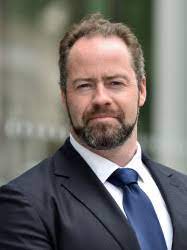
Profile


Prof Niall MAC DOWELL
Professor in Energy Systems Engineering, Imperial College London
Prof Niall Mac Dowell is a Professor in Energy Systems Engineering at Imperial College London. He is a Chartered Engineer, a Fellow of both the IChemE and the Royal Society of Chemistry. His research is focused on understanding the transition to a low carbon economy and has published more than 200 peer-reviewed scientific papers, technical reports, and books in this context.
Prof Mac Dowell has more than a decade’s experience as a consultant to the public and private sectors. He has worked with a range of private sector energy companies, and recently completed a two-year secondment to the UK Government Department BEIS (now DESNZ) where he acted as an expert policy advisor on CCUS and GGR. He is a member of the Scientific Advisory Board of TotalEnergies, the Norwegian CCS Research Centre (NCCS), and Joule. He was a member of the US National Petroleum Council (NPC) CCUS Roadmap Team, as well as the technical working group of the Zero Emissions Platform (ZEP), the Carbon Capture and Storage Association (CCSA), and acted as a science advisor to the venture capital fund, Carbon Direct, TSP Ventures, and Carbonaires.
A multi award winning scientist, Prof Mac Dowell was awarded the Qatar Petroleum medal for his research in 2010 and the IChemE’s Nicklin and Junior Moulton medals for his work on low carbon energy in 2015 and 2021, respectively.
Date of CARES visit: July 2023
Presentation title [at CREATE Symposium 2023]: Quantifying and qualifying the role and value of CCS in net zero technologies
Abstract: The world is overwhelmingly reliant on fossil energy. Whilst the relative proportion of fossil energy is showing signs of a gradual reduction – from 93% to 84% in the period 1965 to 2021, the absolute quantity of fossil energy consumed has more than tripled in this period. It has been repeatedly demonstrated that CO2 capture and storage technologies will be vital in meeting the terms of the Paris climate agreement. In this talk, we will provide insight as to how the role and value of CCS technologies varies by nation, which some regions prioritising baseload power, others the industrial sector, and others a flexible complement to intermittent renewable energy. We also consider the value of improved technologies and also to whom that value accrues. In the context of the power system, the combination of energy storage and renewable energy is often proposed as an alternative to CCS. Thus, we evaluate the system cost and performance implications of an energy system that relies on energy storage, and seek to provide insight in to the form of energy storage technology that may ultimately be best suited for at-scale deployment in the energy system. We then evaluate the impact on a given nations socio-economic performance using employment and gross value added (GVA) as performance indicators. Finally, we present some conclusions from this work.
Date of CARES visit: November 2023
Presentation title: Getting real about net zero
Abstract: At COP21 in 2015, the world coalesced around what has come to be known as the Paris Agreement which aims to limit global warming to well below 2°C and pursue efforts towards 1.5°C. In 2018, the IPCC published their special report on 1.5°C, making it clear that a key milestone of achieving this aim is getting to “net zero”. By 2019 national pledges started to come in. Starting with the UK, roughly 90% of the planet is covered by a net zero pledge of one kind or another. But what does net zero mean, exactly? Net zero CO2 emissions, or all greenhouse gases? Absolutely zero carbon (fossil or otherwise in the energy system)? Is nuclear permissible, or should we rely exclusively upon wind, water, and solar power? Once the net zero pledge had been made, the question arose “who should pay”? For how long have we understood the anthropogenic and dangerous nature of climate change? What, if anything, does this mean about culpability? Recent publications by, inter alia, the IEA propose that fossil fuel use should imminently peak, and no further investment should follow – but how realistic is this, how can we reconcile this idea with that of addressing energy poverty, and to what extent is an apparent consensus on “phasing down” coal and phasing out fossil fuels compatible with broader questions of national sovereignty? If we do start focusing on deploying renewable energy, what is the impact of intermittency on the quantum of capacity required in order to replace or displace conventional thermal power generation? To what extent will EVs reduce oil demand? In all scenarios compatible with a Paris aligned outcome, the deployment of carbon capture and storage (CCS) and carbon dioxide removal (CDR) technologies emerges as being indispensable – but this technology has consistently failed to overcome barriers to commercialisation; how might this barrier be surmounted?
Past Visiting Scientists
Profile


Prof Niall MAC DOWELL
Professor in Energy Systems Engineering, Imperial College London
Prof Niall Mac Dowell is a Professor in Energy Systems Engineering at Imperial College London. He is a Chartered Engineer, a Fellow of both the IChemE and the Royal Society of Chemistry. His research is focused on understanding the transition to a low carbon economy and has published more than 200 peer-reviewed scientific papers, technical reports, and books in this context.
Prof Mac Dowell has more than a decade’s experience as a consultant to the public and private sectors. He has worked with a range of private sector energy companies, and recently completed a two-year secondment to the UK Government Department BEIS (now DESNZ) where he acted as an expert policy advisor on CCUS and GGR. He is a member of the Scientific Advisory Board of TotalEnergies, the Norwegian CCS Research Centre (NCCS), and Joule. He was a member of the US National Petroleum Council (NPC) CCUS Roadmap Team, as well as the technical working group of the Zero Emissions Platform (ZEP), the Carbon Capture and Storage Association (CCSA), and acted as a science advisor to the venture capital fund, Carbon Direct, TSP Ventures, and Carbonaires.
A multi award winning scientist, Prof Mac Dowell was awarded the Qatar Petroleum medal for his research in 2010 and the IChemE’s Nicklin and Junior Moulton medals for his work on low carbon energy in 2015 and 2021, respectively.
Date of CARES visit: July 2023
Presentation title [at CREATE Symposium 2023]: Quantifying and qualifying the role and value of CCS in net zero technologies
Abstract: The world is overwhelmingly reliant on fossil energy. Whilst the relative proportion of fossil energy is showing signs of a gradual reduction – from 93% to 84% in the period 1965 to 2021, the absolute quantity of fossil energy consumed has more than tripled in this period. It has been repeatedly demonstrated that CO2 capture and storage technologies will be vital in meeting the terms of the Paris climate agreement. In this talk, we will provide insight as to how the role and value of CCS technologies varies by nation, which some regions prioritising baseload power, others the industrial sector, and others a flexible complement to intermittent renewable energy. We also consider the value of improved technologies and also to whom that value accrues. In the context of the power system, the combination of energy storage and renewable energy is often proposed as an alternative to CCS. Thus, we evaluate the system cost and performance implications of an energy system that relies on energy storage, and seek to provide insight in to the form of energy storage technology that may ultimately be best suited for at-scale deployment in the energy system. We then evaluate the impact on a given nations socio-economic performance using employment and gross value added (GVA) as performance indicators. Finally, we present some conclusions from this work.
Date of CARES visit: November 2023
Presentation title: Getting real about net zero
Abstract: At COP21 in 2015, the world coalesced around what has come to be known as the Paris Agreement which aims to limit global warming to well below 2°C and pursue efforts towards 1.5°C. In 2018, the IPCC published their special report on 1.5°C, making it clear that a key milestone of achieving this aim is getting to “net zero”. By 2019 national pledges started to come in. Starting with the UK, roughly 90% of the planet is covered by a net zero pledge of one kind or another. But what does net zero mean, exactly? Net zero CO2 emissions, or all greenhouse gases? Absolutely zero carbon (fossil or otherwise in the energy system)? Is nuclear permissible, or should we rely exclusively upon wind, water, and solar power? Once the net zero pledge had been made, the question arose “who should pay”? For how long have we understood the anthropogenic and dangerous nature of climate change? What, if anything, does this mean about culpability? Recent publications by, inter alia, the IEA propose that fossil fuel use should imminently peak, and no further investment should follow – but how realistic is this, how can we reconcile this idea with that of addressing energy poverty, and to what extent is an apparent consensus on “phasing down” coal and phasing out fossil fuels compatible with broader questions of national sovereignty? If we do start focusing on deploying renewable energy, what is the impact of intermittency on the quantum of capacity required in order to replace or displace conventional thermal power generation? To what extent will EVs reduce oil demand? In all scenarios compatible with a Paris aligned outcome, the deployment of carbon capture and storage (CCS) and carbon dioxide removal (CDR) technologies emerges as being indispensable – but this technology has consistently failed to overcome barriers to commercialisation; how might this barrier be surmounted?
Past Visiting Scientists
Profile


Prof Niall MAC DOWELL
Professor in Energy Systems Engineering, Imperial College London
Prof Niall Mac Dowell is a Professor in Energy Systems Engineering at Imperial College London. He is a Chartered Engineer, a Fellow of both the IChemE and the Royal Society of Chemistry. His research is focused on understanding the transition to a low carbon economy and has published more than 200 peer-reviewed scientific papers, technical reports, and books in this context.
Prof Mac Dowell has more than a decade’s experience as a consultant to the public and private sectors. He has worked with a range of private sector energy companies, and recently completed a two-year secondment to the UK Government Department BEIS (now DESNZ) where he acted as an expert policy advisor on CCUS and GGR. He is a member of the Scientific Advisory Board of TotalEnergies, the Norwegian CCS Research Centre (NCCS), and Joule. He was a member of the US National Petroleum Council (NPC) CCUS Roadmap Team, as well as the technical working group of the Zero Emissions Platform (ZEP), the Carbon Capture and Storage Association (CCSA), and acted as a science advisor to the venture capital fund, Carbon Direct, TSP Ventures, and Carbonaires.
A multi award winning scientist, Prof Mac Dowell was awarded the Qatar Petroleum medal for his research in 2010 and the IChemE’s Nicklin and Junior Moulton medals for his work on low carbon energy in 2015 and 2021, respectively.
Date of CARES visit: July 2023
Presentation title [at CREATE Symposium 2023]: Quantifying and qualifying the role and value of CCS in net zero technologies
Abstract: The world is overwhelmingly reliant on fossil energy. Whilst the relative proportion of fossil energy is showing signs of a gradual reduction – from 93% to 84% in the period 1965 to 2021, the absolute quantity of fossil energy consumed has more than tripled in this period. It has been repeatedly demonstrated that CO2 capture and storage technologies will be vital in meeting the terms of the Paris climate agreement. In this talk, we will provide insight as to how the role and value of CCS technologies varies by nation, which some regions prioritising baseload power, others the industrial sector, and others a flexible complement to intermittent renewable energy. We also consider the value of improved technologies and also to whom that value accrues. In the context of the power system, the combination of energy storage and renewable energy is often proposed as an alternative to CCS. Thus, we evaluate the system cost and performance implications of an energy system that relies on energy storage, and seek to provide insight in to the form of energy storage technology that may ultimately be best suited for at-scale deployment in the energy system. We then evaluate the impact on a given nations socio-economic performance using employment and gross value added (GVA) as performance indicators. Finally, we present some conclusions from this work.
Date of CARES visit: November 2023
Presentation title: Getting real about net zero
Abstract: At COP21 in 2015, the world coalesced around what has come to be known as the Paris Agreement which aims to limit global warming to well below 2°C and pursue efforts towards 1.5°C. In 2018, the IPCC published their special report on 1.5°C, making it clear that a key milestone of achieving this aim is getting to “net zero”. By 2019 national pledges started to come in. Starting with the UK, roughly 90% of the planet is covered by a net zero pledge of one kind or another. But what does net zero mean, exactly? Net zero CO2 emissions, or all greenhouse gases? Absolutely zero carbon (fossil or otherwise in the energy system)? Is nuclear permissible, or should we rely exclusively upon wind, water, and solar power? Once the net zero pledge had been made, the question arose “who should pay”? For how long have we understood the anthropogenic and dangerous nature of climate change? What, if anything, does this mean about culpability? Recent publications by, inter alia, the IEA propose that fossil fuel use should imminently peak, and no further investment should follow – but how realistic is this, how can we reconcile this idea with that of addressing energy poverty, and to what extent is an apparent consensus on “phasing down” coal and phasing out fossil fuels compatible with broader questions of national sovereignty? If we do start focusing on deploying renewable energy, what is the impact of intermittency on the quantum of capacity required in order to replace or displace conventional thermal power generation? To what extent will EVs reduce oil demand? In all scenarios compatible with a Paris aligned outcome, the deployment of carbon capture and storage (CCS) and carbon dioxide removal (CDR) technologies emerges as being indispensable – but this technology has consistently failed to overcome barriers to commercialisation; how might this barrier be surmounted?
Past Visiting Scientists
Profile


Prof Niall MAC DOWELL
Professor in Energy Systems Engineering, Imperial College London
Prof Niall Mac Dowell is a Professor in Energy Systems Engineering at Imperial College London. He is a Chartered Engineer, a Fellow of both the IChemE and the Royal Society of Chemistry. His research is focused on understanding the transition to a low carbon economy and has published more than 200 peer-reviewed scientific papers, technical reports, and books in this context.
Prof Mac Dowell has more than a decade’s experience as a consultant to the public and private sectors. He has worked with a range of private sector energy companies, and recently completed a two-year secondment to the UK Government Department BEIS (now DESNZ) where he acted as an expert policy advisor on CCUS and GGR. He is a member of the Scientific Advisory Board of TotalEnergies, the Norwegian CCS Research Centre (NCCS), and Joule. He was a member of the US National Petroleum Council (NPC) CCUS Roadmap Team, as well as the technical working group of the Zero Emissions Platform (ZEP), the Carbon Capture and Storage Association (CCSA), and acted as a science advisor to the venture capital fund, Carbon Direct, TSP Ventures, and Carbonaires.
A multi award winning scientist, Prof Mac Dowell was awarded the Qatar Petroleum medal for his research in 2010 and the IChemE’s Nicklin and Junior Moulton medals for his work on low carbon energy in 2015 and 2021, respectively.
Date of CARES visit: July 2023
Presentation title [at CREATE Symposium 2023]: Quantifying and qualifying the role and value of CCS in net zero technologies
Abstract: The world is overwhelmingly reliant on fossil energy. Whilst the relative proportion of fossil energy is showing signs of a gradual reduction – from 93% to 84% in the period 1965 to 2021, the absolute quantity of fossil energy consumed has more than tripled in this period. It has been repeatedly demonstrated that CO2 capture and storage technologies will be vital in meeting the terms of the Paris climate agreement. In this talk, we will provide insight as to how the role and value of CCS technologies varies by nation, which some regions prioritising baseload power, others the industrial sector, and others a flexible complement to intermittent renewable energy. We also consider the value of improved technologies and also to whom that value accrues. In the context of the power system, the combination of energy storage and renewable energy is often proposed as an alternative to CCS. Thus, we evaluate the system cost and performance implications of an energy system that relies on energy storage, and seek to provide insight in to the form of energy storage technology that may ultimately be best suited for at-scale deployment in the energy system. We then evaluate the impact on a given nations socio-economic performance using employment and gross value added (GVA) as performance indicators. Finally, we present some conclusions from this work.
Date of CARES visit: November 2023
Presentation title: Getting real about net zero
Abstract: At COP21 in 2015, the world coalesced around what has come to be known as the Paris Agreement which aims to limit global warming to well below 2°C and pursue efforts towards 1.5°C. In 2018, the IPCC published their special report on 1.5°C, making it clear that a key milestone of achieving this aim is getting to “net zero”. By 2019 national pledges started to come in. Starting with the UK, roughly 90% of the planet is covered by a net zero pledge of one kind or another. But what does net zero mean, exactly? Net zero CO2 emissions, or all greenhouse gases? Absolutely zero carbon (fossil or otherwise in the energy system)? Is nuclear permissible, or should we rely exclusively upon wind, water, and solar power? Once the net zero pledge had been made, the question arose “who should pay”? For how long have we understood the anthropogenic and dangerous nature of climate change? What, if anything, does this mean about culpability? Recent publications by, inter alia, the IEA propose that fossil fuel use should imminently peak, and no further investment should follow – but how realistic is this, how can we reconcile this idea with that of addressing energy poverty, and to what extent is an apparent consensus on “phasing down” coal and phasing out fossil fuels compatible with broader questions of national sovereignty? If we do start focusing on deploying renewable energy, what is the impact of intermittency on the quantum of capacity required in order to replace or displace conventional thermal power generation? To what extent will EVs reduce oil demand? In all scenarios compatible with a Paris aligned outcome, the deployment of carbon capture and storage (CCS) and carbon dioxide removal (CDR) technologies emerges as being indispensable – but this technology has consistently failed to overcome barriers to commercialisation; how might this barrier be surmounted?
Past Visiting Scientists
Profile


Prof Niall MAC DOWELL
Professor in Energy Systems Engineering, Imperial College London
Prof Niall Mac Dowell is a Professor in Energy Systems Engineering at Imperial College London. He is a Chartered Engineer, a Fellow of both the IChemE and the Royal Society of Chemistry. His research is focused on understanding the transition to a low carbon economy and has published more than 200 peer-reviewed scientific papers, technical reports, and books in this context.
Prof Mac Dowell has more than a decade’s experience as a consultant to the public and private sectors. He has worked with a range of private sector energy companies, and recently completed a two-year secondment to the UK Government Department BEIS (now DESNZ) where he acted as an expert policy advisor on CCUS and GGR. He is a member of the Scientific Advisory Board of TotalEnergies, the Norwegian CCS Research Centre (NCCS), and Joule. He was a member of the US National Petroleum Council (NPC) CCUS Roadmap Team, as well as the technical working group of the Zero Emissions Platform (ZEP), the Carbon Capture and Storage Association (CCSA), and acted as a science advisor to the venture capital fund, Carbon Direct, TSP Ventures, and Carbonaires.
A multi award winning scientist, Prof Mac Dowell was awarded the Qatar Petroleum medal for his research in 2010 and the IChemE’s Nicklin and Junior Moulton medals for his work on low carbon energy in 2015 and 2021, respectively.
Date of CARES visit: July 2023
Presentation title [at CREATE Symposium 2023]: Quantifying and qualifying the role and value of CCS in net zero technologies
Abstract: The world is overwhelmingly reliant on fossil energy. Whilst the relative proportion of fossil energy is showing signs of a gradual reduction – from 93% to 84% in the period 1965 to 2021, the absolute quantity of fossil energy consumed has more than tripled in this period. It has been repeatedly demonstrated that CO2 capture and storage technologies will be vital in meeting the terms of the Paris climate agreement. In this talk, we will provide insight as to how the role and value of CCS technologies varies by nation, which some regions prioritising baseload power, others the industrial sector, and others a flexible complement to intermittent renewable energy. We also consider the value of improved technologies and also to whom that value accrues. In the context of the power system, the combination of energy storage and renewable energy is often proposed as an alternative to CCS. Thus, we evaluate the system cost and performance implications of an energy system that relies on energy storage, and seek to provide insight in to the form of energy storage technology that may ultimately be best suited for at-scale deployment in the energy system. We then evaluate the impact on a given nations socio-economic performance using employment and gross value added (GVA) as performance indicators. Finally, we present some conclusions from this work.
Date of CARES visit: November 2023
Presentation title: Getting real about net zero
Abstract: At COP21 in 2015, the world coalesced around what has come to be known as the Paris Agreement which aims to limit global warming to well below 2°C and pursue efforts towards 1.5°C. In 2018, the IPCC published their special report on 1.5°C, making it clear that a key milestone of achieving this aim is getting to “net zero”. By 2019 national pledges started to come in. Starting with the UK, roughly 90% of the planet is covered by a net zero pledge of one kind or another. But what does net zero mean, exactly? Net zero CO2 emissions, or all greenhouse gases? Absolutely zero carbon (fossil or otherwise in the energy system)? Is nuclear permissible, or should we rely exclusively upon wind, water, and solar power? Once the net zero pledge had been made, the question arose “who should pay”? For how long have we understood the anthropogenic and dangerous nature of climate change? What, if anything, does this mean about culpability? Recent publications by, inter alia, the IEA propose that fossil fuel use should imminently peak, and no further investment should follow – but how realistic is this, how can we reconcile this idea with that of addressing energy poverty, and to what extent is an apparent consensus on “phasing down” coal and phasing out fossil fuels compatible with broader questions of national sovereignty? If we do start focusing on deploying renewable energy, what is the impact of intermittency on the quantum of capacity required in order to replace or displace conventional thermal power generation? To what extent will EVs reduce oil demand? In all scenarios compatible with a Paris aligned outcome, the deployment of carbon capture and storage (CCS) and carbon dioxide removal (CDR) technologies emerges as being indispensable – but this technology has consistently failed to overcome barriers to commercialisation; how might this barrier be surmounted?
Past Visiting Scientists
Profile


Prof Niall MAC DOWELL
Professor in Energy Systems Engineering, Imperial College London
Prof Niall Mac Dowell is a Professor in Energy Systems Engineering at Imperial College London. He is a Chartered Engineer, a Fellow of both the IChemE and the Royal Society of Chemistry. His research is focused on understanding the transition to a low carbon economy and has published more than 200 peer-reviewed scientific papers, technical reports, and books in this context.
Prof Mac Dowell has more than a decade’s experience as a consultant to the public and private sectors. He has worked with a range of private sector energy companies, and recently completed a two-year secondment to the UK Government Department BEIS (now DESNZ) where he acted as an expert policy advisor on CCUS and GGR. He is a member of the Scientific Advisory Board of TotalEnergies, the Norwegian CCS Research Centre (NCCS), and Joule. He was a member of the US National Petroleum Council (NPC) CCUS Roadmap Team, as well as the technical working group of the Zero Emissions Platform (ZEP), the Carbon Capture and Storage Association (CCSA), and acted as a science advisor to the venture capital fund, Carbon Direct, TSP Ventures, and Carbonaires.
A multi award winning scientist, Prof Mac Dowell was awarded the Qatar Petroleum medal for his research in 2010 and the IChemE’s Nicklin and Junior Moulton medals for his work on low carbon energy in 2015 and 2021, respectively.
Date of CARES visit: July 2023
Presentation title [at CREATE Symposium 2023]: Quantifying and qualifying the role and value of CCS in net zero technologies
Abstract: The world is overwhelmingly reliant on fossil energy. Whilst the relative proportion of fossil energy is showing signs of a gradual reduction – from 93% to 84% in the period 1965 to 2021, the absolute quantity of fossil energy consumed has more than tripled in this period. It has been repeatedly demonstrated that CO2 capture and storage technologies will be vital in meeting the terms of the Paris climate agreement. In this talk, we will provide insight as to how the role and value of CCS technologies varies by nation, which some regions prioritising baseload power, others the industrial sector, and others a flexible complement to intermittent renewable energy. We also consider the value of improved technologies and also to whom that value accrues. In the context of the power system, the combination of energy storage and renewable energy is often proposed as an alternative to CCS. Thus, we evaluate the system cost and performance implications of an energy system that relies on energy storage, and seek to provide insight in to the form of energy storage technology that may ultimately be best suited for at-scale deployment in the energy system. We then evaluate the impact on a given nations socio-economic performance using employment and gross value added (GVA) as performance indicators. Finally, we present some conclusions from this work.
Date of CARES visit: November 2023
Presentation title: Getting real about net zero
Abstract: At COP21 in 2015, the world coalesced around what has come to be known as the Paris Agreement which aims to limit global warming to well below 2°C and pursue efforts towards 1.5°C. In 2018, the IPCC published their special report on 1.5°C, making it clear that a key milestone of achieving this aim is getting to “net zero”. By 2019 national pledges started to come in. Starting with the UK, roughly 90% of the planet is covered by a net zero pledge of one kind or another. But what does net zero mean, exactly? Net zero CO2 emissions, or all greenhouse gases? Absolutely zero carbon (fossil or otherwise in the energy system)? Is nuclear permissible, or should we rely exclusively upon wind, water, and solar power? Once the net zero pledge had been made, the question arose “who should pay”? For how long have we understood the anthropogenic and dangerous nature of climate change? What, if anything, does this mean about culpability? Recent publications by, inter alia, the IEA propose that fossil fuel use should imminently peak, and no further investment should follow – but how realistic is this, how can we reconcile this idea with that of addressing energy poverty, and to what extent is an apparent consensus on “phasing down” coal and phasing out fossil fuels compatible with broader questions of national sovereignty? If we do start focusing on deploying renewable energy, what is the impact of intermittency on the quantum of capacity required in order to replace or displace conventional thermal power generation? To what extent will EVs reduce oil demand? In all scenarios compatible with a Paris aligned outcome, the deployment of carbon capture and storage (CCS) and carbon dioxide removal (CDR) technologies emerges as being indispensable – but this technology has consistently failed to overcome barriers to commercialisation; how might this barrier be surmounted?
Past Visiting Scientists
Profile


Prof Niall MAC DOWELL
Professor in Energy Systems Engineering, Imperial College London
Prof Niall Mac Dowell is a Professor in Energy Systems Engineering at Imperial College London. He is a Chartered Engineer, a Fellow of both the IChemE and the Royal Society of Chemistry. His research is focused on understanding the transition to a low carbon economy and has published more than 200 peer-reviewed scientific papers, technical reports, and books in this context.
Prof Mac Dowell has more than a decade’s experience as a consultant to the public and private sectors. He has worked with a range of private sector energy companies, and recently completed a two-year secondment to the UK Government Department BEIS (now DESNZ) where he acted as an expert policy advisor on CCUS and GGR. He is a member of the Scientific Advisory Board of TotalEnergies, the Norwegian CCS Research Centre (NCCS), and Joule. He was a member of the US National Petroleum Council (NPC) CCUS Roadmap Team, as well as the technical working group of the Zero Emissions Platform (ZEP), the Carbon Capture and Storage Association (CCSA), and acted as a science advisor to the venture capital fund, Carbon Direct, TSP Ventures, and Carbonaires.
A multi award winning scientist, Prof Mac Dowell was awarded the Qatar Petroleum medal for his research in 2010 and the IChemE’s Nicklin and Junior Moulton medals for his work on low carbon energy in 2015 and 2021, respectively.
Date of CARES visit: July 2023
Presentation title [at CREATE Symposium 2023]: Quantifying and qualifying the role and value of CCS in net zero technologies
Abstract: The world is overwhelmingly reliant on fossil energy. Whilst the relative proportion of fossil energy is showing signs of a gradual reduction – from 93% to 84% in the period 1965 to 2021, the absolute quantity of fossil energy consumed has more than tripled in this period. It has been repeatedly demonstrated that CO2 capture and storage technologies will be vital in meeting the terms of the Paris climate agreement. In this talk, we will provide insight as to how the role and value of CCS technologies varies by nation, which some regions prioritising baseload power, others the industrial sector, and others a flexible complement to intermittent renewable energy. We also consider the value of improved technologies and also to whom that value accrues. In the context of the power system, the combination of energy storage and renewable energy is often proposed as an alternative to CCS. Thus, we evaluate the system cost and performance implications of an energy system that relies on energy storage, and seek to provide insight in to the form of energy storage technology that may ultimately be best suited for at-scale deployment in the energy system. We then evaluate the impact on a given nations socio-economic performance using employment and gross value added (GVA) as performance indicators. Finally, we present some conclusions from this work.
Date of CARES visit: November 2023
Presentation title: Getting real about net zero
Abstract: At COP21 in 2015, the world coalesced around what has come to be known as the Paris Agreement which aims to limit global warming to well below 2°C and pursue efforts towards 1.5°C. In 2018, the IPCC published their special report on 1.5°C, making it clear that a key milestone of achieving this aim is getting to “net zero”. By 2019 national pledges started to come in. Starting with the UK, roughly 90% of the planet is covered by a net zero pledge of one kind or another. But what does net zero mean, exactly? Net zero CO2 emissions, or all greenhouse gases? Absolutely zero carbon (fossil or otherwise in the energy system)? Is nuclear permissible, or should we rely exclusively upon wind, water, and solar power? Once the net zero pledge had been made, the question arose “who should pay”? For how long have we understood the anthropogenic and dangerous nature of climate change? What, if anything, does this mean about culpability? Recent publications by, inter alia, the IEA propose that fossil fuel use should imminently peak, and no further investment should follow – but how realistic is this, how can we reconcile this idea with that of addressing energy poverty, and to what extent is an apparent consensus on “phasing down” coal and phasing out fossil fuels compatible with broader questions of national sovereignty? If we do start focusing on deploying renewable energy, what is the impact of intermittency on the quantum of capacity required in order to replace or displace conventional thermal power generation? To what extent will EVs reduce oil demand? In all scenarios compatible with a Paris aligned outcome, the deployment of carbon capture and storage (CCS) and carbon dioxide removal (CDR) technologies emerges as being indispensable – but this technology has consistently failed to overcome barriers to commercialisation; how might this barrier be surmounted?
Past Visiting Scientists
Profile


Prof Niall MAC DOWELL
Professor in Energy Systems Engineering, Imperial College London
Prof Niall Mac Dowell is a Professor in Energy Systems Engineering at Imperial College London. He is a Chartered Engineer, a Fellow of both the IChemE and the Royal Society of Chemistry. His research is focused on understanding the transition to a low carbon economy and has published more than 200 peer-reviewed scientific papers, technical reports, and books in this context.
Prof Mac Dowell has more than a decade’s experience as a consultant to the public and private sectors. He has worked with a range of private sector energy companies, and recently completed a two-year secondment to the UK Government Department BEIS (now DESNZ) where he acted as an expert policy advisor on CCUS and GGR. He is a member of the Scientific Advisory Board of TotalEnergies, the Norwegian CCS Research Centre (NCCS), and Joule. He was a member of the US National Petroleum Council (NPC) CCUS Roadmap Team, as well as the technical working group of the Zero Emissions Platform (ZEP), the Carbon Capture and Storage Association (CCSA), and acted as a science advisor to the venture capital fund, Carbon Direct, TSP Ventures, and Carbonaires.
A multi award winning scientist, Prof Mac Dowell was awarded the Qatar Petroleum medal for his research in 2010 and the IChemE’s Nicklin and Junior Moulton medals for his work on low carbon energy in 2015 and 2021, respectively.
Date of CARES visit: July 2023
Presentation title [at CREATE Symposium 2023]: Quantifying and qualifying the role and value of CCS in net zero technologies
Abstract: The world is overwhelmingly reliant on fossil energy. Whilst the relative proportion of fossil energy is showing signs of a gradual reduction – from 93% to 84% in the period 1965 to 2021, the absolute quantity of fossil energy consumed has more than tripled in this period. It has been repeatedly demonstrated that CO2 capture and storage technologies will be vital in meeting the terms of the Paris climate agreement. In this talk, we will provide insight as to how the role and value of CCS technologies varies by nation, which some regions prioritising baseload power, others the industrial sector, and others a flexible complement to intermittent renewable energy. We also consider the value of improved technologies and also to whom that value accrues. In the context of the power system, the combination of energy storage and renewable energy is often proposed as an alternative to CCS. Thus, we evaluate the system cost and performance implications of an energy system that relies on energy storage, and seek to provide insight in to the form of energy storage technology that may ultimately be best suited for at-scale deployment in the energy system. We then evaluate the impact on a given nations socio-economic performance using employment and gross value added (GVA) as performance indicators. Finally, we present some conclusions from this work.
Date of CARES visit: November 2023
Presentation title: Getting real about net zero
Abstract: At COP21 in 2015, the world coalesced around what has come to be known as the Paris Agreement which aims to limit global warming to well below 2°C and pursue efforts towards 1.5°C. In 2018, the IPCC published their special report on 1.5°C, making it clear that a key milestone of achieving this aim is getting to “net zero”. By 2019 national pledges started to come in. Starting with the UK, roughly 90% of the planet is covered by a net zero pledge of one kind or another. But what does net zero mean, exactly? Net zero CO2 emissions, or all greenhouse gases? Absolutely zero carbon (fossil or otherwise in the energy system)? Is nuclear permissible, or should we rely exclusively upon wind, water, and solar power? Once the net zero pledge had been made, the question arose “who should pay”? For how long have we understood the anthropogenic and dangerous nature of climate change? What, if anything, does this mean about culpability? Recent publications by, inter alia, the IEA propose that fossil fuel use should imminently peak, and no further investment should follow – but how realistic is this, how can we reconcile this idea with that of addressing energy poverty, and to what extent is an apparent consensus on “phasing down” coal and phasing out fossil fuels compatible with broader questions of national sovereignty? If we do start focusing on deploying renewable energy, what is the impact of intermittency on the quantum of capacity required in order to replace or displace conventional thermal power generation? To what extent will EVs reduce oil demand? In all scenarios compatible with a Paris aligned outcome, the deployment of carbon capture and storage (CCS) and carbon dioxide removal (CDR) technologies emerges as being indispensable – but this technology has consistently failed to overcome barriers to commercialisation; how might this barrier be surmounted?
Past Visiting Scientists
Profile


Prof Niall MAC DOWELL
Professor in Energy Systems Engineering, Imperial College London
Prof Niall Mac Dowell is a Professor in Energy Systems Engineering at Imperial College London. He is a Chartered Engineer, a Fellow of both the IChemE and the Royal Society of Chemistry. His research is focused on understanding the transition to a low carbon economy and has published more than 200 peer-reviewed scientific papers, technical reports, and books in this context.
Prof Mac Dowell has more than a decade’s experience as a consultant to the public and private sectors. He has worked with a range of private sector energy companies, and recently completed a two-year secondment to the UK Government Department BEIS (now DESNZ) where he acted as an expert policy advisor on CCUS and GGR. He is a member of the Scientific Advisory Board of TotalEnergies, the Norwegian CCS Research Centre (NCCS), and Joule. He was a member of the US National Petroleum Council (NPC) CCUS Roadmap Team, as well as the technical working group of the Zero Emissions Platform (ZEP), the Carbon Capture and Storage Association (CCSA), and acted as a science advisor to the venture capital fund, Carbon Direct, TSP Ventures, and Carbonaires.
A multi award winning scientist, Prof Mac Dowell was awarded the Qatar Petroleum medal for his research in 2010 and the IChemE’s Nicklin and Junior Moulton medals for his work on low carbon energy in 2015 and 2021, respectively.
Date of CARES visit: July 2023
Presentation title [at CREATE Symposium 2023]: Quantifying and qualifying the role and value of CCS in net zero technologies
Abstract: The world is overwhelmingly reliant on fossil energy. Whilst the relative proportion of fossil energy is showing signs of a gradual reduction – from 93% to 84% in the period 1965 to 2021, the absolute quantity of fossil energy consumed has more than tripled in this period. It has been repeatedly demonstrated that CO2 capture and storage technologies will be vital in meeting the terms of the Paris climate agreement. In this talk, we will provide insight as to how the role and value of CCS technologies varies by nation, which some regions prioritising baseload power, others the industrial sector, and others a flexible complement to intermittent renewable energy. We also consider the value of improved technologies and also to whom that value accrues. In the context of the power system, the combination of energy storage and renewable energy is often proposed as an alternative to CCS. Thus, we evaluate the system cost and performance implications of an energy system that relies on energy storage, and seek to provide insight in to the form of energy storage technology that may ultimately be best suited for at-scale deployment in the energy system. We then evaluate the impact on a given nations socio-economic performance using employment and gross value added (GVA) as performance indicators. Finally, we present some conclusions from this work.
Date of CARES visit: November 2023
Presentation title: Getting real about net zero
Abstract: At COP21 in 2015, the world coalesced around what has come to be known as the Paris Agreement which aims to limit global warming to well below 2°C and pursue efforts towards 1.5°C. In 2018, the IPCC published their special report on 1.5°C, making it clear that a key milestone of achieving this aim is getting to “net zero”. By 2019 national pledges started to come in. Starting with the UK, roughly 90% of the planet is covered by a net zero pledge of one kind or another. But what does net zero mean, exactly? Net zero CO2 emissions, or all greenhouse gases? Absolutely zero carbon (fossil or otherwise in the energy system)? Is nuclear permissible, or should we rely exclusively upon wind, water, and solar power? Once the net zero pledge had been made, the question arose “who should pay”? For how long have we understood the anthropogenic and dangerous nature of climate change? What, if anything, does this mean about culpability? Recent publications by, inter alia, the IEA propose that fossil fuel use should imminently peak, and no further investment should follow – but how realistic is this, how can we reconcile this idea with that of addressing energy poverty, and to what extent is an apparent consensus on “phasing down” coal and phasing out fossil fuels compatible with broader questions of national sovereignty? If we do start focusing on deploying renewable energy, what is the impact of intermittency on the quantum of capacity required in order to replace or displace conventional thermal power generation? To what extent will EVs reduce oil demand? In all scenarios compatible with a Paris aligned outcome, the deployment of carbon capture and storage (CCS) and carbon dioxide removal (CDR) technologies emerges as being indispensable – but this technology has consistently failed to overcome barriers to commercialisation; how might this barrier be surmounted?
Past Visiting Scientists
Profile


Prof Niall MAC DOWELL
Professor in Energy Systems Engineering, Imperial College London
Prof Niall Mac Dowell is a Professor in Energy Systems Engineering at Imperial College London. He is a Chartered Engineer, a Fellow of both the IChemE and the Royal Society of Chemistry. His research is focused on understanding the transition to a low carbon economy and has published more than 200 peer-reviewed scientific papers, technical reports, and books in this context.
Prof Mac Dowell has more than a decade’s experience as a consultant to the public and private sectors. He has worked with a range of private sector energy companies, and recently completed a two-year secondment to the UK Government Department BEIS (now DESNZ) where he acted as an expert policy advisor on CCUS and GGR. He is a member of the Scientific Advisory Board of TotalEnergies, the Norwegian CCS Research Centre (NCCS), and Joule. He was a member of the US National Petroleum Council (NPC) CCUS Roadmap Team, as well as the technical working group of the Zero Emissions Platform (ZEP), the Carbon Capture and Storage Association (CCSA), and acted as a science advisor to the venture capital fund, Carbon Direct, TSP Ventures, and Carbonaires.
A multi award winning scientist, Prof Mac Dowell was awarded the Qatar Petroleum medal for his research in 2010 and the IChemE’s Nicklin and Junior Moulton medals for his work on low carbon energy in 2015 and 2021, respectively.
Date of CARES visit: July 2023
Presentation title [at CREATE Symposium 2023]: Quantifying and qualifying the role and value of CCS in net zero technologies
Abstract: The world is overwhelmingly reliant on fossil energy. Whilst the relative proportion of fossil energy is showing signs of a gradual reduction – from 93% to 84% in the period 1965 to 2021, the absolute quantity of fossil energy consumed has more than tripled in this period. It has been repeatedly demonstrated that CO2 capture and storage technologies will be vital in meeting the terms of the Paris climate agreement. In this talk, we will provide insight as to how the role and value of CCS technologies varies by nation, which some regions prioritising baseload power, others the industrial sector, and others a flexible complement to intermittent renewable energy. We also consider the value of improved technologies and also to whom that value accrues. In the context of the power system, the combination of energy storage and renewable energy is often proposed as an alternative to CCS. Thus, we evaluate the system cost and performance implications of an energy system that relies on energy storage, and seek to provide insight in to the form of energy storage technology that may ultimately be best suited for at-scale deployment in the energy system. We then evaluate the impact on a given nations socio-economic performance using employment and gross value added (GVA) as performance indicators. Finally, we present some conclusions from this work.
Date of CARES visit: November 2023
Presentation title: Getting real about net zero
Abstract: At COP21 in 2015, the world coalesced around what has come to be known as the Paris Agreement which aims to limit global warming to well below 2°C and pursue efforts towards 1.5°C. In 2018, the IPCC published their special report on 1.5°C, making it clear that a key milestone of achieving this aim is getting to “net zero”. By 2019 national pledges started to come in. Starting with the UK, roughly 90% of the planet is covered by a net zero pledge of one kind or another. But what does net zero mean, exactly? Net zero CO2 emissions, or all greenhouse gases? Absolutely zero carbon (fossil or otherwise in the energy system)? Is nuclear permissible, or should we rely exclusively upon wind, water, and solar power? Once the net zero pledge had been made, the question arose “who should pay”? For how long have we understood the anthropogenic and dangerous nature of climate change? What, if anything, does this mean about culpability? Recent publications by, inter alia, the IEA propose that fossil fuel use should imminently peak, and no further investment should follow – but how realistic is this, how can we reconcile this idea with that of addressing energy poverty, and to what extent is an apparent consensus on “phasing down” coal and phasing out fossil fuels compatible with broader questions of national sovereignty? If we do start focusing on deploying renewable energy, what is the impact of intermittency on the quantum of capacity required in order to replace or displace conventional thermal power generation? To what extent will EVs reduce oil demand? In all scenarios compatible with a Paris aligned outcome, the deployment of carbon capture and storage (CCS) and carbon dioxide removal (CDR) technologies emerges as being indispensable – but this technology has consistently failed to overcome barriers to commercialisation; how might this barrier be surmounted?
Past Visiting Scientists
Profile


Prof Niall MAC DOWELL
Professor in Energy Systems Engineering, Imperial College London
Prof Niall Mac Dowell is a Professor in Energy Systems Engineering at Imperial College London. He is a Chartered Engineer, a Fellow of both the IChemE and the Royal Society of Chemistry. His research is focused on understanding the transition to a low carbon economy and has published more than 200 peer-reviewed scientific papers, technical reports, and books in this context.
Prof Mac Dowell has more than a decade’s experience as a consultant to the public and private sectors. He has worked with a range of private sector energy companies, and recently completed a two-year secondment to the UK Government Department BEIS (now DESNZ) where he acted as an expert policy advisor on CCUS and GGR. He is a member of the Scientific Advisory Board of TotalEnergies, the Norwegian CCS Research Centre (NCCS), and Joule. He was a member of the US National Petroleum Council (NPC) CCUS Roadmap Team, as well as the technical working group of the Zero Emissions Platform (ZEP), the Carbon Capture and Storage Association (CCSA), and acted as a science advisor to the venture capital fund, Carbon Direct, TSP Ventures, and Carbonaires.
A multi award winning scientist, Prof Mac Dowell was awarded the Qatar Petroleum medal for his research in 2010 and the IChemE’s Nicklin and Junior Moulton medals for his work on low carbon energy in 2015 and 2021, respectively.
Date of CARES visit: July 2023
Presentation title [at CREATE Symposium 2023]: Quantifying and qualifying the role and value of CCS in net zero technologies
Abstract: The world is overwhelmingly reliant on fossil energy. Whilst the relative proportion of fossil energy is showing signs of a gradual reduction – from 93% to 84% in the period 1965 to 2021, the absolute quantity of fossil energy consumed has more than tripled in this period. It has been repeatedly demonstrated that CO2 capture and storage technologies will be vital in meeting the terms of the Paris climate agreement. In this talk, we will provide insight as to how the role and value of CCS technologies varies by nation, which some regions prioritising baseload power, others the industrial sector, and others a flexible complement to intermittent renewable energy. We also consider the value of improved technologies and also to whom that value accrues. In the context of the power system, the combination of energy storage and renewable energy is often proposed as an alternative to CCS. Thus, we evaluate the system cost and performance implications of an energy system that relies on energy storage, and seek to provide insight in to the form of energy storage technology that may ultimately be best suited for at-scale deployment in the energy system. We then evaluate the impact on a given nations socio-economic performance using employment and gross value added (GVA) as performance indicators. Finally, we present some conclusions from this work.
Date of CARES visit: November 2023
Presentation title: Getting real about net zero
Abstract: At COP21 in 2015, the world coalesced around what has come to be known as the Paris Agreement which aims to limit global warming to well below 2°C and pursue efforts towards 1.5°C. In 2018, the IPCC published their special report on 1.5°C, making it clear that a key milestone of achieving this aim is getting to “net zero”. By 2019 national pledges started to come in. Starting with the UK, roughly 90% of the planet is covered by a net zero pledge of one kind or another. But what does net zero mean, exactly? Net zero CO2 emissions, or all greenhouse gases? Absolutely zero carbon (fossil or otherwise in the energy system)? Is nuclear permissible, or should we rely exclusively upon wind, water, and solar power? Once the net zero pledge had been made, the question arose “who should pay”? For how long have we understood the anthropogenic and dangerous nature of climate change? What, if anything, does this mean about culpability? Recent publications by, inter alia, the IEA propose that fossil fuel use should imminently peak, and no further investment should follow – but how realistic is this, how can we reconcile this idea with that of addressing energy poverty, and to what extent is an apparent consensus on “phasing down” coal and phasing out fossil fuels compatible with broader questions of national sovereignty? If we do start focusing on deploying renewable energy, what is the impact of intermittency on the quantum of capacity required in order to replace or displace conventional thermal power generation? To what extent will EVs reduce oil demand? In all scenarios compatible with a Paris aligned outcome, the deployment of carbon capture and storage (CCS) and carbon dioxide removal (CDR) technologies emerges as being indispensable – but this technology has consistently failed to overcome barriers to commercialisation; how might this barrier be surmounted?
Past Visiting Scientists
Profile


Prof Niall MAC DOWELL
Professor in Energy Systems Engineering, Imperial College London
Prof Niall Mac Dowell is a Professor in Energy Systems Engineering at Imperial College London. He is a Chartered Engineer, a Fellow of both the IChemE and the Royal Society of Chemistry. His research is focused on understanding the transition to a low carbon economy and has published more than 200 peer-reviewed scientific papers, technical reports, and books in this context.
Prof Mac Dowell has more than a decade’s experience as a consultant to the public and private sectors. He has worked with a range of private sector energy companies, and recently completed a two-year secondment to the UK Government Department BEIS (now DESNZ) where he acted as an expert policy advisor on CCUS and GGR. He is a member of the Scientific Advisory Board of TotalEnergies, the Norwegian CCS Research Centre (NCCS), and Joule. He was a member of the US National Petroleum Council (NPC) CCUS Roadmap Team, as well as the technical working group of the Zero Emissions Platform (ZEP), the Carbon Capture and Storage Association (CCSA), and acted as a science advisor to the venture capital fund, Carbon Direct, TSP Ventures, and Carbonaires.
A multi award winning scientist, Prof Mac Dowell was awarded the Qatar Petroleum medal for his research in 2010 and the IChemE’s Nicklin and Junior Moulton medals for his work on low carbon energy in 2015 and 2021, respectively.
Date of CARES visit: July 2023
Presentation title [at CREATE Symposium 2023]: Quantifying and qualifying the role and value of CCS in net zero technologies
Abstract: The world is overwhelmingly reliant on fossil energy. Whilst the relative proportion of fossil energy is showing signs of a gradual reduction – from 93% to 84% in the period 1965 to 2021, the absolute quantity of fossil energy consumed has more than tripled in this period. It has been repeatedly demonstrated that CO2 capture and storage technologies will be vital in meeting the terms of the Paris climate agreement. In this talk, we will provide insight as to how the role and value of CCS technologies varies by nation, which some regions prioritising baseload power, others the industrial sector, and others a flexible complement to intermittent renewable energy. We also consider the value of improved technologies and also to whom that value accrues. In the context of the power system, the combination of energy storage and renewable energy is often proposed as an alternative to CCS. Thus, we evaluate the system cost and performance implications of an energy system that relies on energy storage, and seek to provide insight in to the form of energy storage technology that may ultimately be best suited for at-scale deployment in the energy system. We then evaluate the impact on a given nations socio-economic performance using employment and gross value added (GVA) as performance indicators. Finally, we present some conclusions from this work.
Date of CARES visit: November 2023
Presentation title: Getting real about net zero
Abstract: At COP21 in 2015, the world coalesced around what has come to be known as the Paris Agreement which aims to limit global warming to well below 2°C and pursue efforts towards 1.5°C. In 2018, the IPCC published their special report on 1.5°C, making it clear that a key milestone of achieving this aim is getting to “net zero”. By 2019 national pledges started to come in. Starting with the UK, roughly 90% of the planet is covered by a net zero pledge of one kind or another. But what does net zero mean, exactly? Net zero CO2 emissions, or all greenhouse gases? Absolutely zero carbon (fossil or otherwise in the energy system)? Is nuclear permissible, or should we rely exclusively upon wind, water, and solar power? Once the net zero pledge had been made, the question arose “who should pay”? For how long have we understood the anthropogenic and dangerous nature of climate change? What, if anything, does this mean about culpability? Recent publications by, inter alia, the IEA propose that fossil fuel use should imminently peak, and no further investment should follow – but how realistic is this, how can we reconcile this idea with that of addressing energy poverty, and to what extent is an apparent consensus on “phasing down” coal and phasing out fossil fuels compatible with broader questions of national sovereignty? If we do start focusing on deploying renewable energy, what is the impact of intermittency on the quantum of capacity required in order to replace or displace conventional thermal power generation? To what extent will EVs reduce oil demand? In all scenarios compatible with a Paris aligned outcome, the deployment of carbon capture and storage (CCS) and carbon dioxide removal (CDR) technologies emerges as being indispensable – but this technology has consistently failed to overcome barriers to commercialisation; how might this barrier be surmounted?
Past Visiting Scientists
Profile


Prof Niall MAC DOWELL
Professor in Energy Systems Engineering, Imperial College London
Prof Niall Mac Dowell is a Professor in Energy Systems Engineering at Imperial College London. He is a Chartered Engineer, a Fellow of both the IChemE and the Royal Society of Chemistry. His research is focused on understanding the transition to a low carbon economy and has published more than 200 peer-reviewed scientific papers, technical reports, and books in this context.
Prof Mac Dowell has more than a decade’s experience as a consultant to the public and private sectors. He has worked with a range of private sector energy companies, and recently completed a two-year secondment to the UK Government Department BEIS (now DESNZ) where he acted as an expert policy advisor on CCUS and GGR. He is a member of the Scientific Advisory Board of TotalEnergies, the Norwegian CCS Research Centre (NCCS), and Joule. He was a member of the US National Petroleum Council (NPC) CCUS Roadmap Team, as well as the technical working group of the Zero Emissions Platform (ZEP), the Carbon Capture and Storage Association (CCSA), and acted as a science advisor to the venture capital fund, Carbon Direct, TSP Ventures, and Carbonaires.
A multi award winning scientist, Prof Mac Dowell was awarded the Qatar Petroleum medal for his research in 2010 and the IChemE’s Nicklin and Junior Moulton medals for his work on low carbon energy in 2015 and 2021, respectively.
Date of CARES visit: July 2023
Presentation title [at CREATE Symposium 2023]: Quantifying and qualifying the role and value of CCS in net zero technologies
Abstract: The world is overwhelmingly reliant on fossil energy. Whilst the relative proportion of fossil energy is showing signs of a gradual reduction – from 93% to 84% in the period 1965 to 2021, the absolute quantity of fossil energy consumed has more than tripled in this period. It has been repeatedly demonstrated that CO2 capture and storage technologies will be vital in meeting the terms of the Paris climate agreement. In this talk, we will provide insight as to how the role and value of CCS technologies varies by nation, which some regions prioritising baseload power, others the industrial sector, and others a flexible complement to intermittent renewable energy. We also consider the value of improved technologies and also to whom that value accrues. In the context of the power system, the combination of energy storage and renewable energy is often proposed as an alternative to CCS. Thus, we evaluate the system cost and performance implications of an energy system that relies on energy storage, and seek to provide insight in to the form of energy storage technology that may ultimately be best suited for at-scale deployment in the energy system. We then evaluate the impact on a given nations socio-economic performance using employment and gross value added (GVA) as performance indicators. Finally, we present some conclusions from this work.
Date of CARES visit: November 2023
Presentation title: Getting real about net zero
Abstract: At COP21 in 2015, the world coalesced around what has come to be known as the Paris Agreement which aims to limit global warming to well below 2°C and pursue efforts towards 1.5°C. In 2018, the IPCC published their special report on 1.5°C, making it clear that a key milestone of achieving this aim is getting to “net zero”. By 2019 national pledges started to come in. Starting with the UK, roughly 90% of the planet is covered by a net zero pledge of one kind or another. But what does net zero mean, exactly? Net zero CO2 emissions, or all greenhouse gases? Absolutely zero carbon (fossil or otherwise in the energy system)? Is nuclear permissible, or should we rely exclusively upon wind, water, and solar power? Once the net zero pledge had been made, the question arose “who should pay”? For how long have we understood the anthropogenic and dangerous nature of climate change? What, if anything, does this mean about culpability? Recent publications by, inter alia, the IEA propose that fossil fuel use should imminently peak, and no further investment should follow – but how realistic is this, how can we reconcile this idea with that of addressing energy poverty, and to what extent is an apparent consensus on “phasing down” coal and phasing out fossil fuels compatible with broader questions of national sovereignty? If we do start focusing on deploying renewable energy, what is the impact of intermittency on the quantum of capacity required in order to replace or displace conventional thermal power generation? To what extent will EVs reduce oil demand? In all scenarios compatible with a Paris aligned outcome, the deployment of carbon capture and storage (CCS) and carbon dioxide removal (CDR) technologies emerges as being indispensable – but this technology has consistently failed to overcome barriers to commercialisation; how might this barrier be surmounted?
Past Visiting Scientists
Profile


Prof Niall MAC DOWELL
Professor in Energy Systems Engineering, Imperial College London
Prof Niall Mac Dowell is a Professor in Energy Systems Engineering at Imperial College London. He is a Chartered Engineer, a Fellow of both the IChemE and the Royal Society of Chemistry. His research is focused on understanding the transition to a low carbon economy and has published more than 200 peer-reviewed scientific papers, technical reports, and books in this context.
Prof Mac Dowell has more than a decade’s experience as a consultant to the public and private sectors. He has worked with a range of private sector energy companies, and recently completed a two-year secondment to the UK Government Department BEIS (now DESNZ) where he acted as an expert policy advisor on CCUS and GGR. He is a member of the Scientific Advisory Board of TotalEnergies, the Norwegian CCS Research Centre (NCCS), and Joule. He was a member of the US National Petroleum Council (NPC) CCUS Roadmap Team, as well as the technical working group of the Zero Emissions Platform (ZEP), the Carbon Capture and Storage Association (CCSA), and acted as a science advisor to the venture capital fund, Carbon Direct, TSP Ventures, and Carbonaires.
A multi award winning scientist, Prof Mac Dowell was awarded the Qatar Petroleum medal for his research in 2010 and the IChemE’s Nicklin and Junior Moulton medals for his work on low carbon energy in 2015 and 2021, respectively.
Date of CARES visit: July 2023
Presentation title [at CREATE Symposium 2023]: Quantifying and qualifying the role and value of CCS in net zero technologies
Abstract: The world is overwhelmingly reliant on fossil energy. Whilst the relative proportion of fossil energy is showing signs of a gradual reduction – from 93% to 84% in the period 1965 to 2021, the absolute quantity of fossil energy consumed has more than tripled in this period. It has been repeatedly demonstrated that CO2 capture and storage technologies will be vital in meeting the terms of the Paris climate agreement. In this talk, we will provide insight as to how the role and value of CCS technologies varies by nation, which some regions prioritising baseload power, others the industrial sector, and others a flexible complement to intermittent renewable energy. We also consider the value of improved technologies and also to whom that value accrues. In the context of the power system, the combination of energy storage and renewable energy is often proposed as an alternative to CCS. Thus, we evaluate the system cost and performance implications of an energy system that relies on energy storage, and seek to provide insight in to the form of energy storage technology that may ultimately be best suited for at-scale deployment in the energy system. We then evaluate the impact on a given nations socio-economic performance using employment and gross value added (GVA) as performance indicators. Finally, we present some conclusions from this work.
Date of CARES visit: November 2023
Presentation title: Getting real about net zero
Abstract: At COP21 in 2015, the world coalesced around what has come to be known as the Paris Agreement which aims to limit global warming to well below 2°C and pursue efforts towards 1.5°C. In 2018, the IPCC published their special report on 1.5°C, making it clear that a key milestone of achieving this aim is getting to “net zero”. By 2019 national pledges started to come in. Starting with the UK, roughly 90% of the planet is covered by a net zero pledge of one kind or another. But what does net zero mean, exactly? Net zero CO2 emissions, or all greenhouse gases? Absolutely zero carbon (fossil or otherwise in the energy system)? Is nuclear permissible, or should we rely exclusively upon wind, water, and solar power? Once the net zero pledge had been made, the question arose “who should pay”? For how long have we understood the anthropogenic and dangerous nature of climate change? What, if anything, does this mean about culpability? Recent publications by, inter alia, the IEA propose that fossil fuel use should imminently peak, and no further investment should follow – but how realistic is this, how can we reconcile this idea with that of addressing energy poverty, and to what extent is an apparent consensus on “phasing down” coal and phasing out fossil fuels compatible with broader questions of national sovereignty? If we do start focusing on deploying renewable energy, what is the impact of intermittency on the quantum of capacity required in order to replace or displace conventional thermal power generation? To what extent will EVs reduce oil demand? In all scenarios compatible with a Paris aligned outcome, the deployment of carbon capture and storage (CCS) and carbon dioxide removal (CDR) technologies emerges as being indispensable – but this technology has consistently failed to overcome barriers to commercialisation; how might this barrier be surmounted?
Past Visiting Scientists
Profile


Prof Niall MAC DOWELL
Professor in Energy Systems Engineering, Imperial College London
Prof Niall Mac Dowell is a Professor in Energy Systems Engineering at Imperial College London. He is a Chartered Engineer, a Fellow of both the IChemE and the Royal Society of Chemistry. His research is focused on understanding the transition to a low carbon economy and has published more than 200 peer-reviewed scientific papers, technical reports, and books in this context.
Prof Mac Dowell has more than a decade’s experience as a consultant to the public and private sectors. He has worked with a range of private sector energy companies, and recently completed a two-year secondment to the UK Government Department BEIS (now DESNZ) where he acted as an expert policy advisor on CCUS and GGR. He is a member of the Scientific Advisory Board of TotalEnergies, the Norwegian CCS Research Centre (NCCS), and Joule. He was a member of the US National Petroleum Council (NPC) CCUS Roadmap Team, as well as the technical working group of the Zero Emissions Platform (ZEP), the Carbon Capture and Storage Association (CCSA), and acted as a science advisor to the venture capital fund, Carbon Direct, TSP Ventures, and Carbonaires.
A multi award winning scientist, Prof Mac Dowell was awarded the Qatar Petroleum medal for his research in 2010 and the IChemE’s Nicklin and Junior Moulton medals for his work on low carbon energy in 2015 and 2021, respectively.
Date of CARES visit: July 2023
Presentation title [at CREATE Symposium 2023]: Quantifying and qualifying the role and value of CCS in net zero technologies
Abstract: The world is overwhelmingly reliant on fossil energy. Whilst the relative proportion of fossil energy is showing signs of a gradual reduction – from 93% to 84% in the period 1965 to 2021, the absolute quantity of fossil energy consumed has more than tripled in this period. It has been repeatedly demonstrated that CO2 capture and storage technologies will be vital in meeting the terms of the Paris climate agreement. In this talk, we will provide insight as to how the role and value of CCS technologies varies by nation, which some regions prioritising baseload power, others the industrial sector, and others a flexible complement to intermittent renewable energy. We also consider the value of improved technologies and also to whom that value accrues. In the context of the power system, the combination of energy storage and renewable energy is often proposed as an alternative to CCS. Thus, we evaluate the system cost and performance implications of an energy system that relies on energy storage, and seek to provide insight in to the form of energy storage technology that may ultimately be best suited for at-scale deployment in the energy system. We then evaluate the impact on a given nations socio-economic performance using employment and gross value added (GVA) as performance indicators. Finally, we present some conclusions from this work.
Date of CARES visit: November 2023
Presentation title: Getting real about net zero
Abstract: At COP21 in 2015, the world coalesced around what has come to be known as the Paris Agreement which aims to limit global warming to well below 2°C and pursue efforts towards 1.5°C. In 2018, the IPCC published their special report on 1.5°C, making it clear that a key milestone of achieving this aim is getting to “net zero”. By 2019 national pledges started to come in. Starting with the UK, roughly 90% of the planet is covered by a net zero pledge of one kind or another. But what does net zero mean, exactly? Net zero CO2 emissions, or all greenhouse gases? Absolutely zero carbon (fossil or otherwise in the energy system)? Is nuclear permissible, or should we rely exclusively upon wind, water, and solar power? Once the net zero pledge had been made, the question arose “who should pay”? For how long have we understood the anthropogenic and dangerous nature of climate change? What, if anything, does this mean about culpability? Recent publications by, inter alia, the IEA propose that fossil fuel use should imminently peak, and no further investment should follow – but how realistic is this, how can we reconcile this idea with that of addressing energy poverty, and to what extent is an apparent consensus on “phasing down” coal and phasing out fossil fuels compatible with broader questions of national sovereignty? If we do start focusing on deploying renewable energy, what is the impact of intermittency on the quantum of capacity required in order to replace or displace conventional thermal power generation? To what extent will EVs reduce oil demand? In all scenarios compatible with a Paris aligned outcome, the deployment of carbon capture and storage (CCS) and carbon dioxide removal (CDR) technologies emerges as being indispensable – but this technology has consistently failed to overcome barriers to commercialisation; how might this barrier be surmounted?
Past Visiting Scientists
Profile


Prof Niall MAC DOWELL
Professor in Energy Systems Engineering, Imperial College London
Prof Niall Mac Dowell is a Professor in Energy Systems Engineering at Imperial College London. He is a Chartered Engineer, a Fellow of both the IChemE and the Royal Society of Chemistry. His research is focused on understanding the transition to a low carbon economy and has published more than 200 peer-reviewed scientific papers, technical reports, and books in this context.
Prof Mac Dowell has more than a decade’s experience as a consultant to the public and private sectors. He has worked with a range of private sector energy companies, and recently completed a two-year secondment to the UK Government Department BEIS (now DESNZ) where he acted as an expert policy advisor on CCUS and GGR. He is a member of the Scientific Advisory Board of TotalEnergies, the Norwegian CCS Research Centre (NCCS), and Joule. He was a member of the US National Petroleum Council (NPC) CCUS Roadmap Team, as well as the technical working group of the Zero Emissions Platform (ZEP), the Carbon Capture and Storage Association (CCSA), and acted as a science advisor to the venture capital fund, Carbon Direct, TSP Ventures, and Carbonaires.
A multi award winning scientist, Prof Mac Dowell was awarded the Qatar Petroleum medal for his research in 2010 and the IChemE’s Nicklin and Junior Moulton medals for his work on low carbon energy in 2015 and 2021, respectively.
Date of CARES visit: July 2023
Presentation title [at CREATE Symposium 2023]: Quantifying and qualifying the role and value of CCS in net zero technologies
Abstract: The world is overwhelmingly reliant on fossil energy. Whilst the relative proportion of fossil energy is showing signs of a gradual reduction – from 93% to 84% in the period 1965 to 2021, the absolute quantity of fossil energy consumed has more than tripled in this period. It has been repeatedly demonstrated that CO2 capture and storage technologies will be vital in meeting the terms of the Paris climate agreement. In this talk, we will provide insight as to how the role and value of CCS technologies varies by nation, which some regions prioritising baseload power, others the industrial sector, and others a flexible complement to intermittent renewable energy. We also consider the value of improved technologies and also to whom that value accrues. In the context of the power system, the combination of energy storage and renewable energy is often proposed as an alternative to CCS. Thus, we evaluate the system cost and performance implications of an energy system that relies on energy storage, and seek to provide insight in to the form of energy storage technology that may ultimately be best suited for at-scale deployment in the energy system. We then evaluate the impact on a given nations socio-economic performance using employment and gross value added (GVA) as performance indicators. Finally, we present some conclusions from this work.
Date of CARES visit: November 2023
Presentation title: Getting real about net zero
Abstract: At COP21 in 2015, the world coalesced around what has come to be known as the Paris Agreement which aims to limit global warming to well below 2°C and pursue efforts towards 1.5°C. In 2018, the IPCC published their special report on 1.5°C, making it clear that a key milestone of achieving this aim is getting to “net zero”. By 2019 national pledges started to come in. Starting with the UK, roughly 90% of the planet is covered by a net zero pledge of one kind or another. But what does net zero mean, exactly? Net zero CO2 emissions, or all greenhouse gases? Absolutely zero carbon (fossil or otherwise in the energy system)? Is nuclear permissible, or should we rely exclusively upon wind, water, and solar power? Once the net zero pledge had been made, the question arose “who should pay”? For how long have we understood the anthropogenic and dangerous nature of climate change? What, if anything, does this mean about culpability? Recent publications by, inter alia, the IEA propose that fossil fuel use should imminently peak, and no further investment should follow – but how realistic is this, how can we reconcile this idea with that of addressing energy poverty, and to what extent is an apparent consensus on “phasing down” coal and phasing out fossil fuels compatible with broader questions of national sovereignty? If we do start focusing on deploying renewable energy, what is the impact of intermittency on the quantum of capacity required in order to replace or displace conventional thermal power generation? To what extent will EVs reduce oil demand? In all scenarios compatible with a Paris aligned outcome, the deployment of carbon capture and storage (CCS) and carbon dioxide removal (CDR) technologies emerges as being indispensable – but this technology has consistently failed to overcome barriers to commercialisation; how might this barrier be surmounted?
Past Visiting Scientists
Profile


Prof Niall MAC DOWELL
Professor in Energy Systems Engineering, Imperial College London
Prof Niall Mac Dowell is a Professor in Energy Systems Engineering at Imperial College London. He is a Chartered Engineer, a Fellow of both the IChemE and the Royal Society of Chemistry. His research is focused on understanding the transition to a low carbon economy and has published more than 200 peer-reviewed scientific papers, technical reports, and books in this context.
Prof Mac Dowell has more than a decade’s experience as a consultant to the public and private sectors. He has worked with a range of private sector energy companies, and recently completed a two-year secondment to the UK Government Department BEIS (now DESNZ) where he acted as an expert policy advisor on CCUS and GGR. He is a member of the Scientific Advisory Board of TotalEnergies, the Norwegian CCS Research Centre (NCCS), and Joule. He was a member of the US National Petroleum Council (NPC) CCUS Roadmap Team, as well as the technical working group of the Zero Emissions Platform (ZEP), the Carbon Capture and Storage Association (CCSA), and acted as a science advisor to the venture capital fund, Carbon Direct, TSP Ventures, and Carbonaires.
A multi award winning scientist, Prof Mac Dowell was awarded the Qatar Petroleum medal for his research in 2010 and the IChemE’s Nicklin and Junior Moulton medals for his work on low carbon energy in 2015 and 2021, respectively.
Date of CARES visit: July 2023
Presentation title [at CREATE Symposium 2023]: Quantifying and qualifying the role and value of CCS in net zero technologies
Abstract: The world is overwhelmingly reliant on fossil energy. Whilst the relative proportion of fossil energy is showing signs of a gradual reduction – from 93% to 84% in the period 1965 to 2021, the absolute quantity of fossil energy consumed has more than tripled in this period. It has been repeatedly demonstrated that CO2 capture and storage technologies will be vital in meeting the terms of the Paris climate agreement. In this talk, we will provide insight as to how the role and value of CCS technologies varies by nation, which some regions prioritising baseload power, others the industrial sector, and others a flexible complement to intermittent renewable energy. We also consider the value of improved technologies and also to whom that value accrues. In the context of the power system, the combination of energy storage and renewable energy is often proposed as an alternative to CCS. Thus, we evaluate the system cost and performance implications of an energy system that relies on energy storage, and seek to provide insight in to the form of energy storage technology that may ultimately be best suited for at-scale deployment in the energy system. We then evaluate the impact on a given nations socio-economic performance using employment and gross value added (GVA) as performance indicators. Finally, we present some conclusions from this work.
Date of CARES visit: November 2023
Presentation title: Getting real about net zero
Abstract: At COP21 in 2015, the world coalesced around what has come to be known as the Paris Agreement which aims to limit global warming to well below 2°C and pursue efforts towards 1.5°C. In 2018, the IPCC published their special report on 1.5°C, making it clear that a key milestone of achieving this aim is getting to “net zero”. By 2019 national pledges started to come in. Starting with the UK, roughly 90% of the planet is covered by a net zero pledge of one kind or another. But what does net zero mean, exactly? Net zero CO2 emissions, or all greenhouse gases? Absolutely zero carbon (fossil or otherwise in the energy system)? Is nuclear permissible, or should we rely exclusively upon wind, water, and solar power? Once the net zero pledge had been made, the question arose “who should pay”? For how long have we understood the anthropogenic and dangerous nature of climate change? What, if anything, does this mean about culpability? Recent publications by, inter alia, the IEA propose that fossil fuel use should imminently peak, and no further investment should follow – but how realistic is this, how can we reconcile this idea with that of addressing energy poverty, and to what extent is an apparent consensus on “phasing down” coal and phasing out fossil fuels compatible with broader questions of national sovereignty? If we do start focusing on deploying renewable energy, what is the impact of intermittency on the quantum of capacity required in order to replace or displace conventional thermal power generation? To what extent will EVs reduce oil demand? In all scenarios compatible with a Paris aligned outcome, the deployment of carbon capture and storage (CCS) and carbon dioxide removal (CDR) technologies emerges as being indispensable – but this technology has consistently failed to overcome barriers to commercialisation; how might this barrier be surmounted?
Past Visiting Scientists
Profile


Prof Niall MAC DOWELL
Professor in Energy Systems Engineering, Imperial College London
Prof Niall Mac Dowell is a Professor in Energy Systems Engineering at Imperial College London. He is a Chartered Engineer, a Fellow of both the IChemE and the Royal Society of Chemistry. His research is focused on understanding the transition to a low carbon economy and has published more than 200 peer-reviewed scientific papers, technical reports, and books in this context.
Prof Mac Dowell has more than a decade’s experience as a consultant to the public and private sectors. He has worked with a range of private sector energy companies, and recently completed a two-year secondment to the UK Government Department BEIS (now DESNZ) where he acted as an expert policy advisor on CCUS and GGR. He is a member of the Scientific Advisory Board of TotalEnergies, the Norwegian CCS Research Centre (NCCS), and Joule. He was a member of the US National Petroleum Council (NPC) CCUS Roadmap Team, as well as the technical working group of the Zero Emissions Platform (ZEP), the Carbon Capture and Storage Association (CCSA), and acted as a science advisor to the venture capital fund, Carbon Direct, TSP Ventures, and Carbonaires.
A multi award winning scientist, Prof Mac Dowell was awarded the Qatar Petroleum medal for his research in 2010 and the IChemE’s Nicklin and Junior Moulton medals for his work on low carbon energy in 2015 and 2021, respectively.
Date of CARES visit: July 2023
Presentation title [at CREATE Symposium 2023]: Quantifying and qualifying the role and value of CCS in net zero technologies
Abstract: The world is overwhelmingly reliant on fossil energy. Whilst the relative proportion of fossil energy is showing signs of a gradual reduction – from 93% to 84% in the period 1965 to 2021, the absolute quantity of fossil energy consumed has more than tripled in this period. It has been repeatedly demonstrated that CO2 capture and storage technologies will be vital in meeting the terms of the Paris climate agreement. In this talk, we will provide insight as to how the role and value of CCS technologies varies by nation, which some regions prioritising baseload power, others the industrial sector, and others a flexible complement to intermittent renewable energy. We also consider the value of improved technologies and also to whom that value accrues. In the context of the power system, the combination of energy storage and renewable energy is often proposed as an alternative to CCS. Thus, we evaluate the system cost and performance implications of an energy system that relies on energy storage, and seek to provide insight in to the form of energy storage technology that may ultimately be best suited for at-scale deployment in the energy system. We then evaluate the impact on a given nations socio-economic performance using employment and gross value added (GVA) as performance indicators. Finally, we present some conclusions from this work.
Date of CARES visit: November 2023
Presentation title: Getting real about net zero
Abstract: At COP21 in 2015, the world coalesced around what has come to be known as the Paris Agreement which aims to limit global warming to well below 2°C and pursue efforts towards 1.5°C. In 2018, the IPCC published their special report on 1.5°C, making it clear that a key milestone of achieving this aim is getting to “net zero”. By 2019 national pledges started to come in. Starting with the UK, roughly 90% of the planet is covered by a net zero pledge of one kind or another. But what does net zero mean, exactly? Net zero CO2 emissions, or all greenhouse gases? Absolutely zero carbon (fossil or otherwise in the energy system)? Is nuclear permissible, or should we rely exclusively upon wind, water, and solar power? Once the net zero pledge had been made, the question arose “who should pay”? For how long have we understood the anthropogenic and dangerous nature of climate change? What, if anything, does this mean about culpability? Recent publications by, inter alia, the IEA propose that fossil fuel use should imminently peak, and no further investment should follow – but how realistic is this, how can we reconcile this idea with that of addressing energy poverty, and to what extent is an apparent consensus on “phasing down” coal and phasing out fossil fuels compatible with broader questions of national sovereignty? If we do start focusing on deploying renewable energy, what is the impact of intermittency on the quantum of capacity required in order to replace or displace conventional thermal power generation? To what extent will EVs reduce oil demand? In all scenarios compatible with a Paris aligned outcome, the deployment of carbon capture and storage (CCS) and carbon dioxide removal (CDR) technologies emerges as being indispensable – but this technology has consistently failed to overcome barriers to commercialisation; how might this barrier be surmounted?
Past Visiting Scientists
Profile


Prof Niall MAC DOWELL
Professor in Energy Systems Engineering, Imperial College London
Prof Niall Mac Dowell is a Professor in Energy Systems Engineering at Imperial College London. He is a Chartered Engineer, a Fellow of both the IChemE and the Royal Society of Chemistry. His research is focused on understanding the transition to a low carbon economy and has published more than 200 peer-reviewed scientific papers, technical reports, and books in this context.
Prof Mac Dowell has more than a decade’s experience as a consultant to the public and private sectors. He has worked with a range of private sector energy companies, and recently completed a two-year secondment to the UK Government Department BEIS (now DESNZ) where he acted as an expert policy advisor on CCUS and GGR. He is a member of the Scientific Advisory Board of TotalEnergies, the Norwegian CCS Research Centre (NCCS), and Joule. He was a member of the US National Petroleum Council (NPC) CCUS Roadmap Team, as well as the technical working group of the Zero Emissions Platform (ZEP), the Carbon Capture and Storage Association (CCSA), and acted as a science advisor to the venture capital fund, Carbon Direct, TSP Ventures, and Carbonaires.
A multi award winning scientist, Prof Mac Dowell was awarded the Qatar Petroleum medal for his research in 2010 and the IChemE’s Nicklin and Junior Moulton medals for his work on low carbon energy in 2015 and 2021, respectively.
Date of CARES visit: July 2023
Presentation title [at CREATE Symposium 2023]: Quantifying and qualifying the role and value of CCS in net zero technologies
Abstract: The world is overwhelmingly reliant on fossil energy. Whilst the relative proportion of fossil energy is showing signs of a gradual reduction – from 93% to 84% in the period 1965 to 2021, the absolute quantity of fossil energy consumed has more than tripled in this period. It has been repeatedly demonstrated that CO2 capture and storage technologies will be vital in meeting the terms of the Paris climate agreement. In this talk, we will provide insight as to how the role and value of CCS technologies varies by nation, which some regions prioritising baseload power, others the industrial sector, and others a flexible complement to intermittent renewable energy. We also consider the value of improved technologies and also to whom that value accrues. In the context of the power system, the combination of energy storage and renewable energy is often proposed as an alternative to CCS. Thus, we evaluate the system cost and performance implications of an energy system that relies on energy storage, and seek to provide insight in to the form of energy storage technology that may ultimately be best suited for at-scale deployment in the energy system. We then evaluate the impact on a given nations socio-economic performance using employment and gross value added (GVA) as performance indicators. Finally, we present some conclusions from this work.
Date of CARES visit: November 2023
Presentation title: Getting real about net zero
Abstract: At COP21 in 2015, the world coalesced around what has come to be known as the Paris Agreement which aims to limit global warming to well below 2°C and pursue efforts towards 1.5°C. In 2018, the IPCC published their special report on 1.5°C, making it clear that a key milestone of achieving this aim is getting to “net zero”. By 2019 national pledges started to come in. Starting with the UK, roughly 90% of the planet is covered by a net zero pledge of one kind or another. But what does net zero mean, exactly? Net zero CO2 emissions, or all greenhouse gases? Absolutely zero carbon (fossil or otherwise in the energy system)? Is nuclear permissible, or should we rely exclusively upon wind, water, and solar power? Once the net zero pledge had been made, the question arose “who should pay”? For how long have we understood the anthropogenic and dangerous nature of climate change? What, if anything, does this mean about culpability? Recent publications by, inter alia, the IEA propose that fossil fuel use should imminently peak, and no further investment should follow – but how realistic is this, how can we reconcile this idea with that of addressing energy poverty, and to what extent is an apparent consensus on “phasing down” coal and phasing out fossil fuels compatible with broader questions of national sovereignty? If we do start focusing on deploying renewable energy, what is the impact of intermittency on the quantum of capacity required in order to replace or displace conventional thermal power generation? To what extent will EVs reduce oil demand? In all scenarios compatible with a Paris aligned outcome, the deployment of carbon capture and storage (CCS) and carbon dioxide removal (CDR) technologies emerges as being indispensable – but this technology has consistently failed to overcome barriers to commercialisation; how might this barrier be surmounted?
Past Visiting Scientists
Profile


Prof Niall MAC DOWELL
Professor in Energy Systems Engineering, Imperial College London
Prof Niall Mac Dowell is a Professor in Energy Systems Engineering at Imperial College London. He is a Chartered Engineer, a Fellow of both the IChemE and the Royal Society of Chemistry. His research is focused on understanding the transition to a low carbon economy and has published more than 200 peer-reviewed scientific papers, technical reports, and books in this context.
Prof Mac Dowell has more than a decade’s experience as a consultant to the public and private sectors. He has worked with a range of private sector energy companies, and recently completed a two-year secondment to the UK Government Department BEIS (now DESNZ) where he acted as an expert policy advisor on CCUS and GGR. He is a member of the Scientific Advisory Board of TotalEnergies, the Norwegian CCS Research Centre (NCCS), and Joule. He was a member of the US National Petroleum Council (NPC) CCUS Roadmap Team, as well as the technical working group of the Zero Emissions Platform (ZEP), the Carbon Capture and Storage Association (CCSA), and acted as a science advisor to the venture capital fund, Carbon Direct, TSP Ventures, and Carbonaires.
A multi award winning scientist, Prof Mac Dowell was awarded the Qatar Petroleum medal for his research in 2010 and the IChemE’s Nicklin and Junior Moulton medals for his work on low carbon energy in 2015 and 2021, respectively.
Date of CARES visit: July 2023
Presentation title [at CREATE Symposium 2023]: Quantifying and qualifying the role and value of CCS in net zero technologies
Abstract: The world is overwhelmingly reliant on fossil energy. Whilst the relative proportion of fossil energy is showing signs of a gradual reduction – from 93% to 84% in the period 1965 to 2021, the absolute quantity of fossil energy consumed has more than tripled in this period. It has been repeatedly demonstrated that CO2 capture and storage technologies will be vital in meeting the terms of the Paris climate agreement. In this talk, we will provide insight as to how the role and value of CCS technologies varies by nation, which some regions prioritising baseload power, others the industrial sector, and others a flexible complement to intermittent renewable energy. We also consider the value of improved technologies and also to whom that value accrues. In the context of the power system, the combination of energy storage and renewable energy is often proposed as an alternative to CCS. Thus, we evaluate the system cost and performance implications of an energy system that relies on energy storage, and seek to provide insight in to the form of energy storage technology that may ultimately be best suited for at-scale deployment in the energy system. We then evaluate the impact on a given nations socio-economic performance using employment and gross value added (GVA) as performance indicators. Finally, we present some conclusions from this work.
Date of CARES visit: November 2023
Presentation title: Getting real about net zero
Abstract: At COP21 in 2015, the world coalesced around what has come to be known as the Paris Agreement which aims to limit global warming to well below 2°C and pursue efforts towards 1.5°C. In 2018, the IPCC published their special report on 1.5°C, making it clear that a key milestone of achieving this aim is getting to “net zero”. By 2019 national pledges started to come in. Starting with the UK, roughly 90% of the planet is covered by a net zero pledge of one kind or another. But what does net zero mean, exactly? Net zero CO2 emissions, or all greenhouse gases? Absolutely zero carbon (fossil or otherwise in the energy system)? Is nuclear permissible, or should we rely exclusively upon wind, water, and solar power? Once the net zero pledge had been made, the question arose “who should pay”? For how long have we understood the anthropogenic and dangerous nature of climate change? What, if anything, does this mean about culpability? Recent publications by, inter alia, the IEA propose that fossil fuel use should imminently peak, and no further investment should follow – but how realistic is this, how can we reconcile this idea with that of addressing energy poverty, and to what extent is an apparent consensus on “phasing down” coal and phasing out fossil fuels compatible with broader questions of national sovereignty? If we do start focusing on deploying renewable energy, what is the impact of intermittency on the quantum of capacity required in order to replace or displace conventional thermal power generation? To what extent will EVs reduce oil demand? In all scenarios compatible with a Paris aligned outcome, the deployment of carbon capture and storage (CCS) and carbon dioxide removal (CDR) technologies emerges as being indispensable – but this technology has consistently failed to overcome barriers to commercialisation; how might this barrier be surmounted?
Past Visiting Scientists
Profile


Prof Niall MAC DOWELL
Professor in Energy Systems Engineering, Imperial College London
Prof Niall Mac Dowell is a Professor in Energy Systems Engineering at Imperial College London. He is a Chartered Engineer, a Fellow of both the IChemE and the Royal Society of Chemistry. His research is focused on understanding the transition to a low carbon economy and has published more than 200 peer-reviewed scientific papers, technical reports, and books in this context.
Prof Mac Dowell has more than a decade’s experience as a consultant to the public and private sectors. He has worked with a range of private sector energy companies, and recently completed a two-year secondment to the UK Government Department BEIS (now DESNZ) where he acted as an expert policy advisor on CCUS and GGR. He is a member of the Scientific Advisory Board of TotalEnergies, the Norwegian CCS Research Centre (NCCS), and Joule. He was a member of the US National Petroleum Council (NPC) CCUS Roadmap Team, as well as the technical working group of the Zero Emissions Platform (ZEP), the Carbon Capture and Storage Association (CCSA), and acted as a science advisor to the venture capital fund, Carbon Direct, TSP Ventures, and Carbonaires.
A multi award winning scientist, Prof Mac Dowell was awarded the Qatar Petroleum medal for his research in 2010 and the IChemE’s Nicklin and Junior Moulton medals for his work on low carbon energy in 2015 and 2021, respectively.
Date of CARES visit: July 2023
Presentation title [at CREATE Symposium 2023]: Quantifying and qualifying the role and value of CCS in net zero technologies
Abstract: The world is overwhelmingly reliant on fossil energy. Whilst the relative proportion of fossil energy is showing signs of a gradual reduction – from 93% to 84% in the period 1965 to 2021, the absolute quantity of fossil energy consumed has more than tripled in this period. It has been repeatedly demonstrated that CO2 capture and storage technologies will be vital in meeting the terms of the Paris climate agreement. In this talk, we will provide insight as to how the role and value of CCS technologies varies by nation, which some regions prioritising baseload power, others the industrial sector, and others a flexible complement to intermittent renewable energy. We also consider the value of improved technologies and also to whom that value accrues. In the context of the power system, the combination of energy storage and renewable energy is often proposed as an alternative to CCS. Thus, we evaluate the system cost and performance implications of an energy system that relies on energy storage, and seek to provide insight in to the form of energy storage technology that may ultimately be best suited for at-scale deployment in the energy system. We then evaluate the impact on a given nations socio-economic performance using employment and gross value added (GVA) as performance indicators. Finally, we present some conclusions from this work.
Date of CARES visit: November 2023
Presentation title: Getting real about net zero
Abstract: At COP21 in 2015, the world coalesced around what has come to be known as the Paris Agreement which aims to limit global warming to well below 2°C and pursue efforts towards 1.5°C. In 2018, the IPCC published their special report on 1.5°C, making it clear that a key milestone of achieving this aim is getting to “net zero”. By 2019 national pledges started to come in. Starting with the UK, roughly 90% of the planet is covered by a net zero pledge of one kind or another. But what does net zero mean, exactly? Net zero CO2 emissions, or all greenhouse gases? Absolutely zero carbon (fossil or otherwise in the energy system)? Is nuclear permissible, or should we rely exclusively upon wind, water, and solar power? Once the net zero pledge had been made, the question arose “who should pay”? For how long have we understood the anthropogenic and dangerous nature of climate change? What, if anything, does this mean about culpability? Recent publications by, inter alia, the IEA propose that fossil fuel use should imminently peak, and no further investment should follow – but how realistic is this, how can we reconcile this idea with that of addressing energy poverty, and to what extent is an apparent consensus on “phasing down” coal and phasing out fossil fuels compatible with broader questions of national sovereignty? If we do start focusing on deploying renewable energy, what is the impact of intermittency on the quantum of capacity required in order to replace or displace conventional thermal power generation? To what extent will EVs reduce oil demand? In all scenarios compatible with a Paris aligned outcome, the deployment of carbon capture and storage (CCS) and carbon dioxide removal (CDR) technologies emerges as being indispensable – but this technology has consistently failed to overcome barriers to commercialisation; how might this barrier be surmounted?
Past Visiting Scientists
Profile


Prof Niall MAC DOWELL
Professor in Energy Systems Engineering, Imperial College London
Prof Niall Mac Dowell is a Professor in Energy Systems Engineering at Imperial College London. He is a Chartered Engineer, a Fellow of both the IChemE and the Royal Society of Chemistry. His research is focused on understanding the transition to a low carbon economy and has published more than 200 peer-reviewed scientific papers, technical reports, and books in this context.
Prof Mac Dowell has more than a decade’s experience as a consultant to the public and private sectors. He has worked with a range of private sector energy companies, and recently completed a two-year secondment to the UK Government Department BEIS (now DESNZ) where he acted as an expert policy advisor on CCUS and GGR. He is a member of the Scientific Advisory Board of TotalEnergies, the Norwegian CCS Research Centre (NCCS), and Joule. He was a member of the US National Petroleum Council (NPC) CCUS Roadmap Team, as well as the technical working group of the Zero Emissions Platform (ZEP), the Carbon Capture and Storage Association (CCSA), and acted as a science advisor to the venture capital fund, Carbon Direct, TSP Ventures, and Carbonaires.
A multi award winning scientist, Prof Mac Dowell was awarded the Qatar Petroleum medal for his research in 2010 and the IChemE’s Nicklin and Junior Moulton medals for his work on low carbon energy in 2015 and 2021, respectively.
Date of CARES visit: July 2023
Presentation title [at CREATE Symposium 2023]: Quantifying and qualifying the role and value of CCS in net zero technologies
Abstract: The world is overwhelmingly reliant on fossil energy. Whilst the relative proportion of fossil energy is showing signs of a gradual reduction – from 93% to 84% in the period 1965 to 2021, the absolute quantity of fossil energy consumed has more than tripled in this period. It has been repeatedly demonstrated that CO2 capture and storage technologies will be vital in meeting the terms of the Paris climate agreement. In this talk, we will provide insight as to how the role and value of CCS technologies varies by nation, which some regions prioritising baseload power, others the industrial sector, and others a flexible complement to intermittent renewable energy. We also consider the value of improved technologies and also to whom that value accrues. In the context of the power system, the combination of energy storage and renewable energy is often proposed as an alternative to CCS. Thus, we evaluate the system cost and performance implications of an energy system that relies on energy storage, and seek to provide insight in to the form of energy storage technology that may ultimately be best suited for at-scale deployment in the energy system. We then evaluate the impact on a given nations socio-economic performance using employment and gross value added (GVA) as performance indicators. Finally, we present some conclusions from this work.
Date of CARES visit: November 2023
Presentation title: Getting real about net zero
Abstract: At COP21 in 2015, the world coalesced around what has come to be known as the Paris Agreement which aims to limit global warming to well below 2°C and pursue efforts towards 1.5°C. In 2018, the IPCC published their special report on 1.5°C, making it clear that a key milestone of achieving this aim is getting to “net zero”. By 2019 national pledges started to come in. Starting with the UK, roughly 90% of the planet is covered by a net zero pledge of one kind or another. But what does net zero mean, exactly? Net zero CO2 emissions, or all greenhouse gases? Absolutely zero carbon (fossil or otherwise in the energy system)? Is nuclear permissible, or should we rely exclusively upon wind, water, and solar power? Once the net zero pledge had been made, the question arose “who should pay”? For how long have we understood the anthropogenic and dangerous nature of climate change? What, if anything, does this mean about culpability? Recent publications by, inter alia, the IEA propose that fossil fuel use should imminently peak, and no further investment should follow – but how realistic is this, how can we reconcile this idea with that of addressing energy poverty, and to what extent is an apparent consensus on “phasing down” coal and phasing out fossil fuels compatible with broader questions of national sovereignty? If we do start focusing on deploying renewable energy, what is the impact of intermittency on the quantum of capacity required in order to replace or displace conventional thermal power generation? To what extent will EVs reduce oil demand? In all scenarios compatible with a Paris aligned outcome, the deployment of carbon capture and storage (CCS) and carbon dioxide removal (CDR) technologies emerges as being indispensable – but this technology has consistently failed to overcome barriers to commercialisation; how might this barrier be surmounted?
Past Visiting Scientists
Profile


Prof Niall MAC DOWELL
Professor in Energy Systems Engineering, Imperial College London
Prof Niall Mac Dowell is a Professor in Energy Systems Engineering at Imperial College London. He is a Chartered Engineer, a Fellow of both the IChemE and the Royal Society of Chemistry. His research is focused on understanding the transition to a low carbon economy and has published more than 200 peer-reviewed scientific papers, technical reports, and books in this context.
Prof Mac Dowell has more than a decade’s experience as a consultant to the public and private sectors. He has worked with a range of private sector energy companies, and recently completed a two-year secondment to the UK Government Department BEIS (now DESNZ) where he acted as an expert policy advisor on CCUS and GGR. He is a member of the Scientific Advisory Board of TotalEnergies, the Norwegian CCS Research Centre (NCCS), and Joule. He was a member of the US National Petroleum Council (NPC) CCUS Roadmap Team, as well as the technical working group of the Zero Emissions Platform (ZEP), the Carbon Capture and Storage Association (CCSA), and acted as a science advisor to the venture capital fund, Carbon Direct, TSP Ventures, and Carbonaires.
A multi award winning scientist, Prof Mac Dowell was awarded the Qatar Petroleum medal for his research in 2010 and the IChemE’s Nicklin and Junior Moulton medals for his work on low carbon energy in 2015 and 2021, respectively.
Date of CARES visit: July 2023
Presentation title [at CREATE Symposium 2023]: Quantifying and qualifying the role and value of CCS in net zero technologies
Abstract: The world is overwhelmingly reliant on fossil energy. Whilst the relative proportion of fossil energy is showing signs of a gradual reduction – from 93% to 84% in the period 1965 to 2021, the absolute quantity of fossil energy consumed has more than tripled in this period. It has been repeatedly demonstrated that CO2 capture and storage technologies will be vital in meeting the terms of the Paris climate agreement. In this talk, we will provide insight as to how the role and value of CCS technologies varies by nation, which some regions prioritising baseload power, others the industrial sector, and others a flexible complement to intermittent renewable energy. We also consider the value of improved technologies and also to whom that value accrues. In the context of the power system, the combination of energy storage and renewable energy is often proposed as an alternative to CCS. Thus, we evaluate the system cost and performance implications of an energy system that relies on energy storage, and seek to provide insight in to the form of energy storage technology that may ultimately be best suited for at-scale deployment in the energy system. We then evaluate the impact on a given nations socio-economic performance using employment and gross value added (GVA) as performance indicators. Finally, we present some conclusions from this work.
Date of CARES visit: November 2023
Presentation title: Getting real about net zero
Abstract: At COP21 in 2015, the world coalesced around what has come to be known as the Paris Agreement which aims to limit global warming to well below 2°C and pursue efforts towards 1.5°C. In 2018, the IPCC published their special report on 1.5°C, making it clear that a key milestone of achieving this aim is getting to “net zero”. By 2019 national pledges started to come in. Starting with the UK, roughly 90% of the planet is covered by a net zero pledge of one kind or another. But what does net zero mean, exactly? Net zero CO2 emissions, or all greenhouse gases? Absolutely zero carbon (fossil or otherwise in the energy system)? Is nuclear permissible, or should we rely exclusively upon wind, water, and solar power? Once the net zero pledge had been made, the question arose “who should pay”? For how long have we understood the anthropogenic and dangerous nature of climate change? What, if anything, does this mean about culpability? Recent publications by, inter alia, the IEA propose that fossil fuel use should imminently peak, and no further investment should follow – but how realistic is this, how can we reconcile this idea with that of addressing energy poverty, and to what extent is an apparent consensus on “phasing down” coal and phasing out fossil fuels compatible with broader questions of national sovereignty? If we do start focusing on deploying renewable energy, what is the impact of intermittency on the quantum of capacity required in order to replace or displace conventional thermal power generation? To what extent will EVs reduce oil demand? In all scenarios compatible with a Paris aligned outcome, the deployment of carbon capture and storage (CCS) and carbon dioxide removal (CDR) technologies emerges as being indispensable – but this technology has consistently failed to overcome barriers to commercialisation; how might this barrier be surmounted?
Past Visiting Scientists
Profile


Prof Niall MAC DOWELL
Professor in Energy Systems Engineering, Imperial College London
Prof Niall Mac Dowell is a Professor in Energy Systems Engineering at Imperial College London. He is a Chartered Engineer, a Fellow of both the IChemE and the Royal Society of Chemistry. His research is focused on understanding the transition to a low carbon economy and has published more than 200 peer-reviewed scientific papers, technical reports, and books in this context.
Prof Mac Dowell has more than a decade’s experience as a consultant to the public and private sectors. He has worked with a range of private sector energy companies, and recently completed a two-year secondment to the UK Government Department BEIS (now DESNZ) where he acted as an expert policy advisor on CCUS and GGR. He is a member of the Scientific Advisory Board of TotalEnergies, the Norwegian CCS Research Centre (NCCS), and Joule. He was a member of the US National Petroleum Council (NPC) CCUS Roadmap Team, as well as the technical working group of the Zero Emissions Platform (ZEP), the Carbon Capture and Storage Association (CCSA), and acted as a science advisor to the venture capital fund, Carbon Direct, TSP Ventures, and Carbonaires.
A multi award winning scientist, Prof Mac Dowell was awarded the Qatar Petroleum medal for his research in 2010 and the IChemE’s Nicklin and Junior Moulton medals for his work on low carbon energy in 2015 and 2021, respectively.
Date of CARES visit: July 2023
Presentation title [at CREATE Symposium 2023]: Quantifying and qualifying the role and value of CCS in net zero technologies
Abstract: The world is overwhelmingly reliant on fossil energy. Whilst the relative proportion of fossil energy is showing signs of a gradual reduction – from 93% to 84% in the period 1965 to 2021, the absolute quantity of fossil energy consumed has more than tripled in this period. It has been repeatedly demonstrated that CO2 capture and storage technologies will be vital in meeting the terms of the Paris climate agreement. In this talk, we will provide insight as to how the role and value of CCS technologies varies by nation, which some regions prioritising baseload power, others the industrial sector, and others a flexible complement to intermittent renewable energy. We also consider the value of improved technologies and also to whom that value accrues. In the context of the power system, the combination of energy storage and renewable energy is often proposed as an alternative to CCS. Thus, we evaluate the system cost and performance implications of an energy system that relies on energy storage, and seek to provide insight in to the form of energy storage technology that may ultimately be best suited for at-scale deployment in the energy system. We then evaluate the impact on a given nations socio-economic performance using employment and gross value added (GVA) as performance indicators. Finally, we present some conclusions from this work.
Date of CARES visit: November 2023
Presentation title: Getting real about net zero
Abstract: At COP21 in 2015, the world coalesced around what has come to be known as the Paris Agreement which aims to limit global warming to well below 2°C and pursue efforts towards 1.5°C. In 2018, the IPCC published their special report on 1.5°C, making it clear that a key milestone of achieving this aim is getting to “net zero”. By 2019 national pledges started to come in. Starting with the UK, roughly 90% of the planet is covered by a net zero pledge of one kind or another. But what does net zero mean, exactly? Net zero CO2 emissions, or all greenhouse gases? Absolutely zero carbon (fossil or otherwise in the energy system)? Is nuclear permissible, or should we rely exclusively upon wind, water, and solar power? Once the net zero pledge had been made, the question arose “who should pay”? For how long have we understood the anthropogenic and dangerous nature of climate change? What, if anything, does this mean about culpability? Recent publications by, inter alia, the IEA propose that fossil fuel use should imminently peak, and no further investment should follow – but how realistic is this, how can we reconcile this idea with that of addressing energy poverty, and to what extent is an apparent consensus on “phasing down” coal and phasing out fossil fuels compatible with broader questions of national sovereignty? If we do start focusing on deploying renewable energy, what is the impact of intermittency on the quantum of capacity required in order to replace or displace conventional thermal power generation? To what extent will EVs reduce oil demand? In all scenarios compatible with a Paris aligned outcome, the deployment of carbon capture and storage (CCS) and carbon dioxide removal (CDR) technologies emerges as being indispensable – but this technology has consistently failed to overcome barriers to commercialisation; how might this barrier be surmounted?
Past Visiting Scientists
Profile


Prof Niall MAC DOWELL
Professor in Energy Systems Engineering, Imperial College London
Prof Niall Mac Dowell is a Professor in Energy Systems Engineering at Imperial College London. He is a Chartered Engineer, a Fellow of both the IChemE and the Royal Society of Chemistry. His research is focused on understanding the transition to a low carbon economy and has published more than 200 peer-reviewed scientific papers, technical reports, and books in this context.
Prof Mac Dowell has more than a decade’s experience as a consultant to the public and private sectors. He has worked with a range of private sector energy companies, and recently completed a two-year secondment to the UK Government Department BEIS (now DESNZ) where he acted as an expert policy advisor on CCUS and GGR. He is a member of the Scientific Advisory Board of TotalEnergies, the Norwegian CCS Research Centre (NCCS), and Joule. He was a member of the US National Petroleum Council (NPC) CCUS Roadmap Team, as well as the technical working group of the Zero Emissions Platform (ZEP), the Carbon Capture and Storage Association (CCSA), and acted as a science advisor to the venture capital fund, Carbon Direct, TSP Ventures, and Carbonaires.
A multi award winning scientist, Prof Mac Dowell was awarded the Qatar Petroleum medal for his research in 2010 and the IChemE’s Nicklin and Junior Moulton medals for his work on low carbon energy in 2015 and 2021, respectively.
Date of CARES visit: July 2023
Presentation title [at CREATE Symposium 2023]: Quantifying and qualifying the role and value of CCS in net zero technologies
Abstract: The world is overwhelmingly reliant on fossil energy. Whilst the relative proportion of fossil energy is showing signs of a gradual reduction – from 93% to 84% in the period 1965 to 2021, the absolute quantity of fossil energy consumed has more than tripled in this period. It has been repeatedly demonstrated that CO2 capture and storage technologies will be vital in meeting the terms of the Paris climate agreement. In this talk, we will provide insight as to how the role and value of CCS technologies varies by nation, which some regions prioritising baseload power, others the industrial sector, and others a flexible complement to intermittent renewable energy. We also consider the value of improved technologies and also to whom that value accrues. In the context of the power system, the combination of energy storage and renewable energy is often proposed as an alternative to CCS. Thus, we evaluate the system cost and performance implications of an energy system that relies on energy storage, and seek to provide insight in to the form of energy storage technology that may ultimately be best suited for at-scale deployment in the energy system. We then evaluate the impact on a given nations socio-economic performance using employment and gross value added (GVA) as performance indicators. Finally, we present some conclusions from this work.
Date of CARES visit: November 2023
Presentation title: Getting real about net zero
Abstract: At COP21 in 2015, the world coalesced around what has come to be known as the Paris Agreement which aims to limit global warming to well below 2°C and pursue efforts towards 1.5°C. In 2018, the IPCC published their special report on 1.5°C, making it clear that a key milestone of achieving this aim is getting to “net zero”. By 2019 national pledges started to come in. Starting with the UK, roughly 90% of the planet is covered by a net zero pledge of one kind or another. But what does net zero mean, exactly? Net zero CO2 emissions, or all greenhouse gases? Absolutely zero carbon (fossil or otherwise in the energy system)? Is nuclear permissible, or should we rely exclusively upon wind, water, and solar power? Once the net zero pledge had been made, the question arose “who should pay”? For how long have we understood the anthropogenic and dangerous nature of climate change? What, if anything, does this mean about culpability? Recent publications by, inter alia, the IEA propose that fossil fuel use should imminently peak, and no further investment should follow – but how realistic is this, how can we reconcile this idea with that of addressing energy poverty, and to what extent is an apparent consensus on “phasing down” coal and phasing out fossil fuels compatible with broader questions of national sovereignty? If we do start focusing on deploying renewable energy, what is the impact of intermittency on the quantum of capacity required in order to replace or displace conventional thermal power generation? To what extent will EVs reduce oil demand? In all scenarios compatible with a Paris aligned outcome, the deployment of carbon capture and storage (CCS) and carbon dioxide removal (CDR) technologies emerges as being indispensable – but this technology has consistently failed to overcome barriers to commercialisation; how might this barrier be surmounted?
Past Visiting Scientists
Profile


Prof Niall MAC DOWELL
Professor in Energy Systems Engineering, Imperial College London
Prof Niall Mac Dowell is a Professor in Energy Systems Engineering at Imperial College London. He is a Chartered Engineer, a Fellow of both the IChemE and the Royal Society of Chemistry. His research is focused on understanding the transition to a low carbon economy and has published more than 200 peer-reviewed scientific papers, technical reports, and books in this context.
Prof Mac Dowell has more than a decade’s experience as a consultant to the public and private sectors. He has worked with a range of private sector energy companies, and recently completed a two-year secondment to the UK Government Department BEIS (now DESNZ) where he acted as an expert policy advisor on CCUS and GGR. He is a member of the Scientific Advisory Board of TotalEnergies, the Norwegian CCS Research Centre (NCCS), and Joule. He was a member of the US National Petroleum Council (NPC) CCUS Roadmap Team, as well as the technical working group of the Zero Emissions Platform (ZEP), the Carbon Capture and Storage Association (CCSA), and acted as a science advisor to the venture capital fund, Carbon Direct, TSP Ventures, and Carbonaires.
A multi award winning scientist, Prof Mac Dowell was awarded the Qatar Petroleum medal for his research in 2010 and the IChemE’s Nicklin and Junior Moulton medals for his work on low carbon energy in 2015 and 2021, respectively.
Date of CARES visit: July 2023
Presentation title [at CREATE Symposium 2023]: Quantifying and qualifying the role and value of CCS in net zero technologies
Abstract: The world is overwhelmingly reliant on fossil energy. Whilst the relative proportion of fossil energy is showing signs of a gradual reduction – from 93% to 84% in the period 1965 to 2021, the absolute quantity of fossil energy consumed has more than tripled in this period. It has been repeatedly demonstrated that CO2 capture and storage technologies will be vital in meeting the terms of the Paris climate agreement. In this talk, we will provide insight as to how the role and value of CCS technologies varies by nation, which some regions prioritising baseload power, others the industrial sector, and others a flexible complement to intermittent renewable energy. We also consider the value of improved technologies and also to whom that value accrues. In the context of the power system, the combination of energy storage and renewable energy is often proposed as an alternative to CCS. Thus, we evaluate the system cost and performance implications of an energy system that relies on energy storage, and seek to provide insight in to the form of energy storage technology that may ultimately be best suited for at-scale deployment in the energy system. We then evaluate the impact on a given nations socio-economic performance using employment and gross value added (GVA) as performance indicators. Finally, we present some conclusions from this work.
Date of CARES visit: November 2023
Presentation title: Getting real about net zero
Abstract: At COP21 in 2015, the world coalesced around what has come to be known as the Paris Agreement which aims to limit global warming to well below 2°C and pursue efforts towards 1.5°C. In 2018, the IPCC published their special report on 1.5°C, making it clear that a key milestone of achieving this aim is getting to “net zero”. By 2019 national pledges started to come in. Starting with the UK, roughly 90% of the planet is covered by a net zero pledge of one kind or another. But what does net zero mean, exactly? Net zero CO2 emissions, or all greenhouse gases? Absolutely zero carbon (fossil or otherwise in the energy system)? Is nuclear permissible, or should we rely exclusively upon wind, water, and solar power? Once the net zero pledge had been made, the question arose “who should pay”? For how long have we understood the anthropogenic and dangerous nature of climate change? What, if anything, does this mean about culpability? Recent publications by, inter alia, the IEA propose that fossil fuel use should imminently peak, and no further investment should follow – but how realistic is this, how can we reconcile this idea with that of addressing energy poverty, and to what extent is an apparent consensus on “phasing down” coal and phasing out fossil fuels compatible with broader questions of national sovereignty? If we do start focusing on deploying renewable energy, what is the impact of intermittency on the quantum of capacity required in order to replace or displace conventional thermal power generation? To what extent will EVs reduce oil demand? In all scenarios compatible with a Paris aligned outcome, the deployment of carbon capture and storage (CCS) and carbon dioxide removal (CDR) technologies emerges as being indispensable – but this technology has consistently failed to overcome barriers to commercialisation; how might this barrier be surmounted?
Past Visiting Scientists
Profile


Prof Niall MAC DOWELL
Professor in Energy Systems Engineering, Imperial College London
Prof Niall Mac Dowell is a Professor in Energy Systems Engineering at Imperial College London. He is a Chartered Engineer, a Fellow of both the IChemE and the Royal Society of Chemistry. His research is focused on understanding the transition to a low carbon economy and has published more than 200 peer-reviewed scientific papers, technical reports, and books in this context.
Prof Mac Dowell has more than a decade’s experience as a consultant to the public and private sectors. He has worked with a range of private sector energy companies, and recently completed a two-year secondment to the UK Government Department BEIS (now DESNZ) where he acted as an expert policy advisor on CCUS and GGR. He is a member of the Scientific Advisory Board of TotalEnergies, the Norwegian CCS Research Centre (NCCS), and Joule. He was a member of the US National Petroleum Council (NPC) CCUS Roadmap Team, as well as the technical working group of the Zero Emissions Platform (ZEP), the Carbon Capture and Storage Association (CCSA), and acted as a science advisor to the venture capital fund, Carbon Direct, TSP Ventures, and Carbonaires.
A multi award winning scientist, Prof Mac Dowell was awarded the Qatar Petroleum medal for his research in 2010 and the IChemE’s Nicklin and Junior Moulton medals for his work on low carbon energy in 2015 and 2021, respectively.
Date of CARES visit: July 2023
Presentation title [at CREATE Symposium 2023]: Quantifying and qualifying the role and value of CCS in net zero technologies
Abstract: The world is overwhelmingly reliant on fossil energy. Whilst the relative proportion of fossil energy is showing signs of a gradual reduction – from 93% to 84% in the period 1965 to 2021, the absolute quantity of fossil energy consumed has more than tripled in this period. It has been repeatedly demonstrated that CO2 capture and storage technologies will be vital in meeting the terms of the Paris climate agreement. In this talk, we will provide insight as to how the role and value of CCS technologies varies by nation, which some regions prioritising baseload power, others the industrial sector, and others a flexible complement to intermittent renewable energy. We also consider the value of improved technologies and also to whom that value accrues. In the context of the power system, the combination of energy storage and renewable energy is often proposed as an alternative to CCS. Thus, we evaluate the system cost and performance implications of an energy system that relies on energy storage, and seek to provide insight in to the form of energy storage technology that may ultimately be best suited for at-scale deployment in the energy system. We then evaluate the impact on a given nations socio-economic performance using employment and gross value added (GVA) as performance indicators. Finally, we present some conclusions from this work.
Date of CARES visit: November 2023
Presentation title: Getting real about net zero
Abstract: At COP21 in 2015, the world coalesced around what has come to be known as the Paris Agreement which aims to limit global warming to well below 2°C and pursue efforts towards 1.5°C. In 2018, the IPCC published their special report on 1.5°C, making it clear that a key milestone of achieving this aim is getting to “net zero”. By 2019 national pledges started to come in. Starting with the UK, roughly 90% of the planet is covered by a net zero pledge of one kind or another. But what does net zero mean, exactly? Net zero CO2 emissions, or all greenhouse gases? Absolutely zero carbon (fossil or otherwise in the energy system)? Is nuclear permissible, or should we rely exclusively upon wind, water, and solar power? Once the net zero pledge had been made, the question arose “who should pay”? For how long have we understood the anthropogenic and dangerous nature of climate change? What, if anything, does this mean about culpability? Recent publications by, inter alia, the IEA propose that fossil fuel use should imminently peak, and no further investment should follow – but how realistic is this, how can we reconcile this idea with that of addressing energy poverty, and to what extent is an apparent consensus on “phasing down” coal and phasing out fossil fuels compatible with broader questions of national sovereignty? If we do start focusing on deploying renewable energy, what is the impact of intermittency on the quantum of capacity required in order to replace or displace conventional thermal power generation? To what extent will EVs reduce oil demand? In all scenarios compatible with a Paris aligned outcome, the deployment of carbon capture and storage (CCS) and carbon dioxide removal (CDR) technologies emerges as being indispensable – but this technology has consistently failed to overcome barriers to commercialisation; how might this barrier be surmounted?
Past Visiting Scientists
Profile


Prof Niall MAC DOWELL
Professor in Energy Systems Engineering, Imperial College London
Prof Niall Mac Dowell is a Professor in Energy Systems Engineering at Imperial College London. He is a Chartered Engineer, a Fellow of both the IChemE and the Royal Society of Chemistry. His research is focused on understanding the transition to a low carbon economy and has published more than 200 peer-reviewed scientific papers, technical reports, and books in this context.
Prof Mac Dowell has more than a decade’s experience as a consultant to the public and private sectors. He has worked with a range of private sector energy companies, and recently completed a two-year secondment to the UK Government Department BEIS (now DESNZ) where he acted as an expert policy advisor on CCUS and GGR. He is a member of the Scientific Advisory Board of TotalEnergies, the Norwegian CCS Research Centre (NCCS), and Joule. He was a member of the US National Petroleum Council (NPC) CCUS Roadmap Team, as well as the technical working group of the Zero Emissions Platform (ZEP), the Carbon Capture and Storage Association (CCSA), and acted as a science advisor to the venture capital fund, Carbon Direct, TSP Ventures, and Carbonaires.
A multi award winning scientist, Prof Mac Dowell was awarded the Qatar Petroleum medal for his research in 2010 and the IChemE’s Nicklin and Junior Moulton medals for his work on low carbon energy in 2015 and 2021, respectively.
Date of CARES visit: July 2023
Presentation title [at CREATE Symposium 2023]: Quantifying and qualifying the role and value of CCS in net zero technologies
Abstract: The world is overwhelmingly reliant on fossil energy. Whilst the relative proportion of fossil energy is showing signs of a gradual reduction – from 93% to 84% in the period 1965 to 2021, the absolute quantity of fossil energy consumed has more than tripled in this period. It has been repeatedly demonstrated that CO2 capture and storage technologies will be vital in meeting the terms of the Paris climate agreement. In this talk, we will provide insight as to how the role and value of CCS technologies varies by nation, which some regions prioritising baseload power, others the industrial sector, and others a flexible complement to intermittent renewable energy. We also consider the value of improved technologies and also to whom that value accrues. In the context of the power system, the combination of energy storage and renewable energy is often proposed as an alternative to CCS. Thus, we evaluate the system cost and performance implications of an energy system that relies on energy storage, and seek to provide insight in to the form of energy storage technology that may ultimately be best suited for at-scale deployment in the energy system. We then evaluate the impact on a given nations socio-economic performance using employment and gross value added (GVA) as performance indicators. Finally, we present some conclusions from this work.
Date of CARES visit: November 2023
Presentation title: Getting real about net zero
Abstract: At COP21 in 2015, the world coalesced around what has come to be known as the Paris Agreement which aims to limit global warming to well below 2°C and pursue efforts towards 1.5°C. In 2018, the IPCC published their special report on 1.5°C, making it clear that a key milestone of achieving this aim is getting to “net zero”. By 2019 national pledges started to come in. Starting with the UK, roughly 90% of the planet is covered by a net zero pledge of one kind or another. But what does net zero mean, exactly? Net zero CO2 emissions, or all greenhouse gases? Absolutely zero carbon (fossil or otherwise in the energy system)? Is nuclear permissible, or should we rely exclusively upon wind, water, and solar power? Once the net zero pledge had been made, the question arose “who should pay”? For how long have we understood the anthropogenic and dangerous nature of climate change? What, if anything, does this mean about culpability? Recent publications by, inter alia, the IEA propose that fossil fuel use should imminently peak, and no further investment should follow – but how realistic is this, how can we reconcile this idea with that of addressing energy poverty, and to what extent is an apparent consensus on “phasing down” coal and phasing out fossil fuels compatible with broader questions of national sovereignty? If we do start focusing on deploying renewable energy, what is the impact of intermittency on the quantum of capacity required in order to replace or displace conventional thermal power generation? To what extent will EVs reduce oil demand? In all scenarios compatible with a Paris aligned outcome, the deployment of carbon capture and storage (CCS) and carbon dioxide removal (CDR) technologies emerges as being indispensable – but this technology has consistently failed to overcome barriers to commercialisation; how might this barrier be surmounted?
Past Visiting Scientists
Profile


Prof Niall MAC DOWELL
Professor in Energy Systems Engineering, Imperial College London
Prof Niall Mac Dowell is a Professor in Energy Systems Engineering at Imperial College London. He is a Chartered Engineer, a Fellow of both the IChemE and the Royal Society of Chemistry. His research is focused on understanding the transition to a low carbon economy and has published more than 200 peer-reviewed scientific papers, technical reports, and books in this context.
Prof Mac Dowell has more than a decade’s experience as a consultant to the public and private sectors. He has worked with a range of private sector energy companies, and recently completed a two-year secondment to the UK Government Department BEIS (now DESNZ) where he acted as an expert policy advisor on CCUS and GGR. He is a member of the Scientific Advisory Board of TotalEnergies, the Norwegian CCS Research Centre (NCCS), and Joule. He was a member of the US National Petroleum Council (NPC) CCUS Roadmap Team, as well as the technical working group of the Zero Emissions Platform (ZEP), the Carbon Capture and Storage Association (CCSA), and acted as a science advisor to the venture capital fund, Carbon Direct, TSP Ventures, and Carbonaires.
A multi award winning scientist, Prof Mac Dowell was awarded the Qatar Petroleum medal for his research in 2010 and the IChemE’s Nicklin and Junior Moulton medals for his work on low carbon energy in 2015 and 2021, respectively.
Date of CARES visit: July 2023
Presentation title [at CREATE Symposium 2023]: Quantifying and qualifying the role and value of CCS in net zero technologies
Abstract: The world is overwhelmingly reliant on fossil energy. Whilst the relative proportion of fossil energy is showing signs of a gradual reduction – from 93% to 84% in the period 1965 to 2021, the absolute quantity of fossil energy consumed has more than tripled in this period. It has been repeatedly demonstrated that CO2 capture and storage technologies will be vital in meeting the terms of the Paris climate agreement. In this talk, we will provide insight as to how the role and value of CCS technologies varies by nation, which some regions prioritising baseload power, others the industrial sector, and others a flexible complement to intermittent renewable energy. We also consider the value of improved technologies and also to whom that value accrues. In the context of the power system, the combination of energy storage and renewable energy is often proposed as an alternative to CCS. Thus, we evaluate the system cost and performance implications of an energy system that relies on energy storage, and seek to provide insight in to the form of energy storage technology that may ultimately be best suited for at-scale deployment in the energy system. We then evaluate the impact on a given nations socio-economic performance using employment and gross value added (GVA) as performance indicators. Finally, we present some conclusions from this work.
Date of CARES visit: November 2023
Presentation title: Getting real about net zero
Abstract: At COP21 in 2015, the world coalesced around what has come to be known as the Paris Agreement which aims to limit global warming to well below 2°C and pursue efforts towards 1.5°C. In 2018, the IPCC published their special report on 1.5°C, making it clear that a key milestone of achieving this aim is getting to “net zero”. By 2019 national pledges started to come in. Starting with the UK, roughly 90% of the planet is covered by a net zero pledge of one kind or another. But what does net zero mean, exactly? Net zero CO2 emissions, or all greenhouse gases? Absolutely zero carbon (fossil or otherwise in the energy system)? Is nuclear permissible, or should we rely exclusively upon wind, water, and solar power? Once the net zero pledge had been made, the question arose “who should pay”? For how long have we understood the anthropogenic and dangerous nature of climate change? What, if anything, does this mean about culpability? Recent publications by, inter alia, the IEA propose that fossil fuel use should imminently peak, and no further investment should follow – but how realistic is this, how can we reconcile this idea with that of addressing energy poverty, and to what extent is an apparent consensus on “phasing down” coal and phasing out fossil fuels compatible with broader questions of national sovereignty? If we do start focusing on deploying renewable energy, what is the impact of intermittency on the quantum of capacity required in order to replace or displace conventional thermal power generation? To what extent will EVs reduce oil demand? In all scenarios compatible with a Paris aligned outcome, the deployment of carbon capture and storage (CCS) and carbon dioxide removal (CDR) technologies emerges as being indispensable – but this technology has consistently failed to overcome barriers to commercialisation; how might this barrier be surmounted?
Past Visiting Scientists
Profile


Prof Niall MAC DOWELL
Professor in Energy Systems Engineering, Imperial College London
Prof Niall Mac Dowell is a Professor in Energy Systems Engineering at Imperial College London. He is a Chartered Engineer, a Fellow of both the IChemE and the Royal Society of Chemistry. His research is focused on understanding the transition to a low carbon economy and has published more than 200 peer-reviewed scientific papers, technical reports, and books in this context.
Prof Mac Dowell has more than a decade’s experience as a consultant to the public and private sectors. He has worked with a range of private sector energy companies, and recently completed a two-year secondment to the UK Government Department BEIS (now DESNZ) where he acted as an expert policy advisor on CCUS and GGR. He is a member of the Scientific Advisory Board of TotalEnergies, the Norwegian CCS Research Centre (NCCS), and Joule. He was a member of the US National Petroleum Council (NPC) CCUS Roadmap Team, as well as the technical working group of the Zero Emissions Platform (ZEP), the Carbon Capture and Storage Association (CCSA), and acted as a science advisor to the venture capital fund, Carbon Direct, TSP Ventures, and Carbonaires.
A multi award winning scientist, Prof Mac Dowell was awarded the Qatar Petroleum medal for his research in 2010 and the IChemE’s Nicklin and Junior Moulton medals for his work on low carbon energy in 2015 and 2021, respectively.
Date of CARES visit: July 2023
Presentation title [at CREATE Symposium 2023]: Quantifying and qualifying the role and value of CCS in net zero technologies
Abstract: The world is overwhelmingly reliant on fossil energy. Whilst the relative proportion of fossil energy is showing signs of a gradual reduction – from 93% to 84% in the period 1965 to 2021, the absolute quantity of fossil energy consumed has more than tripled in this period. It has been repeatedly demonstrated that CO2 capture and storage technologies will be vital in meeting the terms of the Paris climate agreement. In this talk, we will provide insight as to how the role and value of CCS technologies varies by nation, which some regions prioritising baseload power, others the industrial sector, and others a flexible complement to intermittent renewable energy. We also consider the value of improved technologies and also to whom that value accrues. In the context of the power system, the combination of energy storage and renewable energy is often proposed as an alternative to CCS. Thus, we evaluate the system cost and performance implications of an energy system that relies on energy storage, and seek to provide insight in to the form of energy storage technology that may ultimately be best suited for at-scale deployment in the energy system. We then evaluate the impact on a given nations socio-economic performance using employment and gross value added (GVA) as performance indicators. Finally, we present some conclusions from this work.
Date of CARES visit: November 2023
Presentation title: Getting real about net zero
Abstract: At COP21 in 2015, the world coalesced around what has come to be known as the Paris Agreement which aims to limit global warming to well below 2°C and pursue efforts towards 1.5°C. In 2018, the IPCC published their special report on 1.5°C, making it clear that a key milestone of achieving this aim is getting to “net zero”. By 2019 national pledges started to come in. Starting with the UK, roughly 90% of the planet is covered by a net zero pledge of one kind or another. But what does net zero mean, exactly? Net zero CO2 emissions, or all greenhouse gases? Absolutely zero carbon (fossil or otherwise in the energy system)? Is nuclear permissible, or should we rely exclusively upon wind, water, and solar power? Once the net zero pledge had been made, the question arose “who should pay”? For how long have we understood the anthropogenic and dangerous nature of climate change? What, if anything, does this mean about culpability? Recent publications by, inter alia, the IEA propose that fossil fuel use should imminently peak, and no further investment should follow – but how realistic is this, how can we reconcile this idea with that of addressing energy poverty, and to what extent is an apparent consensus on “phasing down” coal and phasing out fossil fuels compatible with broader questions of national sovereignty? If we do start focusing on deploying renewable energy, what is the impact of intermittency on the quantum of capacity required in order to replace or displace conventional thermal power generation? To what extent will EVs reduce oil demand? In all scenarios compatible with a Paris aligned outcome, the deployment of carbon capture and storage (CCS) and carbon dioxide removal (CDR) technologies emerges as being indispensable – but this technology has consistently failed to overcome barriers to commercialisation; how might this barrier be surmounted?
Past Visiting Scientists
Profile


Prof Niall MAC DOWELL
Professor in Energy Systems Engineering, Imperial College London
Prof Niall Mac Dowell is a Professor in Energy Systems Engineering at Imperial College London. He is a Chartered Engineer, a Fellow of both the IChemE and the Royal Society of Chemistry. His research is focused on understanding the transition to a low carbon economy and has published more than 200 peer-reviewed scientific papers, technical reports, and books in this context.
Prof Mac Dowell has more than a decade’s experience as a consultant to the public and private sectors. He has worked with a range of private sector energy companies, and recently completed a two-year secondment to the UK Government Department BEIS (now DESNZ) where he acted as an expert policy advisor on CCUS and GGR. He is a member of the Scientific Advisory Board of TotalEnergies, the Norwegian CCS Research Centre (NCCS), and Joule. He was a member of the US National Petroleum Council (NPC) CCUS Roadmap Team, as well as the technical working group of the Zero Emissions Platform (ZEP), the Carbon Capture and Storage Association (CCSA), and acted as a science advisor to the venture capital fund, Carbon Direct, TSP Ventures, and Carbonaires.
A multi award winning scientist, Prof Mac Dowell was awarded the Qatar Petroleum medal for his research in 2010 and the IChemE’s Nicklin and Junior Moulton medals for his work on low carbon energy in 2015 and 2021, respectively.
Date of CARES visit: July 2023
Presentation title [at CREATE Symposium 2023]: Quantifying and qualifying the role and value of CCS in net zero technologies
Abstract: The world is overwhelmingly reliant on fossil energy. Whilst the relative proportion of fossil energy is showing signs of a gradual reduction – from 93% to 84% in the period 1965 to 2021, the absolute quantity of fossil energy consumed has more than tripled in this period. It has been repeatedly demonstrated that CO2 capture and storage technologies will be vital in meeting the terms of the Paris climate agreement. In this talk, we will provide insight as to how the role and value of CCS technologies varies by nation, which some regions prioritising baseload power, others the industrial sector, and others a flexible complement to intermittent renewable energy. We also consider the value of improved technologies and also to whom that value accrues. In the context of the power system, the combination of energy storage and renewable energy is often proposed as an alternative to CCS. Thus, we evaluate the system cost and performance implications of an energy system that relies on energy storage, and seek to provide insight in to the form of energy storage technology that may ultimately be best suited for at-scale deployment in the energy system. We then evaluate the impact on a given nations socio-economic performance using employment and gross value added (GVA) as performance indicators. Finally, we present some conclusions from this work.
Date of CARES visit: November 2023
Presentation title: Getting real about net zero
Abstract: At COP21 in 2015, the world coalesced around what has come to be known as the Paris Agreement which aims to limit global warming to well below 2°C and pursue efforts towards 1.5°C. In 2018, the IPCC published their special report on 1.5°C, making it clear that a key milestone of achieving this aim is getting to “net zero”. By 2019 national pledges started to come in. Starting with the UK, roughly 90% of the planet is covered by a net zero pledge of one kind or another. But what does net zero mean, exactly? Net zero CO2 emissions, or all greenhouse gases? Absolutely zero carbon (fossil or otherwise in the energy system)? Is nuclear permissible, or should we rely exclusively upon wind, water, and solar power? Once the net zero pledge had been made, the question arose “who should pay”? For how long have we understood the anthropogenic and dangerous nature of climate change? What, if anything, does this mean about culpability? Recent publications by, inter alia, the IEA propose that fossil fuel use should imminently peak, and no further investment should follow – but how realistic is this, how can we reconcile this idea with that of addressing energy poverty, and to what extent is an apparent consensus on “phasing down” coal and phasing out fossil fuels compatible with broader questions of national sovereignty? If we do start focusing on deploying renewable energy, what is the impact of intermittency on the quantum of capacity required in order to replace or displace conventional thermal power generation? To what extent will EVs reduce oil demand? In all scenarios compatible with a Paris aligned outcome, the deployment of carbon capture and storage (CCS) and carbon dioxide removal (CDR) technologies emerges as being indispensable – but this technology has consistently failed to overcome barriers to commercialisation; how might this barrier be surmounted?
Past Visiting Scientists
Profile


Prof Niall MAC DOWELL
Professor in Energy Systems Engineering, Imperial College London
Prof Niall Mac Dowell is a Professor in Energy Systems Engineering at Imperial College London. He is a Chartered Engineer, a Fellow of both the IChemE and the Royal Society of Chemistry. His research is focused on understanding the transition to a low carbon economy and has published more than 200 peer-reviewed scientific papers, technical reports, and books in this context.
Prof Mac Dowell has more than a decade’s experience as a consultant to the public and private sectors. He has worked with a range of private sector energy companies, and recently completed a two-year secondment to the UK Government Department BEIS (now DESNZ) where he acted as an expert policy advisor on CCUS and GGR. He is a member of the Scientific Advisory Board of TotalEnergies, the Norwegian CCS Research Centre (NCCS), and Joule. He was a member of the US National Petroleum Council (NPC) CCUS Roadmap Team, as well as the technical working group of the Zero Emissions Platform (ZEP), the Carbon Capture and Storage Association (CCSA), and acted as a science advisor to the venture capital fund, Carbon Direct, TSP Ventures, and Carbonaires.
A multi award winning scientist, Prof Mac Dowell was awarded the Qatar Petroleum medal for his research in 2010 and the IChemE’s Nicklin and Junior Moulton medals for his work on low carbon energy in 2015 and 2021, respectively.
Date of CARES visit: July 2023
Presentation title [at CREATE Symposium 2023]: Quantifying and qualifying the role and value of CCS in net zero technologies
Abstract: The world is overwhelmingly reliant on fossil energy. Whilst the relative proportion of fossil energy is showing signs of a gradual reduction – from 93% to 84% in the period 1965 to 2021, the absolute quantity of fossil energy consumed has more than tripled in this period. It has been repeatedly demonstrated that CO2 capture and storage technologies will be vital in meeting the terms of the Paris climate agreement. In this talk, we will provide insight as to how the role and value of CCS technologies varies by nation, which some regions prioritising baseload power, others the industrial sector, and others a flexible complement to intermittent renewable energy. We also consider the value of improved technologies and also to whom that value accrues. In the context of the power system, the combination of energy storage and renewable energy is often proposed as an alternative to CCS. Thus, we evaluate the system cost and performance implications of an energy system that relies on energy storage, and seek to provide insight in to the form of energy storage technology that may ultimately be best suited for at-scale deployment in the energy system. We then evaluate the impact on a given nations socio-economic performance using employment and gross value added (GVA) as performance indicators. Finally, we present some conclusions from this work.
Date of CARES visit: November 2023
Presentation title: Getting real about net zero
Abstract: At COP21 in 2015, the world coalesced around what has come to be known as the Paris Agreement which aims to limit global warming to well below 2°C and pursue efforts towards 1.5°C. In 2018, the IPCC published their special report on 1.5°C, making it clear that a key milestone of achieving this aim is getting to “net zero”. By 2019 national pledges started to come in. Starting with the UK, roughly 90% of the planet is covered by a net zero pledge of one kind or another. But what does net zero mean, exactly? Net zero CO2 emissions, or all greenhouse gases? Absolutely zero carbon (fossil or otherwise in the energy system)? Is nuclear permissible, or should we rely exclusively upon wind, water, and solar power? Once the net zero pledge had been made, the question arose “who should pay”? For how long have we understood the anthropogenic and dangerous nature of climate change? What, if anything, does this mean about culpability? Recent publications by, inter alia, the IEA propose that fossil fuel use should imminently peak, and no further investment should follow – but how realistic is this, how can we reconcile this idea with that of addressing energy poverty, and to what extent is an apparent consensus on “phasing down” coal and phasing out fossil fuels compatible with broader questions of national sovereignty? If we do start focusing on deploying renewable energy, what is the impact of intermittency on the quantum of capacity required in order to replace or displace conventional thermal power generation? To what extent will EVs reduce oil demand? In all scenarios compatible with a Paris aligned outcome, the deployment of carbon capture and storage (CCS) and carbon dioxide removal (CDR) technologies emerges as being indispensable – but this technology has consistently failed to overcome barriers to commercialisation; how might this barrier be surmounted?
Past Visiting Scientists
Profile


Prof Niall MAC DOWELL
Professor in Energy Systems Engineering, Imperial College London
Prof Niall Mac Dowell is a Professor in Energy Systems Engineering at Imperial College London. He is a Chartered Engineer, a Fellow of both the IChemE and the Royal Society of Chemistry. His research is focused on understanding the transition to a low carbon economy and has published more than 200 peer-reviewed scientific papers, technical reports, and books in this context.
Prof Mac Dowell has more than a decade’s experience as a consultant to the public and private sectors. He has worked with a range of private sector energy companies, and recently completed a two-year secondment to the UK Government Department BEIS (now DESNZ) where he acted as an expert policy advisor on CCUS and GGR. He is a member of the Scientific Advisory Board of TotalEnergies, the Norwegian CCS Research Centre (NCCS), and Joule. He was a member of the US National Petroleum Council (NPC) CCUS Roadmap Team, as well as the technical working group of the Zero Emissions Platform (ZEP), the Carbon Capture and Storage Association (CCSA), and acted as a science advisor to the venture capital fund, Carbon Direct, TSP Ventures, and Carbonaires.
A multi award winning scientist, Prof Mac Dowell was awarded the Qatar Petroleum medal for his research in 2010 and the IChemE’s Nicklin and Junior Moulton medals for his work on low carbon energy in 2015 and 2021, respectively.
Date of CARES visit: July 2023
Presentation title [at CREATE Symposium 2023]: Quantifying and qualifying the role and value of CCS in net zero technologies
Abstract: The world is overwhelmingly reliant on fossil energy. Whilst the relative proportion of fossil energy is showing signs of a gradual reduction – from 93% to 84% in the period 1965 to 2021, the absolute quantity of fossil energy consumed has more than tripled in this period. It has been repeatedly demonstrated that CO2 capture and storage technologies will be vital in meeting the terms of the Paris climate agreement. In this talk, we will provide insight as to how the role and value of CCS technologies varies by nation, which some regions prioritising baseload power, others the industrial sector, and others a flexible complement to intermittent renewable energy. We also consider the value of improved technologies and also to whom that value accrues. In the context of the power system, the combination of energy storage and renewable energy is often proposed as an alternative to CCS. Thus, we evaluate the system cost and performance implications of an energy system that relies on energy storage, and seek to provide insight in to the form of energy storage technology that may ultimately be best suited for at-scale deployment in the energy system. We then evaluate the impact on a given nations socio-economic performance using employment and gross value added (GVA) as performance indicators. Finally, we present some conclusions from this work.
Date of CARES visit: November 2023
Presentation title: Getting real about net zero
Abstract: At COP21 in 2015, the world coalesced around what has come to be known as the Paris Agreement which aims to limit global warming to well below 2°C and pursue efforts towards 1.5°C. In 2018, the IPCC published their special report on 1.5°C, making it clear that a key milestone of achieving this aim is getting to “net zero”. By 2019 national pledges started to come in. Starting with the UK, roughly 90% of the planet is covered by a net zero pledge of one kind or another. But what does net zero mean, exactly? Net zero CO2 emissions, or all greenhouse gases? Absolutely zero carbon (fossil or otherwise in the energy system)? Is nuclear permissible, or should we rely exclusively upon wind, water, and solar power? Once the net zero pledge had been made, the question arose “who should pay”? For how long have we understood the anthropogenic and dangerous nature of climate change? What, if anything, does this mean about culpability? Recent publications by, inter alia, the IEA propose that fossil fuel use should imminently peak, and no further investment should follow – but how realistic is this, how can we reconcile this idea with that of addressing energy poverty, and to what extent is an apparent consensus on “phasing down” coal and phasing out fossil fuels compatible with broader questions of national sovereignty? If we do start focusing on deploying renewable energy, what is the impact of intermittency on the quantum of capacity required in order to replace or displace conventional thermal power generation? To what extent will EVs reduce oil demand? In all scenarios compatible with a Paris aligned outcome, the deployment of carbon capture and storage (CCS) and carbon dioxide removal (CDR) technologies emerges as being indispensable – but this technology has consistently failed to overcome barriers to commercialisation; how might this barrier be surmounted?
Past Visiting Scientists
Profile


Prof Niall MAC DOWELL
Professor in Energy Systems Engineering, Imperial College London
Prof Niall Mac Dowell is a Professor in Energy Systems Engineering at Imperial College London. He is a Chartered Engineer, a Fellow of both the IChemE and the Royal Society of Chemistry. His research is focused on understanding the transition to a low carbon economy and has published more than 200 peer-reviewed scientific papers, technical reports, and books in this context.
Prof Mac Dowell has more than a decade’s experience as a consultant to the public and private sectors. He has worked with a range of private sector energy companies, and recently completed a two-year secondment to the UK Government Department BEIS (now DESNZ) where he acted as an expert policy advisor on CCUS and GGR. He is a member of the Scientific Advisory Board of TotalEnergies, the Norwegian CCS Research Centre (NCCS), and Joule. He was a member of the US National Petroleum Council (NPC) CCUS Roadmap Team, as well as the technical working group of the Zero Emissions Platform (ZEP), the Carbon Capture and Storage Association (CCSA), and acted as a science advisor to the venture capital fund, Carbon Direct, TSP Ventures, and Carbonaires.
A multi award winning scientist, Prof Mac Dowell was awarded the Qatar Petroleum medal for his research in 2010 and the IChemE’s Nicklin and Junior Moulton medals for his work on low carbon energy in 2015 and 2021, respectively.
Date of CARES visit: July 2023
Presentation title [at CREATE Symposium 2023]: Quantifying and qualifying the role and value of CCS in net zero technologies
Abstract: The world is overwhelmingly reliant on fossil energy. Whilst the relative proportion of fossil energy is showing signs of a gradual reduction – from 93% to 84% in the period 1965 to 2021, the absolute quantity of fossil energy consumed has more than tripled in this period. It has been repeatedly demonstrated that CO2 capture and storage technologies will be vital in meeting the terms of the Paris climate agreement. In this talk, we will provide insight as to how the role and value of CCS technologies varies by nation, which some regions prioritising baseload power, others the industrial sector, and others a flexible complement to intermittent renewable energy. We also consider the value of improved technologies and also to whom that value accrues. In the context of the power system, the combination of energy storage and renewable energy is often proposed as an alternative to CCS. Thus, we evaluate the system cost and performance implications of an energy system that relies on energy storage, and seek to provide insight in to the form of energy storage technology that may ultimately be best suited for at-scale deployment in the energy system. We then evaluate the impact on a given nations socio-economic performance using employment and gross value added (GVA) as performance indicators. Finally, we present some conclusions from this work.
Date of CARES visit: November 2023
Presentation title: Getting real about net zero
Abstract: At COP21 in 2015, the world coalesced around what has come to be known as the Paris Agreement which aims to limit global warming to well below 2°C and pursue efforts towards 1.5°C. In 2018, the IPCC published their special report on 1.5°C, making it clear that a key milestone of achieving this aim is getting to “net zero”. By 2019 national pledges started to come in. Starting with the UK, roughly 90% of the planet is covered by a net zero pledge of one kind or another. But what does net zero mean, exactly? Net zero CO2 emissions, or all greenhouse gases? Absolutely zero carbon (fossil or otherwise in the energy system)? Is nuclear permissible, or should we rely exclusively upon wind, water, and solar power? Once the net zero pledge had been made, the question arose “who should pay”? For how long have we understood the anthropogenic and dangerous nature of climate change? What, if anything, does this mean about culpability? Recent publications by, inter alia, the IEA propose that fossil fuel use should imminently peak, and no further investment should follow – but how realistic is this, how can we reconcile this idea with that of addressing energy poverty, and to what extent is an apparent consensus on “phasing down” coal and phasing out fossil fuels compatible with broader questions of national sovereignty? If we do start focusing on deploying renewable energy, what is the impact of intermittency on the quantum of capacity required in order to replace or displace conventional thermal power generation? To what extent will EVs reduce oil demand? In all scenarios compatible with a Paris aligned outcome, the deployment of carbon capture and storage (CCS) and carbon dioxide removal (CDR) technologies emerges as being indispensable – but this technology has consistently failed to overcome barriers to commercialisation; how might this barrier be surmounted?
Past Visiting Scientists
Profile


Prof Niall MAC DOWELL
Professor in Energy Systems Engineering, Imperial College London
Prof Niall Mac Dowell is a Professor in Energy Systems Engineering at Imperial College London. He is a Chartered Engineer, a Fellow of both the IChemE and the Royal Society of Chemistry. His research is focused on understanding the transition to a low carbon economy and has published more than 200 peer-reviewed scientific papers, technical reports, and books in this context.
Prof Mac Dowell has more than a decade’s experience as a consultant to the public and private sectors. He has worked with a range of private sector energy companies, and recently completed a two-year secondment to the UK Government Department BEIS (now DESNZ) where he acted as an expert policy advisor on CCUS and GGR. He is a member of the Scientific Advisory Board of TotalEnergies, the Norwegian CCS Research Centre (NCCS), and Joule. He was a member of the US National Petroleum Council (NPC) CCUS Roadmap Team, as well as the technical working group of the Zero Emissions Platform (ZEP), the Carbon Capture and Storage Association (CCSA), and acted as a science advisor to the venture capital fund, Carbon Direct, TSP Ventures, and Carbonaires.
A multi award winning scientist, Prof Mac Dowell was awarded the Qatar Petroleum medal for his research in 2010 and the IChemE’s Nicklin and Junior Moulton medals for his work on low carbon energy in 2015 and 2021, respectively.
Date of CARES visit: July 2023
Presentation title [at CREATE Symposium 2023]: Quantifying and qualifying the role and value of CCS in net zero technologies
Abstract: The world is overwhelmingly reliant on fossil energy. Whilst the relative proportion of fossil energy is showing signs of a gradual reduction – from 93% to 84% in the period 1965 to 2021, the absolute quantity of fossil energy consumed has more than tripled in this period. It has been repeatedly demonstrated that CO2 capture and storage technologies will be vital in meeting the terms of the Paris climate agreement. In this talk, we will provide insight as to how the role and value of CCS technologies varies by nation, which some regions prioritising baseload power, others the industrial sector, and others a flexible complement to intermittent renewable energy. We also consider the value of improved technologies and also to whom that value accrues. In the context of the power system, the combination of energy storage and renewable energy is often proposed as an alternative to CCS. Thus, we evaluate the system cost and performance implications of an energy system that relies on energy storage, and seek to provide insight in to the form of energy storage technology that may ultimately be best suited for at-scale deployment in the energy system. We then evaluate the impact on a given nations socio-economic performance using employment and gross value added (GVA) as performance indicators. Finally, we present some conclusions from this work.
Date of CARES visit: November 2023
Presentation title: Getting real about net zero
Abstract: At COP21 in 2015, the world coalesced around what has come to be known as the Paris Agreement which aims to limit global warming to well below 2°C and pursue efforts towards 1.5°C. In 2018, the IPCC published their special report on 1.5°C, making it clear that a key milestone of achieving this aim is getting to “net zero”. By 2019 national pledges started to come in. Starting with the UK, roughly 90% of the planet is covered by a net zero pledge of one kind or another. But what does net zero mean, exactly? Net zero CO2 emissions, or all greenhouse gases? Absolutely zero carbon (fossil or otherwise in the energy system)? Is nuclear permissible, or should we rely exclusively upon wind, water, and solar power? Once the net zero pledge had been made, the question arose “who should pay”? For how long have we understood the anthropogenic and dangerous nature of climate change? What, if anything, does this mean about culpability? Recent publications by, inter alia, the IEA propose that fossil fuel use should imminently peak, and no further investment should follow – but how realistic is this, how can we reconcile this idea with that of addressing energy poverty, and to what extent is an apparent consensus on “phasing down” coal and phasing out fossil fuels compatible with broader questions of national sovereignty? If we do start focusing on deploying renewable energy, what is the impact of intermittency on the quantum of capacity required in order to replace or displace conventional thermal power generation? To what extent will EVs reduce oil demand? In all scenarios compatible with a Paris aligned outcome, the deployment of carbon capture and storage (CCS) and carbon dioxide removal (CDR) technologies emerges as being indispensable – but this technology has consistently failed to overcome barriers to commercialisation; how might this barrier be surmounted?
Past Visiting Scientists
Profile


Prof Niall MAC DOWELL
Professor in Energy Systems Engineering, Imperial College London
Prof Niall Mac Dowell is a Professor in Energy Systems Engineering at Imperial College London. He is a Chartered Engineer, a Fellow of both the IChemE and the Royal Society of Chemistry. His research is focused on understanding the transition to a low carbon economy and has published more than 200 peer-reviewed scientific papers, technical reports, and books in this context.
Prof Mac Dowell has more than a decade’s experience as a consultant to the public and private sectors. He has worked with a range of private sector energy companies, and recently completed a two-year secondment to the UK Government Department BEIS (now DESNZ) where he acted as an expert policy advisor on CCUS and GGR. He is a member of the Scientific Advisory Board of TotalEnergies, the Norwegian CCS Research Centre (NCCS), and Joule. He was a member of the US National Petroleum Council (NPC) CCUS Roadmap Team, as well as the technical working group of the Zero Emissions Platform (ZEP), the Carbon Capture and Storage Association (CCSA), and acted as a science advisor to the venture capital fund, Carbon Direct, TSP Ventures, and Carbonaires.
A multi award winning scientist, Prof Mac Dowell was awarded the Qatar Petroleum medal for his research in 2010 and the IChemE’s Nicklin and Junior Moulton medals for his work on low carbon energy in 2015 and 2021, respectively.
Date of CARES visit: July 2023
Presentation title [at CREATE Symposium 2023]: Quantifying and qualifying the role and value of CCS in net zero technologies
Abstract: The world is overwhelmingly reliant on fossil energy. Whilst the relative proportion of fossil energy is showing signs of a gradual reduction – from 93% to 84% in the period 1965 to 2021, the absolute quantity of fossil energy consumed has more than tripled in this period. It has been repeatedly demonstrated that CO2 capture and storage technologies will be vital in meeting the terms of the Paris climate agreement. In this talk, we will provide insight as to how the role and value of CCS technologies varies by nation, which some regions prioritising baseload power, others the industrial sector, and others a flexible complement to intermittent renewable energy. We also consider the value of improved technologies and also to whom that value accrues. In the context of the power system, the combination of energy storage and renewable energy is often proposed as an alternative to CCS. Thus, we evaluate the system cost and performance implications of an energy system that relies on energy storage, and seek to provide insight in to the form of energy storage technology that may ultimately be best suited for at-scale deployment in the energy system. We then evaluate the impact on a given nations socio-economic performance using employment and gross value added (GVA) as performance indicators. Finally, we present some conclusions from this work.
Date of CARES visit: November 2023
Presentation title: Getting real about net zero
Abstract: At COP21 in 2015, the world coalesced around what has come to be known as the Paris Agreement which aims to limit global warming to well below 2°C and pursue efforts towards 1.5°C. In 2018, the IPCC published their special report on 1.5°C, making it clear that a key milestone of achieving this aim is getting to “net zero”. By 2019 national pledges started to come in. Starting with the UK, roughly 90% of the planet is covered by a net zero pledge of one kind or another. But what does net zero mean, exactly? Net zero CO2 emissions, or all greenhouse gases? Absolutely zero carbon (fossil or otherwise in the energy system)? Is nuclear permissible, or should we rely exclusively upon wind, water, and solar power? Once the net zero pledge had been made, the question arose “who should pay”? For how long have we understood the anthropogenic and dangerous nature of climate change? What, if anything, does this mean about culpability? Recent publications by, inter alia, the IEA propose that fossil fuel use should imminently peak, and no further investment should follow – but how realistic is this, how can we reconcile this idea with that of addressing energy poverty, and to what extent is an apparent consensus on “phasing down” coal and phasing out fossil fuels compatible with broader questions of national sovereignty? If we do start focusing on deploying renewable energy, what is the impact of intermittency on the quantum of capacity required in order to replace or displace conventional thermal power generation? To what extent will EVs reduce oil demand? In all scenarios compatible with a Paris aligned outcome, the deployment of carbon capture and storage (CCS) and carbon dioxide removal (CDR) technologies emerges as being indispensable – but this technology has consistently failed to overcome barriers to commercialisation; how might this barrier be surmounted?
Past Visiting Scientists
Profile


Prof Niall MAC DOWELL
Professor in Energy Systems Engineering, Imperial College London
Prof Niall Mac Dowell is a Professor in Energy Systems Engineering at Imperial College London. He is a Chartered Engineer, a Fellow of both the IChemE and the Royal Society of Chemistry. His research is focused on understanding the transition to a low carbon economy and has published more than 200 peer-reviewed scientific papers, technical reports, and books in this context.
Prof Mac Dowell has more than a decade’s experience as a consultant to the public and private sectors. He has worked with a range of private sector energy companies, and recently completed a two-year secondment to the UK Government Department BEIS (now DESNZ) where he acted as an expert policy advisor on CCUS and GGR. He is a member of the Scientific Advisory Board of TotalEnergies, the Norwegian CCS Research Centre (NCCS), and Joule. He was a member of the US National Petroleum Council (NPC) CCUS Roadmap Team, as well as the technical working group of the Zero Emissions Platform (ZEP), the Carbon Capture and Storage Association (CCSA), and acted as a science advisor to the venture capital fund, Carbon Direct, TSP Ventures, and Carbonaires.
A multi award winning scientist, Prof Mac Dowell was awarded the Qatar Petroleum medal for his research in 2010 and the IChemE’s Nicklin and Junior Moulton medals for his work on low carbon energy in 2015 and 2021, respectively.
Date of CARES visit: July 2023
Presentation title [at CREATE Symposium 2023]: Quantifying and qualifying the role and value of CCS in net zero technologies
Abstract: The world is overwhelmingly reliant on fossil energy. Whilst the relative proportion of fossil energy is showing signs of a gradual reduction – from 93% to 84% in the period 1965 to 2021, the absolute quantity of fossil energy consumed has more than tripled in this period. It has been repeatedly demonstrated that CO2 capture and storage technologies will be vital in meeting the terms of the Paris climate agreement. In this talk, we will provide insight as to how the role and value of CCS technologies varies by nation, which some regions prioritising baseload power, others the industrial sector, and others a flexible complement to intermittent renewable energy. We also consider the value of improved technologies and also to whom that value accrues. In the context of the power system, the combination of energy storage and renewable energy is often proposed as an alternative to CCS. Thus, we evaluate the system cost and performance implications of an energy system that relies on energy storage, and seek to provide insight in to the form of energy storage technology that may ultimately be best suited for at-scale deployment in the energy system. We then evaluate the impact on a given nations socio-economic performance using employment and gross value added (GVA) as performance indicators. Finally, we present some conclusions from this work.
Date of CARES visit: November 2023
Presentation title: Getting real about net zero
Abstract: At COP21 in 2015, the world coalesced around what has come to be known as the Paris Agreement which aims to limit global warming to well below 2°C and pursue efforts towards 1.5°C. In 2018, the IPCC published their special report on 1.5°C, making it clear that a key milestone of achieving this aim is getting to “net zero”. By 2019 national pledges started to come in. Starting with the UK, roughly 90% of the planet is covered by a net zero pledge of one kind or another. But what does net zero mean, exactly? Net zero CO2 emissions, or all greenhouse gases? Absolutely zero carbon (fossil or otherwise in the energy system)? Is nuclear permissible, or should we rely exclusively upon wind, water, and solar power? Once the net zero pledge had been made, the question arose “who should pay”? For how long have we understood the anthropogenic and dangerous nature of climate change? What, if anything, does this mean about culpability? Recent publications by, inter alia, the IEA propose that fossil fuel use should imminently peak, and no further investment should follow – but how realistic is this, how can we reconcile this idea with that of addressing energy poverty, and to what extent is an apparent consensus on “phasing down” coal and phasing out fossil fuels compatible with broader questions of national sovereignty? If we do start focusing on deploying renewable energy, what is the impact of intermittency on the quantum of capacity required in order to replace or displace conventional thermal power generation? To what extent will EVs reduce oil demand? In all scenarios compatible with a Paris aligned outcome, the deployment of carbon capture and storage (CCS) and carbon dioxide removal (CDR) technologies emerges as being indispensable – but this technology has consistently failed to overcome barriers to commercialisation; how might this barrier be surmounted?
Past Visiting Scientists
Profile


Prof Niall MAC DOWELL
Professor in Energy Systems Engineering, Imperial College London
Prof Niall Mac Dowell is a Professor in Energy Systems Engineering at Imperial College London. He is a Chartered Engineer, a Fellow of both the IChemE and the Royal Society of Chemistry. His research is focused on understanding the transition to a low carbon economy and has published more than 200 peer-reviewed scientific papers, technical reports, and books in this context.
Prof Mac Dowell has more than a decade’s experience as a consultant to the public and private sectors. He has worked with a range of private sector energy companies, and recently completed a two-year secondment to the UK Government Department BEIS (now DESNZ) where he acted as an expert policy advisor on CCUS and GGR. He is a member of the Scientific Advisory Board of TotalEnergies, the Norwegian CCS Research Centre (NCCS), and Joule. He was a member of the US National Petroleum Council (NPC) CCUS Roadmap Team, as well as the technical working group of the Zero Emissions Platform (ZEP), the Carbon Capture and Storage Association (CCSA), and acted as a science advisor to the venture capital fund, Carbon Direct, TSP Ventures, and Carbonaires.
A multi award winning scientist, Prof Mac Dowell was awarded the Qatar Petroleum medal for his research in 2010 and the IChemE’s Nicklin and Junior Moulton medals for his work on low carbon energy in 2015 and 2021, respectively.
Date of CARES visit: July 2023
Presentation title [at CREATE Symposium 2023]: Quantifying and qualifying the role and value of CCS in net zero technologies
Abstract: The world is overwhelmingly reliant on fossil energy. Whilst the relative proportion of fossil energy is showing signs of a gradual reduction – from 93% to 84% in the period 1965 to 2021, the absolute quantity of fossil energy consumed has more than tripled in this period. It has been repeatedly demonstrated that CO2 capture and storage technologies will be vital in meeting the terms of the Paris climate agreement. In this talk, we will provide insight as to how the role and value of CCS technologies varies by nation, which some regions prioritising baseload power, others the industrial sector, and others a flexible complement to intermittent renewable energy. We also consider the value of improved technologies and also to whom that value accrues. In the context of the power system, the combination of energy storage and renewable energy is often proposed as an alternative to CCS. Thus, we evaluate the system cost and performance implications of an energy system that relies on energy storage, and seek to provide insight in to the form of energy storage technology that may ultimately be best suited for at-scale deployment in the energy system. We then evaluate the impact on a given nations socio-economic performance using employment and gross value added (GVA) as performance indicators. Finally, we present some conclusions from this work.
Date of CARES visit: November 2023
Presentation title: Getting real about net zero
Abstract: At COP21 in 2015, the world coalesced around what has come to be known as the Paris Agreement which aims to limit global warming to well below 2°C and pursue efforts towards 1.5°C. In 2018, the IPCC published their special report on 1.5°C, making it clear that a key milestone of achieving this aim is getting to “net zero”. By 2019 national pledges started to come in. Starting with the UK, roughly 90% of the planet is covered by a net zero pledge of one kind or another. But what does net zero mean, exactly? Net zero CO2 emissions, or all greenhouse gases? Absolutely zero carbon (fossil or otherwise in the energy system)? Is nuclear permissible, or should we rely exclusively upon wind, water, and solar power? Once the net zero pledge had been made, the question arose “who should pay”? For how long have we understood the anthropogenic and dangerous nature of climate change? What, if anything, does this mean about culpability? Recent publications by, inter alia, the IEA propose that fossil fuel use should imminently peak, and no further investment should follow – but how realistic is this, how can we reconcile this idea with that of addressing energy poverty, and to what extent is an apparent consensus on “phasing down” coal and phasing out fossil fuels compatible with broader questions of national sovereignty? If we do start focusing on deploying renewable energy, what is the impact of intermittency on the quantum of capacity required in order to replace or displace conventional thermal power generation? To what extent will EVs reduce oil demand? In all scenarios compatible with a Paris aligned outcome, the deployment of carbon capture and storage (CCS) and carbon dioxide removal (CDR) technologies emerges as being indispensable – but this technology has consistently failed to overcome barriers to commercialisation; how might this barrier be surmounted?
Past Visiting Scientists
Profile


Prof Niall MAC DOWELL
Professor in Energy Systems Engineering, Imperial College London
Prof Niall Mac Dowell is a Professor in Energy Systems Engineering at Imperial College London. He is a Chartered Engineer, a Fellow of both the IChemE and the Royal Society of Chemistry. His research is focused on understanding the transition to a low carbon economy and has published more than 200 peer-reviewed scientific papers, technical reports, and books in this context.
Prof Mac Dowell has more than a decade’s experience as a consultant to the public and private sectors. He has worked with a range of private sector energy companies, and recently completed a two-year secondment to the UK Government Department BEIS (now DESNZ) where he acted as an expert policy advisor on CCUS and GGR. He is a member of the Scientific Advisory Board of TotalEnergies, the Norwegian CCS Research Centre (NCCS), and Joule. He was a member of the US National Petroleum Council (NPC) CCUS Roadmap Team, as well as the technical working group of the Zero Emissions Platform (ZEP), the Carbon Capture and Storage Association (CCSA), and acted as a science advisor to the venture capital fund, Carbon Direct, TSP Ventures, and Carbonaires.
A multi award winning scientist, Prof Mac Dowell was awarded the Qatar Petroleum medal for his research in 2010 and the IChemE’s Nicklin and Junior Moulton medals for his work on low carbon energy in 2015 and 2021, respectively.
Date of CARES visit: July 2023
Presentation title [at CREATE Symposium 2023]: Quantifying and qualifying the role and value of CCS in net zero technologies
Abstract: The world is overwhelmingly reliant on fossil energy. Whilst the relative proportion of fossil energy is showing signs of a gradual reduction – from 93% to 84% in the period 1965 to 2021, the absolute quantity of fossil energy consumed has more than tripled in this period. It has been repeatedly demonstrated that CO2 capture and storage technologies will be vital in meeting the terms of the Paris climate agreement. In this talk, we will provide insight as to how the role and value of CCS technologies varies by nation, which some regions prioritising baseload power, others the industrial sector, and others a flexible complement to intermittent renewable energy. We also consider the value of improved technologies and also to whom that value accrues. In the context of the power system, the combination of energy storage and renewable energy is often proposed as an alternative to CCS. Thus, we evaluate the system cost and performance implications of an energy system that relies on energy storage, and seek to provide insight in to the form of energy storage technology that may ultimately be best suited for at-scale deployment in the energy system. We then evaluate the impact on a given nations socio-economic performance using employment and gross value added (GVA) as performance indicators. Finally, we present some conclusions from this work.
Date of CARES visit: November 2023
Presentation title: Getting real about net zero
Abstract: At COP21 in 2015, the world coalesced around what has come to be known as the Paris Agreement which aims to limit global warming to well below 2°C and pursue efforts towards 1.5°C. In 2018, the IPCC published their special report on 1.5°C, making it clear that a key milestone of achieving this aim is getting to “net zero”. By 2019 national pledges started to come in. Starting with the UK, roughly 90% of the planet is covered by a net zero pledge of one kind or another. But what does net zero mean, exactly? Net zero CO2 emissions, or all greenhouse gases? Absolutely zero carbon (fossil or otherwise in the energy system)? Is nuclear permissible, or should we rely exclusively upon wind, water, and solar power? Once the net zero pledge had been made, the question arose “who should pay”? For how long have we understood the anthropogenic and dangerous nature of climate change? What, if anything, does this mean about culpability? Recent publications by, inter alia, the IEA propose that fossil fuel use should imminently peak, and no further investment should follow – but how realistic is this, how can we reconcile this idea with that of addressing energy poverty, and to what extent is an apparent consensus on “phasing down” coal and phasing out fossil fuels compatible with broader questions of national sovereignty? If we do start focusing on deploying renewable energy, what is the impact of intermittency on the quantum of capacity required in order to replace or displace conventional thermal power generation? To what extent will EVs reduce oil demand? In all scenarios compatible with a Paris aligned outcome, the deployment of carbon capture and storage (CCS) and carbon dioxide removal (CDR) technologies emerges as being indispensable – but this technology has consistently failed to overcome barriers to commercialisation; how might this barrier be surmounted?
Past Visiting Scientists
Profile


Prof Niall MAC DOWELL
Professor in Energy Systems Engineering, Imperial College London
Prof Niall Mac Dowell is a Professor in Energy Systems Engineering at Imperial College London. He is a Chartered Engineer, a Fellow of both the IChemE and the Royal Society of Chemistry. His research is focused on understanding the transition to a low carbon economy and has published more than 200 peer-reviewed scientific papers, technical reports, and books in this context.
Prof Mac Dowell has more than a decade’s experience as a consultant to the public and private sectors. He has worked with a range of private sector energy companies, and recently completed a two-year secondment to the UK Government Department BEIS (now DESNZ) where he acted as an expert policy advisor on CCUS and GGR. He is a member of the Scientific Advisory Board of TotalEnergies, the Norwegian CCS Research Centre (NCCS), and Joule. He was a member of the US National Petroleum Council (NPC) CCUS Roadmap Team, as well as the technical working group of the Zero Emissions Platform (ZEP), the Carbon Capture and Storage Association (CCSA), and acted as a science advisor to the venture capital fund, Carbon Direct, TSP Ventures, and Carbonaires.
A multi award winning scientist, Prof Mac Dowell was awarded the Qatar Petroleum medal for his research in 2010 and the IChemE’s Nicklin and Junior Moulton medals for his work on low carbon energy in 2015 and 2021, respectively.
Date of CARES visit: July 2023
Presentation title [at CREATE Symposium 2023]: Quantifying and qualifying the role and value of CCS in net zero technologies
Abstract: The world is overwhelmingly reliant on fossil energy. Whilst the relative proportion of fossil energy is showing signs of a gradual reduction – from 93% to 84% in the period 1965 to 2021, the absolute quantity of fossil energy consumed has more than tripled in this period. It has been repeatedly demonstrated that CO2 capture and storage technologies will be vital in meeting the terms of the Paris climate agreement. In this talk, we will provide insight as to how the role and value of CCS technologies varies by nation, which some regions prioritising baseload power, others the industrial sector, and others a flexible complement to intermittent renewable energy. We also consider the value of improved technologies and also to whom that value accrues. In the context of the power system, the combination of energy storage and renewable energy is often proposed as an alternative to CCS. Thus, we evaluate the system cost and performance implications of an energy system that relies on energy storage, and seek to provide insight in to the form of energy storage technology that may ultimately be best suited for at-scale deployment in the energy system. We then evaluate the impact on a given nations socio-economic performance using employment and gross value added (GVA) as performance indicators. Finally, we present some conclusions from this work.
Date of CARES visit: November 2023
Presentation title: Getting real about net zero
Abstract: At COP21 in 2015, the world coalesced around what has come to be known as the Paris Agreement which aims to limit global warming to well below 2°C and pursue efforts towards 1.5°C. In 2018, the IPCC published their special report on 1.5°C, making it clear that a key milestone of achieving this aim is getting to “net zero”. By 2019 national pledges started to come in. Starting with the UK, roughly 90% of the planet is covered by a net zero pledge of one kind or another. But what does net zero mean, exactly? Net zero CO2 emissions, or all greenhouse gases? Absolutely zero carbon (fossil or otherwise in the energy system)? Is nuclear permissible, or should we rely exclusively upon wind, water, and solar power? Once the net zero pledge had been made, the question arose “who should pay”? For how long have we understood the anthropogenic and dangerous nature of climate change? What, if anything, does this mean about culpability? Recent publications by, inter alia, the IEA propose that fossil fuel use should imminently peak, and no further investment should follow – but how realistic is this, how can we reconcile this idea with that of addressing energy poverty, and to what extent is an apparent consensus on “phasing down” coal and phasing out fossil fuels compatible with broader questions of national sovereignty? If we do start focusing on deploying renewable energy, what is the impact of intermittency on the quantum of capacity required in order to replace or displace conventional thermal power generation? To what extent will EVs reduce oil demand? In all scenarios compatible with a Paris aligned outcome, the deployment of carbon capture and storage (CCS) and carbon dioxide removal (CDR) technologies emerges as being indispensable – but this technology has consistently failed to overcome barriers to commercialisation; how might this barrier be surmounted?
Past Visiting Scientists
Profile


Prof Niall MAC DOWELL
Professor in Energy Systems Engineering, Imperial College London
Prof Niall Mac Dowell is a Professor in Energy Systems Engineering at Imperial College London. He is a Chartered Engineer, a Fellow of both the IChemE and the Royal Society of Chemistry. His research is focused on understanding the transition to a low carbon economy and has published more than 200 peer-reviewed scientific papers, technical reports, and books in this context.
Prof Mac Dowell has more than a decade’s experience as a consultant to the public and private sectors. He has worked with a range of private sector energy companies, and recently completed a two-year secondment to the UK Government Department BEIS (now DESNZ) where he acted as an expert policy advisor on CCUS and GGR. He is a member of the Scientific Advisory Board of TotalEnergies, the Norwegian CCS Research Centre (NCCS), and Joule. He was a member of the US National Petroleum Council (NPC) CCUS Roadmap Team, as well as the technical working group of the Zero Emissions Platform (ZEP), the Carbon Capture and Storage Association (CCSA), and acted as a science advisor to the venture capital fund, Carbon Direct, TSP Ventures, and Carbonaires.
A multi award winning scientist, Prof Mac Dowell was awarded the Qatar Petroleum medal for his research in 2010 and the IChemE’s Nicklin and Junior Moulton medals for his work on low carbon energy in 2015 and 2021, respectively.
Date of CARES visit: July 2023
Presentation title [at CREATE Symposium 2023]: Quantifying and qualifying the role and value of CCS in net zero technologies
Abstract: The world is overwhelmingly reliant on fossil energy. Whilst the relative proportion of fossil energy is showing signs of a gradual reduction – from 93% to 84% in the period 1965 to 2021, the absolute quantity of fossil energy consumed has more than tripled in this period. It has been repeatedly demonstrated that CO2 capture and storage technologies will be vital in meeting the terms of the Paris climate agreement. In this talk, we will provide insight as to how the role and value of CCS technologies varies by nation, which some regions prioritising baseload power, others the industrial sector, and others a flexible complement to intermittent renewable energy. We also consider the value of improved technologies and also to whom that value accrues. In the context of the power system, the combination of energy storage and renewable energy is often proposed as an alternative to CCS. Thus, we evaluate the system cost and performance implications of an energy system that relies on energy storage, and seek to provide insight in to the form of energy storage technology that may ultimately be best suited for at-scale deployment in the energy system. We then evaluate the impact on a given nations socio-economic performance using employment and gross value added (GVA) as performance indicators. Finally, we present some conclusions from this work.
Date of CARES visit: November 2023
Presentation title: Getting real about net zero
Abstract: At COP21 in 2015, the world coalesced around what has come to be known as the Paris Agreement which aims to limit global warming to well below 2°C and pursue efforts towards 1.5°C. In 2018, the IPCC published their special report on 1.5°C, making it clear that a key milestone of achieving this aim is getting to “net zero”. By 2019 national pledges started to come in. Starting with the UK, roughly 90% of the planet is covered by a net zero pledge of one kind or another. But what does net zero mean, exactly? Net zero CO2 emissions, or all greenhouse gases? Absolutely zero carbon (fossil or otherwise in the energy system)? Is nuclear permissible, or should we rely exclusively upon wind, water, and solar power? Once the net zero pledge had been made, the question arose “who should pay”? For how long have we understood the anthropogenic and dangerous nature of climate change? What, if anything, does this mean about culpability? Recent publications by, inter alia, the IEA propose that fossil fuel use should imminently peak, and no further investment should follow – but how realistic is this, how can we reconcile this idea with that of addressing energy poverty, and to what extent is an apparent consensus on “phasing down” coal and phasing out fossil fuels compatible with broader questions of national sovereignty? If we do start focusing on deploying renewable energy, what is the impact of intermittency on the quantum of capacity required in order to replace or displace conventional thermal power generation? To what extent will EVs reduce oil demand? In all scenarios compatible with a Paris aligned outcome, the deployment of carbon capture and storage (CCS) and carbon dioxide removal (CDR) technologies emerges as being indispensable – but this technology has consistently failed to overcome barriers to commercialisation; how might this barrier be surmounted?
Past Visiting Scientists
Profile


Prof Niall MAC DOWELL
Professor in Energy Systems Engineering, Imperial College London
Prof Niall Mac Dowell is a Professor in Energy Systems Engineering at Imperial College London. He is a Chartered Engineer, a Fellow of both the IChemE and the Royal Society of Chemistry. His research is focused on understanding the transition to a low carbon economy and has published more than 200 peer-reviewed scientific papers, technical reports, and books in this context.
Prof Mac Dowell has more than a decade’s experience as a consultant to the public and private sectors. He has worked with a range of private sector energy companies, and recently completed a two-year secondment to the UK Government Department BEIS (now DESNZ) where he acted as an expert policy advisor on CCUS and GGR. He is a member of the Scientific Advisory Board of TotalEnergies, the Norwegian CCS Research Centre (NCCS), and Joule. He was a member of the US National Petroleum Council (NPC) CCUS Roadmap Team, as well as the technical working group of the Zero Emissions Platform (ZEP), the Carbon Capture and Storage Association (CCSA), and acted as a science advisor to the venture capital fund, Carbon Direct, TSP Ventures, and Carbonaires.
A multi award winning scientist, Prof Mac Dowell was awarded the Qatar Petroleum medal for his research in 2010 and the IChemE’s Nicklin and Junior Moulton medals for his work on low carbon energy in 2015 and 2021, respectively.
Date of CARES visit: July 2023
Presentation title [at CREATE Symposium 2023]: Quantifying and qualifying the role and value of CCS in net zero technologies
Abstract: The world is overwhelmingly reliant on fossil energy. Whilst the relative proportion of fossil energy is showing signs of a gradual reduction – from 93% to 84% in the period 1965 to 2021, the absolute quantity of fossil energy consumed has more than tripled in this period. It has been repeatedly demonstrated that CO2 capture and storage technologies will be vital in meeting the terms of the Paris climate agreement. In this talk, we will provide insight as to how the role and value of CCS technologies varies by nation, which some regions prioritising baseload power, others the industrial sector, and others a flexible complement to intermittent renewable energy. We also consider the value of improved technologies and also to whom that value accrues. In the context of the power system, the combination of energy storage and renewable energy is often proposed as an alternative to CCS. Thus, we evaluate the system cost and performance implications of an energy system that relies on energy storage, and seek to provide insight in to the form of energy storage technology that may ultimately be best suited for at-scale deployment in the energy system. We then evaluate the impact on a given nations socio-economic performance using employment and gross value added (GVA) as performance indicators. Finally, we present some conclusions from this work.
Date of CARES visit: November 2023
Presentation title: Getting real about net zero
Abstract: At COP21 in 2015, the world coalesced around what has come to be known as the Paris Agreement which aims to limit global warming to well below 2°C and pursue efforts towards 1.5°C. In 2018, the IPCC published their special report on 1.5°C, making it clear that a key milestone of achieving this aim is getting to “net zero”. By 2019 national pledges started to come in. Starting with the UK, roughly 90% of the planet is covered by a net zero pledge of one kind or another. But what does net zero mean, exactly? Net zero CO2 emissions, or all greenhouse gases? Absolutely zero carbon (fossil or otherwise in the energy system)? Is nuclear permissible, or should we rely exclusively upon wind, water, and solar power? Once the net zero pledge had been made, the question arose “who should pay”? For how long have we understood the anthropogenic and dangerous nature of climate change? What, if anything, does this mean about culpability? Recent publications by, inter alia, the IEA propose that fossil fuel use should imminently peak, and no further investment should follow – but how realistic is this, how can we reconcile this idea with that of addressing energy poverty, and to what extent is an apparent consensus on “phasing down” coal and phasing out fossil fuels compatible with broader questions of national sovereignty? If we do start focusing on deploying renewable energy, what is the impact of intermittency on the quantum of capacity required in order to replace or displace conventional thermal power generation? To what extent will EVs reduce oil demand? In all scenarios compatible with a Paris aligned outcome, the deployment of carbon capture and storage (CCS) and carbon dioxide removal (CDR) technologies emerges as being indispensable – but this technology has consistently failed to overcome barriers to commercialisation; how might this barrier be surmounted?
Past Visiting Scientists
Profile


Prof Niall MAC DOWELL
Professor in Energy Systems Engineering, Imperial College London
Prof Niall Mac Dowell is a Professor in Energy Systems Engineering at Imperial College London. He is a Chartered Engineer, a Fellow of both the IChemE and the Royal Society of Chemistry. His research is focused on understanding the transition to a low carbon economy and has published more than 200 peer-reviewed scientific papers, technical reports, and books in this context.
Prof Mac Dowell has more than a decade’s experience as a consultant to the public and private sectors. He has worked with a range of private sector energy companies, and recently completed a two-year secondment to the UK Government Department BEIS (now DESNZ) where he acted as an expert policy advisor on CCUS and GGR. He is a member of the Scientific Advisory Board of TotalEnergies, the Norwegian CCS Research Centre (NCCS), and Joule. He was a member of the US National Petroleum Council (NPC) CCUS Roadmap Team, as well as the technical working group of the Zero Emissions Platform (ZEP), the Carbon Capture and Storage Association (CCSA), and acted as a science advisor to the venture capital fund, Carbon Direct, TSP Ventures, and Carbonaires.
A multi award winning scientist, Prof Mac Dowell was awarded the Qatar Petroleum medal for his research in 2010 and the IChemE’s Nicklin and Junior Moulton medals for his work on low carbon energy in 2015 and 2021, respectively.
Date of CARES visit: July 2023
Presentation title [at CREATE Symposium 2023]: Quantifying and qualifying the role and value of CCS in net zero technologies
Abstract: The world is overwhelmingly reliant on fossil energy. Whilst the relative proportion of fossil energy is showing signs of a gradual reduction – from 93% to 84% in the period 1965 to 2021, the absolute quantity of fossil energy consumed has more than tripled in this period. It has been repeatedly demonstrated that CO2 capture and storage technologies will be vital in meeting the terms of the Paris climate agreement. In this talk, we will provide insight as to how the role and value of CCS technologies varies by nation, which some regions prioritising baseload power, others the industrial sector, and others a flexible complement to intermittent renewable energy. We also consider the value of improved technologies and also to whom that value accrues. In the context of the power system, the combination of energy storage and renewable energy is often proposed as an alternative to CCS. Thus, we evaluate the system cost and performance implications of an energy system that relies on energy storage, and seek to provide insight in to the form of energy storage technology that may ultimately be best suited for at-scale deployment in the energy system. We then evaluate the impact on a given nations socio-economic performance using employment and gross value added (GVA) as performance indicators. Finally, we present some conclusions from this work.
Date of CARES visit: November 2023
Presentation title: Getting real about net zero
Abstract: At COP21 in 2015, the world coalesced around what has come to be known as the Paris Agreement which aims to limit global warming to well below 2°C and pursue efforts towards 1.5°C. In 2018, the IPCC published their special report on 1.5°C, making it clear that a key milestone of achieving this aim is getting to “net zero”. By 2019 national pledges started to come in. Starting with the UK, roughly 90% of the planet is covered by a net zero pledge of one kind or another. But what does net zero mean, exactly? Net zero CO2 emissions, or all greenhouse gases? Absolutely zero carbon (fossil or otherwise in the energy system)? Is nuclear permissible, or should we rely exclusively upon wind, water, and solar power? Once the net zero pledge had been made, the question arose “who should pay”? For how long have we understood the anthropogenic and dangerous nature of climate change? What, if anything, does this mean about culpability? Recent publications by, inter alia, the IEA propose that fossil fuel use should imminently peak, and no further investment should follow – but how realistic is this, how can we reconcile this idea with that of addressing energy poverty, and to what extent is an apparent consensus on “phasing down” coal and phasing out fossil fuels compatible with broader questions of national sovereignty? If we do start focusing on deploying renewable energy, what is the impact of intermittency on the quantum of capacity required in order to replace or displace conventional thermal power generation? To what extent will EVs reduce oil demand? In all scenarios compatible with a Paris aligned outcome, the deployment of carbon capture and storage (CCS) and carbon dioxide removal (CDR) technologies emerges as being indispensable – but this technology has consistently failed to overcome barriers to commercialisation; how might this barrier be surmounted?
Past Visiting Scientists
Profile


Prof Niall MAC DOWELL
Professor in Energy Systems Engineering, Imperial College London
Prof Niall Mac Dowell is a Professor in Energy Systems Engineering at Imperial College London. He is a Chartered Engineer, a Fellow of both the IChemE and the Royal Society of Chemistry. His research is focused on understanding the transition to a low carbon economy and has published more than 200 peer-reviewed scientific papers, technical reports, and books in this context.
Prof Mac Dowell has more than a decade’s experience as a consultant to the public and private sectors. He has worked with a range of private sector energy companies, and recently completed a two-year secondment to the UK Government Department BEIS (now DESNZ) where he acted as an expert policy advisor on CCUS and GGR. He is a member of the Scientific Advisory Board of TotalEnergies, the Norwegian CCS Research Centre (NCCS), and Joule. He was a member of the US National Petroleum Council (NPC) CCUS Roadmap Team, as well as the technical working group of the Zero Emissions Platform (ZEP), the Carbon Capture and Storage Association (CCSA), and acted as a science advisor to the venture capital fund, Carbon Direct, TSP Ventures, and Carbonaires.
A multi award winning scientist, Prof Mac Dowell was awarded the Qatar Petroleum medal for his research in 2010 and the IChemE’s Nicklin and Junior Moulton medals for his work on low carbon energy in 2015 and 2021, respectively.
Date of CARES visit: July 2023
Presentation title [at CREATE Symposium 2023]: Quantifying and qualifying the role and value of CCS in net zero technologies
Abstract: The world is overwhelmingly reliant on fossil energy. Whilst the relative proportion of fossil energy is showing signs of a gradual reduction – from 93% to 84% in the period 1965 to 2021, the absolute quantity of fossil energy consumed has more than tripled in this period. It has been repeatedly demonstrated that CO2 capture and storage technologies will be vital in meeting the terms of the Paris climate agreement. In this talk, we will provide insight as to how the role and value of CCS technologies varies by nation, which some regions prioritising baseload power, others the industrial sector, and others a flexible complement to intermittent renewable energy. We also consider the value of improved technologies and also to whom that value accrues. In the context of the power system, the combination of energy storage and renewable energy is often proposed as an alternative to CCS. Thus, we evaluate the system cost and performance implications of an energy system that relies on energy storage, and seek to provide insight in to the form of energy storage technology that may ultimately be best suited for at-scale deployment in the energy system. We then evaluate the impact on a given nations socio-economic performance using employment and gross value added (GVA) as performance indicators. Finally, we present some conclusions from this work.
Date of CARES visit: November 2023
Presentation title: Getting real about net zero
Abstract: At COP21 in 2015, the world coalesced around what has come to be known as the Paris Agreement which aims to limit global warming to well below 2°C and pursue efforts towards 1.5°C. In 2018, the IPCC published their special report on 1.5°C, making it clear that a key milestone of achieving this aim is getting to “net zero”. By 2019 national pledges started to come in. Starting with the UK, roughly 90% of the planet is covered by a net zero pledge of one kind or another. But what does net zero mean, exactly? Net zero CO2 emissions, or all greenhouse gases? Absolutely zero carbon (fossil or otherwise in the energy system)? Is nuclear permissible, or should we rely exclusively upon wind, water, and solar power? Once the net zero pledge had been made, the question arose “who should pay”? For how long have we understood the anthropogenic and dangerous nature of climate change? What, if anything, does this mean about culpability? Recent publications by, inter alia, the IEA propose that fossil fuel use should imminently peak, and no further investment should follow – but how realistic is this, how can we reconcile this idea with that of addressing energy poverty, and to what extent is an apparent consensus on “phasing down” coal and phasing out fossil fuels compatible with broader questions of national sovereignty? If we do start focusing on deploying renewable energy, what is the impact of intermittency on the quantum of capacity required in order to replace or displace conventional thermal power generation? To what extent will EVs reduce oil demand? In all scenarios compatible with a Paris aligned outcome, the deployment of carbon capture and storage (CCS) and carbon dioxide removal (CDR) technologies emerges as being indispensable – but this technology has consistently failed to overcome barriers to commercialisation; how might this barrier be surmounted?
Past Visiting Scientists
Profile


Prof Niall MAC DOWELL
Professor in Energy Systems Engineering, Imperial College London
Prof Niall Mac Dowell is a Professor in Energy Systems Engineering at Imperial College London. He is a Chartered Engineer, a Fellow of both the IChemE and the Royal Society of Chemistry. His research is focused on understanding the transition to a low carbon economy and has published more than 200 peer-reviewed scientific papers, technical reports, and books in this context.
Prof Mac Dowell has more than a decade’s experience as a consultant to the public and private sectors. He has worked with a range of private sector energy companies, and recently completed a two-year secondment to the UK Government Department BEIS (now DESNZ) where he acted as an expert policy advisor on CCUS and GGR. He is a member of the Scientific Advisory Board of TotalEnergies, the Norwegian CCS Research Centre (NCCS), and Joule. He was a member of the US National Petroleum Council (NPC) CCUS Roadmap Team, as well as the technical working group of the Zero Emissions Platform (ZEP), the Carbon Capture and Storage Association (CCSA), and acted as a science advisor to the venture capital fund, Carbon Direct, TSP Ventures, and Carbonaires.
A multi award winning scientist, Prof Mac Dowell was awarded the Qatar Petroleum medal for his research in 2010 and the IChemE’s Nicklin and Junior Moulton medals for his work on low carbon energy in 2015 and 2021, respectively.
Date of CARES visit: July 2023
Presentation title [at CREATE Symposium 2023]: Quantifying and qualifying the role and value of CCS in net zero technologies
Abstract: The world is overwhelmingly reliant on fossil energy. Whilst the relative proportion of fossil energy is showing signs of a gradual reduction – from 93% to 84% in the period 1965 to 2021, the absolute quantity of fossil energy consumed has more than tripled in this period. It has been repeatedly demonstrated that CO2 capture and storage technologies will be vital in meeting the terms of the Paris climate agreement. In this talk, we will provide insight as to how the role and value of CCS technologies varies by nation, which some regions prioritising baseload power, others the industrial sector, and others a flexible complement to intermittent renewable energy. We also consider the value of improved technologies and also to whom that value accrues. In the context of the power system, the combination of energy storage and renewable energy is often proposed as an alternative to CCS. Thus, we evaluate the system cost and performance implications of an energy system that relies on energy storage, and seek to provide insight in to the form of energy storage technology that may ultimately be best suited for at-scale deployment in the energy system. We then evaluate the impact on a given nations socio-economic performance using employment and gross value added (GVA) as performance indicators. Finally, we present some conclusions from this work.
Date of CARES visit: November 2023
Presentation title: Getting real about net zero
Abstract: At COP21 in 2015, the world coalesced around what has come to be known as the Paris Agreement which aims to limit global warming to well below 2°C and pursue efforts towards 1.5°C. In 2018, the IPCC published their special report on 1.5°C, making it clear that a key milestone of achieving this aim is getting to “net zero”. By 2019 national pledges started to come in. Starting with the UK, roughly 90% of the planet is covered by a net zero pledge of one kind or another. But what does net zero mean, exactly? Net zero CO2 emissions, or all greenhouse gases? Absolutely zero carbon (fossil or otherwise in the energy system)? Is nuclear permissible, or should we rely exclusively upon wind, water, and solar power? Once the net zero pledge had been made, the question arose “who should pay”? For how long have we understood the anthropogenic and dangerous nature of climate change? What, if anything, does this mean about culpability? Recent publications by, inter alia, the IEA propose that fossil fuel use should imminently peak, and no further investment should follow – but how realistic is this, how can we reconcile this idea with that of addressing energy poverty, and to what extent is an apparent consensus on “phasing down” coal and phasing out fossil fuels compatible with broader questions of national sovereignty? If we do start focusing on deploying renewable energy, what is the impact of intermittency on the quantum of capacity required in order to replace or displace conventional thermal power generation? To what extent will EVs reduce oil demand? In all scenarios compatible with a Paris aligned outcome, the deployment of carbon capture and storage (CCS) and carbon dioxide removal (CDR) technologies emerges as being indispensable – but this technology has consistently failed to overcome barriers to commercialisation; how might this barrier be surmounted?
Past Visiting Scientists
Profile


Prof Niall MAC DOWELL
Professor in Energy Systems Engineering, Imperial College London
Prof Niall Mac Dowell is a Professor in Energy Systems Engineering at Imperial College London. He is a Chartered Engineer, a Fellow of both the IChemE and the Royal Society of Chemistry. His research is focused on understanding the transition to a low carbon economy and has published more than 200 peer-reviewed scientific papers, technical reports, and books in this context.
Prof Mac Dowell has more than a decade’s experience as a consultant to the public and private sectors. He has worked with a range of private sector energy companies, and recently completed a two-year secondment to the UK Government Department BEIS (now DESNZ) where he acted as an expert policy advisor on CCUS and GGR. He is a member of the Scientific Advisory Board of TotalEnergies, the Norwegian CCS Research Centre (NCCS), and Joule. He was a member of the US National Petroleum Council (NPC) CCUS Roadmap Team, as well as the technical working group of the Zero Emissions Platform (ZEP), the Carbon Capture and Storage Association (CCSA), and acted as a science advisor to the venture capital fund, Carbon Direct, TSP Ventures, and Carbonaires.
A multi award winning scientist, Prof Mac Dowell was awarded the Qatar Petroleum medal for his research in 2010 and the IChemE’s Nicklin and Junior Moulton medals for his work on low carbon energy in 2015 and 2021, respectively.
Date of CARES visit: July 2023
Presentation title [at CREATE Symposium 2023]: Quantifying and qualifying the role and value of CCS in net zero technologies
Abstract: The world is overwhelmingly reliant on fossil energy. Whilst the relative proportion of fossil energy is showing signs of a gradual reduction – from 93% to 84% in the period 1965 to 2021, the absolute quantity of fossil energy consumed has more than tripled in this period. It has been repeatedly demonstrated that CO2 capture and storage technologies will be vital in meeting the terms of the Paris climate agreement. In this talk, we will provide insight as to how the role and value of CCS technologies varies by nation, which some regions prioritising baseload power, others the industrial sector, and others a flexible complement to intermittent renewable energy. We also consider the value of improved technologies and also to whom that value accrues. In the context of the power system, the combination of energy storage and renewable energy is often proposed as an alternative to CCS. Thus, we evaluate the system cost and performance implications of an energy system that relies on energy storage, and seek to provide insight in to the form of energy storage technology that may ultimately be best suited for at-scale deployment in the energy system. We then evaluate the impact on a given nations socio-economic performance using employment and gross value added (GVA) as performance indicators. Finally, we present some conclusions from this work.
Date of CARES visit: November 2023
Presentation title: Getting real about net zero
Abstract: At COP21 in 2015, the world coalesced around what has come to be known as the Paris Agreement which aims to limit global warming to well below 2°C and pursue efforts towards 1.5°C. In 2018, the IPCC published their special report on 1.5°C, making it clear that a key milestone of achieving this aim is getting to “net zero”. By 2019 national pledges started to come in. Starting with the UK, roughly 90% of the planet is covered by a net zero pledge of one kind or another. But what does net zero mean, exactly? Net zero CO2 emissions, or all greenhouse gases? Absolutely zero carbon (fossil or otherwise in the energy system)? Is nuclear permissible, or should we rely exclusively upon wind, water, and solar power? Once the net zero pledge had been made, the question arose “who should pay”? For how long have we understood the anthropogenic and dangerous nature of climate change? What, if anything, does this mean about culpability? Recent publications by, inter alia, the IEA propose that fossil fuel use should imminently peak, and no further investment should follow – but how realistic is this, how can we reconcile this idea with that of addressing energy poverty, and to what extent is an apparent consensus on “phasing down” coal and phasing out fossil fuels compatible with broader questions of national sovereignty? If we do start focusing on deploying renewable energy, what is the impact of intermittency on the quantum of capacity required in order to replace or displace conventional thermal power generation? To what extent will EVs reduce oil demand? In all scenarios compatible with a Paris aligned outcome, the deployment of carbon capture and storage (CCS) and carbon dioxide removal (CDR) technologies emerges as being indispensable – but this technology has consistently failed to overcome barriers to commercialisation; how might this barrier be surmounted?
Past Visiting Scientists
Profile


Prof Niall MAC DOWELL
Professor in Energy Systems Engineering, Imperial College London
Prof Niall Mac Dowell is a Professor in Energy Systems Engineering at Imperial College London. He is a Chartered Engineer, a Fellow of both the IChemE and the Royal Society of Chemistry. His research is focused on understanding the transition to a low carbon economy and has published more than 200 peer-reviewed scientific papers, technical reports, and books in this context.
Prof Mac Dowell has more than a decade’s experience as a consultant to the public and private sectors. He has worked with a range of private sector energy companies, and recently completed a two-year secondment to the UK Government Department BEIS (now DESNZ) where he acted as an expert policy advisor on CCUS and GGR. He is a member of the Scientific Advisory Board of TotalEnergies, the Norwegian CCS Research Centre (NCCS), and Joule. He was a member of the US National Petroleum Council (NPC) CCUS Roadmap Team, as well as the technical working group of the Zero Emissions Platform (ZEP), the Carbon Capture and Storage Association (CCSA), and acted as a science advisor to the venture capital fund, Carbon Direct, TSP Ventures, and Carbonaires.
A multi award winning scientist, Prof Mac Dowell was awarded the Qatar Petroleum medal for his research in 2010 and the IChemE’s Nicklin and Junior Moulton medals for his work on low carbon energy in 2015 and 2021, respectively.
Date of CARES visit: July 2023
Presentation title [at CREATE Symposium 2023]: Quantifying and qualifying the role and value of CCS in net zero technologies
Abstract: The world is overwhelmingly reliant on fossil energy. Whilst the relative proportion of fossil energy is showing signs of a gradual reduction – from 93% to 84% in the period 1965 to 2021, the absolute quantity of fossil energy consumed has more than tripled in this period. It has been repeatedly demonstrated that CO2 capture and storage technologies will be vital in meeting the terms of the Paris climate agreement. In this talk, we will provide insight as to how the role and value of CCS technologies varies by nation, which some regions prioritising baseload power, others the industrial sector, and others a flexible complement to intermittent renewable energy. We also consider the value of improved technologies and also to whom that value accrues. In the context of the power system, the combination of energy storage and renewable energy is often proposed as an alternative to CCS. Thus, we evaluate the system cost and performance implications of an energy system that relies on energy storage, and seek to provide insight in to the form of energy storage technology that may ultimately be best suited for at-scale deployment in the energy system. We then evaluate the impact on a given nations socio-economic performance using employment and gross value added (GVA) as performance indicators. Finally, we present some conclusions from this work.
Date of CARES visit: November 2023
Presentation title: Getting real about net zero
Abstract: At COP21 in 2015, the world coalesced around what has come to be known as the Paris Agreement which aims to limit global warming to well below 2°C and pursue efforts towards 1.5°C. In 2018, the IPCC published their special report on 1.5°C, making it clear that a key milestone of achieving this aim is getting to “net zero”. By 2019 national pledges started to come in. Starting with the UK, roughly 90% of the planet is covered by a net zero pledge of one kind or another. But what does net zero mean, exactly? Net zero CO2 emissions, or all greenhouse gases? Absolutely zero carbon (fossil or otherwise in the energy system)? Is nuclear permissible, or should we rely exclusively upon wind, water, and solar power? Once the net zero pledge had been made, the question arose “who should pay”? For how long have we understood the anthropogenic and dangerous nature of climate change? What, if anything, does this mean about culpability? Recent publications by, inter alia, the IEA propose that fossil fuel use should imminently peak, and no further investment should follow – but how realistic is this, how can we reconcile this idea with that of addressing energy poverty, and to what extent is an apparent consensus on “phasing down” coal and phasing out fossil fuels compatible with broader questions of national sovereignty? If we do start focusing on deploying renewable energy, what is the impact of intermittency on the quantum of capacity required in order to replace or displace conventional thermal power generation? To what extent will EVs reduce oil demand? In all scenarios compatible with a Paris aligned outcome, the deployment of carbon capture and storage (CCS) and carbon dioxide removal (CDR) technologies emerges as being indispensable – but this technology has consistently failed to overcome barriers to commercialisation; how might this barrier be surmounted?
Past Visiting Scientists
Profile


Prof Niall MAC DOWELL
Professor in Energy Systems Engineering, Imperial College London
Prof Niall Mac Dowell is a Professor in Energy Systems Engineering at Imperial College London. He is a Chartered Engineer, a Fellow of both the IChemE and the Royal Society of Chemistry. His research is focused on understanding the transition to a low carbon economy and has published more than 200 peer-reviewed scientific papers, technical reports, and books in this context.
Prof Mac Dowell has more than a decade’s experience as a consultant to the public and private sectors. He has worked with a range of private sector energy companies, and recently completed a two-year secondment to the UK Government Department BEIS (now DESNZ) where he acted as an expert policy advisor on CCUS and GGR. He is a member of the Scientific Advisory Board of TotalEnergies, the Norwegian CCS Research Centre (NCCS), and Joule. He was a member of the US National Petroleum Council (NPC) CCUS Roadmap Team, as well as the technical working group of the Zero Emissions Platform (ZEP), the Carbon Capture and Storage Association (CCSA), and acted as a science advisor to the venture capital fund, Carbon Direct, TSP Ventures, and Carbonaires.
A multi award winning scientist, Prof Mac Dowell was awarded the Qatar Petroleum medal for his research in 2010 and the IChemE’s Nicklin and Junior Moulton medals for his work on low carbon energy in 2015 and 2021, respectively.
Date of CARES visit: July 2023
Presentation title [at CREATE Symposium 2023]: Quantifying and qualifying the role and value of CCS in net zero technologies
Abstract: The world is overwhelmingly reliant on fossil energy. Whilst the relative proportion of fossil energy is showing signs of a gradual reduction – from 93% to 84% in the period 1965 to 2021, the absolute quantity of fossil energy consumed has more than tripled in this period. It has been repeatedly demonstrated that CO2 capture and storage technologies will be vital in meeting the terms of the Paris climate agreement. In this talk, we will provide insight as to how the role and value of CCS technologies varies by nation, which some regions prioritising baseload power, others the industrial sector, and others a flexible complement to intermittent renewable energy. We also consider the value of improved technologies and also to whom that value accrues. In the context of the power system, the combination of energy storage and renewable energy is often proposed as an alternative to CCS. Thus, we evaluate the system cost and performance implications of an energy system that relies on energy storage, and seek to provide insight in to the form of energy storage technology that may ultimately be best suited for at-scale deployment in the energy system. We then evaluate the impact on a given nations socio-economic performance using employment and gross value added (GVA) as performance indicators. Finally, we present some conclusions from this work.
Date of CARES visit: November 2023
Presentation title: Getting real about net zero
Abstract: At COP21 in 2015, the world coalesced around what has come to be known as the Paris Agreement which aims to limit global warming to well below 2°C and pursue efforts towards 1.5°C. In 2018, the IPCC published their special report on 1.5°C, making it clear that a key milestone of achieving this aim is getting to “net zero”. By 2019 national pledges started to come in. Starting with the UK, roughly 90% of the planet is covered by a net zero pledge of one kind or another. But what does net zero mean, exactly? Net zero CO2 emissions, or all greenhouse gases? Absolutely zero carbon (fossil or otherwise in the energy system)? Is nuclear permissible, or should we rely exclusively upon wind, water, and solar power? Once the net zero pledge had been made, the question arose “who should pay”? For how long have we understood the anthropogenic and dangerous nature of climate change? What, if anything, does this mean about culpability? Recent publications by, inter alia, the IEA propose that fossil fuel use should imminently peak, and no further investment should follow – but how realistic is this, how can we reconcile this idea with that of addressing energy poverty, and to what extent is an apparent consensus on “phasing down” coal and phasing out fossil fuels compatible with broader questions of national sovereignty? If we do start focusing on deploying renewable energy, what is the impact of intermittency on the quantum of capacity required in order to replace or displace conventional thermal power generation? To what extent will EVs reduce oil demand? In all scenarios compatible with a Paris aligned outcome, the deployment of carbon capture and storage (CCS) and carbon dioxide removal (CDR) technologies emerges as being indispensable – but this technology has consistently failed to overcome barriers to commercialisation; how might this barrier be surmounted?
Past Visiting Scientists
Profile


Prof Niall MAC DOWELL
Professor in Energy Systems Engineering, Imperial College London
Prof Niall Mac Dowell is a Professor in Energy Systems Engineering at Imperial College London. He is a Chartered Engineer, a Fellow of both the IChemE and the Royal Society of Chemistry. His research is focused on understanding the transition to a low carbon economy and has published more than 200 peer-reviewed scientific papers, technical reports, and books in this context.
Prof Mac Dowell has more than a decade’s experience as a consultant to the public and private sectors. He has worked with a range of private sector energy companies, and recently completed a two-year secondment to the UK Government Department BEIS (now DESNZ) where he acted as an expert policy advisor on CCUS and GGR. He is a member of the Scientific Advisory Board of TotalEnergies, the Norwegian CCS Research Centre (NCCS), and Joule. He was a member of the US National Petroleum Council (NPC) CCUS Roadmap Team, as well as the technical working group of the Zero Emissions Platform (ZEP), the Carbon Capture and Storage Association (CCSA), and acted as a science advisor to the venture capital fund, Carbon Direct, TSP Ventures, and Carbonaires.
A multi award winning scientist, Prof Mac Dowell was awarded the Qatar Petroleum medal for his research in 2010 and the IChemE’s Nicklin and Junior Moulton medals for his work on low carbon energy in 2015 and 2021, respectively.
Date of CARES visit: July 2023
Presentation title [at CREATE Symposium 2023]: Quantifying and qualifying the role and value of CCS in net zero technologies
Abstract: The world is overwhelmingly reliant on fossil energy. Whilst the relative proportion of fossil energy is showing signs of a gradual reduction – from 93% to 84% in the period 1965 to 2021, the absolute quantity of fossil energy consumed has more than tripled in this period. It has been repeatedly demonstrated that CO2 capture and storage technologies will be vital in meeting the terms of the Paris climate agreement. In this talk, we will provide insight as to how the role and value of CCS technologies varies by nation, which some regions prioritising baseload power, others the industrial sector, and others a flexible complement to intermittent renewable energy. We also consider the value of improved technologies and also to whom that value accrues. In the context of the power system, the combination of energy storage and renewable energy is often proposed as an alternative to CCS. Thus, we evaluate the system cost and performance implications of an energy system that relies on energy storage, and seek to provide insight in to the form of energy storage technology that may ultimately be best suited for at-scale deployment in the energy system. We then evaluate the impact on a given nations socio-economic performance using employment and gross value added (GVA) as performance indicators. Finally, we present some conclusions from this work.
Date of CARES visit: November 2023
Presentation title: Getting real about net zero
Abstract: At COP21 in 2015, the world coalesced around what has come to be known as the Paris Agreement which aims to limit global warming to well below 2°C and pursue efforts towards 1.5°C. In 2018, the IPCC published their special report on 1.5°C, making it clear that a key milestone of achieving this aim is getting to “net zero”. By 2019 national pledges started to come in. Starting with the UK, roughly 90% of the planet is covered by a net zero pledge of one kind or another. But what does net zero mean, exactly? Net zero CO2 emissions, or all greenhouse gases? Absolutely zero carbon (fossil or otherwise in the energy system)? Is nuclear permissible, or should we rely exclusively upon wind, water, and solar power? Once the net zero pledge had been made, the question arose “who should pay”? For how long have we understood the anthropogenic and dangerous nature of climate change? What, if anything, does this mean about culpability? Recent publications by, inter alia, the IEA propose that fossil fuel use should imminently peak, and no further investment should follow – but how realistic is this, how can we reconcile this idea with that of addressing energy poverty, and to what extent is an apparent consensus on “phasing down” coal and phasing out fossil fuels compatible with broader questions of national sovereignty? If we do start focusing on deploying renewable energy, what is the impact of intermittency on the quantum of capacity required in order to replace or displace conventional thermal power generation? To what extent will EVs reduce oil demand? In all scenarios compatible with a Paris aligned outcome, the deployment of carbon capture and storage (CCS) and carbon dioxide removal (CDR) technologies emerges as being indispensable – but this technology has consistently failed to overcome barriers to commercialisation; how might this barrier be surmounted?
Past Visiting Scientists
Profile


Prof Niall MAC DOWELL
Professor in Energy Systems Engineering, Imperial College London
Prof Niall Mac Dowell is a Professor in Energy Systems Engineering at Imperial College London. He is a Chartered Engineer, a Fellow of both the IChemE and the Royal Society of Chemistry. His research is focused on understanding the transition to a low carbon economy and has published more than 200 peer-reviewed scientific papers, technical reports, and books in this context.
Prof Mac Dowell has more than a decade’s experience as a consultant to the public and private sectors. He has worked with a range of private sector energy companies, and recently completed a two-year secondment to the UK Government Department BEIS (now DESNZ) where he acted as an expert policy advisor on CCUS and GGR. He is a member of the Scientific Advisory Board of TotalEnergies, the Norwegian CCS Research Centre (NCCS), and Joule. He was a member of the US National Petroleum Council (NPC) CCUS Roadmap Team, as well as the technical working group of the Zero Emissions Platform (ZEP), the Carbon Capture and Storage Association (CCSA), and acted as a science advisor to the venture capital fund, Carbon Direct, TSP Ventures, and Carbonaires.
A multi award winning scientist, Prof Mac Dowell was awarded the Qatar Petroleum medal for his research in 2010 and the IChemE’s Nicklin and Junior Moulton medals for his work on low carbon energy in 2015 and 2021, respectively.
Date of CARES visit: July 2023
Presentation title [at CREATE Symposium 2023]: Quantifying and qualifying the role and value of CCS in net zero technologies
Abstract: The world is overwhelmingly reliant on fossil energy. Whilst the relative proportion of fossil energy is showing signs of a gradual reduction – from 93% to 84% in the period 1965 to 2021, the absolute quantity of fossil energy consumed has more than tripled in this period. It has been repeatedly demonstrated that CO2 capture and storage technologies will be vital in meeting the terms of the Paris climate agreement. In this talk, we will provide insight as to how the role and value of CCS technologies varies by nation, which some regions prioritising baseload power, others the industrial sector, and others a flexible complement to intermittent renewable energy. We also consider the value of improved technologies and also to whom that value accrues. In the context of the power system, the combination of energy storage and renewable energy is often proposed as an alternative to CCS. Thus, we evaluate the system cost and performance implications of an energy system that relies on energy storage, and seek to provide insight in to the form of energy storage technology that may ultimately be best suited for at-scale deployment in the energy system. We then evaluate the impact on a given nations socio-economic performance using employment and gross value added (GVA) as performance indicators. Finally, we present some conclusions from this work.
Date of CARES visit: November 2023
Presentation title: Getting real about net zero
Abstract: At COP21 in 2015, the world coalesced around what has come to be known as the Paris Agreement which aims to limit global warming to well below 2°C and pursue efforts towards 1.5°C. In 2018, the IPCC published their special report on 1.5°C, making it clear that a key milestone of achieving this aim is getting to “net zero”. By 2019 national pledges started to come in. Starting with the UK, roughly 90% of the planet is covered by a net zero pledge of one kind or another. But what does net zero mean, exactly? Net zero CO2 emissions, or all greenhouse gases? Absolutely zero carbon (fossil or otherwise in the energy system)? Is nuclear permissible, or should we rely exclusively upon wind, water, and solar power? Once the net zero pledge had been made, the question arose “who should pay”? For how long have we understood the anthropogenic and dangerous nature of climate change? What, if anything, does this mean about culpability? Recent publications by, inter alia, the IEA propose that fossil fuel use should imminently peak, and no further investment should follow – but how realistic is this, how can we reconcile this idea with that of addressing energy poverty, and to what extent is an apparent consensus on “phasing down” coal and phasing out fossil fuels compatible with broader questions of national sovereignty? If we do start focusing on deploying renewable energy, what is the impact of intermittency on the quantum of capacity required in order to replace or displace conventional thermal power generation? To what extent will EVs reduce oil demand? In all scenarios compatible with a Paris aligned outcome, the deployment of carbon capture and storage (CCS) and carbon dioxide removal (CDR) technologies emerges as being indispensable – but this technology has consistently failed to overcome barriers to commercialisation; how might this barrier be surmounted?
Past Visiting Scientists
Profile


Prof Niall MAC DOWELL
Professor in Energy Systems Engineering, Imperial College London
Prof Niall Mac Dowell is a Professor in Energy Systems Engineering at Imperial College London. He is a Chartered Engineer, a Fellow of both the IChemE and the Royal Society of Chemistry. His research is focused on understanding the transition to a low carbon economy and has published more than 200 peer-reviewed scientific papers, technical reports, and books in this context.
Prof Mac Dowell has more than a decade’s experience as a consultant to the public and private sectors. He has worked with a range of private sector energy companies, and recently completed a two-year secondment to the UK Government Department BEIS (now DESNZ) where he acted as an expert policy advisor on CCUS and GGR. He is a member of the Scientific Advisory Board of TotalEnergies, the Norwegian CCS Research Centre (NCCS), and Joule. He was a member of the US National Petroleum Council (NPC) CCUS Roadmap Team, as well as the technical working group of the Zero Emissions Platform (ZEP), the Carbon Capture and Storage Association (CCSA), and acted as a science advisor to the venture capital fund, Carbon Direct, TSP Ventures, and Carbonaires.
A multi award winning scientist, Prof Mac Dowell was awarded the Qatar Petroleum medal for his research in 2010 and the IChemE’s Nicklin and Junior Moulton medals for his work on low carbon energy in 2015 and 2021, respectively.
Date of CARES visit: July 2023
Presentation title [at CREATE Symposium 2023]: Quantifying and qualifying the role and value of CCS in net zero technologies
Abstract: The world is overwhelmingly reliant on fossil energy. Whilst the relative proportion of fossil energy is showing signs of a gradual reduction – from 93% to 84% in the period 1965 to 2021, the absolute quantity of fossil energy consumed has more than tripled in this period. It has been repeatedly demonstrated that CO2 capture and storage technologies will be vital in meeting the terms of the Paris climate agreement. In this talk, we will provide insight as to how the role and value of CCS technologies varies by nation, which some regions prioritising baseload power, others the industrial sector, and others a flexible complement to intermittent renewable energy. We also consider the value of improved technologies and also to whom that value accrues. In the context of the power system, the combination of energy storage and renewable energy is often proposed as an alternative to CCS. Thus, we evaluate the system cost and performance implications of an energy system that relies on energy storage, and seek to provide insight in to the form of energy storage technology that may ultimately be best suited for at-scale deployment in the energy system. We then evaluate the impact on a given nations socio-economic performance using employment and gross value added (GVA) as performance indicators. Finally, we present some conclusions from this work.
Date of CARES visit: November 2023
Presentation title: Getting real about net zero
Abstract: At COP21 in 2015, the world coalesced around what has come to be known as the Paris Agreement which aims to limit global warming to well below 2°C and pursue efforts towards 1.5°C. In 2018, the IPCC published their special report on 1.5°C, making it clear that a key milestone of achieving this aim is getting to “net zero”. By 2019 national pledges started to come in. Starting with the UK, roughly 90% of the planet is covered by a net zero pledge of one kind or another. But what does net zero mean, exactly? Net zero CO2 emissions, or all greenhouse gases? Absolutely zero carbon (fossil or otherwise in the energy system)? Is nuclear permissible, or should we rely exclusively upon wind, water, and solar power? Once the net zero pledge had been made, the question arose “who should pay”? For how long have we understood the anthropogenic and dangerous nature of climate change? What, if anything, does this mean about culpability? Recent publications by, inter alia, the IEA propose that fossil fuel use should imminently peak, and no further investment should follow – but how realistic is this, how can we reconcile this idea with that of addressing energy poverty, and to what extent is an apparent consensus on “phasing down” coal and phasing out fossil fuels compatible with broader questions of national sovereignty? If we do start focusing on deploying renewable energy, what is the impact of intermittency on the quantum of capacity required in order to replace or displace conventional thermal power generation? To what extent will EVs reduce oil demand? In all scenarios compatible with a Paris aligned outcome, the deployment of carbon capture and storage (CCS) and carbon dioxide removal (CDR) technologies emerges as being indispensable – but this technology has consistently failed to overcome barriers to commercialisation; how might this barrier be surmounted?
Past Visiting Scientists
Profile


Prof Niall MAC DOWELL
Professor in Energy Systems Engineering, Imperial College London
Prof Niall Mac Dowell is a Professor in Energy Systems Engineering at Imperial College London. He is a Chartered Engineer, a Fellow of both the IChemE and the Royal Society of Chemistry. His research is focused on understanding the transition to a low carbon economy and has published more than 200 peer-reviewed scientific papers, technical reports, and books in this context.
Prof Mac Dowell has more than a decade’s experience as a consultant to the public and private sectors. He has worked with a range of private sector energy companies, and recently completed a two-year secondment to the UK Government Department BEIS (now DESNZ) where he acted as an expert policy advisor on CCUS and GGR. He is a member of the Scientific Advisory Board of TotalEnergies, the Norwegian CCS Research Centre (NCCS), and Joule. He was a member of the US National Petroleum Council (NPC) CCUS Roadmap Team, as well as the technical working group of the Zero Emissions Platform (ZEP), the Carbon Capture and Storage Association (CCSA), and acted as a science advisor to the venture capital fund, Carbon Direct, TSP Ventures, and Carbonaires.
A multi award winning scientist, Prof Mac Dowell was awarded the Qatar Petroleum medal for his research in 2010 and the IChemE’s Nicklin and Junior Moulton medals for his work on low carbon energy in 2015 and 2021, respectively.
Date of CARES visit: July 2023
Presentation title [at CREATE Symposium 2023]: Quantifying and qualifying the role and value of CCS in net zero technologies
Abstract: The world is overwhelmingly reliant on fossil energy. Whilst the relative proportion of fossil energy is showing signs of a gradual reduction – from 93% to 84% in the period 1965 to 2021, the absolute quantity of fossil energy consumed has more than tripled in this period. It has been repeatedly demonstrated that CO2 capture and storage technologies will be vital in meeting the terms of the Paris climate agreement. In this talk, we will provide insight as to how the role and value of CCS technologies varies by nation, which some regions prioritising baseload power, others the industrial sector, and others a flexible complement to intermittent renewable energy. We also consider the value of improved technologies and also to whom that value accrues. In the context of the power system, the combination of energy storage and renewable energy is often proposed as an alternative to CCS. Thus, we evaluate the system cost and performance implications of an energy system that relies on energy storage, and seek to provide insight in to the form of energy storage technology that may ultimately be best suited for at-scale deployment in the energy system. We then evaluate the impact on a given nations socio-economic performance using employment and gross value added (GVA) as performance indicators. Finally, we present some conclusions from this work.
Date of CARES visit: November 2023
Presentation title: Getting real about net zero
Abstract: At COP21 in 2015, the world coalesced around what has come to be known as the Paris Agreement which aims to limit global warming to well below 2°C and pursue efforts towards 1.5°C. In 2018, the IPCC published their special report on 1.5°C, making it clear that a key milestone of achieving this aim is getting to “net zero”. By 2019 national pledges started to come in. Starting with the UK, roughly 90% of the planet is covered by a net zero pledge of one kind or another. But what does net zero mean, exactly? Net zero CO2 emissions, or all greenhouse gases? Absolutely zero carbon (fossil or otherwise in the energy system)? Is nuclear permissible, or should we rely exclusively upon wind, water, and solar power? Once the net zero pledge had been made, the question arose “who should pay”? For how long have we understood the anthropogenic and dangerous nature of climate change? What, if anything, does this mean about culpability? Recent publications by, inter alia, the IEA propose that fossil fuel use should imminently peak, and no further investment should follow – but how realistic is this, how can we reconcile this idea with that of addressing energy poverty, and to what extent is an apparent consensus on “phasing down” coal and phasing out fossil fuels compatible with broader questions of national sovereignty? If we do start focusing on deploying renewable energy, what is the impact of intermittency on the quantum of capacity required in order to replace or displace conventional thermal power generation? To what extent will EVs reduce oil demand? In all scenarios compatible with a Paris aligned outcome, the deployment of carbon capture and storage (CCS) and carbon dioxide removal (CDR) technologies emerges as being indispensable – but this technology has consistently failed to overcome barriers to commercialisation; how might this barrier be surmounted?
Past Visiting Scientists
Profile


Prof Niall MAC DOWELL
Professor in Energy Systems Engineering, Imperial College London
Prof Niall Mac Dowell is a Professor in Energy Systems Engineering at Imperial College London. He is a Chartered Engineer, a Fellow of both the IChemE and the Royal Society of Chemistry. His research is focused on understanding the transition to a low carbon economy and has published more than 200 peer-reviewed scientific papers, technical reports, and books in this context.
Prof Mac Dowell has more than a decade’s experience as a consultant to the public and private sectors. He has worked with a range of private sector energy companies, and recently completed a two-year secondment to the UK Government Department BEIS (now DESNZ) where he acted as an expert policy advisor on CCUS and GGR. He is a member of the Scientific Advisory Board of TotalEnergies, the Norwegian CCS Research Centre (NCCS), and Joule. He was a member of the US National Petroleum Council (NPC) CCUS Roadmap Team, as well as the technical working group of the Zero Emissions Platform (ZEP), the Carbon Capture and Storage Association (CCSA), and acted as a science advisor to the venture capital fund, Carbon Direct, TSP Ventures, and Carbonaires.
A multi award winning scientist, Prof Mac Dowell was awarded the Qatar Petroleum medal for his research in 2010 and the IChemE’s Nicklin and Junior Moulton medals for his work on low carbon energy in 2015 and 2021, respectively.
Date of CARES visit: July 2023
Presentation title [at CREATE Symposium 2023]: Quantifying and qualifying the role and value of CCS in net zero technologies
Abstract: The world is overwhelmingly reliant on fossil energy. Whilst the relative proportion of fossil energy is showing signs of a gradual reduction – from 93% to 84% in the period 1965 to 2021, the absolute quantity of fossil energy consumed has more than tripled in this period. It has been repeatedly demonstrated that CO2 capture and storage technologies will be vital in meeting the terms of the Paris climate agreement. In this talk, we will provide insight as to how the role and value of CCS technologies varies by nation, which some regions prioritising baseload power, others the industrial sector, and others a flexible complement to intermittent renewable energy. We also consider the value of improved technologies and also to whom that value accrues. In the context of the power system, the combination of energy storage and renewable energy is often proposed as an alternative to CCS. Thus, we evaluate the system cost and performance implications of an energy system that relies on energy storage, and seek to provide insight in to the form of energy storage technology that may ultimately be best suited for at-scale deployment in the energy system. We then evaluate the impact on a given nations socio-economic performance using employment and gross value added (GVA) as performance indicators. Finally, we present some conclusions from this work.
Date of CARES visit: November 2023
Presentation title: Getting real about net zero
Abstract: At COP21 in 2015, the world coalesced around what has come to be known as the Paris Agreement which aims to limit global warming to well below 2°C and pursue efforts towards 1.5°C. In 2018, the IPCC published their special report on 1.5°C, making it clear that a key milestone of achieving this aim is getting to “net zero”. By 2019 national pledges started to come in. Starting with the UK, roughly 90% of the planet is covered by a net zero pledge of one kind or another. But what does net zero mean, exactly? Net zero CO2 emissions, or all greenhouse gases? Absolutely zero carbon (fossil or otherwise in the energy system)? Is nuclear permissible, or should we rely exclusively upon wind, water, and solar power? Once the net zero pledge had been made, the question arose “who should pay”? For how long have we understood the anthropogenic and dangerous nature of climate change? What, if anything, does this mean about culpability? Recent publications by, inter alia, the IEA propose that fossil fuel use should imminently peak, and no further investment should follow – but how realistic is this, how can we reconcile this idea with that of addressing energy poverty, and to what extent is an apparent consensus on “phasing down” coal and phasing out fossil fuels compatible with broader questions of national sovereignty? If we do start focusing on deploying renewable energy, what is the impact of intermittency on the quantum of capacity required in order to replace or displace conventional thermal power generation? To what extent will EVs reduce oil demand? In all scenarios compatible with a Paris aligned outcome, the deployment of carbon capture and storage (CCS) and carbon dioxide removal (CDR) technologies emerges as being indispensable – but this technology has consistently failed to overcome barriers to commercialisation; how might this barrier be surmounted?
Past Visiting Scientists
Profile


Prof Niall MAC DOWELL
Professor in Energy Systems Engineering, Imperial College London
Prof Niall Mac Dowell is a Professor in Energy Systems Engineering at Imperial College London. He is a Chartered Engineer, a Fellow of both the IChemE and the Royal Society of Chemistry. His research is focused on understanding the transition to a low carbon economy and has published more than 200 peer-reviewed scientific papers, technical reports, and books in this context.
Prof Mac Dowell has more than a decade’s experience as a consultant to the public and private sectors. He has worked with a range of private sector energy companies, and recently completed a two-year secondment to the UK Government Department BEIS (now DESNZ) where he acted as an expert policy advisor on CCUS and GGR. He is a member of the Scientific Advisory Board of TotalEnergies, the Norwegian CCS Research Centre (NCCS), and Joule. He was a member of the US National Petroleum Council (NPC) CCUS Roadmap Team, as well as the technical working group of the Zero Emissions Platform (ZEP), the Carbon Capture and Storage Association (CCSA), and acted as a science advisor to the venture capital fund, Carbon Direct, TSP Ventures, and Carbonaires.
A multi award winning scientist, Prof Mac Dowell was awarded the Qatar Petroleum medal for his research in 2010 and the IChemE’s Nicklin and Junior Moulton medals for his work on low carbon energy in 2015 and 2021, respectively.
Date of CARES visit: July 2023
Presentation title [at CREATE Symposium 2023]: Quantifying and qualifying the role and value of CCS in net zero technologies
Abstract: The world is overwhelmingly reliant on fossil energy. Whilst the relative proportion of fossil energy is showing signs of a gradual reduction – from 93% to 84% in the period 1965 to 2021, the absolute quantity of fossil energy consumed has more than tripled in this period. It has been repeatedly demonstrated that CO2 capture and storage technologies will be vital in meeting the terms of the Paris climate agreement. In this talk, we will provide insight as to how the role and value of CCS technologies varies by nation, which some regions prioritising baseload power, others the industrial sector, and others a flexible complement to intermittent renewable energy. We also consider the value of improved technologies and also to whom that value accrues. In the context of the power system, the combination of energy storage and renewable energy is often proposed as an alternative to CCS. Thus, we evaluate the system cost and performance implications of an energy system that relies on energy storage, and seek to provide insight in to the form of energy storage technology that may ultimately be best suited for at-scale deployment in the energy system. We then evaluate the impact on a given nations socio-economic performance using employment and gross value added (GVA) as performance indicators. Finally, we present some conclusions from this work.
Date of CARES visit: November 2023
Presentation title: Getting real about net zero
Abstract: At COP21 in 2015, the world coalesced around what has come to be known as the Paris Agreement which aims to limit global warming to well below 2°C and pursue efforts towards 1.5°C. In 2018, the IPCC published their special report on 1.5°C, making it clear that a key milestone of achieving this aim is getting to “net zero”. By 2019 national pledges started to come in. Starting with the UK, roughly 90% of the planet is covered by a net zero pledge of one kind or another. But what does net zero mean, exactly? Net zero CO2 emissions, or all greenhouse gases? Absolutely zero carbon (fossil or otherwise in the energy system)? Is nuclear permissible, or should we rely exclusively upon wind, water, and solar power? Once the net zero pledge had been made, the question arose “who should pay”? For how long have we understood the anthropogenic and dangerous nature of climate change? What, if anything, does this mean about culpability? Recent publications by, inter alia, the IEA propose that fossil fuel use should imminently peak, and no further investment should follow – but how realistic is this, how can we reconcile this idea with that of addressing energy poverty, and to what extent is an apparent consensus on “phasing down” coal and phasing out fossil fuels compatible with broader questions of national sovereignty? If we do start focusing on deploying renewable energy, what is the impact of intermittency on the quantum of capacity required in order to replace or displace conventional thermal power generation? To what extent will EVs reduce oil demand? In all scenarios compatible with a Paris aligned outcome, the deployment of carbon capture and storage (CCS) and carbon dioxide removal (CDR) technologies emerges as being indispensable – but this technology has consistently failed to overcome barriers to commercialisation; how might this barrier be surmounted?
Past Visiting Scientists
Profile


Prof Niall MAC DOWELL
Professor in Energy Systems Engineering, Imperial College London
Prof Niall Mac Dowell is a Professor in Energy Systems Engineering at Imperial College London. He is a Chartered Engineer, a Fellow of both the IChemE and the Royal Society of Chemistry. His research is focused on understanding the transition to a low carbon economy and has published more than 200 peer-reviewed scientific papers, technical reports, and books in this context.
Prof Mac Dowell has more than a decade’s experience as a consultant to the public and private sectors. He has worked with a range of private sector energy companies, and recently completed a two-year secondment to the UK Government Department BEIS (now DESNZ) where he acted as an expert policy advisor on CCUS and GGR. He is a member of the Scientific Advisory Board of TotalEnergies, the Norwegian CCS Research Centre (NCCS), and Joule. He was a member of the US National Petroleum Council (NPC) CCUS Roadmap Team, as well as the technical working group of the Zero Emissions Platform (ZEP), the Carbon Capture and Storage Association (CCSA), and acted as a science advisor to the venture capital fund, Carbon Direct, TSP Ventures, and Carbonaires.
A multi award winning scientist, Prof Mac Dowell was awarded the Qatar Petroleum medal for his research in 2010 and the IChemE’s Nicklin and Junior Moulton medals for his work on low carbon energy in 2015 and 2021, respectively.
Date of CARES visit: July 2023
Presentation title [at CREATE Symposium 2023]: Quantifying and qualifying the role and value of CCS in net zero technologies
Abstract: The world is overwhelmingly reliant on fossil energy. Whilst the relative proportion of fossil energy is showing signs of a gradual reduction – from 93% to 84% in the period 1965 to 2021, the absolute quantity of fossil energy consumed has more than tripled in this period. It has been repeatedly demonstrated that CO2 capture and storage technologies will be vital in meeting the terms of the Paris climate agreement. In this talk, we will provide insight as to how the role and value of CCS technologies varies by nation, which some regions prioritising baseload power, others the industrial sector, and others a flexible complement to intermittent renewable energy. We also consider the value of improved technologies and also to whom that value accrues. In the context of the power system, the combination of energy storage and renewable energy is often proposed as an alternative to CCS. Thus, we evaluate the system cost and performance implications of an energy system that relies on energy storage, and seek to provide insight in to the form of energy storage technology that may ultimately be best suited for at-scale deployment in the energy system. We then evaluate the impact on a given nations socio-economic performance using employment and gross value added (GVA) as performance indicators. Finally, we present some conclusions from this work.
Date of CARES visit: November 2023
Presentation title: Getting real about net zero
Abstract: At COP21 in 2015, the world coalesced around what has come to be known as the Paris Agreement which aims to limit global warming to well below 2°C and pursue efforts towards 1.5°C. In 2018, the IPCC published their special report on 1.5°C, making it clear that a key milestone of achieving this aim is getting to “net zero”. By 2019 national pledges started to come in. Starting with the UK, roughly 90% of the planet is covered by a net zero pledge of one kind or another. But what does net zero mean, exactly? Net zero CO2 emissions, or all greenhouse gases? Absolutely zero carbon (fossil or otherwise in the energy system)? Is nuclear permissible, or should we rely exclusively upon wind, water, and solar power? Once the net zero pledge had been made, the question arose “who should pay”? For how long have we understood the anthropogenic and dangerous nature of climate change? What, if anything, does this mean about culpability? Recent publications by, inter alia, the IEA propose that fossil fuel use should imminently peak, and no further investment should follow – but how realistic is this, how can we reconcile this idea with that of addressing energy poverty, and to what extent is an apparent consensus on “phasing down” coal and phasing out fossil fuels compatible with broader questions of national sovereignty? If we do start focusing on deploying renewable energy, what is the impact of intermittency on the quantum of capacity required in order to replace or displace conventional thermal power generation? To what extent will EVs reduce oil demand? In all scenarios compatible with a Paris aligned outcome, the deployment of carbon capture and storage (CCS) and carbon dioxide removal (CDR) technologies emerges as being indispensable – but this technology has consistently failed to overcome barriers to commercialisation; how might this barrier be surmounted?
Past Visiting Scientists
Profile


Prof Niall MAC DOWELL
Professor in Energy Systems Engineering, Imperial College London
Prof Niall Mac Dowell is a Professor in Energy Systems Engineering at Imperial College London. He is a Chartered Engineer, a Fellow of both the IChemE and the Royal Society of Chemistry. His research is focused on understanding the transition to a low carbon economy and has published more than 200 peer-reviewed scientific papers, technical reports, and books in this context.
Prof Mac Dowell has more than a decade’s experience as a consultant to the public and private sectors. He has worked with a range of private sector energy companies, and recently completed a two-year secondment to the UK Government Department BEIS (now DESNZ) where he acted as an expert policy advisor on CCUS and GGR. He is a member of the Scientific Advisory Board of TotalEnergies, the Norwegian CCS Research Centre (NCCS), and Joule. He was a member of the US National Petroleum Council (NPC) CCUS Roadmap Team, as well as the technical working group of the Zero Emissions Platform (ZEP), the Carbon Capture and Storage Association (CCSA), and acted as a science advisor to the venture capital fund, Carbon Direct, TSP Ventures, and Carbonaires.
A multi award winning scientist, Prof Mac Dowell was awarded the Qatar Petroleum medal for his research in 2010 and the IChemE’s Nicklin and Junior Moulton medals for his work on low carbon energy in 2015 and 2021, respectively.
Date of CARES visit: July 2023
Presentation title [at CREATE Symposium 2023]: Quantifying and qualifying the role and value of CCS in net zero technologies
Abstract: The world is overwhelmingly reliant on fossil energy. Whilst the relative proportion of fossil energy is showing signs of a gradual reduction – from 93% to 84% in the period 1965 to 2021, the absolute quantity of fossil energy consumed has more than tripled in this period. It has been repeatedly demonstrated that CO2 capture and storage technologies will be vital in meeting the terms of the Paris climate agreement. In this talk, we will provide insight as to how the role and value of CCS technologies varies by nation, which some regions prioritising baseload power, others the industrial sector, and others a flexible complement to intermittent renewable energy. We also consider the value of improved technologies and also to whom that value accrues. In the context of the power system, the combination of energy storage and renewable energy is often proposed as an alternative to CCS. Thus, we evaluate the system cost and performance implications of an energy system that relies on energy storage, and seek to provide insight in to the form of energy storage technology that may ultimately be best suited for at-scale deployment in the energy system. We then evaluate the impact on a given nations socio-economic performance using employment and gross value added (GVA) as performance indicators. Finally, we present some conclusions from this work.
Date of CARES visit: November 2023
Presentation title: Getting real about net zero
Abstract: At COP21 in 2015, the world coalesced around what has come to be known as the Paris Agreement which aims to limit global warming to well below 2°C and pursue efforts towards 1.5°C. In 2018, the IPCC published their special report on 1.5°C, making it clear that a key milestone of achieving this aim is getting to “net zero”. By 2019 national pledges started to come in. Starting with the UK, roughly 90% of the planet is covered by a net zero pledge of one kind or another. But what does net zero mean, exactly? Net zero CO2 emissions, or all greenhouse gases? Absolutely zero carbon (fossil or otherwise in the energy system)? Is nuclear permissible, or should we rely exclusively upon wind, water, and solar power? Once the net zero pledge had been made, the question arose “who should pay”? For how long have we understood the anthropogenic and dangerous nature of climate change? What, if anything, does this mean about culpability? Recent publications by, inter alia, the IEA propose that fossil fuel use should imminently peak, and no further investment should follow – but how realistic is this, how can we reconcile this idea with that of addressing energy poverty, and to what extent is an apparent consensus on “phasing down” coal and phasing out fossil fuels compatible with broader questions of national sovereignty? If we do start focusing on deploying renewable energy, what is the impact of intermittency on the quantum of capacity required in order to replace or displace conventional thermal power generation? To what extent will EVs reduce oil demand? In all scenarios compatible with a Paris aligned outcome, the deployment of carbon capture and storage (CCS) and carbon dioxide removal (CDR) technologies emerges as being indispensable – but this technology has consistently failed to overcome barriers to commercialisation; how might this barrier be surmounted?
Past Visiting Scientists
Profile


Prof Niall MAC DOWELL
Professor in Energy Systems Engineering, Imperial College London
Prof Niall Mac Dowell is a Professor in Energy Systems Engineering at Imperial College London. He is a Chartered Engineer, a Fellow of both the IChemE and the Royal Society of Chemistry. His research is focused on understanding the transition to a low carbon economy and has published more than 200 peer-reviewed scientific papers, technical reports, and books in this context.
Prof Mac Dowell has more than a decade’s experience as a consultant to the public and private sectors. He has worked with a range of private sector energy companies, and recently completed a two-year secondment to the UK Government Department BEIS (now DESNZ) where he acted as an expert policy advisor on CCUS and GGR. He is a member of the Scientific Advisory Board of TotalEnergies, the Norwegian CCS Research Centre (NCCS), and Joule. He was a member of the US National Petroleum Council (NPC) CCUS Roadmap Team, as well as the technical working group of the Zero Emissions Platform (ZEP), the Carbon Capture and Storage Association (CCSA), and acted as a science advisor to the venture capital fund, Carbon Direct, TSP Ventures, and Carbonaires.
A multi award winning scientist, Prof Mac Dowell was awarded the Qatar Petroleum medal for his research in 2010 and the IChemE’s Nicklin and Junior Moulton medals for his work on low carbon energy in 2015 and 2021, respectively.
Date of CARES visit: July 2023
Presentation title [at CREATE Symposium 2023]: Quantifying and qualifying the role and value of CCS in net zero technologies
Abstract: The world is overwhelmingly reliant on fossil energy. Whilst the relative proportion of fossil energy is showing signs of a gradual reduction – from 93% to 84% in the period 1965 to 2021, the absolute quantity of fossil energy consumed has more than tripled in this period. It has been repeatedly demonstrated that CO2 capture and storage technologies will be vital in meeting the terms of the Paris climate agreement. In this talk, we will provide insight as to how the role and value of CCS technologies varies by nation, which some regions prioritising baseload power, others the industrial sector, and others a flexible complement to intermittent renewable energy. We also consider the value of improved technologies and also to whom that value accrues. In the context of the power system, the combination of energy storage and renewable energy is often proposed as an alternative to CCS. Thus, we evaluate the system cost and performance implications of an energy system that relies on energy storage, and seek to provide insight in to the form of energy storage technology that may ultimately be best suited for at-scale deployment in the energy system. We then evaluate the impact on a given nations socio-economic performance using employment and gross value added (GVA) as performance indicators. Finally, we present some conclusions from this work.
Date of CARES visit: November 2023
Presentation title: Getting real about net zero
Abstract: At COP21 in 2015, the world coalesced around what has come to be known as the Paris Agreement which aims to limit global warming to well below 2°C and pursue efforts towards 1.5°C. In 2018, the IPCC published their special report on 1.5°C, making it clear that a key milestone of achieving this aim is getting to “net zero”. By 2019 national pledges started to come in. Starting with the UK, roughly 90% of the planet is covered by a net zero pledge of one kind or another. But what does net zero mean, exactly? Net zero CO2 emissions, or all greenhouse gases? Absolutely zero carbon (fossil or otherwise in the energy system)? Is nuclear permissible, or should we rely exclusively upon wind, water, and solar power? Once the net zero pledge had been made, the question arose “who should pay”? For how long have we understood the anthropogenic and dangerous nature of climate change? What, if anything, does this mean about culpability? Recent publications by, inter alia, the IEA propose that fossil fuel use should imminently peak, and no further investment should follow – but how realistic is this, how can we reconcile this idea with that of addressing energy poverty, and to what extent is an apparent consensus on “phasing down” coal and phasing out fossil fuels compatible with broader questions of national sovereignty? If we do start focusing on deploying renewable energy, what is the impact of intermittency on the quantum of capacity required in order to replace or displace conventional thermal power generation? To what extent will EVs reduce oil demand? In all scenarios compatible with a Paris aligned outcome, the deployment of carbon capture and storage (CCS) and carbon dioxide removal (CDR) technologies emerges as being indispensable – but this technology has consistently failed to overcome barriers to commercialisation; how might this barrier be surmounted?
Past Visiting Scientists
Profile


Prof Niall MAC DOWELL
Professor in Energy Systems Engineering, Imperial College London
Prof Niall Mac Dowell is a Professor in Energy Systems Engineering at Imperial College London. He is a Chartered Engineer, a Fellow of both the IChemE and the Royal Society of Chemistry. His research is focused on understanding the transition to a low carbon economy and has published more than 200 peer-reviewed scientific papers, technical reports, and books in this context.
Prof Mac Dowell has more than a decade’s experience as a consultant to the public and private sectors. He has worked with a range of private sector energy companies, and recently completed a two-year secondment to the UK Government Department BEIS (now DESNZ) where he acted as an expert policy advisor on CCUS and GGR. He is a member of the Scientific Advisory Board of TotalEnergies, the Norwegian CCS Research Centre (NCCS), and Joule. He was a member of the US National Petroleum Council (NPC) CCUS Roadmap Team, as well as the technical working group of the Zero Emissions Platform (ZEP), the Carbon Capture and Storage Association (CCSA), and acted as a science advisor to the venture capital fund, Carbon Direct, TSP Ventures, and Carbonaires.
A multi award winning scientist, Prof Mac Dowell was awarded the Qatar Petroleum medal for his research in 2010 and the IChemE’s Nicklin and Junior Moulton medals for his work on low carbon energy in 2015 and 2021, respectively.
Date of CARES visit: July 2023
Presentation title [at CREATE Symposium 2023]: Quantifying and qualifying the role and value of CCS in net zero technologies
Abstract: The world is overwhelmingly reliant on fossil energy. Whilst the relative proportion of fossil energy is showing signs of a gradual reduction – from 93% to 84% in the period 1965 to 2021, the absolute quantity of fossil energy consumed has more than tripled in this period. It has been repeatedly demonstrated that CO2 capture and storage technologies will be vital in meeting the terms of the Paris climate agreement. In this talk, we will provide insight as to how the role and value of CCS technologies varies by nation, which some regions prioritising baseload power, others the industrial sector, and others a flexible complement to intermittent renewable energy. We also consider the value of improved technologies and also to whom that value accrues. In the context of the power system, the combination of energy storage and renewable energy is often proposed as an alternative to CCS. Thus, we evaluate the system cost and performance implications of an energy system that relies on energy storage, and seek to provide insight in to the form of energy storage technology that may ultimately be best suited for at-scale deployment in the energy system. We then evaluate the impact on a given nations socio-economic performance using employment and gross value added (GVA) as performance indicators. Finally, we present some conclusions from this work.
Date of CARES visit: November 2023
Presentation title: Getting real about net zero
Abstract: At COP21 in 2015, the world coalesced around what has come to be known as the Paris Agreement which aims to limit global warming to well below 2°C and pursue efforts towards 1.5°C. In 2018, the IPCC published their special report on 1.5°C, making it clear that a key milestone of achieving this aim is getting to “net zero”. By 2019 national pledges started to come in. Starting with the UK, roughly 90% of the planet is covered by a net zero pledge of one kind or another. But what does net zero mean, exactly? Net zero CO2 emissions, or all greenhouse gases? Absolutely zero carbon (fossil or otherwise in the energy system)? Is nuclear permissible, or should we rely exclusively upon wind, water, and solar power? Once the net zero pledge had been made, the question arose “who should pay”? For how long have we understood the anthropogenic and dangerous nature of climate change? What, if anything, does this mean about culpability? Recent publications by, inter alia, the IEA propose that fossil fuel use should imminently peak, and no further investment should follow – but how realistic is this, how can we reconcile this idea with that of addressing energy poverty, and to what extent is an apparent consensus on “phasing down” coal and phasing out fossil fuels compatible with broader questions of national sovereignty? If we do start focusing on deploying renewable energy, what is the impact of intermittency on the quantum of capacity required in order to replace or displace conventional thermal power generation? To what extent will EVs reduce oil demand? In all scenarios compatible with a Paris aligned outcome, the deployment of carbon capture and storage (CCS) and carbon dioxide removal (CDR) technologies emerges as being indispensable – but this technology has consistently failed to overcome barriers to commercialisation; how might this barrier be surmounted?
Past Visiting Scientists
Profile


Prof Niall MAC DOWELL
Professor in Energy Systems Engineering, Imperial College London
Prof Niall Mac Dowell is a Professor in Energy Systems Engineering at Imperial College London. He is a Chartered Engineer, a Fellow of both the IChemE and the Royal Society of Chemistry. His research is focused on understanding the transition to a low carbon economy and has published more than 200 peer-reviewed scientific papers, technical reports, and books in this context.
Prof Mac Dowell has more than a decade’s experience as a consultant to the public and private sectors. He has worked with a range of private sector energy companies, and recently completed a two-year secondment to the UK Government Department BEIS (now DESNZ) where he acted as an expert policy advisor on CCUS and GGR. He is a member of the Scientific Advisory Board of TotalEnergies, the Norwegian CCS Research Centre (NCCS), and Joule. He was a member of the US National Petroleum Council (NPC) CCUS Roadmap Team, as well as the technical working group of the Zero Emissions Platform (ZEP), the Carbon Capture and Storage Association (CCSA), and acted as a science advisor to the venture capital fund, Carbon Direct, TSP Ventures, and Carbonaires.
A multi award winning scientist, Prof Mac Dowell was awarded the Qatar Petroleum medal for his research in 2010 and the IChemE’s Nicklin and Junior Moulton medals for his work on low carbon energy in 2015 and 2021, respectively.
Date of CARES visit: July 2023
Presentation title [at CREATE Symposium 2023]: Quantifying and qualifying the role and value of CCS in net zero technologies
Abstract: The world is overwhelmingly reliant on fossil energy. Whilst the relative proportion of fossil energy is showing signs of a gradual reduction – from 93% to 84% in the period 1965 to 2021, the absolute quantity of fossil energy consumed has more than tripled in this period. It has been repeatedly demonstrated that CO2 capture and storage technologies will be vital in meeting the terms of the Paris climate agreement. In this talk, we will provide insight as to how the role and value of CCS technologies varies by nation, which some regions prioritising baseload power, others the industrial sector, and others a flexible complement to intermittent renewable energy. We also consider the value of improved technologies and also to whom that value accrues. In the context of the power system, the combination of energy storage and renewable energy is often proposed as an alternative to CCS. Thus, we evaluate the system cost and performance implications of an energy system that relies on energy storage, and seek to provide insight in to the form of energy storage technology that may ultimately be best suited for at-scale deployment in the energy system. We then evaluate the impact on a given nations socio-economic performance using employment and gross value added (GVA) as performance indicators. Finally, we present some conclusions from this work.
Date of CARES visit: November 2023
Presentation title: Getting real about net zero
Abstract: At COP21 in 2015, the world coalesced around what has come to be known as the Paris Agreement which aims to limit global warming to well below 2°C and pursue efforts towards 1.5°C. In 2018, the IPCC published their special report on 1.5°C, making it clear that a key milestone of achieving this aim is getting to “net zero”. By 2019 national pledges started to come in. Starting with the UK, roughly 90% of the planet is covered by a net zero pledge of one kind or another. But what does net zero mean, exactly? Net zero CO2 emissions, or all greenhouse gases? Absolutely zero carbon (fossil or otherwise in the energy system)? Is nuclear permissible, or should we rely exclusively upon wind, water, and solar power? Once the net zero pledge had been made, the question arose “who should pay”? For how long have we understood the anthropogenic and dangerous nature of climate change? What, if anything, does this mean about culpability? Recent publications by, inter alia, the IEA propose that fossil fuel use should imminently peak, and no further investment should follow – but how realistic is this, how can we reconcile this idea with that of addressing energy poverty, and to what extent is an apparent consensus on “phasing down” coal and phasing out fossil fuels compatible with broader questions of national sovereignty? If we do start focusing on deploying renewable energy, what is the impact of intermittency on the quantum of capacity required in order to replace or displace conventional thermal power generation? To what extent will EVs reduce oil demand? In all scenarios compatible with a Paris aligned outcome, the deployment of carbon capture and storage (CCS) and carbon dioxide removal (CDR) technologies emerges as being indispensable – but this technology has consistently failed to overcome barriers to commercialisation; how might this barrier be surmounted?
Past Visiting Scientists
Profile


Prof Niall MAC DOWELL
Professor in Energy Systems Engineering, Imperial College London
Prof Niall Mac Dowell is a Professor in Energy Systems Engineering at Imperial College London. He is a Chartered Engineer, a Fellow of both the IChemE and the Royal Society of Chemistry. His research is focused on understanding the transition to a low carbon economy and has published more than 200 peer-reviewed scientific papers, technical reports, and books in this context.
Prof Mac Dowell has more than a decade’s experience as a consultant to the public and private sectors. He has worked with a range of private sector energy companies, and recently completed a two-year secondment to the UK Government Department BEIS (now DESNZ) where he acted as an expert policy advisor on CCUS and GGR. He is a member of the Scientific Advisory Board of TotalEnergies, the Norwegian CCS Research Centre (NCCS), and Joule. He was a member of the US National Petroleum Council (NPC) CCUS Roadmap Team, as well as the technical working group of the Zero Emissions Platform (ZEP), the Carbon Capture and Storage Association (CCSA), and acted as a science advisor to the venture capital fund, Carbon Direct, TSP Ventures, and Carbonaires.
A multi award winning scientist, Prof Mac Dowell was awarded the Qatar Petroleum medal for his research in 2010 and the IChemE’s Nicklin and Junior Moulton medals for his work on low carbon energy in 2015 and 2021, respectively.
Date of CARES visit: July 2023
Presentation title [at CREATE Symposium 2023]: Quantifying and qualifying the role and value of CCS in net zero technologies
Abstract: The world is overwhelmingly reliant on fossil energy. Whilst the relative proportion of fossil energy is showing signs of a gradual reduction – from 93% to 84% in the period 1965 to 2021, the absolute quantity of fossil energy consumed has more than tripled in this period. It has been repeatedly demonstrated that CO2 capture and storage technologies will be vital in meeting the terms of the Paris climate agreement. In this talk, we will provide insight as to how the role and value of CCS technologies varies by nation, which some regions prioritising baseload power, others the industrial sector, and others a flexible complement to intermittent renewable energy. We also consider the value of improved technologies and also to whom that value accrues. In the context of the power system, the combination of energy storage and renewable energy is often proposed as an alternative to CCS. Thus, we evaluate the system cost and performance implications of an energy system that relies on energy storage, and seek to provide insight in to the form of energy storage technology that may ultimately be best suited for at-scale deployment in the energy system. We then evaluate the impact on a given nations socio-economic performance using employment and gross value added (GVA) as performance indicators. Finally, we present some conclusions from this work.
Date of CARES visit: November 2023
Presentation title: Getting real about net zero
Abstract: At COP21 in 2015, the world coalesced around what has come to be known as the Paris Agreement which aims to limit global warming to well below 2°C and pursue efforts towards 1.5°C. In 2018, the IPCC published their special report on 1.5°C, making it clear that a key milestone of achieving this aim is getting to “net zero”. By 2019 national pledges started to come in. Starting with the UK, roughly 90% of the planet is covered by a net zero pledge of one kind or another. But what does net zero mean, exactly? Net zero CO2 emissions, or all greenhouse gases? Absolutely zero carbon (fossil or otherwise in the energy system)? Is nuclear permissible, or should we rely exclusively upon wind, water, and solar power? Once the net zero pledge had been made, the question arose “who should pay”? For how long have we understood the anthropogenic and dangerous nature of climate change? What, if anything, does this mean about culpability? Recent publications by, inter alia, the IEA propose that fossil fuel use should imminently peak, and no further investment should follow – but how realistic is this, how can we reconcile this idea with that of addressing energy poverty, and to what extent is an apparent consensus on “phasing down” coal and phasing out fossil fuels compatible with broader questions of national sovereignty? If we do start focusing on deploying renewable energy, what is the impact of intermittency on the quantum of capacity required in order to replace or displace conventional thermal power generation? To what extent will EVs reduce oil demand? In all scenarios compatible with a Paris aligned outcome, the deployment of carbon capture and storage (CCS) and carbon dioxide removal (CDR) technologies emerges as being indispensable – but this technology has consistently failed to overcome barriers to commercialisation; how might this barrier be surmounted?
Past Visiting Scientists
Profile


Prof Niall MAC DOWELL
Professor in Energy Systems Engineering, Imperial College London
Prof Niall Mac Dowell is a Professor in Energy Systems Engineering at Imperial College London. He is a Chartered Engineer, a Fellow of both the IChemE and the Royal Society of Chemistry. His research is focused on understanding the transition to a low carbon economy and has published more than 200 peer-reviewed scientific papers, technical reports, and books in this context.
Prof Mac Dowell has more than a decade’s experience as a consultant to the public and private sectors. He has worked with a range of private sector energy companies, and recently completed a two-year secondment to the UK Government Department BEIS (now DESNZ) where he acted as an expert policy advisor on CCUS and GGR. He is a member of the Scientific Advisory Board of TotalEnergies, the Norwegian CCS Research Centre (NCCS), and Joule. He was a member of the US National Petroleum Council (NPC) CCUS Roadmap Team, as well as the technical working group of the Zero Emissions Platform (ZEP), the Carbon Capture and Storage Association (CCSA), and acted as a science advisor to the venture capital fund, Carbon Direct, TSP Ventures, and Carbonaires.
A multi award winning scientist, Prof Mac Dowell was awarded the Qatar Petroleum medal for his research in 2010 and the IChemE’s Nicklin and Junior Moulton medals for his work on low carbon energy in 2015 and 2021, respectively.
Date of CARES visit: July 2023
Presentation title [at CREATE Symposium 2023]: Quantifying and qualifying the role and value of CCS in net zero technologies
Abstract: The world is overwhelmingly reliant on fossil energy. Whilst the relative proportion of fossil energy is showing signs of a gradual reduction – from 93% to 84% in the period 1965 to 2021, the absolute quantity of fossil energy consumed has more than tripled in this period. It has been repeatedly demonstrated that CO2 capture and storage technologies will be vital in meeting the terms of the Paris climate agreement. In this talk, we will provide insight as to how the role and value of CCS technologies varies by nation, which some regions prioritising baseload power, others the industrial sector, and others a flexible complement to intermittent renewable energy. We also consider the value of improved technologies and also to whom that value accrues. In the context of the power system, the combination of energy storage and renewable energy is often proposed as an alternative to CCS. Thus, we evaluate the system cost and performance implications of an energy system that relies on energy storage, and seek to provide insight in to the form of energy storage technology that may ultimately be best suited for at-scale deployment in the energy system. We then evaluate the impact on a given nations socio-economic performance using employment and gross value added (GVA) as performance indicators. Finally, we present some conclusions from this work.
Date of CARES visit: November 2023
Presentation title: Getting real about net zero
Abstract: At COP21 in 2015, the world coalesced around what has come to be known as the Paris Agreement which aims to limit global warming to well below 2°C and pursue efforts towards 1.5°C. In 2018, the IPCC published their special report on 1.5°C, making it clear that a key milestone of achieving this aim is getting to “net zero”. By 2019 national pledges started to come in. Starting with the UK, roughly 90% of the planet is covered by a net zero pledge of one kind or another. But what does net zero mean, exactly? Net zero CO2 emissions, or all greenhouse gases? Absolutely zero carbon (fossil or otherwise in the energy system)? Is nuclear permissible, or should we rely exclusively upon wind, water, and solar power? Once the net zero pledge had been made, the question arose “who should pay”? For how long have we understood the anthropogenic and dangerous nature of climate change? What, if anything, does this mean about culpability? Recent publications by, inter alia, the IEA propose that fossil fuel use should imminently peak, and no further investment should follow – but how realistic is this, how can we reconcile this idea with that of addressing energy poverty, and to what extent is an apparent consensus on “phasing down” coal and phasing out fossil fuels compatible with broader questions of national sovereignty? If we do start focusing on deploying renewable energy, what is the impact of intermittency on the quantum of capacity required in order to replace or displace conventional thermal power generation? To what extent will EVs reduce oil demand? In all scenarios compatible with a Paris aligned outcome, the deployment of carbon capture and storage (CCS) and carbon dioxide removal (CDR) technologies emerges as being indispensable – but this technology has consistently failed to overcome barriers to commercialisation; how might this barrier be surmounted?
Past Visiting Scientists
Profile


Prof Niall MAC DOWELL
Professor in Energy Systems Engineering, Imperial College London
Prof Niall Mac Dowell is a Professor in Energy Systems Engineering at Imperial College London. He is a Chartered Engineer, a Fellow of both the IChemE and the Royal Society of Chemistry. His research is focused on understanding the transition to a low carbon economy and has published more than 200 peer-reviewed scientific papers, technical reports, and books in this context.
Prof Mac Dowell has more than a decade’s experience as a consultant to the public and private sectors. He has worked with a range of private sector energy companies, and recently completed a two-year secondment to the UK Government Department BEIS (now DESNZ) where he acted as an expert policy advisor on CCUS and GGR. He is a member of the Scientific Advisory Board of TotalEnergies, the Norwegian CCS Research Centre (NCCS), and Joule. He was a member of the US National Petroleum Council (NPC) CCUS Roadmap Team, as well as the technical working group of the Zero Emissions Platform (ZEP), the Carbon Capture and Storage Association (CCSA), and acted as a science advisor to the venture capital fund, Carbon Direct, TSP Ventures, and Carbonaires.
A multi award winning scientist, Prof Mac Dowell was awarded the Qatar Petroleum medal for his research in 2010 and the IChemE’s Nicklin and Junior Moulton medals for his work on low carbon energy in 2015 and 2021, respectively.
Date of CARES visit: July 2023
Presentation title [at CREATE Symposium 2023]: Quantifying and qualifying the role and value of CCS in net zero technologies
Abstract: The world is overwhelmingly reliant on fossil energy. Whilst the relative proportion of fossil energy is showing signs of a gradual reduction – from 93% to 84% in the period 1965 to 2021, the absolute quantity of fossil energy consumed has more than tripled in this period. It has been repeatedly demonstrated that CO2 capture and storage technologies will be vital in meeting the terms of the Paris climate agreement. In this talk, we will provide insight as to how the role and value of CCS technologies varies by nation, which some regions prioritising baseload power, others the industrial sector, and others a flexible complement to intermittent renewable energy. We also consider the value of improved technologies and also to whom that value accrues. In the context of the power system, the combination of energy storage and renewable energy is often proposed as an alternative to CCS. Thus, we evaluate the system cost and performance implications of an energy system that relies on energy storage, and seek to provide insight in to the form of energy storage technology that may ultimately be best suited for at-scale deployment in the energy system. We then evaluate the impact on a given nations socio-economic performance using employment and gross value added (GVA) as performance indicators. Finally, we present some conclusions from this work.
Date of CARES visit: November 2023
Presentation title: Getting real about net zero
Abstract: At COP21 in 2015, the world coalesced around what has come to be known as the Paris Agreement which aims to limit global warming to well below 2°C and pursue efforts towards 1.5°C. In 2018, the IPCC published their special report on 1.5°C, making it clear that a key milestone of achieving this aim is getting to “net zero”. By 2019 national pledges started to come in. Starting with the UK, roughly 90% of the planet is covered by a net zero pledge of one kind or another. But what does net zero mean, exactly? Net zero CO2 emissions, or all greenhouse gases? Absolutely zero carbon (fossil or otherwise in the energy system)? Is nuclear permissible, or should we rely exclusively upon wind, water, and solar power? Once the net zero pledge had been made, the question arose “who should pay”? For how long have we understood the anthropogenic and dangerous nature of climate change? What, if anything, does this mean about culpability? Recent publications by, inter alia, the IEA propose that fossil fuel use should imminently peak, and no further investment should follow – but how realistic is this, how can we reconcile this idea with that of addressing energy poverty, and to what extent is an apparent consensus on “phasing down” coal and phasing out fossil fuels compatible with broader questions of national sovereignty? If we do start focusing on deploying renewable energy, what is the impact of intermittency on the quantum of capacity required in order to replace or displace conventional thermal power generation? To what extent will EVs reduce oil demand? In all scenarios compatible with a Paris aligned outcome, the deployment of carbon capture and storage (CCS) and carbon dioxide removal (CDR) technologies emerges as being indispensable – but this technology has consistently failed to overcome barriers to commercialisation; how might this barrier be surmounted?
Past Visiting Scientists
Profile


Prof Niall MAC DOWELL
Professor in Energy Systems Engineering, Imperial College London
Prof Niall Mac Dowell is a Professor in Energy Systems Engineering at Imperial College London. He is a Chartered Engineer, a Fellow of both the IChemE and the Royal Society of Chemistry. His research is focused on understanding the transition to a low carbon economy and has published more than 200 peer-reviewed scientific papers, technical reports, and books in this context.
Prof Mac Dowell has more than a decade’s experience as a consultant to the public and private sectors. He has worked with a range of private sector energy companies, and recently completed a two-year secondment to the UK Government Department BEIS (now DESNZ) where he acted as an expert policy advisor on CCUS and GGR. He is a member of the Scientific Advisory Board of TotalEnergies, the Norwegian CCS Research Centre (NCCS), and Joule. He was a member of the US National Petroleum Council (NPC) CCUS Roadmap Team, as well as the technical working group of the Zero Emissions Platform (ZEP), the Carbon Capture and Storage Association (CCSA), and acted as a science advisor to the venture capital fund, Carbon Direct, TSP Ventures, and Carbonaires.
A multi award winning scientist, Prof Mac Dowell was awarded the Qatar Petroleum medal for his research in 2010 and the IChemE’s Nicklin and Junior Moulton medals for his work on low carbon energy in 2015 and 2021, respectively.
Date of CARES visit: July 2023
Presentation title [at CREATE Symposium 2023]: Quantifying and qualifying the role and value of CCS in net zero technologies
Abstract: The world is overwhelmingly reliant on fossil energy. Whilst the relative proportion of fossil energy is showing signs of a gradual reduction – from 93% to 84% in the period 1965 to 2021, the absolute quantity of fossil energy consumed has more than tripled in this period. It has been repeatedly demonstrated that CO2 capture and storage technologies will be vital in meeting the terms of the Paris climate agreement. In this talk, we will provide insight as to how the role and value of CCS technologies varies by nation, which some regions prioritising baseload power, others the industrial sector, and others a flexible complement to intermittent renewable energy. We also consider the value of improved technologies and also to whom that value accrues. In the context of the power system, the combination of energy storage and renewable energy is often proposed as an alternative to CCS. Thus, we evaluate the system cost and performance implications of an energy system that relies on energy storage, and seek to provide insight in to the form of energy storage technology that may ultimately be best suited for at-scale deployment in the energy system. We then evaluate the impact on a given nations socio-economic performance using employment and gross value added (GVA) as performance indicators. Finally, we present some conclusions from this work.
Date of CARES visit: November 2023
Presentation title: Getting real about net zero
Abstract: At COP21 in 2015, the world coalesced around what has come to be known as the Paris Agreement which aims to limit global warming to well below 2°C and pursue efforts towards 1.5°C. In 2018, the IPCC published their special report on 1.5°C, making it clear that a key milestone of achieving this aim is getting to “net zero”. By 2019 national pledges started to come in. Starting with the UK, roughly 90% of the planet is covered by a net zero pledge of one kind or another. But what does net zero mean, exactly? Net zero CO2 emissions, or all greenhouse gases? Absolutely zero carbon (fossil or otherwise in the energy system)? Is nuclear permissible, or should we rely exclusively upon wind, water, and solar power? Once the net zero pledge had been made, the question arose “who should pay”? For how long have we understood the anthropogenic and dangerous nature of climate change? What, if anything, does this mean about culpability? Recent publications by, inter alia, the IEA propose that fossil fuel use should imminently peak, and no further investment should follow – but how realistic is this, how can we reconcile this idea with that of addressing energy poverty, and to what extent is an apparent consensus on “phasing down” coal and phasing out fossil fuels compatible with broader questions of national sovereignty? If we do start focusing on deploying renewable energy, what is the impact of intermittency on the quantum of capacity required in order to replace or displace conventional thermal power generation? To what extent will EVs reduce oil demand? In all scenarios compatible with a Paris aligned outcome, the deployment of carbon capture and storage (CCS) and carbon dioxide removal (CDR) technologies emerges as being indispensable – but this technology has consistently failed to overcome barriers to commercialisation; how might this barrier be surmounted?
Past Visiting Scientists
Profile


Prof Niall MAC DOWELL
Professor in Energy Systems Engineering, Imperial College London
Prof Niall Mac Dowell is a Professor in Energy Systems Engineering at Imperial College London. He is a Chartered Engineer, a Fellow of both the IChemE and the Royal Society of Chemistry. His research is focused on understanding the transition to a low carbon economy and has published more than 200 peer-reviewed scientific papers, technical reports, and books in this context.
Prof Mac Dowell has more than a decade’s experience as a consultant to the public and private sectors. He has worked with a range of private sector energy companies, and recently completed a two-year secondment to the UK Government Department BEIS (now DESNZ) where he acted as an expert policy advisor on CCUS and GGR. He is a member of the Scientific Advisory Board of TotalEnergies, the Norwegian CCS Research Centre (NCCS), and Joule. He was a member of the US National Petroleum Council (NPC) CCUS Roadmap Team, as well as the technical working group of the Zero Emissions Platform (ZEP), the Carbon Capture and Storage Association (CCSA), and acted as a science advisor to the venture capital fund, Carbon Direct, TSP Ventures, and Carbonaires.
A multi award winning scientist, Prof Mac Dowell was awarded the Qatar Petroleum medal for his research in 2010 and the IChemE’s Nicklin and Junior Moulton medals for his work on low carbon energy in 2015 and 2021, respectively.
Date of CARES visit: July 2023
Presentation title [at CREATE Symposium 2023]: Quantifying and qualifying the role and value of CCS in net zero technologies
Abstract: The world is overwhelmingly reliant on fossil energy. Whilst the relative proportion of fossil energy is showing signs of a gradual reduction – from 93% to 84% in the period 1965 to 2021, the absolute quantity of fossil energy consumed has more than tripled in this period. It has been repeatedly demonstrated that CO2 capture and storage technologies will be vital in meeting the terms of the Paris climate agreement. In this talk, we will provide insight as to how the role and value of CCS technologies varies by nation, which some regions prioritising baseload power, others the industrial sector, and others a flexible complement to intermittent renewable energy. We also consider the value of improved technologies and also to whom that value accrues. In the context of the power system, the combination of energy storage and renewable energy is often proposed as an alternative to CCS. Thus, we evaluate the system cost and performance implications of an energy system that relies on energy storage, and seek to provide insight in to the form of energy storage technology that may ultimately be best suited for at-scale deployment in the energy system. We then evaluate the impact on a given nations socio-economic performance using employment and gross value added (GVA) as performance indicators. Finally, we present some conclusions from this work.
Date of CARES visit: November 2023
Presentation title: Getting real about net zero
Abstract: At COP21 in 2015, the world coalesced around what has come to be known as the Paris Agreement which aims to limit global warming to well below 2°C and pursue efforts towards 1.5°C. In 2018, the IPCC published their special report on 1.5°C, making it clear that a key milestone of achieving this aim is getting to “net zero”. By 2019 national pledges started to come in. Starting with the UK, roughly 90% of the planet is covered by a net zero pledge of one kind or another. But what does net zero mean, exactly? Net zero CO2 emissions, or all greenhouse gases? Absolutely zero carbon (fossil or otherwise in the energy system)? Is nuclear permissible, or should we rely exclusively upon wind, water, and solar power? Once the net zero pledge had been made, the question arose “who should pay”? For how long have we understood the anthropogenic and dangerous nature of climate change? What, if anything, does this mean about culpability? Recent publications by, inter alia, the IEA propose that fossil fuel use should imminently peak, and no further investment should follow – but how realistic is this, how can we reconcile this idea with that of addressing energy poverty, and to what extent is an apparent consensus on “phasing down” coal and phasing out fossil fuels compatible with broader questions of national sovereignty? If we do start focusing on deploying renewable energy, what is the impact of intermittency on the quantum of capacity required in order to replace or displace conventional thermal power generation? To what extent will EVs reduce oil demand? In all scenarios compatible with a Paris aligned outcome, the deployment of carbon capture and storage (CCS) and carbon dioxide removal (CDR) technologies emerges as being indispensable – but this technology has consistently failed to overcome barriers to commercialisation; how might this barrier be surmounted?
Past Visiting Scientists
Profile


Prof Niall MAC DOWELL
Professor in Energy Systems Engineering, Imperial College London
Prof Niall Mac Dowell is a Professor in Energy Systems Engineering at Imperial College London. He is a Chartered Engineer, a Fellow of both the IChemE and the Royal Society of Chemistry. His research is focused on understanding the transition to a low carbon economy and has published more than 200 peer-reviewed scientific papers, technical reports, and books in this context.
Prof Mac Dowell has more than a decade’s experience as a consultant to the public and private sectors. He has worked with a range of private sector energy companies, and recently completed a two-year secondment to the UK Government Department BEIS (now DESNZ) where he acted as an expert policy advisor on CCUS and GGR. He is a member of the Scientific Advisory Board of TotalEnergies, the Norwegian CCS Research Centre (NCCS), and Joule. He was a member of the US National Petroleum Council (NPC) CCUS Roadmap Team, as well as the technical working group of the Zero Emissions Platform (ZEP), the Carbon Capture and Storage Association (CCSA), and acted as a science advisor to the venture capital fund, Carbon Direct, TSP Ventures, and Carbonaires.
A multi award winning scientist, Prof Mac Dowell was awarded the Qatar Petroleum medal for his research in 2010 and the IChemE’s Nicklin and Junior Moulton medals for his work on low carbon energy in 2015 and 2021, respectively.
Date of CARES visit: July 2023
Presentation title [at CREATE Symposium 2023]: Quantifying and qualifying the role and value of CCS in net zero technologies
Abstract: The world is overwhelmingly reliant on fossil energy. Whilst the relative proportion of fossil energy is showing signs of a gradual reduction – from 93% to 84% in the period 1965 to 2021, the absolute quantity of fossil energy consumed has more than tripled in this period. It has been repeatedly demonstrated that CO2 capture and storage technologies will be vital in meeting the terms of the Paris climate agreement. In this talk, we will provide insight as to how the role and value of CCS technologies varies by nation, which some regions prioritising baseload power, others the industrial sector, and others a flexible complement to intermittent renewable energy. We also consider the value of improved technologies and also to whom that value accrues. In the context of the power system, the combination of energy storage and renewable energy is often proposed as an alternative to CCS. Thus, we evaluate the system cost and performance implications of an energy system that relies on energy storage, and seek to provide insight in to the form of energy storage technology that may ultimately be best suited for at-scale deployment in the energy system. We then evaluate the impact on a given nations socio-economic performance using employment and gross value added (GVA) as performance indicators. Finally, we present some conclusions from this work.
Date of CARES visit: November 2023
Presentation title: Getting real about net zero
Abstract: At COP21 in 2015, the world coalesced around what has come to be known as the Paris Agreement which aims to limit global warming to well below 2°C and pursue efforts towards 1.5°C. In 2018, the IPCC published their special report on 1.5°C, making it clear that a key milestone of achieving this aim is getting to “net zero”. By 2019 national pledges started to come in. Starting with the UK, roughly 90% of the planet is covered by a net zero pledge of one kind or another. But what does net zero mean, exactly? Net zero CO2 emissions, or all greenhouse gases? Absolutely zero carbon (fossil or otherwise in the energy system)? Is nuclear permissible, or should we rely exclusively upon wind, water, and solar power? Once the net zero pledge had been made, the question arose “who should pay”? For how long have we understood the anthropogenic and dangerous nature of climate change? What, if anything, does this mean about culpability? Recent publications by, inter alia, the IEA propose that fossil fuel use should imminently peak, and no further investment should follow – but how realistic is this, how can we reconcile this idea with that of addressing energy poverty, and to what extent is an apparent consensus on “phasing down” coal and phasing out fossil fuels compatible with broader questions of national sovereignty? If we do start focusing on deploying renewable energy, what is the impact of intermittency on the quantum of capacity required in order to replace or displace conventional thermal power generation? To what extent will EVs reduce oil demand? In all scenarios compatible with a Paris aligned outcome, the deployment of carbon capture and storage (CCS) and carbon dioxide removal (CDR) technologies emerges as being indispensable – but this technology has consistently failed to overcome barriers to commercialisation; how might this barrier be surmounted?
Past Visiting Scientists
Profile


Prof Niall MAC DOWELL
Professor in Energy Systems Engineering, Imperial College London
Prof Niall Mac Dowell is a Professor in Energy Systems Engineering at Imperial College London. He is a Chartered Engineer, a Fellow of both the IChemE and the Royal Society of Chemistry. His research is focused on understanding the transition to a low carbon economy and has published more than 200 peer-reviewed scientific papers, technical reports, and books in this context.
Prof Mac Dowell has more than a decade’s experience as a consultant to the public and private sectors. He has worked with a range of private sector energy companies, and recently completed a two-year secondment to the UK Government Department BEIS (now DESNZ) where he acted as an expert policy advisor on CCUS and GGR. He is a member of the Scientific Advisory Board of TotalEnergies, the Norwegian CCS Research Centre (NCCS), and Joule. He was a member of the US National Petroleum Council (NPC) CCUS Roadmap Team, as well as the technical working group of the Zero Emissions Platform (ZEP), the Carbon Capture and Storage Association (CCSA), and acted as a science advisor to the venture capital fund, Carbon Direct, TSP Ventures, and Carbonaires.
A multi award winning scientist, Prof Mac Dowell was awarded the Qatar Petroleum medal for his research in 2010 and the IChemE’s Nicklin and Junior Moulton medals for his work on low carbon energy in 2015 and 2021, respectively.
Date of CARES visit: July 2023
Presentation title [at CREATE Symposium 2023]: Quantifying and qualifying the role and value of CCS in net zero technologies
Abstract: The world is overwhelmingly reliant on fossil energy. Whilst the relative proportion of fossil energy is showing signs of a gradual reduction – from 93% to 84% in the period 1965 to 2021, the absolute quantity of fossil energy consumed has more than tripled in this period. It has been repeatedly demonstrated that CO2 capture and storage technologies will be vital in meeting the terms of the Paris climate agreement. In this talk, we will provide insight as to how the role and value of CCS technologies varies by nation, which some regions prioritising baseload power, others the industrial sector, and others a flexible complement to intermittent renewable energy. We also consider the value of improved technologies and also to whom that value accrues. In the context of the power system, the combination of energy storage and renewable energy is often proposed as an alternative to CCS. Thus, we evaluate the system cost and performance implications of an energy system that relies on energy storage, and seek to provide insight in to the form of energy storage technology that may ultimately be best suited for at-scale deployment in the energy system. We then evaluate the impact on a given nations socio-economic performance using employment and gross value added (GVA) as performance indicators. Finally, we present some conclusions from this work.
Date of CARES visit: November 2023
Presentation title: Getting real about net zero
Abstract: At COP21 in 2015, the world coalesced around what has come to be known as the Paris Agreement which aims to limit global warming to well below 2°C and pursue efforts towards 1.5°C. In 2018, the IPCC published their special report on 1.5°C, making it clear that a key milestone of achieving this aim is getting to “net zero”. By 2019 national pledges started to come in. Starting with the UK, roughly 90% of the planet is covered by a net zero pledge of one kind or another. But what does net zero mean, exactly? Net zero CO2 emissions, or all greenhouse gases? Absolutely zero carbon (fossil or otherwise in the energy system)? Is nuclear permissible, or should we rely exclusively upon wind, water, and solar power? Once the net zero pledge had been made, the question arose “who should pay”? For how long have we understood the anthropogenic and dangerous nature of climate change? What, if anything, does this mean about culpability? Recent publications by, inter alia, the IEA propose that fossil fuel use should imminently peak, and no further investment should follow – but how realistic is this, how can we reconcile this idea with that of addressing energy poverty, and to what extent is an apparent consensus on “phasing down” coal and phasing out fossil fuels compatible with broader questions of national sovereignty? If we do start focusing on deploying renewable energy, what is the impact of intermittency on the quantum of capacity required in order to replace or displace conventional thermal power generation? To what extent will EVs reduce oil demand? In all scenarios compatible with a Paris aligned outcome, the deployment of carbon capture and storage (CCS) and carbon dioxide removal (CDR) technologies emerges as being indispensable – but this technology has consistently failed to overcome barriers to commercialisation; how might this barrier be surmounted?
Past Visiting Scientists
Profile


Prof Niall MAC DOWELL
Professor in Energy Systems Engineering, Imperial College London
Prof Niall Mac Dowell is a Professor in Energy Systems Engineering at Imperial College London. He is a Chartered Engineer, a Fellow of both the IChemE and the Royal Society of Chemistry. His research is focused on understanding the transition to a low carbon economy and has published more than 200 peer-reviewed scientific papers, technical reports, and books in this context.
Prof Mac Dowell has more than a decade’s experience as a consultant to the public and private sectors. He has worked with a range of private sector energy companies, and recently completed a two-year secondment to the UK Government Department BEIS (now DESNZ) where he acted as an expert policy advisor on CCUS and GGR. He is a member of the Scientific Advisory Board of TotalEnergies, the Norwegian CCS Research Centre (NCCS), and Joule. He was a member of the US National Petroleum Council (NPC) CCUS Roadmap Team, as well as the technical working group of the Zero Emissions Platform (ZEP), the Carbon Capture and Storage Association (CCSA), and acted as a science advisor to the venture capital fund, Carbon Direct, TSP Ventures, and Carbonaires.
A multi award winning scientist, Prof Mac Dowell was awarded the Qatar Petroleum medal for his research in 2010 and the IChemE’s Nicklin and Junior Moulton medals for his work on low carbon energy in 2015 and 2021, respectively.
Date of CARES visit: July 2023
Presentation title [at CREATE Symposium 2023]: Quantifying and qualifying the role and value of CCS in net zero technologies
Abstract: The world is overwhelmingly reliant on fossil energy. Whilst the relative proportion of fossil energy is showing signs of a gradual reduction – from 93% to 84% in the period 1965 to 2021, the absolute quantity of fossil energy consumed has more than tripled in this period. It has been repeatedly demonstrated that CO2 capture and storage technologies will be vital in meeting the terms of the Paris climate agreement. In this talk, we will provide insight as to how the role and value of CCS technologies varies by nation, which some regions prioritising baseload power, others the industrial sector, and others a flexible complement to intermittent renewable energy. We also consider the value of improved technologies and also to whom that value accrues. In the context of the power system, the combination of energy storage and renewable energy is often proposed as an alternative to CCS. Thus, we evaluate the system cost and performance implications of an energy system that relies on energy storage, and seek to provide insight in to the form of energy storage technology that may ultimately be best suited for at-scale deployment in the energy system. We then evaluate the impact on a given nations socio-economic performance using employment and gross value added (GVA) as performance indicators. Finally, we present some conclusions from this work.
Date of CARES visit: November 2023
Presentation title: Getting real about net zero
Abstract: At COP21 in 2015, the world coalesced around what has come to be known as the Paris Agreement which aims to limit global warming to well below 2°C and pursue efforts towards 1.5°C. In 2018, the IPCC published their special report on 1.5°C, making it clear that a key milestone of achieving this aim is getting to “net zero”. By 2019 national pledges started to come in. Starting with the UK, roughly 90% of the planet is covered by a net zero pledge of one kind or another. But what does net zero mean, exactly? Net zero CO2 emissions, or all greenhouse gases? Absolutely zero carbon (fossil or otherwise in the energy system)? Is nuclear permissible, or should we rely exclusively upon wind, water, and solar power? Once the net zero pledge had been made, the question arose “who should pay”? For how long have we understood the anthropogenic and dangerous nature of climate change? What, if anything, does this mean about culpability? Recent publications by, inter alia, the IEA propose that fossil fuel use should imminently peak, and no further investment should follow – but how realistic is this, how can we reconcile this idea with that of addressing energy poverty, and to what extent is an apparent consensus on “phasing down” coal and phasing out fossil fuels compatible with broader questions of national sovereignty? If we do start focusing on deploying renewable energy, what is the impact of intermittency on the quantum of capacity required in order to replace or displace conventional thermal power generation? To what extent will EVs reduce oil demand? In all scenarios compatible with a Paris aligned outcome, the deployment of carbon capture and storage (CCS) and carbon dioxide removal (CDR) technologies emerges as being indispensable – but this technology has consistently failed to overcome barriers to commercialisation; how might this barrier be surmounted?
Past Visiting Scientists
Profile


Prof Niall MAC DOWELL
Professor in Energy Systems Engineering, Imperial College London
Prof Niall Mac Dowell is a Professor in Energy Systems Engineering at Imperial College London. He is a Chartered Engineer, a Fellow of both the IChemE and the Royal Society of Chemistry. His research is focused on understanding the transition to a low carbon economy and has published more than 200 peer-reviewed scientific papers, technical reports, and books in this context.
Prof Mac Dowell has more than a decade’s experience as a consultant to the public and private sectors. He has worked with a range of private sector energy companies, and recently completed a two-year secondment to the UK Government Department BEIS (now DESNZ) where he acted as an expert policy advisor on CCUS and GGR. He is a member of the Scientific Advisory Board of TotalEnergies, the Norwegian CCS Research Centre (NCCS), and Joule. He was a member of the US National Petroleum Council (NPC) CCUS Roadmap Team, as well as the technical working group of the Zero Emissions Platform (ZEP), the Carbon Capture and Storage Association (CCSA), and acted as a science advisor to the venture capital fund, Carbon Direct, TSP Ventures, and Carbonaires.
A multi award winning scientist, Prof Mac Dowell was awarded the Qatar Petroleum medal for his research in 2010 and the IChemE’s Nicklin and Junior Moulton medals for his work on low carbon energy in 2015 and 2021, respectively.
Date of CARES visit: July 2023
Presentation title [at CREATE Symposium 2023]: Quantifying and qualifying the role and value of CCS in net zero technologies
Abstract: The world is overwhelmingly reliant on fossil energy. Whilst the relative proportion of fossil energy is showing signs of a gradual reduction – from 93% to 84% in the period 1965 to 2021, the absolute quantity of fossil energy consumed has more than tripled in this period. It has been repeatedly demonstrated that CO2 capture and storage technologies will be vital in meeting the terms of the Paris climate agreement. In this talk, we will provide insight as to how the role and value of CCS technologies varies by nation, which some regions prioritising baseload power, others the industrial sector, and others a flexible complement to intermittent renewable energy. We also consider the value of improved technologies and also to whom that value accrues. In the context of the power system, the combination of energy storage and renewable energy is often proposed as an alternative to CCS. Thus, we evaluate the system cost and performance implications of an energy system that relies on energy storage, and seek to provide insight in to the form of energy storage technology that may ultimately be best suited for at-scale deployment in the energy system. We then evaluate the impact on a given nations socio-economic performance using employment and gross value added (GVA) as performance indicators. Finally, we present some conclusions from this work.
Date of CARES visit: November 2023
Presentation title: Getting real about net zero
Abstract: At COP21 in 2015, the world coalesced around what has come to be known as the Paris Agreement which aims to limit global warming to well below 2°C and pursue efforts towards 1.5°C. In 2018, the IPCC published their special report on 1.5°C, making it clear that a key milestone of achieving this aim is getting to “net zero”. By 2019 national pledges started to come in. Starting with the UK, roughly 90% of the planet is covered by a net zero pledge of one kind or another. But what does net zero mean, exactly? Net zero CO2 emissions, or all greenhouse gases? Absolutely zero carbon (fossil or otherwise in the energy system)? Is nuclear permissible, or should we rely exclusively upon wind, water, and solar power? Once the net zero pledge had been made, the question arose “who should pay”? For how long have we understood the anthropogenic and dangerous nature of climate change? What, if anything, does this mean about culpability? Recent publications by, inter alia, the IEA propose that fossil fuel use should imminently peak, and no further investment should follow – but how realistic is this, how can we reconcile this idea with that of addressing energy poverty, and to what extent is an apparent consensus on “phasing down” coal and phasing out fossil fuels compatible with broader questions of national sovereignty? If we do start focusing on deploying renewable energy, what is the impact of intermittency on the quantum of capacity required in order to replace or displace conventional thermal power generation? To what extent will EVs reduce oil demand? In all scenarios compatible with a Paris aligned outcome, the deployment of carbon capture and storage (CCS) and carbon dioxide removal (CDR) technologies emerges as being indispensable – but this technology has consistently failed to overcome barriers to commercialisation; how might this barrier be surmounted?
Past Visiting Scientists
Profile


Prof Niall MAC DOWELL
Professor in Energy Systems Engineering, Imperial College London
Prof Niall Mac Dowell is a Professor in Energy Systems Engineering at Imperial College London. He is a Chartered Engineer, a Fellow of both the IChemE and the Royal Society of Chemistry. His research is focused on understanding the transition to a low carbon economy and has published more than 200 peer-reviewed scientific papers, technical reports, and books in this context.
Prof Mac Dowell has more than a decade’s experience as a consultant to the public and private sectors. He has worked with a range of private sector energy companies, and recently completed a two-year secondment to the UK Government Department BEIS (now DESNZ) where he acted as an expert policy advisor on CCUS and GGR. He is a member of the Scientific Advisory Board of TotalEnergies, the Norwegian CCS Research Centre (NCCS), and Joule. He was a member of the US National Petroleum Council (NPC) CCUS Roadmap Team, as well as the technical working group of the Zero Emissions Platform (ZEP), the Carbon Capture and Storage Association (CCSA), and acted as a science advisor to the venture capital fund, Carbon Direct, TSP Ventures, and Carbonaires.
A multi award winning scientist, Prof Mac Dowell was awarded the Qatar Petroleum medal for his research in 2010 and the IChemE’s Nicklin and Junior Moulton medals for his work on low carbon energy in 2015 and 2021, respectively.
Date of CARES visit: July 2023
Presentation title [at CREATE Symposium 2023]: Quantifying and qualifying the role and value of CCS in net zero technologies
Abstract: The world is overwhelmingly reliant on fossil energy. Whilst the relative proportion of fossil energy is showing signs of a gradual reduction – from 93% to 84% in the period 1965 to 2021, the absolute quantity of fossil energy consumed has more than tripled in this period. It has been repeatedly demonstrated that CO2 capture and storage technologies will be vital in meeting the terms of the Paris climate agreement. In this talk, we will provide insight as to how the role and value of CCS technologies varies by nation, which some regions prioritising baseload power, others the industrial sector, and others a flexible complement to intermittent renewable energy. We also consider the value of improved technologies and also to whom that value accrues. In the context of the power system, the combination of energy storage and renewable energy is often proposed as an alternative to CCS. Thus, we evaluate the system cost and performance implications of an energy system that relies on energy storage, and seek to provide insight in to the form of energy storage technology that may ultimately be best suited for at-scale deployment in the energy system. We then evaluate the impact on a given nations socio-economic performance using employment and gross value added (GVA) as performance indicators. Finally, we present some conclusions from this work.
Date of CARES visit: November 2023
Presentation title: Getting real about net zero
Abstract: At COP21 in 2015, the world coalesced around what has come to be known as the Paris Agreement which aims to limit global warming to well below 2°C and pursue efforts towards 1.5°C. In 2018, the IPCC published their special report on 1.5°C, making it clear that a key milestone of achieving this aim is getting to “net zero”. By 2019 national pledges started to come in. Starting with the UK, roughly 90% of the planet is covered by a net zero pledge of one kind or another. But what does net zero mean, exactly? Net zero CO2 emissions, or all greenhouse gases? Absolutely zero carbon (fossil or otherwise in the energy system)? Is nuclear permissible, or should we rely exclusively upon wind, water, and solar power? Once the net zero pledge had been made, the question arose “who should pay”? For how long have we understood the anthropogenic and dangerous nature of climate change? What, if anything, does this mean about culpability? Recent publications by, inter alia, the IEA propose that fossil fuel use should imminently peak, and no further investment should follow – but how realistic is this, how can we reconcile this idea with that of addressing energy poverty, and to what extent is an apparent consensus on “phasing down” coal and phasing out fossil fuels compatible with broader questions of national sovereignty? If we do start focusing on deploying renewable energy, what is the impact of intermittency on the quantum of capacity required in order to replace or displace conventional thermal power generation? To what extent will EVs reduce oil demand? In all scenarios compatible with a Paris aligned outcome, the deployment of carbon capture and storage (CCS) and carbon dioxide removal (CDR) technologies emerges as being indispensable – but this technology has consistently failed to overcome barriers to commercialisation; how might this barrier be surmounted?
Past Visiting Scientists
Profile


Prof Niall MAC DOWELL
Professor in Energy Systems Engineering, Imperial College London
Prof Niall Mac Dowell is a Professor in Energy Systems Engineering at Imperial College London. He is a Chartered Engineer, a Fellow of both the IChemE and the Royal Society of Chemistry. His research is focused on understanding the transition to a low carbon economy and has published more than 200 peer-reviewed scientific papers, technical reports, and books in this context.
Prof Mac Dowell has more than a decade’s experience as a consultant to the public and private sectors. He has worked with a range of private sector energy companies, and recently completed a two-year secondment to the UK Government Department BEIS (now DESNZ) where he acted as an expert policy advisor on CCUS and GGR. He is a member of the Scientific Advisory Board of TotalEnergies, the Norwegian CCS Research Centre (NCCS), and Joule. He was a member of the US National Petroleum Council (NPC) CCUS Roadmap Team, as well as the technical working group of the Zero Emissions Platform (ZEP), the Carbon Capture and Storage Association (CCSA), and acted as a science advisor to the venture capital fund, Carbon Direct, TSP Ventures, and Carbonaires.
A multi award winning scientist, Prof Mac Dowell was awarded the Qatar Petroleum medal for his research in 2010 and the IChemE’s Nicklin and Junior Moulton medals for his work on low carbon energy in 2015 and 2021, respectively.
Date of CARES visit: July 2023
Presentation title [at CREATE Symposium 2023]: Quantifying and qualifying the role and value of CCS in net zero technologies
Abstract: The world is overwhelmingly reliant on fossil energy. Whilst the relative proportion of fossil energy is showing signs of a gradual reduction – from 93% to 84% in the period 1965 to 2021, the absolute quantity of fossil energy consumed has more than tripled in this period. It has been repeatedly demonstrated that CO2 capture and storage technologies will be vital in meeting the terms of the Paris climate agreement. In this talk, we will provide insight as to how the role and value of CCS technologies varies by nation, which some regions prioritising baseload power, others the industrial sector, and others a flexible complement to intermittent renewable energy. We also consider the value of improved technologies and also to whom that value accrues. In the context of the power system, the combination of energy storage and renewable energy is often proposed as an alternative to CCS. Thus, we evaluate the system cost and performance implications of an energy system that relies on energy storage, and seek to provide insight in to the form of energy storage technology that may ultimately be best suited for at-scale deployment in the energy system. We then evaluate the impact on a given nations socio-economic performance using employment and gross value added (GVA) as performance indicators. Finally, we present some conclusions from this work.
Date of CARES visit: November 2023
Presentation title: Getting real about net zero
Abstract: At COP21 in 2015, the world coalesced around what has come to be known as the Paris Agreement which aims to limit global warming to well below 2°C and pursue efforts towards 1.5°C. In 2018, the IPCC published their special report on 1.5°C, making it clear that a key milestone of achieving this aim is getting to “net zero”. By 2019 national pledges started to come in. Starting with the UK, roughly 90% of the planet is covered by a net zero pledge of one kind or another. But what does net zero mean, exactly? Net zero CO2 emissions, or all greenhouse gases? Absolutely zero carbon (fossil or otherwise in the energy system)? Is nuclear permissible, or should we rely exclusively upon wind, water, and solar power? Once the net zero pledge had been made, the question arose “who should pay”? For how long have we understood the anthropogenic and dangerous nature of climate change? What, if anything, does this mean about culpability? Recent publications by, inter alia, the IEA propose that fossil fuel use should imminently peak, and no further investment should follow – but how realistic is this, how can we reconcile this idea with that of addressing energy poverty, and to what extent is an apparent consensus on “phasing down” coal and phasing out fossil fuels compatible with broader questions of national sovereignty? If we do start focusing on deploying renewable energy, what is the impact of intermittency on the quantum of capacity required in order to replace or displace conventional thermal power generation? To what extent will EVs reduce oil demand? In all scenarios compatible with a Paris aligned outcome, the deployment of carbon capture and storage (CCS) and carbon dioxide removal (CDR) technologies emerges as being indispensable – but this technology has consistently failed to overcome barriers to commercialisation; how might this barrier be surmounted?
Past Visiting Scientists
Profile


Prof Niall MAC DOWELL
Professor in Energy Systems Engineering, Imperial College London
Prof Niall Mac Dowell is a Professor in Energy Systems Engineering at Imperial College London. He is a Chartered Engineer, a Fellow of both the IChemE and the Royal Society of Chemistry. His research is focused on understanding the transition to a low carbon economy and has published more than 200 peer-reviewed scientific papers, technical reports, and books in this context.
Prof Mac Dowell has more than a decade’s experience as a consultant to the public and private sectors. He has worked with a range of private sector energy companies, and recently completed a two-year secondment to the UK Government Department BEIS (now DESNZ) where he acted as an expert policy advisor on CCUS and GGR. He is a member of the Scientific Advisory Board of TotalEnergies, the Norwegian CCS Research Centre (NCCS), and Joule. He was a member of the US National Petroleum Council (NPC) CCUS Roadmap Team, as well as the technical working group of the Zero Emissions Platform (ZEP), the Carbon Capture and Storage Association (CCSA), and acted as a science advisor to the venture capital fund, Carbon Direct, TSP Ventures, and Carbonaires.
A multi award winning scientist, Prof Mac Dowell was awarded the Qatar Petroleum medal for his research in 2010 and the IChemE’s Nicklin and Junior Moulton medals for his work on low carbon energy in 2015 and 2021, respectively.
Date of CARES visit: July 2023
Presentation title [at CREATE Symposium 2023]: Quantifying and qualifying the role and value of CCS in net zero technologies
Abstract: The world is overwhelmingly reliant on fossil energy. Whilst the relative proportion of fossil energy is showing signs of a gradual reduction – from 93% to 84% in the period 1965 to 2021, the absolute quantity of fossil energy consumed has more than tripled in this period. It has been repeatedly demonstrated that CO2 capture and storage technologies will be vital in meeting the terms of the Paris climate agreement. In this talk, we will provide insight as to how the role and value of CCS technologies varies by nation, which some regions prioritising baseload power, others the industrial sector, and others a flexible complement to intermittent renewable energy. We also consider the value of improved technologies and also to whom that value accrues. In the context of the power system, the combination of energy storage and renewable energy is often proposed as an alternative to CCS. Thus, we evaluate the system cost and performance implications of an energy system that relies on energy storage, and seek to provide insight in to the form of energy storage technology that may ultimately be best suited for at-scale deployment in the energy system. We then evaluate the impact on a given nations socio-economic performance using employment and gross value added (GVA) as performance indicators. Finally, we present some conclusions from this work.
Date of CARES visit: November 2023
Presentation title: Getting real about net zero
Abstract: At COP21 in 2015, the world coalesced around what has come to be known as the Paris Agreement which aims to limit global warming to well below 2°C and pursue efforts towards 1.5°C. In 2018, the IPCC published their special report on 1.5°C, making it clear that a key milestone of achieving this aim is getting to “net zero”. By 2019 national pledges started to come in. Starting with the UK, roughly 90% of the planet is covered by a net zero pledge of one kind or another. But what does net zero mean, exactly? Net zero CO2 emissions, or all greenhouse gases? Absolutely zero carbon (fossil or otherwise in the energy system)? Is nuclear permissible, or should we rely exclusively upon wind, water, and solar power? Once the net zero pledge had been made, the question arose “who should pay”? For how long have we understood the anthropogenic and dangerous nature of climate change? What, if anything, does this mean about culpability? Recent publications by, inter alia, the IEA propose that fossil fuel use should imminently peak, and no further investment should follow – but how realistic is this, how can we reconcile this idea with that of addressing energy poverty, and to what extent is an apparent consensus on “phasing down” coal and phasing out fossil fuels compatible with broader questions of national sovereignty? If we do start focusing on deploying renewable energy, what is the impact of intermittency on the quantum of capacity required in order to replace or displace conventional thermal power generation? To what extent will EVs reduce oil demand? In all scenarios compatible with a Paris aligned outcome, the deployment of carbon capture and storage (CCS) and carbon dioxide removal (CDR) technologies emerges as being indispensable – but this technology has consistently failed to overcome barriers to commercialisation; how might this barrier be surmounted?
Past Visiting Scientists
Profile


Prof Niall MAC DOWELL
Professor in Energy Systems Engineering, Imperial College London
Prof Niall Mac Dowell is a Professor in Energy Systems Engineering at Imperial College London. He is a Chartered Engineer, a Fellow of both the IChemE and the Royal Society of Chemistry. His research is focused on understanding the transition to a low carbon economy and has published more than 200 peer-reviewed scientific papers, technical reports, and books in this context.
Prof Mac Dowell has more than a decade’s experience as a consultant to the public and private sectors. He has worked with a range of private sector energy companies, and recently completed a two-year secondment to the UK Government Department BEIS (now DESNZ) where he acted as an expert policy advisor on CCUS and GGR. He is a member of the Scientific Advisory Board of TotalEnergies, the Norwegian CCS Research Centre (NCCS), and Joule. He was a member of the US National Petroleum Council (NPC) CCUS Roadmap Team, as well as the technical working group of the Zero Emissions Platform (ZEP), the Carbon Capture and Storage Association (CCSA), and acted as a science advisor to the venture capital fund, Carbon Direct, TSP Ventures, and Carbonaires.
A multi award winning scientist, Prof Mac Dowell was awarded the Qatar Petroleum medal for his research in 2010 and the IChemE’s Nicklin and Junior Moulton medals for his work on low carbon energy in 2015 and 2021, respectively.
Date of CARES visit: July 2023
Presentation title [at CREATE Symposium 2023]: Quantifying and qualifying the role and value of CCS in net zero technologies
Abstract: The world is overwhelmingly reliant on fossil energy. Whilst the relative proportion of fossil energy is showing signs of a gradual reduction – from 93% to 84% in the period 1965 to 2021, the absolute quantity of fossil energy consumed has more than tripled in this period. It has been repeatedly demonstrated that CO2 capture and storage technologies will be vital in meeting the terms of the Paris climate agreement. In this talk, we will provide insight as to how the role and value of CCS technologies varies by nation, which some regions prioritising baseload power, others the industrial sector, and others a flexible complement to intermittent renewable energy. We also consider the value of improved technologies and also to whom that value accrues. In the context of the power system, the combination of energy storage and renewable energy is often proposed as an alternative to CCS. Thus, we evaluate the system cost and performance implications of an energy system that relies on energy storage, and seek to provide insight in to the form of energy storage technology that may ultimately be best suited for at-scale deployment in the energy system. We then evaluate the impact on a given nations socio-economic performance using employment and gross value added (GVA) as performance indicators. Finally, we present some conclusions from this work.
Date of CARES visit: November 2023
Presentation title: Getting real about net zero
Abstract: At COP21 in 2015, the world coalesced around what has come to be known as the Paris Agreement which aims to limit global warming to well below 2°C and pursue efforts towards 1.5°C. In 2018, the IPCC published their special report on 1.5°C, making it clear that a key milestone of achieving this aim is getting to “net zero”. By 2019 national pledges started to come in. Starting with the UK, roughly 90% of the planet is covered by a net zero pledge of one kind or another. But what does net zero mean, exactly? Net zero CO2 emissions, or all greenhouse gases? Absolutely zero carbon (fossil or otherwise in the energy system)? Is nuclear permissible, or should we rely exclusively upon wind, water, and solar power? Once the net zero pledge had been made, the question arose “who should pay”? For how long have we understood the anthropogenic and dangerous nature of climate change? What, if anything, does this mean about culpability? Recent publications by, inter alia, the IEA propose that fossil fuel use should imminently peak, and no further investment should follow – but how realistic is this, how can we reconcile this idea with that of addressing energy poverty, and to what extent is an apparent consensus on “phasing down” coal and phasing out fossil fuels compatible with broader questions of national sovereignty? If we do start focusing on deploying renewable energy, what is the impact of intermittency on the quantum of capacity required in order to replace or displace conventional thermal power generation? To what extent will EVs reduce oil demand? In all scenarios compatible with a Paris aligned outcome, the deployment of carbon capture and storage (CCS) and carbon dioxide removal (CDR) technologies emerges as being indispensable – but this technology has consistently failed to overcome barriers to commercialisation; how might this barrier be surmounted?
Past Visiting Scientists
Profile


Prof Niall MAC DOWELL
Professor in Energy Systems Engineering, Imperial College London
Prof Niall Mac Dowell is a Professor in Energy Systems Engineering at Imperial College London. He is a Chartered Engineer, a Fellow of both the IChemE and the Royal Society of Chemistry. His research is focused on understanding the transition to a low carbon economy and has published more than 200 peer-reviewed scientific papers, technical reports, and books in this context.
Prof Mac Dowell has more than a decade’s experience as a consultant to the public and private sectors. He has worked with a range of private sector energy companies, and recently completed a two-year secondment to the UK Government Department BEIS (now DESNZ) where he acted as an expert policy advisor on CCUS and GGR. He is a member of the Scientific Advisory Board of TotalEnergies, the Norwegian CCS Research Centre (NCCS), and Joule. He was a member of the US National Petroleum Council (NPC) CCUS Roadmap Team, as well as the technical working group of the Zero Emissions Platform (ZEP), the Carbon Capture and Storage Association (CCSA), and acted as a science advisor to the venture capital fund, Carbon Direct, TSP Ventures, and Carbonaires.
A multi award winning scientist, Prof Mac Dowell was awarded the Qatar Petroleum medal for his research in 2010 and the IChemE’s Nicklin and Junior Moulton medals for his work on low carbon energy in 2015 and 2021, respectively.
Date of CARES visit: July 2023
Presentation title [at CREATE Symposium 2023]: Quantifying and qualifying the role and value of CCS in net zero technologies
Abstract: The world is overwhelmingly reliant on fossil energy. Whilst the relative proportion of fossil energy is showing signs of a gradual reduction – from 93% to 84% in the period 1965 to 2021, the absolute quantity of fossil energy consumed has more than tripled in this period. It has been repeatedly demonstrated that CO2 capture and storage technologies will be vital in meeting the terms of the Paris climate agreement. In this talk, we will provide insight as to how the role and value of CCS technologies varies by nation, which some regions prioritising baseload power, others the industrial sector, and others a flexible complement to intermittent renewable energy. We also consider the value of improved technologies and also to whom that value accrues. In the context of the power system, the combination of energy storage and renewable energy is often proposed as an alternative to CCS. Thus, we evaluate the system cost and performance implications of an energy system that relies on energy storage, and seek to provide insight in to the form of energy storage technology that may ultimately be best suited for at-scale deployment in the energy system. We then evaluate the impact on a given nations socio-economic performance using employment and gross value added (GVA) as performance indicators. Finally, we present some conclusions from this work.
Date of CARES visit: November 2023
Presentation title: Getting real about net zero
Abstract: At COP21 in 2015, the world coalesced around what has come to be known as the Paris Agreement which aims to limit global warming to well below 2°C and pursue efforts towards 1.5°C. In 2018, the IPCC published their special report on 1.5°C, making it clear that a key milestone of achieving this aim is getting to “net zero”. By 2019 national pledges started to come in. Starting with the UK, roughly 90% of the planet is covered by a net zero pledge of one kind or another. But what does net zero mean, exactly? Net zero CO2 emissions, or all greenhouse gases? Absolutely zero carbon (fossil or otherwise in the energy system)? Is nuclear permissible, or should we rely exclusively upon wind, water, and solar power? Once the net zero pledge had been made, the question arose “who should pay”? For how long have we understood the anthropogenic and dangerous nature of climate change? What, if anything, does this mean about culpability? Recent publications by, inter alia, the IEA propose that fossil fuel use should imminently peak, and no further investment should follow – but how realistic is this, how can we reconcile this idea with that of addressing energy poverty, and to what extent is an apparent consensus on “phasing down” coal and phasing out fossil fuels compatible with broader questions of national sovereignty? If we do start focusing on deploying renewable energy, what is the impact of intermittency on the quantum of capacity required in order to replace or displace conventional thermal power generation? To what extent will EVs reduce oil demand? In all scenarios compatible with a Paris aligned outcome, the deployment of carbon capture and storage (CCS) and carbon dioxide removal (CDR) technologies emerges as being indispensable – but this technology has consistently failed to overcome barriers to commercialisation; how might this barrier be surmounted?
Past Visiting Scientists
Profile


Prof Niall MAC DOWELL
Professor in Energy Systems Engineering, Imperial College London
Prof Niall Mac Dowell is a Professor in Energy Systems Engineering at Imperial College London. He is a Chartered Engineer, a Fellow of both the IChemE and the Royal Society of Chemistry. His research is focused on understanding the transition to a low carbon economy and has published more than 200 peer-reviewed scientific papers, technical reports, and books in this context.
Prof Mac Dowell has more than a decade’s experience as a consultant to the public and private sectors. He has worked with a range of private sector energy companies, and recently completed a two-year secondment to the UK Government Department BEIS (now DESNZ) where he acted as an expert policy advisor on CCUS and GGR. He is a member of the Scientific Advisory Board of TotalEnergies, the Norwegian CCS Research Centre (NCCS), and Joule. He was a member of the US National Petroleum Council (NPC) CCUS Roadmap Team, as well as the technical working group of the Zero Emissions Platform (ZEP), the Carbon Capture and Storage Association (CCSA), and acted as a science advisor to the venture capital fund, Carbon Direct, TSP Ventures, and Carbonaires.
A multi award winning scientist, Prof Mac Dowell was awarded the Qatar Petroleum medal for his research in 2010 and the IChemE’s Nicklin and Junior Moulton medals for his work on low carbon energy in 2015 and 2021, respectively.
Date of CARES visit: July 2023
Presentation title [at CREATE Symposium 2023]: Quantifying and qualifying the role and value of CCS in net zero technologies
Abstract: The world is overwhelmingly reliant on fossil energy. Whilst the relative proportion of fossil energy is showing signs of a gradual reduction – from 93% to 84% in the period 1965 to 2021, the absolute quantity of fossil energy consumed has more than tripled in this period. It has been repeatedly demonstrated that CO2 capture and storage technologies will be vital in meeting the terms of the Paris climate agreement. In this talk, we will provide insight as to how the role and value of CCS technologies varies by nation, which some regions prioritising baseload power, others the industrial sector, and others a flexible complement to intermittent renewable energy. We also consider the value of improved technologies and also to whom that value accrues. In the context of the power system, the combination of energy storage and renewable energy is often proposed as an alternative to CCS. Thus, we evaluate the system cost and performance implications of an energy system that relies on energy storage, and seek to provide insight in to the form of energy storage technology that may ultimately be best suited for at-scale deployment in the energy system. We then evaluate the impact on a given nations socio-economic performance using employment and gross value added (GVA) as performance indicators. Finally, we present some conclusions from this work.
Date of CARES visit: November 2023
Presentation title: Getting real about net zero
Abstract: At COP21 in 2015, the world coalesced around what has come to be known as the Paris Agreement which aims to limit global warming to well below 2°C and pursue efforts towards 1.5°C. In 2018, the IPCC published their special report on 1.5°C, making it clear that a key milestone of achieving this aim is getting to “net zero”. By 2019 national pledges started to come in. Starting with the UK, roughly 90% of the planet is covered by a net zero pledge of one kind or another. But what does net zero mean, exactly? Net zero CO2 emissions, or all greenhouse gases? Absolutely zero carbon (fossil or otherwise in the energy system)? Is nuclear permissible, or should we rely exclusively upon wind, water, and solar power? Once the net zero pledge had been made, the question arose “who should pay”? For how long have we understood the anthropogenic and dangerous nature of climate change? What, if anything, does this mean about culpability? Recent publications by, inter alia, the IEA propose that fossil fuel use should imminently peak, and no further investment should follow – but how realistic is this, how can we reconcile this idea with that of addressing energy poverty, and to what extent is an apparent consensus on “phasing down” coal and phasing out fossil fuels compatible with broader questions of national sovereignty? If we do start focusing on deploying renewable energy, what is the impact of intermittency on the quantum of capacity required in order to replace or displace conventional thermal power generation? To what extent will EVs reduce oil demand? In all scenarios compatible with a Paris aligned outcome, the deployment of carbon capture and storage (CCS) and carbon dioxide removal (CDR) technologies emerges as being indispensable – but this technology has consistently failed to overcome barriers to commercialisation; how might this barrier be surmounted?
Past Visiting Scientists
Profile


Prof Niall MAC DOWELL
Professor in Energy Systems Engineering, Imperial College London
Prof Niall Mac Dowell is a Professor in Energy Systems Engineering at Imperial College London. He is a Chartered Engineer, a Fellow of both the IChemE and the Royal Society of Chemistry. His research is focused on understanding the transition to a low carbon economy and has published more than 200 peer-reviewed scientific papers, technical reports, and books in this context.
Prof Mac Dowell has more than a decade’s experience as a consultant to the public and private sectors. He has worked with a range of private sector energy companies, and recently completed a two-year secondment to the UK Government Department BEIS (now DESNZ) where he acted as an expert policy advisor on CCUS and GGR. He is a member of the Scientific Advisory Board of TotalEnergies, the Norwegian CCS Research Centre (NCCS), and Joule. He was a member of the US National Petroleum Council (NPC) CCUS Roadmap Team, as well as the technical working group of the Zero Emissions Platform (ZEP), the Carbon Capture and Storage Association (CCSA), and acted as a science advisor to the venture capital fund, Carbon Direct, TSP Ventures, and Carbonaires.
A multi award winning scientist, Prof Mac Dowell was awarded the Qatar Petroleum medal for his research in 2010 and the IChemE’s Nicklin and Junior Moulton medals for his work on low carbon energy in 2015 and 2021, respectively.
Date of CARES visit: July 2023
Presentation title [at CREATE Symposium 2023]: Quantifying and qualifying the role and value of CCS in net zero technologies
Abstract: The world is overwhelmingly reliant on fossil energy. Whilst the relative proportion of fossil energy is showing signs of a gradual reduction – from 93% to 84% in the period 1965 to 2021, the absolute quantity of fossil energy consumed has more than tripled in this period. It has been repeatedly demonstrated that CO2 capture and storage technologies will be vital in meeting the terms of the Paris climate agreement. In this talk, we will provide insight as to how the role and value of CCS technologies varies by nation, which some regions prioritising baseload power, others the industrial sector, and others a flexible complement to intermittent renewable energy. We also consider the value of improved technologies and also to whom that value accrues. In the context of the power system, the combination of energy storage and renewable energy is often proposed as an alternative to CCS. Thus, we evaluate the system cost and performance implications of an energy system that relies on energy storage, and seek to provide insight in to the form of energy storage technology that may ultimately be best suited for at-scale deployment in the energy system. We then evaluate the impact on a given nations socio-economic performance using employment and gross value added (GVA) as performance indicators. Finally, we present some conclusions from this work.
Date of CARES visit: November 2023
Presentation title: Getting real about net zero
Abstract: At COP21 in 2015, the world coalesced around what has come to be known as the Paris Agreement which aims to limit global warming to well below 2°C and pursue efforts towards 1.5°C. In 2018, the IPCC published their special report on 1.5°C, making it clear that a key milestone of achieving this aim is getting to “net zero”. By 2019 national pledges started to come in. Starting with the UK, roughly 90% of the planet is covered by a net zero pledge of one kind or another. But what does net zero mean, exactly? Net zero CO2 emissions, or all greenhouse gases? Absolutely zero carbon (fossil or otherwise in the energy system)? Is nuclear permissible, or should we rely exclusively upon wind, water, and solar power? Once the net zero pledge had been made, the question arose “who should pay”? For how long have we understood the anthropogenic and dangerous nature of climate change? What, if anything, does this mean about culpability? Recent publications by, inter alia, the IEA propose that fossil fuel use should imminently peak, and no further investment should follow – but how realistic is this, how can we reconcile this idea with that of addressing energy poverty, and to what extent is an apparent consensus on “phasing down” coal and phasing out fossil fuels compatible with broader questions of national sovereignty? If we do start focusing on deploying renewable energy, what is the impact of intermittency on the quantum of capacity required in order to replace or displace conventional thermal power generation? To what extent will EVs reduce oil demand? In all scenarios compatible with a Paris aligned outcome, the deployment of carbon capture and storage (CCS) and carbon dioxide removal (CDR) technologies emerges as being indispensable – but this technology has consistently failed to overcome barriers to commercialisation; how might this barrier be surmounted?
Past Visiting Scientists
Profile


Prof Niall MAC DOWELL
Professor in Energy Systems Engineering, Imperial College London
Prof Niall Mac Dowell is a Professor in Energy Systems Engineering at Imperial College London. He is a Chartered Engineer, a Fellow of both the IChemE and the Royal Society of Chemistry. His research is focused on understanding the transition to a low carbon economy and has published more than 200 peer-reviewed scientific papers, technical reports, and books in this context.
Prof Mac Dowell has more than a decade’s experience as a consultant to the public and private sectors. He has worked with a range of private sector energy companies, and recently completed a two-year secondment to the UK Government Department BEIS (now DESNZ) where he acted as an expert policy advisor on CCUS and GGR. He is a member of the Scientific Advisory Board of TotalEnergies, the Norwegian CCS Research Centre (NCCS), and Joule. He was a member of the US National Petroleum Council (NPC) CCUS Roadmap Team, as well as the technical working group of the Zero Emissions Platform (ZEP), the Carbon Capture and Storage Association (CCSA), and acted as a science advisor to the venture capital fund, Carbon Direct, TSP Ventures, and Carbonaires.
A multi award winning scientist, Prof Mac Dowell was awarded the Qatar Petroleum medal for his research in 2010 and the IChemE’s Nicklin and Junior Moulton medals for his work on low carbon energy in 2015 and 2021, respectively.
Date of CARES visit: July 2023
Presentation title [at CREATE Symposium 2023]: Quantifying and qualifying the role and value of CCS in net zero technologies
Abstract: The world is overwhelmingly reliant on fossil energy. Whilst the relative proportion of fossil energy is showing signs of a gradual reduction – from 93% to 84% in the period 1965 to 2021, the absolute quantity of fossil energy consumed has more than tripled in this period. It has been repeatedly demonstrated that CO2 capture and storage technologies will be vital in meeting the terms of the Paris climate agreement. In this talk, we will provide insight as to how the role and value of CCS technologies varies by nation, which some regions prioritising baseload power, others the industrial sector, and others a flexible complement to intermittent renewable energy. We also consider the value of improved technologies and also to whom that value accrues. In the context of the power system, the combination of energy storage and renewable energy is often proposed as an alternative to CCS. Thus, we evaluate the system cost and performance implications of an energy system that relies on energy storage, and seek to provide insight in to the form of energy storage technology that may ultimately be best suited for at-scale deployment in the energy system. We then evaluate the impact on a given nations socio-economic performance using employment and gross value added (GVA) as performance indicators. Finally, we present some conclusions from this work.
Date of CARES visit: November 2023
Presentation title: Getting real about net zero
Abstract: At COP21 in 2015, the world coalesced around what has come to be known as the Paris Agreement which aims to limit global warming to well below 2°C and pursue efforts towards 1.5°C. In 2018, the IPCC published their special report on 1.5°C, making it clear that a key milestone of achieving this aim is getting to “net zero”. By 2019 national pledges started to come in. Starting with the UK, roughly 90% of the planet is covered by a net zero pledge of one kind or another. But what does net zero mean, exactly? Net zero CO2 emissions, or all greenhouse gases? Absolutely zero carbon (fossil or otherwise in the energy system)? Is nuclear permissible, or should we rely exclusively upon wind, water, and solar power? Once the net zero pledge had been made, the question arose “who should pay”? For how long have we understood the anthropogenic and dangerous nature of climate change? What, if anything, does this mean about culpability? Recent publications by, inter alia, the IEA propose that fossil fuel use should imminently peak, and no further investment should follow – but how realistic is this, how can we reconcile this idea with that of addressing energy poverty, and to what extent is an apparent consensus on “phasing down” coal and phasing out fossil fuels compatible with broader questions of national sovereignty? If we do start focusing on deploying renewable energy, what is the impact of intermittency on the quantum of capacity required in order to replace or displace conventional thermal power generation? To what extent will EVs reduce oil demand? In all scenarios compatible with a Paris aligned outcome, the deployment of carbon capture and storage (CCS) and carbon dioxide removal (CDR) technologies emerges as being indispensable – but this technology has consistently failed to overcome barriers to commercialisation; how might this barrier be surmounted?
Past Visiting Scientists
Profile


Prof Niall MAC DOWELL
Professor in Energy Systems Engineering, Imperial College London
Prof Niall Mac Dowell is a Professor in Energy Systems Engineering at Imperial College London. He is a Chartered Engineer, a Fellow of both the IChemE and the Royal Society of Chemistry. His research is focused on understanding the transition to a low carbon economy and has published more than 200 peer-reviewed scientific papers, technical reports, and books in this context.
Prof Mac Dowell has more than a decade’s experience as a consultant to the public and private sectors. He has worked with a range of private sector energy companies, and recently completed a two-year secondment to the UK Government Department BEIS (now DESNZ) where he acted as an expert policy advisor on CCUS and GGR. He is a member of the Scientific Advisory Board of TotalEnergies, the Norwegian CCS Research Centre (NCCS), and Joule. He was a member of the US National Petroleum Council (NPC) CCUS Roadmap Team, as well as the technical working group of the Zero Emissions Platform (ZEP), the Carbon Capture and Storage Association (CCSA), and acted as a science advisor to the venture capital fund, Carbon Direct, TSP Ventures, and Carbonaires.
A multi award winning scientist, Prof Mac Dowell was awarded the Qatar Petroleum medal for his research in 2010 and the IChemE’s Nicklin and Junior Moulton medals for his work on low carbon energy in 2015 and 2021, respectively.
Date of CARES visit: July 2023
Presentation title [at CREATE Symposium 2023]: Quantifying and qualifying the role and value of CCS in net zero technologies
Abstract: The world is overwhelmingly reliant on fossil energy. Whilst the relative proportion of fossil energy is showing signs of a gradual reduction – from 93% to 84% in the period 1965 to 2021, the absolute quantity of fossil energy consumed has more than tripled in this period. It has been repeatedly demonstrated that CO2 capture and storage technologies will be vital in meeting the terms of the Paris climate agreement. In this talk, we will provide insight as to how the role and value of CCS technologies varies by nation, which some regions prioritising baseload power, others the industrial sector, and others a flexible complement to intermittent renewable energy. We also consider the value of improved technologies and also to whom that value accrues. In the context of the power system, the combination of energy storage and renewable energy is often proposed as an alternative to CCS. Thus, we evaluate the system cost and performance implications of an energy system that relies on energy storage, and seek to provide insight in to the form of energy storage technology that may ultimately be best suited for at-scale deployment in the energy system. We then evaluate the impact on a given nations socio-economic performance using employment and gross value added (GVA) as performance indicators. Finally, we present some conclusions from this work.
Date of CARES visit: November 2023
Presentation title: Getting real about net zero
Abstract: At COP21 in 2015, the world coalesced around what has come to be known as the Paris Agreement which aims to limit global warming to well below 2°C and pursue efforts towards 1.5°C. In 2018, the IPCC published their special report on 1.5°C, making it clear that a key milestone of achieving this aim is getting to “net zero”. By 2019 national pledges started to come in. Starting with the UK, roughly 90% of the planet is covered by a net zero pledge of one kind or another. But what does net zero mean, exactly? Net zero CO2 emissions, or all greenhouse gases? Absolutely zero carbon (fossil or otherwise in the energy system)? Is nuclear permissible, or should we rely exclusively upon wind, water, and solar power? Once the net zero pledge had been made, the question arose “who should pay”? For how long have we understood the anthropogenic and dangerous nature of climate change? What, if anything, does this mean about culpability? Recent publications by, inter alia, the IEA propose that fossil fuel use should imminently peak, and no further investment should follow – but how realistic is this, how can we reconcile this idea with that of addressing energy poverty, and to what extent is an apparent consensus on “phasing down” coal and phasing out fossil fuels compatible with broader questions of national sovereignty? If we do start focusing on deploying renewable energy, what is the impact of intermittency on the quantum of capacity required in order to replace or displace conventional thermal power generation? To what extent will EVs reduce oil demand? In all scenarios compatible with a Paris aligned outcome, the deployment of carbon capture and storage (CCS) and carbon dioxide removal (CDR) technologies emerges as being indispensable – but this technology has consistently failed to overcome barriers to commercialisation; how might this barrier be surmounted?
Past Visiting Scientists
Profile


Prof Niall MAC DOWELL
Professor in Energy Systems Engineering, Imperial College London
Prof Niall Mac Dowell is a Professor in Energy Systems Engineering at Imperial College London. He is a Chartered Engineer, a Fellow of both the IChemE and the Royal Society of Chemistry. His research is focused on understanding the transition to a low carbon economy and has published more than 200 peer-reviewed scientific papers, technical reports, and books in this context.
Prof Mac Dowell has more than a decade’s experience as a consultant to the public and private sectors. He has worked with a range of private sector energy companies, and recently completed a two-year secondment to the UK Government Department BEIS (now DESNZ) where he acted as an expert policy advisor on CCUS and GGR. He is a member of the Scientific Advisory Board of TotalEnergies, the Norwegian CCS Research Centre (NCCS), and Joule. He was a member of the US National Petroleum Council (NPC) CCUS Roadmap Team, as well as the technical working group of the Zero Emissions Platform (ZEP), the Carbon Capture and Storage Association (CCSA), and acted as a science advisor to the venture capital fund, Carbon Direct, TSP Ventures, and Carbonaires.
A multi award winning scientist, Prof Mac Dowell was awarded the Qatar Petroleum medal for his research in 2010 and the IChemE’s Nicklin and Junior Moulton medals for his work on low carbon energy in 2015 and 2021, respectively.
Date of CARES visit: July 2023
Presentation title [at CREATE Symposium 2023]: Quantifying and qualifying the role and value of CCS in net zero technologies
Abstract: The world is overwhelmingly reliant on fossil energy. Whilst the relative proportion of fossil energy is showing signs of a gradual reduction – from 93% to 84% in the period 1965 to 2021, the absolute quantity of fossil energy consumed has more than tripled in this period. It has been repeatedly demonstrated that CO2 capture and storage technologies will be vital in meeting the terms of the Paris climate agreement. In this talk, we will provide insight as to how the role and value of CCS technologies varies by nation, which some regions prioritising baseload power, others the industrial sector, and others a flexible complement to intermittent renewable energy. We also consider the value of improved technologies and also to whom that value accrues. In the context of the power system, the combination of energy storage and renewable energy is often proposed as an alternative to CCS. Thus, we evaluate the system cost and performance implications of an energy system that relies on energy storage, and seek to provide insight in to the form of energy storage technology that may ultimately be best suited for at-scale deployment in the energy system. We then evaluate the impact on a given nations socio-economic performance using employment and gross value added (GVA) as performance indicators. Finally, we present some conclusions from this work.
Date of CARES visit: November 2023
Presentation title: Getting real about net zero
Abstract: At COP21 in 2015, the world coalesced around what has come to be known as the Paris Agreement which aims to limit global warming to well below 2°C and pursue efforts towards 1.5°C. In 2018, the IPCC published their special report on 1.5°C, making it clear that a key milestone of achieving this aim is getting to “net zero”. By 2019 national pledges started to come in. Starting with the UK, roughly 90% of the planet is covered by a net zero pledge of one kind or another. But what does net zero mean, exactly? Net zero CO2 emissions, or all greenhouse gases? Absolutely zero carbon (fossil or otherwise in the energy system)? Is nuclear permissible, or should we rely exclusively upon wind, water, and solar power? Once the net zero pledge had been made, the question arose “who should pay”? For how long have we understood the anthropogenic and dangerous nature of climate change? What, if anything, does this mean about culpability? Recent publications by, inter alia, the IEA propose that fossil fuel use should imminently peak, and no further investment should follow – but how realistic is this, how can we reconcile this idea with that of addressing energy poverty, and to what extent is an apparent consensus on “phasing down” coal and phasing out fossil fuels compatible with broader questions of national sovereignty? If we do start focusing on deploying renewable energy, what is the impact of intermittency on the quantum of capacity required in order to replace or displace conventional thermal power generation? To what extent will EVs reduce oil demand? In all scenarios compatible with a Paris aligned outcome, the deployment of carbon capture and storage (CCS) and carbon dioxide removal (CDR) technologies emerges as being indispensable – but this technology has consistently failed to overcome barriers to commercialisation; how might this barrier be surmounted?
Past Visiting Scientists
Profile


Prof Niall MAC DOWELL
Professor in Energy Systems Engineering, Imperial College London
Prof Niall Mac Dowell is a Professor in Energy Systems Engineering at Imperial College London. He is a Chartered Engineer, a Fellow of both the IChemE and the Royal Society of Chemistry. His research is focused on understanding the transition to a low carbon economy and has published more than 200 peer-reviewed scientific papers, technical reports, and books in this context.
Prof Mac Dowell has more than a decade’s experience as a consultant to the public and private sectors. He has worked with a range of private sector energy companies, and recently completed a two-year secondment to the UK Government Department BEIS (now DESNZ) where he acted as an expert policy advisor on CCUS and GGR. He is a member of the Scientific Advisory Board of TotalEnergies, the Norwegian CCS Research Centre (NCCS), and Joule. He was a member of the US National Petroleum Council (NPC) CCUS Roadmap Team, as well as the technical working group of the Zero Emissions Platform (ZEP), the Carbon Capture and Storage Association (CCSA), and acted as a science advisor to the venture capital fund, Carbon Direct, TSP Ventures, and Carbonaires.
A multi award winning scientist, Prof Mac Dowell was awarded the Qatar Petroleum medal for his research in 2010 and the IChemE’s Nicklin and Junior Moulton medals for his work on low carbon energy in 2015 and 2021, respectively.
Date of CARES visit: July 2023
Presentation title [at CREATE Symposium 2023]: Quantifying and qualifying the role and value of CCS in net zero technologies
Abstract: The world is overwhelmingly reliant on fossil energy. Whilst the relative proportion of fossil energy is showing signs of a gradual reduction – from 93% to 84% in the period 1965 to 2021, the absolute quantity of fossil energy consumed has more than tripled in this period. It has been repeatedly demonstrated that CO2 capture and storage technologies will be vital in meeting the terms of the Paris climate agreement. In this talk, we will provide insight as to how the role and value of CCS technologies varies by nation, which some regions prioritising baseload power, others the industrial sector, and others a flexible complement to intermittent renewable energy. We also consider the value of improved technologies and also to whom that value accrues. In the context of the power system, the combination of energy storage and renewable energy is often proposed as an alternative to CCS. Thus, we evaluate the system cost and performance implications of an energy system that relies on energy storage, and seek to provide insight in to the form of energy storage technology that may ultimately be best suited for at-scale deployment in the energy system. We then evaluate the impact on a given nations socio-economic performance using employment and gross value added (GVA) as performance indicators. Finally, we present some conclusions from this work.
Date of CARES visit: November 2023
Presentation title: Getting real about net zero
Abstract: At COP21 in 2015, the world coalesced around what has come to be known as the Paris Agreement which aims to limit global warming to well below 2°C and pursue efforts towards 1.5°C. In 2018, the IPCC published their special report on 1.5°C, making it clear that a key milestone of achieving this aim is getting to “net zero”. By 2019 national pledges started to come in. Starting with the UK, roughly 90% of the planet is covered by a net zero pledge of one kind or another. But what does net zero mean, exactly? Net zero CO2 emissions, or all greenhouse gases? Absolutely zero carbon (fossil or otherwise in the energy system)? Is nuclear permissible, or should we rely exclusively upon wind, water, and solar power? Once the net zero pledge had been made, the question arose “who should pay”? For how long have we understood the anthropogenic and dangerous nature of climate change? What, if anything, does this mean about culpability? Recent publications by, inter alia, the IEA propose that fossil fuel use should imminently peak, and no further investment should follow – but how realistic is this, how can we reconcile this idea with that of addressing energy poverty, and to what extent is an apparent consensus on “phasing down” coal and phasing out fossil fuels compatible with broader questions of national sovereignty? If we do start focusing on deploying renewable energy, what is the impact of intermittency on the quantum of capacity required in order to replace or displace conventional thermal power generation? To what extent will EVs reduce oil demand? In all scenarios compatible with a Paris aligned outcome, the deployment of carbon capture and storage (CCS) and carbon dioxide removal (CDR) technologies emerges as being indispensable – but this technology has consistently failed to overcome barriers to commercialisation; how might this barrier be surmounted?
Past Visiting Scientists
Profile


Prof Niall MAC DOWELL
Professor in Energy Systems Engineering, Imperial College London
Prof Niall Mac Dowell is a Professor in Energy Systems Engineering at Imperial College London. He is a Chartered Engineer, a Fellow of both the IChemE and the Royal Society of Chemistry. His research is focused on understanding the transition to a low carbon economy and has published more than 200 peer-reviewed scientific papers, technical reports, and books in this context.
Prof Mac Dowell has more than a decade’s experience as a consultant to the public and private sectors. He has worked with a range of private sector energy companies, and recently completed a two-year secondment to the UK Government Department BEIS (now DESNZ) where he acted as an expert policy advisor on CCUS and GGR. He is a member of the Scientific Advisory Board of TotalEnergies, the Norwegian CCS Research Centre (NCCS), and Joule. He was a member of the US National Petroleum Council (NPC) CCUS Roadmap Team, as well as the technical working group of the Zero Emissions Platform (ZEP), the Carbon Capture and Storage Association (CCSA), and acted as a science advisor to the venture capital fund, Carbon Direct, TSP Ventures, and Carbonaires.
A multi award winning scientist, Prof Mac Dowell was awarded the Qatar Petroleum medal for his research in 2010 and the IChemE’s Nicklin and Junior Moulton medals for his work on low carbon energy in 2015 and 2021, respectively.
Date of CARES visit: July 2023
Presentation title [at CREATE Symposium 2023]: Quantifying and qualifying the role and value of CCS in net zero technologies
Abstract: The world is overwhelmingly reliant on fossil energy. Whilst the relative proportion of fossil energy is showing signs of a gradual reduction – from 93% to 84% in the period 1965 to 2021, the absolute quantity of fossil energy consumed has more than tripled in this period. It has been repeatedly demonstrated that CO2 capture and storage technologies will be vital in meeting the terms of the Paris climate agreement. In this talk, we will provide insight as to how the role and value of CCS technologies varies by nation, which some regions prioritising baseload power, others the industrial sector, and others a flexible complement to intermittent renewable energy. We also consider the value of improved technologies and also to whom that value accrues. In the context of the power system, the combination of energy storage and renewable energy is often proposed as an alternative to CCS. Thus, we evaluate the system cost and performance implications of an energy system that relies on energy storage, and seek to provide insight in to the form of energy storage technology that may ultimately be best suited for at-scale deployment in the energy system. We then evaluate the impact on a given nations socio-economic performance using employment and gross value added (GVA) as performance indicators. Finally, we present some conclusions from this work.
Date of CARES visit: November 2023
Presentation title: Getting real about net zero
Abstract: At COP21 in 2015, the world coalesced around what has come to be known as the Paris Agreement which aims to limit global warming to well below 2°C and pursue efforts towards 1.5°C. In 2018, the IPCC published their special report on 1.5°C, making it clear that a key milestone of achieving this aim is getting to “net zero”. By 2019 national pledges started to come in. Starting with the UK, roughly 90% of the planet is covered by a net zero pledge of one kind or another. But what does net zero mean, exactly? Net zero CO2 emissions, or all greenhouse gases? Absolutely zero carbon (fossil or otherwise in the energy system)? Is nuclear permissible, or should we rely exclusively upon wind, water, and solar power? Once the net zero pledge had been made, the question arose “who should pay”? For how long have we understood the anthropogenic and dangerous nature of climate change? What, if anything, does this mean about culpability? Recent publications by, inter alia, the IEA propose that fossil fuel use should imminently peak, and no further investment should follow – but how realistic is this, how can we reconcile this idea with that of addressing energy poverty, and to what extent is an apparent consensus on “phasing down” coal and phasing out fossil fuels compatible with broader questions of national sovereignty? If we do start focusing on deploying renewable energy, what is the impact of intermittency on the quantum of capacity required in order to replace or displace conventional thermal power generation? To what extent will EVs reduce oil demand? In all scenarios compatible with a Paris aligned outcome, the deployment of carbon capture and storage (CCS) and carbon dioxide removal (CDR) technologies emerges as being indispensable – but this technology has consistently failed to overcome barriers to commercialisation; how might this barrier be surmounted?
Past Visiting Scientists
Profile


Prof Niall MAC DOWELL
Professor in Energy Systems Engineering, Imperial College London
Prof Niall Mac Dowell is a Professor in Energy Systems Engineering at Imperial College London. He is a Chartered Engineer, a Fellow of both the IChemE and the Royal Society of Chemistry. His research is focused on understanding the transition to a low carbon economy and has published more than 200 peer-reviewed scientific papers, technical reports, and books in this context.
Prof Mac Dowell has more than a decade’s experience as a consultant to the public and private sectors. He has worked with a range of private sector energy companies, and recently completed a two-year secondment to the UK Government Department BEIS (now DESNZ) where he acted as an expert policy advisor on CCUS and GGR. He is a member of the Scientific Advisory Board of TotalEnergies, the Norwegian CCS Research Centre (NCCS), and Joule. He was a member of the US National Petroleum Council (NPC) CCUS Roadmap Team, as well as the technical working group of the Zero Emissions Platform (ZEP), the Carbon Capture and Storage Association (CCSA), and acted as a science advisor to the venture capital fund, Carbon Direct, TSP Ventures, and Carbonaires.
A multi award winning scientist, Prof Mac Dowell was awarded the Qatar Petroleum medal for his research in 2010 and the IChemE’s Nicklin and Junior Moulton medals for his work on low carbon energy in 2015 and 2021, respectively.
Date of CARES visit: July 2023
Presentation title [at CREATE Symposium 2023]: Quantifying and qualifying the role and value of CCS in net zero technologies
Abstract: The world is overwhelmingly reliant on fossil energy. Whilst the relative proportion of fossil energy is showing signs of a gradual reduction – from 93% to 84% in the period 1965 to 2021, the absolute quantity of fossil energy consumed has more than tripled in this period. It has been repeatedly demonstrated that CO2 capture and storage technologies will be vital in meeting the terms of the Paris climate agreement. In this talk, we will provide insight as to how the role and value of CCS technologies varies by nation, which some regions prioritising baseload power, others the industrial sector, and others a flexible complement to intermittent renewable energy. We also consider the value of improved technologies and also to whom that value accrues. In the context of the power system, the combination of energy storage and renewable energy is often proposed as an alternative to CCS. Thus, we evaluate the system cost and performance implications of an energy system that relies on energy storage, and seek to provide insight in to the form of energy storage technology that may ultimately be best suited for at-scale deployment in the energy system. We then evaluate the impact on a given nations socio-economic performance using employment and gross value added (GVA) as performance indicators. Finally, we present some conclusions from this work.
Date of CARES visit: November 2023
Presentation title: Getting real about net zero
Abstract: At COP21 in 2015, the world coalesced around what has come to be known as the Paris Agreement which aims to limit global warming to well below 2°C and pursue efforts towards 1.5°C. In 2018, the IPCC published their special report on 1.5°C, making it clear that a key milestone of achieving this aim is getting to “net zero”. By 2019 national pledges started to come in. Starting with the UK, roughly 90% of the planet is covered by a net zero pledge of one kind or another. But what does net zero mean, exactly? Net zero CO2 emissions, or all greenhouse gases? Absolutely zero carbon (fossil or otherwise in the energy system)? Is nuclear permissible, or should we rely exclusively upon wind, water, and solar power? Once the net zero pledge had been made, the question arose “who should pay”? For how long have we understood the anthropogenic and dangerous nature of climate change? What, if anything, does this mean about culpability? Recent publications by, inter alia, the IEA propose that fossil fuel use should imminently peak, and no further investment should follow – but how realistic is this, how can we reconcile this idea with that of addressing energy poverty, and to what extent is an apparent consensus on “phasing down” coal and phasing out fossil fuels compatible with broader questions of national sovereignty? If we do start focusing on deploying renewable energy, what is the impact of intermittency on the quantum of capacity required in order to replace or displace conventional thermal power generation? To what extent will EVs reduce oil demand? In all scenarios compatible with a Paris aligned outcome, the deployment of carbon capture and storage (CCS) and carbon dioxide removal (CDR) technologies emerges as being indispensable – but this technology has consistently failed to overcome barriers to commercialisation; how might this barrier be surmounted?
Past Visiting Scientists
Profile


Prof Niall MAC DOWELL
Professor in Energy Systems Engineering, Imperial College London
Prof Niall Mac Dowell is a Professor in Energy Systems Engineering at Imperial College London. He is a Chartered Engineer, a Fellow of both the IChemE and the Royal Society of Chemistry. His research is focused on understanding the transition to a low carbon economy and has published more than 200 peer-reviewed scientific papers, technical reports, and books in this context.
Prof Mac Dowell has more than a decade’s experience as a consultant to the public and private sectors. He has worked with a range of private sector energy companies, and recently completed a two-year secondment to the UK Government Department BEIS (now DESNZ) where he acted as an expert policy advisor on CCUS and GGR. He is a member of the Scientific Advisory Board of TotalEnergies, the Norwegian CCS Research Centre (NCCS), and Joule. He was a member of the US National Petroleum Council (NPC) CCUS Roadmap Team, as well as the technical working group of the Zero Emissions Platform (ZEP), the Carbon Capture and Storage Association (CCSA), and acted as a science advisor to the venture capital fund, Carbon Direct, TSP Ventures, and Carbonaires.
A multi award winning scientist, Prof Mac Dowell was awarded the Qatar Petroleum medal for his research in 2010 and the IChemE’s Nicklin and Junior Moulton medals for his work on low carbon energy in 2015 and 2021, respectively.
Date of CARES visit: July 2023
Presentation title [at CREATE Symposium 2023]: Quantifying and qualifying the role and value of CCS in net zero technologies
Abstract: The world is overwhelmingly reliant on fossil energy. Whilst the relative proportion of fossil energy is showing signs of a gradual reduction – from 93% to 84% in the period 1965 to 2021, the absolute quantity of fossil energy consumed has more than tripled in this period. It has been repeatedly demonstrated that CO2 capture and storage technologies will be vital in meeting the terms of the Paris climate agreement. In this talk, we will provide insight as to how the role and value of CCS technologies varies by nation, which some regions prioritising baseload power, others the industrial sector, and others a flexible complement to intermittent renewable energy. We also consider the value of improved technologies and also to whom that value accrues. In the context of the power system, the combination of energy storage and renewable energy is often proposed as an alternative to CCS. Thus, we evaluate the system cost and performance implications of an energy system that relies on energy storage, and seek to provide insight in to the form of energy storage technology that may ultimately be best suited for at-scale deployment in the energy system. We then evaluate the impact on a given nations socio-economic performance using employment and gross value added (GVA) as performance indicators. Finally, we present some conclusions from this work.
Date of CARES visit: November 2023
Presentation title: Getting real about net zero
Abstract: At COP21 in 2015, the world coalesced around what has come to be known as the Paris Agreement which aims to limit global warming to well below 2°C and pursue efforts towards 1.5°C. In 2018, the IPCC published their special report on 1.5°C, making it clear that a key milestone of achieving this aim is getting to “net zero”. By 2019 national pledges started to come in. Starting with the UK, roughly 90% of the planet is covered by a net zero pledge of one kind or another. But what does net zero mean, exactly? Net zero CO2 emissions, or all greenhouse gases? Absolutely zero carbon (fossil or otherwise in the energy system)? Is nuclear permissible, or should we rely exclusively upon wind, water, and solar power? Once the net zero pledge had been made, the question arose “who should pay”? For how long have we understood the anthropogenic and dangerous nature of climate change? What, if anything, does this mean about culpability? Recent publications by, inter alia, the IEA propose that fossil fuel use should imminently peak, and no further investment should follow – but how realistic is this, how can we reconcile this idea with that of addressing energy poverty, and to what extent is an apparent consensus on “phasing down” coal and phasing out fossil fuels compatible with broader questions of national sovereignty? If we do start focusing on deploying renewable energy, what is the impact of intermittency on the quantum of capacity required in order to replace or displace conventional thermal power generation? To what extent will EVs reduce oil demand? In all scenarios compatible with a Paris aligned outcome, the deployment of carbon capture and storage (CCS) and carbon dioxide removal (CDR) technologies emerges as being indispensable – but this technology has consistently failed to overcome barriers to commercialisation; how might this barrier be surmounted?
Past Visiting Scientists
Profile


Prof Niall MAC DOWELL
Professor in Energy Systems Engineering, Imperial College London
Prof Niall Mac Dowell is a Professor in Energy Systems Engineering at Imperial College London. He is a Chartered Engineer, a Fellow of both the IChemE and the Royal Society of Chemistry. His research is focused on understanding the transition to a low carbon economy and has published more than 200 peer-reviewed scientific papers, technical reports, and books in this context.
Prof Mac Dowell has more than a decade’s experience as a consultant to the public and private sectors. He has worked with a range of private sector energy companies, and recently completed a two-year secondment to the UK Government Department BEIS (now DESNZ) where he acted as an expert policy advisor on CCUS and GGR. He is a member of the Scientific Advisory Board of TotalEnergies, the Norwegian CCS Research Centre (NCCS), and Joule. He was a member of the US National Petroleum Council (NPC) CCUS Roadmap Team, as well as the technical working group of the Zero Emissions Platform (ZEP), the Carbon Capture and Storage Association (CCSA), and acted as a science advisor to the venture capital fund, Carbon Direct, TSP Ventures, and Carbonaires.
A multi award winning scientist, Prof Mac Dowell was awarded the Qatar Petroleum medal for his research in 2010 and the IChemE’s Nicklin and Junior Moulton medals for his work on low carbon energy in 2015 and 2021, respectively.
Date of CARES visit: July 2023
Presentation title [at CREATE Symposium 2023]: Quantifying and qualifying the role and value of CCS in net zero technologies
Abstract: The world is overwhelmingly reliant on fossil energy. Whilst the relative proportion of fossil energy is showing signs of a gradual reduction – from 93% to 84% in the period 1965 to 2021, the absolute quantity of fossil energy consumed has more than tripled in this period. It has been repeatedly demonstrated that CO2 capture and storage technologies will be vital in meeting the terms of the Paris climate agreement. In this talk, we will provide insight as to how the role and value of CCS technologies varies by nation, which some regions prioritising baseload power, others the industrial sector, and others a flexible complement to intermittent renewable energy. We also consider the value of improved technologies and also to whom that value accrues. In the context of the power system, the combination of energy storage and renewable energy is often proposed as an alternative to CCS. Thus, we evaluate the system cost and performance implications of an energy system that relies on energy storage, and seek to provide insight in to the form of energy storage technology that may ultimately be best suited for at-scale deployment in the energy system. We then evaluate the impact on a given nations socio-economic performance using employment and gross value added (GVA) as performance indicators. Finally, we present some conclusions from this work.
Date of CARES visit: November 2023
Presentation title: Getting real about net zero
Abstract: At COP21 in 2015, the world coalesced around what has come to be known as the Paris Agreement which aims to limit global warming to well below 2°C and pursue efforts towards 1.5°C. In 2018, the IPCC published their special report on 1.5°C, making it clear that a key milestone of achieving this aim is getting to “net zero”. By 2019 national pledges started to come in. Starting with the UK, roughly 90% of the planet is covered by a net zero pledge of one kind or another. But what does net zero mean, exactly? Net zero CO2 emissions, or all greenhouse gases? Absolutely zero carbon (fossil or otherwise in the energy system)? Is nuclear permissible, or should we rely exclusively upon wind, water, and solar power? Once the net zero pledge had been made, the question arose “who should pay”? For how long have we understood the anthropogenic and dangerous nature of climate change? What, if anything, does this mean about culpability? Recent publications by, inter alia, the IEA propose that fossil fuel use should imminently peak, and no further investment should follow – but how realistic is this, how can we reconcile this idea with that of addressing energy poverty, and to what extent is an apparent consensus on “phasing down” coal and phasing out fossil fuels compatible with broader questions of national sovereignty? If we do start focusing on deploying renewable energy, what is the impact of intermittency on the quantum of capacity required in order to replace or displace conventional thermal power generation? To what extent will EVs reduce oil demand? In all scenarios compatible with a Paris aligned outcome, the deployment of carbon capture and storage (CCS) and carbon dioxide removal (CDR) technologies emerges as being indispensable – but this technology has consistently failed to overcome barriers to commercialisation; how might this barrier be surmounted?
Past Visiting Scientists
Profile


Prof Niall MAC DOWELL
Professor in Energy Systems Engineering, Imperial College London
Prof Niall Mac Dowell is a Professor in Energy Systems Engineering at Imperial College London. He is a Chartered Engineer, a Fellow of both the IChemE and the Royal Society of Chemistry. His research is focused on understanding the transition to a low carbon economy and has published more than 200 peer-reviewed scientific papers, technical reports, and books in this context.
Prof Mac Dowell has more than a decade’s experience as a consultant to the public and private sectors. He has worked with a range of private sector energy companies, and recently completed a two-year secondment to the UK Government Department BEIS (now DESNZ) where he acted as an expert policy advisor on CCUS and GGR. He is a member of the Scientific Advisory Board of TotalEnergies, the Norwegian CCS Research Centre (NCCS), and Joule. He was a member of the US National Petroleum Council (NPC) CCUS Roadmap Team, as well as the technical working group of the Zero Emissions Platform (ZEP), the Carbon Capture and Storage Association (CCSA), and acted as a science advisor to the venture capital fund, Carbon Direct, TSP Ventures, and Carbonaires.
A multi award winning scientist, Prof Mac Dowell was awarded the Qatar Petroleum medal for his research in 2010 and the IChemE’s Nicklin and Junior Moulton medals for his work on low carbon energy in 2015 and 2021, respectively.
Date of CARES visit: July 2023
Presentation title [at CREATE Symposium 2023]: Quantifying and qualifying the role and value of CCS in net zero technologies
Abstract: The world is overwhelmingly reliant on fossil energy. Whilst the relative proportion of fossil energy is showing signs of a gradual reduction – from 93% to 84% in the period 1965 to 2021, the absolute quantity of fossil energy consumed has more than tripled in this period. It has been repeatedly demonstrated that CO2 capture and storage technologies will be vital in meeting the terms of the Paris climate agreement. In this talk, we will provide insight as to how the role and value of CCS technologies varies by nation, which some regions prioritising baseload power, others the industrial sector, and others a flexible complement to intermittent renewable energy. We also consider the value of improved technologies and also to whom that value accrues. In the context of the power system, the combination of energy storage and renewable energy is often proposed as an alternative to CCS. Thus, we evaluate the system cost and performance implications of an energy system that relies on energy storage, and seek to provide insight in to the form of energy storage technology that may ultimately be best suited for at-scale deployment in the energy system. We then evaluate the impact on a given nations socio-economic performance using employment and gross value added (GVA) as performance indicators. Finally, we present some conclusions from this work.
Date of CARES visit: November 2023
Presentation title: Getting real about net zero
Abstract: At COP21 in 2015, the world coalesced around what has come to be known as the Paris Agreement which aims to limit global warming to well below 2°C and pursue efforts towards 1.5°C. In 2018, the IPCC published their special report on 1.5°C, making it clear that a key milestone of achieving this aim is getting to “net zero”. By 2019 national pledges started to come in. Starting with the UK, roughly 90% of the planet is covered by a net zero pledge of one kind or another. But what does net zero mean, exactly? Net zero CO2 emissions, or all greenhouse gases? Absolutely zero carbon (fossil or otherwise in the energy system)? Is nuclear permissible, or should we rely exclusively upon wind, water, and solar power? Once the net zero pledge had been made, the question arose “who should pay”? For how long have we understood the anthropogenic and dangerous nature of climate change? What, if anything, does this mean about culpability? Recent publications by, inter alia, the IEA propose that fossil fuel use should imminently peak, and no further investment should follow – but how realistic is this, how can we reconcile this idea with that of addressing energy poverty, and to what extent is an apparent consensus on “phasing down” coal and phasing out fossil fuels compatible with broader questions of national sovereignty? If we do start focusing on deploying renewable energy, what is the impact of intermittency on the quantum of capacity required in order to replace or displace conventional thermal power generation? To what extent will EVs reduce oil demand? In all scenarios compatible with a Paris aligned outcome, the deployment of carbon capture and storage (CCS) and carbon dioxide removal (CDR) technologies emerges as being indispensable – but this technology has consistently failed to overcome barriers to commercialisation; how might this barrier be surmounted?
Past Visiting Scientists
Profile


Prof Niall MAC DOWELL
Professor in Energy Systems Engineering, Imperial College London
Prof Niall Mac Dowell is a Professor in Energy Systems Engineering at Imperial College London. He is a Chartered Engineer, a Fellow of both the IChemE and the Royal Society of Chemistry. His research is focused on understanding the transition to a low carbon economy and has published more than 200 peer-reviewed scientific papers, technical reports, and books in this context.
Prof Mac Dowell has more than a decade’s experience as a consultant to the public and private sectors. He has worked with a range of private sector energy companies, and recently completed a two-year secondment to the UK Government Department BEIS (now DESNZ) where he acted as an expert policy advisor on CCUS and GGR. He is a member of the Scientific Advisory Board of TotalEnergies, the Norwegian CCS Research Centre (NCCS), and Joule. He was a member of the US National Petroleum Council (NPC) CCUS Roadmap Team, as well as the technical working group of the Zero Emissions Platform (ZEP), the Carbon Capture and Storage Association (CCSA), and acted as a science advisor to the venture capital fund, Carbon Direct, TSP Ventures, and Carbonaires.
A multi award winning scientist, Prof Mac Dowell was awarded the Qatar Petroleum medal for his research in 2010 and the IChemE’s Nicklin and Junior Moulton medals for his work on low carbon energy in 2015 and 2021, respectively.
Date of CARES visit: July 2023
Presentation title [at CREATE Symposium 2023]: Quantifying and qualifying the role and value of CCS in net zero technologies
Abstract: The world is overwhelmingly reliant on fossil energy. Whilst the relative proportion of fossil energy is showing signs of a gradual reduction – from 93% to 84% in the period 1965 to 2021, the absolute quantity of fossil energy consumed has more than tripled in this period. It has been repeatedly demonstrated that CO2 capture and storage technologies will be vital in meeting the terms of the Paris climate agreement. In this talk, we will provide insight as to how the role and value of CCS technologies varies by nation, which some regions prioritising baseload power, others the industrial sector, and others a flexible complement to intermittent renewable energy. We also consider the value of improved technologies and also to whom that value accrues. In the context of the power system, the combination of energy storage and renewable energy is often proposed as an alternative to CCS. Thus, we evaluate the system cost and performance implications of an energy system that relies on energy storage, and seek to provide insight in to the form of energy storage technology that may ultimately be best suited for at-scale deployment in the energy system. We then evaluate the impact on a given nations socio-economic performance using employment and gross value added (GVA) as performance indicators. Finally, we present some conclusions from this work.
Date of CARES visit: November 2023
Presentation title: Getting real about net zero
Abstract: At COP21 in 2015, the world coalesced around what has come to be known as the Paris Agreement which aims to limit global warming to well below 2°C and pursue efforts towards 1.5°C. In 2018, the IPCC published their special report on 1.5°C, making it clear that a key milestone of achieving this aim is getting to “net zero”. By 2019 national pledges started to come in. Starting with the UK, roughly 90% of the planet is covered by a net zero pledge of one kind or another. But what does net zero mean, exactly? Net zero CO2 emissions, or all greenhouse gases? Absolutely zero carbon (fossil or otherwise in the energy system)? Is nuclear permissible, or should we rely exclusively upon wind, water, and solar power? Once the net zero pledge had been made, the question arose “who should pay”? For how long have we understood the anthropogenic and dangerous nature of climate change? What, if anything, does this mean about culpability? Recent publications by, inter alia, the IEA propose that fossil fuel use should imminently peak, and no further investment should follow – but how realistic is this, how can we reconcile this idea with that of addressing energy poverty, and to what extent is an apparent consensus on “phasing down” coal and phasing out fossil fuels compatible with broader questions of national sovereignty? If we do start focusing on deploying renewable energy, what is the impact of intermittency on the quantum of capacity required in order to replace or displace conventional thermal power generation? To what extent will EVs reduce oil demand? In all scenarios compatible with a Paris aligned outcome, the deployment of carbon capture and storage (CCS) and carbon dioxide removal (CDR) technologies emerges as being indispensable – but this technology has consistently failed to overcome barriers to commercialisation; how might this barrier be surmounted?
Past Visiting Scientists
Profile


Prof Niall MAC DOWELL
Professor in Energy Systems Engineering, Imperial College London
Prof Niall Mac Dowell is a Professor in Energy Systems Engineering at Imperial College London. He is a Chartered Engineer, a Fellow of both the IChemE and the Royal Society of Chemistry. His research is focused on understanding the transition to a low carbon economy and has published more than 200 peer-reviewed scientific papers, technical reports, and books in this context.
Prof Mac Dowell has more than a decade’s experience as a consultant to the public and private sectors. He has worked with a range of private sector energy companies, and recently completed a two-year secondment to the UK Government Department BEIS (now DESNZ) where he acted as an expert policy advisor on CCUS and GGR. He is a member of the Scientific Advisory Board of TotalEnergies, the Norwegian CCS Research Centre (NCCS), and Joule. He was a member of the US National Petroleum Council (NPC) CCUS Roadmap Team, as well as the technical working group of the Zero Emissions Platform (ZEP), the Carbon Capture and Storage Association (CCSA), and acted as a science advisor to the venture capital fund, Carbon Direct, TSP Ventures, and Carbonaires.
A multi award winning scientist, Prof Mac Dowell was awarded the Qatar Petroleum medal for his research in 2010 and the IChemE’s Nicklin and Junior Moulton medals for his work on low carbon energy in 2015 and 2021, respectively.
Date of CARES visit: July 2023
Presentation title [at CREATE Symposium 2023]: Quantifying and qualifying the role and value of CCS in net zero technologies
Abstract: The world is overwhelmingly reliant on fossil energy. Whilst the relative proportion of fossil energy is showing signs of a gradual reduction – from 93% to 84% in the period 1965 to 2021, the absolute quantity of fossil energy consumed has more than tripled in this period. It has been repeatedly demonstrated that CO2 capture and storage technologies will be vital in meeting the terms of the Paris climate agreement. In this talk, we will provide insight as to how the role and value of CCS technologies varies by nation, which some regions prioritising baseload power, others the industrial sector, and others a flexible complement to intermittent renewable energy. We also consider the value of improved technologies and also to whom that value accrues. In the context of the power system, the combination of energy storage and renewable energy is often proposed as an alternative to CCS. Thus, we evaluate the system cost and performance implications of an energy system that relies on energy storage, and seek to provide insight in to the form of energy storage technology that may ultimately be best suited for at-scale deployment in the energy system. We then evaluate the impact on a given nations socio-economic performance using employment and gross value added (GVA) as performance indicators. Finally, we present some conclusions from this work.
Date of CARES visit: November 2023
Presentation title: Getting real about net zero
Abstract: At COP21 in 2015, the world coalesced around what has come to be known as the Paris Agreement which aims to limit global warming to well below 2°C and pursue efforts towards 1.5°C. In 2018, the IPCC published their special report on 1.5°C, making it clear that a key milestone of achieving this aim is getting to “net zero”. By 2019 national pledges started to come in. Starting with the UK, roughly 90% of the planet is covered by a net zero pledge of one kind or another. But what does net zero mean, exactly? Net zero CO2 emissions, or all greenhouse gases? Absolutely zero carbon (fossil or otherwise in the energy system)? Is nuclear permissible, or should we rely exclusively upon wind, water, and solar power? Once the net zero pledge had been made, the question arose “who should pay”? For how long have we understood the anthropogenic and dangerous nature of climate change? What, if anything, does this mean about culpability? Recent publications by, inter alia, the IEA propose that fossil fuel use should imminently peak, and no further investment should follow – but how realistic is this, how can we reconcile this idea with that of addressing energy poverty, and to what extent is an apparent consensus on “phasing down” coal and phasing out fossil fuels compatible with broader questions of national sovereignty? If we do start focusing on deploying renewable energy, what is the impact of intermittency on the quantum of capacity required in order to replace or displace conventional thermal power generation? To what extent will EVs reduce oil demand? In all scenarios compatible with a Paris aligned outcome, the deployment of carbon capture and storage (CCS) and carbon dioxide removal (CDR) technologies emerges as being indispensable – but this technology has consistently failed to overcome barriers to commercialisation; how might this barrier be surmounted?
Past Visiting Scientists
Profile


Prof Niall MAC DOWELL
Professor in Energy Systems Engineering, Imperial College London
Prof Niall Mac Dowell is a Professor in Energy Systems Engineering at Imperial College London. He is a Chartered Engineer, a Fellow of both the IChemE and the Royal Society of Chemistry. His research is focused on understanding the transition to a low carbon economy and has published more than 200 peer-reviewed scientific papers, technical reports, and books in this context.
Prof Mac Dowell has more than a decade’s experience as a consultant to the public and private sectors. He has worked with a range of private sector energy companies, and recently completed a two-year secondment to the UK Government Department BEIS (now DESNZ) where he acted as an expert policy advisor on CCUS and GGR. He is a member of the Scientific Advisory Board of TotalEnergies, the Norwegian CCS Research Centre (NCCS), and Joule. He was a member of the US National Petroleum Council (NPC) CCUS Roadmap Team, as well as the technical working group of the Zero Emissions Platform (ZEP), the Carbon Capture and Storage Association (CCSA), and acted as a science advisor to the venture capital fund, Carbon Direct, TSP Ventures, and Carbonaires.
A multi award winning scientist, Prof Mac Dowell was awarded the Qatar Petroleum medal for his research in 2010 and the IChemE’s Nicklin and Junior Moulton medals for his work on low carbon energy in 2015 and 2021, respectively.
Date of CARES visit: July 2023
Presentation title [at CREATE Symposium 2023]: Quantifying and qualifying the role and value of CCS in net zero technologies
Abstract: The world is overwhelmingly reliant on fossil energy. Whilst the relative proportion of fossil energy is showing signs of a gradual reduction – from 93% to 84% in the period 1965 to 2021, the absolute quantity of fossil energy consumed has more than tripled in this period. It has been repeatedly demonstrated that CO2 capture and storage technologies will be vital in meeting the terms of the Paris climate agreement. In this talk, we will provide insight as to how the role and value of CCS technologies varies by nation, which some regions prioritising baseload power, others the industrial sector, and others a flexible complement to intermittent renewable energy. We also consider the value of improved technologies and also to whom that value accrues. In the context of the power system, the combination of energy storage and renewable energy is often proposed as an alternative to CCS. Thus, we evaluate the system cost and performance implications of an energy system that relies on energy storage, and seek to provide insight in to the form of energy storage technology that may ultimately be best suited for at-scale deployment in the energy system. We then evaluate the impact on a given nations socio-economic performance using employment and gross value added (GVA) as performance indicators. Finally, we present some conclusions from this work.
Date of CARES visit: November 2023
Presentation title: Getting real about net zero
Abstract: At COP21 in 2015, the world coalesced around what has come to be known as the Paris Agreement which aims to limit global warming to well below 2°C and pursue efforts towards 1.5°C. In 2018, the IPCC published their special report on 1.5°C, making it clear that a key milestone of achieving this aim is getting to “net zero”. By 2019 national pledges started to come in. Starting with the UK, roughly 90% of the planet is covered by a net zero pledge of one kind or another. But what does net zero mean, exactly? Net zero CO2 emissions, or all greenhouse gases? Absolutely zero carbon (fossil or otherwise in the energy system)? Is nuclear permissible, or should we rely exclusively upon wind, water, and solar power? Once the net zero pledge had been made, the question arose “who should pay”? For how long have we understood the anthropogenic and dangerous nature of climate change? What, if anything, does this mean about culpability? Recent publications by, inter alia, the IEA propose that fossil fuel use should imminently peak, and no further investment should follow – but how realistic is this, how can we reconcile this idea with that of addressing energy poverty, and to what extent is an apparent consensus on “phasing down” coal and phasing out fossil fuels compatible with broader questions of national sovereignty? If we do start focusing on deploying renewable energy, what is the impact of intermittency on the quantum of capacity required in order to replace or displace conventional thermal power generation? To what extent will EVs reduce oil demand? In all scenarios compatible with a Paris aligned outcome, the deployment of carbon capture and storage (CCS) and carbon dioxide removal (CDR) technologies emerges as being indispensable – but this technology has consistently failed to overcome barriers to commercialisation; how might this barrier be surmounted?
Past Visiting Scientists
Profile


Prof Niall MAC DOWELL
Professor in Energy Systems Engineering, Imperial College London
Prof Niall Mac Dowell is a Professor in Energy Systems Engineering at Imperial College London. He is a Chartered Engineer, a Fellow of both the IChemE and the Royal Society of Chemistry. His research is focused on understanding the transition to a low carbon economy and has published more than 200 peer-reviewed scientific papers, technical reports, and books in this context.
Prof Mac Dowell has more than a decade’s experience as a consultant to the public and private sectors. He has worked with a range of private sector energy companies, and recently completed a two-year secondment to the UK Government Department BEIS (now DESNZ) where he acted as an expert policy advisor on CCUS and GGR. He is a member of the Scientific Advisory Board of TotalEnergies, the Norwegian CCS Research Centre (NCCS), and Joule. He was a member of the US National Petroleum Council (NPC) CCUS Roadmap Team, as well as the technical working group of the Zero Emissions Platform (ZEP), the Carbon Capture and Storage Association (CCSA), and acted as a science advisor to the venture capital fund, Carbon Direct, TSP Ventures, and Carbonaires.
A multi award winning scientist, Prof Mac Dowell was awarded the Qatar Petroleum medal for his research in 2010 and the IChemE’s Nicklin and Junior Moulton medals for his work on low carbon energy in 2015 and 2021, respectively.
Date of CARES visit: July 2023
Presentation title [at CREATE Symposium 2023]: Quantifying and qualifying the role and value of CCS in net zero technologies
Abstract: The world is overwhelmingly reliant on fossil energy. Whilst the relative proportion of fossil energy is showing signs of a gradual reduction – from 93% to 84% in the period 1965 to 2021, the absolute quantity of fossil energy consumed has more than tripled in this period. It has been repeatedly demonstrated that CO2 capture and storage technologies will be vital in meeting the terms of the Paris climate agreement. In this talk, we will provide insight as to how the role and value of CCS technologies varies by nation, which some regions prioritising baseload power, others the industrial sector, and others a flexible complement to intermittent renewable energy. We also consider the value of improved technologies and also to whom that value accrues. In the context of the power system, the combination of energy storage and renewable energy is often proposed as an alternative to CCS. Thus, we evaluate the system cost and performance implications of an energy system that relies on energy storage, and seek to provide insight in to the form of energy storage technology that may ultimately be best suited for at-scale deployment in the energy system. We then evaluate the impact on a given nations socio-economic performance using employment and gross value added (GVA) as performance indicators. Finally, we present some conclusions from this work.
Date of CARES visit: November 2023
Presentation title: Getting real about net zero
Abstract: At COP21 in 2015, the world coalesced around what has come to be known as the Paris Agreement which aims to limit global warming to well below 2°C and pursue efforts towards 1.5°C. In 2018, the IPCC published their special report on 1.5°C, making it clear that a key milestone of achieving this aim is getting to “net zero”. By 2019 national pledges started to come in. Starting with the UK, roughly 90% of the planet is covered by a net zero pledge of one kind or another. But what does net zero mean, exactly? Net zero CO2 emissions, or all greenhouse gases? Absolutely zero carbon (fossil or otherwise in the energy system)? Is nuclear permissible, or should we rely exclusively upon wind, water, and solar power? Once the net zero pledge had been made, the question arose “who should pay”? For how long have we understood the anthropogenic and dangerous nature of climate change? What, if anything, does this mean about culpability? Recent publications by, inter alia, the IEA propose that fossil fuel use should imminently peak, and no further investment should follow – but how realistic is this, how can we reconcile this idea with that of addressing energy poverty, and to what extent is an apparent consensus on “phasing down” coal and phasing out fossil fuels compatible with broader questions of national sovereignty? If we do start focusing on deploying renewable energy, what is the impact of intermittency on the quantum of capacity required in order to replace or displace conventional thermal power generation? To what extent will EVs reduce oil demand? In all scenarios compatible with a Paris aligned outcome, the deployment of carbon capture and storage (CCS) and carbon dioxide removal (CDR) technologies emerges as being indispensable – but this technology has consistently failed to overcome barriers to commercialisation; how might this barrier be surmounted?
Past Visiting Scientists
Profile


Prof Niall MAC DOWELL
Professor in Energy Systems Engineering, Imperial College London
Prof Niall Mac Dowell is a Professor in Energy Systems Engineering at Imperial College London. He is a Chartered Engineer, a Fellow of both the IChemE and the Royal Society of Chemistry. His research is focused on understanding the transition to a low carbon economy and has published more than 200 peer-reviewed scientific papers, technical reports, and books in this context.
Prof Mac Dowell has more than a decade’s experience as a consultant to the public and private sectors. He has worked with a range of private sector energy companies, and recently completed a two-year secondment to the UK Government Department BEIS (now DESNZ) where he acted as an expert policy advisor on CCUS and GGR. He is a member of the Scientific Advisory Board of TotalEnergies, the Norwegian CCS Research Centre (NCCS), and Joule. He was a member of the US National Petroleum Council (NPC) CCUS Roadmap Team, as well as the technical working group of the Zero Emissions Platform (ZEP), the Carbon Capture and Storage Association (CCSA), and acted as a science advisor to the venture capital fund, Carbon Direct, TSP Ventures, and Carbonaires.
A multi award winning scientist, Prof Mac Dowell was awarded the Qatar Petroleum medal for his research in 2010 and the IChemE’s Nicklin and Junior Moulton medals for his work on low carbon energy in 2015 and 2021, respectively.
Date of CARES visit: July 2023
Presentation title [at CREATE Symposium 2023]: Quantifying and qualifying the role and value of CCS in net zero technologies
Abstract: The world is overwhelmingly reliant on fossil energy. Whilst the relative proportion of fossil energy is showing signs of a gradual reduction – from 93% to 84% in the period 1965 to 2021, the absolute quantity of fossil energy consumed has more than tripled in this period. It has been repeatedly demonstrated that CO2 capture and storage technologies will be vital in meeting the terms of the Paris climate agreement. In this talk, we will provide insight as to how the role and value of CCS technologies varies by nation, which some regions prioritising baseload power, others the industrial sector, and others a flexible complement to intermittent renewable energy. We also consider the value of improved technologies and also to whom that value accrues. In the context of the power system, the combination of energy storage and renewable energy is often proposed as an alternative to CCS. Thus, we evaluate the system cost and performance implications of an energy system that relies on energy storage, and seek to provide insight in to the form of energy storage technology that may ultimately be best suited for at-scale deployment in the energy system. We then evaluate the impact on a given nations socio-economic performance using employment and gross value added (GVA) as performance indicators. Finally, we present some conclusions from this work.
Date of CARES visit: November 2023
Presentation title: Getting real about net zero
Abstract: At COP21 in 2015, the world coalesced around what has come to be known as the Paris Agreement which aims to limit global warming to well below 2°C and pursue efforts towards 1.5°C. In 2018, the IPCC published their special report on 1.5°C, making it clear that a key milestone of achieving this aim is getting to “net zero”. By 2019 national pledges started to come in. Starting with the UK, roughly 90% of the planet is covered by a net zero pledge of one kind or another. But what does net zero mean, exactly? Net zero CO2 emissions, or all greenhouse gases? Absolutely zero carbon (fossil or otherwise in the energy system)? Is nuclear permissible, or should we rely exclusively upon wind, water, and solar power? Once the net zero pledge had been made, the question arose “who should pay”? For how long have we understood the anthropogenic and dangerous nature of climate change? What, if anything, does this mean about culpability? Recent publications by, inter alia, the IEA propose that fossil fuel use should imminently peak, and no further investment should follow – but how realistic is this, how can we reconcile this idea with that of addressing energy poverty, and to what extent is an apparent consensus on “phasing down” coal and phasing out fossil fuels compatible with broader questions of national sovereignty? If we do start focusing on deploying renewable energy, what is the impact of intermittency on the quantum of capacity required in order to replace or displace conventional thermal power generation? To what extent will EVs reduce oil demand? In all scenarios compatible with a Paris aligned outcome, the deployment of carbon capture and storage (CCS) and carbon dioxide removal (CDR) technologies emerges as being indispensable – but this technology has consistently failed to overcome barriers to commercialisation; how might this barrier be surmounted?
Past Visiting Scientists
Profile


Prof Niall MAC DOWELL
Professor in Energy Systems Engineering, Imperial College London
Prof Niall Mac Dowell is a Professor in Energy Systems Engineering at Imperial College London. He is a Chartered Engineer, a Fellow of both the IChemE and the Royal Society of Chemistry. His research is focused on understanding the transition to a low carbon economy and has published more than 200 peer-reviewed scientific papers, technical reports, and books in this context.
Prof Mac Dowell has more than a decade’s experience as a consultant to the public and private sectors. He has worked with a range of private sector energy companies, and recently completed a two-year secondment to the UK Government Department BEIS (now DESNZ) where he acted as an expert policy advisor on CCUS and GGR. He is a member of the Scientific Advisory Board of TotalEnergies, the Norwegian CCS Research Centre (NCCS), and Joule. He was a member of the US National Petroleum Council (NPC) CCUS Roadmap Team, as well as the technical working group of the Zero Emissions Platform (ZEP), the Carbon Capture and Storage Association (CCSA), and acted as a science advisor to the venture capital fund, Carbon Direct, TSP Ventures, and Carbonaires.
A multi award winning scientist, Prof Mac Dowell was awarded the Qatar Petroleum medal for his research in 2010 and the IChemE’s Nicklin and Junior Moulton medals for his work on low carbon energy in 2015 and 2021, respectively.
Date of CARES visit: July 2023
Presentation title [at CREATE Symposium 2023]: Quantifying and qualifying the role and value of CCS in net zero technologies
Abstract: The world is overwhelmingly reliant on fossil energy. Whilst the relative proportion of fossil energy is showing signs of a gradual reduction – from 93% to 84% in the period 1965 to 2021, the absolute quantity of fossil energy consumed has more than tripled in this period. It has been repeatedly demonstrated that CO2 capture and storage technologies will be vital in meeting the terms of the Paris climate agreement. In this talk, we will provide insight as to how the role and value of CCS technologies varies by nation, which some regions prioritising baseload power, others the industrial sector, and others a flexible complement to intermittent renewable energy. We also consider the value of improved technologies and also to whom that value accrues. In the context of the power system, the combination of energy storage and renewable energy is often proposed as an alternative to CCS. Thus, we evaluate the system cost and performance implications of an energy system that relies on energy storage, and seek to provide insight in to the form of energy storage technology that may ultimately be best suited for at-scale deployment in the energy system. We then evaluate the impact on a given nations socio-economic performance using employment and gross value added (GVA) as performance indicators. Finally, we present some conclusions from this work.
Date of CARES visit: November 2023
Presentation title: Getting real about net zero
Abstract: At COP21 in 2015, the world coalesced around what has come to be known as the Paris Agreement which aims to limit global warming to well below 2°C and pursue efforts towards 1.5°C. In 2018, the IPCC published their special report on 1.5°C, making it clear that a key milestone of achieving this aim is getting to “net zero”. By 2019 national pledges started to come in. Starting with the UK, roughly 90% of the planet is covered by a net zero pledge of one kind or another. But what does net zero mean, exactly? Net zero CO2 emissions, or all greenhouse gases? Absolutely zero carbon (fossil or otherwise in the energy system)? Is nuclear permissible, or should we rely exclusively upon wind, water, and solar power? Once the net zero pledge had been made, the question arose “who should pay”? For how long have we understood the anthropogenic and dangerous nature of climate change? What, if anything, does this mean about culpability? Recent publications by, inter alia, the IEA propose that fossil fuel use should imminently peak, and no further investment should follow – but how realistic is this, how can we reconcile this idea with that of addressing energy poverty, and to what extent is an apparent consensus on “phasing down” coal and phasing out fossil fuels compatible with broader questions of national sovereignty? If we do start focusing on deploying renewable energy, what is the impact of intermittency on the quantum of capacity required in order to replace or displace conventional thermal power generation? To what extent will EVs reduce oil demand? In all scenarios compatible with a Paris aligned outcome, the deployment of carbon capture and storage (CCS) and carbon dioxide removal (CDR) technologies emerges as being indispensable – but this technology has consistently failed to overcome barriers to commercialisation; how might this barrier be surmounted?
Past Visiting Scientists
Profile


Prof Niall MAC DOWELL
Professor in Energy Systems Engineering, Imperial College London
Prof Niall Mac Dowell is a Professor in Energy Systems Engineering at Imperial College London. He is a Chartered Engineer, a Fellow of both the IChemE and the Royal Society of Chemistry. His research is focused on understanding the transition to a low carbon economy and has published more than 200 peer-reviewed scientific papers, technical reports, and books in this context.
Prof Mac Dowell has more than a decade’s experience as a consultant to the public and private sectors. He has worked with a range of private sector energy companies, and recently completed a two-year secondment to the UK Government Department BEIS (now DESNZ) where he acted as an expert policy advisor on CCUS and GGR. He is a member of the Scientific Advisory Board of TotalEnergies, the Norwegian CCS Research Centre (NCCS), and Joule. He was a member of the US National Petroleum Council (NPC) CCUS Roadmap Team, as well as the technical working group of the Zero Emissions Platform (ZEP), the Carbon Capture and Storage Association (CCSA), and acted as a science advisor to the venture capital fund, Carbon Direct, TSP Ventures, and Carbonaires.
A multi award winning scientist, Prof Mac Dowell was awarded the Qatar Petroleum medal for his research in 2010 and the IChemE’s Nicklin and Junior Moulton medals for his work on low carbon energy in 2015 and 2021, respectively.
Date of CARES visit: July 2023
Presentation title [at CREATE Symposium 2023]: Quantifying and qualifying the role and value of CCS in net zero technologies
Abstract: The world is overwhelmingly reliant on fossil energy. Whilst the relative proportion of fossil energy is showing signs of a gradual reduction – from 93% to 84% in the period 1965 to 2021, the absolute quantity of fossil energy consumed has more than tripled in this period. It has been repeatedly demonstrated that CO2 capture and storage technologies will be vital in meeting the terms of the Paris climate agreement. In this talk, we will provide insight as to how the role and value of CCS technologies varies by nation, which some regions prioritising baseload power, others the industrial sector, and others a flexible complement to intermittent renewable energy. We also consider the value of improved technologies and also to whom that value accrues. In the context of the power system, the combination of energy storage and renewable energy is often proposed as an alternative to CCS. Thus, we evaluate the system cost and performance implications of an energy system that relies on energy storage, and seek to provide insight in to the form of energy storage technology that may ultimately be best suited for at-scale deployment in the energy system. We then evaluate the impact on a given nations socio-economic performance using employment and gross value added (GVA) as performance indicators. Finally, we present some conclusions from this work.
Date of CARES visit: November 2023
Presentation title: Getting real about net zero
Abstract: At COP21 in 2015, the world coalesced around what has come to be known as the Paris Agreement which aims to limit global warming to well below 2°C and pursue efforts towards 1.5°C. In 2018, the IPCC published their special report on 1.5°C, making it clear that a key milestone of achieving this aim is getting to “net zero”. By 2019 national pledges started to come in. Starting with the UK, roughly 90% of the planet is covered by a net zero pledge of one kind or another. But what does net zero mean, exactly? Net zero CO2 emissions, or all greenhouse gases? Absolutely zero carbon (fossil or otherwise in the energy system)? Is nuclear permissible, or should we rely exclusively upon wind, water, and solar power? Once the net zero pledge had been made, the question arose “who should pay”? For how long have we understood the anthropogenic and dangerous nature of climate change? What, if anything, does this mean about culpability? Recent publications by, inter alia, the IEA propose that fossil fuel use should imminently peak, and no further investment should follow – but how realistic is this, how can we reconcile this idea with that of addressing energy poverty, and to what extent is an apparent consensus on “phasing down” coal and phasing out fossil fuels compatible with broader questions of national sovereignty? If we do start focusing on deploying renewable energy, what is the impact of intermittency on the quantum of capacity required in order to replace or displace conventional thermal power generation? To what extent will EVs reduce oil demand? In all scenarios compatible with a Paris aligned outcome, the deployment of carbon capture and storage (CCS) and carbon dioxide removal (CDR) technologies emerges as being indispensable – but this technology has consistently failed to overcome barriers to commercialisation; how might this barrier be surmounted?
Past Visiting Scientists
Profile


Prof Niall MAC DOWELL
Professor in Energy Systems Engineering, Imperial College London
Prof Niall Mac Dowell is a Professor in Energy Systems Engineering at Imperial College London. He is a Chartered Engineer, a Fellow of both the IChemE and the Royal Society of Chemistry. His research is focused on understanding the transition to a low carbon economy and has published more than 200 peer-reviewed scientific papers, technical reports, and books in this context.
Prof Mac Dowell has more than a decade’s experience as a consultant to the public and private sectors. He has worked with a range of private sector energy companies, and recently completed a two-year secondment to the UK Government Department BEIS (now DESNZ) where he acted as an expert policy advisor on CCUS and GGR. He is a member of the Scientific Advisory Board of TotalEnergies, the Norwegian CCS Research Centre (NCCS), and Joule. He was a member of the US National Petroleum Council (NPC) CCUS Roadmap Team, as well as the technical working group of the Zero Emissions Platform (ZEP), the Carbon Capture and Storage Association (CCSA), and acted as a science advisor to the venture capital fund, Carbon Direct, TSP Ventures, and Carbonaires.
A multi award winning scientist, Prof Mac Dowell was awarded the Qatar Petroleum medal for his research in 2010 and the IChemE’s Nicklin and Junior Moulton medals for his work on low carbon energy in 2015 and 2021, respectively.
Date of CARES visit: July 2023
Presentation title [at CREATE Symposium 2023]: Quantifying and qualifying the role and value of CCS in net zero technologies
Abstract: The world is overwhelmingly reliant on fossil energy. Whilst the relative proportion of fossil energy is showing signs of a gradual reduction – from 93% to 84% in the period 1965 to 2021, the absolute quantity of fossil energy consumed has more than tripled in this period. It has been repeatedly demonstrated that CO2 capture and storage technologies will be vital in meeting the terms of the Paris climate agreement. In this talk, we will provide insight as to how the role and value of CCS technologies varies by nation, which some regions prioritising baseload power, others the industrial sector, and others a flexible complement to intermittent renewable energy. We also consider the value of improved technologies and also to whom that value accrues. In the context of the power system, the combination of energy storage and renewable energy is often proposed as an alternative to CCS. Thus, we evaluate the system cost and performance implications of an energy system that relies on energy storage, and seek to provide insight in to the form of energy storage technology that may ultimately be best suited for at-scale deployment in the energy system. We then evaluate the impact on a given nations socio-economic performance using employment and gross value added (GVA) as performance indicators. Finally, we present some conclusions from this work.
Date of CARES visit: November 2023
Presentation title: Getting real about net zero
Abstract: At COP21 in 2015, the world coalesced around what has come to be known as the Paris Agreement which aims to limit global warming to well below 2°C and pursue efforts towards 1.5°C. In 2018, the IPCC published their special report on 1.5°C, making it clear that a key milestone of achieving this aim is getting to “net zero”. By 2019 national pledges started to come in. Starting with the UK, roughly 90% of the planet is covered by a net zero pledge of one kind or another. But what does net zero mean, exactly? Net zero CO2 emissions, or all greenhouse gases? Absolutely zero carbon (fossil or otherwise in the energy system)? Is nuclear permissible, or should we rely exclusively upon wind, water, and solar power? Once the net zero pledge had been made, the question arose “who should pay”? For how long have we understood the anthropogenic and dangerous nature of climate change? What, if anything, does this mean about culpability? Recent publications by, inter alia, the IEA propose that fossil fuel use should imminently peak, and no further investment should follow – but how realistic is this, how can we reconcile this idea with that of addressing energy poverty, and to what extent is an apparent consensus on “phasing down” coal and phasing out fossil fuels compatible with broader questions of national sovereignty? If we do start focusing on deploying renewable energy, what is the impact of intermittency on the quantum of capacity required in order to replace or displace conventional thermal power generation? To what extent will EVs reduce oil demand? In all scenarios compatible with a Paris aligned outcome, the deployment of carbon capture and storage (CCS) and carbon dioxide removal (CDR) technologies emerges as being indispensable – but this technology has consistently failed to overcome barriers to commercialisation; how might this barrier be surmounted?
Past Visiting Scientists
Profile


Prof Niall MAC DOWELL
Professor in Energy Systems Engineering, Imperial College London
Prof Niall Mac Dowell is a Professor in Energy Systems Engineering at Imperial College London. He is a Chartered Engineer, a Fellow of both the IChemE and the Royal Society of Chemistry. His research is focused on understanding the transition to a low carbon economy and has published more than 200 peer-reviewed scientific papers, technical reports, and books in this context.
Prof Mac Dowell has more than a decade’s experience as a consultant to the public and private sectors. He has worked with a range of private sector energy companies, and recently completed a two-year secondment to the UK Government Department BEIS (now DESNZ) where he acted as an expert policy advisor on CCUS and GGR. He is a member of the Scientific Advisory Board of TotalEnergies, the Norwegian CCS Research Centre (NCCS), and Joule. He was a member of the US National Petroleum Council (NPC) CCUS Roadmap Team, as well as the technical working group of the Zero Emissions Platform (ZEP), the Carbon Capture and Storage Association (CCSA), and acted as a science advisor to the venture capital fund, Carbon Direct, TSP Ventures, and Carbonaires.
A multi award winning scientist, Prof Mac Dowell was awarded the Qatar Petroleum medal for his research in 2010 and the IChemE’s Nicklin and Junior Moulton medals for his work on low carbon energy in 2015 and 2021, respectively.
Date of CARES visit: July 2023
Presentation title [at CREATE Symposium 2023]: Quantifying and qualifying the role and value of CCS in net zero technologies
Abstract: The world is overwhelmingly reliant on fossil energy. Whilst the relative proportion of fossil energy is showing signs of a gradual reduction – from 93% to 84% in the period 1965 to 2021, the absolute quantity of fossil energy consumed has more than tripled in this period. It has been repeatedly demonstrated that CO2 capture and storage technologies will be vital in meeting the terms of the Paris climate agreement. In this talk, we will provide insight as to how the role and value of CCS technologies varies by nation, which some regions prioritising baseload power, others the industrial sector, and others a flexible complement to intermittent renewable energy. We also consider the value of improved technologies and also to whom that value accrues. In the context of the power system, the combination of energy storage and renewable energy is often proposed as an alternative to CCS. Thus, we evaluate the system cost and performance implications of an energy system that relies on energy storage, and seek to provide insight in to the form of energy storage technology that may ultimately be best suited for at-scale deployment in the energy system. We then evaluate the impact on a given nations socio-economic performance using employment and gross value added (GVA) as performance indicators. Finally, we present some conclusions from this work.
Date of CARES visit: November 2023
Presentation title: Getting real about net zero
Abstract: At COP21 in 2015, the world coalesced around what has come to be known as the Paris Agreement which aims to limit global warming to well below 2°C and pursue efforts towards 1.5°C. In 2018, the IPCC published their special report on 1.5°C, making it clear that a key milestone of achieving this aim is getting to “net zero”. By 2019 national pledges started to come in. Starting with the UK, roughly 90% of the planet is covered by a net zero pledge of one kind or another. But what does net zero mean, exactly? Net zero CO2 emissions, or all greenhouse gases? Absolutely zero carbon (fossil or otherwise in the energy system)? Is nuclear permissible, or should we rely exclusively upon wind, water, and solar power? Once the net zero pledge had been made, the question arose “who should pay”? For how long have we understood the anthropogenic and dangerous nature of climate change? What, if anything, does this mean about culpability? Recent publications by, inter alia, the IEA propose that fossil fuel use should imminently peak, and no further investment should follow – but how realistic is this, how can we reconcile this idea with that of addressing energy poverty, and to what extent is an apparent consensus on “phasing down” coal and phasing out fossil fuels compatible with broader questions of national sovereignty? If we do start focusing on deploying renewable energy, what is the impact of intermittency on the quantum of capacity required in order to replace or displace conventional thermal power generation? To what extent will EVs reduce oil demand? In all scenarios compatible with a Paris aligned outcome, the deployment of carbon capture and storage (CCS) and carbon dioxide removal (CDR) technologies emerges as being indispensable – but this technology has consistently failed to overcome barriers to commercialisation; how might this barrier be surmounted?
Past Visiting Scientists
Profile


Prof Niall MAC DOWELL
Professor in Energy Systems Engineering, Imperial College London
Prof Niall Mac Dowell is a Professor in Energy Systems Engineering at Imperial College London. He is a Chartered Engineer, a Fellow of both the IChemE and the Royal Society of Chemistry. His research is focused on understanding the transition to a low carbon economy and has published more than 200 peer-reviewed scientific papers, technical reports, and books in this context.
Prof Mac Dowell has more than a decade’s experience as a consultant to the public and private sectors. He has worked with a range of private sector energy companies, and recently completed a two-year secondment to the UK Government Department BEIS (now DESNZ) where he acted as an expert policy advisor on CCUS and GGR. He is a member of the Scientific Advisory Board of TotalEnergies, the Norwegian CCS Research Centre (NCCS), and Joule. He was a member of the US National Petroleum Council (NPC) CCUS Roadmap Team, as well as the technical working group of the Zero Emissions Platform (ZEP), the Carbon Capture and Storage Association (CCSA), and acted as a science advisor to the venture capital fund, Carbon Direct, TSP Ventures, and Carbonaires.
A multi award winning scientist, Prof Mac Dowell was awarded the Qatar Petroleum medal for his research in 2010 and the IChemE’s Nicklin and Junior Moulton medals for his work on low carbon energy in 2015 and 2021, respectively.
Date of CARES visit: July 2023
Presentation title [at CREATE Symposium 2023]: Quantifying and qualifying the role and value of CCS in net zero technologies
Abstract: The world is overwhelmingly reliant on fossil energy. Whilst the relative proportion of fossil energy is showing signs of a gradual reduction – from 93% to 84% in the period 1965 to 2021, the absolute quantity of fossil energy consumed has more than tripled in this period. It has been repeatedly demonstrated that CO2 capture and storage technologies will be vital in meeting the terms of the Paris climate agreement. In this talk, we will provide insight as to how the role and value of CCS technologies varies by nation, which some regions prioritising baseload power, others the industrial sector, and others a flexible complement to intermittent renewable energy. We also consider the value of improved technologies and also to whom that value accrues. In the context of the power system, the combination of energy storage and renewable energy is often proposed as an alternative to CCS. Thus, we evaluate the system cost and performance implications of an energy system that relies on energy storage, and seek to provide insight in to the form of energy storage technology that may ultimately be best suited for at-scale deployment in the energy system. We then evaluate the impact on a given nations socio-economic performance using employment and gross value added (GVA) as performance indicators. Finally, we present some conclusions from this work.
Date of CARES visit: November 2023
Presentation title: Getting real about net zero
Abstract: At COP21 in 2015, the world coalesced around what has come to be known as the Paris Agreement which aims to limit global warming to well below 2°C and pursue efforts towards 1.5°C. In 2018, the IPCC published their special report on 1.5°C, making it clear that a key milestone of achieving this aim is getting to “net zero”. By 2019 national pledges started to come in. Starting with the UK, roughly 90% of the planet is covered by a net zero pledge of one kind or another. But what does net zero mean, exactly? Net zero CO2 emissions, or all greenhouse gases? Absolutely zero carbon (fossil or otherwise in the energy system)? Is nuclear permissible, or should we rely exclusively upon wind, water, and solar power? Once the net zero pledge had been made, the question arose “who should pay”? For how long have we understood the anthropogenic and dangerous nature of climate change? What, if anything, does this mean about culpability? Recent publications by, inter alia, the IEA propose that fossil fuel use should imminently peak, and no further investment should follow – but how realistic is this, how can we reconcile this idea with that of addressing energy poverty, and to what extent is an apparent consensus on “phasing down” coal and phasing out fossil fuels compatible with broader questions of national sovereignty? If we do start focusing on deploying renewable energy, what is the impact of intermittency on the quantum of capacity required in order to replace or displace conventional thermal power generation? To what extent will EVs reduce oil demand? In all scenarios compatible with a Paris aligned outcome, the deployment of carbon capture and storage (CCS) and carbon dioxide removal (CDR) technologies emerges as being indispensable – but this technology has consistently failed to overcome barriers to commercialisation; how might this barrier be surmounted?
Past Visiting Scientists
Profile


Prof Niall MAC DOWELL
Professor in Energy Systems Engineering, Imperial College London
Prof Niall Mac Dowell is a Professor in Energy Systems Engineering at Imperial College London. He is a Chartered Engineer, a Fellow of both the IChemE and the Royal Society of Chemistry. His research is focused on understanding the transition to a low carbon economy and has published more than 200 peer-reviewed scientific papers, technical reports, and books in this context.
Prof Mac Dowell has more than a decade’s experience as a consultant to the public and private sectors. He has worked with a range of private sector energy companies, and recently completed a two-year secondment to the UK Government Department BEIS (now DESNZ) where he acted as an expert policy advisor on CCUS and GGR. He is a member of the Scientific Advisory Board of TotalEnergies, the Norwegian CCS Research Centre (NCCS), and Joule. He was a member of the US National Petroleum Council (NPC) CCUS Roadmap Team, as well as the technical working group of the Zero Emissions Platform (ZEP), the Carbon Capture and Storage Association (CCSA), and acted as a science advisor to the venture capital fund, Carbon Direct, TSP Ventures, and Carbonaires.
A multi award winning scientist, Prof Mac Dowell was awarded the Qatar Petroleum medal for his research in 2010 and the IChemE’s Nicklin and Junior Moulton medals for his work on low carbon energy in 2015 and 2021, respectively.
Date of CARES visit: July 2023
Presentation title [at CREATE Symposium 2023]: Quantifying and qualifying the role and value of CCS in net zero technologies
Abstract: The world is overwhelmingly reliant on fossil energy. Whilst the relative proportion of fossil energy is showing signs of a gradual reduction – from 93% to 84% in the period 1965 to 2021, the absolute quantity of fossil energy consumed has more than tripled in this period. It has been repeatedly demonstrated that CO2 capture and storage technologies will be vital in meeting the terms of the Paris climate agreement. In this talk, we will provide insight as to how the role and value of CCS technologies varies by nation, which some regions prioritising baseload power, others the industrial sector, and others a flexible complement to intermittent renewable energy. We also consider the value of improved technologies and also to whom that value accrues. In the context of the power system, the combination of energy storage and renewable energy is often proposed as an alternative to CCS. Thus, we evaluate the system cost and performance implications of an energy system that relies on energy storage, and seek to provide insight in to the form of energy storage technology that may ultimately be best suited for at-scale deployment in the energy system. We then evaluate the impact on a given nations socio-economic performance using employment and gross value added (GVA) as performance indicators. Finally, we present some conclusions from this work.
Date of CARES visit: November 2023
Presentation title: Getting real about net zero
Abstract: At COP21 in 2015, the world coalesced around what has come to be known as the Paris Agreement which aims to limit global warming to well below 2°C and pursue efforts towards 1.5°C. In 2018, the IPCC published their special report on 1.5°C, making it clear that a key milestone of achieving this aim is getting to “net zero”. By 2019 national pledges started to come in. Starting with the UK, roughly 90% of the planet is covered by a net zero pledge of one kind or another. But what does net zero mean, exactly? Net zero CO2 emissions, or all greenhouse gases? Absolutely zero carbon (fossil or otherwise in the energy system)? Is nuclear permissible, or should we rely exclusively upon wind, water, and solar power? Once the net zero pledge had been made, the question arose “who should pay”? For how long have we understood the anthropogenic and dangerous nature of climate change? What, if anything, does this mean about culpability? Recent publications by, inter alia, the IEA propose that fossil fuel use should imminently peak, and no further investment should follow – but how realistic is this, how can we reconcile this idea with that of addressing energy poverty, and to what extent is an apparent consensus on “phasing down” coal and phasing out fossil fuels compatible with broader questions of national sovereignty? If we do start focusing on deploying renewable energy, what is the impact of intermittency on the quantum of capacity required in order to replace or displace conventional thermal power generation? To what extent will EVs reduce oil demand? In all scenarios compatible with a Paris aligned outcome, the deployment of carbon capture and storage (CCS) and carbon dioxide removal (CDR) technologies emerges as being indispensable – but this technology has consistently failed to overcome barriers to commercialisation; how might this barrier be surmounted?
Past Visiting Scientists
Profile


Prof Niall MAC DOWELL
Professor in Energy Systems Engineering, Imperial College London
Prof Niall Mac Dowell is a Professor in Energy Systems Engineering at Imperial College London. He is a Chartered Engineer, a Fellow of both the IChemE and the Royal Society of Chemistry. His research is focused on understanding the transition to a low carbon economy and has published more than 200 peer-reviewed scientific papers, technical reports, and books in this context.
Prof Mac Dowell has more than a decade’s experience as a consultant to the public and private sectors. He has worked with a range of private sector energy companies, and recently completed a two-year secondment to the UK Government Department BEIS (now DESNZ) where he acted as an expert policy advisor on CCUS and GGR. He is a member of the Scientific Advisory Board of TotalEnergies, the Norwegian CCS Research Centre (NCCS), and Joule. He was a member of the US National Petroleum Council (NPC) CCUS Roadmap Team, as well as the technical working group of the Zero Emissions Platform (ZEP), the Carbon Capture and Storage Association (CCSA), and acted as a science advisor to the venture capital fund, Carbon Direct, TSP Ventures, and Carbonaires.
A multi award winning scientist, Prof Mac Dowell was awarded the Qatar Petroleum medal for his research in 2010 and the IChemE’s Nicklin and Junior Moulton medals for his work on low carbon energy in 2015 and 2021, respectively.
Date of CARES visit: July 2023
Presentation title [at CREATE Symposium 2023]: Quantifying and qualifying the role and value of CCS in net zero technologies
Abstract: The world is overwhelmingly reliant on fossil energy. Whilst the relative proportion of fossil energy is showing signs of a gradual reduction – from 93% to 84% in the period 1965 to 2021, the absolute quantity of fossil energy consumed has more than tripled in this period. It has been repeatedly demonstrated that CO2 capture and storage technologies will be vital in meeting the terms of the Paris climate agreement. In this talk, we will provide insight as to how the role and value of CCS technologies varies by nation, which some regions prioritising baseload power, others the industrial sector, and others a flexible complement to intermittent renewable energy. We also consider the value of improved technologies and also to whom that value accrues. In the context of the power system, the combination of energy storage and renewable energy is often proposed as an alternative to CCS. Thus, we evaluate the system cost and performance implications of an energy system that relies on energy storage, and seek to provide insight in to the form of energy storage technology that may ultimately be best suited for at-scale deployment in the energy system. We then evaluate the impact on a given nations socio-economic performance using employment and gross value added (GVA) as performance indicators. Finally, we present some conclusions from this work.
Date of CARES visit: November 2023
Presentation title: Getting real about net zero
Abstract: At COP21 in 2015, the world coalesced around what has come to be known as the Paris Agreement which aims to limit global warming to well below 2°C and pursue efforts towards 1.5°C. In 2018, the IPCC published their special report on 1.5°C, making it clear that a key milestone of achieving this aim is getting to “net zero”. By 2019 national pledges started to come in. Starting with the UK, roughly 90% of the planet is covered by a net zero pledge of one kind or another. But what does net zero mean, exactly? Net zero CO2 emissions, or all greenhouse gases? Absolutely zero carbon (fossil or otherwise in the energy system)? Is nuclear permissible, or should we rely exclusively upon wind, water, and solar power? Once the net zero pledge had been made, the question arose “who should pay”? For how long have we understood the anthropogenic and dangerous nature of climate change? What, if anything, does this mean about culpability? Recent publications by, inter alia, the IEA propose that fossil fuel use should imminently peak, and no further investment should follow – but how realistic is this, how can we reconcile this idea with that of addressing energy poverty, and to what extent is an apparent consensus on “phasing down” coal and phasing out fossil fuels compatible with broader questions of national sovereignty? If we do start focusing on deploying renewable energy, what is the impact of intermittency on the quantum of capacity required in order to replace or displace conventional thermal power generation? To what extent will EVs reduce oil demand? In all scenarios compatible with a Paris aligned outcome, the deployment of carbon capture and storage (CCS) and carbon dioxide removal (CDR) technologies emerges as being indispensable – but this technology has consistently failed to overcome barriers to commercialisation; how might this barrier be surmounted?
Past Visiting Scientists
Profile


Prof Niall MAC DOWELL
Professor in Energy Systems Engineering, Imperial College London
Prof Niall Mac Dowell is a Professor in Energy Systems Engineering at Imperial College London. He is a Chartered Engineer, a Fellow of both the IChemE and the Royal Society of Chemistry. His research is focused on understanding the transition to a low carbon economy and has published more than 200 peer-reviewed scientific papers, technical reports, and books in this context.
Prof Mac Dowell has more than a decade’s experience as a consultant to the public and private sectors. He has worked with a range of private sector energy companies, and recently completed a two-year secondment to the UK Government Department BEIS (now DESNZ) where he acted as an expert policy advisor on CCUS and GGR. He is a member of the Scientific Advisory Board of TotalEnergies, the Norwegian CCS Research Centre (NCCS), and Joule. He was a member of the US National Petroleum Council (NPC) CCUS Roadmap Team, as well as the technical working group of the Zero Emissions Platform (ZEP), the Carbon Capture and Storage Association (CCSA), and acted as a science advisor to the venture capital fund, Carbon Direct, TSP Ventures, and Carbonaires.
A multi award winning scientist, Prof Mac Dowell was awarded the Qatar Petroleum medal for his research in 2010 and the IChemE’s Nicklin and Junior Moulton medals for his work on low carbon energy in 2015 and 2021, respectively.
Date of CARES visit: July 2023
Presentation title [at CREATE Symposium 2023]: Quantifying and qualifying the role and value of CCS in net zero technologies
Abstract: The world is overwhelmingly reliant on fossil energy. Whilst the relative proportion of fossil energy is showing signs of a gradual reduction – from 93% to 84% in the period 1965 to 2021, the absolute quantity of fossil energy consumed has more than tripled in this period. It has been repeatedly demonstrated that CO2 capture and storage technologies will be vital in meeting the terms of the Paris climate agreement. In this talk, we will provide insight as to how the role and value of CCS technologies varies by nation, which some regions prioritising baseload power, others the industrial sector, and others a flexible complement to intermittent renewable energy. We also consider the value of improved technologies and also to whom that value accrues. In the context of the power system, the combination of energy storage and renewable energy is often proposed as an alternative to CCS. Thus, we evaluate the system cost and performance implications of an energy system that relies on energy storage, and seek to provide insight in to the form of energy storage technology that may ultimately be best suited for at-scale deployment in the energy system. We then evaluate the impact on a given nations socio-economic performance using employment and gross value added (GVA) as performance indicators. Finally, we present some conclusions from this work.
Date of CARES visit: November 2023
Presentation title: Getting real about net zero
Abstract: At COP21 in 2015, the world coalesced around what has come to be known as the Paris Agreement which aims to limit global warming to well below 2°C and pursue efforts towards 1.5°C. In 2018, the IPCC published their special report on 1.5°C, making it clear that a key milestone of achieving this aim is getting to “net zero”. By 2019 national pledges started to come in. Starting with the UK, roughly 90% of the planet is covered by a net zero pledge of one kind or another. But what does net zero mean, exactly? Net zero CO2 emissions, or all greenhouse gases? Absolutely zero carbon (fossil or otherwise in the energy system)? Is nuclear permissible, or should we rely exclusively upon wind, water, and solar power? Once the net zero pledge had been made, the question arose “who should pay”? For how long have we understood the anthropogenic and dangerous nature of climate change? What, if anything, does this mean about culpability? Recent publications by, inter alia, the IEA propose that fossil fuel use should imminently peak, and no further investment should follow – but how realistic is this, how can we reconcile this idea with that of addressing energy poverty, and to what extent is an apparent consensus on “phasing down” coal and phasing out fossil fuels compatible with broader questions of national sovereignty? If we do start focusing on deploying renewable energy, what is the impact of intermittency on the quantum of capacity required in order to replace or displace conventional thermal power generation? To what extent will EVs reduce oil demand? In all scenarios compatible with a Paris aligned outcome, the deployment of carbon capture and storage (CCS) and carbon dioxide removal (CDR) technologies emerges as being indispensable – but this technology has consistently failed to overcome barriers to commercialisation; how might this barrier be surmounted?
Past Visiting Scientists
Profile


Prof Niall MAC DOWELL
Professor in Energy Systems Engineering, Imperial College London
Prof Niall Mac Dowell is a Professor in Energy Systems Engineering at Imperial College London. He is a Chartered Engineer, a Fellow of both the IChemE and the Royal Society of Chemistry. His research is focused on understanding the transition to a low carbon economy and has published more than 200 peer-reviewed scientific papers, technical reports, and books in this context.
Prof Mac Dowell has more than a decade’s experience as a consultant to the public and private sectors. He has worked with a range of private sector energy companies, and recently completed a two-year secondment to the UK Government Department BEIS (now DESNZ) where he acted as an expert policy advisor on CCUS and GGR. He is a member of the Scientific Advisory Board of TotalEnergies, the Norwegian CCS Research Centre (NCCS), and Joule. He was a member of the US National Petroleum Council (NPC) CCUS Roadmap Team, as well as the technical working group of the Zero Emissions Platform (ZEP), the Carbon Capture and Storage Association (CCSA), and acted as a science advisor to the venture capital fund, Carbon Direct, TSP Ventures, and Carbonaires.
A multi award winning scientist, Prof Mac Dowell was awarded the Qatar Petroleum medal for his research in 2010 and the IChemE’s Nicklin and Junior Moulton medals for his work on low carbon energy in 2015 and 2021, respectively.
Date of CARES visit: July 2023
Presentation title [at CREATE Symposium 2023]: Quantifying and qualifying the role and value of CCS in net zero technologies
Abstract: The world is overwhelmingly reliant on fossil energy. Whilst the relative proportion of fossil energy is showing signs of a gradual reduction – from 93% to 84% in the period 1965 to 2021, the absolute quantity of fossil energy consumed has more than tripled in this period. It has been repeatedly demonstrated that CO2 capture and storage technologies will be vital in meeting the terms of the Paris climate agreement. In this talk, we will provide insight as to how the role and value of CCS technologies varies by nation, which some regions prioritising baseload power, others the industrial sector, and others a flexible complement to intermittent renewable energy. We also consider the value of improved technologies and also to whom that value accrues. In the context of the power system, the combination of energy storage and renewable energy is often proposed as an alternative to CCS. Thus, we evaluate the system cost and performance implications of an energy system that relies on energy storage, and seek to provide insight in to the form of energy storage technology that may ultimately be best suited for at-scale deployment in the energy system. We then evaluate the impact on a given nations socio-economic performance using employment and gross value added (GVA) as performance indicators. Finally, we present some conclusions from this work.
Date of CARES visit: November 2023
Presentation title: Getting real about net zero
Abstract: At COP21 in 2015, the world coalesced around what has come to be known as the Paris Agreement which aims to limit global warming to well below 2°C and pursue efforts towards 1.5°C. In 2018, the IPCC published their special report on 1.5°C, making it clear that a key milestone of achieving this aim is getting to “net zero”. By 2019 national pledges started to come in. Starting with the UK, roughly 90% of the planet is covered by a net zero pledge of one kind or another. But what does net zero mean, exactly? Net zero CO2 emissions, or all greenhouse gases? Absolutely zero carbon (fossil or otherwise in the energy system)? Is nuclear permissible, or should we rely exclusively upon wind, water, and solar power? Once the net zero pledge had been made, the question arose “who should pay”? For how long have we understood the anthropogenic and dangerous nature of climate change? What, if anything, does this mean about culpability? Recent publications by, inter alia, the IEA propose that fossil fuel use should imminently peak, and no further investment should follow – but how realistic is this, how can we reconcile this idea with that of addressing energy poverty, and to what extent is an apparent consensus on “phasing down” coal and phasing out fossil fuels compatible with broader questions of national sovereignty? If we do start focusing on deploying renewable energy, what is the impact of intermittency on the quantum of capacity required in order to replace or displace conventional thermal power generation? To what extent will EVs reduce oil demand? In all scenarios compatible with a Paris aligned outcome, the deployment of carbon capture and storage (CCS) and carbon dioxide removal (CDR) technologies emerges as being indispensable – but this technology has consistently failed to overcome barriers to commercialisation; how might this barrier be surmounted?
Past Visiting Scientists
Profile


Prof Niall MAC DOWELL
Professor in Energy Systems Engineering, Imperial College London
Prof Niall Mac Dowell is a Professor in Energy Systems Engineering at Imperial College London. He is a Chartered Engineer, a Fellow of both the IChemE and the Royal Society of Chemistry. His research is focused on understanding the transition to a low carbon economy and has published more than 200 peer-reviewed scientific papers, technical reports, and books in this context.
Prof Mac Dowell has more than a decade’s experience as a consultant to the public and private sectors. He has worked with a range of private sector energy companies, and recently completed a two-year secondment to the UK Government Department BEIS (now DESNZ) where he acted as an expert policy advisor on CCUS and GGR. He is a member of the Scientific Advisory Board of TotalEnergies, the Norwegian CCS Research Centre (NCCS), and Joule. He was a member of the US National Petroleum Council (NPC) CCUS Roadmap Team, as well as the technical working group of the Zero Emissions Platform (ZEP), the Carbon Capture and Storage Association (CCSA), and acted as a science advisor to the venture capital fund, Carbon Direct, TSP Ventures, and Carbonaires.
A multi award winning scientist, Prof Mac Dowell was awarded the Qatar Petroleum medal for his research in 2010 and the IChemE’s Nicklin and Junior Moulton medals for his work on low carbon energy in 2015 and 2021, respectively.
Date of CARES visit: July 2023
Presentation title [at CREATE Symposium 2023]: Quantifying and qualifying the role and value of CCS in net zero technologies
Abstract: The world is overwhelmingly reliant on fossil energy. Whilst the relative proportion of fossil energy is showing signs of a gradual reduction – from 93% to 84% in the period 1965 to 2021, the absolute quantity of fossil energy consumed has more than tripled in this period. It has been repeatedly demonstrated that CO2 capture and storage technologies will be vital in meeting the terms of the Paris climate agreement. In this talk, we will provide insight as to how the role and value of CCS technologies varies by nation, which some regions prioritising baseload power, others the industrial sector, and others a flexible complement to intermittent renewable energy. We also consider the value of improved technologies and also to whom that value accrues. In the context of the power system, the combination of energy storage and renewable energy is often proposed as an alternative to CCS. Thus, we evaluate the system cost and performance implications of an energy system that relies on energy storage, and seek to provide insight in to the form of energy storage technology that may ultimately be best suited for at-scale deployment in the energy system. We then evaluate the impact on a given nations socio-economic performance using employment and gross value added (GVA) as performance indicators. Finally, we present some conclusions from this work.
Date of CARES visit: November 2023
Presentation title: Getting real about net zero
Abstract: At COP21 in 2015, the world coalesced around what has come to be known as the Paris Agreement which aims to limit global warming to well below 2°C and pursue efforts towards 1.5°C. In 2018, the IPCC published their special report on 1.5°C, making it clear that a key milestone of achieving this aim is getting to “net zero”. By 2019 national pledges started to come in. Starting with the UK, roughly 90% of the planet is covered by a net zero pledge of one kind or another. But what does net zero mean, exactly? Net zero CO2 emissions, or all greenhouse gases? Absolutely zero carbon (fossil or otherwise in the energy system)? Is nuclear permissible, or should we rely exclusively upon wind, water, and solar power? Once the net zero pledge had been made, the question arose “who should pay”? For how long have we understood the anthropogenic and dangerous nature of climate change? What, if anything, does this mean about culpability? Recent publications by, inter alia, the IEA propose that fossil fuel use should imminently peak, and no further investment should follow – but how realistic is this, how can we reconcile this idea with that of addressing energy poverty, and to what extent is an apparent consensus on “phasing down” coal and phasing out fossil fuels compatible with broader questions of national sovereignty? If we do start focusing on deploying renewable energy, what is the impact of intermittency on the quantum of capacity required in order to replace or displace conventional thermal power generation? To what extent will EVs reduce oil demand? In all scenarios compatible with a Paris aligned outcome, the deployment of carbon capture and storage (CCS) and carbon dioxide removal (CDR) technologies emerges as being indispensable – but this technology has consistently failed to overcome barriers to commercialisation; how might this barrier be surmounted?
Past Visiting Scientists
Profile


Prof Niall MAC DOWELL
Professor in Energy Systems Engineering, Imperial College London
Prof Niall Mac Dowell is a Professor in Energy Systems Engineering at Imperial College London. He is a Chartered Engineer, a Fellow of both the IChemE and the Royal Society of Chemistry. His research is focused on understanding the transition to a low carbon economy and has published more than 200 peer-reviewed scientific papers, technical reports, and books in this context.
Prof Mac Dowell has more than a decade’s experience as a consultant to the public and private sectors. He has worked with a range of private sector energy companies, and recently completed a two-year secondment to the UK Government Department BEIS (now DESNZ) where he acted as an expert policy advisor on CCUS and GGR. He is a member of the Scientific Advisory Board of TotalEnergies, the Norwegian CCS Research Centre (NCCS), and Joule. He was a member of the US National Petroleum Council (NPC) CCUS Roadmap Team, as well as the technical working group of the Zero Emissions Platform (ZEP), the Carbon Capture and Storage Association (CCSA), and acted as a science advisor to the venture capital fund, Carbon Direct, TSP Ventures, and Carbonaires.
A multi award winning scientist, Prof Mac Dowell was awarded the Qatar Petroleum medal for his research in 2010 and the IChemE’s Nicklin and Junior Moulton medals for his work on low carbon energy in 2015 and 2021, respectively.
Date of CARES visit: July 2023
Presentation title [at CREATE Symposium 2023]: Quantifying and qualifying the role and value of CCS in net zero technologies
Abstract: The world is overwhelmingly reliant on fossil energy. Whilst the relative proportion of fossil energy is showing signs of a gradual reduction – from 93% to 84% in the period 1965 to 2021, the absolute quantity of fossil energy consumed has more than tripled in this period. It has been repeatedly demonstrated that CO2 capture and storage technologies will be vital in meeting the terms of the Paris climate agreement. In this talk, we will provide insight as to how the role and value of CCS technologies varies by nation, which some regions prioritising baseload power, others the industrial sector, and others a flexible complement to intermittent renewable energy. We also consider the value of improved technologies and also to whom that value accrues. In the context of the power system, the combination of energy storage and renewable energy is often proposed as an alternative to CCS. Thus, we evaluate the system cost and performance implications of an energy system that relies on energy storage, and seek to provide insight in to the form of energy storage technology that may ultimately be best suited for at-scale deployment in the energy system. We then evaluate the impact on a given nations socio-economic performance using employment and gross value added (GVA) as performance indicators. Finally, we present some conclusions from this work.
Date of CARES visit: November 2023
Presentation title: Getting real about net zero
Abstract: At COP21 in 2015, the world coalesced around what has come to be known as the Paris Agreement which aims to limit global warming to well below 2°C and pursue efforts towards 1.5°C. In 2018, the IPCC published their special report on 1.5°C, making it clear that a key milestone of achieving this aim is getting to “net zero”. By 2019 national pledges started to come in. Starting with the UK, roughly 90% of the planet is covered by a net zero pledge of one kind or another. But what does net zero mean, exactly? Net zero CO2 emissions, or all greenhouse gases? Absolutely zero carbon (fossil or otherwise in the energy system)? Is nuclear permissible, or should we rely exclusively upon wind, water, and solar power? Once the net zero pledge had been made, the question arose “who should pay”? For how long have we understood the anthropogenic and dangerous nature of climate change? What, if anything, does this mean about culpability? Recent publications by, inter alia, the IEA propose that fossil fuel use should imminently peak, and no further investment should follow – but how realistic is this, how can we reconcile this idea with that of addressing energy poverty, and to what extent is an apparent consensus on “phasing down” coal and phasing out fossil fuels compatible with broader questions of national sovereignty? If we do start focusing on deploying renewable energy, what is the impact of intermittency on the quantum of capacity required in order to replace or displace conventional thermal power generation? To what extent will EVs reduce oil demand? In all scenarios compatible with a Paris aligned outcome, the deployment of carbon capture and storage (CCS) and carbon dioxide removal (CDR) technologies emerges as being indispensable – but this technology has consistently failed to overcome barriers to commercialisation; how might this barrier be surmounted?
Past Visiting Scientists
Profile


Prof Niall MAC DOWELL
Professor in Energy Systems Engineering, Imperial College London
Prof Niall Mac Dowell is a Professor in Energy Systems Engineering at Imperial College London. He is a Chartered Engineer, a Fellow of both the IChemE and the Royal Society of Chemistry. His research is focused on understanding the transition to a low carbon economy and has published more than 200 peer-reviewed scientific papers, technical reports, and books in this context.
Prof Mac Dowell has more than a decade’s experience as a consultant to the public and private sectors. He has worked with a range of private sector energy companies, and recently completed a two-year secondment to the UK Government Department BEIS (now DESNZ) where he acted as an expert policy advisor on CCUS and GGR. He is a member of the Scientific Advisory Board of TotalEnergies, the Norwegian CCS Research Centre (NCCS), and Joule. He was a member of the US National Petroleum Council (NPC) CCUS Roadmap Team, as well as the technical working group of the Zero Emissions Platform (ZEP), the Carbon Capture and Storage Association (CCSA), and acted as a science advisor to the venture capital fund, Carbon Direct, TSP Ventures, and Carbonaires.
A multi award winning scientist, Prof Mac Dowell was awarded the Qatar Petroleum medal for his research in 2010 and the IChemE’s Nicklin and Junior Moulton medals for his work on low carbon energy in 2015 and 2021, respectively.
Date of CARES visit: July 2023
Presentation title [at CREATE Symposium 2023]: Quantifying and qualifying the role and value of CCS in net zero technologies
Abstract: The world is overwhelmingly reliant on fossil energy. Whilst the relative proportion of fossil energy is showing signs of a gradual reduction – from 93% to 84% in the period 1965 to 2021, the absolute quantity of fossil energy consumed has more than tripled in this period. It has been repeatedly demonstrated that CO2 capture and storage technologies will be vital in meeting the terms of the Paris climate agreement. In this talk, we will provide insight as to how the role and value of CCS technologies varies by nation, which some regions prioritising baseload power, others the industrial sector, and others a flexible complement to intermittent renewable energy. We also consider the value of improved technologies and also to whom that value accrues. In the context of the power system, the combination of energy storage and renewable energy is often proposed as an alternative to CCS. Thus, we evaluate the system cost and performance implications of an energy system that relies on energy storage, and seek to provide insight in to the form of energy storage technology that may ultimately be best suited for at-scale deployment in the energy system. We then evaluate the impact on a given nations socio-economic performance using employment and gross value added (GVA) as performance indicators. Finally, we present some conclusions from this work.
Date of CARES visit: November 2023
Presentation title: Getting real about net zero
Abstract: At COP21 in 2015, the world coalesced around what has come to be known as the Paris Agreement which aims to limit global warming to well below 2°C and pursue efforts towards 1.5°C. In 2018, the IPCC published their special report on 1.5°C, making it clear that a key milestone of achieving this aim is getting to “net zero”. By 2019 national pledges started to come in. Starting with the UK, roughly 90% of the planet is covered by a net zero pledge of one kind or another. But what does net zero mean, exactly? Net zero CO2 emissions, or all greenhouse gases? Absolutely zero carbon (fossil or otherwise in the energy system)? Is nuclear permissible, or should we rely exclusively upon wind, water, and solar power? Once the net zero pledge had been made, the question arose “who should pay”? For how long have we understood the anthropogenic and dangerous nature of climate change? What, if anything, does this mean about culpability? Recent publications by, inter alia, the IEA propose that fossil fuel use should imminently peak, and no further investment should follow – but how realistic is this, how can we reconcile this idea with that of addressing energy poverty, and to what extent is an apparent consensus on “phasing down” coal and phasing out fossil fuels compatible with broader questions of national sovereignty? If we do start focusing on deploying renewable energy, what is the impact of intermittency on the quantum of capacity required in order to replace or displace conventional thermal power generation? To what extent will EVs reduce oil demand? In all scenarios compatible with a Paris aligned outcome, the deployment of carbon capture and storage (CCS) and carbon dioxide removal (CDR) technologies emerges as being indispensable – but this technology has consistently failed to overcome barriers to commercialisation; how might this barrier be surmounted?
Past Visiting Scientists
Profile


Prof Niall MAC DOWELL
Professor in Energy Systems Engineering, Imperial College London
Prof Niall Mac Dowell is a Professor in Energy Systems Engineering at Imperial College London. He is a Chartered Engineer, a Fellow of both the IChemE and the Royal Society of Chemistry. His research is focused on understanding the transition to a low carbon economy and has published more than 200 peer-reviewed scientific papers, technical reports, and books in this context.
Prof Mac Dowell has more than a decade’s experience as a consultant to the public and private sectors. He has worked with a range of private sector energy companies, and recently completed a two-year secondment to the UK Government Department BEIS (now DESNZ) where he acted as an expert policy advisor on CCUS and GGR. He is a member of the Scientific Advisory Board of TotalEnergies, the Norwegian CCS Research Centre (NCCS), and Joule. He was a member of the US National Petroleum Council (NPC) CCUS Roadmap Team, as well as the technical working group of the Zero Emissions Platform (ZEP), the Carbon Capture and Storage Association (CCSA), and acted as a science advisor to the venture capital fund, Carbon Direct, TSP Ventures, and Carbonaires.
A multi award winning scientist, Prof Mac Dowell was awarded the Qatar Petroleum medal for his research in 2010 and the IChemE’s Nicklin and Junior Moulton medals for his work on low carbon energy in 2015 and 2021, respectively.
Date of CARES visit: July 2023
Presentation title [at CREATE Symposium 2023]: Quantifying and qualifying the role and value of CCS in net zero technologies
Abstract: The world is overwhelmingly reliant on fossil energy. Whilst the relative proportion of fossil energy is showing signs of a gradual reduction – from 93% to 84% in the period 1965 to 2021, the absolute quantity of fossil energy consumed has more than tripled in this period. It has been repeatedly demonstrated that CO2 capture and storage technologies will be vital in meeting the terms of the Paris climate agreement. In this talk, we will provide insight as to how the role and value of CCS technologies varies by nation, which some regions prioritising baseload power, others the industrial sector, and others a flexible complement to intermittent renewable energy. We also consider the value of improved technologies and also to whom that value accrues. In the context of the power system, the combination of energy storage and renewable energy is often proposed as an alternative to CCS. Thus, we evaluate the system cost and performance implications of an energy system that relies on energy storage, and seek to provide insight in to the form of energy storage technology that may ultimately be best suited for at-scale deployment in the energy system. We then evaluate the impact on a given nations socio-economic performance using employment and gross value added (GVA) as performance indicators. Finally, we present some conclusions from this work.
Date of CARES visit: November 2023
Presentation title: Getting real about net zero
Abstract: At COP21 in 2015, the world coalesced around what has come to be known as the Paris Agreement which aims to limit global warming to well below 2°C and pursue efforts towards 1.5°C. In 2018, the IPCC published their special report on 1.5°C, making it clear that a key milestone of achieving this aim is getting to “net zero”. By 2019 national pledges started to come in. Starting with the UK, roughly 90% of the planet is covered by a net zero pledge of one kind or another. But what does net zero mean, exactly? Net zero CO2 emissions, or all greenhouse gases? Absolutely zero carbon (fossil or otherwise in the energy system)? Is nuclear permissible, or should we rely exclusively upon wind, water, and solar power? Once the net zero pledge had been made, the question arose “who should pay”? For how long have we understood the anthropogenic and dangerous nature of climate change? What, if anything, does this mean about culpability? Recent publications by, inter alia, the IEA propose that fossil fuel use should imminently peak, and no further investment should follow – but how realistic is this, how can we reconcile this idea with that of addressing energy poverty, and to what extent is an apparent consensus on “phasing down” coal and phasing out fossil fuels compatible with broader questions of national sovereignty? If we do start focusing on deploying renewable energy, what is the impact of intermittency on the quantum of capacity required in order to replace or displace conventional thermal power generation? To what extent will EVs reduce oil demand? In all scenarios compatible with a Paris aligned outcome, the deployment of carbon capture and storage (CCS) and carbon dioxide removal (CDR) technologies emerges as being indispensable – but this technology has consistently failed to overcome barriers to commercialisation; how might this barrier be surmounted?
Past Visiting Scientists
Profile


Prof Niall MAC DOWELL
Professor in Energy Systems Engineering, Imperial College London
Prof Niall Mac Dowell is a Professor in Energy Systems Engineering at Imperial College London. He is a Chartered Engineer, a Fellow of both the IChemE and the Royal Society of Chemistry. His research is focused on understanding the transition to a low carbon economy and has published more than 200 peer-reviewed scientific papers, technical reports, and books in this context.
Prof Mac Dowell has more than a decade’s experience as a consultant to the public and private sectors. He has worked with a range of private sector energy companies, and recently completed a two-year secondment to the UK Government Department BEIS (now DESNZ) where he acted as an expert policy advisor on CCUS and GGR. He is a member of the Scientific Advisory Board of TotalEnergies, the Norwegian CCS Research Centre (NCCS), and Joule. He was a member of the US National Petroleum Council (NPC) CCUS Roadmap Team, as well as the technical working group of the Zero Emissions Platform (ZEP), the Carbon Capture and Storage Association (CCSA), and acted as a science advisor to the venture capital fund, Carbon Direct, TSP Ventures, and Carbonaires.
A multi award winning scientist, Prof Mac Dowell was awarded the Qatar Petroleum medal for his research in 2010 and the IChemE’s Nicklin and Junior Moulton medals for his work on low carbon energy in 2015 and 2021, respectively.
Date of CARES visit: July 2023
Presentation title [at CREATE Symposium 2023]: Quantifying and qualifying the role and value of CCS in net zero technologies
Abstract: The world is overwhelmingly reliant on fossil energy. Whilst the relative proportion of fossil energy is showing signs of a gradual reduction – from 93% to 84% in the period 1965 to 2021, the absolute quantity of fossil energy consumed has more than tripled in this period. It has been repeatedly demonstrated that CO2 capture and storage technologies will be vital in meeting the terms of the Paris climate agreement. In this talk, we will provide insight as to how the role and value of CCS technologies varies by nation, which some regions prioritising baseload power, others the industrial sector, and others a flexible complement to intermittent renewable energy. We also consider the value of improved technologies and also to whom that value accrues. In the context of the power system, the combination of energy storage and renewable energy is often proposed as an alternative to CCS. Thus, we evaluate the system cost and performance implications of an energy system that relies on energy storage, and seek to provide insight in to the form of energy storage technology that may ultimately be best suited for at-scale deployment in the energy system. We then evaluate the impact on a given nations socio-economic performance using employment and gross value added (GVA) as performance indicators. Finally, we present some conclusions from this work.
Date of CARES visit: November 2023
Presentation title: Getting real about net zero
Abstract: At COP21 in 2015, the world coalesced around what has come to be known as the Paris Agreement which aims to limit global warming to well below 2°C and pursue efforts towards 1.5°C. In 2018, the IPCC published their special report on 1.5°C, making it clear that a key milestone of achieving this aim is getting to “net zero”. By 2019 national pledges started to come in. Starting with the UK, roughly 90% of the planet is covered by a net zero pledge of one kind or another. But what does net zero mean, exactly? Net zero CO2 emissions, or all greenhouse gases? Absolutely zero carbon (fossil or otherwise in the energy system)? Is nuclear permissible, or should we rely exclusively upon wind, water, and solar power? Once the net zero pledge had been made, the question arose “who should pay”? For how long have we understood the anthropogenic and dangerous nature of climate change? What, if anything, does this mean about culpability? Recent publications by, inter alia, the IEA propose that fossil fuel use should imminently peak, and no further investment should follow – but how realistic is this, how can we reconcile this idea with that of addressing energy poverty, and to what extent is an apparent consensus on “phasing down” coal and phasing out fossil fuels compatible with broader questions of national sovereignty? If we do start focusing on deploying renewable energy, what is the impact of intermittency on the quantum of capacity required in order to replace or displace conventional thermal power generation? To what extent will EVs reduce oil demand? In all scenarios compatible with a Paris aligned outcome, the deployment of carbon capture and storage (CCS) and carbon dioxide removal (CDR) technologies emerges as being indispensable – but this technology has consistently failed to overcome barriers to commercialisation; how might this barrier be surmounted?
Past Visiting Scientists
Profile


Prof Niall MAC DOWELL
Professor in Energy Systems Engineering, Imperial College London
Prof Niall Mac Dowell is a Professor in Energy Systems Engineering at Imperial College London. He is a Chartered Engineer, a Fellow of both the IChemE and the Royal Society of Chemistry. His research is focused on understanding the transition to a low carbon economy and has published more than 200 peer-reviewed scientific papers, technical reports, and books in this context.
Prof Mac Dowell has more than a decade’s experience as a consultant to the public and private sectors. He has worked with a range of private sector energy companies, and recently completed a two-year secondment to the UK Government Department BEIS (now DESNZ) where he acted as an expert policy advisor on CCUS and GGR. He is a member of the Scientific Advisory Board of TotalEnergies, the Norwegian CCS Research Centre (NCCS), and Joule. He was a member of the US National Petroleum Council (NPC) CCUS Roadmap Team, as well as the technical working group of the Zero Emissions Platform (ZEP), the Carbon Capture and Storage Association (CCSA), and acted as a science advisor to the venture capital fund, Carbon Direct, TSP Ventures, and Carbonaires.
A multi award winning scientist, Prof Mac Dowell was awarded the Qatar Petroleum medal for his research in 2010 and the IChemE’s Nicklin and Junior Moulton medals for his work on low carbon energy in 2015 and 2021, respectively.
Date of CARES visit: July 2023
Presentation title [at CREATE Symposium 2023]: Quantifying and qualifying the role and value of CCS in net zero technologies
Abstract: The world is overwhelmingly reliant on fossil energy. Whilst the relative proportion of fossil energy is showing signs of a gradual reduction – from 93% to 84% in the period 1965 to 2021, the absolute quantity of fossil energy consumed has more than tripled in this period. It has been repeatedly demonstrated that CO2 capture and storage technologies will be vital in meeting the terms of the Paris climate agreement. In this talk, we will provide insight as to how the role and value of CCS technologies varies by nation, which some regions prioritising baseload power, others the industrial sector, and others a flexible complement to intermittent renewable energy. We also consider the value of improved technologies and also to whom that value accrues. In the context of the power system, the combination of energy storage and renewable energy is often proposed as an alternative to CCS. Thus, we evaluate the system cost and performance implications of an energy system that relies on energy storage, and seek to provide insight in to the form of energy storage technology that may ultimately be best suited for at-scale deployment in the energy system. We then evaluate the impact on a given nations socio-economic performance using employment and gross value added (GVA) as performance indicators. Finally, we present some conclusions from this work.
Date of CARES visit: November 2023
Presentation title: Getting real about net zero
Abstract: At COP21 in 2015, the world coalesced around what has come to be known as the Paris Agreement which aims to limit global warming to well below 2°C and pursue efforts towards 1.5°C. In 2018, the IPCC published their special report on 1.5°C, making it clear that a key milestone of achieving this aim is getting to “net zero”. By 2019 national pledges started to come in. Starting with the UK, roughly 90% of the planet is covered by a net zero pledge of one kind or another. But what does net zero mean, exactly? Net zero CO2 emissions, or all greenhouse gases? Absolutely zero carbon (fossil or otherwise in the energy system)? Is nuclear permissible, or should we rely exclusively upon wind, water, and solar power? Once the net zero pledge had been made, the question arose “who should pay”? For how long have we understood the anthropogenic and dangerous nature of climate change? What, if anything, does this mean about culpability? Recent publications by, inter alia, the IEA propose that fossil fuel use should imminently peak, and no further investment should follow – but how realistic is this, how can we reconcile this idea with that of addressing energy poverty, and to what extent is an apparent consensus on “phasing down” coal and phasing out fossil fuels compatible with broader questions of national sovereignty? If we do start focusing on deploying renewable energy, what is the impact of intermittency on the quantum of capacity required in order to replace or displace conventional thermal power generation? To what extent will EVs reduce oil demand? In all scenarios compatible with a Paris aligned outcome, the deployment of carbon capture and storage (CCS) and carbon dioxide removal (CDR) technologies emerges as being indispensable – but this technology has consistently failed to overcome barriers to commercialisation; how might this barrier be surmounted?
Past Visiting Scientists
Profile


Prof Niall MAC DOWELL
Professor in Energy Systems Engineering, Imperial College London
Prof Niall Mac Dowell is a Professor in Energy Systems Engineering at Imperial College London. He is a Chartered Engineer, a Fellow of both the IChemE and the Royal Society of Chemistry. His research is focused on understanding the transition to a low carbon economy and has published more than 200 peer-reviewed scientific papers, technical reports, and books in this context.
Prof Mac Dowell has more than a decade’s experience as a consultant to the public and private sectors. He has worked with a range of private sector energy companies, and recently completed a two-year secondment to the UK Government Department BEIS (now DESNZ) where he acted as an expert policy advisor on CCUS and GGR. He is a member of the Scientific Advisory Board of TotalEnergies, the Norwegian CCS Research Centre (NCCS), and Joule. He was a member of the US National Petroleum Council (NPC) CCUS Roadmap Team, as well as the technical working group of the Zero Emissions Platform (ZEP), the Carbon Capture and Storage Association (CCSA), and acted as a science advisor to the venture capital fund, Carbon Direct, TSP Ventures, and Carbonaires.
A multi award winning scientist, Prof Mac Dowell was awarded the Qatar Petroleum medal for his research in 2010 and the IChemE’s Nicklin and Junior Moulton medals for his work on low carbon energy in 2015 and 2021, respectively.
Date of CARES visit: July 2023
Presentation title [at CREATE Symposium 2023]: Quantifying and qualifying the role and value of CCS in net zero technologies
Abstract: The world is overwhelmingly reliant on fossil energy. Whilst the relative proportion of fossil energy is showing signs of a gradual reduction – from 93% to 84% in the period 1965 to 2021, the absolute quantity of fossil energy consumed has more than tripled in this period. It has been repeatedly demonstrated that CO2 capture and storage technologies will be vital in meeting the terms of the Paris climate agreement. In this talk, we will provide insight as to how the role and value of CCS technologies varies by nation, which some regions prioritising baseload power, others the industrial sector, and others a flexible complement to intermittent renewable energy. We also consider the value of improved technologies and also to whom that value accrues. In the context of the power system, the combination of energy storage and renewable energy is often proposed as an alternative to CCS. Thus, we evaluate the system cost and performance implications of an energy system that relies on energy storage, and seek to provide insight in to the form of energy storage technology that may ultimately be best suited for at-scale deployment in the energy system. We then evaluate the impact on a given nations socio-economic performance using employment and gross value added (GVA) as performance indicators. Finally, we present some conclusions from this work.
Date of CARES visit: November 2023
Presentation title: Getting real about net zero
Abstract: At COP21 in 2015, the world coalesced around what has come to be known as the Paris Agreement which aims to limit global warming to well below 2°C and pursue efforts towards 1.5°C. In 2018, the IPCC published their special report on 1.5°C, making it clear that a key milestone of achieving this aim is getting to “net zero”. By 2019 national pledges started to come in. Starting with the UK, roughly 90% of the planet is covered by a net zero pledge of one kind or another. But what does net zero mean, exactly? Net zero CO2 emissions, or all greenhouse gases? Absolutely zero carbon (fossil or otherwise in the energy system)? Is nuclear permissible, or should we rely exclusively upon wind, water, and solar power? Once the net zero pledge had been made, the question arose “who should pay”? For how long have we understood the anthropogenic and dangerous nature of climate change? What, if anything, does this mean about culpability? Recent publications by, inter alia, the IEA propose that fossil fuel use should imminently peak, and no further investment should follow – but how realistic is this, how can we reconcile this idea with that of addressing energy poverty, and to what extent is an apparent consensus on “phasing down” coal and phasing out fossil fuels compatible with broader questions of national sovereignty? If we do start focusing on deploying renewable energy, what is the impact of intermittency on the quantum of capacity required in order to replace or displace conventional thermal power generation? To what extent will EVs reduce oil demand? In all scenarios compatible with a Paris aligned outcome, the deployment of carbon capture and storage (CCS) and carbon dioxide removal (CDR) technologies emerges as being indispensable – but this technology has consistently failed to overcome barriers to commercialisation; how might this barrier be surmounted?
Past Visiting Scientists
Profile


Prof Niall MAC DOWELL
Professor in Energy Systems Engineering, Imperial College London
Prof Niall Mac Dowell is a Professor in Energy Systems Engineering at Imperial College London. He is a Chartered Engineer, a Fellow of both the IChemE and the Royal Society of Chemistry. His research is focused on understanding the transition to a low carbon economy and has published more than 200 peer-reviewed scientific papers, technical reports, and books in this context.
Prof Mac Dowell has more than a decade’s experience as a consultant to the public and private sectors. He has worked with a range of private sector energy companies, and recently completed a two-year secondment to the UK Government Department BEIS (now DESNZ) where he acted as an expert policy advisor on CCUS and GGR. He is a member of the Scientific Advisory Board of TotalEnergies, the Norwegian CCS Research Centre (NCCS), and Joule. He was a member of the US National Petroleum Council (NPC) CCUS Roadmap Team, as well as the technical working group of the Zero Emissions Platform (ZEP), the Carbon Capture and Storage Association (CCSA), and acted as a science advisor to the venture capital fund, Carbon Direct, TSP Ventures, and Carbonaires.
A multi award winning scientist, Prof Mac Dowell was awarded the Qatar Petroleum medal for his research in 2010 and the IChemE’s Nicklin and Junior Moulton medals for his work on low carbon energy in 2015 and 2021, respectively.
Date of CARES visit: July 2023
Presentation title [at CREATE Symposium 2023]: Quantifying and qualifying the role and value of CCS in net zero technologies
Abstract: The world is overwhelmingly reliant on fossil energy. Whilst the relative proportion of fossil energy is showing signs of a gradual reduction – from 93% to 84% in the period 1965 to 2021, the absolute quantity of fossil energy consumed has more than tripled in this period. It has been repeatedly demonstrated that CO2 capture and storage technologies will be vital in meeting the terms of the Paris climate agreement. In this talk, we will provide insight as to how the role and value of CCS technologies varies by nation, which some regions prioritising baseload power, others the industrial sector, and others a flexible complement to intermittent renewable energy. We also consider the value of improved technologies and also to whom that value accrues. In the context of the power system, the combination of energy storage and renewable energy is often proposed as an alternative to CCS. Thus, we evaluate the system cost and performance implications of an energy system that relies on energy storage, and seek to provide insight in to the form of energy storage technology that may ultimately be best suited for at-scale deployment in the energy system. We then evaluate the impact on a given nations socio-economic performance using employment and gross value added (GVA) as performance indicators. Finally, we present some conclusions from this work.
Date of CARES visit: November 2023
Presentation title: Getting real about net zero
Abstract: At COP21 in 2015, the world coalesced around what has come to be known as the Paris Agreement which aims to limit global warming to well below 2°C and pursue efforts towards 1.5°C. In 2018, the IPCC published their special report on 1.5°C, making it clear that a key milestone of achieving this aim is getting to “net zero”. By 2019 national pledges started to come in. Starting with the UK, roughly 90% of the planet is covered by a net zero pledge of one kind or another. But what does net zero mean, exactly? Net zero CO2 emissions, or all greenhouse gases? Absolutely zero carbon (fossil or otherwise in the energy system)? Is nuclear permissible, or should we rely exclusively upon wind, water, and solar power? Once the net zero pledge had been made, the question arose “who should pay”? For how long have we understood the anthropogenic and dangerous nature of climate change? What, if anything, does this mean about culpability? Recent publications by, inter alia, the IEA propose that fossil fuel use should imminently peak, and no further investment should follow – but how realistic is this, how can we reconcile this idea with that of addressing energy poverty, and to what extent is an apparent consensus on “phasing down” coal and phasing out fossil fuels compatible with broader questions of national sovereignty? If we do start focusing on deploying renewable energy, what is the impact of intermittency on the quantum of capacity required in order to replace or displace conventional thermal power generation? To what extent will EVs reduce oil demand? In all scenarios compatible with a Paris aligned outcome, the deployment of carbon capture and storage (CCS) and carbon dioxide removal (CDR) technologies emerges as being indispensable – but this technology has consistently failed to overcome barriers to commercialisation; how might this barrier be surmounted?
Past Visiting Scientists
Profile


Prof Niall MAC DOWELL
Professor in Energy Systems Engineering, Imperial College London
Prof Niall Mac Dowell is a Professor in Energy Systems Engineering at Imperial College London. He is a Chartered Engineer, a Fellow of both the IChemE and the Royal Society of Chemistry. His research is focused on understanding the transition to a low carbon economy and has published more than 200 peer-reviewed scientific papers, technical reports, and books in this context.
Prof Mac Dowell has more than a decade’s experience as a consultant to the public and private sectors. He has worked with a range of private sector energy companies, and recently completed a two-year secondment to the UK Government Department BEIS (now DESNZ) where he acted as an expert policy advisor on CCUS and GGR. He is a member of the Scientific Advisory Board of TotalEnergies, the Norwegian CCS Research Centre (NCCS), and Joule. He was a member of the US National Petroleum Council (NPC) CCUS Roadmap Team, as well as the technical working group of the Zero Emissions Platform (ZEP), the Carbon Capture and Storage Association (CCSA), and acted as a science advisor to the venture capital fund, Carbon Direct, TSP Ventures, and Carbonaires.
A multi award winning scientist, Prof Mac Dowell was awarded the Qatar Petroleum medal for his research in 2010 and the IChemE’s Nicklin and Junior Moulton medals for his work on low carbon energy in 2015 and 2021, respectively.
Date of CARES visit: July 2023
Presentation title [at CREATE Symposium 2023]: Quantifying and qualifying the role and value of CCS in net zero technologies
Abstract: The world is overwhelmingly reliant on fossil energy. Whilst the relative proportion of fossil energy is showing signs of a gradual reduction – from 93% to 84% in the period 1965 to 2021, the absolute quantity of fossil energy consumed has more than tripled in this period. It has been repeatedly demonstrated that CO2 capture and storage technologies will be vital in meeting the terms of the Paris climate agreement. In this talk, we will provide insight as to how the role and value of CCS technologies varies by nation, which some regions prioritising baseload power, others the industrial sector, and others a flexible complement to intermittent renewable energy. We also consider the value of improved technologies and also to whom that value accrues. In the context of the power system, the combination of energy storage and renewable energy is often proposed as an alternative to CCS. Thus, we evaluate the system cost and performance implications of an energy system that relies on energy storage, and seek to provide insight in to the form of energy storage technology that may ultimately be best suited for at-scale deployment in the energy system. We then evaluate the impact on a given nations socio-economic performance using employment and gross value added (GVA) as performance indicators. Finally, we present some conclusions from this work.
Date of CARES visit: November 2023
Presentation title: Getting real about net zero
Abstract: At COP21 in 2015, the world coalesced around what has come to be known as the Paris Agreement which aims to limit global warming to well below 2°C and pursue efforts towards 1.5°C. In 2018, the IPCC published their special report on 1.5°C, making it clear that a key milestone of achieving this aim is getting to “net zero”. By 2019 national pledges started to come in. Starting with the UK, roughly 90% of the planet is covered by a net zero pledge of one kind or another. But what does net zero mean, exactly? Net zero CO2 emissions, or all greenhouse gases? Absolutely zero carbon (fossil or otherwise in the energy system)? Is nuclear permissible, or should we rely exclusively upon wind, water, and solar power? Once the net zero pledge had been made, the question arose “who should pay”? For how long have we understood the anthropogenic and dangerous nature of climate change? What, if anything, does this mean about culpability? Recent publications by, inter alia, the IEA propose that fossil fuel use should imminently peak, and no further investment should follow – but how realistic is this, how can we reconcile this idea with that of addressing energy poverty, and to what extent is an apparent consensus on “phasing down” coal and phasing out fossil fuels compatible with broader questions of national sovereignty? If we do start focusing on deploying renewable energy, what is the impact of intermittency on the quantum of capacity required in order to replace or displace conventional thermal power generation? To what extent will EVs reduce oil demand? In all scenarios compatible with a Paris aligned outcome, the deployment of carbon capture and storage (CCS) and carbon dioxide removal (CDR) technologies emerges as being indispensable – but this technology has consistently failed to overcome barriers to commercialisation; how might this barrier be surmounted?
Past Visiting Scientists
Profile


Prof Niall MAC DOWELL
Professor in Energy Systems Engineering, Imperial College London
Prof Niall Mac Dowell is a Professor in Energy Systems Engineering at Imperial College London. He is a Chartered Engineer, a Fellow of both the IChemE and the Royal Society of Chemistry. His research is focused on understanding the transition to a low carbon economy and has published more than 200 peer-reviewed scientific papers, technical reports, and books in this context.
Prof Mac Dowell has more than a decade’s experience as a consultant to the public and private sectors. He has worked with a range of private sector energy companies, and recently completed a two-year secondment to the UK Government Department BEIS (now DESNZ) where he acted as an expert policy advisor on CCUS and GGR. He is a member of the Scientific Advisory Board of TotalEnergies, the Norwegian CCS Research Centre (NCCS), and Joule. He was a member of the US National Petroleum Council (NPC) CCUS Roadmap Team, as well as the technical working group of the Zero Emissions Platform (ZEP), the Carbon Capture and Storage Association (CCSA), and acted as a science advisor to the venture capital fund, Carbon Direct, TSP Ventures, and Carbonaires.
A multi award winning scientist, Prof Mac Dowell was awarded the Qatar Petroleum medal for his research in 2010 and the IChemE’s Nicklin and Junior Moulton medals for his work on low carbon energy in 2015 and 2021, respectively.
Date of CARES visit: July 2023
Presentation title [at CREATE Symposium 2023]: Quantifying and qualifying the role and value of CCS in net zero technologies
Abstract: The world is overwhelmingly reliant on fossil energy. Whilst the relative proportion of fossil energy is showing signs of a gradual reduction – from 93% to 84% in the period 1965 to 2021, the absolute quantity of fossil energy consumed has more than tripled in this period. It has been repeatedly demonstrated that CO2 capture and storage technologies will be vital in meeting the terms of the Paris climate agreement. In this talk, we will provide insight as to how the role and value of CCS technologies varies by nation, which some regions prioritising baseload power, others the industrial sector, and others a flexible complement to intermittent renewable energy. We also consider the value of improved technologies and also to whom that value accrues. In the context of the power system, the combination of energy storage and renewable energy is often proposed as an alternative to CCS. Thus, we evaluate the system cost and performance implications of an energy system that relies on energy storage, and seek to provide insight in to the form of energy storage technology that may ultimately be best suited for at-scale deployment in the energy system. We then evaluate the impact on a given nations socio-economic performance using employment and gross value added (GVA) as performance indicators. Finally, we present some conclusions from this work.
Date of CARES visit: November 2023
Presentation title: Getting real about net zero
Abstract: At COP21 in 2015, the world coalesced around what has come to be known as the Paris Agreement which aims to limit global warming to well below 2°C and pursue efforts towards 1.5°C. In 2018, the IPCC published their special report on 1.5°C, making it clear that a key milestone of achieving this aim is getting to “net zero”. By 2019 national pledges started to come in. Starting with the UK, roughly 90% of the planet is covered by a net zero pledge of one kind or another. But what does net zero mean, exactly? Net zero CO2 emissions, or all greenhouse gases? Absolutely zero carbon (fossil or otherwise in the energy system)? Is nuclear permissible, or should we rely exclusively upon wind, water, and solar power? Once the net zero pledge had been made, the question arose “who should pay”? For how long have we understood the anthropogenic and dangerous nature of climate change? What, if anything, does this mean about culpability? Recent publications by, inter alia, the IEA propose that fossil fuel use should imminently peak, and no further investment should follow – but how realistic is this, how can we reconcile this idea with that of addressing energy poverty, and to what extent is an apparent consensus on “phasing down” coal and phasing out fossil fuels compatible with broader questions of national sovereignty? If we do start focusing on deploying renewable energy, what is the impact of intermittency on the quantum of capacity required in order to replace or displace conventional thermal power generation? To what extent will EVs reduce oil demand? In all scenarios compatible with a Paris aligned outcome, the deployment of carbon capture and storage (CCS) and carbon dioxide removal (CDR) technologies emerges as being indispensable – but this technology has consistently failed to overcome barriers to commercialisation; how might this barrier be surmounted?
Past Visiting Scientists
Profile


Prof Niall MAC DOWELL
Professor in Energy Systems Engineering, Imperial College London
Prof Niall Mac Dowell is a Professor in Energy Systems Engineering at Imperial College London. He is a Chartered Engineer, a Fellow of both the IChemE and the Royal Society of Chemistry. His research is focused on understanding the transition to a low carbon economy and has published more than 200 peer-reviewed scientific papers, technical reports, and books in this context.
Prof Mac Dowell has more than a decade’s experience as a consultant to the public and private sectors. He has worked with a range of private sector energy companies, and recently completed a two-year secondment to the UK Government Department BEIS (now DESNZ) where he acted as an expert policy advisor on CCUS and GGR. He is a member of the Scientific Advisory Board of TotalEnergies, the Norwegian CCS Research Centre (NCCS), and Joule. He was a member of the US National Petroleum Council (NPC) CCUS Roadmap Team, as well as the technical working group of the Zero Emissions Platform (ZEP), the Carbon Capture and Storage Association (CCSA), and acted as a science advisor to the venture capital fund, Carbon Direct, TSP Ventures, and Carbonaires.
A multi award winning scientist, Prof Mac Dowell was awarded the Qatar Petroleum medal for his research in 2010 and the IChemE’s Nicklin and Junior Moulton medals for his work on low carbon energy in 2015 and 2021, respectively.
Date of CARES visit: July 2023
Presentation title [at CREATE Symposium 2023]: Quantifying and qualifying the role and value of CCS in net zero technologies
Abstract: The world is overwhelmingly reliant on fossil energy. Whilst the relative proportion of fossil energy is showing signs of a gradual reduction – from 93% to 84% in the period 1965 to 2021, the absolute quantity of fossil energy consumed has more than tripled in this period. It has been repeatedly demonstrated that CO2 capture and storage technologies will be vital in meeting the terms of the Paris climate agreement. In this talk, we will provide insight as to how the role and value of CCS technologies varies by nation, which some regions prioritising baseload power, others the industrial sector, and others a flexible complement to intermittent renewable energy. We also consider the value of improved technologies and also to whom that value accrues. In the context of the power system, the combination of energy storage and renewable energy is often proposed as an alternative to CCS. Thus, we evaluate the system cost and performance implications of an energy system that relies on energy storage, and seek to provide insight in to the form of energy storage technology that may ultimately be best suited for at-scale deployment in the energy system. We then evaluate the impact on a given nations socio-economic performance using employment and gross value added (GVA) as performance indicators. Finally, we present some conclusions from this work.
Date of CARES visit: November 2023
Presentation title: Getting real about net zero
Abstract: At COP21 in 2015, the world coalesced around what has come to be known as the Paris Agreement which aims to limit global warming to well below 2°C and pursue efforts towards 1.5°C. In 2018, the IPCC published their special report on 1.5°C, making it clear that a key milestone of achieving this aim is getting to “net zero”. By 2019 national pledges started to come in. Starting with the UK, roughly 90% of the planet is covered by a net zero pledge of one kind or another. But what does net zero mean, exactly? Net zero CO2 emissions, or all greenhouse gases? Absolutely zero carbon (fossil or otherwise in the energy system)? Is nuclear permissible, or should we rely exclusively upon wind, water, and solar power? Once the net zero pledge had been made, the question arose “who should pay”? For how long have we understood the anthropogenic and dangerous nature of climate change? What, if anything, does this mean about culpability? Recent publications by, inter alia, the IEA propose that fossil fuel use should imminently peak, and no further investment should follow – but how realistic is this, how can we reconcile this idea with that of addressing energy poverty, and to what extent is an apparent consensus on “phasing down” coal and phasing out fossil fuels compatible with broader questions of national sovereignty? If we do start focusing on deploying renewable energy, what is the impact of intermittency on the quantum of capacity required in order to replace or displace conventional thermal power generation? To what extent will EVs reduce oil demand? In all scenarios compatible with a Paris aligned outcome, the deployment of carbon capture and storage (CCS) and carbon dioxide removal (CDR) technologies emerges as being indispensable – but this technology has consistently failed to overcome barriers to commercialisation; how might this barrier be surmounted?
Past Visiting Scientists
Profile


Prof Niall MAC DOWELL
Professor in Energy Systems Engineering, Imperial College London
Prof Niall Mac Dowell is a Professor in Energy Systems Engineering at Imperial College London. He is a Chartered Engineer, a Fellow of both the IChemE and the Royal Society of Chemistry. His research is focused on understanding the transition to a low carbon economy and has published more than 200 peer-reviewed scientific papers, technical reports, and books in this context.
Prof Mac Dowell has more than a decade’s experience as a consultant to the public and private sectors. He has worked with a range of private sector energy companies, and recently completed a two-year secondment to the UK Government Department BEIS (now DESNZ) where he acted as an expert policy advisor on CCUS and GGR. He is a member of the Scientific Advisory Board of TotalEnergies, the Norwegian CCS Research Centre (NCCS), and Joule. He was a member of the US National Petroleum Council (NPC) CCUS Roadmap Team, as well as the technical working group of the Zero Emissions Platform (ZEP), the Carbon Capture and Storage Association (CCSA), and acted as a science advisor to the venture capital fund, Carbon Direct, TSP Ventures, and Carbonaires.
A multi award winning scientist, Prof Mac Dowell was awarded the Qatar Petroleum medal for his research in 2010 and the IChemE’s Nicklin and Junior Moulton medals for his work on low carbon energy in 2015 and 2021, respectively.
Date of CARES visit: July 2023
Presentation title [at CREATE Symposium 2023]: Quantifying and qualifying the role and value of CCS in net zero technologies
Abstract: The world is overwhelmingly reliant on fossil energy. Whilst the relative proportion of fossil energy is showing signs of a gradual reduction – from 93% to 84% in the period 1965 to 2021, the absolute quantity of fossil energy consumed has more than tripled in this period. It has been repeatedly demonstrated that CO2 capture and storage technologies will be vital in meeting the terms of the Paris climate agreement. In this talk, we will provide insight as to how the role and value of CCS technologies varies by nation, which some regions prioritising baseload power, others the industrial sector, and others a flexible complement to intermittent renewable energy. We also consider the value of improved technologies and also to whom that value accrues. In the context of the power system, the combination of energy storage and renewable energy is often proposed as an alternative to CCS. Thus, we evaluate the system cost and performance implications of an energy system that relies on energy storage, and seek to provide insight in to the form of energy storage technology that may ultimately be best suited for at-scale deployment in the energy system. We then evaluate the impact on a given nations socio-economic performance using employment and gross value added (GVA) as performance indicators. Finally, we present some conclusions from this work.
Date of CARES visit: November 2023
Presentation title: Getting real about net zero
Abstract: At COP21 in 2015, the world coalesced around what has come to be known as the Paris Agreement which aims to limit global warming to well below 2°C and pursue efforts towards 1.5°C. In 2018, the IPCC published their special report on 1.5°C, making it clear that a key milestone of achieving this aim is getting to “net zero”. By 2019 national pledges started to come in. Starting with the UK, roughly 90% of the planet is covered by a net zero pledge of one kind or another. But what does net zero mean, exactly? Net zero CO2 emissions, or all greenhouse gases? Absolutely zero carbon (fossil or otherwise in the energy system)? Is nuclear permissible, or should we rely exclusively upon wind, water, and solar power? Once the net zero pledge had been made, the question arose “who should pay”? For how long have we understood the anthropogenic and dangerous nature of climate change? What, if anything, does this mean about culpability? Recent publications by, inter alia, the IEA propose that fossil fuel use should imminently peak, and no further investment should follow – but how realistic is this, how can we reconcile this idea with that of addressing energy poverty, and to what extent is an apparent consensus on “phasing down” coal and phasing out fossil fuels compatible with broader questions of national sovereignty? If we do start focusing on deploying renewable energy, what is the impact of intermittency on the quantum of capacity required in order to replace or displace conventional thermal power generation? To what extent will EVs reduce oil demand? In all scenarios compatible with a Paris aligned outcome, the deployment of carbon capture and storage (CCS) and carbon dioxide removal (CDR) technologies emerges as being indispensable – but this technology has consistently failed to overcome barriers to commercialisation; how might this barrier be surmounted?
Past Visiting Scientists
Profile


Prof Niall MAC DOWELL
Professor in Energy Systems Engineering, Imperial College London
Prof Niall Mac Dowell is a Professor in Energy Systems Engineering at Imperial College London. He is a Chartered Engineer, a Fellow of both the IChemE and the Royal Society of Chemistry. His research is focused on understanding the transition to a low carbon economy and has published more than 200 peer-reviewed scientific papers, technical reports, and books in this context.
Prof Mac Dowell has more than a decade’s experience as a consultant to the public and private sectors. He has worked with a range of private sector energy companies, and recently completed a two-year secondment to the UK Government Department BEIS (now DESNZ) where he acted as an expert policy advisor on CCUS and GGR. He is a member of the Scientific Advisory Board of TotalEnergies, the Norwegian CCS Research Centre (NCCS), and Joule. He was a member of the US National Petroleum Council (NPC) CCUS Roadmap Team, as well as the technical working group of the Zero Emissions Platform (ZEP), the Carbon Capture and Storage Association (CCSA), and acted as a science advisor to the venture capital fund, Carbon Direct, TSP Ventures, and Carbonaires.
A multi award winning scientist, Prof Mac Dowell was awarded the Qatar Petroleum medal for his research in 2010 and the IChemE’s Nicklin and Junior Moulton medals for his work on low carbon energy in 2015 and 2021, respectively.
Date of CARES visit: July 2023
Presentation title [at CREATE Symposium 2023]: Quantifying and qualifying the role and value of CCS in net zero technologies
Abstract: The world is overwhelmingly reliant on fossil energy. Whilst the relative proportion of fossil energy is showing signs of a gradual reduction – from 93% to 84% in the period 1965 to 2021, the absolute quantity of fossil energy consumed has more than tripled in this period. It has been repeatedly demonstrated that CO2 capture and storage technologies will be vital in meeting the terms of the Paris climate agreement. In this talk, we will provide insight as to how the role and value of CCS technologies varies by nation, which some regions prioritising baseload power, others the industrial sector, and others a flexible complement to intermittent renewable energy. We also consider the value of improved technologies and also to whom that value accrues. In the context of the power system, the combination of energy storage and renewable energy is often proposed as an alternative to CCS. Thus, we evaluate the system cost and performance implications of an energy system that relies on energy storage, and seek to provide insight in to the form of energy storage technology that may ultimately be best suited for at-scale deployment in the energy system. We then evaluate the impact on a given nations socio-economic performance using employment and gross value added (GVA) as performance indicators. Finally, we present some conclusions from this work.
Date of CARES visit: November 2023
Presentation title: Getting real about net zero
Abstract: At COP21 in 2015, the world coalesced around what has come to be known as the Paris Agreement which aims to limit global warming to well below 2°C and pursue efforts towards 1.5°C. In 2018, the IPCC published their special report on 1.5°C, making it clear that a key milestone of achieving this aim is getting to “net zero”. By 2019 national pledges started to come in. Starting with the UK, roughly 90% of the planet is covered by a net zero pledge of one kind or another. But what does net zero mean, exactly? Net zero CO2 emissions, or all greenhouse gases? Absolutely zero carbon (fossil or otherwise in the energy system)? Is nuclear permissible, or should we rely exclusively upon wind, water, and solar power? Once the net zero pledge had been made, the question arose “who should pay”? For how long have we understood the anthropogenic and dangerous nature of climate change? What, if anything, does this mean about culpability? Recent publications by, inter alia, the IEA propose that fossil fuel use should imminently peak, and no further investment should follow – but how realistic is this, how can we reconcile this idea with that of addressing energy poverty, and to what extent is an apparent consensus on “phasing down” coal and phasing out fossil fuels compatible with broader questions of national sovereignty? If we do start focusing on deploying renewable energy, what is the impact of intermittency on the quantum of capacity required in order to replace or displace conventional thermal power generation? To what extent will EVs reduce oil demand? In all scenarios compatible with a Paris aligned outcome, the deployment of carbon capture and storage (CCS) and carbon dioxide removal (CDR) technologies emerges as being indispensable – but this technology has consistently failed to overcome barriers to commercialisation; how might this barrier be surmounted?
Past Visiting Scientists
Profile


Prof Niall MAC DOWELL
Professor in Energy Systems Engineering, Imperial College London
Prof Niall Mac Dowell is a Professor in Energy Systems Engineering at Imperial College London. He is a Chartered Engineer, a Fellow of both the IChemE and the Royal Society of Chemistry. His research is focused on understanding the transition to a low carbon economy and has published more than 200 peer-reviewed scientific papers, technical reports, and books in this context.
Prof Mac Dowell has more than a decade’s experience as a consultant to the public and private sectors. He has worked with a range of private sector energy companies, and recently completed a two-year secondment to the UK Government Department BEIS (now DESNZ) where he acted as an expert policy advisor on CCUS and GGR. He is a member of the Scientific Advisory Board of TotalEnergies, the Norwegian CCS Research Centre (NCCS), and Joule. He was a member of the US National Petroleum Council (NPC) CCUS Roadmap Team, as well as the technical working group of the Zero Emissions Platform (ZEP), the Carbon Capture and Storage Association (CCSA), and acted as a science advisor to the venture capital fund, Carbon Direct, TSP Ventures, and Carbonaires.
A multi award winning scientist, Prof Mac Dowell was awarded the Qatar Petroleum medal for his research in 2010 and the IChemE’s Nicklin and Junior Moulton medals for his work on low carbon energy in 2015 and 2021, respectively.
Date of CARES visit: July 2023
Presentation title [at CREATE Symposium 2023]: Quantifying and qualifying the role and value of CCS in net zero technologies
Abstract: The world is overwhelmingly reliant on fossil energy. Whilst the relative proportion of fossil energy is showing signs of a gradual reduction – from 93% to 84% in the period 1965 to 2021, the absolute quantity of fossil energy consumed has more than tripled in this period. It has been repeatedly demonstrated that CO2 capture and storage technologies will be vital in meeting the terms of the Paris climate agreement. In this talk, we will provide insight as to how the role and value of CCS technologies varies by nation, which some regions prioritising baseload power, others the industrial sector, and others a flexible complement to intermittent renewable energy. We also consider the value of improved technologies and also to whom that value accrues. In the context of the power system, the combination of energy storage and renewable energy is often proposed as an alternative to CCS. Thus, we evaluate the system cost and performance implications of an energy system that relies on energy storage, and seek to provide insight in to the form of energy storage technology that may ultimately be best suited for at-scale deployment in the energy system. We then evaluate the impact on a given nations socio-economic performance using employment and gross value added (GVA) as performance indicators. Finally, we present some conclusions from this work.
Date of CARES visit: November 2023
Presentation title: Getting real about net zero
Abstract: At COP21 in 2015, the world coalesced around what has come to be known as the Paris Agreement which aims to limit global warming to well below 2°C and pursue efforts towards 1.5°C. In 2018, the IPCC published their special report on 1.5°C, making it clear that a key milestone of achieving this aim is getting to “net zero”. By 2019 national pledges started to come in. Starting with the UK, roughly 90% of the planet is covered by a net zero pledge of one kind or another. But what does net zero mean, exactly? Net zero CO2 emissions, or all greenhouse gases? Absolutely zero carbon (fossil or otherwise in the energy system)? Is nuclear permissible, or should we rely exclusively upon wind, water, and solar power? Once the net zero pledge had been made, the question arose “who should pay”? For how long have we understood the anthropogenic and dangerous nature of climate change? What, if anything, does this mean about culpability? Recent publications by, inter alia, the IEA propose that fossil fuel use should imminently peak, and no further investment should follow – but how realistic is this, how can we reconcile this idea with that of addressing energy poverty, and to what extent is an apparent consensus on “phasing down” coal and phasing out fossil fuels compatible with broader questions of national sovereignty? If we do start focusing on deploying renewable energy, what is the impact of intermittency on the quantum of capacity required in order to replace or displace conventional thermal power generation? To what extent will EVs reduce oil demand? In all scenarios compatible with a Paris aligned outcome, the deployment of carbon capture and storage (CCS) and carbon dioxide removal (CDR) technologies emerges as being indispensable – but this technology has consistently failed to overcome barriers to commercialisation; how might this barrier be surmounted?
Past Visiting Scientists
Profile


Prof Niall MAC DOWELL
Professor in Energy Systems Engineering, Imperial College London
Prof Niall Mac Dowell is a Professor in Energy Systems Engineering at Imperial College London. He is a Chartered Engineer, a Fellow of both the IChemE and the Royal Society of Chemistry. His research is focused on understanding the transition to a low carbon economy and has published more than 200 peer-reviewed scientific papers, technical reports, and books in this context.
Prof Mac Dowell has more than a decade’s experience as a consultant to the public and private sectors. He has worked with a range of private sector energy companies, and recently completed a two-year secondment to the UK Government Department BEIS (now DESNZ) where he acted as an expert policy advisor on CCUS and GGR. He is a member of the Scientific Advisory Board of TotalEnergies, the Norwegian CCS Research Centre (NCCS), and Joule. He was a member of the US National Petroleum Council (NPC) CCUS Roadmap Team, as well as the technical working group of the Zero Emissions Platform (ZEP), the Carbon Capture and Storage Association (CCSA), and acted as a science advisor to the venture capital fund, Carbon Direct, TSP Ventures, and Carbonaires.
A multi award winning scientist, Prof Mac Dowell was awarded the Qatar Petroleum medal for his research in 2010 and the IChemE’s Nicklin and Junior Moulton medals for his work on low carbon energy in 2015 and 2021, respectively.
Date of CARES visit: July 2023
Presentation title [at CREATE Symposium 2023]: Quantifying and qualifying the role and value of CCS in net zero technologies
Abstract: The world is overwhelmingly reliant on fossil energy. Whilst the relative proportion of fossil energy is showing signs of a gradual reduction – from 93% to 84% in the period 1965 to 2021, the absolute quantity of fossil energy consumed has more than tripled in this period. It has been repeatedly demonstrated that CO2 capture and storage technologies will be vital in meeting the terms of the Paris climate agreement. In this talk, we will provide insight as to how the role and value of CCS technologies varies by nation, which some regions prioritising baseload power, others the industrial sector, and others a flexible complement to intermittent renewable energy. We also consider the value of improved technologies and also to whom that value accrues. In the context of the power system, the combination of energy storage and renewable energy is often proposed as an alternative to CCS. Thus, we evaluate the system cost and performance implications of an energy system that relies on energy storage, and seek to provide insight in to the form of energy storage technology that may ultimately be best suited for at-scale deployment in the energy system. We then evaluate the impact on a given nations socio-economic performance using employment and gross value added (GVA) as performance indicators. Finally, we present some conclusions from this work.
Date of CARES visit: November 2023
Presentation title: Getting real about net zero
Abstract: At COP21 in 2015, the world coalesced around what has come to be known as the Paris Agreement which aims to limit global warming to well below 2°C and pursue efforts towards 1.5°C. In 2018, the IPCC published their special report on 1.5°C, making it clear that a key milestone of achieving this aim is getting to “net zero”. By 2019 national pledges started to come in. Starting with the UK, roughly 90% of the planet is covered by a net zero pledge of one kind or another. But what does net zero mean, exactly? Net zero CO2 emissions, or all greenhouse gases? Absolutely zero carbon (fossil or otherwise in the energy system)? Is nuclear permissible, or should we rely exclusively upon wind, water, and solar power? Once the net zero pledge had been made, the question arose “who should pay”? For how long have we understood the anthropogenic and dangerous nature of climate change? What, if anything, does this mean about culpability? Recent publications by, inter alia, the IEA propose that fossil fuel use should imminently peak, and no further investment should follow – but how realistic is this, how can we reconcile this idea with that of addressing energy poverty, and to what extent is an apparent consensus on “phasing down” coal and phasing out fossil fuels compatible with broader questions of national sovereignty? If we do start focusing on deploying renewable energy, what is the impact of intermittency on the quantum of capacity required in order to replace or displace conventional thermal power generation? To what extent will EVs reduce oil demand? In all scenarios compatible with a Paris aligned outcome, the deployment of carbon capture and storage (CCS) and carbon dioxide removal (CDR) technologies emerges as being indispensable – but this technology has consistently failed to overcome barriers to commercialisation; how might this barrier be surmounted?
Past Visiting Scientists
Profile


Prof Niall MAC DOWELL
Professor in Energy Systems Engineering, Imperial College London
Prof Niall Mac Dowell is a Professor in Energy Systems Engineering at Imperial College London. He is a Chartered Engineer, a Fellow of both the IChemE and the Royal Society of Chemistry. His research is focused on understanding the transition to a low carbon economy and has published more than 200 peer-reviewed scientific papers, technical reports, and books in this context.
Prof Mac Dowell has more than a decade’s experience as a consultant to the public and private sectors. He has worked with a range of private sector energy companies, and recently completed a two-year secondment to the UK Government Department BEIS (now DESNZ) where he acted as an expert policy advisor on CCUS and GGR. He is a member of the Scientific Advisory Board of TotalEnergies, the Norwegian CCS Research Centre (NCCS), and Joule. He was a member of the US National Petroleum Council (NPC) CCUS Roadmap Team, as well as the technical working group of the Zero Emissions Platform (ZEP), the Carbon Capture and Storage Association (CCSA), and acted as a science advisor to the venture capital fund, Carbon Direct, TSP Ventures, and Carbonaires.
A multi award winning scientist, Prof Mac Dowell was awarded the Qatar Petroleum medal for his research in 2010 and the IChemE’s Nicklin and Junior Moulton medals for his work on low carbon energy in 2015 and 2021, respectively.
Date of CARES visit: July 2023
Presentation title [at CREATE Symposium 2023]: Quantifying and qualifying the role and value of CCS in net zero technologies
Abstract: The world is overwhelmingly reliant on fossil energy. Whilst the relative proportion of fossil energy is showing signs of a gradual reduction – from 93% to 84% in the period 1965 to 2021, the absolute quantity of fossil energy consumed has more than tripled in this period. It has been repeatedly demonstrated that CO2 capture and storage technologies will be vital in meeting the terms of the Paris climate agreement. In this talk, we will provide insight as to how the role and value of CCS technologies varies by nation, which some regions prioritising baseload power, others the industrial sector, and others a flexible complement to intermittent renewable energy. We also consider the value of improved technologies and also to whom that value accrues. In the context of the power system, the combination of energy storage and renewable energy is often proposed as an alternative to CCS. Thus, we evaluate the system cost and performance implications of an energy system that relies on energy storage, and seek to provide insight in to the form of energy storage technology that may ultimately be best suited for at-scale deployment in the energy system. We then evaluate the impact on a given nations socio-economic performance using employment and gross value added (GVA) as performance indicators. Finally, we present some conclusions from this work.
Date of CARES visit: November 2023
Presentation title: Getting real about net zero
Abstract: At COP21 in 2015, the world coalesced around what has come to be known as the Paris Agreement which aims to limit global warming to well below 2°C and pursue efforts towards 1.5°C. In 2018, the IPCC published their special report on 1.5°C, making it clear that a key milestone of achieving this aim is getting to “net zero”. By 2019 national pledges started to come in. Starting with the UK, roughly 90% of the planet is covered by a net zero pledge of one kind or another. But what does net zero mean, exactly? Net zero CO2 emissions, or all greenhouse gases? Absolutely zero carbon (fossil or otherwise in the energy system)? Is nuclear permissible, or should we rely exclusively upon wind, water, and solar power? Once the net zero pledge had been made, the question arose “who should pay”? For how long have we understood the anthropogenic and dangerous nature of climate change? What, if anything, does this mean about culpability? Recent publications by, inter alia, the IEA propose that fossil fuel use should imminently peak, and no further investment should follow – but how realistic is this, how can we reconcile this idea with that of addressing energy poverty, and to what extent is an apparent consensus on “phasing down” coal and phasing out fossil fuels compatible with broader questions of national sovereignty? If we do start focusing on deploying renewable energy, what is the impact of intermittency on the quantum of capacity required in order to replace or displace conventional thermal power generation? To what extent will EVs reduce oil demand? In all scenarios compatible with a Paris aligned outcome, the deployment of carbon capture and storage (CCS) and carbon dioxide removal (CDR) technologies emerges as being indispensable – but this technology has consistently failed to overcome barriers to commercialisation; how might this barrier be surmounted?
Past Visiting Scientists
Profile


Prof Niall MAC DOWELL
Professor in Energy Systems Engineering, Imperial College London
Prof Niall Mac Dowell is a Professor in Energy Systems Engineering at Imperial College London. He is a Chartered Engineer, a Fellow of both the IChemE and the Royal Society of Chemistry. His research is focused on understanding the transition to a low carbon economy and has published more than 200 peer-reviewed scientific papers, technical reports, and books in this context.
Prof Mac Dowell has more than a decade’s experience as a consultant to the public and private sectors. He has worked with a range of private sector energy companies, and recently completed a two-year secondment to the UK Government Department BEIS (now DESNZ) where he acted as an expert policy advisor on CCUS and GGR. He is a member of the Scientific Advisory Board of TotalEnergies, the Norwegian CCS Research Centre (NCCS), and Joule. He was a member of the US National Petroleum Council (NPC) CCUS Roadmap Team, as well as the technical working group of the Zero Emissions Platform (ZEP), the Carbon Capture and Storage Association (CCSA), and acted as a science advisor to the venture capital fund, Carbon Direct, TSP Ventures, and Carbonaires.
A multi award winning scientist, Prof Mac Dowell was awarded the Qatar Petroleum medal for his research in 2010 and the IChemE’s Nicklin and Junior Moulton medals for his work on low carbon energy in 2015 and 2021, respectively.
Date of CARES visit: July 2023
Presentation title [at CREATE Symposium 2023]: Quantifying and qualifying the role and value of CCS in net zero technologies
Abstract: The world is overwhelmingly reliant on fossil energy. Whilst the relative proportion of fossil energy is showing signs of a gradual reduction – from 93% to 84% in the period 1965 to 2021, the absolute quantity of fossil energy consumed has more than tripled in this period. It has been repeatedly demonstrated that CO2 capture and storage technologies will be vital in meeting the terms of the Paris climate agreement. In this talk, we will provide insight as to how the role and value of CCS technologies varies by nation, which some regions prioritising baseload power, others the industrial sector, and others a flexible complement to intermittent renewable energy. We also consider the value of improved technologies and also to whom that value accrues. In the context of the power system, the combination of energy storage and renewable energy is often proposed as an alternative to CCS. Thus, we evaluate the system cost and performance implications of an energy system that relies on energy storage, and seek to provide insight in to the form of energy storage technology that may ultimately be best suited for at-scale deployment in the energy system. We then evaluate the impact on a given nations socio-economic performance using employment and gross value added (GVA) as performance indicators. Finally, we present some conclusions from this work.
Date of CARES visit: November 2023
Presentation title: Getting real about net zero
Abstract: At COP21 in 2015, the world coalesced around what has come to be known as the Paris Agreement which aims to limit global warming to well below 2°C and pursue efforts towards 1.5°C. In 2018, the IPCC published their special report on 1.5°C, making it clear that a key milestone of achieving this aim is getting to “net zero”. By 2019 national pledges started to come in. Starting with the UK, roughly 90% of the planet is covered by a net zero pledge of one kind or another. But what does net zero mean, exactly? Net zero CO2 emissions, or all greenhouse gases? Absolutely zero carbon (fossil or otherwise in the energy system)? Is nuclear permissible, or should we rely exclusively upon wind, water, and solar power? Once the net zero pledge had been made, the question arose “who should pay”? For how long have we understood the anthropogenic and dangerous nature of climate change? What, if anything, does this mean about culpability? Recent publications by, inter alia, the IEA propose that fossil fuel use should imminently peak, and no further investment should follow – but how realistic is this, how can we reconcile this idea with that of addressing energy poverty, and to what extent is an apparent consensus on “phasing down” coal and phasing out fossil fuels compatible with broader questions of national sovereignty? If we do start focusing on deploying renewable energy, what is the impact of intermittency on the quantum of capacity required in order to replace or displace conventional thermal power generation? To what extent will EVs reduce oil demand? In all scenarios compatible with a Paris aligned outcome, the deployment of carbon capture and storage (CCS) and carbon dioxide removal (CDR) technologies emerges as being indispensable – but this technology has consistently failed to overcome barriers to commercialisation; how might this barrier be surmounted?
Past Visiting Scientists
Profile


Prof Niall MAC DOWELL
Professor in Energy Systems Engineering, Imperial College London
Prof Niall Mac Dowell is a Professor in Energy Systems Engineering at Imperial College London. He is a Chartered Engineer, a Fellow of both the IChemE and the Royal Society of Chemistry. His research is focused on understanding the transition to a low carbon economy and has published more than 200 peer-reviewed scientific papers, technical reports, and books in this context.
Prof Mac Dowell has more than a decade’s experience as a consultant to the public and private sectors. He has worked with a range of private sector energy companies, and recently completed a two-year secondment to the UK Government Department BEIS (now DESNZ) where he acted as an expert policy advisor on CCUS and GGR. He is a member of the Scientific Advisory Board of TotalEnergies, the Norwegian CCS Research Centre (NCCS), and Joule. He was a member of the US National Petroleum Council (NPC) CCUS Roadmap Team, as well as the technical working group of the Zero Emissions Platform (ZEP), the Carbon Capture and Storage Association (CCSA), and acted as a science advisor to the venture capital fund, Carbon Direct, TSP Ventures, and Carbonaires.
A multi award winning scientist, Prof Mac Dowell was awarded the Qatar Petroleum medal for his research in 2010 and the IChemE’s Nicklin and Junior Moulton medals for his work on low carbon energy in 2015 and 2021, respectively.
Date of CARES visit: July 2023
Presentation title [at CREATE Symposium 2023]: Quantifying and qualifying the role and value of CCS in net zero technologies
Abstract: The world is overwhelmingly reliant on fossil energy. Whilst the relative proportion of fossil energy is showing signs of a gradual reduction – from 93% to 84% in the period 1965 to 2021, the absolute quantity of fossil energy consumed has more than tripled in this period. It has been repeatedly demonstrated that CO2 capture and storage technologies will be vital in meeting the terms of the Paris climate agreement. In this talk, we will provide insight as to how the role and value of CCS technologies varies by nation, which some regions prioritising baseload power, others the industrial sector, and others a flexible complement to intermittent renewable energy. We also consider the value of improved technologies and also to whom that value accrues. In the context of the power system, the combination of energy storage and renewable energy is often proposed as an alternative to CCS. Thus, we evaluate the system cost and performance implications of an energy system that relies on energy storage, and seek to provide insight in to the form of energy storage technology that may ultimately be best suited for at-scale deployment in the energy system. We then evaluate the impact on a given nations socio-economic performance using employment and gross value added (GVA) as performance indicators. Finally, we present some conclusions from this work.
Date of CARES visit: November 2023
Presentation title: Getting real about net zero
Abstract: At COP21 in 2015, the world coalesced around what has come to be known as the Paris Agreement which aims to limit global warming to well below 2°C and pursue efforts towards 1.5°C. In 2018, the IPCC published their special report on 1.5°C, making it clear that a key milestone of achieving this aim is getting to “net zero”. By 2019 national pledges started to come in. Starting with the UK, roughly 90% of the planet is covered by a net zero pledge of one kind or another. But what does net zero mean, exactly? Net zero CO2 emissions, or all greenhouse gases? Absolutely zero carbon (fossil or otherwise in the energy system)? Is nuclear permissible, or should we rely exclusively upon wind, water, and solar power? Once the net zero pledge had been made, the question arose “who should pay”? For how long have we understood the anthropogenic and dangerous nature of climate change? What, if anything, does this mean about culpability? Recent publications by, inter alia, the IEA propose that fossil fuel use should imminently peak, and no further investment should follow – but how realistic is this, how can we reconcile this idea with that of addressing energy poverty, and to what extent is an apparent consensus on “phasing down” coal and phasing out fossil fuels compatible with broader questions of national sovereignty? If we do start focusing on deploying renewable energy, what is the impact of intermittency on the quantum of capacity required in order to replace or displace conventional thermal power generation? To what extent will EVs reduce oil demand? In all scenarios compatible with a Paris aligned outcome, the deployment of carbon capture and storage (CCS) and carbon dioxide removal (CDR) technologies emerges as being indispensable – but this technology has consistently failed to overcome barriers to commercialisation; how might this barrier be surmounted?
Past Visiting Scientists
Profile


Prof Niall MAC DOWELL
Professor in Energy Systems Engineering, Imperial College London
Prof Niall Mac Dowell is a Professor in Energy Systems Engineering at Imperial College London. He is a Chartered Engineer, a Fellow of both the IChemE and the Royal Society of Chemistry. His research is focused on understanding the transition to a low carbon economy and has published more than 200 peer-reviewed scientific papers, technical reports, and books in this context.
Prof Mac Dowell has more than a decade’s experience as a consultant to the public and private sectors. He has worked with a range of private sector energy companies, and recently completed a two-year secondment to the UK Government Department BEIS (now DESNZ) where he acted as an expert policy advisor on CCUS and GGR. He is a member of the Scientific Advisory Board of TotalEnergies, the Norwegian CCS Research Centre (NCCS), and Joule. He was a member of the US National Petroleum Council (NPC) CCUS Roadmap Team, as well as the technical working group of the Zero Emissions Platform (ZEP), the Carbon Capture and Storage Association (CCSA), and acted as a science advisor to the venture capital fund, Carbon Direct, TSP Ventures, and Carbonaires.
A multi award winning scientist, Prof Mac Dowell was awarded the Qatar Petroleum medal for his research in 2010 and the IChemE’s Nicklin and Junior Moulton medals for his work on low carbon energy in 2015 and 2021, respectively.
Date of CARES visit: July 2023
Presentation title [at CREATE Symposium 2023]: Quantifying and qualifying the role and value of CCS in net zero technologies
Abstract: The world is overwhelmingly reliant on fossil energy. Whilst the relative proportion of fossil energy is showing signs of a gradual reduction – from 93% to 84% in the period 1965 to 2021, the absolute quantity of fossil energy consumed has more than tripled in this period. It has been repeatedly demonstrated that CO2 capture and storage technologies will be vital in meeting the terms of the Paris climate agreement. In this talk, we will provide insight as to how the role and value of CCS technologies varies by nation, which some regions prioritising baseload power, others the industrial sector, and others a flexible complement to intermittent renewable energy. We also consider the value of improved technologies and also to whom that value accrues. In the context of the power system, the combination of energy storage and renewable energy is often proposed as an alternative to CCS. Thus, we evaluate the system cost and performance implications of an energy system that relies on energy storage, and seek to provide insight in to the form of energy storage technology that may ultimately be best suited for at-scale deployment in the energy system. We then evaluate the impact on a given nations socio-economic performance using employment and gross value added (GVA) as performance indicators. Finally, we present some conclusions from this work.
Date of CARES visit: November 2023
Presentation title: Getting real about net zero
Abstract: At COP21 in 2015, the world coalesced around what has come to be known as the Paris Agreement which aims to limit global warming to well below 2°C and pursue efforts towards 1.5°C. In 2018, the IPCC published their special report on 1.5°C, making it clear that a key milestone of achieving this aim is getting to “net zero”. By 2019 national pledges started to come in. Starting with the UK, roughly 90% of the planet is covered by a net zero pledge of one kind or another. But what does net zero mean, exactly? Net zero CO2 emissions, or all greenhouse gases? Absolutely zero carbon (fossil or otherwise in the energy system)? Is nuclear permissible, or should we rely exclusively upon wind, water, and solar power? Once the net zero pledge had been made, the question arose “who should pay”? For how long have we understood the anthropogenic and dangerous nature of climate change? What, if anything, does this mean about culpability? Recent publications by, inter alia, the IEA propose that fossil fuel use should imminently peak, and no further investment should follow – but how realistic is this, how can we reconcile this idea with that of addressing energy poverty, and to what extent is an apparent consensus on “phasing down” coal and phasing out fossil fuels compatible with broader questions of national sovereignty? If we do start focusing on deploying renewable energy, what is the impact of intermittency on the quantum of capacity required in order to replace or displace conventional thermal power generation? To what extent will EVs reduce oil demand? In all scenarios compatible with a Paris aligned outcome, the deployment of carbon capture and storage (CCS) and carbon dioxide removal (CDR) technologies emerges as being indispensable – but this technology has consistently failed to overcome barriers to commercialisation; how might this barrier be surmounted?
Past Visiting Scientists
Profile


Prof Niall MAC DOWELL
Professor in Energy Systems Engineering, Imperial College London
Prof Niall Mac Dowell is a Professor in Energy Systems Engineering at Imperial College London. He is a Chartered Engineer, a Fellow of both the IChemE and the Royal Society of Chemistry. His research is focused on understanding the transition to a low carbon economy and has published more than 200 peer-reviewed scientific papers, technical reports, and books in this context.
Prof Mac Dowell has more than a decade’s experience as a consultant to the public and private sectors. He has worked with a range of private sector energy companies, and recently completed a two-year secondment to the UK Government Department BEIS (now DESNZ) where he acted as an expert policy advisor on CCUS and GGR. He is a member of the Scientific Advisory Board of TotalEnergies, the Norwegian CCS Research Centre (NCCS), and Joule. He was a member of the US National Petroleum Council (NPC) CCUS Roadmap Team, as well as the technical working group of the Zero Emissions Platform (ZEP), the Carbon Capture and Storage Association (CCSA), and acted as a science advisor to the venture capital fund, Carbon Direct, TSP Ventures, and Carbonaires.
A multi award winning scientist, Prof Mac Dowell was awarded the Qatar Petroleum medal for his research in 2010 and the IChemE’s Nicklin and Junior Moulton medals for his work on low carbon energy in 2015 and 2021, respectively.
Date of CARES visit: July 2023
Presentation title [at CREATE Symposium 2023]: Quantifying and qualifying the role and value of CCS in net zero technologies
Abstract: The world is overwhelmingly reliant on fossil energy. Whilst the relative proportion of fossil energy is showing signs of a gradual reduction – from 93% to 84% in the period 1965 to 2021, the absolute quantity of fossil energy consumed has more than tripled in this period. It has been repeatedly demonstrated that CO2 capture and storage technologies will be vital in meeting the terms of the Paris climate agreement. In this talk, we will provide insight as to how the role and value of CCS technologies varies by nation, which some regions prioritising baseload power, others the industrial sector, and others a flexible complement to intermittent renewable energy. We also consider the value of improved technologies and also to whom that value accrues. In the context of the power system, the combination of energy storage and renewable energy is often proposed as an alternative to CCS. Thus, we evaluate the system cost and performance implications of an energy system that relies on energy storage, and seek to provide insight in to the form of energy storage technology that may ultimately be best suited for at-scale deployment in the energy system. We then evaluate the impact on a given nations socio-economic performance using employment and gross value added (GVA) as performance indicators. Finally, we present some conclusions from this work.
Date of CARES visit: November 2023
Presentation title: Getting real about net zero
Abstract: At COP21 in 2015, the world coalesced around what has come to be known as the Paris Agreement which aims to limit global warming to well below 2°C and pursue efforts towards 1.5°C. In 2018, the IPCC published their special report on 1.5°C, making it clear that a key milestone of achieving this aim is getting to “net zero”. By 2019 national pledges started to come in. Starting with the UK, roughly 90% of the planet is covered by a net zero pledge of one kind or another. But what does net zero mean, exactly? Net zero CO2 emissions, or all greenhouse gases? Absolutely zero carbon (fossil or otherwise in the energy system)? Is nuclear permissible, or should we rely exclusively upon wind, water, and solar power? Once the net zero pledge had been made, the question arose “who should pay”? For how long have we understood the anthropogenic and dangerous nature of climate change? What, if anything, does this mean about culpability? Recent publications by, inter alia, the IEA propose that fossil fuel use should imminently peak, and no further investment should follow – but how realistic is this, how can we reconcile this idea with that of addressing energy poverty, and to what extent is an apparent consensus on “phasing down” coal and phasing out fossil fuels compatible with broader questions of national sovereignty? If we do start focusing on deploying renewable energy, what is the impact of intermittency on the quantum of capacity required in order to replace or displace conventional thermal power generation? To what extent will EVs reduce oil demand? In all scenarios compatible with a Paris aligned outcome, the deployment of carbon capture and storage (CCS) and carbon dioxide removal (CDR) technologies emerges as being indispensable – but this technology has consistently failed to overcome barriers to commercialisation; how might this barrier be surmounted?
Past Visiting Scientists
Profile


Prof Niall MAC DOWELL
Professor in Energy Systems Engineering, Imperial College London
Prof Niall Mac Dowell is a Professor in Energy Systems Engineering at Imperial College London. He is a Chartered Engineer, a Fellow of both the IChemE and the Royal Society of Chemistry. His research is focused on understanding the transition to a low carbon economy and has published more than 200 peer-reviewed scientific papers, technical reports, and books in this context.
Prof Mac Dowell has more than a decade’s experience as a consultant to the public and private sectors. He has worked with a range of private sector energy companies, and recently completed a two-year secondment to the UK Government Department BEIS (now DESNZ) where he acted as an expert policy advisor on CCUS and GGR. He is a member of the Scientific Advisory Board of TotalEnergies, the Norwegian CCS Research Centre (NCCS), and Joule. He was a member of the US National Petroleum Council (NPC) CCUS Roadmap Team, as well as the technical working group of the Zero Emissions Platform (ZEP), the Carbon Capture and Storage Association (CCSA), and acted as a science advisor to the venture capital fund, Carbon Direct, TSP Ventures, and Carbonaires.
A multi award winning scientist, Prof Mac Dowell was awarded the Qatar Petroleum medal for his research in 2010 and the IChemE’s Nicklin and Junior Moulton medals for his work on low carbon energy in 2015 and 2021, respectively.
Date of CARES visit: July 2023
Presentation title [at CREATE Symposium 2023]: Quantifying and qualifying the role and value of CCS in net zero technologies
Abstract: The world is overwhelmingly reliant on fossil energy. Whilst the relative proportion of fossil energy is showing signs of a gradual reduction – from 93% to 84% in the period 1965 to 2021, the absolute quantity of fossil energy consumed has more than tripled in this period. It has been repeatedly demonstrated that CO2 capture and storage technologies will be vital in meeting the terms of the Paris climate agreement. In this talk, we will provide insight as to how the role and value of CCS technologies varies by nation, which some regions prioritising baseload power, others the industrial sector, and others a flexible complement to intermittent renewable energy. We also consider the value of improved technologies and also to whom that value accrues. In the context of the power system, the combination of energy storage and renewable energy is often proposed as an alternative to CCS. Thus, we evaluate the system cost and performance implications of an energy system that relies on energy storage, and seek to provide insight in to the form of energy storage technology that may ultimately be best suited for at-scale deployment in the energy system. We then evaluate the impact on a given nations socio-economic performance using employment and gross value added (GVA) as performance indicators. Finally, we present some conclusions from this work.
Date of CARES visit: November 2023
Presentation title: Getting real about net zero
Abstract: At COP21 in 2015, the world coalesced around what has come to be known as the Paris Agreement which aims to limit global warming to well below 2°C and pursue efforts towards 1.5°C. In 2018, the IPCC published their special report on 1.5°C, making it clear that a key milestone of achieving this aim is getting to “net zero”. By 2019 national pledges started to come in. Starting with the UK, roughly 90% of the planet is covered by a net zero pledge of one kind or another. But what does net zero mean, exactly? Net zero CO2 emissions, or all greenhouse gases? Absolutely zero carbon (fossil or otherwise in the energy system)? Is nuclear permissible, or should we rely exclusively upon wind, water, and solar power? Once the net zero pledge had been made, the question arose “who should pay”? For how long have we understood the anthropogenic and dangerous nature of climate change? What, if anything, does this mean about culpability? Recent publications by, inter alia, the IEA propose that fossil fuel use should imminently peak, and no further investment should follow – but how realistic is this, how can we reconcile this idea with that of addressing energy poverty, and to what extent is an apparent consensus on “phasing down” coal and phasing out fossil fuels compatible with broader questions of national sovereignty? If we do start focusing on deploying renewable energy, what is the impact of intermittency on the quantum of capacity required in order to replace or displace conventional thermal power generation? To what extent will EVs reduce oil demand? In all scenarios compatible with a Paris aligned outcome, the deployment of carbon capture and storage (CCS) and carbon dioxide removal (CDR) technologies emerges as being indispensable – but this technology has consistently failed to overcome barriers to commercialisation; how might this barrier be surmounted?
Past Visiting Scientists
Profile


Prof Niall MAC DOWELL
Professor in Energy Systems Engineering, Imperial College London
Prof Niall Mac Dowell is a Professor in Energy Systems Engineering at Imperial College London. He is a Chartered Engineer, a Fellow of both the IChemE and the Royal Society of Chemistry. His research is focused on understanding the transition to a low carbon economy and has published more than 200 peer-reviewed scientific papers, technical reports, and books in this context.
Prof Mac Dowell has more than a decade’s experience as a consultant to the public and private sectors. He has worked with a range of private sector energy companies, and recently completed a two-year secondment to the UK Government Department BEIS (now DESNZ) where he acted as an expert policy advisor on CCUS and GGR. He is a member of the Scientific Advisory Board of TotalEnergies, the Norwegian CCS Research Centre (NCCS), and Joule. He was a member of the US National Petroleum Council (NPC) CCUS Roadmap Team, as well as the technical working group of the Zero Emissions Platform (ZEP), the Carbon Capture and Storage Association (CCSA), and acted as a science advisor to the venture capital fund, Carbon Direct, TSP Ventures, and Carbonaires.
A multi award winning scientist, Prof Mac Dowell was awarded the Qatar Petroleum medal for his research in 2010 and the IChemE’s Nicklin and Junior Moulton medals for his work on low carbon energy in 2015 and 2021, respectively.
Date of CARES visit: July 2023
Presentation title [at CREATE Symposium 2023]: Quantifying and qualifying the role and value of CCS in net zero technologies
Abstract: The world is overwhelmingly reliant on fossil energy. Whilst the relative proportion of fossil energy is showing signs of a gradual reduction – from 93% to 84% in the period 1965 to 2021, the absolute quantity of fossil energy consumed has more than tripled in this period. It has been repeatedly demonstrated that CO2 capture and storage technologies will be vital in meeting the terms of the Paris climate agreement. In this talk, we will provide insight as to how the role and value of CCS technologies varies by nation, which some regions prioritising baseload power, others the industrial sector, and others a flexible complement to intermittent renewable energy. We also consider the value of improved technologies and also to whom that value accrues. In the context of the power system, the combination of energy storage and renewable energy is often proposed as an alternative to CCS. Thus, we evaluate the system cost and performance implications of an energy system that relies on energy storage, and seek to provide insight in to the form of energy storage technology that may ultimately be best suited for at-scale deployment in the energy system. We then evaluate the impact on a given nations socio-economic performance using employment and gross value added (GVA) as performance indicators. Finally, we present some conclusions from this work.
Date of CARES visit: November 2023
Presentation title: Getting real about net zero
Abstract: At COP21 in 2015, the world coalesced around what has come to be known as the Paris Agreement which aims to limit global warming to well below 2°C and pursue efforts towards 1.5°C. In 2018, the IPCC published their special report on 1.5°C, making it clear that a key milestone of achieving this aim is getting to “net zero”. By 2019 national pledges started to come in. Starting with the UK, roughly 90% of the planet is covered by a net zero pledge of one kind or another. But what does net zero mean, exactly? Net zero CO2 emissions, or all greenhouse gases? Absolutely zero carbon (fossil or otherwise in the energy system)? Is nuclear permissible, or should we rely exclusively upon wind, water, and solar power? Once the net zero pledge had been made, the question arose “who should pay”? For how long have we understood the anthropogenic and dangerous nature of climate change? What, if anything, does this mean about culpability? Recent publications by, inter alia, the IEA propose that fossil fuel use should imminently peak, and no further investment should follow – but how realistic is this, how can we reconcile this idea with that of addressing energy poverty, and to what extent is an apparent consensus on “phasing down” coal and phasing out fossil fuels compatible with broader questions of national sovereignty? If we do start focusing on deploying renewable energy, what is the impact of intermittency on the quantum of capacity required in order to replace or displace conventional thermal power generation? To what extent will EVs reduce oil demand? In all scenarios compatible with a Paris aligned outcome, the deployment of carbon capture and storage (CCS) and carbon dioxide removal (CDR) technologies emerges as being indispensable – but this technology has consistently failed to overcome barriers to commercialisation; how might this barrier be surmounted?
Past Visiting Scientists
Profile


Prof Niall MAC DOWELL
Professor in Energy Systems Engineering, Imperial College London
Prof Niall Mac Dowell is a Professor in Energy Systems Engineering at Imperial College London. He is a Chartered Engineer, a Fellow of both the IChemE and the Royal Society of Chemistry. His research is focused on understanding the transition to a low carbon economy and has published more than 200 peer-reviewed scientific papers, technical reports, and books in this context.
Prof Mac Dowell has more than a decade’s experience as a consultant to the public and private sectors. He has worked with a range of private sector energy companies, and recently completed a two-year secondment to the UK Government Department BEIS (now DESNZ) where he acted as an expert policy advisor on CCUS and GGR. He is a member of the Scientific Advisory Board of TotalEnergies, the Norwegian CCS Research Centre (NCCS), and Joule. He was a member of the US National Petroleum Council (NPC) CCUS Roadmap Team, as well as the technical working group of the Zero Emissions Platform (ZEP), the Carbon Capture and Storage Association (CCSA), and acted as a science advisor to the venture capital fund, Carbon Direct, TSP Ventures, and Carbonaires.
A multi award winning scientist, Prof Mac Dowell was awarded the Qatar Petroleum medal for his research in 2010 and the IChemE’s Nicklin and Junior Moulton medals for his work on low carbon energy in 2015 and 2021, respectively.
Date of CARES visit: July 2023
Presentation title [at CREATE Symposium 2023]: Quantifying and qualifying the role and value of CCS in net zero technologies
Abstract: The world is overwhelmingly reliant on fossil energy. Whilst the relative proportion of fossil energy is showing signs of a gradual reduction – from 93% to 84% in the period 1965 to 2021, the absolute quantity of fossil energy consumed has more than tripled in this period. It has been repeatedly demonstrated that CO2 capture and storage technologies will be vital in meeting the terms of the Paris climate agreement. In this talk, we will provide insight as to how the role and value of CCS technologies varies by nation, which some regions prioritising baseload power, others the industrial sector, and others a flexible complement to intermittent renewable energy. We also consider the value of improved technologies and also to whom that value accrues. In the context of the power system, the combination of energy storage and renewable energy is often proposed as an alternative to CCS. Thus, we evaluate the system cost and performance implications of an energy system that relies on energy storage, and seek to provide insight in to the form of energy storage technology that may ultimately be best suited for at-scale deployment in the energy system. We then evaluate the impact on a given nations socio-economic performance using employment and gross value added (GVA) as performance indicators. Finally, we present some conclusions from this work.
Date of CARES visit: November 2023
Presentation title: Getting real about net zero
Abstract: At COP21 in 2015, the world coalesced around what has come to be known as the Paris Agreement which aims to limit global warming to well below 2°C and pursue efforts towards 1.5°C. In 2018, the IPCC published their special report on 1.5°C, making it clear that a key milestone of achieving this aim is getting to “net zero”. By 2019 national pledges started to come in. Starting with the UK, roughly 90% of the planet is covered by a net zero pledge of one kind or another. But what does net zero mean, exactly? Net zero CO2 emissions, or all greenhouse gases? Absolutely zero carbon (fossil or otherwise in the energy system)? Is nuclear permissible, or should we rely exclusively upon wind, water, and solar power? Once the net zero pledge had been made, the question arose “who should pay”? For how long have we understood the anthropogenic and dangerous nature of climate change? What, if anything, does this mean about culpability? Recent publications by, inter alia, the IEA propose that fossil fuel use should imminently peak, and no further investment should follow – but how realistic is this, how can we reconcile this idea with that of addressing energy poverty, and to what extent is an apparent consensus on “phasing down” coal and phasing out fossil fuels compatible with broader questions of national sovereignty? If we do start focusing on deploying renewable energy, what is the impact of intermittency on the quantum of capacity required in order to replace or displace conventional thermal power generation? To what extent will EVs reduce oil demand? In all scenarios compatible with a Paris aligned outcome, the deployment of carbon capture and storage (CCS) and carbon dioxide removal (CDR) technologies emerges as being indispensable – but this technology has consistently failed to overcome barriers to commercialisation; how might this barrier be surmounted?
Past Visiting Scientists
Profile


Prof Niall MAC DOWELL
Professor in Energy Systems Engineering, Imperial College London
Prof Niall Mac Dowell is a Professor in Energy Systems Engineering at Imperial College London. He is a Chartered Engineer, a Fellow of both the IChemE and the Royal Society of Chemistry. His research is focused on understanding the transition to a low carbon economy and has published more than 200 peer-reviewed scientific papers, technical reports, and books in this context.
Prof Mac Dowell has more than a decade’s experience as a consultant to the public and private sectors. He has worked with a range of private sector energy companies, and recently completed a two-year secondment to the UK Government Department BEIS (now DESNZ) where he acted as an expert policy advisor on CCUS and GGR. He is a member of the Scientific Advisory Board of TotalEnergies, the Norwegian CCS Research Centre (NCCS), and Joule. He was a member of the US National Petroleum Council (NPC) CCUS Roadmap Team, as well as the technical working group of the Zero Emissions Platform (ZEP), the Carbon Capture and Storage Association (CCSA), and acted as a science advisor to the venture capital fund, Carbon Direct, TSP Ventures, and Carbonaires.
A multi award winning scientist, Prof Mac Dowell was awarded the Qatar Petroleum medal for his research in 2010 and the IChemE’s Nicklin and Junior Moulton medals for his work on low carbon energy in 2015 and 2021, respectively.
Date of CARES visit: July 2023
Presentation title [at CREATE Symposium 2023]: Quantifying and qualifying the role and value of CCS in net zero technologies
Abstract: The world is overwhelmingly reliant on fossil energy. Whilst the relative proportion of fossil energy is showing signs of a gradual reduction – from 93% to 84% in the period 1965 to 2021, the absolute quantity of fossil energy consumed has more than tripled in this period. It has been repeatedly demonstrated that CO2 capture and storage technologies will be vital in meeting the terms of the Paris climate agreement. In this talk, we will provide insight as to how the role and value of CCS technologies varies by nation, which some regions prioritising baseload power, others the industrial sector, and others a flexible complement to intermittent renewable energy. We also consider the value of improved technologies and also to whom that value accrues. In the context of the power system, the combination of energy storage and renewable energy is often proposed as an alternative to CCS. Thus, we evaluate the system cost and performance implications of an energy system that relies on energy storage, and seek to provide insight in to the form of energy storage technology that may ultimately be best suited for at-scale deployment in the energy system. We then evaluate the impact on a given nations socio-economic performance using employment and gross value added (GVA) as performance indicators. Finally, we present some conclusions from this work.
Date of CARES visit: November 2023
Presentation title: Getting real about net zero
Abstract: At COP21 in 2015, the world coalesced around what has come to be known as the Paris Agreement which aims to limit global warming to well below 2°C and pursue efforts towards 1.5°C. In 2018, the IPCC published their special report on 1.5°C, making it clear that a key milestone of achieving this aim is getting to “net zero”. By 2019 national pledges started to come in. Starting with the UK, roughly 90% of the planet is covered by a net zero pledge of one kind or another. But what does net zero mean, exactly? Net zero CO2 emissions, or all greenhouse gases? Absolutely zero carbon (fossil or otherwise in the energy system)? Is nuclear permissible, or should we rely exclusively upon wind, water, and solar power? Once the net zero pledge had been made, the question arose “who should pay”? For how long have we understood the anthropogenic and dangerous nature of climate change? What, if anything, does this mean about culpability? Recent publications by, inter alia, the IEA propose that fossil fuel use should imminently peak, and no further investment should follow – but how realistic is this, how can we reconcile this idea with that of addressing energy poverty, and to what extent is an apparent consensus on “phasing down” coal and phasing out fossil fuels compatible with broader questions of national sovereignty? If we do start focusing on deploying renewable energy, what is the impact of intermittency on the quantum of capacity required in order to replace or displace conventional thermal power generation? To what extent will EVs reduce oil demand? In all scenarios compatible with a Paris aligned outcome, the deployment of carbon capture and storage (CCS) and carbon dioxide removal (CDR) technologies emerges as being indispensable – but this technology has consistently failed to overcome barriers to commercialisation; how might this barrier be surmounted?
Past Visiting Scientists
Profile


Prof Niall MAC DOWELL
Professor in Energy Systems Engineering, Imperial College London
Prof Niall Mac Dowell is a Professor in Energy Systems Engineering at Imperial College London. He is a Chartered Engineer, a Fellow of both the IChemE and the Royal Society of Chemistry. His research is focused on understanding the transition to a low carbon economy and has published more than 200 peer-reviewed scientific papers, technical reports, and books in this context.
Prof Mac Dowell has more than a decade’s experience as a consultant to the public and private sectors. He has worked with a range of private sector energy companies, and recently completed a two-year secondment to the UK Government Department BEIS (now DESNZ) where he acted as an expert policy advisor on CCUS and GGR. He is a member of the Scientific Advisory Board of TotalEnergies, the Norwegian CCS Research Centre (NCCS), and Joule. He was a member of the US National Petroleum Council (NPC) CCUS Roadmap Team, as well as the technical working group of the Zero Emissions Platform (ZEP), the Carbon Capture and Storage Association (CCSA), and acted as a science advisor to the venture capital fund, Carbon Direct, TSP Ventures, and Carbonaires.
A multi award winning scientist, Prof Mac Dowell was awarded the Qatar Petroleum medal for his research in 2010 and the IChemE’s Nicklin and Junior Moulton medals for his work on low carbon energy in 2015 and 2021, respectively.
Date of CARES visit: July 2023
Presentation title [at CREATE Symposium 2023]: Quantifying and qualifying the role and value of CCS in net zero technologies
Abstract: The world is overwhelmingly reliant on fossil energy. Whilst the relative proportion of fossil energy is showing signs of a gradual reduction – from 93% to 84% in the period 1965 to 2021, the absolute quantity of fossil energy consumed has more than tripled in this period. It has been repeatedly demonstrated that CO2 capture and storage technologies will be vital in meeting the terms of the Paris climate agreement. In this talk, we will provide insight as to how the role and value of CCS technologies varies by nation, which some regions prioritising baseload power, others the industrial sector, and others a flexible complement to intermittent renewable energy. We also consider the value of improved technologies and also to whom that value accrues. In the context of the power system, the combination of energy storage and renewable energy is often proposed as an alternative to CCS. Thus, we evaluate the system cost and performance implications of an energy system that relies on energy storage, and seek to provide insight in to the form of energy storage technology that may ultimately be best suited for at-scale deployment in the energy system. We then evaluate the impact on a given nations socio-economic performance using employment and gross value added (GVA) as performance indicators. Finally, we present some conclusions from this work.
Date of CARES visit: November 2023
Presentation title: Getting real about net zero
Abstract: At COP21 in 2015, the world coalesced around what has come to be known as the Paris Agreement which aims to limit global warming to well below 2°C and pursue efforts towards 1.5°C. In 2018, the IPCC published their special report on 1.5°C, making it clear that a key milestone of achieving this aim is getting to “net zero”. By 2019 national pledges started to come in. Starting with the UK, roughly 90% of the planet is covered by a net zero pledge of one kind or another. But what does net zero mean, exactly? Net zero CO2 emissions, or all greenhouse gases? Absolutely zero carbon (fossil or otherwise in the energy system)? Is nuclear permissible, or should we rely exclusively upon wind, water, and solar power? Once the net zero pledge had been made, the question arose “who should pay”? For how long have we understood the anthropogenic and dangerous nature of climate change? What, if anything, does this mean about culpability? Recent publications by, inter alia, the IEA propose that fossil fuel use should imminently peak, and no further investment should follow – but how realistic is this, how can we reconcile this idea with that of addressing energy poverty, and to what extent is an apparent consensus on “phasing down” coal and phasing out fossil fuels compatible with broader questions of national sovereignty? If we do start focusing on deploying renewable energy, what is the impact of intermittency on the quantum of capacity required in order to replace or displace conventional thermal power generation? To what extent will EVs reduce oil demand? In all scenarios compatible with a Paris aligned outcome, the deployment of carbon capture and storage (CCS) and carbon dioxide removal (CDR) technologies emerges as being indispensable – but this technology has consistently failed to overcome barriers to commercialisation; how might this barrier be surmounted?
Past Visiting Scientists
Profile


Prof Niall MAC DOWELL
Professor in Energy Systems Engineering, Imperial College London
Prof Niall Mac Dowell is a Professor in Energy Systems Engineering at Imperial College London. He is a Chartered Engineer, a Fellow of both the IChemE and the Royal Society of Chemistry. His research is focused on understanding the transition to a low carbon economy and has published more than 200 peer-reviewed scientific papers, technical reports, and books in this context.
Prof Mac Dowell has more than a decade’s experience as a consultant to the public and private sectors. He has worked with a range of private sector energy companies, and recently completed a two-year secondment to the UK Government Department BEIS (now DESNZ) where he acted as an expert policy advisor on CCUS and GGR. He is a member of the Scientific Advisory Board of TotalEnergies, the Norwegian CCS Research Centre (NCCS), and Joule. He was a member of the US National Petroleum Council (NPC) CCUS Roadmap Team, as well as the technical working group of the Zero Emissions Platform (ZEP), the Carbon Capture and Storage Association (CCSA), and acted as a science advisor to the venture capital fund, Carbon Direct, TSP Ventures, and Carbonaires.
A multi award winning scientist, Prof Mac Dowell was awarded the Qatar Petroleum medal for his research in 2010 and the IChemE’s Nicklin and Junior Moulton medals for his work on low carbon energy in 2015 and 2021, respectively.
Date of CARES visit: July 2023
Presentation title [at CREATE Symposium 2023]: Quantifying and qualifying the role and value of CCS in net zero technologies
Abstract: The world is overwhelmingly reliant on fossil energy. Whilst the relative proportion of fossil energy is showing signs of a gradual reduction – from 93% to 84% in the period 1965 to 2021, the absolute quantity of fossil energy consumed has more than tripled in this period. It has been repeatedly demonstrated that CO2 capture and storage technologies will be vital in meeting the terms of the Paris climate agreement. In this talk, we will provide insight as to how the role and value of CCS technologies varies by nation, which some regions prioritising baseload power, others the industrial sector, and others a flexible complement to intermittent renewable energy. We also consider the value of improved technologies and also to whom that value accrues. In the context of the power system, the combination of energy storage and renewable energy is often proposed as an alternative to CCS. Thus, we evaluate the system cost and performance implications of an energy system that relies on energy storage, and seek to provide insight in to the form of energy storage technology that may ultimately be best suited for at-scale deployment in the energy system. We then evaluate the impact on a given nations socio-economic performance using employment and gross value added (GVA) as performance indicators. Finally, we present some conclusions from this work.
Date of CARES visit: November 2023
Presentation title: Getting real about net zero
Abstract: At COP21 in 2015, the world coalesced around what has come to be known as the Paris Agreement which aims to limit global warming to well below 2°C and pursue efforts towards 1.5°C. In 2018, the IPCC published their special report on 1.5°C, making it clear that a key milestone of achieving this aim is getting to “net zero”. By 2019 national pledges started to come in. Starting with the UK, roughly 90% of the planet is covered by a net zero pledge of one kind or another. But what does net zero mean, exactly? Net zero CO2 emissions, or all greenhouse gases? Absolutely zero carbon (fossil or otherwise in the energy system)? Is nuclear permissible, or should we rely exclusively upon wind, water, and solar power? Once the net zero pledge had been made, the question arose “who should pay”? For how long have we understood the anthropogenic and dangerous nature of climate change? What, if anything, does this mean about culpability? Recent publications by, inter alia, the IEA propose that fossil fuel use should imminently peak, and no further investment should follow – but how realistic is this, how can we reconcile this idea with that of addressing energy poverty, and to what extent is an apparent consensus on “phasing down” coal and phasing out fossil fuels compatible with broader questions of national sovereignty? If we do start focusing on deploying renewable energy, what is the impact of intermittency on the quantum of capacity required in order to replace or displace conventional thermal power generation? To what extent will EVs reduce oil demand? In all scenarios compatible with a Paris aligned outcome, the deployment of carbon capture and storage (CCS) and carbon dioxide removal (CDR) technologies emerges as being indispensable – but this technology has consistently failed to overcome barriers to commercialisation; how might this barrier be surmounted?
Past Visiting Scientists
Profile


Prof Niall MAC DOWELL
Professor in Energy Systems Engineering, Imperial College London
Prof Niall Mac Dowell is a Professor in Energy Systems Engineering at Imperial College London. He is a Chartered Engineer, a Fellow of both the IChemE and the Royal Society of Chemistry. His research is focused on understanding the transition to a low carbon economy and has published more than 200 peer-reviewed scientific papers, technical reports, and books in this context.
Prof Mac Dowell has more than a decade’s experience as a consultant to the public and private sectors. He has worked with a range of private sector energy companies, and recently completed a two-year secondment to the UK Government Department BEIS (now DESNZ) where he acted as an expert policy advisor on CCUS and GGR. He is a member of the Scientific Advisory Board of TotalEnergies, the Norwegian CCS Research Centre (NCCS), and Joule. He was a member of the US National Petroleum Council (NPC) CCUS Roadmap Team, as well as the technical working group of the Zero Emissions Platform (ZEP), the Carbon Capture and Storage Association (CCSA), and acted as a science advisor to the venture capital fund, Carbon Direct, TSP Ventures, and Carbonaires.
A multi award winning scientist, Prof Mac Dowell was awarded the Qatar Petroleum medal for his research in 2010 and the IChemE’s Nicklin and Junior Moulton medals for his work on low carbon energy in 2015 and 2021, respectively.
Date of CARES visit: July 2023
Presentation title [at CREATE Symposium 2023]: Quantifying and qualifying the role and value of CCS in net zero technologies
Abstract: The world is overwhelmingly reliant on fossil energy. Whilst the relative proportion of fossil energy is showing signs of a gradual reduction – from 93% to 84% in the period 1965 to 2021, the absolute quantity of fossil energy consumed has more than tripled in this period. It has been repeatedly demonstrated that CO2 capture and storage technologies will be vital in meeting the terms of the Paris climate agreement. In this talk, we will provide insight as to how the role and value of CCS technologies varies by nation, which some regions prioritising baseload power, others the industrial sector, and others a flexible complement to intermittent renewable energy. We also consider the value of improved technologies and also to whom that value accrues. In the context of the power system, the combination of energy storage and renewable energy is often proposed as an alternative to CCS. Thus, we evaluate the system cost and performance implications of an energy system that relies on energy storage, and seek to provide insight in to the form of energy storage technology that may ultimately be best suited for at-scale deployment in the energy system. We then evaluate the impact on a given nations socio-economic performance using employment and gross value added (GVA) as performance indicators. Finally, we present some conclusions from this work.
Date of CARES visit: November 2023
Presentation title: Getting real about net zero
Abstract: At COP21 in 2015, the world coalesced around what has come to be known as the Paris Agreement which aims to limit global warming to well below 2°C and pursue efforts towards 1.5°C. In 2018, the IPCC published their special report on 1.5°C, making it clear that a key milestone of achieving this aim is getting to “net zero”. By 2019 national pledges started to come in. Starting with the UK, roughly 90% of the planet is covered by a net zero pledge of one kind or another. But what does net zero mean, exactly? Net zero CO2 emissions, or all greenhouse gases? Absolutely zero carbon (fossil or otherwise in the energy system)? Is nuclear permissible, or should we rely exclusively upon wind, water, and solar power? Once the net zero pledge had been made, the question arose “who should pay”? For how long have we understood the anthropogenic and dangerous nature of climate change? What, if anything, does this mean about culpability? Recent publications by, inter alia, the IEA propose that fossil fuel use should imminently peak, and no further investment should follow – but how realistic is this, how can we reconcile this idea with that of addressing energy poverty, and to what extent is an apparent consensus on “phasing down” coal and phasing out fossil fuels compatible with broader questions of national sovereignty? If we do start focusing on deploying renewable energy, what is the impact of intermittency on the quantum of capacity required in order to replace or displace conventional thermal power generation? To what extent will EVs reduce oil demand? In all scenarios compatible with a Paris aligned outcome, the deployment of carbon capture and storage (CCS) and carbon dioxide removal (CDR) technologies emerges as being indispensable – but this technology has consistently failed to overcome barriers to commercialisation; how might this barrier be surmounted?
Past Visiting Scientists
Profile


Prof Niall MAC DOWELL
Professor in Energy Systems Engineering, Imperial College London
Prof Niall Mac Dowell is a Professor in Energy Systems Engineering at Imperial College London. He is a Chartered Engineer, a Fellow of both the IChemE and the Royal Society of Chemistry. His research is focused on understanding the transition to a low carbon economy and has published more than 200 peer-reviewed scientific papers, technical reports, and books in this context.
Prof Mac Dowell has more than a decade’s experience as a consultant to the public and private sectors. He has worked with a range of private sector energy companies, and recently completed a two-year secondment to the UK Government Department BEIS (now DESNZ) where he acted as an expert policy advisor on CCUS and GGR. He is a member of the Scientific Advisory Board of TotalEnergies, the Norwegian CCS Research Centre (NCCS), and Joule. He was a member of the US National Petroleum Council (NPC) CCUS Roadmap Team, as well as the technical working group of the Zero Emissions Platform (ZEP), the Carbon Capture and Storage Association (CCSA), and acted as a science advisor to the venture capital fund, Carbon Direct, TSP Ventures, and Carbonaires.
A multi award winning scientist, Prof Mac Dowell was awarded the Qatar Petroleum medal for his research in 2010 and the IChemE’s Nicklin and Junior Moulton medals for his work on low carbon energy in 2015 and 2021, respectively.
Date of CARES visit: July 2023
Presentation title [at CREATE Symposium 2023]: Quantifying and qualifying the role and value of CCS in net zero technologies
Abstract: The world is overwhelmingly reliant on fossil energy. Whilst the relative proportion of fossil energy is showing signs of a gradual reduction – from 93% to 84% in the period 1965 to 2021, the absolute quantity of fossil energy consumed has more than tripled in this period. It has been repeatedly demonstrated that CO2 capture and storage technologies will be vital in meeting the terms of the Paris climate agreement. In this talk, we will provide insight as to how the role and value of CCS technologies varies by nation, which some regions prioritising baseload power, others the industrial sector, and others a flexible complement to intermittent renewable energy. We also consider the value of improved technologies and also to whom that value accrues. In the context of the power system, the combination of energy storage and renewable energy is often proposed as an alternative to CCS. Thus, we evaluate the system cost and performance implications of an energy system that relies on energy storage, and seek to provide insight in to the form of energy storage technology that may ultimately be best suited for at-scale deployment in the energy system. We then evaluate the impact on a given nations socio-economic performance using employment and gross value added (GVA) as performance indicators. Finally, we present some conclusions from this work.
Date of CARES visit: November 2023
Presentation title: Getting real about net zero
Abstract: At COP21 in 2015, the world coalesced around what has come to be known as the Paris Agreement which aims to limit global warming to well below 2°C and pursue efforts towards 1.5°C. In 2018, the IPCC published their special report on 1.5°C, making it clear that a key milestone of achieving this aim is getting to “net zero”. By 2019 national pledges started to come in. Starting with the UK, roughly 90% of the planet is covered by a net zero pledge of one kind or another. But what does net zero mean, exactly? Net zero CO2 emissions, or all greenhouse gases? Absolutely zero carbon (fossil or otherwise in the energy system)? Is nuclear permissible, or should we rely exclusively upon wind, water, and solar power? Once the net zero pledge had been made, the question arose “who should pay”? For how long have we understood the anthropogenic and dangerous nature of climate change? What, if anything, does this mean about culpability? Recent publications by, inter alia, the IEA propose that fossil fuel use should imminently peak, and no further investment should follow – but how realistic is this, how can we reconcile this idea with that of addressing energy poverty, and to what extent is an apparent consensus on “phasing down” coal and phasing out fossil fuels compatible with broader questions of national sovereignty? If we do start focusing on deploying renewable energy, what is the impact of intermittency on the quantum of capacity required in order to replace or displace conventional thermal power generation? To what extent will EVs reduce oil demand? In all scenarios compatible with a Paris aligned outcome, the deployment of carbon capture and storage (CCS) and carbon dioxide removal (CDR) technologies emerges as being indispensable – but this technology has consistently failed to overcome barriers to commercialisation; how might this barrier be surmounted?
Past Visiting Scientists
Profile


Prof Niall MAC DOWELL
Professor in Energy Systems Engineering, Imperial College London
Prof Niall Mac Dowell is a Professor in Energy Systems Engineering at Imperial College London. He is a Chartered Engineer, a Fellow of both the IChemE and the Royal Society of Chemistry. His research is focused on understanding the transition to a low carbon economy and has published more than 200 peer-reviewed scientific papers, technical reports, and books in this context.
Prof Mac Dowell has more than a decade’s experience as a consultant to the public and private sectors. He has worked with a range of private sector energy companies, and recently completed a two-year secondment to the UK Government Department BEIS (now DESNZ) where he acted as an expert policy advisor on CCUS and GGR. He is a member of the Scientific Advisory Board of TotalEnergies, the Norwegian CCS Research Centre (NCCS), and Joule. He was a member of the US National Petroleum Council (NPC) CCUS Roadmap Team, as well as the technical working group of the Zero Emissions Platform (ZEP), the Carbon Capture and Storage Association (CCSA), and acted as a science advisor to the venture capital fund, Carbon Direct, TSP Ventures, and Carbonaires.
A multi award winning scientist, Prof Mac Dowell was awarded the Qatar Petroleum medal for his research in 2010 and the IChemE’s Nicklin and Junior Moulton medals for his work on low carbon energy in 2015 and 2021, respectively.
Date of CARES visit: July 2023
Presentation title [at CREATE Symposium 2023]: Quantifying and qualifying the role and value of CCS in net zero technologies
Abstract: The world is overwhelmingly reliant on fossil energy. Whilst the relative proportion of fossil energy is showing signs of a gradual reduction – from 93% to 84% in the period 1965 to 2021, the absolute quantity of fossil energy consumed has more than tripled in this period. It has been repeatedly demonstrated that CO2 capture and storage technologies will be vital in meeting the terms of the Paris climate agreement. In this talk, we will provide insight as to how the role and value of CCS technologies varies by nation, which some regions prioritising baseload power, others the industrial sector, and others a flexible complement to intermittent renewable energy. We also consider the value of improved technologies and also to whom that value accrues. In the context of the power system, the combination of energy storage and renewable energy is often proposed as an alternative to CCS. Thus, we evaluate the system cost and performance implications of an energy system that relies on energy storage, and seek to provide insight in to the form of energy storage technology that may ultimately be best suited for at-scale deployment in the energy system. We then evaluate the impact on a given nations socio-economic performance using employment and gross value added (GVA) as performance indicators. Finally, we present some conclusions from this work.
Date of CARES visit: November 2023
Presentation title: Getting real about net zero
Abstract: At COP21 in 2015, the world coalesced around what has come to be known as the Paris Agreement which aims to limit global warming to well below 2°C and pursue efforts towards 1.5°C. In 2018, the IPCC published their special report on 1.5°C, making it clear that a key milestone of achieving this aim is getting to “net zero”. By 2019 national pledges started to come in. Starting with the UK, roughly 90% of the planet is covered by a net zero pledge of one kind or another. But what does net zero mean, exactly? Net zero CO2 emissions, or all greenhouse gases? Absolutely zero carbon (fossil or otherwise in the energy system)? Is nuclear permissible, or should we rely exclusively upon wind, water, and solar power? Once the net zero pledge had been made, the question arose “who should pay”? For how long have we understood the anthropogenic and dangerous nature of climate change? What, if anything, does this mean about culpability? Recent publications by, inter alia, the IEA propose that fossil fuel use should imminently peak, and no further investment should follow – but how realistic is this, how can we reconcile this idea with that of addressing energy poverty, and to what extent is an apparent consensus on “phasing down” coal and phasing out fossil fuels compatible with broader questions of national sovereignty? If we do start focusing on deploying renewable energy, what is the impact of intermittency on the quantum of capacity required in order to replace or displace conventional thermal power generation? To what extent will EVs reduce oil demand? In all scenarios compatible with a Paris aligned outcome, the deployment of carbon capture and storage (CCS) and carbon dioxide removal (CDR) technologies emerges as being indispensable – but this technology has consistently failed to overcome barriers to commercialisation; how might this barrier be surmounted?
Past Visiting Scientists
Profile


Prof Niall MAC DOWELL
Professor in Energy Systems Engineering, Imperial College London
Prof Niall Mac Dowell is a Professor in Energy Systems Engineering at Imperial College London. He is a Chartered Engineer, a Fellow of both the IChemE and the Royal Society of Chemistry. His research is focused on understanding the transition to a low carbon economy and has published more than 200 peer-reviewed scientific papers, technical reports, and books in this context.
Prof Mac Dowell has more than a decade’s experience as a consultant to the public and private sectors. He has worked with a range of private sector energy companies, and recently completed a two-year secondment to the UK Government Department BEIS (now DESNZ) where he acted as an expert policy advisor on CCUS and GGR. He is a member of the Scientific Advisory Board of TotalEnergies, the Norwegian CCS Research Centre (NCCS), and Joule. He was a member of the US National Petroleum Council (NPC) CCUS Roadmap Team, as well as the technical working group of the Zero Emissions Platform (ZEP), the Carbon Capture and Storage Association (CCSA), and acted as a science advisor to the venture capital fund, Carbon Direct, TSP Ventures, and Carbonaires.
A multi award winning scientist, Prof Mac Dowell was awarded the Qatar Petroleum medal for his research in 2010 and the IChemE’s Nicklin and Junior Moulton medals for his work on low carbon energy in 2015 and 2021, respectively.
Date of CARES visit: July 2023
Presentation title [at CREATE Symposium 2023]: Quantifying and qualifying the role and value of CCS in net zero technologies
Abstract: The world is overwhelmingly reliant on fossil energy. Whilst the relative proportion of fossil energy is showing signs of a gradual reduction – from 93% to 84% in the period 1965 to 2021, the absolute quantity of fossil energy consumed has more than tripled in this period. It has been repeatedly demonstrated that CO2 capture and storage technologies will be vital in meeting the terms of the Paris climate agreement. In this talk, we will provide insight as to how the role and value of CCS technologies varies by nation, which some regions prioritising baseload power, others the industrial sector, and others a flexible complement to intermittent renewable energy. We also consider the value of improved technologies and also to whom that value accrues. In the context of the power system, the combination of energy storage and renewable energy is often proposed as an alternative to CCS. Thus, we evaluate the system cost and performance implications of an energy system that relies on energy storage, and seek to provide insight in to the form of energy storage technology that may ultimately be best suited for at-scale deployment in the energy system. We then evaluate the impact on a given nations socio-economic performance using employment and gross value added (GVA) as performance indicators. Finally, we present some conclusions from this work.
Date of CARES visit: November 2023
Presentation title: Getting real about net zero
Abstract: At COP21 in 2015, the world coalesced around what has come to be known as the Paris Agreement which aims to limit global warming to well below 2°C and pursue efforts towards 1.5°C. In 2018, the IPCC published their special report on 1.5°C, making it clear that a key milestone of achieving this aim is getting to “net zero”. By 2019 national pledges started to come in. Starting with the UK, roughly 90% of the planet is covered by a net zero pledge of one kind or another. But what does net zero mean, exactly? Net zero CO2 emissions, or all greenhouse gases? Absolutely zero carbon (fossil or otherwise in the energy system)? Is nuclear permissible, or should we rely exclusively upon wind, water, and solar power? Once the net zero pledge had been made, the question arose “who should pay”? For how long have we understood the anthropogenic and dangerous nature of climate change? What, if anything, does this mean about culpability? Recent publications by, inter alia, the IEA propose that fossil fuel use should imminently peak, and no further investment should follow – but how realistic is this, how can we reconcile this idea with that of addressing energy poverty, and to what extent is an apparent consensus on “phasing down” coal and phasing out fossil fuels compatible with broader questions of national sovereignty? If we do start focusing on deploying renewable energy, what is the impact of intermittency on the quantum of capacity required in order to replace or displace conventional thermal power generation? To what extent will EVs reduce oil demand? In all scenarios compatible with a Paris aligned outcome, the deployment of carbon capture and storage (CCS) and carbon dioxide removal (CDR) technologies emerges as being indispensable – but this technology has consistently failed to overcome barriers to commercialisation; how might this barrier be surmounted?
Past Visiting Scientists
Profile


Prof Niall MAC DOWELL
Professor in Energy Systems Engineering, Imperial College London
Prof Niall Mac Dowell is a Professor in Energy Systems Engineering at Imperial College London. He is a Chartered Engineer, a Fellow of both the IChemE and the Royal Society of Chemistry. His research is focused on understanding the transition to a low carbon economy and has published more than 200 peer-reviewed scientific papers, technical reports, and books in this context.
Prof Mac Dowell has more than a decade’s experience as a consultant to the public and private sectors. He has worked with a range of private sector energy companies, and recently completed a two-year secondment to the UK Government Department BEIS (now DESNZ) where he acted as an expert policy advisor on CCUS and GGR. He is a member of the Scientific Advisory Board of TotalEnergies, the Norwegian CCS Research Centre (NCCS), and Joule. He was a member of the US National Petroleum Council (NPC) CCUS Roadmap Team, as well as the technical working group of the Zero Emissions Platform (ZEP), the Carbon Capture and Storage Association (CCSA), and acted as a science advisor to the venture capital fund, Carbon Direct, TSP Ventures, and Carbonaires.
A multi award winning scientist, Prof Mac Dowell was awarded the Qatar Petroleum medal for his research in 2010 and the IChemE’s Nicklin and Junior Moulton medals for his work on low carbon energy in 2015 and 2021, respectively.
Date of CARES visit: July 2023
Presentation title [at CREATE Symposium 2023]: Quantifying and qualifying the role and value of CCS in net zero technologies
Abstract: The world is overwhelmingly reliant on fossil energy. Whilst the relative proportion of fossil energy is showing signs of a gradual reduction – from 93% to 84% in the period 1965 to 2021, the absolute quantity of fossil energy consumed has more than tripled in this period. It has been repeatedly demonstrated that CO2 capture and storage technologies will be vital in meeting the terms of the Paris climate agreement. In this talk, we will provide insight as to how the role and value of CCS technologies varies by nation, which some regions prioritising baseload power, others the industrial sector, and others a flexible complement to intermittent renewable energy. We also consider the value of improved technologies and also to whom that value accrues. In the context of the power system, the combination of energy storage and renewable energy is often proposed as an alternative to CCS. Thus, we evaluate the system cost and performance implications of an energy system that relies on energy storage, and seek to provide insight in to the form of energy storage technology that may ultimately be best suited for at-scale deployment in the energy system. We then evaluate the impact on a given nations socio-economic performance using employment and gross value added (GVA) as performance indicators. Finally, we present some conclusions from this work.
Date of CARES visit: November 2023
Presentation title: Getting real about net zero
Abstract: At COP21 in 2015, the world coalesced around what has come to be known as the Paris Agreement which aims to limit global warming to well below 2°C and pursue efforts towards 1.5°C. In 2018, the IPCC published their special report on 1.5°C, making it clear that a key milestone of achieving this aim is getting to “net zero”. By 2019 national pledges started to come in. Starting with the UK, roughly 90% of the planet is covered by a net zero pledge of one kind or another. But what does net zero mean, exactly? Net zero CO2 emissions, or all greenhouse gases? Absolutely zero carbon (fossil or otherwise in the energy system)? Is nuclear permissible, or should we rely exclusively upon wind, water, and solar power? Once the net zero pledge had been made, the question arose “who should pay”? For how long have we understood the anthropogenic and dangerous nature of climate change? What, if anything, does this mean about culpability? Recent publications by, inter alia, the IEA propose that fossil fuel use should imminently peak, and no further investment should follow – but how realistic is this, how can we reconcile this idea with that of addressing energy poverty, and to what extent is an apparent consensus on “phasing down” coal and phasing out fossil fuels compatible with broader questions of national sovereignty? If we do start focusing on deploying renewable energy, what is the impact of intermittency on the quantum of capacity required in order to replace or displace conventional thermal power generation? To what extent will EVs reduce oil demand? In all scenarios compatible with a Paris aligned outcome, the deployment of carbon capture and storage (CCS) and carbon dioxide removal (CDR) technologies emerges as being indispensable – but this technology has consistently failed to overcome barriers to commercialisation; how might this barrier be surmounted?
Past Visiting Scientists
Profile


Prof Niall MAC DOWELL
Professor in Energy Systems Engineering, Imperial College London
Prof Niall Mac Dowell is a Professor in Energy Systems Engineering at Imperial College London. He is a Chartered Engineer, a Fellow of both the IChemE and the Royal Society of Chemistry. His research is focused on understanding the transition to a low carbon economy and has published more than 200 peer-reviewed scientific papers, technical reports, and books in this context.
Prof Mac Dowell has more than a decade’s experience as a consultant to the public and private sectors. He has worked with a range of private sector energy companies, and recently completed a two-year secondment to the UK Government Department BEIS (now DESNZ) where he acted as an expert policy advisor on CCUS and GGR. He is a member of the Scientific Advisory Board of TotalEnergies, the Norwegian CCS Research Centre (NCCS), and Joule. He was a member of the US National Petroleum Council (NPC) CCUS Roadmap Team, as well as the technical working group of the Zero Emissions Platform (ZEP), the Carbon Capture and Storage Association (CCSA), and acted as a science advisor to the venture capital fund, Carbon Direct, TSP Ventures, and Carbonaires.
A multi award winning scientist, Prof Mac Dowell was awarded the Qatar Petroleum medal for his research in 2010 and the IChemE’s Nicklin and Junior Moulton medals for his work on low carbon energy in 2015 and 2021, respectively.
Date of CARES visit: July 2023
Presentation title [at CREATE Symposium 2023]: Quantifying and qualifying the role and value of CCS in net zero technologies
Abstract: The world is overwhelmingly reliant on fossil energy. Whilst the relative proportion of fossil energy is showing signs of a gradual reduction – from 93% to 84% in the period 1965 to 2021, the absolute quantity of fossil energy consumed has more than tripled in this period. It has been repeatedly demonstrated that CO2 capture and storage technologies will be vital in meeting the terms of the Paris climate agreement. In this talk, we will provide insight as to how the role and value of CCS technologies varies by nation, which some regions prioritising baseload power, others the industrial sector, and others a flexible complement to intermittent renewable energy. We also consider the value of improved technologies and also to whom that value accrues. In the context of the power system, the combination of energy storage and renewable energy is often proposed as an alternative to CCS. Thus, we evaluate the system cost and performance implications of an energy system that relies on energy storage, and seek to provide insight in to the form of energy storage technology that may ultimately be best suited for at-scale deployment in the energy system. We then evaluate the impact on a given nations socio-economic performance using employment and gross value added (GVA) as performance indicators. Finally, we present some conclusions from this work.
Date of CARES visit: November 2023
Presentation title: Getting real about net zero
Abstract: At COP21 in 2015, the world coalesced around what has come to be known as the Paris Agreement which aims to limit global warming to well below 2°C and pursue efforts towards 1.5°C. In 2018, the IPCC published their special report on 1.5°C, making it clear that a key milestone of achieving this aim is getting to “net zero”. By 2019 national pledges started to come in. Starting with the UK, roughly 90% of the planet is covered by a net zero pledge of one kind or another. But what does net zero mean, exactly? Net zero CO2 emissions, or all greenhouse gases? Absolutely zero carbon (fossil or otherwise in the energy system)? Is nuclear permissible, or should we rely exclusively upon wind, water, and solar power? Once the net zero pledge had been made, the question arose “who should pay”? For how long have we understood the anthropogenic and dangerous nature of climate change? What, if anything, does this mean about culpability? Recent publications by, inter alia, the IEA propose that fossil fuel use should imminently peak, and no further investment should follow – but how realistic is this, how can we reconcile this idea with that of addressing energy poverty, and to what extent is an apparent consensus on “phasing down” coal and phasing out fossil fuels compatible with broader questions of national sovereignty? If we do start focusing on deploying renewable energy, what is the impact of intermittency on the quantum of capacity required in order to replace or displace conventional thermal power generation? To what extent will EVs reduce oil demand? In all scenarios compatible with a Paris aligned outcome, the deployment of carbon capture and storage (CCS) and carbon dioxide removal (CDR) technologies emerges as being indispensable – but this technology has consistently failed to overcome barriers to commercialisation; how might this barrier be surmounted?
Past Visiting Scientists
Profile


Prof Niall MAC DOWELL
Professor in Energy Systems Engineering, Imperial College London
Prof Niall Mac Dowell is a Professor in Energy Systems Engineering at Imperial College London. He is a Chartered Engineer, a Fellow of both the IChemE and the Royal Society of Chemistry. His research is focused on understanding the transition to a low carbon economy and has published more than 200 peer-reviewed scientific papers, technical reports, and books in this context.
Prof Mac Dowell has more than a decade’s experience as a consultant to the public and private sectors. He has worked with a range of private sector energy companies, and recently completed a two-year secondment to the UK Government Department BEIS (now DESNZ) where he acted as an expert policy advisor on CCUS and GGR. He is a member of the Scientific Advisory Board of TotalEnergies, the Norwegian CCS Research Centre (NCCS), and Joule. He was a member of the US National Petroleum Council (NPC) CCUS Roadmap Team, as well as the technical working group of the Zero Emissions Platform (ZEP), the Carbon Capture and Storage Association (CCSA), and acted as a science advisor to the venture capital fund, Carbon Direct, TSP Ventures, and Carbonaires.
A multi award winning scientist, Prof Mac Dowell was awarded the Qatar Petroleum medal for his research in 2010 and the IChemE’s Nicklin and Junior Moulton medals for his work on low carbon energy in 2015 and 2021, respectively.
Date of CARES visit: July 2023
Presentation title [at CREATE Symposium 2023]: Quantifying and qualifying the role and value of CCS in net zero technologies
Abstract: The world is overwhelmingly reliant on fossil energy. Whilst the relative proportion of fossil energy is showing signs of a gradual reduction – from 93% to 84% in the period 1965 to 2021, the absolute quantity of fossil energy consumed has more than tripled in this period. It has been repeatedly demonstrated that CO2 capture and storage technologies will be vital in meeting the terms of the Paris climate agreement. In this talk, we will provide insight as to how the role and value of CCS technologies varies by nation, which some regions prioritising baseload power, others the industrial sector, and others a flexible complement to intermittent renewable energy. We also consider the value of improved technologies and also to whom that value accrues. In the context of the power system, the combination of energy storage and renewable energy is often proposed as an alternative to CCS. Thus, we evaluate the system cost and performance implications of an energy system that relies on energy storage, and seek to provide insight in to the form of energy storage technology that may ultimately be best suited for at-scale deployment in the energy system. We then evaluate the impact on a given nations socio-economic performance using employment and gross value added (GVA) as performance indicators. Finally, we present some conclusions from this work.
Date of CARES visit: November 2023
Presentation title: Getting real about net zero
Abstract: At COP21 in 2015, the world coalesced around what has come to be known as the Paris Agreement which aims to limit global warming to well below 2°C and pursue efforts towards 1.5°C. In 2018, the IPCC published their special report on 1.5°C, making it clear that a key milestone of achieving this aim is getting to “net zero”. By 2019 national pledges started to come in. Starting with the UK, roughly 90% of the planet is covered by a net zero pledge of one kind or another. But what does net zero mean, exactly? Net zero CO2 emissions, or all greenhouse gases? Absolutely zero carbon (fossil or otherwise in the energy system)? Is nuclear permissible, or should we rely exclusively upon wind, water, and solar power? Once the net zero pledge had been made, the question arose “who should pay”? For how long have we understood the anthropogenic and dangerous nature of climate change? What, if anything, does this mean about culpability? Recent publications by, inter alia, the IEA propose that fossil fuel use should imminently peak, and no further investment should follow – but how realistic is this, how can we reconcile this idea with that of addressing energy poverty, and to what extent is an apparent consensus on “phasing down” coal and phasing out fossil fuels compatible with broader questions of national sovereignty? If we do start focusing on deploying renewable energy, what is the impact of intermittency on the quantum of capacity required in order to replace or displace conventional thermal power generation? To what extent will EVs reduce oil demand? In all scenarios compatible with a Paris aligned outcome, the deployment of carbon capture and storage (CCS) and carbon dioxide removal (CDR) technologies emerges as being indispensable – but this technology has consistently failed to overcome barriers to commercialisation; how might this barrier be surmounted?
Past Visiting Scientists
Profile


Prof Niall MAC DOWELL
Professor in Energy Systems Engineering, Imperial College London
Prof Niall Mac Dowell is a Professor in Energy Systems Engineering at Imperial College London. He is a Chartered Engineer, a Fellow of both the IChemE and the Royal Society of Chemistry. His research is focused on understanding the transition to a low carbon economy and has published more than 200 peer-reviewed scientific papers, technical reports, and books in this context.
Prof Mac Dowell has more than a decade’s experience as a consultant to the public and private sectors. He has worked with a range of private sector energy companies, and recently completed a two-year secondment to the UK Government Department BEIS (now DESNZ) where he acted as an expert policy advisor on CCUS and GGR. He is a member of the Scientific Advisory Board of TotalEnergies, the Norwegian CCS Research Centre (NCCS), and Joule. He was a member of the US National Petroleum Council (NPC) CCUS Roadmap Team, as well as the technical working group of the Zero Emissions Platform (ZEP), the Carbon Capture and Storage Association (CCSA), and acted as a science advisor to the venture capital fund, Carbon Direct, TSP Ventures, and Carbonaires.
A multi award winning scientist, Prof Mac Dowell was awarded the Qatar Petroleum medal for his research in 2010 and the IChemE’s Nicklin and Junior Moulton medals for his work on low carbon energy in 2015 and 2021, respectively.
Date of CARES visit: July 2023
Presentation title [at CREATE Symposium 2023]: Quantifying and qualifying the role and value of CCS in net zero technologies
Abstract: The world is overwhelmingly reliant on fossil energy. Whilst the relative proportion of fossil energy is showing signs of a gradual reduction – from 93% to 84% in the period 1965 to 2021, the absolute quantity of fossil energy consumed has more than tripled in this period. It has been repeatedly demonstrated that CO2 capture and storage technologies will be vital in meeting the terms of the Paris climate agreement. In this talk, we will provide insight as to how the role and value of CCS technologies varies by nation, which some regions prioritising baseload power, others the industrial sector, and others a flexible complement to intermittent renewable energy. We also consider the value of improved technologies and also to whom that value accrues. In the context of the power system, the combination of energy storage and renewable energy is often proposed as an alternative to CCS. Thus, we evaluate the system cost and performance implications of an energy system that relies on energy storage, and seek to provide insight in to the form of energy storage technology that may ultimately be best suited for at-scale deployment in the energy system. We then evaluate the impact on a given nations socio-economic performance using employment and gross value added (GVA) as performance indicators. Finally, we present some conclusions from this work.
Date of CARES visit: November 2023
Presentation title: Getting real about net zero
Abstract: At COP21 in 2015, the world coalesced around what has come to be known as the Paris Agreement which aims to limit global warming to well below 2°C and pursue efforts towards 1.5°C. In 2018, the IPCC published their special report on 1.5°C, making it clear that a key milestone of achieving this aim is getting to “net zero”. By 2019 national pledges started to come in. Starting with the UK, roughly 90% of the planet is covered by a net zero pledge of one kind or another. But what does net zero mean, exactly? Net zero CO2 emissions, or all greenhouse gases? Absolutely zero carbon (fossil or otherwise in the energy system)? Is nuclear permissible, or should we rely exclusively upon wind, water, and solar power? Once the net zero pledge had been made, the question arose “who should pay”? For how long have we understood the anthropogenic and dangerous nature of climate change? What, if anything, does this mean about culpability? Recent publications by, inter alia, the IEA propose that fossil fuel use should imminently peak, and no further investment should follow – but how realistic is this, how can we reconcile this idea with that of addressing energy poverty, and to what extent is an apparent consensus on “phasing down” coal and phasing out fossil fuels compatible with broader questions of national sovereignty? If we do start focusing on deploying renewable energy, what is the impact of intermittency on the quantum of capacity required in order to replace or displace conventional thermal power generation? To what extent will EVs reduce oil demand? In all scenarios compatible with a Paris aligned outcome, the deployment of carbon capture and storage (CCS) and carbon dioxide removal (CDR) technologies emerges as being indispensable – but this technology has consistently failed to overcome barriers to commercialisation; how might this barrier be surmounted?
Past Visiting Scientists
Profile


Prof Niall MAC DOWELL
Professor in Energy Systems Engineering, Imperial College London
Prof Niall Mac Dowell is a Professor in Energy Systems Engineering at Imperial College London. He is a Chartered Engineer, a Fellow of both the IChemE and the Royal Society of Chemistry. His research is focused on understanding the transition to a low carbon economy and has published more than 200 peer-reviewed scientific papers, technical reports, and books in this context.
Prof Mac Dowell has more than a decade’s experience as a consultant to the public and private sectors. He has worked with a range of private sector energy companies, and recently completed a two-year secondment to the UK Government Department BEIS (now DESNZ) where he acted as an expert policy advisor on CCUS and GGR. He is a member of the Scientific Advisory Board of TotalEnergies, the Norwegian CCS Research Centre (NCCS), and Joule. He was a member of the US National Petroleum Council (NPC) CCUS Roadmap Team, as well as the technical working group of the Zero Emissions Platform (ZEP), the Carbon Capture and Storage Association (CCSA), and acted as a science advisor to the venture capital fund, Carbon Direct, TSP Ventures, and Carbonaires.
A multi award winning scientist, Prof Mac Dowell was awarded the Qatar Petroleum medal for his research in 2010 and the IChemE’s Nicklin and Junior Moulton medals for his work on low carbon energy in 2015 and 2021, respectively.
Date of CARES visit: July 2023
Presentation title [at CREATE Symposium 2023]: Quantifying and qualifying the role and value of CCS in net zero technologies
Abstract: The world is overwhelmingly reliant on fossil energy. Whilst the relative proportion of fossil energy is showing signs of a gradual reduction – from 93% to 84% in the period 1965 to 2021, the absolute quantity of fossil energy consumed has more than tripled in this period. It has been repeatedly demonstrated that CO2 capture and storage technologies will be vital in meeting the terms of the Paris climate agreement. In this talk, we will provide insight as to how the role and value of CCS technologies varies by nation, which some regions prioritising baseload power, others the industrial sector, and others a flexible complement to intermittent renewable energy. We also consider the value of improved technologies and also to whom that value accrues. In the context of the power system, the combination of energy storage and renewable energy is often proposed as an alternative to CCS. Thus, we evaluate the system cost and performance implications of an energy system that relies on energy storage, and seek to provide insight in to the form of energy storage technology that may ultimately be best suited for at-scale deployment in the energy system. We then evaluate the impact on a given nations socio-economic performance using employment and gross value added (GVA) as performance indicators. Finally, we present some conclusions from this work.
Date of CARES visit: November 2023
Presentation title: Getting real about net zero
Abstract: At COP21 in 2015, the world coalesced around what has come to be known as the Paris Agreement which aims to limit global warming to well below 2°C and pursue efforts towards 1.5°C. In 2018, the IPCC published their special report on 1.5°C, making it clear that a key milestone of achieving this aim is getting to “net zero”. By 2019 national pledges started to come in. Starting with the UK, roughly 90% of the planet is covered by a net zero pledge of one kind or another. But what does net zero mean, exactly? Net zero CO2 emissions, or all greenhouse gases? Absolutely zero carbon (fossil or otherwise in the energy system)? Is nuclear permissible, or should we rely exclusively upon wind, water, and solar power? Once the net zero pledge had been made, the question arose “who should pay”? For how long have we understood the anthropogenic and dangerous nature of climate change? What, if anything, does this mean about culpability? Recent publications by, inter alia, the IEA propose that fossil fuel use should imminently peak, and no further investment should follow – but how realistic is this, how can we reconcile this idea with that of addressing energy poverty, and to what extent is an apparent consensus on “phasing down” coal and phasing out fossil fuels compatible with broader questions of national sovereignty? If we do start focusing on deploying renewable energy, what is the impact of intermittency on the quantum of capacity required in order to replace or displace conventional thermal power generation? To what extent will EVs reduce oil demand? In all scenarios compatible with a Paris aligned outcome, the deployment of carbon capture and storage (CCS) and carbon dioxide removal (CDR) technologies emerges as being indispensable – but this technology has consistently failed to overcome barriers to commercialisation; how might this barrier be surmounted?
Past Visiting Scientists
Profile


Prof Niall MAC DOWELL
Professor in Energy Systems Engineering, Imperial College London
Prof Niall Mac Dowell is a Professor in Energy Systems Engineering at Imperial College London. He is a Chartered Engineer, a Fellow of both the IChemE and the Royal Society of Chemistry. His research is focused on understanding the transition to a low carbon economy and has published more than 200 peer-reviewed scientific papers, technical reports, and books in this context.
Prof Mac Dowell has more than a decade’s experience as a consultant to the public and private sectors. He has worked with a range of private sector energy companies, and recently completed a two-year secondment to the UK Government Department BEIS (now DESNZ) where he acted as an expert policy advisor on CCUS and GGR. He is a member of the Scientific Advisory Board of TotalEnergies, the Norwegian CCS Research Centre (NCCS), and Joule. He was a member of the US National Petroleum Council (NPC) CCUS Roadmap Team, as well as the technical working group of the Zero Emissions Platform (ZEP), the Carbon Capture and Storage Association (CCSA), and acted as a science advisor to the venture capital fund, Carbon Direct, TSP Ventures, and Carbonaires.
A multi award winning scientist, Prof Mac Dowell was awarded the Qatar Petroleum medal for his research in 2010 and the IChemE’s Nicklin and Junior Moulton medals for his work on low carbon energy in 2015 and 2021, respectively.
Date of CARES visit: July 2023
Presentation title [at CREATE Symposium 2023]: Quantifying and qualifying the role and value of CCS in net zero technologies
Abstract: The world is overwhelmingly reliant on fossil energy. Whilst the relative proportion of fossil energy is showing signs of a gradual reduction – from 93% to 84% in the period 1965 to 2021, the absolute quantity of fossil energy consumed has more than tripled in this period. It has been repeatedly demonstrated that CO2 capture and storage technologies will be vital in meeting the terms of the Paris climate agreement. In this talk, we will provide insight as to how the role and value of CCS technologies varies by nation, which some regions prioritising baseload power, others the industrial sector, and others a flexible complement to intermittent renewable energy. We also consider the value of improved technologies and also to whom that value accrues. In the context of the power system, the combination of energy storage and renewable energy is often proposed as an alternative to CCS. Thus, we evaluate the system cost and performance implications of an energy system that relies on energy storage, and seek to provide insight in to the form of energy storage technology that may ultimately be best suited for at-scale deployment in the energy system. We then evaluate the impact on a given nations socio-economic performance using employment and gross value added (GVA) as performance indicators. Finally, we present some conclusions from this work.
Date of CARES visit: November 2023
Presentation title: Getting real about net zero
Abstract: At COP21 in 2015, the world coalesced around what has come to be known as the Paris Agreement which aims to limit global warming to well below 2°C and pursue efforts towards 1.5°C. In 2018, the IPCC published their special report on 1.5°C, making it clear that a key milestone of achieving this aim is getting to “net zero”. By 2019 national pledges started to come in. Starting with the UK, roughly 90% of the planet is covered by a net zero pledge of one kind or another. But what does net zero mean, exactly? Net zero CO2 emissions, or all greenhouse gases? Absolutely zero carbon (fossil or otherwise in the energy system)? Is nuclear permissible, or should we rely exclusively upon wind, water, and solar power? Once the net zero pledge had been made, the question arose “who should pay”? For how long have we understood the anthropogenic and dangerous nature of climate change? What, if anything, does this mean about culpability? Recent publications by, inter alia, the IEA propose that fossil fuel use should imminently peak, and no further investment should follow – but how realistic is this, how can we reconcile this idea with that of addressing energy poverty, and to what extent is an apparent consensus on “phasing down” coal and phasing out fossil fuels compatible with broader questions of national sovereignty? If we do start focusing on deploying renewable energy, what is the impact of intermittency on the quantum of capacity required in order to replace or displace conventional thermal power generation? To what extent will EVs reduce oil demand? In all scenarios compatible with a Paris aligned outcome, the deployment of carbon capture and storage (CCS) and carbon dioxide removal (CDR) technologies emerges as being indispensable – but this technology has consistently failed to overcome barriers to commercialisation; how might this barrier be surmounted?
Past Visiting Scientists
Profile


Prof Niall MAC DOWELL
Professor in Energy Systems Engineering, Imperial College London
Prof Niall Mac Dowell is a Professor in Energy Systems Engineering at Imperial College London. He is a Chartered Engineer, a Fellow of both the IChemE and the Royal Society of Chemistry. His research is focused on understanding the transition to a low carbon economy and has published more than 200 peer-reviewed scientific papers, technical reports, and books in this context.
Prof Mac Dowell has more than a decade’s experience as a consultant to the public and private sectors. He has worked with a range of private sector energy companies, and recently completed a two-year secondment to the UK Government Department BEIS (now DESNZ) where he acted as an expert policy advisor on CCUS and GGR. He is a member of the Scientific Advisory Board of TotalEnergies, the Norwegian CCS Research Centre (NCCS), and Joule. He was a member of the US National Petroleum Council (NPC) CCUS Roadmap Team, as well as the technical working group of the Zero Emissions Platform (ZEP), the Carbon Capture and Storage Association (CCSA), and acted as a science advisor to the venture capital fund, Carbon Direct, TSP Ventures, and Carbonaires.
A multi award winning scientist, Prof Mac Dowell was awarded the Qatar Petroleum medal for his research in 2010 and the IChemE’s Nicklin and Junior Moulton medals for his work on low carbon energy in 2015 and 2021, respectively.
Date of CARES visit: July 2023
Presentation title [at CREATE Symposium 2023]: Quantifying and qualifying the role and value of CCS in net zero technologies
Abstract: The world is overwhelmingly reliant on fossil energy. Whilst the relative proportion of fossil energy is showing signs of a gradual reduction – from 93% to 84% in the period 1965 to 2021, the absolute quantity of fossil energy consumed has more than tripled in this period. It has been repeatedly demonstrated that CO2 capture and storage technologies will be vital in meeting the terms of the Paris climate agreement. In this talk, we will provide insight as to how the role and value of CCS technologies varies by nation, which some regions prioritising baseload power, others the industrial sector, and others a flexible complement to intermittent renewable energy. We also consider the value of improved technologies and also to whom that value accrues. In the context of the power system, the combination of energy storage and renewable energy is often proposed as an alternative to CCS. Thus, we evaluate the system cost and performance implications of an energy system that relies on energy storage, and seek to provide insight in to the form of energy storage technology that may ultimately be best suited for at-scale deployment in the energy system. We then evaluate the impact on a given nations socio-economic performance using employment and gross value added (GVA) as performance indicators. Finally, we present some conclusions from this work.
Date of CARES visit: November 2023
Presentation title: Getting real about net zero
Abstract: At COP21 in 2015, the world coalesced around what has come to be known as the Paris Agreement which aims to limit global warming to well below 2°C and pursue efforts towards 1.5°C. In 2018, the IPCC published their special report on 1.5°C, making it clear that a key milestone of achieving this aim is getting to “net zero”. By 2019 national pledges started to come in. Starting with the UK, roughly 90% of the planet is covered by a net zero pledge of one kind or another. But what does net zero mean, exactly? Net zero CO2 emissions, or all greenhouse gases? Absolutely zero carbon (fossil or otherwise in the energy system)? Is nuclear permissible, or should we rely exclusively upon wind, water, and solar power? Once the net zero pledge had been made, the question arose “who should pay”? For how long have we understood the anthropogenic and dangerous nature of climate change? What, if anything, does this mean about culpability? Recent publications by, inter alia, the IEA propose that fossil fuel use should imminently peak, and no further investment should follow – but how realistic is this, how can we reconcile this idea with that of addressing energy poverty, and to what extent is an apparent consensus on “phasing down” coal and phasing out fossil fuels compatible with broader questions of national sovereignty? If we do start focusing on deploying renewable energy, what is the impact of intermittency on the quantum of capacity required in order to replace or displace conventional thermal power generation? To what extent will EVs reduce oil demand? In all scenarios compatible with a Paris aligned outcome, the deployment of carbon capture and storage (CCS) and carbon dioxide removal (CDR) technologies emerges as being indispensable – but this technology has consistently failed to overcome barriers to commercialisation; how might this barrier be surmounted?
Past Visiting Scientists
Profile


Prof Niall MAC DOWELL
Professor in Energy Systems Engineering, Imperial College London
Prof Niall Mac Dowell is a Professor in Energy Systems Engineering at Imperial College London. He is a Chartered Engineer, a Fellow of both the IChemE and the Royal Society of Chemistry. His research is focused on understanding the transition to a low carbon economy and has published more than 200 peer-reviewed scientific papers, technical reports, and books in this context.
Prof Mac Dowell has more than a decade’s experience as a consultant to the public and private sectors. He has worked with a range of private sector energy companies, and recently completed a two-year secondment to the UK Government Department BEIS (now DESNZ) where he acted as an expert policy advisor on CCUS and GGR. He is a member of the Scientific Advisory Board of TotalEnergies, the Norwegian CCS Research Centre (NCCS), and Joule. He was a member of the US National Petroleum Council (NPC) CCUS Roadmap Team, as well as the technical working group of the Zero Emissions Platform (ZEP), the Carbon Capture and Storage Association (CCSA), and acted as a science advisor to the venture capital fund, Carbon Direct, TSP Ventures, and Carbonaires.
A multi award winning scientist, Prof Mac Dowell was awarded the Qatar Petroleum medal for his research in 2010 and the IChemE’s Nicklin and Junior Moulton medals for his work on low carbon energy in 2015 and 2021, respectively.
Date of CARES visit: July 2023
Presentation title [at CREATE Symposium 2023]: Quantifying and qualifying the role and value of CCS in net zero technologies
Abstract: The world is overwhelmingly reliant on fossil energy. Whilst the relative proportion of fossil energy is showing signs of a gradual reduction – from 93% to 84% in the period 1965 to 2021, the absolute quantity of fossil energy consumed has more than tripled in this period. It has been repeatedly demonstrated that CO2 capture and storage technologies will be vital in meeting the terms of the Paris climate agreement. In this talk, we will provide insight as to how the role and value of CCS technologies varies by nation, which some regions prioritising baseload power, others the industrial sector, and others a flexible complement to intermittent renewable energy. We also consider the value of improved technologies and also to whom that value accrues. In the context of the power system, the combination of energy storage and renewable energy is often proposed as an alternative to CCS. Thus, we evaluate the system cost and performance implications of an energy system that relies on energy storage, and seek to provide insight in to the form of energy storage technology that may ultimately be best suited for at-scale deployment in the energy system. We then evaluate the impact on a given nations socio-economic performance using employment and gross value added (GVA) as performance indicators. Finally, we present some conclusions from this work.
Date of CARES visit: November 2023
Presentation title: Getting real about net zero
Abstract: At COP21 in 2015, the world coalesced around what has come to be known as the Paris Agreement which aims to limit global warming to well below 2°C and pursue efforts towards 1.5°C. In 2018, the IPCC published their special report on 1.5°C, making it clear that a key milestone of achieving this aim is getting to “net zero”. By 2019 national pledges started to come in. Starting with the UK, roughly 90% of the planet is covered by a net zero pledge of one kind or another. But what does net zero mean, exactly? Net zero CO2 emissions, or all greenhouse gases? Absolutely zero carbon (fossil or otherwise in the energy system)? Is nuclear permissible, or should we rely exclusively upon wind, water, and solar power? Once the net zero pledge had been made, the question arose “who should pay”? For how long have we understood the anthropogenic and dangerous nature of climate change? What, if anything, does this mean about culpability? Recent publications by, inter alia, the IEA propose that fossil fuel use should imminently peak, and no further investment should follow – but how realistic is this, how can we reconcile this idea with that of addressing energy poverty, and to what extent is an apparent consensus on “phasing down” coal and phasing out fossil fuels compatible with broader questions of national sovereignty? If we do start focusing on deploying renewable energy, what is the impact of intermittency on the quantum of capacity required in order to replace or displace conventional thermal power generation? To what extent will EVs reduce oil demand? In all scenarios compatible with a Paris aligned outcome, the deployment of carbon capture and storage (CCS) and carbon dioxide removal (CDR) technologies emerges as being indispensable – but this technology has consistently failed to overcome barriers to commercialisation; how might this barrier be surmounted?
Past Visiting Scientists
Profile


Prof Niall MAC DOWELL
Professor in Energy Systems Engineering, Imperial College London
Prof Niall Mac Dowell is a Professor in Energy Systems Engineering at Imperial College London. He is a Chartered Engineer, a Fellow of both the IChemE and the Royal Society of Chemistry. His research is focused on understanding the transition to a low carbon economy and has published more than 200 peer-reviewed scientific papers, technical reports, and books in this context.
Prof Mac Dowell has more than a decade’s experience as a consultant to the public and private sectors. He has worked with a range of private sector energy companies, and recently completed a two-year secondment to the UK Government Department BEIS (now DESNZ) where he acted as an expert policy advisor on CCUS and GGR. He is a member of the Scientific Advisory Board of TotalEnergies, the Norwegian CCS Research Centre (NCCS), and Joule. He was a member of the US National Petroleum Council (NPC) CCUS Roadmap Team, as well as the technical working group of the Zero Emissions Platform (ZEP), the Carbon Capture and Storage Association (CCSA), and acted as a science advisor to the venture capital fund, Carbon Direct, TSP Ventures, and Carbonaires.
A multi award winning scientist, Prof Mac Dowell was awarded the Qatar Petroleum medal for his research in 2010 and the IChemE’s Nicklin and Junior Moulton medals for his work on low carbon energy in 2015 and 2021, respectively.
Date of CARES visit: July 2023
Presentation title [at CREATE Symposium 2023]: Quantifying and qualifying the role and value of CCS in net zero technologies
Abstract: The world is overwhelmingly reliant on fossil energy. Whilst the relative proportion of fossil energy is showing signs of a gradual reduction – from 93% to 84% in the period 1965 to 2021, the absolute quantity of fossil energy consumed has more than tripled in this period. It has been repeatedly demonstrated that CO2 capture and storage technologies will be vital in meeting the terms of the Paris climate agreement. In this talk, we will provide insight as to how the role and value of CCS technologies varies by nation, which some regions prioritising baseload power, others the industrial sector, and others a flexible complement to intermittent renewable energy. We also consider the value of improved technologies and also to whom that value accrues. In the context of the power system, the combination of energy storage and renewable energy is often proposed as an alternative to CCS. Thus, we evaluate the system cost and performance implications of an energy system that relies on energy storage, and seek to provide insight in to the form of energy storage technology that may ultimately be best suited for at-scale deployment in the energy system. We then evaluate the impact on a given nations socio-economic performance using employment and gross value added (GVA) as performance indicators. Finally, we present some conclusions from this work.
Date of CARES visit: November 2023
Presentation title: Getting real about net zero
Abstract: At COP21 in 2015, the world coalesced around what has come to be known as the Paris Agreement which aims to limit global warming to well below 2°C and pursue efforts towards 1.5°C. In 2018, the IPCC published their special report on 1.5°C, making it clear that a key milestone of achieving this aim is getting to “net zero”. By 2019 national pledges started to come in. Starting with the UK, roughly 90% of the planet is covered by a net zero pledge of one kind or another. But what does net zero mean, exactly? Net zero CO2 emissions, or all greenhouse gases? Absolutely zero carbon (fossil or otherwise in the energy system)? Is nuclear permissible, or should we rely exclusively upon wind, water, and solar power? Once the net zero pledge had been made, the question arose “who should pay”? For how long have we understood the anthropogenic and dangerous nature of climate change? What, if anything, does this mean about culpability? Recent publications by, inter alia, the IEA propose that fossil fuel use should imminently peak, and no further investment should follow – but how realistic is this, how can we reconcile this idea with that of addressing energy poverty, and to what extent is an apparent consensus on “phasing down” coal and phasing out fossil fuels compatible with broader questions of national sovereignty? If we do start focusing on deploying renewable energy, what is the impact of intermittency on the quantum of capacity required in order to replace or displace conventional thermal power generation? To what extent will EVs reduce oil demand? In all scenarios compatible with a Paris aligned outcome, the deployment of carbon capture and storage (CCS) and carbon dioxide removal (CDR) technologies emerges as being indispensable – but this technology has consistently failed to overcome barriers to commercialisation; how might this barrier be surmounted?
Past Visiting Scientists
Profile


Prof Niall MAC DOWELL
Professor in Energy Systems Engineering, Imperial College London
Prof Niall Mac Dowell is a Professor in Energy Systems Engineering at Imperial College London. He is a Chartered Engineer, a Fellow of both the IChemE and the Royal Society of Chemistry. His research is focused on understanding the transition to a low carbon economy and has published more than 200 peer-reviewed scientific papers, technical reports, and books in this context.
Prof Mac Dowell has more than a decade’s experience as a consultant to the public and private sectors. He has worked with a range of private sector energy companies, and recently completed a two-year secondment to the UK Government Department BEIS (now DESNZ) where he acted as an expert policy advisor on CCUS and GGR. He is a member of the Scientific Advisory Board of TotalEnergies, the Norwegian CCS Research Centre (NCCS), and Joule. He was a member of the US National Petroleum Council (NPC) CCUS Roadmap Team, as well as the technical working group of the Zero Emissions Platform (ZEP), the Carbon Capture and Storage Association (CCSA), and acted as a science advisor to the venture capital fund, Carbon Direct, TSP Ventures, and Carbonaires.
A multi award winning scientist, Prof Mac Dowell was awarded the Qatar Petroleum medal for his research in 2010 and the IChemE’s Nicklin and Junior Moulton medals for his work on low carbon energy in 2015 and 2021, respectively.
Date of CARES visit: July 2023
Presentation title [at CREATE Symposium 2023]: Quantifying and qualifying the role and value of CCS in net zero technologies
Abstract: The world is overwhelmingly reliant on fossil energy. Whilst the relative proportion of fossil energy is showing signs of a gradual reduction – from 93% to 84% in the period 1965 to 2021, the absolute quantity of fossil energy consumed has more than tripled in this period. It has been repeatedly demonstrated that CO2 capture and storage technologies will be vital in meeting the terms of the Paris climate agreement. In this talk, we will provide insight as to how the role and value of CCS technologies varies by nation, which some regions prioritising baseload power, others the industrial sector, and others a flexible complement to intermittent renewable energy. We also consider the value of improved technologies and also to whom that value accrues. In the context of the power system, the combination of energy storage and renewable energy is often proposed as an alternative to CCS. Thus, we evaluate the system cost and performance implications of an energy system that relies on energy storage, and seek to provide insight in to the form of energy storage technology that may ultimately be best suited for at-scale deployment in the energy system. We then evaluate the impact on a given nations socio-economic performance using employment and gross value added (GVA) as performance indicators. Finally, we present some conclusions from this work.
Date of CARES visit: November 2023
Presentation title: Getting real about net zero
Abstract: At COP21 in 2015, the world coalesced around what has come to be known as the Paris Agreement which aims to limit global warming to well below 2°C and pursue efforts towards 1.5°C. In 2018, the IPCC published their special report on 1.5°C, making it clear that a key milestone of achieving this aim is getting to “net zero”. By 2019 national pledges started to come in. Starting with the UK, roughly 90% of the planet is covered by a net zero pledge of one kind or another. But what does net zero mean, exactly? Net zero CO2 emissions, or all greenhouse gases? Absolutely zero carbon (fossil or otherwise in the energy system)? Is nuclear permissible, or should we rely exclusively upon wind, water, and solar power? Once the net zero pledge had been made, the question arose “who should pay”? For how long have we understood the anthropogenic and dangerous nature of climate change? What, if anything, does this mean about culpability? Recent publications by, inter alia, the IEA propose that fossil fuel use should imminently peak, and no further investment should follow – but how realistic is this, how can we reconcile this idea with that of addressing energy poverty, and to what extent is an apparent consensus on “phasing down” coal and phasing out fossil fuels compatible with broader questions of national sovereignty? If we do start focusing on deploying renewable energy, what is the impact of intermittency on the quantum of capacity required in order to replace or displace conventional thermal power generation? To what extent will EVs reduce oil demand? In all scenarios compatible with a Paris aligned outcome, the deployment of carbon capture and storage (CCS) and carbon dioxide removal (CDR) technologies emerges as being indispensable – but this technology has consistently failed to overcome barriers to commercialisation; how might this barrier be surmounted?
Past Visiting Scientists
Profile


Prof Niall MAC DOWELL
Professor in Energy Systems Engineering, Imperial College London
Prof Niall Mac Dowell is a Professor in Energy Systems Engineering at Imperial College London. He is a Chartered Engineer, a Fellow of both the IChemE and the Royal Society of Chemistry. His research is focused on understanding the transition to a low carbon economy and has published more than 200 peer-reviewed scientific papers, technical reports, and books in this context.
Prof Mac Dowell has more than a decade’s experience as a consultant to the public and private sectors. He has worked with a range of private sector energy companies, and recently completed a two-year secondment to the UK Government Department BEIS (now DESNZ) where he acted as an expert policy advisor on CCUS and GGR. He is a member of the Scientific Advisory Board of TotalEnergies, the Norwegian CCS Research Centre (NCCS), and Joule. He was a member of the US National Petroleum Council (NPC) CCUS Roadmap Team, as well as the technical working group of the Zero Emissions Platform (ZEP), the Carbon Capture and Storage Association (CCSA), and acted as a science advisor to the venture capital fund, Carbon Direct, TSP Ventures, and Carbonaires.
A multi award winning scientist, Prof Mac Dowell was awarded the Qatar Petroleum medal for his research in 2010 and the IChemE’s Nicklin and Junior Moulton medals for his work on low carbon energy in 2015 and 2021, respectively.
Date of CARES visit: July 2023
Presentation title [at CREATE Symposium 2023]: Quantifying and qualifying the role and value of CCS in net zero technologies
Abstract: The world is overwhelmingly reliant on fossil energy. Whilst the relative proportion of fossil energy is showing signs of a gradual reduction – from 93% to 84% in the period 1965 to 2021, the absolute quantity of fossil energy consumed has more than tripled in this period. It has been repeatedly demonstrated that CO2 capture and storage technologies will be vital in meeting the terms of the Paris climate agreement. In this talk, we will provide insight as to how the role and value of CCS technologies varies by nation, which some regions prioritising baseload power, others the industrial sector, and others a flexible complement to intermittent renewable energy. We also consider the value of improved technologies and also to whom that value accrues. In the context of the power system, the combination of energy storage and renewable energy is often proposed as an alternative to CCS. Thus, we evaluate the system cost and performance implications of an energy system that relies on energy storage, and seek to provide insight in to the form of energy storage technology that may ultimately be best suited for at-scale deployment in the energy system. We then evaluate the impact on a given nations socio-economic performance using employment and gross value added (GVA) as performance indicators. Finally, we present some conclusions from this work.
Date of CARES visit: November 2023
Presentation title: Getting real about net zero
Abstract: At COP21 in 2015, the world coalesced around what has come to be known as the Paris Agreement which aims to limit global warming to well below 2°C and pursue efforts towards 1.5°C. In 2018, the IPCC published their special report on 1.5°C, making it clear that a key milestone of achieving this aim is getting to “net zero”. By 2019 national pledges started to come in. Starting with the UK, roughly 90% of the planet is covered by a net zero pledge of one kind or another. But what does net zero mean, exactly? Net zero CO2 emissions, or all greenhouse gases? Absolutely zero carbon (fossil or otherwise in the energy system)? Is nuclear permissible, or should we rely exclusively upon wind, water, and solar power? Once the net zero pledge had been made, the question arose “who should pay”? For how long have we understood the anthropogenic and dangerous nature of climate change? What, if anything, does this mean about culpability? Recent publications by, inter alia, the IEA propose that fossil fuel use should imminently peak, and no further investment should follow – but how realistic is this, how can we reconcile this idea with that of addressing energy poverty, and to what extent is an apparent consensus on “phasing down” coal and phasing out fossil fuels compatible with broader questions of national sovereignty? If we do start focusing on deploying renewable energy, what is the impact of intermittency on the quantum of capacity required in order to replace or displace conventional thermal power generation? To what extent will EVs reduce oil demand? In all scenarios compatible with a Paris aligned outcome, the deployment of carbon capture and storage (CCS) and carbon dioxide removal (CDR) technologies emerges as being indispensable – but this technology has consistently failed to overcome barriers to commercialisation; how might this barrier be surmounted?
Past Visiting Scientists
Profile


Prof Niall MAC DOWELL
Professor in Energy Systems Engineering, Imperial College London
Prof Niall Mac Dowell is a Professor in Energy Systems Engineering at Imperial College London. He is a Chartered Engineer, a Fellow of both the IChemE and the Royal Society of Chemistry. His research is focused on understanding the transition to a low carbon economy and has published more than 200 peer-reviewed scientific papers, technical reports, and books in this context.
Prof Mac Dowell has more than a decade’s experience as a consultant to the public and private sectors. He has worked with a range of private sector energy companies, and recently completed a two-year secondment to the UK Government Department BEIS (now DESNZ) where he acted as an expert policy advisor on CCUS and GGR. He is a member of the Scientific Advisory Board of TotalEnergies, the Norwegian CCS Research Centre (NCCS), and Joule. He was a member of the US National Petroleum Council (NPC) CCUS Roadmap Team, as well as the technical working group of the Zero Emissions Platform (ZEP), the Carbon Capture and Storage Association (CCSA), and acted as a science advisor to the venture capital fund, Carbon Direct, TSP Ventures, and Carbonaires.
A multi award winning scientist, Prof Mac Dowell was awarded the Qatar Petroleum medal for his research in 2010 and the IChemE’s Nicklin and Junior Moulton medals for his work on low carbon energy in 2015 and 2021, respectively.
Date of CARES visit: July 2023
Presentation title [at CREATE Symposium 2023]: Quantifying and qualifying the role and value of CCS in net zero technologies
Abstract: The world is overwhelmingly reliant on fossil energy. Whilst the relative proportion of fossil energy is showing signs of a gradual reduction – from 93% to 84% in the period 1965 to 2021, the absolute quantity of fossil energy consumed has more than tripled in this period. It has been repeatedly demonstrated that CO2 capture and storage technologies will be vital in meeting the terms of the Paris climate agreement. In this talk, we will provide insight as to how the role and value of CCS technologies varies by nation, which some regions prioritising baseload power, others the industrial sector, and others a flexible complement to intermittent renewable energy. We also consider the value of improved technologies and also to whom that value accrues. In the context of the power system, the combination of energy storage and renewable energy is often proposed as an alternative to CCS. Thus, we evaluate the system cost and performance implications of an energy system that relies on energy storage, and seek to provide insight in to the form of energy storage technology that may ultimately be best suited for at-scale deployment in the energy system. We then evaluate the impact on a given nations socio-economic performance using employment and gross value added (GVA) as performance indicators. Finally, we present some conclusions from this work.
Date of CARES visit: November 2023
Presentation title: Getting real about net zero
Abstract: At COP21 in 2015, the world coalesced around what has come to be known as the Paris Agreement which aims to limit global warming to well below 2°C and pursue efforts towards 1.5°C. In 2018, the IPCC published their special report on 1.5°C, making it clear that a key milestone of achieving this aim is getting to “net zero”. By 2019 national pledges started to come in. Starting with the UK, roughly 90% of the planet is covered by a net zero pledge of one kind or another. But what does net zero mean, exactly? Net zero CO2 emissions, or all greenhouse gases? Absolutely zero carbon (fossil or otherwise in the energy system)? Is nuclear permissible, or should we rely exclusively upon wind, water, and solar power? Once the net zero pledge had been made, the question arose “who should pay”? For how long have we understood the anthropogenic and dangerous nature of climate change? What, if anything, does this mean about culpability? Recent publications by, inter alia, the IEA propose that fossil fuel use should imminently peak, and no further investment should follow – but how realistic is this, how can we reconcile this idea with that of addressing energy poverty, and to what extent is an apparent consensus on “phasing down” coal and phasing out fossil fuels compatible with broader questions of national sovereignty? If we do start focusing on deploying renewable energy, what is the impact of intermittency on the quantum of capacity required in order to replace or displace conventional thermal power generation? To what extent will EVs reduce oil demand? In all scenarios compatible with a Paris aligned outcome, the deployment of carbon capture and storage (CCS) and carbon dioxide removal (CDR) technologies emerges as being indispensable – but this technology has consistently failed to overcome barriers to commercialisation; how might this barrier be surmounted?
Past Visiting Scientists
Profile


Prof Niall MAC DOWELL
Professor in Energy Systems Engineering, Imperial College London
Prof Niall Mac Dowell is a Professor in Energy Systems Engineering at Imperial College London. He is a Chartered Engineer, a Fellow of both the IChemE and the Royal Society of Chemistry. His research is focused on understanding the transition to a low carbon economy and has published more than 200 peer-reviewed scientific papers, technical reports, and books in this context.
Prof Mac Dowell has more than a decade’s experience as a consultant to the public and private sectors. He has worked with a range of private sector energy companies, and recently completed a two-year secondment to the UK Government Department BEIS (now DESNZ) where he acted as an expert policy advisor on CCUS and GGR. He is a member of the Scientific Advisory Board of TotalEnergies, the Norwegian CCS Research Centre (NCCS), and Joule. He was a member of the US National Petroleum Council (NPC) CCUS Roadmap Team, as well as the technical working group of the Zero Emissions Platform (ZEP), the Carbon Capture and Storage Association (CCSA), and acted as a science advisor to the venture capital fund, Carbon Direct, TSP Ventures, and Carbonaires.
A multi award winning scientist, Prof Mac Dowell was awarded the Qatar Petroleum medal for his research in 2010 and the IChemE’s Nicklin and Junior Moulton medals for his work on low carbon energy in 2015 and 2021, respectively.
Date of CARES visit: July 2023
Presentation title [at CREATE Symposium 2023]: Quantifying and qualifying the role and value of CCS in net zero technologies
Abstract: The world is overwhelmingly reliant on fossil energy. Whilst the relative proportion of fossil energy is showing signs of a gradual reduction – from 93% to 84% in the period 1965 to 2021, the absolute quantity of fossil energy consumed has more than tripled in this period. It has been repeatedly demonstrated that CO2 capture and storage technologies will be vital in meeting the terms of the Paris climate agreement. In this talk, we will provide insight as to how the role and value of CCS technologies varies by nation, which some regions prioritising baseload power, others the industrial sector, and others a flexible complement to intermittent renewable energy. We also consider the value of improved technologies and also to whom that value accrues. In the context of the power system, the combination of energy storage and renewable energy is often proposed as an alternative to CCS. Thus, we evaluate the system cost and performance implications of an energy system that relies on energy storage, and seek to provide insight in to the form of energy storage technology that may ultimately be best suited for at-scale deployment in the energy system. We then evaluate the impact on a given nations socio-economic performance using employment and gross value added (GVA) as performance indicators. Finally, we present some conclusions from this work.
Date of CARES visit: November 2023
Presentation title: Getting real about net zero
Abstract: At COP21 in 2015, the world coalesced around what has come to be known as the Paris Agreement which aims to limit global warming to well below 2°C and pursue efforts towards 1.5°C. In 2018, the IPCC published their special report on 1.5°C, making it clear that a key milestone of achieving this aim is getting to “net zero”. By 2019 national pledges started to come in. Starting with the UK, roughly 90% of the planet is covered by a net zero pledge of one kind or another. But what does net zero mean, exactly? Net zero CO2 emissions, or all greenhouse gases? Absolutely zero carbon (fossil or otherwise in the energy system)? Is nuclear permissible, or should we rely exclusively upon wind, water, and solar power? Once the net zero pledge had been made, the question arose “who should pay”? For how long have we understood the anthropogenic and dangerous nature of climate change? What, if anything, does this mean about culpability? Recent publications by, inter alia, the IEA propose that fossil fuel use should imminently peak, and no further investment should follow – but how realistic is this, how can we reconcile this idea with that of addressing energy poverty, and to what extent is an apparent consensus on “phasing down” coal and phasing out fossil fuels compatible with broader questions of national sovereignty? If we do start focusing on deploying renewable energy, what is the impact of intermittency on the quantum of capacity required in order to replace or displace conventional thermal power generation? To what extent will EVs reduce oil demand? In all scenarios compatible with a Paris aligned outcome, the deployment of carbon capture and storage (CCS) and carbon dioxide removal (CDR) technologies emerges as being indispensable – but this technology has consistently failed to overcome barriers to commercialisation; how might this barrier be surmounted?
Past Visiting Scientists
Profile


Prof Niall MAC DOWELL
Professor in Energy Systems Engineering, Imperial College London
Prof Niall Mac Dowell is a Professor in Energy Systems Engineering at Imperial College London. He is a Chartered Engineer, a Fellow of both the IChemE and the Royal Society of Chemistry. His research is focused on understanding the transition to a low carbon economy and has published more than 200 peer-reviewed scientific papers, technical reports, and books in this context.
Prof Mac Dowell has more than a decade’s experience as a consultant to the public and private sectors. He has worked with a range of private sector energy companies, and recently completed a two-year secondment to the UK Government Department BEIS (now DESNZ) where he acted as an expert policy advisor on CCUS and GGR. He is a member of the Scientific Advisory Board of TotalEnergies, the Norwegian CCS Research Centre (NCCS), and Joule. He was a member of the US National Petroleum Council (NPC) CCUS Roadmap Team, as well as the technical working group of the Zero Emissions Platform (ZEP), the Carbon Capture and Storage Association (CCSA), and acted as a science advisor to the venture capital fund, Carbon Direct, TSP Ventures, and Carbonaires.
A multi award winning scientist, Prof Mac Dowell was awarded the Qatar Petroleum medal for his research in 2010 and the IChemE’s Nicklin and Junior Moulton medals for his work on low carbon energy in 2015 and 2021, respectively.
Date of CARES visit: July 2023
Presentation title [at CREATE Symposium 2023]: Quantifying and qualifying the role and value of CCS in net zero technologies
Abstract: The world is overwhelmingly reliant on fossil energy. Whilst the relative proportion of fossil energy is showing signs of a gradual reduction – from 93% to 84% in the period 1965 to 2021, the absolute quantity of fossil energy consumed has more than tripled in this period. It has been repeatedly demonstrated that CO2 capture and storage technologies will be vital in meeting the terms of the Paris climate agreement. In this talk, we will provide insight as to how the role and value of CCS technologies varies by nation, which some regions prioritising baseload power, others the industrial sector, and others a flexible complement to intermittent renewable energy. We also consider the value of improved technologies and also to whom that value accrues. In the context of the power system, the combination of energy storage and renewable energy is often proposed as an alternative to CCS. Thus, we evaluate the system cost and performance implications of an energy system that relies on energy storage, and seek to provide insight in to the form of energy storage technology that may ultimately be best suited for at-scale deployment in the energy system. We then evaluate the impact on a given nations socio-economic performance using employment and gross value added (GVA) as performance indicators. Finally, we present some conclusions from this work.
Date of CARES visit: November 2023
Presentation title: Getting real about net zero
Abstract: At COP21 in 2015, the world coalesced around what has come to be known as the Paris Agreement which aims to limit global warming to well below 2°C and pursue efforts towards 1.5°C. In 2018, the IPCC published their special report on 1.5°C, making it clear that a key milestone of achieving this aim is getting to “net zero”. By 2019 national pledges started to come in. Starting with the UK, roughly 90% of the planet is covered by a net zero pledge of one kind or another. But what does net zero mean, exactly? Net zero CO2 emissions, or all greenhouse gases? Absolutely zero carbon (fossil or otherwise in the energy system)? Is nuclear permissible, or should we rely exclusively upon wind, water, and solar power? Once the net zero pledge had been made, the question arose “who should pay”? For how long have we understood the anthropogenic and dangerous nature of climate change? What, if anything, does this mean about culpability? Recent publications by, inter alia, the IEA propose that fossil fuel use should imminently peak, and no further investment should follow – but how realistic is this, how can we reconcile this idea with that of addressing energy poverty, and to what extent is an apparent consensus on “phasing down” coal and phasing out fossil fuels compatible with broader questions of national sovereignty? If we do start focusing on deploying renewable energy, what is the impact of intermittency on the quantum of capacity required in order to replace or displace conventional thermal power generation? To what extent will EVs reduce oil demand? In all scenarios compatible with a Paris aligned outcome, the deployment of carbon capture and storage (CCS) and carbon dioxide removal (CDR) technologies emerges as being indispensable – but this technology has consistently failed to overcome barriers to commercialisation; how might this barrier be surmounted?
Past Visiting Scientists
Profile


Prof Niall MAC DOWELL
Professor in Energy Systems Engineering, Imperial College London
Prof Niall Mac Dowell is a Professor in Energy Systems Engineering at Imperial College London. He is a Chartered Engineer, a Fellow of both the IChemE and the Royal Society of Chemistry. His research is focused on understanding the transition to a low carbon economy and has published more than 200 peer-reviewed scientific papers, technical reports, and books in this context.
Prof Mac Dowell has more than a decade’s experience as a consultant to the public and private sectors. He has worked with a range of private sector energy companies, and recently completed a two-year secondment to the UK Government Department BEIS (now DESNZ) where he acted as an expert policy advisor on CCUS and GGR. He is a member of the Scientific Advisory Board of TotalEnergies, the Norwegian CCS Research Centre (NCCS), and Joule. He was a member of the US National Petroleum Council (NPC) CCUS Roadmap Team, as well as the technical working group of the Zero Emissions Platform (ZEP), the Carbon Capture and Storage Association (CCSA), and acted as a science advisor to the venture capital fund, Carbon Direct, TSP Ventures, and Carbonaires.
A multi award winning scientist, Prof Mac Dowell was awarded the Qatar Petroleum medal for his research in 2010 and the IChemE’s Nicklin and Junior Moulton medals for his work on low carbon energy in 2015 and 2021, respectively.
Date of CARES visit: July 2023
Presentation title [at CREATE Symposium 2023]: Quantifying and qualifying the role and value of CCS in net zero technologies
Abstract: The world is overwhelmingly reliant on fossil energy. Whilst the relative proportion of fossil energy is showing signs of a gradual reduction – from 93% to 84% in the period 1965 to 2021, the absolute quantity of fossil energy consumed has more than tripled in this period. It has been repeatedly demonstrated that CO2 capture and storage technologies will be vital in meeting the terms of the Paris climate agreement. In this talk, we will provide insight as to how the role and value of CCS technologies varies by nation, which some regions prioritising baseload power, others the industrial sector, and others a flexible complement to intermittent renewable energy. We also consider the value of improved technologies and also to whom that value accrues. In the context of the power system, the combination of energy storage and renewable energy is often proposed as an alternative to CCS. Thus, we evaluate the system cost and performance implications of an energy system that relies on energy storage, and seek to provide insight in to the form of energy storage technology that may ultimately be best suited for at-scale deployment in the energy system. We then evaluate the impact on a given nations socio-economic performance using employment and gross value added (GVA) as performance indicators. Finally, we present some conclusions from this work.
Date of CARES visit: November 2023
Presentation title: Getting real about net zero
Abstract: At COP21 in 2015, the world coalesced around what has come to be known as the Paris Agreement which aims to limit global warming to well below 2°C and pursue efforts towards 1.5°C. In 2018, the IPCC published their special report on 1.5°C, making it clear that a key milestone of achieving this aim is getting to “net zero”. By 2019 national pledges started to come in. Starting with the UK, roughly 90% of the planet is covered by a net zero pledge of one kind or another. But what does net zero mean, exactly? Net zero CO2 emissions, or all greenhouse gases? Absolutely zero carbon (fossil or otherwise in the energy system)? Is nuclear permissible, or should we rely exclusively upon wind, water, and solar power? Once the net zero pledge had been made, the question arose “who should pay”? For how long have we understood the anthropogenic and dangerous nature of climate change? What, if anything, does this mean about culpability? Recent publications by, inter alia, the IEA propose that fossil fuel use should imminently peak, and no further investment should follow – but how realistic is this, how can we reconcile this idea with that of addressing energy poverty, and to what extent is an apparent consensus on “phasing down” coal and phasing out fossil fuels compatible with broader questions of national sovereignty? If we do start focusing on deploying renewable energy, what is the impact of intermittency on the quantum of capacity required in order to replace or displace conventional thermal power generation? To what extent will EVs reduce oil demand? In all scenarios compatible with a Paris aligned outcome, the deployment of carbon capture and storage (CCS) and carbon dioxide removal (CDR) technologies emerges as being indispensable – but this technology has consistently failed to overcome barriers to commercialisation; how might this barrier be surmounted?
Past Visiting Scientists
Profile


Prof Niall MAC DOWELL
Professor in Energy Systems Engineering, Imperial College London
Prof Niall Mac Dowell is a Professor in Energy Systems Engineering at Imperial College London. He is a Chartered Engineer, a Fellow of both the IChemE and the Royal Society of Chemistry. His research is focused on understanding the transition to a low carbon economy and has published more than 200 peer-reviewed scientific papers, technical reports, and books in this context.
Prof Mac Dowell has more than a decade’s experience as a consultant to the public and private sectors. He has worked with a range of private sector energy companies, and recently completed a two-year secondment to the UK Government Department BEIS (now DESNZ) where he acted as an expert policy advisor on CCUS and GGR. He is a member of the Scientific Advisory Board of TotalEnergies, the Norwegian CCS Research Centre (NCCS), and Joule. He was a member of the US National Petroleum Council (NPC) CCUS Roadmap Team, as well as the technical working group of the Zero Emissions Platform (ZEP), the Carbon Capture and Storage Association (CCSA), and acted as a science advisor to the venture capital fund, Carbon Direct, TSP Ventures, and Carbonaires.
A multi award winning scientist, Prof Mac Dowell was awarded the Qatar Petroleum medal for his research in 2010 and the IChemE’s Nicklin and Junior Moulton medals for his work on low carbon energy in 2015 and 2021, respectively.
Date of CARES visit: July 2023
Presentation title [at CREATE Symposium 2023]: Quantifying and qualifying the role and value of CCS in net zero technologies
Abstract: The world is overwhelmingly reliant on fossil energy. Whilst the relative proportion of fossil energy is showing signs of a gradual reduction – from 93% to 84% in the period 1965 to 2021, the absolute quantity of fossil energy consumed has more than tripled in this period. It has been repeatedly demonstrated that CO2 capture and storage technologies will be vital in meeting the terms of the Paris climate agreement. In this talk, we will provide insight as to how the role and value of CCS technologies varies by nation, which some regions prioritising baseload power, others the industrial sector, and others a flexible complement to intermittent renewable energy. We also consider the value of improved technologies and also to whom that value accrues. In the context of the power system, the combination of energy storage and renewable energy is often proposed as an alternative to CCS. Thus, we evaluate the system cost and performance implications of an energy system that relies on energy storage, and seek to provide insight in to the form of energy storage technology that may ultimately be best suited for at-scale deployment in the energy system. We then evaluate the impact on a given nations socio-economic performance using employment and gross value added (GVA) as performance indicators. Finally, we present some conclusions from this work.
Date of CARES visit: November 2023
Presentation title: Getting real about net zero
Abstract: At COP21 in 2015, the world coalesced around what has come to be known as the Paris Agreement which aims to limit global warming to well below 2°C and pursue efforts towards 1.5°C. In 2018, the IPCC published their special report on 1.5°C, making it clear that a key milestone of achieving this aim is getting to “net zero”. By 2019 national pledges started to come in. Starting with the UK, roughly 90% of the planet is covered by a net zero pledge of one kind or another. But what does net zero mean, exactly? Net zero CO2 emissions, or all greenhouse gases? Absolutely zero carbon (fossil or otherwise in the energy system)? Is nuclear permissible, or should we rely exclusively upon wind, water, and solar power? Once the net zero pledge had been made, the question arose “who should pay”? For how long have we understood the anthropogenic and dangerous nature of climate change? What, if anything, does this mean about culpability? Recent publications by, inter alia, the IEA propose that fossil fuel use should imminently peak, and no further investment should follow – but how realistic is this, how can we reconcile this idea with that of addressing energy poverty, and to what extent is an apparent consensus on “phasing down” coal and phasing out fossil fuels compatible with broader questions of national sovereignty? If we do start focusing on deploying renewable energy, what is the impact of intermittency on the quantum of capacity required in order to replace or displace conventional thermal power generation? To what extent will EVs reduce oil demand? In all scenarios compatible with a Paris aligned outcome, the deployment of carbon capture and storage (CCS) and carbon dioxide removal (CDR) technologies emerges as being indispensable – but this technology has consistently failed to overcome barriers to commercialisation; how might this barrier be surmounted?
Past Visiting Scientists
Profile


Prof Niall MAC DOWELL
Professor in Energy Systems Engineering, Imperial College London
Prof Niall Mac Dowell is a Professor in Energy Systems Engineering at Imperial College London. He is a Chartered Engineer, a Fellow of both the IChemE and the Royal Society of Chemistry. His research is focused on understanding the transition to a low carbon economy and has published more than 200 peer-reviewed scientific papers, technical reports, and books in this context.
Prof Mac Dowell has more than a decade’s experience as a consultant to the public and private sectors. He has worked with a range of private sector energy companies, and recently completed a two-year secondment to the UK Government Department BEIS (now DESNZ) where he acted as an expert policy advisor on CCUS and GGR. He is a member of the Scientific Advisory Board of TotalEnergies, the Norwegian CCS Research Centre (NCCS), and Joule. He was a member of the US National Petroleum Council (NPC) CCUS Roadmap Team, as well as the technical working group of the Zero Emissions Platform (ZEP), the Carbon Capture and Storage Association (CCSA), and acted as a science advisor to the venture capital fund, Carbon Direct, TSP Ventures, and Carbonaires.
A multi award winning scientist, Prof Mac Dowell was awarded the Qatar Petroleum medal for his research in 2010 and the IChemE’s Nicklin and Junior Moulton medals for his work on low carbon energy in 2015 and 2021, respectively.
Date of CARES visit: July 2023
Presentation title [at CREATE Symposium 2023]: Quantifying and qualifying the role and value of CCS in net zero technologies
Abstract: The world is overwhelmingly reliant on fossil energy. Whilst the relative proportion of fossil energy is showing signs of a gradual reduction – from 93% to 84% in the period 1965 to 2021, the absolute quantity of fossil energy consumed has more than tripled in this period. It has been repeatedly demonstrated that CO2 capture and storage technologies will be vital in meeting the terms of the Paris climate agreement. In this talk, we will provide insight as to how the role and value of CCS technologies varies by nation, which some regions prioritising baseload power, others the industrial sector, and others a flexible complement to intermittent renewable energy. We also consider the value of improved technologies and also to whom that value accrues. In the context of the power system, the combination of energy storage and renewable energy is often proposed as an alternative to CCS. Thus, we evaluate the system cost and performance implications of an energy system that relies on energy storage, and seek to provide insight in to the form of energy storage technology that may ultimately be best suited for at-scale deployment in the energy system. We then evaluate the impact on a given nations socio-economic performance using employment and gross value added (GVA) as performance indicators. Finally, we present some conclusions from this work.
Date of CARES visit: November 2023
Presentation title: Getting real about net zero
Abstract: At COP21 in 2015, the world coalesced around what has come to be known as the Paris Agreement which aims to limit global warming to well below 2°C and pursue efforts towards 1.5°C. In 2018, the IPCC published their special report on 1.5°C, making it clear that a key milestone of achieving this aim is getting to “net zero”. By 2019 national pledges started to come in. Starting with the UK, roughly 90% of the planet is covered by a net zero pledge of one kind or another. But what does net zero mean, exactly? Net zero CO2 emissions, or all greenhouse gases? Absolutely zero carbon (fossil or otherwise in the energy system)? Is nuclear permissible, or should we rely exclusively upon wind, water, and solar power? Once the net zero pledge had been made, the question arose “who should pay”? For how long have we understood the anthropogenic and dangerous nature of climate change? What, if anything, does this mean about culpability? Recent publications by, inter alia, the IEA propose that fossil fuel use should imminently peak, and no further investment should follow – but how realistic is this, how can we reconcile this idea with that of addressing energy poverty, and to what extent is an apparent consensus on “phasing down” coal and phasing out fossil fuels compatible with broader questions of national sovereignty? If we do start focusing on deploying renewable energy, what is the impact of intermittency on the quantum of capacity required in order to replace or displace conventional thermal power generation? To what extent will EVs reduce oil demand? In all scenarios compatible with a Paris aligned outcome, the deployment of carbon capture and storage (CCS) and carbon dioxide removal (CDR) technologies emerges as being indispensable – but this technology has consistently failed to overcome barriers to commercialisation; how might this barrier be surmounted?
Past Visiting Scientists
Profile


Prof Niall MAC DOWELL
Professor in Energy Systems Engineering, Imperial College London
Prof Niall Mac Dowell is a Professor in Energy Systems Engineering at Imperial College London. He is a Chartered Engineer, a Fellow of both the IChemE and the Royal Society of Chemistry. His research is focused on understanding the transition to a low carbon economy and has published more than 200 peer-reviewed scientific papers, technical reports, and books in this context.
Prof Mac Dowell has more than a decade’s experience as a consultant to the public and private sectors. He has worked with a range of private sector energy companies, and recently completed a two-year secondment to the UK Government Department BEIS (now DESNZ) where he acted as an expert policy advisor on CCUS and GGR. He is a member of the Scientific Advisory Board of TotalEnergies, the Norwegian CCS Research Centre (NCCS), and Joule. He was a member of the US National Petroleum Council (NPC) CCUS Roadmap Team, as well as the technical working group of the Zero Emissions Platform (ZEP), the Carbon Capture and Storage Association (CCSA), and acted as a science advisor to the venture capital fund, Carbon Direct, TSP Ventures, and Carbonaires.
A multi award winning scientist, Prof Mac Dowell was awarded the Qatar Petroleum medal for his research in 2010 and the IChemE’s Nicklin and Junior Moulton medals for his work on low carbon energy in 2015 and 2021, respectively.
Date of CARES visit: July 2023
Presentation title [at CREATE Symposium 2023]: Quantifying and qualifying the role and value of CCS in net zero technologies
Abstract: The world is overwhelmingly reliant on fossil energy. Whilst the relative proportion of fossil energy is showing signs of a gradual reduction – from 93% to 84% in the period 1965 to 2021, the absolute quantity of fossil energy consumed has more than tripled in this period. It has been repeatedly demonstrated that CO2 capture and storage technologies will be vital in meeting the terms of the Paris climate agreement. In this talk, we will provide insight as to how the role and value of CCS technologies varies by nation, which some regions prioritising baseload power, others the industrial sector, and others a flexible complement to intermittent renewable energy. We also consider the value of improved technologies and also to whom that value accrues. In the context of the power system, the combination of energy storage and renewable energy is often proposed as an alternative to CCS. Thus, we evaluate the system cost and performance implications of an energy system that relies on energy storage, and seek to provide insight in to the form of energy storage technology that may ultimately be best suited for at-scale deployment in the energy system. We then evaluate the impact on a given nations socio-economic performance using employment and gross value added (GVA) as performance indicators. Finally, we present some conclusions from this work.
Date of CARES visit: November 2023
Presentation title: Getting real about net zero
Abstract: At COP21 in 2015, the world coalesced around what has come to be known as the Paris Agreement which aims to limit global warming to well below 2°C and pursue efforts towards 1.5°C. In 2018, the IPCC published their special report on 1.5°C, making it clear that a key milestone of achieving this aim is getting to “net zero”. By 2019 national pledges started to come in. Starting with the UK, roughly 90% of the planet is covered by a net zero pledge of one kind or another. But what does net zero mean, exactly? Net zero CO2 emissions, or all greenhouse gases? Absolutely zero carbon (fossil or otherwise in the energy system)? Is nuclear permissible, or should we rely exclusively upon wind, water, and solar power? Once the net zero pledge had been made, the question arose “who should pay”? For how long have we understood the anthropogenic and dangerous nature of climate change? What, if anything, does this mean about culpability? Recent publications by, inter alia, the IEA propose that fossil fuel use should imminently peak, and no further investment should follow – but how realistic is this, how can we reconcile this idea with that of addressing energy poverty, and to what extent is an apparent consensus on “phasing down” coal and phasing out fossil fuels compatible with broader questions of national sovereignty? If we do start focusing on deploying renewable energy, what is the impact of intermittency on the quantum of capacity required in order to replace or displace conventional thermal power generation? To what extent will EVs reduce oil demand? In all scenarios compatible with a Paris aligned outcome, the deployment of carbon capture and storage (CCS) and carbon dioxide removal (CDR) technologies emerges as being indispensable – but this technology has consistently failed to overcome barriers to commercialisation; how might this barrier be surmounted?
Past Visiting Scientists
Profile


Prof Niall MAC DOWELL
Professor in Energy Systems Engineering, Imperial College London
Prof Niall Mac Dowell is a Professor in Energy Systems Engineering at Imperial College London. He is a Chartered Engineer, a Fellow of both the IChemE and the Royal Society of Chemistry. His research is focused on understanding the transition to a low carbon economy and has published more than 200 peer-reviewed scientific papers, technical reports, and books in this context.
Prof Mac Dowell has more than a decade’s experience as a consultant to the public and private sectors. He has worked with a range of private sector energy companies, and recently completed a two-year secondment to the UK Government Department BEIS (now DESNZ) where he acted as an expert policy advisor on CCUS and GGR. He is a member of the Scientific Advisory Board of TotalEnergies, the Norwegian CCS Research Centre (NCCS), and Joule. He was a member of the US National Petroleum Council (NPC) CCUS Roadmap Team, as well as the technical working group of the Zero Emissions Platform (ZEP), the Carbon Capture and Storage Association (CCSA), and acted as a science advisor to the venture capital fund, Carbon Direct, TSP Ventures, and Carbonaires.
A multi award winning scientist, Prof Mac Dowell was awarded the Qatar Petroleum medal for his research in 2010 and the IChemE’s Nicklin and Junior Moulton medals for his work on low carbon energy in 2015 and 2021, respectively.
Date of CARES visit: July 2023
Presentation title [at CREATE Symposium 2023]: Quantifying and qualifying the role and value of CCS in net zero technologies
Abstract: The world is overwhelmingly reliant on fossil energy. Whilst the relative proportion of fossil energy is showing signs of a gradual reduction – from 93% to 84% in the period 1965 to 2021, the absolute quantity of fossil energy consumed has more than tripled in this period. It has been repeatedly demonstrated that CO2 capture and storage technologies will be vital in meeting the terms of the Paris climate agreement. In this talk, we will provide insight as to how the role and value of CCS technologies varies by nation, which some regions prioritising baseload power, others the industrial sector, and others a flexible complement to intermittent renewable energy. We also consider the value of improved technologies and also to whom that value accrues. In the context of the power system, the combination of energy storage and renewable energy is often proposed as an alternative to CCS. Thus, we evaluate the system cost and performance implications of an energy system that relies on energy storage, and seek to provide insight in to the form of energy storage technology that may ultimately be best suited for at-scale deployment in the energy system. We then evaluate the impact on a given nations socio-economic performance using employment and gross value added (GVA) as performance indicators. Finally, we present some conclusions from this work.
Date of CARES visit: November 2023
Presentation title: Getting real about net zero
Abstract: At COP21 in 2015, the world coalesced around what has come to be known as the Paris Agreement which aims to limit global warming to well below 2°C and pursue efforts towards 1.5°C. In 2018, the IPCC published their special report on 1.5°C, making it clear that a key milestone of achieving this aim is getting to “net zero”. By 2019 national pledges started to come in. Starting with the UK, roughly 90% of the planet is covered by a net zero pledge of one kind or another. But what does net zero mean, exactly? Net zero CO2 emissions, or all greenhouse gases? Absolutely zero carbon (fossil or otherwise in the energy system)? Is nuclear permissible, or should we rely exclusively upon wind, water, and solar power? Once the net zero pledge had been made, the question arose “who should pay”? For how long have we understood the anthropogenic and dangerous nature of climate change? What, if anything, does this mean about culpability? Recent publications by, inter alia, the IEA propose that fossil fuel use should imminently peak, and no further investment should follow – but how realistic is this, how can we reconcile this idea with that of addressing energy poverty, and to what extent is an apparent consensus on “phasing down” coal and phasing out fossil fuels compatible with broader questions of national sovereignty? If we do start focusing on deploying renewable energy, what is the impact of intermittency on the quantum of capacity required in order to replace or displace conventional thermal power generation? To what extent will EVs reduce oil demand? In all scenarios compatible with a Paris aligned outcome, the deployment of carbon capture and storage (CCS) and carbon dioxide removal (CDR) technologies emerges as being indispensable – but this technology has consistently failed to overcome barriers to commercialisation; how might this barrier be surmounted?
Past Visiting Scientists
Profile


Prof Niall MAC DOWELL
Professor in Energy Systems Engineering, Imperial College London
Prof Niall Mac Dowell is a Professor in Energy Systems Engineering at Imperial College London. He is a Chartered Engineer, a Fellow of both the IChemE and the Royal Society of Chemistry. His research is focused on understanding the transition to a low carbon economy and has published more than 200 peer-reviewed scientific papers, technical reports, and books in this context.
Prof Mac Dowell has more than a decade’s experience as a consultant to the public and private sectors. He has worked with a range of private sector energy companies, and recently completed a two-year secondment to the UK Government Department BEIS (now DESNZ) where he acted as an expert policy advisor on CCUS and GGR. He is a member of the Scientific Advisory Board of TotalEnergies, the Norwegian CCS Research Centre (NCCS), and Joule. He was a member of the US National Petroleum Council (NPC) CCUS Roadmap Team, as well as the technical working group of the Zero Emissions Platform (ZEP), the Carbon Capture and Storage Association (CCSA), and acted as a science advisor to the venture capital fund, Carbon Direct, TSP Ventures, and Carbonaires.
A multi award winning scientist, Prof Mac Dowell was awarded the Qatar Petroleum medal for his research in 2010 and the IChemE’s Nicklin and Junior Moulton medals for his work on low carbon energy in 2015 and 2021, respectively.
Date of CARES visit: July 2023
Presentation title [at CREATE Symposium 2023]: Quantifying and qualifying the role and value of CCS in net zero technologies
Abstract: The world is overwhelmingly reliant on fossil energy. Whilst the relative proportion of fossil energy is showing signs of a gradual reduction – from 93% to 84% in the period 1965 to 2021, the absolute quantity of fossil energy consumed has more than tripled in this period. It has been repeatedly demonstrated that CO2 capture and storage technologies will be vital in meeting the terms of the Paris climate agreement. In this talk, we will provide insight as to how the role and value of CCS technologies varies by nation, which some regions prioritising baseload power, others the industrial sector, and others a flexible complement to intermittent renewable energy. We also consider the value of improved technologies and also to whom that value accrues. In the context of the power system, the combination of energy storage and renewable energy is often proposed as an alternative to CCS. Thus, we evaluate the system cost and performance implications of an energy system that relies on energy storage, and seek to provide insight in to the form of energy storage technology that may ultimately be best suited for at-scale deployment in the energy system. We then evaluate the impact on a given nations socio-economic performance using employment and gross value added (GVA) as performance indicators. Finally, we present some conclusions from this work.
Date of CARES visit: November 2023
Presentation title: Getting real about net zero
Abstract: At COP21 in 2015, the world coalesced around what has come to be known as the Paris Agreement which aims to limit global warming to well below 2°C and pursue efforts towards 1.5°C. In 2018, the IPCC published their special report on 1.5°C, making it clear that a key milestone of achieving this aim is getting to “net zero”. By 2019 national pledges started to come in. Starting with the UK, roughly 90% of the planet is covered by a net zero pledge of one kind or another. But what does net zero mean, exactly? Net zero CO2 emissions, or all greenhouse gases? Absolutely zero carbon (fossil or otherwise in the energy system)? Is nuclear permissible, or should we rely exclusively upon wind, water, and solar power? Once the net zero pledge had been made, the question arose “who should pay”? For how long have we understood the anthropogenic and dangerous nature of climate change? What, if anything, does this mean about culpability? Recent publications by, inter alia, the IEA propose that fossil fuel use should imminently peak, and no further investment should follow – but how realistic is this, how can we reconcile this idea with that of addressing energy poverty, and to what extent is an apparent consensus on “phasing down” coal and phasing out fossil fuels compatible with broader questions of national sovereignty? If we do start focusing on deploying renewable energy, what is the impact of intermittency on the quantum of capacity required in order to replace or displace conventional thermal power generation? To what extent will EVs reduce oil demand? In all scenarios compatible with a Paris aligned outcome, the deployment of carbon capture and storage (CCS) and carbon dioxide removal (CDR) technologies emerges as being indispensable – but this technology has consistently failed to overcome barriers to commercialisation; how might this barrier be surmounted?
Past Visiting Scientists
Profile


Prof Niall MAC DOWELL
Professor in Energy Systems Engineering, Imperial College London
Prof Niall Mac Dowell is a Professor in Energy Systems Engineering at Imperial College London. He is a Chartered Engineer, a Fellow of both the IChemE and the Royal Society of Chemistry. His research is focused on understanding the transition to a low carbon economy and has published more than 200 peer-reviewed scientific papers, technical reports, and books in this context.
Prof Mac Dowell has more than a decade’s experience as a consultant to the public and private sectors. He has worked with a range of private sector energy companies, and recently completed a two-year secondment to the UK Government Department BEIS (now DESNZ) where he acted as an expert policy advisor on CCUS and GGR. He is a member of the Scientific Advisory Board of TotalEnergies, the Norwegian CCS Research Centre (NCCS), and Joule. He was a member of the US National Petroleum Council (NPC) CCUS Roadmap Team, as well as the technical working group of the Zero Emissions Platform (ZEP), the Carbon Capture and Storage Association (CCSA), and acted as a science advisor to the venture capital fund, Carbon Direct, TSP Ventures, and Carbonaires.
A multi award winning scientist, Prof Mac Dowell was awarded the Qatar Petroleum medal for his research in 2010 and the IChemE’s Nicklin and Junior Moulton medals for his work on low carbon energy in 2015 and 2021, respectively.
Date of CARES visit: July 2023
Presentation title [at CREATE Symposium 2023]: Quantifying and qualifying the role and value of CCS in net zero technologies
Abstract: The world is overwhelmingly reliant on fossil energy. Whilst the relative proportion of fossil energy is showing signs of a gradual reduction – from 93% to 84% in the period 1965 to 2021, the absolute quantity of fossil energy consumed has more than tripled in this period. It has been repeatedly demonstrated that CO2 capture and storage technologies will be vital in meeting the terms of the Paris climate agreement. In this talk, we will provide insight as to how the role and value of CCS technologies varies by nation, which some regions prioritising baseload power, others the industrial sector, and others a flexible complement to intermittent renewable energy. We also consider the value of improved technologies and also to whom that value accrues. In the context of the power system, the combination of energy storage and renewable energy is often proposed as an alternative to CCS. Thus, we evaluate the system cost and performance implications of an energy system that relies on energy storage, and seek to provide insight in to the form of energy storage technology that may ultimately be best suited for at-scale deployment in the energy system. We then evaluate the impact on a given nations socio-economic performance using employment and gross value added (GVA) as performance indicators. Finally, we present some conclusions from this work.
Date of CARES visit: November 2023
Presentation title: Getting real about net zero
Abstract: At COP21 in 2015, the world coalesced around what has come to be known as the Paris Agreement which aims to limit global warming to well below 2°C and pursue efforts towards 1.5°C. In 2018, the IPCC published their special report on 1.5°C, making it clear that a key milestone of achieving this aim is getting to “net zero”. By 2019 national pledges started to come in. Starting with the UK, roughly 90% of the planet is covered by a net zero pledge of one kind or another. But what does net zero mean, exactly? Net zero CO2 emissions, or all greenhouse gases? Absolutely zero carbon (fossil or otherwise in the energy system)? Is nuclear permissible, or should we rely exclusively upon wind, water, and solar power? Once the net zero pledge had been made, the question arose “who should pay”? For how long have we understood the anthropogenic and dangerous nature of climate change? What, if anything, does this mean about culpability? Recent publications by, inter alia, the IEA propose that fossil fuel use should imminently peak, and no further investment should follow – but how realistic is this, how can we reconcile this idea with that of addressing energy poverty, and to what extent is an apparent consensus on “phasing down” coal and phasing out fossil fuels compatible with broader questions of national sovereignty? If we do start focusing on deploying renewable energy, what is the impact of intermittency on the quantum of capacity required in order to replace or displace conventional thermal power generation? To what extent will EVs reduce oil demand? In all scenarios compatible with a Paris aligned outcome, the deployment of carbon capture and storage (CCS) and carbon dioxide removal (CDR) technologies emerges as being indispensable – but this technology has consistently failed to overcome barriers to commercialisation; how might this barrier be surmounted?
Past Visiting Scientists
Profile


Prof Niall MAC DOWELL
Professor in Energy Systems Engineering, Imperial College London
Prof Niall Mac Dowell is a Professor in Energy Systems Engineering at Imperial College London. He is a Chartered Engineer, a Fellow of both the IChemE and the Royal Society of Chemistry. His research is focused on understanding the transition to a low carbon economy and has published more than 200 peer-reviewed scientific papers, technical reports, and books in this context.
Prof Mac Dowell has more than a decade’s experience as a consultant to the public and private sectors. He has worked with a range of private sector energy companies, and recently completed a two-year secondment to the UK Government Department BEIS (now DESNZ) where he acted as an expert policy advisor on CCUS and GGR. He is a member of the Scientific Advisory Board of TotalEnergies, the Norwegian CCS Research Centre (NCCS), and Joule. He was a member of the US National Petroleum Council (NPC) CCUS Roadmap Team, as well as the technical working group of the Zero Emissions Platform (ZEP), the Carbon Capture and Storage Association (CCSA), and acted as a science advisor to the venture capital fund, Carbon Direct, TSP Ventures, and Carbonaires.
A multi award winning scientist, Prof Mac Dowell was awarded the Qatar Petroleum medal for his research in 2010 and the IChemE’s Nicklin and Junior Moulton medals for his work on low carbon energy in 2015 and 2021, respectively.
Date of CARES visit: July 2023
Presentation title [at CREATE Symposium 2023]: Quantifying and qualifying the role and value of CCS in net zero technologies
Abstract: The world is overwhelmingly reliant on fossil energy. Whilst the relative proportion of fossil energy is showing signs of a gradual reduction – from 93% to 84% in the period 1965 to 2021, the absolute quantity of fossil energy consumed has more than tripled in this period. It has been repeatedly demonstrated that CO2 capture and storage technologies will be vital in meeting the terms of the Paris climate agreement. In this talk, we will provide insight as to how the role and value of CCS technologies varies by nation, which some regions prioritising baseload power, others the industrial sector, and others a flexible complement to intermittent renewable energy. We also consider the value of improved technologies and also to whom that value accrues. In the context of the power system, the combination of energy storage and renewable energy is often proposed as an alternative to CCS. Thus, we evaluate the system cost and performance implications of an energy system that relies on energy storage, and seek to provide insight in to the form of energy storage technology that may ultimately be best suited for at-scale deployment in the energy system. We then evaluate the impact on a given nations socio-economic performance using employment and gross value added (GVA) as performance indicators. Finally, we present some conclusions from this work.
Date of CARES visit: November 2023
Presentation title: Getting real about net zero
Abstract: At COP21 in 2015, the world coalesced around what has come to be known as the Paris Agreement which aims to limit global warming to well below 2°C and pursue efforts towards 1.5°C. In 2018, the IPCC published their special report on 1.5°C, making it clear that a key milestone of achieving this aim is getting to “net zero”. By 2019 national pledges started to come in. Starting with the UK, roughly 90% of the planet is covered by a net zero pledge of one kind or another. But what does net zero mean, exactly? Net zero CO2 emissions, or all greenhouse gases? Absolutely zero carbon (fossil or otherwise in the energy system)? Is nuclear permissible, or should we rely exclusively upon wind, water, and solar power? Once the net zero pledge had been made, the question arose “who should pay”? For how long have we understood the anthropogenic and dangerous nature of climate change? What, if anything, does this mean about culpability? Recent publications by, inter alia, the IEA propose that fossil fuel use should imminently peak, and no further investment should follow – but how realistic is this, how can we reconcile this idea with that of addressing energy poverty, and to what extent is an apparent consensus on “phasing down” coal and phasing out fossil fuels compatible with broader questions of national sovereignty? If we do start focusing on deploying renewable energy, what is the impact of intermittency on the quantum of capacity required in order to replace or displace conventional thermal power generation? To what extent will EVs reduce oil demand? In all scenarios compatible with a Paris aligned outcome, the deployment of carbon capture and storage (CCS) and carbon dioxide removal (CDR) technologies emerges as being indispensable – but this technology has consistently failed to overcome barriers to commercialisation; how might this barrier be surmounted?
Past Visiting Scientists
Profile


Prof Niall MAC DOWELL
Professor in Energy Systems Engineering, Imperial College London
Prof Niall Mac Dowell is a Professor in Energy Systems Engineering at Imperial College London. He is a Chartered Engineer, a Fellow of both the IChemE and the Royal Society of Chemistry. His research is focused on understanding the transition to a low carbon economy and has published more than 200 peer-reviewed scientific papers, technical reports, and books in this context.
Prof Mac Dowell has more than a decade’s experience as a consultant to the public and private sectors. He has worked with a range of private sector energy companies, and recently completed a two-year secondment to the UK Government Department BEIS (now DESNZ) where he acted as an expert policy advisor on CCUS and GGR. He is a member of the Scientific Advisory Board of TotalEnergies, the Norwegian CCS Research Centre (NCCS), and Joule. He was a member of the US National Petroleum Council (NPC) CCUS Roadmap Team, as well as the technical working group of the Zero Emissions Platform (ZEP), the Carbon Capture and Storage Association (CCSA), and acted as a science advisor to the venture capital fund, Carbon Direct, TSP Ventures, and Carbonaires.
A multi award winning scientist, Prof Mac Dowell was awarded the Qatar Petroleum medal for his research in 2010 and the IChemE’s Nicklin and Junior Moulton medals for his work on low carbon energy in 2015 and 2021, respectively.
Date of CARES visit: July 2023
Presentation title [at CREATE Symposium 2023]: Quantifying and qualifying the role and value of CCS in net zero technologies
Abstract: The world is overwhelmingly reliant on fossil energy. Whilst the relative proportion of fossil energy is showing signs of a gradual reduction – from 93% to 84% in the period 1965 to 2021, the absolute quantity of fossil energy consumed has more than tripled in this period. It has been repeatedly demonstrated that CO2 capture and storage technologies will be vital in meeting the terms of the Paris climate agreement. In this talk, we will provide insight as to how the role and value of CCS technologies varies by nation, which some regions prioritising baseload power, others the industrial sector, and others a flexible complement to intermittent renewable energy. We also consider the value of improved technologies and also to whom that value accrues. In the context of the power system, the combination of energy storage and renewable energy is often proposed as an alternative to CCS. Thus, we evaluate the system cost and performance implications of an energy system that relies on energy storage, and seek to provide insight in to the form of energy storage technology that may ultimately be best suited for at-scale deployment in the energy system. We then evaluate the impact on a given nations socio-economic performance using employment and gross value added (GVA) as performance indicators. Finally, we present some conclusions from this work.
Date of CARES visit: November 2023
Presentation title: Getting real about net zero
Abstract: At COP21 in 2015, the world coalesced around what has come to be known as the Paris Agreement which aims to limit global warming to well below 2°C and pursue efforts towards 1.5°C. In 2018, the IPCC published their special report on 1.5°C, making it clear that a key milestone of achieving this aim is getting to “net zero”. By 2019 national pledges started to come in. Starting with the UK, roughly 90% of the planet is covered by a net zero pledge of one kind or another. But what does net zero mean, exactly? Net zero CO2 emissions, or all greenhouse gases? Absolutely zero carbon (fossil or otherwise in the energy system)? Is nuclear permissible, or should we rely exclusively upon wind, water, and solar power? Once the net zero pledge had been made, the question arose “who should pay”? For how long have we understood the anthropogenic and dangerous nature of climate change? What, if anything, does this mean about culpability? Recent publications by, inter alia, the IEA propose that fossil fuel use should imminently peak, and no further investment should follow – but how realistic is this, how can we reconcile this idea with that of addressing energy poverty, and to what extent is an apparent consensus on “phasing down” coal and phasing out fossil fuels compatible with broader questions of national sovereignty? If we do start focusing on deploying renewable energy, what is the impact of intermittency on the quantum of capacity required in order to replace or displace conventional thermal power generation? To what extent will EVs reduce oil demand? In all scenarios compatible with a Paris aligned outcome, the deployment of carbon capture and storage (CCS) and carbon dioxide removal (CDR) technologies emerges as being indispensable – but this technology has consistently failed to overcome barriers to commercialisation; how might this barrier be surmounted?
Past Visiting Scientists
Profile


Prof Niall MAC DOWELL
Professor in Energy Systems Engineering, Imperial College London
Prof Niall Mac Dowell is a Professor in Energy Systems Engineering at Imperial College London. He is a Chartered Engineer, a Fellow of both the IChemE and the Royal Society of Chemistry. His research is focused on understanding the transition to a low carbon economy and has published more than 200 peer-reviewed scientific papers, technical reports, and books in this context.
Prof Mac Dowell has more than a decade’s experience as a consultant to the public and private sectors. He has worked with a range of private sector energy companies, and recently completed a two-year secondment to the UK Government Department BEIS (now DESNZ) where he acted as an expert policy advisor on CCUS and GGR. He is a member of the Scientific Advisory Board of TotalEnergies, the Norwegian CCS Research Centre (NCCS), and Joule. He was a member of the US National Petroleum Council (NPC) CCUS Roadmap Team, as well as the technical working group of the Zero Emissions Platform (ZEP), the Carbon Capture and Storage Association (CCSA), and acted as a science advisor to the venture capital fund, Carbon Direct, TSP Ventures, and Carbonaires.
A multi award winning scientist, Prof Mac Dowell was awarded the Qatar Petroleum medal for his research in 2010 and the IChemE’s Nicklin and Junior Moulton medals for his work on low carbon energy in 2015 and 2021, respectively.
Date of CARES visit: July 2023
Presentation title [at CREATE Symposium 2023]: Quantifying and qualifying the role and value of CCS in net zero technologies
Abstract: The world is overwhelmingly reliant on fossil energy. Whilst the relative proportion of fossil energy is showing signs of a gradual reduction – from 93% to 84% in the period 1965 to 2021, the absolute quantity of fossil energy consumed has more than tripled in this period. It has been repeatedly demonstrated that CO2 capture and storage technologies will be vital in meeting the terms of the Paris climate agreement. In this talk, we will provide insight as to how the role and value of CCS technologies varies by nation, which some regions prioritising baseload power, others the industrial sector, and others a flexible complement to intermittent renewable energy. We also consider the value of improved technologies and also to whom that value accrues. In the context of the power system, the combination of energy storage and renewable energy is often proposed as an alternative to CCS. Thus, we evaluate the system cost and performance implications of an energy system that relies on energy storage, and seek to provide insight in to the form of energy storage technology that may ultimately be best suited for at-scale deployment in the energy system. We then evaluate the impact on a given nations socio-economic performance using employment and gross value added (GVA) as performance indicators. Finally, we present some conclusions from this work.
Date of CARES visit: November 2023
Presentation title: Getting real about net zero
Abstract: At COP21 in 2015, the world coalesced around what has come to be known as the Paris Agreement which aims to limit global warming to well below 2°C and pursue efforts towards 1.5°C. In 2018, the IPCC published their special report on 1.5°C, making it clear that a key milestone of achieving this aim is getting to “net zero”. By 2019 national pledges started to come in. Starting with the UK, roughly 90% of the planet is covered by a net zero pledge of one kind or another. But what does net zero mean, exactly? Net zero CO2 emissions, or all greenhouse gases? Absolutely zero carbon (fossil or otherwise in the energy system)? Is nuclear permissible, or should we rely exclusively upon wind, water, and solar power? Once the net zero pledge had been made, the question arose “who should pay”? For how long have we understood the anthropogenic and dangerous nature of climate change? What, if anything, does this mean about culpability? Recent publications by, inter alia, the IEA propose that fossil fuel use should imminently peak, and no further investment should follow – but how realistic is this, how can we reconcile this idea with that of addressing energy poverty, and to what extent is an apparent consensus on “phasing down” coal and phasing out fossil fuels compatible with broader questions of national sovereignty? If we do start focusing on deploying renewable energy, what is the impact of intermittency on the quantum of capacity required in order to replace or displace conventional thermal power generation? To what extent will EVs reduce oil demand? In all scenarios compatible with a Paris aligned outcome, the deployment of carbon capture and storage (CCS) and carbon dioxide removal (CDR) technologies emerges as being indispensable – but this technology has consistently failed to overcome barriers to commercialisation; how might this barrier be surmounted?
Past Visiting Scientists
Profile


Prof Niall MAC DOWELL
Professor in Energy Systems Engineering, Imperial College London
Prof Niall Mac Dowell is a Professor in Energy Systems Engineering at Imperial College London. He is a Chartered Engineer, a Fellow of both the IChemE and the Royal Society of Chemistry. His research is focused on understanding the transition to a low carbon economy and has published more than 200 peer-reviewed scientific papers, technical reports, and books in this context.
Prof Mac Dowell has more than a decade’s experience as a consultant to the public and private sectors. He has worked with a range of private sector energy companies, and recently completed a two-year secondment to the UK Government Department BEIS (now DESNZ) where he acted as an expert policy advisor on CCUS and GGR. He is a member of the Scientific Advisory Board of TotalEnergies, the Norwegian CCS Research Centre (NCCS), and Joule. He was a member of the US National Petroleum Council (NPC) CCUS Roadmap Team, as well as the technical working group of the Zero Emissions Platform (ZEP), the Carbon Capture and Storage Association (CCSA), and acted as a science advisor to the venture capital fund, Carbon Direct, TSP Ventures, and Carbonaires.
A multi award winning scientist, Prof Mac Dowell was awarded the Qatar Petroleum medal for his research in 2010 and the IChemE’s Nicklin and Junior Moulton medals for his work on low carbon energy in 2015 and 2021, respectively.
Date of CARES visit: July 2023
Presentation title [at CREATE Symposium 2023]: Quantifying and qualifying the role and value of CCS in net zero technologies
Abstract: The world is overwhelmingly reliant on fossil energy. Whilst the relative proportion of fossil energy is showing signs of a gradual reduction – from 93% to 84% in the period 1965 to 2021, the absolute quantity of fossil energy consumed has more than tripled in this period. It has been repeatedly demonstrated that CO2 capture and storage technologies will be vital in meeting the terms of the Paris climate agreement. In this talk, we will provide insight as to how the role and value of CCS technologies varies by nation, which some regions prioritising baseload power, others the industrial sector, and others a flexible complement to intermittent renewable energy. We also consider the value of improved technologies and also to whom that value accrues. In the context of the power system, the combination of energy storage and renewable energy is often proposed as an alternative to CCS. Thus, we evaluate the system cost and performance implications of an energy system that relies on energy storage, and seek to provide insight in to the form of energy storage technology that may ultimately be best suited for at-scale deployment in the energy system. We then evaluate the impact on a given nations socio-economic performance using employment and gross value added (GVA) as performance indicators. Finally, we present some conclusions from this work.
Date of CARES visit: November 2023
Presentation title: Getting real about net zero
Abstract: At COP21 in 2015, the world coalesced around what has come to be known as the Paris Agreement which aims to limit global warming to well below 2°C and pursue efforts towards 1.5°C. In 2018, the IPCC published their special report on 1.5°C, making it clear that a key milestone of achieving this aim is getting to “net zero”. By 2019 national pledges started to come in. Starting with the UK, roughly 90% of the planet is covered by a net zero pledge of one kind or another. But what does net zero mean, exactly? Net zero CO2 emissions, or all greenhouse gases? Absolutely zero carbon (fossil or otherwise in the energy system)? Is nuclear permissible, or should we rely exclusively upon wind, water, and solar power? Once the net zero pledge had been made, the question arose “who should pay”? For how long have we understood the anthropogenic and dangerous nature of climate change? What, if anything, does this mean about culpability? Recent publications by, inter alia, the IEA propose that fossil fuel use should imminently peak, and no further investment should follow – but how realistic is this, how can we reconcile this idea with that of addressing energy poverty, and to what extent is an apparent consensus on “phasing down” coal and phasing out fossil fuels compatible with broader questions of national sovereignty? If we do start focusing on deploying renewable energy, what is the impact of intermittency on the quantum of capacity required in order to replace or displace conventional thermal power generation? To what extent will EVs reduce oil demand? In all scenarios compatible with a Paris aligned outcome, the deployment of carbon capture and storage (CCS) and carbon dioxide removal (CDR) technologies emerges as being indispensable – but this technology has consistently failed to overcome barriers to commercialisation; how might this barrier be surmounted?
Past Visiting Scientists
Profile


Prof Niall MAC DOWELL
Professor in Energy Systems Engineering, Imperial College London
Prof Niall Mac Dowell is a Professor in Energy Systems Engineering at Imperial College London. He is a Chartered Engineer, a Fellow of both the IChemE and the Royal Society of Chemistry. His research is focused on understanding the transition to a low carbon economy and has published more than 200 peer-reviewed scientific papers, technical reports, and books in this context.
Prof Mac Dowell has more than a decade’s experience as a consultant to the public and private sectors. He has worked with a range of private sector energy companies, and recently completed a two-year secondment to the UK Government Department BEIS (now DESNZ) where he acted as an expert policy advisor on CCUS and GGR. He is a member of the Scientific Advisory Board of TotalEnergies, the Norwegian CCS Research Centre (NCCS), and Joule. He was a member of the US National Petroleum Council (NPC) CCUS Roadmap Team, as well as the technical working group of the Zero Emissions Platform (ZEP), the Carbon Capture and Storage Association (CCSA), and acted as a science advisor to the venture capital fund, Carbon Direct, TSP Ventures, and Carbonaires.
A multi award winning scientist, Prof Mac Dowell was awarded the Qatar Petroleum medal for his research in 2010 and the IChemE’s Nicklin and Junior Moulton medals for his work on low carbon energy in 2015 and 2021, respectively.
Date of CARES visit: July 2023
Presentation title [at CREATE Symposium 2023]: Quantifying and qualifying the role and value of CCS in net zero technologies
Abstract: The world is overwhelmingly reliant on fossil energy. Whilst the relative proportion of fossil energy is showing signs of a gradual reduction – from 93% to 84% in the period 1965 to 2021, the absolute quantity of fossil energy consumed has more than tripled in this period. It has been repeatedly demonstrated that CO2 capture and storage technologies will be vital in meeting the terms of the Paris climate agreement. In this talk, we will provide insight as to how the role and value of CCS technologies varies by nation, which some regions prioritising baseload power, others the industrial sector, and others a flexible complement to intermittent renewable energy. We also consider the value of improved technologies and also to whom that value accrues. In the context of the power system, the combination of energy storage and renewable energy is often proposed as an alternative to CCS. Thus, we evaluate the system cost and performance implications of an energy system that relies on energy storage, and seek to provide insight in to the form of energy storage technology that may ultimately be best suited for at-scale deployment in the energy system. We then evaluate the impact on a given nations socio-economic performance using employment and gross value added (GVA) as performance indicators. Finally, we present some conclusions from this work.
Date of CARES visit: November 2023
Presentation title: Getting real about net zero
Abstract: At COP21 in 2015, the world coalesced around what has come to be known as the Paris Agreement which aims to limit global warming to well below 2°C and pursue efforts towards 1.5°C. In 2018, the IPCC published their special report on 1.5°C, making it clear that a key milestone of achieving this aim is getting to “net zero”. By 2019 national pledges started to come in. Starting with the UK, roughly 90% of the planet is covered by a net zero pledge of one kind or another. But what does net zero mean, exactly? Net zero CO2 emissions, or all greenhouse gases? Absolutely zero carbon (fossil or otherwise in the energy system)? Is nuclear permissible, or should we rely exclusively upon wind, water, and solar power? Once the net zero pledge had been made, the question arose “who should pay”? For how long have we understood the anthropogenic and dangerous nature of climate change? What, if anything, does this mean about culpability? Recent publications by, inter alia, the IEA propose that fossil fuel use should imminently peak, and no further investment should follow – but how realistic is this, how can we reconcile this idea with that of addressing energy poverty, and to what extent is an apparent consensus on “phasing down” coal and phasing out fossil fuels compatible with broader questions of national sovereignty? If we do start focusing on deploying renewable energy, what is the impact of intermittency on the quantum of capacity required in order to replace or displace conventional thermal power generation? To what extent will EVs reduce oil demand? In all scenarios compatible with a Paris aligned outcome, the deployment of carbon capture and storage (CCS) and carbon dioxide removal (CDR) technologies emerges as being indispensable – but this technology has consistently failed to overcome barriers to commercialisation; how might this barrier be surmounted?
Past Visiting Scientists
Profile


Prof Niall MAC DOWELL
Professor in Energy Systems Engineering, Imperial College London
Prof Niall Mac Dowell is a Professor in Energy Systems Engineering at Imperial College London. He is a Chartered Engineer, a Fellow of both the IChemE and the Royal Society of Chemistry. His research is focused on understanding the transition to a low carbon economy and has published more than 200 peer-reviewed scientific papers, technical reports, and books in this context.
Prof Mac Dowell has more than a decade’s experience as a consultant to the public and private sectors. He has worked with a range of private sector energy companies, and recently completed a two-year secondment to the UK Government Department BEIS (now DESNZ) where he acted as an expert policy advisor on CCUS and GGR. He is a member of the Scientific Advisory Board of TotalEnergies, the Norwegian CCS Research Centre (NCCS), and Joule. He was a member of the US National Petroleum Council (NPC) CCUS Roadmap Team, as well as the technical working group of the Zero Emissions Platform (ZEP), the Carbon Capture and Storage Association (CCSA), and acted as a science advisor to the venture capital fund, Carbon Direct, TSP Ventures, and Carbonaires.
A multi award winning scientist, Prof Mac Dowell was awarded the Qatar Petroleum medal for his research in 2010 and the IChemE’s Nicklin and Junior Moulton medals for his work on low carbon energy in 2015 and 2021, respectively.
Date of CARES visit: July 2023
Presentation title [at CREATE Symposium 2023]: Quantifying and qualifying the role and value of CCS in net zero technologies
Abstract: The world is overwhelmingly reliant on fossil energy. Whilst the relative proportion of fossil energy is showing signs of a gradual reduction – from 93% to 84% in the period 1965 to 2021, the absolute quantity of fossil energy consumed has more than tripled in this period. It has been repeatedly demonstrated that CO2 capture and storage technologies will be vital in meeting the terms of the Paris climate agreement. In this talk, we will provide insight as to how the role and value of CCS technologies varies by nation, which some regions prioritising baseload power, others the industrial sector, and others a flexible complement to intermittent renewable energy. We also consider the value of improved technologies and also to whom that value accrues. In the context of the power system, the combination of energy storage and renewable energy is often proposed as an alternative to CCS. Thus, we evaluate the system cost and performance implications of an energy system that relies on energy storage, and seek to provide insight in to the form of energy storage technology that may ultimately be best suited for at-scale deployment in the energy system. We then evaluate the impact on a given nations socio-economic performance using employment and gross value added (GVA) as performance indicators. Finally, we present some conclusions from this work.
Date of CARES visit: November 2023
Presentation title: Getting real about net zero
Abstract: At COP21 in 2015, the world coalesced around what has come to be known as the Paris Agreement which aims to limit global warming to well below 2°C and pursue efforts towards 1.5°C. In 2018, the IPCC published their special report on 1.5°C, making it clear that a key milestone of achieving this aim is getting to “net zero”. By 2019 national pledges started to come in. Starting with the UK, roughly 90% of the planet is covered by a net zero pledge of one kind or another. But what does net zero mean, exactly? Net zero CO2 emissions, or all greenhouse gases? Absolutely zero carbon (fossil or otherwise in the energy system)? Is nuclear permissible, or should we rely exclusively upon wind, water, and solar power? Once the net zero pledge had been made, the question arose “who should pay”? For how long have we understood the anthropogenic and dangerous nature of climate change? What, if anything, does this mean about culpability? Recent publications by, inter alia, the IEA propose that fossil fuel use should imminently peak, and no further investment should follow – but how realistic is this, how can we reconcile this idea with that of addressing energy poverty, and to what extent is an apparent consensus on “phasing down” coal and phasing out fossil fuels compatible with broader questions of national sovereignty? If we do start focusing on deploying renewable energy, what is the impact of intermittency on the quantum of capacity required in order to replace or displace conventional thermal power generation? To what extent will EVs reduce oil demand? In all scenarios compatible with a Paris aligned outcome, the deployment of carbon capture and storage (CCS) and carbon dioxide removal (CDR) technologies emerges as being indispensable – but this technology has consistently failed to overcome barriers to commercialisation; how might this barrier be surmounted?
Past Visiting Scientists
Profile


Prof Niall MAC DOWELL
Professor in Energy Systems Engineering, Imperial College London
Prof Niall Mac Dowell is a Professor in Energy Systems Engineering at Imperial College London. He is a Chartered Engineer, a Fellow of both the IChemE and the Royal Society of Chemistry. His research is focused on understanding the transition to a low carbon economy and has published more than 200 peer-reviewed scientific papers, technical reports, and books in this context.
Prof Mac Dowell has more than a decade’s experience as a consultant to the public and private sectors. He has worked with a range of private sector energy companies, and recently completed a two-year secondment to the UK Government Department BEIS (now DESNZ) where he acted as an expert policy advisor on CCUS and GGR. He is a member of the Scientific Advisory Board of TotalEnergies, the Norwegian CCS Research Centre (NCCS), and Joule. He was a member of the US National Petroleum Council (NPC) CCUS Roadmap Team, as well as the technical working group of the Zero Emissions Platform (ZEP), the Carbon Capture and Storage Association (CCSA), and acted as a science advisor to the venture capital fund, Carbon Direct, TSP Ventures, and Carbonaires.
A multi award winning scientist, Prof Mac Dowell was awarded the Qatar Petroleum medal for his research in 2010 and the IChemE’s Nicklin and Junior Moulton medals for his work on low carbon energy in 2015 and 2021, respectively.
Date of CARES visit: July 2023
Presentation title [at CREATE Symposium 2023]: Quantifying and qualifying the role and value of CCS in net zero technologies
Abstract: The world is overwhelmingly reliant on fossil energy. Whilst the relative proportion of fossil energy is showing signs of a gradual reduction – from 93% to 84% in the period 1965 to 2021, the absolute quantity of fossil energy consumed has more than tripled in this period. It has been repeatedly demonstrated that CO2 capture and storage technologies will be vital in meeting the terms of the Paris climate agreement. In this talk, we will provide insight as to how the role and value of CCS technologies varies by nation, which some regions prioritising baseload power, others the industrial sector, and others a flexible complement to intermittent renewable energy. We also consider the value of improved technologies and also to whom that value accrues. In the context of the power system, the combination of energy storage and renewable energy is often proposed as an alternative to CCS. Thus, we evaluate the system cost and performance implications of an energy system that relies on energy storage, and seek to provide insight in to the form of energy storage technology that may ultimately be best suited for at-scale deployment in the energy system. We then evaluate the impact on a given nations socio-economic performance using employment and gross value added (GVA) as performance indicators. Finally, we present some conclusions from this work.
Date of CARES visit: November 2023
Presentation title: Getting real about net zero
Abstract: At COP21 in 2015, the world coalesced around what has come to be known as the Paris Agreement which aims to limit global warming to well below 2°C and pursue efforts towards 1.5°C. In 2018, the IPCC published their special report on 1.5°C, making it clear that a key milestone of achieving this aim is getting to “net zero”. By 2019 national pledges started to come in. Starting with the UK, roughly 90% of the planet is covered by a net zero pledge of one kind or another. But what does net zero mean, exactly? Net zero CO2 emissions, or all greenhouse gases? Absolutely zero carbon (fossil or otherwise in the energy system)? Is nuclear permissible, or should we rely exclusively upon wind, water, and solar power? Once the net zero pledge had been made, the question arose “who should pay”? For how long have we understood the anthropogenic and dangerous nature of climate change? What, if anything, does this mean about culpability? Recent publications by, inter alia, the IEA propose that fossil fuel use should imminently peak, and no further investment should follow – but how realistic is this, how can we reconcile this idea with that of addressing energy poverty, and to what extent is an apparent consensus on “phasing down” coal and phasing out fossil fuels compatible with broader questions of national sovereignty? If we do start focusing on deploying renewable energy, what is the impact of intermittency on the quantum of capacity required in order to replace or displace conventional thermal power generation? To what extent will EVs reduce oil demand? In all scenarios compatible with a Paris aligned outcome, the deployment of carbon capture and storage (CCS) and carbon dioxide removal (CDR) technologies emerges as being indispensable – but this technology has consistently failed to overcome barriers to commercialisation; how might this barrier be surmounted?
Past Visiting Scientists
Profile


Prof Niall MAC DOWELL
Professor in Energy Systems Engineering, Imperial College London
Prof Niall Mac Dowell is a Professor in Energy Systems Engineering at Imperial College London. He is a Chartered Engineer, a Fellow of both the IChemE and the Royal Society of Chemistry. His research is focused on understanding the transition to a low carbon economy and has published more than 200 peer-reviewed scientific papers, technical reports, and books in this context.
Prof Mac Dowell has more than a decade’s experience as a consultant to the public and private sectors. He has worked with a range of private sector energy companies, and recently completed a two-year secondment to the UK Government Department BEIS (now DESNZ) where he acted as an expert policy advisor on CCUS and GGR. He is a member of the Scientific Advisory Board of TotalEnergies, the Norwegian CCS Research Centre (NCCS), and Joule. He was a member of the US National Petroleum Council (NPC) CCUS Roadmap Team, as well as the technical working group of the Zero Emissions Platform (ZEP), the Carbon Capture and Storage Association (CCSA), and acted as a science advisor to the venture capital fund, Carbon Direct, TSP Ventures, and Carbonaires.
A multi award winning scientist, Prof Mac Dowell was awarded the Qatar Petroleum medal for his research in 2010 and the IChemE’s Nicklin and Junior Moulton medals for his work on low carbon energy in 2015 and 2021, respectively.
Date of CARES visit: July 2023
Presentation title [at CREATE Symposium 2023]: Quantifying and qualifying the role and value of CCS in net zero technologies
Abstract: The world is overwhelmingly reliant on fossil energy. Whilst the relative proportion of fossil energy is showing signs of a gradual reduction – from 93% to 84% in the period 1965 to 2021, the absolute quantity of fossil energy consumed has more than tripled in this period. It has been repeatedly demonstrated that CO2 capture and storage technologies will be vital in meeting the terms of the Paris climate agreement. In this talk, we will provide insight as to how the role and value of CCS technologies varies by nation, which some regions prioritising baseload power, others the industrial sector, and others a flexible complement to intermittent renewable energy. We also consider the value of improved technologies and also to whom that value accrues. In the context of the power system, the combination of energy storage and renewable energy is often proposed as an alternative to CCS. Thus, we evaluate the system cost and performance implications of an energy system that relies on energy storage, and seek to provide insight in to the form of energy storage technology that may ultimately be best suited for at-scale deployment in the energy system. We then evaluate the impact on a given nations socio-economic performance using employment and gross value added (GVA) as performance indicators. Finally, we present some conclusions from this work.
Date of CARES visit: November 2023
Presentation title: Getting real about net zero
Abstract: At COP21 in 2015, the world coalesced around what has come to be known as the Paris Agreement which aims to limit global warming to well below 2°C and pursue efforts towards 1.5°C. In 2018, the IPCC published their special report on 1.5°C, making it clear that a key milestone of achieving this aim is getting to “net zero”. By 2019 national pledges started to come in. Starting with the UK, roughly 90% of the planet is covered by a net zero pledge of one kind or another. But what does net zero mean, exactly? Net zero CO2 emissions, or all greenhouse gases? Absolutely zero carbon (fossil or otherwise in the energy system)? Is nuclear permissible, or should we rely exclusively upon wind, water, and solar power? Once the net zero pledge had been made, the question arose “who should pay”? For how long have we understood the anthropogenic and dangerous nature of climate change? What, if anything, does this mean about culpability? Recent publications by, inter alia, the IEA propose that fossil fuel use should imminently peak, and no further investment should follow – but how realistic is this, how can we reconcile this idea with that of addressing energy poverty, and to what extent is an apparent consensus on “phasing down” coal and phasing out fossil fuels compatible with broader questions of national sovereignty? If we do start focusing on deploying renewable energy, what is the impact of intermittency on the quantum of capacity required in order to replace or displace conventional thermal power generation? To what extent will EVs reduce oil demand? In all scenarios compatible with a Paris aligned outcome, the deployment of carbon capture and storage (CCS) and carbon dioxide removal (CDR) technologies emerges as being indispensable – but this technology has consistently failed to overcome barriers to commercialisation; how might this barrier be surmounted?
Past Visiting Scientists
Profile


Prof Niall MAC DOWELL
Professor in Energy Systems Engineering, Imperial College London
Prof Niall Mac Dowell is a Professor in Energy Systems Engineering at Imperial College London. He is a Chartered Engineer, a Fellow of both the IChemE and the Royal Society of Chemistry. His research is focused on understanding the transition to a low carbon economy and has published more than 200 peer-reviewed scientific papers, technical reports, and books in this context.
Prof Mac Dowell has more than a decade’s experience as a consultant to the public and private sectors. He has worked with a range of private sector energy companies, and recently completed a two-year secondment to the UK Government Department BEIS (now DESNZ) where he acted as an expert policy advisor on CCUS and GGR. He is a member of the Scientific Advisory Board of TotalEnergies, the Norwegian CCS Research Centre (NCCS), and Joule. He was a member of the US National Petroleum Council (NPC) CCUS Roadmap Team, as well as the technical working group of the Zero Emissions Platform (ZEP), the Carbon Capture and Storage Association (CCSA), and acted as a science advisor to the venture capital fund, Carbon Direct, TSP Ventures, and Carbonaires.
A multi award winning scientist, Prof Mac Dowell was awarded the Qatar Petroleum medal for his research in 2010 and the IChemE’s Nicklin and Junior Moulton medals for his work on low carbon energy in 2015 and 2021, respectively.
Date of CARES visit: July 2023
Presentation title [at CREATE Symposium 2023]: Quantifying and qualifying the role and value of CCS in net zero technologies
Abstract: The world is overwhelmingly reliant on fossil energy. Whilst the relative proportion of fossil energy is showing signs of a gradual reduction – from 93% to 84% in the period 1965 to 2021, the absolute quantity of fossil energy consumed has more than tripled in this period. It has been repeatedly demonstrated that CO2 capture and storage technologies will be vital in meeting the terms of the Paris climate agreement. In this talk, we will provide insight as to how the role and value of CCS technologies varies by nation, which some regions prioritising baseload power, others the industrial sector, and others a flexible complement to intermittent renewable energy. We also consider the value of improved technologies and also to whom that value accrues. In the context of the power system, the combination of energy storage and renewable energy is often proposed as an alternative to CCS. Thus, we evaluate the system cost and performance implications of an energy system that relies on energy storage, and seek to provide insight in to the form of energy storage technology that may ultimately be best suited for at-scale deployment in the energy system. We then evaluate the impact on a given nations socio-economic performance using employment and gross value added (GVA) as performance indicators. Finally, we present some conclusions from this work.
Date of CARES visit: November 2023
Presentation title: Getting real about net zero
Abstract: At COP21 in 2015, the world coalesced around what has come to be known as the Paris Agreement which aims to limit global warming to well below 2°C and pursue efforts towards 1.5°C. In 2018, the IPCC published their special report on 1.5°C, making it clear that a key milestone of achieving this aim is getting to “net zero”. By 2019 national pledges started to come in. Starting with the UK, roughly 90% of the planet is covered by a net zero pledge of one kind or another. But what does net zero mean, exactly? Net zero CO2 emissions, or all greenhouse gases? Absolutely zero carbon (fossil or otherwise in the energy system)? Is nuclear permissible, or should we rely exclusively upon wind, water, and solar power? Once the net zero pledge had been made, the question arose “who should pay”? For how long have we understood the anthropogenic and dangerous nature of climate change? What, if anything, does this mean about culpability? Recent publications by, inter alia, the IEA propose that fossil fuel use should imminently peak, and no further investment should follow – but how realistic is this, how can we reconcile this idea with that of addressing energy poverty, and to what extent is an apparent consensus on “phasing down” coal and phasing out fossil fuels compatible with broader questions of national sovereignty? If we do start focusing on deploying renewable energy, what is the impact of intermittency on the quantum of capacity required in order to replace or displace conventional thermal power generation? To what extent will EVs reduce oil demand? In all scenarios compatible with a Paris aligned outcome, the deployment of carbon capture and storage (CCS) and carbon dioxide removal (CDR) technologies emerges as being indispensable – but this technology has consistently failed to overcome barriers to commercialisation; how might this barrier be surmounted?
Past Visiting Scientists
Profile


Prof Niall MAC DOWELL
Professor in Energy Systems Engineering, Imperial College London
Prof Niall Mac Dowell is a Professor in Energy Systems Engineering at Imperial College London. He is a Chartered Engineer, a Fellow of both the IChemE and the Royal Society of Chemistry. His research is focused on understanding the transition to a low carbon economy and has published more than 200 peer-reviewed scientific papers, technical reports, and books in this context.
Prof Mac Dowell has more than a decade’s experience as a consultant to the public and private sectors. He has worked with a range of private sector energy companies, and recently completed a two-year secondment to the UK Government Department BEIS (now DESNZ) where he acted as an expert policy advisor on CCUS and GGR. He is a member of the Scientific Advisory Board of TotalEnergies, the Norwegian CCS Research Centre (NCCS), and Joule. He was a member of the US National Petroleum Council (NPC) CCUS Roadmap Team, as well as the technical working group of the Zero Emissions Platform (ZEP), the Carbon Capture and Storage Association (CCSA), and acted as a science advisor to the venture capital fund, Carbon Direct, TSP Ventures, and Carbonaires.
A multi award winning scientist, Prof Mac Dowell was awarded the Qatar Petroleum medal for his research in 2010 and the IChemE’s Nicklin and Junior Moulton medals for his work on low carbon energy in 2015 and 2021, respectively.
Date of CARES visit: July 2023
Presentation title [at CREATE Symposium 2023]: Quantifying and qualifying the role and value of CCS in net zero technologies
Abstract: The world is overwhelmingly reliant on fossil energy. Whilst the relative proportion of fossil energy is showing signs of a gradual reduction – from 93% to 84% in the period 1965 to 2021, the absolute quantity of fossil energy consumed has more than tripled in this period. It has been repeatedly demonstrated that CO2 capture and storage technologies will be vital in meeting the terms of the Paris climate agreement. In this talk, we will provide insight as to how the role and value of CCS technologies varies by nation, which some regions prioritising baseload power, others the industrial sector, and others a flexible complement to intermittent renewable energy. We also consider the value of improved technologies and also to whom that value accrues. In the context of the power system, the combination of energy storage and renewable energy is often proposed as an alternative to CCS. Thus, we evaluate the system cost and performance implications of an energy system that relies on energy storage, and seek to provide insight in to the form of energy storage technology that may ultimately be best suited for at-scale deployment in the energy system. We then evaluate the impact on a given nations socio-economic performance using employment and gross value added (GVA) as performance indicators. Finally, we present some conclusions from this work.
Date of CARES visit: November 2023
Presentation title: Getting real about net zero
Abstract: At COP21 in 2015, the world coalesced around what has come to be known as the Paris Agreement which aims to limit global warming to well below 2°C and pursue efforts towards 1.5°C. In 2018, the IPCC published their special report on 1.5°C, making it clear that a key milestone of achieving this aim is getting to “net zero”. By 2019 national pledges started to come in. Starting with the UK, roughly 90% of the planet is covered by a net zero pledge of one kind or another. But what does net zero mean, exactly? Net zero CO2 emissions, or all greenhouse gases? Absolutely zero carbon (fossil or otherwise in the energy system)? Is nuclear permissible, or should we rely exclusively upon wind, water, and solar power? Once the net zero pledge had been made, the question arose “who should pay”? For how long have we understood the anthropogenic and dangerous nature of climate change? What, if anything, does this mean about culpability? Recent publications by, inter alia, the IEA propose that fossil fuel use should imminently peak, and no further investment should follow – but how realistic is this, how can we reconcile this idea with that of addressing energy poverty, and to what extent is an apparent consensus on “phasing down” coal and phasing out fossil fuels compatible with broader questions of national sovereignty? If we do start focusing on deploying renewable energy, what is the impact of intermittency on the quantum of capacity required in order to replace or displace conventional thermal power generation? To what extent will EVs reduce oil demand? In all scenarios compatible with a Paris aligned outcome, the deployment of carbon capture and storage (CCS) and carbon dioxide removal (CDR) technologies emerges as being indispensable – but this technology has consistently failed to overcome barriers to commercialisation; how might this barrier be surmounted?
Past Visiting Scientists
Profile


Prof Niall MAC DOWELL
Professor in Energy Systems Engineering, Imperial College London
Prof Niall Mac Dowell is a Professor in Energy Systems Engineering at Imperial College London. He is a Chartered Engineer, a Fellow of both the IChemE and the Royal Society of Chemistry. His research is focused on understanding the transition to a low carbon economy and has published more than 200 peer-reviewed scientific papers, technical reports, and books in this context.
Prof Mac Dowell has more than a decade’s experience as a consultant to the public and private sectors. He has worked with a range of private sector energy companies, and recently completed a two-year secondment to the UK Government Department BEIS (now DESNZ) where he acted as an expert policy advisor on CCUS and GGR. He is a member of the Scientific Advisory Board of TotalEnergies, the Norwegian CCS Research Centre (NCCS), and Joule. He was a member of the US National Petroleum Council (NPC) CCUS Roadmap Team, as well as the technical working group of the Zero Emissions Platform (ZEP), the Carbon Capture and Storage Association (CCSA), and acted as a science advisor to the venture capital fund, Carbon Direct, TSP Ventures, and Carbonaires.
A multi award winning scientist, Prof Mac Dowell was awarded the Qatar Petroleum medal for his research in 2010 and the IChemE’s Nicklin and Junior Moulton medals for his work on low carbon energy in 2015 and 2021, respectively.
Date of CARES visit: July 2023
Presentation title [at CREATE Symposium 2023]: Quantifying and qualifying the role and value of CCS in net zero technologies
Abstract: The world is overwhelmingly reliant on fossil energy. Whilst the relative proportion of fossil energy is showing signs of a gradual reduction – from 93% to 84% in the period 1965 to 2021, the absolute quantity of fossil energy consumed has more than tripled in this period. It has been repeatedly demonstrated that CO2 capture and storage technologies will be vital in meeting the terms of the Paris climate agreement. In this talk, we will provide insight as to how the role and value of CCS technologies varies by nation, which some regions prioritising baseload power, others the industrial sector, and others a flexible complement to intermittent renewable energy. We also consider the value of improved technologies and also to whom that value accrues. In the context of the power system, the combination of energy storage and renewable energy is often proposed as an alternative to CCS. Thus, we evaluate the system cost and performance implications of an energy system that relies on energy storage, and seek to provide insight in to the form of energy storage technology that may ultimately be best suited for at-scale deployment in the energy system. We then evaluate the impact on a given nations socio-economic performance using employment and gross value added (GVA) as performance indicators. Finally, we present some conclusions from this work.
Date of CARES visit: November 2023
Presentation title: Getting real about net zero
Abstract: At COP21 in 2015, the world coalesced around what has come to be known as the Paris Agreement which aims to limit global warming to well below 2°C and pursue efforts towards 1.5°C. In 2018, the IPCC published their special report on 1.5°C, making it clear that a key milestone of achieving this aim is getting to “net zero”. By 2019 national pledges started to come in. Starting with the UK, roughly 90% of the planet is covered by a net zero pledge of one kind or another. But what does net zero mean, exactly? Net zero CO2 emissions, or all greenhouse gases? Absolutely zero carbon (fossil or otherwise in the energy system)? Is nuclear permissible, or should we rely exclusively upon wind, water, and solar power? Once the net zero pledge had been made, the question arose “who should pay”? For how long have we understood the anthropogenic and dangerous nature of climate change? What, if anything, does this mean about culpability? Recent publications by, inter alia, the IEA propose that fossil fuel use should imminently peak, and no further investment should follow – but how realistic is this, how can we reconcile this idea with that of addressing energy poverty, and to what extent is an apparent consensus on “phasing down” coal and phasing out fossil fuels compatible with broader questions of national sovereignty? If we do start focusing on deploying renewable energy, what is the impact of intermittency on the quantum of capacity required in order to replace or displace conventional thermal power generation? To what extent will EVs reduce oil demand? In all scenarios compatible with a Paris aligned outcome, the deployment of carbon capture and storage (CCS) and carbon dioxide removal (CDR) technologies emerges as being indispensable – but this technology has consistently failed to overcome barriers to commercialisation; how might this barrier be surmounted?
Past Visiting Scientists
Profile


Prof Niall MAC DOWELL
Professor in Energy Systems Engineering, Imperial College London
Prof Niall Mac Dowell is a Professor in Energy Systems Engineering at Imperial College London. He is a Chartered Engineer, a Fellow of both the IChemE and the Royal Society of Chemistry. His research is focused on understanding the transition to a low carbon economy and has published more than 200 peer-reviewed scientific papers, technical reports, and books in this context.
Prof Mac Dowell has more than a decade’s experience as a consultant to the public and private sectors. He has worked with a range of private sector energy companies, and recently completed a two-year secondment to the UK Government Department BEIS (now DESNZ) where he acted as an expert policy advisor on CCUS and GGR. He is a member of the Scientific Advisory Board of TotalEnergies, the Norwegian CCS Research Centre (NCCS), and Joule. He was a member of the US National Petroleum Council (NPC) CCUS Roadmap Team, as well as the technical working group of the Zero Emissions Platform (ZEP), the Carbon Capture and Storage Association (CCSA), and acted as a science advisor to the venture capital fund, Carbon Direct, TSP Ventures, and Carbonaires.
A multi award winning scientist, Prof Mac Dowell was awarded the Qatar Petroleum medal for his research in 2010 and the IChemE’s Nicklin and Junior Moulton medals for his work on low carbon energy in 2015 and 2021, respectively.
Date of CARES visit: July 2023
Presentation title [at CREATE Symposium 2023]: Quantifying and qualifying the role and value of CCS in net zero technologies
Abstract: The world is overwhelmingly reliant on fossil energy. Whilst the relative proportion of fossil energy is showing signs of a gradual reduction – from 93% to 84% in the period 1965 to 2021, the absolute quantity of fossil energy consumed has more than tripled in this period. It has been repeatedly demonstrated that CO2 capture and storage technologies will be vital in meeting the terms of the Paris climate agreement. In this talk, we will provide insight as to how the role and value of CCS technologies varies by nation, which some regions prioritising baseload power, others the industrial sector, and others a flexible complement to intermittent renewable energy. We also consider the value of improved technologies and also to whom that value accrues. In the context of the power system, the combination of energy storage and renewable energy is often proposed as an alternative to CCS. Thus, we evaluate the system cost and performance implications of an energy system that relies on energy storage, and seek to provide insight in to the form of energy storage technology that may ultimately be best suited for at-scale deployment in the energy system. We then evaluate the impact on a given nations socio-economic performance using employment and gross value added (GVA) as performance indicators. Finally, we present some conclusions from this work.
Date of CARES visit: November 2023
Presentation title: Getting real about net zero
Abstract: At COP21 in 2015, the world coalesced around what has come to be known as the Paris Agreement which aims to limit global warming to well below 2°C and pursue efforts towards 1.5°C. In 2018, the IPCC published their special report on 1.5°C, making it clear that a key milestone of achieving this aim is getting to “net zero”. By 2019 national pledges started to come in. Starting with the UK, roughly 90% of the planet is covered by a net zero pledge of one kind or another. But what does net zero mean, exactly? Net zero CO2 emissions, or all greenhouse gases? Absolutely zero carbon (fossil or otherwise in the energy system)? Is nuclear permissible, or should we rely exclusively upon wind, water, and solar power? Once the net zero pledge had been made, the question arose “who should pay”? For how long have we understood the anthropogenic and dangerous nature of climate change? What, if anything, does this mean about culpability? Recent publications by, inter alia, the IEA propose that fossil fuel use should imminently peak, and no further investment should follow – but how realistic is this, how can we reconcile this idea with that of addressing energy poverty, and to what extent is an apparent consensus on “phasing down” coal and phasing out fossil fuels compatible with broader questions of national sovereignty? If we do start focusing on deploying renewable energy, what is the impact of intermittency on the quantum of capacity required in order to replace or displace conventional thermal power generation? To what extent will EVs reduce oil demand? In all scenarios compatible with a Paris aligned outcome, the deployment of carbon capture and storage (CCS) and carbon dioxide removal (CDR) technologies emerges as being indispensable – but this technology has consistently failed to overcome barriers to commercialisation; how might this barrier be surmounted?
Past Visiting Scientists
Profile


Prof Niall MAC DOWELL
Professor in Energy Systems Engineering, Imperial College London
Prof Niall Mac Dowell is a Professor in Energy Systems Engineering at Imperial College London. He is a Chartered Engineer, a Fellow of both the IChemE and the Royal Society of Chemistry. His research is focused on understanding the transition to a low carbon economy and has published more than 200 peer-reviewed scientific papers, technical reports, and books in this context.
Prof Mac Dowell has more than a decade’s experience as a consultant to the public and private sectors. He has worked with a range of private sector energy companies, and recently completed a two-year secondment to the UK Government Department BEIS (now DESNZ) where he acted as an expert policy advisor on CCUS and GGR. He is a member of the Scientific Advisory Board of TotalEnergies, the Norwegian CCS Research Centre (NCCS), and Joule. He was a member of the US National Petroleum Council (NPC) CCUS Roadmap Team, as well as the technical working group of the Zero Emissions Platform (ZEP), the Carbon Capture and Storage Association (CCSA), and acted as a science advisor to the venture capital fund, Carbon Direct, TSP Ventures, and Carbonaires.
A multi award winning scientist, Prof Mac Dowell was awarded the Qatar Petroleum medal for his research in 2010 and the IChemE’s Nicklin and Junior Moulton medals for his work on low carbon energy in 2015 and 2021, respectively.
Date of CARES visit: July 2023
Presentation title [at CREATE Symposium 2023]: Quantifying and qualifying the role and value of CCS in net zero technologies
Abstract: The world is overwhelmingly reliant on fossil energy. Whilst the relative proportion of fossil energy is showing signs of a gradual reduction – from 93% to 84% in the period 1965 to 2021, the absolute quantity of fossil energy consumed has more than tripled in this period. It has been repeatedly demonstrated that CO2 capture and storage technologies will be vital in meeting the terms of the Paris climate agreement. In this talk, we will provide insight as to how the role and value of CCS technologies varies by nation, which some regions prioritising baseload power, others the industrial sector, and others a flexible complement to intermittent renewable energy. We also consider the value of improved technologies and also to whom that value accrues. In the context of the power system, the combination of energy storage and renewable energy is often proposed as an alternative to CCS. Thus, we evaluate the system cost and performance implications of an energy system that relies on energy storage, and seek to provide insight in to the form of energy storage technology that may ultimately be best suited for at-scale deployment in the energy system. We then evaluate the impact on a given nations socio-economic performance using employment and gross value added (GVA) as performance indicators. Finally, we present some conclusions from this work.
Date of CARES visit: November 2023
Presentation title: Getting real about net zero
Abstract: At COP21 in 2015, the world coalesced around what has come to be known as the Paris Agreement which aims to limit global warming to well below 2°C and pursue efforts towards 1.5°C. In 2018, the IPCC published their special report on 1.5°C, making it clear that a key milestone of achieving this aim is getting to “net zero”. By 2019 national pledges started to come in. Starting with the UK, roughly 90% of the planet is covered by a net zero pledge of one kind or another. But what does net zero mean, exactly? Net zero CO2 emissions, or all greenhouse gases? Absolutely zero carbon (fossil or otherwise in the energy system)? Is nuclear permissible, or should we rely exclusively upon wind, water, and solar power? Once the net zero pledge had been made, the question arose “who should pay”? For how long have we understood the anthropogenic and dangerous nature of climate change? What, if anything, does this mean about culpability? Recent publications by, inter alia, the IEA propose that fossil fuel use should imminently peak, and no further investment should follow – but how realistic is this, how can we reconcile this idea with that of addressing energy poverty, and to what extent is an apparent consensus on “phasing down” coal and phasing out fossil fuels compatible with broader questions of national sovereignty? If we do start focusing on deploying renewable energy, what is the impact of intermittency on the quantum of capacity required in order to replace or displace conventional thermal power generation? To what extent will EVs reduce oil demand? In all scenarios compatible with a Paris aligned outcome, the deployment of carbon capture and storage (CCS) and carbon dioxide removal (CDR) technologies emerges as being indispensable – but this technology has consistently failed to overcome barriers to commercialisation; how might this barrier be surmounted?
Past Visiting Scientists
Profile


Prof Niall MAC DOWELL
Professor in Energy Systems Engineering, Imperial College London
Prof Niall Mac Dowell is a Professor in Energy Systems Engineering at Imperial College London. He is a Chartered Engineer, a Fellow of both the IChemE and the Royal Society of Chemistry. His research is focused on understanding the transition to a low carbon economy and has published more than 200 peer-reviewed scientific papers, technical reports, and books in this context.
Prof Mac Dowell has more than a decade’s experience as a consultant to the public and private sectors. He has worked with a range of private sector energy companies, and recently completed a two-year secondment to the UK Government Department BEIS (now DESNZ) where he acted as an expert policy advisor on CCUS and GGR. He is a member of the Scientific Advisory Board of TotalEnergies, the Norwegian CCS Research Centre (NCCS), and Joule. He was a member of the US National Petroleum Council (NPC) CCUS Roadmap Team, as well as the technical working group of the Zero Emissions Platform (ZEP), the Carbon Capture and Storage Association (CCSA), and acted as a science advisor to the venture capital fund, Carbon Direct, TSP Ventures, and Carbonaires.
A multi award winning scientist, Prof Mac Dowell was awarded the Qatar Petroleum medal for his research in 2010 and the IChemE’s Nicklin and Junior Moulton medals for his work on low carbon energy in 2015 and 2021, respectively.
Date of CARES visit: July 2023
Presentation title [at CREATE Symposium 2023]: Quantifying and qualifying the role and value of CCS in net zero technologies
Abstract: The world is overwhelmingly reliant on fossil energy. Whilst the relative proportion of fossil energy is showing signs of a gradual reduction – from 93% to 84% in the period 1965 to 2021, the absolute quantity of fossil energy consumed has more than tripled in this period. It has been repeatedly demonstrated that CO2 capture and storage technologies will be vital in meeting the terms of the Paris climate agreement. In this talk, we will provide insight as to how the role and value of CCS technologies varies by nation, which some regions prioritising baseload power, others the industrial sector, and others a flexible complement to intermittent renewable energy. We also consider the value of improved technologies and also to whom that value accrues. In the context of the power system, the combination of energy storage and renewable energy is often proposed as an alternative to CCS. Thus, we evaluate the system cost and performance implications of an energy system that relies on energy storage, and seek to provide insight in to the form of energy storage technology that may ultimately be best suited for at-scale deployment in the energy system. We then evaluate the impact on a given nations socio-economic performance using employment and gross value added (GVA) as performance indicators. Finally, we present some conclusions from this work.
Date of CARES visit: November 2023
Presentation title: Getting real about net zero
Abstract: At COP21 in 2015, the world coalesced around what has come to be known as the Paris Agreement which aims to limit global warming to well below 2°C and pursue efforts towards 1.5°C. In 2018, the IPCC published their special report on 1.5°C, making it clear that a key milestone of achieving this aim is getting to “net zero”. By 2019 national pledges started to come in. Starting with the UK, roughly 90% of the planet is covered by a net zero pledge of one kind or another. But what does net zero mean, exactly? Net zero CO2 emissions, or all greenhouse gases? Absolutely zero carbon (fossil or otherwise in the energy system)? Is nuclear permissible, or should we rely exclusively upon wind, water, and solar power? Once the net zero pledge had been made, the question arose “who should pay”? For how long have we understood the anthropogenic and dangerous nature of climate change? What, if anything, does this mean about culpability? Recent publications by, inter alia, the IEA propose that fossil fuel use should imminently peak, and no further investment should follow – but how realistic is this, how can we reconcile this idea with that of addressing energy poverty, and to what extent is an apparent consensus on “phasing down” coal and phasing out fossil fuels compatible with broader questions of national sovereignty? If we do start focusing on deploying renewable energy, what is the impact of intermittency on the quantum of capacity required in order to replace or displace conventional thermal power generation? To what extent will EVs reduce oil demand? In all scenarios compatible with a Paris aligned outcome, the deployment of carbon capture and storage (CCS) and carbon dioxide removal (CDR) technologies emerges as being indispensable – but this technology has consistently failed to overcome barriers to commercialisation; how might this barrier be surmounted?
Past Visiting Scientists
Profile


Prof Niall MAC DOWELL
Professor in Energy Systems Engineering, Imperial College London
Prof Niall Mac Dowell is a Professor in Energy Systems Engineering at Imperial College London. He is a Chartered Engineer, a Fellow of both the IChemE and the Royal Society of Chemistry. His research is focused on understanding the transition to a low carbon economy and has published more than 200 peer-reviewed scientific papers, technical reports, and books in this context.
Prof Mac Dowell has more than a decade’s experience as a consultant to the public and private sectors. He has worked with a range of private sector energy companies, and recently completed a two-year secondment to the UK Government Department BEIS (now DESNZ) where he acted as an expert policy advisor on CCUS and GGR. He is a member of the Scientific Advisory Board of TotalEnergies, the Norwegian CCS Research Centre (NCCS), and Joule. He was a member of the US National Petroleum Council (NPC) CCUS Roadmap Team, as well as the technical working group of the Zero Emissions Platform (ZEP), the Carbon Capture and Storage Association (CCSA), and acted as a science advisor to the venture capital fund, Carbon Direct, TSP Ventures, and Carbonaires.
A multi award winning scientist, Prof Mac Dowell was awarded the Qatar Petroleum medal for his research in 2010 and the IChemE’s Nicklin and Junior Moulton medals for his work on low carbon energy in 2015 and 2021, respectively.
Date of CARES visit: July 2023
Presentation title [at CREATE Symposium 2023]: Quantifying and qualifying the role and value of CCS in net zero technologies
Abstract: The world is overwhelmingly reliant on fossil energy. Whilst the relative proportion of fossil energy is showing signs of a gradual reduction – from 93% to 84% in the period 1965 to 2021, the absolute quantity of fossil energy consumed has more than tripled in this period. It has been repeatedly demonstrated that CO2 capture and storage technologies will be vital in meeting the terms of the Paris climate agreement. In this talk, we will provide insight as to how the role and value of CCS technologies varies by nation, which some regions prioritising baseload power, others the industrial sector, and others a flexible complement to intermittent renewable energy. We also consider the value of improved technologies and also to whom that value accrues. In the context of the power system, the combination of energy storage and renewable energy is often proposed as an alternative to CCS. Thus, we evaluate the system cost and performance implications of an energy system that relies on energy storage, and seek to provide insight in to the form of energy storage technology that may ultimately be best suited for at-scale deployment in the energy system. We then evaluate the impact on a given nations socio-economic performance using employment and gross value added (GVA) as performance indicators. Finally, we present some conclusions from this work.
Date of CARES visit: November 2023
Presentation title: Getting real about net zero
Abstract: At COP21 in 2015, the world coalesced around what has come to be known as the Paris Agreement which aims to limit global warming to well below 2°C and pursue efforts towards 1.5°C. In 2018, the IPCC published their special report on 1.5°C, making it clear that a key milestone of achieving this aim is getting to “net zero”. By 2019 national pledges started to come in. Starting with the UK, roughly 90% of the planet is covered by a net zero pledge of one kind or another. But what does net zero mean, exactly? Net zero CO2 emissions, or all greenhouse gases? Absolutely zero carbon (fossil or otherwise in the energy system)? Is nuclear permissible, or should we rely exclusively upon wind, water, and solar power? Once the net zero pledge had been made, the question arose “who should pay”? For how long have we understood the anthropogenic and dangerous nature of climate change? What, if anything, does this mean about culpability? Recent publications by, inter alia, the IEA propose that fossil fuel use should imminently peak, and no further investment should follow – but how realistic is this, how can we reconcile this idea with that of addressing energy poverty, and to what extent is an apparent consensus on “phasing down” coal and phasing out fossil fuels compatible with broader questions of national sovereignty? If we do start focusing on deploying renewable energy, what is the impact of intermittency on the quantum of capacity required in order to replace or displace conventional thermal power generation? To what extent will EVs reduce oil demand? In all scenarios compatible with a Paris aligned outcome, the deployment of carbon capture and storage (CCS) and carbon dioxide removal (CDR) technologies emerges as being indispensable – but this technology has consistently failed to overcome barriers to commercialisation; how might this barrier be surmounted?
Past Visiting Scientists
Profile


Prof Niall MAC DOWELL
Professor in Energy Systems Engineering, Imperial College London
Prof Niall Mac Dowell is a Professor in Energy Systems Engineering at Imperial College London. He is a Chartered Engineer, a Fellow of both the IChemE and the Royal Society of Chemistry. His research is focused on understanding the transition to a low carbon economy and has published more than 200 peer-reviewed scientific papers, technical reports, and books in this context.
Prof Mac Dowell has more than a decade’s experience as a consultant to the public and private sectors. He has worked with a range of private sector energy companies, and recently completed a two-year secondment to the UK Government Department BEIS (now DESNZ) where he acted as an expert policy advisor on CCUS and GGR. He is a member of the Scientific Advisory Board of TotalEnergies, the Norwegian CCS Research Centre (NCCS), and Joule. He was a member of the US National Petroleum Council (NPC) CCUS Roadmap Team, as well as the technical working group of the Zero Emissions Platform (ZEP), the Carbon Capture and Storage Association (CCSA), and acted as a science advisor to the venture capital fund, Carbon Direct, TSP Ventures, and Carbonaires.
A multi award winning scientist, Prof Mac Dowell was awarded the Qatar Petroleum medal for his research in 2010 and the IChemE’s Nicklin and Junior Moulton medals for his work on low carbon energy in 2015 and 2021, respectively.
Date of CARES visit: July 2023
Presentation title [at CREATE Symposium 2023]: Quantifying and qualifying the role and value of CCS in net zero technologies
Abstract: The world is overwhelmingly reliant on fossil energy. Whilst the relative proportion of fossil energy is showing signs of a gradual reduction – from 93% to 84% in the period 1965 to 2021, the absolute quantity of fossil energy consumed has more than tripled in this period. It has been repeatedly demonstrated that CO2 capture and storage technologies will be vital in meeting the terms of the Paris climate agreement. In this talk, we will provide insight as to how the role and value of CCS technologies varies by nation, which some regions prioritising baseload power, others the industrial sector, and others a flexible complement to intermittent renewable energy. We also consider the value of improved technologies and also to whom that value accrues. In the context of the power system, the combination of energy storage and renewable energy is often proposed as an alternative to CCS. Thus, we evaluate the system cost and performance implications of an energy system that relies on energy storage, and seek to provide insight in to the form of energy storage technology that may ultimately be best suited for at-scale deployment in the energy system. We then evaluate the impact on a given nations socio-economic performance using employment and gross value added (GVA) as performance indicators. Finally, we present some conclusions from this work.
Date of CARES visit: November 2023
Presentation title: Getting real about net zero
Abstract: At COP21 in 2015, the world coalesced around what has come to be known as the Paris Agreement which aims to limit global warming to well below 2°C and pursue efforts towards 1.5°C. In 2018, the IPCC published their special report on 1.5°C, making it clear that a key milestone of achieving this aim is getting to “net zero”. By 2019 national pledges started to come in. Starting with the UK, roughly 90% of the planet is covered by a net zero pledge of one kind or another. But what does net zero mean, exactly? Net zero CO2 emissions, or all greenhouse gases? Absolutely zero carbon (fossil or otherwise in the energy system)? Is nuclear permissible, or should we rely exclusively upon wind, water, and solar power? Once the net zero pledge had been made, the question arose “who should pay”? For how long have we understood the anthropogenic and dangerous nature of climate change? What, if anything, does this mean about culpability? Recent publications by, inter alia, the IEA propose that fossil fuel use should imminently peak, and no further investment should follow – but how realistic is this, how can we reconcile this idea with that of addressing energy poverty, and to what extent is an apparent consensus on “phasing down” coal and phasing out fossil fuels compatible with broader questions of national sovereignty? If we do start focusing on deploying renewable energy, what is the impact of intermittency on the quantum of capacity required in order to replace or displace conventional thermal power generation? To what extent will EVs reduce oil demand? In all scenarios compatible with a Paris aligned outcome, the deployment of carbon capture and storage (CCS) and carbon dioxide removal (CDR) technologies emerges as being indispensable – but this technology has consistently failed to overcome barriers to commercialisation; how might this barrier be surmounted?
Past Visiting Scientists
Profile


Prof Niall MAC DOWELL
Professor in Energy Systems Engineering, Imperial College London
Prof Niall Mac Dowell is a Professor in Energy Systems Engineering at Imperial College London. He is a Chartered Engineer, a Fellow of both the IChemE and the Royal Society of Chemistry. His research is focused on understanding the transition to a low carbon economy and has published more than 200 peer-reviewed scientific papers, technical reports, and books in this context.
Prof Mac Dowell has more than a decade’s experience as a consultant to the public and private sectors. He has worked with a range of private sector energy companies, and recently completed a two-year secondment to the UK Government Department BEIS (now DESNZ) where he acted as an expert policy advisor on CCUS and GGR. He is a member of the Scientific Advisory Board of TotalEnergies, the Norwegian CCS Research Centre (NCCS), and Joule. He was a member of the US National Petroleum Council (NPC) CCUS Roadmap Team, as well as the technical working group of the Zero Emissions Platform (ZEP), the Carbon Capture and Storage Association (CCSA), and acted as a science advisor to the venture capital fund, Carbon Direct, TSP Ventures, and Carbonaires.
A multi award winning scientist, Prof Mac Dowell was awarded the Qatar Petroleum medal for his research in 2010 and the IChemE’s Nicklin and Junior Moulton medals for his work on low carbon energy in 2015 and 2021, respectively.
Date of CARES visit: July 2023
Presentation title [at CREATE Symposium 2023]: Quantifying and qualifying the role and value of CCS in net zero technologies
Abstract: The world is overwhelmingly reliant on fossil energy. Whilst the relative proportion of fossil energy is showing signs of a gradual reduction – from 93% to 84% in the period 1965 to 2021, the absolute quantity of fossil energy consumed has more than tripled in this period. It has been repeatedly demonstrated that CO2 capture and storage technologies will be vital in meeting the terms of the Paris climate agreement. In this talk, we will provide insight as to how the role and value of CCS technologies varies by nation, which some regions prioritising baseload power, others the industrial sector, and others a flexible complement to intermittent renewable energy. We also consider the value of improved technologies and also to whom that value accrues. In the context of the power system, the combination of energy storage and renewable energy is often proposed as an alternative to CCS. Thus, we evaluate the system cost and performance implications of an energy system that relies on energy storage, and seek to provide insight in to the form of energy storage technology that may ultimately be best suited for at-scale deployment in the energy system. We then evaluate the impact on a given nations socio-economic performance using employment and gross value added (GVA) as performance indicators. Finally, we present some conclusions from this work.
Date of CARES visit: November 2023
Presentation title: Getting real about net zero
Abstract: At COP21 in 2015, the world coalesced around what has come to be known as the Paris Agreement which aims to limit global warming to well below 2°C and pursue efforts towards 1.5°C. In 2018, the IPCC published their special report on 1.5°C, making it clear that a key milestone of achieving this aim is getting to “net zero”. By 2019 national pledges started to come in. Starting with the UK, roughly 90% of the planet is covered by a net zero pledge of one kind or another. But what does net zero mean, exactly? Net zero CO2 emissions, or all greenhouse gases? Absolutely zero carbon (fossil or otherwise in the energy system)? Is nuclear permissible, or should we rely exclusively upon wind, water, and solar power? Once the net zero pledge had been made, the question arose “who should pay”? For how long have we understood the anthropogenic and dangerous nature of climate change? What, if anything, does this mean about culpability? Recent publications by, inter alia, the IEA propose that fossil fuel use should imminently peak, and no further investment should follow – but how realistic is this, how can we reconcile this idea with that of addressing energy poverty, and to what extent is an apparent consensus on “phasing down” coal and phasing out fossil fuels compatible with broader questions of national sovereignty? If we do start focusing on deploying renewable energy, what is the impact of intermittency on the quantum of capacity required in order to replace or displace conventional thermal power generation? To what extent will EVs reduce oil demand? In all scenarios compatible with a Paris aligned outcome, the deployment of carbon capture and storage (CCS) and carbon dioxide removal (CDR) technologies emerges as being indispensable – but this technology has consistently failed to overcome barriers to commercialisation; how might this barrier be surmounted?
Past Visiting Scientists
Profile


Prof Niall MAC DOWELL
Professor in Energy Systems Engineering, Imperial College London
Prof Niall Mac Dowell is a Professor in Energy Systems Engineering at Imperial College London. He is a Chartered Engineer, a Fellow of both the IChemE and the Royal Society of Chemistry. His research is focused on understanding the transition to a low carbon economy and has published more than 200 peer-reviewed scientific papers, technical reports, and books in this context.
Prof Mac Dowell has more than a decade’s experience as a consultant to the public and private sectors. He has worked with a range of private sector energy companies, and recently completed a two-year secondment to the UK Government Department BEIS (now DESNZ) where he acted as an expert policy advisor on CCUS and GGR. He is a member of the Scientific Advisory Board of TotalEnergies, the Norwegian CCS Research Centre (NCCS), and Joule. He was a member of the US National Petroleum Council (NPC) CCUS Roadmap Team, as well as the technical working group of the Zero Emissions Platform (ZEP), the Carbon Capture and Storage Association (CCSA), and acted as a science advisor to the venture capital fund, Carbon Direct, TSP Ventures, and Carbonaires.
A multi award winning scientist, Prof Mac Dowell was awarded the Qatar Petroleum medal for his research in 2010 and the IChemE’s Nicklin and Junior Moulton medals for his work on low carbon energy in 2015 and 2021, respectively.
Date of CARES visit: July 2023
Presentation title [at CREATE Symposium 2023]: Quantifying and qualifying the role and value of CCS in net zero technologies
Abstract: The world is overwhelmingly reliant on fossil energy. Whilst the relative proportion of fossil energy is showing signs of a gradual reduction – from 93% to 84% in the period 1965 to 2021, the absolute quantity of fossil energy consumed has more than tripled in this period. It has been repeatedly demonstrated that CO2 capture and storage technologies will be vital in meeting the terms of the Paris climate agreement. In this talk, we will provide insight as to how the role and value of CCS technologies varies by nation, which some regions prioritising baseload power, others the industrial sector, and others a flexible complement to intermittent renewable energy. We also consider the value of improved technologies and also to whom that value accrues. In the context of the power system, the combination of energy storage and renewable energy is often proposed as an alternative to CCS. Thus, we evaluate the system cost and performance implications of an energy system that relies on energy storage, and seek to provide insight in to the form of energy storage technology that may ultimately be best suited for at-scale deployment in the energy system. We then evaluate the impact on a given nations socio-economic performance using employment and gross value added (GVA) as performance indicators. Finally, we present some conclusions from this work.
Date of CARES visit: November 2023
Presentation title: Getting real about net zero
Abstract: At COP21 in 2015, the world coalesced around what has come to be known as the Paris Agreement which aims to limit global warming to well below 2°C and pursue efforts towards 1.5°C. In 2018, the IPCC published their special report on 1.5°C, making it clear that a key milestone of achieving this aim is getting to “net zero”. By 2019 national pledges started to come in. Starting with the UK, roughly 90% of the planet is covered by a net zero pledge of one kind or another. But what does net zero mean, exactly? Net zero CO2 emissions, or all greenhouse gases? Absolutely zero carbon (fossil or otherwise in the energy system)? Is nuclear permissible, or should we rely exclusively upon wind, water, and solar power? Once the net zero pledge had been made, the question arose “who should pay”? For how long have we understood the anthropogenic and dangerous nature of climate change? What, if anything, does this mean about culpability? Recent publications by, inter alia, the IEA propose that fossil fuel use should imminently peak, and no further investment should follow – but how realistic is this, how can we reconcile this idea with that of addressing energy poverty, and to what extent is an apparent consensus on “phasing down” coal and phasing out fossil fuels compatible with broader questions of national sovereignty? If we do start focusing on deploying renewable energy, what is the impact of intermittency on the quantum of capacity required in order to replace or displace conventional thermal power generation? To what extent will EVs reduce oil demand? In all scenarios compatible with a Paris aligned outcome, the deployment of carbon capture and storage (CCS) and carbon dioxide removal (CDR) technologies emerges as being indispensable – but this technology has consistently failed to overcome barriers to commercialisation; how might this barrier be surmounted?
Past Visiting Scientists
Profile


Prof Niall MAC DOWELL
Professor in Energy Systems Engineering, Imperial College London
Prof Niall Mac Dowell is a Professor in Energy Systems Engineering at Imperial College London. He is a Chartered Engineer, a Fellow of both the IChemE and the Royal Society of Chemistry. His research is focused on understanding the transition to a low carbon economy and has published more than 200 peer-reviewed scientific papers, technical reports, and books in this context.
Prof Mac Dowell has more than a decade’s experience as a consultant to the public and private sectors. He has worked with a range of private sector energy companies, and recently completed a two-year secondment to the UK Government Department BEIS (now DESNZ) where he acted as an expert policy advisor on CCUS and GGR. He is a member of the Scientific Advisory Board of TotalEnergies, the Norwegian CCS Research Centre (NCCS), and Joule. He was a member of the US National Petroleum Council (NPC) CCUS Roadmap Team, as well as the technical working group of the Zero Emissions Platform (ZEP), the Carbon Capture and Storage Association (CCSA), and acted as a science advisor to the venture capital fund, Carbon Direct, TSP Ventures, and Carbonaires.
A multi award winning scientist, Prof Mac Dowell was awarded the Qatar Petroleum medal for his research in 2010 and the IChemE’s Nicklin and Junior Moulton medals for his work on low carbon energy in 2015 and 2021, respectively.
Date of CARES visit: July 2023
Presentation title [at CREATE Symposium 2023]: Quantifying and qualifying the role and value of CCS in net zero technologies
Abstract: The world is overwhelmingly reliant on fossil energy. Whilst the relative proportion of fossil energy is showing signs of a gradual reduction – from 93% to 84% in the period 1965 to 2021, the absolute quantity of fossil energy consumed has more than tripled in this period. It has been repeatedly demonstrated that CO2 capture and storage technologies will be vital in meeting the terms of the Paris climate agreement. In this talk, we will provide insight as to how the role and value of CCS technologies varies by nation, which some regions prioritising baseload power, others the industrial sector, and others a flexible complement to intermittent renewable energy. We also consider the value of improved technologies and also to whom that value accrues. In the context of the power system, the combination of energy storage and renewable energy is often proposed as an alternative to CCS. Thus, we evaluate the system cost and performance implications of an energy system that relies on energy storage, and seek to provide insight in to the form of energy storage technology that may ultimately be best suited for at-scale deployment in the energy system. We then evaluate the impact on a given nations socio-economic performance using employment and gross value added (GVA) as performance indicators. Finally, we present some conclusions from this work.
Date of CARES visit: November 2023
Presentation title: Getting real about net zero
Abstract: At COP21 in 2015, the world coalesced around what has come to be known as the Paris Agreement which aims to limit global warming to well below 2°C and pursue efforts towards 1.5°C. In 2018, the IPCC published their special report on 1.5°C, making it clear that a key milestone of achieving this aim is getting to “net zero”. By 2019 national pledges started to come in. Starting with the UK, roughly 90% of the planet is covered by a net zero pledge of one kind or another. But what does net zero mean, exactly? Net zero CO2 emissions, or all greenhouse gases? Absolutely zero carbon (fossil or otherwise in the energy system)? Is nuclear permissible, or should we rely exclusively upon wind, water, and solar power? Once the net zero pledge had been made, the question arose “who should pay”? For how long have we understood the anthropogenic and dangerous nature of climate change? What, if anything, does this mean about culpability? Recent publications by, inter alia, the IEA propose that fossil fuel use should imminently peak, and no further investment should follow – but how realistic is this, how can we reconcile this idea with that of addressing energy poverty, and to what extent is an apparent consensus on “phasing down” coal and phasing out fossil fuels compatible with broader questions of national sovereignty? If we do start focusing on deploying renewable energy, what is the impact of intermittency on the quantum of capacity required in order to replace or displace conventional thermal power generation? To what extent will EVs reduce oil demand? In all scenarios compatible with a Paris aligned outcome, the deployment of carbon capture and storage (CCS) and carbon dioxide removal (CDR) technologies emerges as being indispensable – but this technology has consistently failed to overcome barriers to commercialisation; how might this barrier be surmounted?
Past Visiting Scientists
Profile


Prof Niall MAC DOWELL
Professor in Energy Systems Engineering, Imperial College London
Prof Niall Mac Dowell is a Professor in Energy Systems Engineering at Imperial College London. He is a Chartered Engineer, a Fellow of both the IChemE and the Royal Society of Chemistry. His research is focused on understanding the transition to a low carbon economy and has published more than 200 peer-reviewed scientific papers, technical reports, and books in this context.
Prof Mac Dowell has more than a decade’s experience as a consultant to the public and private sectors. He has worked with a range of private sector energy companies, and recently completed a two-year secondment to the UK Government Department BEIS (now DESNZ) where he acted as an expert policy advisor on CCUS and GGR. He is a member of the Scientific Advisory Board of TotalEnergies, the Norwegian CCS Research Centre (NCCS), and Joule. He was a member of the US National Petroleum Council (NPC) CCUS Roadmap Team, as well as the technical working group of the Zero Emissions Platform (ZEP), the Carbon Capture and Storage Association (CCSA), and acted as a science advisor to the venture capital fund, Carbon Direct, TSP Ventures, and Carbonaires.
A multi award winning scientist, Prof Mac Dowell was awarded the Qatar Petroleum medal for his research in 2010 and the IChemE’s Nicklin and Junior Moulton medals for his work on low carbon energy in 2015 and 2021, respectively.
Date of CARES visit: July 2023
Presentation title [at CREATE Symposium 2023]: Quantifying and qualifying the role and value of CCS in net zero technologies
Abstract: The world is overwhelmingly reliant on fossil energy. Whilst the relative proportion of fossil energy is showing signs of a gradual reduction – from 93% to 84% in the period 1965 to 2021, the absolute quantity of fossil energy consumed has more than tripled in this period. It has been repeatedly demonstrated that CO2 capture and storage technologies will be vital in meeting the terms of the Paris climate agreement. In this talk, we will provide insight as to how the role and value of CCS technologies varies by nation, which some regions prioritising baseload power, others the industrial sector, and others a flexible complement to intermittent renewable energy. We also consider the value of improved technologies and also to whom that value accrues. In the context of the power system, the combination of energy storage and renewable energy is often proposed as an alternative to CCS. Thus, we evaluate the system cost and performance implications of an energy system that relies on energy storage, and seek to provide insight in to the form of energy storage technology that may ultimately be best suited for at-scale deployment in the energy system. We then evaluate the impact on a given nations socio-economic performance using employment and gross value added (GVA) as performance indicators. Finally, we present some conclusions from this work.
Date of CARES visit: November 2023
Presentation title: Getting real about net zero
Abstract: At COP21 in 2015, the world coalesced around what has come to be known as the Paris Agreement which aims to limit global warming to well below 2°C and pursue efforts towards 1.5°C. In 2018, the IPCC published their special report on 1.5°C, making it clear that a key milestone of achieving this aim is getting to “net zero”. By 2019 national pledges started to come in. Starting with the UK, roughly 90% of the planet is covered by a net zero pledge of one kind or another. But what does net zero mean, exactly? Net zero CO2 emissions, or all greenhouse gases? Absolutely zero carbon (fossil or otherwise in the energy system)? Is nuclear permissible, or should we rely exclusively upon wind, water, and solar power? Once the net zero pledge had been made, the question arose “who should pay”? For how long have we understood the anthropogenic and dangerous nature of climate change? What, if anything, does this mean about culpability? Recent publications by, inter alia, the IEA propose that fossil fuel use should imminently peak, and no further investment should follow – but how realistic is this, how can we reconcile this idea with that of addressing energy poverty, and to what extent is an apparent consensus on “phasing down” coal and phasing out fossil fuels compatible with broader questions of national sovereignty? If we do start focusing on deploying renewable energy, what is the impact of intermittency on the quantum of capacity required in order to replace or displace conventional thermal power generation? To what extent will EVs reduce oil demand? In all scenarios compatible with a Paris aligned outcome, the deployment of carbon capture and storage (CCS) and carbon dioxide removal (CDR) technologies emerges as being indispensable – but this technology has consistently failed to overcome barriers to commercialisation; how might this barrier be surmounted?
Past Visiting Scientists
Profile


Prof Niall MAC DOWELL
Professor in Energy Systems Engineering, Imperial College London
Prof Niall Mac Dowell is a Professor in Energy Systems Engineering at Imperial College London. He is a Chartered Engineer, a Fellow of both the IChemE and the Royal Society of Chemistry. His research is focused on understanding the transition to a low carbon economy and has published more than 200 peer-reviewed scientific papers, technical reports, and books in this context.
Prof Mac Dowell has more than a decade’s experience as a consultant to the public and private sectors. He has worked with a range of private sector energy companies, and recently completed a two-year secondment to the UK Government Department BEIS (now DESNZ) where he acted as an expert policy advisor on CCUS and GGR. He is a member of the Scientific Advisory Board of TotalEnergies, the Norwegian CCS Research Centre (NCCS), and Joule. He was a member of the US National Petroleum Council (NPC) CCUS Roadmap Team, as well as the technical working group of the Zero Emissions Platform (ZEP), the Carbon Capture and Storage Association (CCSA), and acted as a science advisor to the venture capital fund, Carbon Direct, TSP Ventures, and Carbonaires.
A multi award winning scientist, Prof Mac Dowell was awarded the Qatar Petroleum medal for his research in 2010 and the IChemE’s Nicklin and Junior Moulton medals for his work on low carbon energy in 2015 and 2021, respectively.
Date of CARES visit: July 2023
Presentation title [at CREATE Symposium 2023]: Quantifying and qualifying the role and value of CCS in net zero technologies
Abstract: The world is overwhelmingly reliant on fossil energy. Whilst the relative proportion of fossil energy is showing signs of a gradual reduction – from 93% to 84% in the period 1965 to 2021, the absolute quantity of fossil energy consumed has more than tripled in this period. It has been repeatedly demonstrated that CO2 capture and storage technologies will be vital in meeting the terms of the Paris climate agreement. In this talk, we will provide insight as to how the role and value of CCS technologies varies by nation, which some regions prioritising baseload power, others the industrial sector, and others a flexible complement to intermittent renewable energy. We also consider the value of improved technologies and also to whom that value accrues. In the context of the power system, the combination of energy storage and renewable energy is often proposed as an alternative to CCS. Thus, we evaluate the system cost and performance implications of an energy system that relies on energy storage, and seek to provide insight in to the form of energy storage technology that may ultimately be best suited for at-scale deployment in the energy system. We then evaluate the impact on a given nations socio-economic performance using employment and gross value added (GVA) as performance indicators. Finally, we present some conclusions from this work.
Date of CARES visit: November 2023
Presentation title: Getting real about net zero
Abstract: At COP21 in 2015, the world coalesced around what has come to be known as the Paris Agreement which aims to limit global warming to well below 2°C and pursue efforts towards 1.5°C. In 2018, the IPCC published their special report on 1.5°C, making it clear that a key milestone of achieving this aim is getting to “net zero”. By 2019 national pledges started to come in. Starting with the UK, roughly 90% of the planet is covered by a net zero pledge of one kind or another. But what does net zero mean, exactly? Net zero CO2 emissions, or all greenhouse gases? Absolutely zero carbon (fossil or otherwise in the energy system)? Is nuclear permissible, or should we rely exclusively upon wind, water, and solar power? Once the net zero pledge had been made, the question arose “who should pay”? For how long have we understood the anthropogenic and dangerous nature of climate change? What, if anything, does this mean about culpability? Recent publications by, inter alia, the IEA propose that fossil fuel use should imminently peak, and no further investment should follow – but how realistic is this, how can we reconcile this idea with that of addressing energy poverty, and to what extent is an apparent consensus on “phasing down” coal and phasing out fossil fuels compatible with broader questions of national sovereignty? If we do start focusing on deploying renewable energy, what is the impact of intermittency on the quantum of capacity required in order to replace or displace conventional thermal power generation? To what extent will EVs reduce oil demand? In all scenarios compatible with a Paris aligned outcome, the deployment of carbon capture and storage (CCS) and carbon dioxide removal (CDR) technologies emerges as being indispensable – but this technology has consistently failed to overcome barriers to commercialisation; how might this barrier be surmounted?
Past Visiting Scientists
Profile


Prof Niall MAC DOWELL
Professor in Energy Systems Engineering, Imperial College London
Prof Niall Mac Dowell is a Professor in Energy Systems Engineering at Imperial College London. He is a Chartered Engineer, a Fellow of both the IChemE and the Royal Society of Chemistry. His research is focused on understanding the transition to a low carbon economy and has published more than 200 peer-reviewed scientific papers, technical reports, and books in this context.
Prof Mac Dowell has more than a decade’s experience as a consultant to the public and private sectors. He has worked with a range of private sector energy companies, and recently completed a two-year secondment to the UK Government Department BEIS (now DESNZ) where he acted as an expert policy advisor on CCUS and GGR. He is a member of the Scientific Advisory Board of TotalEnergies, the Norwegian CCS Research Centre (NCCS), and Joule. He was a member of the US National Petroleum Council (NPC) CCUS Roadmap Team, as well as the technical working group of the Zero Emissions Platform (ZEP), the Carbon Capture and Storage Association (CCSA), and acted as a science advisor to the venture capital fund, Carbon Direct, TSP Ventures, and Carbonaires.
A multi award winning scientist, Prof Mac Dowell was awarded the Qatar Petroleum medal for his research in 2010 and the IChemE’s Nicklin and Junior Moulton medals for his work on low carbon energy in 2015 and 2021, respectively.
Date of CARES visit: July 2023
Presentation title [at CREATE Symposium 2023]: Quantifying and qualifying the role and value of CCS in net zero technologies
Abstract: The world is overwhelmingly reliant on fossil energy. Whilst the relative proportion of fossil energy is showing signs of a gradual reduction – from 93% to 84% in the period 1965 to 2021, the absolute quantity of fossil energy consumed has more than tripled in this period. It has been repeatedly demonstrated that CO2 capture and storage technologies will be vital in meeting the terms of the Paris climate agreement. In this talk, we will provide insight as to how the role and value of CCS technologies varies by nation, which some regions prioritising baseload power, others the industrial sector, and others a flexible complement to intermittent renewable energy. We also consider the value of improved technologies and also to whom that value accrues. In the context of the power system, the combination of energy storage and renewable energy is often proposed as an alternative to CCS. Thus, we evaluate the system cost and performance implications of an energy system that relies on energy storage, and seek to provide insight in to the form of energy storage technology that may ultimately be best suited for at-scale deployment in the energy system. We then evaluate the impact on a given nations socio-economic performance using employment and gross value added (GVA) as performance indicators. Finally, we present some conclusions from this work.
Date of CARES visit: November 2023
Presentation title: Getting real about net zero
Abstract: At COP21 in 2015, the world coalesced around what has come to be known as the Paris Agreement which aims to limit global warming to well below 2°C and pursue efforts towards 1.5°C. In 2018, the IPCC published their special report on 1.5°C, making it clear that a key milestone of achieving this aim is getting to “net zero”. By 2019 national pledges started to come in. Starting with the UK, roughly 90% of the planet is covered by a net zero pledge of one kind or another. But what does net zero mean, exactly? Net zero CO2 emissions, or all greenhouse gases? Absolutely zero carbon (fossil or otherwise in the energy system)? Is nuclear permissible, or should we rely exclusively upon wind, water, and solar power? Once the net zero pledge had been made, the question arose “who should pay”? For how long have we understood the anthropogenic and dangerous nature of climate change? What, if anything, does this mean about culpability? Recent publications by, inter alia, the IEA propose that fossil fuel use should imminently peak, and no further investment should follow – but how realistic is this, how can we reconcile this idea with that of addressing energy poverty, and to what extent is an apparent consensus on “phasing down” coal and phasing out fossil fuels compatible with broader questions of national sovereignty? If we do start focusing on deploying renewable energy, what is the impact of intermittency on the quantum of capacity required in order to replace or displace conventional thermal power generation? To what extent will EVs reduce oil demand? In all scenarios compatible with a Paris aligned outcome, the deployment of carbon capture and storage (CCS) and carbon dioxide removal (CDR) technologies emerges as being indispensable – but this technology has consistently failed to overcome barriers to commercialisation; how might this barrier be surmounted?
Past Visiting Scientists
Profile


Prof Niall MAC DOWELL
Professor in Energy Systems Engineering, Imperial College London
Prof Niall Mac Dowell is a Professor in Energy Systems Engineering at Imperial College London. He is a Chartered Engineer, a Fellow of both the IChemE and the Royal Society of Chemistry. His research is focused on understanding the transition to a low carbon economy and has published more than 200 peer-reviewed scientific papers, technical reports, and books in this context.
Prof Mac Dowell has more than a decade’s experience as a consultant to the public and private sectors. He has worked with a range of private sector energy companies, and recently completed a two-year secondment to the UK Government Department BEIS (now DESNZ) where he acted as an expert policy advisor on CCUS and GGR. He is a member of the Scientific Advisory Board of TotalEnergies, the Norwegian CCS Research Centre (NCCS), and Joule. He was a member of the US National Petroleum Council (NPC) CCUS Roadmap Team, as well as the technical working group of the Zero Emissions Platform (ZEP), the Carbon Capture and Storage Association (CCSA), and acted as a science advisor to the venture capital fund, Carbon Direct, TSP Ventures, and Carbonaires.
A multi award winning scientist, Prof Mac Dowell was awarded the Qatar Petroleum medal for his research in 2010 and the IChemE’s Nicklin and Junior Moulton medals for his work on low carbon energy in 2015 and 2021, respectively.
Date of CARES visit: July 2023
Presentation title [at CREATE Symposium 2023]: Quantifying and qualifying the role and value of CCS in net zero technologies
Abstract: The world is overwhelmingly reliant on fossil energy. Whilst the relative proportion of fossil energy is showing signs of a gradual reduction – from 93% to 84% in the period 1965 to 2021, the absolute quantity of fossil energy consumed has more than tripled in this period. It has been repeatedly demonstrated that CO2 capture and storage technologies will be vital in meeting the terms of the Paris climate agreement. In this talk, we will provide insight as to how the role and value of CCS technologies varies by nation, which some regions prioritising baseload power, others the industrial sector, and others a flexible complement to intermittent renewable energy. We also consider the value of improved technologies and also to whom that value accrues. In the context of the power system, the combination of energy storage and renewable energy is often proposed as an alternative to CCS. Thus, we evaluate the system cost and performance implications of an energy system that relies on energy storage, and seek to provide insight in to the form of energy storage technology that may ultimately be best suited for at-scale deployment in the energy system. We then evaluate the impact on a given nations socio-economic performance using employment and gross value added (GVA) as performance indicators. Finally, we present some conclusions from this work.
Date of CARES visit: November 2023
Presentation title: Getting real about net zero
Abstract: At COP21 in 2015, the world coalesced around what has come to be known as the Paris Agreement which aims to limit global warming to well below 2°C and pursue efforts towards 1.5°C. In 2018, the IPCC published their special report on 1.5°C, making it clear that a key milestone of achieving this aim is getting to “net zero”. By 2019 national pledges started to come in. Starting with the UK, roughly 90% of the planet is covered by a net zero pledge of one kind or another. But what does net zero mean, exactly? Net zero CO2 emissions, or all greenhouse gases? Absolutely zero carbon (fossil or otherwise in the energy system)? Is nuclear permissible, or should we rely exclusively upon wind, water, and solar power? Once the net zero pledge had been made, the question arose “who should pay”? For how long have we understood the anthropogenic and dangerous nature of climate change? What, if anything, does this mean about culpability? Recent publications by, inter alia, the IEA propose that fossil fuel use should imminently peak, and no further investment should follow – but how realistic is this, how can we reconcile this idea with that of addressing energy poverty, and to what extent is an apparent consensus on “phasing down” coal and phasing out fossil fuels compatible with broader questions of national sovereignty? If we do start focusing on deploying renewable energy, what is the impact of intermittency on the quantum of capacity required in order to replace or displace conventional thermal power generation? To what extent will EVs reduce oil demand? In all scenarios compatible with a Paris aligned outcome, the deployment of carbon capture and storage (CCS) and carbon dioxide removal (CDR) technologies emerges as being indispensable – but this technology has consistently failed to overcome barriers to commercialisation; how might this barrier be surmounted?
Past Visiting Scientists
Profile


Prof Niall MAC DOWELL
Professor in Energy Systems Engineering, Imperial College London
Prof Niall Mac Dowell is a Professor in Energy Systems Engineering at Imperial College London. He is a Chartered Engineer, a Fellow of both the IChemE and the Royal Society of Chemistry. His research is focused on understanding the transition to a low carbon economy and has published more than 200 peer-reviewed scientific papers, technical reports, and books in this context.
Prof Mac Dowell has more than a decade’s experience as a consultant to the public and private sectors. He has worked with a range of private sector energy companies, and recently completed a two-year secondment to the UK Government Department BEIS (now DESNZ) where he acted as an expert policy advisor on CCUS and GGR. He is a member of the Scientific Advisory Board of TotalEnergies, the Norwegian CCS Research Centre (NCCS), and Joule. He was a member of the US National Petroleum Council (NPC) CCUS Roadmap Team, as well as the technical working group of the Zero Emissions Platform (ZEP), the Carbon Capture and Storage Association (CCSA), and acted as a science advisor to the venture capital fund, Carbon Direct, TSP Ventures, and Carbonaires.
A multi award winning scientist, Prof Mac Dowell was awarded the Qatar Petroleum medal for his research in 2010 and the IChemE’s Nicklin and Junior Moulton medals for his work on low carbon energy in 2015 and 2021, respectively.
Date of CARES visit: July 2023
Presentation title [at CREATE Symposium 2023]: Quantifying and qualifying the role and value of CCS in net zero technologies
Abstract: The world is overwhelmingly reliant on fossil energy. Whilst the relative proportion of fossil energy is showing signs of a gradual reduction – from 93% to 84% in the period 1965 to 2021, the absolute quantity of fossil energy consumed has more than tripled in this period. It has been repeatedly demonstrated that CO2 capture and storage technologies will be vital in meeting the terms of the Paris climate agreement. In this talk, we will provide insight as to how the role and value of CCS technologies varies by nation, which some regions prioritising baseload power, others the industrial sector, and others a flexible complement to intermittent renewable energy. We also consider the value of improved technologies and also to whom that value accrues. In the context of the power system, the combination of energy storage and renewable energy is often proposed as an alternative to CCS. Thus, we evaluate the system cost and performance implications of an energy system that relies on energy storage, and seek to provide insight in to the form of energy storage technology that may ultimately be best suited for at-scale deployment in the energy system. We then evaluate the impact on a given nations socio-economic performance using employment and gross value added (GVA) as performance indicators. Finally, we present some conclusions from this work.
Date of CARES visit: November 2023
Presentation title: Getting real about net zero
Abstract: At COP21 in 2015, the world coalesced around what has come to be known as the Paris Agreement which aims to limit global warming to well below 2°C and pursue efforts towards 1.5°C. In 2018, the IPCC published their special report on 1.5°C, making it clear that a key milestone of achieving this aim is getting to “net zero”. By 2019 national pledges started to come in. Starting with the UK, roughly 90% of the planet is covered by a net zero pledge of one kind or another. But what does net zero mean, exactly? Net zero CO2 emissions, or all greenhouse gases? Absolutely zero carbon (fossil or otherwise in the energy system)? Is nuclear permissible, or should we rely exclusively upon wind, water, and solar power? Once the net zero pledge had been made, the question arose “who should pay”? For how long have we understood the anthropogenic and dangerous nature of climate change? What, if anything, does this mean about culpability? Recent publications by, inter alia, the IEA propose that fossil fuel use should imminently peak, and no further investment should follow – but how realistic is this, how can we reconcile this idea with that of addressing energy poverty, and to what extent is an apparent consensus on “phasing down” coal and phasing out fossil fuels compatible with broader questions of national sovereignty? If we do start focusing on deploying renewable energy, what is the impact of intermittency on the quantum of capacity required in order to replace or displace conventional thermal power generation? To what extent will EVs reduce oil demand? In all scenarios compatible with a Paris aligned outcome, the deployment of carbon capture and storage (CCS) and carbon dioxide removal (CDR) technologies emerges as being indispensable – but this technology has consistently failed to overcome barriers to commercialisation; how might this barrier be surmounted?
Past Visiting Scientists
Profile


Prof Niall MAC DOWELL
Professor in Energy Systems Engineering, Imperial College London
Prof Niall Mac Dowell is a Professor in Energy Systems Engineering at Imperial College London. He is a Chartered Engineer, a Fellow of both the IChemE and the Royal Society of Chemistry. His research is focused on understanding the transition to a low carbon economy and has published more than 200 peer-reviewed scientific papers, technical reports, and books in this context.
Prof Mac Dowell has more than a decade’s experience as a consultant to the public and private sectors. He has worked with a range of private sector energy companies, and recently completed a two-year secondment to the UK Government Department BEIS (now DESNZ) where he acted as an expert policy advisor on CCUS and GGR. He is a member of the Scientific Advisory Board of TotalEnergies, the Norwegian CCS Research Centre (NCCS), and Joule. He was a member of the US National Petroleum Council (NPC) CCUS Roadmap Team, as well as the technical working group of the Zero Emissions Platform (ZEP), the Carbon Capture and Storage Association (CCSA), and acted as a science advisor to the venture capital fund, Carbon Direct, TSP Ventures, and Carbonaires.
A multi award winning scientist, Prof Mac Dowell was awarded the Qatar Petroleum medal for his research in 2010 and the IChemE’s Nicklin and Junior Moulton medals for his work on low carbon energy in 2015 and 2021, respectively.
Date of CARES visit: July 2023
Presentation title [at CREATE Symposium 2023]: Quantifying and qualifying the role and value of CCS in net zero technologies
Abstract: The world is overwhelmingly reliant on fossil energy. Whilst the relative proportion of fossil energy is showing signs of a gradual reduction – from 93% to 84% in the period 1965 to 2021, the absolute quantity of fossil energy consumed has more than tripled in this period. It has been repeatedly demonstrated that CO2 capture and storage technologies will be vital in meeting the terms of the Paris climate agreement. In this talk, we will provide insight as to how the role and value of CCS technologies varies by nation, which some regions prioritising baseload power, others the industrial sector, and others a flexible complement to intermittent renewable energy. We also consider the value of improved technologies and also to whom that value accrues. In the context of the power system, the combination of energy storage and renewable energy is often proposed as an alternative to CCS. Thus, we evaluate the system cost and performance implications of an energy system that relies on energy storage, and seek to provide insight in to the form of energy storage technology that may ultimately be best suited for at-scale deployment in the energy system. We then evaluate the impact on a given nations socio-economic performance using employment and gross value added (GVA) as performance indicators. Finally, we present some conclusions from this work.
Date of CARES visit: November 2023
Presentation title: Getting real about net zero
Abstract: At COP21 in 2015, the world coalesced around what has come to be known as the Paris Agreement which aims to limit global warming to well below 2°C and pursue efforts towards 1.5°C. In 2018, the IPCC published their special report on 1.5°C, making it clear that a key milestone of achieving this aim is getting to “net zero”. By 2019 national pledges started to come in. Starting with the UK, roughly 90% of the planet is covered by a net zero pledge of one kind or another. But what does net zero mean, exactly? Net zero CO2 emissions, or all greenhouse gases? Absolutely zero carbon (fossil or otherwise in the energy system)? Is nuclear permissible, or should we rely exclusively upon wind, water, and solar power? Once the net zero pledge had been made, the question arose “who should pay”? For how long have we understood the anthropogenic and dangerous nature of climate change? What, if anything, does this mean about culpability? Recent publications by, inter alia, the IEA propose that fossil fuel use should imminently peak, and no further investment should follow – but how realistic is this, how can we reconcile this idea with that of addressing energy poverty, and to what extent is an apparent consensus on “phasing down” coal and phasing out fossil fuels compatible with broader questions of national sovereignty? If we do start focusing on deploying renewable energy, what is the impact of intermittency on the quantum of capacity required in order to replace or displace conventional thermal power generation? To what extent will EVs reduce oil demand? In all scenarios compatible with a Paris aligned outcome, the deployment of carbon capture and storage (CCS) and carbon dioxide removal (CDR) technologies emerges as being indispensable – but this technology has consistently failed to overcome barriers to commercialisation; how might this barrier be surmounted?
Past Visiting Scientists
Profile


Prof Niall MAC DOWELL
Professor in Energy Systems Engineering, Imperial College London
Prof Niall Mac Dowell is a Professor in Energy Systems Engineering at Imperial College London. He is a Chartered Engineer, a Fellow of both the IChemE and the Royal Society of Chemistry. His research is focused on understanding the transition to a low carbon economy and has published more than 200 peer-reviewed scientific papers, technical reports, and books in this context.
Prof Mac Dowell has more than a decade’s experience as a consultant to the public and private sectors. He has worked with a range of private sector energy companies, and recently completed a two-year secondment to the UK Government Department BEIS (now DESNZ) where he acted as an expert policy advisor on CCUS and GGR. He is a member of the Scientific Advisory Board of TotalEnergies, the Norwegian CCS Research Centre (NCCS), and Joule. He was a member of the US National Petroleum Council (NPC) CCUS Roadmap Team, as well as the technical working group of the Zero Emissions Platform (ZEP), the Carbon Capture and Storage Association (CCSA), and acted as a science advisor to the venture capital fund, Carbon Direct, TSP Ventures, and Carbonaires.
A multi award winning scientist, Prof Mac Dowell was awarded the Qatar Petroleum medal for his research in 2010 and the IChemE’s Nicklin and Junior Moulton medals for his work on low carbon energy in 2015 and 2021, respectively.
Date of CARES visit: July 2023
Presentation title [at CREATE Symposium 2023]: Quantifying and qualifying the role and value of CCS in net zero technologies
Abstract: The world is overwhelmingly reliant on fossil energy. Whilst the relative proportion of fossil energy is showing signs of a gradual reduction – from 93% to 84% in the period 1965 to 2021, the absolute quantity of fossil energy consumed has more than tripled in this period. It has been repeatedly demonstrated that CO2 capture and storage technologies will be vital in meeting the terms of the Paris climate agreement. In this talk, we will provide insight as to how the role and value of CCS technologies varies by nation, which some regions prioritising baseload power, others the industrial sector, and others a flexible complement to intermittent renewable energy. We also consider the value of improved technologies and also to whom that value accrues. In the context of the power system, the combination of energy storage and renewable energy is often proposed as an alternative to CCS. Thus, we evaluate the system cost and performance implications of an energy system that relies on energy storage, and seek to provide insight in to the form of energy storage technology that may ultimately be best suited for at-scale deployment in the energy system. We then evaluate the impact on a given nations socio-economic performance using employment and gross value added (GVA) as performance indicators. Finally, we present some conclusions from this work.
Date of CARES visit: November 2023
Presentation title: Getting real about net zero
Abstract: At COP21 in 2015, the world coalesced around what has come to be known as the Paris Agreement which aims to limit global warming to well below 2°C and pursue efforts towards 1.5°C. In 2018, the IPCC published their special report on 1.5°C, making it clear that a key milestone of achieving this aim is getting to “net zero”. By 2019 national pledges started to come in. Starting with the UK, roughly 90% of the planet is covered by a net zero pledge of one kind or another. But what does net zero mean, exactly? Net zero CO2 emissions, or all greenhouse gases? Absolutely zero carbon (fossil or otherwise in the energy system)? Is nuclear permissible, or should we rely exclusively upon wind, water, and solar power? Once the net zero pledge had been made, the question arose “who should pay”? For how long have we understood the anthropogenic and dangerous nature of climate change? What, if anything, does this mean about culpability? Recent publications by, inter alia, the IEA propose that fossil fuel use should imminently peak, and no further investment should follow – but how realistic is this, how can we reconcile this idea with that of addressing energy poverty, and to what extent is an apparent consensus on “phasing down” coal and phasing out fossil fuels compatible with broader questions of national sovereignty? If we do start focusing on deploying renewable energy, what is the impact of intermittency on the quantum of capacity required in order to replace or displace conventional thermal power generation? To what extent will EVs reduce oil demand? In all scenarios compatible with a Paris aligned outcome, the deployment of carbon capture and storage (CCS) and carbon dioxide removal (CDR) technologies emerges as being indispensable – but this technology has consistently failed to overcome barriers to commercialisation; how might this barrier be surmounted?
Past Visiting Scientists
Profile


Prof Niall MAC DOWELL
Professor in Energy Systems Engineering, Imperial College London
Prof Niall Mac Dowell is a Professor in Energy Systems Engineering at Imperial College London. He is a Chartered Engineer, a Fellow of both the IChemE and the Royal Society of Chemistry. His research is focused on understanding the transition to a low carbon economy and has published more than 200 peer-reviewed scientific papers, technical reports, and books in this context.
Prof Mac Dowell has more than a decade’s experience as a consultant to the public and private sectors. He has worked with a range of private sector energy companies, and recently completed a two-year secondment to the UK Government Department BEIS (now DESNZ) where he acted as an expert policy advisor on CCUS and GGR. He is a member of the Scientific Advisory Board of TotalEnergies, the Norwegian CCS Research Centre (NCCS), and Joule. He was a member of the US National Petroleum Council (NPC) CCUS Roadmap Team, as well as the technical working group of the Zero Emissions Platform (ZEP), the Carbon Capture and Storage Association (CCSA), and acted as a science advisor to the venture capital fund, Carbon Direct, TSP Ventures, and Carbonaires.
A multi award winning scientist, Prof Mac Dowell was awarded the Qatar Petroleum medal for his research in 2010 and the IChemE’s Nicklin and Junior Moulton medals for his work on low carbon energy in 2015 and 2021, respectively.
Date of CARES visit: July 2023
Presentation title [at CREATE Symposium 2023]: Quantifying and qualifying the role and value of CCS in net zero technologies
Abstract: The world is overwhelmingly reliant on fossil energy. Whilst the relative proportion of fossil energy is showing signs of a gradual reduction – from 93% to 84% in the period 1965 to 2021, the absolute quantity of fossil energy consumed has more than tripled in this period. It has been repeatedly demonstrated that CO2 capture and storage technologies will be vital in meeting the terms of the Paris climate agreement. In this talk, we will provide insight as to how the role and value of CCS technologies varies by nation, which some regions prioritising baseload power, others the industrial sector, and others a flexible complement to intermittent renewable energy. We also consider the value of improved technologies and also to whom that value accrues. In the context of the power system, the combination of energy storage and renewable energy is often proposed as an alternative to CCS. Thus, we evaluate the system cost and performance implications of an energy system that relies on energy storage, and seek to provide insight in to the form of energy storage technology that may ultimately be best suited for at-scale deployment in the energy system. We then evaluate the impact on a given nations socio-economic performance using employment and gross value added (GVA) as performance indicators. Finally, we present some conclusions from this work.
Date of CARES visit: November 2023
Presentation title: Getting real about net zero
Abstract: At COP21 in 2015, the world coalesced around what has come to be known as the Paris Agreement which aims to limit global warming to well below 2°C and pursue efforts towards 1.5°C. In 2018, the IPCC published their special report on 1.5°C, making it clear that a key milestone of achieving this aim is getting to “net zero”. By 2019 national pledges started to come in. Starting with the UK, roughly 90% of the planet is covered by a net zero pledge of one kind or another. But what does net zero mean, exactly? Net zero CO2 emissions, or all greenhouse gases? Absolutely zero carbon (fossil or otherwise in the energy system)? Is nuclear permissible, or should we rely exclusively upon wind, water, and solar power? Once the net zero pledge had been made, the question arose “who should pay”? For how long have we understood the anthropogenic and dangerous nature of climate change? What, if anything, does this mean about culpability? Recent publications by, inter alia, the IEA propose that fossil fuel use should imminently peak, and no further investment should follow – but how realistic is this, how can we reconcile this idea with that of addressing energy poverty, and to what extent is an apparent consensus on “phasing down” coal and phasing out fossil fuels compatible with broader questions of national sovereignty? If we do start focusing on deploying renewable energy, what is the impact of intermittency on the quantum of capacity required in order to replace or displace conventional thermal power generation? To what extent will EVs reduce oil demand? In all scenarios compatible with a Paris aligned outcome, the deployment of carbon capture and storage (CCS) and carbon dioxide removal (CDR) technologies emerges as being indispensable – but this technology has consistently failed to overcome barriers to commercialisation; how might this barrier be surmounted?
Past Visiting Scientists
Profile


Prof Niall MAC DOWELL
Professor in Energy Systems Engineering, Imperial College London
Prof Niall Mac Dowell is a Professor in Energy Systems Engineering at Imperial College London. He is a Chartered Engineer, a Fellow of both the IChemE and the Royal Society of Chemistry. His research is focused on understanding the transition to a low carbon economy and has published more than 200 peer-reviewed scientific papers, technical reports, and books in this context.
Prof Mac Dowell has more than a decade’s experience as a consultant to the public and private sectors. He has worked with a range of private sector energy companies, and recently completed a two-year secondment to the UK Government Department BEIS (now DESNZ) where he acted as an expert policy advisor on CCUS and GGR. He is a member of the Scientific Advisory Board of TotalEnergies, the Norwegian CCS Research Centre (NCCS), and Joule. He was a member of the US National Petroleum Council (NPC) CCUS Roadmap Team, as well as the technical working group of the Zero Emissions Platform (ZEP), the Carbon Capture and Storage Association (CCSA), and acted as a science advisor to the venture capital fund, Carbon Direct, TSP Ventures, and Carbonaires.
A multi award winning scientist, Prof Mac Dowell was awarded the Qatar Petroleum medal for his research in 2010 and the IChemE’s Nicklin and Junior Moulton medals for his work on low carbon energy in 2015 and 2021, respectively.
Date of CARES visit: July 2023
Presentation title [at CREATE Symposium 2023]: Quantifying and qualifying the role and value of CCS in net zero technologies
Abstract: The world is overwhelmingly reliant on fossil energy. Whilst the relative proportion of fossil energy is showing signs of a gradual reduction – from 93% to 84% in the period 1965 to 2021, the absolute quantity of fossil energy consumed has more than tripled in this period. It has been repeatedly demonstrated that CO2 capture and storage technologies will be vital in meeting the terms of the Paris climate agreement. In this talk, we will provide insight as to how the role and value of CCS technologies varies by nation, which some regions prioritising baseload power, others the industrial sector, and others a flexible complement to intermittent renewable energy. We also consider the value of improved technologies and also to whom that value accrues. In the context of the power system, the combination of energy storage and renewable energy is often proposed as an alternative to CCS. Thus, we evaluate the system cost and performance implications of an energy system that relies on energy storage, and seek to provide insight in to the form of energy storage technology that may ultimately be best suited for at-scale deployment in the energy system. We then evaluate the impact on a given nations socio-economic performance using employment and gross value added (GVA) as performance indicators. Finally, we present some conclusions from this work.
Date of CARES visit: November 2023
Presentation title: Getting real about net zero
Abstract: At COP21 in 2015, the world coalesced around what has come to be known as the Paris Agreement which aims to limit global warming to well below 2°C and pursue efforts towards 1.5°C. In 2018, the IPCC published their special report on 1.5°C, making it clear that a key milestone of achieving this aim is getting to “net zero”. By 2019 national pledges started to come in. Starting with the UK, roughly 90% of the planet is covered by a net zero pledge of one kind or another. But what does net zero mean, exactly? Net zero CO2 emissions, or all greenhouse gases? Absolutely zero carbon (fossil or otherwise in the energy system)? Is nuclear permissible, or should we rely exclusively upon wind, water, and solar power? Once the net zero pledge had been made, the question arose “who should pay”? For how long have we understood the anthropogenic and dangerous nature of climate change? What, if anything, does this mean about culpability? Recent publications by, inter alia, the IEA propose that fossil fuel use should imminently peak, and no further investment should follow – but how realistic is this, how can we reconcile this idea with that of addressing energy poverty, and to what extent is an apparent consensus on “phasing down” coal and phasing out fossil fuels compatible with broader questions of national sovereignty? If we do start focusing on deploying renewable energy, what is the impact of intermittency on the quantum of capacity required in order to replace or displace conventional thermal power generation? To what extent will EVs reduce oil demand? In all scenarios compatible with a Paris aligned outcome, the deployment of carbon capture and storage (CCS) and carbon dioxide removal (CDR) technologies emerges as being indispensable – but this technology has consistently failed to overcome barriers to commercialisation; how might this barrier be surmounted?
Past Visiting Scientists
Profile


Prof Niall MAC DOWELL
Professor in Energy Systems Engineering, Imperial College London
Prof Niall Mac Dowell is a Professor in Energy Systems Engineering at Imperial College London. He is a Chartered Engineer, a Fellow of both the IChemE and the Royal Society of Chemistry. His research is focused on understanding the transition to a low carbon economy and has published more than 200 peer-reviewed scientific papers, technical reports, and books in this context.
Prof Mac Dowell has more than a decade’s experience as a consultant to the public and private sectors. He has worked with a range of private sector energy companies, and recently completed a two-year secondment to the UK Government Department BEIS (now DESNZ) where he acted as an expert policy advisor on CCUS and GGR. He is a member of the Scientific Advisory Board of TotalEnergies, the Norwegian CCS Research Centre (NCCS), and Joule. He was a member of the US National Petroleum Council (NPC) CCUS Roadmap Team, as well as the technical working group of the Zero Emissions Platform (ZEP), the Carbon Capture and Storage Association (CCSA), and acted as a science advisor to the venture capital fund, Carbon Direct, TSP Ventures, and Carbonaires.
A multi award winning scientist, Prof Mac Dowell was awarded the Qatar Petroleum medal for his research in 2010 and the IChemE’s Nicklin and Junior Moulton medals for his work on low carbon energy in 2015 and 2021, respectively.
Date of CARES visit: July 2023
Presentation title [at CREATE Symposium 2023]: Quantifying and qualifying the role and value of CCS in net zero technologies
Abstract: The world is overwhelmingly reliant on fossil energy. Whilst the relative proportion of fossil energy is showing signs of a gradual reduction – from 93% to 84% in the period 1965 to 2021, the absolute quantity of fossil energy consumed has more than tripled in this period. It has been repeatedly demonstrated that CO2 capture and storage technologies will be vital in meeting the terms of the Paris climate agreement. In this talk, we will provide insight as to how the role and value of CCS technologies varies by nation, which some regions prioritising baseload power, others the industrial sector, and others a flexible complement to intermittent renewable energy. We also consider the value of improved technologies and also to whom that value accrues. In the context of the power system, the combination of energy storage and renewable energy is often proposed as an alternative to CCS. Thus, we evaluate the system cost and performance implications of an energy system that relies on energy storage, and seek to provide insight in to the form of energy storage technology that may ultimately be best suited for at-scale deployment in the energy system. We then evaluate the impact on a given nations socio-economic performance using employment and gross value added (GVA) as performance indicators. Finally, we present some conclusions from this work.
Date of CARES visit: November 2023
Presentation title: Getting real about net zero
Abstract: At COP21 in 2015, the world coalesced around what has come to be known as the Paris Agreement which aims to limit global warming to well below 2°C and pursue efforts towards 1.5°C. In 2018, the IPCC published their special report on 1.5°C, making it clear that a key milestone of achieving this aim is getting to “net zero”. By 2019 national pledges started to come in. Starting with the UK, roughly 90% of the planet is covered by a net zero pledge of one kind or another. But what does net zero mean, exactly? Net zero CO2 emissions, or all greenhouse gases? Absolutely zero carbon (fossil or otherwise in the energy system)? Is nuclear permissible, or should we rely exclusively upon wind, water, and solar power? Once the net zero pledge had been made, the question arose “who should pay”? For how long have we understood the anthropogenic and dangerous nature of climate change? What, if anything, does this mean about culpability? Recent publications by, inter alia, the IEA propose that fossil fuel use should imminently peak, and no further investment should follow – but how realistic is this, how can we reconcile this idea with that of addressing energy poverty, and to what extent is an apparent consensus on “phasing down” coal and phasing out fossil fuels compatible with broader questions of national sovereignty? If we do start focusing on deploying renewable energy, what is the impact of intermittency on the quantum of capacity required in order to replace or displace conventional thermal power generation? To what extent will EVs reduce oil demand? In all scenarios compatible with a Paris aligned outcome, the deployment of carbon capture and storage (CCS) and carbon dioxide removal (CDR) technologies emerges as being indispensable – but this technology has consistently failed to overcome barriers to commercialisation; how might this barrier be surmounted?
Past Visiting Scientists
Profile


Prof Niall MAC DOWELL
Professor in Energy Systems Engineering, Imperial College London
Prof Niall Mac Dowell is a Professor in Energy Systems Engineering at Imperial College London. He is a Chartered Engineer, a Fellow of both the IChemE and the Royal Society of Chemistry. His research is focused on understanding the transition to a low carbon economy and has published more than 200 peer-reviewed scientific papers, technical reports, and books in this context.
Prof Mac Dowell has more than a decade’s experience as a consultant to the public and private sectors. He has worked with a range of private sector energy companies, and recently completed a two-year secondment to the UK Government Department BEIS (now DESNZ) where he acted as an expert policy advisor on CCUS and GGR. He is a member of the Scientific Advisory Board of TotalEnergies, the Norwegian CCS Research Centre (NCCS), and Joule. He was a member of the US National Petroleum Council (NPC) CCUS Roadmap Team, as well as the technical working group of the Zero Emissions Platform (ZEP), the Carbon Capture and Storage Association (CCSA), and acted as a science advisor to the venture capital fund, Carbon Direct, TSP Ventures, and Carbonaires.
A multi award winning scientist, Prof Mac Dowell was awarded the Qatar Petroleum medal for his research in 2010 and the IChemE’s Nicklin and Junior Moulton medals for his work on low carbon energy in 2015 and 2021, respectively.
Date of CARES visit: July 2023
Presentation title [at CREATE Symposium 2023]: Quantifying and qualifying the role and value of CCS in net zero technologies
Abstract: The world is overwhelmingly reliant on fossil energy. Whilst the relative proportion of fossil energy is showing signs of a gradual reduction – from 93% to 84% in the period 1965 to 2021, the absolute quantity of fossil energy consumed has more than tripled in this period. It has been repeatedly demonstrated that CO2 capture and storage technologies will be vital in meeting the terms of the Paris climate agreement. In this talk, we will provide insight as to how the role and value of CCS technologies varies by nation, which some regions prioritising baseload power, others the industrial sector, and others a flexible complement to intermittent renewable energy. We also consider the value of improved technologies and also to whom that value accrues. In the context of the power system, the combination of energy storage and renewable energy is often proposed as an alternative to CCS. Thus, we evaluate the system cost and performance implications of an energy system that relies on energy storage, and seek to provide insight in to the form of energy storage technology that may ultimately be best suited for at-scale deployment in the energy system. We then evaluate the impact on a given nations socio-economic performance using employment and gross value added (GVA) as performance indicators. Finally, we present some conclusions from this work.
Date of CARES visit: November 2023
Presentation title: Getting real about net zero
Abstract: At COP21 in 2015, the world coalesced around what has come to be known as the Paris Agreement which aims to limit global warming to well below 2°C and pursue efforts towards 1.5°C. In 2018, the IPCC published their special report on 1.5°C, making it clear that a key milestone of achieving this aim is getting to “net zero”. By 2019 national pledges started to come in. Starting with the UK, roughly 90% of the planet is covered by a net zero pledge of one kind or another. But what does net zero mean, exactly? Net zero CO2 emissions, or all greenhouse gases? Absolutely zero carbon (fossil or otherwise in the energy system)? Is nuclear permissible, or should we rely exclusively upon wind, water, and solar power? Once the net zero pledge had been made, the question arose “who should pay”? For how long have we understood the anthropogenic and dangerous nature of climate change? What, if anything, does this mean about culpability? Recent publications by, inter alia, the IEA propose that fossil fuel use should imminently peak, and no further investment should follow – but how realistic is this, how can we reconcile this idea with that of addressing energy poverty, and to what extent is an apparent consensus on “phasing down” coal and phasing out fossil fuels compatible with broader questions of national sovereignty? If we do start focusing on deploying renewable energy, what is the impact of intermittency on the quantum of capacity required in order to replace or displace conventional thermal power generation? To what extent will EVs reduce oil demand? In all scenarios compatible with a Paris aligned outcome, the deployment of carbon capture and storage (CCS) and carbon dioxide removal (CDR) technologies emerges as being indispensable – but this technology has consistently failed to overcome barriers to commercialisation; how might this barrier be surmounted?
Past Visiting Scientists
Profile


Prof Niall MAC DOWELL
Professor in Energy Systems Engineering, Imperial College London
Prof Niall Mac Dowell is a Professor in Energy Systems Engineering at Imperial College London. He is a Chartered Engineer, a Fellow of both the IChemE and the Royal Society of Chemistry. His research is focused on understanding the transition to a low carbon economy and has published more than 200 peer-reviewed scientific papers, technical reports, and books in this context.
Prof Mac Dowell has more than a decade’s experience as a consultant to the public and private sectors. He has worked with a range of private sector energy companies, and recently completed a two-year secondment to the UK Government Department BEIS (now DESNZ) where he acted as an expert policy advisor on CCUS and GGR. He is a member of the Scientific Advisory Board of TotalEnergies, the Norwegian CCS Research Centre (NCCS), and Joule. He was a member of the US National Petroleum Council (NPC) CCUS Roadmap Team, as well as the technical working group of the Zero Emissions Platform (ZEP), the Carbon Capture and Storage Association (CCSA), and acted as a science advisor to the venture capital fund, Carbon Direct, TSP Ventures, and Carbonaires.
A multi award winning scientist, Prof Mac Dowell was awarded the Qatar Petroleum medal for his research in 2010 and the IChemE’s Nicklin and Junior Moulton medals for his work on low carbon energy in 2015 and 2021, respectively.
Date of CARES visit: July 2023
Presentation title [at CREATE Symposium 2023]: Quantifying and qualifying the role and value of CCS in net zero technologies
Abstract: The world is overwhelmingly reliant on fossil energy. Whilst the relative proportion of fossil energy is showing signs of a gradual reduction – from 93% to 84% in the period 1965 to 2021, the absolute quantity of fossil energy consumed has more than tripled in this period. It has been repeatedly demonstrated that CO2 capture and storage technologies will be vital in meeting the terms of the Paris climate agreement. In this talk, we will provide insight as to how the role and value of CCS technologies varies by nation, which some regions prioritising baseload power, others the industrial sector, and others a flexible complement to intermittent renewable energy. We also consider the value of improved technologies and also to whom that value accrues. In the context of the power system, the combination of energy storage and renewable energy is often proposed as an alternative to CCS. Thus, we evaluate the system cost and performance implications of an energy system that relies on energy storage, and seek to provide insight in to the form of energy storage technology that may ultimately be best suited for at-scale deployment in the energy system. We then evaluate the impact on a given nations socio-economic performance using employment and gross value added (GVA) as performance indicators. Finally, we present some conclusions from this work.
Date of CARES visit: November 2023
Presentation title: Getting real about net zero
Abstract: At COP21 in 2015, the world coalesced around what has come to be known as the Paris Agreement which aims to limit global warming to well below 2°C and pursue efforts towards 1.5°C. In 2018, the IPCC published their special report on 1.5°C, making it clear that a key milestone of achieving this aim is getting to “net zero”. By 2019 national pledges started to come in. Starting with the UK, roughly 90% of the planet is covered by a net zero pledge of one kind or another. But what does net zero mean, exactly? Net zero CO2 emissions, or all greenhouse gases? Absolutely zero carbon (fossil or otherwise in the energy system)? Is nuclear permissible, or should we rely exclusively upon wind, water, and solar power? Once the net zero pledge had been made, the question arose “who should pay”? For how long have we understood the anthropogenic and dangerous nature of climate change? What, if anything, does this mean about culpability? Recent publications by, inter alia, the IEA propose that fossil fuel use should imminently peak, and no further investment should follow – but how realistic is this, how can we reconcile this idea with that of addressing energy poverty, and to what extent is an apparent consensus on “phasing down” coal and phasing out fossil fuels compatible with broader questions of national sovereignty? If we do start focusing on deploying renewable energy, what is the impact of intermittency on the quantum of capacity required in order to replace or displace conventional thermal power generation? To what extent will EVs reduce oil demand? In all scenarios compatible with a Paris aligned outcome, the deployment of carbon capture and storage (CCS) and carbon dioxide removal (CDR) technologies emerges as being indispensable – but this technology has consistently failed to overcome barriers to commercialisation; how might this barrier be surmounted?
Past Visiting Scientists
Profile


Prof Niall MAC DOWELL
Professor in Energy Systems Engineering, Imperial College London
Prof Niall Mac Dowell is a Professor in Energy Systems Engineering at Imperial College London. He is a Chartered Engineer, a Fellow of both the IChemE and the Royal Society of Chemistry. His research is focused on understanding the transition to a low carbon economy and has published more than 200 peer-reviewed scientific papers, technical reports, and books in this context.
Prof Mac Dowell has more than a decade’s experience as a consultant to the public and private sectors. He has worked with a range of private sector energy companies, and recently completed a two-year secondment to the UK Government Department BEIS (now DESNZ) where he acted as an expert policy advisor on CCUS and GGR. He is a member of the Scientific Advisory Board of TotalEnergies, the Norwegian CCS Research Centre (NCCS), and Joule. He was a member of the US National Petroleum Council (NPC) CCUS Roadmap Team, as well as the technical working group of the Zero Emissions Platform (ZEP), the Carbon Capture and Storage Association (CCSA), and acted as a science advisor to the venture capital fund, Carbon Direct, TSP Ventures, and Carbonaires.
A multi award winning scientist, Prof Mac Dowell was awarded the Qatar Petroleum medal for his research in 2010 and the IChemE’s Nicklin and Junior Moulton medals for his work on low carbon energy in 2015 and 2021, respectively.
Date of CARES visit: July 2023
Presentation title [at CREATE Symposium 2023]: Quantifying and qualifying the role and value of CCS in net zero technologies
Abstract: The world is overwhelmingly reliant on fossil energy. Whilst the relative proportion of fossil energy is showing signs of a gradual reduction – from 93% to 84% in the period 1965 to 2021, the absolute quantity of fossil energy consumed has more than tripled in this period. It has been repeatedly demonstrated that CO2 capture and storage technologies will be vital in meeting the terms of the Paris climate agreement. In this talk, we will provide insight as to how the role and value of CCS technologies varies by nation, which some regions prioritising baseload power, others the industrial sector, and others a flexible complement to intermittent renewable energy. We also consider the value of improved technologies and also to whom that value accrues. In the context of the power system, the combination of energy storage and renewable energy is often proposed as an alternative to CCS. Thus, we evaluate the system cost and performance implications of an energy system that relies on energy storage, and seek to provide insight in to the form of energy storage technology that may ultimately be best suited for at-scale deployment in the energy system. We then evaluate the impact on a given nations socio-economic performance using employment and gross value added (GVA) as performance indicators. Finally, we present some conclusions from this work.
Date of CARES visit: November 2023
Presentation title: Getting real about net zero
Abstract: At COP21 in 2015, the world coalesced around what has come to be known as the Paris Agreement which aims to limit global warming to well below 2°C and pursue efforts towards 1.5°C. In 2018, the IPCC published their special report on 1.5°C, making it clear that a key milestone of achieving this aim is getting to “net zero”. By 2019 national pledges started to come in. Starting with the UK, roughly 90% of the planet is covered by a net zero pledge of one kind or another. But what does net zero mean, exactly? Net zero CO2 emissions, or all greenhouse gases? Absolutely zero carbon (fossil or otherwise in the energy system)? Is nuclear permissible, or should we rely exclusively upon wind, water, and solar power? Once the net zero pledge had been made, the question arose “who should pay”? For how long have we understood the anthropogenic and dangerous nature of climate change? What, if anything, does this mean about culpability? Recent publications by, inter alia, the IEA propose that fossil fuel use should imminently peak, and no further investment should follow – but how realistic is this, how can we reconcile this idea with that of addressing energy poverty, and to what extent is an apparent consensus on “phasing down” coal and phasing out fossil fuels compatible with broader questions of national sovereignty? If we do start focusing on deploying renewable energy, what is the impact of intermittency on the quantum of capacity required in order to replace or displace conventional thermal power generation? To what extent will EVs reduce oil demand? In all scenarios compatible with a Paris aligned outcome, the deployment of carbon capture and storage (CCS) and carbon dioxide removal (CDR) technologies emerges as being indispensable – but this technology has consistently failed to overcome barriers to commercialisation; how might this barrier be surmounted?
Past Visiting Scientists
Profile


Prof Niall MAC DOWELL
Professor in Energy Systems Engineering, Imperial College London
Prof Niall Mac Dowell is a Professor in Energy Systems Engineering at Imperial College London. He is a Chartered Engineer, a Fellow of both the IChemE and the Royal Society of Chemistry. His research is focused on understanding the transition to a low carbon economy and has published more than 200 peer-reviewed scientific papers, technical reports, and books in this context.
Prof Mac Dowell has more than a decade’s experience as a consultant to the public and private sectors. He has worked with a range of private sector energy companies, and recently completed a two-year secondment to the UK Government Department BEIS (now DESNZ) where he acted as an expert policy advisor on CCUS and GGR. He is a member of the Scientific Advisory Board of TotalEnergies, the Norwegian CCS Research Centre (NCCS), and Joule. He was a member of the US National Petroleum Council (NPC) CCUS Roadmap Team, as well as the technical working group of the Zero Emissions Platform (ZEP), the Carbon Capture and Storage Association (CCSA), and acted as a science advisor to the venture capital fund, Carbon Direct, TSP Ventures, and Carbonaires.
A multi award winning scientist, Prof Mac Dowell was awarded the Qatar Petroleum medal for his research in 2010 and the IChemE’s Nicklin and Junior Moulton medals for his work on low carbon energy in 2015 and 2021, respectively.
Date of CARES visit: July 2023
Presentation title [at CREATE Symposium 2023]: Quantifying and qualifying the role and value of CCS in net zero technologies
Abstract: The world is overwhelmingly reliant on fossil energy. Whilst the relative proportion of fossil energy is showing signs of a gradual reduction – from 93% to 84% in the period 1965 to 2021, the absolute quantity of fossil energy consumed has more than tripled in this period. It has been repeatedly demonstrated that CO2 capture and storage technologies will be vital in meeting the terms of the Paris climate agreement. In this talk, we will provide insight as to how the role and value of CCS technologies varies by nation, which some regions prioritising baseload power, others the industrial sector, and others a flexible complement to intermittent renewable energy. We also consider the value of improved technologies and also to whom that value accrues. In the context of the power system, the combination of energy storage and renewable energy is often proposed as an alternative to CCS. Thus, we evaluate the system cost and performance implications of an energy system that relies on energy storage, and seek to provide insight in to the form of energy storage technology that may ultimately be best suited for at-scale deployment in the energy system. We then evaluate the impact on a given nations socio-economic performance using employment and gross value added (GVA) as performance indicators. Finally, we present some conclusions from this work.
Date of CARES visit: November 2023
Presentation title: Getting real about net zero
Abstract: At COP21 in 2015, the world coalesced around what has come to be known as the Paris Agreement which aims to limit global warming to well below 2°C and pursue efforts towards 1.5°C. In 2018, the IPCC published their special report on 1.5°C, making it clear that a key milestone of achieving this aim is getting to “net zero”. By 2019 national pledges started to come in. Starting with the UK, roughly 90% of the planet is covered by a net zero pledge of one kind or another. But what does net zero mean, exactly? Net zero CO2 emissions, or all greenhouse gases? Absolutely zero carbon (fossil or otherwise in the energy system)? Is nuclear permissible, or should we rely exclusively upon wind, water, and solar power? Once the net zero pledge had been made, the question arose “who should pay”? For how long have we understood the anthropogenic and dangerous nature of climate change? What, if anything, does this mean about culpability? Recent publications by, inter alia, the IEA propose that fossil fuel use should imminently peak, and no further investment should follow – but how realistic is this, how can we reconcile this idea with that of addressing energy poverty, and to what extent is an apparent consensus on “phasing down” coal and phasing out fossil fuels compatible with broader questions of national sovereignty? If we do start focusing on deploying renewable energy, what is the impact of intermittency on the quantum of capacity required in order to replace or displace conventional thermal power generation? To what extent will EVs reduce oil demand? In all scenarios compatible with a Paris aligned outcome, the deployment of carbon capture and storage (CCS) and carbon dioxide removal (CDR) technologies emerges as being indispensable – but this technology has consistently failed to overcome barriers to commercialisation; how might this barrier be surmounted?
Past Visiting Scientists
Profile


Prof Niall MAC DOWELL
Professor in Energy Systems Engineering, Imperial College London
Prof Niall Mac Dowell is a Professor in Energy Systems Engineering at Imperial College London. He is a Chartered Engineer, a Fellow of both the IChemE and the Royal Society of Chemistry. His research is focused on understanding the transition to a low carbon economy and has published more than 200 peer-reviewed scientific papers, technical reports, and books in this context.
Prof Mac Dowell has more than a decade’s experience as a consultant to the public and private sectors. He has worked with a range of private sector energy companies, and recently completed a two-year secondment to the UK Government Department BEIS (now DESNZ) where he acted as an expert policy advisor on CCUS and GGR. He is a member of the Scientific Advisory Board of TotalEnergies, the Norwegian CCS Research Centre (NCCS), and Joule. He was a member of the US National Petroleum Council (NPC) CCUS Roadmap Team, as well as the technical working group of the Zero Emissions Platform (ZEP), the Carbon Capture and Storage Association (CCSA), and acted as a science advisor to the venture capital fund, Carbon Direct, TSP Ventures, and Carbonaires.
A multi award winning scientist, Prof Mac Dowell was awarded the Qatar Petroleum medal for his research in 2010 and the IChemE’s Nicklin and Junior Moulton medals for his work on low carbon energy in 2015 and 2021, respectively.
Date of CARES visit: July 2023
Presentation title [at CREATE Symposium 2023]: Quantifying and qualifying the role and value of CCS in net zero technologies
Abstract: The world is overwhelmingly reliant on fossil energy. Whilst the relative proportion of fossil energy is showing signs of a gradual reduction – from 93% to 84% in the period 1965 to 2021, the absolute quantity of fossil energy consumed has more than tripled in this period. It has been repeatedly demonstrated that CO2 capture and storage technologies will be vital in meeting the terms of the Paris climate agreement. In this talk, we will provide insight as to how the role and value of CCS technologies varies by nation, which some regions prioritising baseload power, others the industrial sector, and others a flexible complement to intermittent renewable energy. We also consider the value of improved technologies and also to whom that value accrues. In the context of the power system, the combination of energy storage and renewable energy is often proposed as an alternative to CCS. Thus, we evaluate the system cost and performance implications of an energy system that relies on energy storage, and seek to provide insight in to the form of energy storage technology that may ultimately be best suited for at-scale deployment in the energy system. We then evaluate the impact on a given nations socio-economic performance using employment and gross value added (GVA) as performance indicators. Finally, we present some conclusions from this work.
Date of CARES visit: November 2023
Presentation title: Getting real about net zero
Abstract: At COP21 in 2015, the world coalesced around what has come to be known as the Paris Agreement which aims to limit global warming to well below 2°C and pursue efforts towards 1.5°C. In 2018, the IPCC published their special report on 1.5°C, making it clear that a key milestone of achieving this aim is getting to “net zero”. By 2019 national pledges started to come in. Starting with the UK, roughly 90% of the planet is covered by a net zero pledge of one kind or another. But what does net zero mean, exactly? Net zero CO2 emissions, or all greenhouse gases? Absolutely zero carbon (fossil or otherwise in the energy system)? Is nuclear permissible, or should we rely exclusively upon wind, water, and solar power? Once the net zero pledge had been made, the question arose “who should pay”? For how long have we understood the anthropogenic and dangerous nature of climate change? What, if anything, does this mean about culpability? Recent publications by, inter alia, the IEA propose that fossil fuel use should imminently peak, and no further investment should follow – but how realistic is this, how can we reconcile this idea with that of addressing energy poverty, and to what extent is an apparent consensus on “phasing down” coal and phasing out fossil fuels compatible with broader questions of national sovereignty? If we do start focusing on deploying renewable energy, what is the impact of intermittency on the quantum of capacity required in order to replace or displace conventional thermal power generation? To what extent will EVs reduce oil demand? In all scenarios compatible with a Paris aligned outcome, the deployment of carbon capture and storage (CCS) and carbon dioxide removal (CDR) technologies emerges as being indispensable – but this technology has consistently failed to overcome barriers to commercialisation; how might this barrier be surmounted?
Past Visiting Scientists
Profile


Prof Niall MAC DOWELL
Professor in Energy Systems Engineering, Imperial College London
Prof Niall Mac Dowell is a Professor in Energy Systems Engineering at Imperial College London. He is a Chartered Engineer, a Fellow of both the IChemE and the Royal Society of Chemistry. His research is focused on understanding the transition to a low carbon economy and has published more than 200 peer-reviewed scientific papers, technical reports, and books in this context.
Prof Mac Dowell has more than a decade’s experience as a consultant to the public and private sectors. He has worked with a range of private sector energy companies, and recently completed a two-year secondment to the UK Government Department BEIS (now DESNZ) where he acted as an expert policy advisor on CCUS and GGR. He is a member of the Scientific Advisory Board of TotalEnergies, the Norwegian CCS Research Centre (NCCS), and Joule. He was a member of the US National Petroleum Council (NPC) CCUS Roadmap Team, as well as the technical working group of the Zero Emissions Platform (ZEP), the Carbon Capture and Storage Association (CCSA), and acted as a science advisor to the venture capital fund, Carbon Direct, TSP Ventures, and Carbonaires.
A multi award winning scientist, Prof Mac Dowell was awarded the Qatar Petroleum medal for his research in 2010 and the IChemE’s Nicklin and Junior Moulton medals for his work on low carbon energy in 2015 and 2021, respectively.
Date of CARES visit: July 2023
Presentation title [at CREATE Symposium 2023]: Quantifying and qualifying the role and value of CCS in net zero technologies
Abstract: The world is overwhelmingly reliant on fossil energy. Whilst the relative proportion of fossil energy is showing signs of a gradual reduction – from 93% to 84% in the period 1965 to 2021, the absolute quantity of fossil energy consumed has more than tripled in this period. It has been repeatedly demonstrated that CO2 capture and storage technologies will be vital in meeting the terms of the Paris climate agreement. In this talk, we will provide insight as to how the role and value of CCS technologies varies by nation, which some regions prioritising baseload power, others the industrial sector, and others a flexible complement to intermittent renewable energy. We also consider the value of improved technologies and also to whom that value accrues. In the context of the power system, the combination of energy storage and renewable energy is often proposed as an alternative to CCS. Thus, we evaluate the system cost and performance implications of an energy system that relies on energy storage, and seek to provide insight in to the form of energy storage technology that may ultimately be best suited for at-scale deployment in the energy system. We then evaluate the impact on a given nations socio-economic performance using employment and gross value added (GVA) as performance indicators. Finally, we present some conclusions from this work.
Date of CARES visit: November 2023
Presentation title: Getting real about net zero
Abstract: At COP21 in 2015, the world coalesced around what has come to be known as the Paris Agreement which aims to limit global warming to well below 2°C and pursue efforts towards 1.5°C. In 2018, the IPCC published their special report on 1.5°C, making it clear that a key milestone of achieving this aim is getting to “net zero”. By 2019 national pledges started to come in. Starting with the UK, roughly 90% of the planet is covered by a net zero pledge of one kind or another. But what does net zero mean, exactly? Net zero CO2 emissions, or all greenhouse gases? Absolutely zero carbon (fossil or otherwise in the energy system)? Is nuclear permissible, or should we rely exclusively upon wind, water, and solar power? Once the net zero pledge had been made, the question arose “who should pay”? For how long have we understood the anthropogenic and dangerous nature of climate change? What, if anything, does this mean about culpability? Recent publications by, inter alia, the IEA propose that fossil fuel use should imminently peak, and no further investment should follow – but how realistic is this, how can we reconcile this idea with that of addressing energy poverty, and to what extent is an apparent consensus on “phasing down” coal and phasing out fossil fuels compatible with broader questions of national sovereignty? If we do start focusing on deploying renewable energy, what is the impact of intermittency on the quantum of capacity required in order to replace or displace conventional thermal power generation? To what extent will EVs reduce oil demand? In all scenarios compatible with a Paris aligned outcome, the deployment of carbon capture and storage (CCS) and carbon dioxide removal (CDR) technologies emerges as being indispensable – but this technology has consistently failed to overcome barriers to commercialisation; how might this barrier be surmounted?
Past Visiting Scientists
Profile


Prof Niall MAC DOWELL
Professor in Energy Systems Engineering, Imperial College London
Prof Niall Mac Dowell is a Professor in Energy Systems Engineering at Imperial College London. He is a Chartered Engineer, a Fellow of both the IChemE and the Royal Society of Chemistry. His research is focused on understanding the transition to a low carbon economy and has published more than 200 peer-reviewed scientific papers, technical reports, and books in this context.
Prof Mac Dowell has more than a decade’s experience as a consultant to the public and private sectors. He has worked with a range of private sector energy companies, and recently completed a two-year secondment to the UK Government Department BEIS (now DESNZ) where he acted as an expert policy advisor on CCUS and GGR. He is a member of the Scientific Advisory Board of TotalEnergies, the Norwegian CCS Research Centre (NCCS), and Joule. He was a member of the US National Petroleum Council (NPC) CCUS Roadmap Team, as well as the technical working group of the Zero Emissions Platform (ZEP), the Carbon Capture and Storage Association (CCSA), and acted as a science advisor to the venture capital fund, Carbon Direct, TSP Ventures, and Carbonaires.
A multi award winning scientist, Prof Mac Dowell was awarded the Qatar Petroleum medal for his research in 2010 and the IChemE’s Nicklin and Junior Moulton medals for his work on low carbon energy in 2015 and 2021, respectively.
Date of CARES visit: July 2023
Presentation title [at CREATE Symposium 2023]: Quantifying and qualifying the role and value of CCS in net zero technologies
Abstract: The world is overwhelmingly reliant on fossil energy. Whilst the relative proportion of fossil energy is showing signs of a gradual reduction – from 93% to 84% in the period 1965 to 2021, the absolute quantity of fossil energy consumed has more than tripled in this period. It has been repeatedly demonstrated that CO2 capture and storage technologies will be vital in meeting the terms of the Paris climate agreement. In this talk, we will provide insight as to how the role and value of CCS technologies varies by nation, which some regions prioritising baseload power, others the industrial sector, and others a flexible complement to intermittent renewable energy. We also consider the value of improved technologies and also to whom that value accrues. In the context of the power system, the combination of energy storage and renewable energy is often proposed as an alternative to CCS. Thus, we evaluate the system cost and performance implications of an energy system that relies on energy storage, and seek to provide insight in to the form of energy storage technology that may ultimately be best suited for at-scale deployment in the energy system. We then evaluate the impact on a given nations socio-economic performance using employment and gross value added (GVA) as performance indicators. Finally, we present some conclusions from this work.
Date of CARES visit: November 2023
Presentation title: Getting real about net zero
Abstract: At COP21 in 2015, the world coalesced around what has come to be known as the Paris Agreement which aims to limit global warming to well below 2°C and pursue efforts towards 1.5°C. In 2018, the IPCC published their special report on 1.5°C, making it clear that a key milestone of achieving this aim is getting to “net zero”. By 2019 national pledges started to come in. Starting with the UK, roughly 90% of the planet is covered by a net zero pledge of one kind or another. But what does net zero mean, exactly? Net zero CO2 emissions, or all greenhouse gases? Absolutely zero carbon (fossil or otherwise in the energy system)? Is nuclear permissible, or should we rely exclusively upon wind, water, and solar power? Once the net zero pledge had been made, the question arose “who should pay”? For how long have we understood the anthropogenic and dangerous nature of climate change? What, if anything, does this mean about culpability? Recent publications by, inter alia, the IEA propose that fossil fuel use should imminently peak, and no further investment should follow – but how realistic is this, how can we reconcile this idea with that of addressing energy poverty, and to what extent is an apparent consensus on “phasing down” coal and phasing out fossil fuels compatible with broader questions of national sovereignty? If we do start focusing on deploying renewable energy, what is the impact of intermittency on the quantum of capacity required in order to replace or displace conventional thermal power generation? To what extent will EVs reduce oil demand? In all scenarios compatible with a Paris aligned outcome, the deployment of carbon capture and storage (CCS) and carbon dioxide removal (CDR) technologies emerges as being indispensable – but this technology has consistently failed to overcome barriers to commercialisation; how might this barrier be surmounted?
Past Visiting Scientists
Profile


Prof Niall MAC DOWELL
Professor in Energy Systems Engineering, Imperial College London
Prof Niall Mac Dowell is a Professor in Energy Systems Engineering at Imperial College London. He is a Chartered Engineer, a Fellow of both the IChemE and the Royal Society of Chemistry. His research is focused on understanding the transition to a low carbon economy and has published more than 200 peer-reviewed scientific papers, technical reports, and books in this context.
Prof Mac Dowell has more than a decade’s experience as a consultant to the public and private sectors. He has worked with a range of private sector energy companies, and recently completed a two-year secondment to the UK Government Department BEIS (now DESNZ) where he acted as an expert policy advisor on CCUS and GGR. He is a member of the Scientific Advisory Board of TotalEnergies, the Norwegian CCS Research Centre (NCCS), and Joule. He was a member of the US National Petroleum Council (NPC) CCUS Roadmap Team, as well as the technical working group of the Zero Emissions Platform (ZEP), the Carbon Capture and Storage Association (CCSA), and acted as a science advisor to the venture capital fund, Carbon Direct, TSP Ventures, and Carbonaires.
A multi award winning scientist, Prof Mac Dowell was awarded the Qatar Petroleum medal for his research in 2010 and the IChemE’s Nicklin and Junior Moulton medals for his work on low carbon energy in 2015 and 2021, respectively.
Date of CARES visit: July 2023
Presentation title [at CREATE Symposium 2023]: Quantifying and qualifying the role and value of CCS in net zero technologies
Abstract: The world is overwhelmingly reliant on fossil energy. Whilst the relative proportion of fossil energy is showing signs of a gradual reduction – from 93% to 84% in the period 1965 to 2021, the absolute quantity of fossil energy consumed has more than tripled in this period. It has been repeatedly demonstrated that CO2 capture and storage technologies will be vital in meeting the terms of the Paris climate agreement. In this talk, we will provide insight as to how the role and value of CCS technologies varies by nation, which some regions prioritising baseload power, others the industrial sector, and others a flexible complement to intermittent renewable energy. We also consider the value of improved technologies and also to whom that value accrues. In the context of the power system, the combination of energy storage and renewable energy is often proposed as an alternative to CCS. Thus, we evaluate the system cost and performance implications of an energy system that relies on energy storage, and seek to provide insight in to the form of energy storage technology that may ultimately be best suited for at-scale deployment in the energy system. We then evaluate the impact on a given nations socio-economic performance using employment and gross value added (GVA) as performance indicators. Finally, we present some conclusions from this work.
Date of CARES visit: November 2023
Presentation title: Getting real about net zero
Abstract: At COP21 in 2015, the world coalesced around what has come to be known as the Paris Agreement which aims to limit global warming to well below 2°C and pursue efforts towards 1.5°C. In 2018, the IPCC published their special report on 1.5°C, making it clear that a key milestone of achieving this aim is getting to “net zero”. By 2019 national pledges started to come in. Starting with the UK, roughly 90% of the planet is covered by a net zero pledge of one kind or another. But what does net zero mean, exactly? Net zero CO2 emissions, or all greenhouse gases? Absolutely zero carbon (fossil or otherwise in the energy system)? Is nuclear permissible, or should we rely exclusively upon wind, water, and solar power? Once the net zero pledge had been made, the question arose “who should pay”? For how long have we understood the anthropogenic and dangerous nature of climate change? What, if anything, does this mean about culpability? Recent publications by, inter alia, the IEA propose that fossil fuel use should imminently peak, and no further investment should follow – but how realistic is this, how can we reconcile this idea with that of addressing energy poverty, and to what extent is an apparent consensus on “phasing down” coal and phasing out fossil fuels compatible with broader questions of national sovereignty? If we do start focusing on deploying renewable energy, what is the impact of intermittency on the quantum of capacity required in order to replace or displace conventional thermal power generation? To what extent will EVs reduce oil demand? In all scenarios compatible with a Paris aligned outcome, the deployment of carbon capture and storage (CCS) and carbon dioxide removal (CDR) technologies emerges as being indispensable – but this technology has consistently failed to overcome barriers to commercialisation; how might this barrier be surmounted?
Past Visiting Scientists
Profile


Prof Niall MAC DOWELL
Professor in Energy Systems Engineering, Imperial College London
Prof Niall Mac Dowell is a Professor in Energy Systems Engineering at Imperial College London. He is a Chartered Engineer, a Fellow of both the IChemE and the Royal Society of Chemistry. His research is focused on understanding the transition to a low carbon economy and has published more than 200 peer-reviewed scientific papers, technical reports, and books in this context.
Prof Mac Dowell has more than a decade’s experience as a consultant to the public and private sectors. He has worked with a range of private sector energy companies, and recently completed a two-year secondment to the UK Government Department BEIS (now DESNZ) where he acted as an expert policy advisor on CCUS and GGR. He is a member of the Scientific Advisory Board of TotalEnergies, the Norwegian CCS Research Centre (NCCS), and Joule. He was a member of the US National Petroleum Council (NPC) CCUS Roadmap Team, as well as the technical working group of the Zero Emissions Platform (ZEP), the Carbon Capture and Storage Association (CCSA), and acted as a science advisor to the venture capital fund, Carbon Direct, TSP Ventures, and Carbonaires.
A multi award winning scientist, Prof Mac Dowell was awarded the Qatar Petroleum medal for his research in 2010 and the IChemE’s Nicklin and Junior Moulton medals for his work on low carbon energy in 2015 and 2021, respectively.
Date of CARES visit: July 2023
Presentation title [at CREATE Symposium 2023]: Quantifying and qualifying the role and value of CCS in net zero technologies
Abstract: The world is overwhelmingly reliant on fossil energy. Whilst the relative proportion of fossil energy is showing signs of a gradual reduction – from 93% to 84% in the period 1965 to 2021, the absolute quantity of fossil energy consumed has more than tripled in this period. It has been repeatedly demonstrated that CO2 capture and storage technologies will be vital in meeting the terms of the Paris climate agreement. In this talk, we will provide insight as to how the role and value of CCS technologies varies by nation, which some regions prioritising baseload power, others the industrial sector, and others a flexible complement to intermittent renewable energy. We also consider the value of improved technologies and also to whom that value accrues. In the context of the power system, the combination of energy storage and renewable energy is often proposed as an alternative to CCS. Thus, we evaluate the system cost and performance implications of an energy system that relies on energy storage, and seek to provide insight in to the form of energy storage technology that may ultimately be best suited for at-scale deployment in the energy system. We then evaluate the impact on a given nations socio-economic performance using employment and gross value added (GVA) as performance indicators. Finally, we present some conclusions from this work.
Date of CARES visit: November 2023
Presentation title: Getting real about net zero
Abstract: At COP21 in 2015, the world coalesced around what has come to be known as the Paris Agreement which aims to limit global warming to well below 2°C and pursue efforts towards 1.5°C. In 2018, the IPCC published their special report on 1.5°C, making it clear that a key milestone of achieving this aim is getting to “net zero”. By 2019 national pledges started to come in. Starting with the UK, roughly 90% of the planet is covered by a net zero pledge of one kind or another. But what does net zero mean, exactly? Net zero CO2 emissions, or all greenhouse gases? Absolutely zero carbon (fossil or otherwise in the energy system)? Is nuclear permissible, or should we rely exclusively upon wind, water, and solar power? Once the net zero pledge had been made, the question arose “who should pay”? For how long have we understood the anthropogenic and dangerous nature of climate change? What, if anything, does this mean about culpability? Recent publications by, inter alia, the IEA propose that fossil fuel use should imminently peak, and no further investment should follow – but how realistic is this, how can we reconcile this idea with that of addressing energy poverty, and to what extent is an apparent consensus on “phasing down” coal and phasing out fossil fuels compatible with broader questions of national sovereignty? If we do start focusing on deploying renewable energy, what is the impact of intermittency on the quantum of capacity required in order to replace or displace conventional thermal power generation? To what extent will EVs reduce oil demand? In all scenarios compatible with a Paris aligned outcome, the deployment of carbon capture and storage (CCS) and carbon dioxide removal (CDR) technologies emerges as being indispensable – but this technology has consistently failed to overcome barriers to commercialisation; how might this barrier be surmounted?
Past Visiting Scientists
Profile


Prof Niall MAC DOWELL
Professor in Energy Systems Engineering, Imperial College London
Prof Niall Mac Dowell is a Professor in Energy Systems Engineering at Imperial College London. He is a Chartered Engineer, a Fellow of both the IChemE and the Royal Society of Chemistry. His research is focused on understanding the transition to a low carbon economy and has published more than 200 peer-reviewed scientific papers, technical reports, and books in this context.
Prof Mac Dowell has more than a decade’s experience as a consultant to the public and private sectors. He has worked with a range of private sector energy companies, and recently completed a two-year secondment to the UK Government Department BEIS (now DESNZ) where he acted as an expert policy advisor on CCUS and GGR. He is a member of the Scientific Advisory Board of TotalEnergies, the Norwegian CCS Research Centre (NCCS), and Joule. He was a member of the US National Petroleum Council (NPC) CCUS Roadmap Team, as well as the technical working group of the Zero Emissions Platform (ZEP), the Carbon Capture and Storage Association (CCSA), and acted as a science advisor to the venture capital fund, Carbon Direct, TSP Ventures, and Carbonaires.
A multi award winning scientist, Prof Mac Dowell was awarded the Qatar Petroleum medal for his research in 2010 and the IChemE’s Nicklin and Junior Moulton medals for his work on low carbon energy in 2015 and 2021, respectively.
Date of CARES visit: July 2023
Presentation title [at CREATE Symposium 2023]: Quantifying and qualifying the role and value of CCS in net zero technologies
Abstract: The world is overwhelmingly reliant on fossil energy. Whilst the relative proportion of fossil energy is showing signs of a gradual reduction – from 93% to 84% in the period 1965 to 2021, the absolute quantity of fossil energy consumed has more than tripled in this period. It has been repeatedly demonstrated that CO2 capture and storage technologies will be vital in meeting the terms of the Paris climate agreement. In this talk, we will provide insight as to how the role and value of CCS technologies varies by nation, which some regions prioritising baseload power, others the industrial sector, and others a flexible complement to intermittent renewable energy. We also consider the value of improved technologies and also to whom that value accrues. In the context of the power system, the combination of energy storage and renewable energy is often proposed as an alternative to CCS. Thus, we evaluate the system cost and performance implications of an energy system that relies on energy storage, and seek to provide insight in to the form of energy storage technology that may ultimately be best suited for at-scale deployment in the energy system. We then evaluate the impact on a given nations socio-economic performance using employment and gross value added (GVA) as performance indicators. Finally, we present some conclusions from this work.
Date of CARES visit: November 2023
Presentation title: Getting real about net zero
Abstract: At COP21 in 2015, the world coalesced around what has come to be known as the Paris Agreement which aims to limit global warming to well below 2°C and pursue efforts towards 1.5°C. In 2018, the IPCC published their special report on 1.5°C, making it clear that a key milestone of achieving this aim is getting to “net zero”. By 2019 national pledges started to come in. Starting with the UK, roughly 90% of the planet is covered by a net zero pledge of one kind or another. But what does net zero mean, exactly? Net zero CO2 emissions, or all greenhouse gases? Absolutely zero carbon (fossil or otherwise in the energy system)? Is nuclear permissible, or should we rely exclusively upon wind, water, and solar power? Once the net zero pledge had been made, the question arose “who should pay”? For how long have we understood the anthropogenic and dangerous nature of climate change? What, if anything, does this mean about culpability? Recent publications by, inter alia, the IEA propose that fossil fuel use should imminently peak, and no further investment should follow – but how realistic is this, how can we reconcile this idea with that of addressing energy poverty, and to what extent is an apparent consensus on “phasing down” coal and phasing out fossil fuels compatible with broader questions of national sovereignty? If we do start focusing on deploying renewable energy, what is the impact of intermittency on the quantum of capacity required in order to replace or displace conventional thermal power generation? To what extent will EVs reduce oil demand? In all scenarios compatible with a Paris aligned outcome, the deployment of carbon capture and storage (CCS) and carbon dioxide removal (CDR) technologies emerges as being indispensable – but this technology has consistently failed to overcome barriers to commercialisation; how might this barrier be surmounted?
Past Visiting Scientists
Profile


Prof Niall MAC DOWELL
Professor in Energy Systems Engineering, Imperial College London
Prof Niall Mac Dowell is a Professor in Energy Systems Engineering at Imperial College London. He is a Chartered Engineer, a Fellow of both the IChemE and the Royal Society of Chemistry. His research is focused on understanding the transition to a low carbon economy and has published more than 200 peer-reviewed scientific papers, technical reports, and books in this context.
Prof Mac Dowell has more than a decade’s experience as a consultant to the public and private sectors. He has worked with a range of private sector energy companies, and recently completed a two-year secondment to the UK Government Department BEIS (now DESNZ) where he acted as an expert policy advisor on CCUS and GGR. He is a member of the Scientific Advisory Board of TotalEnergies, the Norwegian CCS Research Centre (NCCS), and Joule. He was a member of the US National Petroleum Council (NPC) CCUS Roadmap Team, as well as the technical working group of the Zero Emissions Platform (ZEP), the Carbon Capture and Storage Association (CCSA), and acted as a science advisor to the venture capital fund, Carbon Direct, TSP Ventures, and Carbonaires.
A multi award winning scientist, Prof Mac Dowell was awarded the Qatar Petroleum medal for his research in 2010 and the IChemE’s Nicklin and Junior Moulton medals for his work on low carbon energy in 2015 and 2021, respectively.
Date of CARES visit: July 2023
Presentation title [at CREATE Symposium 2023]: Quantifying and qualifying the role and value of CCS in net zero technologies
Abstract: The world is overwhelmingly reliant on fossil energy. Whilst the relative proportion of fossil energy is showing signs of a gradual reduction – from 93% to 84% in the period 1965 to 2021, the absolute quantity of fossil energy consumed has more than tripled in this period. It has been repeatedly demonstrated that CO2 capture and storage technologies will be vital in meeting the terms of the Paris climate agreement. In this talk, we will provide insight as to how the role and value of CCS technologies varies by nation, which some regions prioritising baseload power, others the industrial sector, and others a flexible complement to intermittent renewable energy. We also consider the value of improved technologies and also to whom that value accrues. In the context of the power system, the combination of energy storage and renewable energy is often proposed as an alternative to CCS. Thus, we evaluate the system cost and performance implications of an energy system that relies on energy storage, and seek to provide insight in to the form of energy storage technology that may ultimately be best suited for at-scale deployment in the energy system. We then evaluate the impact on a given nations socio-economic performance using employment and gross value added (GVA) as performance indicators. Finally, we present some conclusions from this work.
Date of CARES visit: November 2023
Presentation title: Getting real about net zero
Abstract: At COP21 in 2015, the world coalesced around what has come to be known as the Paris Agreement which aims to limit global warming to well below 2°C and pursue efforts towards 1.5°C. In 2018, the IPCC published their special report on 1.5°C, making it clear that a key milestone of achieving this aim is getting to “net zero”. By 2019 national pledges started to come in. Starting with the UK, roughly 90% of the planet is covered by a net zero pledge of one kind or another. But what does net zero mean, exactly? Net zero CO2 emissions, or all greenhouse gases? Absolutely zero carbon (fossil or otherwise in the energy system)? Is nuclear permissible, or should we rely exclusively upon wind, water, and solar power? Once the net zero pledge had been made, the question arose “who should pay”? For how long have we understood the anthropogenic and dangerous nature of climate change? What, if anything, does this mean about culpability? Recent publications by, inter alia, the IEA propose that fossil fuel use should imminently peak, and no further investment should follow – but how realistic is this, how can we reconcile this idea with that of addressing energy poverty, and to what extent is an apparent consensus on “phasing down” coal and phasing out fossil fuels compatible with broader questions of national sovereignty? If we do start focusing on deploying renewable energy, what is the impact of intermittency on the quantum of capacity required in order to replace or displace conventional thermal power generation? To what extent will EVs reduce oil demand? In all scenarios compatible with a Paris aligned outcome, the deployment of carbon capture and storage (CCS) and carbon dioxide removal (CDR) technologies emerges as being indispensable – but this technology has consistently failed to overcome barriers to commercialisation; how might this barrier be surmounted?
Past Visiting Scientists
Profile


Prof Niall MAC DOWELL
Professor in Energy Systems Engineering, Imperial College London
Prof Niall Mac Dowell is a Professor in Energy Systems Engineering at Imperial College London. He is a Chartered Engineer, a Fellow of both the IChemE and the Royal Society of Chemistry. His research is focused on understanding the transition to a low carbon economy and has published more than 200 peer-reviewed scientific papers, technical reports, and books in this context.
Prof Mac Dowell has more than a decade’s experience as a consultant to the public and private sectors. He has worked with a range of private sector energy companies, and recently completed a two-year secondment to the UK Government Department BEIS (now DESNZ) where he acted as an expert policy advisor on CCUS and GGR. He is a member of the Scientific Advisory Board of TotalEnergies, the Norwegian CCS Research Centre (NCCS), and Joule. He was a member of the US National Petroleum Council (NPC) CCUS Roadmap Team, as well as the technical working group of the Zero Emissions Platform (ZEP), the Carbon Capture and Storage Association (CCSA), and acted as a science advisor to the venture capital fund, Carbon Direct, TSP Ventures, and Carbonaires.
A multi award winning scientist, Prof Mac Dowell was awarded the Qatar Petroleum medal for his research in 2010 and the IChemE’s Nicklin and Junior Moulton medals for his work on low carbon energy in 2015 and 2021, respectively.
Date of CARES visit: July 2023
Presentation title [at CREATE Symposium 2023]: Quantifying and qualifying the role and value of CCS in net zero technologies
Abstract: The world is overwhelmingly reliant on fossil energy. Whilst the relative proportion of fossil energy is showing signs of a gradual reduction – from 93% to 84% in the period 1965 to 2021, the absolute quantity of fossil energy consumed has more than tripled in this period. It has been repeatedly demonstrated that CO2 capture and storage technologies will be vital in meeting the terms of the Paris climate agreement. In this talk, we will provide insight as to how the role and value of CCS technologies varies by nation, which some regions prioritising baseload power, others the industrial sector, and others a flexible complement to intermittent renewable energy. We also consider the value of improved technologies and also to whom that value accrues. In the context of the power system, the combination of energy storage and renewable energy is often proposed as an alternative to CCS. Thus, we evaluate the system cost and performance implications of an energy system that relies on energy storage, and seek to provide insight in to the form of energy storage technology that may ultimately be best suited for at-scale deployment in the energy system. We then evaluate the impact on a given nations socio-economic performance using employment and gross value added (GVA) as performance indicators. Finally, we present some conclusions from this work.
Date of CARES visit: November 2023
Presentation title: Getting real about net zero
Abstract: At COP21 in 2015, the world coalesced around what has come to be known as the Paris Agreement which aims to limit global warming to well below 2°C and pursue efforts towards 1.5°C. In 2018, the IPCC published their special report on 1.5°C, making it clear that a key milestone of achieving this aim is getting to “net zero”. By 2019 national pledges started to come in. Starting with the UK, roughly 90% of the planet is covered by a net zero pledge of one kind or another. But what does net zero mean, exactly? Net zero CO2 emissions, or all greenhouse gases? Absolutely zero carbon (fossil or otherwise in the energy system)? Is nuclear permissible, or should we rely exclusively upon wind, water, and solar power? Once the net zero pledge had been made, the question arose “who should pay”? For how long have we understood the anthropogenic and dangerous nature of climate change? What, if anything, does this mean about culpability? Recent publications by, inter alia, the IEA propose that fossil fuel use should imminently peak, and no further investment should follow – but how realistic is this, how can we reconcile this idea with that of addressing energy poverty, and to what extent is an apparent consensus on “phasing down” coal and phasing out fossil fuels compatible with broader questions of national sovereignty? If we do start focusing on deploying renewable energy, what is the impact of intermittency on the quantum of capacity required in order to replace or displace conventional thermal power generation? To what extent will EVs reduce oil demand? In all scenarios compatible with a Paris aligned outcome, the deployment of carbon capture and storage (CCS) and carbon dioxide removal (CDR) technologies emerges as being indispensable – but this technology has consistently failed to overcome barriers to commercialisation; how might this barrier be surmounted?
Past Visiting Scientists
Profile


Prof Niall MAC DOWELL
Professor in Energy Systems Engineering, Imperial College London
Prof Niall Mac Dowell is a Professor in Energy Systems Engineering at Imperial College London. He is a Chartered Engineer, a Fellow of both the IChemE and the Royal Society of Chemistry. His research is focused on understanding the transition to a low carbon economy and has published more than 200 peer-reviewed scientific papers, technical reports, and books in this context.
Prof Mac Dowell has more than a decade’s experience as a consultant to the public and private sectors. He has worked with a range of private sector energy companies, and recently completed a two-year secondment to the UK Government Department BEIS (now DESNZ) where he acted as an expert policy advisor on CCUS and GGR. He is a member of the Scientific Advisory Board of TotalEnergies, the Norwegian CCS Research Centre (NCCS), and Joule. He was a member of the US National Petroleum Council (NPC) CCUS Roadmap Team, as well as the technical working group of the Zero Emissions Platform (ZEP), the Carbon Capture and Storage Association (CCSA), and acted as a science advisor to the venture capital fund, Carbon Direct, TSP Ventures, and Carbonaires.
A multi award winning scientist, Prof Mac Dowell was awarded the Qatar Petroleum medal for his research in 2010 and the IChemE’s Nicklin and Junior Moulton medals for his work on low carbon energy in 2015 and 2021, respectively.
Date of CARES visit: July 2023
Presentation title [at CREATE Symposium 2023]: Quantifying and qualifying the role and value of CCS in net zero technologies
Abstract: The world is overwhelmingly reliant on fossil energy. Whilst the relative proportion of fossil energy is showing signs of a gradual reduction – from 93% to 84% in the period 1965 to 2021, the absolute quantity of fossil energy consumed has more than tripled in this period. It has been repeatedly demonstrated that CO2 capture and storage technologies will be vital in meeting the terms of the Paris climate agreement. In this talk, we will provide insight as to how the role and value of CCS technologies varies by nation, which some regions prioritising baseload power, others the industrial sector, and others a flexible complement to intermittent renewable energy. We also consider the value of improved technologies and also to whom that value accrues. In the context of the power system, the combination of energy storage and renewable energy is often proposed as an alternative to CCS. Thus, we evaluate the system cost and performance implications of an energy system that relies on energy storage, and seek to provide insight in to the form of energy storage technology that may ultimately be best suited for at-scale deployment in the energy system. We then evaluate the impact on a given nations socio-economic performance using employment and gross value added (GVA) as performance indicators. Finally, we present some conclusions from this work.
Date of CARES visit: November 2023
Presentation title: Getting real about net zero
Abstract: At COP21 in 2015, the world coalesced around what has come to be known as the Paris Agreement which aims to limit global warming to well below 2°C and pursue efforts towards 1.5°C. In 2018, the IPCC published their special report on 1.5°C, making it clear that a key milestone of achieving this aim is getting to “net zero”. By 2019 national pledges started to come in. Starting with the UK, roughly 90% of the planet is covered by a net zero pledge of one kind or another. But what does net zero mean, exactly? Net zero CO2 emissions, or all greenhouse gases? Absolutely zero carbon (fossil or otherwise in the energy system)? Is nuclear permissible, or should we rely exclusively upon wind, water, and solar power? Once the net zero pledge had been made, the question arose “who should pay”? For how long have we understood the anthropogenic and dangerous nature of climate change? What, if anything, does this mean about culpability? Recent publications by, inter alia, the IEA propose that fossil fuel use should imminently peak, and no further investment should follow – but how realistic is this, how can we reconcile this idea with that of addressing energy poverty, and to what extent is an apparent consensus on “phasing down” coal and phasing out fossil fuels compatible with broader questions of national sovereignty? If we do start focusing on deploying renewable energy, what is the impact of intermittency on the quantum of capacity required in order to replace or displace conventional thermal power generation? To what extent will EVs reduce oil demand? In all scenarios compatible with a Paris aligned outcome, the deployment of carbon capture and storage (CCS) and carbon dioxide removal (CDR) technologies emerges as being indispensable – but this technology has consistently failed to overcome barriers to commercialisation; how might this barrier be surmounted?
Past Visiting Scientists
Profile


Prof Niall MAC DOWELL
Professor in Energy Systems Engineering, Imperial College London
Prof Niall Mac Dowell is a Professor in Energy Systems Engineering at Imperial College London. He is a Chartered Engineer, a Fellow of both the IChemE and the Royal Society of Chemistry. His research is focused on understanding the transition to a low carbon economy and has published more than 200 peer-reviewed scientific papers, technical reports, and books in this context.
Prof Mac Dowell has more than a decade’s experience as a consultant to the public and private sectors. He has worked with a range of private sector energy companies, and recently completed a two-year secondment to the UK Government Department BEIS (now DESNZ) where he acted as an expert policy advisor on CCUS and GGR. He is a member of the Scientific Advisory Board of TotalEnergies, the Norwegian CCS Research Centre (NCCS), and Joule. He was a member of the US National Petroleum Council (NPC) CCUS Roadmap Team, as well as the technical working group of the Zero Emissions Platform (ZEP), the Carbon Capture and Storage Association (CCSA), and acted as a science advisor to the venture capital fund, Carbon Direct, TSP Ventures, and Carbonaires.
A multi award winning scientist, Prof Mac Dowell was awarded the Qatar Petroleum medal for his research in 2010 and the IChemE’s Nicklin and Junior Moulton medals for his work on low carbon energy in 2015 and 2021, respectively.
Date of CARES visit: July 2023
Presentation title [at CREATE Symposium 2023]: Quantifying and qualifying the role and value of CCS in net zero technologies
Abstract: The world is overwhelmingly reliant on fossil energy. Whilst the relative proportion of fossil energy is showing signs of a gradual reduction – from 93% to 84% in the period 1965 to 2021, the absolute quantity of fossil energy consumed has more than tripled in this period. It has been repeatedly demonstrated that CO2 capture and storage technologies will be vital in meeting the terms of the Paris climate agreement. In this talk, we will provide insight as to how the role and value of CCS technologies varies by nation, which some regions prioritising baseload power, others the industrial sector, and others a flexible complement to intermittent renewable energy. We also consider the value of improved technologies and also to whom that value accrues. In the context of the power system, the combination of energy storage and renewable energy is often proposed as an alternative to CCS. Thus, we evaluate the system cost and performance implications of an energy system that relies on energy storage, and seek to provide insight in to the form of energy storage technology that may ultimately be best suited for at-scale deployment in the energy system. We then evaluate the impact on a given nations socio-economic performance using employment and gross value added (GVA) as performance indicators. Finally, we present some conclusions from this work.
Date of CARES visit: November 2023
Presentation title: Getting real about net zero
Abstract: At COP21 in 2015, the world coalesced around what has come to be known as the Paris Agreement which aims to limit global warming to well below 2°C and pursue efforts towards 1.5°C. In 2018, the IPCC published their special report on 1.5°C, making it clear that a key milestone of achieving this aim is getting to “net zero”. By 2019 national pledges started to come in. Starting with the UK, roughly 90% of the planet is covered by a net zero pledge of one kind or another. But what does net zero mean, exactly? Net zero CO2 emissions, or all greenhouse gases? Absolutely zero carbon (fossil or otherwise in the energy system)? Is nuclear permissible, or should we rely exclusively upon wind, water, and solar power? Once the net zero pledge had been made, the question arose “who should pay”? For how long have we understood the anthropogenic and dangerous nature of climate change? What, if anything, does this mean about culpability? Recent publications by, inter alia, the IEA propose that fossil fuel use should imminently peak, and no further investment should follow – but how realistic is this, how can we reconcile this idea with that of addressing energy poverty, and to what extent is an apparent consensus on “phasing down” coal and phasing out fossil fuels compatible with broader questions of national sovereignty? If we do start focusing on deploying renewable energy, what is the impact of intermittency on the quantum of capacity required in order to replace or displace conventional thermal power generation? To what extent will EVs reduce oil demand? In all scenarios compatible with a Paris aligned outcome, the deployment of carbon capture and storage (CCS) and carbon dioxide removal (CDR) technologies emerges as being indispensable – but this technology has consistently failed to overcome barriers to commercialisation; how might this barrier be surmounted?
Past Visiting Scientists
Profile


Prof Niall MAC DOWELL
Professor in Energy Systems Engineering, Imperial College London
Prof Niall Mac Dowell is a Professor in Energy Systems Engineering at Imperial College London. He is a Chartered Engineer, a Fellow of both the IChemE and the Royal Society of Chemistry. His research is focused on understanding the transition to a low carbon economy and has published more than 200 peer-reviewed scientific papers, technical reports, and books in this context.
Prof Mac Dowell has more than a decade’s experience as a consultant to the public and private sectors. He has worked with a range of private sector energy companies, and recently completed a two-year secondment to the UK Government Department BEIS (now DESNZ) where he acted as an expert policy advisor on CCUS and GGR. He is a member of the Scientific Advisory Board of TotalEnergies, the Norwegian CCS Research Centre (NCCS), and Joule. He was a member of the US National Petroleum Council (NPC) CCUS Roadmap Team, as well as the technical working group of the Zero Emissions Platform (ZEP), the Carbon Capture and Storage Association (CCSA), and acted as a science advisor to the venture capital fund, Carbon Direct, TSP Ventures, and Carbonaires.
A multi award winning scientist, Prof Mac Dowell was awarded the Qatar Petroleum medal for his research in 2010 and the IChemE’s Nicklin and Junior Moulton medals for his work on low carbon energy in 2015 and 2021, respectively.
Date of CARES visit: July 2023
Presentation title [at CREATE Symposium 2023]: Quantifying and qualifying the role and value of CCS in net zero technologies
Abstract: The world is overwhelmingly reliant on fossil energy. Whilst the relative proportion of fossil energy is showing signs of a gradual reduction – from 93% to 84% in the period 1965 to 2021, the absolute quantity of fossil energy consumed has more than tripled in this period. It has been repeatedly demonstrated that CO2 capture and storage technologies will be vital in meeting the terms of the Paris climate agreement. In this talk, we will provide insight as to how the role and value of CCS technologies varies by nation, which some regions prioritising baseload power, others the industrial sector, and others a flexible complement to intermittent renewable energy. We also consider the value of improved technologies and also to whom that value accrues. In the context of the power system, the combination of energy storage and renewable energy is often proposed as an alternative to CCS. Thus, we evaluate the system cost and performance implications of an energy system that relies on energy storage, and seek to provide insight in to the form of energy storage technology that may ultimately be best suited for at-scale deployment in the energy system. We then evaluate the impact on a given nations socio-economic performance using employment and gross value added (GVA) as performance indicators. Finally, we present some conclusions from this work.
Date of CARES visit: November 2023
Presentation title: Getting real about net zero
Abstract: At COP21 in 2015, the world coalesced around what has come to be known as the Paris Agreement which aims to limit global warming to well below 2°C and pursue efforts towards 1.5°C. In 2018, the IPCC published their special report on 1.5°C, making it clear that a key milestone of achieving this aim is getting to “net zero”. By 2019 national pledges started to come in. Starting with the UK, roughly 90% of the planet is covered by a net zero pledge of one kind or another. But what does net zero mean, exactly? Net zero CO2 emissions, or all greenhouse gases? Absolutely zero carbon (fossil or otherwise in the energy system)? Is nuclear permissible, or should we rely exclusively upon wind, water, and solar power? Once the net zero pledge had been made, the question arose “who should pay”? For how long have we understood the anthropogenic and dangerous nature of climate change? What, if anything, does this mean about culpability? Recent publications by, inter alia, the IEA propose that fossil fuel use should imminently peak, and no further investment should follow – but how realistic is this, how can we reconcile this idea with that of addressing energy poverty, and to what extent is an apparent consensus on “phasing down” coal and phasing out fossil fuels compatible with broader questions of national sovereignty? If we do start focusing on deploying renewable energy, what is the impact of intermittency on the quantum of capacity required in order to replace or displace conventional thermal power generation? To what extent will EVs reduce oil demand? In all scenarios compatible with a Paris aligned outcome, the deployment of carbon capture and storage (CCS) and carbon dioxide removal (CDR) technologies emerges as being indispensable – but this technology has consistently failed to overcome barriers to commercialisation; how might this barrier be surmounted?
Past Visiting Scientists
Profile


Prof Niall MAC DOWELL
Professor in Energy Systems Engineering, Imperial College London
Prof Niall Mac Dowell is a Professor in Energy Systems Engineering at Imperial College London. He is a Chartered Engineer, a Fellow of both the IChemE and the Royal Society of Chemistry. His research is focused on understanding the transition to a low carbon economy and has published more than 200 peer-reviewed scientific papers, technical reports, and books in this context.
Prof Mac Dowell has more than a decade’s experience as a consultant to the public and private sectors. He has worked with a range of private sector energy companies, and recently completed a two-year secondment to the UK Government Department BEIS (now DESNZ) where he acted as an expert policy advisor on CCUS and GGR. He is a member of the Scientific Advisory Board of TotalEnergies, the Norwegian CCS Research Centre (NCCS), and Joule. He was a member of the US National Petroleum Council (NPC) CCUS Roadmap Team, as well as the technical working group of the Zero Emissions Platform (ZEP), the Carbon Capture and Storage Association (CCSA), and acted as a science advisor to the venture capital fund, Carbon Direct, TSP Ventures, and Carbonaires.
A multi award winning scientist, Prof Mac Dowell was awarded the Qatar Petroleum medal for his research in 2010 and the IChemE’s Nicklin and Junior Moulton medals for his work on low carbon energy in 2015 and 2021, respectively.
Date of CARES visit: July 2023
Presentation title [at CREATE Symposium 2023]: Quantifying and qualifying the role and value of CCS in net zero technologies
Abstract: The world is overwhelmingly reliant on fossil energy. Whilst the relative proportion of fossil energy is showing signs of a gradual reduction – from 93% to 84% in the period 1965 to 2021, the absolute quantity of fossil energy consumed has more than tripled in this period. It has been repeatedly demonstrated that CO2 capture and storage technologies will be vital in meeting the terms of the Paris climate agreement. In this talk, we will provide insight as to how the role and value of CCS technologies varies by nation, which some regions prioritising baseload power, others the industrial sector, and others a flexible complement to intermittent renewable energy. We also consider the value of improved technologies and also to whom that value accrues. In the context of the power system, the combination of energy storage and renewable energy is often proposed as an alternative to CCS. Thus, we evaluate the system cost and performance implications of an energy system that relies on energy storage, and seek to provide insight in to the form of energy storage technology that may ultimately be best suited for at-scale deployment in the energy system. We then evaluate the impact on a given nations socio-economic performance using employment and gross value added (GVA) as performance indicators. Finally, we present some conclusions from this work.
Date of CARES visit: November 2023
Presentation title: Getting real about net zero
Abstract: At COP21 in 2015, the world coalesced around what has come to be known as the Paris Agreement which aims to limit global warming to well below 2°C and pursue efforts towards 1.5°C. In 2018, the IPCC published their special report on 1.5°C, making it clear that a key milestone of achieving this aim is getting to “net zero”. By 2019 national pledges started to come in. Starting with the UK, roughly 90% of the planet is covered by a net zero pledge of one kind or another. But what does net zero mean, exactly? Net zero CO2 emissions, or all greenhouse gases? Absolutely zero carbon (fossil or otherwise in the energy system)? Is nuclear permissible, or should we rely exclusively upon wind, water, and solar power? Once the net zero pledge had been made, the question arose “who should pay”? For how long have we understood the anthropogenic and dangerous nature of climate change? What, if anything, does this mean about culpability? Recent publications by, inter alia, the IEA propose that fossil fuel use should imminently peak, and no further investment should follow – but how realistic is this, how can we reconcile this idea with that of addressing energy poverty, and to what extent is an apparent consensus on “phasing down” coal and phasing out fossil fuels compatible with broader questions of national sovereignty? If we do start focusing on deploying renewable energy, what is the impact of intermittency on the quantum of capacity required in order to replace or displace conventional thermal power generation? To what extent will EVs reduce oil demand? In all scenarios compatible with a Paris aligned outcome, the deployment of carbon capture and storage (CCS) and carbon dioxide removal (CDR) technologies emerges as being indispensable – but this technology has consistently failed to overcome barriers to commercialisation; how might this barrier be surmounted?
Past Visiting Scientists
Profile


Prof Niall MAC DOWELL
Professor in Energy Systems Engineering, Imperial College London
Prof Niall Mac Dowell is a Professor in Energy Systems Engineering at Imperial College London. He is a Chartered Engineer, a Fellow of both the IChemE and the Royal Society of Chemistry. His research is focused on understanding the transition to a low carbon economy and has published more than 200 peer-reviewed scientific papers, technical reports, and books in this context.
Prof Mac Dowell has more than a decade’s experience as a consultant to the public and private sectors. He has worked with a range of private sector energy companies, and recently completed a two-year secondment to the UK Government Department BEIS (now DESNZ) where he acted as an expert policy advisor on CCUS and GGR. He is a member of the Scientific Advisory Board of TotalEnergies, the Norwegian CCS Research Centre (NCCS), and Joule. He was a member of the US National Petroleum Council (NPC) CCUS Roadmap Team, as well as the technical working group of the Zero Emissions Platform (ZEP), the Carbon Capture and Storage Association (CCSA), and acted as a science advisor to the venture capital fund, Carbon Direct, TSP Ventures, and Carbonaires.
A multi award winning scientist, Prof Mac Dowell was awarded the Qatar Petroleum medal for his research in 2010 and the IChemE’s Nicklin and Junior Moulton medals for his work on low carbon energy in 2015 and 2021, respectively.
Date of CARES visit: July 2023
Presentation title [at CREATE Symposium 2023]: Quantifying and qualifying the role and value of CCS in net zero technologies
Abstract: The world is overwhelmingly reliant on fossil energy. Whilst the relative proportion of fossil energy is showing signs of a gradual reduction – from 93% to 84% in the period 1965 to 2021, the absolute quantity of fossil energy consumed has more than tripled in this period. It has been repeatedly demonstrated that CO2 capture and storage technologies will be vital in meeting the terms of the Paris climate agreement. In this talk, we will provide insight as to how the role and value of CCS technologies varies by nation, which some regions prioritising baseload power, others the industrial sector, and others a flexible complement to intermittent renewable energy. We also consider the value of improved technologies and also to whom that value accrues. In the context of the power system, the combination of energy storage and renewable energy is often proposed as an alternative to CCS. Thus, we evaluate the system cost and performance implications of an energy system that relies on energy storage, and seek to provide insight in to the form of energy storage technology that may ultimately be best suited for at-scale deployment in the energy system. We then evaluate the impact on a given nations socio-economic performance using employment and gross value added (GVA) as performance indicators. Finally, we present some conclusions from this work.
Date of CARES visit: November 2023
Presentation title: Getting real about net zero
Abstract: At COP21 in 2015, the world coalesced around what has come to be known as the Paris Agreement which aims to limit global warming to well below 2°C and pursue efforts towards 1.5°C. In 2018, the IPCC published their special report on 1.5°C, making it clear that a key milestone of achieving this aim is getting to “net zero”. By 2019 national pledges started to come in. Starting with the UK, roughly 90% of the planet is covered by a net zero pledge of one kind or another. But what does net zero mean, exactly? Net zero CO2 emissions, or all greenhouse gases? Absolutely zero carbon (fossil or otherwise in the energy system)? Is nuclear permissible, or should we rely exclusively upon wind, water, and solar power? Once the net zero pledge had been made, the question arose “who should pay”? For how long have we understood the anthropogenic and dangerous nature of climate change? What, if anything, does this mean about culpability? Recent publications by, inter alia, the IEA propose that fossil fuel use should imminently peak, and no further investment should follow – but how realistic is this, how can we reconcile this idea with that of addressing energy poverty, and to what extent is an apparent consensus on “phasing down” coal and phasing out fossil fuels compatible with broader questions of national sovereignty? If we do start focusing on deploying renewable energy, what is the impact of intermittency on the quantum of capacity required in order to replace or displace conventional thermal power generation? To what extent will EVs reduce oil demand? In all scenarios compatible with a Paris aligned outcome, the deployment of carbon capture and storage (CCS) and carbon dioxide removal (CDR) technologies emerges as being indispensable – but this technology has consistently failed to overcome barriers to commercialisation; how might this barrier be surmounted?
Past Visiting Scientists
Profile


Prof Niall MAC DOWELL
Professor in Energy Systems Engineering, Imperial College London
Prof Niall Mac Dowell is a Professor in Energy Systems Engineering at Imperial College London. He is a Chartered Engineer, a Fellow of both the IChemE and the Royal Society of Chemistry. His research is focused on understanding the transition to a low carbon economy and has published more than 200 peer-reviewed scientific papers, technical reports, and books in this context.
Prof Mac Dowell has more than a decade’s experience as a consultant to the public and private sectors. He has worked with a range of private sector energy companies, and recently completed a two-year secondment to the UK Government Department BEIS (now DESNZ) where he acted as an expert policy advisor on CCUS and GGR. He is a member of the Scientific Advisory Board of TotalEnergies, the Norwegian CCS Research Centre (NCCS), and Joule. He was a member of the US National Petroleum Council (NPC) CCUS Roadmap Team, as well as the technical working group of the Zero Emissions Platform (ZEP), the Carbon Capture and Storage Association (CCSA), and acted as a science advisor to the venture capital fund, Carbon Direct, TSP Ventures, and Carbonaires.
A multi award winning scientist, Prof Mac Dowell was awarded the Qatar Petroleum medal for his research in 2010 and the IChemE’s Nicklin and Junior Moulton medals for his work on low carbon energy in 2015 and 2021, respectively.
Date of CARES visit: July 2023
Presentation title [at CREATE Symposium 2023]: Quantifying and qualifying the role and value of CCS in net zero technologies
Abstract: The world is overwhelmingly reliant on fossil energy. Whilst the relative proportion of fossil energy is showing signs of a gradual reduction – from 93% to 84% in the period 1965 to 2021, the absolute quantity of fossil energy consumed has more than tripled in this period. It has been repeatedly demonstrated that CO2 capture and storage technologies will be vital in meeting the terms of the Paris climate agreement. In this talk, we will provide insight as to how the role and value of CCS technologies varies by nation, which some regions prioritising baseload power, others the industrial sector, and others a flexible complement to intermittent renewable energy. We also consider the value of improved technologies and also to whom that value accrues. In the context of the power system, the combination of energy storage and renewable energy is often proposed as an alternative to CCS. Thus, we evaluate the system cost and performance implications of an energy system that relies on energy storage, and seek to provide insight in to the form of energy storage technology that may ultimately be best suited for at-scale deployment in the energy system. We then evaluate the impact on a given nations socio-economic performance using employment and gross value added (GVA) as performance indicators. Finally, we present some conclusions from this work.
Date of CARES visit: November 2023
Presentation title: Getting real about net zero
Abstract: At COP21 in 2015, the world coalesced around what has come to be known as the Paris Agreement which aims to limit global warming to well below 2°C and pursue efforts towards 1.5°C. In 2018, the IPCC published their special report on 1.5°C, making it clear that a key milestone of achieving this aim is getting to “net zero”. By 2019 national pledges started to come in. Starting with the UK, roughly 90% of the planet is covered by a net zero pledge of one kind or another. But what does net zero mean, exactly? Net zero CO2 emissions, or all greenhouse gases? Absolutely zero carbon (fossil or otherwise in the energy system)? Is nuclear permissible, or should we rely exclusively upon wind, water, and solar power? Once the net zero pledge had been made, the question arose “who should pay”? For how long have we understood the anthropogenic and dangerous nature of climate change? What, if anything, does this mean about culpability? Recent publications by, inter alia, the IEA propose that fossil fuel use should imminently peak, and no further investment should follow – but how realistic is this, how can we reconcile this idea with that of addressing energy poverty, and to what extent is an apparent consensus on “phasing down” coal and phasing out fossil fuels compatible with broader questions of national sovereignty? If we do start focusing on deploying renewable energy, what is the impact of intermittency on the quantum of capacity required in order to replace or displace conventional thermal power generation? To what extent will EVs reduce oil demand? In all scenarios compatible with a Paris aligned outcome, the deployment of carbon capture and storage (CCS) and carbon dioxide removal (CDR) technologies emerges as being indispensable – but this technology has consistently failed to overcome barriers to commercialisation; how might this barrier be surmounted?
Past Visiting Scientists
Profile


Prof Niall MAC DOWELL
Professor in Energy Systems Engineering, Imperial College London
Prof Niall Mac Dowell is a Professor in Energy Systems Engineering at Imperial College London. He is a Chartered Engineer, a Fellow of both the IChemE and the Royal Society of Chemistry. His research is focused on understanding the transition to a low carbon economy and has published more than 200 peer-reviewed scientific papers, technical reports, and books in this context.
Prof Mac Dowell has more than a decade’s experience as a consultant to the public and private sectors. He has worked with a range of private sector energy companies, and recently completed a two-year secondment to the UK Government Department BEIS (now DESNZ) where he acted as an expert policy advisor on CCUS and GGR. He is a member of the Scientific Advisory Board of TotalEnergies, the Norwegian CCS Research Centre (NCCS), and Joule. He was a member of the US National Petroleum Council (NPC) CCUS Roadmap Team, as well as the technical working group of the Zero Emissions Platform (ZEP), the Carbon Capture and Storage Association (CCSA), and acted as a science advisor to the venture capital fund, Carbon Direct, TSP Ventures, and Carbonaires.
A multi award winning scientist, Prof Mac Dowell was awarded the Qatar Petroleum medal for his research in 2010 and the IChemE’s Nicklin and Junior Moulton medals for his work on low carbon energy in 2015 and 2021, respectively.
Date of CARES visit: July 2023
Presentation title [at CREATE Symposium 2023]: Quantifying and qualifying the role and value of CCS in net zero technologies
Abstract: The world is overwhelmingly reliant on fossil energy. Whilst the relative proportion of fossil energy is showing signs of a gradual reduction – from 93% to 84% in the period 1965 to 2021, the absolute quantity of fossil energy consumed has more than tripled in this period. It has been repeatedly demonstrated that CO2 capture and storage technologies will be vital in meeting the terms of the Paris climate agreement. In this talk, we will provide insight as to how the role and value of CCS technologies varies by nation, which some regions prioritising baseload power, others the industrial sector, and others a flexible complement to intermittent renewable energy. We also consider the value of improved technologies and also to whom that value accrues. In the context of the power system, the combination of energy storage and renewable energy is often proposed as an alternative to CCS. Thus, we evaluate the system cost and performance implications of an energy system that relies on energy storage, and seek to provide insight in to the form of energy storage technology that may ultimately be best suited for at-scale deployment in the energy system. We then evaluate the impact on a given nations socio-economic performance using employment and gross value added (GVA) as performance indicators. Finally, we present some conclusions from this work.
Date of CARES visit: November 2023
Presentation title: Getting real about net zero
Abstract: At COP21 in 2015, the world coalesced around what has come to be known as the Paris Agreement which aims to limit global warming to well below 2°C and pursue efforts towards 1.5°C. In 2018, the IPCC published their special report on 1.5°C, making it clear that a key milestone of achieving this aim is getting to “net zero”. By 2019 national pledges started to come in. Starting with the UK, roughly 90% of the planet is covered by a net zero pledge of one kind or another. But what does net zero mean, exactly? Net zero CO2 emissions, or all greenhouse gases? Absolutely zero carbon (fossil or otherwise in the energy system)? Is nuclear permissible, or should we rely exclusively upon wind, water, and solar power? Once the net zero pledge had been made, the question arose “who should pay”? For how long have we understood the anthropogenic and dangerous nature of climate change? What, if anything, does this mean about culpability? Recent publications by, inter alia, the IEA propose that fossil fuel use should imminently peak, and no further investment should follow – but how realistic is this, how can we reconcile this idea with that of addressing energy poverty, and to what extent is an apparent consensus on “phasing down” coal and phasing out fossil fuels compatible with broader questions of national sovereignty? If we do start focusing on deploying renewable energy, what is the impact of intermittency on the quantum of capacity required in order to replace or displace conventional thermal power generation? To what extent will EVs reduce oil demand? In all scenarios compatible with a Paris aligned outcome, the deployment of carbon capture and storage (CCS) and carbon dioxide removal (CDR) technologies emerges as being indispensable – but this technology has consistently failed to overcome barriers to commercialisation; how might this barrier be surmounted?
Past Visiting Scientists
Profile


Prof Niall MAC DOWELL
Professor in Energy Systems Engineering, Imperial College London
Prof Niall Mac Dowell is a Professor in Energy Systems Engineering at Imperial College London. He is a Chartered Engineer, a Fellow of both the IChemE and the Royal Society of Chemistry. His research is focused on understanding the transition to a low carbon economy and has published more than 200 peer-reviewed scientific papers, technical reports, and books in this context.
Prof Mac Dowell has more than a decade’s experience as a consultant to the public and private sectors. He has worked with a range of private sector energy companies, and recently completed a two-year secondment to the UK Government Department BEIS (now DESNZ) where he acted as an expert policy advisor on CCUS and GGR. He is a member of the Scientific Advisory Board of TotalEnergies, the Norwegian CCS Research Centre (NCCS), and Joule. He was a member of the US National Petroleum Council (NPC) CCUS Roadmap Team, as well as the technical working group of the Zero Emissions Platform (ZEP), the Carbon Capture and Storage Association (CCSA), and acted as a science advisor to the venture capital fund, Carbon Direct, TSP Ventures, and Carbonaires.
A multi award winning scientist, Prof Mac Dowell was awarded the Qatar Petroleum medal for his research in 2010 and the IChemE’s Nicklin and Junior Moulton medals for his work on low carbon energy in 2015 and 2021, respectively.
Date of CARES visit: July 2023
Presentation title [at CREATE Symposium 2023]: Quantifying and qualifying the role and value of CCS in net zero technologies
Abstract: The world is overwhelmingly reliant on fossil energy. Whilst the relative proportion of fossil energy is showing signs of a gradual reduction – from 93% to 84% in the period 1965 to 2021, the absolute quantity of fossil energy consumed has more than tripled in this period. It has been repeatedly demonstrated that CO2 capture and storage technologies will be vital in meeting the terms of the Paris climate agreement. In this talk, we will provide insight as to how the role and value of CCS technologies varies by nation, which some regions prioritising baseload power, others the industrial sector, and others a flexible complement to intermittent renewable energy. We also consider the value of improved technologies and also to whom that value accrues. In the context of the power system, the combination of energy storage and renewable energy is often proposed as an alternative to CCS. Thus, we evaluate the system cost and performance implications of an energy system that relies on energy storage, and seek to provide insight in to the form of energy storage technology that may ultimately be best suited for at-scale deployment in the energy system. We then evaluate the impact on a given nations socio-economic performance using employment and gross value added (GVA) as performance indicators. Finally, we present some conclusions from this work.
Date of CARES visit: November 2023
Presentation title: Getting real about net zero
Abstract: At COP21 in 2015, the world coalesced around what has come to be known as the Paris Agreement which aims to limit global warming to well below 2°C and pursue efforts towards 1.5°C. In 2018, the IPCC published their special report on 1.5°C, making it clear that a key milestone of achieving this aim is getting to “net zero”. By 2019 national pledges started to come in. Starting with the UK, roughly 90% of the planet is covered by a net zero pledge of one kind or another. But what does net zero mean, exactly? Net zero CO2 emissions, or all greenhouse gases? Absolutely zero carbon (fossil or otherwise in the energy system)? Is nuclear permissible, or should we rely exclusively upon wind, water, and solar power? Once the net zero pledge had been made, the question arose “who should pay”? For how long have we understood the anthropogenic and dangerous nature of climate change? What, if anything, does this mean about culpability? Recent publications by, inter alia, the IEA propose that fossil fuel use should imminently peak, and no further investment should follow – but how realistic is this, how can we reconcile this idea with that of addressing energy poverty, and to what extent is an apparent consensus on “phasing down” coal and phasing out fossil fuels compatible with broader questions of national sovereignty? If we do start focusing on deploying renewable energy, what is the impact of intermittency on the quantum of capacity required in order to replace or displace conventional thermal power generation? To what extent will EVs reduce oil demand? In all scenarios compatible with a Paris aligned outcome, the deployment of carbon capture and storage (CCS) and carbon dioxide removal (CDR) technologies emerges as being indispensable – but this technology has consistently failed to overcome barriers to commercialisation; how might this barrier be surmounted?
Past Visiting Scientists
Profile


Prof Niall MAC DOWELL
Professor in Energy Systems Engineering, Imperial College London
Prof Niall Mac Dowell is a Professor in Energy Systems Engineering at Imperial College London. He is a Chartered Engineer, a Fellow of both the IChemE and the Royal Society of Chemistry. His research is focused on understanding the transition to a low carbon economy and has published more than 200 peer-reviewed scientific papers, technical reports, and books in this context.
Prof Mac Dowell has more than a decade’s experience as a consultant to the public and private sectors. He has worked with a range of private sector energy companies, and recently completed a two-year secondment to the UK Government Department BEIS (now DESNZ) where he acted as an expert policy advisor on CCUS and GGR. He is a member of the Scientific Advisory Board of TotalEnergies, the Norwegian CCS Research Centre (NCCS), and Joule. He was a member of the US National Petroleum Council (NPC) CCUS Roadmap Team, as well as the technical working group of the Zero Emissions Platform (ZEP), the Carbon Capture and Storage Association (CCSA), and acted as a science advisor to the venture capital fund, Carbon Direct, TSP Ventures, and Carbonaires.
A multi award winning scientist, Prof Mac Dowell was awarded the Qatar Petroleum medal for his research in 2010 and the IChemE’s Nicklin and Junior Moulton medals for his work on low carbon energy in 2015 and 2021, respectively.
Date of CARES visit: July 2023
Presentation title [at CREATE Symposium 2023]: Quantifying and qualifying the role and value of CCS in net zero technologies
Abstract: The world is overwhelmingly reliant on fossil energy. Whilst the relative proportion of fossil energy is showing signs of a gradual reduction – from 93% to 84% in the period 1965 to 2021, the absolute quantity of fossil energy consumed has more than tripled in this period. It has been repeatedly demonstrated that CO2 capture and storage technologies will be vital in meeting the terms of the Paris climate agreement. In this talk, we will provide insight as to how the role and value of CCS technologies varies by nation, which some regions prioritising baseload power, others the industrial sector, and others a flexible complement to intermittent renewable energy. We also consider the value of improved technologies and also to whom that value accrues. In the context of the power system, the combination of energy storage and renewable energy is often proposed as an alternative to CCS. Thus, we evaluate the system cost and performance implications of an energy system that relies on energy storage, and seek to provide insight in to the form of energy storage technology that may ultimately be best suited for at-scale deployment in the energy system. We then evaluate the impact on a given nations socio-economic performance using employment and gross value added (GVA) as performance indicators. Finally, we present some conclusions from this work.
Date of CARES visit: November 2023
Presentation title: Getting real about net zero
Abstract: At COP21 in 2015, the world coalesced around what has come to be known as the Paris Agreement which aims to limit global warming to well below 2°C and pursue efforts towards 1.5°C. In 2018, the IPCC published their special report on 1.5°C, making it clear that a key milestone of achieving this aim is getting to “net zero”. By 2019 national pledges started to come in. Starting with the UK, roughly 90% of the planet is covered by a net zero pledge of one kind or another. But what does net zero mean, exactly? Net zero CO2 emissions, or all greenhouse gases? Absolutely zero carbon (fossil or otherwise in the energy system)? Is nuclear permissible, or should we rely exclusively upon wind, water, and solar power? Once the net zero pledge had been made, the question arose “who should pay”? For how long have we understood the anthropogenic and dangerous nature of climate change? What, if anything, does this mean about culpability? Recent publications by, inter alia, the IEA propose that fossil fuel use should imminently peak, and no further investment should follow – but how realistic is this, how can we reconcile this idea with that of addressing energy poverty, and to what extent is an apparent consensus on “phasing down” coal and phasing out fossil fuels compatible with broader questions of national sovereignty? If we do start focusing on deploying renewable energy, what is the impact of intermittency on the quantum of capacity required in order to replace or displace conventional thermal power generation? To what extent will EVs reduce oil demand? In all scenarios compatible with a Paris aligned outcome, the deployment of carbon capture and storage (CCS) and carbon dioxide removal (CDR) technologies emerges as being indispensable – but this technology has consistently failed to overcome barriers to commercialisation; how might this barrier be surmounted?
Past Visiting Scientists
Profile


Prof Niall MAC DOWELL
Professor in Energy Systems Engineering, Imperial College London
Prof Niall Mac Dowell is a Professor in Energy Systems Engineering at Imperial College London. He is a Chartered Engineer, a Fellow of both the IChemE and the Royal Society of Chemistry. His research is focused on understanding the transition to a low carbon economy and has published more than 200 peer-reviewed scientific papers, technical reports, and books in this context.
Prof Mac Dowell has more than a decade’s experience as a consultant to the public and private sectors. He has worked with a range of private sector energy companies, and recently completed a two-year secondment to the UK Government Department BEIS (now DESNZ) where he acted as an expert policy advisor on CCUS and GGR. He is a member of the Scientific Advisory Board of TotalEnergies, the Norwegian CCS Research Centre (NCCS), and Joule. He was a member of the US National Petroleum Council (NPC) CCUS Roadmap Team, as well as the technical working group of the Zero Emissions Platform (ZEP), the Carbon Capture and Storage Association (CCSA), and acted as a science advisor to the venture capital fund, Carbon Direct, TSP Ventures, and Carbonaires.
A multi award winning scientist, Prof Mac Dowell was awarded the Qatar Petroleum medal for his research in 2010 and the IChemE’s Nicklin and Junior Moulton medals for his work on low carbon energy in 2015 and 2021, respectively.
Date of CARES visit: July 2023
Presentation title [at CREATE Symposium 2023]: Quantifying and qualifying the role and value of CCS in net zero technologies
Abstract: The world is overwhelmingly reliant on fossil energy. Whilst the relative proportion of fossil energy is showing signs of a gradual reduction – from 93% to 84% in the period 1965 to 2021, the absolute quantity of fossil energy consumed has more than tripled in this period. It has been repeatedly demonstrated that CO2 capture and storage technologies will be vital in meeting the terms of the Paris climate agreement. In this talk, we will provide insight as to how the role and value of CCS technologies varies by nation, which some regions prioritising baseload power, others the industrial sector, and others a flexible complement to intermittent renewable energy. We also consider the value of improved technologies and also to whom that value accrues. In the context of the power system, the combination of energy storage and renewable energy is often proposed as an alternative to CCS. Thus, we evaluate the system cost and performance implications of an energy system that relies on energy storage, and seek to provide insight in to the form of energy storage technology that may ultimately be best suited for at-scale deployment in the energy system. We then evaluate the impact on a given nations socio-economic performance using employment and gross value added (GVA) as performance indicators. Finally, we present some conclusions from this work.
Date of CARES visit: November 2023
Presentation title: Getting real about net zero
Abstract: At COP21 in 2015, the world coalesced around what has come to be known as the Paris Agreement which aims to limit global warming to well below 2°C and pursue efforts towards 1.5°C. In 2018, the IPCC published their special report on 1.5°C, making it clear that a key milestone of achieving this aim is getting to “net zero”. By 2019 national pledges started to come in. Starting with the UK, roughly 90% of the planet is covered by a net zero pledge of one kind or another. But what does net zero mean, exactly? Net zero CO2 emissions, or all greenhouse gases? Absolutely zero carbon (fossil or otherwise in the energy system)? Is nuclear permissible, or should we rely exclusively upon wind, water, and solar power? Once the net zero pledge had been made, the question arose “who should pay”? For how long have we understood the anthropogenic and dangerous nature of climate change? What, if anything, does this mean about culpability? Recent publications by, inter alia, the IEA propose that fossil fuel use should imminently peak, and no further investment should follow – but how realistic is this, how can we reconcile this idea with that of addressing energy poverty, and to what extent is an apparent consensus on “phasing down” coal and phasing out fossil fuels compatible with broader questions of national sovereignty? If we do start focusing on deploying renewable energy, what is the impact of intermittency on the quantum of capacity required in order to replace or displace conventional thermal power generation? To what extent will EVs reduce oil demand? In all scenarios compatible with a Paris aligned outcome, the deployment of carbon capture and storage (CCS) and carbon dioxide removal (CDR) technologies emerges as being indispensable – but this technology has consistently failed to overcome barriers to commercialisation; how might this barrier be surmounted?
Past Visiting Scientists
Profile


Prof Niall MAC DOWELL
Professor in Energy Systems Engineering, Imperial College London
Prof Niall Mac Dowell is a Professor in Energy Systems Engineering at Imperial College London. He is a Chartered Engineer, a Fellow of both the IChemE and the Royal Society of Chemistry. His research is focused on understanding the transition to a low carbon economy and has published more than 200 peer-reviewed scientific papers, technical reports, and books in this context.
Prof Mac Dowell has more than a decade’s experience as a consultant to the public and private sectors. He has worked with a range of private sector energy companies, and recently completed a two-year secondment to the UK Government Department BEIS (now DESNZ) where he acted as an expert policy advisor on CCUS and GGR. He is a member of the Scientific Advisory Board of TotalEnergies, the Norwegian CCS Research Centre (NCCS), and Joule. He was a member of the US National Petroleum Council (NPC) CCUS Roadmap Team, as well as the technical working group of the Zero Emissions Platform (ZEP), the Carbon Capture and Storage Association (CCSA), and acted as a science advisor to the venture capital fund, Carbon Direct, TSP Ventures, and Carbonaires.
A multi award winning scientist, Prof Mac Dowell was awarded the Qatar Petroleum medal for his research in 2010 and the IChemE’s Nicklin and Junior Moulton medals for his work on low carbon energy in 2015 and 2021, respectively.
Date of CARES visit: July 2023
Presentation title [at CREATE Symposium 2023]: Quantifying and qualifying the role and value of CCS in net zero technologies
Abstract: The world is overwhelmingly reliant on fossil energy. Whilst the relative proportion of fossil energy is showing signs of a gradual reduction – from 93% to 84% in the period 1965 to 2021, the absolute quantity of fossil energy consumed has more than tripled in this period. It has been repeatedly demonstrated that CO2 capture and storage technologies will be vital in meeting the terms of the Paris climate agreement. In this talk, we will provide insight as to how the role and value of CCS technologies varies by nation, which some regions prioritising baseload power, others the industrial sector, and others a flexible complement to intermittent renewable energy. We also consider the value of improved technologies and also to whom that value accrues. In the context of the power system, the combination of energy storage and renewable energy is often proposed as an alternative to CCS. Thus, we evaluate the system cost and performance implications of an energy system that relies on energy storage, and seek to provide insight in to the form of energy storage technology that may ultimately be best suited for at-scale deployment in the energy system. We then evaluate the impact on a given nations socio-economic performance using employment and gross value added (GVA) as performance indicators. Finally, we present some conclusions from this work.
Date of CARES visit: November 2023
Presentation title: Getting real about net zero
Abstract: At COP21 in 2015, the world coalesced around what has come to be known as the Paris Agreement which aims to limit global warming to well below 2°C and pursue efforts towards 1.5°C. In 2018, the IPCC published their special report on 1.5°C, making it clear that a key milestone of achieving this aim is getting to “net zero”. By 2019 national pledges started to come in. Starting with the UK, roughly 90% of the planet is covered by a net zero pledge of one kind or another. But what does net zero mean, exactly? Net zero CO2 emissions, or all greenhouse gases? Absolutely zero carbon (fossil or otherwise in the energy system)? Is nuclear permissible, or should we rely exclusively upon wind, water, and solar power? Once the net zero pledge had been made, the question arose “who should pay”? For how long have we understood the anthropogenic and dangerous nature of climate change? What, if anything, does this mean about culpability? Recent publications by, inter alia, the IEA propose that fossil fuel use should imminently peak, and no further investment should follow – but how realistic is this, how can we reconcile this idea with that of addressing energy poverty, and to what extent is an apparent consensus on “phasing down” coal and phasing out fossil fuels compatible with broader questions of national sovereignty? If we do start focusing on deploying renewable energy, what is the impact of intermittency on the quantum of capacity required in order to replace or displace conventional thermal power generation? To what extent will EVs reduce oil demand? In all scenarios compatible with a Paris aligned outcome, the deployment of carbon capture and storage (CCS) and carbon dioxide removal (CDR) technologies emerges as being indispensable – but this technology has consistently failed to overcome barriers to commercialisation; how might this barrier be surmounted?
Past Visiting Scientists
Profile


Prof Niall MAC DOWELL
Professor in Energy Systems Engineering, Imperial College London
Prof Niall Mac Dowell is a Professor in Energy Systems Engineering at Imperial College London. He is a Chartered Engineer, a Fellow of both the IChemE and the Royal Society of Chemistry. His research is focused on understanding the transition to a low carbon economy and has published more than 200 peer-reviewed scientific papers, technical reports, and books in this context.
Prof Mac Dowell has more than a decade’s experience as a consultant to the public and private sectors. He has worked with a range of private sector energy companies, and recently completed a two-year secondment to the UK Government Department BEIS (now DESNZ) where he acted as an expert policy advisor on CCUS and GGR. He is a member of the Scientific Advisory Board of TotalEnergies, the Norwegian CCS Research Centre (NCCS), and Joule. He was a member of the US National Petroleum Council (NPC) CCUS Roadmap Team, as well as the technical working group of the Zero Emissions Platform (ZEP), the Carbon Capture and Storage Association (CCSA), and acted as a science advisor to the venture capital fund, Carbon Direct, TSP Ventures, and Carbonaires.
A multi award winning scientist, Prof Mac Dowell was awarded the Qatar Petroleum medal for his research in 2010 and the IChemE’s Nicklin and Junior Moulton medals for his work on low carbon energy in 2015 and 2021, respectively.
Date of CARES visit: July 2023
Presentation title [at CREATE Symposium 2023]: Quantifying and qualifying the role and value of CCS in net zero technologies
Abstract: The world is overwhelmingly reliant on fossil energy. Whilst the relative proportion of fossil energy is showing signs of a gradual reduction – from 93% to 84% in the period 1965 to 2021, the absolute quantity of fossil energy consumed has more than tripled in this period. It has been repeatedly demonstrated that CO2 capture and storage technologies will be vital in meeting the terms of the Paris climate agreement. In this talk, we will provide insight as to how the role and value of CCS technologies varies by nation, which some regions prioritising baseload power, others the industrial sector, and others a flexible complement to intermittent renewable energy. We also consider the value of improved technologies and also to whom that value accrues. In the context of the power system, the combination of energy storage and renewable energy is often proposed as an alternative to CCS. Thus, we evaluate the system cost and performance implications of an energy system that relies on energy storage, and seek to provide insight in to the form of energy storage technology that may ultimately be best suited for at-scale deployment in the energy system. We then evaluate the impact on a given nations socio-economic performance using employment and gross value added (GVA) as performance indicators. Finally, we present some conclusions from this work.
Date of CARES visit: November 2023
Presentation title: Getting real about net zero
Abstract: At COP21 in 2015, the world coalesced around what has come to be known as the Paris Agreement which aims to limit global warming to well below 2°C and pursue efforts towards 1.5°C. In 2018, the IPCC published their special report on 1.5°C, making it clear that a key milestone of achieving this aim is getting to “net zero”. By 2019 national pledges started to come in. Starting with the UK, roughly 90% of the planet is covered by a net zero pledge of one kind or another. But what does net zero mean, exactly? Net zero CO2 emissions, or all greenhouse gases? Absolutely zero carbon (fossil or otherwise in the energy system)? Is nuclear permissible, or should we rely exclusively upon wind, water, and solar power? Once the net zero pledge had been made, the question arose “who should pay”? For how long have we understood the anthropogenic and dangerous nature of climate change? What, if anything, does this mean about culpability? Recent publications by, inter alia, the IEA propose that fossil fuel use should imminently peak, and no further investment should follow – but how realistic is this, how can we reconcile this idea with that of addressing energy poverty, and to what extent is an apparent consensus on “phasing down” coal and phasing out fossil fuels compatible with broader questions of national sovereignty? If we do start focusing on deploying renewable energy, what is the impact of intermittency on the quantum of capacity required in order to replace or displace conventional thermal power generation? To what extent will EVs reduce oil demand? In all scenarios compatible with a Paris aligned outcome, the deployment of carbon capture and storage (CCS) and carbon dioxide removal (CDR) technologies emerges as being indispensable – but this technology has consistently failed to overcome barriers to commercialisation; how might this barrier be surmounted?
Past Visiting Scientists
Profile


Prof Niall MAC DOWELL
Professor in Energy Systems Engineering, Imperial College London
Prof Niall Mac Dowell is a Professor in Energy Systems Engineering at Imperial College London. He is a Chartered Engineer, a Fellow of both the IChemE and the Royal Society of Chemistry. His research is focused on understanding the transition to a low carbon economy and has published more than 200 peer-reviewed scientific papers, technical reports, and books in this context.
Prof Mac Dowell has more than a decade’s experience as a consultant to the public and private sectors. He has worked with a range of private sector energy companies, and recently completed a two-year secondment to the UK Government Department BEIS (now DESNZ) where he acted as an expert policy advisor on CCUS and GGR. He is a member of the Scientific Advisory Board of TotalEnergies, the Norwegian CCS Research Centre (NCCS), and Joule. He was a member of the US National Petroleum Council (NPC) CCUS Roadmap Team, as well as the technical working group of the Zero Emissions Platform (ZEP), the Carbon Capture and Storage Association (CCSA), and acted as a science advisor to the venture capital fund, Carbon Direct, TSP Ventures, and Carbonaires.
A multi award winning scientist, Prof Mac Dowell was awarded the Qatar Petroleum medal for his research in 2010 and the IChemE’s Nicklin and Junior Moulton medals for his work on low carbon energy in 2015 and 2021, respectively.
Date of CARES visit: July 2023
Presentation title [at CREATE Symposium 2023]: Quantifying and qualifying the role and value of CCS in net zero technologies
Abstract: The world is overwhelmingly reliant on fossil energy. Whilst the relative proportion of fossil energy is showing signs of a gradual reduction – from 93% to 84% in the period 1965 to 2021, the absolute quantity of fossil energy consumed has more than tripled in this period. It has been repeatedly demonstrated that CO2 capture and storage technologies will be vital in meeting the terms of the Paris climate agreement. In this talk, we will provide insight as to how the role and value of CCS technologies varies by nation, which some regions prioritising baseload power, others the industrial sector, and others a flexible complement to intermittent renewable energy. We also consider the value of improved technologies and also to whom that value accrues. In the context of the power system, the combination of energy storage and renewable energy is often proposed as an alternative to CCS. Thus, we evaluate the system cost and performance implications of an energy system that relies on energy storage, and seek to provide insight in to the form of energy storage technology that may ultimately be best suited for at-scale deployment in the energy system. We then evaluate the impact on a given nations socio-economic performance using employment and gross value added (GVA) as performance indicators. Finally, we present some conclusions from this work.
Date of CARES visit: November 2023
Presentation title: Getting real about net zero
Abstract: At COP21 in 2015, the world coalesced around what has come to be known as the Paris Agreement which aims to limit global warming to well below 2°C and pursue efforts towards 1.5°C. In 2018, the IPCC published their special report on 1.5°C, making it clear that a key milestone of achieving this aim is getting to “net zero”. By 2019 national pledges started to come in. Starting with the UK, roughly 90% of the planet is covered by a net zero pledge of one kind or another. But what does net zero mean, exactly? Net zero CO2 emissions, or all greenhouse gases? Absolutely zero carbon (fossil or otherwise in the energy system)? Is nuclear permissible, or should we rely exclusively upon wind, water, and solar power? Once the net zero pledge had been made, the question arose “who should pay”? For how long have we understood the anthropogenic and dangerous nature of climate change? What, if anything, does this mean about culpability? Recent publications by, inter alia, the IEA propose that fossil fuel use should imminently peak, and no further investment should follow – but how realistic is this, how can we reconcile this idea with that of addressing energy poverty, and to what extent is an apparent consensus on “phasing down” coal and phasing out fossil fuels compatible with broader questions of national sovereignty? If we do start focusing on deploying renewable energy, what is the impact of intermittency on the quantum of capacity required in order to replace or displace conventional thermal power generation? To what extent will EVs reduce oil demand? In all scenarios compatible with a Paris aligned outcome, the deployment of carbon capture and storage (CCS) and carbon dioxide removal (CDR) technologies emerges as being indispensable – but this technology has consistently failed to overcome barriers to commercialisation; how might this barrier be surmounted?
Past Visiting Scientists
Profile


Prof Niall MAC DOWELL
Professor in Energy Systems Engineering, Imperial College London
Prof Niall Mac Dowell is a Professor in Energy Systems Engineering at Imperial College London. He is a Chartered Engineer, a Fellow of both the IChemE and the Royal Society of Chemistry. His research is focused on understanding the transition to a low carbon economy and has published more than 200 peer-reviewed scientific papers, technical reports, and books in this context.
Prof Mac Dowell has more than a decade’s experience as a consultant to the public and private sectors. He has worked with a range of private sector energy companies, and recently completed a two-year secondment to the UK Government Department BEIS (now DESNZ) where he acted as an expert policy advisor on CCUS and GGR. He is a member of the Scientific Advisory Board of TotalEnergies, the Norwegian CCS Research Centre (NCCS), and Joule. He was a member of the US National Petroleum Council (NPC) CCUS Roadmap Team, as well as the technical working group of the Zero Emissions Platform (ZEP), the Carbon Capture and Storage Association (CCSA), and acted as a science advisor to the venture capital fund, Carbon Direct, TSP Ventures, and Carbonaires.
A multi award winning scientist, Prof Mac Dowell was awarded the Qatar Petroleum medal for his research in 2010 and the IChemE’s Nicklin and Junior Moulton medals for his work on low carbon energy in 2015 and 2021, respectively.
Date of CARES visit: July 2023
Presentation title [at CREATE Symposium 2023]: Quantifying and qualifying the role and value of CCS in net zero technologies
Abstract: The world is overwhelmingly reliant on fossil energy. Whilst the relative proportion of fossil energy is showing signs of a gradual reduction – from 93% to 84% in the period 1965 to 2021, the absolute quantity of fossil energy consumed has more than tripled in this period. It has been repeatedly demonstrated that CO2 capture and storage technologies will be vital in meeting the terms of the Paris climate agreement. In this talk, we will provide insight as to how the role and value of CCS technologies varies by nation, which some regions prioritising baseload power, others the industrial sector, and others a flexible complement to intermittent renewable energy. We also consider the value of improved technologies and also to whom that value accrues. In the context of the power system, the combination of energy storage and renewable energy is often proposed as an alternative to CCS. Thus, we evaluate the system cost and performance implications of an energy system that relies on energy storage, and seek to provide insight in to the form of energy storage technology that may ultimately be best suited for at-scale deployment in the energy system. We then evaluate the impact on a given nations socio-economic performance using employment and gross value added (GVA) as performance indicators. Finally, we present some conclusions from this work.
Date of CARES visit: November 2023
Presentation title: Getting real about net zero
Abstract: At COP21 in 2015, the world coalesced around what has come to be known as the Paris Agreement which aims to limit global warming to well below 2°C and pursue efforts towards 1.5°C. In 2018, the IPCC published their special report on 1.5°C, making it clear that a key milestone of achieving this aim is getting to “net zero”. By 2019 national pledges started to come in. Starting with the UK, roughly 90% of the planet is covered by a net zero pledge of one kind or another. But what does net zero mean, exactly? Net zero CO2 emissions, or all greenhouse gases? Absolutely zero carbon (fossil or otherwise in the energy system)? Is nuclear permissible, or should we rely exclusively upon wind, water, and solar power? Once the net zero pledge had been made, the question arose “who should pay”? For how long have we understood the anthropogenic and dangerous nature of climate change? What, if anything, does this mean about culpability? Recent publications by, inter alia, the IEA propose that fossil fuel use should imminently peak, and no further investment should follow – but how realistic is this, how can we reconcile this idea with that of addressing energy poverty, and to what extent is an apparent consensus on “phasing down” coal and phasing out fossil fuels compatible with broader questions of national sovereignty? If we do start focusing on deploying renewable energy, what is the impact of intermittency on the quantum of capacity required in order to replace or displace conventional thermal power generation? To what extent will EVs reduce oil demand? In all scenarios compatible with a Paris aligned outcome, the deployment of carbon capture and storage (CCS) and carbon dioxide removal (CDR) technologies emerges as being indispensable – but this technology has consistently failed to overcome barriers to commercialisation; how might this barrier be surmounted?
Past Visiting Scientists
Profile


Prof Niall MAC DOWELL
Professor in Energy Systems Engineering, Imperial College London
Prof Niall Mac Dowell is a Professor in Energy Systems Engineering at Imperial College London. He is a Chartered Engineer, a Fellow of both the IChemE and the Royal Society of Chemistry. His research is focused on understanding the transition to a low carbon economy and has published more than 200 peer-reviewed scientific papers, technical reports, and books in this context.
Prof Mac Dowell has more than a decade’s experience as a consultant to the public and private sectors. He has worked with a range of private sector energy companies, and recently completed a two-year secondment to the UK Government Department BEIS (now DESNZ) where he acted as an expert policy advisor on CCUS and GGR. He is a member of the Scientific Advisory Board of TotalEnergies, the Norwegian CCS Research Centre (NCCS), and Joule. He was a member of the US National Petroleum Council (NPC) CCUS Roadmap Team, as well as the technical working group of the Zero Emissions Platform (ZEP), the Carbon Capture and Storage Association (CCSA), and acted as a science advisor to the venture capital fund, Carbon Direct, TSP Ventures, and Carbonaires.
A multi award winning scientist, Prof Mac Dowell was awarded the Qatar Petroleum medal for his research in 2010 and the IChemE’s Nicklin and Junior Moulton medals for his work on low carbon energy in 2015 and 2021, respectively.
Date of CARES visit: July 2023
Presentation title [at CREATE Symposium 2023]: Quantifying and qualifying the role and value of CCS in net zero technologies
Abstract: The world is overwhelmingly reliant on fossil energy. Whilst the relative proportion of fossil energy is showing signs of a gradual reduction – from 93% to 84% in the period 1965 to 2021, the absolute quantity of fossil energy consumed has more than tripled in this period. It has been repeatedly demonstrated that CO2 capture and storage technologies will be vital in meeting the terms of the Paris climate agreement. In this talk, we will provide insight as to how the role and value of CCS technologies varies by nation, which some regions prioritising baseload power, others the industrial sector, and others a flexible complement to intermittent renewable energy. We also consider the value of improved technologies and also to whom that value accrues. In the context of the power system, the combination of energy storage and renewable energy is often proposed as an alternative to CCS. Thus, we evaluate the system cost and performance implications of an energy system that relies on energy storage, and seek to provide insight in to the form of energy storage technology that may ultimately be best suited for at-scale deployment in the energy system. We then evaluate the impact on a given nations socio-economic performance using employment and gross value added (GVA) as performance indicators. Finally, we present some conclusions from this work.
Date of CARES visit: November 2023
Presentation title: Getting real about net zero
Abstract: At COP21 in 2015, the world coalesced around what has come to be known as the Paris Agreement which aims to limit global warming to well below 2°C and pursue efforts towards 1.5°C. In 2018, the IPCC published their special report on 1.5°C, making it clear that a key milestone of achieving this aim is getting to “net zero”. By 2019 national pledges started to come in. Starting with the UK, roughly 90% of the planet is covered by a net zero pledge of one kind or another. But what does net zero mean, exactly? Net zero CO2 emissions, or all greenhouse gases? Absolutely zero carbon (fossil or otherwise in the energy system)? Is nuclear permissible, or should we rely exclusively upon wind, water, and solar power? Once the net zero pledge had been made, the question arose “who should pay”? For how long have we understood the anthropogenic and dangerous nature of climate change? What, if anything, does this mean about culpability? Recent publications by, inter alia, the IEA propose that fossil fuel use should imminently peak, and no further investment should follow – but how realistic is this, how can we reconcile this idea with that of addressing energy poverty, and to what extent is an apparent consensus on “phasing down” coal and phasing out fossil fuels compatible with broader questions of national sovereignty? If we do start focusing on deploying renewable energy, what is the impact of intermittency on the quantum of capacity required in order to replace or displace conventional thermal power generation? To what extent will EVs reduce oil demand? In all scenarios compatible with a Paris aligned outcome, the deployment of carbon capture and storage (CCS) and carbon dioxide removal (CDR) technologies emerges as being indispensable – but this technology has consistently failed to overcome barriers to commercialisation; how might this barrier be surmounted?
Past Visiting Scientists
Profile


Prof Niall MAC DOWELL
Professor in Energy Systems Engineering, Imperial College London
Prof Niall Mac Dowell is a Professor in Energy Systems Engineering at Imperial College London. He is a Chartered Engineer, a Fellow of both the IChemE and the Royal Society of Chemistry. His research is focused on understanding the transition to a low carbon economy and has published more than 200 peer-reviewed scientific papers, technical reports, and books in this context.
Prof Mac Dowell has more than a decade’s experience as a consultant to the public and private sectors. He has worked with a range of private sector energy companies, and recently completed a two-year secondment to the UK Government Department BEIS (now DESNZ) where he acted as an expert policy advisor on CCUS and GGR. He is a member of the Scientific Advisory Board of TotalEnergies, the Norwegian CCS Research Centre (NCCS), and Joule. He was a member of the US National Petroleum Council (NPC) CCUS Roadmap Team, as well as the technical working group of the Zero Emissions Platform (ZEP), the Carbon Capture and Storage Association (CCSA), and acted as a science advisor to the venture capital fund, Carbon Direct, TSP Ventures, and Carbonaires.
A multi award winning scientist, Prof Mac Dowell was awarded the Qatar Petroleum medal for his research in 2010 and the IChemE’s Nicklin and Junior Moulton medals for his work on low carbon energy in 2015 and 2021, respectively.
Date of CARES visit: July 2023
Presentation title [at CREATE Symposium 2023]: Quantifying and qualifying the role and value of CCS in net zero technologies
Abstract: The world is overwhelmingly reliant on fossil energy. Whilst the relative proportion of fossil energy is showing signs of a gradual reduction – from 93% to 84% in the period 1965 to 2021, the absolute quantity of fossil energy consumed has more than tripled in this period. It has been repeatedly demonstrated that CO2 capture and storage technologies will be vital in meeting the terms of the Paris climate agreement. In this talk, we will provide insight as to how the role and value of CCS technologies varies by nation, which some regions prioritising baseload power, others the industrial sector, and others a flexible complement to intermittent renewable energy. We also consider the value of improved technologies and also to whom that value accrues. In the context of the power system, the combination of energy storage and renewable energy is often proposed as an alternative to CCS. Thus, we evaluate the system cost and performance implications of an energy system that relies on energy storage, and seek to provide insight in to the form of energy storage technology that may ultimately be best suited for at-scale deployment in the energy system. We then evaluate the impact on a given nations socio-economic performance using employment and gross value added (GVA) as performance indicators. Finally, we present some conclusions from this work.
Date of CARES visit: November 2023
Presentation title: Getting real about net zero
Abstract: At COP21 in 2015, the world coalesced around what has come to be known as the Paris Agreement which aims to limit global warming to well below 2°C and pursue efforts towards 1.5°C. In 2018, the IPCC published their special report on 1.5°C, making it clear that a key milestone of achieving this aim is getting to “net zero”. By 2019 national pledges started to come in. Starting with the UK, roughly 90% of the planet is covered by a net zero pledge of one kind or another. But what does net zero mean, exactly? Net zero CO2 emissions, or all greenhouse gases? Absolutely zero carbon (fossil or otherwise in the energy system)? Is nuclear permissible, or should we rely exclusively upon wind, water, and solar power? Once the net zero pledge had been made, the question arose “who should pay”? For how long have we understood the anthropogenic and dangerous nature of climate change? What, if anything, does this mean about culpability? Recent publications by, inter alia, the IEA propose that fossil fuel use should imminently peak, and no further investment should follow – but how realistic is this, how can we reconcile this idea with that of addressing energy poverty, and to what extent is an apparent consensus on “phasing down” coal and phasing out fossil fuels compatible with broader questions of national sovereignty? If we do start focusing on deploying renewable energy, what is the impact of intermittency on the quantum of capacity required in order to replace or displace conventional thermal power generation? To what extent will EVs reduce oil demand? In all scenarios compatible with a Paris aligned outcome, the deployment of carbon capture and storage (CCS) and carbon dioxide removal (CDR) technologies emerges as being indispensable – but this technology has consistently failed to overcome barriers to commercialisation; how might this barrier be surmounted?
Past Visiting Scientists
Profile


Prof Niall MAC DOWELL
Professor in Energy Systems Engineering, Imperial College London
Prof Niall Mac Dowell is a Professor in Energy Systems Engineering at Imperial College London. He is a Chartered Engineer, a Fellow of both the IChemE and the Royal Society of Chemistry. His research is focused on understanding the transition to a low carbon economy and has published more than 200 peer-reviewed scientific papers, technical reports, and books in this context.
Prof Mac Dowell has more than a decade’s experience as a consultant to the public and private sectors. He has worked with a range of private sector energy companies, and recently completed a two-year secondment to the UK Government Department BEIS (now DESNZ) where he acted as an expert policy advisor on CCUS and GGR. He is a member of the Scientific Advisory Board of TotalEnergies, the Norwegian CCS Research Centre (NCCS), and Joule. He was a member of the US National Petroleum Council (NPC) CCUS Roadmap Team, as well as the technical working group of the Zero Emissions Platform (ZEP), the Carbon Capture and Storage Association (CCSA), and acted as a science advisor to the venture capital fund, Carbon Direct, TSP Ventures, and Carbonaires.
A multi award winning scientist, Prof Mac Dowell was awarded the Qatar Petroleum medal for his research in 2010 and the IChemE’s Nicklin and Junior Moulton medals for his work on low carbon energy in 2015 and 2021, respectively.
Date of CARES visit: July 2023
Presentation title [at CREATE Symposium 2023]: Quantifying and qualifying the role and value of CCS in net zero technologies
Abstract: The world is overwhelmingly reliant on fossil energy. Whilst the relative proportion of fossil energy is showing signs of a gradual reduction – from 93% to 84% in the period 1965 to 2021, the absolute quantity of fossil energy consumed has more than tripled in this period. It has been repeatedly demonstrated that CO2 capture and storage technologies will be vital in meeting the terms of the Paris climate agreement. In this talk, we will provide insight as to how the role and value of CCS technologies varies by nation, which some regions prioritising baseload power, others the industrial sector, and others a flexible complement to intermittent renewable energy. We also consider the value of improved technologies and also to whom that value accrues. In the context of the power system, the combination of energy storage and renewable energy is often proposed as an alternative to CCS. Thus, we evaluate the system cost and performance implications of an energy system that relies on energy storage, and seek to provide insight in to the form of energy storage technology that may ultimately be best suited for at-scale deployment in the energy system. We then evaluate the impact on a given nations socio-economic performance using employment and gross value added (GVA) as performance indicators. Finally, we present some conclusions from this work.
Date of CARES visit: November 2023
Presentation title: Getting real about net zero
Abstract: At COP21 in 2015, the world coalesced around what has come to be known as the Paris Agreement which aims to limit global warming to well below 2°C and pursue efforts towards 1.5°C. In 2018, the IPCC published their special report on 1.5°C, making it clear that a key milestone of achieving this aim is getting to “net zero”. By 2019 national pledges started to come in. Starting with the UK, roughly 90% of the planet is covered by a net zero pledge of one kind or another. But what does net zero mean, exactly? Net zero CO2 emissions, or all greenhouse gases? Absolutely zero carbon (fossil or otherwise in the energy system)? Is nuclear permissible, or should we rely exclusively upon wind, water, and solar power? Once the net zero pledge had been made, the question arose “who should pay”? For how long have we understood the anthropogenic and dangerous nature of climate change? What, if anything, does this mean about culpability? Recent publications by, inter alia, the IEA propose that fossil fuel use should imminently peak, and no further investment should follow – but how realistic is this, how can we reconcile this idea with that of addressing energy poverty, and to what extent is an apparent consensus on “phasing down” coal and phasing out fossil fuels compatible with broader questions of national sovereignty? If we do start focusing on deploying renewable energy, what is the impact of intermittency on the quantum of capacity required in order to replace or displace conventional thermal power generation? To what extent will EVs reduce oil demand? In all scenarios compatible with a Paris aligned outcome, the deployment of carbon capture and storage (CCS) and carbon dioxide removal (CDR) technologies emerges as being indispensable – but this technology has consistently failed to overcome barriers to commercialisation; how might this barrier be surmounted?
Past Visiting Scientists
Profile


Prof Niall MAC DOWELL
Professor in Energy Systems Engineering, Imperial College London
Prof Niall Mac Dowell is a Professor in Energy Systems Engineering at Imperial College London. He is a Chartered Engineer, a Fellow of both the IChemE and the Royal Society of Chemistry. His research is focused on understanding the transition to a low carbon economy and has published more than 200 peer-reviewed scientific papers, technical reports, and books in this context.
Prof Mac Dowell has more than a decade’s experience as a consultant to the public and private sectors. He has worked with a range of private sector energy companies, and recently completed a two-year secondment to the UK Government Department BEIS (now DESNZ) where he acted as an expert policy advisor on CCUS and GGR. He is a member of the Scientific Advisory Board of TotalEnergies, the Norwegian CCS Research Centre (NCCS), and Joule. He was a member of the US National Petroleum Council (NPC) CCUS Roadmap Team, as well as the technical working group of the Zero Emissions Platform (ZEP), the Carbon Capture and Storage Association (CCSA), and acted as a science advisor to the venture capital fund, Carbon Direct, TSP Ventures, and Carbonaires.
A multi award winning scientist, Prof Mac Dowell was awarded the Qatar Petroleum medal for his research in 2010 and the IChemE’s Nicklin and Junior Moulton medals for his work on low carbon energy in 2015 and 2021, respectively.
Date of CARES visit: July 2023
Presentation title [at CREATE Symposium 2023]: Quantifying and qualifying the role and value of CCS in net zero technologies
Abstract: The world is overwhelmingly reliant on fossil energy. Whilst the relative proportion of fossil energy is showing signs of a gradual reduction – from 93% to 84% in the period 1965 to 2021, the absolute quantity of fossil energy consumed has more than tripled in this period. It has been repeatedly demonstrated that CO2 capture and storage technologies will be vital in meeting the terms of the Paris climate agreement. In this talk, we will provide insight as to how the role and value of CCS technologies varies by nation, which some regions prioritising baseload power, others the industrial sector, and others a flexible complement to intermittent renewable energy. We also consider the value of improved technologies and also to whom that value accrues. In the context of the power system, the combination of energy storage and renewable energy is often proposed as an alternative to CCS. Thus, we evaluate the system cost and performance implications of an energy system that relies on energy storage, and seek to provide insight in to the form of energy storage technology that may ultimately be best suited for at-scale deployment in the energy system. We then evaluate the impact on a given nations socio-economic performance using employment and gross value added (GVA) as performance indicators. Finally, we present some conclusions from this work.
Date of CARES visit: November 2023
Presentation title: Getting real about net zero
Abstract: At COP21 in 2015, the world coalesced around what has come to be known as the Paris Agreement which aims to limit global warming to well below 2°C and pursue efforts towards 1.5°C. In 2018, the IPCC published their special report on 1.5°C, making it clear that a key milestone of achieving this aim is getting to “net zero”. By 2019 national pledges started to come in. Starting with the UK, roughly 90% of the planet is covered by a net zero pledge of one kind or another. But what does net zero mean, exactly? Net zero CO2 emissions, or all greenhouse gases? Absolutely zero carbon (fossil or otherwise in the energy system)? Is nuclear permissible, or should we rely exclusively upon wind, water, and solar power? Once the net zero pledge had been made, the question arose “who should pay”? For how long have we understood the anthropogenic and dangerous nature of climate change? What, if anything, does this mean about culpability? Recent publications by, inter alia, the IEA propose that fossil fuel use should imminently peak, and no further investment should follow – but how realistic is this, how can we reconcile this idea with that of addressing energy poverty, and to what extent is an apparent consensus on “phasing down” coal and phasing out fossil fuels compatible with broader questions of national sovereignty? If we do start focusing on deploying renewable energy, what is the impact of intermittency on the quantum of capacity required in order to replace or displace conventional thermal power generation? To what extent will EVs reduce oil demand? In all scenarios compatible with a Paris aligned outcome, the deployment of carbon capture and storage (CCS) and carbon dioxide removal (CDR) technologies emerges as being indispensable – but this technology has consistently failed to overcome barriers to commercialisation; how might this barrier be surmounted?
Past Visiting Scientists
Profile


Prof Niall MAC DOWELL
Professor in Energy Systems Engineering, Imperial College London
Prof Niall Mac Dowell is a Professor in Energy Systems Engineering at Imperial College London. He is a Chartered Engineer, a Fellow of both the IChemE and the Royal Society of Chemistry. His research is focused on understanding the transition to a low carbon economy and has published more than 200 peer-reviewed scientific papers, technical reports, and books in this context.
Prof Mac Dowell has more than a decade’s experience as a consultant to the public and private sectors. He has worked with a range of private sector energy companies, and recently completed a two-year secondment to the UK Government Department BEIS (now DESNZ) where he acted as an expert policy advisor on CCUS and GGR. He is a member of the Scientific Advisory Board of TotalEnergies, the Norwegian CCS Research Centre (NCCS), and Joule. He was a member of the US National Petroleum Council (NPC) CCUS Roadmap Team, as well as the technical working group of the Zero Emissions Platform (ZEP), the Carbon Capture and Storage Association (CCSA), and acted as a science advisor to the venture capital fund, Carbon Direct, TSP Ventures, and Carbonaires.
A multi award winning scientist, Prof Mac Dowell was awarded the Qatar Petroleum medal for his research in 2010 and the IChemE’s Nicklin and Junior Moulton medals for his work on low carbon energy in 2015 and 2021, respectively.
Date of CARES visit: July 2023
Presentation title [at CREATE Symposium 2023]: Quantifying and qualifying the role and value of CCS in net zero technologies
Abstract: The world is overwhelmingly reliant on fossil energy. Whilst the relative proportion of fossil energy is showing signs of a gradual reduction – from 93% to 84% in the period 1965 to 2021, the absolute quantity of fossil energy consumed has more than tripled in this period. It has been repeatedly demonstrated that CO2 capture and storage technologies will be vital in meeting the terms of the Paris climate agreement. In this talk, we will provide insight as to how the role and value of CCS technologies varies by nation, which some regions prioritising baseload power, others the industrial sector, and others a flexible complement to intermittent renewable energy. We also consider the value of improved technologies and also to whom that value accrues. In the context of the power system, the combination of energy storage and renewable energy is often proposed as an alternative to CCS. Thus, we evaluate the system cost and performance implications of an energy system that relies on energy storage, and seek to provide insight in to the form of energy storage technology that may ultimately be best suited for at-scale deployment in the energy system. We then evaluate the impact on a given nations socio-economic performance using employment and gross value added (GVA) as performance indicators. Finally, we present some conclusions from this work.
Date of CARES visit: November 2023
Presentation title: Getting real about net zero
Abstract: At COP21 in 2015, the world coalesced around what has come to be known as the Paris Agreement which aims to limit global warming to well below 2°C and pursue efforts towards 1.5°C. In 2018, the IPCC published their special report on 1.5°C, making it clear that a key milestone of achieving this aim is getting to “net zero”. By 2019 national pledges started to come in. Starting with the UK, roughly 90% of the planet is covered by a net zero pledge of one kind or another. But what does net zero mean, exactly? Net zero CO2 emissions, or all greenhouse gases? Absolutely zero carbon (fossil or otherwise in the energy system)? Is nuclear permissible, or should we rely exclusively upon wind, water, and solar power? Once the net zero pledge had been made, the question arose “who should pay”? For how long have we understood the anthropogenic and dangerous nature of climate change? What, if anything, does this mean about culpability? Recent publications by, inter alia, the IEA propose that fossil fuel use should imminently peak, and no further investment should follow – but how realistic is this, how can we reconcile this idea with that of addressing energy poverty, and to what extent is an apparent consensus on “phasing down” coal and phasing out fossil fuels compatible with broader questions of national sovereignty? If we do start focusing on deploying renewable energy, what is the impact of intermittency on the quantum of capacity required in order to replace or displace conventional thermal power generation? To what extent will EVs reduce oil demand? In all scenarios compatible with a Paris aligned outcome, the deployment of carbon capture and storage (CCS) and carbon dioxide removal (CDR) technologies emerges as being indispensable – but this technology has consistently failed to overcome barriers to commercialisation; how might this barrier be surmounted?
Past Visiting Scientists
Profile


Prof Niall MAC DOWELL
Professor in Energy Systems Engineering, Imperial College London
Prof Niall Mac Dowell is a Professor in Energy Systems Engineering at Imperial College London. He is a Chartered Engineer, a Fellow of both the IChemE and the Royal Society of Chemistry. His research is focused on understanding the transition to a low carbon economy and has published more than 200 peer-reviewed scientific papers, technical reports, and books in this context.
Prof Mac Dowell has more than a decade’s experience as a consultant to the public and private sectors. He has worked with a range of private sector energy companies, and recently completed a two-year secondment to the UK Government Department BEIS (now DESNZ) where he acted as an expert policy advisor on CCUS and GGR. He is a member of the Scientific Advisory Board of TotalEnergies, the Norwegian CCS Research Centre (NCCS), and Joule. He was a member of the US National Petroleum Council (NPC) CCUS Roadmap Team, as well as the technical working group of the Zero Emissions Platform (ZEP), the Carbon Capture and Storage Association (CCSA), and acted as a science advisor to the venture capital fund, Carbon Direct, TSP Ventures, and Carbonaires.
A multi award winning scientist, Prof Mac Dowell was awarded the Qatar Petroleum medal for his research in 2010 and the IChemE’s Nicklin and Junior Moulton medals for his work on low carbon energy in 2015 and 2021, respectively.
Date of CARES visit: July 2023
Presentation title [at CREATE Symposium 2023]: Quantifying and qualifying the role and value of CCS in net zero technologies
Abstract: The world is overwhelmingly reliant on fossil energy. Whilst the relative proportion of fossil energy is showing signs of a gradual reduction – from 93% to 84% in the period 1965 to 2021, the absolute quantity of fossil energy consumed has more than tripled in this period. It has been repeatedly demonstrated that CO2 capture and storage technologies will be vital in meeting the terms of the Paris climate agreement. In this talk, we will provide insight as to how the role and value of CCS technologies varies by nation, which some regions prioritising baseload power, others the industrial sector, and others a flexible complement to intermittent renewable energy. We also consider the value of improved technologies and also to whom that value accrues. In the context of the power system, the combination of energy storage and renewable energy is often proposed as an alternative to CCS. Thus, we evaluate the system cost and performance implications of an energy system that relies on energy storage, and seek to provide insight in to the form of energy storage technology that may ultimately be best suited for at-scale deployment in the energy system. We then evaluate the impact on a given nations socio-economic performance using employment and gross value added (GVA) as performance indicators. Finally, we present some conclusions from this work.
Date of CARES visit: November 2023
Presentation title: Getting real about net zero
Abstract: At COP21 in 2015, the world coalesced around what has come to be known as the Paris Agreement which aims to limit global warming to well below 2°C and pursue efforts towards 1.5°C. In 2018, the IPCC published their special report on 1.5°C, making it clear that a key milestone of achieving this aim is getting to “net zero”. By 2019 national pledges started to come in. Starting with the UK, roughly 90% of the planet is covered by a net zero pledge of one kind or another. But what does net zero mean, exactly? Net zero CO2 emissions, or all greenhouse gases? Absolutely zero carbon (fossil or otherwise in the energy system)? Is nuclear permissible, or should we rely exclusively upon wind, water, and solar power? Once the net zero pledge had been made, the question arose “who should pay”? For how long have we understood the anthropogenic and dangerous nature of climate change? What, if anything, does this mean about culpability? Recent publications by, inter alia, the IEA propose that fossil fuel use should imminently peak, and no further investment should follow – but how realistic is this, how can we reconcile this idea with that of addressing energy poverty, and to what extent is an apparent consensus on “phasing down” coal and phasing out fossil fuels compatible with broader questions of national sovereignty? If we do start focusing on deploying renewable energy, what is the impact of intermittency on the quantum of capacity required in order to replace or displace conventional thermal power generation? To what extent will EVs reduce oil demand? In all scenarios compatible with a Paris aligned outcome, the deployment of carbon capture and storage (CCS) and carbon dioxide removal (CDR) technologies emerges as being indispensable – but this technology has consistently failed to overcome barriers to commercialisation; how might this barrier be surmounted?
Past Visiting Scientists
Profile


Prof Niall MAC DOWELL
Professor in Energy Systems Engineering, Imperial College London
Prof Niall Mac Dowell is a Professor in Energy Systems Engineering at Imperial College London. He is a Chartered Engineer, a Fellow of both the IChemE and the Royal Society of Chemistry. His research is focused on understanding the transition to a low carbon economy and has published more than 200 peer-reviewed scientific papers, technical reports, and books in this context.
Prof Mac Dowell has more than a decade’s experience as a consultant to the public and private sectors. He has worked with a range of private sector energy companies, and recently completed a two-year secondment to the UK Government Department BEIS (now DESNZ) where he acted as an expert policy advisor on CCUS and GGR. He is a member of the Scientific Advisory Board of TotalEnergies, the Norwegian CCS Research Centre (NCCS), and Joule. He was a member of the US National Petroleum Council (NPC) CCUS Roadmap Team, as well as the technical working group of the Zero Emissions Platform (ZEP), the Carbon Capture and Storage Association (CCSA), and acted as a science advisor to the venture capital fund, Carbon Direct, TSP Ventures, and Carbonaires.
A multi award winning scientist, Prof Mac Dowell was awarded the Qatar Petroleum medal for his research in 2010 and the IChemE’s Nicklin and Junior Moulton medals for his work on low carbon energy in 2015 and 2021, respectively.
Date of CARES visit: July 2023
Presentation title [at CREATE Symposium 2023]: Quantifying and qualifying the role and value of CCS in net zero technologies
Abstract: The world is overwhelmingly reliant on fossil energy. Whilst the relative proportion of fossil energy is showing signs of a gradual reduction – from 93% to 84% in the period 1965 to 2021, the absolute quantity of fossil energy consumed has more than tripled in this period. It has been repeatedly demonstrated that CO2 capture and storage technologies will be vital in meeting the terms of the Paris climate agreement. In this talk, we will provide insight as to how the role and value of CCS technologies varies by nation, which some regions prioritising baseload power, others the industrial sector, and others a flexible complement to intermittent renewable energy. We also consider the value of improved technologies and also to whom that value accrues. In the context of the power system, the combination of energy storage and renewable energy is often proposed as an alternative to CCS. Thus, we evaluate the system cost and performance implications of an energy system that relies on energy storage, and seek to provide insight in to the form of energy storage technology that may ultimately be best suited for at-scale deployment in the energy system. We then evaluate the impact on a given nations socio-economic performance using employment and gross value added (GVA) as performance indicators. Finally, we present some conclusions from this work.
Date of CARES visit: November 2023
Presentation title: Getting real about net zero
Abstract: At COP21 in 2015, the world coalesced around what has come to be known as the Paris Agreement which aims to limit global warming to well below 2°C and pursue efforts towards 1.5°C. In 2018, the IPCC published their special report on 1.5°C, making it clear that a key milestone of achieving this aim is getting to “net zero”. By 2019 national pledges started to come in. Starting with the UK, roughly 90% of the planet is covered by a net zero pledge of one kind or another. But what does net zero mean, exactly? Net zero CO2 emissions, or all greenhouse gases? Absolutely zero carbon (fossil or otherwise in the energy system)? Is nuclear permissible, or should we rely exclusively upon wind, water, and solar power? Once the net zero pledge had been made, the question arose “who should pay”? For how long have we understood the anthropogenic and dangerous nature of climate change? What, if anything, does this mean about culpability? Recent publications by, inter alia, the IEA propose that fossil fuel use should imminently peak, and no further investment should follow – but how realistic is this, how can we reconcile this idea with that of addressing energy poverty, and to what extent is an apparent consensus on “phasing down” coal and phasing out fossil fuels compatible with broader questions of national sovereignty? If we do start focusing on deploying renewable energy, what is the impact of intermittency on the quantum of capacity required in order to replace or displace conventional thermal power generation? To what extent will EVs reduce oil demand? In all scenarios compatible with a Paris aligned outcome, the deployment of carbon capture and storage (CCS) and carbon dioxide removal (CDR) technologies emerges as being indispensable – but this technology has consistently failed to overcome barriers to commercialisation; how might this barrier be surmounted?
Past Visiting Scientists
Profile


Prof Niall MAC DOWELL
Professor in Energy Systems Engineering, Imperial College London
Prof Niall Mac Dowell is a Professor in Energy Systems Engineering at Imperial College London. He is a Chartered Engineer, a Fellow of both the IChemE and the Royal Society of Chemistry. His research is focused on understanding the transition to a low carbon economy and has published more than 200 peer-reviewed scientific papers, technical reports, and books in this context.
Prof Mac Dowell has more than a decade’s experience as a consultant to the public and private sectors. He has worked with a range of private sector energy companies, and recently completed a two-year secondment to the UK Government Department BEIS (now DESNZ) where he acted as an expert policy advisor on CCUS and GGR. He is a member of the Scientific Advisory Board of TotalEnergies, the Norwegian CCS Research Centre (NCCS), and Joule. He was a member of the US National Petroleum Council (NPC) CCUS Roadmap Team, as well as the technical working group of the Zero Emissions Platform (ZEP), the Carbon Capture and Storage Association (CCSA), and acted as a science advisor to the venture capital fund, Carbon Direct, TSP Ventures, and Carbonaires.
A multi award winning scientist, Prof Mac Dowell was awarded the Qatar Petroleum medal for his research in 2010 and the IChemE’s Nicklin and Junior Moulton medals for his work on low carbon energy in 2015 and 2021, respectively.
Date of CARES visit: July 2023
Presentation title [at CREATE Symposium 2023]: Quantifying and qualifying the role and value of CCS in net zero technologies
Abstract: The world is overwhelmingly reliant on fossil energy. Whilst the relative proportion of fossil energy is showing signs of a gradual reduction – from 93% to 84% in the period 1965 to 2021, the absolute quantity of fossil energy consumed has more than tripled in this period. It has been repeatedly demonstrated that CO2 capture and storage technologies will be vital in meeting the terms of the Paris climate agreement. In this talk, we will provide insight as to how the role and value of CCS technologies varies by nation, which some regions prioritising baseload power, others the industrial sector, and others a flexible complement to intermittent renewable energy. We also consider the value of improved technologies and also to whom that value accrues. In the context of the power system, the combination of energy storage and renewable energy is often proposed as an alternative to CCS. Thus, we evaluate the system cost and performance implications of an energy system that relies on energy storage, and seek to provide insight in to the form of energy storage technology that may ultimately be best suited for at-scale deployment in the energy system. We then evaluate the impact on a given nations socio-economic performance using employment and gross value added (GVA) as performance indicators. Finally, we present some conclusions from this work.
Date of CARES visit: November 2023
Presentation title: Getting real about net zero
Abstract: At COP21 in 2015, the world coalesced around what has come to be known as the Paris Agreement which aims to limit global warming to well below 2°C and pursue efforts towards 1.5°C. In 2018, the IPCC published their special report on 1.5°C, making it clear that a key milestone of achieving this aim is getting to “net zero”. By 2019 national pledges started to come in. Starting with the UK, roughly 90% of the planet is covered by a net zero pledge of one kind or another. But what does net zero mean, exactly? Net zero CO2 emissions, or all greenhouse gases? Absolutely zero carbon (fossil or otherwise in the energy system)? Is nuclear permissible, or should we rely exclusively upon wind, water, and solar power? Once the net zero pledge had been made, the question arose “who should pay”? For how long have we understood the anthropogenic and dangerous nature of climate change? What, if anything, does this mean about culpability? Recent publications by, inter alia, the IEA propose that fossil fuel use should imminently peak, and no further investment should follow – but how realistic is this, how can we reconcile this idea with that of addressing energy poverty, and to what extent is an apparent consensus on “phasing down” coal and phasing out fossil fuels compatible with broader questions of national sovereignty? If we do start focusing on deploying renewable energy, what is the impact of intermittency on the quantum of capacity required in order to replace or displace conventional thermal power generation? To what extent will EVs reduce oil demand? In all scenarios compatible with a Paris aligned outcome, the deployment of carbon capture and storage (CCS) and carbon dioxide removal (CDR) technologies emerges as being indispensable – but this technology has consistently failed to overcome barriers to commercialisation; how might this barrier be surmounted?
Past Visiting Scientists
Profile


Prof Niall MAC DOWELL
Professor in Energy Systems Engineering, Imperial College London
Prof Niall Mac Dowell is a Professor in Energy Systems Engineering at Imperial College London. He is a Chartered Engineer, a Fellow of both the IChemE and the Royal Society of Chemistry. His research is focused on understanding the transition to a low carbon economy and has published more than 200 peer-reviewed scientific papers, technical reports, and books in this context.
Prof Mac Dowell has more than a decade’s experience as a consultant to the public and private sectors. He has worked with a range of private sector energy companies, and recently completed a two-year secondment to the UK Government Department BEIS (now DESNZ) where he acted as an expert policy advisor on CCUS and GGR. He is a member of the Scientific Advisory Board of TotalEnergies, the Norwegian CCS Research Centre (NCCS), and Joule. He was a member of the US National Petroleum Council (NPC) CCUS Roadmap Team, as well as the technical working group of the Zero Emissions Platform (ZEP), the Carbon Capture and Storage Association (CCSA), and acted as a science advisor to the venture capital fund, Carbon Direct, TSP Ventures, and Carbonaires.
A multi award winning scientist, Prof Mac Dowell was awarded the Qatar Petroleum medal for his research in 2010 and the IChemE’s Nicklin and Junior Moulton medals for his work on low carbon energy in 2015 and 2021, respectively.
Date of CARES visit: July 2023
Presentation title [at CREATE Symposium 2023]: Quantifying and qualifying the role and value of CCS in net zero technologies
Abstract: The world is overwhelmingly reliant on fossil energy. Whilst the relative proportion of fossil energy is showing signs of a gradual reduction – from 93% to 84% in the period 1965 to 2021, the absolute quantity of fossil energy consumed has more than tripled in this period. It has been repeatedly demonstrated that CO2 capture and storage technologies will be vital in meeting the terms of the Paris climate agreement. In this talk, we will provide insight as to how the role and value of CCS technologies varies by nation, which some regions prioritising baseload power, others the industrial sector, and others a flexible complement to intermittent renewable energy. We also consider the value of improved technologies and also to whom that value accrues. In the context of the power system, the combination of energy storage and renewable energy is often proposed as an alternative to CCS. Thus, we evaluate the system cost and performance implications of an energy system that relies on energy storage, and seek to provide insight in to the form of energy storage technology that may ultimately be best suited for at-scale deployment in the energy system. We then evaluate the impact on a given nations socio-economic performance using employment and gross value added (GVA) as performance indicators. Finally, we present some conclusions from this work.
Date of CARES visit: November 2023
Presentation title: Getting real about net zero
Abstract: At COP21 in 2015, the world coalesced around what has come to be known as the Paris Agreement which aims to limit global warming to well below 2°C and pursue efforts towards 1.5°C. In 2018, the IPCC published their special report on 1.5°C, making it clear that a key milestone of achieving this aim is getting to “net zero”. By 2019 national pledges started to come in. Starting with the UK, roughly 90% of the planet is covered by a net zero pledge of one kind or another. But what does net zero mean, exactly? Net zero CO2 emissions, or all greenhouse gases? Absolutely zero carbon (fossil or otherwise in the energy system)? Is nuclear permissible, or should we rely exclusively upon wind, water, and solar power? Once the net zero pledge had been made, the question arose “who should pay”? For how long have we understood the anthropogenic and dangerous nature of climate change? What, if anything, does this mean about culpability? Recent publications by, inter alia, the IEA propose that fossil fuel use should imminently peak, and no further investment should follow – but how realistic is this, how can we reconcile this idea with that of addressing energy poverty, and to what extent is an apparent consensus on “phasing down” coal and phasing out fossil fuels compatible with broader questions of national sovereignty? If we do start focusing on deploying renewable energy, what is the impact of intermittency on the quantum of capacity required in order to replace or displace conventional thermal power generation? To what extent will EVs reduce oil demand? In all scenarios compatible with a Paris aligned outcome, the deployment of carbon capture and storage (CCS) and carbon dioxide removal (CDR) technologies emerges as being indispensable – but this technology has consistently failed to overcome barriers to commercialisation; how might this barrier be surmounted?
Past Visiting Scientists
Profile


Prof Niall MAC DOWELL
Professor in Energy Systems Engineering, Imperial College London
Prof Niall Mac Dowell is a Professor in Energy Systems Engineering at Imperial College London. He is a Chartered Engineer, a Fellow of both the IChemE and the Royal Society of Chemistry. His research is focused on understanding the transition to a low carbon economy and has published more than 200 peer-reviewed scientific papers, technical reports, and books in this context.
Prof Mac Dowell has more than a decade’s experience as a consultant to the public and private sectors. He has worked with a range of private sector energy companies, and recently completed a two-year secondment to the UK Government Department BEIS (now DESNZ) where he acted as an expert policy advisor on CCUS and GGR. He is a member of the Scientific Advisory Board of TotalEnergies, the Norwegian CCS Research Centre (NCCS), and Joule. He was a member of the US National Petroleum Council (NPC) CCUS Roadmap Team, as well as the technical working group of the Zero Emissions Platform (ZEP), the Carbon Capture and Storage Association (CCSA), and acted as a science advisor to the venture capital fund, Carbon Direct, TSP Ventures, and Carbonaires.
A multi award winning scientist, Prof Mac Dowell was awarded the Qatar Petroleum medal for his research in 2010 and the IChemE’s Nicklin and Junior Moulton medals for his work on low carbon energy in 2015 and 2021, respectively.
Date of CARES visit: July 2023
Presentation title [at CREATE Symposium 2023]: Quantifying and qualifying the role and value of CCS in net zero technologies
Abstract: The world is overwhelmingly reliant on fossil energy. Whilst the relative proportion of fossil energy is showing signs of a gradual reduction – from 93% to 84% in the period 1965 to 2021, the absolute quantity of fossil energy consumed has more than tripled in this period. It has been repeatedly demonstrated that CO2 capture and storage technologies will be vital in meeting the terms of the Paris climate agreement. In this talk, we will provide insight as to how the role and value of CCS technologies varies by nation, which some regions prioritising baseload power, others the industrial sector, and others a flexible complement to intermittent renewable energy. We also consider the value of improved technologies and also to whom that value accrues. In the context of the power system, the combination of energy storage and renewable energy is often proposed as an alternative to CCS. Thus, we evaluate the system cost and performance implications of an energy system that relies on energy storage, and seek to provide insight in to the form of energy storage technology that may ultimately be best suited for at-scale deployment in the energy system. We then evaluate the impact on a given nations socio-economic performance using employment and gross value added (GVA) as performance indicators. Finally, we present some conclusions from this work.
Date of CARES visit: November 2023
Presentation title: Getting real about net zero
Abstract: At COP21 in 2015, the world coalesced around what has come to be known as the Paris Agreement which aims to limit global warming to well below 2°C and pursue efforts towards 1.5°C. In 2018, the IPCC published their special report on 1.5°C, making it clear that a key milestone of achieving this aim is getting to “net zero”. By 2019 national pledges started to come in. Starting with the UK, roughly 90% of the planet is covered by a net zero pledge of one kind or another. But what does net zero mean, exactly? Net zero CO2 emissions, or all greenhouse gases? Absolutely zero carbon (fossil or otherwise in the energy system)? Is nuclear permissible, or should we rely exclusively upon wind, water, and solar power? Once the net zero pledge had been made, the question arose “who should pay”? For how long have we understood the anthropogenic and dangerous nature of climate change? What, if anything, does this mean about culpability? Recent publications by, inter alia, the IEA propose that fossil fuel use should imminently peak, and no further investment should follow – but how realistic is this, how can we reconcile this idea with that of addressing energy poverty, and to what extent is an apparent consensus on “phasing down” coal and phasing out fossil fuels compatible with broader questions of national sovereignty? If we do start focusing on deploying renewable energy, what is the impact of intermittency on the quantum of capacity required in order to replace or displace conventional thermal power generation? To what extent will EVs reduce oil demand? In all scenarios compatible with a Paris aligned outcome, the deployment of carbon capture and storage (CCS) and carbon dioxide removal (CDR) technologies emerges as being indispensable – but this technology has consistently failed to overcome barriers to commercialisation; how might this barrier be surmounted?
Past Visiting Scientists
Profile


Prof Niall MAC DOWELL
Professor in Energy Systems Engineering, Imperial College London
Prof Niall Mac Dowell is a Professor in Energy Systems Engineering at Imperial College London. He is a Chartered Engineer, a Fellow of both the IChemE and the Royal Society of Chemistry. His research is focused on understanding the transition to a low carbon economy and has published more than 200 peer-reviewed scientific papers, technical reports, and books in this context.
Prof Mac Dowell has more than a decade’s experience as a consultant to the public and private sectors. He has worked with a range of private sector energy companies, and recently completed a two-year secondment to the UK Government Department BEIS (now DESNZ) where he acted as an expert policy advisor on CCUS and GGR. He is a member of the Scientific Advisory Board of TotalEnergies, the Norwegian CCS Research Centre (NCCS), and Joule. He was a member of the US National Petroleum Council (NPC) CCUS Roadmap Team, as well as the technical working group of the Zero Emissions Platform (ZEP), the Carbon Capture and Storage Association (CCSA), and acted as a science advisor to the venture capital fund, Carbon Direct, TSP Ventures, and Carbonaires.
A multi award winning scientist, Prof Mac Dowell was awarded the Qatar Petroleum medal for his research in 2010 and the IChemE’s Nicklin and Junior Moulton medals for his work on low carbon energy in 2015 and 2021, respectively.
Date of CARES visit: July 2023
Presentation title [at CREATE Symposium 2023]: Quantifying and qualifying the role and value of CCS in net zero technologies
Abstract: The world is overwhelmingly reliant on fossil energy. Whilst the relative proportion of fossil energy is showing signs of a gradual reduction – from 93% to 84% in the period 1965 to 2021, the absolute quantity of fossil energy consumed has more than tripled in this period. It has been repeatedly demonstrated that CO2 capture and storage technologies will be vital in meeting the terms of the Paris climate agreement. In this talk, we will provide insight as to how the role and value of CCS technologies varies by nation, which some regions prioritising baseload power, others the industrial sector, and others a flexible complement to intermittent renewable energy. We also consider the value of improved technologies and also to whom that value accrues. In the context of the power system, the combination of energy storage and renewable energy is often proposed as an alternative to CCS. Thus, we evaluate the system cost and performance implications of an energy system that relies on energy storage, and seek to provide insight in to the form of energy storage technology that may ultimately be best suited for at-scale deployment in the energy system. We then evaluate the impact on a given nations socio-economic performance using employment and gross value added (GVA) as performance indicators. Finally, we present some conclusions from this work.
Date of CARES visit: November 2023
Presentation title: Getting real about net zero
Abstract: At COP21 in 2015, the world coalesced around what has come to be known as the Paris Agreement which aims to limit global warming to well below 2°C and pursue efforts towards 1.5°C. In 2018, the IPCC published their special report on 1.5°C, making it clear that a key milestone of achieving this aim is getting to “net zero”. By 2019 national pledges started to come in. Starting with the UK, roughly 90% of the planet is covered by a net zero pledge of one kind or another. But what does net zero mean, exactly? Net zero CO2 emissions, or all greenhouse gases? Absolutely zero carbon (fossil or otherwise in the energy system)? Is nuclear permissible, or should we rely exclusively upon wind, water, and solar power? Once the net zero pledge had been made, the question arose “who should pay”? For how long have we understood the anthropogenic and dangerous nature of climate change? What, if anything, does this mean about culpability? Recent publications by, inter alia, the IEA propose that fossil fuel use should imminently peak, and no further investment should follow – but how realistic is this, how can we reconcile this idea with that of addressing energy poverty, and to what extent is an apparent consensus on “phasing down” coal and phasing out fossil fuels compatible with broader questions of national sovereignty? If we do start focusing on deploying renewable energy, what is the impact of intermittency on the quantum of capacity required in order to replace or displace conventional thermal power generation? To what extent will EVs reduce oil demand? In all scenarios compatible with a Paris aligned outcome, the deployment of carbon capture and storage (CCS) and carbon dioxide removal (CDR) technologies emerges as being indispensable – but this technology has consistently failed to overcome barriers to commercialisation; how might this barrier be surmounted?
Past Visiting Scientists
Profile


Prof Niall MAC DOWELL
Professor in Energy Systems Engineering, Imperial College London
Prof Niall Mac Dowell is a Professor in Energy Systems Engineering at Imperial College London. He is a Chartered Engineer, a Fellow of both the IChemE and the Royal Society of Chemistry. His research is focused on understanding the transition to a low carbon economy and has published more than 200 peer-reviewed scientific papers, technical reports, and books in this context.
Prof Mac Dowell has more than a decade’s experience as a consultant to the public and private sectors. He has worked with a range of private sector energy companies, and recently completed a two-year secondment to the UK Government Department BEIS (now DESNZ) where he acted as an expert policy advisor on CCUS and GGR. He is a member of the Scientific Advisory Board of TotalEnergies, the Norwegian CCS Research Centre (NCCS), and Joule. He was a member of the US National Petroleum Council (NPC) CCUS Roadmap Team, as well as the technical working group of the Zero Emissions Platform (ZEP), the Carbon Capture and Storage Association (CCSA), and acted as a science advisor to the venture capital fund, Carbon Direct, TSP Ventures, and Carbonaires.
A multi award winning scientist, Prof Mac Dowell was awarded the Qatar Petroleum medal for his research in 2010 and the IChemE’s Nicklin and Junior Moulton medals for his work on low carbon energy in 2015 and 2021, respectively.
Date of CARES visit: July 2023
Presentation title [at CREATE Symposium 2023]: Quantifying and qualifying the role and value of CCS in net zero technologies
Abstract: The world is overwhelmingly reliant on fossil energy. Whilst the relative proportion of fossil energy is showing signs of a gradual reduction – from 93% to 84% in the period 1965 to 2021, the absolute quantity of fossil energy consumed has more than tripled in this period. It has been repeatedly demonstrated that CO2 capture and storage technologies will be vital in meeting the terms of the Paris climate agreement. In this talk, we will provide insight as to how the role and value of CCS technologies varies by nation, which some regions prioritising baseload power, others the industrial sector, and others a flexible complement to intermittent renewable energy. We also consider the value of improved technologies and also to whom that value accrues. In the context of the power system, the combination of energy storage and renewable energy is often proposed as an alternative to CCS. Thus, we evaluate the system cost and performance implications of an energy system that relies on energy storage, and seek to provide insight in to the form of energy storage technology that may ultimately be best suited for at-scale deployment in the energy system. We then evaluate the impact on a given nations socio-economic performance using employment and gross value added (GVA) as performance indicators. Finally, we present some conclusions from this work.
Date of CARES visit: November 2023
Presentation title: Getting real about net zero
Abstract: At COP21 in 2015, the world coalesced around what has come to be known as the Paris Agreement which aims to limit global warming to well below 2°C and pursue efforts towards 1.5°C. In 2018, the IPCC published their special report on 1.5°C, making it clear that a key milestone of achieving this aim is getting to “net zero”. By 2019 national pledges started to come in. Starting with the UK, roughly 90% of the planet is covered by a net zero pledge of one kind or another. But what does net zero mean, exactly? Net zero CO2 emissions, or all greenhouse gases? Absolutely zero carbon (fossil or otherwise in the energy system)? Is nuclear permissible, or should we rely exclusively upon wind, water, and solar power? Once the net zero pledge had been made, the question arose “who should pay”? For how long have we understood the anthropogenic and dangerous nature of climate change? What, if anything, does this mean about culpability? Recent publications by, inter alia, the IEA propose that fossil fuel use should imminently peak, and no further investment should follow – but how realistic is this, how can we reconcile this idea with that of addressing energy poverty, and to what extent is an apparent consensus on “phasing down” coal and phasing out fossil fuels compatible with broader questions of national sovereignty? If we do start focusing on deploying renewable energy, what is the impact of intermittency on the quantum of capacity required in order to replace or displace conventional thermal power generation? To what extent will EVs reduce oil demand? In all scenarios compatible with a Paris aligned outcome, the deployment of carbon capture and storage (CCS) and carbon dioxide removal (CDR) technologies emerges as being indispensable – but this technology has consistently failed to overcome barriers to commercialisation; how might this barrier be surmounted?
Past Visiting Scientists
Profile


Prof Niall MAC DOWELL
Professor in Energy Systems Engineering, Imperial College London
Prof Niall Mac Dowell is a Professor in Energy Systems Engineering at Imperial College London. He is a Chartered Engineer, a Fellow of both the IChemE and the Royal Society of Chemistry. His research is focused on understanding the transition to a low carbon economy and has published more than 200 peer-reviewed scientific papers, technical reports, and books in this context.
Prof Mac Dowell has more than a decade’s experience as a consultant to the public and private sectors. He has worked with a range of private sector energy companies, and recently completed a two-year secondment to the UK Government Department BEIS (now DESNZ) where he acted as an expert policy advisor on CCUS and GGR. He is a member of the Scientific Advisory Board of TotalEnergies, the Norwegian CCS Research Centre (NCCS), and Joule. He was a member of the US National Petroleum Council (NPC) CCUS Roadmap Team, as well as the technical working group of the Zero Emissions Platform (ZEP), the Carbon Capture and Storage Association (CCSA), and acted as a science advisor to the venture capital fund, Carbon Direct, TSP Ventures, and Carbonaires.
A multi award winning scientist, Prof Mac Dowell was awarded the Qatar Petroleum medal for his research in 2010 and the IChemE’s Nicklin and Junior Moulton medals for his work on low carbon energy in 2015 and 2021, respectively.
Date of CARES visit: July 2023
Presentation title [at CREATE Symposium 2023]: Quantifying and qualifying the role and value of CCS in net zero technologies
Abstract: The world is overwhelmingly reliant on fossil energy. Whilst the relative proportion of fossil energy is showing signs of a gradual reduction – from 93% to 84% in the period 1965 to 2021, the absolute quantity of fossil energy consumed has more than tripled in this period. It has been repeatedly demonstrated that CO2 capture and storage technologies will be vital in meeting the terms of the Paris climate agreement. In this talk, we will provide insight as to how the role and value of CCS technologies varies by nation, which some regions prioritising baseload power, others the industrial sector, and others a flexible complement to intermittent renewable energy. We also consider the value of improved technologies and also to whom that value accrues. In the context of the power system, the combination of energy storage and renewable energy is often proposed as an alternative to CCS. Thus, we evaluate the system cost and performance implications of an energy system that relies on energy storage, and seek to provide insight in to the form of energy storage technology that may ultimately be best suited for at-scale deployment in the energy system. We then evaluate the impact on a given nations socio-economic performance using employment and gross value added (GVA) as performance indicators. Finally, we present some conclusions from this work.
Date of CARES visit: November 2023
Presentation title: Getting real about net zero
Abstract: At COP21 in 2015, the world coalesced around what has come to be known as the Paris Agreement which aims to limit global warming to well below 2°C and pursue efforts towards 1.5°C. In 2018, the IPCC published their special report on 1.5°C, making it clear that a key milestone of achieving this aim is getting to “net zero”. By 2019 national pledges started to come in. Starting with the UK, roughly 90% of the planet is covered by a net zero pledge of one kind or another. But what does net zero mean, exactly? Net zero CO2 emissions, or all greenhouse gases? Absolutely zero carbon (fossil or otherwise in the energy system)? Is nuclear permissible, or should we rely exclusively upon wind, water, and solar power? Once the net zero pledge had been made, the question arose “who should pay”? For how long have we understood the anthropogenic and dangerous nature of climate change? What, if anything, does this mean about culpability? Recent publications by, inter alia, the IEA propose that fossil fuel use should imminently peak, and no further investment should follow – but how realistic is this, how can we reconcile this idea with that of addressing energy poverty, and to what extent is an apparent consensus on “phasing down” coal and phasing out fossil fuels compatible with broader questions of national sovereignty? If we do start focusing on deploying renewable energy, what is the impact of intermittency on the quantum of capacity required in order to replace or displace conventional thermal power generation? To what extent will EVs reduce oil demand? In all scenarios compatible with a Paris aligned outcome, the deployment of carbon capture and storage (CCS) and carbon dioxide removal (CDR) technologies emerges as being indispensable – but this technology has consistently failed to overcome barriers to commercialisation; how might this barrier be surmounted?
Past Visiting Scientists
Profile


Prof Niall MAC DOWELL
Professor in Energy Systems Engineering, Imperial College London
Prof Niall Mac Dowell is a Professor in Energy Systems Engineering at Imperial College London. He is a Chartered Engineer, a Fellow of both the IChemE and the Royal Society of Chemistry. His research is focused on understanding the transition to a low carbon economy and has published more than 200 peer-reviewed scientific papers, technical reports, and books in this context.
Prof Mac Dowell has more than a decade’s experience as a consultant to the public and private sectors. He has worked with a range of private sector energy companies, and recently completed a two-year secondment to the UK Government Department BEIS (now DESNZ) where he acted as an expert policy advisor on CCUS and GGR. He is a member of the Scientific Advisory Board of TotalEnergies, the Norwegian CCS Research Centre (NCCS), and Joule. He was a member of the US National Petroleum Council (NPC) CCUS Roadmap Team, as well as the technical working group of the Zero Emissions Platform (ZEP), the Carbon Capture and Storage Association (CCSA), and acted as a science advisor to the venture capital fund, Carbon Direct, TSP Ventures, and Carbonaires.
A multi award winning scientist, Prof Mac Dowell was awarded the Qatar Petroleum medal for his research in 2010 and the IChemE’s Nicklin and Junior Moulton medals for his work on low carbon energy in 2015 and 2021, respectively.
Date of CARES visit: July 2023
Presentation title [at CREATE Symposium 2023]: Quantifying and qualifying the role and value of CCS in net zero technologies
Abstract: The world is overwhelmingly reliant on fossil energy. Whilst the relative proportion of fossil energy is showing signs of a gradual reduction – from 93% to 84% in the period 1965 to 2021, the absolute quantity of fossil energy consumed has more than tripled in this period. It has been repeatedly demonstrated that CO2 capture and storage technologies will be vital in meeting the terms of the Paris climate agreement. In this talk, we will provide insight as to how the role and value of CCS technologies varies by nation, which some regions prioritising baseload power, others the industrial sector, and others a flexible complement to intermittent renewable energy. We also consider the value of improved technologies and also to whom that value accrues. In the context of the power system, the combination of energy storage and renewable energy is often proposed as an alternative to CCS. Thus, we evaluate the system cost and performance implications of an energy system that relies on energy storage, and seek to provide insight in to the form of energy storage technology that may ultimately be best suited for at-scale deployment in the energy system. We then evaluate the impact on a given nations socio-economic performance using employment and gross value added (GVA) as performance indicators. Finally, we present some conclusions from this work.
Date of CARES visit: November 2023
Presentation title: Getting real about net zero
Abstract: At COP21 in 2015, the world coalesced around what has come to be known as the Paris Agreement which aims to limit global warming to well below 2°C and pursue efforts towards 1.5°C. In 2018, the IPCC published their special report on 1.5°C, making it clear that a key milestone of achieving this aim is getting to “net zero”. By 2019 national pledges started to come in. Starting with the UK, roughly 90% of the planet is covered by a net zero pledge of one kind or another. But what does net zero mean, exactly? Net zero CO2 emissions, or all greenhouse gases? Absolutely zero carbon (fossil or otherwise in the energy system)? Is nuclear permissible, or should we rely exclusively upon wind, water, and solar power? Once the net zero pledge had been made, the question arose “who should pay”? For how long have we understood the anthropogenic and dangerous nature of climate change? What, if anything, does this mean about culpability? Recent publications by, inter alia, the IEA propose that fossil fuel use should imminently peak, and no further investment should follow – but how realistic is this, how can we reconcile this idea with that of addressing energy poverty, and to what extent is an apparent consensus on “phasing down” coal and phasing out fossil fuels compatible with broader questions of national sovereignty? If we do start focusing on deploying renewable energy, what is the impact of intermittency on the quantum of capacity required in order to replace or displace conventional thermal power generation? To what extent will EVs reduce oil demand? In all scenarios compatible with a Paris aligned outcome, the deployment of carbon capture and storage (CCS) and carbon dioxide removal (CDR) technologies emerges as being indispensable – but this technology has consistently failed to overcome barriers to commercialisation; how might this barrier be surmounted?
Past Visiting Scientists
Profile


Prof Niall MAC DOWELL
Professor in Energy Systems Engineering, Imperial College London
Prof Niall Mac Dowell is a Professor in Energy Systems Engineering at Imperial College London. He is a Chartered Engineer, a Fellow of both the IChemE and the Royal Society of Chemistry. His research is focused on understanding the transition to a low carbon economy and has published more than 200 peer-reviewed scientific papers, technical reports, and books in this context.
Prof Mac Dowell has more than a decade’s experience as a consultant to the public and private sectors. He has worked with a range of private sector energy companies, and recently completed a two-year secondment to the UK Government Department BEIS (now DESNZ) where he acted as an expert policy advisor on CCUS and GGR. He is a member of the Scientific Advisory Board of TotalEnergies, the Norwegian CCS Research Centre (NCCS), and Joule. He was a member of the US National Petroleum Council (NPC) CCUS Roadmap Team, as well as the technical working group of the Zero Emissions Platform (ZEP), the Carbon Capture and Storage Association (CCSA), and acted as a science advisor to the venture capital fund, Carbon Direct, TSP Ventures, and Carbonaires.
A multi award winning scientist, Prof Mac Dowell was awarded the Qatar Petroleum medal for his research in 2010 and the IChemE’s Nicklin and Junior Moulton medals for his work on low carbon energy in 2015 and 2021, respectively.
Date of CARES visit: July 2023
Presentation title [at CREATE Symposium 2023]: Quantifying and qualifying the role and value of CCS in net zero technologies
Abstract: The world is overwhelmingly reliant on fossil energy. Whilst the relative proportion of fossil energy is showing signs of a gradual reduction – from 93% to 84% in the period 1965 to 2021, the absolute quantity of fossil energy consumed has more than tripled in this period. It has been repeatedly demonstrated that CO2 capture and storage technologies will be vital in meeting the terms of the Paris climate agreement. In this talk, we will provide insight as to how the role and value of CCS technologies varies by nation, which some regions prioritising baseload power, others the industrial sector, and others a flexible complement to intermittent renewable energy. We also consider the value of improved technologies and also to whom that value accrues. In the context of the power system, the combination of energy storage and renewable energy is often proposed as an alternative to CCS. Thus, we evaluate the system cost and performance implications of an energy system that relies on energy storage, and seek to provide insight in to the form of energy storage technology that may ultimately be best suited for at-scale deployment in the energy system. We then evaluate the impact on a given nations socio-economic performance using employment and gross value added (GVA) as performance indicators. Finally, we present some conclusions from this work.
Date of CARES visit: November 2023
Presentation title: Getting real about net zero
Abstract: At COP21 in 2015, the world coalesced around what has come to be known as the Paris Agreement which aims to limit global warming to well below 2°C and pursue efforts towards 1.5°C. In 2018, the IPCC published their special report on 1.5°C, making it clear that a key milestone of achieving this aim is getting to “net zero”. By 2019 national pledges started to come in. Starting with the UK, roughly 90% of the planet is covered by a net zero pledge of one kind or another. But what does net zero mean, exactly? Net zero CO2 emissions, or all greenhouse gases? Absolutely zero carbon (fossil or otherwise in the energy system)? Is nuclear permissible, or should we rely exclusively upon wind, water, and solar power? Once the net zero pledge had been made, the question arose “who should pay”? For how long have we understood the anthropogenic and dangerous nature of climate change? What, if anything, does this mean about culpability? Recent publications by, inter alia, the IEA propose that fossil fuel use should imminently peak, and no further investment should follow – but how realistic is this, how can we reconcile this idea with that of addressing energy poverty, and to what extent is an apparent consensus on “phasing down” coal and phasing out fossil fuels compatible with broader questions of national sovereignty? If we do start focusing on deploying renewable energy, what is the impact of intermittency on the quantum of capacity required in order to replace or displace conventional thermal power generation? To what extent will EVs reduce oil demand? In all scenarios compatible with a Paris aligned outcome, the deployment of carbon capture and storage (CCS) and carbon dioxide removal (CDR) technologies emerges as being indispensable – but this technology has consistently failed to overcome barriers to commercialisation; how might this barrier be surmounted?
Past Visiting Scientists
Profile


Prof Niall MAC DOWELL
Professor in Energy Systems Engineering, Imperial College London
Prof Niall Mac Dowell is a Professor in Energy Systems Engineering at Imperial College London. He is a Chartered Engineer, a Fellow of both the IChemE and the Royal Society of Chemistry. His research is focused on understanding the transition to a low carbon economy and has published more than 200 peer-reviewed scientific papers, technical reports, and books in this context.
Prof Mac Dowell has more than a decade’s experience as a consultant to the public and private sectors. He has worked with a range of private sector energy companies, and recently completed a two-year secondment to the UK Government Department BEIS (now DESNZ) where he acted as an expert policy advisor on CCUS and GGR. He is a member of the Scientific Advisory Board of TotalEnergies, the Norwegian CCS Research Centre (NCCS), and Joule. He was a member of the US National Petroleum Council (NPC) CCUS Roadmap Team, as well as the technical working group of the Zero Emissions Platform (ZEP), the Carbon Capture and Storage Association (CCSA), and acted as a science advisor to the venture capital fund, Carbon Direct, TSP Ventures, and Carbonaires.
A multi award winning scientist, Prof Mac Dowell was awarded the Qatar Petroleum medal for his research in 2010 and the IChemE’s Nicklin and Junior Moulton medals for his work on low carbon energy in 2015 and 2021, respectively.
Date of CARES visit: July 2023
Presentation title [at CREATE Symposium 2023]: Quantifying and qualifying the role and value of CCS in net zero technologies
Abstract: The world is overwhelmingly reliant on fossil energy. Whilst the relative proportion of fossil energy is showing signs of a gradual reduction – from 93% to 84% in the period 1965 to 2021, the absolute quantity of fossil energy consumed has more than tripled in this period. It has been repeatedly demonstrated that CO2 capture and storage technologies will be vital in meeting the terms of the Paris climate agreement. In this talk, we will provide insight as to how the role and value of CCS technologies varies by nation, which some regions prioritising baseload power, others the industrial sector, and others a flexible complement to intermittent renewable energy. We also consider the value of improved technologies and also to whom that value accrues. In the context of the power system, the combination of energy storage and renewable energy is often proposed as an alternative to CCS. Thus, we evaluate the system cost and performance implications of an energy system that relies on energy storage, and seek to provide insight in to the form of energy storage technology that may ultimately be best suited for at-scale deployment in the energy system. We then evaluate the impact on a given nations socio-economic performance using employment and gross value added (GVA) as performance indicators. Finally, we present some conclusions from this work.
Date of CARES visit: November 2023
Presentation title: Getting real about net zero
Abstract: At COP21 in 2015, the world coalesced around what has come to be known as the Paris Agreement which aims to limit global warming to well below 2°C and pursue efforts towards 1.5°C. In 2018, the IPCC published their special report on 1.5°C, making it clear that a key milestone of achieving this aim is getting to “net zero”. By 2019 national pledges started to come in. Starting with the UK, roughly 90% of the planet is covered by a net zero pledge of one kind or another. But what does net zero mean, exactly? Net zero CO2 emissions, or all greenhouse gases? Absolutely zero carbon (fossil or otherwise in the energy system)? Is nuclear permissible, or should we rely exclusively upon wind, water, and solar power? Once the net zero pledge had been made, the question arose “who should pay”? For how long have we understood the anthropogenic and dangerous nature of climate change? What, if anything, does this mean about culpability? Recent publications by, inter alia, the IEA propose that fossil fuel use should imminently peak, and no further investment should follow – but how realistic is this, how can we reconcile this idea with that of addressing energy poverty, and to what extent is an apparent consensus on “phasing down” coal and phasing out fossil fuels compatible with broader questions of national sovereignty? If we do start focusing on deploying renewable energy, what is the impact of intermittency on the quantum of capacity required in order to replace or displace conventional thermal power generation? To what extent will EVs reduce oil demand? In all scenarios compatible with a Paris aligned outcome, the deployment of carbon capture and storage (CCS) and carbon dioxide removal (CDR) technologies emerges as being indispensable – but this technology has consistently failed to overcome barriers to commercialisation; how might this barrier be surmounted?
Past Visiting Scientists
Profile


Prof Niall MAC DOWELL
Professor in Energy Systems Engineering, Imperial College London
Prof Niall Mac Dowell is a Professor in Energy Systems Engineering at Imperial College London. He is a Chartered Engineer, a Fellow of both the IChemE and the Royal Society of Chemistry. His research is focused on understanding the transition to a low carbon economy and has published more than 200 peer-reviewed scientific papers, technical reports, and books in this context.
Prof Mac Dowell has more than a decade’s experience as a consultant to the public and private sectors. He has worked with a range of private sector energy companies, and recently completed a two-year secondment to the UK Government Department BEIS (now DESNZ) where he acted as an expert policy advisor on CCUS and GGR. He is a member of the Scientific Advisory Board of TotalEnergies, the Norwegian CCS Research Centre (NCCS), and Joule. He was a member of the US National Petroleum Council (NPC) CCUS Roadmap Team, as well as the technical working group of the Zero Emissions Platform (ZEP), the Carbon Capture and Storage Association (CCSA), and acted as a science advisor to the venture capital fund, Carbon Direct, TSP Ventures, and Carbonaires.
A multi award winning scientist, Prof Mac Dowell was awarded the Qatar Petroleum medal for his research in 2010 and the IChemE’s Nicklin and Junior Moulton medals for his work on low carbon energy in 2015 and 2021, respectively.
Date of CARES visit: July 2023
Presentation title [at CREATE Symposium 2023]: Quantifying and qualifying the role and value of CCS in net zero technologies
Abstract: The world is overwhelmingly reliant on fossil energy. Whilst the relative proportion of fossil energy is showing signs of a gradual reduction – from 93% to 84% in the period 1965 to 2021, the absolute quantity of fossil energy consumed has more than tripled in this period. It has been repeatedly demonstrated that CO2 capture and storage technologies will be vital in meeting the terms of the Paris climate agreement. In this talk, we will provide insight as to how the role and value of CCS technologies varies by nation, which some regions prioritising baseload power, others the industrial sector, and others a flexible complement to intermittent renewable energy. We also consider the value of improved technologies and also to whom that value accrues. In the context of the power system, the combination of energy storage and renewable energy is often proposed as an alternative to CCS. Thus, we evaluate the system cost and performance implications of an energy system that relies on energy storage, and seek to provide insight in to the form of energy storage technology that may ultimately be best suited for at-scale deployment in the energy system. We then evaluate the impact on a given nations socio-economic performance using employment and gross value added (GVA) as performance indicators. Finally, we present some conclusions from this work.
Date of CARES visit: November 2023
Presentation title: Getting real about net zero
Abstract: At COP21 in 2015, the world coalesced around what has come to be known as the Paris Agreement which aims to limit global warming to well below 2°C and pursue efforts towards 1.5°C. In 2018, the IPCC published their special report on 1.5°C, making it clear that a key milestone of achieving this aim is getting to “net zero”. By 2019 national pledges started to come in. Starting with the UK, roughly 90% of the planet is covered by a net zero pledge of one kind or another. But what does net zero mean, exactly? Net zero CO2 emissions, or all greenhouse gases? Absolutely zero carbon (fossil or otherwise in the energy system)? Is nuclear permissible, or should we rely exclusively upon wind, water, and solar power? Once the net zero pledge had been made, the question arose “who should pay”? For how long have we understood the anthropogenic and dangerous nature of climate change? What, if anything, does this mean about culpability? Recent publications by, inter alia, the IEA propose that fossil fuel use should imminently peak, and no further investment should follow – but how realistic is this, how can we reconcile this idea with that of addressing energy poverty, and to what extent is an apparent consensus on “phasing down” coal and phasing out fossil fuels compatible with broader questions of national sovereignty? If we do start focusing on deploying renewable energy, what is the impact of intermittency on the quantum of capacity required in order to replace or displace conventional thermal power generation? To what extent will EVs reduce oil demand? In all scenarios compatible with a Paris aligned outcome, the deployment of carbon capture and storage (CCS) and carbon dioxide removal (CDR) technologies emerges as being indispensable – but this technology has consistently failed to overcome barriers to commercialisation; how might this barrier be surmounted?
Past Visiting Scientists
Profile


Prof Niall MAC DOWELL
Professor in Energy Systems Engineering, Imperial College London
Prof Niall Mac Dowell is a Professor in Energy Systems Engineering at Imperial College London. He is a Chartered Engineer, a Fellow of both the IChemE and the Royal Society of Chemistry. His research is focused on understanding the transition to a low carbon economy and has published more than 200 peer-reviewed scientific papers, technical reports, and books in this context.
Prof Mac Dowell has more than a decade’s experience as a consultant to the public and private sectors. He has worked with a range of private sector energy companies, and recently completed a two-year secondment to the UK Government Department BEIS (now DESNZ) where he acted as an expert policy advisor on CCUS and GGR. He is a member of the Scientific Advisory Board of TotalEnergies, the Norwegian CCS Research Centre (NCCS), and Joule. He was a member of the US National Petroleum Council (NPC) CCUS Roadmap Team, as well as the technical working group of the Zero Emissions Platform (ZEP), the Carbon Capture and Storage Association (CCSA), and acted as a science advisor to the venture capital fund, Carbon Direct, TSP Ventures, and Carbonaires.
A multi award winning scientist, Prof Mac Dowell was awarded the Qatar Petroleum medal for his research in 2010 and the IChemE’s Nicklin and Junior Moulton medals for his work on low carbon energy in 2015 and 2021, respectively.
Date of CARES visit: July 2023
Presentation title [at CREATE Symposium 2023]: Quantifying and qualifying the role and value of CCS in net zero technologies
Abstract: The world is overwhelmingly reliant on fossil energy. Whilst the relative proportion of fossil energy is showing signs of a gradual reduction – from 93% to 84% in the period 1965 to 2021, the absolute quantity of fossil energy consumed has more than tripled in this period. It has been repeatedly demonstrated that CO2 capture and storage technologies will be vital in meeting the terms of the Paris climate agreement. In this talk, we will provide insight as to how the role and value of CCS technologies varies by nation, which some regions prioritising baseload power, others the industrial sector, and others a flexible complement to intermittent renewable energy. We also consider the value of improved technologies and also to whom that value accrues. In the context of the power system, the combination of energy storage and renewable energy is often proposed as an alternative to CCS. Thus, we evaluate the system cost and performance implications of an energy system that relies on energy storage, and seek to provide insight in to the form of energy storage technology that may ultimately be best suited for at-scale deployment in the energy system. We then evaluate the impact on a given nations socio-economic performance using employment and gross value added (GVA) as performance indicators. Finally, we present some conclusions from this work.
Date of CARES visit: November 2023
Presentation title: Getting real about net zero
Abstract: At COP21 in 2015, the world coalesced around what has come to be known as the Paris Agreement which aims to limit global warming to well below 2°C and pursue efforts towards 1.5°C. In 2018, the IPCC published their special report on 1.5°C, making it clear that a key milestone of achieving this aim is getting to “net zero”. By 2019 national pledges started to come in. Starting with the UK, roughly 90% of the planet is covered by a net zero pledge of one kind or another. But what does net zero mean, exactly? Net zero CO2 emissions, or all greenhouse gases? Absolutely zero carbon (fossil or otherwise in the energy system)? Is nuclear permissible, or should we rely exclusively upon wind, water, and solar power? Once the net zero pledge had been made, the question arose “who should pay”? For how long have we understood the anthropogenic and dangerous nature of climate change? What, if anything, does this mean about culpability? Recent publications by, inter alia, the IEA propose that fossil fuel use should imminently peak, and no further investment should follow – but how realistic is this, how can we reconcile this idea with that of addressing energy poverty, and to what extent is an apparent consensus on “phasing down” coal and phasing out fossil fuels compatible with broader questions of national sovereignty? If we do start focusing on deploying renewable energy, what is the impact of intermittency on the quantum of capacity required in order to replace or displace conventional thermal power generation? To what extent will EVs reduce oil demand? In all scenarios compatible with a Paris aligned outcome, the deployment of carbon capture and storage (CCS) and carbon dioxide removal (CDR) technologies emerges as being indispensable – but this technology has consistently failed to overcome barriers to commercialisation; how might this barrier be surmounted?
Past Visiting Scientists
Profile


Prof Niall MAC DOWELL
Professor in Energy Systems Engineering, Imperial College London
Prof Niall Mac Dowell is a Professor in Energy Systems Engineering at Imperial College London. He is a Chartered Engineer, a Fellow of both the IChemE and the Royal Society of Chemistry. His research is focused on understanding the transition to a low carbon economy and has published more than 200 peer-reviewed scientific papers, technical reports, and books in this context.
Prof Mac Dowell has more than a decade’s experience as a consultant to the public and private sectors. He has worked with a range of private sector energy companies, and recently completed a two-year secondment to the UK Government Department BEIS (now DESNZ) where he acted as an expert policy advisor on CCUS and GGR. He is a member of the Scientific Advisory Board of TotalEnergies, the Norwegian CCS Research Centre (NCCS), and Joule. He was a member of the US National Petroleum Council (NPC) CCUS Roadmap Team, as well as the technical working group of the Zero Emissions Platform (ZEP), the Carbon Capture and Storage Association (CCSA), and acted as a science advisor to the venture capital fund, Carbon Direct, TSP Ventures, and Carbonaires.
A multi award winning scientist, Prof Mac Dowell was awarded the Qatar Petroleum medal for his research in 2010 and the IChemE’s Nicklin and Junior Moulton medals for his work on low carbon energy in 2015 and 2021, respectively.
Date of CARES visit: July 2023
Presentation title [at CREATE Symposium 2023]: Quantifying and qualifying the role and value of CCS in net zero technologies
Abstract: The world is overwhelmingly reliant on fossil energy. Whilst the relative proportion of fossil energy is showing signs of a gradual reduction – from 93% to 84% in the period 1965 to 2021, the absolute quantity of fossil energy consumed has more than tripled in this period. It has been repeatedly demonstrated that CO2 capture and storage technologies will be vital in meeting the terms of the Paris climate agreement. In this talk, we will provide insight as to how the role and value of CCS technologies varies by nation, which some regions prioritising baseload power, others the industrial sector, and others a flexible complement to intermittent renewable energy. We also consider the value of improved technologies and also to whom that value accrues. In the context of the power system, the combination of energy storage and renewable energy is often proposed as an alternative to CCS. Thus, we evaluate the system cost and performance implications of an energy system that relies on energy storage, and seek to provide insight in to the form of energy storage technology that may ultimately be best suited for at-scale deployment in the energy system. We then evaluate the impact on a given nations socio-economic performance using employment and gross value added (GVA) as performance indicators. Finally, we present some conclusions from this work.
Date of CARES visit: November 2023
Presentation title: Getting real about net zero
Abstract: At COP21 in 2015, the world coalesced around what has come to be known as the Paris Agreement which aims to limit global warming to well below 2°C and pursue efforts towards 1.5°C. In 2018, the IPCC published their special report on 1.5°C, making it clear that a key milestone of achieving this aim is getting to “net zero”. By 2019 national pledges started to come in. Starting with the UK, roughly 90% of the planet is covered by a net zero pledge of one kind or another. But what does net zero mean, exactly? Net zero CO2 emissions, or all greenhouse gases? Absolutely zero carbon (fossil or otherwise in the energy system)? Is nuclear permissible, or should we rely exclusively upon wind, water, and solar power? Once the net zero pledge had been made, the question arose “who should pay”? For how long have we understood the anthropogenic and dangerous nature of climate change? What, if anything, does this mean about culpability? Recent publications by, inter alia, the IEA propose that fossil fuel use should imminently peak, and no further investment should follow – but how realistic is this, how can we reconcile this idea with that of addressing energy poverty, and to what extent is an apparent consensus on “phasing down” coal and phasing out fossil fuels compatible with broader questions of national sovereignty? If we do start focusing on deploying renewable energy, what is the impact of intermittency on the quantum of capacity required in order to replace or displace conventional thermal power generation? To what extent will EVs reduce oil demand? In all scenarios compatible with a Paris aligned outcome, the deployment of carbon capture and storage (CCS) and carbon dioxide removal (CDR) technologies emerges as being indispensable – but this technology has consistently failed to overcome barriers to commercialisation; how might this barrier be surmounted?
Past Visiting Scientists
Profile


Prof Niall MAC DOWELL
Professor in Energy Systems Engineering, Imperial College London
Prof Niall Mac Dowell is a Professor in Energy Systems Engineering at Imperial College London. He is a Chartered Engineer, a Fellow of both the IChemE and the Royal Society of Chemistry. His research is focused on understanding the transition to a low carbon economy and has published more than 200 peer-reviewed scientific papers, technical reports, and books in this context.
Prof Mac Dowell has more than a decade’s experience as a consultant to the public and private sectors. He has worked with a range of private sector energy companies, and recently completed a two-year secondment to the UK Government Department BEIS (now DESNZ) where he acted as an expert policy advisor on CCUS and GGR. He is a member of the Scientific Advisory Board of TotalEnergies, the Norwegian CCS Research Centre (NCCS), and Joule. He was a member of the US National Petroleum Council (NPC) CCUS Roadmap Team, as well as the technical working group of the Zero Emissions Platform (ZEP), the Carbon Capture and Storage Association (CCSA), and acted as a science advisor to the venture capital fund, Carbon Direct, TSP Ventures, and Carbonaires.
A multi award winning scientist, Prof Mac Dowell was awarded the Qatar Petroleum medal for his research in 2010 and the IChemE’s Nicklin and Junior Moulton medals for his work on low carbon energy in 2015 and 2021, respectively.
Date of CARES visit: July 2023
Presentation title [at CREATE Symposium 2023]: Quantifying and qualifying the role and value of CCS in net zero technologies
Abstract: The world is overwhelmingly reliant on fossil energy. Whilst the relative proportion of fossil energy is showing signs of a gradual reduction – from 93% to 84% in the period 1965 to 2021, the absolute quantity of fossil energy consumed has more than tripled in this period. It has been repeatedly demonstrated that CO2 capture and storage technologies will be vital in meeting the terms of the Paris climate agreement. In this talk, we will provide insight as to how the role and value of CCS technologies varies by nation, which some regions prioritising baseload power, others the industrial sector, and others a flexible complement to intermittent renewable energy. We also consider the value of improved technologies and also to whom that value accrues. In the context of the power system, the combination of energy storage and renewable energy is often proposed as an alternative to CCS. Thus, we evaluate the system cost and performance implications of an energy system that relies on energy storage, and seek to provide insight in to the form of energy storage technology that may ultimately be best suited for at-scale deployment in the energy system. We then evaluate the impact on a given nations socio-economic performance using employment and gross value added (GVA) as performance indicators. Finally, we present some conclusions from this work.
Date of CARES visit: November 2023
Presentation title: Getting real about net zero
Abstract: At COP21 in 2015, the world coalesced around what has come to be known as the Paris Agreement which aims to limit global warming to well below 2°C and pursue efforts towards 1.5°C. In 2018, the IPCC published their special report on 1.5°C, making it clear that a key milestone of achieving this aim is getting to “net zero”. By 2019 national pledges started to come in. Starting with the UK, roughly 90% of the planet is covered by a net zero pledge of one kind or another. But what does net zero mean, exactly? Net zero CO2 emissions, or all greenhouse gases? Absolutely zero carbon (fossil or otherwise in the energy system)? Is nuclear permissible, or should we rely exclusively upon wind, water, and solar power? Once the net zero pledge had been made, the question arose “who should pay”? For how long have we understood the anthropogenic and dangerous nature of climate change? What, if anything, does this mean about culpability? Recent publications by, inter alia, the IEA propose that fossil fuel use should imminently peak, and no further investment should follow – but how realistic is this, how can we reconcile this idea with that of addressing energy poverty, and to what extent is an apparent consensus on “phasing down” coal and phasing out fossil fuels compatible with broader questions of national sovereignty? If we do start focusing on deploying renewable energy, what is the impact of intermittency on the quantum of capacity required in order to replace or displace conventional thermal power generation? To what extent will EVs reduce oil demand? In all scenarios compatible with a Paris aligned outcome, the deployment of carbon capture and storage (CCS) and carbon dioxide removal (CDR) technologies emerges as being indispensable – but this technology has consistently failed to overcome barriers to commercialisation; how might this barrier be surmounted?
Past Visiting Scientists
Profile


Prof Niall MAC DOWELL
Professor in Energy Systems Engineering, Imperial College London
Prof Niall Mac Dowell is a Professor in Energy Systems Engineering at Imperial College London. He is a Chartered Engineer, a Fellow of both the IChemE and the Royal Society of Chemistry. His research is focused on understanding the transition to a low carbon economy and has published more than 200 peer-reviewed scientific papers, technical reports, and books in this context.
Prof Mac Dowell has more than a decade’s experience as a consultant to the public and private sectors. He has worked with a range of private sector energy companies, and recently completed a two-year secondment to the UK Government Department BEIS (now DESNZ) where he acted as an expert policy advisor on CCUS and GGR. He is a member of the Scientific Advisory Board of TotalEnergies, the Norwegian CCS Research Centre (NCCS), and Joule. He was a member of the US National Petroleum Council (NPC) CCUS Roadmap Team, as well as the technical working group of the Zero Emissions Platform (ZEP), the Carbon Capture and Storage Association (CCSA), and acted as a science advisor to the venture capital fund, Carbon Direct, TSP Ventures, and Carbonaires.
A multi award winning scientist, Prof Mac Dowell was awarded the Qatar Petroleum medal for his research in 2010 and the IChemE’s Nicklin and Junior Moulton medals for his work on low carbon energy in 2015 and 2021, respectively.
Date of CARES visit: July 2023
Presentation title [at CREATE Symposium 2023]: Quantifying and qualifying the role and value of CCS in net zero technologies
Abstract: The world is overwhelmingly reliant on fossil energy. Whilst the relative proportion of fossil energy is showing signs of a gradual reduction – from 93% to 84% in the period 1965 to 2021, the absolute quantity of fossil energy consumed has more than tripled in this period. It has been repeatedly demonstrated that CO2 capture and storage technologies will be vital in meeting the terms of the Paris climate agreement. In this talk, we will provide insight as to how the role and value of CCS technologies varies by nation, which some regions prioritising baseload power, others the industrial sector, and others a flexible complement to intermittent renewable energy. We also consider the value of improved technologies and also to whom that value accrues. In the context of the power system, the combination of energy storage and renewable energy is often proposed as an alternative to CCS. Thus, we evaluate the system cost and performance implications of an energy system that relies on energy storage, and seek to provide insight in to the form of energy storage technology that may ultimately be best suited for at-scale deployment in the energy system. We then evaluate the impact on a given nations socio-economic performance using employment and gross value added (GVA) as performance indicators. Finally, we present some conclusions from this work.
Date of CARES visit: November 2023
Presentation title: Getting real about net zero
Abstract: At COP21 in 2015, the world coalesced around what has come to be known as the Paris Agreement which aims to limit global warming to well below 2°C and pursue efforts towards 1.5°C. In 2018, the IPCC published their special report on 1.5°C, making it clear that a key milestone of achieving this aim is getting to “net zero”. By 2019 national pledges started to come in. Starting with the UK, roughly 90% of the planet is covered by a net zero pledge of one kind or another. But what does net zero mean, exactly? Net zero CO2 emissions, or all greenhouse gases? Absolutely zero carbon (fossil or otherwise in the energy system)? Is nuclear permissible, or should we rely exclusively upon wind, water, and solar power? Once the net zero pledge had been made, the question arose “who should pay”? For how long have we understood the anthropogenic and dangerous nature of climate change? What, if anything, does this mean about culpability? Recent publications by, inter alia, the IEA propose that fossil fuel use should imminently peak, and no further investment should follow – but how realistic is this, how can we reconcile this idea with that of addressing energy poverty, and to what extent is an apparent consensus on “phasing down” coal and phasing out fossil fuels compatible with broader questions of national sovereignty? If we do start focusing on deploying renewable energy, what is the impact of intermittency on the quantum of capacity required in order to replace or displace conventional thermal power generation? To what extent will EVs reduce oil demand? In all scenarios compatible with a Paris aligned outcome, the deployment of carbon capture and storage (CCS) and carbon dioxide removal (CDR) technologies emerges as being indispensable – but this technology has consistently failed to overcome barriers to commercialisation; how might this barrier be surmounted?
Past Visiting Scientists
Profile


Prof Niall MAC DOWELL
Professor in Energy Systems Engineering, Imperial College London
Prof Niall Mac Dowell is a Professor in Energy Systems Engineering at Imperial College London. He is a Chartered Engineer, a Fellow of both the IChemE and the Royal Society of Chemistry. His research is focused on understanding the transition to a low carbon economy and has published more than 200 peer-reviewed scientific papers, technical reports, and books in this context.
Prof Mac Dowell has more than a decade’s experience as a consultant to the public and private sectors. He has worked with a range of private sector energy companies, and recently completed a two-year secondment to the UK Government Department BEIS (now DESNZ) where he acted as an expert policy advisor on CCUS and GGR. He is a member of the Scientific Advisory Board of TotalEnergies, the Norwegian CCS Research Centre (NCCS), and Joule. He was a member of the US National Petroleum Council (NPC) CCUS Roadmap Team, as well as the technical working group of the Zero Emissions Platform (ZEP), the Carbon Capture and Storage Association (CCSA), and acted as a science advisor to the venture capital fund, Carbon Direct, TSP Ventures, and Carbonaires.
A multi award winning scientist, Prof Mac Dowell was awarded the Qatar Petroleum medal for his research in 2010 and the IChemE’s Nicklin and Junior Moulton medals for his work on low carbon energy in 2015 and 2021, respectively.
Date of CARES visit: July 2023
Presentation title [at CREATE Symposium 2023]: Quantifying and qualifying the role and value of CCS in net zero technologies
Abstract: The world is overwhelmingly reliant on fossil energy. Whilst the relative proportion of fossil energy is showing signs of a gradual reduction – from 93% to 84% in the period 1965 to 2021, the absolute quantity of fossil energy consumed has more than tripled in this period. It has been repeatedly demonstrated that CO2 capture and storage technologies will be vital in meeting the terms of the Paris climate agreement. In this talk, we will provide insight as to how the role and value of CCS technologies varies by nation, which some regions prioritising baseload power, others the industrial sector, and others a flexible complement to intermittent renewable energy. We also consider the value of improved technologies and also to whom that value accrues. In the context of the power system, the combination of energy storage and renewable energy is often proposed as an alternative to CCS. Thus, we evaluate the system cost and performance implications of an energy system that relies on energy storage, and seek to provide insight in to the form of energy storage technology that may ultimately be best suited for at-scale deployment in the energy system. We then evaluate the impact on a given nations socio-economic performance using employment and gross value added (GVA) as performance indicators. Finally, we present some conclusions from this work.
Date of CARES visit: November 2023
Presentation title: Getting real about net zero
Abstract: At COP21 in 2015, the world coalesced around what has come to be known as the Paris Agreement which aims to limit global warming to well below 2°C and pursue efforts towards 1.5°C. In 2018, the IPCC published their special report on 1.5°C, making it clear that a key milestone of achieving this aim is getting to “net zero”. By 2019 national pledges started to come in. Starting with the UK, roughly 90% of the planet is covered by a net zero pledge of one kind or another. But what does net zero mean, exactly? Net zero CO2 emissions, or all greenhouse gases? Absolutely zero carbon (fossil or otherwise in the energy system)? Is nuclear permissible, or should we rely exclusively upon wind, water, and solar power? Once the net zero pledge had been made, the question arose “who should pay”? For how long have we understood the anthropogenic and dangerous nature of climate change? What, if anything, does this mean about culpability? Recent publications by, inter alia, the IEA propose that fossil fuel use should imminently peak, and no further investment should follow – but how realistic is this, how can we reconcile this idea with that of addressing energy poverty, and to what extent is an apparent consensus on “phasing down” coal and phasing out fossil fuels compatible with broader questions of national sovereignty? If we do start focusing on deploying renewable energy, what is the impact of intermittency on the quantum of capacity required in order to replace or displace conventional thermal power generation? To what extent will EVs reduce oil demand? In all scenarios compatible with a Paris aligned outcome, the deployment of carbon capture and storage (CCS) and carbon dioxide removal (CDR) technologies emerges as being indispensable – but this technology has consistently failed to overcome barriers to commercialisation; how might this barrier be surmounted?
Past Visiting Scientists
Profile


Prof Niall MAC DOWELL
Professor in Energy Systems Engineering, Imperial College London
Prof Niall Mac Dowell is a Professor in Energy Systems Engineering at Imperial College London. He is a Chartered Engineer, a Fellow of both the IChemE and the Royal Society of Chemistry. His research is focused on understanding the transition to a low carbon economy and has published more than 200 peer-reviewed scientific papers, technical reports, and books in this context.
Prof Mac Dowell has more than a decade’s experience as a consultant to the public and private sectors. He has worked with a range of private sector energy companies, and recently completed a two-year secondment to the UK Government Department BEIS (now DESNZ) where he acted as an expert policy advisor on CCUS and GGR. He is a member of the Scientific Advisory Board of TotalEnergies, the Norwegian CCS Research Centre (NCCS), and Joule. He was a member of the US National Petroleum Council (NPC) CCUS Roadmap Team, as well as the technical working group of the Zero Emissions Platform (ZEP), the Carbon Capture and Storage Association (CCSA), and acted as a science advisor to the venture capital fund, Carbon Direct, TSP Ventures, and Carbonaires.
A multi award winning scientist, Prof Mac Dowell was awarded the Qatar Petroleum medal for his research in 2010 and the IChemE’s Nicklin and Junior Moulton medals for his work on low carbon energy in 2015 and 2021, respectively.
Date of CARES visit: July 2023
Presentation title [at CREATE Symposium 2023]: Quantifying and qualifying the role and value of CCS in net zero technologies
Abstract: The world is overwhelmingly reliant on fossil energy. Whilst the relative proportion of fossil energy is showing signs of a gradual reduction – from 93% to 84% in the period 1965 to 2021, the absolute quantity of fossil energy consumed has more than tripled in this period. It has been repeatedly demonstrated that CO2 capture and storage technologies will be vital in meeting the terms of the Paris climate agreement. In this talk, we will provide insight as to how the role and value of CCS technologies varies by nation, which some regions prioritising baseload power, others the industrial sector, and others a flexible complement to intermittent renewable energy. We also consider the value of improved technologies and also to whom that value accrues. In the context of the power system, the combination of energy storage and renewable energy is often proposed as an alternative to CCS. Thus, we evaluate the system cost and performance implications of an energy system that relies on energy storage, and seek to provide insight in to the form of energy storage technology that may ultimately be best suited for at-scale deployment in the energy system. We then evaluate the impact on a given nations socio-economic performance using employment and gross value added (GVA) as performance indicators. Finally, we present some conclusions from this work.
Date of CARES visit: November 2023
Presentation title: Getting real about net zero
Abstract: At COP21 in 2015, the world coalesced around what has come to be known as the Paris Agreement which aims to limit global warming to well below 2°C and pursue efforts towards 1.5°C. In 2018, the IPCC published their special report on 1.5°C, making it clear that a key milestone of achieving this aim is getting to “net zero”. By 2019 national pledges started to come in. Starting with the UK, roughly 90% of the planet is covered by a net zero pledge of one kind or another. But what does net zero mean, exactly? Net zero CO2 emissions, or all greenhouse gases? Absolutely zero carbon (fossil or otherwise in the energy system)? Is nuclear permissible, or should we rely exclusively upon wind, water, and solar power? Once the net zero pledge had been made, the question arose “who should pay”? For how long have we understood the anthropogenic and dangerous nature of climate change? What, if anything, does this mean about culpability? Recent publications by, inter alia, the IEA propose that fossil fuel use should imminently peak, and no further investment should follow – but how realistic is this, how can we reconcile this idea with that of addressing energy poverty, and to what extent is an apparent consensus on “phasing down” coal and phasing out fossil fuels compatible with broader questions of national sovereignty? If we do start focusing on deploying renewable energy, what is the impact of intermittency on the quantum of capacity required in order to replace or displace conventional thermal power generation? To what extent will EVs reduce oil demand? In all scenarios compatible with a Paris aligned outcome, the deployment of carbon capture and storage (CCS) and carbon dioxide removal (CDR) technologies emerges as being indispensable – but this technology has consistently failed to overcome barriers to commercialisation; how might this barrier be surmounted?
Past Visiting Scientists
Profile


Prof Niall MAC DOWELL
Professor in Energy Systems Engineering, Imperial College London
Prof Niall Mac Dowell is a Professor in Energy Systems Engineering at Imperial College London. He is a Chartered Engineer, a Fellow of both the IChemE and the Royal Society of Chemistry. His research is focused on understanding the transition to a low carbon economy and has published more than 200 peer-reviewed scientific papers, technical reports, and books in this context.
Prof Mac Dowell has more than a decade’s experience as a consultant to the public and private sectors. He has worked with a range of private sector energy companies, and recently completed a two-year secondment to the UK Government Department BEIS (now DESNZ) where he acted as an expert policy advisor on CCUS and GGR. He is a member of the Scientific Advisory Board of TotalEnergies, the Norwegian CCS Research Centre (NCCS), and Joule. He was a member of the US National Petroleum Council (NPC) CCUS Roadmap Team, as well as the technical working group of the Zero Emissions Platform (ZEP), the Carbon Capture and Storage Association (CCSA), and acted as a science advisor to the venture capital fund, Carbon Direct, TSP Ventures, and Carbonaires.
A multi award winning scientist, Prof Mac Dowell was awarded the Qatar Petroleum medal for his research in 2010 and the IChemE’s Nicklin and Junior Moulton medals for his work on low carbon energy in 2015 and 2021, respectively.
Date of CARES visit: July 2023
Presentation title [at CREATE Symposium 2023]: Quantifying and qualifying the role and value of CCS in net zero technologies
Abstract: The world is overwhelmingly reliant on fossil energy. Whilst the relative proportion of fossil energy is showing signs of a gradual reduction – from 93% to 84% in the period 1965 to 2021, the absolute quantity of fossil energy consumed has more than tripled in this period. It has been repeatedly demonstrated that CO2 capture and storage technologies will be vital in meeting the terms of the Paris climate agreement. In this talk, we will provide insight as to how the role and value of CCS technologies varies by nation, which some regions prioritising baseload power, others the industrial sector, and others a flexible complement to intermittent renewable energy. We also consider the value of improved technologies and also to whom that value accrues. In the context of the power system, the combination of energy storage and renewable energy is often proposed as an alternative to CCS. Thus, we evaluate the system cost and performance implications of an energy system that relies on energy storage, and seek to provide insight in to the form of energy storage technology that may ultimately be best suited for at-scale deployment in the energy system. We then evaluate the impact on a given nations socio-economic performance using employment and gross value added (GVA) as performance indicators. Finally, we present some conclusions from this work.
Date of CARES visit: November 2023
Presentation title: Getting real about net zero
Abstract: At COP21 in 2015, the world coalesced around what has come to be known as the Paris Agreement which aims to limit global warming to well below 2°C and pursue efforts towards 1.5°C. In 2018, the IPCC published their special report on 1.5°C, making it clear that a key milestone of achieving this aim is getting to “net zero”. By 2019 national pledges started to come in. Starting with the UK, roughly 90% of the planet is covered by a net zero pledge of one kind or another. But what does net zero mean, exactly? Net zero CO2 emissions, or all greenhouse gases? Absolutely zero carbon (fossil or otherwise in the energy system)? Is nuclear permissible, or should we rely exclusively upon wind, water, and solar power? Once the net zero pledge had been made, the question arose “who should pay”? For how long have we understood the anthropogenic and dangerous nature of climate change? What, if anything, does this mean about culpability? Recent publications by, inter alia, the IEA propose that fossil fuel use should imminently peak, and no further investment should follow – but how realistic is this, how can we reconcile this idea with that of addressing energy poverty, and to what extent is an apparent consensus on “phasing down” coal and phasing out fossil fuels compatible with broader questions of national sovereignty? If we do start focusing on deploying renewable energy, what is the impact of intermittency on the quantum of capacity required in order to replace or displace conventional thermal power generation? To what extent will EVs reduce oil demand? In all scenarios compatible with a Paris aligned outcome, the deployment of carbon capture and storage (CCS) and carbon dioxide removal (CDR) technologies emerges as being indispensable – but this technology has consistently failed to overcome barriers to commercialisation; how might this barrier be surmounted?
Past Visiting Scientists
Profile


Prof Niall MAC DOWELL
Professor in Energy Systems Engineering, Imperial College London
Prof Niall Mac Dowell is a Professor in Energy Systems Engineering at Imperial College London. He is a Chartered Engineer, a Fellow of both the IChemE and the Royal Society of Chemistry. His research is focused on understanding the transition to a low carbon economy and has published more than 200 peer-reviewed scientific papers, technical reports, and books in this context.
Prof Mac Dowell has more than a decade’s experience as a consultant to the public and private sectors. He has worked with a range of private sector energy companies, and recently completed a two-year secondment to the UK Government Department BEIS (now DESNZ) where he acted as an expert policy advisor on CCUS and GGR. He is a member of the Scientific Advisory Board of TotalEnergies, the Norwegian CCS Research Centre (NCCS), and Joule. He was a member of the US National Petroleum Council (NPC) CCUS Roadmap Team, as well as the technical working group of the Zero Emissions Platform (ZEP), the Carbon Capture and Storage Association (CCSA), and acted as a science advisor to the venture capital fund, Carbon Direct, TSP Ventures, and Carbonaires.
A multi award winning scientist, Prof Mac Dowell was awarded the Qatar Petroleum medal for his research in 2010 and the IChemE’s Nicklin and Junior Moulton medals for his work on low carbon energy in 2015 and 2021, respectively.
Date of CARES visit: July 2023
Presentation title [at CREATE Symposium 2023]: Quantifying and qualifying the role and value of CCS in net zero technologies
Abstract: The world is overwhelmingly reliant on fossil energy. Whilst the relative proportion of fossil energy is showing signs of a gradual reduction – from 93% to 84% in the period 1965 to 2021, the absolute quantity of fossil energy consumed has more than tripled in this period. It has been repeatedly demonstrated that CO2 capture and storage technologies will be vital in meeting the terms of the Paris climate agreement. In this talk, we will provide insight as to how the role and value of CCS technologies varies by nation, which some regions prioritising baseload power, others the industrial sector, and others a flexible complement to intermittent renewable energy. We also consider the value of improved technologies and also to whom that value accrues. In the context of the power system, the combination of energy storage and renewable energy is often proposed as an alternative to CCS. Thus, we evaluate the system cost and performance implications of an energy system that relies on energy storage, and seek to provide insight in to the form of energy storage technology that may ultimately be best suited for at-scale deployment in the energy system. We then evaluate the impact on a given nations socio-economic performance using employment and gross value added (GVA) as performance indicators. Finally, we present some conclusions from this work.
Date of CARES visit: November 2023
Presentation title: Getting real about net zero
Abstract: At COP21 in 2015, the world coalesced around what has come to be known as the Paris Agreement which aims to limit global warming to well below 2°C and pursue efforts towards 1.5°C. In 2018, the IPCC published their special report on 1.5°C, making it clear that a key milestone of achieving this aim is getting to “net zero”. By 2019 national pledges started to come in. Starting with the UK, roughly 90% of the planet is covered by a net zero pledge of one kind or another. But what does net zero mean, exactly? Net zero CO2 emissions, or all greenhouse gases? Absolutely zero carbon (fossil or otherwise in the energy system)? Is nuclear permissible, or should we rely exclusively upon wind, water, and solar power? Once the net zero pledge had been made, the question arose “who should pay”? For how long have we understood the anthropogenic and dangerous nature of climate change? What, if anything, does this mean about culpability? Recent publications by, inter alia, the IEA propose that fossil fuel use should imminently peak, and no further investment should follow – but how realistic is this, how can we reconcile this idea with that of addressing energy poverty, and to what extent is an apparent consensus on “phasing down” coal and phasing out fossil fuels compatible with broader questions of national sovereignty? If we do start focusing on deploying renewable energy, what is the impact of intermittency on the quantum of capacity required in order to replace or displace conventional thermal power generation? To what extent will EVs reduce oil demand? In all scenarios compatible with a Paris aligned outcome, the deployment of carbon capture and storage (CCS) and carbon dioxide removal (CDR) technologies emerges as being indispensable – but this technology has consistently failed to overcome barriers to commercialisation; how might this barrier be surmounted?
Past Visiting Scientists
Profile


Prof Niall MAC DOWELL
Professor in Energy Systems Engineering, Imperial College London
Prof Niall Mac Dowell is a Professor in Energy Systems Engineering at Imperial College London. He is a Chartered Engineer, a Fellow of both the IChemE and the Royal Society of Chemistry. His research is focused on understanding the transition to a low carbon economy and has published more than 200 peer-reviewed scientific papers, technical reports, and books in this context.
Prof Mac Dowell has more than a decade’s experience as a consultant to the public and private sectors. He has worked with a range of private sector energy companies, and recently completed a two-year secondment to the UK Government Department BEIS (now DESNZ) where he acted as an expert policy advisor on CCUS and GGR. He is a member of the Scientific Advisory Board of TotalEnergies, the Norwegian CCS Research Centre (NCCS), and Joule. He was a member of the US National Petroleum Council (NPC) CCUS Roadmap Team, as well as the technical working group of the Zero Emissions Platform (ZEP), the Carbon Capture and Storage Association (CCSA), and acted as a science advisor to the venture capital fund, Carbon Direct, TSP Ventures, and Carbonaires.
A multi award winning scientist, Prof Mac Dowell was awarded the Qatar Petroleum medal for his research in 2010 and the IChemE’s Nicklin and Junior Moulton medals for his work on low carbon energy in 2015 and 2021, respectively.
Date of CARES visit: July 2023
Presentation title [at CREATE Symposium 2023]: Quantifying and qualifying the role and value of CCS in net zero technologies
Abstract: The world is overwhelmingly reliant on fossil energy. Whilst the relative proportion of fossil energy is showing signs of a gradual reduction – from 93% to 84% in the period 1965 to 2021, the absolute quantity of fossil energy consumed has more than tripled in this period. It has been repeatedly demonstrated that CO2 capture and storage technologies will be vital in meeting the terms of the Paris climate agreement. In this talk, we will provide insight as to how the role and value of CCS technologies varies by nation, which some regions prioritising baseload power, others the industrial sector, and others a flexible complement to intermittent renewable energy. We also consider the value of improved technologies and also to whom that value accrues. In the context of the power system, the combination of energy storage and renewable energy is often proposed as an alternative to CCS. Thus, we evaluate the system cost and performance implications of an energy system that relies on energy storage, and seek to provide insight in to the form of energy storage technology that may ultimately be best suited for at-scale deployment in the energy system. We then evaluate the impact on a given nations socio-economic performance using employment and gross value added (GVA) as performance indicators. Finally, we present some conclusions from this work.
Date of CARES visit: November 2023
Presentation title: Getting real about net zero
Abstract: At COP21 in 2015, the world coalesced around what has come to be known as the Paris Agreement which aims to limit global warming to well below 2°C and pursue efforts towards 1.5°C. In 2018, the IPCC published their special report on 1.5°C, making it clear that a key milestone of achieving this aim is getting to “net zero”. By 2019 national pledges started to come in. Starting with the UK, roughly 90% of the planet is covered by a net zero pledge of one kind or another. But what does net zero mean, exactly? Net zero CO2 emissions, or all greenhouse gases? Absolutely zero carbon (fossil or otherwise in the energy system)? Is nuclear permissible, or should we rely exclusively upon wind, water, and solar power? Once the net zero pledge had been made, the question arose “who should pay”? For how long have we understood the anthropogenic and dangerous nature of climate change? What, if anything, does this mean about culpability? Recent publications by, inter alia, the IEA propose that fossil fuel use should imminently peak, and no further investment should follow – but how realistic is this, how can we reconcile this idea with that of addressing energy poverty, and to what extent is an apparent consensus on “phasing down” coal and phasing out fossil fuels compatible with broader questions of national sovereignty? If we do start focusing on deploying renewable energy, what is the impact of intermittency on the quantum of capacity required in order to replace or displace conventional thermal power generation? To what extent will EVs reduce oil demand? In all scenarios compatible with a Paris aligned outcome, the deployment of carbon capture and storage (CCS) and carbon dioxide removal (CDR) technologies emerges as being indispensable – but this technology has consistently failed to overcome barriers to commercialisation; how might this barrier be surmounted?
Past Visiting Scientists
Profile


Prof Niall MAC DOWELL
Professor in Energy Systems Engineering, Imperial College London
Prof Niall Mac Dowell is a Professor in Energy Systems Engineering at Imperial College London. He is a Chartered Engineer, a Fellow of both the IChemE and the Royal Society of Chemistry. His research is focused on understanding the transition to a low carbon economy and has published more than 200 peer-reviewed scientific papers, technical reports, and books in this context.
Prof Mac Dowell has more than a decade’s experience as a consultant to the public and private sectors. He has worked with a range of private sector energy companies, and recently completed a two-year secondment to the UK Government Department BEIS (now DESNZ) where he acted as an expert policy advisor on CCUS and GGR. He is a member of the Scientific Advisory Board of TotalEnergies, the Norwegian CCS Research Centre (NCCS), and Joule. He was a member of the US National Petroleum Council (NPC) CCUS Roadmap Team, as well as the technical working group of the Zero Emissions Platform (ZEP), the Carbon Capture and Storage Association (CCSA), and acted as a science advisor to the venture capital fund, Carbon Direct, TSP Ventures, and Carbonaires.
A multi award winning scientist, Prof Mac Dowell was awarded the Qatar Petroleum medal for his research in 2010 and the IChemE’s Nicklin and Junior Moulton medals for his work on low carbon energy in 2015 and 2021, respectively.
Date of CARES visit: July 2023
Presentation title [at CREATE Symposium 2023]: Quantifying and qualifying the role and value of CCS in net zero technologies
Abstract: The world is overwhelmingly reliant on fossil energy. Whilst the relative proportion of fossil energy is showing signs of a gradual reduction – from 93% to 84% in the period 1965 to 2021, the absolute quantity of fossil energy consumed has more than tripled in this period. It has been repeatedly demonstrated that CO2 capture and storage technologies will be vital in meeting the terms of the Paris climate agreement. In this talk, we will provide insight as to how the role and value of CCS technologies varies by nation, which some regions prioritising baseload power, others the industrial sector, and others a flexible complement to intermittent renewable energy. We also consider the value of improved technologies and also to whom that value accrues. In the context of the power system, the combination of energy storage and renewable energy is often proposed as an alternative to CCS. Thus, we evaluate the system cost and performance implications of an energy system that relies on energy storage, and seek to provide insight in to the form of energy storage technology that may ultimately be best suited for at-scale deployment in the energy system. We then evaluate the impact on a given nations socio-economic performance using employment and gross value added (GVA) as performance indicators. Finally, we present some conclusions from this work.
Date of CARES visit: November 2023
Presentation title: Getting real about net zero
Abstract: At COP21 in 2015, the world coalesced around what has come to be known as the Paris Agreement which aims to limit global warming to well below 2°C and pursue efforts towards 1.5°C. In 2018, the IPCC published their special report on 1.5°C, making it clear that a key milestone of achieving this aim is getting to “net zero”. By 2019 national pledges started to come in. Starting with the UK, roughly 90% of the planet is covered by a net zero pledge of one kind or another. But what does net zero mean, exactly? Net zero CO2 emissions, or all greenhouse gases? Absolutely zero carbon (fossil or otherwise in the energy system)? Is nuclear permissible, or should we rely exclusively upon wind, water, and solar power? Once the net zero pledge had been made, the question arose “who should pay”? For how long have we understood the anthropogenic and dangerous nature of climate change? What, if anything, does this mean about culpability? Recent publications by, inter alia, the IEA propose that fossil fuel use should imminently peak, and no further investment should follow – but how realistic is this, how can we reconcile this idea with that of addressing energy poverty, and to what extent is an apparent consensus on “phasing down” coal and phasing out fossil fuels compatible with broader questions of national sovereignty? If we do start focusing on deploying renewable energy, what is the impact of intermittency on the quantum of capacity required in order to replace or displace conventional thermal power generation? To what extent will EVs reduce oil demand? In all scenarios compatible with a Paris aligned outcome, the deployment of carbon capture and storage (CCS) and carbon dioxide removal (CDR) technologies emerges as being indispensable – but this technology has consistently failed to overcome barriers to commercialisation; how might this barrier be surmounted?
Past Visiting Scientists
Profile


Prof Niall MAC DOWELL
Professor in Energy Systems Engineering, Imperial College London
Prof Niall Mac Dowell is a Professor in Energy Systems Engineering at Imperial College London. He is a Chartered Engineer, a Fellow of both the IChemE and the Royal Society of Chemistry. His research is focused on understanding the transition to a low carbon economy and has published more than 200 peer-reviewed scientific papers, technical reports, and books in this context.
Prof Mac Dowell has more than a decade’s experience as a consultant to the public and private sectors. He has worked with a range of private sector energy companies, and recently completed a two-year secondment to the UK Government Department BEIS (now DESNZ) where he acted as an expert policy advisor on CCUS and GGR. He is a member of the Scientific Advisory Board of TotalEnergies, the Norwegian CCS Research Centre (NCCS), and Joule. He was a member of the US National Petroleum Council (NPC) CCUS Roadmap Team, as well as the technical working group of the Zero Emissions Platform (ZEP), the Carbon Capture and Storage Association (CCSA), and acted as a science advisor to the venture capital fund, Carbon Direct, TSP Ventures, and Carbonaires.
A multi award winning scientist, Prof Mac Dowell was awarded the Qatar Petroleum medal for his research in 2010 and the IChemE’s Nicklin and Junior Moulton medals for his work on low carbon energy in 2015 and 2021, respectively.
Date of CARES visit: July 2023
Presentation title [at CREATE Symposium 2023]: Quantifying and qualifying the role and value of CCS in net zero technologies
Abstract: The world is overwhelmingly reliant on fossil energy. Whilst the relative proportion of fossil energy is showing signs of a gradual reduction – from 93% to 84% in the period 1965 to 2021, the absolute quantity of fossil energy consumed has more than tripled in this period. It has been repeatedly demonstrated that CO2 capture and storage technologies will be vital in meeting the terms of the Paris climate agreement. In this talk, we will provide insight as to how the role and value of CCS technologies varies by nation, which some regions prioritising baseload power, others the industrial sector, and others a flexible complement to intermittent renewable energy. We also consider the value of improved technologies and also to whom that value accrues. In the context of the power system, the combination of energy storage and renewable energy is often proposed as an alternative to CCS. Thus, we evaluate the system cost and performance implications of an energy system that relies on energy storage, and seek to provide insight in to the form of energy storage technology that may ultimately be best suited for at-scale deployment in the energy system. We then evaluate the impact on a given nations socio-economic performance using employment and gross value added (GVA) as performance indicators. Finally, we present some conclusions from this work.
Date of CARES visit: November 2023
Presentation title: Getting real about net zero
Abstract: At COP21 in 2015, the world coalesced around what has come to be known as the Paris Agreement which aims to limit global warming to well below 2°C and pursue efforts towards 1.5°C. In 2018, the IPCC published their special report on 1.5°C, making it clear that a key milestone of achieving this aim is getting to “net zero”. By 2019 national pledges started to come in. Starting with the UK, roughly 90% of the planet is covered by a net zero pledge of one kind or another. But what does net zero mean, exactly? Net zero CO2 emissions, or all greenhouse gases? Absolutely zero carbon (fossil or otherwise in the energy system)? Is nuclear permissible, or should we rely exclusively upon wind, water, and solar power? Once the net zero pledge had been made, the question arose “who should pay”? For how long have we understood the anthropogenic and dangerous nature of climate change? What, if anything, does this mean about culpability? Recent publications by, inter alia, the IEA propose that fossil fuel use should imminently peak, and no further investment should follow – but how realistic is this, how can we reconcile this idea with that of addressing energy poverty, and to what extent is an apparent consensus on “phasing down” coal and phasing out fossil fuels compatible with broader questions of national sovereignty? If we do start focusing on deploying renewable energy, what is the impact of intermittency on the quantum of capacity required in order to replace or displace conventional thermal power generation? To what extent will EVs reduce oil demand? In all scenarios compatible with a Paris aligned outcome, the deployment of carbon capture and storage (CCS) and carbon dioxide removal (CDR) technologies emerges as being indispensable – but this technology has consistently failed to overcome barriers to commercialisation; how might this barrier be surmounted?
Past Visiting Scientists
Profile


Prof Niall MAC DOWELL
Professor in Energy Systems Engineering, Imperial College London
Prof Niall Mac Dowell is a Professor in Energy Systems Engineering at Imperial College London. He is a Chartered Engineer, a Fellow of both the IChemE and the Royal Society of Chemistry. His research is focused on understanding the transition to a low carbon economy and has published more than 200 peer-reviewed scientific papers, technical reports, and books in this context.
Prof Mac Dowell has more than a decade’s experience as a consultant to the public and private sectors. He has worked with a range of private sector energy companies, and recently completed a two-year secondment to the UK Government Department BEIS (now DESNZ) where he acted as an expert policy advisor on CCUS and GGR. He is a member of the Scientific Advisory Board of TotalEnergies, the Norwegian CCS Research Centre (NCCS), and Joule. He was a member of the US National Petroleum Council (NPC) CCUS Roadmap Team, as well as the technical working group of the Zero Emissions Platform (ZEP), the Carbon Capture and Storage Association (CCSA), and acted as a science advisor to the venture capital fund, Carbon Direct, TSP Ventures, and Carbonaires.
A multi award winning scientist, Prof Mac Dowell was awarded the Qatar Petroleum medal for his research in 2010 and the IChemE’s Nicklin and Junior Moulton medals for his work on low carbon energy in 2015 and 2021, respectively.
Date of CARES visit: July 2023
Presentation title [at CREATE Symposium 2023]: Quantifying and qualifying the role and value of CCS in net zero technologies
Abstract: The world is overwhelmingly reliant on fossil energy. Whilst the relative proportion of fossil energy is showing signs of a gradual reduction – from 93% to 84% in the period 1965 to 2021, the absolute quantity of fossil energy consumed has more than tripled in this period. It has been repeatedly demonstrated that CO2 capture and storage technologies will be vital in meeting the terms of the Paris climate agreement. In this talk, we will provide insight as to how the role and value of CCS technologies varies by nation, which some regions prioritising baseload power, others the industrial sector, and others a flexible complement to intermittent renewable energy. We also consider the value of improved technologies and also to whom that value accrues. In the context of the power system, the combination of energy storage and renewable energy is often proposed as an alternative to CCS. Thus, we evaluate the system cost and performance implications of an energy system that relies on energy storage, and seek to provide insight in to the form of energy storage technology that may ultimately be best suited for at-scale deployment in the energy system. We then evaluate the impact on a given nations socio-economic performance using employment and gross value added (GVA) as performance indicators. Finally, we present some conclusions from this work.
Date of CARES visit: November 2023
Presentation title: Getting real about net zero
Abstract: At COP21 in 2015, the world coalesced around what has come to be known as the Paris Agreement which aims to limit global warming to well below 2°C and pursue efforts towards 1.5°C. In 2018, the IPCC published their special report on 1.5°C, making it clear that a key milestone of achieving this aim is getting to “net zero”. By 2019 national pledges started to come in. Starting with the UK, roughly 90% of the planet is covered by a net zero pledge of one kind or another. But what does net zero mean, exactly? Net zero CO2 emissions, or all greenhouse gases? Absolutely zero carbon (fossil or otherwise in the energy system)? Is nuclear permissible, or should we rely exclusively upon wind, water, and solar power? Once the net zero pledge had been made, the question arose “who should pay”? For how long have we understood the anthropogenic and dangerous nature of climate change? What, if anything, does this mean about culpability? Recent publications by, inter alia, the IEA propose that fossil fuel use should imminently peak, and no further investment should follow – but how realistic is this, how can we reconcile this idea with that of addressing energy poverty, and to what extent is an apparent consensus on “phasing down” coal and phasing out fossil fuels compatible with broader questions of national sovereignty? If we do start focusing on deploying renewable energy, what is the impact of intermittency on the quantum of capacity required in order to replace or displace conventional thermal power generation? To what extent will EVs reduce oil demand? In all scenarios compatible with a Paris aligned outcome, the deployment of carbon capture and storage (CCS) and carbon dioxide removal (CDR) technologies emerges as being indispensable – but this technology has consistently failed to overcome barriers to commercialisation; how might this barrier be surmounted?
Past Visiting Scientists
Profile


Prof Niall MAC DOWELL
Professor in Energy Systems Engineering, Imperial College London
Prof Niall Mac Dowell is a Professor in Energy Systems Engineering at Imperial College London. He is a Chartered Engineer, a Fellow of both the IChemE and the Royal Society of Chemistry. His research is focused on understanding the transition to a low carbon economy and has published more than 200 peer-reviewed scientific papers, technical reports, and books in this context.
Prof Mac Dowell has more than a decade’s experience as a consultant to the public and private sectors. He has worked with a range of private sector energy companies, and recently completed a two-year secondment to the UK Government Department BEIS (now DESNZ) where he acted as an expert policy advisor on CCUS and GGR. He is a member of the Scientific Advisory Board of TotalEnergies, the Norwegian CCS Research Centre (NCCS), and Joule. He was a member of the US National Petroleum Council (NPC) CCUS Roadmap Team, as well as the technical working group of the Zero Emissions Platform (ZEP), the Carbon Capture and Storage Association (CCSA), and acted as a science advisor to the venture capital fund, Carbon Direct, TSP Ventures, and Carbonaires.
A multi award winning scientist, Prof Mac Dowell was awarded the Qatar Petroleum medal for his research in 2010 and the IChemE’s Nicklin and Junior Moulton medals for his work on low carbon energy in 2015 and 2021, respectively.
Date of CARES visit: July 2023
Presentation title [at CREATE Symposium 2023]: Quantifying and qualifying the role and value of CCS in net zero technologies
Abstract: The world is overwhelmingly reliant on fossil energy. Whilst the relative proportion of fossil energy is showing signs of a gradual reduction – from 93% to 84% in the period 1965 to 2021, the absolute quantity of fossil energy consumed has more than tripled in this period. It has been repeatedly demonstrated that CO2 capture and storage technologies will be vital in meeting the terms of the Paris climate agreement. In this talk, we will provide insight as to how the role and value of CCS technologies varies by nation, which some regions prioritising baseload power, others the industrial sector, and others a flexible complement to intermittent renewable energy. We also consider the value of improved technologies and also to whom that value accrues. In the context of the power system, the combination of energy storage and renewable energy is often proposed as an alternative to CCS. Thus, we evaluate the system cost and performance implications of an energy system that relies on energy storage, and seek to provide insight in to the form of energy storage technology that may ultimately be best suited for at-scale deployment in the energy system. We then evaluate the impact on a given nations socio-economic performance using employment and gross value added (GVA) as performance indicators. Finally, we present some conclusions from this work.
Date of CARES visit: November 2023
Presentation title: Getting real about net zero
Abstract: At COP21 in 2015, the world coalesced around what has come to be known as the Paris Agreement which aims to limit global warming to well below 2°C and pursue efforts towards 1.5°C. In 2018, the IPCC published their special report on 1.5°C, making it clear that a key milestone of achieving this aim is getting to “net zero”. By 2019 national pledges started to come in. Starting with the UK, roughly 90% of the planet is covered by a net zero pledge of one kind or another. But what does net zero mean, exactly? Net zero CO2 emissions, or all greenhouse gases? Absolutely zero carbon (fossil or otherwise in the energy system)? Is nuclear permissible, or should we rely exclusively upon wind, water, and solar power? Once the net zero pledge had been made, the question arose “who should pay”? For how long have we understood the anthropogenic and dangerous nature of climate change? What, if anything, does this mean about culpability? Recent publications by, inter alia, the IEA propose that fossil fuel use should imminently peak, and no further investment should follow – but how realistic is this, how can we reconcile this idea with that of addressing energy poverty, and to what extent is an apparent consensus on “phasing down” coal and phasing out fossil fuels compatible with broader questions of national sovereignty? If we do start focusing on deploying renewable energy, what is the impact of intermittency on the quantum of capacity required in order to replace or displace conventional thermal power generation? To what extent will EVs reduce oil demand? In all scenarios compatible with a Paris aligned outcome, the deployment of carbon capture and storage (CCS) and carbon dioxide removal (CDR) technologies emerges as being indispensable – but this technology has consistently failed to overcome barriers to commercialisation; how might this barrier be surmounted?
Past Visiting Scientists
Profile


Prof Niall MAC DOWELL
Professor in Energy Systems Engineering, Imperial College London
Prof Niall Mac Dowell is a Professor in Energy Systems Engineering at Imperial College London. He is a Chartered Engineer, a Fellow of both the IChemE and the Royal Society of Chemistry. His research is focused on understanding the transition to a low carbon economy and has published more than 200 peer-reviewed scientific papers, technical reports, and books in this context.
Prof Mac Dowell has more than a decade’s experience as a consultant to the public and private sectors. He has worked with a range of private sector energy companies, and recently completed a two-year secondment to the UK Government Department BEIS (now DESNZ) where he acted as an expert policy advisor on CCUS and GGR. He is a member of the Scientific Advisory Board of TotalEnergies, the Norwegian CCS Research Centre (NCCS), and Joule. He was a member of the US National Petroleum Council (NPC) CCUS Roadmap Team, as well as the technical working group of the Zero Emissions Platform (ZEP), the Carbon Capture and Storage Association (CCSA), and acted as a science advisor to the venture capital fund, Carbon Direct, TSP Ventures, and Carbonaires.
A multi award winning scientist, Prof Mac Dowell was awarded the Qatar Petroleum medal for his research in 2010 and the IChemE’s Nicklin and Junior Moulton medals for his work on low carbon energy in 2015 and 2021, respectively.
Date of CARES visit: July 2023
Presentation title [at CREATE Symposium 2023]: Quantifying and qualifying the role and value of CCS in net zero technologies
Abstract: The world is overwhelmingly reliant on fossil energy. Whilst the relative proportion of fossil energy is showing signs of a gradual reduction – from 93% to 84% in the period 1965 to 2021, the absolute quantity of fossil energy consumed has more than tripled in this period. It has been repeatedly demonstrated that CO2 capture and storage technologies will be vital in meeting the terms of the Paris climate agreement. In this talk, we will provide insight as to how the role and value of CCS technologies varies by nation, which some regions prioritising baseload power, others the industrial sector, and others a flexible complement to intermittent renewable energy. We also consider the value of improved technologies and also to whom that value accrues. In the context of the power system, the combination of energy storage and renewable energy is often proposed as an alternative to CCS. Thus, we evaluate the system cost and performance implications of an energy system that relies on energy storage, and seek to provide insight in to the form of energy storage technology that may ultimately be best suited for at-scale deployment in the energy system. We then evaluate the impact on a given nations socio-economic performance using employment and gross value added (GVA) as performance indicators. Finally, we present some conclusions from this work.
Date of CARES visit: November 2023
Presentation title: Getting real about net zero
Abstract: At COP21 in 2015, the world coalesced around what has come to be known as the Paris Agreement which aims to limit global warming to well below 2°C and pursue efforts towards 1.5°C. In 2018, the IPCC published their special report on 1.5°C, making it clear that a key milestone of achieving this aim is getting to “net zero”. By 2019 national pledges started to come in. Starting with the UK, roughly 90% of the planet is covered by a net zero pledge of one kind or another. But what does net zero mean, exactly? Net zero CO2 emissions, or all greenhouse gases? Absolutely zero carbon (fossil or otherwise in the energy system)? Is nuclear permissible, or should we rely exclusively upon wind, water, and solar power? Once the net zero pledge had been made, the question arose “who should pay”? For how long have we understood the anthropogenic and dangerous nature of climate change? What, if anything, does this mean about culpability? Recent publications by, inter alia, the IEA propose that fossil fuel use should imminently peak, and no further investment should follow – but how realistic is this, how can we reconcile this idea with that of addressing energy poverty, and to what extent is an apparent consensus on “phasing down” coal and phasing out fossil fuels compatible with broader questions of national sovereignty? If we do start focusing on deploying renewable energy, what is the impact of intermittency on the quantum of capacity required in order to replace or displace conventional thermal power generation? To what extent will EVs reduce oil demand? In all scenarios compatible with a Paris aligned outcome, the deployment of carbon capture and storage (CCS) and carbon dioxide removal (CDR) technologies emerges as being indispensable – but this technology has consistently failed to overcome barriers to commercialisation; how might this barrier be surmounted?
Past Visiting Scientists
Profile


Prof Niall MAC DOWELL
Professor in Energy Systems Engineering, Imperial College London
Prof Niall Mac Dowell is a Professor in Energy Systems Engineering at Imperial College London. He is a Chartered Engineer, a Fellow of both the IChemE and the Royal Society of Chemistry. His research is focused on understanding the transition to a low carbon economy and has published more than 200 peer-reviewed scientific papers, technical reports, and books in this context.
Prof Mac Dowell has more than a decade’s experience as a consultant to the public and private sectors. He has worked with a range of private sector energy companies, and recently completed a two-year secondment to the UK Government Department BEIS (now DESNZ) where he acted as an expert policy advisor on CCUS and GGR. He is a member of the Scientific Advisory Board of TotalEnergies, the Norwegian CCS Research Centre (NCCS), and Joule. He was a member of the US National Petroleum Council (NPC) CCUS Roadmap Team, as well as the technical working group of the Zero Emissions Platform (ZEP), the Carbon Capture and Storage Association (CCSA), and acted as a science advisor to the venture capital fund, Carbon Direct, TSP Ventures, and Carbonaires.
A multi award winning scientist, Prof Mac Dowell was awarded the Qatar Petroleum medal for his research in 2010 and the IChemE’s Nicklin and Junior Moulton medals for his work on low carbon energy in 2015 and 2021, respectively.
Date of CARES visit: July 2023
Presentation title [at CREATE Symposium 2023]: Quantifying and qualifying the role and value of CCS in net zero technologies
Abstract: The world is overwhelmingly reliant on fossil energy. Whilst the relative proportion of fossil energy is showing signs of a gradual reduction – from 93% to 84% in the period 1965 to 2021, the absolute quantity of fossil energy consumed has more than tripled in this period. It has been repeatedly demonstrated that CO2 capture and storage technologies will be vital in meeting the terms of the Paris climate agreement. In this talk, we will provide insight as to how the role and value of CCS technologies varies by nation, which some regions prioritising baseload power, others the industrial sector, and others a flexible complement to intermittent renewable energy. We also consider the value of improved technologies and also to whom that value accrues. In the context of the power system, the combination of energy storage and renewable energy is often proposed as an alternative to CCS. Thus, we evaluate the system cost and performance implications of an energy system that relies on energy storage, and seek to provide insight in to the form of energy storage technology that may ultimately be best suited for at-scale deployment in the energy system. We then evaluate the impact on a given nations socio-economic performance using employment and gross value added (GVA) as performance indicators. Finally, we present some conclusions from this work.
Date of CARES visit: November 2023
Presentation title: Getting real about net zero
Abstract: At COP21 in 2015, the world coalesced around what has come to be known as the Paris Agreement which aims to limit global warming to well below 2°C and pursue efforts towards 1.5°C. In 2018, the IPCC published their special report on 1.5°C, making it clear that a key milestone of achieving this aim is getting to “net zero”. By 2019 national pledges started to come in. Starting with the UK, roughly 90% of the planet is covered by a net zero pledge of one kind or another. But what does net zero mean, exactly? Net zero CO2 emissions, or all greenhouse gases? Absolutely zero carbon (fossil or otherwise in the energy system)? Is nuclear permissible, or should we rely exclusively upon wind, water, and solar power? Once the net zero pledge had been made, the question arose “who should pay”? For how long have we understood the anthropogenic and dangerous nature of climate change? What, if anything, does this mean about culpability? Recent publications by, inter alia, the IEA propose that fossil fuel use should imminently peak, and no further investment should follow – but how realistic is this, how can we reconcile this idea with that of addressing energy poverty, and to what extent is an apparent consensus on “phasing down” coal and phasing out fossil fuels compatible with broader questions of national sovereignty? If we do start focusing on deploying renewable energy, what is the impact of intermittency on the quantum of capacity required in order to replace or displace conventional thermal power generation? To what extent will EVs reduce oil demand? In all scenarios compatible with a Paris aligned outcome, the deployment of carbon capture and storage (CCS) and carbon dioxide removal (CDR) technologies emerges as being indispensable – but this technology has consistently failed to overcome barriers to commercialisation; how might this barrier be surmounted?
Past Visiting Scientists
Profile


Prof Niall MAC DOWELL
Professor in Energy Systems Engineering, Imperial College London
Prof Niall Mac Dowell is a Professor in Energy Systems Engineering at Imperial College London. He is a Chartered Engineer, a Fellow of both the IChemE and the Royal Society of Chemistry. His research is focused on understanding the transition to a low carbon economy and has published more than 200 peer-reviewed scientific papers, technical reports, and books in this context.
Prof Mac Dowell has more than a decade’s experience as a consultant to the public and private sectors. He has worked with a range of private sector energy companies, and recently completed a two-year secondment to the UK Government Department BEIS (now DESNZ) where he acted as an expert policy advisor on CCUS and GGR. He is a member of the Scientific Advisory Board of TotalEnergies, the Norwegian CCS Research Centre (NCCS), and Joule. He was a member of the US National Petroleum Council (NPC) CCUS Roadmap Team, as well as the technical working group of the Zero Emissions Platform (ZEP), the Carbon Capture and Storage Association (CCSA), and acted as a science advisor to the venture capital fund, Carbon Direct, TSP Ventures, and Carbonaires.
A multi award winning scientist, Prof Mac Dowell was awarded the Qatar Petroleum medal for his research in 2010 and the IChemE’s Nicklin and Junior Moulton medals for his work on low carbon energy in 2015 and 2021, respectively.
Date of CARES visit: July 2023
Presentation title [at CREATE Symposium 2023]: Quantifying and qualifying the role and value of CCS in net zero technologies
Abstract: The world is overwhelmingly reliant on fossil energy. Whilst the relative proportion of fossil energy is showing signs of a gradual reduction – from 93% to 84% in the period 1965 to 2021, the absolute quantity of fossil energy consumed has more than tripled in this period. It has been repeatedly demonstrated that CO2 capture and storage technologies will be vital in meeting the terms of the Paris climate agreement. In this talk, we will provide insight as to how the role and value of CCS technologies varies by nation, which some regions prioritising baseload power, others the industrial sector, and others a flexible complement to intermittent renewable energy. We also consider the value of improved technologies and also to whom that value accrues. In the context of the power system, the combination of energy storage and renewable energy is often proposed as an alternative to CCS. Thus, we evaluate the system cost and performance implications of an energy system that relies on energy storage, and seek to provide insight in to the form of energy storage technology that may ultimately be best suited for at-scale deployment in the energy system. We then evaluate the impact on a given nations socio-economic performance using employment and gross value added (GVA) as performance indicators. Finally, we present some conclusions from this work.
Date of CARES visit: November 2023
Presentation title: Getting real about net zero
Abstract: At COP21 in 2015, the world coalesced around what has come to be known as the Paris Agreement which aims to limit global warming to well below 2°C and pursue efforts towards 1.5°C. In 2018, the IPCC published their special report on 1.5°C, making it clear that a key milestone of achieving this aim is getting to “net zero”. By 2019 national pledges started to come in. Starting with the UK, roughly 90% of the planet is covered by a net zero pledge of one kind or another. But what does net zero mean, exactly? Net zero CO2 emissions, or all greenhouse gases? Absolutely zero carbon (fossil or otherwise in the energy system)? Is nuclear permissible, or should we rely exclusively upon wind, water, and solar power? Once the net zero pledge had been made, the question arose “who should pay”? For how long have we understood the anthropogenic and dangerous nature of climate change? What, if anything, does this mean about culpability? Recent publications by, inter alia, the IEA propose that fossil fuel use should imminently peak, and no further investment should follow – but how realistic is this, how can we reconcile this idea with that of addressing energy poverty, and to what extent is an apparent consensus on “phasing down” coal and phasing out fossil fuels compatible with broader questions of national sovereignty? If we do start focusing on deploying renewable energy, what is the impact of intermittency on the quantum of capacity required in order to replace or displace conventional thermal power generation? To what extent will EVs reduce oil demand? In all scenarios compatible with a Paris aligned outcome, the deployment of carbon capture and storage (CCS) and carbon dioxide removal (CDR) technologies emerges as being indispensable – but this technology has consistently failed to overcome barriers to commercialisation; how might this barrier be surmounted?
Past Visiting Scientists
Profile


Prof Niall MAC DOWELL
Professor in Energy Systems Engineering, Imperial College London
Prof Niall Mac Dowell is a Professor in Energy Systems Engineering at Imperial College London. He is a Chartered Engineer, a Fellow of both the IChemE and the Royal Society of Chemistry. His research is focused on understanding the transition to a low carbon economy and has published more than 200 peer-reviewed scientific papers, technical reports, and books in this context.
Prof Mac Dowell has more than a decade’s experience as a consultant to the public and private sectors. He has worked with a range of private sector energy companies, and recently completed a two-year secondment to the UK Government Department BEIS (now DESNZ) where he acted as an expert policy advisor on CCUS and GGR. He is a member of the Scientific Advisory Board of TotalEnergies, the Norwegian CCS Research Centre (NCCS), and Joule. He was a member of the US National Petroleum Council (NPC) CCUS Roadmap Team, as well as the technical working group of the Zero Emissions Platform (ZEP), the Carbon Capture and Storage Association (CCSA), and acted as a science advisor to the venture capital fund, Carbon Direct, TSP Ventures, and Carbonaires.
A multi award winning scientist, Prof Mac Dowell was awarded the Qatar Petroleum medal for his research in 2010 and the IChemE’s Nicklin and Junior Moulton medals for his work on low carbon energy in 2015 and 2021, respectively.
Date of CARES visit: July 2023
Presentation title [at CREATE Symposium 2023]: Quantifying and qualifying the role and value of CCS in net zero technologies
Abstract: The world is overwhelmingly reliant on fossil energy. Whilst the relative proportion of fossil energy is showing signs of a gradual reduction – from 93% to 84% in the period 1965 to 2021, the absolute quantity of fossil energy consumed has more than tripled in this period. It has been repeatedly demonstrated that CO2 capture and storage technologies will be vital in meeting the terms of the Paris climate agreement. In this talk, we will provide insight as to how the role and value of CCS technologies varies by nation, which some regions prioritising baseload power, others the industrial sector, and others a flexible complement to intermittent renewable energy. We also consider the value of improved technologies and also to whom that value accrues. In the context of the power system, the combination of energy storage and renewable energy is often proposed as an alternative to CCS. Thus, we evaluate the system cost and performance implications of an energy system that relies on energy storage, and seek to provide insight in to the form of energy storage technology that may ultimately be best suited for at-scale deployment in the energy system. We then evaluate the impact on a given nations socio-economic performance using employment and gross value added (GVA) as performance indicators. Finally, we present some conclusions from this work.
Date of CARES visit: November 2023
Presentation title: Getting real about net zero
Abstract: At COP21 in 2015, the world coalesced around what has come to be known as the Paris Agreement which aims to limit global warming to well below 2°C and pursue efforts towards 1.5°C. In 2018, the IPCC published their special report on 1.5°C, making it clear that a key milestone of achieving this aim is getting to “net zero”. By 2019 national pledges started to come in. Starting with the UK, roughly 90% of the planet is covered by a net zero pledge of one kind or another. But what does net zero mean, exactly? Net zero CO2 emissions, or all greenhouse gases? Absolutely zero carbon (fossil or otherwise in the energy system)? Is nuclear permissible, or should we rely exclusively upon wind, water, and solar power? Once the net zero pledge had been made, the question arose “who should pay”? For how long have we understood the anthropogenic and dangerous nature of climate change? What, if anything, does this mean about culpability? Recent publications by, inter alia, the IEA propose that fossil fuel use should imminently peak, and no further investment should follow – but how realistic is this, how can we reconcile this idea with that of addressing energy poverty, and to what extent is an apparent consensus on “phasing down” coal and phasing out fossil fuels compatible with broader questions of national sovereignty? If we do start focusing on deploying renewable energy, what is the impact of intermittency on the quantum of capacity required in order to replace or displace conventional thermal power generation? To what extent will EVs reduce oil demand? In all scenarios compatible with a Paris aligned outcome, the deployment of carbon capture and storage (CCS) and carbon dioxide removal (CDR) technologies emerges as being indispensable – but this technology has consistently failed to overcome barriers to commercialisation; how might this barrier be surmounted?
Past Visiting Scientists
Profile


Prof Niall MAC DOWELL
Professor in Energy Systems Engineering, Imperial College London
Prof Niall Mac Dowell is a Professor in Energy Systems Engineering at Imperial College London. He is a Chartered Engineer, a Fellow of both the IChemE and the Royal Society of Chemistry. His research is focused on understanding the transition to a low carbon economy and has published more than 200 peer-reviewed scientific papers, technical reports, and books in this context.
Prof Mac Dowell has more than a decade’s experience as a consultant to the public and private sectors. He has worked with a range of private sector energy companies, and recently completed a two-year secondment to the UK Government Department BEIS (now DESNZ) where he acted as an expert policy advisor on CCUS and GGR. He is a member of the Scientific Advisory Board of TotalEnergies, the Norwegian CCS Research Centre (NCCS), and Joule. He was a member of the US National Petroleum Council (NPC) CCUS Roadmap Team, as well as the technical working group of the Zero Emissions Platform (ZEP), the Carbon Capture and Storage Association (CCSA), and acted as a science advisor to the venture capital fund, Carbon Direct, TSP Ventures, and Carbonaires.
A multi award winning scientist, Prof Mac Dowell was awarded the Qatar Petroleum medal for his research in 2010 and the IChemE’s Nicklin and Junior Moulton medals for his work on low carbon energy in 2015 and 2021, respectively.
Date of CARES visit: July 2023
Presentation title [at CREATE Symposium 2023]: Quantifying and qualifying the role and value of CCS in net zero technologies
Abstract: The world is overwhelmingly reliant on fossil energy. Whilst the relative proportion of fossil energy is showing signs of a gradual reduction – from 93% to 84% in the period 1965 to 2021, the absolute quantity of fossil energy consumed has more than tripled in this period. It has been repeatedly demonstrated that CO2 capture and storage technologies will be vital in meeting the terms of the Paris climate agreement. In this talk, we will provide insight as to how the role and value of CCS technologies varies by nation, which some regions prioritising baseload power, others the industrial sector, and others a flexible complement to intermittent renewable energy. We also consider the value of improved technologies and also to whom that value accrues. In the context of the power system, the combination of energy storage and renewable energy is often proposed as an alternative to CCS. Thus, we evaluate the system cost and performance implications of an energy system that relies on energy storage, and seek to provide insight in to the form of energy storage technology that may ultimately be best suited for at-scale deployment in the energy system. We then evaluate the impact on a given nations socio-economic performance using employment and gross value added (GVA) as performance indicators. Finally, we present some conclusions from this work.
Date of CARES visit: November 2023
Presentation title: Getting real about net zero
Abstract: At COP21 in 2015, the world coalesced around what has come to be known as the Paris Agreement which aims to limit global warming to well below 2°C and pursue efforts towards 1.5°C. In 2018, the IPCC published their special report on 1.5°C, making it clear that a key milestone of achieving this aim is getting to “net zero”. By 2019 national pledges started to come in. Starting with the UK, roughly 90% of the planet is covered by a net zero pledge of one kind or another. But what does net zero mean, exactly? Net zero CO2 emissions, or all greenhouse gases? Absolutely zero carbon (fossil or otherwise in the energy system)? Is nuclear permissible, or should we rely exclusively upon wind, water, and solar power? Once the net zero pledge had been made, the question arose “who should pay”? For how long have we understood the anthropogenic and dangerous nature of climate change? What, if anything, does this mean about culpability? Recent publications by, inter alia, the IEA propose that fossil fuel use should imminently peak, and no further investment should follow – but how realistic is this, how can we reconcile this idea with that of addressing energy poverty, and to what extent is an apparent consensus on “phasing down” coal and phasing out fossil fuels compatible with broader questions of national sovereignty? If we do start focusing on deploying renewable energy, what is the impact of intermittency on the quantum of capacity required in order to replace or displace conventional thermal power generation? To what extent will EVs reduce oil demand? In all scenarios compatible with a Paris aligned outcome, the deployment of carbon capture and storage (CCS) and carbon dioxide removal (CDR) technologies emerges as being indispensable – but this technology has consistently failed to overcome barriers to commercialisation; how might this barrier be surmounted?
Past Visiting Scientists
Profile


Prof Niall MAC DOWELL
Professor in Energy Systems Engineering, Imperial College London
Prof Niall Mac Dowell is a Professor in Energy Systems Engineering at Imperial College London. He is a Chartered Engineer, a Fellow of both the IChemE and the Royal Society of Chemistry. His research is focused on understanding the transition to a low carbon economy and has published more than 200 peer-reviewed scientific papers, technical reports, and books in this context.
Prof Mac Dowell has more than a decade’s experience as a consultant to the public and private sectors. He has worked with a range of private sector energy companies, and recently completed a two-year secondment to the UK Government Department BEIS (now DESNZ) where he acted as an expert policy advisor on CCUS and GGR. He is a member of the Scientific Advisory Board of TotalEnergies, the Norwegian CCS Research Centre (NCCS), and Joule. He was a member of the US National Petroleum Council (NPC) CCUS Roadmap Team, as well as the technical working group of the Zero Emissions Platform (ZEP), the Carbon Capture and Storage Association (CCSA), and acted as a science advisor to the venture capital fund, Carbon Direct, TSP Ventures, and Carbonaires.
A multi award winning scientist, Prof Mac Dowell was awarded the Qatar Petroleum medal for his research in 2010 and the IChemE’s Nicklin and Junior Moulton medals for his work on low carbon energy in 2015 and 2021, respectively.
Date of CARES visit: July 2023
Presentation title [at CREATE Symposium 2023]: Quantifying and qualifying the role and value of CCS in net zero technologies
Abstract: The world is overwhelmingly reliant on fossil energy. Whilst the relative proportion of fossil energy is showing signs of a gradual reduction – from 93% to 84% in the period 1965 to 2021, the absolute quantity of fossil energy consumed has more than tripled in this period. It has been repeatedly demonstrated that CO2 capture and storage technologies will be vital in meeting the terms of the Paris climate agreement. In this talk, we will provide insight as to how the role and value of CCS technologies varies by nation, which some regions prioritising baseload power, others the industrial sector, and others a flexible complement to intermittent renewable energy. We also consider the value of improved technologies and also to whom that value accrues. In the context of the power system, the combination of energy storage and renewable energy is often proposed as an alternative to CCS. Thus, we evaluate the system cost and performance implications of an energy system that relies on energy storage, and seek to provide insight in to the form of energy storage technology that may ultimately be best suited for at-scale deployment in the energy system. We then evaluate the impact on a given nations socio-economic performance using employment and gross value added (GVA) as performance indicators. Finally, we present some conclusions from this work.
Date of CARES visit: November 2023
Presentation title: Getting real about net zero
Abstract: At COP21 in 2015, the world coalesced around what has come to be known as the Paris Agreement which aims to limit global warming to well below 2°C and pursue efforts towards 1.5°C. In 2018, the IPCC published their special report on 1.5°C, making it clear that a key milestone of achieving this aim is getting to “net zero”. By 2019 national pledges started to come in. Starting with the UK, roughly 90% of the planet is covered by a net zero pledge of one kind or another. But what does net zero mean, exactly? Net zero CO2 emissions, or all greenhouse gases? Absolutely zero carbon (fossil or otherwise in the energy system)? Is nuclear permissible, or should we rely exclusively upon wind, water, and solar power? Once the net zero pledge had been made, the question arose “who should pay”? For how long have we understood the anthropogenic and dangerous nature of climate change? What, if anything, does this mean about culpability? Recent publications by, inter alia, the IEA propose that fossil fuel use should imminently peak, and no further investment should follow – but how realistic is this, how can we reconcile this idea with that of addressing energy poverty, and to what extent is an apparent consensus on “phasing down” coal and phasing out fossil fuels compatible with broader questions of national sovereignty? If we do start focusing on deploying renewable energy, what is the impact of intermittency on the quantum of capacity required in order to replace or displace conventional thermal power generation? To what extent will EVs reduce oil demand? In all scenarios compatible with a Paris aligned outcome, the deployment of carbon capture and storage (CCS) and carbon dioxide removal (CDR) technologies emerges as being indispensable – but this technology has consistently failed to overcome barriers to commercialisation; how might this barrier be surmounted?
Past Visiting Scientists
Profile


Prof Niall MAC DOWELL
Professor in Energy Systems Engineering, Imperial College London
Prof Niall Mac Dowell is a Professor in Energy Systems Engineering at Imperial College London. He is a Chartered Engineer, a Fellow of both the IChemE and the Royal Society of Chemistry. His research is focused on understanding the transition to a low carbon economy and has published more than 200 peer-reviewed scientific papers, technical reports, and books in this context.
Prof Mac Dowell has more than a decade’s experience as a consultant to the public and private sectors. He has worked with a range of private sector energy companies, and recently completed a two-year secondment to the UK Government Department BEIS (now DESNZ) where he acted as an expert policy advisor on CCUS and GGR. He is a member of the Scientific Advisory Board of TotalEnergies, the Norwegian CCS Research Centre (NCCS), and Joule. He was a member of the US National Petroleum Council (NPC) CCUS Roadmap Team, as well as the technical working group of the Zero Emissions Platform (ZEP), the Carbon Capture and Storage Association (CCSA), and acted as a science advisor to the venture capital fund, Carbon Direct, TSP Ventures, and Carbonaires.
A multi award winning scientist, Prof Mac Dowell was awarded the Qatar Petroleum medal for his research in 2010 and the IChemE’s Nicklin and Junior Moulton medals for his work on low carbon energy in 2015 and 2021, respectively.
Date of CARES visit: July 2023
Presentation title [at CREATE Symposium 2023]: Quantifying and qualifying the role and value of CCS in net zero technologies
Abstract: The world is overwhelmingly reliant on fossil energy. Whilst the relative proportion of fossil energy is showing signs of a gradual reduction – from 93% to 84% in the period 1965 to 2021, the absolute quantity of fossil energy consumed has more than tripled in this period. It has been repeatedly demonstrated that CO2 capture and storage technologies will be vital in meeting the terms of the Paris climate agreement. In this talk, we will provide insight as to how the role and value of CCS technologies varies by nation, which some regions prioritising baseload power, others the industrial sector, and others a flexible complement to intermittent renewable energy. We also consider the value of improved technologies and also to whom that value accrues. In the context of the power system, the combination of energy storage and renewable energy is often proposed as an alternative to CCS. Thus, we evaluate the system cost and performance implications of an energy system that relies on energy storage, and seek to provide insight in to the form of energy storage technology that may ultimately be best suited for at-scale deployment in the energy system. We then evaluate the impact on a given nations socio-economic performance using employment and gross value added (GVA) as performance indicators. Finally, we present some conclusions from this work.
Date of CARES visit: November 2023
Presentation title: Getting real about net zero
Abstract: At COP21 in 2015, the world coalesced around what has come to be known as the Paris Agreement which aims to limit global warming to well below 2°C and pursue efforts towards 1.5°C. In 2018, the IPCC published their special report on 1.5°C, making it clear that a key milestone of achieving this aim is getting to “net zero”. By 2019 national pledges started to come in. Starting with the UK, roughly 90% of the planet is covered by a net zero pledge of one kind or another. But what does net zero mean, exactly? Net zero CO2 emissions, or all greenhouse gases? Absolutely zero carbon (fossil or otherwise in the energy system)? Is nuclear permissible, or should we rely exclusively upon wind, water, and solar power? Once the net zero pledge had been made, the question arose “who should pay”? For how long have we understood the anthropogenic and dangerous nature of climate change? What, if anything, does this mean about culpability? Recent publications by, inter alia, the IEA propose that fossil fuel use should imminently peak, and no further investment should follow – but how realistic is this, how can we reconcile this idea with that of addressing energy poverty, and to what extent is an apparent consensus on “phasing down” coal and phasing out fossil fuels compatible with broader questions of national sovereignty? If we do start focusing on deploying renewable energy, what is the impact of intermittency on the quantum of capacity required in order to replace or displace conventional thermal power generation? To what extent will EVs reduce oil demand? In all scenarios compatible with a Paris aligned outcome, the deployment of carbon capture and storage (CCS) and carbon dioxide removal (CDR) technologies emerges as being indispensable – but this technology has consistently failed to overcome barriers to commercialisation; how might this barrier be surmounted?
Past Visiting Scientists
Profile


Prof Niall MAC DOWELL
Professor in Energy Systems Engineering, Imperial College London
Prof Niall Mac Dowell is a Professor in Energy Systems Engineering at Imperial College London. He is a Chartered Engineer, a Fellow of both the IChemE and the Royal Society of Chemistry. His research is focused on understanding the transition to a low carbon economy and has published more than 200 peer-reviewed scientific papers, technical reports, and books in this context.
Prof Mac Dowell has more than a decade’s experience as a consultant to the public and private sectors. He has worked with a range of private sector energy companies, and recently completed a two-year secondment to the UK Government Department BEIS (now DESNZ) where he acted as an expert policy advisor on CCUS and GGR. He is a member of the Scientific Advisory Board of TotalEnergies, the Norwegian CCS Research Centre (NCCS), and Joule. He was a member of the US National Petroleum Council (NPC) CCUS Roadmap Team, as well as the technical working group of the Zero Emissions Platform (ZEP), the Carbon Capture and Storage Association (CCSA), and acted as a science advisor to the venture capital fund, Carbon Direct, TSP Ventures, and Carbonaires.
A multi award winning scientist, Prof Mac Dowell was awarded the Qatar Petroleum medal for his research in 2010 and the IChemE’s Nicklin and Junior Moulton medals for his work on low carbon energy in 2015 and 2021, respectively.
Date of CARES visit: July 2023
Presentation title [at CREATE Symposium 2023]: Quantifying and qualifying the role and value of CCS in net zero technologies
Abstract: The world is overwhelmingly reliant on fossil energy. Whilst the relative proportion of fossil energy is showing signs of a gradual reduction – from 93% to 84% in the period 1965 to 2021, the absolute quantity of fossil energy consumed has more than tripled in this period. It has been repeatedly demonstrated that CO2 capture and storage technologies will be vital in meeting the terms of the Paris climate agreement. In this talk, we will provide insight as to how the role and value of CCS technologies varies by nation, which some regions prioritising baseload power, others the industrial sector, and others a flexible complement to intermittent renewable energy. We also consider the value of improved technologies and also to whom that value accrues. In the context of the power system, the combination of energy storage and renewable energy is often proposed as an alternative to CCS. Thus, we evaluate the system cost and performance implications of an energy system that relies on energy storage, and seek to provide insight in to the form of energy storage technology that may ultimately be best suited for at-scale deployment in the energy system. We then evaluate the impact on a given nations socio-economic performance using employment and gross value added (GVA) as performance indicators. Finally, we present some conclusions from this work.
Date of CARES visit: November 2023
Presentation title: Getting real about net zero
Abstract: At COP21 in 2015, the world coalesced around what has come to be known as the Paris Agreement which aims to limit global warming to well below 2°C and pursue efforts towards 1.5°C. In 2018, the IPCC published their special report on 1.5°C, making it clear that a key milestone of achieving this aim is getting to “net zero”. By 2019 national pledges started to come in. Starting with the UK, roughly 90% of the planet is covered by a net zero pledge of one kind or another. But what does net zero mean, exactly? Net zero CO2 emissions, or all greenhouse gases? Absolutely zero carbon (fossil or otherwise in the energy system)? Is nuclear permissible, or should we rely exclusively upon wind, water, and solar power? Once the net zero pledge had been made, the question arose “who should pay”? For how long have we understood the anthropogenic and dangerous nature of climate change? What, if anything, does this mean about culpability? Recent publications by, inter alia, the IEA propose that fossil fuel use should imminently peak, and no further investment should follow – but how realistic is this, how can we reconcile this idea with that of addressing energy poverty, and to what extent is an apparent consensus on “phasing down” coal and phasing out fossil fuels compatible with broader questions of national sovereignty? If we do start focusing on deploying renewable energy, what is the impact of intermittency on the quantum of capacity required in order to replace or displace conventional thermal power generation? To what extent will EVs reduce oil demand? In all scenarios compatible with a Paris aligned outcome, the deployment of carbon capture and storage (CCS) and carbon dioxide removal (CDR) technologies emerges as being indispensable – but this technology has consistently failed to overcome barriers to commercialisation; how might this barrier be surmounted?
Past Visiting Scientists
Profile


Prof Niall MAC DOWELL
Professor in Energy Systems Engineering, Imperial College London
Prof Niall Mac Dowell is a Professor in Energy Systems Engineering at Imperial College London. He is a Chartered Engineer, a Fellow of both the IChemE and the Royal Society of Chemistry. His research is focused on understanding the transition to a low carbon economy and has published more than 200 peer-reviewed scientific papers, technical reports, and books in this context.
Prof Mac Dowell has more than a decade’s experience as a consultant to the public and private sectors. He has worked with a range of private sector energy companies, and recently completed a two-year secondment to the UK Government Department BEIS (now DESNZ) where he acted as an expert policy advisor on CCUS and GGR. He is a member of the Scientific Advisory Board of TotalEnergies, the Norwegian CCS Research Centre (NCCS), and Joule. He was a member of the US National Petroleum Council (NPC) CCUS Roadmap Team, as well as the technical working group of the Zero Emissions Platform (ZEP), the Carbon Capture and Storage Association (CCSA), and acted as a science advisor to the venture capital fund, Carbon Direct, TSP Ventures, and Carbonaires.
A multi award winning scientist, Prof Mac Dowell was awarded the Qatar Petroleum medal for his research in 2010 and the IChemE’s Nicklin and Junior Moulton medals for his work on low carbon energy in 2015 and 2021, respectively.
Date of CARES visit: July 2023
Presentation title [at CREATE Symposium 2023]: Quantifying and qualifying the role and value of CCS in net zero technologies
Abstract: The world is overwhelmingly reliant on fossil energy. Whilst the relative proportion of fossil energy is showing signs of a gradual reduction – from 93% to 84% in the period 1965 to 2021, the absolute quantity of fossil energy consumed has more than tripled in this period. It has been repeatedly demonstrated that CO2 capture and storage technologies will be vital in meeting the terms of the Paris climate agreement. In this talk, we will provide insight as to how the role and value of CCS technologies varies by nation, which some regions prioritising baseload power, others the industrial sector, and others a flexible complement to intermittent renewable energy. We also consider the value of improved technologies and also to whom that value accrues. In the context of the power system, the combination of energy storage and renewable energy is often proposed as an alternative to CCS. Thus, we evaluate the system cost and performance implications of an energy system that relies on energy storage, and seek to provide insight in to the form of energy storage technology that may ultimately be best suited for at-scale deployment in the energy system. We then evaluate the impact on a given nations socio-economic performance using employment and gross value added (GVA) as performance indicators. Finally, we present some conclusions from this work.
Date of CARES visit: November 2023
Presentation title: Getting real about net zero
Abstract: At COP21 in 2015, the world coalesced around what has come to be known as the Paris Agreement which aims to limit global warming to well below 2°C and pursue efforts towards 1.5°C. In 2018, the IPCC published their special report on 1.5°C, making it clear that a key milestone of achieving this aim is getting to “net zero”. By 2019 national pledges started to come in. Starting with the UK, roughly 90% of the planet is covered by a net zero pledge of one kind or another. But what does net zero mean, exactly? Net zero CO2 emissions, or all greenhouse gases? Absolutely zero carbon (fossil or otherwise in the energy system)? Is nuclear permissible, or should we rely exclusively upon wind, water, and solar power? Once the net zero pledge had been made, the question arose “who should pay”? For how long have we understood the anthropogenic and dangerous nature of climate change? What, if anything, does this mean about culpability? Recent publications by, inter alia, the IEA propose that fossil fuel use should imminently peak, and no further investment should follow – but how realistic is this, how can we reconcile this idea with that of addressing energy poverty, and to what extent is an apparent consensus on “phasing down” coal and phasing out fossil fuels compatible with broader questions of national sovereignty? If we do start focusing on deploying renewable energy, what is the impact of intermittency on the quantum of capacity required in order to replace or displace conventional thermal power generation? To what extent will EVs reduce oil demand? In all scenarios compatible with a Paris aligned outcome, the deployment of carbon capture and storage (CCS) and carbon dioxide removal (CDR) technologies emerges as being indispensable – but this technology has consistently failed to overcome barriers to commercialisation; how might this barrier be surmounted?
Past Visiting Scientists
Profile


Prof Niall MAC DOWELL
Professor in Energy Systems Engineering, Imperial College London
Prof Niall Mac Dowell is a Professor in Energy Systems Engineering at Imperial College London. He is a Chartered Engineer, a Fellow of both the IChemE and the Royal Society of Chemistry. His research is focused on understanding the transition to a low carbon economy and has published more than 200 peer-reviewed scientific papers, technical reports, and books in this context.
Prof Mac Dowell has more than a decade’s experience as a consultant to the public and private sectors. He has worked with a range of private sector energy companies, and recently completed a two-year secondment to the UK Government Department BEIS (now DESNZ) where he acted as an expert policy advisor on CCUS and GGR. He is a member of the Scientific Advisory Board of TotalEnergies, the Norwegian CCS Research Centre (NCCS), and Joule. He was a member of the US National Petroleum Council (NPC) CCUS Roadmap Team, as well as the technical working group of the Zero Emissions Platform (ZEP), the Carbon Capture and Storage Association (CCSA), and acted as a science advisor to the venture capital fund, Carbon Direct, TSP Ventures, and Carbonaires.
A multi award winning scientist, Prof Mac Dowell was awarded the Qatar Petroleum medal for his research in 2010 and the IChemE’s Nicklin and Junior Moulton medals for his work on low carbon energy in 2015 and 2021, respectively.
Date of CARES visit: July 2023
Presentation title [at CREATE Symposium 2023]: Quantifying and qualifying the role and value of CCS in net zero technologies
Abstract: The world is overwhelmingly reliant on fossil energy. Whilst the relative proportion of fossil energy is showing signs of a gradual reduction – from 93% to 84% in the period 1965 to 2021, the absolute quantity of fossil energy consumed has more than tripled in this period. It has been repeatedly demonstrated that CO2 capture and storage technologies will be vital in meeting the terms of the Paris climate agreement. In this talk, we will provide insight as to how the role and value of CCS technologies varies by nation, which some regions prioritising baseload power, others the industrial sector, and others a flexible complement to intermittent renewable energy. We also consider the value of improved technologies and also to whom that value accrues. In the context of the power system, the combination of energy storage and renewable energy is often proposed as an alternative to CCS. Thus, we evaluate the system cost and performance implications of an energy system that relies on energy storage, and seek to provide insight in to the form of energy storage technology that may ultimately be best suited for at-scale deployment in the energy system. We then evaluate the impact on a given nations socio-economic performance using employment and gross value added (GVA) as performance indicators. Finally, we present some conclusions from this work.
Date of CARES visit: November 2023
Presentation title: Getting real about net zero
Abstract: At COP21 in 2015, the world coalesced around what has come to be known as the Paris Agreement which aims to limit global warming to well below 2°C and pursue efforts towards 1.5°C. In 2018, the IPCC published their special report on 1.5°C, making it clear that a key milestone of achieving this aim is getting to “net zero”. By 2019 national pledges started to come in. Starting with the UK, roughly 90% of the planet is covered by a net zero pledge of one kind or another. But what does net zero mean, exactly? Net zero CO2 emissions, or all greenhouse gases? Absolutely zero carbon (fossil or otherwise in the energy system)? Is nuclear permissible, or should we rely exclusively upon wind, water, and solar power? Once the net zero pledge had been made, the question arose “who should pay”? For how long have we understood the anthropogenic and dangerous nature of climate change? What, if anything, does this mean about culpability? Recent publications by, inter alia, the IEA propose that fossil fuel use should imminently peak, and no further investment should follow – but how realistic is this, how can we reconcile this idea with that of addressing energy poverty, and to what extent is an apparent consensus on “phasing down” coal and phasing out fossil fuels compatible with broader questions of national sovereignty? If we do start focusing on deploying renewable energy, what is the impact of intermittency on the quantum of capacity required in order to replace or displace conventional thermal power generation? To what extent will EVs reduce oil demand? In all scenarios compatible with a Paris aligned outcome, the deployment of carbon capture and storage (CCS) and carbon dioxide removal (CDR) technologies emerges as being indispensable – but this technology has consistently failed to overcome barriers to commercialisation; how might this barrier be surmounted?
Past Visiting Scientists
Profile


Prof Niall MAC DOWELL
Professor in Energy Systems Engineering, Imperial College London
Prof Niall Mac Dowell is a Professor in Energy Systems Engineering at Imperial College London. He is a Chartered Engineer, a Fellow of both the IChemE and the Royal Society of Chemistry. His research is focused on understanding the transition to a low carbon economy and has published more than 200 peer-reviewed scientific papers, technical reports, and books in this context.
Prof Mac Dowell has more than a decade’s experience as a consultant to the public and private sectors. He has worked with a range of private sector energy companies, and recently completed a two-year secondment to the UK Government Department BEIS (now DESNZ) where he acted as an expert policy advisor on CCUS and GGR. He is a member of the Scientific Advisory Board of TotalEnergies, the Norwegian CCS Research Centre (NCCS), and Joule. He was a member of the US National Petroleum Council (NPC) CCUS Roadmap Team, as well as the technical working group of the Zero Emissions Platform (ZEP), the Carbon Capture and Storage Association (CCSA), and acted as a science advisor to the venture capital fund, Carbon Direct, TSP Ventures, and Carbonaires.
A multi award winning scientist, Prof Mac Dowell was awarded the Qatar Petroleum medal for his research in 2010 and the IChemE’s Nicklin and Junior Moulton medals for his work on low carbon energy in 2015 and 2021, respectively.
Date of CARES visit: July 2023
Presentation title [at CREATE Symposium 2023]: Quantifying and qualifying the role and value of CCS in net zero technologies
Abstract: The world is overwhelmingly reliant on fossil energy. Whilst the relative proportion of fossil energy is showing signs of a gradual reduction – from 93% to 84% in the period 1965 to 2021, the absolute quantity of fossil energy consumed has more than tripled in this period. It has been repeatedly demonstrated that CO2 capture and storage technologies will be vital in meeting the terms of the Paris climate agreement. In this talk, we will provide insight as to how the role and value of CCS technologies varies by nation, which some regions prioritising baseload power, others the industrial sector, and others a flexible complement to intermittent renewable energy. We also consider the value of improved technologies and also to whom that value accrues. In the context of the power system, the combination of energy storage and renewable energy is often proposed as an alternative to CCS. Thus, we evaluate the system cost and performance implications of an energy system that relies on energy storage, and seek to provide insight in to the form of energy storage technology that may ultimately be best suited for at-scale deployment in the energy system. We then evaluate the impact on a given nations socio-economic performance using employment and gross value added (GVA) as performance indicators. Finally, we present some conclusions from this work.
Date of CARES visit: November 2023
Presentation title: Getting real about net zero
Abstract: At COP21 in 2015, the world coalesced around what has come to be known as the Paris Agreement which aims to limit global warming to well below 2°C and pursue efforts towards 1.5°C. In 2018, the IPCC published their special report on 1.5°C, making it clear that a key milestone of achieving this aim is getting to “net zero”. By 2019 national pledges started to come in. Starting with the UK, roughly 90% of the planet is covered by a net zero pledge of one kind or another. But what does net zero mean, exactly? Net zero CO2 emissions, or all greenhouse gases? Absolutely zero carbon (fossil or otherwise in the energy system)? Is nuclear permissible, or should we rely exclusively upon wind, water, and solar power? Once the net zero pledge had been made, the question arose “who should pay”? For how long have we understood the anthropogenic and dangerous nature of climate change? What, if anything, does this mean about culpability? Recent publications by, inter alia, the IEA propose that fossil fuel use should imminently peak, and no further investment should follow – but how realistic is this, how can we reconcile this idea with that of addressing energy poverty, and to what extent is an apparent consensus on “phasing down” coal and phasing out fossil fuels compatible with broader questions of national sovereignty? If we do start focusing on deploying renewable energy, what is the impact of intermittency on the quantum of capacity required in order to replace or displace conventional thermal power generation? To what extent will EVs reduce oil demand? In all scenarios compatible with a Paris aligned outcome, the deployment of carbon capture and storage (CCS) and carbon dioxide removal (CDR) technologies emerges as being indispensable – but this technology has consistently failed to overcome barriers to commercialisation; how might this barrier be surmounted?
Past Visiting Scientists
Profile


Prof Niall MAC DOWELL
Professor in Energy Systems Engineering, Imperial College London
Prof Niall Mac Dowell is a Professor in Energy Systems Engineering at Imperial College London. He is a Chartered Engineer, a Fellow of both the IChemE and the Royal Society of Chemistry. His research is focused on understanding the transition to a low carbon economy and has published more than 200 peer-reviewed scientific papers, technical reports, and books in this context.
Prof Mac Dowell has more than a decade’s experience as a consultant to the public and private sectors. He has worked with a range of private sector energy companies, and recently completed a two-year secondment to the UK Government Department BEIS (now DESNZ) where he acted as an expert policy advisor on CCUS and GGR. He is a member of the Scientific Advisory Board of TotalEnergies, the Norwegian CCS Research Centre (NCCS), and Joule. He was a member of the US National Petroleum Council (NPC) CCUS Roadmap Team, as well as the technical working group of the Zero Emissions Platform (ZEP), the Carbon Capture and Storage Association (CCSA), and acted as a science advisor to the venture capital fund, Carbon Direct, TSP Ventures, and Carbonaires.
A multi award winning scientist, Prof Mac Dowell was awarded the Qatar Petroleum medal for his research in 2010 and the IChemE’s Nicklin and Junior Moulton medals for his work on low carbon energy in 2015 and 2021, respectively.
Date of CARES visit: July 2023
Presentation title [at CREATE Symposium 2023]: Quantifying and qualifying the role and value of CCS in net zero technologies
Abstract: The world is overwhelmingly reliant on fossil energy. Whilst the relative proportion of fossil energy is showing signs of a gradual reduction – from 93% to 84% in the period 1965 to 2021, the absolute quantity of fossil energy consumed has more than tripled in this period. It has been repeatedly demonstrated that CO2 capture and storage technologies will be vital in meeting the terms of the Paris climate agreement. In this talk, we will provide insight as to how the role and value of CCS technologies varies by nation, which some regions prioritising baseload power, others the industrial sector, and others a flexible complement to intermittent renewable energy. We also consider the value of improved technologies and also to whom that value accrues. In the context of the power system, the combination of energy storage and renewable energy is often proposed as an alternative to CCS. Thus, we evaluate the system cost and performance implications of an energy system that relies on energy storage, and seek to provide insight in to the form of energy storage technology that may ultimately be best suited for at-scale deployment in the energy system. We then evaluate the impact on a given nations socio-economic performance using employment and gross value added (GVA) as performance indicators. Finally, we present some conclusions from this work.
Date of CARES visit: November 2023
Presentation title: Getting real about net zero
Abstract: At COP21 in 2015, the world coalesced around what has come to be known as the Paris Agreement which aims to limit global warming to well below 2°C and pursue efforts towards 1.5°C. In 2018, the IPCC published their special report on 1.5°C, making it clear that a key milestone of achieving this aim is getting to “net zero”. By 2019 national pledges started to come in. Starting with the UK, roughly 90% of the planet is covered by a net zero pledge of one kind or another. But what does net zero mean, exactly? Net zero CO2 emissions, or all greenhouse gases? Absolutely zero carbon (fossil or otherwise in the energy system)? Is nuclear permissible, or should we rely exclusively upon wind, water, and solar power? Once the net zero pledge had been made, the question arose “who should pay”? For how long have we understood the anthropogenic and dangerous nature of climate change? What, if anything, does this mean about culpability? Recent publications by, inter alia, the IEA propose that fossil fuel use should imminently peak, and no further investment should follow – but how realistic is this, how can we reconcile this idea with that of addressing energy poverty, and to what extent is an apparent consensus on “phasing down” coal and phasing out fossil fuels compatible with broader questions of national sovereignty? If we do start focusing on deploying renewable energy, what is the impact of intermittency on the quantum of capacity required in order to replace or displace conventional thermal power generation? To what extent will EVs reduce oil demand? In all scenarios compatible with a Paris aligned outcome, the deployment of carbon capture and storage (CCS) and carbon dioxide removal (CDR) technologies emerges as being indispensable – but this technology has consistently failed to overcome barriers to commercialisation; how might this barrier be surmounted?
Past Visiting Scientists
Profile


Prof Niall MAC DOWELL
Professor in Energy Systems Engineering, Imperial College London
Prof Niall Mac Dowell is a Professor in Energy Systems Engineering at Imperial College London. He is a Chartered Engineer, a Fellow of both the IChemE and the Royal Society of Chemistry. His research is focused on understanding the transition to a low carbon economy and has published more than 200 peer-reviewed scientific papers, technical reports, and books in this context.
Prof Mac Dowell has more than a decade’s experience as a consultant to the public and private sectors. He has worked with a range of private sector energy companies, and recently completed a two-year secondment to the UK Government Department BEIS (now DESNZ) where he acted as an expert policy advisor on CCUS and GGR. He is a member of the Scientific Advisory Board of TotalEnergies, the Norwegian CCS Research Centre (NCCS), and Joule. He was a member of the US National Petroleum Council (NPC) CCUS Roadmap Team, as well as the technical working group of the Zero Emissions Platform (ZEP), the Carbon Capture and Storage Association (CCSA), and acted as a science advisor to the venture capital fund, Carbon Direct, TSP Ventures, and Carbonaires.
A multi award winning scientist, Prof Mac Dowell was awarded the Qatar Petroleum medal for his research in 2010 and the IChemE’s Nicklin and Junior Moulton medals for his work on low carbon energy in 2015 and 2021, respectively.
Date of CARES visit: July 2023
Presentation title [at CREATE Symposium 2023]: Quantifying and qualifying the role and value of CCS in net zero technologies
Abstract: The world is overwhelmingly reliant on fossil energy. Whilst the relative proportion of fossil energy is showing signs of a gradual reduction – from 93% to 84% in the period 1965 to 2021, the absolute quantity of fossil energy consumed has more than tripled in this period. It has been repeatedly demonstrated that CO2 capture and storage technologies will be vital in meeting the terms of the Paris climate agreement. In this talk, we will provide insight as to how the role and value of CCS technologies varies by nation, which some regions prioritising baseload power, others the industrial sector, and others a flexible complement to intermittent renewable energy. We also consider the value of improved technologies and also to whom that value accrues. In the context of the power system, the combination of energy storage and renewable energy is often proposed as an alternative to CCS. Thus, we evaluate the system cost and performance implications of an energy system that relies on energy storage, and seek to provide insight in to the form of energy storage technology that may ultimately be best suited for at-scale deployment in the energy system. We then evaluate the impact on a given nations socio-economic performance using employment and gross value added (GVA) as performance indicators. Finally, we present some conclusions from this work.
Date of CARES visit: November 2023
Presentation title: Getting real about net zero
Abstract: At COP21 in 2015, the world coalesced around what has come to be known as the Paris Agreement which aims to limit global warming to well below 2°C and pursue efforts towards 1.5°C. In 2018, the IPCC published their special report on 1.5°C, making it clear that a key milestone of achieving this aim is getting to “net zero”. By 2019 national pledges started to come in. Starting with the UK, roughly 90% of the planet is covered by a net zero pledge of one kind or another. But what does net zero mean, exactly? Net zero CO2 emissions, or all greenhouse gases? Absolutely zero carbon (fossil or otherwise in the energy system)? Is nuclear permissible, or should we rely exclusively upon wind, water, and solar power? Once the net zero pledge had been made, the question arose “who should pay”? For how long have we understood the anthropogenic and dangerous nature of climate change? What, if anything, does this mean about culpability? Recent publications by, inter alia, the IEA propose that fossil fuel use should imminently peak, and no further investment should follow – but how realistic is this, how can we reconcile this idea with that of addressing energy poverty, and to what extent is an apparent consensus on “phasing down” coal and phasing out fossil fuels compatible with broader questions of national sovereignty? If we do start focusing on deploying renewable energy, what is the impact of intermittency on the quantum of capacity required in order to replace or displace conventional thermal power generation? To what extent will EVs reduce oil demand? In all scenarios compatible with a Paris aligned outcome, the deployment of carbon capture and storage (CCS) and carbon dioxide removal (CDR) technologies emerges as being indispensable – but this technology has consistently failed to overcome barriers to commercialisation; how might this barrier be surmounted?
Past Visiting Scientists
Profile


Prof Niall MAC DOWELL
Professor in Energy Systems Engineering, Imperial College London
Prof Niall Mac Dowell is a Professor in Energy Systems Engineering at Imperial College London. He is a Chartered Engineer, a Fellow of both the IChemE and the Royal Society of Chemistry. His research is focused on understanding the transition to a low carbon economy and has published more than 200 peer-reviewed scientific papers, technical reports, and books in this context.
Prof Mac Dowell has more than a decade’s experience as a consultant to the public and private sectors. He has worked with a range of private sector energy companies, and recently completed a two-year secondment to the UK Government Department BEIS (now DESNZ) where he acted as an expert policy advisor on CCUS and GGR. He is a member of the Scientific Advisory Board of TotalEnergies, the Norwegian CCS Research Centre (NCCS), and Joule. He was a member of the US National Petroleum Council (NPC) CCUS Roadmap Team, as well as the technical working group of the Zero Emissions Platform (ZEP), the Carbon Capture and Storage Association (CCSA), and acted as a science advisor to the venture capital fund, Carbon Direct, TSP Ventures, and Carbonaires.
A multi award winning scientist, Prof Mac Dowell was awarded the Qatar Petroleum medal for his research in 2010 and the IChemE’s Nicklin and Junior Moulton medals for his work on low carbon energy in 2015 and 2021, respectively.
Date of CARES visit: July 2023
Presentation title [at CREATE Symposium 2023]: Quantifying and qualifying the role and value of CCS in net zero technologies
Abstract: The world is overwhelmingly reliant on fossil energy. Whilst the relative proportion of fossil energy is showing signs of a gradual reduction – from 93% to 84% in the period 1965 to 2021, the absolute quantity of fossil energy consumed has more than tripled in this period. It has been repeatedly demonstrated that CO2 capture and storage technologies will be vital in meeting the terms of the Paris climate agreement. In this talk, we will provide insight as to how the role and value of CCS technologies varies by nation, which some regions prioritising baseload power, others the industrial sector, and others a flexible complement to intermittent renewable energy. We also consider the value of improved technologies and also to whom that value accrues. In the context of the power system, the combination of energy storage and renewable energy is often proposed as an alternative to CCS. Thus, we evaluate the system cost and performance implications of an energy system that relies on energy storage, and seek to provide insight in to the form of energy storage technology that may ultimately be best suited for at-scale deployment in the energy system. We then evaluate the impact on a given nations socio-economic performance using employment and gross value added (GVA) as performance indicators. Finally, we present some conclusions from this work.
Date of CARES visit: November 2023
Presentation title: Getting real about net zero
Abstract: At COP21 in 2015, the world coalesced around what has come to be known as the Paris Agreement which aims to limit global warming to well below 2°C and pursue efforts towards 1.5°C. In 2018, the IPCC published their special report on 1.5°C, making it clear that a key milestone of achieving this aim is getting to “net zero”. By 2019 national pledges started to come in. Starting with the UK, roughly 90% of the planet is covered by a net zero pledge of one kind or another. But what does net zero mean, exactly? Net zero CO2 emissions, or all greenhouse gases? Absolutely zero carbon (fossil or otherwise in the energy system)? Is nuclear permissible, or should we rely exclusively upon wind, water, and solar power? Once the net zero pledge had been made, the question arose “who should pay”? For how long have we understood the anthropogenic and dangerous nature of climate change? What, if anything, does this mean about culpability? Recent publications by, inter alia, the IEA propose that fossil fuel use should imminently peak, and no further investment should follow – but how realistic is this, how can we reconcile this idea with that of addressing energy poverty, and to what extent is an apparent consensus on “phasing down” coal and phasing out fossil fuels compatible with broader questions of national sovereignty? If we do start focusing on deploying renewable energy, what is the impact of intermittency on the quantum of capacity required in order to replace or displace conventional thermal power generation? To what extent will EVs reduce oil demand? In all scenarios compatible with a Paris aligned outcome, the deployment of carbon capture and storage (CCS) and carbon dioxide removal (CDR) technologies emerges as being indispensable – but this technology has consistently failed to overcome barriers to commercialisation; how might this barrier be surmounted?
Past Visiting Scientists
Profile


Prof Niall MAC DOWELL
Professor in Energy Systems Engineering, Imperial College London
Prof Niall Mac Dowell is a Professor in Energy Systems Engineering at Imperial College London. He is a Chartered Engineer, a Fellow of both the IChemE and the Royal Society of Chemistry. His research is focused on understanding the transition to a low carbon economy and has published more than 200 peer-reviewed scientific papers, technical reports, and books in this context.
Prof Mac Dowell has more than a decade’s experience as a consultant to the public and private sectors. He has worked with a range of private sector energy companies, and recently completed a two-year secondment to the UK Government Department BEIS (now DESNZ) where he acted as an expert policy advisor on CCUS and GGR. He is a member of the Scientific Advisory Board of TotalEnergies, the Norwegian CCS Research Centre (NCCS), and Joule. He was a member of the US National Petroleum Council (NPC) CCUS Roadmap Team, as well as the technical working group of the Zero Emissions Platform (ZEP), the Carbon Capture and Storage Association (CCSA), and acted as a science advisor to the venture capital fund, Carbon Direct, TSP Ventures, and Carbonaires.
A multi award winning scientist, Prof Mac Dowell was awarded the Qatar Petroleum medal for his research in 2010 and the IChemE’s Nicklin and Junior Moulton medals for his work on low carbon energy in 2015 and 2021, respectively.
Date of CARES visit: July 2023
Presentation title [at CREATE Symposium 2023]: Quantifying and qualifying the role and value of CCS in net zero technologies
Abstract: The world is overwhelmingly reliant on fossil energy. Whilst the relative proportion of fossil energy is showing signs of a gradual reduction – from 93% to 84% in the period 1965 to 2021, the absolute quantity of fossil energy consumed has more than tripled in this period. It has been repeatedly demonstrated that CO2 capture and storage technologies will be vital in meeting the terms of the Paris climate agreement. In this talk, we will provide insight as to how the role and value of CCS technologies varies by nation, which some regions prioritising baseload power, others the industrial sector, and others a flexible complement to intermittent renewable energy. We also consider the value of improved technologies and also to whom that value accrues. In the context of the power system, the combination of energy storage and renewable energy is often proposed as an alternative to CCS. Thus, we evaluate the system cost and performance implications of an energy system that relies on energy storage, and seek to provide insight in to the form of energy storage technology that may ultimately be best suited for at-scale deployment in the energy system. We then evaluate the impact on a given nations socio-economic performance using employment and gross value added (GVA) as performance indicators. Finally, we present some conclusions from this work.
Date of CARES visit: November 2023
Presentation title: Getting real about net zero
Abstract: At COP21 in 2015, the world coalesced around what has come to be known as the Paris Agreement which aims to limit global warming to well below 2°C and pursue efforts towards 1.5°C. In 2018, the IPCC published their special report on 1.5°C, making it clear that a key milestone of achieving this aim is getting to “net zero”. By 2019 national pledges started to come in. Starting with the UK, roughly 90% of the planet is covered by a net zero pledge of one kind or another. But what does net zero mean, exactly? Net zero CO2 emissions, or all greenhouse gases? Absolutely zero carbon (fossil or otherwise in the energy system)? Is nuclear permissible, or should we rely exclusively upon wind, water, and solar power? Once the net zero pledge had been made, the question arose “who should pay”? For how long have we understood the anthropogenic and dangerous nature of climate change? What, if anything, does this mean about culpability? Recent publications by, inter alia, the IEA propose that fossil fuel use should imminently peak, and no further investment should follow – but how realistic is this, how can we reconcile this idea with that of addressing energy poverty, and to what extent is an apparent consensus on “phasing down” coal and phasing out fossil fuels compatible with broader questions of national sovereignty? If we do start focusing on deploying renewable energy, what is the impact of intermittency on the quantum of capacity required in order to replace or displace conventional thermal power generation? To what extent will EVs reduce oil demand? In all scenarios compatible with a Paris aligned outcome, the deployment of carbon capture and storage (CCS) and carbon dioxide removal (CDR) technologies emerges as being indispensable – but this technology has consistently failed to overcome barriers to commercialisation; how might this barrier be surmounted?
Past Visiting Scientists
Profile


Prof Niall MAC DOWELL
Professor in Energy Systems Engineering, Imperial College London
Prof Niall Mac Dowell is a Professor in Energy Systems Engineering at Imperial College London. He is a Chartered Engineer, a Fellow of both the IChemE and the Royal Society of Chemistry. His research is focused on understanding the transition to a low carbon economy and has published more than 200 peer-reviewed scientific papers, technical reports, and books in this context.
Prof Mac Dowell has more than a decade’s experience as a consultant to the public and private sectors. He has worked with a range of private sector energy companies, and recently completed a two-year secondment to the UK Government Department BEIS (now DESNZ) where he acted as an expert policy advisor on CCUS and GGR. He is a member of the Scientific Advisory Board of TotalEnergies, the Norwegian CCS Research Centre (NCCS), and Joule. He was a member of the US National Petroleum Council (NPC) CCUS Roadmap Team, as well as the technical working group of the Zero Emissions Platform (ZEP), the Carbon Capture and Storage Association (CCSA), and acted as a science advisor to the venture capital fund, Carbon Direct, TSP Ventures, and Carbonaires.
A multi award winning scientist, Prof Mac Dowell was awarded the Qatar Petroleum medal for his research in 2010 and the IChemE’s Nicklin and Junior Moulton medals for his work on low carbon energy in 2015 and 2021, respectively.
Date of CARES visit: July 2023
Presentation title [at CREATE Symposium 2023]: Quantifying and qualifying the role and value of CCS in net zero technologies
Abstract: The world is overwhelmingly reliant on fossil energy. Whilst the relative proportion of fossil energy is showing signs of a gradual reduction – from 93% to 84% in the period 1965 to 2021, the absolute quantity of fossil energy consumed has more than tripled in this period. It has been repeatedly demonstrated that CO2 capture and storage technologies will be vital in meeting the terms of the Paris climate agreement. In this talk, we will provide insight as to how the role and value of CCS technologies varies by nation, which some regions prioritising baseload power, others the industrial sector, and others a flexible complement to intermittent renewable energy. We also consider the value of improved technologies and also to whom that value accrues. In the context of the power system, the combination of energy storage and renewable energy is often proposed as an alternative to CCS. Thus, we evaluate the system cost and performance implications of an energy system that relies on energy storage, and seek to provide insight in to the form of energy storage technology that may ultimately be best suited for at-scale deployment in the energy system. We then evaluate the impact on a given nations socio-economic performance using employment and gross value added (GVA) as performance indicators. Finally, we present some conclusions from this work.
Date of CARES visit: November 2023
Presentation title: Getting real about net zero
Abstract: At COP21 in 2015, the world coalesced around what has come to be known as the Paris Agreement which aims to limit global warming to well below 2°C and pursue efforts towards 1.5°C. In 2018, the IPCC published their special report on 1.5°C, making it clear that a key milestone of achieving this aim is getting to “net zero”. By 2019 national pledges started to come in. Starting with the UK, roughly 90% of the planet is covered by a net zero pledge of one kind or another. But what does net zero mean, exactly? Net zero CO2 emissions, or all greenhouse gases? Absolutely zero carbon (fossil or otherwise in the energy system)? Is nuclear permissible, or should we rely exclusively upon wind, water, and solar power? Once the net zero pledge had been made, the question arose “who should pay”? For how long have we understood the anthropogenic and dangerous nature of climate change? What, if anything, does this mean about culpability? Recent publications by, inter alia, the IEA propose that fossil fuel use should imminently peak, and no further investment should follow – but how realistic is this, how can we reconcile this idea with that of addressing energy poverty, and to what extent is an apparent consensus on “phasing down” coal and phasing out fossil fuels compatible with broader questions of national sovereignty? If we do start focusing on deploying renewable energy, what is the impact of intermittency on the quantum of capacity required in order to replace or displace conventional thermal power generation? To what extent will EVs reduce oil demand? In all scenarios compatible with a Paris aligned outcome, the deployment of carbon capture and storage (CCS) and carbon dioxide removal (CDR) technologies emerges as being indispensable – but this technology has consistently failed to overcome barriers to commercialisation; how might this barrier be surmounted?
Past Visiting Scientists
Profile


Prof Niall MAC DOWELL
Professor in Energy Systems Engineering, Imperial College London
Prof Niall Mac Dowell is a Professor in Energy Systems Engineering at Imperial College London. He is a Chartered Engineer, a Fellow of both the IChemE and the Royal Society of Chemistry. His research is focused on understanding the transition to a low carbon economy and has published more than 200 peer-reviewed scientific papers, technical reports, and books in this context.
Prof Mac Dowell has more than a decade’s experience as a consultant to the public and private sectors. He has worked with a range of private sector energy companies, and recently completed a two-year secondment to the UK Government Department BEIS (now DESNZ) where he acted as an expert policy advisor on CCUS and GGR. He is a member of the Scientific Advisory Board of TotalEnergies, the Norwegian CCS Research Centre (NCCS), and Joule. He was a member of the US National Petroleum Council (NPC) CCUS Roadmap Team, as well as the technical working group of the Zero Emissions Platform (ZEP), the Carbon Capture and Storage Association (CCSA), and acted as a science advisor to the venture capital fund, Carbon Direct, TSP Ventures, and Carbonaires.
A multi award winning scientist, Prof Mac Dowell was awarded the Qatar Petroleum medal for his research in 2010 and the IChemE’s Nicklin and Junior Moulton medals for his work on low carbon energy in 2015 and 2021, respectively.
Date of CARES visit: July 2023
Presentation title [at CREATE Symposium 2023]: Quantifying and qualifying the role and value of CCS in net zero technologies
Abstract: The world is overwhelmingly reliant on fossil energy. Whilst the relative proportion of fossil energy is showing signs of a gradual reduction – from 93% to 84% in the period 1965 to 2021, the absolute quantity of fossil energy consumed has more than tripled in this period. It has been repeatedly demonstrated that CO2 capture and storage technologies will be vital in meeting the terms of the Paris climate agreement. In this talk, we will provide insight as to how the role and value of CCS technologies varies by nation, which some regions prioritising baseload power, others the industrial sector, and others a flexible complement to intermittent renewable energy. We also consider the value of improved technologies and also to whom that value accrues. In the context of the power system, the combination of energy storage and renewable energy is often proposed as an alternative to CCS. Thus, we evaluate the system cost and performance implications of an energy system that relies on energy storage, and seek to provide insight in to the form of energy storage technology that may ultimately be best suited for at-scale deployment in the energy system. We then evaluate the impact on a given nations socio-economic performance using employment and gross value added (GVA) as performance indicators. Finally, we present some conclusions from this work.
Date of CARES visit: November 2023
Presentation title: Getting real about net zero
Abstract: At COP21 in 2015, the world coalesced around what has come to be known as the Paris Agreement which aims to limit global warming to well below 2°C and pursue efforts towards 1.5°C. In 2018, the IPCC published their special report on 1.5°C, making it clear that a key milestone of achieving this aim is getting to “net zero”. By 2019 national pledges started to come in. Starting with the UK, roughly 90% of the planet is covered by a net zero pledge of one kind or another. But what does net zero mean, exactly? Net zero CO2 emissions, or all greenhouse gases? Absolutely zero carbon (fossil or otherwise in the energy system)? Is nuclear permissible, or should we rely exclusively upon wind, water, and solar power? Once the net zero pledge had been made, the question arose “who should pay”? For how long have we understood the anthropogenic and dangerous nature of climate change? What, if anything, does this mean about culpability? Recent publications by, inter alia, the IEA propose that fossil fuel use should imminently peak, and no further investment should follow – but how realistic is this, how can we reconcile this idea with that of addressing energy poverty, and to what extent is an apparent consensus on “phasing down” coal and phasing out fossil fuels compatible with broader questions of national sovereignty? If we do start focusing on deploying renewable energy, what is the impact of intermittency on the quantum of capacity required in order to replace or displace conventional thermal power generation? To what extent will EVs reduce oil demand? In all scenarios compatible with a Paris aligned outcome, the deployment of carbon capture and storage (CCS) and carbon dioxide removal (CDR) technologies emerges as being indispensable – but this technology has consistently failed to overcome barriers to commercialisation; how might this barrier be surmounted?
Past Visiting Scientists
Profile


Prof Niall MAC DOWELL
Professor in Energy Systems Engineering, Imperial College London
Prof Niall Mac Dowell is a Professor in Energy Systems Engineering at Imperial College London. He is a Chartered Engineer, a Fellow of both the IChemE and the Royal Society of Chemistry. His research is focused on understanding the transition to a low carbon economy and has published more than 200 peer-reviewed scientific papers, technical reports, and books in this context.
Prof Mac Dowell has more than a decade’s experience as a consultant to the public and private sectors. He has worked with a range of private sector energy companies, and recently completed a two-year secondment to the UK Government Department BEIS (now DESNZ) where he acted as an expert policy advisor on CCUS and GGR. He is a member of the Scientific Advisory Board of TotalEnergies, the Norwegian CCS Research Centre (NCCS), and Joule. He was a member of the US National Petroleum Council (NPC) CCUS Roadmap Team, as well as the technical working group of the Zero Emissions Platform (ZEP), the Carbon Capture and Storage Association (CCSA), and acted as a science advisor to the venture capital fund, Carbon Direct, TSP Ventures, and Carbonaires.
A multi award winning scientist, Prof Mac Dowell was awarded the Qatar Petroleum medal for his research in 2010 and the IChemE’s Nicklin and Junior Moulton medals for his work on low carbon energy in 2015 and 2021, respectively.
Date of CARES visit: July 2023
Presentation title [at CREATE Symposium 2023]: Quantifying and qualifying the role and value of CCS in net zero technologies
Abstract: The world is overwhelmingly reliant on fossil energy. Whilst the relative proportion of fossil energy is showing signs of a gradual reduction – from 93% to 84% in the period 1965 to 2021, the absolute quantity of fossil energy consumed has more than tripled in this period. It has been repeatedly demonstrated that CO2 capture and storage technologies will be vital in meeting the terms of the Paris climate agreement. In this talk, we will provide insight as to how the role and value of CCS technologies varies by nation, which some regions prioritising baseload power, others the industrial sector, and others a flexible complement to intermittent renewable energy. We also consider the value of improved technologies and also to whom that value accrues. In the context of the power system, the combination of energy storage and renewable energy is often proposed as an alternative to CCS. Thus, we evaluate the system cost and performance implications of an energy system that relies on energy storage, and seek to provide insight in to the form of energy storage technology that may ultimately be best suited for at-scale deployment in the energy system. We then evaluate the impact on a given nations socio-economic performance using employment and gross value added (GVA) as performance indicators. Finally, we present some conclusions from this work.
Date of CARES visit: November 2023
Presentation title: Getting real about net zero
Abstract: At COP21 in 2015, the world coalesced around what has come to be known as the Paris Agreement which aims to limit global warming to well below 2°C and pursue efforts towards 1.5°C. In 2018, the IPCC published their special report on 1.5°C, making it clear that a key milestone of achieving this aim is getting to “net zero”. By 2019 national pledges started to come in. Starting with the UK, roughly 90% of the planet is covered by a net zero pledge of one kind or another. But what does net zero mean, exactly? Net zero CO2 emissions, or all greenhouse gases? Absolutely zero carbon (fossil or otherwise in the energy system)? Is nuclear permissible, or should we rely exclusively upon wind, water, and solar power? Once the net zero pledge had been made, the question arose “who should pay”? For how long have we understood the anthropogenic and dangerous nature of climate change? What, if anything, does this mean about culpability? Recent publications by, inter alia, the IEA propose that fossil fuel use should imminently peak, and no further investment should follow – but how realistic is this, how can we reconcile this idea with that of addressing energy poverty, and to what extent is an apparent consensus on “phasing down” coal and phasing out fossil fuels compatible with broader questions of national sovereignty? If we do start focusing on deploying renewable energy, what is the impact of intermittency on the quantum of capacity required in order to replace or displace conventional thermal power generation? To what extent will EVs reduce oil demand? In all scenarios compatible with a Paris aligned outcome, the deployment of carbon capture and storage (CCS) and carbon dioxide removal (CDR) technologies emerges as being indispensable – but this technology has consistently failed to overcome barriers to commercialisation; how might this barrier be surmounted?
Past Visiting Scientists
Profile


Prof Niall MAC DOWELL
Professor in Energy Systems Engineering, Imperial College London
Prof Niall Mac Dowell is a Professor in Energy Systems Engineering at Imperial College London. He is a Chartered Engineer, a Fellow of both the IChemE and the Royal Society of Chemistry. His research is focused on understanding the transition to a low carbon economy and has published more than 200 peer-reviewed scientific papers, technical reports, and books in this context.
Prof Mac Dowell has more than a decade’s experience as a consultant to the public and private sectors. He has worked with a range of private sector energy companies, and recently completed a two-year secondment to the UK Government Department BEIS (now DESNZ) where he acted as an expert policy advisor on CCUS and GGR. He is a member of the Scientific Advisory Board of TotalEnergies, the Norwegian CCS Research Centre (NCCS), and Joule. He was a member of the US National Petroleum Council (NPC) CCUS Roadmap Team, as well as the technical working group of the Zero Emissions Platform (ZEP), the Carbon Capture and Storage Association (CCSA), and acted as a science advisor to the venture capital fund, Carbon Direct, TSP Ventures, and Carbonaires.
A multi award winning scientist, Prof Mac Dowell was awarded the Qatar Petroleum medal for his research in 2010 and the IChemE’s Nicklin and Junior Moulton medals for his work on low carbon energy in 2015 and 2021, respectively.
Date of CARES visit: July 2023
Presentation title [at CREATE Symposium 2023]: Quantifying and qualifying the role and value of CCS in net zero technologies
Abstract: The world is overwhelmingly reliant on fossil energy. Whilst the relative proportion of fossil energy is showing signs of a gradual reduction – from 93% to 84% in the period 1965 to 2021, the absolute quantity of fossil energy consumed has more than tripled in this period. It has been repeatedly demonstrated that CO2 capture and storage technologies will be vital in meeting the terms of the Paris climate agreement. In this talk, we will provide insight as to how the role and value of CCS technologies varies by nation, which some regions prioritising baseload power, others the industrial sector, and others a flexible complement to intermittent renewable energy. We also consider the value of improved technologies and also to whom that value accrues. In the context of the power system, the combination of energy storage and renewable energy is often proposed as an alternative to CCS. Thus, we evaluate the system cost and performance implications of an energy system that relies on energy storage, and seek to provide insight in to the form of energy storage technology that may ultimately be best suited for at-scale deployment in the energy system. We then evaluate the impact on a given nations socio-economic performance using employment and gross value added (GVA) as performance indicators. Finally, we present some conclusions from this work.
Date of CARES visit: November 2023
Presentation title: Getting real about net zero
Abstract: At COP21 in 2015, the world coalesced around what has come to be known as the Paris Agreement which aims to limit global warming to well below 2°C and pursue efforts towards 1.5°C. In 2018, the IPCC published their special report on 1.5°C, making it clear that a key milestone of achieving this aim is getting to “net zero”. By 2019 national pledges started to come in. Starting with the UK, roughly 90% of the planet is covered by a net zero pledge of one kind or another. But what does net zero mean, exactly? Net zero CO2 emissions, or all greenhouse gases? Absolutely zero carbon (fossil or otherwise in the energy system)? Is nuclear permissible, or should we rely exclusively upon wind, water, and solar power? Once the net zero pledge had been made, the question arose “who should pay”? For how long have we understood the anthropogenic and dangerous nature of climate change? What, if anything, does this mean about culpability? Recent publications by, inter alia, the IEA propose that fossil fuel use should imminently peak, and no further investment should follow – but how realistic is this, how can we reconcile this idea with that of addressing energy poverty, and to what extent is an apparent consensus on “phasing down” coal and phasing out fossil fuels compatible with broader questions of national sovereignty? If we do start focusing on deploying renewable energy, what is the impact of intermittency on the quantum of capacity required in order to replace or displace conventional thermal power generation? To what extent will EVs reduce oil demand? In all scenarios compatible with a Paris aligned outcome, the deployment of carbon capture and storage (CCS) and carbon dioxide removal (CDR) technologies emerges as being indispensable – but this technology has consistently failed to overcome barriers to commercialisation; how might this barrier be surmounted?
Past Visiting Scientists
Profile


Prof Niall MAC DOWELL
Professor in Energy Systems Engineering, Imperial College London
Prof Niall Mac Dowell is a Professor in Energy Systems Engineering at Imperial College London. He is a Chartered Engineer, a Fellow of both the IChemE and the Royal Society of Chemistry. His research is focused on understanding the transition to a low carbon economy and has published more than 200 peer-reviewed scientific papers, technical reports, and books in this context.
Prof Mac Dowell has more than a decade’s experience as a consultant to the public and private sectors. He has worked with a range of private sector energy companies, and recently completed a two-year secondment to the UK Government Department BEIS (now DESNZ) where he acted as an expert policy advisor on CCUS and GGR. He is a member of the Scientific Advisory Board of TotalEnergies, the Norwegian CCS Research Centre (NCCS), and Joule. He was a member of the US National Petroleum Council (NPC) CCUS Roadmap Team, as well as the technical working group of the Zero Emissions Platform (ZEP), the Carbon Capture and Storage Association (CCSA), and acted as a science advisor to the venture capital fund, Carbon Direct, TSP Ventures, and Carbonaires.
A multi award winning scientist, Prof Mac Dowell was awarded the Qatar Petroleum medal for his research in 2010 and the IChemE’s Nicklin and Junior Moulton medals for his work on low carbon energy in 2015 and 2021, respectively.
Date of CARES visit: July 2023
Presentation title [at CREATE Symposium 2023]: Quantifying and qualifying the role and value of CCS in net zero technologies
Abstract: The world is overwhelmingly reliant on fossil energy. Whilst the relative proportion of fossil energy is showing signs of a gradual reduction – from 93% to 84% in the period 1965 to 2021, the absolute quantity of fossil energy consumed has more than tripled in this period. It has been repeatedly demonstrated that CO2 capture and storage technologies will be vital in meeting the terms of the Paris climate agreement. In this talk, we will provide insight as to how the role and value of CCS technologies varies by nation, which some regions prioritising baseload power, others the industrial sector, and others a flexible complement to intermittent renewable energy. We also consider the value of improved technologies and also to whom that value accrues. In the context of the power system, the combination of energy storage and renewable energy is often proposed as an alternative to CCS. Thus, we evaluate the system cost and performance implications of an energy system that relies on energy storage, and seek to provide insight in to the form of energy storage technology that may ultimately be best suited for at-scale deployment in the energy system. We then evaluate the impact on a given nations socio-economic performance using employment and gross value added (GVA) as performance indicators. Finally, we present some conclusions from this work.
Date of CARES visit: November 2023
Presentation title: Getting real about net zero
Abstract: At COP21 in 2015, the world coalesced around what has come to be known as the Paris Agreement which aims to limit global warming to well below 2°C and pursue efforts towards 1.5°C. In 2018, the IPCC published their special report on 1.5°C, making it clear that a key milestone of achieving this aim is getting to “net zero”. By 2019 national pledges started to come in. Starting with the UK, roughly 90% of the planet is covered by a net zero pledge of one kind or another. But what does net zero mean, exactly? Net zero CO2 emissions, or all greenhouse gases? Absolutely zero carbon (fossil or otherwise in the energy system)? Is nuclear permissible, or should we rely exclusively upon wind, water, and solar power? Once the net zero pledge had been made, the question arose “who should pay”? For how long have we understood the anthropogenic and dangerous nature of climate change? What, if anything, does this mean about culpability? Recent publications by, inter alia, the IEA propose that fossil fuel use should imminently peak, and no further investment should follow – but how realistic is this, how can we reconcile this idea with that of addressing energy poverty, and to what extent is an apparent consensus on “phasing down” coal and phasing out fossil fuels compatible with broader questions of national sovereignty? If we do start focusing on deploying renewable energy, what is the impact of intermittency on the quantum of capacity required in order to replace or displace conventional thermal power generation? To what extent will EVs reduce oil demand? In all scenarios compatible with a Paris aligned outcome, the deployment of carbon capture and storage (CCS) and carbon dioxide removal (CDR) technologies emerges as being indispensable – but this technology has consistently failed to overcome barriers to commercialisation; how might this barrier be surmounted?
Past Visiting Scientists
Profile


Prof Niall MAC DOWELL
Professor in Energy Systems Engineering, Imperial College London
Prof Niall Mac Dowell is a Professor in Energy Systems Engineering at Imperial College London. He is a Chartered Engineer, a Fellow of both the IChemE and the Royal Society of Chemistry. His research is focused on understanding the transition to a low carbon economy and has published more than 200 peer-reviewed scientific papers, technical reports, and books in this context.
Prof Mac Dowell has more than a decade’s experience as a consultant to the public and private sectors. He has worked with a range of private sector energy companies, and recently completed a two-year secondment to the UK Government Department BEIS (now DESNZ) where he acted as an expert policy advisor on CCUS and GGR. He is a member of the Scientific Advisory Board of TotalEnergies, the Norwegian CCS Research Centre (NCCS), and Joule. He was a member of the US National Petroleum Council (NPC) CCUS Roadmap Team, as well as the technical working group of the Zero Emissions Platform (ZEP), the Carbon Capture and Storage Association (CCSA), and acted as a science advisor to the venture capital fund, Carbon Direct, TSP Ventures, and Carbonaires.
A multi award winning scientist, Prof Mac Dowell was awarded the Qatar Petroleum medal for his research in 2010 and the IChemE’s Nicklin and Junior Moulton medals for his work on low carbon energy in 2015 and 2021, respectively.
Date of CARES visit: July 2023
Presentation title [at CREATE Symposium 2023]: Quantifying and qualifying the role and value of CCS in net zero technologies
Abstract: The world is overwhelmingly reliant on fossil energy. Whilst the relative proportion of fossil energy is showing signs of a gradual reduction – from 93% to 84% in the period 1965 to 2021, the absolute quantity of fossil energy consumed has more than tripled in this period. It has been repeatedly demonstrated that CO2 capture and storage technologies will be vital in meeting the terms of the Paris climate agreement. In this talk, we will provide insight as to how the role and value of CCS technologies varies by nation, which some regions prioritising baseload power, others the industrial sector, and others a flexible complement to intermittent renewable energy. We also consider the value of improved technologies and also to whom that value accrues. In the context of the power system, the combination of energy storage and renewable energy is often proposed as an alternative to CCS. Thus, we evaluate the system cost and performance implications of an energy system that relies on energy storage, and seek to provide insight in to the form of energy storage technology that may ultimately be best suited for at-scale deployment in the energy system. We then evaluate the impact on a given nations socio-economic performance using employment and gross value added (GVA) as performance indicators. Finally, we present some conclusions from this work.
Date of CARES visit: November 2023
Presentation title: Getting real about net zero
Abstract: At COP21 in 2015, the world coalesced around what has come to be known as the Paris Agreement which aims to limit global warming to well below 2°C and pursue efforts towards 1.5°C. In 2018, the IPCC published their special report on 1.5°C, making it clear that a key milestone of achieving this aim is getting to “net zero”. By 2019 national pledges started to come in. Starting with the UK, roughly 90% of the planet is covered by a net zero pledge of one kind or another. But what does net zero mean, exactly? Net zero CO2 emissions, or all greenhouse gases? Absolutely zero carbon (fossil or otherwise in the energy system)? Is nuclear permissible, or should we rely exclusively upon wind, water, and solar power? Once the net zero pledge had been made, the question arose “who should pay”? For how long have we understood the anthropogenic and dangerous nature of climate change? What, if anything, does this mean about culpability? Recent publications by, inter alia, the IEA propose that fossil fuel use should imminently peak, and no further investment should follow – but how realistic is this, how can we reconcile this idea with that of addressing energy poverty, and to what extent is an apparent consensus on “phasing down” coal and phasing out fossil fuels compatible with broader questions of national sovereignty? If we do start focusing on deploying renewable energy, what is the impact of intermittency on the quantum of capacity required in order to replace or displace conventional thermal power generation? To what extent will EVs reduce oil demand? In all scenarios compatible with a Paris aligned outcome, the deployment of carbon capture and storage (CCS) and carbon dioxide removal (CDR) technologies emerges as being indispensable – but this technology has consistently failed to overcome barriers to commercialisation; how might this barrier be surmounted?
Past Visiting Scientists
Profile


Prof Niall MAC DOWELL
Professor in Energy Systems Engineering, Imperial College London
Prof Niall Mac Dowell is a Professor in Energy Systems Engineering at Imperial College London. He is a Chartered Engineer, a Fellow of both the IChemE and the Royal Society of Chemistry. His research is focused on understanding the transition to a low carbon economy and has published more than 200 peer-reviewed scientific papers, technical reports, and books in this context.
Prof Mac Dowell has more than a decade’s experience as a consultant to the public and private sectors. He has worked with a range of private sector energy companies, and recently completed a two-year secondment to the UK Government Department BEIS (now DESNZ) where he acted as an expert policy advisor on CCUS and GGR. He is a member of the Scientific Advisory Board of TotalEnergies, the Norwegian CCS Research Centre (NCCS), and Joule. He was a member of the US National Petroleum Council (NPC) CCUS Roadmap Team, as well as the technical working group of the Zero Emissions Platform (ZEP), the Carbon Capture and Storage Association (CCSA), and acted as a science advisor to the venture capital fund, Carbon Direct, TSP Ventures, and Carbonaires.
A multi award winning scientist, Prof Mac Dowell was awarded the Qatar Petroleum medal for his research in 2010 and the IChemE’s Nicklin and Junior Moulton medals for his work on low carbon energy in 2015 and 2021, respectively.
Date of CARES visit: July 2023
Presentation title [at CREATE Symposium 2023]: Quantifying and qualifying the role and value of CCS in net zero technologies
Abstract: The world is overwhelmingly reliant on fossil energy. Whilst the relative proportion of fossil energy is showing signs of a gradual reduction – from 93% to 84% in the period 1965 to 2021, the absolute quantity of fossil energy consumed has more than tripled in this period. It has been repeatedly demonstrated that CO2 capture and storage technologies will be vital in meeting the terms of the Paris climate agreement. In this talk, we will provide insight as to how the role and value of CCS technologies varies by nation, which some regions prioritising baseload power, others the industrial sector, and others a flexible complement to intermittent renewable energy. We also consider the value of improved technologies and also to whom that value accrues. In the context of the power system, the combination of energy storage and renewable energy is often proposed as an alternative to CCS. Thus, we evaluate the system cost and performance implications of an energy system that relies on energy storage, and seek to provide insight in to the form of energy storage technology that may ultimately be best suited for at-scale deployment in the energy system. We then evaluate the impact on a given nations socio-economic performance using employment and gross value added (GVA) as performance indicators. Finally, we present some conclusions from this work.
Date of CARES visit: November 2023
Presentation title: Getting real about net zero
Abstract: At COP21 in 2015, the world coalesced around what has come to be known as the Paris Agreement which aims to limit global warming to well below 2°C and pursue efforts towards 1.5°C. In 2018, the IPCC published their special report on 1.5°C, making it clear that a key milestone of achieving this aim is getting to “net zero”. By 2019 national pledges started to come in. Starting with the UK, roughly 90% of the planet is covered by a net zero pledge of one kind or another. But what does net zero mean, exactly? Net zero CO2 emissions, or all greenhouse gases? Absolutely zero carbon (fossil or otherwise in the energy system)? Is nuclear permissible, or should we rely exclusively upon wind, water, and solar power? Once the net zero pledge had been made, the question arose “who should pay”? For how long have we understood the anthropogenic and dangerous nature of climate change? What, if anything, does this mean about culpability? Recent publications by, inter alia, the IEA propose that fossil fuel use should imminently peak, and no further investment should follow – but how realistic is this, how can we reconcile this idea with that of addressing energy poverty, and to what extent is an apparent consensus on “phasing down” coal and phasing out fossil fuels compatible with broader questions of national sovereignty? If we do start focusing on deploying renewable energy, what is the impact of intermittency on the quantum of capacity required in order to replace or displace conventional thermal power generation? To what extent will EVs reduce oil demand? In all scenarios compatible with a Paris aligned outcome, the deployment of carbon capture and storage (CCS) and carbon dioxide removal (CDR) technologies emerges as being indispensable – but this technology has consistently failed to overcome barriers to commercialisation; how might this barrier be surmounted?
Past Visiting Scientists
Profile


Prof Niall MAC DOWELL
Professor in Energy Systems Engineering, Imperial College London
Prof Niall Mac Dowell is a Professor in Energy Systems Engineering at Imperial College London. He is a Chartered Engineer, a Fellow of both the IChemE and the Royal Society of Chemistry. His research is focused on understanding the transition to a low carbon economy and has published more than 200 peer-reviewed scientific papers, technical reports, and books in this context.
Prof Mac Dowell has more than a decade’s experience as a consultant to the public and private sectors. He has worked with a range of private sector energy companies, and recently completed a two-year secondment to the UK Government Department BEIS (now DESNZ) where he acted as an expert policy advisor on CCUS and GGR. He is a member of the Scientific Advisory Board of TotalEnergies, the Norwegian CCS Research Centre (NCCS), and Joule. He was a member of the US National Petroleum Council (NPC) CCUS Roadmap Team, as well as the technical working group of the Zero Emissions Platform (ZEP), the Carbon Capture and Storage Association (CCSA), and acted as a science advisor to the venture capital fund, Carbon Direct, TSP Ventures, and Carbonaires.
A multi award winning scientist, Prof Mac Dowell was awarded the Qatar Petroleum medal for his research in 2010 and the IChemE’s Nicklin and Junior Moulton medals for his work on low carbon energy in 2015 and 2021, respectively.
Date of CARES visit: July 2023
Presentation title [at CREATE Symposium 2023]: Quantifying and qualifying the role and value of CCS in net zero technologies
Abstract: The world is overwhelmingly reliant on fossil energy. Whilst the relative proportion of fossil energy is showing signs of a gradual reduction – from 93% to 84% in the period 1965 to 2021, the absolute quantity of fossil energy consumed has more than tripled in this period. It has been repeatedly demonstrated that CO2 capture and storage technologies will be vital in meeting the terms of the Paris climate agreement. In this talk, we will provide insight as to how the role and value of CCS technologies varies by nation, which some regions prioritising baseload power, others the industrial sector, and others a flexible complement to intermittent renewable energy. We also consider the value of improved technologies and also to whom that value accrues. In the context of the power system, the combination of energy storage and renewable energy is often proposed as an alternative to CCS. Thus, we evaluate the system cost and performance implications of an energy system that relies on energy storage, and seek to provide insight in to the form of energy storage technology that may ultimately be best suited for at-scale deployment in the energy system. We then evaluate the impact on a given nations socio-economic performance using employment and gross value added (GVA) as performance indicators. Finally, we present some conclusions from this work.
Date of CARES visit: November 2023
Presentation title: Getting real about net zero
Abstract: At COP21 in 2015, the world coalesced around what has come to be known as the Paris Agreement which aims to limit global warming to well below 2°C and pursue efforts towards 1.5°C. In 2018, the IPCC published their special report on 1.5°C, making it clear that a key milestone of achieving this aim is getting to “net zero”. By 2019 national pledges started to come in. Starting with the UK, roughly 90% of the planet is covered by a net zero pledge of one kind or another. But what does net zero mean, exactly? Net zero CO2 emissions, or all greenhouse gases? Absolutely zero carbon (fossil or otherwise in the energy system)? Is nuclear permissible, or should we rely exclusively upon wind, water, and solar power? Once the net zero pledge had been made, the question arose “who should pay”? For how long have we understood the anthropogenic and dangerous nature of climate change? What, if anything, does this mean about culpability? Recent publications by, inter alia, the IEA propose that fossil fuel use should imminently peak, and no further investment should follow – but how realistic is this, how can we reconcile this idea with that of addressing energy poverty, and to what extent is an apparent consensus on “phasing down” coal and phasing out fossil fuels compatible with broader questions of national sovereignty? If we do start focusing on deploying renewable energy, what is the impact of intermittency on the quantum of capacity required in order to replace or displace conventional thermal power generation? To what extent will EVs reduce oil demand? In all scenarios compatible with a Paris aligned outcome, the deployment of carbon capture and storage (CCS) and carbon dioxide removal (CDR) technologies emerges as being indispensable – but this technology has consistently failed to overcome barriers to commercialisation; how might this barrier be surmounted?
Past Visiting Scientists
Profile


Prof Niall MAC DOWELL
Professor in Energy Systems Engineering, Imperial College London
Prof Niall Mac Dowell is a Professor in Energy Systems Engineering at Imperial College London. He is a Chartered Engineer, a Fellow of both the IChemE and the Royal Society of Chemistry. His research is focused on understanding the transition to a low carbon economy and has published more than 200 peer-reviewed scientific papers, technical reports, and books in this context.
Prof Mac Dowell has more than a decade’s experience as a consultant to the public and private sectors. He has worked with a range of private sector energy companies, and recently completed a two-year secondment to the UK Government Department BEIS (now DESNZ) where he acted as an expert policy advisor on CCUS and GGR. He is a member of the Scientific Advisory Board of TotalEnergies, the Norwegian CCS Research Centre (NCCS), and Joule. He was a member of the US National Petroleum Council (NPC) CCUS Roadmap Team, as well as the technical working group of the Zero Emissions Platform (ZEP), the Carbon Capture and Storage Association (CCSA), and acted as a science advisor to the venture capital fund, Carbon Direct, TSP Ventures, and Carbonaires.
A multi award winning scientist, Prof Mac Dowell was awarded the Qatar Petroleum medal for his research in 2010 and the IChemE’s Nicklin and Junior Moulton medals for his work on low carbon energy in 2015 and 2021, respectively.
Date of CARES visit: July 2023
Presentation title [at CREATE Symposium 2023]: Quantifying and qualifying the role and value of CCS in net zero technologies
Abstract: The world is overwhelmingly reliant on fossil energy. Whilst the relative proportion of fossil energy is showing signs of a gradual reduction – from 93% to 84% in the period 1965 to 2021, the absolute quantity of fossil energy consumed has more than tripled in this period. It has been repeatedly demonstrated that CO2 capture and storage technologies will be vital in meeting the terms of the Paris climate agreement. In this talk, we will provide insight as to how the role and value of CCS technologies varies by nation, which some regions prioritising baseload power, others the industrial sector, and others a flexible complement to intermittent renewable energy. We also consider the value of improved technologies and also to whom that value accrues. In the context of the power system, the combination of energy storage and renewable energy is often proposed as an alternative to CCS. Thus, we evaluate the system cost and performance implications of an energy system that relies on energy storage, and seek to provide insight in to the form of energy storage technology that may ultimately be best suited for at-scale deployment in the energy system. We then evaluate the impact on a given nations socio-economic performance using employment and gross value added (GVA) as performance indicators. Finally, we present some conclusions from this work.
Date of CARES visit: November 2023
Presentation title: Getting real about net zero
Abstract: At COP21 in 2015, the world coalesced around what has come to be known as the Paris Agreement which aims to limit global warming to well below 2°C and pursue efforts towards 1.5°C. In 2018, the IPCC published their special report on 1.5°C, making it clear that a key milestone of achieving this aim is getting to “net zero”. By 2019 national pledges started to come in. Starting with the UK, roughly 90% of the planet is covered by a net zero pledge of one kind or another. But what does net zero mean, exactly? Net zero CO2 emissions, or all greenhouse gases? Absolutely zero carbon (fossil or otherwise in the energy system)? Is nuclear permissible, or should we rely exclusively upon wind, water, and solar power? Once the net zero pledge had been made, the question arose “who should pay”? For how long have we understood the anthropogenic and dangerous nature of climate change? What, if anything, does this mean about culpability? Recent publications by, inter alia, the IEA propose that fossil fuel use should imminently peak, and no further investment should follow – but how realistic is this, how can we reconcile this idea with that of addressing energy poverty, and to what extent is an apparent consensus on “phasing down” coal and phasing out fossil fuels compatible with broader questions of national sovereignty? If we do start focusing on deploying renewable energy, what is the impact of intermittency on the quantum of capacity required in order to replace or displace conventional thermal power generation? To what extent will EVs reduce oil demand? In all scenarios compatible with a Paris aligned outcome, the deployment of carbon capture and storage (CCS) and carbon dioxide removal (CDR) technologies emerges as being indispensable – but this technology has consistently failed to overcome barriers to commercialisation; how might this barrier be surmounted?
Past Visiting Scientists
Profile


Prof Niall MAC DOWELL
Professor in Energy Systems Engineering, Imperial College London
Prof Niall Mac Dowell is a Professor in Energy Systems Engineering at Imperial College London. He is a Chartered Engineer, a Fellow of both the IChemE and the Royal Society of Chemistry. His research is focused on understanding the transition to a low carbon economy and has published more than 200 peer-reviewed scientific papers, technical reports, and books in this context.
Prof Mac Dowell has more than a decade’s experience as a consultant to the public and private sectors. He has worked with a range of private sector energy companies, and recently completed a two-year secondment to the UK Government Department BEIS (now DESNZ) where he acted as an expert policy advisor on CCUS and GGR. He is a member of the Scientific Advisory Board of TotalEnergies, the Norwegian CCS Research Centre (NCCS), and Joule. He was a member of the US National Petroleum Council (NPC) CCUS Roadmap Team, as well as the technical working group of the Zero Emissions Platform (ZEP), the Carbon Capture and Storage Association (CCSA), and acted as a science advisor to the venture capital fund, Carbon Direct, TSP Ventures, and Carbonaires.
A multi award winning scientist, Prof Mac Dowell was awarded the Qatar Petroleum medal for his research in 2010 and the IChemE’s Nicklin and Junior Moulton medals for his work on low carbon energy in 2015 and 2021, respectively.
Date of CARES visit: July 2023
Presentation title [at CREATE Symposium 2023]: Quantifying and qualifying the role and value of CCS in net zero technologies
Abstract: The world is overwhelmingly reliant on fossil energy. Whilst the relative proportion of fossil energy is showing signs of a gradual reduction – from 93% to 84% in the period 1965 to 2021, the absolute quantity of fossil energy consumed has more than tripled in this period. It has been repeatedly demonstrated that CO2 capture and storage technologies will be vital in meeting the terms of the Paris climate agreement. In this talk, we will provide insight as to how the role and value of CCS technologies varies by nation, which some regions prioritising baseload power, others the industrial sector, and others a flexible complement to intermittent renewable energy. We also consider the value of improved technologies and also to whom that value accrues. In the context of the power system, the combination of energy storage and renewable energy is often proposed as an alternative to CCS. Thus, we evaluate the system cost and performance implications of an energy system that relies on energy storage, and seek to provide insight in to the form of energy storage technology that may ultimately be best suited for at-scale deployment in the energy system. We then evaluate the impact on a given nations socio-economic performance using employment and gross value added (GVA) as performance indicators. Finally, we present some conclusions from this work.
Date of CARES visit: November 2023
Presentation title: Getting real about net zero
Abstract: At COP21 in 2015, the world coalesced around what has come to be known as the Paris Agreement which aims to limit global warming to well below 2°C and pursue efforts towards 1.5°C. In 2018, the IPCC published their special report on 1.5°C, making it clear that a key milestone of achieving this aim is getting to “net zero”. By 2019 national pledges started to come in. Starting with the UK, roughly 90% of the planet is covered by a net zero pledge of one kind or another. But what does net zero mean, exactly? Net zero CO2 emissions, or all greenhouse gases? Absolutely zero carbon (fossil or otherwise in the energy system)? Is nuclear permissible, or should we rely exclusively upon wind, water, and solar power? Once the net zero pledge had been made, the question arose “who should pay”? For how long have we understood the anthropogenic and dangerous nature of climate change? What, if anything, does this mean about culpability? Recent publications by, inter alia, the IEA propose that fossil fuel use should imminently peak, and no further investment should follow – but how realistic is this, how can we reconcile this idea with that of addressing energy poverty, and to what extent is an apparent consensus on “phasing down” coal and phasing out fossil fuels compatible with broader questions of national sovereignty? If we do start focusing on deploying renewable energy, what is the impact of intermittency on the quantum of capacity required in order to replace or displace conventional thermal power generation? To what extent will EVs reduce oil demand? In all scenarios compatible with a Paris aligned outcome, the deployment of carbon capture and storage (CCS) and carbon dioxide removal (CDR) technologies emerges as being indispensable – but this technology has consistently failed to overcome barriers to commercialisation; how might this barrier be surmounted?
Past Visiting Scientists
Profile


Prof Niall MAC DOWELL
Professor in Energy Systems Engineering, Imperial College London
Prof Niall Mac Dowell is a Professor in Energy Systems Engineering at Imperial College London. He is a Chartered Engineer, a Fellow of both the IChemE and the Royal Society of Chemistry. His research is focused on understanding the transition to a low carbon economy and has published more than 200 peer-reviewed scientific papers, technical reports, and books in this context.
Prof Mac Dowell has more than a decade’s experience as a consultant to the public and private sectors. He has worked with a range of private sector energy companies, and recently completed a two-year secondment to the UK Government Department BEIS (now DESNZ) where he acted as an expert policy advisor on CCUS and GGR. He is a member of the Scientific Advisory Board of TotalEnergies, the Norwegian CCS Research Centre (NCCS), and Joule. He was a member of the US National Petroleum Council (NPC) CCUS Roadmap Team, as well as the technical working group of the Zero Emissions Platform (ZEP), the Carbon Capture and Storage Association (CCSA), and acted as a science advisor to the venture capital fund, Carbon Direct, TSP Ventures, and Carbonaires.
A multi award winning scientist, Prof Mac Dowell was awarded the Qatar Petroleum medal for his research in 2010 and the IChemE’s Nicklin and Junior Moulton medals for his work on low carbon energy in 2015 and 2021, respectively.
Date of CARES visit: July 2023
Presentation title [at CREATE Symposium 2023]: Quantifying and qualifying the role and value of CCS in net zero technologies
Abstract: The world is overwhelmingly reliant on fossil energy. Whilst the relative proportion of fossil energy is showing signs of a gradual reduction – from 93% to 84% in the period 1965 to 2021, the absolute quantity of fossil energy consumed has more than tripled in this period. It has been repeatedly demonstrated that CO2 capture and storage technologies will be vital in meeting the terms of the Paris climate agreement. In this talk, we will provide insight as to how the role and value of CCS technologies varies by nation, which some regions prioritising baseload power, others the industrial sector, and others a flexible complement to intermittent renewable energy. We also consider the value of improved technologies and also to whom that value accrues. In the context of the power system, the combination of energy storage and renewable energy is often proposed as an alternative to CCS. Thus, we evaluate the system cost and performance implications of an energy system that relies on energy storage, and seek to provide insight in to the form of energy storage technology that may ultimately be best suited for at-scale deployment in the energy system. We then evaluate the impact on a given nations socio-economic performance using employment and gross value added (GVA) as performance indicators. Finally, we present some conclusions from this work.
Date of CARES visit: November 2023
Presentation title: Getting real about net zero
Abstract: At COP21 in 2015, the world coalesced around what has come to be known as the Paris Agreement which aims to limit global warming to well below 2°C and pursue efforts towards 1.5°C. In 2018, the IPCC published their special report on 1.5°C, making it clear that a key milestone of achieving this aim is getting to “net zero”. By 2019 national pledges started to come in. Starting with the UK, roughly 90% of the planet is covered by a net zero pledge of one kind or another. But what does net zero mean, exactly? Net zero CO2 emissions, or all greenhouse gases? Absolutely zero carbon (fossil or otherwise in the energy system)? Is nuclear permissible, or should we rely exclusively upon wind, water, and solar power? Once the net zero pledge had been made, the question arose “who should pay”? For how long have we understood the anthropogenic and dangerous nature of climate change? What, if anything, does this mean about culpability? Recent publications by, inter alia, the IEA propose that fossil fuel use should imminently peak, and no further investment should follow – but how realistic is this, how can we reconcile this idea with that of addressing energy poverty, and to what extent is an apparent consensus on “phasing down” coal and phasing out fossil fuels compatible with broader questions of national sovereignty? If we do start focusing on deploying renewable energy, what is the impact of intermittency on the quantum of capacity required in order to replace or displace conventional thermal power generation? To what extent will EVs reduce oil demand? In all scenarios compatible with a Paris aligned outcome, the deployment of carbon capture and storage (CCS) and carbon dioxide removal (CDR) technologies emerges as being indispensable – but this technology has consistently failed to overcome barriers to commercialisation; how might this barrier be surmounted?
Past Visiting Scientists
Profile


Prof Niall MAC DOWELL
Professor in Energy Systems Engineering, Imperial College London
Prof Niall Mac Dowell is a Professor in Energy Systems Engineering at Imperial College London. He is a Chartered Engineer, a Fellow of both the IChemE and the Royal Society of Chemistry. His research is focused on understanding the transition to a low carbon economy and has published more than 200 peer-reviewed scientific papers, technical reports, and books in this context.
Prof Mac Dowell has more than a decade’s experience as a consultant to the public and private sectors. He has worked with a range of private sector energy companies, and recently completed a two-year secondment to the UK Government Department BEIS (now DESNZ) where he acted as an expert policy advisor on CCUS and GGR. He is a member of the Scientific Advisory Board of TotalEnergies, the Norwegian CCS Research Centre (NCCS), and Joule. He was a member of the US National Petroleum Council (NPC) CCUS Roadmap Team, as well as the technical working group of the Zero Emissions Platform (ZEP), the Carbon Capture and Storage Association (CCSA), and acted as a science advisor to the venture capital fund, Carbon Direct, TSP Ventures, and Carbonaires.
A multi award winning scientist, Prof Mac Dowell was awarded the Qatar Petroleum medal for his research in 2010 and the IChemE’s Nicklin and Junior Moulton medals for his work on low carbon energy in 2015 and 2021, respectively.
Date of CARES visit: July 2023
Presentation title [at CREATE Symposium 2023]: Quantifying and qualifying the role and value of CCS in net zero technologies
Abstract: The world is overwhelmingly reliant on fossil energy. Whilst the relative proportion of fossil energy is showing signs of a gradual reduction – from 93% to 84% in the period 1965 to 2021, the absolute quantity of fossil energy consumed has more than tripled in this period. It has been repeatedly demonstrated that CO2 capture and storage technologies will be vital in meeting the terms of the Paris climate agreement. In this talk, we will provide insight as to how the role and value of CCS technologies varies by nation, which some regions prioritising baseload power, others the industrial sector, and others a flexible complement to intermittent renewable energy. We also consider the value of improved technologies and also to whom that value accrues. In the context of the power system, the combination of energy storage and renewable energy is often proposed as an alternative to CCS. Thus, we evaluate the system cost and performance implications of an energy system that relies on energy storage, and seek to provide insight in to the form of energy storage technology that may ultimately be best suited for at-scale deployment in the energy system. We then evaluate the impact on a given nations socio-economic performance using employment and gross value added (GVA) as performance indicators. Finally, we present some conclusions from this work.
Date of CARES visit: November 2023
Presentation title: Getting real about net zero
Abstract: At COP21 in 2015, the world coalesced around what has come to be known as the Paris Agreement which aims to limit global warming to well below 2°C and pursue efforts towards 1.5°C. In 2018, the IPCC published their special report on 1.5°C, making it clear that a key milestone of achieving this aim is getting to “net zero”. By 2019 national pledges started to come in. Starting with the UK, roughly 90% of the planet is covered by a net zero pledge of one kind or another. But what does net zero mean, exactly? Net zero CO2 emissions, or all greenhouse gases? Absolutely zero carbon (fossil or otherwise in the energy system)? Is nuclear permissible, or should we rely exclusively upon wind, water, and solar power? Once the net zero pledge had been made, the question arose “who should pay”? For how long have we understood the anthropogenic and dangerous nature of climate change? What, if anything, does this mean about culpability? Recent publications by, inter alia, the IEA propose that fossil fuel use should imminently peak, and no further investment should follow – but how realistic is this, how can we reconcile this idea with that of addressing energy poverty, and to what extent is an apparent consensus on “phasing down” coal and phasing out fossil fuels compatible with broader questions of national sovereignty? If we do start focusing on deploying renewable energy, what is the impact of intermittency on the quantum of capacity required in order to replace or displace conventional thermal power generation? To what extent will EVs reduce oil demand? In all scenarios compatible with a Paris aligned outcome, the deployment of carbon capture and storage (CCS) and carbon dioxide removal (CDR) technologies emerges as being indispensable – but this technology has consistently failed to overcome barriers to commercialisation; how might this barrier be surmounted?
Past Visiting Scientists
Profile


Prof Niall MAC DOWELL
Professor in Energy Systems Engineering, Imperial College London
Prof Niall Mac Dowell is a Professor in Energy Systems Engineering at Imperial College London. He is a Chartered Engineer, a Fellow of both the IChemE and the Royal Society of Chemistry. His research is focused on understanding the transition to a low carbon economy and has published more than 200 peer-reviewed scientific papers, technical reports, and books in this context.
Prof Mac Dowell has more than a decade’s experience as a consultant to the public and private sectors. He has worked with a range of private sector energy companies, and recently completed a two-year secondment to the UK Government Department BEIS (now DESNZ) where he acted as an expert policy advisor on CCUS and GGR. He is a member of the Scientific Advisory Board of TotalEnergies, the Norwegian CCS Research Centre (NCCS), and Joule. He was a member of the US National Petroleum Council (NPC) CCUS Roadmap Team, as well as the technical working group of the Zero Emissions Platform (ZEP), the Carbon Capture and Storage Association (CCSA), and acted as a science advisor to the venture capital fund, Carbon Direct, TSP Ventures, and Carbonaires.
A multi award winning scientist, Prof Mac Dowell was awarded the Qatar Petroleum medal for his research in 2010 and the IChemE’s Nicklin and Junior Moulton medals for his work on low carbon energy in 2015 and 2021, respectively.
Date of CARES visit: July 2023
Presentation title [at CREATE Symposium 2023]: Quantifying and qualifying the role and value of CCS in net zero technologies
Abstract: The world is overwhelmingly reliant on fossil energy. Whilst the relative proportion of fossil energy is showing signs of a gradual reduction – from 93% to 84% in the period 1965 to 2021, the absolute quantity of fossil energy consumed has more than tripled in this period. It has been repeatedly demonstrated that CO2 capture and storage technologies will be vital in meeting the terms of the Paris climate agreement. In this talk, we will provide insight as to how the role and value of CCS technologies varies by nation, which some regions prioritising baseload power, others the industrial sector, and others a flexible complement to intermittent renewable energy. We also consider the value of improved technologies and also to whom that value accrues. In the context of the power system, the combination of energy storage and renewable energy is often proposed as an alternative to CCS. Thus, we evaluate the system cost and performance implications of an energy system that relies on energy storage, and seek to provide insight in to the form of energy storage technology that may ultimately be best suited for at-scale deployment in the energy system. We then evaluate the impact on a given nations socio-economic performance using employment and gross value added (GVA) as performance indicators. Finally, we present some conclusions from this work.
Date of CARES visit: November 2023
Presentation title: Getting real about net zero
Abstract: At COP21 in 2015, the world coalesced around what has come to be known as the Paris Agreement which aims to limit global warming to well below 2°C and pursue efforts towards 1.5°C. In 2018, the IPCC published their special report on 1.5°C, making it clear that a key milestone of achieving this aim is getting to “net zero”. By 2019 national pledges started to come in. Starting with the UK, roughly 90% of the planet is covered by a net zero pledge of one kind or another. But what does net zero mean, exactly? Net zero CO2 emissions, or all greenhouse gases? Absolutely zero carbon (fossil or otherwise in the energy system)? Is nuclear permissible, or should we rely exclusively upon wind, water, and solar power? Once the net zero pledge had been made, the question arose “who should pay”? For how long have we understood the anthropogenic and dangerous nature of climate change? What, if anything, does this mean about culpability? Recent publications by, inter alia, the IEA propose that fossil fuel use should imminently peak, and no further investment should follow – but how realistic is this, how can we reconcile this idea with that of addressing energy poverty, and to what extent is an apparent consensus on “phasing down” coal and phasing out fossil fuels compatible with broader questions of national sovereignty? If we do start focusing on deploying renewable energy, what is the impact of intermittency on the quantum of capacity required in order to replace or displace conventional thermal power generation? To what extent will EVs reduce oil demand? In all scenarios compatible with a Paris aligned outcome, the deployment of carbon capture and storage (CCS) and carbon dioxide removal (CDR) technologies emerges as being indispensable – but this technology has consistently failed to overcome barriers to commercialisation; how might this barrier be surmounted?
Past Visiting Scientists
Profile


Prof Niall MAC DOWELL
Professor in Energy Systems Engineering, Imperial College London
Prof Niall Mac Dowell is a Professor in Energy Systems Engineering at Imperial College London. He is a Chartered Engineer, a Fellow of both the IChemE and the Royal Society of Chemistry. His research is focused on understanding the transition to a low carbon economy and has published more than 200 peer-reviewed scientific papers, technical reports, and books in this context.
Prof Mac Dowell has more than a decade’s experience as a consultant to the public and private sectors. He has worked with a range of private sector energy companies, and recently completed a two-year secondment to the UK Government Department BEIS (now DESNZ) where he acted as an expert policy advisor on CCUS and GGR. He is a member of the Scientific Advisory Board of TotalEnergies, the Norwegian CCS Research Centre (NCCS), and Joule. He was a member of the US National Petroleum Council (NPC) CCUS Roadmap Team, as well as the technical working group of the Zero Emissions Platform (ZEP), the Carbon Capture and Storage Association (CCSA), and acted as a science advisor to the venture capital fund, Carbon Direct, TSP Ventures, and Carbonaires.
A multi award winning scientist, Prof Mac Dowell was awarded the Qatar Petroleum medal for his research in 2010 and the IChemE’s Nicklin and Junior Moulton medals for his work on low carbon energy in 2015 and 2021, respectively.
Date of CARES visit: July 2023
Presentation title [at CREATE Symposium 2023]: Quantifying and qualifying the role and value of CCS in net zero technologies
Abstract: The world is overwhelmingly reliant on fossil energy. Whilst the relative proportion of fossil energy is showing signs of a gradual reduction – from 93% to 84% in the period 1965 to 2021, the absolute quantity of fossil energy consumed has more than tripled in this period. It has been repeatedly demonstrated that CO2 capture and storage technologies will be vital in meeting the terms of the Paris climate agreement. In this talk, we will provide insight as to how the role and value of CCS technologies varies by nation, which some regions prioritising baseload power, others the industrial sector, and others a flexible complement to intermittent renewable energy. We also consider the value of improved technologies and also to whom that value accrues. In the context of the power system, the combination of energy storage and renewable energy is often proposed as an alternative to CCS. Thus, we evaluate the system cost and performance implications of an energy system that relies on energy storage, and seek to provide insight in to the form of energy storage technology that may ultimately be best suited for at-scale deployment in the energy system. We then evaluate the impact on a given nations socio-economic performance using employment and gross value added (GVA) as performance indicators. Finally, we present some conclusions from this work.
Date of CARES visit: November 2023
Presentation title: Getting real about net zero
Abstract: At COP21 in 2015, the world coalesced around what has come to be known as the Paris Agreement which aims to limit global warming to well below 2°C and pursue efforts towards 1.5°C. In 2018, the IPCC published their special report on 1.5°C, making it clear that a key milestone of achieving this aim is getting to “net zero”. By 2019 national pledges started to come in. Starting with the UK, roughly 90% of the planet is covered by a net zero pledge of one kind or another. But what does net zero mean, exactly? Net zero CO2 emissions, or all greenhouse gases? Absolutely zero carbon (fossil or otherwise in the energy system)? Is nuclear permissible, or should we rely exclusively upon wind, water, and solar power? Once the net zero pledge had been made, the question arose “who should pay”? For how long have we understood the anthropogenic and dangerous nature of climate change? What, if anything, does this mean about culpability? Recent publications by, inter alia, the IEA propose that fossil fuel use should imminently peak, and no further investment should follow – but how realistic is this, how can we reconcile this idea with that of addressing energy poverty, and to what extent is an apparent consensus on “phasing down” coal and phasing out fossil fuels compatible with broader questions of national sovereignty? If we do start focusing on deploying renewable energy, what is the impact of intermittency on the quantum of capacity required in order to replace or displace conventional thermal power generation? To what extent will EVs reduce oil demand? In all scenarios compatible with a Paris aligned outcome, the deployment of carbon capture and storage (CCS) and carbon dioxide removal (CDR) technologies emerges as being indispensable – but this technology has consistently failed to overcome barriers to commercialisation; how might this barrier be surmounted?
Past Visiting Scientists
Profile


Prof Niall MAC DOWELL
Professor in Energy Systems Engineering, Imperial College London
Prof Niall Mac Dowell is a Professor in Energy Systems Engineering at Imperial College London. He is a Chartered Engineer, a Fellow of both the IChemE and the Royal Society of Chemistry. His research is focused on understanding the transition to a low carbon economy and has published more than 200 peer-reviewed scientific papers, technical reports, and books in this context.
Prof Mac Dowell has more than a decade’s experience as a consultant to the public and private sectors. He has worked with a range of private sector energy companies, and recently completed a two-year secondment to the UK Government Department BEIS (now DESNZ) where he acted as an expert policy advisor on CCUS and GGR. He is a member of the Scientific Advisory Board of TotalEnergies, the Norwegian CCS Research Centre (NCCS), and Joule. He was a member of the US National Petroleum Council (NPC) CCUS Roadmap Team, as well as the technical working group of the Zero Emissions Platform (ZEP), the Carbon Capture and Storage Association (CCSA), and acted as a science advisor to the venture capital fund, Carbon Direct, TSP Ventures, and Carbonaires.
A multi award winning scientist, Prof Mac Dowell was awarded the Qatar Petroleum medal for his research in 2010 and the IChemE’s Nicklin and Junior Moulton medals for his work on low carbon energy in 2015 and 2021, respectively.
Date of CARES visit: July 2023
Presentation title [at CREATE Symposium 2023]: Quantifying and qualifying the role and value of CCS in net zero technologies
Abstract: The world is overwhelmingly reliant on fossil energy. Whilst the relative proportion of fossil energy is showing signs of a gradual reduction – from 93% to 84% in the period 1965 to 2021, the absolute quantity of fossil energy consumed has more than tripled in this period. It has been repeatedly demonstrated that CO2 capture and storage technologies will be vital in meeting the terms of the Paris climate agreement. In this talk, we will provide insight as to how the role and value of CCS technologies varies by nation, which some regions prioritising baseload power, others the industrial sector, and others a flexible complement to intermittent renewable energy. We also consider the value of improved technologies and also to whom that value accrues. In the context of the power system, the combination of energy storage and renewable energy is often proposed as an alternative to CCS. Thus, we evaluate the system cost and performance implications of an energy system that relies on energy storage, and seek to provide insight in to the form of energy storage technology that may ultimately be best suited for at-scale deployment in the energy system. We then evaluate the impact on a given nations socio-economic performance using employment and gross value added (GVA) as performance indicators. Finally, we present some conclusions from this work.
Date of CARES visit: November 2023
Presentation title: Getting real about net zero
Abstract: At COP21 in 2015, the world coalesced around what has come to be known as the Paris Agreement which aims to limit global warming to well below 2°C and pursue efforts towards 1.5°C. In 2018, the IPCC published their special report on 1.5°C, making it clear that a key milestone of achieving this aim is getting to “net zero”. By 2019 national pledges started to come in. Starting with the UK, roughly 90% of the planet is covered by a net zero pledge of one kind or another. But what does net zero mean, exactly? Net zero CO2 emissions, or all greenhouse gases? Absolutely zero carbon (fossil or otherwise in the energy system)? Is nuclear permissible, or should we rely exclusively upon wind, water, and solar power? Once the net zero pledge had been made, the question arose “who should pay”? For how long have we understood the anthropogenic and dangerous nature of climate change? What, if anything, does this mean about culpability? Recent publications by, inter alia, the IEA propose that fossil fuel use should imminently peak, and no further investment should follow – but how realistic is this, how can we reconcile this idea with that of addressing energy poverty, and to what extent is an apparent consensus on “phasing down” coal and phasing out fossil fuels compatible with broader questions of national sovereignty? If we do start focusing on deploying renewable energy, what is the impact of intermittency on the quantum of capacity required in order to replace or displace conventional thermal power generation? To what extent will EVs reduce oil demand? In all scenarios compatible with a Paris aligned outcome, the deployment of carbon capture and storage (CCS) and carbon dioxide removal (CDR) technologies emerges as being indispensable – but this technology has consistently failed to overcome barriers to commercialisation; how might this barrier be surmounted?
Past Visiting Scientists
Profile


Prof Niall MAC DOWELL
Professor in Energy Systems Engineering, Imperial College London
Prof Niall Mac Dowell is a Professor in Energy Systems Engineering at Imperial College London. He is a Chartered Engineer, a Fellow of both the IChemE and the Royal Society of Chemistry. His research is focused on understanding the transition to a low carbon economy and has published more than 200 peer-reviewed scientific papers, technical reports, and books in this context.
Prof Mac Dowell has more than a decade’s experience as a consultant to the public and private sectors. He has worked with a range of private sector energy companies, and recently completed a two-year secondment to the UK Government Department BEIS (now DESNZ) where he acted as an expert policy advisor on CCUS and GGR. He is a member of the Scientific Advisory Board of TotalEnergies, the Norwegian CCS Research Centre (NCCS), and Joule. He was a member of the US National Petroleum Council (NPC) CCUS Roadmap Team, as well as the technical working group of the Zero Emissions Platform (ZEP), the Carbon Capture and Storage Association (CCSA), and acted as a science advisor to the venture capital fund, Carbon Direct, TSP Ventures, and Carbonaires.
A multi award winning scientist, Prof Mac Dowell was awarded the Qatar Petroleum medal for his research in 2010 and the IChemE’s Nicklin and Junior Moulton medals for his work on low carbon energy in 2015 and 2021, respectively.
Date of CARES visit: July 2023
Presentation title [at CREATE Symposium 2023]: Quantifying and qualifying the role and value of CCS in net zero technologies
Abstract: The world is overwhelmingly reliant on fossil energy. Whilst the relative proportion of fossil energy is showing signs of a gradual reduction – from 93% to 84% in the period 1965 to 2021, the absolute quantity of fossil energy consumed has more than tripled in this period. It has been repeatedly demonstrated that CO2 capture and storage technologies will be vital in meeting the terms of the Paris climate agreement. In this talk, we will provide insight as to how the role and value of CCS technologies varies by nation, which some regions prioritising baseload power, others the industrial sector, and others a flexible complement to intermittent renewable energy. We also consider the value of improved technologies and also to whom that value accrues. In the context of the power system, the combination of energy storage and renewable energy is often proposed as an alternative to CCS. Thus, we evaluate the system cost and performance implications of an energy system that relies on energy storage, and seek to provide insight in to the form of energy storage technology that may ultimately be best suited for at-scale deployment in the energy system. We then evaluate the impact on a given nations socio-economic performance using employment and gross value added (GVA) as performance indicators. Finally, we present some conclusions from this work.
Date of CARES visit: November 2023
Presentation title: Getting real about net zero
Abstract: At COP21 in 2015, the world coalesced around what has come to be known as the Paris Agreement which aims to limit global warming to well below 2°C and pursue efforts towards 1.5°C. In 2018, the IPCC published their special report on 1.5°C, making it clear that a key milestone of achieving this aim is getting to “net zero”. By 2019 national pledges started to come in. Starting with the UK, roughly 90% of the planet is covered by a net zero pledge of one kind or another. But what does net zero mean, exactly? Net zero CO2 emissions, or all greenhouse gases? Absolutely zero carbon (fossil or otherwise in the energy system)? Is nuclear permissible, or should we rely exclusively upon wind, water, and solar power? Once the net zero pledge had been made, the question arose “who should pay”? For how long have we understood the anthropogenic and dangerous nature of climate change? What, if anything, does this mean about culpability? Recent publications by, inter alia, the IEA propose that fossil fuel use should imminently peak, and no further investment should follow – but how realistic is this, how can we reconcile this idea with that of addressing energy poverty, and to what extent is an apparent consensus on “phasing down” coal and phasing out fossil fuels compatible with broader questions of national sovereignty? If we do start focusing on deploying renewable energy, what is the impact of intermittency on the quantum of capacity required in order to replace or displace conventional thermal power generation? To what extent will EVs reduce oil demand? In all scenarios compatible with a Paris aligned outcome, the deployment of carbon capture and storage (CCS) and carbon dioxide removal (CDR) technologies emerges as being indispensable – but this technology has consistently failed to overcome barriers to commercialisation; how might this barrier be surmounted?
Past Visiting Scientists
Profile


Prof Niall MAC DOWELL
Professor in Energy Systems Engineering, Imperial College London
Prof Niall Mac Dowell is a Professor in Energy Systems Engineering at Imperial College London. He is a Chartered Engineer, a Fellow of both the IChemE and the Royal Society of Chemistry. His research is focused on understanding the transition to a low carbon economy and has published more than 200 peer-reviewed scientific papers, technical reports, and books in this context.
Prof Mac Dowell has more than a decade’s experience as a consultant to the public and private sectors. He has worked with a range of private sector energy companies, and recently completed a two-year secondment to the UK Government Department BEIS (now DESNZ) where he acted as an expert policy advisor on CCUS and GGR. He is a member of the Scientific Advisory Board of TotalEnergies, the Norwegian CCS Research Centre (NCCS), and Joule. He was a member of the US National Petroleum Council (NPC) CCUS Roadmap Team, as well as the technical working group of the Zero Emissions Platform (ZEP), the Carbon Capture and Storage Association (CCSA), and acted as a science advisor to the venture capital fund, Carbon Direct, TSP Ventures, and Carbonaires.
A multi award winning scientist, Prof Mac Dowell was awarded the Qatar Petroleum medal for his research in 2010 and the IChemE’s Nicklin and Junior Moulton medals for his work on low carbon energy in 2015 and 2021, respectively.
Date of CARES visit: July 2023
Presentation title [at CREATE Symposium 2023]: Quantifying and qualifying the role and value of CCS in net zero technologies
Abstract: The world is overwhelmingly reliant on fossil energy. Whilst the relative proportion of fossil energy is showing signs of a gradual reduction – from 93% to 84% in the period 1965 to 2021, the absolute quantity of fossil energy consumed has more than tripled in this period. It has been repeatedly demonstrated that CO2 capture and storage technologies will be vital in meeting the terms of the Paris climate agreement. In this talk, we will provide insight as to how the role and value of CCS technologies varies by nation, which some regions prioritising baseload power, others the industrial sector, and others a flexible complement to intermittent renewable energy. We also consider the value of improved technologies and also to whom that value accrues. In the context of the power system, the combination of energy storage and renewable energy is often proposed as an alternative to CCS. Thus, we evaluate the system cost and performance implications of an energy system that relies on energy storage, and seek to provide insight in to the form of energy storage technology that may ultimately be best suited for at-scale deployment in the energy system. We then evaluate the impact on a given nations socio-economic performance using employment and gross value added (GVA) as performance indicators. Finally, we present some conclusions from this work.
Date of CARES visit: November 2023
Presentation title: Getting real about net zero
Abstract: At COP21 in 2015, the world coalesced around what has come to be known as the Paris Agreement which aims to limit global warming to well below 2°C and pursue efforts towards 1.5°C. In 2018, the IPCC published their special report on 1.5°C, making it clear that a key milestone of achieving this aim is getting to “net zero”. By 2019 national pledges started to come in. Starting with the UK, roughly 90% of the planet is covered by a net zero pledge of one kind or another. But what does net zero mean, exactly? Net zero CO2 emissions, or all greenhouse gases? Absolutely zero carbon (fossil or otherwise in the energy system)? Is nuclear permissible, or should we rely exclusively upon wind, water, and solar power? Once the net zero pledge had been made, the question arose “who should pay”? For how long have we understood the anthropogenic and dangerous nature of climate change? What, if anything, does this mean about culpability? Recent publications by, inter alia, the IEA propose that fossil fuel use should imminently peak, and no further investment should follow – but how realistic is this, how can we reconcile this idea with that of addressing energy poverty, and to what extent is an apparent consensus on “phasing down” coal and phasing out fossil fuels compatible with broader questions of national sovereignty? If we do start focusing on deploying renewable energy, what is the impact of intermittency on the quantum of capacity required in order to replace or displace conventional thermal power generation? To what extent will EVs reduce oil demand? In all scenarios compatible with a Paris aligned outcome, the deployment of carbon capture and storage (CCS) and carbon dioxide removal (CDR) technologies emerges as being indispensable – but this technology has consistently failed to overcome barriers to commercialisation; how might this barrier be surmounted?
Past Visiting Scientists
Profile


Prof Niall MAC DOWELL
Professor in Energy Systems Engineering, Imperial College London
Prof Niall Mac Dowell is a Professor in Energy Systems Engineering at Imperial College London. He is a Chartered Engineer, a Fellow of both the IChemE and the Royal Society of Chemistry. His research is focused on understanding the transition to a low carbon economy and has published more than 200 peer-reviewed scientific papers, technical reports, and books in this context.
Prof Mac Dowell has more than a decade’s experience as a consultant to the public and private sectors. He has worked with a range of private sector energy companies, and recently completed a two-year secondment to the UK Government Department BEIS (now DESNZ) where he acted as an expert policy advisor on CCUS and GGR. He is a member of the Scientific Advisory Board of TotalEnergies, the Norwegian CCS Research Centre (NCCS), and Joule. He was a member of the US National Petroleum Council (NPC) CCUS Roadmap Team, as well as the technical working group of the Zero Emissions Platform (ZEP), the Carbon Capture and Storage Association (CCSA), and acted as a science advisor to the venture capital fund, Carbon Direct, TSP Ventures, and Carbonaires.
A multi award winning scientist, Prof Mac Dowell was awarded the Qatar Petroleum medal for his research in 2010 and the IChemE’s Nicklin and Junior Moulton medals for his work on low carbon energy in 2015 and 2021, respectively.
Date of CARES visit: July 2023
Presentation title [at CREATE Symposium 2023]: Quantifying and qualifying the role and value of CCS in net zero technologies
Abstract: The world is overwhelmingly reliant on fossil energy. Whilst the relative proportion of fossil energy is showing signs of a gradual reduction – from 93% to 84% in the period 1965 to 2021, the absolute quantity of fossil energy consumed has more than tripled in this period. It has been repeatedly demonstrated that CO2 capture and storage technologies will be vital in meeting the terms of the Paris climate agreement. In this talk, we will provide insight as to how the role and value of CCS technologies varies by nation, which some regions prioritising baseload power, others the industrial sector, and others a flexible complement to intermittent renewable energy. We also consider the value of improved technologies and also to whom that value accrues. In the context of the power system, the combination of energy storage and renewable energy is often proposed as an alternative to CCS. Thus, we evaluate the system cost and performance implications of an energy system that relies on energy storage, and seek to provide insight in to the form of energy storage technology that may ultimately be best suited for at-scale deployment in the energy system. We then evaluate the impact on a given nations socio-economic performance using employment and gross value added (GVA) as performance indicators. Finally, we present some conclusions from this work.
Date of CARES visit: November 2023
Presentation title: Getting real about net zero
Abstract: At COP21 in 2015, the world coalesced around what has come to be known as the Paris Agreement which aims to limit global warming to well below 2°C and pursue efforts towards 1.5°C. In 2018, the IPCC published their special report on 1.5°C, making it clear that a key milestone of achieving this aim is getting to “net zero”. By 2019 national pledges started to come in. Starting with the UK, roughly 90% of the planet is covered by a net zero pledge of one kind or another. But what does net zero mean, exactly? Net zero CO2 emissions, or all greenhouse gases? Absolutely zero carbon (fossil or otherwise in the energy system)? Is nuclear permissible, or should we rely exclusively upon wind, water, and solar power? Once the net zero pledge had been made, the question arose “who should pay”? For how long have we understood the anthropogenic and dangerous nature of climate change? What, if anything, does this mean about culpability? Recent publications by, inter alia, the IEA propose that fossil fuel use should imminently peak, and no further investment should follow – but how realistic is this, how can we reconcile this idea with that of addressing energy poverty, and to what extent is an apparent consensus on “phasing down” coal and phasing out fossil fuels compatible with broader questions of national sovereignty? If we do start focusing on deploying renewable energy, what is the impact of intermittency on the quantum of capacity required in order to replace or displace conventional thermal power generation? To what extent will EVs reduce oil demand? In all scenarios compatible with a Paris aligned outcome, the deployment of carbon capture and storage (CCS) and carbon dioxide removal (CDR) technologies emerges as being indispensable – but this technology has consistently failed to overcome barriers to commercialisation; how might this barrier be surmounted?
Past Visiting Scientists
Profile


Prof Niall MAC DOWELL
Professor in Energy Systems Engineering, Imperial College London
Prof Niall Mac Dowell is a Professor in Energy Systems Engineering at Imperial College London. He is a Chartered Engineer, a Fellow of both the IChemE and the Royal Society of Chemistry. His research is focused on understanding the transition to a low carbon economy and has published more than 200 peer-reviewed scientific papers, technical reports, and books in this context.
Prof Mac Dowell has more than a decade’s experience as a consultant to the public and private sectors. He has worked with a range of private sector energy companies, and recently completed a two-year secondment to the UK Government Department BEIS (now DESNZ) where he acted as an expert policy advisor on CCUS and GGR. He is a member of the Scientific Advisory Board of TotalEnergies, the Norwegian CCS Research Centre (NCCS), and Joule. He was a member of the US National Petroleum Council (NPC) CCUS Roadmap Team, as well as the technical working group of the Zero Emissions Platform (ZEP), the Carbon Capture and Storage Association (CCSA), and acted as a science advisor to the venture capital fund, Carbon Direct, TSP Ventures, and Carbonaires.
A multi award winning scientist, Prof Mac Dowell was awarded the Qatar Petroleum medal for his research in 2010 and the IChemE’s Nicklin and Junior Moulton medals for his work on low carbon energy in 2015 and 2021, respectively.
Date of CARES visit: July 2023
Presentation title [at CREATE Symposium 2023]: Quantifying and qualifying the role and value of CCS in net zero technologies
Abstract: The world is overwhelmingly reliant on fossil energy. Whilst the relative proportion of fossil energy is showing signs of a gradual reduction – from 93% to 84% in the period 1965 to 2021, the absolute quantity of fossil energy consumed has more than tripled in this period. It has been repeatedly demonstrated that CO2 capture and storage technologies will be vital in meeting the terms of the Paris climate agreement. In this talk, we will provide insight as to how the role and value of CCS technologies varies by nation, which some regions prioritising baseload power, others the industrial sector, and others a flexible complement to intermittent renewable energy. We also consider the value of improved technologies and also to whom that value accrues. In the context of the power system, the combination of energy storage and renewable energy is often proposed as an alternative to CCS. Thus, we evaluate the system cost and performance implications of an energy system that relies on energy storage, and seek to provide insight in to the form of energy storage technology that may ultimately be best suited for at-scale deployment in the energy system. We then evaluate the impact on a given nations socio-economic performance using employment and gross value added (GVA) as performance indicators. Finally, we present some conclusions from this work.
Date of CARES visit: November 2023
Presentation title: Getting real about net zero
Abstract: At COP21 in 2015, the world coalesced around what has come to be known as the Paris Agreement which aims to limit global warming to well below 2°C and pursue efforts towards 1.5°C. In 2018, the IPCC published their special report on 1.5°C, making it clear that a key milestone of achieving this aim is getting to “net zero”. By 2019 national pledges started to come in. Starting with the UK, roughly 90% of the planet is covered by a net zero pledge of one kind or another. But what does net zero mean, exactly? Net zero CO2 emissions, or all greenhouse gases? Absolutely zero carbon (fossil or otherwise in the energy system)? Is nuclear permissible, or should we rely exclusively upon wind, water, and solar power? Once the net zero pledge had been made, the question arose “who should pay”? For how long have we understood the anthropogenic and dangerous nature of climate change? What, if anything, does this mean about culpability? Recent publications by, inter alia, the IEA propose that fossil fuel use should imminently peak, and no further investment should follow – but how realistic is this, how can we reconcile this idea with that of addressing energy poverty, and to what extent is an apparent consensus on “phasing down” coal and phasing out fossil fuels compatible with broader questions of national sovereignty? If we do start focusing on deploying renewable energy, what is the impact of intermittency on the quantum of capacity required in order to replace or displace conventional thermal power generation? To what extent will EVs reduce oil demand? In all scenarios compatible with a Paris aligned outcome, the deployment of carbon capture and storage (CCS) and carbon dioxide removal (CDR) technologies emerges as being indispensable – but this technology has consistently failed to overcome barriers to commercialisation; how might this barrier be surmounted?
Past Visiting Scientists
Profile


Prof Niall MAC DOWELL
Professor in Energy Systems Engineering, Imperial College London
Prof Niall Mac Dowell is a Professor in Energy Systems Engineering at Imperial College London. He is a Chartered Engineer, a Fellow of both the IChemE and the Royal Society of Chemistry. His research is focused on understanding the transition to a low carbon economy and has published more than 200 peer-reviewed scientific papers, technical reports, and books in this context.
Prof Mac Dowell has more than a decade’s experience as a consultant to the public and private sectors. He has worked with a range of private sector energy companies, and recently completed a two-year secondment to the UK Government Department BEIS (now DESNZ) where he acted as an expert policy advisor on CCUS and GGR. He is a member of the Scientific Advisory Board of TotalEnergies, the Norwegian CCS Research Centre (NCCS), and Joule. He was a member of the US National Petroleum Council (NPC) CCUS Roadmap Team, as well as the technical working group of the Zero Emissions Platform (ZEP), the Carbon Capture and Storage Association (CCSA), and acted as a science advisor to the venture capital fund, Carbon Direct, TSP Ventures, and Carbonaires.
A multi award winning scientist, Prof Mac Dowell was awarded the Qatar Petroleum medal for his research in 2010 and the IChemE’s Nicklin and Junior Moulton medals for his work on low carbon energy in 2015 and 2021, respectively.
Date of CARES visit: July 2023
Presentation title [at CREATE Symposium 2023]: Quantifying and qualifying the role and value of CCS in net zero technologies
Abstract: The world is overwhelmingly reliant on fossil energy. Whilst the relative proportion of fossil energy is showing signs of a gradual reduction – from 93% to 84% in the period 1965 to 2021, the absolute quantity of fossil energy consumed has more than tripled in this period. It has been repeatedly demonstrated that CO2 capture and storage technologies will be vital in meeting the terms of the Paris climate agreement. In this talk, we will provide insight as to how the role and value of CCS technologies varies by nation, which some regions prioritising baseload power, others the industrial sector, and others a flexible complement to intermittent renewable energy. We also consider the value of improved technologies and also to whom that value accrues. In the context of the power system, the combination of energy storage and renewable energy is often proposed as an alternative to CCS. Thus, we evaluate the system cost and performance implications of an energy system that relies on energy storage, and seek to provide insight in to the form of energy storage technology that may ultimately be best suited for at-scale deployment in the energy system. We then evaluate the impact on a given nations socio-economic performance using employment and gross value added (GVA) as performance indicators. Finally, we present some conclusions from this work.
Date of CARES visit: November 2023
Presentation title: Getting real about net zero
Abstract: At COP21 in 2015, the world coalesced around what has come to be known as the Paris Agreement which aims to limit global warming to well below 2°C and pursue efforts towards 1.5°C. In 2018, the IPCC published their special report on 1.5°C, making it clear that a key milestone of achieving this aim is getting to “net zero”. By 2019 national pledges started to come in. Starting with the UK, roughly 90% of the planet is covered by a net zero pledge of one kind or another. But what does net zero mean, exactly? Net zero CO2 emissions, or all greenhouse gases? Absolutely zero carbon (fossil or otherwise in the energy system)? Is nuclear permissible, or should we rely exclusively upon wind, water, and solar power? Once the net zero pledge had been made, the question arose “who should pay”? For how long have we understood the anthropogenic and dangerous nature of climate change? What, if anything, does this mean about culpability? Recent publications by, inter alia, the IEA propose that fossil fuel use should imminently peak, and no further investment should follow – but how realistic is this, how can we reconcile this idea with that of addressing energy poverty, and to what extent is an apparent consensus on “phasing down” coal and phasing out fossil fuels compatible with broader questions of national sovereignty? If we do start focusing on deploying renewable energy, what is the impact of intermittency on the quantum of capacity required in order to replace or displace conventional thermal power generation? To what extent will EVs reduce oil demand? In all scenarios compatible with a Paris aligned outcome, the deployment of carbon capture and storage (CCS) and carbon dioxide removal (CDR) technologies emerges as being indispensable – but this technology has consistently failed to overcome barriers to commercialisation; how might this barrier be surmounted?
Past Visiting Scientists
Profile


Prof Niall MAC DOWELL
Professor in Energy Systems Engineering, Imperial College London
Prof Niall Mac Dowell is a Professor in Energy Systems Engineering at Imperial College London. He is a Chartered Engineer, a Fellow of both the IChemE and the Royal Society of Chemistry. His research is focused on understanding the transition to a low carbon economy and has published more than 200 peer-reviewed scientific papers, technical reports, and books in this context.
Prof Mac Dowell has more than a decade’s experience as a consultant to the public and private sectors. He has worked with a range of private sector energy companies, and recently completed a two-year secondment to the UK Government Department BEIS (now DESNZ) where he acted as an expert policy advisor on CCUS and GGR. He is a member of the Scientific Advisory Board of TotalEnergies, the Norwegian CCS Research Centre (NCCS), and Joule. He was a member of the US National Petroleum Council (NPC) CCUS Roadmap Team, as well as the technical working group of the Zero Emissions Platform (ZEP), the Carbon Capture and Storage Association (CCSA), and acted as a science advisor to the venture capital fund, Carbon Direct, TSP Ventures, and Carbonaires.
A multi award winning scientist, Prof Mac Dowell was awarded the Qatar Petroleum medal for his research in 2010 and the IChemE’s Nicklin and Junior Moulton medals for his work on low carbon energy in 2015 and 2021, respectively.
Date of CARES visit: July 2023
Presentation title [at CREATE Symposium 2023]: Quantifying and qualifying the role and value of CCS in net zero technologies
Abstract: The world is overwhelmingly reliant on fossil energy. Whilst the relative proportion of fossil energy is showing signs of a gradual reduction – from 93% to 84% in the period 1965 to 2021, the absolute quantity of fossil energy consumed has more than tripled in this period. It has been repeatedly demonstrated that CO2 capture and storage technologies will be vital in meeting the terms of the Paris climate agreement. In this talk, we will provide insight as to how the role and value of CCS technologies varies by nation, which some regions prioritising baseload power, others the industrial sector, and others a flexible complement to intermittent renewable energy. We also consider the value of improved technologies and also to whom that value accrues. In the context of the power system, the combination of energy storage and renewable energy is often proposed as an alternative to CCS. Thus, we evaluate the system cost and performance implications of an energy system that relies on energy storage, and seek to provide insight in to the form of energy storage technology that may ultimately be best suited for at-scale deployment in the energy system. We then evaluate the impact on a given nations socio-economic performance using employment and gross value added (GVA) as performance indicators. Finally, we present some conclusions from this work.
Date of CARES visit: November 2023
Presentation title: Getting real about net zero
Abstract: At COP21 in 2015, the world coalesced around what has come to be known as the Paris Agreement which aims to limit global warming to well below 2°C and pursue efforts towards 1.5°C. In 2018, the IPCC published their special report on 1.5°C, making it clear that a key milestone of achieving this aim is getting to “net zero”. By 2019 national pledges started to come in. Starting with the UK, roughly 90% of the planet is covered by a net zero pledge of one kind or another. But what does net zero mean, exactly? Net zero CO2 emissions, or all greenhouse gases? Absolutely zero carbon (fossil or otherwise in the energy system)? Is nuclear permissible, or should we rely exclusively upon wind, water, and solar power? Once the net zero pledge had been made, the question arose “who should pay”? For how long have we understood the anthropogenic and dangerous nature of climate change? What, if anything, does this mean about culpability? Recent publications by, inter alia, the IEA propose that fossil fuel use should imminently peak, and no further investment should follow – but how realistic is this, how can we reconcile this idea with that of addressing energy poverty, and to what extent is an apparent consensus on “phasing down” coal and phasing out fossil fuels compatible with broader questions of national sovereignty? If we do start focusing on deploying renewable energy, what is the impact of intermittency on the quantum of capacity required in order to replace or displace conventional thermal power generation? To what extent will EVs reduce oil demand? In all scenarios compatible with a Paris aligned outcome, the deployment of carbon capture and storage (CCS) and carbon dioxide removal (CDR) technologies emerges as being indispensable – but this technology has consistently failed to overcome barriers to commercialisation; how might this barrier be surmounted?
Past Visiting Scientists
Profile


Prof Niall MAC DOWELL
Professor in Energy Systems Engineering, Imperial College London
Prof Niall Mac Dowell is a Professor in Energy Systems Engineering at Imperial College London. He is a Chartered Engineer, a Fellow of both the IChemE and the Royal Society of Chemistry. His research is focused on understanding the transition to a low carbon economy and has published more than 200 peer-reviewed scientific papers, technical reports, and books in this context.
Prof Mac Dowell has more than a decade’s experience as a consultant to the public and private sectors. He has worked with a range of private sector energy companies, and recently completed a two-year secondment to the UK Government Department BEIS (now DESNZ) where he acted as an expert policy advisor on CCUS and GGR. He is a member of the Scientific Advisory Board of TotalEnergies, the Norwegian CCS Research Centre (NCCS), and Joule. He was a member of the US National Petroleum Council (NPC) CCUS Roadmap Team, as well as the technical working group of the Zero Emissions Platform (ZEP), the Carbon Capture and Storage Association (CCSA), and acted as a science advisor to the venture capital fund, Carbon Direct, TSP Ventures, and Carbonaires.
A multi award winning scientist, Prof Mac Dowell was awarded the Qatar Petroleum medal for his research in 2010 and the IChemE’s Nicklin and Junior Moulton medals for his work on low carbon energy in 2015 and 2021, respectively.
Date of CARES visit: July 2023
Presentation title [at CREATE Symposium 2023]: Quantifying and qualifying the role and value of CCS in net zero technologies
Abstract: The world is overwhelmingly reliant on fossil energy. Whilst the relative proportion of fossil energy is showing signs of a gradual reduction – from 93% to 84% in the period 1965 to 2021, the absolute quantity of fossil energy consumed has more than tripled in this period. It has been repeatedly demonstrated that CO2 capture and storage technologies will be vital in meeting the terms of the Paris climate agreement. In this talk, we will provide insight as to how the role and value of CCS technologies varies by nation, which some regions prioritising baseload power, others the industrial sector, and others a flexible complement to intermittent renewable energy. We also consider the value of improved technologies and also to whom that value accrues. In the context of the power system, the combination of energy storage and renewable energy is often proposed as an alternative to CCS. Thus, we evaluate the system cost and performance implications of an energy system that relies on energy storage, and seek to provide insight in to the form of energy storage technology that may ultimately be best suited for at-scale deployment in the energy system. We then evaluate the impact on a given nations socio-economic performance using employment and gross value added (GVA) as performance indicators. Finally, we present some conclusions from this work.
Date of CARES visit: November 2023
Presentation title: Getting real about net zero
Abstract: At COP21 in 2015, the world coalesced around what has come to be known as the Paris Agreement which aims to limit global warming to well below 2°C and pursue efforts towards 1.5°C. In 2018, the IPCC published their special report on 1.5°C, making it clear that a key milestone of achieving this aim is getting to “net zero”. By 2019 national pledges started to come in. Starting with the UK, roughly 90% of the planet is covered by a net zero pledge of one kind or another. But what does net zero mean, exactly? Net zero CO2 emissions, or all greenhouse gases? Absolutely zero carbon (fossil or otherwise in the energy system)? Is nuclear permissible, or should we rely exclusively upon wind, water, and solar power? Once the net zero pledge had been made, the question arose “who should pay”? For how long have we understood the anthropogenic and dangerous nature of climate change? What, if anything, does this mean about culpability? Recent publications by, inter alia, the IEA propose that fossil fuel use should imminently peak, and no further investment should follow – but how realistic is this, how can we reconcile this idea with that of addressing energy poverty, and to what extent is an apparent consensus on “phasing down” coal and phasing out fossil fuels compatible with broader questions of national sovereignty? If we do start focusing on deploying renewable energy, what is the impact of intermittency on the quantum of capacity required in order to replace or displace conventional thermal power generation? To what extent will EVs reduce oil demand? In all scenarios compatible with a Paris aligned outcome, the deployment of carbon capture and storage (CCS) and carbon dioxide removal (CDR) technologies emerges as being indispensable – but this technology has consistently failed to overcome barriers to commercialisation; how might this barrier be surmounted?
Past Visiting Scientists
Profile


Prof Niall MAC DOWELL
Professor in Energy Systems Engineering, Imperial College London
Prof Niall Mac Dowell is a Professor in Energy Systems Engineering at Imperial College London. He is a Chartered Engineer, a Fellow of both the IChemE and the Royal Society of Chemistry. His research is focused on understanding the transition to a low carbon economy and has published more than 200 peer-reviewed scientific papers, technical reports, and books in this context.
Prof Mac Dowell has more than a decade’s experience as a consultant to the public and private sectors. He has worked with a range of private sector energy companies, and recently completed a two-year secondment to the UK Government Department BEIS (now DESNZ) where he acted as an expert policy advisor on CCUS and GGR. He is a member of the Scientific Advisory Board of TotalEnergies, the Norwegian CCS Research Centre (NCCS), and Joule. He was a member of the US National Petroleum Council (NPC) CCUS Roadmap Team, as well as the technical working group of the Zero Emissions Platform (ZEP), the Carbon Capture and Storage Association (CCSA), and acted as a science advisor to the venture capital fund, Carbon Direct, TSP Ventures, and Carbonaires.
A multi award winning scientist, Prof Mac Dowell was awarded the Qatar Petroleum medal for his research in 2010 and the IChemE’s Nicklin and Junior Moulton medals for his work on low carbon energy in 2015 and 2021, respectively.
Date of CARES visit: July 2023
Presentation title [at CREATE Symposium 2023]: Quantifying and qualifying the role and value of CCS in net zero technologies
Abstract: The world is overwhelmingly reliant on fossil energy. Whilst the relative proportion of fossil energy is showing signs of a gradual reduction – from 93% to 84% in the period 1965 to 2021, the absolute quantity of fossil energy consumed has more than tripled in this period. It has been repeatedly demonstrated that CO2 capture and storage technologies will be vital in meeting the terms of the Paris climate agreement. In this talk, we will provide insight as to how the role and value of CCS technologies varies by nation, which some regions prioritising baseload power, others the industrial sector, and others a flexible complement to intermittent renewable energy. We also consider the value of improved technologies and also to whom that value accrues. In the context of the power system, the combination of energy storage and renewable energy is often proposed as an alternative to CCS. Thus, we evaluate the system cost and performance implications of an energy system that relies on energy storage, and seek to provide insight in to the form of energy storage technology that may ultimately be best suited for at-scale deployment in the energy system. We then evaluate the impact on a given nations socio-economic performance using employment and gross value added (GVA) as performance indicators. Finally, we present some conclusions from this work.
Date of CARES visit: November 2023
Presentation title: Getting real about net zero
Abstract: At COP21 in 2015, the world coalesced around what has come to be known as the Paris Agreement which aims to limit global warming to well below 2°C and pursue efforts towards 1.5°C. In 2018, the IPCC published their special report on 1.5°C, making it clear that a key milestone of achieving this aim is getting to “net zero”. By 2019 national pledges started to come in. Starting with the UK, roughly 90% of the planet is covered by a net zero pledge of one kind or another. But what does net zero mean, exactly? Net zero CO2 emissions, or all greenhouse gases? Absolutely zero carbon (fossil or otherwise in the energy system)? Is nuclear permissible, or should we rely exclusively upon wind, water, and solar power? Once the net zero pledge had been made, the question arose “who should pay”? For how long have we understood the anthropogenic and dangerous nature of climate change? What, if anything, does this mean about culpability? Recent publications by, inter alia, the IEA propose that fossil fuel use should imminently peak, and no further investment should follow – but how realistic is this, how can we reconcile this idea with that of addressing energy poverty, and to what extent is an apparent consensus on “phasing down” coal and phasing out fossil fuels compatible with broader questions of national sovereignty? If we do start focusing on deploying renewable energy, what is the impact of intermittency on the quantum of capacity required in order to replace or displace conventional thermal power generation? To what extent will EVs reduce oil demand? In all scenarios compatible with a Paris aligned outcome, the deployment of carbon capture and storage (CCS) and carbon dioxide removal (CDR) technologies emerges as being indispensable – but this technology has consistently failed to overcome barriers to commercialisation; how might this barrier be surmounted?
Past Visiting Scientists
Profile


Prof Niall MAC DOWELL
Professor in Energy Systems Engineering, Imperial College London
Prof Niall Mac Dowell is a Professor in Energy Systems Engineering at Imperial College London. He is a Chartered Engineer, a Fellow of both the IChemE and the Royal Society of Chemistry. His research is focused on understanding the transition to a low carbon economy and has published more than 200 peer-reviewed scientific papers, technical reports, and books in this context.
Prof Mac Dowell has more than a decade’s experience as a consultant to the public and private sectors. He has worked with a range of private sector energy companies, and recently completed a two-year secondment to the UK Government Department BEIS (now DESNZ) where he acted as an expert policy advisor on CCUS and GGR. He is a member of the Scientific Advisory Board of TotalEnergies, the Norwegian CCS Research Centre (NCCS), and Joule. He was a member of the US National Petroleum Council (NPC) CCUS Roadmap Team, as well as the technical working group of the Zero Emissions Platform (ZEP), the Carbon Capture and Storage Association (CCSA), and acted as a science advisor to the venture capital fund, Carbon Direct, TSP Ventures, and Carbonaires.
A multi award winning scientist, Prof Mac Dowell was awarded the Qatar Petroleum medal for his research in 2010 and the IChemE’s Nicklin and Junior Moulton medals for his work on low carbon energy in 2015 and 2021, respectively.
Date of CARES visit: July 2023
Presentation title [at CREATE Symposium 2023]: Quantifying and qualifying the role and value of CCS in net zero technologies
Abstract: The world is overwhelmingly reliant on fossil energy. Whilst the relative proportion of fossil energy is showing signs of a gradual reduction – from 93% to 84% in the period 1965 to 2021, the absolute quantity of fossil energy consumed has more than tripled in this period. It has been repeatedly demonstrated that CO2 capture and storage technologies will be vital in meeting the terms of the Paris climate agreement. In this talk, we will provide insight as to how the role and value of CCS technologies varies by nation, which some regions prioritising baseload power, others the industrial sector, and others a flexible complement to intermittent renewable energy. We also consider the value of improved technologies and also to whom that value accrues. In the context of the power system, the combination of energy storage and renewable energy is often proposed as an alternative to CCS. Thus, we evaluate the system cost and performance implications of an energy system that relies on energy storage, and seek to provide insight in to the form of energy storage technology that may ultimately be best suited for at-scale deployment in the energy system. We then evaluate the impact on a given nations socio-economic performance using employment and gross value added (GVA) as performance indicators. Finally, we present some conclusions from this work.
Date of CARES visit: November 2023
Presentation title: Getting real about net zero
Abstract: At COP21 in 2015, the world coalesced around what has come to be known as the Paris Agreement which aims to limit global warming to well below 2°C and pursue efforts towards 1.5°C. In 2018, the IPCC published their special report on 1.5°C, making it clear that a key milestone of achieving this aim is getting to “net zero”. By 2019 national pledges started to come in. Starting with the UK, roughly 90% of the planet is covered by a net zero pledge of one kind or another. But what does net zero mean, exactly? Net zero CO2 emissions, or all greenhouse gases? Absolutely zero carbon (fossil or otherwise in the energy system)? Is nuclear permissible, or should we rely exclusively upon wind, water, and solar power? Once the net zero pledge had been made, the question arose “who should pay”? For how long have we understood the anthropogenic and dangerous nature of climate change? What, if anything, does this mean about culpability? Recent publications by, inter alia, the IEA propose that fossil fuel use should imminently peak, and no further investment should follow – but how realistic is this, how can we reconcile this idea with that of addressing energy poverty, and to what extent is an apparent consensus on “phasing down” coal and phasing out fossil fuels compatible with broader questions of national sovereignty? If we do start focusing on deploying renewable energy, what is the impact of intermittency on the quantum of capacity required in order to replace or displace conventional thermal power generation? To what extent will EVs reduce oil demand? In all scenarios compatible with a Paris aligned outcome, the deployment of carbon capture and storage (CCS) and carbon dioxide removal (CDR) technologies emerges as being indispensable – but this technology has consistently failed to overcome barriers to commercialisation; how might this barrier be surmounted?
Past Visiting Scientists
Profile


Prof Niall MAC DOWELL
Professor in Energy Systems Engineering, Imperial College London
Prof Niall Mac Dowell is a Professor in Energy Systems Engineering at Imperial College London. He is a Chartered Engineer, a Fellow of both the IChemE and the Royal Society of Chemistry. His research is focused on understanding the transition to a low carbon economy and has published more than 200 peer-reviewed scientific papers, technical reports, and books in this context.
Prof Mac Dowell has more than a decade’s experience as a consultant to the public and private sectors. He has worked with a range of private sector energy companies, and recently completed a two-year secondment to the UK Government Department BEIS (now DESNZ) where he acted as an expert policy advisor on CCUS and GGR. He is a member of the Scientific Advisory Board of TotalEnergies, the Norwegian CCS Research Centre (NCCS), and Joule. He was a member of the US National Petroleum Council (NPC) CCUS Roadmap Team, as well as the technical working group of the Zero Emissions Platform (ZEP), the Carbon Capture and Storage Association (CCSA), and acted as a science advisor to the venture capital fund, Carbon Direct, TSP Ventures, and Carbonaires.
A multi award winning scientist, Prof Mac Dowell was awarded the Qatar Petroleum medal for his research in 2010 and the IChemE’s Nicklin and Junior Moulton medals for his work on low carbon energy in 2015 and 2021, respectively.
Date of CARES visit: July 2023
Presentation title [at CREATE Symposium 2023]: Quantifying and qualifying the role and value of CCS in net zero technologies
Abstract: The world is overwhelmingly reliant on fossil energy. Whilst the relative proportion of fossil energy is showing signs of a gradual reduction – from 93% to 84% in the period 1965 to 2021, the absolute quantity of fossil energy consumed has more than tripled in this period. It has been repeatedly demonstrated that CO2 capture and storage technologies will be vital in meeting the terms of the Paris climate agreement. In this talk, we will provide insight as to how the role and value of CCS technologies varies by nation, which some regions prioritising baseload power, others the industrial sector, and others a flexible complement to intermittent renewable energy. We also consider the value of improved technologies and also to whom that value accrues. In the context of the power system, the combination of energy storage and renewable energy is often proposed as an alternative to CCS. Thus, we evaluate the system cost and performance implications of an energy system that relies on energy storage, and seek to provide insight in to the form of energy storage technology that may ultimately be best suited for at-scale deployment in the energy system. We then evaluate the impact on a given nations socio-economic performance using employment and gross value added (GVA) as performance indicators. Finally, we present some conclusions from this work.
Date of CARES visit: November 2023
Presentation title: Getting real about net zero
Abstract: At COP21 in 2015, the world coalesced around what has come to be known as the Paris Agreement which aims to limit global warming to well below 2°C and pursue efforts towards 1.5°C. In 2018, the IPCC published their special report on 1.5°C, making it clear that a key milestone of achieving this aim is getting to “net zero”. By 2019 national pledges started to come in. Starting with the UK, roughly 90% of the planet is covered by a net zero pledge of one kind or another. But what does net zero mean, exactly? Net zero CO2 emissions, or all greenhouse gases? Absolutely zero carbon (fossil or otherwise in the energy system)? Is nuclear permissible, or should we rely exclusively upon wind, water, and solar power? Once the net zero pledge had been made, the question arose “who should pay”? For how long have we understood the anthropogenic and dangerous nature of climate change? What, if anything, does this mean about culpability? Recent publications by, inter alia, the IEA propose that fossil fuel use should imminently peak, and no further investment should follow – but how realistic is this, how can we reconcile this idea with that of addressing energy poverty, and to what extent is an apparent consensus on “phasing down” coal and phasing out fossil fuels compatible with broader questions of national sovereignty? If we do start focusing on deploying renewable energy, what is the impact of intermittency on the quantum of capacity required in order to replace or displace conventional thermal power generation? To what extent will EVs reduce oil demand? In all scenarios compatible with a Paris aligned outcome, the deployment of carbon capture and storage (CCS) and carbon dioxide removal (CDR) technologies emerges as being indispensable – but this technology has consistently failed to overcome barriers to commercialisation; how might this barrier be surmounted?
Past Visiting Scientists
Profile


Prof Niall MAC DOWELL
Professor in Energy Systems Engineering, Imperial College London
Prof Niall Mac Dowell is a Professor in Energy Systems Engineering at Imperial College London. He is a Chartered Engineer, a Fellow of both the IChemE and the Royal Society of Chemistry. His research is focused on understanding the transition to a low carbon economy and has published more than 200 peer-reviewed scientific papers, technical reports, and books in this context.
Prof Mac Dowell has more than a decade’s experience as a consultant to the public and private sectors. He has worked with a range of private sector energy companies, and recently completed a two-year secondment to the UK Government Department BEIS (now DESNZ) where he acted as an expert policy advisor on CCUS and GGR. He is a member of the Scientific Advisory Board of TotalEnergies, the Norwegian CCS Research Centre (NCCS), and Joule. He was a member of the US National Petroleum Council (NPC) CCUS Roadmap Team, as well as the technical working group of the Zero Emissions Platform (ZEP), the Carbon Capture and Storage Association (CCSA), and acted as a science advisor to the venture capital fund, Carbon Direct, TSP Ventures, and Carbonaires.
A multi award winning scientist, Prof Mac Dowell was awarded the Qatar Petroleum medal for his research in 2010 and the IChemE’s Nicklin and Junior Moulton medals for his work on low carbon energy in 2015 and 2021, respectively.
Date of CARES visit: July 2023
Presentation title [at CREATE Symposium 2023]: Quantifying and qualifying the role and value of CCS in net zero technologies
Abstract: The world is overwhelmingly reliant on fossil energy. Whilst the relative proportion of fossil energy is showing signs of a gradual reduction – from 93% to 84% in the period 1965 to 2021, the absolute quantity of fossil energy consumed has more than tripled in this period. It has been repeatedly demonstrated that CO2 capture and storage technologies will be vital in meeting the terms of the Paris climate agreement. In this talk, we will provide insight as to how the role and value of CCS technologies varies by nation, which some regions prioritising baseload power, others the industrial sector, and others a flexible complement to intermittent renewable energy. We also consider the value of improved technologies and also to whom that value accrues. In the context of the power system, the combination of energy storage and renewable energy is often proposed as an alternative to CCS. Thus, we evaluate the system cost and performance implications of an energy system that relies on energy storage, and seek to provide insight in to the form of energy storage technology that may ultimately be best suited for at-scale deployment in the energy system. We then evaluate the impact on a given nations socio-economic performance using employment and gross value added (GVA) as performance indicators. Finally, we present some conclusions from this work.
Date of CARES visit: November 2023
Presentation title: Getting real about net zero
Abstract: At COP21 in 2015, the world coalesced around what has come to be known as the Paris Agreement which aims to limit global warming to well below 2°C and pursue efforts towards 1.5°C. In 2018, the IPCC published their special report on 1.5°C, making it clear that a key milestone of achieving this aim is getting to “net zero”. By 2019 national pledges started to come in. Starting with the UK, roughly 90% of the planet is covered by a net zero pledge of one kind or another. But what does net zero mean, exactly? Net zero CO2 emissions, or all greenhouse gases? Absolutely zero carbon (fossil or otherwise in the energy system)? Is nuclear permissible, or should we rely exclusively upon wind, water, and solar power? Once the net zero pledge had been made, the question arose “who should pay”? For how long have we understood the anthropogenic and dangerous nature of climate change? What, if anything, does this mean about culpability? Recent publications by, inter alia, the IEA propose that fossil fuel use should imminently peak, and no further investment should follow – but how realistic is this, how can we reconcile this idea with that of addressing energy poverty, and to what extent is an apparent consensus on “phasing down” coal and phasing out fossil fuels compatible with broader questions of national sovereignty? If we do start focusing on deploying renewable energy, what is the impact of intermittency on the quantum of capacity required in order to replace or displace conventional thermal power generation? To what extent will EVs reduce oil demand? In all scenarios compatible with a Paris aligned outcome, the deployment of carbon capture and storage (CCS) and carbon dioxide removal (CDR) technologies emerges as being indispensable – but this technology has consistently failed to overcome barriers to commercialisation; how might this barrier be surmounted?
Past Visiting Scientists
Profile


Prof Niall MAC DOWELL
Professor in Energy Systems Engineering, Imperial College London
Prof Niall Mac Dowell is a Professor in Energy Systems Engineering at Imperial College London. He is a Chartered Engineer, a Fellow of both the IChemE and the Royal Society of Chemistry. His research is focused on understanding the transition to a low carbon economy and has published more than 200 peer-reviewed scientific papers, technical reports, and books in this context.
Prof Mac Dowell has more than a decade’s experience as a consultant to the public and private sectors. He has worked with a range of private sector energy companies, and recently completed a two-year secondment to the UK Government Department BEIS (now DESNZ) where he acted as an expert policy advisor on CCUS and GGR. He is a member of the Scientific Advisory Board of TotalEnergies, the Norwegian CCS Research Centre (NCCS), and Joule. He was a member of the US National Petroleum Council (NPC) CCUS Roadmap Team, as well as the technical working group of the Zero Emissions Platform (ZEP), the Carbon Capture and Storage Association (CCSA), and acted as a science advisor to the venture capital fund, Carbon Direct, TSP Ventures, and Carbonaires.
A multi award winning scientist, Prof Mac Dowell was awarded the Qatar Petroleum medal for his research in 2010 and the IChemE’s Nicklin and Junior Moulton medals for his work on low carbon energy in 2015 and 2021, respectively.
Date of CARES visit: July 2023
Presentation title [at CREATE Symposium 2023]: Quantifying and qualifying the role and value of CCS in net zero technologies
Abstract: The world is overwhelmingly reliant on fossil energy. Whilst the relative proportion of fossil energy is showing signs of a gradual reduction – from 93% to 84% in the period 1965 to 2021, the absolute quantity of fossil energy consumed has more than tripled in this period. It has been repeatedly demonstrated that CO2 capture and storage technologies will be vital in meeting the terms of the Paris climate agreement. In this talk, we will provide insight as to how the role and value of CCS technologies varies by nation, which some regions prioritising baseload power, others the industrial sector, and others a flexible complement to intermittent renewable energy. We also consider the value of improved technologies and also to whom that value accrues. In the context of the power system, the combination of energy storage and renewable energy is often proposed as an alternative to CCS. Thus, we evaluate the system cost and performance implications of an energy system that relies on energy storage, and seek to provide insight in to the form of energy storage technology that may ultimately be best suited for at-scale deployment in the energy system. We then evaluate the impact on a given nations socio-economic performance using employment and gross value added (GVA) as performance indicators. Finally, we present some conclusions from this work.
Date of CARES visit: November 2023
Presentation title: Getting real about net zero
Abstract: At COP21 in 2015, the world coalesced around what has come to be known as the Paris Agreement which aims to limit global warming to well below 2°C and pursue efforts towards 1.5°C. In 2018, the IPCC published their special report on 1.5°C, making it clear that a key milestone of achieving this aim is getting to “net zero”. By 2019 national pledges started to come in. Starting with the UK, roughly 90% of the planet is covered by a net zero pledge of one kind or another. But what does net zero mean, exactly? Net zero CO2 emissions, or all greenhouse gases? Absolutely zero carbon (fossil or otherwise in the energy system)? Is nuclear permissible, or should we rely exclusively upon wind, water, and solar power? Once the net zero pledge had been made, the question arose “who should pay”? For how long have we understood the anthropogenic and dangerous nature of climate change? What, if anything, does this mean about culpability? Recent publications by, inter alia, the IEA propose that fossil fuel use should imminently peak, and no further investment should follow – but how realistic is this, how can we reconcile this idea with that of addressing energy poverty, and to what extent is an apparent consensus on “phasing down” coal and phasing out fossil fuels compatible with broader questions of national sovereignty? If we do start focusing on deploying renewable energy, what is the impact of intermittency on the quantum of capacity required in order to replace or displace conventional thermal power generation? To what extent will EVs reduce oil demand? In all scenarios compatible with a Paris aligned outcome, the deployment of carbon capture and storage (CCS) and carbon dioxide removal (CDR) technologies emerges as being indispensable – but this technology has consistently failed to overcome barriers to commercialisation; how might this barrier be surmounted?
Past Visiting Scientists
Profile


Prof Niall MAC DOWELL
Professor in Energy Systems Engineering, Imperial College London
Prof Niall Mac Dowell is a Professor in Energy Systems Engineering at Imperial College London. He is a Chartered Engineer, a Fellow of both the IChemE and the Royal Society of Chemistry. His research is focused on understanding the transition to a low carbon economy and has published more than 200 peer-reviewed scientific papers, technical reports, and books in this context.
Prof Mac Dowell has more than a decade’s experience as a consultant to the public and private sectors. He has worked with a range of private sector energy companies, and recently completed a two-year secondment to the UK Government Department BEIS (now DESNZ) where he acted as an expert policy advisor on CCUS and GGR. He is a member of the Scientific Advisory Board of TotalEnergies, the Norwegian CCS Research Centre (NCCS), and Joule. He was a member of the US National Petroleum Council (NPC) CCUS Roadmap Team, as well as the technical working group of the Zero Emissions Platform (ZEP), the Carbon Capture and Storage Association (CCSA), and acted as a science advisor to the venture capital fund, Carbon Direct, TSP Ventures, and Carbonaires.
A multi award winning scientist, Prof Mac Dowell was awarded the Qatar Petroleum medal for his research in 2010 and the IChemE’s Nicklin and Junior Moulton medals for his work on low carbon energy in 2015 and 2021, respectively.
Date of CARES visit: July 2023
Presentation title [at CREATE Symposium 2023]: Quantifying and qualifying the role and value of CCS in net zero technologies
Abstract: The world is overwhelmingly reliant on fossil energy. Whilst the relative proportion of fossil energy is showing signs of a gradual reduction – from 93% to 84% in the period 1965 to 2021, the absolute quantity of fossil energy consumed has more than tripled in this period. It has been repeatedly demonstrated that CO2 capture and storage technologies will be vital in meeting the terms of the Paris climate agreement. In this talk, we will provide insight as to how the role and value of CCS technologies varies by nation, which some regions prioritising baseload power, others the industrial sector, and others a flexible complement to intermittent renewable energy. We also consider the value of improved technologies and also to whom that value accrues. In the context of the power system, the combination of energy storage and renewable energy is often proposed as an alternative to CCS. Thus, we evaluate the system cost and performance implications of an energy system that relies on energy storage, and seek to provide insight in to the form of energy storage technology that may ultimately be best suited for at-scale deployment in the energy system. We then evaluate the impact on a given nations socio-economic performance using employment and gross value added (GVA) as performance indicators. Finally, we present some conclusions from this work.
Date of CARES visit: November 2023
Presentation title: Getting real about net zero
Abstract: At COP21 in 2015, the world coalesced around what has come to be known as the Paris Agreement which aims to limit global warming to well below 2°C and pursue efforts towards 1.5°C. In 2018, the IPCC published their special report on 1.5°C, making it clear that a key milestone of achieving this aim is getting to “net zero”. By 2019 national pledges started to come in. Starting with the UK, roughly 90% of the planet is covered by a net zero pledge of one kind or another. But what does net zero mean, exactly? Net zero CO2 emissions, or all greenhouse gases? Absolutely zero carbon (fossil or otherwise in the energy system)? Is nuclear permissible, or should we rely exclusively upon wind, water, and solar power? Once the net zero pledge had been made, the question arose “who should pay”? For how long have we understood the anthropogenic and dangerous nature of climate change? What, if anything, does this mean about culpability? Recent publications by, inter alia, the IEA propose that fossil fuel use should imminently peak, and no further investment should follow – but how realistic is this, how can we reconcile this idea with that of addressing energy poverty, and to what extent is an apparent consensus on “phasing down” coal and phasing out fossil fuels compatible with broader questions of national sovereignty? If we do start focusing on deploying renewable energy, what is the impact of intermittency on the quantum of capacity required in order to replace or displace conventional thermal power generation? To what extent will EVs reduce oil demand? In all scenarios compatible with a Paris aligned outcome, the deployment of carbon capture and storage (CCS) and carbon dioxide removal (CDR) technologies emerges as being indispensable – but this technology has consistently failed to overcome barriers to commercialisation; how might this barrier be surmounted?
Past Visiting Scientists
Profile


Prof Niall MAC DOWELL
Professor in Energy Systems Engineering, Imperial College London
Prof Niall Mac Dowell is a Professor in Energy Systems Engineering at Imperial College London. He is a Chartered Engineer, a Fellow of both the IChemE and the Royal Society of Chemistry. His research is focused on understanding the transition to a low carbon economy and has published more than 200 peer-reviewed scientific papers, technical reports, and books in this context.
Prof Mac Dowell has more than a decade’s experience as a consultant to the public and private sectors. He has worked with a range of private sector energy companies, and recently completed a two-year secondment to the UK Government Department BEIS (now DESNZ) where he acted as an expert policy advisor on CCUS and GGR. He is a member of the Scientific Advisory Board of TotalEnergies, the Norwegian CCS Research Centre (NCCS), and Joule. He was a member of the US National Petroleum Council (NPC) CCUS Roadmap Team, as well as the technical working group of the Zero Emissions Platform (ZEP), the Carbon Capture and Storage Association (CCSA), and acted as a science advisor to the venture capital fund, Carbon Direct, TSP Ventures, and Carbonaires.
A multi award winning scientist, Prof Mac Dowell was awarded the Qatar Petroleum medal for his research in 2010 and the IChemE’s Nicklin and Junior Moulton medals for his work on low carbon energy in 2015 and 2021, respectively.
Date of CARES visit: July 2023
Presentation title [at CREATE Symposium 2023]: Quantifying and qualifying the role and value of CCS in net zero technologies
Abstract: The world is overwhelmingly reliant on fossil energy. Whilst the relative proportion of fossil energy is showing signs of a gradual reduction – from 93% to 84% in the period 1965 to 2021, the absolute quantity of fossil energy consumed has more than tripled in this period. It has been repeatedly demonstrated that CO2 capture and storage technologies will be vital in meeting the terms of the Paris climate agreement. In this talk, we will provide insight as to how the role and value of CCS technologies varies by nation, which some regions prioritising baseload power, others the industrial sector, and others a flexible complement to intermittent renewable energy. We also consider the value of improved technologies and also to whom that value accrues. In the context of the power system, the combination of energy storage and renewable energy is often proposed as an alternative to CCS. Thus, we evaluate the system cost and performance implications of an energy system that relies on energy storage, and seek to provide insight in to the form of energy storage technology that may ultimately be best suited for at-scale deployment in the energy system. We then evaluate the impact on a given nations socio-economic performance using employment and gross value added (GVA) as performance indicators. Finally, we present some conclusions from this work.
Date of CARES visit: November 2023
Presentation title: Getting real about net zero
Abstract: At COP21 in 2015, the world coalesced around what has come to be known as the Paris Agreement which aims to limit global warming to well below 2°C and pursue efforts towards 1.5°C. In 2018, the IPCC published their special report on 1.5°C, making it clear that a key milestone of achieving this aim is getting to “net zero”. By 2019 national pledges started to come in. Starting with the UK, roughly 90% of the planet is covered by a net zero pledge of one kind or another. But what does net zero mean, exactly? Net zero CO2 emissions, or all greenhouse gases? Absolutely zero carbon (fossil or otherwise in the energy system)? Is nuclear permissible, or should we rely exclusively upon wind, water, and solar power? Once the net zero pledge had been made, the question arose “who should pay”? For how long have we understood the anthropogenic and dangerous nature of climate change? What, if anything, does this mean about culpability? Recent publications by, inter alia, the IEA propose that fossil fuel use should imminently peak, and no further investment should follow – but how realistic is this, how can we reconcile this idea with that of addressing energy poverty, and to what extent is an apparent consensus on “phasing down” coal and phasing out fossil fuels compatible with broader questions of national sovereignty? If we do start focusing on deploying renewable energy, what is the impact of intermittency on the quantum of capacity required in order to replace or displace conventional thermal power generation? To what extent will EVs reduce oil demand? In all scenarios compatible with a Paris aligned outcome, the deployment of carbon capture and storage (CCS) and carbon dioxide removal (CDR) technologies emerges as being indispensable – but this technology has consistently failed to overcome barriers to commercialisation; how might this barrier be surmounted?
Past Visiting Scientists
Profile


Prof Niall MAC DOWELL
Professor in Energy Systems Engineering, Imperial College London
Prof Niall Mac Dowell is a Professor in Energy Systems Engineering at Imperial College London. He is a Chartered Engineer, a Fellow of both the IChemE and the Royal Society of Chemistry. His research is focused on understanding the transition to a low carbon economy and has published more than 200 peer-reviewed scientific papers, technical reports, and books in this context.
Prof Mac Dowell has more than a decade’s experience as a consultant to the public and private sectors. He has worked with a range of private sector energy companies, and recently completed a two-year secondment to the UK Government Department BEIS (now DESNZ) where he acted as an expert policy advisor on CCUS and GGR. He is a member of the Scientific Advisory Board of TotalEnergies, the Norwegian CCS Research Centre (NCCS), and Joule. He was a member of the US National Petroleum Council (NPC) CCUS Roadmap Team, as well as the technical working group of the Zero Emissions Platform (ZEP), the Carbon Capture and Storage Association (CCSA), and acted as a science advisor to the venture capital fund, Carbon Direct, TSP Ventures, and Carbonaires.
A multi award winning scientist, Prof Mac Dowell was awarded the Qatar Petroleum medal for his research in 2010 and the IChemE’s Nicklin and Junior Moulton medals for his work on low carbon energy in 2015 and 2021, respectively.
Date of CARES visit: July 2023
Presentation title [at CREATE Symposium 2023]: Quantifying and qualifying the role and value of CCS in net zero technologies
Abstract: The world is overwhelmingly reliant on fossil energy. Whilst the relative proportion of fossil energy is showing signs of a gradual reduction – from 93% to 84% in the period 1965 to 2021, the absolute quantity of fossil energy consumed has more than tripled in this period. It has been repeatedly demonstrated that CO2 capture and storage technologies will be vital in meeting the terms of the Paris climate agreement. In this talk, we will provide insight as to how the role and value of CCS technologies varies by nation, which some regions prioritising baseload power, others the industrial sector, and others a flexible complement to intermittent renewable energy. We also consider the value of improved technologies and also to whom that value accrues. In the context of the power system, the combination of energy storage and renewable energy is often proposed as an alternative to CCS. Thus, we evaluate the system cost and performance implications of an energy system that relies on energy storage, and seek to provide insight in to the form of energy storage technology that may ultimately be best suited for at-scale deployment in the energy system. We then evaluate the impact on a given nations socio-economic performance using employment and gross value added (GVA) as performance indicators. Finally, we present some conclusions from this work.
Date of CARES visit: November 2023
Presentation title: Getting real about net zero
Abstract: At COP21 in 2015, the world coalesced around what has come to be known as the Paris Agreement which aims to limit global warming to well below 2°C and pursue efforts towards 1.5°C. In 2018, the IPCC published their special report on 1.5°C, making it clear that a key milestone of achieving this aim is getting to “net zero”. By 2019 national pledges started to come in. Starting with the UK, roughly 90% of the planet is covered by a net zero pledge of one kind or another. But what does net zero mean, exactly? Net zero CO2 emissions, or all greenhouse gases? Absolutely zero carbon (fossil or otherwise in the energy system)? Is nuclear permissible, or should we rely exclusively upon wind, water, and solar power? Once the net zero pledge had been made, the question arose “who should pay”? For how long have we understood the anthropogenic and dangerous nature of climate change? What, if anything, does this mean about culpability? Recent publications by, inter alia, the IEA propose that fossil fuel use should imminently peak, and no further investment should follow – but how realistic is this, how can we reconcile this idea with that of addressing energy poverty, and to what extent is an apparent consensus on “phasing down” coal and phasing out fossil fuels compatible with broader questions of national sovereignty? If we do start focusing on deploying renewable energy, what is the impact of intermittency on the quantum of capacity required in order to replace or displace conventional thermal power generation? To what extent will EVs reduce oil demand? In all scenarios compatible with a Paris aligned outcome, the deployment of carbon capture and storage (CCS) and carbon dioxide removal (CDR) technologies emerges as being indispensable – but this technology has consistently failed to overcome barriers to commercialisation; how might this barrier be surmounted?
Past Visiting Scientists
Profile


Prof Niall MAC DOWELL
Professor in Energy Systems Engineering, Imperial College London
Prof Niall Mac Dowell is a Professor in Energy Systems Engineering at Imperial College London. He is a Chartered Engineer, a Fellow of both the IChemE and the Royal Society of Chemistry. His research is focused on understanding the transition to a low carbon economy and has published more than 200 peer-reviewed scientific papers, technical reports, and books in this context.
Prof Mac Dowell has more than a decade’s experience as a consultant to the public and private sectors. He has worked with a range of private sector energy companies, and recently completed a two-year secondment to the UK Government Department BEIS (now DESNZ) where he acted as an expert policy advisor on CCUS and GGR. He is a member of the Scientific Advisory Board of TotalEnergies, the Norwegian CCS Research Centre (NCCS), and Joule. He was a member of the US National Petroleum Council (NPC) CCUS Roadmap Team, as well as the technical working group of the Zero Emissions Platform (ZEP), the Carbon Capture and Storage Association (CCSA), and acted as a science advisor to the venture capital fund, Carbon Direct, TSP Ventures, and Carbonaires.
A multi award winning scientist, Prof Mac Dowell was awarded the Qatar Petroleum medal for his research in 2010 and the IChemE’s Nicklin and Junior Moulton medals for his work on low carbon energy in 2015 and 2021, respectively.
Date of CARES visit: July 2023
Presentation title [at CREATE Symposium 2023]: Quantifying and qualifying the role and value of CCS in net zero technologies
Abstract: The world is overwhelmingly reliant on fossil energy. Whilst the relative proportion of fossil energy is showing signs of a gradual reduction – from 93% to 84% in the period 1965 to 2021, the absolute quantity of fossil energy consumed has more than tripled in this period. It has been repeatedly demonstrated that CO2 capture and storage technologies will be vital in meeting the terms of the Paris climate agreement. In this talk, we will provide insight as to how the role and value of CCS technologies varies by nation, which some regions prioritising baseload power, others the industrial sector, and others a flexible complement to intermittent renewable energy. We also consider the value of improved technologies and also to whom that value accrues. In the context of the power system, the combination of energy storage and renewable energy is often proposed as an alternative to CCS. Thus, we evaluate the system cost and performance implications of an energy system that relies on energy storage, and seek to provide insight in to the form of energy storage technology that may ultimately be best suited for at-scale deployment in the energy system. We then evaluate the impact on a given nations socio-economic performance using employment and gross value added (GVA) as performance indicators. Finally, we present some conclusions from this work.
Date of CARES visit: November 2023
Presentation title: Getting real about net zero
Abstract: At COP21 in 2015, the world coalesced around what has come to be known as the Paris Agreement which aims to limit global warming to well below 2°C and pursue efforts towards 1.5°C. In 2018, the IPCC published their special report on 1.5°C, making it clear that a key milestone of achieving this aim is getting to “net zero”. By 2019 national pledges started to come in. Starting with the UK, roughly 90% of the planet is covered by a net zero pledge of one kind or another. But what does net zero mean, exactly? Net zero CO2 emissions, or all greenhouse gases? Absolutely zero carbon (fossil or otherwise in the energy system)? Is nuclear permissible, or should we rely exclusively upon wind, water, and solar power? Once the net zero pledge had been made, the question arose “who should pay”? For how long have we understood the anthropogenic and dangerous nature of climate change? What, if anything, does this mean about culpability? Recent publications by, inter alia, the IEA propose that fossil fuel use should imminently peak, and no further investment should follow – but how realistic is this, how can we reconcile this idea with that of addressing energy poverty, and to what extent is an apparent consensus on “phasing down” coal and phasing out fossil fuels compatible with broader questions of national sovereignty? If we do start focusing on deploying renewable energy, what is the impact of intermittency on the quantum of capacity required in order to replace or displace conventional thermal power generation? To what extent will EVs reduce oil demand? In all scenarios compatible with a Paris aligned outcome, the deployment of carbon capture and storage (CCS) and carbon dioxide removal (CDR) technologies emerges as being indispensable – but this technology has consistently failed to overcome barriers to commercialisation; how might this barrier be surmounted?
Past Visiting Scientists
Profile


Prof Niall MAC DOWELL
Professor in Energy Systems Engineering, Imperial College London
Prof Niall Mac Dowell is a Professor in Energy Systems Engineering at Imperial College London. He is a Chartered Engineer, a Fellow of both the IChemE and the Royal Society of Chemistry. His research is focused on understanding the transition to a low carbon economy and has published more than 200 peer-reviewed scientific papers, technical reports, and books in this context.
Prof Mac Dowell has more than a decade’s experience as a consultant to the public and private sectors. He has worked with a range of private sector energy companies, and recently completed a two-year secondment to the UK Government Department BEIS (now DESNZ) where he acted as an expert policy advisor on CCUS and GGR. He is a member of the Scientific Advisory Board of TotalEnergies, the Norwegian CCS Research Centre (NCCS), and Joule. He was a member of the US National Petroleum Council (NPC) CCUS Roadmap Team, as well as the technical working group of the Zero Emissions Platform (ZEP), the Carbon Capture and Storage Association (CCSA), and acted as a science advisor to the venture capital fund, Carbon Direct, TSP Ventures, and Carbonaires.
A multi award winning scientist, Prof Mac Dowell was awarded the Qatar Petroleum medal for his research in 2010 and the IChemE’s Nicklin and Junior Moulton medals for his work on low carbon energy in 2015 and 2021, respectively.
Date of CARES visit: July 2023
Presentation title [at CREATE Symposium 2023]: Quantifying and qualifying the role and value of CCS in net zero technologies
Abstract: The world is overwhelmingly reliant on fossil energy. Whilst the relative proportion of fossil energy is showing signs of a gradual reduction – from 93% to 84% in the period 1965 to 2021, the absolute quantity of fossil energy consumed has more than tripled in this period. It has been repeatedly demonstrated that CO2 capture and storage technologies will be vital in meeting the terms of the Paris climate agreement. In this talk, we will provide insight as to how the role and value of CCS technologies varies by nation, which some regions prioritising baseload power, others the industrial sector, and others a flexible complement to intermittent renewable energy. We also consider the value of improved technologies and also to whom that value accrues. In the context of the power system, the combination of energy storage and renewable energy is often proposed as an alternative to CCS. Thus, we evaluate the system cost and performance implications of an energy system that relies on energy storage, and seek to provide insight in to the form of energy storage technology that may ultimately be best suited for at-scale deployment in the energy system. We then evaluate the impact on a given nations socio-economic performance using employment and gross value added (GVA) as performance indicators. Finally, we present some conclusions from this work.
Date of CARES visit: November 2023
Presentation title: Getting real about net zero
Abstract: At COP21 in 2015, the world coalesced around what has come to be known as the Paris Agreement which aims to limit global warming to well below 2°C and pursue efforts towards 1.5°C. In 2018, the IPCC published their special report on 1.5°C, making it clear that a key milestone of achieving this aim is getting to “net zero”. By 2019 national pledges started to come in. Starting with the UK, roughly 90% of the planet is covered by a net zero pledge of one kind or another. But what does net zero mean, exactly? Net zero CO2 emissions, or all greenhouse gases? Absolutely zero carbon (fossil or otherwise in the energy system)? Is nuclear permissible, or should we rely exclusively upon wind, water, and solar power? Once the net zero pledge had been made, the question arose “who should pay”? For how long have we understood the anthropogenic and dangerous nature of climate change? What, if anything, does this mean about culpability? Recent publications by, inter alia, the IEA propose that fossil fuel use should imminently peak, and no further investment should follow – but how realistic is this, how can we reconcile this idea with that of addressing energy poverty, and to what extent is an apparent consensus on “phasing down” coal and phasing out fossil fuels compatible with broader questions of national sovereignty? If we do start focusing on deploying renewable energy, what is the impact of intermittency on the quantum of capacity required in order to replace or displace conventional thermal power generation? To what extent will EVs reduce oil demand? In all scenarios compatible with a Paris aligned outcome, the deployment of carbon capture and storage (CCS) and carbon dioxide removal (CDR) technologies emerges as being indispensable – but this technology has consistently failed to overcome barriers to commercialisation; how might this barrier be surmounted?
Past Visiting Scientists
Profile


Prof Niall MAC DOWELL
Professor in Energy Systems Engineering, Imperial College London
Prof Niall Mac Dowell is a Professor in Energy Systems Engineering at Imperial College London. He is a Chartered Engineer, a Fellow of both the IChemE and the Royal Society of Chemistry. His research is focused on understanding the transition to a low carbon economy and has published more than 200 peer-reviewed scientific papers, technical reports, and books in this context.
Prof Mac Dowell has more than a decade’s experience as a consultant to the public and private sectors. He has worked with a range of private sector energy companies, and recently completed a two-year secondment to the UK Government Department BEIS (now DESNZ) where he acted as an expert policy advisor on CCUS and GGR. He is a member of the Scientific Advisory Board of TotalEnergies, the Norwegian CCS Research Centre (NCCS), and Joule. He was a member of the US National Petroleum Council (NPC) CCUS Roadmap Team, as well as the technical working group of the Zero Emissions Platform (ZEP), the Carbon Capture and Storage Association (CCSA), and acted as a science advisor to the venture capital fund, Carbon Direct, TSP Ventures, and Carbonaires.
A multi award winning scientist, Prof Mac Dowell was awarded the Qatar Petroleum medal for his research in 2010 and the IChemE’s Nicklin and Junior Moulton medals for his work on low carbon energy in 2015 and 2021, respectively.
Date of CARES visit: July 2023
Presentation title [at CREATE Symposium 2023]: Quantifying and qualifying the role and value of CCS in net zero technologies
Abstract: The world is overwhelmingly reliant on fossil energy. Whilst the relative proportion of fossil energy is showing signs of a gradual reduction – from 93% to 84% in the period 1965 to 2021, the absolute quantity of fossil energy consumed has more than tripled in this period. It has been repeatedly demonstrated that CO2 capture and storage technologies will be vital in meeting the terms of the Paris climate agreement. In this talk, we will provide insight as to how the role and value of CCS technologies varies by nation, which some regions prioritising baseload power, others the industrial sector, and others a flexible complement to intermittent renewable energy. We also consider the value of improved technologies and also to whom that value accrues. In the context of the power system, the combination of energy storage and renewable energy is often proposed as an alternative to CCS. Thus, we evaluate the system cost and performance implications of an energy system that relies on energy storage, and seek to provide insight in to the form of energy storage technology that may ultimately be best suited for at-scale deployment in the energy system. We then evaluate the impact on a given nations socio-economic performance using employment and gross value added (GVA) as performance indicators. Finally, we present some conclusions from this work.
Date of CARES visit: November 2023
Presentation title: Getting real about net zero
Abstract: At COP21 in 2015, the world coalesced around what has come to be known as the Paris Agreement which aims to limit global warming to well below 2°C and pursue efforts towards 1.5°C. In 2018, the IPCC published their special report on 1.5°C, making it clear that a key milestone of achieving this aim is getting to “net zero”. By 2019 national pledges started to come in. Starting with the UK, roughly 90% of the planet is covered by a net zero pledge of one kind or another. But what does net zero mean, exactly? Net zero CO2 emissions, or all greenhouse gases? Absolutely zero carbon (fossil or otherwise in the energy system)? Is nuclear permissible, or should we rely exclusively upon wind, water, and solar power? Once the net zero pledge had been made, the question arose “who should pay”? For how long have we understood the anthropogenic and dangerous nature of climate change? What, if anything, does this mean about culpability? Recent publications by, inter alia, the IEA propose that fossil fuel use should imminently peak, and no further investment should follow – but how realistic is this, how can we reconcile this idea with that of addressing energy poverty, and to what extent is an apparent consensus on “phasing down” coal and phasing out fossil fuels compatible with broader questions of national sovereignty? If we do start focusing on deploying renewable energy, what is the impact of intermittency on the quantum of capacity required in order to replace or displace conventional thermal power generation? To what extent will EVs reduce oil demand? In all scenarios compatible with a Paris aligned outcome, the deployment of carbon capture and storage (CCS) and carbon dioxide removal (CDR) technologies emerges as being indispensable – but this technology has consistently failed to overcome barriers to commercialisation; how might this barrier be surmounted?
Past Visiting Scientists
Profile


Prof Niall MAC DOWELL
Professor in Energy Systems Engineering, Imperial College London
Prof Niall Mac Dowell is a Professor in Energy Systems Engineering at Imperial College London. He is a Chartered Engineer, a Fellow of both the IChemE and the Royal Society of Chemistry. His research is focused on understanding the transition to a low carbon economy and has published more than 200 peer-reviewed scientific papers, technical reports, and books in this context.
Prof Mac Dowell has more than a decade’s experience as a consultant to the public and private sectors. He has worked with a range of private sector energy companies, and recently completed a two-year secondment to the UK Government Department BEIS (now DESNZ) where he acted as an expert policy advisor on CCUS and GGR. He is a member of the Scientific Advisory Board of TotalEnergies, the Norwegian CCS Research Centre (NCCS), and Joule. He was a member of the US National Petroleum Council (NPC) CCUS Roadmap Team, as well as the technical working group of the Zero Emissions Platform (ZEP), the Carbon Capture and Storage Association (CCSA), and acted as a science advisor to the venture capital fund, Carbon Direct, TSP Ventures, and Carbonaires.
A multi award winning scientist, Prof Mac Dowell was awarded the Qatar Petroleum medal for his research in 2010 and the IChemE’s Nicklin and Junior Moulton medals for his work on low carbon energy in 2015 and 2021, respectively.
Date of CARES visit: July 2023
Presentation title [at CREATE Symposium 2023]: Quantifying and qualifying the role and value of CCS in net zero technologies
Abstract: The world is overwhelmingly reliant on fossil energy. Whilst the relative proportion of fossil energy is showing signs of a gradual reduction – from 93% to 84% in the period 1965 to 2021, the absolute quantity of fossil energy consumed has more than tripled in this period. It has been repeatedly demonstrated that CO2 capture and storage technologies will be vital in meeting the terms of the Paris climate agreement. In this talk, we will provide insight as to how the role and value of CCS technologies varies by nation, which some regions prioritising baseload power, others the industrial sector, and others a flexible complement to intermittent renewable energy. We also consider the value of improved technologies and also to whom that value accrues. In the context of the power system, the combination of energy storage and renewable energy is often proposed as an alternative to CCS. Thus, we evaluate the system cost and performance implications of an energy system that relies on energy storage, and seek to provide insight in to the form of energy storage technology that may ultimately be best suited for at-scale deployment in the energy system. We then evaluate the impact on a given nations socio-economic performance using employment and gross value added (GVA) as performance indicators. Finally, we present some conclusions from this work.
Date of CARES visit: November 2023
Presentation title: Getting real about net zero
Abstract: At COP21 in 2015, the world coalesced around what has come to be known as the Paris Agreement which aims to limit global warming to well below 2°C and pursue efforts towards 1.5°C. In 2018, the IPCC published their special report on 1.5°C, making it clear that a key milestone of achieving this aim is getting to “net zero”. By 2019 national pledges started to come in. Starting with the UK, roughly 90% of the planet is covered by a net zero pledge of one kind or another. But what does net zero mean, exactly? Net zero CO2 emissions, or all greenhouse gases? Absolutely zero carbon (fossil or otherwise in the energy system)? Is nuclear permissible, or should we rely exclusively upon wind, water, and solar power? Once the net zero pledge had been made, the question arose “who should pay”? For how long have we understood the anthropogenic and dangerous nature of climate change? What, if anything, does this mean about culpability? Recent publications by, inter alia, the IEA propose that fossil fuel use should imminently peak, and no further investment should follow – but how realistic is this, how can we reconcile this idea with that of addressing energy poverty, and to what extent is an apparent consensus on “phasing down” coal and phasing out fossil fuels compatible with broader questions of national sovereignty? If we do start focusing on deploying renewable energy, what is the impact of intermittency on the quantum of capacity required in order to replace or displace conventional thermal power generation? To what extent will EVs reduce oil demand? In all scenarios compatible with a Paris aligned outcome, the deployment of carbon capture and storage (CCS) and carbon dioxide removal (CDR) technologies emerges as being indispensable – but this technology has consistently failed to overcome barriers to commercialisation; how might this barrier be surmounted?
Past Visiting Scientists
Profile


Prof Niall MAC DOWELL
Professor in Energy Systems Engineering, Imperial College London
Prof Niall Mac Dowell is a Professor in Energy Systems Engineering at Imperial College London. He is a Chartered Engineer, a Fellow of both the IChemE and the Royal Society of Chemistry. His research is focused on understanding the transition to a low carbon economy and has published more than 200 peer-reviewed scientific papers, technical reports, and books in this context.
Prof Mac Dowell has more than a decade’s experience as a consultant to the public and private sectors. He has worked with a range of private sector energy companies, and recently completed a two-year secondment to the UK Government Department BEIS (now DESNZ) where he acted as an expert policy advisor on CCUS and GGR. He is a member of the Scientific Advisory Board of TotalEnergies, the Norwegian CCS Research Centre (NCCS), and Joule. He was a member of the US National Petroleum Council (NPC) CCUS Roadmap Team, as well as the technical working group of the Zero Emissions Platform (ZEP), the Carbon Capture and Storage Association (CCSA), and acted as a science advisor to the venture capital fund, Carbon Direct, TSP Ventures, and Carbonaires.
A multi award winning scientist, Prof Mac Dowell was awarded the Qatar Petroleum medal for his research in 2010 and the IChemE’s Nicklin and Junior Moulton medals for his work on low carbon energy in 2015 and 2021, respectively.
Date of CARES visit: July 2023
Presentation title [at CREATE Symposium 2023]: Quantifying and qualifying the role and value of CCS in net zero technologies
Abstract: The world is overwhelmingly reliant on fossil energy. Whilst the relative proportion of fossil energy is showing signs of a gradual reduction – from 93% to 84% in the period 1965 to 2021, the absolute quantity of fossil energy consumed has more than tripled in this period. It has been repeatedly demonstrated that CO2 capture and storage technologies will be vital in meeting the terms of the Paris climate agreement. In this talk, we will provide insight as to how the role and value of CCS technologies varies by nation, which some regions prioritising baseload power, others the industrial sector, and others a flexible complement to intermittent renewable energy. We also consider the value of improved technologies and also to whom that value accrues. In the context of the power system, the combination of energy storage and renewable energy is often proposed as an alternative to CCS. Thus, we evaluate the system cost and performance implications of an energy system that relies on energy storage, and seek to provide insight in to the form of energy storage technology that may ultimately be best suited for at-scale deployment in the energy system. We then evaluate the impact on a given nations socio-economic performance using employment and gross value added (GVA) as performance indicators. Finally, we present some conclusions from this work.
Date of CARES visit: November 2023
Presentation title: Getting real about net zero
Abstract: At COP21 in 2015, the world coalesced around what has come to be known as the Paris Agreement which aims to limit global warming to well below 2°C and pursue efforts towards 1.5°C. In 2018, the IPCC published their special report on 1.5°C, making it clear that a key milestone of achieving this aim is getting to “net zero”. By 2019 national pledges started to come in. Starting with the UK, roughly 90% of the planet is covered by a net zero pledge of one kind or another. But what does net zero mean, exactly? Net zero CO2 emissions, or all greenhouse gases? Absolutely zero carbon (fossil or otherwise in the energy system)? Is nuclear permissible, or should we rely exclusively upon wind, water, and solar power? Once the net zero pledge had been made, the question arose “who should pay”? For how long have we understood the anthropogenic and dangerous nature of climate change? What, if anything, does this mean about culpability? Recent publications by, inter alia, the IEA propose that fossil fuel use should imminently peak, and no further investment should follow – but how realistic is this, how can we reconcile this idea with that of addressing energy poverty, and to what extent is an apparent consensus on “phasing down” coal and phasing out fossil fuels compatible with broader questions of national sovereignty? If we do start focusing on deploying renewable energy, what is the impact of intermittency on the quantum of capacity required in order to replace or displace conventional thermal power generation? To what extent will EVs reduce oil demand? In all scenarios compatible with a Paris aligned outcome, the deployment of carbon capture and storage (CCS) and carbon dioxide removal (CDR) technologies emerges as being indispensable – but this technology has consistently failed to overcome barriers to commercialisation; how might this barrier be surmounted?
Past Visiting Scientists
Profile


Prof Niall MAC DOWELL
Professor in Energy Systems Engineering, Imperial College London
Prof Niall Mac Dowell is a Professor in Energy Systems Engineering at Imperial College London. He is a Chartered Engineer, a Fellow of both the IChemE and the Royal Society of Chemistry. His research is focused on understanding the transition to a low carbon economy and has published more than 200 peer-reviewed scientific papers, technical reports, and books in this context.
Prof Mac Dowell has more than a decade’s experience as a consultant to the public and private sectors. He has worked with a range of private sector energy companies, and recently completed a two-year secondment to the UK Government Department BEIS (now DESNZ) where he acted as an expert policy advisor on CCUS and GGR. He is a member of the Scientific Advisory Board of TotalEnergies, the Norwegian CCS Research Centre (NCCS), and Joule. He was a member of the US National Petroleum Council (NPC) CCUS Roadmap Team, as well as the technical working group of the Zero Emissions Platform (ZEP), the Carbon Capture and Storage Association (CCSA), and acted as a science advisor to the venture capital fund, Carbon Direct, TSP Ventures, and Carbonaires.
A multi award winning scientist, Prof Mac Dowell was awarded the Qatar Petroleum medal for his research in 2010 and the IChemE’s Nicklin and Junior Moulton medals for his work on low carbon energy in 2015 and 2021, respectively.
Date of CARES visit: July 2023
Presentation title [at CREATE Symposium 2023]: Quantifying and qualifying the role and value of CCS in net zero technologies
Abstract: The world is overwhelmingly reliant on fossil energy. Whilst the relative proportion of fossil energy is showing signs of a gradual reduction – from 93% to 84% in the period 1965 to 2021, the absolute quantity of fossil energy consumed has more than tripled in this period. It has been repeatedly demonstrated that CO2 capture and storage technologies will be vital in meeting the terms of the Paris climate agreement. In this talk, we will provide insight as to how the role and value of CCS technologies varies by nation, which some regions prioritising baseload power, others the industrial sector, and others a flexible complement to intermittent renewable energy. We also consider the value of improved technologies and also to whom that value accrues. In the context of the power system, the combination of energy storage and renewable energy is often proposed as an alternative to CCS. Thus, we evaluate the system cost and performance implications of an energy system that relies on energy storage, and seek to provide insight in to the form of energy storage technology that may ultimately be best suited for at-scale deployment in the energy system. We then evaluate the impact on a given nations socio-economic performance using employment and gross value added (GVA) as performance indicators. Finally, we present some conclusions from this work.
Date of CARES visit: November 2023
Presentation title: Getting real about net zero
Abstract: At COP21 in 2015, the world coalesced around what has come to be known as the Paris Agreement which aims to limit global warming to well below 2°C and pursue efforts towards 1.5°C. In 2018, the IPCC published their special report on 1.5°C, making it clear that a key milestone of achieving this aim is getting to “net zero”. By 2019 national pledges started to come in. Starting with the UK, roughly 90% of the planet is covered by a net zero pledge of one kind or another. But what does net zero mean, exactly? Net zero CO2 emissions, or all greenhouse gases? Absolutely zero carbon (fossil or otherwise in the energy system)? Is nuclear permissible, or should we rely exclusively upon wind, water, and solar power? Once the net zero pledge had been made, the question arose “who should pay”? For how long have we understood the anthropogenic and dangerous nature of climate change? What, if anything, does this mean about culpability? Recent publications by, inter alia, the IEA propose that fossil fuel use should imminently peak, and no further investment should follow – but how realistic is this, how can we reconcile this idea with that of addressing energy poverty, and to what extent is an apparent consensus on “phasing down” coal and phasing out fossil fuels compatible with broader questions of national sovereignty? If we do start focusing on deploying renewable energy, what is the impact of intermittency on the quantum of capacity required in order to replace or displace conventional thermal power generation? To what extent will EVs reduce oil demand? In all scenarios compatible with a Paris aligned outcome, the deployment of carbon capture and storage (CCS) and carbon dioxide removal (CDR) technologies emerges as being indispensable – but this technology has consistently failed to overcome barriers to commercialisation; how might this barrier be surmounted?
Past Visiting Scientists
Profile


Prof Niall MAC DOWELL
Professor in Energy Systems Engineering, Imperial College London
Prof Niall Mac Dowell is a Professor in Energy Systems Engineering at Imperial College London. He is a Chartered Engineer, a Fellow of both the IChemE and the Royal Society of Chemistry. His research is focused on understanding the transition to a low carbon economy and has published more than 200 peer-reviewed scientific papers, technical reports, and books in this context.
Prof Mac Dowell has more than a decade’s experience as a consultant to the public and private sectors. He has worked with a range of private sector energy companies, and recently completed a two-year secondment to the UK Government Department BEIS (now DESNZ) where he acted as an expert policy advisor on CCUS and GGR. He is a member of the Scientific Advisory Board of TotalEnergies, the Norwegian CCS Research Centre (NCCS), and Joule. He was a member of the US National Petroleum Council (NPC) CCUS Roadmap Team, as well as the technical working group of the Zero Emissions Platform (ZEP), the Carbon Capture and Storage Association (CCSA), and acted as a science advisor to the venture capital fund, Carbon Direct, TSP Ventures, and Carbonaires.
A multi award winning scientist, Prof Mac Dowell was awarded the Qatar Petroleum medal for his research in 2010 and the IChemE’s Nicklin and Junior Moulton medals for his work on low carbon energy in 2015 and 2021, respectively.
Date of CARES visit: July 2023
Presentation title [at CREATE Symposium 2023]: Quantifying and qualifying the role and value of CCS in net zero technologies
Abstract: The world is overwhelmingly reliant on fossil energy. Whilst the relative proportion of fossil energy is showing signs of a gradual reduction – from 93% to 84% in the period 1965 to 2021, the absolute quantity of fossil energy consumed has more than tripled in this period. It has been repeatedly demonstrated that CO2 capture and storage technologies will be vital in meeting the terms of the Paris climate agreement. In this talk, we will provide insight as to how the role and value of CCS technologies varies by nation, which some regions prioritising baseload power, others the industrial sector, and others a flexible complement to intermittent renewable energy. We also consider the value of improved technologies and also to whom that value accrues. In the context of the power system, the combination of energy storage and renewable energy is often proposed as an alternative to CCS. Thus, we evaluate the system cost and performance implications of an energy system that relies on energy storage, and seek to provide insight in to the form of energy storage technology that may ultimately be best suited for at-scale deployment in the energy system. We then evaluate the impact on a given nations socio-economic performance using employment and gross value added (GVA) as performance indicators. Finally, we present some conclusions from this work.
Date of CARES visit: November 2023
Presentation title: Getting real about net zero
Abstract: At COP21 in 2015, the world coalesced around what has come to be known as the Paris Agreement which aims to limit global warming to well below 2°C and pursue efforts towards 1.5°C. In 2018, the IPCC published their special report on 1.5°C, making it clear that a key milestone of achieving this aim is getting to “net zero”. By 2019 national pledges started to come in. Starting with the UK, roughly 90% of the planet is covered by a net zero pledge of one kind or another. But what does net zero mean, exactly? Net zero CO2 emissions, or all greenhouse gases? Absolutely zero carbon (fossil or otherwise in the energy system)? Is nuclear permissible, or should we rely exclusively upon wind, water, and solar power? Once the net zero pledge had been made, the question arose “who should pay”? For how long have we understood the anthropogenic and dangerous nature of climate change? What, if anything, does this mean about culpability? Recent publications by, inter alia, the IEA propose that fossil fuel use should imminently peak, and no further investment should follow – but how realistic is this, how can we reconcile this idea with that of addressing energy poverty, and to what extent is an apparent consensus on “phasing down” coal and phasing out fossil fuels compatible with broader questions of national sovereignty? If we do start focusing on deploying renewable energy, what is the impact of intermittency on the quantum of capacity required in order to replace or displace conventional thermal power generation? To what extent will EVs reduce oil demand? In all scenarios compatible with a Paris aligned outcome, the deployment of carbon capture and storage (CCS) and carbon dioxide removal (CDR) technologies emerges as being indispensable – but this technology has consistently failed to overcome barriers to commercialisation; how might this barrier be surmounted?
Past Visiting Scientists
Profile


Prof Niall MAC DOWELL
Professor in Energy Systems Engineering, Imperial College London
Prof Niall Mac Dowell is a Professor in Energy Systems Engineering at Imperial College London. He is a Chartered Engineer, a Fellow of both the IChemE and the Royal Society of Chemistry. His research is focused on understanding the transition to a low carbon economy and has published more than 200 peer-reviewed scientific papers, technical reports, and books in this context.
Prof Mac Dowell has more than a decade’s experience as a consultant to the public and private sectors. He has worked with a range of private sector energy companies, and recently completed a two-year secondment to the UK Government Department BEIS (now DESNZ) where he acted as an expert policy advisor on CCUS and GGR. He is a member of the Scientific Advisory Board of TotalEnergies, the Norwegian CCS Research Centre (NCCS), and Joule. He was a member of the US National Petroleum Council (NPC) CCUS Roadmap Team, as well as the technical working group of the Zero Emissions Platform (ZEP), the Carbon Capture and Storage Association (CCSA), and acted as a science advisor to the venture capital fund, Carbon Direct, TSP Ventures, and Carbonaires.
A multi award winning scientist, Prof Mac Dowell was awarded the Qatar Petroleum medal for his research in 2010 and the IChemE’s Nicklin and Junior Moulton medals for his work on low carbon energy in 2015 and 2021, respectively.
Date of CARES visit: July 2023
Presentation title [at CREATE Symposium 2023]: Quantifying and qualifying the role and value of CCS in net zero technologies
Abstract: The world is overwhelmingly reliant on fossil energy. Whilst the relative proportion of fossil energy is showing signs of a gradual reduction – from 93% to 84% in the period 1965 to 2021, the absolute quantity of fossil energy consumed has more than tripled in this period. It has been repeatedly demonstrated that CO2 capture and storage technologies will be vital in meeting the terms of the Paris climate agreement. In this talk, we will provide insight as to how the role and value of CCS technologies varies by nation, which some regions prioritising baseload power, others the industrial sector, and others a flexible complement to intermittent renewable energy. We also consider the value of improved technologies and also to whom that value accrues. In the context of the power system, the combination of energy storage and renewable energy is often proposed as an alternative to CCS. Thus, we evaluate the system cost and performance implications of an energy system that relies on energy storage, and seek to provide insight in to the form of energy storage technology that may ultimately be best suited for at-scale deployment in the energy system. We then evaluate the impact on a given nations socio-economic performance using employment and gross value added (GVA) as performance indicators. Finally, we present some conclusions from this work.
Date of CARES visit: November 2023
Presentation title: Getting real about net zero
Abstract: At COP21 in 2015, the world coalesced around what has come to be known as the Paris Agreement which aims to limit global warming to well below 2°C and pursue efforts towards 1.5°C. In 2018, the IPCC published their special report on 1.5°C, making it clear that a key milestone of achieving this aim is getting to “net zero”. By 2019 national pledges started to come in. Starting with the UK, roughly 90% of the planet is covered by a net zero pledge of one kind or another. But what does net zero mean, exactly? Net zero CO2 emissions, or all greenhouse gases? Absolutely zero carbon (fossil or otherwise in the energy system)? Is nuclear permissible, or should we rely exclusively upon wind, water, and solar power? Once the net zero pledge had been made, the question arose “who should pay”? For how long have we understood the anthropogenic and dangerous nature of climate change? What, if anything, does this mean about culpability? Recent publications by, inter alia, the IEA propose that fossil fuel use should imminently peak, and no further investment should follow – but how realistic is this, how can we reconcile this idea with that of addressing energy poverty, and to what extent is an apparent consensus on “phasing down” coal and phasing out fossil fuels compatible with broader questions of national sovereignty? If we do start focusing on deploying renewable energy, what is the impact of intermittency on the quantum of capacity required in order to replace or displace conventional thermal power generation? To what extent will EVs reduce oil demand? In all scenarios compatible with a Paris aligned outcome, the deployment of carbon capture and storage (CCS) and carbon dioxide removal (CDR) technologies emerges as being indispensable – but this technology has consistently failed to overcome barriers to commercialisation; how might this barrier be surmounted?
Past Visiting Scientists
Profile


Prof Niall MAC DOWELL
Professor in Energy Systems Engineering, Imperial College London
Prof Niall Mac Dowell is a Professor in Energy Systems Engineering at Imperial College London. He is a Chartered Engineer, a Fellow of both the IChemE and the Royal Society of Chemistry. His research is focused on understanding the transition to a low carbon economy and has published more than 200 peer-reviewed scientific papers, technical reports, and books in this context.
Prof Mac Dowell has more than a decade’s experience as a consultant to the public and private sectors. He has worked with a range of private sector energy companies, and recently completed a two-year secondment to the UK Government Department BEIS (now DESNZ) where he acted as an expert policy advisor on CCUS and GGR. He is a member of the Scientific Advisory Board of TotalEnergies, the Norwegian CCS Research Centre (NCCS), and Joule. He was a member of the US National Petroleum Council (NPC) CCUS Roadmap Team, as well as the technical working group of the Zero Emissions Platform (ZEP), the Carbon Capture and Storage Association (CCSA), and acted as a science advisor to the venture capital fund, Carbon Direct, TSP Ventures, and Carbonaires.
A multi award winning scientist, Prof Mac Dowell was awarded the Qatar Petroleum medal for his research in 2010 and the IChemE’s Nicklin and Junior Moulton medals for his work on low carbon energy in 2015 and 2021, respectively.
Date of CARES visit: July 2023
Presentation title [at CREATE Symposium 2023]: Quantifying and qualifying the role and value of CCS in net zero technologies
Abstract: The world is overwhelmingly reliant on fossil energy. Whilst the relative proportion of fossil energy is showing signs of a gradual reduction – from 93% to 84% in the period 1965 to 2021, the absolute quantity of fossil energy consumed has more than tripled in this period. It has been repeatedly demonstrated that CO2 capture and storage technologies will be vital in meeting the terms of the Paris climate agreement. In this talk, we will provide insight as to how the role and value of CCS technologies varies by nation, which some regions prioritising baseload power, others the industrial sector, and others a flexible complement to intermittent renewable energy. We also consider the value of improved technologies and also to whom that value accrues. In the context of the power system, the combination of energy storage and renewable energy is often proposed as an alternative to CCS. Thus, we evaluate the system cost and performance implications of an energy system that relies on energy storage, and seek to provide insight in to the form of energy storage technology that may ultimately be best suited for at-scale deployment in the energy system. We then evaluate the impact on a given nations socio-economic performance using employment and gross value added (GVA) as performance indicators. Finally, we present some conclusions from this work.
Date of CARES visit: November 2023
Presentation title: Getting real about net zero
Abstract: At COP21 in 2015, the world coalesced around what has come to be known as the Paris Agreement which aims to limit global warming to well below 2°C and pursue efforts towards 1.5°C. In 2018, the IPCC published their special report on 1.5°C, making it clear that a key milestone of achieving this aim is getting to “net zero”. By 2019 national pledges started to come in. Starting with the UK, roughly 90% of the planet is covered by a net zero pledge of one kind or another. But what does net zero mean, exactly? Net zero CO2 emissions, or all greenhouse gases? Absolutely zero carbon (fossil or otherwise in the energy system)? Is nuclear permissible, or should we rely exclusively upon wind, water, and solar power? Once the net zero pledge had been made, the question arose “who should pay”? For how long have we understood the anthropogenic and dangerous nature of climate change? What, if anything, does this mean about culpability? Recent publications by, inter alia, the IEA propose that fossil fuel use should imminently peak, and no further investment should follow – but how realistic is this, how can we reconcile this idea with that of addressing energy poverty, and to what extent is an apparent consensus on “phasing down” coal and phasing out fossil fuels compatible with broader questions of national sovereignty? If we do start focusing on deploying renewable energy, what is the impact of intermittency on the quantum of capacity required in order to replace or displace conventional thermal power generation? To what extent will EVs reduce oil demand? In all scenarios compatible with a Paris aligned outcome, the deployment of carbon capture and storage (CCS) and carbon dioxide removal (CDR) technologies emerges as being indispensable – but this technology has consistently failed to overcome barriers to commercialisation; how might this barrier be surmounted?
Past Visiting Scientists
Profile


Prof Niall MAC DOWELL
Professor in Energy Systems Engineering, Imperial College London
Prof Niall Mac Dowell is a Professor in Energy Systems Engineering at Imperial College London. He is a Chartered Engineer, a Fellow of both the IChemE and the Royal Society of Chemistry. His research is focused on understanding the transition to a low carbon economy and has published more than 200 peer-reviewed scientific papers, technical reports, and books in this context.
Prof Mac Dowell has more than a decade’s experience as a consultant to the public and private sectors. He has worked with a range of private sector energy companies, and recently completed a two-year secondment to the UK Government Department BEIS (now DESNZ) where he acted as an expert policy advisor on CCUS and GGR. He is a member of the Scientific Advisory Board of TotalEnergies, the Norwegian CCS Research Centre (NCCS), and Joule. He was a member of the US National Petroleum Council (NPC) CCUS Roadmap Team, as well as the technical working group of the Zero Emissions Platform (ZEP), the Carbon Capture and Storage Association (CCSA), and acted as a science advisor to the venture capital fund, Carbon Direct, TSP Ventures, and Carbonaires.
A multi award winning scientist, Prof Mac Dowell was awarded the Qatar Petroleum medal for his research in 2010 and the IChemE’s Nicklin and Junior Moulton medals for his work on low carbon energy in 2015 and 2021, respectively.
Date of CARES visit: July 2023
Presentation title [at CREATE Symposium 2023]: Quantifying and qualifying the role and value of CCS in net zero technologies
Abstract: The world is overwhelmingly reliant on fossil energy. Whilst the relative proportion of fossil energy is showing signs of a gradual reduction – from 93% to 84% in the period 1965 to 2021, the absolute quantity of fossil energy consumed has more than tripled in this period. It has been repeatedly demonstrated that CO2 capture and storage technologies will be vital in meeting the terms of the Paris climate agreement. In this talk, we will provide insight as to how the role and value of CCS technologies varies by nation, which some regions prioritising baseload power, others the industrial sector, and others a flexible complement to intermittent renewable energy. We also consider the value of improved technologies and also to whom that value accrues. In the context of the power system, the combination of energy storage and renewable energy is often proposed as an alternative to CCS. Thus, we evaluate the system cost and performance implications of an energy system that relies on energy storage, and seek to provide insight in to the form of energy storage technology that may ultimately be best suited for at-scale deployment in the energy system. We then evaluate the impact on a given nations socio-economic performance using employment and gross value added (GVA) as performance indicators. Finally, we present some conclusions from this work.
Date of CARES visit: November 2023
Presentation title: Getting real about net zero
Abstract: At COP21 in 2015, the world coalesced around what has come to be known as the Paris Agreement which aims to limit global warming to well below 2°C and pursue efforts towards 1.5°C. In 2018, the IPCC published their special report on 1.5°C, making it clear that a key milestone of achieving this aim is getting to “net zero”. By 2019 national pledges started to come in. Starting with the UK, roughly 90% of the planet is covered by a net zero pledge of one kind or another. But what does net zero mean, exactly? Net zero CO2 emissions, or all greenhouse gases? Absolutely zero carbon (fossil or otherwise in the energy system)? Is nuclear permissible, or should we rely exclusively upon wind, water, and solar power? Once the net zero pledge had been made, the question arose “who should pay”? For how long have we understood the anthropogenic and dangerous nature of climate change? What, if anything, does this mean about culpability? Recent publications by, inter alia, the IEA propose that fossil fuel use should imminently peak, and no further investment should follow – but how realistic is this, how can we reconcile this idea with that of addressing energy poverty, and to what extent is an apparent consensus on “phasing down” coal and phasing out fossil fuels compatible with broader questions of national sovereignty? If we do start focusing on deploying renewable energy, what is the impact of intermittency on the quantum of capacity required in order to replace or displace conventional thermal power generation? To what extent will EVs reduce oil demand? In all scenarios compatible with a Paris aligned outcome, the deployment of carbon capture and storage (CCS) and carbon dioxide removal (CDR) technologies emerges as being indispensable – but this technology has consistently failed to overcome barriers to commercialisation; how might this barrier be surmounted?
Past Visiting Scientists
Profile


Prof Niall MAC DOWELL
Professor in Energy Systems Engineering, Imperial College London
Prof Niall Mac Dowell is a Professor in Energy Systems Engineering at Imperial College London. He is a Chartered Engineer, a Fellow of both the IChemE and the Royal Society of Chemistry. His research is focused on understanding the transition to a low carbon economy and has published more than 200 peer-reviewed scientific papers, technical reports, and books in this context.
Prof Mac Dowell has more than a decade’s experience as a consultant to the public and private sectors. He has worked with a range of private sector energy companies, and recently completed a two-year secondment to the UK Government Department BEIS (now DESNZ) where he acted as an expert policy advisor on CCUS and GGR. He is a member of the Scientific Advisory Board of TotalEnergies, the Norwegian CCS Research Centre (NCCS), and Joule. He was a member of the US National Petroleum Council (NPC) CCUS Roadmap Team, as well as the technical working group of the Zero Emissions Platform (ZEP), the Carbon Capture and Storage Association (CCSA), and acted as a science advisor to the venture capital fund, Carbon Direct, TSP Ventures, and Carbonaires.
A multi award winning scientist, Prof Mac Dowell was awarded the Qatar Petroleum medal for his research in 2010 and the IChemE’s Nicklin and Junior Moulton medals for his work on low carbon energy in 2015 and 2021, respectively.
Date of CARES visit: July 2023
Presentation title [at CREATE Symposium 2023]: Quantifying and qualifying the role and value of CCS in net zero technologies
Abstract: The world is overwhelmingly reliant on fossil energy. Whilst the relative proportion of fossil energy is showing signs of a gradual reduction – from 93% to 84% in the period 1965 to 2021, the absolute quantity of fossil energy consumed has more than tripled in this period. It has been repeatedly demonstrated that CO2 capture and storage technologies will be vital in meeting the terms of the Paris climate agreement. In this talk, we will provide insight as to how the role and value of CCS technologies varies by nation, which some regions prioritising baseload power, others the industrial sector, and others a flexible complement to intermittent renewable energy. We also consider the value of improved technologies and also to whom that value accrues. In the context of the power system, the combination of energy storage and renewable energy is often proposed as an alternative to CCS. Thus, we evaluate the system cost and performance implications of an energy system that relies on energy storage, and seek to provide insight in to the form of energy storage technology that may ultimately be best suited for at-scale deployment in the energy system. We then evaluate the impact on a given nations socio-economic performance using employment and gross value added (GVA) as performance indicators. Finally, we present some conclusions from this work.
Date of CARES visit: November 2023
Presentation title: Getting real about net zero
Abstract: At COP21 in 2015, the world coalesced around what has come to be known as the Paris Agreement which aims to limit global warming to well below 2°C and pursue efforts towards 1.5°C. In 2018, the IPCC published their special report on 1.5°C, making it clear that a key milestone of achieving this aim is getting to “net zero”. By 2019 national pledges started to come in. Starting with the UK, roughly 90% of the planet is covered by a net zero pledge of one kind or another. But what does net zero mean, exactly? Net zero CO2 emissions, or all greenhouse gases? Absolutely zero carbon (fossil or otherwise in the energy system)? Is nuclear permissible, or should we rely exclusively upon wind, water, and solar power? Once the net zero pledge had been made, the question arose “who should pay”? For how long have we understood the anthropogenic and dangerous nature of climate change? What, if anything, does this mean about culpability? Recent publications by, inter alia, the IEA propose that fossil fuel use should imminently peak, and no further investment should follow – but how realistic is this, how can we reconcile this idea with that of addressing energy poverty, and to what extent is an apparent consensus on “phasing down” coal and phasing out fossil fuels compatible with broader questions of national sovereignty? If we do start focusing on deploying renewable energy, what is the impact of intermittency on the quantum of capacity required in order to replace or displace conventional thermal power generation? To what extent will EVs reduce oil demand? In all scenarios compatible with a Paris aligned outcome, the deployment of carbon capture and storage (CCS) and carbon dioxide removal (CDR) technologies emerges as being indispensable – but this technology has consistently failed to overcome barriers to commercialisation; how might this barrier be surmounted?
Past Visiting Scientists
Profile


Prof Niall MAC DOWELL
Professor in Energy Systems Engineering, Imperial College London
Prof Niall Mac Dowell is a Professor in Energy Systems Engineering at Imperial College London. He is a Chartered Engineer, a Fellow of both the IChemE and the Royal Society of Chemistry. His research is focused on understanding the transition to a low carbon economy and has published more than 200 peer-reviewed scientific papers, technical reports, and books in this context.
Prof Mac Dowell has more than a decade’s experience as a consultant to the public and private sectors. He has worked with a range of private sector energy companies, and recently completed a two-year secondment to the UK Government Department BEIS (now DESNZ) where he acted as an expert policy advisor on CCUS and GGR. He is a member of the Scientific Advisory Board of TotalEnergies, the Norwegian CCS Research Centre (NCCS), and Joule. He was a member of the US National Petroleum Council (NPC) CCUS Roadmap Team, as well as the technical working group of the Zero Emissions Platform (ZEP), the Carbon Capture and Storage Association (CCSA), and acted as a science advisor to the venture capital fund, Carbon Direct, TSP Ventures, and Carbonaires.
A multi award winning scientist, Prof Mac Dowell was awarded the Qatar Petroleum medal for his research in 2010 and the IChemE’s Nicklin and Junior Moulton medals for his work on low carbon energy in 2015 and 2021, respectively.
Date of CARES visit: July 2023
Presentation title [at CREATE Symposium 2023]: Quantifying and qualifying the role and value of CCS in net zero technologies
Abstract: The world is overwhelmingly reliant on fossil energy. Whilst the relative proportion of fossil energy is showing signs of a gradual reduction – from 93% to 84% in the period 1965 to 2021, the absolute quantity of fossil energy consumed has more than tripled in this period. It has been repeatedly demonstrated that CO2 capture and storage technologies will be vital in meeting the terms of the Paris climate agreement. In this talk, we will provide insight as to how the role and value of CCS technologies varies by nation, which some regions prioritising baseload power, others the industrial sector, and others a flexible complement to intermittent renewable energy. We also consider the value of improved technologies and also to whom that value accrues. In the context of the power system, the combination of energy storage and renewable energy is often proposed as an alternative to CCS. Thus, we evaluate the system cost and performance implications of an energy system that relies on energy storage, and seek to provide insight in to the form of energy storage technology that may ultimately be best suited for at-scale deployment in the energy system. We then evaluate the impact on a given nations socio-economic performance using employment and gross value added (GVA) as performance indicators. Finally, we present some conclusions from this work.
Date of CARES visit: November 2023
Presentation title: Getting real about net zero
Abstract: At COP21 in 2015, the world coalesced around what has come to be known as the Paris Agreement which aims to limit global warming to well below 2°C and pursue efforts towards 1.5°C. In 2018, the IPCC published their special report on 1.5°C, making it clear that a key milestone of achieving this aim is getting to “net zero”. By 2019 national pledges started to come in. Starting with the UK, roughly 90% of the planet is covered by a net zero pledge of one kind or another. But what does net zero mean, exactly? Net zero CO2 emissions, or all greenhouse gases? Absolutely zero carbon (fossil or otherwise in the energy system)? Is nuclear permissible, or should we rely exclusively upon wind, water, and solar power? Once the net zero pledge had been made, the question arose “who should pay”? For how long have we understood the anthropogenic and dangerous nature of climate change? What, if anything, does this mean about culpability? Recent publications by, inter alia, the IEA propose that fossil fuel use should imminently peak, and no further investment should follow – but how realistic is this, how can we reconcile this idea with that of addressing energy poverty, and to what extent is an apparent consensus on “phasing down” coal and phasing out fossil fuels compatible with broader questions of national sovereignty? If we do start focusing on deploying renewable energy, what is the impact of intermittency on the quantum of capacity required in order to replace or displace conventional thermal power generation? To what extent will EVs reduce oil demand? In all scenarios compatible with a Paris aligned outcome, the deployment of carbon capture and storage (CCS) and carbon dioxide removal (CDR) technologies emerges as being indispensable – but this technology has consistently failed to overcome barriers to commercialisation; how might this barrier be surmounted?
Past Visiting Scientists
Profile


Prof Niall MAC DOWELL
Professor in Energy Systems Engineering, Imperial College London
Prof Niall Mac Dowell is a Professor in Energy Systems Engineering at Imperial College London. He is a Chartered Engineer, a Fellow of both the IChemE and the Royal Society of Chemistry. His research is focused on understanding the transition to a low carbon economy and has published more than 200 peer-reviewed scientific papers, technical reports, and books in this context.
Prof Mac Dowell has more than a decade’s experience as a consultant to the public and private sectors. He has worked with a range of private sector energy companies, and recently completed a two-year secondment to the UK Government Department BEIS (now DESNZ) where he acted as an expert policy advisor on CCUS and GGR. He is a member of the Scientific Advisory Board of TotalEnergies, the Norwegian CCS Research Centre (NCCS), and Joule. He was a member of the US National Petroleum Council (NPC) CCUS Roadmap Team, as well as the technical working group of the Zero Emissions Platform (ZEP), the Carbon Capture and Storage Association (CCSA), and acted as a science advisor to the venture capital fund, Carbon Direct, TSP Ventures, and Carbonaires.
A multi award winning scientist, Prof Mac Dowell was awarded the Qatar Petroleum medal for his research in 2010 and the IChemE’s Nicklin and Junior Moulton medals for his work on low carbon energy in 2015 and 2021, respectively.
Date of CARES visit: July 2023
Presentation title [at CREATE Symposium 2023]: Quantifying and qualifying the role and value of CCS in net zero technologies
Abstract: The world is overwhelmingly reliant on fossil energy. Whilst the relative proportion of fossil energy is showing signs of a gradual reduction – from 93% to 84% in the period 1965 to 2021, the absolute quantity of fossil energy consumed has more than tripled in this period. It has been repeatedly demonstrated that CO2 capture and storage technologies will be vital in meeting the terms of the Paris climate agreement. In this talk, we will provide insight as to how the role and value of CCS technologies varies by nation, which some regions prioritising baseload power, others the industrial sector, and others a flexible complement to intermittent renewable energy. We also consider the value of improved technologies and also to whom that value accrues. In the context of the power system, the combination of energy storage and renewable energy is often proposed as an alternative to CCS. Thus, we evaluate the system cost and performance implications of an energy system that relies on energy storage, and seek to provide insight in to the form of energy storage technology that may ultimately be best suited for at-scale deployment in the energy system. We then evaluate the impact on a given nations socio-economic performance using employment and gross value added (GVA) as performance indicators. Finally, we present some conclusions from this work.
Date of CARES visit: November 2023
Presentation title: Getting real about net zero
Abstract: At COP21 in 2015, the world coalesced around what has come to be known as the Paris Agreement which aims to limit global warming to well below 2°C and pursue efforts towards 1.5°C. In 2018, the IPCC published their special report on 1.5°C, making it clear that a key milestone of achieving this aim is getting to “net zero”. By 2019 national pledges started to come in. Starting with the UK, roughly 90% of the planet is covered by a net zero pledge of one kind or another. But what does net zero mean, exactly? Net zero CO2 emissions, or all greenhouse gases? Absolutely zero carbon (fossil or otherwise in the energy system)? Is nuclear permissible, or should we rely exclusively upon wind, water, and solar power? Once the net zero pledge had been made, the question arose “who should pay”? For how long have we understood the anthropogenic and dangerous nature of climate change? What, if anything, does this mean about culpability? Recent publications by, inter alia, the IEA propose that fossil fuel use should imminently peak, and no further investment should follow – but how realistic is this, how can we reconcile this idea with that of addressing energy poverty, and to what extent is an apparent consensus on “phasing down” coal and phasing out fossil fuels compatible with broader questions of national sovereignty? If we do start focusing on deploying renewable energy, what is the impact of intermittency on the quantum of capacity required in order to replace or displace conventional thermal power generation? To what extent will EVs reduce oil demand? In all scenarios compatible with a Paris aligned outcome, the deployment of carbon capture and storage (CCS) and carbon dioxide removal (CDR) technologies emerges as being indispensable – but this technology has consistently failed to overcome barriers to commercialisation; how might this barrier be surmounted?
Past Visiting Scientists
Profile


Prof Niall MAC DOWELL
Professor in Energy Systems Engineering, Imperial College London
Prof Niall Mac Dowell is a Professor in Energy Systems Engineering at Imperial College London. He is a Chartered Engineer, a Fellow of both the IChemE and the Royal Society of Chemistry. His research is focused on understanding the transition to a low carbon economy and has published more than 200 peer-reviewed scientific papers, technical reports, and books in this context.
Prof Mac Dowell has more than a decade’s experience as a consultant to the public and private sectors. He has worked with a range of private sector energy companies, and recently completed a two-year secondment to the UK Government Department BEIS (now DESNZ) where he acted as an expert policy advisor on CCUS and GGR. He is a member of the Scientific Advisory Board of TotalEnergies, the Norwegian CCS Research Centre (NCCS), and Joule. He was a member of the US National Petroleum Council (NPC) CCUS Roadmap Team, as well as the technical working group of the Zero Emissions Platform (ZEP), the Carbon Capture and Storage Association (CCSA), and acted as a science advisor to the venture capital fund, Carbon Direct, TSP Ventures, and Carbonaires.
A multi award winning scientist, Prof Mac Dowell was awarded the Qatar Petroleum medal for his research in 2010 and the IChemE’s Nicklin and Junior Moulton medals for his work on low carbon energy in 2015 and 2021, respectively.
Date of CARES visit: July 2023
Presentation title [at CREATE Symposium 2023]: Quantifying and qualifying the role and value of CCS in net zero technologies
Abstract: The world is overwhelmingly reliant on fossil energy. Whilst the relative proportion of fossil energy is showing signs of a gradual reduction – from 93% to 84% in the period 1965 to 2021, the absolute quantity of fossil energy consumed has more than tripled in this period. It has been repeatedly demonstrated that CO2 capture and storage technologies will be vital in meeting the terms of the Paris climate agreement. In this talk, we will provide insight as to how the role and value of CCS technologies varies by nation, which some regions prioritising baseload power, others the industrial sector, and others a flexible complement to intermittent renewable energy. We also consider the value of improved technologies and also to whom that value accrues. In the context of the power system, the combination of energy storage and renewable energy is often proposed as an alternative to CCS. Thus, we evaluate the system cost and performance implications of an energy system that relies on energy storage, and seek to provide insight in to the form of energy storage technology that may ultimately be best suited for at-scale deployment in the energy system. We then evaluate the impact on a given nations socio-economic performance using employment and gross value added (GVA) as performance indicators. Finally, we present some conclusions from this work.
Date of CARES visit: November 2023
Presentation title: Getting real about net zero
Abstract: At COP21 in 2015, the world coalesced around what has come to be known as the Paris Agreement which aims to limit global warming to well below 2°C and pursue efforts towards 1.5°C. In 2018, the IPCC published their special report on 1.5°C, making it clear that a key milestone of achieving this aim is getting to “net zero”. By 2019 national pledges started to come in. Starting with the UK, roughly 90% of the planet is covered by a net zero pledge of one kind or another. But what does net zero mean, exactly? Net zero CO2 emissions, or all greenhouse gases? Absolutely zero carbon (fossil or otherwise in the energy system)? Is nuclear permissible, or should we rely exclusively upon wind, water, and solar power? Once the net zero pledge had been made, the question arose “who should pay”? For how long have we understood the anthropogenic and dangerous nature of climate change? What, if anything, does this mean about culpability? Recent publications by, inter alia, the IEA propose that fossil fuel use should imminently peak, and no further investment should follow – but how realistic is this, how can we reconcile this idea with that of addressing energy poverty, and to what extent is an apparent consensus on “phasing down” coal and phasing out fossil fuels compatible with broader questions of national sovereignty? If we do start focusing on deploying renewable energy, what is the impact of intermittency on the quantum of capacity required in order to replace or displace conventional thermal power generation? To what extent will EVs reduce oil demand? In all scenarios compatible with a Paris aligned outcome, the deployment of carbon capture and storage (CCS) and carbon dioxide removal (CDR) technologies emerges as being indispensable – but this technology has consistently failed to overcome barriers to commercialisation; how might this barrier be surmounted?
Past Visiting Scientists
Profile


Prof Niall MAC DOWELL
Professor in Energy Systems Engineering, Imperial College London
Prof Niall Mac Dowell is a Professor in Energy Systems Engineering at Imperial College London. He is a Chartered Engineer, a Fellow of both the IChemE and the Royal Society of Chemistry. His research is focused on understanding the transition to a low carbon economy and has published more than 200 peer-reviewed scientific papers, technical reports, and books in this context.
Prof Mac Dowell has more than a decade’s experience as a consultant to the public and private sectors. He has worked with a range of private sector energy companies, and recently completed a two-year secondment to the UK Government Department BEIS (now DESNZ) where he acted as an expert policy advisor on CCUS and GGR. He is a member of the Scientific Advisory Board of TotalEnergies, the Norwegian CCS Research Centre (NCCS), and Joule. He was a member of the US National Petroleum Council (NPC) CCUS Roadmap Team, as well as the technical working group of the Zero Emissions Platform (ZEP), the Carbon Capture and Storage Association (CCSA), and acted as a science advisor to the venture capital fund, Carbon Direct, TSP Ventures, and Carbonaires.
A multi award winning scientist, Prof Mac Dowell was awarded the Qatar Petroleum medal for his research in 2010 and the IChemE’s Nicklin and Junior Moulton medals for his work on low carbon energy in 2015 and 2021, respectively.
Date of CARES visit: July 2023
Presentation title [at CREATE Symposium 2023]: Quantifying and qualifying the role and value of CCS in net zero technologies
Abstract: The world is overwhelmingly reliant on fossil energy. Whilst the relative proportion of fossil energy is showing signs of a gradual reduction – from 93% to 84% in the period 1965 to 2021, the absolute quantity of fossil energy consumed has more than tripled in this period. It has been repeatedly demonstrated that CO2 capture and storage technologies will be vital in meeting the terms of the Paris climate agreement. In this talk, we will provide insight as to how the role and value of CCS technologies varies by nation, which some regions prioritising baseload power, others the industrial sector, and others a flexible complement to intermittent renewable energy. We also consider the value of improved technologies and also to whom that value accrues. In the context of the power system, the combination of energy storage and renewable energy is often proposed as an alternative to CCS. Thus, we evaluate the system cost and performance implications of an energy system that relies on energy storage, and seek to provide insight in to the form of energy storage technology that may ultimately be best suited for at-scale deployment in the energy system. We then evaluate the impact on a given nations socio-economic performance using employment and gross value added (GVA) as performance indicators. Finally, we present some conclusions from this work.
Date of CARES visit: November 2023
Presentation title: Getting real about net zero
Abstract: At COP21 in 2015, the world coalesced around what has come to be known as the Paris Agreement which aims to limit global warming to well below 2°C and pursue efforts towards 1.5°C. In 2018, the IPCC published their special report on 1.5°C, making it clear that a key milestone of achieving this aim is getting to “net zero”. By 2019 national pledges started to come in. Starting with the UK, roughly 90% of the planet is covered by a net zero pledge of one kind or another. But what does net zero mean, exactly? Net zero CO2 emissions, or all greenhouse gases? Absolutely zero carbon (fossil or otherwise in the energy system)? Is nuclear permissible, or should we rely exclusively upon wind, water, and solar power? Once the net zero pledge had been made, the question arose “who should pay”? For how long have we understood the anthropogenic and dangerous nature of climate change? What, if anything, does this mean about culpability? Recent publications by, inter alia, the IEA propose that fossil fuel use should imminently peak, and no further investment should follow – but how realistic is this, how can we reconcile this idea with that of addressing energy poverty, and to what extent is an apparent consensus on “phasing down” coal and phasing out fossil fuels compatible with broader questions of national sovereignty? If we do start focusing on deploying renewable energy, what is the impact of intermittency on the quantum of capacity required in order to replace or displace conventional thermal power generation? To what extent will EVs reduce oil demand? In all scenarios compatible with a Paris aligned outcome, the deployment of carbon capture and storage (CCS) and carbon dioxide removal (CDR) technologies emerges as being indispensable – but this technology has consistently failed to overcome barriers to commercialisation; how might this barrier be surmounted?
Past Visiting Scientists
Profile


Prof Niall MAC DOWELL
Professor in Energy Systems Engineering, Imperial College London
Prof Niall Mac Dowell is a Professor in Energy Systems Engineering at Imperial College London. He is a Chartered Engineer, a Fellow of both the IChemE and the Royal Society of Chemistry. His research is focused on understanding the transition to a low carbon economy and has published more than 200 peer-reviewed scientific papers, technical reports, and books in this context.
Prof Mac Dowell has more than a decade’s experience as a consultant to the public and private sectors. He has worked with a range of private sector energy companies, and recently completed a two-year secondment to the UK Government Department BEIS (now DESNZ) where he acted as an expert policy advisor on CCUS and GGR. He is a member of the Scientific Advisory Board of TotalEnergies, the Norwegian CCS Research Centre (NCCS), and Joule. He was a member of the US National Petroleum Council (NPC) CCUS Roadmap Team, as well as the technical working group of the Zero Emissions Platform (ZEP), the Carbon Capture and Storage Association (CCSA), and acted as a science advisor to the venture capital fund, Carbon Direct, TSP Ventures, and Carbonaires.
A multi award winning scientist, Prof Mac Dowell was awarded the Qatar Petroleum medal for his research in 2010 and the IChemE’s Nicklin and Junior Moulton medals for his work on low carbon energy in 2015 and 2021, respectively.
Date of CARES visit: July 2023
Presentation title [at CREATE Symposium 2023]: Quantifying and qualifying the role and value of CCS in net zero technologies
Abstract: The world is overwhelmingly reliant on fossil energy. Whilst the relative proportion of fossil energy is showing signs of a gradual reduction – from 93% to 84% in the period 1965 to 2021, the absolute quantity of fossil energy consumed has more than tripled in this period. It has been repeatedly demonstrated that CO2 capture and storage technologies will be vital in meeting the terms of the Paris climate agreement. In this talk, we will provide insight as to how the role and value of CCS technologies varies by nation, which some regions prioritising baseload power, others the industrial sector, and others a flexible complement to intermittent renewable energy. We also consider the value of improved technologies and also to whom that value accrues. In the context of the power system, the combination of energy storage and renewable energy is often proposed as an alternative to CCS. Thus, we evaluate the system cost and performance implications of an energy system that relies on energy storage, and seek to provide insight in to the form of energy storage technology that may ultimately be best suited for at-scale deployment in the energy system. We then evaluate the impact on a given nations socio-economic performance using employment and gross value added (GVA) as performance indicators. Finally, we present some conclusions from this work.
Date of CARES visit: November 2023
Presentation title: Getting real about net zero
Abstract: At COP21 in 2015, the world coalesced around what has come to be known as the Paris Agreement which aims to limit global warming to well below 2°C and pursue efforts towards 1.5°C. In 2018, the IPCC published their special report on 1.5°C, making it clear that a key milestone of achieving this aim is getting to “net zero”. By 2019 national pledges started to come in. Starting with the UK, roughly 90% of the planet is covered by a net zero pledge of one kind or another. But what does net zero mean, exactly? Net zero CO2 emissions, or all greenhouse gases? Absolutely zero carbon (fossil or otherwise in the energy system)? Is nuclear permissible, or should we rely exclusively upon wind, water, and solar power? Once the net zero pledge had been made, the question arose “who should pay”? For how long have we understood the anthropogenic and dangerous nature of climate change? What, if anything, does this mean about culpability? Recent publications by, inter alia, the IEA propose that fossil fuel use should imminently peak, and no further investment should follow – but how realistic is this, how can we reconcile this idea with that of addressing energy poverty, and to what extent is an apparent consensus on “phasing down” coal and phasing out fossil fuels compatible with broader questions of national sovereignty? If we do start focusing on deploying renewable energy, what is the impact of intermittency on the quantum of capacity required in order to replace or displace conventional thermal power generation? To what extent will EVs reduce oil demand? In all scenarios compatible with a Paris aligned outcome, the deployment of carbon capture and storage (CCS) and carbon dioxide removal (CDR) technologies emerges as being indispensable – but this technology has consistently failed to overcome barriers to commercialisation; how might this barrier be surmounted?
Past Visiting Scientists
Profile


Prof Niall MAC DOWELL
Professor in Energy Systems Engineering, Imperial College London
Prof Niall Mac Dowell is a Professor in Energy Systems Engineering at Imperial College London. He is a Chartered Engineer, a Fellow of both the IChemE and the Royal Society of Chemistry. His research is focused on understanding the transition to a low carbon economy and has published more than 200 peer-reviewed scientific papers, technical reports, and books in this context.
Prof Mac Dowell has more than a decade’s experience as a consultant to the public and private sectors. He has worked with a range of private sector energy companies, and recently completed a two-year secondment to the UK Government Department BEIS (now DESNZ) where he acted as an expert policy advisor on CCUS and GGR. He is a member of the Scientific Advisory Board of TotalEnergies, the Norwegian CCS Research Centre (NCCS), and Joule. He was a member of the US National Petroleum Council (NPC) CCUS Roadmap Team, as well as the technical working group of the Zero Emissions Platform (ZEP), the Carbon Capture and Storage Association (CCSA), and acted as a science advisor to the venture capital fund, Carbon Direct, TSP Ventures, and Carbonaires.
A multi award winning scientist, Prof Mac Dowell was awarded the Qatar Petroleum medal for his research in 2010 and the IChemE’s Nicklin and Junior Moulton medals for his work on low carbon energy in 2015 and 2021, respectively.
Date of CARES visit: July 2023
Presentation title [at CREATE Symposium 2023]: Quantifying and qualifying the role and value of CCS in net zero technologies
Abstract: The world is overwhelmingly reliant on fossil energy. Whilst the relative proportion of fossil energy is showing signs of a gradual reduction – from 93% to 84% in the period 1965 to 2021, the absolute quantity of fossil energy consumed has more than tripled in this period. It has been repeatedly demonstrated that CO2 capture and storage technologies will be vital in meeting the terms of the Paris climate agreement. In this talk, we will provide insight as to how the role and value of CCS technologies varies by nation, which some regions prioritising baseload power, others the industrial sector, and others a flexible complement to intermittent renewable energy. We also consider the value of improved technologies and also to whom that value accrues. In the context of the power system, the combination of energy storage and renewable energy is often proposed as an alternative to CCS. Thus, we evaluate the system cost and performance implications of an energy system that relies on energy storage, and seek to provide insight in to the form of energy storage technology that may ultimately be best suited for at-scale deployment in the energy system. We then evaluate the impact on a given nations socio-economic performance using employment and gross value added (GVA) as performance indicators. Finally, we present some conclusions from this work.
Date of CARES visit: November 2023
Presentation title: Getting real about net zero
Abstract: At COP21 in 2015, the world coalesced around what has come to be known as the Paris Agreement which aims to limit global warming to well below 2°C and pursue efforts towards 1.5°C. In 2018, the IPCC published their special report on 1.5°C, making it clear that a key milestone of achieving this aim is getting to “net zero”. By 2019 national pledges started to come in. Starting with the UK, roughly 90% of the planet is covered by a net zero pledge of one kind or another. But what does net zero mean, exactly? Net zero CO2 emissions, or all greenhouse gases? Absolutely zero carbon (fossil or otherwise in the energy system)? Is nuclear permissible, or should we rely exclusively upon wind, water, and solar power? Once the net zero pledge had been made, the question arose “who should pay”? For how long have we understood the anthropogenic and dangerous nature of climate change? What, if anything, does this mean about culpability? Recent publications by, inter alia, the IEA propose that fossil fuel use should imminently peak, and no further investment should follow – but how realistic is this, how can we reconcile this idea with that of addressing energy poverty, and to what extent is an apparent consensus on “phasing down” coal and phasing out fossil fuels compatible with broader questions of national sovereignty? If we do start focusing on deploying renewable energy, what is the impact of intermittency on the quantum of capacity required in order to replace or displace conventional thermal power generation? To what extent will EVs reduce oil demand? In all scenarios compatible with a Paris aligned outcome, the deployment of carbon capture and storage (CCS) and carbon dioxide removal (CDR) technologies emerges as being indispensable – but this technology has consistently failed to overcome barriers to commercialisation; how might this barrier be surmounted?
Past Visiting Scientists
Profile


Prof Niall MAC DOWELL
Professor in Energy Systems Engineering, Imperial College London
Prof Niall Mac Dowell is a Professor in Energy Systems Engineering at Imperial College London. He is a Chartered Engineer, a Fellow of both the IChemE and the Royal Society of Chemistry. His research is focused on understanding the transition to a low carbon economy and has published more than 200 peer-reviewed scientific papers, technical reports, and books in this context.
Prof Mac Dowell has more than a decade’s experience as a consultant to the public and private sectors. He has worked with a range of private sector energy companies, and recently completed a two-year secondment to the UK Government Department BEIS (now DESNZ) where he acted as an expert policy advisor on CCUS and GGR. He is a member of the Scientific Advisory Board of TotalEnergies, the Norwegian CCS Research Centre (NCCS), and Joule. He was a member of the US National Petroleum Council (NPC) CCUS Roadmap Team, as well as the technical working group of the Zero Emissions Platform (ZEP), the Carbon Capture and Storage Association (CCSA), and acted as a science advisor to the venture capital fund, Carbon Direct, TSP Ventures, and Carbonaires.
A multi award winning scientist, Prof Mac Dowell was awarded the Qatar Petroleum medal for his research in 2010 and the IChemE’s Nicklin and Junior Moulton medals for his work on low carbon energy in 2015 and 2021, respectively.
Date of CARES visit: July 2023
Presentation title [at CREATE Symposium 2023]: Quantifying and qualifying the role and value of CCS in net zero technologies
Abstract: The world is overwhelmingly reliant on fossil energy. Whilst the relative proportion of fossil energy is showing signs of a gradual reduction – from 93% to 84% in the period 1965 to 2021, the absolute quantity of fossil energy consumed has more than tripled in this period. It has been repeatedly demonstrated that CO2 capture and storage technologies will be vital in meeting the terms of the Paris climate agreement. In this talk, we will provide insight as to how the role and value of CCS technologies varies by nation, which some regions prioritising baseload power, others the industrial sector, and others a flexible complement to intermittent renewable energy. We also consider the value of improved technologies and also to whom that value accrues. In the context of the power system, the combination of energy storage and renewable energy is often proposed as an alternative to CCS. Thus, we evaluate the system cost and performance implications of an energy system that relies on energy storage, and seek to provide insight in to the form of energy storage technology that may ultimately be best suited for at-scale deployment in the energy system. We then evaluate the impact on a given nations socio-economic performance using employment and gross value added (GVA) as performance indicators. Finally, we present some conclusions from this work.
Date of CARES visit: November 2023
Presentation title: Getting real about net zero
Abstract: At COP21 in 2015, the world coalesced around what has come to be known as the Paris Agreement which aims to limit global warming to well below 2°C and pursue efforts towards 1.5°C. In 2018, the IPCC published their special report on 1.5°C, making it clear that a key milestone of achieving this aim is getting to “net zero”. By 2019 national pledges started to come in. Starting with the UK, roughly 90% of the planet is covered by a net zero pledge of one kind or another. But what does net zero mean, exactly? Net zero CO2 emissions, or all greenhouse gases? Absolutely zero carbon (fossil or otherwise in the energy system)? Is nuclear permissible, or should we rely exclusively upon wind, water, and solar power? Once the net zero pledge had been made, the question arose “who should pay”? For how long have we understood the anthropogenic and dangerous nature of climate change? What, if anything, does this mean about culpability? Recent publications by, inter alia, the IEA propose that fossil fuel use should imminently peak, and no further investment should follow – but how realistic is this, how can we reconcile this idea with that of addressing energy poverty, and to what extent is an apparent consensus on “phasing down” coal and phasing out fossil fuels compatible with broader questions of national sovereignty? If we do start focusing on deploying renewable energy, what is the impact of intermittency on the quantum of capacity required in order to replace or displace conventional thermal power generation? To what extent will EVs reduce oil demand? In all scenarios compatible with a Paris aligned outcome, the deployment of carbon capture and storage (CCS) and carbon dioxide removal (CDR) technologies emerges as being indispensable – but this technology has consistently failed to overcome barriers to commercialisation; how might this barrier be surmounted?
Past Visiting Scientists
Profile


Prof Niall MAC DOWELL
Professor in Energy Systems Engineering, Imperial College London
Prof Niall Mac Dowell is a Professor in Energy Systems Engineering at Imperial College London. He is a Chartered Engineer, a Fellow of both the IChemE and the Royal Society of Chemistry. His research is focused on understanding the transition to a low carbon economy and has published more than 200 peer-reviewed scientific papers, technical reports, and books in this context.
Prof Mac Dowell has more than a decade’s experience as a consultant to the public and private sectors. He has worked with a range of private sector energy companies, and recently completed a two-year secondment to the UK Government Department BEIS (now DESNZ) where he acted as an expert policy advisor on CCUS and GGR. He is a member of the Scientific Advisory Board of TotalEnergies, the Norwegian CCS Research Centre (NCCS), and Joule. He was a member of the US National Petroleum Council (NPC) CCUS Roadmap Team, as well as the technical working group of the Zero Emissions Platform (ZEP), the Carbon Capture and Storage Association (CCSA), and acted as a science advisor to the venture capital fund, Carbon Direct, TSP Ventures, and Carbonaires.
A multi award winning scientist, Prof Mac Dowell was awarded the Qatar Petroleum medal for his research in 2010 and the IChemE’s Nicklin and Junior Moulton medals for his work on low carbon energy in 2015 and 2021, respectively.
Date of CARES visit: July 2023
Presentation title [at CREATE Symposium 2023]: Quantifying and qualifying the role and value of CCS in net zero technologies
Abstract: The world is overwhelmingly reliant on fossil energy. Whilst the relative proportion of fossil energy is showing signs of a gradual reduction – from 93% to 84% in the period 1965 to 2021, the absolute quantity of fossil energy consumed has more than tripled in this period. It has been repeatedly demonstrated that CO2 capture and storage technologies will be vital in meeting the terms of the Paris climate agreement. In this talk, we will provide insight as to how the role and value of CCS technologies varies by nation, which some regions prioritising baseload power, others the industrial sector, and others a flexible complement to intermittent renewable energy. We also consider the value of improved technologies and also to whom that value accrues. In the context of the power system, the combination of energy storage and renewable energy is often proposed as an alternative to CCS. Thus, we evaluate the system cost and performance implications of an energy system that relies on energy storage, and seek to provide insight in to the form of energy storage technology that may ultimately be best suited for at-scale deployment in the energy system. We then evaluate the impact on a given nations socio-economic performance using employment and gross value added (GVA) as performance indicators. Finally, we present some conclusions from this work.
Date of CARES visit: November 2023
Presentation title: Getting real about net zero
Abstract: At COP21 in 2015, the world coalesced around what has come to be known as the Paris Agreement which aims to limit global warming to well below 2°C and pursue efforts towards 1.5°C. In 2018, the IPCC published their special report on 1.5°C, making it clear that a key milestone of achieving this aim is getting to “net zero”. By 2019 national pledges started to come in. Starting with the UK, roughly 90% of the planet is covered by a net zero pledge of one kind or another. But what does net zero mean, exactly? Net zero CO2 emissions, or all greenhouse gases? Absolutely zero carbon (fossil or otherwise in the energy system)? Is nuclear permissible, or should we rely exclusively upon wind, water, and solar power? Once the net zero pledge had been made, the question arose “who should pay”? For how long have we understood the anthropogenic and dangerous nature of climate change? What, if anything, does this mean about culpability? Recent publications by, inter alia, the IEA propose that fossil fuel use should imminently peak, and no further investment should follow – but how realistic is this, how can we reconcile this idea with that of addressing energy poverty, and to what extent is an apparent consensus on “phasing down” coal and phasing out fossil fuels compatible with broader questions of national sovereignty? If we do start focusing on deploying renewable energy, what is the impact of intermittency on the quantum of capacity required in order to replace or displace conventional thermal power generation? To what extent will EVs reduce oil demand? In all scenarios compatible with a Paris aligned outcome, the deployment of carbon capture and storage (CCS) and carbon dioxide removal (CDR) technologies emerges as being indispensable – but this technology has consistently failed to overcome barriers to commercialisation; how might this barrier be surmounted?
Past Visiting Scientists
Profile


Prof Niall MAC DOWELL
Professor in Energy Systems Engineering, Imperial College London
Prof Niall Mac Dowell is a Professor in Energy Systems Engineering at Imperial College London. He is a Chartered Engineer, a Fellow of both the IChemE and the Royal Society of Chemistry. His research is focused on understanding the transition to a low carbon economy and has published more than 200 peer-reviewed scientific papers, technical reports, and books in this context.
Prof Mac Dowell has more than a decade’s experience as a consultant to the public and private sectors. He has worked with a range of private sector energy companies, and recently completed a two-year secondment to the UK Government Department BEIS (now DESNZ) where he acted as an expert policy advisor on CCUS and GGR. He is a member of the Scientific Advisory Board of TotalEnergies, the Norwegian CCS Research Centre (NCCS), and Joule. He was a member of the US National Petroleum Council (NPC) CCUS Roadmap Team, as well as the technical working group of the Zero Emissions Platform (ZEP), the Carbon Capture and Storage Association (CCSA), and acted as a science advisor to the venture capital fund, Carbon Direct, TSP Ventures, and Carbonaires.
A multi award winning scientist, Prof Mac Dowell was awarded the Qatar Petroleum medal for his research in 2010 and the IChemE’s Nicklin and Junior Moulton medals for his work on low carbon energy in 2015 and 2021, respectively.
Date of CARES visit: July 2023
Presentation title [at CREATE Symposium 2023]: Quantifying and qualifying the role and value of CCS in net zero technologies
Abstract: The world is overwhelmingly reliant on fossil energy. Whilst the relative proportion of fossil energy is showing signs of a gradual reduction – from 93% to 84% in the period 1965 to 2021, the absolute quantity of fossil energy consumed has more than tripled in this period. It has been repeatedly demonstrated that CO2 capture and storage technologies will be vital in meeting the terms of the Paris climate agreement. In this talk, we will provide insight as to how the role and value of CCS technologies varies by nation, which some regions prioritising baseload power, others the industrial sector, and others a flexible complement to intermittent renewable energy. We also consider the value of improved technologies and also to whom that value accrues. In the context of the power system, the combination of energy storage and renewable energy is often proposed as an alternative to CCS. Thus, we evaluate the system cost and performance implications of an energy system that relies on energy storage, and seek to provide insight in to the form of energy storage technology that may ultimately be best suited for at-scale deployment in the energy system. We then evaluate the impact on a given nations socio-economic performance using employment and gross value added (GVA) as performance indicators. Finally, we present some conclusions from this work.
Date of CARES visit: November 2023
Presentation title: Getting real about net zero
Abstract: At COP21 in 2015, the world coalesced around what has come to be known as the Paris Agreement which aims to limit global warming to well below 2°C and pursue efforts towards 1.5°C. In 2018, the IPCC published their special report on 1.5°C, making it clear that a key milestone of achieving this aim is getting to “net zero”. By 2019 national pledges started to come in. Starting with the UK, roughly 90% of the planet is covered by a net zero pledge of one kind or another. But what does net zero mean, exactly? Net zero CO2 emissions, or all greenhouse gases? Absolutely zero carbon (fossil or otherwise in the energy system)? Is nuclear permissible, or should we rely exclusively upon wind, water, and solar power? Once the net zero pledge had been made, the question arose “who should pay”? For how long have we understood the anthropogenic and dangerous nature of climate change? What, if anything, does this mean about culpability? Recent publications by, inter alia, the IEA propose that fossil fuel use should imminently peak, and no further investment should follow – but how realistic is this, how can we reconcile this idea with that of addressing energy poverty, and to what extent is an apparent consensus on “phasing down” coal and phasing out fossil fuels compatible with broader questions of national sovereignty? If we do start focusing on deploying renewable energy, what is the impact of intermittency on the quantum of capacity required in order to replace or displace conventional thermal power generation? To what extent will EVs reduce oil demand? In all scenarios compatible with a Paris aligned outcome, the deployment of carbon capture and storage (CCS) and carbon dioxide removal (CDR) technologies emerges as being indispensable – but this technology has consistently failed to overcome barriers to commercialisation; how might this barrier be surmounted?
Past Visiting Scientists
Profile


Prof Niall MAC DOWELL
Professor in Energy Systems Engineering, Imperial College London
Prof Niall Mac Dowell is a Professor in Energy Systems Engineering at Imperial College London. He is a Chartered Engineer, a Fellow of both the IChemE and the Royal Society of Chemistry. His research is focused on understanding the transition to a low carbon economy and has published more than 200 peer-reviewed scientific papers, technical reports, and books in this context.
Prof Mac Dowell has more than a decade’s experience as a consultant to the public and private sectors. He has worked with a range of private sector energy companies, and recently completed a two-year secondment to the UK Government Department BEIS (now DESNZ) where he acted as an expert policy advisor on CCUS and GGR. He is a member of the Scientific Advisory Board of TotalEnergies, the Norwegian CCS Research Centre (NCCS), and Joule. He was a member of the US National Petroleum Council (NPC) CCUS Roadmap Team, as well as the technical working group of the Zero Emissions Platform (ZEP), the Carbon Capture and Storage Association (CCSA), and acted as a science advisor to the venture capital fund, Carbon Direct, TSP Ventures, and Carbonaires.
A multi award winning scientist, Prof Mac Dowell was awarded the Qatar Petroleum medal for his research in 2010 and the IChemE’s Nicklin and Junior Moulton medals for his work on low carbon energy in 2015 and 2021, respectively.
Date of CARES visit: July 2023
Presentation title [at CREATE Symposium 2023]: Quantifying and qualifying the role and value of CCS in net zero technologies
Abstract: The world is overwhelmingly reliant on fossil energy. Whilst the relative proportion of fossil energy is showing signs of a gradual reduction – from 93% to 84% in the period 1965 to 2021, the absolute quantity of fossil energy consumed has more than tripled in this period. It has been repeatedly demonstrated that CO2 capture and storage technologies will be vital in meeting the terms of the Paris climate agreement. In this talk, we will provide insight as to how the role and value of CCS technologies varies by nation, which some regions prioritising baseload power, others the industrial sector, and others a flexible complement to intermittent renewable energy. We also consider the value of improved technologies and also to whom that value accrues. In the context of the power system, the combination of energy storage and renewable energy is often proposed as an alternative to CCS. Thus, we evaluate the system cost and performance implications of an energy system that relies on energy storage, and seek to provide insight in to the form of energy storage technology that may ultimately be best suited for at-scale deployment in the energy system. We then evaluate the impact on a given nations socio-economic performance using employment and gross value added (GVA) as performance indicators. Finally, we present some conclusions from this work.
Date of CARES visit: November 2023
Presentation title: Getting real about net zero
Abstract: At COP21 in 2015, the world coalesced around what has come to be known as the Paris Agreement which aims to limit global warming to well below 2°C and pursue efforts towards 1.5°C. In 2018, the IPCC published their special report on 1.5°C, making it clear that a key milestone of achieving this aim is getting to “net zero”. By 2019 national pledges started to come in. Starting with the UK, roughly 90% of the planet is covered by a net zero pledge of one kind or another. But what does net zero mean, exactly? Net zero CO2 emissions, or all greenhouse gases? Absolutely zero carbon (fossil or otherwise in the energy system)? Is nuclear permissible, or should we rely exclusively upon wind, water, and solar power? Once the net zero pledge had been made, the question arose “who should pay”? For how long have we understood the anthropogenic and dangerous nature of climate change? What, if anything, does this mean about culpability? Recent publications by, inter alia, the IEA propose that fossil fuel use should imminently peak, and no further investment should follow – but how realistic is this, how can we reconcile this idea with that of addressing energy poverty, and to what extent is an apparent consensus on “phasing down” coal and phasing out fossil fuels compatible with broader questions of national sovereignty? If we do start focusing on deploying renewable energy, what is the impact of intermittency on the quantum of capacity required in order to replace or displace conventional thermal power generation? To what extent will EVs reduce oil demand? In all scenarios compatible with a Paris aligned outcome, the deployment of carbon capture and storage (CCS) and carbon dioxide removal (CDR) technologies emerges as being indispensable – but this technology has consistently failed to overcome barriers to commercialisation; how might this barrier be surmounted?
Past Visiting Scientists
Profile


Prof Niall MAC DOWELL
Professor in Energy Systems Engineering, Imperial College London
Prof Niall Mac Dowell is a Professor in Energy Systems Engineering at Imperial College London. He is a Chartered Engineer, a Fellow of both the IChemE and the Royal Society of Chemistry. His research is focused on understanding the transition to a low carbon economy and has published more than 200 peer-reviewed scientific papers, technical reports, and books in this context.
Prof Mac Dowell has more than a decade’s experience as a consultant to the public and private sectors. He has worked with a range of private sector energy companies, and recently completed a two-year secondment to the UK Government Department BEIS (now DESNZ) where he acted as an expert policy advisor on CCUS and GGR. He is a member of the Scientific Advisory Board of TotalEnergies, the Norwegian CCS Research Centre (NCCS), and Joule. He was a member of the US National Petroleum Council (NPC) CCUS Roadmap Team, as well as the technical working group of the Zero Emissions Platform (ZEP), the Carbon Capture and Storage Association (CCSA), and acted as a science advisor to the venture capital fund, Carbon Direct, TSP Ventures, and Carbonaires.
A multi award winning scientist, Prof Mac Dowell was awarded the Qatar Petroleum medal for his research in 2010 and the IChemE’s Nicklin and Junior Moulton medals for his work on low carbon energy in 2015 and 2021, respectively.
Date of CARES visit: July 2023
Presentation title [at CREATE Symposium 2023]: Quantifying and qualifying the role and value of CCS in net zero technologies
Abstract: The world is overwhelmingly reliant on fossil energy. Whilst the relative proportion of fossil energy is showing signs of a gradual reduction – from 93% to 84% in the period 1965 to 2021, the absolute quantity of fossil energy consumed has more than tripled in this period. It has been repeatedly demonstrated that CO2 capture and storage technologies will be vital in meeting the terms of the Paris climate agreement. In this talk, we will provide insight as to how the role and value of CCS technologies varies by nation, which some regions prioritising baseload power, others the industrial sector, and others a flexible complement to intermittent renewable energy. We also consider the value of improved technologies and also to whom that value accrues. In the context of the power system, the combination of energy storage and renewable energy is often proposed as an alternative to CCS. Thus, we evaluate the system cost and performance implications of an energy system that relies on energy storage, and seek to provide insight in to the form of energy storage technology that may ultimately be best suited for at-scale deployment in the energy system. We then evaluate the impact on a given nations socio-economic performance using employment and gross value added (GVA) as performance indicators. Finally, we present some conclusions from this work.
Date of CARES visit: November 2023
Presentation title: Getting real about net zero
Abstract: At COP21 in 2015, the world coalesced around what has come to be known as the Paris Agreement which aims to limit global warming to well below 2°C and pursue efforts towards 1.5°C. In 2018, the IPCC published their special report on 1.5°C, making it clear that a key milestone of achieving this aim is getting to “net zero”. By 2019 national pledges started to come in. Starting with the UK, roughly 90% of the planet is covered by a net zero pledge of one kind or another. But what does net zero mean, exactly? Net zero CO2 emissions, or all greenhouse gases? Absolutely zero carbon (fossil or otherwise in the energy system)? Is nuclear permissible, or should we rely exclusively upon wind, water, and solar power? Once the net zero pledge had been made, the question arose “who should pay”? For how long have we understood the anthropogenic and dangerous nature of climate change? What, if anything, does this mean about culpability? Recent publications by, inter alia, the IEA propose that fossil fuel use should imminently peak, and no further investment should follow – but how realistic is this, how can we reconcile this idea with that of addressing energy poverty, and to what extent is an apparent consensus on “phasing down” coal and phasing out fossil fuels compatible with broader questions of national sovereignty? If we do start focusing on deploying renewable energy, what is the impact of intermittency on the quantum of capacity required in order to replace or displace conventional thermal power generation? To what extent will EVs reduce oil demand? In all scenarios compatible with a Paris aligned outcome, the deployment of carbon capture and storage (CCS) and carbon dioxide removal (CDR) technologies emerges as being indispensable – but this technology has consistently failed to overcome barriers to commercialisation; how might this barrier be surmounted?
Past Visiting Scientists
Profile


Prof Niall MAC DOWELL
Professor in Energy Systems Engineering, Imperial College London
Prof Niall Mac Dowell is a Professor in Energy Systems Engineering at Imperial College London. He is a Chartered Engineer, a Fellow of both the IChemE and the Royal Society of Chemistry. His research is focused on understanding the transition to a low carbon economy and has published more than 200 peer-reviewed scientific papers, technical reports, and books in this context.
Prof Mac Dowell has more than a decade’s experience as a consultant to the public and private sectors. He has worked with a range of private sector energy companies, and recently completed a two-year secondment to the UK Government Department BEIS (now DESNZ) where he acted as an expert policy advisor on CCUS and GGR. He is a member of the Scientific Advisory Board of TotalEnergies, the Norwegian CCS Research Centre (NCCS), and Joule. He was a member of the US National Petroleum Council (NPC) CCUS Roadmap Team, as well as the technical working group of the Zero Emissions Platform (ZEP), the Carbon Capture and Storage Association (CCSA), and acted as a science advisor to the venture capital fund, Carbon Direct, TSP Ventures, and Carbonaires.
A multi award winning scientist, Prof Mac Dowell was awarded the Qatar Petroleum medal for his research in 2010 and the IChemE’s Nicklin and Junior Moulton medals for his work on low carbon energy in 2015 and 2021, respectively.
Date of CARES visit: July 2023
Presentation title [at CREATE Symposium 2023]: Quantifying and qualifying the role and value of CCS in net zero technologies
Abstract: The world is overwhelmingly reliant on fossil energy. Whilst the relative proportion of fossil energy is showing signs of a gradual reduction – from 93% to 84% in the period 1965 to 2021, the absolute quantity of fossil energy consumed has more than tripled in this period. It has been repeatedly demonstrated that CO2 capture and storage technologies will be vital in meeting the terms of the Paris climate agreement. In this talk, we will provide insight as to how the role and value of CCS technologies varies by nation, which some regions prioritising baseload power, others the industrial sector, and others a flexible complement to intermittent renewable energy. We also consider the value of improved technologies and also to whom that value accrues. In the context of the power system, the combination of energy storage and renewable energy is often proposed as an alternative to CCS. Thus, we evaluate the system cost and performance implications of an energy system that relies on energy storage, and seek to provide insight in to the form of energy storage technology that may ultimately be best suited for at-scale deployment in the energy system. We then evaluate the impact on a given nations socio-economic performance using employment and gross value added (GVA) as performance indicators. Finally, we present some conclusions from this work.
Date of CARES visit: November 2023
Presentation title: Getting real about net zero
Abstract: At COP21 in 2015, the world coalesced around what has come to be known as the Paris Agreement which aims to limit global warming to well below 2°C and pursue efforts towards 1.5°C. In 2018, the IPCC published their special report on 1.5°C, making it clear that a key milestone of achieving this aim is getting to “net zero”. By 2019 national pledges started to come in. Starting with the UK, roughly 90% of the planet is covered by a net zero pledge of one kind or another. But what does net zero mean, exactly? Net zero CO2 emissions, or all greenhouse gases? Absolutely zero carbon (fossil or otherwise in the energy system)? Is nuclear permissible, or should we rely exclusively upon wind, water, and solar power? Once the net zero pledge had been made, the question arose “who should pay”? For how long have we understood the anthropogenic and dangerous nature of climate change? What, if anything, does this mean about culpability? Recent publications by, inter alia, the IEA propose that fossil fuel use should imminently peak, and no further investment should follow – but how realistic is this, how can we reconcile this idea with that of addressing energy poverty, and to what extent is an apparent consensus on “phasing down” coal and phasing out fossil fuels compatible with broader questions of national sovereignty? If we do start focusing on deploying renewable energy, what is the impact of intermittency on the quantum of capacity required in order to replace or displace conventional thermal power generation? To what extent will EVs reduce oil demand? In all scenarios compatible with a Paris aligned outcome, the deployment of carbon capture and storage (CCS) and carbon dioxide removal (CDR) technologies emerges as being indispensable – but this technology has consistently failed to overcome barriers to commercialisation; how might this barrier be surmounted?
Past Visiting Scientists
Profile


Prof Niall MAC DOWELL
Professor in Energy Systems Engineering, Imperial College London
Prof Niall Mac Dowell is a Professor in Energy Systems Engineering at Imperial College London. He is a Chartered Engineer, a Fellow of both the IChemE and the Royal Society of Chemistry. His research is focused on understanding the transition to a low carbon economy and has published more than 200 peer-reviewed scientific papers, technical reports, and books in this context.
Prof Mac Dowell has more than a decade’s experience as a consultant to the public and private sectors. He has worked with a range of private sector energy companies, and recently completed a two-year secondment to the UK Government Department BEIS (now DESNZ) where he acted as an expert policy advisor on CCUS and GGR. He is a member of the Scientific Advisory Board of TotalEnergies, the Norwegian CCS Research Centre (NCCS), and Joule. He was a member of the US National Petroleum Council (NPC) CCUS Roadmap Team, as well as the technical working group of the Zero Emissions Platform (ZEP), the Carbon Capture and Storage Association (CCSA), and acted as a science advisor to the venture capital fund, Carbon Direct, TSP Ventures, and Carbonaires.
A multi award winning scientist, Prof Mac Dowell was awarded the Qatar Petroleum medal for his research in 2010 and the IChemE’s Nicklin and Junior Moulton medals for his work on low carbon energy in 2015 and 2021, respectively.
Date of CARES visit: July 2023
Presentation title [at CREATE Symposium 2023]: Quantifying and qualifying the role and value of CCS in net zero technologies
Abstract: The world is overwhelmingly reliant on fossil energy. Whilst the relative proportion of fossil energy is showing signs of a gradual reduction – from 93% to 84% in the period 1965 to 2021, the absolute quantity of fossil energy consumed has more than tripled in this period. It has been repeatedly demonstrated that CO2 capture and storage technologies will be vital in meeting the terms of the Paris climate agreement. In this talk, we will provide insight as to how the role and value of CCS technologies varies by nation, which some regions prioritising baseload power, others the industrial sector, and others a flexible complement to intermittent renewable energy. We also consider the value of improved technologies and also to whom that value accrues. In the context of the power system, the combination of energy storage and renewable energy is often proposed as an alternative to CCS. Thus, we evaluate the system cost and performance implications of an energy system that relies on energy storage, and seek to provide insight in to the form of energy storage technology that may ultimately be best suited for at-scale deployment in the energy system. We then evaluate the impact on a given nations socio-economic performance using employment and gross value added (GVA) as performance indicators. Finally, we present some conclusions from this work.
Date of CARES visit: November 2023
Presentation title: Getting real about net zero
Abstract: At COP21 in 2015, the world coalesced around what has come to be known as the Paris Agreement which aims to limit global warming to well below 2°C and pursue efforts towards 1.5°C. In 2018, the IPCC published their special report on 1.5°C, making it clear that a key milestone of achieving this aim is getting to “net zero”. By 2019 national pledges started to come in. Starting with the UK, roughly 90% of the planet is covered by a net zero pledge of one kind or another. But what does net zero mean, exactly? Net zero CO2 emissions, or all greenhouse gases? Absolutely zero carbon (fossil or otherwise in the energy system)? Is nuclear permissible, or should we rely exclusively upon wind, water, and solar power? Once the net zero pledge had been made, the question arose “who should pay”? For how long have we understood the anthropogenic and dangerous nature of climate change? What, if anything, does this mean about culpability? Recent publications by, inter alia, the IEA propose that fossil fuel use should imminently peak, and no further investment should follow – but how realistic is this, how can we reconcile this idea with that of addressing energy poverty, and to what extent is an apparent consensus on “phasing down” coal and phasing out fossil fuels compatible with broader questions of national sovereignty? If we do start focusing on deploying renewable energy, what is the impact of intermittency on the quantum of capacity required in order to replace or displace conventional thermal power generation? To what extent will EVs reduce oil demand? In all scenarios compatible with a Paris aligned outcome, the deployment of carbon capture and storage (CCS) and carbon dioxide removal (CDR) technologies emerges as being indispensable – but this technology has consistently failed to overcome barriers to commercialisation; how might this barrier be surmounted?
Past Visiting Scientists
Profile


Prof Niall MAC DOWELL
Professor in Energy Systems Engineering, Imperial College London
Prof Niall Mac Dowell is a Professor in Energy Systems Engineering at Imperial College London. He is a Chartered Engineer, a Fellow of both the IChemE and the Royal Society of Chemistry. His research is focused on understanding the transition to a low carbon economy and has published more than 200 peer-reviewed scientific papers, technical reports, and books in this context.
Prof Mac Dowell has more than a decade’s experience as a consultant to the public and private sectors. He has worked with a range of private sector energy companies, and recently completed a two-year secondment to the UK Government Department BEIS (now DESNZ) where he acted as an expert policy advisor on CCUS and GGR. He is a member of the Scientific Advisory Board of TotalEnergies, the Norwegian CCS Research Centre (NCCS), and Joule. He was a member of the US National Petroleum Council (NPC) CCUS Roadmap Team, as well as the technical working group of the Zero Emissions Platform (ZEP), the Carbon Capture and Storage Association (CCSA), and acted as a science advisor to the venture capital fund, Carbon Direct, TSP Ventures, and Carbonaires.
A multi award winning scientist, Prof Mac Dowell was awarded the Qatar Petroleum medal for his research in 2010 and the IChemE’s Nicklin and Junior Moulton medals for his work on low carbon energy in 2015 and 2021, respectively.
Date of CARES visit: July 2023
Presentation title [at CREATE Symposium 2023]: Quantifying and qualifying the role and value of CCS in net zero technologies
Abstract: The world is overwhelmingly reliant on fossil energy. Whilst the relative proportion of fossil energy is showing signs of a gradual reduction – from 93% to 84% in the period 1965 to 2021, the absolute quantity of fossil energy consumed has more than tripled in this period. It has been repeatedly demonstrated that CO2 capture and storage technologies will be vital in meeting the terms of the Paris climate agreement. In this talk, we will provide insight as to how the role and value of CCS technologies varies by nation, which some regions prioritising baseload power, others the industrial sector, and others a flexible complement to intermittent renewable energy. We also consider the value of improved technologies and also to whom that value accrues. In the context of the power system, the combination of energy storage and renewable energy is often proposed as an alternative to CCS. Thus, we evaluate the system cost and performance implications of an energy system that relies on energy storage, and seek to provide insight in to the form of energy storage technology that may ultimately be best suited for at-scale deployment in the energy system. We then evaluate the impact on a given nations socio-economic performance using employment and gross value added (GVA) as performance indicators. Finally, we present some conclusions from this work.
Date of CARES visit: November 2023
Presentation title: Getting real about net zero
Abstract: At COP21 in 2015, the world coalesced around what has come to be known as the Paris Agreement which aims to limit global warming to well below 2°C and pursue efforts towards 1.5°C. In 2018, the IPCC published their special report on 1.5°C, making it clear that a key milestone of achieving this aim is getting to “net zero”. By 2019 national pledges started to come in. Starting with the UK, roughly 90% of the planet is covered by a net zero pledge of one kind or another. But what does net zero mean, exactly? Net zero CO2 emissions, or all greenhouse gases? Absolutely zero carbon (fossil or otherwise in the energy system)? Is nuclear permissible, or should we rely exclusively upon wind, water, and solar power? Once the net zero pledge had been made, the question arose “who should pay”? For how long have we understood the anthropogenic and dangerous nature of climate change? What, if anything, does this mean about culpability? Recent publications by, inter alia, the IEA propose that fossil fuel use should imminently peak, and no further investment should follow – but how realistic is this, how can we reconcile this idea with that of addressing energy poverty, and to what extent is an apparent consensus on “phasing down” coal and phasing out fossil fuels compatible with broader questions of national sovereignty? If we do start focusing on deploying renewable energy, what is the impact of intermittency on the quantum of capacity required in order to replace or displace conventional thermal power generation? To what extent will EVs reduce oil demand? In all scenarios compatible with a Paris aligned outcome, the deployment of carbon capture and storage (CCS) and carbon dioxide removal (CDR) technologies emerges as being indispensable – but this technology has consistently failed to overcome barriers to commercialisation; how might this barrier be surmounted?
Past Visiting Scientists
Profile


Prof Niall MAC DOWELL
Professor in Energy Systems Engineering, Imperial College London
Prof Niall Mac Dowell is a Professor in Energy Systems Engineering at Imperial College London. He is a Chartered Engineer, a Fellow of both the IChemE and the Royal Society of Chemistry. His research is focused on understanding the transition to a low carbon economy and has published more than 200 peer-reviewed scientific papers, technical reports, and books in this context.
Prof Mac Dowell has more than a decade’s experience as a consultant to the public and private sectors. He has worked with a range of private sector energy companies, and recently completed a two-year secondment to the UK Government Department BEIS (now DESNZ) where he acted as an expert policy advisor on CCUS and GGR. He is a member of the Scientific Advisory Board of TotalEnergies, the Norwegian CCS Research Centre (NCCS), and Joule. He was a member of the US National Petroleum Council (NPC) CCUS Roadmap Team, as well as the technical working group of the Zero Emissions Platform (ZEP), the Carbon Capture and Storage Association (CCSA), and acted as a science advisor to the venture capital fund, Carbon Direct, TSP Ventures, and Carbonaires.
A multi award winning scientist, Prof Mac Dowell was awarded the Qatar Petroleum medal for his research in 2010 and the IChemE’s Nicklin and Junior Moulton medals for his work on low carbon energy in 2015 and 2021, respectively.
Date of CARES visit: July 2023
Presentation title [at CREATE Symposium 2023]: Quantifying and qualifying the role and value of CCS in net zero technologies
Abstract: The world is overwhelmingly reliant on fossil energy. Whilst the relative proportion of fossil energy is showing signs of a gradual reduction – from 93% to 84% in the period 1965 to 2021, the absolute quantity of fossil energy consumed has more than tripled in this period. It has been repeatedly demonstrated that CO2 capture and storage technologies will be vital in meeting the terms of the Paris climate agreement. In this talk, we will provide insight as to how the role and value of CCS technologies varies by nation, which some regions prioritising baseload power, others the industrial sector, and others a flexible complement to intermittent renewable energy. We also consider the value of improved technologies and also to whom that value accrues. In the context of the power system, the combination of energy storage and renewable energy is often proposed as an alternative to CCS. Thus, we evaluate the system cost and performance implications of an energy system that relies on energy storage, and seek to provide insight in to the form of energy storage technology that may ultimately be best suited for at-scale deployment in the energy system. We then evaluate the impact on a given nations socio-economic performance using employment and gross value added (GVA) as performance indicators. Finally, we present some conclusions from this work.
Date of CARES visit: November 2023
Presentation title: Getting real about net zero
Abstract: At COP21 in 2015, the world coalesced around what has come to be known as the Paris Agreement which aims to limit global warming to well below 2°C and pursue efforts towards 1.5°C. In 2018, the IPCC published their special report on 1.5°C, making it clear that a key milestone of achieving this aim is getting to “net zero”. By 2019 national pledges started to come in. Starting with the UK, roughly 90% of the planet is covered by a net zero pledge of one kind or another. But what does net zero mean, exactly? Net zero CO2 emissions, or all greenhouse gases? Absolutely zero carbon (fossil or otherwise in the energy system)? Is nuclear permissible, or should we rely exclusively upon wind, water, and solar power? Once the net zero pledge had been made, the question arose “who should pay”? For how long have we understood the anthropogenic and dangerous nature of climate change? What, if anything, does this mean about culpability? Recent publications by, inter alia, the IEA propose that fossil fuel use should imminently peak, and no further investment should follow – but how realistic is this, how can we reconcile this idea with that of addressing energy poverty, and to what extent is an apparent consensus on “phasing down” coal and phasing out fossil fuels compatible with broader questions of national sovereignty? If we do start focusing on deploying renewable energy, what is the impact of intermittency on the quantum of capacity required in order to replace or displace conventional thermal power generation? To what extent will EVs reduce oil demand? In all scenarios compatible with a Paris aligned outcome, the deployment of carbon capture and storage (CCS) and carbon dioxide removal (CDR) technologies emerges as being indispensable – but this technology has consistently failed to overcome barriers to commercialisation; how might this barrier be surmounted?
Past Visiting Scientists
Profile


Prof Niall MAC DOWELL
Professor in Energy Systems Engineering, Imperial College London
Prof Niall Mac Dowell is a Professor in Energy Systems Engineering at Imperial College London. He is a Chartered Engineer, a Fellow of both the IChemE and the Royal Society of Chemistry. His research is focused on understanding the transition to a low carbon economy and has published more than 200 peer-reviewed scientific papers, technical reports, and books in this context.
Prof Mac Dowell has more than a decade’s experience as a consultant to the public and private sectors. He has worked with a range of private sector energy companies, and recently completed a two-year secondment to the UK Government Department BEIS (now DESNZ) where he acted as an expert policy advisor on CCUS and GGR. He is a member of the Scientific Advisory Board of TotalEnergies, the Norwegian CCS Research Centre (NCCS), and Joule. He was a member of the US National Petroleum Council (NPC) CCUS Roadmap Team, as well as the technical working group of the Zero Emissions Platform (ZEP), the Carbon Capture and Storage Association (CCSA), and acted as a science advisor to the venture capital fund, Carbon Direct, TSP Ventures, and Carbonaires.
A multi award winning scientist, Prof Mac Dowell was awarded the Qatar Petroleum medal for his research in 2010 and the IChemE’s Nicklin and Junior Moulton medals for his work on low carbon energy in 2015 and 2021, respectively.
Date of CARES visit: July 2023
Presentation title [at CREATE Symposium 2023]: Quantifying and qualifying the role and value of CCS in net zero technologies
Abstract: The world is overwhelmingly reliant on fossil energy. Whilst the relative proportion of fossil energy is showing signs of a gradual reduction – from 93% to 84% in the period 1965 to 2021, the absolute quantity of fossil energy consumed has more than tripled in this period. It has been repeatedly demonstrated that CO2 capture and storage technologies will be vital in meeting the terms of the Paris climate agreement. In this talk, we will provide insight as to how the role and value of CCS technologies varies by nation, which some regions prioritising baseload power, others the industrial sector, and others a flexible complement to intermittent renewable energy. We also consider the value of improved technologies and also to whom that value accrues. In the context of the power system, the combination of energy storage and renewable energy is often proposed as an alternative to CCS. Thus, we evaluate the system cost and performance implications of an energy system that relies on energy storage, and seek to provide insight in to the form of energy storage technology that may ultimately be best suited for at-scale deployment in the energy system. We then evaluate the impact on a given nations socio-economic performance using employment and gross value added (GVA) as performance indicators. Finally, we present some conclusions from this work.
Date of CARES visit: November 2023
Presentation title: Getting real about net zero
Abstract: At COP21 in 2015, the world coalesced around what has come to be known as the Paris Agreement which aims to limit global warming to well below 2°C and pursue efforts towards 1.5°C. In 2018, the IPCC published their special report on 1.5°C, making it clear that a key milestone of achieving this aim is getting to “net zero”. By 2019 national pledges started to come in. Starting with the UK, roughly 90% of the planet is covered by a net zero pledge of one kind or another. But what does net zero mean, exactly? Net zero CO2 emissions, or all greenhouse gases? Absolutely zero carbon (fossil or otherwise in the energy system)? Is nuclear permissible, or should we rely exclusively upon wind, water, and solar power? Once the net zero pledge had been made, the question arose “who should pay”? For how long have we understood the anthropogenic and dangerous nature of climate change? What, if anything, does this mean about culpability? Recent publications by, inter alia, the IEA propose that fossil fuel use should imminently peak, and no further investment should follow – but how realistic is this, how can we reconcile this idea with that of addressing energy poverty, and to what extent is an apparent consensus on “phasing down” coal and phasing out fossil fuels compatible with broader questions of national sovereignty? If we do start focusing on deploying renewable energy, what is the impact of intermittency on the quantum of capacity required in order to replace or displace conventional thermal power generation? To what extent will EVs reduce oil demand? In all scenarios compatible with a Paris aligned outcome, the deployment of carbon capture and storage (CCS) and carbon dioxide removal (CDR) technologies emerges as being indispensable – but this technology has consistently failed to overcome barriers to commercialisation; how might this barrier be surmounted?
Past Visiting Scientists
Profile


Prof Niall MAC DOWELL
Professor in Energy Systems Engineering, Imperial College London
Prof Niall Mac Dowell is a Professor in Energy Systems Engineering at Imperial College London. He is a Chartered Engineer, a Fellow of both the IChemE and the Royal Society of Chemistry. His research is focused on understanding the transition to a low carbon economy and has published more than 200 peer-reviewed scientific papers, technical reports, and books in this context.
Prof Mac Dowell has more than a decade’s experience as a consultant to the public and private sectors. He has worked with a range of private sector energy companies, and recently completed a two-year secondment to the UK Government Department BEIS (now DESNZ) where he acted as an expert policy advisor on CCUS and GGR. He is a member of the Scientific Advisory Board of TotalEnergies, the Norwegian CCS Research Centre (NCCS), and Joule. He was a member of the US National Petroleum Council (NPC) CCUS Roadmap Team, as well as the technical working group of the Zero Emissions Platform (ZEP), the Carbon Capture and Storage Association (CCSA), and acted as a science advisor to the venture capital fund, Carbon Direct, TSP Ventures, and Carbonaires.
A multi award winning scientist, Prof Mac Dowell was awarded the Qatar Petroleum medal for his research in 2010 and the IChemE’s Nicklin and Junior Moulton medals for his work on low carbon energy in 2015 and 2021, respectively.
Date of CARES visit: July 2023
Presentation title [at CREATE Symposium 2023]: Quantifying and qualifying the role and value of CCS in net zero technologies
Abstract: The world is overwhelmingly reliant on fossil energy. Whilst the relative proportion of fossil energy is showing signs of a gradual reduction – from 93% to 84% in the period 1965 to 2021, the absolute quantity of fossil energy consumed has more than tripled in this period. It has been repeatedly demonstrated that CO2 capture and storage technologies will be vital in meeting the terms of the Paris climate agreement. In this talk, we will provide insight as to how the role and value of CCS technologies varies by nation, which some regions prioritising baseload power, others the industrial sector, and others a flexible complement to intermittent renewable energy. We also consider the value of improved technologies and also to whom that value accrues. In the context of the power system, the combination of energy storage and renewable energy is often proposed as an alternative to CCS. Thus, we evaluate the system cost and performance implications of an energy system that relies on energy storage, and seek to provide insight in to the form of energy storage technology that may ultimately be best suited for at-scale deployment in the energy system. We then evaluate the impact on a given nations socio-economic performance using employment and gross value added (GVA) as performance indicators. Finally, we present some conclusions from this work.
Date of CARES visit: November 2023
Presentation title: Getting real about net zero
Abstract: At COP21 in 2015, the world coalesced around what has come to be known as the Paris Agreement which aims to limit global warming to well below 2°C and pursue efforts towards 1.5°C. In 2018, the IPCC published their special report on 1.5°C, making it clear that a key milestone of achieving this aim is getting to “net zero”. By 2019 national pledges started to come in. Starting with the UK, roughly 90% of the planet is covered by a net zero pledge of one kind or another. But what does net zero mean, exactly? Net zero CO2 emissions, or all greenhouse gases? Absolutely zero carbon (fossil or otherwise in the energy system)? Is nuclear permissible, or should we rely exclusively upon wind, water, and solar power? Once the net zero pledge had been made, the question arose “who should pay”? For how long have we understood the anthropogenic and dangerous nature of climate change? What, if anything, does this mean about culpability? Recent publications by, inter alia, the IEA propose that fossil fuel use should imminently peak, and no further investment should follow – but how realistic is this, how can we reconcile this idea with that of addressing energy poverty, and to what extent is an apparent consensus on “phasing down” coal and phasing out fossil fuels compatible with broader questions of national sovereignty? If we do start focusing on deploying renewable energy, what is the impact of intermittency on the quantum of capacity required in order to replace or displace conventional thermal power generation? To what extent will EVs reduce oil demand? In all scenarios compatible with a Paris aligned outcome, the deployment of carbon capture and storage (CCS) and carbon dioxide removal (CDR) technologies emerges as being indispensable – but this technology has consistently failed to overcome barriers to commercialisation; how might this barrier be surmounted?
Past Visiting Scientists
Profile


Prof Niall MAC DOWELL
Professor in Energy Systems Engineering, Imperial College London
Prof Niall Mac Dowell is a Professor in Energy Systems Engineering at Imperial College London. He is a Chartered Engineer, a Fellow of both the IChemE and the Royal Society of Chemistry. His research is focused on understanding the transition to a low carbon economy and has published more than 200 peer-reviewed scientific papers, technical reports, and books in this context.
Prof Mac Dowell has more than a decade’s experience as a consultant to the public and private sectors. He has worked with a range of private sector energy companies, and recently completed a two-year secondment to the UK Government Department BEIS (now DESNZ) where he acted as an expert policy advisor on CCUS and GGR. He is a member of the Scientific Advisory Board of TotalEnergies, the Norwegian CCS Research Centre (NCCS), and Joule. He was a member of the US National Petroleum Council (NPC) CCUS Roadmap Team, as well as the technical working group of the Zero Emissions Platform (ZEP), the Carbon Capture and Storage Association (CCSA), and acted as a science advisor to the venture capital fund, Carbon Direct, TSP Ventures, and Carbonaires.
A multi award winning scientist, Prof Mac Dowell was awarded the Qatar Petroleum medal for his research in 2010 and the IChemE’s Nicklin and Junior Moulton medals for his work on low carbon energy in 2015 and 2021, respectively.
Date of CARES visit: July 2023
Presentation title [at CREATE Symposium 2023]: Quantifying and qualifying the role and value of CCS in net zero technologies
Abstract: The world is overwhelmingly reliant on fossil energy. Whilst the relative proportion of fossil energy is showing signs of a gradual reduction – from 93% to 84% in the period 1965 to 2021, the absolute quantity of fossil energy consumed has more than tripled in this period. It has been repeatedly demonstrated that CO2 capture and storage technologies will be vital in meeting the terms of the Paris climate agreement. In this talk, we will provide insight as to how the role and value of CCS technologies varies by nation, which some regions prioritising baseload power, others the industrial sector, and others a flexible complement to intermittent renewable energy. We also consider the value of improved technologies and also to whom that value accrues. In the context of the power system, the combination of energy storage and renewable energy is often proposed as an alternative to CCS. Thus, we evaluate the system cost and performance implications of an energy system that relies on energy storage, and seek to provide insight in to the form of energy storage technology that may ultimately be best suited for at-scale deployment in the energy system. We then evaluate the impact on a given nations socio-economic performance using employment and gross value added (GVA) as performance indicators. Finally, we present some conclusions from this work.
Date of CARES visit: November 2023
Presentation title: Getting real about net zero
Abstract: At COP21 in 2015, the world coalesced around what has come to be known as the Paris Agreement which aims to limit global warming to well below 2°C and pursue efforts towards 1.5°C. In 2018, the IPCC published their special report on 1.5°C, making it clear that a key milestone of achieving this aim is getting to “net zero”. By 2019 national pledges started to come in. Starting with the UK, roughly 90% of the planet is covered by a net zero pledge of one kind or another. But what does net zero mean, exactly? Net zero CO2 emissions, or all greenhouse gases? Absolutely zero carbon (fossil or otherwise in the energy system)? Is nuclear permissible, or should we rely exclusively upon wind, water, and solar power? Once the net zero pledge had been made, the question arose “who should pay”? For how long have we understood the anthropogenic and dangerous nature of climate change? What, if anything, does this mean about culpability? Recent publications by, inter alia, the IEA propose that fossil fuel use should imminently peak, and no further investment should follow – but how realistic is this, how can we reconcile this idea with that of addressing energy poverty, and to what extent is an apparent consensus on “phasing down” coal and phasing out fossil fuels compatible with broader questions of national sovereignty? If we do start focusing on deploying renewable energy, what is the impact of intermittency on the quantum of capacity required in order to replace or displace conventional thermal power generation? To what extent will EVs reduce oil demand? In all scenarios compatible with a Paris aligned outcome, the deployment of carbon capture and storage (CCS) and carbon dioxide removal (CDR) technologies emerges as being indispensable – but this technology has consistently failed to overcome barriers to commercialisation; how might this barrier be surmounted?
Past Visiting Scientists
Profile


Prof Niall MAC DOWELL
Professor in Energy Systems Engineering, Imperial College London
Prof Niall Mac Dowell is a Professor in Energy Systems Engineering at Imperial College London. He is a Chartered Engineer, a Fellow of both the IChemE and the Royal Society of Chemistry. His research is focused on understanding the transition to a low carbon economy and has published more than 200 peer-reviewed scientific papers, technical reports, and books in this context.
Prof Mac Dowell has more than a decade’s experience as a consultant to the public and private sectors. He has worked with a range of private sector energy companies, and recently completed a two-year secondment to the UK Government Department BEIS (now DESNZ) where he acted as an expert policy advisor on CCUS and GGR. He is a member of the Scientific Advisory Board of TotalEnergies, the Norwegian CCS Research Centre (NCCS), and Joule. He was a member of the US National Petroleum Council (NPC) CCUS Roadmap Team, as well as the technical working group of the Zero Emissions Platform (ZEP), the Carbon Capture and Storage Association (CCSA), and acted as a science advisor to the venture capital fund, Carbon Direct, TSP Ventures, and Carbonaires.
A multi award winning scientist, Prof Mac Dowell was awarded the Qatar Petroleum medal for his research in 2010 and the IChemE’s Nicklin and Junior Moulton medals for his work on low carbon energy in 2015 and 2021, respectively.
Date of CARES visit: July 2023
Presentation title [at CREATE Symposium 2023]: Quantifying and qualifying the role and value of CCS in net zero technologies
Abstract: The world is overwhelmingly reliant on fossil energy. Whilst the relative proportion of fossil energy is showing signs of a gradual reduction – from 93% to 84% in the period 1965 to 2021, the absolute quantity of fossil energy consumed has more than tripled in this period. It has been repeatedly demonstrated that CO2 capture and storage technologies will be vital in meeting the terms of the Paris climate agreement. In this talk, we will provide insight as to how the role and value of CCS technologies varies by nation, which some regions prioritising baseload power, others the industrial sector, and others a flexible complement to intermittent renewable energy. We also consider the value of improved technologies and also to whom that value accrues. In the context of the power system, the combination of energy storage and renewable energy is often proposed as an alternative to CCS. Thus, we evaluate the system cost and performance implications of an energy system that relies on energy storage, and seek to provide insight in to the form of energy storage technology that may ultimately be best suited for at-scale deployment in the energy system. We then evaluate the impact on a given nations socio-economic performance using employment and gross value added (GVA) as performance indicators. Finally, we present some conclusions from this work.
Date of CARES visit: November 2023
Presentation title: Getting real about net zero
Abstract: At COP21 in 2015, the world coalesced around what has come to be known as the Paris Agreement which aims to limit global warming to well below 2°C and pursue efforts towards 1.5°C. In 2018, the IPCC published their special report on 1.5°C, making it clear that a key milestone of achieving this aim is getting to “net zero”. By 2019 national pledges started to come in. Starting with the UK, roughly 90% of the planet is covered by a net zero pledge of one kind or another. But what does net zero mean, exactly? Net zero CO2 emissions, or all greenhouse gases? Absolutely zero carbon (fossil or otherwise in the energy system)? Is nuclear permissible, or should we rely exclusively upon wind, water, and solar power? Once the net zero pledge had been made, the question arose “who should pay”? For how long have we understood the anthropogenic and dangerous nature of climate change? What, if anything, does this mean about culpability? Recent publications by, inter alia, the IEA propose that fossil fuel use should imminently peak, and no further investment should follow – but how realistic is this, how can we reconcile this idea with that of addressing energy poverty, and to what extent is an apparent consensus on “phasing down” coal and phasing out fossil fuels compatible with broader questions of national sovereignty? If we do start focusing on deploying renewable energy, what is the impact of intermittency on the quantum of capacity required in order to replace or displace conventional thermal power generation? To what extent will EVs reduce oil demand? In all scenarios compatible with a Paris aligned outcome, the deployment of carbon capture and storage (CCS) and carbon dioxide removal (CDR) technologies emerges as being indispensable – but this technology has consistently failed to overcome barriers to commercialisation; how might this barrier be surmounted?
Past Visiting Scientists
Profile


Prof Niall MAC DOWELL
Professor in Energy Systems Engineering, Imperial College London
Prof Niall Mac Dowell is a Professor in Energy Systems Engineering at Imperial College London. He is a Chartered Engineer, a Fellow of both the IChemE and the Royal Society of Chemistry. His research is focused on understanding the transition to a low carbon economy and has published more than 200 peer-reviewed scientific papers, technical reports, and books in this context.
Prof Mac Dowell has more than a decade’s experience as a consultant to the public and private sectors. He has worked with a range of private sector energy companies, and recently completed a two-year secondment to the UK Government Department BEIS (now DESNZ) where he acted as an expert policy advisor on CCUS and GGR. He is a member of the Scientific Advisory Board of TotalEnergies, the Norwegian CCS Research Centre (NCCS), and Joule. He was a member of the US National Petroleum Council (NPC) CCUS Roadmap Team, as well as the technical working group of the Zero Emissions Platform (ZEP), the Carbon Capture and Storage Association (CCSA), and acted as a science advisor to the venture capital fund, Carbon Direct, TSP Ventures, and Carbonaires.
A multi award winning scientist, Prof Mac Dowell was awarded the Qatar Petroleum medal for his research in 2010 and the IChemE’s Nicklin and Junior Moulton medals for his work on low carbon energy in 2015 and 2021, respectively.
Date of CARES visit: July 2023
Presentation title [at CREATE Symposium 2023]: Quantifying and qualifying the role and value of CCS in net zero technologies
Abstract: The world is overwhelmingly reliant on fossil energy. Whilst the relative proportion of fossil energy is showing signs of a gradual reduction – from 93% to 84% in the period 1965 to 2021, the absolute quantity of fossil energy consumed has more than tripled in this period. It has been repeatedly demonstrated that CO2 capture and storage technologies will be vital in meeting the terms of the Paris climate agreement. In this talk, we will provide insight as to how the role and value of CCS technologies varies by nation, which some regions prioritising baseload power, others the industrial sector, and others a flexible complement to intermittent renewable energy. We also consider the value of improved technologies and also to whom that value accrues. In the context of the power system, the combination of energy storage and renewable energy is often proposed as an alternative to CCS. Thus, we evaluate the system cost and performance implications of an energy system that relies on energy storage, and seek to provide insight in to the form of energy storage technology that may ultimately be best suited for at-scale deployment in the energy system. We then evaluate the impact on a given nations socio-economic performance using employment and gross value added (GVA) as performance indicators. Finally, we present some conclusions from this work.
Date of CARES visit: November 2023
Presentation title: Getting real about net zero
Abstract: At COP21 in 2015, the world coalesced around what has come to be known as the Paris Agreement which aims to limit global warming to well below 2°C and pursue efforts towards 1.5°C. In 2018, the IPCC published their special report on 1.5°C, making it clear that a key milestone of achieving this aim is getting to “net zero”. By 2019 national pledges started to come in. Starting with the UK, roughly 90% of the planet is covered by a net zero pledge of one kind or another. But what does net zero mean, exactly? Net zero CO2 emissions, or all greenhouse gases? Absolutely zero carbon (fossil or otherwise in the energy system)? Is nuclear permissible, or should we rely exclusively upon wind, water, and solar power? Once the net zero pledge had been made, the question arose “who should pay”? For how long have we understood the anthropogenic and dangerous nature of climate change? What, if anything, does this mean about culpability? Recent publications by, inter alia, the IEA propose that fossil fuel use should imminently peak, and no further investment should follow – but how realistic is this, how can we reconcile this idea with that of addressing energy poverty, and to what extent is an apparent consensus on “phasing down” coal and phasing out fossil fuels compatible with broader questions of national sovereignty? If we do start focusing on deploying renewable energy, what is the impact of intermittency on the quantum of capacity required in order to replace or displace conventional thermal power generation? To what extent will EVs reduce oil demand? In all scenarios compatible with a Paris aligned outcome, the deployment of carbon capture and storage (CCS) and carbon dioxide removal (CDR) technologies emerges as being indispensable – but this technology has consistently failed to overcome barriers to commercialisation; how might this barrier be surmounted?
Past Visiting Scientists
Profile


Prof Niall MAC DOWELL
Professor in Energy Systems Engineering, Imperial College London
Prof Niall Mac Dowell is a Professor in Energy Systems Engineering at Imperial College London. He is a Chartered Engineer, a Fellow of both the IChemE and the Royal Society of Chemistry. His research is focused on understanding the transition to a low carbon economy and has published more than 200 peer-reviewed scientific papers, technical reports, and books in this context.
Prof Mac Dowell has more than a decade’s experience as a consultant to the public and private sectors. He has worked with a range of private sector energy companies, and recently completed a two-year secondment to the UK Government Department BEIS (now DESNZ) where he acted as an expert policy advisor on CCUS and GGR. He is a member of the Scientific Advisory Board of TotalEnergies, the Norwegian CCS Research Centre (NCCS), and Joule. He was a member of the US National Petroleum Council (NPC) CCUS Roadmap Team, as well as the technical working group of the Zero Emissions Platform (ZEP), the Carbon Capture and Storage Association (CCSA), and acted as a science advisor to the venture capital fund, Carbon Direct, TSP Ventures, and Carbonaires.
A multi award winning scientist, Prof Mac Dowell was awarded the Qatar Petroleum medal for his research in 2010 and the IChemE’s Nicklin and Junior Moulton medals for his work on low carbon energy in 2015 and 2021, respectively.
Date of CARES visit: July 2023
Presentation title [at CREATE Symposium 2023]: Quantifying and qualifying the role and value of CCS in net zero technologies
Abstract: The world is overwhelmingly reliant on fossil energy. Whilst the relative proportion of fossil energy is showing signs of a gradual reduction – from 93% to 84% in the period 1965 to 2021, the absolute quantity of fossil energy consumed has more than tripled in this period. It has been repeatedly demonstrated that CO2 capture and storage technologies will be vital in meeting the terms of the Paris climate agreement. In this talk, we will provide insight as to how the role and value of CCS technologies varies by nation, which some regions prioritising baseload power, others the industrial sector, and others a flexible complement to intermittent renewable energy. We also consider the value of improved technologies and also to whom that value accrues. In the context of the power system, the combination of energy storage and renewable energy is often proposed as an alternative to CCS. Thus, we evaluate the system cost and performance implications of an energy system that relies on energy storage, and seek to provide insight in to the form of energy storage technology that may ultimately be best suited for at-scale deployment in the energy system. We then evaluate the impact on a given nations socio-economic performance using employment and gross value added (GVA) as performance indicators. Finally, we present some conclusions from this work.
Date of CARES visit: November 2023
Presentation title: Getting real about net zero
Abstract: At COP21 in 2015, the world coalesced around what has come to be known as the Paris Agreement which aims to limit global warming to well below 2°C and pursue efforts towards 1.5°C. In 2018, the IPCC published their special report on 1.5°C, making it clear that a key milestone of achieving this aim is getting to “net zero”. By 2019 national pledges started to come in. Starting with the UK, roughly 90% of the planet is covered by a net zero pledge of one kind or another. But what does net zero mean, exactly? Net zero CO2 emissions, or all greenhouse gases? Absolutely zero carbon (fossil or otherwise in the energy system)? Is nuclear permissible, or should we rely exclusively upon wind, water, and solar power? Once the net zero pledge had been made, the question arose “who should pay”? For how long have we understood the anthropogenic and dangerous nature of climate change? What, if anything, does this mean about culpability? Recent publications by, inter alia, the IEA propose that fossil fuel use should imminently peak, and no further investment should follow – but how realistic is this, how can we reconcile this idea with that of addressing energy poverty, and to what extent is an apparent consensus on “phasing down” coal and phasing out fossil fuels compatible with broader questions of national sovereignty? If we do start focusing on deploying renewable energy, what is the impact of intermittency on the quantum of capacity required in order to replace or displace conventional thermal power generation? To what extent will EVs reduce oil demand? In all scenarios compatible with a Paris aligned outcome, the deployment of carbon capture and storage (CCS) and carbon dioxide removal (CDR) technologies emerges as being indispensable – but this technology has consistently failed to overcome barriers to commercialisation; how might this barrier be surmounted?
Past Visiting Scientists
Profile


Prof Niall MAC DOWELL
Professor in Energy Systems Engineering, Imperial College London
Prof Niall Mac Dowell is a Professor in Energy Systems Engineering at Imperial College London. He is a Chartered Engineer, a Fellow of both the IChemE and the Royal Society of Chemistry. His research is focused on understanding the transition to a low carbon economy and has published more than 200 peer-reviewed scientific papers, technical reports, and books in this context.
Prof Mac Dowell has more than a decade’s experience as a consultant to the public and private sectors. He has worked with a range of private sector energy companies, and recently completed a two-year secondment to the UK Government Department BEIS (now DESNZ) where he acted as an expert policy advisor on CCUS and GGR. He is a member of the Scientific Advisory Board of TotalEnergies, the Norwegian CCS Research Centre (NCCS), and Joule. He was a member of the US National Petroleum Council (NPC) CCUS Roadmap Team, as well as the technical working group of the Zero Emissions Platform (ZEP), the Carbon Capture and Storage Association (CCSA), and acted as a science advisor to the venture capital fund, Carbon Direct, TSP Ventures, and Carbonaires.
A multi award winning scientist, Prof Mac Dowell was awarded the Qatar Petroleum medal for his research in 2010 and the IChemE’s Nicklin and Junior Moulton medals for his work on low carbon energy in 2015 and 2021, respectively.
Date of CARES visit: July 2023
Presentation title [at CREATE Symposium 2023]: Quantifying and qualifying the role and value of CCS in net zero technologies
Abstract: The world is overwhelmingly reliant on fossil energy. Whilst the relative proportion of fossil energy is showing signs of a gradual reduction – from 93% to 84% in the period 1965 to 2021, the absolute quantity of fossil energy consumed has more than tripled in this period. It has been repeatedly demonstrated that CO2 capture and storage technologies will be vital in meeting the terms of the Paris climate agreement. In this talk, we will provide insight as to how the role and value of CCS technologies varies by nation, which some regions prioritising baseload power, others the industrial sector, and others a flexible complement to intermittent renewable energy. We also consider the value of improved technologies and also to whom that value accrues. In the context of the power system, the combination of energy storage and renewable energy is often proposed as an alternative to CCS. Thus, we evaluate the system cost and performance implications of an energy system that relies on energy storage, and seek to provide insight in to the form of energy storage technology that may ultimately be best suited for at-scale deployment in the energy system. We then evaluate the impact on a given nations socio-economic performance using employment and gross value added (GVA) as performance indicators. Finally, we present some conclusions from this work.
Date of CARES visit: November 2023
Presentation title: Getting real about net zero
Abstract: At COP21 in 2015, the world coalesced around what has come to be known as the Paris Agreement which aims to limit global warming to well below 2°C and pursue efforts towards 1.5°C. In 2018, the IPCC published their special report on 1.5°C, making it clear that a key milestone of achieving this aim is getting to “net zero”. By 2019 national pledges started to come in. Starting with the UK, roughly 90% of the planet is covered by a net zero pledge of one kind or another. But what does net zero mean, exactly? Net zero CO2 emissions, or all greenhouse gases? Absolutely zero carbon (fossil or otherwise in the energy system)? Is nuclear permissible, or should we rely exclusively upon wind, water, and solar power? Once the net zero pledge had been made, the question arose “who should pay”? For how long have we understood the anthropogenic and dangerous nature of climate change? What, if anything, does this mean about culpability? Recent publications by, inter alia, the IEA propose that fossil fuel use should imminently peak, and no further investment should follow – but how realistic is this, how can we reconcile this idea with that of addressing energy poverty, and to what extent is an apparent consensus on “phasing down” coal and phasing out fossil fuels compatible with broader questions of national sovereignty? If we do start focusing on deploying renewable energy, what is the impact of intermittency on the quantum of capacity required in order to replace or displace conventional thermal power generation? To what extent will EVs reduce oil demand? In all scenarios compatible with a Paris aligned outcome, the deployment of carbon capture and storage (CCS) and carbon dioxide removal (CDR) technologies emerges as being indispensable – but this technology has consistently failed to overcome barriers to commercialisation; how might this barrier be surmounted?
Past Visiting Scientists
Profile


Prof Niall MAC DOWELL
Professor in Energy Systems Engineering, Imperial College London
Prof Niall Mac Dowell is a Professor in Energy Systems Engineering at Imperial College London. He is a Chartered Engineer, a Fellow of both the IChemE and the Royal Society of Chemistry. His research is focused on understanding the transition to a low carbon economy and has published more than 200 peer-reviewed scientific papers, technical reports, and books in this context.
Prof Mac Dowell has more than a decade’s experience as a consultant to the public and private sectors. He has worked with a range of private sector energy companies, and recently completed a two-year secondment to the UK Government Department BEIS (now DESNZ) where he acted as an expert policy advisor on CCUS and GGR. He is a member of the Scientific Advisory Board of TotalEnergies, the Norwegian CCS Research Centre (NCCS), and Joule. He was a member of the US National Petroleum Council (NPC) CCUS Roadmap Team, as well as the technical working group of the Zero Emissions Platform (ZEP), the Carbon Capture and Storage Association (CCSA), and acted as a science advisor to the venture capital fund, Carbon Direct, TSP Ventures, and Carbonaires.
A multi award winning scientist, Prof Mac Dowell was awarded the Qatar Petroleum medal for his research in 2010 and the IChemE’s Nicklin and Junior Moulton medals for his work on low carbon energy in 2015 and 2021, respectively.
Date of CARES visit: July 2023
Presentation title [at CREATE Symposium 2023]: Quantifying and qualifying the role and value of CCS in net zero technologies
Abstract: The world is overwhelmingly reliant on fossil energy. Whilst the relative proportion of fossil energy is showing signs of a gradual reduction – from 93% to 84% in the period 1965 to 2021, the absolute quantity of fossil energy consumed has more than tripled in this period. It has been repeatedly demonstrated that CO2 capture and storage technologies will be vital in meeting the terms of the Paris climate agreement. In this talk, we will provide insight as to how the role and value of CCS technologies varies by nation, which some regions prioritising baseload power, others the industrial sector, and others a flexible complement to intermittent renewable energy. We also consider the value of improved technologies and also to whom that value accrues. In the context of the power system, the combination of energy storage and renewable energy is often proposed as an alternative to CCS. Thus, we evaluate the system cost and performance implications of an energy system that relies on energy storage, and seek to provide insight in to the form of energy storage technology that may ultimately be best suited for at-scale deployment in the energy system. We then evaluate the impact on a given nations socio-economic performance using employment and gross value added (GVA) as performance indicators. Finally, we present some conclusions from this work.
Date of CARES visit: November 2023
Presentation title: Getting real about net zero
Abstract: At COP21 in 2015, the world coalesced around what has come to be known as the Paris Agreement which aims to limit global warming to well below 2°C and pursue efforts towards 1.5°C. In 2018, the IPCC published their special report on 1.5°C, making it clear that a key milestone of achieving this aim is getting to “net zero”. By 2019 national pledges started to come in. Starting with the UK, roughly 90% of the planet is covered by a net zero pledge of one kind or another. But what does net zero mean, exactly? Net zero CO2 emissions, or all greenhouse gases? Absolutely zero carbon (fossil or otherwise in the energy system)? Is nuclear permissible, or should we rely exclusively upon wind, water, and solar power? Once the net zero pledge had been made, the question arose “who should pay”? For how long have we understood the anthropogenic and dangerous nature of climate change? What, if anything, does this mean about culpability? Recent publications by, inter alia, the IEA propose that fossil fuel use should imminently peak, and no further investment should follow – but how realistic is this, how can we reconcile this idea with that of addressing energy poverty, and to what extent is an apparent consensus on “phasing down” coal and phasing out fossil fuels compatible with broader questions of national sovereignty? If we do start focusing on deploying renewable energy, what is the impact of intermittency on the quantum of capacity required in order to replace or displace conventional thermal power generation? To what extent will EVs reduce oil demand? In all scenarios compatible with a Paris aligned outcome, the deployment of carbon capture and storage (CCS) and carbon dioxide removal (CDR) technologies emerges as being indispensable – but this technology has consistently failed to overcome barriers to commercialisation; how might this barrier be surmounted?
Past Visiting Scientists
Profile


Prof Niall MAC DOWELL
Professor in Energy Systems Engineering, Imperial College London
Prof Niall Mac Dowell is a Professor in Energy Systems Engineering at Imperial College London. He is a Chartered Engineer, a Fellow of both the IChemE and the Royal Society of Chemistry. His research is focused on understanding the transition to a low carbon economy and has published more than 200 peer-reviewed scientific papers, technical reports, and books in this context.
Prof Mac Dowell has more than a decade’s experience as a consultant to the public and private sectors. He has worked with a range of private sector energy companies, and recently completed a two-year secondment to the UK Government Department BEIS (now DESNZ) where he acted as an expert policy advisor on CCUS and GGR. He is a member of the Scientific Advisory Board of TotalEnergies, the Norwegian CCS Research Centre (NCCS), and Joule. He was a member of the US National Petroleum Council (NPC) CCUS Roadmap Team, as well as the technical working group of the Zero Emissions Platform (ZEP), the Carbon Capture and Storage Association (CCSA), and acted as a science advisor to the venture capital fund, Carbon Direct, TSP Ventures, and Carbonaires.
A multi award winning scientist, Prof Mac Dowell was awarded the Qatar Petroleum medal for his research in 2010 and the IChemE’s Nicklin and Junior Moulton medals for his work on low carbon energy in 2015 and 2021, respectively.
Date of CARES visit: July 2023
Presentation title [at CREATE Symposium 2023]: Quantifying and qualifying the role and value of CCS in net zero technologies
Abstract: The world is overwhelmingly reliant on fossil energy. Whilst the relative proportion of fossil energy is showing signs of a gradual reduction – from 93% to 84% in the period 1965 to 2021, the absolute quantity of fossil energy consumed has more than tripled in this period. It has been repeatedly demonstrated that CO2 capture and storage technologies will be vital in meeting the terms of the Paris climate agreement. In this talk, we will provide insight as to how the role and value of CCS technologies varies by nation, which some regions prioritising baseload power, others the industrial sector, and others a flexible complement to intermittent renewable energy. We also consider the value of improved technologies and also to whom that value accrues. In the context of the power system, the combination of energy storage and renewable energy is often proposed as an alternative to CCS. Thus, we evaluate the system cost and performance implications of an energy system that relies on energy storage, and seek to provide insight in to the form of energy storage technology that may ultimately be best suited for at-scale deployment in the energy system. We then evaluate the impact on a given nations socio-economic performance using employment and gross value added (GVA) as performance indicators. Finally, we present some conclusions from this work.
Date of CARES visit: November 2023
Presentation title: Getting real about net zero
Abstract: At COP21 in 2015, the world coalesced around what has come to be known as the Paris Agreement which aims to limit global warming to well below 2°C and pursue efforts towards 1.5°C. In 2018, the IPCC published their special report on 1.5°C, making it clear that a key milestone of achieving this aim is getting to “net zero”. By 2019 national pledges started to come in. Starting with the UK, roughly 90% of the planet is covered by a net zero pledge of one kind or another. But what does net zero mean, exactly? Net zero CO2 emissions, or all greenhouse gases? Absolutely zero carbon (fossil or otherwise in the energy system)? Is nuclear permissible, or should we rely exclusively upon wind, water, and solar power? Once the net zero pledge had been made, the question arose “who should pay”? For how long have we understood the anthropogenic and dangerous nature of climate change? What, if anything, does this mean about culpability? Recent publications by, inter alia, the IEA propose that fossil fuel use should imminently peak, and no further investment should follow – but how realistic is this, how can we reconcile this idea with that of addressing energy poverty, and to what extent is an apparent consensus on “phasing down” coal and phasing out fossil fuels compatible with broader questions of national sovereignty? If we do start focusing on deploying renewable energy, what is the impact of intermittency on the quantum of capacity required in order to replace or displace conventional thermal power generation? To what extent will EVs reduce oil demand? In all scenarios compatible with a Paris aligned outcome, the deployment of carbon capture and storage (CCS) and carbon dioxide removal (CDR) technologies emerges as being indispensable – but this technology has consistently failed to overcome barriers to commercialisation; how might this barrier be surmounted?
Past Visiting Scientists
Profile


Prof Niall MAC DOWELL
Professor in Energy Systems Engineering, Imperial College London
Prof Niall Mac Dowell is a Professor in Energy Systems Engineering at Imperial College London. He is a Chartered Engineer, a Fellow of both the IChemE and the Royal Society of Chemistry. His research is focused on understanding the transition to a low carbon economy and has published more than 200 peer-reviewed scientific papers, technical reports, and books in this context.
Prof Mac Dowell has more than a decade’s experience as a consultant to the public and private sectors. He has worked with a range of private sector energy companies, and recently completed a two-year secondment to the UK Government Department BEIS (now DESNZ) where he acted as an expert policy advisor on CCUS and GGR. He is a member of the Scientific Advisory Board of TotalEnergies, the Norwegian CCS Research Centre (NCCS), and Joule. He was a member of the US National Petroleum Council (NPC) CCUS Roadmap Team, as well as the technical working group of the Zero Emissions Platform (ZEP), the Carbon Capture and Storage Association (CCSA), and acted as a science advisor to the venture capital fund, Carbon Direct, TSP Ventures, and Carbonaires.
A multi award winning scientist, Prof Mac Dowell was awarded the Qatar Petroleum medal for his research in 2010 and the IChemE’s Nicklin and Junior Moulton medals for his work on low carbon energy in 2015 and 2021, respectively.
Date of CARES visit: July 2023
Presentation title [at CREATE Symposium 2023]: Quantifying and qualifying the role and value of CCS in net zero technologies
Abstract: The world is overwhelmingly reliant on fossil energy. Whilst the relative proportion of fossil energy is showing signs of a gradual reduction – from 93% to 84% in the period 1965 to 2021, the absolute quantity of fossil energy consumed has more than tripled in this period. It has been repeatedly demonstrated that CO2 capture and storage technologies will be vital in meeting the terms of the Paris climate agreement. In this talk, we will provide insight as to how the role and value of CCS technologies varies by nation, which some regions prioritising baseload power, others the industrial sector, and others a flexible complement to intermittent renewable energy. We also consider the value of improved technologies and also to whom that value accrues. In the context of the power system, the combination of energy storage and renewable energy is often proposed as an alternative to CCS. Thus, we evaluate the system cost and performance implications of an energy system that relies on energy storage, and seek to provide insight in to the form of energy storage technology that may ultimately be best suited for at-scale deployment in the energy system. We then evaluate the impact on a given nations socio-economic performance using employment and gross value added (GVA) as performance indicators. Finally, we present some conclusions from this work.
Date of CARES visit: November 2023
Presentation title: Getting real about net zero
Abstract: At COP21 in 2015, the world coalesced around what has come to be known as the Paris Agreement which aims to limit global warming to well below 2°C and pursue efforts towards 1.5°C. In 2018, the IPCC published their special report on 1.5°C, making it clear that a key milestone of achieving this aim is getting to “net zero”. By 2019 national pledges started to come in. Starting with the UK, roughly 90% of the planet is covered by a net zero pledge of one kind or another. But what does net zero mean, exactly? Net zero CO2 emissions, or all greenhouse gases? Absolutely zero carbon (fossil or otherwise in the energy system)? Is nuclear permissible, or should we rely exclusively upon wind, water, and solar power? Once the net zero pledge had been made, the question arose “who should pay”? For how long have we understood the anthropogenic and dangerous nature of climate change? What, if anything, does this mean about culpability? Recent publications by, inter alia, the IEA propose that fossil fuel use should imminently peak, and no further investment should follow – but how realistic is this, how can we reconcile this idea with that of addressing energy poverty, and to what extent is an apparent consensus on “phasing down” coal and phasing out fossil fuels compatible with broader questions of national sovereignty? If we do start focusing on deploying renewable energy, what is the impact of intermittency on the quantum of capacity required in order to replace or displace conventional thermal power generation? To what extent will EVs reduce oil demand? In all scenarios compatible with a Paris aligned outcome, the deployment of carbon capture and storage (CCS) and carbon dioxide removal (CDR) technologies emerges as being indispensable – but this technology has consistently failed to overcome barriers to commercialisation; how might this barrier be surmounted?
Past Visiting Scientists
Profile


Prof Niall MAC DOWELL
Professor in Energy Systems Engineering, Imperial College London
Prof Niall Mac Dowell is a Professor in Energy Systems Engineering at Imperial College London. He is a Chartered Engineer, a Fellow of both the IChemE and the Royal Society of Chemistry. His research is focused on understanding the transition to a low carbon economy and has published more than 200 peer-reviewed scientific papers, technical reports, and books in this context.
Prof Mac Dowell has more than a decade’s experience as a consultant to the public and private sectors. He has worked with a range of private sector energy companies, and recently completed a two-year secondment to the UK Government Department BEIS (now DESNZ) where he acted as an expert policy advisor on CCUS and GGR. He is a member of the Scientific Advisory Board of TotalEnergies, the Norwegian CCS Research Centre (NCCS), and Joule. He was a member of the US National Petroleum Council (NPC) CCUS Roadmap Team, as well as the technical working group of the Zero Emissions Platform (ZEP), the Carbon Capture and Storage Association (CCSA), and acted as a science advisor to the venture capital fund, Carbon Direct, TSP Ventures, and Carbonaires.
A multi award winning scientist, Prof Mac Dowell was awarded the Qatar Petroleum medal for his research in 2010 and the IChemE’s Nicklin and Junior Moulton medals for his work on low carbon energy in 2015 and 2021, respectively.
Date of CARES visit: July 2023
Presentation title [at CREATE Symposium 2023]: Quantifying and qualifying the role and value of CCS in net zero technologies
Abstract: The world is overwhelmingly reliant on fossil energy. Whilst the relative proportion of fossil energy is showing signs of a gradual reduction – from 93% to 84% in the period 1965 to 2021, the absolute quantity of fossil energy consumed has more than tripled in this period. It has been repeatedly demonstrated that CO2 capture and storage technologies will be vital in meeting the terms of the Paris climate agreement. In this talk, we will provide insight as to how the role and value of CCS technologies varies by nation, which some regions prioritising baseload power, others the industrial sector, and others a flexible complement to intermittent renewable energy. We also consider the value of improved technologies and also to whom that value accrues. In the context of the power system, the combination of energy storage and renewable energy is often proposed as an alternative to CCS. Thus, we evaluate the system cost and performance implications of an energy system that relies on energy storage, and seek to provide insight in to the form of energy storage technology that may ultimately be best suited for at-scale deployment in the energy system. We then evaluate the impact on a given nations socio-economic performance using employment and gross value added (GVA) as performance indicators. Finally, we present some conclusions from this work.
Date of CARES visit: November 2023
Presentation title: Getting real about net zero
Abstract: At COP21 in 2015, the world coalesced around what has come to be known as the Paris Agreement which aims to limit global warming to well below 2°C and pursue efforts towards 1.5°C. In 2018, the IPCC published their special report on 1.5°C, making it clear that a key milestone of achieving this aim is getting to “net zero”. By 2019 national pledges started to come in. Starting with the UK, roughly 90% of the planet is covered by a net zero pledge of one kind or another. But what does net zero mean, exactly? Net zero CO2 emissions, or all greenhouse gases? Absolutely zero carbon (fossil or otherwise in the energy system)? Is nuclear permissible, or should we rely exclusively upon wind, water, and solar power? Once the net zero pledge had been made, the question arose “who should pay”? For how long have we understood the anthropogenic and dangerous nature of climate change? What, if anything, does this mean about culpability? Recent publications by, inter alia, the IEA propose that fossil fuel use should imminently peak, and no further investment should follow – but how realistic is this, how can we reconcile this idea with that of addressing energy poverty, and to what extent is an apparent consensus on “phasing down” coal and phasing out fossil fuels compatible with broader questions of national sovereignty? If we do start focusing on deploying renewable energy, what is the impact of intermittency on the quantum of capacity required in order to replace or displace conventional thermal power generation? To what extent will EVs reduce oil demand? In all scenarios compatible with a Paris aligned outcome, the deployment of carbon capture and storage (CCS) and carbon dioxide removal (CDR) technologies emerges as being indispensable – but this technology has consistently failed to overcome barriers to commercialisation; how might this barrier be surmounted?
Past Visiting Scientists
Profile


Prof Niall MAC DOWELL
Professor in Energy Systems Engineering, Imperial College London
Prof Niall Mac Dowell is a Professor in Energy Systems Engineering at Imperial College London. He is a Chartered Engineer, a Fellow of both the IChemE and the Royal Society of Chemistry. His research is focused on understanding the transition to a low carbon economy and has published more than 200 peer-reviewed scientific papers, technical reports, and books in this context.
Prof Mac Dowell has more than a decade’s experience as a consultant to the public and private sectors. He has worked with a range of private sector energy companies, and recently completed a two-year secondment to the UK Government Department BEIS (now DESNZ) where he acted as an expert policy advisor on CCUS and GGR. He is a member of the Scientific Advisory Board of TotalEnergies, the Norwegian CCS Research Centre (NCCS), and Joule. He was a member of the US National Petroleum Council (NPC) CCUS Roadmap Team, as well as the technical working group of the Zero Emissions Platform (ZEP), the Carbon Capture and Storage Association (CCSA), and acted as a science advisor to the venture capital fund, Carbon Direct, TSP Ventures, and Carbonaires.
A multi award winning scientist, Prof Mac Dowell was awarded the Qatar Petroleum medal for his research in 2010 and the IChemE’s Nicklin and Junior Moulton medals for his work on low carbon energy in 2015 and 2021, respectively.
Date of CARES visit: July 2023
Presentation title [at CREATE Symposium 2023]: Quantifying and qualifying the role and value of CCS in net zero technologies
Abstract: The world is overwhelmingly reliant on fossil energy. Whilst the relative proportion of fossil energy is showing signs of a gradual reduction – from 93% to 84% in the period 1965 to 2021, the absolute quantity of fossil energy consumed has more than tripled in this period. It has been repeatedly demonstrated that CO2 capture and storage technologies will be vital in meeting the terms of the Paris climate agreement. In this talk, we will provide insight as to how the role and value of CCS technologies varies by nation, which some regions prioritising baseload power, others the industrial sector, and others a flexible complement to intermittent renewable energy. We also consider the value of improved technologies and also to whom that value accrues. In the context of the power system, the combination of energy storage and renewable energy is often proposed as an alternative to CCS. Thus, we evaluate the system cost and performance implications of an energy system that relies on energy storage, and seek to provide insight in to the form of energy storage technology that may ultimately be best suited for at-scale deployment in the energy system. We then evaluate the impact on a given nations socio-economic performance using employment and gross value added (GVA) as performance indicators. Finally, we present some conclusions from this work.
Date of CARES visit: November 2023
Presentation title: Getting real about net zero
Abstract: At COP21 in 2015, the world coalesced around what has come to be known as the Paris Agreement which aims to limit global warming to well below 2°C and pursue efforts towards 1.5°C. In 2018, the IPCC published their special report on 1.5°C, making it clear that a key milestone of achieving this aim is getting to “net zero”. By 2019 national pledges started to come in. Starting with the UK, roughly 90% of the planet is covered by a net zero pledge of one kind or another. But what does net zero mean, exactly? Net zero CO2 emissions, or all greenhouse gases? Absolutely zero carbon (fossil or otherwise in the energy system)? Is nuclear permissible, or should we rely exclusively upon wind, water, and solar power? Once the net zero pledge had been made, the question arose “who should pay”? For how long have we understood the anthropogenic and dangerous nature of climate change? What, if anything, does this mean about culpability? Recent publications by, inter alia, the IEA propose that fossil fuel use should imminently peak, and no further investment should follow – but how realistic is this, how can we reconcile this idea with that of addressing energy poverty, and to what extent is an apparent consensus on “phasing down” coal and phasing out fossil fuels compatible with broader questions of national sovereignty? If we do start focusing on deploying renewable energy, what is the impact of intermittency on the quantum of capacity required in order to replace or displace conventional thermal power generation? To what extent will EVs reduce oil demand? In all scenarios compatible with a Paris aligned outcome, the deployment of carbon capture and storage (CCS) and carbon dioxide removal (CDR) technologies emerges as being indispensable – but this technology has consistently failed to overcome barriers to commercialisation; how might this barrier be surmounted?
Past Visiting Scientists
Profile


Prof Niall MAC DOWELL
Professor in Energy Systems Engineering, Imperial College London
Prof Niall Mac Dowell is a Professor in Energy Systems Engineering at Imperial College London. He is a Chartered Engineer, a Fellow of both the IChemE and the Royal Society of Chemistry. His research is focused on understanding the transition to a low carbon economy and has published more than 200 peer-reviewed scientific papers, technical reports, and books in this context.
Prof Mac Dowell has more than a decade’s experience as a consultant to the public and private sectors. He has worked with a range of private sector energy companies, and recently completed a two-year secondment to the UK Government Department BEIS (now DESNZ) where he acted as an expert policy advisor on CCUS and GGR. He is a member of the Scientific Advisory Board of TotalEnergies, the Norwegian CCS Research Centre (NCCS), and Joule. He was a member of the US National Petroleum Council (NPC) CCUS Roadmap Team, as well as the technical working group of the Zero Emissions Platform (ZEP), the Carbon Capture and Storage Association (CCSA), and acted as a science advisor to the venture capital fund, Carbon Direct, TSP Ventures, and Carbonaires.
A multi award winning scientist, Prof Mac Dowell was awarded the Qatar Petroleum medal for his research in 2010 and the IChemE’s Nicklin and Junior Moulton medals for his work on low carbon energy in 2015 and 2021, respectively.
Date of CARES visit: July 2023
Presentation title [at CREATE Symposium 2023]: Quantifying and qualifying the role and value of CCS in net zero technologies
Abstract: The world is overwhelmingly reliant on fossil energy. Whilst the relative proportion of fossil energy is showing signs of a gradual reduction – from 93% to 84% in the period 1965 to 2021, the absolute quantity of fossil energy consumed has more than tripled in this period. It has been repeatedly demonstrated that CO2 capture and storage technologies will be vital in meeting the terms of the Paris climate agreement. In this talk, we will provide insight as to how the role and value of CCS technologies varies by nation, which some regions prioritising baseload power, others the industrial sector, and others a flexible complement to intermittent renewable energy. We also consider the value of improved technologies and also to whom that value accrues. In the context of the power system, the combination of energy storage and renewable energy is often proposed as an alternative to CCS. Thus, we evaluate the system cost and performance implications of an energy system that relies on energy storage, and seek to provide insight in to the form of energy storage technology that may ultimately be best suited for at-scale deployment in the energy system. We then evaluate the impact on a given nations socio-economic performance using employment and gross value added (GVA) as performance indicators. Finally, we present some conclusions from this work.
Date of CARES visit: November 2023
Presentation title: Getting real about net zero
Abstract: At COP21 in 2015, the world coalesced around what has come to be known as the Paris Agreement which aims to limit global warming to well below 2°C and pursue efforts towards 1.5°C. In 2018, the IPCC published their special report on 1.5°C, making it clear that a key milestone of achieving this aim is getting to “net zero”. By 2019 national pledges started to come in. Starting with the UK, roughly 90% of the planet is covered by a net zero pledge of one kind or another. But what does net zero mean, exactly? Net zero CO2 emissions, or all greenhouse gases? Absolutely zero carbon (fossil or otherwise in the energy system)? Is nuclear permissible, or should we rely exclusively upon wind, water, and solar power? Once the net zero pledge had been made, the question arose “who should pay”? For how long have we understood the anthropogenic and dangerous nature of climate change? What, if anything, does this mean about culpability? Recent publications by, inter alia, the IEA propose that fossil fuel use should imminently peak, and no further investment should follow – but how realistic is this, how can we reconcile this idea with that of addressing energy poverty, and to what extent is an apparent consensus on “phasing down” coal and phasing out fossil fuels compatible with broader questions of national sovereignty? If we do start focusing on deploying renewable energy, what is the impact of intermittency on the quantum of capacity required in order to replace or displace conventional thermal power generation? To what extent will EVs reduce oil demand? In all scenarios compatible with a Paris aligned outcome, the deployment of carbon capture and storage (CCS) and carbon dioxide removal (CDR) technologies emerges as being indispensable – but this technology has consistently failed to overcome barriers to commercialisation; how might this barrier be surmounted?
Past Visiting Scientists
Profile


Prof Niall MAC DOWELL
Professor in Energy Systems Engineering, Imperial College London
Prof Niall Mac Dowell is a Professor in Energy Systems Engineering at Imperial College London. He is a Chartered Engineer, a Fellow of both the IChemE and the Royal Society of Chemistry. His research is focused on understanding the transition to a low carbon economy and has published more than 200 peer-reviewed scientific papers, technical reports, and books in this context.
Prof Mac Dowell has more than a decade’s experience as a consultant to the public and private sectors. He has worked with a range of private sector energy companies, and recently completed a two-year secondment to the UK Government Department BEIS (now DESNZ) where he acted as an expert policy advisor on CCUS and GGR. He is a member of the Scientific Advisory Board of TotalEnergies, the Norwegian CCS Research Centre (NCCS), and Joule. He was a member of the US National Petroleum Council (NPC) CCUS Roadmap Team, as well as the technical working group of the Zero Emissions Platform (ZEP), the Carbon Capture and Storage Association (CCSA), and acted as a science advisor to the venture capital fund, Carbon Direct, TSP Ventures, and Carbonaires.
A multi award winning scientist, Prof Mac Dowell was awarded the Qatar Petroleum medal for his research in 2010 and the IChemE’s Nicklin and Junior Moulton medals for his work on low carbon energy in 2015 and 2021, respectively.
Date of CARES visit: July 2023
Presentation title [at CREATE Symposium 2023]: Quantifying and qualifying the role and value of CCS in net zero technologies
Abstract: The world is overwhelmingly reliant on fossil energy. Whilst the relative proportion of fossil energy is showing signs of a gradual reduction – from 93% to 84% in the period 1965 to 2021, the absolute quantity of fossil energy consumed has more than tripled in this period. It has been repeatedly demonstrated that CO2 capture and storage technologies will be vital in meeting the terms of the Paris climate agreement. In this talk, we will provide insight as to how the role and value of CCS technologies varies by nation, which some regions prioritising baseload power, others the industrial sector, and others a flexible complement to intermittent renewable energy. We also consider the value of improved technologies and also to whom that value accrues. In the context of the power system, the combination of energy storage and renewable energy is often proposed as an alternative to CCS. Thus, we evaluate the system cost and performance implications of an energy system that relies on energy storage, and seek to provide insight in to the form of energy storage technology that may ultimately be best suited for at-scale deployment in the energy system. We then evaluate the impact on a given nations socio-economic performance using employment and gross value added (GVA) as performance indicators. Finally, we present some conclusions from this work.
Date of CARES visit: November 2023
Presentation title: Getting real about net zero
Abstract: At COP21 in 2015, the world coalesced around what has come to be known as the Paris Agreement which aims to limit global warming to well below 2°C and pursue efforts towards 1.5°C. In 2018, the IPCC published their special report on 1.5°C, making it clear that a key milestone of achieving this aim is getting to “net zero”. By 2019 national pledges started to come in. Starting with the UK, roughly 90% of the planet is covered by a net zero pledge of one kind or another. But what does net zero mean, exactly? Net zero CO2 emissions, or all greenhouse gases? Absolutely zero carbon (fossil or otherwise in the energy system)? Is nuclear permissible, or should we rely exclusively upon wind, water, and solar power? Once the net zero pledge had been made, the question arose “who should pay”? For how long have we understood the anthropogenic and dangerous nature of climate change? What, if anything, does this mean about culpability? Recent publications by, inter alia, the IEA propose that fossil fuel use should imminently peak, and no further investment should follow – but how realistic is this, how can we reconcile this idea with that of addressing energy poverty, and to what extent is an apparent consensus on “phasing down” coal and phasing out fossil fuels compatible with broader questions of national sovereignty? If we do start focusing on deploying renewable energy, what is the impact of intermittency on the quantum of capacity required in order to replace or displace conventional thermal power generation? To what extent will EVs reduce oil demand? In all scenarios compatible with a Paris aligned outcome, the deployment of carbon capture and storage (CCS) and carbon dioxide removal (CDR) technologies emerges as being indispensable – but this technology has consistently failed to overcome barriers to commercialisation; how might this barrier be surmounted?
Past Visiting Scientists
Profile


Prof Niall MAC DOWELL
Professor in Energy Systems Engineering, Imperial College London
Prof Niall Mac Dowell is a Professor in Energy Systems Engineering at Imperial College London. He is a Chartered Engineer, a Fellow of both the IChemE and the Royal Society of Chemistry. His research is focused on understanding the transition to a low carbon economy and has published more than 200 peer-reviewed scientific papers, technical reports, and books in this context.
Prof Mac Dowell has more than a decade’s experience as a consultant to the public and private sectors. He has worked with a range of private sector energy companies, and recently completed a two-year secondment to the UK Government Department BEIS (now DESNZ) where he acted as an expert policy advisor on CCUS and GGR. He is a member of the Scientific Advisory Board of TotalEnergies, the Norwegian CCS Research Centre (NCCS), and Joule. He was a member of the US National Petroleum Council (NPC) CCUS Roadmap Team, as well as the technical working group of the Zero Emissions Platform (ZEP), the Carbon Capture and Storage Association (CCSA), and acted as a science advisor to the venture capital fund, Carbon Direct, TSP Ventures, and Carbonaires.
A multi award winning scientist, Prof Mac Dowell was awarded the Qatar Petroleum medal for his research in 2010 and the IChemE’s Nicklin and Junior Moulton medals for his work on low carbon energy in 2015 and 2021, respectively.
Date of CARES visit: July 2023
Presentation title [at CREATE Symposium 2023]: Quantifying and qualifying the role and value of CCS in net zero technologies
Abstract: The world is overwhelmingly reliant on fossil energy. Whilst the relative proportion of fossil energy is showing signs of a gradual reduction – from 93% to 84% in the period 1965 to 2021, the absolute quantity of fossil energy consumed has more than tripled in this period. It has been repeatedly demonstrated that CO2 capture and storage technologies will be vital in meeting the terms of the Paris climate agreement. In this talk, we will provide insight as to how the role and value of CCS technologies varies by nation, which some regions prioritising baseload power, others the industrial sector, and others a flexible complement to intermittent renewable energy. We also consider the value of improved technologies and also to whom that value accrues. In the context of the power system, the combination of energy storage and renewable energy is often proposed as an alternative to CCS. Thus, we evaluate the system cost and performance implications of an energy system that relies on energy storage, and seek to provide insight in to the form of energy storage technology that may ultimately be best suited for at-scale deployment in the energy system. We then evaluate the impact on a given nations socio-economic performance using employment and gross value added (GVA) as performance indicators. Finally, we present some conclusions from this work.
Date of CARES visit: November 2023
Presentation title: Getting real about net zero
Abstract: At COP21 in 2015, the world coalesced around what has come to be known as the Paris Agreement which aims to limit global warming to well below 2°C and pursue efforts towards 1.5°C. In 2018, the IPCC published their special report on 1.5°C, making it clear that a key milestone of achieving this aim is getting to “net zero”. By 2019 national pledges started to come in. Starting with the UK, roughly 90% of the planet is covered by a net zero pledge of one kind or another. But what does net zero mean, exactly? Net zero CO2 emissions, or all greenhouse gases? Absolutely zero carbon (fossil or otherwise in the energy system)? Is nuclear permissible, or should we rely exclusively upon wind, water, and solar power? Once the net zero pledge had been made, the question arose “who should pay”? For how long have we understood the anthropogenic and dangerous nature of climate change? What, if anything, does this mean about culpability? Recent publications by, inter alia, the IEA propose that fossil fuel use should imminently peak, and no further investment should follow – but how realistic is this, how can we reconcile this idea with that of addressing energy poverty, and to what extent is an apparent consensus on “phasing down” coal and phasing out fossil fuels compatible with broader questions of national sovereignty? If we do start focusing on deploying renewable energy, what is the impact of intermittency on the quantum of capacity required in order to replace or displace conventional thermal power generation? To what extent will EVs reduce oil demand? In all scenarios compatible with a Paris aligned outcome, the deployment of carbon capture and storage (CCS) and carbon dioxide removal (CDR) technologies emerges as being indispensable – but this technology has consistently failed to overcome barriers to commercialisation; how might this barrier be surmounted?
Past Visiting Scientists
Profile


Prof Niall MAC DOWELL
Professor in Energy Systems Engineering, Imperial College London
Prof Niall Mac Dowell is a Professor in Energy Systems Engineering at Imperial College London. He is a Chartered Engineer, a Fellow of both the IChemE and the Royal Society of Chemistry. His research is focused on understanding the transition to a low carbon economy and has published more than 200 peer-reviewed scientific papers, technical reports, and books in this context.
Prof Mac Dowell has more than a decade’s experience as a consultant to the public and private sectors. He has worked with a range of private sector energy companies, and recently completed a two-year secondment to the UK Government Department BEIS (now DESNZ) where he acted as an expert policy advisor on CCUS and GGR. He is a member of the Scientific Advisory Board of TotalEnergies, the Norwegian CCS Research Centre (NCCS), and Joule. He was a member of the US National Petroleum Council (NPC) CCUS Roadmap Team, as well as the technical working group of the Zero Emissions Platform (ZEP), the Carbon Capture and Storage Association (CCSA), and acted as a science advisor to the venture capital fund, Carbon Direct, TSP Ventures, and Carbonaires.
A multi award winning scientist, Prof Mac Dowell was awarded the Qatar Petroleum medal for his research in 2010 and the IChemE’s Nicklin and Junior Moulton medals for his work on low carbon energy in 2015 and 2021, respectively.
Date of CARES visit: July 2023
Presentation title [at CREATE Symposium 2023]: Quantifying and qualifying the role and value of CCS in net zero technologies
Abstract: The world is overwhelmingly reliant on fossil energy. Whilst the relative proportion of fossil energy is showing signs of a gradual reduction – from 93% to 84% in the period 1965 to 2021, the absolute quantity of fossil energy consumed has more than tripled in this period. It has been repeatedly demonstrated that CO2 capture and storage technologies will be vital in meeting the terms of the Paris climate agreement. In this talk, we will provide insight as to how the role and value of CCS technologies varies by nation, which some regions prioritising baseload power, others the industrial sector, and others a flexible complement to intermittent renewable energy. We also consider the value of improved technologies and also to whom that value accrues. In the context of the power system, the combination of energy storage and renewable energy is often proposed as an alternative to CCS. Thus, we evaluate the system cost and performance implications of an energy system that relies on energy storage, and seek to provide insight in to the form of energy storage technology that may ultimately be best suited for at-scale deployment in the energy system. We then evaluate the impact on a given nations socio-economic performance using employment and gross value added (GVA) as performance indicators. Finally, we present some conclusions from this work.
Date of CARES visit: November 2023
Presentation title: Getting real about net zero
Abstract: At COP21 in 2015, the world coalesced around what has come to be known as the Paris Agreement which aims to limit global warming to well below 2°C and pursue efforts towards 1.5°C. In 2018, the IPCC published their special report on 1.5°C, making it clear that a key milestone of achieving this aim is getting to “net zero”. By 2019 national pledges started to come in. Starting with the UK, roughly 90% of the planet is covered by a net zero pledge of one kind or another. But what does net zero mean, exactly? Net zero CO2 emissions, or all greenhouse gases? Absolutely zero carbon (fossil or otherwise in the energy system)? Is nuclear permissible, or should we rely exclusively upon wind, water, and solar power? Once the net zero pledge had been made, the question arose “who should pay”? For how long have we understood the anthropogenic and dangerous nature of climate change? What, if anything, does this mean about culpability? Recent publications by, inter alia, the IEA propose that fossil fuel use should imminently peak, and no further investment should follow – but how realistic is this, how can we reconcile this idea with that of addressing energy poverty, and to what extent is an apparent consensus on “phasing down” coal and phasing out fossil fuels compatible with broader questions of national sovereignty? If we do start focusing on deploying renewable energy, what is the impact of intermittency on the quantum of capacity required in order to replace or displace conventional thermal power generation? To what extent will EVs reduce oil demand? In all scenarios compatible with a Paris aligned outcome, the deployment of carbon capture and storage (CCS) and carbon dioxide removal (CDR) technologies emerges as being indispensable – but this technology has consistently failed to overcome barriers to commercialisation; how might this barrier be surmounted?
Past Visiting Scientists
Profile


Prof Niall MAC DOWELL
Professor in Energy Systems Engineering, Imperial College London
Prof Niall Mac Dowell is a Professor in Energy Systems Engineering at Imperial College London. He is a Chartered Engineer, a Fellow of both the IChemE and the Royal Society of Chemistry. His research is focused on understanding the transition to a low carbon economy and has published more than 200 peer-reviewed scientific papers, technical reports, and books in this context.
Prof Mac Dowell has more than a decade’s experience as a consultant to the public and private sectors. He has worked with a range of private sector energy companies, and recently completed a two-year secondment to the UK Government Department BEIS (now DESNZ) where he acted as an expert policy advisor on CCUS and GGR. He is a member of the Scientific Advisory Board of TotalEnergies, the Norwegian CCS Research Centre (NCCS), and Joule. He was a member of the US National Petroleum Council (NPC) CCUS Roadmap Team, as well as the technical working group of the Zero Emissions Platform (ZEP), the Carbon Capture and Storage Association (CCSA), and acted as a science advisor to the venture capital fund, Carbon Direct, TSP Ventures, and Carbonaires.
A multi award winning scientist, Prof Mac Dowell was awarded the Qatar Petroleum medal for his research in 2010 and the IChemE’s Nicklin and Junior Moulton medals for his work on low carbon energy in 2015 and 2021, respectively.
Date of CARES visit: July 2023
Presentation title [at CREATE Symposium 2023]: Quantifying and qualifying the role and value of CCS in net zero technologies
Abstract: The world is overwhelmingly reliant on fossil energy. Whilst the relative proportion of fossil energy is showing signs of a gradual reduction – from 93% to 84% in the period 1965 to 2021, the absolute quantity of fossil energy consumed has more than tripled in this period. It has been repeatedly demonstrated that CO2 capture and storage technologies will be vital in meeting the terms of the Paris climate agreement. In this talk, we will provide insight as to how the role and value of CCS technologies varies by nation, which some regions prioritising baseload power, others the industrial sector, and others a flexible complement to intermittent renewable energy. We also consider the value of improved technologies and also to whom that value accrues. In the context of the power system, the combination of energy storage and renewable energy is often proposed as an alternative to CCS. Thus, we evaluate the system cost and performance implications of an energy system that relies on energy storage, and seek to provide insight in to the form of energy storage technology that may ultimately be best suited for at-scale deployment in the energy system. We then evaluate the impact on a given nations socio-economic performance using employment and gross value added (GVA) as performance indicators. Finally, we present some conclusions from this work.
Date of CARES visit: November 2023
Presentation title: Getting real about net zero
Abstract: At COP21 in 2015, the world coalesced around what has come to be known as the Paris Agreement which aims to limit global warming to well below 2°C and pursue efforts towards 1.5°C. In 2018, the IPCC published their special report on 1.5°C, making it clear that a key milestone of achieving this aim is getting to “net zero”. By 2019 national pledges started to come in. Starting with the UK, roughly 90% of the planet is covered by a net zero pledge of one kind or another. But what does net zero mean, exactly? Net zero CO2 emissions, or all greenhouse gases? Absolutely zero carbon (fossil or otherwise in the energy system)? Is nuclear permissible, or should we rely exclusively upon wind, water, and solar power? Once the net zero pledge had been made, the question arose “who should pay”? For how long have we understood the anthropogenic and dangerous nature of climate change? What, if anything, does this mean about culpability? Recent publications by, inter alia, the IEA propose that fossil fuel use should imminently peak, and no further investment should follow – but how realistic is this, how can we reconcile this idea with that of addressing energy poverty, and to what extent is an apparent consensus on “phasing down” coal and phasing out fossil fuels compatible with broader questions of national sovereignty? If we do start focusing on deploying renewable energy, what is the impact of intermittency on the quantum of capacity required in order to replace or displace conventional thermal power generation? To what extent will EVs reduce oil demand? In all scenarios compatible with a Paris aligned outcome, the deployment of carbon capture and storage (CCS) and carbon dioxide removal (CDR) technologies emerges as being indispensable – but this technology has consistently failed to overcome barriers to commercialisation; how might this barrier be surmounted?
Past Visiting Scientists
Profile


Prof Niall MAC DOWELL
Professor in Energy Systems Engineering, Imperial College London
Prof Niall Mac Dowell is a Professor in Energy Systems Engineering at Imperial College London. He is a Chartered Engineer, a Fellow of both the IChemE and the Royal Society of Chemistry. His research is focused on understanding the transition to a low carbon economy and has published more than 200 peer-reviewed scientific papers, technical reports, and books in this context.
Prof Mac Dowell has more than a decade’s experience as a consultant to the public and private sectors. He has worked with a range of private sector energy companies, and recently completed a two-year secondment to the UK Government Department BEIS (now DESNZ) where he acted as an expert policy advisor on CCUS and GGR. He is a member of the Scientific Advisory Board of TotalEnergies, the Norwegian CCS Research Centre (NCCS), and Joule. He was a member of the US National Petroleum Council (NPC) CCUS Roadmap Team, as well as the technical working group of the Zero Emissions Platform (ZEP), the Carbon Capture and Storage Association (CCSA), and acted as a science advisor to the venture capital fund, Carbon Direct, TSP Ventures, and Carbonaires.
A multi award winning scientist, Prof Mac Dowell was awarded the Qatar Petroleum medal for his research in 2010 and the IChemE’s Nicklin and Junior Moulton medals for his work on low carbon energy in 2015 and 2021, respectively.
Date of CARES visit: July 2023
Presentation title [at CREATE Symposium 2023]: Quantifying and qualifying the role and value of CCS in net zero technologies
Abstract: The world is overwhelmingly reliant on fossil energy. Whilst the relative proportion of fossil energy is showing signs of a gradual reduction – from 93% to 84% in the period 1965 to 2021, the absolute quantity of fossil energy consumed has more than tripled in this period. It has been repeatedly demonstrated that CO2 capture and storage technologies will be vital in meeting the terms of the Paris climate agreement. In this talk, we will provide insight as to how the role and value of CCS technologies varies by nation, which some regions prioritising baseload power, others the industrial sector, and others a flexible complement to intermittent renewable energy. We also consider the value of improved technologies and also to whom that value accrues. In the context of the power system, the combination of energy storage and renewable energy is often proposed as an alternative to CCS. Thus, we evaluate the system cost and performance implications of an energy system that relies on energy storage, and seek to provide insight in to the form of energy storage technology that may ultimately be best suited for at-scale deployment in the energy system. We then evaluate the impact on a given nations socio-economic performance using employment and gross value added (GVA) as performance indicators. Finally, we present some conclusions from this work.
Date of CARES visit: November 2023
Presentation title: Getting real about net zero
Abstract: At COP21 in 2015, the world coalesced around what has come to be known as the Paris Agreement which aims to limit global warming to well below 2°C and pursue efforts towards 1.5°C. In 2018, the IPCC published their special report on 1.5°C, making it clear that a key milestone of achieving this aim is getting to “net zero”. By 2019 national pledges started to come in. Starting with the UK, roughly 90% of the planet is covered by a net zero pledge of one kind or another. But what does net zero mean, exactly? Net zero CO2 emissions, or all greenhouse gases? Absolutely zero carbon (fossil or otherwise in the energy system)? Is nuclear permissible, or should we rely exclusively upon wind, water, and solar power? Once the net zero pledge had been made, the question arose “who should pay”? For how long have we understood the anthropogenic and dangerous nature of climate change? What, if anything, does this mean about culpability? Recent publications by, inter alia, the IEA propose that fossil fuel use should imminently peak, and no further investment should follow – but how realistic is this, how can we reconcile this idea with that of addressing energy poverty, and to what extent is an apparent consensus on “phasing down” coal and phasing out fossil fuels compatible with broader questions of national sovereignty? If we do start focusing on deploying renewable energy, what is the impact of intermittency on the quantum of capacity required in order to replace or displace conventional thermal power generation? To what extent will EVs reduce oil demand? In all scenarios compatible with a Paris aligned outcome, the deployment of carbon capture and storage (CCS) and carbon dioxide removal (CDR) technologies emerges as being indispensable – but this technology has consistently failed to overcome barriers to commercialisation; how might this barrier be surmounted?
Past Visiting Scientists
Profile


Prof Niall MAC DOWELL
Professor in Energy Systems Engineering, Imperial College London
Prof Niall Mac Dowell is a Professor in Energy Systems Engineering at Imperial College London. He is a Chartered Engineer, a Fellow of both the IChemE and the Royal Society of Chemistry. His research is focused on understanding the transition to a low carbon economy and has published more than 200 peer-reviewed scientific papers, technical reports, and books in this context.
Prof Mac Dowell has more than a decade’s experience as a consultant to the public and private sectors. He has worked with a range of private sector energy companies, and recently completed a two-year secondment to the UK Government Department BEIS (now DESNZ) where he acted as an expert policy advisor on CCUS and GGR. He is a member of the Scientific Advisory Board of TotalEnergies, the Norwegian CCS Research Centre (NCCS), and Joule. He was a member of the US National Petroleum Council (NPC) CCUS Roadmap Team, as well as the technical working group of the Zero Emissions Platform (ZEP), the Carbon Capture and Storage Association (CCSA), and acted as a science advisor to the venture capital fund, Carbon Direct, TSP Ventures, and Carbonaires.
A multi award winning scientist, Prof Mac Dowell was awarded the Qatar Petroleum medal for his research in 2010 and the IChemE’s Nicklin and Junior Moulton medals for his work on low carbon energy in 2015 and 2021, respectively.
Date of CARES visit: July 2023
Presentation title [at CREATE Symposium 2023]: Quantifying and qualifying the role and value of CCS in net zero technologies
Abstract: The world is overwhelmingly reliant on fossil energy. Whilst the relative proportion of fossil energy is showing signs of a gradual reduction – from 93% to 84% in the period 1965 to 2021, the absolute quantity of fossil energy consumed has more than tripled in this period. It has been repeatedly demonstrated that CO2 capture and storage technologies will be vital in meeting the terms of the Paris climate agreement. In this talk, we will provide insight as to how the role and value of CCS technologies varies by nation, which some regions prioritising baseload power, others the industrial sector, and others a flexible complement to intermittent renewable energy. We also consider the value of improved technologies and also to whom that value accrues. In the context of the power system, the combination of energy storage and renewable energy is often proposed as an alternative to CCS. Thus, we evaluate the system cost and performance implications of an energy system that relies on energy storage, and seek to provide insight in to the form of energy storage technology that may ultimately be best suited for at-scale deployment in the energy system. We then evaluate the impact on a given nations socio-economic performance using employment and gross value added (GVA) as performance indicators. Finally, we present some conclusions from this work.
Date of CARES visit: November 2023
Presentation title: Getting real about net zero
Abstract: At COP21 in 2015, the world coalesced around what has come to be known as the Paris Agreement which aims to limit global warming to well below 2°C and pursue efforts towards 1.5°C. In 2018, the IPCC published their special report on 1.5°C, making it clear that a key milestone of achieving this aim is getting to “net zero”. By 2019 national pledges started to come in. Starting with the UK, roughly 90% of the planet is covered by a net zero pledge of one kind or another. But what does net zero mean, exactly? Net zero CO2 emissions, or all greenhouse gases? Absolutely zero carbon (fossil or otherwise in the energy system)? Is nuclear permissible, or should we rely exclusively upon wind, water, and solar power? Once the net zero pledge had been made, the question arose “who should pay”? For how long have we understood the anthropogenic and dangerous nature of climate change? What, if anything, does this mean about culpability? Recent publications by, inter alia, the IEA propose that fossil fuel use should imminently peak, and no further investment should follow – but how realistic is this, how can we reconcile this idea with that of addressing energy poverty, and to what extent is an apparent consensus on “phasing down” coal and phasing out fossil fuels compatible with broader questions of national sovereignty? If we do start focusing on deploying renewable energy, what is the impact of intermittency on the quantum of capacity required in order to replace or displace conventional thermal power generation? To what extent will EVs reduce oil demand? In all scenarios compatible with a Paris aligned outcome, the deployment of carbon capture and storage (CCS) and carbon dioxide removal (CDR) technologies emerges as being indispensable – but this technology has consistently failed to overcome barriers to commercialisation; how might this barrier be surmounted?
Past Visiting Scientists
Profile


Prof Niall MAC DOWELL
Professor in Energy Systems Engineering, Imperial College London
Prof Niall Mac Dowell is a Professor in Energy Systems Engineering at Imperial College London. He is a Chartered Engineer, a Fellow of both the IChemE and the Royal Society of Chemistry. His research is focused on understanding the transition to a low carbon economy and has published more than 200 peer-reviewed scientific papers, technical reports, and books in this context.
Prof Mac Dowell has more than a decade’s experience as a consultant to the public and private sectors. He has worked with a range of private sector energy companies, and recently completed a two-year secondment to the UK Government Department BEIS (now DESNZ) where he acted as an expert policy advisor on CCUS and GGR. He is a member of the Scientific Advisory Board of TotalEnergies, the Norwegian CCS Research Centre (NCCS), and Joule. He was a member of the US National Petroleum Council (NPC) CCUS Roadmap Team, as well as the technical working group of the Zero Emissions Platform (ZEP), the Carbon Capture and Storage Association (CCSA), and acted as a science advisor to the venture capital fund, Carbon Direct, TSP Ventures, and Carbonaires.
A multi award winning scientist, Prof Mac Dowell was awarded the Qatar Petroleum medal for his research in 2010 and the IChemE’s Nicklin and Junior Moulton medals for his work on low carbon energy in 2015 and 2021, respectively.
Date of CARES visit: July 2023
Presentation title [at CREATE Symposium 2023]: Quantifying and qualifying the role and value of CCS in net zero technologies
Abstract: The world is overwhelmingly reliant on fossil energy. Whilst the relative proportion of fossil energy is showing signs of a gradual reduction – from 93% to 84% in the period 1965 to 2021, the absolute quantity of fossil energy consumed has more than tripled in this period. It has been repeatedly demonstrated that CO2 capture and storage technologies will be vital in meeting the terms of the Paris climate agreement. In this talk, we will provide insight as to how the role and value of CCS technologies varies by nation, which some regions prioritising baseload power, others the industrial sector, and others a flexible complement to intermittent renewable energy. We also consider the value of improved technologies and also to whom that value accrues. In the context of the power system, the combination of energy storage and renewable energy is often proposed as an alternative to CCS. Thus, we evaluate the system cost and performance implications of an energy system that relies on energy storage, and seek to provide insight in to the form of energy storage technology that may ultimately be best suited for at-scale deployment in the energy system. We then evaluate the impact on a given nations socio-economic performance using employment and gross value added (GVA) as performance indicators. Finally, we present some conclusions from this work.
Date of CARES visit: November 2023
Presentation title: Getting real about net zero
Abstract: At COP21 in 2015, the world coalesced around what has come to be known as the Paris Agreement which aims to limit global warming to well below 2°C and pursue efforts towards 1.5°C. In 2018, the IPCC published their special report on 1.5°C, making it clear that a key milestone of achieving this aim is getting to “net zero”. By 2019 national pledges started to come in. Starting with the UK, roughly 90% of the planet is covered by a net zero pledge of one kind or another. But what does net zero mean, exactly? Net zero CO2 emissions, or all greenhouse gases? Absolutely zero carbon (fossil or otherwise in the energy system)? Is nuclear permissible, or should we rely exclusively upon wind, water, and solar power? Once the net zero pledge had been made, the question arose “who should pay”? For how long have we understood the anthropogenic and dangerous nature of climate change? What, if anything, does this mean about culpability? Recent publications by, inter alia, the IEA propose that fossil fuel use should imminently peak, and no further investment should follow – but how realistic is this, how can we reconcile this idea with that of addressing energy poverty, and to what extent is an apparent consensus on “phasing down” coal and phasing out fossil fuels compatible with broader questions of national sovereignty? If we do start focusing on deploying renewable energy, what is the impact of intermittency on the quantum of capacity required in order to replace or displace conventional thermal power generation? To what extent will EVs reduce oil demand? In all scenarios compatible with a Paris aligned outcome, the deployment of carbon capture and storage (CCS) and carbon dioxide removal (CDR) technologies emerges as being indispensable – but this technology has consistently failed to overcome barriers to commercialisation; how might this barrier be surmounted?
Past Visiting Scientists
Profile


Prof Niall MAC DOWELL
Professor in Energy Systems Engineering, Imperial College London
Prof Niall Mac Dowell is a Professor in Energy Systems Engineering at Imperial College London. He is a Chartered Engineer, a Fellow of both the IChemE and the Royal Society of Chemistry. His research is focused on understanding the transition to a low carbon economy and has published more than 200 peer-reviewed scientific papers, technical reports, and books in this context.
Prof Mac Dowell has more than a decade’s experience as a consultant to the public and private sectors. He has worked with a range of private sector energy companies, and recently completed a two-year secondment to the UK Government Department BEIS (now DESNZ) where he acted as an expert policy advisor on CCUS and GGR. He is a member of the Scientific Advisory Board of TotalEnergies, the Norwegian CCS Research Centre (NCCS), and Joule. He was a member of the US National Petroleum Council (NPC) CCUS Roadmap Team, as well as the technical working group of the Zero Emissions Platform (ZEP), the Carbon Capture and Storage Association (CCSA), and acted as a science advisor to the venture capital fund, Carbon Direct, TSP Ventures, and Carbonaires.
A multi award winning scientist, Prof Mac Dowell was awarded the Qatar Petroleum medal for his research in 2010 and the IChemE’s Nicklin and Junior Moulton medals for his work on low carbon energy in 2015 and 2021, respectively.
Date of CARES visit: July 2023
Presentation title [at CREATE Symposium 2023]: Quantifying and qualifying the role and value of CCS in net zero technologies
Abstract: The world is overwhelmingly reliant on fossil energy. Whilst the relative proportion of fossil energy is showing signs of a gradual reduction – from 93% to 84% in the period 1965 to 2021, the absolute quantity of fossil energy consumed has more than tripled in this period. It has been repeatedly demonstrated that CO2 capture and storage technologies will be vital in meeting the terms of the Paris climate agreement. In this talk, we will provide insight as to how the role and value of CCS technologies varies by nation, which some regions prioritising baseload power, others the industrial sector, and others a flexible complement to intermittent renewable energy. We also consider the value of improved technologies and also to whom that value accrues. In the context of the power system, the combination of energy storage and renewable energy is often proposed as an alternative to CCS. Thus, we evaluate the system cost and performance implications of an energy system that relies on energy storage, and seek to provide insight in to the form of energy storage technology that may ultimately be best suited for at-scale deployment in the energy system. We then evaluate the impact on a given nations socio-economic performance using employment and gross value added (GVA) as performance indicators. Finally, we present some conclusions from this work.
Date of CARES visit: November 2023
Presentation title: Getting real about net zero
Abstract: At COP21 in 2015, the world coalesced around what has come to be known as the Paris Agreement which aims to limit global warming to well below 2°C and pursue efforts towards 1.5°C. In 2018, the IPCC published their special report on 1.5°C, making it clear that a key milestone of achieving this aim is getting to “net zero”. By 2019 national pledges started to come in. Starting with the UK, roughly 90% of the planet is covered by a net zero pledge of one kind or another. But what does net zero mean, exactly? Net zero CO2 emissions, or all greenhouse gases? Absolutely zero carbon (fossil or otherwise in the energy system)? Is nuclear permissible, or should we rely exclusively upon wind, water, and solar power? Once the net zero pledge had been made, the question arose “who should pay”? For how long have we understood the anthropogenic and dangerous nature of climate change? What, if anything, does this mean about culpability? Recent publications by, inter alia, the IEA propose that fossil fuel use should imminently peak, and no further investment should follow – but how realistic is this, how can we reconcile this idea with that of addressing energy poverty, and to what extent is an apparent consensus on “phasing down” coal and phasing out fossil fuels compatible with broader questions of national sovereignty? If we do start focusing on deploying renewable energy, what is the impact of intermittency on the quantum of capacity required in order to replace or displace conventional thermal power generation? To what extent will EVs reduce oil demand? In all scenarios compatible with a Paris aligned outcome, the deployment of carbon capture and storage (CCS) and carbon dioxide removal (CDR) technologies emerges as being indispensable – but this technology has consistently failed to overcome barriers to commercialisation; how might this barrier be surmounted?
Past Visiting Scientists
Profile


Prof Niall MAC DOWELL
Professor in Energy Systems Engineering, Imperial College London
Prof Niall Mac Dowell is a Professor in Energy Systems Engineering at Imperial College London. He is a Chartered Engineer, a Fellow of both the IChemE and the Royal Society of Chemistry. His research is focused on understanding the transition to a low carbon economy and has published more than 200 peer-reviewed scientific papers, technical reports, and books in this context.
Prof Mac Dowell has more than a decade’s experience as a consultant to the public and private sectors. He has worked with a range of private sector energy companies, and recently completed a two-year secondment to the UK Government Department BEIS (now DESNZ) where he acted as an expert policy advisor on CCUS and GGR. He is a member of the Scientific Advisory Board of TotalEnergies, the Norwegian CCS Research Centre (NCCS), and Joule. He was a member of the US National Petroleum Council (NPC) CCUS Roadmap Team, as well as the technical working group of the Zero Emissions Platform (ZEP), the Carbon Capture and Storage Association (CCSA), and acted as a science advisor to the venture capital fund, Carbon Direct, TSP Ventures, and Carbonaires.
A multi award winning scientist, Prof Mac Dowell was awarded the Qatar Petroleum medal for his research in 2010 and the IChemE’s Nicklin and Junior Moulton medals for his work on low carbon energy in 2015 and 2021, respectively.
Date of CARES visit: July 2023
Presentation title [at CREATE Symposium 2023]: Quantifying and qualifying the role and value of CCS in net zero technologies
Abstract: The world is overwhelmingly reliant on fossil energy. Whilst the relative proportion of fossil energy is showing signs of a gradual reduction – from 93% to 84% in the period 1965 to 2021, the absolute quantity of fossil energy consumed has more than tripled in this period. It has been repeatedly demonstrated that CO2 capture and storage technologies will be vital in meeting the terms of the Paris climate agreement. In this talk, we will provide insight as to how the role and value of CCS technologies varies by nation, which some regions prioritising baseload power, others the industrial sector, and others a flexible complement to intermittent renewable energy. We also consider the value of improved technologies and also to whom that value accrues. In the context of the power system, the combination of energy storage and renewable energy is often proposed as an alternative to CCS. Thus, we evaluate the system cost and performance implications of an energy system that relies on energy storage, and seek to provide insight in to the form of energy storage technology that may ultimately be best suited for at-scale deployment in the energy system. We then evaluate the impact on a given nations socio-economic performance using employment and gross value added (GVA) as performance indicators. Finally, we present some conclusions from this work.
Date of CARES visit: November 2023
Presentation title: Getting real about net zero
Abstract: At COP21 in 2015, the world coalesced around what has come to be known as the Paris Agreement which aims to limit global warming to well below 2°C and pursue efforts towards 1.5°C. In 2018, the IPCC published their special report on 1.5°C, making it clear that a key milestone of achieving this aim is getting to “net zero”. By 2019 national pledges started to come in. Starting with the UK, roughly 90% of the planet is covered by a net zero pledge of one kind or another. But what does net zero mean, exactly? Net zero CO2 emissions, or all greenhouse gases? Absolutely zero carbon (fossil or otherwise in the energy system)? Is nuclear permissible, or should we rely exclusively upon wind, water, and solar power? Once the net zero pledge had been made, the question arose “who should pay”? For how long have we understood the anthropogenic and dangerous nature of climate change? What, if anything, does this mean about culpability? Recent publications by, inter alia, the IEA propose that fossil fuel use should imminently peak, and no further investment should follow – but how realistic is this, how can we reconcile this idea with that of addressing energy poverty, and to what extent is an apparent consensus on “phasing down” coal and phasing out fossil fuels compatible with broader questions of national sovereignty? If we do start focusing on deploying renewable energy, what is the impact of intermittency on the quantum of capacity required in order to replace or displace conventional thermal power generation? To what extent will EVs reduce oil demand? In all scenarios compatible with a Paris aligned outcome, the deployment of carbon capture and storage (CCS) and carbon dioxide removal (CDR) technologies emerges as being indispensable – but this technology has consistently failed to overcome barriers to commercialisation; how might this barrier be surmounted?
Past Visiting Scientists
Profile


Prof Niall MAC DOWELL
Professor in Energy Systems Engineering, Imperial College London
Prof Niall Mac Dowell is a Professor in Energy Systems Engineering at Imperial College London. He is a Chartered Engineer, a Fellow of both the IChemE and the Royal Society of Chemistry. His research is focused on understanding the transition to a low carbon economy and has published more than 200 peer-reviewed scientific papers, technical reports, and books in this context.
Prof Mac Dowell has more than a decade’s experience as a consultant to the public and private sectors. He has worked with a range of private sector energy companies, and recently completed a two-year secondment to the UK Government Department BEIS (now DESNZ) where he acted as an expert policy advisor on CCUS and GGR. He is a member of the Scientific Advisory Board of TotalEnergies, the Norwegian CCS Research Centre (NCCS), and Joule. He was a member of the US National Petroleum Council (NPC) CCUS Roadmap Team, as well as the technical working group of the Zero Emissions Platform (ZEP), the Carbon Capture and Storage Association (CCSA), and acted as a science advisor to the venture capital fund, Carbon Direct, TSP Ventures, and Carbonaires.
A multi award winning scientist, Prof Mac Dowell was awarded the Qatar Petroleum medal for his research in 2010 and the IChemE’s Nicklin and Junior Moulton medals for his work on low carbon energy in 2015 and 2021, respectively.
Date of CARES visit: July 2023
Presentation title [at CREATE Symposium 2023]: Quantifying and qualifying the role and value of CCS in net zero technologies
Abstract: The world is overwhelmingly reliant on fossil energy. Whilst the relative proportion of fossil energy is showing signs of a gradual reduction – from 93% to 84% in the period 1965 to 2021, the absolute quantity of fossil energy consumed has more than tripled in this period. It has been repeatedly demonstrated that CO2 capture and storage technologies will be vital in meeting the terms of the Paris climate agreement. In this talk, we will provide insight as to how the role and value of CCS technologies varies by nation, which some regions prioritising baseload power, others the industrial sector, and others a flexible complement to intermittent renewable energy. We also consider the value of improved technologies and also to whom that value accrues. In the context of the power system, the combination of energy storage and renewable energy is often proposed as an alternative to CCS. Thus, we evaluate the system cost and performance implications of an energy system that relies on energy storage, and seek to provide insight in to the form of energy storage technology that may ultimately be best suited for at-scale deployment in the energy system. We then evaluate the impact on a given nations socio-economic performance using employment and gross value added (GVA) as performance indicators. Finally, we present some conclusions from this work.
Date of CARES visit: November 2023
Presentation title: Getting real about net zero
Abstract: At COP21 in 2015, the world coalesced around what has come to be known as the Paris Agreement which aims to limit global warming to well below 2°C and pursue efforts towards 1.5°C. In 2018, the IPCC published their special report on 1.5°C, making it clear that a key milestone of achieving this aim is getting to “net zero”. By 2019 national pledges started to come in. Starting with the UK, roughly 90% of the planet is covered by a net zero pledge of one kind or another. But what does net zero mean, exactly? Net zero CO2 emissions, or all greenhouse gases? Absolutely zero carbon (fossil or otherwise in the energy system)? Is nuclear permissible, or should we rely exclusively upon wind, water, and solar power? Once the net zero pledge had been made, the question arose “who should pay”? For how long have we understood the anthropogenic and dangerous nature of climate change? What, if anything, does this mean about culpability? Recent publications by, inter alia, the IEA propose that fossil fuel use should imminently peak, and no further investment should follow – but how realistic is this, how can we reconcile this idea with that of addressing energy poverty, and to what extent is an apparent consensus on “phasing down” coal and phasing out fossil fuels compatible with broader questions of national sovereignty? If we do start focusing on deploying renewable energy, what is the impact of intermittency on the quantum of capacity required in order to replace or displace conventional thermal power generation? To what extent will EVs reduce oil demand? In all scenarios compatible with a Paris aligned outcome, the deployment of carbon capture and storage (CCS) and carbon dioxide removal (CDR) technologies emerges as being indispensable – but this technology has consistently failed to overcome barriers to commercialisation; how might this barrier be surmounted?
Past Visiting Scientists
Profile


Prof Niall MAC DOWELL
Professor in Energy Systems Engineering, Imperial College London
Prof Niall Mac Dowell is a Professor in Energy Systems Engineering at Imperial College London. He is a Chartered Engineer, a Fellow of both the IChemE and the Royal Society of Chemistry. His research is focused on understanding the transition to a low carbon economy and has published more than 200 peer-reviewed scientific papers, technical reports, and books in this context.
Prof Mac Dowell has more than a decade’s experience as a consultant to the public and private sectors. He has worked with a range of private sector energy companies, and recently completed a two-year secondment to the UK Government Department BEIS (now DESNZ) where he acted as an expert policy advisor on CCUS and GGR. He is a member of the Scientific Advisory Board of TotalEnergies, the Norwegian CCS Research Centre (NCCS), and Joule. He was a member of the US National Petroleum Council (NPC) CCUS Roadmap Team, as well as the technical working group of the Zero Emissions Platform (ZEP), the Carbon Capture and Storage Association (CCSA), and acted as a science advisor to the venture capital fund, Carbon Direct, TSP Ventures, and Carbonaires.
A multi award winning scientist, Prof Mac Dowell was awarded the Qatar Petroleum medal for his research in 2010 and the IChemE’s Nicklin and Junior Moulton medals for his work on low carbon energy in 2015 and 2021, respectively.
Date of CARES visit: July 2023
Presentation title [at CREATE Symposium 2023]: Quantifying and qualifying the role and value of CCS in net zero technologies
Abstract: The world is overwhelmingly reliant on fossil energy. Whilst the relative proportion of fossil energy is showing signs of a gradual reduction – from 93% to 84% in the period 1965 to 2021, the absolute quantity of fossil energy consumed has more than tripled in this period. It has been repeatedly demonstrated that CO2 capture and storage technologies will be vital in meeting the terms of the Paris climate agreement. In this talk, we will provide insight as to how the role and value of CCS technologies varies by nation, which some regions prioritising baseload power, others the industrial sector, and others a flexible complement to intermittent renewable energy. We also consider the value of improved technologies and also to whom that value accrues. In the context of the power system, the combination of energy storage and renewable energy is often proposed as an alternative to CCS. Thus, we evaluate the system cost and performance implications of an energy system that relies on energy storage, and seek to provide insight in to the form of energy storage technology that may ultimately be best suited for at-scale deployment in the energy system. We then evaluate the impact on a given nations socio-economic performance using employment and gross value added (GVA) as performance indicators. Finally, we present some conclusions from this work.
Date of CARES visit: November 2023
Presentation title: Getting real about net zero
Abstract: At COP21 in 2015, the world coalesced around what has come to be known as the Paris Agreement which aims to limit global warming to well below 2°C and pursue efforts towards 1.5°C. In 2018, the IPCC published their special report on 1.5°C, making it clear that a key milestone of achieving this aim is getting to “net zero”. By 2019 national pledges started to come in. Starting with the UK, roughly 90% of the planet is covered by a net zero pledge of one kind or another. But what does net zero mean, exactly? Net zero CO2 emissions, or all greenhouse gases? Absolutely zero carbon (fossil or otherwise in the energy system)? Is nuclear permissible, or should we rely exclusively upon wind, water, and solar power? Once the net zero pledge had been made, the question arose “who should pay”? For how long have we understood the anthropogenic and dangerous nature of climate change? What, if anything, does this mean about culpability? Recent publications by, inter alia, the IEA propose that fossil fuel use should imminently peak, and no further investment should follow – but how realistic is this, how can we reconcile this idea with that of addressing energy poverty, and to what extent is an apparent consensus on “phasing down” coal and phasing out fossil fuels compatible with broader questions of national sovereignty? If we do start focusing on deploying renewable energy, what is the impact of intermittency on the quantum of capacity required in order to replace or displace conventional thermal power generation? To what extent will EVs reduce oil demand? In all scenarios compatible with a Paris aligned outcome, the deployment of carbon capture and storage (CCS) and carbon dioxide removal (CDR) technologies emerges as being indispensable – but this technology has consistently failed to overcome barriers to commercialisation; how might this barrier be surmounted?
Past Visiting Scientists
Profile


Prof Niall MAC DOWELL
Professor in Energy Systems Engineering, Imperial College London
Prof Niall Mac Dowell is a Professor in Energy Systems Engineering at Imperial College London. He is a Chartered Engineer, a Fellow of both the IChemE and the Royal Society of Chemistry. His research is focused on understanding the transition to a low carbon economy and has published more than 200 peer-reviewed scientific papers, technical reports, and books in this context.
Prof Mac Dowell has more than a decade’s experience as a consultant to the public and private sectors. He has worked with a range of private sector energy companies, and recently completed a two-year secondment to the UK Government Department BEIS (now DESNZ) where he acted as an expert policy advisor on CCUS and GGR. He is a member of the Scientific Advisory Board of TotalEnergies, the Norwegian CCS Research Centre (NCCS), and Joule. He was a member of the US National Petroleum Council (NPC) CCUS Roadmap Team, as well as the technical working group of the Zero Emissions Platform (ZEP), the Carbon Capture and Storage Association (CCSA), and acted as a science advisor to the venture capital fund, Carbon Direct, TSP Ventures, and Carbonaires.
A multi award winning scientist, Prof Mac Dowell was awarded the Qatar Petroleum medal for his research in 2010 and the IChemE’s Nicklin and Junior Moulton medals for his work on low carbon energy in 2015 and 2021, respectively.
Date of CARES visit: July 2023
Presentation title [at CREATE Symposium 2023]: Quantifying and qualifying the role and value of CCS in net zero technologies
Abstract: The world is overwhelmingly reliant on fossil energy. Whilst the relative proportion of fossil energy is showing signs of a gradual reduction – from 93% to 84% in the period 1965 to 2021, the absolute quantity of fossil energy consumed has more than tripled in this period. It has been repeatedly demonstrated that CO2 capture and storage technologies will be vital in meeting the terms of the Paris climate agreement. In this talk, we will provide insight as to how the role and value of CCS technologies varies by nation, which some regions prioritising baseload power, others the industrial sector, and others a flexible complement to intermittent renewable energy. We also consider the value of improved technologies and also to whom that value accrues. In the context of the power system, the combination of energy storage and renewable energy is often proposed as an alternative to CCS. Thus, we evaluate the system cost and performance implications of an energy system that relies on energy storage, and seek to provide insight in to the form of energy storage technology that may ultimately be best suited for at-scale deployment in the energy system. We then evaluate the impact on a given nations socio-economic performance using employment and gross value added (GVA) as performance indicators. Finally, we present some conclusions from this work.
Date of CARES visit: November 2023
Presentation title: Getting real about net zero
Abstract: At COP21 in 2015, the world coalesced around what has come to be known as the Paris Agreement which aims to limit global warming to well below 2°C and pursue efforts towards 1.5°C. In 2018, the IPCC published their special report on 1.5°C, making it clear that a key milestone of achieving this aim is getting to “net zero”. By 2019 national pledges started to come in. Starting with the UK, roughly 90% of the planet is covered by a net zero pledge of one kind or another. But what does net zero mean, exactly? Net zero CO2 emissions, or all greenhouse gases? Absolutely zero carbon (fossil or otherwise in the energy system)? Is nuclear permissible, or should we rely exclusively upon wind, water, and solar power? Once the net zero pledge had been made, the question arose “who should pay”? For how long have we understood the anthropogenic and dangerous nature of climate change? What, if anything, does this mean about culpability? Recent publications by, inter alia, the IEA propose that fossil fuel use should imminently peak, and no further investment should follow – but how realistic is this, how can we reconcile this idea with that of addressing energy poverty, and to what extent is an apparent consensus on “phasing down” coal and phasing out fossil fuels compatible with broader questions of national sovereignty? If we do start focusing on deploying renewable energy, what is the impact of intermittency on the quantum of capacity required in order to replace or displace conventional thermal power generation? To what extent will EVs reduce oil demand? In all scenarios compatible with a Paris aligned outcome, the deployment of carbon capture and storage (CCS) and carbon dioxide removal (CDR) technologies emerges as being indispensable – but this technology has consistently failed to overcome barriers to commercialisation; how might this barrier be surmounted?
Past Visiting Scientists
Profile


Prof Niall MAC DOWELL
Professor in Energy Systems Engineering, Imperial College London
Prof Niall Mac Dowell is a Professor in Energy Systems Engineering at Imperial College London. He is a Chartered Engineer, a Fellow of both the IChemE and the Royal Society of Chemistry. His research is focused on understanding the transition to a low carbon economy and has published more than 200 peer-reviewed scientific papers, technical reports, and books in this context.
Prof Mac Dowell has more than a decade’s experience as a consultant to the public and private sectors. He has worked with a range of private sector energy companies, and recently completed a two-year secondment to the UK Government Department BEIS (now DESNZ) where he acted as an expert policy advisor on CCUS and GGR. He is a member of the Scientific Advisory Board of TotalEnergies, the Norwegian CCS Research Centre (NCCS), and Joule. He was a member of the US National Petroleum Council (NPC) CCUS Roadmap Team, as well as the technical working group of the Zero Emissions Platform (ZEP), the Carbon Capture and Storage Association (CCSA), and acted as a science advisor to the venture capital fund, Carbon Direct, TSP Ventures, and Carbonaires.
A multi award winning scientist, Prof Mac Dowell was awarded the Qatar Petroleum medal for his research in 2010 and the IChemE’s Nicklin and Junior Moulton medals for his work on low carbon energy in 2015 and 2021, respectively.
Date of CARES visit: July 2023
Presentation title [at CREATE Symposium 2023]: Quantifying and qualifying the role and value of CCS in net zero technologies
Abstract: The world is overwhelmingly reliant on fossil energy. Whilst the relative proportion of fossil energy is showing signs of a gradual reduction – from 93% to 84% in the period 1965 to 2021, the absolute quantity of fossil energy consumed has more than tripled in this period. It has been repeatedly demonstrated that CO2 capture and storage technologies will be vital in meeting the terms of the Paris climate agreement. In this talk, we will provide insight as to how the role and value of CCS technologies varies by nation, which some regions prioritising baseload power, others the industrial sector, and others a flexible complement to intermittent renewable energy. We also consider the value of improved technologies and also to whom that value accrues. In the context of the power system, the combination of energy storage and renewable energy is often proposed as an alternative to CCS. Thus, we evaluate the system cost and performance implications of an energy system that relies on energy storage, and seek to provide insight in to the form of energy storage technology that may ultimately be best suited for at-scale deployment in the energy system. We then evaluate the impact on a given nations socio-economic performance using employment and gross value added (GVA) as performance indicators. Finally, we present some conclusions from this work.
Date of CARES visit: November 2023
Presentation title: Getting real about net zero
Abstract: At COP21 in 2015, the world coalesced around what has come to be known as the Paris Agreement which aims to limit global warming to well below 2°C and pursue efforts towards 1.5°C. In 2018, the IPCC published their special report on 1.5°C, making it clear that a key milestone of achieving this aim is getting to “net zero”. By 2019 national pledges started to come in. Starting with the UK, roughly 90% of the planet is covered by a net zero pledge of one kind or another. But what does net zero mean, exactly? Net zero CO2 emissions, or all greenhouse gases? Absolutely zero carbon (fossil or otherwise in the energy system)? Is nuclear permissible, or should we rely exclusively upon wind, water, and solar power? Once the net zero pledge had been made, the question arose “who should pay”? For how long have we understood the anthropogenic and dangerous nature of climate change? What, if anything, does this mean about culpability? Recent publications by, inter alia, the IEA propose that fossil fuel use should imminently peak, and no further investment should follow – but how realistic is this, how can we reconcile this idea with that of addressing energy poverty, and to what extent is an apparent consensus on “phasing down” coal and phasing out fossil fuels compatible with broader questions of national sovereignty? If we do start focusing on deploying renewable energy, what is the impact of intermittency on the quantum of capacity required in order to replace or displace conventional thermal power generation? To what extent will EVs reduce oil demand? In all scenarios compatible with a Paris aligned outcome, the deployment of carbon capture and storage (CCS) and carbon dioxide removal (CDR) technologies emerges as being indispensable – but this technology has consistently failed to overcome barriers to commercialisation; how might this barrier be surmounted?
Past Visiting Scientists
Profile


Prof Niall MAC DOWELL
Professor in Energy Systems Engineering, Imperial College London
Prof Niall Mac Dowell is a Professor in Energy Systems Engineering at Imperial College London. He is a Chartered Engineer, a Fellow of both the IChemE and the Royal Society of Chemistry. His research is focused on understanding the transition to a low carbon economy and has published more than 200 peer-reviewed scientific papers, technical reports, and books in this context.
Prof Mac Dowell has more than a decade’s experience as a consultant to the public and private sectors. He has worked with a range of private sector energy companies, and recently completed a two-year secondment to the UK Government Department BEIS (now DESNZ) where he acted as an expert policy advisor on CCUS and GGR. He is a member of the Scientific Advisory Board of TotalEnergies, the Norwegian CCS Research Centre (NCCS), and Joule. He was a member of the US National Petroleum Council (NPC) CCUS Roadmap Team, as well as the technical working group of the Zero Emissions Platform (ZEP), the Carbon Capture and Storage Association (CCSA), and acted as a science advisor to the venture capital fund, Carbon Direct, TSP Ventures, and Carbonaires.
A multi award winning scientist, Prof Mac Dowell was awarded the Qatar Petroleum medal for his research in 2010 and the IChemE’s Nicklin and Junior Moulton medals for his work on low carbon energy in 2015 and 2021, respectively.
Date of CARES visit: July 2023
Presentation title [at CREATE Symposium 2023]: Quantifying and qualifying the role and value of CCS in net zero technologies
Abstract: The world is overwhelmingly reliant on fossil energy. Whilst the relative proportion of fossil energy is showing signs of a gradual reduction – from 93% to 84% in the period 1965 to 2021, the absolute quantity of fossil energy consumed has more than tripled in this period. It has been repeatedly demonstrated that CO2 capture and storage technologies will be vital in meeting the terms of the Paris climate agreement. In this talk, we will provide insight as to how the role and value of CCS technologies varies by nation, which some regions prioritising baseload power, others the industrial sector, and others a flexible complement to intermittent renewable energy. We also consider the value of improved technologies and also to whom that value accrues. In the context of the power system, the combination of energy storage and renewable energy is often proposed as an alternative to CCS. Thus, we evaluate the system cost and performance implications of an energy system that relies on energy storage, and seek to provide insight in to the form of energy storage technology that may ultimately be best suited for at-scale deployment in the energy system. We then evaluate the impact on a given nations socio-economic performance using employment and gross value added (GVA) as performance indicators. Finally, we present some conclusions from this work.
Date of CARES visit: November 2023
Presentation title: Getting real about net zero
Abstract: At COP21 in 2015, the world coalesced around what has come to be known as the Paris Agreement which aims to limit global warming to well below 2°C and pursue efforts towards 1.5°C. In 2018, the IPCC published their special report on 1.5°C, making it clear that a key milestone of achieving this aim is getting to “net zero”. By 2019 national pledges started to come in. Starting with the UK, roughly 90% of the planet is covered by a net zero pledge of one kind or another. But what does net zero mean, exactly? Net zero CO2 emissions, or all greenhouse gases? Absolutely zero carbon (fossil or otherwise in the energy system)? Is nuclear permissible, or should we rely exclusively upon wind, water, and solar power? Once the net zero pledge had been made, the question arose “who should pay”? For how long have we understood the anthropogenic and dangerous nature of climate change? What, if anything, does this mean about culpability? Recent publications by, inter alia, the IEA propose that fossil fuel use should imminently peak, and no further investment should follow – but how realistic is this, how can we reconcile this idea with that of addressing energy poverty, and to what extent is an apparent consensus on “phasing down” coal and phasing out fossil fuels compatible with broader questions of national sovereignty? If we do start focusing on deploying renewable energy, what is the impact of intermittency on the quantum of capacity required in order to replace or displace conventional thermal power generation? To what extent will EVs reduce oil demand? In all scenarios compatible with a Paris aligned outcome, the deployment of carbon capture and storage (CCS) and carbon dioxide removal (CDR) technologies emerges as being indispensable – but this technology has consistently failed to overcome barriers to commercialisation; how might this barrier be surmounted?
Past Visiting Scientists
Profile


Prof Niall MAC DOWELL
Professor in Energy Systems Engineering, Imperial College London
Prof Niall Mac Dowell is a Professor in Energy Systems Engineering at Imperial College London. He is a Chartered Engineer, a Fellow of both the IChemE and the Royal Society of Chemistry. His research is focused on understanding the transition to a low carbon economy and has published more than 200 peer-reviewed scientific papers, technical reports, and books in this context.
Prof Mac Dowell has more than a decade’s experience as a consultant to the public and private sectors. He has worked with a range of private sector energy companies, and recently completed a two-year secondment to the UK Government Department BEIS (now DESNZ) where he acted as an expert policy advisor on CCUS and GGR. He is a member of the Scientific Advisory Board of TotalEnergies, the Norwegian CCS Research Centre (NCCS), and Joule. He was a member of the US National Petroleum Council (NPC) CCUS Roadmap Team, as well as the technical working group of the Zero Emissions Platform (ZEP), the Carbon Capture and Storage Association (CCSA), and acted as a science advisor to the venture capital fund, Carbon Direct, TSP Ventures, and Carbonaires.
A multi award winning scientist, Prof Mac Dowell was awarded the Qatar Petroleum medal for his research in 2010 and the IChemE’s Nicklin and Junior Moulton medals for his work on low carbon energy in 2015 and 2021, respectively.
Date of CARES visit: July 2023
Presentation title [at CREATE Symposium 2023]: Quantifying and qualifying the role and value of CCS in net zero technologies
Abstract: The world is overwhelmingly reliant on fossil energy. Whilst the relative proportion of fossil energy is showing signs of a gradual reduction – from 93% to 84% in the period 1965 to 2021, the absolute quantity of fossil energy consumed has more than tripled in this period. It has been repeatedly demonstrated that CO2 capture and storage technologies will be vital in meeting the terms of the Paris climate agreement. In this talk, we will provide insight as to how the role and value of CCS technologies varies by nation, which some regions prioritising baseload power, others the industrial sector, and others a flexible complement to intermittent renewable energy. We also consider the value of improved technologies and also to whom that value accrues. In the context of the power system, the combination of energy storage and renewable energy is often proposed as an alternative to CCS. Thus, we evaluate the system cost and performance implications of an energy system that relies on energy storage, and seek to provide insight in to the form of energy storage technology that may ultimately be best suited for at-scale deployment in the energy system. We then evaluate the impact on a given nations socio-economic performance using employment and gross value added (GVA) as performance indicators. Finally, we present some conclusions from this work.
Date of CARES visit: November 2023
Presentation title: Getting real about net zero
Abstract: At COP21 in 2015, the world coalesced around what has come to be known as the Paris Agreement which aims to limit global warming to well below 2°C and pursue efforts towards 1.5°C. In 2018, the IPCC published their special report on 1.5°C, making it clear that a key milestone of achieving this aim is getting to “net zero”. By 2019 national pledges started to come in. Starting with the UK, roughly 90% of the planet is covered by a net zero pledge of one kind or another. But what does net zero mean, exactly? Net zero CO2 emissions, or all greenhouse gases? Absolutely zero carbon (fossil or otherwise in the energy system)? Is nuclear permissible, or should we rely exclusively upon wind, water, and solar power? Once the net zero pledge had been made, the question arose “who should pay”? For how long have we understood the anthropogenic and dangerous nature of climate change? What, if anything, does this mean about culpability? Recent publications by, inter alia, the IEA propose that fossil fuel use should imminently peak, and no further investment should follow – but how realistic is this, how can we reconcile this idea with that of addressing energy poverty, and to what extent is an apparent consensus on “phasing down” coal and phasing out fossil fuels compatible with broader questions of national sovereignty? If we do start focusing on deploying renewable energy, what is the impact of intermittency on the quantum of capacity required in order to replace or displace conventional thermal power generation? To what extent will EVs reduce oil demand? In all scenarios compatible with a Paris aligned outcome, the deployment of carbon capture and storage (CCS) and carbon dioxide removal (CDR) technologies emerges as being indispensable – but this technology has consistently failed to overcome barriers to commercialisation; how might this barrier be surmounted?
Past Visiting Scientists
Profile


Prof Niall MAC DOWELL
Professor in Energy Systems Engineering, Imperial College London
Prof Niall Mac Dowell is a Professor in Energy Systems Engineering at Imperial College London. He is a Chartered Engineer, a Fellow of both the IChemE and the Royal Society of Chemistry. His research is focused on understanding the transition to a low carbon economy and has published more than 200 peer-reviewed scientific papers, technical reports, and books in this context.
Prof Mac Dowell has more than a decade’s experience as a consultant to the public and private sectors. He has worked with a range of private sector energy companies, and recently completed a two-year secondment to the UK Government Department BEIS (now DESNZ) where he acted as an expert policy advisor on CCUS and GGR. He is a member of the Scientific Advisory Board of TotalEnergies, the Norwegian CCS Research Centre (NCCS), and Joule. He was a member of the US National Petroleum Council (NPC) CCUS Roadmap Team, as well as the technical working group of the Zero Emissions Platform (ZEP), the Carbon Capture and Storage Association (CCSA), and acted as a science advisor to the venture capital fund, Carbon Direct, TSP Ventures, and Carbonaires.
A multi award winning scientist, Prof Mac Dowell was awarded the Qatar Petroleum medal for his research in 2010 and the IChemE’s Nicklin and Junior Moulton medals for his work on low carbon energy in 2015 and 2021, respectively.
Date of CARES visit: July 2023
Presentation title [at CREATE Symposium 2023]: Quantifying and qualifying the role and value of CCS in net zero technologies
Abstract: The world is overwhelmingly reliant on fossil energy. Whilst the relative proportion of fossil energy is showing signs of a gradual reduction – from 93% to 84% in the period 1965 to 2021, the absolute quantity of fossil energy consumed has more than tripled in this period. It has been repeatedly demonstrated that CO2 capture and storage technologies will be vital in meeting the terms of the Paris climate agreement. In this talk, we will provide insight as to how the role and value of CCS technologies varies by nation, which some regions prioritising baseload power, others the industrial sector, and others a flexible complement to intermittent renewable energy. We also consider the value of improved technologies and also to whom that value accrues. In the context of the power system, the combination of energy storage and renewable energy is often proposed as an alternative to CCS. Thus, we evaluate the system cost and performance implications of an energy system that relies on energy storage, and seek to provide insight in to the form of energy storage technology that may ultimately be best suited for at-scale deployment in the energy system. We then evaluate the impact on a given nations socio-economic performance using employment and gross value added (GVA) as performance indicators. Finally, we present some conclusions from this work.
Date of CARES visit: November 2023
Presentation title: Getting real about net zero
Abstract: At COP21 in 2015, the world coalesced around what has come to be known as the Paris Agreement which aims to limit global warming to well below 2°C and pursue efforts towards 1.5°C. In 2018, the IPCC published their special report on 1.5°C, making it clear that a key milestone of achieving this aim is getting to “net zero”. By 2019 national pledges started to come in. Starting with the UK, roughly 90% of the planet is covered by a net zero pledge of one kind or another. But what does net zero mean, exactly? Net zero CO2 emissions, or all greenhouse gases? Absolutely zero carbon (fossil or otherwise in the energy system)? Is nuclear permissible, or should we rely exclusively upon wind, water, and solar power? Once the net zero pledge had been made, the question arose “who should pay”? For how long have we understood the anthropogenic and dangerous nature of climate change? What, if anything, does this mean about culpability? Recent publications by, inter alia, the IEA propose that fossil fuel use should imminently peak, and no further investment should follow – but how realistic is this, how can we reconcile this idea with that of addressing energy poverty, and to what extent is an apparent consensus on “phasing down” coal and phasing out fossil fuels compatible with broader questions of national sovereignty? If we do start focusing on deploying renewable energy, what is the impact of intermittency on the quantum of capacity required in order to replace or displace conventional thermal power generation? To what extent will EVs reduce oil demand? In all scenarios compatible with a Paris aligned outcome, the deployment of carbon capture and storage (CCS) and carbon dioxide removal (CDR) technologies emerges as being indispensable – but this technology has consistently failed to overcome barriers to commercialisation; how might this barrier be surmounted?
Past Visiting Scientists
Profile


Prof Niall MAC DOWELL
Professor in Energy Systems Engineering, Imperial College London
Prof Niall Mac Dowell is a Professor in Energy Systems Engineering at Imperial College London. He is a Chartered Engineer, a Fellow of both the IChemE and the Royal Society of Chemistry. His research is focused on understanding the transition to a low carbon economy and has published more than 200 peer-reviewed scientific papers, technical reports, and books in this context.
Prof Mac Dowell has more than a decade’s experience as a consultant to the public and private sectors. He has worked with a range of private sector energy companies, and recently completed a two-year secondment to the UK Government Department BEIS (now DESNZ) where he acted as an expert policy advisor on CCUS and GGR. He is a member of the Scientific Advisory Board of TotalEnergies, the Norwegian CCS Research Centre (NCCS), and Joule. He was a member of the US National Petroleum Council (NPC) CCUS Roadmap Team, as well as the technical working group of the Zero Emissions Platform (ZEP), the Carbon Capture and Storage Association (CCSA), and acted as a science advisor to the venture capital fund, Carbon Direct, TSP Ventures, and Carbonaires.
A multi award winning scientist, Prof Mac Dowell was awarded the Qatar Petroleum medal for his research in 2010 and the IChemE’s Nicklin and Junior Moulton medals for his work on low carbon energy in 2015 and 2021, respectively.
Date of CARES visit: July 2023
Presentation title [at CREATE Symposium 2023]: Quantifying and qualifying the role and value of CCS in net zero technologies
Abstract: The world is overwhelmingly reliant on fossil energy. Whilst the relative proportion of fossil energy is showing signs of a gradual reduction – from 93% to 84% in the period 1965 to 2021, the absolute quantity of fossil energy consumed has more than tripled in this period. It has been repeatedly demonstrated that CO2 capture and storage technologies will be vital in meeting the terms of the Paris climate agreement. In this talk, we will provide insight as to how the role and value of CCS technologies varies by nation, which some regions prioritising baseload power, others the industrial sector, and others a flexible complement to intermittent renewable energy. We also consider the value of improved technologies and also to whom that value accrues. In the context of the power system, the combination of energy storage and renewable energy is often proposed as an alternative to CCS. Thus, we evaluate the system cost and performance implications of an energy system that relies on energy storage, and seek to provide insight in to the form of energy storage technology that may ultimately be best suited for at-scale deployment in the energy system. We then evaluate the impact on a given nations socio-economic performance using employment and gross value added (GVA) as performance indicators. Finally, we present some conclusions from this work.
Date of CARES visit: November 2023
Presentation title: Getting real about net zero
Abstract: At COP21 in 2015, the world coalesced around what has come to be known as the Paris Agreement which aims to limit global warming to well below 2°C and pursue efforts towards 1.5°C. In 2018, the IPCC published their special report on 1.5°C, making it clear that a key milestone of achieving this aim is getting to “net zero”. By 2019 national pledges started to come in. Starting with the UK, roughly 90% of the planet is covered by a net zero pledge of one kind or another. But what does net zero mean, exactly? Net zero CO2 emissions, or all greenhouse gases? Absolutely zero carbon (fossil or otherwise in the energy system)? Is nuclear permissible, or should we rely exclusively upon wind, water, and solar power? Once the net zero pledge had been made, the question arose “who should pay”? For how long have we understood the anthropogenic and dangerous nature of climate change? What, if anything, does this mean about culpability? Recent publications by, inter alia, the IEA propose that fossil fuel use should imminently peak, and no further investment should follow – but how realistic is this, how can we reconcile this idea with that of addressing energy poverty, and to what extent is an apparent consensus on “phasing down” coal and phasing out fossil fuels compatible with broader questions of national sovereignty? If we do start focusing on deploying renewable energy, what is the impact of intermittency on the quantum of capacity required in order to replace or displace conventional thermal power generation? To what extent will EVs reduce oil demand? In all scenarios compatible with a Paris aligned outcome, the deployment of carbon capture and storage (CCS) and carbon dioxide removal (CDR) technologies emerges as being indispensable – but this technology has consistently failed to overcome barriers to commercialisation; how might this barrier be surmounted?
Past Visiting Scientists
Profile


Prof Niall MAC DOWELL
Professor in Energy Systems Engineering, Imperial College London
Prof Niall Mac Dowell is a Professor in Energy Systems Engineering at Imperial College London. He is a Chartered Engineer, a Fellow of both the IChemE and the Royal Society of Chemistry. His research is focused on understanding the transition to a low carbon economy and has published more than 200 peer-reviewed scientific papers, technical reports, and books in this context.
Prof Mac Dowell has more than a decade’s experience as a consultant to the public and private sectors. He has worked with a range of private sector energy companies, and recently completed a two-year secondment to the UK Government Department BEIS (now DESNZ) where he acted as an expert policy advisor on CCUS and GGR. He is a member of the Scientific Advisory Board of TotalEnergies, the Norwegian CCS Research Centre (NCCS), and Joule. He was a member of the US National Petroleum Council (NPC) CCUS Roadmap Team, as well as the technical working group of the Zero Emissions Platform (ZEP), the Carbon Capture and Storage Association (CCSA), and acted as a science advisor to the venture capital fund, Carbon Direct, TSP Ventures, and Carbonaires.
A multi award winning scientist, Prof Mac Dowell was awarded the Qatar Petroleum medal for his research in 2010 and the IChemE’s Nicklin and Junior Moulton medals for his work on low carbon energy in 2015 and 2021, respectively.
Date of CARES visit: July 2023
Presentation title [at CREATE Symposium 2023]: Quantifying and qualifying the role and value of CCS in net zero technologies
Abstract: The world is overwhelmingly reliant on fossil energy. Whilst the relative proportion of fossil energy is showing signs of a gradual reduction – from 93% to 84% in the period 1965 to 2021, the absolute quantity of fossil energy consumed has more than tripled in this period. It has been repeatedly demonstrated that CO2 capture and storage technologies will be vital in meeting the terms of the Paris climate agreement. In this talk, we will provide insight as to how the role and value of CCS technologies varies by nation, which some regions prioritising baseload power, others the industrial sector, and others a flexible complement to intermittent renewable energy. We also consider the value of improved technologies and also to whom that value accrues. In the context of the power system, the combination of energy storage and renewable energy is often proposed as an alternative to CCS. Thus, we evaluate the system cost and performance implications of an energy system that relies on energy storage, and seek to provide insight in to the form of energy storage technology that may ultimately be best suited for at-scale deployment in the energy system. We then evaluate the impact on a given nations socio-economic performance using employment and gross value added (GVA) as performance indicators. Finally, we present some conclusions from this work.
Date of CARES visit: November 2023
Presentation title: Getting real about net zero
Abstract: At COP21 in 2015, the world coalesced around what has come to be known as the Paris Agreement which aims to limit global warming to well below 2°C and pursue efforts towards 1.5°C. In 2018, the IPCC published their special report on 1.5°C, making it clear that a key milestone of achieving this aim is getting to “net zero”. By 2019 national pledges started to come in. Starting with the UK, roughly 90% of the planet is covered by a net zero pledge of one kind or another. But what does net zero mean, exactly? Net zero CO2 emissions, or all greenhouse gases? Absolutely zero carbon (fossil or otherwise in the energy system)? Is nuclear permissible, or should we rely exclusively upon wind, water, and solar power? Once the net zero pledge had been made, the question arose “who should pay”? For how long have we understood the anthropogenic and dangerous nature of climate change? What, if anything, does this mean about culpability? Recent publications by, inter alia, the IEA propose that fossil fuel use should imminently peak, and no further investment should follow – but how realistic is this, how can we reconcile this idea with that of addressing energy poverty, and to what extent is an apparent consensus on “phasing down” coal and phasing out fossil fuels compatible with broader questions of national sovereignty? If we do start focusing on deploying renewable energy, what is the impact of intermittency on the quantum of capacity required in order to replace or displace conventional thermal power generation? To what extent will EVs reduce oil demand? In all scenarios compatible with a Paris aligned outcome, the deployment of carbon capture and storage (CCS) and carbon dioxide removal (CDR) technologies emerges as being indispensable – but this technology has consistently failed to overcome barriers to commercialisation; how might this barrier be surmounted?
Past Visiting Scientists
Profile


Prof Niall MAC DOWELL
Professor in Energy Systems Engineering, Imperial College London
Prof Niall Mac Dowell is a Professor in Energy Systems Engineering at Imperial College London. He is a Chartered Engineer, a Fellow of both the IChemE and the Royal Society of Chemistry. His research is focused on understanding the transition to a low carbon economy and has published more than 200 peer-reviewed scientific papers, technical reports, and books in this context.
Prof Mac Dowell has more than a decade’s experience as a consultant to the public and private sectors. He has worked with a range of private sector energy companies, and recently completed a two-year secondment to the UK Government Department BEIS (now DESNZ) where he acted as an expert policy advisor on CCUS and GGR. He is a member of the Scientific Advisory Board of TotalEnergies, the Norwegian CCS Research Centre (NCCS), and Joule. He was a member of the US National Petroleum Council (NPC) CCUS Roadmap Team, as well as the technical working group of the Zero Emissions Platform (ZEP), the Carbon Capture and Storage Association (CCSA), and acted as a science advisor to the venture capital fund, Carbon Direct, TSP Ventures, and Carbonaires.
A multi award winning scientist, Prof Mac Dowell was awarded the Qatar Petroleum medal for his research in 2010 and the IChemE’s Nicklin and Junior Moulton medals for his work on low carbon energy in 2015 and 2021, respectively.
Date of CARES visit: July 2023
Presentation title [at CREATE Symposium 2023]: Quantifying and qualifying the role and value of CCS in net zero technologies
Abstract: The world is overwhelmingly reliant on fossil energy. Whilst the relative proportion of fossil energy is showing signs of a gradual reduction – from 93% to 84% in the period 1965 to 2021, the absolute quantity of fossil energy consumed has more than tripled in this period. It has been repeatedly demonstrated that CO2 capture and storage technologies will be vital in meeting the terms of the Paris climate agreement. In this talk, we will provide insight as to how the role and value of CCS technologies varies by nation, which some regions prioritising baseload power, others the industrial sector, and others a flexible complement to intermittent renewable energy. We also consider the value of improved technologies and also to whom that value accrues. In the context of the power system, the combination of energy storage and renewable energy is often proposed as an alternative to CCS. Thus, we evaluate the system cost and performance implications of an energy system that relies on energy storage, and seek to provide insight in to the form of energy storage technology that may ultimately be best suited for at-scale deployment in the energy system. We then evaluate the impact on a given nations socio-economic performance using employment and gross value added (GVA) as performance indicators. Finally, we present some conclusions from this work.
Date of CARES visit: November 2023
Presentation title: Getting real about net zero
Abstract: At COP21 in 2015, the world coalesced around what has come to be known as the Paris Agreement which aims to limit global warming to well below 2°C and pursue efforts towards 1.5°C. In 2018, the IPCC published their special report on 1.5°C, making it clear that a key milestone of achieving this aim is getting to “net zero”. By 2019 national pledges started to come in. Starting with the UK, roughly 90% of the planet is covered by a net zero pledge of one kind or another. But what does net zero mean, exactly? Net zero CO2 emissions, or all greenhouse gases? Absolutely zero carbon (fossil or otherwise in the energy system)? Is nuclear permissible, or should we rely exclusively upon wind, water, and solar power? Once the net zero pledge had been made, the question arose “who should pay”? For how long have we understood the anthropogenic and dangerous nature of climate change? What, if anything, does this mean about culpability? Recent publications by, inter alia, the IEA propose that fossil fuel use should imminently peak, and no further investment should follow – but how realistic is this, how can we reconcile this idea with that of addressing energy poverty, and to what extent is an apparent consensus on “phasing down” coal and phasing out fossil fuels compatible with broader questions of national sovereignty? If we do start focusing on deploying renewable energy, what is the impact of intermittency on the quantum of capacity required in order to replace or displace conventional thermal power generation? To what extent will EVs reduce oil demand? In all scenarios compatible with a Paris aligned outcome, the deployment of carbon capture and storage (CCS) and carbon dioxide removal (CDR) technologies emerges as being indispensable – but this technology has consistently failed to overcome barriers to commercialisation; how might this barrier be surmounted?
Past Visiting Scientists
Profile


Prof Niall MAC DOWELL
Professor in Energy Systems Engineering, Imperial College London
Prof Niall Mac Dowell is a Professor in Energy Systems Engineering at Imperial College London. He is a Chartered Engineer, a Fellow of both the IChemE and the Royal Society of Chemistry. His research is focused on understanding the transition to a low carbon economy and has published more than 200 peer-reviewed scientific papers, technical reports, and books in this context.
Prof Mac Dowell has more than a decade’s experience as a consultant to the public and private sectors. He has worked with a range of private sector energy companies, and recently completed a two-year secondment to the UK Government Department BEIS (now DESNZ) where he acted as an expert policy advisor on CCUS and GGR. He is a member of the Scientific Advisory Board of TotalEnergies, the Norwegian CCS Research Centre (NCCS), and Joule. He was a member of the US National Petroleum Council (NPC) CCUS Roadmap Team, as well as the technical working group of the Zero Emissions Platform (ZEP), the Carbon Capture and Storage Association (CCSA), and acted as a science advisor to the venture capital fund, Carbon Direct, TSP Ventures, and Carbonaires.
A multi award winning scientist, Prof Mac Dowell was awarded the Qatar Petroleum medal for his research in 2010 and the IChemE’s Nicklin and Junior Moulton medals for his work on low carbon energy in 2015 and 2021, respectively.
Date of CARES visit: July 2023
Presentation title [at CREATE Symposium 2023]: Quantifying and qualifying the role and value of CCS in net zero technologies
Abstract: The world is overwhelmingly reliant on fossil energy. Whilst the relative proportion of fossil energy is showing signs of a gradual reduction – from 93% to 84% in the period 1965 to 2021, the absolute quantity of fossil energy consumed has more than tripled in this period. It has been repeatedly demonstrated that CO2 capture and storage technologies will be vital in meeting the terms of the Paris climate agreement. In this talk, we will provide insight as to how the role and value of CCS technologies varies by nation, which some regions prioritising baseload power, others the industrial sector, and others a flexible complement to intermittent renewable energy. We also consider the value of improved technologies and also to whom that value accrues. In the context of the power system, the combination of energy storage and renewable energy is often proposed as an alternative to CCS. Thus, we evaluate the system cost and performance implications of an energy system that relies on energy storage, and seek to provide insight in to the form of energy storage technology that may ultimately be best suited for at-scale deployment in the energy system. We then evaluate the impact on a given nations socio-economic performance using employment and gross value added (GVA) as performance indicators. Finally, we present some conclusions from this work.
Date of CARES visit: November 2023
Presentation title: Getting real about net zero
Abstract: At COP21 in 2015, the world coalesced around what has come to be known as the Paris Agreement which aims to limit global warming to well below 2°C and pursue efforts towards 1.5°C. In 2018, the IPCC published their special report on 1.5°C, making it clear that a key milestone of achieving this aim is getting to “net zero”. By 2019 national pledges started to come in. Starting with the UK, roughly 90% of the planet is covered by a net zero pledge of one kind or another. But what does net zero mean, exactly? Net zero CO2 emissions, or all greenhouse gases? Absolutely zero carbon (fossil or otherwise in the energy system)? Is nuclear permissible, or should we rely exclusively upon wind, water, and solar power? Once the net zero pledge had been made, the question arose “who should pay”? For how long have we understood the anthropogenic and dangerous nature of climate change? What, if anything, does this mean about culpability? Recent publications by, inter alia, the IEA propose that fossil fuel use should imminently peak, and no further investment should follow – but how realistic is this, how can we reconcile this idea with that of addressing energy poverty, and to what extent is an apparent consensus on “phasing down” coal and phasing out fossil fuels compatible with broader questions of national sovereignty? If we do start focusing on deploying renewable energy, what is the impact of intermittency on the quantum of capacity required in order to replace or displace conventional thermal power generation? To what extent will EVs reduce oil demand? In all scenarios compatible with a Paris aligned outcome, the deployment of carbon capture and storage (CCS) and carbon dioxide removal (CDR) technologies emerges as being indispensable – but this technology has consistently failed to overcome barriers to commercialisation; how might this barrier be surmounted?
Past Visiting Scientists
Profile


Prof Niall MAC DOWELL
Professor in Energy Systems Engineering, Imperial College London
Prof Niall Mac Dowell is a Professor in Energy Systems Engineering at Imperial College London. He is a Chartered Engineer, a Fellow of both the IChemE and the Royal Society of Chemistry. His research is focused on understanding the transition to a low carbon economy and has published more than 200 peer-reviewed scientific papers, technical reports, and books in this context.
Prof Mac Dowell has more than a decade’s experience as a consultant to the public and private sectors. He has worked with a range of private sector energy companies, and recently completed a two-year secondment to the UK Government Department BEIS (now DESNZ) where he acted as an expert policy advisor on CCUS and GGR. He is a member of the Scientific Advisory Board of TotalEnergies, the Norwegian CCS Research Centre (NCCS), and Joule. He was a member of the US National Petroleum Council (NPC) CCUS Roadmap Team, as well as the technical working group of the Zero Emissions Platform (ZEP), the Carbon Capture and Storage Association (CCSA), and acted as a science advisor to the venture capital fund, Carbon Direct, TSP Ventures, and Carbonaires.
A multi award winning scientist, Prof Mac Dowell was awarded the Qatar Petroleum medal for his research in 2010 and the IChemE’s Nicklin and Junior Moulton medals for his work on low carbon energy in 2015 and 2021, respectively.
Date of CARES visit: July 2023
Presentation title [at CREATE Symposium 2023]: Quantifying and qualifying the role and value of CCS in net zero technologies
Abstract: The world is overwhelmingly reliant on fossil energy. Whilst the relative proportion of fossil energy is showing signs of a gradual reduction – from 93% to 84% in the period 1965 to 2021, the absolute quantity of fossil energy consumed has more than tripled in this period. It has been repeatedly demonstrated that CO2 capture and storage technologies will be vital in meeting the terms of the Paris climate agreement. In this talk, we will provide insight as to how the role and value of CCS technologies varies by nation, which some regions prioritising baseload power, others the industrial sector, and others a flexible complement to intermittent renewable energy. We also consider the value of improved technologies and also to whom that value accrues. In the context of the power system, the combination of energy storage and renewable energy is often proposed as an alternative to CCS. Thus, we evaluate the system cost and performance implications of an energy system that relies on energy storage, and seek to provide insight in to the form of energy storage technology that may ultimately be best suited for at-scale deployment in the energy system. We then evaluate the impact on a given nations socio-economic performance using employment and gross value added (GVA) as performance indicators. Finally, we present some conclusions from this work.
Date of CARES visit: November 2023
Presentation title: Getting real about net zero
Abstract: At COP21 in 2015, the world coalesced around what has come to be known as the Paris Agreement which aims to limit global warming to well below 2°C and pursue efforts towards 1.5°C. In 2018, the IPCC published their special report on 1.5°C, making it clear that a key milestone of achieving this aim is getting to “net zero”. By 2019 national pledges started to come in. Starting with the UK, roughly 90% of the planet is covered by a net zero pledge of one kind or another. But what does net zero mean, exactly? Net zero CO2 emissions, or all greenhouse gases? Absolutely zero carbon (fossil or otherwise in the energy system)? Is nuclear permissible, or should we rely exclusively upon wind, water, and solar power? Once the net zero pledge had been made, the question arose “who should pay”? For how long have we understood the anthropogenic and dangerous nature of climate change? What, if anything, does this mean about culpability? Recent publications by, inter alia, the IEA propose that fossil fuel use should imminently peak, and no further investment should follow – but how realistic is this, how can we reconcile this idea with that of addressing energy poverty, and to what extent is an apparent consensus on “phasing down” coal and phasing out fossil fuels compatible with broader questions of national sovereignty? If we do start focusing on deploying renewable energy, what is the impact of intermittency on the quantum of capacity required in order to replace or displace conventional thermal power generation? To what extent will EVs reduce oil demand? In all scenarios compatible with a Paris aligned outcome, the deployment of carbon capture and storage (CCS) and carbon dioxide removal (CDR) technologies emerges as being indispensable – but this technology has consistently failed to overcome barriers to commercialisation; how might this barrier be surmounted?
Past Visiting Scientists
Profile


Prof Niall MAC DOWELL
Professor in Energy Systems Engineering, Imperial College London
Prof Niall Mac Dowell is a Professor in Energy Systems Engineering at Imperial College London. He is a Chartered Engineer, a Fellow of both the IChemE and the Royal Society of Chemistry. His research is focused on understanding the transition to a low carbon economy and has published more than 200 peer-reviewed scientific papers, technical reports, and books in this context.
Prof Mac Dowell has more than a decade’s experience as a consultant to the public and private sectors. He has worked with a range of private sector energy companies, and recently completed a two-year secondment to the UK Government Department BEIS (now DESNZ) where he acted as an expert policy advisor on CCUS and GGR. He is a member of the Scientific Advisory Board of TotalEnergies, the Norwegian CCS Research Centre (NCCS), and Joule. He was a member of the US National Petroleum Council (NPC) CCUS Roadmap Team, as well as the technical working group of the Zero Emissions Platform (ZEP), the Carbon Capture and Storage Association (CCSA), and acted as a science advisor to the venture capital fund, Carbon Direct, TSP Ventures, and Carbonaires.
A multi award winning scientist, Prof Mac Dowell was awarded the Qatar Petroleum medal for his research in 2010 and the IChemE’s Nicklin and Junior Moulton medals for his work on low carbon energy in 2015 and 2021, respectively.
Date of CARES visit: July 2023
Presentation title [at CREATE Symposium 2023]: Quantifying and qualifying the role and value of CCS in net zero technologies
Abstract: The world is overwhelmingly reliant on fossil energy. Whilst the relative proportion of fossil energy is showing signs of a gradual reduction – from 93% to 84% in the period 1965 to 2021, the absolute quantity of fossil energy consumed has more than tripled in this period. It has been repeatedly demonstrated that CO2 capture and storage technologies will be vital in meeting the terms of the Paris climate agreement. In this talk, we will provide insight as to how the role and value of CCS technologies varies by nation, which some regions prioritising baseload power, others the industrial sector, and others a flexible complement to intermittent renewable energy. We also consider the value of improved technologies and also to whom that value accrues. In the context of the power system, the combination of energy storage and renewable energy is often proposed as an alternative to CCS. Thus, we evaluate the system cost and performance implications of an energy system that relies on energy storage, and seek to provide insight in to the form of energy storage technology that may ultimately be best suited for at-scale deployment in the energy system. We then evaluate the impact on a given nations socio-economic performance using employment and gross value added (GVA) as performance indicators. Finally, we present some conclusions from this work.
Date of CARES visit: November 2023
Presentation title: Getting real about net zero
Abstract: At COP21 in 2015, the world coalesced around what has come to be known as the Paris Agreement which aims to limit global warming to well below 2°C and pursue efforts towards 1.5°C. In 2018, the IPCC published their special report on 1.5°C, making it clear that a key milestone of achieving this aim is getting to “net zero”. By 2019 national pledges started to come in. Starting with the UK, roughly 90% of the planet is covered by a net zero pledge of one kind or another. But what does net zero mean, exactly? Net zero CO2 emissions, or all greenhouse gases? Absolutely zero carbon (fossil or otherwise in the energy system)? Is nuclear permissible, or should we rely exclusively upon wind, water, and solar power? Once the net zero pledge had been made, the question arose “who should pay”? For how long have we understood the anthropogenic and dangerous nature of climate change? What, if anything, does this mean about culpability? Recent publications by, inter alia, the IEA propose that fossil fuel use should imminently peak, and no further investment should follow – but how realistic is this, how can we reconcile this idea with that of addressing energy poverty, and to what extent is an apparent consensus on “phasing down” coal and phasing out fossil fuels compatible with broader questions of national sovereignty? If we do start focusing on deploying renewable energy, what is the impact of intermittency on the quantum of capacity required in order to replace or displace conventional thermal power generation? To what extent will EVs reduce oil demand? In all scenarios compatible with a Paris aligned outcome, the deployment of carbon capture and storage (CCS) and carbon dioxide removal (CDR) technologies emerges as being indispensable – but this technology has consistently failed to overcome barriers to commercialisation; how might this barrier be surmounted?
Past Visiting Scientists
Profile


Prof Niall MAC DOWELL
Professor in Energy Systems Engineering, Imperial College London
Prof Niall Mac Dowell is a Professor in Energy Systems Engineering at Imperial College London. He is a Chartered Engineer, a Fellow of both the IChemE and the Royal Society of Chemistry. His research is focused on understanding the transition to a low carbon economy and has published more than 200 peer-reviewed scientific papers, technical reports, and books in this context.
Prof Mac Dowell has more than a decade’s experience as a consultant to the public and private sectors. He has worked with a range of private sector energy companies, and recently completed a two-year secondment to the UK Government Department BEIS (now DESNZ) where he acted as an expert policy advisor on CCUS and GGR. He is a member of the Scientific Advisory Board of TotalEnergies, the Norwegian CCS Research Centre (NCCS), and Joule. He was a member of the US National Petroleum Council (NPC) CCUS Roadmap Team, as well as the technical working group of the Zero Emissions Platform (ZEP), the Carbon Capture and Storage Association (CCSA), and acted as a science advisor to the venture capital fund, Carbon Direct, TSP Ventures, and Carbonaires.
A multi award winning scientist, Prof Mac Dowell was awarded the Qatar Petroleum medal for his research in 2010 and the IChemE’s Nicklin and Junior Moulton medals for his work on low carbon energy in 2015 and 2021, respectively.
Date of CARES visit: July 2023
Presentation title [at CREATE Symposium 2023]: Quantifying and qualifying the role and value of CCS in net zero technologies
Abstract: The world is overwhelmingly reliant on fossil energy. Whilst the relative proportion of fossil energy is showing signs of a gradual reduction – from 93% to 84% in the period 1965 to 2021, the absolute quantity of fossil energy consumed has more than tripled in this period. It has been repeatedly demonstrated that CO2 capture and storage technologies will be vital in meeting the terms of the Paris climate agreement. In this talk, we will provide insight as to how the role and value of CCS technologies varies by nation, which some regions prioritising baseload power, others the industrial sector, and others a flexible complement to intermittent renewable energy. We also consider the value of improved technologies and also to whom that value accrues. In the context of the power system, the combination of energy storage and renewable energy is often proposed as an alternative to CCS. Thus, we evaluate the system cost and performance implications of an energy system that relies on energy storage, and seek to provide insight in to the form of energy storage technology that may ultimately be best suited for at-scale deployment in the energy system. We then evaluate the impact on a given nations socio-economic performance using employment and gross value added (GVA) as performance indicators. Finally, we present some conclusions from this work.
Date of CARES visit: November 2023
Presentation title: Getting real about net zero
Abstract: At COP21 in 2015, the world coalesced around what has come to be known as the Paris Agreement which aims to limit global warming to well below 2°C and pursue efforts towards 1.5°C. In 2018, the IPCC published their special report on 1.5°C, making it clear that a key milestone of achieving this aim is getting to “net zero”. By 2019 national pledges started to come in. Starting with the UK, roughly 90% of the planet is covered by a net zero pledge of one kind or another. But what does net zero mean, exactly? Net zero CO2 emissions, or all greenhouse gases? Absolutely zero carbon (fossil or otherwise in the energy system)? Is nuclear permissible, or should we rely exclusively upon wind, water, and solar power? Once the net zero pledge had been made, the question arose “who should pay”? For how long have we understood the anthropogenic and dangerous nature of climate change? What, if anything, does this mean about culpability? Recent publications by, inter alia, the IEA propose that fossil fuel use should imminently peak, and no further investment should follow – but how realistic is this, how can we reconcile this idea with that of addressing energy poverty, and to what extent is an apparent consensus on “phasing down” coal and phasing out fossil fuels compatible with broader questions of national sovereignty? If we do start focusing on deploying renewable energy, what is the impact of intermittency on the quantum of capacity required in order to replace or displace conventional thermal power generation? To what extent will EVs reduce oil demand? In all scenarios compatible with a Paris aligned outcome, the deployment of carbon capture and storage (CCS) and carbon dioxide removal (CDR) technologies emerges as being indispensable – but this technology has consistently failed to overcome barriers to commercialisation; how might this barrier be surmounted?
Past Visiting Scientists
Profile


Prof Niall MAC DOWELL
Professor in Energy Systems Engineering, Imperial College London
Prof Niall Mac Dowell is a Professor in Energy Systems Engineering at Imperial College London. He is a Chartered Engineer, a Fellow of both the IChemE and the Royal Society of Chemistry. His research is focused on understanding the transition to a low carbon economy and has published more than 200 peer-reviewed scientific papers, technical reports, and books in this context.
Prof Mac Dowell has more than a decade’s experience as a consultant to the public and private sectors. He has worked with a range of private sector energy companies, and recently completed a two-year secondment to the UK Government Department BEIS (now DESNZ) where he acted as an expert policy advisor on CCUS and GGR. He is a member of the Scientific Advisory Board of TotalEnergies, the Norwegian CCS Research Centre (NCCS), and Joule. He was a member of the US National Petroleum Council (NPC) CCUS Roadmap Team, as well as the technical working group of the Zero Emissions Platform (ZEP), the Carbon Capture and Storage Association (CCSA), and acted as a science advisor to the venture capital fund, Carbon Direct, TSP Ventures, and Carbonaires.
A multi award winning scientist, Prof Mac Dowell was awarded the Qatar Petroleum medal for his research in 2010 and the IChemE’s Nicklin and Junior Moulton medals for his work on low carbon energy in 2015 and 2021, respectively.
Date of CARES visit: July 2023
Presentation title [at CREATE Symposium 2023]: Quantifying and qualifying the role and value of CCS in net zero technologies
Abstract: The world is overwhelmingly reliant on fossil energy. Whilst the relative proportion of fossil energy is showing signs of a gradual reduction – from 93% to 84% in the period 1965 to 2021, the absolute quantity of fossil energy consumed has more than tripled in this period. It has been repeatedly demonstrated that CO2 capture and storage technologies will be vital in meeting the terms of the Paris climate agreement. In this talk, we will provide insight as to how the role and value of CCS technologies varies by nation, which some regions prioritising baseload power, others the industrial sector, and others a flexible complement to intermittent renewable energy. We also consider the value of improved technologies and also to whom that value accrues. In the context of the power system, the combination of energy storage and renewable energy is often proposed as an alternative to CCS. Thus, we evaluate the system cost and performance implications of an energy system that relies on energy storage, and seek to provide insight in to the form of energy storage technology that may ultimately be best suited for at-scale deployment in the energy system. We then evaluate the impact on a given nations socio-economic performance using employment and gross value added (GVA) as performance indicators. Finally, we present some conclusions from this work.
Date of CARES visit: November 2023
Presentation title: Getting real about net zero
Abstract: At COP21 in 2015, the world coalesced around what has come to be known as the Paris Agreement which aims to limit global warming to well below 2°C and pursue efforts towards 1.5°C. In 2018, the IPCC published their special report on 1.5°C, making it clear that a key milestone of achieving this aim is getting to “net zero”. By 2019 national pledges started to come in. Starting with the UK, roughly 90% of the planet is covered by a net zero pledge of one kind or another. But what does net zero mean, exactly? Net zero CO2 emissions, or all greenhouse gases? Absolutely zero carbon (fossil or otherwise in the energy system)? Is nuclear permissible, or should we rely exclusively upon wind, water, and solar power? Once the net zero pledge had been made, the question arose “who should pay”? For how long have we understood the anthropogenic and dangerous nature of climate change? What, if anything, does this mean about culpability? Recent publications by, inter alia, the IEA propose that fossil fuel use should imminently peak, and no further investment should follow – but how realistic is this, how can we reconcile this idea with that of addressing energy poverty, and to what extent is an apparent consensus on “phasing down” coal and phasing out fossil fuels compatible with broader questions of national sovereignty? If we do start focusing on deploying renewable energy, what is the impact of intermittency on the quantum of capacity required in order to replace or displace conventional thermal power generation? To what extent will EVs reduce oil demand? In all scenarios compatible with a Paris aligned outcome, the deployment of carbon capture and storage (CCS) and carbon dioxide removal (CDR) technologies emerges as being indispensable – but this technology has consistently failed to overcome barriers to commercialisation; how might this barrier be surmounted?
Past Visiting Scientists
Profile


Prof Niall MAC DOWELL
Professor in Energy Systems Engineering, Imperial College London
Prof Niall Mac Dowell is a Professor in Energy Systems Engineering at Imperial College London. He is a Chartered Engineer, a Fellow of both the IChemE and the Royal Society of Chemistry. His research is focused on understanding the transition to a low carbon economy and has published more than 200 peer-reviewed scientific papers, technical reports, and books in this context.
Prof Mac Dowell has more than a decade’s experience as a consultant to the public and private sectors. He has worked with a range of private sector energy companies, and recently completed a two-year secondment to the UK Government Department BEIS (now DESNZ) where he acted as an expert policy advisor on CCUS and GGR. He is a member of the Scientific Advisory Board of TotalEnergies, the Norwegian CCS Research Centre (NCCS), and Joule. He was a member of the US National Petroleum Council (NPC) CCUS Roadmap Team, as well as the technical working group of the Zero Emissions Platform (ZEP), the Carbon Capture and Storage Association (CCSA), and acted as a science advisor to the venture capital fund, Carbon Direct, TSP Ventures, and Carbonaires.
A multi award winning scientist, Prof Mac Dowell was awarded the Qatar Petroleum medal for his research in 2010 and the IChemE’s Nicklin and Junior Moulton medals for his work on low carbon energy in 2015 and 2021, respectively.
Date of CARES visit: July 2023
Presentation title [at CREATE Symposium 2023]: Quantifying and qualifying the role and value of CCS in net zero technologies
Abstract: The world is overwhelmingly reliant on fossil energy. Whilst the relative proportion of fossil energy is showing signs of a gradual reduction – from 93% to 84% in the period 1965 to 2021, the absolute quantity of fossil energy consumed has more than tripled in this period. It has been repeatedly demonstrated that CO2 capture and storage technologies will be vital in meeting the terms of the Paris climate agreement. In this talk, we will provide insight as to how the role and value of CCS technologies varies by nation, which some regions prioritising baseload power, others the industrial sector, and others a flexible complement to intermittent renewable energy. We also consider the value of improved technologies and also to whom that value accrues. In the context of the power system, the combination of energy storage and renewable energy is often proposed as an alternative to CCS. Thus, we evaluate the system cost and performance implications of an energy system that relies on energy storage, and seek to provide insight in to the form of energy storage technology that may ultimately be best suited for at-scale deployment in the energy system. We then evaluate the impact on a given nations socio-economic performance using employment and gross value added (GVA) as performance indicators. Finally, we present some conclusions from this work.
Date of CARES visit: November 2023
Presentation title: Getting real about net zero
Abstract: At COP21 in 2015, the world coalesced around what has come to be known as the Paris Agreement which aims to limit global warming to well below 2°C and pursue efforts towards 1.5°C. In 2018, the IPCC published their special report on 1.5°C, making it clear that a key milestone of achieving this aim is getting to “net zero”. By 2019 national pledges started to come in. Starting with the UK, roughly 90% of the planet is covered by a net zero pledge of one kind or another. But what does net zero mean, exactly? Net zero CO2 emissions, or all greenhouse gases? Absolutely zero carbon (fossil or otherwise in the energy system)? Is nuclear permissible, or should we rely exclusively upon wind, water, and solar power? Once the net zero pledge had been made, the question arose “who should pay”? For how long have we understood the anthropogenic and dangerous nature of climate change? What, if anything, does this mean about culpability? Recent publications by, inter alia, the IEA propose that fossil fuel use should imminently peak, and no further investment should follow – but how realistic is this, how can we reconcile this idea with that of addressing energy poverty, and to what extent is an apparent consensus on “phasing down” coal and phasing out fossil fuels compatible with broader questions of national sovereignty? If we do start focusing on deploying renewable energy, what is the impact of intermittency on the quantum of capacity required in order to replace or displace conventional thermal power generation? To what extent will EVs reduce oil demand? In all scenarios compatible with a Paris aligned outcome, the deployment of carbon capture and storage (CCS) and carbon dioxide removal (CDR) technologies emerges as being indispensable – but this technology has consistently failed to overcome barriers to commercialisation; how might this barrier be surmounted?
Past Visiting Scientists
Profile


Prof Niall MAC DOWELL
Professor in Energy Systems Engineering, Imperial College London
Prof Niall Mac Dowell is a Professor in Energy Systems Engineering at Imperial College London. He is a Chartered Engineer, a Fellow of both the IChemE and the Royal Society of Chemistry. His research is focused on understanding the transition to a low carbon economy and has published more than 200 peer-reviewed scientific papers, technical reports, and books in this context.
Prof Mac Dowell has more than a decade’s experience as a consultant to the public and private sectors. He has worked with a range of private sector energy companies, and recently completed a two-year secondment to the UK Government Department BEIS (now DESNZ) where he acted as an expert policy advisor on CCUS and GGR. He is a member of the Scientific Advisory Board of TotalEnergies, the Norwegian CCS Research Centre (NCCS), and Joule. He was a member of the US National Petroleum Council (NPC) CCUS Roadmap Team, as well as the technical working group of the Zero Emissions Platform (ZEP), the Carbon Capture and Storage Association (CCSA), and acted as a science advisor to the venture capital fund, Carbon Direct, TSP Ventures, and Carbonaires.
A multi award winning scientist, Prof Mac Dowell was awarded the Qatar Petroleum medal for his research in 2010 and the IChemE’s Nicklin and Junior Moulton medals for his work on low carbon energy in 2015 and 2021, respectively.
Date of CARES visit: July 2023
Presentation title [at CREATE Symposium 2023]: Quantifying and qualifying the role and value of CCS in net zero technologies
Abstract: The world is overwhelmingly reliant on fossil energy. Whilst the relative proportion of fossil energy is showing signs of a gradual reduction – from 93% to 84% in the period 1965 to 2021, the absolute quantity of fossil energy consumed has more than tripled in this period. It has been repeatedly demonstrated that CO2 capture and storage technologies will be vital in meeting the terms of the Paris climate agreement. In this talk, we will provide insight as to how the role and value of CCS technologies varies by nation, which some regions prioritising baseload power, others the industrial sector, and others a flexible complement to intermittent renewable energy. We also consider the value of improved technologies and also to whom that value accrues. In the context of the power system, the combination of energy storage and renewable energy is often proposed as an alternative to CCS. Thus, we evaluate the system cost and performance implications of an energy system that relies on energy storage, and seek to provide insight in to the form of energy storage technology that may ultimately be best suited for at-scale deployment in the energy system. We then evaluate the impact on a given nations socio-economic performance using employment and gross value added (GVA) as performance indicators. Finally, we present some conclusions from this work.
Date of CARES visit: November 2023
Presentation title: Getting real about net zero
Abstract: At COP21 in 2015, the world coalesced around what has come to be known as the Paris Agreement which aims to limit global warming to well below 2°C and pursue efforts towards 1.5°C. In 2018, the IPCC published their special report on 1.5°C, making it clear that a key milestone of achieving this aim is getting to “net zero”. By 2019 national pledges started to come in. Starting with the UK, roughly 90% of the planet is covered by a net zero pledge of one kind or another. But what does net zero mean, exactly? Net zero CO2 emissions, or all greenhouse gases? Absolutely zero carbon (fossil or otherwise in the energy system)? Is nuclear permissible, or should we rely exclusively upon wind, water, and solar power? Once the net zero pledge had been made, the question arose “who should pay”? For how long have we understood the anthropogenic and dangerous nature of climate change? What, if anything, does this mean about culpability? Recent publications by, inter alia, the IEA propose that fossil fuel use should imminently peak, and no further investment should follow – but how realistic is this, how can we reconcile this idea with that of addressing energy poverty, and to what extent is an apparent consensus on “phasing down” coal and phasing out fossil fuels compatible with broader questions of national sovereignty? If we do start focusing on deploying renewable energy, what is the impact of intermittency on the quantum of capacity required in order to replace or displace conventional thermal power generation? To what extent will EVs reduce oil demand? In all scenarios compatible with a Paris aligned outcome, the deployment of carbon capture and storage (CCS) and carbon dioxide removal (CDR) technologies emerges as being indispensable – but this technology has consistently failed to overcome barriers to commercialisation; how might this barrier be surmounted?
Past Visiting Scientists
Profile


Prof Niall MAC DOWELL
Professor in Energy Systems Engineering, Imperial College London
Prof Niall Mac Dowell is a Professor in Energy Systems Engineering at Imperial College London. He is a Chartered Engineer, a Fellow of both the IChemE and the Royal Society of Chemistry. His research is focused on understanding the transition to a low carbon economy and has published more than 200 peer-reviewed scientific papers, technical reports, and books in this context.
Prof Mac Dowell has more than a decade’s experience as a consultant to the public and private sectors. He has worked with a range of private sector energy companies, and recently completed a two-year secondment to the UK Government Department BEIS (now DESNZ) where he acted as an expert policy advisor on CCUS and GGR. He is a member of the Scientific Advisory Board of TotalEnergies, the Norwegian CCS Research Centre (NCCS), and Joule. He was a member of the US National Petroleum Council (NPC) CCUS Roadmap Team, as well as the technical working group of the Zero Emissions Platform (ZEP), the Carbon Capture and Storage Association (CCSA), and acted as a science advisor to the venture capital fund, Carbon Direct, TSP Ventures, and Carbonaires.
A multi award winning scientist, Prof Mac Dowell was awarded the Qatar Petroleum medal for his research in 2010 and the IChemE’s Nicklin and Junior Moulton medals for his work on low carbon energy in 2015 and 2021, respectively.
Date of CARES visit: July 2023
Presentation title [at CREATE Symposium 2023]: Quantifying and qualifying the role and value of CCS in net zero technologies
Abstract: The world is overwhelmingly reliant on fossil energy. Whilst the relative proportion of fossil energy is showing signs of a gradual reduction – from 93% to 84% in the period 1965 to 2021, the absolute quantity of fossil energy consumed has more than tripled in this period. It has been repeatedly demonstrated that CO2 capture and storage technologies will be vital in meeting the terms of the Paris climate agreement. In this talk, we will provide insight as to how the role and value of CCS technologies varies by nation, which some regions prioritising baseload power, others the industrial sector, and others a flexible complement to intermittent renewable energy. We also consider the value of improved technologies and also to whom that value accrues. In the context of the power system, the combination of energy storage and renewable energy is often proposed as an alternative to CCS. Thus, we evaluate the system cost and performance implications of an energy system that relies on energy storage, and seek to provide insight in to the form of energy storage technology that may ultimately be best suited for at-scale deployment in the energy system. We then evaluate the impact on a given nations socio-economic performance using employment and gross value added (GVA) as performance indicators. Finally, we present some conclusions from this work.
Date of CARES visit: November 2023
Presentation title: Getting real about net zero
Abstract: At COP21 in 2015, the world coalesced around what has come to be known as the Paris Agreement which aims to limit global warming to well below 2°C and pursue efforts towards 1.5°C. In 2018, the IPCC published their special report on 1.5°C, making it clear that a key milestone of achieving this aim is getting to “net zero”. By 2019 national pledges started to come in. Starting with the UK, roughly 90% of the planet is covered by a net zero pledge of one kind or another. But what does net zero mean, exactly? Net zero CO2 emissions, or all greenhouse gases? Absolutely zero carbon (fossil or otherwise in the energy system)? Is nuclear permissible, or should we rely exclusively upon wind, water, and solar power? Once the net zero pledge had been made, the question arose “who should pay”? For how long have we understood the anthropogenic and dangerous nature of climate change? What, if anything, does this mean about culpability? Recent publications by, inter alia, the IEA propose that fossil fuel use should imminently peak, and no further investment should follow – but how realistic is this, how can we reconcile this idea with that of addressing energy poverty, and to what extent is an apparent consensus on “phasing down” coal and phasing out fossil fuels compatible with broader questions of national sovereignty? If we do start focusing on deploying renewable energy, what is the impact of intermittency on the quantum of capacity required in order to replace or displace conventional thermal power generation? To what extent will EVs reduce oil demand? In all scenarios compatible with a Paris aligned outcome, the deployment of carbon capture and storage (CCS) and carbon dioxide removal (CDR) technologies emerges as being indispensable – but this technology has consistently failed to overcome barriers to commercialisation; how might this barrier be surmounted?
Past Visiting Scientists
Profile


Prof Niall MAC DOWELL
Professor in Energy Systems Engineering, Imperial College London
Prof Niall Mac Dowell is a Professor in Energy Systems Engineering at Imperial College London. He is a Chartered Engineer, a Fellow of both the IChemE and the Royal Society of Chemistry. His research is focused on understanding the transition to a low carbon economy and has published more than 200 peer-reviewed scientific papers, technical reports, and books in this context.
Prof Mac Dowell has more than a decade’s experience as a consultant to the public and private sectors. He has worked with a range of private sector energy companies, and recently completed a two-year secondment to the UK Government Department BEIS (now DESNZ) where he acted as an expert policy advisor on CCUS and GGR. He is a member of the Scientific Advisory Board of TotalEnergies, the Norwegian CCS Research Centre (NCCS), and Joule. He was a member of the US National Petroleum Council (NPC) CCUS Roadmap Team, as well as the technical working group of the Zero Emissions Platform (ZEP), the Carbon Capture and Storage Association (CCSA), and acted as a science advisor to the venture capital fund, Carbon Direct, TSP Ventures, and Carbonaires.
A multi award winning scientist, Prof Mac Dowell was awarded the Qatar Petroleum medal for his research in 2010 and the IChemE’s Nicklin and Junior Moulton medals for his work on low carbon energy in 2015 and 2021, respectively.
Date of CARES visit: July 2023
Presentation title [at CREATE Symposium 2023]: Quantifying and qualifying the role and value of CCS in net zero technologies
Abstract: The world is overwhelmingly reliant on fossil energy. Whilst the relative proportion of fossil energy is showing signs of a gradual reduction – from 93% to 84% in the period 1965 to 2021, the absolute quantity of fossil energy consumed has more than tripled in this period. It has been repeatedly demonstrated that CO2 capture and storage technologies will be vital in meeting the terms of the Paris climate agreement. In this talk, we will provide insight as to how the role and value of CCS technologies varies by nation, which some regions prioritising baseload power, others the industrial sector, and others a flexible complement to intermittent renewable energy. We also consider the value of improved technologies and also to whom that value accrues. In the context of the power system, the combination of energy storage and renewable energy is often proposed as an alternative to CCS. Thus, we evaluate the system cost and performance implications of an energy system that relies on energy storage, and seek to provide insight in to the form of energy storage technology that may ultimately be best suited for at-scale deployment in the energy system. We then evaluate the impact on a given nations socio-economic performance using employment and gross value added (GVA) as performance indicators. Finally, we present some conclusions from this work.
Date of CARES visit: November 2023
Presentation title: Getting real about net zero
Abstract: At COP21 in 2015, the world coalesced around what has come to be known as the Paris Agreement which aims to limit global warming to well below 2°C and pursue efforts towards 1.5°C. In 2018, the IPCC published their special report on 1.5°C, making it clear that a key milestone of achieving this aim is getting to “net zero”. By 2019 national pledges started to come in. Starting with the UK, roughly 90% of the planet is covered by a net zero pledge of one kind or another. But what does net zero mean, exactly? Net zero CO2 emissions, or all greenhouse gases? Absolutely zero carbon (fossil or otherwise in the energy system)? Is nuclear permissible, or should we rely exclusively upon wind, water, and solar power? Once the net zero pledge had been made, the question arose “who should pay”? For how long have we understood the anthropogenic and dangerous nature of climate change? What, if anything, does this mean about culpability? Recent publications by, inter alia, the IEA propose that fossil fuel use should imminently peak, and no further investment should follow – but how realistic is this, how can we reconcile this idea with that of addressing energy poverty, and to what extent is an apparent consensus on “phasing down” coal and phasing out fossil fuels compatible with broader questions of national sovereignty? If we do start focusing on deploying renewable energy, what is the impact of intermittency on the quantum of capacity required in order to replace or displace conventional thermal power generation? To what extent will EVs reduce oil demand? In all scenarios compatible with a Paris aligned outcome, the deployment of carbon capture and storage (CCS) and carbon dioxide removal (CDR) technologies emerges as being indispensable – but this technology has consistently failed to overcome barriers to commercialisation; how might this barrier be surmounted?
Past Visiting Scientists
Profile


Prof Niall MAC DOWELL
Professor in Energy Systems Engineering, Imperial College London
Prof Niall Mac Dowell is a Professor in Energy Systems Engineering at Imperial College London. He is a Chartered Engineer, a Fellow of both the IChemE and the Royal Society of Chemistry. His research is focused on understanding the transition to a low carbon economy and has published more than 200 peer-reviewed scientific papers, technical reports, and books in this context.
Prof Mac Dowell has more than a decade’s experience as a consultant to the public and private sectors. He has worked with a range of private sector energy companies, and recently completed a two-year secondment to the UK Government Department BEIS (now DESNZ) where he acted as an expert policy advisor on CCUS and GGR. He is a member of the Scientific Advisory Board of TotalEnergies, the Norwegian CCS Research Centre (NCCS), and Joule. He was a member of the US National Petroleum Council (NPC) CCUS Roadmap Team, as well as the technical working group of the Zero Emissions Platform (ZEP), the Carbon Capture and Storage Association (CCSA), and acted as a science advisor to the venture capital fund, Carbon Direct, TSP Ventures, and Carbonaires.
A multi award winning scientist, Prof Mac Dowell was awarded the Qatar Petroleum medal for his research in 2010 and the IChemE’s Nicklin and Junior Moulton medals for his work on low carbon energy in 2015 and 2021, respectively.
Date of CARES visit: July 2023
Presentation title [at CREATE Symposium 2023]: Quantifying and qualifying the role and value of CCS in net zero technologies
Abstract: The world is overwhelmingly reliant on fossil energy. Whilst the relative proportion of fossil energy is showing signs of a gradual reduction – from 93% to 84% in the period 1965 to 2021, the absolute quantity of fossil energy consumed has more than tripled in this period. It has been repeatedly demonstrated that CO2 capture and storage technologies will be vital in meeting the terms of the Paris climate agreement. In this talk, we will provide insight as to how the role and value of CCS technologies varies by nation, which some regions prioritising baseload power, others the industrial sector, and others a flexible complement to intermittent renewable energy. We also consider the value of improved technologies and also to whom that value accrues. In the context of the power system, the combination of energy storage and renewable energy is often proposed as an alternative to CCS. Thus, we evaluate the system cost and performance implications of an energy system that relies on energy storage, and seek to provide insight in to the form of energy storage technology that may ultimately be best suited for at-scale deployment in the energy system. We then evaluate the impact on a given nations socio-economic performance using employment and gross value added (GVA) as performance indicators. Finally, we present some conclusions from this work.
Date of CARES visit: November 2023
Presentation title: Getting real about net zero
Abstract: At COP21 in 2015, the world coalesced around what has come to be known as the Paris Agreement which aims to limit global warming to well below 2°C and pursue efforts towards 1.5°C. In 2018, the IPCC published their special report on 1.5°C, making it clear that a key milestone of achieving this aim is getting to “net zero”. By 2019 national pledges started to come in. Starting with the UK, roughly 90% of the planet is covered by a net zero pledge of one kind or another. But what does net zero mean, exactly? Net zero CO2 emissions, or all greenhouse gases? Absolutely zero carbon (fossil or otherwise in the energy system)? Is nuclear permissible, or should we rely exclusively upon wind, water, and solar power? Once the net zero pledge had been made, the question arose “who should pay”? For how long have we understood the anthropogenic and dangerous nature of climate change? What, if anything, does this mean about culpability? Recent publications by, inter alia, the IEA propose that fossil fuel use should imminently peak, and no further investment should follow – but how realistic is this, how can we reconcile this idea with that of addressing energy poverty, and to what extent is an apparent consensus on “phasing down” coal and phasing out fossil fuels compatible with broader questions of national sovereignty? If we do start focusing on deploying renewable energy, what is the impact of intermittency on the quantum of capacity required in order to replace or displace conventional thermal power generation? To what extent will EVs reduce oil demand? In all scenarios compatible with a Paris aligned outcome, the deployment of carbon capture and storage (CCS) and carbon dioxide removal (CDR) technologies emerges as being indispensable – but this technology has consistently failed to overcome barriers to commercialisation; how might this barrier be surmounted?
Past Visiting Scientists
Profile


Prof Niall MAC DOWELL
Professor in Energy Systems Engineering, Imperial College London
Prof Niall Mac Dowell is a Professor in Energy Systems Engineering at Imperial College London. He is a Chartered Engineer, a Fellow of both the IChemE and the Royal Society of Chemistry. His research is focused on understanding the transition to a low carbon economy and has published more than 200 peer-reviewed scientific papers, technical reports, and books in this context.
Prof Mac Dowell has more than a decade’s experience as a consultant to the public and private sectors. He has worked with a range of private sector energy companies, and recently completed a two-year secondment to the UK Government Department BEIS (now DESNZ) where he acted as an expert policy advisor on CCUS and GGR. He is a member of the Scientific Advisory Board of TotalEnergies, the Norwegian CCS Research Centre (NCCS), and Joule. He was a member of the US National Petroleum Council (NPC) CCUS Roadmap Team, as well as the technical working group of the Zero Emissions Platform (ZEP), the Carbon Capture and Storage Association (CCSA), and acted as a science advisor to the venture capital fund, Carbon Direct, TSP Ventures, and Carbonaires.
A multi award winning scientist, Prof Mac Dowell was awarded the Qatar Petroleum medal for his research in 2010 and the IChemE’s Nicklin and Junior Moulton medals for his work on low carbon energy in 2015 and 2021, respectively.
Date of CARES visit: July 2023
Presentation title [at CREATE Symposium 2023]: Quantifying and qualifying the role and value of CCS in net zero technologies
Abstract: The world is overwhelmingly reliant on fossil energy. Whilst the relative proportion of fossil energy is showing signs of a gradual reduction – from 93% to 84% in the period 1965 to 2021, the absolute quantity of fossil energy consumed has more than tripled in this period. It has been repeatedly demonstrated that CO2 capture and storage technologies will be vital in meeting the terms of the Paris climate agreement. In this talk, we will provide insight as to how the role and value of CCS technologies varies by nation, which some regions prioritising baseload power, others the industrial sector, and others a flexible complement to intermittent renewable energy. We also consider the value of improved technologies and also to whom that value accrues. In the context of the power system, the combination of energy storage and renewable energy is often proposed as an alternative to CCS. Thus, we evaluate the system cost and performance implications of an energy system that relies on energy storage, and seek to provide insight in to the form of energy storage technology that may ultimately be best suited for at-scale deployment in the energy system. We then evaluate the impact on a given nations socio-economic performance using employment and gross value added (GVA) as performance indicators. Finally, we present some conclusions from this work.
Date of CARES visit: November 2023
Presentation title: Getting real about net zero
Abstract: At COP21 in 2015, the world coalesced around what has come to be known as the Paris Agreement which aims to limit global warming to well below 2°C and pursue efforts towards 1.5°C. In 2018, the IPCC published their special report on 1.5°C, making it clear that a key milestone of achieving this aim is getting to “net zero”. By 2019 national pledges started to come in. Starting with the UK, roughly 90% of the planet is covered by a net zero pledge of one kind or another. But what does net zero mean, exactly? Net zero CO2 emissions, or all greenhouse gases? Absolutely zero carbon (fossil or otherwise in the energy system)? Is nuclear permissible, or should we rely exclusively upon wind, water, and solar power? Once the net zero pledge had been made, the question arose “who should pay”? For how long have we understood the anthropogenic and dangerous nature of climate change? What, if anything, does this mean about culpability? Recent publications by, inter alia, the IEA propose that fossil fuel use should imminently peak, and no further investment should follow – but how realistic is this, how can we reconcile this idea with that of addressing energy poverty, and to what extent is an apparent consensus on “phasing down” coal and phasing out fossil fuels compatible with broader questions of national sovereignty? If we do start focusing on deploying renewable energy, what is the impact of intermittency on the quantum of capacity required in order to replace or displace conventional thermal power generation? To what extent will EVs reduce oil demand? In all scenarios compatible with a Paris aligned outcome, the deployment of carbon capture and storage (CCS) and carbon dioxide removal (CDR) technologies emerges as being indispensable – but this technology has consistently failed to overcome barriers to commercialisation; how might this barrier be surmounted?
Past Visiting Scientists
Profile


Prof Niall MAC DOWELL
Professor in Energy Systems Engineering, Imperial College London
Prof Niall Mac Dowell is a Professor in Energy Systems Engineering at Imperial College London. He is a Chartered Engineer, a Fellow of both the IChemE and the Royal Society of Chemistry. His research is focused on understanding the transition to a low carbon economy and has published more than 200 peer-reviewed scientific papers, technical reports, and books in this context.
Prof Mac Dowell has more than a decade’s experience as a consultant to the public and private sectors. He has worked with a range of private sector energy companies, and recently completed a two-year secondment to the UK Government Department BEIS (now DESNZ) where he acted as an expert policy advisor on CCUS and GGR. He is a member of the Scientific Advisory Board of TotalEnergies, the Norwegian CCS Research Centre (NCCS), and Joule. He was a member of the US National Petroleum Council (NPC) CCUS Roadmap Team, as well as the technical working group of the Zero Emissions Platform (ZEP), the Carbon Capture and Storage Association (CCSA), and acted as a science advisor to the venture capital fund, Carbon Direct, TSP Ventures, and Carbonaires.
A multi award winning scientist, Prof Mac Dowell was awarded the Qatar Petroleum medal for his research in 2010 and the IChemE’s Nicklin and Junior Moulton medals for his work on low carbon energy in 2015 and 2021, respectively.
Date of CARES visit: July 2023
Presentation title [at CREATE Symposium 2023]: Quantifying and qualifying the role and value of CCS in net zero technologies
Abstract: The world is overwhelmingly reliant on fossil energy. Whilst the relative proportion of fossil energy is showing signs of a gradual reduction – from 93% to 84% in the period 1965 to 2021, the absolute quantity of fossil energy consumed has more than tripled in this period. It has been repeatedly demonstrated that CO2 capture and storage technologies will be vital in meeting the terms of the Paris climate agreement. In this talk, we will provide insight as to how the role and value of CCS technologies varies by nation, which some regions prioritising baseload power, others the industrial sector, and others a flexible complement to intermittent renewable energy. We also consider the value of improved technologies and also to whom that value accrues. In the context of the power system, the combination of energy storage and renewable energy is often proposed as an alternative to CCS. Thus, we evaluate the system cost and performance implications of an energy system that relies on energy storage, and seek to provide insight in to the form of energy storage technology that may ultimately be best suited for at-scale deployment in the energy system. We then evaluate the impact on a given nations socio-economic performance using employment and gross value added (GVA) as performance indicators. Finally, we present some conclusions from this work.
Date of CARES visit: November 2023
Presentation title: Getting real about net zero
Abstract: At COP21 in 2015, the world coalesced around what has come to be known as the Paris Agreement which aims to limit global warming to well below 2°C and pursue efforts towards 1.5°C. In 2018, the IPCC published their special report on 1.5°C, making it clear that a key milestone of achieving this aim is getting to “net zero”. By 2019 national pledges started to come in. Starting with the UK, roughly 90% of the planet is covered by a net zero pledge of one kind or another. But what does net zero mean, exactly? Net zero CO2 emissions, or all greenhouse gases? Absolutely zero carbon (fossil or otherwise in the energy system)? Is nuclear permissible, or should we rely exclusively upon wind, water, and solar power? Once the net zero pledge had been made, the question arose “who should pay”? For how long have we understood the anthropogenic and dangerous nature of climate change? What, if anything, does this mean about culpability? Recent publications by, inter alia, the IEA propose that fossil fuel use should imminently peak, and no further investment should follow – but how realistic is this, how can we reconcile this idea with that of addressing energy poverty, and to what extent is an apparent consensus on “phasing down” coal and phasing out fossil fuels compatible with broader questions of national sovereignty? If we do start focusing on deploying renewable energy, what is the impact of intermittency on the quantum of capacity required in order to replace or displace conventional thermal power generation? To what extent will EVs reduce oil demand? In all scenarios compatible with a Paris aligned outcome, the deployment of carbon capture and storage (CCS) and carbon dioxide removal (CDR) technologies emerges as being indispensable – but this technology has consistently failed to overcome barriers to commercialisation; how might this barrier be surmounted?
Past Visiting Scientists
Profile


Prof Niall MAC DOWELL
Professor in Energy Systems Engineering, Imperial College London
Prof Niall Mac Dowell is a Professor in Energy Systems Engineering at Imperial College London. He is a Chartered Engineer, a Fellow of both the IChemE and the Royal Society of Chemistry. His research is focused on understanding the transition to a low carbon economy and has published more than 200 peer-reviewed scientific papers, technical reports, and books in this context.
Prof Mac Dowell has more than a decade’s experience as a consultant to the public and private sectors. He has worked with a range of private sector energy companies, and recently completed a two-year secondment to the UK Government Department BEIS (now DESNZ) where he acted as an expert policy advisor on CCUS and GGR. He is a member of the Scientific Advisory Board of TotalEnergies, the Norwegian CCS Research Centre (NCCS), and Joule. He was a member of the US National Petroleum Council (NPC) CCUS Roadmap Team, as well as the technical working group of the Zero Emissions Platform (ZEP), the Carbon Capture and Storage Association (CCSA), and acted as a science advisor to the venture capital fund, Carbon Direct, TSP Ventures, and Carbonaires.
A multi award winning scientist, Prof Mac Dowell was awarded the Qatar Petroleum medal for his research in 2010 and the IChemE’s Nicklin and Junior Moulton medals for his work on low carbon energy in 2015 and 2021, respectively.
Date of CARES visit: July 2023
Presentation title [at CREATE Symposium 2023]: Quantifying and qualifying the role and value of CCS in net zero technologies
Abstract: The world is overwhelmingly reliant on fossil energy. Whilst the relative proportion of fossil energy is showing signs of a gradual reduction – from 93% to 84% in the period 1965 to 2021, the absolute quantity of fossil energy consumed has more than tripled in this period. It has been repeatedly demonstrated that CO2 capture and storage technologies will be vital in meeting the terms of the Paris climate agreement. In this talk, we will provide insight as to how the role and value of CCS technologies varies by nation, which some regions prioritising baseload power, others the industrial sector, and others a flexible complement to intermittent renewable energy. We also consider the value of improved technologies and also to whom that value accrues. In the context of the power system, the combination of energy storage and renewable energy is often proposed as an alternative to CCS. Thus, we evaluate the system cost and performance implications of an energy system that relies on energy storage, and seek to provide insight in to the form of energy storage technology that may ultimately be best suited for at-scale deployment in the energy system. We then evaluate the impact on a given nations socio-economic performance using employment and gross value added (GVA) as performance indicators. Finally, we present some conclusions from this work.
Date of CARES visit: November 2023
Presentation title: Getting real about net zero
Abstract: At COP21 in 2015, the world coalesced around what has come to be known as the Paris Agreement which aims to limit global warming to well below 2°C and pursue efforts towards 1.5°C. In 2018, the IPCC published their special report on 1.5°C, making it clear that a key milestone of achieving this aim is getting to “net zero”. By 2019 national pledges started to come in. Starting with the UK, roughly 90% of the planet is covered by a net zero pledge of one kind or another. But what does net zero mean, exactly? Net zero CO2 emissions, or all greenhouse gases? Absolutely zero carbon (fossil or otherwise in the energy system)? Is nuclear permissible, or should we rely exclusively upon wind, water, and solar power? Once the net zero pledge had been made, the question arose “who should pay”? For how long have we understood the anthropogenic and dangerous nature of climate change? What, if anything, does this mean about culpability? Recent publications by, inter alia, the IEA propose that fossil fuel use should imminently peak, and no further investment should follow – but how realistic is this, how can we reconcile this idea with that of addressing energy poverty, and to what extent is an apparent consensus on “phasing down” coal and phasing out fossil fuels compatible with broader questions of national sovereignty? If we do start focusing on deploying renewable energy, what is the impact of intermittency on the quantum of capacity required in order to replace or displace conventional thermal power generation? To what extent will EVs reduce oil demand? In all scenarios compatible with a Paris aligned outcome, the deployment of carbon capture and storage (CCS) and carbon dioxide removal (CDR) technologies emerges as being indispensable – but this technology has consistently failed to overcome barriers to commercialisation; how might this barrier be surmounted?
Past Visiting Scientists
Profile


Prof Niall MAC DOWELL
Professor in Energy Systems Engineering, Imperial College London
Prof Niall Mac Dowell is a Professor in Energy Systems Engineering at Imperial College London. He is a Chartered Engineer, a Fellow of both the IChemE and the Royal Society of Chemistry. His research is focused on understanding the transition to a low carbon economy and has published more than 200 peer-reviewed scientific papers, technical reports, and books in this context.
Prof Mac Dowell has more than a decade’s experience as a consultant to the public and private sectors. He has worked with a range of private sector energy companies, and recently completed a two-year secondment to the UK Government Department BEIS (now DESNZ) where he acted as an expert policy advisor on CCUS and GGR. He is a member of the Scientific Advisory Board of TotalEnergies, the Norwegian CCS Research Centre (NCCS), and Joule. He was a member of the US National Petroleum Council (NPC) CCUS Roadmap Team, as well as the technical working group of the Zero Emissions Platform (ZEP), the Carbon Capture and Storage Association (CCSA), and acted as a science advisor to the venture capital fund, Carbon Direct, TSP Ventures, and Carbonaires.
A multi award winning scientist, Prof Mac Dowell was awarded the Qatar Petroleum medal for his research in 2010 and the IChemE’s Nicklin and Junior Moulton medals for his work on low carbon energy in 2015 and 2021, respectively.
Date of CARES visit: July 2023
Presentation title [at CREATE Symposium 2023]: Quantifying and qualifying the role and value of CCS in net zero technologies
Abstract: The world is overwhelmingly reliant on fossil energy. Whilst the relative proportion of fossil energy is showing signs of a gradual reduction – from 93% to 84% in the period 1965 to 2021, the absolute quantity of fossil energy consumed has more than tripled in this period. It has been repeatedly demonstrated that CO2 capture and storage technologies will be vital in meeting the terms of the Paris climate agreement. In this talk, we will provide insight as to how the role and value of CCS technologies varies by nation, which some regions prioritising baseload power, others the industrial sector, and others a flexible complement to intermittent renewable energy. We also consider the value of improved technologies and also to whom that value accrues. In the context of the power system, the combination of energy storage and renewable energy is often proposed as an alternative to CCS. Thus, we evaluate the system cost and performance implications of an energy system that relies on energy storage, and seek to provide insight in to the form of energy storage technology that may ultimately be best suited for at-scale deployment in the energy system. We then evaluate the impact on a given nations socio-economic performance using employment and gross value added (GVA) as performance indicators. Finally, we present some conclusions from this work.
Date of CARES visit: November 2023
Presentation title: Getting real about net zero
Abstract: At COP21 in 2015, the world coalesced around what has come to be known as the Paris Agreement which aims to limit global warming to well below 2°C and pursue efforts towards 1.5°C. In 2018, the IPCC published their special report on 1.5°C, making it clear that a key milestone of achieving this aim is getting to “net zero”. By 2019 national pledges started to come in. Starting with the UK, roughly 90% of the planet is covered by a net zero pledge of one kind or another. But what does net zero mean, exactly? Net zero CO2 emissions, or all greenhouse gases? Absolutely zero carbon (fossil or otherwise in the energy system)? Is nuclear permissible, or should we rely exclusively upon wind, water, and solar power? Once the net zero pledge had been made, the question arose “who should pay”? For how long have we understood the anthropogenic and dangerous nature of climate change? What, if anything, does this mean about culpability? Recent publications by, inter alia, the IEA propose that fossil fuel use should imminently peak, and no further investment should follow – but how realistic is this, how can we reconcile this idea with that of addressing energy poverty, and to what extent is an apparent consensus on “phasing down” coal and phasing out fossil fuels compatible with broader questions of national sovereignty? If we do start focusing on deploying renewable energy, what is the impact of intermittency on the quantum of capacity required in order to replace or displace conventional thermal power generation? To what extent will EVs reduce oil demand? In all scenarios compatible with a Paris aligned outcome, the deployment of carbon capture and storage (CCS) and carbon dioxide removal (CDR) technologies emerges as being indispensable – but this technology has consistently failed to overcome barriers to commercialisation; how might this barrier be surmounted?
Past Visiting Scientists
Profile


Prof Niall MAC DOWELL
Professor in Energy Systems Engineering, Imperial College London
Prof Niall Mac Dowell is a Professor in Energy Systems Engineering at Imperial College London. He is a Chartered Engineer, a Fellow of both the IChemE and the Royal Society of Chemistry. His research is focused on understanding the transition to a low carbon economy and has published more than 200 peer-reviewed scientific papers, technical reports, and books in this context.
Prof Mac Dowell has more than a decade’s experience as a consultant to the public and private sectors. He has worked with a range of private sector energy companies, and recently completed a two-year secondment to the UK Government Department BEIS (now DESNZ) where he acted as an expert policy advisor on CCUS and GGR. He is a member of the Scientific Advisory Board of TotalEnergies, the Norwegian CCS Research Centre (NCCS), and Joule. He was a member of the US National Petroleum Council (NPC) CCUS Roadmap Team, as well as the technical working group of the Zero Emissions Platform (ZEP), the Carbon Capture and Storage Association (CCSA), and acted as a science advisor to the venture capital fund, Carbon Direct, TSP Ventures, and Carbonaires.
A multi award winning scientist, Prof Mac Dowell was awarded the Qatar Petroleum medal for his research in 2010 and the IChemE’s Nicklin and Junior Moulton medals for his work on low carbon energy in 2015 and 2021, respectively.
Date of CARES visit: July 2023
Presentation title [at CREATE Symposium 2023]: Quantifying and qualifying the role and value of CCS in net zero technologies
Abstract: The world is overwhelmingly reliant on fossil energy. Whilst the relative proportion of fossil energy is showing signs of a gradual reduction – from 93% to 84% in the period 1965 to 2021, the absolute quantity of fossil energy consumed has more than tripled in this period. It has been repeatedly demonstrated that CO2 capture and storage technologies will be vital in meeting the terms of the Paris climate agreement. In this talk, we will provide insight as to how the role and value of CCS technologies varies by nation, which some regions prioritising baseload power, others the industrial sector, and others a flexible complement to intermittent renewable energy. We also consider the value of improved technologies and also to whom that value accrues. In the context of the power system, the combination of energy storage and renewable energy is often proposed as an alternative to CCS. Thus, we evaluate the system cost and performance implications of an energy system that relies on energy storage, and seek to provide insight in to the form of energy storage technology that may ultimately be best suited for at-scale deployment in the energy system. We then evaluate the impact on a given nations socio-economic performance using employment and gross value added (GVA) as performance indicators. Finally, we present some conclusions from this work.
Date of CARES visit: November 2023
Presentation title: Getting real about net zero
Abstract: At COP21 in 2015, the world coalesced around what has come to be known as the Paris Agreement which aims to limit global warming to well below 2°C and pursue efforts towards 1.5°C. In 2018, the IPCC published their special report on 1.5°C, making it clear that a key milestone of achieving this aim is getting to “net zero”. By 2019 national pledges started to come in. Starting with the UK, roughly 90% of the planet is covered by a net zero pledge of one kind or another. But what does net zero mean, exactly? Net zero CO2 emissions, or all greenhouse gases? Absolutely zero carbon (fossil or otherwise in the energy system)? Is nuclear permissible, or should we rely exclusively upon wind, water, and solar power? Once the net zero pledge had been made, the question arose “who should pay”? For how long have we understood the anthropogenic and dangerous nature of climate change? What, if anything, does this mean about culpability? Recent publications by, inter alia, the IEA propose that fossil fuel use should imminently peak, and no further investment should follow – but how realistic is this, how can we reconcile this idea with that of addressing energy poverty, and to what extent is an apparent consensus on “phasing down” coal and phasing out fossil fuels compatible with broader questions of national sovereignty? If we do start focusing on deploying renewable energy, what is the impact of intermittency on the quantum of capacity required in order to replace or displace conventional thermal power generation? To what extent will EVs reduce oil demand? In all scenarios compatible with a Paris aligned outcome, the deployment of carbon capture and storage (CCS) and carbon dioxide removal (CDR) technologies emerges as being indispensable – but this technology has consistently failed to overcome barriers to commercialisation; how might this barrier be surmounted?
Past Visiting Scientists
Profile


Prof Niall MAC DOWELL
Professor in Energy Systems Engineering, Imperial College London
Prof Niall Mac Dowell is a Professor in Energy Systems Engineering at Imperial College London. He is a Chartered Engineer, a Fellow of both the IChemE and the Royal Society of Chemistry. His research is focused on understanding the transition to a low carbon economy and has published more than 200 peer-reviewed scientific papers, technical reports, and books in this context.
Prof Mac Dowell has more than a decade’s experience as a consultant to the public and private sectors. He has worked with a range of private sector energy companies, and recently completed a two-year secondment to the UK Government Department BEIS (now DESNZ) where he acted as an expert policy advisor on CCUS and GGR. He is a member of the Scientific Advisory Board of TotalEnergies, the Norwegian CCS Research Centre (NCCS), and Joule. He was a member of the US National Petroleum Council (NPC) CCUS Roadmap Team, as well as the technical working group of the Zero Emissions Platform (ZEP), the Carbon Capture and Storage Association (CCSA), and acted as a science advisor to the venture capital fund, Carbon Direct, TSP Ventures, and Carbonaires.
A multi award winning scientist, Prof Mac Dowell was awarded the Qatar Petroleum medal for his research in 2010 and the IChemE’s Nicklin and Junior Moulton medals for his work on low carbon energy in 2015 and 2021, respectively.
Date of CARES visit: July 2023
Presentation title [at CREATE Symposium 2023]: Quantifying and qualifying the role and value of CCS in net zero technologies
Abstract: The world is overwhelmingly reliant on fossil energy. Whilst the relative proportion of fossil energy is showing signs of a gradual reduction – from 93% to 84% in the period 1965 to 2021, the absolute quantity of fossil energy consumed has more than tripled in this period. It has been repeatedly demonstrated that CO2 capture and storage technologies will be vital in meeting the terms of the Paris climate agreement. In this talk, we will provide insight as to how the role and value of CCS technologies varies by nation, which some regions prioritising baseload power, others the industrial sector, and others a flexible complement to intermittent renewable energy. We also consider the value of improved technologies and also to whom that value accrues. In the context of the power system, the combination of energy storage and renewable energy is often proposed as an alternative to CCS. Thus, we evaluate the system cost and performance implications of an energy system that relies on energy storage, and seek to provide insight in to the form of energy storage technology that may ultimately be best suited for at-scale deployment in the energy system. We then evaluate the impact on a given nations socio-economic performance using employment and gross value added (GVA) as performance indicators. Finally, we present some conclusions from this work.
Date of CARES visit: November 2023
Presentation title: Getting real about net zero
Abstract: At COP21 in 2015, the world coalesced around what has come to be known as the Paris Agreement which aims to limit global warming to well below 2°C and pursue efforts towards 1.5°C. In 2018, the IPCC published their special report on 1.5°C, making it clear that a key milestone of achieving this aim is getting to “net zero”. By 2019 national pledges started to come in. Starting with the UK, roughly 90% of the planet is covered by a net zero pledge of one kind or another. But what does net zero mean, exactly? Net zero CO2 emissions, or all greenhouse gases? Absolutely zero carbon (fossil or otherwise in the energy system)? Is nuclear permissible, or should we rely exclusively upon wind, water, and solar power? Once the net zero pledge had been made, the question arose “who should pay”? For how long have we understood the anthropogenic and dangerous nature of climate change? What, if anything, does this mean about culpability? Recent publications by, inter alia, the IEA propose that fossil fuel use should imminently peak, and no further investment should follow – but how realistic is this, how can we reconcile this idea with that of addressing energy poverty, and to what extent is an apparent consensus on “phasing down” coal and phasing out fossil fuels compatible with broader questions of national sovereignty? If we do start focusing on deploying renewable energy, what is the impact of intermittency on the quantum of capacity required in order to replace or displace conventional thermal power generation? To what extent will EVs reduce oil demand? In all scenarios compatible with a Paris aligned outcome, the deployment of carbon capture and storage (CCS) and carbon dioxide removal (CDR) technologies emerges as being indispensable – but this technology has consistently failed to overcome barriers to commercialisation; how might this barrier be surmounted?
Past Visiting Scientists
Profile


Prof Niall MAC DOWELL
Professor in Energy Systems Engineering, Imperial College London
Prof Niall Mac Dowell is a Professor in Energy Systems Engineering at Imperial College London. He is a Chartered Engineer, a Fellow of both the IChemE and the Royal Society of Chemistry. His research is focused on understanding the transition to a low carbon economy and has published more than 200 peer-reviewed scientific papers, technical reports, and books in this context.
Prof Mac Dowell has more than a decade’s experience as a consultant to the public and private sectors. He has worked with a range of private sector energy companies, and recently completed a two-year secondment to the UK Government Department BEIS (now DESNZ) where he acted as an expert policy advisor on CCUS and GGR. He is a member of the Scientific Advisory Board of TotalEnergies, the Norwegian CCS Research Centre (NCCS), and Joule. He was a member of the US National Petroleum Council (NPC) CCUS Roadmap Team, as well as the technical working group of the Zero Emissions Platform (ZEP), the Carbon Capture and Storage Association (CCSA), and acted as a science advisor to the venture capital fund, Carbon Direct, TSP Ventures, and Carbonaires.
A multi award winning scientist, Prof Mac Dowell was awarded the Qatar Petroleum medal for his research in 2010 and the IChemE’s Nicklin and Junior Moulton medals for his work on low carbon energy in 2015 and 2021, respectively.
Date of CARES visit: July 2023
Presentation title [at CREATE Symposium 2023]: Quantifying and qualifying the role and value of CCS in net zero technologies
Abstract: The world is overwhelmingly reliant on fossil energy. Whilst the relative proportion of fossil energy is showing signs of a gradual reduction – from 93% to 84% in the period 1965 to 2021, the absolute quantity of fossil energy consumed has more than tripled in this period. It has been repeatedly demonstrated that CO2 capture and storage technologies will be vital in meeting the terms of the Paris climate agreement. In this talk, we will provide insight as to how the role and value of CCS technologies varies by nation, which some regions prioritising baseload power, others the industrial sector, and others a flexible complement to intermittent renewable energy. We also consider the value of improved technologies and also to whom that value accrues. In the context of the power system, the combination of energy storage and renewable energy is often proposed as an alternative to CCS. Thus, we evaluate the system cost and performance implications of an energy system that relies on energy storage, and seek to provide insight in to the form of energy storage technology that may ultimately be best suited for at-scale deployment in the energy system. We then evaluate the impact on a given nations socio-economic performance using employment and gross value added (GVA) as performance indicators. Finally, we present some conclusions from this work.
Date of CARES visit: November 2023
Presentation title: Getting real about net zero
Abstract: At COP21 in 2015, the world coalesced around what has come to be known as the Paris Agreement which aims to limit global warming to well below 2°C and pursue efforts towards 1.5°C. In 2018, the IPCC published their special report on 1.5°C, making it clear that a key milestone of achieving this aim is getting to “net zero”. By 2019 national pledges started to come in. Starting with the UK, roughly 90% of the planet is covered by a net zero pledge of one kind or another. But what does net zero mean, exactly? Net zero CO2 emissions, or all greenhouse gases? Absolutely zero carbon (fossil or otherwise in the energy system)? Is nuclear permissible, or should we rely exclusively upon wind, water, and solar power? Once the net zero pledge had been made, the question arose “who should pay”? For how long have we understood the anthropogenic and dangerous nature of climate change? What, if anything, does this mean about culpability? Recent publications by, inter alia, the IEA propose that fossil fuel use should imminently peak, and no further investment should follow – but how realistic is this, how can we reconcile this idea with that of addressing energy poverty, and to what extent is an apparent consensus on “phasing down” coal and phasing out fossil fuels compatible with broader questions of national sovereignty? If we do start focusing on deploying renewable energy, what is the impact of intermittency on the quantum of capacity required in order to replace or displace conventional thermal power generation? To what extent will EVs reduce oil demand? In all scenarios compatible with a Paris aligned outcome, the deployment of carbon capture and storage (CCS) and carbon dioxide removal (CDR) technologies emerges as being indispensable – but this technology has consistently failed to overcome barriers to commercialisation; how might this barrier be surmounted?
Past Visiting Scientists
Profile


Prof Niall MAC DOWELL
Professor in Energy Systems Engineering, Imperial College London
Prof Niall Mac Dowell is a Professor in Energy Systems Engineering at Imperial College London. He is a Chartered Engineer, a Fellow of both the IChemE and the Royal Society of Chemistry. His research is focused on understanding the transition to a low carbon economy and has published more than 200 peer-reviewed scientific papers, technical reports, and books in this context.
Prof Mac Dowell has more than a decade’s experience as a consultant to the public and private sectors. He has worked with a range of private sector energy companies, and recently completed a two-year secondment to the UK Government Department BEIS (now DESNZ) where he acted as an expert policy advisor on CCUS and GGR. He is a member of the Scientific Advisory Board of TotalEnergies, the Norwegian CCS Research Centre (NCCS), and Joule. He was a member of the US National Petroleum Council (NPC) CCUS Roadmap Team, as well as the technical working group of the Zero Emissions Platform (ZEP), the Carbon Capture and Storage Association (CCSA), and acted as a science advisor to the venture capital fund, Carbon Direct, TSP Ventures, and Carbonaires.
A multi award winning scientist, Prof Mac Dowell was awarded the Qatar Petroleum medal for his research in 2010 and the IChemE’s Nicklin and Junior Moulton medals for his work on low carbon energy in 2015 and 2021, respectively.
Date of CARES visit: July 2023
Presentation title [at CREATE Symposium 2023]: Quantifying and qualifying the role and value of CCS in net zero technologies
Abstract: The world is overwhelmingly reliant on fossil energy. Whilst the relative proportion of fossil energy is showing signs of a gradual reduction – from 93% to 84% in the period 1965 to 2021, the absolute quantity of fossil energy consumed has more than tripled in this period. It has been repeatedly demonstrated that CO2 capture and storage technologies will be vital in meeting the terms of the Paris climate agreement. In this talk, we will provide insight as to how the role and value of CCS technologies varies by nation, which some regions prioritising baseload power, others the industrial sector, and others a flexible complement to intermittent renewable energy. We also consider the value of improved technologies and also to whom that value accrues. In the context of the power system, the combination of energy storage and renewable energy is often proposed as an alternative to CCS. Thus, we evaluate the system cost and performance implications of an energy system that relies on energy storage, and seek to provide insight in to the form of energy storage technology that may ultimately be best suited for at-scale deployment in the energy system. We then evaluate the impact on a given nations socio-economic performance using employment and gross value added (GVA) as performance indicators. Finally, we present some conclusions from this work.
Date of CARES visit: November 2023
Presentation title: Getting real about net zero
Abstract: At COP21 in 2015, the world coalesced around what has come to be known as the Paris Agreement which aims to limit global warming to well below 2°C and pursue efforts towards 1.5°C. In 2018, the IPCC published their special report on 1.5°C, making it clear that a key milestone of achieving this aim is getting to “net zero”. By 2019 national pledges started to come in. Starting with the UK, roughly 90% of the planet is covered by a net zero pledge of one kind or another. But what does net zero mean, exactly? Net zero CO2 emissions, or all greenhouse gases? Absolutely zero carbon (fossil or otherwise in the energy system)? Is nuclear permissible, or should we rely exclusively upon wind, water, and solar power? Once the net zero pledge had been made, the question arose “who should pay”? For how long have we understood the anthropogenic and dangerous nature of climate change? What, if anything, does this mean about culpability? Recent publications by, inter alia, the IEA propose that fossil fuel use should imminently peak, and no further investment should follow – but how realistic is this, how can we reconcile this idea with that of addressing energy poverty, and to what extent is an apparent consensus on “phasing down” coal and phasing out fossil fuels compatible with broader questions of national sovereignty? If we do start focusing on deploying renewable energy, what is the impact of intermittency on the quantum of capacity required in order to replace or displace conventional thermal power generation? To what extent will EVs reduce oil demand? In all scenarios compatible with a Paris aligned outcome, the deployment of carbon capture and storage (CCS) and carbon dioxide removal (CDR) technologies emerges as being indispensable – but this technology has consistently failed to overcome barriers to commercialisation; how might this barrier be surmounted?
Past Visiting Scientists
Profile


Prof Niall MAC DOWELL
Professor in Energy Systems Engineering, Imperial College London
Prof Niall Mac Dowell is a Professor in Energy Systems Engineering at Imperial College London. He is a Chartered Engineer, a Fellow of both the IChemE and the Royal Society of Chemistry. His research is focused on understanding the transition to a low carbon economy and has published more than 200 peer-reviewed scientific papers, technical reports, and books in this context.
Prof Mac Dowell has more than a decade’s experience as a consultant to the public and private sectors. He has worked with a range of private sector energy companies, and recently completed a two-year secondment to the UK Government Department BEIS (now DESNZ) where he acted as an expert policy advisor on CCUS and GGR. He is a member of the Scientific Advisory Board of TotalEnergies, the Norwegian CCS Research Centre (NCCS), and Joule. He was a member of the US National Petroleum Council (NPC) CCUS Roadmap Team, as well as the technical working group of the Zero Emissions Platform (ZEP), the Carbon Capture and Storage Association (CCSA), and acted as a science advisor to the venture capital fund, Carbon Direct, TSP Ventures, and Carbonaires.
A multi award winning scientist, Prof Mac Dowell was awarded the Qatar Petroleum medal for his research in 2010 and the IChemE’s Nicklin and Junior Moulton medals for his work on low carbon energy in 2015 and 2021, respectively.
Date of CARES visit: July 2023
Presentation title [at CREATE Symposium 2023]: Quantifying and qualifying the role and value of CCS in net zero technologies
Abstract: The world is overwhelmingly reliant on fossil energy. Whilst the relative proportion of fossil energy is showing signs of a gradual reduction – from 93% to 84% in the period 1965 to 2021, the absolute quantity of fossil energy consumed has more than tripled in this period. It has been repeatedly demonstrated that CO2 capture and storage technologies will be vital in meeting the terms of the Paris climate agreement. In this talk, we will provide insight as to how the role and value of CCS technologies varies by nation, which some regions prioritising baseload power, others the industrial sector, and others a flexible complement to intermittent renewable energy. We also consider the value of improved technologies and also to whom that value accrues. In the context of the power system, the combination of energy storage and renewable energy is often proposed as an alternative to CCS. Thus, we evaluate the system cost and performance implications of an energy system that relies on energy storage, and seek to provide insight in to the form of energy storage technology that may ultimately be best suited for at-scale deployment in the energy system. We then evaluate the impact on a given nations socio-economic performance using employment and gross value added (GVA) as performance indicators. Finally, we present some conclusions from this work.
Date of CARES visit: November 2023
Presentation title: Getting real about net zero
Abstract: At COP21 in 2015, the world coalesced around what has come to be known as the Paris Agreement which aims to limit global warming to well below 2°C and pursue efforts towards 1.5°C. In 2018, the IPCC published their special report on 1.5°C, making it clear that a key milestone of achieving this aim is getting to “net zero”. By 2019 national pledges started to come in. Starting with the UK, roughly 90% of the planet is covered by a net zero pledge of one kind or another. But what does net zero mean, exactly? Net zero CO2 emissions, or all greenhouse gases? Absolutely zero carbon (fossil or otherwise in the energy system)? Is nuclear permissible, or should we rely exclusively upon wind, water, and solar power? Once the net zero pledge had been made, the question arose “who should pay”? For how long have we understood the anthropogenic and dangerous nature of climate change? What, if anything, does this mean about culpability? Recent publications by, inter alia, the IEA propose that fossil fuel use should imminently peak, and no further investment should follow – but how realistic is this, how can we reconcile this idea with that of addressing energy poverty, and to what extent is an apparent consensus on “phasing down” coal and phasing out fossil fuels compatible with broader questions of national sovereignty? If we do start focusing on deploying renewable energy, what is the impact of intermittency on the quantum of capacity required in order to replace or displace conventional thermal power generation? To what extent will EVs reduce oil demand? In all scenarios compatible with a Paris aligned outcome, the deployment of carbon capture and storage (CCS) and carbon dioxide removal (CDR) technologies emerges as being indispensable – but this technology has consistently failed to overcome barriers to commercialisation; how might this barrier be surmounted?
Past Visiting Scientists
Profile


Prof Niall MAC DOWELL
Professor in Energy Systems Engineering, Imperial College London
Prof Niall Mac Dowell is a Professor in Energy Systems Engineering at Imperial College London. He is a Chartered Engineer, a Fellow of both the IChemE and the Royal Society of Chemistry. His research is focused on understanding the transition to a low carbon economy and has published more than 200 peer-reviewed scientific papers, technical reports, and books in this context.
Prof Mac Dowell has more than a decade’s experience as a consultant to the public and private sectors. He has worked with a range of private sector energy companies, and recently completed a two-year secondment to the UK Government Department BEIS (now DESNZ) where he acted as an expert policy advisor on CCUS and GGR. He is a member of the Scientific Advisory Board of TotalEnergies, the Norwegian CCS Research Centre (NCCS), and Joule. He was a member of the US National Petroleum Council (NPC) CCUS Roadmap Team, as well as the technical working group of the Zero Emissions Platform (ZEP), the Carbon Capture and Storage Association (CCSA), and acted as a science advisor to the venture capital fund, Carbon Direct, TSP Ventures, and Carbonaires.
A multi award winning scientist, Prof Mac Dowell was awarded the Qatar Petroleum medal for his research in 2010 and the IChemE’s Nicklin and Junior Moulton medals for his work on low carbon energy in 2015 and 2021, respectively.
Date of CARES visit: July 2023
Presentation title [at CREATE Symposium 2023]: Quantifying and qualifying the role and value of CCS in net zero technologies
Abstract: The world is overwhelmingly reliant on fossil energy. Whilst the relative proportion of fossil energy is showing signs of a gradual reduction – from 93% to 84% in the period 1965 to 2021, the absolute quantity of fossil energy consumed has more than tripled in this period. It has been repeatedly demonstrated that CO2 capture and storage technologies will be vital in meeting the terms of the Paris climate agreement. In this talk, we will provide insight as to how the role and value of CCS technologies varies by nation, which some regions prioritising baseload power, others the industrial sector, and others a flexible complement to intermittent renewable energy. We also consider the value of improved technologies and also to whom that value accrues. In the context of the power system, the combination of energy storage and renewable energy is often proposed as an alternative to CCS. Thus, we evaluate the system cost and performance implications of an energy system that relies on energy storage, and seek to provide insight in to the form of energy storage technology that may ultimately be best suited for at-scale deployment in the energy system. We then evaluate the impact on a given nations socio-economic performance using employment and gross value added (GVA) as performance indicators. Finally, we present some conclusions from this work.
Date of CARES visit: November 2023
Presentation title: Getting real about net zero
Abstract: At COP21 in 2015, the world coalesced around what has come to be known as the Paris Agreement which aims to limit global warming to well below 2°C and pursue efforts towards 1.5°C. In 2018, the IPCC published their special report on 1.5°C, making it clear that a key milestone of achieving this aim is getting to “net zero”. By 2019 national pledges started to come in. Starting with the UK, roughly 90% of the planet is covered by a net zero pledge of one kind or another. But what does net zero mean, exactly? Net zero CO2 emissions, or all greenhouse gases? Absolutely zero carbon (fossil or otherwise in the energy system)? Is nuclear permissible, or should we rely exclusively upon wind, water, and solar power? Once the net zero pledge had been made, the question arose “who should pay”? For how long have we understood the anthropogenic and dangerous nature of climate change? What, if anything, does this mean about culpability? Recent publications by, inter alia, the IEA propose that fossil fuel use should imminently peak, and no further investment should follow – but how realistic is this, how can we reconcile this idea with that of addressing energy poverty, and to what extent is an apparent consensus on “phasing down” coal and phasing out fossil fuels compatible with broader questions of national sovereignty? If we do start focusing on deploying renewable energy, what is the impact of intermittency on the quantum of capacity required in order to replace or displace conventional thermal power generation? To what extent will EVs reduce oil demand? In all scenarios compatible with a Paris aligned outcome, the deployment of carbon capture and storage (CCS) and carbon dioxide removal (CDR) technologies emerges as being indispensable – but this technology has consistently failed to overcome barriers to commercialisation; how might this barrier be surmounted?
Past Visiting Scientists
Profile


Prof Niall MAC DOWELL
Professor in Energy Systems Engineering, Imperial College London
Prof Niall Mac Dowell is a Professor in Energy Systems Engineering at Imperial College London. He is a Chartered Engineer, a Fellow of both the IChemE and the Royal Society of Chemistry. His research is focused on understanding the transition to a low carbon economy and has published more than 200 peer-reviewed scientific papers, technical reports, and books in this context.
Prof Mac Dowell has more than a decade’s experience as a consultant to the public and private sectors. He has worked with a range of private sector energy companies, and recently completed a two-year secondment to the UK Government Department BEIS (now DESNZ) where he acted as an expert policy advisor on CCUS and GGR. He is a member of the Scientific Advisory Board of TotalEnergies, the Norwegian CCS Research Centre (NCCS), and Joule. He was a member of the US National Petroleum Council (NPC) CCUS Roadmap Team, as well as the technical working group of the Zero Emissions Platform (ZEP), the Carbon Capture and Storage Association (CCSA), and acted as a science advisor to the venture capital fund, Carbon Direct, TSP Ventures, and Carbonaires.
A multi award winning scientist, Prof Mac Dowell was awarded the Qatar Petroleum medal for his research in 2010 and the IChemE’s Nicklin and Junior Moulton medals for his work on low carbon energy in 2015 and 2021, respectively.
Date of CARES visit: July 2023
Presentation title [at CREATE Symposium 2023]: Quantifying and qualifying the role and value of CCS in net zero technologies
Abstract: The world is overwhelmingly reliant on fossil energy. Whilst the relative proportion of fossil energy is showing signs of a gradual reduction – from 93% to 84% in the period 1965 to 2021, the absolute quantity of fossil energy consumed has more than tripled in this period. It has been repeatedly demonstrated that CO2 capture and storage technologies will be vital in meeting the terms of the Paris climate agreement. In this talk, we will provide insight as to how the role and value of CCS technologies varies by nation, which some regions prioritising baseload power, others the industrial sector, and others a flexible complement to intermittent renewable energy. We also consider the value of improved technologies and also to whom that value accrues. In the context of the power system, the combination of energy storage and renewable energy is often proposed as an alternative to CCS. Thus, we evaluate the system cost and performance implications of an energy system that relies on energy storage, and seek to provide insight in to the form of energy storage technology that may ultimately be best suited for at-scale deployment in the energy system. We then evaluate the impact on a given nations socio-economic performance using employment and gross value added (GVA) as performance indicators. Finally, we present some conclusions from this work.
Date of CARES visit: November 2023
Presentation title: Getting real about net zero
Abstract: At COP21 in 2015, the world coalesced around what has come to be known as the Paris Agreement which aims to limit global warming to well below 2°C and pursue efforts towards 1.5°C. In 2018, the IPCC published their special report on 1.5°C, making it clear that a key milestone of achieving this aim is getting to “net zero”. By 2019 national pledges started to come in. Starting with the UK, roughly 90% of the planet is covered by a net zero pledge of one kind or another. But what does net zero mean, exactly? Net zero CO2 emissions, or all greenhouse gases? Absolutely zero carbon (fossil or otherwise in the energy system)? Is nuclear permissible, or should we rely exclusively upon wind, water, and solar power? Once the net zero pledge had been made, the question arose “who should pay”? For how long have we understood the anthropogenic and dangerous nature of climate change? What, if anything, does this mean about culpability? Recent publications by, inter alia, the IEA propose that fossil fuel use should imminently peak, and no further investment should follow – but how realistic is this, how can we reconcile this idea with that of addressing energy poverty, and to what extent is an apparent consensus on “phasing down” coal and phasing out fossil fuels compatible with broader questions of national sovereignty? If we do start focusing on deploying renewable energy, what is the impact of intermittency on the quantum of capacity required in order to replace or displace conventional thermal power generation? To what extent will EVs reduce oil demand? In all scenarios compatible with a Paris aligned outcome, the deployment of carbon capture and storage (CCS) and carbon dioxide removal (CDR) technologies emerges as being indispensable – but this technology has consistently failed to overcome barriers to commercialisation; how might this barrier be surmounted?
Past Visiting Scientists
Profile


Prof Niall MAC DOWELL
Professor in Energy Systems Engineering, Imperial College London
Prof Niall Mac Dowell is a Professor in Energy Systems Engineering at Imperial College London. He is a Chartered Engineer, a Fellow of both the IChemE and the Royal Society of Chemistry. His research is focused on understanding the transition to a low carbon economy and has published more than 200 peer-reviewed scientific papers, technical reports, and books in this context.
Prof Mac Dowell has more than a decade’s experience as a consultant to the public and private sectors. He has worked with a range of private sector energy companies, and recently completed a two-year secondment to the UK Government Department BEIS (now DESNZ) where he acted as an expert policy advisor on CCUS and GGR. He is a member of the Scientific Advisory Board of TotalEnergies, the Norwegian CCS Research Centre (NCCS), and Joule. He was a member of the US National Petroleum Council (NPC) CCUS Roadmap Team, as well as the technical working group of the Zero Emissions Platform (ZEP), the Carbon Capture and Storage Association (CCSA), and acted as a science advisor to the venture capital fund, Carbon Direct, TSP Ventures, and Carbonaires.
A multi award winning scientist, Prof Mac Dowell was awarded the Qatar Petroleum medal for his research in 2010 and the IChemE’s Nicklin and Junior Moulton medals for his work on low carbon energy in 2015 and 2021, respectively.
Date of CARES visit: July 2023
Presentation title [at CREATE Symposium 2023]: Quantifying and qualifying the role and value of CCS in net zero technologies
Abstract: The world is overwhelmingly reliant on fossil energy. Whilst the relative proportion of fossil energy is showing signs of a gradual reduction – from 93% to 84% in the period 1965 to 2021, the absolute quantity of fossil energy consumed has more than tripled in this period. It has been repeatedly demonstrated that CO2 capture and storage technologies will be vital in meeting the terms of the Paris climate agreement. In this talk, we will provide insight as to how the role and value of CCS technologies varies by nation, which some regions prioritising baseload power, others the industrial sector, and others a flexible complement to intermittent renewable energy. We also consider the value of improved technologies and also to whom that value accrues. In the context of the power system, the combination of energy storage and renewable energy is often proposed as an alternative to CCS. Thus, we evaluate the system cost and performance implications of an energy system that relies on energy storage, and seek to provide insight in to the form of energy storage technology that may ultimately be best suited for at-scale deployment in the energy system. We then evaluate the impact on a given nations socio-economic performance using employment and gross value added (GVA) as performance indicators. Finally, we present some conclusions from this work.
Date of CARES visit: November 2023
Presentation title: Getting real about net zero
Abstract: At COP21 in 2015, the world coalesced around what has come to be known as the Paris Agreement which aims to limit global warming to well below 2°C and pursue efforts towards 1.5°C. In 2018, the IPCC published their special report on 1.5°C, making it clear that a key milestone of achieving this aim is getting to “net zero”. By 2019 national pledges started to come in. Starting with the UK, roughly 90% of the planet is covered by a net zero pledge of one kind or another. But what does net zero mean, exactly? Net zero CO2 emissions, or all greenhouse gases? Absolutely zero carbon (fossil or otherwise in the energy system)? Is nuclear permissible, or should we rely exclusively upon wind, water, and solar power? Once the net zero pledge had been made, the question arose “who should pay”? For how long have we understood the anthropogenic and dangerous nature of climate change? What, if anything, does this mean about culpability? Recent publications by, inter alia, the IEA propose that fossil fuel use should imminently peak, and no further investment should follow – but how realistic is this, how can we reconcile this idea with that of addressing energy poverty, and to what extent is an apparent consensus on “phasing down” coal and phasing out fossil fuels compatible with broader questions of national sovereignty? If we do start focusing on deploying renewable energy, what is the impact of intermittency on the quantum of capacity required in order to replace or displace conventional thermal power generation? To what extent will EVs reduce oil demand? In all scenarios compatible with a Paris aligned outcome, the deployment of carbon capture and storage (CCS) and carbon dioxide removal (CDR) technologies emerges as being indispensable – but this technology has consistently failed to overcome barriers to commercialisation; how might this barrier be surmounted?
Past Visiting Scientists
Profile


Prof Niall MAC DOWELL
Professor in Energy Systems Engineering, Imperial College London
Prof Niall Mac Dowell is a Professor in Energy Systems Engineering at Imperial College London. He is a Chartered Engineer, a Fellow of both the IChemE and the Royal Society of Chemistry. His research is focused on understanding the transition to a low carbon economy and has published more than 200 peer-reviewed scientific papers, technical reports, and books in this context.
Prof Mac Dowell has more than a decade’s experience as a consultant to the public and private sectors. He has worked with a range of private sector energy companies, and recently completed a two-year secondment to the UK Government Department BEIS (now DESNZ) where he acted as an expert policy advisor on CCUS and GGR. He is a member of the Scientific Advisory Board of TotalEnergies, the Norwegian CCS Research Centre (NCCS), and Joule. He was a member of the US National Petroleum Council (NPC) CCUS Roadmap Team, as well as the technical working group of the Zero Emissions Platform (ZEP), the Carbon Capture and Storage Association (CCSA), and acted as a science advisor to the venture capital fund, Carbon Direct, TSP Ventures, and Carbonaires.
A multi award winning scientist, Prof Mac Dowell was awarded the Qatar Petroleum medal for his research in 2010 and the IChemE’s Nicklin and Junior Moulton medals for his work on low carbon energy in 2015 and 2021, respectively.
Date of CARES visit: July 2023
Presentation title [at CREATE Symposium 2023]: Quantifying and qualifying the role and value of CCS in net zero technologies
Abstract: The world is overwhelmingly reliant on fossil energy. Whilst the relative proportion of fossil energy is showing signs of a gradual reduction – from 93% to 84% in the period 1965 to 2021, the absolute quantity of fossil energy consumed has more than tripled in this period. It has been repeatedly demonstrated that CO2 capture and storage technologies will be vital in meeting the terms of the Paris climate agreement. In this talk, we will provide insight as to how the role and value of CCS technologies varies by nation, which some regions prioritising baseload power, others the industrial sector, and others a flexible complement to intermittent renewable energy. We also consider the value of improved technologies and also to whom that value accrues. In the context of the power system, the combination of energy storage and renewable energy is often proposed as an alternative to CCS. Thus, we evaluate the system cost and performance implications of an energy system that relies on energy storage, and seek to provide insight in to the form of energy storage technology that may ultimately be best suited for at-scale deployment in the energy system. We then evaluate the impact on a given nations socio-economic performance using employment and gross value added (GVA) as performance indicators. Finally, we present some conclusions from this work.
Date of CARES visit: November 2023
Presentation title: Getting real about net zero
Abstract: At COP21 in 2015, the world coalesced around what has come to be known as the Paris Agreement which aims to limit global warming to well below 2°C and pursue efforts towards 1.5°C. In 2018, the IPCC published their special report on 1.5°C, making it clear that a key milestone of achieving this aim is getting to “net zero”. By 2019 national pledges started to come in. Starting with the UK, roughly 90% of the planet is covered by a net zero pledge of one kind or another. But what does net zero mean, exactly? Net zero CO2 emissions, or all greenhouse gases? Absolutely zero carbon (fossil or otherwise in the energy system)? Is nuclear permissible, or should we rely exclusively upon wind, water, and solar power? Once the net zero pledge had been made, the question arose “who should pay”? For how long have we understood the anthropogenic and dangerous nature of climate change? What, if anything, does this mean about culpability? Recent publications by, inter alia, the IEA propose that fossil fuel use should imminently peak, and no further investment should follow – but how realistic is this, how can we reconcile this idea with that of addressing energy poverty, and to what extent is an apparent consensus on “phasing down” coal and phasing out fossil fuels compatible with broader questions of national sovereignty? If we do start focusing on deploying renewable energy, what is the impact of intermittency on the quantum of capacity required in order to replace or displace conventional thermal power generation? To what extent will EVs reduce oil demand? In all scenarios compatible with a Paris aligned outcome, the deployment of carbon capture and storage (CCS) and carbon dioxide removal (CDR) technologies emerges as being indispensable – but this technology has consistently failed to overcome barriers to commercialisation; how might this barrier be surmounted?
Past Visiting Scientists
Profile


Prof Niall MAC DOWELL
Professor in Energy Systems Engineering, Imperial College London
Prof Niall Mac Dowell is a Professor in Energy Systems Engineering at Imperial College London. He is a Chartered Engineer, a Fellow of both the IChemE and the Royal Society of Chemistry. His research is focused on understanding the transition to a low carbon economy and has published more than 200 peer-reviewed scientific papers, technical reports, and books in this context.
Prof Mac Dowell has more than a decade’s experience as a consultant to the public and private sectors. He has worked with a range of private sector energy companies, and recently completed a two-year secondment to the UK Government Department BEIS (now DESNZ) where he acted as an expert policy advisor on CCUS and GGR. He is a member of the Scientific Advisory Board of TotalEnergies, the Norwegian CCS Research Centre (NCCS), and Joule. He was a member of the US National Petroleum Council (NPC) CCUS Roadmap Team, as well as the technical working group of the Zero Emissions Platform (ZEP), the Carbon Capture and Storage Association (CCSA), and acted as a science advisor to the venture capital fund, Carbon Direct, TSP Ventures, and Carbonaires.
A multi award winning scientist, Prof Mac Dowell was awarded the Qatar Petroleum medal for his research in 2010 and the IChemE’s Nicklin and Junior Moulton medals for his work on low carbon energy in 2015 and 2021, respectively.
Date of CARES visit: July 2023
Presentation title [at CREATE Symposium 2023]: Quantifying and qualifying the role and value of CCS in net zero technologies
Abstract: The world is overwhelmingly reliant on fossil energy. Whilst the relative proportion of fossil energy is showing signs of a gradual reduction – from 93% to 84% in the period 1965 to 2021, the absolute quantity of fossil energy consumed has more than tripled in this period. It has been repeatedly demonstrated that CO2 capture and storage technologies will be vital in meeting the terms of the Paris climate agreement. In this talk, we will provide insight as to how the role and value of CCS technologies varies by nation, which some regions prioritising baseload power, others the industrial sector, and others a flexible complement to intermittent renewable energy. We also consider the value of improved technologies and also to whom that value accrues. In the context of the power system, the combination of energy storage and renewable energy is often proposed as an alternative to CCS. Thus, we evaluate the system cost and performance implications of an energy system that relies on energy storage, and seek to provide insight in to the form of energy storage technology that may ultimately be best suited for at-scale deployment in the energy system. We then evaluate the impact on a given nations socio-economic performance using employment and gross value added (GVA) as performance indicators. Finally, we present some conclusions from this work.
Date of CARES visit: November 2023
Presentation title: Getting real about net zero
Abstract: At COP21 in 2015, the world coalesced around what has come to be known as the Paris Agreement which aims to limit global warming to well below 2°C and pursue efforts towards 1.5°C. In 2018, the IPCC published their special report on 1.5°C, making it clear that a key milestone of achieving this aim is getting to “net zero”. By 2019 national pledges started to come in. Starting with the UK, roughly 90% of the planet is covered by a net zero pledge of one kind or another. But what does net zero mean, exactly? Net zero CO2 emissions, or all greenhouse gases? Absolutely zero carbon (fossil or otherwise in the energy system)? Is nuclear permissible, or should we rely exclusively upon wind, water, and solar power? Once the net zero pledge had been made, the question arose “who should pay”? For how long have we understood the anthropogenic and dangerous nature of climate change? What, if anything, does this mean about culpability? Recent publications by, inter alia, the IEA propose that fossil fuel use should imminently peak, and no further investment should follow – but how realistic is this, how can we reconcile this idea with that of addressing energy poverty, and to what extent is an apparent consensus on “phasing down” coal and phasing out fossil fuels compatible with broader questions of national sovereignty? If we do start focusing on deploying renewable energy, what is the impact of intermittency on the quantum of capacity required in order to replace or displace conventional thermal power generation? To what extent will EVs reduce oil demand? In all scenarios compatible with a Paris aligned outcome, the deployment of carbon capture and storage (CCS) and carbon dioxide removal (CDR) technologies emerges as being indispensable – but this technology has consistently failed to overcome barriers to commercialisation; how might this barrier be surmounted?
Past Visiting Scientists
Profile


Prof Niall MAC DOWELL
Professor in Energy Systems Engineering, Imperial College London
Prof Niall Mac Dowell is a Professor in Energy Systems Engineering at Imperial College London. He is a Chartered Engineer, a Fellow of both the IChemE and the Royal Society of Chemistry. His research is focused on understanding the transition to a low carbon economy and has published more than 200 peer-reviewed scientific papers, technical reports, and books in this context.
Prof Mac Dowell has more than a decade’s experience as a consultant to the public and private sectors. He has worked with a range of private sector energy companies, and recently completed a two-year secondment to the UK Government Department BEIS (now DESNZ) where he acted as an expert policy advisor on CCUS and GGR. He is a member of the Scientific Advisory Board of TotalEnergies, the Norwegian CCS Research Centre (NCCS), and Joule. He was a member of the US National Petroleum Council (NPC) CCUS Roadmap Team, as well as the technical working group of the Zero Emissions Platform (ZEP), the Carbon Capture and Storage Association (CCSA), and acted as a science advisor to the venture capital fund, Carbon Direct, TSP Ventures, and Carbonaires.
A multi award winning scientist, Prof Mac Dowell was awarded the Qatar Petroleum medal for his research in 2010 and the IChemE’s Nicklin and Junior Moulton medals for his work on low carbon energy in 2015 and 2021, respectively.
Date of CARES visit: July 2023
Presentation title [at CREATE Symposium 2023]: Quantifying and qualifying the role and value of CCS in net zero technologies
Abstract: The world is overwhelmingly reliant on fossil energy. Whilst the relative proportion of fossil energy is showing signs of a gradual reduction – from 93% to 84% in the period 1965 to 2021, the absolute quantity of fossil energy consumed has more than tripled in this period. It has been repeatedly demonstrated that CO2 capture and storage technologies will be vital in meeting the terms of the Paris climate agreement. In this talk, we will provide insight as to how the role and value of CCS technologies varies by nation, which some regions prioritising baseload power, others the industrial sector, and others a flexible complement to intermittent renewable energy. We also consider the value of improved technologies and also to whom that value accrues. In the context of the power system, the combination of energy storage and renewable energy is often proposed as an alternative to CCS. Thus, we evaluate the system cost and performance implications of an energy system that relies on energy storage, and seek to provide insight in to the form of energy storage technology that may ultimately be best suited for at-scale deployment in the energy system. We then evaluate the impact on a given nations socio-economic performance using employment and gross value added (GVA) as performance indicators. Finally, we present some conclusions from this work.
Date of CARES visit: November 2023
Presentation title: Getting real about net zero
Abstract: At COP21 in 2015, the world coalesced around what has come to be known as the Paris Agreement which aims to limit global warming to well below 2°C and pursue efforts towards 1.5°C. In 2018, the IPCC published their special report on 1.5°C, making it clear that a key milestone of achieving this aim is getting to “net zero”. By 2019 national pledges started to come in. Starting with the UK, roughly 90% of the planet is covered by a net zero pledge of one kind or another. But what does net zero mean, exactly? Net zero CO2 emissions, or all greenhouse gases? Absolutely zero carbon (fossil or otherwise in the energy system)? Is nuclear permissible, or should we rely exclusively upon wind, water, and solar power? Once the net zero pledge had been made, the question arose “who should pay”? For how long have we understood the anthropogenic and dangerous nature of climate change? What, if anything, does this mean about culpability? Recent publications by, inter alia, the IEA propose that fossil fuel use should imminently peak, and no further investment should follow – but how realistic is this, how can we reconcile this idea with that of addressing energy poverty, and to what extent is an apparent consensus on “phasing down” coal and phasing out fossil fuels compatible with broader questions of national sovereignty? If we do start focusing on deploying renewable energy, what is the impact of intermittency on the quantum of capacity required in order to replace or displace conventional thermal power generation? To what extent will EVs reduce oil demand? In all scenarios compatible with a Paris aligned outcome, the deployment of carbon capture and storage (CCS) and carbon dioxide removal (CDR) technologies emerges as being indispensable – but this technology has consistently failed to overcome barriers to commercialisation; how might this barrier be surmounted?
Past Visiting Scientists
Profile


Prof Niall MAC DOWELL
Professor in Energy Systems Engineering, Imperial College London
Prof Niall Mac Dowell is a Professor in Energy Systems Engineering at Imperial College London. He is a Chartered Engineer, a Fellow of both the IChemE and the Royal Society of Chemistry. His research is focused on understanding the transition to a low carbon economy and has published more than 200 peer-reviewed scientific papers, technical reports, and books in this context.
Prof Mac Dowell has more than a decade’s experience as a consultant to the public and private sectors. He has worked with a range of private sector energy companies, and recently completed a two-year secondment to the UK Government Department BEIS (now DESNZ) where he acted as an expert policy advisor on CCUS and GGR. He is a member of the Scientific Advisory Board of TotalEnergies, the Norwegian CCS Research Centre (NCCS), and Joule. He was a member of the US National Petroleum Council (NPC) CCUS Roadmap Team, as well as the technical working group of the Zero Emissions Platform (ZEP), the Carbon Capture and Storage Association (CCSA), and acted as a science advisor to the venture capital fund, Carbon Direct, TSP Ventures, and Carbonaires.
A multi award winning scientist, Prof Mac Dowell was awarded the Qatar Petroleum medal for his research in 2010 and the IChemE’s Nicklin and Junior Moulton medals for his work on low carbon energy in 2015 and 2021, respectively.
Date of CARES visit: July 2023
Presentation title [at CREATE Symposium 2023]: Quantifying and qualifying the role and value of CCS in net zero technologies
Abstract: The world is overwhelmingly reliant on fossil energy. Whilst the relative proportion of fossil energy is showing signs of a gradual reduction – from 93% to 84% in the period 1965 to 2021, the absolute quantity of fossil energy consumed has more than tripled in this period. It has been repeatedly demonstrated that CO2 capture and storage technologies will be vital in meeting the terms of the Paris climate agreement. In this talk, we will provide insight as to how the role and value of CCS technologies varies by nation, which some regions prioritising baseload power, others the industrial sector, and others a flexible complement to intermittent renewable energy. We also consider the value of improved technologies and also to whom that value accrues. In the context of the power system, the combination of energy storage and renewable energy is often proposed as an alternative to CCS. Thus, we evaluate the system cost and performance implications of an energy system that relies on energy storage, and seek to provide insight in to the form of energy storage technology that may ultimately be best suited for at-scale deployment in the energy system. We then evaluate the impact on a given nations socio-economic performance using employment and gross value added (GVA) as performance indicators. Finally, we present some conclusions from this work.
Date of CARES visit: November 2023
Presentation title: Getting real about net zero
Abstract: At COP21 in 2015, the world coalesced around what has come to be known as the Paris Agreement which aims to limit global warming to well below 2°C and pursue efforts towards 1.5°C. In 2018, the IPCC published their special report on 1.5°C, making it clear that a key milestone of achieving this aim is getting to “net zero”. By 2019 national pledges started to come in. Starting with the UK, roughly 90% of the planet is covered by a net zero pledge of one kind or another. But what does net zero mean, exactly? Net zero CO2 emissions, or all greenhouse gases? Absolutely zero carbon (fossil or otherwise in the energy system)? Is nuclear permissible, or should we rely exclusively upon wind, water, and solar power? Once the net zero pledge had been made, the question arose “who should pay”? For how long have we understood the anthropogenic and dangerous nature of climate change? What, if anything, does this mean about culpability? Recent publications by, inter alia, the IEA propose that fossil fuel use should imminently peak, and no further investment should follow – but how realistic is this, how can we reconcile this idea with that of addressing energy poverty, and to what extent is an apparent consensus on “phasing down” coal and phasing out fossil fuels compatible with broader questions of national sovereignty? If we do start focusing on deploying renewable energy, what is the impact of intermittency on the quantum of capacity required in order to replace or displace conventional thermal power generation? To what extent will EVs reduce oil demand? In all scenarios compatible with a Paris aligned outcome, the deployment of carbon capture and storage (CCS) and carbon dioxide removal (CDR) technologies emerges as being indispensable – but this technology has consistently failed to overcome barriers to commercialisation; how might this barrier be surmounted?
Past Visiting Scientists
Profile


Prof Niall MAC DOWELL
Professor in Energy Systems Engineering, Imperial College London
Prof Niall Mac Dowell is a Professor in Energy Systems Engineering at Imperial College London. He is a Chartered Engineer, a Fellow of both the IChemE and the Royal Society of Chemistry. His research is focused on understanding the transition to a low carbon economy and has published more than 200 peer-reviewed scientific papers, technical reports, and books in this context.
Prof Mac Dowell has more than a decade’s experience as a consultant to the public and private sectors. He has worked with a range of private sector energy companies, and recently completed a two-year secondment to the UK Government Department BEIS (now DESNZ) where he acted as an expert policy advisor on CCUS and GGR. He is a member of the Scientific Advisory Board of TotalEnergies, the Norwegian CCS Research Centre (NCCS), and Joule. He was a member of the US National Petroleum Council (NPC) CCUS Roadmap Team, as well as the technical working group of the Zero Emissions Platform (ZEP), the Carbon Capture and Storage Association (CCSA), and acted as a science advisor to the venture capital fund, Carbon Direct, TSP Ventures, and Carbonaires.
A multi award winning scientist, Prof Mac Dowell was awarded the Qatar Petroleum medal for his research in 2010 and the IChemE’s Nicklin and Junior Moulton medals for his work on low carbon energy in 2015 and 2021, respectively.
Date of CARES visit: July 2023
Presentation title [at CREATE Symposium 2023]: Quantifying and qualifying the role and value of CCS in net zero technologies
Abstract: The world is overwhelmingly reliant on fossil energy. Whilst the relative proportion of fossil energy is showing signs of a gradual reduction – from 93% to 84% in the period 1965 to 2021, the absolute quantity of fossil energy consumed has more than tripled in this period. It has been repeatedly demonstrated that CO2 capture and storage technologies will be vital in meeting the terms of the Paris climate agreement. In this talk, we will provide insight as to how the role and value of CCS technologies varies by nation, which some regions prioritising baseload power, others the industrial sector, and others a flexible complement to intermittent renewable energy. We also consider the value of improved technologies and also to whom that value accrues. In the context of the power system, the combination of energy storage and renewable energy is often proposed as an alternative to CCS. Thus, we evaluate the system cost and performance implications of an energy system that relies on energy storage, and seek to provide insight in to the form of energy storage technology that may ultimately be best suited for at-scale deployment in the energy system. We then evaluate the impact on a given nations socio-economic performance using employment and gross value added (GVA) as performance indicators. Finally, we present some conclusions from this work.
Date of CARES visit: November 2023
Presentation title: Getting real about net zero
Abstract: At COP21 in 2015, the world coalesced around what has come to be known as the Paris Agreement which aims to limit global warming to well below 2°C and pursue efforts towards 1.5°C. In 2018, the IPCC published their special report on 1.5°C, making it clear that a key milestone of achieving this aim is getting to “net zero”. By 2019 national pledges started to come in. Starting with the UK, roughly 90% of the planet is covered by a net zero pledge of one kind or another. But what does net zero mean, exactly? Net zero CO2 emissions, or all greenhouse gases? Absolutely zero carbon (fossil or otherwise in the energy system)? Is nuclear permissible, or should we rely exclusively upon wind, water, and solar power? Once the net zero pledge had been made, the question arose “who should pay”? For how long have we understood the anthropogenic and dangerous nature of climate change? What, if anything, does this mean about culpability? Recent publications by, inter alia, the IEA propose that fossil fuel use should imminently peak, and no further investment should follow – but how realistic is this, how can we reconcile this idea with that of addressing energy poverty, and to what extent is an apparent consensus on “phasing down” coal and phasing out fossil fuels compatible with broader questions of national sovereignty? If we do start focusing on deploying renewable energy, what is the impact of intermittency on the quantum of capacity required in order to replace or displace conventional thermal power generation? To what extent will EVs reduce oil demand? In all scenarios compatible with a Paris aligned outcome, the deployment of carbon capture and storage (CCS) and carbon dioxide removal (CDR) technologies emerges as being indispensable – but this technology has consistently failed to overcome barriers to commercialisation; how might this barrier be surmounted?
Past Visiting Scientists
Profile


Prof Niall MAC DOWELL
Professor in Energy Systems Engineering, Imperial College London
Prof Niall Mac Dowell is a Professor in Energy Systems Engineering at Imperial College London. He is a Chartered Engineer, a Fellow of both the IChemE and the Royal Society of Chemistry. His research is focused on understanding the transition to a low carbon economy and has published more than 200 peer-reviewed scientific papers, technical reports, and books in this context.
Prof Mac Dowell has more than a decade’s experience as a consultant to the public and private sectors. He has worked with a range of private sector energy companies, and recently completed a two-year secondment to the UK Government Department BEIS (now DESNZ) where he acted as an expert policy advisor on CCUS and GGR. He is a member of the Scientific Advisory Board of TotalEnergies, the Norwegian CCS Research Centre (NCCS), and Joule. He was a member of the US National Petroleum Council (NPC) CCUS Roadmap Team, as well as the technical working group of the Zero Emissions Platform (ZEP), the Carbon Capture and Storage Association (CCSA), and acted as a science advisor to the venture capital fund, Carbon Direct, TSP Ventures, and Carbonaires.
A multi award winning scientist, Prof Mac Dowell was awarded the Qatar Petroleum medal for his research in 2010 and the IChemE’s Nicklin and Junior Moulton medals for his work on low carbon energy in 2015 and 2021, respectively.
Date of CARES visit: July 2023
Presentation title [at CREATE Symposium 2023]: Quantifying and qualifying the role and value of CCS in net zero technologies
Abstract: The world is overwhelmingly reliant on fossil energy. Whilst the relative proportion of fossil energy is showing signs of a gradual reduction – from 93% to 84% in the period 1965 to 2021, the absolute quantity of fossil energy consumed has more than tripled in this period. It has been repeatedly demonstrated that CO2 capture and storage technologies will be vital in meeting the terms of the Paris climate agreement. In this talk, we will provide insight as to how the role and value of CCS technologies varies by nation, which some regions prioritising baseload power, others the industrial sector, and others a flexible complement to intermittent renewable energy. We also consider the value of improved technologies and also to whom that value accrues. In the context of the power system, the combination of energy storage and renewable energy is often proposed as an alternative to CCS. Thus, we evaluate the system cost and performance implications of an energy system that relies on energy storage, and seek to provide insight in to the form of energy storage technology that may ultimately be best suited for at-scale deployment in the energy system. We then evaluate the impact on a given nations socio-economic performance using employment and gross value added (GVA) as performance indicators. Finally, we present some conclusions from this work.
Date of CARES visit: November 2023
Presentation title: Getting real about net zero
Abstract: At COP21 in 2015, the world coalesced around what has come to be known as the Paris Agreement which aims to limit global warming to well below 2°C and pursue efforts towards 1.5°C. In 2018, the IPCC published their special report on 1.5°C, making it clear that a key milestone of achieving this aim is getting to “net zero”. By 2019 national pledges started to come in. Starting with the UK, roughly 90% of the planet is covered by a net zero pledge of one kind or another. But what does net zero mean, exactly? Net zero CO2 emissions, or all greenhouse gases? Absolutely zero carbon (fossil or otherwise in the energy system)? Is nuclear permissible, or should we rely exclusively upon wind, water, and solar power? Once the net zero pledge had been made, the question arose “who should pay”? For how long have we understood the anthropogenic and dangerous nature of climate change? What, if anything, does this mean about culpability? Recent publications by, inter alia, the IEA propose that fossil fuel use should imminently peak, and no further investment should follow – but how realistic is this, how can we reconcile this idea with that of addressing energy poverty, and to what extent is an apparent consensus on “phasing down” coal and phasing out fossil fuels compatible with broader questions of national sovereignty? If we do start focusing on deploying renewable energy, what is the impact of intermittency on the quantum of capacity required in order to replace or displace conventional thermal power generation? To what extent will EVs reduce oil demand? In all scenarios compatible with a Paris aligned outcome, the deployment of carbon capture and storage (CCS) and carbon dioxide removal (CDR) technologies emerges as being indispensable – but this technology has consistently failed to overcome barriers to commercialisation; how might this barrier be surmounted?
Past Visiting Scientists
Profile


Prof Niall MAC DOWELL
Professor in Energy Systems Engineering, Imperial College London
Prof Niall Mac Dowell is a Professor in Energy Systems Engineering at Imperial College London. He is a Chartered Engineer, a Fellow of both the IChemE and the Royal Society of Chemistry. His research is focused on understanding the transition to a low carbon economy and has published more than 200 peer-reviewed scientific papers, technical reports, and books in this context.
Prof Mac Dowell has more than a decade’s experience as a consultant to the public and private sectors. He has worked with a range of private sector energy companies, and recently completed a two-year secondment to the UK Government Department BEIS (now DESNZ) where he acted as an expert policy advisor on CCUS and GGR. He is a member of the Scientific Advisory Board of TotalEnergies, the Norwegian CCS Research Centre (NCCS), and Joule. He was a member of the US National Petroleum Council (NPC) CCUS Roadmap Team, as well as the technical working group of the Zero Emissions Platform (ZEP), the Carbon Capture and Storage Association (CCSA), and acted as a science advisor to the venture capital fund, Carbon Direct, TSP Ventures, and Carbonaires.
A multi award winning scientist, Prof Mac Dowell was awarded the Qatar Petroleum medal for his research in 2010 and the IChemE’s Nicklin and Junior Moulton medals for his work on low carbon energy in 2015 and 2021, respectively.
Date of CARES visit: July 2023
Presentation title [at CREATE Symposium 2023]: Quantifying and qualifying the role and value of CCS in net zero technologies
Abstract: The world is overwhelmingly reliant on fossil energy. Whilst the relative proportion of fossil energy is showing signs of a gradual reduction – from 93% to 84% in the period 1965 to 2021, the absolute quantity of fossil energy consumed has more than tripled in this period. It has been repeatedly demonstrated that CO2 capture and storage technologies will be vital in meeting the terms of the Paris climate agreement. In this talk, we will provide insight as to how the role and value of CCS technologies varies by nation, which some regions prioritising baseload power, others the industrial sector, and others a flexible complement to intermittent renewable energy. We also consider the value of improved technologies and also to whom that value accrues. In the context of the power system, the combination of energy storage and renewable energy is often proposed as an alternative to CCS. Thus, we evaluate the system cost and performance implications of an energy system that relies on energy storage, and seek to provide insight in to the form of energy storage technology that may ultimately be best suited for at-scale deployment in the energy system. We then evaluate the impact on a given nations socio-economic performance using employment and gross value added (GVA) as performance indicators. Finally, we present some conclusions from this work.
Date of CARES visit: November 2023
Presentation title: Getting real about net zero
Abstract: At COP21 in 2015, the world coalesced around what has come to be known as the Paris Agreement which aims to limit global warming to well below 2°C and pursue efforts towards 1.5°C. In 2018, the IPCC published their special report on 1.5°C, making it clear that a key milestone of achieving this aim is getting to “net zero”. By 2019 national pledges started to come in. Starting with the UK, roughly 90% of the planet is covered by a net zero pledge of one kind or another. But what does net zero mean, exactly? Net zero CO2 emissions, or all greenhouse gases? Absolutely zero carbon (fossil or otherwise in the energy system)? Is nuclear permissible, or should we rely exclusively upon wind, water, and solar power? Once the net zero pledge had been made, the question arose “who should pay”? For how long have we understood the anthropogenic and dangerous nature of climate change? What, if anything, does this mean about culpability? Recent publications by, inter alia, the IEA propose that fossil fuel use should imminently peak, and no further investment should follow – but how realistic is this, how can we reconcile this idea with that of addressing energy poverty, and to what extent is an apparent consensus on “phasing down” coal and phasing out fossil fuels compatible with broader questions of national sovereignty? If we do start focusing on deploying renewable energy, what is the impact of intermittency on the quantum of capacity required in order to replace or displace conventional thermal power generation? To what extent will EVs reduce oil demand? In all scenarios compatible with a Paris aligned outcome, the deployment of carbon capture and storage (CCS) and carbon dioxide removal (CDR) technologies emerges as being indispensable – but this technology has consistently failed to overcome barriers to commercialisation; how might this barrier be surmounted?
Past Visiting Scientists
Profile


Prof Niall MAC DOWELL
Professor in Energy Systems Engineering, Imperial College London
Prof Niall Mac Dowell is a Professor in Energy Systems Engineering at Imperial College London. He is a Chartered Engineer, a Fellow of both the IChemE and the Royal Society of Chemistry. His research is focused on understanding the transition to a low carbon economy and has published more than 200 peer-reviewed scientific papers, technical reports, and books in this context.
Prof Mac Dowell has more than a decade’s experience as a consultant to the public and private sectors. He has worked with a range of private sector energy companies, and recently completed a two-year secondment to the UK Government Department BEIS (now DESNZ) where he acted as an expert policy advisor on CCUS and GGR. He is a member of the Scientific Advisory Board of TotalEnergies, the Norwegian CCS Research Centre (NCCS), and Joule. He was a member of the US National Petroleum Council (NPC) CCUS Roadmap Team, as well as the technical working group of the Zero Emissions Platform (ZEP), the Carbon Capture and Storage Association (CCSA), and acted as a science advisor to the venture capital fund, Carbon Direct, TSP Ventures, and Carbonaires.
A multi award winning scientist, Prof Mac Dowell was awarded the Qatar Petroleum medal for his research in 2010 and the IChemE’s Nicklin and Junior Moulton medals for his work on low carbon energy in 2015 and 2021, respectively.
Date of CARES visit: July 2023
Presentation title [at CREATE Symposium 2023]: Quantifying and qualifying the role and value of CCS in net zero technologies
Abstract: The world is overwhelmingly reliant on fossil energy. Whilst the relative proportion of fossil energy is showing signs of a gradual reduction – from 93% to 84% in the period 1965 to 2021, the absolute quantity of fossil energy consumed has more than tripled in this period. It has been repeatedly demonstrated that CO2 capture and storage technologies will be vital in meeting the terms of the Paris climate agreement. In this talk, we will provide insight as to how the role and value of CCS technologies varies by nation, which some regions prioritising baseload power, others the industrial sector, and others a flexible complement to intermittent renewable energy. We also consider the value of improved technologies and also to whom that value accrues. In the context of the power system, the combination of energy storage and renewable energy is often proposed as an alternative to CCS. Thus, we evaluate the system cost and performance implications of an energy system that relies on energy storage, and seek to provide insight in to the form of energy storage technology that may ultimately be best suited for at-scale deployment in the energy system. We then evaluate the impact on a given nations socio-economic performance using employment and gross value added (GVA) as performance indicators. Finally, we present some conclusions from this work.
Date of CARES visit: November 2023
Presentation title: Getting real about net zero
Abstract: At COP21 in 2015, the world coalesced around what has come to be known as the Paris Agreement which aims to limit global warming to well below 2°C and pursue efforts towards 1.5°C. In 2018, the IPCC published their special report on 1.5°C, making it clear that a key milestone of achieving this aim is getting to “net zero”. By 2019 national pledges started to come in. Starting with the UK, roughly 90% of the planet is covered by a net zero pledge of one kind or another. But what does net zero mean, exactly? Net zero CO2 emissions, or all greenhouse gases? Absolutely zero carbon (fossil or otherwise in the energy system)? Is nuclear permissible, or should we rely exclusively upon wind, water, and solar power? Once the net zero pledge had been made, the question arose “who should pay”? For how long have we understood the anthropogenic and dangerous nature of climate change? What, if anything, does this mean about culpability? Recent publications by, inter alia, the IEA propose that fossil fuel use should imminently peak, and no further investment should follow – but how realistic is this, how can we reconcile this idea with that of addressing energy poverty, and to what extent is an apparent consensus on “phasing down” coal and phasing out fossil fuels compatible with broader questions of national sovereignty? If we do start focusing on deploying renewable energy, what is the impact of intermittency on the quantum of capacity required in order to replace or displace conventional thermal power generation? To what extent will EVs reduce oil demand? In all scenarios compatible with a Paris aligned outcome, the deployment of carbon capture and storage (CCS) and carbon dioxide removal (CDR) technologies emerges as being indispensable – but this technology has consistently failed to overcome barriers to commercialisation; how might this barrier be surmounted?
Past Visiting Scientists
Profile


Prof Niall MAC DOWELL
Professor in Energy Systems Engineering, Imperial College London
Prof Niall Mac Dowell is a Professor in Energy Systems Engineering at Imperial College London. He is a Chartered Engineer, a Fellow of both the IChemE and the Royal Society of Chemistry. His research is focused on understanding the transition to a low carbon economy and has published more than 200 peer-reviewed scientific papers, technical reports, and books in this context.
Prof Mac Dowell has more than a decade’s experience as a consultant to the public and private sectors. He has worked with a range of private sector energy companies, and recently completed a two-year secondment to the UK Government Department BEIS (now DESNZ) where he acted as an expert policy advisor on CCUS and GGR. He is a member of the Scientific Advisory Board of TotalEnergies, the Norwegian CCS Research Centre (NCCS), and Joule. He was a member of the US National Petroleum Council (NPC) CCUS Roadmap Team, as well as the technical working group of the Zero Emissions Platform (ZEP), the Carbon Capture and Storage Association (CCSA), and acted as a science advisor to the venture capital fund, Carbon Direct, TSP Ventures, and Carbonaires.
A multi award winning scientist, Prof Mac Dowell was awarded the Qatar Petroleum medal for his research in 2010 and the IChemE’s Nicklin and Junior Moulton medals for his work on low carbon energy in 2015 and 2021, respectively.
Date of CARES visit: July 2023
Presentation title [at CREATE Symposium 2023]: Quantifying and qualifying the role and value of CCS in net zero technologies
Abstract: The world is overwhelmingly reliant on fossil energy. Whilst the relative proportion of fossil energy is showing signs of a gradual reduction – from 93% to 84% in the period 1965 to 2021, the absolute quantity of fossil energy consumed has more than tripled in this period. It has been repeatedly demonstrated that CO2 capture and storage technologies will be vital in meeting the terms of the Paris climate agreement. In this talk, we will provide insight as to how the role and value of CCS technologies varies by nation, which some regions prioritising baseload power, others the industrial sector, and others a flexible complement to intermittent renewable energy. We also consider the value of improved technologies and also to whom that value accrues. In the context of the power system, the combination of energy storage and renewable energy is often proposed as an alternative to CCS. Thus, we evaluate the system cost and performance implications of an energy system that relies on energy storage, and seek to provide insight in to the form of energy storage technology that may ultimately be best suited for at-scale deployment in the energy system. We then evaluate the impact on a given nations socio-economic performance using employment and gross value added (GVA) as performance indicators. Finally, we present some conclusions from this work.
Date of CARES visit: November 2023
Presentation title: Getting real about net zero
Abstract: At COP21 in 2015, the world coalesced around what has come to be known as the Paris Agreement which aims to limit global warming to well below 2°C and pursue efforts towards 1.5°C. In 2018, the IPCC published their special report on 1.5°C, making it clear that a key milestone of achieving this aim is getting to “net zero”. By 2019 national pledges started to come in. Starting with the UK, roughly 90% of the planet is covered by a net zero pledge of one kind or another. But what does net zero mean, exactly? Net zero CO2 emissions, or all greenhouse gases? Absolutely zero carbon (fossil or otherwise in the energy system)? Is nuclear permissible, or should we rely exclusively upon wind, water, and solar power? Once the net zero pledge had been made, the question arose “who should pay”? For how long have we understood the anthropogenic and dangerous nature of climate change? What, if anything, does this mean about culpability? Recent publications by, inter alia, the IEA propose that fossil fuel use should imminently peak, and no further investment should follow – but how realistic is this, how can we reconcile this idea with that of addressing energy poverty, and to what extent is an apparent consensus on “phasing down” coal and phasing out fossil fuels compatible with broader questions of national sovereignty? If we do start focusing on deploying renewable energy, what is the impact of intermittency on the quantum of capacity required in order to replace or displace conventional thermal power generation? To what extent will EVs reduce oil demand? In all scenarios compatible with a Paris aligned outcome, the deployment of carbon capture and storage (CCS) and carbon dioxide removal (CDR) technologies emerges as being indispensable – but this technology has consistently failed to overcome barriers to commercialisation; how might this barrier be surmounted?
Past Visiting Scientists
Profile


Prof Niall MAC DOWELL
Professor in Energy Systems Engineering, Imperial College London
Prof Niall Mac Dowell is a Professor in Energy Systems Engineering at Imperial College London. He is a Chartered Engineer, a Fellow of both the IChemE and the Royal Society of Chemistry. His research is focused on understanding the transition to a low carbon economy and has published more than 200 peer-reviewed scientific papers, technical reports, and books in this context.
Prof Mac Dowell has more than a decade’s experience as a consultant to the public and private sectors. He has worked with a range of private sector energy companies, and recently completed a two-year secondment to the UK Government Department BEIS (now DESNZ) where he acted as an expert policy advisor on CCUS and GGR. He is a member of the Scientific Advisory Board of TotalEnergies, the Norwegian CCS Research Centre (NCCS), and Joule. He was a member of the US National Petroleum Council (NPC) CCUS Roadmap Team, as well as the technical working group of the Zero Emissions Platform (ZEP), the Carbon Capture and Storage Association (CCSA), and acted as a science advisor to the venture capital fund, Carbon Direct, TSP Ventures, and Carbonaires.
A multi award winning scientist, Prof Mac Dowell was awarded the Qatar Petroleum medal for his research in 2010 and the IChemE’s Nicklin and Junior Moulton medals for his work on low carbon energy in 2015 and 2021, respectively.
Date of CARES visit: July 2023
Presentation title [at CREATE Symposium 2023]: Quantifying and qualifying the role and value of CCS in net zero technologies
Abstract: The world is overwhelmingly reliant on fossil energy. Whilst the relative proportion of fossil energy is showing signs of a gradual reduction – from 93% to 84% in the period 1965 to 2021, the absolute quantity of fossil energy consumed has more than tripled in this period. It has been repeatedly demonstrated that CO2 capture and storage technologies will be vital in meeting the terms of the Paris climate agreement. In this talk, we will provide insight as to how the role and value of CCS technologies varies by nation, which some regions prioritising baseload power, others the industrial sector, and others a flexible complement to intermittent renewable energy. We also consider the value of improved technologies and also to whom that value accrues. In the context of the power system, the combination of energy storage and renewable energy is often proposed as an alternative to CCS. Thus, we evaluate the system cost and performance implications of an energy system that relies on energy storage, and seek to provide insight in to the form of energy storage technology that may ultimately be best suited for at-scale deployment in the energy system. We then evaluate the impact on a given nations socio-economic performance using employment and gross value added (GVA) as performance indicators. Finally, we present some conclusions from this work.
Date of CARES visit: November 2023
Presentation title: Getting real about net zero
Abstract: At COP21 in 2015, the world coalesced around what has come to be known as the Paris Agreement which aims to limit global warming to well below 2°C and pursue efforts towards 1.5°C. In 2018, the IPCC published their special report on 1.5°C, making it clear that a key milestone of achieving this aim is getting to “net zero”. By 2019 national pledges started to come in. Starting with the UK, roughly 90% of the planet is covered by a net zero pledge of one kind or another. But what does net zero mean, exactly? Net zero CO2 emissions, or all greenhouse gases? Absolutely zero carbon (fossil or otherwise in the energy system)? Is nuclear permissible, or should we rely exclusively upon wind, water, and solar power? Once the net zero pledge had been made, the question arose “who should pay”? For how long have we understood the anthropogenic and dangerous nature of climate change? What, if anything, does this mean about culpability? Recent publications by, inter alia, the IEA propose that fossil fuel use should imminently peak, and no further investment should follow – but how realistic is this, how can we reconcile this idea with that of addressing energy poverty, and to what extent is an apparent consensus on “phasing down” coal and phasing out fossil fuels compatible with broader questions of national sovereignty? If we do start focusing on deploying renewable energy, what is the impact of intermittency on the quantum of capacity required in order to replace or displace conventional thermal power generation? To what extent will EVs reduce oil demand? In all scenarios compatible with a Paris aligned outcome, the deployment of carbon capture and storage (CCS) and carbon dioxide removal (CDR) technologies emerges as being indispensable – but this technology has consistently failed to overcome barriers to commercialisation; how might this barrier be surmounted?
Past Visiting Scientists
Profile


Prof Niall MAC DOWELL
Professor in Energy Systems Engineering, Imperial College London
Prof Niall Mac Dowell is a Professor in Energy Systems Engineering at Imperial College London. He is a Chartered Engineer, a Fellow of both the IChemE and the Royal Society of Chemistry. His research is focused on understanding the transition to a low carbon economy and has published more than 200 peer-reviewed scientific papers, technical reports, and books in this context.
Prof Mac Dowell has more than a decade’s experience as a consultant to the public and private sectors. He has worked with a range of private sector energy companies, and recently completed a two-year secondment to the UK Government Department BEIS (now DESNZ) where he acted as an expert policy advisor on CCUS and GGR. He is a member of the Scientific Advisory Board of TotalEnergies, the Norwegian CCS Research Centre (NCCS), and Joule. He was a member of the US National Petroleum Council (NPC) CCUS Roadmap Team, as well as the technical working group of the Zero Emissions Platform (ZEP), the Carbon Capture and Storage Association (CCSA), and acted as a science advisor to the venture capital fund, Carbon Direct, TSP Ventures, and Carbonaires.
A multi award winning scientist, Prof Mac Dowell was awarded the Qatar Petroleum medal for his research in 2010 and the IChemE’s Nicklin and Junior Moulton medals for his work on low carbon energy in 2015 and 2021, respectively.
Date of CARES visit: July 2023
Presentation title [at CREATE Symposium 2023]: Quantifying and qualifying the role and value of CCS in net zero technologies
Abstract: The world is overwhelmingly reliant on fossil energy. Whilst the relative proportion of fossil energy is showing signs of a gradual reduction – from 93% to 84% in the period 1965 to 2021, the absolute quantity of fossil energy consumed has more than tripled in this period. It has been repeatedly demonstrated that CO2 capture and storage technologies will be vital in meeting the terms of the Paris climate agreement. In this talk, we will provide insight as to how the role and value of CCS technologies varies by nation, which some regions prioritising baseload power, others the industrial sector, and others a flexible complement to intermittent renewable energy. We also consider the value of improved technologies and also to whom that value accrues. In the context of the power system, the combination of energy storage and renewable energy is often proposed as an alternative to CCS. Thus, we evaluate the system cost and performance implications of an energy system that relies on energy storage, and seek to provide insight in to the form of energy storage technology that may ultimately be best suited for at-scale deployment in the energy system. We then evaluate the impact on a given nations socio-economic performance using employment and gross value added (GVA) as performance indicators. Finally, we present some conclusions from this work.
Date of CARES visit: November 2023
Presentation title: Getting real about net zero
Abstract: At COP21 in 2015, the world coalesced around what has come to be known as the Paris Agreement which aims to limit global warming to well below 2°C and pursue efforts towards 1.5°C. In 2018, the IPCC published their special report on 1.5°C, making it clear that a key milestone of achieving this aim is getting to “net zero”. By 2019 national pledges started to come in. Starting with the UK, roughly 90% of the planet is covered by a net zero pledge of one kind or another. But what does net zero mean, exactly? Net zero CO2 emissions, or all greenhouse gases? Absolutely zero carbon (fossil or otherwise in the energy system)? Is nuclear permissible, or should we rely exclusively upon wind, water, and solar power? Once the net zero pledge had been made, the question arose “who should pay”? For how long have we understood the anthropogenic and dangerous nature of climate change? What, if anything, does this mean about culpability? Recent publications by, inter alia, the IEA propose that fossil fuel use should imminently peak, and no further investment should follow – but how realistic is this, how can we reconcile this idea with that of addressing energy poverty, and to what extent is an apparent consensus on “phasing down” coal and phasing out fossil fuels compatible with broader questions of national sovereignty? If we do start focusing on deploying renewable energy, what is the impact of intermittency on the quantum of capacity required in order to replace or displace conventional thermal power generation? To what extent will EVs reduce oil demand? In all scenarios compatible with a Paris aligned outcome, the deployment of carbon capture and storage (CCS) and carbon dioxide removal (CDR) technologies emerges as being indispensable – but this technology has consistently failed to overcome barriers to commercialisation; how might this barrier be surmounted?
Past Visiting Scientists
Profile


Prof Niall MAC DOWELL
Professor in Energy Systems Engineering, Imperial College London
Prof Niall Mac Dowell is a Professor in Energy Systems Engineering at Imperial College London. He is a Chartered Engineer, a Fellow of both the IChemE and the Royal Society of Chemistry. His research is focused on understanding the transition to a low carbon economy and has published more than 200 peer-reviewed scientific papers, technical reports, and books in this context.
Prof Mac Dowell has more than a decade’s experience as a consultant to the public and private sectors. He has worked with a range of private sector energy companies, and recently completed a two-year secondment to the UK Government Department BEIS (now DESNZ) where he acted as an expert policy advisor on CCUS and GGR. He is a member of the Scientific Advisory Board of TotalEnergies, the Norwegian CCS Research Centre (NCCS), and Joule. He was a member of the US National Petroleum Council (NPC) CCUS Roadmap Team, as well as the technical working group of the Zero Emissions Platform (ZEP), the Carbon Capture and Storage Association (CCSA), and acted as a science advisor to the venture capital fund, Carbon Direct, TSP Ventures, and Carbonaires.
A multi award winning scientist, Prof Mac Dowell was awarded the Qatar Petroleum medal for his research in 2010 and the IChemE’s Nicklin and Junior Moulton medals for his work on low carbon energy in 2015 and 2021, respectively.
Date of CARES visit: July 2023
Presentation title [at CREATE Symposium 2023]: Quantifying and qualifying the role and value of CCS in net zero technologies
Abstract: The world is overwhelmingly reliant on fossil energy. Whilst the relative proportion of fossil energy is showing signs of a gradual reduction – from 93% to 84% in the period 1965 to 2021, the absolute quantity of fossil energy consumed has more than tripled in this period. It has been repeatedly demonstrated that CO2 capture and storage technologies will be vital in meeting the terms of the Paris climate agreement. In this talk, we will provide insight as to how the role and value of CCS technologies varies by nation, which some regions prioritising baseload power, others the industrial sector, and others a flexible complement to intermittent renewable energy. We also consider the value of improved technologies and also to whom that value accrues. In the context of the power system, the combination of energy storage and renewable energy is often proposed as an alternative to CCS. Thus, we evaluate the system cost and performance implications of an energy system that relies on energy storage, and seek to provide insight in to the form of energy storage technology that may ultimately be best suited for at-scale deployment in the energy system. We then evaluate the impact on a given nations socio-economic performance using employment and gross value added (GVA) as performance indicators. Finally, we present some conclusions from this work.
Date of CARES visit: November 2023
Presentation title: Getting real about net zero
Abstract: At COP21 in 2015, the world coalesced around what has come to be known as the Paris Agreement which aims to limit global warming to well below 2°C and pursue efforts towards 1.5°C. In 2018, the IPCC published their special report on 1.5°C, making it clear that a key milestone of achieving this aim is getting to “net zero”. By 2019 national pledges started to come in. Starting with the UK, roughly 90% of the planet is covered by a net zero pledge of one kind or another. But what does net zero mean, exactly? Net zero CO2 emissions, or all greenhouse gases? Absolutely zero carbon (fossil or otherwise in the energy system)? Is nuclear permissible, or should we rely exclusively upon wind, water, and solar power? Once the net zero pledge had been made, the question arose “who should pay”? For how long have we understood the anthropogenic and dangerous nature of climate change? What, if anything, does this mean about culpability? Recent publications by, inter alia, the IEA propose that fossil fuel use should imminently peak, and no further investment should follow – but how realistic is this, how can we reconcile this idea with that of addressing energy poverty, and to what extent is an apparent consensus on “phasing down” coal and phasing out fossil fuels compatible with broader questions of national sovereignty? If we do start focusing on deploying renewable energy, what is the impact of intermittency on the quantum of capacity required in order to replace or displace conventional thermal power generation? To what extent will EVs reduce oil demand? In all scenarios compatible with a Paris aligned outcome, the deployment of carbon capture and storage (CCS) and carbon dioxide removal (CDR) technologies emerges as being indispensable – but this technology has consistently failed to overcome barriers to commercialisation; how might this barrier be surmounted?
Past Visiting Scientists
Profile


Prof Niall MAC DOWELL
Professor in Energy Systems Engineering, Imperial College London
Prof Niall Mac Dowell is a Professor in Energy Systems Engineering at Imperial College London. He is a Chartered Engineer, a Fellow of both the IChemE and the Royal Society of Chemistry. His research is focused on understanding the transition to a low carbon economy and has published more than 200 peer-reviewed scientific papers, technical reports, and books in this context.
Prof Mac Dowell has more than a decade’s experience as a consultant to the public and private sectors. He has worked with a range of private sector energy companies, and recently completed a two-year secondment to the UK Government Department BEIS (now DESNZ) where he acted as an expert policy advisor on CCUS and GGR. He is a member of the Scientific Advisory Board of TotalEnergies, the Norwegian CCS Research Centre (NCCS), and Joule. He was a member of the US National Petroleum Council (NPC) CCUS Roadmap Team, as well as the technical working group of the Zero Emissions Platform (ZEP), the Carbon Capture and Storage Association (CCSA), and acted as a science advisor to the venture capital fund, Carbon Direct, TSP Ventures, and Carbonaires.
A multi award winning scientist, Prof Mac Dowell was awarded the Qatar Petroleum medal for his research in 2010 and the IChemE’s Nicklin and Junior Moulton medals for his work on low carbon energy in 2015 and 2021, respectively.
Date of CARES visit: July 2023
Presentation title [at CREATE Symposium 2023]: Quantifying and qualifying the role and value of CCS in net zero technologies
Abstract: The world is overwhelmingly reliant on fossil energy. Whilst the relative proportion of fossil energy is showing signs of a gradual reduction – from 93% to 84% in the period 1965 to 2021, the absolute quantity of fossil energy consumed has more than tripled in this period. It has been repeatedly demonstrated that CO2 capture and storage technologies will be vital in meeting the terms of the Paris climate agreement. In this talk, we will provide insight as to how the role and value of CCS technologies varies by nation, which some regions prioritising baseload power, others the industrial sector, and others a flexible complement to intermittent renewable energy. We also consider the value of improved technologies and also to whom that value accrues. In the context of the power system, the combination of energy storage and renewable energy is often proposed as an alternative to CCS. Thus, we evaluate the system cost and performance implications of an energy system that relies on energy storage, and seek to provide insight in to the form of energy storage technology that may ultimately be best suited for at-scale deployment in the energy system. We then evaluate the impact on a given nations socio-economic performance using employment and gross value added (GVA) as performance indicators. Finally, we present some conclusions from this work.
Date of CARES visit: November 2023
Presentation title: Getting real about net zero
Abstract: At COP21 in 2015, the world coalesced around what has come to be known as the Paris Agreement which aims to limit global warming to well below 2°C and pursue efforts towards 1.5°C. In 2018, the IPCC published their special report on 1.5°C, making it clear that a key milestone of achieving this aim is getting to “net zero”. By 2019 national pledges started to come in. Starting with the UK, roughly 90% of the planet is covered by a net zero pledge of one kind or another. But what does net zero mean, exactly? Net zero CO2 emissions, or all greenhouse gases? Absolutely zero carbon (fossil or otherwise in the energy system)? Is nuclear permissible, or should we rely exclusively upon wind, water, and solar power? Once the net zero pledge had been made, the question arose “who should pay”? For how long have we understood the anthropogenic and dangerous nature of climate change? What, if anything, does this mean about culpability? Recent publications by, inter alia, the IEA propose that fossil fuel use should imminently peak, and no further investment should follow – but how realistic is this, how can we reconcile this idea with that of addressing energy poverty, and to what extent is an apparent consensus on “phasing down” coal and phasing out fossil fuels compatible with broader questions of national sovereignty? If we do start focusing on deploying renewable energy, what is the impact of intermittency on the quantum of capacity required in order to replace or displace conventional thermal power generation? To what extent will EVs reduce oil demand? In all scenarios compatible with a Paris aligned outcome, the deployment of carbon capture and storage (CCS) and carbon dioxide removal (CDR) technologies emerges as being indispensable – but this technology has consistently failed to overcome barriers to commercialisation; how might this barrier be surmounted?
Past Visiting Scientists
Profile


Prof Niall MAC DOWELL
Professor in Energy Systems Engineering, Imperial College London
Prof Niall Mac Dowell is a Professor in Energy Systems Engineering at Imperial College London. He is a Chartered Engineer, a Fellow of both the IChemE and the Royal Society of Chemistry. His research is focused on understanding the transition to a low carbon economy and has published more than 200 peer-reviewed scientific papers, technical reports, and books in this context.
Prof Mac Dowell has more than a decade’s experience as a consultant to the public and private sectors. He has worked with a range of private sector energy companies, and recently completed a two-year secondment to the UK Government Department BEIS (now DESNZ) where he acted as an expert policy advisor on CCUS and GGR. He is a member of the Scientific Advisory Board of TotalEnergies, the Norwegian CCS Research Centre (NCCS), and Joule. He was a member of the US National Petroleum Council (NPC) CCUS Roadmap Team, as well as the technical working group of the Zero Emissions Platform (ZEP), the Carbon Capture and Storage Association (CCSA), and acted as a science advisor to the venture capital fund, Carbon Direct, TSP Ventures, and Carbonaires.
A multi award winning scientist, Prof Mac Dowell was awarded the Qatar Petroleum medal for his research in 2010 and the IChemE’s Nicklin and Junior Moulton medals for his work on low carbon energy in 2015 and 2021, respectively.
Date of CARES visit: July 2023
Presentation title [at CREATE Symposium 2023]: Quantifying and qualifying the role and value of CCS in net zero technologies
Abstract: The world is overwhelmingly reliant on fossil energy. Whilst the relative proportion of fossil energy is showing signs of a gradual reduction – from 93% to 84% in the period 1965 to 2021, the absolute quantity of fossil energy consumed has more than tripled in this period. It has been repeatedly demonstrated that CO2 capture and storage technologies will be vital in meeting the terms of the Paris climate agreement. In this talk, we will provide insight as to how the role and value of CCS technologies varies by nation, which some regions prioritising baseload power, others the industrial sector, and others a flexible complement to intermittent renewable energy. We also consider the value of improved technologies and also to whom that value accrues. In the context of the power system, the combination of energy storage and renewable energy is often proposed as an alternative to CCS. Thus, we evaluate the system cost and performance implications of an energy system that relies on energy storage, and seek to provide insight in to the form of energy storage technology that may ultimately be best suited for at-scale deployment in the energy system. We then evaluate the impact on a given nations socio-economic performance using employment and gross value added (GVA) as performance indicators. Finally, we present some conclusions from this work.
Date of CARES visit: November 2023
Presentation title: Getting real about net zero
Abstract: At COP21 in 2015, the world coalesced around what has come to be known as the Paris Agreement which aims to limit global warming to well below 2°C and pursue efforts towards 1.5°C. In 2018, the IPCC published their special report on 1.5°C, making it clear that a key milestone of achieving this aim is getting to “net zero”. By 2019 national pledges started to come in. Starting with the UK, roughly 90% of the planet is covered by a net zero pledge of one kind or another. But what does net zero mean, exactly? Net zero CO2 emissions, or all greenhouse gases? Absolutely zero carbon (fossil or otherwise in the energy system)? Is nuclear permissible, or should we rely exclusively upon wind, water, and solar power? Once the net zero pledge had been made, the question arose “who should pay”? For how long have we understood the anthropogenic and dangerous nature of climate change? What, if anything, does this mean about culpability? Recent publications by, inter alia, the IEA propose that fossil fuel use should imminently peak, and no further investment should follow – but how realistic is this, how can we reconcile this idea with that of addressing energy poverty, and to what extent is an apparent consensus on “phasing down” coal and phasing out fossil fuels compatible with broader questions of national sovereignty? If we do start focusing on deploying renewable energy, what is the impact of intermittency on the quantum of capacity required in order to replace or displace conventional thermal power generation? To what extent will EVs reduce oil demand? In all scenarios compatible with a Paris aligned outcome, the deployment of carbon capture and storage (CCS) and carbon dioxide removal (CDR) technologies emerges as being indispensable – but this technology has consistently failed to overcome barriers to commercialisation; how might this barrier be surmounted?
Past Visiting Scientists
Profile


Prof Niall MAC DOWELL
Professor in Energy Systems Engineering, Imperial College London
Prof Niall Mac Dowell is a Professor in Energy Systems Engineering at Imperial College London. He is a Chartered Engineer, a Fellow of both the IChemE and the Royal Society of Chemistry. His research is focused on understanding the transition to a low carbon economy and has published more than 200 peer-reviewed scientific papers, technical reports, and books in this context.
Prof Mac Dowell has more than a decade’s experience as a consultant to the public and private sectors. He has worked with a range of private sector energy companies, and recently completed a two-year secondment to the UK Government Department BEIS (now DESNZ) where he acted as an expert policy advisor on CCUS and GGR. He is a member of the Scientific Advisory Board of TotalEnergies, the Norwegian CCS Research Centre (NCCS), and Joule. He was a member of the US National Petroleum Council (NPC) CCUS Roadmap Team, as well as the technical working group of the Zero Emissions Platform (ZEP), the Carbon Capture and Storage Association (CCSA), and acted as a science advisor to the venture capital fund, Carbon Direct, TSP Ventures, and Carbonaires.
A multi award winning scientist, Prof Mac Dowell was awarded the Qatar Petroleum medal for his research in 2010 and the IChemE’s Nicklin and Junior Moulton medals for his work on low carbon energy in 2015 and 2021, respectively.
Date of CARES visit: July 2023
Presentation title [at CREATE Symposium 2023]: Quantifying and qualifying the role and value of CCS in net zero technologies
Abstract: The world is overwhelmingly reliant on fossil energy. Whilst the relative proportion of fossil energy is showing signs of a gradual reduction – from 93% to 84% in the period 1965 to 2021, the absolute quantity of fossil energy consumed has more than tripled in this period. It has been repeatedly demonstrated that CO2 capture and storage technologies will be vital in meeting the terms of the Paris climate agreement. In this talk, we will provide insight as to how the role and value of CCS technologies varies by nation, which some regions prioritising baseload power, others the industrial sector, and others a flexible complement to intermittent renewable energy. We also consider the value of improved technologies and also to whom that value accrues. In the context of the power system, the combination of energy storage and renewable energy is often proposed as an alternative to CCS. Thus, we evaluate the system cost and performance implications of an energy system that relies on energy storage, and seek to provide insight in to the form of energy storage technology that may ultimately be best suited for at-scale deployment in the energy system. We then evaluate the impact on a given nations socio-economic performance using employment and gross value added (GVA) as performance indicators. Finally, we present some conclusions from this work.
Date of CARES visit: November 2023
Presentation title: Getting real about net zero
Abstract: At COP21 in 2015, the world coalesced around what has come to be known as the Paris Agreement which aims to limit global warming to well below 2°C and pursue efforts towards 1.5°C. In 2018, the IPCC published their special report on 1.5°C, making it clear that a key milestone of achieving this aim is getting to “net zero”. By 2019 national pledges started to come in. Starting with the UK, roughly 90% of the planet is covered by a net zero pledge of one kind or another. But what does net zero mean, exactly? Net zero CO2 emissions, or all greenhouse gases? Absolutely zero carbon (fossil or otherwise in the energy system)? Is nuclear permissible, or should we rely exclusively upon wind, water, and solar power? Once the net zero pledge had been made, the question arose “who should pay”? For how long have we understood the anthropogenic and dangerous nature of climate change? What, if anything, does this mean about culpability? Recent publications by, inter alia, the IEA propose that fossil fuel use should imminently peak, and no further investment should follow – but how realistic is this, how can we reconcile this idea with that of addressing energy poverty, and to what extent is an apparent consensus on “phasing down” coal and phasing out fossil fuels compatible with broader questions of national sovereignty? If we do start focusing on deploying renewable energy, what is the impact of intermittency on the quantum of capacity required in order to replace or displace conventional thermal power generation? To what extent will EVs reduce oil demand? In all scenarios compatible with a Paris aligned outcome, the deployment of carbon capture and storage (CCS) and carbon dioxide removal (CDR) technologies emerges as being indispensable – but this technology has consistently failed to overcome barriers to commercialisation; how might this barrier be surmounted?
Past Visiting Scientists
Profile


Prof Niall MAC DOWELL
Professor in Energy Systems Engineering, Imperial College London
Prof Niall Mac Dowell is a Professor in Energy Systems Engineering at Imperial College London. He is a Chartered Engineer, a Fellow of both the IChemE and the Royal Society of Chemistry. His research is focused on understanding the transition to a low carbon economy and has published more than 200 peer-reviewed scientific papers, technical reports, and books in this context.
Prof Mac Dowell has more than a decade’s experience as a consultant to the public and private sectors. He has worked with a range of private sector energy companies, and recently completed a two-year secondment to the UK Government Department BEIS (now DESNZ) where he acted as an expert policy advisor on CCUS and GGR. He is a member of the Scientific Advisory Board of TotalEnergies, the Norwegian CCS Research Centre (NCCS), and Joule. He was a member of the US National Petroleum Council (NPC) CCUS Roadmap Team, as well as the technical working group of the Zero Emissions Platform (ZEP), the Carbon Capture and Storage Association (CCSA), and acted as a science advisor to the venture capital fund, Carbon Direct, TSP Ventures, and Carbonaires.
A multi award winning scientist, Prof Mac Dowell was awarded the Qatar Petroleum medal for his research in 2010 and the IChemE’s Nicklin and Junior Moulton medals for his work on low carbon energy in 2015 and 2021, respectively.
Date of CARES visit: July 2023
Presentation title [at CREATE Symposium 2023]: Quantifying and qualifying the role and value of CCS in net zero technologies
Abstract: The world is overwhelmingly reliant on fossil energy. Whilst the relative proportion of fossil energy is showing signs of a gradual reduction – from 93% to 84% in the period 1965 to 2021, the absolute quantity of fossil energy consumed has more than tripled in this period. It has been repeatedly demonstrated that CO2 capture and storage technologies will be vital in meeting the terms of the Paris climate agreement. In this talk, we will provide insight as to how the role and value of CCS technologies varies by nation, which some regions prioritising baseload power, others the industrial sector, and others a flexible complement to intermittent renewable energy. We also consider the value of improved technologies and also to whom that value accrues. In the context of the power system, the combination of energy storage and renewable energy is often proposed as an alternative to CCS. Thus, we evaluate the system cost and performance implications of an energy system that relies on energy storage, and seek to provide insight in to the form of energy storage technology that may ultimately be best suited for at-scale deployment in the energy system. We then evaluate the impact on a given nations socio-economic performance using employment and gross value added (GVA) as performance indicators. Finally, we present some conclusions from this work.
Date of CARES visit: November 2023
Presentation title: Getting real about net zero
Abstract: At COP21 in 2015, the world coalesced around what has come to be known as the Paris Agreement which aims to limit global warming to well below 2°C and pursue efforts towards 1.5°C. In 2018, the IPCC published their special report on 1.5°C, making it clear that a key milestone of achieving this aim is getting to “net zero”. By 2019 national pledges started to come in. Starting with the UK, roughly 90% of the planet is covered by a net zero pledge of one kind or another. But what does net zero mean, exactly? Net zero CO2 emissions, or all greenhouse gases? Absolutely zero carbon (fossil or otherwise in the energy system)? Is nuclear permissible, or should we rely exclusively upon wind, water, and solar power? Once the net zero pledge had been made, the question arose “who should pay”? For how long have we understood the anthropogenic and dangerous nature of climate change? What, if anything, does this mean about culpability? Recent publications by, inter alia, the IEA propose that fossil fuel use should imminently peak, and no further investment should follow – but how realistic is this, how can we reconcile this idea with that of addressing energy poverty, and to what extent is an apparent consensus on “phasing down” coal and phasing out fossil fuels compatible with broader questions of national sovereignty? If we do start focusing on deploying renewable energy, what is the impact of intermittency on the quantum of capacity required in order to replace or displace conventional thermal power generation? To what extent will EVs reduce oil demand? In all scenarios compatible with a Paris aligned outcome, the deployment of carbon capture and storage (CCS) and carbon dioxide removal (CDR) technologies emerges as being indispensable – but this technology has consistently failed to overcome barriers to commercialisation; how might this barrier be surmounted?
Past Visiting Scientists
Profile


Prof Niall MAC DOWELL
Professor in Energy Systems Engineering, Imperial College London
Prof Niall Mac Dowell is a Professor in Energy Systems Engineering at Imperial College London. He is a Chartered Engineer, a Fellow of both the IChemE and the Royal Society of Chemistry. His research is focused on understanding the transition to a low carbon economy and has published more than 200 peer-reviewed scientific papers, technical reports, and books in this context.
Prof Mac Dowell has more than a decade’s experience as a consultant to the public and private sectors. He has worked with a range of private sector energy companies, and recently completed a two-year secondment to the UK Government Department BEIS (now DESNZ) where he acted as an expert policy advisor on CCUS and GGR. He is a member of the Scientific Advisory Board of TotalEnergies, the Norwegian CCS Research Centre (NCCS), and Joule. He was a member of the US National Petroleum Council (NPC) CCUS Roadmap Team, as well as the technical working group of the Zero Emissions Platform (ZEP), the Carbon Capture and Storage Association (CCSA), and acted as a science advisor to the venture capital fund, Carbon Direct, TSP Ventures, and Carbonaires.
A multi award winning scientist, Prof Mac Dowell was awarded the Qatar Petroleum medal for his research in 2010 and the IChemE’s Nicklin and Junior Moulton medals for his work on low carbon energy in 2015 and 2021, respectively.
Date of CARES visit: July 2023
Presentation title [at CREATE Symposium 2023]: Quantifying and qualifying the role and value of CCS in net zero technologies
Abstract: The world is overwhelmingly reliant on fossil energy. Whilst the relative proportion of fossil energy is showing signs of a gradual reduction – from 93% to 84% in the period 1965 to 2021, the absolute quantity of fossil energy consumed has more than tripled in this period. It has been repeatedly demonstrated that CO2 capture and storage technologies will be vital in meeting the terms of the Paris climate agreement. In this talk, we will provide insight as to how the role and value of CCS technologies varies by nation, which some regions prioritising baseload power, others the industrial sector, and others a flexible complement to intermittent renewable energy. We also consider the value of improved technologies and also to whom that value accrues. In the context of the power system, the combination of energy storage and renewable energy is often proposed as an alternative to CCS. Thus, we evaluate the system cost and performance implications of an energy system that relies on energy storage, and seek to provide insight in to the form of energy storage technology that may ultimately be best suited for at-scale deployment in the energy system. We then evaluate the impact on a given nations socio-economic performance using employment and gross value added (GVA) as performance indicators. Finally, we present some conclusions from this work.
Date of CARES visit: November 2023
Presentation title: Getting real about net zero
Abstract: At COP21 in 2015, the world coalesced around what has come to be known as the Paris Agreement which aims to limit global warming to well below 2°C and pursue efforts towards 1.5°C. In 2018, the IPCC published their special report on 1.5°C, making it clear that a key milestone of achieving this aim is getting to “net zero”. By 2019 national pledges started to come in. Starting with the UK, roughly 90% of the planet is covered by a net zero pledge of one kind or another. But what does net zero mean, exactly? Net zero CO2 emissions, or all greenhouse gases? Absolutely zero carbon (fossil or otherwise in the energy system)? Is nuclear permissible, or should we rely exclusively upon wind, water, and solar power? Once the net zero pledge had been made, the question arose “who should pay”? For how long have we understood the anthropogenic and dangerous nature of climate change? What, if anything, does this mean about culpability? Recent publications by, inter alia, the IEA propose that fossil fuel use should imminently peak, and no further investment should follow – but how realistic is this, how can we reconcile this idea with that of addressing energy poverty, and to what extent is an apparent consensus on “phasing down” coal and phasing out fossil fuels compatible with broader questions of national sovereignty? If we do start focusing on deploying renewable energy, what is the impact of intermittency on the quantum of capacity required in order to replace or displace conventional thermal power generation? To what extent will EVs reduce oil demand? In all scenarios compatible with a Paris aligned outcome, the deployment of carbon capture and storage (CCS) and carbon dioxide removal (CDR) technologies emerges as being indispensable – but this technology has consistently failed to overcome barriers to commercialisation; how might this barrier be surmounted?
Past Visiting Scientists
Profile


Prof Niall MAC DOWELL
Professor in Energy Systems Engineering, Imperial College London
Prof Niall Mac Dowell is a Professor in Energy Systems Engineering at Imperial College London. He is a Chartered Engineer, a Fellow of both the IChemE and the Royal Society of Chemistry. His research is focused on understanding the transition to a low carbon economy and has published more than 200 peer-reviewed scientific papers, technical reports, and books in this context.
Prof Mac Dowell has more than a decade’s experience as a consultant to the public and private sectors. He has worked with a range of private sector energy companies, and recently completed a two-year secondment to the UK Government Department BEIS (now DESNZ) where he acted as an expert policy advisor on CCUS and GGR. He is a member of the Scientific Advisory Board of TotalEnergies, the Norwegian CCS Research Centre (NCCS), and Joule. He was a member of the US National Petroleum Council (NPC) CCUS Roadmap Team, as well as the technical working group of the Zero Emissions Platform (ZEP), the Carbon Capture and Storage Association (CCSA), and acted as a science advisor to the venture capital fund, Carbon Direct, TSP Ventures, and Carbonaires.
A multi award winning scientist, Prof Mac Dowell was awarded the Qatar Petroleum medal for his research in 2010 and the IChemE’s Nicklin and Junior Moulton medals for his work on low carbon energy in 2015 and 2021, respectively.
Date of CARES visit: July 2023
Presentation title [at CREATE Symposium 2023]: Quantifying and qualifying the role and value of CCS in net zero technologies
Abstract: The world is overwhelmingly reliant on fossil energy. Whilst the relative proportion of fossil energy is showing signs of a gradual reduction – from 93% to 84% in the period 1965 to 2021, the absolute quantity of fossil energy consumed has more than tripled in this period. It has been repeatedly demonstrated that CO2 capture and storage technologies will be vital in meeting the terms of the Paris climate agreement. In this talk, we will provide insight as to how the role and value of CCS technologies varies by nation, which some regions prioritising baseload power, others the industrial sector, and others a flexible complement to intermittent renewable energy. We also consider the value of improved technologies and also to whom that value accrues. In the context of the power system, the combination of energy storage and renewable energy is often proposed as an alternative to CCS. Thus, we evaluate the system cost and performance implications of an energy system that relies on energy storage, and seek to provide insight in to the form of energy storage technology that may ultimately be best suited for at-scale deployment in the energy system. We then evaluate the impact on a given nations socio-economic performance using employment and gross value added (GVA) as performance indicators. Finally, we present some conclusions from this work.
Date of CARES visit: November 2023
Presentation title: Getting real about net zero
Abstract: At COP21 in 2015, the world coalesced around what has come to be known as the Paris Agreement which aims to limit global warming to well below 2°C and pursue efforts towards 1.5°C. In 2018, the IPCC published their special report on 1.5°C, making it clear that a key milestone of achieving this aim is getting to “net zero”. By 2019 national pledges started to come in. Starting with the UK, roughly 90% of the planet is covered by a net zero pledge of one kind or another. But what does net zero mean, exactly? Net zero CO2 emissions, or all greenhouse gases? Absolutely zero carbon (fossil or otherwise in the energy system)? Is nuclear permissible, or should we rely exclusively upon wind, water, and solar power? Once the net zero pledge had been made, the question arose “who should pay”? For how long have we understood the anthropogenic and dangerous nature of climate change? What, if anything, does this mean about culpability? Recent publications by, inter alia, the IEA propose that fossil fuel use should imminently peak, and no further investment should follow – but how realistic is this, how can we reconcile this idea with that of addressing energy poverty, and to what extent is an apparent consensus on “phasing down” coal and phasing out fossil fuels compatible with broader questions of national sovereignty? If we do start focusing on deploying renewable energy, what is the impact of intermittency on the quantum of capacity required in order to replace or displace conventional thermal power generation? To what extent will EVs reduce oil demand? In all scenarios compatible with a Paris aligned outcome, the deployment of carbon capture and storage (CCS) and carbon dioxide removal (CDR) technologies emerges as being indispensable – but this technology has consistently failed to overcome barriers to commercialisation; how might this barrier be surmounted?
Past Visiting Scientists
Profile


Prof Niall MAC DOWELL
Professor in Energy Systems Engineering, Imperial College London
Prof Niall Mac Dowell is a Professor in Energy Systems Engineering at Imperial College London. He is a Chartered Engineer, a Fellow of both the IChemE and the Royal Society of Chemistry. His research is focused on understanding the transition to a low carbon economy and has published more than 200 peer-reviewed scientific papers, technical reports, and books in this context.
Prof Mac Dowell has more than a decade’s experience as a consultant to the public and private sectors. He has worked with a range of private sector energy companies, and recently completed a two-year secondment to the UK Government Department BEIS (now DESNZ) where he acted as an expert policy advisor on CCUS and GGR. He is a member of the Scientific Advisory Board of TotalEnergies, the Norwegian CCS Research Centre (NCCS), and Joule. He was a member of the US National Petroleum Council (NPC) CCUS Roadmap Team, as well as the technical working group of the Zero Emissions Platform (ZEP), the Carbon Capture and Storage Association (CCSA), and acted as a science advisor to the venture capital fund, Carbon Direct, TSP Ventures, and Carbonaires.
A multi award winning scientist, Prof Mac Dowell was awarded the Qatar Petroleum medal for his research in 2010 and the IChemE’s Nicklin and Junior Moulton medals for his work on low carbon energy in 2015 and 2021, respectively.
Date of CARES visit: July 2023
Presentation title [at CREATE Symposium 2023]: Quantifying and qualifying the role and value of CCS in net zero technologies
Abstract: The world is overwhelmingly reliant on fossil energy. Whilst the relative proportion of fossil energy is showing signs of a gradual reduction – from 93% to 84% in the period 1965 to 2021, the absolute quantity of fossil energy consumed has more than tripled in this period. It has been repeatedly demonstrated that CO2 capture and storage technologies will be vital in meeting the terms of the Paris climate agreement. In this talk, we will provide insight as to how the role and value of CCS technologies varies by nation, which some regions prioritising baseload power, others the industrial sector, and others a flexible complement to intermittent renewable energy. We also consider the value of improved technologies and also to whom that value accrues. In the context of the power system, the combination of energy storage and renewable energy is often proposed as an alternative to CCS. Thus, we evaluate the system cost and performance implications of an energy system that relies on energy storage, and seek to provide insight in to the form of energy storage technology that may ultimately be best suited for at-scale deployment in the energy system. We then evaluate the impact on a given nations socio-economic performance using employment and gross value added (GVA) as performance indicators. Finally, we present some conclusions from this work.
Date of CARES visit: November 2023
Presentation title: Getting real about net zero
Abstract: At COP21 in 2015, the world coalesced around what has come to be known as the Paris Agreement which aims to limit global warming to well below 2°C and pursue efforts towards 1.5°C. In 2018, the IPCC published their special report on 1.5°C, making it clear that a key milestone of achieving this aim is getting to “net zero”. By 2019 national pledges started to come in. Starting with the UK, roughly 90% of the planet is covered by a net zero pledge of one kind or another. But what does net zero mean, exactly? Net zero CO2 emissions, or all greenhouse gases? Absolutely zero carbon (fossil or otherwise in the energy system)? Is nuclear permissible, or should we rely exclusively upon wind, water, and solar power? Once the net zero pledge had been made, the question arose “who should pay”? For how long have we understood the anthropogenic and dangerous nature of climate change? What, if anything, does this mean about culpability? Recent publications by, inter alia, the IEA propose that fossil fuel use should imminently peak, and no further investment should follow – but how realistic is this, how can we reconcile this idea with that of addressing energy poverty, and to what extent is an apparent consensus on “phasing down” coal and phasing out fossil fuels compatible with broader questions of national sovereignty? If we do start focusing on deploying renewable energy, what is the impact of intermittency on the quantum of capacity required in order to replace or displace conventional thermal power generation? To what extent will EVs reduce oil demand? In all scenarios compatible with a Paris aligned outcome, the deployment of carbon capture and storage (CCS) and carbon dioxide removal (CDR) technologies emerges as being indispensable – but this technology has consistently failed to overcome barriers to commercialisation; how might this barrier be surmounted?
Past Visiting Scientists
Profile


Prof Niall MAC DOWELL
Professor in Energy Systems Engineering, Imperial College London
Prof Niall Mac Dowell is a Professor in Energy Systems Engineering at Imperial College London. He is a Chartered Engineer, a Fellow of both the IChemE and the Royal Society of Chemistry. His research is focused on understanding the transition to a low carbon economy and has published more than 200 peer-reviewed scientific papers, technical reports, and books in this context.
Prof Mac Dowell has more than a decade’s experience as a consultant to the public and private sectors. He has worked with a range of private sector energy companies, and recently completed a two-year secondment to the UK Government Department BEIS (now DESNZ) where he acted as an expert policy advisor on CCUS and GGR. He is a member of the Scientific Advisory Board of TotalEnergies, the Norwegian CCS Research Centre (NCCS), and Joule. He was a member of the US National Petroleum Council (NPC) CCUS Roadmap Team, as well as the technical working group of the Zero Emissions Platform (ZEP), the Carbon Capture and Storage Association (CCSA), and acted as a science advisor to the venture capital fund, Carbon Direct, TSP Ventures, and Carbonaires.
A multi award winning scientist, Prof Mac Dowell was awarded the Qatar Petroleum medal for his research in 2010 and the IChemE’s Nicklin and Junior Moulton medals for his work on low carbon energy in 2015 and 2021, respectively.
Date of CARES visit: July 2023
Presentation title [at CREATE Symposium 2023]: Quantifying and qualifying the role and value of CCS in net zero technologies
Abstract: The world is overwhelmingly reliant on fossil energy. Whilst the relative proportion of fossil energy is showing signs of a gradual reduction – from 93% to 84% in the period 1965 to 2021, the absolute quantity of fossil energy consumed has more than tripled in this period. It has been repeatedly demonstrated that CO2 capture and storage technologies will be vital in meeting the terms of the Paris climate agreement. In this talk, we will provide insight as to how the role and value of CCS technologies varies by nation, which some regions prioritising baseload power, others the industrial sector, and others a flexible complement to intermittent renewable energy. We also consider the value of improved technologies and also to whom that value accrues. In the context of the power system, the combination of energy storage and renewable energy is often proposed as an alternative to CCS. Thus, we evaluate the system cost and performance implications of an energy system that relies on energy storage, and seek to provide insight in to the form of energy storage technology that may ultimately be best suited for at-scale deployment in the energy system. We then evaluate the impact on a given nations socio-economic performance using employment and gross value added (GVA) as performance indicators. Finally, we present some conclusions from this work.
Date of CARES visit: November 2023
Presentation title: Getting real about net zero
Abstract: At COP21 in 2015, the world coalesced around what has come to be known as the Paris Agreement which aims to limit global warming to well below 2°C and pursue efforts towards 1.5°C. In 2018, the IPCC published their special report on 1.5°C, making it clear that a key milestone of achieving this aim is getting to “net zero”. By 2019 national pledges started to come in. Starting with the UK, roughly 90% of the planet is covered by a net zero pledge of one kind or another. But what does net zero mean, exactly? Net zero CO2 emissions, or all greenhouse gases? Absolutely zero carbon (fossil or otherwise in the energy system)? Is nuclear permissible, or should we rely exclusively upon wind, water, and solar power? Once the net zero pledge had been made, the question arose “who should pay”? For how long have we understood the anthropogenic and dangerous nature of climate change? What, if anything, does this mean about culpability? Recent publications by, inter alia, the IEA propose that fossil fuel use should imminently peak, and no further investment should follow – but how realistic is this, how can we reconcile this idea with that of addressing energy poverty, and to what extent is an apparent consensus on “phasing down” coal and phasing out fossil fuels compatible with broader questions of national sovereignty? If we do start focusing on deploying renewable energy, what is the impact of intermittency on the quantum of capacity required in order to replace or displace conventional thermal power generation? To what extent will EVs reduce oil demand? In all scenarios compatible with a Paris aligned outcome, the deployment of carbon capture and storage (CCS) and carbon dioxide removal (CDR) technologies emerges as being indispensable – but this technology has consistently failed to overcome barriers to commercialisation; how might this barrier be surmounted?
Past Visiting Scientists
Profile


Prof Niall MAC DOWELL
Professor in Energy Systems Engineering, Imperial College London
Prof Niall Mac Dowell is a Professor in Energy Systems Engineering at Imperial College London. He is a Chartered Engineer, a Fellow of both the IChemE and the Royal Society of Chemistry. His research is focused on understanding the transition to a low carbon economy and has published more than 200 peer-reviewed scientific papers, technical reports, and books in this context.
Prof Mac Dowell has more than a decade’s experience as a consultant to the public and private sectors. He has worked with a range of private sector energy companies, and recently completed a two-year secondment to the UK Government Department BEIS (now DESNZ) where he acted as an expert policy advisor on CCUS and GGR. He is a member of the Scientific Advisory Board of TotalEnergies, the Norwegian CCS Research Centre (NCCS), and Joule. He was a member of the US National Petroleum Council (NPC) CCUS Roadmap Team, as well as the technical working group of the Zero Emissions Platform (ZEP), the Carbon Capture and Storage Association (CCSA), and acted as a science advisor to the venture capital fund, Carbon Direct, TSP Ventures, and Carbonaires.
A multi award winning scientist, Prof Mac Dowell was awarded the Qatar Petroleum medal for his research in 2010 and the IChemE’s Nicklin and Junior Moulton medals for his work on low carbon energy in 2015 and 2021, respectively.
Date of CARES visit: July 2023
Presentation title [at CREATE Symposium 2023]: Quantifying and qualifying the role and value of CCS in net zero technologies
Abstract: The world is overwhelmingly reliant on fossil energy. Whilst the relative proportion of fossil energy is showing signs of a gradual reduction – from 93% to 84% in the period 1965 to 2021, the absolute quantity of fossil energy consumed has more than tripled in this period. It has been repeatedly demonstrated that CO2 capture and storage technologies will be vital in meeting the terms of the Paris climate agreement. In this talk, we will provide insight as to how the role and value of CCS technologies varies by nation, which some regions prioritising baseload power, others the industrial sector, and others a flexible complement to intermittent renewable energy. We also consider the value of improved technologies and also to whom that value accrues. In the context of the power system, the combination of energy storage and renewable energy is often proposed as an alternative to CCS. Thus, we evaluate the system cost and performance implications of an energy system that relies on energy storage, and seek to provide insight in to the form of energy storage technology that may ultimately be best suited for at-scale deployment in the energy system. We then evaluate the impact on a given nations socio-economic performance using employment and gross value added (GVA) as performance indicators. Finally, we present some conclusions from this work.
Date of CARES visit: November 2023
Presentation title: Getting real about net zero
Abstract: At COP21 in 2015, the world coalesced around what has come to be known as the Paris Agreement which aims to limit global warming to well below 2°C and pursue efforts towards 1.5°C. In 2018, the IPCC published their special report on 1.5°C, making it clear that a key milestone of achieving this aim is getting to “net zero”. By 2019 national pledges started to come in. Starting with the UK, roughly 90% of the planet is covered by a net zero pledge of one kind or another. But what does net zero mean, exactly? Net zero CO2 emissions, or all greenhouse gases? Absolutely zero carbon (fossil or otherwise in the energy system)? Is nuclear permissible, or should we rely exclusively upon wind, water, and solar power? Once the net zero pledge had been made, the question arose “who should pay”? For how long have we understood the anthropogenic and dangerous nature of climate change? What, if anything, does this mean about culpability? Recent publications by, inter alia, the IEA propose that fossil fuel use should imminently peak, and no further investment should follow – but how realistic is this, how can we reconcile this idea with that of addressing energy poverty, and to what extent is an apparent consensus on “phasing down” coal and phasing out fossil fuels compatible with broader questions of national sovereignty? If we do start focusing on deploying renewable energy, what is the impact of intermittency on the quantum of capacity required in order to replace or displace conventional thermal power generation? To what extent will EVs reduce oil demand? In all scenarios compatible with a Paris aligned outcome, the deployment of carbon capture and storage (CCS) and carbon dioxide removal (CDR) technologies emerges as being indispensable – but this technology has consistently failed to overcome barriers to commercialisation; how might this barrier be surmounted?
Past Visiting Scientists
Profile


Prof Niall MAC DOWELL
Professor in Energy Systems Engineering, Imperial College London
Prof Niall Mac Dowell is a Professor in Energy Systems Engineering at Imperial College London. He is a Chartered Engineer, a Fellow of both the IChemE and the Royal Society of Chemistry. His research is focused on understanding the transition to a low carbon economy and has published more than 200 peer-reviewed scientific papers, technical reports, and books in this context.
Prof Mac Dowell has more than a decade’s experience as a consultant to the public and private sectors. He has worked with a range of private sector energy companies, and recently completed a two-year secondment to the UK Government Department BEIS (now DESNZ) where he acted as an expert policy advisor on CCUS and GGR. He is a member of the Scientific Advisory Board of TotalEnergies, the Norwegian CCS Research Centre (NCCS), and Joule. He was a member of the US National Petroleum Council (NPC) CCUS Roadmap Team, as well as the technical working group of the Zero Emissions Platform (ZEP), the Carbon Capture and Storage Association (CCSA), and acted as a science advisor to the venture capital fund, Carbon Direct, TSP Ventures, and Carbonaires.
A multi award winning scientist, Prof Mac Dowell was awarded the Qatar Petroleum medal for his research in 2010 and the IChemE’s Nicklin and Junior Moulton medals for his work on low carbon energy in 2015 and 2021, respectively.
Date of CARES visit: July 2023
Presentation title [at CREATE Symposium 2023]: Quantifying and qualifying the role and value of CCS in net zero technologies
Abstract: The world is overwhelmingly reliant on fossil energy. Whilst the relative proportion of fossil energy is showing signs of a gradual reduction – from 93% to 84% in the period 1965 to 2021, the absolute quantity of fossil energy consumed has more than tripled in this period. It has been repeatedly demonstrated that CO2 capture and storage technologies will be vital in meeting the terms of the Paris climate agreement. In this talk, we will provide insight as to how the role and value of CCS technologies varies by nation, which some regions prioritising baseload power, others the industrial sector, and others a flexible complement to intermittent renewable energy. We also consider the value of improved technologies and also to whom that value accrues. In the context of the power system, the combination of energy storage and renewable energy is often proposed as an alternative to CCS. Thus, we evaluate the system cost and performance implications of an energy system that relies on energy storage, and seek to provide insight in to the form of energy storage technology that may ultimately be best suited for at-scale deployment in the energy system. We then evaluate the impact on a given nations socio-economic performance using employment and gross value added (GVA) as performance indicators. Finally, we present some conclusions from this work.
Date of CARES visit: November 2023
Presentation title: Getting real about net zero
Abstract: At COP21 in 2015, the world coalesced around what has come to be known as the Paris Agreement which aims to limit global warming to well below 2°C and pursue efforts towards 1.5°C. In 2018, the IPCC published their special report on 1.5°C, making it clear that a key milestone of achieving this aim is getting to “net zero”. By 2019 national pledges started to come in. Starting with the UK, roughly 90% of the planet is covered by a net zero pledge of one kind or another. But what does net zero mean, exactly? Net zero CO2 emissions, or all greenhouse gases? Absolutely zero carbon (fossil or otherwise in the energy system)? Is nuclear permissible, or should we rely exclusively upon wind, water, and solar power? Once the net zero pledge had been made, the question arose “who should pay”? For how long have we understood the anthropogenic and dangerous nature of climate change? What, if anything, does this mean about culpability? Recent publications by, inter alia, the IEA propose that fossil fuel use should imminently peak, and no further investment should follow – but how realistic is this, how can we reconcile this idea with that of addressing energy poverty, and to what extent is an apparent consensus on “phasing down” coal and phasing out fossil fuels compatible with broader questions of national sovereignty? If we do start focusing on deploying renewable energy, what is the impact of intermittency on the quantum of capacity required in order to replace or displace conventional thermal power generation? To what extent will EVs reduce oil demand? In all scenarios compatible with a Paris aligned outcome, the deployment of carbon capture and storage (CCS) and carbon dioxide removal (CDR) technologies emerges as being indispensable – but this technology has consistently failed to overcome barriers to commercialisation; how might this barrier be surmounted?
Past Visiting Scientists
Profile


Prof Niall MAC DOWELL
Professor in Energy Systems Engineering, Imperial College London
Prof Niall Mac Dowell is a Professor in Energy Systems Engineering at Imperial College London. He is a Chartered Engineer, a Fellow of both the IChemE and the Royal Society of Chemistry. His research is focused on understanding the transition to a low carbon economy and has published more than 200 peer-reviewed scientific papers, technical reports, and books in this context.
Prof Mac Dowell has more than a decade’s experience as a consultant to the public and private sectors. He has worked with a range of private sector energy companies, and recently completed a two-year secondment to the UK Government Department BEIS (now DESNZ) where he acted as an expert policy advisor on CCUS and GGR. He is a member of the Scientific Advisory Board of TotalEnergies, the Norwegian CCS Research Centre (NCCS), and Joule. He was a member of the US National Petroleum Council (NPC) CCUS Roadmap Team, as well as the technical working group of the Zero Emissions Platform (ZEP), the Carbon Capture and Storage Association (CCSA), and acted as a science advisor to the venture capital fund, Carbon Direct, TSP Ventures, and Carbonaires.
A multi award winning scientist, Prof Mac Dowell was awarded the Qatar Petroleum medal for his research in 2010 and the IChemE’s Nicklin and Junior Moulton medals for his work on low carbon energy in 2015 and 2021, respectively.
Date of CARES visit: July 2023
Presentation title [at CREATE Symposium 2023]: Quantifying and qualifying the role and value of CCS in net zero technologies
Abstract: The world is overwhelmingly reliant on fossil energy. Whilst the relative proportion of fossil energy is showing signs of a gradual reduction – from 93% to 84% in the period 1965 to 2021, the absolute quantity of fossil energy consumed has more than tripled in this period. It has been repeatedly demonstrated that CO2 capture and storage technologies will be vital in meeting the terms of the Paris climate agreement. In this talk, we will provide insight as to how the role and value of CCS technologies varies by nation, which some regions prioritising baseload power, others the industrial sector, and others a flexible complement to intermittent renewable energy. We also consider the value of improved technologies and also to whom that value accrues. In the context of the power system, the combination of energy storage and renewable energy is often proposed as an alternative to CCS. Thus, we evaluate the system cost and performance implications of an energy system that relies on energy storage, and seek to provide insight in to the form of energy storage technology that may ultimately be best suited for at-scale deployment in the energy system. We then evaluate the impact on a given nations socio-economic performance using employment and gross value added (GVA) as performance indicators. Finally, we present some conclusions from this work.
Date of CARES visit: November 2023
Presentation title: Getting real about net zero
Abstract: At COP21 in 2015, the world coalesced around what has come to be known as the Paris Agreement which aims to limit global warming to well below 2°C and pursue efforts towards 1.5°C. In 2018, the IPCC published their special report on 1.5°C, making it clear that a key milestone of achieving this aim is getting to “net zero”. By 2019 national pledges started to come in. Starting with the UK, roughly 90% of the planet is covered by a net zero pledge of one kind or another. But what does net zero mean, exactly? Net zero CO2 emissions, or all greenhouse gases? Absolutely zero carbon (fossil or otherwise in the energy system)? Is nuclear permissible, or should we rely exclusively upon wind, water, and solar power? Once the net zero pledge had been made, the question arose “who should pay”? For how long have we understood the anthropogenic and dangerous nature of climate change? What, if anything, does this mean about culpability? Recent publications by, inter alia, the IEA propose that fossil fuel use should imminently peak, and no further investment should follow – but how realistic is this, how can we reconcile this idea with that of addressing energy poverty, and to what extent is an apparent consensus on “phasing down” coal and phasing out fossil fuels compatible with broader questions of national sovereignty? If we do start focusing on deploying renewable energy, what is the impact of intermittency on the quantum of capacity required in order to replace or displace conventional thermal power generation? To what extent will EVs reduce oil demand? In all scenarios compatible with a Paris aligned outcome, the deployment of carbon capture and storage (CCS) and carbon dioxide removal (CDR) technologies emerges as being indispensable – but this technology has consistently failed to overcome barriers to commercialisation; how might this barrier be surmounted?
Past Visiting Scientists
Profile


Prof Niall MAC DOWELL
Professor in Energy Systems Engineering, Imperial College London
Prof Niall Mac Dowell is a Professor in Energy Systems Engineering at Imperial College London. He is a Chartered Engineer, a Fellow of both the IChemE and the Royal Society of Chemistry. His research is focused on understanding the transition to a low carbon economy and has published more than 200 peer-reviewed scientific papers, technical reports, and books in this context.
Prof Mac Dowell has more than a decade’s experience as a consultant to the public and private sectors. He has worked with a range of private sector energy companies, and recently completed a two-year secondment to the UK Government Department BEIS (now DESNZ) where he acted as an expert policy advisor on CCUS and GGR. He is a member of the Scientific Advisory Board of TotalEnergies, the Norwegian CCS Research Centre (NCCS), and Joule. He was a member of the US National Petroleum Council (NPC) CCUS Roadmap Team, as well as the technical working group of the Zero Emissions Platform (ZEP), the Carbon Capture and Storage Association (CCSA), and acted as a science advisor to the venture capital fund, Carbon Direct, TSP Ventures, and Carbonaires.
A multi award winning scientist, Prof Mac Dowell was awarded the Qatar Petroleum medal for his research in 2010 and the IChemE’s Nicklin and Junior Moulton medals for his work on low carbon energy in 2015 and 2021, respectively.
Date of CARES visit: July 2023
Presentation title [at CREATE Symposium 2023]: Quantifying and qualifying the role and value of CCS in net zero technologies
Abstract: The world is overwhelmingly reliant on fossil energy. Whilst the relative proportion of fossil energy is showing signs of a gradual reduction – from 93% to 84% in the period 1965 to 2021, the absolute quantity of fossil energy consumed has more than tripled in this period. It has been repeatedly demonstrated that CO2 capture and storage technologies will be vital in meeting the terms of the Paris climate agreement. In this talk, we will provide insight as to how the role and value of CCS technologies varies by nation, which some regions prioritising baseload power, others the industrial sector, and others a flexible complement to intermittent renewable energy. We also consider the value of improved technologies and also to whom that value accrues. In the context of the power system, the combination of energy storage and renewable energy is often proposed as an alternative to CCS. Thus, we evaluate the system cost and performance implications of an energy system that relies on energy storage, and seek to provide insight in to the form of energy storage technology that may ultimately be best suited for at-scale deployment in the energy system. We then evaluate the impact on a given nations socio-economic performance using employment and gross value added (GVA) as performance indicators. Finally, we present some conclusions from this work.
Date of CARES visit: November 2023
Presentation title: Getting real about net zero
Abstract: At COP21 in 2015, the world coalesced around what has come to be known as the Paris Agreement which aims to limit global warming to well below 2°C and pursue efforts towards 1.5°C. In 2018, the IPCC published their special report on 1.5°C, making it clear that a key milestone of achieving this aim is getting to “net zero”. By 2019 national pledges started to come in. Starting with the UK, roughly 90% of the planet is covered by a net zero pledge of one kind or another. But what does net zero mean, exactly? Net zero CO2 emissions, or all greenhouse gases? Absolutely zero carbon (fossil or otherwise in the energy system)? Is nuclear permissible, or should we rely exclusively upon wind, water, and solar power? Once the net zero pledge had been made, the question arose “who should pay”? For how long have we understood the anthropogenic and dangerous nature of climate change? What, if anything, does this mean about culpability? Recent publications by, inter alia, the IEA propose that fossil fuel use should imminently peak, and no further investment should follow – but how realistic is this, how can we reconcile this idea with that of addressing energy poverty, and to what extent is an apparent consensus on “phasing down” coal and phasing out fossil fuels compatible with broader questions of national sovereignty? If we do start focusing on deploying renewable energy, what is the impact of intermittency on the quantum of capacity required in order to replace or displace conventional thermal power generation? To what extent will EVs reduce oil demand? In all scenarios compatible with a Paris aligned outcome, the deployment of carbon capture and storage (CCS) and carbon dioxide removal (CDR) technologies emerges as being indispensable – but this technology has consistently failed to overcome barriers to commercialisation; how might this barrier be surmounted?
Past Visiting Scientists
Profile


Prof Niall MAC DOWELL
Professor in Energy Systems Engineering, Imperial College London
Prof Niall Mac Dowell is a Professor in Energy Systems Engineering at Imperial College London. He is a Chartered Engineer, a Fellow of both the IChemE and the Royal Society of Chemistry. His research is focused on understanding the transition to a low carbon economy and has published more than 200 peer-reviewed scientific papers, technical reports, and books in this context.
Prof Mac Dowell has more than a decade’s experience as a consultant to the public and private sectors. He has worked with a range of private sector energy companies, and recently completed a two-year secondment to the UK Government Department BEIS (now DESNZ) where he acted as an expert policy advisor on CCUS and GGR. He is a member of the Scientific Advisory Board of TotalEnergies, the Norwegian CCS Research Centre (NCCS), and Joule. He was a member of the US National Petroleum Council (NPC) CCUS Roadmap Team, as well as the technical working group of the Zero Emissions Platform (ZEP), the Carbon Capture and Storage Association (CCSA), and acted as a science advisor to the venture capital fund, Carbon Direct, TSP Ventures, and Carbonaires.
A multi award winning scientist, Prof Mac Dowell was awarded the Qatar Petroleum medal for his research in 2010 and the IChemE’s Nicklin and Junior Moulton medals for his work on low carbon energy in 2015 and 2021, respectively.
Date of CARES visit: July 2023
Presentation title [at CREATE Symposium 2023]: Quantifying and qualifying the role and value of CCS in net zero technologies
Abstract: The world is overwhelmingly reliant on fossil energy. Whilst the relative proportion of fossil energy is showing signs of a gradual reduction – from 93% to 84% in the period 1965 to 2021, the absolute quantity of fossil energy consumed has more than tripled in this period. It has been repeatedly demonstrated that CO2 capture and storage technologies will be vital in meeting the terms of the Paris climate agreement. In this talk, we will provide insight as to how the role and value of CCS technologies varies by nation, which some regions prioritising baseload power, others the industrial sector, and others a flexible complement to intermittent renewable energy. We also consider the value of improved technologies and also to whom that value accrues. In the context of the power system, the combination of energy storage and renewable energy is often proposed as an alternative to CCS. Thus, we evaluate the system cost and performance implications of an energy system that relies on energy storage, and seek to provide insight in to the form of energy storage technology that may ultimately be best suited for at-scale deployment in the energy system. We then evaluate the impact on a given nations socio-economic performance using employment and gross value added (GVA) as performance indicators. Finally, we present some conclusions from this work.
Date of CARES visit: November 2023
Presentation title: Getting real about net zero
Abstract: At COP21 in 2015, the world coalesced around what has come to be known as the Paris Agreement which aims to limit global warming to well below 2°C and pursue efforts towards 1.5°C. In 2018, the IPCC published their special report on 1.5°C, making it clear that a key milestone of achieving this aim is getting to “net zero”. By 2019 national pledges started to come in. Starting with the UK, roughly 90% of the planet is covered by a net zero pledge of one kind or another. But what does net zero mean, exactly? Net zero CO2 emissions, or all greenhouse gases? Absolutely zero carbon (fossil or otherwise in the energy system)? Is nuclear permissible, or should we rely exclusively upon wind, water, and solar power? Once the net zero pledge had been made, the question arose “who should pay”? For how long have we understood the anthropogenic and dangerous nature of climate change? What, if anything, does this mean about culpability? Recent publications by, inter alia, the IEA propose that fossil fuel use should imminently peak, and no further investment should follow – but how realistic is this, how can we reconcile this idea with that of addressing energy poverty, and to what extent is an apparent consensus on “phasing down” coal and phasing out fossil fuels compatible with broader questions of national sovereignty? If we do start focusing on deploying renewable energy, what is the impact of intermittency on the quantum of capacity required in order to replace or displace conventional thermal power generation? To what extent will EVs reduce oil demand? In all scenarios compatible with a Paris aligned outcome, the deployment of carbon capture and storage (CCS) and carbon dioxide removal (CDR) technologies emerges as being indispensable – but this technology has consistently failed to overcome barriers to commercialisation; how might this barrier be surmounted?
Past Visiting Scientists
Profile


Prof Niall MAC DOWELL
Professor in Energy Systems Engineering, Imperial College London
Prof Niall Mac Dowell is a Professor in Energy Systems Engineering at Imperial College London. He is a Chartered Engineer, a Fellow of both the IChemE and the Royal Society of Chemistry. His research is focused on understanding the transition to a low carbon economy and has published more than 200 peer-reviewed scientific papers, technical reports, and books in this context.
Prof Mac Dowell has more than a decade’s experience as a consultant to the public and private sectors. He has worked with a range of private sector energy companies, and recently completed a two-year secondment to the UK Government Department BEIS (now DESNZ) where he acted as an expert policy advisor on CCUS and GGR. He is a member of the Scientific Advisory Board of TotalEnergies, the Norwegian CCS Research Centre (NCCS), and Joule. He was a member of the US National Petroleum Council (NPC) CCUS Roadmap Team, as well as the technical working group of the Zero Emissions Platform (ZEP), the Carbon Capture and Storage Association (CCSA), and acted as a science advisor to the venture capital fund, Carbon Direct, TSP Ventures, and Carbonaires.
A multi award winning scientist, Prof Mac Dowell was awarded the Qatar Petroleum medal for his research in 2010 and the IChemE’s Nicklin and Junior Moulton medals for his work on low carbon energy in 2015 and 2021, respectively.
Date of CARES visit: July 2023
Presentation title [at CREATE Symposium 2023]: Quantifying and qualifying the role and value of CCS in net zero technologies
Abstract: The world is overwhelmingly reliant on fossil energy. Whilst the relative proportion of fossil energy is showing signs of a gradual reduction – from 93% to 84% in the period 1965 to 2021, the absolute quantity of fossil energy consumed has more than tripled in this period. It has been repeatedly demonstrated that CO2 capture and storage technologies will be vital in meeting the terms of the Paris climate agreement. In this talk, we will provide insight as to how the role and value of CCS technologies varies by nation, which some regions prioritising baseload power, others the industrial sector, and others a flexible complement to intermittent renewable energy. We also consider the value of improved technologies and also to whom that value accrues. In the context of the power system, the combination of energy storage and renewable energy is often proposed as an alternative to CCS. Thus, we evaluate the system cost and performance implications of an energy system that relies on energy storage, and seek to provide insight in to the form of energy storage technology that may ultimately be best suited for at-scale deployment in the energy system. We then evaluate the impact on a given nations socio-economic performance using employment and gross value added (GVA) as performance indicators. Finally, we present some conclusions from this work.
Date of CARES visit: November 2023
Presentation title: Getting real about net zero
Abstract: At COP21 in 2015, the world coalesced around what has come to be known as the Paris Agreement which aims to limit global warming to well below 2°C and pursue efforts towards 1.5°C. In 2018, the IPCC published their special report on 1.5°C, making it clear that a key milestone of achieving this aim is getting to “net zero”. By 2019 national pledges started to come in. Starting with the UK, roughly 90% of the planet is covered by a net zero pledge of one kind or another. But what does net zero mean, exactly? Net zero CO2 emissions, or all greenhouse gases? Absolutely zero carbon (fossil or otherwise in the energy system)? Is nuclear permissible, or should we rely exclusively upon wind, water, and solar power? Once the net zero pledge had been made, the question arose “who should pay”? For how long have we understood the anthropogenic and dangerous nature of climate change? What, if anything, does this mean about culpability? Recent publications by, inter alia, the IEA propose that fossil fuel use should imminently peak, and no further investment should follow – but how realistic is this, how can we reconcile this idea with that of addressing energy poverty, and to what extent is an apparent consensus on “phasing down” coal and phasing out fossil fuels compatible with broader questions of national sovereignty? If we do start focusing on deploying renewable energy, what is the impact of intermittency on the quantum of capacity required in order to replace or displace conventional thermal power generation? To what extent will EVs reduce oil demand? In all scenarios compatible with a Paris aligned outcome, the deployment of carbon capture and storage (CCS) and carbon dioxide removal (CDR) technologies emerges as being indispensable – but this technology has consistently failed to overcome barriers to commercialisation; how might this barrier be surmounted?
Past Visiting Scientists
Profile


Prof Niall MAC DOWELL
Professor in Energy Systems Engineering, Imperial College London
Prof Niall Mac Dowell is a Professor in Energy Systems Engineering at Imperial College London. He is a Chartered Engineer, a Fellow of both the IChemE and the Royal Society of Chemistry. His research is focused on understanding the transition to a low carbon economy and has published more than 200 peer-reviewed scientific papers, technical reports, and books in this context.
Prof Mac Dowell has more than a decade’s experience as a consultant to the public and private sectors. He has worked with a range of private sector energy companies, and recently completed a two-year secondment to the UK Government Department BEIS (now DESNZ) where he acted as an expert policy advisor on CCUS and GGR. He is a member of the Scientific Advisory Board of TotalEnergies, the Norwegian CCS Research Centre (NCCS), and Joule. He was a member of the US National Petroleum Council (NPC) CCUS Roadmap Team, as well as the technical working group of the Zero Emissions Platform (ZEP), the Carbon Capture and Storage Association (CCSA), and acted as a science advisor to the venture capital fund, Carbon Direct, TSP Ventures, and Carbonaires.
A multi award winning scientist, Prof Mac Dowell was awarded the Qatar Petroleum medal for his research in 2010 and the IChemE’s Nicklin and Junior Moulton medals for his work on low carbon energy in 2015 and 2021, respectively.
Date of CARES visit: July 2023
Presentation title [at CREATE Symposium 2023]: Quantifying and qualifying the role and value of CCS in net zero technologies
Abstract: The world is overwhelmingly reliant on fossil energy. Whilst the relative proportion of fossil energy is showing signs of a gradual reduction – from 93% to 84% in the period 1965 to 2021, the absolute quantity of fossil energy consumed has more than tripled in this period. It has been repeatedly demonstrated that CO2 capture and storage technologies will be vital in meeting the terms of the Paris climate agreement. In this talk, we will provide insight as to how the role and value of CCS technologies varies by nation, which some regions prioritising baseload power, others the industrial sector, and others a flexible complement to intermittent renewable energy. We also consider the value of improved technologies and also to whom that value accrues. In the context of the power system, the combination of energy storage and renewable energy is often proposed as an alternative to CCS. Thus, we evaluate the system cost and performance implications of an energy system that relies on energy storage, and seek to provide insight in to the form of energy storage technology that may ultimately be best suited for at-scale deployment in the energy system. We then evaluate the impact on a given nations socio-economic performance using employment and gross value added (GVA) as performance indicators. Finally, we present some conclusions from this work.
Date of CARES visit: November 2023
Presentation title: Getting real about net zero
Abstract: At COP21 in 2015, the world coalesced around what has come to be known as the Paris Agreement which aims to limit global warming to well below 2°C and pursue efforts towards 1.5°C. In 2018, the IPCC published their special report on 1.5°C, making it clear that a key milestone of achieving this aim is getting to “net zero”. By 2019 national pledges started to come in. Starting with the UK, roughly 90% of the planet is covered by a net zero pledge of one kind or another. But what does net zero mean, exactly? Net zero CO2 emissions, or all greenhouse gases? Absolutely zero carbon (fossil or otherwise in the energy system)? Is nuclear permissible, or should we rely exclusively upon wind, water, and solar power? Once the net zero pledge had been made, the question arose “who should pay”? For how long have we understood the anthropogenic and dangerous nature of climate change? What, if anything, does this mean about culpability? Recent publications by, inter alia, the IEA propose that fossil fuel use should imminently peak, and no further investment should follow – but how realistic is this, how can we reconcile this idea with that of addressing energy poverty, and to what extent is an apparent consensus on “phasing down” coal and phasing out fossil fuels compatible with broader questions of national sovereignty? If we do start focusing on deploying renewable energy, what is the impact of intermittency on the quantum of capacity required in order to replace or displace conventional thermal power generation? To what extent will EVs reduce oil demand? In all scenarios compatible with a Paris aligned outcome, the deployment of carbon capture and storage (CCS) and carbon dioxide removal (CDR) technologies emerges as being indispensable – but this technology has consistently failed to overcome barriers to commercialisation; how might this barrier be surmounted?
Past Visiting Scientists
Profile


Prof Niall MAC DOWELL
Professor in Energy Systems Engineering, Imperial College London
Prof Niall Mac Dowell is a Professor in Energy Systems Engineering at Imperial College London. He is a Chartered Engineer, a Fellow of both the IChemE and the Royal Society of Chemistry. His research is focused on understanding the transition to a low carbon economy and has published more than 200 peer-reviewed scientific papers, technical reports, and books in this context.
Prof Mac Dowell has more than a decade’s experience as a consultant to the public and private sectors. He has worked with a range of private sector energy companies, and recently completed a two-year secondment to the UK Government Department BEIS (now DESNZ) where he acted as an expert policy advisor on CCUS and GGR. He is a member of the Scientific Advisory Board of TotalEnergies, the Norwegian CCS Research Centre (NCCS), and Joule. He was a member of the US National Petroleum Council (NPC) CCUS Roadmap Team, as well as the technical working group of the Zero Emissions Platform (ZEP), the Carbon Capture and Storage Association (CCSA), and acted as a science advisor to the venture capital fund, Carbon Direct, TSP Ventures, and Carbonaires.
A multi award winning scientist, Prof Mac Dowell was awarded the Qatar Petroleum medal for his research in 2010 and the IChemE’s Nicklin and Junior Moulton medals for his work on low carbon energy in 2015 and 2021, respectively.
Date of CARES visit: July 2023
Presentation title [at CREATE Symposium 2023]: Quantifying and qualifying the role and value of CCS in net zero technologies
Abstract: The world is overwhelmingly reliant on fossil energy. Whilst the relative proportion of fossil energy is showing signs of a gradual reduction – from 93% to 84% in the period 1965 to 2021, the absolute quantity of fossil energy consumed has more than tripled in this period. It has been repeatedly demonstrated that CO2 capture and storage technologies will be vital in meeting the terms of the Paris climate agreement. In this talk, we will provide insight as to how the role and value of CCS technologies varies by nation, which some regions prioritising baseload power, others the industrial sector, and others a flexible complement to intermittent renewable energy. We also consider the value of improved technologies and also to whom that value accrues. In the context of the power system, the combination of energy storage and renewable energy is often proposed as an alternative to CCS. Thus, we evaluate the system cost and performance implications of an energy system that relies on energy storage, and seek to provide insight in to the form of energy storage technology that may ultimately be best suited for at-scale deployment in the energy system. We then evaluate the impact on a given nations socio-economic performance using employment and gross value added (GVA) as performance indicators. Finally, we present some conclusions from this work.
Date of CARES visit: November 2023
Presentation title: Getting real about net zero
Abstract: At COP21 in 2015, the world coalesced around what has come to be known as the Paris Agreement which aims to limit global warming to well below 2°C and pursue efforts towards 1.5°C. In 2018, the IPCC published their special report on 1.5°C, making it clear that a key milestone of achieving this aim is getting to “net zero”. By 2019 national pledges started to come in. Starting with the UK, roughly 90% of the planet is covered by a net zero pledge of one kind or another. But what does net zero mean, exactly? Net zero CO2 emissions, or all greenhouse gases? Absolutely zero carbon (fossil or otherwise in the energy system)? Is nuclear permissible, or should we rely exclusively upon wind, water, and solar power? Once the net zero pledge had been made, the question arose “who should pay”? For how long have we understood the anthropogenic and dangerous nature of climate change? What, if anything, does this mean about culpability? Recent publications by, inter alia, the IEA propose that fossil fuel use should imminently peak, and no further investment should follow – but how realistic is this, how can we reconcile this idea with that of addressing energy poverty, and to what extent is an apparent consensus on “phasing down” coal and phasing out fossil fuels compatible with broader questions of national sovereignty? If we do start focusing on deploying renewable energy, what is the impact of intermittency on the quantum of capacity required in order to replace or displace conventional thermal power generation? To what extent will EVs reduce oil demand? In all scenarios compatible with a Paris aligned outcome, the deployment of carbon capture and storage (CCS) and carbon dioxide removal (CDR) technologies emerges as being indispensable – but this technology has consistently failed to overcome barriers to commercialisation; how might this barrier be surmounted?
Past Visiting Scientists
Profile


Prof Niall MAC DOWELL
Professor in Energy Systems Engineering, Imperial College London
Prof Niall Mac Dowell is a Professor in Energy Systems Engineering at Imperial College London. He is a Chartered Engineer, a Fellow of both the IChemE and the Royal Society of Chemistry. His research is focused on understanding the transition to a low carbon economy and has published more than 200 peer-reviewed scientific papers, technical reports, and books in this context.
Prof Mac Dowell has more than a decade’s experience as a consultant to the public and private sectors. He has worked with a range of private sector energy companies, and recently completed a two-year secondment to the UK Government Department BEIS (now DESNZ) where he acted as an expert policy advisor on CCUS and GGR. He is a member of the Scientific Advisory Board of TotalEnergies, the Norwegian CCS Research Centre (NCCS), and Joule. He was a member of the US National Petroleum Council (NPC) CCUS Roadmap Team, as well as the technical working group of the Zero Emissions Platform (ZEP), the Carbon Capture and Storage Association (CCSA), and acted as a science advisor to the venture capital fund, Carbon Direct, TSP Ventures, and Carbonaires.
A multi award winning scientist, Prof Mac Dowell was awarded the Qatar Petroleum medal for his research in 2010 and the IChemE’s Nicklin and Junior Moulton medals for his work on low carbon energy in 2015 and 2021, respectively.
Date of CARES visit: July 2023
Presentation title [at CREATE Symposium 2023]: Quantifying and qualifying the role and value of CCS in net zero technologies
Abstract: The world is overwhelmingly reliant on fossil energy. Whilst the relative proportion of fossil energy is showing signs of a gradual reduction – from 93% to 84% in the period 1965 to 2021, the absolute quantity of fossil energy consumed has more than tripled in this period. It has been repeatedly demonstrated that CO2 capture and storage technologies will be vital in meeting the terms of the Paris climate agreement. In this talk, we will provide insight as to how the role and value of CCS technologies varies by nation, which some regions prioritising baseload power, others the industrial sector, and others a flexible complement to intermittent renewable energy. We also consider the value of improved technologies and also to whom that value accrues. In the context of the power system, the combination of energy storage and renewable energy is often proposed as an alternative to CCS. Thus, we evaluate the system cost and performance implications of an energy system that relies on energy storage, and seek to provide insight in to the form of energy storage technology that may ultimately be best suited for at-scale deployment in the energy system. We then evaluate the impact on a given nations socio-economic performance using employment and gross value added (GVA) as performance indicators. Finally, we present some conclusions from this work.
Date of CARES visit: November 2023
Presentation title: Getting real about net zero
Abstract: At COP21 in 2015, the world coalesced around what has come to be known as the Paris Agreement which aims to limit global warming to well below 2°C and pursue efforts towards 1.5°C. In 2018, the IPCC published their special report on 1.5°C, making it clear that a key milestone of achieving this aim is getting to “net zero”. By 2019 national pledges started to come in. Starting with the UK, roughly 90% of the planet is covered by a net zero pledge of one kind or another. But what does net zero mean, exactly? Net zero CO2 emissions, or all greenhouse gases? Absolutely zero carbon (fossil or otherwise in the energy system)? Is nuclear permissible, or should we rely exclusively upon wind, water, and solar power? Once the net zero pledge had been made, the question arose “who should pay”? For how long have we understood the anthropogenic and dangerous nature of climate change? What, if anything, does this mean about culpability? Recent publications by, inter alia, the IEA propose that fossil fuel use should imminently peak, and no further investment should follow – but how realistic is this, how can we reconcile this idea with that of addressing energy poverty, and to what extent is an apparent consensus on “phasing down” coal and phasing out fossil fuels compatible with broader questions of national sovereignty? If we do start focusing on deploying renewable energy, what is the impact of intermittency on the quantum of capacity required in order to replace or displace conventional thermal power generation? To what extent will EVs reduce oil demand? In all scenarios compatible with a Paris aligned outcome, the deployment of carbon capture and storage (CCS) and carbon dioxide removal (CDR) technologies emerges as being indispensable – but this technology has consistently failed to overcome barriers to commercialisation; how might this barrier be surmounted?
Past Visiting Scientists
Profile


Prof Niall MAC DOWELL
Professor in Energy Systems Engineering, Imperial College London
Prof Niall Mac Dowell is a Professor in Energy Systems Engineering at Imperial College London. He is a Chartered Engineer, a Fellow of both the IChemE and the Royal Society of Chemistry. His research is focused on understanding the transition to a low carbon economy and has published more than 200 peer-reviewed scientific papers, technical reports, and books in this context.
Prof Mac Dowell has more than a decade’s experience as a consultant to the public and private sectors. He has worked with a range of private sector energy companies, and recently completed a two-year secondment to the UK Government Department BEIS (now DESNZ) where he acted as an expert policy advisor on CCUS and GGR. He is a member of the Scientific Advisory Board of TotalEnergies, the Norwegian CCS Research Centre (NCCS), and Joule. He was a member of the US National Petroleum Council (NPC) CCUS Roadmap Team, as well as the technical working group of the Zero Emissions Platform (ZEP), the Carbon Capture and Storage Association (CCSA), and acted as a science advisor to the venture capital fund, Carbon Direct, TSP Ventures, and Carbonaires.
A multi award winning scientist, Prof Mac Dowell was awarded the Qatar Petroleum medal for his research in 2010 and the IChemE’s Nicklin and Junior Moulton medals for his work on low carbon energy in 2015 and 2021, respectively.
Date of CARES visit: July 2023
Presentation title [at CREATE Symposium 2023]: Quantifying and qualifying the role and value of CCS in net zero technologies
Abstract: The world is overwhelmingly reliant on fossil energy. Whilst the relative proportion of fossil energy is showing signs of a gradual reduction – from 93% to 84% in the period 1965 to 2021, the absolute quantity of fossil energy consumed has more than tripled in this period. It has been repeatedly demonstrated that CO2 capture and storage technologies will be vital in meeting the terms of the Paris climate agreement. In this talk, we will provide insight as to how the role and value of CCS technologies varies by nation, which some regions prioritising baseload power, others the industrial sector, and others a flexible complement to intermittent renewable energy. We also consider the value of improved technologies and also to whom that value accrues. In the context of the power system, the combination of energy storage and renewable energy is often proposed as an alternative to CCS. Thus, we evaluate the system cost and performance implications of an energy system that relies on energy storage, and seek to provide insight in to the form of energy storage technology that may ultimately be best suited for at-scale deployment in the energy system. We then evaluate the impact on a given nations socio-economic performance using employment and gross value added (GVA) as performance indicators. Finally, we present some conclusions from this work.
Date of CARES visit: November 2023
Presentation title: Getting real about net zero
Abstract: At COP21 in 2015, the world coalesced around what has come to be known as the Paris Agreement which aims to limit global warming to well below 2°C and pursue efforts towards 1.5°C. In 2018, the IPCC published their special report on 1.5°C, making it clear that a key milestone of achieving this aim is getting to “net zero”. By 2019 national pledges started to come in. Starting with the UK, roughly 90% of the planet is covered by a net zero pledge of one kind or another. But what does net zero mean, exactly? Net zero CO2 emissions, or all greenhouse gases? Absolutely zero carbon (fossil or otherwise in the energy system)? Is nuclear permissible, or should we rely exclusively upon wind, water, and solar power? Once the net zero pledge had been made, the question arose “who should pay”? For how long have we understood the anthropogenic and dangerous nature of climate change? What, if anything, does this mean about culpability? Recent publications by, inter alia, the IEA propose that fossil fuel use should imminently peak, and no further investment should follow – but how realistic is this, how can we reconcile this idea with that of addressing energy poverty, and to what extent is an apparent consensus on “phasing down” coal and phasing out fossil fuels compatible with broader questions of national sovereignty? If we do start focusing on deploying renewable energy, what is the impact of intermittency on the quantum of capacity required in order to replace or displace conventional thermal power generation? To what extent will EVs reduce oil demand? In all scenarios compatible with a Paris aligned outcome, the deployment of carbon capture and storage (CCS) and carbon dioxide removal (CDR) technologies emerges as being indispensable – but this technology has consistently failed to overcome barriers to commercialisation; how might this barrier be surmounted?
Past Visiting Scientists
Profile


Prof Niall MAC DOWELL
Professor in Energy Systems Engineering, Imperial College London
Prof Niall Mac Dowell is a Professor in Energy Systems Engineering at Imperial College London. He is a Chartered Engineer, a Fellow of both the IChemE and the Royal Society of Chemistry. His research is focused on understanding the transition to a low carbon economy and has published more than 200 peer-reviewed scientific papers, technical reports, and books in this context.
Prof Mac Dowell has more than a decade’s experience as a consultant to the public and private sectors. He has worked with a range of private sector energy companies, and recently completed a two-year secondment to the UK Government Department BEIS (now DESNZ) where he acted as an expert policy advisor on CCUS and GGR. He is a member of the Scientific Advisory Board of TotalEnergies, the Norwegian CCS Research Centre (NCCS), and Joule. He was a member of the US National Petroleum Council (NPC) CCUS Roadmap Team, as well as the technical working group of the Zero Emissions Platform (ZEP), the Carbon Capture and Storage Association (CCSA), and acted as a science advisor to the venture capital fund, Carbon Direct, TSP Ventures, and Carbonaires.
A multi award winning scientist, Prof Mac Dowell was awarded the Qatar Petroleum medal for his research in 2010 and the IChemE’s Nicklin and Junior Moulton medals for his work on low carbon energy in 2015 and 2021, respectively.
Date of CARES visit: July 2023
Presentation title [at CREATE Symposium 2023]: Quantifying and qualifying the role and value of CCS in net zero technologies
Abstract: The world is overwhelmingly reliant on fossil energy. Whilst the relative proportion of fossil energy is showing signs of a gradual reduction – from 93% to 84% in the period 1965 to 2021, the absolute quantity of fossil energy consumed has more than tripled in this period. It has been repeatedly demonstrated that CO2 capture and storage technologies will be vital in meeting the terms of the Paris climate agreement. In this talk, we will provide insight as to how the role and value of CCS technologies varies by nation, which some regions prioritising baseload power, others the industrial sector, and others a flexible complement to intermittent renewable energy. We also consider the value of improved technologies and also to whom that value accrues. In the context of the power system, the combination of energy storage and renewable energy is often proposed as an alternative to CCS. Thus, we evaluate the system cost and performance implications of an energy system that relies on energy storage, and seek to provide insight in to the form of energy storage technology that may ultimately be best suited for at-scale deployment in the energy system. We then evaluate the impact on a given nations socio-economic performance using employment and gross value added (GVA) as performance indicators. Finally, we present some conclusions from this work.
Date of CARES visit: November 2023
Presentation title: Getting real about net zero
Abstract: At COP21 in 2015, the world coalesced around what has come to be known as the Paris Agreement which aims to limit global warming to well below 2°C and pursue efforts towards 1.5°C. In 2018, the IPCC published their special report on 1.5°C, making it clear that a key milestone of achieving this aim is getting to “net zero”. By 2019 national pledges started to come in. Starting with the UK, roughly 90% of the planet is covered by a net zero pledge of one kind or another. But what does net zero mean, exactly? Net zero CO2 emissions, or all greenhouse gases? Absolutely zero carbon (fossil or otherwise in the energy system)? Is nuclear permissible, or should we rely exclusively upon wind, water, and solar power? Once the net zero pledge had been made, the question arose “who should pay”? For how long have we understood the anthropogenic and dangerous nature of climate change? What, if anything, does this mean about culpability? Recent publications by, inter alia, the IEA propose that fossil fuel use should imminently peak, and no further investment should follow – but how realistic is this, how can we reconcile this idea with that of addressing energy poverty, and to what extent is an apparent consensus on “phasing down” coal and phasing out fossil fuels compatible with broader questions of national sovereignty? If we do start focusing on deploying renewable energy, what is the impact of intermittency on the quantum of capacity required in order to replace or displace conventional thermal power generation? To what extent will EVs reduce oil demand? In all scenarios compatible with a Paris aligned outcome, the deployment of carbon capture and storage (CCS) and carbon dioxide removal (CDR) technologies emerges as being indispensable – but this technology has consistently failed to overcome barriers to commercialisation; how might this barrier be surmounted?
Past Visiting Scientists
Profile


Prof Niall MAC DOWELL
Professor in Energy Systems Engineering, Imperial College London
Prof Niall Mac Dowell is a Professor in Energy Systems Engineering at Imperial College London. He is a Chartered Engineer, a Fellow of both the IChemE and the Royal Society of Chemistry. His research is focused on understanding the transition to a low carbon economy and has published more than 200 peer-reviewed scientific papers, technical reports, and books in this context.
Prof Mac Dowell has more than a decade’s experience as a consultant to the public and private sectors. He has worked with a range of private sector energy companies, and recently completed a two-year secondment to the UK Government Department BEIS (now DESNZ) where he acted as an expert policy advisor on CCUS and GGR. He is a member of the Scientific Advisory Board of TotalEnergies, the Norwegian CCS Research Centre (NCCS), and Joule. He was a member of the US National Petroleum Council (NPC) CCUS Roadmap Team, as well as the technical working group of the Zero Emissions Platform (ZEP), the Carbon Capture and Storage Association (CCSA), and acted as a science advisor to the venture capital fund, Carbon Direct, TSP Ventures, and Carbonaires.
A multi award winning scientist, Prof Mac Dowell was awarded the Qatar Petroleum medal for his research in 2010 and the IChemE’s Nicklin and Junior Moulton medals for his work on low carbon energy in 2015 and 2021, respectively.
Date of CARES visit: July 2023
Presentation title [at CREATE Symposium 2023]: Quantifying and qualifying the role and value of CCS in net zero technologies
Abstract: The world is overwhelmingly reliant on fossil energy. Whilst the relative proportion of fossil energy is showing signs of a gradual reduction – from 93% to 84% in the period 1965 to 2021, the absolute quantity of fossil energy consumed has more than tripled in this period. It has been repeatedly demonstrated that CO2 capture and storage technologies will be vital in meeting the terms of the Paris climate agreement. In this talk, we will provide insight as to how the role and value of CCS technologies varies by nation, which some regions prioritising baseload power, others the industrial sector, and others a flexible complement to intermittent renewable energy. We also consider the value of improved technologies and also to whom that value accrues. In the context of the power system, the combination of energy storage and renewable energy is often proposed as an alternative to CCS. Thus, we evaluate the system cost and performance implications of an energy system that relies on energy storage, and seek to provide insight in to the form of energy storage technology that may ultimately be best suited for at-scale deployment in the energy system. We then evaluate the impact on a given nations socio-economic performance using employment and gross value added (GVA) as performance indicators. Finally, we present some conclusions from this work.
Date of CARES visit: November 2023
Presentation title: Getting real about net zero
Abstract: At COP21 in 2015, the world coalesced around what has come to be known as the Paris Agreement which aims to limit global warming to well below 2°C and pursue efforts towards 1.5°C. In 2018, the IPCC published their special report on 1.5°C, making it clear that a key milestone of achieving this aim is getting to “net zero”. By 2019 national pledges started to come in. Starting with the UK, roughly 90% of the planet is covered by a net zero pledge of one kind or another. But what does net zero mean, exactly? Net zero CO2 emissions, or all greenhouse gases? Absolutely zero carbon (fossil or otherwise in the energy system)? Is nuclear permissible, or should we rely exclusively upon wind, water, and solar power? Once the net zero pledge had been made, the question arose “who should pay”? For how long have we understood the anthropogenic and dangerous nature of climate change? What, if anything, does this mean about culpability? Recent publications by, inter alia, the IEA propose that fossil fuel use should imminently peak, and no further investment should follow – but how realistic is this, how can we reconcile this idea with that of addressing energy poverty, and to what extent is an apparent consensus on “phasing down” coal and phasing out fossil fuels compatible with broader questions of national sovereignty? If we do start focusing on deploying renewable energy, what is the impact of intermittency on the quantum of capacity required in order to replace or displace conventional thermal power generation? To what extent will EVs reduce oil demand? In all scenarios compatible with a Paris aligned outcome, the deployment of carbon capture and storage (CCS) and carbon dioxide removal (CDR) technologies emerges as being indispensable – but this technology has consistently failed to overcome barriers to commercialisation; how might this barrier be surmounted?
Past Visiting Scientists
Profile


Prof Niall MAC DOWELL
Professor in Energy Systems Engineering, Imperial College London
Prof Niall Mac Dowell is a Professor in Energy Systems Engineering at Imperial College London. He is a Chartered Engineer, a Fellow of both the IChemE and the Royal Society of Chemistry. His research is focused on understanding the transition to a low carbon economy and has published more than 200 peer-reviewed scientific papers, technical reports, and books in this context.
Prof Mac Dowell has more than a decade’s experience as a consultant to the public and private sectors. He has worked with a range of private sector energy companies, and recently completed a two-year secondment to the UK Government Department BEIS (now DESNZ) where he acted as an expert policy advisor on CCUS and GGR. He is a member of the Scientific Advisory Board of TotalEnergies, the Norwegian CCS Research Centre (NCCS), and Joule. He was a member of the US National Petroleum Council (NPC) CCUS Roadmap Team, as well as the technical working group of the Zero Emissions Platform (ZEP), the Carbon Capture and Storage Association (CCSA), and acted as a science advisor to the venture capital fund, Carbon Direct, TSP Ventures, and Carbonaires.
A multi award winning scientist, Prof Mac Dowell was awarded the Qatar Petroleum medal for his research in 2010 and the IChemE’s Nicklin and Junior Moulton medals for his work on low carbon energy in 2015 and 2021, respectively.
Date of CARES visit: July 2023
Presentation title [at CREATE Symposium 2023]: Quantifying and qualifying the role and value of CCS in net zero technologies
Abstract: The world is overwhelmingly reliant on fossil energy. Whilst the relative proportion of fossil energy is showing signs of a gradual reduction – from 93% to 84% in the period 1965 to 2021, the absolute quantity of fossil energy consumed has more than tripled in this period. It has been repeatedly demonstrated that CO2 capture and storage technologies will be vital in meeting the terms of the Paris climate agreement. In this talk, we will provide insight as to how the role and value of CCS technologies varies by nation, which some regions prioritising baseload power, others the industrial sector, and others a flexible complement to intermittent renewable energy. We also consider the value of improved technologies and also to whom that value accrues. In the context of the power system, the combination of energy storage and renewable energy is often proposed as an alternative to CCS. Thus, we evaluate the system cost and performance implications of an energy system that relies on energy storage, and seek to provide insight in to the form of energy storage technology that may ultimately be best suited for at-scale deployment in the energy system. We then evaluate the impact on a given nations socio-economic performance using employment and gross value added (GVA) as performance indicators. Finally, we present some conclusions from this work.
Date of CARES visit: November 2023
Presentation title: Getting real about net zero
Abstract: At COP21 in 2015, the world coalesced around what has come to be known as the Paris Agreement which aims to limit global warming to well below 2°C and pursue efforts towards 1.5°C. In 2018, the IPCC published their special report on 1.5°C, making it clear that a key milestone of achieving this aim is getting to “net zero”. By 2019 national pledges started to come in. Starting with the UK, roughly 90% of the planet is covered by a net zero pledge of one kind or another. But what does net zero mean, exactly? Net zero CO2 emissions, or all greenhouse gases? Absolutely zero carbon (fossil or otherwise in the energy system)? Is nuclear permissible, or should we rely exclusively upon wind, water, and solar power? Once the net zero pledge had been made, the question arose “who should pay”? For how long have we understood the anthropogenic and dangerous nature of climate change? What, if anything, does this mean about culpability? Recent publications by, inter alia, the IEA propose that fossil fuel use should imminently peak, and no further investment should follow – but how realistic is this, how can we reconcile this idea with that of addressing energy poverty, and to what extent is an apparent consensus on “phasing down” coal and phasing out fossil fuels compatible with broader questions of national sovereignty? If we do start focusing on deploying renewable energy, what is the impact of intermittency on the quantum of capacity required in order to replace or displace conventional thermal power generation? To what extent will EVs reduce oil demand? In all scenarios compatible with a Paris aligned outcome, the deployment of carbon capture and storage (CCS) and carbon dioxide removal (CDR) technologies emerges as being indispensable – but this technology has consistently failed to overcome barriers to commercialisation; how might this barrier be surmounted?
Past Visiting Scientists
Profile


Prof Niall MAC DOWELL
Professor in Energy Systems Engineering, Imperial College London
Prof Niall Mac Dowell is a Professor in Energy Systems Engineering at Imperial College London. He is a Chartered Engineer, a Fellow of both the IChemE and the Royal Society of Chemistry. His research is focused on understanding the transition to a low carbon economy and has published more than 200 peer-reviewed scientific papers, technical reports, and books in this context.
Prof Mac Dowell has more than a decade’s experience as a consultant to the public and private sectors. He has worked with a range of private sector energy companies, and recently completed a two-year secondment to the UK Government Department BEIS (now DESNZ) where he acted as an expert policy advisor on CCUS and GGR. He is a member of the Scientific Advisory Board of TotalEnergies, the Norwegian CCS Research Centre (NCCS), and Joule. He was a member of the US National Petroleum Council (NPC) CCUS Roadmap Team, as well as the technical working group of the Zero Emissions Platform (ZEP), the Carbon Capture and Storage Association (CCSA), and acted as a science advisor to the venture capital fund, Carbon Direct, TSP Ventures, and Carbonaires.
A multi award winning scientist, Prof Mac Dowell was awarded the Qatar Petroleum medal for his research in 2010 and the IChemE’s Nicklin and Junior Moulton medals for his work on low carbon energy in 2015 and 2021, respectively.
Date of CARES visit: July 2023
Presentation title [at CREATE Symposium 2023]: Quantifying and qualifying the role and value of CCS in net zero technologies
Abstract: The world is overwhelmingly reliant on fossil energy. Whilst the relative proportion of fossil energy is showing signs of a gradual reduction – from 93% to 84% in the period 1965 to 2021, the absolute quantity of fossil energy consumed has more than tripled in this period. It has been repeatedly demonstrated that CO2 capture and storage technologies will be vital in meeting the terms of the Paris climate agreement. In this talk, we will provide insight as to how the role and value of CCS technologies varies by nation, which some regions prioritising baseload power, others the industrial sector, and others a flexible complement to intermittent renewable energy. We also consider the value of improved technologies and also to whom that value accrues. In the context of the power system, the combination of energy storage and renewable energy is often proposed as an alternative to CCS. Thus, we evaluate the system cost and performance implications of an energy system that relies on energy storage, and seek to provide insight in to the form of energy storage technology that may ultimately be best suited for at-scale deployment in the energy system. We then evaluate the impact on a given nations socio-economic performance using employment and gross value added (GVA) as performance indicators. Finally, we present some conclusions from this work.
Date of CARES visit: November 2023
Presentation title: Getting real about net zero
Abstract: At COP21 in 2015, the world coalesced around what has come to be known as the Paris Agreement which aims to limit global warming to well below 2°C and pursue efforts towards 1.5°C. In 2018, the IPCC published their special report on 1.5°C, making it clear that a key milestone of achieving this aim is getting to “net zero”. By 2019 national pledges started to come in. Starting with the UK, roughly 90% of the planet is covered by a net zero pledge of one kind or another. But what does net zero mean, exactly? Net zero CO2 emissions, or all greenhouse gases? Absolutely zero carbon (fossil or otherwise in the energy system)? Is nuclear permissible, or should we rely exclusively upon wind, water, and solar power? Once the net zero pledge had been made, the question arose “who should pay”? For how long have we understood the anthropogenic and dangerous nature of climate change? What, if anything, does this mean about culpability? Recent publications by, inter alia, the IEA propose that fossil fuel use should imminently peak, and no further investment should follow – but how realistic is this, how can we reconcile this idea with that of addressing energy poverty, and to what extent is an apparent consensus on “phasing down” coal and phasing out fossil fuels compatible with broader questions of national sovereignty? If we do start focusing on deploying renewable energy, what is the impact of intermittency on the quantum of capacity required in order to replace or displace conventional thermal power generation? To what extent will EVs reduce oil demand? In all scenarios compatible with a Paris aligned outcome, the deployment of carbon capture and storage (CCS) and carbon dioxide removal (CDR) technologies emerges as being indispensable – but this technology has consistently failed to overcome barriers to commercialisation; how might this barrier be surmounted?
Past Visiting Scientists
Profile


Prof Niall MAC DOWELL
Professor in Energy Systems Engineering, Imperial College London
Prof Niall Mac Dowell is a Professor in Energy Systems Engineering at Imperial College London. He is a Chartered Engineer, a Fellow of both the IChemE and the Royal Society of Chemistry. His research is focused on understanding the transition to a low carbon economy and has published more than 200 peer-reviewed scientific papers, technical reports, and books in this context.
Prof Mac Dowell has more than a decade’s experience as a consultant to the public and private sectors. He has worked with a range of private sector energy companies, and recently completed a two-year secondment to the UK Government Department BEIS (now DESNZ) where he acted as an expert policy advisor on CCUS and GGR. He is a member of the Scientific Advisory Board of TotalEnergies, the Norwegian CCS Research Centre (NCCS), and Joule. He was a member of the US National Petroleum Council (NPC) CCUS Roadmap Team, as well as the technical working group of the Zero Emissions Platform (ZEP), the Carbon Capture and Storage Association (CCSA), and acted as a science advisor to the venture capital fund, Carbon Direct, TSP Ventures, and Carbonaires.
A multi award winning scientist, Prof Mac Dowell was awarded the Qatar Petroleum medal for his research in 2010 and the IChemE’s Nicklin and Junior Moulton medals for his work on low carbon energy in 2015 and 2021, respectively.
Date of CARES visit: July 2023
Presentation title [at CREATE Symposium 2023]: Quantifying and qualifying the role and value of CCS in net zero technologies
Abstract: The world is overwhelmingly reliant on fossil energy. Whilst the relative proportion of fossil energy is showing signs of a gradual reduction – from 93% to 84% in the period 1965 to 2021, the absolute quantity of fossil energy consumed has more than tripled in this period. It has been repeatedly demonstrated that CO2 capture and storage technologies will be vital in meeting the terms of the Paris climate agreement. In this talk, we will provide insight as to how the role and value of CCS technologies varies by nation, which some regions prioritising baseload power, others the industrial sector, and others a flexible complement to intermittent renewable energy. We also consider the value of improved technologies and also to whom that value accrues. In the context of the power system, the combination of energy storage and renewable energy is often proposed as an alternative to CCS. Thus, we evaluate the system cost and performance implications of an energy system that relies on energy storage, and seek to provide insight in to the form of energy storage technology that may ultimately be best suited for at-scale deployment in the energy system. We then evaluate the impact on a given nations socio-economic performance using employment and gross value added (GVA) as performance indicators. Finally, we present some conclusions from this work.
Date of CARES visit: November 2023
Presentation title: Getting real about net zero
Abstract: At COP21 in 2015, the world coalesced around what has come to be known as the Paris Agreement which aims to limit global warming to well below 2°C and pursue efforts towards 1.5°C. In 2018, the IPCC published their special report on 1.5°C, making it clear that a key milestone of achieving this aim is getting to “net zero”. By 2019 national pledges started to come in. Starting with the UK, roughly 90% of the planet is covered by a net zero pledge of one kind or another. But what does net zero mean, exactly? Net zero CO2 emissions, or all greenhouse gases? Absolutely zero carbon (fossil or otherwise in the energy system)? Is nuclear permissible, or should we rely exclusively upon wind, water, and solar power? Once the net zero pledge had been made, the question arose “who should pay”? For how long have we understood the anthropogenic and dangerous nature of climate change? What, if anything, does this mean about culpability? Recent publications by, inter alia, the IEA propose that fossil fuel use should imminently peak, and no further investment should follow – but how realistic is this, how can we reconcile this idea with that of addressing energy poverty, and to what extent is an apparent consensus on “phasing down” coal and phasing out fossil fuels compatible with broader questions of national sovereignty? If we do start focusing on deploying renewable energy, what is the impact of intermittency on the quantum of capacity required in order to replace or displace conventional thermal power generation? To what extent will EVs reduce oil demand? In all scenarios compatible with a Paris aligned outcome, the deployment of carbon capture and storage (CCS) and carbon dioxide removal (CDR) technologies emerges as being indispensable – but this technology has consistently failed to overcome barriers to commercialisation; how might this barrier be surmounted?
Past Visiting Scientists
Profile


Prof Niall MAC DOWELL
Professor in Energy Systems Engineering, Imperial College London
Prof Niall Mac Dowell is a Professor in Energy Systems Engineering at Imperial College London. He is a Chartered Engineer, a Fellow of both the IChemE and the Royal Society of Chemistry. His research is focused on understanding the transition to a low carbon economy and has published more than 200 peer-reviewed scientific papers, technical reports, and books in this context.
Prof Mac Dowell has more than a decade’s experience as a consultant to the public and private sectors. He has worked with a range of private sector energy companies, and recently completed a two-year secondment to the UK Government Department BEIS (now DESNZ) where he acted as an expert policy advisor on CCUS and GGR. He is a member of the Scientific Advisory Board of TotalEnergies, the Norwegian CCS Research Centre (NCCS), and Joule. He was a member of the US National Petroleum Council (NPC) CCUS Roadmap Team, as well as the technical working group of the Zero Emissions Platform (ZEP), the Carbon Capture and Storage Association (CCSA), and acted as a science advisor to the venture capital fund, Carbon Direct, TSP Ventures, and Carbonaires.
A multi award winning scientist, Prof Mac Dowell was awarded the Qatar Petroleum medal for his research in 2010 and the IChemE’s Nicklin and Junior Moulton medals for his work on low carbon energy in 2015 and 2021, respectively.
Date of CARES visit: July 2023
Presentation title [at CREATE Symposium 2023]: Quantifying and qualifying the role and value of CCS in net zero technologies
Abstract: The world is overwhelmingly reliant on fossil energy. Whilst the relative proportion of fossil energy is showing signs of a gradual reduction – from 93% to 84% in the period 1965 to 2021, the absolute quantity of fossil energy consumed has more than tripled in this period. It has been repeatedly demonstrated that CO2 capture and storage technologies will be vital in meeting the terms of the Paris climate agreement. In this talk, we will provide insight as to how the role and value of CCS technologies varies by nation, which some regions prioritising baseload power, others the industrial sector, and others a flexible complement to intermittent renewable energy. We also consider the value of improved technologies and also to whom that value accrues. In the context of the power system, the combination of energy storage and renewable energy is often proposed as an alternative to CCS. Thus, we evaluate the system cost and performance implications of an energy system that relies on energy storage, and seek to provide insight in to the form of energy storage technology that may ultimately be best suited for at-scale deployment in the energy system. We then evaluate the impact on a given nations socio-economic performance using employment and gross value added (GVA) as performance indicators. Finally, we present some conclusions from this work.
Date of CARES visit: November 2023
Presentation title: Getting real about net zero
Abstract: At COP21 in 2015, the world coalesced around what has come to be known as the Paris Agreement which aims to limit global warming to well below 2°C and pursue efforts towards 1.5°C. In 2018, the IPCC published their special report on 1.5°C, making it clear that a key milestone of achieving this aim is getting to “net zero”. By 2019 national pledges started to come in. Starting with the UK, roughly 90% of the planet is covered by a net zero pledge of one kind or another. But what does net zero mean, exactly? Net zero CO2 emissions, or all greenhouse gases? Absolutely zero carbon (fossil or otherwise in the energy system)? Is nuclear permissible, or should we rely exclusively upon wind, water, and solar power? Once the net zero pledge had been made, the question arose “who should pay”? For how long have we understood the anthropogenic and dangerous nature of climate change? What, if anything, does this mean about culpability? Recent publications by, inter alia, the IEA propose that fossil fuel use should imminently peak, and no further investment should follow – but how realistic is this, how can we reconcile this idea with that of addressing energy poverty, and to what extent is an apparent consensus on “phasing down” coal and phasing out fossil fuels compatible with broader questions of national sovereignty? If we do start focusing on deploying renewable energy, what is the impact of intermittency on the quantum of capacity required in order to replace or displace conventional thermal power generation? To what extent will EVs reduce oil demand? In all scenarios compatible with a Paris aligned outcome, the deployment of carbon capture and storage (CCS) and carbon dioxide removal (CDR) technologies emerges as being indispensable – but this technology has consistently failed to overcome barriers to commercialisation; how might this barrier be surmounted?
Past Visiting Scientists
Profile


Prof Niall MAC DOWELL
Professor in Energy Systems Engineering, Imperial College London
Prof Niall Mac Dowell is a Professor in Energy Systems Engineering at Imperial College London. He is a Chartered Engineer, a Fellow of both the IChemE and the Royal Society of Chemistry. His research is focused on understanding the transition to a low carbon economy and has published more than 200 peer-reviewed scientific papers, technical reports, and books in this context.
Prof Mac Dowell has more than a decade’s experience as a consultant to the public and private sectors. He has worked with a range of private sector energy companies, and recently completed a two-year secondment to the UK Government Department BEIS (now DESNZ) where he acted as an expert policy advisor on CCUS and GGR. He is a member of the Scientific Advisory Board of TotalEnergies, the Norwegian CCS Research Centre (NCCS), and Joule. He was a member of the US National Petroleum Council (NPC) CCUS Roadmap Team, as well as the technical working group of the Zero Emissions Platform (ZEP), the Carbon Capture and Storage Association (CCSA), and acted as a science advisor to the venture capital fund, Carbon Direct, TSP Ventures, and Carbonaires.
A multi award winning scientist, Prof Mac Dowell was awarded the Qatar Petroleum medal for his research in 2010 and the IChemE’s Nicklin and Junior Moulton medals for his work on low carbon energy in 2015 and 2021, respectively.
Date of CARES visit: July 2023
Presentation title [at CREATE Symposium 2023]: Quantifying and qualifying the role and value of CCS in net zero technologies
Abstract: The world is overwhelmingly reliant on fossil energy. Whilst the relative proportion of fossil energy is showing signs of a gradual reduction – from 93% to 84% in the period 1965 to 2021, the absolute quantity of fossil energy consumed has more than tripled in this period. It has been repeatedly demonstrated that CO2 capture and storage technologies will be vital in meeting the terms of the Paris climate agreement. In this talk, we will provide insight as to how the role and value of CCS technologies varies by nation, which some regions prioritising baseload power, others the industrial sector, and others a flexible complement to intermittent renewable energy. We also consider the value of improved technologies and also to whom that value accrues. In the context of the power system, the combination of energy storage and renewable energy is often proposed as an alternative to CCS. Thus, we evaluate the system cost and performance implications of an energy system that relies on energy storage, and seek to provide insight in to the form of energy storage technology that may ultimately be best suited for at-scale deployment in the energy system. We then evaluate the impact on a given nations socio-economic performance using employment and gross value added (GVA) as performance indicators. Finally, we present some conclusions from this work.
Date of CARES visit: November 2023
Presentation title: Getting real about net zero
Abstract: At COP21 in 2015, the world coalesced around what has come to be known as the Paris Agreement which aims to limit global warming to well below 2°C and pursue efforts towards 1.5°C. In 2018, the IPCC published their special report on 1.5°C, making it clear that a key milestone of achieving this aim is getting to “net zero”. By 2019 national pledges started to come in. Starting with the UK, roughly 90% of the planet is covered by a net zero pledge of one kind or another. But what does net zero mean, exactly? Net zero CO2 emissions, or all greenhouse gases? Absolutely zero carbon (fossil or otherwise in the energy system)? Is nuclear permissible, or should we rely exclusively upon wind, water, and solar power? Once the net zero pledge had been made, the question arose “who should pay”? For how long have we understood the anthropogenic and dangerous nature of climate change? What, if anything, does this mean about culpability? Recent publications by, inter alia, the IEA propose that fossil fuel use should imminently peak, and no further investment should follow – but how realistic is this, how can we reconcile this idea with that of addressing energy poverty, and to what extent is an apparent consensus on “phasing down” coal and phasing out fossil fuels compatible with broader questions of national sovereignty? If we do start focusing on deploying renewable energy, what is the impact of intermittency on the quantum of capacity required in order to replace or displace conventional thermal power generation? To what extent will EVs reduce oil demand? In all scenarios compatible with a Paris aligned outcome, the deployment of carbon capture and storage (CCS) and carbon dioxide removal (CDR) technologies emerges as being indispensable – but this technology has consistently failed to overcome barriers to commercialisation; how might this barrier be surmounted?
Past Visiting Scientists
Profile


Prof Niall MAC DOWELL
Professor in Energy Systems Engineering, Imperial College London
Prof Niall Mac Dowell is a Professor in Energy Systems Engineering at Imperial College London. He is a Chartered Engineer, a Fellow of both the IChemE and the Royal Society of Chemistry. His research is focused on understanding the transition to a low carbon economy and has published more than 200 peer-reviewed scientific papers, technical reports, and books in this context.
Prof Mac Dowell has more than a decade’s experience as a consultant to the public and private sectors. He has worked with a range of private sector energy companies, and recently completed a two-year secondment to the UK Government Department BEIS (now DESNZ) where he acted as an expert policy advisor on CCUS and GGR. He is a member of the Scientific Advisory Board of TotalEnergies, the Norwegian CCS Research Centre (NCCS), and Joule. He was a member of the US National Petroleum Council (NPC) CCUS Roadmap Team, as well as the technical working group of the Zero Emissions Platform (ZEP), the Carbon Capture and Storage Association (CCSA), and acted as a science advisor to the venture capital fund, Carbon Direct, TSP Ventures, and Carbonaires.
A multi award winning scientist, Prof Mac Dowell was awarded the Qatar Petroleum medal for his research in 2010 and the IChemE’s Nicklin and Junior Moulton medals for his work on low carbon energy in 2015 and 2021, respectively.
Date of CARES visit: July 2023
Presentation title [at CREATE Symposium 2023]: Quantifying and qualifying the role and value of CCS in net zero technologies
Abstract: The world is overwhelmingly reliant on fossil energy. Whilst the relative proportion of fossil energy is showing signs of a gradual reduction – from 93% to 84% in the period 1965 to 2021, the absolute quantity of fossil energy consumed has more than tripled in this period. It has been repeatedly demonstrated that CO2 capture and storage technologies will be vital in meeting the terms of the Paris climate agreement. In this talk, we will provide insight as to how the role and value of CCS technologies varies by nation, which some regions prioritising baseload power, others the industrial sector, and others a flexible complement to intermittent renewable energy. We also consider the value of improved technologies and also to whom that value accrues. In the context of the power system, the combination of energy storage and renewable energy is often proposed as an alternative to CCS. Thus, we evaluate the system cost and performance implications of an energy system that relies on energy storage, and seek to provide insight in to the form of energy storage technology that may ultimately be best suited for at-scale deployment in the energy system. We then evaluate the impact on a given nations socio-economic performance using employment and gross value added (GVA) as performance indicators. Finally, we present some conclusions from this work.
Date of CARES visit: November 2023
Presentation title: Getting real about net zero
Abstract: At COP21 in 2015, the world coalesced around what has come to be known as the Paris Agreement which aims to limit global warming to well below 2°C and pursue efforts towards 1.5°C. In 2018, the IPCC published their special report on 1.5°C, making it clear that a key milestone of achieving this aim is getting to “net zero”. By 2019 national pledges started to come in. Starting with the UK, roughly 90% of the planet is covered by a net zero pledge of one kind or another. But what does net zero mean, exactly? Net zero CO2 emissions, or all greenhouse gases? Absolutely zero carbon (fossil or otherwise in the energy system)? Is nuclear permissible, or should we rely exclusively upon wind, water, and solar power? Once the net zero pledge had been made, the question arose “who should pay”? For how long have we understood the anthropogenic and dangerous nature of climate change? What, if anything, does this mean about culpability? Recent publications by, inter alia, the IEA propose that fossil fuel use should imminently peak, and no further investment should follow – but how realistic is this, how can we reconcile this idea with that of addressing energy poverty, and to what extent is an apparent consensus on “phasing down” coal and phasing out fossil fuels compatible with broader questions of national sovereignty? If we do start focusing on deploying renewable energy, what is the impact of intermittency on the quantum of capacity required in order to replace or displace conventional thermal power generation? To what extent will EVs reduce oil demand? In all scenarios compatible with a Paris aligned outcome, the deployment of carbon capture and storage (CCS) and carbon dioxide removal (CDR) technologies emerges as being indispensable – but this technology has consistently failed to overcome barriers to commercialisation; how might this barrier be surmounted?
Past Visiting Scientists
Profile


Prof Niall MAC DOWELL
Professor in Energy Systems Engineering, Imperial College London
Prof Niall Mac Dowell is a Professor in Energy Systems Engineering at Imperial College London. He is a Chartered Engineer, a Fellow of both the IChemE and the Royal Society of Chemistry. His research is focused on understanding the transition to a low carbon economy and has published more than 200 peer-reviewed scientific papers, technical reports, and books in this context.
Prof Mac Dowell has more than a decade’s experience as a consultant to the public and private sectors. He has worked with a range of private sector energy companies, and recently completed a two-year secondment to the UK Government Department BEIS (now DESNZ) where he acted as an expert policy advisor on CCUS and GGR. He is a member of the Scientific Advisory Board of TotalEnergies, the Norwegian CCS Research Centre (NCCS), and Joule. He was a member of the US National Petroleum Council (NPC) CCUS Roadmap Team, as well as the technical working group of the Zero Emissions Platform (ZEP), the Carbon Capture and Storage Association (CCSA), and acted as a science advisor to the venture capital fund, Carbon Direct, TSP Ventures, and Carbonaires.
A multi award winning scientist, Prof Mac Dowell was awarded the Qatar Petroleum medal for his research in 2010 and the IChemE’s Nicklin and Junior Moulton medals for his work on low carbon energy in 2015 and 2021, respectively.
Date of CARES visit: July 2023
Presentation title [at CREATE Symposium 2023]: Quantifying and qualifying the role and value of CCS in net zero technologies
Abstract: The world is overwhelmingly reliant on fossil energy. Whilst the relative proportion of fossil energy is showing signs of a gradual reduction – from 93% to 84% in the period 1965 to 2021, the absolute quantity of fossil energy consumed has more than tripled in this period. It has been repeatedly demonstrated that CO2 capture and storage technologies will be vital in meeting the terms of the Paris climate agreement. In this talk, we will provide insight as to how the role and value of CCS technologies varies by nation, which some regions prioritising baseload power, others the industrial sector, and others a flexible complement to intermittent renewable energy. We also consider the value of improved technologies and also to whom that value accrues. In the context of the power system, the combination of energy storage and renewable energy is often proposed as an alternative to CCS. Thus, we evaluate the system cost and performance implications of an energy system that relies on energy storage, and seek to provide insight in to the form of energy storage technology that may ultimately be best suited for at-scale deployment in the energy system. We then evaluate the impact on a given nations socio-economic performance using employment and gross value added (GVA) as performance indicators. Finally, we present some conclusions from this work.
Date of CARES visit: November 2023
Presentation title: Getting real about net zero
Abstract: At COP21 in 2015, the world coalesced around what has come to be known as the Paris Agreement which aims to limit global warming to well below 2°C and pursue efforts towards 1.5°C. In 2018, the IPCC published their special report on 1.5°C, making it clear that a key milestone of achieving this aim is getting to “net zero”. By 2019 national pledges started to come in. Starting with the UK, roughly 90% of the planet is covered by a net zero pledge of one kind or another. But what does net zero mean, exactly? Net zero CO2 emissions, or all greenhouse gases? Absolutely zero carbon (fossil or otherwise in the energy system)? Is nuclear permissible, or should we rely exclusively upon wind, water, and solar power? Once the net zero pledge had been made, the question arose “who should pay”? For how long have we understood the anthropogenic and dangerous nature of climate change? What, if anything, does this mean about culpability? Recent publications by, inter alia, the IEA propose that fossil fuel use should imminently peak, and no further investment should follow – but how realistic is this, how can we reconcile this idea with that of addressing energy poverty, and to what extent is an apparent consensus on “phasing down” coal and phasing out fossil fuels compatible with broader questions of national sovereignty? If we do start focusing on deploying renewable energy, what is the impact of intermittency on the quantum of capacity required in order to replace or displace conventional thermal power generation? To what extent will EVs reduce oil demand? In all scenarios compatible with a Paris aligned outcome, the deployment of carbon capture and storage (CCS) and carbon dioxide removal (CDR) technologies emerges as being indispensable – but this technology has consistently failed to overcome barriers to commercialisation; how might this barrier be surmounted?
Past Visiting Scientists
Profile


Prof Niall MAC DOWELL
Professor in Energy Systems Engineering, Imperial College London
Prof Niall Mac Dowell is a Professor in Energy Systems Engineering at Imperial College London. He is a Chartered Engineer, a Fellow of both the IChemE and the Royal Society of Chemistry. His research is focused on understanding the transition to a low carbon economy and has published more than 200 peer-reviewed scientific papers, technical reports, and books in this context.
Prof Mac Dowell has more than a decade’s experience as a consultant to the public and private sectors. He has worked with a range of private sector energy companies, and recently completed a two-year secondment to the UK Government Department BEIS (now DESNZ) where he acted as an expert policy advisor on CCUS and GGR. He is a member of the Scientific Advisory Board of TotalEnergies, the Norwegian CCS Research Centre (NCCS), and Joule. He was a member of the US National Petroleum Council (NPC) CCUS Roadmap Team, as well as the technical working group of the Zero Emissions Platform (ZEP), the Carbon Capture and Storage Association (CCSA), and acted as a science advisor to the venture capital fund, Carbon Direct, TSP Ventures, and Carbonaires.
A multi award winning scientist, Prof Mac Dowell was awarded the Qatar Petroleum medal for his research in 2010 and the IChemE’s Nicklin and Junior Moulton medals for his work on low carbon energy in 2015 and 2021, respectively.
Date of CARES visit: July 2023
Presentation title [at CREATE Symposium 2023]: Quantifying and qualifying the role and value of CCS in net zero technologies
Abstract: The world is overwhelmingly reliant on fossil energy. Whilst the relative proportion of fossil energy is showing signs of a gradual reduction – from 93% to 84% in the period 1965 to 2021, the absolute quantity of fossil energy consumed has more than tripled in this period. It has been repeatedly demonstrated that CO2 capture and storage technologies will be vital in meeting the terms of the Paris climate agreement. In this talk, we will provide insight as to how the role and value of CCS technologies varies by nation, which some regions prioritising baseload power, others the industrial sector, and others a flexible complement to intermittent renewable energy. We also consider the value of improved technologies and also to whom that value accrues. In the context of the power system, the combination of energy storage and renewable energy is often proposed as an alternative to CCS. Thus, we evaluate the system cost and performance implications of an energy system that relies on energy storage, and seek to provide insight in to the form of energy storage technology that may ultimately be best suited for at-scale deployment in the energy system. We then evaluate the impact on a given nations socio-economic performance using employment and gross value added (GVA) as performance indicators. Finally, we present some conclusions from this work.
Date of CARES visit: November 2023
Presentation title: Getting real about net zero
Abstract: At COP21 in 2015, the world coalesced around what has come to be known as the Paris Agreement which aims to limit global warming to well below 2°C and pursue efforts towards 1.5°C. In 2018, the IPCC published their special report on 1.5°C, making it clear that a key milestone of achieving this aim is getting to “net zero”. By 2019 national pledges started to come in. Starting with the UK, roughly 90% of the planet is covered by a net zero pledge of one kind or another. But what does net zero mean, exactly? Net zero CO2 emissions, or all greenhouse gases? Absolutely zero carbon (fossil or otherwise in the energy system)? Is nuclear permissible, or should we rely exclusively upon wind, water, and solar power? Once the net zero pledge had been made, the question arose “who should pay”? For how long have we understood the anthropogenic and dangerous nature of climate change? What, if anything, does this mean about culpability? Recent publications by, inter alia, the IEA propose that fossil fuel use should imminently peak, and no further investment should follow – but how realistic is this, how can we reconcile this idea with that of addressing energy poverty, and to what extent is an apparent consensus on “phasing down” coal and phasing out fossil fuels compatible with broader questions of national sovereignty? If we do start focusing on deploying renewable energy, what is the impact of intermittency on the quantum of capacity required in order to replace or displace conventional thermal power generation? To what extent will EVs reduce oil demand? In all scenarios compatible with a Paris aligned outcome, the deployment of carbon capture and storage (CCS) and carbon dioxide removal (CDR) technologies emerges as being indispensable – but this technology has consistently failed to overcome barriers to commercialisation; how might this barrier be surmounted?
Past Visiting Scientists
Profile


Prof Niall MAC DOWELL
Professor in Energy Systems Engineering, Imperial College London
Prof Niall Mac Dowell is a Professor in Energy Systems Engineering at Imperial College London. He is a Chartered Engineer, a Fellow of both the IChemE and the Royal Society of Chemistry. His research is focused on understanding the transition to a low carbon economy and has published more than 200 peer-reviewed scientific papers, technical reports, and books in this context.
Prof Mac Dowell has more than a decade’s experience as a consultant to the public and private sectors. He has worked with a range of private sector energy companies, and recently completed a two-year secondment to the UK Government Department BEIS (now DESNZ) where he acted as an expert policy advisor on CCUS and GGR. He is a member of the Scientific Advisory Board of TotalEnergies, the Norwegian CCS Research Centre (NCCS), and Joule. He was a member of the US National Petroleum Council (NPC) CCUS Roadmap Team, as well as the technical working group of the Zero Emissions Platform (ZEP), the Carbon Capture and Storage Association (CCSA), and acted as a science advisor to the venture capital fund, Carbon Direct, TSP Ventures, and Carbonaires.
A multi award winning scientist, Prof Mac Dowell was awarded the Qatar Petroleum medal for his research in 2010 and the IChemE’s Nicklin and Junior Moulton medals for his work on low carbon energy in 2015 and 2021, respectively.
Date of CARES visit: July 2023
Presentation title [at CREATE Symposium 2023]: Quantifying and qualifying the role and value of CCS in net zero technologies
Abstract: The world is overwhelmingly reliant on fossil energy. Whilst the relative proportion of fossil energy is showing signs of a gradual reduction – from 93% to 84% in the period 1965 to 2021, the absolute quantity of fossil energy consumed has more than tripled in this period. It has been repeatedly demonstrated that CO2 capture and storage technologies will be vital in meeting the terms of the Paris climate agreement. In this talk, we will provide insight as to how the role and value of CCS technologies varies by nation, which some regions prioritising baseload power, others the industrial sector, and others a flexible complement to intermittent renewable energy. We also consider the value of improved technologies and also to whom that value accrues. In the context of the power system, the combination of energy storage and renewable energy is often proposed as an alternative to CCS. Thus, we evaluate the system cost and performance implications of an energy system that relies on energy storage, and seek to provide insight in to the form of energy storage technology that may ultimately be best suited for at-scale deployment in the energy system. We then evaluate the impact on a given nations socio-economic performance using employment and gross value added (GVA) as performance indicators. Finally, we present some conclusions from this work.
Date of CARES visit: November 2023
Presentation title: Getting real about net zero
Abstract: At COP21 in 2015, the world coalesced around what has come to be known as the Paris Agreement which aims to limit global warming to well below 2°C and pursue efforts towards 1.5°C. In 2018, the IPCC published their special report on 1.5°C, making it clear that a key milestone of achieving this aim is getting to “net zero”. By 2019 national pledges started to come in. Starting with the UK, roughly 90% of the planet is covered by a net zero pledge of one kind or another. But what does net zero mean, exactly? Net zero CO2 emissions, or all greenhouse gases? Absolutely zero carbon (fossil or otherwise in the energy system)? Is nuclear permissible, or should we rely exclusively upon wind, water, and solar power? Once the net zero pledge had been made, the question arose “who should pay”? For how long have we understood the anthropogenic and dangerous nature of climate change? What, if anything, does this mean about culpability? Recent publications by, inter alia, the IEA propose that fossil fuel use should imminently peak, and no further investment should follow – but how realistic is this, how can we reconcile this idea with that of addressing energy poverty, and to what extent is an apparent consensus on “phasing down” coal and phasing out fossil fuels compatible with broader questions of national sovereignty? If we do start focusing on deploying renewable energy, what is the impact of intermittency on the quantum of capacity required in order to replace or displace conventional thermal power generation? To what extent will EVs reduce oil demand? In all scenarios compatible with a Paris aligned outcome, the deployment of carbon capture and storage (CCS) and carbon dioxide removal (CDR) technologies emerges as being indispensable – but this technology has consistently failed to overcome barriers to commercialisation; how might this barrier be surmounted?
Past Visiting Scientists
Profile


Prof Niall MAC DOWELL
Professor in Energy Systems Engineering, Imperial College London
Prof Niall Mac Dowell is a Professor in Energy Systems Engineering at Imperial College London. He is a Chartered Engineer, a Fellow of both the IChemE and the Royal Society of Chemistry. His research is focused on understanding the transition to a low carbon economy and has published more than 200 peer-reviewed scientific papers, technical reports, and books in this context.
Prof Mac Dowell has more than a decade’s experience as a consultant to the public and private sectors. He has worked with a range of private sector energy companies, and recently completed a two-year secondment to the UK Government Department BEIS (now DESNZ) where he acted as an expert policy advisor on CCUS and GGR. He is a member of the Scientific Advisory Board of TotalEnergies, the Norwegian CCS Research Centre (NCCS), and Joule. He was a member of the US National Petroleum Council (NPC) CCUS Roadmap Team, as well as the technical working group of the Zero Emissions Platform (ZEP), the Carbon Capture and Storage Association (CCSA), and acted as a science advisor to the venture capital fund, Carbon Direct, TSP Ventures, and Carbonaires.
A multi award winning scientist, Prof Mac Dowell was awarded the Qatar Petroleum medal for his research in 2010 and the IChemE’s Nicklin and Junior Moulton medals for his work on low carbon energy in 2015 and 2021, respectively.
Date of CARES visit: July 2023
Presentation title [at CREATE Symposium 2023]: Quantifying and qualifying the role and value of CCS in net zero technologies
Abstract: The world is overwhelmingly reliant on fossil energy. Whilst the relative proportion of fossil energy is showing signs of a gradual reduction – from 93% to 84% in the period 1965 to 2021, the absolute quantity of fossil energy consumed has more than tripled in this period. It has been repeatedly demonstrated that CO2 capture and storage technologies will be vital in meeting the terms of the Paris climate agreement. In this talk, we will provide insight as to how the role and value of CCS technologies varies by nation, which some regions prioritising baseload power, others the industrial sector, and others a flexible complement to intermittent renewable energy. We also consider the value of improved technologies and also to whom that value accrues. In the context of the power system, the combination of energy storage and renewable energy is often proposed as an alternative to CCS. Thus, we evaluate the system cost and performance implications of an energy system that relies on energy storage, and seek to provide insight in to the form of energy storage technology that may ultimately be best suited for at-scale deployment in the energy system. We then evaluate the impact on a given nations socio-economic performance using employment and gross value added (GVA) as performance indicators. Finally, we present some conclusions from this work.
Date of CARES visit: November 2023
Presentation title: Getting real about net zero
Abstract: At COP21 in 2015, the world coalesced around what has come to be known as the Paris Agreement which aims to limit global warming to well below 2°C and pursue efforts towards 1.5°C. In 2018, the IPCC published their special report on 1.5°C, making it clear that a key milestone of achieving this aim is getting to “net zero”. By 2019 national pledges started to come in. Starting with the UK, roughly 90% of the planet is covered by a net zero pledge of one kind or another. But what does net zero mean, exactly? Net zero CO2 emissions, or all greenhouse gases? Absolutely zero carbon (fossil or otherwise in the energy system)? Is nuclear permissible, or should we rely exclusively upon wind, water, and solar power? Once the net zero pledge had been made, the question arose “who should pay”? For how long have we understood the anthropogenic and dangerous nature of climate change? What, if anything, does this mean about culpability? Recent publications by, inter alia, the IEA propose that fossil fuel use should imminently peak, and no further investment should follow – but how realistic is this, how can we reconcile this idea with that of addressing energy poverty, and to what extent is an apparent consensus on “phasing down” coal and phasing out fossil fuels compatible with broader questions of national sovereignty? If we do start focusing on deploying renewable energy, what is the impact of intermittency on the quantum of capacity required in order to replace or displace conventional thermal power generation? To what extent will EVs reduce oil demand? In all scenarios compatible with a Paris aligned outcome, the deployment of carbon capture and storage (CCS) and carbon dioxide removal (CDR) technologies emerges as being indispensable – but this technology has consistently failed to overcome barriers to commercialisation; how might this barrier be surmounted?
Past Visiting Scientists
Profile


Prof Niall MAC DOWELL
Professor in Energy Systems Engineering, Imperial College London
Prof Niall Mac Dowell is a Professor in Energy Systems Engineering at Imperial College London. He is a Chartered Engineer, a Fellow of both the IChemE and the Royal Society of Chemistry. His research is focused on understanding the transition to a low carbon economy and has published more than 200 peer-reviewed scientific papers, technical reports, and books in this context.
Prof Mac Dowell has more than a decade’s experience as a consultant to the public and private sectors. He has worked with a range of private sector energy companies, and recently completed a two-year secondment to the UK Government Department BEIS (now DESNZ) where he acted as an expert policy advisor on CCUS and GGR. He is a member of the Scientific Advisory Board of TotalEnergies, the Norwegian CCS Research Centre (NCCS), and Joule. He was a member of the US National Petroleum Council (NPC) CCUS Roadmap Team, as well as the technical working group of the Zero Emissions Platform (ZEP), the Carbon Capture and Storage Association (CCSA), and acted as a science advisor to the venture capital fund, Carbon Direct, TSP Ventures, and Carbonaires.
A multi award winning scientist, Prof Mac Dowell was awarded the Qatar Petroleum medal for his research in 2010 and the IChemE’s Nicklin and Junior Moulton medals for his work on low carbon energy in 2015 and 2021, respectively.
Date of CARES visit: July 2023
Presentation title [at CREATE Symposium 2023]: Quantifying and qualifying the role and value of CCS in net zero technologies
Abstract: The world is overwhelmingly reliant on fossil energy. Whilst the relative proportion of fossil energy is showing signs of a gradual reduction – from 93% to 84% in the period 1965 to 2021, the absolute quantity of fossil energy consumed has more than tripled in this period. It has been repeatedly demonstrated that CO2 capture and storage technologies will be vital in meeting the terms of the Paris climate agreement. In this talk, we will provide insight as to how the role and value of CCS technologies varies by nation, which some regions prioritising baseload power, others the industrial sector, and others a flexible complement to intermittent renewable energy. We also consider the value of improved technologies and also to whom that value accrues. In the context of the power system, the combination of energy storage and renewable energy is often proposed as an alternative to CCS. Thus, we evaluate the system cost and performance implications of an energy system that relies on energy storage, and seek to provide insight in to the form of energy storage technology that may ultimately be best suited for at-scale deployment in the energy system. We then evaluate the impact on a given nations socio-economic performance using employment and gross value added (GVA) as performance indicators. Finally, we present some conclusions from this work.
Date of CARES visit: November 2023
Presentation title: Getting real about net zero
Abstract: At COP21 in 2015, the world coalesced around what has come to be known as the Paris Agreement which aims to limit global warming to well below 2°C and pursue efforts towards 1.5°C. In 2018, the IPCC published their special report on 1.5°C, making it clear that a key milestone of achieving this aim is getting to “net zero”. By 2019 national pledges started to come in. Starting with the UK, roughly 90% of the planet is covered by a net zero pledge of one kind or another. But what does net zero mean, exactly? Net zero CO2 emissions, or all greenhouse gases? Absolutely zero carbon (fossil or otherwise in the energy system)? Is nuclear permissible, or should we rely exclusively upon wind, water, and solar power? Once the net zero pledge had been made, the question arose “who should pay”? For how long have we understood the anthropogenic and dangerous nature of climate change? What, if anything, does this mean about culpability? Recent publications by, inter alia, the IEA propose that fossil fuel use should imminently peak, and no further investment should follow – but how realistic is this, how can we reconcile this idea with that of addressing energy poverty, and to what extent is an apparent consensus on “phasing down” coal and phasing out fossil fuels compatible with broader questions of national sovereignty? If we do start focusing on deploying renewable energy, what is the impact of intermittency on the quantum of capacity required in order to replace or displace conventional thermal power generation? To what extent will EVs reduce oil demand? In all scenarios compatible with a Paris aligned outcome, the deployment of carbon capture and storage (CCS) and carbon dioxide removal (CDR) technologies emerges as being indispensable – but this technology has consistently failed to overcome barriers to commercialisation; how might this barrier be surmounted?
Past Visiting Scientists
Profile


Prof Niall MAC DOWELL
Professor in Energy Systems Engineering, Imperial College London
Prof Niall Mac Dowell is a Professor in Energy Systems Engineering at Imperial College London. He is a Chartered Engineer, a Fellow of both the IChemE and the Royal Society of Chemistry. His research is focused on understanding the transition to a low carbon economy and has published more than 200 peer-reviewed scientific papers, technical reports, and books in this context.
Prof Mac Dowell has more than a decade’s experience as a consultant to the public and private sectors. He has worked with a range of private sector energy companies, and recently completed a two-year secondment to the UK Government Department BEIS (now DESNZ) where he acted as an expert policy advisor on CCUS and GGR. He is a member of the Scientific Advisory Board of TotalEnergies, the Norwegian CCS Research Centre (NCCS), and Joule. He was a member of the US National Petroleum Council (NPC) CCUS Roadmap Team, as well as the technical working group of the Zero Emissions Platform (ZEP), the Carbon Capture and Storage Association (CCSA), and acted as a science advisor to the venture capital fund, Carbon Direct, TSP Ventures, and Carbonaires.
A multi award winning scientist, Prof Mac Dowell was awarded the Qatar Petroleum medal for his research in 2010 and the IChemE’s Nicklin and Junior Moulton medals for his work on low carbon energy in 2015 and 2021, respectively.
Date of CARES visit: July 2023
Presentation title [at CREATE Symposium 2023]: Quantifying and qualifying the role and value of CCS in net zero technologies
Abstract: The world is overwhelmingly reliant on fossil energy. Whilst the relative proportion of fossil energy is showing signs of a gradual reduction – from 93% to 84% in the period 1965 to 2021, the absolute quantity of fossil energy consumed has more than tripled in this period. It has been repeatedly demonstrated that CO2 capture and storage technologies will be vital in meeting the terms of the Paris climate agreement. In this talk, we will provide insight as to how the role and value of CCS technologies varies by nation, which some regions prioritising baseload power, others the industrial sector, and others a flexible complement to intermittent renewable energy. We also consider the value of improved technologies and also to whom that value accrues. In the context of the power system, the combination of energy storage and renewable energy is often proposed as an alternative to CCS. Thus, we evaluate the system cost and performance implications of an energy system that relies on energy storage, and seek to provide insight in to the form of energy storage technology that may ultimately be best suited for at-scale deployment in the energy system. We then evaluate the impact on a given nations socio-economic performance using employment and gross value added (GVA) as performance indicators. Finally, we present some conclusions from this work.
Date of CARES visit: November 2023
Presentation title: Getting real about net zero
Abstract: At COP21 in 2015, the world coalesced around what has come to be known as the Paris Agreement which aims to limit global warming to well below 2°C and pursue efforts towards 1.5°C. In 2018, the IPCC published their special report on 1.5°C, making it clear that a key milestone of achieving this aim is getting to “net zero”. By 2019 national pledges started to come in. Starting with the UK, roughly 90% of the planet is covered by a net zero pledge of one kind or another. But what does net zero mean, exactly? Net zero CO2 emissions, or all greenhouse gases? Absolutely zero carbon (fossil or otherwise in the energy system)? Is nuclear permissible, or should we rely exclusively upon wind, water, and solar power? Once the net zero pledge had been made, the question arose “who should pay”? For how long have we understood the anthropogenic and dangerous nature of climate change? What, if anything, does this mean about culpability? Recent publications by, inter alia, the IEA propose that fossil fuel use should imminently peak, and no further investment should follow – but how realistic is this, how can we reconcile this idea with that of addressing energy poverty, and to what extent is an apparent consensus on “phasing down” coal and phasing out fossil fuels compatible with broader questions of national sovereignty? If we do start focusing on deploying renewable energy, what is the impact of intermittency on the quantum of capacity required in order to replace or displace conventional thermal power generation? To what extent will EVs reduce oil demand? In all scenarios compatible with a Paris aligned outcome, the deployment of carbon capture and storage (CCS) and carbon dioxide removal (CDR) technologies emerges as being indispensable – but this technology has consistently failed to overcome barriers to commercialisation; how might this barrier be surmounted?
Past Visiting Scientists
Profile


Prof Niall MAC DOWELL
Professor in Energy Systems Engineering, Imperial College London
Prof Niall Mac Dowell is a Professor in Energy Systems Engineering at Imperial College London. He is a Chartered Engineer, a Fellow of both the IChemE and the Royal Society of Chemistry. His research is focused on understanding the transition to a low carbon economy and has published more than 200 peer-reviewed scientific papers, technical reports, and books in this context.
Prof Mac Dowell has more than a decade’s experience as a consultant to the public and private sectors. He has worked with a range of private sector energy companies, and recently completed a two-year secondment to the UK Government Department BEIS (now DESNZ) where he acted as an expert policy advisor on CCUS and GGR. He is a member of the Scientific Advisory Board of TotalEnergies, the Norwegian CCS Research Centre (NCCS), and Joule. He was a member of the US National Petroleum Council (NPC) CCUS Roadmap Team, as well as the technical working group of the Zero Emissions Platform (ZEP), the Carbon Capture and Storage Association (CCSA), and acted as a science advisor to the venture capital fund, Carbon Direct, TSP Ventures, and Carbonaires.
A multi award winning scientist, Prof Mac Dowell was awarded the Qatar Petroleum medal for his research in 2010 and the IChemE’s Nicklin and Junior Moulton medals for his work on low carbon energy in 2015 and 2021, respectively.
Date of CARES visit: July 2023
Presentation title [at CREATE Symposium 2023]: Quantifying and qualifying the role and value of CCS in net zero technologies
Abstract: The world is overwhelmingly reliant on fossil energy. Whilst the relative proportion of fossil energy is showing signs of a gradual reduction – from 93% to 84% in the period 1965 to 2021, the absolute quantity of fossil energy consumed has more than tripled in this period. It has been repeatedly demonstrated that CO2 capture and storage technologies will be vital in meeting the terms of the Paris climate agreement. In this talk, we will provide insight as to how the role and value of CCS technologies varies by nation, which some regions prioritising baseload power, others the industrial sector, and others a flexible complement to intermittent renewable energy. We also consider the value of improved technologies and also to whom that value accrues. In the context of the power system, the combination of energy storage and renewable energy is often proposed as an alternative to CCS. Thus, we evaluate the system cost and performance implications of an energy system that relies on energy storage, and seek to provide insight in to the form of energy storage technology that may ultimately be best suited for at-scale deployment in the energy system. We then evaluate the impact on a given nations socio-economic performance using employment and gross value added (GVA) as performance indicators. Finally, we present some conclusions from this work.
Date of CARES visit: November 2023
Presentation title: Getting real about net zero
Abstract: At COP21 in 2015, the world coalesced around what has come to be known as the Paris Agreement which aims to limit global warming to well below 2°C and pursue efforts towards 1.5°C. In 2018, the IPCC published their special report on 1.5°C, making it clear that a key milestone of achieving this aim is getting to “net zero”. By 2019 national pledges started to come in. Starting with the UK, roughly 90% of the planet is covered by a net zero pledge of one kind or another. But what does net zero mean, exactly? Net zero CO2 emissions, or all greenhouse gases? Absolutely zero carbon (fossil or otherwise in the energy system)? Is nuclear permissible, or should we rely exclusively upon wind, water, and solar power? Once the net zero pledge had been made, the question arose “who should pay”? For how long have we understood the anthropogenic and dangerous nature of climate change? What, if anything, does this mean about culpability? Recent publications by, inter alia, the IEA propose that fossil fuel use should imminently peak, and no further investment should follow – but how realistic is this, how can we reconcile this idea with that of addressing energy poverty, and to what extent is an apparent consensus on “phasing down” coal and phasing out fossil fuels compatible with broader questions of national sovereignty? If we do start focusing on deploying renewable energy, what is the impact of intermittency on the quantum of capacity required in order to replace or displace conventional thermal power generation? To what extent will EVs reduce oil demand? In all scenarios compatible with a Paris aligned outcome, the deployment of carbon capture and storage (CCS) and carbon dioxide removal (CDR) technologies emerges as being indispensable – but this technology has consistently failed to overcome barriers to commercialisation; how might this barrier be surmounted?
Past Visiting Scientists
Profile


Prof Niall MAC DOWELL
Professor in Energy Systems Engineering, Imperial College London
Prof Niall Mac Dowell is a Professor in Energy Systems Engineering at Imperial College London. He is a Chartered Engineer, a Fellow of both the IChemE and the Royal Society of Chemistry. His research is focused on understanding the transition to a low carbon economy and has published more than 200 peer-reviewed scientific papers, technical reports, and books in this context.
Prof Mac Dowell has more than a decade’s experience as a consultant to the public and private sectors. He has worked with a range of private sector energy companies, and recently completed a two-year secondment to the UK Government Department BEIS (now DESNZ) where he acted as an expert policy advisor on CCUS and GGR. He is a member of the Scientific Advisory Board of TotalEnergies, the Norwegian CCS Research Centre (NCCS), and Joule. He was a member of the US National Petroleum Council (NPC) CCUS Roadmap Team, as well as the technical working group of the Zero Emissions Platform (ZEP), the Carbon Capture and Storage Association (CCSA), and acted as a science advisor to the venture capital fund, Carbon Direct, TSP Ventures, and Carbonaires.
A multi award winning scientist, Prof Mac Dowell was awarded the Qatar Petroleum medal for his research in 2010 and the IChemE’s Nicklin and Junior Moulton medals for his work on low carbon energy in 2015 and 2021, respectively.
Date of CARES visit: July 2023
Presentation title [at CREATE Symposium 2023]: Quantifying and qualifying the role and value of CCS in net zero technologies
Abstract: The world is overwhelmingly reliant on fossil energy. Whilst the relative proportion of fossil energy is showing signs of a gradual reduction – from 93% to 84% in the period 1965 to 2021, the absolute quantity of fossil energy consumed has more than tripled in this period. It has been repeatedly demonstrated that CO2 capture and storage technologies will be vital in meeting the terms of the Paris climate agreement. In this talk, we will provide insight as to how the role and value of CCS technologies varies by nation, which some regions prioritising baseload power, others the industrial sector, and others a flexible complement to intermittent renewable energy. We also consider the value of improved technologies and also to whom that value accrues. In the context of the power system, the combination of energy storage and renewable energy is often proposed as an alternative to CCS. Thus, we evaluate the system cost and performance implications of an energy system that relies on energy storage, and seek to provide insight in to the form of energy storage technology that may ultimately be best suited for at-scale deployment in the energy system. We then evaluate the impact on a given nations socio-economic performance using employment and gross value added (GVA) as performance indicators. Finally, we present some conclusions from this work.
Date of CARES visit: November 2023
Presentation title: Getting real about net zero
Abstract: At COP21 in 2015, the world coalesced around what has come to be known as the Paris Agreement which aims to limit global warming to well below 2°C and pursue efforts towards 1.5°C. In 2018, the IPCC published their special report on 1.5°C, making it clear that a key milestone of achieving this aim is getting to “net zero”. By 2019 national pledges started to come in. Starting with the UK, roughly 90% of the planet is covered by a net zero pledge of one kind or another. But what does net zero mean, exactly? Net zero CO2 emissions, or all greenhouse gases? Absolutely zero carbon (fossil or otherwise in the energy system)? Is nuclear permissible, or should we rely exclusively upon wind, water, and solar power? Once the net zero pledge had been made, the question arose “who should pay”? For how long have we understood the anthropogenic and dangerous nature of climate change? What, if anything, does this mean about culpability? Recent publications by, inter alia, the IEA propose that fossil fuel use should imminently peak, and no further investment should follow – but how realistic is this, how can we reconcile this idea with that of addressing energy poverty, and to what extent is an apparent consensus on “phasing down” coal and phasing out fossil fuels compatible with broader questions of national sovereignty? If we do start focusing on deploying renewable energy, what is the impact of intermittency on the quantum of capacity required in order to replace or displace conventional thermal power generation? To what extent will EVs reduce oil demand? In all scenarios compatible with a Paris aligned outcome, the deployment of carbon capture and storage (CCS) and carbon dioxide removal (CDR) technologies emerges as being indispensable – but this technology has consistently failed to overcome barriers to commercialisation; how might this barrier be surmounted?
Past Visiting Scientists
Profile


Prof Niall MAC DOWELL
Professor in Energy Systems Engineering, Imperial College London
Prof Niall Mac Dowell is a Professor in Energy Systems Engineering at Imperial College London. He is a Chartered Engineer, a Fellow of both the IChemE and the Royal Society of Chemistry. His research is focused on understanding the transition to a low carbon economy and has published more than 200 peer-reviewed scientific papers, technical reports, and books in this context.
Prof Mac Dowell has more than a decade’s experience as a consultant to the public and private sectors. He has worked with a range of private sector energy companies, and recently completed a two-year secondment to the UK Government Department BEIS (now DESNZ) where he acted as an expert policy advisor on CCUS and GGR. He is a member of the Scientific Advisory Board of TotalEnergies, the Norwegian CCS Research Centre (NCCS), and Joule. He was a member of the US National Petroleum Council (NPC) CCUS Roadmap Team, as well as the technical working group of the Zero Emissions Platform (ZEP), the Carbon Capture and Storage Association (CCSA), and acted as a science advisor to the venture capital fund, Carbon Direct, TSP Ventures, and Carbonaires.
A multi award winning scientist, Prof Mac Dowell was awarded the Qatar Petroleum medal for his research in 2010 and the IChemE’s Nicklin and Junior Moulton medals for his work on low carbon energy in 2015 and 2021, respectively.
Date of CARES visit: July 2023
Presentation title [at CREATE Symposium 2023]: Quantifying and qualifying the role and value of CCS in net zero technologies
Abstract: The world is overwhelmingly reliant on fossil energy. Whilst the relative proportion of fossil energy is showing signs of a gradual reduction – from 93% to 84% in the period 1965 to 2021, the absolute quantity of fossil energy consumed has more than tripled in this period. It has been repeatedly demonstrated that CO2 capture and storage technologies will be vital in meeting the terms of the Paris climate agreement. In this talk, we will provide insight as to how the role and value of CCS technologies varies by nation, which some regions prioritising baseload power, others the industrial sector, and others a flexible complement to intermittent renewable energy. We also consider the value of improved technologies and also to whom that value accrues. In the context of the power system, the combination of energy storage and renewable energy is often proposed as an alternative to CCS. Thus, we evaluate the system cost and performance implications of an energy system that relies on energy storage, and seek to provide insight in to the form of energy storage technology that may ultimately be best suited for at-scale deployment in the energy system. We then evaluate the impact on a given nations socio-economic performance using employment and gross value added (GVA) as performance indicators. Finally, we present some conclusions from this work.
Date of CARES visit: November 2023
Presentation title: Getting real about net zero
Abstract: At COP21 in 2015, the world coalesced around what has come to be known as the Paris Agreement which aims to limit global warming to well below 2°C and pursue efforts towards 1.5°C. In 2018, the IPCC published their special report on 1.5°C, making it clear that a key milestone of achieving this aim is getting to “net zero”. By 2019 national pledges started to come in. Starting with the UK, roughly 90% of the planet is covered by a net zero pledge of one kind or another. But what does net zero mean, exactly? Net zero CO2 emissions, or all greenhouse gases? Absolutely zero carbon (fossil or otherwise in the energy system)? Is nuclear permissible, or should we rely exclusively upon wind, water, and solar power? Once the net zero pledge had been made, the question arose “who should pay”? For how long have we understood the anthropogenic and dangerous nature of climate change? What, if anything, does this mean about culpability? Recent publications by, inter alia, the IEA propose that fossil fuel use should imminently peak, and no further investment should follow – but how realistic is this, how can we reconcile this idea with that of addressing energy poverty, and to what extent is an apparent consensus on “phasing down” coal and phasing out fossil fuels compatible with broader questions of national sovereignty? If we do start focusing on deploying renewable energy, what is the impact of intermittency on the quantum of capacity required in order to replace or displace conventional thermal power generation? To what extent will EVs reduce oil demand? In all scenarios compatible with a Paris aligned outcome, the deployment of carbon capture and storage (CCS) and carbon dioxide removal (CDR) technologies emerges as being indispensable – but this technology has consistently failed to overcome barriers to commercialisation; how might this barrier be surmounted?
Past Visiting Scientists
Profile


Prof Niall MAC DOWELL
Professor in Energy Systems Engineering, Imperial College London
Prof Niall Mac Dowell is a Professor in Energy Systems Engineering at Imperial College London. He is a Chartered Engineer, a Fellow of both the IChemE and the Royal Society of Chemistry. His research is focused on understanding the transition to a low carbon economy and has published more than 200 peer-reviewed scientific papers, technical reports, and books in this context.
Prof Mac Dowell has more than a decade’s experience as a consultant to the public and private sectors. He has worked with a range of private sector energy companies, and recently completed a two-year secondment to the UK Government Department BEIS (now DESNZ) where he acted as an expert policy advisor on CCUS and GGR. He is a member of the Scientific Advisory Board of TotalEnergies, the Norwegian CCS Research Centre (NCCS), and Joule. He was a member of the US National Petroleum Council (NPC) CCUS Roadmap Team, as well as the technical working group of the Zero Emissions Platform (ZEP), the Carbon Capture and Storage Association (CCSA), and acted as a science advisor to the venture capital fund, Carbon Direct, TSP Ventures, and Carbonaires.
A multi award winning scientist, Prof Mac Dowell was awarded the Qatar Petroleum medal for his research in 2010 and the IChemE’s Nicklin and Junior Moulton medals for his work on low carbon energy in 2015 and 2021, respectively.
Date of CARES visit: July 2023
Presentation title [at CREATE Symposium 2023]: Quantifying and qualifying the role and value of CCS in net zero technologies
Abstract: The world is overwhelmingly reliant on fossil energy. Whilst the relative proportion of fossil energy is showing signs of a gradual reduction – from 93% to 84% in the period 1965 to 2021, the absolute quantity of fossil energy consumed has more than tripled in this period. It has been repeatedly demonstrated that CO2 capture and storage technologies will be vital in meeting the terms of the Paris climate agreement. In this talk, we will provide insight as to how the role and value of CCS technologies varies by nation, which some regions prioritising baseload power, others the industrial sector, and others a flexible complement to intermittent renewable energy. We also consider the value of improved technologies and also to whom that value accrues. In the context of the power system, the combination of energy storage and renewable energy is often proposed as an alternative to CCS. Thus, we evaluate the system cost and performance implications of an energy system that relies on energy storage, and seek to provide insight in to the form of energy storage technology that may ultimately be best suited for at-scale deployment in the energy system. We then evaluate the impact on a given nations socio-economic performance using employment and gross value added (GVA) as performance indicators. Finally, we present some conclusions from this work.
Date of CARES visit: November 2023
Presentation title: Getting real about net zero
Abstract: At COP21 in 2015, the world coalesced around what has come to be known as the Paris Agreement which aims to limit global warming to well below 2°C and pursue efforts towards 1.5°C. In 2018, the IPCC published their special report on 1.5°C, making it clear that a key milestone of achieving this aim is getting to “net zero”. By 2019 national pledges started to come in. Starting with the UK, roughly 90% of the planet is covered by a net zero pledge of one kind or another. But what does net zero mean, exactly? Net zero CO2 emissions, or all greenhouse gases? Absolutely zero carbon (fossil or otherwise in the energy system)? Is nuclear permissible, or should we rely exclusively upon wind, water, and solar power? Once the net zero pledge had been made, the question arose “who should pay”? For how long have we understood the anthropogenic and dangerous nature of climate change? What, if anything, does this mean about culpability? Recent publications by, inter alia, the IEA propose that fossil fuel use should imminently peak, and no further investment should follow – but how realistic is this, how can we reconcile this idea with that of addressing energy poverty, and to what extent is an apparent consensus on “phasing down” coal and phasing out fossil fuels compatible with broader questions of national sovereignty? If we do start focusing on deploying renewable energy, what is the impact of intermittency on the quantum of capacity required in order to replace or displace conventional thermal power generation? To what extent will EVs reduce oil demand? In all scenarios compatible with a Paris aligned outcome, the deployment of carbon capture and storage (CCS) and carbon dioxide removal (CDR) technologies emerges as being indispensable – but this technology has consistently failed to overcome barriers to commercialisation; how might this barrier be surmounted?
Past Visiting Scientists
Profile


Prof Niall MAC DOWELL
Professor in Energy Systems Engineering, Imperial College London
Prof Niall Mac Dowell is a Professor in Energy Systems Engineering at Imperial College London. He is a Chartered Engineer, a Fellow of both the IChemE and the Royal Society of Chemistry. His research is focused on understanding the transition to a low carbon economy and has published more than 200 peer-reviewed scientific papers, technical reports, and books in this context.
Prof Mac Dowell has more than a decade’s experience as a consultant to the public and private sectors. He has worked with a range of private sector energy companies, and recently completed a two-year secondment to the UK Government Department BEIS (now DESNZ) where he acted as an expert policy advisor on CCUS and GGR. He is a member of the Scientific Advisory Board of TotalEnergies, the Norwegian CCS Research Centre (NCCS), and Joule. He was a member of the US National Petroleum Council (NPC) CCUS Roadmap Team, as well as the technical working group of the Zero Emissions Platform (ZEP), the Carbon Capture and Storage Association (CCSA), and acted as a science advisor to the venture capital fund, Carbon Direct, TSP Ventures, and Carbonaires.
A multi award winning scientist, Prof Mac Dowell was awarded the Qatar Petroleum medal for his research in 2010 and the IChemE’s Nicklin and Junior Moulton medals for his work on low carbon energy in 2015 and 2021, respectively.
Date of CARES visit: July 2023
Presentation title [at CREATE Symposium 2023]: Quantifying and qualifying the role and value of CCS in net zero technologies
Abstract: The world is overwhelmingly reliant on fossil energy. Whilst the relative proportion of fossil energy is showing signs of a gradual reduction – from 93% to 84% in the period 1965 to 2021, the absolute quantity of fossil energy consumed has more than tripled in this period. It has been repeatedly demonstrated that CO2 capture and storage technologies will be vital in meeting the terms of the Paris climate agreement. In this talk, we will provide insight as to how the role and value of CCS technologies varies by nation, which some regions prioritising baseload power, others the industrial sector, and others a flexible complement to intermittent renewable energy. We also consider the value of improved technologies and also to whom that value accrues. In the context of the power system, the combination of energy storage and renewable energy is often proposed as an alternative to CCS. Thus, we evaluate the system cost and performance implications of an energy system that relies on energy storage, and seek to provide insight in to the form of energy storage technology that may ultimately be best suited for at-scale deployment in the energy system. We then evaluate the impact on a given nations socio-economic performance using employment and gross value added (GVA) as performance indicators. Finally, we present some conclusions from this work.
Date of CARES visit: November 2023
Presentation title: Getting real about net zero
Abstract: At COP21 in 2015, the world coalesced around what has come to be known as the Paris Agreement which aims to limit global warming to well below 2°C and pursue efforts towards 1.5°C. In 2018, the IPCC published their special report on 1.5°C, making it clear that a key milestone of achieving this aim is getting to “net zero”. By 2019 national pledges started to come in. Starting with the UK, roughly 90% of the planet is covered by a net zero pledge of one kind or another. But what does net zero mean, exactly? Net zero CO2 emissions, or all greenhouse gases? Absolutely zero carbon (fossil or otherwise in the energy system)? Is nuclear permissible, or should we rely exclusively upon wind, water, and solar power? Once the net zero pledge had been made, the question arose “who should pay”? For how long have we understood the anthropogenic and dangerous nature of climate change? What, if anything, does this mean about culpability? Recent publications by, inter alia, the IEA propose that fossil fuel use should imminently peak, and no further investment should follow – but how realistic is this, how can we reconcile this idea with that of addressing energy poverty, and to what extent is an apparent consensus on “phasing down” coal and phasing out fossil fuels compatible with broader questions of national sovereignty? If we do start focusing on deploying renewable energy, what is the impact of intermittency on the quantum of capacity required in order to replace or displace conventional thermal power generation? To what extent will EVs reduce oil demand? In all scenarios compatible with a Paris aligned outcome, the deployment of carbon capture and storage (CCS) and carbon dioxide removal (CDR) technologies emerges as being indispensable – but this technology has consistently failed to overcome barriers to commercialisation; how might this barrier be surmounted?
Past Visiting Scientists
Profile


Prof Niall MAC DOWELL
Professor in Energy Systems Engineering, Imperial College London
Prof Niall Mac Dowell is a Professor in Energy Systems Engineering at Imperial College London. He is a Chartered Engineer, a Fellow of both the IChemE and the Royal Society of Chemistry. His research is focused on understanding the transition to a low carbon economy and has published more than 200 peer-reviewed scientific papers, technical reports, and books in this context.
Prof Mac Dowell has more than a decade’s experience as a consultant to the public and private sectors. He has worked with a range of private sector energy companies, and recently completed a two-year secondment to the UK Government Department BEIS (now DESNZ) where he acted as an expert policy advisor on CCUS and GGR. He is a member of the Scientific Advisory Board of TotalEnergies, the Norwegian CCS Research Centre (NCCS), and Joule. He was a member of the US National Petroleum Council (NPC) CCUS Roadmap Team, as well as the technical working group of the Zero Emissions Platform (ZEP), the Carbon Capture and Storage Association (CCSA), and acted as a science advisor to the venture capital fund, Carbon Direct, TSP Ventures, and Carbonaires.
A multi award winning scientist, Prof Mac Dowell was awarded the Qatar Petroleum medal for his research in 2010 and the IChemE’s Nicklin and Junior Moulton medals for his work on low carbon energy in 2015 and 2021, respectively.
Date of CARES visit: July 2023
Presentation title [at CREATE Symposium 2023]: Quantifying and qualifying the role and value of CCS in net zero technologies
Abstract: The world is overwhelmingly reliant on fossil energy. Whilst the relative proportion of fossil energy is showing signs of a gradual reduction – from 93% to 84% in the period 1965 to 2021, the absolute quantity of fossil energy consumed has more than tripled in this period. It has been repeatedly demonstrated that CO2 capture and storage technologies will be vital in meeting the terms of the Paris climate agreement. In this talk, we will provide insight as to how the role and value of CCS technologies varies by nation, which some regions prioritising baseload power, others the industrial sector, and others a flexible complement to intermittent renewable energy. We also consider the value of improved technologies and also to whom that value accrues. In the context of the power system, the combination of energy storage and renewable energy is often proposed as an alternative to CCS. Thus, we evaluate the system cost and performance implications of an energy system that relies on energy storage, and seek to provide insight in to the form of energy storage technology that may ultimately be best suited for at-scale deployment in the energy system. We then evaluate the impact on a given nations socio-economic performance using employment and gross value added (GVA) as performance indicators. Finally, we present some conclusions from this work.
Date of CARES visit: November 2023
Presentation title: Getting real about net zero
Abstract: At COP21 in 2015, the world coalesced around what has come to be known as the Paris Agreement which aims to limit global warming to well below 2°C and pursue efforts towards 1.5°C. In 2018, the IPCC published their special report on 1.5°C, making it clear that a key milestone of achieving this aim is getting to “net zero”. By 2019 national pledges started to come in. Starting with the UK, roughly 90% of the planet is covered by a net zero pledge of one kind or another. But what does net zero mean, exactly? Net zero CO2 emissions, or all greenhouse gases? Absolutely zero carbon (fossil or otherwise in the energy system)? Is nuclear permissible, or should we rely exclusively upon wind, water, and solar power? Once the net zero pledge had been made, the question arose “who should pay”? For how long have we understood the anthropogenic and dangerous nature of climate change? What, if anything, does this mean about culpability? Recent publications by, inter alia, the IEA propose that fossil fuel use should imminently peak, and no further investment should follow – but how realistic is this, how can we reconcile this idea with that of addressing energy poverty, and to what extent is an apparent consensus on “phasing down” coal and phasing out fossil fuels compatible with broader questions of national sovereignty? If we do start focusing on deploying renewable energy, what is the impact of intermittency on the quantum of capacity required in order to replace or displace conventional thermal power generation? To what extent will EVs reduce oil demand? In all scenarios compatible with a Paris aligned outcome, the deployment of carbon capture and storage (CCS) and carbon dioxide removal (CDR) technologies emerges as being indispensable – but this technology has consistently failed to overcome barriers to commercialisation; how might this barrier be surmounted?
Past Visiting Scientists
Profile


Prof Niall MAC DOWELL
Professor in Energy Systems Engineering, Imperial College London
Prof Niall Mac Dowell is a Professor in Energy Systems Engineering at Imperial College London. He is a Chartered Engineer, a Fellow of both the IChemE and the Royal Society of Chemistry. His research is focused on understanding the transition to a low carbon economy and has published more than 200 peer-reviewed scientific papers, technical reports, and books in this context.
Prof Mac Dowell has more than a decade’s experience as a consultant to the public and private sectors. He has worked with a range of private sector energy companies, and recently completed a two-year secondment to the UK Government Department BEIS (now DESNZ) where he acted as an expert policy advisor on CCUS and GGR. He is a member of the Scientific Advisory Board of TotalEnergies, the Norwegian CCS Research Centre (NCCS), and Joule. He was a member of the US National Petroleum Council (NPC) CCUS Roadmap Team, as well as the technical working group of the Zero Emissions Platform (ZEP), the Carbon Capture and Storage Association (CCSA), and acted as a science advisor to the venture capital fund, Carbon Direct, TSP Ventures, and Carbonaires.
A multi award winning scientist, Prof Mac Dowell was awarded the Qatar Petroleum medal for his research in 2010 and the IChemE’s Nicklin and Junior Moulton medals for his work on low carbon energy in 2015 and 2021, respectively.
Date of CARES visit: July 2023
Presentation title [at CREATE Symposium 2023]: Quantifying and qualifying the role and value of CCS in net zero technologies
Abstract: The world is overwhelmingly reliant on fossil energy. Whilst the relative proportion of fossil energy is showing signs of a gradual reduction – from 93% to 84% in the period 1965 to 2021, the absolute quantity of fossil energy consumed has more than tripled in this period. It has been repeatedly demonstrated that CO2 capture and storage technologies will be vital in meeting the terms of the Paris climate agreement. In this talk, we will provide insight as to how the role and value of CCS technologies varies by nation, which some regions prioritising baseload power, others the industrial sector, and others a flexible complement to intermittent renewable energy. We also consider the value of improved technologies and also to whom that value accrues. In the context of the power system, the combination of energy storage and renewable energy is often proposed as an alternative to CCS. Thus, we evaluate the system cost and performance implications of an energy system that relies on energy storage, and seek to provide insight in to the form of energy storage technology that may ultimately be best suited for at-scale deployment in the energy system. We then evaluate the impact on a given nations socio-economic performance using employment and gross value added (GVA) as performance indicators. Finally, we present some conclusions from this work.
Date of CARES visit: November 2023
Presentation title: Getting real about net zero
Abstract: At COP21 in 2015, the world coalesced around what has come to be known as the Paris Agreement which aims to limit global warming to well below 2°C and pursue efforts towards 1.5°C. In 2018, the IPCC published their special report on 1.5°C, making it clear that a key milestone of achieving this aim is getting to “net zero”. By 2019 national pledges started to come in. Starting with the UK, roughly 90% of the planet is covered by a net zero pledge of one kind or another. But what does net zero mean, exactly? Net zero CO2 emissions, or all greenhouse gases? Absolutely zero carbon (fossil or otherwise in the energy system)? Is nuclear permissible, or should we rely exclusively upon wind, water, and solar power? Once the net zero pledge had been made, the question arose “who should pay”? For how long have we understood the anthropogenic and dangerous nature of climate change? What, if anything, does this mean about culpability? Recent publications by, inter alia, the IEA propose that fossil fuel use should imminently peak, and no further investment should follow – but how realistic is this, how can we reconcile this idea with that of addressing energy poverty, and to what extent is an apparent consensus on “phasing down” coal and phasing out fossil fuels compatible with broader questions of national sovereignty? If we do start focusing on deploying renewable energy, what is the impact of intermittency on the quantum of capacity required in order to replace or displace conventional thermal power generation? To what extent will EVs reduce oil demand? In all scenarios compatible with a Paris aligned outcome, the deployment of carbon capture and storage (CCS) and carbon dioxide removal (CDR) technologies emerges as being indispensable – but this technology has consistently failed to overcome barriers to commercialisation; how might this barrier be surmounted?
Past Visiting Scientists
Profile


Prof Niall MAC DOWELL
Professor in Energy Systems Engineering, Imperial College London
Prof Niall Mac Dowell is a Professor in Energy Systems Engineering at Imperial College London. He is a Chartered Engineer, a Fellow of both the IChemE and the Royal Society of Chemistry. His research is focused on understanding the transition to a low carbon economy and has published more than 200 peer-reviewed scientific papers, technical reports, and books in this context.
Prof Mac Dowell has more than a decade’s experience as a consultant to the public and private sectors. He has worked with a range of private sector energy companies, and recently completed a two-year secondment to the UK Government Department BEIS (now DESNZ) where he acted as an expert policy advisor on CCUS and GGR. He is a member of the Scientific Advisory Board of TotalEnergies, the Norwegian CCS Research Centre (NCCS), and Joule. He was a member of the US National Petroleum Council (NPC) CCUS Roadmap Team, as well as the technical working group of the Zero Emissions Platform (ZEP), the Carbon Capture and Storage Association (CCSA), and acted as a science advisor to the venture capital fund, Carbon Direct, TSP Ventures, and Carbonaires.
A multi award winning scientist, Prof Mac Dowell was awarded the Qatar Petroleum medal for his research in 2010 and the IChemE’s Nicklin and Junior Moulton medals for his work on low carbon energy in 2015 and 2021, respectively.
Date of CARES visit: July 2023
Presentation title [at CREATE Symposium 2023]: Quantifying and qualifying the role and value of CCS in net zero technologies
Abstract: The world is overwhelmingly reliant on fossil energy. Whilst the relative proportion of fossil energy is showing signs of a gradual reduction – from 93% to 84% in the period 1965 to 2021, the absolute quantity of fossil energy consumed has more than tripled in this period. It has been repeatedly demonstrated that CO2 capture and storage technologies will be vital in meeting the terms of the Paris climate agreement. In this talk, we will provide insight as to how the role and value of CCS technologies varies by nation, which some regions prioritising baseload power, others the industrial sector, and others a flexible complement to intermittent renewable energy. We also consider the value of improved technologies and also to whom that value accrues. In the context of the power system, the combination of energy storage and renewable energy is often proposed as an alternative to CCS. Thus, we evaluate the system cost and performance implications of an energy system that relies on energy storage, and seek to provide insight in to the form of energy storage technology that may ultimately be best suited for at-scale deployment in the energy system. We then evaluate the impact on a given nations socio-economic performance using employment and gross value added (GVA) as performance indicators. Finally, we present some conclusions from this work.
Date of CARES visit: November 2023
Presentation title: Getting real about net zero
Abstract: At COP21 in 2015, the world coalesced around what has come to be known as the Paris Agreement which aims to limit global warming to well below 2°C and pursue efforts towards 1.5°C. In 2018, the IPCC published their special report on 1.5°C, making it clear that a key milestone of achieving this aim is getting to “net zero”. By 2019 national pledges started to come in. Starting with the UK, roughly 90% of the planet is covered by a net zero pledge of one kind or another. But what does net zero mean, exactly? Net zero CO2 emissions, or all greenhouse gases? Absolutely zero carbon (fossil or otherwise in the energy system)? Is nuclear permissible, or should we rely exclusively upon wind, water, and solar power? Once the net zero pledge had been made, the question arose “who should pay”? For how long have we understood the anthropogenic and dangerous nature of climate change? What, if anything, does this mean about culpability? Recent publications by, inter alia, the IEA propose that fossil fuel use should imminently peak, and no further investment should follow – but how realistic is this, how can we reconcile this idea with that of addressing energy poverty, and to what extent is an apparent consensus on “phasing down” coal and phasing out fossil fuels compatible with broader questions of national sovereignty? If we do start focusing on deploying renewable energy, what is the impact of intermittency on the quantum of capacity required in order to replace or displace conventional thermal power generation? To what extent will EVs reduce oil demand? In all scenarios compatible with a Paris aligned outcome, the deployment of carbon capture and storage (CCS) and carbon dioxide removal (CDR) technologies emerges as being indispensable – but this technology has consistently failed to overcome barriers to commercialisation; how might this barrier be surmounted?
Past Visiting Scientists
Profile


Prof Niall MAC DOWELL
Professor in Energy Systems Engineering, Imperial College London
Prof Niall Mac Dowell is a Professor in Energy Systems Engineering at Imperial College London. He is a Chartered Engineer, a Fellow of both the IChemE and the Royal Society of Chemistry. His research is focused on understanding the transition to a low carbon economy and has published more than 200 peer-reviewed scientific papers, technical reports, and books in this context.
Prof Mac Dowell has more than a decade’s experience as a consultant to the public and private sectors. He has worked with a range of private sector energy companies, and recently completed a two-year secondment to the UK Government Department BEIS (now DESNZ) where he acted as an expert policy advisor on CCUS and GGR. He is a member of the Scientific Advisory Board of TotalEnergies, the Norwegian CCS Research Centre (NCCS), and Joule. He was a member of the US National Petroleum Council (NPC) CCUS Roadmap Team, as well as the technical working group of the Zero Emissions Platform (ZEP), the Carbon Capture and Storage Association (CCSA), and acted as a science advisor to the venture capital fund, Carbon Direct, TSP Ventures, and Carbonaires.
A multi award winning scientist, Prof Mac Dowell was awarded the Qatar Petroleum medal for his research in 2010 and the IChemE’s Nicklin and Junior Moulton medals for his work on low carbon energy in 2015 and 2021, respectively.
Date of CARES visit: July 2023
Presentation title [at CREATE Symposium 2023]: Quantifying and qualifying the role and value of CCS in net zero technologies
Abstract: The world is overwhelmingly reliant on fossil energy. Whilst the relative proportion of fossil energy is showing signs of a gradual reduction – from 93% to 84% in the period 1965 to 2021, the absolute quantity of fossil energy consumed has more than tripled in this period. It has been repeatedly demonstrated that CO2 capture and storage technologies will be vital in meeting the terms of the Paris climate agreement. In this talk, we will provide insight as to how the role and value of CCS technologies varies by nation, which some regions prioritising baseload power, others the industrial sector, and others a flexible complement to intermittent renewable energy. We also consider the value of improved technologies and also to whom that value accrues. In the context of the power system, the combination of energy storage and renewable energy is often proposed as an alternative to CCS. Thus, we evaluate the system cost and performance implications of an energy system that relies on energy storage, and seek to provide insight in to the form of energy storage technology that may ultimately be best suited for at-scale deployment in the energy system. We then evaluate the impact on a given nations socio-economic performance using employment and gross value added (GVA) as performance indicators. Finally, we present some conclusions from this work.
Date of CARES visit: November 2023
Presentation title: Getting real about net zero
Abstract: At COP21 in 2015, the world coalesced around what has come to be known as the Paris Agreement which aims to limit global warming to well below 2°C and pursue efforts towards 1.5°C. In 2018, the IPCC published their special report on 1.5°C, making it clear that a key milestone of achieving this aim is getting to “net zero”. By 2019 national pledges started to come in. Starting with the UK, roughly 90% of the planet is covered by a net zero pledge of one kind or another. But what does net zero mean, exactly? Net zero CO2 emissions, or all greenhouse gases? Absolutely zero carbon (fossil or otherwise in the energy system)? Is nuclear permissible, or should we rely exclusively upon wind, water, and solar power? Once the net zero pledge had been made, the question arose “who should pay”? For how long have we understood the anthropogenic and dangerous nature of climate change? What, if anything, does this mean about culpability? Recent publications by, inter alia, the IEA propose that fossil fuel use should imminently peak, and no further investment should follow – but how realistic is this, how can we reconcile this idea with that of addressing energy poverty, and to what extent is an apparent consensus on “phasing down” coal and phasing out fossil fuels compatible with broader questions of national sovereignty? If we do start focusing on deploying renewable energy, what is the impact of intermittency on the quantum of capacity required in order to replace or displace conventional thermal power generation? To what extent will EVs reduce oil demand? In all scenarios compatible with a Paris aligned outcome, the deployment of carbon capture and storage (CCS) and carbon dioxide removal (CDR) technologies emerges as being indispensable – but this technology has consistently failed to overcome barriers to commercialisation; how might this barrier be surmounted?
Past Visiting Scientists
Profile


Prof Niall MAC DOWELL
Professor in Energy Systems Engineering, Imperial College London
Prof Niall Mac Dowell is a Professor in Energy Systems Engineering at Imperial College London. He is a Chartered Engineer, a Fellow of both the IChemE and the Royal Society of Chemistry. His research is focused on understanding the transition to a low carbon economy and has published more than 200 peer-reviewed scientific papers, technical reports, and books in this context.
Prof Mac Dowell has more than a decade’s experience as a consultant to the public and private sectors. He has worked with a range of private sector energy companies, and recently completed a two-year secondment to the UK Government Department BEIS (now DESNZ) where he acted as an expert policy advisor on CCUS and GGR. He is a member of the Scientific Advisory Board of TotalEnergies, the Norwegian CCS Research Centre (NCCS), and Joule. He was a member of the US National Petroleum Council (NPC) CCUS Roadmap Team, as well as the technical working group of the Zero Emissions Platform (ZEP), the Carbon Capture and Storage Association (CCSA), and acted as a science advisor to the venture capital fund, Carbon Direct, TSP Ventures, and Carbonaires.
A multi award winning scientist, Prof Mac Dowell was awarded the Qatar Petroleum medal for his research in 2010 and the IChemE’s Nicklin and Junior Moulton medals for his work on low carbon energy in 2015 and 2021, respectively.
Date of CARES visit: July 2023
Presentation title [at CREATE Symposium 2023]: Quantifying and qualifying the role and value of CCS in net zero technologies
Abstract: The world is overwhelmingly reliant on fossil energy. Whilst the relative proportion of fossil energy is showing signs of a gradual reduction – from 93% to 84% in the period 1965 to 2021, the absolute quantity of fossil energy consumed has more than tripled in this period. It has been repeatedly demonstrated that CO2 capture and storage technologies will be vital in meeting the terms of the Paris climate agreement. In this talk, we will provide insight as to how the role and value of CCS technologies varies by nation, which some regions prioritising baseload power, others the industrial sector, and others a flexible complement to intermittent renewable energy. We also consider the value of improved technologies and also to whom that value accrues. In the context of the power system, the combination of energy storage and renewable energy is often proposed as an alternative to CCS. Thus, we evaluate the system cost and performance implications of an energy system that relies on energy storage, and seek to provide insight in to the form of energy storage technology that may ultimately be best suited for at-scale deployment in the energy system. We then evaluate the impact on a given nations socio-economic performance using employment and gross value added (GVA) as performance indicators. Finally, we present some conclusions from this work.
Date of CARES visit: November 2023
Presentation title: Getting real about net zero
Abstract: At COP21 in 2015, the world coalesced around what has come to be known as the Paris Agreement which aims to limit global warming to well below 2°C and pursue efforts towards 1.5°C. In 2018, the IPCC published their special report on 1.5°C, making it clear that a key milestone of achieving this aim is getting to “net zero”. By 2019 national pledges started to come in. Starting with the UK, roughly 90% of the planet is covered by a net zero pledge of one kind or another. But what does net zero mean, exactly? Net zero CO2 emissions, or all greenhouse gases? Absolutely zero carbon (fossil or otherwise in the energy system)? Is nuclear permissible, or should we rely exclusively upon wind, water, and solar power? Once the net zero pledge had been made, the question arose “who should pay”? For how long have we understood the anthropogenic and dangerous nature of climate change? What, if anything, does this mean about culpability? Recent publications by, inter alia, the IEA propose that fossil fuel use should imminently peak, and no further investment should follow – but how realistic is this, how can we reconcile this idea with that of addressing energy poverty, and to what extent is an apparent consensus on “phasing down” coal and phasing out fossil fuels compatible with broader questions of national sovereignty? If we do start focusing on deploying renewable energy, what is the impact of intermittency on the quantum of capacity required in order to replace or displace conventional thermal power generation? To what extent will EVs reduce oil demand? In all scenarios compatible with a Paris aligned outcome, the deployment of carbon capture and storage (CCS) and carbon dioxide removal (CDR) technologies emerges as being indispensable – but this technology has consistently failed to overcome barriers to commercialisation; how might this barrier be surmounted?
Past Visiting Scientists
Profile


Prof Niall MAC DOWELL
Professor in Energy Systems Engineering, Imperial College London
Prof Niall Mac Dowell is a Professor in Energy Systems Engineering at Imperial College London. He is a Chartered Engineer, a Fellow of both the IChemE and the Royal Society of Chemistry. His research is focused on understanding the transition to a low carbon economy and has published more than 200 peer-reviewed scientific papers, technical reports, and books in this context.
Prof Mac Dowell has more than a decade’s experience as a consultant to the public and private sectors. He has worked with a range of private sector energy companies, and recently completed a two-year secondment to the UK Government Department BEIS (now DESNZ) where he acted as an expert policy advisor on CCUS and GGR. He is a member of the Scientific Advisory Board of TotalEnergies, the Norwegian CCS Research Centre (NCCS), and Joule. He was a member of the US National Petroleum Council (NPC) CCUS Roadmap Team, as well as the technical working group of the Zero Emissions Platform (ZEP), the Carbon Capture and Storage Association (CCSA), and acted as a science advisor to the venture capital fund, Carbon Direct, TSP Ventures, and Carbonaires.
A multi award winning scientist, Prof Mac Dowell was awarded the Qatar Petroleum medal for his research in 2010 and the IChemE’s Nicklin and Junior Moulton medals for his work on low carbon energy in 2015 and 2021, respectively.
Date of CARES visit: July 2023
Presentation title [at CREATE Symposium 2023]: Quantifying and qualifying the role and value of CCS in net zero technologies
Abstract: The world is overwhelmingly reliant on fossil energy. Whilst the relative proportion of fossil energy is showing signs of a gradual reduction – from 93% to 84% in the period 1965 to 2021, the absolute quantity of fossil energy consumed has more than tripled in this period. It has been repeatedly demonstrated that CO2 capture and storage technologies will be vital in meeting the terms of the Paris climate agreement. In this talk, we will provide insight as to how the role and value of CCS technologies varies by nation, which some regions prioritising baseload power, others the industrial sector, and others a flexible complement to intermittent renewable energy. We also consider the value of improved technologies and also to whom that value accrues. In the context of the power system, the combination of energy storage and renewable energy is often proposed as an alternative to CCS. Thus, we evaluate the system cost and performance implications of an energy system that relies on energy storage, and seek to provide insight in to the form of energy storage technology that may ultimately be best suited for at-scale deployment in the energy system. We then evaluate the impact on a given nations socio-economic performance using employment and gross value added (GVA) as performance indicators. Finally, we present some conclusions from this work.
Date of CARES visit: November 2023
Presentation title: Getting real about net zero
Abstract: At COP21 in 2015, the world coalesced around what has come to be known as the Paris Agreement which aims to limit global warming to well below 2°C and pursue efforts towards 1.5°C. In 2018, the IPCC published their special report on 1.5°C, making it clear that a key milestone of achieving this aim is getting to “net zero”. By 2019 national pledges started to come in. Starting with the UK, roughly 90% of the planet is covered by a net zero pledge of one kind or another. But what does net zero mean, exactly? Net zero CO2 emissions, or all greenhouse gases? Absolutely zero carbon (fossil or otherwise in the energy system)? Is nuclear permissible, or should we rely exclusively upon wind, water, and solar power? Once the net zero pledge had been made, the question arose “who should pay”? For how long have we understood the anthropogenic and dangerous nature of climate change? What, if anything, does this mean about culpability? Recent publications by, inter alia, the IEA propose that fossil fuel use should imminently peak, and no further investment should follow – but how realistic is this, how can we reconcile this idea with that of addressing energy poverty, and to what extent is an apparent consensus on “phasing down” coal and phasing out fossil fuels compatible with broader questions of national sovereignty? If we do start focusing on deploying renewable energy, what is the impact of intermittency on the quantum of capacity required in order to replace or displace conventional thermal power generation? To what extent will EVs reduce oil demand? In all scenarios compatible with a Paris aligned outcome, the deployment of carbon capture and storage (CCS) and carbon dioxide removal (CDR) technologies emerges as being indispensable – but this technology has consistently failed to overcome barriers to commercialisation; how might this barrier be surmounted?
Past Visiting Scientists
Profile


Prof Niall MAC DOWELL
Professor in Energy Systems Engineering, Imperial College London
Prof Niall Mac Dowell is a Professor in Energy Systems Engineering at Imperial College London. He is a Chartered Engineer, a Fellow of both the IChemE and the Royal Society of Chemistry. His research is focused on understanding the transition to a low carbon economy and has published more than 200 peer-reviewed scientific papers, technical reports, and books in this context.
Prof Mac Dowell has more than a decade’s experience as a consultant to the public and private sectors. He has worked with a range of private sector energy companies, and recently completed a two-year secondment to the UK Government Department BEIS (now DESNZ) where he acted as an expert policy advisor on CCUS and GGR. He is a member of the Scientific Advisory Board of TotalEnergies, the Norwegian CCS Research Centre (NCCS), and Joule. He was a member of the US National Petroleum Council (NPC) CCUS Roadmap Team, as well as the technical working group of the Zero Emissions Platform (ZEP), the Carbon Capture and Storage Association (CCSA), and acted as a science advisor to the venture capital fund, Carbon Direct, TSP Ventures, and Carbonaires.
A multi award winning scientist, Prof Mac Dowell was awarded the Qatar Petroleum medal for his research in 2010 and the IChemE’s Nicklin and Junior Moulton medals for his work on low carbon energy in 2015 and 2021, respectively.
Date of CARES visit: July 2023
Presentation title [at CREATE Symposium 2023]: Quantifying and qualifying the role and value of CCS in net zero technologies
Abstract: The world is overwhelmingly reliant on fossil energy. Whilst the relative proportion of fossil energy is showing signs of a gradual reduction – from 93% to 84% in the period 1965 to 2021, the absolute quantity of fossil energy consumed has more than tripled in this period. It has been repeatedly demonstrated that CO2 capture and storage technologies will be vital in meeting the terms of the Paris climate agreement. In this talk, we will provide insight as to how the role and value of CCS technologies varies by nation, which some regions prioritising baseload power, others the industrial sector, and others a flexible complement to intermittent renewable energy. We also consider the value of improved technologies and also to whom that value accrues. In the context of the power system, the combination of energy storage and renewable energy is often proposed as an alternative to CCS. Thus, we evaluate the system cost and performance implications of an energy system that relies on energy storage, and seek to provide insight in to the form of energy storage technology that may ultimately be best suited for at-scale deployment in the energy system. We then evaluate the impact on a given nations socio-economic performance using employment and gross value added (GVA) as performance indicators. Finally, we present some conclusions from this work.
Date of CARES visit: November 2023
Presentation title: Getting real about net zero
Abstract: At COP21 in 2015, the world coalesced around what has come to be known as the Paris Agreement which aims to limit global warming to well below 2°C and pursue efforts towards 1.5°C. In 2018, the IPCC published their special report on 1.5°C, making it clear that a key milestone of achieving this aim is getting to “net zero”. By 2019 national pledges started to come in. Starting with the UK, roughly 90% of the planet is covered by a net zero pledge of one kind or another. But what does net zero mean, exactly? Net zero CO2 emissions, or all greenhouse gases? Absolutely zero carbon (fossil or otherwise in the energy system)? Is nuclear permissible, or should we rely exclusively upon wind, water, and solar power? Once the net zero pledge had been made, the question arose “who should pay”? For how long have we understood the anthropogenic and dangerous nature of climate change? What, if anything, does this mean about culpability? Recent publications by, inter alia, the IEA propose that fossil fuel use should imminently peak, and no further investment should follow – but how realistic is this, how can we reconcile this idea with that of addressing energy poverty, and to what extent is an apparent consensus on “phasing down” coal and phasing out fossil fuels compatible with broader questions of national sovereignty? If we do start focusing on deploying renewable energy, what is the impact of intermittency on the quantum of capacity required in order to replace or displace conventional thermal power generation? To what extent will EVs reduce oil demand? In all scenarios compatible with a Paris aligned outcome, the deployment of carbon capture and storage (CCS) and carbon dioxide removal (CDR) technologies emerges as being indispensable – but this technology has consistently failed to overcome barriers to commercialisation; how might this barrier be surmounted?
Past Visiting Scientists
Profile


Prof Niall MAC DOWELL
Professor in Energy Systems Engineering, Imperial College London
Prof Niall Mac Dowell is a Professor in Energy Systems Engineering at Imperial College London. He is a Chartered Engineer, a Fellow of both the IChemE and the Royal Society of Chemistry. His research is focused on understanding the transition to a low carbon economy and has published more than 200 peer-reviewed scientific papers, technical reports, and books in this context.
Prof Mac Dowell has more than a decade’s experience as a consultant to the public and private sectors. He has worked with a range of private sector energy companies, and recently completed a two-year secondment to the UK Government Department BEIS (now DESNZ) where he acted as an expert policy advisor on CCUS and GGR. He is a member of the Scientific Advisory Board of TotalEnergies, the Norwegian CCS Research Centre (NCCS), and Joule. He was a member of the US National Petroleum Council (NPC) CCUS Roadmap Team, as well as the technical working group of the Zero Emissions Platform (ZEP), the Carbon Capture and Storage Association (CCSA), and acted as a science advisor to the venture capital fund, Carbon Direct, TSP Ventures, and Carbonaires.
A multi award winning scientist, Prof Mac Dowell was awarded the Qatar Petroleum medal for his research in 2010 and the IChemE’s Nicklin and Junior Moulton medals for his work on low carbon energy in 2015 and 2021, respectively.
Date of CARES visit: July 2023
Presentation title [at CREATE Symposium 2023]: Quantifying and qualifying the role and value of CCS in net zero technologies
Abstract: The world is overwhelmingly reliant on fossil energy. Whilst the relative proportion of fossil energy is showing signs of a gradual reduction – from 93% to 84% in the period 1965 to 2021, the absolute quantity of fossil energy consumed has more than tripled in this period. It has been repeatedly demonstrated that CO2 capture and storage technologies will be vital in meeting the terms of the Paris climate agreement. In this talk, we will provide insight as to how the role and value of CCS technologies varies by nation, which some regions prioritising baseload power, others the industrial sector, and others a flexible complement to intermittent renewable energy. We also consider the value of improved technologies and also to whom that value accrues. In the context of the power system, the combination of energy storage and renewable energy is often proposed as an alternative to CCS. Thus, we evaluate the system cost and performance implications of an energy system that relies on energy storage, and seek to provide insight in to the form of energy storage technology that may ultimately be best suited for at-scale deployment in the energy system. We then evaluate the impact on a given nations socio-economic performance using employment and gross value added (GVA) as performance indicators. Finally, we present some conclusions from this work.
Date of CARES visit: November 2023
Presentation title: Getting real about net zero
Abstract: At COP21 in 2015, the world coalesced around what has come to be known as the Paris Agreement which aims to limit global warming to well below 2°C and pursue efforts towards 1.5°C. In 2018, the IPCC published their special report on 1.5°C, making it clear that a key milestone of achieving this aim is getting to “net zero”. By 2019 national pledges started to come in. Starting with the UK, roughly 90% of the planet is covered by a net zero pledge of one kind or another. But what does net zero mean, exactly? Net zero CO2 emissions, or all greenhouse gases? Absolutely zero carbon (fossil or otherwise in the energy system)? Is nuclear permissible, or should we rely exclusively upon wind, water, and solar power? Once the net zero pledge had been made, the question arose “who should pay”? For how long have we understood the anthropogenic and dangerous nature of climate change? What, if anything, does this mean about culpability? Recent publications by, inter alia, the IEA propose that fossil fuel use should imminently peak, and no further investment should follow – but how realistic is this, how can we reconcile this idea with that of addressing energy poverty, and to what extent is an apparent consensus on “phasing down” coal and phasing out fossil fuels compatible with broader questions of national sovereignty? If we do start focusing on deploying renewable energy, what is the impact of intermittency on the quantum of capacity required in order to replace or displace conventional thermal power generation? To what extent will EVs reduce oil demand? In all scenarios compatible with a Paris aligned outcome, the deployment of carbon capture and storage (CCS) and carbon dioxide removal (CDR) technologies emerges as being indispensable – but this technology has consistently failed to overcome barriers to commercialisation; how might this barrier be surmounted?
Past Visiting Scientists
Profile


Prof Niall MAC DOWELL
Professor in Energy Systems Engineering, Imperial College London
Prof Niall Mac Dowell is a Professor in Energy Systems Engineering at Imperial College London. He is a Chartered Engineer, a Fellow of both the IChemE and the Royal Society of Chemistry. His research is focused on understanding the transition to a low carbon economy and has published more than 200 peer-reviewed scientific papers, technical reports, and books in this context.
Prof Mac Dowell has more than a decade’s experience as a consultant to the public and private sectors. He has worked with a range of private sector energy companies, and recently completed a two-year secondment to the UK Government Department BEIS (now DESNZ) where he acted as an expert policy advisor on CCUS and GGR. He is a member of the Scientific Advisory Board of TotalEnergies, the Norwegian CCS Research Centre (NCCS), and Joule. He was a member of the US National Petroleum Council (NPC) CCUS Roadmap Team, as well as the technical working group of the Zero Emissions Platform (ZEP), the Carbon Capture and Storage Association (CCSA), and acted as a science advisor to the venture capital fund, Carbon Direct, TSP Ventures, and Carbonaires.
A multi award winning scientist, Prof Mac Dowell was awarded the Qatar Petroleum medal for his research in 2010 and the IChemE’s Nicklin and Junior Moulton medals for his work on low carbon energy in 2015 and 2021, respectively.
Date of CARES visit: July 2023
Presentation title [at CREATE Symposium 2023]: Quantifying and qualifying the role and value of CCS in net zero technologies
Abstract: The world is overwhelmingly reliant on fossil energy. Whilst the relative proportion of fossil energy is showing signs of a gradual reduction – from 93% to 84% in the period 1965 to 2021, the absolute quantity of fossil energy consumed has more than tripled in this period. It has been repeatedly demonstrated that CO2 capture and storage technologies will be vital in meeting the terms of the Paris climate agreement. In this talk, we will provide insight as to how the role and value of CCS technologies varies by nation, which some regions prioritising baseload power, others the industrial sector, and others a flexible complement to intermittent renewable energy. We also consider the value of improved technologies and also to whom that value accrues. In the context of the power system, the combination of energy storage and renewable energy is often proposed as an alternative to CCS. Thus, we evaluate the system cost and performance implications of an energy system that relies on energy storage, and seek to provide insight in to the form of energy storage technology that may ultimately be best suited for at-scale deployment in the energy system. We then evaluate the impact on a given nations socio-economic performance using employment and gross value added (GVA) as performance indicators. Finally, we present some conclusions from this work.
Date of CARES visit: November 2023
Presentation title: Getting real about net zero
Abstract: At COP21 in 2015, the world coalesced around what has come to be known as the Paris Agreement which aims to limit global warming to well below 2°C and pursue efforts towards 1.5°C. In 2018, the IPCC published their special report on 1.5°C, making it clear that a key milestone of achieving this aim is getting to “net zero”. By 2019 national pledges started to come in. Starting with the UK, roughly 90% of the planet is covered by a net zero pledge of one kind or another. But what does net zero mean, exactly? Net zero CO2 emissions, or all greenhouse gases? Absolutely zero carbon (fossil or otherwise in the energy system)? Is nuclear permissible, or should we rely exclusively upon wind, water, and solar power? Once the net zero pledge had been made, the question arose “who should pay”? For how long have we understood the anthropogenic and dangerous nature of climate change? What, if anything, does this mean about culpability? Recent publications by, inter alia, the IEA propose that fossil fuel use should imminently peak, and no further investment should follow – but how realistic is this, how can we reconcile this idea with that of addressing energy poverty, and to what extent is an apparent consensus on “phasing down” coal and phasing out fossil fuels compatible with broader questions of national sovereignty? If we do start focusing on deploying renewable energy, what is the impact of intermittency on the quantum of capacity required in order to replace or displace conventional thermal power generation? To what extent will EVs reduce oil demand? In all scenarios compatible with a Paris aligned outcome, the deployment of carbon capture and storage (CCS) and carbon dioxide removal (CDR) technologies emerges as being indispensable – but this technology has consistently failed to overcome barriers to commercialisation; how might this barrier be surmounted?
Past Visiting Scientists
Profile


Prof Niall MAC DOWELL
Professor in Energy Systems Engineering, Imperial College London
Prof Niall Mac Dowell is a Professor in Energy Systems Engineering at Imperial College London. He is a Chartered Engineer, a Fellow of both the IChemE and the Royal Society of Chemistry. His research is focused on understanding the transition to a low carbon economy and has published more than 200 peer-reviewed scientific papers, technical reports, and books in this context.
Prof Mac Dowell has more than a decade’s experience as a consultant to the public and private sectors. He has worked with a range of private sector energy companies, and recently completed a two-year secondment to the UK Government Department BEIS (now DESNZ) where he acted as an expert policy advisor on CCUS and GGR. He is a member of the Scientific Advisory Board of TotalEnergies, the Norwegian CCS Research Centre (NCCS), and Joule. He was a member of the US National Petroleum Council (NPC) CCUS Roadmap Team, as well as the technical working group of the Zero Emissions Platform (ZEP), the Carbon Capture and Storage Association (CCSA), and acted as a science advisor to the venture capital fund, Carbon Direct, TSP Ventures, and Carbonaires.
A multi award winning scientist, Prof Mac Dowell was awarded the Qatar Petroleum medal for his research in 2010 and the IChemE’s Nicklin and Junior Moulton medals for his work on low carbon energy in 2015 and 2021, respectively.
Date of CARES visit: July 2023
Presentation title [at CREATE Symposium 2023]: Quantifying and qualifying the role and value of CCS in net zero technologies
Abstract: The world is overwhelmingly reliant on fossil energy. Whilst the relative proportion of fossil energy is showing signs of a gradual reduction – from 93% to 84% in the period 1965 to 2021, the absolute quantity of fossil energy consumed has more than tripled in this period. It has been repeatedly demonstrated that CO2 capture and storage technologies will be vital in meeting the terms of the Paris climate agreement. In this talk, we will provide insight as to how the role and value of CCS technologies varies by nation, which some regions prioritising baseload power, others the industrial sector, and others a flexible complement to intermittent renewable energy. We also consider the value of improved technologies and also to whom that value accrues. In the context of the power system, the combination of energy storage and renewable energy is often proposed as an alternative to CCS. Thus, we evaluate the system cost and performance implications of an energy system that relies on energy storage, and seek to provide insight in to the form of energy storage technology that may ultimately be best suited for at-scale deployment in the energy system. We then evaluate the impact on a given nations socio-economic performance using employment and gross value added (GVA) as performance indicators. Finally, we present some conclusions from this work.
Date of CARES visit: November 2023
Presentation title: Getting real about net zero
Abstract: At COP21 in 2015, the world coalesced around what has come to be known as the Paris Agreement which aims to limit global warming to well below 2°C and pursue efforts towards 1.5°C. In 2018, the IPCC published their special report on 1.5°C, making it clear that a key milestone of achieving this aim is getting to “net zero”. By 2019 national pledges started to come in. Starting with the UK, roughly 90% of the planet is covered by a net zero pledge of one kind or another. But what does net zero mean, exactly? Net zero CO2 emissions, or all greenhouse gases? Absolutely zero carbon (fossil or otherwise in the energy system)? Is nuclear permissible, or should we rely exclusively upon wind, water, and solar power? Once the net zero pledge had been made, the question arose “who should pay”? For how long have we understood the anthropogenic and dangerous nature of climate change? What, if anything, does this mean about culpability? Recent publications by, inter alia, the IEA propose that fossil fuel use should imminently peak, and no further investment should follow – but how realistic is this, how can we reconcile this idea with that of addressing energy poverty, and to what extent is an apparent consensus on “phasing down” coal and phasing out fossil fuels compatible with broader questions of national sovereignty? If we do start focusing on deploying renewable energy, what is the impact of intermittency on the quantum of capacity required in order to replace or displace conventional thermal power generation? To what extent will EVs reduce oil demand? In all scenarios compatible with a Paris aligned outcome, the deployment of carbon capture and storage (CCS) and carbon dioxide removal (CDR) technologies emerges as being indispensable – but this technology has consistently failed to overcome barriers to commercialisation; how might this barrier be surmounted?
Past Visiting Scientists
Profile


Prof Niall MAC DOWELL
Professor in Energy Systems Engineering, Imperial College London
Prof Niall Mac Dowell is a Professor in Energy Systems Engineering at Imperial College London. He is a Chartered Engineer, a Fellow of both the IChemE and the Royal Society of Chemistry. His research is focused on understanding the transition to a low carbon economy and has published more than 200 peer-reviewed scientific papers, technical reports, and books in this context.
Prof Mac Dowell has more than a decade’s experience as a consultant to the public and private sectors. He has worked with a range of private sector energy companies, and recently completed a two-year secondment to the UK Government Department BEIS (now DESNZ) where he acted as an expert policy advisor on CCUS and GGR. He is a member of the Scientific Advisory Board of TotalEnergies, the Norwegian CCS Research Centre (NCCS), and Joule. He was a member of the US National Petroleum Council (NPC) CCUS Roadmap Team, as well as the technical working group of the Zero Emissions Platform (ZEP), the Carbon Capture and Storage Association (CCSA), and acted as a science advisor to the venture capital fund, Carbon Direct, TSP Ventures, and Carbonaires.
A multi award winning scientist, Prof Mac Dowell was awarded the Qatar Petroleum medal for his research in 2010 and the IChemE’s Nicklin and Junior Moulton medals for his work on low carbon energy in 2015 and 2021, respectively.
Date of CARES visit: July 2023
Presentation title [at CREATE Symposium 2023]: Quantifying and qualifying the role and value of CCS in net zero technologies
Abstract: The world is overwhelmingly reliant on fossil energy. Whilst the relative proportion of fossil energy is showing signs of a gradual reduction – from 93% to 84% in the period 1965 to 2021, the absolute quantity of fossil energy consumed has more than tripled in this period. It has been repeatedly demonstrated that CO2 capture and storage technologies will be vital in meeting the terms of the Paris climate agreement. In this talk, we will provide insight as to how the role and value of CCS technologies varies by nation, which some regions prioritising baseload power, others the industrial sector, and others a flexible complement to intermittent renewable energy. We also consider the value of improved technologies and also to whom that value accrues. In the context of the power system, the combination of energy storage and renewable energy is often proposed as an alternative to CCS. Thus, we evaluate the system cost and performance implications of an energy system that relies on energy storage, and seek to provide insight in to the form of energy storage technology that may ultimately be best suited for at-scale deployment in the energy system. We then evaluate the impact on a given nations socio-economic performance using employment and gross value added (GVA) as performance indicators. Finally, we present some conclusions from this work.
Date of CARES visit: November 2023
Presentation title: Getting real about net zero
Abstract: At COP21 in 2015, the world coalesced around what has come to be known as the Paris Agreement which aims to limit global warming to well below 2°C and pursue efforts towards 1.5°C. In 2018, the IPCC published their special report on 1.5°C, making it clear that a key milestone of achieving this aim is getting to “net zero”. By 2019 national pledges started to come in. Starting with the UK, roughly 90% of the planet is covered by a net zero pledge of one kind or another. But what does net zero mean, exactly? Net zero CO2 emissions, or all greenhouse gases? Absolutely zero carbon (fossil or otherwise in the energy system)? Is nuclear permissible, or should we rely exclusively upon wind, water, and solar power? Once the net zero pledge had been made, the question arose “who should pay”? For how long have we understood the anthropogenic and dangerous nature of climate change? What, if anything, does this mean about culpability? Recent publications by, inter alia, the IEA propose that fossil fuel use should imminently peak, and no further investment should follow – but how realistic is this, how can we reconcile this idea with that of addressing energy poverty, and to what extent is an apparent consensus on “phasing down” coal and phasing out fossil fuels compatible with broader questions of national sovereignty? If we do start focusing on deploying renewable energy, what is the impact of intermittency on the quantum of capacity required in order to replace or displace conventional thermal power generation? To what extent will EVs reduce oil demand? In all scenarios compatible with a Paris aligned outcome, the deployment of carbon capture and storage (CCS) and carbon dioxide removal (CDR) technologies emerges as being indispensable – but this technology has consistently failed to overcome barriers to commercialisation; how might this barrier be surmounted?
Past Visiting Scientists
Profile


Prof Niall MAC DOWELL
Professor in Energy Systems Engineering, Imperial College London
Prof Niall Mac Dowell is a Professor in Energy Systems Engineering at Imperial College London. He is a Chartered Engineer, a Fellow of both the IChemE and the Royal Society of Chemistry. His research is focused on understanding the transition to a low carbon economy and has published more than 200 peer-reviewed scientific papers, technical reports, and books in this context.
Prof Mac Dowell has more than a decade’s experience as a consultant to the public and private sectors. He has worked with a range of private sector energy companies, and recently completed a two-year secondment to the UK Government Department BEIS (now DESNZ) where he acted as an expert policy advisor on CCUS and GGR. He is a member of the Scientific Advisory Board of TotalEnergies, the Norwegian CCS Research Centre (NCCS), and Joule. He was a member of the US National Petroleum Council (NPC) CCUS Roadmap Team, as well as the technical working group of the Zero Emissions Platform (ZEP), the Carbon Capture and Storage Association (CCSA), and acted as a science advisor to the venture capital fund, Carbon Direct, TSP Ventures, and Carbonaires.
A multi award winning scientist, Prof Mac Dowell was awarded the Qatar Petroleum medal for his research in 2010 and the IChemE’s Nicklin and Junior Moulton medals for his work on low carbon energy in 2015 and 2021, respectively.
Date of CARES visit: July 2023
Presentation title [at CREATE Symposium 2023]: Quantifying and qualifying the role and value of CCS in net zero technologies
Abstract: The world is overwhelmingly reliant on fossil energy. Whilst the relative proportion of fossil energy is showing signs of a gradual reduction – from 93% to 84% in the period 1965 to 2021, the absolute quantity of fossil energy consumed has more than tripled in this period. It has been repeatedly demonstrated that CO2 capture and storage technologies will be vital in meeting the terms of the Paris climate agreement. In this talk, we will provide insight as to how the role and value of CCS technologies varies by nation, which some regions prioritising baseload power, others the industrial sector, and others a flexible complement to intermittent renewable energy. We also consider the value of improved technologies and also to whom that value accrues. In the context of the power system, the combination of energy storage and renewable energy is often proposed as an alternative to CCS. Thus, we evaluate the system cost and performance implications of an energy system that relies on energy storage, and seek to provide insight in to the form of energy storage technology that may ultimately be best suited for at-scale deployment in the energy system. We then evaluate the impact on a given nations socio-economic performance using employment and gross value added (GVA) as performance indicators. Finally, we present some conclusions from this work.
Date of CARES visit: November 2023
Presentation title: Getting real about net zero
Abstract: At COP21 in 2015, the world coalesced around what has come to be known as the Paris Agreement which aims to limit global warming to well below 2°C and pursue efforts towards 1.5°C. In 2018, the IPCC published their special report on 1.5°C, making it clear that a key milestone of achieving this aim is getting to “net zero”. By 2019 national pledges started to come in. Starting with the UK, roughly 90% of the planet is covered by a net zero pledge of one kind or another. But what does net zero mean, exactly? Net zero CO2 emissions, or all greenhouse gases? Absolutely zero carbon (fossil or otherwise in the energy system)? Is nuclear permissible, or should we rely exclusively upon wind, water, and solar power? Once the net zero pledge had been made, the question arose “who should pay”? For how long have we understood the anthropogenic and dangerous nature of climate change? What, if anything, does this mean about culpability? Recent publications by, inter alia, the IEA propose that fossil fuel use should imminently peak, and no further investment should follow – but how realistic is this, how can we reconcile this idea with that of addressing energy poverty, and to what extent is an apparent consensus on “phasing down” coal and phasing out fossil fuels compatible with broader questions of national sovereignty? If we do start focusing on deploying renewable energy, what is the impact of intermittency on the quantum of capacity required in order to replace or displace conventional thermal power generation? To what extent will EVs reduce oil demand? In all scenarios compatible with a Paris aligned outcome, the deployment of carbon capture and storage (CCS) and carbon dioxide removal (CDR) technologies emerges as being indispensable – but this technology has consistently failed to overcome barriers to commercialisation; how might this barrier be surmounted?
Past Visiting Scientists
Profile


Prof Niall MAC DOWELL
Professor in Energy Systems Engineering, Imperial College London
Prof Niall Mac Dowell is a Professor in Energy Systems Engineering at Imperial College London. He is a Chartered Engineer, a Fellow of both the IChemE and the Royal Society of Chemistry. His research is focused on understanding the transition to a low carbon economy and has published more than 200 peer-reviewed scientific papers, technical reports, and books in this context.
Prof Mac Dowell has more than a decade’s experience as a consultant to the public and private sectors. He has worked with a range of private sector energy companies, and recently completed a two-year secondment to the UK Government Department BEIS (now DESNZ) where he acted as an expert policy advisor on CCUS and GGR. He is a member of the Scientific Advisory Board of TotalEnergies, the Norwegian CCS Research Centre (NCCS), and Joule. He was a member of the US National Petroleum Council (NPC) CCUS Roadmap Team, as well as the technical working group of the Zero Emissions Platform (ZEP), the Carbon Capture and Storage Association (CCSA), and acted as a science advisor to the venture capital fund, Carbon Direct, TSP Ventures, and Carbonaires.
A multi award winning scientist, Prof Mac Dowell was awarded the Qatar Petroleum medal for his research in 2010 and the IChemE’s Nicklin and Junior Moulton medals for his work on low carbon energy in 2015 and 2021, respectively.
Date of CARES visit: July 2023
Presentation title [at CREATE Symposium 2023]: Quantifying and qualifying the role and value of CCS in net zero technologies
Abstract: The world is overwhelmingly reliant on fossil energy. Whilst the relative proportion of fossil energy is showing signs of a gradual reduction – from 93% to 84% in the period 1965 to 2021, the absolute quantity of fossil energy consumed has more than tripled in this period. It has been repeatedly demonstrated that CO2 capture and storage technologies will be vital in meeting the terms of the Paris climate agreement. In this talk, we will provide insight as to how the role and value of CCS technologies varies by nation, which some regions prioritising baseload power, others the industrial sector, and others a flexible complement to intermittent renewable energy. We also consider the value of improved technologies and also to whom that value accrues. In the context of the power system, the combination of energy storage and renewable energy is often proposed as an alternative to CCS. Thus, we evaluate the system cost and performance implications of an energy system that relies on energy storage, and seek to provide insight in to the form of energy storage technology that may ultimately be best suited for at-scale deployment in the energy system. We then evaluate the impact on a given nations socio-economic performance using employment and gross value added (GVA) as performance indicators. Finally, we present some conclusions from this work.
Date of CARES visit: November 2023
Presentation title: Getting real about net zero
Abstract: At COP21 in 2015, the world coalesced around what has come to be known as the Paris Agreement which aims to limit global warming to well below 2°C and pursue efforts towards 1.5°C. In 2018, the IPCC published their special report on 1.5°C, making it clear that a key milestone of achieving this aim is getting to “net zero”. By 2019 national pledges started to come in. Starting with the UK, roughly 90% of the planet is covered by a net zero pledge of one kind or another. But what does net zero mean, exactly? Net zero CO2 emissions, or all greenhouse gases? Absolutely zero carbon (fossil or otherwise in the energy system)? Is nuclear permissible, or should we rely exclusively upon wind, water, and solar power? Once the net zero pledge had been made, the question arose “who should pay”? For how long have we understood the anthropogenic and dangerous nature of climate change? What, if anything, does this mean about culpability? Recent publications by, inter alia, the IEA propose that fossil fuel use should imminently peak, and no further investment should follow – but how realistic is this, how can we reconcile this idea with that of addressing energy poverty, and to what extent is an apparent consensus on “phasing down” coal and phasing out fossil fuels compatible with broader questions of national sovereignty? If we do start focusing on deploying renewable energy, what is the impact of intermittency on the quantum of capacity required in order to replace or displace conventional thermal power generation? To what extent will EVs reduce oil demand? In all scenarios compatible with a Paris aligned outcome, the deployment of carbon capture and storage (CCS) and carbon dioxide removal (CDR) technologies emerges as being indispensable – but this technology has consistently failed to overcome barriers to commercialisation; how might this barrier be surmounted?
Past Visiting Scientists
Profile


Prof Niall MAC DOWELL
Professor in Energy Systems Engineering, Imperial College London
Prof Niall Mac Dowell is a Professor in Energy Systems Engineering at Imperial College London. He is a Chartered Engineer, a Fellow of both the IChemE and the Royal Society of Chemistry. His research is focused on understanding the transition to a low carbon economy and has published more than 200 peer-reviewed scientific papers, technical reports, and books in this context.
Prof Mac Dowell has more than a decade’s experience as a consultant to the public and private sectors. He has worked with a range of private sector energy companies, and recently completed a two-year secondment to the UK Government Department BEIS (now DESNZ) where he acted as an expert policy advisor on CCUS and GGR. He is a member of the Scientific Advisory Board of TotalEnergies, the Norwegian CCS Research Centre (NCCS), and Joule. He was a member of the US National Petroleum Council (NPC) CCUS Roadmap Team, as well as the technical working group of the Zero Emissions Platform (ZEP), the Carbon Capture and Storage Association (CCSA), and acted as a science advisor to the venture capital fund, Carbon Direct, TSP Ventures, and Carbonaires.
A multi award winning scientist, Prof Mac Dowell was awarded the Qatar Petroleum medal for his research in 2010 and the IChemE’s Nicklin and Junior Moulton medals for his work on low carbon energy in 2015 and 2021, respectively.
Date of CARES visit: July 2023
Presentation title [at CREATE Symposium 2023]: Quantifying and qualifying the role and value of CCS in net zero technologies
Abstract: The world is overwhelmingly reliant on fossil energy. Whilst the relative proportion of fossil energy is showing signs of a gradual reduction – from 93% to 84% in the period 1965 to 2021, the absolute quantity of fossil energy consumed has more than tripled in this period. It has been repeatedly demonstrated that CO2 capture and storage technologies will be vital in meeting the terms of the Paris climate agreement. In this talk, we will provide insight as to how the role and value of CCS technologies varies by nation, which some regions prioritising baseload power, others the industrial sector, and others a flexible complement to intermittent renewable energy. We also consider the value of improved technologies and also to whom that value accrues. In the context of the power system, the combination of energy storage and renewable energy is often proposed as an alternative to CCS. Thus, we evaluate the system cost and performance implications of an energy system that relies on energy storage, and seek to provide insight in to the form of energy storage technology that may ultimately be best suited for at-scale deployment in the energy system. We then evaluate the impact on a given nations socio-economic performance using employment and gross value added (GVA) as performance indicators. Finally, we present some conclusions from this work.
Date of CARES visit: November 2023
Presentation title: Getting real about net zero
Abstract: At COP21 in 2015, the world coalesced around what has come to be known as the Paris Agreement which aims to limit global warming to well below 2°C and pursue efforts towards 1.5°C. In 2018, the IPCC published their special report on 1.5°C, making it clear that a key milestone of achieving this aim is getting to “net zero”. By 2019 national pledges started to come in. Starting with the UK, roughly 90% of the planet is covered by a net zero pledge of one kind or another. But what does net zero mean, exactly? Net zero CO2 emissions, or all greenhouse gases? Absolutely zero carbon (fossil or otherwise in the energy system)? Is nuclear permissible, or should we rely exclusively upon wind, water, and solar power? Once the net zero pledge had been made, the question arose “who should pay”? For how long have we understood the anthropogenic and dangerous nature of climate change? What, if anything, does this mean about culpability? Recent publications by, inter alia, the IEA propose that fossil fuel use should imminently peak, and no further investment should follow – but how realistic is this, how can we reconcile this idea with that of addressing energy poverty, and to what extent is an apparent consensus on “phasing down” coal and phasing out fossil fuels compatible with broader questions of national sovereignty? If we do start focusing on deploying renewable energy, what is the impact of intermittency on the quantum of capacity required in order to replace or displace conventional thermal power generation? To what extent will EVs reduce oil demand? In all scenarios compatible with a Paris aligned outcome, the deployment of carbon capture and storage (CCS) and carbon dioxide removal (CDR) technologies emerges as being indispensable – but this technology has consistently failed to overcome barriers to commercialisation; how might this barrier be surmounted?
Past Visiting Scientists
Profile


Prof Niall MAC DOWELL
Professor in Energy Systems Engineering, Imperial College London
Prof Niall Mac Dowell is a Professor in Energy Systems Engineering at Imperial College London. He is a Chartered Engineer, a Fellow of both the IChemE and the Royal Society of Chemistry. His research is focused on understanding the transition to a low carbon economy and has published more than 200 peer-reviewed scientific papers, technical reports, and books in this context.
Prof Mac Dowell has more than a decade’s experience as a consultant to the public and private sectors. He has worked with a range of private sector energy companies, and recently completed a two-year secondment to the UK Government Department BEIS (now DESNZ) where he acted as an expert policy advisor on CCUS and GGR. He is a member of the Scientific Advisory Board of TotalEnergies, the Norwegian CCS Research Centre (NCCS), and Joule. He was a member of the US National Petroleum Council (NPC) CCUS Roadmap Team, as well as the technical working group of the Zero Emissions Platform (ZEP), the Carbon Capture and Storage Association (CCSA), and acted as a science advisor to the venture capital fund, Carbon Direct, TSP Ventures, and Carbonaires.
A multi award winning scientist, Prof Mac Dowell was awarded the Qatar Petroleum medal for his research in 2010 and the IChemE’s Nicklin and Junior Moulton medals for his work on low carbon energy in 2015 and 2021, respectively.
Date of CARES visit: July 2023
Presentation title [at CREATE Symposium 2023]: Quantifying and qualifying the role and value of CCS in net zero technologies
Abstract: The world is overwhelmingly reliant on fossil energy. Whilst the relative proportion of fossil energy is showing signs of a gradual reduction – from 93% to 84% in the period 1965 to 2021, the absolute quantity of fossil energy consumed has more than tripled in this period. It has been repeatedly demonstrated that CO2 capture and storage technologies will be vital in meeting the terms of the Paris climate agreement. In this talk, we will provide insight as to how the role and value of CCS technologies varies by nation, which some regions prioritising baseload power, others the industrial sector, and others a flexible complement to intermittent renewable energy. We also consider the value of improved technologies and also to whom that value accrues. In the context of the power system, the combination of energy storage and renewable energy is often proposed as an alternative to CCS. Thus, we evaluate the system cost and performance implications of an energy system that relies on energy storage, and seek to provide insight in to the form of energy storage technology that may ultimately be best suited for at-scale deployment in the energy system. We then evaluate the impact on a given nations socio-economic performance using employment and gross value added (GVA) as performance indicators. Finally, we present some conclusions from this work.
Date of CARES visit: November 2023
Presentation title: Getting real about net zero
Abstract: At COP21 in 2015, the world coalesced around what has come to be known as the Paris Agreement which aims to limit global warming to well below 2°C and pursue efforts towards 1.5°C. In 2018, the IPCC published their special report on 1.5°C, making it clear that a key milestone of achieving this aim is getting to “net zero”. By 2019 national pledges started to come in. Starting with the UK, roughly 90% of the planet is covered by a net zero pledge of one kind or another. But what does net zero mean, exactly? Net zero CO2 emissions, or all greenhouse gases? Absolutely zero carbon (fossil or otherwise in the energy system)? Is nuclear permissible, or should we rely exclusively upon wind, water, and solar power? Once the net zero pledge had been made, the question arose “who should pay”? For how long have we understood the anthropogenic and dangerous nature of climate change? What, if anything, does this mean about culpability? Recent publications by, inter alia, the IEA propose that fossil fuel use should imminently peak, and no further investment should follow – but how realistic is this, how can we reconcile this idea with that of addressing energy poverty, and to what extent is an apparent consensus on “phasing down” coal and phasing out fossil fuels compatible with broader questions of national sovereignty? If we do start focusing on deploying renewable energy, what is the impact of intermittency on the quantum of capacity required in order to replace or displace conventional thermal power generation? To what extent will EVs reduce oil demand? In all scenarios compatible with a Paris aligned outcome, the deployment of carbon capture and storage (CCS) and carbon dioxide removal (CDR) technologies emerges as being indispensable – but this technology has consistently failed to overcome barriers to commercialisation; how might this barrier be surmounted?
Past Visiting Scientists
Profile


Prof Niall MAC DOWELL
Professor in Energy Systems Engineering, Imperial College London
Prof Niall Mac Dowell is a Professor in Energy Systems Engineering at Imperial College London. He is a Chartered Engineer, a Fellow of both the IChemE and the Royal Society of Chemistry. His research is focused on understanding the transition to a low carbon economy and has published more than 200 peer-reviewed scientific papers, technical reports, and books in this context.
Prof Mac Dowell has more than a decade’s experience as a consultant to the public and private sectors. He has worked with a range of private sector energy companies, and recently completed a two-year secondment to the UK Government Department BEIS (now DESNZ) where he acted as an expert policy advisor on CCUS and GGR. He is a member of the Scientific Advisory Board of TotalEnergies, the Norwegian CCS Research Centre (NCCS), and Joule. He was a member of the US National Petroleum Council (NPC) CCUS Roadmap Team, as well as the technical working group of the Zero Emissions Platform (ZEP), the Carbon Capture and Storage Association (CCSA), and acted as a science advisor to the venture capital fund, Carbon Direct, TSP Ventures, and Carbonaires.
A multi award winning scientist, Prof Mac Dowell was awarded the Qatar Petroleum medal for his research in 2010 and the IChemE’s Nicklin and Junior Moulton medals for his work on low carbon energy in 2015 and 2021, respectively.
Date of CARES visit: July 2023
Presentation title [at CREATE Symposium 2023]: Quantifying and qualifying the role and value of CCS in net zero technologies
Abstract: The world is overwhelmingly reliant on fossil energy. Whilst the relative proportion of fossil energy is showing signs of a gradual reduction – from 93% to 84% in the period 1965 to 2021, the absolute quantity of fossil energy consumed has more than tripled in this period. It has been repeatedly demonstrated that CO2 capture and storage technologies will be vital in meeting the terms of the Paris climate agreement. In this talk, we will provide insight as to how the role and value of CCS technologies varies by nation, which some regions prioritising baseload power, others the industrial sector, and others a flexible complement to intermittent renewable energy. We also consider the value of improved technologies and also to whom that value accrues. In the context of the power system, the combination of energy storage and renewable energy is often proposed as an alternative to CCS. Thus, we evaluate the system cost and performance implications of an energy system that relies on energy storage, and seek to provide insight in to the form of energy storage technology that may ultimately be best suited for at-scale deployment in the energy system. We then evaluate the impact on a given nations socio-economic performance using employment and gross value added (GVA) as performance indicators. Finally, we present some conclusions from this work.
Date of CARES visit: November 2023
Presentation title: Getting real about net zero
Abstract: At COP21 in 2015, the world coalesced around what has come to be known as the Paris Agreement which aims to limit global warming to well below 2°C and pursue efforts towards 1.5°C. In 2018, the IPCC published their special report on 1.5°C, making it clear that a key milestone of achieving this aim is getting to “net zero”. By 2019 national pledges started to come in. Starting with the UK, roughly 90% of the planet is covered by a net zero pledge of one kind or another. But what does net zero mean, exactly? Net zero CO2 emissions, or all greenhouse gases? Absolutely zero carbon (fossil or otherwise in the energy system)? Is nuclear permissible, or should we rely exclusively upon wind, water, and solar power? Once the net zero pledge had been made, the question arose “who should pay”? For how long have we understood the anthropogenic and dangerous nature of climate change? What, if anything, does this mean about culpability? Recent publications by, inter alia, the IEA propose that fossil fuel use should imminently peak, and no further investment should follow – but how realistic is this, how can we reconcile this idea with that of addressing energy poverty, and to what extent is an apparent consensus on “phasing down” coal and phasing out fossil fuels compatible with broader questions of national sovereignty? If we do start focusing on deploying renewable energy, what is the impact of intermittency on the quantum of capacity required in order to replace or displace conventional thermal power generation? To what extent will EVs reduce oil demand? In all scenarios compatible with a Paris aligned outcome, the deployment of carbon capture and storage (CCS) and carbon dioxide removal (CDR) technologies emerges as being indispensable – but this technology has consistently failed to overcome barriers to commercialisation; how might this barrier be surmounted?
Past Visiting Scientists
Profile


Prof Niall MAC DOWELL
Professor in Energy Systems Engineering, Imperial College London
Prof Niall Mac Dowell is a Professor in Energy Systems Engineering at Imperial College London. He is a Chartered Engineer, a Fellow of both the IChemE and the Royal Society of Chemistry. His research is focused on understanding the transition to a low carbon economy and has published more than 200 peer-reviewed scientific papers, technical reports, and books in this context.
Prof Mac Dowell has more than a decade’s experience as a consultant to the public and private sectors. He has worked with a range of private sector energy companies, and recently completed a two-year secondment to the UK Government Department BEIS (now DESNZ) where he acted as an expert policy advisor on CCUS and GGR. He is a member of the Scientific Advisory Board of TotalEnergies, the Norwegian CCS Research Centre (NCCS), and Joule. He was a member of the US National Petroleum Council (NPC) CCUS Roadmap Team, as well as the technical working group of the Zero Emissions Platform (ZEP), the Carbon Capture and Storage Association (CCSA), and acted as a science advisor to the venture capital fund, Carbon Direct, TSP Ventures, and Carbonaires.
A multi award winning scientist, Prof Mac Dowell was awarded the Qatar Petroleum medal for his research in 2010 and the IChemE’s Nicklin and Junior Moulton medals for his work on low carbon energy in 2015 and 2021, respectively.
Date of CARES visit: July 2023
Presentation title [at CREATE Symposium 2023]: Quantifying and qualifying the role and value of CCS in net zero technologies
Abstract: The world is overwhelmingly reliant on fossil energy. Whilst the relative proportion of fossil energy is showing signs of a gradual reduction – from 93% to 84% in the period 1965 to 2021, the absolute quantity of fossil energy consumed has more than tripled in this period. It has been repeatedly demonstrated that CO2 capture and storage technologies will be vital in meeting the terms of the Paris climate agreement. In this talk, we will provide insight as to how the role and value of CCS technologies varies by nation, which some regions prioritising baseload power, others the industrial sector, and others a flexible complement to intermittent renewable energy. We also consider the value of improved technologies and also to whom that value accrues. In the context of the power system, the combination of energy storage and renewable energy is often proposed as an alternative to CCS. Thus, we evaluate the system cost and performance implications of an energy system that relies on energy storage, and seek to provide insight in to the form of energy storage technology that may ultimately be best suited for at-scale deployment in the energy system. We then evaluate the impact on a given nations socio-economic performance using employment and gross value added (GVA) as performance indicators. Finally, we present some conclusions from this work.
Date of CARES visit: November 2023
Presentation title: Getting real about net zero
Abstract: At COP21 in 2015, the world coalesced around what has come to be known as the Paris Agreement which aims to limit global warming to well below 2°C and pursue efforts towards 1.5°C. In 2018, the IPCC published their special report on 1.5°C, making it clear that a key milestone of achieving this aim is getting to “net zero”. By 2019 national pledges started to come in. Starting with the UK, roughly 90% of the planet is covered by a net zero pledge of one kind or another. But what does net zero mean, exactly? Net zero CO2 emissions, or all greenhouse gases? Absolutely zero carbon (fossil or otherwise in the energy system)? Is nuclear permissible, or should we rely exclusively upon wind, water, and solar power? Once the net zero pledge had been made, the question arose “who should pay”? For how long have we understood the anthropogenic and dangerous nature of climate change? What, if anything, does this mean about culpability? Recent publications by, inter alia, the IEA propose that fossil fuel use should imminently peak, and no further investment should follow – but how realistic is this, how can we reconcile this idea with that of addressing energy poverty, and to what extent is an apparent consensus on “phasing down” coal and phasing out fossil fuels compatible with broader questions of national sovereignty? If we do start focusing on deploying renewable energy, what is the impact of intermittency on the quantum of capacity required in order to replace or displace conventional thermal power generation? To what extent will EVs reduce oil demand? In all scenarios compatible with a Paris aligned outcome, the deployment of carbon capture and storage (CCS) and carbon dioxide removal (CDR) technologies emerges as being indispensable – but this technology has consistently failed to overcome barriers to commercialisation; how might this barrier be surmounted?
Past Visiting Scientists
Profile


Prof Niall MAC DOWELL
Professor in Energy Systems Engineering, Imperial College London
Prof Niall Mac Dowell is a Professor in Energy Systems Engineering at Imperial College London. He is a Chartered Engineer, a Fellow of both the IChemE and the Royal Society of Chemistry. His research is focused on understanding the transition to a low carbon economy and has published more than 200 peer-reviewed scientific papers, technical reports, and books in this context.
Prof Mac Dowell has more than a decade’s experience as a consultant to the public and private sectors. He has worked with a range of private sector energy companies, and recently completed a two-year secondment to the UK Government Department BEIS (now DESNZ) where he acted as an expert policy advisor on CCUS and GGR. He is a member of the Scientific Advisory Board of TotalEnergies, the Norwegian CCS Research Centre (NCCS), and Joule. He was a member of the US National Petroleum Council (NPC) CCUS Roadmap Team, as well as the technical working group of the Zero Emissions Platform (ZEP), the Carbon Capture and Storage Association (CCSA), and acted as a science advisor to the venture capital fund, Carbon Direct, TSP Ventures, and Carbonaires.
A multi award winning scientist, Prof Mac Dowell was awarded the Qatar Petroleum medal for his research in 2010 and the IChemE’s Nicklin and Junior Moulton medals for his work on low carbon energy in 2015 and 2021, respectively.
Date of CARES visit: July 2023
Presentation title [at CREATE Symposium 2023]: Quantifying and qualifying the role and value of CCS in net zero technologies
Abstract: The world is overwhelmingly reliant on fossil energy. Whilst the relative proportion of fossil energy is showing signs of a gradual reduction – from 93% to 84% in the period 1965 to 2021, the absolute quantity of fossil energy consumed has more than tripled in this period. It has been repeatedly demonstrated that CO2 capture and storage technologies will be vital in meeting the terms of the Paris climate agreement. In this talk, we will provide insight as to how the role and value of CCS technologies varies by nation, which some regions prioritising baseload power, others the industrial sector, and others a flexible complement to intermittent renewable energy. We also consider the value of improved technologies and also to whom that value accrues. In the context of the power system, the combination of energy storage and renewable energy is often proposed as an alternative to CCS. Thus, we evaluate the system cost and performance implications of an energy system that relies on energy storage, and seek to provide insight in to the form of energy storage technology that may ultimately be best suited for at-scale deployment in the energy system. We then evaluate the impact on a given nations socio-economic performance using employment and gross value added (GVA) as performance indicators. Finally, we present some conclusions from this work.
Date of CARES visit: November 2023
Presentation title: Getting real about net zero
Abstract: At COP21 in 2015, the world coalesced around what has come to be known as the Paris Agreement which aims to limit global warming to well below 2°C and pursue efforts towards 1.5°C. In 2018, the IPCC published their special report on 1.5°C, making it clear that a key milestone of achieving this aim is getting to “net zero”. By 2019 national pledges started to come in. Starting with the UK, roughly 90% of the planet is covered by a net zero pledge of one kind or another. But what does net zero mean, exactly? Net zero CO2 emissions, or all greenhouse gases? Absolutely zero carbon (fossil or otherwise in the energy system)? Is nuclear permissible, or should we rely exclusively upon wind, water, and solar power? Once the net zero pledge had been made, the question arose “who should pay”? For how long have we understood the anthropogenic and dangerous nature of climate change? What, if anything, does this mean about culpability? Recent publications by, inter alia, the IEA propose that fossil fuel use should imminently peak, and no further investment should follow – but how realistic is this, how can we reconcile this idea with that of addressing energy poverty, and to what extent is an apparent consensus on “phasing down” coal and phasing out fossil fuels compatible with broader questions of national sovereignty? If we do start focusing on deploying renewable energy, what is the impact of intermittency on the quantum of capacity required in order to replace or displace conventional thermal power generation? To what extent will EVs reduce oil demand? In all scenarios compatible with a Paris aligned outcome, the deployment of carbon capture and storage (CCS) and carbon dioxide removal (CDR) technologies emerges as being indispensable – but this technology has consistently failed to overcome barriers to commercialisation; how might this barrier be surmounted?
Past Visiting Scientists
Profile


Prof Niall MAC DOWELL
Professor in Energy Systems Engineering, Imperial College London
Prof Niall Mac Dowell is a Professor in Energy Systems Engineering at Imperial College London. He is a Chartered Engineer, a Fellow of both the IChemE and the Royal Society of Chemistry. His research is focused on understanding the transition to a low carbon economy and has published more than 200 peer-reviewed scientific papers, technical reports, and books in this context.
Prof Mac Dowell has more than a decade’s experience as a consultant to the public and private sectors. He has worked with a range of private sector energy companies, and recently completed a two-year secondment to the UK Government Department BEIS (now DESNZ) where he acted as an expert policy advisor on CCUS and GGR. He is a member of the Scientific Advisory Board of TotalEnergies, the Norwegian CCS Research Centre (NCCS), and Joule. He was a member of the US National Petroleum Council (NPC) CCUS Roadmap Team, as well as the technical working group of the Zero Emissions Platform (ZEP), the Carbon Capture and Storage Association (CCSA), and acted as a science advisor to the venture capital fund, Carbon Direct, TSP Ventures, and Carbonaires.
A multi award winning scientist, Prof Mac Dowell was awarded the Qatar Petroleum medal for his research in 2010 and the IChemE’s Nicklin and Junior Moulton medals for his work on low carbon energy in 2015 and 2021, respectively.
Date of CARES visit: July 2023
Presentation title [at CREATE Symposium 2023]: Quantifying and qualifying the role and value of CCS in net zero technologies
Abstract: The world is overwhelmingly reliant on fossil energy. Whilst the relative proportion of fossil energy is showing signs of a gradual reduction – from 93% to 84% in the period 1965 to 2021, the absolute quantity of fossil energy consumed has more than tripled in this period. It has been repeatedly demonstrated that CO2 capture and storage technologies will be vital in meeting the terms of the Paris climate agreement. In this talk, we will provide insight as to how the role and value of CCS technologies varies by nation, which some regions prioritising baseload power, others the industrial sector, and others a flexible complement to intermittent renewable energy. We also consider the value of improved technologies and also to whom that value accrues. In the context of the power system, the combination of energy storage and renewable energy is often proposed as an alternative to CCS. Thus, we evaluate the system cost and performance implications of an energy system that relies on energy storage, and seek to provide insight in to the form of energy storage technology that may ultimately be best suited for at-scale deployment in the energy system. We then evaluate the impact on a given nations socio-economic performance using employment and gross value added (GVA) as performance indicators. Finally, we present some conclusions from this work.
Date of CARES visit: November 2023
Presentation title: Getting real about net zero
Abstract: At COP21 in 2015, the world coalesced around what has come to be known as the Paris Agreement which aims to limit global warming to well below 2°C and pursue efforts towards 1.5°C. In 2018, the IPCC published their special report on 1.5°C, making it clear that a key milestone of achieving this aim is getting to “net zero”. By 2019 national pledges started to come in. Starting with the UK, roughly 90% of the planet is covered by a net zero pledge of one kind or another. But what does net zero mean, exactly? Net zero CO2 emissions, or all greenhouse gases? Absolutely zero carbon (fossil or otherwise in the energy system)? Is nuclear permissible, or should we rely exclusively upon wind, water, and solar power? Once the net zero pledge had been made, the question arose “who should pay”? For how long have we understood the anthropogenic and dangerous nature of climate change? What, if anything, does this mean about culpability? Recent publications by, inter alia, the IEA propose that fossil fuel use should imminently peak, and no further investment should follow – but how realistic is this, how can we reconcile this idea with that of addressing energy poverty, and to what extent is an apparent consensus on “phasing down” coal and phasing out fossil fuels compatible with broader questions of national sovereignty? If we do start focusing on deploying renewable energy, what is the impact of intermittency on the quantum of capacity required in order to replace or displace conventional thermal power generation? To what extent will EVs reduce oil demand? In all scenarios compatible with a Paris aligned outcome, the deployment of carbon capture and storage (CCS) and carbon dioxide removal (CDR) technologies emerges as being indispensable – but this technology has consistently failed to overcome barriers to commercialisation; how might this barrier be surmounted?
Past Visiting Scientists
Profile


Prof Niall MAC DOWELL
Professor in Energy Systems Engineering, Imperial College London
Prof Niall Mac Dowell is a Professor in Energy Systems Engineering at Imperial College London. He is a Chartered Engineer, a Fellow of both the IChemE and the Royal Society of Chemistry. His research is focused on understanding the transition to a low carbon economy and has published more than 200 peer-reviewed scientific papers, technical reports, and books in this context.
Prof Mac Dowell has more than a decade’s experience as a consultant to the public and private sectors. He has worked with a range of private sector energy companies, and recently completed a two-year secondment to the UK Government Department BEIS (now DESNZ) where he acted as an expert policy advisor on CCUS and GGR. He is a member of the Scientific Advisory Board of TotalEnergies, the Norwegian CCS Research Centre (NCCS), and Joule. He was a member of the US National Petroleum Council (NPC) CCUS Roadmap Team, as well as the technical working group of the Zero Emissions Platform (ZEP), the Carbon Capture and Storage Association (CCSA), and acted as a science advisor to the venture capital fund, Carbon Direct, TSP Ventures, and Carbonaires.
A multi award winning scientist, Prof Mac Dowell was awarded the Qatar Petroleum medal for his research in 2010 and the IChemE’s Nicklin and Junior Moulton medals for his work on low carbon energy in 2015 and 2021, respectively.
Date of CARES visit: July 2023
Presentation title [at CREATE Symposium 2023]: Quantifying and qualifying the role and value of CCS in net zero technologies
Abstract: The world is overwhelmingly reliant on fossil energy. Whilst the relative proportion of fossil energy is showing signs of a gradual reduction – from 93% to 84% in the period 1965 to 2021, the absolute quantity of fossil energy consumed has more than tripled in this period. It has been repeatedly demonstrated that CO2 capture and storage technologies will be vital in meeting the terms of the Paris climate agreement. In this talk, we will provide insight as to how the role and value of CCS technologies varies by nation, which some regions prioritising baseload power, others the industrial sector, and others a flexible complement to intermittent renewable energy. We also consider the value of improved technologies and also to whom that value accrues. In the context of the power system, the combination of energy storage and renewable energy is often proposed as an alternative to CCS. Thus, we evaluate the system cost and performance implications of an energy system that relies on energy storage, and seek to provide insight in to the form of energy storage technology that may ultimately be best suited for at-scale deployment in the energy system. We then evaluate the impact on a given nations socio-economic performance using employment and gross value added (GVA) as performance indicators. Finally, we present some conclusions from this work.
Date of CARES visit: November 2023
Presentation title: Getting real about net zero
Abstract: At COP21 in 2015, the world coalesced around what has come to be known as the Paris Agreement which aims to limit global warming to well below 2°C and pursue efforts towards 1.5°C. In 2018, the IPCC published their special report on 1.5°C, making it clear that a key milestone of achieving this aim is getting to “net zero”. By 2019 national pledges started to come in. Starting with the UK, roughly 90% of the planet is covered by a net zero pledge of one kind or another. But what does net zero mean, exactly? Net zero CO2 emissions, or all greenhouse gases? Absolutely zero carbon (fossil or otherwise in the energy system)? Is nuclear permissible, or should we rely exclusively upon wind, water, and solar power? Once the net zero pledge had been made, the question arose “who should pay”? For how long have we understood the anthropogenic and dangerous nature of climate change? What, if anything, does this mean about culpability? Recent publications by, inter alia, the IEA propose that fossil fuel use should imminently peak, and no further investment should follow – but how realistic is this, how can we reconcile this idea with that of addressing energy poverty, and to what extent is an apparent consensus on “phasing down” coal and phasing out fossil fuels compatible with broader questions of national sovereignty? If we do start focusing on deploying renewable energy, what is the impact of intermittency on the quantum of capacity required in order to replace or displace conventional thermal power generation? To what extent will EVs reduce oil demand? In all scenarios compatible with a Paris aligned outcome, the deployment of carbon capture and storage (CCS) and carbon dioxide removal (CDR) technologies emerges as being indispensable – but this technology has consistently failed to overcome barriers to commercialisation; how might this barrier be surmounted?
Past Visiting Scientists
Profile


Prof Niall MAC DOWELL
Professor in Energy Systems Engineering, Imperial College London
Prof Niall Mac Dowell is a Professor in Energy Systems Engineering at Imperial College London. He is a Chartered Engineer, a Fellow of both the IChemE and the Royal Society of Chemistry. His research is focused on understanding the transition to a low carbon economy and has published more than 200 peer-reviewed scientific papers, technical reports, and books in this context.
Prof Mac Dowell has more than a decade’s experience as a consultant to the public and private sectors. He has worked with a range of private sector energy companies, and recently completed a two-year secondment to the UK Government Department BEIS (now DESNZ) where he acted as an expert policy advisor on CCUS and GGR. He is a member of the Scientific Advisory Board of TotalEnergies, the Norwegian CCS Research Centre (NCCS), and Joule. He was a member of the US National Petroleum Council (NPC) CCUS Roadmap Team, as well as the technical working group of the Zero Emissions Platform (ZEP), the Carbon Capture and Storage Association (CCSA), and acted as a science advisor to the venture capital fund, Carbon Direct, TSP Ventures, and Carbonaires.
A multi award winning scientist, Prof Mac Dowell was awarded the Qatar Petroleum medal for his research in 2010 and the IChemE’s Nicklin and Junior Moulton medals for his work on low carbon energy in 2015 and 2021, respectively.
Date of CARES visit: July 2023
Presentation title [at CREATE Symposium 2023]: Quantifying and qualifying the role and value of CCS in net zero technologies
Abstract: The world is overwhelmingly reliant on fossil energy. Whilst the relative proportion of fossil energy is showing signs of a gradual reduction – from 93% to 84% in the period 1965 to 2021, the absolute quantity of fossil energy consumed has more than tripled in this period. It has been repeatedly demonstrated that CO2 capture and storage technologies will be vital in meeting the terms of the Paris climate agreement. In this talk, we will provide insight as to how the role and value of CCS technologies varies by nation, which some regions prioritising baseload power, others the industrial sector, and others a flexible complement to intermittent renewable energy. We also consider the value of improved technologies and also to whom that value accrues. In the context of the power system, the combination of energy storage and renewable energy is often proposed as an alternative to CCS. Thus, we evaluate the system cost and performance implications of an energy system that relies on energy storage, and seek to provide insight in to the form of energy storage technology that may ultimately be best suited for at-scale deployment in the energy system. We then evaluate the impact on a given nations socio-economic performance using employment and gross value added (GVA) as performance indicators. Finally, we present some conclusions from this work.
Date of CARES visit: November 2023
Presentation title: Getting real about net zero
Abstract: At COP21 in 2015, the world coalesced around what has come to be known as the Paris Agreement which aims to limit global warming to well below 2°C and pursue efforts towards 1.5°C. In 2018, the IPCC published their special report on 1.5°C, making it clear that a key milestone of achieving this aim is getting to “net zero”. By 2019 national pledges started to come in. Starting with the UK, roughly 90% of the planet is covered by a net zero pledge of one kind or another. But what does net zero mean, exactly? Net zero CO2 emissions, or all greenhouse gases? Absolutely zero carbon (fossil or otherwise in the energy system)? Is nuclear permissible, or should we rely exclusively upon wind, water, and solar power? Once the net zero pledge had been made, the question arose “who should pay”? For how long have we understood the anthropogenic and dangerous nature of climate change? What, if anything, does this mean about culpability? Recent publications by, inter alia, the IEA propose that fossil fuel use should imminently peak, and no further investment should follow – but how realistic is this, how can we reconcile this idea with that of addressing energy poverty, and to what extent is an apparent consensus on “phasing down” coal and phasing out fossil fuels compatible with broader questions of national sovereignty? If we do start focusing on deploying renewable energy, what is the impact of intermittency on the quantum of capacity required in order to replace or displace conventional thermal power generation? To what extent will EVs reduce oil demand? In all scenarios compatible with a Paris aligned outcome, the deployment of carbon capture and storage (CCS) and carbon dioxide removal (CDR) technologies emerges as being indispensable – but this technology has consistently failed to overcome barriers to commercialisation; how might this barrier be surmounted?
Past Visiting Scientists
Profile


Prof Niall MAC DOWELL
Professor in Energy Systems Engineering, Imperial College London
Prof Niall Mac Dowell is a Professor in Energy Systems Engineering at Imperial College London. He is a Chartered Engineer, a Fellow of both the IChemE and the Royal Society of Chemistry. His research is focused on understanding the transition to a low carbon economy and has published more than 200 peer-reviewed scientific papers, technical reports, and books in this context.
Prof Mac Dowell has more than a decade’s experience as a consultant to the public and private sectors. He has worked with a range of private sector energy companies, and recently completed a two-year secondment to the UK Government Department BEIS (now DESNZ) where he acted as an expert policy advisor on CCUS and GGR. He is a member of the Scientific Advisory Board of TotalEnergies, the Norwegian CCS Research Centre (NCCS), and Joule. He was a member of the US National Petroleum Council (NPC) CCUS Roadmap Team, as well as the technical working group of the Zero Emissions Platform (ZEP), the Carbon Capture and Storage Association (CCSA), and acted as a science advisor to the venture capital fund, Carbon Direct, TSP Ventures, and Carbonaires.
A multi award winning scientist, Prof Mac Dowell was awarded the Qatar Petroleum medal for his research in 2010 and the IChemE’s Nicklin and Junior Moulton medals for his work on low carbon energy in 2015 and 2021, respectively.
Date of CARES visit: July 2023
Presentation title [at CREATE Symposium 2023]: Quantifying and qualifying the role and value of CCS in net zero technologies
Abstract: The world is overwhelmingly reliant on fossil energy. Whilst the relative proportion of fossil energy is showing signs of a gradual reduction – from 93% to 84% in the period 1965 to 2021, the absolute quantity of fossil energy consumed has more than tripled in this period. It has been repeatedly demonstrated that CO2 capture and storage technologies will be vital in meeting the terms of the Paris climate agreement. In this talk, we will provide insight as to how the role and value of CCS technologies varies by nation, which some regions prioritising baseload power, others the industrial sector, and others a flexible complement to intermittent renewable energy. We also consider the value of improved technologies and also to whom that value accrues. In the context of the power system, the combination of energy storage and renewable energy is often proposed as an alternative to CCS. Thus, we evaluate the system cost and performance implications of an energy system that relies on energy storage, and seek to provide insight in to the form of energy storage technology that may ultimately be best suited for at-scale deployment in the energy system. We then evaluate the impact on a given nations socio-economic performance using employment and gross value added (GVA) as performance indicators. Finally, we present some conclusions from this work.
Date of CARES visit: November 2023
Presentation title: Getting real about net zero
Abstract: At COP21 in 2015, the world coalesced around what has come to be known as the Paris Agreement which aims to limit global warming to well below 2°C and pursue efforts towards 1.5°C. In 2018, the IPCC published their special report on 1.5°C, making it clear that a key milestone of achieving this aim is getting to “net zero”. By 2019 national pledges started to come in. Starting with the UK, roughly 90% of the planet is covered by a net zero pledge of one kind or another. But what does net zero mean, exactly? Net zero CO2 emissions, or all greenhouse gases? Absolutely zero carbon (fossil or otherwise in the energy system)? Is nuclear permissible, or should we rely exclusively upon wind, water, and solar power? Once the net zero pledge had been made, the question arose “who should pay”? For how long have we understood the anthropogenic and dangerous nature of climate change? What, if anything, does this mean about culpability? Recent publications by, inter alia, the IEA propose that fossil fuel use should imminently peak, and no further investment should follow – but how realistic is this, how can we reconcile this idea with that of addressing energy poverty, and to what extent is an apparent consensus on “phasing down” coal and phasing out fossil fuels compatible with broader questions of national sovereignty? If we do start focusing on deploying renewable energy, what is the impact of intermittency on the quantum of capacity required in order to replace or displace conventional thermal power generation? To what extent will EVs reduce oil demand? In all scenarios compatible with a Paris aligned outcome, the deployment of carbon capture and storage (CCS) and carbon dioxide removal (CDR) technologies emerges as being indispensable – but this technology has consistently failed to overcome barriers to commercialisation; how might this barrier be surmounted?
Past Visiting Scientists
Profile


Prof Niall MAC DOWELL
Professor in Energy Systems Engineering, Imperial College London
Prof Niall Mac Dowell is a Professor in Energy Systems Engineering at Imperial College London. He is a Chartered Engineer, a Fellow of both the IChemE and the Royal Society of Chemistry. His research is focused on understanding the transition to a low carbon economy and has published more than 200 peer-reviewed scientific papers, technical reports, and books in this context.
Prof Mac Dowell has more than a decade’s experience as a consultant to the public and private sectors. He has worked with a range of private sector energy companies, and recently completed a two-year secondment to the UK Government Department BEIS (now DESNZ) where he acted as an expert policy advisor on CCUS and GGR. He is a member of the Scientific Advisory Board of TotalEnergies, the Norwegian CCS Research Centre (NCCS), and Joule. He was a member of the US National Petroleum Council (NPC) CCUS Roadmap Team, as well as the technical working group of the Zero Emissions Platform (ZEP), the Carbon Capture and Storage Association (CCSA), and acted as a science advisor to the venture capital fund, Carbon Direct, TSP Ventures, and Carbonaires.
A multi award winning scientist, Prof Mac Dowell was awarded the Qatar Petroleum medal for his research in 2010 and the IChemE’s Nicklin and Junior Moulton medals for his work on low carbon energy in 2015 and 2021, respectively.
Date of CARES visit: July 2023
Presentation title [at CREATE Symposium 2023]: Quantifying and qualifying the role and value of CCS in net zero technologies
Abstract: The world is overwhelmingly reliant on fossil energy. Whilst the relative proportion of fossil energy is showing signs of a gradual reduction – from 93% to 84% in the period 1965 to 2021, the absolute quantity of fossil energy consumed has more than tripled in this period. It has been repeatedly demonstrated that CO2 capture and storage technologies will be vital in meeting the terms of the Paris climate agreement. In this talk, we will provide insight as to how the role and value of CCS technologies varies by nation, which some regions prioritising baseload power, others the industrial sector, and others a flexible complement to intermittent renewable energy. We also consider the value of improved technologies and also to whom that value accrues. In the context of the power system, the combination of energy storage and renewable energy is often proposed as an alternative to CCS. Thus, we evaluate the system cost and performance implications of an energy system that relies on energy storage, and seek to provide insight in to the form of energy storage technology that may ultimately be best suited for at-scale deployment in the energy system. We then evaluate the impact on a given nations socio-economic performance using employment and gross value added (GVA) as performance indicators. Finally, we present some conclusions from this work.
Date of CARES visit: November 2023
Presentation title: Getting real about net zero
Abstract: At COP21 in 2015, the world coalesced around what has come to be known as the Paris Agreement which aims to limit global warming to well below 2°C and pursue efforts towards 1.5°C. In 2018, the IPCC published their special report on 1.5°C, making it clear that a key milestone of achieving this aim is getting to “net zero”. By 2019 national pledges started to come in. Starting with the UK, roughly 90% of the planet is covered by a net zero pledge of one kind or another. But what does net zero mean, exactly? Net zero CO2 emissions, or all greenhouse gases? Absolutely zero carbon (fossil or otherwise in the energy system)? Is nuclear permissible, or should we rely exclusively upon wind, water, and solar power? Once the net zero pledge had been made, the question arose “who should pay”? For how long have we understood the anthropogenic and dangerous nature of climate change? What, if anything, does this mean about culpability? Recent publications by, inter alia, the IEA propose that fossil fuel use should imminently peak, and no further investment should follow – but how realistic is this, how can we reconcile this idea with that of addressing energy poverty, and to what extent is an apparent consensus on “phasing down” coal and phasing out fossil fuels compatible with broader questions of national sovereignty? If we do start focusing on deploying renewable energy, what is the impact of intermittency on the quantum of capacity required in order to replace or displace conventional thermal power generation? To what extent will EVs reduce oil demand? In all scenarios compatible with a Paris aligned outcome, the deployment of carbon capture and storage (CCS) and carbon dioxide removal (CDR) technologies emerges as being indispensable – but this technology has consistently failed to overcome barriers to commercialisation; how might this barrier be surmounted?
Past Visiting Scientists
Profile


Prof Niall MAC DOWELL
Professor in Energy Systems Engineering, Imperial College London
Prof Niall Mac Dowell is a Professor in Energy Systems Engineering at Imperial College London. He is a Chartered Engineer, a Fellow of both the IChemE and the Royal Society of Chemistry. His research is focused on understanding the transition to a low carbon economy and has published more than 200 peer-reviewed scientific papers, technical reports, and books in this context.
Prof Mac Dowell has more than a decade’s experience as a consultant to the public and private sectors. He has worked with a range of private sector energy companies, and recently completed a two-year secondment to the UK Government Department BEIS (now DESNZ) where he acted as an expert policy advisor on CCUS and GGR. He is a member of the Scientific Advisory Board of TotalEnergies, the Norwegian CCS Research Centre (NCCS), and Joule. He was a member of the US National Petroleum Council (NPC) CCUS Roadmap Team, as well as the technical working group of the Zero Emissions Platform (ZEP), the Carbon Capture and Storage Association (CCSA), and acted as a science advisor to the venture capital fund, Carbon Direct, TSP Ventures, and Carbonaires.
A multi award winning scientist, Prof Mac Dowell was awarded the Qatar Petroleum medal for his research in 2010 and the IChemE’s Nicklin and Junior Moulton medals for his work on low carbon energy in 2015 and 2021, respectively.
Date of CARES visit: July 2023
Presentation title [at CREATE Symposium 2023]: Quantifying and qualifying the role and value of CCS in net zero technologies
Abstract: The world is overwhelmingly reliant on fossil energy. Whilst the relative proportion of fossil energy is showing signs of a gradual reduction – from 93% to 84% in the period 1965 to 2021, the absolute quantity of fossil energy consumed has more than tripled in this period. It has been repeatedly demonstrated that CO2 capture and storage technologies will be vital in meeting the terms of the Paris climate agreement. In this talk, we will provide insight as to how the role and value of CCS technologies varies by nation, which some regions prioritising baseload power, others the industrial sector, and others a flexible complement to intermittent renewable energy. We also consider the value of improved technologies and also to whom that value accrues. In the context of the power system, the combination of energy storage and renewable energy is often proposed as an alternative to CCS. Thus, we evaluate the system cost and performance implications of an energy system that relies on energy storage, and seek to provide insight in to the form of energy storage technology that may ultimately be best suited for at-scale deployment in the energy system. We then evaluate the impact on a given nations socio-economic performance using employment and gross value added (GVA) as performance indicators. Finally, we present some conclusions from this work.
Date of CARES visit: November 2023
Presentation title: Getting real about net zero
Abstract: At COP21 in 2015, the world coalesced around what has come to be known as the Paris Agreement which aims to limit global warming to well below 2°C and pursue efforts towards 1.5°C. In 2018, the IPCC published their special report on 1.5°C, making it clear that a key milestone of achieving this aim is getting to “net zero”. By 2019 national pledges started to come in. Starting with the UK, roughly 90% of the planet is covered by a net zero pledge of one kind or another. But what does net zero mean, exactly? Net zero CO2 emissions, or all greenhouse gases? Absolutely zero carbon (fossil or otherwise in the energy system)? Is nuclear permissible, or should we rely exclusively upon wind, water, and solar power? Once the net zero pledge had been made, the question arose “who should pay”? For how long have we understood the anthropogenic and dangerous nature of climate change? What, if anything, does this mean about culpability? Recent publications by, inter alia, the IEA propose that fossil fuel use should imminently peak, and no further investment should follow – but how realistic is this, how can we reconcile this idea with that of addressing energy poverty, and to what extent is an apparent consensus on “phasing down” coal and phasing out fossil fuels compatible with broader questions of national sovereignty? If we do start focusing on deploying renewable energy, what is the impact of intermittency on the quantum of capacity required in order to replace or displace conventional thermal power generation? To what extent will EVs reduce oil demand? In all scenarios compatible with a Paris aligned outcome, the deployment of carbon capture and storage (CCS) and carbon dioxide removal (CDR) technologies emerges as being indispensable – but this technology has consistently failed to overcome barriers to commercialisation; how might this barrier be surmounted?
Past Visiting Scientists
Profile


Prof Niall MAC DOWELL
Professor in Energy Systems Engineering, Imperial College London
Prof Niall Mac Dowell is a Professor in Energy Systems Engineering at Imperial College London. He is a Chartered Engineer, a Fellow of both the IChemE and the Royal Society of Chemistry. His research is focused on understanding the transition to a low carbon economy and has published more than 200 peer-reviewed scientific papers, technical reports, and books in this context.
Prof Mac Dowell has more than a decade’s experience as a consultant to the public and private sectors. He has worked with a range of private sector energy companies, and recently completed a two-year secondment to the UK Government Department BEIS (now DESNZ) where he acted as an expert policy advisor on CCUS and GGR. He is a member of the Scientific Advisory Board of TotalEnergies, the Norwegian CCS Research Centre (NCCS), and Joule. He was a member of the US National Petroleum Council (NPC) CCUS Roadmap Team, as well as the technical working group of the Zero Emissions Platform (ZEP), the Carbon Capture and Storage Association (CCSA), and acted as a science advisor to the venture capital fund, Carbon Direct, TSP Ventures, and Carbonaires.
A multi award winning scientist, Prof Mac Dowell was awarded the Qatar Petroleum medal for his research in 2010 and the IChemE’s Nicklin and Junior Moulton medals for his work on low carbon energy in 2015 and 2021, respectively.
Date of CARES visit: July 2023
Presentation title [at CREATE Symposium 2023]: Quantifying and qualifying the role and value of CCS in net zero technologies
Abstract: The world is overwhelmingly reliant on fossil energy. Whilst the relative proportion of fossil energy is showing signs of a gradual reduction – from 93% to 84% in the period 1965 to 2021, the absolute quantity of fossil energy consumed has more than tripled in this period. It has been repeatedly demonstrated that CO2 capture and storage technologies will be vital in meeting the terms of the Paris climate agreement. In this talk, we will provide insight as to how the role and value of CCS technologies varies by nation, which some regions prioritising baseload power, others the industrial sector, and others a flexible complement to intermittent renewable energy. We also consider the value of improved technologies and also to whom that value accrues. In the context of the power system, the combination of energy storage and renewable energy is often proposed as an alternative to CCS. Thus, we evaluate the system cost and performance implications of an energy system that relies on energy storage, and seek to provide insight in to the form of energy storage technology that may ultimately be best suited for at-scale deployment in the energy system. We then evaluate the impact on a given nations socio-economic performance using employment and gross value added (GVA) as performance indicators. Finally, we present some conclusions from this work.
Date of CARES visit: November 2023
Presentation title: Getting real about net zero
Abstract: At COP21 in 2015, the world coalesced around what has come to be known as the Paris Agreement which aims to limit global warming to well below 2°C and pursue efforts towards 1.5°C. In 2018, the IPCC published their special report on 1.5°C, making it clear that a key milestone of achieving this aim is getting to “net zero”. By 2019 national pledges started to come in. Starting with the UK, roughly 90% of the planet is covered by a net zero pledge of one kind or another. But what does net zero mean, exactly? Net zero CO2 emissions, or all greenhouse gases? Absolutely zero carbon (fossil or otherwise in the energy system)? Is nuclear permissible, or should we rely exclusively upon wind, water, and solar power? Once the net zero pledge had been made, the question arose “who should pay”? For how long have we understood the anthropogenic and dangerous nature of climate change? What, if anything, does this mean about culpability? Recent publications by, inter alia, the IEA propose that fossil fuel use should imminently peak, and no further investment should follow – but how realistic is this, how can we reconcile this idea with that of addressing energy poverty, and to what extent is an apparent consensus on “phasing down” coal and phasing out fossil fuels compatible with broader questions of national sovereignty? If we do start focusing on deploying renewable energy, what is the impact of intermittency on the quantum of capacity required in order to replace or displace conventional thermal power generation? To what extent will EVs reduce oil demand? In all scenarios compatible with a Paris aligned outcome, the deployment of carbon capture and storage (CCS) and carbon dioxide removal (CDR) technologies emerges as being indispensable – but this technology has consistently failed to overcome barriers to commercialisation; how might this barrier be surmounted?
Past Visiting Scientists
Profile


Prof Niall MAC DOWELL
Professor in Energy Systems Engineering, Imperial College London
Prof Niall Mac Dowell is a Professor in Energy Systems Engineering at Imperial College London. He is a Chartered Engineer, a Fellow of both the IChemE and the Royal Society of Chemistry. His research is focused on understanding the transition to a low carbon economy and has published more than 200 peer-reviewed scientific papers, technical reports, and books in this context.
Prof Mac Dowell has more than a decade’s experience as a consultant to the public and private sectors. He has worked with a range of private sector energy companies, and recently completed a two-year secondment to the UK Government Department BEIS (now DESNZ) where he acted as an expert policy advisor on CCUS and GGR. He is a member of the Scientific Advisory Board of TotalEnergies, the Norwegian CCS Research Centre (NCCS), and Joule. He was a member of the US National Petroleum Council (NPC) CCUS Roadmap Team, as well as the technical working group of the Zero Emissions Platform (ZEP), the Carbon Capture and Storage Association (CCSA), and acted as a science advisor to the venture capital fund, Carbon Direct, TSP Ventures, and Carbonaires.
A multi award winning scientist, Prof Mac Dowell was awarded the Qatar Petroleum medal for his research in 2010 and the IChemE’s Nicklin and Junior Moulton medals for his work on low carbon energy in 2015 and 2021, respectively.
Date of CARES visit: July 2023
Presentation title [at CREATE Symposium 2023]: Quantifying and qualifying the role and value of CCS in net zero technologies
Abstract: The world is overwhelmingly reliant on fossil energy. Whilst the relative proportion of fossil energy is showing signs of a gradual reduction – from 93% to 84% in the period 1965 to 2021, the absolute quantity of fossil energy consumed has more than tripled in this period. It has been repeatedly demonstrated that CO2 capture and storage technologies will be vital in meeting the terms of the Paris climate agreement. In this talk, we will provide insight as to how the role and value of CCS technologies varies by nation, which some regions prioritising baseload power, others the industrial sector, and others a flexible complement to intermittent renewable energy. We also consider the value of improved technologies and also to whom that value accrues. In the context of the power system, the combination of energy storage and renewable energy is often proposed as an alternative to CCS. Thus, we evaluate the system cost and performance implications of an energy system that relies on energy storage, and seek to provide insight in to the form of energy storage technology that may ultimately be best suited for at-scale deployment in the energy system. We then evaluate the impact on a given nations socio-economic performance using employment and gross value added (GVA) as performance indicators. Finally, we present some conclusions from this work.
Date of CARES visit: November 2023
Presentation title: Getting real about net zero
Abstract: At COP21 in 2015, the world coalesced around what has come to be known as the Paris Agreement which aims to limit global warming to well below 2°C and pursue efforts towards 1.5°C. In 2018, the IPCC published their special report on 1.5°C, making it clear that a key milestone of achieving this aim is getting to “net zero”. By 2019 national pledges started to come in. Starting with the UK, roughly 90% of the planet is covered by a net zero pledge of one kind or another. But what does net zero mean, exactly? Net zero CO2 emissions, or all greenhouse gases? Absolutely zero carbon (fossil or otherwise in the energy system)? Is nuclear permissible, or should we rely exclusively upon wind, water, and solar power? Once the net zero pledge had been made, the question arose “who should pay”? For how long have we understood the anthropogenic and dangerous nature of climate change? What, if anything, does this mean about culpability? Recent publications by, inter alia, the IEA propose that fossil fuel use should imminently peak, and no further investment should follow – but how realistic is this, how can we reconcile this idea with that of addressing energy poverty, and to what extent is an apparent consensus on “phasing down” coal and phasing out fossil fuels compatible with broader questions of national sovereignty? If we do start focusing on deploying renewable energy, what is the impact of intermittency on the quantum of capacity required in order to replace or displace conventional thermal power generation? To what extent will EVs reduce oil demand? In all scenarios compatible with a Paris aligned outcome, the deployment of carbon capture and storage (CCS) and carbon dioxide removal (CDR) technologies emerges as being indispensable – but this technology has consistently failed to overcome barriers to commercialisation; how might this barrier be surmounted?
Past Visiting Scientists
Profile


Prof Niall MAC DOWELL
Professor in Energy Systems Engineering, Imperial College London
Prof Niall Mac Dowell is a Professor in Energy Systems Engineering at Imperial College London. He is a Chartered Engineer, a Fellow of both the IChemE and the Royal Society of Chemistry. His research is focused on understanding the transition to a low carbon economy and has published more than 200 peer-reviewed scientific papers, technical reports, and books in this context.
Prof Mac Dowell has more than a decade’s experience as a consultant to the public and private sectors. He has worked with a range of private sector energy companies, and recently completed a two-year secondment to the UK Government Department BEIS (now DESNZ) where he acted as an expert policy advisor on CCUS and GGR. He is a member of the Scientific Advisory Board of TotalEnergies, the Norwegian CCS Research Centre (NCCS), and Joule. He was a member of the US National Petroleum Council (NPC) CCUS Roadmap Team, as well as the technical working group of the Zero Emissions Platform (ZEP), the Carbon Capture and Storage Association (CCSA), and acted as a science advisor to the venture capital fund, Carbon Direct, TSP Ventures, and Carbonaires.
A multi award winning scientist, Prof Mac Dowell was awarded the Qatar Petroleum medal for his research in 2010 and the IChemE’s Nicklin and Junior Moulton medals for his work on low carbon energy in 2015 and 2021, respectively.
Date of CARES visit: July 2023
Presentation title [at CREATE Symposium 2023]: Quantifying and qualifying the role and value of CCS in net zero technologies
Abstract: The world is overwhelmingly reliant on fossil energy. Whilst the relative proportion of fossil energy is showing signs of a gradual reduction – from 93% to 84% in the period 1965 to 2021, the absolute quantity of fossil energy consumed has more than tripled in this period. It has been repeatedly demonstrated that CO2 capture and storage technologies will be vital in meeting the terms of the Paris climate agreement. In this talk, we will provide insight as to how the role and value of CCS technologies varies by nation, which some regions prioritising baseload power, others the industrial sector, and others a flexible complement to intermittent renewable energy. We also consider the value of improved technologies and also to whom that value accrues. In the context of the power system, the combination of energy storage and renewable energy is often proposed as an alternative to CCS. Thus, we evaluate the system cost and performance implications of an energy system that relies on energy storage, and seek to provide insight in to the form of energy storage technology that may ultimately be best suited for at-scale deployment in the energy system. We then evaluate the impact on a given nations socio-economic performance using employment and gross value added (GVA) as performance indicators. Finally, we present some conclusions from this work.
Date of CARES visit: November 2023
Presentation title: Getting real about net zero
Abstract: At COP21 in 2015, the world coalesced around what has come to be known as the Paris Agreement which aims to limit global warming to well below 2°C and pursue efforts towards 1.5°C. In 2018, the IPCC published their special report on 1.5°C, making it clear that a key milestone of achieving this aim is getting to “net zero”. By 2019 national pledges started to come in. Starting with the UK, roughly 90% of the planet is covered by a net zero pledge of one kind or another. But what does net zero mean, exactly? Net zero CO2 emissions, or all greenhouse gases? Absolutely zero carbon (fossil or otherwise in the energy system)? Is nuclear permissible, or should we rely exclusively upon wind, water, and solar power? Once the net zero pledge had been made, the question arose “who should pay”? For how long have we understood the anthropogenic and dangerous nature of climate change? What, if anything, does this mean about culpability? Recent publications by, inter alia, the IEA propose that fossil fuel use should imminently peak, and no further investment should follow – but how realistic is this, how can we reconcile this idea with that of addressing energy poverty, and to what extent is an apparent consensus on “phasing down” coal and phasing out fossil fuels compatible with broader questions of national sovereignty? If we do start focusing on deploying renewable energy, what is the impact of intermittency on the quantum of capacity required in order to replace or displace conventional thermal power generation? To what extent will EVs reduce oil demand? In all scenarios compatible with a Paris aligned outcome, the deployment of carbon capture and storage (CCS) and carbon dioxide removal (CDR) technologies emerges as being indispensable – but this technology has consistently failed to overcome barriers to commercialisation; how might this barrier be surmounted?
Past Visiting Scientists
Profile


Prof Niall MAC DOWELL
Professor in Energy Systems Engineering, Imperial College London
Prof Niall Mac Dowell is a Professor in Energy Systems Engineering at Imperial College London. He is a Chartered Engineer, a Fellow of both the IChemE and the Royal Society of Chemistry. His research is focused on understanding the transition to a low carbon economy and has published more than 200 peer-reviewed scientific papers, technical reports, and books in this context.
Prof Mac Dowell has more than a decade’s experience as a consultant to the public and private sectors. He has worked with a range of private sector energy companies, and recently completed a two-year secondment to the UK Government Department BEIS (now DESNZ) where he acted as an expert policy advisor on CCUS and GGR. He is a member of the Scientific Advisory Board of TotalEnergies, the Norwegian CCS Research Centre (NCCS), and Joule. He was a member of the US National Petroleum Council (NPC) CCUS Roadmap Team, as well as the technical working group of the Zero Emissions Platform (ZEP), the Carbon Capture and Storage Association (CCSA), and acted as a science advisor to the venture capital fund, Carbon Direct, TSP Ventures, and Carbonaires.
A multi award winning scientist, Prof Mac Dowell was awarded the Qatar Petroleum medal for his research in 2010 and the IChemE’s Nicklin and Junior Moulton medals for his work on low carbon energy in 2015 and 2021, respectively.
Date of CARES visit: July 2023
Presentation title [at CREATE Symposium 2023]: Quantifying and qualifying the role and value of CCS in net zero technologies
Abstract: The world is overwhelmingly reliant on fossil energy. Whilst the relative proportion of fossil energy is showing signs of a gradual reduction – from 93% to 84% in the period 1965 to 2021, the absolute quantity of fossil energy consumed has more than tripled in this period. It has been repeatedly demonstrated that CO2 capture and storage technologies will be vital in meeting the terms of the Paris climate agreement. In this talk, we will provide insight as to how the role and value of CCS technologies varies by nation, which some regions prioritising baseload power, others the industrial sector, and others a flexible complement to intermittent renewable energy. We also consider the value of improved technologies and also to whom that value accrues. In the context of the power system, the combination of energy storage and renewable energy is often proposed as an alternative to CCS. Thus, we evaluate the system cost and performance implications of an energy system that relies on energy storage, and seek to provide insight in to the form of energy storage technology that may ultimately be best suited for at-scale deployment in the energy system. We then evaluate the impact on a given nations socio-economic performance using employment and gross value added (GVA) as performance indicators. Finally, we present some conclusions from this work.
Date of CARES visit: November 2023
Presentation title: Getting real about net zero
Abstract: At COP21 in 2015, the world coalesced around what has come to be known as the Paris Agreement which aims to limit global warming to well below 2°C and pursue efforts towards 1.5°C. In 2018, the IPCC published their special report on 1.5°C, making it clear that a key milestone of achieving this aim is getting to “net zero”. By 2019 national pledges started to come in. Starting with the UK, roughly 90% of the planet is covered by a net zero pledge of one kind or another. But what does net zero mean, exactly? Net zero CO2 emissions, or all greenhouse gases? Absolutely zero carbon (fossil or otherwise in the energy system)? Is nuclear permissible, or should we rely exclusively upon wind, water, and solar power? Once the net zero pledge had been made, the question arose “who should pay”? For how long have we understood the anthropogenic and dangerous nature of climate change? What, if anything, does this mean about culpability? Recent publications by, inter alia, the IEA propose that fossil fuel use should imminently peak, and no further investment should follow – but how realistic is this, how can we reconcile this idea with that of addressing energy poverty, and to what extent is an apparent consensus on “phasing down” coal and phasing out fossil fuels compatible with broader questions of national sovereignty? If we do start focusing on deploying renewable energy, what is the impact of intermittency on the quantum of capacity required in order to replace or displace conventional thermal power generation? To what extent will EVs reduce oil demand? In all scenarios compatible with a Paris aligned outcome, the deployment of carbon capture and storage (CCS) and carbon dioxide removal (CDR) technologies emerges as being indispensable – but this technology has consistently failed to overcome barriers to commercialisation; how might this barrier be surmounted?
Past Visiting Scientists
Profile


Prof Niall MAC DOWELL
Professor in Energy Systems Engineering, Imperial College London
Prof Niall Mac Dowell is a Professor in Energy Systems Engineering at Imperial College London. He is a Chartered Engineer, a Fellow of both the IChemE and the Royal Society of Chemistry. His research is focused on understanding the transition to a low carbon economy and has published more than 200 peer-reviewed scientific papers, technical reports, and books in this context.
Prof Mac Dowell has more than a decade’s experience as a consultant to the public and private sectors. He has worked with a range of private sector energy companies, and recently completed a two-year secondment to the UK Government Department BEIS (now DESNZ) where he acted as an expert policy advisor on CCUS and GGR. He is a member of the Scientific Advisory Board of TotalEnergies, the Norwegian CCS Research Centre (NCCS), and Joule. He was a member of the US National Petroleum Council (NPC) CCUS Roadmap Team, as well as the technical working group of the Zero Emissions Platform (ZEP), the Carbon Capture and Storage Association (CCSA), and acted as a science advisor to the venture capital fund, Carbon Direct, TSP Ventures, and Carbonaires.
A multi award winning scientist, Prof Mac Dowell was awarded the Qatar Petroleum medal for his research in 2010 and the IChemE’s Nicklin and Junior Moulton medals for his work on low carbon energy in 2015 and 2021, respectively.
Date of CARES visit: July 2023
Presentation title [at CREATE Symposium 2023]: Quantifying and qualifying the role and value of CCS in net zero technologies
Abstract: The world is overwhelmingly reliant on fossil energy. Whilst the relative proportion of fossil energy is showing signs of a gradual reduction – from 93% to 84% in the period 1965 to 2021, the absolute quantity of fossil energy consumed has more than tripled in this period. It has been repeatedly demonstrated that CO2 capture and storage technologies will be vital in meeting the terms of the Paris climate agreement. In this talk, we will provide insight as to how the role and value of CCS technologies varies by nation, which some regions prioritising baseload power, others the industrial sector, and others a flexible complement to intermittent renewable energy. We also consider the value of improved technologies and also to whom that value accrues. In the context of the power system, the combination of energy storage and renewable energy is often proposed as an alternative to CCS. Thus, we evaluate the system cost and performance implications of an energy system that relies on energy storage, and seek to provide insight in to the form of energy storage technology that may ultimately be best suited for at-scale deployment in the energy system. We then evaluate the impact on a given nations socio-economic performance using employment and gross value added (GVA) as performance indicators. Finally, we present some conclusions from this work.
Date of CARES visit: November 2023
Presentation title: Getting real about net zero
Abstract: At COP21 in 2015, the world coalesced around what has come to be known as the Paris Agreement which aims to limit global warming to well below 2°C and pursue efforts towards 1.5°C. In 2018, the IPCC published their special report on 1.5°C, making it clear that a key milestone of achieving this aim is getting to “net zero”. By 2019 national pledges started to come in. Starting with the UK, roughly 90% of the planet is covered by a net zero pledge of one kind or another. But what does net zero mean, exactly? Net zero CO2 emissions, or all greenhouse gases? Absolutely zero carbon (fossil or otherwise in the energy system)? Is nuclear permissible, or should we rely exclusively upon wind, water, and solar power? Once the net zero pledge had been made, the question arose “who should pay”? For how long have we understood the anthropogenic and dangerous nature of climate change? What, if anything, does this mean about culpability? Recent publications by, inter alia, the IEA propose that fossil fuel use should imminently peak, and no further investment should follow – but how realistic is this, how can we reconcile this idea with that of addressing energy poverty, and to what extent is an apparent consensus on “phasing down” coal and phasing out fossil fuels compatible with broader questions of national sovereignty? If we do start focusing on deploying renewable energy, what is the impact of intermittency on the quantum of capacity required in order to replace or displace conventional thermal power generation? To what extent will EVs reduce oil demand? In all scenarios compatible with a Paris aligned outcome, the deployment of carbon capture and storage (CCS) and carbon dioxide removal (CDR) technologies emerges as being indispensable – but this technology has consistently failed to overcome barriers to commercialisation; how might this barrier be surmounted?
Past Visiting Scientists
Profile


Prof Niall MAC DOWELL
Professor in Energy Systems Engineering, Imperial College London
Prof Niall Mac Dowell is a Professor in Energy Systems Engineering at Imperial College London. He is a Chartered Engineer, a Fellow of both the IChemE and the Royal Society of Chemistry. His research is focused on understanding the transition to a low carbon economy and has published more than 200 peer-reviewed scientific papers, technical reports, and books in this context.
Prof Mac Dowell has more than a decade’s experience as a consultant to the public and private sectors. He has worked with a range of private sector energy companies, and recently completed a two-year secondment to the UK Government Department BEIS (now DESNZ) where he acted as an expert policy advisor on CCUS and GGR. He is a member of the Scientific Advisory Board of TotalEnergies, the Norwegian CCS Research Centre (NCCS), and Joule. He was a member of the US National Petroleum Council (NPC) CCUS Roadmap Team, as well as the technical working group of the Zero Emissions Platform (ZEP), the Carbon Capture and Storage Association (CCSA), and acted as a science advisor to the venture capital fund, Carbon Direct, TSP Ventures, and Carbonaires.
A multi award winning scientist, Prof Mac Dowell was awarded the Qatar Petroleum medal for his research in 2010 and the IChemE’s Nicklin and Junior Moulton medals for his work on low carbon energy in 2015 and 2021, respectively.
Date of CARES visit: July 2023
Presentation title [at CREATE Symposium 2023]: Quantifying and qualifying the role and value of CCS in net zero technologies
Abstract: The world is overwhelmingly reliant on fossil energy. Whilst the relative proportion of fossil energy is showing signs of a gradual reduction – from 93% to 84% in the period 1965 to 2021, the absolute quantity of fossil energy consumed has more than tripled in this period. It has been repeatedly demonstrated that CO2 capture and storage technologies will be vital in meeting the terms of the Paris climate agreement. In this talk, we will provide insight as to how the role and value of CCS technologies varies by nation, which some regions prioritising baseload power, others the industrial sector, and others a flexible complement to intermittent renewable energy. We also consider the value of improved technologies and also to whom that value accrues. In the context of the power system, the combination of energy storage and renewable energy is often proposed as an alternative to CCS. Thus, we evaluate the system cost and performance implications of an energy system that relies on energy storage, and seek to provide insight in to the form of energy storage technology that may ultimately be best suited for at-scale deployment in the energy system. We then evaluate the impact on a given nations socio-economic performance using employment and gross value added (GVA) as performance indicators. Finally, we present some conclusions from this work.
Date of CARES visit: November 2023
Presentation title: Getting real about net zero
Abstract: At COP21 in 2015, the world coalesced around what has come to be known as the Paris Agreement which aims to limit global warming to well below 2°C and pursue efforts towards 1.5°C. In 2018, the IPCC published their special report on 1.5°C, making it clear that a key milestone of achieving this aim is getting to “net zero”. By 2019 national pledges started to come in. Starting with the UK, roughly 90% of the planet is covered by a net zero pledge of one kind or another. But what does net zero mean, exactly? Net zero CO2 emissions, or all greenhouse gases? Absolutely zero carbon (fossil or otherwise in the energy system)? Is nuclear permissible, or should we rely exclusively upon wind, water, and solar power? Once the net zero pledge had been made, the question arose “who should pay”? For how long have we understood the anthropogenic and dangerous nature of climate change? What, if anything, does this mean about culpability? Recent publications by, inter alia, the IEA propose that fossil fuel use should imminently peak, and no further investment should follow – but how realistic is this, how can we reconcile this idea with that of addressing energy poverty, and to what extent is an apparent consensus on “phasing down” coal and phasing out fossil fuels compatible with broader questions of national sovereignty? If we do start focusing on deploying renewable energy, what is the impact of intermittency on the quantum of capacity required in order to replace or displace conventional thermal power generation? To what extent will EVs reduce oil demand? In all scenarios compatible with a Paris aligned outcome, the deployment of carbon capture and storage (CCS) and carbon dioxide removal (CDR) technologies emerges as being indispensable – but this technology has consistently failed to overcome barriers to commercialisation; how might this barrier be surmounted?
Past Visiting Scientists
Profile


Prof Niall MAC DOWELL
Professor in Energy Systems Engineering, Imperial College London
Prof Niall Mac Dowell is a Professor in Energy Systems Engineering at Imperial College London. He is a Chartered Engineer, a Fellow of both the IChemE and the Royal Society of Chemistry. His research is focused on understanding the transition to a low carbon economy and has published more than 200 peer-reviewed scientific papers, technical reports, and books in this context.
Prof Mac Dowell has more than a decade’s experience as a consultant to the public and private sectors. He has worked with a range of private sector energy companies, and recently completed a two-year secondment to the UK Government Department BEIS (now DESNZ) where he acted as an expert policy advisor on CCUS and GGR. He is a member of the Scientific Advisory Board of TotalEnergies, the Norwegian CCS Research Centre (NCCS), and Joule. He was a member of the US National Petroleum Council (NPC) CCUS Roadmap Team, as well as the technical working group of the Zero Emissions Platform (ZEP), the Carbon Capture and Storage Association (CCSA), and acted as a science advisor to the venture capital fund, Carbon Direct, TSP Ventures, and Carbonaires.
A multi award winning scientist, Prof Mac Dowell was awarded the Qatar Petroleum medal for his research in 2010 and the IChemE’s Nicklin and Junior Moulton medals for his work on low carbon energy in 2015 and 2021, respectively.
Date of CARES visit: July 2023
Presentation title [at CREATE Symposium 2023]: Quantifying and qualifying the role and value of CCS in net zero technologies
Abstract: The world is overwhelmingly reliant on fossil energy. Whilst the relative proportion of fossil energy is showing signs of a gradual reduction – from 93% to 84% in the period 1965 to 2021, the absolute quantity of fossil energy consumed has more than tripled in this period. It has been repeatedly demonstrated that CO2 capture and storage technologies will be vital in meeting the terms of the Paris climate agreement. In this talk, we will provide insight as to how the role and value of CCS technologies varies by nation, which some regions prioritising baseload power, others the industrial sector, and others a flexible complement to intermittent renewable energy. We also consider the value of improved technologies and also to whom that value accrues. In the context of the power system, the combination of energy storage and renewable energy is often proposed as an alternative to CCS. Thus, we evaluate the system cost and performance implications of an energy system that relies on energy storage, and seek to provide insight in to the form of energy storage technology that may ultimately be best suited for at-scale deployment in the energy system. We then evaluate the impact on a given nations socio-economic performance using employment and gross value added (GVA) as performance indicators. Finally, we present some conclusions from this work.
Date of CARES visit: November 2023
Presentation title: Getting real about net zero
Abstract: At COP21 in 2015, the world coalesced around what has come to be known as the Paris Agreement which aims to limit global warming to well below 2°C and pursue efforts towards 1.5°C. In 2018, the IPCC published their special report on 1.5°C, making it clear that a key milestone of achieving this aim is getting to “net zero”. By 2019 national pledges started to come in. Starting with the UK, roughly 90% of the planet is covered by a net zero pledge of one kind or another. But what does net zero mean, exactly? Net zero CO2 emissions, or all greenhouse gases? Absolutely zero carbon (fossil or otherwise in the energy system)? Is nuclear permissible, or should we rely exclusively upon wind, water, and solar power? Once the net zero pledge had been made, the question arose “who should pay”? For how long have we understood the anthropogenic and dangerous nature of climate change? What, if anything, does this mean about culpability? Recent publications by, inter alia, the IEA propose that fossil fuel use should imminently peak, and no further investment should follow – but how realistic is this, how can we reconcile this idea with that of addressing energy poverty, and to what extent is an apparent consensus on “phasing down” coal and phasing out fossil fuels compatible with broader questions of national sovereignty? If we do start focusing on deploying renewable energy, what is the impact of intermittency on the quantum of capacity required in order to replace or displace conventional thermal power generation? To what extent will EVs reduce oil demand? In all scenarios compatible with a Paris aligned outcome, the deployment of carbon capture and storage (CCS) and carbon dioxide removal (CDR) technologies emerges as being indispensable – but this technology has consistently failed to overcome barriers to commercialisation; how might this barrier be surmounted?
Past Visiting Scientists
Profile


Prof Niall MAC DOWELL
Professor in Energy Systems Engineering, Imperial College London
Prof Niall Mac Dowell is a Professor in Energy Systems Engineering at Imperial College London. He is a Chartered Engineer, a Fellow of both the IChemE and the Royal Society of Chemistry. His research is focused on understanding the transition to a low carbon economy and has published more than 200 peer-reviewed scientific papers, technical reports, and books in this context.
Prof Mac Dowell has more than a decade’s experience as a consultant to the public and private sectors. He has worked with a range of private sector energy companies, and recently completed a two-year secondment to the UK Government Department BEIS (now DESNZ) where he acted as an expert policy advisor on CCUS and GGR. He is a member of the Scientific Advisory Board of TotalEnergies, the Norwegian CCS Research Centre (NCCS), and Joule. He was a member of the US National Petroleum Council (NPC) CCUS Roadmap Team, as well as the technical working group of the Zero Emissions Platform (ZEP), the Carbon Capture and Storage Association (CCSA), and acted as a science advisor to the venture capital fund, Carbon Direct, TSP Ventures, and Carbonaires.
A multi award winning scientist, Prof Mac Dowell was awarded the Qatar Petroleum medal for his research in 2010 and the IChemE’s Nicklin and Junior Moulton medals for his work on low carbon energy in 2015 and 2021, respectively.
Date of CARES visit: July 2023
Presentation title [at CREATE Symposium 2023]: Quantifying and qualifying the role and value of CCS in net zero technologies
Abstract: The world is overwhelmingly reliant on fossil energy. Whilst the relative proportion of fossil energy is showing signs of a gradual reduction – from 93% to 84% in the period 1965 to 2021, the absolute quantity of fossil energy consumed has more than tripled in this period. It has been repeatedly demonstrated that CO2 capture and storage technologies will be vital in meeting the terms of the Paris climate agreement. In this talk, we will provide insight as to how the role and value of CCS technologies varies by nation, which some regions prioritising baseload power, others the industrial sector, and others a flexible complement to intermittent renewable energy. We also consider the value of improved technologies and also to whom that value accrues. In the context of the power system, the combination of energy storage and renewable energy is often proposed as an alternative to CCS. Thus, we evaluate the system cost and performance implications of an energy system that relies on energy storage, and seek to provide insight in to the form of energy storage technology that may ultimately be best suited for at-scale deployment in the energy system. We then evaluate the impact on a given nations socio-economic performance using employment and gross value added (GVA) as performance indicators. Finally, we present some conclusions from this work.
Date of CARES visit: November 2023
Presentation title: Getting real about net zero
Abstract: At COP21 in 2015, the world coalesced around what has come to be known as the Paris Agreement which aims to limit global warming to well below 2°C and pursue efforts towards 1.5°C. In 2018, the IPCC published their special report on 1.5°C, making it clear that a key milestone of achieving this aim is getting to “net zero”. By 2019 national pledges started to come in. Starting with the UK, roughly 90% of the planet is covered by a net zero pledge of one kind or another. But what does net zero mean, exactly? Net zero CO2 emissions, or all greenhouse gases? Absolutely zero carbon (fossil or otherwise in the energy system)? Is nuclear permissible, or should we rely exclusively upon wind, water, and solar power? Once the net zero pledge had been made, the question arose “who should pay”? For how long have we understood the anthropogenic and dangerous nature of climate change? What, if anything, does this mean about culpability? Recent publications by, inter alia, the IEA propose that fossil fuel use should imminently peak, and no further investment should follow – but how realistic is this, how can we reconcile this idea with that of addressing energy poverty, and to what extent is an apparent consensus on “phasing down” coal and phasing out fossil fuels compatible with broader questions of national sovereignty? If we do start focusing on deploying renewable energy, what is the impact of intermittency on the quantum of capacity required in order to replace or displace conventional thermal power generation? To what extent will EVs reduce oil demand? In all scenarios compatible with a Paris aligned outcome, the deployment of carbon capture and storage (CCS) and carbon dioxide removal (CDR) technologies emerges as being indispensable – but this technology has consistently failed to overcome barriers to commercialisation; how might this barrier be surmounted?
Past Visiting Scientists
Profile


Prof Niall MAC DOWELL
Professor in Energy Systems Engineering, Imperial College London
Prof Niall Mac Dowell is a Professor in Energy Systems Engineering at Imperial College London. He is a Chartered Engineer, a Fellow of both the IChemE and the Royal Society of Chemistry. His research is focused on understanding the transition to a low carbon economy and has published more than 200 peer-reviewed scientific papers, technical reports, and books in this context.
Prof Mac Dowell has more than a decade’s experience as a consultant to the public and private sectors. He has worked with a range of private sector energy companies, and recently completed a two-year secondment to the UK Government Department BEIS (now DESNZ) where he acted as an expert policy advisor on CCUS and GGR. He is a member of the Scientific Advisory Board of TotalEnergies, the Norwegian CCS Research Centre (NCCS), and Joule. He was a member of the US National Petroleum Council (NPC) CCUS Roadmap Team, as well as the technical working group of the Zero Emissions Platform (ZEP), the Carbon Capture and Storage Association (CCSA), and acted as a science advisor to the venture capital fund, Carbon Direct, TSP Ventures, and Carbonaires.
A multi award winning scientist, Prof Mac Dowell was awarded the Qatar Petroleum medal for his research in 2010 and the IChemE’s Nicklin and Junior Moulton medals for his work on low carbon energy in 2015 and 2021, respectively.
Date of CARES visit: July 2023
Presentation title [at CREATE Symposium 2023]: Quantifying and qualifying the role and value of CCS in net zero technologies
Abstract: The world is overwhelmingly reliant on fossil energy. Whilst the relative proportion of fossil energy is showing signs of a gradual reduction – from 93% to 84% in the period 1965 to 2021, the absolute quantity of fossil energy consumed has more than tripled in this period. It has been repeatedly demonstrated that CO2 capture and storage technologies will be vital in meeting the terms of the Paris climate agreement. In this talk, we will provide insight as to how the role and value of CCS technologies varies by nation, which some regions prioritising baseload power, others the industrial sector, and others a flexible complement to intermittent renewable energy. We also consider the value of improved technologies and also to whom that value accrues. In the context of the power system, the combination of energy storage and renewable energy is often proposed as an alternative to CCS. Thus, we evaluate the system cost and performance implications of an energy system that relies on energy storage, and seek to provide insight in to the form of energy storage technology that may ultimately be best suited for at-scale deployment in the energy system. We then evaluate the impact on a given nations socio-economic performance using employment and gross value added (GVA) as performance indicators. Finally, we present some conclusions from this work.
Date of CARES visit: November 2023
Presentation title: Getting real about net zero
Abstract: At COP21 in 2015, the world coalesced around what has come to be known as the Paris Agreement which aims to limit global warming to well below 2°C and pursue efforts towards 1.5°C. In 2018, the IPCC published their special report on 1.5°C, making it clear that a key milestone of achieving this aim is getting to “net zero”. By 2019 national pledges started to come in. Starting with the UK, roughly 90% of the planet is covered by a net zero pledge of one kind or another. But what does net zero mean, exactly? Net zero CO2 emissions, or all greenhouse gases? Absolutely zero carbon (fossil or otherwise in the energy system)? Is nuclear permissible, or should we rely exclusively upon wind, water, and solar power? Once the net zero pledge had been made, the question arose “who should pay”? For how long have we understood the anthropogenic and dangerous nature of climate change? What, if anything, does this mean about culpability? Recent publications by, inter alia, the IEA propose that fossil fuel use should imminently peak, and no further investment should follow – but how realistic is this, how can we reconcile this idea with that of addressing energy poverty, and to what extent is an apparent consensus on “phasing down” coal and phasing out fossil fuels compatible with broader questions of national sovereignty? If we do start focusing on deploying renewable energy, what is the impact of intermittency on the quantum of capacity required in order to replace or displace conventional thermal power generation? To what extent will EVs reduce oil demand? In all scenarios compatible with a Paris aligned outcome, the deployment of carbon capture and storage (CCS) and carbon dioxide removal (CDR) technologies emerges as being indispensable – but this technology has consistently failed to overcome barriers to commercialisation; how might this barrier be surmounted?
Past Visiting Scientists
Profile


Prof Niall MAC DOWELL
Professor in Energy Systems Engineering, Imperial College London
Prof Niall Mac Dowell is a Professor in Energy Systems Engineering at Imperial College London. He is a Chartered Engineer, a Fellow of both the IChemE and the Royal Society of Chemistry. His research is focused on understanding the transition to a low carbon economy and has published more than 200 peer-reviewed scientific papers, technical reports, and books in this context.
Prof Mac Dowell has more than a decade’s experience as a consultant to the public and private sectors. He has worked with a range of private sector energy companies, and recently completed a two-year secondment to the UK Government Department BEIS (now DESNZ) where he acted as an expert policy advisor on CCUS and GGR. He is a member of the Scientific Advisory Board of TotalEnergies, the Norwegian CCS Research Centre (NCCS), and Joule. He was a member of the US National Petroleum Council (NPC) CCUS Roadmap Team, as well as the technical working group of the Zero Emissions Platform (ZEP), the Carbon Capture and Storage Association (CCSA), and acted as a science advisor to the venture capital fund, Carbon Direct, TSP Ventures, and Carbonaires.
A multi award winning scientist, Prof Mac Dowell was awarded the Qatar Petroleum medal for his research in 2010 and the IChemE’s Nicklin and Junior Moulton medals for his work on low carbon energy in 2015 and 2021, respectively.
Date of CARES visit: July 2023
Presentation title [at CREATE Symposium 2023]: Quantifying and qualifying the role and value of CCS in net zero technologies
Abstract: The world is overwhelmingly reliant on fossil energy. Whilst the relative proportion of fossil energy is showing signs of a gradual reduction – from 93% to 84% in the period 1965 to 2021, the absolute quantity of fossil energy consumed has more than tripled in this period. It has been repeatedly demonstrated that CO2 capture and storage technologies will be vital in meeting the terms of the Paris climate agreement. In this talk, we will provide insight as to how the role and value of CCS technologies varies by nation, which some regions prioritising baseload power, others the industrial sector, and others a flexible complement to intermittent renewable energy. We also consider the value of improved technologies and also to whom that value accrues. In the context of the power system, the combination of energy storage and renewable energy is often proposed as an alternative to CCS. Thus, we evaluate the system cost and performance implications of an energy system that relies on energy storage, and seek to provide insight in to the form of energy storage technology that may ultimately be best suited for at-scale deployment in the energy system. We then evaluate the impact on a given nations socio-economic performance using employment and gross value added (GVA) as performance indicators. Finally, we present some conclusions from this work.
Date of CARES visit: November 2023
Presentation title: Getting real about net zero
Abstract: At COP21 in 2015, the world coalesced around what has come to be known as the Paris Agreement which aims to limit global warming to well below 2°C and pursue efforts towards 1.5°C. In 2018, the IPCC published their special report on 1.5°C, making it clear that a key milestone of achieving this aim is getting to “net zero”. By 2019 national pledges started to come in. Starting with the UK, roughly 90% of the planet is covered by a net zero pledge of one kind or another. But what does net zero mean, exactly? Net zero CO2 emissions, or all greenhouse gases? Absolutely zero carbon (fossil or otherwise in the energy system)? Is nuclear permissible, or should we rely exclusively upon wind, water, and solar power? Once the net zero pledge had been made, the question arose “who should pay”? For how long have we understood the anthropogenic and dangerous nature of climate change? What, if anything, does this mean about culpability? Recent publications by, inter alia, the IEA propose that fossil fuel use should imminently peak, and no further investment should follow – but how realistic is this, how can we reconcile this idea with that of addressing energy poverty, and to what extent is an apparent consensus on “phasing down” coal and phasing out fossil fuels compatible with broader questions of national sovereignty? If we do start focusing on deploying renewable energy, what is the impact of intermittency on the quantum of capacity required in order to replace or displace conventional thermal power generation? To what extent will EVs reduce oil demand? In all scenarios compatible with a Paris aligned outcome, the deployment of carbon capture and storage (CCS) and carbon dioxide removal (CDR) technologies emerges as being indispensable – but this technology has consistently failed to overcome barriers to commercialisation; how might this barrier be surmounted?
Past Visiting Scientists
Profile


Prof Niall MAC DOWELL
Professor in Energy Systems Engineering, Imperial College London
Prof Niall Mac Dowell is a Professor in Energy Systems Engineering at Imperial College London. He is a Chartered Engineer, a Fellow of both the IChemE and the Royal Society of Chemistry. His research is focused on understanding the transition to a low carbon economy and has published more than 200 peer-reviewed scientific papers, technical reports, and books in this context.
Prof Mac Dowell has more than a decade’s experience as a consultant to the public and private sectors. He has worked with a range of private sector energy companies, and recently completed a two-year secondment to the UK Government Department BEIS (now DESNZ) where he acted as an expert policy advisor on CCUS and GGR. He is a member of the Scientific Advisory Board of TotalEnergies, the Norwegian CCS Research Centre (NCCS), and Joule. He was a member of the US National Petroleum Council (NPC) CCUS Roadmap Team, as well as the technical working group of the Zero Emissions Platform (ZEP), the Carbon Capture and Storage Association (CCSA), and acted as a science advisor to the venture capital fund, Carbon Direct, TSP Ventures, and Carbonaires.
A multi award winning scientist, Prof Mac Dowell was awarded the Qatar Petroleum medal for his research in 2010 and the IChemE’s Nicklin and Junior Moulton medals for his work on low carbon energy in 2015 and 2021, respectively.
Date of CARES visit: July 2023
Presentation title [at CREATE Symposium 2023]: Quantifying and qualifying the role and value of CCS in net zero technologies
Abstract: The world is overwhelmingly reliant on fossil energy. Whilst the relative proportion of fossil energy is showing signs of a gradual reduction – from 93% to 84% in the period 1965 to 2021, the absolute quantity of fossil energy consumed has more than tripled in this period. It has been repeatedly demonstrated that CO2 capture and storage technologies will be vital in meeting the terms of the Paris climate agreement. In this talk, we will provide insight as to how the role and value of CCS technologies varies by nation, which some regions prioritising baseload power, others the industrial sector, and others a flexible complement to intermittent renewable energy. We also consider the value of improved technologies and also to whom that value accrues. In the context of the power system, the combination of energy storage and renewable energy is often proposed as an alternative to CCS. Thus, we evaluate the system cost and performance implications of an energy system that relies on energy storage, and seek to provide insight in to the form of energy storage technology that may ultimately be best suited for at-scale deployment in the energy system. We then evaluate the impact on a given nations socio-economic performance using employment and gross value added (GVA) as performance indicators. Finally, we present some conclusions from this work.
Date of CARES visit: November 2023
Presentation title: Getting real about net zero
Abstract: At COP21 in 2015, the world coalesced around what has come to be known as the Paris Agreement which aims to limit global warming to well below 2°C and pursue efforts towards 1.5°C. In 2018, the IPCC published their special report on 1.5°C, making it clear that a key milestone of achieving this aim is getting to “net zero”. By 2019 national pledges started to come in. Starting with the UK, roughly 90% of the planet is covered by a net zero pledge of one kind or another. But what does net zero mean, exactly? Net zero CO2 emissions, or all greenhouse gases? Absolutely zero carbon (fossil or otherwise in the energy system)? Is nuclear permissible, or should we rely exclusively upon wind, water, and solar power? Once the net zero pledge had been made, the question arose “who should pay”? For how long have we understood the anthropogenic and dangerous nature of climate change? What, if anything, does this mean about culpability? Recent publications by, inter alia, the IEA propose that fossil fuel use should imminently peak, and no further investment should follow – but how realistic is this, how can we reconcile this idea with that of addressing energy poverty, and to what extent is an apparent consensus on “phasing down” coal and phasing out fossil fuels compatible with broader questions of national sovereignty? If we do start focusing on deploying renewable energy, what is the impact of intermittency on the quantum of capacity required in order to replace or displace conventional thermal power generation? To what extent will EVs reduce oil demand? In all scenarios compatible with a Paris aligned outcome, the deployment of carbon capture and storage (CCS) and carbon dioxide removal (CDR) technologies emerges as being indispensable – but this technology has consistently failed to overcome barriers to commercialisation; how might this barrier be surmounted?
Past Visiting Scientists
Profile


Prof Niall MAC DOWELL
Professor in Energy Systems Engineering, Imperial College London
Prof Niall Mac Dowell is a Professor in Energy Systems Engineering at Imperial College London. He is a Chartered Engineer, a Fellow of both the IChemE and the Royal Society of Chemistry. His research is focused on understanding the transition to a low carbon economy and has published more than 200 peer-reviewed scientific papers, technical reports, and books in this context.
Prof Mac Dowell has more than a decade’s experience as a consultant to the public and private sectors. He has worked with a range of private sector energy companies, and recently completed a two-year secondment to the UK Government Department BEIS (now DESNZ) where he acted as an expert policy advisor on CCUS and GGR. He is a member of the Scientific Advisory Board of TotalEnergies, the Norwegian CCS Research Centre (NCCS), and Joule. He was a member of the US National Petroleum Council (NPC) CCUS Roadmap Team, as well as the technical working group of the Zero Emissions Platform (ZEP), the Carbon Capture and Storage Association (CCSA), and acted as a science advisor to the venture capital fund, Carbon Direct, TSP Ventures, and Carbonaires.
A multi award winning scientist, Prof Mac Dowell was awarded the Qatar Petroleum medal for his research in 2010 and the IChemE’s Nicklin and Junior Moulton medals for his work on low carbon energy in 2015 and 2021, respectively.
Date of CARES visit: July 2023
Presentation title [at CREATE Symposium 2023]: Quantifying and qualifying the role and value of CCS in net zero technologies
Abstract: The world is overwhelmingly reliant on fossil energy. Whilst the relative proportion of fossil energy is showing signs of a gradual reduction – from 93% to 84% in the period 1965 to 2021, the absolute quantity of fossil energy consumed has more than tripled in this period. It has been repeatedly demonstrated that CO2 capture and storage technologies will be vital in meeting the terms of the Paris climate agreement. In this talk, we will provide insight as to how the role and value of CCS technologies varies by nation, which some regions prioritising baseload power, others the industrial sector, and others a flexible complement to intermittent renewable energy. We also consider the value of improved technologies and also to whom that value accrues. In the context of the power system, the combination of energy storage and renewable energy is often proposed as an alternative to CCS. Thus, we evaluate the system cost and performance implications of an energy system that relies on energy storage, and seek to provide insight in to the form of energy storage technology that may ultimately be best suited for at-scale deployment in the energy system. We then evaluate the impact on a given nations socio-economic performance using employment and gross value added (GVA) as performance indicators. Finally, we present some conclusions from this work.
Date of CARES visit: November 2023
Presentation title: Getting real about net zero
Abstract: At COP21 in 2015, the world coalesced around what has come to be known as the Paris Agreement which aims to limit global warming to well below 2°C and pursue efforts towards 1.5°C. In 2018, the IPCC published their special report on 1.5°C, making it clear that a key milestone of achieving this aim is getting to “net zero”. By 2019 national pledges started to come in. Starting with the UK, roughly 90% of the planet is covered by a net zero pledge of one kind or another. But what does net zero mean, exactly? Net zero CO2 emissions, or all greenhouse gases? Absolutely zero carbon (fossil or otherwise in the energy system)? Is nuclear permissible, or should we rely exclusively upon wind, water, and solar power? Once the net zero pledge had been made, the question arose “who should pay”? For how long have we understood the anthropogenic and dangerous nature of climate change? What, if anything, does this mean about culpability? Recent publications by, inter alia, the IEA propose that fossil fuel use should imminently peak, and no further investment should follow – but how realistic is this, how can we reconcile this idea with that of addressing energy poverty, and to what extent is an apparent consensus on “phasing down” coal and phasing out fossil fuels compatible with broader questions of national sovereignty? If we do start focusing on deploying renewable energy, what is the impact of intermittency on the quantum of capacity required in order to replace or displace conventional thermal power generation? To what extent will EVs reduce oil demand? In all scenarios compatible with a Paris aligned outcome, the deployment of carbon capture and storage (CCS) and carbon dioxide removal (CDR) technologies emerges as being indispensable – but this technology has consistently failed to overcome barriers to commercialisation; how might this barrier be surmounted?
Past Visiting Scientists
Profile


Prof Niall MAC DOWELL
Professor in Energy Systems Engineering, Imperial College London
Prof Niall Mac Dowell is a Professor in Energy Systems Engineering at Imperial College London. He is a Chartered Engineer, a Fellow of both the IChemE and the Royal Society of Chemistry. His research is focused on understanding the transition to a low carbon economy and has published more than 200 peer-reviewed scientific papers, technical reports, and books in this context.
Prof Mac Dowell has more than a decade’s experience as a consultant to the public and private sectors. He has worked with a range of private sector energy companies, and recently completed a two-year secondment to the UK Government Department BEIS (now DESNZ) where he acted as an expert policy advisor on CCUS and GGR. He is a member of the Scientific Advisory Board of TotalEnergies, the Norwegian CCS Research Centre (NCCS), and Joule. He was a member of the US National Petroleum Council (NPC) CCUS Roadmap Team, as well as the technical working group of the Zero Emissions Platform (ZEP), the Carbon Capture and Storage Association (CCSA), and acted as a science advisor to the venture capital fund, Carbon Direct, TSP Ventures, and Carbonaires.
A multi award winning scientist, Prof Mac Dowell was awarded the Qatar Petroleum medal for his research in 2010 and the IChemE’s Nicklin and Junior Moulton medals for his work on low carbon energy in 2015 and 2021, respectively.
Date of CARES visit: July 2023
Presentation title [at CREATE Symposium 2023]: Quantifying and qualifying the role and value of CCS in net zero technologies
Abstract: The world is overwhelmingly reliant on fossil energy. Whilst the relative proportion of fossil energy is showing signs of a gradual reduction – from 93% to 84% in the period 1965 to 2021, the absolute quantity of fossil energy consumed has more than tripled in this period. It has been repeatedly demonstrated that CO2 capture and storage technologies will be vital in meeting the terms of the Paris climate agreement. In this talk, we will provide insight as to how the role and value of CCS technologies varies by nation, which some regions prioritising baseload power, others the industrial sector, and others a flexible complement to intermittent renewable energy. We also consider the value of improved technologies and also to whom that value accrues. In the context of the power system, the combination of energy storage and renewable energy is often proposed as an alternative to CCS. Thus, we evaluate the system cost and performance implications of an energy system that relies on energy storage, and seek to provide insight in to the form of energy storage technology that may ultimately be best suited for at-scale deployment in the energy system. We then evaluate the impact on a given nations socio-economic performance using employment and gross value added (GVA) as performance indicators. Finally, we present some conclusions from this work.
Date of CARES visit: November 2023
Presentation title: Getting real about net zero
Abstract: At COP21 in 2015, the world coalesced around what has come to be known as the Paris Agreement which aims to limit global warming to well below 2°C and pursue efforts towards 1.5°C. In 2018, the IPCC published their special report on 1.5°C, making it clear that a key milestone of achieving this aim is getting to “net zero”. By 2019 national pledges started to come in. Starting with the UK, roughly 90% of the planet is covered by a net zero pledge of one kind or another. But what does net zero mean, exactly? Net zero CO2 emissions, or all greenhouse gases? Absolutely zero carbon (fossil or otherwise in the energy system)? Is nuclear permissible, or should we rely exclusively upon wind, water, and solar power? Once the net zero pledge had been made, the question arose “who should pay”? For how long have we understood the anthropogenic and dangerous nature of climate change? What, if anything, does this mean about culpability? Recent publications by, inter alia, the IEA propose that fossil fuel use should imminently peak, and no further investment should follow – but how realistic is this, how can we reconcile this idea with that of addressing energy poverty, and to what extent is an apparent consensus on “phasing down” coal and phasing out fossil fuels compatible with broader questions of national sovereignty? If we do start focusing on deploying renewable energy, what is the impact of intermittency on the quantum of capacity required in order to replace or displace conventional thermal power generation? To what extent will EVs reduce oil demand? In all scenarios compatible with a Paris aligned outcome, the deployment of carbon capture and storage (CCS) and carbon dioxide removal (CDR) technologies emerges as being indispensable – but this technology has consistently failed to overcome barriers to commercialisation; how might this barrier be surmounted?
Past Visiting Scientists
Profile


Prof Niall MAC DOWELL
Professor in Energy Systems Engineering, Imperial College London
Prof Niall Mac Dowell is a Professor in Energy Systems Engineering at Imperial College London. He is a Chartered Engineer, a Fellow of both the IChemE and the Royal Society of Chemistry. His research is focused on understanding the transition to a low carbon economy and has published more than 200 peer-reviewed scientific papers, technical reports, and books in this context.
Prof Mac Dowell has more than a decade’s experience as a consultant to the public and private sectors. He has worked with a range of private sector energy companies, and recently completed a two-year secondment to the UK Government Department BEIS (now DESNZ) where he acted as an expert policy advisor on CCUS and GGR. He is a member of the Scientific Advisory Board of TotalEnergies, the Norwegian CCS Research Centre (NCCS), and Joule. He was a member of the US National Petroleum Council (NPC) CCUS Roadmap Team, as well as the technical working group of the Zero Emissions Platform (ZEP), the Carbon Capture and Storage Association (CCSA), and acted as a science advisor to the venture capital fund, Carbon Direct, TSP Ventures, and Carbonaires.
A multi award winning scientist, Prof Mac Dowell was awarded the Qatar Petroleum medal for his research in 2010 and the IChemE’s Nicklin and Junior Moulton medals for his work on low carbon energy in 2015 and 2021, respectively.
Date of CARES visit: July 2023
Presentation title [at CREATE Symposium 2023]: Quantifying and qualifying the role and value of CCS in net zero technologies
Abstract: The world is overwhelmingly reliant on fossil energy. Whilst the relative proportion of fossil energy is showing signs of a gradual reduction – from 93% to 84% in the period 1965 to 2021, the absolute quantity of fossil energy consumed has more than tripled in this period. It has been repeatedly demonstrated that CO2 capture and storage technologies will be vital in meeting the terms of the Paris climate agreement. In this talk, we will provide insight as to how the role and value of CCS technologies varies by nation, which some regions prioritising baseload power, others the industrial sector, and others a flexible complement to intermittent renewable energy. We also consider the value of improved technologies and also to whom that value accrues. In the context of the power system, the combination of energy storage and renewable energy is often proposed as an alternative to CCS. Thus, we evaluate the system cost and performance implications of an energy system that relies on energy storage, and seek to provide insight in to the form of energy storage technology that may ultimately be best suited for at-scale deployment in the energy system. We then evaluate the impact on a given nations socio-economic performance using employment and gross value added (GVA) as performance indicators. Finally, we present some conclusions from this work.
Date of CARES visit: November 2023
Presentation title: Getting real about net zero
Abstract: At COP21 in 2015, the world coalesced around what has come to be known as the Paris Agreement which aims to limit global warming to well below 2°C and pursue efforts towards 1.5°C. In 2018, the IPCC published their special report on 1.5°C, making it clear that a key milestone of achieving this aim is getting to “net zero”. By 2019 national pledges started to come in. Starting with the UK, roughly 90% of the planet is covered by a net zero pledge of one kind or another. But what does net zero mean, exactly? Net zero CO2 emissions, or all greenhouse gases? Absolutely zero carbon (fossil or otherwise in the energy system)? Is nuclear permissible, or should we rely exclusively upon wind, water, and solar power? Once the net zero pledge had been made, the question arose “who should pay”? For how long have we understood the anthropogenic and dangerous nature of climate change? What, if anything, does this mean about culpability? Recent publications by, inter alia, the IEA propose that fossil fuel use should imminently peak, and no further investment should follow – but how realistic is this, how can we reconcile this idea with that of addressing energy poverty, and to what extent is an apparent consensus on “phasing down” coal and phasing out fossil fuels compatible with broader questions of national sovereignty? If we do start focusing on deploying renewable energy, what is the impact of intermittency on the quantum of capacity required in order to replace or displace conventional thermal power generation? To what extent will EVs reduce oil demand? In all scenarios compatible with a Paris aligned outcome, the deployment of carbon capture and storage (CCS) and carbon dioxide removal (CDR) technologies emerges as being indispensable – but this technology has consistently failed to overcome barriers to commercialisation; how might this barrier be surmounted?
Past Visiting Scientists
Profile


Prof Niall MAC DOWELL
Professor in Energy Systems Engineering, Imperial College London
Prof Niall Mac Dowell is a Professor in Energy Systems Engineering at Imperial College London. He is a Chartered Engineer, a Fellow of both the IChemE and the Royal Society of Chemistry. His research is focused on understanding the transition to a low carbon economy and has published more than 200 peer-reviewed scientific papers, technical reports, and books in this context.
Prof Mac Dowell has more than a decade’s experience as a consultant to the public and private sectors. He has worked with a range of private sector energy companies, and recently completed a two-year secondment to the UK Government Department BEIS (now DESNZ) where he acted as an expert policy advisor on CCUS and GGR. He is a member of the Scientific Advisory Board of TotalEnergies, the Norwegian CCS Research Centre (NCCS), and Joule. He was a member of the US National Petroleum Council (NPC) CCUS Roadmap Team, as well as the technical working group of the Zero Emissions Platform (ZEP), the Carbon Capture and Storage Association (CCSA), and acted as a science advisor to the venture capital fund, Carbon Direct, TSP Ventures, and Carbonaires.
A multi award winning scientist, Prof Mac Dowell was awarded the Qatar Petroleum medal for his research in 2010 and the IChemE’s Nicklin and Junior Moulton medals for his work on low carbon energy in 2015 and 2021, respectively.
Date of CARES visit: July 2023
Presentation title [at CREATE Symposium 2023]: Quantifying and qualifying the role and value of CCS in net zero technologies
Abstract: The world is overwhelmingly reliant on fossil energy. Whilst the relative proportion of fossil energy is showing signs of a gradual reduction – from 93% to 84% in the period 1965 to 2021, the absolute quantity of fossil energy consumed has more than tripled in this period. It has been repeatedly demonstrated that CO2 capture and storage technologies will be vital in meeting the terms of the Paris climate agreement. In this talk, we will provide insight as to how the role and value of CCS technologies varies by nation, which some regions prioritising baseload power, others the industrial sector, and others a flexible complement to intermittent renewable energy. We also consider the value of improved technologies and also to whom that value accrues. In the context of the power system, the combination of energy storage and renewable energy is often proposed as an alternative to CCS. Thus, we evaluate the system cost and performance implications of an energy system that relies on energy storage, and seek to provide insight in to the form of energy storage technology that may ultimately be best suited for at-scale deployment in the energy system. We then evaluate the impact on a given nations socio-economic performance using employment and gross value added (GVA) as performance indicators. Finally, we present some conclusions from this work.
Date of CARES visit: November 2023
Presentation title: Getting real about net zero
Abstract: At COP21 in 2015, the world coalesced around what has come to be known as the Paris Agreement which aims to limit global warming to well below 2°C and pursue efforts towards 1.5°C. In 2018, the IPCC published their special report on 1.5°C, making it clear that a key milestone of achieving this aim is getting to “net zero”. By 2019 national pledges started to come in. Starting with the UK, roughly 90% of the planet is covered by a net zero pledge of one kind or another. But what does net zero mean, exactly? Net zero CO2 emissions, or all greenhouse gases? Absolutely zero carbon (fossil or otherwise in the energy system)? Is nuclear permissible, or should we rely exclusively upon wind, water, and solar power? Once the net zero pledge had been made, the question arose “who should pay”? For how long have we understood the anthropogenic and dangerous nature of climate change? What, if anything, does this mean about culpability? Recent publications by, inter alia, the IEA propose that fossil fuel use should imminently peak, and no further investment should follow – but how realistic is this, how can we reconcile this idea with that of addressing energy poverty, and to what extent is an apparent consensus on “phasing down” coal and phasing out fossil fuels compatible with broader questions of national sovereignty? If we do start focusing on deploying renewable energy, what is the impact of intermittency on the quantum of capacity required in order to replace or displace conventional thermal power generation? To what extent will EVs reduce oil demand? In all scenarios compatible with a Paris aligned outcome, the deployment of carbon capture and storage (CCS) and carbon dioxide removal (CDR) technologies emerges as being indispensable – but this technology has consistently failed to overcome barriers to commercialisation; how might this barrier be surmounted?
Past Visiting Scientists
Profile


Prof Niall MAC DOWELL
Professor in Energy Systems Engineering, Imperial College London
Prof Niall Mac Dowell is a Professor in Energy Systems Engineering at Imperial College London. He is a Chartered Engineer, a Fellow of both the IChemE and the Royal Society of Chemistry. His research is focused on understanding the transition to a low carbon economy and has published more than 200 peer-reviewed scientific papers, technical reports, and books in this context.
Prof Mac Dowell has more than a decade’s experience as a consultant to the public and private sectors. He has worked with a range of private sector energy companies, and recently completed a two-year secondment to the UK Government Department BEIS (now DESNZ) where he acted as an expert policy advisor on CCUS and GGR. He is a member of the Scientific Advisory Board of TotalEnergies, the Norwegian CCS Research Centre (NCCS), and Joule. He was a member of the US National Petroleum Council (NPC) CCUS Roadmap Team, as well as the technical working group of the Zero Emissions Platform (ZEP), the Carbon Capture and Storage Association (CCSA), and acted as a science advisor to the venture capital fund, Carbon Direct, TSP Ventures, and Carbonaires.
A multi award winning scientist, Prof Mac Dowell was awarded the Qatar Petroleum medal for his research in 2010 and the IChemE’s Nicklin and Junior Moulton medals for his work on low carbon energy in 2015 and 2021, respectively.
Date of CARES visit: July 2023
Presentation title [at CREATE Symposium 2023]: Quantifying and qualifying the role and value of CCS in net zero technologies
Abstract: The world is overwhelmingly reliant on fossil energy. Whilst the relative proportion of fossil energy is showing signs of a gradual reduction – from 93% to 84% in the period 1965 to 2021, the absolute quantity of fossil energy consumed has more than tripled in this period. It has been repeatedly demonstrated that CO2 capture and storage technologies will be vital in meeting the terms of the Paris climate agreement. In this talk, we will provide insight as to how the role and value of CCS technologies varies by nation, which some regions prioritising baseload power, others the industrial sector, and others a flexible complement to intermittent renewable energy. We also consider the value of improved technologies and also to whom that value accrues. In the context of the power system, the combination of energy storage and renewable energy is often proposed as an alternative to CCS. Thus, we evaluate the system cost and performance implications of an energy system that relies on energy storage, and seek to provide insight in to the form of energy storage technology that may ultimately be best suited for at-scale deployment in the energy system. We then evaluate the impact on a given nations socio-economic performance using employment and gross value added (GVA) as performance indicators. Finally, we present some conclusions from this work.
Date of CARES visit: November 2023
Presentation title: Getting real about net zero
Abstract: At COP21 in 2015, the world coalesced around what has come to be known as the Paris Agreement which aims to limit global warming to well below 2°C and pursue efforts towards 1.5°C. In 2018, the IPCC published their special report on 1.5°C, making it clear that a key milestone of achieving this aim is getting to “net zero”. By 2019 national pledges started to come in. Starting with the UK, roughly 90% of the planet is covered by a net zero pledge of one kind or another. But what does net zero mean, exactly? Net zero CO2 emissions, or all greenhouse gases? Absolutely zero carbon (fossil or otherwise in the energy system)? Is nuclear permissible, or should we rely exclusively upon wind, water, and solar power? Once the net zero pledge had been made, the question arose “who should pay”? For how long have we understood the anthropogenic and dangerous nature of climate change? What, if anything, does this mean about culpability? Recent publications by, inter alia, the IEA propose that fossil fuel use should imminently peak, and no further investment should follow – but how realistic is this, how can we reconcile this idea with that of addressing energy poverty, and to what extent is an apparent consensus on “phasing down” coal and phasing out fossil fuels compatible with broader questions of national sovereignty? If we do start focusing on deploying renewable energy, what is the impact of intermittency on the quantum of capacity required in order to replace or displace conventional thermal power generation? To what extent will EVs reduce oil demand? In all scenarios compatible with a Paris aligned outcome, the deployment of carbon capture and storage (CCS) and carbon dioxide removal (CDR) technologies emerges as being indispensable – but this technology has consistently failed to overcome barriers to commercialisation; how might this barrier be surmounted?
Past Visiting Scientists
Profile


Prof Niall MAC DOWELL
Professor in Energy Systems Engineering, Imperial College London
Prof Niall Mac Dowell is a Professor in Energy Systems Engineering at Imperial College London. He is a Chartered Engineer, a Fellow of both the IChemE and the Royal Society of Chemistry. His research is focused on understanding the transition to a low carbon economy and has published more than 200 peer-reviewed scientific papers, technical reports, and books in this context.
Prof Mac Dowell has more than a decade’s experience as a consultant to the public and private sectors. He has worked with a range of private sector energy companies, and recently completed a two-year secondment to the UK Government Department BEIS (now DESNZ) where he acted as an expert policy advisor on CCUS and GGR. He is a member of the Scientific Advisory Board of TotalEnergies, the Norwegian CCS Research Centre (NCCS), and Joule. He was a member of the US National Petroleum Council (NPC) CCUS Roadmap Team, as well as the technical working group of the Zero Emissions Platform (ZEP), the Carbon Capture and Storage Association (CCSA), and acted as a science advisor to the venture capital fund, Carbon Direct, TSP Ventures, and Carbonaires.
A multi award winning scientist, Prof Mac Dowell was awarded the Qatar Petroleum medal for his research in 2010 and the IChemE’s Nicklin and Junior Moulton medals for his work on low carbon energy in 2015 and 2021, respectively.
Date of CARES visit: July 2023
Presentation title [at CREATE Symposium 2023]: Quantifying and qualifying the role and value of CCS in net zero technologies
Abstract: The world is overwhelmingly reliant on fossil energy. Whilst the relative proportion of fossil energy is showing signs of a gradual reduction – from 93% to 84% in the period 1965 to 2021, the absolute quantity of fossil energy consumed has more than tripled in this period. It has been repeatedly demonstrated that CO2 capture and storage technologies will be vital in meeting the terms of the Paris climate agreement. In this talk, we will provide insight as to how the role and value of CCS technologies varies by nation, which some regions prioritising baseload power, others the industrial sector, and others a flexible complement to intermittent renewable energy. We also consider the value of improved technologies and also to whom that value accrues. In the context of the power system, the combination of energy storage and renewable energy is often proposed as an alternative to CCS. Thus, we evaluate the system cost and performance implications of an energy system that relies on energy storage, and seek to provide insight in to the form of energy storage technology that may ultimately be best suited for at-scale deployment in the energy system. We then evaluate the impact on a given nations socio-economic performance using employment and gross value added (GVA) as performance indicators. Finally, we present some conclusions from this work.
Date of CARES visit: November 2023
Presentation title: Getting real about net zero
Abstract: At COP21 in 2015, the world coalesced around what has come to be known as the Paris Agreement which aims to limit global warming to well below 2°C and pursue efforts towards 1.5°C. In 2018, the IPCC published their special report on 1.5°C, making it clear that a key milestone of achieving this aim is getting to “net zero”. By 2019 national pledges started to come in. Starting with the UK, roughly 90% of the planet is covered by a net zero pledge of one kind or another. But what does net zero mean, exactly? Net zero CO2 emissions, or all greenhouse gases? Absolutely zero carbon (fossil or otherwise in the energy system)? Is nuclear permissible, or should we rely exclusively upon wind, water, and solar power? Once the net zero pledge had been made, the question arose “who should pay”? For how long have we understood the anthropogenic and dangerous nature of climate change? What, if anything, does this mean about culpability? Recent publications by, inter alia, the IEA propose that fossil fuel use should imminently peak, and no further investment should follow – but how realistic is this, how can we reconcile this idea with that of addressing energy poverty, and to what extent is an apparent consensus on “phasing down” coal and phasing out fossil fuels compatible with broader questions of national sovereignty? If we do start focusing on deploying renewable energy, what is the impact of intermittency on the quantum of capacity required in order to replace or displace conventional thermal power generation? To what extent will EVs reduce oil demand? In all scenarios compatible with a Paris aligned outcome, the deployment of carbon capture and storage (CCS) and carbon dioxide removal (CDR) technologies emerges as being indispensable – but this technology has consistently failed to overcome barriers to commercialisation; how might this barrier be surmounted?
Past Visiting Scientists
Profile


Prof Niall MAC DOWELL
Professor in Energy Systems Engineering, Imperial College London
Prof Niall Mac Dowell is a Professor in Energy Systems Engineering at Imperial College London. He is a Chartered Engineer, a Fellow of both the IChemE and the Royal Society of Chemistry. His research is focused on understanding the transition to a low carbon economy and has published more than 200 peer-reviewed scientific papers, technical reports, and books in this context.
Prof Mac Dowell has more than a decade’s experience as a consultant to the public and private sectors. He has worked with a range of private sector energy companies, and recently completed a two-year secondment to the UK Government Department BEIS (now DESNZ) where he acted as an expert policy advisor on CCUS and GGR. He is a member of the Scientific Advisory Board of TotalEnergies, the Norwegian CCS Research Centre (NCCS), and Joule. He was a member of the US National Petroleum Council (NPC) CCUS Roadmap Team, as well as the technical working group of the Zero Emissions Platform (ZEP), the Carbon Capture and Storage Association (CCSA), and acted as a science advisor to the venture capital fund, Carbon Direct, TSP Ventures, and Carbonaires.
A multi award winning scientist, Prof Mac Dowell was awarded the Qatar Petroleum medal for his research in 2010 and the IChemE’s Nicklin and Junior Moulton medals for his work on low carbon energy in 2015 and 2021, respectively.
Date of CARES visit: July 2023
Presentation title [at CREATE Symposium 2023]: Quantifying and qualifying the role and value of CCS in net zero technologies
Abstract: The world is overwhelmingly reliant on fossil energy. Whilst the relative proportion of fossil energy is showing signs of a gradual reduction – from 93% to 84% in the period 1965 to 2021, the absolute quantity of fossil energy consumed has more than tripled in this period. It has been repeatedly demonstrated that CO2 capture and storage technologies will be vital in meeting the terms of the Paris climate agreement. In this talk, we will provide insight as to how the role and value of CCS technologies varies by nation, which some regions prioritising baseload power, others the industrial sector, and others a flexible complement to intermittent renewable energy. We also consider the value of improved technologies and also to whom that value accrues. In the context of the power system, the combination of energy storage and renewable energy is often proposed as an alternative to CCS. Thus, we evaluate the system cost and performance implications of an energy system that relies on energy storage, and seek to provide insight in to the form of energy storage technology that may ultimately be best suited for at-scale deployment in the energy system. We then evaluate the impact on a given nations socio-economic performance using employment and gross value added (GVA) as performance indicators. Finally, we present some conclusions from this work.
Date of CARES visit: November 2023
Presentation title: Getting real about net zero
Abstract: At COP21 in 2015, the world coalesced around what has come to be known as the Paris Agreement which aims to limit global warming to well below 2°C and pursue efforts towards 1.5°C. In 2018, the IPCC published their special report on 1.5°C, making it clear that a key milestone of achieving this aim is getting to “net zero”. By 2019 national pledges started to come in. Starting with the UK, roughly 90% of the planet is covered by a net zero pledge of one kind or another. But what does net zero mean, exactly? Net zero CO2 emissions, or all greenhouse gases? Absolutely zero carbon (fossil or otherwise in the energy system)? Is nuclear permissible, or should we rely exclusively upon wind, water, and solar power? Once the net zero pledge had been made, the question arose “who should pay”? For how long have we understood the anthropogenic and dangerous nature of climate change? What, if anything, does this mean about culpability? Recent publications by, inter alia, the IEA propose that fossil fuel use should imminently peak, and no further investment should follow – but how realistic is this, how can we reconcile this idea with that of addressing energy poverty, and to what extent is an apparent consensus on “phasing down” coal and phasing out fossil fuels compatible with broader questions of national sovereignty? If we do start focusing on deploying renewable energy, what is the impact of intermittency on the quantum of capacity required in order to replace or displace conventional thermal power generation? To what extent will EVs reduce oil demand? In all scenarios compatible with a Paris aligned outcome, the deployment of carbon capture and storage (CCS) and carbon dioxide removal (CDR) technologies emerges as being indispensable – but this technology has consistently failed to overcome barriers to commercialisation; how might this barrier be surmounted?
Past Visiting Scientists
Profile


Prof Niall MAC DOWELL
Professor in Energy Systems Engineering, Imperial College London
Prof Niall Mac Dowell is a Professor in Energy Systems Engineering at Imperial College London. He is a Chartered Engineer, a Fellow of both the IChemE and the Royal Society of Chemistry. His research is focused on understanding the transition to a low carbon economy and has published more than 200 peer-reviewed scientific papers, technical reports, and books in this context.
Prof Mac Dowell has more than a decade’s experience as a consultant to the public and private sectors. He has worked with a range of private sector energy companies, and recently completed a two-year secondment to the UK Government Department BEIS (now DESNZ) where he acted as an expert policy advisor on CCUS and GGR. He is a member of the Scientific Advisory Board of TotalEnergies, the Norwegian CCS Research Centre (NCCS), and Joule. He was a member of the US National Petroleum Council (NPC) CCUS Roadmap Team, as well as the technical working group of the Zero Emissions Platform (ZEP), the Carbon Capture and Storage Association (CCSA), and acted as a science advisor to the venture capital fund, Carbon Direct, TSP Ventures, and Carbonaires.
A multi award winning scientist, Prof Mac Dowell was awarded the Qatar Petroleum medal for his research in 2010 and the IChemE’s Nicklin and Junior Moulton medals for his work on low carbon energy in 2015 and 2021, respectively.
Date of CARES visit: July 2023
Presentation title [at CREATE Symposium 2023]: Quantifying and qualifying the role and value of CCS in net zero technologies
Abstract: The world is overwhelmingly reliant on fossil energy. Whilst the relative proportion of fossil energy is showing signs of a gradual reduction – from 93% to 84% in the period 1965 to 2021, the absolute quantity of fossil energy consumed has more than tripled in this period. It has been repeatedly demonstrated that CO2 capture and storage technologies will be vital in meeting the terms of the Paris climate agreement. In this talk, we will provide insight as to how the role and value of CCS technologies varies by nation, which some regions prioritising baseload power, others the industrial sector, and others a flexible complement to intermittent renewable energy. We also consider the value of improved technologies and also to whom that value accrues. In the context of the power system, the combination of energy storage and renewable energy is often proposed as an alternative to CCS. Thus, we evaluate the system cost and performance implications of an energy system that relies on energy storage, and seek to provide insight in to the form of energy storage technology that may ultimately be best suited for at-scale deployment in the energy system. We then evaluate the impact on a given nations socio-economic performance using employment and gross value added (GVA) as performance indicators. Finally, we present some conclusions from this work.
Date of CARES visit: November 2023
Presentation title: Getting real about net zero
Abstract: At COP21 in 2015, the world coalesced around what has come to be known as the Paris Agreement which aims to limit global warming to well below 2°C and pursue efforts towards 1.5°C. In 2018, the IPCC published their special report on 1.5°C, making it clear that a key milestone of achieving this aim is getting to “net zero”. By 2019 national pledges started to come in. Starting with the UK, roughly 90% of the planet is covered by a net zero pledge of one kind or another. But what does net zero mean, exactly? Net zero CO2 emissions, or all greenhouse gases? Absolutely zero carbon (fossil or otherwise in the energy system)? Is nuclear permissible, or should we rely exclusively upon wind, water, and solar power? Once the net zero pledge had been made, the question arose “who should pay”? For how long have we understood the anthropogenic and dangerous nature of climate change? What, if anything, does this mean about culpability? Recent publications by, inter alia, the IEA propose that fossil fuel use should imminently peak, and no further investment should follow – but how realistic is this, how can we reconcile this idea with that of addressing energy poverty, and to what extent is an apparent consensus on “phasing down” coal and phasing out fossil fuels compatible with broader questions of national sovereignty? If we do start focusing on deploying renewable energy, what is the impact of intermittency on the quantum of capacity required in order to replace or displace conventional thermal power generation? To what extent will EVs reduce oil demand? In all scenarios compatible with a Paris aligned outcome, the deployment of carbon capture and storage (CCS) and carbon dioxide removal (CDR) technologies emerges as being indispensable – but this technology has consistently failed to overcome barriers to commercialisation; how might this barrier be surmounted?
Past Visiting Scientists
Profile


Prof Niall MAC DOWELL
Professor in Energy Systems Engineering, Imperial College London
Prof Niall Mac Dowell is a Professor in Energy Systems Engineering at Imperial College London. He is a Chartered Engineer, a Fellow of both the IChemE and the Royal Society of Chemistry. His research is focused on understanding the transition to a low carbon economy and has published more than 200 peer-reviewed scientific papers, technical reports, and books in this context.
Prof Mac Dowell has more than a decade’s experience as a consultant to the public and private sectors. He has worked with a range of private sector energy companies, and recently completed a two-year secondment to the UK Government Department BEIS (now DESNZ) where he acted as an expert policy advisor on CCUS and GGR. He is a member of the Scientific Advisory Board of TotalEnergies, the Norwegian CCS Research Centre (NCCS), and Joule. He was a member of the US National Petroleum Council (NPC) CCUS Roadmap Team, as well as the technical working group of the Zero Emissions Platform (ZEP), the Carbon Capture and Storage Association (CCSA), and acted as a science advisor to the venture capital fund, Carbon Direct, TSP Ventures, and Carbonaires.
A multi award winning scientist, Prof Mac Dowell was awarded the Qatar Petroleum medal for his research in 2010 and the IChemE’s Nicklin and Junior Moulton medals for his work on low carbon energy in 2015 and 2021, respectively.
Date of CARES visit: July 2023
Presentation title [at CREATE Symposium 2023]: Quantifying and qualifying the role and value of CCS in net zero technologies
Abstract: The world is overwhelmingly reliant on fossil energy. Whilst the relative proportion of fossil energy is showing signs of a gradual reduction – from 93% to 84% in the period 1965 to 2021, the absolute quantity of fossil energy consumed has more than tripled in this period. It has been repeatedly demonstrated that CO2 capture and storage technologies will be vital in meeting the terms of the Paris climate agreement. In this talk, we will provide insight as to how the role and value of CCS technologies varies by nation, which some regions prioritising baseload power, others the industrial sector, and others a flexible complement to intermittent renewable energy. We also consider the value of improved technologies and also to whom that value accrues. In the context of the power system, the combination of energy storage and renewable energy is often proposed as an alternative to CCS. Thus, we evaluate the system cost and performance implications of an energy system that relies on energy storage, and seek to provide insight in to the form of energy storage technology that may ultimately be best suited for at-scale deployment in the energy system. We then evaluate the impact on a given nations socio-economic performance using employment and gross value added (GVA) as performance indicators. Finally, we present some conclusions from this work.
Date of CARES visit: November 2023
Presentation title: Getting real about net zero
Abstract: At COP21 in 2015, the world coalesced around what has come to be known as the Paris Agreement which aims to limit global warming to well below 2°C and pursue efforts towards 1.5°C. In 2018, the IPCC published their special report on 1.5°C, making it clear that a key milestone of achieving this aim is getting to “net zero”. By 2019 national pledges started to come in. Starting with the UK, roughly 90% of the planet is covered by a net zero pledge of one kind or another. But what does net zero mean, exactly? Net zero CO2 emissions, or all greenhouse gases? Absolutely zero carbon (fossil or otherwise in the energy system)? Is nuclear permissible, or should we rely exclusively upon wind, water, and solar power? Once the net zero pledge had been made, the question arose “who should pay”? For how long have we understood the anthropogenic and dangerous nature of climate change? What, if anything, does this mean about culpability? Recent publications by, inter alia, the IEA propose that fossil fuel use should imminently peak, and no further investment should follow – but how realistic is this, how can we reconcile this idea with that of addressing energy poverty, and to what extent is an apparent consensus on “phasing down” coal and phasing out fossil fuels compatible with broader questions of national sovereignty? If we do start focusing on deploying renewable energy, what is the impact of intermittency on the quantum of capacity required in order to replace or displace conventional thermal power generation? To what extent will EVs reduce oil demand? In all scenarios compatible with a Paris aligned outcome, the deployment of carbon capture and storage (CCS) and carbon dioxide removal (CDR) technologies emerges as being indispensable – but this technology has consistently failed to overcome barriers to commercialisation; how might this barrier be surmounted?
Past Visiting Scientists
Profile


Prof Niall MAC DOWELL
Professor in Energy Systems Engineering, Imperial College London
Prof Niall Mac Dowell is a Professor in Energy Systems Engineering at Imperial College London. He is a Chartered Engineer, a Fellow of both the IChemE and the Royal Society of Chemistry. His research is focused on understanding the transition to a low carbon economy and has published more than 200 peer-reviewed scientific papers, technical reports, and books in this context.
Prof Mac Dowell has more than a decade’s experience as a consultant to the public and private sectors. He has worked with a range of private sector energy companies, and recently completed a two-year secondment to the UK Government Department BEIS (now DESNZ) where he acted as an expert policy advisor on CCUS and GGR. He is a member of the Scientific Advisory Board of TotalEnergies, the Norwegian CCS Research Centre (NCCS), and Joule. He was a member of the US National Petroleum Council (NPC) CCUS Roadmap Team, as well as the technical working group of the Zero Emissions Platform (ZEP), the Carbon Capture and Storage Association (CCSA), and acted as a science advisor to the venture capital fund, Carbon Direct, TSP Ventures, and Carbonaires.
A multi award winning scientist, Prof Mac Dowell was awarded the Qatar Petroleum medal for his research in 2010 and the IChemE’s Nicklin and Junior Moulton medals for his work on low carbon energy in 2015 and 2021, respectively.
Date of CARES visit: July 2023
Presentation title [at CREATE Symposium 2023]: Quantifying and qualifying the role and value of CCS in net zero technologies
Abstract: The world is overwhelmingly reliant on fossil energy. Whilst the relative proportion of fossil energy is showing signs of a gradual reduction – from 93% to 84% in the period 1965 to 2021, the absolute quantity of fossil energy consumed has more than tripled in this period. It has been repeatedly demonstrated that CO2 capture and storage technologies will be vital in meeting the terms of the Paris climate agreement. In this talk, we will provide insight as to how the role and value of CCS technologies varies by nation, which some regions prioritising baseload power, others the industrial sector, and others a flexible complement to intermittent renewable energy. We also consider the value of improved technologies and also to whom that value accrues. In the context of the power system, the combination of energy storage and renewable energy is often proposed as an alternative to CCS. Thus, we evaluate the system cost and performance implications of an energy system that relies on energy storage, and seek to provide insight in to the form of energy storage technology that may ultimately be best suited for at-scale deployment in the energy system. We then evaluate the impact on a given nations socio-economic performance using employment and gross value added (GVA) as performance indicators. Finally, we present some conclusions from this work.
Date of CARES visit: November 2023
Presentation title: Getting real about net zero
Abstract: At COP21 in 2015, the world coalesced around what has come to be known as the Paris Agreement which aims to limit global warming to well below 2°C and pursue efforts towards 1.5°C. In 2018, the IPCC published their special report on 1.5°C, making it clear that a key milestone of achieving this aim is getting to “net zero”. By 2019 national pledges started to come in. Starting with the UK, roughly 90% of the planet is covered by a net zero pledge of one kind or another. But what does net zero mean, exactly? Net zero CO2 emissions, or all greenhouse gases? Absolutely zero carbon (fossil or otherwise in the energy system)? Is nuclear permissible, or should we rely exclusively upon wind, water, and solar power? Once the net zero pledge had been made, the question arose “who should pay”? For how long have we understood the anthropogenic and dangerous nature of climate change? What, if anything, does this mean about culpability? Recent publications by, inter alia, the IEA propose that fossil fuel use should imminently peak, and no further investment should follow – but how realistic is this, how can we reconcile this idea with that of addressing energy poverty, and to what extent is an apparent consensus on “phasing down” coal and phasing out fossil fuels compatible with broader questions of national sovereignty? If we do start focusing on deploying renewable energy, what is the impact of intermittency on the quantum of capacity required in order to replace or displace conventional thermal power generation? To what extent will EVs reduce oil demand? In all scenarios compatible with a Paris aligned outcome, the deployment of carbon capture and storage (CCS) and carbon dioxide removal (CDR) technologies emerges as being indispensable – but this technology has consistently failed to overcome barriers to commercialisation; how might this barrier be surmounted?
Past Visiting Scientists
Profile


Prof Niall MAC DOWELL
Professor in Energy Systems Engineering, Imperial College London
Prof Niall Mac Dowell is a Professor in Energy Systems Engineering at Imperial College London. He is a Chartered Engineer, a Fellow of both the IChemE and the Royal Society of Chemistry. His research is focused on understanding the transition to a low carbon economy and has published more than 200 peer-reviewed scientific papers, technical reports, and books in this context.
Prof Mac Dowell has more than a decade’s experience as a consultant to the public and private sectors. He has worked with a range of private sector energy companies, and recently completed a two-year secondment to the UK Government Department BEIS (now DESNZ) where he acted as an expert policy advisor on CCUS and GGR. He is a member of the Scientific Advisory Board of TotalEnergies, the Norwegian CCS Research Centre (NCCS), and Joule. He was a member of the US National Petroleum Council (NPC) CCUS Roadmap Team, as well as the technical working group of the Zero Emissions Platform (ZEP), the Carbon Capture and Storage Association (CCSA), and acted as a science advisor to the venture capital fund, Carbon Direct, TSP Ventures, and Carbonaires.
A multi award winning scientist, Prof Mac Dowell was awarded the Qatar Petroleum medal for his research in 2010 and the IChemE’s Nicklin and Junior Moulton medals for his work on low carbon energy in 2015 and 2021, respectively.
Date of CARES visit: July 2023
Presentation title [at CREATE Symposium 2023]: Quantifying and qualifying the role and value of CCS in net zero technologies
Abstract: The world is overwhelmingly reliant on fossil energy. Whilst the relative proportion of fossil energy is showing signs of a gradual reduction – from 93% to 84% in the period 1965 to 2021, the absolute quantity of fossil energy consumed has more than tripled in this period. It has been repeatedly demonstrated that CO2 capture and storage technologies will be vital in meeting the terms of the Paris climate agreement. In this talk, we will provide insight as to how the role and value of CCS technologies varies by nation, which some regions prioritising baseload power, others the industrial sector, and others a flexible complement to intermittent renewable energy. We also consider the value of improved technologies and also to whom that value accrues. In the context of the power system, the combination of energy storage and renewable energy is often proposed as an alternative to CCS. Thus, we evaluate the system cost and performance implications of an energy system that relies on energy storage, and seek to provide insight in to the form of energy storage technology that may ultimately be best suited for at-scale deployment in the energy system. We then evaluate the impact on a given nations socio-economic performance using employment and gross value added (GVA) as performance indicators. Finally, we present some conclusions from this work.
Date of CARES visit: November 2023
Presentation title: Getting real about net zero
Abstract: At COP21 in 2015, the world coalesced around what has come to be known as the Paris Agreement which aims to limit global warming to well below 2°C and pursue efforts towards 1.5°C. In 2018, the IPCC published their special report on 1.5°C, making it clear that a key milestone of achieving this aim is getting to “net zero”. By 2019 national pledges started to come in. Starting with the UK, roughly 90% of the planet is covered by a net zero pledge of one kind or another. But what does net zero mean, exactly? Net zero CO2 emissions, or all greenhouse gases? Absolutely zero carbon (fossil or otherwise in the energy system)? Is nuclear permissible, or should we rely exclusively upon wind, water, and solar power? Once the net zero pledge had been made, the question arose “who should pay”? For how long have we understood the anthropogenic and dangerous nature of climate change? What, if anything, does this mean about culpability? Recent publications by, inter alia, the IEA propose that fossil fuel use should imminently peak, and no further investment should follow – but how realistic is this, how can we reconcile this idea with that of addressing energy poverty, and to what extent is an apparent consensus on “phasing down” coal and phasing out fossil fuels compatible with broader questions of national sovereignty? If we do start focusing on deploying renewable energy, what is the impact of intermittency on the quantum of capacity required in order to replace or displace conventional thermal power generation? To what extent will EVs reduce oil demand? In all scenarios compatible with a Paris aligned outcome, the deployment of carbon capture and storage (CCS) and carbon dioxide removal (CDR) technologies emerges as being indispensable – but this technology has consistently failed to overcome barriers to commercialisation; how might this barrier be surmounted?
Past Visiting Scientists
Profile


Prof Niall MAC DOWELL
Professor in Energy Systems Engineering, Imperial College London
Prof Niall Mac Dowell is a Professor in Energy Systems Engineering at Imperial College London. He is a Chartered Engineer, a Fellow of both the IChemE and the Royal Society of Chemistry. His research is focused on understanding the transition to a low carbon economy and has published more than 200 peer-reviewed scientific papers, technical reports, and books in this context.
Prof Mac Dowell has more than a decade’s experience as a consultant to the public and private sectors. He has worked with a range of private sector energy companies, and recently completed a two-year secondment to the UK Government Department BEIS (now DESNZ) where he acted as an expert policy advisor on CCUS and GGR. He is a member of the Scientific Advisory Board of TotalEnergies, the Norwegian CCS Research Centre (NCCS), and Joule. He was a member of the US National Petroleum Council (NPC) CCUS Roadmap Team, as well as the technical working group of the Zero Emissions Platform (ZEP), the Carbon Capture and Storage Association (CCSA), and acted as a science advisor to the venture capital fund, Carbon Direct, TSP Ventures, and Carbonaires.
A multi award winning scientist, Prof Mac Dowell was awarded the Qatar Petroleum medal for his research in 2010 and the IChemE’s Nicklin and Junior Moulton medals for his work on low carbon energy in 2015 and 2021, respectively.
Date of CARES visit: July 2023
Presentation title [at CREATE Symposium 2023]: Quantifying and qualifying the role and value of CCS in net zero technologies
Abstract: The world is overwhelmingly reliant on fossil energy. Whilst the relative proportion of fossil energy is showing signs of a gradual reduction – from 93% to 84% in the period 1965 to 2021, the absolute quantity of fossil energy consumed has more than tripled in this period. It has been repeatedly demonstrated that CO2 capture and storage technologies will be vital in meeting the terms of the Paris climate agreement. In this talk, we will provide insight as to how the role and value of CCS technologies varies by nation, which some regions prioritising baseload power, others the industrial sector, and others a flexible complement to intermittent renewable energy. We also consider the value of improved technologies and also to whom that value accrues. In the context of the power system, the combination of energy storage and renewable energy is often proposed as an alternative to CCS. Thus, we evaluate the system cost and performance implications of an energy system that relies on energy storage, and seek to provide insight in to the form of energy storage technology that may ultimately be best suited for at-scale deployment in the energy system. We then evaluate the impact on a given nations socio-economic performance using employment and gross value added (GVA) as performance indicators. Finally, we present some conclusions from this work.
Date of CARES visit: November 2023
Presentation title: Getting real about net zero
Abstract: At COP21 in 2015, the world coalesced around what has come to be known as the Paris Agreement which aims to limit global warming to well below 2°C and pursue efforts towards 1.5°C. In 2018, the IPCC published their special report on 1.5°C, making it clear that a key milestone of achieving this aim is getting to “net zero”. By 2019 national pledges started to come in. Starting with the UK, roughly 90% of the planet is covered by a net zero pledge of one kind or another. But what does net zero mean, exactly? Net zero CO2 emissions, or all greenhouse gases? Absolutely zero carbon (fossil or otherwise in the energy system)? Is nuclear permissible, or should we rely exclusively upon wind, water, and solar power? Once the net zero pledge had been made, the question arose “who should pay”? For how long have we understood the anthropogenic and dangerous nature of climate change? What, if anything, does this mean about culpability? Recent publications by, inter alia, the IEA propose that fossil fuel use should imminently peak, and no further investment should follow – but how realistic is this, how can we reconcile this idea with that of addressing energy poverty, and to what extent is an apparent consensus on “phasing down” coal and phasing out fossil fuels compatible with broader questions of national sovereignty? If we do start focusing on deploying renewable energy, what is the impact of intermittency on the quantum of capacity required in order to replace or displace conventional thermal power generation? To what extent will EVs reduce oil demand? In all scenarios compatible with a Paris aligned outcome, the deployment of carbon capture and storage (CCS) and carbon dioxide removal (CDR) technologies emerges as being indispensable – but this technology has consistently failed to overcome barriers to commercialisation; how might this barrier be surmounted?
Past Visiting Scientists
Profile


Prof Niall MAC DOWELL
Professor in Energy Systems Engineering, Imperial College London
Prof Niall Mac Dowell is a Professor in Energy Systems Engineering at Imperial College London. He is a Chartered Engineer, a Fellow of both the IChemE and the Royal Society of Chemistry. His research is focused on understanding the transition to a low carbon economy and has published more than 200 peer-reviewed scientific papers, technical reports, and books in this context.
Prof Mac Dowell has more than a decade’s experience as a consultant to the public and private sectors. He has worked with a range of private sector energy companies, and recently completed a two-year secondment to the UK Government Department BEIS (now DESNZ) where he acted as an expert policy advisor on CCUS and GGR. He is a member of the Scientific Advisory Board of TotalEnergies, the Norwegian CCS Research Centre (NCCS), and Joule. He was a member of the US National Petroleum Council (NPC) CCUS Roadmap Team, as well as the technical working group of the Zero Emissions Platform (ZEP), the Carbon Capture and Storage Association (CCSA), and acted as a science advisor to the venture capital fund, Carbon Direct, TSP Ventures, and Carbonaires.
A multi award winning scientist, Prof Mac Dowell was awarded the Qatar Petroleum medal for his research in 2010 and the IChemE’s Nicklin and Junior Moulton medals for his work on low carbon energy in 2015 and 2021, respectively.
Date of CARES visit: July 2023
Presentation title [at CREATE Symposium 2023]: Quantifying and qualifying the role and value of CCS in net zero technologies
Abstract: The world is overwhelmingly reliant on fossil energy. Whilst the relative proportion of fossil energy is showing signs of a gradual reduction – from 93% to 84% in the period 1965 to 2021, the absolute quantity of fossil energy consumed has more than tripled in this period. It has been repeatedly demonstrated that CO2 capture and storage technologies will be vital in meeting the terms of the Paris climate agreement. In this talk, we will provide insight as to how the role and value of CCS technologies varies by nation, which some regions prioritising baseload power, others the industrial sector, and others a flexible complement to intermittent renewable energy. We also consider the value of improved technologies and also to whom that value accrues. In the context of the power system, the combination of energy storage and renewable energy is often proposed as an alternative to CCS. Thus, we evaluate the system cost and performance implications of an energy system that relies on energy storage, and seek to provide insight in to the form of energy storage technology that may ultimately be best suited for at-scale deployment in the energy system. We then evaluate the impact on a given nations socio-economic performance using employment and gross value added (GVA) as performance indicators. Finally, we present some conclusions from this work.
Date of CARES visit: November 2023
Presentation title: Getting real about net zero
Abstract: At COP21 in 2015, the world coalesced around what has come to be known as the Paris Agreement which aims to limit global warming to well below 2°C and pursue efforts towards 1.5°C. In 2018, the IPCC published their special report on 1.5°C, making it clear that a key milestone of achieving this aim is getting to “net zero”. By 2019 national pledges started to come in. Starting with the UK, roughly 90% of the planet is covered by a net zero pledge of one kind or another. But what does net zero mean, exactly? Net zero CO2 emissions, or all greenhouse gases? Absolutely zero carbon (fossil or otherwise in the energy system)? Is nuclear permissible, or should we rely exclusively upon wind, water, and solar power? Once the net zero pledge had been made, the question arose “who should pay”? For how long have we understood the anthropogenic and dangerous nature of climate change? What, if anything, does this mean about culpability? Recent publications by, inter alia, the IEA propose that fossil fuel use should imminently peak, and no further investment should follow – but how realistic is this, how can we reconcile this idea with that of addressing energy poverty, and to what extent is an apparent consensus on “phasing down” coal and phasing out fossil fuels compatible with broader questions of national sovereignty? If we do start focusing on deploying renewable energy, what is the impact of intermittency on the quantum of capacity required in order to replace or displace conventional thermal power generation? To what extent will EVs reduce oil demand? In all scenarios compatible with a Paris aligned outcome, the deployment of carbon capture and storage (CCS) and carbon dioxide removal (CDR) technologies emerges as being indispensable – but this technology has consistently failed to overcome barriers to commercialisation; how might this barrier be surmounted?
Past Visiting Scientists
Profile


Prof Niall MAC DOWELL
Professor in Energy Systems Engineering, Imperial College London
Prof Niall Mac Dowell is a Professor in Energy Systems Engineering at Imperial College London. He is a Chartered Engineer, a Fellow of both the IChemE and the Royal Society of Chemistry. His research is focused on understanding the transition to a low carbon economy and has published more than 200 peer-reviewed scientific papers, technical reports, and books in this context.
Prof Mac Dowell has more than a decade’s experience as a consultant to the public and private sectors. He has worked with a range of private sector energy companies, and recently completed a two-year secondment to the UK Government Department BEIS (now DESNZ) where he acted as an expert policy advisor on CCUS and GGR. He is a member of the Scientific Advisory Board of TotalEnergies, the Norwegian CCS Research Centre (NCCS), and Joule. He was a member of the US National Petroleum Council (NPC) CCUS Roadmap Team, as well as the technical working group of the Zero Emissions Platform (ZEP), the Carbon Capture and Storage Association (CCSA), and acted as a science advisor to the venture capital fund, Carbon Direct, TSP Ventures, and Carbonaires.
A multi award winning scientist, Prof Mac Dowell was awarded the Qatar Petroleum medal for his research in 2010 and the IChemE’s Nicklin and Junior Moulton medals for his work on low carbon energy in 2015 and 2021, respectively.
Date of CARES visit: July 2023
Presentation title [at CREATE Symposium 2023]: Quantifying and qualifying the role and value of CCS in net zero technologies
Abstract: The world is overwhelmingly reliant on fossil energy. Whilst the relative proportion of fossil energy is showing signs of a gradual reduction – from 93% to 84% in the period 1965 to 2021, the absolute quantity of fossil energy consumed has more than tripled in this period. It has been repeatedly demonstrated that CO2 capture and storage technologies will be vital in meeting the terms of the Paris climate agreement. In this talk, we will provide insight as to how the role and value of CCS technologies varies by nation, which some regions prioritising baseload power, others the industrial sector, and others a flexible complement to intermittent renewable energy. We also consider the value of improved technologies and also to whom that value accrues. In the context of the power system, the combination of energy storage and renewable energy is often proposed as an alternative to CCS. Thus, we evaluate the system cost and performance implications of an energy system that relies on energy storage, and seek to provide insight in to the form of energy storage technology that may ultimately be best suited for at-scale deployment in the energy system. We then evaluate the impact on a given nations socio-economic performance using employment and gross value added (GVA) as performance indicators. Finally, we present some conclusions from this work.
Date of CARES visit: November 2023
Presentation title: Getting real about net zero
Abstract: At COP21 in 2015, the world coalesced around what has come to be known as the Paris Agreement which aims to limit global warming to well below 2°C and pursue efforts towards 1.5°C. In 2018, the IPCC published their special report on 1.5°C, making it clear that a key milestone of achieving this aim is getting to “net zero”. By 2019 national pledges started to come in. Starting with the UK, roughly 90% of the planet is covered by a net zero pledge of one kind or another. But what does net zero mean, exactly? Net zero CO2 emissions, or all greenhouse gases? Absolutely zero carbon (fossil or otherwise in the energy system)? Is nuclear permissible, or should we rely exclusively upon wind, water, and solar power? Once the net zero pledge had been made, the question arose “who should pay”? For how long have we understood the anthropogenic and dangerous nature of climate change? What, if anything, does this mean about culpability? Recent publications by, inter alia, the IEA propose that fossil fuel use should imminently peak, and no further investment should follow – but how realistic is this, how can we reconcile this idea with that of addressing energy poverty, and to what extent is an apparent consensus on “phasing down” coal and phasing out fossil fuels compatible with broader questions of national sovereignty? If we do start focusing on deploying renewable energy, what is the impact of intermittency on the quantum of capacity required in order to replace or displace conventional thermal power generation? To what extent will EVs reduce oil demand? In all scenarios compatible with a Paris aligned outcome, the deployment of carbon capture and storage (CCS) and carbon dioxide removal (CDR) technologies emerges as being indispensable – but this technology has consistently failed to overcome barriers to commercialisation; how might this barrier be surmounted?
Past Visiting Scientists
Profile


Prof Niall MAC DOWELL
Professor in Energy Systems Engineering, Imperial College London
Prof Niall Mac Dowell is a Professor in Energy Systems Engineering at Imperial College London. He is a Chartered Engineer, a Fellow of both the IChemE and the Royal Society of Chemistry. His research is focused on understanding the transition to a low carbon economy and has published more than 200 peer-reviewed scientific papers, technical reports, and books in this context.
Prof Mac Dowell has more than a decade’s experience as a consultant to the public and private sectors. He has worked with a range of private sector energy companies, and recently completed a two-year secondment to the UK Government Department BEIS (now DESNZ) where he acted as an expert policy advisor on CCUS and GGR. He is a member of the Scientific Advisory Board of TotalEnergies, the Norwegian CCS Research Centre (NCCS), and Joule. He was a member of the US National Petroleum Council (NPC) CCUS Roadmap Team, as well as the technical working group of the Zero Emissions Platform (ZEP), the Carbon Capture and Storage Association (CCSA), and acted as a science advisor to the venture capital fund, Carbon Direct, TSP Ventures, and Carbonaires.
A multi award winning scientist, Prof Mac Dowell was awarded the Qatar Petroleum medal for his research in 2010 and the IChemE’s Nicklin and Junior Moulton medals for his work on low carbon energy in 2015 and 2021, respectively.
Date of CARES visit: July 2023
Presentation title [at CREATE Symposium 2023]: Quantifying and qualifying the role and value of CCS in net zero technologies
Abstract: The world is overwhelmingly reliant on fossil energy. Whilst the relative proportion of fossil energy is showing signs of a gradual reduction – from 93% to 84% in the period 1965 to 2021, the absolute quantity of fossil energy consumed has more than tripled in this period. It has been repeatedly demonstrated that CO2 capture and storage technologies will be vital in meeting the terms of the Paris climate agreement. In this talk, we will provide insight as to how the role and value of CCS technologies varies by nation, which some regions prioritising baseload power, others the industrial sector, and others a flexible complement to intermittent renewable energy. We also consider the value of improved technologies and also to whom that value accrues. In the context of the power system, the combination of energy storage and renewable energy is often proposed as an alternative to CCS. Thus, we evaluate the system cost and performance implications of an energy system that relies on energy storage, and seek to provide insight in to the form of energy storage technology that may ultimately be best suited for at-scale deployment in the energy system. We then evaluate the impact on a given nations socio-economic performance using employment and gross value added (GVA) as performance indicators. Finally, we present some conclusions from this work.
Date of CARES visit: November 2023
Presentation title: Getting real about net zero
Abstract: At COP21 in 2015, the world coalesced around what has come to be known as the Paris Agreement which aims to limit global warming to well below 2°C and pursue efforts towards 1.5°C. In 2018, the IPCC published their special report on 1.5°C, making it clear that a key milestone of achieving this aim is getting to “net zero”. By 2019 national pledges started to come in. Starting with the UK, roughly 90% of the planet is covered by a net zero pledge of one kind or another. But what does net zero mean, exactly? Net zero CO2 emissions, or all greenhouse gases? Absolutely zero carbon (fossil or otherwise in the energy system)? Is nuclear permissible, or should we rely exclusively upon wind, water, and solar power? Once the net zero pledge had been made, the question arose “who should pay”? For how long have we understood the anthropogenic and dangerous nature of climate change? What, if anything, does this mean about culpability? Recent publications by, inter alia, the IEA propose that fossil fuel use should imminently peak, and no further investment should follow – but how realistic is this, how can we reconcile this idea with that of addressing energy poverty, and to what extent is an apparent consensus on “phasing down” coal and phasing out fossil fuels compatible with broader questions of national sovereignty? If we do start focusing on deploying renewable energy, what is the impact of intermittency on the quantum of capacity required in order to replace or displace conventional thermal power generation? To what extent will EVs reduce oil demand? In all scenarios compatible with a Paris aligned outcome, the deployment of carbon capture and storage (CCS) and carbon dioxide removal (CDR) technologies emerges as being indispensable – but this technology has consistently failed to overcome barriers to commercialisation; how might this barrier be surmounted?
Past Visiting Scientists
Profile


Prof Niall MAC DOWELL
Professor in Energy Systems Engineering, Imperial College London
Prof Niall Mac Dowell is a Professor in Energy Systems Engineering at Imperial College London. He is a Chartered Engineer, a Fellow of both the IChemE and the Royal Society of Chemistry. His research is focused on understanding the transition to a low carbon economy and has published more than 200 peer-reviewed scientific papers, technical reports, and books in this context.
Prof Mac Dowell has more than a decade’s experience as a consultant to the public and private sectors. He has worked with a range of private sector energy companies, and recently completed a two-year secondment to the UK Government Department BEIS (now DESNZ) where he acted as an expert policy advisor on CCUS and GGR. He is a member of the Scientific Advisory Board of TotalEnergies, the Norwegian CCS Research Centre (NCCS), and Joule. He was a member of the US National Petroleum Council (NPC) CCUS Roadmap Team, as well as the technical working group of the Zero Emissions Platform (ZEP), the Carbon Capture and Storage Association (CCSA), and acted as a science advisor to the venture capital fund, Carbon Direct, TSP Ventures, and Carbonaires.
A multi award winning scientist, Prof Mac Dowell was awarded the Qatar Petroleum medal for his research in 2010 and the IChemE’s Nicklin and Junior Moulton medals for his work on low carbon energy in 2015 and 2021, respectively.
Date of CARES visit: July 2023
Presentation title [at CREATE Symposium 2023]: Quantifying and qualifying the role and value of CCS in net zero technologies
Abstract: The world is overwhelmingly reliant on fossil energy. Whilst the relative proportion of fossil energy is showing signs of a gradual reduction – from 93% to 84% in the period 1965 to 2021, the absolute quantity of fossil energy consumed has more than tripled in this period. It has been repeatedly demonstrated that CO2 capture and storage technologies will be vital in meeting the terms of the Paris climate agreement. In this talk, we will provide insight as to how the role and value of CCS technologies varies by nation, which some regions prioritising baseload power, others the industrial sector, and others a flexible complement to intermittent renewable energy. We also consider the value of improved technologies and also to whom that value accrues. In the context of the power system, the combination of energy storage and renewable energy is often proposed as an alternative to CCS. Thus, we evaluate the system cost and performance implications of an energy system that relies on energy storage, and seek to provide insight in to the form of energy storage technology that may ultimately be best suited for at-scale deployment in the energy system. We then evaluate the impact on a given nations socio-economic performance using employment and gross value added (GVA) as performance indicators. Finally, we present some conclusions from this work.
Date of CARES visit: November 2023
Presentation title: Getting real about net zero
Abstract: At COP21 in 2015, the world coalesced around what has come to be known as the Paris Agreement which aims to limit global warming to well below 2°C and pursue efforts towards 1.5°C. In 2018, the IPCC published their special report on 1.5°C, making it clear that a key milestone of achieving this aim is getting to “net zero”. By 2019 national pledges started to come in. Starting with the UK, roughly 90% of the planet is covered by a net zero pledge of one kind or another. But what does net zero mean, exactly? Net zero CO2 emissions, or all greenhouse gases? Absolutely zero carbon (fossil or otherwise in the energy system)? Is nuclear permissible, or should we rely exclusively upon wind, water, and solar power? Once the net zero pledge had been made, the question arose “who should pay”? For how long have we understood the anthropogenic and dangerous nature of climate change? What, if anything, does this mean about culpability? Recent publications by, inter alia, the IEA propose that fossil fuel use should imminently peak, and no further investment should follow – but how realistic is this, how can we reconcile this idea with that of addressing energy poverty, and to what extent is an apparent consensus on “phasing down” coal and phasing out fossil fuels compatible with broader questions of national sovereignty? If we do start focusing on deploying renewable energy, what is the impact of intermittency on the quantum of capacity required in order to replace or displace conventional thermal power generation? To what extent will EVs reduce oil demand? In all scenarios compatible with a Paris aligned outcome, the deployment of carbon capture and storage (CCS) and carbon dioxide removal (CDR) technologies emerges as being indispensable – but this technology has consistently failed to overcome barriers to commercialisation; how might this barrier be surmounted?
Past Visiting Scientists
Profile


Prof Niall MAC DOWELL
Professor in Energy Systems Engineering, Imperial College London
Prof Niall Mac Dowell is a Professor in Energy Systems Engineering at Imperial College London. He is a Chartered Engineer, a Fellow of both the IChemE and the Royal Society of Chemistry. His research is focused on understanding the transition to a low carbon economy and has published more than 200 peer-reviewed scientific papers, technical reports, and books in this context.
Prof Mac Dowell has more than a decade’s experience as a consultant to the public and private sectors. He has worked with a range of private sector energy companies, and recently completed a two-year secondment to the UK Government Department BEIS (now DESNZ) where he acted as an expert policy advisor on CCUS and GGR. He is a member of the Scientific Advisory Board of TotalEnergies, the Norwegian CCS Research Centre (NCCS), and Joule. He was a member of the US National Petroleum Council (NPC) CCUS Roadmap Team, as well as the technical working group of the Zero Emissions Platform (ZEP), the Carbon Capture and Storage Association (CCSA), and acted as a science advisor to the venture capital fund, Carbon Direct, TSP Ventures, and Carbonaires.
A multi award winning scientist, Prof Mac Dowell was awarded the Qatar Petroleum medal for his research in 2010 and the IChemE’s Nicklin and Junior Moulton medals for his work on low carbon energy in 2015 and 2021, respectively.
Date of CARES visit: July 2023
Presentation title [at CREATE Symposium 2023]: Quantifying and qualifying the role and value of CCS in net zero technologies
Abstract: The world is overwhelmingly reliant on fossil energy. Whilst the relative proportion of fossil energy is showing signs of a gradual reduction – from 93% to 84% in the period 1965 to 2021, the absolute quantity of fossil energy consumed has more than tripled in this period. It has been repeatedly demonstrated that CO2 capture and storage technologies will be vital in meeting the terms of the Paris climate agreement. In this talk, we will provide insight as to how the role and value of CCS technologies varies by nation, which some regions prioritising baseload power, others the industrial sector, and others a flexible complement to intermittent renewable energy. We also consider the value of improved technologies and also to whom that value accrues. In the context of the power system, the combination of energy storage and renewable energy is often proposed as an alternative to CCS. Thus, we evaluate the system cost and performance implications of an energy system that relies on energy storage, and seek to provide insight in to the form of energy storage technology that may ultimately be best suited for at-scale deployment in the energy system. We then evaluate the impact on a given nations socio-economic performance using employment and gross value added (GVA) as performance indicators. Finally, we present some conclusions from this work.
Date of CARES visit: November 2023
Presentation title: Getting real about net zero
Abstract: At COP21 in 2015, the world coalesced around what has come to be known as the Paris Agreement which aims to limit global warming to well below 2°C and pursue efforts towards 1.5°C. In 2018, the IPCC published their special report on 1.5°C, making it clear that a key milestone of achieving this aim is getting to “net zero”. By 2019 national pledges started to come in. Starting with the UK, roughly 90% of the planet is covered by a net zero pledge of one kind or another. But what does net zero mean, exactly? Net zero CO2 emissions, or all greenhouse gases? Absolutely zero carbon (fossil or otherwise in the energy system)? Is nuclear permissible, or should we rely exclusively upon wind, water, and solar power? Once the net zero pledge had been made, the question arose “who should pay”? For how long have we understood the anthropogenic and dangerous nature of climate change? What, if anything, does this mean about culpability? Recent publications by, inter alia, the IEA propose that fossil fuel use should imminently peak, and no further investment should follow – but how realistic is this, how can we reconcile this idea with that of addressing energy poverty, and to what extent is an apparent consensus on “phasing down” coal and phasing out fossil fuels compatible with broader questions of national sovereignty? If we do start focusing on deploying renewable energy, what is the impact of intermittency on the quantum of capacity required in order to replace or displace conventional thermal power generation? To what extent will EVs reduce oil demand? In all scenarios compatible with a Paris aligned outcome, the deployment of carbon capture and storage (CCS) and carbon dioxide removal (CDR) technologies emerges as being indispensable – but this technology has consistently failed to overcome barriers to commercialisation; how might this barrier be surmounted?
Past Visiting Scientists
Profile


Prof Niall MAC DOWELL
Professor in Energy Systems Engineering, Imperial College London
Prof Niall Mac Dowell is a Professor in Energy Systems Engineering at Imperial College London. He is a Chartered Engineer, a Fellow of both the IChemE and the Royal Society of Chemistry. His research is focused on understanding the transition to a low carbon economy and has published more than 200 peer-reviewed scientific papers, technical reports, and books in this context.
Prof Mac Dowell has more than a decade’s experience as a consultant to the public and private sectors. He has worked with a range of private sector energy companies, and recently completed a two-year secondment to the UK Government Department BEIS (now DESNZ) where he acted as an expert policy advisor on CCUS and GGR. He is a member of the Scientific Advisory Board of TotalEnergies, the Norwegian CCS Research Centre (NCCS), and Joule. He was a member of the US National Petroleum Council (NPC) CCUS Roadmap Team, as well as the technical working group of the Zero Emissions Platform (ZEP), the Carbon Capture and Storage Association (CCSA), and acted as a science advisor to the venture capital fund, Carbon Direct, TSP Ventures, and Carbonaires.
A multi award winning scientist, Prof Mac Dowell was awarded the Qatar Petroleum medal for his research in 2010 and the IChemE’s Nicklin and Junior Moulton medals for his work on low carbon energy in 2015 and 2021, respectively.
Date of CARES visit: July 2023
Presentation title [at CREATE Symposium 2023]: Quantifying and qualifying the role and value of CCS in net zero technologies
Abstract: The world is overwhelmingly reliant on fossil energy. Whilst the relative proportion of fossil energy is showing signs of a gradual reduction – from 93% to 84% in the period 1965 to 2021, the absolute quantity of fossil energy consumed has more than tripled in this period. It has been repeatedly demonstrated that CO2 capture and storage technologies will be vital in meeting the terms of the Paris climate agreement. In this talk, we will provide insight as to how the role and value of CCS technologies varies by nation, which some regions prioritising baseload power, others the industrial sector, and others a flexible complement to intermittent renewable energy. We also consider the value of improved technologies and also to whom that value accrues. In the context of the power system, the combination of energy storage and renewable energy is often proposed as an alternative to CCS. Thus, we evaluate the system cost and performance implications of an energy system that relies on energy storage, and seek to provide insight in to the form of energy storage technology that may ultimately be best suited for at-scale deployment in the energy system. We then evaluate the impact on a given nations socio-economic performance using employment and gross value added (GVA) as performance indicators. Finally, we present some conclusions from this work.
Date of CARES visit: November 2023
Presentation title: Getting real about net zero
Abstract: At COP21 in 2015, the world coalesced around what has come to be known as the Paris Agreement which aims to limit global warming to well below 2°C and pursue efforts towards 1.5°C. In 2018, the IPCC published their special report on 1.5°C, making it clear that a key milestone of achieving this aim is getting to “net zero”. By 2019 national pledges started to come in. Starting with the UK, roughly 90% of the planet is covered by a net zero pledge of one kind or another. But what does net zero mean, exactly? Net zero CO2 emissions, or all greenhouse gases? Absolutely zero carbon (fossil or otherwise in the energy system)? Is nuclear permissible, or should we rely exclusively upon wind, water, and solar power? Once the net zero pledge had been made, the question arose “who should pay”? For how long have we understood the anthropogenic and dangerous nature of climate change? What, if anything, does this mean about culpability? Recent publications by, inter alia, the IEA propose that fossil fuel use should imminently peak, and no further investment should follow – but how realistic is this, how can we reconcile this idea with that of addressing energy poverty, and to what extent is an apparent consensus on “phasing down” coal and phasing out fossil fuels compatible with broader questions of national sovereignty? If we do start focusing on deploying renewable energy, what is the impact of intermittency on the quantum of capacity required in order to replace or displace conventional thermal power generation? To what extent will EVs reduce oil demand? In all scenarios compatible with a Paris aligned outcome, the deployment of carbon capture and storage (CCS) and carbon dioxide removal (CDR) technologies emerges as being indispensable – but this technology has consistently failed to overcome barriers to commercialisation; how might this barrier be surmounted?
Past Visiting Scientists
Profile


Prof Niall MAC DOWELL
Professor in Energy Systems Engineering, Imperial College London
Prof Niall Mac Dowell is a Professor in Energy Systems Engineering at Imperial College London. He is a Chartered Engineer, a Fellow of both the IChemE and the Royal Society of Chemistry. His research is focused on understanding the transition to a low carbon economy and has published more than 200 peer-reviewed scientific papers, technical reports, and books in this context.
Prof Mac Dowell has more than a decade’s experience as a consultant to the public and private sectors. He has worked with a range of private sector energy companies, and recently completed a two-year secondment to the UK Government Department BEIS (now DESNZ) where he acted as an expert policy advisor on CCUS and GGR. He is a member of the Scientific Advisory Board of TotalEnergies, the Norwegian CCS Research Centre (NCCS), and Joule. He was a member of the US National Petroleum Council (NPC) CCUS Roadmap Team, as well as the technical working group of the Zero Emissions Platform (ZEP), the Carbon Capture and Storage Association (CCSA), and acted as a science advisor to the venture capital fund, Carbon Direct, TSP Ventures, and Carbonaires.
A multi award winning scientist, Prof Mac Dowell was awarded the Qatar Petroleum medal for his research in 2010 and the IChemE’s Nicklin and Junior Moulton medals for his work on low carbon energy in 2015 and 2021, respectively.
Date of CARES visit: July 2023
Presentation title [at CREATE Symposium 2023]: Quantifying and qualifying the role and value of CCS in net zero technologies
Abstract: The world is overwhelmingly reliant on fossil energy. Whilst the relative proportion of fossil energy is showing signs of a gradual reduction – from 93% to 84% in the period 1965 to 2021, the absolute quantity of fossil energy consumed has more than tripled in this period. It has been repeatedly demonstrated that CO2 capture and storage technologies will be vital in meeting the terms of the Paris climate agreement. In this talk, we will provide insight as to how the role and value of CCS technologies varies by nation, which some regions prioritising baseload power, others the industrial sector, and others a flexible complement to intermittent renewable energy. We also consider the value of improved technologies and also to whom that value accrues. In the context of the power system, the combination of energy storage and renewable energy is often proposed as an alternative to CCS. Thus, we evaluate the system cost and performance implications of an energy system that relies on energy storage, and seek to provide insight in to the form of energy storage technology that may ultimately be best suited for at-scale deployment in the energy system. We then evaluate the impact on a given nations socio-economic performance using employment and gross value added (GVA) as performance indicators. Finally, we present some conclusions from this work.
Date of CARES visit: November 2023
Presentation title: Getting real about net zero
Abstract: At COP21 in 2015, the world coalesced around what has come to be known as the Paris Agreement which aims to limit global warming to well below 2°C and pursue efforts towards 1.5°C. In 2018, the IPCC published their special report on 1.5°C, making it clear that a key milestone of achieving this aim is getting to “net zero”. By 2019 national pledges started to come in. Starting with the UK, roughly 90% of the planet is covered by a net zero pledge of one kind or another. But what does net zero mean, exactly? Net zero CO2 emissions, or all greenhouse gases? Absolutely zero carbon (fossil or otherwise in the energy system)? Is nuclear permissible, or should we rely exclusively upon wind, water, and solar power? Once the net zero pledge had been made, the question arose “who should pay”? For how long have we understood the anthropogenic and dangerous nature of climate change? What, if anything, does this mean about culpability? Recent publications by, inter alia, the IEA propose that fossil fuel use should imminently peak, and no further investment should follow – but how realistic is this, how can we reconcile this idea with that of addressing energy poverty, and to what extent is an apparent consensus on “phasing down” coal and phasing out fossil fuels compatible with broader questions of national sovereignty? If we do start focusing on deploying renewable energy, what is the impact of intermittency on the quantum of capacity required in order to replace or displace conventional thermal power generation? To what extent will EVs reduce oil demand? In all scenarios compatible with a Paris aligned outcome, the deployment of carbon capture and storage (CCS) and carbon dioxide removal (CDR) technologies emerges as being indispensable – but this technology has consistently failed to overcome barriers to commercialisation; how might this barrier be surmounted?
Past Visiting Scientists
Profile


Prof Niall MAC DOWELL
Professor in Energy Systems Engineering, Imperial College London
Prof Niall Mac Dowell is a Professor in Energy Systems Engineering at Imperial College London. He is a Chartered Engineer, a Fellow of both the IChemE and the Royal Society of Chemistry. His research is focused on understanding the transition to a low carbon economy and has published more than 200 peer-reviewed scientific papers, technical reports, and books in this context.
Prof Mac Dowell has more than a decade’s experience as a consultant to the public and private sectors. He has worked with a range of private sector energy companies, and recently completed a two-year secondment to the UK Government Department BEIS (now DESNZ) where he acted as an expert policy advisor on CCUS and GGR. He is a member of the Scientific Advisory Board of TotalEnergies, the Norwegian CCS Research Centre (NCCS), and Joule. He was a member of the US National Petroleum Council (NPC) CCUS Roadmap Team, as well as the technical working group of the Zero Emissions Platform (ZEP), the Carbon Capture and Storage Association (CCSA), and acted as a science advisor to the venture capital fund, Carbon Direct, TSP Ventures, and Carbonaires.
A multi award winning scientist, Prof Mac Dowell was awarded the Qatar Petroleum medal for his research in 2010 and the IChemE’s Nicklin and Junior Moulton medals for his work on low carbon energy in 2015 and 2021, respectively.
Date of CARES visit: July 2023
Presentation title [at CREATE Symposium 2023]: Quantifying and qualifying the role and value of CCS in net zero technologies
Abstract: The world is overwhelmingly reliant on fossil energy. Whilst the relative proportion of fossil energy is showing signs of a gradual reduction – from 93% to 84% in the period 1965 to 2021, the absolute quantity of fossil energy consumed has more than tripled in this period. It has been repeatedly demonstrated that CO2 capture and storage technologies will be vital in meeting the terms of the Paris climate agreement. In this talk, we will provide insight as to how the role and value of CCS technologies varies by nation, which some regions prioritising baseload power, others the industrial sector, and others a flexible complement to intermittent renewable energy. We also consider the value of improved technologies and also to whom that value accrues. In the context of the power system, the combination of energy storage and renewable energy is often proposed as an alternative to CCS. Thus, we evaluate the system cost and performance implications of an energy system that relies on energy storage, and seek to provide insight in to the form of energy storage technology that may ultimately be best suited for at-scale deployment in the energy system. We then evaluate the impact on a given nations socio-economic performance using employment and gross value added (GVA) as performance indicators. Finally, we present some conclusions from this work.
Date of CARES visit: November 2023
Presentation title: Getting real about net zero
Abstract: At COP21 in 2015, the world coalesced around what has come to be known as the Paris Agreement which aims to limit global warming to well below 2°C and pursue efforts towards 1.5°C. In 2018, the IPCC published their special report on 1.5°C, making it clear that a key milestone of achieving this aim is getting to “net zero”. By 2019 national pledges started to come in. Starting with the UK, roughly 90% of the planet is covered by a net zero pledge of one kind or another. But what does net zero mean, exactly? Net zero CO2 emissions, or all greenhouse gases? Absolutely zero carbon (fossil or otherwise in the energy system)? Is nuclear permissible, or should we rely exclusively upon wind, water, and solar power? Once the net zero pledge had been made, the question arose “who should pay”? For how long have we understood the anthropogenic and dangerous nature of climate change? What, if anything, does this mean about culpability? Recent publications by, inter alia, the IEA propose that fossil fuel use should imminently peak, and no further investment should follow – but how realistic is this, how can we reconcile this idea with that of addressing energy poverty, and to what extent is an apparent consensus on “phasing down” coal and phasing out fossil fuels compatible with broader questions of national sovereignty? If we do start focusing on deploying renewable energy, what is the impact of intermittency on the quantum of capacity required in order to replace or displace conventional thermal power generation? To what extent will EVs reduce oil demand? In all scenarios compatible with a Paris aligned outcome, the deployment of carbon capture and storage (CCS) and carbon dioxide removal (CDR) technologies emerges as being indispensable – but this technology has consistently failed to overcome barriers to commercialisation; how might this barrier be surmounted?
Past Visiting Scientists
Profile


Prof Niall MAC DOWELL
Professor in Energy Systems Engineering, Imperial College London
Prof Niall Mac Dowell is a Professor in Energy Systems Engineering at Imperial College London. He is a Chartered Engineer, a Fellow of both the IChemE and the Royal Society of Chemistry. His research is focused on understanding the transition to a low carbon economy and has published more than 200 peer-reviewed scientific papers, technical reports, and books in this context.
Prof Mac Dowell has more than a decade’s experience as a consultant to the public and private sectors. He has worked with a range of private sector energy companies, and recently completed a two-year secondment to the UK Government Department BEIS (now DESNZ) where he acted as an expert policy advisor on CCUS and GGR. He is a member of the Scientific Advisory Board of TotalEnergies, the Norwegian CCS Research Centre (NCCS), and Joule. He was a member of the US National Petroleum Council (NPC) CCUS Roadmap Team, as well as the technical working group of the Zero Emissions Platform (ZEP), the Carbon Capture and Storage Association (CCSA), and acted as a science advisor to the venture capital fund, Carbon Direct, TSP Ventures, and Carbonaires.
A multi award winning scientist, Prof Mac Dowell was awarded the Qatar Petroleum medal for his research in 2010 and the IChemE’s Nicklin and Junior Moulton medals for his work on low carbon energy in 2015 and 2021, respectively.
Date of CARES visit: July 2023
Presentation title [at CREATE Symposium 2023]: Quantifying and qualifying the role and value of CCS in net zero technologies
Abstract: The world is overwhelmingly reliant on fossil energy. Whilst the relative proportion of fossil energy is showing signs of a gradual reduction – from 93% to 84% in the period 1965 to 2021, the absolute quantity of fossil energy consumed has more than tripled in this period. It has been repeatedly demonstrated that CO2 capture and storage technologies will be vital in meeting the terms of the Paris climate agreement. In this talk, we will provide insight as to how the role and value of CCS technologies varies by nation, which some regions prioritising baseload power, others the industrial sector, and others a flexible complement to intermittent renewable energy. We also consider the value of improved technologies and also to whom that value accrues. In the context of the power system, the combination of energy storage and renewable energy is often proposed as an alternative to CCS. Thus, we evaluate the system cost and performance implications of an energy system that relies on energy storage, and seek to provide insight in to the form of energy storage technology that may ultimately be best suited for at-scale deployment in the energy system. We then evaluate the impact on a given nations socio-economic performance using employment and gross value added (GVA) as performance indicators. Finally, we present some conclusions from this work.
Date of CARES visit: November 2023
Presentation title: Getting real about net zero
Abstract: At COP21 in 2015, the world coalesced around what has come to be known as the Paris Agreement which aims to limit global warming to well below 2°C and pursue efforts towards 1.5°C. In 2018, the IPCC published their special report on 1.5°C, making it clear that a key milestone of achieving this aim is getting to “net zero”. By 2019 national pledges started to come in. Starting with the UK, roughly 90% of the planet is covered by a net zero pledge of one kind or another. But what does net zero mean, exactly? Net zero CO2 emissions, or all greenhouse gases? Absolutely zero carbon (fossil or otherwise in the energy system)? Is nuclear permissible, or should we rely exclusively upon wind, water, and solar power? Once the net zero pledge had been made, the question arose “who should pay”? For how long have we understood the anthropogenic and dangerous nature of climate change? What, if anything, does this mean about culpability? Recent publications by, inter alia, the IEA propose that fossil fuel use should imminently peak, and no further investment should follow – but how realistic is this, how can we reconcile this idea with that of addressing energy poverty, and to what extent is an apparent consensus on “phasing down” coal and phasing out fossil fuels compatible with broader questions of national sovereignty? If we do start focusing on deploying renewable energy, what is the impact of intermittency on the quantum of capacity required in order to replace or displace conventional thermal power generation? To what extent will EVs reduce oil demand? In all scenarios compatible with a Paris aligned outcome, the deployment of carbon capture and storage (CCS) and carbon dioxide removal (CDR) technologies emerges as being indispensable – but this technology has consistently failed to overcome barriers to commercialisation; how might this barrier be surmounted?
Past Visiting Scientists
Profile


Prof Niall MAC DOWELL
Professor in Energy Systems Engineering, Imperial College London
Prof Niall Mac Dowell is a Professor in Energy Systems Engineering at Imperial College London. He is a Chartered Engineer, a Fellow of both the IChemE and the Royal Society of Chemistry. His research is focused on understanding the transition to a low carbon economy and has published more than 200 peer-reviewed scientific papers, technical reports, and books in this context.
Prof Mac Dowell has more than a decade’s experience as a consultant to the public and private sectors. He has worked with a range of private sector energy companies, and recently completed a two-year secondment to the UK Government Department BEIS (now DESNZ) where he acted as an expert policy advisor on CCUS and GGR. He is a member of the Scientific Advisory Board of TotalEnergies, the Norwegian CCS Research Centre (NCCS), and Joule. He was a member of the US National Petroleum Council (NPC) CCUS Roadmap Team, as well as the technical working group of the Zero Emissions Platform (ZEP), the Carbon Capture and Storage Association (CCSA), and acted as a science advisor to the venture capital fund, Carbon Direct, TSP Ventures, and Carbonaires.
A multi award winning scientist, Prof Mac Dowell was awarded the Qatar Petroleum medal for his research in 2010 and the IChemE’s Nicklin and Junior Moulton medals for his work on low carbon energy in 2015 and 2021, respectively.
Date of CARES visit: July 2023
Presentation title [at CREATE Symposium 2023]: Quantifying and qualifying the role and value of CCS in net zero technologies
Abstract: The world is overwhelmingly reliant on fossil energy. Whilst the relative proportion of fossil energy is showing signs of a gradual reduction – from 93% to 84% in the period 1965 to 2021, the absolute quantity of fossil energy consumed has more than tripled in this period. It has been repeatedly demonstrated that CO2 capture and storage technologies will be vital in meeting the terms of the Paris climate agreement. In this talk, we will provide insight as to how the role and value of CCS technologies varies by nation, which some regions prioritising baseload power, others the industrial sector, and others a flexible complement to intermittent renewable energy. We also consider the value of improved technologies and also to whom that value accrues. In the context of the power system, the combination of energy storage and renewable energy is often proposed as an alternative to CCS. Thus, we evaluate the system cost and performance implications of an energy system that relies on energy storage, and seek to provide insight in to the form of energy storage technology that may ultimately be best suited for at-scale deployment in the energy system. We then evaluate the impact on a given nations socio-economic performance using employment and gross value added (GVA) as performance indicators. Finally, we present some conclusions from this work.
Date of CARES visit: November 2023
Presentation title: Getting real about net zero
Abstract: At COP21 in 2015, the world coalesced around what has come to be known as the Paris Agreement which aims to limit global warming to well below 2°C and pursue efforts towards 1.5°C. In 2018, the IPCC published their special report on 1.5°C, making it clear that a key milestone of achieving this aim is getting to “net zero”. By 2019 national pledges started to come in. Starting with the UK, roughly 90% of the planet is covered by a net zero pledge of one kind or another. But what does net zero mean, exactly? Net zero CO2 emissions, or all greenhouse gases? Absolutely zero carbon (fossil or otherwise in the energy system)? Is nuclear permissible, or should we rely exclusively upon wind, water, and solar power? Once the net zero pledge had been made, the question arose “who should pay”? For how long have we understood the anthropogenic and dangerous nature of climate change? What, if anything, does this mean about culpability? Recent publications by, inter alia, the IEA propose that fossil fuel use should imminently peak, and no further investment should follow – but how realistic is this, how can we reconcile this idea with that of addressing energy poverty, and to what extent is an apparent consensus on “phasing down” coal and phasing out fossil fuels compatible with broader questions of national sovereignty? If we do start focusing on deploying renewable energy, what is the impact of intermittency on the quantum of capacity required in order to replace or displace conventional thermal power generation? To what extent will EVs reduce oil demand? In all scenarios compatible with a Paris aligned outcome, the deployment of carbon capture and storage (CCS) and carbon dioxide removal (CDR) technologies emerges as being indispensable – but this technology has consistently failed to overcome barriers to commercialisation; how might this barrier be surmounted?
Past Visiting Scientists
Profile


Prof Niall MAC DOWELL
Professor in Energy Systems Engineering, Imperial College London
Prof Niall Mac Dowell is a Professor in Energy Systems Engineering at Imperial College London. He is a Chartered Engineer, a Fellow of both the IChemE and the Royal Society of Chemistry. His research is focused on understanding the transition to a low carbon economy and has published more than 200 peer-reviewed scientific papers, technical reports, and books in this context.
Prof Mac Dowell has more than a decade’s experience as a consultant to the public and private sectors. He has worked with a range of private sector energy companies, and recently completed a two-year secondment to the UK Government Department BEIS (now DESNZ) where he acted as an expert policy advisor on CCUS and GGR. He is a member of the Scientific Advisory Board of TotalEnergies, the Norwegian CCS Research Centre (NCCS), and Joule. He was a member of the US National Petroleum Council (NPC) CCUS Roadmap Team, as well as the technical working group of the Zero Emissions Platform (ZEP), the Carbon Capture and Storage Association (CCSA), and acted as a science advisor to the venture capital fund, Carbon Direct, TSP Ventures, and Carbonaires.
A multi award winning scientist, Prof Mac Dowell was awarded the Qatar Petroleum medal for his research in 2010 and the IChemE’s Nicklin and Junior Moulton medals for his work on low carbon energy in 2015 and 2021, respectively.
Date of CARES visit: July 2023
Presentation title [at CREATE Symposium 2023]: Quantifying and qualifying the role and value of CCS in net zero technologies
Abstract: The world is overwhelmingly reliant on fossil energy. Whilst the relative proportion of fossil energy is showing signs of a gradual reduction – from 93% to 84% in the period 1965 to 2021, the absolute quantity of fossil energy consumed has more than tripled in this period. It has been repeatedly demonstrated that CO2 capture and storage technologies will be vital in meeting the terms of the Paris climate agreement. In this talk, we will provide insight as to how the role and value of CCS technologies varies by nation, which some regions prioritising baseload power, others the industrial sector, and others a flexible complement to intermittent renewable energy. We also consider the value of improved technologies and also to whom that value accrues. In the context of the power system, the combination of energy storage and renewable energy is often proposed as an alternative to CCS. Thus, we evaluate the system cost and performance implications of an energy system that relies on energy storage, and seek to provide insight in to the form of energy storage technology that may ultimately be best suited for at-scale deployment in the energy system. We then evaluate the impact on a given nations socio-economic performance using employment and gross value added (GVA) as performance indicators. Finally, we present some conclusions from this work.
Date of CARES visit: November 2023
Presentation title: Getting real about net zero
Abstract: At COP21 in 2015, the world coalesced around what has come to be known as the Paris Agreement which aims to limit global warming to well below 2°C and pursue efforts towards 1.5°C. In 2018, the IPCC published their special report on 1.5°C, making it clear that a key milestone of achieving this aim is getting to “net zero”. By 2019 national pledges started to come in. Starting with the UK, roughly 90% of the planet is covered by a net zero pledge of one kind or another. But what does net zero mean, exactly? Net zero CO2 emissions, or all greenhouse gases? Absolutely zero carbon (fossil or otherwise in the energy system)? Is nuclear permissible, or should we rely exclusively upon wind, water, and solar power? Once the net zero pledge had been made, the question arose “who should pay”? For how long have we understood the anthropogenic and dangerous nature of climate change? What, if anything, does this mean about culpability? Recent publications by, inter alia, the IEA propose that fossil fuel use should imminently peak, and no further investment should follow – but how realistic is this, how can we reconcile this idea with that of addressing energy poverty, and to what extent is an apparent consensus on “phasing down” coal and phasing out fossil fuels compatible with broader questions of national sovereignty? If we do start focusing on deploying renewable energy, what is the impact of intermittency on the quantum of capacity required in order to replace or displace conventional thermal power generation? To what extent will EVs reduce oil demand? In all scenarios compatible with a Paris aligned outcome, the deployment of carbon capture and storage (CCS) and carbon dioxide removal (CDR) technologies emerges as being indispensable – but this technology has consistently failed to overcome barriers to commercialisation; how might this barrier be surmounted?
Past Visiting Scientists
Profile


Prof Niall MAC DOWELL
Professor in Energy Systems Engineering, Imperial College London
Prof Niall Mac Dowell is a Professor in Energy Systems Engineering at Imperial College London. He is a Chartered Engineer, a Fellow of both the IChemE and the Royal Society of Chemistry. His research is focused on understanding the transition to a low carbon economy and has published more than 200 peer-reviewed scientific papers, technical reports, and books in this context.
Prof Mac Dowell has more than a decade’s experience as a consultant to the public and private sectors. He has worked with a range of private sector energy companies, and recently completed a two-year secondment to the UK Government Department BEIS (now DESNZ) where he acted as an expert policy advisor on CCUS and GGR. He is a member of the Scientific Advisory Board of TotalEnergies, the Norwegian CCS Research Centre (NCCS), and Joule. He was a member of the US National Petroleum Council (NPC) CCUS Roadmap Team, as well as the technical working group of the Zero Emissions Platform (ZEP), the Carbon Capture and Storage Association (CCSA), and acted as a science advisor to the venture capital fund, Carbon Direct, TSP Ventures, and Carbonaires.
A multi award winning scientist, Prof Mac Dowell was awarded the Qatar Petroleum medal for his research in 2010 and the IChemE’s Nicklin and Junior Moulton medals for his work on low carbon energy in 2015 and 2021, respectively.
Date of CARES visit: July 2023
Presentation title [at CREATE Symposium 2023]: Quantifying and qualifying the role and value of CCS in net zero technologies
Abstract: The world is overwhelmingly reliant on fossil energy. Whilst the relative proportion of fossil energy is showing signs of a gradual reduction – from 93% to 84% in the period 1965 to 2021, the absolute quantity of fossil energy consumed has more than tripled in this period. It has been repeatedly demonstrated that CO2 capture and storage technologies will be vital in meeting the terms of the Paris climate agreement. In this talk, we will provide insight as to how the role and value of CCS technologies varies by nation, which some regions prioritising baseload power, others the industrial sector, and others a flexible complement to intermittent renewable energy. We also consider the value of improved technologies and also to whom that value accrues. In the context of the power system, the combination of energy storage and renewable energy is often proposed as an alternative to CCS. Thus, we evaluate the system cost and performance implications of an energy system that relies on energy storage, and seek to provide insight in to the form of energy storage technology that may ultimately be best suited for at-scale deployment in the energy system. We then evaluate the impact on a given nations socio-economic performance using employment and gross value added (GVA) as performance indicators. Finally, we present some conclusions from this work.
Date of CARES visit: November 2023
Presentation title: Getting real about net zero
Abstract: At COP21 in 2015, the world coalesced around what has come to be known as the Paris Agreement which aims to limit global warming to well below 2°C and pursue efforts towards 1.5°C. In 2018, the IPCC published their special report on 1.5°C, making it clear that a key milestone of achieving this aim is getting to “net zero”. By 2019 national pledges started to come in. Starting with the UK, roughly 90% of the planet is covered by a net zero pledge of one kind or another. But what does net zero mean, exactly? Net zero CO2 emissions, or all greenhouse gases? Absolutely zero carbon (fossil or otherwise in the energy system)? Is nuclear permissible, or should we rely exclusively upon wind, water, and solar power? Once the net zero pledge had been made, the question arose “who should pay”? For how long have we understood the anthropogenic and dangerous nature of climate change? What, if anything, does this mean about culpability? Recent publications by, inter alia, the IEA propose that fossil fuel use should imminently peak, and no further investment should follow – but how realistic is this, how can we reconcile this idea with that of addressing energy poverty, and to what extent is an apparent consensus on “phasing down” coal and phasing out fossil fuels compatible with broader questions of national sovereignty? If we do start focusing on deploying renewable energy, what is the impact of intermittency on the quantum of capacity required in order to replace or displace conventional thermal power generation? To what extent will EVs reduce oil demand? In all scenarios compatible with a Paris aligned outcome, the deployment of carbon capture and storage (CCS) and carbon dioxide removal (CDR) technologies emerges as being indispensable – but this technology has consistently failed to overcome barriers to commercialisation; how might this barrier be surmounted?
Past Visiting Scientists
Profile


Prof Niall MAC DOWELL
Professor in Energy Systems Engineering, Imperial College London
Prof Niall Mac Dowell is a Professor in Energy Systems Engineering at Imperial College London. He is a Chartered Engineer, a Fellow of both the IChemE and the Royal Society of Chemistry. His research is focused on understanding the transition to a low carbon economy and has published more than 200 peer-reviewed scientific papers, technical reports, and books in this context.
Prof Mac Dowell has more than a decade’s experience as a consultant to the public and private sectors. He has worked with a range of private sector energy companies, and recently completed a two-year secondment to the UK Government Department BEIS (now DESNZ) where he acted as an expert policy advisor on CCUS and GGR. He is a member of the Scientific Advisory Board of TotalEnergies, the Norwegian CCS Research Centre (NCCS), and Joule. He was a member of the US National Petroleum Council (NPC) CCUS Roadmap Team, as well as the technical working group of the Zero Emissions Platform (ZEP), the Carbon Capture and Storage Association (CCSA), and acted as a science advisor to the venture capital fund, Carbon Direct, TSP Ventures, and Carbonaires.
A multi award winning scientist, Prof Mac Dowell was awarded the Qatar Petroleum medal for his research in 2010 and the IChemE’s Nicklin and Junior Moulton medals for his work on low carbon energy in 2015 and 2021, respectively.
Date of CARES visit: July 2023
Presentation title [at CREATE Symposium 2023]: Quantifying and qualifying the role and value of CCS in net zero technologies
Abstract: The world is overwhelmingly reliant on fossil energy. Whilst the relative proportion of fossil energy is showing signs of a gradual reduction – from 93% to 84% in the period 1965 to 2021, the absolute quantity of fossil energy consumed has more than tripled in this period. It has been repeatedly demonstrated that CO2 capture and storage technologies will be vital in meeting the terms of the Paris climate agreement. In this talk, we will provide insight as to how the role and value of CCS technologies varies by nation, which some regions prioritising baseload power, others the industrial sector, and others a flexible complement to intermittent renewable energy. We also consider the value of improved technologies and also to whom that value accrues. In the context of the power system, the combination of energy storage and renewable energy is often proposed as an alternative to CCS. Thus, we evaluate the system cost and performance implications of an energy system that relies on energy storage, and seek to provide insight in to the form of energy storage technology that may ultimately be best suited for at-scale deployment in the energy system. We then evaluate the impact on a given nations socio-economic performance using employment and gross value added (GVA) as performance indicators. Finally, we present some conclusions from this work.
Date of CARES visit: November 2023
Presentation title: Getting real about net zero
Abstract: At COP21 in 2015, the world coalesced around what has come to be known as the Paris Agreement which aims to limit global warming to well below 2°C and pursue efforts towards 1.5°C. In 2018, the IPCC published their special report on 1.5°C, making it clear that a key milestone of achieving this aim is getting to “net zero”. By 2019 national pledges started to come in. Starting with the UK, roughly 90% of the planet is covered by a net zero pledge of one kind or another. But what does net zero mean, exactly? Net zero CO2 emissions, or all greenhouse gases? Absolutely zero carbon (fossil or otherwise in the energy system)? Is nuclear permissible, or should we rely exclusively upon wind, water, and solar power? Once the net zero pledge had been made, the question arose “who should pay”? For how long have we understood the anthropogenic and dangerous nature of climate change? What, if anything, does this mean about culpability? Recent publications by, inter alia, the IEA propose that fossil fuel use should imminently peak, and no further investment should follow – but how realistic is this, how can we reconcile this idea with that of addressing energy poverty, and to what extent is an apparent consensus on “phasing down” coal and phasing out fossil fuels compatible with broader questions of national sovereignty? If we do start focusing on deploying renewable energy, what is the impact of intermittency on the quantum of capacity required in order to replace or displace conventional thermal power generation? To what extent will EVs reduce oil demand? In all scenarios compatible with a Paris aligned outcome, the deployment of carbon capture and storage (CCS) and carbon dioxide removal (CDR) technologies emerges as being indispensable – but this technology has consistently failed to overcome barriers to commercialisation; how might this barrier be surmounted?
Past Visiting Scientists
Profile


Prof Niall MAC DOWELL
Professor in Energy Systems Engineering, Imperial College London
Prof Niall Mac Dowell is a Professor in Energy Systems Engineering at Imperial College London. He is a Chartered Engineer, a Fellow of both the IChemE and the Royal Society of Chemistry. His research is focused on understanding the transition to a low carbon economy and has published more than 200 peer-reviewed scientific papers, technical reports, and books in this context.
Prof Mac Dowell has more than a decade’s experience as a consultant to the public and private sectors. He has worked with a range of private sector energy companies, and recently completed a two-year secondment to the UK Government Department BEIS (now DESNZ) where he acted as an expert policy advisor on CCUS and GGR. He is a member of the Scientific Advisory Board of TotalEnergies, the Norwegian CCS Research Centre (NCCS), and Joule. He was a member of the US National Petroleum Council (NPC) CCUS Roadmap Team, as well as the technical working group of the Zero Emissions Platform (ZEP), the Carbon Capture and Storage Association (CCSA), and acted as a science advisor to the venture capital fund, Carbon Direct, TSP Ventures, and Carbonaires.
A multi award winning scientist, Prof Mac Dowell was awarded the Qatar Petroleum medal for his research in 2010 and the IChemE’s Nicklin and Junior Moulton medals for his work on low carbon energy in 2015 and 2021, respectively.
Date of CARES visit: July 2023
Presentation title [at CREATE Symposium 2023]: Quantifying and qualifying the role and value of CCS in net zero technologies
Abstract: The world is overwhelmingly reliant on fossil energy. Whilst the relative proportion of fossil energy is showing signs of a gradual reduction – from 93% to 84% in the period 1965 to 2021, the absolute quantity of fossil energy consumed has more than tripled in this period. It has been repeatedly demonstrated that CO2 capture and storage technologies will be vital in meeting the terms of the Paris climate agreement. In this talk, we will provide insight as to how the role and value of CCS technologies varies by nation, which some regions prioritising baseload power, others the industrial sector, and others a flexible complement to intermittent renewable energy. We also consider the value of improved technologies and also to whom that value accrues. In the context of the power system, the combination of energy storage and renewable energy is often proposed as an alternative to CCS. Thus, we evaluate the system cost and performance implications of an energy system that relies on energy storage, and seek to provide insight in to the form of energy storage technology that may ultimately be best suited for at-scale deployment in the energy system. We then evaluate the impact on a given nations socio-economic performance using employment and gross value added (GVA) as performance indicators. Finally, we present some conclusions from this work.
Date of CARES visit: November 2023
Presentation title: Getting real about net zero
Abstract: At COP21 in 2015, the world coalesced around what has come to be known as the Paris Agreement which aims to limit global warming to well below 2°C and pursue efforts towards 1.5°C. In 2018, the IPCC published their special report on 1.5°C, making it clear that a key milestone of achieving this aim is getting to “net zero”. By 2019 national pledges started to come in. Starting with the UK, roughly 90% of the planet is covered by a net zero pledge of one kind or another. But what does net zero mean, exactly? Net zero CO2 emissions, or all greenhouse gases? Absolutely zero carbon (fossil or otherwise in the energy system)? Is nuclear permissible, or should we rely exclusively upon wind, water, and solar power? Once the net zero pledge had been made, the question arose “who should pay”? For how long have we understood the anthropogenic and dangerous nature of climate change? What, if anything, does this mean about culpability? Recent publications by, inter alia, the IEA propose that fossil fuel use should imminently peak, and no further investment should follow – but how realistic is this, how can we reconcile this idea with that of addressing energy poverty, and to what extent is an apparent consensus on “phasing down” coal and phasing out fossil fuels compatible with broader questions of national sovereignty? If we do start focusing on deploying renewable energy, what is the impact of intermittency on the quantum of capacity required in order to replace or displace conventional thermal power generation? To what extent will EVs reduce oil demand? In all scenarios compatible with a Paris aligned outcome, the deployment of carbon capture and storage (CCS) and carbon dioxide removal (CDR) technologies emerges as being indispensable – but this technology has consistently failed to overcome barriers to commercialisation; how might this barrier be surmounted?
Past Visiting Scientists
Profile


Prof Niall MAC DOWELL
Professor in Energy Systems Engineering, Imperial College London
Prof Niall Mac Dowell is a Professor in Energy Systems Engineering at Imperial College London. He is a Chartered Engineer, a Fellow of both the IChemE and the Royal Society of Chemistry. His research is focused on understanding the transition to a low carbon economy and has published more than 200 peer-reviewed scientific papers, technical reports, and books in this context.
Prof Mac Dowell has more than a decade’s experience as a consultant to the public and private sectors. He has worked with a range of private sector energy companies, and recently completed a two-year secondment to the UK Government Department BEIS (now DESNZ) where he acted as an expert policy advisor on CCUS and GGR. He is a member of the Scientific Advisory Board of TotalEnergies, the Norwegian CCS Research Centre (NCCS), and Joule. He was a member of the US National Petroleum Council (NPC) CCUS Roadmap Team, as well as the technical working group of the Zero Emissions Platform (ZEP), the Carbon Capture and Storage Association (CCSA), and acted as a science advisor to the venture capital fund, Carbon Direct, TSP Ventures, and Carbonaires.
A multi award winning scientist, Prof Mac Dowell was awarded the Qatar Petroleum medal for his research in 2010 and the IChemE’s Nicklin and Junior Moulton medals for his work on low carbon energy in 2015 and 2021, respectively.
Date of CARES visit: July 2023
Presentation title [at CREATE Symposium 2023]: Quantifying and qualifying the role and value of CCS in net zero technologies
Abstract: The world is overwhelmingly reliant on fossil energy. Whilst the relative proportion of fossil energy is showing signs of a gradual reduction – from 93% to 84% in the period 1965 to 2021, the absolute quantity of fossil energy consumed has more than tripled in this period. It has been repeatedly demonstrated that CO2 capture and storage technologies will be vital in meeting the terms of the Paris climate agreement. In this talk, we will provide insight as to how the role and value of CCS technologies varies by nation, which some regions prioritising baseload power, others the industrial sector, and others a flexible complement to intermittent renewable energy. We also consider the value of improved technologies and also to whom that value accrues. In the context of the power system, the combination of energy storage and renewable energy is often proposed as an alternative to CCS. Thus, we evaluate the system cost and performance implications of an energy system that relies on energy storage, and seek to provide insight in to the form of energy storage technology that may ultimately be best suited for at-scale deployment in the energy system. We then evaluate the impact on a given nations socio-economic performance using employment and gross value added (GVA) as performance indicators. Finally, we present some conclusions from this work.
Date of CARES visit: November 2023
Presentation title: Getting real about net zero
Abstract: At COP21 in 2015, the world coalesced around what has come to be known as the Paris Agreement which aims to limit global warming to well below 2°C and pursue efforts towards 1.5°C. In 2018, the IPCC published their special report on 1.5°C, making it clear that a key milestone of achieving this aim is getting to “net zero”. By 2019 national pledges started to come in. Starting with the UK, roughly 90% of the planet is covered by a net zero pledge of one kind or another. But what does net zero mean, exactly? Net zero CO2 emissions, or all greenhouse gases? Absolutely zero carbon (fossil or otherwise in the energy system)? Is nuclear permissible, or should we rely exclusively upon wind, water, and solar power? Once the net zero pledge had been made, the question arose “who should pay”? For how long have we understood the anthropogenic and dangerous nature of climate change? What, if anything, does this mean about culpability? Recent publications by, inter alia, the IEA propose that fossil fuel use should imminently peak, and no further investment should follow – but how realistic is this, how can we reconcile this idea with that of addressing energy poverty, and to what extent is an apparent consensus on “phasing down” coal and phasing out fossil fuels compatible with broader questions of national sovereignty? If we do start focusing on deploying renewable energy, what is the impact of intermittency on the quantum of capacity required in order to replace or displace conventional thermal power generation? To what extent will EVs reduce oil demand? In all scenarios compatible with a Paris aligned outcome, the deployment of carbon capture and storage (CCS) and carbon dioxide removal (CDR) technologies emerges as being indispensable – but this technology has consistently failed to overcome barriers to commercialisation; how might this barrier be surmounted?
Past Visiting Scientists
Profile


Prof Niall MAC DOWELL
Professor in Energy Systems Engineering, Imperial College London
Prof Niall Mac Dowell is a Professor in Energy Systems Engineering at Imperial College London. He is a Chartered Engineer, a Fellow of both the IChemE and the Royal Society of Chemistry. His research is focused on understanding the transition to a low carbon economy and has published more than 200 peer-reviewed scientific papers, technical reports, and books in this context.
Prof Mac Dowell has more than a decade’s experience as a consultant to the public and private sectors. He has worked with a range of private sector energy companies, and recently completed a two-year secondment to the UK Government Department BEIS (now DESNZ) where he acted as an expert policy advisor on CCUS and GGR. He is a member of the Scientific Advisory Board of TotalEnergies, the Norwegian CCS Research Centre (NCCS), and Joule. He was a member of the US National Petroleum Council (NPC) CCUS Roadmap Team, as well as the technical working group of the Zero Emissions Platform (ZEP), the Carbon Capture and Storage Association (CCSA), and acted as a science advisor to the venture capital fund, Carbon Direct, TSP Ventures, and Carbonaires.
A multi award winning scientist, Prof Mac Dowell was awarded the Qatar Petroleum medal for his research in 2010 and the IChemE’s Nicklin and Junior Moulton medals for his work on low carbon energy in 2015 and 2021, respectively.
Date of CARES visit: July 2023
Presentation title [at CREATE Symposium 2023]: Quantifying and qualifying the role and value of CCS in net zero technologies
Abstract: The world is overwhelmingly reliant on fossil energy. Whilst the relative proportion of fossil energy is showing signs of a gradual reduction – from 93% to 84% in the period 1965 to 2021, the absolute quantity of fossil energy consumed has more than tripled in this period. It has been repeatedly demonstrated that CO2 capture and storage technologies will be vital in meeting the terms of the Paris climate agreement. In this talk, we will provide insight as to how the role and value of CCS technologies varies by nation, which some regions prioritising baseload power, others the industrial sector, and others a flexible complement to intermittent renewable energy. We also consider the value of improved technologies and also to whom that value accrues. In the context of the power system, the combination of energy storage and renewable energy is often proposed as an alternative to CCS. Thus, we evaluate the system cost and performance implications of an energy system that relies on energy storage, and seek to provide insight in to the form of energy storage technology that may ultimately be best suited for at-scale deployment in the energy system. We then evaluate the impact on a given nations socio-economic performance using employment and gross value added (GVA) as performance indicators. Finally, we present some conclusions from this work.
Date of CARES visit: November 2023
Presentation title: Getting real about net zero
Abstract: At COP21 in 2015, the world coalesced around what has come to be known as the Paris Agreement which aims to limit global warming to well below 2°C and pursue efforts towards 1.5°C. In 2018, the IPCC published their special report on 1.5°C, making it clear that a key milestone of achieving this aim is getting to “net zero”. By 2019 national pledges started to come in. Starting with the UK, roughly 90% of the planet is covered by a net zero pledge of one kind or another. But what does net zero mean, exactly? Net zero CO2 emissions, or all greenhouse gases? Absolutely zero carbon (fossil or otherwise in the energy system)? Is nuclear permissible, or should we rely exclusively upon wind, water, and solar power? Once the net zero pledge had been made, the question arose “who should pay”? For how long have we understood the anthropogenic and dangerous nature of climate change? What, if anything, does this mean about culpability? Recent publications by, inter alia, the IEA propose that fossil fuel use should imminently peak, and no further investment should follow – but how realistic is this, how can we reconcile this idea with that of addressing energy poverty, and to what extent is an apparent consensus on “phasing down” coal and phasing out fossil fuels compatible with broader questions of national sovereignty? If we do start focusing on deploying renewable energy, what is the impact of intermittency on the quantum of capacity required in order to replace or displace conventional thermal power generation? To what extent will EVs reduce oil demand? In all scenarios compatible with a Paris aligned outcome, the deployment of carbon capture and storage (CCS) and carbon dioxide removal (CDR) technologies emerges as being indispensable – but this technology has consistently failed to overcome barriers to commercialisation; how might this barrier be surmounted?
Past Visiting Scientists
Profile


Prof Niall MAC DOWELL
Professor in Energy Systems Engineering, Imperial College London
Prof Niall Mac Dowell is a Professor in Energy Systems Engineering at Imperial College London. He is a Chartered Engineer, a Fellow of both the IChemE and the Royal Society of Chemistry. His research is focused on understanding the transition to a low carbon economy and has published more than 200 peer-reviewed scientific papers, technical reports, and books in this context.
Prof Mac Dowell has more than a decade’s experience as a consultant to the public and private sectors. He has worked with a range of private sector energy companies, and recently completed a two-year secondment to the UK Government Department BEIS (now DESNZ) where he acted as an expert policy advisor on CCUS and GGR. He is a member of the Scientific Advisory Board of TotalEnergies, the Norwegian CCS Research Centre (NCCS), and Joule. He was a member of the US National Petroleum Council (NPC) CCUS Roadmap Team, as well as the technical working group of the Zero Emissions Platform (ZEP), the Carbon Capture and Storage Association (CCSA), and acted as a science advisor to the venture capital fund, Carbon Direct, TSP Ventures, and Carbonaires.
A multi award winning scientist, Prof Mac Dowell was awarded the Qatar Petroleum medal for his research in 2010 and the IChemE’s Nicklin and Junior Moulton medals for his work on low carbon energy in 2015 and 2021, respectively.
Date of CARES visit: July 2023
Presentation title [at CREATE Symposium 2023]: Quantifying and qualifying the role and value of CCS in net zero technologies
Abstract: The world is overwhelmingly reliant on fossil energy. Whilst the relative proportion of fossil energy is showing signs of a gradual reduction – from 93% to 84% in the period 1965 to 2021, the absolute quantity of fossil energy consumed has more than tripled in this period. It has been repeatedly demonstrated that CO2 capture and storage technologies will be vital in meeting the terms of the Paris climate agreement. In this talk, we will provide insight as to how the role and value of CCS technologies varies by nation, which some regions prioritising baseload power, others the industrial sector, and others a flexible complement to intermittent renewable energy. We also consider the value of improved technologies and also to whom that value accrues. In the context of the power system, the combination of energy storage and renewable energy is often proposed as an alternative to CCS. Thus, we evaluate the system cost and performance implications of an energy system that relies on energy storage, and seek to provide insight in to the form of energy storage technology that may ultimately be best suited for at-scale deployment in the energy system. We then evaluate the impact on a given nations socio-economic performance using employment and gross value added (GVA) as performance indicators. Finally, we present some conclusions from this work.
Date of CARES visit: November 2023
Presentation title: Getting real about net zero
Abstract: At COP21 in 2015, the world coalesced around what has come to be known as the Paris Agreement which aims to limit global warming to well below 2°C and pursue efforts towards 1.5°C. In 2018, the IPCC published their special report on 1.5°C, making it clear that a key milestone of achieving this aim is getting to “net zero”. By 2019 national pledges started to come in. Starting with the UK, roughly 90% of the planet is covered by a net zero pledge of one kind or another. But what does net zero mean, exactly? Net zero CO2 emissions, or all greenhouse gases? Absolutely zero carbon (fossil or otherwise in the energy system)? Is nuclear permissible, or should we rely exclusively upon wind, water, and solar power? Once the net zero pledge had been made, the question arose “who should pay”? For how long have we understood the anthropogenic and dangerous nature of climate change? What, if anything, does this mean about culpability? Recent publications by, inter alia, the IEA propose that fossil fuel use should imminently peak, and no further investment should follow – but how realistic is this, how can we reconcile this idea with that of addressing energy poverty, and to what extent is an apparent consensus on “phasing down” coal and phasing out fossil fuels compatible with broader questions of national sovereignty? If we do start focusing on deploying renewable energy, what is the impact of intermittency on the quantum of capacity required in order to replace or displace conventional thermal power generation? To what extent will EVs reduce oil demand? In all scenarios compatible with a Paris aligned outcome, the deployment of carbon capture and storage (CCS) and carbon dioxide removal (CDR) technologies emerges as being indispensable – but this technology has consistently failed to overcome barriers to commercialisation; how might this barrier be surmounted?
Past Visiting Scientists
Profile


Prof Niall MAC DOWELL
Professor in Energy Systems Engineering, Imperial College London
Prof Niall Mac Dowell is a Professor in Energy Systems Engineering at Imperial College London. He is a Chartered Engineer, a Fellow of both the IChemE and the Royal Society of Chemistry. His research is focused on understanding the transition to a low carbon economy and has published more than 200 peer-reviewed scientific papers, technical reports, and books in this context.
Prof Mac Dowell has more than a decade’s experience as a consultant to the public and private sectors. He has worked with a range of private sector energy companies, and recently completed a two-year secondment to the UK Government Department BEIS (now DESNZ) where he acted as an expert policy advisor on CCUS and GGR. He is a member of the Scientific Advisory Board of TotalEnergies, the Norwegian CCS Research Centre (NCCS), and Joule. He was a member of the US National Petroleum Council (NPC) CCUS Roadmap Team, as well as the technical working group of the Zero Emissions Platform (ZEP), the Carbon Capture and Storage Association (CCSA), and acted as a science advisor to the venture capital fund, Carbon Direct, TSP Ventures, and Carbonaires.
A multi award winning scientist, Prof Mac Dowell was awarded the Qatar Petroleum medal for his research in 2010 and the IChemE’s Nicklin and Junior Moulton medals for his work on low carbon energy in 2015 and 2021, respectively.
Date of CARES visit: July 2023
Presentation title [at CREATE Symposium 2023]: Quantifying and qualifying the role and value of CCS in net zero technologies
Abstract: The world is overwhelmingly reliant on fossil energy. Whilst the relative proportion of fossil energy is showing signs of a gradual reduction – from 93% to 84% in the period 1965 to 2021, the absolute quantity of fossil energy consumed has more than tripled in this period. It has been repeatedly demonstrated that CO2 capture and storage technologies will be vital in meeting the terms of the Paris climate agreement. In this talk, we will provide insight as to how the role and value of CCS technologies varies by nation, which some regions prioritising baseload power, others the industrial sector, and others a flexible complement to intermittent renewable energy. We also consider the value of improved technologies and also to whom that value accrues. In the context of the power system, the combination of energy storage and renewable energy is often proposed as an alternative to CCS. Thus, we evaluate the system cost and performance implications of an energy system that relies on energy storage, and seek to provide insight in to the form of energy storage technology that may ultimately be best suited for at-scale deployment in the energy system. We then evaluate the impact on a given nations socio-economic performance using employment and gross value added (GVA) as performance indicators. Finally, we present some conclusions from this work.
Date of CARES visit: November 2023
Presentation title: Getting real about net zero
Abstract: At COP21 in 2015, the world coalesced around what has come to be known as the Paris Agreement which aims to limit global warming to well below 2°C and pursue efforts towards 1.5°C. In 2018, the IPCC published their special report on 1.5°C, making it clear that a key milestone of achieving this aim is getting to “net zero”. By 2019 national pledges started to come in. Starting with the UK, roughly 90% of the planet is covered by a net zero pledge of one kind or another. But what does net zero mean, exactly? Net zero CO2 emissions, or all greenhouse gases? Absolutely zero carbon (fossil or otherwise in the energy system)? Is nuclear permissible, or should we rely exclusively upon wind, water, and solar power? Once the net zero pledge had been made, the question arose “who should pay”? For how long have we understood the anthropogenic and dangerous nature of climate change? What, if anything, does this mean about culpability? Recent publications by, inter alia, the IEA propose that fossil fuel use should imminently peak, and no further investment should follow – but how realistic is this, how can we reconcile this idea with that of addressing energy poverty, and to what extent is an apparent consensus on “phasing down” coal and phasing out fossil fuels compatible with broader questions of national sovereignty? If we do start focusing on deploying renewable energy, what is the impact of intermittency on the quantum of capacity required in order to replace or displace conventional thermal power generation? To what extent will EVs reduce oil demand? In all scenarios compatible with a Paris aligned outcome, the deployment of carbon capture and storage (CCS) and carbon dioxide removal (CDR) technologies emerges as being indispensable – but this technology has consistently failed to overcome barriers to commercialisation; how might this barrier be surmounted?
Past Visiting Scientists
Profile


Prof Niall MAC DOWELL
Professor in Energy Systems Engineering, Imperial College London
Prof Niall Mac Dowell is a Professor in Energy Systems Engineering at Imperial College London. He is a Chartered Engineer, a Fellow of both the IChemE and the Royal Society of Chemistry. His research is focused on understanding the transition to a low carbon economy and has published more than 200 peer-reviewed scientific papers, technical reports, and books in this context.
Prof Mac Dowell has more than a decade’s experience as a consultant to the public and private sectors. He has worked with a range of private sector energy companies, and recently completed a two-year secondment to the UK Government Department BEIS (now DESNZ) where he acted as an expert policy advisor on CCUS and GGR. He is a member of the Scientific Advisory Board of TotalEnergies, the Norwegian CCS Research Centre (NCCS), and Joule. He was a member of the US National Petroleum Council (NPC) CCUS Roadmap Team, as well as the technical working group of the Zero Emissions Platform (ZEP), the Carbon Capture and Storage Association (CCSA), and acted as a science advisor to the venture capital fund, Carbon Direct, TSP Ventures, and Carbonaires.
A multi award winning scientist, Prof Mac Dowell was awarded the Qatar Petroleum medal for his research in 2010 and the IChemE’s Nicklin and Junior Moulton medals for his work on low carbon energy in 2015 and 2021, respectively.
Date of CARES visit: July 2023
Presentation title [at CREATE Symposium 2023]: Quantifying and qualifying the role and value of CCS in net zero technologies
Abstract: The world is overwhelmingly reliant on fossil energy. Whilst the relative proportion of fossil energy is showing signs of a gradual reduction – from 93% to 84% in the period 1965 to 2021, the absolute quantity of fossil energy consumed has more than tripled in this period. It has been repeatedly demonstrated that CO2 capture and storage technologies will be vital in meeting the terms of the Paris climate agreement. In this talk, we will provide insight as to how the role and value of CCS technologies varies by nation, which some regions prioritising baseload power, others the industrial sector, and others a flexible complement to intermittent renewable energy. We also consider the value of improved technologies and also to whom that value accrues. In the context of the power system, the combination of energy storage and renewable energy is often proposed as an alternative to CCS. Thus, we evaluate the system cost and performance implications of an energy system that relies on energy storage, and seek to provide insight in to the form of energy storage technology that may ultimately be best suited for at-scale deployment in the energy system. We then evaluate the impact on a given nations socio-economic performance using employment and gross value added (GVA) as performance indicators. Finally, we present some conclusions from this work.
Date of CARES visit: November 2023
Presentation title: Getting real about net zero
Abstract: At COP21 in 2015, the world coalesced around what has come to be known as the Paris Agreement which aims to limit global warming to well below 2°C and pursue efforts towards 1.5°C. In 2018, the IPCC published their special report on 1.5°C, making it clear that a key milestone of achieving this aim is getting to “net zero”. By 2019 national pledges started to come in. Starting with the UK, roughly 90% of the planet is covered by a net zero pledge of one kind or another. But what does net zero mean, exactly? Net zero CO2 emissions, or all greenhouse gases? Absolutely zero carbon (fossil or otherwise in the energy system)? Is nuclear permissible, or should we rely exclusively upon wind, water, and solar power? Once the net zero pledge had been made, the question arose “who should pay”? For how long have we understood the anthropogenic and dangerous nature of climate change? What, if anything, does this mean about culpability? Recent publications by, inter alia, the IEA propose that fossil fuel use should imminently peak, and no further investment should follow – but how realistic is this, how can we reconcile this idea with that of addressing energy poverty, and to what extent is an apparent consensus on “phasing down” coal and phasing out fossil fuels compatible with broader questions of national sovereignty? If we do start focusing on deploying renewable energy, what is the impact of intermittency on the quantum of capacity required in order to replace or displace conventional thermal power generation? To what extent will EVs reduce oil demand? In all scenarios compatible with a Paris aligned outcome, the deployment of carbon capture and storage (CCS) and carbon dioxide removal (CDR) technologies emerges as being indispensable – but this technology has consistently failed to overcome barriers to commercialisation; how might this barrier be surmounted?
Past Visiting Scientists
Profile


Prof Niall MAC DOWELL
Professor in Energy Systems Engineering, Imperial College London
Prof Niall Mac Dowell is a Professor in Energy Systems Engineering at Imperial College London. He is a Chartered Engineer, a Fellow of both the IChemE and the Royal Society of Chemistry. His research is focused on understanding the transition to a low carbon economy and has published more than 200 peer-reviewed scientific papers, technical reports, and books in this context.
Prof Mac Dowell has more than a decade’s experience as a consultant to the public and private sectors. He has worked with a range of private sector energy companies, and recently completed a two-year secondment to the UK Government Department BEIS (now DESNZ) where he acted as an expert policy advisor on CCUS and GGR. He is a member of the Scientific Advisory Board of TotalEnergies, the Norwegian CCS Research Centre (NCCS), and Joule. He was a member of the US National Petroleum Council (NPC) CCUS Roadmap Team, as well as the technical working group of the Zero Emissions Platform (ZEP), the Carbon Capture and Storage Association (CCSA), and acted as a science advisor to the venture capital fund, Carbon Direct, TSP Ventures, and Carbonaires.
A multi award winning scientist, Prof Mac Dowell was awarded the Qatar Petroleum medal for his research in 2010 and the IChemE’s Nicklin and Junior Moulton medals for his work on low carbon energy in 2015 and 2021, respectively.
Date of CARES visit: July 2023
Presentation title [at CREATE Symposium 2023]: Quantifying and qualifying the role and value of CCS in net zero technologies
Abstract: The world is overwhelmingly reliant on fossil energy. Whilst the relative proportion of fossil energy is showing signs of a gradual reduction – from 93% to 84% in the period 1965 to 2021, the absolute quantity of fossil energy consumed has more than tripled in this period. It has been repeatedly demonstrated that CO2 capture and storage technologies will be vital in meeting the terms of the Paris climate agreement. In this talk, we will provide insight as to how the role and value of CCS technologies varies by nation, which some regions prioritising baseload power, others the industrial sector, and others a flexible complement to intermittent renewable energy. We also consider the value of improved technologies and also to whom that value accrues. In the context of the power system, the combination of energy storage and renewable energy is often proposed as an alternative to CCS. Thus, we evaluate the system cost and performance implications of an energy system that relies on energy storage, and seek to provide insight in to the form of energy storage technology that may ultimately be best suited for at-scale deployment in the energy system. We then evaluate the impact on a given nations socio-economic performance using employment and gross value added (GVA) as performance indicators. Finally, we present some conclusions from this work.
Date of CARES visit: November 2023
Presentation title: Getting real about net zero
Abstract: At COP21 in 2015, the world coalesced around what has come to be known as the Paris Agreement which aims to limit global warming to well below 2°C and pursue efforts towards 1.5°C. In 2018, the IPCC published their special report on 1.5°C, making it clear that a key milestone of achieving this aim is getting to “net zero”. By 2019 national pledges started to come in. Starting with the UK, roughly 90% of the planet is covered by a net zero pledge of one kind or another. But what does net zero mean, exactly? Net zero CO2 emissions, or all greenhouse gases? Absolutely zero carbon (fossil or otherwise in the energy system)? Is nuclear permissible, or should we rely exclusively upon wind, water, and solar power? Once the net zero pledge had been made, the question arose “who should pay”? For how long have we understood the anthropogenic and dangerous nature of climate change? What, if anything, does this mean about culpability? Recent publications by, inter alia, the IEA propose that fossil fuel use should imminently peak, and no further investment should follow – but how realistic is this, how can we reconcile this idea with that of addressing energy poverty, and to what extent is an apparent consensus on “phasing down” coal and phasing out fossil fuels compatible with broader questions of national sovereignty? If we do start focusing on deploying renewable energy, what is the impact of intermittency on the quantum of capacity required in order to replace or displace conventional thermal power generation? To what extent will EVs reduce oil demand? In all scenarios compatible with a Paris aligned outcome, the deployment of carbon capture and storage (CCS) and carbon dioxide removal (CDR) technologies emerges as being indispensable – but this technology has consistently failed to overcome barriers to commercialisation; how might this barrier be surmounted?
Past Visiting Scientists
Profile


Prof Niall MAC DOWELL
Professor in Energy Systems Engineering, Imperial College London
Prof Niall Mac Dowell is a Professor in Energy Systems Engineering at Imperial College London. He is a Chartered Engineer, a Fellow of both the IChemE and the Royal Society of Chemistry. His research is focused on understanding the transition to a low carbon economy and has published more than 200 peer-reviewed scientific papers, technical reports, and books in this context.
Prof Mac Dowell has more than a decade’s experience as a consultant to the public and private sectors. He has worked with a range of private sector energy companies, and recently completed a two-year secondment to the UK Government Department BEIS (now DESNZ) where he acted as an expert policy advisor on CCUS and GGR. He is a member of the Scientific Advisory Board of TotalEnergies, the Norwegian CCS Research Centre (NCCS), and Joule. He was a member of the US National Petroleum Council (NPC) CCUS Roadmap Team, as well as the technical working group of the Zero Emissions Platform (ZEP), the Carbon Capture and Storage Association (CCSA), and acted as a science advisor to the venture capital fund, Carbon Direct, TSP Ventures, and Carbonaires.
A multi award winning scientist, Prof Mac Dowell was awarded the Qatar Petroleum medal for his research in 2010 and the IChemE’s Nicklin and Junior Moulton medals for his work on low carbon energy in 2015 and 2021, respectively.
Date of CARES visit: July 2023
Presentation title [at CREATE Symposium 2023]: Quantifying and qualifying the role and value of CCS in net zero technologies
Abstract: The world is overwhelmingly reliant on fossil energy. Whilst the relative proportion of fossil energy is showing signs of a gradual reduction – from 93% to 84% in the period 1965 to 2021, the absolute quantity of fossil energy consumed has more than tripled in this period. It has been repeatedly demonstrated that CO2 capture and storage technologies will be vital in meeting the terms of the Paris climate agreement. In this talk, we will provide insight as to how the role and value of CCS technologies varies by nation, which some regions prioritising baseload power, others the industrial sector, and others a flexible complement to intermittent renewable energy. We also consider the value of improved technologies and also to whom that value accrues. In the context of the power system, the combination of energy storage and renewable energy is often proposed as an alternative to CCS. Thus, we evaluate the system cost and performance implications of an energy system that relies on energy storage, and seek to provide insight in to the form of energy storage technology that may ultimately be best suited for at-scale deployment in the energy system. We then evaluate the impact on a given nations socio-economic performance using employment and gross value added (GVA) as performance indicators. Finally, we present some conclusions from this work.
Date of CARES visit: November 2023
Presentation title: Getting real about net zero
Abstract: At COP21 in 2015, the world coalesced around what has come to be known as the Paris Agreement which aims to limit global warming to well below 2°C and pursue efforts towards 1.5°C. In 2018, the IPCC published their special report on 1.5°C, making it clear that a key milestone of achieving this aim is getting to “net zero”. By 2019 national pledges started to come in. Starting with the UK, roughly 90% of the planet is covered by a net zero pledge of one kind or another. But what does net zero mean, exactly? Net zero CO2 emissions, or all greenhouse gases? Absolutely zero carbon (fossil or otherwise in the energy system)? Is nuclear permissible, or should we rely exclusively upon wind, water, and solar power? Once the net zero pledge had been made, the question arose “who should pay”? For how long have we understood the anthropogenic and dangerous nature of climate change? What, if anything, does this mean about culpability? Recent publications by, inter alia, the IEA propose that fossil fuel use should imminently peak, and no further investment should follow – but how realistic is this, how can we reconcile this idea with that of addressing energy poverty, and to what extent is an apparent consensus on “phasing down” coal and phasing out fossil fuels compatible with broader questions of national sovereignty? If we do start focusing on deploying renewable energy, what is the impact of intermittency on the quantum of capacity required in order to replace or displace conventional thermal power generation? To what extent will EVs reduce oil demand? In all scenarios compatible with a Paris aligned outcome, the deployment of carbon capture and storage (CCS) and carbon dioxide removal (CDR) technologies emerges as being indispensable – but this technology has consistently failed to overcome barriers to commercialisation; how might this barrier be surmounted?
Past Visiting Scientists
Profile


Prof Niall MAC DOWELL
Professor in Energy Systems Engineering, Imperial College London
Prof Niall Mac Dowell is a Professor in Energy Systems Engineering at Imperial College London. He is a Chartered Engineer, a Fellow of both the IChemE and the Royal Society of Chemistry. His research is focused on understanding the transition to a low carbon economy and has published more than 200 peer-reviewed scientific papers, technical reports, and books in this context.
Prof Mac Dowell has more than a decade’s experience as a consultant to the public and private sectors. He has worked with a range of private sector energy companies, and recently completed a two-year secondment to the UK Government Department BEIS (now DESNZ) where he acted as an expert policy advisor on CCUS and GGR. He is a member of the Scientific Advisory Board of TotalEnergies, the Norwegian CCS Research Centre (NCCS), and Joule. He was a member of the US National Petroleum Council (NPC) CCUS Roadmap Team, as well as the technical working group of the Zero Emissions Platform (ZEP), the Carbon Capture and Storage Association (CCSA), and acted as a science advisor to the venture capital fund, Carbon Direct, TSP Ventures, and Carbonaires.
A multi award winning scientist, Prof Mac Dowell was awarded the Qatar Petroleum medal for his research in 2010 and the IChemE’s Nicklin and Junior Moulton medals for his work on low carbon energy in 2015 and 2021, respectively.
Date of CARES visit: July 2023
Presentation title [at CREATE Symposium 2023]: Quantifying and qualifying the role and value of CCS in net zero technologies
Abstract: The world is overwhelmingly reliant on fossil energy. Whilst the relative proportion of fossil energy is showing signs of a gradual reduction – from 93% to 84% in the period 1965 to 2021, the absolute quantity of fossil energy consumed has more than tripled in this period. It has been repeatedly demonstrated that CO2 capture and storage technologies will be vital in meeting the terms of the Paris climate agreement. In this talk, we will provide insight as to how the role and value of CCS technologies varies by nation, which some regions prioritising baseload power, others the industrial sector, and others a flexible complement to intermittent renewable energy. We also consider the value of improved technologies and also to whom that value accrues. In the context of the power system, the combination of energy storage and renewable energy is often proposed as an alternative to CCS. Thus, we evaluate the system cost and performance implications of an energy system that relies on energy storage, and seek to provide insight in to the form of energy storage technology that may ultimately be best suited for at-scale deployment in the energy system. We then evaluate the impact on a given nations socio-economic performance using employment and gross value added (GVA) as performance indicators. Finally, we present some conclusions from this work.
Date of CARES visit: November 2023
Presentation title: Getting real about net zero
Abstract: At COP21 in 2015, the world coalesced around what has come to be known as the Paris Agreement which aims to limit global warming to well below 2°C and pursue efforts towards 1.5°C. In 2018, the IPCC published their special report on 1.5°C, making it clear that a key milestone of achieving this aim is getting to “net zero”. By 2019 national pledges started to come in. Starting with the UK, roughly 90% of the planet is covered by a net zero pledge of one kind or another. But what does net zero mean, exactly? Net zero CO2 emissions, or all greenhouse gases? Absolutely zero carbon (fossil or otherwise in the energy system)? Is nuclear permissible, or should we rely exclusively upon wind, water, and solar power? Once the net zero pledge had been made, the question arose “who should pay”? For how long have we understood the anthropogenic and dangerous nature of climate change? What, if anything, does this mean about culpability? Recent publications by, inter alia, the IEA propose that fossil fuel use should imminently peak, and no further investment should follow – but how realistic is this, how can we reconcile this idea with that of addressing energy poverty, and to what extent is an apparent consensus on “phasing down” coal and phasing out fossil fuels compatible with broader questions of national sovereignty? If we do start focusing on deploying renewable energy, what is the impact of intermittency on the quantum of capacity required in order to replace or displace conventional thermal power generation? To what extent will EVs reduce oil demand? In all scenarios compatible with a Paris aligned outcome, the deployment of carbon capture and storage (CCS) and carbon dioxide removal (CDR) technologies emerges as being indispensable – but this technology has consistently failed to overcome barriers to commercialisation; how might this barrier be surmounted?
Past Visiting Scientists
Profile


Prof Niall MAC DOWELL
Professor in Energy Systems Engineering, Imperial College London
Prof Niall Mac Dowell is a Professor in Energy Systems Engineering at Imperial College London. He is a Chartered Engineer, a Fellow of both the IChemE and the Royal Society of Chemistry. His research is focused on understanding the transition to a low carbon economy and has published more than 200 peer-reviewed scientific papers, technical reports, and books in this context.
Prof Mac Dowell has more than a decade’s experience as a consultant to the public and private sectors. He has worked with a range of private sector energy companies, and recently completed a two-year secondment to the UK Government Department BEIS (now DESNZ) where he acted as an expert policy advisor on CCUS and GGR. He is a member of the Scientific Advisory Board of TotalEnergies, the Norwegian CCS Research Centre (NCCS), and Joule. He was a member of the US National Petroleum Council (NPC) CCUS Roadmap Team, as well as the technical working group of the Zero Emissions Platform (ZEP), the Carbon Capture and Storage Association (CCSA), and acted as a science advisor to the venture capital fund, Carbon Direct, TSP Ventures, and Carbonaires.
A multi award winning scientist, Prof Mac Dowell was awarded the Qatar Petroleum medal for his research in 2010 and the IChemE’s Nicklin and Junior Moulton medals for his work on low carbon energy in 2015 and 2021, respectively.
Date of CARES visit: July 2023
Presentation title [at CREATE Symposium 2023]: Quantifying and qualifying the role and value of CCS in net zero technologies
Abstract: The world is overwhelmingly reliant on fossil energy. Whilst the relative proportion of fossil energy is showing signs of a gradual reduction – from 93% to 84% in the period 1965 to 2021, the absolute quantity of fossil energy consumed has more than tripled in this period. It has been repeatedly demonstrated that CO2 capture and storage technologies will be vital in meeting the terms of the Paris climate agreement. In this talk, we will provide insight as to how the role and value of CCS technologies varies by nation, which some regions prioritising baseload power, others the industrial sector, and others a flexible complement to intermittent renewable energy. We also consider the value of improved technologies and also to whom that value accrues. In the context of the power system, the combination of energy storage and renewable energy is often proposed as an alternative to CCS. Thus, we evaluate the system cost and performance implications of an energy system that relies on energy storage, and seek to provide insight in to the form of energy storage technology that may ultimately be best suited for at-scale deployment in the energy system. We then evaluate the impact on a given nations socio-economic performance using employment and gross value added (GVA) as performance indicators. Finally, we present some conclusions from this work.
Date of CARES visit: November 2023
Presentation title: Getting real about net zero
Abstract: At COP21 in 2015, the world coalesced around what has come to be known as the Paris Agreement which aims to limit global warming to well below 2°C and pursue efforts towards 1.5°C. In 2018, the IPCC published their special report on 1.5°C, making it clear that a key milestone of achieving this aim is getting to “net zero”. By 2019 national pledges started to come in. Starting with the UK, roughly 90% of the planet is covered by a net zero pledge of one kind or another. But what does net zero mean, exactly? Net zero CO2 emissions, or all greenhouse gases? Absolutely zero carbon (fossil or otherwise in the energy system)? Is nuclear permissible, or should we rely exclusively upon wind, water, and solar power? Once the net zero pledge had been made, the question arose “who should pay”? For how long have we understood the anthropogenic and dangerous nature of climate change? What, if anything, does this mean about culpability? Recent publications by, inter alia, the IEA propose that fossil fuel use should imminently peak, and no further investment should follow – but how realistic is this, how can we reconcile this idea with that of addressing energy poverty, and to what extent is an apparent consensus on “phasing down” coal and phasing out fossil fuels compatible with broader questions of national sovereignty? If we do start focusing on deploying renewable energy, what is the impact of intermittency on the quantum of capacity required in order to replace or displace conventional thermal power generation? To what extent will EVs reduce oil demand? In all scenarios compatible with a Paris aligned outcome, the deployment of carbon capture and storage (CCS) and carbon dioxide removal (CDR) technologies emerges as being indispensable – but this technology has consistently failed to overcome barriers to commercialisation; how might this barrier be surmounted?
Past Visiting Scientists
Profile


Prof Niall MAC DOWELL
Professor in Energy Systems Engineering, Imperial College London
Prof Niall Mac Dowell is a Professor in Energy Systems Engineering at Imperial College London. He is a Chartered Engineer, a Fellow of both the IChemE and the Royal Society of Chemistry. His research is focused on understanding the transition to a low carbon economy and has published more than 200 peer-reviewed scientific papers, technical reports, and books in this context.
Prof Mac Dowell has more than a decade’s experience as a consultant to the public and private sectors. He has worked with a range of private sector energy companies, and recently completed a two-year secondment to the UK Government Department BEIS (now DESNZ) where he acted as an expert policy advisor on CCUS and GGR. He is a member of the Scientific Advisory Board of TotalEnergies, the Norwegian CCS Research Centre (NCCS), and Joule. He was a member of the US National Petroleum Council (NPC) CCUS Roadmap Team, as well as the technical working group of the Zero Emissions Platform (ZEP), the Carbon Capture and Storage Association (CCSA), and acted as a science advisor to the venture capital fund, Carbon Direct, TSP Ventures, and Carbonaires.
A multi award winning scientist, Prof Mac Dowell was awarded the Qatar Petroleum medal for his research in 2010 and the IChemE’s Nicklin and Junior Moulton medals for his work on low carbon energy in 2015 and 2021, respectively.
Date of CARES visit: July 2023
Presentation title [at CREATE Symposium 2023]: Quantifying and qualifying the role and value of CCS in net zero technologies
Abstract: The world is overwhelmingly reliant on fossil energy. Whilst the relative proportion of fossil energy is showing signs of a gradual reduction – from 93% to 84% in the period 1965 to 2021, the absolute quantity of fossil energy consumed has more than tripled in this period. It has been repeatedly demonstrated that CO2 capture and storage technologies will be vital in meeting the terms of the Paris climate agreement. In this talk, we will provide insight as to how the role and value of CCS technologies varies by nation, which some regions prioritising baseload power, others the industrial sector, and others a flexible complement to intermittent renewable energy. We also consider the value of improved technologies and also to whom that value accrues. In the context of the power system, the combination of energy storage and renewable energy is often proposed as an alternative to CCS. Thus, we evaluate the system cost and performance implications of an energy system that relies on energy storage, and seek to provide insight in to the form of energy storage technology that may ultimately be best suited for at-scale deployment in the energy system. We then evaluate the impact on a given nations socio-economic performance using employment and gross value added (GVA) as performance indicators. Finally, we present some conclusions from this work.
Date of CARES visit: November 2023
Presentation title: Getting real about net zero
Abstract: At COP21 in 2015, the world coalesced around what has come to be known as the Paris Agreement which aims to limit global warming to well below 2°C and pursue efforts towards 1.5°C. In 2018, the IPCC published their special report on 1.5°C, making it clear that a key milestone of achieving this aim is getting to “net zero”. By 2019 national pledges started to come in. Starting with the UK, roughly 90% of the planet is covered by a net zero pledge of one kind or another. But what does net zero mean, exactly? Net zero CO2 emissions, or all greenhouse gases? Absolutely zero carbon (fossil or otherwise in the energy system)? Is nuclear permissible, or should we rely exclusively upon wind, water, and solar power? Once the net zero pledge had been made, the question arose “who should pay”? For how long have we understood the anthropogenic and dangerous nature of climate change? What, if anything, does this mean about culpability? Recent publications by, inter alia, the IEA propose that fossil fuel use should imminently peak, and no further investment should follow – but how realistic is this, how can we reconcile this idea with that of addressing energy poverty, and to what extent is an apparent consensus on “phasing down” coal and phasing out fossil fuels compatible with broader questions of national sovereignty? If we do start focusing on deploying renewable energy, what is the impact of intermittency on the quantum of capacity required in order to replace or displace conventional thermal power generation? To what extent will EVs reduce oil demand? In all scenarios compatible with a Paris aligned outcome, the deployment of carbon capture and storage (CCS) and carbon dioxide removal (CDR) technologies emerges as being indispensable – but this technology has consistently failed to overcome barriers to commercialisation; how might this barrier be surmounted?
Past Visiting Scientists
Profile


Prof Niall MAC DOWELL
Professor in Energy Systems Engineering, Imperial College London
Prof Niall Mac Dowell is a Professor in Energy Systems Engineering at Imperial College London. He is a Chartered Engineer, a Fellow of both the IChemE and the Royal Society of Chemistry. His research is focused on understanding the transition to a low carbon economy and has published more than 200 peer-reviewed scientific papers, technical reports, and books in this context.
Prof Mac Dowell has more than a decade’s experience as a consultant to the public and private sectors. He has worked with a range of private sector energy companies, and recently completed a two-year secondment to the UK Government Department BEIS (now DESNZ) where he acted as an expert policy advisor on CCUS and GGR. He is a member of the Scientific Advisory Board of TotalEnergies, the Norwegian CCS Research Centre (NCCS), and Joule. He was a member of the US National Petroleum Council (NPC) CCUS Roadmap Team, as well as the technical working group of the Zero Emissions Platform (ZEP), the Carbon Capture and Storage Association (CCSA), and acted as a science advisor to the venture capital fund, Carbon Direct, TSP Ventures, and Carbonaires.
A multi award winning scientist, Prof Mac Dowell was awarded the Qatar Petroleum medal for his research in 2010 and the IChemE’s Nicklin and Junior Moulton medals for his work on low carbon energy in 2015 and 2021, respectively.
Date of CARES visit: July 2023
Presentation title [at CREATE Symposium 2023]: Quantifying and qualifying the role and value of CCS in net zero technologies
Abstract: The world is overwhelmingly reliant on fossil energy. Whilst the relative proportion of fossil energy is showing signs of a gradual reduction – from 93% to 84% in the period 1965 to 2021, the absolute quantity of fossil energy consumed has more than tripled in this period. It has been repeatedly demonstrated that CO2 capture and storage technologies will be vital in meeting the terms of the Paris climate agreement. In this talk, we will provide insight as to how the role and value of CCS technologies varies by nation, which some regions prioritising baseload power, others the industrial sector, and others a flexible complement to intermittent renewable energy. We also consider the value of improved technologies and also to whom that value accrues. In the context of the power system, the combination of energy storage and renewable energy is often proposed as an alternative to CCS. Thus, we evaluate the system cost and performance implications of an energy system that relies on energy storage, and seek to provide insight in to the form of energy storage technology that may ultimately be best suited for at-scale deployment in the energy system. We then evaluate the impact on a given nations socio-economic performance using employment and gross value added (GVA) as performance indicators. Finally, we present some conclusions from this work.
Date of CARES visit: November 2023
Presentation title: Getting real about net zero
Abstract: At COP21 in 2015, the world coalesced around what has come to be known as the Paris Agreement which aims to limit global warming to well below 2°C and pursue efforts towards 1.5°C. In 2018, the IPCC published their special report on 1.5°C, making it clear that a key milestone of achieving this aim is getting to “net zero”. By 2019 national pledges started to come in. Starting with the UK, roughly 90% of the planet is covered by a net zero pledge of one kind or another. But what does net zero mean, exactly? Net zero CO2 emissions, or all greenhouse gases? Absolutely zero carbon (fossil or otherwise in the energy system)? Is nuclear permissible, or should we rely exclusively upon wind, water, and solar power? Once the net zero pledge had been made, the question arose “who should pay”? For how long have we understood the anthropogenic and dangerous nature of climate change? What, if anything, does this mean about culpability? Recent publications by, inter alia, the IEA propose that fossil fuel use should imminently peak, and no further investment should follow – but how realistic is this, how can we reconcile this idea with that of addressing energy poverty, and to what extent is an apparent consensus on “phasing down” coal and phasing out fossil fuels compatible with broader questions of national sovereignty? If we do start focusing on deploying renewable energy, what is the impact of intermittency on the quantum of capacity required in order to replace or displace conventional thermal power generation? To what extent will EVs reduce oil demand? In all scenarios compatible with a Paris aligned outcome, the deployment of carbon capture and storage (CCS) and carbon dioxide removal (CDR) technologies emerges as being indispensable – but this technology has consistently failed to overcome barriers to commercialisation; how might this barrier be surmounted?
Past Visiting Scientists
Profile


Prof Niall MAC DOWELL
Professor in Energy Systems Engineering, Imperial College London
Prof Niall Mac Dowell is a Professor in Energy Systems Engineering at Imperial College London. He is a Chartered Engineer, a Fellow of both the IChemE and the Royal Society of Chemistry. His research is focused on understanding the transition to a low carbon economy and has published more than 200 peer-reviewed scientific papers, technical reports, and books in this context.
Prof Mac Dowell has more than a decade’s experience as a consultant to the public and private sectors. He has worked with a range of private sector energy companies, and recently completed a two-year secondment to the UK Government Department BEIS (now DESNZ) where he acted as an expert policy advisor on CCUS and GGR. He is a member of the Scientific Advisory Board of TotalEnergies, the Norwegian CCS Research Centre (NCCS), and Joule. He was a member of the US National Petroleum Council (NPC) CCUS Roadmap Team, as well as the technical working group of the Zero Emissions Platform (ZEP), the Carbon Capture and Storage Association (CCSA), and acted as a science advisor to the venture capital fund, Carbon Direct, TSP Ventures, and Carbonaires.
A multi award winning scientist, Prof Mac Dowell was awarded the Qatar Petroleum medal for his research in 2010 and the IChemE’s Nicklin and Junior Moulton medals for his work on low carbon energy in 2015 and 2021, respectively.
Date of CARES visit: July 2023
Presentation title [at CREATE Symposium 2023]: Quantifying and qualifying the role and value of CCS in net zero technologies
Abstract: The world is overwhelmingly reliant on fossil energy. Whilst the relative proportion of fossil energy is showing signs of a gradual reduction – from 93% to 84% in the period 1965 to 2021, the absolute quantity of fossil energy consumed has more than tripled in this period. It has been repeatedly demonstrated that CO2 capture and storage technologies will be vital in meeting the terms of the Paris climate agreement. In this talk, we will provide insight as to how the role and value of CCS technologies varies by nation, which some regions prioritising baseload power, others the industrial sector, and others a flexible complement to intermittent renewable energy. We also consider the value of improved technologies and also to whom that value accrues. In the context of the power system, the combination of energy storage and renewable energy is often proposed as an alternative to CCS. Thus, we evaluate the system cost and performance implications of an energy system that relies on energy storage, and seek to provide insight in to the form of energy storage technology that may ultimately be best suited for at-scale deployment in the energy system. We then evaluate the impact on a given nations socio-economic performance using employment and gross value added (GVA) as performance indicators. Finally, we present some conclusions from this work.
Date of CARES visit: November 2023
Presentation title: Getting real about net zero
Abstract: At COP21 in 2015, the world coalesced around what has come to be known as the Paris Agreement which aims to limit global warming to well below 2°C and pursue efforts towards 1.5°C. In 2018, the IPCC published their special report on 1.5°C, making it clear that a key milestone of achieving this aim is getting to “net zero”. By 2019 national pledges started to come in. Starting with the UK, roughly 90% of the planet is covered by a net zero pledge of one kind or another. But what does net zero mean, exactly? Net zero CO2 emissions, or all greenhouse gases? Absolutely zero carbon (fossil or otherwise in the energy system)? Is nuclear permissible, or should we rely exclusively upon wind, water, and solar power? Once the net zero pledge had been made, the question arose “who should pay”? For how long have we understood the anthropogenic and dangerous nature of climate change? What, if anything, does this mean about culpability? Recent publications by, inter alia, the IEA propose that fossil fuel use should imminently peak, and no further investment should follow – but how realistic is this, how can we reconcile this idea with that of addressing energy poverty, and to what extent is an apparent consensus on “phasing down” coal and phasing out fossil fuels compatible with broader questions of national sovereignty? If we do start focusing on deploying renewable energy, what is the impact of intermittency on the quantum of capacity required in order to replace or displace conventional thermal power generation? To what extent will EVs reduce oil demand? In all scenarios compatible with a Paris aligned outcome, the deployment of carbon capture and storage (CCS) and carbon dioxide removal (CDR) technologies emerges as being indispensable – but this technology has consistently failed to overcome barriers to commercialisation; how might this barrier be surmounted?
Past Visiting Scientists
Profile


Prof Niall MAC DOWELL
Professor in Energy Systems Engineering, Imperial College London
Prof Niall Mac Dowell is a Professor in Energy Systems Engineering at Imperial College London. He is a Chartered Engineer, a Fellow of both the IChemE and the Royal Society of Chemistry. His research is focused on understanding the transition to a low carbon economy and has published more than 200 peer-reviewed scientific papers, technical reports, and books in this context.
Prof Mac Dowell has more than a decade’s experience as a consultant to the public and private sectors. He has worked with a range of private sector energy companies, and recently completed a two-year secondment to the UK Government Department BEIS (now DESNZ) where he acted as an expert policy advisor on CCUS and GGR. He is a member of the Scientific Advisory Board of TotalEnergies, the Norwegian CCS Research Centre (NCCS), and Joule. He was a member of the US National Petroleum Council (NPC) CCUS Roadmap Team, as well as the technical working group of the Zero Emissions Platform (ZEP), the Carbon Capture and Storage Association (CCSA), and acted as a science advisor to the venture capital fund, Carbon Direct, TSP Ventures, and Carbonaires.
A multi award winning scientist, Prof Mac Dowell was awarded the Qatar Petroleum medal for his research in 2010 and the IChemE’s Nicklin and Junior Moulton medals for his work on low carbon energy in 2015 and 2021, respectively.
Date of CARES visit: July 2023
Presentation title [at CREATE Symposium 2023]: Quantifying and qualifying the role and value of CCS in net zero technologies
Abstract: The world is overwhelmingly reliant on fossil energy. Whilst the relative proportion of fossil energy is showing signs of a gradual reduction – from 93% to 84% in the period 1965 to 2021, the absolute quantity of fossil energy consumed has more than tripled in this period. It has been repeatedly demonstrated that CO2 capture and storage technologies will be vital in meeting the terms of the Paris climate agreement. In this talk, we will provide insight as to how the role and value of CCS technologies varies by nation, which some regions prioritising baseload power, others the industrial sector, and others a flexible complement to intermittent renewable energy. We also consider the value of improved technologies and also to whom that value accrues. In the context of the power system, the combination of energy storage and renewable energy is often proposed as an alternative to CCS. Thus, we evaluate the system cost and performance implications of an energy system that relies on energy storage, and seek to provide insight in to the form of energy storage technology that may ultimately be best suited for at-scale deployment in the energy system. We then evaluate the impact on a given nations socio-economic performance using employment and gross value added (GVA) as performance indicators. Finally, we present some conclusions from this work.
Date of CARES visit: November 2023
Presentation title: Getting real about net zero
Abstract: At COP21 in 2015, the world coalesced around what has come to be known as the Paris Agreement which aims to limit global warming to well below 2°C and pursue efforts towards 1.5°C. In 2018, the IPCC published their special report on 1.5°C, making it clear that a key milestone of achieving this aim is getting to “net zero”. By 2019 national pledges started to come in. Starting with the UK, roughly 90% of the planet is covered by a net zero pledge of one kind or another. But what does net zero mean, exactly? Net zero CO2 emissions, or all greenhouse gases? Absolutely zero carbon (fossil or otherwise in the energy system)? Is nuclear permissible, or should we rely exclusively upon wind, water, and solar power? Once the net zero pledge had been made, the question arose “who should pay”? For how long have we understood the anthropogenic and dangerous nature of climate change? What, if anything, does this mean about culpability? Recent publications by, inter alia, the IEA propose that fossil fuel use should imminently peak, and no further investment should follow – but how realistic is this, how can we reconcile this idea with that of addressing energy poverty, and to what extent is an apparent consensus on “phasing down” coal and phasing out fossil fuels compatible with broader questions of national sovereignty? If we do start focusing on deploying renewable energy, what is the impact of intermittency on the quantum of capacity required in order to replace or displace conventional thermal power generation? To what extent will EVs reduce oil demand? In all scenarios compatible with a Paris aligned outcome, the deployment of carbon capture and storage (CCS) and carbon dioxide removal (CDR) technologies emerges as being indispensable – but this technology has consistently failed to overcome barriers to commercialisation; how might this barrier be surmounted?
Past Visiting Scientists
Profile


Prof Niall MAC DOWELL
Professor in Energy Systems Engineering, Imperial College London
Prof Niall Mac Dowell is a Professor in Energy Systems Engineering at Imperial College London. He is a Chartered Engineer, a Fellow of both the IChemE and the Royal Society of Chemistry. His research is focused on understanding the transition to a low carbon economy and has published more than 200 peer-reviewed scientific papers, technical reports, and books in this context.
Prof Mac Dowell has more than a decade’s experience as a consultant to the public and private sectors. He has worked with a range of private sector energy companies, and recently completed a two-year secondment to the UK Government Department BEIS (now DESNZ) where he acted as an expert policy advisor on CCUS and GGR. He is a member of the Scientific Advisory Board of TotalEnergies, the Norwegian CCS Research Centre (NCCS), and Joule. He was a member of the US National Petroleum Council (NPC) CCUS Roadmap Team, as well as the technical working group of the Zero Emissions Platform (ZEP), the Carbon Capture and Storage Association (CCSA), and acted as a science advisor to the venture capital fund, Carbon Direct, TSP Ventures, and Carbonaires.
A multi award winning scientist, Prof Mac Dowell was awarded the Qatar Petroleum medal for his research in 2010 and the IChemE’s Nicklin and Junior Moulton medals for his work on low carbon energy in 2015 and 2021, respectively.
Date of CARES visit: July 2023
Presentation title [at CREATE Symposium 2023]: Quantifying and qualifying the role and value of CCS in net zero technologies
Abstract: The world is overwhelmingly reliant on fossil energy. Whilst the relative proportion of fossil energy is showing signs of a gradual reduction – from 93% to 84% in the period 1965 to 2021, the absolute quantity of fossil energy consumed has more than tripled in this period. It has been repeatedly demonstrated that CO2 capture and storage technologies will be vital in meeting the terms of the Paris climate agreement. In this talk, we will provide insight as to how the role and value of CCS technologies varies by nation, which some regions prioritising baseload power, others the industrial sector, and others a flexible complement to intermittent renewable energy. We also consider the value of improved technologies and also to whom that value accrues. In the context of the power system, the combination of energy storage and renewable energy is often proposed as an alternative to CCS. Thus, we evaluate the system cost and performance implications of an energy system that relies on energy storage, and seek to provide insight in to the form of energy storage technology that may ultimately be best suited for at-scale deployment in the energy system. We then evaluate the impact on a given nations socio-economic performance using employment and gross value added (GVA) as performance indicators. Finally, we present some conclusions from this work.
Date of CARES visit: November 2023
Presentation title: Getting real about net zero
Abstract: At COP21 in 2015, the world coalesced around what has come to be known as the Paris Agreement which aims to limit global warming to well below 2°C and pursue efforts towards 1.5°C. In 2018, the IPCC published their special report on 1.5°C, making it clear that a key milestone of achieving this aim is getting to “net zero”. By 2019 national pledges started to come in. Starting with the UK, roughly 90% of the planet is covered by a net zero pledge of one kind or another. But what does net zero mean, exactly? Net zero CO2 emissions, or all greenhouse gases? Absolutely zero carbon (fossil or otherwise in the energy system)? Is nuclear permissible, or should we rely exclusively upon wind, water, and solar power? Once the net zero pledge had been made, the question arose “who should pay”? For how long have we understood the anthropogenic and dangerous nature of climate change? What, if anything, does this mean about culpability? Recent publications by, inter alia, the IEA propose that fossil fuel use should imminently peak, and no further investment should follow – but how realistic is this, how can we reconcile this idea with that of addressing energy poverty, and to what extent is an apparent consensus on “phasing down” coal and phasing out fossil fuels compatible with broader questions of national sovereignty? If we do start focusing on deploying renewable energy, what is the impact of intermittency on the quantum of capacity required in order to replace or displace conventional thermal power generation? To what extent will EVs reduce oil demand? In all scenarios compatible with a Paris aligned outcome, the deployment of carbon capture and storage (CCS) and carbon dioxide removal (CDR) technologies emerges as being indispensable – but this technology has consistently failed to overcome barriers to commercialisation; how might this barrier be surmounted?
Past Visiting Scientists
Profile


Prof Niall MAC DOWELL
Professor in Energy Systems Engineering, Imperial College London
Prof Niall Mac Dowell is a Professor in Energy Systems Engineering at Imperial College London. He is a Chartered Engineer, a Fellow of both the IChemE and the Royal Society of Chemistry. His research is focused on understanding the transition to a low carbon economy and has published more than 200 peer-reviewed scientific papers, technical reports, and books in this context.
Prof Mac Dowell has more than a decade’s experience as a consultant to the public and private sectors. He has worked with a range of private sector energy companies, and recently completed a two-year secondment to the UK Government Department BEIS (now DESNZ) where he acted as an expert policy advisor on CCUS and GGR. He is a member of the Scientific Advisory Board of TotalEnergies, the Norwegian CCS Research Centre (NCCS), and Joule. He was a member of the US National Petroleum Council (NPC) CCUS Roadmap Team, as well as the technical working group of the Zero Emissions Platform (ZEP), the Carbon Capture and Storage Association (CCSA), and acted as a science advisor to the venture capital fund, Carbon Direct, TSP Ventures, and Carbonaires.
A multi award winning scientist, Prof Mac Dowell was awarded the Qatar Petroleum medal for his research in 2010 and the IChemE’s Nicklin and Junior Moulton medals for his work on low carbon energy in 2015 and 2021, respectively.
Date of CARES visit: July 2023
Presentation title [at CREATE Symposium 2023]: Quantifying and qualifying the role and value of CCS in net zero technologies
Abstract: The world is overwhelmingly reliant on fossil energy. Whilst the relative proportion of fossil energy is showing signs of a gradual reduction – from 93% to 84% in the period 1965 to 2021, the absolute quantity of fossil energy consumed has more than tripled in this period. It has been repeatedly demonstrated that CO2 capture and storage technologies will be vital in meeting the terms of the Paris climate agreement. In this talk, we will provide insight as to how the role and value of CCS technologies varies by nation, which some regions prioritising baseload power, others the industrial sector, and others a flexible complement to intermittent renewable energy. We also consider the value of improved technologies and also to whom that value accrues. In the context of the power system, the combination of energy storage and renewable energy is often proposed as an alternative to CCS. Thus, we evaluate the system cost and performance implications of an energy system that relies on energy storage, and seek to provide insight in to the form of energy storage technology that may ultimately be best suited for at-scale deployment in the energy system. We then evaluate the impact on a given nations socio-economic performance using employment and gross value added (GVA) as performance indicators. Finally, we present some conclusions from this work.
Date of CARES visit: November 2023
Presentation title: Getting real about net zero
Abstract: At COP21 in 2015, the world coalesced around what has come to be known as the Paris Agreement which aims to limit global warming to well below 2°C and pursue efforts towards 1.5°C. In 2018, the IPCC published their special report on 1.5°C, making it clear that a key milestone of achieving this aim is getting to “net zero”. By 2019 national pledges started to come in. Starting with the UK, roughly 90% of the planet is covered by a net zero pledge of one kind or another. But what does net zero mean, exactly? Net zero CO2 emissions, or all greenhouse gases? Absolutely zero carbon (fossil or otherwise in the energy system)? Is nuclear permissible, or should we rely exclusively upon wind, water, and solar power? Once the net zero pledge had been made, the question arose “who should pay”? For how long have we understood the anthropogenic and dangerous nature of climate change? What, if anything, does this mean about culpability? Recent publications by, inter alia, the IEA propose that fossil fuel use should imminently peak, and no further investment should follow – but how realistic is this, how can we reconcile this idea with that of addressing energy poverty, and to what extent is an apparent consensus on “phasing down” coal and phasing out fossil fuels compatible with broader questions of national sovereignty? If we do start focusing on deploying renewable energy, what is the impact of intermittency on the quantum of capacity required in order to replace or displace conventional thermal power generation? To what extent will EVs reduce oil demand? In all scenarios compatible with a Paris aligned outcome, the deployment of carbon capture and storage (CCS) and carbon dioxide removal (CDR) technologies emerges as being indispensable – but this technology has consistently failed to overcome barriers to commercialisation; how might this barrier be surmounted?
Past Visiting Scientists
Profile


Prof Niall MAC DOWELL
Professor in Energy Systems Engineering, Imperial College London
Prof Niall Mac Dowell is a Professor in Energy Systems Engineering at Imperial College London. He is a Chartered Engineer, a Fellow of both the IChemE and the Royal Society of Chemistry. His research is focused on understanding the transition to a low carbon economy and has published more than 200 peer-reviewed scientific papers, technical reports, and books in this context.
Prof Mac Dowell has more than a decade’s experience as a consultant to the public and private sectors. He has worked with a range of private sector energy companies, and recently completed a two-year secondment to the UK Government Department BEIS (now DESNZ) where he acted as an expert policy advisor on CCUS and GGR. He is a member of the Scientific Advisory Board of TotalEnergies, the Norwegian CCS Research Centre (NCCS), and Joule. He was a member of the US National Petroleum Council (NPC) CCUS Roadmap Team, as well as the technical working group of the Zero Emissions Platform (ZEP), the Carbon Capture and Storage Association (CCSA), and acted as a science advisor to the venture capital fund, Carbon Direct, TSP Ventures, and Carbonaires.
A multi award winning scientist, Prof Mac Dowell was awarded the Qatar Petroleum medal for his research in 2010 and the IChemE’s Nicklin and Junior Moulton medals for his work on low carbon energy in 2015 and 2021, respectively.
Date of CARES visit: July 2023
Presentation title [at CREATE Symposium 2023]: Quantifying and qualifying the role and value of CCS in net zero technologies
Abstract: The world is overwhelmingly reliant on fossil energy. Whilst the relative proportion of fossil energy is showing signs of a gradual reduction – from 93% to 84% in the period 1965 to 2021, the absolute quantity of fossil energy consumed has more than tripled in this period. It has been repeatedly demonstrated that CO2 capture and storage technologies will be vital in meeting the terms of the Paris climate agreement. In this talk, we will provide insight as to how the role and value of CCS technologies varies by nation, which some regions prioritising baseload power, others the industrial sector, and others a flexible complement to intermittent renewable energy. We also consider the value of improved technologies and also to whom that value accrues. In the context of the power system, the combination of energy storage and renewable energy is often proposed as an alternative to CCS. Thus, we evaluate the system cost and performance implications of an energy system that relies on energy storage, and seek to provide insight in to the form of energy storage technology that may ultimately be best suited for at-scale deployment in the energy system. We then evaluate the impact on a given nations socio-economic performance using employment and gross value added (GVA) as performance indicators. Finally, we present some conclusions from this work.
Date of CARES visit: November 2023
Presentation title: Getting real about net zero
Abstract: At COP21 in 2015, the world coalesced around what has come to be known as the Paris Agreement which aims to limit global warming to well below 2°C and pursue efforts towards 1.5°C. In 2018, the IPCC published their special report on 1.5°C, making it clear that a key milestone of achieving this aim is getting to “net zero”. By 2019 national pledges started to come in. Starting with the UK, roughly 90% of the planet is covered by a net zero pledge of one kind or another. But what does net zero mean, exactly? Net zero CO2 emissions, or all greenhouse gases? Absolutely zero carbon (fossil or otherwise in the energy system)? Is nuclear permissible, or should we rely exclusively upon wind, water, and solar power? Once the net zero pledge had been made, the question arose “who should pay”? For how long have we understood the anthropogenic and dangerous nature of climate change? What, if anything, does this mean about culpability? Recent publications by, inter alia, the IEA propose that fossil fuel use should imminently peak, and no further investment should follow – but how realistic is this, how can we reconcile this idea with that of addressing energy poverty, and to what extent is an apparent consensus on “phasing down” coal and phasing out fossil fuels compatible with broader questions of national sovereignty? If we do start focusing on deploying renewable energy, what is the impact of intermittency on the quantum of capacity required in order to replace or displace conventional thermal power generation? To what extent will EVs reduce oil demand? In all scenarios compatible with a Paris aligned outcome, the deployment of carbon capture and storage (CCS) and carbon dioxide removal (CDR) technologies emerges as being indispensable – but this technology has consistently failed to overcome barriers to commercialisation; how might this barrier be surmounted?
Past Visiting Scientists
Profile


Prof Niall MAC DOWELL
Professor in Energy Systems Engineering, Imperial College London
Prof Niall Mac Dowell is a Professor in Energy Systems Engineering at Imperial College London. He is a Chartered Engineer, a Fellow of both the IChemE and the Royal Society of Chemistry. His research is focused on understanding the transition to a low carbon economy and has published more than 200 peer-reviewed scientific papers, technical reports, and books in this context.
Prof Mac Dowell has more than a decade’s experience as a consultant to the public and private sectors. He has worked with a range of private sector energy companies, and recently completed a two-year secondment to the UK Government Department BEIS (now DESNZ) where he acted as an expert policy advisor on CCUS and GGR. He is a member of the Scientific Advisory Board of TotalEnergies, the Norwegian CCS Research Centre (NCCS), and Joule. He was a member of the US National Petroleum Council (NPC) CCUS Roadmap Team, as well as the technical working group of the Zero Emissions Platform (ZEP), the Carbon Capture and Storage Association (CCSA), and acted as a science advisor to the venture capital fund, Carbon Direct, TSP Ventures, and Carbonaires.
A multi award winning scientist, Prof Mac Dowell was awarded the Qatar Petroleum medal for his research in 2010 and the IChemE’s Nicklin and Junior Moulton medals for his work on low carbon energy in 2015 and 2021, respectively.
Date of CARES visit: July 2023
Presentation title [at CREATE Symposium 2023]: Quantifying and qualifying the role and value of CCS in net zero technologies
Abstract: The world is overwhelmingly reliant on fossil energy. Whilst the relative proportion of fossil energy is showing signs of a gradual reduction – from 93% to 84% in the period 1965 to 2021, the absolute quantity of fossil energy consumed has more than tripled in this period. It has been repeatedly demonstrated that CO2 capture and storage technologies will be vital in meeting the terms of the Paris climate agreement. In this talk, we will provide insight as to how the role and value of CCS technologies varies by nation, which some regions prioritising baseload power, others the industrial sector, and others a flexible complement to intermittent renewable energy. We also consider the value of improved technologies and also to whom that value accrues. In the context of the power system, the combination of energy storage and renewable energy is often proposed as an alternative to CCS. Thus, we evaluate the system cost and performance implications of an energy system that relies on energy storage, and seek to provide insight in to the form of energy storage technology that may ultimately be best suited for at-scale deployment in the energy system. We then evaluate the impact on a given nations socio-economic performance using employment and gross value added (GVA) as performance indicators. Finally, we present some conclusions from this work.
Date of CARES visit: November 2023
Presentation title: Getting real about net zero
Abstract: At COP21 in 2015, the world coalesced around what has come to be known as the Paris Agreement which aims to limit global warming to well below 2°C and pursue efforts towards 1.5°C. In 2018, the IPCC published their special report on 1.5°C, making it clear that a key milestone of achieving this aim is getting to “net zero”. By 2019 national pledges started to come in. Starting with the UK, roughly 90% of the planet is covered by a net zero pledge of one kind or another. But what does net zero mean, exactly? Net zero CO2 emissions, or all greenhouse gases? Absolutely zero carbon (fossil or otherwise in the energy system)? Is nuclear permissible, or should we rely exclusively upon wind, water, and solar power? Once the net zero pledge had been made, the question arose “who should pay”? For how long have we understood the anthropogenic and dangerous nature of climate change? What, if anything, does this mean about culpability? Recent publications by, inter alia, the IEA propose that fossil fuel use should imminently peak, and no further investment should follow – but how realistic is this, how can we reconcile this idea with that of addressing energy poverty, and to what extent is an apparent consensus on “phasing down” coal and phasing out fossil fuels compatible with broader questions of national sovereignty? If we do start focusing on deploying renewable energy, what is the impact of intermittency on the quantum of capacity required in order to replace or displace conventional thermal power generation? To what extent will EVs reduce oil demand? In all scenarios compatible with a Paris aligned outcome, the deployment of carbon capture and storage (CCS) and carbon dioxide removal (CDR) technologies emerges as being indispensable – but this technology has consistently failed to overcome barriers to commercialisation; how might this barrier be surmounted?
Past Visiting Scientists
Profile


Prof Niall MAC DOWELL
Professor in Energy Systems Engineering, Imperial College London
Prof Niall Mac Dowell is a Professor in Energy Systems Engineering at Imperial College London. He is a Chartered Engineer, a Fellow of both the IChemE and the Royal Society of Chemistry. His research is focused on understanding the transition to a low carbon economy and has published more than 200 peer-reviewed scientific papers, technical reports, and books in this context.
Prof Mac Dowell has more than a decade’s experience as a consultant to the public and private sectors. He has worked with a range of private sector energy companies, and recently completed a two-year secondment to the UK Government Department BEIS (now DESNZ) where he acted as an expert policy advisor on CCUS and GGR. He is a member of the Scientific Advisory Board of TotalEnergies, the Norwegian CCS Research Centre (NCCS), and Joule. He was a member of the US National Petroleum Council (NPC) CCUS Roadmap Team, as well as the technical working group of the Zero Emissions Platform (ZEP), the Carbon Capture and Storage Association (CCSA), and acted as a science advisor to the venture capital fund, Carbon Direct, TSP Ventures, and Carbonaires.
A multi award winning scientist, Prof Mac Dowell was awarded the Qatar Petroleum medal for his research in 2010 and the IChemE’s Nicklin and Junior Moulton medals for his work on low carbon energy in 2015 and 2021, respectively.
Date of CARES visit: July 2023
Presentation title [at CREATE Symposium 2023]: Quantifying and qualifying the role and value of CCS in net zero technologies
Abstract: The world is overwhelmingly reliant on fossil energy. Whilst the relative proportion of fossil energy is showing signs of a gradual reduction – from 93% to 84% in the period 1965 to 2021, the absolute quantity of fossil energy consumed has more than tripled in this period. It has been repeatedly demonstrated that CO2 capture and storage technologies will be vital in meeting the terms of the Paris climate agreement. In this talk, we will provide insight as to how the role and value of CCS technologies varies by nation, which some regions prioritising baseload power, others the industrial sector, and others a flexible complement to intermittent renewable energy. We also consider the value of improved technologies and also to whom that value accrues. In the context of the power system, the combination of energy storage and renewable energy is often proposed as an alternative to CCS. Thus, we evaluate the system cost and performance implications of an energy system that relies on energy storage, and seek to provide insight in to the form of energy storage technology that may ultimately be best suited for at-scale deployment in the energy system. We then evaluate the impact on a given nations socio-economic performance using employment and gross value added (GVA) as performance indicators. Finally, we present some conclusions from this work.
Date of CARES visit: November 2023
Presentation title: Getting real about net zero
Abstract: At COP21 in 2015, the world coalesced around what has come to be known as the Paris Agreement which aims to limit global warming to well below 2°C and pursue efforts towards 1.5°C. In 2018, the IPCC published their special report on 1.5°C, making it clear that a key milestone of achieving this aim is getting to “net zero”. By 2019 national pledges started to come in. Starting with the UK, roughly 90% of the planet is covered by a net zero pledge of one kind or another. But what does net zero mean, exactly? Net zero CO2 emissions, or all greenhouse gases? Absolutely zero carbon (fossil or otherwise in the energy system)? Is nuclear permissible, or should we rely exclusively upon wind, water, and solar power? Once the net zero pledge had been made, the question arose “who should pay”? For how long have we understood the anthropogenic and dangerous nature of climate change? What, if anything, does this mean about culpability? Recent publications by, inter alia, the IEA propose that fossil fuel use should imminently peak, and no further investment should follow – but how realistic is this, how can we reconcile this idea with that of addressing energy poverty, and to what extent is an apparent consensus on “phasing down” coal and phasing out fossil fuels compatible with broader questions of national sovereignty? If we do start focusing on deploying renewable energy, what is the impact of intermittency on the quantum of capacity required in order to replace or displace conventional thermal power generation? To what extent will EVs reduce oil demand? In all scenarios compatible with a Paris aligned outcome, the deployment of carbon capture and storage (CCS) and carbon dioxide removal (CDR) technologies emerges as being indispensable – but this technology has consistently failed to overcome barriers to commercialisation; how might this barrier be surmounted?
Past Visiting Scientists
Profile


Prof Niall MAC DOWELL
Professor in Energy Systems Engineering, Imperial College London
Prof Niall Mac Dowell is a Professor in Energy Systems Engineering at Imperial College London. He is a Chartered Engineer, a Fellow of both the IChemE and the Royal Society of Chemistry. His research is focused on understanding the transition to a low carbon economy and has published more than 200 peer-reviewed scientific papers, technical reports, and books in this context.
Prof Mac Dowell has more than a decade’s experience as a consultant to the public and private sectors. He has worked with a range of private sector energy companies, and recently completed a two-year secondment to the UK Government Department BEIS (now DESNZ) where he acted as an expert policy advisor on CCUS and GGR. He is a member of the Scientific Advisory Board of TotalEnergies, the Norwegian CCS Research Centre (NCCS), and Joule. He was a member of the US National Petroleum Council (NPC) CCUS Roadmap Team, as well as the technical working group of the Zero Emissions Platform (ZEP), the Carbon Capture and Storage Association (CCSA), and acted as a science advisor to the venture capital fund, Carbon Direct, TSP Ventures, and Carbonaires.
A multi award winning scientist, Prof Mac Dowell was awarded the Qatar Petroleum medal for his research in 2010 and the IChemE’s Nicklin and Junior Moulton medals for his work on low carbon energy in 2015 and 2021, respectively.
Date of CARES visit: July 2023
Presentation title [at CREATE Symposium 2023]: Quantifying and qualifying the role and value of CCS in net zero technologies
Abstract: The world is overwhelmingly reliant on fossil energy. Whilst the relative proportion of fossil energy is showing signs of a gradual reduction – from 93% to 84% in the period 1965 to 2021, the absolute quantity of fossil energy consumed has more than tripled in this period. It has been repeatedly demonstrated that CO2 capture and storage technologies will be vital in meeting the terms of the Paris climate agreement. In this talk, we will provide insight as to how the role and value of CCS technologies varies by nation, which some regions prioritising baseload power, others the industrial sector, and others a flexible complement to intermittent renewable energy. We also consider the value of improved technologies and also to whom that value accrues. In the context of the power system, the combination of energy storage and renewable energy is often proposed as an alternative to CCS. Thus, we evaluate the system cost and performance implications of an energy system that relies on energy storage, and seek to provide insight in to the form of energy storage technology that may ultimately be best suited for at-scale deployment in the energy system. We then evaluate the impact on a given nations socio-economic performance using employment and gross value added (GVA) as performance indicators. Finally, we present some conclusions from this work.
Date of CARES visit: November 2023
Presentation title: Getting real about net zero
Abstract: At COP21 in 2015, the world coalesced around what has come to be known as the Paris Agreement which aims to limit global warming to well below 2°C and pursue efforts towards 1.5°C. In 2018, the IPCC published their special report on 1.5°C, making it clear that a key milestone of achieving this aim is getting to “net zero”. By 2019 national pledges started to come in. Starting with the UK, roughly 90% of the planet is covered by a net zero pledge of one kind or another. But what does net zero mean, exactly? Net zero CO2 emissions, or all greenhouse gases? Absolutely zero carbon (fossil or otherwise in the energy system)? Is nuclear permissible, or should we rely exclusively upon wind, water, and solar power? Once the net zero pledge had been made, the question arose “who should pay”? For how long have we understood the anthropogenic and dangerous nature of climate change? What, if anything, does this mean about culpability? Recent publications by, inter alia, the IEA propose that fossil fuel use should imminently peak, and no further investment should follow – but how realistic is this, how can we reconcile this idea with that of addressing energy poverty, and to what extent is an apparent consensus on “phasing down” coal and phasing out fossil fuels compatible with broader questions of national sovereignty? If we do start focusing on deploying renewable energy, what is the impact of intermittency on the quantum of capacity required in order to replace or displace conventional thermal power generation? To what extent will EVs reduce oil demand? In all scenarios compatible with a Paris aligned outcome, the deployment of carbon capture and storage (CCS) and carbon dioxide removal (CDR) technologies emerges as being indispensable – but this technology has consistently failed to overcome barriers to commercialisation; how might this barrier be surmounted?
Past Visiting Scientists
Profile


Prof Niall MAC DOWELL
Professor in Energy Systems Engineering, Imperial College London
Prof Niall Mac Dowell is a Professor in Energy Systems Engineering at Imperial College London. He is a Chartered Engineer, a Fellow of both the IChemE and the Royal Society of Chemistry. His research is focused on understanding the transition to a low carbon economy and has published more than 200 peer-reviewed scientific papers, technical reports, and books in this context.
Prof Mac Dowell has more than a decade’s experience as a consultant to the public and private sectors. He has worked with a range of private sector energy companies, and recently completed a two-year secondment to the UK Government Department BEIS (now DESNZ) where he acted as an expert policy advisor on CCUS and GGR. He is a member of the Scientific Advisory Board of TotalEnergies, the Norwegian CCS Research Centre (NCCS), and Joule. He was a member of the US National Petroleum Council (NPC) CCUS Roadmap Team, as well as the technical working group of the Zero Emissions Platform (ZEP), the Carbon Capture and Storage Association (CCSA), and acted as a science advisor to the venture capital fund, Carbon Direct, TSP Ventures, and Carbonaires.
A multi award winning scientist, Prof Mac Dowell was awarded the Qatar Petroleum medal for his research in 2010 and the IChemE’s Nicklin and Junior Moulton medals for his work on low carbon energy in 2015 and 2021, respectively.
Date of CARES visit: July 2023
Presentation title [at CREATE Symposium 2023]: Quantifying and qualifying the role and value of CCS in net zero technologies
Abstract: The world is overwhelmingly reliant on fossil energy. Whilst the relative proportion of fossil energy is showing signs of a gradual reduction – from 93% to 84% in the period 1965 to 2021, the absolute quantity of fossil energy consumed has more than tripled in this period. It has been repeatedly demonstrated that CO2 capture and storage technologies will be vital in meeting the terms of the Paris climate agreement. In this talk, we will provide insight as to how the role and value of CCS technologies varies by nation, which some regions prioritising baseload power, others the industrial sector, and others a flexible complement to intermittent renewable energy. We also consider the value of improved technologies and also to whom that value accrues. In the context of the power system, the combination of energy storage and renewable energy is often proposed as an alternative to CCS. Thus, we evaluate the system cost and performance implications of an energy system that relies on energy storage, and seek to provide insight in to the form of energy storage technology that may ultimately be best suited for at-scale deployment in the energy system. We then evaluate the impact on a given nations socio-economic performance using employment and gross value added (GVA) as performance indicators. Finally, we present some conclusions from this work.
Date of CARES visit: November 2023
Presentation title: Getting real about net zero
Abstract: At COP21 in 2015, the world coalesced around what has come to be known as the Paris Agreement which aims to limit global warming to well below 2°C and pursue efforts towards 1.5°C. In 2018, the IPCC published their special report on 1.5°C, making it clear that a key milestone of achieving this aim is getting to “net zero”. By 2019 national pledges started to come in. Starting with the UK, roughly 90% of the planet is covered by a net zero pledge of one kind or another. But what does net zero mean, exactly? Net zero CO2 emissions, or all greenhouse gases? Absolutely zero carbon (fossil or otherwise in the energy system)? Is nuclear permissible, or should we rely exclusively upon wind, water, and solar power? Once the net zero pledge had been made, the question arose “who should pay”? For how long have we understood the anthropogenic and dangerous nature of climate change? What, if anything, does this mean about culpability? Recent publications by, inter alia, the IEA propose that fossil fuel use should imminently peak, and no further investment should follow – but how realistic is this, how can we reconcile this idea with that of addressing energy poverty, and to what extent is an apparent consensus on “phasing down” coal and phasing out fossil fuels compatible with broader questions of national sovereignty? If we do start focusing on deploying renewable energy, what is the impact of intermittency on the quantum of capacity required in order to replace or displace conventional thermal power generation? To what extent will EVs reduce oil demand? In all scenarios compatible with a Paris aligned outcome, the deployment of carbon capture and storage (CCS) and carbon dioxide removal (CDR) technologies emerges as being indispensable – but this technology has consistently failed to overcome barriers to commercialisation; how might this barrier be surmounted?
Past Visiting Scientists
Profile


Prof Niall MAC DOWELL
Professor in Energy Systems Engineering, Imperial College London
Prof Niall Mac Dowell is a Professor in Energy Systems Engineering at Imperial College London. He is a Chartered Engineer, a Fellow of both the IChemE and the Royal Society of Chemistry. His research is focused on understanding the transition to a low carbon economy and has published more than 200 peer-reviewed scientific papers, technical reports, and books in this context.
Prof Mac Dowell has more than a decade’s experience as a consultant to the public and private sectors. He has worked with a range of private sector energy companies, and recently completed a two-year secondment to the UK Government Department BEIS (now DESNZ) where he acted as an expert policy advisor on CCUS and GGR. He is a member of the Scientific Advisory Board of TotalEnergies, the Norwegian CCS Research Centre (NCCS), and Joule. He was a member of the US National Petroleum Council (NPC) CCUS Roadmap Team, as well as the technical working group of the Zero Emissions Platform (ZEP), the Carbon Capture and Storage Association (CCSA), and acted as a science advisor to the venture capital fund, Carbon Direct, TSP Ventures, and Carbonaires.
A multi award winning scientist, Prof Mac Dowell was awarded the Qatar Petroleum medal for his research in 2010 and the IChemE’s Nicklin and Junior Moulton medals for his work on low carbon energy in 2015 and 2021, respectively.
Date of CARES visit: July 2023
Presentation title [at CREATE Symposium 2023]: Quantifying and qualifying the role and value of CCS in net zero technologies
Abstract: The world is overwhelmingly reliant on fossil energy. Whilst the relative proportion of fossil energy is showing signs of a gradual reduction – from 93% to 84% in the period 1965 to 2021, the absolute quantity of fossil energy consumed has more than tripled in this period. It has been repeatedly demonstrated that CO2 capture and storage technologies will be vital in meeting the terms of the Paris climate agreement. In this talk, we will provide insight as to how the role and value of CCS technologies varies by nation, which some regions prioritising baseload power, others the industrial sector, and others a flexible complement to intermittent renewable energy. We also consider the value of improved technologies and also to whom that value accrues. In the context of the power system, the combination of energy storage and renewable energy is often proposed as an alternative to CCS. Thus, we evaluate the system cost and performance implications of an energy system that relies on energy storage, and seek to provide insight in to the form of energy storage technology that may ultimately be best suited for at-scale deployment in the energy system. We then evaluate the impact on a given nations socio-economic performance using employment and gross value added (GVA) as performance indicators. Finally, we present some conclusions from this work.
Date of CARES visit: November 2023
Presentation title: Getting real about net zero
Abstract: At COP21 in 2015, the world coalesced around what has come to be known as the Paris Agreement which aims to limit global warming to well below 2°C and pursue efforts towards 1.5°C. In 2018, the IPCC published their special report on 1.5°C, making it clear that a key milestone of achieving this aim is getting to “net zero”. By 2019 national pledges started to come in. Starting with the UK, roughly 90% of the planet is covered by a net zero pledge of one kind or another. But what does net zero mean, exactly? Net zero CO2 emissions, or all greenhouse gases? Absolutely zero carbon (fossil or otherwise in the energy system)? Is nuclear permissible, or should we rely exclusively upon wind, water, and solar power? Once the net zero pledge had been made, the question arose “who should pay”? For how long have we understood the anthropogenic and dangerous nature of climate change? What, if anything, does this mean about culpability? Recent publications by, inter alia, the IEA propose that fossil fuel use should imminently peak, and no further investment should follow – but how realistic is this, how can we reconcile this idea with that of addressing energy poverty, and to what extent is an apparent consensus on “phasing down” coal and phasing out fossil fuels compatible with broader questions of national sovereignty? If we do start focusing on deploying renewable energy, what is the impact of intermittency on the quantum of capacity required in order to replace or displace conventional thermal power generation? To what extent will EVs reduce oil demand? In all scenarios compatible with a Paris aligned outcome, the deployment of carbon capture and storage (CCS) and carbon dioxide removal (CDR) technologies emerges as being indispensable – but this technology has consistently failed to overcome barriers to commercialisation; how might this barrier be surmounted?
Past Visiting Scientists
Profile


Prof Niall MAC DOWELL
Professor in Energy Systems Engineering, Imperial College London
Prof Niall Mac Dowell is a Professor in Energy Systems Engineering at Imperial College London. He is a Chartered Engineer, a Fellow of both the IChemE and the Royal Society of Chemistry. His research is focused on understanding the transition to a low carbon economy and has published more than 200 peer-reviewed scientific papers, technical reports, and books in this context.
Prof Mac Dowell has more than a decade’s experience as a consultant to the public and private sectors. He has worked with a range of private sector energy companies, and recently completed a two-year secondment to the UK Government Department BEIS (now DESNZ) where he acted as an expert policy advisor on CCUS and GGR. He is a member of the Scientific Advisory Board of TotalEnergies, the Norwegian CCS Research Centre (NCCS), and Joule. He was a member of the US National Petroleum Council (NPC) CCUS Roadmap Team, as well as the technical working group of the Zero Emissions Platform (ZEP), the Carbon Capture and Storage Association (CCSA), and acted as a science advisor to the venture capital fund, Carbon Direct, TSP Ventures, and Carbonaires.
A multi award winning scientist, Prof Mac Dowell was awarded the Qatar Petroleum medal for his research in 2010 and the IChemE’s Nicklin and Junior Moulton medals for his work on low carbon energy in 2015 and 2021, respectively.
Date of CARES visit: July 2023
Presentation title [at CREATE Symposium 2023]: Quantifying and qualifying the role and value of CCS in net zero technologies
Abstract: The world is overwhelmingly reliant on fossil energy. Whilst the relative proportion of fossil energy is showing signs of a gradual reduction – from 93% to 84% in the period 1965 to 2021, the absolute quantity of fossil energy consumed has more than tripled in this period. It has been repeatedly demonstrated that CO2 capture and storage technologies will be vital in meeting the terms of the Paris climate agreement. In this talk, we will provide insight as to how the role and value of CCS technologies varies by nation, which some regions prioritising baseload power, others the industrial sector, and others a flexible complement to intermittent renewable energy. We also consider the value of improved technologies and also to whom that value accrues. In the context of the power system, the combination of energy storage and renewable energy is often proposed as an alternative to CCS. Thus, we evaluate the system cost and performance implications of an energy system that relies on energy storage, and seek to provide insight in to the form of energy storage technology that may ultimately be best suited for at-scale deployment in the energy system. We then evaluate the impact on a given nations socio-economic performance using employment and gross value added (GVA) as performance indicators. Finally, we present some conclusions from this work.
Date of CARES visit: November 2023
Presentation title: Getting real about net zero
Abstract: At COP21 in 2015, the world coalesced around what has come to be known as the Paris Agreement which aims to limit global warming to well below 2°C and pursue efforts towards 1.5°C. In 2018, the IPCC published their special report on 1.5°C, making it clear that a key milestone of achieving this aim is getting to “net zero”. By 2019 national pledges started to come in. Starting with the UK, roughly 90% of the planet is covered by a net zero pledge of one kind or another. But what does net zero mean, exactly? Net zero CO2 emissions, or all greenhouse gases? Absolutely zero carbon (fossil or otherwise in the energy system)? Is nuclear permissible, or should we rely exclusively upon wind, water, and solar power? Once the net zero pledge had been made, the question arose “who should pay”? For how long have we understood the anthropogenic and dangerous nature of climate change? What, if anything, does this mean about culpability? Recent publications by, inter alia, the IEA propose that fossil fuel use should imminently peak, and no further investment should follow – but how realistic is this, how can we reconcile this idea with that of addressing energy poverty, and to what extent is an apparent consensus on “phasing down” coal and phasing out fossil fuels compatible with broader questions of national sovereignty? If we do start focusing on deploying renewable energy, what is the impact of intermittency on the quantum of capacity required in order to replace or displace conventional thermal power generation? To what extent will EVs reduce oil demand? In all scenarios compatible with a Paris aligned outcome, the deployment of carbon capture and storage (CCS) and carbon dioxide removal (CDR) technologies emerges as being indispensable – but this technology has consistently failed to overcome barriers to commercialisation; how might this barrier be surmounted?
Past Visiting Scientists
Profile


Prof Niall MAC DOWELL
Professor in Energy Systems Engineering, Imperial College London
Prof Niall Mac Dowell is a Professor in Energy Systems Engineering at Imperial College London. He is a Chartered Engineer, a Fellow of both the IChemE and the Royal Society of Chemistry. His research is focused on understanding the transition to a low carbon economy and has published more than 200 peer-reviewed scientific papers, technical reports, and books in this context.
Prof Mac Dowell has more than a decade’s experience as a consultant to the public and private sectors. He has worked with a range of private sector energy companies, and recently completed a two-year secondment to the UK Government Department BEIS (now DESNZ) where he acted as an expert policy advisor on CCUS and GGR. He is a member of the Scientific Advisory Board of TotalEnergies, the Norwegian CCS Research Centre (NCCS), and Joule. He was a member of the US National Petroleum Council (NPC) CCUS Roadmap Team, as well as the technical working group of the Zero Emissions Platform (ZEP), the Carbon Capture and Storage Association (CCSA), and acted as a science advisor to the venture capital fund, Carbon Direct, TSP Ventures, and Carbonaires.
A multi award winning scientist, Prof Mac Dowell was awarded the Qatar Petroleum medal for his research in 2010 and the IChemE’s Nicklin and Junior Moulton medals for his work on low carbon energy in 2015 and 2021, respectively.
Date of CARES visit: July 2023
Presentation title [at CREATE Symposium 2023]: Quantifying and qualifying the role and value of CCS in net zero technologies
Abstract: The world is overwhelmingly reliant on fossil energy. Whilst the relative proportion of fossil energy is showing signs of a gradual reduction – from 93% to 84% in the period 1965 to 2021, the absolute quantity of fossil energy consumed has more than tripled in this period. It has been repeatedly demonstrated that CO2 capture and storage technologies will be vital in meeting the terms of the Paris climate agreement. In this talk, we will provide insight as to how the role and value of CCS technologies varies by nation, which some regions prioritising baseload power, others the industrial sector, and others a flexible complement to intermittent renewable energy. We also consider the value of improved technologies and also to whom that value accrues. In the context of the power system, the combination of energy storage and renewable energy is often proposed as an alternative to CCS. Thus, we evaluate the system cost and performance implications of an energy system that relies on energy storage, and seek to provide insight in to the form of energy storage technology that may ultimately be best suited for at-scale deployment in the energy system. We then evaluate the impact on a given nations socio-economic performance using employment and gross value added (GVA) as performance indicators. Finally, we present some conclusions from this work.
Date of CARES visit: November 2023
Presentation title: Getting real about net zero
Abstract: At COP21 in 2015, the world coalesced around what has come to be known as the Paris Agreement which aims to limit global warming to well below 2°C and pursue efforts towards 1.5°C. In 2018, the IPCC published their special report on 1.5°C, making it clear that a key milestone of achieving this aim is getting to “net zero”. By 2019 national pledges started to come in. Starting with the UK, roughly 90% of the planet is covered by a net zero pledge of one kind or another. But what does net zero mean, exactly? Net zero CO2 emissions, or all greenhouse gases? Absolutely zero carbon (fossil or otherwise in the energy system)? Is nuclear permissible, or should we rely exclusively upon wind, water, and solar power? Once the net zero pledge had been made, the question arose “who should pay”? For how long have we understood the anthropogenic and dangerous nature of climate change? What, if anything, does this mean about culpability? Recent publications by, inter alia, the IEA propose that fossil fuel use should imminently peak, and no further investment should follow – but how realistic is this, how can we reconcile this idea with that of addressing energy poverty, and to what extent is an apparent consensus on “phasing down” coal and phasing out fossil fuels compatible with broader questions of national sovereignty? If we do start focusing on deploying renewable energy, what is the impact of intermittency on the quantum of capacity required in order to replace or displace conventional thermal power generation? To what extent will EVs reduce oil demand? In all scenarios compatible with a Paris aligned outcome, the deployment of carbon capture and storage (CCS) and carbon dioxide removal (CDR) technologies emerges as being indispensable – but this technology has consistently failed to overcome barriers to commercialisation; how might this barrier be surmounted?
Past Visiting Scientists
Profile


Prof Niall MAC DOWELL
Professor in Energy Systems Engineering, Imperial College London
Prof Niall Mac Dowell is a Professor in Energy Systems Engineering at Imperial College London. He is a Chartered Engineer, a Fellow of both the IChemE and the Royal Society of Chemistry. His research is focused on understanding the transition to a low carbon economy and has published more than 200 peer-reviewed scientific papers, technical reports, and books in this context.
Prof Mac Dowell has more than a decade’s experience as a consultant to the public and private sectors. He has worked with a range of private sector energy companies, and recently completed a two-year secondment to the UK Government Department BEIS (now DESNZ) where he acted as an expert policy advisor on CCUS and GGR. He is a member of the Scientific Advisory Board of TotalEnergies, the Norwegian CCS Research Centre (NCCS), and Joule. He was a member of the US National Petroleum Council (NPC) CCUS Roadmap Team, as well as the technical working group of the Zero Emissions Platform (ZEP), the Carbon Capture and Storage Association (CCSA), and acted as a science advisor to the venture capital fund, Carbon Direct, TSP Ventures, and Carbonaires.
A multi award winning scientist, Prof Mac Dowell was awarded the Qatar Petroleum medal for his research in 2010 and the IChemE’s Nicklin and Junior Moulton medals for his work on low carbon energy in 2015 and 2021, respectively.
Date of CARES visit: July 2023
Presentation title [at CREATE Symposium 2023]: Quantifying and qualifying the role and value of CCS in net zero technologies
Abstract: The world is overwhelmingly reliant on fossil energy. Whilst the relative proportion of fossil energy is showing signs of a gradual reduction – from 93% to 84% in the period 1965 to 2021, the absolute quantity of fossil energy consumed has more than tripled in this period. It has been repeatedly demonstrated that CO2 capture and storage technologies will be vital in meeting the terms of the Paris climate agreement. In this talk, we will provide insight as to how the role and value of CCS technologies varies by nation, which some regions prioritising baseload power, others the industrial sector, and others a flexible complement to intermittent renewable energy. We also consider the value of improved technologies and also to whom that value accrues. In the context of the power system, the combination of energy storage and renewable energy is often proposed as an alternative to CCS. Thus, we evaluate the system cost and performance implications of an energy system that relies on energy storage, and seek to provide insight in to the form of energy storage technology that may ultimately be best suited for at-scale deployment in the energy system. We then evaluate the impact on a given nations socio-economic performance using employment and gross value added (GVA) as performance indicators. Finally, we present some conclusions from this work.
Date of CARES visit: November 2023
Presentation title: Getting real about net zero
Abstract: At COP21 in 2015, the world coalesced around what has come to be known as the Paris Agreement which aims to limit global warming to well below 2°C and pursue efforts towards 1.5°C. In 2018, the IPCC published their special report on 1.5°C, making it clear that a key milestone of achieving this aim is getting to “net zero”. By 2019 national pledges started to come in. Starting with the UK, roughly 90% of the planet is covered by a net zero pledge of one kind or another. But what does net zero mean, exactly? Net zero CO2 emissions, or all greenhouse gases? Absolutely zero carbon (fossil or otherwise in the energy system)? Is nuclear permissible, or should we rely exclusively upon wind, water, and solar power? Once the net zero pledge had been made, the question arose “who should pay”? For how long have we understood the anthropogenic and dangerous nature of climate change? What, if anything, does this mean about culpability? Recent publications by, inter alia, the IEA propose that fossil fuel use should imminently peak, and no further investment should follow – but how realistic is this, how can we reconcile this idea with that of addressing energy poverty, and to what extent is an apparent consensus on “phasing down” coal and phasing out fossil fuels compatible with broader questions of national sovereignty? If we do start focusing on deploying renewable energy, what is the impact of intermittency on the quantum of capacity required in order to replace or displace conventional thermal power generation? To what extent will EVs reduce oil demand? In all scenarios compatible with a Paris aligned outcome, the deployment of carbon capture and storage (CCS) and carbon dioxide removal (CDR) technologies emerges as being indispensable – but this technology has consistently failed to overcome barriers to commercialisation; how might this barrier be surmounted?
Past Visiting Scientists
Profile


Prof Niall MAC DOWELL
Professor in Energy Systems Engineering, Imperial College London
Prof Niall Mac Dowell is a Professor in Energy Systems Engineering at Imperial College London. He is a Chartered Engineer, a Fellow of both the IChemE and the Royal Society of Chemistry. His research is focused on understanding the transition to a low carbon economy and has published more than 200 peer-reviewed scientific papers, technical reports, and books in this context.
Prof Mac Dowell has more than a decade’s experience as a consultant to the public and private sectors. He has worked with a range of private sector energy companies, and recently completed a two-year secondment to the UK Government Department BEIS (now DESNZ) where he acted as an expert policy advisor on CCUS and GGR. He is a member of the Scientific Advisory Board of TotalEnergies, the Norwegian CCS Research Centre (NCCS), and Joule. He was a member of the US National Petroleum Council (NPC) CCUS Roadmap Team, as well as the technical working group of the Zero Emissions Platform (ZEP), the Carbon Capture and Storage Association (CCSA), and acted as a science advisor to the venture capital fund, Carbon Direct, TSP Ventures, and Carbonaires.
A multi award winning scientist, Prof Mac Dowell was awarded the Qatar Petroleum medal for his research in 2010 and the IChemE’s Nicklin and Junior Moulton medals for his work on low carbon energy in 2015 and 2021, respectively.
Date of CARES visit: July 2023
Presentation title [at CREATE Symposium 2023]: Quantifying and qualifying the role and value of CCS in net zero technologies
Abstract: The world is overwhelmingly reliant on fossil energy. Whilst the relative proportion of fossil energy is showing signs of a gradual reduction – from 93% to 84% in the period 1965 to 2021, the absolute quantity of fossil energy consumed has more than tripled in this period. It has been repeatedly demonstrated that CO2 capture and storage technologies will be vital in meeting the terms of the Paris climate agreement. In this talk, we will provide insight as to how the role and value of CCS technologies varies by nation, which some regions prioritising baseload power, others the industrial sector, and others a flexible complement to intermittent renewable energy. We also consider the value of improved technologies and also to whom that value accrues. In the context of the power system, the combination of energy storage and renewable energy is often proposed as an alternative to CCS. Thus, we evaluate the system cost and performance implications of an energy system that relies on energy storage, and seek to provide insight in to the form of energy storage technology that may ultimately be best suited for at-scale deployment in the energy system. We then evaluate the impact on a given nations socio-economic performance using employment and gross value added (GVA) as performance indicators. Finally, we present some conclusions from this work.
Date of CARES visit: November 2023
Presentation title: Getting real about net zero
Abstract: At COP21 in 2015, the world coalesced around what has come to be known as the Paris Agreement which aims to limit global warming to well below 2°C and pursue efforts towards 1.5°C. In 2018, the IPCC published their special report on 1.5°C, making it clear that a key milestone of achieving this aim is getting to “net zero”. By 2019 national pledges started to come in. Starting with the UK, roughly 90% of the planet is covered by a net zero pledge of one kind or another. But what does net zero mean, exactly? Net zero CO2 emissions, or all greenhouse gases? Absolutely zero carbon (fossil or otherwise in the energy system)? Is nuclear permissible, or should we rely exclusively upon wind, water, and solar power? Once the net zero pledge had been made, the question arose “who should pay”? For how long have we understood the anthropogenic and dangerous nature of climate change? What, if anything, does this mean about culpability? Recent publications by, inter alia, the IEA propose that fossil fuel use should imminently peak, and no further investment should follow – but how realistic is this, how can we reconcile this idea with that of addressing energy poverty, and to what extent is an apparent consensus on “phasing down” coal and phasing out fossil fuels compatible with broader questions of national sovereignty? If we do start focusing on deploying renewable energy, what is the impact of intermittency on the quantum of capacity required in order to replace or displace conventional thermal power generation? To what extent will EVs reduce oil demand? In all scenarios compatible with a Paris aligned outcome, the deployment of carbon capture and storage (CCS) and carbon dioxide removal (CDR) technologies emerges as being indispensable – but this technology has consistently failed to overcome barriers to commercialisation; how might this barrier be surmounted?
Past Visiting Scientists
Profile


Prof Niall MAC DOWELL
Professor in Energy Systems Engineering, Imperial College London
Prof Niall Mac Dowell is a Professor in Energy Systems Engineering at Imperial College London. He is a Chartered Engineer, a Fellow of both the IChemE and the Royal Society of Chemistry. His research is focused on understanding the transition to a low carbon economy and has published more than 200 peer-reviewed scientific papers, technical reports, and books in this context.
Prof Mac Dowell has more than a decade’s experience as a consultant to the public and private sectors. He has worked with a range of private sector energy companies, and recently completed a two-year secondment to the UK Government Department BEIS (now DESNZ) where he acted as an expert policy advisor on CCUS and GGR. He is a member of the Scientific Advisory Board of TotalEnergies, the Norwegian CCS Research Centre (NCCS), and Joule. He was a member of the US National Petroleum Council (NPC) CCUS Roadmap Team, as well as the technical working group of the Zero Emissions Platform (ZEP), the Carbon Capture and Storage Association (CCSA), and acted as a science advisor to the venture capital fund, Carbon Direct, TSP Ventures, and Carbonaires.
A multi award winning scientist, Prof Mac Dowell was awarded the Qatar Petroleum medal for his research in 2010 and the IChemE’s Nicklin and Junior Moulton medals for his work on low carbon energy in 2015 and 2021, respectively.
Date of CARES visit: July 2023
Presentation title [at CREATE Symposium 2023]: Quantifying and qualifying the role and value of CCS in net zero technologies
Abstract: The world is overwhelmingly reliant on fossil energy. Whilst the relative proportion of fossil energy is showing signs of a gradual reduction – from 93% to 84% in the period 1965 to 2021, the absolute quantity of fossil energy consumed has more than tripled in this period. It has been repeatedly demonstrated that CO2 capture and storage technologies will be vital in meeting the terms of the Paris climate agreement. In this talk, we will provide insight as to how the role and value of CCS technologies varies by nation, which some regions prioritising baseload power, others the industrial sector, and others a flexible complement to intermittent renewable energy. We also consider the value of improved technologies and also to whom that value accrues. In the context of the power system, the combination of energy storage and renewable energy is often proposed as an alternative to CCS. Thus, we evaluate the system cost and performance implications of an energy system that relies on energy storage, and seek to provide insight in to the form of energy storage technology that may ultimately be best suited for at-scale deployment in the energy system. We then evaluate the impact on a given nations socio-economic performance using employment and gross value added (GVA) as performance indicators. Finally, we present some conclusions from this work.
Date of CARES visit: November 2023
Presentation title: Getting real about net zero
Abstract: At COP21 in 2015, the world coalesced around what has come to be known as the Paris Agreement which aims to limit global warming to well below 2°C and pursue efforts towards 1.5°C. In 2018, the IPCC published their special report on 1.5°C, making it clear that a key milestone of achieving this aim is getting to “net zero”. By 2019 national pledges started to come in. Starting with the UK, roughly 90% of the planet is covered by a net zero pledge of one kind or another. But what does net zero mean, exactly? Net zero CO2 emissions, or all greenhouse gases? Absolutely zero carbon (fossil or otherwise in the energy system)? Is nuclear permissible, or should we rely exclusively upon wind, water, and solar power? Once the net zero pledge had been made, the question arose “who should pay”? For how long have we understood the anthropogenic and dangerous nature of climate change? What, if anything, does this mean about culpability? Recent publications by, inter alia, the IEA propose that fossil fuel use should imminently peak, and no further investment should follow – but how realistic is this, how can we reconcile this idea with that of addressing energy poverty, and to what extent is an apparent consensus on “phasing down” coal and phasing out fossil fuels compatible with broader questions of national sovereignty? If we do start focusing on deploying renewable energy, what is the impact of intermittency on the quantum of capacity required in order to replace or displace conventional thermal power generation? To what extent will EVs reduce oil demand? In all scenarios compatible with a Paris aligned outcome, the deployment of carbon capture and storage (CCS) and carbon dioxide removal (CDR) technologies emerges as being indispensable – but this technology has consistently failed to overcome barriers to commercialisation; how might this barrier be surmounted?
Past Visiting Scientists
Profile


Prof Niall MAC DOWELL
Professor in Energy Systems Engineering, Imperial College London
Prof Niall Mac Dowell is a Professor in Energy Systems Engineering at Imperial College London. He is a Chartered Engineer, a Fellow of both the IChemE and the Royal Society of Chemistry. His research is focused on understanding the transition to a low carbon economy and has published more than 200 peer-reviewed scientific papers, technical reports, and books in this context.
Prof Mac Dowell has more than a decade’s experience as a consultant to the public and private sectors. He has worked with a range of private sector energy companies, and recently completed a two-year secondment to the UK Government Department BEIS (now DESNZ) where he acted as an expert policy advisor on CCUS and GGR. He is a member of the Scientific Advisory Board of TotalEnergies, the Norwegian CCS Research Centre (NCCS), and Joule. He was a member of the US National Petroleum Council (NPC) CCUS Roadmap Team, as well as the technical working group of the Zero Emissions Platform (ZEP), the Carbon Capture and Storage Association (CCSA), and acted as a science advisor to the venture capital fund, Carbon Direct, TSP Ventures, and Carbonaires.
A multi award winning scientist, Prof Mac Dowell was awarded the Qatar Petroleum medal for his research in 2010 and the IChemE’s Nicklin and Junior Moulton medals for his work on low carbon energy in 2015 and 2021, respectively.
Date of CARES visit: July 2023
Presentation title [at CREATE Symposium 2023]: Quantifying and qualifying the role and value of CCS in net zero technologies
Abstract: The world is overwhelmingly reliant on fossil energy. Whilst the relative proportion of fossil energy is showing signs of a gradual reduction – from 93% to 84% in the period 1965 to 2021, the absolute quantity of fossil energy consumed has more than tripled in this period. It has been repeatedly demonstrated that CO2 capture and storage technologies will be vital in meeting the terms of the Paris climate agreement. In this talk, we will provide insight as to how the role and value of CCS technologies varies by nation, which some regions prioritising baseload power, others the industrial sector, and others a flexible complement to intermittent renewable energy. We also consider the value of improved technologies and also to whom that value accrues. In the context of the power system, the combination of energy storage and renewable energy is often proposed as an alternative to CCS. Thus, we evaluate the system cost and performance implications of an energy system that relies on energy storage, and seek to provide insight in to the form of energy storage technology that may ultimately be best suited for at-scale deployment in the energy system. We then evaluate the impact on a given nations socio-economic performance using employment and gross value added (GVA) as performance indicators. Finally, we present some conclusions from this work.
Date of CARES visit: November 2023
Presentation title: Getting real about net zero
Abstract: At COP21 in 2015, the world coalesced around what has come to be known as the Paris Agreement which aims to limit global warming to well below 2°C and pursue efforts towards 1.5°C. In 2018, the IPCC published their special report on 1.5°C, making it clear that a key milestone of achieving this aim is getting to “net zero”. By 2019 national pledges started to come in. Starting with the UK, roughly 90% of the planet is covered by a net zero pledge of one kind or another. But what does net zero mean, exactly? Net zero CO2 emissions, or all greenhouse gases? Absolutely zero carbon (fossil or otherwise in the energy system)? Is nuclear permissible, or should we rely exclusively upon wind, water, and solar power? Once the net zero pledge had been made, the question arose “who should pay”? For how long have we understood the anthropogenic and dangerous nature of climate change? What, if anything, does this mean about culpability? Recent publications by, inter alia, the IEA propose that fossil fuel use should imminently peak, and no further investment should follow – but how realistic is this, how can we reconcile this idea with that of addressing energy poverty, and to what extent is an apparent consensus on “phasing down” coal and phasing out fossil fuels compatible with broader questions of national sovereignty? If we do start focusing on deploying renewable energy, what is the impact of intermittency on the quantum of capacity required in order to replace or displace conventional thermal power generation? To what extent will EVs reduce oil demand? In all scenarios compatible with a Paris aligned outcome, the deployment of carbon capture and storage (CCS) and carbon dioxide removal (CDR) technologies emerges as being indispensable – but this technology has consistently failed to overcome barriers to commercialisation; how might this barrier be surmounted?
Past Visiting Scientists
Profile


Prof Niall MAC DOWELL
Professor in Energy Systems Engineering, Imperial College London
Prof Niall Mac Dowell is a Professor in Energy Systems Engineering at Imperial College London. He is a Chartered Engineer, a Fellow of both the IChemE and the Royal Society of Chemistry. His research is focused on understanding the transition to a low carbon economy and has published more than 200 peer-reviewed scientific papers, technical reports, and books in this context.
Prof Mac Dowell has more than a decade’s experience as a consultant to the public and private sectors. He has worked with a range of private sector energy companies, and recently completed a two-year secondment to the UK Government Department BEIS (now DESNZ) where he acted as an expert policy advisor on CCUS and GGR. He is a member of the Scientific Advisory Board of TotalEnergies, the Norwegian CCS Research Centre (NCCS), and Joule. He was a member of the US National Petroleum Council (NPC) CCUS Roadmap Team, as well as the technical working group of the Zero Emissions Platform (ZEP), the Carbon Capture and Storage Association (CCSA), and acted as a science advisor to the venture capital fund, Carbon Direct, TSP Ventures, and Carbonaires.
A multi award winning scientist, Prof Mac Dowell was awarded the Qatar Petroleum medal for his research in 2010 and the IChemE’s Nicklin and Junior Moulton medals for his work on low carbon energy in 2015 and 2021, respectively.
Date of CARES visit: July 2023
Presentation title [at CREATE Symposium 2023]: Quantifying and qualifying the role and value of CCS in net zero technologies
Abstract: The world is overwhelmingly reliant on fossil energy. Whilst the relative proportion of fossil energy is showing signs of a gradual reduction – from 93% to 84% in the period 1965 to 2021, the absolute quantity of fossil energy consumed has more than tripled in this period. It has been repeatedly demonstrated that CO2 capture and storage technologies will be vital in meeting the terms of the Paris climate agreement. In this talk, we will provide insight as to how the role and value of CCS technologies varies by nation, which some regions prioritising baseload power, others the industrial sector, and others a flexible complement to intermittent renewable energy. We also consider the value of improved technologies and also to whom that value accrues. In the context of the power system, the combination of energy storage and renewable energy is often proposed as an alternative to CCS. Thus, we evaluate the system cost and performance implications of an energy system that relies on energy storage, and seek to provide insight in to the form of energy storage technology that may ultimately be best suited for at-scale deployment in the energy system. We then evaluate the impact on a given nations socio-economic performance using employment and gross value added (GVA) as performance indicators. Finally, we present some conclusions from this work.
Date of CARES visit: November 2023
Presentation title: Getting real about net zero
Abstract: At COP21 in 2015, the world coalesced around what has come to be known as the Paris Agreement which aims to limit global warming to well below 2°C and pursue efforts towards 1.5°C. In 2018, the IPCC published their special report on 1.5°C, making it clear that a key milestone of achieving this aim is getting to “net zero”. By 2019 national pledges started to come in. Starting with the UK, roughly 90% of the planet is covered by a net zero pledge of one kind or another. But what does net zero mean, exactly? Net zero CO2 emissions, or all greenhouse gases? Absolutely zero carbon (fossil or otherwise in the energy system)? Is nuclear permissible, or should we rely exclusively upon wind, water, and solar power? Once the net zero pledge had been made, the question arose “who should pay”? For how long have we understood the anthropogenic and dangerous nature of climate change? What, if anything, does this mean about culpability? Recent publications by, inter alia, the IEA propose that fossil fuel use should imminently peak, and no further investment should follow – but how realistic is this, how can we reconcile this idea with that of addressing energy poverty, and to what extent is an apparent consensus on “phasing down” coal and phasing out fossil fuels compatible with broader questions of national sovereignty? If we do start focusing on deploying renewable energy, what is the impact of intermittency on the quantum of capacity required in order to replace or displace conventional thermal power generation? To what extent will EVs reduce oil demand? In all scenarios compatible with a Paris aligned outcome, the deployment of carbon capture and storage (CCS) and carbon dioxide removal (CDR) technologies emerges as being indispensable – but this technology has consistently failed to overcome barriers to commercialisation; how might this barrier be surmounted?
Past Visiting Scientists
Profile


Prof Niall MAC DOWELL
Professor in Energy Systems Engineering, Imperial College London
Prof Niall Mac Dowell is a Professor in Energy Systems Engineering at Imperial College London. He is a Chartered Engineer, a Fellow of both the IChemE and the Royal Society of Chemistry. His research is focused on understanding the transition to a low carbon economy and has published more than 200 peer-reviewed scientific papers, technical reports, and books in this context.
Prof Mac Dowell has more than a decade’s experience as a consultant to the public and private sectors. He has worked with a range of private sector energy companies, and recently completed a two-year secondment to the UK Government Department BEIS (now DESNZ) where he acted as an expert policy advisor on CCUS and GGR. He is a member of the Scientific Advisory Board of TotalEnergies, the Norwegian CCS Research Centre (NCCS), and Joule. He was a member of the US National Petroleum Council (NPC) CCUS Roadmap Team, as well as the technical working group of the Zero Emissions Platform (ZEP), the Carbon Capture and Storage Association (CCSA), and acted as a science advisor to the venture capital fund, Carbon Direct, TSP Ventures, and Carbonaires.
A multi award winning scientist, Prof Mac Dowell was awarded the Qatar Petroleum medal for his research in 2010 and the IChemE’s Nicklin and Junior Moulton medals for his work on low carbon energy in 2015 and 2021, respectively.
Date of CARES visit: July 2023
Presentation title [at CREATE Symposium 2023]: Quantifying and qualifying the role and value of CCS in net zero technologies
Abstract: The world is overwhelmingly reliant on fossil energy. Whilst the relative proportion of fossil energy is showing signs of a gradual reduction – from 93% to 84% in the period 1965 to 2021, the absolute quantity of fossil energy consumed has more than tripled in this period. It has been repeatedly demonstrated that CO2 capture and storage technologies will be vital in meeting the terms of the Paris climate agreement. In this talk, we will provide insight as to how the role and value of CCS technologies varies by nation, which some regions prioritising baseload power, others the industrial sector, and others a flexible complement to intermittent renewable energy. We also consider the value of improved technologies and also to whom that value accrues. In the context of the power system, the combination of energy storage and renewable energy is often proposed as an alternative to CCS. Thus, we evaluate the system cost and performance implications of an energy system that relies on energy storage, and seek to provide insight in to the form of energy storage technology that may ultimately be best suited for at-scale deployment in the energy system. We then evaluate the impact on a given nations socio-economic performance using employment and gross value added (GVA) as performance indicators. Finally, we present some conclusions from this work.
Date of CARES visit: November 2023
Presentation title: Getting real about net zero
Abstract: At COP21 in 2015, the world coalesced around what has come to be known as the Paris Agreement which aims to limit global warming to well below 2°C and pursue efforts towards 1.5°C. In 2018, the IPCC published their special report on 1.5°C, making it clear that a key milestone of achieving this aim is getting to “net zero”. By 2019 national pledges started to come in. Starting with the UK, roughly 90% of the planet is covered by a net zero pledge of one kind or another. But what does net zero mean, exactly? Net zero CO2 emissions, or all greenhouse gases? Absolutely zero carbon (fossil or otherwise in the energy system)? Is nuclear permissible, or should we rely exclusively upon wind, water, and solar power? Once the net zero pledge had been made, the question arose “who should pay”? For how long have we understood the anthropogenic and dangerous nature of climate change? What, if anything, does this mean about culpability? Recent publications by, inter alia, the IEA propose that fossil fuel use should imminently peak, and no further investment should follow – but how realistic is this, how can we reconcile this idea with that of addressing energy poverty, and to what extent is an apparent consensus on “phasing down” coal and phasing out fossil fuels compatible with broader questions of national sovereignty? If we do start focusing on deploying renewable energy, what is the impact of intermittency on the quantum of capacity required in order to replace or displace conventional thermal power generation? To what extent will EVs reduce oil demand? In all scenarios compatible with a Paris aligned outcome, the deployment of carbon capture and storage (CCS) and carbon dioxide removal (CDR) technologies emerges as being indispensable – but this technology has consistently failed to overcome barriers to commercialisation; how might this barrier be surmounted?
Past Visiting Scientists
Profile


Prof Niall MAC DOWELL
Professor in Energy Systems Engineering, Imperial College London
Prof Niall Mac Dowell is a Professor in Energy Systems Engineering at Imperial College London. He is a Chartered Engineer, a Fellow of both the IChemE and the Royal Society of Chemistry. His research is focused on understanding the transition to a low carbon economy and has published more than 200 peer-reviewed scientific papers, technical reports, and books in this context.
Prof Mac Dowell has more than a decade’s experience as a consultant to the public and private sectors. He has worked with a range of private sector energy companies, and recently completed a two-year secondment to the UK Government Department BEIS (now DESNZ) where he acted as an expert policy advisor on CCUS and GGR. He is a member of the Scientific Advisory Board of TotalEnergies, the Norwegian CCS Research Centre (NCCS), and Joule. He was a member of the US National Petroleum Council (NPC) CCUS Roadmap Team, as well as the technical working group of the Zero Emissions Platform (ZEP), the Carbon Capture and Storage Association (CCSA), and acted as a science advisor to the venture capital fund, Carbon Direct, TSP Ventures, and Carbonaires.
A multi award winning scientist, Prof Mac Dowell was awarded the Qatar Petroleum medal for his research in 2010 and the IChemE’s Nicklin and Junior Moulton medals for his work on low carbon energy in 2015 and 2021, respectively.
Date of CARES visit: July 2023
Presentation title [at CREATE Symposium 2023]: Quantifying and qualifying the role and value of CCS in net zero technologies
Abstract: The world is overwhelmingly reliant on fossil energy. Whilst the relative proportion of fossil energy is showing signs of a gradual reduction – from 93% to 84% in the period 1965 to 2021, the absolute quantity of fossil energy consumed has more than tripled in this period. It has been repeatedly demonstrated that CO2 capture and storage technologies will be vital in meeting the terms of the Paris climate agreement. In this talk, we will provide insight as to how the role and value of CCS technologies varies by nation, which some regions prioritising baseload power, others the industrial sector, and others a flexible complement to intermittent renewable energy. We also consider the value of improved technologies and also to whom that value accrues. In the context of the power system, the combination of energy storage and renewable energy is often proposed as an alternative to CCS. Thus, we evaluate the system cost and performance implications of an energy system that relies on energy storage, and seek to provide insight in to the form of energy storage technology that may ultimately be best suited for at-scale deployment in the energy system. We then evaluate the impact on a given nations socio-economic performance using employment and gross value added (GVA) as performance indicators. Finally, we present some conclusions from this work.
Date of CARES visit: November 2023
Presentation title: Getting real about net zero
Abstract: At COP21 in 2015, the world coalesced around what has come to be known as the Paris Agreement which aims to limit global warming to well below 2°C and pursue efforts towards 1.5°C. In 2018, the IPCC published their special report on 1.5°C, making it clear that a key milestone of achieving this aim is getting to “net zero”. By 2019 national pledges started to come in. Starting with the UK, roughly 90% of the planet is covered by a net zero pledge of one kind or another. But what does net zero mean, exactly? Net zero CO2 emissions, or all greenhouse gases? Absolutely zero carbon (fossil or otherwise in the energy system)? Is nuclear permissible, or should we rely exclusively upon wind, water, and solar power? Once the net zero pledge had been made, the question arose “who should pay”? For how long have we understood the anthropogenic and dangerous nature of climate change? What, if anything, does this mean about culpability? Recent publications by, inter alia, the IEA propose that fossil fuel use should imminently peak, and no further investment should follow – but how realistic is this, how can we reconcile this idea with that of addressing energy poverty, and to what extent is an apparent consensus on “phasing down” coal and phasing out fossil fuels compatible with broader questions of national sovereignty? If we do start focusing on deploying renewable energy, what is the impact of intermittency on the quantum of capacity required in order to replace or displace conventional thermal power generation? To what extent will EVs reduce oil demand? In all scenarios compatible with a Paris aligned outcome, the deployment of carbon capture and storage (CCS) and carbon dioxide removal (CDR) technologies emerges as being indispensable – but this technology has consistently failed to overcome barriers to commercialisation; how might this barrier be surmounted?
Past Visiting Scientists
Profile


Prof Niall MAC DOWELL
Professor in Energy Systems Engineering, Imperial College London
Prof Niall Mac Dowell is a Professor in Energy Systems Engineering at Imperial College London. He is a Chartered Engineer, a Fellow of both the IChemE and the Royal Society of Chemistry. His research is focused on understanding the transition to a low carbon economy and has published more than 200 peer-reviewed scientific papers, technical reports, and books in this context.
Prof Mac Dowell has more than a decade’s experience as a consultant to the public and private sectors. He has worked with a range of private sector energy companies, and recently completed a two-year secondment to the UK Government Department BEIS (now DESNZ) where he acted as an expert policy advisor on CCUS and GGR. He is a member of the Scientific Advisory Board of TotalEnergies, the Norwegian CCS Research Centre (NCCS), and Joule. He was a member of the US National Petroleum Council (NPC) CCUS Roadmap Team, as well as the technical working group of the Zero Emissions Platform (ZEP), the Carbon Capture and Storage Association (CCSA), and acted as a science advisor to the venture capital fund, Carbon Direct, TSP Ventures, and Carbonaires.
A multi award winning scientist, Prof Mac Dowell was awarded the Qatar Petroleum medal for his research in 2010 and the IChemE’s Nicklin and Junior Moulton medals for his work on low carbon energy in 2015 and 2021, respectively.
Date of CARES visit: July 2023
Presentation title [at CREATE Symposium 2023]: Quantifying and qualifying the role and value of CCS in net zero technologies
Abstract: The world is overwhelmingly reliant on fossil energy. Whilst the relative proportion of fossil energy is showing signs of a gradual reduction – from 93% to 84% in the period 1965 to 2021, the absolute quantity of fossil energy consumed has more than tripled in this period. It has been repeatedly demonstrated that CO2 capture and storage technologies will be vital in meeting the terms of the Paris climate agreement. In this talk, we will provide insight as to how the role and value of CCS technologies varies by nation, which some regions prioritising baseload power, others the industrial sector, and others a flexible complement to intermittent renewable energy. We also consider the value of improved technologies and also to whom that value accrues. In the context of the power system, the combination of energy storage and renewable energy is often proposed as an alternative to CCS. Thus, we evaluate the system cost and performance implications of an energy system that relies on energy storage, and seek to provide insight in to the form of energy storage technology that may ultimately be best suited for at-scale deployment in the energy system. We then evaluate the impact on a given nations socio-economic performance using employment and gross value added (GVA) as performance indicators. Finally, we present some conclusions from this work.
Date of CARES visit: November 2023
Presentation title: Getting real about net zero
Abstract: At COP21 in 2015, the world coalesced around what has come to be known as the Paris Agreement which aims to limit global warming to well below 2°C and pursue efforts towards 1.5°C. In 2018, the IPCC published their special report on 1.5°C, making it clear that a key milestone of achieving this aim is getting to “net zero”. By 2019 national pledges started to come in. Starting with the UK, roughly 90% of the planet is covered by a net zero pledge of one kind or another. But what does net zero mean, exactly? Net zero CO2 emissions, or all greenhouse gases? Absolutely zero carbon (fossil or otherwise in the energy system)? Is nuclear permissible, or should we rely exclusively upon wind, water, and solar power? Once the net zero pledge had been made, the question arose “who should pay”? For how long have we understood the anthropogenic and dangerous nature of climate change? What, if anything, does this mean about culpability? Recent publications by, inter alia, the IEA propose that fossil fuel use should imminently peak, and no further investment should follow – but how realistic is this, how can we reconcile this idea with that of addressing energy poverty, and to what extent is an apparent consensus on “phasing down” coal and phasing out fossil fuels compatible with broader questions of national sovereignty? If we do start focusing on deploying renewable energy, what is the impact of intermittency on the quantum of capacity required in order to replace or displace conventional thermal power generation? To what extent will EVs reduce oil demand? In all scenarios compatible with a Paris aligned outcome, the deployment of carbon capture and storage (CCS) and carbon dioxide removal (CDR) technologies emerges as being indispensable – but this technology has consistently failed to overcome barriers to commercialisation; how might this barrier be surmounted?
Past Visiting Scientists
Profile


Prof Niall MAC DOWELL
Professor in Energy Systems Engineering, Imperial College London
Prof Niall Mac Dowell is a Professor in Energy Systems Engineering at Imperial College London. He is a Chartered Engineer, a Fellow of both the IChemE and the Royal Society of Chemistry. His research is focused on understanding the transition to a low carbon economy and has published more than 200 peer-reviewed scientific papers, technical reports, and books in this context.
Prof Mac Dowell has more than a decade’s experience as a consultant to the public and private sectors. He has worked with a range of private sector energy companies, and recently completed a two-year secondment to the UK Government Department BEIS (now DESNZ) where he acted as an expert policy advisor on CCUS and GGR. He is a member of the Scientific Advisory Board of TotalEnergies, the Norwegian CCS Research Centre (NCCS), and Joule. He was a member of the US National Petroleum Council (NPC) CCUS Roadmap Team, as well as the technical working group of the Zero Emissions Platform (ZEP), the Carbon Capture and Storage Association (CCSA), and acted as a science advisor to the venture capital fund, Carbon Direct, TSP Ventures, and Carbonaires.
A multi award winning scientist, Prof Mac Dowell was awarded the Qatar Petroleum medal for his research in 2010 and the IChemE’s Nicklin and Junior Moulton medals for his work on low carbon energy in 2015 and 2021, respectively.
Date of CARES visit: July 2023
Presentation title [at CREATE Symposium 2023]: Quantifying and qualifying the role and value of CCS in net zero technologies
Abstract: The world is overwhelmingly reliant on fossil energy. Whilst the relative proportion of fossil energy is showing signs of a gradual reduction – from 93% to 84% in the period 1965 to 2021, the absolute quantity of fossil energy consumed has more than tripled in this period. It has been repeatedly demonstrated that CO2 capture and storage technologies will be vital in meeting the terms of the Paris climate agreement. In this talk, we will provide insight as to how the role and value of CCS technologies varies by nation, which some regions prioritising baseload power, others the industrial sector, and others a flexible complement to intermittent renewable energy. We also consider the value of improved technologies and also to whom that value accrues. In the context of the power system, the combination of energy storage and renewable energy is often proposed as an alternative to CCS. Thus, we evaluate the system cost and performance implications of an energy system that relies on energy storage, and seek to provide insight in to the form of energy storage technology that may ultimately be best suited for at-scale deployment in the energy system. We then evaluate the impact on a given nations socio-economic performance using employment and gross value added (GVA) as performance indicators. Finally, we present some conclusions from this work.
Date of CARES visit: November 2023
Presentation title: Getting real about net zero
Abstract: At COP21 in 2015, the world coalesced around what has come to be known as the Paris Agreement which aims to limit global warming to well below 2°C and pursue efforts towards 1.5°C. In 2018, the IPCC published their special report on 1.5°C, making it clear that a key milestone of achieving this aim is getting to “net zero”. By 2019 national pledges started to come in. Starting with the UK, roughly 90% of the planet is covered by a net zero pledge of one kind or another. But what does net zero mean, exactly? Net zero CO2 emissions, or all greenhouse gases? Absolutely zero carbon (fossil or otherwise in the energy system)? Is nuclear permissible, or should we rely exclusively upon wind, water, and solar power? Once the net zero pledge had been made, the question arose “who should pay”? For how long have we understood the anthropogenic and dangerous nature of climate change? What, if anything, does this mean about culpability? Recent publications by, inter alia, the IEA propose that fossil fuel use should imminently peak, and no further investment should follow – but how realistic is this, how can we reconcile this idea with that of addressing energy poverty, and to what extent is an apparent consensus on “phasing down” coal and phasing out fossil fuels compatible with broader questions of national sovereignty? If we do start focusing on deploying renewable energy, what is the impact of intermittency on the quantum of capacity required in order to replace or displace conventional thermal power generation? To what extent will EVs reduce oil demand? In all scenarios compatible with a Paris aligned outcome, the deployment of carbon capture and storage (CCS) and carbon dioxide removal (CDR) technologies emerges as being indispensable – but this technology has consistently failed to overcome barriers to commercialisation; how might this barrier be surmounted?
Past Visiting Scientists
Profile


Prof Niall MAC DOWELL
Professor in Energy Systems Engineering, Imperial College London
Prof Niall Mac Dowell is a Professor in Energy Systems Engineering at Imperial College London. He is a Chartered Engineer, a Fellow of both the IChemE and the Royal Society of Chemistry. His research is focused on understanding the transition to a low carbon economy and has published more than 200 peer-reviewed scientific papers, technical reports, and books in this context.
Prof Mac Dowell has more than a decade’s experience as a consultant to the public and private sectors. He has worked with a range of private sector energy companies, and recently completed a two-year secondment to the UK Government Department BEIS (now DESNZ) where he acted as an expert policy advisor on CCUS and GGR. He is a member of the Scientific Advisory Board of TotalEnergies, the Norwegian CCS Research Centre (NCCS), and Joule. He was a member of the US National Petroleum Council (NPC) CCUS Roadmap Team, as well as the technical working group of the Zero Emissions Platform (ZEP), the Carbon Capture and Storage Association (CCSA), and acted as a science advisor to the venture capital fund, Carbon Direct, TSP Ventures, and Carbonaires.
A multi award winning scientist, Prof Mac Dowell was awarded the Qatar Petroleum medal for his research in 2010 and the IChemE’s Nicklin and Junior Moulton medals for his work on low carbon energy in 2015 and 2021, respectively.
Date of CARES visit: July 2023
Presentation title [at CREATE Symposium 2023]: Quantifying and qualifying the role and value of CCS in net zero technologies
Abstract: The world is overwhelmingly reliant on fossil energy. Whilst the relative proportion of fossil energy is showing signs of a gradual reduction – from 93% to 84% in the period 1965 to 2021, the absolute quantity of fossil energy consumed has more than tripled in this period. It has been repeatedly demonstrated that CO2 capture and storage technologies will be vital in meeting the terms of the Paris climate agreement. In this talk, we will provide insight as to how the role and value of CCS technologies varies by nation, which some regions prioritising baseload power, others the industrial sector, and others a flexible complement to intermittent renewable energy. We also consider the value of improved technologies and also to whom that value accrues. In the context of the power system, the combination of energy storage and renewable energy is often proposed as an alternative to CCS. Thus, we evaluate the system cost and performance implications of an energy system that relies on energy storage, and seek to provide insight in to the form of energy storage technology that may ultimately be best suited for at-scale deployment in the energy system. We then evaluate the impact on a given nations socio-economic performance using employment and gross value added (GVA) as performance indicators. Finally, we present some conclusions from this work.
Date of CARES visit: November 2023
Presentation title: Getting real about net zero
Abstract: At COP21 in 2015, the world coalesced around what has come to be known as the Paris Agreement which aims to limit global warming to well below 2°C and pursue efforts towards 1.5°C. In 2018, the IPCC published their special report on 1.5°C, making it clear that a key milestone of achieving this aim is getting to “net zero”. By 2019 national pledges started to come in. Starting with the UK, roughly 90% of the planet is covered by a net zero pledge of one kind or another. But what does net zero mean, exactly? Net zero CO2 emissions, or all greenhouse gases? Absolutely zero carbon (fossil or otherwise in the energy system)? Is nuclear permissible, or should we rely exclusively upon wind, water, and solar power? Once the net zero pledge had been made, the question arose “who should pay”? For how long have we understood the anthropogenic and dangerous nature of climate change? What, if anything, does this mean about culpability? Recent publications by, inter alia, the IEA propose that fossil fuel use should imminently peak, and no further investment should follow – but how realistic is this, how can we reconcile this idea with that of addressing energy poverty, and to what extent is an apparent consensus on “phasing down” coal and phasing out fossil fuels compatible with broader questions of national sovereignty? If we do start focusing on deploying renewable energy, what is the impact of intermittency on the quantum of capacity required in order to replace or displace conventional thermal power generation? To what extent will EVs reduce oil demand? In all scenarios compatible with a Paris aligned outcome, the deployment of carbon capture and storage (CCS) and carbon dioxide removal (CDR) technologies emerges as being indispensable – but this technology has consistently failed to overcome barriers to commercialisation; how might this barrier be surmounted?
Past Visiting Scientists
Profile


Prof Niall MAC DOWELL
Professor in Energy Systems Engineering, Imperial College London
Prof Niall Mac Dowell is a Professor in Energy Systems Engineering at Imperial College London. He is a Chartered Engineer, a Fellow of both the IChemE and the Royal Society of Chemistry. His research is focused on understanding the transition to a low carbon economy and has published more than 200 peer-reviewed scientific papers, technical reports, and books in this context.
Prof Mac Dowell has more than a decade’s experience as a consultant to the public and private sectors. He has worked with a range of private sector energy companies, and recently completed a two-year secondment to the UK Government Department BEIS (now DESNZ) where he acted as an expert policy advisor on CCUS and GGR. He is a member of the Scientific Advisory Board of TotalEnergies, the Norwegian CCS Research Centre (NCCS), and Joule. He was a member of the US National Petroleum Council (NPC) CCUS Roadmap Team, as well as the technical working group of the Zero Emissions Platform (ZEP), the Carbon Capture and Storage Association (CCSA), and acted as a science advisor to the venture capital fund, Carbon Direct, TSP Ventures, and Carbonaires.
A multi award winning scientist, Prof Mac Dowell was awarded the Qatar Petroleum medal for his research in 2010 and the IChemE’s Nicklin and Junior Moulton medals for his work on low carbon energy in 2015 and 2021, respectively.
Date of CARES visit: July 2023
Presentation title [at CREATE Symposium 2023]: Quantifying and qualifying the role and value of CCS in net zero technologies
Abstract: The world is overwhelmingly reliant on fossil energy. Whilst the relative proportion of fossil energy is showing signs of a gradual reduction – from 93% to 84% in the period 1965 to 2021, the absolute quantity of fossil energy consumed has more than tripled in this period. It has been repeatedly demonstrated that CO2 capture and storage technologies will be vital in meeting the terms of the Paris climate agreement. In this talk, we will provide insight as to how the role and value of CCS technologies varies by nation, which some regions prioritising baseload power, others the industrial sector, and others a flexible complement to intermittent renewable energy. We also consider the value of improved technologies and also to whom that value accrues. In the context of the power system, the combination of energy storage and renewable energy is often proposed as an alternative to CCS. Thus, we evaluate the system cost and performance implications of an energy system that relies on energy storage, and seek to provide insight in to the form of energy storage technology that may ultimately be best suited for at-scale deployment in the energy system. We then evaluate the impact on a given nations socio-economic performance using employment and gross value added (GVA) as performance indicators. Finally, we present some conclusions from this work.
Date of CARES visit: November 2023
Presentation title: Getting real about net zero
Abstract: At COP21 in 2015, the world coalesced around what has come to be known as the Paris Agreement which aims to limit global warming to well below 2°C and pursue efforts towards 1.5°C. In 2018, the IPCC published their special report on 1.5°C, making it clear that a key milestone of achieving this aim is getting to “net zero”. By 2019 national pledges started to come in. Starting with the UK, roughly 90% of the planet is covered by a net zero pledge of one kind or another. But what does net zero mean, exactly? Net zero CO2 emissions, or all greenhouse gases? Absolutely zero carbon (fossil or otherwise in the energy system)? Is nuclear permissible, or should we rely exclusively upon wind, water, and solar power? Once the net zero pledge had been made, the question arose “who should pay”? For how long have we understood the anthropogenic and dangerous nature of climate change? What, if anything, does this mean about culpability? Recent publications by, inter alia, the IEA propose that fossil fuel use should imminently peak, and no further investment should follow – but how realistic is this, how can we reconcile this idea with that of addressing energy poverty, and to what extent is an apparent consensus on “phasing down” coal and phasing out fossil fuels compatible with broader questions of national sovereignty? If we do start focusing on deploying renewable energy, what is the impact of intermittency on the quantum of capacity required in order to replace or displace conventional thermal power generation? To what extent will EVs reduce oil demand? In all scenarios compatible with a Paris aligned outcome, the deployment of carbon capture and storage (CCS) and carbon dioxide removal (CDR) technologies emerges as being indispensable – but this technology has consistently failed to overcome barriers to commercialisation; how might this barrier be surmounted?
Past Visiting Scientists
Profile


Prof Niall MAC DOWELL
Professor in Energy Systems Engineering, Imperial College London
Prof Niall Mac Dowell is a Professor in Energy Systems Engineering at Imperial College London. He is a Chartered Engineer, a Fellow of both the IChemE and the Royal Society of Chemistry. His research is focused on understanding the transition to a low carbon economy and has published more than 200 peer-reviewed scientific papers, technical reports, and books in this context.
Prof Mac Dowell has more than a decade’s experience as a consultant to the public and private sectors. He has worked with a range of private sector energy companies, and recently completed a two-year secondment to the UK Government Department BEIS (now DESNZ) where he acted as an expert policy advisor on CCUS and GGR. He is a member of the Scientific Advisory Board of TotalEnergies, the Norwegian CCS Research Centre (NCCS), and Joule. He was a member of the US National Petroleum Council (NPC) CCUS Roadmap Team, as well as the technical working group of the Zero Emissions Platform (ZEP), the Carbon Capture and Storage Association (CCSA), and acted as a science advisor to the venture capital fund, Carbon Direct, TSP Ventures, and Carbonaires.
A multi award winning scientist, Prof Mac Dowell was awarded the Qatar Petroleum medal for his research in 2010 and the IChemE’s Nicklin and Junior Moulton medals for his work on low carbon energy in 2015 and 2021, respectively.
Date of CARES visit: July 2023
Presentation title [at CREATE Symposium 2023]: Quantifying and qualifying the role and value of CCS in net zero technologies
Abstract: The world is overwhelmingly reliant on fossil energy. Whilst the relative proportion of fossil energy is showing signs of a gradual reduction – from 93% to 84% in the period 1965 to 2021, the absolute quantity of fossil energy consumed has more than tripled in this period. It has been repeatedly demonstrated that CO2 capture and storage technologies will be vital in meeting the terms of the Paris climate agreement. In this talk, we will provide insight as to how the role and value of CCS technologies varies by nation, which some regions prioritising baseload power, others the industrial sector, and others a flexible complement to intermittent renewable energy. We also consider the value of improved technologies and also to whom that value accrues. In the context of the power system, the combination of energy storage and renewable energy is often proposed as an alternative to CCS. Thus, we evaluate the system cost and performance implications of an energy system that relies on energy storage, and seek to provide insight in to the form of energy storage technology that may ultimately be best suited for at-scale deployment in the energy system. We then evaluate the impact on a given nations socio-economic performance using employment and gross value added (GVA) as performance indicators. Finally, we present some conclusions from this work.
Date of CARES visit: November 2023
Presentation title: Getting real about net zero
Abstract: At COP21 in 2015, the world coalesced around what has come to be known as the Paris Agreement which aims to limit global warming to well below 2°C and pursue efforts towards 1.5°C. In 2018, the IPCC published their special report on 1.5°C, making it clear that a key milestone of achieving this aim is getting to “net zero”. By 2019 national pledges started to come in. Starting with the UK, roughly 90% of the planet is covered by a net zero pledge of one kind or another. But what does net zero mean, exactly? Net zero CO2 emissions, or all greenhouse gases? Absolutely zero carbon (fossil or otherwise in the energy system)? Is nuclear permissible, or should we rely exclusively upon wind, water, and solar power? Once the net zero pledge had been made, the question arose “who should pay”? For how long have we understood the anthropogenic and dangerous nature of climate change? What, if anything, does this mean about culpability? Recent publications by, inter alia, the IEA propose that fossil fuel use should imminently peak, and no further investment should follow – but how realistic is this, how can we reconcile this idea with that of addressing energy poverty, and to what extent is an apparent consensus on “phasing down” coal and phasing out fossil fuels compatible with broader questions of national sovereignty? If we do start focusing on deploying renewable energy, what is the impact of intermittency on the quantum of capacity required in order to replace or displace conventional thermal power generation? To what extent will EVs reduce oil demand? In all scenarios compatible with a Paris aligned outcome, the deployment of carbon capture and storage (CCS) and carbon dioxide removal (CDR) technologies emerges as being indispensable – but this technology has consistently failed to overcome barriers to commercialisation; how might this barrier be surmounted?
Past Visiting Scientists
Profile


Prof Niall MAC DOWELL
Professor in Energy Systems Engineering, Imperial College London
Prof Niall Mac Dowell is a Professor in Energy Systems Engineering at Imperial College London. He is a Chartered Engineer, a Fellow of both the IChemE and the Royal Society of Chemistry. His research is focused on understanding the transition to a low carbon economy and has published more than 200 peer-reviewed scientific papers, technical reports, and books in this context.
Prof Mac Dowell has more than a decade’s experience as a consultant to the public and private sectors. He has worked with a range of private sector energy companies, and recently completed a two-year secondment to the UK Government Department BEIS (now DESNZ) where he acted as an expert policy advisor on CCUS and GGR. He is a member of the Scientific Advisory Board of TotalEnergies, the Norwegian CCS Research Centre (NCCS), and Joule. He was a member of the US National Petroleum Council (NPC) CCUS Roadmap Team, as well as the technical working group of the Zero Emissions Platform (ZEP), the Carbon Capture and Storage Association (CCSA), and acted as a science advisor to the venture capital fund, Carbon Direct, TSP Ventures, and Carbonaires.
A multi award winning scientist, Prof Mac Dowell was awarded the Qatar Petroleum medal for his research in 2010 and the IChemE’s Nicklin and Junior Moulton medals for his work on low carbon energy in 2015 and 2021, respectively.
Date of CARES visit: July 2023
Presentation title [at CREATE Symposium 2023]: Quantifying and qualifying the role and value of CCS in net zero technologies
Abstract: The world is overwhelmingly reliant on fossil energy. Whilst the relative proportion of fossil energy is showing signs of a gradual reduction – from 93% to 84% in the period 1965 to 2021, the absolute quantity of fossil energy consumed has more than tripled in this period. It has been repeatedly demonstrated that CO2 capture and storage technologies will be vital in meeting the terms of the Paris climate agreement. In this talk, we will provide insight as to how the role and value of CCS technologies varies by nation, which some regions prioritising baseload power, others the industrial sector, and others a flexible complement to intermittent renewable energy. We also consider the value of improved technologies and also to whom that value accrues. In the context of the power system, the combination of energy storage and renewable energy is often proposed as an alternative to CCS. Thus, we evaluate the system cost and performance implications of an energy system that relies on energy storage, and seek to provide insight in to the form of energy storage technology that may ultimately be best suited for at-scale deployment in the energy system. We then evaluate the impact on a given nations socio-economic performance using employment and gross value added (GVA) as performance indicators. Finally, we present some conclusions from this work.
Date of CARES visit: November 2023
Presentation title: Getting real about net zero
Abstract: At COP21 in 2015, the world coalesced around what has come to be known as the Paris Agreement which aims to limit global warming to well below 2°C and pursue efforts towards 1.5°C. In 2018, the IPCC published their special report on 1.5°C, making it clear that a key milestone of achieving this aim is getting to “net zero”. By 2019 national pledges started to come in. Starting with the UK, roughly 90% of the planet is covered by a net zero pledge of one kind or another. But what does net zero mean, exactly? Net zero CO2 emissions, or all greenhouse gases? Absolutely zero carbon (fossil or otherwise in the energy system)? Is nuclear permissible, or should we rely exclusively upon wind, water, and solar power? Once the net zero pledge had been made, the question arose “who should pay”? For how long have we understood the anthropogenic and dangerous nature of climate change? What, if anything, does this mean about culpability? Recent publications by, inter alia, the IEA propose that fossil fuel use should imminently peak, and no further investment should follow – but how realistic is this, how can we reconcile this idea with that of addressing energy poverty, and to what extent is an apparent consensus on “phasing down” coal and phasing out fossil fuels compatible with broader questions of national sovereignty? If we do start focusing on deploying renewable energy, what is the impact of intermittency on the quantum of capacity required in order to replace or displace conventional thermal power generation? To what extent will EVs reduce oil demand? In all scenarios compatible with a Paris aligned outcome, the deployment of carbon capture and storage (CCS) and carbon dioxide removal (CDR) technologies emerges as being indispensable – but this technology has consistently failed to overcome barriers to commercialisation; how might this barrier be surmounted?
Past Visiting Scientists
Profile


Prof Niall MAC DOWELL
Professor in Energy Systems Engineering, Imperial College London
Prof Niall Mac Dowell is a Professor in Energy Systems Engineering at Imperial College London. He is a Chartered Engineer, a Fellow of both the IChemE and the Royal Society of Chemistry. His research is focused on understanding the transition to a low carbon economy and has published more than 200 peer-reviewed scientific papers, technical reports, and books in this context.
Prof Mac Dowell has more than a decade’s experience as a consultant to the public and private sectors. He has worked with a range of private sector energy companies, and recently completed a two-year secondment to the UK Government Department BEIS (now DESNZ) where he acted as an expert policy advisor on CCUS and GGR. He is a member of the Scientific Advisory Board of TotalEnergies, the Norwegian CCS Research Centre (NCCS), and Joule. He was a member of the US National Petroleum Council (NPC) CCUS Roadmap Team, as well as the technical working group of the Zero Emissions Platform (ZEP), the Carbon Capture and Storage Association (CCSA), and acted as a science advisor to the venture capital fund, Carbon Direct, TSP Ventures, and Carbonaires.
A multi award winning scientist, Prof Mac Dowell was awarded the Qatar Petroleum medal for his research in 2010 and the IChemE’s Nicklin and Junior Moulton medals for his work on low carbon energy in 2015 and 2021, respectively.
Date of CARES visit: July 2023
Presentation title [at CREATE Symposium 2023]: Quantifying and qualifying the role and value of CCS in net zero technologies
Abstract: The world is overwhelmingly reliant on fossil energy. Whilst the relative proportion of fossil energy is showing signs of a gradual reduction – from 93% to 84% in the period 1965 to 2021, the absolute quantity of fossil energy consumed has more than tripled in this period. It has been repeatedly demonstrated that CO2 capture and storage technologies will be vital in meeting the terms of the Paris climate agreement. In this talk, we will provide insight as to how the role and value of CCS technologies varies by nation, which some regions prioritising baseload power, others the industrial sector, and others a flexible complement to intermittent renewable energy. We also consider the value of improved technologies and also to whom that value accrues. In the context of the power system, the combination of energy storage and renewable energy is often proposed as an alternative to CCS. Thus, we evaluate the system cost and performance implications of an energy system that relies on energy storage, and seek to provide insight in to the form of energy storage technology that may ultimately be best suited for at-scale deployment in the energy system. We then evaluate the impact on a given nations socio-economic performance using employment and gross value added (GVA) as performance indicators. Finally, we present some conclusions from this work.
Date of CARES visit: November 2023
Presentation title: Getting real about net zero
Abstract: At COP21 in 2015, the world coalesced around what has come to be known as the Paris Agreement which aims to limit global warming to well below 2°C and pursue efforts towards 1.5°C. In 2018, the IPCC published their special report on 1.5°C, making it clear that a key milestone of achieving this aim is getting to “net zero”. By 2019 national pledges started to come in. Starting with the UK, roughly 90% of the planet is covered by a net zero pledge of one kind or another. But what does net zero mean, exactly? Net zero CO2 emissions, or all greenhouse gases? Absolutely zero carbon (fossil or otherwise in the energy system)? Is nuclear permissible, or should we rely exclusively upon wind, water, and solar power? Once the net zero pledge had been made, the question arose “who should pay”? For how long have we understood the anthropogenic and dangerous nature of climate change? What, if anything, does this mean about culpability? Recent publications by, inter alia, the IEA propose that fossil fuel use should imminently peak, and no further investment should follow – but how realistic is this, how can we reconcile this idea with that of addressing energy poverty, and to what extent is an apparent consensus on “phasing down” coal and phasing out fossil fuels compatible with broader questions of national sovereignty? If we do start focusing on deploying renewable energy, what is the impact of intermittency on the quantum of capacity required in order to replace or displace conventional thermal power generation? To what extent will EVs reduce oil demand? In all scenarios compatible with a Paris aligned outcome, the deployment of carbon capture and storage (CCS) and carbon dioxide removal (CDR) technologies emerges as being indispensable – but this technology has consistently failed to overcome barriers to commercialisation; how might this barrier be surmounted?
Past Visiting Scientists
Profile


Prof Niall MAC DOWELL
Professor in Energy Systems Engineering, Imperial College London
Prof Niall Mac Dowell is a Professor in Energy Systems Engineering at Imperial College London. He is a Chartered Engineer, a Fellow of both the IChemE and the Royal Society of Chemistry. His research is focused on understanding the transition to a low carbon economy and has published more than 200 peer-reviewed scientific papers, technical reports, and books in this context.
Prof Mac Dowell has more than a decade’s experience as a consultant to the public and private sectors. He has worked with a range of private sector energy companies, and recently completed a two-year secondment to the UK Government Department BEIS (now DESNZ) where he acted as an expert policy advisor on CCUS and GGR. He is a member of the Scientific Advisory Board of TotalEnergies, the Norwegian CCS Research Centre (NCCS), and Joule. He was a member of the US National Petroleum Council (NPC) CCUS Roadmap Team, as well as the technical working group of the Zero Emissions Platform (ZEP), the Carbon Capture and Storage Association (CCSA), and acted as a science advisor to the venture capital fund, Carbon Direct, TSP Ventures, and Carbonaires.
A multi award winning scientist, Prof Mac Dowell was awarded the Qatar Petroleum medal for his research in 2010 and the IChemE’s Nicklin and Junior Moulton medals for his work on low carbon energy in 2015 and 2021, respectively.
Date of CARES visit: July 2023
Presentation title [at CREATE Symposium 2023]: Quantifying and qualifying the role and value of CCS in net zero technologies
Abstract: The world is overwhelmingly reliant on fossil energy. Whilst the relative proportion of fossil energy is showing signs of a gradual reduction – from 93% to 84% in the period 1965 to 2021, the absolute quantity of fossil energy consumed has more than tripled in this period. It has been repeatedly demonstrated that CO2 capture and storage technologies will be vital in meeting the terms of the Paris climate agreement. In this talk, we will provide insight as to how the role and value of CCS technologies varies by nation, which some regions prioritising baseload power, others the industrial sector, and others a flexible complement to intermittent renewable energy. We also consider the value of improved technologies and also to whom that value accrues. In the context of the power system, the combination of energy storage and renewable energy is often proposed as an alternative to CCS. Thus, we evaluate the system cost and performance implications of an energy system that relies on energy storage, and seek to provide insight in to the form of energy storage technology that may ultimately be best suited for at-scale deployment in the energy system. We then evaluate the impact on a given nations socio-economic performance using employment and gross value added (GVA) as performance indicators. Finally, we present some conclusions from this work.
Date of CARES visit: November 2023
Presentation title: Getting real about net zero
Abstract: At COP21 in 2015, the world coalesced around what has come to be known as the Paris Agreement which aims to limit global warming to well below 2°C and pursue efforts towards 1.5°C. In 2018, the IPCC published their special report on 1.5°C, making it clear that a key milestone of achieving this aim is getting to “net zero”. By 2019 national pledges started to come in. Starting with the UK, roughly 90% of the planet is covered by a net zero pledge of one kind or another. But what does net zero mean, exactly? Net zero CO2 emissions, or all greenhouse gases? Absolutely zero carbon (fossil or otherwise in the energy system)? Is nuclear permissible, or should we rely exclusively upon wind, water, and solar power? Once the net zero pledge had been made, the question arose “who should pay”? For how long have we understood the anthropogenic and dangerous nature of climate change? What, if anything, does this mean about culpability? Recent publications by, inter alia, the IEA propose that fossil fuel use should imminently peak, and no further investment should follow – but how realistic is this, how can we reconcile this idea with that of addressing energy poverty, and to what extent is an apparent consensus on “phasing down” coal and phasing out fossil fuels compatible with broader questions of national sovereignty? If we do start focusing on deploying renewable energy, what is the impact of intermittency on the quantum of capacity required in order to replace or displace conventional thermal power generation? To what extent will EVs reduce oil demand? In all scenarios compatible with a Paris aligned outcome, the deployment of carbon capture and storage (CCS) and carbon dioxide removal (CDR) technologies emerges as being indispensable – but this technology has consistently failed to overcome barriers to commercialisation; how might this barrier be surmounted?
Past Visiting Scientists
Profile


Prof Niall MAC DOWELL
Professor in Energy Systems Engineering, Imperial College London
Prof Niall Mac Dowell is a Professor in Energy Systems Engineering at Imperial College London. He is a Chartered Engineer, a Fellow of both the IChemE and the Royal Society of Chemistry. His research is focused on understanding the transition to a low carbon economy and has published more than 200 peer-reviewed scientific papers, technical reports, and books in this context.
Prof Mac Dowell has more than a decade’s experience as a consultant to the public and private sectors. He has worked with a range of private sector energy companies, and recently completed a two-year secondment to the UK Government Department BEIS (now DESNZ) where he acted as an expert policy advisor on CCUS and GGR. He is a member of the Scientific Advisory Board of TotalEnergies, the Norwegian CCS Research Centre (NCCS), and Joule. He was a member of the US National Petroleum Council (NPC) CCUS Roadmap Team, as well as the technical working group of the Zero Emissions Platform (ZEP), the Carbon Capture and Storage Association (CCSA), and acted as a science advisor to the venture capital fund, Carbon Direct, TSP Ventures, and Carbonaires.
A multi award winning scientist, Prof Mac Dowell was awarded the Qatar Petroleum medal for his research in 2010 and the IChemE’s Nicklin and Junior Moulton medals for his work on low carbon energy in 2015 and 2021, respectively.
Date of CARES visit: July 2023
Presentation title [at CREATE Symposium 2023]: Quantifying and qualifying the role and value of CCS in net zero technologies
Abstract: The world is overwhelmingly reliant on fossil energy. Whilst the relative proportion of fossil energy is showing signs of a gradual reduction – from 93% to 84% in the period 1965 to 2021, the absolute quantity of fossil energy consumed has more than tripled in this period. It has been repeatedly demonstrated that CO2 capture and storage technologies will be vital in meeting the terms of the Paris climate agreement. In this talk, we will provide insight as to how the role and value of CCS technologies varies by nation, which some regions prioritising baseload power, others the industrial sector, and others a flexible complement to intermittent renewable energy. We also consider the value of improved technologies and also to whom that value accrues. In the context of the power system, the combination of energy storage and renewable energy is often proposed as an alternative to CCS. Thus, we evaluate the system cost and performance implications of an energy system that relies on energy storage, and seek to provide insight in to the form of energy storage technology that may ultimately be best suited for at-scale deployment in the energy system. We then evaluate the impact on a given nations socio-economic performance using employment and gross value added (GVA) as performance indicators. Finally, we present some conclusions from this work.
Date of CARES visit: November 2023
Presentation title: Getting real about net zero
Abstract: At COP21 in 2015, the world coalesced around what has come to be known as the Paris Agreement which aims to limit global warming to well below 2°C and pursue efforts towards 1.5°C. In 2018, the IPCC published their special report on 1.5°C, making it clear that a key milestone of achieving this aim is getting to “net zero”. By 2019 national pledges started to come in. Starting with the UK, roughly 90% of the planet is covered by a net zero pledge of one kind or another. But what does net zero mean, exactly? Net zero CO2 emissions, or all greenhouse gases? Absolutely zero carbon (fossil or otherwise in the energy system)? Is nuclear permissible, or should we rely exclusively upon wind, water, and solar power? Once the net zero pledge had been made, the question arose “who should pay”? For how long have we understood the anthropogenic and dangerous nature of climate change? What, if anything, does this mean about culpability? Recent publications by, inter alia, the IEA propose that fossil fuel use should imminently peak, and no further investment should follow – but how realistic is this, how can we reconcile this idea with that of addressing energy poverty, and to what extent is an apparent consensus on “phasing down” coal and phasing out fossil fuels compatible with broader questions of national sovereignty? If we do start focusing on deploying renewable energy, what is the impact of intermittency on the quantum of capacity required in order to replace or displace conventional thermal power generation? To what extent will EVs reduce oil demand? In all scenarios compatible with a Paris aligned outcome, the deployment of carbon capture and storage (CCS) and carbon dioxide removal (CDR) technologies emerges as being indispensable – but this technology has consistently failed to overcome barriers to commercialisation; how might this barrier be surmounted?
Past Visiting Scientists
Profile


Prof Niall MAC DOWELL
Professor in Energy Systems Engineering, Imperial College London
Prof Niall Mac Dowell is a Professor in Energy Systems Engineering at Imperial College London. He is a Chartered Engineer, a Fellow of both the IChemE and the Royal Society of Chemistry. His research is focused on understanding the transition to a low carbon economy and has published more than 200 peer-reviewed scientific papers, technical reports, and books in this context.
Prof Mac Dowell has more than a decade’s experience as a consultant to the public and private sectors. He has worked with a range of private sector energy companies, and recently completed a two-year secondment to the UK Government Department BEIS (now DESNZ) where he acted as an expert policy advisor on CCUS and GGR. He is a member of the Scientific Advisory Board of TotalEnergies, the Norwegian CCS Research Centre (NCCS), and Joule. He was a member of the US National Petroleum Council (NPC) CCUS Roadmap Team, as well as the technical working group of the Zero Emissions Platform (ZEP), the Carbon Capture and Storage Association (CCSA), and acted as a science advisor to the venture capital fund, Carbon Direct, TSP Ventures, and Carbonaires.
A multi award winning scientist, Prof Mac Dowell was awarded the Qatar Petroleum medal for his research in 2010 and the IChemE’s Nicklin and Junior Moulton medals for his work on low carbon energy in 2015 and 2021, respectively.
Date of CARES visit: July 2023
Presentation title [at CREATE Symposium 2023]: Quantifying and qualifying the role and value of CCS in net zero technologies
Abstract: The world is overwhelmingly reliant on fossil energy. Whilst the relative proportion of fossil energy is showing signs of a gradual reduction – from 93% to 84% in the period 1965 to 2021, the absolute quantity of fossil energy consumed has more than tripled in this period. It has been repeatedly demonstrated that CO2 capture and storage technologies will be vital in meeting the terms of the Paris climate agreement. In this talk, we will provide insight as to how the role and value of CCS technologies varies by nation, which some regions prioritising baseload power, others the industrial sector, and others a flexible complement to intermittent renewable energy. We also consider the value of improved technologies and also to whom that value accrues. In the context of the power system, the combination of energy storage and renewable energy is often proposed as an alternative to CCS. Thus, we evaluate the system cost and performance implications of an energy system that relies on energy storage, and seek to provide insight in to the form of energy storage technology that may ultimately be best suited for at-scale deployment in the energy system. We then evaluate the impact on a given nations socio-economic performance using employment and gross value added (GVA) as performance indicators. Finally, we present some conclusions from this work.
Date of CARES visit: November 2023
Presentation title: Getting real about net zero
Abstract: At COP21 in 2015, the world coalesced around what has come to be known as the Paris Agreement which aims to limit global warming to well below 2°C and pursue efforts towards 1.5°C. In 2018, the IPCC published their special report on 1.5°C, making it clear that a key milestone of achieving this aim is getting to “net zero”. By 2019 national pledges started to come in. Starting with the UK, roughly 90% of the planet is covered by a net zero pledge of one kind or another. But what does net zero mean, exactly? Net zero CO2 emissions, or all greenhouse gases? Absolutely zero carbon (fossil or otherwise in the energy system)? Is nuclear permissible, or should we rely exclusively upon wind, water, and solar power? Once the net zero pledge had been made, the question arose “who should pay”? For how long have we understood the anthropogenic and dangerous nature of climate change? What, if anything, does this mean about culpability? Recent publications by, inter alia, the IEA propose that fossil fuel use should imminently peak, and no further investment should follow – but how realistic is this, how can we reconcile this idea with that of addressing energy poverty, and to what extent is an apparent consensus on “phasing down” coal and phasing out fossil fuels compatible with broader questions of national sovereignty? If we do start focusing on deploying renewable energy, what is the impact of intermittency on the quantum of capacity required in order to replace or displace conventional thermal power generation? To what extent will EVs reduce oil demand? In all scenarios compatible with a Paris aligned outcome, the deployment of carbon capture and storage (CCS) and carbon dioxide removal (CDR) technologies emerges as being indispensable – but this technology has consistently failed to overcome barriers to commercialisation; how might this barrier be surmounted?
Past Visiting Scientists
Profile


Prof Niall MAC DOWELL
Professor in Energy Systems Engineering, Imperial College London
Prof Niall Mac Dowell is a Professor in Energy Systems Engineering at Imperial College London. He is a Chartered Engineer, a Fellow of both the IChemE and the Royal Society of Chemistry. His research is focused on understanding the transition to a low carbon economy and has published more than 200 peer-reviewed scientific papers, technical reports, and books in this context.
Prof Mac Dowell has more than a decade’s experience as a consultant to the public and private sectors. He has worked with a range of private sector energy companies, and recently completed a two-year secondment to the UK Government Department BEIS (now DESNZ) where he acted as an expert policy advisor on CCUS and GGR. He is a member of the Scientific Advisory Board of TotalEnergies, the Norwegian CCS Research Centre (NCCS), and Joule. He was a member of the US National Petroleum Council (NPC) CCUS Roadmap Team, as well as the technical working group of the Zero Emissions Platform (ZEP), the Carbon Capture and Storage Association (CCSA), and acted as a science advisor to the venture capital fund, Carbon Direct, TSP Ventures, and Carbonaires.
A multi award winning scientist, Prof Mac Dowell was awarded the Qatar Petroleum medal for his research in 2010 and the IChemE’s Nicklin and Junior Moulton medals for his work on low carbon energy in 2015 and 2021, respectively.
Date of CARES visit: July 2023
Presentation title [at CREATE Symposium 2023]: Quantifying and qualifying the role and value of CCS in net zero technologies
Abstract: The world is overwhelmingly reliant on fossil energy. Whilst the relative proportion of fossil energy is showing signs of a gradual reduction – from 93% to 84% in the period 1965 to 2021, the absolute quantity of fossil energy consumed has more than tripled in this period. It has been repeatedly demonstrated that CO2 capture and storage technologies will be vital in meeting the terms of the Paris climate agreement. In this talk, we will provide insight as to how the role and value of CCS technologies varies by nation, which some regions prioritising baseload power, others the industrial sector, and others a flexible complement to intermittent renewable energy. We also consider the value of improved technologies and also to whom that value accrues. In the context of the power system, the combination of energy storage and renewable energy is often proposed as an alternative to CCS. Thus, we evaluate the system cost and performance implications of an energy system that relies on energy storage, and seek to provide insight in to the form of energy storage technology that may ultimately be best suited for at-scale deployment in the energy system. We then evaluate the impact on a given nations socio-economic performance using employment and gross value added (GVA) as performance indicators. Finally, we present some conclusions from this work.
Date of CARES visit: November 2023
Presentation title: Getting real about net zero
Abstract: At COP21 in 2015, the world coalesced around what has come to be known as the Paris Agreement which aims to limit global warming to well below 2°C and pursue efforts towards 1.5°C. In 2018, the IPCC published their special report on 1.5°C, making it clear that a key milestone of achieving this aim is getting to “net zero”. By 2019 national pledges started to come in. Starting with the UK, roughly 90% of the planet is covered by a net zero pledge of one kind or another. But what does net zero mean, exactly? Net zero CO2 emissions, or all greenhouse gases? Absolutely zero carbon (fossil or otherwise in the energy system)? Is nuclear permissible, or should we rely exclusively upon wind, water, and solar power? Once the net zero pledge had been made, the question arose “who should pay”? For how long have we understood the anthropogenic and dangerous nature of climate change? What, if anything, does this mean about culpability? Recent publications by, inter alia, the IEA propose that fossil fuel use should imminently peak, and no further investment should follow – but how realistic is this, how can we reconcile this idea with that of addressing energy poverty, and to what extent is an apparent consensus on “phasing down” coal and phasing out fossil fuels compatible with broader questions of national sovereignty? If we do start focusing on deploying renewable energy, what is the impact of intermittency on the quantum of capacity required in order to replace or displace conventional thermal power generation? To what extent will EVs reduce oil demand? In all scenarios compatible with a Paris aligned outcome, the deployment of carbon capture and storage (CCS) and carbon dioxide removal (CDR) technologies emerges as being indispensable – but this technology has consistently failed to overcome barriers to commercialisation; how might this barrier be surmounted?
Past Visiting Scientists
Profile


Prof Niall MAC DOWELL
Professor in Energy Systems Engineering, Imperial College London
Prof Niall Mac Dowell is a Professor in Energy Systems Engineering at Imperial College London. He is a Chartered Engineer, a Fellow of both the IChemE and the Royal Society of Chemistry. His research is focused on understanding the transition to a low carbon economy and has published more than 200 peer-reviewed scientific papers, technical reports, and books in this context.
Prof Mac Dowell has more than a decade’s experience as a consultant to the public and private sectors. He has worked with a range of private sector energy companies, and recently completed a two-year secondment to the UK Government Department BEIS (now DESNZ) where he acted as an expert policy advisor on CCUS and GGR. He is a member of the Scientific Advisory Board of TotalEnergies, the Norwegian CCS Research Centre (NCCS), and Joule. He was a member of the US National Petroleum Council (NPC) CCUS Roadmap Team, as well as the technical working group of the Zero Emissions Platform (ZEP), the Carbon Capture and Storage Association (CCSA), and acted as a science advisor to the venture capital fund, Carbon Direct, TSP Ventures, and Carbonaires.
A multi award winning scientist, Prof Mac Dowell was awarded the Qatar Petroleum medal for his research in 2010 and the IChemE’s Nicklin and Junior Moulton medals for his work on low carbon energy in 2015 and 2021, respectively.
Date of CARES visit: July 2023
Presentation title [at CREATE Symposium 2023]: Quantifying and qualifying the role and value of CCS in net zero technologies
Abstract: The world is overwhelmingly reliant on fossil energy. Whilst the relative proportion of fossil energy is showing signs of a gradual reduction – from 93% to 84% in the period 1965 to 2021, the absolute quantity of fossil energy consumed has more than tripled in this period. It has been repeatedly demonstrated that CO2 capture and storage technologies will be vital in meeting the terms of the Paris climate agreement. In this talk, we will provide insight as to how the role and value of CCS technologies varies by nation, which some regions prioritising baseload power, others the industrial sector, and others a flexible complement to intermittent renewable energy. We also consider the value of improved technologies and also to whom that value accrues. In the context of the power system, the combination of energy storage and renewable energy is often proposed as an alternative to CCS. Thus, we evaluate the system cost and performance implications of an energy system that relies on energy storage, and seek to provide insight in to the form of energy storage technology that may ultimately be best suited for at-scale deployment in the energy system. We then evaluate the impact on a given nations socio-economic performance using employment and gross value added (GVA) as performance indicators. Finally, we present some conclusions from this work.
Date of CARES visit: November 2023
Presentation title: Getting real about net zero
Abstract: At COP21 in 2015, the world coalesced around what has come to be known as the Paris Agreement which aims to limit global warming to well below 2°C and pursue efforts towards 1.5°C. In 2018, the IPCC published their special report on 1.5°C, making it clear that a key milestone of achieving this aim is getting to “net zero”. By 2019 national pledges started to come in. Starting with the UK, roughly 90% of the planet is covered by a net zero pledge of one kind or another. But what does net zero mean, exactly? Net zero CO2 emissions, or all greenhouse gases? Absolutely zero carbon (fossil or otherwise in the energy system)? Is nuclear permissible, or should we rely exclusively upon wind, water, and solar power? Once the net zero pledge had been made, the question arose “who should pay”? For how long have we understood the anthropogenic and dangerous nature of climate change? What, if anything, does this mean about culpability? Recent publications by, inter alia, the IEA propose that fossil fuel use should imminently peak, and no further investment should follow – but how realistic is this, how can we reconcile this idea with that of addressing energy poverty, and to what extent is an apparent consensus on “phasing down” coal and phasing out fossil fuels compatible with broader questions of national sovereignty? If we do start focusing on deploying renewable energy, what is the impact of intermittency on the quantum of capacity required in order to replace or displace conventional thermal power generation? To what extent will EVs reduce oil demand? In all scenarios compatible with a Paris aligned outcome, the deployment of carbon capture and storage (CCS) and carbon dioxide removal (CDR) technologies emerges as being indispensable – but this technology has consistently failed to overcome barriers to commercialisation; how might this barrier be surmounted?
Past Visiting Scientists
Profile


Prof Niall MAC DOWELL
Professor in Energy Systems Engineering, Imperial College London
Prof Niall Mac Dowell is a Professor in Energy Systems Engineering at Imperial College London. He is a Chartered Engineer, a Fellow of both the IChemE and the Royal Society of Chemistry. His research is focused on understanding the transition to a low carbon economy and has published more than 200 peer-reviewed scientific papers, technical reports, and books in this context.
Prof Mac Dowell has more than a decade’s experience as a consultant to the public and private sectors. He has worked with a range of private sector energy companies, and recently completed a two-year secondment to the UK Government Department BEIS (now DESNZ) where he acted as an expert policy advisor on CCUS and GGR. He is a member of the Scientific Advisory Board of TotalEnergies, the Norwegian CCS Research Centre (NCCS), and Joule. He was a member of the US National Petroleum Council (NPC) CCUS Roadmap Team, as well as the technical working group of the Zero Emissions Platform (ZEP), the Carbon Capture and Storage Association (CCSA), and acted as a science advisor to the venture capital fund, Carbon Direct, TSP Ventures, and Carbonaires.
A multi award winning scientist, Prof Mac Dowell was awarded the Qatar Petroleum medal for his research in 2010 and the IChemE’s Nicklin and Junior Moulton medals for his work on low carbon energy in 2015 and 2021, respectively.
Date of CARES visit: July 2023
Presentation title [at CREATE Symposium 2023]: Quantifying and qualifying the role and value of CCS in net zero technologies
Abstract: The world is overwhelmingly reliant on fossil energy. Whilst the relative proportion of fossil energy is showing signs of a gradual reduction – from 93% to 84% in the period 1965 to 2021, the absolute quantity of fossil energy consumed has more than tripled in this period. It has been repeatedly demonstrated that CO2 capture and storage technologies will be vital in meeting the terms of the Paris climate agreement. In this talk, we will provide insight as to how the role and value of CCS technologies varies by nation, which some regions prioritising baseload power, others the industrial sector, and others a flexible complement to intermittent renewable energy. We also consider the value of improved technologies and also to whom that value accrues. In the context of the power system, the combination of energy storage and renewable energy is often proposed as an alternative to CCS. Thus, we evaluate the system cost and performance implications of an energy system that relies on energy storage, and seek to provide insight in to the form of energy storage technology that may ultimately be best suited for at-scale deployment in the energy system. We then evaluate the impact on a given nations socio-economic performance using employment and gross value added (GVA) as performance indicators. Finally, we present some conclusions from this work.
Date of CARES visit: November 2023
Presentation title: Getting real about net zero
Abstract: At COP21 in 2015, the world coalesced around what has come to be known as the Paris Agreement which aims to limit global warming to well below 2°C and pursue efforts towards 1.5°C. In 2018, the IPCC published their special report on 1.5°C, making it clear that a key milestone of achieving this aim is getting to “net zero”. By 2019 national pledges started to come in. Starting with the UK, roughly 90% of the planet is covered by a net zero pledge of one kind or another. But what does net zero mean, exactly? Net zero CO2 emissions, or all greenhouse gases? Absolutely zero carbon (fossil or otherwise in the energy system)? Is nuclear permissible, or should we rely exclusively upon wind, water, and solar power? Once the net zero pledge had been made, the question arose “who should pay”? For how long have we understood the anthropogenic and dangerous nature of climate change? What, if anything, does this mean about culpability? Recent publications by, inter alia, the IEA propose that fossil fuel use should imminently peak, and no further investment should follow – but how realistic is this, how can we reconcile this idea with that of addressing energy poverty, and to what extent is an apparent consensus on “phasing down” coal and phasing out fossil fuels compatible with broader questions of national sovereignty? If we do start focusing on deploying renewable energy, what is the impact of intermittency on the quantum of capacity required in order to replace or displace conventional thermal power generation? To what extent will EVs reduce oil demand? In all scenarios compatible with a Paris aligned outcome, the deployment of carbon capture and storage (CCS) and carbon dioxide removal (CDR) technologies emerges as being indispensable – but this technology has consistently failed to overcome barriers to commercialisation; how might this barrier be surmounted?
Past Visiting Scientists
Profile


Prof Niall MAC DOWELL
Professor in Energy Systems Engineering, Imperial College London
Prof Niall Mac Dowell is a Professor in Energy Systems Engineering at Imperial College London. He is a Chartered Engineer, a Fellow of both the IChemE and the Royal Society of Chemistry. His research is focused on understanding the transition to a low carbon economy and has published more than 200 peer-reviewed scientific papers, technical reports, and books in this context.
Prof Mac Dowell has more than a decade’s experience as a consultant to the public and private sectors. He has worked with a range of private sector energy companies, and recently completed a two-year secondment to the UK Government Department BEIS (now DESNZ) where he acted as an expert policy advisor on CCUS and GGR. He is a member of the Scientific Advisory Board of TotalEnergies, the Norwegian CCS Research Centre (NCCS), and Joule. He was a member of the US National Petroleum Council (NPC) CCUS Roadmap Team, as well as the technical working group of the Zero Emissions Platform (ZEP), the Carbon Capture and Storage Association (CCSA), and acted as a science advisor to the venture capital fund, Carbon Direct, TSP Ventures, and Carbonaires.
A multi award winning scientist, Prof Mac Dowell was awarded the Qatar Petroleum medal for his research in 2010 and the IChemE’s Nicklin and Junior Moulton medals for his work on low carbon energy in 2015 and 2021, respectively.
Date of CARES visit: July 2023
Presentation title [at CREATE Symposium 2023]: Quantifying and qualifying the role and value of CCS in net zero technologies
Abstract: The world is overwhelmingly reliant on fossil energy. Whilst the relative proportion of fossil energy is showing signs of a gradual reduction – from 93% to 84% in the period 1965 to 2021, the absolute quantity of fossil energy consumed has more than tripled in this period. It has been repeatedly demonstrated that CO2 capture and storage technologies will be vital in meeting the terms of the Paris climate agreement. In this talk, we will provide insight as to how the role and value of CCS technologies varies by nation, which some regions prioritising baseload power, others the industrial sector, and others a flexible complement to intermittent renewable energy. We also consider the value of improved technologies and also to whom that value accrues. In the context of the power system, the combination of energy storage and renewable energy is often proposed as an alternative to CCS. Thus, we evaluate the system cost and performance implications of an energy system that relies on energy storage, and seek to provide insight in to the form of energy storage technology that may ultimately be best suited for at-scale deployment in the energy system. We then evaluate the impact on a given nations socio-economic performance using employment and gross value added (GVA) as performance indicators. Finally, we present some conclusions from this work.
Date of CARES visit: November 2023
Presentation title: Getting real about net zero
Abstract: At COP21 in 2015, the world coalesced around what has come to be known as the Paris Agreement which aims to limit global warming to well below 2°C and pursue efforts towards 1.5°C. In 2018, the IPCC published their special report on 1.5°C, making it clear that a key milestone of achieving this aim is getting to “net zero”. By 2019 national pledges started to come in. Starting with the UK, roughly 90% of the planet is covered by a net zero pledge of one kind or another. But what does net zero mean, exactly? Net zero CO2 emissions, or all greenhouse gases? Absolutely zero carbon (fossil or otherwise in the energy system)? Is nuclear permissible, or should we rely exclusively upon wind, water, and solar power? Once the net zero pledge had been made, the question arose “who should pay”? For how long have we understood the anthropogenic and dangerous nature of climate change? What, if anything, does this mean about culpability? Recent publications by, inter alia, the IEA propose that fossil fuel use should imminently peak, and no further investment should follow – but how realistic is this, how can we reconcile this idea with that of addressing energy poverty, and to what extent is an apparent consensus on “phasing down” coal and phasing out fossil fuels compatible with broader questions of national sovereignty? If we do start focusing on deploying renewable energy, what is the impact of intermittency on the quantum of capacity required in order to replace or displace conventional thermal power generation? To what extent will EVs reduce oil demand? In all scenarios compatible with a Paris aligned outcome, the deployment of carbon capture and storage (CCS) and carbon dioxide removal (CDR) technologies emerges as being indispensable – but this technology has consistently failed to overcome barriers to commercialisation; how might this barrier be surmounted?
Past Visiting Scientists
Profile


Prof Niall MAC DOWELL
Professor in Energy Systems Engineering, Imperial College London
Prof Niall Mac Dowell is a Professor in Energy Systems Engineering at Imperial College London. He is a Chartered Engineer, a Fellow of both the IChemE and the Royal Society of Chemistry. His research is focused on understanding the transition to a low carbon economy and has published more than 200 peer-reviewed scientific papers, technical reports, and books in this context.
Prof Mac Dowell has more than a decade’s experience as a consultant to the public and private sectors. He has worked with a range of private sector energy companies, and recently completed a two-year secondment to the UK Government Department BEIS (now DESNZ) where he acted as an expert policy advisor on CCUS and GGR. He is a member of the Scientific Advisory Board of TotalEnergies, the Norwegian CCS Research Centre (NCCS), and Joule. He was a member of the US National Petroleum Council (NPC) CCUS Roadmap Team, as well as the technical working group of the Zero Emissions Platform (ZEP), the Carbon Capture and Storage Association (CCSA), and acted as a science advisor to the venture capital fund, Carbon Direct, TSP Ventures, and Carbonaires.
A multi award winning scientist, Prof Mac Dowell was awarded the Qatar Petroleum medal for his research in 2010 and the IChemE’s Nicklin and Junior Moulton medals for his work on low carbon energy in 2015 and 2021, respectively.
Date of CARES visit: July 2023
Presentation title [at CREATE Symposium 2023]: Quantifying and qualifying the role and value of CCS in net zero technologies
Abstract: The world is overwhelmingly reliant on fossil energy. Whilst the relative proportion of fossil energy is showing signs of a gradual reduction – from 93% to 84% in the period 1965 to 2021, the absolute quantity of fossil energy consumed has more than tripled in this period. It has been repeatedly demonstrated that CO2 capture and storage technologies will be vital in meeting the terms of the Paris climate agreement. In this talk, we will provide insight as to how the role and value of CCS technologies varies by nation, which some regions prioritising baseload power, others the industrial sector, and others a flexible complement to intermittent renewable energy. We also consider the value of improved technologies and also to whom that value accrues. In the context of the power system, the combination of energy storage and renewable energy is often proposed as an alternative to CCS. Thus, we evaluate the system cost and performance implications of an energy system that relies on energy storage, and seek to provide insight in to the form of energy storage technology that may ultimately be best suited for at-scale deployment in the energy system. We then evaluate the impact on a given nations socio-economic performance using employment and gross value added (GVA) as performance indicators. Finally, we present some conclusions from this work.
Date of CARES visit: November 2023
Presentation title: Getting real about net zero
Abstract: At COP21 in 2015, the world coalesced around what has come to be known as the Paris Agreement which aims to limit global warming to well below 2°C and pursue efforts towards 1.5°C. In 2018, the IPCC published their special report on 1.5°C, making it clear that a key milestone of achieving this aim is getting to “net zero”. By 2019 national pledges started to come in. Starting with the UK, roughly 90% of the planet is covered by a net zero pledge of one kind or another. But what does net zero mean, exactly? Net zero CO2 emissions, or all greenhouse gases? Absolutely zero carbon (fossil or otherwise in the energy system)? Is nuclear permissible, or should we rely exclusively upon wind, water, and solar power? Once the net zero pledge had been made, the question arose “who should pay”? For how long have we understood the anthropogenic and dangerous nature of climate change? What, if anything, does this mean about culpability? Recent publications by, inter alia, the IEA propose that fossil fuel use should imminently peak, and no further investment should follow – but how realistic is this, how can we reconcile this idea with that of addressing energy poverty, and to what extent is an apparent consensus on “phasing down” coal and phasing out fossil fuels compatible with broader questions of national sovereignty? If we do start focusing on deploying renewable energy, what is the impact of intermittency on the quantum of capacity required in order to replace or displace conventional thermal power generation? To what extent will EVs reduce oil demand? In all scenarios compatible with a Paris aligned outcome, the deployment of carbon capture and storage (CCS) and carbon dioxide removal (CDR) technologies emerges as being indispensable – but this technology has consistently failed to overcome barriers to commercialisation; how might this barrier be surmounted?
Past Visiting Scientists
Profile


Prof Niall MAC DOWELL
Professor in Energy Systems Engineering, Imperial College London
Prof Niall Mac Dowell is a Professor in Energy Systems Engineering at Imperial College London. He is a Chartered Engineer, a Fellow of both the IChemE and the Royal Society of Chemistry. His research is focused on understanding the transition to a low carbon economy and has published more than 200 peer-reviewed scientific papers, technical reports, and books in this context.
Prof Mac Dowell has more than a decade’s experience as a consultant to the public and private sectors. He has worked with a range of private sector energy companies, and recently completed a two-year secondment to the UK Government Department BEIS (now DESNZ) where he acted as an expert policy advisor on CCUS and GGR. He is a member of the Scientific Advisory Board of TotalEnergies, the Norwegian CCS Research Centre (NCCS), and Joule. He was a member of the US National Petroleum Council (NPC) CCUS Roadmap Team, as well as the technical working group of the Zero Emissions Platform (ZEP), the Carbon Capture and Storage Association (CCSA), and acted as a science advisor to the venture capital fund, Carbon Direct, TSP Ventures, and Carbonaires.
A multi award winning scientist, Prof Mac Dowell was awarded the Qatar Petroleum medal for his research in 2010 and the IChemE’s Nicklin and Junior Moulton medals for his work on low carbon energy in 2015 and 2021, respectively.
Date of CARES visit: July 2023
Presentation title [at CREATE Symposium 2023]: Quantifying and qualifying the role and value of CCS in net zero technologies
Abstract: The world is overwhelmingly reliant on fossil energy. Whilst the relative proportion of fossil energy is showing signs of a gradual reduction – from 93% to 84% in the period 1965 to 2021, the absolute quantity of fossil energy consumed has more than tripled in this period. It has been repeatedly demonstrated that CO2 capture and storage technologies will be vital in meeting the terms of the Paris climate agreement. In this talk, we will provide insight as to how the role and value of CCS technologies varies by nation, which some regions prioritising baseload power, others the industrial sector, and others a flexible complement to intermittent renewable energy. We also consider the value of improved technologies and also to whom that value accrues. In the context of the power system, the combination of energy storage and renewable energy is often proposed as an alternative to CCS. Thus, we evaluate the system cost and performance implications of an energy system that relies on energy storage, and seek to provide insight in to the form of energy storage technology that may ultimately be best suited for at-scale deployment in the energy system. We then evaluate the impact on a given nations socio-economic performance using employment and gross value added (GVA) as performance indicators. Finally, we present some conclusions from this work.
Date of CARES visit: November 2023
Presentation title: Getting real about net zero
Abstract: At COP21 in 2015, the world coalesced around what has come to be known as the Paris Agreement which aims to limit global warming to well below 2°C and pursue efforts towards 1.5°C. In 2018, the IPCC published their special report on 1.5°C, making it clear that a key milestone of achieving this aim is getting to “net zero”. By 2019 national pledges started to come in. Starting with the UK, roughly 90% of the planet is covered by a net zero pledge of one kind or another. But what does net zero mean, exactly? Net zero CO2 emissions, or all greenhouse gases? Absolutely zero carbon (fossil or otherwise in the energy system)? Is nuclear permissible, or should we rely exclusively upon wind, water, and solar power? Once the net zero pledge had been made, the question arose “who should pay”? For how long have we understood the anthropogenic and dangerous nature of climate change? What, if anything, does this mean about culpability? Recent publications by, inter alia, the IEA propose that fossil fuel use should imminently peak, and no further investment should follow – but how realistic is this, how can we reconcile this idea with that of addressing energy poverty, and to what extent is an apparent consensus on “phasing down” coal and phasing out fossil fuels compatible with broader questions of national sovereignty? If we do start focusing on deploying renewable energy, what is the impact of intermittency on the quantum of capacity required in order to replace or displace conventional thermal power generation? To what extent will EVs reduce oil demand? In all scenarios compatible with a Paris aligned outcome, the deployment of carbon capture and storage (CCS) and carbon dioxide removal (CDR) technologies emerges as being indispensable – but this technology has consistently failed to overcome barriers to commercialisation; how might this barrier be surmounted?
Past Visiting Scientists
Profile


Prof Niall MAC DOWELL
Professor in Energy Systems Engineering, Imperial College London
Prof Niall Mac Dowell is a Professor in Energy Systems Engineering at Imperial College London. He is a Chartered Engineer, a Fellow of both the IChemE and the Royal Society of Chemistry. His research is focused on understanding the transition to a low carbon economy and has published more than 200 peer-reviewed scientific papers, technical reports, and books in this context.
Prof Mac Dowell has more than a decade’s experience as a consultant to the public and private sectors. He has worked with a range of private sector energy companies, and recently completed a two-year secondment to the UK Government Department BEIS (now DESNZ) where he acted as an expert policy advisor on CCUS and GGR. He is a member of the Scientific Advisory Board of TotalEnergies, the Norwegian CCS Research Centre (NCCS), and Joule. He was a member of the US National Petroleum Council (NPC) CCUS Roadmap Team, as well as the technical working group of the Zero Emissions Platform (ZEP), the Carbon Capture and Storage Association (CCSA), and acted as a science advisor to the venture capital fund, Carbon Direct, TSP Ventures, and Carbonaires.
A multi award winning scientist, Prof Mac Dowell was awarded the Qatar Petroleum medal for his research in 2010 and the IChemE’s Nicklin and Junior Moulton medals for his work on low carbon energy in 2015 and 2021, respectively.
Date of CARES visit: July 2023
Presentation title [at CREATE Symposium 2023]: Quantifying and qualifying the role and value of CCS in net zero technologies
Abstract: The world is overwhelmingly reliant on fossil energy. Whilst the relative proportion of fossil energy is showing signs of a gradual reduction – from 93% to 84% in the period 1965 to 2021, the absolute quantity of fossil energy consumed has more than tripled in this period. It has been repeatedly demonstrated that CO2 capture and storage technologies will be vital in meeting the terms of the Paris climate agreement. In this talk, we will provide insight as to how the role and value of CCS technologies varies by nation, which some regions prioritising baseload power, others the industrial sector, and others a flexible complement to intermittent renewable energy. We also consider the value of improved technologies and also to whom that value accrues. In the context of the power system, the combination of energy storage and renewable energy is often proposed as an alternative to CCS. Thus, we evaluate the system cost and performance implications of an energy system that relies on energy storage, and seek to provide insight in to the form of energy storage technology that may ultimately be best suited for at-scale deployment in the energy system. We then evaluate the impact on a given nations socio-economic performance using employment and gross value added (GVA) as performance indicators. Finally, we present some conclusions from this work.
Date of CARES visit: November 2023
Presentation title: Getting real about net zero
Abstract: At COP21 in 2015, the world coalesced around what has come to be known as the Paris Agreement which aims to limit global warming to well below 2°C and pursue efforts towards 1.5°C. In 2018, the IPCC published their special report on 1.5°C, making it clear that a key milestone of achieving this aim is getting to “net zero”. By 2019 national pledges started to come in. Starting with the UK, roughly 90% of the planet is covered by a net zero pledge of one kind or another. But what does net zero mean, exactly? Net zero CO2 emissions, or all greenhouse gases? Absolutely zero carbon (fossil or otherwise in the energy system)? Is nuclear permissible, or should we rely exclusively upon wind, water, and solar power? Once the net zero pledge had been made, the question arose “who should pay”? For how long have we understood the anthropogenic and dangerous nature of climate change? What, if anything, does this mean about culpability? Recent publications by, inter alia, the IEA propose that fossil fuel use should imminently peak, and no further investment should follow – but how realistic is this, how can we reconcile this idea with that of addressing energy poverty, and to what extent is an apparent consensus on “phasing down” coal and phasing out fossil fuels compatible with broader questions of national sovereignty? If we do start focusing on deploying renewable energy, what is the impact of intermittency on the quantum of capacity required in order to replace or displace conventional thermal power generation? To what extent will EVs reduce oil demand? In all scenarios compatible with a Paris aligned outcome, the deployment of carbon capture and storage (CCS) and carbon dioxide removal (CDR) technologies emerges as being indispensable – but this technology has consistently failed to overcome barriers to commercialisation; how might this barrier be surmounted?
Past Visiting Scientists
Profile


Prof Niall MAC DOWELL
Professor in Energy Systems Engineering, Imperial College London
Prof Niall Mac Dowell is a Professor in Energy Systems Engineering at Imperial College London. He is a Chartered Engineer, a Fellow of both the IChemE and the Royal Society of Chemistry. His research is focused on understanding the transition to a low carbon economy and has published more than 200 peer-reviewed scientific papers, technical reports, and books in this context.
Prof Mac Dowell has more than a decade’s experience as a consultant to the public and private sectors. He has worked with a range of private sector energy companies, and recently completed a two-year secondment to the UK Government Department BEIS (now DESNZ) where he acted as an expert policy advisor on CCUS and GGR. He is a member of the Scientific Advisory Board of TotalEnergies, the Norwegian CCS Research Centre (NCCS), and Joule. He was a member of the US National Petroleum Council (NPC) CCUS Roadmap Team, as well as the technical working group of the Zero Emissions Platform (ZEP), the Carbon Capture and Storage Association (CCSA), and acted as a science advisor to the venture capital fund, Carbon Direct, TSP Ventures, and Carbonaires.
A multi award winning scientist, Prof Mac Dowell was awarded the Qatar Petroleum medal for his research in 2010 and the IChemE’s Nicklin and Junior Moulton medals for his work on low carbon energy in 2015 and 2021, respectively.
Date of CARES visit: July 2023
Presentation title [at CREATE Symposium 2023]: Quantifying and qualifying the role and value of CCS in net zero technologies
Abstract: The world is overwhelmingly reliant on fossil energy. Whilst the relative proportion of fossil energy is showing signs of a gradual reduction – from 93% to 84% in the period 1965 to 2021, the absolute quantity of fossil energy consumed has more than tripled in this period. It has been repeatedly demonstrated that CO2 capture and storage technologies will be vital in meeting the terms of the Paris climate agreement. In this talk, we will provide insight as to how the role and value of CCS technologies varies by nation, which some regions prioritising baseload power, others the industrial sector, and others a flexible complement to intermittent renewable energy. We also consider the value of improved technologies and also to whom that value accrues. In the context of the power system, the combination of energy storage and renewable energy is often proposed as an alternative to CCS. Thus, we evaluate the system cost and performance implications of an energy system that relies on energy storage, and seek to provide insight in to the form of energy storage technology that may ultimately be best suited for at-scale deployment in the energy system. We then evaluate the impact on a given nations socio-economic performance using employment and gross value added (GVA) as performance indicators. Finally, we present some conclusions from this work.
Date of CARES visit: November 2023
Presentation title: Getting real about net zero
Abstract: At COP21 in 2015, the world coalesced around what has come to be known as the Paris Agreement which aims to limit global warming to well below 2°C and pursue efforts towards 1.5°C. In 2018, the IPCC published their special report on 1.5°C, making it clear that a key milestone of achieving this aim is getting to “net zero”. By 2019 national pledges started to come in. Starting with the UK, roughly 90% of the planet is covered by a net zero pledge of one kind or another. But what does net zero mean, exactly? Net zero CO2 emissions, or all greenhouse gases? Absolutely zero carbon (fossil or otherwise in the energy system)? Is nuclear permissible, or should we rely exclusively upon wind, water, and solar power? Once the net zero pledge had been made, the question arose “who should pay”? For how long have we understood the anthropogenic and dangerous nature of climate change? What, if anything, does this mean about culpability? Recent publications by, inter alia, the IEA propose that fossil fuel use should imminently peak, and no further investment should follow – but how realistic is this, how can we reconcile this idea with that of addressing energy poverty, and to what extent is an apparent consensus on “phasing down” coal and phasing out fossil fuels compatible with broader questions of national sovereignty? If we do start focusing on deploying renewable energy, what is the impact of intermittency on the quantum of capacity required in order to replace or displace conventional thermal power generation? To what extent will EVs reduce oil demand? In all scenarios compatible with a Paris aligned outcome, the deployment of carbon capture and storage (CCS) and carbon dioxide removal (CDR) technologies emerges as being indispensable – but this technology has consistently failed to overcome barriers to commercialisation; how might this barrier be surmounted?
Past Visiting Scientists
Profile


Prof Niall MAC DOWELL
Professor in Energy Systems Engineering, Imperial College London
Prof Niall Mac Dowell is a Professor in Energy Systems Engineering at Imperial College London. He is a Chartered Engineer, a Fellow of both the IChemE and the Royal Society of Chemistry. His research is focused on understanding the transition to a low carbon economy and has published more than 200 peer-reviewed scientific papers, technical reports, and books in this context.
Prof Mac Dowell has more than a decade’s experience as a consultant to the public and private sectors. He has worked with a range of private sector energy companies, and recently completed a two-year secondment to the UK Government Department BEIS (now DESNZ) where he acted as an expert policy advisor on CCUS and GGR. He is a member of the Scientific Advisory Board of TotalEnergies, the Norwegian CCS Research Centre (NCCS), and Joule. He was a member of the US National Petroleum Council (NPC) CCUS Roadmap Team, as well as the technical working group of the Zero Emissions Platform (ZEP), the Carbon Capture and Storage Association (CCSA), and acted as a science advisor to the venture capital fund, Carbon Direct, TSP Ventures, and Carbonaires.
A multi award winning scientist, Prof Mac Dowell was awarded the Qatar Petroleum medal for his research in 2010 and the IChemE’s Nicklin and Junior Moulton medals for his work on low carbon energy in 2015 and 2021, respectively.
Date of CARES visit: July 2023
Presentation title [at CREATE Symposium 2023]: Quantifying and qualifying the role and value of CCS in net zero technologies
Abstract: The world is overwhelmingly reliant on fossil energy. Whilst the relative proportion of fossil energy is showing signs of a gradual reduction – from 93% to 84% in the period 1965 to 2021, the absolute quantity of fossil energy consumed has more than tripled in this period. It has been repeatedly demonstrated that CO2 capture and storage technologies will be vital in meeting the terms of the Paris climate agreement. In this talk, we will provide insight as to how the role and value of CCS technologies varies by nation, which some regions prioritising baseload power, others the industrial sector, and others a flexible complement to intermittent renewable energy. We also consider the value of improved technologies and also to whom that value accrues. In the context of the power system, the combination of energy storage and renewable energy is often proposed as an alternative to CCS. Thus, we evaluate the system cost and performance implications of an energy system that relies on energy storage, and seek to provide insight in to the form of energy storage technology that may ultimately be best suited for at-scale deployment in the energy system. We then evaluate the impact on a given nations socio-economic performance using employment and gross value added (GVA) as performance indicators. Finally, we present some conclusions from this work.
Date of CARES visit: November 2023
Presentation title: Getting real about net zero
Abstract: At COP21 in 2015, the world coalesced around what has come to be known as the Paris Agreement which aims to limit global warming to well below 2°C and pursue efforts towards 1.5°C. In 2018, the IPCC published their special report on 1.5°C, making it clear that a key milestone of achieving this aim is getting to “net zero”. By 2019 national pledges started to come in. Starting with the UK, roughly 90% of the planet is covered by a net zero pledge of one kind or another. But what does net zero mean, exactly? Net zero CO2 emissions, or all greenhouse gases? Absolutely zero carbon (fossil or otherwise in the energy system)? Is nuclear permissible, or should we rely exclusively upon wind, water, and solar power? Once the net zero pledge had been made, the question arose “who should pay”? For how long have we understood the anthropogenic and dangerous nature of climate change? What, if anything, does this mean about culpability? Recent publications by, inter alia, the IEA propose that fossil fuel use should imminently peak, and no further investment should follow – but how realistic is this, how can we reconcile this idea with that of addressing energy poverty, and to what extent is an apparent consensus on “phasing down” coal and phasing out fossil fuels compatible with broader questions of national sovereignty? If we do start focusing on deploying renewable energy, what is the impact of intermittency on the quantum of capacity required in order to replace or displace conventional thermal power generation? To what extent will EVs reduce oil demand? In all scenarios compatible with a Paris aligned outcome, the deployment of carbon capture and storage (CCS) and carbon dioxide removal (CDR) technologies emerges as being indispensable – but this technology has consistently failed to overcome barriers to commercialisation; how might this barrier be surmounted?
Past Visiting Scientists
Profile


Prof Niall MAC DOWELL
Professor in Energy Systems Engineering, Imperial College London
Prof Niall Mac Dowell is a Professor in Energy Systems Engineering at Imperial College London. He is a Chartered Engineer, a Fellow of both the IChemE and the Royal Society of Chemistry. His research is focused on understanding the transition to a low carbon economy and has published more than 200 peer-reviewed scientific papers, technical reports, and books in this context.
Prof Mac Dowell has more than a decade’s experience as a consultant to the public and private sectors. He has worked with a range of private sector energy companies, and recently completed a two-year secondment to the UK Government Department BEIS (now DESNZ) where he acted as an expert policy advisor on CCUS and GGR. He is a member of the Scientific Advisory Board of TotalEnergies, the Norwegian CCS Research Centre (NCCS), and Joule. He was a member of the US National Petroleum Council (NPC) CCUS Roadmap Team, as well as the technical working group of the Zero Emissions Platform (ZEP), the Carbon Capture and Storage Association (CCSA), and acted as a science advisor to the venture capital fund, Carbon Direct, TSP Ventures, and Carbonaires.
A multi award winning scientist, Prof Mac Dowell was awarded the Qatar Petroleum medal for his research in 2010 and the IChemE’s Nicklin and Junior Moulton medals for his work on low carbon energy in 2015 and 2021, respectively.
Date of CARES visit: July 2023
Presentation title [at CREATE Symposium 2023]: Quantifying and qualifying the role and value of CCS in net zero technologies
Abstract: The world is overwhelmingly reliant on fossil energy. Whilst the relative proportion of fossil energy is showing signs of a gradual reduction – from 93% to 84% in the period 1965 to 2021, the absolute quantity of fossil energy consumed has more than tripled in this period. It has been repeatedly demonstrated that CO2 capture and storage technologies will be vital in meeting the terms of the Paris climate agreement. In this talk, we will provide insight as to how the role and value of CCS technologies varies by nation, which some regions prioritising baseload power, others the industrial sector, and others a flexible complement to intermittent renewable energy. We also consider the value of improved technologies and also to whom that value accrues. In the context of the power system, the combination of energy storage and renewable energy is often proposed as an alternative to CCS. Thus, we evaluate the system cost and performance implications of an energy system that relies on energy storage, and seek to provide insight in to the form of energy storage technology that may ultimately be best suited for at-scale deployment in the energy system. We then evaluate the impact on a given nations socio-economic performance using employment and gross value added (GVA) as performance indicators. Finally, we present some conclusions from this work.
Date of CARES visit: November 2023
Presentation title: Getting real about net zero
Abstract: At COP21 in 2015, the world coalesced around what has come to be known as the Paris Agreement which aims to limit global warming to well below 2°C and pursue efforts towards 1.5°C. In 2018, the IPCC published their special report on 1.5°C, making it clear that a key milestone of achieving this aim is getting to “net zero”. By 2019 national pledges started to come in. Starting with the UK, roughly 90% of the planet is covered by a net zero pledge of one kind or another. But what does net zero mean, exactly? Net zero CO2 emissions, or all greenhouse gases? Absolutely zero carbon (fossil or otherwise in the energy system)? Is nuclear permissible, or should we rely exclusively upon wind, water, and solar power? Once the net zero pledge had been made, the question arose “who should pay”? For how long have we understood the anthropogenic and dangerous nature of climate change? What, if anything, does this mean about culpability? Recent publications by, inter alia, the IEA propose that fossil fuel use should imminently peak, and no further investment should follow – but how realistic is this, how can we reconcile this idea with that of addressing energy poverty, and to what extent is an apparent consensus on “phasing down” coal and phasing out fossil fuels compatible with broader questions of national sovereignty? If we do start focusing on deploying renewable energy, what is the impact of intermittency on the quantum of capacity required in order to replace or displace conventional thermal power generation? To what extent will EVs reduce oil demand? In all scenarios compatible with a Paris aligned outcome, the deployment of carbon capture and storage (CCS) and carbon dioxide removal (CDR) technologies emerges as being indispensable – but this technology has consistently failed to overcome barriers to commercialisation; how might this barrier be surmounted?
Past Visiting Scientists
Profile


Prof Niall MAC DOWELL
Professor in Energy Systems Engineering, Imperial College London
Prof Niall Mac Dowell is a Professor in Energy Systems Engineering at Imperial College London. He is a Chartered Engineer, a Fellow of both the IChemE and the Royal Society of Chemistry. His research is focused on understanding the transition to a low carbon economy and has published more than 200 peer-reviewed scientific papers, technical reports, and books in this context.
Prof Mac Dowell has more than a decade’s experience as a consultant to the public and private sectors. He has worked with a range of private sector energy companies, and recently completed a two-year secondment to the UK Government Department BEIS (now DESNZ) where he acted as an expert policy advisor on CCUS and GGR. He is a member of the Scientific Advisory Board of TotalEnergies, the Norwegian CCS Research Centre (NCCS), and Joule. He was a member of the US National Petroleum Council (NPC) CCUS Roadmap Team, as well as the technical working group of the Zero Emissions Platform (ZEP), the Carbon Capture and Storage Association (CCSA), and acted as a science advisor to the venture capital fund, Carbon Direct, TSP Ventures, and Carbonaires.
A multi award winning scientist, Prof Mac Dowell was awarded the Qatar Petroleum medal for his research in 2010 and the IChemE’s Nicklin and Junior Moulton medals for his work on low carbon energy in 2015 and 2021, respectively.
Date of CARES visit: July 2023
Presentation title [at CREATE Symposium 2023]: Quantifying and qualifying the role and value of CCS in net zero technologies
Abstract: The world is overwhelmingly reliant on fossil energy. Whilst the relative proportion of fossil energy is showing signs of a gradual reduction – from 93% to 84% in the period 1965 to 2021, the absolute quantity of fossil energy consumed has more than tripled in this period. It has been repeatedly demonstrated that CO2 capture and storage technologies will be vital in meeting the terms of the Paris climate agreement. In this talk, we will provide insight as to how the role and value of CCS technologies varies by nation, which some regions prioritising baseload power, others the industrial sector, and others a flexible complement to intermittent renewable energy. We also consider the value of improved technologies and also to whom that value accrues. In the context of the power system, the combination of energy storage and renewable energy is often proposed as an alternative to CCS. Thus, we evaluate the system cost and performance implications of an energy system that relies on energy storage, and seek to provide insight in to the form of energy storage technology that may ultimately be best suited for at-scale deployment in the energy system. We then evaluate the impact on a given nations socio-economic performance using employment and gross value added (GVA) as performance indicators. Finally, we present some conclusions from this work.
Date of CARES visit: November 2023
Presentation title: Getting real about net zero
Abstract: At COP21 in 2015, the world coalesced around what has come to be known as the Paris Agreement which aims to limit global warming to well below 2°C and pursue efforts towards 1.5°C. In 2018, the IPCC published their special report on 1.5°C, making it clear that a key milestone of achieving this aim is getting to “net zero”. By 2019 national pledges started to come in. Starting with the UK, roughly 90% of the planet is covered by a net zero pledge of one kind or another. But what does net zero mean, exactly? Net zero CO2 emissions, or all greenhouse gases? Absolutely zero carbon (fossil or otherwise in the energy system)? Is nuclear permissible, or should we rely exclusively upon wind, water, and solar power? Once the net zero pledge had been made, the question arose “who should pay”? For how long have we understood the anthropogenic and dangerous nature of climate change? What, if anything, does this mean about culpability? Recent publications by, inter alia, the IEA propose that fossil fuel use should imminently peak, and no further investment should follow – but how realistic is this, how can we reconcile this idea with that of addressing energy poverty, and to what extent is an apparent consensus on “phasing down” coal and phasing out fossil fuels compatible with broader questions of national sovereignty? If we do start focusing on deploying renewable energy, what is the impact of intermittency on the quantum of capacity required in order to replace or displace conventional thermal power generation? To what extent will EVs reduce oil demand? In all scenarios compatible with a Paris aligned outcome, the deployment of carbon capture and storage (CCS) and carbon dioxide removal (CDR) technologies emerges as being indispensable – but this technology has consistently failed to overcome barriers to commercialisation; how might this barrier be surmounted?
Past Visiting Scientists
Profile


Prof Niall MAC DOWELL
Professor in Energy Systems Engineering, Imperial College London
Prof Niall Mac Dowell is a Professor in Energy Systems Engineering at Imperial College London. He is a Chartered Engineer, a Fellow of both the IChemE and the Royal Society of Chemistry. His research is focused on understanding the transition to a low carbon economy and has published more than 200 peer-reviewed scientific papers, technical reports, and books in this context.
Prof Mac Dowell has more than a decade’s experience as a consultant to the public and private sectors. He has worked with a range of private sector energy companies, and recently completed a two-year secondment to the UK Government Department BEIS (now DESNZ) where he acted as an expert policy advisor on CCUS and GGR. He is a member of the Scientific Advisory Board of TotalEnergies, the Norwegian CCS Research Centre (NCCS), and Joule. He was a member of the US National Petroleum Council (NPC) CCUS Roadmap Team, as well as the technical working group of the Zero Emissions Platform (ZEP), the Carbon Capture and Storage Association (CCSA), and acted as a science advisor to the venture capital fund, Carbon Direct, TSP Ventures, and Carbonaires.
A multi award winning scientist, Prof Mac Dowell was awarded the Qatar Petroleum medal for his research in 2010 and the IChemE’s Nicklin and Junior Moulton medals for his work on low carbon energy in 2015 and 2021, respectively.
Date of CARES visit: July 2023
Presentation title [at CREATE Symposium 2023]: Quantifying and qualifying the role and value of CCS in net zero technologies
Abstract: The world is overwhelmingly reliant on fossil energy. Whilst the relative proportion of fossil energy is showing signs of a gradual reduction – from 93% to 84% in the period 1965 to 2021, the absolute quantity of fossil energy consumed has more than tripled in this period. It has been repeatedly demonstrated that CO2 capture and storage technologies will be vital in meeting the terms of the Paris climate agreement. In this talk, we will provide insight as to how the role and value of CCS technologies varies by nation, which some regions prioritising baseload power, others the industrial sector, and others a flexible complement to intermittent renewable energy. We also consider the value of improved technologies and also to whom that value accrues. In the context of the power system, the combination of energy storage and renewable energy is often proposed as an alternative to CCS. Thus, we evaluate the system cost and performance implications of an energy system that relies on energy storage, and seek to provide insight in to the form of energy storage technology that may ultimately be best suited for at-scale deployment in the energy system. We then evaluate the impact on a given nations socio-economic performance using employment and gross value added (GVA) as performance indicators. Finally, we present some conclusions from this work.
Date of CARES visit: November 2023
Presentation title: Getting real about net zero
Abstract: At COP21 in 2015, the world coalesced around what has come to be known as the Paris Agreement which aims to limit global warming to well below 2°C and pursue efforts towards 1.5°C. In 2018, the IPCC published their special report on 1.5°C, making it clear that a key milestone of achieving this aim is getting to “net zero”. By 2019 national pledges started to come in. Starting with the UK, roughly 90% of the planet is covered by a net zero pledge of one kind or another. But what does net zero mean, exactly? Net zero CO2 emissions, or all greenhouse gases? Absolutely zero carbon (fossil or otherwise in the energy system)? Is nuclear permissible, or should we rely exclusively upon wind, water, and solar power? Once the net zero pledge had been made, the question arose “who should pay”? For how long have we understood the anthropogenic and dangerous nature of climate change? What, if anything, does this mean about culpability? Recent publications by, inter alia, the IEA propose that fossil fuel use should imminently peak, and no further investment should follow – but how realistic is this, how can we reconcile this idea with that of addressing energy poverty, and to what extent is an apparent consensus on “phasing down” coal and phasing out fossil fuels compatible with broader questions of national sovereignty? If we do start focusing on deploying renewable energy, what is the impact of intermittency on the quantum of capacity required in order to replace or displace conventional thermal power generation? To what extent will EVs reduce oil demand? In all scenarios compatible with a Paris aligned outcome, the deployment of carbon capture and storage (CCS) and carbon dioxide removal (CDR) technologies emerges as being indispensable – but this technology has consistently failed to overcome barriers to commercialisation; how might this barrier be surmounted?
Past Visiting Scientists
Profile


Prof Niall MAC DOWELL
Professor in Energy Systems Engineering, Imperial College London
Prof Niall Mac Dowell is a Professor in Energy Systems Engineering at Imperial College London. He is a Chartered Engineer, a Fellow of both the IChemE and the Royal Society of Chemistry. His research is focused on understanding the transition to a low carbon economy and has published more than 200 peer-reviewed scientific papers, technical reports, and books in this context.
Prof Mac Dowell has more than a decade’s experience as a consultant to the public and private sectors. He has worked with a range of private sector energy companies, and recently completed a two-year secondment to the UK Government Department BEIS (now DESNZ) where he acted as an expert policy advisor on CCUS and GGR. He is a member of the Scientific Advisory Board of TotalEnergies, the Norwegian CCS Research Centre (NCCS), and Joule. He was a member of the US National Petroleum Council (NPC) CCUS Roadmap Team, as well as the technical working group of the Zero Emissions Platform (ZEP), the Carbon Capture and Storage Association (CCSA), and acted as a science advisor to the venture capital fund, Carbon Direct, TSP Ventures, and Carbonaires.
A multi award winning scientist, Prof Mac Dowell was awarded the Qatar Petroleum medal for his research in 2010 and the IChemE’s Nicklin and Junior Moulton medals for his work on low carbon energy in 2015 and 2021, respectively.
Date of CARES visit: July 2023
Presentation title [at CREATE Symposium 2023]: Quantifying and qualifying the role and value of CCS in net zero technologies
Abstract: The world is overwhelmingly reliant on fossil energy. Whilst the relative proportion of fossil energy is showing signs of a gradual reduction – from 93% to 84% in the period 1965 to 2021, the absolute quantity of fossil energy consumed has more than tripled in this period. It has been repeatedly demonstrated that CO2 capture and storage technologies will be vital in meeting the terms of the Paris climate agreement. In this talk, we will provide insight as to how the role and value of CCS technologies varies by nation, which some regions prioritising baseload power, others the industrial sector, and others a flexible complement to intermittent renewable energy. We also consider the value of improved technologies and also to whom that value accrues. In the context of the power system, the combination of energy storage and renewable energy is often proposed as an alternative to CCS. Thus, we evaluate the system cost and performance implications of an energy system that relies on energy storage, and seek to provide insight in to the form of energy storage technology that may ultimately be best suited for at-scale deployment in the energy system. We then evaluate the impact on a given nations socio-economic performance using employment and gross value added (GVA) as performance indicators. Finally, we present some conclusions from this work.
Date of CARES visit: November 2023
Presentation title: Getting real about net zero
Abstract: At COP21 in 2015, the world coalesced around what has come to be known as the Paris Agreement which aims to limit global warming to well below 2°C and pursue efforts towards 1.5°C. In 2018, the IPCC published their special report on 1.5°C, making it clear that a key milestone of achieving this aim is getting to “net zero”. By 2019 national pledges started to come in. Starting with the UK, roughly 90% of the planet is covered by a net zero pledge of one kind or another. But what does net zero mean, exactly? Net zero CO2 emissions, or all greenhouse gases? Absolutely zero carbon (fossil or otherwise in the energy system)? Is nuclear permissible, or should we rely exclusively upon wind, water, and solar power? Once the net zero pledge had been made, the question arose “who should pay”? For how long have we understood the anthropogenic and dangerous nature of climate change? What, if anything, does this mean about culpability? Recent publications by, inter alia, the IEA propose that fossil fuel use should imminently peak, and no further investment should follow – but how realistic is this, how can we reconcile this idea with that of addressing energy poverty, and to what extent is an apparent consensus on “phasing down” coal and phasing out fossil fuels compatible with broader questions of national sovereignty? If we do start focusing on deploying renewable energy, what is the impact of intermittency on the quantum of capacity required in order to replace or displace conventional thermal power generation? To what extent will EVs reduce oil demand? In all scenarios compatible with a Paris aligned outcome, the deployment of carbon capture and storage (CCS) and carbon dioxide removal (CDR) technologies emerges as being indispensable – but this technology has consistently failed to overcome barriers to commercialisation; how might this barrier be surmounted?
Past Visiting Scientists
Profile


Prof Niall MAC DOWELL
Professor in Energy Systems Engineering, Imperial College London
Prof Niall Mac Dowell is a Professor in Energy Systems Engineering at Imperial College London. He is a Chartered Engineer, a Fellow of both the IChemE and the Royal Society of Chemistry. His research is focused on understanding the transition to a low carbon economy and has published more than 200 peer-reviewed scientific papers, technical reports, and books in this context.
Prof Mac Dowell has more than a decade’s experience as a consultant to the public and private sectors. He has worked with a range of private sector energy companies, and recently completed a two-year secondment to the UK Government Department BEIS (now DESNZ) where he acted as an expert policy advisor on CCUS and GGR. He is a member of the Scientific Advisory Board of TotalEnergies, the Norwegian CCS Research Centre (NCCS), and Joule. He was a member of the US National Petroleum Council (NPC) CCUS Roadmap Team, as well as the technical working group of the Zero Emissions Platform (ZEP), the Carbon Capture and Storage Association (CCSA), and acted as a science advisor to the venture capital fund, Carbon Direct, TSP Ventures, and Carbonaires.
A multi award winning scientist, Prof Mac Dowell was awarded the Qatar Petroleum medal for his research in 2010 and the IChemE’s Nicklin and Junior Moulton medals for his work on low carbon energy in 2015 and 2021, respectively.
Date of CARES visit: July 2023
Presentation title [at CREATE Symposium 2023]: Quantifying and qualifying the role and value of CCS in net zero technologies
Abstract: The world is overwhelmingly reliant on fossil energy. Whilst the relative proportion of fossil energy is showing signs of a gradual reduction – from 93% to 84% in the period 1965 to 2021, the absolute quantity of fossil energy consumed has more than tripled in this period. It has been repeatedly demonstrated that CO2 capture and storage technologies will be vital in meeting the terms of the Paris climate agreement. In this talk, we will provide insight as to how the role and value of CCS technologies varies by nation, which some regions prioritising baseload power, others the industrial sector, and others a flexible complement to intermittent renewable energy. We also consider the value of improved technologies and also to whom that value accrues. In the context of the power system, the combination of energy storage and renewable energy is often proposed as an alternative to CCS. Thus, we evaluate the system cost and performance implications of an energy system that relies on energy storage, and seek to provide insight in to the form of energy storage technology that may ultimately be best suited for at-scale deployment in the energy system. We then evaluate the impact on a given nations socio-economic performance using employment and gross value added (GVA) as performance indicators. Finally, we present some conclusions from this work.
Date of CARES visit: November 2023
Presentation title: Getting real about net zero
Abstract: At COP21 in 2015, the world coalesced around what has come to be known as the Paris Agreement which aims to limit global warming to well below 2°C and pursue efforts towards 1.5°C. In 2018, the IPCC published their special report on 1.5°C, making it clear that a key milestone of achieving this aim is getting to “net zero”. By 2019 national pledges started to come in. Starting with the UK, roughly 90% of the planet is covered by a net zero pledge of one kind or another. But what does net zero mean, exactly? Net zero CO2 emissions, or all greenhouse gases? Absolutely zero carbon (fossil or otherwise in the energy system)? Is nuclear permissible, or should we rely exclusively upon wind, water, and solar power? Once the net zero pledge had been made, the question arose “who should pay”? For how long have we understood the anthropogenic and dangerous nature of climate change? What, if anything, does this mean about culpability? Recent publications by, inter alia, the IEA propose that fossil fuel use should imminently peak, and no further investment should follow – but how realistic is this, how can we reconcile this idea with that of addressing energy poverty, and to what extent is an apparent consensus on “phasing down” coal and phasing out fossil fuels compatible with broader questions of national sovereignty? If we do start focusing on deploying renewable energy, what is the impact of intermittency on the quantum of capacity required in order to replace or displace conventional thermal power generation? To what extent will EVs reduce oil demand? In all scenarios compatible with a Paris aligned outcome, the deployment of carbon capture and storage (CCS) and carbon dioxide removal (CDR) technologies emerges as being indispensable – but this technology has consistently failed to overcome barriers to commercialisation; how might this barrier be surmounted?
Past Visiting Scientists
Profile


Prof Niall MAC DOWELL
Professor in Energy Systems Engineering, Imperial College London
Prof Niall Mac Dowell is a Professor in Energy Systems Engineering at Imperial College London. He is a Chartered Engineer, a Fellow of both the IChemE and the Royal Society of Chemistry. His research is focused on understanding the transition to a low carbon economy and has published more than 200 peer-reviewed scientific papers, technical reports, and books in this context.
Prof Mac Dowell has more than a decade’s experience as a consultant to the public and private sectors. He has worked with a range of private sector energy companies, and recently completed a two-year secondment to the UK Government Department BEIS (now DESNZ) where he acted as an expert policy advisor on CCUS and GGR. He is a member of the Scientific Advisory Board of TotalEnergies, the Norwegian CCS Research Centre (NCCS), and Joule. He was a member of the US National Petroleum Council (NPC) CCUS Roadmap Team, as well as the technical working group of the Zero Emissions Platform (ZEP), the Carbon Capture and Storage Association (CCSA), and acted as a science advisor to the venture capital fund, Carbon Direct, TSP Ventures, and Carbonaires.
A multi award winning scientist, Prof Mac Dowell was awarded the Qatar Petroleum medal for his research in 2010 and the IChemE’s Nicklin and Junior Moulton medals for his work on low carbon energy in 2015 and 2021, respectively.
Date of CARES visit: July 2023
Presentation title [at CREATE Symposium 2023]: Quantifying and qualifying the role and value of CCS in net zero technologies
Abstract: The world is overwhelmingly reliant on fossil energy. Whilst the relative proportion of fossil energy is showing signs of a gradual reduction – from 93% to 84% in the period 1965 to 2021, the absolute quantity of fossil energy consumed has more than tripled in this period. It has been repeatedly demonstrated that CO2 capture and storage technologies will be vital in meeting the terms of the Paris climate agreement. In this talk, we will provide insight as to how the role and value of CCS technologies varies by nation, which some regions prioritising baseload power, others the industrial sector, and others a flexible complement to intermittent renewable energy. We also consider the value of improved technologies and also to whom that value accrues. In the context of the power system, the combination of energy storage and renewable energy is often proposed as an alternative to CCS. Thus, we evaluate the system cost and performance implications of an energy system that relies on energy storage, and seek to provide insight in to the form of energy storage technology that may ultimately be best suited for at-scale deployment in the energy system. We then evaluate the impact on a given nations socio-economic performance using employment and gross value added (GVA) as performance indicators. Finally, we present some conclusions from this work.
Date of CARES visit: November 2023
Presentation title: Getting real about net zero
Abstract: At COP21 in 2015, the world coalesced around what has come to be known as the Paris Agreement which aims to limit global warming to well below 2°C and pursue efforts towards 1.5°C. In 2018, the IPCC published their special report on 1.5°C, making it clear that a key milestone of achieving this aim is getting to “net zero”. By 2019 national pledges started to come in. Starting with the UK, roughly 90% of the planet is covered by a net zero pledge of one kind or another. But what does net zero mean, exactly? Net zero CO2 emissions, or all greenhouse gases? Absolutely zero carbon (fossil or otherwise in the energy system)? Is nuclear permissible, or should we rely exclusively upon wind, water, and solar power? Once the net zero pledge had been made, the question arose “who should pay”? For how long have we understood the anthropogenic and dangerous nature of climate change? What, if anything, does this mean about culpability? Recent publications by, inter alia, the IEA propose that fossil fuel use should imminently peak, and no further investment should follow – but how realistic is this, how can we reconcile this idea with that of addressing energy poverty, and to what extent is an apparent consensus on “phasing down” coal and phasing out fossil fuels compatible with broader questions of national sovereignty? If we do start focusing on deploying renewable energy, what is the impact of intermittency on the quantum of capacity required in order to replace or displace conventional thermal power generation? To what extent will EVs reduce oil demand? In all scenarios compatible with a Paris aligned outcome, the deployment of carbon capture and storage (CCS) and carbon dioxide removal (CDR) technologies emerges as being indispensable – but this technology has consistently failed to overcome barriers to commercialisation; how might this barrier be surmounted?
Past Visiting Scientists
Profile


Prof Niall MAC DOWELL
Professor in Energy Systems Engineering, Imperial College London
Prof Niall Mac Dowell is a Professor in Energy Systems Engineering at Imperial College London. He is a Chartered Engineer, a Fellow of both the IChemE and the Royal Society of Chemistry. His research is focused on understanding the transition to a low carbon economy and has published more than 200 peer-reviewed scientific papers, technical reports, and books in this context.
Prof Mac Dowell has more than a decade’s experience as a consultant to the public and private sectors. He has worked with a range of private sector energy companies, and recently completed a two-year secondment to the UK Government Department BEIS (now DESNZ) where he acted as an expert policy advisor on CCUS and GGR. He is a member of the Scientific Advisory Board of TotalEnergies, the Norwegian CCS Research Centre (NCCS), and Joule. He was a member of the US National Petroleum Council (NPC) CCUS Roadmap Team, as well as the technical working group of the Zero Emissions Platform (ZEP), the Carbon Capture and Storage Association (CCSA), and acted as a science advisor to the venture capital fund, Carbon Direct, TSP Ventures, and Carbonaires.
A multi award winning scientist, Prof Mac Dowell was awarded the Qatar Petroleum medal for his research in 2010 and the IChemE’s Nicklin and Junior Moulton medals for his work on low carbon energy in 2015 and 2021, respectively.
Date of CARES visit: July 2023
Presentation title [at CREATE Symposium 2023]: Quantifying and qualifying the role and value of CCS in net zero technologies
Abstract: The world is overwhelmingly reliant on fossil energy. Whilst the relative proportion of fossil energy is showing signs of a gradual reduction – from 93% to 84% in the period 1965 to 2021, the absolute quantity of fossil energy consumed has more than tripled in this period. It has been repeatedly demonstrated that CO2 capture and storage technologies will be vital in meeting the terms of the Paris climate agreement. In this talk, we will provide insight as to how the role and value of CCS technologies varies by nation, which some regions prioritising baseload power, others the industrial sector, and others a flexible complement to intermittent renewable energy. We also consider the value of improved technologies and also to whom that value accrues. In the context of the power system, the combination of energy storage and renewable energy is often proposed as an alternative to CCS. Thus, we evaluate the system cost and performance implications of an energy system that relies on energy storage, and seek to provide insight in to the form of energy storage technology that may ultimately be best suited for at-scale deployment in the energy system. We then evaluate the impact on a given nations socio-economic performance using employment and gross value added (GVA) as performance indicators. Finally, we present some conclusions from this work.
Date of CARES visit: November 2023
Presentation title: Getting real about net zero
Abstract: At COP21 in 2015, the world coalesced around what has come to be known as the Paris Agreement which aims to limit global warming to well below 2°C and pursue efforts towards 1.5°C. In 2018, the IPCC published their special report on 1.5°C, making it clear that a key milestone of achieving this aim is getting to “net zero”. By 2019 national pledges started to come in. Starting with the UK, roughly 90% of the planet is covered by a net zero pledge of one kind or another. But what does net zero mean, exactly? Net zero CO2 emissions, or all greenhouse gases? Absolutely zero carbon (fossil or otherwise in the energy system)? Is nuclear permissible, or should we rely exclusively upon wind, water, and solar power? Once the net zero pledge had been made, the question arose “who should pay”? For how long have we understood the anthropogenic and dangerous nature of climate change? What, if anything, does this mean about culpability? Recent publications by, inter alia, the IEA propose that fossil fuel use should imminently peak, and no further investment should follow – but how realistic is this, how can we reconcile this idea with that of addressing energy poverty, and to what extent is an apparent consensus on “phasing down” coal and phasing out fossil fuels compatible with broader questions of national sovereignty? If we do start focusing on deploying renewable energy, what is the impact of intermittency on the quantum of capacity required in order to replace or displace conventional thermal power generation? To what extent will EVs reduce oil demand? In all scenarios compatible with a Paris aligned outcome, the deployment of carbon capture and storage (CCS) and carbon dioxide removal (CDR) technologies emerges as being indispensable – but this technology has consistently failed to overcome barriers to commercialisation; how might this barrier be surmounted?
Past Visiting Scientists
Profile


Prof Niall MAC DOWELL
Professor in Energy Systems Engineering, Imperial College London
Prof Niall Mac Dowell is a Professor in Energy Systems Engineering at Imperial College London. He is a Chartered Engineer, a Fellow of both the IChemE and the Royal Society of Chemistry. His research is focused on understanding the transition to a low carbon economy and has published more than 200 peer-reviewed scientific papers, technical reports, and books in this context.
Prof Mac Dowell has more than a decade’s experience as a consultant to the public and private sectors. He has worked with a range of private sector energy companies, and recently completed a two-year secondment to the UK Government Department BEIS (now DESNZ) where he acted as an expert policy advisor on CCUS and GGR. He is a member of the Scientific Advisory Board of TotalEnergies, the Norwegian CCS Research Centre (NCCS), and Joule. He was a member of the US National Petroleum Council (NPC) CCUS Roadmap Team, as well as the technical working group of the Zero Emissions Platform (ZEP), the Carbon Capture and Storage Association (CCSA), and acted as a science advisor to the venture capital fund, Carbon Direct, TSP Ventures, and Carbonaires.
A multi award winning scientist, Prof Mac Dowell was awarded the Qatar Petroleum medal for his research in 2010 and the IChemE’s Nicklin and Junior Moulton medals for his work on low carbon energy in 2015 and 2021, respectively.
Date of CARES visit: July 2023
Presentation title [at CREATE Symposium 2023]: Quantifying and qualifying the role and value of CCS in net zero technologies
Abstract: The world is overwhelmingly reliant on fossil energy. Whilst the relative proportion of fossil energy is showing signs of a gradual reduction – from 93% to 84% in the period 1965 to 2021, the absolute quantity of fossil energy consumed has more than tripled in this period. It has been repeatedly demonstrated that CO2 capture and storage technologies will be vital in meeting the terms of the Paris climate agreement. In this talk, we will provide insight as to how the role and value of CCS technologies varies by nation, which some regions prioritising baseload power, others the industrial sector, and others a flexible complement to intermittent renewable energy. We also consider the value of improved technologies and also to whom that value accrues. In the context of the power system, the combination of energy storage and renewable energy is often proposed as an alternative to CCS. Thus, we evaluate the system cost and performance implications of an energy system that relies on energy storage, and seek to provide insight in to the form of energy storage technology that may ultimately be best suited for at-scale deployment in the energy system. We then evaluate the impact on a given nations socio-economic performance using employment and gross value added (GVA) as performance indicators. Finally, we present some conclusions from this work.
Date of CARES visit: November 2023
Presentation title: Getting real about net zero
Abstract: At COP21 in 2015, the world coalesced around what has come to be known as the Paris Agreement which aims to limit global warming to well below 2°C and pursue efforts towards 1.5°C. In 2018, the IPCC published their special report on 1.5°C, making it clear that a key milestone of achieving this aim is getting to “net zero”. By 2019 national pledges started to come in. Starting with the UK, roughly 90% of the planet is covered by a net zero pledge of one kind or another. But what does net zero mean, exactly? Net zero CO2 emissions, or all greenhouse gases? Absolutely zero carbon (fossil or otherwise in the energy system)? Is nuclear permissible, or should we rely exclusively upon wind, water, and solar power? Once the net zero pledge had been made, the question arose “who should pay”? For how long have we understood the anthropogenic and dangerous nature of climate change? What, if anything, does this mean about culpability? Recent publications by, inter alia, the IEA propose that fossil fuel use should imminently peak, and no further investment should follow – but how realistic is this, how can we reconcile this idea with that of addressing energy poverty, and to what extent is an apparent consensus on “phasing down” coal and phasing out fossil fuels compatible with broader questions of national sovereignty? If we do start focusing on deploying renewable energy, what is the impact of intermittency on the quantum of capacity required in order to replace or displace conventional thermal power generation? To what extent will EVs reduce oil demand? In all scenarios compatible with a Paris aligned outcome, the deployment of carbon capture and storage (CCS) and carbon dioxide removal (CDR) technologies emerges as being indispensable – but this technology has consistently failed to overcome barriers to commercialisation; how might this barrier be surmounted?
Past Visiting Scientists