
Profile


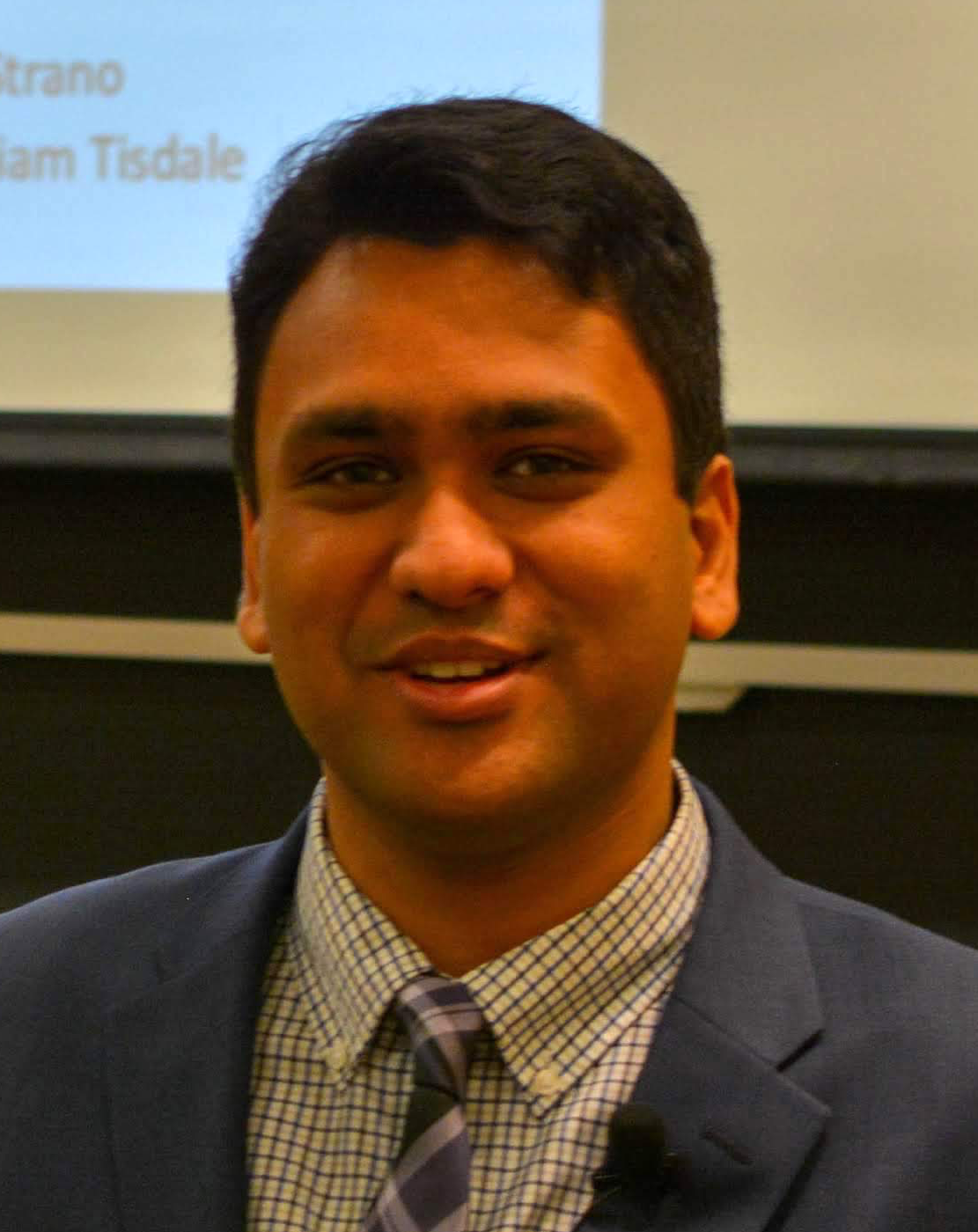
Asst Prof Ananth Govind RAJAN
Assistant Professor of Chemical Engineering, Indian Institute of Science
Dr. Ananth Govind Rajan is an Assistant Professor and Infosys Young Investigator in the Department of Chemical Engineering at the Indian Institute of Science (IISc), Bengaluru. Dr. Ananth received his B.Tech. in Chemical Engineering from the Indian Institute of Technology (IIT) Delhi (2013) and his Masters in Chemical Engineering Practice (2015) and Ph.D. in Chemical Engineering (2019) from the Massachusetts Institute of Technology (MIT). Dr. Ananth’s research interests lie in the modeling and simulation of nanomaterials, including their synthesis and applications for clean energy and water technologies, such as electrochemical water splitting, catalytic carbon dioxide reduction, and seawater desalination. Recently, he served as a Guest Editor for a special issue on Materials Design in the journal ACS Engineering Au. He is a Young Associate of the Indian National Academy of Engineering and a recipient of the Amar-Dye Chem Award of the Indian Institute of Chemical Engineers. He has also received other honors such as the 2023 Class of Influential Researchers from Industrial and Engineering Chemistry Research and the Graduates of the Last Decade (GOLD) Award from IIT Delhi.
Date of CARES visit: May 2024
Presentation title: Mechanistic Insights into Nanoscale Separation and Catalytic Phenomena Using Multi-Scale Simulations and Machine Learning
Abstract: Catalytic carbon dioxide (CO2) conversion and membrane separations can enable energy efficient chemical industries. Our group combines quantum-mechanical density functional theory (DFT) calculations, molecular dynamics (MD), and kinetic Monte Carlo (KMC) simulations, with machine learning (ML), to understand the molecular underpinnings of separations and catalysis using nanomaterials. In this talk, I will present our recent work on understanding the atomic-level structure of nanopores in two-dimensional (2D) materials, which are important from the perspective of developing highefficiency separation membranes. Specifically, I will discuss the combined use of DFT calculations, KMC simulations, and chemical graph theory to predict exact nanopore shapes in 2D graphene and hexagonal boron nitride (hBN) in excellent agreement with microscopy images. I will introduce the use of gradient-boosted ML strategies, coupled with structural features of nanopores, to predict the probabilities and formation times of arbitrary nanopore shapes in graphene. I will also outline the development of a novel string representation of nanopores in 2D materials, which enables the application of neural networks to develop structure-property relationships for nanoporous 2D materials. Finally, I will discuss our work on computational catalysis, wherein we unravel new mechanisms for electrochemical CO2 reduction to chemicals on pure/doped copper and 2D materials. I will also explain the development of ML models to predict activation (free) energies of elementary chemical reactions on catalyst surfaces using various physical features of adsorbate species and chemical transformations. Coupled with automated reaction enumeration strategies, the use of such ML models allows the exploration of complex reaction pathways involving thousands of elementary steps, and thus makes more realistic predictions of catalytic turnover frequencies for carbon dioxide reduction. Overall, the multi-scale simulations and ML algorithms presented in this talk will help understand and advance the use of 2D materials and single-atom alloys for separation and catalysis applications.
Past Visiting Scientists
Profile


Asst Prof Ananth Govind RAJAN
Assistant Professor of Chemical Engineering, Indian Institute of Science
Dr. Ananth Govind Rajan is an Assistant Professor and Infosys Young Investigator in the Department of Chemical Engineering at the Indian Institute of Science (IISc), Bengaluru. Dr. Ananth received his B.Tech. in Chemical Engineering from the Indian Institute of Technology (IIT) Delhi (2013) and his Masters in Chemical Engineering Practice (2015) and Ph.D. in Chemical Engineering (2019) from the Massachusetts Institute of Technology (MIT). Dr. Ananth’s research interests lie in the modeling and simulation of nanomaterials, including their synthesis and applications for clean energy and water technologies, such as electrochemical water splitting, catalytic carbon dioxide reduction, and seawater desalination. Recently, he served as a Guest Editor for a special issue on Materials Design in the journal ACS Engineering Au. He is a Young Associate of the Indian National Academy of Engineering and a recipient of the Amar-Dye Chem Award of the Indian Institute of Chemical Engineers. He has also received other honors such as the 2023 Class of Influential Researchers from Industrial and Engineering Chemistry Research and the Graduates of the Last Decade (GOLD) Award from IIT Delhi.
Date of CARES visit: May 2024
Presentation title: Mechanistic Insights into Nanoscale Separation and Catalytic Phenomena Using Multi-Scale Simulations and Machine Learning
Abstract: Catalytic carbon dioxide (CO2) conversion and membrane separations can enable energy efficient chemical industries. Our group combines quantum-mechanical density functional theory (DFT) calculations, molecular dynamics (MD), and kinetic Monte Carlo (KMC) simulations, with machine learning (ML), to understand the molecular underpinnings of separations and catalysis using nanomaterials. In this talk, I will present our recent work on understanding the atomic-level structure of nanopores in two-dimensional (2D) materials, which are important from the perspective of developing highefficiency separation membranes. Specifically, I will discuss the combined use of DFT calculations, KMC simulations, and chemical graph theory to predict exact nanopore shapes in 2D graphene and hexagonal boron nitride (hBN) in excellent agreement with microscopy images. I will introduce the use of gradient-boosted ML strategies, coupled with structural features of nanopores, to predict the probabilities and formation times of arbitrary nanopore shapes in graphene. I will also outline the development of a novel string representation of nanopores in 2D materials, which enables the application of neural networks to develop structure-property relationships for nanoporous 2D materials. Finally, I will discuss our work on computational catalysis, wherein we unravel new mechanisms for electrochemical CO2 reduction to chemicals on pure/doped copper and 2D materials. I will also explain the development of ML models to predict activation (free) energies of elementary chemical reactions on catalyst surfaces using various physical features of adsorbate species and chemical transformations. Coupled with automated reaction enumeration strategies, the use of such ML models allows the exploration of complex reaction pathways involving thousands of elementary steps, and thus makes more realistic predictions of catalytic turnover frequencies for carbon dioxide reduction. Overall, the multi-scale simulations and ML algorithms presented in this talk will help understand and advance the use of 2D materials and single-atom alloys for separation and catalysis applications.
Past Visiting Scientists
Profile


Asst Prof Ananth Govind RAJAN
Assistant Professor of Chemical Engineering, Indian Institute of Science
Dr. Ananth Govind Rajan is an Assistant Professor and Infosys Young Investigator in the Department of Chemical Engineering at the Indian Institute of Science (IISc), Bengaluru. Dr. Ananth received his B.Tech. in Chemical Engineering from the Indian Institute of Technology (IIT) Delhi (2013) and his Masters in Chemical Engineering Practice (2015) and Ph.D. in Chemical Engineering (2019) from the Massachusetts Institute of Technology (MIT). Dr. Ananth’s research interests lie in the modeling and simulation of nanomaterials, including their synthesis and applications for clean energy and water technologies, such as electrochemical water splitting, catalytic carbon dioxide reduction, and seawater desalination. Recently, he served as a Guest Editor for a special issue on Materials Design in the journal ACS Engineering Au. He is a Young Associate of the Indian National Academy of Engineering and a recipient of the Amar-Dye Chem Award of the Indian Institute of Chemical Engineers. He has also received other honors such as the 2023 Class of Influential Researchers from Industrial and Engineering Chemistry Research and the Graduates of the Last Decade (GOLD) Award from IIT Delhi.
Date of CARES visit: May 2024
Presentation title: Mechanistic Insights into Nanoscale Separation and Catalytic Phenomena Using Multi-Scale Simulations and Machine Learning
Abstract: Catalytic carbon dioxide (CO2) conversion and membrane separations can enable energy efficient chemical industries. Our group combines quantum-mechanical density functional theory (DFT) calculations, molecular dynamics (MD), and kinetic Monte Carlo (KMC) simulations, with machine learning (ML), to understand the molecular underpinnings of separations and catalysis using nanomaterials. In this talk, I will present our recent work on understanding the atomic-level structure of nanopores in two-dimensional (2D) materials, which are important from the perspective of developing highefficiency separation membranes. Specifically, I will discuss the combined use of DFT calculations, KMC simulations, and chemical graph theory to predict exact nanopore shapes in 2D graphene and hexagonal boron nitride (hBN) in excellent agreement with microscopy images. I will introduce the use of gradient-boosted ML strategies, coupled with structural features of nanopores, to predict the probabilities and formation times of arbitrary nanopore shapes in graphene. I will also outline the development of a novel string representation of nanopores in 2D materials, which enables the application of neural networks to develop structure-property relationships for nanoporous 2D materials. Finally, I will discuss our work on computational catalysis, wherein we unravel new mechanisms for electrochemical CO2 reduction to chemicals on pure/doped copper and 2D materials. I will also explain the development of ML models to predict activation (free) energies of elementary chemical reactions on catalyst surfaces using various physical features of adsorbate species and chemical transformations. Coupled with automated reaction enumeration strategies, the use of such ML models allows the exploration of complex reaction pathways involving thousands of elementary steps, and thus makes more realistic predictions of catalytic turnover frequencies for carbon dioxide reduction. Overall, the multi-scale simulations and ML algorithms presented in this talk will help understand and advance the use of 2D materials and single-atom alloys for separation and catalysis applications.
Past Visiting Scientists
Profile


Asst Prof Ananth Govind RAJAN
Assistant Professor of Chemical Engineering, Indian Institute of Science
Dr. Ananth Govind Rajan is an Assistant Professor and Infosys Young Investigator in the Department of Chemical Engineering at the Indian Institute of Science (IISc), Bengaluru. Dr. Ananth received his B.Tech. in Chemical Engineering from the Indian Institute of Technology (IIT) Delhi (2013) and his Masters in Chemical Engineering Practice (2015) and Ph.D. in Chemical Engineering (2019) from the Massachusetts Institute of Technology (MIT). Dr. Ananth’s research interests lie in the modeling and simulation of nanomaterials, including their synthesis and applications for clean energy and water technologies, such as electrochemical water splitting, catalytic carbon dioxide reduction, and seawater desalination. Recently, he served as a Guest Editor for a special issue on Materials Design in the journal ACS Engineering Au. He is a Young Associate of the Indian National Academy of Engineering and a recipient of the Amar-Dye Chem Award of the Indian Institute of Chemical Engineers. He has also received other honors such as the 2023 Class of Influential Researchers from Industrial and Engineering Chemistry Research and the Graduates of the Last Decade (GOLD) Award from IIT Delhi.
Date of CARES visit: May 2024
Presentation title: Mechanistic Insights into Nanoscale Separation and Catalytic Phenomena Using Multi-Scale Simulations and Machine Learning
Abstract: Catalytic carbon dioxide (CO2) conversion and membrane separations can enable energy efficient chemical industries. Our group combines quantum-mechanical density functional theory (DFT) calculations, molecular dynamics (MD), and kinetic Monte Carlo (KMC) simulations, with machine learning (ML), to understand the molecular underpinnings of separations and catalysis using nanomaterials. In this talk, I will present our recent work on understanding the atomic-level structure of nanopores in two-dimensional (2D) materials, which are important from the perspective of developing highefficiency separation membranes. Specifically, I will discuss the combined use of DFT calculations, KMC simulations, and chemical graph theory to predict exact nanopore shapes in 2D graphene and hexagonal boron nitride (hBN) in excellent agreement with microscopy images. I will introduce the use of gradient-boosted ML strategies, coupled with structural features of nanopores, to predict the probabilities and formation times of arbitrary nanopore shapes in graphene. I will also outline the development of a novel string representation of nanopores in 2D materials, which enables the application of neural networks to develop structure-property relationships for nanoporous 2D materials. Finally, I will discuss our work on computational catalysis, wherein we unravel new mechanisms for electrochemical CO2 reduction to chemicals on pure/doped copper and 2D materials. I will also explain the development of ML models to predict activation (free) energies of elementary chemical reactions on catalyst surfaces using various physical features of adsorbate species and chemical transformations. Coupled with automated reaction enumeration strategies, the use of such ML models allows the exploration of complex reaction pathways involving thousands of elementary steps, and thus makes more realistic predictions of catalytic turnover frequencies for carbon dioxide reduction. Overall, the multi-scale simulations and ML algorithms presented in this talk will help understand and advance the use of 2D materials and single-atom alloys for separation and catalysis applications.
Past Visiting Scientists
Profile


Asst Prof Ananth Govind RAJAN
Assistant Professor of Chemical Engineering, Indian Institute of Science
Dr. Ananth Govind Rajan is an Assistant Professor and Infosys Young Investigator in the Department of Chemical Engineering at the Indian Institute of Science (IISc), Bengaluru. Dr. Ananth received his B.Tech. in Chemical Engineering from the Indian Institute of Technology (IIT) Delhi (2013) and his Masters in Chemical Engineering Practice (2015) and Ph.D. in Chemical Engineering (2019) from the Massachusetts Institute of Technology (MIT). Dr. Ananth’s research interests lie in the modeling and simulation of nanomaterials, including their synthesis and applications for clean energy and water technologies, such as electrochemical water splitting, catalytic carbon dioxide reduction, and seawater desalination. Recently, he served as a Guest Editor for a special issue on Materials Design in the journal ACS Engineering Au. He is a Young Associate of the Indian National Academy of Engineering and a recipient of the Amar-Dye Chem Award of the Indian Institute of Chemical Engineers. He has also received other honors such as the 2023 Class of Influential Researchers from Industrial and Engineering Chemistry Research and the Graduates of the Last Decade (GOLD) Award from IIT Delhi.
Date of CARES visit: May 2024
Presentation title: Mechanistic Insights into Nanoscale Separation and Catalytic Phenomena Using Multi-Scale Simulations and Machine Learning
Abstract: Catalytic carbon dioxide (CO2) conversion and membrane separations can enable energy efficient chemical industries. Our group combines quantum-mechanical density functional theory (DFT) calculations, molecular dynamics (MD), and kinetic Monte Carlo (KMC) simulations, with machine learning (ML), to understand the molecular underpinnings of separations and catalysis using nanomaterials. In this talk, I will present our recent work on understanding the atomic-level structure of nanopores in two-dimensional (2D) materials, which are important from the perspective of developing highefficiency separation membranes. Specifically, I will discuss the combined use of DFT calculations, KMC simulations, and chemical graph theory to predict exact nanopore shapes in 2D graphene and hexagonal boron nitride (hBN) in excellent agreement with microscopy images. I will introduce the use of gradient-boosted ML strategies, coupled with structural features of nanopores, to predict the probabilities and formation times of arbitrary nanopore shapes in graphene. I will also outline the development of a novel string representation of nanopores in 2D materials, which enables the application of neural networks to develop structure-property relationships for nanoporous 2D materials. Finally, I will discuss our work on computational catalysis, wherein we unravel new mechanisms for electrochemical CO2 reduction to chemicals on pure/doped copper and 2D materials. I will also explain the development of ML models to predict activation (free) energies of elementary chemical reactions on catalyst surfaces using various physical features of adsorbate species and chemical transformations. Coupled with automated reaction enumeration strategies, the use of such ML models allows the exploration of complex reaction pathways involving thousands of elementary steps, and thus makes more realistic predictions of catalytic turnover frequencies for carbon dioxide reduction. Overall, the multi-scale simulations and ML algorithms presented in this talk will help understand and advance the use of 2D materials and single-atom alloys for separation and catalysis applications.
Past Visiting Scientists
Profile


Asst Prof Ananth Govind RAJAN
Assistant Professor of Chemical Engineering, Indian Institute of Science
Dr. Ananth Govind Rajan is an Assistant Professor and Infosys Young Investigator in the Department of Chemical Engineering at the Indian Institute of Science (IISc), Bengaluru. Dr. Ananth received his B.Tech. in Chemical Engineering from the Indian Institute of Technology (IIT) Delhi (2013) and his Masters in Chemical Engineering Practice (2015) and Ph.D. in Chemical Engineering (2019) from the Massachusetts Institute of Technology (MIT). Dr. Ananth’s research interests lie in the modeling and simulation of nanomaterials, including their synthesis and applications for clean energy and water technologies, such as electrochemical water splitting, catalytic carbon dioxide reduction, and seawater desalination. Recently, he served as a Guest Editor for a special issue on Materials Design in the journal ACS Engineering Au. He is a Young Associate of the Indian National Academy of Engineering and a recipient of the Amar-Dye Chem Award of the Indian Institute of Chemical Engineers. He has also received other honors such as the 2023 Class of Influential Researchers from Industrial and Engineering Chemistry Research and the Graduates of the Last Decade (GOLD) Award from IIT Delhi.
Date of CARES visit: May 2024
Presentation title: Mechanistic Insights into Nanoscale Separation and Catalytic Phenomena Using Multi-Scale Simulations and Machine Learning
Abstract: Catalytic carbon dioxide (CO2) conversion and membrane separations can enable energy efficient chemical industries. Our group combines quantum-mechanical density functional theory (DFT) calculations, molecular dynamics (MD), and kinetic Monte Carlo (KMC) simulations, with machine learning (ML), to understand the molecular underpinnings of separations and catalysis using nanomaterials. In this talk, I will present our recent work on understanding the atomic-level structure of nanopores in two-dimensional (2D) materials, which are important from the perspective of developing highefficiency separation membranes. Specifically, I will discuss the combined use of DFT calculations, KMC simulations, and chemical graph theory to predict exact nanopore shapes in 2D graphene and hexagonal boron nitride (hBN) in excellent agreement with microscopy images. I will introduce the use of gradient-boosted ML strategies, coupled with structural features of nanopores, to predict the probabilities and formation times of arbitrary nanopore shapes in graphene. I will also outline the development of a novel string representation of nanopores in 2D materials, which enables the application of neural networks to develop structure-property relationships for nanoporous 2D materials. Finally, I will discuss our work on computational catalysis, wherein we unravel new mechanisms for electrochemical CO2 reduction to chemicals on pure/doped copper and 2D materials. I will also explain the development of ML models to predict activation (free) energies of elementary chemical reactions on catalyst surfaces using various physical features of adsorbate species and chemical transformations. Coupled with automated reaction enumeration strategies, the use of such ML models allows the exploration of complex reaction pathways involving thousands of elementary steps, and thus makes more realistic predictions of catalytic turnover frequencies for carbon dioxide reduction. Overall, the multi-scale simulations and ML algorithms presented in this talk will help understand and advance the use of 2D materials and single-atom alloys for separation and catalysis applications.
Past Visiting Scientists
Profile


Asst Prof Ananth Govind RAJAN
Assistant Professor of Chemical Engineering, Indian Institute of Science
Dr. Ananth Govind Rajan is an Assistant Professor and Infosys Young Investigator in the Department of Chemical Engineering at the Indian Institute of Science (IISc), Bengaluru. Dr. Ananth received his B.Tech. in Chemical Engineering from the Indian Institute of Technology (IIT) Delhi (2013) and his Masters in Chemical Engineering Practice (2015) and Ph.D. in Chemical Engineering (2019) from the Massachusetts Institute of Technology (MIT). Dr. Ananth’s research interests lie in the modeling and simulation of nanomaterials, including their synthesis and applications for clean energy and water technologies, such as electrochemical water splitting, catalytic carbon dioxide reduction, and seawater desalination. Recently, he served as a Guest Editor for a special issue on Materials Design in the journal ACS Engineering Au. He is a Young Associate of the Indian National Academy of Engineering and a recipient of the Amar-Dye Chem Award of the Indian Institute of Chemical Engineers. He has also received other honors such as the 2023 Class of Influential Researchers from Industrial and Engineering Chemistry Research and the Graduates of the Last Decade (GOLD) Award from IIT Delhi.
Date of CARES visit: May 2024
Presentation title: Mechanistic Insights into Nanoscale Separation and Catalytic Phenomena Using Multi-Scale Simulations and Machine Learning
Abstract: Catalytic carbon dioxide (CO2) conversion and membrane separations can enable energy efficient chemical industries. Our group combines quantum-mechanical density functional theory (DFT) calculations, molecular dynamics (MD), and kinetic Monte Carlo (KMC) simulations, with machine learning (ML), to understand the molecular underpinnings of separations and catalysis using nanomaterials. In this talk, I will present our recent work on understanding the atomic-level structure of nanopores in two-dimensional (2D) materials, which are important from the perspective of developing highefficiency separation membranes. Specifically, I will discuss the combined use of DFT calculations, KMC simulations, and chemical graph theory to predict exact nanopore shapes in 2D graphene and hexagonal boron nitride (hBN) in excellent agreement with microscopy images. I will introduce the use of gradient-boosted ML strategies, coupled with structural features of nanopores, to predict the probabilities and formation times of arbitrary nanopore shapes in graphene. I will also outline the development of a novel string representation of nanopores in 2D materials, which enables the application of neural networks to develop structure-property relationships for nanoporous 2D materials. Finally, I will discuss our work on computational catalysis, wherein we unravel new mechanisms for electrochemical CO2 reduction to chemicals on pure/doped copper and 2D materials. I will also explain the development of ML models to predict activation (free) energies of elementary chemical reactions on catalyst surfaces using various physical features of adsorbate species and chemical transformations. Coupled with automated reaction enumeration strategies, the use of such ML models allows the exploration of complex reaction pathways involving thousands of elementary steps, and thus makes more realistic predictions of catalytic turnover frequencies for carbon dioxide reduction. Overall, the multi-scale simulations and ML algorithms presented in this talk will help understand and advance the use of 2D materials and single-atom alloys for separation and catalysis applications.
Past Visiting Scientists
Profile


Asst Prof Ananth Govind RAJAN
Assistant Professor of Chemical Engineering, Indian Institute of Science
Dr. Ananth Govind Rajan is an Assistant Professor and Infosys Young Investigator in the Department of Chemical Engineering at the Indian Institute of Science (IISc), Bengaluru. Dr. Ananth received his B.Tech. in Chemical Engineering from the Indian Institute of Technology (IIT) Delhi (2013) and his Masters in Chemical Engineering Practice (2015) and Ph.D. in Chemical Engineering (2019) from the Massachusetts Institute of Technology (MIT). Dr. Ananth’s research interests lie in the modeling and simulation of nanomaterials, including their synthesis and applications for clean energy and water technologies, such as electrochemical water splitting, catalytic carbon dioxide reduction, and seawater desalination. Recently, he served as a Guest Editor for a special issue on Materials Design in the journal ACS Engineering Au. He is a Young Associate of the Indian National Academy of Engineering and a recipient of the Amar-Dye Chem Award of the Indian Institute of Chemical Engineers. He has also received other honors such as the 2023 Class of Influential Researchers from Industrial and Engineering Chemistry Research and the Graduates of the Last Decade (GOLD) Award from IIT Delhi.
Date of CARES visit: May 2024
Presentation title: Mechanistic Insights into Nanoscale Separation and Catalytic Phenomena Using Multi-Scale Simulations and Machine Learning
Abstract: Catalytic carbon dioxide (CO2) conversion and membrane separations can enable energy efficient chemical industries. Our group combines quantum-mechanical density functional theory (DFT) calculations, molecular dynamics (MD), and kinetic Monte Carlo (KMC) simulations, with machine learning (ML), to understand the molecular underpinnings of separations and catalysis using nanomaterials. In this talk, I will present our recent work on understanding the atomic-level structure of nanopores in two-dimensional (2D) materials, which are important from the perspective of developing highefficiency separation membranes. Specifically, I will discuss the combined use of DFT calculations, KMC simulations, and chemical graph theory to predict exact nanopore shapes in 2D graphene and hexagonal boron nitride (hBN) in excellent agreement with microscopy images. I will introduce the use of gradient-boosted ML strategies, coupled with structural features of nanopores, to predict the probabilities and formation times of arbitrary nanopore shapes in graphene. I will also outline the development of a novel string representation of nanopores in 2D materials, which enables the application of neural networks to develop structure-property relationships for nanoporous 2D materials. Finally, I will discuss our work on computational catalysis, wherein we unravel new mechanisms for electrochemical CO2 reduction to chemicals on pure/doped copper and 2D materials. I will also explain the development of ML models to predict activation (free) energies of elementary chemical reactions on catalyst surfaces using various physical features of adsorbate species and chemical transformations. Coupled with automated reaction enumeration strategies, the use of such ML models allows the exploration of complex reaction pathways involving thousands of elementary steps, and thus makes more realistic predictions of catalytic turnover frequencies for carbon dioxide reduction. Overall, the multi-scale simulations and ML algorithms presented in this talk will help understand and advance the use of 2D materials and single-atom alloys for separation and catalysis applications.
Past Visiting Scientists
Profile


Asst Prof Ananth Govind RAJAN
Assistant Professor of Chemical Engineering, Indian Institute of Science
Dr. Ananth Govind Rajan is an Assistant Professor and Infosys Young Investigator in the Department of Chemical Engineering at the Indian Institute of Science (IISc), Bengaluru. Dr. Ananth received his B.Tech. in Chemical Engineering from the Indian Institute of Technology (IIT) Delhi (2013) and his Masters in Chemical Engineering Practice (2015) and Ph.D. in Chemical Engineering (2019) from the Massachusetts Institute of Technology (MIT). Dr. Ananth’s research interests lie in the modeling and simulation of nanomaterials, including their synthesis and applications for clean energy and water technologies, such as electrochemical water splitting, catalytic carbon dioxide reduction, and seawater desalination. Recently, he served as a Guest Editor for a special issue on Materials Design in the journal ACS Engineering Au. He is a Young Associate of the Indian National Academy of Engineering and a recipient of the Amar-Dye Chem Award of the Indian Institute of Chemical Engineers. He has also received other honors such as the 2023 Class of Influential Researchers from Industrial and Engineering Chemistry Research and the Graduates of the Last Decade (GOLD) Award from IIT Delhi.
Date of CARES visit: May 2024
Presentation title: Mechanistic Insights into Nanoscale Separation and Catalytic Phenomena Using Multi-Scale Simulations and Machine Learning
Abstract: Catalytic carbon dioxide (CO2) conversion and membrane separations can enable energy efficient chemical industries. Our group combines quantum-mechanical density functional theory (DFT) calculations, molecular dynamics (MD), and kinetic Monte Carlo (KMC) simulations, with machine learning (ML), to understand the molecular underpinnings of separations and catalysis using nanomaterials. In this talk, I will present our recent work on understanding the atomic-level structure of nanopores in two-dimensional (2D) materials, which are important from the perspective of developing highefficiency separation membranes. Specifically, I will discuss the combined use of DFT calculations, KMC simulations, and chemical graph theory to predict exact nanopore shapes in 2D graphene and hexagonal boron nitride (hBN) in excellent agreement with microscopy images. I will introduce the use of gradient-boosted ML strategies, coupled with structural features of nanopores, to predict the probabilities and formation times of arbitrary nanopore shapes in graphene. I will also outline the development of a novel string representation of nanopores in 2D materials, which enables the application of neural networks to develop structure-property relationships for nanoporous 2D materials. Finally, I will discuss our work on computational catalysis, wherein we unravel new mechanisms for electrochemical CO2 reduction to chemicals on pure/doped copper and 2D materials. I will also explain the development of ML models to predict activation (free) energies of elementary chemical reactions on catalyst surfaces using various physical features of adsorbate species and chemical transformations. Coupled with automated reaction enumeration strategies, the use of such ML models allows the exploration of complex reaction pathways involving thousands of elementary steps, and thus makes more realistic predictions of catalytic turnover frequencies for carbon dioxide reduction. Overall, the multi-scale simulations and ML algorithms presented in this talk will help understand and advance the use of 2D materials and single-atom alloys for separation and catalysis applications.
Past Visiting Scientists
Profile


Asst Prof Ananth Govind RAJAN
Assistant Professor of Chemical Engineering, Indian Institute of Science
Dr. Ananth Govind Rajan is an Assistant Professor and Infosys Young Investigator in the Department of Chemical Engineering at the Indian Institute of Science (IISc), Bengaluru. Dr. Ananth received his B.Tech. in Chemical Engineering from the Indian Institute of Technology (IIT) Delhi (2013) and his Masters in Chemical Engineering Practice (2015) and Ph.D. in Chemical Engineering (2019) from the Massachusetts Institute of Technology (MIT). Dr. Ananth’s research interests lie in the modeling and simulation of nanomaterials, including their synthesis and applications for clean energy and water technologies, such as electrochemical water splitting, catalytic carbon dioxide reduction, and seawater desalination. Recently, he served as a Guest Editor for a special issue on Materials Design in the journal ACS Engineering Au. He is a Young Associate of the Indian National Academy of Engineering and a recipient of the Amar-Dye Chem Award of the Indian Institute of Chemical Engineers. He has also received other honors such as the 2023 Class of Influential Researchers from Industrial and Engineering Chemistry Research and the Graduates of the Last Decade (GOLD) Award from IIT Delhi.
Date of CARES visit: May 2024
Presentation title: Mechanistic Insights into Nanoscale Separation and Catalytic Phenomena Using Multi-Scale Simulations and Machine Learning
Abstract: Catalytic carbon dioxide (CO2) conversion and membrane separations can enable energy efficient chemical industries. Our group combines quantum-mechanical density functional theory (DFT) calculations, molecular dynamics (MD), and kinetic Monte Carlo (KMC) simulations, with machine learning (ML), to understand the molecular underpinnings of separations and catalysis using nanomaterials. In this talk, I will present our recent work on understanding the atomic-level structure of nanopores in two-dimensional (2D) materials, which are important from the perspective of developing highefficiency separation membranes. Specifically, I will discuss the combined use of DFT calculations, KMC simulations, and chemical graph theory to predict exact nanopore shapes in 2D graphene and hexagonal boron nitride (hBN) in excellent agreement with microscopy images. I will introduce the use of gradient-boosted ML strategies, coupled with structural features of nanopores, to predict the probabilities and formation times of arbitrary nanopore shapes in graphene. I will also outline the development of a novel string representation of nanopores in 2D materials, which enables the application of neural networks to develop structure-property relationships for nanoporous 2D materials. Finally, I will discuss our work on computational catalysis, wherein we unravel new mechanisms for electrochemical CO2 reduction to chemicals on pure/doped copper and 2D materials. I will also explain the development of ML models to predict activation (free) energies of elementary chemical reactions on catalyst surfaces using various physical features of adsorbate species and chemical transformations. Coupled with automated reaction enumeration strategies, the use of such ML models allows the exploration of complex reaction pathways involving thousands of elementary steps, and thus makes more realistic predictions of catalytic turnover frequencies for carbon dioxide reduction. Overall, the multi-scale simulations and ML algorithms presented in this talk will help understand and advance the use of 2D materials and single-atom alloys for separation and catalysis applications.
Past Visiting Scientists
Profile


Asst Prof Ananth Govind RAJAN
Assistant Professor of Chemical Engineering, Indian Institute of Science
Dr. Ananth Govind Rajan is an Assistant Professor and Infosys Young Investigator in the Department of Chemical Engineering at the Indian Institute of Science (IISc), Bengaluru. Dr. Ananth received his B.Tech. in Chemical Engineering from the Indian Institute of Technology (IIT) Delhi (2013) and his Masters in Chemical Engineering Practice (2015) and Ph.D. in Chemical Engineering (2019) from the Massachusetts Institute of Technology (MIT). Dr. Ananth’s research interests lie in the modeling and simulation of nanomaterials, including their synthesis and applications for clean energy and water technologies, such as electrochemical water splitting, catalytic carbon dioxide reduction, and seawater desalination. Recently, he served as a Guest Editor for a special issue on Materials Design in the journal ACS Engineering Au. He is a Young Associate of the Indian National Academy of Engineering and a recipient of the Amar-Dye Chem Award of the Indian Institute of Chemical Engineers. He has also received other honors such as the 2023 Class of Influential Researchers from Industrial and Engineering Chemistry Research and the Graduates of the Last Decade (GOLD) Award from IIT Delhi.
Date of CARES visit: May 2024
Presentation title: Mechanistic Insights into Nanoscale Separation and Catalytic Phenomena Using Multi-Scale Simulations and Machine Learning
Abstract: Catalytic carbon dioxide (CO2) conversion and membrane separations can enable energy efficient chemical industries. Our group combines quantum-mechanical density functional theory (DFT) calculations, molecular dynamics (MD), and kinetic Monte Carlo (KMC) simulations, with machine learning (ML), to understand the molecular underpinnings of separations and catalysis using nanomaterials. In this talk, I will present our recent work on understanding the atomic-level structure of nanopores in two-dimensional (2D) materials, which are important from the perspective of developing highefficiency separation membranes. Specifically, I will discuss the combined use of DFT calculations, KMC simulations, and chemical graph theory to predict exact nanopore shapes in 2D graphene and hexagonal boron nitride (hBN) in excellent agreement with microscopy images. I will introduce the use of gradient-boosted ML strategies, coupled with structural features of nanopores, to predict the probabilities and formation times of arbitrary nanopore shapes in graphene. I will also outline the development of a novel string representation of nanopores in 2D materials, which enables the application of neural networks to develop structure-property relationships for nanoporous 2D materials. Finally, I will discuss our work on computational catalysis, wherein we unravel new mechanisms for electrochemical CO2 reduction to chemicals on pure/doped copper and 2D materials. I will also explain the development of ML models to predict activation (free) energies of elementary chemical reactions on catalyst surfaces using various physical features of adsorbate species and chemical transformations. Coupled with automated reaction enumeration strategies, the use of such ML models allows the exploration of complex reaction pathways involving thousands of elementary steps, and thus makes more realistic predictions of catalytic turnover frequencies for carbon dioxide reduction. Overall, the multi-scale simulations and ML algorithms presented in this talk will help understand and advance the use of 2D materials and single-atom alloys for separation and catalysis applications.
Past Visiting Scientists
Profile


Asst Prof Ananth Govind RAJAN
Assistant Professor of Chemical Engineering, Indian Institute of Science
Dr. Ananth Govind Rajan is an Assistant Professor and Infosys Young Investigator in the Department of Chemical Engineering at the Indian Institute of Science (IISc), Bengaluru. Dr. Ananth received his B.Tech. in Chemical Engineering from the Indian Institute of Technology (IIT) Delhi (2013) and his Masters in Chemical Engineering Practice (2015) and Ph.D. in Chemical Engineering (2019) from the Massachusetts Institute of Technology (MIT). Dr. Ananth’s research interests lie in the modeling and simulation of nanomaterials, including their synthesis and applications for clean energy and water technologies, such as electrochemical water splitting, catalytic carbon dioxide reduction, and seawater desalination. Recently, he served as a Guest Editor for a special issue on Materials Design in the journal ACS Engineering Au. He is a Young Associate of the Indian National Academy of Engineering and a recipient of the Amar-Dye Chem Award of the Indian Institute of Chemical Engineers. He has also received other honors such as the 2023 Class of Influential Researchers from Industrial and Engineering Chemistry Research and the Graduates of the Last Decade (GOLD) Award from IIT Delhi.
Date of CARES visit: May 2024
Presentation title: Mechanistic Insights into Nanoscale Separation and Catalytic Phenomena Using Multi-Scale Simulations and Machine Learning
Abstract: Catalytic carbon dioxide (CO2) conversion and membrane separations can enable energy efficient chemical industries. Our group combines quantum-mechanical density functional theory (DFT) calculations, molecular dynamics (MD), and kinetic Monte Carlo (KMC) simulations, with machine learning (ML), to understand the molecular underpinnings of separations and catalysis using nanomaterials. In this talk, I will present our recent work on understanding the atomic-level structure of nanopores in two-dimensional (2D) materials, which are important from the perspective of developing highefficiency separation membranes. Specifically, I will discuss the combined use of DFT calculations, KMC simulations, and chemical graph theory to predict exact nanopore shapes in 2D graphene and hexagonal boron nitride (hBN) in excellent agreement with microscopy images. I will introduce the use of gradient-boosted ML strategies, coupled with structural features of nanopores, to predict the probabilities and formation times of arbitrary nanopore shapes in graphene. I will also outline the development of a novel string representation of nanopores in 2D materials, which enables the application of neural networks to develop structure-property relationships for nanoporous 2D materials. Finally, I will discuss our work on computational catalysis, wherein we unravel new mechanisms for electrochemical CO2 reduction to chemicals on pure/doped copper and 2D materials. I will also explain the development of ML models to predict activation (free) energies of elementary chemical reactions on catalyst surfaces using various physical features of adsorbate species and chemical transformations. Coupled with automated reaction enumeration strategies, the use of such ML models allows the exploration of complex reaction pathways involving thousands of elementary steps, and thus makes more realistic predictions of catalytic turnover frequencies for carbon dioxide reduction. Overall, the multi-scale simulations and ML algorithms presented in this talk will help understand and advance the use of 2D materials and single-atom alloys for separation and catalysis applications.
Past Visiting Scientists
Profile


Asst Prof Ananth Govind RAJAN
Assistant Professor of Chemical Engineering, Indian Institute of Science
Dr. Ananth Govind Rajan is an Assistant Professor and Infosys Young Investigator in the Department of Chemical Engineering at the Indian Institute of Science (IISc), Bengaluru. Dr. Ananth received his B.Tech. in Chemical Engineering from the Indian Institute of Technology (IIT) Delhi (2013) and his Masters in Chemical Engineering Practice (2015) and Ph.D. in Chemical Engineering (2019) from the Massachusetts Institute of Technology (MIT). Dr. Ananth’s research interests lie in the modeling and simulation of nanomaterials, including their synthesis and applications for clean energy and water technologies, such as electrochemical water splitting, catalytic carbon dioxide reduction, and seawater desalination. Recently, he served as a Guest Editor for a special issue on Materials Design in the journal ACS Engineering Au. He is a Young Associate of the Indian National Academy of Engineering and a recipient of the Amar-Dye Chem Award of the Indian Institute of Chemical Engineers. He has also received other honors such as the 2023 Class of Influential Researchers from Industrial and Engineering Chemistry Research and the Graduates of the Last Decade (GOLD) Award from IIT Delhi.
Date of CARES visit: May 2024
Presentation title: Mechanistic Insights into Nanoscale Separation and Catalytic Phenomena Using Multi-Scale Simulations and Machine Learning
Abstract: Catalytic carbon dioxide (CO2) conversion and membrane separations can enable energy efficient chemical industries. Our group combines quantum-mechanical density functional theory (DFT) calculations, molecular dynamics (MD), and kinetic Monte Carlo (KMC) simulations, with machine learning (ML), to understand the molecular underpinnings of separations and catalysis using nanomaterials. In this talk, I will present our recent work on understanding the atomic-level structure of nanopores in two-dimensional (2D) materials, which are important from the perspective of developing highefficiency separation membranes. Specifically, I will discuss the combined use of DFT calculations, KMC simulations, and chemical graph theory to predict exact nanopore shapes in 2D graphene and hexagonal boron nitride (hBN) in excellent agreement with microscopy images. I will introduce the use of gradient-boosted ML strategies, coupled with structural features of nanopores, to predict the probabilities and formation times of arbitrary nanopore shapes in graphene. I will also outline the development of a novel string representation of nanopores in 2D materials, which enables the application of neural networks to develop structure-property relationships for nanoporous 2D materials. Finally, I will discuss our work on computational catalysis, wherein we unravel new mechanisms for electrochemical CO2 reduction to chemicals on pure/doped copper and 2D materials. I will also explain the development of ML models to predict activation (free) energies of elementary chemical reactions on catalyst surfaces using various physical features of adsorbate species and chemical transformations. Coupled with automated reaction enumeration strategies, the use of such ML models allows the exploration of complex reaction pathways involving thousands of elementary steps, and thus makes more realistic predictions of catalytic turnover frequencies for carbon dioxide reduction. Overall, the multi-scale simulations and ML algorithms presented in this talk will help understand and advance the use of 2D materials and single-atom alloys for separation and catalysis applications.
Past Visiting Scientists
Profile


Asst Prof Ananth Govind RAJAN
Assistant Professor of Chemical Engineering, Indian Institute of Science
Dr. Ananth Govind Rajan is an Assistant Professor and Infosys Young Investigator in the Department of Chemical Engineering at the Indian Institute of Science (IISc), Bengaluru. Dr. Ananth received his B.Tech. in Chemical Engineering from the Indian Institute of Technology (IIT) Delhi (2013) and his Masters in Chemical Engineering Practice (2015) and Ph.D. in Chemical Engineering (2019) from the Massachusetts Institute of Technology (MIT). Dr. Ananth’s research interests lie in the modeling and simulation of nanomaterials, including their synthesis and applications for clean energy and water technologies, such as electrochemical water splitting, catalytic carbon dioxide reduction, and seawater desalination. Recently, he served as a Guest Editor for a special issue on Materials Design in the journal ACS Engineering Au. He is a Young Associate of the Indian National Academy of Engineering and a recipient of the Amar-Dye Chem Award of the Indian Institute of Chemical Engineers. He has also received other honors such as the 2023 Class of Influential Researchers from Industrial and Engineering Chemistry Research and the Graduates of the Last Decade (GOLD) Award from IIT Delhi.
Date of CARES visit: May 2024
Presentation title: Mechanistic Insights into Nanoscale Separation and Catalytic Phenomena Using Multi-Scale Simulations and Machine Learning
Abstract: Catalytic carbon dioxide (CO2) conversion and membrane separations can enable energy efficient chemical industries. Our group combines quantum-mechanical density functional theory (DFT) calculations, molecular dynamics (MD), and kinetic Monte Carlo (KMC) simulations, with machine learning (ML), to understand the molecular underpinnings of separations and catalysis using nanomaterials. In this talk, I will present our recent work on understanding the atomic-level structure of nanopores in two-dimensional (2D) materials, which are important from the perspective of developing highefficiency separation membranes. Specifically, I will discuss the combined use of DFT calculations, KMC simulations, and chemical graph theory to predict exact nanopore shapes in 2D graphene and hexagonal boron nitride (hBN) in excellent agreement with microscopy images. I will introduce the use of gradient-boosted ML strategies, coupled with structural features of nanopores, to predict the probabilities and formation times of arbitrary nanopore shapes in graphene. I will also outline the development of a novel string representation of nanopores in 2D materials, which enables the application of neural networks to develop structure-property relationships for nanoporous 2D materials. Finally, I will discuss our work on computational catalysis, wherein we unravel new mechanisms for electrochemical CO2 reduction to chemicals on pure/doped copper and 2D materials. I will also explain the development of ML models to predict activation (free) energies of elementary chemical reactions on catalyst surfaces using various physical features of adsorbate species and chemical transformations. Coupled with automated reaction enumeration strategies, the use of such ML models allows the exploration of complex reaction pathways involving thousands of elementary steps, and thus makes more realistic predictions of catalytic turnover frequencies for carbon dioxide reduction. Overall, the multi-scale simulations and ML algorithms presented in this talk will help understand and advance the use of 2D materials and single-atom alloys for separation and catalysis applications.
Past Visiting Scientists
Profile


Asst Prof Ananth Govind RAJAN
Assistant Professor of Chemical Engineering, Indian Institute of Science
Dr. Ananth Govind Rajan is an Assistant Professor and Infosys Young Investigator in the Department of Chemical Engineering at the Indian Institute of Science (IISc), Bengaluru. Dr. Ananth received his B.Tech. in Chemical Engineering from the Indian Institute of Technology (IIT) Delhi (2013) and his Masters in Chemical Engineering Practice (2015) and Ph.D. in Chemical Engineering (2019) from the Massachusetts Institute of Technology (MIT). Dr. Ananth’s research interests lie in the modeling and simulation of nanomaterials, including their synthesis and applications for clean energy and water technologies, such as electrochemical water splitting, catalytic carbon dioxide reduction, and seawater desalination. Recently, he served as a Guest Editor for a special issue on Materials Design in the journal ACS Engineering Au. He is a Young Associate of the Indian National Academy of Engineering and a recipient of the Amar-Dye Chem Award of the Indian Institute of Chemical Engineers. He has also received other honors such as the 2023 Class of Influential Researchers from Industrial and Engineering Chemistry Research and the Graduates of the Last Decade (GOLD) Award from IIT Delhi.
Date of CARES visit: May 2024
Presentation title: Mechanistic Insights into Nanoscale Separation and Catalytic Phenomena Using Multi-Scale Simulations and Machine Learning
Abstract: Catalytic carbon dioxide (CO2) conversion and membrane separations can enable energy efficient chemical industries. Our group combines quantum-mechanical density functional theory (DFT) calculations, molecular dynamics (MD), and kinetic Monte Carlo (KMC) simulations, with machine learning (ML), to understand the molecular underpinnings of separations and catalysis using nanomaterials. In this talk, I will present our recent work on understanding the atomic-level structure of nanopores in two-dimensional (2D) materials, which are important from the perspective of developing highefficiency separation membranes. Specifically, I will discuss the combined use of DFT calculations, KMC simulations, and chemical graph theory to predict exact nanopore shapes in 2D graphene and hexagonal boron nitride (hBN) in excellent agreement with microscopy images. I will introduce the use of gradient-boosted ML strategies, coupled with structural features of nanopores, to predict the probabilities and formation times of arbitrary nanopore shapes in graphene. I will also outline the development of a novel string representation of nanopores in 2D materials, which enables the application of neural networks to develop structure-property relationships for nanoporous 2D materials. Finally, I will discuss our work on computational catalysis, wherein we unravel new mechanisms for electrochemical CO2 reduction to chemicals on pure/doped copper and 2D materials. I will also explain the development of ML models to predict activation (free) energies of elementary chemical reactions on catalyst surfaces using various physical features of adsorbate species and chemical transformations. Coupled with automated reaction enumeration strategies, the use of such ML models allows the exploration of complex reaction pathways involving thousands of elementary steps, and thus makes more realistic predictions of catalytic turnover frequencies for carbon dioxide reduction. Overall, the multi-scale simulations and ML algorithms presented in this talk will help understand and advance the use of 2D materials and single-atom alloys for separation and catalysis applications.
Past Visiting Scientists
Profile


Asst Prof Ananth Govind RAJAN
Assistant Professor of Chemical Engineering, Indian Institute of Science
Dr. Ananth Govind Rajan is an Assistant Professor and Infosys Young Investigator in the Department of Chemical Engineering at the Indian Institute of Science (IISc), Bengaluru. Dr. Ananth received his B.Tech. in Chemical Engineering from the Indian Institute of Technology (IIT) Delhi (2013) and his Masters in Chemical Engineering Practice (2015) and Ph.D. in Chemical Engineering (2019) from the Massachusetts Institute of Technology (MIT). Dr. Ananth’s research interests lie in the modeling and simulation of nanomaterials, including their synthesis and applications for clean energy and water technologies, such as electrochemical water splitting, catalytic carbon dioxide reduction, and seawater desalination. Recently, he served as a Guest Editor for a special issue on Materials Design in the journal ACS Engineering Au. He is a Young Associate of the Indian National Academy of Engineering and a recipient of the Amar-Dye Chem Award of the Indian Institute of Chemical Engineers. He has also received other honors such as the 2023 Class of Influential Researchers from Industrial and Engineering Chemistry Research and the Graduates of the Last Decade (GOLD) Award from IIT Delhi.
Date of CARES visit: May 2024
Presentation title: Mechanistic Insights into Nanoscale Separation and Catalytic Phenomena Using Multi-Scale Simulations and Machine Learning
Abstract: Catalytic carbon dioxide (CO2) conversion and membrane separations can enable energy efficient chemical industries. Our group combines quantum-mechanical density functional theory (DFT) calculations, molecular dynamics (MD), and kinetic Monte Carlo (KMC) simulations, with machine learning (ML), to understand the molecular underpinnings of separations and catalysis using nanomaterials. In this talk, I will present our recent work on understanding the atomic-level structure of nanopores in two-dimensional (2D) materials, which are important from the perspective of developing highefficiency separation membranes. Specifically, I will discuss the combined use of DFT calculations, KMC simulations, and chemical graph theory to predict exact nanopore shapes in 2D graphene and hexagonal boron nitride (hBN) in excellent agreement with microscopy images. I will introduce the use of gradient-boosted ML strategies, coupled with structural features of nanopores, to predict the probabilities and formation times of arbitrary nanopore shapes in graphene. I will also outline the development of a novel string representation of nanopores in 2D materials, which enables the application of neural networks to develop structure-property relationships for nanoporous 2D materials. Finally, I will discuss our work on computational catalysis, wherein we unravel new mechanisms for electrochemical CO2 reduction to chemicals on pure/doped copper and 2D materials. I will also explain the development of ML models to predict activation (free) energies of elementary chemical reactions on catalyst surfaces using various physical features of adsorbate species and chemical transformations. Coupled with automated reaction enumeration strategies, the use of such ML models allows the exploration of complex reaction pathways involving thousands of elementary steps, and thus makes more realistic predictions of catalytic turnover frequencies for carbon dioxide reduction. Overall, the multi-scale simulations and ML algorithms presented in this talk will help understand and advance the use of 2D materials and single-atom alloys for separation and catalysis applications.
Past Visiting Scientists
Profile


Asst Prof Ananth Govind RAJAN
Assistant Professor of Chemical Engineering, Indian Institute of Science
Dr. Ananth Govind Rajan is an Assistant Professor and Infosys Young Investigator in the Department of Chemical Engineering at the Indian Institute of Science (IISc), Bengaluru. Dr. Ananth received his B.Tech. in Chemical Engineering from the Indian Institute of Technology (IIT) Delhi (2013) and his Masters in Chemical Engineering Practice (2015) and Ph.D. in Chemical Engineering (2019) from the Massachusetts Institute of Technology (MIT). Dr. Ananth’s research interests lie in the modeling and simulation of nanomaterials, including their synthesis and applications for clean energy and water technologies, such as electrochemical water splitting, catalytic carbon dioxide reduction, and seawater desalination. Recently, he served as a Guest Editor for a special issue on Materials Design in the journal ACS Engineering Au. He is a Young Associate of the Indian National Academy of Engineering and a recipient of the Amar-Dye Chem Award of the Indian Institute of Chemical Engineers. He has also received other honors such as the 2023 Class of Influential Researchers from Industrial and Engineering Chemistry Research and the Graduates of the Last Decade (GOLD) Award from IIT Delhi.
Date of CARES visit: May 2024
Presentation title: Mechanistic Insights into Nanoscale Separation and Catalytic Phenomena Using Multi-Scale Simulations and Machine Learning
Abstract: Catalytic carbon dioxide (CO2) conversion and membrane separations can enable energy efficient chemical industries. Our group combines quantum-mechanical density functional theory (DFT) calculations, molecular dynamics (MD), and kinetic Monte Carlo (KMC) simulations, with machine learning (ML), to understand the molecular underpinnings of separations and catalysis using nanomaterials. In this talk, I will present our recent work on understanding the atomic-level structure of nanopores in two-dimensional (2D) materials, which are important from the perspective of developing highefficiency separation membranes. Specifically, I will discuss the combined use of DFT calculations, KMC simulations, and chemical graph theory to predict exact nanopore shapes in 2D graphene and hexagonal boron nitride (hBN) in excellent agreement with microscopy images. I will introduce the use of gradient-boosted ML strategies, coupled with structural features of nanopores, to predict the probabilities and formation times of arbitrary nanopore shapes in graphene. I will also outline the development of a novel string representation of nanopores in 2D materials, which enables the application of neural networks to develop structure-property relationships for nanoporous 2D materials. Finally, I will discuss our work on computational catalysis, wherein we unravel new mechanisms for electrochemical CO2 reduction to chemicals on pure/doped copper and 2D materials. I will also explain the development of ML models to predict activation (free) energies of elementary chemical reactions on catalyst surfaces using various physical features of adsorbate species and chemical transformations. Coupled with automated reaction enumeration strategies, the use of such ML models allows the exploration of complex reaction pathways involving thousands of elementary steps, and thus makes more realistic predictions of catalytic turnover frequencies for carbon dioxide reduction. Overall, the multi-scale simulations and ML algorithms presented in this talk will help understand and advance the use of 2D materials and single-atom alloys for separation and catalysis applications.
Past Visiting Scientists
Profile


Asst Prof Ananth Govind RAJAN
Assistant Professor of Chemical Engineering, Indian Institute of Science
Dr. Ananth Govind Rajan is an Assistant Professor and Infosys Young Investigator in the Department of Chemical Engineering at the Indian Institute of Science (IISc), Bengaluru. Dr. Ananth received his B.Tech. in Chemical Engineering from the Indian Institute of Technology (IIT) Delhi (2013) and his Masters in Chemical Engineering Practice (2015) and Ph.D. in Chemical Engineering (2019) from the Massachusetts Institute of Technology (MIT). Dr. Ananth’s research interests lie in the modeling and simulation of nanomaterials, including their synthesis and applications for clean energy and water technologies, such as electrochemical water splitting, catalytic carbon dioxide reduction, and seawater desalination. Recently, he served as a Guest Editor for a special issue on Materials Design in the journal ACS Engineering Au. He is a Young Associate of the Indian National Academy of Engineering and a recipient of the Amar-Dye Chem Award of the Indian Institute of Chemical Engineers. He has also received other honors such as the 2023 Class of Influential Researchers from Industrial and Engineering Chemistry Research and the Graduates of the Last Decade (GOLD) Award from IIT Delhi.
Date of CARES visit: May 2024
Presentation title: Mechanistic Insights into Nanoscale Separation and Catalytic Phenomena Using Multi-Scale Simulations and Machine Learning
Abstract: Catalytic carbon dioxide (CO2) conversion and membrane separations can enable energy efficient chemical industries. Our group combines quantum-mechanical density functional theory (DFT) calculations, molecular dynamics (MD), and kinetic Monte Carlo (KMC) simulations, with machine learning (ML), to understand the molecular underpinnings of separations and catalysis using nanomaterials. In this talk, I will present our recent work on understanding the atomic-level structure of nanopores in two-dimensional (2D) materials, which are important from the perspective of developing highefficiency separation membranes. Specifically, I will discuss the combined use of DFT calculations, KMC simulations, and chemical graph theory to predict exact nanopore shapes in 2D graphene and hexagonal boron nitride (hBN) in excellent agreement with microscopy images. I will introduce the use of gradient-boosted ML strategies, coupled with structural features of nanopores, to predict the probabilities and formation times of arbitrary nanopore shapes in graphene. I will also outline the development of a novel string representation of nanopores in 2D materials, which enables the application of neural networks to develop structure-property relationships for nanoporous 2D materials. Finally, I will discuss our work on computational catalysis, wherein we unravel new mechanisms for electrochemical CO2 reduction to chemicals on pure/doped copper and 2D materials. I will also explain the development of ML models to predict activation (free) energies of elementary chemical reactions on catalyst surfaces using various physical features of adsorbate species and chemical transformations. Coupled with automated reaction enumeration strategies, the use of such ML models allows the exploration of complex reaction pathways involving thousands of elementary steps, and thus makes more realistic predictions of catalytic turnover frequencies for carbon dioxide reduction. Overall, the multi-scale simulations and ML algorithms presented in this talk will help understand and advance the use of 2D materials and single-atom alloys for separation and catalysis applications.
Past Visiting Scientists
Profile


Asst Prof Ananth Govind RAJAN
Assistant Professor of Chemical Engineering, Indian Institute of Science
Dr. Ananth Govind Rajan is an Assistant Professor and Infosys Young Investigator in the Department of Chemical Engineering at the Indian Institute of Science (IISc), Bengaluru. Dr. Ananth received his B.Tech. in Chemical Engineering from the Indian Institute of Technology (IIT) Delhi (2013) and his Masters in Chemical Engineering Practice (2015) and Ph.D. in Chemical Engineering (2019) from the Massachusetts Institute of Technology (MIT). Dr. Ananth’s research interests lie in the modeling and simulation of nanomaterials, including their synthesis and applications for clean energy and water technologies, such as electrochemical water splitting, catalytic carbon dioxide reduction, and seawater desalination. Recently, he served as a Guest Editor for a special issue on Materials Design in the journal ACS Engineering Au. He is a Young Associate of the Indian National Academy of Engineering and a recipient of the Amar-Dye Chem Award of the Indian Institute of Chemical Engineers. He has also received other honors such as the 2023 Class of Influential Researchers from Industrial and Engineering Chemistry Research and the Graduates of the Last Decade (GOLD) Award from IIT Delhi.
Date of CARES visit: May 2024
Presentation title: Mechanistic Insights into Nanoscale Separation and Catalytic Phenomena Using Multi-Scale Simulations and Machine Learning
Abstract: Catalytic carbon dioxide (CO2) conversion and membrane separations can enable energy efficient chemical industries. Our group combines quantum-mechanical density functional theory (DFT) calculations, molecular dynamics (MD), and kinetic Monte Carlo (KMC) simulations, with machine learning (ML), to understand the molecular underpinnings of separations and catalysis using nanomaterials. In this talk, I will present our recent work on understanding the atomic-level structure of nanopores in two-dimensional (2D) materials, which are important from the perspective of developing highefficiency separation membranes. Specifically, I will discuss the combined use of DFT calculations, KMC simulations, and chemical graph theory to predict exact nanopore shapes in 2D graphene and hexagonal boron nitride (hBN) in excellent agreement with microscopy images. I will introduce the use of gradient-boosted ML strategies, coupled with structural features of nanopores, to predict the probabilities and formation times of arbitrary nanopore shapes in graphene. I will also outline the development of a novel string representation of nanopores in 2D materials, which enables the application of neural networks to develop structure-property relationships for nanoporous 2D materials. Finally, I will discuss our work on computational catalysis, wherein we unravel new mechanisms for electrochemical CO2 reduction to chemicals on pure/doped copper and 2D materials. I will also explain the development of ML models to predict activation (free) energies of elementary chemical reactions on catalyst surfaces using various physical features of adsorbate species and chemical transformations. Coupled with automated reaction enumeration strategies, the use of such ML models allows the exploration of complex reaction pathways involving thousands of elementary steps, and thus makes more realistic predictions of catalytic turnover frequencies for carbon dioxide reduction. Overall, the multi-scale simulations and ML algorithms presented in this talk will help understand and advance the use of 2D materials and single-atom alloys for separation and catalysis applications.
Past Visiting Scientists
Profile


Asst Prof Ananth Govind RAJAN
Assistant Professor of Chemical Engineering, Indian Institute of Science
Dr. Ananth Govind Rajan is an Assistant Professor and Infosys Young Investigator in the Department of Chemical Engineering at the Indian Institute of Science (IISc), Bengaluru. Dr. Ananth received his B.Tech. in Chemical Engineering from the Indian Institute of Technology (IIT) Delhi (2013) and his Masters in Chemical Engineering Practice (2015) and Ph.D. in Chemical Engineering (2019) from the Massachusetts Institute of Technology (MIT). Dr. Ananth’s research interests lie in the modeling and simulation of nanomaterials, including their synthesis and applications for clean energy and water technologies, such as electrochemical water splitting, catalytic carbon dioxide reduction, and seawater desalination. Recently, he served as a Guest Editor for a special issue on Materials Design in the journal ACS Engineering Au. He is a Young Associate of the Indian National Academy of Engineering and a recipient of the Amar-Dye Chem Award of the Indian Institute of Chemical Engineers. He has also received other honors such as the 2023 Class of Influential Researchers from Industrial and Engineering Chemistry Research and the Graduates of the Last Decade (GOLD) Award from IIT Delhi.
Date of CARES visit: May 2024
Presentation title: Mechanistic Insights into Nanoscale Separation and Catalytic Phenomena Using Multi-Scale Simulations and Machine Learning
Abstract: Catalytic carbon dioxide (CO2) conversion and membrane separations can enable energy efficient chemical industries. Our group combines quantum-mechanical density functional theory (DFT) calculations, molecular dynamics (MD), and kinetic Monte Carlo (KMC) simulations, with machine learning (ML), to understand the molecular underpinnings of separations and catalysis using nanomaterials. In this talk, I will present our recent work on understanding the atomic-level structure of nanopores in two-dimensional (2D) materials, which are important from the perspective of developing highefficiency separation membranes. Specifically, I will discuss the combined use of DFT calculations, KMC simulations, and chemical graph theory to predict exact nanopore shapes in 2D graphene and hexagonal boron nitride (hBN) in excellent agreement with microscopy images. I will introduce the use of gradient-boosted ML strategies, coupled with structural features of nanopores, to predict the probabilities and formation times of arbitrary nanopore shapes in graphene. I will also outline the development of a novel string representation of nanopores in 2D materials, which enables the application of neural networks to develop structure-property relationships for nanoporous 2D materials. Finally, I will discuss our work on computational catalysis, wherein we unravel new mechanisms for electrochemical CO2 reduction to chemicals on pure/doped copper and 2D materials. I will also explain the development of ML models to predict activation (free) energies of elementary chemical reactions on catalyst surfaces using various physical features of adsorbate species and chemical transformations. Coupled with automated reaction enumeration strategies, the use of such ML models allows the exploration of complex reaction pathways involving thousands of elementary steps, and thus makes more realistic predictions of catalytic turnover frequencies for carbon dioxide reduction. Overall, the multi-scale simulations and ML algorithms presented in this talk will help understand and advance the use of 2D materials and single-atom alloys for separation and catalysis applications.
Past Visiting Scientists
Profile


Asst Prof Ananth Govind RAJAN
Assistant Professor of Chemical Engineering, Indian Institute of Science
Dr. Ananth Govind Rajan is an Assistant Professor and Infosys Young Investigator in the Department of Chemical Engineering at the Indian Institute of Science (IISc), Bengaluru. Dr. Ananth received his B.Tech. in Chemical Engineering from the Indian Institute of Technology (IIT) Delhi (2013) and his Masters in Chemical Engineering Practice (2015) and Ph.D. in Chemical Engineering (2019) from the Massachusetts Institute of Technology (MIT). Dr. Ananth’s research interests lie in the modeling and simulation of nanomaterials, including their synthesis and applications for clean energy and water technologies, such as electrochemical water splitting, catalytic carbon dioxide reduction, and seawater desalination. Recently, he served as a Guest Editor for a special issue on Materials Design in the journal ACS Engineering Au. He is a Young Associate of the Indian National Academy of Engineering and a recipient of the Amar-Dye Chem Award of the Indian Institute of Chemical Engineers. He has also received other honors such as the 2023 Class of Influential Researchers from Industrial and Engineering Chemistry Research and the Graduates of the Last Decade (GOLD) Award from IIT Delhi.
Date of CARES visit: May 2024
Presentation title: Mechanistic Insights into Nanoscale Separation and Catalytic Phenomena Using Multi-Scale Simulations and Machine Learning
Abstract: Catalytic carbon dioxide (CO2) conversion and membrane separations can enable energy efficient chemical industries. Our group combines quantum-mechanical density functional theory (DFT) calculations, molecular dynamics (MD), and kinetic Monte Carlo (KMC) simulations, with machine learning (ML), to understand the molecular underpinnings of separations and catalysis using nanomaterials. In this talk, I will present our recent work on understanding the atomic-level structure of nanopores in two-dimensional (2D) materials, which are important from the perspective of developing highefficiency separation membranes. Specifically, I will discuss the combined use of DFT calculations, KMC simulations, and chemical graph theory to predict exact nanopore shapes in 2D graphene and hexagonal boron nitride (hBN) in excellent agreement with microscopy images. I will introduce the use of gradient-boosted ML strategies, coupled with structural features of nanopores, to predict the probabilities and formation times of arbitrary nanopore shapes in graphene. I will also outline the development of a novel string representation of nanopores in 2D materials, which enables the application of neural networks to develop structure-property relationships for nanoporous 2D materials. Finally, I will discuss our work on computational catalysis, wherein we unravel new mechanisms for electrochemical CO2 reduction to chemicals on pure/doped copper and 2D materials. I will also explain the development of ML models to predict activation (free) energies of elementary chemical reactions on catalyst surfaces using various physical features of adsorbate species and chemical transformations. Coupled with automated reaction enumeration strategies, the use of such ML models allows the exploration of complex reaction pathways involving thousands of elementary steps, and thus makes more realistic predictions of catalytic turnover frequencies for carbon dioxide reduction. Overall, the multi-scale simulations and ML algorithms presented in this talk will help understand and advance the use of 2D materials and single-atom alloys for separation and catalysis applications.
Past Visiting Scientists
Profile


Asst Prof Ananth Govind RAJAN
Assistant Professor of Chemical Engineering, Indian Institute of Science
Dr. Ananth Govind Rajan is an Assistant Professor and Infosys Young Investigator in the Department of Chemical Engineering at the Indian Institute of Science (IISc), Bengaluru. Dr. Ananth received his B.Tech. in Chemical Engineering from the Indian Institute of Technology (IIT) Delhi (2013) and his Masters in Chemical Engineering Practice (2015) and Ph.D. in Chemical Engineering (2019) from the Massachusetts Institute of Technology (MIT). Dr. Ananth’s research interests lie in the modeling and simulation of nanomaterials, including their synthesis and applications for clean energy and water technologies, such as electrochemical water splitting, catalytic carbon dioxide reduction, and seawater desalination. Recently, he served as a Guest Editor for a special issue on Materials Design in the journal ACS Engineering Au. He is a Young Associate of the Indian National Academy of Engineering and a recipient of the Amar-Dye Chem Award of the Indian Institute of Chemical Engineers. He has also received other honors such as the 2023 Class of Influential Researchers from Industrial and Engineering Chemistry Research and the Graduates of the Last Decade (GOLD) Award from IIT Delhi.
Date of CARES visit: May 2024
Presentation title: Mechanistic Insights into Nanoscale Separation and Catalytic Phenomena Using Multi-Scale Simulations and Machine Learning
Abstract: Catalytic carbon dioxide (CO2) conversion and membrane separations can enable energy efficient chemical industries. Our group combines quantum-mechanical density functional theory (DFT) calculations, molecular dynamics (MD), and kinetic Monte Carlo (KMC) simulations, with machine learning (ML), to understand the molecular underpinnings of separations and catalysis using nanomaterials. In this talk, I will present our recent work on understanding the atomic-level structure of nanopores in two-dimensional (2D) materials, which are important from the perspective of developing highefficiency separation membranes. Specifically, I will discuss the combined use of DFT calculations, KMC simulations, and chemical graph theory to predict exact nanopore shapes in 2D graphene and hexagonal boron nitride (hBN) in excellent agreement with microscopy images. I will introduce the use of gradient-boosted ML strategies, coupled with structural features of nanopores, to predict the probabilities and formation times of arbitrary nanopore shapes in graphene. I will also outline the development of a novel string representation of nanopores in 2D materials, which enables the application of neural networks to develop structure-property relationships for nanoporous 2D materials. Finally, I will discuss our work on computational catalysis, wherein we unravel new mechanisms for electrochemical CO2 reduction to chemicals on pure/doped copper and 2D materials. I will also explain the development of ML models to predict activation (free) energies of elementary chemical reactions on catalyst surfaces using various physical features of adsorbate species and chemical transformations. Coupled with automated reaction enumeration strategies, the use of such ML models allows the exploration of complex reaction pathways involving thousands of elementary steps, and thus makes more realistic predictions of catalytic turnover frequencies for carbon dioxide reduction. Overall, the multi-scale simulations and ML algorithms presented in this talk will help understand and advance the use of 2D materials and single-atom alloys for separation and catalysis applications.
Past Visiting Scientists
Profile


Asst Prof Ananth Govind RAJAN
Assistant Professor of Chemical Engineering, Indian Institute of Science
Dr. Ananth Govind Rajan is an Assistant Professor and Infosys Young Investigator in the Department of Chemical Engineering at the Indian Institute of Science (IISc), Bengaluru. Dr. Ananth received his B.Tech. in Chemical Engineering from the Indian Institute of Technology (IIT) Delhi (2013) and his Masters in Chemical Engineering Practice (2015) and Ph.D. in Chemical Engineering (2019) from the Massachusetts Institute of Technology (MIT). Dr. Ananth’s research interests lie in the modeling and simulation of nanomaterials, including their synthesis and applications for clean energy and water technologies, such as electrochemical water splitting, catalytic carbon dioxide reduction, and seawater desalination. Recently, he served as a Guest Editor for a special issue on Materials Design in the journal ACS Engineering Au. He is a Young Associate of the Indian National Academy of Engineering and a recipient of the Amar-Dye Chem Award of the Indian Institute of Chemical Engineers. He has also received other honors such as the 2023 Class of Influential Researchers from Industrial and Engineering Chemistry Research and the Graduates of the Last Decade (GOLD) Award from IIT Delhi.
Date of CARES visit: May 2024
Presentation title: Mechanistic Insights into Nanoscale Separation and Catalytic Phenomena Using Multi-Scale Simulations and Machine Learning
Abstract: Catalytic carbon dioxide (CO2) conversion and membrane separations can enable energy efficient chemical industries. Our group combines quantum-mechanical density functional theory (DFT) calculations, molecular dynamics (MD), and kinetic Monte Carlo (KMC) simulations, with machine learning (ML), to understand the molecular underpinnings of separations and catalysis using nanomaterials. In this talk, I will present our recent work on understanding the atomic-level structure of nanopores in two-dimensional (2D) materials, which are important from the perspective of developing highefficiency separation membranes. Specifically, I will discuss the combined use of DFT calculations, KMC simulations, and chemical graph theory to predict exact nanopore shapes in 2D graphene and hexagonal boron nitride (hBN) in excellent agreement with microscopy images. I will introduce the use of gradient-boosted ML strategies, coupled with structural features of nanopores, to predict the probabilities and formation times of arbitrary nanopore shapes in graphene. I will also outline the development of a novel string representation of nanopores in 2D materials, which enables the application of neural networks to develop structure-property relationships for nanoporous 2D materials. Finally, I will discuss our work on computational catalysis, wherein we unravel new mechanisms for electrochemical CO2 reduction to chemicals on pure/doped copper and 2D materials. I will also explain the development of ML models to predict activation (free) energies of elementary chemical reactions on catalyst surfaces using various physical features of adsorbate species and chemical transformations. Coupled with automated reaction enumeration strategies, the use of such ML models allows the exploration of complex reaction pathways involving thousands of elementary steps, and thus makes more realistic predictions of catalytic turnover frequencies for carbon dioxide reduction. Overall, the multi-scale simulations and ML algorithms presented in this talk will help understand and advance the use of 2D materials and single-atom alloys for separation and catalysis applications.
Past Visiting Scientists
Profile


Asst Prof Ananth Govind RAJAN
Assistant Professor of Chemical Engineering, Indian Institute of Science
Dr. Ananth Govind Rajan is an Assistant Professor and Infosys Young Investigator in the Department of Chemical Engineering at the Indian Institute of Science (IISc), Bengaluru. Dr. Ananth received his B.Tech. in Chemical Engineering from the Indian Institute of Technology (IIT) Delhi (2013) and his Masters in Chemical Engineering Practice (2015) and Ph.D. in Chemical Engineering (2019) from the Massachusetts Institute of Technology (MIT). Dr. Ananth’s research interests lie in the modeling and simulation of nanomaterials, including their synthesis and applications for clean energy and water technologies, such as electrochemical water splitting, catalytic carbon dioxide reduction, and seawater desalination. Recently, he served as a Guest Editor for a special issue on Materials Design in the journal ACS Engineering Au. He is a Young Associate of the Indian National Academy of Engineering and a recipient of the Amar-Dye Chem Award of the Indian Institute of Chemical Engineers. He has also received other honors such as the 2023 Class of Influential Researchers from Industrial and Engineering Chemistry Research and the Graduates of the Last Decade (GOLD) Award from IIT Delhi.
Date of CARES visit: May 2024
Presentation title: Mechanistic Insights into Nanoscale Separation and Catalytic Phenomena Using Multi-Scale Simulations and Machine Learning
Abstract: Catalytic carbon dioxide (CO2) conversion and membrane separations can enable energy efficient chemical industries. Our group combines quantum-mechanical density functional theory (DFT) calculations, molecular dynamics (MD), and kinetic Monte Carlo (KMC) simulations, with machine learning (ML), to understand the molecular underpinnings of separations and catalysis using nanomaterials. In this talk, I will present our recent work on understanding the atomic-level structure of nanopores in two-dimensional (2D) materials, which are important from the perspective of developing highefficiency separation membranes. Specifically, I will discuss the combined use of DFT calculations, KMC simulations, and chemical graph theory to predict exact nanopore shapes in 2D graphene and hexagonal boron nitride (hBN) in excellent agreement with microscopy images. I will introduce the use of gradient-boosted ML strategies, coupled with structural features of nanopores, to predict the probabilities and formation times of arbitrary nanopore shapes in graphene. I will also outline the development of a novel string representation of nanopores in 2D materials, which enables the application of neural networks to develop structure-property relationships for nanoporous 2D materials. Finally, I will discuss our work on computational catalysis, wherein we unravel new mechanisms for electrochemical CO2 reduction to chemicals on pure/doped copper and 2D materials. I will also explain the development of ML models to predict activation (free) energies of elementary chemical reactions on catalyst surfaces using various physical features of adsorbate species and chemical transformations. Coupled with automated reaction enumeration strategies, the use of such ML models allows the exploration of complex reaction pathways involving thousands of elementary steps, and thus makes more realistic predictions of catalytic turnover frequencies for carbon dioxide reduction. Overall, the multi-scale simulations and ML algorithms presented in this talk will help understand and advance the use of 2D materials and single-atom alloys for separation and catalysis applications.
Past Visiting Scientists
Profile


Asst Prof Ananth Govind RAJAN
Assistant Professor of Chemical Engineering, Indian Institute of Science
Dr. Ananth Govind Rajan is an Assistant Professor and Infosys Young Investigator in the Department of Chemical Engineering at the Indian Institute of Science (IISc), Bengaluru. Dr. Ananth received his B.Tech. in Chemical Engineering from the Indian Institute of Technology (IIT) Delhi (2013) and his Masters in Chemical Engineering Practice (2015) and Ph.D. in Chemical Engineering (2019) from the Massachusetts Institute of Technology (MIT). Dr. Ananth’s research interests lie in the modeling and simulation of nanomaterials, including their synthesis and applications for clean energy and water technologies, such as electrochemical water splitting, catalytic carbon dioxide reduction, and seawater desalination. Recently, he served as a Guest Editor for a special issue on Materials Design in the journal ACS Engineering Au. He is a Young Associate of the Indian National Academy of Engineering and a recipient of the Amar-Dye Chem Award of the Indian Institute of Chemical Engineers. He has also received other honors such as the 2023 Class of Influential Researchers from Industrial and Engineering Chemistry Research and the Graduates of the Last Decade (GOLD) Award from IIT Delhi.
Date of CARES visit: May 2024
Presentation title: Mechanistic Insights into Nanoscale Separation and Catalytic Phenomena Using Multi-Scale Simulations and Machine Learning
Abstract: Catalytic carbon dioxide (CO2) conversion and membrane separations can enable energy efficient chemical industries. Our group combines quantum-mechanical density functional theory (DFT) calculations, molecular dynamics (MD), and kinetic Monte Carlo (KMC) simulations, with machine learning (ML), to understand the molecular underpinnings of separations and catalysis using nanomaterials. In this talk, I will present our recent work on understanding the atomic-level structure of nanopores in two-dimensional (2D) materials, which are important from the perspective of developing highefficiency separation membranes. Specifically, I will discuss the combined use of DFT calculations, KMC simulations, and chemical graph theory to predict exact nanopore shapes in 2D graphene and hexagonal boron nitride (hBN) in excellent agreement with microscopy images. I will introduce the use of gradient-boosted ML strategies, coupled with structural features of nanopores, to predict the probabilities and formation times of arbitrary nanopore shapes in graphene. I will also outline the development of a novel string representation of nanopores in 2D materials, which enables the application of neural networks to develop structure-property relationships for nanoporous 2D materials. Finally, I will discuss our work on computational catalysis, wherein we unravel new mechanisms for electrochemical CO2 reduction to chemicals on pure/doped copper and 2D materials. I will also explain the development of ML models to predict activation (free) energies of elementary chemical reactions on catalyst surfaces using various physical features of adsorbate species and chemical transformations. Coupled with automated reaction enumeration strategies, the use of such ML models allows the exploration of complex reaction pathways involving thousands of elementary steps, and thus makes more realistic predictions of catalytic turnover frequencies for carbon dioxide reduction. Overall, the multi-scale simulations and ML algorithms presented in this talk will help understand and advance the use of 2D materials and single-atom alloys for separation and catalysis applications.
Past Visiting Scientists
Profile


Asst Prof Ananth Govind RAJAN
Assistant Professor of Chemical Engineering, Indian Institute of Science
Dr. Ananth Govind Rajan is an Assistant Professor and Infosys Young Investigator in the Department of Chemical Engineering at the Indian Institute of Science (IISc), Bengaluru. Dr. Ananth received his B.Tech. in Chemical Engineering from the Indian Institute of Technology (IIT) Delhi (2013) and his Masters in Chemical Engineering Practice (2015) and Ph.D. in Chemical Engineering (2019) from the Massachusetts Institute of Technology (MIT). Dr. Ananth’s research interests lie in the modeling and simulation of nanomaterials, including their synthesis and applications for clean energy and water technologies, such as electrochemical water splitting, catalytic carbon dioxide reduction, and seawater desalination. Recently, he served as a Guest Editor for a special issue on Materials Design in the journal ACS Engineering Au. He is a Young Associate of the Indian National Academy of Engineering and a recipient of the Amar-Dye Chem Award of the Indian Institute of Chemical Engineers. He has also received other honors such as the 2023 Class of Influential Researchers from Industrial and Engineering Chemistry Research and the Graduates of the Last Decade (GOLD) Award from IIT Delhi.
Date of CARES visit: May 2024
Presentation title: Mechanistic Insights into Nanoscale Separation and Catalytic Phenomena Using Multi-Scale Simulations and Machine Learning
Abstract: Catalytic carbon dioxide (CO2) conversion and membrane separations can enable energy efficient chemical industries. Our group combines quantum-mechanical density functional theory (DFT) calculations, molecular dynamics (MD), and kinetic Monte Carlo (KMC) simulations, with machine learning (ML), to understand the molecular underpinnings of separations and catalysis using nanomaterials. In this talk, I will present our recent work on understanding the atomic-level structure of nanopores in two-dimensional (2D) materials, which are important from the perspective of developing highefficiency separation membranes. Specifically, I will discuss the combined use of DFT calculations, KMC simulations, and chemical graph theory to predict exact nanopore shapes in 2D graphene and hexagonal boron nitride (hBN) in excellent agreement with microscopy images. I will introduce the use of gradient-boosted ML strategies, coupled with structural features of nanopores, to predict the probabilities and formation times of arbitrary nanopore shapes in graphene. I will also outline the development of a novel string representation of nanopores in 2D materials, which enables the application of neural networks to develop structure-property relationships for nanoporous 2D materials. Finally, I will discuss our work on computational catalysis, wherein we unravel new mechanisms for electrochemical CO2 reduction to chemicals on pure/doped copper and 2D materials. I will also explain the development of ML models to predict activation (free) energies of elementary chemical reactions on catalyst surfaces using various physical features of adsorbate species and chemical transformations. Coupled with automated reaction enumeration strategies, the use of such ML models allows the exploration of complex reaction pathways involving thousands of elementary steps, and thus makes more realistic predictions of catalytic turnover frequencies for carbon dioxide reduction. Overall, the multi-scale simulations and ML algorithms presented in this talk will help understand and advance the use of 2D materials and single-atom alloys for separation and catalysis applications.
Past Visiting Scientists
Profile


Asst Prof Ananth Govind RAJAN
Assistant Professor of Chemical Engineering, Indian Institute of Science
Dr. Ananth Govind Rajan is an Assistant Professor and Infosys Young Investigator in the Department of Chemical Engineering at the Indian Institute of Science (IISc), Bengaluru. Dr. Ananth received his B.Tech. in Chemical Engineering from the Indian Institute of Technology (IIT) Delhi (2013) and his Masters in Chemical Engineering Practice (2015) and Ph.D. in Chemical Engineering (2019) from the Massachusetts Institute of Technology (MIT). Dr. Ananth’s research interests lie in the modeling and simulation of nanomaterials, including their synthesis and applications for clean energy and water technologies, such as electrochemical water splitting, catalytic carbon dioxide reduction, and seawater desalination. Recently, he served as a Guest Editor for a special issue on Materials Design in the journal ACS Engineering Au. He is a Young Associate of the Indian National Academy of Engineering and a recipient of the Amar-Dye Chem Award of the Indian Institute of Chemical Engineers. He has also received other honors such as the 2023 Class of Influential Researchers from Industrial and Engineering Chemistry Research and the Graduates of the Last Decade (GOLD) Award from IIT Delhi.
Date of CARES visit: May 2024
Presentation title: Mechanistic Insights into Nanoscale Separation and Catalytic Phenomena Using Multi-Scale Simulations and Machine Learning
Abstract: Catalytic carbon dioxide (CO2) conversion and membrane separations can enable energy efficient chemical industries. Our group combines quantum-mechanical density functional theory (DFT) calculations, molecular dynamics (MD), and kinetic Monte Carlo (KMC) simulations, with machine learning (ML), to understand the molecular underpinnings of separations and catalysis using nanomaterials. In this talk, I will present our recent work on understanding the atomic-level structure of nanopores in two-dimensional (2D) materials, which are important from the perspective of developing highefficiency separation membranes. Specifically, I will discuss the combined use of DFT calculations, KMC simulations, and chemical graph theory to predict exact nanopore shapes in 2D graphene and hexagonal boron nitride (hBN) in excellent agreement with microscopy images. I will introduce the use of gradient-boosted ML strategies, coupled with structural features of nanopores, to predict the probabilities and formation times of arbitrary nanopore shapes in graphene. I will also outline the development of a novel string representation of nanopores in 2D materials, which enables the application of neural networks to develop structure-property relationships for nanoporous 2D materials. Finally, I will discuss our work on computational catalysis, wherein we unravel new mechanisms for electrochemical CO2 reduction to chemicals on pure/doped copper and 2D materials. I will also explain the development of ML models to predict activation (free) energies of elementary chemical reactions on catalyst surfaces using various physical features of adsorbate species and chemical transformations. Coupled with automated reaction enumeration strategies, the use of such ML models allows the exploration of complex reaction pathways involving thousands of elementary steps, and thus makes more realistic predictions of catalytic turnover frequencies for carbon dioxide reduction. Overall, the multi-scale simulations and ML algorithms presented in this talk will help understand and advance the use of 2D materials and single-atom alloys for separation and catalysis applications.
Past Visiting Scientists
Profile


Asst Prof Ananth Govind RAJAN
Assistant Professor of Chemical Engineering, Indian Institute of Science
Dr. Ananth Govind Rajan is an Assistant Professor and Infosys Young Investigator in the Department of Chemical Engineering at the Indian Institute of Science (IISc), Bengaluru. Dr. Ananth received his B.Tech. in Chemical Engineering from the Indian Institute of Technology (IIT) Delhi (2013) and his Masters in Chemical Engineering Practice (2015) and Ph.D. in Chemical Engineering (2019) from the Massachusetts Institute of Technology (MIT). Dr. Ananth’s research interests lie in the modeling and simulation of nanomaterials, including their synthesis and applications for clean energy and water technologies, such as electrochemical water splitting, catalytic carbon dioxide reduction, and seawater desalination. Recently, he served as a Guest Editor for a special issue on Materials Design in the journal ACS Engineering Au. He is a Young Associate of the Indian National Academy of Engineering and a recipient of the Amar-Dye Chem Award of the Indian Institute of Chemical Engineers. He has also received other honors such as the 2023 Class of Influential Researchers from Industrial and Engineering Chemistry Research and the Graduates of the Last Decade (GOLD) Award from IIT Delhi.
Date of CARES visit: May 2024
Presentation title: Mechanistic Insights into Nanoscale Separation and Catalytic Phenomena Using Multi-Scale Simulations and Machine Learning
Abstract: Catalytic carbon dioxide (CO2) conversion and membrane separations can enable energy efficient chemical industries. Our group combines quantum-mechanical density functional theory (DFT) calculations, molecular dynamics (MD), and kinetic Monte Carlo (KMC) simulations, with machine learning (ML), to understand the molecular underpinnings of separations and catalysis using nanomaterials. In this talk, I will present our recent work on understanding the atomic-level structure of nanopores in two-dimensional (2D) materials, which are important from the perspective of developing highefficiency separation membranes. Specifically, I will discuss the combined use of DFT calculations, KMC simulations, and chemical graph theory to predict exact nanopore shapes in 2D graphene and hexagonal boron nitride (hBN) in excellent agreement with microscopy images. I will introduce the use of gradient-boosted ML strategies, coupled with structural features of nanopores, to predict the probabilities and formation times of arbitrary nanopore shapes in graphene. I will also outline the development of a novel string representation of nanopores in 2D materials, which enables the application of neural networks to develop structure-property relationships for nanoporous 2D materials. Finally, I will discuss our work on computational catalysis, wherein we unravel new mechanisms for electrochemical CO2 reduction to chemicals on pure/doped copper and 2D materials. I will also explain the development of ML models to predict activation (free) energies of elementary chemical reactions on catalyst surfaces using various physical features of adsorbate species and chemical transformations. Coupled with automated reaction enumeration strategies, the use of such ML models allows the exploration of complex reaction pathways involving thousands of elementary steps, and thus makes more realistic predictions of catalytic turnover frequencies for carbon dioxide reduction. Overall, the multi-scale simulations and ML algorithms presented in this talk will help understand and advance the use of 2D materials and single-atom alloys for separation and catalysis applications.
Past Visiting Scientists
Profile


Asst Prof Ananth Govind RAJAN
Assistant Professor of Chemical Engineering, Indian Institute of Science
Dr. Ananth Govind Rajan is an Assistant Professor and Infosys Young Investigator in the Department of Chemical Engineering at the Indian Institute of Science (IISc), Bengaluru. Dr. Ananth received his B.Tech. in Chemical Engineering from the Indian Institute of Technology (IIT) Delhi (2013) and his Masters in Chemical Engineering Practice (2015) and Ph.D. in Chemical Engineering (2019) from the Massachusetts Institute of Technology (MIT). Dr. Ananth’s research interests lie in the modeling and simulation of nanomaterials, including their synthesis and applications for clean energy and water technologies, such as electrochemical water splitting, catalytic carbon dioxide reduction, and seawater desalination. Recently, he served as a Guest Editor for a special issue on Materials Design in the journal ACS Engineering Au. He is a Young Associate of the Indian National Academy of Engineering and a recipient of the Amar-Dye Chem Award of the Indian Institute of Chemical Engineers. He has also received other honors such as the 2023 Class of Influential Researchers from Industrial and Engineering Chemistry Research and the Graduates of the Last Decade (GOLD) Award from IIT Delhi.
Date of CARES visit: May 2024
Presentation title: Mechanistic Insights into Nanoscale Separation and Catalytic Phenomena Using Multi-Scale Simulations and Machine Learning
Abstract: Catalytic carbon dioxide (CO2) conversion and membrane separations can enable energy efficient chemical industries. Our group combines quantum-mechanical density functional theory (DFT) calculations, molecular dynamics (MD), and kinetic Monte Carlo (KMC) simulations, with machine learning (ML), to understand the molecular underpinnings of separations and catalysis using nanomaterials. In this talk, I will present our recent work on understanding the atomic-level structure of nanopores in two-dimensional (2D) materials, which are important from the perspective of developing highefficiency separation membranes. Specifically, I will discuss the combined use of DFT calculations, KMC simulations, and chemical graph theory to predict exact nanopore shapes in 2D graphene and hexagonal boron nitride (hBN) in excellent agreement with microscopy images. I will introduce the use of gradient-boosted ML strategies, coupled with structural features of nanopores, to predict the probabilities and formation times of arbitrary nanopore shapes in graphene. I will also outline the development of a novel string representation of nanopores in 2D materials, which enables the application of neural networks to develop structure-property relationships for nanoporous 2D materials. Finally, I will discuss our work on computational catalysis, wherein we unravel new mechanisms for electrochemical CO2 reduction to chemicals on pure/doped copper and 2D materials. I will also explain the development of ML models to predict activation (free) energies of elementary chemical reactions on catalyst surfaces using various physical features of adsorbate species and chemical transformations. Coupled with automated reaction enumeration strategies, the use of such ML models allows the exploration of complex reaction pathways involving thousands of elementary steps, and thus makes more realistic predictions of catalytic turnover frequencies for carbon dioxide reduction. Overall, the multi-scale simulations and ML algorithms presented in this talk will help understand and advance the use of 2D materials and single-atom alloys for separation and catalysis applications.
Past Visiting Scientists
Profile


Asst Prof Ananth Govind RAJAN
Assistant Professor of Chemical Engineering, Indian Institute of Science
Dr. Ananth Govind Rajan is an Assistant Professor and Infosys Young Investigator in the Department of Chemical Engineering at the Indian Institute of Science (IISc), Bengaluru. Dr. Ananth received his B.Tech. in Chemical Engineering from the Indian Institute of Technology (IIT) Delhi (2013) and his Masters in Chemical Engineering Practice (2015) and Ph.D. in Chemical Engineering (2019) from the Massachusetts Institute of Technology (MIT). Dr. Ananth’s research interests lie in the modeling and simulation of nanomaterials, including their synthesis and applications for clean energy and water technologies, such as electrochemical water splitting, catalytic carbon dioxide reduction, and seawater desalination. Recently, he served as a Guest Editor for a special issue on Materials Design in the journal ACS Engineering Au. He is a Young Associate of the Indian National Academy of Engineering and a recipient of the Amar-Dye Chem Award of the Indian Institute of Chemical Engineers. He has also received other honors such as the 2023 Class of Influential Researchers from Industrial and Engineering Chemistry Research and the Graduates of the Last Decade (GOLD) Award from IIT Delhi.
Date of CARES visit: May 2024
Presentation title: Mechanistic Insights into Nanoscale Separation and Catalytic Phenomena Using Multi-Scale Simulations and Machine Learning
Abstract: Catalytic carbon dioxide (CO2) conversion and membrane separations can enable energy efficient chemical industries. Our group combines quantum-mechanical density functional theory (DFT) calculations, molecular dynamics (MD), and kinetic Monte Carlo (KMC) simulations, with machine learning (ML), to understand the molecular underpinnings of separations and catalysis using nanomaterials. In this talk, I will present our recent work on understanding the atomic-level structure of nanopores in two-dimensional (2D) materials, which are important from the perspective of developing highefficiency separation membranes. Specifically, I will discuss the combined use of DFT calculations, KMC simulations, and chemical graph theory to predict exact nanopore shapes in 2D graphene and hexagonal boron nitride (hBN) in excellent agreement with microscopy images. I will introduce the use of gradient-boosted ML strategies, coupled with structural features of nanopores, to predict the probabilities and formation times of arbitrary nanopore shapes in graphene. I will also outline the development of a novel string representation of nanopores in 2D materials, which enables the application of neural networks to develop structure-property relationships for nanoporous 2D materials. Finally, I will discuss our work on computational catalysis, wherein we unravel new mechanisms for electrochemical CO2 reduction to chemicals on pure/doped copper and 2D materials. I will also explain the development of ML models to predict activation (free) energies of elementary chemical reactions on catalyst surfaces using various physical features of adsorbate species and chemical transformations. Coupled with automated reaction enumeration strategies, the use of such ML models allows the exploration of complex reaction pathways involving thousands of elementary steps, and thus makes more realistic predictions of catalytic turnover frequencies for carbon dioxide reduction. Overall, the multi-scale simulations and ML algorithms presented in this talk will help understand and advance the use of 2D materials and single-atom alloys for separation and catalysis applications.
Past Visiting Scientists
Profile


Asst Prof Ananth Govind RAJAN
Assistant Professor of Chemical Engineering, Indian Institute of Science
Dr. Ananth Govind Rajan is an Assistant Professor and Infosys Young Investigator in the Department of Chemical Engineering at the Indian Institute of Science (IISc), Bengaluru. Dr. Ananth received his B.Tech. in Chemical Engineering from the Indian Institute of Technology (IIT) Delhi (2013) and his Masters in Chemical Engineering Practice (2015) and Ph.D. in Chemical Engineering (2019) from the Massachusetts Institute of Technology (MIT). Dr. Ananth’s research interests lie in the modeling and simulation of nanomaterials, including their synthesis and applications for clean energy and water technologies, such as electrochemical water splitting, catalytic carbon dioxide reduction, and seawater desalination. Recently, he served as a Guest Editor for a special issue on Materials Design in the journal ACS Engineering Au. He is a Young Associate of the Indian National Academy of Engineering and a recipient of the Amar-Dye Chem Award of the Indian Institute of Chemical Engineers. He has also received other honors such as the 2023 Class of Influential Researchers from Industrial and Engineering Chemistry Research and the Graduates of the Last Decade (GOLD) Award from IIT Delhi.
Date of CARES visit: May 2024
Presentation title: Mechanistic Insights into Nanoscale Separation and Catalytic Phenomena Using Multi-Scale Simulations and Machine Learning
Abstract: Catalytic carbon dioxide (CO2) conversion and membrane separations can enable energy efficient chemical industries. Our group combines quantum-mechanical density functional theory (DFT) calculations, molecular dynamics (MD), and kinetic Monte Carlo (KMC) simulations, with machine learning (ML), to understand the molecular underpinnings of separations and catalysis using nanomaterials. In this talk, I will present our recent work on understanding the atomic-level structure of nanopores in two-dimensional (2D) materials, which are important from the perspective of developing highefficiency separation membranes. Specifically, I will discuss the combined use of DFT calculations, KMC simulations, and chemical graph theory to predict exact nanopore shapes in 2D graphene and hexagonal boron nitride (hBN) in excellent agreement with microscopy images. I will introduce the use of gradient-boosted ML strategies, coupled with structural features of nanopores, to predict the probabilities and formation times of arbitrary nanopore shapes in graphene. I will also outline the development of a novel string representation of nanopores in 2D materials, which enables the application of neural networks to develop structure-property relationships for nanoporous 2D materials. Finally, I will discuss our work on computational catalysis, wherein we unravel new mechanisms for electrochemical CO2 reduction to chemicals on pure/doped copper and 2D materials. I will also explain the development of ML models to predict activation (free) energies of elementary chemical reactions on catalyst surfaces using various physical features of adsorbate species and chemical transformations. Coupled with automated reaction enumeration strategies, the use of such ML models allows the exploration of complex reaction pathways involving thousands of elementary steps, and thus makes more realistic predictions of catalytic turnover frequencies for carbon dioxide reduction. Overall, the multi-scale simulations and ML algorithms presented in this talk will help understand and advance the use of 2D materials and single-atom alloys for separation and catalysis applications.
Past Visiting Scientists
Profile


Asst Prof Ananth Govind RAJAN
Assistant Professor of Chemical Engineering, Indian Institute of Science
Dr. Ananth Govind Rajan is an Assistant Professor and Infosys Young Investigator in the Department of Chemical Engineering at the Indian Institute of Science (IISc), Bengaluru. Dr. Ananth received his B.Tech. in Chemical Engineering from the Indian Institute of Technology (IIT) Delhi (2013) and his Masters in Chemical Engineering Practice (2015) and Ph.D. in Chemical Engineering (2019) from the Massachusetts Institute of Technology (MIT). Dr. Ananth’s research interests lie in the modeling and simulation of nanomaterials, including their synthesis and applications for clean energy and water technologies, such as electrochemical water splitting, catalytic carbon dioxide reduction, and seawater desalination. Recently, he served as a Guest Editor for a special issue on Materials Design in the journal ACS Engineering Au. He is a Young Associate of the Indian National Academy of Engineering and a recipient of the Amar-Dye Chem Award of the Indian Institute of Chemical Engineers. He has also received other honors such as the 2023 Class of Influential Researchers from Industrial and Engineering Chemistry Research and the Graduates of the Last Decade (GOLD) Award from IIT Delhi.
Date of CARES visit: May 2024
Presentation title: Mechanistic Insights into Nanoscale Separation and Catalytic Phenomena Using Multi-Scale Simulations and Machine Learning
Abstract: Catalytic carbon dioxide (CO2) conversion and membrane separations can enable energy efficient chemical industries. Our group combines quantum-mechanical density functional theory (DFT) calculations, molecular dynamics (MD), and kinetic Monte Carlo (KMC) simulations, with machine learning (ML), to understand the molecular underpinnings of separations and catalysis using nanomaterials. In this talk, I will present our recent work on understanding the atomic-level structure of nanopores in two-dimensional (2D) materials, which are important from the perspective of developing highefficiency separation membranes. Specifically, I will discuss the combined use of DFT calculations, KMC simulations, and chemical graph theory to predict exact nanopore shapes in 2D graphene and hexagonal boron nitride (hBN) in excellent agreement with microscopy images. I will introduce the use of gradient-boosted ML strategies, coupled with structural features of nanopores, to predict the probabilities and formation times of arbitrary nanopore shapes in graphene. I will also outline the development of a novel string representation of nanopores in 2D materials, which enables the application of neural networks to develop structure-property relationships for nanoporous 2D materials. Finally, I will discuss our work on computational catalysis, wherein we unravel new mechanisms for electrochemical CO2 reduction to chemicals on pure/doped copper and 2D materials. I will also explain the development of ML models to predict activation (free) energies of elementary chemical reactions on catalyst surfaces using various physical features of adsorbate species and chemical transformations. Coupled with automated reaction enumeration strategies, the use of such ML models allows the exploration of complex reaction pathways involving thousands of elementary steps, and thus makes more realistic predictions of catalytic turnover frequencies for carbon dioxide reduction. Overall, the multi-scale simulations and ML algorithms presented in this talk will help understand and advance the use of 2D materials and single-atom alloys for separation and catalysis applications.
Past Visiting Scientists
Profile


Asst Prof Ananth Govind RAJAN
Assistant Professor of Chemical Engineering, Indian Institute of Science
Dr. Ananth Govind Rajan is an Assistant Professor and Infosys Young Investigator in the Department of Chemical Engineering at the Indian Institute of Science (IISc), Bengaluru. Dr. Ananth received his B.Tech. in Chemical Engineering from the Indian Institute of Technology (IIT) Delhi (2013) and his Masters in Chemical Engineering Practice (2015) and Ph.D. in Chemical Engineering (2019) from the Massachusetts Institute of Technology (MIT). Dr. Ananth’s research interests lie in the modeling and simulation of nanomaterials, including their synthesis and applications for clean energy and water technologies, such as electrochemical water splitting, catalytic carbon dioxide reduction, and seawater desalination. Recently, he served as a Guest Editor for a special issue on Materials Design in the journal ACS Engineering Au. He is a Young Associate of the Indian National Academy of Engineering and a recipient of the Amar-Dye Chem Award of the Indian Institute of Chemical Engineers. He has also received other honors such as the 2023 Class of Influential Researchers from Industrial and Engineering Chemistry Research and the Graduates of the Last Decade (GOLD) Award from IIT Delhi.
Date of CARES visit: May 2024
Presentation title: Mechanistic Insights into Nanoscale Separation and Catalytic Phenomena Using Multi-Scale Simulations and Machine Learning
Abstract: Catalytic carbon dioxide (CO2) conversion and membrane separations can enable energy efficient chemical industries. Our group combines quantum-mechanical density functional theory (DFT) calculations, molecular dynamics (MD), and kinetic Monte Carlo (KMC) simulations, with machine learning (ML), to understand the molecular underpinnings of separations and catalysis using nanomaterials. In this talk, I will present our recent work on understanding the atomic-level structure of nanopores in two-dimensional (2D) materials, which are important from the perspective of developing highefficiency separation membranes. Specifically, I will discuss the combined use of DFT calculations, KMC simulations, and chemical graph theory to predict exact nanopore shapes in 2D graphene and hexagonal boron nitride (hBN) in excellent agreement with microscopy images. I will introduce the use of gradient-boosted ML strategies, coupled with structural features of nanopores, to predict the probabilities and formation times of arbitrary nanopore shapes in graphene. I will also outline the development of a novel string representation of nanopores in 2D materials, which enables the application of neural networks to develop structure-property relationships for nanoporous 2D materials. Finally, I will discuss our work on computational catalysis, wherein we unravel new mechanisms for electrochemical CO2 reduction to chemicals on pure/doped copper and 2D materials. I will also explain the development of ML models to predict activation (free) energies of elementary chemical reactions on catalyst surfaces using various physical features of adsorbate species and chemical transformations. Coupled with automated reaction enumeration strategies, the use of such ML models allows the exploration of complex reaction pathways involving thousands of elementary steps, and thus makes more realistic predictions of catalytic turnover frequencies for carbon dioxide reduction. Overall, the multi-scale simulations and ML algorithms presented in this talk will help understand and advance the use of 2D materials and single-atom alloys for separation and catalysis applications.
Past Visiting Scientists
Profile


Asst Prof Ananth Govind RAJAN
Assistant Professor of Chemical Engineering, Indian Institute of Science
Dr. Ananth Govind Rajan is an Assistant Professor and Infosys Young Investigator in the Department of Chemical Engineering at the Indian Institute of Science (IISc), Bengaluru. Dr. Ananth received his B.Tech. in Chemical Engineering from the Indian Institute of Technology (IIT) Delhi (2013) and his Masters in Chemical Engineering Practice (2015) and Ph.D. in Chemical Engineering (2019) from the Massachusetts Institute of Technology (MIT). Dr. Ananth’s research interests lie in the modeling and simulation of nanomaterials, including their synthesis and applications for clean energy and water technologies, such as electrochemical water splitting, catalytic carbon dioxide reduction, and seawater desalination. Recently, he served as a Guest Editor for a special issue on Materials Design in the journal ACS Engineering Au. He is a Young Associate of the Indian National Academy of Engineering and a recipient of the Amar-Dye Chem Award of the Indian Institute of Chemical Engineers. He has also received other honors such as the 2023 Class of Influential Researchers from Industrial and Engineering Chemistry Research and the Graduates of the Last Decade (GOLD) Award from IIT Delhi.
Date of CARES visit: May 2024
Presentation title: Mechanistic Insights into Nanoscale Separation and Catalytic Phenomena Using Multi-Scale Simulations and Machine Learning
Abstract: Catalytic carbon dioxide (CO2) conversion and membrane separations can enable energy efficient chemical industries. Our group combines quantum-mechanical density functional theory (DFT) calculations, molecular dynamics (MD), and kinetic Monte Carlo (KMC) simulations, with machine learning (ML), to understand the molecular underpinnings of separations and catalysis using nanomaterials. In this talk, I will present our recent work on understanding the atomic-level structure of nanopores in two-dimensional (2D) materials, which are important from the perspective of developing highefficiency separation membranes. Specifically, I will discuss the combined use of DFT calculations, KMC simulations, and chemical graph theory to predict exact nanopore shapes in 2D graphene and hexagonal boron nitride (hBN) in excellent agreement with microscopy images. I will introduce the use of gradient-boosted ML strategies, coupled with structural features of nanopores, to predict the probabilities and formation times of arbitrary nanopore shapes in graphene. I will also outline the development of a novel string representation of nanopores in 2D materials, which enables the application of neural networks to develop structure-property relationships for nanoporous 2D materials. Finally, I will discuss our work on computational catalysis, wherein we unravel new mechanisms for electrochemical CO2 reduction to chemicals on pure/doped copper and 2D materials. I will also explain the development of ML models to predict activation (free) energies of elementary chemical reactions on catalyst surfaces using various physical features of adsorbate species and chemical transformations. Coupled with automated reaction enumeration strategies, the use of such ML models allows the exploration of complex reaction pathways involving thousands of elementary steps, and thus makes more realistic predictions of catalytic turnover frequencies for carbon dioxide reduction. Overall, the multi-scale simulations and ML algorithms presented in this talk will help understand and advance the use of 2D materials and single-atom alloys for separation and catalysis applications.
Past Visiting Scientists
Profile


Asst Prof Ananth Govind RAJAN
Assistant Professor of Chemical Engineering, Indian Institute of Science
Dr. Ananth Govind Rajan is an Assistant Professor and Infosys Young Investigator in the Department of Chemical Engineering at the Indian Institute of Science (IISc), Bengaluru. Dr. Ananth received his B.Tech. in Chemical Engineering from the Indian Institute of Technology (IIT) Delhi (2013) and his Masters in Chemical Engineering Practice (2015) and Ph.D. in Chemical Engineering (2019) from the Massachusetts Institute of Technology (MIT). Dr. Ananth’s research interests lie in the modeling and simulation of nanomaterials, including their synthesis and applications for clean energy and water technologies, such as electrochemical water splitting, catalytic carbon dioxide reduction, and seawater desalination. Recently, he served as a Guest Editor for a special issue on Materials Design in the journal ACS Engineering Au. He is a Young Associate of the Indian National Academy of Engineering and a recipient of the Amar-Dye Chem Award of the Indian Institute of Chemical Engineers. He has also received other honors such as the 2023 Class of Influential Researchers from Industrial and Engineering Chemistry Research and the Graduates of the Last Decade (GOLD) Award from IIT Delhi.
Date of CARES visit: May 2024
Presentation title: Mechanistic Insights into Nanoscale Separation and Catalytic Phenomena Using Multi-Scale Simulations and Machine Learning
Abstract: Catalytic carbon dioxide (CO2) conversion and membrane separations can enable energy efficient chemical industries. Our group combines quantum-mechanical density functional theory (DFT) calculations, molecular dynamics (MD), and kinetic Monte Carlo (KMC) simulations, with machine learning (ML), to understand the molecular underpinnings of separations and catalysis using nanomaterials. In this talk, I will present our recent work on understanding the atomic-level structure of nanopores in two-dimensional (2D) materials, which are important from the perspective of developing highefficiency separation membranes. Specifically, I will discuss the combined use of DFT calculations, KMC simulations, and chemical graph theory to predict exact nanopore shapes in 2D graphene and hexagonal boron nitride (hBN) in excellent agreement with microscopy images. I will introduce the use of gradient-boosted ML strategies, coupled with structural features of nanopores, to predict the probabilities and formation times of arbitrary nanopore shapes in graphene. I will also outline the development of a novel string representation of nanopores in 2D materials, which enables the application of neural networks to develop structure-property relationships for nanoporous 2D materials. Finally, I will discuss our work on computational catalysis, wherein we unravel new mechanisms for electrochemical CO2 reduction to chemicals on pure/doped copper and 2D materials. I will also explain the development of ML models to predict activation (free) energies of elementary chemical reactions on catalyst surfaces using various physical features of adsorbate species and chemical transformations. Coupled with automated reaction enumeration strategies, the use of such ML models allows the exploration of complex reaction pathways involving thousands of elementary steps, and thus makes more realistic predictions of catalytic turnover frequencies for carbon dioxide reduction. Overall, the multi-scale simulations and ML algorithms presented in this talk will help understand and advance the use of 2D materials and single-atom alloys for separation and catalysis applications.
Past Visiting Scientists
Profile


Asst Prof Ananth Govind RAJAN
Assistant Professor of Chemical Engineering, Indian Institute of Science
Dr. Ananth Govind Rajan is an Assistant Professor and Infosys Young Investigator in the Department of Chemical Engineering at the Indian Institute of Science (IISc), Bengaluru. Dr. Ananth received his B.Tech. in Chemical Engineering from the Indian Institute of Technology (IIT) Delhi (2013) and his Masters in Chemical Engineering Practice (2015) and Ph.D. in Chemical Engineering (2019) from the Massachusetts Institute of Technology (MIT). Dr. Ananth’s research interests lie in the modeling and simulation of nanomaterials, including their synthesis and applications for clean energy and water technologies, such as electrochemical water splitting, catalytic carbon dioxide reduction, and seawater desalination. Recently, he served as a Guest Editor for a special issue on Materials Design in the journal ACS Engineering Au. He is a Young Associate of the Indian National Academy of Engineering and a recipient of the Amar-Dye Chem Award of the Indian Institute of Chemical Engineers. He has also received other honors such as the 2023 Class of Influential Researchers from Industrial and Engineering Chemistry Research and the Graduates of the Last Decade (GOLD) Award from IIT Delhi.
Date of CARES visit: May 2024
Presentation title: Mechanistic Insights into Nanoscale Separation and Catalytic Phenomena Using Multi-Scale Simulations and Machine Learning
Abstract: Catalytic carbon dioxide (CO2) conversion and membrane separations can enable energy efficient chemical industries. Our group combines quantum-mechanical density functional theory (DFT) calculations, molecular dynamics (MD), and kinetic Monte Carlo (KMC) simulations, with machine learning (ML), to understand the molecular underpinnings of separations and catalysis using nanomaterials. In this talk, I will present our recent work on understanding the atomic-level structure of nanopores in two-dimensional (2D) materials, which are important from the perspective of developing highefficiency separation membranes. Specifically, I will discuss the combined use of DFT calculations, KMC simulations, and chemical graph theory to predict exact nanopore shapes in 2D graphene and hexagonal boron nitride (hBN) in excellent agreement with microscopy images. I will introduce the use of gradient-boosted ML strategies, coupled with structural features of nanopores, to predict the probabilities and formation times of arbitrary nanopore shapes in graphene. I will also outline the development of a novel string representation of nanopores in 2D materials, which enables the application of neural networks to develop structure-property relationships for nanoporous 2D materials. Finally, I will discuss our work on computational catalysis, wherein we unravel new mechanisms for electrochemical CO2 reduction to chemicals on pure/doped copper and 2D materials. I will also explain the development of ML models to predict activation (free) energies of elementary chemical reactions on catalyst surfaces using various physical features of adsorbate species and chemical transformations. Coupled with automated reaction enumeration strategies, the use of such ML models allows the exploration of complex reaction pathways involving thousands of elementary steps, and thus makes more realistic predictions of catalytic turnover frequencies for carbon dioxide reduction. Overall, the multi-scale simulations and ML algorithms presented in this talk will help understand and advance the use of 2D materials and single-atom alloys for separation and catalysis applications.
Past Visiting Scientists
Profile


Asst Prof Ananth Govind RAJAN
Assistant Professor of Chemical Engineering, Indian Institute of Science
Dr. Ananth Govind Rajan is an Assistant Professor and Infosys Young Investigator in the Department of Chemical Engineering at the Indian Institute of Science (IISc), Bengaluru. Dr. Ananth received his B.Tech. in Chemical Engineering from the Indian Institute of Technology (IIT) Delhi (2013) and his Masters in Chemical Engineering Practice (2015) and Ph.D. in Chemical Engineering (2019) from the Massachusetts Institute of Technology (MIT). Dr. Ananth’s research interests lie in the modeling and simulation of nanomaterials, including their synthesis and applications for clean energy and water technologies, such as electrochemical water splitting, catalytic carbon dioxide reduction, and seawater desalination. Recently, he served as a Guest Editor for a special issue on Materials Design in the journal ACS Engineering Au. He is a Young Associate of the Indian National Academy of Engineering and a recipient of the Amar-Dye Chem Award of the Indian Institute of Chemical Engineers. He has also received other honors such as the 2023 Class of Influential Researchers from Industrial and Engineering Chemistry Research and the Graduates of the Last Decade (GOLD) Award from IIT Delhi.
Date of CARES visit: May 2024
Presentation title: Mechanistic Insights into Nanoscale Separation and Catalytic Phenomena Using Multi-Scale Simulations and Machine Learning
Abstract: Catalytic carbon dioxide (CO2) conversion and membrane separations can enable energy efficient chemical industries. Our group combines quantum-mechanical density functional theory (DFT) calculations, molecular dynamics (MD), and kinetic Monte Carlo (KMC) simulations, with machine learning (ML), to understand the molecular underpinnings of separations and catalysis using nanomaterials. In this talk, I will present our recent work on understanding the atomic-level structure of nanopores in two-dimensional (2D) materials, which are important from the perspective of developing highefficiency separation membranes. Specifically, I will discuss the combined use of DFT calculations, KMC simulations, and chemical graph theory to predict exact nanopore shapes in 2D graphene and hexagonal boron nitride (hBN) in excellent agreement with microscopy images. I will introduce the use of gradient-boosted ML strategies, coupled with structural features of nanopores, to predict the probabilities and formation times of arbitrary nanopore shapes in graphene. I will also outline the development of a novel string representation of nanopores in 2D materials, which enables the application of neural networks to develop structure-property relationships for nanoporous 2D materials. Finally, I will discuss our work on computational catalysis, wherein we unravel new mechanisms for electrochemical CO2 reduction to chemicals on pure/doped copper and 2D materials. I will also explain the development of ML models to predict activation (free) energies of elementary chemical reactions on catalyst surfaces using various physical features of adsorbate species and chemical transformations. Coupled with automated reaction enumeration strategies, the use of such ML models allows the exploration of complex reaction pathways involving thousands of elementary steps, and thus makes more realistic predictions of catalytic turnover frequencies for carbon dioxide reduction. Overall, the multi-scale simulations and ML algorithms presented in this talk will help understand and advance the use of 2D materials and single-atom alloys for separation and catalysis applications.
Past Visiting Scientists
Profile


Asst Prof Ananth Govind RAJAN
Assistant Professor of Chemical Engineering, Indian Institute of Science
Dr. Ananth Govind Rajan is an Assistant Professor and Infosys Young Investigator in the Department of Chemical Engineering at the Indian Institute of Science (IISc), Bengaluru. Dr. Ananth received his B.Tech. in Chemical Engineering from the Indian Institute of Technology (IIT) Delhi (2013) and his Masters in Chemical Engineering Practice (2015) and Ph.D. in Chemical Engineering (2019) from the Massachusetts Institute of Technology (MIT). Dr. Ananth’s research interests lie in the modeling and simulation of nanomaterials, including their synthesis and applications for clean energy and water technologies, such as electrochemical water splitting, catalytic carbon dioxide reduction, and seawater desalination. Recently, he served as a Guest Editor for a special issue on Materials Design in the journal ACS Engineering Au. He is a Young Associate of the Indian National Academy of Engineering and a recipient of the Amar-Dye Chem Award of the Indian Institute of Chemical Engineers. He has also received other honors such as the 2023 Class of Influential Researchers from Industrial and Engineering Chemistry Research and the Graduates of the Last Decade (GOLD) Award from IIT Delhi.
Date of CARES visit: May 2024
Presentation title: Mechanistic Insights into Nanoscale Separation and Catalytic Phenomena Using Multi-Scale Simulations and Machine Learning
Abstract: Catalytic carbon dioxide (CO2) conversion and membrane separations can enable energy efficient chemical industries. Our group combines quantum-mechanical density functional theory (DFT) calculations, molecular dynamics (MD), and kinetic Monte Carlo (KMC) simulations, with machine learning (ML), to understand the molecular underpinnings of separations and catalysis using nanomaterials. In this talk, I will present our recent work on understanding the atomic-level structure of nanopores in two-dimensional (2D) materials, which are important from the perspective of developing highefficiency separation membranes. Specifically, I will discuss the combined use of DFT calculations, KMC simulations, and chemical graph theory to predict exact nanopore shapes in 2D graphene and hexagonal boron nitride (hBN) in excellent agreement with microscopy images. I will introduce the use of gradient-boosted ML strategies, coupled with structural features of nanopores, to predict the probabilities and formation times of arbitrary nanopore shapes in graphene. I will also outline the development of a novel string representation of nanopores in 2D materials, which enables the application of neural networks to develop structure-property relationships for nanoporous 2D materials. Finally, I will discuss our work on computational catalysis, wherein we unravel new mechanisms for electrochemical CO2 reduction to chemicals on pure/doped copper and 2D materials. I will also explain the development of ML models to predict activation (free) energies of elementary chemical reactions on catalyst surfaces using various physical features of adsorbate species and chemical transformations. Coupled with automated reaction enumeration strategies, the use of such ML models allows the exploration of complex reaction pathways involving thousands of elementary steps, and thus makes more realistic predictions of catalytic turnover frequencies for carbon dioxide reduction. Overall, the multi-scale simulations and ML algorithms presented in this talk will help understand and advance the use of 2D materials and single-atom alloys for separation and catalysis applications.
Past Visiting Scientists
Profile


Asst Prof Ananth Govind RAJAN
Assistant Professor of Chemical Engineering, Indian Institute of Science
Dr. Ananth Govind Rajan is an Assistant Professor and Infosys Young Investigator in the Department of Chemical Engineering at the Indian Institute of Science (IISc), Bengaluru. Dr. Ananth received his B.Tech. in Chemical Engineering from the Indian Institute of Technology (IIT) Delhi (2013) and his Masters in Chemical Engineering Practice (2015) and Ph.D. in Chemical Engineering (2019) from the Massachusetts Institute of Technology (MIT). Dr. Ananth’s research interests lie in the modeling and simulation of nanomaterials, including their synthesis and applications for clean energy and water technologies, such as electrochemical water splitting, catalytic carbon dioxide reduction, and seawater desalination. Recently, he served as a Guest Editor for a special issue on Materials Design in the journal ACS Engineering Au. He is a Young Associate of the Indian National Academy of Engineering and a recipient of the Amar-Dye Chem Award of the Indian Institute of Chemical Engineers. He has also received other honors such as the 2023 Class of Influential Researchers from Industrial and Engineering Chemistry Research and the Graduates of the Last Decade (GOLD) Award from IIT Delhi.
Date of CARES visit: May 2024
Presentation title: Mechanistic Insights into Nanoscale Separation and Catalytic Phenomena Using Multi-Scale Simulations and Machine Learning
Abstract: Catalytic carbon dioxide (CO2) conversion and membrane separations can enable energy efficient chemical industries. Our group combines quantum-mechanical density functional theory (DFT) calculations, molecular dynamics (MD), and kinetic Monte Carlo (KMC) simulations, with machine learning (ML), to understand the molecular underpinnings of separations and catalysis using nanomaterials. In this talk, I will present our recent work on understanding the atomic-level structure of nanopores in two-dimensional (2D) materials, which are important from the perspective of developing highefficiency separation membranes. Specifically, I will discuss the combined use of DFT calculations, KMC simulations, and chemical graph theory to predict exact nanopore shapes in 2D graphene and hexagonal boron nitride (hBN) in excellent agreement with microscopy images. I will introduce the use of gradient-boosted ML strategies, coupled with structural features of nanopores, to predict the probabilities and formation times of arbitrary nanopore shapes in graphene. I will also outline the development of a novel string representation of nanopores in 2D materials, which enables the application of neural networks to develop structure-property relationships for nanoporous 2D materials. Finally, I will discuss our work on computational catalysis, wherein we unravel new mechanisms for electrochemical CO2 reduction to chemicals on pure/doped copper and 2D materials. I will also explain the development of ML models to predict activation (free) energies of elementary chemical reactions on catalyst surfaces using various physical features of adsorbate species and chemical transformations. Coupled with automated reaction enumeration strategies, the use of such ML models allows the exploration of complex reaction pathways involving thousands of elementary steps, and thus makes more realistic predictions of catalytic turnover frequencies for carbon dioxide reduction. Overall, the multi-scale simulations and ML algorithms presented in this talk will help understand and advance the use of 2D materials and single-atom alloys for separation and catalysis applications.
Past Visiting Scientists
Profile


Asst Prof Ananth Govind RAJAN
Assistant Professor of Chemical Engineering, Indian Institute of Science
Dr. Ananth Govind Rajan is an Assistant Professor and Infosys Young Investigator in the Department of Chemical Engineering at the Indian Institute of Science (IISc), Bengaluru. Dr. Ananth received his B.Tech. in Chemical Engineering from the Indian Institute of Technology (IIT) Delhi (2013) and his Masters in Chemical Engineering Practice (2015) and Ph.D. in Chemical Engineering (2019) from the Massachusetts Institute of Technology (MIT). Dr. Ananth’s research interests lie in the modeling and simulation of nanomaterials, including their synthesis and applications for clean energy and water technologies, such as electrochemical water splitting, catalytic carbon dioxide reduction, and seawater desalination. Recently, he served as a Guest Editor for a special issue on Materials Design in the journal ACS Engineering Au. He is a Young Associate of the Indian National Academy of Engineering and a recipient of the Amar-Dye Chem Award of the Indian Institute of Chemical Engineers. He has also received other honors such as the 2023 Class of Influential Researchers from Industrial and Engineering Chemistry Research and the Graduates of the Last Decade (GOLD) Award from IIT Delhi.
Date of CARES visit: May 2024
Presentation title: Mechanistic Insights into Nanoscale Separation and Catalytic Phenomena Using Multi-Scale Simulations and Machine Learning
Abstract: Catalytic carbon dioxide (CO2) conversion and membrane separations can enable energy efficient chemical industries. Our group combines quantum-mechanical density functional theory (DFT) calculations, molecular dynamics (MD), and kinetic Monte Carlo (KMC) simulations, with machine learning (ML), to understand the molecular underpinnings of separations and catalysis using nanomaterials. In this talk, I will present our recent work on understanding the atomic-level structure of nanopores in two-dimensional (2D) materials, which are important from the perspective of developing highefficiency separation membranes. Specifically, I will discuss the combined use of DFT calculations, KMC simulations, and chemical graph theory to predict exact nanopore shapes in 2D graphene and hexagonal boron nitride (hBN) in excellent agreement with microscopy images. I will introduce the use of gradient-boosted ML strategies, coupled with structural features of nanopores, to predict the probabilities and formation times of arbitrary nanopore shapes in graphene. I will also outline the development of a novel string representation of nanopores in 2D materials, which enables the application of neural networks to develop structure-property relationships for nanoporous 2D materials. Finally, I will discuss our work on computational catalysis, wherein we unravel new mechanisms for electrochemical CO2 reduction to chemicals on pure/doped copper and 2D materials. I will also explain the development of ML models to predict activation (free) energies of elementary chemical reactions on catalyst surfaces using various physical features of adsorbate species and chemical transformations. Coupled with automated reaction enumeration strategies, the use of such ML models allows the exploration of complex reaction pathways involving thousands of elementary steps, and thus makes more realistic predictions of catalytic turnover frequencies for carbon dioxide reduction. Overall, the multi-scale simulations and ML algorithms presented in this talk will help understand and advance the use of 2D materials and single-atom alloys for separation and catalysis applications.
Past Visiting Scientists
Profile


Asst Prof Ananth Govind RAJAN
Assistant Professor of Chemical Engineering, Indian Institute of Science
Dr. Ananth Govind Rajan is an Assistant Professor and Infosys Young Investigator in the Department of Chemical Engineering at the Indian Institute of Science (IISc), Bengaluru. Dr. Ananth received his B.Tech. in Chemical Engineering from the Indian Institute of Technology (IIT) Delhi (2013) and his Masters in Chemical Engineering Practice (2015) and Ph.D. in Chemical Engineering (2019) from the Massachusetts Institute of Technology (MIT). Dr. Ananth’s research interests lie in the modeling and simulation of nanomaterials, including their synthesis and applications for clean energy and water technologies, such as electrochemical water splitting, catalytic carbon dioxide reduction, and seawater desalination. Recently, he served as a Guest Editor for a special issue on Materials Design in the journal ACS Engineering Au. He is a Young Associate of the Indian National Academy of Engineering and a recipient of the Amar-Dye Chem Award of the Indian Institute of Chemical Engineers. He has also received other honors such as the 2023 Class of Influential Researchers from Industrial and Engineering Chemistry Research and the Graduates of the Last Decade (GOLD) Award from IIT Delhi.
Date of CARES visit: May 2024
Presentation title: Mechanistic Insights into Nanoscale Separation and Catalytic Phenomena Using Multi-Scale Simulations and Machine Learning
Abstract: Catalytic carbon dioxide (CO2) conversion and membrane separations can enable energy efficient chemical industries. Our group combines quantum-mechanical density functional theory (DFT) calculations, molecular dynamics (MD), and kinetic Monte Carlo (KMC) simulations, with machine learning (ML), to understand the molecular underpinnings of separations and catalysis using nanomaterials. In this talk, I will present our recent work on understanding the atomic-level structure of nanopores in two-dimensional (2D) materials, which are important from the perspective of developing highefficiency separation membranes. Specifically, I will discuss the combined use of DFT calculations, KMC simulations, and chemical graph theory to predict exact nanopore shapes in 2D graphene and hexagonal boron nitride (hBN) in excellent agreement with microscopy images. I will introduce the use of gradient-boosted ML strategies, coupled with structural features of nanopores, to predict the probabilities and formation times of arbitrary nanopore shapes in graphene. I will also outline the development of a novel string representation of nanopores in 2D materials, which enables the application of neural networks to develop structure-property relationships for nanoporous 2D materials. Finally, I will discuss our work on computational catalysis, wherein we unravel new mechanisms for electrochemical CO2 reduction to chemicals on pure/doped copper and 2D materials. I will also explain the development of ML models to predict activation (free) energies of elementary chemical reactions on catalyst surfaces using various physical features of adsorbate species and chemical transformations. Coupled with automated reaction enumeration strategies, the use of such ML models allows the exploration of complex reaction pathways involving thousands of elementary steps, and thus makes more realistic predictions of catalytic turnover frequencies for carbon dioxide reduction. Overall, the multi-scale simulations and ML algorithms presented in this talk will help understand and advance the use of 2D materials and single-atom alloys for separation and catalysis applications.
Past Visiting Scientists
Profile


Asst Prof Ananth Govind RAJAN
Assistant Professor of Chemical Engineering, Indian Institute of Science
Dr. Ananth Govind Rajan is an Assistant Professor and Infosys Young Investigator in the Department of Chemical Engineering at the Indian Institute of Science (IISc), Bengaluru. Dr. Ananth received his B.Tech. in Chemical Engineering from the Indian Institute of Technology (IIT) Delhi (2013) and his Masters in Chemical Engineering Practice (2015) and Ph.D. in Chemical Engineering (2019) from the Massachusetts Institute of Technology (MIT). Dr. Ananth’s research interests lie in the modeling and simulation of nanomaterials, including their synthesis and applications for clean energy and water technologies, such as electrochemical water splitting, catalytic carbon dioxide reduction, and seawater desalination. Recently, he served as a Guest Editor for a special issue on Materials Design in the journal ACS Engineering Au. He is a Young Associate of the Indian National Academy of Engineering and a recipient of the Amar-Dye Chem Award of the Indian Institute of Chemical Engineers. He has also received other honors such as the 2023 Class of Influential Researchers from Industrial and Engineering Chemistry Research and the Graduates of the Last Decade (GOLD) Award from IIT Delhi.
Date of CARES visit: May 2024
Presentation title: Mechanistic Insights into Nanoscale Separation and Catalytic Phenomena Using Multi-Scale Simulations and Machine Learning
Abstract: Catalytic carbon dioxide (CO2) conversion and membrane separations can enable energy efficient chemical industries. Our group combines quantum-mechanical density functional theory (DFT) calculations, molecular dynamics (MD), and kinetic Monte Carlo (KMC) simulations, with machine learning (ML), to understand the molecular underpinnings of separations and catalysis using nanomaterials. In this talk, I will present our recent work on understanding the atomic-level structure of nanopores in two-dimensional (2D) materials, which are important from the perspective of developing highefficiency separation membranes. Specifically, I will discuss the combined use of DFT calculations, KMC simulations, and chemical graph theory to predict exact nanopore shapes in 2D graphene and hexagonal boron nitride (hBN) in excellent agreement with microscopy images. I will introduce the use of gradient-boosted ML strategies, coupled with structural features of nanopores, to predict the probabilities and formation times of arbitrary nanopore shapes in graphene. I will also outline the development of a novel string representation of nanopores in 2D materials, which enables the application of neural networks to develop structure-property relationships for nanoporous 2D materials. Finally, I will discuss our work on computational catalysis, wherein we unravel new mechanisms for electrochemical CO2 reduction to chemicals on pure/doped copper and 2D materials. I will also explain the development of ML models to predict activation (free) energies of elementary chemical reactions on catalyst surfaces using various physical features of adsorbate species and chemical transformations. Coupled with automated reaction enumeration strategies, the use of such ML models allows the exploration of complex reaction pathways involving thousands of elementary steps, and thus makes more realistic predictions of catalytic turnover frequencies for carbon dioxide reduction. Overall, the multi-scale simulations and ML algorithms presented in this talk will help understand and advance the use of 2D materials and single-atom alloys for separation and catalysis applications.
Past Visiting Scientists
Profile


Asst Prof Ananth Govind RAJAN
Assistant Professor of Chemical Engineering, Indian Institute of Science
Dr. Ananth Govind Rajan is an Assistant Professor and Infosys Young Investigator in the Department of Chemical Engineering at the Indian Institute of Science (IISc), Bengaluru. Dr. Ananth received his B.Tech. in Chemical Engineering from the Indian Institute of Technology (IIT) Delhi (2013) and his Masters in Chemical Engineering Practice (2015) and Ph.D. in Chemical Engineering (2019) from the Massachusetts Institute of Technology (MIT). Dr. Ananth’s research interests lie in the modeling and simulation of nanomaterials, including their synthesis and applications for clean energy and water technologies, such as electrochemical water splitting, catalytic carbon dioxide reduction, and seawater desalination. Recently, he served as a Guest Editor for a special issue on Materials Design in the journal ACS Engineering Au. He is a Young Associate of the Indian National Academy of Engineering and a recipient of the Amar-Dye Chem Award of the Indian Institute of Chemical Engineers. He has also received other honors such as the 2023 Class of Influential Researchers from Industrial and Engineering Chemistry Research and the Graduates of the Last Decade (GOLD) Award from IIT Delhi.
Date of CARES visit: May 2024
Presentation title: Mechanistic Insights into Nanoscale Separation and Catalytic Phenomena Using Multi-Scale Simulations and Machine Learning
Abstract: Catalytic carbon dioxide (CO2) conversion and membrane separations can enable energy efficient chemical industries. Our group combines quantum-mechanical density functional theory (DFT) calculations, molecular dynamics (MD), and kinetic Monte Carlo (KMC) simulations, with machine learning (ML), to understand the molecular underpinnings of separations and catalysis using nanomaterials. In this talk, I will present our recent work on understanding the atomic-level structure of nanopores in two-dimensional (2D) materials, which are important from the perspective of developing highefficiency separation membranes. Specifically, I will discuss the combined use of DFT calculations, KMC simulations, and chemical graph theory to predict exact nanopore shapes in 2D graphene and hexagonal boron nitride (hBN) in excellent agreement with microscopy images. I will introduce the use of gradient-boosted ML strategies, coupled with structural features of nanopores, to predict the probabilities and formation times of arbitrary nanopore shapes in graphene. I will also outline the development of a novel string representation of nanopores in 2D materials, which enables the application of neural networks to develop structure-property relationships for nanoporous 2D materials. Finally, I will discuss our work on computational catalysis, wherein we unravel new mechanisms for electrochemical CO2 reduction to chemicals on pure/doped copper and 2D materials. I will also explain the development of ML models to predict activation (free) energies of elementary chemical reactions on catalyst surfaces using various physical features of adsorbate species and chemical transformations. Coupled with automated reaction enumeration strategies, the use of such ML models allows the exploration of complex reaction pathways involving thousands of elementary steps, and thus makes more realistic predictions of catalytic turnover frequencies for carbon dioxide reduction. Overall, the multi-scale simulations and ML algorithms presented in this talk will help understand and advance the use of 2D materials and single-atom alloys for separation and catalysis applications.
Past Visiting Scientists
Profile


Asst Prof Ananth Govind RAJAN
Assistant Professor of Chemical Engineering, Indian Institute of Science
Dr. Ananth Govind Rajan is an Assistant Professor and Infosys Young Investigator in the Department of Chemical Engineering at the Indian Institute of Science (IISc), Bengaluru. Dr. Ananth received his B.Tech. in Chemical Engineering from the Indian Institute of Technology (IIT) Delhi (2013) and his Masters in Chemical Engineering Practice (2015) and Ph.D. in Chemical Engineering (2019) from the Massachusetts Institute of Technology (MIT). Dr. Ananth’s research interests lie in the modeling and simulation of nanomaterials, including their synthesis and applications for clean energy and water technologies, such as electrochemical water splitting, catalytic carbon dioxide reduction, and seawater desalination. Recently, he served as a Guest Editor for a special issue on Materials Design in the journal ACS Engineering Au. He is a Young Associate of the Indian National Academy of Engineering and a recipient of the Amar-Dye Chem Award of the Indian Institute of Chemical Engineers. He has also received other honors such as the 2023 Class of Influential Researchers from Industrial and Engineering Chemistry Research and the Graduates of the Last Decade (GOLD) Award from IIT Delhi.
Date of CARES visit: May 2024
Presentation title: Mechanistic Insights into Nanoscale Separation and Catalytic Phenomena Using Multi-Scale Simulations and Machine Learning
Abstract: Catalytic carbon dioxide (CO2) conversion and membrane separations can enable energy efficient chemical industries. Our group combines quantum-mechanical density functional theory (DFT) calculations, molecular dynamics (MD), and kinetic Monte Carlo (KMC) simulations, with machine learning (ML), to understand the molecular underpinnings of separations and catalysis using nanomaterials. In this talk, I will present our recent work on understanding the atomic-level structure of nanopores in two-dimensional (2D) materials, which are important from the perspective of developing highefficiency separation membranes. Specifically, I will discuss the combined use of DFT calculations, KMC simulations, and chemical graph theory to predict exact nanopore shapes in 2D graphene and hexagonal boron nitride (hBN) in excellent agreement with microscopy images. I will introduce the use of gradient-boosted ML strategies, coupled with structural features of nanopores, to predict the probabilities and formation times of arbitrary nanopore shapes in graphene. I will also outline the development of a novel string representation of nanopores in 2D materials, which enables the application of neural networks to develop structure-property relationships for nanoporous 2D materials. Finally, I will discuss our work on computational catalysis, wherein we unravel new mechanisms for electrochemical CO2 reduction to chemicals on pure/doped copper and 2D materials. I will also explain the development of ML models to predict activation (free) energies of elementary chemical reactions on catalyst surfaces using various physical features of adsorbate species and chemical transformations. Coupled with automated reaction enumeration strategies, the use of such ML models allows the exploration of complex reaction pathways involving thousands of elementary steps, and thus makes more realistic predictions of catalytic turnover frequencies for carbon dioxide reduction. Overall, the multi-scale simulations and ML algorithms presented in this talk will help understand and advance the use of 2D materials and single-atom alloys for separation and catalysis applications.
Past Visiting Scientists
Profile


Asst Prof Ananth Govind RAJAN
Assistant Professor of Chemical Engineering, Indian Institute of Science
Dr. Ananth Govind Rajan is an Assistant Professor and Infosys Young Investigator in the Department of Chemical Engineering at the Indian Institute of Science (IISc), Bengaluru. Dr. Ananth received his B.Tech. in Chemical Engineering from the Indian Institute of Technology (IIT) Delhi (2013) and his Masters in Chemical Engineering Practice (2015) and Ph.D. in Chemical Engineering (2019) from the Massachusetts Institute of Technology (MIT). Dr. Ananth’s research interests lie in the modeling and simulation of nanomaterials, including their synthesis and applications for clean energy and water technologies, such as electrochemical water splitting, catalytic carbon dioxide reduction, and seawater desalination. Recently, he served as a Guest Editor for a special issue on Materials Design in the journal ACS Engineering Au. He is a Young Associate of the Indian National Academy of Engineering and a recipient of the Amar-Dye Chem Award of the Indian Institute of Chemical Engineers. He has also received other honors such as the 2023 Class of Influential Researchers from Industrial and Engineering Chemistry Research and the Graduates of the Last Decade (GOLD) Award from IIT Delhi.
Date of CARES visit: May 2024
Presentation title: Mechanistic Insights into Nanoscale Separation and Catalytic Phenomena Using Multi-Scale Simulations and Machine Learning
Abstract: Catalytic carbon dioxide (CO2) conversion and membrane separations can enable energy efficient chemical industries. Our group combines quantum-mechanical density functional theory (DFT) calculations, molecular dynamics (MD), and kinetic Monte Carlo (KMC) simulations, with machine learning (ML), to understand the molecular underpinnings of separations and catalysis using nanomaterials. In this talk, I will present our recent work on understanding the atomic-level structure of nanopores in two-dimensional (2D) materials, which are important from the perspective of developing highefficiency separation membranes. Specifically, I will discuss the combined use of DFT calculations, KMC simulations, and chemical graph theory to predict exact nanopore shapes in 2D graphene and hexagonal boron nitride (hBN) in excellent agreement with microscopy images. I will introduce the use of gradient-boosted ML strategies, coupled with structural features of nanopores, to predict the probabilities and formation times of arbitrary nanopore shapes in graphene. I will also outline the development of a novel string representation of nanopores in 2D materials, which enables the application of neural networks to develop structure-property relationships for nanoporous 2D materials. Finally, I will discuss our work on computational catalysis, wherein we unravel new mechanisms for electrochemical CO2 reduction to chemicals on pure/doped copper and 2D materials. I will also explain the development of ML models to predict activation (free) energies of elementary chemical reactions on catalyst surfaces using various physical features of adsorbate species and chemical transformations. Coupled with automated reaction enumeration strategies, the use of such ML models allows the exploration of complex reaction pathways involving thousands of elementary steps, and thus makes more realistic predictions of catalytic turnover frequencies for carbon dioxide reduction. Overall, the multi-scale simulations and ML algorithms presented in this talk will help understand and advance the use of 2D materials and single-atom alloys for separation and catalysis applications.
Past Visiting Scientists
Profile


Asst Prof Ananth Govind RAJAN
Assistant Professor of Chemical Engineering, Indian Institute of Science
Dr. Ananth Govind Rajan is an Assistant Professor and Infosys Young Investigator in the Department of Chemical Engineering at the Indian Institute of Science (IISc), Bengaluru. Dr. Ananth received his B.Tech. in Chemical Engineering from the Indian Institute of Technology (IIT) Delhi (2013) and his Masters in Chemical Engineering Practice (2015) and Ph.D. in Chemical Engineering (2019) from the Massachusetts Institute of Technology (MIT). Dr. Ananth’s research interests lie in the modeling and simulation of nanomaterials, including their synthesis and applications for clean energy and water technologies, such as electrochemical water splitting, catalytic carbon dioxide reduction, and seawater desalination. Recently, he served as a Guest Editor for a special issue on Materials Design in the journal ACS Engineering Au. He is a Young Associate of the Indian National Academy of Engineering and a recipient of the Amar-Dye Chem Award of the Indian Institute of Chemical Engineers. He has also received other honors such as the 2023 Class of Influential Researchers from Industrial and Engineering Chemistry Research and the Graduates of the Last Decade (GOLD) Award from IIT Delhi.
Date of CARES visit: May 2024
Presentation title: Mechanistic Insights into Nanoscale Separation and Catalytic Phenomena Using Multi-Scale Simulations and Machine Learning
Abstract: Catalytic carbon dioxide (CO2) conversion and membrane separations can enable energy efficient chemical industries. Our group combines quantum-mechanical density functional theory (DFT) calculations, molecular dynamics (MD), and kinetic Monte Carlo (KMC) simulations, with machine learning (ML), to understand the molecular underpinnings of separations and catalysis using nanomaterials. In this talk, I will present our recent work on understanding the atomic-level structure of nanopores in two-dimensional (2D) materials, which are important from the perspective of developing highefficiency separation membranes. Specifically, I will discuss the combined use of DFT calculations, KMC simulations, and chemical graph theory to predict exact nanopore shapes in 2D graphene and hexagonal boron nitride (hBN) in excellent agreement with microscopy images. I will introduce the use of gradient-boosted ML strategies, coupled with structural features of nanopores, to predict the probabilities and formation times of arbitrary nanopore shapes in graphene. I will also outline the development of a novel string representation of nanopores in 2D materials, which enables the application of neural networks to develop structure-property relationships for nanoporous 2D materials. Finally, I will discuss our work on computational catalysis, wherein we unravel new mechanisms for electrochemical CO2 reduction to chemicals on pure/doped copper and 2D materials. I will also explain the development of ML models to predict activation (free) energies of elementary chemical reactions on catalyst surfaces using various physical features of adsorbate species and chemical transformations. Coupled with automated reaction enumeration strategies, the use of such ML models allows the exploration of complex reaction pathways involving thousands of elementary steps, and thus makes more realistic predictions of catalytic turnover frequencies for carbon dioxide reduction. Overall, the multi-scale simulations and ML algorithms presented in this talk will help understand and advance the use of 2D materials and single-atom alloys for separation and catalysis applications.
Past Visiting Scientists
Profile


Asst Prof Ananth Govind RAJAN
Assistant Professor of Chemical Engineering, Indian Institute of Science
Dr. Ananth Govind Rajan is an Assistant Professor and Infosys Young Investigator in the Department of Chemical Engineering at the Indian Institute of Science (IISc), Bengaluru. Dr. Ananth received his B.Tech. in Chemical Engineering from the Indian Institute of Technology (IIT) Delhi (2013) and his Masters in Chemical Engineering Practice (2015) and Ph.D. in Chemical Engineering (2019) from the Massachusetts Institute of Technology (MIT). Dr. Ananth’s research interests lie in the modeling and simulation of nanomaterials, including their synthesis and applications for clean energy and water technologies, such as electrochemical water splitting, catalytic carbon dioxide reduction, and seawater desalination. Recently, he served as a Guest Editor for a special issue on Materials Design in the journal ACS Engineering Au. He is a Young Associate of the Indian National Academy of Engineering and a recipient of the Amar-Dye Chem Award of the Indian Institute of Chemical Engineers. He has also received other honors such as the 2023 Class of Influential Researchers from Industrial and Engineering Chemistry Research and the Graduates of the Last Decade (GOLD) Award from IIT Delhi.
Date of CARES visit: May 2024
Presentation title: Mechanistic Insights into Nanoscale Separation and Catalytic Phenomena Using Multi-Scale Simulations and Machine Learning
Abstract: Catalytic carbon dioxide (CO2) conversion and membrane separations can enable energy efficient chemical industries. Our group combines quantum-mechanical density functional theory (DFT) calculations, molecular dynamics (MD), and kinetic Monte Carlo (KMC) simulations, with machine learning (ML), to understand the molecular underpinnings of separations and catalysis using nanomaterials. In this talk, I will present our recent work on understanding the atomic-level structure of nanopores in two-dimensional (2D) materials, which are important from the perspective of developing highefficiency separation membranes. Specifically, I will discuss the combined use of DFT calculations, KMC simulations, and chemical graph theory to predict exact nanopore shapes in 2D graphene and hexagonal boron nitride (hBN) in excellent agreement with microscopy images. I will introduce the use of gradient-boosted ML strategies, coupled with structural features of nanopores, to predict the probabilities and formation times of arbitrary nanopore shapes in graphene. I will also outline the development of a novel string representation of nanopores in 2D materials, which enables the application of neural networks to develop structure-property relationships for nanoporous 2D materials. Finally, I will discuss our work on computational catalysis, wherein we unravel new mechanisms for electrochemical CO2 reduction to chemicals on pure/doped copper and 2D materials. I will also explain the development of ML models to predict activation (free) energies of elementary chemical reactions on catalyst surfaces using various physical features of adsorbate species and chemical transformations. Coupled with automated reaction enumeration strategies, the use of such ML models allows the exploration of complex reaction pathways involving thousands of elementary steps, and thus makes more realistic predictions of catalytic turnover frequencies for carbon dioxide reduction. Overall, the multi-scale simulations and ML algorithms presented in this talk will help understand and advance the use of 2D materials and single-atom alloys for separation and catalysis applications.
Past Visiting Scientists
Profile


Asst Prof Ananth Govind RAJAN
Assistant Professor of Chemical Engineering, Indian Institute of Science
Dr. Ananth Govind Rajan is an Assistant Professor and Infosys Young Investigator in the Department of Chemical Engineering at the Indian Institute of Science (IISc), Bengaluru. Dr. Ananth received his B.Tech. in Chemical Engineering from the Indian Institute of Technology (IIT) Delhi (2013) and his Masters in Chemical Engineering Practice (2015) and Ph.D. in Chemical Engineering (2019) from the Massachusetts Institute of Technology (MIT). Dr. Ananth’s research interests lie in the modeling and simulation of nanomaterials, including their synthesis and applications for clean energy and water technologies, such as electrochemical water splitting, catalytic carbon dioxide reduction, and seawater desalination. Recently, he served as a Guest Editor for a special issue on Materials Design in the journal ACS Engineering Au. He is a Young Associate of the Indian National Academy of Engineering and a recipient of the Amar-Dye Chem Award of the Indian Institute of Chemical Engineers. He has also received other honors such as the 2023 Class of Influential Researchers from Industrial and Engineering Chemistry Research and the Graduates of the Last Decade (GOLD) Award from IIT Delhi.
Date of CARES visit: May 2024
Presentation title: Mechanistic Insights into Nanoscale Separation and Catalytic Phenomena Using Multi-Scale Simulations and Machine Learning
Abstract: Catalytic carbon dioxide (CO2) conversion and membrane separations can enable energy efficient chemical industries. Our group combines quantum-mechanical density functional theory (DFT) calculations, molecular dynamics (MD), and kinetic Monte Carlo (KMC) simulations, with machine learning (ML), to understand the molecular underpinnings of separations and catalysis using nanomaterials. In this talk, I will present our recent work on understanding the atomic-level structure of nanopores in two-dimensional (2D) materials, which are important from the perspective of developing highefficiency separation membranes. Specifically, I will discuss the combined use of DFT calculations, KMC simulations, and chemical graph theory to predict exact nanopore shapes in 2D graphene and hexagonal boron nitride (hBN) in excellent agreement with microscopy images. I will introduce the use of gradient-boosted ML strategies, coupled with structural features of nanopores, to predict the probabilities and formation times of arbitrary nanopore shapes in graphene. I will also outline the development of a novel string representation of nanopores in 2D materials, which enables the application of neural networks to develop structure-property relationships for nanoporous 2D materials. Finally, I will discuss our work on computational catalysis, wherein we unravel new mechanisms for electrochemical CO2 reduction to chemicals on pure/doped copper and 2D materials. I will also explain the development of ML models to predict activation (free) energies of elementary chemical reactions on catalyst surfaces using various physical features of adsorbate species and chemical transformations. Coupled with automated reaction enumeration strategies, the use of such ML models allows the exploration of complex reaction pathways involving thousands of elementary steps, and thus makes more realistic predictions of catalytic turnover frequencies for carbon dioxide reduction. Overall, the multi-scale simulations and ML algorithms presented in this talk will help understand and advance the use of 2D materials and single-atom alloys for separation and catalysis applications.
Past Visiting Scientists
Profile


Asst Prof Ananth Govind RAJAN
Assistant Professor of Chemical Engineering, Indian Institute of Science
Dr. Ananth Govind Rajan is an Assistant Professor and Infosys Young Investigator in the Department of Chemical Engineering at the Indian Institute of Science (IISc), Bengaluru. Dr. Ananth received his B.Tech. in Chemical Engineering from the Indian Institute of Technology (IIT) Delhi (2013) and his Masters in Chemical Engineering Practice (2015) and Ph.D. in Chemical Engineering (2019) from the Massachusetts Institute of Technology (MIT). Dr. Ananth’s research interests lie in the modeling and simulation of nanomaterials, including their synthesis and applications for clean energy and water technologies, such as electrochemical water splitting, catalytic carbon dioxide reduction, and seawater desalination. Recently, he served as a Guest Editor for a special issue on Materials Design in the journal ACS Engineering Au. He is a Young Associate of the Indian National Academy of Engineering and a recipient of the Amar-Dye Chem Award of the Indian Institute of Chemical Engineers. He has also received other honors such as the 2023 Class of Influential Researchers from Industrial and Engineering Chemistry Research and the Graduates of the Last Decade (GOLD) Award from IIT Delhi.
Date of CARES visit: May 2024
Presentation title: Mechanistic Insights into Nanoscale Separation and Catalytic Phenomena Using Multi-Scale Simulations and Machine Learning
Abstract: Catalytic carbon dioxide (CO2) conversion and membrane separations can enable energy efficient chemical industries. Our group combines quantum-mechanical density functional theory (DFT) calculations, molecular dynamics (MD), and kinetic Monte Carlo (KMC) simulations, with machine learning (ML), to understand the molecular underpinnings of separations and catalysis using nanomaterials. In this talk, I will present our recent work on understanding the atomic-level structure of nanopores in two-dimensional (2D) materials, which are important from the perspective of developing highefficiency separation membranes. Specifically, I will discuss the combined use of DFT calculations, KMC simulations, and chemical graph theory to predict exact nanopore shapes in 2D graphene and hexagonal boron nitride (hBN) in excellent agreement with microscopy images. I will introduce the use of gradient-boosted ML strategies, coupled with structural features of nanopores, to predict the probabilities and formation times of arbitrary nanopore shapes in graphene. I will also outline the development of a novel string representation of nanopores in 2D materials, which enables the application of neural networks to develop structure-property relationships for nanoporous 2D materials. Finally, I will discuss our work on computational catalysis, wherein we unravel new mechanisms for electrochemical CO2 reduction to chemicals on pure/doped copper and 2D materials. I will also explain the development of ML models to predict activation (free) energies of elementary chemical reactions on catalyst surfaces using various physical features of adsorbate species and chemical transformations. Coupled with automated reaction enumeration strategies, the use of such ML models allows the exploration of complex reaction pathways involving thousands of elementary steps, and thus makes more realistic predictions of catalytic turnover frequencies for carbon dioxide reduction. Overall, the multi-scale simulations and ML algorithms presented in this talk will help understand and advance the use of 2D materials and single-atom alloys for separation and catalysis applications.
Past Visiting Scientists
Profile


Asst Prof Ananth Govind RAJAN
Assistant Professor of Chemical Engineering, Indian Institute of Science
Dr. Ananth Govind Rajan is an Assistant Professor and Infosys Young Investigator in the Department of Chemical Engineering at the Indian Institute of Science (IISc), Bengaluru. Dr. Ananth received his B.Tech. in Chemical Engineering from the Indian Institute of Technology (IIT) Delhi (2013) and his Masters in Chemical Engineering Practice (2015) and Ph.D. in Chemical Engineering (2019) from the Massachusetts Institute of Technology (MIT). Dr. Ananth’s research interests lie in the modeling and simulation of nanomaterials, including their synthesis and applications for clean energy and water technologies, such as electrochemical water splitting, catalytic carbon dioxide reduction, and seawater desalination. Recently, he served as a Guest Editor for a special issue on Materials Design in the journal ACS Engineering Au. He is a Young Associate of the Indian National Academy of Engineering and a recipient of the Amar-Dye Chem Award of the Indian Institute of Chemical Engineers. He has also received other honors such as the 2023 Class of Influential Researchers from Industrial and Engineering Chemistry Research and the Graduates of the Last Decade (GOLD) Award from IIT Delhi.
Date of CARES visit: May 2024
Presentation title: Mechanistic Insights into Nanoscale Separation and Catalytic Phenomena Using Multi-Scale Simulations and Machine Learning
Abstract: Catalytic carbon dioxide (CO2) conversion and membrane separations can enable energy efficient chemical industries. Our group combines quantum-mechanical density functional theory (DFT) calculations, molecular dynamics (MD), and kinetic Monte Carlo (KMC) simulations, with machine learning (ML), to understand the molecular underpinnings of separations and catalysis using nanomaterials. In this talk, I will present our recent work on understanding the atomic-level structure of nanopores in two-dimensional (2D) materials, which are important from the perspective of developing highefficiency separation membranes. Specifically, I will discuss the combined use of DFT calculations, KMC simulations, and chemical graph theory to predict exact nanopore shapes in 2D graphene and hexagonal boron nitride (hBN) in excellent agreement with microscopy images. I will introduce the use of gradient-boosted ML strategies, coupled with structural features of nanopores, to predict the probabilities and formation times of arbitrary nanopore shapes in graphene. I will also outline the development of a novel string representation of nanopores in 2D materials, which enables the application of neural networks to develop structure-property relationships for nanoporous 2D materials. Finally, I will discuss our work on computational catalysis, wherein we unravel new mechanisms for electrochemical CO2 reduction to chemicals on pure/doped copper and 2D materials. I will also explain the development of ML models to predict activation (free) energies of elementary chemical reactions on catalyst surfaces using various physical features of adsorbate species and chemical transformations. Coupled with automated reaction enumeration strategies, the use of such ML models allows the exploration of complex reaction pathways involving thousands of elementary steps, and thus makes more realistic predictions of catalytic turnover frequencies for carbon dioxide reduction. Overall, the multi-scale simulations and ML algorithms presented in this talk will help understand and advance the use of 2D materials and single-atom alloys for separation and catalysis applications.
Past Visiting Scientists
Profile


Asst Prof Ananth Govind RAJAN
Assistant Professor of Chemical Engineering, Indian Institute of Science
Dr. Ananth Govind Rajan is an Assistant Professor and Infosys Young Investigator in the Department of Chemical Engineering at the Indian Institute of Science (IISc), Bengaluru. Dr. Ananth received his B.Tech. in Chemical Engineering from the Indian Institute of Technology (IIT) Delhi (2013) and his Masters in Chemical Engineering Practice (2015) and Ph.D. in Chemical Engineering (2019) from the Massachusetts Institute of Technology (MIT). Dr. Ananth’s research interests lie in the modeling and simulation of nanomaterials, including their synthesis and applications for clean energy and water technologies, such as electrochemical water splitting, catalytic carbon dioxide reduction, and seawater desalination. Recently, he served as a Guest Editor for a special issue on Materials Design in the journal ACS Engineering Au. He is a Young Associate of the Indian National Academy of Engineering and a recipient of the Amar-Dye Chem Award of the Indian Institute of Chemical Engineers. He has also received other honors such as the 2023 Class of Influential Researchers from Industrial and Engineering Chemistry Research and the Graduates of the Last Decade (GOLD) Award from IIT Delhi.
Date of CARES visit: May 2024
Presentation title: Mechanistic Insights into Nanoscale Separation and Catalytic Phenomena Using Multi-Scale Simulations and Machine Learning
Abstract: Catalytic carbon dioxide (CO2) conversion and membrane separations can enable energy efficient chemical industries. Our group combines quantum-mechanical density functional theory (DFT) calculations, molecular dynamics (MD), and kinetic Monte Carlo (KMC) simulations, with machine learning (ML), to understand the molecular underpinnings of separations and catalysis using nanomaterials. In this talk, I will present our recent work on understanding the atomic-level structure of nanopores in two-dimensional (2D) materials, which are important from the perspective of developing highefficiency separation membranes. Specifically, I will discuss the combined use of DFT calculations, KMC simulations, and chemical graph theory to predict exact nanopore shapes in 2D graphene and hexagonal boron nitride (hBN) in excellent agreement with microscopy images. I will introduce the use of gradient-boosted ML strategies, coupled with structural features of nanopores, to predict the probabilities and formation times of arbitrary nanopore shapes in graphene. I will also outline the development of a novel string representation of nanopores in 2D materials, which enables the application of neural networks to develop structure-property relationships for nanoporous 2D materials. Finally, I will discuss our work on computational catalysis, wherein we unravel new mechanisms for electrochemical CO2 reduction to chemicals on pure/doped copper and 2D materials. I will also explain the development of ML models to predict activation (free) energies of elementary chemical reactions on catalyst surfaces using various physical features of adsorbate species and chemical transformations. Coupled with automated reaction enumeration strategies, the use of such ML models allows the exploration of complex reaction pathways involving thousands of elementary steps, and thus makes more realistic predictions of catalytic turnover frequencies for carbon dioxide reduction. Overall, the multi-scale simulations and ML algorithms presented in this talk will help understand and advance the use of 2D materials and single-atom alloys for separation and catalysis applications.
Past Visiting Scientists
Profile


Asst Prof Ananth Govind RAJAN
Assistant Professor of Chemical Engineering, Indian Institute of Science
Dr. Ananth Govind Rajan is an Assistant Professor and Infosys Young Investigator in the Department of Chemical Engineering at the Indian Institute of Science (IISc), Bengaluru. Dr. Ananth received his B.Tech. in Chemical Engineering from the Indian Institute of Technology (IIT) Delhi (2013) and his Masters in Chemical Engineering Practice (2015) and Ph.D. in Chemical Engineering (2019) from the Massachusetts Institute of Technology (MIT). Dr. Ananth’s research interests lie in the modeling and simulation of nanomaterials, including their synthesis and applications for clean energy and water technologies, such as electrochemical water splitting, catalytic carbon dioxide reduction, and seawater desalination. Recently, he served as a Guest Editor for a special issue on Materials Design in the journal ACS Engineering Au. He is a Young Associate of the Indian National Academy of Engineering and a recipient of the Amar-Dye Chem Award of the Indian Institute of Chemical Engineers. He has also received other honors such as the 2023 Class of Influential Researchers from Industrial and Engineering Chemistry Research and the Graduates of the Last Decade (GOLD) Award from IIT Delhi.
Date of CARES visit: May 2024
Presentation title: Mechanistic Insights into Nanoscale Separation and Catalytic Phenomena Using Multi-Scale Simulations and Machine Learning
Abstract: Catalytic carbon dioxide (CO2) conversion and membrane separations can enable energy efficient chemical industries. Our group combines quantum-mechanical density functional theory (DFT) calculations, molecular dynamics (MD), and kinetic Monte Carlo (KMC) simulations, with machine learning (ML), to understand the molecular underpinnings of separations and catalysis using nanomaterials. In this talk, I will present our recent work on understanding the atomic-level structure of nanopores in two-dimensional (2D) materials, which are important from the perspective of developing highefficiency separation membranes. Specifically, I will discuss the combined use of DFT calculations, KMC simulations, and chemical graph theory to predict exact nanopore shapes in 2D graphene and hexagonal boron nitride (hBN) in excellent agreement with microscopy images. I will introduce the use of gradient-boosted ML strategies, coupled with structural features of nanopores, to predict the probabilities and formation times of arbitrary nanopore shapes in graphene. I will also outline the development of a novel string representation of nanopores in 2D materials, which enables the application of neural networks to develop structure-property relationships for nanoporous 2D materials. Finally, I will discuss our work on computational catalysis, wherein we unravel new mechanisms for electrochemical CO2 reduction to chemicals on pure/doped copper and 2D materials. I will also explain the development of ML models to predict activation (free) energies of elementary chemical reactions on catalyst surfaces using various physical features of adsorbate species and chemical transformations. Coupled with automated reaction enumeration strategies, the use of such ML models allows the exploration of complex reaction pathways involving thousands of elementary steps, and thus makes more realistic predictions of catalytic turnover frequencies for carbon dioxide reduction. Overall, the multi-scale simulations and ML algorithms presented in this talk will help understand and advance the use of 2D materials and single-atom alloys for separation and catalysis applications.
Past Visiting Scientists
Profile


Asst Prof Ananth Govind RAJAN
Assistant Professor of Chemical Engineering, Indian Institute of Science
Dr. Ananth Govind Rajan is an Assistant Professor and Infosys Young Investigator in the Department of Chemical Engineering at the Indian Institute of Science (IISc), Bengaluru. Dr. Ananth received his B.Tech. in Chemical Engineering from the Indian Institute of Technology (IIT) Delhi (2013) and his Masters in Chemical Engineering Practice (2015) and Ph.D. in Chemical Engineering (2019) from the Massachusetts Institute of Technology (MIT). Dr. Ananth’s research interests lie in the modeling and simulation of nanomaterials, including their synthesis and applications for clean energy and water technologies, such as electrochemical water splitting, catalytic carbon dioxide reduction, and seawater desalination. Recently, he served as a Guest Editor for a special issue on Materials Design in the journal ACS Engineering Au. He is a Young Associate of the Indian National Academy of Engineering and a recipient of the Amar-Dye Chem Award of the Indian Institute of Chemical Engineers. He has also received other honors such as the 2023 Class of Influential Researchers from Industrial and Engineering Chemistry Research and the Graduates of the Last Decade (GOLD) Award from IIT Delhi.
Date of CARES visit: May 2024
Presentation title: Mechanistic Insights into Nanoscale Separation and Catalytic Phenomena Using Multi-Scale Simulations and Machine Learning
Abstract: Catalytic carbon dioxide (CO2) conversion and membrane separations can enable energy efficient chemical industries. Our group combines quantum-mechanical density functional theory (DFT) calculations, molecular dynamics (MD), and kinetic Monte Carlo (KMC) simulations, with machine learning (ML), to understand the molecular underpinnings of separations and catalysis using nanomaterials. In this talk, I will present our recent work on understanding the atomic-level structure of nanopores in two-dimensional (2D) materials, which are important from the perspective of developing highefficiency separation membranes. Specifically, I will discuss the combined use of DFT calculations, KMC simulations, and chemical graph theory to predict exact nanopore shapes in 2D graphene and hexagonal boron nitride (hBN) in excellent agreement with microscopy images. I will introduce the use of gradient-boosted ML strategies, coupled with structural features of nanopores, to predict the probabilities and formation times of arbitrary nanopore shapes in graphene. I will also outline the development of a novel string representation of nanopores in 2D materials, which enables the application of neural networks to develop structure-property relationships for nanoporous 2D materials. Finally, I will discuss our work on computational catalysis, wherein we unravel new mechanisms for electrochemical CO2 reduction to chemicals on pure/doped copper and 2D materials. I will also explain the development of ML models to predict activation (free) energies of elementary chemical reactions on catalyst surfaces using various physical features of adsorbate species and chemical transformations. Coupled with automated reaction enumeration strategies, the use of such ML models allows the exploration of complex reaction pathways involving thousands of elementary steps, and thus makes more realistic predictions of catalytic turnover frequencies for carbon dioxide reduction. Overall, the multi-scale simulations and ML algorithms presented in this talk will help understand and advance the use of 2D materials and single-atom alloys for separation and catalysis applications.
Past Visiting Scientists
Profile


Asst Prof Ananth Govind RAJAN
Assistant Professor of Chemical Engineering, Indian Institute of Science
Dr. Ananth Govind Rajan is an Assistant Professor and Infosys Young Investigator in the Department of Chemical Engineering at the Indian Institute of Science (IISc), Bengaluru. Dr. Ananth received his B.Tech. in Chemical Engineering from the Indian Institute of Technology (IIT) Delhi (2013) and his Masters in Chemical Engineering Practice (2015) and Ph.D. in Chemical Engineering (2019) from the Massachusetts Institute of Technology (MIT). Dr. Ananth’s research interests lie in the modeling and simulation of nanomaterials, including their synthesis and applications for clean energy and water technologies, such as electrochemical water splitting, catalytic carbon dioxide reduction, and seawater desalination. Recently, he served as a Guest Editor for a special issue on Materials Design in the journal ACS Engineering Au. He is a Young Associate of the Indian National Academy of Engineering and a recipient of the Amar-Dye Chem Award of the Indian Institute of Chemical Engineers. He has also received other honors such as the 2023 Class of Influential Researchers from Industrial and Engineering Chemistry Research and the Graduates of the Last Decade (GOLD) Award from IIT Delhi.
Date of CARES visit: May 2024
Presentation title: Mechanistic Insights into Nanoscale Separation and Catalytic Phenomena Using Multi-Scale Simulations and Machine Learning
Abstract: Catalytic carbon dioxide (CO2) conversion and membrane separations can enable energy efficient chemical industries. Our group combines quantum-mechanical density functional theory (DFT) calculations, molecular dynamics (MD), and kinetic Monte Carlo (KMC) simulations, with machine learning (ML), to understand the molecular underpinnings of separations and catalysis using nanomaterials. In this talk, I will present our recent work on understanding the atomic-level structure of nanopores in two-dimensional (2D) materials, which are important from the perspective of developing highefficiency separation membranes. Specifically, I will discuss the combined use of DFT calculations, KMC simulations, and chemical graph theory to predict exact nanopore shapes in 2D graphene and hexagonal boron nitride (hBN) in excellent agreement with microscopy images. I will introduce the use of gradient-boosted ML strategies, coupled with structural features of nanopores, to predict the probabilities and formation times of arbitrary nanopore shapes in graphene. I will also outline the development of a novel string representation of nanopores in 2D materials, which enables the application of neural networks to develop structure-property relationships for nanoporous 2D materials. Finally, I will discuss our work on computational catalysis, wherein we unravel new mechanisms for electrochemical CO2 reduction to chemicals on pure/doped copper and 2D materials. I will also explain the development of ML models to predict activation (free) energies of elementary chemical reactions on catalyst surfaces using various physical features of adsorbate species and chemical transformations. Coupled with automated reaction enumeration strategies, the use of such ML models allows the exploration of complex reaction pathways involving thousands of elementary steps, and thus makes more realistic predictions of catalytic turnover frequencies for carbon dioxide reduction. Overall, the multi-scale simulations and ML algorithms presented in this talk will help understand and advance the use of 2D materials and single-atom alloys for separation and catalysis applications.
Past Visiting Scientists
Profile


Asst Prof Ananth Govind RAJAN
Assistant Professor of Chemical Engineering, Indian Institute of Science
Dr. Ananth Govind Rajan is an Assistant Professor and Infosys Young Investigator in the Department of Chemical Engineering at the Indian Institute of Science (IISc), Bengaluru. Dr. Ananth received his B.Tech. in Chemical Engineering from the Indian Institute of Technology (IIT) Delhi (2013) and his Masters in Chemical Engineering Practice (2015) and Ph.D. in Chemical Engineering (2019) from the Massachusetts Institute of Technology (MIT). Dr. Ananth’s research interests lie in the modeling and simulation of nanomaterials, including their synthesis and applications for clean energy and water technologies, such as electrochemical water splitting, catalytic carbon dioxide reduction, and seawater desalination. Recently, he served as a Guest Editor for a special issue on Materials Design in the journal ACS Engineering Au. He is a Young Associate of the Indian National Academy of Engineering and a recipient of the Amar-Dye Chem Award of the Indian Institute of Chemical Engineers. He has also received other honors such as the 2023 Class of Influential Researchers from Industrial and Engineering Chemistry Research and the Graduates of the Last Decade (GOLD) Award from IIT Delhi.
Date of CARES visit: May 2024
Presentation title: Mechanistic Insights into Nanoscale Separation and Catalytic Phenomena Using Multi-Scale Simulations and Machine Learning
Abstract: Catalytic carbon dioxide (CO2) conversion and membrane separations can enable energy efficient chemical industries. Our group combines quantum-mechanical density functional theory (DFT) calculations, molecular dynamics (MD), and kinetic Monte Carlo (KMC) simulations, with machine learning (ML), to understand the molecular underpinnings of separations and catalysis using nanomaterials. In this talk, I will present our recent work on understanding the atomic-level structure of nanopores in two-dimensional (2D) materials, which are important from the perspective of developing highefficiency separation membranes. Specifically, I will discuss the combined use of DFT calculations, KMC simulations, and chemical graph theory to predict exact nanopore shapes in 2D graphene and hexagonal boron nitride (hBN) in excellent agreement with microscopy images. I will introduce the use of gradient-boosted ML strategies, coupled with structural features of nanopores, to predict the probabilities and formation times of arbitrary nanopore shapes in graphene. I will also outline the development of a novel string representation of nanopores in 2D materials, which enables the application of neural networks to develop structure-property relationships for nanoporous 2D materials. Finally, I will discuss our work on computational catalysis, wherein we unravel new mechanisms for electrochemical CO2 reduction to chemicals on pure/doped copper and 2D materials. I will also explain the development of ML models to predict activation (free) energies of elementary chemical reactions on catalyst surfaces using various physical features of adsorbate species and chemical transformations. Coupled with automated reaction enumeration strategies, the use of such ML models allows the exploration of complex reaction pathways involving thousands of elementary steps, and thus makes more realistic predictions of catalytic turnover frequencies for carbon dioxide reduction. Overall, the multi-scale simulations and ML algorithms presented in this talk will help understand and advance the use of 2D materials and single-atom alloys for separation and catalysis applications.
Past Visiting Scientists
Profile


Asst Prof Ananth Govind RAJAN
Assistant Professor of Chemical Engineering, Indian Institute of Science
Dr. Ananth Govind Rajan is an Assistant Professor and Infosys Young Investigator in the Department of Chemical Engineering at the Indian Institute of Science (IISc), Bengaluru. Dr. Ananth received his B.Tech. in Chemical Engineering from the Indian Institute of Technology (IIT) Delhi (2013) and his Masters in Chemical Engineering Practice (2015) and Ph.D. in Chemical Engineering (2019) from the Massachusetts Institute of Technology (MIT). Dr. Ananth’s research interests lie in the modeling and simulation of nanomaterials, including their synthesis and applications for clean energy and water technologies, such as electrochemical water splitting, catalytic carbon dioxide reduction, and seawater desalination. Recently, he served as a Guest Editor for a special issue on Materials Design in the journal ACS Engineering Au. He is a Young Associate of the Indian National Academy of Engineering and a recipient of the Amar-Dye Chem Award of the Indian Institute of Chemical Engineers. He has also received other honors such as the 2023 Class of Influential Researchers from Industrial and Engineering Chemistry Research and the Graduates of the Last Decade (GOLD) Award from IIT Delhi.
Date of CARES visit: May 2024
Presentation title: Mechanistic Insights into Nanoscale Separation and Catalytic Phenomena Using Multi-Scale Simulations and Machine Learning
Abstract: Catalytic carbon dioxide (CO2) conversion and membrane separations can enable energy efficient chemical industries. Our group combines quantum-mechanical density functional theory (DFT) calculations, molecular dynamics (MD), and kinetic Monte Carlo (KMC) simulations, with machine learning (ML), to understand the molecular underpinnings of separations and catalysis using nanomaterials. In this talk, I will present our recent work on understanding the atomic-level structure of nanopores in two-dimensional (2D) materials, which are important from the perspective of developing highefficiency separation membranes. Specifically, I will discuss the combined use of DFT calculations, KMC simulations, and chemical graph theory to predict exact nanopore shapes in 2D graphene and hexagonal boron nitride (hBN) in excellent agreement with microscopy images. I will introduce the use of gradient-boosted ML strategies, coupled with structural features of nanopores, to predict the probabilities and formation times of arbitrary nanopore shapes in graphene. I will also outline the development of a novel string representation of nanopores in 2D materials, which enables the application of neural networks to develop structure-property relationships for nanoporous 2D materials. Finally, I will discuss our work on computational catalysis, wherein we unravel new mechanisms for electrochemical CO2 reduction to chemicals on pure/doped copper and 2D materials. I will also explain the development of ML models to predict activation (free) energies of elementary chemical reactions on catalyst surfaces using various physical features of adsorbate species and chemical transformations. Coupled with automated reaction enumeration strategies, the use of such ML models allows the exploration of complex reaction pathways involving thousands of elementary steps, and thus makes more realistic predictions of catalytic turnover frequencies for carbon dioxide reduction. Overall, the multi-scale simulations and ML algorithms presented in this talk will help understand and advance the use of 2D materials and single-atom alloys for separation and catalysis applications.
Past Visiting Scientists
Profile


Asst Prof Ananth Govind RAJAN
Assistant Professor of Chemical Engineering, Indian Institute of Science
Dr. Ananth Govind Rajan is an Assistant Professor and Infosys Young Investigator in the Department of Chemical Engineering at the Indian Institute of Science (IISc), Bengaluru. Dr. Ananth received his B.Tech. in Chemical Engineering from the Indian Institute of Technology (IIT) Delhi (2013) and his Masters in Chemical Engineering Practice (2015) and Ph.D. in Chemical Engineering (2019) from the Massachusetts Institute of Technology (MIT). Dr. Ananth’s research interests lie in the modeling and simulation of nanomaterials, including their synthesis and applications for clean energy and water technologies, such as electrochemical water splitting, catalytic carbon dioxide reduction, and seawater desalination. Recently, he served as a Guest Editor for a special issue on Materials Design in the journal ACS Engineering Au. He is a Young Associate of the Indian National Academy of Engineering and a recipient of the Amar-Dye Chem Award of the Indian Institute of Chemical Engineers. He has also received other honors such as the 2023 Class of Influential Researchers from Industrial and Engineering Chemistry Research and the Graduates of the Last Decade (GOLD) Award from IIT Delhi.
Date of CARES visit: May 2024
Presentation title: Mechanistic Insights into Nanoscale Separation and Catalytic Phenomena Using Multi-Scale Simulations and Machine Learning
Abstract: Catalytic carbon dioxide (CO2) conversion and membrane separations can enable energy efficient chemical industries. Our group combines quantum-mechanical density functional theory (DFT) calculations, molecular dynamics (MD), and kinetic Monte Carlo (KMC) simulations, with machine learning (ML), to understand the molecular underpinnings of separations and catalysis using nanomaterials. In this talk, I will present our recent work on understanding the atomic-level structure of nanopores in two-dimensional (2D) materials, which are important from the perspective of developing highefficiency separation membranes. Specifically, I will discuss the combined use of DFT calculations, KMC simulations, and chemical graph theory to predict exact nanopore shapes in 2D graphene and hexagonal boron nitride (hBN) in excellent agreement with microscopy images. I will introduce the use of gradient-boosted ML strategies, coupled with structural features of nanopores, to predict the probabilities and formation times of arbitrary nanopore shapes in graphene. I will also outline the development of a novel string representation of nanopores in 2D materials, which enables the application of neural networks to develop structure-property relationships for nanoporous 2D materials. Finally, I will discuss our work on computational catalysis, wherein we unravel new mechanisms for electrochemical CO2 reduction to chemicals on pure/doped copper and 2D materials. I will also explain the development of ML models to predict activation (free) energies of elementary chemical reactions on catalyst surfaces using various physical features of adsorbate species and chemical transformations. Coupled with automated reaction enumeration strategies, the use of such ML models allows the exploration of complex reaction pathways involving thousands of elementary steps, and thus makes more realistic predictions of catalytic turnover frequencies for carbon dioxide reduction. Overall, the multi-scale simulations and ML algorithms presented in this talk will help understand and advance the use of 2D materials and single-atom alloys for separation and catalysis applications.
Past Visiting Scientists
Profile


Asst Prof Ananth Govind RAJAN
Assistant Professor of Chemical Engineering, Indian Institute of Science
Dr. Ananth Govind Rajan is an Assistant Professor and Infosys Young Investigator in the Department of Chemical Engineering at the Indian Institute of Science (IISc), Bengaluru. Dr. Ananth received his B.Tech. in Chemical Engineering from the Indian Institute of Technology (IIT) Delhi (2013) and his Masters in Chemical Engineering Practice (2015) and Ph.D. in Chemical Engineering (2019) from the Massachusetts Institute of Technology (MIT). Dr. Ananth’s research interests lie in the modeling and simulation of nanomaterials, including their synthesis and applications for clean energy and water technologies, such as electrochemical water splitting, catalytic carbon dioxide reduction, and seawater desalination. Recently, he served as a Guest Editor for a special issue on Materials Design in the journal ACS Engineering Au. He is a Young Associate of the Indian National Academy of Engineering and a recipient of the Amar-Dye Chem Award of the Indian Institute of Chemical Engineers. He has also received other honors such as the 2023 Class of Influential Researchers from Industrial and Engineering Chemistry Research and the Graduates of the Last Decade (GOLD) Award from IIT Delhi.
Date of CARES visit: May 2024
Presentation title: Mechanistic Insights into Nanoscale Separation and Catalytic Phenomena Using Multi-Scale Simulations and Machine Learning
Abstract: Catalytic carbon dioxide (CO2) conversion and membrane separations can enable energy efficient chemical industries. Our group combines quantum-mechanical density functional theory (DFT) calculations, molecular dynamics (MD), and kinetic Monte Carlo (KMC) simulations, with machine learning (ML), to understand the molecular underpinnings of separations and catalysis using nanomaterials. In this talk, I will present our recent work on understanding the atomic-level structure of nanopores in two-dimensional (2D) materials, which are important from the perspective of developing highefficiency separation membranes. Specifically, I will discuss the combined use of DFT calculations, KMC simulations, and chemical graph theory to predict exact nanopore shapes in 2D graphene and hexagonal boron nitride (hBN) in excellent agreement with microscopy images. I will introduce the use of gradient-boosted ML strategies, coupled with structural features of nanopores, to predict the probabilities and formation times of arbitrary nanopore shapes in graphene. I will also outline the development of a novel string representation of nanopores in 2D materials, which enables the application of neural networks to develop structure-property relationships for nanoporous 2D materials. Finally, I will discuss our work on computational catalysis, wherein we unravel new mechanisms for electrochemical CO2 reduction to chemicals on pure/doped copper and 2D materials. I will also explain the development of ML models to predict activation (free) energies of elementary chemical reactions on catalyst surfaces using various physical features of adsorbate species and chemical transformations. Coupled with automated reaction enumeration strategies, the use of such ML models allows the exploration of complex reaction pathways involving thousands of elementary steps, and thus makes more realistic predictions of catalytic turnover frequencies for carbon dioxide reduction. Overall, the multi-scale simulations and ML algorithms presented in this talk will help understand and advance the use of 2D materials and single-atom alloys for separation and catalysis applications.
Past Visiting Scientists
Profile


Asst Prof Ananth Govind RAJAN
Assistant Professor of Chemical Engineering, Indian Institute of Science
Dr. Ananth Govind Rajan is an Assistant Professor and Infosys Young Investigator in the Department of Chemical Engineering at the Indian Institute of Science (IISc), Bengaluru. Dr. Ananth received his B.Tech. in Chemical Engineering from the Indian Institute of Technology (IIT) Delhi (2013) and his Masters in Chemical Engineering Practice (2015) and Ph.D. in Chemical Engineering (2019) from the Massachusetts Institute of Technology (MIT). Dr. Ananth’s research interests lie in the modeling and simulation of nanomaterials, including their synthesis and applications for clean energy and water technologies, such as electrochemical water splitting, catalytic carbon dioxide reduction, and seawater desalination. Recently, he served as a Guest Editor for a special issue on Materials Design in the journal ACS Engineering Au. He is a Young Associate of the Indian National Academy of Engineering and a recipient of the Amar-Dye Chem Award of the Indian Institute of Chemical Engineers. He has also received other honors such as the 2023 Class of Influential Researchers from Industrial and Engineering Chemistry Research and the Graduates of the Last Decade (GOLD) Award from IIT Delhi.
Date of CARES visit: May 2024
Presentation title: Mechanistic Insights into Nanoscale Separation and Catalytic Phenomena Using Multi-Scale Simulations and Machine Learning
Abstract: Catalytic carbon dioxide (CO2) conversion and membrane separations can enable energy efficient chemical industries. Our group combines quantum-mechanical density functional theory (DFT) calculations, molecular dynamics (MD), and kinetic Monte Carlo (KMC) simulations, with machine learning (ML), to understand the molecular underpinnings of separations and catalysis using nanomaterials. In this talk, I will present our recent work on understanding the atomic-level structure of nanopores in two-dimensional (2D) materials, which are important from the perspective of developing highefficiency separation membranes. Specifically, I will discuss the combined use of DFT calculations, KMC simulations, and chemical graph theory to predict exact nanopore shapes in 2D graphene and hexagonal boron nitride (hBN) in excellent agreement with microscopy images. I will introduce the use of gradient-boosted ML strategies, coupled with structural features of nanopores, to predict the probabilities and formation times of arbitrary nanopore shapes in graphene. I will also outline the development of a novel string representation of nanopores in 2D materials, which enables the application of neural networks to develop structure-property relationships for nanoporous 2D materials. Finally, I will discuss our work on computational catalysis, wherein we unravel new mechanisms for electrochemical CO2 reduction to chemicals on pure/doped copper and 2D materials. I will also explain the development of ML models to predict activation (free) energies of elementary chemical reactions on catalyst surfaces using various physical features of adsorbate species and chemical transformations. Coupled with automated reaction enumeration strategies, the use of such ML models allows the exploration of complex reaction pathways involving thousands of elementary steps, and thus makes more realistic predictions of catalytic turnover frequencies for carbon dioxide reduction. Overall, the multi-scale simulations and ML algorithms presented in this talk will help understand and advance the use of 2D materials and single-atom alloys for separation and catalysis applications.
Past Visiting Scientists
Profile


Asst Prof Ananth Govind RAJAN
Assistant Professor of Chemical Engineering, Indian Institute of Science
Dr. Ananth Govind Rajan is an Assistant Professor and Infosys Young Investigator in the Department of Chemical Engineering at the Indian Institute of Science (IISc), Bengaluru. Dr. Ananth received his B.Tech. in Chemical Engineering from the Indian Institute of Technology (IIT) Delhi (2013) and his Masters in Chemical Engineering Practice (2015) and Ph.D. in Chemical Engineering (2019) from the Massachusetts Institute of Technology (MIT). Dr. Ananth’s research interests lie in the modeling and simulation of nanomaterials, including their synthesis and applications for clean energy and water technologies, such as electrochemical water splitting, catalytic carbon dioxide reduction, and seawater desalination. Recently, he served as a Guest Editor for a special issue on Materials Design in the journal ACS Engineering Au. He is a Young Associate of the Indian National Academy of Engineering and a recipient of the Amar-Dye Chem Award of the Indian Institute of Chemical Engineers. He has also received other honors such as the 2023 Class of Influential Researchers from Industrial and Engineering Chemistry Research and the Graduates of the Last Decade (GOLD) Award from IIT Delhi.
Date of CARES visit: May 2024
Presentation title: Mechanistic Insights into Nanoscale Separation and Catalytic Phenomena Using Multi-Scale Simulations and Machine Learning
Abstract: Catalytic carbon dioxide (CO2) conversion and membrane separations can enable energy efficient chemical industries. Our group combines quantum-mechanical density functional theory (DFT) calculations, molecular dynamics (MD), and kinetic Monte Carlo (KMC) simulations, with machine learning (ML), to understand the molecular underpinnings of separations and catalysis using nanomaterials. In this talk, I will present our recent work on understanding the atomic-level structure of nanopores in two-dimensional (2D) materials, which are important from the perspective of developing highefficiency separation membranes. Specifically, I will discuss the combined use of DFT calculations, KMC simulations, and chemical graph theory to predict exact nanopore shapes in 2D graphene and hexagonal boron nitride (hBN) in excellent agreement with microscopy images. I will introduce the use of gradient-boosted ML strategies, coupled with structural features of nanopores, to predict the probabilities and formation times of arbitrary nanopore shapes in graphene. I will also outline the development of a novel string representation of nanopores in 2D materials, which enables the application of neural networks to develop structure-property relationships for nanoporous 2D materials. Finally, I will discuss our work on computational catalysis, wherein we unravel new mechanisms for electrochemical CO2 reduction to chemicals on pure/doped copper and 2D materials. I will also explain the development of ML models to predict activation (free) energies of elementary chemical reactions on catalyst surfaces using various physical features of adsorbate species and chemical transformations. Coupled with automated reaction enumeration strategies, the use of such ML models allows the exploration of complex reaction pathways involving thousands of elementary steps, and thus makes more realistic predictions of catalytic turnover frequencies for carbon dioxide reduction. Overall, the multi-scale simulations and ML algorithms presented in this talk will help understand and advance the use of 2D materials and single-atom alloys for separation and catalysis applications.
Past Visiting Scientists
Profile


Asst Prof Ananth Govind RAJAN
Assistant Professor of Chemical Engineering, Indian Institute of Science
Dr. Ananth Govind Rajan is an Assistant Professor and Infosys Young Investigator in the Department of Chemical Engineering at the Indian Institute of Science (IISc), Bengaluru. Dr. Ananth received his B.Tech. in Chemical Engineering from the Indian Institute of Technology (IIT) Delhi (2013) and his Masters in Chemical Engineering Practice (2015) and Ph.D. in Chemical Engineering (2019) from the Massachusetts Institute of Technology (MIT). Dr. Ananth’s research interests lie in the modeling and simulation of nanomaterials, including their synthesis and applications for clean energy and water technologies, such as electrochemical water splitting, catalytic carbon dioxide reduction, and seawater desalination. Recently, he served as a Guest Editor for a special issue on Materials Design in the journal ACS Engineering Au. He is a Young Associate of the Indian National Academy of Engineering and a recipient of the Amar-Dye Chem Award of the Indian Institute of Chemical Engineers. He has also received other honors such as the 2023 Class of Influential Researchers from Industrial and Engineering Chemistry Research and the Graduates of the Last Decade (GOLD) Award from IIT Delhi.
Date of CARES visit: May 2024
Presentation title: Mechanistic Insights into Nanoscale Separation and Catalytic Phenomena Using Multi-Scale Simulations and Machine Learning
Abstract: Catalytic carbon dioxide (CO2) conversion and membrane separations can enable energy efficient chemical industries. Our group combines quantum-mechanical density functional theory (DFT) calculations, molecular dynamics (MD), and kinetic Monte Carlo (KMC) simulations, with machine learning (ML), to understand the molecular underpinnings of separations and catalysis using nanomaterials. In this talk, I will present our recent work on understanding the atomic-level structure of nanopores in two-dimensional (2D) materials, which are important from the perspective of developing highefficiency separation membranes. Specifically, I will discuss the combined use of DFT calculations, KMC simulations, and chemical graph theory to predict exact nanopore shapes in 2D graphene and hexagonal boron nitride (hBN) in excellent agreement with microscopy images. I will introduce the use of gradient-boosted ML strategies, coupled with structural features of nanopores, to predict the probabilities and formation times of arbitrary nanopore shapes in graphene. I will also outline the development of a novel string representation of nanopores in 2D materials, which enables the application of neural networks to develop structure-property relationships for nanoporous 2D materials. Finally, I will discuss our work on computational catalysis, wherein we unravel new mechanisms for electrochemical CO2 reduction to chemicals on pure/doped copper and 2D materials. I will also explain the development of ML models to predict activation (free) energies of elementary chemical reactions on catalyst surfaces using various physical features of adsorbate species and chemical transformations. Coupled with automated reaction enumeration strategies, the use of such ML models allows the exploration of complex reaction pathways involving thousands of elementary steps, and thus makes more realistic predictions of catalytic turnover frequencies for carbon dioxide reduction. Overall, the multi-scale simulations and ML algorithms presented in this talk will help understand and advance the use of 2D materials and single-atom alloys for separation and catalysis applications.
Past Visiting Scientists
Profile


Asst Prof Ananth Govind RAJAN
Assistant Professor of Chemical Engineering, Indian Institute of Science
Dr. Ananth Govind Rajan is an Assistant Professor and Infosys Young Investigator in the Department of Chemical Engineering at the Indian Institute of Science (IISc), Bengaluru. Dr. Ananth received his B.Tech. in Chemical Engineering from the Indian Institute of Technology (IIT) Delhi (2013) and his Masters in Chemical Engineering Practice (2015) and Ph.D. in Chemical Engineering (2019) from the Massachusetts Institute of Technology (MIT). Dr. Ananth’s research interests lie in the modeling and simulation of nanomaterials, including their synthesis and applications for clean energy and water technologies, such as electrochemical water splitting, catalytic carbon dioxide reduction, and seawater desalination. Recently, he served as a Guest Editor for a special issue on Materials Design in the journal ACS Engineering Au. He is a Young Associate of the Indian National Academy of Engineering and a recipient of the Amar-Dye Chem Award of the Indian Institute of Chemical Engineers. He has also received other honors such as the 2023 Class of Influential Researchers from Industrial and Engineering Chemistry Research and the Graduates of the Last Decade (GOLD) Award from IIT Delhi.
Date of CARES visit: May 2024
Presentation title: Mechanistic Insights into Nanoscale Separation and Catalytic Phenomena Using Multi-Scale Simulations and Machine Learning
Abstract: Catalytic carbon dioxide (CO2) conversion and membrane separations can enable energy efficient chemical industries. Our group combines quantum-mechanical density functional theory (DFT) calculations, molecular dynamics (MD), and kinetic Monte Carlo (KMC) simulations, with machine learning (ML), to understand the molecular underpinnings of separations and catalysis using nanomaterials. In this talk, I will present our recent work on understanding the atomic-level structure of nanopores in two-dimensional (2D) materials, which are important from the perspective of developing highefficiency separation membranes. Specifically, I will discuss the combined use of DFT calculations, KMC simulations, and chemical graph theory to predict exact nanopore shapes in 2D graphene and hexagonal boron nitride (hBN) in excellent agreement with microscopy images. I will introduce the use of gradient-boosted ML strategies, coupled with structural features of nanopores, to predict the probabilities and formation times of arbitrary nanopore shapes in graphene. I will also outline the development of a novel string representation of nanopores in 2D materials, which enables the application of neural networks to develop structure-property relationships for nanoporous 2D materials. Finally, I will discuss our work on computational catalysis, wherein we unravel new mechanisms for electrochemical CO2 reduction to chemicals on pure/doped copper and 2D materials. I will also explain the development of ML models to predict activation (free) energies of elementary chemical reactions on catalyst surfaces using various physical features of adsorbate species and chemical transformations. Coupled with automated reaction enumeration strategies, the use of such ML models allows the exploration of complex reaction pathways involving thousands of elementary steps, and thus makes more realistic predictions of catalytic turnover frequencies for carbon dioxide reduction. Overall, the multi-scale simulations and ML algorithms presented in this talk will help understand and advance the use of 2D materials and single-atom alloys for separation and catalysis applications.
Past Visiting Scientists
Profile


Asst Prof Ananth Govind RAJAN
Assistant Professor of Chemical Engineering, Indian Institute of Science
Dr. Ananth Govind Rajan is an Assistant Professor and Infosys Young Investigator in the Department of Chemical Engineering at the Indian Institute of Science (IISc), Bengaluru. Dr. Ananth received his B.Tech. in Chemical Engineering from the Indian Institute of Technology (IIT) Delhi (2013) and his Masters in Chemical Engineering Practice (2015) and Ph.D. in Chemical Engineering (2019) from the Massachusetts Institute of Technology (MIT). Dr. Ananth’s research interests lie in the modeling and simulation of nanomaterials, including their synthesis and applications for clean energy and water technologies, such as electrochemical water splitting, catalytic carbon dioxide reduction, and seawater desalination. Recently, he served as a Guest Editor for a special issue on Materials Design in the journal ACS Engineering Au. He is a Young Associate of the Indian National Academy of Engineering and a recipient of the Amar-Dye Chem Award of the Indian Institute of Chemical Engineers. He has also received other honors such as the 2023 Class of Influential Researchers from Industrial and Engineering Chemistry Research and the Graduates of the Last Decade (GOLD) Award from IIT Delhi.
Date of CARES visit: May 2024
Presentation title: Mechanistic Insights into Nanoscale Separation and Catalytic Phenomena Using Multi-Scale Simulations and Machine Learning
Abstract: Catalytic carbon dioxide (CO2) conversion and membrane separations can enable energy efficient chemical industries. Our group combines quantum-mechanical density functional theory (DFT) calculations, molecular dynamics (MD), and kinetic Monte Carlo (KMC) simulations, with machine learning (ML), to understand the molecular underpinnings of separations and catalysis using nanomaterials. In this talk, I will present our recent work on understanding the atomic-level structure of nanopores in two-dimensional (2D) materials, which are important from the perspective of developing highefficiency separation membranes. Specifically, I will discuss the combined use of DFT calculations, KMC simulations, and chemical graph theory to predict exact nanopore shapes in 2D graphene and hexagonal boron nitride (hBN) in excellent agreement with microscopy images. I will introduce the use of gradient-boosted ML strategies, coupled with structural features of nanopores, to predict the probabilities and formation times of arbitrary nanopore shapes in graphene. I will also outline the development of a novel string representation of nanopores in 2D materials, which enables the application of neural networks to develop structure-property relationships for nanoporous 2D materials. Finally, I will discuss our work on computational catalysis, wherein we unravel new mechanisms for electrochemical CO2 reduction to chemicals on pure/doped copper and 2D materials. I will also explain the development of ML models to predict activation (free) energies of elementary chemical reactions on catalyst surfaces using various physical features of adsorbate species and chemical transformations. Coupled with automated reaction enumeration strategies, the use of such ML models allows the exploration of complex reaction pathways involving thousands of elementary steps, and thus makes more realistic predictions of catalytic turnover frequencies for carbon dioxide reduction. Overall, the multi-scale simulations and ML algorithms presented in this talk will help understand and advance the use of 2D materials and single-atom alloys for separation and catalysis applications.
Past Visiting Scientists
Profile


Asst Prof Ananth Govind RAJAN
Assistant Professor of Chemical Engineering, Indian Institute of Science
Dr. Ananth Govind Rajan is an Assistant Professor and Infosys Young Investigator in the Department of Chemical Engineering at the Indian Institute of Science (IISc), Bengaluru. Dr. Ananth received his B.Tech. in Chemical Engineering from the Indian Institute of Technology (IIT) Delhi (2013) and his Masters in Chemical Engineering Practice (2015) and Ph.D. in Chemical Engineering (2019) from the Massachusetts Institute of Technology (MIT). Dr. Ananth’s research interests lie in the modeling and simulation of nanomaterials, including their synthesis and applications for clean energy and water technologies, such as electrochemical water splitting, catalytic carbon dioxide reduction, and seawater desalination. Recently, he served as a Guest Editor for a special issue on Materials Design in the journal ACS Engineering Au. He is a Young Associate of the Indian National Academy of Engineering and a recipient of the Amar-Dye Chem Award of the Indian Institute of Chemical Engineers. He has also received other honors such as the 2023 Class of Influential Researchers from Industrial and Engineering Chemistry Research and the Graduates of the Last Decade (GOLD) Award from IIT Delhi.
Date of CARES visit: May 2024
Presentation title: Mechanistic Insights into Nanoscale Separation and Catalytic Phenomena Using Multi-Scale Simulations and Machine Learning
Abstract: Catalytic carbon dioxide (CO2) conversion and membrane separations can enable energy efficient chemical industries. Our group combines quantum-mechanical density functional theory (DFT) calculations, molecular dynamics (MD), and kinetic Monte Carlo (KMC) simulations, with machine learning (ML), to understand the molecular underpinnings of separations and catalysis using nanomaterials. In this talk, I will present our recent work on understanding the atomic-level structure of nanopores in two-dimensional (2D) materials, which are important from the perspective of developing highefficiency separation membranes. Specifically, I will discuss the combined use of DFT calculations, KMC simulations, and chemical graph theory to predict exact nanopore shapes in 2D graphene and hexagonal boron nitride (hBN) in excellent agreement with microscopy images. I will introduce the use of gradient-boosted ML strategies, coupled with structural features of nanopores, to predict the probabilities and formation times of arbitrary nanopore shapes in graphene. I will also outline the development of a novel string representation of nanopores in 2D materials, which enables the application of neural networks to develop structure-property relationships for nanoporous 2D materials. Finally, I will discuss our work on computational catalysis, wherein we unravel new mechanisms for electrochemical CO2 reduction to chemicals on pure/doped copper and 2D materials. I will also explain the development of ML models to predict activation (free) energies of elementary chemical reactions on catalyst surfaces using various physical features of adsorbate species and chemical transformations. Coupled with automated reaction enumeration strategies, the use of such ML models allows the exploration of complex reaction pathways involving thousands of elementary steps, and thus makes more realistic predictions of catalytic turnover frequencies for carbon dioxide reduction. Overall, the multi-scale simulations and ML algorithms presented in this talk will help understand and advance the use of 2D materials and single-atom alloys for separation and catalysis applications.
Past Visiting Scientists
Profile


Asst Prof Ananth Govind RAJAN
Assistant Professor of Chemical Engineering, Indian Institute of Science
Dr. Ananth Govind Rajan is an Assistant Professor and Infosys Young Investigator in the Department of Chemical Engineering at the Indian Institute of Science (IISc), Bengaluru. Dr. Ananth received his B.Tech. in Chemical Engineering from the Indian Institute of Technology (IIT) Delhi (2013) and his Masters in Chemical Engineering Practice (2015) and Ph.D. in Chemical Engineering (2019) from the Massachusetts Institute of Technology (MIT). Dr. Ananth’s research interests lie in the modeling and simulation of nanomaterials, including their synthesis and applications for clean energy and water technologies, such as electrochemical water splitting, catalytic carbon dioxide reduction, and seawater desalination. Recently, he served as a Guest Editor for a special issue on Materials Design in the journal ACS Engineering Au. He is a Young Associate of the Indian National Academy of Engineering and a recipient of the Amar-Dye Chem Award of the Indian Institute of Chemical Engineers. He has also received other honors such as the 2023 Class of Influential Researchers from Industrial and Engineering Chemistry Research and the Graduates of the Last Decade (GOLD) Award from IIT Delhi.
Date of CARES visit: May 2024
Presentation title: Mechanistic Insights into Nanoscale Separation and Catalytic Phenomena Using Multi-Scale Simulations and Machine Learning
Abstract: Catalytic carbon dioxide (CO2) conversion and membrane separations can enable energy efficient chemical industries. Our group combines quantum-mechanical density functional theory (DFT) calculations, molecular dynamics (MD), and kinetic Monte Carlo (KMC) simulations, with machine learning (ML), to understand the molecular underpinnings of separations and catalysis using nanomaterials. In this talk, I will present our recent work on understanding the atomic-level structure of nanopores in two-dimensional (2D) materials, which are important from the perspective of developing highefficiency separation membranes. Specifically, I will discuss the combined use of DFT calculations, KMC simulations, and chemical graph theory to predict exact nanopore shapes in 2D graphene and hexagonal boron nitride (hBN) in excellent agreement with microscopy images. I will introduce the use of gradient-boosted ML strategies, coupled with structural features of nanopores, to predict the probabilities and formation times of arbitrary nanopore shapes in graphene. I will also outline the development of a novel string representation of nanopores in 2D materials, which enables the application of neural networks to develop structure-property relationships for nanoporous 2D materials. Finally, I will discuss our work on computational catalysis, wherein we unravel new mechanisms for electrochemical CO2 reduction to chemicals on pure/doped copper and 2D materials. I will also explain the development of ML models to predict activation (free) energies of elementary chemical reactions on catalyst surfaces using various physical features of adsorbate species and chemical transformations. Coupled with automated reaction enumeration strategies, the use of such ML models allows the exploration of complex reaction pathways involving thousands of elementary steps, and thus makes more realistic predictions of catalytic turnover frequencies for carbon dioxide reduction. Overall, the multi-scale simulations and ML algorithms presented in this talk will help understand and advance the use of 2D materials and single-atom alloys for separation and catalysis applications.
Past Visiting Scientists
Profile


Asst Prof Ananth Govind RAJAN
Assistant Professor of Chemical Engineering, Indian Institute of Science
Dr. Ananth Govind Rajan is an Assistant Professor and Infosys Young Investigator in the Department of Chemical Engineering at the Indian Institute of Science (IISc), Bengaluru. Dr. Ananth received his B.Tech. in Chemical Engineering from the Indian Institute of Technology (IIT) Delhi (2013) and his Masters in Chemical Engineering Practice (2015) and Ph.D. in Chemical Engineering (2019) from the Massachusetts Institute of Technology (MIT). Dr. Ananth’s research interests lie in the modeling and simulation of nanomaterials, including their synthesis and applications for clean energy and water technologies, such as electrochemical water splitting, catalytic carbon dioxide reduction, and seawater desalination. Recently, he served as a Guest Editor for a special issue on Materials Design in the journal ACS Engineering Au. He is a Young Associate of the Indian National Academy of Engineering and a recipient of the Amar-Dye Chem Award of the Indian Institute of Chemical Engineers. He has also received other honors such as the 2023 Class of Influential Researchers from Industrial and Engineering Chemistry Research and the Graduates of the Last Decade (GOLD) Award from IIT Delhi.
Date of CARES visit: May 2024
Presentation title: Mechanistic Insights into Nanoscale Separation and Catalytic Phenomena Using Multi-Scale Simulations and Machine Learning
Abstract: Catalytic carbon dioxide (CO2) conversion and membrane separations can enable energy efficient chemical industries. Our group combines quantum-mechanical density functional theory (DFT) calculations, molecular dynamics (MD), and kinetic Monte Carlo (KMC) simulations, with machine learning (ML), to understand the molecular underpinnings of separations and catalysis using nanomaterials. In this talk, I will present our recent work on understanding the atomic-level structure of nanopores in two-dimensional (2D) materials, which are important from the perspective of developing highefficiency separation membranes. Specifically, I will discuss the combined use of DFT calculations, KMC simulations, and chemical graph theory to predict exact nanopore shapes in 2D graphene and hexagonal boron nitride (hBN) in excellent agreement with microscopy images. I will introduce the use of gradient-boosted ML strategies, coupled with structural features of nanopores, to predict the probabilities and formation times of arbitrary nanopore shapes in graphene. I will also outline the development of a novel string representation of nanopores in 2D materials, which enables the application of neural networks to develop structure-property relationships for nanoporous 2D materials. Finally, I will discuss our work on computational catalysis, wherein we unravel new mechanisms for electrochemical CO2 reduction to chemicals on pure/doped copper and 2D materials. I will also explain the development of ML models to predict activation (free) energies of elementary chemical reactions on catalyst surfaces using various physical features of adsorbate species and chemical transformations. Coupled with automated reaction enumeration strategies, the use of such ML models allows the exploration of complex reaction pathways involving thousands of elementary steps, and thus makes more realistic predictions of catalytic turnover frequencies for carbon dioxide reduction. Overall, the multi-scale simulations and ML algorithms presented in this talk will help understand and advance the use of 2D materials and single-atom alloys for separation and catalysis applications.
Past Visiting Scientists
Profile


Asst Prof Ananth Govind RAJAN
Assistant Professor of Chemical Engineering, Indian Institute of Science
Dr. Ananth Govind Rajan is an Assistant Professor and Infosys Young Investigator in the Department of Chemical Engineering at the Indian Institute of Science (IISc), Bengaluru. Dr. Ananth received his B.Tech. in Chemical Engineering from the Indian Institute of Technology (IIT) Delhi (2013) and his Masters in Chemical Engineering Practice (2015) and Ph.D. in Chemical Engineering (2019) from the Massachusetts Institute of Technology (MIT). Dr. Ananth’s research interests lie in the modeling and simulation of nanomaterials, including their synthesis and applications for clean energy and water technologies, such as electrochemical water splitting, catalytic carbon dioxide reduction, and seawater desalination. Recently, he served as a Guest Editor for a special issue on Materials Design in the journal ACS Engineering Au. He is a Young Associate of the Indian National Academy of Engineering and a recipient of the Amar-Dye Chem Award of the Indian Institute of Chemical Engineers. He has also received other honors such as the 2023 Class of Influential Researchers from Industrial and Engineering Chemistry Research and the Graduates of the Last Decade (GOLD) Award from IIT Delhi.
Date of CARES visit: May 2024
Presentation title: Mechanistic Insights into Nanoscale Separation and Catalytic Phenomena Using Multi-Scale Simulations and Machine Learning
Abstract: Catalytic carbon dioxide (CO2) conversion and membrane separations can enable energy efficient chemical industries. Our group combines quantum-mechanical density functional theory (DFT) calculations, molecular dynamics (MD), and kinetic Monte Carlo (KMC) simulations, with machine learning (ML), to understand the molecular underpinnings of separations and catalysis using nanomaterials. In this talk, I will present our recent work on understanding the atomic-level structure of nanopores in two-dimensional (2D) materials, which are important from the perspective of developing highefficiency separation membranes. Specifically, I will discuss the combined use of DFT calculations, KMC simulations, and chemical graph theory to predict exact nanopore shapes in 2D graphene and hexagonal boron nitride (hBN) in excellent agreement with microscopy images. I will introduce the use of gradient-boosted ML strategies, coupled with structural features of nanopores, to predict the probabilities and formation times of arbitrary nanopore shapes in graphene. I will also outline the development of a novel string representation of nanopores in 2D materials, which enables the application of neural networks to develop structure-property relationships for nanoporous 2D materials. Finally, I will discuss our work on computational catalysis, wherein we unravel new mechanisms for electrochemical CO2 reduction to chemicals on pure/doped copper and 2D materials. I will also explain the development of ML models to predict activation (free) energies of elementary chemical reactions on catalyst surfaces using various physical features of adsorbate species and chemical transformations. Coupled with automated reaction enumeration strategies, the use of such ML models allows the exploration of complex reaction pathways involving thousands of elementary steps, and thus makes more realistic predictions of catalytic turnover frequencies for carbon dioxide reduction. Overall, the multi-scale simulations and ML algorithms presented in this talk will help understand and advance the use of 2D materials and single-atom alloys for separation and catalysis applications.
Past Visiting Scientists
Profile


Asst Prof Ananth Govind RAJAN
Assistant Professor of Chemical Engineering, Indian Institute of Science
Dr. Ananth Govind Rajan is an Assistant Professor and Infosys Young Investigator in the Department of Chemical Engineering at the Indian Institute of Science (IISc), Bengaluru. Dr. Ananth received his B.Tech. in Chemical Engineering from the Indian Institute of Technology (IIT) Delhi (2013) and his Masters in Chemical Engineering Practice (2015) and Ph.D. in Chemical Engineering (2019) from the Massachusetts Institute of Technology (MIT). Dr. Ananth’s research interests lie in the modeling and simulation of nanomaterials, including their synthesis and applications for clean energy and water technologies, such as electrochemical water splitting, catalytic carbon dioxide reduction, and seawater desalination. Recently, he served as a Guest Editor for a special issue on Materials Design in the journal ACS Engineering Au. He is a Young Associate of the Indian National Academy of Engineering and a recipient of the Amar-Dye Chem Award of the Indian Institute of Chemical Engineers. He has also received other honors such as the 2023 Class of Influential Researchers from Industrial and Engineering Chemistry Research and the Graduates of the Last Decade (GOLD) Award from IIT Delhi.
Date of CARES visit: May 2024
Presentation title: Mechanistic Insights into Nanoscale Separation and Catalytic Phenomena Using Multi-Scale Simulations and Machine Learning
Abstract: Catalytic carbon dioxide (CO2) conversion and membrane separations can enable energy efficient chemical industries. Our group combines quantum-mechanical density functional theory (DFT) calculations, molecular dynamics (MD), and kinetic Monte Carlo (KMC) simulations, with machine learning (ML), to understand the molecular underpinnings of separations and catalysis using nanomaterials. In this talk, I will present our recent work on understanding the atomic-level structure of nanopores in two-dimensional (2D) materials, which are important from the perspective of developing highefficiency separation membranes. Specifically, I will discuss the combined use of DFT calculations, KMC simulations, and chemical graph theory to predict exact nanopore shapes in 2D graphene and hexagonal boron nitride (hBN) in excellent agreement with microscopy images. I will introduce the use of gradient-boosted ML strategies, coupled with structural features of nanopores, to predict the probabilities and formation times of arbitrary nanopore shapes in graphene. I will also outline the development of a novel string representation of nanopores in 2D materials, which enables the application of neural networks to develop structure-property relationships for nanoporous 2D materials. Finally, I will discuss our work on computational catalysis, wherein we unravel new mechanisms for electrochemical CO2 reduction to chemicals on pure/doped copper and 2D materials. I will also explain the development of ML models to predict activation (free) energies of elementary chemical reactions on catalyst surfaces using various physical features of adsorbate species and chemical transformations. Coupled with automated reaction enumeration strategies, the use of such ML models allows the exploration of complex reaction pathways involving thousands of elementary steps, and thus makes more realistic predictions of catalytic turnover frequencies for carbon dioxide reduction. Overall, the multi-scale simulations and ML algorithms presented in this talk will help understand and advance the use of 2D materials and single-atom alloys for separation and catalysis applications.
Past Visiting Scientists
Profile


Asst Prof Ananth Govind RAJAN
Assistant Professor of Chemical Engineering, Indian Institute of Science
Dr. Ananth Govind Rajan is an Assistant Professor and Infosys Young Investigator in the Department of Chemical Engineering at the Indian Institute of Science (IISc), Bengaluru. Dr. Ananth received his B.Tech. in Chemical Engineering from the Indian Institute of Technology (IIT) Delhi (2013) and his Masters in Chemical Engineering Practice (2015) and Ph.D. in Chemical Engineering (2019) from the Massachusetts Institute of Technology (MIT). Dr. Ananth’s research interests lie in the modeling and simulation of nanomaterials, including their synthesis and applications for clean energy and water technologies, such as electrochemical water splitting, catalytic carbon dioxide reduction, and seawater desalination. Recently, he served as a Guest Editor for a special issue on Materials Design in the journal ACS Engineering Au. He is a Young Associate of the Indian National Academy of Engineering and a recipient of the Amar-Dye Chem Award of the Indian Institute of Chemical Engineers. He has also received other honors such as the 2023 Class of Influential Researchers from Industrial and Engineering Chemistry Research and the Graduates of the Last Decade (GOLD) Award from IIT Delhi.
Date of CARES visit: May 2024
Presentation title: Mechanistic Insights into Nanoscale Separation and Catalytic Phenomena Using Multi-Scale Simulations and Machine Learning
Abstract: Catalytic carbon dioxide (CO2) conversion and membrane separations can enable energy efficient chemical industries. Our group combines quantum-mechanical density functional theory (DFT) calculations, molecular dynamics (MD), and kinetic Monte Carlo (KMC) simulations, with machine learning (ML), to understand the molecular underpinnings of separations and catalysis using nanomaterials. In this talk, I will present our recent work on understanding the atomic-level structure of nanopores in two-dimensional (2D) materials, which are important from the perspective of developing highefficiency separation membranes. Specifically, I will discuss the combined use of DFT calculations, KMC simulations, and chemical graph theory to predict exact nanopore shapes in 2D graphene and hexagonal boron nitride (hBN) in excellent agreement with microscopy images. I will introduce the use of gradient-boosted ML strategies, coupled with structural features of nanopores, to predict the probabilities and formation times of arbitrary nanopore shapes in graphene. I will also outline the development of a novel string representation of nanopores in 2D materials, which enables the application of neural networks to develop structure-property relationships for nanoporous 2D materials. Finally, I will discuss our work on computational catalysis, wherein we unravel new mechanisms for electrochemical CO2 reduction to chemicals on pure/doped copper and 2D materials. I will also explain the development of ML models to predict activation (free) energies of elementary chemical reactions on catalyst surfaces using various physical features of adsorbate species and chemical transformations. Coupled with automated reaction enumeration strategies, the use of such ML models allows the exploration of complex reaction pathways involving thousands of elementary steps, and thus makes more realistic predictions of catalytic turnover frequencies for carbon dioxide reduction. Overall, the multi-scale simulations and ML algorithms presented in this talk will help understand and advance the use of 2D materials and single-atom alloys for separation and catalysis applications.
Past Visiting Scientists
Profile


Asst Prof Ananth Govind RAJAN
Assistant Professor of Chemical Engineering, Indian Institute of Science
Dr. Ananth Govind Rajan is an Assistant Professor and Infosys Young Investigator in the Department of Chemical Engineering at the Indian Institute of Science (IISc), Bengaluru. Dr. Ananth received his B.Tech. in Chemical Engineering from the Indian Institute of Technology (IIT) Delhi (2013) and his Masters in Chemical Engineering Practice (2015) and Ph.D. in Chemical Engineering (2019) from the Massachusetts Institute of Technology (MIT). Dr. Ananth’s research interests lie in the modeling and simulation of nanomaterials, including their synthesis and applications for clean energy and water technologies, such as electrochemical water splitting, catalytic carbon dioxide reduction, and seawater desalination. Recently, he served as a Guest Editor for a special issue on Materials Design in the journal ACS Engineering Au. He is a Young Associate of the Indian National Academy of Engineering and a recipient of the Amar-Dye Chem Award of the Indian Institute of Chemical Engineers. He has also received other honors such as the 2023 Class of Influential Researchers from Industrial and Engineering Chemistry Research and the Graduates of the Last Decade (GOLD) Award from IIT Delhi.
Date of CARES visit: May 2024
Presentation title: Mechanistic Insights into Nanoscale Separation and Catalytic Phenomena Using Multi-Scale Simulations and Machine Learning
Abstract: Catalytic carbon dioxide (CO2) conversion and membrane separations can enable energy efficient chemical industries. Our group combines quantum-mechanical density functional theory (DFT) calculations, molecular dynamics (MD), and kinetic Monte Carlo (KMC) simulations, with machine learning (ML), to understand the molecular underpinnings of separations and catalysis using nanomaterials. In this talk, I will present our recent work on understanding the atomic-level structure of nanopores in two-dimensional (2D) materials, which are important from the perspective of developing highefficiency separation membranes. Specifically, I will discuss the combined use of DFT calculations, KMC simulations, and chemical graph theory to predict exact nanopore shapes in 2D graphene and hexagonal boron nitride (hBN) in excellent agreement with microscopy images. I will introduce the use of gradient-boosted ML strategies, coupled with structural features of nanopores, to predict the probabilities and formation times of arbitrary nanopore shapes in graphene. I will also outline the development of a novel string representation of nanopores in 2D materials, which enables the application of neural networks to develop structure-property relationships for nanoporous 2D materials. Finally, I will discuss our work on computational catalysis, wherein we unravel new mechanisms for electrochemical CO2 reduction to chemicals on pure/doped copper and 2D materials. I will also explain the development of ML models to predict activation (free) energies of elementary chemical reactions on catalyst surfaces using various physical features of adsorbate species and chemical transformations. Coupled with automated reaction enumeration strategies, the use of such ML models allows the exploration of complex reaction pathways involving thousands of elementary steps, and thus makes more realistic predictions of catalytic turnover frequencies for carbon dioxide reduction. Overall, the multi-scale simulations and ML algorithms presented in this talk will help understand and advance the use of 2D materials and single-atom alloys for separation and catalysis applications.
Past Visiting Scientists
Profile


Asst Prof Ananth Govind RAJAN
Assistant Professor of Chemical Engineering, Indian Institute of Science
Dr. Ananth Govind Rajan is an Assistant Professor and Infosys Young Investigator in the Department of Chemical Engineering at the Indian Institute of Science (IISc), Bengaluru. Dr. Ananth received his B.Tech. in Chemical Engineering from the Indian Institute of Technology (IIT) Delhi (2013) and his Masters in Chemical Engineering Practice (2015) and Ph.D. in Chemical Engineering (2019) from the Massachusetts Institute of Technology (MIT). Dr. Ananth’s research interests lie in the modeling and simulation of nanomaterials, including their synthesis and applications for clean energy and water technologies, such as electrochemical water splitting, catalytic carbon dioxide reduction, and seawater desalination. Recently, he served as a Guest Editor for a special issue on Materials Design in the journal ACS Engineering Au. He is a Young Associate of the Indian National Academy of Engineering and a recipient of the Amar-Dye Chem Award of the Indian Institute of Chemical Engineers. He has also received other honors such as the 2023 Class of Influential Researchers from Industrial and Engineering Chemistry Research and the Graduates of the Last Decade (GOLD) Award from IIT Delhi.
Date of CARES visit: May 2024
Presentation title: Mechanistic Insights into Nanoscale Separation and Catalytic Phenomena Using Multi-Scale Simulations and Machine Learning
Abstract: Catalytic carbon dioxide (CO2) conversion and membrane separations can enable energy efficient chemical industries. Our group combines quantum-mechanical density functional theory (DFT) calculations, molecular dynamics (MD), and kinetic Monte Carlo (KMC) simulations, with machine learning (ML), to understand the molecular underpinnings of separations and catalysis using nanomaterials. In this talk, I will present our recent work on understanding the atomic-level structure of nanopores in two-dimensional (2D) materials, which are important from the perspective of developing highefficiency separation membranes. Specifically, I will discuss the combined use of DFT calculations, KMC simulations, and chemical graph theory to predict exact nanopore shapes in 2D graphene and hexagonal boron nitride (hBN) in excellent agreement with microscopy images. I will introduce the use of gradient-boosted ML strategies, coupled with structural features of nanopores, to predict the probabilities and formation times of arbitrary nanopore shapes in graphene. I will also outline the development of a novel string representation of nanopores in 2D materials, which enables the application of neural networks to develop structure-property relationships for nanoporous 2D materials. Finally, I will discuss our work on computational catalysis, wherein we unravel new mechanisms for electrochemical CO2 reduction to chemicals on pure/doped copper and 2D materials. I will also explain the development of ML models to predict activation (free) energies of elementary chemical reactions on catalyst surfaces using various physical features of adsorbate species and chemical transformations. Coupled with automated reaction enumeration strategies, the use of such ML models allows the exploration of complex reaction pathways involving thousands of elementary steps, and thus makes more realistic predictions of catalytic turnover frequencies for carbon dioxide reduction. Overall, the multi-scale simulations and ML algorithms presented in this talk will help understand and advance the use of 2D materials and single-atom alloys for separation and catalysis applications.
Past Visiting Scientists
Profile


Asst Prof Ananth Govind RAJAN
Assistant Professor of Chemical Engineering, Indian Institute of Science
Dr. Ananth Govind Rajan is an Assistant Professor and Infosys Young Investigator in the Department of Chemical Engineering at the Indian Institute of Science (IISc), Bengaluru. Dr. Ananth received his B.Tech. in Chemical Engineering from the Indian Institute of Technology (IIT) Delhi (2013) and his Masters in Chemical Engineering Practice (2015) and Ph.D. in Chemical Engineering (2019) from the Massachusetts Institute of Technology (MIT). Dr. Ananth’s research interests lie in the modeling and simulation of nanomaterials, including their synthesis and applications for clean energy and water technologies, such as electrochemical water splitting, catalytic carbon dioxide reduction, and seawater desalination. Recently, he served as a Guest Editor for a special issue on Materials Design in the journal ACS Engineering Au. He is a Young Associate of the Indian National Academy of Engineering and a recipient of the Amar-Dye Chem Award of the Indian Institute of Chemical Engineers. He has also received other honors such as the 2023 Class of Influential Researchers from Industrial and Engineering Chemistry Research and the Graduates of the Last Decade (GOLD) Award from IIT Delhi.
Date of CARES visit: May 2024
Presentation title: Mechanistic Insights into Nanoscale Separation and Catalytic Phenomena Using Multi-Scale Simulations and Machine Learning
Abstract: Catalytic carbon dioxide (CO2) conversion and membrane separations can enable energy efficient chemical industries. Our group combines quantum-mechanical density functional theory (DFT) calculations, molecular dynamics (MD), and kinetic Monte Carlo (KMC) simulations, with machine learning (ML), to understand the molecular underpinnings of separations and catalysis using nanomaterials. In this talk, I will present our recent work on understanding the atomic-level structure of nanopores in two-dimensional (2D) materials, which are important from the perspective of developing highefficiency separation membranes. Specifically, I will discuss the combined use of DFT calculations, KMC simulations, and chemical graph theory to predict exact nanopore shapes in 2D graphene and hexagonal boron nitride (hBN) in excellent agreement with microscopy images. I will introduce the use of gradient-boosted ML strategies, coupled with structural features of nanopores, to predict the probabilities and formation times of arbitrary nanopore shapes in graphene. I will also outline the development of a novel string representation of nanopores in 2D materials, which enables the application of neural networks to develop structure-property relationships for nanoporous 2D materials. Finally, I will discuss our work on computational catalysis, wherein we unravel new mechanisms for electrochemical CO2 reduction to chemicals on pure/doped copper and 2D materials. I will also explain the development of ML models to predict activation (free) energies of elementary chemical reactions on catalyst surfaces using various physical features of adsorbate species and chemical transformations. Coupled with automated reaction enumeration strategies, the use of such ML models allows the exploration of complex reaction pathways involving thousands of elementary steps, and thus makes more realistic predictions of catalytic turnover frequencies for carbon dioxide reduction. Overall, the multi-scale simulations and ML algorithms presented in this talk will help understand and advance the use of 2D materials and single-atom alloys for separation and catalysis applications.
Past Visiting Scientists
Profile


Asst Prof Ananth Govind RAJAN
Assistant Professor of Chemical Engineering, Indian Institute of Science
Dr. Ananth Govind Rajan is an Assistant Professor and Infosys Young Investigator in the Department of Chemical Engineering at the Indian Institute of Science (IISc), Bengaluru. Dr. Ananth received his B.Tech. in Chemical Engineering from the Indian Institute of Technology (IIT) Delhi (2013) and his Masters in Chemical Engineering Practice (2015) and Ph.D. in Chemical Engineering (2019) from the Massachusetts Institute of Technology (MIT). Dr. Ananth’s research interests lie in the modeling and simulation of nanomaterials, including their synthesis and applications for clean energy and water technologies, such as electrochemical water splitting, catalytic carbon dioxide reduction, and seawater desalination. Recently, he served as a Guest Editor for a special issue on Materials Design in the journal ACS Engineering Au. He is a Young Associate of the Indian National Academy of Engineering and a recipient of the Amar-Dye Chem Award of the Indian Institute of Chemical Engineers. He has also received other honors such as the 2023 Class of Influential Researchers from Industrial and Engineering Chemistry Research and the Graduates of the Last Decade (GOLD) Award from IIT Delhi.
Date of CARES visit: May 2024
Presentation title: Mechanistic Insights into Nanoscale Separation and Catalytic Phenomena Using Multi-Scale Simulations and Machine Learning
Abstract: Catalytic carbon dioxide (CO2) conversion and membrane separations can enable energy efficient chemical industries. Our group combines quantum-mechanical density functional theory (DFT) calculations, molecular dynamics (MD), and kinetic Monte Carlo (KMC) simulations, with machine learning (ML), to understand the molecular underpinnings of separations and catalysis using nanomaterials. In this talk, I will present our recent work on understanding the atomic-level structure of nanopores in two-dimensional (2D) materials, which are important from the perspective of developing highefficiency separation membranes. Specifically, I will discuss the combined use of DFT calculations, KMC simulations, and chemical graph theory to predict exact nanopore shapes in 2D graphene and hexagonal boron nitride (hBN) in excellent agreement with microscopy images. I will introduce the use of gradient-boosted ML strategies, coupled with structural features of nanopores, to predict the probabilities and formation times of arbitrary nanopore shapes in graphene. I will also outline the development of a novel string representation of nanopores in 2D materials, which enables the application of neural networks to develop structure-property relationships for nanoporous 2D materials. Finally, I will discuss our work on computational catalysis, wherein we unravel new mechanisms for electrochemical CO2 reduction to chemicals on pure/doped copper and 2D materials. I will also explain the development of ML models to predict activation (free) energies of elementary chemical reactions on catalyst surfaces using various physical features of adsorbate species and chemical transformations. Coupled with automated reaction enumeration strategies, the use of such ML models allows the exploration of complex reaction pathways involving thousands of elementary steps, and thus makes more realistic predictions of catalytic turnover frequencies for carbon dioxide reduction. Overall, the multi-scale simulations and ML algorithms presented in this talk will help understand and advance the use of 2D materials and single-atom alloys for separation and catalysis applications.
Past Visiting Scientists
Profile


Asst Prof Ananth Govind RAJAN
Assistant Professor of Chemical Engineering, Indian Institute of Science
Dr. Ananth Govind Rajan is an Assistant Professor and Infosys Young Investigator in the Department of Chemical Engineering at the Indian Institute of Science (IISc), Bengaluru. Dr. Ananth received his B.Tech. in Chemical Engineering from the Indian Institute of Technology (IIT) Delhi (2013) and his Masters in Chemical Engineering Practice (2015) and Ph.D. in Chemical Engineering (2019) from the Massachusetts Institute of Technology (MIT). Dr. Ananth’s research interests lie in the modeling and simulation of nanomaterials, including their synthesis and applications for clean energy and water technologies, such as electrochemical water splitting, catalytic carbon dioxide reduction, and seawater desalination. Recently, he served as a Guest Editor for a special issue on Materials Design in the journal ACS Engineering Au. He is a Young Associate of the Indian National Academy of Engineering and a recipient of the Amar-Dye Chem Award of the Indian Institute of Chemical Engineers. He has also received other honors such as the 2023 Class of Influential Researchers from Industrial and Engineering Chemistry Research and the Graduates of the Last Decade (GOLD) Award from IIT Delhi.
Date of CARES visit: May 2024
Presentation title: Mechanistic Insights into Nanoscale Separation and Catalytic Phenomena Using Multi-Scale Simulations and Machine Learning
Abstract: Catalytic carbon dioxide (CO2) conversion and membrane separations can enable energy efficient chemical industries. Our group combines quantum-mechanical density functional theory (DFT) calculations, molecular dynamics (MD), and kinetic Monte Carlo (KMC) simulations, with machine learning (ML), to understand the molecular underpinnings of separations and catalysis using nanomaterials. In this talk, I will present our recent work on understanding the atomic-level structure of nanopores in two-dimensional (2D) materials, which are important from the perspective of developing highefficiency separation membranes. Specifically, I will discuss the combined use of DFT calculations, KMC simulations, and chemical graph theory to predict exact nanopore shapes in 2D graphene and hexagonal boron nitride (hBN) in excellent agreement with microscopy images. I will introduce the use of gradient-boosted ML strategies, coupled with structural features of nanopores, to predict the probabilities and formation times of arbitrary nanopore shapes in graphene. I will also outline the development of a novel string representation of nanopores in 2D materials, which enables the application of neural networks to develop structure-property relationships for nanoporous 2D materials. Finally, I will discuss our work on computational catalysis, wherein we unravel new mechanisms for electrochemical CO2 reduction to chemicals on pure/doped copper and 2D materials. I will also explain the development of ML models to predict activation (free) energies of elementary chemical reactions on catalyst surfaces using various physical features of adsorbate species and chemical transformations. Coupled with automated reaction enumeration strategies, the use of such ML models allows the exploration of complex reaction pathways involving thousands of elementary steps, and thus makes more realistic predictions of catalytic turnover frequencies for carbon dioxide reduction. Overall, the multi-scale simulations and ML algorithms presented in this talk will help understand and advance the use of 2D materials and single-atom alloys for separation and catalysis applications.
Past Visiting Scientists
Profile


Asst Prof Ananth Govind RAJAN
Assistant Professor of Chemical Engineering, Indian Institute of Science
Dr. Ananth Govind Rajan is an Assistant Professor and Infosys Young Investigator in the Department of Chemical Engineering at the Indian Institute of Science (IISc), Bengaluru. Dr. Ananth received his B.Tech. in Chemical Engineering from the Indian Institute of Technology (IIT) Delhi (2013) and his Masters in Chemical Engineering Practice (2015) and Ph.D. in Chemical Engineering (2019) from the Massachusetts Institute of Technology (MIT). Dr. Ananth’s research interests lie in the modeling and simulation of nanomaterials, including their synthesis and applications for clean energy and water technologies, such as electrochemical water splitting, catalytic carbon dioxide reduction, and seawater desalination. Recently, he served as a Guest Editor for a special issue on Materials Design in the journal ACS Engineering Au. He is a Young Associate of the Indian National Academy of Engineering and a recipient of the Amar-Dye Chem Award of the Indian Institute of Chemical Engineers. He has also received other honors such as the 2023 Class of Influential Researchers from Industrial and Engineering Chemistry Research and the Graduates of the Last Decade (GOLD) Award from IIT Delhi.
Date of CARES visit: May 2024
Presentation title: Mechanistic Insights into Nanoscale Separation and Catalytic Phenomena Using Multi-Scale Simulations and Machine Learning
Abstract: Catalytic carbon dioxide (CO2) conversion and membrane separations can enable energy efficient chemical industries. Our group combines quantum-mechanical density functional theory (DFT) calculations, molecular dynamics (MD), and kinetic Monte Carlo (KMC) simulations, with machine learning (ML), to understand the molecular underpinnings of separations and catalysis using nanomaterials. In this talk, I will present our recent work on understanding the atomic-level structure of nanopores in two-dimensional (2D) materials, which are important from the perspective of developing highefficiency separation membranes. Specifically, I will discuss the combined use of DFT calculations, KMC simulations, and chemical graph theory to predict exact nanopore shapes in 2D graphene and hexagonal boron nitride (hBN) in excellent agreement with microscopy images. I will introduce the use of gradient-boosted ML strategies, coupled with structural features of nanopores, to predict the probabilities and formation times of arbitrary nanopore shapes in graphene. I will also outline the development of a novel string representation of nanopores in 2D materials, which enables the application of neural networks to develop structure-property relationships for nanoporous 2D materials. Finally, I will discuss our work on computational catalysis, wherein we unravel new mechanisms for electrochemical CO2 reduction to chemicals on pure/doped copper and 2D materials. I will also explain the development of ML models to predict activation (free) energies of elementary chemical reactions on catalyst surfaces using various physical features of adsorbate species and chemical transformations. Coupled with automated reaction enumeration strategies, the use of such ML models allows the exploration of complex reaction pathways involving thousands of elementary steps, and thus makes more realistic predictions of catalytic turnover frequencies for carbon dioxide reduction. Overall, the multi-scale simulations and ML algorithms presented in this talk will help understand and advance the use of 2D materials and single-atom alloys for separation and catalysis applications.
Past Visiting Scientists
Profile


Asst Prof Ananth Govind RAJAN
Assistant Professor of Chemical Engineering, Indian Institute of Science
Dr. Ananth Govind Rajan is an Assistant Professor and Infosys Young Investigator in the Department of Chemical Engineering at the Indian Institute of Science (IISc), Bengaluru. Dr. Ananth received his B.Tech. in Chemical Engineering from the Indian Institute of Technology (IIT) Delhi (2013) and his Masters in Chemical Engineering Practice (2015) and Ph.D. in Chemical Engineering (2019) from the Massachusetts Institute of Technology (MIT). Dr. Ananth’s research interests lie in the modeling and simulation of nanomaterials, including their synthesis and applications for clean energy and water technologies, such as electrochemical water splitting, catalytic carbon dioxide reduction, and seawater desalination. Recently, he served as a Guest Editor for a special issue on Materials Design in the journal ACS Engineering Au. He is a Young Associate of the Indian National Academy of Engineering and a recipient of the Amar-Dye Chem Award of the Indian Institute of Chemical Engineers. He has also received other honors such as the 2023 Class of Influential Researchers from Industrial and Engineering Chemistry Research and the Graduates of the Last Decade (GOLD) Award from IIT Delhi.
Date of CARES visit: May 2024
Presentation title: Mechanistic Insights into Nanoscale Separation and Catalytic Phenomena Using Multi-Scale Simulations and Machine Learning
Abstract: Catalytic carbon dioxide (CO2) conversion and membrane separations can enable energy efficient chemical industries. Our group combines quantum-mechanical density functional theory (DFT) calculations, molecular dynamics (MD), and kinetic Monte Carlo (KMC) simulations, with machine learning (ML), to understand the molecular underpinnings of separations and catalysis using nanomaterials. In this talk, I will present our recent work on understanding the atomic-level structure of nanopores in two-dimensional (2D) materials, which are important from the perspective of developing highefficiency separation membranes. Specifically, I will discuss the combined use of DFT calculations, KMC simulations, and chemical graph theory to predict exact nanopore shapes in 2D graphene and hexagonal boron nitride (hBN) in excellent agreement with microscopy images. I will introduce the use of gradient-boosted ML strategies, coupled with structural features of nanopores, to predict the probabilities and formation times of arbitrary nanopore shapes in graphene. I will also outline the development of a novel string representation of nanopores in 2D materials, which enables the application of neural networks to develop structure-property relationships for nanoporous 2D materials. Finally, I will discuss our work on computational catalysis, wherein we unravel new mechanisms for electrochemical CO2 reduction to chemicals on pure/doped copper and 2D materials. I will also explain the development of ML models to predict activation (free) energies of elementary chemical reactions on catalyst surfaces using various physical features of adsorbate species and chemical transformations. Coupled with automated reaction enumeration strategies, the use of such ML models allows the exploration of complex reaction pathways involving thousands of elementary steps, and thus makes more realistic predictions of catalytic turnover frequencies for carbon dioxide reduction. Overall, the multi-scale simulations and ML algorithms presented in this talk will help understand and advance the use of 2D materials and single-atom alloys for separation and catalysis applications.
Past Visiting Scientists
Profile


Asst Prof Ananth Govind RAJAN
Assistant Professor of Chemical Engineering, Indian Institute of Science
Dr. Ananth Govind Rajan is an Assistant Professor and Infosys Young Investigator in the Department of Chemical Engineering at the Indian Institute of Science (IISc), Bengaluru. Dr. Ananth received his B.Tech. in Chemical Engineering from the Indian Institute of Technology (IIT) Delhi (2013) and his Masters in Chemical Engineering Practice (2015) and Ph.D. in Chemical Engineering (2019) from the Massachusetts Institute of Technology (MIT). Dr. Ananth’s research interests lie in the modeling and simulation of nanomaterials, including their synthesis and applications for clean energy and water technologies, such as electrochemical water splitting, catalytic carbon dioxide reduction, and seawater desalination. Recently, he served as a Guest Editor for a special issue on Materials Design in the journal ACS Engineering Au. He is a Young Associate of the Indian National Academy of Engineering and a recipient of the Amar-Dye Chem Award of the Indian Institute of Chemical Engineers. He has also received other honors such as the 2023 Class of Influential Researchers from Industrial and Engineering Chemistry Research and the Graduates of the Last Decade (GOLD) Award from IIT Delhi.
Date of CARES visit: May 2024
Presentation title: Mechanistic Insights into Nanoscale Separation and Catalytic Phenomena Using Multi-Scale Simulations and Machine Learning
Abstract: Catalytic carbon dioxide (CO2) conversion and membrane separations can enable energy efficient chemical industries. Our group combines quantum-mechanical density functional theory (DFT) calculations, molecular dynamics (MD), and kinetic Monte Carlo (KMC) simulations, with machine learning (ML), to understand the molecular underpinnings of separations and catalysis using nanomaterials. In this talk, I will present our recent work on understanding the atomic-level structure of nanopores in two-dimensional (2D) materials, which are important from the perspective of developing highefficiency separation membranes. Specifically, I will discuss the combined use of DFT calculations, KMC simulations, and chemical graph theory to predict exact nanopore shapes in 2D graphene and hexagonal boron nitride (hBN) in excellent agreement with microscopy images. I will introduce the use of gradient-boosted ML strategies, coupled with structural features of nanopores, to predict the probabilities and formation times of arbitrary nanopore shapes in graphene. I will also outline the development of a novel string representation of nanopores in 2D materials, which enables the application of neural networks to develop structure-property relationships for nanoporous 2D materials. Finally, I will discuss our work on computational catalysis, wherein we unravel new mechanisms for electrochemical CO2 reduction to chemicals on pure/doped copper and 2D materials. I will also explain the development of ML models to predict activation (free) energies of elementary chemical reactions on catalyst surfaces using various physical features of adsorbate species and chemical transformations. Coupled with automated reaction enumeration strategies, the use of such ML models allows the exploration of complex reaction pathways involving thousands of elementary steps, and thus makes more realistic predictions of catalytic turnover frequencies for carbon dioxide reduction. Overall, the multi-scale simulations and ML algorithms presented in this talk will help understand and advance the use of 2D materials and single-atom alloys for separation and catalysis applications.
Past Visiting Scientists
Profile


Asst Prof Ananth Govind RAJAN
Assistant Professor of Chemical Engineering, Indian Institute of Science
Dr. Ananth Govind Rajan is an Assistant Professor and Infosys Young Investigator in the Department of Chemical Engineering at the Indian Institute of Science (IISc), Bengaluru. Dr. Ananth received his B.Tech. in Chemical Engineering from the Indian Institute of Technology (IIT) Delhi (2013) and his Masters in Chemical Engineering Practice (2015) and Ph.D. in Chemical Engineering (2019) from the Massachusetts Institute of Technology (MIT). Dr. Ananth’s research interests lie in the modeling and simulation of nanomaterials, including their synthesis and applications for clean energy and water technologies, such as electrochemical water splitting, catalytic carbon dioxide reduction, and seawater desalination. Recently, he served as a Guest Editor for a special issue on Materials Design in the journal ACS Engineering Au. He is a Young Associate of the Indian National Academy of Engineering and a recipient of the Amar-Dye Chem Award of the Indian Institute of Chemical Engineers. He has also received other honors such as the 2023 Class of Influential Researchers from Industrial and Engineering Chemistry Research and the Graduates of the Last Decade (GOLD) Award from IIT Delhi.
Date of CARES visit: May 2024
Presentation title: Mechanistic Insights into Nanoscale Separation and Catalytic Phenomena Using Multi-Scale Simulations and Machine Learning
Abstract: Catalytic carbon dioxide (CO2) conversion and membrane separations can enable energy efficient chemical industries. Our group combines quantum-mechanical density functional theory (DFT) calculations, molecular dynamics (MD), and kinetic Monte Carlo (KMC) simulations, with machine learning (ML), to understand the molecular underpinnings of separations and catalysis using nanomaterials. In this talk, I will present our recent work on understanding the atomic-level structure of nanopores in two-dimensional (2D) materials, which are important from the perspective of developing highefficiency separation membranes. Specifically, I will discuss the combined use of DFT calculations, KMC simulations, and chemical graph theory to predict exact nanopore shapes in 2D graphene and hexagonal boron nitride (hBN) in excellent agreement with microscopy images. I will introduce the use of gradient-boosted ML strategies, coupled with structural features of nanopores, to predict the probabilities and formation times of arbitrary nanopore shapes in graphene. I will also outline the development of a novel string representation of nanopores in 2D materials, which enables the application of neural networks to develop structure-property relationships for nanoporous 2D materials. Finally, I will discuss our work on computational catalysis, wherein we unravel new mechanisms for electrochemical CO2 reduction to chemicals on pure/doped copper and 2D materials. I will also explain the development of ML models to predict activation (free) energies of elementary chemical reactions on catalyst surfaces using various physical features of adsorbate species and chemical transformations. Coupled with automated reaction enumeration strategies, the use of such ML models allows the exploration of complex reaction pathways involving thousands of elementary steps, and thus makes more realistic predictions of catalytic turnover frequencies for carbon dioxide reduction. Overall, the multi-scale simulations and ML algorithms presented in this talk will help understand and advance the use of 2D materials and single-atom alloys for separation and catalysis applications.
Past Visiting Scientists
Profile


Asst Prof Ananth Govind RAJAN
Assistant Professor of Chemical Engineering, Indian Institute of Science
Dr. Ananth Govind Rajan is an Assistant Professor and Infosys Young Investigator in the Department of Chemical Engineering at the Indian Institute of Science (IISc), Bengaluru. Dr. Ananth received his B.Tech. in Chemical Engineering from the Indian Institute of Technology (IIT) Delhi (2013) and his Masters in Chemical Engineering Practice (2015) and Ph.D. in Chemical Engineering (2019) from the Massachusetts Institute of Technology (MIT). Dr. Ananth’s research interests lie in the modeling and simulation of nanomaterials, including their synthesis and applications for clean energy and water technologies, such as electrochemical water splitting, catalytic carbon dioxide reduction, and seawater desalination. Recently, he served as a Guest Editor for a special issue on Materials Design in the journal ACS Engineering Au. He is a Young Associate of the Indian National Academy of Engineering and a recipient of the Amar-Dye Chem Award of the Indian Institute of Chemical Engineers. He has also received other honors such as the 2023 Class of Influential Researchers from Industrial and Engineering Chemistry Research and the Graduates of the Last Decade (GOLD) Award from IIT Delhi.
Date of CARES visit: May 2024
Presentation title: Mechanistic Insights into Nanoscale Separation and Catalytic Phenomena Using Multi-Scale Simulations and Machine Learning
Abstract: Catalytic carbon dioxide (CO2) conversion and membrane separations can enable energy efficient chemical industries. Our group combines quantum-mechanical density functional theory (DFT) calculations, molecular dynamics (MD), and kinetic Monte Carlo (KMC) simulations, with machine learning (ML), to understand the molecular underpinnings of separations and catalysis using nanomaterials. In this talk, I will present our recent work on understanding the atomic-level structure of nanopores in two-dimensional (2D) materials, which are important from the perspective of developing highefficiency separation membranes. Specifically, I will discuss the combined use of DFT calculations, KMC simulations, and chemical graph theory to predict exact nanopore shapes in 2D graphene and hexagonal boron nitride (hBN) in excellent agreement with microscopy images. I will introduce the use of gradient-boosted ML strategies, coupled with structural features of nanopores, to predict the probabilities and formation times of arbitrary nanopore shapes in graphene. I will also outline the development of a novel string representation of nanopores in 2D materials, which enables the application of neural networks to develop structure-property relationships for nanoporous 2D materials. Finally, I will discuss our work on computational catalysis, wherein we unravel new mechanisms for electrochemical CO2 reduction to chemicals on pure/doped copper and 2D materials. I will also explain the development of ML models to predict activation (free) energies of elementary chemical reactions on catalyst surfaces using various physical features of adsorbate species and chemical transformations. Coupled with automated reaction enumeration strategies, the use of such ML models allows the exploration of complex reaction pathways involving thousands of elementary steps, and thus makes more realistic predictions of catalytic turnover frequencies for carbon dioxide reduction. Overall, the multi-scale simulations and ML algorithms presented in this talk will help understand and advance the use of 2D materials and single-atom alloys for separation and catalysis applications.
Past Visiting Scientists
Profile


Asst Prof Ananth Govind RAJAN
Assistant Professor of Chemical Engineering, Indian Institute of Science
Dr. Ananth Govind Rajan is an Assistant Professor and Infosys Young Investigator in the Department of Chemical Engineering at the Indian Institute of Science (IISc), Bengaluru. Dr. Ananth received his B.Tech. in Chemical Engineering from the Indian Institute of Technology (IIT) Delhi (2013) and his Masters in Chemical Engineering Practice (2015) and Ph.D. in Chemical Engineering (2019) from the Massachusetts Institute of Technology (MIT). Dr. Ananth’s research interests lie in the modeling and simulation of nanomaterials, including their synthesis and applications for clean energy and water technologies, such as electrochemical water splitting, catalytic carbon dioxide reduction, and seawater desalination. Recently, he served as a Guest Editor for a special issue on Materials Design in the journal ACS Engineering Au. He is a Young Associate of the Indian National Academy of Engineering and a recipient of the Amar-Dye Chem Award of the Indian Institute of Chemical Engineers. He has also received other honors such as the 2023 Class of Influential Researchers from Industrial and Engineering Chemistry Research and the Graduates of the Last Decade (GOLD) Award from IIT Delhi.
Date of CARES visit: May 2024
Presentation title: Mechanistic Insights into Nanoscale Separation and Catalytic Phenomena Using Multi-Scale Simulations and Machine Learning
Abstract: Catalytic carbon dioxide (CO2) conversion and membrane separations can enable energy efficient chemical industries. Our group combines quantum-mechanical density functional theory (DFT) calculations, molecular dynamics (MD), and kinetic Monte Carlo (KMC) simulations, with machine learning (ML), to understand the molecular underpinnings of separations and catalysis using nanomaterials. In this talk, I will present our recent work on understanding the atomic-level structure of nanopores in two-dimensional (2D) materials, which are important from the perspective of developing highefficiency separation membranes. Specifically, I will discuss the combined use of DFT calculations, KMC simulations, and chemical graph theory to predict exact nanopore shapes in 2D graphene and hexagonal boron nitride (hBN) in excellent agreement with microscopy images. I will introduce the use of gradient-boosted ML strategies, coupled with structural features of nanopores, to predict the probabilities and formation times of arbitrary nanopore shapes in graphene. I will also outline the development of a novel string representation of nanopores in 2D materials, which enables the application of neural networks to develop structure-property relationships for nanoporous 2D materials. Finally, I will discuss our work on computational catalysis, wherein we unravel new mechanisms for electrochemical CO2 reduction to chemicals on pure/doped copper and 2D materials. I will also explain the development of ML models to predict activation (free) energies of elementary chemical reactions on catalyst surfaces using various physical features of adsorbate species and chemical transformations. Coupled with automated reaction enumeration strategies, the use of such ML models allows the exploration of complex reaction pathways involving thousands of elementary steps, and thus makes more realistic predictions of catalytic turnover frequencies for carbon dioxide reduction. Overall, the multi-scale simulations and ML algorithms presented in this talk will help understand and advance the use of 2D materials and single-atom alloys for separation and catalysis applications.
Past Visiting Scientists
Profile


Asst Prof Ananth Govind RAJAN
Assistant Professor of Chemical Engineering, Indian Institute of Science
Dr. Ananth Govind Rajan is an Assistant Professor and Infosys Young Investigator in the Department of Chemical Engineering at the Indian Institute of Science (IISc), Bengaluru. Dr. Ananth received his B.Tech. in Chemical Engineering from the Indian Institute of Technology (IIT) Delhi (2013) and his Masters in Chemical Engineering Practice (2015) and Ph.D. in Chemical Engineering (2019) from the Massachusetts Institute of Technology (MIT). Dr. Ananth’s research interests lie in the modeling and simulation of nanomaterials, including their synthesis and applications for clean energy and water technologies, such as electrochemical water splitting, catalytic carbon dioxide reduction, and seawater desalination. Recently, he served as a Guest Editor for a special issue on Materials Design in the journal ACS Engineering Au. He is a Young Associate of the Indian National Academy of Engineering and a recipient of the Amar-Dye Chem Award of the Indian Institute of Chemical Engineers. He has also received other honors such as the 2023 Class of Influential Researchers from Industrial and Engineering Chemistry Research and the Graduates of the Last Decade (GOLD) Award from IIT Delhi.
Date of CARES visit: May 2024
Presentation title: Mechanistic Insights into Nanoscale Separation and Catalytic Phenomena Using Multi-Scale Simulations and Machine Learning
Abstract: Catalytic carbon dioxide (CO2) conversion and membrane separations can enable energy efficient chemical industries. Our group combines quantum-mechanical density functional theory (DFT) calculations, molecular dynamics (MD), and kinetic Monte Carlo (KMC) simulations, with machine learning (ML), to understand the molecular underpinnings of separations and catalysis using nanomaterials. In this talk, I will present our recent work on understanding the atomic-level structure of nanopores in two-dimensional (2D) materials, which are important from the perspective of developing highefficiency separation membranes. Specifically, I will discuss the combined use of DFT calculations, KMC simulations, and chemical graph theory to predict exact nanopore shapes in 2D graphene and hexagonal boron nitride (hBN) in excellent agreement with microscopy images. I will introduce the use of gradient-boosted ML strategies, coupled with structural features of nanopores, to predict the probabilities and formation times of arbitrary nanopore shapes in graphene. I will also outline the development of a novel string representation of nanopores in 2D materials, which enables the application of neural networks to develop structure-property relationships for nanoporous 2D materials. Finally, I will discuss our work on computational catalysis, wherein we unravel new mechanisms for electrochemical CO2 reduction to chemicals on pure/doped copper and 2D materials. I will also explain the development of ML models to predict activation (free) energies of elementary chemical reactions on catalyst surfaces using various physical features of adsorbate species and chemical transformations. Coupled with automated reaction enumeration strategies, the use of such ML models allows the exploration of complex reaction pathways involving thousands of elementary steps, and thus makes more realistic predictions of catalytic turnover frequencies for carbon dioxide reduction. Overall, the multi-scale simulations and ML algorithms presented in this talk will help understand and advance the use of 2D materials and single-atom alloys for separation and catalysis applications.
Past Visiting Scientists
Profile


Asst Prof Ananth Govind RAJAN
Assistant Professor of Chemical Engineering, Indian Institute of Science
Dr. Ananth Govind Rajan is an Assistant Professor and Infosys Young Investigator in the Department of Chemical Engineering at the Indian Institute of Science (IISc), Bengaluru. Dr. Ananth received his B.Tech. in Chemical Engineering from the Indian Institute of Technology (IIT) Delhi (2013) and his Masters in Chemical Engineering Practice (2015) and Ph.D. in Chemical Engineering (2019) from the Massachusetts Institute of Technology (MIT). Dr. Ananth’s research interests lie in the modeling and simulation of nanomaterials, including their synthesis and applications for clean energy and water technologies, such as electrochemical water splitting, catalytic carbon dioxide reduction, and seawater desalination. Recently, he served as a Guest Editor for a special issue on Materials Design in the journal ACS Engineering Au. He is a Young Associate of the Indian National Academy of Engineering and a recipient of the Amar-Dye Chem Award of the Indian Institute of Chemical Engineers. He has also received other honors such as the 2023 Class of Influential Researchers from Industrial and Engineering Chemistry Research and the Graduates of the Last Decade (GOLD) Award from IIT Delhi.
Date of CARES visit: May 2024
Presentation title: Mechanistic Insights into Nanoscale Separation and Catalytic Phenomena Using Multi-Scale Simulations and Machine Learning
Abstract: Catalytic carbon dioxide (CO2) conversion and membrane separations can enable energy efficient chemical industries. Our group combines quantum-mechanical density functional theory (DFT) calculations, molecular dynamics (MD), and kinetic Monte Carlo (KMC) simulations, with machine learning (ML), to understand the molecular underpinnings of separations and catalysis using nanomaterials. In this talk, I will present our recent work on understanding the atomic-level structure of nanopores in two-dimensional (2D) materials, which are important from the perspective of developing highefficiency separation membranes. Specifically, I will discuss the combined use of DFT calculations, KMC simulations, and chemical graph theory to predict exact nanopore shapes in 2D graphene and hexagonal boron nitride (hBN) in excellent agreement with microscopy images. I will introduce the use of gradient-boosted ML strategies, coupled with structural features of nanopores, to predict the probabilities and formation times of arbitrary nanopore shapes in graphene. I will also outline the development of a novel string representation of nanopores in 2D materials, which enables the application of neural networks to develop structure-property relationships for nanoporous 2D materials. Finally, I will discuss our work on computational catalysis, wherein we unravel new mechanisms for electrochemical CO2 reduction to chemicals on pure/doped copper and 2D materials. I will also explain the development of ML models to predict activation (free) energies of elementary chemical reactions on catalyst surfaces using various physical features of adsorbate species and chemical transformations. Coupled with automated reaction enumeration strategies, the use of such ML models allows the exploration of complex reaction pathways involving thousands of elementary steps, and thus makes more realistic predictions of catalytic turnover frequencies for carbon dioxide reduction. Overall, the multi-scale simulations and ML algorithms presented in this talk will help understand and advance the use of 2D materials and single-atom alloys for separation and catalysis applications.
Past Visiting Scientists
Profile


Asst Prof Ananth Govind RAJAN
Assistant Professor of Chemical Engineering, Indian Institute of Science
Dr. Ananth Govind Rajan is an Assistant Professor and Infosys Young Investigator in the Department of Chemical Engineering at the Indian Institute of Science (IISc), Bengaluru. Dr. Ananth received his B.Tech. in Chemical Engineering from the Indian Institute of Technology (IIT) Delhi (2013) and his Masters in Chemical Engineering Practice (2015) and Ph.D. in Chemical Engineering (2019) from the Massachusetts Institute of Technology (MIT). Dr. Ananth’s research interests lie in the modeling and simulation of nanomaterials, including their synthesis and applications for clean energy and water technologies, such as electrochemical water splitting, catalytic carbon dioxide reduction, and seawater desalination. Recently, he served as a Guest Editor for a special issue on Materials Design in the journal ACS Engineering Au. He is a Young Associate of the Indian National Academy of Engineering and a recipient of the Amar-Dye Chem Award of the Indian Institute of Chemical Engineers. He has also received other honors such as the 2023 Class of Influential Researchers from Industrial and Engineering Chemistry Research and the Graduates of the Last Decade (GOLD) Award from IIT Delhi.
Date of CARES visit: May 2024
Presentation title: Mechanistic Insights into Nanoscale Separation and Catalytic Phenomena Using Multi-Scale Simulations and Machine Learning
Abstract: Catalytic carbon dioxide (CO2) conversion and membrane separations can enable energy efficient chemical industries. Our group combines quantum-mechanical density functional theory (DFT) calculations, molecular dynamics (MD), and kinetic Monte Carlo (KMC) simulations, with machine learning (ML), to understand the molecular underpinnings of separations and catalysis using nanomaterials. In this talk, I will present our recent work on understanding the atomic-level structure of nanopores in two-dimensional (2D) materials, which are important from the perspective of developing highefficiency separation membranes. Specifically, I will discuss the combined use of DFT calculations, KMC simulations, and chemical graph theory to predict exact nanopore shapes in 2D graphene and hexagonal boron nitride (hBN) in excellent agreement with microscopy images. I will introduce the use of gradient-boosted ML strategies, coupled with structural features of nanopores, to predict the probabilities and formation times of arbitrary nanopore shapes in graphene. I will also outline the development of a novel string representation of nanopores in 2D materials, which enables the application of neural networks to develop structure-property relationships for nanoporous 2D materials. Finally, I will discuss our work on computational catalysis, wherein we unravel new mechanisms for electrochemical CO2 reduction to chemicals on pure/doped copper and 2D materials. I will also explain the development of ML models to predict activation (free) energies of elementary chemical reactions on catalyst surfaces using various physical features of adsorbate species and chemical transformations. Coupled with automated reaction enumeration strategies, the use of such ML models allows the exploration of complex reaction pathways involving thousands of elementary steps, and thus makes more realistic predictions of catalytic turnover frequencies for carbon dioxide reduction. Overall, the multi-scale simulations and ML algorithms presented in this talk will help understand and advance the use of 2D materials and single-atom alloys for separation and catalysis applications.
Past Visiting Scientists
Profile


Asst Prof Ananth Govind RAJAN
Assistant Professor of Chemical Engineering, Indian Institute of Science
Dr. Ananth Govind Rajan is an Assistant Professor and Infosys Young Investigator in the Department of Chemical Engineering at the Indian Institute of Science (IISc), Bengaluru. Dr. Ananth received his B.Tech. in Chemical Engineering from the Indian Institute of Technology (IIT) Delhi (2013) and his Masters in Chemical Engineering Practice (2015) and Ph.D. in Chemical Engineering (2019) from the Massachusetts Institute of Technology (MIT). Dr. Ananth’s research interests lie in the modeling and simulation of nanomaterials, including their synthesis and applications for clean energy and water technologies, such as electrochemical water splitting, catalytic carbon dioxide reduction, and seawater desalination. Recently, he served as a Guest Editor for a special issue on Materials Design in the journal ACS Engineering Au. He is a Young Associate of the Indian National Academy of Engineering and a recipient of the Amar-Dye Chem Award of the Indian Institute of Chemical Engineers. He has also received other honors such as the 2023 Class of Influential Researchers from Industrial and Engineering Chemistry Research and the Graduates of the Last Decade (GOLD) Award from IIT Delhi.
Date of CARES visit: May 2024
Presentation title: Mechanistic Insights into Nanoscale Separation and Catalytic Phenomena Using Multi-Scale Simulations and Machine Learning
Abstract: Catalytic carbon dioxide (CO2) conversion and membrane separations can enable energy efficient chemical industries. Our group combines quantum-mechanical density functional theory (DFT) calculations, molecular dynamics (MD), and kinetic Monte Carlo (KMC) simulations, with machine learning (ML), to understand the molecular underpinnings of separations and catalysis using nanomaterials. In this talk, I will present our recent work on understanding the atomic-level structure of nanopores in two-dimensional (2D) materials, which are important from the perspective of developing highefficiency separation membranes. Specifically, I will discuss the combined use of DFT calculations, KMC simulations, and chemical graph theory to predict exact nanopore shapes in 2D graphene and hexagonal boron nitride (hBN) in excellent agreement with microscopy images. I will introduce the use of gradient-boosted ML strategies, coupled with structural features of nanopores, to predict the probabilities and formation times of arbitrary nanopore shapes in graphene. I will also outline the development of a novel string representation of nanopores in 2D materials, which enables the application of neural networks to develop structure-property relationships for nanoporous 2D materials. Finally, I will discuss our work on computational catalysis, wherein we unravel new mechanisms for electrochemical CO2 reduction to chemicals on pure/doped copper and 2D materials. I will also explain the development of ML models to predict activation (free) energies of elementary chemical reactions on catalyst surfaces using various physical features of adsorbate species and chemical transformations. Coupled with automated reaction enumeration strategies, the use of such ML models allows the exploration of complex reaction pathways involving thousands of elementary steps, and thus makes more realistic predictions of catalytic turnover frequencies for carbon dioxide reduction. Overall, the multi-scale simulations and ML algorithms presented in this talk will help understand and advance the use of 2D materials and single-atom alloys for separation and catalysis applications.
Past Visiting Scientists
Profile


Asst Prof Ananth Govind RAJAN
Assistant Professor of Chemical Engineering, Indian Institute of Science
Dr. Ananth Govind Rajan is an Assistant Professor and Infosys Young Investigator in the Department of Chemical Engineering at the Indian Institute of Science (IISc), Bengaluru. Dr. Ananth received his B.Tech. in Chemical Engineering from the Indian Institute of Technology (IIT) Delhi (2013) and his Masters in Chemical Engineering Practice (2015) and Ph.D. in Chemical Engineering (2019) from the Massachusetts Institute of Technology (MIT). Dr. Ananth’s research interests lie in the modeling and simulation of nanomaterials, including their synthesis and applications for clean energy and water technologies, such as electrochemical water splitting, catalytic carbon dioxide reduction, and seawater desalination. Recently, he served as a Guest Editor for a special issue on Materials Design in the journal ACS Engineering Au. He is a Young Associate of the Indian National Academy of Engineering and a recipient of the Amar-Dye Chem Award of the Indian Institute of Chemical Engineers. He has also received other honors such as the 2023 Class of Influential Researchers from Industrial and Engineering Chemistry Research and the Graduates of the Last Decade (GOLD) Award from IIT Delhi.
Date of CARES visit: May 2024
Presentation title: Mechanistic Insights into Nanoscale Separation and Catalytic Phenomena Using Multi-Scale Simulations and Machine Learning
Abstract: Catalytic carbon dioxide (CO2) conversion and membrane separations can enable energy efficient chemical industries. Our group combines quantum-mechanical density functional theory (DFT) calculations, molecular dynamics (MD), and kinetic Monte Carlo (KMC) simulations, with machine learning (ML), to understand the molecular underpinnings of separations and catalysis using nanomaterials. In this talk, I will present our recent work on understanding the atomic-level structure of nanopores in two-dimensional (2D) materials, which are important from the perspective of developing highefficiency separation membranes. Specifically, I will discuss the combined use of DFT calculations, KMC simulations, and chemical graph theory to predict exact nanopore shapes in 2D graphene and hexagonal boron nitride (hBN) in excellent agreement with microscopy images. I will introduce the use of gradient-boosted ML strategies, coupled with structural features of nanopores, to predict the probabilities and formation times of arbitrary nanopore shapes in graphene. I will also outline the development of a novel string representation of nanopores in 2D materials, which enables the application of neural networks to develop structure-property relationships for nanoporous 2D materials. Finally, I will discuss our work on computational catalysis, wherein we unravel new mechanisms for electrochemical CO2 reduction to chemicals on pure/doped copper and 2D materials. I will also explain the development of ML models to predict activation (free) energies of elementary chemical reactions on catalyst surfaces using various physical features of adsorbate species and chemical transformations. Coupled with automated reaction enumeration strategies, the use of such ML models allows the exploration of complex reaction pathways involving thousands of elementary steps, and thus makes more realistic predictions of catalytic turnover frequencies for carbon dioxide reduction. Overall, the multi-scale simulations and ML algorithms presented in this talk will help understand and advance the use of 2D materials and single-atom alloys for separation and catalysis applications.
Past Visiting Scientists
Profile


Asst Prof Ananth Govind RAJAN
Assistant Professor of Chemical Engineering, Indian Institute of Science
Dr. Ananth Govind Rajan is an Assistant Professor and Infosys Young Investigator in the Department of Chemical Engineering at the Indian Institute of Science (IISc), Bengaluru. Dr. Ananth received his B.Tech. in Chemical Engineering from the Indian Institute of Technology (IIT) Delhi (2013) and his Masters in Chemical Engineering Practice (2015) and Ph.D. in Chemical Engineering (2019) from the Massachusetts Institute of Technology (MIT). Dr. Ananth’s research interests lie in the modeling and simulation of nanomaterials, including their synthesis and applications for clean energy and water technologies, such as electrochemical water splitting, catalytic carbon dioxide reduction, and seawater desalination. Recently, he served as a Guest Editor for a special issue on Materials Design in the journal ACS Engineering Au. He is a Young Associate of the Indian National Academy of Engineering and a recipient of the Amar-Dye Chem Award of the Indian Institute of Chemical Engineers. He has also received other honors such as the 2023 Class of Influential Researchers from Industrial and Engineering Chemistry Research and the Graduates of the Last Decade (GOLD) Award from IIT Delhi.
Date of CARES visit: May 2024
Presentation title: Mechanistic Insights into Nanoscale Separation and Catalytic Phenomena Using Multi-Scale Simulations and Machine Learning
Abstract: Catalytic carbon dioxide (CO2) conversion and membrane separations can enable energy efficient chemical industries. Our group combines quantum-mechanical density functional theory (DFT) calculations, molecular dynamics (MD), and kinetic Monte Carlo (KMC) simulations, with machine learning (ML), to understand the molecular underpinnings of separations and catalysis using nanomaterials. In this talk, I will present our recent work on understanding the atomic-level structure of nanopores in two-dimensional (2D) materials, which are important from the perspective of developing highefficiency separation membranes. Specifically, I will discuss the combined use of DFT calculations, KMC simulations, and chemical graph theory to predict exact nanopore shapes in 2D graphene and hexagonal boron nitride (hBN) in excellent agreement with microscopy images. I will introduce the use of gradient-boosted ML strategies, coupled with structural features of nanopores, to predict the probabilities and formation times of arbitrary nanopore shapes in graphene. I will also outline the development of a novel string representation of nanopores in 2D materials, which enables the application of neural networks to develop structure-property relationships for nanoporous 2D materials. Finally, I will discuss our work on computational catalysis, wherein we unravel new mechanisms for electrochemical CO2 reduction to chemicals on pure/doped copper and 2D materials. I will also explain the development of ML models to predict activation (free) energies of elementary chemical reactions on catalyst surfaces using various physical features of adsorbate species and chemical transformations. Coupled with automated reaction enumeration strategies, the use of such ML models allows the exploration of complex reaction pathways involving thousands of elementary steps, and thus makes more realistic predictions of catalytic turnover frequencies for carbon dioxide reduction. Overall, the multi-scale simulations and ML algorithms presented in this talk will help understand and advance the use of 2D materials and single-atom alloys for separation and catalysis applications.
Past Visiting Scientists
Profile


Asst Prof Ananth Govind RAJAN
Assistant Professor of Chemical Engineering, Indian Institute of Science
Dr. Ananth Govind Rajan is an Assistant Professor and Infosys Young Investigator in the Department of Chemical Engineering at the Indian Institute of Science (IISc), Bengaluru. Dr. Ananth received his B.Tech. in Chemical Engineering from the Indian Institute of Technology (IIT) Delhi (2013) and his Masters in Chemical Engineering Practice (2015) and Ph.D. in Chemical Engineering (2019) from the Massachusetts Institute of Technology (MIT). Dr. Ananth’s research interests lie in the modeling and simulation of nanomaterials, including their synthesis and applications for clean energy and water technologies, such as electrochemical water splitting, catalytic carbon dioxide reduction, and seawater desalination. Recently, he served as a Guest Editor for a special issue on Materials Design in the journal ACS Engineering Au. He is a Young Associate of the Indian National Academy of Engineering and a recipient of the Amar-Dye Chem Award of the Indian Institute of Chemical Engineers. He has also received other honors such as the 2023 Class of Influential Researchers from Industrial and Engineering Chemistry Research and the Graduates of the Last Decade (GOLD) Award from IIT Delhi.
Date of CARES visit: May 2024
Presentation title: Mechanistic Insights into Nanoscale Separation and Catalytic Phenomena Using Multi-Scale Simulations and Machine Learning
Abstract: Catalytic carbon dioxide (CO2) conversion and membrane separations can enable energy efficient chemical industries. Our group combines quantum-mechanical density functional theory (DFT) calculations, molecular dynamics (MD), and kinetic Monte Carlo (KMC) simulations, with machine learning (ML), to understand the molecular underpinnings of separations and catalysis using nanomaterials. In this talk, I will present our recent work on understanding the atomic-level structure of nanopores in two-dimensional (2D) materials, which are important from the perspective of developing highefficiency separation membranes. Specifically, I will discuss the combined use of DFT calculations, KMC simulations, and chemical graph theory to predict exact nanopore shapes in 2D graphene and hexagonal boron nitride (hBN) in excellent agreement with microscopy images. I will introduce the use of gradient-boosted ML strategies, coupled with structural features of nanopores, to predict the probabilities and formation times of arbitrary nanopore shapes in graphene. I will also outline the development of a novel string representation of nanopores in 2D materials, which enables the application of neural networks to develop structure-property relationships for nanoporous 2D materials. Finally, I will discuss our work on computational catalysis, wherein we unravel new mechanisms for electrochemical CO2 reduction to chemicals on pure/doped copper and 2D materials. I will also explain the development of ML models to predict activation (free) energies of elementary chemical reactions on catalyst surfaces using various physical features of adsorbate species and chemical transformations. Coupled with automated reaction enumeration strategies, the use of such ML models allows the exploration of complex reaction pathways involving thousands of elementary steps, and thus makes more realistic predictions of catalytic turnover frequencies for carbon dioxide reduction. Overall, the multi-scale simulations and ML algorithms presented in this talk will help understand and advance the use of 2D materials and single-atom alloys for separation and catalysis applications.
Past Visiting Scientists
Profile


Asst Prof Ananth Govind RAJAN
Assistant Professor of Chemical Engineering, Indian Institute of Science
Dr. Ananth Govind Rajan is an Assistant Professor and Infosys Young Investigator in the Department of Chemical Engineering at the Indian Institute of Science (IISc), Bengaluru. Dr. Ananth received his B.Tech. in Chemical Engineering from the Indian Institute of Technology (IIT) Delhi (2013) and his Masters in Chemical Engineering Practice (2015) and Ph.D. in Chemical Engineering (2019) from the Massachusetts Institute of Technology (MIT). Dr. Ananth’s research interests lie in the modeling and simulation of nanomaterials, including their synthesis and applications for clean energy and water technologies, such as electrochemical water splitting, catalytic carbon dioxide reduction, and seawater desalination. Recently, he served as a Guest Editor for a special issue on Materials Design in the journal ACS Engineering Au. He is a Young Associate of the Indian National Academy of Engineering and a recipient of the Amar-Dye Chem Award of the Indian Institute of Chemical Engineers. He has also received other honors such as the 2023 Class of Influential Researchers from Industrial and Engineering Chemistry Research and the Graduates of the Last Decade (GOLD) Award from IIT Delhi.
Date of CARES visit: May 2024
Presentation title: Mechanistic Insights into Nanoscale Separation and Catalytic Phenomena Using Multi-Scale Simulations and Machine Learning
Abstract: Catalytic carbon dioxide (CO2) conversion and membrane separations can enable energy efficient chemical industries. Our group combines quantum-mechanical density functional theory (DFT) calculations, molecular dynamics (MD), and kinetic Monte Carlo (KMC) simulations, with machine learning (ML), to understand the molecular underpinnings of separations and catalysis using nanomaterials. In this talk, I will present our recent work on understanding the atomic-level structure of nanopores in two-dimensional (2D) materials, which are important from the perspective of developing highefficiency separation membranes. Specifically, I will discuss the combined use of DFT calculations, KMC simulations, and chemical graph theory to predict exact nanopore shapes in 2D graphene and hexagonal boron nitride (hBN) in excellent agreement with microscopy images. I will introduce the use of gradient-boosted ML strategies, coupled with structural features of nanopores, to predict the probabilities and formation times of arbitrary nanopore shapes in graphene. I will also outline the development of a novel string representation of nanopores in 2D materials, which enables the application of neural networks to develop structure-property relationships for nanoporous 2D materials. Finally, I will discuss our work on computational catalysis, wherein we unravel new mechanisms for electrochemical CO2 reduction to chemicals on pure/doped copper and 2D materials. I will also explain the development of ML models to predict activation (free) energies of elementary chemical reactions on catalyst surfaces using various physical features of adsorbate species and chemical transformations. Coupled with automated reaction enumeration strategies, the use of such ML models allows the exploration of complex reaction pathways involving thousands of elementary steps, and thus makes more realistic predictions of catalytic turnover frequencies for carbon dioxide reduction. Overall, the multi-scale simulations and ML algorithms presented in this talk will help understand and advance the use of 2D materials and single-atom alloys for separation and catalysis applications.
Past Visiting Scientists
Profile


Asst Prof Ananth Govind RAJAN
Assistant Professor of Chemical Engineering, Indian Institute of Science
Dr. Ananth Govind Rajan is an Assistant Professor and Infosys Young Investigator in the Department of Chemical Engineering at the Indian Institute of Science (IISc), Bengaluru. Dr. Ananth received his B.Tech. in Chemical Engineering from the Indian Institute of Technology (IIT) Delhi (2013) and his Masters in Chemical Engineering Practice (2015) and Ph.D. in Chemical Engineering (2019) from the Massachusetts Institute of Technology (MIT). Dr. Ananth’s research interests lie in the modeling and simulation of nanomaterials, including their synthesis and applications for clean energy and water technologies, such as electrochemical water splitting, catalytic carbon dioxide reduction, and seawater desalination. Recently, he served as a Guest Editor for a special issue on Materials Design in the journal ACS Engineering Au. He is a Young Associate of the Indian National Academy of Engineering and a recipient of the Amar-Dye Chem Award of the Indian Institute of Chemical Engineers. He has also received other honors such as the 2023 Class of Influential Researchers from Industrial and Engineering Chemistry Research and the Graduates of the Last Decade (GOLD) Award from IIT Delhi.
Date of CARES visit: May 2024
Presentation title: Mechanistic Insights into Nanoscale Separation and Catalytic Phenomena Using Multi-Scale Simulations and Machine Learning
Abstract: Catalytic carbon dioxide (CO2) conversion and membrane separations can enable energy efficient chemical industries. Our group combines quantum-mechanical density functional theory (DFT) calculations, molecular dynamics (MD), and kinetic Monte Carlo (KMC) simulations, with machine learning (ML), to understand the molecular underpinnings of separations and catalysis using nanomaterials. In this talk, I will present our recent work on understanding the atomic-level structure of nanopores in two-dimensional (2D) materials, which are important from the perspective of developing highefficiency separation membranes. Specifically, I will discuss the combined use of DFT calculations, KMC simulations, and chemical graph theory to predict exact nanopore shapes in 2D graphene and hexagonal boron nitride (hBN) in excellent agreement with microscopy images. I will introduce the use of gradient-boosted ML strategies, coupled with structural features of nanopores, to predict the probabilities and formation times of arbitrary nanopore shapes in graphene. I will also outline the development of a novel string representation of nanopores in 2D materials, which enables the application of neural networks to develop structure-property relationships for nanoporous 2D materials. Finally, I will discuss our work on computational catalysis, wherein we unravel new mechanisms for electrochemical CO2 reduction to chemicals on pure/doped copper and 2D materials. I will also explain the development of ML models to predict activation (free) energies of elementary chemical reactions on catalyst surfaces using various physical features of adsorbate species and chemical transformations. Coupled with automated reaction enumeration strategies, the use of such ML models allows the exploration of complex reaction pathways involving thousands of elementary steps, and thus makes more realistic predictions of catalytic turnover frequencies for carbon dioxide reduction. Overall, the multi-scale simulations and ML algorithms presented in this talk will help understand and advance the use of 2D materials and single-atom alloys for separation and catalysis applications.
Past Visiting Scientists
Profile


Asst Prof Ananth Govind RAJAN
Assistant Professor of Chemical Engineering, Indian Institute of Science
Dr. Ananth Govind Rajan is an Assistant Professor and Infosys Young Investigator in the Department of Chemical Engineering at the Indian Institute of Science (IISc), Bengaluru. Dr. Ananth received his B.Tech. in Chemical Engineering from the Indian Institute of Technology (IIT) Delhi (2013) and his Masters in Chemical Engineering Practice (2015) and Ph.D. in Chemical Engineering (2019) from the Massachusetts Institute of Technology (MIT). Dr. Ananth’s research interests lie in the modeling and simulation of nanomaterials, including their synthesis and applications for clean energy and water technologies, such as electrochemical water splitting, catalytic carbon dioxide reduction, and seawater desalination. Recently, he served as a Guest Editor for a special issue on Materials Design in the journal ACS Engineering Au. He is a Young Associate of the Indian National Academy of Engineering and a recipient of the Amar-Dye Chem Award of the Indian Institute of Chemical Engineers. He has also received other honors such as the 2023 Class of Influential Researchers from Industrial and Engineering Chemistry Research and the Graduates of the Last Decade (GOLD) Award from IIT Delhi.
Date of CARES visit: May 2024
Presentation title: Mechanistic Insights into Nanoscale Separation and Catalytic Phenomena Using Multi-Scale Simulations and Machine Learning
Abstract: Catalytic carbon dioxide (CO2) conversion and membrane separations can enable energy efficient chemical industries. Our group combines quantum-mechanical density functional theory (DFT) calculations, molecular dynamics (MD), and kinetic Monte Carlo (KMC) simulations, with machine learning (ML), to understand the molecular underpinnings of separations and catalysis using nanomaterials. In this talk, I will present our recent work on understanding the atomic-level structure of nanopores in two-dimensional (2D) materials, which are important from the perspective of developing highefficiency separation membranes. Specifically, I will discuss the combined use of DFT calculations, KMC simulations, and chemical graph theory to predict exact nanopore shapes in 2D graphene and hexagonal boron nitride (hBN) in excellent agreement with microscopy images. I will introduce the use of gradient-boosted ML strategies, coupled with structural features of nanopores, to predict the probabilities and formation times of arbitrary nanopore shapes in graphene. I will also outline the development of a novel string representation of nanopores in 2D materials, which enables the application of neural networks to develop structure-property relationships for nanoporous 2D materials. Finally, I will discuss our work on computational catalysis, wherein we unravel new mechanisms for electrochemical CO2 reduction to chemicals on pure/doped copper and 2D materials. I will also explain the development of ML models to predict activation (free) energies of elementary chemical reactions on catalyst surfaces using various physical features of adsorbate species and chemical transformations. Coupled with automated reaction enumeration strategies, the use of such ML models allows the exploration of complex reaction pathways involving thousands of elementary steps, and thus makes more realistic predictions of catalytic turnover frequencies for carbon dioxide reduction. Overall, the multi-scale simulations and ML algorithms presented in this talk will help understand and advance the use of 2D materials and single-atom alloys for separation and catalysis applications.
Past Visiting Scientists
Profile


Asst Prof Ananth Govind RAJAN
Assistant Professor of Chemical Engineering, Indian Institute of Science
Dr. Ananth Govind Rajan is an Assistant Professor and Infosys Young Investigator in the Department of Chemical Engineering at the Indian Institute of Science (IISc), Bengaluru. Dr. Ananth received his B.Tech. in Chemical Engineering from the Indian Institute of Technology (IIT) Delhi (2013) and his Masters in Chemical Engineering Practice (2015) and Ph.D. in Chemical Engineering (2019) from the Massachusetts Institute of Technology (MIT). Dr. Ananth’s research interests lie in the modeling and simulation of nanomaterials, including their synthesis and applications for clean energy and water technologies, such as electrochemical water splitting, catalytic carbon dioxide reduction, and seawater desalination. Recently, he served as a Guest Editor for a special issue on Materials Design in the journal ACS Engineering Au. He is a Young Associate of the Indian National Academy of Engineering and a recipient of the Amar-Dye Chem Award of the Indian Institute of Chemical Engineers. He has also received other honors such as the 2023 Class of Influential Researchers from Industrial and Engineering Chemistry Research and the Graduates of the Last Decade (GOLD) Award from IIT Delhi.
Date of CARES visit: May 2024
Presentation title: Mechanistic Insights into Nanoscale Separation and Catalytic Phenomena Using Multi-Scale Simulations and Machine Learning
Abstract: Catalytic carbon dioxide (CO2) conversion and membrane separations can enable energy efficient chemical industries. Our group combines quantum-mechanical density functional theory (DFT) calculations, molecular dynamics (MD), and kinetic Monte Carlo (KMC) simulations, with machine learning (ML), to understand the molecular underpinnings of separations and catalysis using nanomaterials. In this talk, I will present our recent work on understanding the atomic-level structure of nanopores in two-dimensional (2D) materials, which are important from the perspective of developing highefficiency separation membranes. Specifically, I will discuss the combined use of DFT calculations, KMC simulations, and chemical graph theory to predict exact nanopore shapes in 2D graphene and hexagonal boron nitride (hBN) in excellent agreement with microscopy images. I will introduce the use of gradient-boosted ML strategies, coupled with structural features of nanopores, to predict the probabilities and formation times of arbitrary nanopore shapes in graphene. I will also outline the development of a novel string representation of nanopores in 2D materials, which enables the application of neural networks to develop structure-property relationships for nanoporous 2D materials. Finally, I will discuss our work on computational catalysis, wherein we unravel new mechanisms for electrochemical CO2 reduction to chemicals on pure/doped copper and 2D materials. I will also explain the development of ML models to predict activation (free) energies of elementary chemical reactions on catalyst surfaces using various physical features of adsorbate species and chemical transformations. Coupled with automated reaction enumeration strategies, the use of such ML models allows the exploration of complex reaction pathways involving thousands of elementary steps, and thus makes more realistic predictions of catalytic turnover frequencies for carbon dioxide reduction. Overall, the multi-scale simulations and ML algorithms presented in this talk will help understand and advance the use of 2D materials and single-atom alloys for separation and catalysis applications.
Past Visiting Scientists
Profile


Asst Prof Ananth Govind RAJAN
Assistant Professor of Chemical Engineering, Indian Institute of Science
Dr. Ananth Govind Rajan is an Assistant Professor and Infosys Young Investigator in the Department of Chemical Engineering at the Indian Institute of Science (IISc), Bengaluru. Dr. Ananth received his B.Tech. in Chemical Engineering from the Indian Institute of Technology (IIT) Delhi (2013) and his Masters in Chemical Engineering Practice (2015) and Ph.D. in Chemical Engineering (2019) from the Massachusetts Institute of Technology (MIT). Dr. Ananth’s research interests lie in the modeling and simulation of nanomaterials, including their synthesis and applications for clean energy and water technologies, such as electrochemical water splitting, catalytic carbon dioxide reduction, and seawater desalination. Recently, he served as a Guest Editor for a special issue on Materials Design in the journal ACS Engineering Au. He is a Young Associate of the Indian National Academy of Engineering and a recipient of the Amar-Dye Chem Award of the Indian Institute of Chemical Engineers. He has also received other honors such as the 2023 Class of Influential Researchers from Industrial and Engineering Chemistry Research and the Graduates of the Last Decade (GOLD) Award from IIT Delhi.
Date of CARES visit: May 2024
Presentation title: Mechanistic Insights into Nanoscale Separation and Catalytic Phenomena Using Multi-Scale Simulations and Machine Learning
Abstract: Catalytic carbon dioxide (CO2) conversion and membrane separations can enable energy efficient chemical industries. Our group combines quantum-mechanical density functional theory (DFT) calculations, molecular dynamics (MD), and kinetic Monte Carlo (KMC) simulations, with machine learning (ML), to understand the molecular underpinnings of separations and catalysis using nanomaterials. In this talk, I will present our recent work on understanding the atomic-level structure of nanopores in two-dimensional (2D) materials, which are important from the perspective of developing highefficiency separation membranes. Specifically, I will discuss the combined use of DFT calculations, KMC simulations, and chemical graph theory to predict exact nanopore shapes in 2D graphene and hexagonal boron nitride (hBN) in excellent agreement with microscopy images. I will introduce the use of gradient-boosted ML strategies, coupled with structural features of nanopores, to predict the probabilities and formation times of arbitrary nanopore shapes in graphene. I will also outline the development of a novel string representation of nanopores in 2D materials, which enables the application of neural networks to develop structure-property relationships for nanoporous 2D materials. Finally, I will discuss our work on computational catalysis, wherein we unravel new mechanisms for electrochemical CO2 reduction to chemicals on pure/doped copper and 2D materials. I will also explain the development of ML models to predict activation (free) energies of elementary chemical reactions on catalyst surfaces using various physical features of adsorbate species and chemical transformations. Coupled with automated reaction enumeration strategies, the use of such ML models allows the exploration of complex reaction pathways involving thousands of elementary steps, and thus makes more realistic predictions of catalytic turnover frequencies for carbon dioxide reduction. Overall, the multi-scale simulations and ML algorithms presented in this talk will help understand and advance the use of 2D materials and single-atom alloys for separation and catalysis applications.
Past Visiting Scientists
Profile


Asst Prof Ananth Govind RAJAN
Assistant Professor of Chemical Engineering, Indian Institute of Science
Dr. Ananth Govind Rajan is an Assistant Professor and Infosys Young Investigator in the Department of Chemical Engineering at the Indian Institute of Science (IISc), Bengaluru. Dr. Ananth received his B.Tech. in Chemical Engineering from the Indian Institute of Technology (IIT) Delhi (2013) and his Masters in Chemical Engineering Practice (2015) and Ph.D. in Chemical Engineering (2019) from the Massachusetts Institute of Technology (MIT). Dr. Ananth’s research interests lie in the modeling and simulation of nanomaterials, including their synthesis and applications for clean energy and water technologies, such as electrochemical water splitting, catalytic carbon dioxide reduction, and seawater desalination. Recently, he served as a Guest Editor for a special issue on Materials Design in the journal ACS Engineering Au. He is a Young Associate of the Indian National Academy of Engineering and a recipient of the Amar-Dye Chem Award of the Indian Institute of Chemical Engineers. He has also received other honors such as the 2023 Class of Influential Researchers from Industrial and Engineering Chemistry Research and the Graduates of the Last Decade (GOLD) Award from IIT Delhi.
Date of CARES visit: May 2024
Presentation title: Mechanistic Insights into Nanoscale Separation and Catalytic Phenomena Using Multi-Scale Simulations and Machine Learning
Abstract: Catalytic carbon dioxide (CO2) conversion and membrane separations can enable energy efficient chemical industries. Our group combines quantum-mechanical density functional theory (DFT) calculations, molecular dynamics (MD), and kinetic Monte Carlo (KMC) simulations, with machine learning (ML), to understand the molecular underpinnings of separations and catalysis using nanomaterials. In this talk, I will present our recent work on understanding the atomic-level structure of nanopores in two-dimensional (2D) materials, which are important from the perspective of developing highefficiency separation membranes. Specifically, I will discuss the combined use of DFT calculations, KMC simulations, and chemical graph theory to predict exact nanopore shapes in 2D graphene and hexagonal boron nitride (hBN) in excellent agreement with microscopy images. I will introduce the use of gradient-boosted ML strategies, coupled with structural features of nanopores, to predict the probabilities and formation times of arbitrary nanopore shapes in graphene. I will also outline the development of a novel string representation of nanopores in 2D materials, which enables the application of neural networks to develop structure-property relationships for nanoporous 2D materials. Finally, I will discuss our work on computational catalysis, wherein we unravel new mechanisms for electrochemical CO2 reduction to chemicals on pure/doped copper and 2D materials. I will also explain the development of ML models to predict activation (free) energies of elementary chemical reactions on catalyst surfaces using various physical features of adsorbate species and chemical transformations. Coupled with automated reaction enumeration strategies, the use of such ML models allows the exploration of complex reaction pathways involving thousands of elementary steps, and thus makes more realistic predictions of catalytic turnover frequencies for carbon dioxide reduction. Overall, the multi-scale simulations and ML algorithms presented in this talk will help understand and advance the use of 2D materials and single-atom alloys for separation and catalysis applications.
Past Visiting Scientists
Profile


Asst Prof Ananth Govind RAJAN
Assistant Professor of Chemical Engineering, Indian Institute of Science
Dr. Ananth Govind Rajan is an Assistant Professor and Infosys Young Investigator in the Department of Chemical Engineering at the Indian Institute of Science (IISc), Bengaluru. Dr. Ananth received his B.Tech. in Chemical Engineering from the Indian Institute of Technology (IIT) Delhi (2013) and his Masters in Chemical Engineering Practice (2015) and Ph.D. in Chemical Engineering (2019) from the Massachusetts Institute of Technology (MIT). Dr. Ananth’s research interests lie in the modeling and simulation of nanomaterials, including their synthesis and applications for clean energy and water technologies, such as electrochemical water splitting, catalytic carbon dioxide reduction, and seawater desalination. Recently, he served as a Guest Editor for a special issue on Materials Design in the journal ACS Engineering Au. He is a Young Associate of the Indian National Academy of Engineering and a recipient of the Amar-Dye Chem Award of the Indian Institute of Chemical Engineers. He has also received other honors such as the 2023 Class of Influential Researchers from Industrial and Engineering Chemistry Research and the Graduates of the Last Decade (GOLD) Award from IIT Delhi.
Date of CARES visit: May 2024
Presentation title: Mechanistic Insights into Nanoscale Separation and Catalytic Phenomena Using Multi-Scale Simulations and Machine Learning
Abstract: Catalytic carbon dioxide (CO2) conversion and membrane separations can enable energy efficient chemical industries. Our group combines quantum-mechanical density functional theory (DFT) calculations, molecular dynamics (MD), and kinetic Monte Carlo (KMC) simulations, with machine learning (ML), to understand the molecular underpinnings of separations and catalysis using nanomaterials. In this talk, I will present our recent work on understanding the atomic-level structure of nanopores in two-dimensional (2D) materials, which are important from the perspective of developing highefficiency separation membranes. Specifically, I will discuss the combined use of DFT calculations, KMC simulations, and chemical graph theory to predict exact nanopore shapes in 2D graphene and hexagonal boron nitride (hBN) in excellent agreement with microscopy images. I will introduce the use of gradient-boosted ML strategies, coupled with structural features of nanopores, to predict the probabilities and formation times of arbitrary nanopore shapes in graphene. I will also outline the development of a novel string representation of nanopores in 2D materials, which enables the application of neural networks to develop structure-property relationships for nanoporous 2D materials. Finally, I will discuss our work on computational catalysis, wherein we unravel new mechanisms for electrochemical CO2 reduction to chemicals on pure/doped copper and 2D materials. I will also explain the development of ML models to predict activation (free) energies of elementary chemical reactions on catalyst surfaces using various physical features of adsorbate species and chemical transformations. Coupled with automated reaction enumeration strategies, the use of such ML models allows the exploration of complex reaction pathways involving thousands of elementary steps, and thus makes more realistic predictions of catalytic turnover frequencies for carbon dioxide reduction. Overall, the multi-scale simulations and ML algorithms presented in this talk will help understand and advance the use of 2D materials and single-atom alloys for separation and catalysis applications.
Past Visiting Scientists
Profile


Asst Prof Ananth Govind RAJAN
Assistant Professor of Chemical Engineering, Indian Institute of Science
Dr. Ananth Govind Rajan is an Assistant Professor and Infosys Young Investigator in the Department of Chemical Engineering at the Indian Institute of Science (IISc), Bengaluru. Dr. Ananth received his B.Tech. in Chemical Engineering from the Indian Institute of Technology (IIT) Delhi (2013) and his Masters in Chemical Engineering Practice (2015) and Ph.D. in Chemical Engineering (2019) from the Massachusetts Institute of Technology (MIT). Dr. Ananth’s research interests lie in the modeling and simulation of nanomaterials, including their synthesis and applications for clean energy and water technologies, such as electrochemical water splitting, catalytic carbon dioxide reduction, and seawater desalination. Recently, he served as a Guest Editor for a special issue on Materials Design in the journal ACS Engineering Au. He is a Young Associate of the Indian National Academy of Engineering and a recipient of the Amar-Dye Chem Award of the Indian Institute of Chemical Engineers. He has also received other honors such as the 2023 Class of Influential Researchers from Industrial and Engineering Chemistry Research and the Graduates of the Last Decade (GOLD) Award from IIT Delhi.
Date of CARES visit: May 2024
Presentation title: Mechanistic Insights into Nanoscale Separation and Catalytic Phenomena Using Multi-Scale Simulations and Machine Learning
Abstract: Catalytic carbon dioxide (CO2) conversion and membrane separations can enable energy efficient chemical industries. Our group combines quantum-mechanical density functional theory (DFT) calculations, molecular dynamics (MD), and kinetic Monte Carlo (KMC) simulations, with machine learning (ML), to understand the molecular underpinnings of separations and catalysis using nanomaterials. In this talk, I will present our recent work on understanding the atomic-level structure of nanopores in two-dimensional (2D) materials, which are important from the perspective of developing highefficiency separation membranes. Specifically, I will discuss the combined use of DFT calculations, KMC simulations, and chemical graph theory to predict exact nanopore shapes in 2D graphene and hexagonal boron nitride (hBN) in excellent agreement with microscopy images. I will introduce the use of gradient-boosted ML strategies, coupled with structural features of nanopores, to predict the probabilities and formation times of arbitrary nanopore shapes in graphene. I will also outline the development of a novel string representation of nanopores in 2D materials, which enables the application of neural networks to develop structure-property relationships for nanoporous 2D materials. Finally, I will discuss our work on computational catalysis, wherein we unravel new mechanisms for electrochemical CO2 reduction to chemicals on pure/doped copper and 2D materials. I will also explain the development of ML models to predict activation (free) energies of elementary chemical reactions on catalyst surfaces using various physical features of adsorbate species and chemical transformations. Coupled with automated reaction enumeration strategies, the use of such ML models allows the exploration of complex reaction pathways involving thousands of elementary steps, and thus makes more realistic predictions of catalytic turnover frequencies for carbon dioxide reduction. Overall, the multi-scale simulations and ML algorithms presented in this talk will help understand and advance the use of 2D materials and single-atom alloys for separation and catalysis applications.
Past Visiting Scientists
Profile


Asst Prof Ananth Govind RAJAN
Assistant Professor of Chemical Engineering, Indian Institute of Science
Dr. Ananth Govind Rajan is an Assistant Professor and Infosys Young Investigator in the Department of Chemical Engineering at the Indian Institute of Science (IISc), Bengaluru. Dr. Ananth received his B.Tech. in Chemical Engineering from the Indian Institute of Technology (IIT) Delhi (2013) and his Masters in Chemical Engineering Practice (2015) and Ph.D. in Chemical Engineering (2019) from the Massachusetts Institute of Technology (MIT). Dr. Ananth’s research interests lie in the modeling and simulation of nanomaterials, including their synthesis and applications for clean energy and water technologies, such as electrochemical water splitting, catalytic carbon dioxide reduction, and seawater desalination. Recently, he served as a Guest Editor for a special issue on Materials Design in the journal ACS Engineering Au. He is a Young Associate of the Indian National Academy of Engineering and a recipient of the Amar-Dye Chem Award of the Indian Institute of Chemical Engineers. He has also received other honors such as the 2023 Class of Influential Researchers from Industrial and Engineering Chemistry Research and the Graduates of the Last Decade (GOLD) Award from IIT Delhi.
Date of CARES visit: May 2024
Presentation title: Mechanistic Insights into Nanoscale Separation and Catalytic Phenomena Using Multi-Scale Simulations and Machine Learning
Abstract: Catalytic carbon dioxide (CO2) conversion and membrane separations can enable energy efficient chemical industries. Our group combines quantum-mechanical density functional theory (DFT) calculations, molecular dynamics (MD), and kinetic Monte Carlo (KMC) simulations, with machine learning (ML), to understand the molecular underpinnings of separations and catalysis using nanomaterials. In this talk, I will present our recent work on understanding the atomic-level structure of nanopores in two-dimensional (2D) materials, which are important from the perspective of developing highefficiency separation membranes. Specifically, I will discuss the combined use of DFT calculations, KMC simulations, and chemical graph theory to predict exact nanopore shapes in 2D graphene and hexagonal boron nitride (hBN) in excellent agreement with microscopy images. I will introduce the use of gradient-boosted ML strategies, coupled with structural features of nanopores, to predict the probabilities and formation times of arbitrary nanopore shapes in graphene. I will also outline the development of a novel string representation of nanopores in 2D materials, which enables the application of neural networks to develop structure-property relationships for nanoporous 2D materials. Finally, I will discuss our work on computational catalysis, wherein we unravel new mechanisms for electrochemical CO2 reduction to chemicals on pure/doped copper and 2D materials. I will also explain the development of ML models to predict activation (free) energies of elementary chemical reactions on catalyst surfaces using various physical features of adsorbate species and chemical transformations. Coupled with automated reaction enumeration strategies, the use of such ML models allows the exploration of complex reaction pathways involving thousands of elementary steps, and thus makes more realistic predictions of catalytic turnover frequencies for carbon dioxide reduction. Overall, the multi-scale simulations and ML algorithms presented in this talk will help understand and advance the use of 2D materials and single-atom alloys for separation and catalysis applications.
Past Visiting Scientists
Profile


Asst Prof Ananth Govind RAJAN
Assistant Professor of Chemical Engineering, Indian Institute of Science
Dr. Ananth Govind Rajan is an Assistant Professor and Infosys Young Investigator in the Department of Chemical Engineering at the Indian Institute of Science (IISc), Bengaluru. Dr. Ananth received his B.Tech. in Chemical Engineering from the Indian Institute of Technology (IIT) Delhi (2013) and his Masters in Chemical Engineering Practice (2015) and Ph.D. in Chemical Engineering (2019) from the Massachusetts Institute of Technology (MIT). Dr. Ananth’s research interests lie in the modeling and simulation of nanomaterials, including their synthesis and applications for clean energy and water technologies, such as electrochemical water splitting, catalytic carbon dioxide reduction, and seawater desalination. Recently, he served as a Guest Editor for a special issue on Materials Design in the journal ACS Engineering Au. He is a Young Associate of the Indian National Academy of Engineering and a recipient of the Amar-Dye Chem Award of the Indian Institute of Chemical Engineers. He has also received other honors such as the 2023 Class of Influential Researchers from Industrial and Engineering Chemistry Research and the Graduates of the Last Decade (GOLD) Award from IIT Delhi.
Date of CARES visit: May 2024
Presentation title: Mechanistic Insights into Nanoscale Separation and Catalytic Phenomena Using Multi-Scale Simulations and Machine Learning
Abstract: Catalytic carbon dioxide (CO2) conversion and membrane separations can enable energy efficient chemical industries. Our group combines quantum-mechanical density functional theory (DFT) calculations, molecular dynamics (MD), and kinetic Monte Carlo (KMC) simulations, with machine learning (ML), to understand the molecular underpinnings of separations and catalysis using nanomaterials. In this talk, I will present our recent work on understanding the atomic-level structure of nanopores in two-dimensional (2D) materials, which are important from the perspective of developing highefficiency separation membranes. Specifically, I will discuss the combined use of DFT calculations, KMC simulations, and chemical graph theory to predict exact nanopore shapes in 2D graphene and hexagonal boron nitride (hBN) in excellent agreement with microscopy images. I will introduce the use of gradient-boosted ML strategies, coupled with structural features of nanopores, to predict the probabilities and formation times of arbitrary nanopore shapes in graphene. I will also outline the development of a novel string representation of nanopores in 2D materials, which enables the application of neural networks to develop structure-property relationships for nanoporous 2D materials. Finally, I will discuss our work on computational catalysis, wherein we unravel new mechanisms for electrochemical CO2 reduction to chemicals on pure/doped copper and 2D materials. I will also explain the development of ML models to predict activation (free) energies of elementary chemical reactions on catalyst surfaces using various physical features of adsorbate species and chemical transformations. Coupled with automated reaction enumeration strategies, the use of such ML models allows the exploration of complex reaction pathways involving thousands of elementary steps, and thus makes more realistic predictions of catalytic turnover frequencies for carbon dioxide reduction. Overall, the multi-scale simulations and ML algorithms presented in this talk will help understand and advance the use of 2D materials and single-atom alloys for separation and catalysis applications.
Past Visiting Scientists
Profile


Asst Prof Ananth Govind RAJAN
Assistant Professor of Chemical Engineering, Indian Institute of Science
Dr. Ananth Govind Rajan is an Assistant Professor and Infosys Young Investigator in the Department of Chemical Engineering at the Indian Institute of Science (IISc), Bengaluru. Dr. Ananth received his B.Tech. in Chemical Engineering from the Indian Institute of Technology (IIT) Delhi (2013) and his Masters in Chemical Engineering Practice (2015) and Ph.D. in Chemical Engineering (2019) from the Massachusetts Institute of Technology (MIT). Dr. Ananth’s research interests lie in the modeling and simulation of nanomaterials, including their synthesis and applications for clean energy and water technologies, such as electrochemical water splitting, catalytic carbon dioxide reduction, and seawater desalination. Recently, he served as a Guest Editor for a special issue on Materials Design in the journal ACS Engineering Au. He is a Young Associate of the Indian National Academy of Engineering and a recipient of the Amar-Dye Chem Award of the Indian Institute of Chemical Engineers. He has also received other honors such as the 2023 Class of Influential Researchers from Industrial and Engineering Chemistry Research and the Graduates of the Last Decade (GOLD) Award from IIT Delhi.
Date of CARES visit: May 2024
Presentation title: Mechanistic Insights into Nanoscale Separation and Catalytic Phenomena Using Multi-Scale Simulations and Machine Learning
Abstract: Catalytic carbon dioxide (CO2) conversion and membrane separations can enable energy efficient chemical industries. Our group combines quantum-mechanical density functional theory (DFT) calculations, molecular dynamics (MD), and kinetic Monte Carlo (KMC) simulations, with machine learning (ML), to understand the molecular underpinnings of separations and catalysis using nanomaterials. In this talk, I will present our recent work on understanding the atomic-level structure of nanopores in two-dimensional (2D) materials, which are important from the perspective of developing highefficiency separation membranes. Specifically, I will discuss the combined use of DFT calculations, KMC simulations, and chemical graph theory to predict exact nanopore shapes in 2D graphene and hexagonal boron nitride (hBN) in excellent agreement with microscopy images. I will introduce the use of gradient-boosted ML strategies, coupled with structural features of nanopores, to predict the probabilities and formation times of arbitrary nanopore shapes in graphene. I will also outline the development of a novel string representation of nanopores in 2D materials, which enables the application of neural networks to develop structure-property relationships for nanoporous 2D materials. Finally, I will discuss our work on computational catalysis, wherein we unravel new mechanisms for electrochemical CO2 reduction to chemicals on pure/doped copper and 2D materials. I will also explain the development of ML models to predict activation (free) energies of elementary chemical reactions on catalyst surfaces using various physical features of adsorbate species and chemical transformations. Coupled with automated reaction enumeration strategies, the use of such ML models allows the exploration of complex reaction pathways involving thousands of elementary steps, and thus makes more realistic predictions of catalytic turnover frequencies for carbon dioxide reduction. Overall, the multi-scale simulations and ML algorithms presented in this talk will help understand and advance the use of 2D materials and single-atom alloys for separation and catalysis applications.
Past Visiting Scientists
Profile


Asst Prof Ananth Govind RAJAN
Assistant Professor of Chemical Engineering, Indian Institute of Science
Dr. Ananth Govind Rajan is an Assistant Professor and Infosys Young Investigator in the Department of Chemical Engineering at the Indian Institute of Science (IISc), Bengaluru. Dr. Ananth received his B.Tech. in Chemical Engineering from the Indian Institute of Technology (IIT) Delhi (2013) and his Masters in Chemical Engineering Practice (2015) and Ph.D. in Chemical Engineering (2019) from the Massachusetts Institute of Technology (MIT). Dr. Ananth’s research interests lie in the modeling and simulation of nanomaterials, including their synthesis and applications for clean energy and water technologies, such as electrochemical water splitting, catalytic carbon dioxide reduction, and seawater desalination. Recently, he served as a Guest Editor for a special issue on Materials Design in the journal ACS Engineering Au. He is a Young Associate of the Indian National Academy of Engineering and a recipient of the Amar-Dye Chem Award of the Indian Institute of Chemical Engineers. He has also received other honors such as the 2023 Class of Influential Researchers from Industrial and Engineering Chemistry Research and the Graduates of the Last Decade (GOLD) Award from IIT Delhi.
Date of CARES visit: May 2024
Presentation title: Mechanistic Insights into Nanoscale Separation and Catalytic Phenomena Using Multi-Scale Simulations and Machine Learning
Abstract: Catalytic carbon dioxide (CO2) conversion and membrane separations can enable energy efficient chemical industries. Our group combines quantum-mechanical density functional theory (DFT) calculations, molecular dynamics (MD), and kinetic Monte Carlo (KMC) simulations, with machine learning (ML), to understand the molecular underpinnings of separations and catalysis using nanomaterials. In this talk, I will present our recent work on understanding the atomic-level structure of nanopores in two-dimensional (2D) materials, which are important from the perspective of developing highefficiency separation membranes. Specifically, I will discuss the combined use of DFT calculations, KMC simulations, and chemical graph theory to predict exact nanopore shapes in 2D graphene and hexagonal boron nitride (hBN) in excellent agreement with microscopy images. I will introduce the use of gradient-boosted ML strategies, coupled with structural features of nanopores, to predict the probabilities and formation times of arbitrary nanopore shapes in graphene. I will also outline the development of a novel string representation of nanopores in 2D materials, which enables the application of neural networks to develop structure-property relationships for nanoporous 2D materials. Finally, I will discuss our work on computational catalysis, wherein we unravel new mechanisms for electrochemical CO2 reduction to chemicals on pure/doped copper and 2D materials. I will also explain the development of ML models to predict activation (free) energies of elementary chemical reactions on catalyst surfaces using various physical features of adsorbate species and chemical transformations. Coupled with automated reaction enumeration strategies, the use of such ML models allows the exploration of complex reaction pathways involving thousands of elementary steps, and thus makes more realistic predictions of catalytic turnover frequencies for carbon dioxide reduction. Overall, the multi-scale simulations and ML algorithms presented in this talk will help understand and advance the use of 2D materials and single-atom alloys for separation and catalysis applications.
Past Visiting Scientists
Profile


Asst Prof Ananth Govind RAJAN
Assistant Professor of Chemical Engineering, Indian Institute of Science
Dr. Ananth Govind Rajan is an Assistant Professor and Infosys Young Investigator in the Department of Chemical Engineering at the Indian Institute of Science (IISc), Bengaluru. Dr. Ananth received his B.Tech. in Chemical Engineering from the Indian Institute of Technology (IIT) Delhi (2013) and his Masters in Chemical Engineering Practice (2015) and Ph.D. in Chemical Engineering (2019) from the Massachusetts Institute of Technology (MIT). Dr. Ananth’s research interests lie in the modeling and simulation of nanomaterials, including their synthesis and applications for clean energy and water technologies, such as electrochemical water splitting, catalytic carbon dioxide reduction, and seawater desalination. Recently, he served as a Guest Editor for a special issue on Materials Design in the journal ACS Engineering Au. He is a Young Associate of the Indian National Academy of Engineering and a recipient of the Amar-Dye Chem Award of the Indian Institute of Chemical Engineers. He has also received other honors such as the 2023 Class of Influential Researchers from Industrial and Engineering Chemistry Research and the Graduates of the Last Decade (GOLD) Award from IIT Delhi.
Date of CARES visit: May 2024
Presentation title: Mechanistic Insights into Nanoscale Separation and Catalytic Phenomena Using Multi-Scale Simulations and Machine Learning
Abstract: Catalytic carbon dioxide (CO2) conversion and membrane separations can enable energy efficient chemical industries. Our group combines quantum-mechanical density functional theory (DFT) calculations, molecular dynamics (MD), and kinetic Monte Carlo (KMC) simulations, with machine learning (ML), to understand the molecular underpinnings of separations and catalysis using nanomaterials. In this talk, I will present our recent work on understanding the atomic-level structure of nanopores in two-dimensional (2D) materials, which are important from the perspective of developing highefficiency separation membranes. Specifically, I will discuss the combined use of DFT calculations, KMC simulations, and chemical graph theory to predict exact nanopore shapes in 2D graphene and hexagonal boron nitride (hBN) in excellent agreement with microscopy images. I will introduce the use of gradient-boosted ML strategies, coupled with structural features of nanopores, to predict the probabilities and formation times of arbitrary nanopore shapes in graphene. I will also outline the development of a novel string representation of nanopores in 2D materials, which enables the application of neural networks to develop structure-property relationships for nanoporous 2D materials. Finally, I will discuss our work on computational catalysis, wherein we unravel new mechanisms for electrochemical CO2 reduction to chemicals on pure/doped copper and 2D materials. I will also explain the development of ML models to predict activation (free) energies of elementary chemical reactions on catalyst surfaces using various physical features of adsorbate species and chemical transformations. Coupled with automated reaction enumeration strategies, the use of such ML models allows the exploration of complex reaction pathways involving thousands of elementary steps, and thus makes more realistic predictions of catalytic turnover frequencies for carbon dioxide reduction. Overall, the multi-scale simulations and ML algorithms presented in this talk will help understand and advance the use of 2D materials and single-atom alloys for separation and catalysis applications.
Past Visiting Scientists
Profile


Asst Prof Ananth Govind RAJAN
Assistant Professor of Chemical Engineering, Indian Institute of Science
Dr. Ananth Govind Rajan is an Assistant Professor and Infosys Young Investigator in the Department of Chemical Engineering at the Indian Institute of Science (IISc), Bengaluru. Dr. Ananth received his B.Tech. in Chemical Engineering from the Indian Institute of Technology (IIT) Delhi (2013) and his Masters in Chemical Engineering Practice (2015) and Ph.D. in Chemical Engineering (2019) from the Massachusetts Institute of Technology (MIT). Dr. Ananth’s research interests lie in the modeling and simulation of nanomaterials, including their synthesis and applications for clean energy and water technologies, such as electrochemical water splitting, catalytic carbon dioxide reduction, and seawater desalination. Recently, he served as a Guest Editor for a special issue on Materials Design in the journal ACS Engineering Au. He is a Young Associate of the Indian National Academy of Engineering and a recipient of the Amar-Dye Chem Award of the Indian Institute of Chemical Engineers. He has also received other honors such as the 2023 Class of Influential Researchers from Industrial and Engineering Chemistry Research and the Graduates of the Last Decade (GOLD) Award from IIT Delhi.
Date of CARES visit: May 2024
Presentation title: Mechanistic Insights into Nanoscale Separation and Catalytic Phenomena Using Multi-Scale Simulations and Machine Learning
Abstract: Catalytic carbon dioxide (CO2) conversion and membrane separations can enable energy efficient chemical industries. Our group combines quantum-mechanical density functional theory (DFT) calculations, molecular dynamics (MD), and kinetic Monte Carlo (KMC) simulations, with machine learning (ML), to understand the molecular underpinnings of separations and catalysis using nanomaterials. In this talk, I will present our recent work on understanding the atomic-level structure of nanopores in two-dimensional (2D) materials, which are important from the perspective of developing highefficiency separation membranes. Specifically, I will discuss the combined use of DFT calculations, KMC simulations, and chemical graph theory to predict exact nanopore shapes in 2D graphene and hexagonal boron nitride (hBN) in excellent agreement with microscopy images. I will introduce the use of gradient-boosted ML strategies, coupled with structural features of nanopores, to predict the probabilities and formation times of arbitrary nanopore shapes in graphene. I will also outline the development of a novel string representation of nanopores in 2D materials, which enables the application of neural networks to develop structure-property relationships for nanoporous 2D materials. Finally, I will discuss our work on computational catalysis, wherein we unravel new mechanisms for electrochemical CO2 reduction to chemicals on pure/doped copper and 2D materials. I will also explain the development of ML models to predict activation (free) energies of elementary chemical reactions on catalyst surfaces using various physical features of adsorbate species and chemical transformations. Coupled with automated reaction enumeration strategies, the use of such ML models allows the exploration of complex reaction pathways involving thousands of elementary steps, and thus makes more realistic predictions of catalytic turnover frequencies for carbon dioxide reduction. Overall, the multi-scale simulations and ML algorithms presented in this talk will help understand and advance the use of 2D materials and single-atom alloys for separation and catalysis applications.
Past Visiting Scientists
Profile


Asst Prof Ananth Govind RAJAN
Assistant Professor of Chemical Engineering, Indian Institute of Science
Dr. Ananth Govind Rajan is an Assistant Professor and Infosys Young Investigator in the Department of Chemical Engineering at the Indian Institute of Science (IISc), Bengaluru. Dr. Ananth received his B.Tech. in Chemical Engineering from the Indian Institute of Technology (IIT) Delhi (2013) and his Masters in Chemical Engineering Practice (2015) and Ph.D. in Chemical Engineering (2019) from the Massachusetts Institute of Technology (MIT). Dr. Ananth’s research interests lie in the modeling and simulation of nanomaterials, including their synthesis and applications for clean energy and water technologies, such as electrochemical water splitting, catalytic carbon dioxide reduction, and seawater desalination. Recently, he served as a Guest Editor for a special issue on Materials Design in the journal ACS Engineering Au. He is a Young Associate of the Indian National Academy of Engineering and a recipient of the Amar-Dye Chem Award of the Indian Institute of Chemical Engineers. He has also received other honors such as the 2023 Class of Influential Researchers from Industrial and Engineering Chemistry Research and the Graduates of the Last Decade (GOLD) Award from IIT Delhi.
Date of CARES visit: May 2024
Presentation title: Mechanistic Insights into Nanoscale Separation and Catalytic Phenomena Using Multi-Scale Simulations and Machine Learning
Abstract: Catalytic carbon dioxide (CO2) conversion and membrane separations can enable energy efficient chemical industries. Our group combines quantum-mechanical density functional theory (DFT) calculations, molecular dynamics (MD), and kinetic Monte Carlo (KMC) simulations, with machine learning (ML), to understand the molecular underpinnings of separations and catalysis using nanomaterials. In this talk, I will present our recent work on understanding the atomic-level structure of nanopores in two-dimensional (2D) materials, which are important from the perspective of developing highefficiency separation membranes. Specifically, I will discuss the combined use of DFT calculations, KMC simulations, and chemical graph theory to predict exact nanopore shapes in 2D graphene and hexagonal boron nitride (hBN) in excellent agreement with microscopy images. I will introduce the use of gradient-boosted ML strategies, coupled with structural features of nanopores, to predict the probabilities and formation times of arbitrary nanopore shapes in graphene. I will also outline the development of a novel string representation of nanopores in 2D materials, which enables the application of neural networks to develop structure-property relationships for nanoporous 2D materials. Finally, I will discuss our work on computational catalysis, wherein we unravel new mechanisms for electrochemical CO2 reduction to chemicals on pure/doped copper and 2D materials. I will also explain the development of ML models to predict activation (free) energies of elementary chemical reactions on catalyst surfaces using various physical features of adsorbate species and chemical transformations. Coupled with automated reaction enumeration strategies, the use of such ML models allows the exploration of complex reaction pathways involving thousands of elementary steps, and thus makes more realistic predictions of catalytic turnover frequencies for carbon dioxide reduction. Overall, the multi-scale simulations and ML algorithms presented in this talk will help understand and advance the use of 2D materials and single-atom alloys for separation and catalysis applications.
Past Visiting Scientists
Profile


Asst Prof Ananth Govind RAJAN
Assistant Professor of Chemical Engineering, Indian Institute of Science
Dr. Ananth Govind Rajan is an Assistant Professor and Infosys Young Investigator in the Department of Chemical Engineering at the Indian Institute of Science (IISc), Bengaluru. Dr. Ananth received his B.Tech. in Chemical Engineering from the Indian Institute of Technology (IIT) Delhi (2013) and his Masters in Chemical Engineering Practice (2015) and Ph.D. in Chemical Engineering (2019) from the Massachusetts Institute of Technology (MIT). Dr. Ananth’s research interests lie in the modeling and simulation of nanomaterials, including their synthesis and applications for clean energy and water technologies, such as electrochemical water splitting, catalytic carbon dioxide reduction, and seawater desalination. Recently, he served as a Guest Editor for a special issue on Materials Design in the journal ACS Engineering Au. He is a Young Associate of the Indian National Academy of Engineering and a recipient of the Amar-Dye Chem Award of the Indian Institute of Chemical Engineers. He has also received other honors such as the 2023 Class of Influential Researchers from Industrial and Engineering Chemistry Research and the Graduates of the Last Decade (GOLD) Award from IIT Delhi.
Date of CARES visit: May 2024
Presentation title: Mechanistic Insights into Nanoscale Separation and Catalytic Phenomena Using Multi-Scale Simulations and Machine Learning
Abstract: Catalytic carbon dioxide (CO2) conversion and membrane separations can enable energy efficient chemical industries. Our group combines quantum-mechanical density functional theory (DFT) calculations, molecular dynamics (MD), and kinetic Monte Carlo (KMC) simulations, with machine learning (ML), to understand the molecular underpinnings of separations and catalysis using nanomaterials. In this talk, I will present our recent work on understanding the atomic-level structure of nanopores in two-dimensional (2D) materials, which are important from the perspective of developing highefficiency separation membranes. Specifically, I will discuss the combined use of DFT calculations, KMC simulations, and chemical graph theory to predict exact nanopore shapes in 2D graphene and hexagonal boron nitride (hBN) in excellent agreement with microscopy images. I will introduce the use of gradient-boosted ML strategies, coupled with structural features of nanopores, to predict the probabilities and formation times of arbitrary nanopore shapes in graphene. I will also outline the development of a novel string representation of nanopores in 2D materials, which enables the application of neural networks to develop structure-property relationships for nanoporous 2D materials. Finally, I will discuss our work on computational catalysis, wherein we unravel new mechanisms for electrochemical CO2 reduction to chemicals on pure/doped copper and 2D materials. I will also explain the development of ML models to predict activation (free) energies of elementary chemical reactions on catalyst surfaces using various physical features of adsorbate species and chemical transformations. Coupled with automated reaction enumeration strategies, the use of such ML models allows the exploration of complex reaction pathways involving thousands of elementary steps, and thus makes more realistic predictions of catalytic turnover frequencies for carbon dioxide reduction. Overall, the multi-scale simulations and ML algorithms presented in this talk will help understand and advance the use of 2D materials and single-atom alloys for separation and catalysis applications.
Past Visiting Scientists
Profile


Asst Prof Ananth Govind RAJAN
Assistant Professor of Chemical Engineering, Indian Institute of Science
Dr. Ananth Govind Rajan is an Assistant Professor and Infosys Young Investigator in the Department of Chemical Engineering at the Indian Institute of Science (IISc), Bengaluru. Dr. Ananth received his B.Tech. in Chemical Engineering from the Indian Institute of Technology (IIT) Delhi (2013) and his Masters in Chemical Engineering Practice (2015) and Ph.D. in Chemical Engineering (2019) from the Massachusetts Institute of Technology (MIT). Dr. Ananth’s research interests lie in the modeling and simulation of nanomaterials, including their synthesis and applications for clean energy and water technologies, such as electrochemical water splitting, catalytic carbon dioxide reduction, and seawater desalination. Recently, he served as a Guest Editor for a special issue on Materials Design in the journal ACS Engineering Au. He is a Young Associate of the Indian National Academy of Engineering and a recipient of the Amar-Dye Chem Award of the Indian Institute of Chemical Engineers. He has also received other honors such as the 2023 Class of Influential Researchers from Industrial and Engineering Chemistry Research and the Graduates of the Last Decade (GOLD) Award from IIT Delhi.
Date of CARES visit: May 2024
Presentation title: Mechanistic Insights into Nanoscale Separation and Catalytic Phenomena Using Multi-Scale Simulations and Machine Learning
Abstract: Catalytic carbon dioxide (CO2) conversion and membrane separations can enable energy efficient chemical industries. Our group combines quantum-mechanical density functional theory (DFT) calculations, molecular dynamics (MD), and kinetic Monte Carlo (KMC) simulations, with machine learning (ML), to understand the molecular underpinnings of separations and catalysis using nanomaterials. In this talk, I will present our recent work on understanding the atomic-level structure of nanopores in two-dimensional (2D) materials, which are important from the perspective of developing highefficiency separation membranes. Specifically, I will discuss the combined use of DFT calculations, KMC simulations, and chemical graph theory to predict exact nanopore shapes in 2D graphene and hexagonal boron nitride (hBN) in excellent agreement with microscopy images. I will introduce the use of gradient-boosted ML strategies, coupled with structural features of nanopores, to predict the probabilities and formation times of arbitrary nanopore shapes in graphene. I will also outline the development of a novel string representation of nanopores in 2D materials, which enables the application of neural networks to develop structure-property relationships for nanoporous 2D materials. Finally, I will discuss our work on computational catalysis, wherein we unravel new mechanisms for electrochemical CO2 reduction to chemicals on pure/doped copper and 2D materials. I will also explain the development of ML models to predict activation (free) energies of elementary chemical reactions on catalyst surfaces using various physical features of adsorbate species and chemical transformations. Coupled with automated reaction enumeration strategies, the use of such ML models allows the exploration of complex reaction pathways involving thousands of elementary steps, and thus makes more realistic predictions of catalytic turnover frequencies for carbon dioxide reduction. Overall, the multi-scale simulations and ML algorithms presented in this talk will help understand and advance the use of 2D materials and single-atom alloys for separation and catalysis applications.
Past Visiting Scientists
Profile


Asst Prof Ananth Govind RAJAN
Assistant Professor of Chemical Engineering, Indian Institute of Science
Dr. Ananth Govind Rajan is an Assistant Professor and Infosys Young Investigator in the Department of Chemical Engineering at the Indian Institute of Science (IISc), Bengaluru. Dr. Ananth received his B.Tech. in Chemical Engineering from the Indian Institute of Technology (IIT) Delhi (2013) and his Masters in Chemical Engineering Practice (2015) and Ph.D. in Chemical Engineering (2019) from the Massachusetts Institute of Technology (MIT). Dr. Ananth’s research interests lie in the modeling and simulation of nanomaterials, including their synthesis and applications for clean energy and water technologies, such as electrochemical water splitting, catalytic carbon dioxide reduction, and seawater desalination. Recently, he served as a Guest Editor for a special issue on Materials Design in the journal ACS Engineering Au. He is a Young Associate of the Indian National Academy of Engineering and a recipient of the Amar-Dye Chem Award of the Indian Institute of Chemical Engineers. He has also received other honors such as the 2023 Class of Influential Researchers from Industrial and Engineering Chemistry Research and the Graduates of the Last Decade (GOLD) Award from IIT Delhi.
Date of CARES visit: May 2024
Presentation title: Mechanistic Insights into Nanoscale Separation and Catalytic Phenomena Using Multi-Scale Simulations and Machine Learning
Abstract: Catalytic carbon dioxide (CO2) conversion and membrane separations can enable energy efficient chemical industries. Our group combines quantum-mechanical density functional theory (DFT) calculations, molecular dynamics (MD), and kinetic Monte Carlo (KMC) simulations, with machine learning (ML), to understand the molecular underpinnings of separations and catalysis using nanomaterials. In this talk, I will present our recent work on understanding the atomic-level structure of nanopores in two-dimensional (2D) materials, which are important from the perspective of developing highefficiency separation membranes. Specifically, I will discuss the combined use of DFT calculations, KMC simulations, and chemical graph theory to predict exact nanopore shapes in 2D graphene and hexagonal boron nitride (hBN) in excellent agreement with microscopy images. I will introduce the use of gradient-boosted ML strategies, coupled with structural features of nanopores, to predict the probabilities and formation times of arbitrary nanopore shapes in graphene. I will also outline the development of a novel string representation of nanopores in 2D materials, which enables the application of neural networks to develop structure-property relationships for nanoporous 2D materials. Finally, I will discuss our work on computational catalysis, wherein we unravel new mechanisms for electrochemical CO2 reduction to chemicals on pure/doped copper and 2D materials. I will also explain the development of ML models to predict activation (free) energies of elementary chemical reactions on catalyst surfaces using various physical features of adsorbate species and chemical transformations. Coupled with automated reaction enumeration strategies, the use of such ML models allows the exploration of complex reaction pathways involving thousands of elementary steps, and thus makes more realistic predictions of catalytic turnover frequencies for carbon dioxide reduction. Overall, the multi-scale simulations and ML algorithms presented in this talk will help understand and advance the use of 2D materials and single-atom alloys for separation and catalysis applications.
Past Visiting Scientists
Profile


Asst Prof Ananth Govind RAJAN
Assistant Professor of Chemical Engineering, Indian Institute of Science
Dr. Ananth Govind Rajan is an Assistant Professor and Infosys Young Investigator in the Department of Chemical Engineering at the Indian Institute of Science (IISc), Bengaluru. Dr. Ananth received his B.Tech. in Chemical Engineering from the Indian Institute of Technology (IIT) Delhi (2013) and his Masters in Chemical Engineering Practice (2015) and Ph.D. in Chemical Engineering (2019) from the Massachusetts Institute of Technology (MIT). Dr. Ananth’s research interests lie in the modeling and simulation of nanomaterials, including their synthesis and applications for clean energy and water technologies, such as electrochemical water splitting, catalytic carbon dioxide reduction, and seawater desalination. Recently, he served as a Guest Editor for a special issue on Materials Design in the journal ACS Engineering Au. He is a Young Associate of the Indian National Academy of Engineering and a recipient of the Amar-Dye Chem Award of the Indian Institute of Chemical Engineers. He has also received other honors such as the 2023 Class of Influential Researchers from Industrial and Engineering Chemistry Research and the Graduates of the Last Decade (GOLD) Award from IIT Delhi.
Date of CARES visit: May 2024
Presentation title: Mechanistic Insights into Nanoscale Separation and Catalytic Phenomena Using Multi-Scale Simulations and Machine Learning
Abstract: Catalytic carbon dioxide (CO2) conversion and membrane separations can enable energy efficient chemical industries. Our group combines quantum-mechanical density functional theory (DFT) calculations, molecular dynamics (MD), and kinetic Monte Carlo (KMC) simulations, with machine learning (ML), to understand the molecular underpinnings of separations and catalysis using nanomaterials. In this talk, I will present our recent work on understanding the atomic-level structure of nanopores in two-dimensional (2D) materials, which are important from the perspective of developing highefficiency separation membranes. Specifically, I will discuss the combined use of DFT calculations, KMC simulations, and chemical graph theory to predict exact nanopore shapes in 2D graphene and hexagonal boron nitride (hBN) in excellent agreement with microscopy images. I will introduce the use of gradient-boosted ML strategies, coupled with structural features of nanopores, to predict the probabilities and formation times of arbitrary nanopore shapes in graphene. I will also outline the development of a novel string representation of nanopores in 2D materials, which enables the application of neural networks to develop structure-property relationships for nanoporous 2D materials. Finally, I will discuss our work on computational catalysis, wherein we unravel new mechanisms for electrochemical CO2 reduction to chemicals on pure/doped copper and 2D materials. I will also explain the development of ML models to predict activation (free) energies of elementary chemical reactions on catalyst surfaces using various physical features of adsorbate species and chemical transformations. Coupled with automated reaction enumeration strategies, the use of such ML models allows the exploration of complex reaction pathways involving thousands of elementary steps, and thus makes more realistic predictions of catalytic turnover frequencies for carbon dioxide reduction. Overall, the multi-scale simulations and ML algorithms presented in this talk will help understand and advance the use of 2D materials and single-atom alloys for separation and catalysis applications.
Past Visiting Scientists
Profile


Asst Prof Ananth Govind RAJAN
Assistant Professor of Chemical Engineering, Indian Institute of Science
Dr. Ananth Govind Rajan is an Assistant Professor and Infosys Young Investigator in the Department of Chemical Engineering at the Indian Institute of Science (IISc), Bengaluru. Dr. Ananth received his B.Tech. in Chemical Engineering from the Indian Institute of Technology (IIT) Delhi (2013) and his Masters in Chemical Engineering Practice (2015) and Ph.D. in Chemical Engineering (2019) from the Massachusetts Institute of Technology (MIT). Dr. Ananth’s research interests lie in the modeling and simulation of nanomaterials, including their synthesis and applications for clean energy and water technologies, such as electrochemical water splitting, catalytic carbon dioxide reduction, and seawater desalination. Recently, he served as a Guest Editor for a special issue on Materials Design in the journal ACS Engineering Au. He is a Young Associate of the Indian National Academy of Engineering and a recipient of the Amar-Dye Chem Award of the Indian Institute of Chemical Engineers. He has also received other honors such as the 2023 Class of Influential Researchers from Industrial and Engineering Chemistry Research and the Graduates of the Last Decade (GOLD) Award from IIT Delhi.
Date of CARES visit: May 2024
Presentation title: Mechanistic Insights into Nanoscale Separation and Catalytic Phenomena Using Multi-Scale Simulations and Machine Learning
Abstract: Catalytic carbon dioxide (CO2) conversion and membrane separations can enable energy efficient chemical industries. Our group combines quantum-mechanical density functional theory (DFT) calculations, molecular dynamics (MD), and kinetic Monte Carlo (KMC) simulations, with machine learning (ML), to understand the molecular underpinnings of separations and catalysis using nanomaterials. In this talk, I will present our recent work on understanding the atomic-level structure of nanopores in two-dimensional (2D) materials, which are important from the perspective of developing highefficiency separation membranes. Specifically, I will discuss the combined use of DFT calculations, KMC simulations, and chemical graph theory to predict exact nanopore shapes in 2D graphene and hexagonal boron nitride (hBN) in excellent agreement with microscopy images. I will introduce the use of gradient-boosted ML strategies, coupled with structural features of nanopores, to predict the probabilities and formation times of arbitrary nanopore shapes in graphene. I will also outline the development of a novel string representation of nanopores in 2D materials, which enables the application of neural networks to develop structure-property relationships for nanoporous 2D materials. Finally, I will discuss our work on computational catalysis, wherein we unravel new mechanisms for electrochemical CO2 reduction to chemicals on pure/doped copper and 2D materials. I will also explain the development of ML models to predict activation (free) energies of elementary chemical reactions on catalyst surfaces using various physical features of adsorbate species and chemical transformations. Coupled with automated reaction enumeration strategies, the use of such ML models allows the exploration of complex reaction pathways involving thousands of elementary steps, and thus makes more realistic predictions of catalytic turnover frequencies for carbon dioxide reduction. Overall, the multi-scale simulations and ML algorithms presented in this talk will help understand and advance the use of 2D materials and single-atom alloys for separation and catalysis applications.
Past Visiting Scientists
Profile


Asst Prof Ananth Govind RAJAN
Assistant Professor of Chemical Engineering, Indian Institute of Science
Dr. Ananth Govind Rajan is an Assistant Professor and Infosys Young Investigator in the Department of Chemical Engineering at the Indian Institute of Science (IISc), Bengaluru. Dr. Ananth received his B.Tech. in Chemical Engineering from the Indian Institute of Technology (IIT) Delhi (2013) and his Masters in Chemical Engineering Practice (2015) and Ph.D. in Chemical Engineering (2019) from the Massachusetts Institute of Technology (MIT). Dr. Ananth’s research interests lie in the modeling and simulation of nanomaterials, including their synthesis and applications for clean energy and water technologies, such as electrochemical water splitting, catalytic carbon dioxide reduction, and seawater desalination. Recently, he served as a Guest Editor for a special issue on Materials Design in the journal ACS Engineering Au. He is a Young Associate of the Indian National Academy of Engineering and a recipient of the Amar-Dye Chem Award of the Indian Institute of Chemical Engineers. He has also received other honors such as the 2023 Class of Influential Researchers from Industrial and Engineering Chemistry Research and the Graduates of the Last Decade (GOLD) Award from IIT Delhi.
Date of CARES visit: May 2024
Presentation title: Mechanistic Insights into Nanoscale Separation and Catalytic Phenomena Using Multi-Scale Simulations and Machine Learning
Abstract: Catalytic carbon dioxide (CO2) conversion and membrane separations can enable energy efficient chemical industries. Our group combines quantum-mechanical density functional theory (DFT) calculations, molecular dynamics (MD), and kinetic Monte Carlo (KMC) simulations, with machine learning (ML), to understand the molecular underpinnings of separations and catalysis using nanomaterials. In this talk, I will present our recent work on understanding the atomic-level structure of nanopores in two-dimensional (2D) materials, which are important from the perspective of developing highefficiency separation membranes. Specifically, I will discuss the combined use of DFT calculations, KMC simulations, and chemical graph theory to predict exact nanopore shapes in 2D graphene and hexagonal boron nitride (hBN) in excellent agreement with microscopy images. I will introduce the use of gradient-boosted ML strategies, coupled with structural features of nanopores, to predict the probabilities and formation times of arbitrary nanopore shapes in graphene. I will also outline the development of a novel string representation of nanopores in 2D materials, which enables the application of neural networks to develop structure-property relationships for nanoporous 2D materials. Finally, I will discuss our work on computational catalysis, wherein we unravel new mechanisms for electrochemical CO2 reduction to chemicals on pure/doped copper and 2D materials. I will also explain the development of ML models to predict activation (free) energies of elementary chemical reactions on catalyst surfaces using various physical features of adsorbate species and chemical transformations. Coupled with automated reaction enumeration strategies, the use of such ML models allows the exploration of complex reaction pathways involving thousands of elementary steps, and thus makes more realistic predictions of catalytic turnover frequencies for carbon dioxide reduction. Overall, the multi-scale simulations and ML algorithms presented in this talk will help understand and advance the use of 2D materials and single-atom alloys for separation and catalysis applications.
Past Visiting Scientists
Profile


Asst Prof Ananth Govind RAJAN
Assistant Professor of Chemical Engineering, Indian Institute of Science
Dr. Ananth Govind Rajan is an Assistant Professor and Infosys Young Investigator in the Department of Chemical Engineering at the Indian Institute of Science (IISc), Bengaluru. Dr. Ananth received his B.Tech. in Chemical Engineering from the Indian Institute of Technology (IIT) Delhi (2013) and his Masters in Chemical Engineering Practice (2015) and Ph.D. in Chemical Engineering (2019) from the Massachusetts Institute of Technology (MIT). Dr. Ananth’s research interests lie in the modeling and simulation of nanomaterials, including their synthesis and applications for clean energy and water technologies, such as electrochemical water splitting, catalytic carbon dioxide reduction, and seawater desalination. Recently, he served as a Guest Editor for a special issue on Materials Design in the journal ACS Engineering Au. He is a Young Associate of the Indian National Academy of Engineering and a recipient of the Amar-Dye Chem Award of the Indian Institute of Chemical Engineers. He has also received other honors such as the 2023 Class of Influential Researchers from Industrial and Engineering Chemistry Research and the Graduates of the Last Decade (GOLD) Award from IIT Delhi.
Date of CARES visit: May 2024
Presentation title: Mechanistic Insights into Nanoscale Separation and Catalytic Phenomena Using Multi-Scale Simulations and Machine Learning
Abstract: Catalytic carbon dioxide (CO2) conversion and membrane separations can enable energy efficient chemical industries. Our group combines quantum-mechanical density functional theory (DFT) calculations, molecular dynamics (MD), and kinetic Monte Carlo (KMC) simulations, with machine learning (ML), to understand the molecular underpinnings of separations and catalysis using nanomaterials. In this talk, I will present our recent work on understanding the atomic-level structure of nanopores in two-dimensional (2D) materials, which are important from the perspective of developing highefficiency separation membranes. Specifically, I will discuss the combined use of DFT calculations, KMC simulations, and chemical graph theory to predict exact nanopore shapes in 2D graphene and hexagonal boron nitride (hBN) in excellent agreement with microscopy images. I will introduce the use of gradient-boosted ML strategies, coupled with structural features of nanopores, to predict the probabilities and formation times of arbitrary nanopore shapes in graphene. I will also outline the development of a novel string representation of nanopores in 2D materials, which enables the application of neural networks to develop structure-property relationships for nanoporous 2D materials. Finally, I will discuss our work on computational catalysis, wherein we unravel new mechanisms for electrochemical CO2 reduction to chemicals on pure/doped copper and 2D materials. I will also explain the development of ML models to predict activation (free) energies of elementary chemical reactions on catalyst surfaces using various physical features of adsorbate species and chemical transformations. Coupled with automated reaction enumeration strategies, the use of such ML models allows the exploration of complex reaction pathways involving thousands of elementary steps, and thus makes more realistic predictions of catalytic turnover frequencies for carbon dioxide reduction. Overall, the multi-scale simulations and ML algorithms presented in this talk will help understand and advance the use of 2D materials and single-atom alloys for separation and catalysis applications.
Past Visiting Scientists
Profile


Asst Prof Ananth Govind RAJAN
Assistant Professor of Chemical Engineering, Indian Institute of Science
Dr. Ananth Govind Rajan is an Assistant Professor and Infosys Young Investigator in the Department of Chemical Engineering at the Indian Institute of Science (IISc), Bengaluru. Dr. Ananth received his B.Tech. in Chemical Engineering from the Indian Institute of Technology (IIT) Delhi (2013) and his Masters in Chemical Engineering Practice (2015) and Ph.D. in Chemical Engineering (2019) from the Massachusetts Institute of Technology (MIT). Dr. Ananth’s research interests lie in the modeling and simulation of nanomaterials, including their synthesis and applications for clean energy and water technologies, such as electrochemical water splitting, catalytic carbon dioxide reduction, and seawater desalination. Recently, he served as a Guest Editor for a special issue on Materials Design in the journal ACS Engineering Au. He is a Young Associate of the Indian National Academy of Engineering and a recipient of the Amar-Dye Chem Award of the Indian Institute of Chemical Engineers. He has also received other honors such as the 2023 Class of Influential Researchers from Industrial and Engineering Chemistry Research and the Graduates of the Last Decade (GOLD) Award from IIT Delhi.
Date of CARES visit: May 2024
Presentation title: Mechanistic Insights into Nanoscale Separation and Catalytic Phenomena Using Multi-Scale Simulations and Machine Learning
Abstract: Catalytic carbon dioxide (CO2) conversion and membrane separations can enable energy efficient chemical industries. Our group combines quantum-mechanical density functional theory (DFT) calculations, molecular dynamics (MD), and kinetic Monte Carlo (KMC) simulations, with machine learning (ML), to understand the molecular underpinnings of separations and catalysis using nanomaterials. In this talk, I will present our recent work on understanding the atomic-level structure of nanopores in two-dimensional (2D) materials, which are important from the perspective of developing highefficiency separation membranes. Specifically, I will discuss the combined use of DFT calculations, KMC simulations, and chemical graph theory to predict exact nanopore shapes in 2D graphene and hexagonal boron nitride (hBN) in excellent agreement with microscopy images. I will introduce the use of gradient-boosted ML strategies, coupled with structural features of nanopores, to predict the probabilities and formation times of arbitrary nanopore shapes in graphene. I will also outline the development of a novel string representation of nanopores in 2D materials, which enables the application of neural networks to develop structure-property relationships for nanoporous 2D materials. Finally, I will discuss our work on computational catalysis, wherein we unravel new mechanisms for electrochemical CO2 reduction to chemicals on pure/doped copper and 2D materials. I will also explain the development of ML models to predict activation (free) energies of elementary chemical reactions on catalyst surfaces using various physical features of adsorbate species and chemical transformations. Coupled with automated reaction enumeration strategies, the use of such ML models allows the exploration of complex reaction pathways involving thousands of elementary steps, and thus makes more realistic predictions of catalytic turnover frequencies for carbon dioxide reduction. Overall, the multi-scale simulations and ML algorithms presented in this talk will help understand and advance the use of 2D materials and single-atom alloys for separation and catalysis applications.
Past Visiting Scientists
Profile


Asst Prof Ananth Govind RAJAN
Assistant Professor of Chemical Engineering, Indian Institute of Science
Dr. Ananth Govind Rajan is an Assistant Professor and Infosys Young Investigator in the Department of Chemical Engineering at the Indian Institute of Science (IISc), Bengaluru. Dr. Ananth received his B.Tech. in Chemical Engineering from the Indian Institute of Technology (IIT) Delhi (2013) and his Masters in Chemical Engineering Practice (2015) and Ph.D. in Chemical Engineering (2019) from the Massachusetts Institute of Technology (MIT). Dr. Ananth’s research interests lie in the modeling and simulation of nanomaterials, including their synthesis and applications for clean energy and water technologies, such as electrochemical water splitting, catalytic carbon dioxide reduction, and seawater desalination. Recently, he served as a Guest Editor for a special issue on Materials Design in the journal ACS Engineering Au. He is a Young Associate of the Indian National Academy of Engineering and a recipient of the Amar-Dye Chem Award of the Indian Institute of Chemical Engineers. He has also received other honors such as the 2023 Class of Influential Researchers from Industrial and Engineering Chemistry Research and the Graduates of the Last Decade (GOLD) Award from IIT Delhi.
Date of CARES visit: May 2024
Presentation title: Mechanistic Insights into Nanoscale Separation and Catalytic Phenomena Using Multi-Scale Simulations and Machine Learning
Abstract: Catalytic carbon dioxide (CO2) conversion and membrane separations can enable energy efficient chemical industries. Our group combines quantum-mechanical density functional theory (DFT) calculations, molecular dynamics (MD), and kinetic Monte Carlo (KMC) simulations, with machine learning (ML), to understand the molecular underpinnings of separations and catalysis using nanomaterials. In this talk, I will present our recent work on understanding the atomic-level structure of nanopores in two-dimensional (2D) materials, which are important from the perspective of developing highefficiency separation membranes. Specifically, I will discuss the combined use of DFT calculations, KMC simulations, and chemical graph theory to predict exact nanopore shapes in 2D graphene and hexagonal boron nitride (hBN) in excellent agreement with microscopy images. I will introduce the use of gradient-boosted ML strategies, coupled with structural features of nanopores, to predict the probabilities and formation times of arbitrary nanopore shapes in graphene. I will also outline the development of a novel string representation of nanopores in 2D materials, which enables the application of neural networks to develop structure-property relationships for nanoporous 2D materials. Finally, I will discuss our work on computational catalysis, wherein we unravel new mechanisms for electrochemical CO2 reduction to chemicals on pure/doped copper and 2D materials. I will also explain the development of ML models to predict activation (free) energies of elementary chemical reactions on catalyst surfaces using various physical features of adsorbate species and chemical transformations. Coupled with automated reaction enumeration strategies, the use of such ML models allows the exploration of complex reaction pathways involving thousands of elementary steps, and thus makes more realistic predictions of catalytic turnover frequencies for carbon dioxide reduction. Overall, the multi-scale simulations and ML algorithms presented in this talk will help understand and advance the use of 2D materials and single-atom alloys for separation and catalysis applications.
Past Visiting Scientists
Profile


Asst Prof Ananth Govind RAJAN
Assistant Professor of Chemical Engineering, Indian Institute of Science
Dr. Ananth Govind Rajan is an Assistant Professor and Infosys Young Investigator in the Department of Chemical Engineering at the Indian Institute of Science (IISc), Bengaluru. Dr. Ananth received his B.Tech. in Chemical Engineering from the Indian Institute of Technology (IIT) Delhi (2013) and his Masters in Chemical Engineering Practice (2015) and Ph.D. in Chemical Engineering (2019) from the Massachusetts Institute of Technology (MIT). Dr. Ananth’s research interests lie in the modeling and simulation of nanomaterials, including their synthesis and applications for clean energy and water technologies, such as electrochemical water splitting, catalytic carbon dioxide reduction, and seawater desalination. Recently, he served as a Guest Editor for a special issue on Materials Design in the journal ACS Engineering Au. He is a Young Associate of the Indian National Academy of Engineering and a recipient of the Amar-Dye Chem Award of the Indian Institute of Chemical Engineers. He has also received other honors such as the 2023 Class of Influential Researchers from Industrial and Engineering Chemistry Research and the Graduates of the Last Decade (GOLD) Award from IIT Delhi.
Date of CARES visit: May 2024
Presentation title: Mechanistic Insights into Nanoscale Separation and Catalytic Phenomena Using Multi-Scale Simulations and Machine Learning
Abstract: Catalytic carbon dioxide (CO2) conversion and membrane separations can enable energy efficient chemical industries. Our group combines quantum-mechanical density functional theory (DFT) calculations, molecular dynamics (MD), and kinetic Monte Carlo (KMC) simulations, with machine learning (ML), to understand the molecular underpinnings of separations and catalysis using nanomaterials. In this talk, I will present our recent work on understanding the atomic-level structure of nanopores in two-dimensional (2D) materials, which are important from the perspective of developing highefficiency separation membranes. Specifically, I will discuss the combined use of DFT calculations, KMC simulations, and chemical graph theory to predict exact nanopore shapes in 2D graphene and hexagonal boron nitride (hBN) in excellent agreement with microscopy images. I will introduce the use of gradient-boosted ML strategies, coupled with structural features of nanopores, to predict the probabilities and formation times of arbitrary nanopore shapes in graphene. I will also outline the development of a novel string representation of nanopores in 2D materials, which enables the application of neural networks to develop structure-property relationships for nanoporous 2D materials. Finally, I will discuss our work on computational catalysis, wherein we unravel new mechanisms for electrochemical CO2 reduction to chemicals on pure/doped copper and 2D materials. I will also explain the development of ML models to predict activation (free) energies of elementary chemical reactions on catalyst surfaces using various physical features of adsorbate species and chemical transformations. Coupled with automated reaction enumeration strategies, the use of such ML models allows the exploration of complex reaction pathways involving thousands of elementary steps, and thus makes more realistic predictions of catalytic turnover frequencies for carbon dioxide reduction. Overall, the multi-scale simulations and ML algorithms presented in this talk will help understand and advance the use of 2D materials and single-atom alloys for separation and catalysis applications.
Past Visiting Scientists
Profile


Asst Prof Ananth Govind RAJAN
Assistant Professor of Chemical Engineering, Indian Institute of Science
Dr. Ananth Govind Rajan is an Assistant Professor and Infosys Young Investigator in the Department of Chemical Engineering at the Indian Institute of Science (IISc), Bengaluru. Dr. Ananth received his B.Tech. in Chemical Engineering from the Indian Institute of Technology (IIT) Delhi (2013) and his Masters in Chemical Engineering Practice (2015) and Ph.D. in Chemical Engineering (2019) from the Massachusetts Institute of Technology (MIT). Dr. Ananth’s research interests lie in the modeling and simulation of nanomaterials, including their synthesis and applications for clean energy and water technologies, such as electrochemical water splitting, catalytic carbon dioxide reduction, and seawater desalination. Recently, he served as a Guest Editor for a special issue on Materials Design in the journal ACS Engineering Au. He is a Young Associate of the Indian National Academy of Engineering and a recipient of the Amar-Dye Chem Award of the Indian Institute of Chemical Engineers. He has also received other honors such as the 2023 Class of Influential Researchers from Industrial and Engineering Chemistry Research and the Graduates of the Last Decade (GOLD) Award from IIT Delhi.
Date of CARES visit: May 2024
Presentation title: Mechanistic Insights into Nanoscale Separation and Catalytic Phenomena Using Multi-Scale Simulations and Machine Learning
Abstract: Catalytic carbon dioxide (CO2) conversion and membrane separations can enable energy efficient chemical industries. Our group combines quantum-mechanical density functional theory (DFT) calculations, molecular dynamics (MD), and kinetic Monte Carlo (KMC) simulations, with machine learning (ML), to understand the molecular underpinnings of separations and catalysis using nanomaterials. In this talk, I will present our recent work on understanding the atomic-level structure of nanopores in two-dimensional (2D) materials, which are important from the perspective of developing highefficiency separation membranes. Specifically, I will discuss the combined use of DFT calculations, KMC simulations, and chemical graph theory to predict exact nanopore shapes in 2D graphene and hexagonal boron nitride (hBN) in excellent agreement with microscopy images. I will introduce the use of gradient-boosted ML strategies, coupled with structural features of nanopores, to predict the probabilities and formation times of arbitrary nanopore shapes in graphene. I will also outline the development of a novel string representation of nanopores in 2D materials, which enables the application of neural networks to develop structure-property relationships for nanoporous 2D materials. Finally, I will discuss our work on computational catalysis, wherein we unravel new mechanisms for electrochemical CO2 reduction to chemicals on pure/doped copper and 2D materials. I will also explain the development of ML models to predict activation (free) energies of elementary chemical reactions on catalyst surfaces using various physical features of adsorbate species and chemical transformations. Coupled with automated reaction enumeration strategies, the use of such ML models allows the exploration of complex reaction pathways involving thousands of elementary steps, and thus makes more realistic predictions of catalytic turnover frequencies for carbon dioxide reduction. Overall, the multi-scale simulations and ML algorithms presented in this talk will help understand and advance the use of 2D materials and single-atom alloys for separation and catalysis applications.
Past Visiting Scientists
Profile


Asst Prof Ananth Govind RAJAN
Assistant Professor of Chemical Engineering, Indian Institute of Science
Dr. Ananth Govind Rajan is an Assistant Professor and Infosys Young Investigator in the Department of Chemical Engineering at the Indian Institute of Science (IISc), Bengaluru. Dr. Ananth received his B.Tech. in Chemical Engineering from the Indian Institute of Technology (IIT) Delhi (2013) and his Masters in Chemical Engineering Practice (2015) and Ph.D. in Chemical Engineering (2019) from the Massachusetts Institute of Technology (MIT). Dr. Ananth’s research interests lie in the modeling and simulation of nanomaterials, including their synthesis and applications for clean energy and water technologies, such as electrochemical water splitting, catalytic carbon dioxide reduction, and seawater desalination. Recently, he served as a Guest Editor for a special issue on Materials Design in the journal ACS Engineering Au. He is a Young Associate of the Indian National Academy of Engineering and a recipient of the Amar-Dye Chem Award of the Indian Institute of Chemical Engineers. He has also received other honors such as the 2023 Class of Influential Researchers from Industrial and Engineering Chemistry Research and the Graduates of the Last Decade (GOLD) Award from IIT Delhi.
Date of CARES visit: May 2024
Presentation title: Mechanistic Insights into Nanoscale Separation and Catalytic Phenomena Using Multi-Scale Simulations and Machine Learning
Abstract: Catalytic carbon dioxide (CO2) conversion and membrane separations can enable energy efficient chemical industries. Our group combines quantum-mechanical density functional theory (DFT) calculations, molecular dynamics (MD), and kinetic Monte Carlo (KMC) simulations, with machine learning (ML), to understand the molecular underpinnings of separations and catalysis using nanomaterials. In this talk, I will present our recent work on understanding the atomic-level structure of nanopores in two-dimensional (2D) materials, which are important from the perspective of developing highefficiency separation membranes. Specifically, I will discuss the combined use of DFT calculations, KMC simulations, and chemical graph theory to predict exact nanopore shapes in 2D graphene and hexagonal boron nitride (hBN) in excellent agreement with microscopy images. I will introduce the use of gradient-boosted ML strategies, coupled with structural features of nanopores, to predict the probabilities and formation times of arbitrary nanopore shapes in graphene. I will also outline the development of a novel string representation of nanopores in 2D materials, which enables the application of neural networks to develop structure-property relationships for nanoporous 2D materials. Finally, I will discuss our work on computational catalysis, wherein we unravel new mechanisms for electrochemical CO2 reduction to chemicals on pure/doped copper and 2D materials. I will also explain the development of ML models to predict activation (free) energies of elementary chemical reactions on catalyst surfaces using various physical features of adsorbate species and chemical transformations. Coupled with automated reaction enumeration strategies, the use of such ML models allows the exploration of complex reaction pathways involving thousands of elementary steps, and thus makes more realistic predictions of catalytic turnover frequencies for carbon dioxide reduction. Overall, the multi-scale simulations and ML algorithms presented in this talk will help understand and advance the use of 2D materials and single-atom alloys for separation and catalysis applications.
Past Visiting Scientists
Profile


Asst Prof Ananth Govind RAJAN
Assistant Professor of Chemical Engineering, Indian Institute of Science
Dr. Ananth Govind Rajan is an Assistant Professor and Infosys Young Investigator in the Department of Chemical Engineering at the Indian Institute of Science (IISc), Bengaluru. Dr. Ananth received his B.Tech. in Chemical Engineering from the Indian Institute of Technology (IIT) Delhi (2013) and his Masters in Chemical Engineering Practice (2015) and Ph.D. in Chemical Engineering (2019) from the Massachusetts Institute of Technology (MIT). Dr. Ananth’s research interests lie in the modeling and simulation of nanomaterials, including their synthesis and applications for clean energy and water technologies, such as electrochemical water splitting, catalytic carbon dioxide reduction, and seawater desalination. Recently, he served as a Guest Editor for a special issue on Materials Design in the journal ACS Engineering Au. He is a Young Associate of the Indian National Academy of Engineering and a recipient of the Amar-Dye Chem Award of the Indian Institute of Chemical Engineers. He has also received other honors such as the 2023 Class of Influential Researchers from Industrial and Engineering Chemistry Research and the Graduates of the Last Decade (GOLD) Award from IIT Delhi.
Date of CARES visit: May 2024
Presentation title: Mechanistic Insights into Nanoscale Separation and Catalytic Phenomena Using Multi-Scale Simulations and Machine Learning
Abstract: Catalytic carbon dioxide (CO2) conversion and membrane separations can enable energy efficient chemical industries. Our group combines quantum-mechanical density functional theory (DFT) calculations, molecular dynamics (MD), and kinetic Monte Carlo (KMC) simulations, with machine learning (ML), to understand the molecular underpinnings of separations and catalysis using nanomaterials. In this talk, I will present our recent work on understanding the atomic-level structure of nanopores in two-dimensional (2D) materials, which are important from the perspective of developing highefficiency separation membranes. Specifically, I will discuss the combined use of DFT calculations, KMC simulations, and chemical graph theory to predict exact nanopore shapes in 2D graphene and hexagonal boron nitride (hBN) in excellent agreement with microscopy images. I will introduce the use of gradient-boosted ML strategies, coupled with structural features of nanopores, to predict the probabilities and formation times of arbitrary nanopore shapes in graphene. I will also outline the development of a novel string representation of nanopores in 2D materials, which enables the application of neural networks to develop structure-property relationships for nanoporous 2D materials. Finally, I will discuss our work on computational catalysis, wherein we unravel new mechanisms for electrochemical CO2 reduction to chemicals on pure/doped copper and 2D materials. I will also explain the development of ML models to predict activation (free) energies of elementary chemical reactions on catalyst surfaces using various physical features of adsorbate species and chemical transformations. Coupled with automated reaction enumeration strategies, the use of such ML models allows the exploration of complex reaction pathways involving thousands of elementary steps, and thus makes more realistic predictions of catalytic turnover frequencies for carbon dioxide reduction. Overall, the multi-scale simulations and ML algorithms presented in this talk will help understand and advance the use of 2D materials and single-atom alloys for separation and catalysis applications.
Past Visiting Scientists
Profile


Asst Prof Ananth Govind RAJAN
Assistant Professor of Chemical Engineering, Indian Institute of Science
Dr. Ananth Govind Rajan is an Assistant Professor and Infosys Young Investigator in the Department of Chemical Engineering at the Indian Institute of Science (IISc), Bengaluru. Dr. Ananth received his B.Tech. in Chemical Engineering from the Indian Institute of Technology (IIT) Delhi (2013) and his Masters in Chemical Engineering Practice (2015) and Ph.D. in Chemical Engineering (2019) from the Massachusetts Institute of Technology (MIT). Dr. Ananth’s research interests lie in the modeling and simulation of nanomaterials, including their synthesis and applications for clean energy and water technologies, such as electrochemical water splitting, catalytic carbon dioxide reduction, and seawater desalination. Recently, he served as a Guest Editor for a special issue on Materials Design in the journal ACS Engineering Au. He is a Young Associate of the Indian National Academy of Engineering and a recipient of the Amar-Dye Chem Award of the Indian Institute of Chemical Engineers. He has also received other honors such as the 2023 Class of Influential Researchers from Industrial and Engineering Chemistry Research and the Graduates of the Last Decade (GOLD) Award from IIT Delhi.
Date of CARES visit: May 2024
Presentation title: Mechanistic Insights into Nanoscale Separation and Catalytic Phenomena Using Multi-Scale Simulations and Machine Learning
Abstract: Catalytic carbon dioxide (CO2) conversion and membrane separations can enable energy efficient chemical industries. Our group combines quantum-mechanical density functional theory (DFT) calculations, molecular dynamics (MD), and kinetic Monte Carlo (KMC) simulations, with machine learning (ML), to understand the molecular underpinnings of separations and catalysis using nanomaterials. In this talk, I will present our recent work on understanding the atomic-level structure of nanopores in two-dimensional (2D) materials, which are important from the perspective of developing highefficiency separation membranes. Specifically, I will discuss the combined use of DFT calculations, KMC simulations, and chemical graph theory to predict exact nanopore shapes in 2D graphene and hexagonal boron nitride (hBN) in excellent agreement with microscopy images. I will introduce the use of gradient-boosted ML strategies, coupled with structural features of nanopores, to predict the probabilities and formation times of arbitrary nanopore shapes in graphene. I will also outline the development of a novel string representation of nanopores in 2D materials, which enables the application of neural networks to develop structure-property relationships for nanoporous 2D materials. Finally, I will discuss our work on computational catalysis, wherein we unravel new mechanisms for electrochemical CO2 reduction to chemicals on pure/doped copper and 2D materials. I will also explain the development of ML models to predict activation (free) energies of elementary chemical reactions on catalyst surfaces using various physical features of adsorbate species and chemical transformations. Coupled with automated reaction enumeration strategies, the use of such ML models allows the exploration of complex reaction pathways involving thousands of elementary steps, and thus makes more realistic predictions of catalytic turnover frequencies for carbon dioxide reduction. Overall, the multi-scale simulations and ML algorithms presented in this talk will help understand and advance the use of 2D materials and single-atom alloys for separation and catalysis applications.
Past Visiting Scientists
Profile


Asst Prof Ananth Govind RAJAN
Assistant Professor of Chemical Engineering, Indian Institute of Science
Dr. Ananth Govind Rajan is an Assistant Professor and Infosys Young Investigator in the Department of Chemical Engineering at the Indian Institute of Science (IISc), Bengaluru. Dr. Ananth received his B.Tech. in Chemical Engineering from the Indian Institute of Technology (IIT) Delhi (2013) and his Masters in Chemical Engineering Practice (2015) and Ph.D. in Chemical Engineering (2019) from the Massachusetts Institute of Technology (MIT). Dr. Ananth’s research interests lie in the modeling and simulation of nanomaterials, including their synthesis and applications for clean energy and water technologies, such as electrochemical water splitting, catalytic carbon dioxide reduction, and seawater desalination. Recently, he served as a Guest Editor for a special issue on Materials Design in the journal ACS Engineering Au. He is a Young Associate of the Indian National Academy of Engineering and a recipient of the Amar-Dye Chem Award of the Indian Institute of Chemical Engineers. He has also received other honors such as the 2023 Class of Influential Researchers from Industrial and Engineering Chemistry Research and the Graduates of the Last Decade (GOLD) Award from IIT Delhi.
Date of CARES visit: May 2024
Presentation title: Mechanistic Insights into Nanoscale Separation and Catalytic Phenomena Using Multi-Scale Simulations and Machine Learning
Abstract: Catalytic carbon dioxide (CO2) conversion and membrane separations can enable energy efficient chemical industries. Our group combines quantum-mechanical density functional theory (DFT) calculations, molecular dynamics (MD), and kinetic Monte Carlo (KMC) simulations, with machine learning (ML), to understand the molecular underpinnings of separations and catalysis using nanomaterials. In this talk, I will present our recent work on understanding the atomic-level structure of nanopores in two-dimensional (2D) materials, which are important from the perspective of developing highefficiency separation membranes. Specifically, I will discuss the combined use of DFT calculations, KMC simulations, and chemical graph theory to predict exact nanopore shapes in 2D graphene and hexagonal boron nitride (hBN) in excellent agreement with microscopy images. I will introduce the use of gradient-boosted ML strategies, coupled with structural features of nanopores, to predict the probabilities and formation times of arbitrary nanopore shapes in graphene. I will also outline the development of a novel string representation of nanopores in 2D materials, which enables the application of neural networks to develop structure-property relationships for nanoporous 2D materials. Finally, I will discuss our work on computational catalysis, wherein we unravel new mechanisms for electrochemical CO2 reduction to chemicals on pure/doped copper and 2D materials. I will also explain the development of ML models to predict activation (free) energies of elementary chemical reactions on catalyst surfaces using various physical features of adsorbate species and chemical transformations. Coupled with automated reaction enumeration strategies, the use of such ML models allows the exploration of complex reaction pathways involving thousands of elementary steps, and thus makes more realistic predictions of catalytic turnover frequencies for carbon dioxide reduction. Overall, the multi-scale simulations and ML algorithms presented in this talk will help understand and advance the use of 2D materials and single-atom alloys for separation and catalysis applications.
Past Visiting Scientists
Profile


Asst Prof Ananth Govind RAJAN
Assistant Professor of Chemical Engineering, Indian Institute of Science
Dr. Ananth Govind Rajan is an Assistant Professor and Infosys Young Investigator in the Department of Chemical Engineering at the Indian Institute of Science (IISc), Bengaluru. Dr. Ananth received his B.Tech. in Chemical Engineering from the Indian Institute of Technology (IIT) Delhi (2013) and his Masters in Chemical Engineering Practice (2015) and Ph.D. in Chemical Engineering (2019) from the Massachusetts Institute of Technology (MIT). Dr. Ananth’s research interests lie in the modeling and simulation of nanomaterials, including their synthesis and applications for clean energy and water technologies, such as electrochemical water splitting, catalytic carbon dioxide reduction, and seawater desalination. Recently, he served as a Guest Editor for a special issue on Materials Design in the journal ACS Engineering Au. He is a Young Associate of the Indian National Academy of Engineering and a recipient of the Amar-Dye Chem Award of the Indian Institute of Chemical Engineers. He has also received other honors such as the 2023 Class of Influential Researchers from Industrial and Engineering Chemistry Research and the Graduates of the Last Decade (GOLD) Award from IIT Delhi.
Date of CARES visit: May 2024
Presentation title: Mechanistic Insights into Nanoscale Separation and Catalytic Phenomena Using Multi-Scale Simulations and Machine Learning
Abstract: Catalytic carbon dioxide (CO2) conversion and membrane separations can enable energy efficient chemical industries. Our group combines quantum-mechanical density functional theory (DFT) calculations, molecular dynamics (MD), and kinetic Monte Carlo (KMC) simulations, with machine learning (ML), to understand the molecular underpinnings of separations and catalysis using nanomaterials. In this talk, I will present our recent work on understanding the atomic-level structure of nanopores in two-dimensional (2D) materials, which are important from the perspective of developing highefficiency separation membranes. Specifically, I will discuss the combined use of DFT calculations, KMC simulations, and chemical graph theory to predict exact nanopore shapes in 2D graphene and hexagonal boron nitride (hBN) in excellent agreement with microscopy images. I will introduce the use of gradient-boosted ML strategies, coupled with structural features of nanopores, to predict the probabilities and formation times of arbitrary nanopore shapes in graphene. I will also outline the development of a novel string representation of nanopores in 2D materials, which enables the application of neural networks to develop structure-property relationships for nanoporous 2D materials. Finally, I will discuss our work on computational catalysis, wherein we unravel new mechanisms for electrochemical CO2 reduction to chemicals on pure/doped copper and 2D materials. I will also explain the development of ML models to predict activation (free) energies of elementary chemical reactions on catalyst surfaces using various physical features of adsorbate species and chemical transformations. Coupled with automated reaction enumeration strategies, the use of such ML models allows the exploration of complex reaction pathways involving thousands of elementary steps, and thus makes more realistic predictions of catalytic turnover frequencies for carbon dioxide reduction. Overall, the multi-scale simulations and ML algorithms presented in this talk will help understand and advance the use of 2D materials and single-atom alloys for separation and catalysis applications.
Past Visiting Scientists
Profile


Asst Prof Ananth Govind RAJAN
Assistant Professor of Chemical Engineering, Indian Institute of Science
Dr. Ananth Govind Rajan is an Assistant Professor and Infosys Young Investigator in the Department of Chemical Engineering at the Indian Institute of Science (IISc), Bengaluru. Dr. Ananth received his B.Tech. in Chemical Engineering from the Indian Institute of Technology (IIT) Delhi (2013) and his Masters in Chemical Engineering Practice (2015) and Ph.D. in Chemical Engineering (2019) from the Massachusetts Institute of Technology (MIT). Dr. Ananth’s research interests lie in the modeling and simulation of nanomaterials, including their synthesis and applications for clean energy and water technologies, such as electrochemical water splitting, catalytic carbon dioxide reduction, and seawater desalination. Recently, he served as a Guest Editor for a special issue on Materials Design in the journal ACS Engineering Au. He is a Young Associate of the Indian National Academy of Engineering and a recipient of the Amar-Dye Chem Award of the Indian Institute of Chemical Engineers. He has also received other honors such as the 2023 Class of Influential Researchers from Industrial and Engineering Chemistry Research and the Graduates of the Last Decade (GOLD) Award from IIT Delhi.
Date of CARES visit: May 2024
Presentation title: Mechanistic Insights into Nanoscale Separation and Catalytic Phenomena Using Multi-Scale Simulations and Machine Learning
Abstract: Catalytic carbon dioxide (CO2) conversion and membrane separations can enable energy efficient chemical industries. Our group combines quantum-mechanical density functional theory (DFT) calculations, molecular dynamics (MD), and kinetic Monte Carlo (KMC) simulations, with machine learning (ML), to understand the molecular underpinnings of separations and catalysis using nanomaterials. In this talk, I will present our recent work on understanding the atomic-level structure of nanopores in two-dimensional (2D) materials, which are important from the perspective of developing highefficiency separation membranes. Specifically, I will discuss the combined use of DFT calculations, KMC simulations, and chemical graph theory to predict exact nanopore shapes in 2D graphene and hexagonal boron nitride (hBN) in excellent agreement with microscopy images. I will introduce the use of gradient-boosted ML strategies, coupled with structural features of nanopores, to predict the probabilities and formation times of arbitrary nanopore shapes in graphene. I will also outline the development of a novel string representation of nanopores in 2D materials, which enables the application of neural networks to develop structure-property relationships for nanoporous 2D materials. Finally, I will discuss our work on computational catalysis, wherein we unravel new mechanisms for electrochemical CO2 reduction to chemicals on pure/doped copper and 2D materials. I will also explain the development of ML models to predict activation (free) energies of elementary chemical reactions on catalyst surfaces using various physical features of adsorbate species and chemical transformations. Coupled with automated reaction enumeration strategies, the use of such ML models allows the exploration of complex reaction pathways involving thousands of elementary steps, and thus makes more realistic predictions of catalytic turnover frequencies for carbon dioxide reduction. Overall, the multi-scale simulations and ML algorithms presented in this talk will help understand and advance the use of 2D materials and single-atom alloys for separation and catalysis applications.
Past Visiting Scientists
Profile


Asst Prof Ananth Govind RAJAN
Assistant Professor of Chemical Engineering, Indian Institute of Science
Dr. Ananth Govind Rajan is an Assistant Professor and Infosys Young Investigator in the Department of Chemical Engineering at the Indian Institute of Science (IISc), Bengaluru. Dr. Ananth received his B.Tech. in Chemical Engineering from the Indian Institute of Technology (IIT) Delhi (2013) and his Masters in Chemical Engineering Practice (2015) and Ph.D. in Chemical Engineering (2019) from the Massachusetts Institute of Technology (MIT). Dr. Ananth’s research interests lie in the modeling and simulation of nanomaterials, including their synthesis and applications for clean energy and water technologies, such as electrochemical water splitting, catalytic carbon dioxide reduction, and seawater desalination. Recently, he served as a Guest Editor for a special issue on Materials Design in the journal ACS Engineering Au. He is a Young Associate of the Indian National Academy of Engineering and a recipient of the Amar-Dye Chem Award of the Indian Institute of Chemical Engineers. He has also received other honors such as the 2023 Class of Influential Researchers from Industrial and Engineering Chemistry Research and the Graduates of the Last Decade (GOLD) Award from IIT Delhi.
Date of CARES visit: May 2024
Presentation title: Mechanistic Insights into Nanoscale Separation and Catalytic Phenomena Using Multi-Scale Simulations and Machine Learning
Abstract: Catalytic carbon dioxide (CO2) conversion and membrane separations can enable energy efficient chemical industries. Our group combines quantum-mechanical density functional theory (DFT) calculations, molecular dynamics (MD), and kinetic Monte Carlo (KMC) simulations, with machine learning (ML), to understand the molecular underpinnings of separations and catalysis using nanomaterials. In this talk, I will present our recent work on understanding the atomic-level structure of nanopores in two-dimensional (2D) materials, which are important from the perspective of developing highefficiency separation membranes. Specifically, I will discuss the combined use of DFT calculations, KMC simulations, and chemical graph theory to predict exact nanopore shapes in 2D graphene and hexagonal boron nitride (hBN) in excellent agreement with microscopy images. I will introduce the use of gradient-boosted ML strategies, coupled with structural features of nanopores, to predict the probabilities and formation times of arbitrary nanopore shapes in graphene. I will also outline the development of a novel string representation of nanopores in 2D materials, which enables the application of neural networks to develop structure-property relationships for nanoporous 2D materials. Finally, I will discuss our work on computational catalysis, wherein we unravel new mechanisms for electrochemical CO2 reduction to chemicals on pure/doped copper and 2D materials. I will also explain the development of ML models to predict activation (free) energies of elementary chemical reactions on catalyst surfaces using various physical features of adsorbate species and chemical transformations. Coupled with automated reaction enumeration strategies, the use of such ML models allows the exploration of complex reaction pathways involving thousands of elementary steps, and thus makes more realistic predictions of catalytic turnover frequencies for carbon dioxide reduction. Overall, the multi-scale simulations and ML algorithms presented in this talk will help understand and advance the use of 2D materials and single-atom alloys for separation and catalysis applications.
Past Visiting Scientists
Profile


Asst Prof Ananth Govind RAJAN
Assistant Professor of Chemical Engineering, Indian Institute of Science
Dr. Ananth Govind Rajan is an Assistant Professor and Infosys Young Investigator in the Department of Chemical Engineering at the Indian Institute of Science (IISc), Bengaluru. Dr. Ananth received his B.Tech. in Chemical Engineering from the Indian Institute of Technology (IIT) Delhi (2013) and his Masters in Chemical Engineering Practice (2015) and Ph.D. in Chemical Engineering (2019) from the Massachusetts Institute of Technology (MIT). Dr. Ananth’s research interests lie in the modeling and simulation of nanomaterials, including their synthesis and applications for clean energy and water technologies, such as electrochemical water splitting, catalytic carbon dioxide reduction, and seawater desalination. Recently, he served as a Guest Editor for a special issue on Materials Design in the journal ACS Engineering Au. He is a Young Associate of the Indian National Academy of Engineering and a recipient of the Amar-Dye Chem Award of the Indian Institute of Chemical Engineers. He has also received other honors such as the 2023 Class of Influential Researchers from Industrial and Engineering Chemistry Research and the Graduates of the Last Decade (GOLD) Award from IIT Delhi.
Date of CARES visit: May 2024
Presentation title: Mechanistic Insights into Nanoscale Separation and Catalytic Phenomena Using Multi-Scale Simulations and Machine Learning
Abstract: Catalytic carbon dioxide (CO2) conversion and membrane separations can enable energy efficient chemical industries. Our group combines quantum-mechanical density functional theory (DFT) calculations, molecular dynamics (MD), and kinetic Monte Carlo (KMC) simulations, with machine learning (ML), to understand the molecular underpinnings of separations and catalysis using nanomaterials. In this talk, I will present our recent work on understanding the atomic-level structure of nanopores in two-dimensional (2D) materials, which are important from the perspective of developing highefficiency separation membranes. Specifically, I will discuss the combined use of DFT calculations, KMC simulations, and chemical graph theory to predict exact nanopore shapes in 2D graphene and hexagonal boron nitride (hBN) in excellent agreement with microscopy images. I will introduce the use of gradient-boosted ML strategies, coupled with structural features of nanopores, to predict the probabilities and formation times of arbitrary nanopore shapes in graphene. I will also outline the development of a novel string representation of nanopores in 2D materials, which enables the application of neural networks to develop structure-property relationships for nanoporous 2D materials. Finally, I will discuss our work on computational catalysis, wherein we unravel new mechanisms for electrochemical CO2 reduction to chemicals on pure/doped copper and 2D materials. I will also explain the development of ML models to predict activation (free) energies of elementary chemical reactions on catalyst surfaces using various physical features of adsorbate species and chemical transformations. Coupled with automated reaction enumeration strategies, the use of such ML models allows the exploration of complex reaction pathways involving thousands of elementary steps, and thus makes more realistic predictions of catalytic turnover frequencies for carbon dioxide reduction. Overall, the multi-scale simulations and ML algorithms presented in this talk will help understand and advance the use of 2D materials and single-atom alloys for separation and catalysis applications.
Past Visiting Scientists
Profile


Asst Prof Ananth Govind RAJAN
Assistant Professor of Chemical Engineering, Indian Institute of Science
Dr. Ananth Govind Rajan is an Assistant Professor and Infosys Young Investigator in the Department of Chemical Engineering at the Indian Institute of Science (IISc), Bengaluru. Dr. Ananth received his B.Tech. in Chemical Engineering from the Indian Institute of Technology (IIT) Delhi (2013) and his Masters in Chemical Engineering Practice (2015) and Ph.D. in Chemical Engineering (2019) from the Massachusetts Institute of Technology (MIT). Dr. Ananth’s research interests lie in the modeling and simulation of nanomaterials, including their synthesis and applications for clean energy and water technologies, such as electrochemical water splitting, catalytic carbon dioxide reduction, and seawater desalination. Recently, he served as a Guest Editor for a special issue on Materials Design in the journal ACS Engineering Au. He is a Young Associate of the Indian National Academy of Engineering and a recipient of the Amar-Dye Chem Award of the Indian Institute of Chemical Engineers. He has also received other honors such as the 2023 Class of Influential Researchers from Industrial and Engineering Chemistry Research and the Graduates of the Last Decade (GOLD) Award from IIT Delhi.
Date of CARES visit: May 2024
Presentation title: Mechanistic Insights into Nanoscale Separation and Catalytic Phenomena Using Multi-Scale Simulations and Machine Learning
Abstract: Catalytic carbon dioxide (CO2) conversion and membrane separations can enable energy efficient chemical industries. Our group combines quantum-mechanical density functional theory (DFT) calculations, molecular dynamics (MD), and kinetic Monte Carlo (KMC) simulations, with machine learning (ML), to understand the molecular underpinnings of separations and catalysis using nanomaterials. In this talk, I will present our recent work on understanding the atomic-level structure of nanopores in two-dimensional (2D) materials, which are important from the perspective of developing highefficiency separation membranes. Specifically, I will discuss the combined use of DFT calculations, KMC simulations, and chemical graph theory to predict exact nanopore shapes in 2D graphene and hexagonal boron nitride (hBN) in excellent agreement with microscopy images. I will introduce the use of gradient-boosted ML strategies, coupled with structural features of nanopores, to predict the probabilities and formation times of arbitrary nanopore shapes in graphene. I will also outline the development of a novel string representation of nanopores in 2D materials, which enables the application of neural networks to develop structure-property relationships for nanoporous 2D materials. Finally, I will discuss our work on computational catalysis, wherein we unravel new mechanisms for electrochemical CO2 reduction to chemicals on pure/doped copper and 2D materials. I will also explain the development of ML models to predict activation (free) energies of elementary chemical reactions on catalyst surfaces using various physical features of adsorbate species and chemical transformations. Coupled with automated reaction enumeration strategies, the use of such ML models allows the exploration of complex reaction pathways involving thousands of elementary steps, and thus makes more realistic predictions of catalytic turnover frequencies for carbon dioxide reduction. Overall, the multi-scale simulations and ML algorithms presented in this talk will help understand and advance the use of 2D materials and single-atom alloys for separation and catalysis applications.
Past Visiting Scientists
Profile


Asst Prof Ananth Govind RAJAN
Assistant Professor of Chemical Engineering, Indian Institute of Science
Dr. Ananth Govind Rajan is an Assistant Professor and Infosys Young Investigator in the Department of Chemical Engineering at the Indian Institute of Science (IISc), Bengaluru. Dr. Ananth received his B.Tech. in Chemical Engineering from the Indian Institute of Technology (IIT) Delhi (2013) and his Masters in Chemical Engineering Practice (2015) and Ph.D. in Chemical Engineering (2019) from the Massachusetts Institute of Technology (MIT). Dr. Ananth’s research interests lie in the modeling and simulation of nanomaterials, including their synthesis and applications for clean energy and water technologies, such as electrochemical water splitting, catalytic carbon dioxide reduction, and seawater desalination. Recently, he served as a Guest Editor for a special issue on Materials Design in the journal ACS Engineering Au. He is a Young Associate of the Indian National Academy of Engineering and a recipient of the Amar-Dye Chem Award of the Indian Institute of Chemical Engineers. He has also received other honors such as the 2023 Class of Influential Researchers from Industrial and Engineering Chemistry Research and the Graduates of the Last Decade (GOLD) Award from IIT Delhi.
Date of CARES visit: May 2024
Presentation title: Mechanistic Insights into Nanoscale Separation and Catalytic Phenomena Using Multi-Scale Simulations and Machine Learning
Abstract: Catalytic carbon dioxide (CO2) conversion and membrane separations can enable energy efficient chemical industries. Our group combines quantum-mechanical density functional theory (DFT) calculations, molecular dynamics (MD), and kinetic Monte Carlo (KMC) simulations, with machine learning (ML), to understand the molecular underpinnings of separations and catalysis using nanomaterials. In this talk, I will present our recent work on understanding the atomic-level structure of nanopores in two-dimensional (2D) materials, which are important from the perspective of developing highefficiency separation membranes. Specifically, I will discuss the combined use of DFT calculations, KMC simulations, and chemical graph theory to predict exact nanopore shapes in 2D graphene and hexagonal boron nitride (hBN) in excellent agreement with microscopy images. I will introduce the use of gradient-boosted ML strategies, coupled with structural features of nanopores, to predict the probabilities and formation times of arbitrary nanopore shapes in graphene. I will also outline the development of a novel string representation of nanopores in 2D materials, which enables the application of neural networks to develop structure-property relationships for nanoporous 2D materials. Finally, I will discuss our work on computational catalysis, wherein we unravel new mechanisms for electrochemical CO2 reduction to chemicals on pure/doped copper and 2D materials. I will also explain the development of ML models to predict activation (free) energies of elementary chemical reactions on catalyst surfaces using various physical features of adsorbate species and chemical transformations. Coupled with automated reaction enumeration strategies, the use of such ML models allows the exploration of complex reaction pathways involving thousands of elementary steps, and thus makes more realistic predictions of catalytic turnover frequencies for carbon dioxide reduction. Overall, the multi-scale simulations and ML algorithms presented in this talk will help understand and advance the use of 2D materials and single-atom alloys for separation and catalysis applications.
Past Visiting Scientists
Profile


Asst Prof Ananth Govind RAJAN
Assistant Professor of Chemical Engineering, Indian Institute of Science
Dr. Ananth Govind Rajan is an Assistant Professor and Infosys Young Investigator in the Department of Chemical Engineering at the Indian Institute of Science (IISc), Bengaluru. Dr. Ananth received his B.Tech. in Chemical Engineering from the Indian Institute of Technology (IIT) Delhi (2013) and his Masters in Chemical Engineering Practice (2015) and Ph.D. in Chemical Engineering (2019) from the Massachusetts Institute of Technology (MIT). Dr. Ananth’s research interests lie in the modeling and simulation of nanomaterials, including their synthesis and applications for clean energy and water technologies, such as electrochemical water splitting, catalytic carbon dioxide reduction, and seawater desalination. Recently, he served as a Guest Editor for a special issue on Materials Design in the journal ACS Engineering Au. He is a Young Associate of the Indian National Academy of Engineering and a recipient of the Amar-Dye Chem Award of the Indian Institute of Chemical Engineers. He has also received other honors such as the 2023 Class of Influential Researchers from Industrial and Engineering Chemistry Research and the Graduates of the Last Decade (GOLD) Award from IIT Delhi.
Date of CARES visit: May 2024
Presentation title: Mechanistic Insights into Nanoscale Separation and Catalytic Phenomena Using Multi-Scale Simulations and Machine Learning
Abstract: Catalytic carbon dioxide (CO2) conversion and membrane separations can enable energy efficient chemical industries. Our group combines quantum-mechanical density functional theory (DFT) calculations, molecular dynamics (MD), and kinetic Monte Carlo (KMC) simulations, with machine learning (ML), to understand the molecular underpinnings of separations and catalysis using nanomaterials. In this talk, I will present our recent work on understanding the atomic-level structure of nanopores in two-dimensional (2D) materials, which are important from the perspective of developing highefficiency separation membranes. Specifically, I will discuss the combined use of DFT calculations, KMC simulations, and chemical graph theory to predict exact nanopore shapes in 2D graphene and hexagonal boron nitride (hBN) in excellent agreement with microscopy images. I will introduce the use of gradient-boosted ML strategies, coupled with structural features of nanopores, to predict the probabilities and formation times of arbitrary nanopore shapes in graphene. I will also outline the development of a novel string representation of nanopores in 2D materials, which enables the application of neural networks to develop structure-property relationships for nanoporous 2D materials. Finally, I will discuss our work on computational catalysis, wherein we unravel new mechanisms for electrochemical CO2 reduction to chemicals on pure/doped copper and 2D materials. I will also explain the development of ML models to predict activation (free) energies of elementary chemical reactions on catalyst surfaces using various physical features of adsorbate species and chemical transformations. Coupled with automated reaction enumeration strategies, the use of such ML models allows the exploration of complex reaction pathways involving thousands of elementary steps, and thus makes more realistic predictions of catalytic turnover frequencies for carbon dioxide reduction. Overall, the multi-scale simulations and ML algorithms presented in this talk will help understand and advance the use of 2D materials and single-atom alloys for separation and catalysis applications.
Past Visiting Scientists
Profile


Asst Prof Ananth Govind RAJAN
Assistant Professor of Chemical Engineering, Indian Institute of Science
Dr. Ananth Govind Rajan is an Assistant Professor and Infosys Young Investigator in the Department of Chemical Engineering at the Indian Institute of Science (IISc), Bengaluru. Dr. Ananth received his B.Tech. in Chemical Engineering from the Indian Institute of Technology (IIT) Delhi (2013) and his Masters in Chemical Engineering Practice (2015) and Ph.D. in Chemical Engineering (2019) from the Massachusetts Institute of Technology (MIT). Dr. Ananth’s research interests lie in the modeling and simulation of nanomaterials, including their synthesis and applications for clean energy and water technologies, such as electrochemical water splitting, catalytic carbon dioxide reduction, and seawater desalination. Recently, he served as a Guest Editor for a special issue on Materials Design in the journal ACS Engineering Au. He is a Young Associate of the Indian National Academy of Engineering and a recipient of the Amar-Dye Chem Award of the Indian Institute of Chemical Engineers. He has also received other honors such as the 2023 Class of Influential Researchers from Industrial and Engineering Chemistry Research and the Graduates of the Last Decade (GOLD) Award from IIT Delhi.
Date of CARES visit: May 2024
Presentation title: Mechanistic Insights into Nanoscale Separation and Catalytic Phenomena Using Multi-Scale Simulations and Machine Learning
Abstract: Catalytic carbon dioxide (CO2) conversion and membrane separations can enable energy efficient chemical industries. Our group combines quantum-mechanical density functional theory (DFT) calculations, molecular dynamics (MD), and kinetic Monte Carlo (KMC) simulations, with machine learning (ML), to understand the molecular underpinnings of separations and catalysis using nanomaterials. In this talk, I will present our recent work on understanding the atomic-level structure of nanopores in two-dimensional (2D) materials, which are important from the perspective of developing highefficiency separation membranes. Specifically, I will discuss the combined use of DFT calculations, KMC simulations, and chemical graph theory to predict exact nanopore shapes in 2D graphene and hexagonal boron nitride (hBN) in excellent agreement with microscopy images. I will introduce the use of gradient-boosted ML strategies, coupled with structural features of nanopores, to predict the probabilities and formation times of arbitrary nanopore shapes in graphene. I will also outline the development of a novel string representation of nanopores in 2D materials, which enables the application of neural networks to develop structure-property relationships for nanoporous 2D materials. Finally, I will discuss our work on computational catalysis, wherein we unravel new mechanisms for electrochemical CO2 reduction to chemicals on pure/doped copper and 2D materials. I will also explain the development of ML models to predict activation (free) energies of elementary chemical reactions on catalyst surfaces using various physical features of adsorbate species and chemical transformations. Coupled with automated reaction enumeration strategies, the use of such ML models allows the exploration of complex reaction pathways involving thousands of elementary steps, and thus makes more realistic predictions of catalytic turnover frequencies for carbon dioxide reduction. Overall, the multi-scale simulations and ML algorithms presented in this talk will help understand and advance the use of 2D materials and single-atom alloys for separation and catalysis applications.
Past Visiting Scientists
Profile


Asst Prof Ananth Govind RAJAN
Assistant Professor of Chemical Engineering, Indian Institute of Science
Dr. Ananth Govind Rajan is an Assistant Professor and Infosys Young Investigator in the Department of Chemical Engineering at the Indian Institute of Science (IISc), Bengaluru. Dr. Ananth received his B.Tech. in Chemical Engineering from the Indian Institute of Technology (IIT) Delhi (2013) and his Masters in Chemical Engineering Practice (2015) and Ph.D. in Chemical Engineering (2019) from the Massachusetts Institute of Technology (MIT). Dr. Ananth’s research interests lie in the modeling and simulation of nanomaterials, including their synthesis and applications for clean energy and water technologies, such as electrochemical water splitting, catalytic carbon dioxide reduction, and seawater desalination. Recently, he served as a Guest Editor for a special issue on Materials Design in the journal ACS Engineering Au. He is a Young Associate of the Indian National Academy of Engineering and a recipient of the Amar-Dye Chem Award of the Indian Institute of Chemical Engineers. He has also received other honors such as the 2023 Class of Influential Researchers from Industrial and Engineering Chemistry Research and the Graduates of the Last Decade (GOLD) Award from IIT Delhi.
Date of CARES visit: May 2024
Presentation title: Mechanistic Insights into Nanoscale Separation and Catalytic Phenomena Using Multi-Scale Simulations and Machine Learning
Abstract: Catalytic carbon dioxide (CO2) conversion and membrane separations can enable energy efficient chemical industries. Our group combines quantum-mechanical density functional theory (DFT) calculations, molecular dynamics (MD), and kinetic Monte Carlo (KMC) simulations, with machine learning (ML), to understand the molecular underpinnings of separations and catalysis using nanomaterials. In this talk, I will present our recent work on understanding the atomic-level structure of nanopores in two-dimensional (2D) materials, which are important from the perspective of developing highefficiency separation membranes. Specifically, I will discuss the combined use of DFT calculations, KMC simulations, and chemical graph theory to predict exact nanopore shapes in 2D graphene and hexagonal boron nitride (hBN) in excellent agreement with microscopy images. I will introduce the use of gradient-boosted ML strategies, coupled with structural features of nanopores, to predict the probabilities and formation times of arbitrary nanopore shapes in graphene. I will also outline the development of a novel string representation of nanopores in 2D materials, which enables the application of neural networks to develop structure-property relationships for nanoporous 2D materials. Finally, I will discuss our work on computational catalysis, wherein we unravel new mechanisms for electrochemical CO2 reduction to chemicals on pure/doped copper and 2D materials. I will also explain the development of ML models to predict activation (free) energies of elementary chemical reactions on catalyst surfaces using various physical features of adsorbate species and chemical transformations. Coupled with automated reaction enumeration strategies, the use of such ML models allows the exploration of complex reaction pathways involving thousands of elementary steps, and thus makes more realistic predictions of catalytic turnover frequencies for carbon dioxide reduction. Overall, the multi-scale simulations and ML algorithms presented in this talk will help understand and advance the use of 2D materials and single-atom alloys for separation and catalysis applications.
Past Visiting Scientists
Profile


Asst Prof Ananth Govind RAJAN
Assistant Professor of Chemical Engineering, Indian Institute of Science
Dr. Ananth Govind Rajan is an Assistant Professor and Infosys Young Investigator in the Department of Chemical Engineering at the Indian Institute of Science (IISc), Bengaluru. Dr. Ananth received his B.Tech. in Chemical Engineering from the Indian Institute of Technology (IIT) Delhi (2013) and his Masters in Chemical Engineering Practice (2015) and Ph.D. in Chemical Engineering (2019) from the Massachusetts Institute of Technology (MIT). Dr. Ananth’s research interests lie in the modeling and simulation of nanomaterials, including their synthesis and applications for clean energy and water technologies, such as electrochemical water splitting, catalytic carbon dioxide reduction, and seawater desalination. Recently, he served as a Guest Editor for a special issue on Materials Design in the journal ACS Engineering Au. He is a Young Associate of the Indian National Academy of Engineering and a recipient of the Amar-Dye Chem Award of the Indian Institute of Chemical Engineers. He has also received other honors such as the 2023 Class of Influential Researchers from Industrial and Engineering Chemistry Research and the Graduates of the Last Decade (GOLD) Award from IIT Delhi.
Date of CARES visit: May 2024
Presentation title: Mechanistic Insights into Nanoscale Separation and Catalytic Phenomena Using Multi-Scale Simulations and Machine Learning
Abstract: Catalytic carbon dioxide (CO2) conversion and membrane separations can enable energy efficient chemical industries. Our group combines quantum-mechanical density functional theory (DFT) calculations, molecular dynamics (MD), and kinetic Monte Carlo (KMC) simulations, with machine learning (ML), to understand the molecular underpinnings of separations and catalysis using nanomaterials. In this talk, I will present our recent work on understanding the atomic-level structure of nanopores in two-dimensional (2D) materials, which are important from the perspective of developing highefficiency separation membranes. Specifically, I will discuss the combined use of DFT calculations, KMC simulations, and chemical graph theory to predict exact nanopore shapes in 2D graphene and hexagonal boron nitride (hBN) in excellent agreement with microscopy images. I will introduce the use of gradient-boosted ML strategies, coupled with structural features of nanopores, to predict the probabilities and formation times of arbitrary nanopore shapes in graphene. I will also outline the development of a novel string representation of nanopores in 2D materials, which enables the application of neural networks to develop structure-property relationships for nanoporous 2D materials. Finally, I will discuss our work on computational catalysis, wherein we unravel new mechanisms for electrochemical CO2 reduction to chemicals on pure/doped copper and 2D materials. I will also explain the development of ML models to predict activation (free) energies of elementary chemical reactions on catalyst surfaces using various physical features of adsorbate species and chemical transformations. Coupled with automated reaction enumeration strategies, the use of such ML models allows the exploration of complex reaction pathways involving thousands of elementary steps, and thus makes more realistic predictions of catalytic turnover frequencies for carbon dioxide reduction. Overall, the multi-scale simulations and ML algorithms presented in this talk will help understand and advance the use of 2D materials and single-atom alloys for separation and catalysis applications.
Past Visiting Scientists
Profile


Asst Prof Ananth Govind RAJAN
Assistant Professor of Chemical Engineering, Indian Institute of Science
Dr. Ananth Govind Rajan is an Assistant Professor and Infosys Young Investigator in the Department of Chemical Engineering at the Indian Institute of Science (IISc), Bengaluru. Dr. Ananth received his B.Tech. in Chemical Engineering from the Indian Institute of Technology (IIT) Delhi (2013) and his Masters in Chemical Engineering Practice (2015) and Ph.D. in Chemical Engineering (2019) from the Massachusetts Institute of Technology (MIT). Dr. Ananth’s research interests lie in the modeling and simulation of nanomaterials, including their synthesis and applications for clean energy and water technologies, such as electrochemical water splitting, catalytic carbon dioxide reduction, and seawater desalination. Recently, he served as a Guest Editor for a special issue on Materials Design in the journal ACS Engineering Au. He is a Young Associate of the Indian National Academy of Engineering and a recipient of the Amar-Dye Chem Award of the Indian Institute of Chemical Engineers. He has also received other honors such as the 2023 Class of Influential Researchers from Industrial and Engineering Chemistry Research and the Graduates of the Last Decade (GOLD) Award from IIT Delhi.
Date of CARES visit: May 2024
Presentation title: Mechanistic Insights into Nanoscale Separation and Catalytic Phenomena Using Multi-Scale Simulations and Machine Learning
Abstract: Catalytic carbon dioxide (CO2) conversion and membrane separations can enable energy efficient chemical industries. Our group combines quantum-mechanical density functional theory (DFT) calculations, molecular dynamics (MD), and kinetic Monte Carlo (KMC) simulations, with machine learning (ML), to understand the molecular underpinnings of separations and catalysis using nanomaterials. In this talk, I will present our recent work on understanding the atomic-level structure of nanopores in two-dimensional (2D) materials, which are important from the perspective of developing highefficiency separation membranes. Specifically, I will discuss the combined use of DFT calculations, KMC simulations, and chemical graph theory to predict exact nanopore shapes in 2D graphene and hexagonal boron nitride (hBN) in excellent agreement with microscopy images. I will introduce the use of gradient-boosted ML strategies, coupled with structural features of nanopores, to predict the probabilities and formation times of arbitrary nanopore shapes in graphene. I will also outline the development of a novel string representation of nanopores in 2D materials, which enables the application of neural networks to develop structure-property relationships for nanoporous 2D materials. Finally, I will discuss our work on computational catalysis, wherein we unravel new mechanisms for electrochemical CO2 reduction to chemicals on pure/doped copper and 2D materials. I will also explain the development of ML models to predict activation (free) energies of elementary chemical reactions on catalyst surfaces using various physical features of adsorbate species and chemical transformations. Coupled with automated reaction enumeration strategies, the use of such ML models allows the exploration of complex reaction pathways involving thousands of elementary steps, and thus makes more realistic predictions of catalytic turnover frequencies for carbon dioxide reduction. Overall, the multi-scale simulations and ML algorithms presented in this talk will help understand and advance the use of 2D materials and single-atom alloys for separation and catalysis applications.
Past Visiting Scientists
Profile


Asst Prof Ananth Govind RAJAN
Assistant Professor of Chemical Engineering, Indian Institute of Science
Dr. Ananth Govind Rajan is an Assistant Professor and Infosys Young Investigator in the Department of Chemical Engineering at the Indian Institute of Science (IISc), Bengaluru. Dr. Ananth received his B.Tech. in Chemical Engineering from the Indian Institute of Technology (IIT) Delhi (2013) and his Masters in Chemical Engineering Practice (2015) and Ph.D. in Chemical Engineering (2019) from the Massachusetts Institute of Technology (MIT). Dr. Ananth’s research interests lie in the modeling and simulation of nanomaterials, including their synthesis and applications for clean energy and water technologies, such as electrochemical water splitting, catalytic carbon dioxide reduction, and seawater desalination. Recently, he served as a Guest Editor for a special issue on Materials Design in the journal ACS Engineering Au. He is a Young Associate of the Indian National Academy of Engineering and a recipient of the Amar-Dye Chem Award of the Indian Institute of Chemical Engineers. He has also received other honors such as the 2023 Class of Influential Researchers from Industrial and Engineering Chemistry Research and the Graduates of the Last Decade (GOLD) Award from IIT Delhi.
Date of CARES visit: May 2024
Presentation title: Mechanistic Insights into Nanoscale Separation and Catalytic Phenomena Using Multi-Scale Simulations and Machine Learning
Abstract: Catalytic carbon dioxide (CO2) conversion and membrane separations can enable energy efficient chemical industries. Our group combines quantum-mechanical density functional theory (DFT) calculations, molecular dynamics (MD), and kinetic Monte Carlo (KMC) simulations, with machine learning (ML), to understand the molecular underpinnings of separations and catalysis using nanomaterials. In this talk, I will present our recent work on understanding the atomic-level structure of nanopores in two-dimensional (2D) materials, which are important from the perspective of developing highefficiency separation membranes. Specifically, I will discuss the combined use of DFT calculations, KMC simulations, and chemical graph theory to predict exact nanopore shapes in 2D graphene and hexagonal boron nitride (hBN) in excellent agreement with microscopy images. I will introduce the use of gradient-boosted ML strategies, coupled with structural features of nanopores, to predict the probabilities and formation times of arbitrary nanopore shapes in graphene. I will also outline the development of a novel string representation of nanopores in 2D materials, which enables the application of neural networks to develop structure-property relationships for nanoporous 2D materials. Finally, I will discuss our work on computational catalysis, wherein we unravel new mechanisms for electrochemical CO2 reduction to chemicals on pure/doped copper and 2D materials. I will also explain the development of ML models to predict activation (free) energies of elementary chemical reactions on catalyst surfaces using various physical features of adsorbate species and chemical transformations. Coupled with automated reaction enumeration strategies, the use of such ML models allows the exploration of complex reaction pathways involving thousands of elementary steps, and thus makes more realistic predictions of catalytic turnover frequencies for carbon dioxide reduction. Overall, the multi-scale simulations and ML algorithms presented in this talk will help understand and advance the use of 2D materials and single-atom alloys for separation and catalysis applications.
Past Visiting Scientists
Profile


Asst Prof Ananth Govind RAJAN
Assistant Professor of Chemical Engineering, Indian Institute of Science
Dr. Ananth Govind Rajan is an Assistant Professor and Infosys Young Investigator in the Department of Chemical Engineering at the Indian Institute of Science (IISc), Bengaluru. Dr. Ananth received his B.Tech. in Chemical Engineering from the Indian Institute of Technology (IIT) Delhi (2013) and his Masters in Chemical Engineering Practice (2015) and Ph.D. in Chemical Engineering (2019) from the Massachusetts Institute of Technology (MIT). Dr. Ananth’s research interests lie in the modeling and simulation of nanomaterials, including their synthesis and applications for clean energy and water technologies, such as electrochemical water splitting, catalytic carbon dioxide reduction, and seawater desalination. Recently, he served as a Guest Editor for a special issue on Materials Design in the journal ACS Engineering Au. He is a Young Associate of the Indian National Academy of Engineering and a recipient of the Amar-Dye Chem Award of the Indian Institute of Chemical Engineers. He has also received other honors such as the 2023 Class of Influential Researchers from Industrial and Engineering Chemistry Research and the Graduates of the Last Decade (GOLD) Award from IIT Delhi.
Date of CARES visit: May 2024
Presentation title: Mechanistic Insights into Nanoscale Separation and Catalytic Phenomena Using Multi-Scale Simulations and Machine Learning
Abstract: Catalytic carbon dioxide (CO2) conversion and membrane separations can enable energy efficient chemical industries. Our group combines quantum-mechanical density functional theory (DFT) calculations, molecular dynamics (MD), and kinetic Monte Carlo (KMC) simulations, with machine learning (ML), to understand the molecular underpinnings of separations and catalysis using nanomaterials. In this talk, I will present our recent work on understanding the atomic-level structure of nanopores in two-dimensional (2D) materials, which are important from the perspective of developing highefficiency separation membranes. Specifically, I will discuss the combined use of DFT calculations, KMC simulations, and chemical graph theory to predict exact nanopore shapes in 2D graphene and hexagonal boron nitride (hBN) in excellent agreement with microscopy images. I will introduce the use of gradient-boosted ML strategies, coupled with structural features of nanopores, to predict the probabilities and formation times of arbitrary nanopore shapes in graphene. I will also outline the development of a novel string representation of nanopores in 2D materials, which enables the application of neural networks to develop structure-property relationships for nanoporous 2D materials. Finally, I will discuss our work on computational catalysis, wherein we unravel new mechanisms for electrochemical CO2 reduction to chemicals on pure/doped copper and 2D materials. I will also explain the development of ML models to predict activation (free) energies of elementary chemical reactions on catalyst surfaces using various physical features of adsorbate species and chemical transformations. Coupled with automated reaction enumeration strategies, the use of such ML models allows the exploration of complex reaction pathways involving thousands of elementary steps, and thus makes more realistic predictions of catalytic turnover frequencies for carbon dioxide reduction. Overall, the multi-scale simulations and ML algorithms presented in this talk will help understand and advance the use of 2D materials and single-atom alloys for separation and catalysis applications.
Past Visiting Scientists
Profile


Asst Prof Ananth Govind RAJAN
Assistant Professor of Chemical Engineering, Indian Institute of Science
Dr. Ananth Govind Rajan is an Assistant Professor and Infosys Young Investigator in the Department of Chemical Engineering at the Indian Institute of Science (IISc), Bengaluru. Dr. Ananth received his B.Tech. in Chemical Engineering from the Indian Institute of Technology (IIT) Delhi (2013) and his Masters in Chemical Engineering Practice (2015) and Ph.D. in Chemical Engineering (2019) from the Massachusetts Institute of Technology (MIT). Dr. Ananth’s research interests lie in the modeling and simulation of nanomaterials, including their synthesis and applications for clean energy and water technologies, such as electrochemical water splitting, catalytic carbon dioxide reduction, and seawater desalination. Recently, he served as a Guest Editor for a special issue on Materials Design in the journal ACS Engineering Au. He is a Young Associate of the Indian National Academy of Engineering and a recipient of the Amar-Dye Chem Award of the Indian Institute of Chemical Engineers. He has also received other honors such as the 2023 Class of Influential Researchers from Industrial and Engineering Chemistry Research and the Graduates of the Last Decade (GOLD) Award from IIT Delhi.
Date of CARES visit: May 2024
Presentation title: Mechanistic Insights into Nanoscale Separation and Catalytic Phenomena Using Multi-Scale Simulations and Machine Learning
Abstract: Catalytic carbon dioxide (CO2) conversion and membrane separations can enable energy efficient chemical industries. Our group combines quantum-mechanical density functional theory (DFT) calculations, molecular dynamics (MD), and kinetic Monte Carlo (KMC) simulations, with machine learning (ML), to understand the molecular underpinnings of separations and catalysis using nanomaterials. In this talk, I will present our recent work on understanding the atomic-level structure of nanopores in two-dimensional (2D) materials, which are important from the perspective of developing highefficiency separation membranes. Specifically, I will discuss the combined use of DFT calculations, KMC simulations, and chemical graph theory to predict exact nanopore shapes in 2D graphene and hexagonal boron nitride (hBN) in excellent agreement with microscopy images. I will introduce the use of gradient-boosted ML strategies, coupled with structural features of nanopores, to predict the probabilities and formation times of arbitrary nanopore shapes in graphene. I will also outline the development of a novel string representation of nanopores in 2D materials, which enables the application of neural networks to develop structure-property relationships for nanoporous 2D materials. Finally, I will discuss our work on computational catalysis, wherein we unravel new mechanisms for electrochemical CO2 reduction to chemicals on pure/doped copper and 2D materials. I will also explain the development of ML models to predict activation (free) energies of elementary chemical reactions on catalyst surfaces using various physical features of adsorbate species and chemical transformations. Coupled with automated reaction enumeration strategies, the use of such ML models allows the exploration of complex reaction pathways involving thousands of elementary steps, and thus makes more realistic predictions of catalytic turnover frequencies for carbon dioxide reduction. Overall, the multi-scale simulations and ML algorithms presented in this talk will help understand and advance the use of 2D materials and single-atom alloys for separation and catalysis applications.
Past Visiting Scientists
Profile


Asst Prof Ananth Govind RAJAN
Assistant Professor of Chemical Engineering, Indian Institute of Science
Dr. Ananth Govind Rajan is an Assistant Professor and Infosys Young Investigator in the Department of Chemical Engineering at the Indian Institute of Science (IISc), Bengaluru. Dr. Ananth received his B.Tech. in Chemical Engineering from the Indian Institute of Technology (IIT) Delhi (2013) and his Masters in Chemical Engineering Practice (2015) and Ph.D. in Chemical Engineering (2019) from the Massachusetts Institute of Technology (MIT). Dr. Ananth’s research interests lie in the modeling and simulation of nanomaterials, including their synthesis and applications for clean energy and water technologies, such as electrochemical water splitting, catalytic carbon dioxide reduction, and seawater desalination. Recently, he served as a Guest Editor for a special issue on Materials Design in the journal ACS Engineering Au. He is a Young Associate of the Indian National Academy of Engineering and a recipient of the Amar-Dye Chem Award of the Indian Institute of Chemical Engineers. He has also received other honors such as the 2023 Class of Influential Researchers from Industrial and Engineering Chemistry Research and the Graduates of the Last Decade (GOLD) Award from IIT Delhi.
Date of CARES visit: May 2024
Presentation title: Mechanistic Insights into Nanoscale Separation and Catalytic Phenomena Using Multi-Scale Simulations and Machine Learning
Abstract: Catalytic carbon dioxide (CO2) conversion and membrane separations can enable energy efficient chemical industries. Our group combines quantum-mechanical density functional theory (DFT) calculations, molecular dynamics (MD), and kinetic Monte Carlo (KMC) simulations, with machine learning (ML), to understand the molecular underpinnings of separations and catalysis using nanomaterials. In this talk, I will present our recent work on understanding the atomic-level structure of nanopores in two-dimensional (2D) materials, which are important from the perspective of developing highefficiency separation membranes. Specifically, I will discuss the combined use of DFT calculations, KMC simulations, and chemical graph theory to predict exact nanopore shapes in 2D graphene and hexagonal boron nitride (hBN) in excellent agreement with microscopy images. I will introduce the use of gradient-boosted ML strategies, coupled with structural features of nanopores, to predict the probabilities and formation times of arbitrary nanopore shapes in graphene. I will also outline the development of a novel string representation of nanopores in 2D materials, which enables the application of neural networks to develop structure-property relationships for nanoporous 2D materials. Finally, I will discuss our work on computational catalysis, wherein we unravel new mechanisms for electrochemical CO2 reduction to chemicals on pure/doped copper and 2D materials. I will also explain the development of ML models to predict activation (free) energies of elementary chemical reactions on catalyst surfaces using various physical features of adsorbate species and chemical transformations. Coupled with automated reaction enumeration strategies, the use of such ML models allows the exploration of complex reaction pathways involving thousands of elementary steps, and thus makes more realistic predictions of catalytic turnover frequencies for carbon dioxide reduction. Overall, the multi-scale simulations and ML algorithms presented in this talk will help understand and advance the use of 2D materials and single-atom alloys for separation and catalysis applications.
Past Visiting Scientists
Profile


Asst Prof Ananth Govind RAJAN
Assistant Professor of Chemical Engineering, Indian Institute of Science
Dr. Ananth Govind Rajan is an Assistant Professor and Infosys Young Investigator in the Department of Chemical Engineering at the Indian Institute of Science (IISc), Bengaluru. Dr. Ananth received his B.Tech. in Chemical Engineering from the Indian Institute of Technology (IIT) Delhi (2013) and his Masters in Chemical Engineering Practice (2015) and Ph.D. in Chemical Engineering (2019) from the Massachusetts Institute of Technology (MIT). Dr. Ananth’s research interests lie in the modeling and simulation of nanomaterials, including their synthesis and applications for clean energy and water technologies, such as electrochemical water splitting, catalytic carbon dioxide reduction, and seawater desalination. Recently, he served as a Guest Editor for a special issue on Materials Design in the journal ACS Engineering Au. He is a Young Associate of the Indian National Academy of Engineering and a recipient of the Amar-Dye Chem Award of the Indian Institute of Chemical Engineers. He has also received other honors such as the 2023 Class of Influential Researchers from Industrial and Engineering Chemistry Research and the Graduates of the Last Decade (GOLD) Award from IIT Delhi.
Date of CARES visit: May 2024
Presentation title: Mechanistic Insights into Nanoscale Separation and Catalytic Phenomena Using Multi-Scale Simulations and Machine Learning
Abstract: Catalytic carbon dioxide (CO2) conversion and membrane separations can enable energy efficient chemical industries. Our group combines quantum-mechanical density functional theory (DFT) calculations, molecular dynamics (MD), and kinetic Monte Carlo (KMC) simulations, with machine learning (ML), to understand the molecular underpinnings of separations and catalysis using nanomaterials. In this talk, I will present our recent work on understanding the atomic-level structure of nanopores in two-dimensional (2D) materials, which are important from the perspective of developing highefficiency separation membranes. Specifically, I will discuss the combined use of DFT calculations, KMC simulations, and chemical graph theory to predict exact nanopore shapes in 2D graphene and hexagonal boron nitride (hBN) in excellent agreement with microscopy images. I will introduce the use of gradient-boosted ML strategies, coupled with structural features of nanopores, to predict the probabilities and formation times of arbitrary nanopore shapes in graphene. I will also outline the development of a novel string representation of nanopores in 2D materials, which enables the application of neural networks to develop structure-property relationships for nanoporous 2D materials. Finally, I will discuss our work on computational catalysis, wherein we unravel new mechanisms for electrochemical CO2 reduction to chemicals on pure/doped copper and 2D materials. I will also explain the development of ML models to predict activation (free) energies of elementary chemical reactions on catalyst surfaces using various physical features of adsorbate species and chemical transformations. Coupled with automated reaction enumeration strategies, the use of such ML models allows the exploration of complex reaction pathways involving thousands of elementary steps, and thus makes more realistic predictions of catalytic turnover frequencies for carbon dioxide reduction. Overall, the multi-scale simulations and ML algorithms presented in this talk will help understand and advance the use of 2D materials and single-atom alloys for separation and catalysis applications.
Past Visiting Scientists
Profile


Asst Prof Ananth Govind RAJAN
Assistant Professor of Chemical Engineering, Indian Institute of Science
Dr. Ananth Govind Rajan is an Assistant Professor and Infosys Young Investigator in the Department of Chemical Engineering at the Indian Institute of Science (IISc), Bengaluru. Dr. Ananth received his B.Tech. in Chemical Engineering from the Indian Institute of Technology (IIT) Delhi (2013) and his Masters in Chemical Engineering Practice (2015) and Ph.D. in Chemical Engineering (2019) from the Massachusetts Institute of Technology (MIT). Dr. Ananth’s research interests lie in the modeling and simulation of nanomaterials, including their synthesis and applications for clean energy and water technologies, such as electrochemical water splitting, catalytic carbon dioxide reduction, and seawater desalination. Recently, he served as a Guest Editor for a special issue on Materials Design in the journal ACS Engineering Au. He is a Young Associate of the Indian National Academy of Engineering and a recipient of the Amar-Dye Chem Award of the Indian Institute of Chemical Engineers. He has also received other honors such as the 2023 Class of Influential Researchers from Industrial and Engineering Chemistry Research and the Graduates of the Last Decade (GOLD) Award from IIT Delhi.
Date of CARES visit: May 2024
Presentation title: Mechanistic Insights into Nanoscale Separation and Catalytic Phenomena Using Multi-Scale Simulations and Machine Learning
Abstract: Catalytic carbon dioxide (CO2) conversion and membrane separations can enable energy efficient chemical industries. Our group combines quantum-mechanical density functional theory (DFT) calculations, molecular dynamics (MD), and kinetic Monte Carlo (KMC) simulations, with machine learning (ML), to understand the molecular underpinnings of separations and catalysis using nanomaterials. In this talk, I will present our recent work on understanding the atomic-level structure of nanopores in two-dimensional (2D) materials, which are important from the perspective of developing highefficiency separation membranes. Specifically, I will discuss the combined use of DFT calculations, KMC simulations, and chemical graph theory to predict exact nanopore shapes in 2D graphene and hexagonal boron nitride (hBN) in excellent agreement with microscopy images. I will introduce the use of gradient-boosted ML strategies, coupled with structural features of nanopores, to predict the probabilities and formation times of arbitrary nanopore shapes in graphene. I will also outline the development of a novel string representation of nanopores in 2D materials, which enables the application of neural networks to develop structure-property relationships for nanoporous 2D materials. Finally, I will discuss our work on computational catalysis, wherein we unravel new mechanisms for electrochemical CO2 reduction to chemicals on pure/doped copper and 2D materials. I will also explain the development of ML models to predict activation (free) energies of elementary chemical reactions on catalyst surfaces using various physical features of adsorbate species and chemical transformations. Coupled with automated reaction enumeration strategies, the use of such ML models allows the exploration of complex reaction pathways involving thousands of elementary steps, and thus makes more realistic predictions of catalytic turnover frequencies for carbon dioxide reduction. Overall, the multi-scale simulations and ML algorithms presented in this talk will help understand and advance the use of 2D materials and single-atom alloys for separation and catalysis applications.
Past Visiting Scientists
Profile


Asst Prof Ananth Govind RAJAN
Assistant Professor of Chemical Engineering, Indian Institute of Science
Dr. Ananth Govind Rajan is an Assistant Professor and Infosys Young Investigator in the Department of Chemical Engineering at the Indian Institute of Science (IISc), Bengaluru. Dr. Ananth received his B.Tech. in Chemical Engineering from the Indian Institute of Technology (IIT) Delhi (2013) and his Masters in Chemical Engineering Practice (2015) and Ph.D. in Chemical Engineering (2019) from the Massachusetts Institute of Technology (MIT). Dr. Ananth’s research interests lie in the modeling and simulation of nanomaterials, including their synthesis and applications for clean energy and water technologies, such as electrochemical water splitting, catalytic carbon dioxide reduction, and seawater desalination. Recently, he served as a Guest Editor for a special issue on Materials Design in the journal ACS Engineering Au. He is a Young Associate of the Indian National Academy of Engineering and a recipient of the Amar-Dye Chem Award of the Indian Institute of Chemical Engineers. He has also received other honors such as the 2023 Class of Influential Researchers from Industrial and Engineering Chemistry Research and the Graduates of the Last Decade (GOLD) Award from IIT Delhi.
Date of CARES visit: May 2024
Presentation title: Mechanistic Insights into Nanoscale Separation and Catalytic Phenomena Using Multi-Scale Simulations and Machine Learning
Abstract: Catalytic carbon dioxide (CO2) conversion and membrane separations can enable energy efficient chemical industries. Our group combines quantum-mechanical density functional theory (DFT) calculations, molecular dynamics (MD), and kinetic Monte Carlo (KMC) simulations, with machine learning (ML), to understand the molecular underpinnings of separations and catalysis using nanomaterials. In this talk, I will present our recent work on understanding the atomic-level structure of nanopores in two-dimensional (2D) materials, which are important from the perspective of developing highefficiency separation membranes. Specifically, I will discuss the combined use of DFT calculations, KMC simulations, and chemical graph theory to predict exact nanopore shapes in 2D graphene and hexagonal boron nitride (hBN) in excellent agreement with microscopy images. I will introduce the use of gradient-boosted ML strategies, coupled with structural features of nanopores, to predict the probabilities and formation times of arbitrary nanopore shapes in graphene. I will also outline the development of a novel string representation of nanopores in 2D materials, which enables the application of neural networks to develop structure-property relationships for nanoporous 2D materials. Finally, I will discuss our work on computational catalysis, wherein we unravel new mechanisms for electrochemical CO2 reduction to chemicals on pure/doped copper and 2D materials. I will also explain the development of ML models to predict activation (free) energies of elementary chemical reactions on catalyst surfaces using various physical features of adsorbate species and chemical transformations. Coupled with automated reaction enumeration strategies, the use of such ML models allows the exploration of complex reaction pathways involving thousands of elementary steps, and thus makes more realistic predictions of catalytic turnover frequencies for carbon dioxide reduction. Overall, the multi-scale simulations and ML algorithms presented in this talk will help understand and advance the use of 2D materials and single-atom alloys for separation and catalysis applications.
Past Visiting Scientists
Profile


Asst Prof Ananth Govind RAJAN
Assistant Professor of Chemical Engineering, Indian Institute of Science
Dr. Ananth Govind Rajan is an Assistant Professor and Infosys Young Investigator in the Department of Chemical Engineering at the Indian Institute of Science (IISc), Bengaluru. Dr. Ananth received his B.Tech. in Chemical Engineering from the Indian Institute of Technology (IIT) Delhi (2013) and his Masters in Chemical Engineering Practice (2015) and Ph.D. in Chemical Engineering (2019) from the Massachusetts Institute of Technology (MIT). Dr. Ananth’s research interests lie in the modeling and simulation of nanomaterials, including their synthesis and applications for clean energy and water technologies, such as electrochemical water splitting, catalytic carbon dioxide reduction, and seawater desalination. Recently, he served as a Guest Editor for a special issue on Materials Design in the journal ACS Engineering Au. He is a Young Associate of the Indian National Academy of Engineering and a recipient of the Amar-Dye Chem Award of the Indian Institute of Chemical Engineers. He has also received other honors such as the 2023 Class of Influential Researchers from Industrial and Engineering Chemistry Research and the Graduates of the Last Decade (GOLD) Award from IIT Delhi.
Date of CARES visit: May 2024
Presentation title: Mechanistic Insights into Nanoscale Separation and Catalytic Phenomena Using Multi-Scale Simulations and Machine Learning
Abstract: Catalytic carbon dioxide (CO2) conversion and membrane separations can enable energy efficient chemical industries. Our group combines quantum-mechanical density functional theory (DFT) calculations, molecular dynamics (MD), and kinetic Monte Carlo (KMC) simulations, with machine learning (ML), to understand the molecular underpinnings of separations and catalysis using nanomaterials. In this talk, I will present our recent work on understanding the atomic-level structure of nanopores in two-dimensional (2D) materials, which are important from the perspective of developing highefficiency separation membranes. Specifically, I will discuss the combined use of DFT calculations, KMC simulations, and chemical graph theory to predict exact nanopore shapes in 2D graphene and hexagonal boron nitride (hBN) in excellent agreement with microscopy images. I will introduce the use of gradient-boosted ML strategies, coupled with structural features of nanopores, to predict the probabilities and formation times of arbitrary nanopore shapes in graphene. I will also outline the development of a novel string representation of nanopores in 2D materials, which enables the application of neural networks to develop structure-property relationships for nanoporous 2D materials. Finally, I will discuss our work on computational catalysis, wherein we unravel new mechanisms for electrochemical CO2 reduction to chemicals on pure/doped copper and 2D materials. I will also explain the development of ML models to predict activation (free) energies of elementary chemical reactions on catalyst surfaces using various physical features of adsorbate species and chemical transformations. Coupled with automated reaction enumeration strategies, the use of such ML models allows the exploration of complex reaction pathways involving thousands of elementary steps, and thus makes more realistic predictions of catalytic turnover frequencies for carbon dioxide reduction. Overall, the multi-scale simulations and ML algorithms presented in this talk will help understand and advance the use of 2D materials and single-atom alloys for separation and catalysis applications.
Past Visiting Scientists
Profile


Asst Prof Ananth Govind RAJAN
Assistant Professor of Chemical Engineering, Indian Institute of Science
Dr. Ananth Govind Rajan is an Assistant Professor and Infosys Young Investigator in the Department of Chemical Engineering at the Indian Institute of Science (IISc), Bengaluru. Dr. Ananth received his B.Tech. in Chemical Engineering from the Indian Institute of Technology (IIT) Delhi (2013) and his Masters in Chemical Engineering Practice (2015) and Ph.D. in Chemical Engineering (2019) from the Massachusetts Institute of Technology (MIT). Dr. Ananth’s research interests lie in the modeling and simulation of nanomaterials, including their synthesis and applications for clean energy and water technologies, such as electrochemical water splitting, catalytic carbon dioxide reduction, and seawater desalination. Recently, he served as a Guest Editor for a special issue on Materials Design in the journal ACS Engineering Au. He is a Young Associate of the Indian National Academy of Engineering and a recipient of the Amar-Dye Chem Award of the Indian Institute of Chemical Engineers. He has also received other honors such as the 2023 Class of Influential Researchers from Industrial and Engineering Chemistry Research and the Graduates of the Last Decade (GOLD) Award from IIT Delhi.
Date of CARES visit: May 2024
Presentation title: Mechanistic Insights into Nanoscale Separation and Catalytic Phenomena Using Multi-Scale Simulations and Machine Learning
Abstract: Catalytic carbon dioxide (CO2) conversion and membrane separations can enable energy efficient chemical industries. Our group combines quantum-mechanical density functional theory (DFT) calculations, molecular dynamics (MD), and kinetic Monte Carlo (KMC) simulations, with machine learning (ML), to understand the molecular underpinnings of separations and catalysis using nanomaterials. In this talk, I will present our recent work on understanding the atomic-level structure of nanopores in two-dimensional (2D) materials, which are important from the perspective of developing highefficiency separation membranes. Specifically, I will discuss the combined use of DFT calculations, KMC simulations, and chemical graph theory to predict exact nanopore shapes in 2D graphene and hexagonal boron nitride (hBN) in excellent agreement with microscopy images. I will introduce the use of gradient-boosted ML strategies, coupled with structural features of nanopores, to predict the probabilities and formation times of arbitrary nanopore shapes in graphene. I will also outline the development of a novel string representation of nanopores in 2D materials, which enables the application of neural networks to develop structure-property relationships for nanoporous 2D materials. Finally, I will discuss our work on computational catalysis, wherein we unravel new mechanisms for electrochemical CO2 reduction to chemicals on pure/doped copper and 2D materials. I will also explain the development of ML models to predict activation (free) energies of elementary chemical reactions on catalyst surfaces using various physical features of adsorbate species and chemical transformations. Coupled with automated reaction enumeration strategies, the use of such ML models allows the exploration of complex reaction pathways involving thousands of elementary steps, and thus makes more realistic predictions of catalytic turnover frequencies for carbon dioxide reduction. Overall, the multi-scale simulations and ML algorithms presented in this talk will help understand and advance the use of 2D materials and single-atom alloys for separation and catalysis applications.
Past Visiting Scientists
Profile


Asst Prof Ananth Govind RAJAN
Assistant Professor of Chemical Engineering, Indian Institute of Science
Dr. Ananth Govind Rajan is an Assistant Professor and Infosys Young Investigator in the Department of Chemical Engineering at the Indian Institute of Science (IISc), Bengaluru. Dr. Ananth received his B.Tech. in Chemical Engineering from the Indian Institute of Technology (IIT) Delhi (2013) and his Masters in Chemical Engineering Practice (2015) and Ph.D. in Chemical Engineering (2019) from the Massachusetts Institute of Technology (MIT). Dr. Ananth’s research interests lie in the modeling and simulation of nanomaterials, including their synthesis and applications for clean energy and water technologies, such as electrochemical water splitting, catalytic carbon dioxide reduction, and seawater desalination. Recently, he served as a Guest Editor for a special issue on Materials Design in the journal ACS Engineering Au. He is a Young Associate of the Indian National Academy of Engineering and a recipient of the Amar-Dye Chem Award of the Indian Institute of Chemical Engineers. He has also received other honors such as the 2023 Class of Influential Researchers from Industrial and Engineering Chemistry Research and the Graduates of the Last Decade (GOLD) Award from IIT Delhi.
Date of CARES visit: May 2024
Presentation title: Mechanistic Insights into Nanoscale Separation and Catalytic Phenomena Using Multi-Scale Simulations and Machine Learning
Abstract: Catalytic carbon dioxide (CO2) conversion and membrane separations can enable energy efficient chemical industries. Our group combines quantum-mechanical density functional theory (DFT) calculations, molecular dynamics (MD), and kinetic Monte Carlo (KMC) simulations, with machine learning (ML), to understand the molecular underpinnings of separations and catalysis using nanomaterials. In this talk, I will present our recent work on understanding the atomic-level structure of nanopores in two-dimensional (2D) materials, which are important from the perspective of developing highefficiency separation membranes. Specifically, I will discuss the combined use of DFT calculations, KMC simulations, and chemical graph theory to predict exact nanopore shapes in 2D graphene and hexagonal boron nitride (hBN) in excellent agreement with microscopy images. I will introduce the use of gradient-boosted ML strategies, coupled with structural features of nanopores, to predict the probabilities and formation times of arbitrary nanopore shapes in graphene. I will also outline the development of a novel string representation of nanopores in 2D materials, which enables the application of neural networks to develop structure-property relationships for nanoporous 2D materials. Finally, I will discuss our work on computational catalysis, wherein we unravel new mechanisms for electrochemical CO2 reduction to chemicals on pure/doped copper and 2D materials. I will also explain the development of ML models to predict activation (free) energies of elementary chemical reactions on catalyst surfaces using various physical features of adsorbate species and chemical transformations. Coupled with automated reaction enumeration strategies, the use of such ML models allows the exploration of complex reaction pathways involving thousands of elementary steps, and thus makes more realistic predictions of catalytic turnover frequencies for carbon dioxide reduction. Overall, the multi-scale simulations and ML algorithms presented in this talk will help understand and advance the use of 2D materials and single-atom alloys for separation and catalysis applications.
Past Visiting Scientists
Profile


Asst Prof Ananth Govind RAJAN
Assistant Professor of Chemical Engineering, Indian Institute of Science
Dr. Ananth Govind Rajan is an Assistant Professor and Infosys Young Investigator in the Department of Chemical Engineering at the Indian Institute of Science (IISc), Bengaluru. Dr. Ananth received his B.Tech. in Chemical Engineering from the Indian Institute of Technology (IIT) Delhi (2013) and his Masters in Chemical Engineering Practice (2015) and Ph.D. in Chemical Engineering (2019) from the Massachusetts Institute of Technology (MIT). Dr. Ananth’s research interests lie in the modeling and simulation of nanomaterials, including their synthesis and applications for clean energy and water technologies, such as electrochemical water splitting, catalytic carbon dioxide reduction, and seawater desalination. Recently, he served as a Guest Editor for a special issue on Materials Design in the journal ACS Engineering Au. He is a Young Associate of the Indian National Academy of Engineering and a recipient of the Amar-Dye Chem Award of the Indian Institute of Chemical Engineers. He has also received other honors such as the 2023 Class of Influential Researchers from Industrial and Engineering Chemistry Research and the Graduates of the Last Decade (GOLD) Award from IIT Delhi.
Date of CARES visit: May 2024
Presentation title: Mechanistic Insights into Nanoscale Separation and Catalytic Phenomena Using Multi-Scale Simulations and Machine Learning
Abstract: Catalytic carbon dioxide (CO2) conversion and membrane separations can enable energy efficient chemical industries. Our group combines quantum-mechanical density functional theory (DFT) calculations, molecular dynamics (MD), and kinetic Monte Carlo (KMC) simulations, with machine learning (ML), to understand the molecular underpinnings of separations and catalysis using nanomaterials. In this talk, I will present our recent work on understanding the atomic-level structure of nanopores in two-dimensional (2D) materials, which are important from the perspective of developing highefficiency separation membranes. Specifically, I will discuss the combined use of DFT calculations, KMC simulations, and chemical graph theory to predict exact nanopore shapes in 2D graphene and hexagonal boron nitride (hBN) in excellent agreement with microscopy images. I will introduce the use of gradient-boosted ML strategies, coupled with structural features of nanopores, to predict the probabilities and formation times of arbitrary nanopore shapes in graphene. I will also outline the development of a novel string representation of nanopores in 2D materials, which enables the application of neural networks to develop structure-property relationships for nanoporous 2D materials. Finally, I will discuss our work on computational catalysis, wherein we unravel new mechanisms for electrochemical CO2 reduction to chemicals on pure/doped copper and 2D materials. I will also explain the development of ML models to predict activation (free) energies of elementary chemical reactions on catalyst surfaces using various physical features of adsorbate species and chemical transformations. Coupled with automated reaction enumeration strategies, the use of such ML models allows the exploration of complex reaction pathways involving thousands of elementary steps, and thus makes more realistic predictions of catalytic turnover frequencies for carbon dioxide reduction. Overall, the multi-scale simulations and ML algorithms presented in this talk will help understand and advance the use of 2D materials and single-atom alloys for separation and catalysis applications.
Past Visiting Scientists
Profile


Asst Prof Ananth Govind RAJAN
Assistant Professor of Chemical Engineering, Indian Institute of Science
Dr. Ananth Govind Rajan is an Assistant Professor and Infosys Young Investigator in the Department of Chemical Engineering at the Indian Institute of Science (IISc), Bengaluru. Dr. Ananth received his B.Tech. in Chemical Engineering from the Indian Institute of Technology (IIT) Delhi (2013) and his Masters in Chemical Engineering Practice (2015) and Ph.D. in Chemical Engineering (2019) from the Massachusetts Institute of Technology (MIT). Dr. Ananth’s research interests lie in the modeling and simulation of nanomaterials, including their synthesis and applications for clean energy and water technologies, such as electrochemical water splitting, catalytic carbon dioxide reduction, and seawater desalination. Recently, he served as a Guest Editor for a special issue on Materials Design in the journal ACS Engineering Au. He is a Young Associate of the Indian National Academy of Engineering and a recipient of the Amar-Dye Chem Award of the Indian Institute of Chemical Engineers. He has also received other honors such as the 2023 Class of Influential Researchers from Industrial and Engineering Chemistry Research and the Graduates of the Last Decade (GOLD) Award from IIT Delhi.
Date of CARES visit: May 2024
Presentation title: Mechanistic Insights into Nanoscale Separation and Catalytic Phenomena Using Multi-Scale Simulations and Machine Learning
Abstract: Catalytic carbon dioxide (CO2) conversion and membrane separations can enable energy efficient chemical industries. Our group combines quantum-mechanical density functional theory (DFT) calculations, molecular dynamics (MD), and kinetic Monte Carlo (KMC) simulations, with machine learning (ML), to understand the molecular underpinnings of separations and catalysis using nanomaterials. In this talk, I will present our recent work on understanding the atomic-level structure of nanopores in two-dimensional (2D) materials, which are important from the perspective of developing highefficiency separation membranes. Specifically, I will discuss the combined use of DFT calculations, KMC simulations, and chemical graph theory to predict exact nanopore shapes in 2D graphene and hexagonal boron nitride (hBN) in excellent agreement with microscopy images. I will introduce the use of gradient-boosted ML strategies, coupled with structural features of nanopores, to predict the probabilities and formation times of arbitrary nanopore shapes in graphene. I will also outline the development of a novel string representation of nanopores in 2D materials, which enables the application of neural networks to develop structure-property relationships for nanoporous 2D materials. Finally, I will discuss our work on computational catalysis, wherein we unravel new mechanisms for electrochemical CO2 reduction to chemicals on pure/doped copper and 2D materials. I will also explain the development of ML models to predict activation (free) energies of elementary chemical reactions on catalyst surfaces using various physical features of adsorbate species and chemical transformations. Coupled with automated reaction enumeration strategies, the use of such ML models allows the exploration of complex reaction pathways involving thousands of elementary steps, and thus makes more realistic predictions of catalytic turnover frequencies for carbon dioxide reduction. Overall, the multi-scale simulations and ML algorithms presented in this talk will help understand and advance the use of 2D materials and single-atom alloys for separation and catalysis applications.
Past Visiting Scientists
Profile


Asst Prof Ananth Govind RAJAN
Assistant Professor of Chemical Engineering, Indian Institute of Science
Dr. Ananth Govind Rajan is an Assistant Professor and Infosys Young Investigator in the Department of Chemical Engineering at the Indian Institute of Science (IISc), Bengaluru. Dr. Ananth received his B.Tech. in Chemical Engineering from the Indian Institute of Technology (IIT) Delhi (2013) and his Masters in Chemical Engineering Practice (2015) and Ph.D. in Chemical Engineering (2019) from the Massachusetts Institute of Technology (MIT). Dr. Ananth’s research interests lie in the modeling and simulation of nanomaterials, including their synthesis and applications for clean energy and water technologies, such as electrochemical water splitting, catalytic carbon dioxide reduction, and seawater desalination. Recently, he served as a Guest Editor for a special issue on Materials Design in the journal ACS Engineering Au. He is a Young Associate of the Indian National Academy of Engineering and a recipient of the Amar-Dye Chem Award of the Indian Institute of Chemical Engineers. He has also received other honors such as the 2023 Class of Influential Researchers from Industrial and Engineering Chemistry Research and the Graduates of the Last Decade (GOLD) Award from IIT Delhi.
Date of CARES visit: May 2024
Presentation title: Mechanistic Insights into Nanoscale Separation and Catalytic Phenomena Using Multi-Scale Simulations and Machine Learning
Abstract: Catalytic carbon dioxide (CO2) conversion and membrane separations can enable energy efficient chemical industries. Our group combines quantum-mechanical density functional theory (DFT) calculations, molecular dynamics (MD), and kinetic Monte Carlo (KMC) simulations, with machine learning (ML), to understand the molecular underpinnings of separations and catalysis using nanomaterials. In this talk, I will present our recent work on understanding the atomic-level structure of nanopores in two-dimensional (2D) materials, which are important from the perspective of developing highefficiency separation membranes. Specifically, I will discuss the combined use of DFT calculations, KMC simulations, and chemical graph theory to predict exact nanopore shapes in 2D graphene and hexagonal boron nitride (hBN) in excellent agreement with microscopy images. I will introduce the use of gradient-boosted ML strategies, coupled with structural features of nanopores, to predict the probabilities and formation times of arbitrary nanopore shapes in graphene. I will also outline the development of a novel string representation of nanopores in 2D materials, which enables the application of neural networks to develop structure-property relationships for nanoporous 2D materials. Finally, I will discuss our work on computational catalysis, wherein we unravel new mechanisms for electrochemical CO2 reduction to chemicals on pure/doped copper and 2D materials. I will also explain the development of ML models to predict activation (free) energies of elementary chemical reactions on catalyst surfaces using various physical features of adsorbate species and chemical transformations. Coupled with automated reaction enumeration strategies, the use of such ML models allows the exploration of complex reaction pathways involving thousands of elementary steps, and thus makes more realistic predictions of catalytic turnover frequencies for carbon dioxide reduction. Overall, the multi-scale simulations and ML algorithms presented in this talk will help understand and advance the use of 2D materials and single-atom alloys for separation and catalysis applications.
Past Visiting Scientists
Profile


Asst Prof Ananth Govind RAJAN
Assistant Professor of Chemical Engineering, Indian Institute of Science
Dr. Ananth Govind Rajan is an Assistant Professor and Infosys Young Investigator in the Department of Chemical Engineering at the Indian Institute of Science (IISc), Bengaluru. Dr. Ananth received his B.Tech. in Chemical Engineering from the Indian Institute of Technology (IIT) Delhi (2013) and his Masters in Chemical Engineering Practice (2015) and Ph.D. in Chemical Engineering (2019) from the Massachusetts Institute of Technology (MIT). Dr. Ananth’s research interests lie in the modeling and simulation of nanomaterials, including their synthesis and applications for clean energy and water technologies, such as electrochemical water splitting, catalytic carbon dioxide reduction, and seawater desalination. Recently, he served as a Guest Editor for a special issue on Materials Design in the journal ACS Engineering Au. He is a Young Associate of the Indian National Academy of Engineering and a recipient of the Amar-Dye Chem Award of the Indian Institute of Chemical Engineers. He has also received other honors such as the 2023 Class of Influential Researchers from Industrial and Engineering Chemistry Research and the Graduates of the Last Decade (GOLD) Award from IIT Delhi.
Date of CARES visit: May 2024
Presentation title: Mechanistic Insights into Nanoscale Separation and Catalytic Phenomena Using Multi-Scale Simulations and Machine Learning
Abstract: Catalytic carbon dioxide (CO2) conversion and membrane separations can enable energy efficient chemical industries. Our group combines quantum-mechanical density functional theory (DFT) calculations, molecular dynamics (MD), and kinetic Monte Carlo (KMC) simulations, with machine learning (ML), to understand the molecular underpinnings of separations and catalysis using nanomaterials. In this talk, I will present our recent work on understanding the atomic-level structure of nanopores in two-dimensional (2D) materials, which are important from the perspective of developing highefficiency separation membranes. Specifically, I will discuss the combined use of DFT calculations, KMC simulations, and chemical graph theory to predict exact nanopore shapes in 2D graphene and hexagonal boron nitride (hBN) in excellent agreement with microscopy images. I will introduce the use of gradient-boosted ML strategies, coupled with structural features of nanopores, to predict the probabilities and formation times of arbitrary nanopore shapes in graphene. I will also outline the development of a novel string representation of nanopores in 2D materials, which enables the application of neural networks to develop structure-property relationships for nanoporous 2D materials. Finally, I will discuss our work on computational catalysis, wherein we unravel new mechanisms for electrochemical CO2 reduction to chemicals on pure/doped copper and 2D materials. I will also explain the development of ML models to predict activation (free) energies of elementary chemical reactions on catalyst surfaces using various physical features of adsorbate species and chemical transformations. Coupled with automated reaction enumeration strategies, the use of such ML models allows the exploration of complex reaction pathways involving thousands of elementary steps, and thus makes more realistic predictions of catalytic turnover frequencies for carbon dioxide reduction. Overall, the multi-scale simulations and ML algorithms presented in this talk will help understand and advance the use of 2D materials and single-atom alloys for separation and catalysis applications.
Past Visiting Scientists
Profile


Asst Prof Ananth Govind RAJAN
Assistant Professor of Chemical Engineering, Indian Institute of Science
Dr. Ananth Govind Rajan is an Assistant Professor and Infosys Young Investigator in the Department of Chemical Engineering at the Indian Institute of Science (IISc), Bengaluru. Dr. Ananth received his B.Tech. in Chemical Engineering from the Indian Institute of Technology (IIT) Delhi (2013) and his Masters in Chemical Engineering Practice (2015) and Ph.D. in Chemical Engineering (2019) from the Massachusetts Institute of Technology (MIT). Dr. Ananth’s research interests lie in the modeling and simulation of nanomaterials, including their synthesis and applications for clean energy and water technologies, such as electrochemical water splitting, catalytic carbon dioxide reduction, and seawater desalination. Recently, he served as a Guest Editor for a special issue on Materials Design in the journal ACS Engineering Au. He is a Young Associate of the Indian National Academy of Engineering and a recipient of the Amar-Dye Chem Award of the Indian Institute of Chemical Engineers. He has also received other honors such as the 2023 Class of Influential Researchers from Industrial and Engineering Chemistry Research and the Graduates of the Last Decade (GOLD) Award from IIT Delhi.
Date of CARES visit: May 2024
Presentation title: Mechanistic Insights into Nanoscale Separation and Catalytic Phenomena Using Multi-Scale Simulations and Machine Learning
Abstract: Catalytic carbon dioxide (CO2) conversion and membrane separations can enable energy efficient chemical industries. Our group combines quantum-mechanical density functional theory (DFT) calculations, molecular dynamics (MD), and kinetic Monte Carlo (KMC) simulations, with machine learning (ML), to understand the molecular underpinnings of separations and catalysis using nanomaterials. In this talk, I will present our recent work on understanding the atomic-level structure of nanopores in two-dimensional (2D) materials, which are important from the perspective of developing highefficiency separation membranes. Specifically, I will discuss the combined use of DFT calculations, KMC simulations, and chemical graph theory to predict exact nanopore shapes in 2D graphene and hexagonal boron nitride (hBN) in excellent agreement with microscopy images. I will introduce the use of gradient-boosted ML strategies, coupled with structural features of nanopores, to predict the probabilities and formation times of arbitrary nanopore shapes in graphene. I will also outline the development of a novel string representation of nanopores in 2D materials, which enables the application of neural networks to develop structure-property relationships for nanoporous 2D materials. Finally, I will discuss our work on computational catalysis, wherein we unravel new mechanisms for electrochemical CO2 reduction to chemicals on pure/doped copper and 2D materials. I will also explain the development of ML models to predict activation (free) energies of elementary chemical reactions on catalyst surfaces using various physical features of adsorbate species and chemical transformations. Coupled with automated reaction enumeration strategies, the use of such ML models allows the exploration of complex reaction pathways involving thousands of elementary steps, and thus makes more realistic predictions of catalytic turnover frequencies for carbon dioxide reduction. Overall, the multi-scale simulations and ML algorithms presented in this talk will help understand and advance the use of 2D materials and single-atom alloys for separation and catalysis applications.
Past Visiting Scientists
Profile


Asst Prof Ananth Govind RAJAN
Assistant Professor of Chemical Engineering, Indian Institute of Science
Dr. Ananth Govind Rajan is an Assistant Professor and Infosys Young Investigator in the Department of Chemical Engineering at the Indian Institute of Science (IISc), Bengaluru. Dr. Ananth received his B.Tech. in Chemical Engineering from the Indian Institute of Technology (IIT) Delhi (2013) and his Masters in Chemical Engineering Practice (2015) and Ph.D. in Chemical Engineering (2019) from the Massachusetts Institute of Technology (MIT). Dr. Ananth’s research interests lie in the modeling and simulation of nanomaterials, including their synthesis and applications for clean energy and water technologies, such as electrochemical water splitting, catalytic carbon dioxide reduction, and seawater desalination. Recently, he served as a Guest Editor for a special issue on Materials Design in the journal ACS Engineering Au. He is a Young Associate of the Indian National Academy of Engineering and a recipient of the Amar-Dye Chem Award of the Indian Institute of Chemical Engineers. He has also received other honors such as the 2023 Class of Influential Researchers from Industrial and Engineering Chemistry Research and the Graduates of the Last Decade (GOLD) Award from IIT Delhi.
Date of CARES visit: May 2024
Presentation title: Mechanistic Insights into Nanoscale Separation and Catalytic Phenomena Using Multi-Scale Simulations and Machine Learning
Abstract: Catalytic carbon dioxide (CO2) conversion and membrane separations can enable energy efficient chemical industries. Our group combines quantum-mechanical density functional theory (DFT) calculations, molecular dynamics (MD), and kinetic Monte Carlo (KMC) simulations, with machine learning (ML), to understand the molecular underpinnings of separations and catalysis using nanomaterials. In this talk, I will present our recent work on understanding the atomic-level structure of nanopores in two-dimensional (2D) materials, which are important from the perspective of developing highefficiency separation membranes. Specifically, I will discuss the combined use of DFT calculations, KMC simulations, and chemical graph theory to predict exact nanopore shapes in 2D graphene and hexagonal boron nitride (hBN) in excellent agreement with microscopy images. I will introduce the use of gradient-boosted ML strategies, coupled with structural features of nanopores, to predict the probabilities and formation times of arbitrary nanopore shapes in graphene. I will also outline the development of a novel string representation of nanopores in 2D materials, which enables the application of neural networks to develop structure-property relationships for nanoporous 2D materials. Finally, I will discuss our work on computational catalysis, wherein we unravel new mechanisms for electrochemical CO2 reduction to chemicals on pure/doped copper and 2D materials. I will also explain the development of ML models to predict activation (free) energies of elementary chemical reactions on catalyst surfaces using various physical features of adsorbate species and chemical transformations. Coupled with automated reaction enumeration strategies, the use of such ML models allows the exploration of complex reaction pathways involving thousands of elementary steps, and thus makes more realistic predictions of catalytic turnover frequencies for carbon dioxide reduction. Overall, the multi-scale simulations and ML algorithms presented in this talk will help understand and advance the use of 2D materials and single-atom alloys for separation and catalysis applications.
Past Visiting Scientists
Profile


Asst Prof Ananth Govind RAJAN
Assistant Professor of Chemical Engineering, Indian Institute of Science
Dr. Ananth Govind Rajan is an Assistant Professor and Infosys Young Investigator in the Department of Chemical Engineering at the Indian Institute of Science (IISc), Bengaluru. Dr. Ananth received his B.Tech. in Chemical Engineering from the Indian Institute of Technology (IIT) Delhi (2013) and his Masters in Chemical Engineering Practice (2015) and Ph.D. in Chemical Engineering (2019) from the Massachusetts Institute of Technology (MIT). Dr. Ananth’s research interests lie in the modeling and simulation of nanomaterials, including their synthesis and applications for clean energy and water technologies, such as electrochemical water splitting, catalytic carbon dioxide reduction, and seawater desalination. Recently, he served as a Guest Editor for a special issue on Materials Design in the journal ACS Engineering Au. He is a Young Associate of the Indian National Academy of Engineering and a recipient of the Amar-Dye Chem Award of the Indian Institute of Chemical Engineers. He has also received other honors such as the 2023 Class of Influential Researchers from Industrial and Engineering Chemistry Research and the Graduates of the Last Decade (GOLD) Award from IIT Delhi.
Date of CARES visit: May 2024
Presentation title: Mechanistic Insights into Nanoscale Separation and Catalytic Phenomena Using Multi-Scale Simulations and Machine Learning
Abstract: Catalytic carbon dioxide (CO2) conversion and membrane separations can enable energy efficient chemical industries. Our group combines quantum-mechanical density functional theory (DFT) calculations, molecular dynamics (MD), and kinetic Monte Carlo (KMC) simulations, with machine learning (ML), to understand the molecular underpinnings of separations and catalysis using nanomaterials. In this talk, I will present our recent work on understanding the atomic-level structure of nanopores in two-dimensional (2D) materials, which are important from the perspective of developing highefficiency separation membranes. Specifically, I will discuss the combined use of DFT calculations, KMC simulations, and chemical graph theory to predict exact nanopore shapes in 2D graphene and hexagonal boron nitride (hBN) in excellent agreement with microscopy images. I will introduce the use of gradient-boosted ML strategies, coupled with structural features of nanopores, to predict the probabilities and formation times of arbitrary nanopore shapes in graphene. I will also outline the development of a novel string representation of nanopores in 2D materials, which enables the application of neural networks to develop structure-property relationships for nanoporous 2D materials. Finally, I will discuss our work on computational catalysis, wherein we unravel new mechanisms for electrochemical CO2 reduction to chemicals on pure/doped copper and 2D materials. I will also explain the development of ML models to predict activation (free) energies of elementary chemical reactions on catalyst surfaces using various physical features of adsorbate species and chemical transformations. Coupled with automated reaction enumeration strategies, the use of such ML models allows the exploration of complex reaction pathways involving thousands of elementary steps, and thus makes more realistic predictions of catalytic turnover frequencies for carbon dioxide reduction. Overall, the multi-scale simulations and ML algorithms presented in this talk will help understand and advance the use of 2D materials and single-atom alloys for separation and catalysis applications.
Past Visiting Scientists
Profile


Asst Prof Ananth Govind RAJAN
Assistant Professor of Chemical Engineering, Indian Institute of Science
Dr. Ananth Govind Rajan is an Assistant Professor and Infosys Young Investigator in the Department of Chemical Engineering at the Indian Institute of Science (IISc), Bengaluru. Dr. Ananth received his B.Tech. in Chemical Engineering from the Indian Institute of Technology (IIT) Delhi (2013) and his Masters in Chemical Engineering Practice (2015) and Ph.D. in Chemical Engineering (2019) from the Massachusetts Institute of Technology (MIT). Dr. Ananth’s research interests lie in the modeling and simulation of nanomaterials, including their synthesis and applications for clean energy and water technologies, such as electrochemical water splitting, catalytic carbon dioxide reduction, and seawater desalination. Recently, he served as a Guest Editor for a special issue on Materials Design in the journal ACS Engineering Au. He is a Young Associate of the Indian National Academy of Engineering and a recipient of the Amar-Dye Chem Award of the Indian Institute of Chemical Engineers. He has also received other honors such as the 2023 Class of Influential Researchers from Industrial and Engineering Chemistry Research and the Graduates of the Last Decade (GOLD) Award from IIT Delhi.
Date of CARES visit: May 2024
Presentation title: Mechanistic Insights into Nanoscale Separation and Catalytic Phenomena Using Multi-Scale Simulations and Machine Learning
Abstract: Catalytic carbon dioxide (CO2) conversion and membrane separations can enable energy efficient chemical industries. Our group combines quantum-mechanical density functional theory (DFT) calculations, molecular dynamics (MD), and kinetic Monte Carlo (KMC) simulations, with machine learning (ML), to understand the molecular underpinnings of separations and catalysis using nanomaterials. In this talk, I will present our recent work on understanding the atomic-level structure of nanopores in two-dimensional (2D) materials, which are important from the perspective of developing highefficiency separation membranes. Specifically, I will discuss the combined use of DFT calculations, KMC simulations, and chemical graph theory to predict exact nanopore shapes in 2D graphene and hexagonal boron nitride (hBN) in excellent agreement with microscopy images. I will introduce the use of gradient-boosted ML strategies, coupled with structural features of nanopores, to predict the probabilities and formation times of arbitrary nanopore shapes in graphene. I will also outline the development of a novel string representation of nanopores in 2D materials, which enables the application of neural networks to develop structure-property relationships for nanoporous 2D materials. Finally, I will discuss our work on computational catalysis, wherein we unravel new mechanisms for electrochemical CO2 reduction to chemicals on pure/doped copper and 2D materials. I will also explain the development of ML models to predict activation (free) energies of elementary chemical reactions on catalyst surfaces using various physical features of adsorbate species and chemical transformations. Coupled with automated reaction enumeration strategies, the use of such ML models allows the exploration of complex reaction pathways involving thousands of elementary steps, and thus makes more realistic predictions of catalytic turnover frequencies for carbon dioxide reduction. Overall, the multi-scale simulations and ML algorithms presented in this talk will help understand and advance the use of 2D materials and single-atom alloys for separation and catalysis applications.
Past Visiting Scientists
Profile


Asst Prof Ananth Govind RAJAN
Assistant Professor of Chemical Engineering, Indian Institute of Science
Dr. Ananth Govind Rajan is an Assistant Professor and Infosys Young Investigator in the Department of Chemical Engineering at the Indian Institute of Science (IISc), Bengaluru. Dr. Ananth received his B.Tech. in Chemical Engineering from the Indian Institute of Technology (IIT) Delhi (2013) and his Masters in Chemical Engineering Practice (2015) and Ph.D. in Chemical Engineering (2019) from the Massachusetts Institute of Technology (MIT). Dr. Ananth’s research interests lie in the modeling and simulation of nanomaterials, including their synthesis and applications for clean energy and water technologies, such as electrochemical water splitting, catalytic carbon dioxide reduction, and seawater desalination. Recently, he served as a Guest Editor for a special issue on Materials Design in the journal ACS Engineering Au. He is a Young Associate of the Indian National Academy of Engineering and a recipient of the Amar-Dye Chem Award of the Indian Institute of Chemical Engineers. He has also received other honors such as the 2023 Class of Influential Researchers from Industrial and Engineering Chemistry Research and the Graduates of the Last Decade (GOLD) Award from IIT Delhi.
Date of CARES visit: May 2024
Presentation title: Mechanistic Insights into Nanoscale Separation and Catalytic Phenomena Using Multi-Scale Simulations and Machine Learning
Abstract: Catalytic carbon dioxide (CO2) conversion and membrane separations can enable energy efficient chemical industries. Our group combines quantum-mechanical density functional theory (DFT) calculations, molecular dynamics (MD), and kinetic Monte Carlo (KMC) simulations, with machine learning (ML), to understand the molecular underpinnings of separations and catalysis using nanomaterials. In this talk, I will present our recent work on understanding the atomic-level structure of nanopores in two-dimensional (2D) materials, which are important from the perspective of developing highefficiency separation membranes. Specifically, I will discuss the combined use of DFT calculations, KMC simulations, and chemical graph theory to predict exact nanopore shapes in 2D graphene and hexagonal boron nitride (hBN) in excellent agreement with microscopy images. I will introduce the use of gradient-boosted ML strategies, coupled with structural features of nanopores, to predict the probabilities and formation times of arbitrary nanopore shapes in graphene. I will also outline the development of a novel string representation of nanopores in 2D materials, which enables the application of neural networks to develop structure-property relationships for nanoporous 2D materials. Finally, I will discuss our work on computational catalysis, wherein we unravel new mechanisms for electrochemical CO2 reduction to chemicals on pure/doped copper and 2D materials. I will also explain the development of ML models to predict activation (free) energies of elementary chemical reactions on catalyst surfaces using various physical features of adsorbate species and chemical transformations. Coupled with automated reaction enumeration strategies, the use of such ML models allows the exploration of complex reaction pathways involving thousands of elementary steps, and thus makes more realistic predictions of catalytic turnover frequencies for carbon dioxide reduction. Overall, the multi-scale simulations and ML algorithms presented in this talk will help understand and advance the use of 2D materials and single-atom alloys for separation and catalysis applications.
Past Visiting Scientists
Profile


Asst Prof Ananth Govind RAJAN
Assistant Professor of Chemical Engineering, Indian Institute of Science
Dr. Ananth Govind Rajan is an Assistant Professor and Infosys Young Investigator in the Department of Chemical Engineering at the Indian Institute of Science (IISc), Bengaluru. Dr. Ananth received his B.Tech. in Chemical Engineering from the Indian Institute of Technology (IIT) Delhi (2013) and his Masters in Chemical Engineering Practice (2015) and Ph.D. in Chemical Engineering (2019) from the Massachusetts Institute of Technology (MIT). Dr. Ananth’s research interests lie in the modeling and simulation of nanomaterials, including their synthesis and applications for clean energy and water technologies, such as electrochemical water splitting, catalytic carbon dioxide reduction, and seawater desalination. Recently, he served as a Guest Editor for a special issue on Materials Design in the journal ACS Engineering Au. He is a Young Associate of the Indian National Academy of Engineering and a recipient of the Amar-Dye Chem Award of the Indian Institute of Chemical Engineers. He has also received other honors such as the 2023 Class of Influential Researchers from Industrial and Engineering Chemistry Research and the Graduates of the Last Decade (GOLD) Award from IIT Delhi.
Date of CARES visit: May 2024
Presentation title: Mechanistic Insights into Nanoscale Separation and Catalytic Phenomena Using Multi-Scale Simulations and Machine Learning
Abstract: Catalytic carbon dioxide (CO2) conversion and membrane separations can enable energy efficient chemical industries. Our group combines quantum-mechanical density functional theory (DFT) calculations, molecular dynamics (MD), and kinetic Monte Carlo (KMC) simulations, with machine learning (ML), to understand the molecular underpinnings of separations and catalysis using nanomaterials. In this talk, I will present our recent work on understanding the atomic-level structure of nanopores in two-dimensional (2D) materials, which are important from the perspective of developing highefficiency separation membranes. Specifically, I will discuss the combined use of DFT calculations, KMC simulations, and chemical graph theory to predict exact nanopore shapes in 2D graphene and hexagonal boron nitride (hBN) in excellent agreement with microscopy images. I will introduce the use of gradient-boosted ML strategies, coupled with structural features of nanopores, to predict the probabilities and formation times of arbitrary nanopore shapes in graphene. I will also outline the development of a novel string representation of nanopores in 2D materials, which enables the application of neural networks to develop structure-property relationships for nanoporous 2D materials. Finally, I will discuss our work on computational catalysis, wherein we unravel new mechanisms for electrochemical CO2 reduction to chemicals on pure/doped copper and 2D materials. I will also explain the development of ML models to predict activation (free) energies of elementary chemical reactions on catalyst surfaces using various physical features of adsorbate species and chemical transformations. Coupled with automated reaction enumeration strategies, the use of such ML models allows the exploration of complex reaction pathways involving thousands of elementary steps, and thus makes more realistic predictions of catalytic turnover frequencies for carbon dioxide reduction. Overall, the multi-scale simulations and ML algorithms presented in this talk will help understand and advance the use of 2D materials and single-atom alloys for separation and catalysis applications.
Past Visiting Scientists
Profile


Asst Prof Ananth Govind RAJAN
Assistant Professor of Chemical Engineering, Indian Institute of Science
Dr. Ananth Govind Rajan is an Assistant Professor and Infosys Young Investigator in the Department of Chemical Engineering at the Indian Institute of Science (IISc), Bengaluru. Dr. Ananth received his B.Tech. in Chemical Engineering from the Indian Institute of Technology (IIT) Delhi (2013) and his Masters in Chemical Engineering Practice (2015) and Ph.D. in Chemical Engineering (2019) from the Massachusetts Institute of Technology (MIT). Dr. Ananth’s research interests lie in the modeling and simulation of nanomaterials, including their synthesis and applications for clean energy and water technologies, such as electrochemical water splitting, catalytic carbon dioxide reduction, and seawater desalination. Recently, he served as a Guest Editor for a special issue on Materials Design in the journal ACS Engineering Au. He is a Young Associate of the Indian National Academy of Engineering and a recipient of the Amar-Dye Chem Award of the Indian Institute of Chemical Engineers. He has also received other honors such as the 2023 Class of Influential Researchers from Industrial and Engineering Chemistry Research and the Graduates of the Last Decade (GOLD) Award from IIT Delhi.
Date of CARES visit: May 2024
Presentation title: Mechanistic Insights into Nanoscale Separation and Catalytic Phenomena Using Multi-Scale Simulations and Machine Learning
Abstract: Catalytic carbon dioxide (CO2) conversion and membrane separations can enable energy efficient chemical industries. Our group combines quantum-mechanical density functional theory (DFT) calculations, molecular dynamics (MD), and kinetic Monte Carlo (KMC) simulations, with machine learning (ML), to understand the molecular underpinnings of separations and catalysis using nanomaterials. In this talk, I will present our recent work on understanding the atomic-level structure of nanopores in two-dimensional (2D) materials, which are important from the perspective of developing highefficiency separation membranes. Specifically, I will discuss the combined use of DFT calculations, KMC simulations, and chemical graph theory to predict exact nanopore shapes in 2D graphene and hexagonal boron nitride (hBN) in excellent agreement with microscopy images. I will introduce the use of gradient-boosted ML strategies, coupled with structural features of nanopores, to predict the probabilities and formation times of arbitrary nanopore shapes in graphene. I will also outline the development of a novel string representation of nanopores in 2D materials, which enables the application of neural networks to develop structure-property relationships for nanoporous 2D materials. Finally, I will discuss our work on computational catalysis, wherein we unravel new mechanisms for electrochemical CO2 reduction to chemicals on pure/doped copper and 2D materials. I will also explain the development of ML models to predict activation (free) energies of elementary chemical reactions on catalyst surfaces using various physical features of adsorbate species and chemical transformations. Coupled with automated reaction enumeration strategies, the use of such ML models allows the exploration of complex reaction pathways involving thousands of elementary steps, and thus makes more realistic predictions of catalytic turnover frequencies for carbon dioxide reduction. Overall, the multi-scale simulations and ML algorithms presented in this talk will help understand and advance the use of 2D materials and single-atom alloys for separation and catalysis applications.
Past Visiting Scientists
Profile


Asst Prof Ananth Govind RAJAN
Assistant Professor of Chemical Engineering, Indian Institute of Science
Dr. Ananth Govind Rajan is an Assistant Professor and Infosys Young Investigator in the Department of Chemical Engineering at the Indian Institute of Science (IISc), Bengaluru. Dr. Ananth received his B.Tech. in Chemical Engineering from the Indian Institute of Technology (IIT) Delhi (2013) and his Masters in Chemical Engineering Practice (2015) and Ph.D. in Chemical Engineering (2019) from the Massachusetts Institute of Technology (MIT). Dr. Ananth’s research interests lie in the modeling and simulation of nanomaterials, including their synthesis and applications for clean energy and water technologies, such as electrochemical water splitting, catalytic carbon dioxide reduction, and seawater desalination. Recently, he served as a Guest Editor for a special issue on Materials Design in the journal ACS Engineering Au. He is a Young Associate of the Indian National Academy of Engineering and a recipient of the Amar-Dye Chem Award of the Indian Institute of Chemical Engineers. He has also received other honors such as the 2023 Class of Influential Researchers from Industrial and Engineering Chemistry Research and the Graduates of the Last Decade (GOLD) Award from IIT Delhi.
Date of CARES visit: May 2024
Presentation title: Mechanistic Insights into Nanoscale Separation and Catalytic Phenomena Using Multi-Scale Simulations and Machine Learning
Abstract: Catalytic carbon dioxide (CO2) conversion and membrane separations can enable energy efficient chemical industries. Our group combines quantum-mechanical density functional theory (DFT) calculations, molecular dynamics (MD), and kinetic Monte Carlo (KMC) simulations, with machine learning (ML), to understand the molecular underpinnings of separations and catalysis using nanomaterials. In this talk, I will present our recent work on understanding the atomic-level structure of nanopores in two-dimensional (2D) materials, which are important from the perspective of developing highefficiency separation membranes. Specifically, I will discuss the combined use of DFT calculations, KMC simulations, and chemical graph theory to predict exact nanopore shapes in 2D graphene and hexagonal boron nitride (hBN) in excellent agreement with microscopy images. I will introduce the use of gradient-boosted ML strategies, coupled with structural features of nanopores, to predict the probabilities and formation times of arbitrary nanopore shapes in graphene. I will also outline the development of a novel string representation of nanopores in 2D materials, which enables the application of neural networks to develop structure-property relationships for nanoporous 2D materials. Finally, I will discuss our work on computational catalysis, wherein we unravel new mechanisms for electrochemical CO2 reduction to chemicals on pure/doped copper and 2D materials. I will also explain the development of ML models to predict activation (free) energies of elementary chemical reactions on catalyst surfaces using various physical features of adsorbate species and chemical transformations. Coupled with automated reaction enumeration strategies, the use of such ML models allows the exploration of complex reaction pathways involving thousands of elementary steps, and thus makes more realistic predictions of catalytic turnover frequencies for carbon dioxide reduction. Overall, the multi-scale simulations and ML algorithms presented in this talk will help understand and advance the use of 2D materials and single-atom alloys for separation and catalysis applications.
Past Visiting Scientists
Profile


Asst Prof Ananth Govind RAJAN
Assistant Professor of Chemical Engineering, Indian Institute of Science
Dr. Ananth Govind Rajan is an Assistant Professor and Infosys Young Investigator in the Department of Chemical Engineering at the Indian Institute of Science (IISc), Bengaluru. Dr. Ananth received his B.Tech. in Chemical Engineering from the Indian Institute of Technology (IIT) Delhi (2013) and his Masters in Chemical Engineering Practice (2015) and Ph.D. in Chemical Engineering (2019) from the Massachusetts Institute of Technology (MIT). Dr. Ananth’s research interests lie in the modeling and simulation of nanomaterials, including their synthesis and applications for clean energy and water technologies, such as electrochemical water splitting, catalytic carbon dioxide reduction, and seawater desalination. Recently, he served as a Guest Editor for a special issue on Materials Design in the journal ACS Engineering Au. He is a Young Associate of the Indian National Academy of Engineering and a recipient of the Amar-Dye Chem Award of the Indian Institute of Chemical Engineers. He has also received other honors such as the 2023 Class of Influential Researchers from Industrial and Engineering Chemistry Research and the Graduates of the Last Decade (GOLD) Award from IIT Delhi.
Date of CARES visit: May 2024
Presentation title: Mechanistic Insights into Nanoscale Separation and Catalytic Phenomena Using Multi-Scale Simulations and Machine Learning
Abstract: Catalytic carbon dioxide (CO2) conversion and membrane separations can enable energy efficient chemical industries. Our group combines quantum-mechanical density functional theory (DFT) calculations, molecular dynamics (MD), and kinetic Monte Carlo (KMC) simulations, with machine learning (ML), to understand the molecular underpinnings of separations and catalysis using nanomaterials. In this talk, I will present our recent work on understanding the atomic-level structure of nanopores in two-dimensional (2D) materials, which are important from the perspective of developing highefficiency separation membranes. Specifically, I will discuss the combined use of DFT calculations, KMC simulations, and chemical graph theory to predict exact nanopore shapes in 2D graphene and hexagonal boron nitride (hBN) in excellent agreement with microscopy images. I will introduce the use of gradient-boosted ML strategies, coupled with structural features of nanopores, to predict the probabilities and formation times of arbitrary nanopore shapes in graphene. I will also outline the development of a novel string representation of nanopores in 2D materials, which enables the application of neural networks to develop structure-property relationships for nanoporous 2D materials. Finally, I will discuss our work on computational catalysis, wherein we unravel new mechanisms for electrochemical CO2 reduction to chemicals on pure/doped copper and 2D materials. I will also explain the development of ML models to predict activation (free) energies of elementary chemical reactions on catalyst surfaces using various physical features of adsorbate species and chemical transformations. Coupled with automated reaction enumeration strategies, the use of such ML models allows the exploration of complex reaction pathways involving thousands of elementary steps, and thus makes more realistic predictions of catalytic turnover frequencies for carbon dioxide reduction. Overall, the multi-scale simulations and ML algorithms presented in this talk will help understand and advance the use of 2D materials and single-atom alloys for separation and catalysis applications.
Past Visiting Scientists
Profile


Asst Prof Ananth Govind RAJAN
Assistant Professor of Chemical Engineering, Indian Institute of Science
Dr. Ananth Govind Rajan is an Assistant Professor and Infosys Young Investigator in the Department of Chemical Engineering at the Indian Institute of Science (IISc), Bengaluru. Dr. Ananth received his B.Tech. in Chemical Engineering from the Indian Institute of Technology (IIT) Delhi (2013) and his Masters in Chemical Engineering Practice (2015) and Ph.D. in Chemical Engineering (2019) from the Massachusetts Institute of Technology (MIT). Dr. Ananth’s research interests lie in the modeling and simulation of nanomaterials, including their synthesis and applications for clean energy and water technologies, such as electrochemical water splitting, catalytic carbon dioxide reduction, and seawater desalination. Recently, he served as a Guest Editor for a special issue on Materials Design in the journal ACS Engineering Au. He is a Young Associate of the Indian National Academy of Engineering and a recipient of the Amar-Dye Chem Award of the Indian Institute of Chemical Engineers. He has also received other honors such as the 2023 Class of Influential Researchers from Industrial and Engineering Chemistry Research and the Graduates of the Last Decade (GOLD) Award from IIT Delhi.
Date of CARES visit: May 2024
Presentation title: Mechanistic Insights into Nanoscale Separation and Catalytic Phenomena Using Multi-Scale Simulations and Machine Learning
Abstract: Catalytic carbon dioxide (CO2) conversion and membrane separations can enable energy efficient chemical industries. Our group combines quantum-mechanical density functional theory (DFT) calculations, molecular dynamics (MD), and kinetic Monte Carlo (KMC) simulations, with machine learning (ML), to understand the molecular underpinnings of separations and catalysis using nanomaterials. In this talk, I will present our recent work on understanding the atomic-level structure of nanopores in two-dimensional (2D) materials, which are important from the perspective of developing highefficiency separation membranes. Specifically, I will discuss the combined use of DFT calculations, KMC simulations, and chemical graph theory to predict exact nanopore shapes in 2D graphene and hexagonal boron nitride (hBN) in excellent agreement with microscopy images. I will introduce the use of gradient-boosted ML strategies, coupled with structural features of nanopores, to predict the probabilities and formation times of arbitrary nanopore shapes in graphene. I will also outline the development of a novel string representation of nanopores in 2D materials, which enables the application of neural networks to develop structure-property relationships for nanoporous 2D materials. Finally, I will discuss our work on computational catalysis, wherein we unravel new mechanisms for electrochemical CO2 reduction to chemicals on pure/doped copper and 2D materials. I will also explain the development of ML models to predict activation (free) energies of elementary chemical reactions on catalyst surfaces using various physical features of adsorbate species and chemical transformations. Coupled with automated reaction enumeration strategies, the use of such ML models allows the exploration of complex reaction pathways involving thousands of elementary steps, and thus makes more realistic predictions of catalytic turnover frequencies for carbon dioxide reduction. Overall, the multi-scale simulations and ML algorithms presented in this talk will help understand and advance the use of 2D materials and single-atom alloys for separation and catalysis applications.
Past Visiting Scientists
Profile


Asst Prof Ananth Govind RAJAN
Assistant Professor of Chemical Engineering, Indian Institute of Science
Dr. Ananth Govind Rajan is an Assistant Professor and Infosys Young Investigator in the Department of Chemical Engineering at the Indian Institute of Science (IISc), Bengaluru. Dr. Ananth received his B.Tech. in Chemical Engineering from the Indian Institute of Technology (IIT) Delhi (2013) and his Masters in Chemical Engineering Practice (2015) and Ph.D. in Chemical Engineering (2019) from the Massachusetts Institute of Technology (MIT). Dr. Ananth’s research interests lie in the modeling and simulation of nanomaterials, including their synthesis and applications for clean energy and water technologies, such as electrochemical water splitting, catalytic carbon dioxide reduction, and seawater desalination. Recently, he served as a Guest Editor for a special issue on Materials Design in the journal ACS Engineering Au. He is a Young Associate of the Indian National Academy of Engineering and a recipient of the Amar-Dye Chem Award of the Indian Institute of Chemical Engineers. He has also received other honors such as the 2023 Class of Influential Researchers from Industrial and Engineering Chemistry Research and the Graduates of the Last Decade (GOLD) Award from IIT Delhi.
Date of CARES visit: May 2024
Presentation title: Mechanistic Insights into Nanoscale Separation and Catalytic Phenomena Using Multi-Scale Simulations and Machine Learning
Abstract: Catalytic carbon dioxide (CO2) conversion and membrane separations can enable energy efficient chemical industries. Our group combines quantum-mechanical density functional theory (DFT) calculations, molecular dynamics (MD), and kinetic Monte Carlo (KMC) simulations, with machine learning (ML), to understand the molecular underpinnings of separations and catalysis using nanomaterials. In this talk, I will present our recent work on understanding the atomic-level structure of nanopores in two-dimensional (2D) materials, which are important from the perspective of developing highefficiency separation membranes. Specifically, I will discuss the combined use of DFT calculations, KMC simulations, and chemical graph theory to predict exact nanopore shapes in 2D graphene and hexagonal boron nitride (hBN) in excellent agreement with microscopy images. I will introduce the use of gradient-boosted ML strategies, coupled with structural features of nanopores, to predict the probabilities and formation times of arbitrary nanopore shapes in graphene. I will also outline the development of a novel string representation of nanopores in 2D materials, which enables the application of neural networks to develop structure-property relationships for nanoporous 2D materials. Finally, I will discuss our work on computational catalysis, wherein we unravel new mechanisms for electrochemical CO2 reduction to chemicals on pure/doped copper and 2D materials. I will also explain the development of ML models to predict activation (free) energies of elementary chemical reactions on catalyst surfaces using various physical features of adsorbate species and chemical transformations. Coupled with automated reaction enumeration strategies, the use of such ML models allows the exploration of complex reaction pathways involving thousands of elementary steps, and thus makes more realistic predictions of catalytic turnover frequencies for carbon dioxide reduction. Overall, the multi-scale simulations and ML algorithms presented in this talk will help understand and advance the use of 2D materials and single-atom alloys for separation and catalysis applications.
Past Visiting Scientists
Profile


Asst Prof Ananth Govind RAJAN
Assistant Professor of Chemical Engineering, Indian Institute of Science
Dr. Ananth Govind Rajan is an Assistant Professor and Infosys Young Investigator in the Department of Chemical Engineering at the Indian Institute of Science (IISc), Bengaluru. Dr. Ananth received his B.Tech. in Chemical Engineering from the Indian Institute of Technology (IIT) Delhi (2013) and his Masters in Chemical Engineering Practice (2015) and Ph.D. in Chemical Engineering (2019) from the Massachusetts Institute of Technology (MIT). Dr. Ananth’s research interests lie in the modeling and simulation of nanomaterials, including their synthesis and applications for clean energy and water technologies, such as electrochemical water splitting, catalytic carbon dioxide reduction, and seawater desalination. Recently, he served as a Guest Editor for a special issue on Materials Design in the journal ACS Engineering Au. He is a Young Associate of the Indian National Academy of Engineering and a recipient of the Amar-Dye Chem Award of the Indian Institute of Chemical Engineers. He has also received other honors such as the 2023 Class of Influential Researchers from Industrial and Engineering Chemistry Research and the Graduates of the Last Decade (GOLD) Award from IIT Delhi.
Date of CARES visit: May 2024
Presentation title: Mechanistic Insights into Nanoscale Separation and Catalytic Phenomena Using Multi-Scale Simulations and Machine Learning
Abstract: Catalytic carbon dioxide (CO2) conversion and membrane separations can enable energy efficient chemical industries. Our group combines quantum-mechanical density functional theory (DFT) calculations, molecular dynamics (MD), and kinetic Monte Carlo (KMC) simulations, with machine learning (ML), to understand the molecular underpinnings of separations and catalysis using nanomaterials. In this talk, I will present our recent work on understanding the atomic-level structure of nanopores in two-dimensional (2D) materials, which are important from the perspective of developing highefficiency separation membranes. Specifically, I will discuss the combined use of DFT calculations, KMC simulations, and chemical graph theory to predict exact nanopore shapes in 2D graphene and hexagonal boron nitride (hBN) in excellent agreement with microscopy images. I will introduce the use of gradient-boosted ML strategies, coupled with structural features of nanopores, to predict the probabilities and formation times of arbitrary nanopore shapes in graphene. I will also outline the development of a novel string representation of nanopores in 2D materials, which enables the application of neural networks to develop structure-property relationships for nanoporous 2D materials. Finally, I will discuss our work on computational catalysis, wherein we unravel new mechanisms for electrochemical CO2 reduction to chemicals on pure/doped copper and 2D materials. I will also explain the development of ML models to predict activation (free) energies of elementary chemical reactions on catalyst surfaces using various physical features of adsorbate species and chemical transformations. Coupled with automated reaction enumeration strategies, the use of such ML models allows the exploration of complex reaction pathways involving thousands of elementary steps, and thus makes more realistic predictions of catalytic turnover frequencies for carbon dioxide reduction. Overall, the multi-scale simulations and ML algorithms presented in this talk will help understand and advance the use of 2D materials and single-atom alloys for separation and catalysis applications.
Past Visiting Scientists
Profile


Asst Prof Ananth Govind RAJAN
Assistant Professor of Chemical Engineering, Indian Institute of Science
Dr. Ananth Govind Rajan is an Assistant Professor and Infosys Young Investigator in the Department of Chemical Engineering at the Indian Institute of Science (IISc), Bengaluru. Dr. Ananth received his B.Tech. in Chemical Engineering from the Indian Institute of Technology (IIT) Delhi (2013) and his Masters in Chemical Engineering Practice (2015) and Ph.D. in Chemical Engineering (2019) from the Massachusetts Institute of Technology (MIT). Dr. Ananth’s research interests lie in the modeling and simulation of nanomaterials, including their synthesis and applications for clean energy and water technologies, such as electrochemical water splitting, catalytic carbon dioxide reduction, and seawater desalination. Recently, he served as a Guest Editor for a special issue on Materials Design in the journal ACS Engineering Au. He is a Young Associate of the Indian National Academy of Engineering and a recipient of the Amar-Dye Chem Award of the Indian Institute of Chemical Engineers. He has also received other honors such as the 2023 Class of Influential Researchers from Industrial and Engineering Chemistry Research and the Graduates of the Last Decade (GOLD) Award from IIT Delhi.
Date of CARES visit: May 2024
Presentation title: Mechanistic Insights into Nanoscale Separation and Catalytic Phenomena Using Multi-Scale Simulations and Machine Learning
Abstract: Catalytic carbon dioxide (CO2) conversion and membrane separations can enable energy efficient chemical industries. Our group combines quantum-mechanical density functional theory (DFT) calculations, molecular dynamics (MD), and kinetic Monte Carlo (KMC) simulations, with machine learning (ML), to understand the molecular underpinnings of separations and catalysis using nanomaterials. In this talk, I will present our recent work on understanding the atomic-level structure of nanopores in two-dimensional (2D) materials, which are important from the perspective of developing highefficiency separation membranes. Specifically, I will discuss the combined use of DFT calculations, KMC simulations, and chemical graph theory to predict exact nanopore shapes in 2D graphene and hexagonal boron nitride (hBN) in excellent agreement with microscopy images. I will introduce the use of gradient-boosted ML strategies, coupled with structural features of nanopores, to predict the probabilities and formation times of arbitrary nanopore shapes in graphene. I will also outline the development of a novel string representation of nanopores in 2D materials, which enables the application of neural networks to develop structure-property relationships for nanoporous 2D materials. Finally, I will discuss our work on computational catalysis, wherein we unravel new mechanisms for electrochemical CO2 reduction to chemicals on pure/doped copper and 2D materials. I will also explain the development of ML models to predict activation (free) energies of elementary chemical reactions on catalyst surfaces using various physical features of adsorbate species and chemical transformations. Coupled with automated reaction enumeration strategies, the use of such ML models allows the exploration of complex reaction pathways involving thousands of elementary steps, and thus makes more realistic predictions of catalytic turnover frequencies for carbon dioxide reduction. Overall, the multi-scale simulations and ML algorithms presented in this talk will help understand and advance the use of 2D materials and single-atom alloys for separation and catalysis applications.
Past Visiting Scientists
Profile


Asst Prof Ananth Govind RAJAN
Assistant Professor of Chemical Engineering, Indian Institute of Science
Dr. Ananth Govind Rajan is an Assistant Professor and Infosys Young Investigator in the Department of Chemical Engineering at the Indian Institute of Science (IISc), Bengaluru. Dr. Ananth received his B.Tech. in Chemical Engineering from the Indian Institute of Technology (IIT) Delhi (2013) and his Masters in Chemical Engineering Practice (2015) and Ph.D. in Chemical Engineering (2019) from the Massachusetts Institute of Technology (MIT). Dr. Ananth’s research interests lie in the modeling and simulation of nanomaterials, including their synthesis and applications for clean energy and water technologies, such as electrochemical water splitting, catalytic carbon dioxide reduction, and seawater desalination. Recently, he served as a Guest Editor for a special issue on Materials Design in the journal ACS Engineering Au. He is a Young Associate of the Indian National Academy of Engineering and a recipient of the Amar-Dye Chem Award of the Indian Institute of Chemical Engineers. He has also received other honors such as the 2023 Class of Influential Researchers from Industrial and Engineering Chemistry Research and the Graduates of the Last Decade (GOLD) Award from IIT Delhi.
Date of CARES visit: May 2024
Presentation title: Mechanistic Insights into Nanoscale Separation and Catalytic Phenomena Using Multi-Scale Simulations and Machine Learning
Abstract: Catalytic carbon dioxide (CO2) conversion and membrane separations can enable energy efficient chemical industries. Our group combines quantum-mechanical density functional theory (DFT) calculations, molecular dynamics (MD), and kinetic Monte Carlo (KMC) simulations, with machine learning (ML), to understand the molecular underpinnings of separations and catalysis using nanomaterials. In this talk, I will present our recent work on understanding the atomic-level structure of nanopores in two-dimensional (2D) materials, which are important from the perspective of developing highefficiency separation membranes. Specifically, I will discuss the combined use of DFT calculations, KMC simulations, and chemical graph theory to predict exact nanopore shapes in 2D graphene and hexagonal boron nitride (hBN) in excellent agreement with microscopy images. I will introduce the use of gradient-boosted ML strategies, coupled with structural features of nanopores, to predict the probabilities and formation times of arbitrary nanopore shapes in graphene. I will also outline the development of a novel string representation of nanopores in 2D materials, which enables the application of neural networks to develop structure-property relationships for nanoporous 2D materials. Finally, I will discuss our work on computational catalysis, wherein we unravel new mechanisms for electrochemical CO2 reduction to chemicals on pure/doped copper and 2D materials. I will also explain the development of ML models to predict activation (free) energies of elementary chemical reactions on catalyst surfaces using various physical features of adsorbate species and chemical transformations. Coupled with automated reaction enumeration strategies, the use of such ML models allows the exploration of complex reaction pathways involving thousands of elementary steps, and thus makes more realistic predictions of catalytic turnover frequencies for carbon dioxide reduction. Overall, the multi-scale simulations and ML algorithms presented in this talk will help understand and advance the use of 2D materials and single-atom alloys for separation and catalysis applications.
Past Visiting Scientists
Profile


Asst Prof Ananth Govind RAJAN
Assistant Professor of Chemical Engineering, Indian Institute of Science
Dr. Ananth Govind Rajan is an Assistant Professor and Infosys Young Investigator in the Department of Chemical Engineering at the Indian Institute of Science (IISc), Bengaluru. Dr. Ananth received his B.Tech. in Chemical Engineering from the Indian Institute of Technology (IIT) Delhi (2013) and his Masters in Chemical Engineering Practice (2015) and Ph.D. in Chemical Engineering (2019) from the Massachusetts Institute of Technology (MIT). Dr. Ananth’s research interests lie in the modeling and simulation of nanomaterials, including their synthesis and applications for clean energy and water technologies, such as electrochemical water splitting, catalytic carbon dioxide reduction, and seawater desalination. Recently, he served as a Guest Editor for a special issue on Materials Design in the journal ACS Engineering Au. He is a Young Associate of the Indian National Academy of Engineering and a recipient of the Amar-Dye Chem Award of the Indian Institute of Chemical Engineers. He has also received other honors such as the 2023 Class of Influential Researchers from Industrial and Engineering Chemistry Research and the Graduates of the Last Decade (GOLD) Award from IIT Delhi.
Date of CARES visit: May 2024
Presentation title: Mechanistic Insights into Nanoscale Separation and Catalytic Phenomena Using Multi-Scale Simulations and Machine Learning
Abstract: Catalytic carbon dioxide (CO2) conversion and membrane separations can enable energy efficient chemical industries. Our group combines quantum-mechanical density functional theory (DFT) calculations, molecular dynamics (MD), and kinetic Monte Carlo (KMC) simulations, with machine learning (ML), to understand the molecular underpinnings of separations and catalysis using nanomaterials. In this talk, I will present our recent work on understanding the atomic-level structure of nanopores in two-dimensional (2D) materials, which are important from the perspective of developing highefficiency separation membranes. Specifically, I will discuss the combined use of DFT calculations, KMC simulations, and chemical graph theory to predict exact nanopore shapes in 2D graphene and hexagonal boron nitride (hBN) in excellent agreement with microscopy images. I will introduce the use of gradient-boosted ML strategies, coupled with structural features of nanopores, to predict the probabilities and formation times of arbitrary nanopore shapes in graphene. I will also outline the development of a novel string representation of nanopores in 2D materials, which enables the application of neural networks to develop structure-property relationships for nanoporous 2D materials. Finally, I will discuss our work on computational catalysis, wherein we unravel new mechanisms for electrochemical CO2 reduction to chemicals on pure/doped copper and 2D materials. I will also explain the development of ML models to predict activation (free) energies of elementary chemical reactions on catalyst surfaces using various physical features of adsorbate species and chemical transformations. Coupled with automated reaction enumeration strategies, the use of such ML models allows the exploration of complex reaction pathways involving thousands of elementary steps, and thus makes more realistic predictions of catalytic turnover frequencies for carbon dioxide reduction. Overall, the multi-scale simulations and ML algorithms presented in this talk will help understand and advance the use of 2D materials and single-atom alloys for separation and catalysis applications.
Past Visiting Scientists
Profile


Asst Prof Ananth Govind RAJAN
Assistant Professor of Chemical Engineering, Indian Institute of Science
Dr. Ananth Govind Rajan is an Assistant Professor and Infosys Young Investigator in the Department of Chemical Engineering at the Indian Institute of Science (IISc), Bengaluru. Dr. Ananth received his B.Tech. in Chemical Engineering from the Indian Institute of Technology (IIT) Delhi (2013) and his Masters in Chemical Engineering Practice (2015) and Ph.D. in Chemical Engineering (2019) from the Massachusetts Institute of Technology (MIT). Dr. Ananth’s research interests lie in the modeling and simulation of nanomaterials, including their synthesis and applications for clean energy and water technologies, such as electrochemical water splitting, catalytic carbon dioxide reduction, and seawater desalination. Recently, he served as a Guest Editor for a special issue on Materials Design in the journal ACS Engineering Au. He is a Young Associate of the Indian National Academy of Engineering and a recipient of the Amar-Dye Chem Award of the Indian Institute of Chemical Engineers. He has also received other honors such as the 2023 Class of Influential Researchers from Industrial and Engineering Chemistry Research and the Graduates of the Last Decade (GOLD) Award from IIT Delhi.
Date of CARES visit: May 2024
Presentation title: Mechanistic Insights into Nanoscale Separation and Catalytic Phenomena Using Multi-Scale Simulations and Machine Learning
Abstract: Catalytic carbon dioxide (CO2) conversion and membrane separations can enable energy efficient chemical industries. Our group combines quantum-mechanical density functional theory (DFT) calculations, molecular dynamics (MD), and kinetic Monte Carlo (KMC) simulations, with machine learning (ML), to understand the molecular underpinnings of separations and catalysis using nanomaterials. In this talk, I will present our recent work on understanding the atomic-level structure of nanopores in two-dimensional (2D) materials, which are important from the perspective of developing highefficiency separation membranes. Specifically, I will discuss the combined use of DFT calculations, KMC simulations, and chemical graph theory to predict exact nanopore shapes in 2D graphene and hexagonal boron nitride (hBN) in excellent agreement with microscopy images. I will introduce the use of gradient-boosted ML strategies, coupled with structural features of nanopores, to predict the probabilities and formation times of arbitrary nanopore shapes in graphene. I will also outline the development of a novel string representation of nanopores in 2D materials, which enables the application of neural networks to develop structure-property relationships for nanoporous 2D materials. Finally, I will discuss our work on computational catalysis, wherein we unravel new mechanisms for electrochemical CO2 reduction to chemicals on pure/doped copper and 2D materials. I will also explain the development of ML models to predict activation (free) energies of elementary chemical reactions on catalyst surfaces using various physical features of adsorbate species and chemical transformations. Coupled with automated reaction enumeration strategies, the use of such ML models allows the exploration of complex reaction pathways involving thousands of elementary steps, and thus makes more realistic predictions of catalytic turnover frequencies for carbon dioxide reduction. Overall, the multi-scale simulations and ML algorithms presented in this talk will help understand and advance the use of 2D materials and single-atom alloys for separation and catalysis applications.
Past Visiting Scientists
Profile


Asst Prof Ananth Govind RAJAN
Assistant Professor of Chemical Engineering, Indian Institute of Science
Dr. Ananth Govind Rajan is an Assistant Professor and Infosys Young Investigator in the Department of Chemical Engineering at the Indian Institute of Science (IISc), Bengaluru. Dr. Ananth received his B.Tech. in Chemical Engineering from the Indian Institute of Technology (IIT) Delhi (2013) and his Masters in Chemical Engineering Practice (2015) and Ph.D. in Chemical Engineering (2019) from the Massachusetts Institute of Technology (MIT). Dr. Ananth’s research interests lie in the modeling and simulation of nanomaterials, including their synthesis and applications for clean energy and water technologies, such as electrochemical water splitting, catalytic carbon dioxide reduction, and seawater desalination. Recently, he served as a Guest Editor for a special issue on Materials Design in the journal ACS Engineering Au. He is a Young Associate of the Indian National Academy of Engineering and a recipient of the Amar-Dye Chem Award of the Indian Institute of Chemical Engineers. He has also received other honors such as the 2023 Class of Influential Researchers from Industrial and Engineering Chemistry Research and the Graduates of the Last Decade (GOLD) Award from IIT Delhi.
Date of CARES visit: May 2024
Presentation title: Mechanistic Insights into Nanoscale Separation and Catalytic Phenomena Using Multi-Scale Simulations and Machine Learning
Abstract: Catalytic carbon dioxide (CO2) conversion and membrane separations can enable energy efficient chemical industries. Our group combines quantum-mechanical density functional theory (DFT) calculations, molecular dynamics (MD), and kinetic Monte Carlo (KMC) simulations, with machine learning (ML), to understand the molecular underpinnings of separations and catalysis using nanomaterials. In this talk, I will present our recent work on understanding the atomic-level structure of nanopores in two-dimensional (2D) materials, which are important from the perspective of developing highefficiency separation membranes. Specifically, I will discuss the combined use of DFT calculations, KMC simulations, and chemical graph theory to predict exact nanopore shapes in 2D graphene and hexagonal boron nitride (hBN) in excellent agreement with microscopy images. I will introduce the use of gradient-boosted ML strategies, coupled with structural features of nanopores, to predict the probabilities and formation times of arbitrary nanopore shapes in graphene. I will also outline the development of a novel string representation of nanopores in 2D materials, which enables the application of neural networks to develop structure-property relationships for nanoporous 2D materials. Finally, I will discuss our work on computational catalysis, wherein we unravel new mechanisms for electrochemical CO2 reduction to chemicals on pure/doped copper and 2D materials. I will also explain the development of ML models to predict activation (free) energies of elementary chemical reactions on catalyst surfaces using various physical features of adsorbate species and chemical transformations. Coupled with automated reaction enumeration strategies, the use of such ML models allows the exploration of complex reaction pathways involving thousands of elementary steps, and thus makes more realistic predictions of catalytic turnover frequencies for carbon dioxide reduction. Overall, the multi-scale simulations and ML algorithms presented in this talk will help understand and advance the use of 2D materials and single-atom alloys for separation and catalysis applications.
Past Visiting Scientists
Profile


Asst Prof Ananth Govind RAJAN
Assistant Professor of Chemical Engineering, Indian Institute of Science
Dr. Ananth Govind Rajan is an Assistant Professor and Infosys Young Investigator in the Department of Chemical Engineering at the Indian Institute of Science (IISc), Bengaluru. Dr. Ananth received his B.Tech. in Chemical Engineering from the Indian Institute of Technology (IIT) Delhi (2013) and his Masters in Chemical Engineering Practice (2015) and Ph.D. in Chemical Engineering (2019) from the Massachusetts Institute of Technology (MIT). Dr. Ananth’s research interests lie in the modeling and simulation of nanomaterials, including their synthesis and applications for clean energy and water technologies, such as electrochemical water splitting, catalytic carbon dioxide reduction, and seawater desalination. Recently, he served as a Guest Editor for a special issue on Materials Design in the journal ACS Engineering Au. He is a Young Associate of the Indian National Academy of Engineering and a recipient of the Amar-Dye Chem Award of the Indian Institute of Chemical Engineers. He has also received other honors such as the 2023 Class of Influential Researchers from Industrial and Engineering Chemistry Research and the Graduates of the Last Decade (GOLD) Award from IIT Delhi.
Date of CARES visit: May 2024
Presentation title: Mechanistic Insights into Nanoscale Separation and Catalytic Phenomena Using Multi-Scale Simulations and Machine Learning
Abstract: Catalytic carbon dioxide (CO2) conversion and membrane separations can enable energy efficient chemical industries. Our group combines quantum-mechanical density functional theory (DFT) calculations, molecular dynamics (MD), and kinetic Monte Carlo (KMC) simulations, with machine learning (ML), to understand the molecular underpinnings of separations and catalysis using nanomaterials. In this talk, I will present our recent work on understanding the atomic-level structure of nanopores in two-dimensional (2D) materials, which are important from the perspective of developing highefficiency separation membranes. Specifically, I will discuss the combined use of DFT calculations, KMC simulations, and chemical graph theory to predict exact nanopore shapes in 2D graphene and hexagonal boron nitride (hBN) in excellent agreement with microscopy images. I will introduce the use of gradient-boosted ML strategies, coupled with structural features of nanopores, to predict the probabilities and formation times of arbitrary nanopore shapes in graphene. I will also outline the development of a novel string representation of nanopores in 2D materials, which enables the application of neural networks to develop structure-property relationships for nanoporous 2D materials. Finally, I will discuss our work on computational catalysis, wherein we unravel new mechanisms for electrochemical CO2 reduction to chemicals on pure/doped copper and 2D materials. I will also explain the development of ML models to predict activation (free) energies of elementary chemical reactions on catalyst surfaces using various physical features of adsorbate species and chemical transformations. Coupled with automated reaction enumeration strategies, the use of such ML models allows the exploration of complex reaction pathways involving thousands of elementary steps, and thus makes more realistic predictions of catalytic turnover frequencies for carbon dioxide reduction. Overall, the multi-scale simulations and ML algorithms presented in this talk will help understand and advance the use of 2D materials and single-atom alloys for separation and catalysis applications.
Past Visiting Scientists
Profile


Asst Prof Ananth Govind RAJAN
Assistant Professor of Chemical Engineering, Indian Institute of Science
Dr. Ananth Govind Rajan is an Assistant Professor and Infosys Young Investigator in the Department of Chemical Engineering at the Indian Institute of Science (IISc), Bengaluru. Dr. Ananth received his B.Tech. in Chemical Engineering from the Indian Institute of Technology (IIT) Delhi (2013) and his Masters in Chemical Engineering Practice (2015) and Ph.D. in Chemical Engineering (2019) from the Massachusetts Institute of Technology (MIT). Dr. Ananth’s research interests lie in the modeling and simulation of nanomaterials, including their synthesis and applications for clean energy and water technologies, such as electrochemical water splitting, catalytic carbon dioxide reduction, and seawater desalination. Recently, he served as a Guest Editor for a special issue on Materials Design in the journal ACS Engineering Au. He is a Young Associate of the Indian National Academy of Engineering and a recipient of the Amar-Dye Chem Award of the Indian Institute of Chemical Engineers. He has also received other honors such as the 2023 Class of Influential Researchers from Industrial and Engineering Chemistry Research and the Graduates of the Last Decade (GOLD) Award from IIT Delhi.
Date of CARES visit: May 2024
Presentation title: Mechanistic Insights into Nanoscale Separation and Catalytic Phenomena Using Multi-Scale Simulations and Machine Learning
Abstract: Catalytic carbon dioxide (CO2) conversion and membrane separations can enable energy efficient chemical industries. Our group combines quantum-mechanical density functional theory (DFT) calculations, molecular dynamics (MD), and kinetic Monte Carlo (KMC) simulations, with machine learning (ML), to understand the molecular underpinnings of separations and catalysis using nanomaterials. In this talk, I will present our recent work on understanding the atomic-level structure of nanopores in two-dimensional (2D) materials, which are important from the perspective of developing highefficiency separation membranes. Specifically, I will discuss the combined use of DFT calculations, KMC simulations, and chemical graph theory to predict exact nanopore shapes in 2D graphene and hexagonal boron nitride (hBN) in excellent agreement with microscopy images. I will introduce the use of gradient-boosted ML strategies, coupled with structural features of nanopores, to predict the probabilities and formation times of arbitrary nanopore shapes in graphene. I will also outline the development of a novel string representation of nanopores in 2D materials, which enables the application of neural networks to develop structure-property relationships for nanoporous 2D materials. Finally, I will discuss our work on computational catalysis, wherein we unravel new mechanisms for electrochemical CO2 reduction to chemicals on pure/doped copper and 2D materials. I will also explain the development of ML models to predict activation (free) energies of elementary chemical reactions on catalyst surfaces using various physical features of adsorbate species and chemical transformations. Coupled with automated reaction enumeration strategies, the use of such ML models allows the exploration of complex reaction pathways involving thousands of elementary steps, and thus makes more realistic predictions of catalytic turnover frequencies for carbon dioxide reduction. Overall, the multi-scale simulations and ML algorithms presented in this talk will help understand and advance the use of 2D materials and single-atom alloys for separation and catalysis applications.
Past Visiting Scientists
Profile


Asst Prof Ananth Govind RAJAN
Assistant Professor of Chemical Engineering, Indian Institute of Science
Dr. Ananth Govind Rajan is an Assistant Professor and Infosys Young Investigator in the Department of Chemical Engineering at the Indian Institute of Science (IISc), Bengaluru. Dr. Ananth received his B.Tech. in Chemical Engineering from the Indian Institute of Technology (IIT) Delhi (2013) and his Masters in Chemical Engineering Practice (2015) and Ph.D. in Chemical Engineering (2019) from the Massachusetts Institute of Technology (MIT). Dr. Ananth’s research interests lie in the modeling and simulation of nanomaterials, including their synthesis and applications for clean energy and water technologies, such as electrochemical water splitting, catalytic carbon dioxide reduction, and seawater desalination. Recently, he served as a Guest Editor for a special issue on Materials Design in the journal ACS Engineering Au. He is a Young Associate of the Indian National Academy of Engineering and a recipient of the Amar-Dye Chem Award of the Indian Institute of Chemical Engineers. He has also received other honors such as the 2023 Class of Influential Researchers from Industrial and Engineering Chemistry Research and the Graduates of the Last Decade (GOLD) Award from IIT Delhi.
Date of CARES visit: May 2024
Presentation title: Mechanistic Insights into Nanoscale Separation and Catalytic Phenomena Using Multi-Scale Simulations and Machine Learning
Abstract: Catalytic carbon dioxide (CO2) conversion and membrane separations can enable energy efficient chemical industries. Our group combines quantum-mechanical density functional theory (DFT) calculations, molecular dynamics (MD), and kinetic Monte Carlo (KMC) simulations, with machine learning (ML), to understand the molecular underpinnings of separations and catalysis using nanomaterials. In this talk, I will present our recent work on understanding the atomic-level structure of nanopores in two-dimensional (2D) materials, which are important from the perspective of developing highefficiency separation membranes. Specifically, I will discuss the combined use of DFT calculations, KMC simulations, and chemical graph theory to predict exact nanopore shapes in 2D graphene and hexagonal boron nitride (hBN) in excellent agreement with microscopy images. I will introduce the use of gradient-boosted ML strategies, coupled with structural features of nanopores, to predict the probabilities and formation times of arbitrary nanopore shapes in graphene. I will also outline the development of a novel string representation of nanopores in 2D materials, which enables the application of neural networks to develop structure-property relationships for nanoporous 2D materials. Finally, I will discuss our work on computational catalysis, wherein we unravel new mechanisms for electrochemical CO2 reduction to chemicals on pure/doped copper and 2D materials. I will also explain the development of ML models to predict activation (free) energies of elementary chemical reactions on catalyst surfaces using various physical features of adsorbate species and chemical transformations. Coupled with automated reaction enumeration strategies, the use of such ML models allows the exploration of complex reaction pathways involving thousands of elementary steps, and thus makes more realistic predictions of catalytic turnover frequencies for carbon dioxide reduction. Overall, the multi-scale simulations and ML algorithms presented in this talk will help understand and advance the use of 2D materials and single-atom alloys for separation and catalysis applications.
Past Visiting Scientists
Profile


Asst Prof Ananth Govind RAJAN
Assistant Professor of Chemical Engineering, Indian Institute of Science
Dr. Ananth Govind Rajan is an Assistant Professor and Infosys Young Investigator in the Department of Chemical Engineering at the Indian Institute of Science (IISc), Bengaluru. Dr. Ananth received his B.Tech. in Chemical Engineering from the Indian Institute of Technology (IIT) Delhi (2013) and his Masters in Chemical Engineering Practice (2015) and Ph.D. in Chemical Engineering (2019) from the Massachusetts Institute of Technology (MIT). Dr. Ananth’s research interests lie in the modeling and simulation of nanomaterials, including their synthesis and applications for clean energy and water technologies, such as electrochemical water splitting, catalytic carbon dioxide reduction, and seawater desalination. Recently, he served as a Guest Editor for a special issue on Materials Design in the journal ACS Engineering Au. He is a Young Associate of the Indian National Academy of Engineering and a recipient of the Amar-Dye Chem Award of the Indian Institute of Chemical Engineers. He has also received other honors such as the 2023 Class of Influential Researchers from Industrial and Engineering Chemistry Research and the Graduates of the Last Decade (GOLD) Award from IIT Delhi.
Date of CARES visit: May 2024
Presentation title: Mechanistic Insights into Nanoscale Separation and Catalytic Phenomena Using Multi-Scale Simulations and Machine Learning
Abstract: Catalytic carbon dioxide (CO2) conversion and membrane separations can enable energy efficient chemical industries. Our group combines quantum-mechanical density functional theory (DFT) calculations, molecular dynamics (MD), and kinetic Monte Carlo (KMC) simulations, with machine learning (ML), to understand the molecular underpinnings of separations and catalysis using nanomaterials. In this talk, I will present our recent work on understanding the atomic-level structure of nanopores in two-dimensional (2D) materials, which are important from the perspective of developing highefficiency separation membranes. Specifically, I will discuss the combined use of DFT calculations, KMC simulations, and chemical graph theory to predict exact nanopore shapes in 2D graphene and hexagonal boron nitride (hBN) in excellent agreement with microscopy images. I will introduce the use of gradient-boosted ML strategies, coupled with structural features of nanopores, to predict the probabilities and formation times of arbitrary nanopore shapes in graphene. I will also outline the development of a novel string representation of nanopores in 2D materials, which enables the application of neural networks to develop structure-property relationships for nanoporous 2D materials. Finally, I will discuss our work on computational catalysis, wherein we unravel new mechanisms for electrochemical CO2 reduction to chemicals on pure/doped copper and 2D materials. I will also explain the development of ML models to predict activation (free) energies of elementary chemical reactions on catalyst surfaces using various physical features of adsorbate species and chemical transformations. Coupled with automated reaction enumeration strategies, the use of such ML models allows the exploration of complex reaction pathways involving thousands of elementary steps, and thus makes more realistic predictions of catalytic turnover frequencies for carbon dioxide reduction. Overall, the multi-scale simulations and ML algorithms presented in this talk will help understand and advance the use of 2D materials and single-atom alloys for separation and catalysis applications.
Past Visiting Scientists
Profile


Asst Prof Ananth Govind RAJAN
Assistant Professor of Chemical Engineering, Indian Institute of Science
Dr. Ananth Govind Rajan is an Assistant Professor and Infosys Young Investigator in the Department of Chemical Engineering at the Indian Institute of Science (IISc), Bengaluru. Dr. Ananth received his B.Tech. in Chemical Engineering from the Indian Institute of Technology (IIT) Delhi (2013) and his Masters in Chemical Engineering Practice (2015) and Ph.D. in Chemical Engineering (2019) from the Massachusetts Institute of Technology (MIT). Dr. Ananth’s research interests lie in the modeling and simulation of nanomaterials, including their synthesis and applications for clean energy and water technologies, such as electrochemical water splitting, catalytic carbon dioxide reduction, and seawater desalination. Recently, he served as a Guest Editor for a special issue on Materials Design in the journal ACS Engineering Au. He is a Young Associate of the Indian National Academy of Engineering and a recipient of the Amar-Dye Chem Award of the Indian Institute of Chemical Engineers. He has also received other honors such as the 2023 Class of Influential Researchers from Industrial and Engineering Chemistry Research and the Graduates of the Last Decade (GOLD) Award from IIT Delhi.
Date of CARES visit: May 2024
Presentation title: Mechanistic Insights into Nanoscale Separation and Catalytic Phenomena Using Multi-Scale Simulations and Machine Learning
Abstract: Catalytic carbon dioxide (CO2) conversion and membrane separations can enable energy efficient chemical industries. Our group combines quantum-mechanical density functional theory (DFT) calculations, molecular dynamics (MD), and kinetic Monte Carlo (KMC) simulations, with machine learning (ML), to understand the molecular underpinnings of separations and catalysis using nanomaterials. In this talk, I will present our recent work on understanding the atomic-level structure of nanopores in two-dimensional (2D) materials, which are important from the perspective of developing highefficiency separation membranes. Specifically, I will discuss the combined use of DFT calculations, KMC simulations, and chemical graph theory to predict exact nanopore shapes in 2D graphene and hexagonal boron nitride (hBN) in excellent agreement with microscopy images. I will introduce the use of gradient-boosted ML strategies, coupled with structural features of nanopores, to predict the probabilities and formation times of arbitrary nanopore shapes in graphene. I will also outline the development of a novel string representation of nanopores in 2D materials, which enables the application of neural networks to develop structure-property relationships for nanoporous 2D materials. Finally, I will discuss our work on computational catalysis, wherein we unravel new mechanisms for electrochemical CO2 reduction to chemicals on pure/doped copper and 2D materials. I will also explain the development of ML models to predict activation (free) energies of elementary chemical reactions on catalyst surfaces using various physical features of adsorbate species and chemical transformations. Coupled with automated reaction enumeration strategies, the use of such ML models allows the exploration of complex reaction pathways involving thousands of elementary steps, and thus makes more realistic predictions of catalytic turnover frequencies for carbon dioxide reduction. Overall, the multi-scale simulations and ML algorithms presented in this talk will help understand and advance the use of 2D materials and single-atom alloys for separation and catalysis applications.
Past Visiting Scientists
Profile


Asst Prof Ananth Govind RAJAN
Assistant Professor of Chemical Engineering, Indian Institute of Science
Dr. Ananth Govind Rajan is an Assistant Professor and Infosys Young Investigator in the Department of Chemical Engineering at the Indian Institute of Science (IISc), Bengaluru. Dr. Ananth received his B.Tech. in Chemical Engineering from the Indian Institute of Technology (IIT) Delhi (2013) and his Masters in Chemical Engineering Practice (2015) and Ph.D. in Chemical Engineering (2019) from the Massachusetts Institute of Technology (MIT). Dr. Ananth’s research interests lie in the modeling and simulation of nanomaterials, including their synthesis and applications for clean energy and water technologies, such as electrochemical water splitting, catalytic carbon dioxide reduction, and seawater desalination. Recently, he served as a Guest Editor for a special issue on Materials Design in the journal ACS Engineering Au. He is a Young Associate of the Indian National Academy of Engineering and a recipient of the Amar-Dye Chem Award of the Indian Institute of Chemical Engineers. He has also received other honors such as the 2023 Class of Influential Researchers from Industrial and Engineering Chemistry Research and the Graduates of the Last Decade (GOLD) Award from IIT Delhi.
Date of CARES visit: May 2024
Presentation title: Mechanistic Insights into Nanoscale Separation and Catalytic Phenomena Using Multi-Scale Simulations and Machine Learning
Abstract: Catalytic carbon dioxide (CO2) conversion and membrane separations can enable energy efficient chemical industries. Our group combines quantum-mechanical density functional theory (DFT) calculations, molecular dynamics (MD), and kinetic Monte Carlo (KMC) simulations, with machine learning (ML), to understand the molecular underpinnings of separations and catalysis using nanomaterials. In this talk, I will present our recent work on understanding the atomic-level structure of nanopores in two-dimensional (2D) materials, which are important from the perspective of developing highefficiency separation membranes. Specifically, I will discuss the combined use of DFT calculations, KMC simulations, and chemical graph theory to predict exact nanopore shapes in 2D graphene and hexagonal boron nitride (hBN) in excellent agreement with microscopy images. I will introduce the use of gradient-boosted ML strategies, coupled with structural features of nanopores, to predict the probabilities and formation times of arbitrary nanopore shapes in graphene. I will also outline the development of a novel string representation of nanopores in 2D materials, which enables the application of neural networks to develop structure-property relationships for nanoporous 2D materials. Finally, I will discuss our work on computational catalysis, wherein we unravel new mechanisms for electrochemical CO2 reduction to chemicals on pure/doped copper and 2D materials. I will also explain the development of ML models to predict activation (free) energies of elementary chemical reactions on catalyst surfaces using various physical features of adsorbate species and chemical transformations. Coupled with automated reaction enumeration strategies, the use of such ML models allows the exploration of complex reaction pathways involving thousands of elementary steps, and thus makes more realistic predictions of catalytic turnover frequencies for carbon dioxide reduction. Overall, the multi-scale simulations and ML algorithms presented in this talk will help understand and advance the use of 2D materials and single-atom alloys for separation and catalysis applications.
Past Visiting Scientists
Profile


Asst Prof Ananth Govind RAJAN
Assistant Professor of Chemical Engineering, Indian Institute of Science
Dr. Ananth Govind Rajan is an Assistant Professor and Infosys Young Investigator in the Department of Chemical Engineering at the Indian Institute of Science (IISc), Bengaluru. Dr. Ananth received his B.Tech. in Chemical Engineering from the Indian Institute of Technology (IIT) Delhi (2013) and his Masters in Chemical Engineering Practice (2015) and Ph.D. in Chemical Engineering (2019) from the Massachusetts Institute of Technology (MIT). Dr. Ananth’s research interests lie in the modeling and simulation of nanomaterials, including their synthesis and applications for clean energy and water technologies, such as electrochemical water splitting, catalytic carbon dioxide reduction, and seawater desalination. Recently, he served as a Guest Editor for a special issue on Materials Design in the journal ACS Engineering Au. He is a Young Associate of the Indian National Academy of Engineering and a recipient of the Amar-Dye Chem Award of the Indian Institute of Chemical Engineers. He has also received other honors such as the 2023 Class of Influential Researchers from Industrial and Engineering Chemistry Research and the Graduates of the Last Decade (GOLD) Award from IIT Delhi.
Date of CARES visit: May 2024
Presentation title: Mechanistic Insights into Nanoscale Separation and Catalytic Phenomena Using Multi-Scale Simulations and Machine Learning
Abstract: Catalytic carbon dioxide (CO2) conversion and membrane separations can enable energy efficient chemical industries. Our group combines quantum-mechanical density functional theory (DFT) calculations, molecular dynamics (MD), and kinetic Monte Carlo (KMC) simulations, with machine learning (ML), to understand the molecular underpinnings of separations and catalysis using nanomaterials. In this talk, I will present our recent work on understanding the atomic-level structure of nanopores in two-dimensional (2D) materials, which are important from the perspective of developing highefficiency separation membranes. Specifically, I will discuss the combined use of DFT calculations, KMC simulations, and chemical graph theory to predict exact nanopore shapes in 2D graphene and hexagonal boron nitride (hBN) in excellent agreement with microscopy images. I will introduce the use of gradient-boosted ML strategies, coupled with structural features of nanopores, to predict the probabilities and formation times of arbitrary nanopore shapes in graphene. I will also outline the development of a novel string representation of nanopores in 2D materials, which enables the application of neural networks to develop structure-property relationships for nanoporous 2D materials. Finally, I will discuss our work on computational catalysis, wherein we unravel new mechanisms for electrochemical CO2 reduction to chemicals on pure/doped copper and 2D materials. I will also explain the development of ML models to predict activation (free) energies of elementary chemical reactions on catalyst surfaces using various physical features of adsorbate species and chemical transformations. Coupled with automated reaction enumeration strategies, the use of such ML models allows the exploration of complex reaction pathways involving thousands of elementary steps, and thus makes more realistic predictions of catalytic turnover frequencies for carbon dioxide reduction. Overall, the multi-scale simulations and ML algorithms presented in this talk will help understand and advance the use of 2D materials and single-atom alloys for separation and catalysis applications.
Past Visiting Scientists
Profile


Asst Prof Ananth Govind RAJAN
Assistant Professor of Chemical Engineering, Indian Institute of Science
Dr. Ananth Govind Rajan is an Assistant Professor and Infosys Young Investigator in the Department of Chemical Engineering at the Indian Institute of Science (IISc), Bengaluru. Dr. Ananth received his B.Tech. in Chemical Engineering from the Indian Institute of Technology (IIT) Delhi (2013) and his Masters in Chemical Engineering Practice (2015) and Ph.D. in Chemical Engineering (2019) from the Massachusetts Institute of Technology (MIT). Dr. Ananth’s research interests lie in the modeling and simulation of nanomaterials, including their synthesis and applications for clean energy and water technologies, such as electrochemical water splitting, catalytic carbon dioxide reduction, and seawater desalination. Recently, he served as a Guest Editor for a special issue on Materials Design in the journal ACS Engineering Au. He is a Young Associate of the Indian National Academy of Engineering and a recipient of the Amar-Dye Chem Award of the Indian Institute of Chemical Engineers. He has also received other honors such as the 2023 Class of Influential Researchers from Industrial and Engineering Chemistry Research and the Graduates of the Last Decade (GOLD) Award from IIT Delhi.
Date of CARES visit: May 2024
Presentation title: Mechanistic Insights into Nanoscale Separation and Catalytic Phenomena Using Multi-Scale Simulations and Machine Learning
Abstract: Catalytic carbon dioxide (CO2) conversion and membrane separations can enable energy efficient chemical industries. Our group combines quantum-mechanical density functional theory (DFT) calculations, molecular dynamics (MD), and kinetic Monte Carlo (KMC) simulations, with machine learning (ML), to understand the molecular underpinnings of separations and catalysis using nanomaterials. In this talk, I will present our recent work on understanding the atomic-level structure of nanopores in two-dimensional (2D) materials, which are important from the perspective of developing highefficiency separation membranes. Specifically, I will discuss the combined use of DFT calculations, KMC simulations, and chemical graph theory to predict exact nanopore shapes in 2D graphene and hexagonal boron nitride (hBN) in excellent agreement with microscopy images. I will introduce the use of gradient-boosted ML strategies, coupled with structural features of nanopores, to predict the probabilities and formation times of arbitrary nanopore shapes in graphene. I will also outline the development of a novel string representation of nanopores in 2D materials, which enables the application of neural networks to develop structure-property relationships for nanoporous 2D materials. Finally, I will discuss our work on computational catalysis, wherein we unravel new mechanisms for electrochemical CO2 reduction to chemicals on pure/doped copper and 2D materials. I will also explain the development of ML models to predict activation (free) energies of elementary chemical reactions on catalyst surfaces using various physical features of adsorbate species and chemical transformations. Coupled with automated reaction enumeration strategies, the use of such ML models allows the exploration of complex reaction pathways involving thousands of elementary steps, and thus makes more realistic predictions of catalytic turnover frequencies for carbon dioxide reduction. Overall, the multi-scale simulations and ML algorithms presented in this talk will help understand and advance the use of 2D materials and single-atom alloys for separation and catalysis applications.
Past Visiting Scientists
Profile


Asst Prof Ananth Govind RAJAN
Assistant Professor of Chemical Engineering, Indian Institute of Science
Dr. Ananth Govind Rajan is an Assistant Professor and Infosys Young Investigator in the Department of Chemical Engineering at the Indian Institute of Science (IISc), Bengaluru. Dr. Ananth received his B.Tech. in Chemical Engineering from the Indian Institute of Technology (IIT) Delhi (2013) and his Masters in Chemical Engineering Practice (2015) and Ph.D. in Chemical Engineering (2019) from the Massachusetts Institute of Technology (MIT). Dr. Ananth’s research interests lie in the modeling and simulation of nanomaterials, including their synthesis and applications for clean energy and water technologies, such as electrochemical water splitting, catalytic carbon dioxide reduction, and seawater desalination. Recently, he served as a Guest Editor for a special issue on Materials Design in the journal ACS Engineering Au. He is a Young Associate of the Indian National Academy of Engineering and a recipient of the Amar-Dye Chem Award of the Indian Institute of Chemical Engineers. He has also received other honors such as the 2023 Class of Influential Researchers from Industrial and Engineering Chemistry Research and the Graduates of the Last Decade (GOLD) Award from IIT Delhi.
Date of CARES visit: May 2024
Presentation title: Mechanistic Insights into Nanoscale Separation and Catalytic Phenomena Using Multi-Scale Simulations and Machine Learning
Abstract: Catalytic carbon dioxide (CO2) conversion and membrane separations can enable energy efficient chemical industries. Our group combines quantum-mechanical density functional theory (DFT) calculations, molecular dynamics (MD), and kinetic Monte Carlo (KMC) simulations, with machine learning (ML), to understand the molecular underpinnings of separations and catalysis using nanomaterials. In this talk, I will present our recent work on understanding the atomic-level structure of nanopores in two-dimensional (2D) materials, which are important from the perspective of developing highefficiency separation membranes. Specifically, I will discuss the combined use of DFT calculations, KMC simulations, and chemical graph theory to predict exact nanopore shapes in 2D graphene and hexagonal boron nitride (hBN) in excellent agreement with microscopy images. I will introduce the use of gradient-boosted ML strategies, coupled with structural features of nanopores, to predict the probabilities and formation times of arbitrary nanopore shapes in graphene. I will also outline the development of a novel string representation of nanopores in 2D materials, which enables the application of neural networks to develop structure-property relationships for nanoporous 2D materials. Finally, I will discuss our work on computational catalysis, wherein we unravel new mechanisms for electrochemical CO2 reduction to chemicals on pure/doped copper and 2D materials. I will also explain the development of ML models to predict activation (free) energies of elementary chemical reactions on catalyst surfaces using various physical features of adsorbate species and chemical transformations. Coupled with automated reaction enumeration strategies, the use of such ML models allows the exploration of complex reaction pathways involving thousands of elementary steps, and thus makes more realistic predictions of catalytic turnover frequencies for carbon dioxide reduction. Overall, the multi-scale simulations and ML algorithms presented in this talk will help understand and advance the use of 2D materials and single-atom alloys for separation and catalysis applications.
Past Visiting Scientists
Profile


Asst Prof Ananth Govind RAJAN
Assistant Professor of Chemical Engineering, Indian Institute of Science
Dr. Ananth Govind Rajan is an Assistant Professor and Infosys Young Investigator in the Department of Chemical Engineering at the Indian Institute of Science (IISc), Bengaluru. Dr. Ananth received his B.Tech. in Chemical Engineering from the Indian Institute of Technology (IIT) Delhi (2013) and his Masters in Chemical Engineering Practice (2015) and Ph.D. in Chemical Engineering (2019) from the Massachusetts Institute of Technology (MIT). Dr. Ananth’s research interests lie in the modeling and simulation of nanomaterials, including their synthesis and applications for clean energy and water technologies, such as electrochemical water splitting, catalytic carbon dioxide reduction, and seawater desalination. Recently, he served as a Guest Editor for a special issue on Materials Design in the journal ACS Engineering Au. He is a Young Associate of the Indian National Academy of Engineering and a recipient of the Amar-Dye Chem Award of the Indian Institute of Chemical Engineers. He has also received other honors such as the 2023 Class of Influential Researchers from Industrial and Engineering Chemistry Research and the Graduates of the Last Decade (GOLD) Award from IIT Delhi.
Date of CARES visit: May 2024
Presentation title: Mechanistic Insights into Nanoscale Separation and Catalytic Phenomena Using Multi-Scale Simulations and Machine Learning
Abstract: Catalytic carbon dioxide (CO2) conversion and membrane separations can enable energy efficient chemical industries. Our group combines quantum-mechanical density functional theory (DFT) calculations, molecular dynamics (MD), and kinetic Monte Carlo (KMC) simulations, with machine learning (ML), to understand the molecular underpinnings of separations and catalysis using nanomaterials. In this talk, I will present our recent work on understanding the atomic-level structure of nanopores in two-dimensional (2D) materials, which are important from the perspective of developing highefficiency separation membranes. Specifically, I will discuss the combined use of DFT calculations, KMC simulations, and chemical graph theory to predict exact nanopore shapes in 2D graphene and hexagonal boron nitride (hBN) in excellent agreement with microscopy images. I will introduce the use of gradient-boosted ML strategies, coupled with structural features of nanopores, to predict the probabilities and formation times of arbitrary nanopore shapes in graphene. I will also outline the development of a novel string representation of nanopores in 2D materials, which enables the application of neural networks to develop structure-property relationships for nanoporous 2D materials. Finally, I will discuss our work on computational catalysis, wherein we unravel new mechanisms for electrochemical CO2 reduction to chemicals on pure/doped copper and 2D materials. I will also explain the development of ML models to predict activation (free) energies of elementary chemical reactions on catalyst surfaces using various physical features of adsorbate species and chemical transformations. Coupled with automated reaction enumeration strategies, the use of such ML models allows the exploration of complex reaction pathways involving thousands of elementary steps, and thus makes more realistic predictions of catalytic turnover frequencies for carbon dioxide reduction. Overall, the multi-scale simulations and ML algorithms presented in this talk will help understand and advance the use of 2D materials and single-atom alloys for separation and catalysis applications.
Past Visiting Scientists
Profile


Asst Prof Ananth Govind RAJAN
Assistant Professor of Chemical Engineering, Indian Institute of Science
Dr. Ananth Govind Rajan is an Assistant Professor and Infosys Young Investigator in the Department of Chemical Engineering at the Indian Institute of Science (IISc), Bengaluru. Dr. Ananth received his B.Tech. in Chemical Engineering from the Indian Institute of Technology (IIT) Delhi (2013) and his Masters in Chemical Engineering Practice (2015) and Ph.D. in Chemical Engineering (2019) from the Massachusetts Institute of Technology (MIT). Dr. Ananth’s research interests lie in the modeling and simulation of nanomaterials, including their synthesis and applications for clean energy and water technologies, such as electrochemical water splitting, catalytic carbon dioxide reduction, and seawater desalination. Recently, he served as a Guest Editor for a special issue on Materials Design in the journal ACS Engineering Au. He is a Young Associate of the Indian National Academy of Engineering and a recipient of the Amar-Dye Chem Award of the Indian Institute of Chemical Engineers. He has also received other honors such as the 2023 Class of Influential Researchers from Industrial and Engineering Chemistry Research and the Graduates of the Last Decade (GOLD) Award from IIT Delhi.
Date of CARES visit: May 2024
Presentation title: Mechanistic Insights into Nanoscale Separation and Catalytic Phenomena Using Multi-Scale Simulations and Machine Learning
Abstract: Catalytic carbon dioxide (CO2) conversion and membrane separations can enable energy efficient chemical industries. Our group combines quantum-mechanical density functional theory (DFT) calculations, molecular dynamics (MD), and kinetic Monte Carlo (KMC) simulations, with machine learning (ML), to understand the molecular underpinnings of separations and catalysis using nanomaterials. In this talk, I will present our recent work on understanding the atomic-level structure of nanopores in two-dimensional (2D) materials, which are important from the perspective of developing highefficiency separation membranes. Specifically, I will discuss the combined use of DFT calculations, KMC simulations, and chemical graph theory to predict exact nanopore shapes in 2D graphene and hexagonal boron nitride (hBN) in excellent agreement with microscopy images. I will introduce the use of gradient-boosted ML strategies, coupled with structural features of nanopores, to predict the probabilities and formation times of arbitrary nanopore shapes in graphene. I will also outline the development of a novel string representation of nanopores in 2D materials, which enables the application of neural networks to develop structure-property relationships for nanoporous 2D materials. Finally, I will discuss our work on computational catalysis, wherein we unravel new mechanisms for electrochemical CO2 reduction to chemicals on pure/doped copper and 2D materials. I will also explain the development of ML models to predict activation (free) energies of elementary chemical reactions on catalyst surfaces using various physical features of adsorbate species and chemical transformations. Coupled with automated reaction enumeration strategies, the use of such ML models allows the exploration of complex reaction pathways involving thousands of elementary steps, and thus makes more realistic predictions of catalytic turnover frequencies for carbon dioxide reduction. Overall, the multi-scale simulations and ML algorithms presented in this talk will help understand and advance the use of 2D materials and single-atom alloys for separation and catalysis applications.
Past Visiting Scientists
Profile


Asst Prof Ananth Govind RAJAN
Assistant Professor of Chemical Engineering, Indian Institute of Science
Dr. Ananth Govind Rajan is an Assistant Professor and Infosys Young Investigator in the Department of Chemical Engineering at the Indian Institute of Science (IISc), Bengaluru. Dr. Ananth received his B.Tech. in Chemical Engineering from the Indian Institute of Technology (IIT) Delhi (2013) and his Masters in Chemical Engineering Practice (2015) and Ph.D. in Chemical Engineering (2019) from the Massachusetts Institute of Technology (MIT). Dr. Ananth’s research interests lie in the modeling and simulation of nanomaterials, including their synthesis and applications for clean energy and water technologies, such as electrochemical water splitting, catalytic carbon dioxide reduction, and seawater desalination. Recently, he served as a Guest Editor for a special issue on Materials Design in the journal ACS Engineering Au. He is a Young Associate of the Indian National Academy of Engineering and a recipient of the Amar-Dye Chem Award of the Indian Institute of Chemical Engineers. He has also received other honors such as the 2023 Class of Influential Researchers from Industrial and Engineering Chemistry Research and the Graduates of the Last Decade (GOLD) Award from IIT Delhi.
Date of CARES visit: May 2024
Presentation title: Mechanistic Insights into Nanoscale Separation and Catalytic Phenomena Using Multi-Scale Simulations and Machine Learning
Abstract: Catalytic carbon dioxide (CO2) conversion and membrane separations can enable energy efficient chemical industries. Our group combines quantum-mechanical density functional theory (DFT) calculations, molecular dynamics (MD), and kinetic Monte Carlo (KMC) simulations, with machine learning (ML), to understand the molecular underpinnings of separations and catalysis using nanomaterials. In this talk, I will present our recent work on understanding the atomic-level structure of nanopores in two-dimensional (2D) materials, which are important from the perspective of developing highefficiency separation membranes. Specifically, I will discuss the combined use of DFT calculations, KMC simulations, and chemical graph theory to predict exact nanopore shapes in 2D graphene and hexagonal boron nitride (hBN) in excellent agreement with microscopy images. I will introduce the use of gradient-boosted ML strategies, coupled with structural features of nanopores, to predict the probabilities and formation times of arbitrary nanopore shapes in graphene. I will also outline the development of a novel string representation of nanopores in 2D materials, which enables the application of neural networks to develop structure-property relationships for nanoporous 2D materials. Finally, I will discuss our work on computational catalysis, wherein we unravel new mechanisms for electrochemical CO2 reduction to chemicals on pure/doped copper and 2D materials. I will also explain the development of ML models to predict activation (free) energies of elementary chemical reactions on catalyst surfaces using various physical features of adsorbate species and chemical transformations. Coupled with automated reaction enumeration strategies, the use of such ML models allows the exploration of complex reaction pathways involving thousands of elementary steps, and thus makes more realistic predictions of catalytic turnover frequencies for carbon dioxide reduction. Overall, the multi-scale simulations and ML algorithms presented in this talk will help understand and advance the use of 2D materials and single-atom alloys for separation and catalysis applications.
Past Visiting Scientists
Profile


Asst Prof Ananth Govind RAJAN
Assistant Professor of Chemical Engineering, Indian Institute of Science
Dr. Ananth Govind Rajan is an Assistant Professor and Infosys Young Investigator in the Department of Chemical Engineering at the Indian Institute of Science (IISc), Bengaluru. Dr. Ananth received his B.Tech. in Chemical Engineering from the Indian Institute of Technology (IIT) Delhi (2013) and his Masters in Chemical Engineering Practice (2015) and Ph.D. in Chemical Engineering (2019) from the Massachusetts Institute of Technology (MIT). Dr. Ananth’s research interests lie in the modeling and simulation of nanomaterials, including their synthesis and applications for clean energy and water technologies, such as electrochemical water splitting, catalytic carbon dioxide reduction, and seawater desalination. Recently, he served as a Guest Editor for a special issue on Materials Design in the journal ACS Engineering Au. He is a Young Associate of the Indian National Academy of Engineering and a recipient of the Amar-Dye Chem Award of the Indian Institute of Chemical Engineers. He has also received other honors such as the 2023 Class of Influential Researchers from Industrial and Engineering Chemistry Research and the Graduates of the Last Decade (GOLD) Award from IIT Delhi.
Date of CARES visit: May 2024
Presentation title: Mechanistic Insights into Nanoscale Separation and Catalytic Phenomena Using Multi-Scale Simulations and Machine Learning
Abstract: Catalytic carbon dioxide (CO2) conversion and membrane separations can enable energy efficient chemical industries. Our group combines quantum-mechanical density functional theory (DFT) calculations, molecular dynamics (MD), and kinetic Monte Carlo (KMC) simulations, with machine learning (ML), to understand the molecular underpinnings of separations and catalysis using nanomaterials. In this talk, I will present our recent work on understanding the atomic-level structure of nanopores in two-dimensional (2D) materials, which are important from the perspective of developing highefficiency separation membranes. Specifically, I will discuss the combined use of DFT calculations, KMC simulations, and chemical graph theory to predict exact nanopore shapes in 2D graphene and hexagonal boron nitride (hBN) in excellent agreement with microscopy images. I will introduce the use of gradient-boosted ML strategies, coupled with structural features of nanopores, to predict the probabilities and formation times of arbitrary nanopore shapes in graphene. I will also outline the development of a novel string representation of nanopores in 2D materials, which enables the application of neural networks to develop structure-property relationships for nanoporous 2D materials. Finally, I will discuss our work on computational catalysis, wherein we unravel new mechanisms for electrochemical CO2 reduction to chemicals on pure/doped copper and 2D materials. I will also explain the development of ML models to predict activation (free) energies of elementary chemical reactions on catalyst surfaces using various physical features of adsorbate species and chemical transformations. Coupled with automated reaction enumeration strategies, the use of such ML models allows the exploration of complex reaction pathways involving thousands of elementary steps, and thus makes more realistic predictions of catalytic turnover frequencies for carbon dioxide reduction. Overall, the multi-scale simulations and ML algorithms presented in this talk will help understand and advance the use of 2D materials and single-atom alloys for separation and catalysis applications.
Past Visiting Scientists
Profile


Asst Prof Ananth Govind RAJAN
Assistant Professor of Chemical Engineering, Indian Institute of Science
Dr. Ananth Govind Rajan is an Assistant Professor and Infosys Young Investigator in the Department of Chemical Engineering at the Indian Institute of Science (IISc), Bengaluru. Dr. Ananth received his B.Tech. in Chemical Engineering from the Indian Institute of Technology (IIT) Delhi (2013) and his Masters in Chemical Engineering Practice (2015) and Ph.D. in Chemical Engineering (2019) from the Massachusetts Institute of Technology (MIT). Dr. Ananth’s research interests lie in the modeling and simulation of nanomaterials, including their synthesis and applications for clean energy and water technologies, such as electrochemical water splitting, catalytic carbon dioxide reduction, and seawater desalination. Recently, he served as a Guest Editor for a special issue on Materials Design in the journal ACS Engineering Au. He is a Young Associate of the Indian National Academy of Engineering and a recipient of the Amar-Dye Chem Award of the Indian Institute of Chemical Engineers. He has also received other honors such as the 2023 Class of Influential Researchers from Industrial and Engineering Chemistry Research and the Graduates of the Last Decade (GOLD) Award from IIT Delhi.
Date of CARES visit: May 2024
Presentation title: Mechanistic Insights into Nanoscale Separation and Catalytic Phenomena Using Multi-Scale Simulations and Machine Learning
Abstract: Catalytic carbon dioxide (CO2) conversion and membrane separations can enable energy efficient chemical industries. Our group combines quantum-mechanical density functional theory (DFT) calculations, molecular dynamics (MD), and kinetic Monte Carlo (KMC) simulations, with machine learning (ML), to understand the molecular underpinnings of separations and catalysis using nanomaterials. In this talk, I will present our recent work on understanding the atomic-level structure of nanopores in two-dimensional (2D) materials, which are important from the perspective of developing highefficiency separation membranes. Specifically, I will discuss the combined use of DFT calculations, KMC simulations, and chemical graph theory to predict exact nanopore shapes in 2D graphene and hexagonal boron nitride (hBN) in excellent agreement with microscopy images. I will introduce the use of gradient-boosted ML strategies, coupled with structural features of nanopores, to predict the probabilities and formation times of arbitrary nanopore shapes in graphene. I will also outline the development of a novel string representation of nanopores in 2D materials, which enables the application of neural networks to develop structure-property relationships for nanoporous 2D materials. Finally, I will discuss our work on computational catalysis, wherein we unravel new mechanisms for electrochemical CO2 reduction to chemicals on pure/doped copper and 2D materials. I will also explain the development of ML models to predict activation (free) energies of elementary chemical reactions on catalyst surfaces using various physical features of adsorbate species and chemical transformations. Coupled with automated reaction enumeration strategies, the use of such ML models allows the exploration of complex reaction pathways involving thousands of elementary steps, and thus makes more realistic predictions of catalytic turnover frequencies for carbon dioxide reduction. Overall, the multi-scale simulations and ML algorithms presented in this talk will help understand and advance the use of 2D materials and single-atom alloys for separation and catalysis applications.
Past Visiting Scientists
Profile


Asst Prof Ananth Govind RAJAN
Assistant Professor of Chemical Engineering, Indian Institute of Science
Dr. Ananth Govind Rajan is an Assistant Professor and Infosys Young Investigator in the Department of Chemical Engineering at the Indian Institute of Science (IISc), Bengaluru. Dr. Ananth received his B.Tech. in Chemical Engineering from the Indian Institute of Technology (IIT) Delhi (2013) and his Masters in Chemical Engineering Practice (2015) and Ph.D. in Chemical Engineering (2019) from the Massachusetts Institute of Technology (MIT). Dr. Ananth’s research interests lie in the modeling and simulation of nanomaterials, including their synthesis and applications for clean energy and water technologies, such as electrochemical water splitting, catalytic carbon dioxide reduction, and seawater desalination. Recently, he served as a Guest Editor for a special issue on Materials Design in the journal ACS Engineering Au. He is a Young Associate of the Indian National Academy of Engineering and a recipient of the Amar-Dye Chem Award of the Indian Institute of Chemical Engineers. He has also received other honors such as the 2023 Class of Influential Researchers from Industrial and Engineering Chemistry Research and the Graduates of the Last Decade (GOLD) Award from IIT Delhi.
Date of CARES visit: May 2024
Presentation title: Mechanistic Insights into Nanoscale Separation and Catalytic Phenomena Using Multi-Scale Simulations and Machine Learning
Abstract: Catalytic carbon dioxide (CO2) conversion and membrane separations can enable energy efficient chemical industries. Our group combines quantum-mechanical density functional theory (DFT) calculations, molecular dynamics (MD), and kinetic Monte Carlo (KMC) simulations, with machine learning (ML), to understand the molecular underpinnings of separations and catalysis using nanomaterials. In this talk, I will present our recent work on understanding the atomic-level structure of nanopores in two-dimensional (2D) materials, which are important from the perspective of developing highefficiency separation membranes. Specifically, I will discuss the combined use of DFT calculations, KMC simulations, and chemical graph theory to predict exact nanopore shapes in 2D graphene and hexagonal boron nitride (hBN) in excellent agreement with microscopy images. I will introduce the use of gradient-boosted ML strategies, coupled with structural features of nanopores, to predict the probabilities and formation times of arbitrary nanopore shapes in graphene. I will also outline the development of a novel string representation of nanopores in 2D materials, which enables the application of neural networks to develop structure-property relationships for nanoporous 2D materials. Finally, I will discuss our work on computational catalysis, wherein we unravel new mechanisms for electrochemical CO2 reduction to chemicals on pure/doped copper and 2D materials. I will also explain the development of ML models to predict activation (free) energies of elementary chemical reactions on catalyst surfaces using various physical features of adsorbate species and chemical transformations. Coupled with automated reaction enumeration strategies, the use of such ML models allows the exploration of complex reaction pathways involving thousands of elementary steps, and thus makes more realistic predictions of catalytic turnover frequencies for carbon dioxide reduction. Overall, the multi-scale simulations and ML algorithms presented in this talk will help understand and advance the use of 2D materials and single-atom alloys for separation and catalysis applications.
Past Visiting Scientists
Profile


Asst Prof Ananth Govind RAJAN
Assistant Professor of Chemical Engineering, Indian Institute of Science
Dr. Ananth Govind Rajan is an Assistant Professor and Infosys Young Investigator in the Department of Chemical Engineering at the Indian Institute of Science (IISc), Bengaluru. Dr. Ananth received his B.Tech. in Chemical Engineering from the Indian Institute of Technology (IIT) Delhi (2013) and his Masters in Chemical Engineering Practice (2015) and Ph.D. in Chemical Engineering (2019) from the Massachusetts Institute of Technology (MIT). Dr. Ananth’s research interests lie in the modeling and simulation of nanomaterials, including their synthesis and applications for clean energy and water technologies, such as electrochemical water splitting, catalytic carbon dioxide reduction, and seawater desalination. Recently, he served as a Guest Editor for a special issue on Materials Design in the journal ACS Engineering Au. He is a Young Associate of the Indian National Academy of Engineering and a recipient of the Amar-Dye Chem Award of the Indian Institute of Chemical Engineers. He has also received other honors such as the 2023 Class of Influential Researchers from Industrial and Engineering Chemistry Research and the Graduates of the Last Decade (GOLD) Award from IIT Delhi.
Date of CARES visit: May 2024
Presentation title: Mechanistic Insights into Nanoscale Separation and Catalytic Phenomena Using Multi-Scale Simulations and Machine Learning
Abstract: Catalytic carbon dioxide (CO2) conversion and membrane separations can enable energy efficient chemical industries. Our group combines quantum-mechanical density functional theory (DFT) calculations, molecular dynamics (MD), and kinetic Monte Carlo (KMC) simulations, with machine learning (ML), to understand the molecular underpinnings of separations and catalysis using nanomaterials. In this talk, I will present our recent work on understanding the atomic-level structure of nanopores in two-dimensional (2D) materials, which are important from the perspective of developing highefficiency separation membranes. Specifically, I will discuss the combined use of DFT calculations, KMC simulations, and chemical graph theory to predict exact nanopore shapes in 2D graphene and hexagonal boron nitride (hBN) in excellent agreement with microscopy images. I will introduce the use of gradient-boosted ML strategies, coupled with structural features of nanopores, to predict the probabilities and formation times of arbitrary nanopore shapes in graphene. I will also outline the development of a novel string representation of nanopores in 2D materials, which enables the application of neural networks to develop structure-property relationships for nanoporous 2D materials. Finally, I will discuss our work on computational catalysis, wherein we unravel new mechanisms for electrochemical CO2 reduction to chemicals on pure/doped copper and 2D materials. I will also explain the development of ML models to predict activation (free) energies of elementary chemical reactions on catalyst surfaces using various physical features of adsorbate species and chemical transformations. Coupled with automated reaction enumeration strategies, the use of such ML models allows the exploration of complex reaction pathways involving thousands of elementary steps, and thus makes more realistic predictions of catalytic turnover frequencies for carbon dioxide reduction. Overall, the multi-scale simulations and ML algorithms presented in this talk will help understand and advance the use of 2D materials and single-atom alloys for separation and catalysis applications.
Past Visiting Scientists
Profile


Asst Prof Ananth Govind RAJAN
Assistant Professor of Chemical Engineering, Indian Institute of Science
Dr. Ananth Govind Rajan is an Assistant Professor and Infosys Young Investigator in the Department of Chemical Engineering at the Indian Institute of Science (IISc), Bengaluru. Dr. Ananth received his B.Tech. in Chemical Engineering from the Indian Institute of Technology (IIT) Delhi (2013) and his Masters in Chemical Engineering Practice (2015) and Ph.D. in Chemical Engineering (2019) from the Massachusetts Institute of Technology (MIT). Dr. Ananth’s research interests lie in the modeling and simulation of nanomaterials, including their synthesis and applications for clean energy and water technologies, such as electrochemical water splitting, catalytic carbon dioxide reduction, and seawater desalination. Recently, he served as a Guest Editor for a special issue on Materials Design in the journal ACS Engineering Au. He is a Young Associate of the Indian National Academy of Engineering and a recipient of the Amar-Dye Chem Award of the Indian Institute of Chemical Engineers. He has also received other honors such as the 2023 Class of Influential Researchers from Industrial and Engineering Chemistry Research and the Graduates of the Last Decade (GOLD) Award from IIT Delhi.
Date of CARES visit: May 2024
Presentation title: Mechanistic Insights into Nanoscale Separation and Catalytic Phenomena Using Multi-Scale Simulations and Machine Learning
Abstract: Catalytic carbon dioxide (CO2) conversion and membrane separations can enable energy efficient chemical industries. Our group combines quantum-mechanical density functional theory (DFT) calculations, molecular dynamics (MD), and kinetic Monte Carlo (KMC) simulations, with machine learning (ML), to understand the molecular underpinnings of separations and catalysis using nanomaterials. In this talk, I will present our recent work on understanding the atomic-level structure of nanopores in two-dimensional (2D) materials, which are important from the perspective of developing highefficiency separation membranes. Specifically, I will discuss the combined use of DFT calculations, KMC simulations, and chemical graph theory to predict exact nanopore shapes in 2D graphene and hexagonal boron nitride (hBN) in excellent agreement with microscopy images. I will introduce the use of gradient-boosted ML strategies, coupled with structural features of nanopores, to predict the probabilities and formation times of arbitrary nanopore shapes in graphene. I will also outline the development of a novel string representation of nanopores in 2D materials, which enables the application of neural networks to develop structure-property relationships for nanoporous 2D materials. Finally, I will discuss our work on computational catalysis, wherein we unravel new mechanisms for electrochemical CO2 reduction to chemicals on pure/doped copper and 2D materials. I will also explain the development of ML models to predict activation (free) energies of elementary chemical reactions on catalyst surfaces using various physical features of adsorbate species and chemical transformations. Coupled with automated reaction enumeration strategies, the use of such ML models allows the exploration of complex reaction pathways involving thousands of elementary steps, and thus makes more realistic predictions of catalytic turnover frequencies for carbon dioxide reduction. Overall, the multi-scale simulations and ML algorithms presented in this talk will help understand and advance the use of 2D materials and single-atom alloys for separation and catalysis applications.
Past Visiting Scientists
Profile


Asst Prof Ananth Govind RAJAN
Assistant Professor of Chemical Engineering, Indian Institute of Science
Dr. Ananth Govind Rajan is an Assistant Professor and Infosys Young Investigator in the Department of Chemical Engineering at the Indian Institute of Science (IISc), Bengaluru. Dr. Ananth received his B.Tech. in Chemical Engineering from the Indian Institute of Technology (IIT) Delhi (2013) and his Masters in Chemical Engineering Practice (2015) and Ph.D. in Chemical Engineering (2019) from the Massachusetts Institute of Technology (MIT). Dr. Ananth’s research interests lie in the modeling and simulation of nanomaterials, including their synthesis and applications for clean energy and water technologies, such as electrochemical water splitting, catalytic carbon dioxide reduction, and seawater desalination. Recently, he served as a Guest Editor for a special issue on Materials Design in the journal ACS Engineering Au. He is a Young Associate of the Indian National Academy of Engineering and a recipient of the Amar-Dye Chem Award of the Indian Institute of Chemical Engineers. He has also received other honors such as the 2023 Class of Influential Researchers from Industrial and Engineering Chemistry Research and the Graduates of the Last Decade (GOLD) Award from IIT Delhi.
Date of CARES visit: May 2024
Presentation title: Mechanistic Insights into Nanoscale Separation and Catalytic Phenomena Using Multi-Scale Simulations and Machine Learning
Abstract: Catalytic carbon dioxide (CO2) conversion and membrane separations can enable energy efficient chemical industries. Our group combines quantum-mechanical density functional theory (DFT) calculations, molecular dynamics (MD), and kinetic Monte Carlo (KMC) simulations, with machine learning (ML), to understand the molecular underpinnings of separations and catalysis using nanomaterials. In this talk, I will present our recent work on understanding the atomic-level structure of nanopores in two-dimensional (2D) materials, which are important from the perspective of developing highefficiency separation membranes. Specifically, I will discuss the combined use of DFT calculations, KMC simulations, and chemical graph theory to predict exact nanopore shapes in 2D graphene and hexagonal boron nitride (hBN) in excellent agreement with microscopy images. I will introduce the use of gradient-boosted ML strategies, coupled with structural features of nanopores, to predict the probabilities and formation times of arbitrary nanopore shapes in graphene. I will also outline the development of a novel string representation of nanopores in 2D materials, which enables the application of neural networks to develop structure-property relationships for nanoporous 2D materials. Finally, I will discuss our work on computational catalysis, wherein we unravel new mechanisms for electrochemical CO2 reduction to chemicals on pure/doped copper and 2D materials. I will also explain the development of ML models to predict activation (free) energies of elementary chemical reactions on catalyst surfaces using various physical features of adsorbate species and chemical transformations. Coupled with automated reaction enumeration strategies, the use of such ML models allows the exploration of complex reaction pathways involving thousands of elementary steps, and thus makes more realistic predictions of catalytic turnover frequencies for carbon dioxide reduction. Overall, the multi-scale simulations and ML algorithms presented in this talk will help understand and advance the use of 2D materials and single-atom alloys for separation and catalysis applications.
Past Visiting Scientists
Profile


Asst Prof Ananth Govind RAJAN
Assistant Professor of Chemical Engineering, Indian Institute of Science
Dr. Ananth Govind Rajan is an Assistant Professor and Infosys Young Investigator in the Department of Chemical Engineering at the Indian Institute of Science (IISc), Bengaluru. Dr. Ananth received his B.Tech. in Chemical Engineering from the Indian Institute of Technology (IIT) Delhi (2013) and his Masters in Chemical Engineering Practice (2015) and Ph.D. in Chemical Engineering (2019) from the Massachusetts Institute of Technology (MIT). Dr. Ananth’s research interests lie in the modeling and simulation of nanomaterials, including their synthesis and applications for clean energy and water technologies, such as electrochemical water splitting, catalytic carbon dioxide reduction, and seawater desalination. Recently, he served as a Guest Editor for a special issue on Materials Design in the journal ACS Engineering Au. He is a Young Associate of the Indian National Academy of Engineering and a recipient of the Amar-Dye Chem Award of the Indian Institute of Chemical Engineers. He has also received other honors such as the 2023 Class of Influential Researchers from Industrial and Engineering Chemistry Research and the Graduates of the Last Decade (GOLD) Award from IIT Delhi.
Date of CARES visit: May 2024
Presentation title: Mechanistic Insights into Nanoscale Separation and Catalytic Phenomena Using Multi-Scale Simulations and Machine Learning
Abstract: Catalytic carbon dioxide (CO2) conversion and membrane separations can enable energy efficient chemical industries. Our group combines quantum-mechanical density functional theory (DFT) calculations, molecular dynamics (MD), and kinetic Monte Carlo (KMC) simulations, with machine learning (ML), to understand the molecular underpinnings of separations and catalysis using nanomaterials. In this talk, I will present our recent work on understanding the atomic-level structure of nanopores in two-dimensional (2D) materials, which are important from the perspective of developing highefficiency separation membranes. Specifically, I will discuss the combined use of DFT calculations, KMC simulations, and chemical graph theory to predict exact nanopore shapes in 2D graphene and hexagonal boron nitride (hBN) in excellent agreement with microscopy images. I will introduce the use of gradient-boosted ML strategies, coupled with structural features of nanopores, to predict the probabilities and formation times of arbitrary nanopore shapes in graphene. I will also outline the development of a novel string representation of nanopores in 2D materials, which enables the application of neural networks to develop structure-property relationships for nanoporous 2D materials. Finally, I will discuss our work on computational catalysis, wherein we unravel new mechanisms for electrochemical CO2 reduction to chemicals on pure/doped copper and 2D materials. I will also explain the development of ML models to predict activation (free) energies of elementary chemical reactions on catalyst surfaces using various physical features of adsorbate species and chemical transformations. Coupled with automated reaction enumeration strategies, the use of such ML models allows the exploration of complex reaction pathways involving thousands of elementary steps, and thus makes more realistic predictions of catalytic turnover frequencies for carbon dioxide reduction. Overall, the multi-scale simulations and ML algorithms presented in this talk will help understand and advance the use of 2D materials and single-atom alloys for separation and catalysis applications.
Past Visiting Scientists
Profile


Asst Prof Ananth Govind RAJAN
Assistant Professor of Chemical Engineering, Indian Institute of Science
Dr. Ananth Govind Rajan is an Assistant Professor and Infosys Young Investigator in the Department of Chemical Engineering at the Indian Institute of Science (IISc), Bengaluru. Dr. Ananth received his B.Tech. in Chemical Engineering from the Indian Institute of Technology (IIT) Delhi (2013) and his Masters in Chemical Engineering Practice (2015) and Ph.D. in Chemical Engineering (2019) from the Massachusetts Institute of Technology (MIT). Dr. Ananth’s research interests lie in the modeling and simulation of nanomaterials, including their synthesis and applications for clean energy and water technologies, such as electrochemical water splitting, catalytic carbon dioxide reduction, and seawater desalination. Recently, he served as a Guest Editor for a special issue on Materials Design in the journal ACS Engineering Au. He is a Young Associate of the Indian National Academy of Engineering and a recipient of the Amar-Dye Chem Award of the Indian Institute of Chemical Engineers. He has also received other honors such as the 2023 Class of Influential Researchers from Industrial and Engineering Chemistry Research and the Graduates of the Last Decade (GOLD) Award from IIT Delhi.
Date of CARES visit: May 2024
Presentation title: Mechanistic Insights into Nanoscale Separation and Catalytic Phenomena Using Multi-Scale Simulations and Machine Learning
Abstract: Catalytic carbon dioxide (CO2) conversion and membrane separations can enable energy efficient chemical industries. Our group combines quantum-mechanical density functional theory (DFT) calculations, molecular dynamics (MD), and kinetic Monte Carlo (KMC) simulations, with machine learning (ML), to understand the molecular underpinnings of separations and catalysis using nanomaterials. In this talk, I will present our recent work on understanding the atomic-level structure of nanopores in two-dimensional (2D) materials, which are important from the perspective of developing highefficiency separation membranes. Specifically, I will discuss the combined use of DFT calculations, KMC simulations, and chemical graph theory to predict exact nanopore shapes in 2D graphene and hexagonal boron nitride (hBN) in excellent agreement with microscopy images. I will introduce the use of gradient-boosted ML strategies, coupled with structural features of nanopores, to predict the probabilities and formation times of arbitrary nanopore shapes in graphene. I will also outline the development of a novel string representation of nanopores in 2D materials, which enables the application of neural networks to develop structure-property relationships for nanoporous 2D materials. Finally, I will discuss our work on computational catalysis, wherein we unravel new mechanisms for electrochemical CO2 reduction to chemicals on pure/doped copper and 2D materials. I will also explain the development of ML models to predict activation (free) energies of elementary chemical reactions on catalyst surfaces using various physical features of adsorbate species and chemical transformations. Coupled with automated reaction enumeration strategies, the use of such ML models allows the exploration of complex reaction pathways involving thousands of elementary steps, and thus makes more realistic predictions of catalytic turnover frequencies for carbon dioxide reduction. Overall, the multi-scale simulations and ML algorithms presented in this talk will help understand and advance the use of 2D materials and single-atom alloys for separation and catalysis applications.
Past Visiting Scientists
Profile


Asst Prof Ananth Govind RAJAN
Assistant Professor of Chemical Engineering, Indian Institute of Science
Dr. Ananth Govind Rajan is an Assistant Professor and Infosys Young Investigator in the Department of Chemical Engineering at the Indian Institute of Science (IISc), Bengaluru. Dr. Ananth received his B.Tech. in Chemical Engineering from the Indian Institute of Technology (IIT) Delhi (2013) and his Masters in Chemical Engineering Practice (2015) and Ph.D. in Chemical Engineering (2019) from the Massachusetts Institute of Technology (MIT). Dr. Ananth’s research interests lie in the modeling and simulation of nanomaterials, including their synthesis and applications for clean energy and water technologies, such as electrochemical water splitting, catalytic carbon dioxide reduction, and seawater desalination. Recently, he served as a Guest Editor for a special issue on Materials Design in the journal ACS Engineering Au. He is a Young Associate of the Indian National Academy of Engineering and a recipient of the Amar-Dye Chem Award of the Indian Institute of Chemical Engineers. He has also received other honors such as the 2023 Class of Influential Researchers from Industrial and Engineering Chemistry Research and the Graduates of the Last Decade (GOLD) Award from IIT Delhi.
Date of CARES visit: May 2024
Presentation title: Mechanistic Insights into Nanoscale Separation and Catalytic Phenomena Using Multi-Scale Simulations and Machine Learning
Abstract: Catalytic carbon dioxide (CO2) conversion and membrane separations can enable energy efficient chemical industries. Our group combines quantum-mechanical density functional theory (DFT) calculations, molecular dynamics (MD), and kinetic Monte Carlo (KMC) simulations, with machine learning (ML), to understand the molecular underpinnings of separations and catalysis using nanomaterials. In this talk, I will present our recent work on understanding the atomic-level structure of nanopores in two-dimensional (2D) materials, which are important from the perspective of developing highefficiency separation membranes. Specifically, I will discuss the combined use of DFT calculations, KMC simulations, and chemical graph theory to predict exact nanopore shapes in 2D graphene and hexagonal boron nitride (hBN) in excellent agreement with microscopy images. I will introduce the use of gradient-boosted ML strategies, coupled with structural features of nanopores, to predict the probabilities and formation times of arbitrary nanopore shapes in graphene. I will also outline the development of a novel string representation of nanopores in 2D materials, which enables the application of neural networks to develop structure-property relationships for nanoporous 2D materials. Finally, I will discuss our work on computational catalysis, wherein we unravel new mechanisms for electrochemical CO2 reduction to chemicals on pure/doped copper and 2D materials. I will also explain the development of ML models to predict activation (free) energies of elementary chemical reactions on catalyst surfaces using various physical features of adsorbate species and chemical transformations. Coupled with automated reaction enumeration strategies, the use of such ML models allows the exploration of complex reaction pathways involving thousands of elementary steps, and thus makes more realistic predictions of catalytic turnover frequencies for carbon dioxide reduction. Overall, the multi-scale simulations and ML algorithms presented in this talk will help understand and advance the use of 2D materials and single-atom alloys for separation and catalysis applications.
Past Visiting Scientists
Profile


Asst Prof Ananth Govind RAJAN
Assistant Professor of Chemical Engineering, Indian Institute of Science
Dr. Ananth Govind Rajan is an Assistant Professor and Infosys Young Investigator in the Department of Chemical Engineering at the Indian Institute of Science (IISc), Bengaluru. Dr. Ananth received his B.Tech. in Chemical Engineering from the Indian Institute of Technology (IIT) Delhi (2013) and his Masters in Chemical Engineering Practice (2015) and Ph.D. in Chemical Engineering (2019) from the Massachusetts Institute of Technology (MIT). Dr. Ananth’s research interests lie in the modeling and simulation of nanomaterials, including their synthesis and applications for clean energy and water technologies, such as electrochemical water splitting, catalytic carbon dioxide reduction, and seawater desalination. Recently, he served as a Guest Editor for a special issue on Materials Design in the journal ACS Engineering Au. He is a Young Associate of the Indian National Academy of Engineering and a recipient of the Amar-Dye Chem Award of the Indian Institute of Chemical Engineers. He has also received other honors such as the 2023 Class of Influential Researchers from Industrial and Engineering Chemistry Research and the Graduates of the Last Decade (GOLD) Award from IIT Delhi.
Date of CARES visit: May 2024
Presentation title: Mechanistic Insights into Nanoscale Separation and Catalytic Phenomena Using Multi-Scale Simulations and Machine Learning
Abstract: Catalytic carbon dioxide (CO2) conversion and membrane separations can enable energy efficient chemical industries. Our group combines quantum-mechanical density functional theory (DFT) calculations, molecular dynamics (MD), and kinetic Monte Carlo (KMC) simulations, with machine learning (ML), to understand the molecular underpinnings of separations and catalysis using nanomaterials. In this talk, I will present our recent work on understanding the atomic-level structure of nanopores in two-dimensional (2D) materials, which are important from the perspective of developing highefficiency separation membranes. Specifically, I will discuss the combined use of DFT calculations, KMC simulations, and chemical graph theory to predict exact nanopore shapes in 2D graphene and hexagonal boron nitride (hBN) in excellent agreement with microscopy images. I will introduce the use of gradient-boosted ML strategies, coupled with structural features of nanopores, to predict the probabilities and formation times of arbitrary nanopore shapes in graphene. I will also outline the development of a novel string representation of nanopores in 2D materials, which enables the application of neural networks to develop structure-property relationships for nanoporous 2D materials. Finally, I will discuss our work on computational catalysis, wherein we unravel new mechanisms for electrochemical CO2 reduction to chemicals on pure/doped copper and 2D materials. I will also explain the development of ML models to predict activation (free) energies of elementary chemical reactions on catalyst surfaces using various physical features of adsorbate species and chemical transformations. Coupled with automated reaction enumeration strategies, the use of such ML models allows the exploration of complex reaction pathways involving thousands of elementary steps, and thus makes more realistic predictions of catalytic turnover frequencies for carbon dioxide reduction. Overall, the multi-scale simulations and ML algorithms presented in this talk will help understand and advance the use of 2D materials and single-atom alloys for separation and catalysis applications.
Past Visiting Scientists
Profile


Asst Prof Ananth Govind RAJAN
Assistant Professor of Chemical Engineering, Indian Institute of Science
Dr. Ananth Govind Rajan is an Assistant Professor and Infosys Young Investigator in the Department of Chemical Engineering at the Indian Institute of Science (IISc), Bengaluru. Dr. Ananth received his B.Tech. in Chemical Engineering from the Indian Institute of Technology (IIT) Delhi (2013) and his Masters in Chemical Engineering Practice (2015) and Ph.D. in Chemical Engineering (2019) from the Massachusetts Institute of Technology (MIT). Dr. Ananth’s research interests lie in the modeling and simulation of nanomaterials, including their synthesis and applications for clean energy and water technologies, such as electrochemical water splitting, catalytic carbon dioxide reduction, and seawater desalination. Recently, he served as a Guest Editor for a special issue on Materials Design in the journal ACS Engineering Au. He is a Young Associate of the Indian National Academy of Engineering and a recipient of the Amar-Dye Chem Award of the Indian Institute of Chemical Engineers. He has also received other honors such as the 2023 Class of Influential Researchers from Industrial and Engineering Chemistry Research and the Graduates of the Last Decade (GOLD) Award from IIT Delhi.
Date of CARES visit: May 2024
Presentation title: Mechanistic Insights into Nanoscale Separation and Catalytic Phenomena Using Multi-Scale Simulations and Machine Learning
Abstract: Catalytic carbon dioxide (CO2) conversion and membrane separations can enable energy efficient chemical industries. Our group combines quantum-mechanical density functional theory (DFT) calculations, molecular dynamics (MD), and kinetic Monte Carlo (KMC) simulations, with machine learning (ML), to understand the molecular underpinnings of separations and catalysis using nanomaterials. In this talk, I will present our recent work on understanding the atomic-level structure of nanopores in two-dimensional (2D) materials, which are important from the perspective of developing highefficiency separation membranes. Specifically, I will discuss the combined use of DFT calculations, KMC simulations, and chemical graph theory to predict exact nanopore shapes in 2D graphene and hexagonal boron nitride (hBN) in excellent agreement with microscopy images. I will introduce the use of gradient-boosted ML strategies, coupled with structural features of nanopores, to predict the probabilities and formation times of arbitrary nanopore shapes in graphene. I will also outline the development of a novel string representation of nanopores in 2D materials, which enables the application of neural networks to develop structure-property relationships for nanoporous 2D materials. Finally, I will discuss our work on computational catalysis, wherein we unravel new mechanisms for electrochemical CO2 reduction to chemicals on pure/doped copper and 2D materials. I will also explain the development of ML models to predict activation (free) energies of elementary chemical reactions on catalyst surfaces using various physical features of adsorbate species and chemical transformations. Coupled with automated reaction enumeration strategies, the use of such ML models allows the exploration of complex reaction pathways involving thousands of elementary steps, and thus makes more realistic predictions of catalytic turnover frequencies for carbon dioxide reduction. Overall, the multi-scale simulations and ML algorithms presented in this talk will help understand and advance the use of 2D materials and single-atom alloys for separation and catalysis applications.
Past Visiting Scientists
Profile


Asst Prof Ananth Govind RAJAN
Assistant Professor of Chemical Engineering, Indian Institute of Science
Dr. Ananth Govind Rajan is an Assistant Professor and Infosys Young Investigator in the Department of Chemical Engineering at the Indian Institute of Science (IISc), Bengaluru. Dr. Ananth received his B.Tech. in Chemical Engineering from the Indian Institute of Technology (IIT) Delhi (2013) and his Masters in Chemical Engineering Practice (2015) and Ph.D. in Chemical Engineering (2019) from the Massachusetts Institute of Technology (MIT). Dr. Ananth’s research interests lie in the modeling and simulation of nanomaterials, including their synthesis and applications for clean energy and water technologies, such as electrochemical water splitting, catalytic carbon dioxide reduction, and seawater desalination. Recently, he served as a Guest Editor for a special issue on Materials Design in the journal ACS Engineering Au. He is a Young Associate of the Indian National Academy of Engineering and a recipient of the Amar-Dye Chem Award of the Indian Institute of Chemical Engineers. He has also received other honors such as the 2023 Class of Influential Researchers from Industrial and Engineering Chemistry Research and the Graduates of the Last Decade (GOLD) Award from IIT Delhi.
Date of CARES visit: May 2024
Presentation title: Mechanistic Insights into Nanoscale Separation and Catalytic Phenomena Using Multi-Scale Simulations and Machine Learning
Abstract: Catalytic carbon dioxide (CO2) conversion and membrane separations can enable energy efficient chemical industries. Our group combines quantum-mechanical density functional theory (DFT) calculations, molecular dynamics (MD), and kinetic Monte Carlo (KMC) simulations, with machine learning (ML), to understand the molecular underpinnings of separations and catalysis using nanomaterials. In this talk, I will present our recent work on understanding the atomic-level structure of nanopores in two-dimensional (2D) materials, which are important from the perspective of developing highefficiency separation membranes. Specifically, I will discuss the combined use of DFT calculations, KMC simulations, and chemical graph theory to predict exact nanopore shapes in 2D graphene and hexagonal boron nitride (hBN) in excellent agreement with microscopy images. I will introduce the use of gradient-boosted ML strategies, coupled with structural features of nanopores, to predict the probabilities and formation times of arbitrary nanopore shapes in graphene. I will also outline the development of a novel string representation of nanopores in 2D materials, which enables the application of neural networks to develop structure-property relationships for nanoporous 2D materials. Finally, I will discuss our work on computational catalysis, wherein we unravel new mechanisms for electrochemical CO2 reduction to chemicals on pure/doped copper and 2D materials. I will also explain the development of ML models to predict activation (free) energies of elementary chemical reactions on catalyst surfaces using various physical features of adsorbate species and chemical transformations. Coupled with automated reaction enumeration strategies, the use of such ML models allows the exploration of complex reaction pathways involving thousands of elementary steps, and thus makes more realistic predictions of catalytic turnover frequencies for carbon dioxide reduction. Overall, the multi-scale simulations and ML algorithms presented in this talk will help understand and advance the use of 2D materials and single-atom alloys for separation and catalysis applications.
Past Visiting Scientists
Profile


Asst Prof Ananth Govind RAJAN
Assistant Professor of Chemical Engineering, Indian Institute of Science
Dr. Ananth Govind Rajan is an Assistant Professor and Infosys Young Investigator in the Department of Chemical Engineering at the Indian Institute of Science (IISc), Bengaluru. Dr. Ananth received his B.Tech. in Chemical Engineering from the Indian Institute of Technology (IIT) Delhi (2013) and his Masters in Chemical Engineering Practice (2015) and Ph.D. in Chemical Engineering (2019) from the Massachusetts Institute of Technology (MIT). Dr. Ananth’s research interests lie in the modeling and simulation of nanomaterials, including their synthesis and applications for clean energy and water technologies, such as electrochemical water splitting, catalytic carbon dioxide reduction, and seawater desalination. Recently, he served as a Guest Editor for a special issue on Materials Design in the journal ACS Engineering Au. He is a Young Associate of the Indian National Academy of Engineering and a recipient of the Amar-Dye Chem Award of the Indian Institute of Chemical Engineers. He has also received other honors such as the 2023 Class of Influential Researchers from Industrial and Engineering Chemistry Research and the Graduates of the Last Decade (GOLD) Award from IIT Delhi.
Date of CARES visit: May 2024
Presentation title: Mechanistic Insights into Nanoscale Separation and Catalytic Phenomena Using Multi-Scale Simulations and Machine Learning
Abstract: Catalytic carbon dioxide (CO2) conversion and membrane separations can enable energy efficient chemical industries. Our group combines quantum-mechanical density functional theory (DFT) calculations, molecular dynamics (MD), and kinetic Monte Carlo (KMC) simulations, with machine learning (ML), to understand the molecular underpinnings of separations and catalysis using nanomaterials. In this talk, I will present our recent work on understanding the atomic-level structure of nanopores in two-dimensional (2D) materials, which are important from the perspective of developing highefficiency separation membranes. Specifically, I will discuss the combined use of DFT calculations, KMC simulations, and chemical graph theory to predict exact nanopore shapes in 2D graphene and hexagonal boron nitride (hBN) in excellent agreement with microscopy images. I will introduce the use of gradient-boosted ML strategies, coupled with structural features of nanopores, to predict the probabilities and formation times of arbitrary nanopore shapes in graphene. I will also outline the development of a novel string representation of nanopores in 2D materials, which enables the application of neural networks to develop structure-property relationships for nanoporous 2D materials. Finally, I will discuss our work on computational catalysis, wherein we unravel new mechanisms for electrochemical CO2 reduction to chemicals on pure/doped copper and 2D materials. I will also explain the development of ML models to predict activation (free) energies of elementary chemical reactions on catalyst surfaces using various physical features of adsorbate species and chemical transformations. Coupled with automated reaction enumeration strategies, the use of such ML models allows the exploration of complex reaction pathways involving thousands of elementary steps, and thus makes more realistic predictions of catalytic turnover frequencies for carbon dioxide reduction. Overall, the multi-scale simulations and ML algorithms presented in this talk will help understand and advance the use of 2D materials and single-atom alloys for separation and catalysis applications.
Past Visiting Scientists
Profile


Asst Prof Ananth Govind RAJAN
Assistant Professor of Chemical Engineering, Indian Institute of Science
Dr. Ananth Govind Rajan is an Assistant Professor and Infosys Young Investigator in the Department of Chemical Engineering at the Indian Institute of Science (IISc), Bengaluru. Dr. Ananth received his B.Tech. in Chemical Engineering from the Indian Institute of Technology (IIT) Delhi (2013) and his Masters in Chemical Engineering Practice (2015) and Ph.D. in Chemical Engineering (2019) from the Massachusetts Institute of Technology (MIT). Dr. Ananth’s research interests lie in the modeling and simulation of nanomaterials, including their synthesis and applications for clean energy and water technologies, such as electrochemical water splitting, catalytic carbon dioxide reduction, and seawater desalination. Recently, he served as a Guest Editor for a special issue on Materials Design in the journal ACS Engineering Au. He is a Young Associate of the Indian National Academy of Engineering and a recipient of the Amar-Dye Chem Award of the Indian Institute of Chemical Engineers. He has also received other honors such as the 2023 Class of Influential Researchers from Industrial and Engineering Chemistry Research and the Graduates of the Last Decade (GOLD) Award from IIT Delhi.
Date of CARES visit: May 2024
Presentation title: Mechanistic Insights into Nanoscale Separation and Catalytic Phenomena Using Multi-Scale Simulations and Machine Learning
Abstract: Catalytic carbon dioxide (CO2) conversion and membrane separations can enable energy efficient chemical industries. Our group combines quantum-mechanical density functional theory (DFT) calculations, molecular dynamics (MD), and kinetic Monte Carlo (KMC) simulations, with machine learning (ML), to understand the molecular underpinnings of separations and catalysis using nanomaterials. In this talk, I will present our recent work on understanding the atomic-level structure of nanopores in two-dimensional (2D) materials, which are important from the perspective of developing highefficiency separation membranes. Specifically, I will discuss the combined use of DFT calculations, KMC simulations, and chemical graph theory to predict exact nanopore shapes in 2D graphene and hexagonal boron nitride (hBN) in excellent agreement with microscopy images. I will introduce the use of gradient-boosted ML strategies, coupled with structural features of nanopores, to predict the probabilities and formation times of arbitrary nanopore shapes in graphene. I will also outline the development of a novel string representation of nanopores in 2D materials, which enables the application of neural networks to develop structure-property relationships for nanoporous 2D materials. Finally, I will discuss our work on computational catalysis, wherein we unravel new mechanisms for electrochemical CO2 reduction to chemicals on pure/doped copper and 2D materials. I will also explain the development of ML models to predict activation (free) energies of elementary chemical reactions on catalyst surfaces using various physical features of adsorbate species and chemical transformations. Coupled with automated reaction enumeration strategies, the use of such ML models allows the exploration of complex reaction pathways involving thousands of elementary steps, and thus makes more realistic predictions of catalytic turnover frequencies for carbon dioxide reduction. Overall, the multi-scale simulations and ML algorithms presented in this talk will help understand and advance the use of 2D materials and single-atom alloys for separation and catalysis applications.
Past Visiting Scientists
Profile


Asst Prof Ananth Govind RAJAN
Assistant Professor of Chemical Engineering, Indian Institute of Science
Dr. Ananth Govind Rajan is an Assistant Professor and Infosys Young Investigator in the Department of Chemical Engineering at the Indian Institute of Science (IISc), Bengaluru. Dr. Ananth received his B.Tech. in Chemical Engineering from the Indian Institute of Technology (IIT) Delhi (2013) and his Masters in Chemical Engineering Practice (2015) and Ph.D. in Chemical Engineering (2019) from the Massachusetts Institute of Technology (MIT). Dr. Ananth’s research interests lie in the modeling and simulation of nanomaterials, including their synthesis and applications for clean energy and water technologies, such as electrochemical water splitting, catalytic carbon dioxide reduction, and seawater desalination. Recently, he served as a Guest Editor for a special issue on Materials Design in the journal ACS Engineering Au. He is a Young Associate of the Indian National Academy of Engineering and a recipient of the Amar-Dye Chem Award of the Indian Institute of Chemical Engineers. He has also received other honors such as the 2023 Class of Influential Researchers from Industrial and Engineering Chemistry Research and the Graduates of the Last Decade (GOLD) Award from IIT Delhi.
Date of CARES visit: May 2024
Presentation title: Mechanistic Insights into Nanoscale Separation and Catalytic Phenomena Using Multi-Scale Simulations and Machine Learning
Abstract: Catalytic carbon dioxide (CO2) conversion and membrane separations can enable energy efficient chemical industries. Our group combines quantum-mechanical density functional theory (DFT) calculations, molecular dynamics (MD), and kinetic Monte Carlo (KMC) simulations, with machine learning (ML), to understand the molecular underpinnings of separations and catalysis using nanomaterials. In this talk, I will present our recent work on understanding the atomic-level structure of nanopores in two-dimensional (2D) materials, which are important from the perspective of developing highefficiency separation membranes. Specifically, I will discuss the combined use of DFT calculations, KMC simulations, and chemical graph theory to predict exact nanopore shapes in 2D graphene and hexagonal boron nitride (hBN) in excellent agreement with microscopy images. I will introduce the use of gradient-boosted ML strategies, coupled with structural features of nanopores, to predict the probabilities and formation times of arbitrary nanopore shapes in graphene. I will also outline the development of a novel string representation of nanopores in 2D materials, which enables the application of neural networks to develop structure-property relationships for nanoporous 2D materials. Finally, I will discuss our work on computational catalysis, wherein we unravel new mechanisms for electrochemical CO2 reduction to chemicals on pure/doped copper and 2D materials. I will also explain the development of ML models to predict activation (free) energies of elementary chemical reactions on catalyst surfaces using various physical features of adsorbate species and chemical transformations. Coupled with automated reaction enumeration strategies, the use of such ML models allows the exploration of complex reaction pathways involving thousands of elementary steps, and thus makes more realistic predictions of catalytic turnover frequencies for carbon dioxide reduction. Overall, the multi-scale simulations and ML algorithms presented in this talk will help understand and advance the use of 2D materials and single-atom alloys for separation and catalysis applications.
Past Visiting Scientists
Profile


Asst Prof Ananth Govind RAJAN
Assistant Professor of Chemical Engineering, Indian Institute of Science
Dr. Ananth Govind Rajan is an Assistant Professor and Infosys Young Investigator in the Department of Chemical Engineering at the Indian Institute of Science (IISc), Bengaluru. Dr. Ananth received his B.Tech. in Chemical Engineering from the Indian Institute of Technology (IIT) Delhi (2013) and his Masters in Chemical Engineering Practice (2015) and Ph.D. in Chemical Engineering (2019) from the Massachusetts Institute of Technology (MIT). Dr. Ananth’s research interests lie in the modeling and simulation of nanomaterials, including their synthesis and applications for clean energy and water technologies, such as electrochemical water splitting, catalytic carbon dioxide reduction, and seawater desalination. Recently, he served as a Guest Editor for a special issue on Materials Design in the journal ACS Engineering Au. He is a Young Associate of the Indian National Academy of Engineering and a recipient of the Amar-Dye Chem Award of the Indian Institute of Chemical Engineers. He has also received other honors such as the 2023 Class of Influential Researchers from Industrial and Engineering Chemistry Research and the Graduates of the Last Decade (GOLD) Award from IIT Delhi.
Date of CARES visit: May 2024
Presentation title: Mechanistic Insights into Nanoscale Separation and Catalytic Phenomena Using Multi-Scale Simulations and Machine Learning
Abstract: Catalytic carbon dioxide (CO2) conversion and membrane separations can enable energy efficient chemical industries. Our group combines quantum-mechanical density functional theory (DFT) calculations, molecular dynamics (MD), and kinetic Monte Carlo (KMC) simulations, with machine learning (ML), to understand the molecular underpinnings of separations and catalysis using nanomaterials. In this talk, I will present our recent work on understanding the atomic-level structure of nanopores in two-dimensional (2D) materials, which are important from the perspective of developing highefficiency separation membranes. Specifically, I will discuss the combined use of DFT calculations, KMC simulations, and chemical graph theory to predict exact nanopore shapes in 2D graphene and hexagonal boron nitride (hBN) in excellent agreement with microscopy images. I will introduce the use of gradient-boosted ML strategies, coupled with structural features of nanopores, to predict the probabilities and formation times of arbitrary nanopore shapes in graphene. I will also outline the development of a novel string representation of nanopores in 2D materials, which enables the application of neural networks to develop structure-property relationships for nanoporous 2D materials. Finally, I will discuss our work on computational catalysis, wherein we unravel new mechanisms for electrochemical CO2 reduction to chemicals on pure/doped copper and 2D materials. I will also explain the development of ML models to predict activation (free) energies of elementary chemical reactions on catalyst surfaces using various physical features of adsorbate species and chemical transformations. Coupled with automated reaction enumeration strategies, the use of such ML models allows the exploration of complex reaction pathways involving thousands of elementary steps, and thus makes more realistic predictions of catalytic turnover frequencies for carbon dioxide reduction. Overall, the multi-scale simulations and ML algorithms presented in this talk will help understand and advance the use of 2D materials and single-atom alloys for separation and catalysis applications.
Past Visiting Scientists
Profile


Asst Prof Ananth Govind RAJAN
Assistant Professor of Chemical Engineering, Indian Institute of Science
Dr. Ananth Govind Rajan is an Assistant Professor and Infosys Young Investigator in the Department of Chemical Engineering at the Indian Institute of Science (IISc), Bengaluru. Dr. Ananth received his B.Tech. in Chemical Engineering from the Indian Institute of Technology (IIT) Delhi (2013) and his Masters in Chemical Engineering Practice (2015) and Ph.D. in Chemical Engineering (2019) from the Massachusetts Institute of Technology (MIT). Dr. Ananth’s research interests lie in the modeling and simulation of nanomaterials, including their synthesis and applications for clean energy and water technologies, such as electrochemical water splitting, catalytic carbon dioxide reduction, and seawater desalination. Recently, he served as a Guest Editor for a special issue on Materials Design in the journal ACS Engineering Au. He is a Young Associate of the Indian National Academy of Engineering and a recipient of the Amar-Dye Chem Award of the Indian Institute of Chemical Engineers. He has also received other honors such as the 2023 Class of Influential Researchers from Industrial and Engineering Chemistry Research and the Graduates of the Last Decade (GOLD) Award from IIT Delhi.
Date of CARES visit: May 2024
Presentation title: Mechanistic Insights into Nanoscale Separation and Catalytic Phenomena Using Multi-Scale Simulations and Machine Learning
Abstract: Catalytic carbon dioxide (CO2) conversion and membrane separations can enable energy efficient chemical industries. Our group combines quantum-mechanical density functional theory (DFT) calculations, molecular dynamics (MD), and kinetic Monte Carlo (KMC) simulations, with machine learning (ML), to understand the molecular underpinnings of separations and catalysis using nanomaterials. In this talk, I will present our recent work on understanding the atomic-level structure of nanopores in two-dimensional (2D) materials, which are important from the perspective of developing highefficiency separation membranes. Specifically, I will discuss the combined use of DFT calculations, KMC simulations, and chemical graph theory to predict exact nanopore shapes in 2D graphene and hexagonal boron nitride (hBN) in excellent agreement with microscopy images. I will introduce the use of gradient-boosted ML strategies, coupled with structural features of nanopores, to predict the probabilities and formation times of arbitrary nanopore shapes in graphene. I will also outline the development of a novel string representation of nanopores in 2D materials, which enables the application of neural networks to develop structure-property relationships for nanoporous 2D materials. Finally, I will discuss our work on computational catalysis, wherein we unravel new mechanisms for electrochemical CO2 reduction to chemicals on pure/doped copper and 2D materials. I will also explain the development of ML models to predict activation (free) energies of elementary chemical reactions on catalyst surfaces using various physical features of adsorbate species and chemical transformations. Coupled with automated reaction enumeration strategies, the use of such ML models allows the exploration of complex reaction pathways involving thousands of elementary steps, and thus makes more realistic predictions of catalytic turnover frequencies for carbon dioxide reduction. Overall, the multi-scale simulations and ML algorithms presented in this talk will help understand and advance the use of 2D materials and single-atom alloys for separation and catalysis applications.
Past Visiting Scientists
Profile


Asst Prof Ananth Govind RAJAN
Assistant Professor of Chemical Engineering, Indian Institute of Science
Dr. Ananth Govind Rajan is an Assistant Professor and Infosys Young Investigator in the Department of Chemical Engineering at the Indian Institute of Science (IISc), Bengaluru. Dr. Ananth received his B.Tech. in Chemical Engineering from the Indian Institute of Technology (IIT) Delhi (2013) and his Masters in Chemical Engineering Practice (2015) and Ph.D. in Chemical Engineering (2019) from the Massachusetts Institute of Technology (MIT). Dr. Ananth’s research interests lie in the modeling and simulation of nanomaterials, including their synthesis and applications for clean energy and water technologies, such as electrochemical water splitting, catalytic carbon dioxide reduction, and seawater desalination. Recently, he served as a Guest Editor for a special issue on Materials Design in the journal ACS Engineering Au. He is a Young Associate of the Indian National Academy of Engineering and a recipient of the Amar-Dye Chem Award of the Indian Institute of Chemical Engineers. He has also received other honors such as the 2023 Class of Influential Researchers from Industrial and Engineering Chemistry Research and the Graduates of the Last Decade (GOLD) Award from IIT Delhi.
Date of CARES visit: May 2024
Presentation title: Mechanistic Insights into Nanoscale Separation and Catalytic Phenomena Using Multi-Scale Simulations and Machine Learning
Abstract: Catalytic carbon dioxide (CO2) conversion and membrane separations can enable energy efficient chemical industries. Our group combines quantum-mechanical density functional theory (DFT) calculations, molecular dynamics (MD), and kinetic Monte Carlo (KMC) simulations, with machine learning (ML), to understand the molecular underpinnings of separations and catalysis using nanomaterials. In this talk, I will present our recent work on understanding the atomic-level structure of nanopores in two-dimensional (2D) materials, which are important from the perspective of developing highefficiency separation membranes. Specifically, I will discuss the combined use of DFT calculations, KMC simulations, and chemical graph theory to predict exact nanopore shapes in 2D graphene and hexagonal boron nitride (hBN) in excellent agreement with microscopy images. I will introduce the use of gradient-boosted ML strategies, coupled with structural features of nanopores, to predict the probabilities and formation times of arbitrary nanopore shapes in graphene. I will also outline the development of a novel string representation of nanopores in 2D materials, which enables the application of neural networks to develop structure-property relationships for nanoporous 2D materials. Finally, I will discuss our work on computational catalysis, wherein we unravel new mechanisms for electrochemical CO2 reduction to chemicals on pure/doped copper and 2D materials. I will also explain the development of ML models to predict activation (free) energies of elementary chemical reactions on catalyst surfaces using various physical features of adsorbate species and chemical transformations. Coupled with automated reaction enumeration strategies, the use of such ML models allows the exploration of complex reaction pathways involving thousands of elementary steps, and thus makes more realistic predictions of catalytic turnover frequencies for carbon dioxide reduction. Overall, the multi-scale simulations and ML algorithms presented in this talk will help understand and advance the use of 2D materials and single-atom alloys for separation and catalysis applications.
Past Visiting Scientists
Profile


Asst Prof Ananth Govind RAJAN
Assistant Professor of Chemical Engineering, Indian Institute of Science
Dr. Ananth Govind Rajan is an Assistant Professor and Infosys Young Investigator in the Department of Chemical Engineering at the Indian Institute of Science (IISc), Bengaluru. Dr. Ananth received his B.Tech. in Chemical Engineering from the Indian Institute of Technology (IIT) Delhi (2013) and his Masters in Chemical Engineering Practice (2015) and Ph.D. in Chemical Engineering (2019) from the Massachusetts Institute of Technology (MIT). Dr. Ananth’s research interests lie in the modeling and simulation of nanomaterials, including their synthesis and applications for clean energy and water technologies, such as electrochemical water splitting, catalytic carbon dioxide reduction, and seawater desalination. Recently, he served as a Guest Editor for a special issue on Materials Design in the journal ACS Engineering Au. He is a Young Associate of the Indian National Academy of Engineering and a recipient of the Amar-Dye Chem Award of the Indian Institute of Chemical Engineers. He has also received other honors such as the 2023 Class of Influential Researchers from Industrial and Engineering Chemistry Research and the Graduates of the Last Decade (GOLD) Award from IIT Delhi.
Date of CARES visit: May 2024
Presentation title: Mechanistic Insights into Nanoscale Separation and Catalytic Phenomena Using Multi-Scale Simulations and Machine Learning
Abstract: Catalytic carbon dioxide (CO2) conversion and membrane separations can enable energy efficient chemical industries. Our group combines quantum-mechanical density functional theory (DFT) calculations, molecular dynamics (MD), and kinetic Monte Carlo (KMC) simulations, with machine learning (ML), to understand the molecular underpinnings of separations and catalysis using nanomaterials. In this talk, I will present our recent work on understanding the atomic-level structure of nanopores in two-dimensional (2D) materials, which are important from the perspective of developing highefficiency separation membranes. Specifically, I will discuss the combined use of DFT calculations, KMC simulations, and chemical graph theory to predict exact nanopore shapes in 2D graphene and hexagonal boron nitride (hBN) in excellent agreement with microscopy images. I will introduce the use of gradient-boosted ML strategies, coupled with structural features of nanopores, to predict the probabilities and formation times of arbitrary nanopore shapes in graphene. I will also outline the development of a novel string representation of nanopores in 2D materials, which enables the application of neural networks to develop structure-property relationships for nanoporous 2D materials. Finally, I will discuss our work on computational catalysis, wherein we unravel new mechanisms for electrochemical CO2 reduction to chemicals on pure/doped copper and 2D materials. I will also explain the development of ML models to predict activation (free) energies of elementary chemical reactions on catalyst surfaces using various physical features of adsorbate species and chemical transformations. Coupled with automated reaction enumeration strategies, the use of such ML models allows the exploration of complex reaction pathways involving thousands of elementary steps, and thus makes more realistic predictions of catalytic turnover frequencies for carbon dioxide reduction. Overall, the multi-scale simulations and ML algorithms presented in this talk will help understand and advance the use of 2D materials and single-atom alloys for separation and catalysis applications.
Past Visiting Scientists
Profile


Asst Prof Ananth Govind RAJAN
Assistant Professor of Chemical Engineering, Indian Institute of Science
Dr. Ananth Govind Rajan is an Assistant Professor and Infosys Young Investigator in the Department of Chemical Engineering at the Indian Institute of Science (IISc), Bengaluru. Dr. Ananth received his B.Tech. in Chemical Engineering from the Indian Institute of Technology (IIT) Delhi (2013) and his Masters in Chemical Engineering Practice (2015) and Ph.D. in Chemical Engineering (2019) from the Massachusetts Institute of Technology (MIT). Dr. Ananth’s research interests lie in the modeling and simulation of nanomaterials, including their synthesis and applications for clean energy and water technologies, such as electrochemical water splitting, catalytic carbon dioxide reduction, and seawater desalination. Recently, he served as a Guest Editor for a special issue on Materials Design in the journal ACS Engineering Au. He is a Young Associate of the Indian National Academy of Engineering and a recipient of the Amar-Dye Chem Award of the Indian Institute of Chemical Engineers. He has also received other honors such as the 2023 Class of Influential Researchers from Industrial and Engineering Chemistry Research and the Graduates of the Last Decade (GOLD) Award from IIT Delhi.
Date of CARES visit: May 2024
Presentation title: Mechanistic Insights into Nanoscale Separation and Catalytic Phenomena Using Multi-Scale Simulations and Machine Learning
Abstract: Catalytic carbon dioxide (CO2) conversion and membrane separations can enable energy efficient chemical industries. Our group combines quantum-mechanical density functional theory (DFT) calculations, molecular dynamics (MD), and kinetic Monte Carlo (KMC) simulations, with machine learning (ML), to understand the molecular underpinnings of separations and catalysis using nanomaterials. In this talk, I will present our recent work on understanding the atomic-level structure of nanopores in two-dimensional (2D) materials, which are important from the perspective of developing highefficiency separation membranes. Specifically, I will discuss the combined use of DFT calculations, KMC simulations, and chemical graph theory to predict exact nanopore shapes in 2D graphene and hexagonal boron nitride (hBN) in excellent agreement with microscopy images. I will introduce the use of gradient-boosted ML strategies, coupled with structural features of nanopores, to predict the probabilities and formation times of arbitrary nanopore shapes in graphene. I will also outline the development of a novel string representation of nanopores in 2D materials, which enables the application of neural networks to develop structure-property relationships for nanoporous 2D materials. Finally, I will discuss our work on computational catalysis, wherein we unravel new mechanisms for electrochemical CO2 reduction to chemicals on pure/doped copper and 2D materials. I will also explain the development of ML models to predict activation (free) energies of elementary chemical reactions on catalyst surfaces using various physical features of adsorbate species and chemical transformations. Coupled with automated reaction enumeration strategies, the use of such ML models allows the exploration of complex reaction pathways involving thousands of elementary steps, and thus makes more realistic predictions of catalytic turnover frequencies for carbon dioxide reduction. Overall, the multi-scale simulations and ML algorithms presented in this talk will help understand and advance the use of 2D materials and single-atom alloys for separation and catalysis applications.
Past Visiting Scientists
Profile


Asst Prof Ananth Govind RAJAN
Assistant Professor of Chemical Engineering, Indian Institute of Science
Dr. Ananth Govind Rajan is an Assistant Professor and Infosys Young Investigator in the Department of Chemical Engineering at the Indian Institute of Science (IISc), Bengaluru. Dr. Ananth received his B.Tech. in Chemical Engineering from the Indian Institute of Technology (IIT) Delhi (2013) and his Masters in Chemical Engineering Practice (2015) and Ph.D. in Chemical Engineering (2019) from the Massachusetts Institute of Technology (MIT). Dr. Ananth’s research interests lie in the modeling and simulation of nanomaterials, including their synthesis and applications for clean energy and water technologies, such as electrochemical water splitting, catalytic carbon dioxide reduction, and seawater desalination. Recently, he served as a Guest Editor for a special issue on Materials Design in the journal ACS Engineering Au. He is a Young Associate of the Indian National Academy of Engineering and a recipient of the Amar-Dye Chem Award of the Indian Institute of Chemical Engineers. He has also received other honors such as the 2023 Class of Influential Researchers from Industrial and Engineering Chemistry Research and the Graduates of the Last Decade (GOLD) Award from IIT Delhi.
Date of CARES visit: May 2024
Presentation title: Mechanistic Insights into Nanoscale Separation and Catalytic Phenomena Using Multi-Scale Simulations and Machine Learning
Abstract: Catalytic carbon dioxide (CO2) conversion and membrane separations can enable energy efficient chemical industries. Our group combines quantum-mechanical density functional theory (DFT) calculations, molecular dynamics (MD), and kinetic Monte Carlo (KMC) simulations, with machine learning (ML), to understand the molecular underpinnings of separations and catalysis using nanomaterials. In this talk, I will present our recent work on understanding the atomic-level structure of nanopores in two-dimensional (2D) materials, which are important from the perspective of developing highefficiency separation membranes. Specifically, I will discuss the combined use of DFT calculations, KMC simulations, and chemical graph theory to predict exact nanopore shapes in 2D graphene and hexagonal boron nitride (hBN) in excellent agreement with microscopy images. I will introduce the use of gradient-boosted ML strategies, coupled with structural features of nanopores, to predict the probabilities and formation times of arbitrary nanopore shapes in graphene. I will also outline the development of a novel string representation of nanopores in 2D materials, which enables the application of neural networks to develop structure-property relationships for nanoporous 2D materials. Finally, I will discuss our work on computational catalysis, wherein we unravel new mechanisms for electrochemical CO2 reduction to chemicals on pure/doped copper and 2D materials. I will also explain the development of ML models to predict activation (free) energies of elementary chemical reactions on catalyst surfaces using various physical features of adsorbate species and chemical transformations. Coupled with automated reaction enumeration strategies, the use of such ML models allows the exploration of complex reaction pathways involving thousands of elementary steps, and thus makes more realistic predictions of catalytic turnover frequencies for carbon dioxide reduction. Overall, the multi-scale simulations and ML algorithms presented in this talk will help understand and advance the use of 2D materials and single-atom alloys for separation and catalysis applications.
Past Visiting Scientists
Profile


Asst Prof Ananth Govind RAJAN
Assistant Professor of Chemical Engineering, Indian Institute of Science
Dr. Ananth Govind Rajan is an Assistant Professor and Infosys Young Investigator in the Department of Chemical Engineering at the Indian Institute of Science (IISc), Bengaluru. Dr. Ananth received his B.Tech. in Chemical Engineering from the Indian Institute of Technology (IIT) Delhi (2013) and his Masters in Chemical Engineering Practice (2015) and Ph.D. in Chemical Engineering (2019) from the Massachusetts Institute of Technology (MIT). Dr. Ananth’s research interests lie in the modeling and simulation of nanomaterials, including their synthesis and applications for clean energy and water technologies, such as electrochemical water splitting, catalytic carbon dioxide reduction, and seawater desalination. Recently, he served as a Guest Editor for a special issue on Materials Design in the journal ACS Engineering Au. He is a Young Associate of the Indian National Academy of Engineering and a recipient of the Amar-Dye Chem Award of the Indian Institute of Chemical Engineers. He has also received other honors such as the 2023 Class of Influential Researchers from Industrial and Engineering Chemistry Research and the Graduates of the Last Decade (GOLD) Award from IIT Delhi.
Date of CARES visit: May 2024
Presentation title: Mechanistic Insights into Nanoscale Separation and Catalytic Phenomena Using Multi-Scale Simulations and Machine Learning
Abstract: Catalytic carbon dioxide (CO2) conversion and membrane separations can enable energy efficient chemical industries. Our group combines quantum-mechanical density functional theory (DFT) calculations, molecular dynamics (MD), and kinetic Monte Carlo (KMC) simulations, with machine learning (ML), to understand the molecular underpinnings of separations and catalysis using nanomaterials. In this talk, I will present our recent work on understanding the atomic-level structure of nanopores in two-dimensional (2D) materials, which are important from the perspective of developing highefficiency separation membranes. Specifically, I will discuss the combined use of DFT calculations, KMC simulations, and chemical graph theory to predict exact nanopore shapes in 2D graphene and hexagonal boron nitride (hBN) in excellent agreement with microscopy images. I will introduce the use of gradient-boosted ML strategies, coupled with structural features of nanopores, to predict the probabilities and formation times of arbitrary nanopore shapes in graphene. I will also outline the development of a novel string representation of nanopores in 2D materials, which enables the application of neural networks to develop structure-property relationships for nanoporous 2D materials. Finally, I will discuss our work on computational catalysis, wherein we unravel new mechanisms for electrochemical CO2 reduction to chemicals on pure/doped copper and 2D materials. I will also explain the development of ML models to predict activation (free) energies of elementary chemical reactions on catalyst surfaces using various physical features of adsorbate species and chemical transformations. Coupled with automated reaction enumeration strategies, the use of such ML models allows the exploration of complex reaction pathways involving thousands of elementary steps, and thus makes more realistic predictions of catalytic turnover frequencies for carbon dioxide reduction. Overall, the multi-scale simulations and ML algorithms presented in this talk will help understand and advance the use of 2D materials and single-atom alloys for separation and catalysis applications.
Past Visiting Scientists
Profile


Asst Prof Ananth Govind RAJAN
Assistant Professor of Chemical Engineering, Indian Institute of Science
Dr. Ananth Govind Rajan is an Assistant Professor and Infosys Young Investigator in the Department of Chemical Engineering at the Indian Institute of Science (IISc), Bengaluru. Dr. Ananth received his B.Tech. in Chemical Engineering from the Indian Institute of Technology (IIT) Delhi (2013) and his Masters in Chemical Engineering Practice (2015) and Ph.D. in Chemical Engineering (2019) from the Massachusetts Institute of Technology (MIT). Dr. Ananth’s research interests lie in the modeling and simulation of nanomaterials, including their synthesis and applications for clean energy and water technologies, such as electrochemical water splitting, catalytic carbon dioxide reduction, and seawater desalination. Recently, he served as a Guest Editor for a special issue on Materials Design in the journal ACS Engineering Au. He is a Young Associate of the Indian National Academy of Engineering and a recipient of the Amar-Dye Chem Award of the Indian Institute of Chemical Engineers. He has also received other honors such as the 2023 Class of Influential Researchers from Industrial and Engineering Chemistry Research and the Graduates of the Last Decade (GOLD) Award from IIT Delhi.
Date of CARES visit: May 2024
Presentation title: Mechanistic Insights into Nanoscale Separation and Catalytic Phenomena Using Multi-Scale Simulations and Machine Learning
Abstract: Catalytic carbon dioxide (CO2) conversion and membrane separations can enable energy efficient chemical industries. Our group combines quantum-mechanical density functional theory (DFT) calculations, molecular dynamics (MD), and kinetic Monte Carlo (KMC) simulations, with machine learning (ML), to understand the molecular underpinnings of separations and catalysis using nanomaterials. In this talk, I will present our recent work on understanding the atomic-level structure of nanopores in two-dimensional (2D) materials, which are important from the perspective of developing highefficiency separation membranes. Specifically, I will discuss the combined use of DFT calculations, KMC simulations, and chemical graph theory to predict exact nanopore shapes in 2D graphene and hexagonal boron nitride (hBN) in excellent agreement with microscopy images. I will introduce the use of gradient-boosted ML strategies, coupled with structural features of nanopores, to predict the probabilities and formation times of arbitrary nanopore shapes in graphene. I will also outline the development of a novel string representation of nanopores in 2D materials, which enables the application of neural networks to develop structure-property relationships for nanoporous 2D materials. Finally, I will discuss our work on computational catalysis, wherein we unravel new mechanisms for electrochemical CO2 reduction to chemicals on pure/doped copper and 2D materials. I will also explain the development of ML models to predict activation (free) energies of elementary chemical reactions on catalyst surfaces using various physical features of adsorbate species and chemical transformations. Coupled with automated reaction enumeration strategies, the use of such ML models allows the exploration of complex reaction pathways involving thousands of elementary steps, and thus makes more realistic predictions of catalytic turnover frequencies for carbon dioxide reduction. Overall, the multi-scale simulations and ML algorithms presented in this talk will help understand and advance the use of 2D materials and single-atom alloys for separation and catalysis applications.
Past Visiting Scientists
Profile


Asst Prof Ananth Govind RAJAN
Assistant Professor of Chemical Engineering, Indian Institute of Science
Dr. Ananth Govind Rajan is an Assistant Professor and Infosys Young Investigator in the Department of Chemical Engineering at the Indian Institute of Science (IISc), Bengaluru. Dr. Ananth received his B.Tech. in Chemical Engineering from the Indian Institute of Technology (IIT) Delhi (2013) and his Masters in Chemical Engineering Practice (2015) and Ph.D. in Chemical Engineering (2019) from the Massachusetts Institute of Technology (MIT). Dr. Ananth’s research interests lie in the modeling and simulation of nanomaterials, including their synthesis and applications for clean energy and water technologies, such as electrochemical water splitting, catalytic carbon dioxide reduction, and seawater desalination. Recently, he served as a Guest Editor for a special issue on Materials Design in the journal ACS Engineering Au. He is a Young Associate of the Indian National Academy of Engineering and a recipient of the Amar-Dye Chem Award of the Indian Institute of Chemical Engineers. He has also received other honors such as the 2023 Class of Influential Researchers from Industrial and Engineering Chemistry Research and the Graduates of the Last Decade (GOLD) Award from IIT Delhi.
Date of CARES visit: May 2024
Presentation title: Mechanistic Insights into Nanoscale Separation and Catalytic Phenomena Using Multi-Scale Simulations and Machine Learning
Abstract: Catalytic carbon dioxide (CO2) conversion and membrane separations can enable energy efficient chemical industries. Our group combines quantum-mechanical density functional theory (DFT) calculations, molecular dynamics (MD), and kinetic Monte Carlo (KMC) simulations, with machine learning (ML), to understand the molecular underpinnings of separations and catalysis using nanomaterials. In this talk, I will present our recent work on understanding the atomic-level structure of nanopores in two-dimensional (2D) materials, which are important from the perspective of developing highefficiency separation membranes. Specifically, I will discuss the combined use of DFT calculations, KMC simulations, and chemical graph theory to predict exact nanopore shapes in 2D graphene and hexagonal boron nitride (hBN) in excellent agreement with microscopy images. I will introduce the use of gradient-boosted ML strategies, coupled with structural features of nanopores, to predict the probabilities and formation times of arbitrary nanopore shapes in graphene. I will also outline the development of a novel string representation of nanopores in 2D materials, which enables the application of neural networks to develop structure-property relationships for nanoporous 2D materials. Finally, I will discuss our work on computational catalysis, wherein we unravel new mechanisms for electrochemical CO2 reduction to chemicals on pure/doped copper and 2D materials. I will also explain the development of ML models to predict activation (free) energies of elementary chemical reactions on catalyst surfaces using various physical features of adsorbate species and chemical transformations. Coupled with automated reaction enumeration strategies, the use of such ML models allows the exploration of complex reaction pathways involving thousands of elementary steps, and thus makes more realistic predictions of catalytic turnover frequencies for carbon dioxide reduction. Overall, the multi-scale simulations and ML algorithms presented in this talk will help understand and advance the use of 2D materials and single-atom alloys for separation and catalysis applications.
Past Visiting Scientists
Profile


Asst Prof Ananth Govind RAJAN
Assistant Professor of Chemical Engineering, Indian Institute of Science
Dr. Ananth Govind Rajan is an Assistant Professor and Infosys Young Investigator in the Department of Chemical Engineering at the Indian Institute of Science (IISc), Bengaluru. Dr. Ananth received his B.Tech. in Chemical Engineering from the Indian Institute of Technology (IIT) Delhi (2013) and his Masters in Chemical Engineering Practice (2015) and Ph.D. in Chemical Engineering (2019) from the Massachusetts Institute of Technology (MIT). Dr. Ananth’s research interests lie in the modeling and simulation of nanomaterials, including their synthesis and applications for clean energy and water technologies, such as electrochemical water splitting, catalytic carbon dioxide reduction, and seawater desalination. Recently, he served as a Guest Editor for a special issue on Materials Design in the journal ACS Engineering Au. He is a Young Associate of the Indian National Academy of Engineering and a recipient of the Amar-Dye Chem Award of the Indian Institute of Chemical Engineers. He has also received other honors such as the 2023 Class of Influential Researchers from Industrial and Engineering Chemistry Research and the Graduates of the Last Decade (GOLD) Award from IIT Delhi.
Date of CARES visit: May 2024
Presentation title: Mechanistic Insights into Nanoscale Separation and Catalytic Phenomena Using Multi-Scale Simulations and Machine Learning
Abstract: Catalytic carbon dioxide (CO2) conversion and membrane separations can enable energy efficient chemical industries. Our group combines quantum-mechanical density functional theory (DFT) calculations, molecular dynamics (MD), and kinetic Monte Carlo (KMC) simulations, with machine learning (ML), to understand the molecular underpinnings of separations and catalysis using nanomaterials. In this talk, I will present our recent work on understanding the atomic-level structure of nanopores in two-dimensional (2D) materials, which are important from the perspective of developing highefficiency separation membranes. Specifically, I will discuss the combined use of DFT calculations, KMC simulations, and chemical graph theory to predict exact nanopore shapes in 2D graphene and hexagonal boron nitride (hBN) in excellent agreement with microscopy images. I will introduce the use of gradient-boosted ML strategies, coupled with structural features of nanopores, to predict the probabilities and formation times of arbitrary nanopore shapes in graphene. I will also outline the development of a novel string representation of nanopores in 2D materials, which enables the application of neural networks to develop structure-property relationships for nanoporous 2D materials. Finally, I will discuss our work on computational catalysis, wherein we unravel new mechanisms for electrochemical CO2 reduction to chemicals on pure/doped copper and 2D materials. I will also explain the development of ML models to predict activation (free) energies of elementary chemical reactions on catalyst surfaces using various physical features of adsorbate species and chemical transformations. Coupled with automated reaction enumeration strategies, the use of such ML models allows the exploration of complex reaction pathways involving thousands of elementary steps, and thus makes more realistic predictions of catalytic turnover frequencies for carbon dioxide reduction. Overall, the multi-scale simulations and ML algorithms presented in this talk will help understand and advance the use of 2D materials and single-atom alloys for separation and catalysis applications.
Past Visiting Scientists
Profile


Asst Prof Ananth Govind RAJAN
Assistant Professor of Chemical Engineering, Indian Institute of Science
Dr. Ananth Govind Rajan is an Assistant Professor and Infosys Young Investigator in the Department of Chemical Engineering at the Indian Institute of Science (IISc), Bengaluru. Dr. Ananth received his B.Tech. in Chemical Engineering from the Indian Institute of Technology (IIT) Delhi (2013) and his Masters in Chemical Engineering Practice (2015) and Ph.D. in Chemical Engineering (2019) from the Massachusetts Institute of Technology (MIT). Dr. Ananth’s research interests lie in the modeling and simulation of nanomaterials, including their synthesis and applications for clean energy and water technologies, such as electrochemical water splitting, catalytic carbon dioxide reduction, and seawater desalination. Recently, he served as a Guest Editor for a special issue on Materials Design in the journal ACS Engineering Au. He is a Young Associate of the Indian National Academy of Engineering and a recipient of the Amar-Dye Chem Award of the Indian Institute of Chemical Engineers. He has also received other honors such as the 2023 Class of Influential Researchers from Industrial and Engineering Chemistry Research and the Graduates of the Last Decade (GOLD) Award from IIT Delhi.
Date of CARES visit: May 2024
Presentation title: Mechanistic Insights into Nanoscale Separation and Catalytic Phenomena Using Multi-Scale Simulations and Machine Learning
Abstract: Catalytic carbon dioxide (CO2) conversion and membrane separations can enable energy efficient chemical industries. Our group combines quantum-mechanical density functional theory (DFT) calculations, molecular dynamics (MD), and kinetic Monte Carlo (KMC) simulations, with machine learning (ML), to understand the molecular underpinnings of separations and catalysis using nanomaterials. In this talk, I will present our recent work on understanding the atomic-level structure of nanopores in two-dimensional (2D) materials, which are important from the perspective of developing highefficiency separation membranes. Specifically, I will discuss the combined use of DFT calculations, KMC simulations, and chemical graph theory to predict exact nanopore shapes in 2D graphene and hexagonal boron nitride (hBN) in excellent agreement with microscopy images. I will introduce the use of gradient-boosted ML strategies, coupled with structural features of nanopores, to predict the probabilities and formation times of arbitrary nanopore shapes in graphene. I will also outline the development of a novel string representation of nanopores in 2D materials, which enables the application of neural networks to develop structure-property relationships for nanoporous 2D materials. Finally, I will discuss our work on computational catalysis, wherein we unravel new mechanisms for electrochemical CO2 reduction to chemicals on pure/doped copper and 2D materials. I will also explain the development of ML models to predict activation (free) energies of elementary chemical reactions on catalyst surfaces using various physical features of adsorbate species and chemical transformations. Coupled with automated reaction enumeration strategies, the use of such ML models allows the exploration of complex reaction pathways involving thousands of elementary steps, and thus makes more realistic predictions of catalytic turnover frequencies for carbon dioxide reduction. Overall, the multi-scale simulations and ML algorithms presented in this talk will help understand and advance the use of 2D materials and single-atom alloys for separation and catalysis applications.
Past Visiting Scientists
Profile


Asst Prof Ananth Govind RAJAN
Assistant Professor of Chemical Engineering, Indian Institute of Science
Dr. Ananth Govind Rajan is an Assistant Professor and Infosys Young Investigator in the Department of Chemical Engineering at the Indian Institute of Science (IISc), Bengaluru. Dr. Ananth received his B.Tech. in Chemical Engineering from the Indian Institute of Technology (IIT) Delhi (2013) and his Masters in Chemical Engineering Practice (2015) and Ph.D. in Chemical Engineering (2019) from the Massachusetts Institute of Technology (MIT). Dr. Ananth’s research interests lie in the modeling and simulation of nanomaterials, including their synthesis and applications for clean energy and water technologies, such as electrochemical water splitting, catalytic carbon dioxide reduction, and seawater desalination. Recently, he served as a Guest Editor for a special issue on Materials Design in the journal ACS Engineering Au. He is a Young Associate of the Indian National Academy of Engineering and a recipient of the Amar-Dye Chem Award of the Indian Institute of Chemical Engineers. He has also received other honors such as the 2023 Class of Influential Researchers from Industrial and Engineering Chemistry Research and the Graduates of the Last Decade (GOLD) Award from IIT Delhi.
Date of CARES visit: May 2024
Presentation title: Mechanistic Insights into Nanoscale Separation and Catalytic Phenomena Using Multi-Scale Simulations and Machine Learning
Abstract: Catalytic carbon dioxide (CO2) conversion and membrane separations can enable energy efficient chemical industries. Our group combines quantum-mechanical density functional theory (DFT) calculations, molecular dynamics (MD), and kinetic Monte Carlo (KMC) simulations, with machine learning (ML), to understand the molecular underpinnings of separations and catalysis using nanomaterials. In this talk, I will present our recent work on understanding the atomic-level structure of nanopores in two-dimensional (2D) materials, which are important from the perspective of developing highefficiency separation membranes. Specifically, I will discuss the combined use of DFT calculations, KMC simulations, and chemical graph theory to predict exact nanopore shapes in 2D graphene and hexagonal boron nitride (hBN) in excellent agreement with microscopy images. I will introduce the use of gradient-boosted ML strategies, coupled with structural features of nanopores, to predict the probabilities and formation times of arbitrary nanopore shapes in graphene. I will also outline the development of a novel string representation of nanopores in 2D materials, which enables the application of neural networks to develop structure-property relationships for nanoporous 2D materials. Finally, I will discuss our work on computational catalysis, wherein we unravel new mechanisms for electrochemical CO2 reduction to chemicals on pure/doped copper and 2D materials. I will also explain the development of ML models to predict activation (free) energies of elementary chemical reactions on catalyst surfaces using various physical features of adsorbate species and chemical transformations. Coupled with automated reaction enumeration strategies, the use of such ML models allows the exploration of complex reaction pathways involving thousands of elementary steps, and thus makes more realistic predictions of catalytic turnover frequencies for carbon dioxide reduction. Overall, the multi-scale simulations and ML algorithms presented in this talk will help understand and advance the use of 2D materials and single-atom alloys for separation and catalysis applications.
Past Visiting Scientists
Profile


Asst Prof Ananth Govind RAJAN
Assistant Professor of Chemical Engineering, Indian Institute of Science
Dr. Ananth Govind Rajan is an Assistant Professor and Infosys Young Investigator in the Department of Chemical Engineering at the Indian Institute of Science (IISc), Bengaluru. Dr. Ananth received his B.Tech. in Chemical Engineering from the Indian Institute of Technology (IIT) Delhi (2013) and his Masters in Chemical Engineering Practice (2015) and Ph.D. in Chemical Engineering (2019) from the Massachusetts Institute of Technology (MIT). Dr. Ananth’s research interests lie in the modeling and simulation of nanomaterials, including their synthesis and applications for clean energy and water technologies, such as electrochemical water splitting, catalytic carbon dioxide reduction, and seawater desalination. Recently, he served as a Guest Editor for a special issue on Materials Design in the journal ACS Engineering Au. He is a Young Associate of the Indian National Academy of Engineering and a recipient of the Amar-Dye Chem Award of the Indian Institute of Chemical Engineers. He has also received other honors such as the 2023 Class of Influential Researchers from Industrial and Engineering Chemistry Research and the Graduates of the Last Decade (GOLD) Award from IIT Delhi.
Date of CARES visit: May 2024
Presentation title: Mechanistic Insights into Nanoscale Separation and Catalytic Phenomena Using Multi-Scale Simulations and Machine Learning
Abstract: Catalytic carbon dioxide (CO2) conversion and membrane separations can enable energy efficient chemical industries. Our group combines quantum-mechanical density functional theory (DFT) calculations, molecular dynamics (MD), and kinetic Monte Carlo (KMC) simulations, with machine learning (ML), to understand the molecular underpinnings of separations and catalysis using nanomaterials. In this talk, I will present our recent work on understanding the atomic-level structure of nanopores in two-dimensional (2D) materials, which are important from the perspective of developing highefficiency separation membranes. Specifically, I will discuss the combined use of DFT calculations, KMC simulations, and chemical graph theory to predict exact nanopore shapes in 2D graphene and hexagonal boron nitride (hBN) in excellent agreement with microscopy images. I will introduce the use of gradient-boosted ML strategies, coupled with structural features of nanopores, to predict the probabilities and formation times of arbitrary nanopore shapes in graphene. I will also outline the development of a novel string representation of nanopores in 2D materials, which enables the application of neural networks to develop structure-property relationships for nanoporous 2D materials. Finally, I will discuss our work on computational catalysis, wherein we unravel new mechanisms for electrochemical CO2 reduction to chemicals on pure/doped copper and 2D materials. I will also explain the development of ML models to predict activation (free) energies of elementary chemical reactions on catalyst surfaces using various physical features of adsorbate species and chemical transformations. Coupled with automated reaction enumeration strategies, the use of such ML models allows the exploration of complex reaction pathways involving thousands of elementary steps, and thus makes more realistic predictions of catalytic turnover frequencies for carbon dioxide reduction. Overall, the multi-scale simulations and ML algorithms presented in this talk will help understand and advance the use of 2D materials and single-atom alloys for separation and catalysis applications.
Past Visiting Scientists
Profile


Asst Prof Ananth Govind RAJAN
Assistant Professor of Chemical Engineering, Indian Institute of Science
Dr. Ananth Govind Rajan is an Assistant Professor and Infosys Young Investigator in the Department of Chemical Engineering at the Indian Institute of Science (IISc), Bengaluru. Dr. Ananth received his B.Tech. in Chemical Engineering from the Indian Institute of Technology (IIT) Delhi (2013) and his Masters in Chemical Engineering Practice (2015) and Ph.D. in Chemical Engineering (2019) from the Massachusetts Institute of Technology (MIT). Dr. Ananth’s research interests lie in the modeling and simulation of nanomaterials, including their synthesis and applications for clean energy and water technologies, such as electrochemical water splitting, catalytic carbon dioxide reduction, and seawater desalination. Recently, he served as a Guest Editor for a special issue on Materials Design in the journal ACS Engineering Au. He is a Young Associate of the Indian National Academy of Engineering and a recipient of the Amar-Dye Chem Award of the Indian Institute of Chemical Engineers. He has also received other honors such as the 2023 Class of Influential Researchers from Industrial and Engineering Chemistry Research and the Graduates of the Last Decade (GOLD) Award from IIT Delhi.
Date of CARES visit: May 2024
Presentation title: Mechanistic Insights into Nanoscale Separation and Catalytic Phenomena Using Multi-Scale Simulations and Machine Learning
Abstract: Catalytic carbon dioxide (CO2) conversion and membrane separations can enable energy efficient chemical industries. Our group combines quantum-mechanical density functional theory (DFT) calculations, molecular dynamics (MD), and kinetic Monte Carlo (KMC) simulations, with machine learning (ML), to understand the molecular underpinnings of separations and catalysis using nanomaterials. In this talk, I will present our recent work on understanding the atomic-level structure of nanopores in two-dimensional (2D) materials, which are important from the perspective of developing highefficiency separation membranes. Specifically, I will discuss the combined use of DFT calculations, KMC simulations, and chemical graph theory to predict exact nanopore shapes in 2D graphene and hexagonal boron nitride (hBN) in excellent agreement with microscopy images. I will introduce the use of gradient-boosted ML strategies, coupled with structural features of nanopores, to predict the probabilities and formation times of arbitrary nanopore shapes in graphene. I will also outline the development of a novel string representation of nanopores in 2D materials, which enables the application of neural networks to develop structure-property relationships for nanoporous 2D materials. Finally, I will discuss our work on computational catalysis, wherein we unravel new mechanisms for electrochemical CO2 reduction to chemicals on pure/doped copper and 2D materials. I will also explain the development of ML models to predict activation (free) energies of elementary chemical reactions on catalyst surfaces using various physical features of adsorbate species and chemical transformations. Coupled with automated reaction enumeration strategies, the use of such ML models allows the exploration of complex reaction pathways involving thousands of elementary steps, and thus makes more realistic predictions of catalytic turnover frequencies for carbon dioxide reduction. Overall, the multi-scale simulations and ML algorithms presented in this talk will help understand and advance the use of 2D materials and single-atom alloys for separation and catalysis applications.
Past Visiting Scientists
Profile


Asst Prof Ananth Govind RAJAN
Assistant Professor of Chemical Engineering, Indian Institute of Science
Dr. Ananth Govind Rajan is an Assistant Professor and Infosys Young Investigator in the Department of Chemical Engineering at the Indian Institute of Science (IISc), Bengaluru. Dr. Ananth received his B.Tech. in Chemical Engineering from the Indian Institute of Technology (IIT) Delhi (2013) and his Masters in Chemical Engineering Practice (2015) and Ph.D. in Chemical Engineering (2019) from the Massachusetts Institute of Technology (MIT). Dr. Ananth’s research interests lie in the modeling and simulation of nanomaterials, including their synthesis and applications for clean energy and water technologies, such as electrochemical water splitting, catalytic carbon dioxide reduction, and seawater desalination. Recently, he served as a Guest Editor for a special issue on Materials Design in the journal ACS Engineering Au. He is a Young Associate of the Indian National Academy of Engineering and a recipient of the Amar-Dye Chem Award of the Indian Institute of Chemical Engineers. He has also received other honors such as the 2023 Class of Influential Researchers from Industrial and Engineering Chemistry Research and the Graduates of the Last Decade (GOLD) Award from IIT Delhi.
Date of CARES visit: May 2024
Presentation title: Mechanistic Insights into Nanoscale Separation and Catalytic Phenomena Using Multi-Scale Simulations and Machine Learning
Abstract: Catalytic carbon dioxide (CO2) conversion and membrane separations can enable energy efficient chemical industries. Our group combines quantum-mechanical density functional theory (DFT) calculations, molecular dynamics (MD), and kinetic Monte Carlo (KMC) simulations, with machine learning (ML), to understand the molecular underpinnings of separations and catalysis using nanomaterials. In this talk, I will present our recent work on understanding the atomic-level structure of nanopores in two-dimensional (2D) materials, which are important from the perspective of developing highefficiency separation membranes. Specifically, I will discuss the combined use of DFT calculations, KMC simulations, and chemical graph theory to predict exact nanopore shapes in 2D graphene and hexagonal boron nitride (hBN) in excellent agreement with microscopy images. I will introduce the use of gradient-boosted ML strategies, coupled with structural features of nanopores, to predict the probabilities and formation times of arbitrary nanopore shapes in graphene. I will also outline the development of a novel string representation of nanopores in 2D materials, which enables the application of neural networks to develop structure-property relationships for nanoporous 2D materials. Finally, I will discuss our work on computational catalysis, wherein we unravel new mechanisms for electrochemical CO2 reduction to chemicals on pure/doped copper and 2D materials. I will also explain the development of ML models to predict activation (free) energies of elementary chemical reactions on catalyst surfaces using various physical features of adsorbate species and chemical transformations. Coupled with automated reaction enumeration strategies, the use of such ML models allows the exploration of complex reaction pathways involving thousands of elementary steps, and thus makes more realistic predictions of catalytic turnover frequencies for carbon dioxide reduction. Overall, the multi-scale simulations and ML algorithms presented in this talk will help understand and advance the use of 2D materials and single-atom alloys for separation and catalysis applications.
Past Visiting Scientists
Profile


Asst Prof Ananth Govind RAJAN
Assistant Professor of Chemical Engineering, Indian Institute of Science
Dr. Ananth Govind Rajan is an Assistant Professor and Infosys Young Investigator in the Department of Chemical Engineering at the Indian Institute of Science (IISc), Bengaluru. Dr. Ananth received his B.Tech. in Chemical Engineering from the Indian Institute of Technology (IIT) Delhi (2013) and his Masters in Chemical Engineering Practice (2015) and Ph.D. in Chemical Engineering (2019) from the Massachusetts Institute of Technology (MIT). Dr. Ananth’s research interests lie in the modeling and simulation of nanomaterials, including their synthesis and applications for clean energy and water technologies, such as electrochemical water splitting, catalytic carbon dioxide reduction, and seawater desalination. Recently, he served as a Guest Editor for a special issue on Materials Design in the journal ACS Engineering Au. He is a Young Associate of the Indian National Academy of Engineering and a recipient of the Amar-Dye Chem Award of the Indian Institute of Chemical Engineers. He has also received other honors such as the 2023 Class of Influential Researchers from Industrial and Engineering Chemistry Research and the Graduates of the Last Decade (GOLD) Award from IIT Delhi.
Date of CARES visit: May 2024
Presentation title: Mechanistic Insights into Nanoscale Separation and Catalytic Phenomena Using Multi-Scale Simulations and Machine Learning
Abstract: Catalytic carbon dioxide (CO2) conversion and membrane separations can enable energy efficient chemical industries. Our group combines quantum-mechanical density functional theory (DFT) calculations, molecular dynamics (MD), and kinetic Monte Carlo (KMC) simulations, with machine learning (ML), to understand the molecular underpinnings of separations and catalysis using nanomaterials. In this talk, I will present our recent work on understanding the atomic-level structure of nanopores in two-dimensional (2D) materials, which are important from the perspective of developing highefficiency separation membranes. Specifically, I will discuss the combined use of DFT calculations, KMC simulations, and chemical graph theory to predict exact nanopore shapes in 2D graphene and hexagonal boron nitride (hBN) in excellent agreement with microscopy images. I will introduce the use of gradient-boosted ML strategies, coupled with structural features of nanopores, to predict the probabilities and formation times of arbitrary nanopore shapes in graphene. I will also outline the development of a novel string representation of nanopores in 2D materials, which enables the application of neural networks to develop structure-property relationships for nanoporous 2D materials. Finally, I will discuss our work on computational catalysis, wherein we unravel new mechanisms for electrochemical CO2 reduction to chemicals on pure/doped copper and 2D materials. I will also explain the development of ML models to predict activation (free) energies of elementary chemical reactions on catalyst surfaces using various physical features of adsorbate species and chemical transformations. Coupled with automated reaction enumeration strategies, the use of such ML models allows the exploration of complex reaction pathways involving thousands of elementary steps, and thus makes more realistic predictions of catalytic turnover frequencies for carbon dioxide reduction. Overall, the multi-scale simulations and ML algorithms presented in this talk will help understand and advance the use of 2D materials and single-atom alloys for separation and catalysis applications.
Past Visiting Scientists
Profile


Asst Prof Ananth Govind RAJAN
Assistant Professor of Chemical Engineering, Indian Institute of Science
Dr. Ananth Govind Rajan is an Assistant Professor and Infosys Young Investigator in the Department of Chemical Engineering at the Indian Institute of Science (IISc), Bengaluru. Dr. Ananth received his B.Tech. in Chemical Engineering from the Indian Institute of Technology (IIT) Delhi (2013) and his Masters in Chemical Engineering Practice (2015) and Ph.D. in Chemical Engineering (2019) from the Massachusetts Institute of Technology (MIT). Dr. Ananth’s research interests lie in the modeling and simulation of nanomaterials, including their synthesis and applications for clean energy and water technologies, such as electrochemical water splitting, catalytic carbon dioxide reduction, and seawater desalination. Recently, he served as a Guest Editor for a special issue on Materials Design in the journal ACS Engineering Au. He is a Young Associate of the Indian National Academy of Engineering and a recipient of the Amar-Dye Chem Award of the Indian Institute of Chemical Engineers. He has also received other honors such as the 2023 Class of Influential Researchers from Industrial and Engineering Chemistry Research and the Graduates of the Last Decade (GOLD) Award from IIT Delhi.
Date of CARES visit: May 2024
Presentation title: Mechanistic Insights into Nanoscale Separation and Catalytic Phenomena Using Multi-Scale Simulations and Machine Learning
Abstract: Catalytic carbon dioxide (CO2) conversion and membrane separations can enable energy efficient chemical industries. Our group combines quantum-mechanical density functional theory (DFT) calculations, molecular dynamics (MD), and kinetic Monte Carlo (KMC) simulations, with machine learning (ML), to understand the molecular underpinnings of separations and catalysis using nanomaterials. In this talk, I will present our recent work on understanding the atomic-level structure of nanopores in two-dimensional (2D) materials, which are important from the perspective of developing highefficiency separation membranes. Specifically, I will discuss the combined use of DFT calculations, KMC simulations, and chemical graph theory to predict exact nanopore shapes in 2D graphene and hexagonal boron nitride (hBN) in excellent agreement with microscopy images. I will introduce the use of gradient-boosted ML strategies, coupled with structural features of nanopores, to predict the probabilities and formation times of arbitrary nanopore shapes in graphene. I will also outline the development of a novel string representation of nanopores in 2D materials, which enables the application of neural networks to develop structure-property relationships for nanoporous 2D materials. Finally, I will discuss our work on computational catalysis, wherein we unravel new mechanisms for electrochemical CO2 reduction to chemicals on pure/doped copper and 2D materials. I will also explain the development of ML models to predict activation (free) energies of elementary chemical reactions on catalyst surfaces using various physical features of adsorbate species and chemical transformations. Coupled with automated reaction enumeration strategies, the use of such ML models allows the exploration of complex reaction pathways involving thousands of elementary steps, and thus makes more realistic predictions of catalytic turnover frequencies for carbon dioxide reduction. Overall, the multi-scale simulations and ML algorithms presented in this talk will help understand and advance the use of 2D materials and single-atom alloys for separation and catalysis applications.
Past Visiting Scientists
Profile


Asst Prof Ananth Govind RAJAN
Assistant Professor of Chemical Engineering, Indian Institute of Science
Dr. Ananth Govind Rajan is an Assistant Professor and Infosys Young Investigator in the Department of Chemical Engineering at the Indian Institute of Science (IISc), Bengaluru. Dr. Ananth received his B.Tech. in Chemical Engineering from the Indian Institute of Technology (IIT) Delhi (2013) and his Masters in Chemical Engineering Practice (2015) and Ph.D. in Chemical Engineering (2019) from the Massachusetts Institute of Technology (MIT). Dr. Ananth’s research interests lie in the modeling and simulation of nanomaterials, including their synthesis and applications for clean energy and water technologies, such as electrochemical water splitting, catalytic carbon dioxide reduction, and seawater desalination. Recently, he served as a Guest Editor for a special issue on Materials Design in the journal ACS Engineering Au. He is a Young Associate of the Indian National Academy of Engineering and a recipient of the Amar-Dye Chem Award of the Indian Institute of Chemical Engineers. He has also received other honors such as the 2023 Class of Influential Researchers from Industrial and Engineering Chemistry Research and the Graduates of the Last Decade (GOLD) Award from IIT Delhi.
Date of CARES visit: May 2024
Presentation title: Mechanistic Insights into Nanoscale Separation and Catalytic Phenomena Using Multi-Scale Simulations and Machine Learning
Abstract: Catalytic carbon dioxide (CO2) conversion and membrane separations can enable energy efficient chemical industries. Our group combines quantum-mechanical density functional theory (DFT) calculations, molecular dynamics (MD), and kinetic Monte Carlo (KMC) simulations, with machine learning (ML), to understand the molecular underpinnings of separations and catalysis using nanomaterials. In this talk, I will present our recent work on understanding the atomic-level structure of nanopores in two-dimensional (2D) materials, which are important from the perspective of developing highefficiency separation membranes. Specifically, I will discuss the combined use of DFT calculations, KMC simulations, and chemical graph theory to predict exact nanopore shapes in 2D graphene and hexagonal boron nitride (hBN) in excellent agreement with microscopy images. I will introduce the use of gradient-boosted ML strategies, coupled with structural features of nanopores, to predict the probabilities and formation times of arbitrary nanopore shapes in graphene. I will also outline the development of a novel string representation of nanopores in 2D materials, which enables the application of neural networks to develop structure-property relationships for nanoporous 2D materials. Finally, I will discuss our work on computational catalysis, wherein we unravel new mechanisms for electrochemical CO2 reduction to chemicals on pure/doped copper and 2D materials. I will also explain the development of ML models to predict activation (free) energies of elementary chemical reactions on catalyst surfaces using various physical features of adsorbate species and chemical transformations. Coupled with automated reaction enumeration strategies, the use of such ML models allows the exploration of complex reaction pathways involving thousands of elementary steps, and thus makes more realistic predictions of catalytic turnover frequencies for carbon dioxide reduction. Overall, the multi-scale simulations and ML algorithms presented in this talk will help understand and advance the use of 2D materials and single-atom alloys for separation and catalysis applications.
Past Visiting Scientists
Profile


Asst Prof Ananth Govind RAJAN
Assistant Professor of Chemical Engineering, Indian Institute of Science
Dr. Ananth Govind Rajan is an Assistant Professor and Infosys Young Investigator in the Department of Chemical Engineering at the Indian Institute of Science (IISc), Bengaluru. Dr. Ananth received his B.Tech. in Chemical Engineering from the Indian Institute of Technology (IIT) Delhi (2013) and his Masters in Chemical Engineering Practice (2015) and Ph.D. in Chemical Engineering (2019) from the Massachusetts Institute of Technology (MIT). Dr. Ananth’s research interests lie in the modeling and simulation of nanomaterials, including their synthesis and applications for clean energy and water technologies, such as electrochemical water splitting, catalytic carbon dioxide reduction, and seawater desalination. Recently, he served as a Guest Editor for a special issue on Materials Design in the journal ACS Engineering Au. He is a Young Associate of the Indian National Academy of Engineering and a recipient of the Amar-Dye Chem Award of the Indian Institute of Chemical Engineers. He has also received other honors such as the 2023 Class of Influential Researchers from Industrial and Engineering Chemistry Research and the Graduates of the Last Decade (GOLD) Award from IIT Delhi.
Date of CARES visit: May 2024
Presentation title: Mechanistic Insights into Nanoscale Separation and Catalytic Phenomena Using Multi-Scale Simulations and Machine Learning
Abstract: Catalytic carbon dioxide (CO2) conversion and membrane separations can enable energy efficient chemical industries. Our group combines quantum-mechanical density functional theory (DFT) calculations, molecular dynamics (MD), and kinetic Monte Carlo (KMC) simulations, with machine learning (ML), to understand the molecular underpinnings of separations and catalysis using nanomaterials. In this talk, I will present our recent work on understanding the atomic-level structure of nanopores in two-dimensional (2D) materials, which are important from the perspective of developing highefficiency separation membranes. Specifically, I will discuss the combined use of DFT calculations, KMC simulations, and chemical graph theory to predict exact nanopore shapes in 2D graphene and hexagonal boron nitride (hBN) in excellent agreement with microscopy images. I will introduce the use of gradient-boosted ML strategies, coupled with structural features of nanopores, to predict the probabilities and formation times of arbitrary nanopore shapes in graphene. I will also outline the development of a novel string representation of nanopores in 2D materials, which enables the application of neural networks to develop structure-property relationships for nanoporous 2D materials. Finally, I will discuss our work on computational catalysis, wherein we unravel new mechanisms for electrochemical CO2 reduction to chemicals on pure/doped copper and 2D materials. I will also explain the development of ML models to predict activation (free) energies of elementary chemical reactions on catalyst surfaces using various physical features of adsorbate species and chemical transformations. Coupled with automated reaction enumeration strategies, the use of such ML models allows the exploration of complex reaction pathways involving thousands of elementary steps, and thus makes more realistic predictions of catalytic turnover frequencies for carbon dioxide reduction. Overall, the multi-scale simulations and ML algorithms presented in this talk will help understand and advance the use of 2D materials and single-atom alloys for separation and catalysis applications.
Past Visiting Scientists
Profile


Asst Prof Ananth Govind RAJAN
Assistant Professor of Chemical Engineering, Indian Institute of Science
Dr. Ananth Govind Rajan is an Assistant Professor and Infosys Young Investigator in the Department of Chemical Engineering at the Indian Institute of Science (IISc), Bengaluru. Dr. Ananth received his B.Tech. in Chemical Engineering from the Indian Institute of Technology (IIT) Delhi (2013) and his Masters in Chemical Engineering Practice (2015) and Ph.D. in Chemical Engineering (2019) from the Massachusetts Institute of Technology (MIT). Dr. Ananth’s research interests lie in the modeling and simulation of nanomaterials, including their synthesis and applications for clean energy and water technologies, such as electrochemical water splitting, catalytic carbon dioxide reduction, and seawater desalination. Recently, he served as a Guest Editor for a special issue on Materials Design in the journal ACS Engineering Au. He is a Young Associate of the Indian National Academy of Engineering and a recipient of the Amar-Dye Chem Award of the Indian Institute of Chemical Engineers. He has also received other honors such as the 2023 Class of Influential Researchers from Industrial and Engineering Chemistry Research and the Graduates of the Last Decade (GOLD) Award from IIT Delhi.
Date of CARES visit: May 2024
Presentation title: Mechanistic Insights into Nanoscale Separation and Catalytic Phenomena Using Multi-Scale Simulations and Machine Learning
Abstract: Catalytic carbon dioxide (CO2) conversion and membrane separations can enable energy efficient chemical industries. Our group combines quantum-mechanical density functional theory (DFT) calculations, molecular dynamics (MD), and kinetic Monte Carlo (KMC) simulations, with machine learning (ML), to understand the molecular underpinnings of separations and catalysis using nanomaterials. In this talk, I will present our recent work on understanding the atomic-level structure of nanopores in two-dimensional (2D) materials, which are important from the perspective of developing highefficiency separation membranes. Specifically, I will discuss the combined use of DFT calculations, KMC simulations, and chemical graph theory to predict exact nanopore shapes in 2D graphene and hexagonal boron nitride (hBN) in excellent agreement with microscopy images. I will introduce the use of gradient-boosted ML strategies, coupled with structural features of nanopores, to predict the probabilities and formation times of arbitrary nanopore shapes in graphene. I will also outline the development of a novel string representation of nanopores in 2D materials, which enables the application of neural networks to develop structure-property relationships for nanoporous 2D materials. Finally, I will discuss our work on computational catalysis, wherein we unravel new mechanisms for electrochemical CO2 reduction to chemicals on pure/doped copper and 2D materials. I will also explain the development of ML models to predict activation (free) energies of elementary chemical reactions on catalyst surfaces using various physical features of adsorbate species and chemical transformations. Coupled with automated reaction enumeration strategies, the use of such ML models allows the exploration of complex reaction pathways involving thousands of elementary steps, and thus makes more realistic predictions of catalytic turnover frequencies for carbon dioxide reduction. Overall, the multi-scale simulations and ML algorithms presented in this talk will help understand and advance the use of 2D materials and single-atom alloys for separation and catalysis applications.
Past Visiting Scientists
Profile


Asst Prof Ananth Govind RAJAN
Assistant Professor of Chemical Engineering, Indian Institute of Science
Dr. Ananth Govind Rajan is an Assistant Professor and Infosys Young Investigator in the Department of Chemical Engineering at the Indian Institute of Science (IISc), Bengaluru. Dr. Ananth received his B.Tech. in Chemical Engineering from the Indian Institute of Technology (IIT) Delhi (2013) and his Masters in Chemical Engineering Practice (2015) and Ph.D. in Chemical Engineering (2019) from the Massachusetts Institute of Technology (MIT). Dr. Ananth’s research interests lie in the modeling and simulation of nanomaterials, including their synthesis and applications for clean energy and water technologies, such as electrochemical water splitting, catalytic carbon dioxide reduction, and seawater desalination. Recently, he served as a Guest Editor for a special issue on Materials Design in the journal ACS Engineering Au. He is a Young Associate of the Indian National Academy of Engineering and a recipient of the Amar-Dye Chem Award of the Indian Institute of Chemical Engineers. He has also received other honors such as the 2023 Class of Influential Researchers from Industrial and Engineering Chemistry Research and the Graduates of the Last Decade (GOLD) Award from IIT Delhi.
Date of CARES visit: May 2024
Presentation title: Mechanistic Insights into Nanoscale Separation and Catalytic Phenomena Using Multi-Scale Simulations and Machine Learning
Abstract: Catalytic carbon dioxide (CO2) conversion and membrane separations can enable energy efficient chemical industries. Our group combines quantum-mechanical density functional theory (DFT) calculations, molecular dynamics (MD), and kinetic Monte Carlo (KMC) simulations, with machine learning (ML), to understand the molecular underpinnings of separations and catalysis using nanomaterials. In this talk, I will present our recent work on understanding the atomic-level structure of nanopores in two-dimensional (2D) materials, which are important from the perspective of developing highefficiency separation membranes. Specifically, I will discuss the combined use of DFT calculations, KMC simulations, and chemical graph theory to predict exact nanopore shapes in 2D graphene and hexagonal boron nitride (hBN) in excellent agreement with microscopy images. I will introduce the use of gradient-boosted ML strategies, coupled with structural features of nanopores, to predict the probabilities and formation times of arbitrary nanopore shapes in graphene. I will also outline the development of a novel string representation of nanopores in 2D materials, which enables the application of neural networks to develop structure-property relationships for nanoporous 2D materials. Finally, I will discuss our work on computational catalysis, wherein we unravel new mechanisms for electrochemical CO2 reduction to chemicals on pure/doped copper and 2D materials. I will also explain the development of ML models to predict activation (free) energies of elementary chemical reactions on catalyst surfaces using various physical features of adsorbate species and chemical transformations. Coupled with automated reaction enumeration strategies, the use of such ML models allows the exploration of complex reaction pathways involving thousands of elementary steps, and thus makes more realistic predictions of catalytic turnover frequencies for carbon dioxide reduction. Overall, the multi-scale simulations and ML algorithms presented in this talk will help understand and advance the use of 2D materials and single-atom alloys for separation and catalysis applications.
Past Visiting Scientists
Profile


Asst Prof Ananth Govind RAJAN
Assistant Professor of Chemical Engineering, Indian Institute of Science
Dr. Ananth Govind Rajan is an Assistant Professor and Infosys Young Investigator in the Department of Chemical Engineering at the Indian Institute of Science (IISc), Bengaluru. Dr. Ananth received his B.Tech. in Chemical Engineering from the Indian Institute of Technology (IIT) Delhi (2013) and his Masters in Chemical Engineering Practice (2015) and Ph.D. in Chemical Engineering (2019) from the Massachusetts Institute of Technology (MIT). Dr. Ananth’s research interests lie in the modeling and simulation of nanomaterials, including their synthesis and applications for clean energy and water technologies, such as electrochemical water splitting, catalytic carbon dioxide reduction, and seawater desalination. Recently, he served as a Guest Editor for a special issue on Materials Design in the journal ACS Engineering Au. He is a Young Associate of the Indian National Academy of Engineering and a recipient of the Amar-Dye Chem Award of the Indian Institute of Chemical Engineers. He has also received other honors such as the 2023 Class of Influential Researchers from Industrial and Engineering Chemistry Research and the Graduates of the Last Decade (GOLD) Award from IIT Delhi.
Date of CARES visit: May 2024
Presentation title: Mechanistic Insights into Nanoscale Separation and Catalytic Phenomena Using Multi-Scale Simulations and Machine Learning
Abstract: Catalytic carbon dioxide (CO2) conversion and membrane separations can enable energy efficient chemical industries. Our group combines quantum-mechanical density functional theory (DFT) calculations, molecular dynamics (MD), and kinetic Monte Carlo (KMC) simulations, with machine learning (ML), to understand the molecular underpinnings of separations and catalysis using nanomaterials. In this talk, I will present our recent work on understanding the atomic-level structure of nanopores in two-dimensional (2D) materials, which are important from the perspective of developing highefficiency separation membranes. Specifically, I will discuss the combined use of DFT calculations, KMC simulations, and chemical graph theory to predict exact nanopore shapes in 2D graphene and hexagonal boron nitride (hBN) in excellent agreement with microscopy images. I will introduce the use of gradient-boosted ML strategies, coupled with structural features of nanopores, to predict the probabilities and formation times of arbitrary nanopore shapes in graphene. I will also outline the development of a novel string representation of nanopores in 2D materials, which enables the application of neural networks to develop structure-property relationships for nanoporous 2D materials. Finally, I will discuss our work on computational catalysis, wherein we unravel new mechanisms for electrochemical CO2 reduction to chemicals on pure/doped copper and 2D materials. I will also explain the development of ML models to predict activation (free) energies of elementary chemical reactions on catalyst surfaces using various physical features of adsorbate species and chemical transformations. Coupled with automated reaction enumeration strategies, the use of such ML models allows the exploration of complex reaction pathways involving thousands of elementary steps, and thus makes more realistic predictions of catalytic turnover frequencies for carbon dioxide reduction. Overall, the multi-scale simulations and ML algorithms presented in this talk will help understand and advance the use of 2D materials and single-atom alloys for separation and catalysis applications.
Past Visiting Scientists
Profile


Asst Prof Ananth Govind RAJAN
Assistant Professor of Chemical Engineering, Indian Institute of Science
Dr. Ananth Govind Rajan is an Assistant Professor and Infosys Young Investigator in the Department of Chemical Engineering at the Indian Institute of Science (IISc), Bengaluru. Dr. Ananth received his B.Tech. in Chemical Engineering from the Indian Institute of Technology (IIT) Delhi (2013) and his Masters in Chemical Engineering Practice (2015) and Ph.D. in Chemical Engineering (2019) from the Massachusetts Institute of Technology (MIT). Dr. Ananth’s research interests lie in the modeling and simulation of nanomaterials, including their synthesis and applications for clean energy and water technologies, such as electrochemical water splitting, catalytic carbon dioxide reduction, and seawater desalination. Recently, he served as a Guest Editor for a special issue on Materials Design in the journal ACS Engineering Au. He is a Young Associate of the Indian National Academy of Engineering and a recipient of the Amar-Dye Chem Award of the Indian Institute of Chemical Engineers. He has also received other honors such as the 2023 Class of Influential Researchers from Industrial and Engineering Chemistry Research and the Graduates of the Last Decade (GOLD) Award from IIT Delhi.
Date of CARES visit: May 2024
Presentation title: Mechanistic Insights into Nanoscale Separation and Catalytic Phenomena Using Multi-Scale Simulations and Machine Learning
Abstract: Catalytic carbon dioxide (CO2) conversion and membrane separations can enable energy efficient chemical industries. Our group combines quantum-mechanical density functional theory (DFT) calculations, molecular dynamics (MD), and kinetic Monte Carlo (KMC) simulations, with machine learning (ML), to understand the molecular underpinnings of separations and catalysis using nanomaterials. In this talk, I will present our recent work on understanding the atomic-level structure of nanopores in two-dimensional (2D) materials, which are important from the perspective of developing highefficiency separation membranes. Specifically, I will discuss the combined use of DFT calculations, KMC simulations, and chemical graph theory to predict exact nanopore shapes in 2D graphene and hexagonal boron nitride (hBN) in excellent agreement with microscopy images. I will introduce the use of gradient-boosted ML strategies, coupled with structural features of nanopores, to predict the probabilities and formation times of arbitrary nanopore shapes in graphene. I will also outline the development of a novel string representation of nanopores in 2D materials, which enables the application of neural networks to develop structure-property relationships for nanoporous 2D materials. Finally, I will discuss our work on computational catalysis, wherein we unravel new mechanisms for electrochemical CO2 reduction to chemicals on pure/doped copper and 2D materials. I will also explain the development of ML models to predict activation (free) energies of elementary chemical reactions on catalyst surfaces using various physical features of adsorbate species and chemical transformations. Coupled with automated reaction enumeration strategies, the use of such ML models allows the exploration of complex reaction pathways involving thousands of elementary steps, and thus makes more realistic predictions of catalytic turnover frequencies for carbon dioxide reduction. Overall, the multi-scale simulations and ML algorithms presented in this talk will help understand and advance the use of 2D materials and single-atom alloys for separation and catalysis applications.
Past Visiting Scientists
Profile


Asst Prof Ananth Govind RAJAN
Assistant Professor of Chemical Engineering, Indian Institute of Science
Dr. Ananth Govind Rajan is an Assistant Professor and Infosys Young Investigator in the Department of Chemical Engineering at the Indian Institute of Science (IISc), Bengaluru. Dr. Ananth received his B.Tech. in Chemical Engineering from the Indian Institute of Technology (IIT) Delhi (2013) and his Masters in Chemical Engineering Practice (2015) and Ph.D. in Chemical Engineering (2019) from the Massachusetts Institute of Technology (MIT). Dr. Ananth’s research interests lie in the modeling and simulation of nanomaterials, including their synthesis and applications for clean energy and water technologies, such as electrochemical water splitting, catalytic carbon dioxide reduction, and seawater desalination. Recently, he served as a Guest Editor for a special issue on Materials Design in the journal ACS Engineering Au. He is a Young Associate of the Indian National Academy of Engineering and a recipient of the Amar-Dye Chem Award of the Indian Institute of Chemical Engineers. He has also received other honors such as the 2023 Class of Influential Researchers from Industrial and Engineering Chemistry Research and the Graduates of the Last Decade (GOLD) Award from IIT Delhi.
Date of CARES visit: May 2024
Presentation title: Mechanistic Insights into Nanoscale Separation and Catalytic Phenomena Using Multi-Scale Simulations and Machine Learning
Abstract: Catalytic carbon dioxide (CO2) conversion and membrane separations can enable energy efficient chemical industries. Our group combines quantum-mechanical density functional theory (DFT) calculations, molecular dynamics (MD), and kinetic Monte Carlo (KMC) simulations, with machine learning (ML), to understand the molecular underpinnings of separations and catalysis using nanomaterials. In this talk, I will present our recent work on understanding the atomic-level structure of nanopores in two-dimensional (2D) materials, which are important from the perspective of developing highefficiency separation membranes. Specifically, I will discuss the combined use of DFT calculations, KMC simulations, and chemical graph theory to predict exact nanopore shapes in 2D graphene and hexagonal boron nitride (hBN) in excellent agreement with microscopy images. I will introduce the use of gradient-boosted ML strategies, coupled with structural features of nanopores, to predict the probabilities and formation times of arbitrary nanopore shapes in graphene. I will also outline the development of a novel string representation of nanopores in 2D materials, which enables the application of neural networks to develop structure-property relationships for nanoporous 2D materials. Finally, I will discuss our work on computational catalysis, wherein we unravel new mechanisms for electrochemical CO2 reduction to chemicals on pure/doped copper and 2D materials. I will also explain the development of ML models to predict activation (free) energies of elementary chemical reactions on catalyst surfaces using various physical features of adsorbate species and chemical transformations. Coupled with automated reaction enumeration strategies, the use of such ML models allows the exploration of complex reaction pathways involving thousands of elementary steps, and thus makes more realistic predictions of catalytic turnover frequencies for carbon dioxide reduction. Overall, the multi-scale simulations and ML algorithms presented in this talk will help understand and advance the use of 2D materials and single-atom alloys for separation and catalysis applications.
Past Visiting Scientists
Profile


Asst Prof Ananth Govind RAJAN
Assistant Professor of Chemical Engineering, Indian Institute of Science
Dr. Ananth Govind Rajan is an Assistant Professor and Infosys Young Investigator in the Department of Chemical Engineering at the Indian Institute of Science (IISc), Bengaluru. Dr. Ananth received his B.Tech. in Chemical Engineering from the Indian Institute of Technology (IIT) Delhi (2013) and his Masters in Chemical Engineering Practice (2015) and Ph.D. in Chemical Engineering (2019) from the Massachusetts Institute of Technology (MIT). Dr. Ananth’s research interests lie in the modeling and simulation of nanomaterials, including their synthesis and applications for clean energy and water technologies, such as electrochemical water splitting, catalytic carbon dioxide reduction, and seawater desalination. Recently, he served as a Guest Editor for a special issue on Materials Design in the journal ACS Engineering Au. He is a Young Associate of the Indian National Academy of Engineering and a recipient of the Amar-Dye Chem Award of the Indian Institute of Chemical Engineers. He has also received other honors such as the 2023 Class of Influential Researchers from Industrial and Engineering Chemistry Research and the Graduates of the Last Decade (GOLD) Award from IIT Delhi.
Date of CARES visit: May 2024
Presentation title: Mechanistic Insights into Nanoscale Separation and Catalytic Phenomena Using Multi-Scale Simulations and Machine Learning
Abstract: Catalytic carbon dioxide (CO2) conversion and membrane separations can enable energy efficient chemical industries. Our group combines quantum-mechanical density functional theory (DFT) calculations, molecular dynamics (MD), and kinetic Monte Carlo (KMC) simulations, with machine learning (ML), to understand the molecular underpinnings of separations and catalysis using nanomaterials. In this talk, I will present our recent work on understanding the atomic-level structure of nanopores in two-dimensional (2D) materials, which are important from the perspective of developing highefficiency separation membranes. Specifically, I will discuss the combined use of DFT calculations, KMC simulations, and chemical graph theory to predict exact nanopore shapes in 2D graphene and hexagonal boron nitride (hBN) in excellent agreement with microscopy images. I will introduce the use of gradient-boosted ML strategies, coupled with structural features of nanopores, to predict the probabilities and formation times of arbitrary nanopore shapes in graphene. I will also outline the development of a novel string representation of nanopores in 2D materials, which enables the application of neural networks to develop structure-property relationships for nanoporous 2D materials. Finally, I will discuss our work on computational catalysis, wherein we unravel new mechanisms for electrochemical CO2 reduction to chemicals on pure/doped copper and 2D materials. I will also explain the development of ML models to predict activation (free) energies of elementary chemical reactions on catalyst surfaces using various physical features of adsorbate species and chemical transformations. Coupled with automated reaction enumeration strategies, the use of such ML models allows the exploration of complex reaction pathways involving thousands of elementary steps, and thus makes more realistic predictions of catalytic turnover frequencies for carbon dioxide reduction. Overall, the multi-scale simulations and ML algorithms presented in this talk will help understand and advance the use of 2D materials and single-atom alloys for separation and catalysis applications.
Past Visiting Scientists
Profile


Asst Prof Ananth Govind RAJAN
Assistant Professor of Chemical Engineering, Indian Institute of Science
Dr. Ananth Govind Rajan is an Assistant Professor and Infosys Young Investigator in the Department of Chemical Engineering at the Indian Institute of Science (IISc), Bengaluru. Dr. Ananth received his B.Tech. in Chemical Engineering from the Indian Institute of Technology (IIT) Delhi (2013) and his Masters in Chemical Engineering Practice (2015) and Ph.D. in Chemical Engineering (2019) from the Massachusetts Institute of Technology (MIT). Dr. Ananth’s research interests lie in the modeling and simulation of nanomaterials, including their synthesis and applications for clean energy and water technologies, such as electrochemical water splitting, catalytic carbon dioxide reduction, and seawater desalination. Recently, he served as a Guest Editor for a special issue on Materials Design in the journal ACS Engineering Au. He is a Young Associate of the Indian National Academy of Engineering and a recipient of the Amar-Dye Chem Award of the Indian Institute of Chemical Engineers. He has also received other honors such as the 2023 Class of Influential Researchers from Industrial and Engineering Chemistry Research and the Graduates of the Last Decade (GOLD) Award from IIT Delhi.
Date of CARES visit: May 2024
Presentation title: Mechanistic Insights into Nanoscale Separation and Catalytic Phenomena Using Multi-Scale Simulations and Machine Learning
Abstract: Catalytic carbon dioxide (CO2) conversion and membrane separations can enable energy efficient chemical industries. Our group combines quantum-mechanical density functional theory (DFT) calculations, molecular dynamics (MD), and kinetic Monte Carlo (KMC) simulations, with machine learning (ML), to understand the molecular underpinnings of separations and catalysis using nanomaterials. In this talk, I will present our recent work on understanding the atomic-level structure of nanopores in two-dimensional (2D) materials, which are important from the perspective of developing highefficiency separation membranes. Specifically, I will discuss the combined use of DFT calculations, KMC simulations, and chemical graph theory to predict exact nanopore shapes in 2D graphene and hexagonal boron nitride (hBN) in excellent agreement with microscopy images. I will introduce the use of gradient-boosted ML strategies, coupled with structural features of nanopores, to predict the probabilities and formation times of arbitrary nanopore shapes in graphene. I will also outline the development of a novel string representation of nanopores in 2D materials, which enables the application of neural networks to develop structure-property relationships for nanoporous 2D materials. Finally, I will discuss our work on computational catalysis, wherein we unravel new mechanisms for electrochemical CO2 reduction to chemicals on pure/doped copper and 2D materials. I will also explain the development of ML models to predict activation (free) energies of elementary chemical reactions on catalyst surfaces using various physical features of adsorbate species and chemical transformations. Coupled with automated reaction enumeration strategies, the use of such ML models allows the exploration of complex reaction pathways involving thousands of elementary steps, and thus makes more realistic predictions of catalytic turnover frequencies for carbon dioxide reduction. Overall, the multi-scale simulations and ML algorithms presented in this talk will help understand and advance the use of 2D materials and single-atom alloys for separation and catalysis applications.
Past Visiting Scientists
Profile


Asst Prof Ananth Govind RAJAN
Assistant Professor of Chemical Engineering, Indian Institute of Science
Dr. Ananth Govind Rajan is an Assistant Professor and Infosys Young Investigator in the Department of Chemical Engineering at the Indian Institute of Science (IISc), Bengaluru. Dr. Ananth received his B.Tech. in Chemical Engineering from the Indian Institute of Technology (IIT) Delhi (2013) and his Masters in Chemical Engineering Practice (2015) and Ph.D. in Chemical Engineering (2019) from the Massachusetts Institute of Technology (MIT). Dr. Ananth’s research interests lie in the modeling and simulation of nanomaterials, including their synthesis and applications for clean energy and water technologies, such as electrochemical water splitting, catalytic carbon dioxide reduction, and seawater desalination. Recently, he served as a Guest Editor for a special issue on Materials Design in the journal ACS Engineering Au. He is a Young Associate of the Indian National Academy of Engineering and a recipient of the Amar-Dye Chem Award of the Indian Institute of Chemical Engineers. He has also received other honors such as the 2023 Class of Influential Researchers from Industrial and Engineering Chemistry Research and the Graduates of the Last Decade (GOLD) Award from IIT Delhi.
Date of CARES visit: May 2024
Presentation title: Mechanistic Insights into Nanoscale Separation and Catalytic Phenomena Using Multi-Scale Simulations and Machine Learning
Abstract: Catalytic carbon dioxide (CO2) conversion and membrane separations can enable energy efficient chemical industries. Our group combines quantum-mechanical density functional theory (DFT) calculations, molecular dynamics (MD), and kinetic Monte Carlo (KMC) simulations, with machine learning (ML), to understand the molecular underpinnings of separations and catalysis using nanomaterials. In this talk, I will present our recent work on understanding the atomic-level structure of nanopores in two-dimensional (2D) materials, which are important from the perspective of developing highefficiency separation membranes. Specifically, I will discuss the combined use of DFT calculations, KMC simulations, and chemical graph theory to predict exact nanopore shapes in 2D graphene and hexagonal boron nitride (hBN) in excellent agreement with microscopy images. I will introduce the use of gradient-boosted ML strategies, coupled with structural features of nanopores, to predict the probabilities and formation times of arbitrary nanopore shapes in graphene. I will also outline the development of a novel string representation of nanopores in 2D materials, which enables the application of neural networks to develop structure-property relationships for nanoporous 2D materials. Finally, I will discuss our work on computational catalysis, wherein we unravel new mechanisms for electrochemical CO2 reduction to chemicals on pure/doped copper and 2D materials. I will also explain the development of ML models to predict activation (free) energies of elementary chemical reactions on catalyst surfaces using various physical features of adsorbate species and chemical transformations. Coupled with automated reaction enumeration strategies, the use of such ML models allows the exploration of complex reaction pathways involving thousands of elementary steps, and thus makes more realistic predictions of catalytic turnover frequencies for carbon dioxide reduction. Overall, the multi-scale simulations and ML algorithms presented in this talk will help understand and advance the use of 2D materials and single-atom alloys for separation and catalysis applications.
Past Visiting Scientists
Profile


Asst Prof Ananth Govind RAJAN
Assistant Professor of Chemical Engineering, Indian Institute of Science
Dr. Ananth Govind Rajan is an Assistant Professor and Infosys Young Investigator in the Department of Chemical Engineering at the Indian Institute of Science (IISc), Bengaluru. Dr. Ananth received his B.Tech. in Chemical Engineering from the Indian Institute of Technology (IIT) Delhi (2013) and his Masters in Chemical Engineering Practice (2015) and Ph.D. in Chemical Engineering (2019) from the Massachusetts Institute of Technology (MIT). Dr. Ananth’s research interests lie in the modeling and simulation of nanomaterials, including their synthesis and applications for clean energy and water technologies, such as electrochemical water splitting, catalytic carbon dioxide reduction, and seawater desalination. Recently, he served as a Guest Editor for a special issue on Materials Design in the journal ACS Engineering Au. He is a Young Associate of the Indian National Academy of Engineering and a recipient of the Amar-Dye Chem Award of the Indian Institute of Chemical Engineers. He has also received other honors such as the 2023 Class of Influential Researchers from Industrial and Engineering Chemistry Research and the Graduates of the Last Decade (GOLD) Award from IIT Delhi.
Date of CARES visit: May 2024
Presentation title: Mechanistic Insights into Nanoscale Separation and Catalytic Phenomena Using Multi-Scale Simulations and Machine Learning
Abstract: Catalytic carbon dioxide (CO2) conversion and membrane separations can enable energy efficient chemical industries. Our group combines quantum-mechanical density functional theory (DFT) calculations, molecular dynamics (MD), and kinetic Monte Carlo (KMC) simulations, with machine learning (ML), to understand the molecular underpinnings of separations and catalysis using nanomaterials. In this talk, I will present our recent work on understanding the atomic-level structure of nanopores in two-dimensional (2D) materials, which are important from the perspective of developing highefficiency separation membranes. Specifically, I will discuss the combined use of DFT calculations, KMC simulations, and chemical graph theory to predict exact nanopore shapes in 2D graphene and hexagonal boron nitride (hBN) in excellent agreement with microscopy images. I will introduce the use of gradient-boosted ML strategies, coupled with structural features of nanopores, to predict the probabilities and formation times of arbitrary nanopore shapes in graphene. I will also outline the development of a novel string representation of nanopores in 2D materials, which enables the application of neural networks to develop structure-property relationships for nanoporous 2D materials. Finally, I will discuss our work on computational catalysis, wherein we unravel new mechanisms for electrochemical CO2 reduction to chemicals on pure/doped copper and 2D materials. I will also explain the development of ML models to predict activation (free) energies of elementary chemical reactions on catalyst surfaces using various physical features of adsorbate species and chemical transformations. Coupled with automated reaction enumeration strategies, the use of such ML models allows the exploration of complex reaction pathways involving thousands of elementary steps, and thus makes more realistic predictions of catalytic turnover frequencies for carbon dioxide reduction. Overall, the multi-scale simulations and ML algorithms presented in this talk will help understand and advance the use of 2D materials and single-atom alloys for separation and catalysis applications.
Past Visiting Scientists
Profile


Asst Prof Ananth Govind RAJAN
Assistant Professor of Chemical Engineering, Indian Institute of Science
Dr. Ananth Govind Rajan is an Assistant Professor and Infosys Young Investigator in the Department of Chemical Engineering at the Indian Institute of Science (IISc), Bengaluru. Dr. Ananth received his B.Tech. in Chemical Engineering from the Indian Institute of Technology (IIT) Delhi (2013) and his Masters in Chemical Engineering Practice (2015) and Ph.D. in Chemical Engineering (2019) from the Massachusetts Institute of Technology (MIT). Dr. Ananth’s research interests lie in the modeling and simulation of nanomaterials, including their synthesis and applications for clean energy and water technologies, such as electrochemical water splitting, catalytic carbon dioxide reduction, and seawater desalination. Recently, he served as a Guest Editor for a special issue on Materials Design in the journal ACS Engineering Au. He is a Young Associate of the Indian National Academy of Engineering and a recipient of the Amar-Dye Chem Award of the Indian Institute of Chemical Engineers. He has also received other honors such as the 2023 Class of Influential Researchers from Industrial and Engineering Chemistry Research and the Graduates of the Last Decade (GOLD) Award from IIT Delhi.
Date of CARES visit: May 2024
Presentation title: Mechanistic Insights into Nanoscale Separation and Catalytic Phenomena Using Multi-Scale Simulations and Machine Learning
Abstract: Catalytic carbon dioxide (CO2) conversion and membrane separations can enable energy efficient chemical industries. Our group combines quantum-mechanical density functional theory (DFT) calculations, molecular dynamics (MD), and kinetic Monte Carlo (KMC) simulations, with machine learning (ML), to understand the molecular underpinnings of separations and catalysis using nanomaterials. In this talk, I will present our recent work on understanding the atomic-level structure of nanopores in two-dimensional (2D) materials, which are important from the perspective of developing highefficiency separation membranes. Specifically, I will discuss the combined use of DFT calculations, KMC simulations, and chemical graph theory to predict exact nanopore shapes in 2D graphene and hexagonal boron nitride (hBN) in excellent agreement with microscopy images. I will introduce the use of gradient-boosted ML strategies, coupled with structural features of nanopores, to predict the probabilities and formation times of arbitrary nanopore shapes in graphene. I will also outline the development of a novel string representation of nanopores in 2D materials, which enables the application of neural networks to develop structure-property relationships for nanoporous 2D materials. Finally, I will discuss our work on computational catalysis, wherein we unravel new mechanisms for electrochemical CO2 reduction to chemicals on pure/doped copper and 2D materials. I will also explain the development of ML models to predict activation (free) energies of elementary chemical reactions on catalyst surfaces using various physical features of adsorbate species and chemical transformations. Coupled with automated reaction enumeration strategies, the use of such ML models allows the exploration of complex reaction pathways involving thousands of elementary steps, and thus makes more realistic predictions of catalytic turnover frequencies for carbon dioxide reduction. Overall, the multi-scale simulations and ML algorithms presented in this talk will help understand and advance the use of 2D materials and single-atom alloys for separation and catalysis applications.
Past Visiting Scientists
Profile


Asst Prof Ananth Govind RAJAN
Assistant Professor of Chemical Engineering, Indian Institute of Science
Dr. Ananth Govind Rajan is an Assistant Professor and Infosys Young Investigator in the Department of Chemical Engineering at the Indian Institute of Science (IISc), Bengaluru. Dr. Ananth received his B.Tech. in Chemical Engineering from the Indian Institute of Technology (IIT) Delhi (2013) and his Masters in Chemical Engineering Practice (2015) and Ph.D. in Chemical Engineering (2019) from the Massachusetts Institute of Technology (MIT). Dr. Ananth’s research interests lie in the modeling and simulation of nanomaterials, including their synthesis and applications for clean energy and water technologies, such as electrochemical water splitting, catalytic carbon dioxide reduction, and seawater desalination. Recently, he served as a Guest Editor for a special issue on Materials Design in the journal ACS Engineering Au. He is a Young Associate of the Indian National Academy of Engineering and a recipient of the Amar-Dye Chem Award of the Indian Institute of Chemical Engineers. He has also received other honors such as the 2023 Class of Influential Researchers from Industrial and Engineering Chemistry Research and the Graduates of the Last Decade (GOLD) Award from IIT Delhi.
Date of CARES visit: May 2024
Presentation title: Mechanistic Insights into Nanoscale Separation and Catalytic Phenomena Using Multi-Scale Simulations and Machine Learning
Abstract: Catalytic carbon dioxide (CO2) conversion and membrane separations can enable energy efficient chemical industries. Our group combines quantum-mechanical density functional theory (DFT) calculations, molecular dynamics (MD), and kinetic Monte Carlo (KMC) simulations, with machine learning (ML), to understand the molecular underpinnings of separations and catalysis using nanomaterials. In this talk, I will present our recent work on understanding the atomic-level structure of nanopores in two-dimensional (2D) materials, which are important from the perspective of developing highefficiency separation membranes. Specifically, I will discuss the combined use of DFT calculations, KMC simulations, and chemical graph theory to predict exact nanopore shapes in 2D graphene and hexagonal boron nitride (hBN) in excellent agreement with microscopy images. I will introduce the use of gradient-boosted ML strategies, coupled with structural features of nanopores, to predict the probabilities and formation times of arbitrary nanopore shapes in graphene. I will also outline the development of a novel string representation of nanopores in 2D materials, which enables the application of neural networks to develop structure-property relationships for nanoporous 2D materials. Finally, I will discuss our work on computational catalysis, wherein we unravel new mechanisms for electrochemical CO2 reduction to chemicals on pure/doped copper and 2D materials. I will also explain the development of ML models to predict activation (free) energies of elementary chemical reactions on catalyst surfaces using various physical features of adsorbate species and chemical transformations. Coupled with automated reaction enumeration strategies, the use of such ML models allows the exploration of complex reaction pathways involving thousands of elementary steps, and thus makes more realistic predictions of catalytic turnover frequencies for carbon dioxide reduction. Overall, the multi-scale simulations and ML algorithms presented in this talk will help understand and advance the use of 2D materials and single-atom alloys for separation and catalysis applications.
Past Visiting Scientists
Profile


Asst Prof Ananth Govind RAJAN
Assistant Professor of Chemical Engineering, Indian Institute of Science
Dr. Ananth Govind Rajan is an Assistant Professor and Infosys Young Investigator in the Department of Chemical Engineering at the Indian Institute of Science (IISc), Bengaluru. Dr. Ananth received his B.Tech. in Chemical Engineering from the Indian Institute of Technology (IIT) Delhi (2013) and his Masters in Chemical Engineering Practice (2015) and Ph.D. in Chemical Engineering (2019) from the Massachusetts Institute of Technology (MIT). Dr. Ananth’s research interests lie in the modeling and simulation of nanomaterials, including their synthesis and applications for clean energy and water technologies, such as electrochemical water splitting, catalytic carbon dioxide reduction, and seawater desalination. Recently, he served as a Guest Editor for a special issue on Materials Design in the journal ACS Engineering Au. He is a Young Associate of the Indian National Academy of Engineering and a recipient of the Amar-Dye Chem Award of the Indian Institute of Chemical Engineers. He has also received other honors such as the 2023 Class of Influential Researchers from Industrial and Engineering Chemistry Research and the Graduates of the Last Decade (GOLD) Award from IIT Delhi.
Date of CARES visit: May 2024
Presentation title: Mechanistic Insights into Nanoscale Separation and Catalytic Phenomena Using Multi-Scale Simulations and Machine Learning
Abstract: Catalytic carbon dioxide (CO2) conversion and membrane separations can enable energy efficient chemical industries. Our group combines quantum-mechanical density functional theory (DFT) calculations, molecular dynamics (MD), and kinetic Monte Carlo (KMC) simulations, with machine learning (ML), to understand the molecular underpinnings of separations and catalysis using nanomaterials. In this talk, I will present our recent work on understanding the atomic-level structure of nanopores in two-dimensional (2D) materials, which are important from the perspective of developing highefficiency separation membranes. Specifically, I will discuss the combined use of DFT calculations, KMC simulations, and chemical graph theory to predict exact nanopore shapes in 2D graphene and hexagonal boron nitride (hBN) in excellent agreement with microscopy images. I will introduce the use of gradient-boosted ML strategies, coupled with structural features of nanopores, to predict the probabilities and formation times of arbitrary nanopore shapes in graphene. I will also outline the development of a novel string representation of nanopores in 2D materials, which enables the application of neural networks to develop structure-property relationships for nanoporous 2D materials. Finally, I will discuss our work on computational catalysis, wherein we unravel new mechanisms for electrochemical CO2 reduction to chemicals on pure/doped copper and 2D materials. I will also explain the development of ML models to predict activation (free) energies of elementary chemical reactions on catalyst surfaces using various physical features of adsorbate species and chemical transformations. Coupled with automated reaction enumeration strategies, the use of such ML models allows the exploration of complex reaction pathways involving thousands of elementary steps, and thus makes more realistic predictions of catalytic turnover frequencies for carbon dioxide reduction. Overall, the multi-scale simulations and ML algorithms presented in this talk will help understand and advance the use of 2D materials and single-atom alloys for separation and catalysis applications.
Past Visiting Scientists
Profile


Asst Prof Ananth Govind RAJAN
Assistant Professor of Chemical Engineering, Indian Institute of Science
Dr. Ananth Govind Rajan is an Assistant Professor and Infosys Young Investigator in the Department of Chemical Engineering at the Indian Institute of Science (IISc), Bengaluru. Dr. Ananth received his B.Tech. in Chemical Engineering from the Indian Institute of Technology (IIT) Delhi (2013) and his Masters in Chemical Engineering Practice (2015) and Ph.D. in Chemical Engineering (2019) from the Massachusetts Institute of Technology (MIT). Dr. Ananth’s research interests lie in the modeling and simulation of nanomaterials, including their synthesis and applications for clean energy and water technologies, such as electrochemical water splitting, catalytic carbon dioxide reduction, and seawater desalination. Recently, he served as a Guest Editor for a special issue on Materials Design in the journal ACS Engineering Au. He is a Young Associate of the Indian National Academy of Engineering and a recipient of the Amar-Dye Chem Award of the Indian Institute of Chemical Engineers. He has also received other honors such as the 2023 Class of Influential Researchers from Industrial and Engineering Chemistry Research and the Graduates of the Last Decade (GOLD) Award from IIT Delhi.
Date of CARES visit: May 2024
Presentation title: Mechanistic Insights into Nanoscale Separation and Catalytic Phenomena Using Multi-Scale Simulations and Machine Learning
Abstract: Catalytic carbon dioxide (CO2) conversion and membrane separations can enable energy efficient chemical industries. Our group combines quantum-mechanical density functional theory (DFT) calculations, molecular dynamics (MD), and kinetic Monte Carlo (KMC) simulations, with machine learning (ML), to understand the molecular underpinnings of separations and catalysis using nanomaterials. In this talk, I will present our recent work on understanding the atomic-level structure of nanopores in two-dimensional (2D) materials, which are important from the perspective of developing highefficiency separation membranes. Specifically, I will discuss the combined use of DFT calculations, KMC simulations, and chemical graph theory to predict exact nanopore shapes in 2D graphene and hexagonal boron nitride (hBN) in excellent agreement with microscopy images. I will introduce the use of gradient-boosted ML strategies, coupled with structural features of nanopores, to predict the probabilities and formation times of arbitrary nanopore shapes in graphene. I will also outline the development of a novel string representation of nanopores in 2D materials, which enables the application of neural networks to develop structure-property relationships for nanoporous 2D materials. Finally, I will discuss our work on computational catalysis, wherein we unravel new mechanisms for electrochemical CO2 reduction to chemicals on pure/doped copper and 2D materials. I will also explain the development of ML models to predict activation (free) energies of elementary chemical reactions on catalyst surfaces using various physical features of adsorbate species and chemical transformations. Coupled with automated reaction enumeration strategies, the use of such ML models allows the exploration of complex reaction pathways involving thousands of elementary steps, and thus makes more realistic predictions of catalytic turnover frequencies for carbon dioxide reduction. Overall, the multi-scale simulations and ML algorithms presented in this talk will help understand and advance the use of 2D materials and single-atom alloys for separation and catalysis applications.
Past Visiting Scientists
Profile


Asst Prof Ananth Govind RAJAN
Assistant Professor of Chemical Engineering, Indian Institute of Science
Dr. Ananth Govind Rajan is an Assistant Professor and Infosys Young Investigator in the Department of Chemical Engineering at the Indian Institute of Science (IISc), Bengaluru. Dr. Ananth received his B.Tech. in Chemical Engineering from the Indian Institute of Technology (IIT) Delhi (2013) and his Masters in Chemical Engineering Practice (2015) and Ph.D. in Chemical Engineering (2019) from the Massachusetts Institute of Technology (MIT). Dr. Ananth’s research interests lie in the modeling and simulation of nanomaterials, including their synthesis and applications for clean energy and water technologies, such as electrochemical water splitting, catalytic carbon dioxide reduction, and seawater desalination. Recently, he served as a Guest Editor for a special issue on Materials Design in the journal ACS Engineering Au. He is a Young Associate of the Indian National Academy of Engineering and a recipient of the Amar-Dye Chem Award of the Indian Institute of Chemical Engineers. He has also received other honors such as the 2023 Class of Influential Researchers from Industrial and Engineering Chemistry Research and the Graduates of the Last Decade (GOLD) Award from IIT Delhi.
Date of CARES visit: May 2024
Presentation title: Mechanistic Insights into Nanoscale Separation and Catalytic Phenomena Using Multi-Scale Simulations and Machine Learning
Abstract: Catalytic carbon dioxide (CO2) conversion and membrane separations can enable energy efficient chemical industries. Our group combines quantum-mechanical density functional theory (DFT) calculations, molecular dynamics (MD), and kinetic Monte Carlo (KMC) simulations, with machine learning (ML), to understand the molecular underpinnings of separations and catalysis using nanomaterials. In this talk, I will present our recent work on understanding the atomic-level structure of nanopores in two-dimensional (2D) materials, which are important from the perspective of developing highefficiency separation membranes. Specifically, I will discuss the combined use of DFT calculations, KMC simulations, and chemical graph theory to predict exact nanopore shapes in 2D graphene and hexagonal boron nitride (hBN) in excellent agreement with microscopy images. I will introduce the use of gradient-boosted ML strategies, coupled with structural features of nanopores, to predict the probabilities and formation times of arbitrary nanopore shapes in graphene. I will also outline the development of a novel string representation of nanopores in 2D materials, which enables the application of neural networks to develop structure-property relationships for nanoporous 2D materials. Finally, I will discuss our work on computational catalysis, wherein we unravel new mechanisms for electrochemical CO2 reduction to chemicals on pure/doped copper and 2D materials. I will also explain the development of ML models to predict activation (free) energies of elementary chemical reactions on catalyst surfaces using various physical features of adsorbate species and chemical transformations. Coupled with automated reaction enumeration strategies, the use of such ML models allows the exploration of complex reaction pathways involving thousands of elementary steps, and thus makes more realistic predictions of catalytic turnover frequencies for carbon dioxide reduction. Overall, the multi-scale simulations and ML algorithms presented in this talk will help understand and advance the use of 2D materials and single-atom alloys for separation and catalysis applications.
Past Visiting Scientists
Profile


Asst Prof Ananth Govind RAJAN
Assistant Professor of Chemical Engineering, Indian Institute of Science
Dr. Ananth Govind Rajan is an Assistant Professor and Infosys Young Investigator in the Department of Chemical Engineering at the Indian Institute of Science (IISc), Bengaluru. Dr. Ananth received his B.Tech. in Chemical Engineering from the Indian Institute of Technology (IIT) Delhi (2013) and his Masters in Chemical Engineering Practice (2015) and Ph.D. in Chemical Engineering (2019) from the Massachusetts Institute of Technology (MIT). Dr. Ananth’s research interests lie in the modeling and simulation of nanomaterials, including their synthesis and applications for clean energy and water technologies, such as electrochemical water splitting, catalytic carbon dioxide reduction, and seawater desalination. Recently, he served as a Guest Editor for a special issue on Materials Design in the journal ACS Engineering Au. He is a Young Associate of the Indian National Academy of Engineering and a recipient of the Amar-Dye Chem Award of the Indian Institute of Chemical Engineers. He has also received other honors such as the 2023 Class of Influential Researchers from Industrial and Engineering Chemistry Research and the Graduates of the Last Decade (GOLD) Award from IIT Delhi.
Date of CARES visit: May 2024
Presentation title: Mechanistic Insights into Nanoscale Separation and Catalytic Phenomena Using Multi-Scale Simulations and Machine Learning
Abstract: Catalytic carbon dioxide (CO2) conversion and membrane separations can enable energy efficient chemical industries. Our group combines quantum-mechanical density functional theory (DFT) calculations, molecular dynamics (MD), and kinetic Monte Carlo (KMC) simulations, with machine learning (ML), to understand the molecular underpinnings of separations and catalysis using nanomaterials. In this talk, I will present our recent work on understanding the atomic-level structure of nanopores in two-dimensional (2D) materials, which are important from the perspective of developing highefficiency separation membranes. Specifically, I will discuss the combined use of DFT calculations, KMC simulations, and chemical graph theory to predict exact nanopore shapes in 2D graphene and hexagonal boron nitride (hBN) in excellent agreement with microscopy images. I will introduce the use of gradient-boosted ML strategies, coupled with structural features of nanopores, to predict the probabilities and formation times of arbitrary nanopore shapes in graphene. I will also outline the development of a novel string representation of nanopores in 2D materials, which enables the application of neural networks to develop structure-property relationships for nanoporous 2D materials. Finally, I will discuss our work on computational catalysis, wherein we unravel new mechanisms for electrochemical CO2 reduction to chemicals on pure/doped copper and 2D materials. I will also explain the development of ML models to predict activation (free) energies of elementary chemical reactions on catalyst surfaces using various physical features of adsorbate species and chemical transformations. Coupled with automated reaction enumeration strategies, the use of such ML models allows the exploration of complex reaction pathways involving thousands of elementary steps, and thus makes more realistic predictions of catalytic turnover frequencies for carbon dioxide reduction. Overall, the multi-scale simulations and ML algorithms presented in this talk will help understand and advance the use of 2D materials and single-atom alloys for separation and catalysis applications.
Past Visiting Scientists
Profile


Asst Prof Ananth Govind RAJAN
Assistant Professor of Chemical Engineering, Indian Institute of Science
Dr. Ananth Govind Rajan is an Assistant Professor and Infosys Young Investigator in the Department of Chemical Engineering at the Indian Institute of Science (IISc), Bengaluru. Dr. Ananth received his B.Tech. in Chemical Engineering from the Indian Institute of Technology (IIT) Delhi (2013) and his Masters in Chemical Engineering Practice (2015) and Ph.D. in Chemical Engineering (2019) from the Massachusetts Institute of Technology (MIT). Dr. Ananth’s research interests lie in the modeling and simulation of nanomaterials, including their synthesis and applications for clean energy and water technologies, such as electrochemical water splitting, catalytic carbon dioxide reduction, and seawater desalination. Recently, he served as a Guest Editor for a special issue on Materials Design in the journal ACS Engineering Au. He is a Young Associate of the Indian National Academy of Engineering and a recipient of the Amar-Dye Chem Award of the Indian Institute of Chemical Engineers. He has also received other honors such as the 2023 Class of Influential Researchers from Industrial and Engineering Chemistry Research and the Graduates of the Last Decade (GOLD) Award from IIT Delhi.
Date of CARES visit: May 2024
Presentation title: Mechanistic Insights into Nanoscale Separation and Catalytic Phenomena Using Multi-Scale Simulations and Machine Learning
Abstract: Catalytic carbon dioxide (CO2) conversion and membrane separations can enable energy efficient chemical industries. Our group combines quantum-mechanical density functional theory (DFT) calculations, molecular dynamics (MD), and kinetic Monte Carlo (KMC) simulations, with machine learning (ML), to understand the molecular underpinnings of separations and catalysis using nanomaterials. In this talk, I will present our recent work on understanding the atomic-level structure of nanopores in two-dimensional (2D) materials, which are important from the perspective of developing highefficiency separation membranes. Specifically, I will discuss the combined use of DFT calculations, KMC simulations, and chemical graph theory to predict exact nanopore shapes in 2D graphene and hexagonal boron nitride (hBN) in excellent agreement with microscopy images. I will introduce the use of gradient-boosted ML strategies, coupled with structural features of nanopores, to predict the probabilities and formation times of arbitrary nanopore shapes in graphene. I will also outline the development of a novel string representation of nanopores in 2D materials, which enables the application of neural networks to develop structure-property relationships for nanoporous 2D materials. Finally, I will discuss our work on computational catalysis, wherein we unravel new mechanisms for electrochemical CO2 reduction to chemicals on pure/doped copper and 2D materials. I will also explain the development of ML models to predict activation (free) energies of elementary chemical reactions on catalyst surfaces using various physical features of adsorbate species and chemical transformations. Coupled with automated reaction enumeration strategies, the use of such ML models allows the exploration of complex reaction pathways involving thousands of elementary steps, and thus makes more realistic predictions of catalytic turnover frequencies for carbon dioxide reduction. Overall, the multi-scale simulations and ML algorithms presented in this talk will help understand and advance the use of 2D materials and single-atom alloys for separation and catalysis applications.
Past Visiting Scientists
Profile


Asst Prof Ananth Govind RAJAN
Assistant Professor of Chemical Engineering, Indian Institute of Science
Dr. Ananth Govind Rajan is an Assistant Professor and Infosys Young Investigator in the Department of Chemical Engineering at the Indian Institute of Science (IISc), Bengaluru. Dr. Ananth received his B.Tech. in Chemical Engineering from the Indian Institute of Technology (IIT) Delhi (2013) and his Masters in Chemical Engineering Practice (2015) and Ph.D. in Chemical Engineering (2019) from the Massachusetts Institute of Technology (MIT). Dr. Ananth’s research interests lie in the modeling and simulation of nanomaterials, including their synthesis and applications for clean energy and water technologies, such as electrochemical water splitting, catalytic carbon dioxide reduction, and seawater desalination. Recently, he served as a Guest Editor for a special issue on Materials Design in the journal ACS Engineering Au. He is a Young Associate of the Indian National Academy of Engineering and a recipient of the Amar-Dye Chem Award of the Indian Institute of Chemical Engineers. He has also received other honors such as the 2023 Class of Influential Researchers from Industrial and Engineering Chemistry Research and the Graduates of the Last Decade (GOLD) Award from IIT Delhi.
Date of CARES visit: May 2024
Presentation title: Mechanistic Insights into Nanoscale Separation and Catalytic Phenomena Using Multi-Scale Simulations and Machine Learning
Abstract: Catalytic carbon dioxide (CO2) conversion and membrane separations can enable energy efficient chemical industries. Our group combines quantum-mechanical density functional theory (DFT) calculations, molecular dynamics (MD), and kinetic Monte Carlo (KMC) simulations, with machine learning (ML), to understand the molecular underpinnings of separations and catalysis using nanomaterials. In this talk, I will present our recent work on understanding the atomic-level structure of nanopores in two-dimensional (2D) materials, which are important from the perspective of developing highefficiency separation membranes. Specifically, I will discuss the combined use of DFT calculations, KMC simulations, and chemical graph theory to predict exact nanopore shapes in 2D graphene and hexagonal boron nitride (hBN) in excellent agreement with microscopy images. I will introduce the use of gradient-boosted ML strategies, coupled with structural features of nanopores, to predict the probabilities and formation times of arbitrary nanopore shapes in graphene. I will also outline the development of a novel string representation of nanopores in 2D materials, which enables the application of neural networks to develop structure-property relationships for nanoporous 2D materials. Finally, I will discuss our work on computational catalysis, wherein we unravel new mechanisms for electrochemical CO2 reduction to chemicals on pure/doped copper and 2D materials. I will also explain the development of ML models to predict activation (free) energies of elementary chemical reactions on catalyst surfaces using various physical features of adsorbate species and chemical transformations. Coupled with automated reaction enumeration strategies, the use of such ML models allows the exploration of complex reaction pathways involving thousands of elementary steps, and thus makes more realistic predictions of catalytic turnover frequencies for carbon dioxide reduction. Overall, the multi-scale simulations and ML algorithms presented in this talk will help understand and advance the use of 2D materials and single-atom alloys for separation and catalysis applications.
Past Visiting Scientists
Profile


Asst Prof Ananth Govind RAJAN
Assistant Professor of Chemical Engineering, Indian Institute of Science
Dr. Ananth Govind Rajan is an Assistant Professor and Infosys Young Investigator in the Department of Chemical Engineering at the Indian Institute of Science (IISc), Bengaluru. Dr. Ananth received his B.Tech. in Chemical Engineering from the Indian Institute of Technology (IIT) Delhi (2013) and his Masters in Chemical Engineering Practice (2015) and Ph.D. in Chemical Engineering (2019) from the Massachusetts Institute of Technology (MIT). Dr. Ananth’s research interests lie in the modeling and simulation of nanomaterials, including their synthesis and applications for clean energy and water technologies, such as electrochemical water splitting, catalytic carbon dioxide reduction, and seawater desalination. Recently, he served as a Guest Editor for a special issue on Materials Design in the journal ACS Engineering Au. He is a Young Associate of the Indian National Academy of Engineering and a recipient of the Amar-Dye Chem Award of the Indian Institute of Chemical Engineers. He has also received other honors such as the 2023 Class of Influential Researchers from Industrial and Engineering Chemistry Research and the Graduates of the Last Decade (GOLD) Award from IIT Delhi.
Date of CARES visit: May 2024
Presentation title: Mechanistic Insights into Nanoscale Separation and Catalytic Phenomena Using Multi-Scale Simulations and Machine Learning
Abstract: Catalytic carbon dioxide (CO2) conversion and membrane separations can enable energy efficient chemical industries. Our group combines quantum-mechanical density functional theory (DFT) calculations, molecular dynamics (MD), and kinetic Monte Carlo (KMC) simulations, with machine learning (ML), to understand the molecular underpinnings of separations and catalysis using nanomaterials. In this talk, I will present our recent work on understanding the atomic-level structure of nanopores in two-dimensional (2D) materials, which are important from the perspective of developing highefficiency separation membranes. Specifically, I will discuss the combined use of DFT calculations, KMC simulations, and chemical graph theory to predict exact nanopore shapes in 2D graphene and hexagonal boron nitride (hBN) in excellent agreement with microscopy images. I will introduce the use of gradient-boosted ML strategies, coupled with structural features of nanopores, to predict the probabilities and formation times of arbitrary nanopore shapes in graphene. I will also outline the development of a novel string representation of nanopores in 2D materials, which enables the application of neural networks to develop structure-property relationships for nanoporous 2D materials. Finally, I will discuss our work on computational catalysis, wherein we unravel new mechanisms for electrochemical CO2 reduction to chemicals on pure/doped copper and 2D materials. I will also explain the development of ML models to predict activation (free) energies of elementary chemical reactions on catalyst surfaces using various physical features of adsorbate species and chemical transformations. Coupled with automated reaction enumeration strategies, the use of such ML models allows the exploration of complex reaction pathways involving thousands of elementary steps, and thus makes more realistic predictions of catalytic turnover frequencies for carbon dioxide reduction. Overall, the multi-scale simulations and ML algorithms presented in this talk will help understand and advance the use of 2D materials and single-atom alloys for separation and catalysis applications.
Past Visiting Scientists
Profile


Asst Prof Ananth Govind RAJAN
Assistant Professor of Chemical Engineering, Indian Institute of Science
Dr. Ananth Govind Rajan is an Assistant Professor and Infosys Young Investigator in the Department of Chemical Engineering at the Indian Institute of Science (IISc), Bengaluru. Dr. Ananth received his B.Tech. in Chemical Engineering from the Indian Institute of Technology (IIT) Delhi (2013) and his Masters in Chemical Engineering Practice (2015) and Ph.D. in Chemical Engineering (2019) from the Massachusetts Institute of Technology (MIT). Dr. Ananth’s research interests lie in the modeling and simulation of nanomaterials, including their synthesis and applications for clean energy and water technologies, such as electrochemical water splitting, catalytic carbon dioxide reduction, and seawater desalination. Recently, he served as a Guest Editor for a special issue on Materials Design in the journal ACS Engineering Au. He is a Young Associate of the Indian National Academy of Engineering and a recipient of the Amar-Dye Chem Award of the Indian Institute of Chemical Engineers. He has also received other honors such as the 2023 Class of Influential Researchers from Industrial and Engineering Chemistry Research and the Graduates of the Last Decade (GOLD) Award from IIT Delhi.
Date of CARES visit: May 2024
Presentation title: Mechanistic Insights into Nanoscale Separation and Catalytic Phenomena Using Multi-Scale Simulations and Machine Learning
Abstract: Catalytic carbon dioxide (CO2) conversion and membrane separations can enable energy efficient chemical industries. Our group combines quantum-mechanical density functional theory (DFT) calculations, molecular dynamics (MD), and kinetic Monte Carlo (KMC) simulations, with machine learning (ML), to understand the molecular underpinnings of separations and catalysis using nanomaterials. In this talk, I will present our recent work on understanding the atomic-level structure of nanopores in two-dimensional (2D) materials, which are important from the perspective of developing highefficiency separation membranes. Specifically, I will discuss the combined use of DFT calculations, KMC simulations, and chemical graph theory to predict exact nanopore shapes in 2D graphene and hexagonal boron nitride (hBN) in excellent agreement with microscopy images. I will introduce the use of gradient-boosted ML strategies, coupled with structural features of nanopores, to predict the probabilities and formation times of arbitrary nanopore shapes in graphene. I will also outline the development of a novel string representation of nanopores in 2D materials, which enables the application of neural networks to develop structure-property relationships for nanoporous 2D materials. Finally, I will discuss our work on computational catalysis, wherein we unravel new mechanisms for electrochemical CO2 reduction to chemicals on pure/doped copper and 2D materials. I will also explain the development of ML models to predict activation (free) energies of elementary chemical reactions on catalyst surfaces using various physical features of adsorbate species and chemical transformations. Coupled with automated reaction enumeration strategies, the use of such ML models allows the exploration of complex reaction pathways involving thousands of elementary steps, and thus makes more realistic predictions of catalytic turnover frequencies for carbon dioxide reduction. Overall, the multi-scale simulations and ML algorithms presented in this talk will help understand and advance the use of 2D materials and single-atom alloys for separation and catalysis applications.
Past Visiting Scientists
Profile


Asst Prof Ananth Govind RAJAN
Assistant Professor of Chemical Engineering, Indian Institute of Science
Dr. Ananth Govind Rajan is an Assistant Professor and Infosys Young Investigator in the Department of Chemical Engineering at the Indian Institute of Science (IISc), Bengaluru. Dr. Ananth received his B.Tech. in Chemical Engineering from the Indian Institute of Technology (IIT) Delhi (2013) and his Masters in Chemical Engineering Practice (2015) and Ph.D. in Chemical Engineering (2019) from the Massachusetts Institute of Technology (MIT). Dr. Ananth’s research interests lie in the modeling and simulation of nanomaterials, including their synthesis and applications for clean energy and water technologies, such as electrochemical water splitting, catalytic carbon dioxide reduction, and seawater desalination. Recently, he served as a Guest Editor for a special issue on Materials Design in the journal ACS Engineering Au. He is a Young Associate of the Indian National Academy of Engineering and a recipient of the Amar-Dye Chem Award of the Indian Institute of Chemical Engineers. He has also received other honors such as the 2023 Class of Influential Researchers from Industrial and Engineering Chemistry Research and the Graduates of the Last Decade (GOLD) Award from IIT Delhi.
Date of CARES visit: May 2024
Presentation title: Mechanistic Insights into Nanoscale Separation and Catalytic Phenomena Using Multi-Scale Simulations and Machine Learning
Abstract: Catalytic carbon dioxide (CO2) conversion and membrane separations can enable energy efficient chemical industries. Our group combines quantum-mechanical density functional theory (DFT) calculations, molecular dynamics (MD), and kinetic Monte Carlo (KMC) simulations, with machine learning (ML), to understand the molecular underpinnings of separations and catalysis using nanomaterials. In this talk, I will present our recent work on understanding the atomic-level structure of nanopores in two-dimensional (2D) materials, which are important from the perspective of developing highefficiency separation membranes. Specifically, I will discuss the combined use of DFT calculations, KMC simulations, and chemical graph theory to predict exact nanopore shapes in 2D graphene and hexagonal boron nitride (hBN) in excellent agreement with microscopy images. I will introduce the use of gradient-boosted ML strategies, coupled with structural features of nanopores, to predict the probabilities and formation times of arbitrary nanopore shapes in graphene. I will also outline the development of a novel string representation of nanopores in 2D materials, which enables the application of neural networks to develop structure-property relationships for nanoporous 2D materials. Finally, I will discuss our work on computational catalysis, wherein we unravel new mechanisms for electrochemical CO2 reduction to chemicals on pure/doped copper and 2D materials. I will also explain the development of ML models to predict activation (free) energies of elementary chemical reactions on catalyst surfaces using various physical features of adsorbate species and chemical transformations. Coupled with automated reaction enumeration strategies, the use of such ML models allows the exploration of complex reaction pathways involving thousands of elementary steps, and thus makes more realistic predictions of catalytic turnover frequencies for carbon dioxide reduction. Overall, the multi-scale simulations and ML algorithms presented in this talk will help understand and advance the use of 2D materials and single-atom alloys for separation and catalysis applications.
Past Visiting Scientists
Profile


Asst Prof Ananth Govind RAJAN
Assistant Professor of Chemical Engineering, Indian Institute of Science
Dr. Ananth Govind Rajan is an Assistant Professor and Infosys Young Investigator in the Department of Chemical Engineering at the Indian Institute of Science (IISc), Bengaluru. Dr. Ananth received his B.Tech. in Chemical Engineering from the Indian Institute of Technology (IIT) Delhi (2013) and his Masters in Chemical Engineering Practice (2015) and Ph.D. in Chemical Engineering (2019) from the Massachusetts Institute of Technology (MIT). Dr. Ananth’s research interests lie in the modeling and simulation of nanomaterials, including their synthesis and applications for clean energy and water technologies, such as electrochemical water splitting, catalytic carbon dioxide reduction, and seawater desalination. Recently, he served as a Guest Editor for a special issue on Materials Design in the journal ACS Engineering Au. He is a Young Associate of the Indian National Academy of Engineering and a recipient of the Amar-Dye Chem Award of the Indian Institute of Chemical Engineers. He has also received other honors such as the 2023 Class of Influential Researchers from Industrial and Engineering Chemistry Research and the Graduates of the Last Decade (GOLD) Award from IIT Delhi.
Date of CARES visit: May 2024
Presentation title: Mechanistic Insights into Nanoscale Separation and Catalytic Phenomena Using Multi-Scale Simulations and Machine Learning
Abstract: Catalytic carbon dioxide (CO2) conversion and membrane separations can enable energy efficient chemical industries. Our group combines quantum-mechanical density functional theory (DFT) calculations, molecular dynamics (MD), and kinetic Monte Carlo (KMC) simulations, with machine learning (ML), to understand the molecular underpinnings of separations and catalysis using nanomaterials. In this talk, I will present our recent work on understanding the atomic-level structure of nanopores in two-dimensional (2D) materials, which are important from the perspective of developing highefficiency separation membranes. Specifically, I will discuss the combined use of DFT calculations, KMC simulations, and chemical graph theory to predict exact nanopore shapes in 2D graphene and hexagonal boron nitride (hBN) in excellent agreement with microscopy images. I will introduce the use of gradient-boosted ML strategies, coupled with structural features of nanopores, to predict the probabilities and formation times of arbitrary nanopore shapes in graphene. I will also outline the development of a novel string representation of nanopores in 2D materials, which enables the application of neural networks to develop structure-property relationships for nanoporous 2D materials. Finally, I will discuss our work on computational catalysis, wherein we unravel new mechanisms for electrochemical CO2 reduction to chemicals on pure/doped copper and 2D materials. I will also explain the development of ML models to predict activation (free) energies of elementary chemical reactions on catalyst surfaces using various physical features of adsorbate species and chemical transformations. Coupled with automated reaction enumeration strategies, the use of such ML models allows the exploration of complex reaction pathways involving thousands of elementary steps, and thus makes more realistic predictions of catalytic turnover frequencies for carbon dioxide reduction. Overall, the multi-scale simulations and ML algorithms presented in this talk will help understand and advance the use of 2D materials and single-atom alloys for separation and catalysis applications.
Past Visiting Scientists
Profile


Asst Prof Ananth Govind RAJAN
Assistant Professor of Chemical Engineering, Indian Institute of Science
Dr. Ananth Govind Rajan is an Assistant Professor and Infosys Young Investigator in the Department of Chemical Engineering at the Indian Institute of Science (IISc), Bengaluru. Dr. Ananth received his B.Tech. in Chemical Engineering from the Indian Institute of Technology (IIT) Delhi (2013) and his Masters in Chemical Engineering Practice (2015) and Ph.D. in Chemical Engineering (2019) from the Massachusetts Institute of Technology (MIT). Dr. Ananth’s research interests lie in the modeling and simulation of nanomaterials, including their synthesis and applications for clean energy and water technologies, such as electrochemical water splitting, catalytic carbon dioxide reduction, and seawater desalination. Recently, he served as a Guest Editor for a special issue on Materials Design in the journal ACS Engineering Au. He is a Young Associate of the Indian National Academy of Engineering and a recipient of the Amar-Dye Chem Award of the Indian Institute of Chemical Engineers. He has also received other honors such as the 2023 Class of Influential Researchers from Industrial and Engineering Chemistry Research and the Graduates of the Last Decade (GOLD) Award from IIT Delhi.
Date of CARES visit: May 2024
Presentation title: Mechanistic Insights into Nanoscale Separation and Catalytic Phenomena Using Multi-Scale Simulations and Machine Learning
Abstract: Catalytic carbon dioxide (CO2) conversion and membrane separations can enable energy efficient chemical industries. Our group combines quantum-mechanical density functional theory (DFT) calculations, molecular dynamics (MD), and kinetic Monte Carlo (KMC) simulations, with machine learning (ML), to understand the molecular underpinnings of separations and catalysis using nanomaterials. In this talk, I will present our recent work on understanding the atomic-level structure of nanopores in two-dimensional (2D) materials, which are important from the perspective of developing highefficiency separation membranes. Specifically, I will discuss the combined use of DFT calculations, KMC simulations, and chemical graph theory to predict exact nanopore shapes in 2D graphene and hexagonal boron nitride (hBN) in excellent agreement with microscopy images. I will introduce the use of gradient-boosted ML strategies, coupled with structural features of nanopores, to predict the probabilities and formation times of arbitrary nanopore shapes in graphene. I will also outline the development of a novel string representation of nanopores in 2D materials, which enables the application of neural networks to develop structure-property relationships for nanoporous 2D materials. Finally, I will discuss our work on computational catalysis, wherein we unravel new mechanisms for electrochemical CO2 reduction to chemicals on pure/doped copper and 2D materials. I will also explain the development of ML models to predict activation (free) energies of elementary chemical reactions on catalyst surfaces using various physical features of adsorbate species and chemical transformations. Coupled with automated reaction enumeration strategies, the use of such ML models allows the exploration of complex reaction pathways involving thousands of elementary steps, and thus makes more realistic predictions of catalytic turnover frequencies for carbon dioxide reduction. Overall, the multi-scale simulations and ML algorithms presented in this talk will help understand and advance the use of 2D materials and single-atom alloys for separation and catalysis applications.
Past Visiting Scientists
Profile


Asst Prof Ananth Govind RAJAN
Assistant Professor of Chemical Engineering, Indian Institute of Science
Dr. Ananth Govind Rajan is an Assistant Professor and Infosys Young Investigator in the Department of Chemical Engineering at the Indian Institute of Science (IISc), Bengaluru. Dr. Ananth received his B.Tech. in Chemical Engineering from the Indian Institute of Technology (IIT) Delhi (2013) and his Masters in Chemical Engineering Practice (2015) and Ph.D. in Chemical Engineering (2019) from the Massachusetts Institute of Technology (MIT). Dr. Ananth’s research interests lie in the modeling and simulation of nanomaterials, including their synthesis and applications for clean energy and water technologies, such as electrochemical water splitting, catalytic carbon dioxide reduction, and seawater desalination. Recently, he served as a Guest Editor for a special issue on Materials Design in the journal ACS Engineering Au. He is a Young Associate of the Indian National Academy of Engineering and a recipient of the Amar-Dye Chem Award of the Indian Institute of Chemical Engineers. He has also received other honors such as the 2023 Class of Influential Researchers from Industrial and Engineering Chemistry Research and the Graduates of the Last Decade (GOLD) Award from IIT Delhi.
Date of CARES visit: May 2024
Presentation title: Mechanistic Insights into Nanoscale Separation and Catalytic Phenomena Using Multi-Scale Simulations and Machine Learning
Abstract: Catalytic carbon dioxide (CO2) conversion and membrane separations can enable energy efficient chemical industries. Our group combines quantum-mechanical density functional theory (DFT) calculations, molecular dynamics (MD), and kinetic Monte Carlo (KMC) simulations, with machine learning (ML), to understand the molecular underpinnings of separations and catalysis using nanomaterials. In this talk, I will present our recent work on understanding the atomic-level structure of nanopores in two-dimensional (2D) materials, which are important from the perspective of developing highefficiency separation membranes. Specifically, I will discuss the combined use of DFT calculations, KMC simulations, and chemical graph theory to predict exact nanopore shapes in 2D graphene and hexagonal boron nitride (hBN) in excellent agreement with microscopy images. I will introduce the use of gradient-boosted ML strategies, coupled with structural features of nanopores, to predict the probabilities and formation times of arbitrary nanopore shapes in graphene. I will also outline the development of a novel string representation of nanopores in 2D materials, which enables the application of neural networks to develop structure-property relationships for nanoporous 2D materials. Finally, I will discuss our work on computational catalysis, wherein we unravel new mechanisms for electrochemical CO2 reduction to chemicals on pure/doped copper and 2D materials. I will also explain the development of ML models to predict activation (free) energies of elementary chemical reactions on catalyst surfaces using various physical features of adsorbate species and chemical transformations. Coupled with automated reaction enumeration strategies, the use of such ML models allows the exploration of complex reaction pathways involving thousands of elementary steps, and thus makes more realistic predictions of catalytic turnover frequencies for carbon dioxide reduction. Overall, the multi-scale simulations and ML algorithms presented in this talk will help understand and advance the use of 2D materials and single-atom alloys for separation and catalysis applications.
Past Visiting Scientists
Profile


Asst Prof Ananth Govind RAJAN
Assistant Professor of Chemical Engineering, Indian Institute of Science
Dr. Ananth Govind Rajan is an Assistant Professor and Infosys Young Investigator in the Department of Chemical Engineering at the Indian Institute of Science (IISc), Bengaluru. Dr. Ananth received his B.Tech. in Chemical Engineering from the Indian Institute of Technology (IIT) Delhi (2013) and his Masters in Chemical Engineering Practice (2015) and Ph.D. in Chemical Engineering (2019) from the Massachusetts Institute of Technology (MIT). Dr. Ananth’s research interests lie in the modeling and simulation of nanomaterials, including their synthesis and applications for clean energy and water technologies, such as electrochemical water splitting, catalytic carbon dioxide reduction, and seawater desalination. Recently, he served as a Guest Editor for a special issue on Materials Design in the journal ACS Engineering Au. He is a Young Associate of the Indian National Academy of Engineering and a recipient of the Amar-Dye Chem Award of the Indian Institute of Chemical Engineers. He has also received other honors such as the 2023 Class of Influential Researchers from Industrial and Engineering Chemistry Research and the Graduates of the Last Decade (GOLD) Award from IIT Delhi.
Date of CARES visit: May 2024
Presentation title: Mechanistic Insights into Nanoscale Separation and Catalytic Phenomena Using Multi-Scale Simulations and Machine Learning
Abstract: Catalytic carbon dioxide (CO2) conversion and membrane separations can enable energy efficient chemical industries. Our group combines quantum-mechanical density functional theory (DFT) calculations, molecular dynamics (MD), and kinetic Monte Carlo (KMC) simulations, with machine learning (ML), to understand the molecular underpinnings of separations and catalysis using nanomaterials. In this talk, I will present our recent work on understanding the atomic-level structure of nanopores in two-dimensional (2D) materials, which are important from the perspective of developing highefficiency separation membranes. Specifically, I will discuss the combined use of DFT calculations, KMC simulations, and chemical graph theory to predict exact nanopore shapes in 2D graphene and hexagonal boron nitride (hBN) in excellent agreement with microscopy images. I will introduce the use of gradient-boosted ML strategies, coupled with structural features of nanopores, to predict the probabilities and formation times of arbitrary nanopore shapes in graphene. I will also outline the development of a novel string representation of nanopores in 2D materials, which enables the application of neural networks to develop structure-property relationships for nanoporous 2D materials. Finally, I will discuss our work on computational catalysis, wherein we unravel new mechanisms for electrochemical CO2 reduction to chemicals on pure/doped copper and 2D materials. I will also explain the development of ML models to predict activation (free) energies of elementary chemical reactions on catalyst surfaces using various physical features of adsorbate species and chemical transformations. Coupled with automated reaction enumeration strategies, the use of such ML models allows the exploration of complex reaction pathways involving thousands of elementary steps, and thus makes more realistic predictions of catalytic turnover frequencies for carbon dioxide reduction. Overall, the multi-scale simulations and ML algorithms presented in this talk will help understand and advance the use of 2D materials and single-atom alloys for separation and catalysis applications.
Past Visiting Scientists
Profile


Asst Prof Ananth Govind RAJAN
Assistant Professor of Chemical Engineering, Indian Institute of Science
Dr. Ananth Govind Rajan is an Assistant Professor and Infosys Young Investigator in the Department of Chemical Engineering at the Indian Institute of Science (IISc), Bengaluru. Dr. Ananth received his B.Tech. in Chemical Engineering from the Indian Institute of Technology (IIT) Delhi (2013) and his Masters in Chemical Engineering Practice (2015) and Ph.D. in Chemical Engineering (2019) from the Massachusetts Institute of Technology (MIT). Dr. Ananth’s research interests lie in the modeling and simulation of nanomaterials, including their synthesis and applications for clean energy and water technologies, such as electrochemical water splitting, catalytic carbon dioxide reduction, and seawater desalination. Recently, he served as a Guest Editor for a special issue on Materials Design in the journal ACS Engineering Au. He is a Young Associate of the Indian National Academy of Engineering and a recipient of the Amar-Dye Chem Award of the Indian Institute of Chemical Engineers. He has also received other honors such as the 2023 Class of Influential Researchers from Industrial and Engineering Chemistry Research and the Graduates of the Last Decade (GOLD) Award from IIT Delhi.
Date of CARES visit: May 2024
Presentation title: Mechanistic Insights into Nanoscale Separation and Catalytic Phenomena Using Multi-Scale Simulations and Machine Learning
Abstract: Catalytic carbon dioxide (CO2) conversion and membrane separations can enable energy efficient chemical industries. Our group combines quantum-mechanical density functional theory (DFT) calculations, molecular dynamics (MD), and kinetic Monte Carlo (KMC) simulations, with machine learning (ML), to understand the molecular underpinnings of separations and catalysis using nanomaterials. In this talk, I will present our recent work on understanding the atomic-level structure of nanopores in two-dimensional (2D) materials, which are important from the perspective of developing highefficiency separation membranes. Specifically, I will discuss the combined use of DFT calculations, KMC simulations, and chemical graph theory to predict exact nanopore shapes in 2D graphene and hexagonal boron nitride (hBN) in excellent agreement with microscopy images. I will introduce the use of gradient-boosted ML strategies, coupled with structural features of nanopores, to predict the probabilities and formation times of arbitrary nanopore shapes in graphene. I will also outline the development of a novel string representation of nanopores in 2D materials, which enables the application of neural networks to develop structure-property relationships for nanoporous 2D materials. Finally, I will discuss our work on computational catalysis, wherein we unravel new mechanisms for electrochemical CO2 reduction to chemicals on pure/doped copper and 2D materials. I will also explain the development of ML models to predict activation (free) energies of elementary chemical reactions on catalyst surfaces using various physical features of adsorbate species and chemical transformations. Coupled with automated reaction enumeration strategies, the use of such ML models allows the exploration of complex reaction pathways involving thousands of elementary steps, and thus makes more realistic predictions of catalytic turnover frequencies for carbon dioxide reduction. Overall, the multi-scale simulations and ML algorithms presented in this talk will help understand and advance the use of 2D materials and single-atom alloys for separation and catalysis applications.
Past Visiting Scientists
Profile


Asst Prof Ananth Govind RAJAN
Assistant Professor of Chemical Engineering, Indian Institute of Science
Dr. Ananth Govind Rajan is an Assistant Professor and Infosys Young Investigator in the Department of Chemical Engineering at the Indian Institute of Science (IISc), Bengaluru. Dr. Ananth received his B.Tech. in Chemical Engineering from the Indian Institute of Technology (IIT) Delhi (2013) and his Masters in Chemical Engineering Practice (2015) and Ph.D. in Chemical Engineering (2019) from the Massachusetts Institute of Technology (MIT). Dr. Ananth’s research interests lie in the modeling and simulation of nanomaterials, including their synthesis and applications for clean energy and water technologies, such as electrochemical water splitting, catalytic carbon dioxide reduction, and seawater desalination. Recently, he served as a Guest Editor for a special issue on Materials Design in the journal ACS Engineering Au. He is a Young Associate of the Indian National Academy of Engineering and a recipient of the Amar-Dye Chem Award of the Indian Institute of Chemical Engineers. He has also received other honors such as the 2023 Class of Influential Researchers from Industrial and Engineering Chemistry Research and the Graduates of the Last Decade (GOLD) Award from IIT Delhi.
Date of CARES visit: May 2024
Presentation title: Mechanistic Insights into Nanoscale Separation and Catalytic Phenomena Using Multi-Scale Simulations and Machine Learning
Abstract: Catalytic carbon dioxide (CO2) conversion and membrane separations can enable energy efficient chemical industries. Our group combines quantum-mechanical density functional theory (DFT) calculations, molecular dynamics (MD), and kinetic Monte Carlo (KMC) simulations, with machine learning (ML), to understand the molecular underpinnings of separations and catalysis using nanomaterials. In this talk, I will present our recent work on understanding the atomic-level structure of nanopores in two-dimensional (2D) materials, which are important from the perspective of developing highefficiency separation membranes. Specifically, I will discuss the combined use of DFT calculations, KMC simulations, and chemical graph theory to predict exact nanopore shapes in 2D graphene and hexagonal boron nitride (hBN) in excellent agreement with microscopy images. I will introduce the use of gradient-boosted ML strategies, coupled with structural features of nanopores, to predict the probabilities and formation times of arbitrary nanopore shapes in graphene. I will also outline the development of a novel string representation of nanopores in 2D materials, which enables the application of neural networks to develop structure-property relationships for nanoporous 2D materials. Finally, I will discuss our work on computational catalysis, wherein we unravel new mechanisms for electrochemical CO2 reduction to chemicals on pure/doped copper and 2D materials. I will also explain the development of ML models to predict activation (free) energies of elementary chemical reactions on catalyst surfaces using various physical features of adsorbate species and chemical transformations. Coupled with automated reaction enumeration strategies, the use of such ML models allows the exploration of complex reaction pathways involving thousands of elementary steps, and thus makes more realistic predictions of catalytic turnover frequencies for carbon dioxide reduction. Overall, the multi-scale simulations and ML algorithms presented in this talk will help understand and advance the use of 2D materials and single-atom alloys for separation and catalysis applications.
Past Visiting Scientists
Profile


Asst Prof Ananth Govind RAJAN
Assistant Professor of Chemical Engineering, Indian Institute of Science
Dr. Ananth Govind Rajan is an Assistant Professor and Infosys Young Investigator in the Department of Chemical Engineering at the Indian Institute of Science (IISc), Bengaluru. Dr. Ananth received his B.Tech. in Chemical Engineering from the Indian Institute of Technology (IIT) Delhi (2013) and his Masters in Chemical Engineering Practice (2015) and Ph.D. in Chemical Engineering (2019) from the Massachusetts Institute of Technology (MIT). Dr. Ananth’s research interests lie in the modeling and simulation of nanomaterials, including their synthesis and applications for clean energy and water technologies, such as electrochemical water splitting, catalytic carbon dioxide reduction, and seawater desalination. Recently, he served as a Guest Editor for a special issue on Materials Design in the journal ACS Engineering Au. He is a Young Associate of the Indian National Academy of Engineering and a recipient of the Amar-Dye Chem Award of the Indian Institute of Chemical Engineers. He has also received other honors such as the 2023 Class of Influential Researchers from Industrial and Engineering Chemistry Research and the Graduates of the Last Decade (GOLD) Award from IIT Delhi.
Date of CARES visit: May 2024
Presentation title: Mechanistic Insights into Nanoscale Separation and Catalytic Phenomena Using Multi-Scale Simulations and Machine Learning
Abstract: Catalytic carbon dioxide (CO2) conversion and membrane separations can enable energy efficient chemical industries. Our group combines quantum-mechanical density functional theory (DFT) calculations, molecular dynamics (MD), and kinetic Monte Carlo (KMC) simulations, with machine learning (ML), to understand the molecular underpinnings of separations and catalysis using nanomaterials. In this talk, I will present our recent work on understanding the atomic-level structure of nanopores in two-dimensional (2D) materials, which are important from the perspective of developing highefficiency separation membranes. Specifically, I will discuss the combined use of DFT calculations, KMC simulations, and chemical graph theory to predict exact nanopore shapes in 2D graphene and hexagonal boron nitride (hBN) in excellent agreement with microscopy images. I will introduce the use of gradient-boosted ML strategies, coupled with structural features of nanopores, to predict the probabilities and formation times of arbitrary nanopore shapes in graphene. I will also outline the development of a novel string representation of nanopores in 2D materials, which enables the application of neural networks to develop structure-property relationships for nanoporous 2D materials. Finally, I will discuss our work on computational catalysis, wherein we unravel new mechanisms for electrochemical CO2 reduction to chemicals on pure/doped copper and 2D materials. I will also explain the development of ML models to predict activation (free) energies of elementary chemical reactions on catalyst surfaces using various physical features of adsorbate species and chemical transformations. Coupled with automated reaction enumeration strategies, the use of such ML models allows the exploration of complex reaction pathways involving thousands of elementary steps, and thus makes more realistic predictions of catalytic turnover frequencies for carbon dioxide reduction. Overall, the multi-scale simulations and ML algorithms presented in this talk will help understand and advance the use of 2D materials and single-atom alloys for separation and catalysis applications.
Past Visiting Scientists
Profile


Asst Prof Ananth Govind RAJAN
Assistant Professor of Chemical Engineering, Indian Institute of Science
Dr. Ananth Govind Rajan is an Assistant Professor and Infosys Young Investigator in the Department of Chemical Engineering at the Indian Institute of Science (IISc), Bengaluru. Dr. Ananth received his B.Tech. in Chemical Engineering from the Indian Institute of Technology (IIT) Delhi (2013) and his Masters in Chemical Engineering Practice (2015) and Ph.D. in Chemical Engineering (2019) from the Massachusetts Institute of Technology (MIT). Dr. Ananth’s research interests lie in the modeling and simulation of nanomaterials, including their synthesis and applications for clean energy and water technologies, such as electrochemical water splitting, catalytic carbon dioxide reduction, and seawater desalination. Recently, he served as a Guest Editor for a special issue on Materials Design in the journal ACS Engineering Au. He is a Young Associate of the Indian National Academy of Engineering and a recipient of the Amar-Dye Chem Award of the Indian Institute of Chemical Engineers. He has also received other honors such as the 2023 Class of Influential Researchers from Industrial and Engineering Chemistry Research and the Graduates of the Last Decade (GOLD) Award from IIT Delhi.
Date of CARES visit: May 2024
Presentation title: Mechanistic Insights into Nanoscale Separation and Catalytic Phenomena Using Multi-Scale Simulations and Machine Learning
Abstract: Catalytic carbon dioxide (CO2) conversion and membrane separations can enable energy efficient chemical industries. Our group combines quantum-mechanical density functional theory (DFT) calculations, molecular dynamics (MD), and kinetic Monte Carlo (KMC) simulations, with machine learning (ML), to understand the molecular underpinnings of separations and catalysis using nanomaterials. In this talk, I will present our recent work on understanding the atomic-level structure of nanopores in two-dimensional (2D) materials, which are important from the perspective of developing highefficiency separation membranes. Specifically, I will discuss the combined use of DFT calculations, KMC simulations, and chemical graph theory to predict exact nanopore shapes in 2D graphene and hexagonal boron nitride (hBN) in excellent agreement with microscopy images. I will introduce the use of gradient-boosted ML strategies, coupled with structural features of nanopores, to predict the probabilities and formation times of arbitrary nanopore shapes in graphene. I will also outline the development of a novel string representation of nanopores in 2D materials, which enables the application of neural networks to develop structure-property relationships for nanoporous 2D materials. Finally, I will discuss our work on computational catalysis, wherein we unravel new mechanisms for electrochemical CO2 reduction to chemicals on pure/doped copper and 2D materials. I will also explain the development of ML models to predict activation (free) energies of elementary chemical reactions on catalyst surfaces using various physical features of adsorbate species and chemical transformations. Coupled with automated reaction enumeration strategies, the use of such ML models allows the exploration of complex reaction pathways involving thousands of elementary steps, and thus makes more realistic predictions of catalytic turnover frequencies for carbon dioxide reduction. Overall, the multi-scale simulations and ML algorithms presented in this talk will help understand and advance the use of 2D materials and single-atom alloys for separation and catalysis applications.
Past Visiting Scientists
Profile


Asst Prof Ananth Govind RAJAN
Assistant Professor of Chemical Engineering, Indian Institute of Science
Dr. Ananth Govind Rajan is an Assistant Professor and Infosys Young Investigator in the Department of Chemical Engineering at the Indian Institute of Science (IISc), Bengaluru. Dr. Ananth received his B.Tech. in Chemical Engineering from the Indian Institute of Technology (IIT) Delhi (2013) and his Masters in Chemical Engineering Practice (2015) and Ph.D. in Chemical Engineering (2019) from the Massachusetts Institute of Technology (MIT). Dr. Ananth’s research interests lie in the modeling and simulation of nanomaterials, including their synthesis and applications for clean energy and water technologies, such as electrochemical water splitting, catalytic carbon dioxide reduction, and seawater desalination. Recently, he served as a Guest Editor for a special issue on Materials Design in the journal ACS Engineering Au. He is a Young Associate of the Indian National Academy of Engineering and a recipient of the Amar-Dye Chem Award of the Indian Institute of Chemical Engineers. He has also received other honors such as the 2023 Class of Influential Researchers from Industrial and Engineering Chemistry Research and the Graduates of the Last Decade (GOLD) Award from IIT Delhi.
Date of CARES visit: May 2024
Presentation title: Mechanistic Insights into Nanoscale Separation and Catalytic Phenomena Using Multi-Scale Simulations and Machine Learning
Abstract: Catalytic carbon dioxide (CO2) conversion and membrane separations can enable energy efficient chemical industries. Our group combines quantum-mechanical density functional theory (DFT) calculations, molecular dynamics (MD), and kinetic Monte Carlo (KMC) simulations, with machine learning (ML), to understand the molecular underpinnings of separations and catalysis using nanomaterials. In this talk, I will present our recent work on understanding the atomic-level structure of nanopores in two-dimensional (2D) materials, which are important from the perspective of developing highefficiency separation membranes. Specifically, I will discuss the combined use of DFT calculations, KMC simulations, and chemical graph theory to predict exact nanopore shapes in 2D graphene and hexagonal boron nitride (hBN) in excellent agreement with microscopy images. I will introduce the use of gradient-boosted ML strategies, coupled with structural features of nanopores, to predict the probabilities and formation times of arbitrary nanopore shapes in graphene. I will also outline the development of a novel string representation of nanopores in 2D materials, which enables the application of neural networks to develop structure-property relationships for nanoporous 2D materials. Finally, I will discuss our work on computational catalysis, wherein we unravel new mechanisms for electrochemical CO2 reduction to chemicals on pure/doped copper and 2D materials. I will also explain the development of ML models to predict activation (free) energies of elementary chemical reactions on catalyst surfaces using various physical features of adsorbate species and chemical transformations. Coupled with automated reaction enumeration strategies, the use of such ML models allows the exploration of complex reaction pathways involving thousands of elementary steps, and thus makes more realistic predictions of catalytic turnover frequencies for carbon dioxide reduction. Overall, the multi-scale simulations and ML algorithms presented in this talk will help understand and advance the use of 2D materials and single-atom alloys for separation and catalysis applications.
Past Visiting Scientists
Profile


Asst Prof Ananth Govind RAJAN
Assistant Professor of Chemical Engineering, Indian Institute of Science
Dr. Ananth Govind Rajan is an Assistant Professor and Infosys Young Investigator in the Department of Chemical Engineering at the Indian Institute of Science (IISc), Bengaluru. Dr. Ananth received his B.Tech. in Chemical Engineering from the Indian Institute of Technology (IIT) Delhi (2013) and his Masters in Chemical Engineering Practice (2015) and Ph.D. in Chemical Engineering (2019) from the Massachusetts Institute of Technology (MIT). Dr. Ananth’s research interests lie in the modeling and simulation of nanomaterials, including their synthesis and applications for clean energy and water technologies, such as electrochemical water splitting, catalytic carbon dioxide reduction, and seawater desalination. Recently, he served as a Guest Editor for a special issue on Materials Design in the journal ACS Engineering Au. He is a Young Associate of the Indian National Academy of Engineering and a recipient of the Amar-Dye Chem Award of the Indian Institute of Chemical Engineers. He has also received other honors such as the 2023 Class of Influential Researchers from Industrial and Engineering Chemistry Research and the Graduates of the Last Decade (GOLD) Award from IIT Delhi.
Date of CARES visit: May 2024
Presentation title: Mechanistic Insights into Nanoscale Separation and Catalytic Phenomena Using Multi-Scale Simulations and Machine Learning
Abstract: Catalytic carbon dioxide (CO2) conversion and membrane separations can enable energy efficient chemical industries. Our group combines quantum-mechanical density functional theory (DFT) calculations, molecular dynamics (MD), and kinetic Monte Carlo (KMC) simulations, with machine learning (ML), to understand the molecular underpinnings of separations and catalysis using nanomaterials. In this talk, I will present our recent work on understanding the atomic-level structure of nanopores in two-dimensional (2D) materials, which are important from the perspective of developing highefficiency separation membranes. Specifically, I will discuss the combined use of DFT calculations, KMC simulations, and chemical graph theory to predict exact nanopore shapes in 2D graphene and hexagonal boron nitride (hBN) in excellent agreement with microscopy images. I will introduce the use of gradient-boosted ML strategies, coupled with structural features of nanopores, to predict the probabilities and formation times of arbitrary nanopore shapes in graphene. I will also outline the development of a novel string representation of nanopores in 2D materials, which enables the application of neural networks to develop structure-property relationships for nanoporous 2D materials. Finally, I will discuss our work on computational catalysis, wherein we unravel new mechanisms for electrochemical CO2 reduction to chemicals on pure/doped copper and 2D materials. I will also explain the development of ML models to predict activation (free) energies of elementary chemical reactions on catalyst surfaces using various physical features of adsorbate species and chemical transformations. Coupled with automated reaction enumeration strategies, the use of such ML models allows the exploration of complex reaction pathways involving thousands of elementary steps, and thus makes more realistic predictions of catalytic turnover frequencies for carbon dioxide reduction. Overall, the multi-scale simulations and ML algorithms presented in this talk will help understand and advance the use of 2D materials and single-atom alloys for separation and catalysis applications.
Past Visiting Scientists
Profile


Asst Prof Ananth Govind RAJAN
Assistant Professor of Chemical Engineering, Indian Institute of Science
Dr. Ananth Govind Rajan is an Assistant Professor and Infosys Young Investigator in the Department of Chemical Engineering at the Indian Institute of Science (IISc), Bengaluru. Dr. Ananth received his B.Tech. in Chemical Engineering from the Indian Institute of Technology (IIT) Delhi (2013) and his Masters in Chemical Engineering Practice (2015) and Ph.D. in Chemical Engineering (2019) from the Massachusetts Institute of Technology (MIT). Dr. Ananth’s research interests lie in the modeling and simulation of nanomaterials, including their synthesis and applications for clean energy and water technologies, such as electrochemical water splitting, catalytic carbon dioxide reduction, and seawater desalination. Recently, he served as a Guest Editor for a special issue on Materials Design in the journal ACS Engineering Au. He is a Young Associate of the Indian National Academy of Engineering and a recipient of the Amar-Dye Chem Award of the Indian Institute of Chemical Engineers. He has also received other honors such as the 2023 Class of Influential Researchers from Industrial and Engineering Chemistry Research and the Graduates of the Last Decade (GOLD) Award from IIT Delhi.
Date of CARES visit: May 2024
Presentation title: Mechanistic Insights into Nanoscale Separation and Catalytic Phenomena Using Multi-Scale Simulations and Machine Learning
Abstract: Catalytic carbon dioxide (CO2) conversion and membrane separations can enable energy efficient chemical industries. Our group combines quantum-mechanical density functional theory (DFT) calculations, molecular dynamics (MD), and kinetic Monte Carlo (KMC) simulations, with machine learning (ML), to understand the molecular underpinnings of separations and catalysis using nanomaterials. In this talk, I will present our recent work on understanding the atomic-level structure of nanopores in two-dimensional (2D) materials, which are important from the perspective of developing highefficiency separation membranes. Specifically, I will discuss the combined use of DFT calculations, KMC simulations, and chemical graph theory to predict exact nanopore shapes in 2D graphene and hexagonal boron nitride (hBN) in excellent agreement with microscopy images. I will introduce the use of gradient-boosted ML strategies, coupled with structural features of nanopores, to predict the probabilities and formation times of arbitrary nanopore shapes in graphene. I will also outline the development of a novel string representation of nanopores in 2D materials, which enables the application of neural networks to develop structure-property relationships for nanoporous 2D materials. Finally, I will discuss our work on computational catalysis, wherein we unravel new mechanisms for electrochemical CO2 reduction to chemicals on pure/doped copper and 2D materials. I will also explain the development of ML models to predict activation (free) energies of elementary chemical reactions on catalyst surfaces using various physical features of adsorbate species and chemical transformations. Coupled with automated reaction enumeration strategies, the use of such ML models allows the exploration of complex reaction pathways involving thousands of elementary steps, and thus makes more realistic predictions of catalytic turnover frequencies for carbon dioxide reduction. Overall, the multi-scale simulations and ML algorithms presented in this talk will help understand and advance the use of 2D materials and single-atom alloys for separation and catalysis applications.
Past Visiting Scientists
Profile


Asst Prof Ananth Govind RAJAN
Assistant Professor of Chemical Engineering, Indian Institute of Science
Dr. Ananth Govind Rajan is an Assistant Professor and Infosys Young Investigator in the Department of Chemical Engineering at the Indian Institute of Science (IISc), Bengaluru. Dr. Ananth received his B.Tech. in Chemical Engineering from the Indian Institute of Technology (IIT) Delhi (2013) and his Masters in Chemical Engineering Practice (2015) and Ph.D. in Chemical Engineering (2019) from the Massachusetts Institute of Technology (MIT). Dr. Ananth’s research interests lie in the modeling and simulation of nanomaterials, including their synthesis and applications for clean energy and water technologies, such as electrochemical water splitting, catalytic carbon dioxide reduction, and seawater desalination. Recently, he served as a Guest Editor for a special issue on Materials Design in the journal ACS Engineering Au. He is a Young Associate of the Indian National Academy of Engineering and a recipient of the Amar-Dye Chem Award of the Indian Institute of Chemical Engineers. He has also received other honors such as the 2023 Class of Influential Researchers from Industrial and Engineering Chemistry Research and the Graduates of the Last Decade (GOLD) Award from IIT Delhi.
Date of CARES visit: May 2024
Presentation title: Mechanistic Insights into Nanoscale Separation and Catalytic Phenomena Using Multi-Scale Simulations and Machine Learning
Abstract: Catalytic carbon dioxide (CO2) conversion and membrane separations can enable energy efficient chemical industries. Our group combines quantum-mechanical density functional theory (DFT) calculations, molecular dynamics (MD), and kinetic Monte Carlo (KMC) simulations, with machine learning (ML), to understand the molecular underpinnings of separations and catalysis using nanomaterials. In this talk, I will present our recent work on understanding the atomic-level structure of nanopores in two-dimensional (2D) materials, which are important from the perspective of developing highefficiency separation membranes. Specifically, I will discuss the combined use of DFT calculations, KMC simulations, and chemical graph theory to predict exact nanopore shapes in 2D graphene and hexagonal boron nitride (hBN) in excellent agreement with microscopy images. I will introduce the use of gradient-boosted ML strategies, coupled with structural features of nanopores, to predict the probabilities and formation times of arbitrary nanopore shapes in graphene. I will also outline the development of a novel string representation of nanopores in 2D materials, which enables the application of neural networks to develop structure-property relationships for nanoporous 2D materials. Finally, I will discuss our work on computational catalysis, wherein we unravel new mechanisms for electrochemical CO2 reduction to chemicals on pure/doped copper and 2D materials. I will also explain the development of ML models to predict activation (free) energies of elementary chemical reactions on catalyst surfaces using various physical features of adsorbate species and chemical transformations. Coupled with automated reaction enumeration strategies, the use of such ML models allows the exploration of complex reaction pathways involving thousands of elementary steps, and thus makes more realistic predictions of catalytic turnover frequencies for carbon dioxide reduction. Overall, the multi-scale simulations and ML algorithms presented in this talk will help understand and advance the use of 2D materials and single-atom alloys for separation and catalysis applications.
Past Visiting Scientists
Profile


Asst Prof Ananth Govind RAJAN
Assistant Professor of Chemical Engineering, Indian Institute of Science
Dr. Ananth Govind Rajan is an Assistant Professor and Infosys Young Investigator in the Department of Chemical Engineering at the Indian Institute of Science (IISc), Bengaluru. Dr. Ananth received his B.Tech. in Chemical Engineering from the Indian Institute of Technology (IIT) Delhi (2013) and his Masters in Chemical Engineering Practice (2015) and Ph.D. in Chemical Engineering (2019) from the Massachusetts Institute of Technology (MIT). Dr. Ananth’s research interests lie in the modeling and simulation of nanomaterials, including their synthesis and applications for clean energy and water technologies, such as electrochemical water splitting, catalytic carbon dioxide reduction, and seawater desalination. Recently, he served as a Guest Editor for a special issue on Materials Design in the journal ACS Engineering Au. He is a Young Associate of the Indian National Academy of Engineering and a recipient of the Amar-Dye Chem Award of the Indian Institute of Chemical Engineers. He has also received other honors such as the 2023 Class of Influential Researchers from Industrial and Engineering Chemistry Research and the Graduates of the Last Decade (GOLD) Award from IIT Delhi.
Date of CARES visit: May 2024
Presentation title: Mechanistic Insights into Nanoscale Separation and Catalytic Phenomena Using Multi-Scale Simulations and Machine Learning
Abstract: Catalytic carbon dioxide (CO2) conversion and membrane separations can enable energy efficient chemical industries. Our group combines quantum-mechanical density functional theory (DFT) calculations, molecular dynamics (MD), and kinetic Monte Carlo (KMC) simulations, with machine learning (ML), to understand the molecular underpinnings of separations and catalysis using nanomaterials. In this talk, I will present our recent work on understanding the atomic-level structure of nanopores in two-dimensional (2D) materials, which are important from the perspective of developing highefficiency separation membranes. Specifically, I will discuss the combined use of DFT calculations, KMC simulations, and chemical graph theory to predict exact nanopore shapes in 2D graphene and hexagonal boron nitride (hBN) in excellent agreement with microscopy images. I will introduce the use of gradient-boosted ML strategies, coupled with structural features of nanopores, to predict the probabilities and formation times of arbitrary nanopore shapes in graphene. I will also outline the development of a novel string representation of nanopores in 2D materials, which enables the application of neural networks to develop structure-property relationships for nanoporous 2D materials. Finally, I will discuss our work on computational catalysis, wherein we unravel new mechanisms for electrochemical CO2 reduction to chemicals on pure/doped copper and 2D materials. I will also explain the development of ML models to predict activation (free) energies of elementary chemical reactions on catalyst surfaces using various physical features of adsorbate species and chemical transformations. Coupled with automated reaction enumeration strategies, the use of such ML models allows the exploration of complex reaction pathways involving thousands of elementary steps, and thus makes more realistic predictions of catalytic turnover frequencies for carbon dioxide reduction. Overall, the multi-scale simulations and ML algorithms presented in this talk will help understand and advance the use of 2D materials and single-atom alloys for separation and catalysis applications.
Past Visiting Scientists
Profile


Asst Prof Ananth Govind RAJAN
Assistant Professor of Chemical Engineering, Indian Institute of Science
Dr. Ananth Govind Rajan is an Assistant Professor and Infosys Young Investigator in the Department of Chemical Engineering at the Indian Institute of Science (IISc), Bengaluru. Dr. Ananth received his B.Tech. in Chemical Engineering from the Indian Institute of Technology (IIT) Delhi (2013) and his Masters in Chemical Engineering Practice (2015) and Ph.D. in Chemical Engineering (2019) from the Massachusetts Institute of Technology (MIT). Dr. Ananth’s research interests lie in the modeling and simulation of nanomaterials, including their synthesis and applications for clean energy and water technologies, such as electrochemical water splitting, catalytic carbon dioxide reduction, and seawater desalination. Recently, he served as a Guest Editor for a special issue on Materials Design in the journal ACS Engineering Au. He is a Young Associate of the Indian National Academy of Engineering and a recipient of the Amar-Dye Chem Award of the Indian Institute of Chemical Engineers. He has also received other honors such as the 2023 Class of Influential Researchers from Industrial and Engineering Chemistry Research and the Graduates of the Last Decade (GOLD) Award from IIT Delhi.
Date of CARES visit: May 2024
Presentation title: Mechanistic Insights into Nanoscale Separation and Catalytic Phenomena Using Multi-Scale Simulations and Machine Learning
Abstract: Catalytic carbon dioxide (CO2) conversion and membrane separations can enable energy efficient chemical industries. Our group combines quantum-mechanical density functional theory (DFT) calculations, molecular dynamics (MD), and kinetic Monte Carlo (KMC) simulations, with machine learning (ML), to understand the molecular underpinnings of separations and catalysis using nanomaterials. In this talk, I will present our recent work on understanding the atomic-level structure of nanopores in two-dimensional (2D) materials, which are important from the perspective of developing highefficiency separation membranes. Specifically, I will discuss the combined use of DFT calculations, KMC simulations, and chemical graph theory to predict exact nanopore shapes in 2D graphene and hexagonal boron nitride (hBN) in excellent agreement with microscopy images. I will introduce the use of gradient-boosted ML strategies, coupled with structural features of nanopores, to predict the probabilities and formation times of arbitrary nanopore shapes in graphene. I will also outline the development of a novel string representation of nanopores in 2D materials, which enables the application of neural networks to develop structure-property relationships for nanoporous 2D materials. Finally, I will discuss our work on computational catalysis, wherein we unravel new mechanisms for electrochemical CO2 reduction to chemicals on pure/doped copper and 2D materials. I will also explain the development of ML models to predict activation (free) energies of elementary chemical reactions on catalyst surfaces using various physical features of adsorbate species and chemical transformations. Coupled with automated reaction enumeration strategies, the use of such ML models allows the exploration of complex reaction pathways involving thousands of elementary steps, and thus makes more realistic predictions of catalytic turnover frequencies for carbon dioxide reduction. Overall, the multi-scale simulations and ML algorithms presented in this talk will help understand and advance the use of 2D materials and single-atom alloys for separation and catalysis applications.
Past Visiting Scientists
Profile


Asst Prof Ananth Govind RAJAN
Assistant Professor of Chemical Engineering, Indian Institute of Science
Dr. Ananth Govind Rajan is an Assistant Professor and Infosys Young Investigator in the Department of Chemical Engineering at the Indian Institute of Science (IISc), Bengaluru. Dr. Ananth received his B.Tech. in Chemical Engineering from the Indian Institute of Technology (IIT) Delhi (2013) and his Masters in Chemical Engineering Practice (2015) and Ph.D. in Chemical Engineering (2019) from the Massachusetts Institute of Technology (MIT). Dr. Ananth’s research interests lie in the modeling and simulation of nanomaterials, including their synthesis and applications for clean energy and water technologies, such as electrochemical water splitting, catalytic carbon dioxide reduction, and seawater desalination. Recently, he served as a Guest Editor for a special issue on Materials Design in the journal ACS Engineering Au. He is a Young Associate of the Indian National Academy of Engineering and a recipient of the Amar-Dye Chem Award of the Indian Institute of Chemical Engineers. He has also received other honors such as the 2023 Class of Influential Researchers from Industrial and Engineering Chemistry Research and the Graduates of the Last Decade (GOLD) Award from IIT Delhi.
Date of CARES visit: May 2024
Presentation title: Mechanistic Insights into Nanoscale Separation and Catalytic Phenomena Using Multi-Scale Simulations and Machine Learning
Abstract: Catalytic carbon dioxide (CO2) conversion and membrane separations can enable energy efficient chemical industries. Our group combines quantum-mechanical density functional theory (DFT) calculations, molecular dynamics (MD), and kinetic Monte Carlo (KMC) simulations, with machine learning (ML), to understand the molecular underpinnings of separations and catalysis using nanomaterials. In this talk, I will present our recent work on understanding the atomic-level structure of nanopores in two-dimensional (2D) materials, which are important from the perspective of developing highefficiency separation membranes. Specifically, I will discuss the combined use of DFT calculations, KMC simulations, and chemical graph theory to predict exact nanopore shapes in 2D graphene and hexagonal boron nitride (hBN) in excellent agreement with microscopy images. I will introduce the use of gradient-boosted ML strategies, coupled with structural features of nanopores, to predict the probabilities and formation times of arbitrary nanopore shapes in graphene. I will also outline the development of a novel string representation of nanopores in 2D materials, which enables the application of neural networks to develop structure-property relationships for nanoporous 2D materials. Finally, I will discuss our work on computational catalysis, wherein we unravel new mechanisms for electrochemical CO2 reduction to chemicals on pure/doped copper and 2D materials. I will also explain the development of ML models to predict activation (free) energies of elementary chemical reactions on catalyst surfaces using various physical features of adsorbate species and chemical transformations. Coupled with automated reaction enumeration strategies, the use of such ML models allows the exploration of complex reaction pathways involving thousands of elementary steps, and thus makes more realistic predictions of catalytic turnover frequencies for carbon dioxide reduction. Overall, the multi-scale simulations and ML algorithms presented in this talk will help understand and advance the use of 2D materials and single-atom alloys for separation and catalysis applications.
Past Visiting Scientists
Profile


Asst Prof Ananth Govind RAJAN
Assistant Professor of Chemical Engineering, Indian Institute of Science
Dr. Ananth Govind Rajan is an Assistant Professor and Infosys Young Investigator in the Department of Chemical Engineering at the Indian Institute of Science (IISc), Bengaluru. Dr. Ananth received his B.Tech. in Chemical Engineering from the Indian Institute of Technology (IIT) Delhi (2013) and his Masters in Chemical Engineering Practice (2015) and Ph.D. in Chemical Engineering (2019) from the Massachusetts Institute of Technology (MIT). Dr. Ananth’s research interests lie in the modeling and simulation of nanomaterials, including their synthesis and applications for clean energy and water technologies, such as electrochemical water splitting, catalytic carbon dioxide reduction, and seawater desalination. Recently, he served as a Guest Editor for a special issue on Materials Design in the journal ACS Engineering Au. He is a Young Associate of the Indian National Academy of Engineering and a recipient of the Amar-Dye Chem Award of the Indian Institute of Chemical Engineers. He has also received other honors such as the 2023 Class of Influential Researchers from Industrial and Engineering Chemistry Research and the Graduates of the Last Decade (GOLD) Award from IIT Delhi.
Date of CARES visit: May 2024
Presentation title: Mechanistic Insights into Nanoscale Separation and Catalytic Phenomena Using Multi-Scale Simulations and Machine Learning
Abstract: Catalytic carbon dioxide (CO2) conversion and membrane separations can enable energy efficient chemical industries. Our group combines quantum-mechanical density functional theory (DFT) calculations, molecular dynamics (MD), and kinetic Monte Carlo (KMC) simulations, with machine learning (ML), to understand the molecular underpinnings of separations and catalysis using nanomaterials. In this talk, I will present our recent work on understanding the atomic-level structure of nanopores in two-dimensional (2D) materials, which are important from the perspective of developing highefficiency separation membranes. Specifically, I will discuss the combined use of DFT calculations, KMC simulations, and chemical graph theory to predict exact nanopore shapes in 2D graphene and hexagonal boron nitride (hBN) in excellent agreement with microscopy images. I will introduce the use of gradient-boosted ML strategies, coupled with structural features of nanopores, to predict the probabilities and formation times of arbitrary nanopore shapes in graphene. I will also outline the development of a novel string representation of nanopores in 2D materials, which enables the application of neural networks to develop structure-property relationships for nanoporous 2D materials. Finally, I will discuss our work on computational catalysis, wherein we unravel new mechanisms for electrochemical CO2 reduction to chemicals on pure/doped copper and 2D materials. I will also explain the development of ML models to predict activation (free) energies of elementary chemical reactions on catalyst surfaces using various physical features of adsorbate species and chemical transformations. Coupled with automated reaction enumeration strategies, the use of such ML models allows the exploration of complex reaction pathways involving thousands of elementary steps, and thus makes more realistic predictions of catalytic turnover frequencies for carbon dioxide reduction. Overall, the multi-scale simulations and ML algorithms presented in this talk will help understand and advance the use of 2D materials and single-atom alloys for separation and catalysis applications.
Past Visiting Scientists
Profile


Asst Prof Ananth Govind RAJAN
Assistant Professor of Chemical Engineering, Indian Institute of Science
Dr. Ananth Govind Rajan is an Assistant Professor and Infosys Young Investigator in the Department of Chemical Engineering at the Indian Institute of Science (IISc), Bengaluru. Dr. Ananth received his B.Tech. in Chemical Engineering from the Indian Institute of Technology (IIT) Delhi (2013) and his Masters in Chemical Engineering Practice (2015) and Ph.D. in Chemical Engineering (2019) from the Massachusetts Institute of Technology (MIT). Dr. Ananth’s research interests lie in the modeling and simulation of nanomaterials, including their synthesis and applications for clean energy and water technologies, such as electrochemical water splitting, catalytic carbon dioxide reduction, and seawater desalination. Recently, he served as a Guest Editor for a special issue on Materials Design in the journal ACS Engineering Au. He is a Young Associate of the Indian National Academy of Engineering and a recipient of the Amar-Dye Chem Award of the Indian Institute of Chemical Engineers. He has also received other honors such as the 2023 Class of Influential Researchers from Industrial and Engineering Chemistry Research and the Graduates of the Last Decade (GOLD) Award from IIT Delhi.
Date of CARES visit: May 2024
Presentation title: Mechanistic Insights into Nanoscale Separation and Catalytic Phenomena Using Multi-Scale Simulations and Machine Learning
Abstract: Catalytic carbon dioxide (CO2) conversion and membrane separations can enable energy efficient chemical industries. Our group combines quantum-mechanical density functional theory (DFT) calculations, molecular dynamics (MD), and kinetic Monte Carlo (KMC) simulations, with machine learning (ML), to understand the molecular underpinnings of separations and catalysis using nanomaterials. In this talk, I will present our recent work on understanding the atomic-level structure of nanopores in two-dimensional (2D) materials, which are important from the perspective of developing highefficiency separation membranes. Specifically, I will discuss the combined use of DFT calculations, KMC simulations, and chemical graph theory to predict exact nanopore shapes in 2D graphene and hexagonal boron nitride (hBN) in excellent agreement with microscopy images. I will introduce the use of gradient-boosted ML strategies, coupled with structural features of nanopores, to predict the probabilities and formation times of arbitrary nanopore shapes in graphene. I will also outline the development of a novel string representation of nanopores in 2D materials, which enables the application of neural networks to develop structure-property relationships for nanoporous 2D materials. Finally, I will discuss our work on computational catalysis, wherein we unravel new mechanisms for electrochemical CO2 reduction to chemicals on pure/doped copper and 2D materials. I will also explain the development of ML models to predict activation (free) energies of elementary chemical reactions on catalyst surfaces using various physical features of adsorbate species and chemical transformations. Coupled with automated reaction enumeration strategies, the use of such ML models allows the exploration of complex reaction pathways involving thousands of elementary steps, and thus makes more realistic predictions of catalytic turnover frequencies for carbon dioxide reduction. Overall, the multi-scale simulations and ML algorithms presented in this talk will help understand and advance the use of 2D materials and single-atom alloys for separation and catalysis applications.
Past Visiting Scientists
Profile


Asst Prof Ananth Govind RAJAN
Assistant Professor of Chemical Engineering, Indian Institute of Science
Dr. Ananth Govind Rajan is an Assistant Professor and Infosys Young Investigator in the Department of Chemical Engineering at the Indian Institute of Science (IISc), Bengaluru. Dr. Ananth received his B.Tech. in Chemical Engineering from the Indian Institute of Technology (IIT) Delhi (2013) and his Masters in Chemical Engineering Practice (2015) and Ph.D. in Chemical Engineering (2019) from the Massachusetts Institute of Technology (MIT). Dr. Ananth’s research interests lie in the modeling and simulation of nanomaterials, including their synthesis and applications for clean energy and water technologies, such as electrochemical water splitting, catalytic carbon dioxide reduction, and seawater desalination. Recently, he served as a Guest Editor for a special issue on Materials Design in the journal ACS Engineering Au. He is a Young Associate of the Indian National Academy of Engineering and a recipient of the Amar-Dye Chem Award of the Indian Institute of Chemical Engineers. He has also received other honors such as the 2023 Class of Influential Researchers from Industrial and Engineering Chemistry Research and the Graduates of the Last Decade (GOLD) Award from IIT Delhi.
Date of CARES visit: May 2024
Presentation title: Mechanistic Insights into Nanoscale Separation and Catalytic Phenomena Using Multi-Scale Simulations and Machine Learning
Abstract: Catalytic carbon dioxide (CO2) conversion and membrane separations can enable energy efficient chemical industries. Our group combines quantum-mechanical density functional theory (DFT) calculations, molecular dynamics (MD), and kinetic Monte Carlo (KMC) simulations, with machine learning (ML), to understand the molecular underpinnings of separations and catalysis using nanomaterials. In this talk, I will present our recent work on understanding the atomic-level structure of nanopores in two-dimensional (2D) materials, which are important from the perspective of developing highefficiency separation membranes. Specifically, I will discuss the combined use of DFT calculations, KMC simulations, and chemical graph theory to predict exact nanopore shapes in 2D graphene and hexagonal boron nitride (hBN) in excellent agreement with microscopy images. I will introduce the use of gradient-boosted ML strategies, coupled with structural features of nanopores, to predict the probabilities and formation times of arbitrary nanopore shapes in graphene. I will also outline the development of a novel string representation of nanopores in 2D materials, which enables the application of neural networks to develop structure-property relationships for nanoporous 2D materials. Finally, I will discuss our work on computational catalysis, wherein we unravel new mechanisms for electrochemical CO2 reduction to chemicals on pure/doped copper and 2D materials. I will also explain the development of ML models to predict activation (free) energies of elementary chemical reactions on catalyst surfaces using various physical features of adsorbate species and chemical transformations. Coupled with automated reaction enumeration strategies, the use of such ML models allows the exploration of complex reaction pathways involving thousands of elementary steps, and thus makes more realistic predictions of catalytic turnover frequencies for carbon dioxide reduction. Overall, the multi-scale simulations and ML algorithms presented in this talk will help understand and advance the use of 2D materials and single-atom alloys for separation and catalysis applications.
Past Visiting Scientists
Profile


Asst Prof Ananth Govind RAJAN
Assistant Professor of Chemical Engineering, Indian Institute of Science
Dr. Ananth Govind Rajan is an Assistant Professor and Infosys Young Investigator in the Department of Chemical Engineering at the Indian Institute of Science (IISc), Bengaluru. Dr. Ananth received his B.Tech. in Chemical Engineering from the Indian Institute of Technology (IIT) Delhi (2013) and his Masters in Chemical Engineering Practice (2015) and Ph.D. in Chemical Engineering (2019) from the Massachusetts Institute of Technology (MIT). Dr. Ananth’s research interests lie in the modeling and simulation of nanomaterials, including their synthesis and applications for clean energy and water technologies, such as electrochemical water splitting, catalytic carbon dioxide reduction, and seawater desalination. Recently, he served as a Guest Editor for a special issue on Materials Design in the journal ACS Engineering Au. He is a Young Associate of the Indian National Academy of Engineering and a recipient of the Amar-Dye Chem Award of the Indian Institute of Chemical Engineers. He has also received other honors such as the 2023 Class of Influential Researchers from Industrial and Engineering Chemistry Research and the Graduates of the Last Decade (GOLD) Award from IIT Delhi.
Date of CARES visit: May 2024
Presentation title: Mechanistic Insights into Nanoscale Separation and Catalytic Phenomena Using Multi-Scale Simulations and Machine Learning
Abstract: Catalytic carbon dioxide (CO2) conversion and membrane separations can enable energy efficient chemical industries. Our group combines quantum-mechanical density functional theory (DFT) calculations, molecular dynamics (MD), and kinetic Monte Carlo (KMC) simulations, with machine learning (ML), to understand the molecular underpinnings of separations and catalysis using nanomaterials. In this talk, I will present our recent work on understanding the atomic-level structure of nanopores in two-dimensional (2D) materials, which are important from the perspective of developing highefficiency separation membranes. Specifically, I will discuss the combined use of DFT calculations, KMC simulations, and chemical graph theory to predict exact nanopore shapes in 2D graphene and hexagonal boron nitride (hBN) in excellent agreement with microscopy images. I will introduce the use of gradient-boosted ML strategies, coupled with structural features of nanopores, to predict the probabilities and formation times of arbitrary nanopore shapes in graphene. I will also outline the development of a novel string representation of nanopores in 2D materials, which enables the application of neural networks to develop structure-property relationships for nanoporous 2D materials. Finally, I will discuss our work on computational catalysis, wherein we unravel new mechanisms for electrochemical CO2 reduction to chemicals on pure/doped copper and 2D materials. I will also explain the development of ML models to predict activation (free) energies of elementary chemical reactions on catalyst surfaces using various physical features of adsorbate species and chemical transformations. Coupled with automated reaction enumeration strategies, the use of such ML models allows the exploration of complex reaction pathways involving thousands of elementary steps, and thus makes more realistic predictions of catalytic turnover frequencies for carbon dioxide reduction. Overall, the multi-scale simulations and ML algorithms presented in this talk will help understand and advance the use of 2D materials and single-atom alloys for separation and catalysis applications.
Past Visiting Scientists
Profile


Asst Prof Ananth Govind RAJAN
Assistant Professor of Chemical Engineering, Indian Institute of Science
Dr. Ananth Govind Rajan is an Assistant Professor and Infosys Young Investigator in the Department of Chemical Engineering at the Indian Institute of Science (IISc), Bengaluru. Dr. Ananth received his B.Tech. in Chemical Engineering from the Indian Institute of Technology (IIT) Delhi (2013) and his Masters in Chemical Engineering Practice (2015) and Ph.D. in Chemical Engineering (2019) from the Massachusetts Institute of Technology (MIT). Dr. Ananth’s research interests lie in the modeling and simulation of nanomaterials, including their synthesis and applications for clean energy and water technologies, such as electrochemical water splitting, catalytic carbon dioxide reduction, and seawater desalination. Recently, he served as a Guest Editor for a special issue on Materials Design in the journal ACS Engineering Au. He is a Young Associate of the Indian National Academy of Engineering and a recipient of the Amar-Dye Chem Award of the Indian Institute of Chemical Engineers. He has also received other honors such as the 2023 Class of Influential Researchers from Industrial and Engineering Chemistry Research and the Graduates of the Last Decade (GOLD) Award from IIT Delhi.
Date of CARES visit: May 2024
Presentation title: Mechanistic Insights into Nanoscale Separation and Catalytic Phenomena Using Multi-Scale Simulations and Machine Learning
Abstract: Catalytic carbon dioxide (CO2) conversion and membrane separations can enable energy efficient chemical industries. Our group combines quantum-mechanical density functional theory (DFT) calculations, molecular dynamics (MD), and kinetic Monte Carlo (KMC) simulations, with machine learning (ML), to understand the molecular underpinnings of separations and catalysis using nanomaterials. In this talk, I will present our recent work on understanding the atomic-level structure of nanopores in two-dimensional (2D) materials, which are important from the perspective of developing highefficiency separation membranes. Specifically, I will discuss the combined use of DFT calculations, KMC simulations, and chemical graph theory to predict exact nanopore shapes in 2D graphene and hexagonal boron nitride (hBN) in excellent agreement with microscopy images. I will introduce the use of gradient-boosted ML strategies, coupled with structural features of nanopores, to predict the probabilities and formation times of arbitrary nanopore shapes in graphene. I will also outline the development of a novel string representation of nanopores in 2D materials, which enables the application of neural networks to develop structure-property relationships for nanoporous 2D materials. Finally, I will discuss our work on computational catalysis, wherein we unravel new mechanisms for electrochemical CO2 reduction to chemicals on pure/doped copper and 2D materials. I will also explain the development of ML models to predict activation (free) energies of elementary chemical reactions on catalyst surfaces using various physical features of adsorbate species and chemical transformations. Coupled with automated reaction enumeration strategies, the use of such ML models allows the exploration of complex reaction pathways involving thousands of elementary steps, and thus makes more realistic predictions of catalytic turnover frequencies for carbon dioxide reduction. Overall, the multi-scale simulations and ML algorithms presented in this talk will help understand and advance the use of 2D materials and single-atom alloys for separation and catalysis applications.
Past Visiting Scientists
Profile


Asst Prof Ananth Govind RAJAN
Assistant Professor of Chemical Engineering, Indian Institute of Science
Dr. Ananth Govind Rajan is an Assistant Professor and Infosys Young Investigator in the Department of Chemical Engineering at the Indian Institute of Science (IISc), Bengaluru. Dr. Ananth received his B.Tech. in Chemical Engineering from the Indian Institute of Technology (IIT) Delhi (2013) and his Masters in Chemical Engineering Practice (2015) and Ph.D. in Chemical Engineering (2019) from the Massachusetts Institute of Technology (MIT). Dr. Ananth’s research interests lie in the modeling and simulation of nanomaterials, including their synthesis and applications for clean energy and water technologies, such as electrochemical water splitting, catalytic carbon dioxide reduction, and seawater desalination. Recently, he served as a Guest Editor for a special issue on Materials Design in the journal ACS Engineering Au. He is a Young Associate of the Indian National Academy of Engineering and a recipient of the Amar-Dye Chem Award of the Indian Institute of Chemical Engineers. He has also received other honors such as the 2023 Class of Influential Researchers from Industrial and Engineering Chemistry Research and the Graduates of the Last Decade (GOLD) Award from IIT Delhi.
Date of CARES visit: May 2024
Presentation title: Mechanistic Insights into Nanoscale Separation and Catalytic Phenomena Using Multi-Scale Simulations and Machine Learning
Abstract: Catalytic carbon dioxide (CO2) conversion and membrane separations can enable energy efficient chemical industries. Our group combines quantum-mechanical density functional theory (DFT) calculations, molecular dynamics (MD), and kinetic Monte Carlo (KMC) simulations, with machine learning (ML), to understand the molecular underpinnings of separations and catalysis using nanomaterials. In this talk, I will present our recent work on understanding the atomic-level structure of nanopores in two-dimensional (2D) materials, which are important from the perspective of developing highefficiency separation membranes. Specifically, I will discuss the combined use of DFT calculations, KMC simulations, and chemical graph theory to predict exact nanopore shapes in 2D graphene and hexagonal boron nitride (hBN) in excellent agreement with microscopy images. I will introduce the use of gradient-boosted ML strategies, coupled with structural features of nanopores, to predict the probabilities and formation times of arbitrary nanopore shapes in graphene. I will also outline the development of a novel string representation of nanopores in 2D materials, which enables the application of neural networks to develop structure-property relationships for nanoporous 2D materials. Finally, I will discuss our work on computational catalysis, wherein we unravel new mechanisms for electrochemical CO2 reduction to chemicals on pure/doped copper and 2D materials. I will also explain the development of ML models to predict activation (free) energies of elementary chemical reactions on catalyst surfaces using various physical features of adsorbate species and chemical transformations. Coupled with automated reaction enumeration strategies, the use of such ML models allows the exploration of complex reaction pathways involving thousands of elementary steps, and thus makes more realistic predictions of catalytic turnover frequencies for carbon dioxide reduction. Overall, the multi-scale simulations and ML algorithms presented in this talk will help understand and advance the use of 2D materials and single-atom alloys for separation and catalysis applications.
Past Visiting Scientists
Profile


Asst Prof Ananth Govind RAJAN
Assistant Professor of Chemical Engineering, Indian Institute of Science
Dr. Ananth Govind Rajan is an Assistant Professor and Infosys Young Investigator in the Department of Chemical Engineering at the Indian Institute of Science (IISc), Bengaluru. Dr. Ananth received his B.Tech. in Chemical Engineering from the Indian Institute of Technology (IIT) Delhi (2013) and his Masters in Chemical Engineering Practice (2015) and Ph.D. in Chemical Engineering (2019) from the Massachusetts Institute of Technology (MIT). Dr. Ananth’s research interests lie in the modeling and simulation of nanomaterials, including their synthesis and applications for clean energy and water technologies, such as electrochemical water splitting, catalytic carbon dioxide reduction, and seawater desalination. Recently, he served as a Guest Editor for a special issue on Materials Design in the journal ACS Engineering Au. He is a Young Associate of the Indian National Academy of Engineering and a recipient of the Amar-Dye Chem Award of the Indian Institute of Chemical Engineers. He has also received other honors such as the 2023 Class of Influential Researchers from Industrial and Engineering Chemistry Research and the Graduates of the Last Decade (GOLD) Award from IIT Delhi.
Date of CARES visit: May 2024
Presentation title: Mechanistic Insights into Nanoscale Separation and Catalytic Phenomena Using Multi-Scale Simulations and Machine Learning
Abstract: Catalytic carbon dioxide (CO2) conversion and membrane separations can enable energy efficient chemical industries. Our group combines quantum-mechanical density functional theory (DFT) calculations, molecular dynamics (MD), and kinetic Monte Carlo (KMC) simulations, with machine learning (ML), to understand the molecular underpinnings of separations and catalysis using nanomaterials. In this talk, I will present our recent work on understanding the atomic-level structure of nanopores in two-dimensional (2D) materials, which are important from the perspective of developing highefficiency separation membranes. Specifically, I will discuss the combined use of DFT calculations, KMC simulations, and chemical graph theory to predict exact nanopore shapes in 2D graphene and hexagonal boron nitride (hBN) in excellent agreement with microscopy images. I will introduce the use of gradient-boosted ML strategies, coupled with structural features of nanopores, to predict the probabilities and formation times of arbitrary nanopore shapes in graphene. I will also outline the development of a novel string representation of nanopores in 2D materials, which enables the application of neural networks to develop structure-property relationships for nanoporous 2D materials. Finally, I will discuss our work on computational catalysis, wherein we unravel new mechanisms for electrochemical CO2 reduction to chemicals on pure/doped copper and 2D materials. I will also explain the development of ML models to predict activation (free) energies of elementary chemical reactions on catalyst surfaces using various physical features of adsorbate species and chemical transformations. Coupled with automated reaction enumeration strategies, the use of such ML models allows the exploration of complex reaction pathways involving thousands of elementary steps, and thus makes more realistic predictions of catalytic turnover frequencies for carbon dioxide reduction. Overall, the multi-scale simulations and ML algorithms presented in this talk will help understand and advance the use of 2D materials and single-atom alloys for separation and catalysis applications.
Past Visiting Scientists
Profile


Asst Prof Ananth Govind RAJAN
Assistant Professor of Chemical Engineering, Indian Institute of Science
Dr. Ananth Govind Rajan is an Assistant Professor and Infosys Young Investigator in the Department of Chemical Engineering at the Indian Institute of Science (IISc), Bengaluru. Dr. Ananth received his B.Tech. in Chemical Engineering from the Indian Institute of Technology (IIT) Delhi (2013) and his Masters in Chemical Engineering Practice (2015) and Ph.D. in Chemical Engineering (2019) from the Massachusetts Institute of Technology (MIT). Dr. Ananth’s research interests lie in the modeling and simulation of nanomaterials, including their synthesis and applications for clean energy and water technologies, such as electrochemical water splitting, catalytic carbon dioxide reduction, and seawater desalination. Recently, he served as a Guest Editor for a special issue on Materials Design in the journal ACS Engineering Au. He is a Young Associate of the Indian National Academy of Engineering and a recipient of the Amar-Dye Chem Award of the Indian Institute of Chemical Engineers. He has also received other honors such as the 2023 Class of Influential Researchers from Industrial and Engineering Chemistry Research and the Graduates of the Last Decade (GOLD) Award from IIT Delhi.
Date of CARES visit: May 2024
Presentation title: Mechanistic Insights into Nanoscale Separation and Catalytic Phenomena Using Multi-Scale Simulations and Machine Learning
Abstract: Catalytic carbon dioxide (CO2) conversion and membrane separations can enable energy efficient chemical industries. Our group combines quantum-mechanical density functional theory (DFT) calculations, molecular dynamics (MD), and kinetic Monte Carlo (KMC) simulations, with machine learning (ML), to understand the molecular underpinnings of separations and catalysis using nanomaterials. In this talk, I will present our recent work on understanding the atomic-level structure of nanopores in two-dimensional (2D) materials, which are important from the perspective of developing highefficiency separation membranes. Specifically, I will discuss the combined use of DFT calculations, KMC simulations, and chemical graph theory to predict exact nanopore shapes in 2D graphene and hexagonal boron nitride (hBN) in excellent agreement with microscopy images. I will introduce the use of gradient-boosted ML strategies, coupled with structural features of nanopores, to predict the probabilities and formation times of arbitrary nanopore shapes in graphene. I will also outline the development of a novel string representation of nanopores in 2D materials, which enables the application of neural networks to develop structure-property relationships for nanoporous 2D materials. Finally, I will discuss our work on computational catalysis, wherein we unravel new mechanisms for electrochemical CO2 reduction to chemicals on pure/doped copper and 2D materials. I will also explain the development of ML models to predict activation (free) energies of elementary chemical reactions on catalyst surfaces using various physical features of adsorbate species and chemical transformations. Coupled with automated reaction enumeration strategies, the use of such ML models allows the exploration of complex reaction pathways involving thousands of elementary steps, and thus makes more realistic predictions of catalytic turnover frequencies for carbon dioxide reduction. Overall, the multi-scale simulations and ML algorithms presented in this talk will help understand and advance the use of 2D materials and single-atom alloys for separation and catalysis applications.
Past Visiting Scientists
Profile


Asst Prof Ananth Govind RAJAN
Assistant Professor of Chemical Engineering, Indian Institute of Science
Dr. Ananth Govind Rajan is an Assistant Professor and Infosys Young Investigator in the Department of Chemical Engineering at the Indian Institute of Science (IISc), Bengaluru. Dr. Ananth received his B.Tech. in Chemical Engineering from the Indian Institute of Technology (IIT) Delhi (2013) and his Masters in Chemical Engineering Practice (2015) and Ph.D. in Chemical Engineering (2019) from the Massachusetts Institute of Technology (MIT). Dr. Ananth’s research interests lie in the modeling and simulation of nanomaterials, including their synthesis and applications for clean energy and water technologies, such as electrochemical water splitting, catalytic carbon dioxide reduction, and seawater desalination. Recently, he served as a Guest Editor for a special issue on Materials Design in the journal ACS Engineering Au. He is a Young Associate of the Indian National Academy of Engineering and a recipient of the Amar-Dye Chem Award of the Indian Institute of Chemical Engineers. He has also received other honors such as the 2023 Class of Influential Researchers from Industrial and Engineering Chemistry Research and the Graduates of the Last Decade (GOLD) Award from IIT Delhi.
Date of CARES visit: May 2024
Presentation title: Mechanistic Insights into Nanoscale Separation and Catalytic Phenomena Using Multi-Scale Simulations and Machine Learning
Abstract: Catalytic carbon dioxide (CO2) conversion and membrane separations can enable energy efficient chemical industries. Our group combines quantum-mechanical density functional theory (DFT) calculations, molecular dynamics (MD), and kinetic Monte Carlo (KMC) simulations, with machine learning (ML), to understand the molecular underpinnings of separations and catalysis using nanomaterials. In this talk, I will present our recent work on understanding the atomic-level structure of nanopores in two-dimensional (2D) materials, which are important from the perspective of developing highefficiency separation membranes. Specifically, I will discuss the combined use of DFT calculations, KMC simulations, and chemical graph theory to predict exact nanopore shapes in 2D graphene and hexagonal boron nitride (hBN) in excellent agreement with microscopy images. I will introduce the use of gradient-boosted ML strategies, coupled with structural features of nanopores, to predict the probabilities and formation times of arbitrary nanopore shapes in graphene. I will also outline the development of a novel string representation of nanopores in 2D materials, which enables the application of neural networks to develop structure-property relationships for nanoporous 2D materials. Finally, I will discuss our work on computational catalysis, wherein we unravel new mechanisms for electrochemical CO2 reduction to chemicals on pure/doped copper and 2D materials. I will also explain the development of ML models to predict activation (free) energies of elementary chemical reactions on catalyst surfaces using various physical features of adsorbate species and chemical transformations. Coupled with automated reaction enumeration strategies, the use of such ML models allows the exploration of complex reaction pathways involving thousands of elementary steps, and thus makes more realistic predictions of catalytic turnover frequencies for carbon dioxide reduction. Overall, the multi-scale simulations and ML algorithms presented in this talk will help understand and advance the use of 2D materials and single-atom alloys for separation and catalysis applications.
Past Visiting Scientists
Profile


Asst Prof Ananth Govind RAJAN
Assistant Professor of Chemical Engineering, Indian Institute of Science
Dr. Ananth Govind Rajan is an Assistant Professor and Infosys Young Investigator in the Department of Chemical Engineering at the Indian Institute of Science (IISc), Bengaluru. Dr. Ananth received his B.Tech. in Chemical Engineering from the Indian Institute of Technology (IIT) Delhi (2013) and his Masters in Chemical Engineering Practice (2015) and Ph.D. in Chemical Engineering (2019) from the Massachusetts Institute of Technology (MIT). Dr. Ananth’s research interests lie in the modeling and simulation of nanomaterials, including their synthesis and applications for clean energy and water technologies, such as electrochemical water splitting, catalytic carbon dioxide reduction, and seawater desalination. Recently, he served as a Guest Editor for a special issue on Materials Design in the journal ACS Engineering Au. He is a Young Associate of the Indian National Academy of Engineering and a recipient of the Amar-Dye Chem Award of the Indian Institute of Chemical Engineers. He has also received other honors such as the 2023 Class of Influential Researchers from Industrial and Engineering Chemistry Research and the Graduates of the Last Decade (GOLD) Award from IIT Delhi.
Date of CARES visit: May 2024
Presentation title: Mechanistic Insights into Nanoscale Separation and Catalytic Phenomena Using Multi-Scale Simulations and Machine Learning
Abstract: Catalytic carbon dioxide (CO2) conversion and membrane separations can enable energy efficient chemical industries. Our group combines quantum-mechanical density functional theory (DFT) calculations, molecular dynamics (MD), and kinetic Monte Carlo (KMC) simulations, with machine learning (ML), to understand the molecular underpinnings of separations and catalysis using nanomaterials. In this talk, I will present our recent work on understanding the atomic-level structure of nanopores in two-dimensional (2D) materials, which are important from the perspective of developing highefficiency separation membranes. Specifically, I will discuss the combined use of DFT calculations, KMC simulations, and chemical graph theory to predict exact nanopore shapes in 2D graphene and hexagonal boron nitride (hBN) in excellent agreement with microscopy images. I will introduce the use of gradient-boosted ML strategies, coupled with structural features of nanopores, to predict the probabilities and formation times of arbitrary nanopore shapes in graphene. I will also outline the development of a novel string representation of nanopores in 2D materials, which enables the application of neural networks to develop structure-property relationships for nanoporous 2D materials. Finally, I will discuss our work on computational catalysis, wherein we unravel new mechanisms for electrochemical CO2 reduction to chemicals on pure/doped copper and 2D materials. I will also explain the development of ML models to predict activation (free) energies of elementary chemical reactions on catalyst surfaces using various physical features of adsorbate species and chemical transformations. Coupled with automated reaction enumeration strategies, the use of such ML models allows the exploration of complex reaction pathways involving thousands of elementary steps, and thus makes more realistic predictions of catalytic turnover frequencies for carbon dioxide reduction. Overall, the multi-scale simulations and ML algorithms presented in this talk will help understand and advance the use of 2D materials and single-atom alloys for separation and catalysis applications.
Past Visiting Scientists
Profile


Asst Prof Ananth Govind RAJAN
Assistant Professor of Chemical Engineering, Indian Institute of Science
Dr. Ananth Govind Rajan is an Assistant Professor and Infosys Young Investigator in the Department of Chemical Engineering at the Indian Institute of Science (IISc), Bengaluru. Dr. Ananth received his B.Tech. in Chemical Engineering from the Indian Institute of Technology (IIT) Delhi (2013) and his Masters in Chemical Engineering Practice (2015) and Ph.D. in Chemical Engineering (2019) from the Massachusetts Institute of Technology (MIT). Dr. Ananth’s research interests lie in the modeling and simulation of nanomaterials, including their synthesis and applications for clean energy and water technologies, such as electrochemical water splitting, catalytic carbon dioxide reduction, and seawater desalination. Recently, he served as a Guest Editor for a special issue on Materials Design in the journal ACS Engineering Au. He is a Young Associate of the Indian National Academy of Engineering and a recipient of the Amar-Dye Chem Award of the Indian Institute of Chemical Engineers. He has also received other honors such as the 2023 Class of Influential Researchers from Industrial and Engineering Chemistry Research and the Graduates of the Last Decade (GOLD) Award from IIT Delhi.
Date of CARES visit: May 2024
Presentation title: Mechanistic Insights into Nanoscale Separation and Catalytic Phenomena Using Multi-Scale Simulations and Machine Learning
Abstract: Catalytic carbon dioxide (CO2) conversion and membrane separations can enable energy efficient chemical industries. Our group combines quantum-mechanical density functional theory (DFT) calculations, molecular dynamics (MD), and kinetic Monte Carlo (KMC) simulations, with machine learning (ML), to understand the molecular underpinnings of separations and catalysis using nanomaterials. In this talk, I will present our recent work on understanding the atomic-level structure of nanopores in two-dimensional (2D) materials, which are important from the perspective of developing highefficiency separation membranes. Specifically, I will discuss the combined use of DFT calculations, KMC simulations, and chemical graph theory to predict exact nanopore shapes in 2D graphene and hexagonal boron nitride (hBN) in excellent agreement with microscopy images. I will introduce the use of gradient-boosted ML strategies, coupled with structural features of nanopores, to predict the probabilities and formation times of arbitrary nanopore shapes in graphene. I will also outline the development of a novel string representation of nanopores in 2D materials, which enables the application of neural networks to develop structure-property relationships for nanoporous 2D materials. Finally, I will discuss our work on computational catalysis, wherein we unravel new mechanisms for electrochemical CO2 reduction to chemicals on pure/doped copper and 2D materials. I will also explain the development of ML models to predict activation (free) energies of elementary chemical reactions on catalyst surfaces using various physical features of adsorbate species and chemical transformations. Coupled with automated reaction enumeration strategies, the use of such ML models allows the exploration of complex reaction pathways involving thousands of elementary steps, and thus makes more realistic predictions of catalytic turnover frequencies for carbon dioxide reduction. Overall, the multi-scale simulations and ML algorithms presented in this talk will help understand and advance the use of 2D materials and single-atom alloys for separation and catalysis applications.
Past Visiting Scientists
Profile


Asst Prof Ananth Govind RAJAN
Assistant Professor of Chemical Engineering, Indian Institute of Science
Dr. Ananth Govind Rajan is an Assistant Professor and Infosys Young Investigator in the Department of Chemical Engineering at the Indian Institute of Science (IISc), Bengaluru. Dr. Ananth received his B.Tech. in Chemical Engineering from the Indian Institute of Technology (IIT) Delhi (2013) and his Masters in Chemical Engineering Practice (2015) and Ph.D. in Chemical Engineering (2019) from the Massachusetts Institute of Technology (MIT). Dr. Ananth’s research interests lie in the modeling and simulation of nanomaterials, including their synthesis and applications for clean energy and water technologies, such as electrochemical water splitting, catalytic carbon dioxide reduction, and seawater desalination. Recently, he served as a Guest Editor for a special issue on Materials Design in the journal ACS Engineering Au. He is a Young Associate of the Indian National Academy of Engineering and a recipient of the Amar-Dye Chem Award of the Indian Institute of Chemical Engineers. He has also received other honors such as the 2023 Class of Influential Researchers from Industrial and Engineering Chemistry Research and the Graduates of the Last Decade (GOLD) Award from IIT Delhi.
Date of CARES visit: May 2024
Presentation title: Mechanistic Insights into Nanoscale Separation and Catalytic Phenomena Using Multi-Scale Simulations and Machine Learning
Abstract: Catalytic carbon dioxide (CO2) conversion and membrane separations can enable energy efficient chemical industries. Our group combines quantum-mechanical density functional theory (DFT) calculations, molecular dynamics (MD), and kinetic Monte Carlo (KMC) simulations, with machine learning (ML), to understand the molecular underpinnings of separations and catalysis using nanomaterials. In this talk, I will present our recent work on understanding the atomic-level structure of nanopores in two-dimensional (2D) materials, which are important from the perspective of developing highefficiency separation membranes. Specifically, I will discuss the combined use of DFT calculations, KMC simulations, and chemical graph theory to predict exact nanopore shapes in 2D graphene and hexagonal boron nitride (hBN) in excellent agreement with microscopy images. I will introduce the use of gradient-boosted ML strategies, coupled with structural features of nanopores, to predict the probabilities and formation times of arbitrary nanopore shapes in graphene. I will also outline the development of a novel string representation of nanopores in 2D materials, which enables the application of neural networks to develop structure-property relationships for nanoporous 2D materials. Finally, I will discuss our work on computational catalysis, wherein we unravel new mechanisms for electrochemical CO2 reduction to chemicals on pure/doped copper and 2D materials. I will also explain the development of ML models to predict activation (free) energies of elementary chemical reactions on catalyst surfaces using various physical features of adsorbate species and chemical transformations. Coupled with automated reaction enumeration strategies, the use of such ML models allows the exploration of complex reaction pathways involving thousands of elementary steps, and thus makes more realistic predictions of catalytic turnover frequencies for carbon dioxide reduction. Overall, the multi-scale simulations and ML algorithms presented in this talk will help understand and advance the use of 2D materials and single-atom alloys for separation and catalysis applications.
Past Visiting Scientists
Profile


Asst Prof Ananth Govind RAJAN
Assistant Professor of Chemical Engineering, Indian Institute of Science
Dr. Ananth Govind Rajan is an Assistant Professor and Infosys Young Investigator in the Department of Chemical Engineering at the Indian Institute of Science (IISc), Bengaluru. Dr. Ananth received his B.Tech. in Chemical Engineering from the Indian Institute of Technology (IIT) Delhi (2013) and his Masters in Chemical Engineering Practice (2015) and Ph.D. in Chemical Engineering (2019) from the Massachusetts Institute of Technology (MIT). Dr. Ananth’s research interests lie in the modeling and simulation of nanomaterials, including their synthesis and applications for clean energy and water technologies, such as electrochemical water splitting, catalytic carbon dioxide reduction, and seawater desalination. Recently, he served as a Guest Editor for a special issue on Materials Design in the journal ACS Engineering Au. He is a Young Associate of the Indian National Academy of Engineering and a recipient of the Amar-Dye Chem Award of the Indian Institute of Chemical Engineers. He has also received other honors such as the 2023 Class of Influential Researchers from Industrial and Engineering Chemistry Research and the Graduates of the Last Decade (GOLD) Award from IIT Delhi.
Date of CARES visit: May 2024
Presentation title: Mechanistic Insights into Nanoscale Separation and Catalytic Phenomena Using Multi-Scale Simulations and Machine Learning
Abstract: Catalytic carbon dioxide (CO2) conversion and membrane separations can enable energy efficient chemical industries. Our group combines quantum-mechanical density functional theory (DFT) calculations, molecular dynamics (MD), and kinetic Monte Carlo (KMC) simulations, with machine learning (ML), to understand the molecular underpinnings of separations and catalysis using nanomaterials. In this talk, I will present our recent work on understanding the atomic-level structure of nanopores in two-dimensional (2D) materials, which are important from the perspective of developing highefficiency separation membranes. Specifically, I will discuss the combined use of DFT calculations, KMC simulations, and chemical graph theory to predict exact nanopore shapes in 2D graphene and hexagonal boron nitride (hBN) in excellent agreement with microscopy images. I will introduce the use of gradient-boosted ML strategies, coupled with structural features of nanopores, to predict the probabilities and formation times of arbitrary nanopore shapes in graphene. I will also outline the development of a novel string representation of nanopores in 2D materials, which enables the application of neural networks to develop structure-property relationships for nanoporous 2D materials. Finally, I will discuss our work on computational catalysis, wherein we unravel new mechanisms for electrochemical CO2 reduction to chemicals on pure/doped copper and 2D materials. I will also explain the development of ML models to predict activation (free) energies of elementary chemical reactions on catalyst surfaces using various physical features of adsorbate species and chemical transformations. Coupled with automated reaction enumeration strategies, the use of such ML models allows the exploration of complex reaction pathways involving thousands of elementary steps, and thus makes more realistic predictions of catalytic turnover frequencies for carbon dioxide reduction. Overall, the multi-scale simulations and ML algorithms presented in this talk will help understand and advance the use of 2D materials and single-atom alloys for separation and catalysis applications.
Past Visiting Scientists
Profile


Asst Prof Ananth Govind RAJAN
Assistant Professor of Chemical Engineering, Indian Institute of Science
Dr. Ananth Govind Rajan is an Assistant Professor and Infosys Young Investigator in the Department of Chemical Engineering at the Indian Institute of Science (IISc), Bengaluru. Dr. Ananth received his B.Tech. in Chemical Engineering from the Indian Institute of Technology (IIT) Delhi (2013) and his Masters in Chemical Engineering Practice (2015) and Ph.D. in Chemical Engineering (2019) from the Massachusetts Institute of Technology (MIT). Dr. Ananth’s research interests lie in the modeling and simulation of nanomaterials, including their synthesis and applications for clean energy and water technologies, such as electrochemical water splitting, catalytic carbon dioxide reduction, and seawater desalination. Recently, he served as a Guest Editor for a special issue on Materials Design in the journal ACS Engineering Au. He is a Young Associate of the Indian National Academy of Engineering and a recipient of the Amar-Dye Chem Award of the Indian Institute of Chemical Engineers. He has also received other honors such as the 2023 Class of Influential Researchers from Industrial and Engineering Chemistry Research and the Graduates of the Last Decade (GOLD) Award from IIT Delhi.
Date of CARES visit: May 2024
Presentation title: Mechanistic Insights into Nanoscale Separation and Catalytic Phenomena Using Multi-Scale Simulations and Machine Learning
Abstract: Catalytic carbon dioxide (CO2) conversion and membrane separations can enable energy efficient chemical industries. Our group combines quantum-mechanical density functional theory (DFT) calculations, molecular dynamics (MD), and kinetic Monte Carlo (KMC) simulations, with machine learning (ML), to understand the molecular underpinnings of separations and catalysis using nanomaterials. In this talk, I will present our recent work on understanding the atomic-level structure of nanopores in two-dimensional (2D) materials, which are important from the perspective of developing highefficiency separation membranes. Specifically, I will discuss the combined use of DFT calculations, KMC simulations, and chemical graph theory to predict exact nanopore shapes in 2D graphene and hexagonal boron nitride (hBN) in excellent agreement with microscopy images. I will introduce the use of gradient-boosted ML strategies, coupled with structural features of nanopores, to predict the probabilities and formation times of arbitrary nanopore shapes in graphene. I will also outline the development of a novel string representation of nanopores in 2D materials, which enables the application of neural networks to develop structure-property relationships for nanoporous 2D materials. Finally, I will discuss our work on computational catalysis, wherein we unravel new mechanisms for electrochemical CO2 reduction to chemicals on pure/doped copper and 2D materials. I will also explain the development of ML models to predict activation (free) energies of elementary chemical reactions on catalyst surfaces using various physical features of adsorbate species and chemical transformations. Coupled with automated reaction enumeration strategies, the use of such ML models allows the exploration of complex reaction pathways involving thousands of elementary steps, and thus makes more realistic predictions of catalytic turnover frequencies for carbon dioxide reduction. Overall, the multi-scale simulations and ML algorithms presented in this talk will help understand and advance the use of 2D materials and single-atom alloys for separation and catalysis applications.
Past Visiting Scientists
Profile


Asst Prof Ananth Govind RAJAN
Assistant Professor of Chemical Engineering, Indian Institute of Science
Dr. Ananth Govind Rajan is an Assistant Professor and Infosys Young Investigator in the Department of Chemical Engineering at the Indian Institute of Science (IISc), Bengaluru. Dr. Ananth received his B.Tech. in Chemical Engineering from the Indian Institute of Technology (IIT) Delhi (2013) and his Masters in Chemical Engineering Practice (2015) and Ph.D. in Chemical Engineering (2019) from the Massachusetts Institute of Technology (MIT). Dr. Ananth’s research interests lie in the modeling and simulation of nanomaterials, including their synthesis and applications for clean energy and water technologies, such as electrochemical water splitting, catalytic carbon dioxide reduction, and seawater desalination. Recently, he served as a Guest Editor for a special issue on Materials Design in the journal ACS Engineering Au. He is a Young Associate of the Indian National Academy of Engineering and a recipient of the Amar-Dye Chem Award of the Indian Institute of Chemical Engineers. He has also received other honors such as the 2023 Class of Influential Researchers from Industrial and Engineering Chemistry Research and the Graduates of the Last Decade (GOLD) Award from IIT Delhi.
Date of CARES visit: May 2024
Presentation title: Mechanistic Insights into Nanoscale Separation and Catalytic Phenomena Using Multi-Scale Simulations and Machine Learning
Abstract: Catalytic carbon dioxide (CO2) conversion and membrane separations can enable energy efficient chemical industries. Our group combines quantum-mechanical density functional theory (DFT) calculations, molecular dynamics (MD), and kinetic Monte Carlo (KMC) simulations, with machine learning (ML), to understand the molecular underpinnings of separations and catalysis using nanomaterials. In this talk, I will present our recent work on understanding the atomic-level structure of nanopores in two-dimensional (2D) materials, which are important from the perspective of developing highefficiency separation membranes. Specifically, I will discuss the combined use of DFT calculations, KMC simulations, and chemical graph theory to predict exact nanopore shapes in 2D graphene and hexagonal boron nitride (hBN) in excellent agreement with microscopy images. I will introduce the use of gradient-boosted ML strategies, coupled with structural features of nanopores, to predict the probabilities and formation times of arbitrary nanopore shapes in graphene. I will also outline the development of a novel string representation of nanopores in 2D materials, which enables the application of neural networks to develop structure-property relationships for nanoporous 2D materials. Finally, I will discuss our work on computational catalysis, wherein we unravel new mechanisms for electrochemical CO2 reduction to chemicals on pure/doped copper and 2D materials. I will also explain the development of ML models to predict activation (free) energies of elementary chemical reactions on catalyst surfaces using various physical features of adsorbate species and chemical transformations. Coupled with automated reaction enumeration strategies, the use of such ML models allows the exploration of complex reaction pathways involving thousands of elementary steps, and thus makes more realistic predictions of catalytic turnover frequencies for carbon dioxide reduction. Overall, the multi-scale simulations and ML algorithms presented in this talk will help understand and advance the use of 2D materials and single-atom alloys for separation and catalysis applications.
Past Visiting Scientists
Profile


Asst Prof Ananth Govind RAJAN
Assistant Professor of Chemical Engineering, Indian Institute of Science
Dr. Ananth Govind Rajan is an Assistant Professor and Infosys Young Investigator in the Department of Chemical Engineering at the Indian Institute of Science (IISc), Bengaluru. Dr. Ananth received his B.Tech. in Chemical Engineering from the Indian Institute of Technology (IIT) Delhi (2013) and his Masters in Chemical Engineering Practice (2015) and Ph.D. in Chemical Engineering (2019) from the Massachusetts Institute of Technology (MIT). Dr. Ananth’s research interests lie in the modeling and simulation of nanomaterials, including their synthesis and applications for clean energy and water technologies, such as electrochemical water splitting, catalytic carbon dioxide reduction, and seawater desalination. Recently, he served as a Guest Editor for a special issue on Materials Design in the journal ACS Engineering Au. He is a Young Associate of the Indian National Academy of Engineering and a recipient of the Amar-Dye Chem Award of the Indian Institute of Chemical Engineers. He has also received other honors such as the 2023 Class of Influential Researchers from Industrial and Engineering Chemistry Research and the Graduates of the Last Decade (GOLD) Award from IIT Delhi.
Date of CARES visit: May 2024
Presentation title: Mechanistic Insights into Nanoscale Separation and Catalytic Phenomena Using Multi-Scale Simulations and Machine Learning
Abstract: Catalytic carbon dioxide (CO2) conversion and membrane separations can enable energy efficient chemical industries. Our group combines quantum-mechanical density functional theory (DFT) calculations, molecular dynamics (MD), and kinetic Monte Carlo (KMC) simulations, with machine learning (ML), to understand the molecular underpinnings of separations and catalysis using nanomaterials. In this talk, I will present our recent work on understanding the atomic-level structure of nanopores in two-dimensional (2D) materials, which are important from the perspective of developing highefficiency separation membranes. Specifically, I will discuss the combined use of DFT calculations, KMC simulations, and chemical graph theory to predict exact nanopore shapes in 2D graphene and hexagonal boron nitride (hBN) in excellent agreement with microscopy images. I will introduce the use of gradient-boosted ML strategies, coupled with structural features of nanopores, to predict the probabilities and formation times of arbitrary nanopore shapes in graphene. I will also outline the development of a novel string representation of nanopores in 2D materials, which enables the application of neural networks to develop structure-property relationships for nanoporous 2D materials. Finally, I will discuss our work on computational catalysis, wherein we unravel new mechanisms for electrochemical CO2 reduction to chemicals on pure/doped copper and 2D materials. I will also explain the development of ML models to predict activation (free) energies of elementary chemical reactions on catalyst surfaces using various physical features of adsorbate species and chemical transformations. Coupled with automated reaction enumeration strategies, the use of such ML models allows the exploration of complex reaction pathways involving thousands of elementary steps, and thus makes more realistic predictions of catalytic turnover frequencies for carbon dioxide reduction. Overall, the multi-scale simulations and ML algorithms presented in this talk will help understand and advance the use of 2D materials and single-atom alloys for separation and catalysis applications.
Past Visiting Scientists
Profile


Asst Prof Ananth Govind RAJAN
Assistant Professor of Chemical Engineering, Indian Institute of Science
Dr. Ananth Govind Rajan is an Assistant Professor and Infosys Young Investigator in the Department of Chemical Engineering at the Indian Institute of Science (IISc), Bengaluru. Dr. Ananth received his B.Tech. in Chemical Engineering from the Indian Institute of Technology (IIT) Delhi (2013) and his Masters in Chemical Engineering Practice (2015) and Ph.D. in Chemical Engineering (2019) from the Massachusetts Institute of Technology (MIT). Dr. Ananth’s research interests lie in the modeling and simulation of nanomaterials, including their synthesis and applications for clean energy and water technologies, such as electrochemical water splitting, catalytic carbon dioxide reduction, and seawater desalination. Recently, he served as a Guest Editor for a special issue on Materials Design in the journal ACS Engineering Au. He is a Young Associate of the Indian National Academy of Engineering and a recipient of the Amar-Dye Chem Award of the Indian Institute of Chemical Engineers. He has also received other honors such as the 2023 Class of Influential Researchers from Industrial and Engineering Chemistry Research and the Graduates of the Last Decade (GOLD) Award from IIT Delhi.
Date of CARES visit: May 2024
Presentation title: Mechanistic Insights into Nanoscale Separation and Catalytic Phenomena Using Multi-Scale Simulations and Machine Learning
Abstract: Catalytic carbon dioxide (CO2) conversion and membrane separations can enable energy efficient chemical industries. Our group combines quantum-mechanical density functional theory (DFT) calculations, molecular dynamics (MD), and kinetic Monte Carlo (KMC) simulations, with machine learning (ML), to understand the molecular underpinnings of separations and catalysis using nanomaterials. In this talk, I will present our recent work on understanding the atomic-level structure of nanopores in two-dimensional (2D) materials, which are important from the perspective of developing highefficiency separation membranes. Specifically, I will discuss the combined use of DFT calculations, KMC simulations, and chemical graph theory to predict exact nanopore shapes in 2D graphene and hexagonal boron nitride (hBN) in excellent agreement with microscopy images. I will introduce the use of gradient-boosted ML strategies, coupled with structural features of nanopores, to predict the probabilities and formation times of arbitrary nanopore shapes in graphene. I will also outline the development of a novel string representation of nanopores in 2D materials, which enables the application of neural networks to develop structure-property relationships for nanoporous 2D materials. Finally, I will discuss our work on computational catalysis, wherein we unravel new mechanisms for electrochemical CO2 reduction to chemicals on pure/doped copper and 2D materials. I will also explain the development of ML models to predict activation (free) energies of elementary chemical reactions on catalyst surfaces using various physical features of adsorbate species and chemical transformations. Coupled with automated reaction enumeration strategies, the use of such ML models allows the exploration of complex reaction pathways involving thousands of elementary steps, and thus makes more realistic predictions of catalytic turnover frequencies for carbon dioxide reduction. Overall, the multi-scale simulations and ML algorithms presented in this talk will help understand and advance the use of 2D materials and single-atom alloys for separation and catalysis applications.
Past Visiting Scientists
Profile


Asst Prof Ananth Govind RAJAN
Assistant Professor of Chemical Engineering, Indian Institute of Science
Dr. Ananth Govind Rajan is an Assistant Professor and Infosys Young Investigator in the Department of Chemical Engineering at the Indian Institute of Science (IISc), Bengaluru. Dr. Ananth received his B.Tech. in Chemical Engineering from the Indian Institute of Technology (IIT) Delhi (2013) and his Masters in Chemical Engineering Practice (2015) and Ph.D. in Chemical Engineering (2019) from the Massachusetts Institute of Technology (MIT). Dr. Ananth’s research interests lie in the modeling and simulation of nanomaterials, including their synthesis and applications for clean energy and water technologies, such as electrochemical water splitting, catalytic carbon dioxide reduction, and seawater desalination. Recently, he served as a Guest Editor for a special issue on Materials Design in the journal ACS Engineering Au. He is a Young Associate of the Indian National Academy of Engineering and a recipient of the Amar-Dye Chem Award of the Indian Institute of Chemical Engineers. He has also received other honors such as the 2023 Class of Influential Researchers from Industrial and Engineering Chemistry Research and the Graduates of the Last Decade (GOLD) Award from IIT Delhi.
Date of CARES visit: May 2024
Presentation title: Mechanistic Insights into Nanoscale Separation and Catalytic Phenomena Using Multi-Scale Simulations and Machine Learning
Abstract: Catalytic carbon dioxide (CO2) conversion and membrane separations can enable energy efficient chemical industries. Our group combines quantum-mechanical density functional theory (DFT) calculations, molecular dynamics (MD), and kinetic Monte Carlo (KMC) simulations, with machine learning (ML), to understand the molecular underpinnings of separations and catalysis using nanomaterials. In this talk, I will present our recent work on understanding the atomic-level structure of nanopores in two-dimensional (2D) materials, which are important from the perspective of developing highefficiency separation membranes. Specifically, I will discuss the combined use of DFT calculations, KMC simulations, and chemical graph theory to predict exact nanopore shapes in 2D graphene and hexagonal boron nitride (hBN) in excellent agreement with microscopy images. I will introduce the use of gradient-boosted ML strategies, coupled with structural features of nanopores, to predict the probabilities and formation times of arbitrary nanopore shapes in graphene. I will also outline the development of a novel string representation of nanopores in 2D materials, which enables the application of neural networks to develop structure-property relationships for nanoporous 2D materials. Finally, I will discuss our work on computational catalysis, wherein we unravel new mechanisms for electrochemical CO2 reduction to chemicals on pure/doped copper and 2D materials. I will also explain the development of ML models to predict activation (free) energies of elementary chemical reactions on catalyst surfaces using various physical features of adsorbate species and chemical transformations. Coupled with automated reaction enumeration strategies, the use of such ML models allows the exploration of complex reaction pathways involving thousands of elementary steps, and thus makes more realistic predictions of catalytic turnover frequencies for carbon dioxide reduction. Overall, the multi-scale simulations and ML algorithms presented in this talk will help understand and advance the use of 2D materials and single-atom alloys for separation and catalysis applications.
Past Visiting Scientists
Profile


Asst Prof Ananth Govind RAJAN
Assistant Professor of Chemical Engineering, Indian Institute of Science
Dr. Ananth Govind Rajan is an Assistant Professor and Infosys Young Investigator in the Department of Chemical Engineering at the Indian Institute of Science (IISc), Bengaluru. Dr. Ananth received his B.Tech. in Chemical Engineering from the Indian Institute of Technology (IIT) Delhi (2013) and his Masters in Chemical Engineering Practice (2015) and Ph.D. in Chemical Engineering (2019) from the Massachusetts Institute of Technology (MIT). Dr. Ananth’s research interests lie in the modeling and simulation of nanomaterials, including their synthesis and applications for clean energy and water technologies, such as electrochemical water splitting, catalytic carbon dioxide reduction, and seawater desalination. Recently, he served as a Guest Editor for a special issue on Materials Design in the journal ACS Engineering Au. He is a Young Associate of the Indian National Academy of Engineering and a recipient of the Amar-Dye Chem Award of the Indian Institute of Chemical Engineers. He has also received other honors such as the 2023 Class of Influential Researchers from Industrial and Engineering Chemistry Research and the Graduates of the Last Decade (GOLD) Award from IIT Delhi.
Date of CARES visit: May 2024
Presentation title: Mechanistic Insights into Nanoscale Separation and Catalytic Phenomena Using Multi-Scale Simulations and Machine Learning
Abstract: Catalytic carbon dioxide (CO2) conversion and membrane separations can enable energy efficient chemical industries. Our group combines quantum-mechanical density functional theory (DFT) calculations, molecular dynamics (MD), and kinetic Monte Carlo (KMC) simulations, with machine learning (ML), to understand the molecular underpinnings of separations and catalysis using nanomaterials. In this talk, I will present our recent work on understanding the atomic-level structure of nanopores in two-dimensional (2D) materials, which are important from the perspective of developing highefficiency separation membranes. Specifically, I will discuss the combined use of DFT calculations, KMC simulations, and chemical graph theory to predict exact nanopore shapes in 2D graphene and hexagonal boron nitride (hBN) in excellent agreement with microscopy images. I will introduce the use of gradient-boosted ML strategies, coupled with structural features of nanopores, to predict the probabilities and formation times of arbitrary nanopore shapes in graphene. I will also outline the development of a novel string representation of nanopores in 2D materials, which enables the application of neural networks to develop structure-property relationships for nanoporous 2D materials. Finally, I will discuss our work on computational catalysis, wherein we unravel new mechanisms for electrochemical CO2 reduction to chemicals on pure/doped copper and 2D materials. I will also explain the development of ML models to predict activation (free) energies of elementary chemical reactions on catalyst surfaces using various physical features of adsorbate species and chemical transformations. Coupled with automated reaction enumeration strategies, the use of such ML models allows the exploration of complex reaction pathways involving thousands of elementary steps, and thus makes more realistic predictions of catalytic turnover frequencies for carbon dioxide reduction. Overall, the multi-scale simulations and ML algorithms presented in this talk will help understand and advance the use of 2D materials and single-atom alloys for separation and catalysis applications.
Past Visiting Scientists
Profile


Asst Prof Ananth Govind RAJAN
Assistant Professor of Chemical Engineering, Indian Institute of Science
Dr. Ananth Govind Rajan is an Assistant Professor and Infosys Young Investigator in the Department of Chemical Engineering at the Indian Institute of Science (IISc), Bengaluru. Dr. Ananth received his B.Tech. in Chemical Engineering from the Indian Institute of Technology (IIT) Delhi (2013) and his Masters in Chemical Engineering Practice (2015) and Ph.D. in Chemical Engineering (2019) from the Massachusetts Institute of Technology (MIT). Dr. Ananth’s research interests lie in the modeling and simulation of nanomaterials, including their synthesis and applications for clean energy and water technologies, such as electrochemical water splitting, catalytic carbon dioxide reduction, and seawater desalination. Recently, he served as a Guest Editor for a special issue on Materials Design in the journal ACS Engineering Au. He is a Young Associate of the Indian National Academy of Engineering and a recipient of the Amar-Dye Chem Award of the Indian Institute of Chemical Engineers. He has also received other honors such as the 2023 Class of Influential Researchers from Industrial and Engineering Chemistry Research and the Graduates of the Last Decade (GOLD) Award from IIT Delhi.
Date of CARES visit: May 2024
Presentation title: Mechanistic Insights into Nanoscale Separation and Catalytic Phenomena Using Multi-Scale Simulations and Machine Learning
Abstract: Catalytic carbon dioxide (CO2) conversion and membrane separations can enable energy efficient chemical industries. Our group combines quantum-mechanical density functional theory (DFT) calculations, molecular dynamics (MD), and kinetic Monte Carlo (KMC) simulations, with machine learning (ML), to understand the molecular underpinnings of separations and catalysis using nanomaterials. In this talk, I will present our recent work on understanding the atomic-level structure of nanopores in two-dimensional (2D) materials, which are important from the perspective of developing highefficiency separation membranes. Specifically, I will discuss the combined use of DFT calculations, KMC simulations, and chemical graph theory to predict exact nanopore shapes in 2D graphene and hexagonal boron nitride (hBN) in excellent agreement with microscopy images. I will introduce the use of gradient-boosted ML strategies, coupled with structural features of nanopores, to predict the probabilities and formation times of arbitrary nanopore shapes in graphene. I will also outline the development of a novel string representation of nanopores in 2D materials, which enables the application of neural networks to develop structure-property relationships for nanoporous 2D materials. Finally, I will discuss our work on computational catalysis, wherein we unravel new mechanisms for electrochemical CO2 reduction to chemicals on pure/doped copper and 2D materials. I will also explain the development of ML models to predict activation (free) energies of elementary chemical reactions on catalyst surfaces using various physical features of adsorbate species and chemical transformations. Coupled with automated reaction enumeration strategies, the use of such ML models allows the exploration of complex reaction pathways involving thousands of elementary steps, and thus makes more realistic predictions of catalytic turnover frequencies for carbon dioxide reduction. Overall, the multi-scale simulations and ML algorithms presented in this talk will help understand and advance the use of 2D materials and single-atom alloys for separation and catalysis applications.
Past Visiting Scientists
Profile


Asst Prof Ananth Govind RAJAN
Assistant Professor of Chemical Engineering, Indian Institute of Science
Dr. Ananth Govind Rajan is an Assistant Professor and Infosys Young Investigator in the Department of Chemical Engineering at the Indian Institute of Science (IISc), Bengaluru. Dr. Ananth received his B.Tech. in Chemical Engineering from the Indian Institute of Technology (IIT) Delhi (2013) and his Masters in Chemical Engineering Practice (2015) and Ph.D. in Chemical Engineering (2019) from the Massachusetts Institute of Technology (MIT). Dr. Ananth’s research interests lie in the modeling and simulation of nanomaterials, including their synthesis and applications for clean energy and water technologies, such as electrochemical water splitting, catalytic carbon dioxide reduction, and seawater desalination. Recently, he served as a Guest Editor for a special issue on Materials Design in the journal ACS Engineering Au. He is a Young Associate of the Indian National Academy of Engineering and a recipient of the Amar-Dye Chem Award of the Indian Institute of Chemical Engineers. He has also received other honors such as the 2023 Class of Influential Researchers from Industrial and Engineering Chemistry Research and the Graduates of the Last Decade (GOLD) Award from IIT Delhi.
Date of CARES visit: May 2024
Presentation title: Mechanistic Insights into Nanoscale Separation and Catalytic Phenomena Using Multi-Scale Simulations and Machine Learning
Abstract: Catalytic carbon dioxide (CO2) conversion and membrane separations can enable energy efficient chemical industries. Our group combines quantum-mechanical density functional theory (DFT) calculations, molecular dynamics (MD), and kinetic Monte Carlo (KMC) simulations, with machine learning (ML), to understand the molecular underpinnings of separations and catalysis using nanomaterials. In this talk, I will present our recent work on understanding the atomic-level structure of nanopores in two-dimensional (2D) materials, which are important from the perspective of developing highefficiency separation membranes. Specifically, I will discuss the combined use of DFT calculations, KMC simulations, and chemical graph theory to predict exact nanopore shapes in 2D graphene and hexagonal boron nitride (hBN) in excellent agreement with microscopy images. I will introduce the use of gradient-boosted ML strategies, coupled with structural features of nanopores, to predict the probabilities and formation times of arbitrary nanopore shapes in graphene. I will also outline the development of a novel string representation of nanopores in 2D materials, which enables the application of neural networks to develop structure-property relationships for nanoporous 2D materials. Finally, I will discuss our work on computational catalysis, wherein we unravel new mechanisms for electrochemical CO2 reduction to chemicals on pure/doped copper and 2D materials. I will also explain the development of ML models to predict activation (free) energies of elementary chemical reactions on catalyst surfaces using various physical features of adsorbate species and chemical transformations. Coupled with automated reaction enumeration strategies, the use of such ML models allows the exploration of complex reaction pathways involving thousands of elementary steps, and thus makes more realistic predictions of catalytic turnover frequencies for carbon dioxide reduction. Overall, the multi-scale simulations and ML algorithms presented in this talk will help understand and advance the use of 2D materials and single-atom alloys for separation and catalysis applications.
Past Visiting Scientists
Profile


Asst Prof Ananth Govind RAJAN
Assistant Professor of Chemical Engineering, Indian Institute of Science
Dr. Ananth Govind Rajan is an Assistant Professor and Infosys Young Investigator in the Department of Chemical Engineering at the Indian Institute of Science (IISc), Bengaluru. Dr. Ananth received his B.Tech. in Chemical Engineering from the Indian Institute of Technology (IIT) Delhi (2013) and his Masters in Chemical Engineering Practice (2015) and Ph.D. in Chemical Engineering (2019) from the Massachusetts Institute of Technology (MIT). Dr. Ananth’s research interests lie in the modeling and simulation of nanomaterials, including their synthesis and applications for clean energy and water technologies, such as electrochemical water splitting, catalytic carbon dioxide reduction, and seawater desalination. Recently, he served as a Guest Editor for a special issue on Materials Design in the journal ACS Engineering Au. He is a Young Associate of the Indian National Academy of Engineering and a recipient of the Amar-Dye Chem Award of the Indian Institute of Chemical Engineers. He has also received other honors such as the 2023 Class of Influential Researchers from Industrial and Engineering Chemistry Research and the Graduates of the Last Decade (GOLD) Award from IIT Delhi.
Date of CARES visit: May 2024
Presentation title: Mechanistic Insights into Nanoscale Separation and Catalytic Phenomena Using Multi-Scale Simulations and Machine Learning
Abstract: Catalytic carbon dioxide (CO2) conversion and membrane separations can enable energy efficient chemical industries. Our group combines quantum-mechanical density functional theory (DFT) calculations, molecular dynamics (MD), and kinetic Monte Carlo (KMC) simulations, with machine learning (ML), to understand the molecular underpinnings of separations and catalysis using nanomaterials. In this talk, I will present our recent work on understanding the atomic-level structure of nanopores in two-dimensional (2D) materials, which are important from the perspective of developing highefficiency separation membranes. Specifically, I will discuss the combined use of DFT calculations, KMC simulations, and chemical graph theory to predict exact nanopore shapes in 2D graphene and hexagonal boron nitride (hBN) in excellent agreement with microscopy images. I will introduce the use of gradient-boosted ML strategies, coupled with structural features of nanopores, to predict the probabilities and formation times of arbitrary nanopore shapes in graphene. I will also outline the development of a novel string representation of nanopores in 2D materials, which enables the application of neural networks to develop structure-property relationships for nanoporous 2D materials. Finally, I will discuss our work on computational catalysis, wherein we unravel new mechanisms for electrochemical CO2 reduction to chemicals on pure/doped copper and 2D materials. I will also explain the development of ML models to predict activation (free) energies of elementary chemical reactions on catalyst surfaces using various physical features of adsorbate species and chemical transformations. Coupled with automated reaction enumeration strategies, the use of such ML models allows the exploration of complex reaction pathways involving thousands of elementary steps, and thus makes more realistic predictions of catalytic turnover frequencies for carbon dioxide reduction. Overall, the multi-scale simulations and ML algorithms presented in this talk will help understand and advance the use of 2D materials and single-atom alloys for separation and catalysis applications.
Past Visiting Scientists
Profile


Asst Prof Ananth Govind RAJAN
Assistant Professor of Chemical Engineering, Indian Institute of Science
Dr. Ananth Govind Rajan is an Assistant Professor and Infosys Young Investigator in the Department of Chemical Engineering at the Indian Institute of Science (IISc), Bengaluru. Dr. Ananth received his B.Tech. in Chemical Engineering from the Indian Institute of Technology (IIT) Delhi (2013) and his Masters in Chemical Engineering Practice (2015) and Ph.D. in Chemical Engineering (2019) from the Massachusetts Institute of Technology (MIT). Dr. Ananth’s research interests lie in the modeling and simulation of nanomaterials, including their synthesis and applications for clean energy and water technologies, such as electrochemical water splitting, catalytic carbon dioxide reduction, and seawater desalination. Recently, he served as a Guest Editor for a special issue on Materials Design in the journal ACS Engineering Au. He is a Young Associate of the Indian National Academy of Engineering and a recipient of the Amar-Dye Chem Award of the Indian Institute of Chemical Engineers. He has also received other honors such as the 2023 Class of Influential Researchers from Industrial and Engineering Chemistry Research and the Graduates of the Last Decade (GOLD) Award from IIT Delhi.
Date of CARES visit: May 2024
Presentation title: Mechanistic Insights into Nanoscale Separation and Catalytic Phenomena Using Multi-Scale Simulations and Machine Learning
Abstract: Catalytic carbon dioxide (CO2) conversion and membrane separations can enable energy efficient chemical industries. Our group combines quantum-mechanical density functional theory (DFT) calculations, molecular dynamics (MD), and kinetic Monte Carlo (KMC) simulations, with machine learning (ML), to understand the molecular underpinnings of separations and catalysis using nanomaterials. In this talk, I will present our recent work on understanding the atomic-level structure of nanopores in two-dimensional (2D) materials, which are important from the perspective of developing highefficiency separation membranes. Specifically, I will discuss the combined use of DFT calculations, KMC simulations, and chemical graph theory to predict exact nanopore shapes in 2D graphene and hexagonal boron nitride (hBN) in excellent agreement with microscopy images. I will introduce the use of gradient-boosted ML strategies, coupled with structural features of nanopores, to predict the probabilities and formation times of arbitrary nanopore shapes in graphene. I will also outline the development of a novel string representation of nanopores in 2D materials, which enables the application of neural networks to develop structure-property relationships for nanoporous 2D materials. Finally, I will discuss our work on computational catalysis, wherein we unravel new mechanisms for electrochemical CO2 reduction to chemicals on pure/doped copper and 2D materials. I will also explain the development of ML models to predict activation (free) energies of elementary chemical reactions on catalyst surfaces using various physical features of adsorbate species and chemical transformations. Coupled with automated reaction enumeration strategies, the use of such ML models allows the exploration of complex reaction pathways involving thousands of elementary steps, and thus makes more realistic predictions of catalytic turnover frequencies for carbon dioxide reduction. Overall, the multi-scale simulations and ML algorithms presented in this talk will help understand and advance the use of 2D materials and single-atom alloys for separation and catalysis applications.
Past Visiting Scientists
Profile


Asst Prof Ananth Govind RAJAN
Assistant Professor of Chemical Engineering, Indian Institute of Science
Dr. Ananth Govind Rajan is an Assistant Professor and Infosys Young Investigator in the Department of Chemical Engineering at the Indian Institute of Science (IISc), Bengaluru. Dr. Ananth received his B.Tech. in Chemical Engineering from the Indian Institute of Technology (IIT) Delhi (2013) and his Masters in Chemical Engineering Practice (2015) and Ph.D. in Chemical Engineering (2019) from the Massachusetts Institute of Technology (MIT). Dr. Ananth’s research interests lie in the modeling and simulation of nanomaterials, including their synthesis and applications for clean energy and water technologies, such as electrochemical water splitting, catalytic carbon dioxide reduction, and seawater desalination. Recently, he served as a Guest Editor for a special issue on Materials Design in the journal ACS Engineering Au. He is a Young Associate of the Indian National Academy of Engineering and a recipient of the Amar-Dye Chem Award of the Indian Institute of Chemical Engineers. He has also received other honors such as the 2023 Class of Influential Researchers from Industrial and Engineering Chemistry Research and the Graduates of the Last Decade (GOLD) Award from IIT Delhi.
Date of CARES visit: May 2024
Presentation title: Mechanistic Insights into Nanoscale Separation and Catalytic Phenomena Using Multi-Scale Simulations and Machine Learning
Abstract: Catalytic carbon dioxide (CO2) conversion and membrane separations can enable energy efficient chemical industries. Our group combines quantum-mechanical density functional theory (DFT) calculations, molecular dynamics (MD), and kinetic Monte Carlo (KMC) simulations, with machine learning (ML), to understand the molecular underpinnings of separations and catalysis using nanomaterials. In this talk, I will present our recent work on understanding the atomic-level structure of nanopores in two-dimensional (2D) materials, which are important from the perspective of developing highefficiency separation membranes. Specifically, I will discuss the combined use of DFT calculations, KMC simulations, and chemical graph theory to predict exact nanopore shapes in 2D graphene and hexagonal boron nitride (hBN) in excellent agreement with microscopy images. I will introduce the use of gradient-boosted ML strategies, coupled with structural features of nanopores, to predict the probabilities and formation times of arbitrary nanopore shapes in graphene. I will also outline the development of a novel string representation of nanopores in 2D materials, which enables the application of neural networks to develop structure-property relationships for nanoporous 2D materials. Finally, I will discuss our work on computational catalysis, wherein we unravel new mechanisms for electrochemical CO2 reduction to chemicals on pure/doped copper and 2D materials. I will also explain the development of ML models to predict activation (free) energies of elementary chemical reactions on catalyst surfaces using various physical features of adsorbate species and chemical transformations. Coupled with automated reaction enumeration strategies, the use of such ML models allows the exploration of complex reaction pathways involving thousands of elementary steps, and thus makes more realistic predictions of catalytic turnover frequencies for carbon dioxide reduction. Overall, the multi-scale simulations and ML algorithms presented in this talk will help understand and advance the use of 2D materials and single-atom alloys for separation and catalysis applications.
Past Visiting Scientists
Profile


Asst Prof Ananth Govind RAJAN
Assistant Professor of Chemical Engineering, Indian Institute of Science
Dr. Ananth Govind Rajan is an Assistant Professor and Infosys Young Investigator in the Department of Chemical Engineering at the Indian Institute of Science (IISc), Bengaluru. Dr. Ananth received his B.Tech. in Chemical Engineering from the Indian Institute of Technology (IIT) Delhi (2013) and his Masters in Chemical Engineering Practice (2015) and Ph.D. in Chemical Engineering (2019) from the Massachusetts Institute of Technology (MIT). Dr. Ananth’s research interests lie in the modeling and simulation of nanomaterials, including their synthesis and applications for clean energy and water technologies, such as electrochemical water splitting, catalytic carbon dioxide reduction, and seawater desalination. Recently, he served as a Guest Editor for a special issue on Materials Design in the journal ACS Engineering Au. He is a Young Associate of the Indian National Academy of Engineering and a recipient of the Amar-Dye Chem Award of the Indian Institute of Chemical Engineers. He has also received other honors such as the 2023 Class of Influential Researchers from Industrial and Engineering Chemistry Research and the Graduates of the Last Decade (GOLD) Award from IIT Delhi.
Date of CARES visit: May 2024
Presentation title: Mechanistic Insights into Nanoscale Separation and Catalytic Phenomena Using Multi-Scale Simulations and Machine Learning
Abstract: Catalytic carbon dioxide (CO2) conversion and membrane separations can enable energy efficient chemical industries. Our group combines quantum-mechanical density functional theory (DFT) calculations, molecular dynamics (MD), and kinetic Monte Carlo (KMC) simulations, with machine learning (ML), to understand the molecular underpinnings of separations and catalysis using nanomaterials. In this talk, I will present our recent work on understanding the atomic-level structure of nanopores in two-dimensional (2D) materials, which are important from the perspective of developing highefficiency separation membranes. Specifically, I will discuss the combined use of DFT calculations, KMC simulations, and chemical graph theory to predict exact nanopore shapes in 2D graphene and hexagonal boron nitride (hBN) in excellent agreement with microscopy images. I will introduce the use of gradient-boosted ML strategies, coupled with structural features of nanopores, to predict the probabilities and formation times of arbitrary nanopore shapes in graphene. I will also outline the development of a novel string representation of nanopores in 2D materials, which enables the application of neural networks to develop structure-property relationships for nanoporous 2D materials. Finally, I will discuss our work on computational catalysis, wherein we unravel new mechanisms for electrochemical CO2 reduction to chemicals on pure/doped copper and 2D materials. I will also explain the development of ML models to predict activation (free) energies of elementary chemical reactions on catalyst surfaces using various physical features of adsorbate species and chemical transformations. Coupled with automated reaction enumeration strategies, the use of such ML models allows the exploration of complex reaction pathways involving thousands of elementary steps, and thus makes more realistic predictions of catalytic turnover frequencies for carbon dioxide reduction. Overall, the multi-scale simulations and ML algorithms presented in this talk will help understand and advance the use of 2D materials and single-atom alloys for separation and catalysis applications.
Past Visiting Scientists
Profile


Asst Prof Ananth Govind RAJAN
Assistant Professor of Chemical Engineering, Indian Institute of Science
Dr. Ananth Govind Rajan is an Assistant Professor and Infosys Young Investigator in the Department of Chemical Engineering at the Indian Institute of Science (IISc), Bengaluru. Dr. Ananth received his B.Tech. in Chemical Engineering from the Indian Institute of Technology (IIT) Delhi (2013) and his Masters in Chemical Engineering Practice (2015) and Ph.D. in Chemical Engineering (2019) from the Massachusetts Institute of Technology (MIT). Dr. Ananth’s research interests lie in the modeling and simulation of nanomaterials, including their synthesis and applications for clean energy and water technologies, such as electrochemical water splitting, catalytic carbon dioxide reduction, and seawater desalination. Recently, he served as a Guest Editor for a special issue on Materials Design in the journal ACS Engineering Au. He is a Young Associate of the Indian National Academy of Engineering and a recipient of the Amar-Dye Chem Award of the Indian Institute of Chemical Engineers. He has also received other honors such as the 2023 Class of Influential Researchers from Industrial and Engineering Chemistry Research and the Graduates of the Last Decade (GOLD) Award from IIT Delhi.
Date of CARES visit: May 2024
Presentation title: Mechanistic Insights into Nanoscale Separation and Catalytic Phenomena Using Multi-Scale Simulations and Machine Learning
Abstract: Catalytic carbon dioxide (CO2) conversion and membrane separations can enable energy efficient chemical industries. Our group combines quantum-mechanical density functional theory (DFT) calculations, molecular dynamics (MD), and kinetic Monte Carlo (KMC) simulations, with machine learning (ML), to understand the molecular underpinnings of separations and catalysis using nanomaterials. In this talk, I will present our recent work on understanding the atomic-level structure of nanopores in two-dimensional (2D) materials, which are important from the perspective of developing highefficiency separation membranes. Specifically, I will discuss the combined use of DFT calculations, KMC simulations, and chemical graph theory to predict exact nanopore shapes in 2D graphene and hexagonal boron nitride (hBN) in excellent agreement with microscopy images. I will introduce the use of gradient-boosted ML strategies, coupled with structural features of nanopores, to predict the probabilities and formation times of arbitrary nanopore shapes in graphene. I will also outline the development of a novel string representation of nanopores in 2D materials, which enables the application of neural networks to develop structure-property relationships for nanoporous 2D materials. Finally, I will discuss our work on computational catalysis, wherein we unravel new mechanisms for electrochemical CO2 reduction to chemicals on pure/doped copper and 2D materials. I will also explain the development of ML models to predict activation (free) energies of elementary chemical reactions on catalyst surfaces using various physical features of adsorbate species and chemical transformations. Coupled with automated reaction enumeration strategies, the use of such ML models allows the exploration of complex reaction pathways involving thousands of elementary steps, and thus makes more realistic predictions of catalytic turnover frequencies for carbon dioxide reduction. Overall, the multi-scale simulations and ML algorithms presented in this talk will help understand and advance the use of 2D materials and single-atom alloys for separation and catalysis applications.
Past Visiting Scientists
Profile


Asst Prof Ananth Govind RAJAN
Assistant Professor of Chemical Engineering, Indian Institute of Science
Dr. Ananth Govind Rajan is an Assistant Professor and Infosys Young Investigator in the Department of Chemical Engineering at the Indian Institute of Science (IISc), Bengaluru. Dr. Ananth received his B.Tech. in Chemical Engineering from the Indian Institute of Technology (IIT) Delhi (2013) and his Masters in Chemical Engineering Practice (2015) and Ph.D. in Chemical Engineering (2019) from the Massachusetts Institute of Technology (MIT). Dr. Ananth’s research interests lie in the modeling and simulation of nanomaterials, including their synthesis and applications for clean energy and water technologies, such as electrochemical water splitting, catalytic carbon dioxide reduction, and seawater desalination. Recently, he served as a Guest Editor for a special issue on Materials Design in the journal ACS Engineering Au. He is a Young Associate of the Indian National Academy of Engineering and a recipient of the Amar-Dye Chem Award of the Indian Institute of Chemical Engineers. He has also received other honors such as the 2023 Class of Influential Researchers from Industrial and Engineering Chemistry Research and the Graduates of the Last Decade (GOLD) Award from IIT Delhi.
Date of CARES visit: May 2024
Presentation title: Mechanistic Insights into Nanoscale Separation and Catalytic Phenomena Using Multi-Scale Simulations and Machine Learning
Abstract: Catalytic carbon dioxide (CO2) conversion and membrane separations can enable energy efficient chemical industries. Our group combines quantum-mechanical density functional theory (DFT) calculations, molecular dynamics (MD), and kinetic Monte Carlo (KMC) simulations, with machine learning (ML), to understand the molecular underpinnings of separations and catalysis using nanomaterials. In this talk, I will present our recent work on understanding the atomic-level structure of nanopores in two-dimensional (2D) materials, which are important from the perspective of developing highefficiency separation membranes. Specifically, I will discuss the combined use of DFT calculations, KMC simulations, and chemical graph theory to predict exact nanopore shapes in 2D graphene and hexagonal boron nitride (hBN) in excellent agreement with microscopy images. I will introduce the use of gradient-boosted ML strategies, coupled with structural features of nanopores, to predict the probabilities and formation times of arbitrary nanopore shapes in graphene. I will also outline the development of a novel string representation of nanopores in 2D materials, which enables the application of neural networks to develop structure-property relationships for nanoporous 2D materials. Finally, I will discuss our work on computational catalysis, wherein we unravel new mechanisms for electrochemical CO2 reduction to chemicals on pure/doped copper and 2D materials. I will also explain the development of ML models to predict activation (free) energies of elementary chemical reactions on catalyst surfaces using various physical features of adsorbate species and chemical transformations. Coupled with automated reaction enumeration strategies, the use of such ML models allows the exploration of complex reaction pathways involving thousands of elementary steps, and thus makes more realistic predictions of catalytic turnover frequencies for carbon dioxide reduction. Overall, the multi-scale simulations and ML algorithms presented in this talk will help understand and advance the use of 2D materials and single-atom alloys for separation and catalysis applications.
Past Visiting Scientists
Profile


Asst Prof Ananth Govind RAJAN
Assistant Professor of Chemical Engineering, Indian Institute of Science
Dr. Ananth Govind Rajan is an Assistant Professor and Infosys Young Investigator in the Department of Chemical Engineering at the Indian Institute of Science (IISc), Bengaluru. Dr. Ananth received his B.Tech. in Chemical Engineering from the Indian Institute of Technology (IIT) Delhi (2013) and his Masters in Chemical Engineering Practice (2015) and Ph.D. in Chemical Engineering (2019) from the Massachusetts Institute of Technology (MIT). Dr. Ananth’s research interests lie in the modeling and simulation of nanomaterials, including their synthesis and applications for clean energy and water technologies, such as electrochemical water splitting, catalytic carbon dioxide reduction, and seawater desalination. Recently, he served as a Guest Editor for a special issue on Materials Design in the journal ACS Engineering Au. He is a Young Associate of the Indian National Academy of Engineering and a recipient of the Amar-Dye Chem Award of the Indian Institute of Chemical Engineers. He has also received other honors such as the 2023 Class of Influential Researchers from Industrial and Engineering Chemistry Research and the Graduates of the Last Decade (GOLD) Award from IIT Delhi.
Date of CARES visit: May 2024
Presentation title: Mechanistic Insights into Nanoscale Separation and Catalytic Phenomena Using Multi-Scale Simulations and Machine Learning
Abstract: Catalytic carbon dioxide (CO2) conversion and membrane separations can enable energy efficient chemical industries. Our group combines quantum-mechanical density functional theory (DFT) calculations, molecular dynamics (MD), and kinetic Monte Carlo (KMC) simulations, with machine learning (ML), to understand the molecular underpinnings of separations and catalysis using nanomaterials. In this talk, I will present our recent work on understanding the atomic-level structure of nanopores in two-dimensional (2D) materials, which are important from the perspective of developing highefficiency separation membranes. Specifically, I will discuss the combined use of DFT calculations, KMC simulations, and chemical graph theory to predict exact nanopore shapes in 2D graphene and hexagonal boron nitride (hBN) in excellent agreement with microscopy images. I will introduce the use of gradient-boosted ML strategies, coupled with structural features of nanopores, to predict the probabilities and formation times of arbitrary nanopore shapes in graphene. I will also outline the development of a novel string representation of nanopores in 2D materials, which enables the application of neural networks to develop structure-property relationships for nanoporous 2D materials. Finally, I will discuss our work on computational catalysis, wherein we unravel new mechanisms for electrochemical CO2 reduction to chemicals on pure/doped copper and 2D materials. I will also explain the development of ML models to predict activation (free) energies of elementary chemical reactions on catalyst surfaces using various physical features of adsorbate species and chemical transformations. Coupled with automated reaction enumeration strategies, the use of such ML models allows the exploration of complex reaction pathways involving thousands of elementary steps, and thus makes more realistic predictions of catalytic turnover frequencies for carbon dioxide reduction. Overall, the multi-scale simulations and ML algorithms presented in this talk will help understand and advance the use of 2D materials and single-atom alloys for separation and catalysis applications.
Past Visiting Scientists
Profile


Asst Prof Ananth Govind RAJAN
Assistant Professor of Chemical Engineering, Indian Institute of Science
Dr. Ananth Govind Rajan is an Assistant Professor and Infosys Young Investigator in the Department of Chemical Engineering at the Indian Institute of Science (IISc), Bengaluru. Dr. Ananth received his B.Tech. in Chemical Engineering from the Indian Institute of Technology (IIT) Delhi (2013) and his Masters in Chemical Engineering Practice (2015) and Ph.D. in Chemical Engineering (2019) from the Massachusetts Institute of Technology (MIT). Dr. Ananth’s research interests lie in the modeling and simulation of nanomaterials, including their synthesis and applications for clean energy and water technologies, such as electrochemical water splitting, catalytic carbon dioxide reduction, and seawater desalination. Recently, he served as a Guest Editor for a special issue on Materials Design in the journal ACS Engineering Au. He is a Young Associate of the Indian National Academy of Engineering and a recipient of the Amar-Dye Chem Award of the Indian Institute of Chemical Engineers. He has also received other honors such as the 2023 Class of Influential Researchers from Industrial and Engineering Chemistry Research and the Graduates of the Last Decade (GOLD) Award from IIT Delhi.
Date of CARES visit: May 2024
Presentation title: Mechanistic Insights into Nanoscale Separation and Catalytic Phenomena Using Multi-Scale Simulations and Machine Learning
Abstract: Catalytic carbon dioxide (CO2) conversion and membrane separations can enable energy efficient chemical industries. Our group combines quantum-mechanical density functional theory (DFT) calculations, molecular dynamics (MD), and kinetic Monte Carlo (KMC) simulations, with machine learning (ML), to understand the molecular underpinnings of separations and catalysis using nanomaterials. In this talk, I will present our recent work on understanding the atomic-level structure of nanopores in two-dimensional (2D) materials, which are important from the perspective of developing highefficiency separation membranes. Specifically, I will discuss the combined use of DFT calculations, KMC simulations, and chemical graph theory to predict exact nanopore shapes in 2D graphene and hexagonal boron nitride (hBN) in excellent agreement with microscopy images. I will introduce the use of gradient-boosted ML strategies, coupled with structural features of nanopores, to predict the probabilities and formation times of arbitrary nanopore shapes in graphene. I will also outline the development of a novel string representation of nanopores in 2D materials, which enables the application of neural networks to develop structure-property relationships for nanoporous 2D materials. Finally, I will discuss our work on computational catalysis, wherein we unravel new mechanisms for electrochemical CO2 reduction to chemicals on pure/doped copper and 2D materials. I will also explain the development of ML models to predict activation (free) energies of elementary chemical reactions on catalyst surfaces using various physical features of adsorbate species and chemical transformations. Coupled with automated reaction enumeration strategies, the use of such ML models allows the exploration of complex reaction pathways involving thousands of elementary steps, and thus makes more realistic predictions of catalytic turnover frequencies for carbon dioxide reduction. Overall, the multi-scale simulations and ML algorithms presented in this talk will help understand and advance the use of 2D materials and single-atom alloys for separation and catalysis applications.
Past Visiting Scientists
Profile


Asst Prof Ananth Govind RAJAN
Assistant Professor of Chemical Engineering, Indian Institute of Science
Dr. Ananth Govind Rajan is an Assistant Professor and Infosys Young Investigator in the Department of Chemical Engineering at the Indian Institute of Science (IISc), Bengaluru. Dr. Ananth received his B.Tech. in Chemical Engineering from the Indian Institute of Technology (IIT) Delhi (2013) and his Masters in Chemical Engineering Practice (2015) and Ph.D. in Chemical Engineering (2019) from the Massachusetts Institute of Technology (MIT). Dr. Ananth’s research interests lie in the modeling and simulation of nanomaterials, including their synthesis and applications for clean energy and water technologies, such as electrochemical water splitting, catalytic carbon dioxide reduction, and seawater desalination. Recently, he served as a Guest Editor for a special issue on Materials Design in the journal ACS Engineering Au. He is a Young Associate of the Indian National Academy of Engineering and a recipient of the Amar-Dye Chem Award of the Indian Institute of Chemical Engineers. He has also received other honors such as the 2023 Class of Influential Researchers from Industrial and Engineering Chemistry Research and the Graduates of the Last Decade (GOLD) Award from IIT Delhi.
Date of CARES visit: May 2024
Presentation title: Mechanistic Insights into Nanoscale Separation and Catalytic Phenomena Using Multi-Scale Simulations and Machine Learning
Abstract: Catalytic carbon dioxide (CO2) conversion and membrane separations can enable energy efficient chemical industries. Our group combines quantum-mechanical density functional theory (DFT) calculations, molecular dynamics (MD), and kinetic Monte Carlo (KMC) simulations, with machine learning (ML), to understand the molecular underpinnings of separations and catalysis using nanomaterials. In this talk, I will present our recent work on understanding the atomic-level structure of nanopores in two-dimensional (2D) materials, which are important from the perspective of developing highefficiency separation membranes. Specifically, I will discuss the combined use of DFT calculations, KMC simulations, and chemical graph theory to predict exact nanopore shapes in 2D graphene and hexagonal boron nitride (hBN) in excellent agreement with microscopy images. I will introduce the use of gradient-boosted ML strategies, coupled with structural features of nanopores, to predict the probabilities and formation times of arbitrary nanopore shapes in graphene. I will also outline the development of a novel string representation of nanopores in 2D materials, which enables the application of neural networks to develop structure-property relationships for nanoporous 2D materials. Finally, I will discuss our work on computational catalysis, wherein we unravel new mechanisms for electrochemical CO2 reduction to chemicals on pure/doped copper and 2D materials. I will also explain the development of ML models to predict activation (free) energies of elementary chemical reactions on catalyst surfaces using various physical features of adsorbate species and chemical transformations. Coupled with automated reaction enumeration strategies, the use of such ML models allows the exploration of complex reaction pathways involving thousands of elementary steps, and thus makes more realistic predictions of catalytic turnover frequencies for carbon dioxide reduction. Overall, the multi-scale simulations and ML algorithms presented in this talk will help understand and advance the use of 2D materials and single-atom alloys for separation and catalysis applications.
Past Visiting Scientists
Profile


Asst Prof Ananth Govind RAJAN
Assistant Professor of Chemical Engineering, Indian Institute of Science
Dr. Ananth Govind Rajan is an Assistant Professor and Infosys Young Investigator in the Department of Chemical Engineering at the Indian Institute of Science (IISc), Bengaluru. Dr. Ananth received his B.Tech. in Chemical Engineering from the Indian Institute of Technology (IIT) Delhi (2013) and his Masters in Chemical Engineering Practice (2015) and Ph.D. in Chemical Engineering (2019) from the Massachusetts Institute of Technology (MIT). Dr. Ananth’s research interests lie in the modeling and simulation of nanomaterials, including their synthesis and applications for clean energy and water technologies, such as electrochemical water splitting, catalytic carbon dioxide reduction, and seawater desalination. Recently, he served as a Guest Editor for a special issue on Materials Design in the journal ACS Engineering Au. He is a Young Associate of the Indian National Academy of Engineering and a recipient of the Amar-Dye Chem Award of the Indian Institute of Chemical Engineers. He has also received other honors such as the 2023 Class of Influential Researchers from Industrial and Engineering Chemistry Research and the Graduates of the Last Decade (GOLD) Award from IIT Delhi.
Date of CARES visit: May 2024
Presentation title: Mechanistic Insights into Nanoscale Separation and Catalytic Phenomena Using Multi-Scale Simulations and Machine Learning
Abstract: Catalytic carbon dioxide (CO2) conversion and membrane separations can enable energy efficient chemical industries. Our group combines quantum-mechanical density functional theory (DFT) calculations, molecular dynamics (MD), and kinetic Monte Carlo (KMC) simulations, with machine learning (ML), to understand the molecular underpinnings of separations and catalysis using nanomaterials. In this talk, I will present our recent work on understanding the atomic-level structure of nanopores in two-dimensional (2D) materials, which are important from the perspective of developing highefficiency separation membranes. Specifically, I will discuss the combined use of DFT calculations, KMC simulations, and chemical graph theory to predict exact nanopore shapes in 2D graphene and hexagonal boron nitride (hBN) in excellent agreement with microscopy images. I will introduce the use of gradient-boosted ML strategies, coupled with structural features of nanopores, to predict the probabilities and formation times of arbitrary nanopore shapes in graphene. I will also outline the development of a novel string representation of nanopores in 2D materials, which enables the application of neural networks to develop structure-property relationships for nanoporous 2D materials. Finally, I will discuss our work on computational catalysis, wherein we unravel new mechanisms for electrochemical CO2 reduction to chemicals on pure/doped copper and 2D materials. I will also explain the development of ML models to predict activation (free) energies of elementary chemical reactions on catalyst surfaces using various physical features of adsorbate species and chemical transformations. Coupled with automated reaction enumeration strategies, the use of such ML models allows the exploration of complex reaction pathways involving thousands of elementary steps, and thus makes more realistic predictions of catalytic turnover frequencies for carbon dioxide reduction. Overall, the multi-scale simulations and ML algorithms presented in this talk will help understand and advance the use of 2D materials and single-atom alloys for separation and catalysis applications.
Past Visiting Scientists
Profile


Asst Prof Ananth Govind RAJAN
Assistant Professor of Chemical Engineering, Indian Institute of Science
Dr. Ananth Govind Rajan is an Assistant Professor and Infosys Young Investigator in the Department of Chemical Engineering at the Indian Institute of Science (IISc), Bengaluru. Dr. Ananth received his B.Tech. in Chemical Engineering from the Indian Institute of Technology (IIT) Delhi (2013) and his Masters in Chemical Engineering Practice (2015) and Ph.D. in Chemical Engineering (2019) from the Massachusetts Institute of Technology (MIT). Dr. Ananth’s research interests lie in the modeling and simulation of nanomaterials, including their synthesis and applications for clean energy and water technologies, such as electrochemical water splitting, catalytic carbon dioxide reduction, and seawater desalination. Recently, he served as a Guest Editor for a special issue on Materials Design in the journal ACS Engineering Au. He is a Young Associate of the Indian National Academy of Engineering and a recipient of the Amar-Dye Chem Award of the Indian Institute of Chemical Engineers. He has also received other honors such as the 2023 Class of Influential Researchers from Industrial and Engineering Chemistry Research and the Graduates of the Last Decade (GOLD) Award from IIT Delhi.
Date of CARES visit: May 2024
Presentation title: Mechanistic Insights into Nanoscale Separation and Catalytic Phenomena Using Multi-Scale Simulations and Machine Learning
Abstract: Catalytic carbon dioxide (CO2) conversion and membrane separations can enable energy efficient chemical industries. Our group combines quantum-mechanical density functional theory (DFT) calculations, molecular dynamics (MD), and kinetic Monte Carlo (KMC) simulations, with machine learning (ML), to understand the molecular underpinnings of separations and catalysis using nanomaterials. In this talk, I will present our recent work on understanding the atomic-level structure of nanopores in two-dimensional (2D) materials, which are important from the perspective of developing highefficiency separation membranes. Specifically, I will discuss the combined use of DFT calculations, KMC simulations, and chemical graph theory to predict exact nanopore shapes in 2D graphene and hexagonal boron nitride (hBN) in excellent agreement with microscopy images. I will introduce the use of gradient-boosted ML strategies, coupled with structural features of nanopores, to predict the probabilities and formation times of arbitrary nanopore shapes in graphene. I will also outline the development of a novel string representation of nanopores in 2D materials, which enables the application of neural networks to develop structure-property relationships for nanoporous 2D materials. Finally, I will discuss our work on computational catalysis, wherein we unravel new mechanisms for electrochemical CO2 reduction to chemicals on pure/doped copper and 2D materials. I will also explain the development of ML models to predict activation (free) energies of elementary chemical reactions on catalyst surfaces using various physical features of adsorbate species and chemical transformations. Coupled with automated reaction enumeration strategies, the use of such ML models allows the exploration of complex reaction pathways involving thousands of elementary steps, and thus makes more realistic predictions of catalytic turnover frequencies for carbon dioxide reduction. Overall, the multi-scale simulations and ML algorithms presented in this talk will help understand and advance the use of 2D materials and single-atom alloys for separation and catalysis applications.
Past Visiting Scientists
Profile


Asst Prof Ananth Govind RAJAN
Assistant Professor of Chemical Engineering, Indian Institute of Science
Dr. Ananth Govind Rajan is an Assistant Professor and Infosys Young Investigator in the Department of Chemical Engineering at the Indian Institute of Science (IISc), Bengaluru. Dr. Ananth received his B.Tech. in Chemical Engineering from the Indian Institute of Technology (IIT) Delhi (2013) and his Masters in Chemical Engineering Practice (2015) and Ph.D. in Chemical Engineering (2019) from the Massachusetts Institute of Technology (MIT). Dr. Ananth’s research interests lie in the modeling and simulation of nanomaterials, including their synthesis and applications for clean energy and water technologies, such as electrochemical water splitting, catalytic carbon dioxide reduction, and seawater desalination. Recently, he served as a Guest Editor for a special issue on Materials Design in the journal ACS Engineering Au. He is a Young Associate of the Indian National Academy of Engineering and a recipient of the Amar-Dye Chem Award of the Indian Institute of Chemical Engineers. He has also received other honors such as the 2023 Class of Influential Researchers from Industrial and Engineering Chemistry Research and the Graduates of the Last Decade (GOLD) Award from IIT Delhi.
Date of CARES visit: May 2024
Presentation title: Mechanistic Insights into Nanoscale Separation and Catalytic Phenomena Using Multi-Scale Simulations and Machine Learning
Abstract: Catalytic carbon dioxide (CO2) conversion and membrane separations can enable energy efficient chemical industries. Our group combines quantum-mechanical density functional theory (DFT) calculations, molecular dynamics (MD), and kinetic Monte Carlo (KMC) simulations, with machine learning (ML), to understand the molecular underpinnings of separations and catalysis using nanomaterials. In this talk, I will present our recent work on understanding the atomic-level structure of nanopores in two-dimensional (2D) materials, which are important from the perspective of developing highefficiency separation membranes. Specifically, I will discuss the combined use of DFT calculations, KMC simulations, and chemical graph theory to predict exact nanopore shapes in 2D graphene and hexagonal boron nitride (hBN) in excellent agreement with microscopy images. I will introduce the use of gradient-boosted ML strategies, coupled with structural features of nanopores, to predict the probabilities and formation times of arbitrary nanopore shapes in graphene. I will also outline the development of a novel string representation of nanopores in 2D materials, which enables the application of neural networks to develop structure-property relationships for nanoporous 2D materials. Finally, I will discuss our work on computational catalysis, wherein we unravel new mechanisms for electrochemical CO2 reduction to chemicals on pure/doped copper and 2D materials. I will also explain the development of ML models to predict activation (free) energies of elementary chemical reactions on catalyst surfaces using various physical features of adsorbate species and chemical transformations. Coupled with automated reaction enumeration strategies, the use of such ML models allows the exploration of complex reaction pathways involving thousands of elementary steps, and thus makes more realistic predictions of catalytic turnover frequencies for carbon dioxide reduction. Overall, the multi-scale simulations and ML algorithms presented in this talk will help understand and advance the use of 2D materials and single-atom alloys for separation and catalysis applications.
Past Visiting Scientists
Profile


Asst Prof Ananth Govind RAJAN
Assistant Professor of Chemical Engineering, Indian Institute of Science
Dr. Ananth Govind Rajan is an Assistant Professor and Infosys Young Investigator in the Department of Chemical Engineering at the Indian Institute of Science (IISc), Bengaluru. Dr. Ananth received his B.Tech. in Chemical Engineering from the Indian Institute of Technology (IIT) Delhi (2013) and his Masters in Chemical Engineering Practice (2015) and Ph.D. in Chemical Engineering (2019) from the Massachusetts Institute of Technology (MIT). Dr. Ananth’s research interests lie in the modeling and simulation of nanomaterials, including their synthesis and applications for clean energy and water technologies, such as electrochemical water splitting, catalytic carbon dioxide reduction, and seawater desalination. Recently, he served as a Guest Editor for a special issue on Materials Design in the journal ACS Engineering Au. He is a Young Associate of the Indian National Academy of Engineering and a recipient of the Amar-Dye Chem Award of the Indian Institute of Chemical Engineers. He has also received other honors such as the 2023 Class of Influential Researchers from Industrial and Engineering Chemistry Research and the Graduates of the Last Decade (GOLD) Award from IIT Delhi.
Date of CARES visit: May 2024
Presentation title: Mechanistic Insights into Nanoscale Separation and Catalytic Phenomena Using Multi-Scale Simulations and Machine Learning
Abstract: Catalytic carbon dioxide (CO2) conversion and membrane separations can enable energy efficient chemical industries. Our group combines quantum-mechanical density functional theory (DFT) calculations, molecular dynamics (MD), and kinetic Monte Carlo (KMC) simulations, with machine learning (ML), to understand the molecular underpinnings of separations and catalysis using nanomaterials. In this talk, I will present our recent work on understanding the atomic-level structure of nanopores in two-dimensional (2D) materials, which are important from the perspective of developing highefficiency separation membranes. Specifically, I will discuss the combined use of DFT calculations, KMC simulations, and chemical graph theory to predict exact nanopore shapes in 2D graphene and hexagonal boron nitride (hBN) in excellent agreement with microscopy images. I will introduce the use of gradient-boosted ML strategies, coupled with structural features of nanopores, to predict the probabilities and formation times of arbitrary nanopore shapes in graphene. I will also outline the development of a novel string representation of nanopores in 2D materials, which enables the application of neural networks to develop structure-property relationships for nanoporous 2D materials. Finally, I will discuss our work on computational catalysis, wherein we unravel new mechanisms for electrochemical CO2 reduction to chemicals on pure/doped copper and 2D materials. I will also explain the development of ML models to predict activation (free) energies of elementary chemical reactions on catalyst surfaces using various physical features of adsorbate species and chemical transformations. Coupled with automated reaction enumeration strategies, the use of such ML models allows the exploration of complex reaction pathways involving thousands of elementary steps, and thus makes more realistic predictions of catalytic turnover frequencies for carbon dioxide reduction. Overall, the multi-scale simulations and ML algorithms presented in this talk will help understand and advance the use of 2D materials and single-atom alloys for separation and catalysis applications.
Past Visiting Scientists
Profile


Asst Prof Ananth Govind RAJAN
Assistant Professor of Chemical Engineering, Indian Institute of Science
Dr. Ananth Govind Rajan is an Assistant Professor and Infosys Young Investigator in the Department of Chemical Engineering at the Indian Institute of Science (IISc), Bengaluru. Dr. Ananth received his B.Tech. in Chemical Engineering from the Indian Institute of Technology (IIT) Delhi (2013) and his Masters in Chemical Engineering Practice (2015) and Ph.D. in Chemical Engineering (2019) from the Massachusetts Institute of Technology (MIT). Dr. Ananth’s research interests lie in the modeling and simulation of nanomaterials, including their synthesis and applications for clean energy and water technologies, such as electrochemical water splitting, catalytic carbon dioxide reduction, and seawater desalination. Recently, he served as a Guest Editor for a special issue on Materials Design in the journal ACS Engineering Au. He is a Young Associate of the Indian National Academy of Engineering and a recipient of the Amar-Dye Chem Award of the Indian Institute of Chemical Engineers. He has also received other honors such as the 2023 Class of Influential Researchers from Industrial and Engineering Chemistry Research and the Graduates of the Last Decade (GOLD) Award from IIT Delhi.
Date of CARES visit: May 2024
Presentation title: Mechanistic Insights into Nanoscale Separation and Catalytic Phenomena Using Multi-Scale Simulations and Machine Learning
Abstract: Catalytic carbon dioxide (CO2) conversion and membrane separations can enable energy efficient chemical industries. Our group combines quantum-mechanical density functional theory (DFT) calculations, molecular dynamics (MD), and kinetic Monte Carlo (KMC) simulations, with machine learning (ML), to understand the molecular underpinnings of separations and catalysis using nanomaterials. In this talk, I will present our recent work on understanding the atomic-level structure of nanopores in two-dimensional (2D) materials, which are important from the perspective of developing highefficiency separation membranes. Specifically, I will discuss the combined use of DFT calculations, KMC simulations, and chemical graph theory to predict exact nanopore shapes in 2D graphene and hexagonal boron nitride (hBN) in excellent agreement with microscopy images. I will introduce the use of gradient-boosted ML strategies, coupled with structural features of nanopores, to predict the probabilities and formation times of arbitrary nanopore shapes in graphene. I will also outline the development of a novel string representation of nanopores in 2D materials, which enables the application of neural networks to develop structure-property relationships for nanoporous 2D materials. Finally, I will discuss our work on computational catalysis, wherein we unravel new mechanisms for electrochemical CO2 reduction to chemicals on pure/doped copper and 2D materials. I will also explain the development of ML models to predict activation (free) energies of elementary chemical reactions on catalyst surfaces using various physical features of adsorbate species and chemical transformations. Coupled with automated reaction enumeration strategies, the use of such ML models allows the exploration of complex reaction pathways involving thousands of elementary steps, and thus makes more realistic predictions of catalytic turnover frequencies for carbon dioxide reduction. Overall, the multi-scale simulations and ML algorithms presented in this talk will help understand and advance the use of 2D materials and single-atom alloys for separation and catalysis applications.
Past Visiting Scientists
Profile


Asst Prof Ananth Govind RAJAN
Assistant Professor of Chemical Engineering, Indian Institute of Science
Dr. Ananth Govind Rajan is an Assistant Professor and Infosys Young Investigator in the Department of Chemical Engineering at the Indian Institute of Science (IISc), Bengaluru. Dr. Ananth received his B.Tech. in Chemical Engineering from the Indian Institute of Technology (IIT) Delhi (2013) and his Masters in Chemical Engineering Practice (2015) and Ph.D. in Chemical Engineering (2019) from the Massachusetts Institute of Technology (MIT). Dr. Ananth’s research interests lie in the modeling and simulation of nanomaterials, including their synthesis and applications for clean energy and water technologies, such as electrochemical water splitting, catalytic carbon dioxide reduction, and seawater desalination. Recently, he served as a Guest Editor for a special issue on Materials Design in the journal ACS Engineering Au. He is a Young Associate of the Indian National Academy of Engineering and a recipient of the Amar-Dye Chem Award of the Indian Institute of Chemical Engineers. He has also received other honors such as the 2023 Class of Influential Researchers from Industrial and Engineering Chemistry Research and the Graduates of the Last Decade (GOLD) Award from IIT Delhi.
Date of CARES visit: May 2024
Presentation title: Mechanistic Insights into Nanoscale Separation and Catalytic Phenomena Using Multi-Scale Simulations and Machine Learning
Abstract: Catalytic carbon dioxide (CO2) conversion and membrane separations can enable energy efficient chemical industries. Our group combines quantum-mechanical density functional theory (DFT) calculations, molecular dynamics (MD), and kinetic Monte Carlo (KMC) simulations, with machine learning (ML), to understand the molecular underpinnings of separations and catalysis using nanomaterials. In this talk, I will present our recent work on understanding the atomic-level structure of nanopores in two-dimensional (2D) materials, which are important from the perspective of developing highefficiency separation membranes. Specifically, I will discuss the combined use of DFT calculations, KMC simulations, and chemical graph theory to predict exact nanopore shapes in 2D graphene and hexagonal boron nitride (hBN) in excellent agreement with microscopy images. I will introduce the use of gradient-boosted ML strategies, coupled with structural features of nanopores, to predict the probabilities and formation times of arbitrary nanopore shapes in graphene. I will also outline the development of a novel string representation of nanopores in 2D materials, which enables the application of neural networks to develop structure-property relationships for nanoporous 2D materials. Finally, I will discuss our work on computational catalysis, wherein we unravel new mechanisms for electrochemical CO2 reduction to chemicals on pure/doped copper and 2D materials. I will also explain the development of ML models to predict activation (free) energies of elementary chemical reactions on catalyst surfaces using various physical features of adsorbate species and chemical transformations. Coupled with automated reaction enumeration strategies, the use of such ML models allows the exploration of complex reaction pathways involving thousands of elementary steps, and thus makes more realistic predictions of catalytic turnover frequencies for carbon dioxide reduction. Overall, the multi-scale simulations and ML algorithms presented in this talk will help understand and advance the use of 2D materials and single-atom alloys for separation and catalysis applications.
Past Visiting Scientists
Profile


Asst Prof Ananth Govind RAJAN
Assistant Professor of Chemical Engineering, Indian Institute of Science
Dr. Ananth Govind Rajan is an Assistant Professor and Infosys Young Investigator in the Department of Chemical Engineering at the Indian Institute of Science (IISc), Bengaluru. Dr. Ananth received his B.Tech. in Chemical Engineering from the Indian Institute of Technology (IIT) Delhi (2013) and his Masters in Chemical Engineering Practice (2015) and Ph.D. in Chemical Engineering (2019) from the Massachusetts Institute of Technology (MIT). Dr. Ananth’s research interests lie in the modeling and simulation of nanomaterials, including their synthesis and applications for clean energy and water technologies, such as electrochemical water splitting, catalytic carbon dioxide reduction, and seawater desalination. Recently, he served as a Guest Editor for a special issue on Materials Design in the journal ACS Engineering Au. He is a Young Associate of the Indian National Academy of Engineering and a recipient of the Amar-Dye Chem Award of the Indian Institute of Chemical Engineers. He has also received other honors such as the 2023 Class of Influential Researchers from Industrial and Engineering Chemistry Research and the Graduates of the Last Decade (GOLD) Award from IIT Delhi.
Date of CARES visit: May 2024
Presentation title: Mechanistic Insights into Nanoscale Separation and Catalytic Phenomena Using Multi-Scale Simulations and Machine Learning
Abstract: Catalytic carbon dioxide (CO2) conversion and membrane separations can enable energy efficient chemical industries. Our group combines quantum-mechanical density functional theory (DFT) calculations, molecular dynamics (MD), and kinetic Monte Carlo (KMC) simulations, with machine learning (ML), to understand the molecular underpinnings of separations and catalysis using nanomaterials. In this talk, I will present our recent work on understanding the atomic-level structure of nanopores in two-dimensional (2D) materials, which are important from the perspective of developing highefficiency separation membranes. Specifically, I will discuss the combined use of DFT calculations, KMC simulations, and chemical graph theory to predict exact nanopore shapes in 2D graphene and hexagonal boron nitride (hBN) in excellent agreement with microscopy images. I will introduce the use of gradient-boosted ML strategies, coupled with structural features of nanopores, to predict the probabilities and formation times of arbitrary nanopore shapes in graphene. I will also outline the development of a novel string representation of nanopores in 2D materials, which enables the application of neural networks to develop structure-property relationships for nanoporous 2D materials. Finally, I will discuss our work on computational catalysis, wherein we unravel new mechanisms for electrochemical CO2 reduction to chemicals on pure/doped copper and 2D materials. I will also explain the development of ML models to predict activation (free) energies of elementary chemical reactions on catalyst surfaces using various physical features of adsorbate species and chemical transformations. Coupled with automated reaction enumeration strategies, the use of such ML models allows the exploration of complex reaction pathways involving thousands of elementary steps, and thus makes more realistic predictions of catalytic turnover frequencies for carbon dioxide reduction. Overall, the multi-scale simulations and ML algorithms presented in this talk will help understand and advance the use of 2D materials and single-atom alloys for separation and catalysis applications.
Past Visiting Scientists
Profile


Asst Prof Ananth Govind RAJAN
Assistant Professor of Chemical Engineering, Indian Institute of Science
Dr. Ananth Govind Rajan is an Assistant Professor and Infosys Young Investigator in the Department of Chemical Engineering at the Indian Institute of Science (IISc), Bengaluru. Dr. Ananth received his B.Tech. in Chemical Engineering from the Indian Institute of Technology (IIT) Delhi (2013) and his Masters in Chemical Engineering Practice (2015) and Ph.D. in Chemical Engineering (2019) from the Massachusetts Institute of Technology (MIT). Dr. Ananth’s research interests lie in the modeling and simulation of nanomaterials, including their synthesis and applications for clean energy and water technologies, such as electrochemical water splitting, catalytic carbon dioxide reduction, and seawater desalination. Recently, he served as a Guest Editor for a special issue on Materials Design in the journal ACS Engineering Au. He is a Young Associate of the Indian National Academy of Engineering and a recipient of the Amar-Dye Chem Award of the Indian Institute of Chemical Engineers. He has also received other honors such as the 2023 Class of Influential Researchers from Industrial and Engineering Chemistry Research and the Graduates of the Last Decade (GOLD) Award from IIT Delhi.
Date of CARES visit: May 2024
Presentation title: Mechanistic Insights into Nanoscale Separation and Catalytic Phenomena Using Multi-Scale Simulations and Machine Learning
Abstract: Catalytic carbon dioxide (CO2) conversion and membrane separations can enable energy efficient chemical industries. Our group combines quantum-mechanical density functional theory (DFT) calculations, molecular dynamics (MD), and kinetic Monte Carlo (KMC) simulations, with machine learning (ML), to understand the molecular underpinnings of separations and catalysis using nanomaterials. In this talk, I will present our recent work on understanding the atomic-level structure of nanopores in two-dimensional (2D) materials, which are important from the perspective of developing highefficiency separation membranes. Specifically, I will discuss the combined use of DFT calculations, KMC simulations, and chemical graph theory to predict exact nanopore shapes in 2D graphene and hexagonal boron nitride (hBN) in excellent agreement with microscopy images. I will introduce the use of gradient-boosted ML strategies, coupled with structural features of nanopores, to predict the probabilities and formation times of arbitrary nanopore shapes in graphene. I will also outline the development of a novel string representation of nanopores in 2D materials, which enables the application of neural networks to develop structure-property relationships for nanoporous 2D materials. Finally, I will discuss our work on computational catalysis, wherein we unravel new mechanisms for electrochemical CO2 reduction to chemicals on pure/doped copper and 2D materials. I will also explain the development of ML models to predict activation (free) energies of elementary chemical reactions on catalyst surfaces using various physical features of adsorbate species and chemical transformations. Coupled with automated reaction enumeration strategies, the use of such ML models allows the exploration of complex reaction pathways involving thousands of elementary steps, and thus makes more realistic predictions of catalytic turnover frequencies for carbon dioxide reduction. Overall, the multi-scale simulations and ML algorithms presented in this talk will help understand and advance the use of 2D materials and single-atom alloys for separation and catalysis applications.
Past Visiting Scientists
Profile


Asst Prof Ananth Govind RAJAN
Assistant Professor of Chemical Engineering, Indian Institute of Science
Dr. Ananth Govind Rajan is an Assistant Professor and Infosys Young Investigator in the Department of Chemical Engineering at the Indian Institute of Science (IISc), Bengaluru. Dr. Ananth received his B.Tech. in Chemical Engineering from the Indian Institute of Technology (IIT) Delhi (2013) and his Masters in Chemical Engineering Practice (2015) and Ph.D. in Chemical Engineering (2019) from the Massachusetts Institute of Technology (MIT). Dr. Ananth’s research interests lie in the modeling and simulation of nanomaterials, including their synthesis and applications for clean energy and water technologies, such as electrochemical water splitting, catalytic carbon dioxide reduction, and seawater desalination. Recently, he served as a Guest Editor for a special issue on Materials Design in the journal ACS Engineering Au. He is a Young Associate of the Indian National Academy of Engineering and a recipient of the Amar-Dye Chem Award of the Indian Institute of Chemical Engineers. He has also received other honors such as the 2023 Class of Influential Researchers from Industrial and Engineering Chemistry Research and the Graduates of the Last Decade (GOLD) Award from IIT Delhi.
Date of CARES visit: May 2024
Presentation title: Mechanistic Insights into Nanoscale Separation and Catalytic Phenomena Using Multi-Scale Simulations and Machine Learning
Abstract: Catalytic carbon dioxide (CO2) conversion and membrane separations can enable energy efficient chemical industries. Our group combines quantum-mechanical density functional theory (DFT) calculations, molecular dynamics (MD), and kinetic Monte Carlo (KMC) simulations, with machine learning (ML), to understand the molecular underpinnings of separations and catalysis using nanomaterials. In this talk, I will present our recent work on understanding the atomic-level structure of nanopores in two-dimensional (2D) materials, which are important from the perspective of developing highefficiency separation membranes. Specifically, I will discuss the combined use of DFT calculations, KMC simulations, and chemical graph theory to predict exact nanopore shapes in 2D graphene and hexagonal boron nitride (hBN) in excellent agreement with microscopy images. I will introduce the use of gradient-boosted ML strategies, coupled with structural features of nanopores, to predict the probabilities and formation times of arbitrary nanopore shapes in graphene. I will also outline the development of a novel string representation of nanopores in 2D materials, which enables the application of neural networks to develop structure-property relationships for nanoporous 2D materials. Finally, I will discuss our work on computational catalysis, wherein we unravel new mechanisms for electrochemical CO2 reduction to chemicals on pure/doped copper and 2D materials. I will also explain the development of ML models to predict activation (free) energies of elementary chemical reactions on catalyst surfaces using various physical features of adsorbate species and chemical transformations. Coupled with automated reaction enumeration strategies, the use of such ML models allows the exploration of complex reaction pathways involving thousands of elementary steps, and thus makes more realistic predictions of catalytic turnover frequencies for carbon dioxide reduction. Overall, the multi-scale simulations and ML algorithms presented in this talk will help understand and advance the use of 2D materials and single-atom alloys for separation and catalysis applications.
Past Visiting Scientists
Profile


Asst Prof Ananth Govind RAJAN
Assistant Professor of Chemical Engineering, Indian Institute of Science
Dr. Ananth Govind Rajan is an Assistant Professor and Infosys Young Investigator in the Department of Chemical Engineering at the Indian Institute of Science (IISc), Bengaluru. Dr. Ananth received his B.Tech. in Chemical Engineering from the Indian Institute of Technology (IIT) Delhi (2013) and his Masters in Chemical Engineering Practice (2015) and Ph.D. in Chemical Engineering (2019) from the Massachusetts Institute of Technology (MIT). Dr. Ananth’s research interests lie in the modeling and simulation of nanomaterials, including their synthesis and applications for clean energy and water technologies, such as electrochemical water splitting, catalytic carbon dioxide reduction, and seawater desalination. Recently, he served as a Guest Editor for a special issue on Materials Design in the journal ACS Engineering Au. He is a Young Associate of the Indian National Academy of Engineering and a recipient of the Amar-Dye Chem Award of the Indian Institute of Chemical Engineers. He has also received other honors such as the 2023 Class of Influential Researchers from Industrial and Engineering Chemistry Research and the Graduates of the Last Decade (GOLD) Award from IIT Delhi.
Date of CARES visit: May 2024
Presentation title: Mechanistic Insights into Nanoscale Separation and Catalytic Phenomena Using Multi-Scale Simulations and Machine Learning
Abstract: Catalytic carbon dioxide (CO2) conversion and membrane separations can enable energy efficient chemical industries. Our group combines quantum-mechanical density functional theory (DFT) calculations, molecular dynamics (MD), and kinetic Monte Carlo (KMC) simulations, with machine learning (ML), to understand the molecular underpinnings of separations and catalysis using nanomaterials. In this talk, I will present our recent work on understanding the atomic-level structure of nanopores in two-dimensional (2D) materials, which are important from the perspective of developing highefficiency separation membranes. Specifically, I will discuss the combined use of DFT calculations, KMC simulations, and chemical graph theory to predict exact nanopore shapes in 2D graphene and hexagonal boron nitride (hBN) in excellent agreement with microscopy images. I will introduce the use of gradient-boosted ML strategies, coupled with structural features of nanopores, to predict the probabilities and formation times of arbitrary nanopore shapes in graphene. I will also outline the development of a novel string representation of nanopores in 2D materials, which enables the application of neural networks to develop structure-property relationships for nanoporous 2D materials. Finally, I will discuss our work on computational catalysis, wherein we unravel new mechanisms for electrochemical CO2 reduction to chemicals on pure/doped copper and 2D materials. I will also explain the development of ML models to predict activation (free) energies of elementary chemical reactions on catalyst surfaces using various physical features of adsorbate species and chemical transformations. Coupled with automated reaction enumeration strategies, the use of such ML models allows the exploration of complex reaction pathways involving thousands of elementary steps, and thus makes more realistic predictions of catalytic turnover frequencies for carbon dioxide reduction. Overall, the multi-scale simulations and ML algorithms presented in this talk will help understand and advance the use of 2D materials and single-atom alloys for separation and catalysis applications.
Past Visiting Scientists
Profile


Asst Prof Ananth Govind RAJAN
Assistant Professor of Chemical Engineering, Indian Institute of Science
Dr. Ananth Govind Rajan is an Assistant Professor and Infosys Young Investigator in the Department of Chemical Engineering at the Indian Institute of Science (IISc), Bengaluru. Dr. Ananth received his B.Tech. in Chemical Engineering from the Indian Institute of Technology (IIT) Delhi (2013) and his Masters in Chemical Engineering Practice (2015) and Ph.D. in Chemical Engineering (2019) from the Massachusetts Institute of Technology (MIT). Dr. Ananth’s research interests lie in the modeling and simulation of nanomaterials, including their synthesis and applications for clean energy and water technologies, such as electrochemical water splitting, catalytic carbon dioxide reduction, and seawater desalination. Recently, he served as a Guest Editor for a special issue on Materials Design in the journal ACS Engineering Au. He is a Young Associate of the Indian National Academy of Engineering and a recipient of the Amar-Dye Chem Award of the Indian Institute of Chemical Engineers. He has also received other honors such as the 2023 Class of Influential Researchers from Industrial and Engineering Chemistry Research and the Graduates of the Last Decade (GOLD) Award from IIT Delhi.
Date of CARES visit: May 2024
Presentation title: Mechanistic Insights into Nanoscale Separation and Catalytic Phenomena Using Multi-Scale Simulations and Machine Learning
Abstract: Catalytic carbon dioxide (CO2) conversion and membrane separations can enable energy efficient chemical industries. Our group combines quantum-mechanical density functional theory (DFT) calculations, molecular dynamics (MD), and kinetic Monte Carlo (KMC) simulations, with machine learning (ML), to understand the molecular underpinnings of separations and catalysis using nanomaterials. In this talk, I will present our recent work on understanding the atomic-level structure of nanopores in two-dimensional (2D) materials, which are important from the perspective of developing highefficiency separation membranes. Specifically, I will discuss the combined use of DFT calculations, KMC simulations, and chemical graph theory to predict exact nanopore shapes in 2D graphene and hexagonal boron nitride (hBN) in excellent agreement with microscopy images. I will introduce the use of gradient-boosted ML strategies, coupled with structural features of nanopores, to predict the probabilities and formation times of arbitrary nanopore shapes in graphene. I will also outline the development of a novel string representation of nanopores in 2D materials, which enables the application of neural networks to develop structure-property relationships for nanoporous 2D materials. Finally, I will discuss our work on computational catalysis, wherein we unravel new mechanisms for electrochemical CO2 reduction to chemicals on pure/doped copper and 2D materials. I will also explain the development of ML models to predict activation (free) energies of elementary chemical reactions on catalyst surfaces using various physical features of adsorbate species and chemical transformations. Coupled with automated reaction enumeration strategies, the use of such ML models allows the exploration of complex reaction pathways involving thousands of elementary steps, and thus makes more realistic predictions of catalytic turnover frequencies for carbon dioxide reduction. Overall, the multi-scale simulations and ML algorithms presented in this talk will help understand and advance the use of 2D materials and single-atom alloys for separation and catalysis applications.
Past Visiting Scientists
Profile


Asst Prof Ananth Govind RAJAN
Assistant Professor of Chemical Engineering, Indian Institute of Science
Dr. Ananth Govind Rajan is an Assistant Professor and Infosys Young Investigator in the Department of Chemical Engineering at the Indian Institute of Science (IISc), Bengaluru. Dr. Ananth received his B.Tech. in Chemical Engineering from the Indian Institute of Technology (IIT) Delhi (2013) and his Masters in Chemical Engineering Practice (2015) and Ph.D. in Chemical Engineering (2019) from the Massachusetts Institute of Technology (MIT). Dr. Ananth’s research interests lie in the modeling and simulation of nanomaterials, including their synthesis and applications for clean energy and water technologies, such as electrochemical water splitting, catalytic carbon dioxide reduction, and seawater desalination. Recently, he served as a Guest Editor for a special issue on Materials Design in the journal ACS Engineering Au. He is a Young Associate of the Indian National Academy of Engineering and a recipient of the Amar-Dye Chem Award of the Indian Institute of Chemical Engineers. He has also received other honors such as the 2023 Class of Influential Researchers from Industrial and Engineering Chemistry Research and the Graduates of the Last Decade (GOLD) Award from IIT Delhi.
Date of CARES visit: May 2024
Presentation title: Mechanistic Insights into Nanoscale Separation and Catalytic Phenomena Using Multi-Scale Simulations and Machine Learning
Abstract: Catalytic carbon dioxide (CO2) conversion and membrane separations can enable energy efficient chemical industries. Our group combines quantum-mechanical density functional theory (DFT) calculations, molecular dynamics (MD), and kinetic Monte Carlo (KMC) simulations, with machine learning (ML), to understand the molecular underpinnings of separations and catalysis using nanomaterials. In this talk, I will present our recent work on understanding the atomic-level structure of nanopores in two-dimensional (2D) materials, which are important from the perspective of developing highefficiency separation membranes. Specifically, I will discuss the combined use of DFT calculations, KMC simulations, and chemical graph theory to predict exact nanopore shapes in 2D graphene and hexagonal boron nitride (hBN) in excellent agreement with microscopy images. I will introduce the use of gradient-boosted ML strategies, coupled with structural features of nanopores, to predict the probabilities and formation times of arbitrary nanopore shapes in graphene. I will also outline the development of a novel string representation of nanopores in 2D materials, which enables the application of neural networks to develop structure-property relationships for nanoporous 2D materials. Finally, I will discuss our work on computational catalysis, wherein we unravel new mechanisms for electrochemical CO2 reduction to chemicals on pure/doped copper and 2D materials. I will also explain the development of ML models to predict activation (free) energies of elementary chemical reactions on catalyst surfaces using various physical features of adsorbate species and chemical transformations. Coupled with automated reaction enumeration strategies, the use of such ML models allows the exploration of complex reaction pathways involving thousands of elementary steps, and thus makes more realistic predictions of catalytic turnover frequencies for carbon dioxide reduction. Overall, the multi-scale simulations and ML algorithms presented in this talk will help understand and advance the use of 2D materials and single-atom alloys for separation and catalysis applications.
Past Visiting Scientists
Profile


Asst Prof Ananth Govind RAJAN
Assistant Professor of Chemical Engineering, Indian Institute of Science
Dr. Ananth Govind Rajan is an Assistant Professor and Infosys Young Investigator in the Department of Chemical Engineering at the Indian Institute of Science (IISc), Bengaluru. Dr. Ananth received his B.Tech. in Chemical Engineering from the Indian Institute of Technology (IIT) Delhi (2013) and his Masters in Chemical Engineering Practice (2015) and Ph.D. in Chemical Engineering (2019) from the Massachusetts Institute of Technology (MIT). Dr. Ananth’s research interests lie in the modeling and simulation of nanomaterials, including their synthesis and applications for clean energy and water technologies, such as electrochemical water splitting, catalytic carbon dioxide reduction, and seawater desalination. Recently, he served as a Guest Editor for a special issue on Materials Design in the journal ACS Engineering Au. He is a Young Associate of the Indian National Academy of Engineering and a recipient of the Amar-Dye Chem Award of the Indian Institute of Chemical Engineers. He has also received other honors such as the 2023 Class of Influential Researchers from Industrial and Engineering Chemistry Research and the Graduates of the Last Decade (GOLD) Award from IIT Delhi.
Date of CARES visit: May 2024
Presentation title: Mechanistic Insights into Nanoscale Separation and Catalytic Phenomena Using Multi-Scale Simulations and Machine Learning
Abstract: Catalytic carbon dioxide (CO2) conversion and membrane separations can enable energy efficient chemical industries. Our group combines quantum-mechanical density functional theory (DFT) calculations, molecular dynamics (MD), and kinetic Monte Carlo (KMC) simulations, with machine learning (ML), to understand the molecular underpinnings of separations and catalysis using nanomaterials. In this talk, I will present our recent work on understanding the atomic-level structure of nanopores in two-dimensional (2D) materials, which are important from the perspective of developing highefficiency separation membranes. Specifically, I will discuss the combined use of DFT calculations, KMC simulations, and chemical graph theory to predict exact nanopore shapes in 2D graphene and hexagonal boron nitride (hBN) in excellent agreement with microscopy images. I will introduce the use of gradient-boosted ML strategies, coupled with structural features of nanopores, to predict the probabilities and formation times of arbitrary nanopore shapes in graphene. I will also outline the development of a novel string representation of nanopores in 2D materials, which enables the application of neural networks to develop structure-property relationships for nanoporous 2D materials. Finally, I will discuss our work on computational catalysis, wherein we unravel new mechanisms for electrochemical CO2 reduction to chemicals on pure/doped copper and 2D materials. I will also explain the development of ML models to predict activation (free) energies of elementary chemical reactions on catalyst surfaces using various physical features of adsorbate species and chemical transformations. Coupled with automated reaction enumeration strategies, the use of such ML models allows the exploration of complex reaction pathways involving thousands of elementary steps, and thus makes more realistic predictions of catalytic turnover frequencies for carbon dioxide reduction. Overall, the multi-scale simulations and ML algorithms presented in this talk will help understand and advance the use of 2D materials and single-atom alloys for separation and catalysis applications.
Past Visiting Scientists
Profile


Asst Prof Ananth Govind RAJAN
Assistant Professor of Chemical Engineering, Indian Institute of Science
Dr. Ananth Govind Rajan is an Assistant Professor and Infosys Young Investigator in the Department of Chemical Engineering at the Indian Institute of Science (IISc), Bengaluru. Dr. Ananth received his B.Tech. in Chemical Engineering from the Indian Institute of Technology (IIT) Delhi (2013) and his Masters in Chemical Engineering Practice (2015) and Ph.D. in Chemical Engineering (2019) from the Massachusetts Institute of Technology (MIT). Dr. Ananth’s research interests lie in the modeling and simulation of nanomaterials, including their synthesis and applications for clean energy and water technologies, such as electrochemical water splitting, catalytic carbon dioxide reduction, and seawater desalination. Recently, he served as a Guest Editor for a special issue on Materials Design in the journal ACS Engineering Au. He is a Young Associate of the Indian National Academy of Engineering and a recipient of the Amar-Dye Chem Award of the Indian Institute of Chemical Engineers. He has also received other honors such as the 2023 Class of Influential Researchers from Industrial and Engineering Chemistry Research and the Graduates of the Last Decade (GOLD) Award from IIT Delhi.
Date of CARES visit: May 2024
Presentation title: Mechanistic Insights into Nanoscale Separation and Catalytic Phenomena Using Multi-Scale Simulations and Machine Learning
Abstract: Catalytic carbon dioxide (CO2) conversion and membrane separations can enable energy efficient chemical industries. Our group combines quantum-mechanical density functional theory (DFT) calculations, molecular dynamics (MD), and kinetic Monte Carlo (KMC) simulations, with machine learning (ML), to understand the molecular underpinnings of separations and catalysis using nanomaterials. In this talk, I will present our recent work on understanding the atomic-level structure of nanopores in two-dimensional (2D) materials, which are important from the perspective of developing highefficiency separation membranes. Specifically, I will discuss the combined use of DFT calculations, KMC simulations, and chemical graph theory to predict exact nanopore shapes in 2D graphene and hexagonal boron nitride (hBN) in excellent agreement with microscopy images. I will introduce the use of gradient-boosted ML strategies, coupled with structural features of nanopores, to predict the probabilities and formation times of arbitrary nanopore shapes in graphene. I will also outline the development of a novel string representation of nanopores in 2D materials, which enables the application of neural networks to develop structure-property relationships for nanoporous 2D materials. Finally, I will discuss our work on computational catalysis, wherein we unravel new mechanisms for electrochemical CO2 reduction to chemicals on pure/doped copper and 2D materials. I will also explain the development of ML models to predict activation (free) energies of elementary chemical reactions on catalyst surfaces using various physical features of adsorbate species and chemical transformations. Coupled with automated reaction enumeration strategies, the use of such ML models allows the exploration of complex reaction pathways involving thousands of elementary steps, and thus makes more realistic predictions of catalytic turnover frequencies for carbon dioxide reduction. Overall, the multi-scale simulations and ML algorithms presented in this talk will help understand and advance the use of 2D materials and single-atom alloys for separation and catalysis applications.
Past Visiting Scientists
Profile


Asst Prof Ananth Govind RAJAN
Assistant Professor of Chemical Engineering, Indian Institute of Science
Dr. Ananth Govind Rajan is an Assistant Professor and Infosys Young Investigator in the Department of Chemical Engineering at the Indian Institute of Science (IISc), Bengaluru. Dr. Ananth received his B.Tech. in Chemical Engineering from the Indian Institute of Technology (IIT) Delhi (2013) and his Masters in Chemical Engineering Practice (2015) and Ph.D. in Chemical Engineering (2019) from the Massachusetts Institute of Technology (MIT). Dr. Ananth’s research interests lie in the modeling and simulation of nanomaterials, including their synthesis and applications for clean energy and water technologies, such as electrochemical water splitting, catalytic carbon dioxide reduction, and seawater desalination. Recently, he served as a Guest Editor for a special issue on Materials Design in the journal ACS Engineering Au. He is a Young Associate of the Indian National Academy of Engineering and a recipient of the Amar-Dye Chem Award of the Indian Institute of Chemical Engineers. He has also received other honors such as the 2023 Class of Influential Researchers from Industrial and Engineering Chemistry Research and the Graduates of the Last Decade (GOLD) Award from IIT Delhi.
Date of CARES visit: May 2024
Presentation title: Mechanistic Insights into Nanoscale Separation and Catalytic Phenomena Using Multi-Scale Simulations and Machine Learning
Abstract: Catalytic carbon dioxide (CO2) conversion and membrane separations can enable energy efficient chemical industries. Our group combines quantum-mechanical density functional theory (DFT) calculations, molecular dynamics (MD), and kinetic Monte Carlo (KMC) simulations, with machine learning (ML), to understand the molecular underpinnings of separations and catalysis using nanomaterials. In this talk, I will present our recent work on understanding the atomic-level structure of nanopores in two-dimensional (2D) materials, which are important from the perspective of developing highefficiency separation membranes. Specifically, I will discuss the combined use of DFT calculations, KMC simulations, and chemical graph theory to predict exact nanopore shapes in 2D graphene and hexagonal boron nitride (hBN) in excellent agreement with microscopy images. I will introduce the use of gradient-boosted ML strategies, coupled with structural features of nanopores, to predict the probabilities and formation times of arbitrary nanopore shapes in graphene. I will also outline the development of a novel string representation of nanopores in 2D materials, which enables the application of neural networks to develop structure-property relationships for nanoporous 2D materials. Finally, I will discuss our work on computational catalysis, wherein we unravel new mechanisms for electrochemical CO2 reduction to chemicals on pure/doped copper and 2D materials. I will also explain the development of ML models to predict activation (free) energies of elementary chemical reactions on catalyst surfaces using various physical features of adsorbate species and chemical transformations. Coupled with automated reaction enumeration strategies, the use of such ML models allows the exploration of complex reaction pathways involving thousands of elementary steps, and thus makes more realistic predictions of catalytic turnover frequencies for carbon dioxide reduction. Overall, the multi-scale simulations and ML algorithms presented in this talk will help understand and advance the use of 2D materials and single-atom alloys for separation and catalysis applications.
Past Visiting Scientists
Profile


Asst Prof Ananth Govind RAJAN
Assistant Professor of Chemical Engineering, Indian Institute of Science
Dr. Ananth Govind Rajan is an Assistant Professor and Infosys Young Investigator in the Department of Chemical Engineering at the Indian Institute of Science (IISc), Bengaluru. Dr. Ananth received his B.Tech. in Chemical Engineering from the Indian Institute of Technology (IIT) Delhi (2013) and his Masters in Chemical Engineering Practice (2015) and Ph.D. in Chemical Engineering (2019) from the Massachusetts Institute of Technology (MIT). Dr. Ananth’s research interests lie in the modeling and simulation of nanomaterials, including their synthesis and applications for clean energy and water technologies, such as electrochemical water splitting, catalytic carbon dioxide reduction, and seawater desalination. Recently, he served as a Guest Editor for a special issue on Materials Design in the journal ACS Engineering Au. He is a Young Associate of the Indian National Academy of Engineering and a recipient of the Amar-Dye Chem Award of the Indian Institute of Chemical Engineers. He has also received other honors such as the 2023 Class of Influential Researchers from Industrial and Engineering Chemistry Research and the Graduates of the Last Decade (GOLD) Award from IIT Delhi.
Date of CARES visit: May 2024
Presentation title: Mechanistic Insights into Nanoscale Separation and Catalytic Phenomena Using Multi-Scale Simulations and Machine Learning
Abstract: Catalytic carbon dioxide (CO2) conversion and membrane separations can enable energy efficient chemical industries. Our group combines quantum-mechanical density functional theory (DFT) calculations, molecular dynamics (MD), and kinetic Monte Carlo (KMC) simulations, with machine learning (ML), to understand the molecular underpinnings of separations and catalysis using nanomaterials. In this talk, I will present our recent work on understanding the atomic-level structure of nanopores in two-dimensional (2D) materials, which are important from the perspective of developing highefficiency separation membranes. Specifically, I will discuss the combined use of DFT calculations, KMC simulations, and chemical graph theory to predict exact nanopore shapes in 2D graphene and hexagonal boron nitride (hBN) in excellent agreement with microscopy images. I will introduce the use of gradient-boosted ML strategies, coupled with structural features of nanopores, to predict the probabilities and formation times of arbitrary nanopore shapes in graphene. I will also outline the development of a novel string representation of nanopores in 2D materials, which enables the application of neural networks to develop structure-property relationships for nanoporous 2D materials. Finally, I will discuss our work on computational catalysis, wherein we unravel new mechanisms for electrochemical CO2 reduction to chemicals on pure/doped copper and 2D materials. I will also explain the development of ML models to predict activation (free) energies of elementary chemical reactions on catalyst surfaces using various physical features of adsorbate species and chemical transformations. Coupled with automated reaction enumeration strategies, the use of such ML models allows the exploration of complex reaction pathways involving thousands of elementary steps, and thus makes more realistic predictions of catalytic turnover frequencies for carbon dioxide reduction. Overall, the multi-scale simulations and ML algorithms presented in this talk will help understand and advance the use of 2D materials and single-atom alloys for separation and catalysis applications.
Past Visiting Scientists
Profile


Asst Prof Ananth Govind RAJAN
Assistant Professor of Chemical Engineering, Indian Institute of Science
Dr. Ananth Govind Rajan is an Assistant Professor and Infosys Young Investigator in the Department of Chemical Engineering at the Indian Institute of Science (IISc), Bengaluru. Dr. Ananth received his B.Tech. in Chemical Engineering from the Indian Institute of Technology (IIT) Delhi (2013) and his Masters in Chemical Engineering Practice (2015) and Ph.D. in Chemical Engineering (2019) from the Massachusetts Institute of Technology (MIT). Dr. Ananth’s research interests lie in the modeling and simulation of nanomaterials, including their synthesis and applications for clean energy and water technologies, such as electrochemical water splitting, catalytic carbon dioxide reduction, and seawater desalination. Recently, he served as a Guest Editor for a special issue on Materials Design in the journal ACS Engineering Au. He is a Young Associate of the Indian National Academy of Engineering and a recipient of the Amar-Dye Chem Award of the Indian Institute of Chemical Engineers. He has also received other honors such as the 2023 Class of Influential Researchers from Industrial and Engineering Chemistry Research and the Graduates of the Last Decade (GOLD) Award from IIT Delhi.
Date of CARES visit: May 2024
Presentation title: Mechanistic Insights into Nanoscale Separation and Catalytic Phenomena Using Multi-Scale Simulations and Machine Learning
Abstract: Catalytic carbon dioxide (CO2) conversion and membrane separations can enable energy efficient chemical industries. Our group combines quantum-mechanical density functional theory (DFT) calculations, molecular dynamics (MD), and kinetic Monte Carlo (KMC) simulations, with machine learning (ML), to understand the molecular underpinnings of separations and catalysis using nanomaterials. In this talk, I will present our recent work on understanding the atomic-level structure of nanopores in two-dimensional (2D) materials, which are important from the perspective of developing highefficiency separation membranes. Specifically, I will discuss the combined use of DFT calculations, KMC simulations, and chemical graph theory to predict exact nanopore shapes in 2D graphene and hexagonal boron nitride (hBN) in excellent agreement with microscopy images. I will introduce the use of gradient-boosted ML strategies, coupled with structural features of nanopores, to predict the probabilities and formation times of arbitrary nanopore shapes in graphene. I will also outline the development of a novel string representation of nanopores in 2D materials, which enables the application of neural networks to develop structure-property relationships for nanoporous 2D materials. Finally, I will discuss our work on computational catalysis, wherein we unravel new mechanisms for electrochemical CO2 reduction to chemicals on pure/doped copper and 2D materials. I will also explain the development of ML models to predict activation (free) energies of elementary chemical reactions on catalyst surfaces using various physical features of adsorbate species and chemical transformations. Coupled with automated reaction enumeration strategies, the use of such ML models allows the exploration of complex reaction pathways involving thousands of elementary steps, and thus makes more realistic predictions of catalytic turnover frequencies for carbon dioxide reduction. Overall, the multi-scale simulations and ML algorithms presented in this talk will help understand and advance the use of 2D materials and single-atom alloys for separation and catalysis applications.
Past Visiting Scientists
Profile


Asst Prof Ananth Govind RAJAN
Assistant Professor of Chemical Engineering, Indian Institute of Science
Dr. Ananth Govind Rajan is an Assistant Professor and Infosys Young Investigator in the Department of Chemical Engineering at the Indian Institute of Science (IISc), Bengaluru. Dr. Ananth received his B.Tech. in Chemical Engineering from the Indian Institute of Technology (IIT) Delhi (2013) and his Masters in Chemical Engineering Practice (2015) and Ph.D. in Chemical Engineering (2019) from the Massachusetts Institute of Technology (MIT). Dr. Ananth’s research interests lie in the modeling and simulation of nanomaterials, including their synthesis and applications for clean energy and water technologies, such as electrochemical water splitting, catalytic carbon dioxide reduction, and seawater desalination. Recently, he served as a Guest Editor for a special issue on Materials Design in the journal ACS Engineering Au. He is a Young Associate of the Indian National Academy of Engineering and a recipient of the Amar-Dye Chem Award of the Indian Institute of Chemical Engineers. He has also received other honors such as the 2023 Class of Influential Researchers from Industrial and Engineering Chemistry Research and the Graduates of the Last Decade (GOLD) Award from IIT Delhi.
Date of CARES visit: May 2024
Presentation title: Mechanistic Insights into Nanoscale Separation and Catalytic Phenomena Using Multi-Scale Simulations and Machine Learning
Abstract: Catalytic carbon dioxide (CO2) conversion and membrane separations can enable energy efficient chemical industries. Our group combines quantum-mechanical density functional theory (DFT) calculations, molecular dynamics (MD), and kinetic Monte Carlo (KMC) simulations, with machine learning (ML), to understand the molecular underpinnings of separations and catalysis using nanomaterials. In this talk, I will present our recent work on understanding the atomic-level structure of nanopores in two-dimensional (2D) materials, which are important from the perspective of developing highefficiency separation membranes. Specifically, I will discuss the combined use of DFT calculations, KMC simulations, and chemical graph theory to predict exact nanopore shapes in 2D graphene and hexagonal boron nitride (hBN) in excellent agreement with microscopy images. I will introduce the use of gradient-boosted ML strategies, coupled with structural features of nanopores, to predict the probabilities and formation times of arbitrary nanopore shapes in graphene. I will also outline the development of a novel string representation of nanopores in 2D materials, which enables the application of neural networks to develop structure-property relationships for nanoporous 2D materials. Finally, I will discuss our work on computational catalysis, wherein we unravel new mechanisms for electrochemical CO2 reduction to chemicals on pure/doped copper and 2D materials. I will also explain the development of ML models to predict activation (free) energies of elementary chemical reactions on catalyst surfaces using various physical features of adsorbate species and chemical transformations. Coupled with automated reaction enumeration strategies, the use of such ML models allows the exploration of complex reaction pathways involving thousands of elementary steps, and thus makes more realistic predictions of catalytic turnover frequencies for carbon dioxide reduction. Overall, the multi-scale simulations and ML algorithms presented in this talk will help understand and advance the use of 2D materials and single-atom alloys for separation and catalysis applications.
Past Visiting Scientists
Profile


Asst Prof Ananth Govind RAJAN
Assistant Professor of Chemical Engineering, Indian Institute of Science
Dr. Ananth Govind Rajan is an Assistant Professor and Infosys Young Investigator in the Department of Chemical Engineering at the Indian Institute of Science (IISc), Bengaluru. Dr. Ananth received his B.Tech. in Chemical Engineering from the Indian Institute of Technology (IIT) Delhi (2013) and his Masters in Chemical Engineering Practice (2015) and Ph.D. in Chemical Engineering (2019) from the Massachusetts Institute of Technology (MIT). Dr. Ananth’s research interests lie in the modeling and simulation of nanomaterials, including their synthesis and applications for clean energy and water technologies, such as electrochemical water splitting, catalytic carbon dioxide reduction, and seawater desalination. Recently, he served as a Guest Editor for a special issue on Materials Design in the journal ACS Engineering Au. He is a Young Associate of the Indian National Academy of Engineering and a recipient of the Amar-Dye Chem Award of the Indian Institute of Chemical Engineers. He has also received other honors such as the 2023 Class of Influential Researchers from Industrial and Engineering Chemistry Research and the Graduates of the Last Decade (GOLD) Award from IIT Delhi.
Date of CARES visit: May 2024
Presentation title: Mechanistic Insights into Nanoscale Separation and Catalytic Phenomena Using Multi-Scale Simulations and Machine Learning
Abstract: Catalytic carbon dioxide (CO2) conversion and membrane separations can enable energy efficient chemical industries. Our group combines quantum-mechanical density functional theory (DFT) calculations, molecular dynamics (MD), and kinetic Monte Carlo (KMC) simulations, with machine learning (ML), to understand the molecular underpinnings of separations and catalysis using nanomaterials. In this talk, I will present our recent work on understanding the atomic-level structure of nanopores in two-dimensional (2D) materials, which are important from the perspective of developing highefficiency separation membranes. Specifically, I will discuss the combined use of DFT calculations, KMC simulations, and chemical graph theory to predict exact nanopore shapes in 2D graphene and hexagonal boron nitride (hBN) in excellent agreement with microscopy images. I will introduce the use of gradient-boosted ML strategies, coupled with structural features of nanopores, to predict the probabilities and formation times of arbitrary nanopore shapes in graphene. I will also outline the development of a novel string representation of nanopores in 2D materials, which enables the application of neural networks to develop structure-property relationships for nanoporous 2D materials. Finally, I will discuss our work on computational catalysis, wherein we unravel new mechanisms for electrochemical CO2 reduction to chemicals on pure/doped copper and 2D materials. I will also explain the development of ML models to predict activation (free) energies of elementary chemical reactions on catalyst surfaces using various physical features of adsorbate species and chemical transformations. Coupled with automated reaction enumeration strategies, the use of such ML models allows the exploration of complex reaction pathways involving thousands of elementary steps, and thus makes more realistic predictions of catalytic turnover frequencies for carbon dioxide reduction. Overall, the multi-scale simulations and ML algorithms presented in this talk will help understand and advance the use of 2D materials and single-atom alloys for separation and catalysis applications.
Past Visiting Scientists
Profile


Asst Prof Ananth Govind RAJAN
Assistant Professor of Chemical Engineering, Indian Institute of Science
Dr. Ananth Govind Rajan is an Assistant Professor and Infosys Young Investigator in the Department of Chemical Engineering at the Indian Institute of Science (IISc), Bengaluru. Dr. Ananth received his B.Tech. in Chemical Engineering from the Indian Institute of Technology (IIT) Delhi (2013) and his Masters in Chemical Engineering Practice (2015) and Ph.D. in Chemical Engineering (2019) from the Massachusetts Institute of Technology (MIT). Dr. Ananth’s research interests lie in the modeling and simulation of nanomaterials, including their synthesis and applications for clean energy and water technologies, such as electrochemical water splitting, catalytic carbon dioxide reduction, and seawater desalination. Recently, he served as a Guest Editor for a special issue on Materials Design in the journal ACS Engineering Au. He is a Young Associate of the Indian National Academy of Engineering and a recipient of the Amar-Dye Chem Award of the Indian Institute of Chemical Engineers. He has also received other honors such as the 2023 Class of Influential Researchers from Industrial and Engineering Chemistry Research and the Graduates of the Last Decade (GOLD) Award from IIT Delhi.
Date of CARES visit: May 2024
Presentation title: Mechanistic Insights into Nanoscale Separation and Catalytic Phenomena Using Multi-Scale Simulations and Machine Learning
Abstract: Catalytic carbon dioxide (CO2) conversion and membrane separations can enable energy efficient chemical industries. Our group combines quantum-mechanical density functional theory (DFT) calculations, molecular dynamics (MD), and kinetic Monte Carlo (KMC) simulations, with machine learning (ML), to understand the molecular underpinnings of separations and catalysis using nanomaterials. In this talk, I will present our recent work on understanding the atomic-level structure of nanopores in two-dimensional (2D) materials, which are important from the perspective of developing highefficiency separation membranes. Specifically, I will discuss the combined use of DFT calculations, KMC simulations, and chemical graph theory to predict exact nanopore shapes in 2D graphene and hexagonal boron nitride (hBN) in excellent agreement with microscopy images. I will introduce the use of gradient-boosted ML strategies, coupled with structural features of nanopores, to predict the probabilities and formation times of arbitrary nanopore shapes in graphene. I will also outline the development of a novel string representation of nanopores in 2D materials, which enables the application of neural networks to develop structure-property relationships for nanoporous 2D materials. Finally, I will discuss our work on computational catalysis, wherein we unravel new mechanisms for electrochemical CO2 reduction to chemicals on pure/doped copper and 2D materials. I will also explain the development of ML models to predict activation (free) energies of elementary chemical reactions on catalyst surfaces using various physical features of adsorbate species and chemical transformations. Coupled with automated reaction enumeration strategies, the use of such ML models allows the exploration of complex reaction pathways involving thousands of elementary steps, and thus makes more realistic predictions of catalytic turnover frequencies for carbon dioxide reduction. Overall, the multi-scale simulations and ML algorithms presented in this talk will help understand and advance the use of 2D materials and single-atom alloys for separation and catalysis applications.
Past Visiting Scientists
Profile


Asst Prof Ananth Govind RAJAN
Assistant Professor of Chemical Engineering, Indian Institute of Science
Dr. Ananth Govind Rajan is an Assistant Professor and Infosys Young Investigator in the Department of Chemical Engineering at the Indian Institute of Science (IISc), Bengaluru. Dr. Ananth received his B.Tech. in Chemical Engineering from the Indian Institute of Technology (IIT) Delhi (2013) and his Masters in Chemical Engineering Practice (2015) and Ph.D. in Chemical Engineering (2019) from the Massachusetts Institute of Technology (MIT). Dr. Ananth’s research interests lie in the modeling and simulation of nanomaterials, including their synthesis and applications for clean energy and water technologies, such as electrochemical water splitting, catalytic carbon dioxide reduction, and seawater desalination. Recently, he served as a Guest Editor for a special issue on Materials Design in the journal ACS Engineering Au. He is a Young Associate of the Indian National Academy of Engineering and a recipient of the Amar-Dye Chem Award of the Indian Institute of Chemical Engineers. He has also received other honors such as the 2023 Class of Influential Researchers from Industrial and Engineering Chemistry Research and the Graduates of the Last Decade (GOLD) Award from IIT Delhi.
Date of CARES visit: May 2024
Presentation title: Mechanistic Insights into Nanoscale Separation and Catalytic Phenomena Using Multi-Scale Simulations and Machine Learning
Abstract: Catalytic carbon dioxide (CO2) conversion and membrane separations can enable energy efficient chemical industries. Our group combines quantum-mechanical density functional theory (DFT) calculations, molecular dynamics (MD), and kinetic Monte Carlo (KMC) simulations, with machine learning (ML), to understand the molecular underpinnings of separations and catalysis using nanomaterials. In this talk, I will present our recent work on understanding the atomic-level structure of nanopores in two-dimensional (2D) materials, which are important from the perspective of developing highefficiency separation membranes. Specifically, I will discuss the combined use of DFT calculations, KMC simulations, and chemical graph theory to predict exact nanopore shapes in 2D graphene and hexagonal boron nitride (hBN) in excellent agreement with microscopy images. I will introduce the use of gradient-boosted ML strategies, coupled with structural features of nanopores, to predict the probabilities and formation times of arbitrary nanopore shapes in graphene. I will also outline the development of a novel string representation of nanopores in 2D materials, which enables the application of neural networks to develop structure-property relationships for nanoporous 2D materials. Finally, I will discuss our work on computational catalysis, wherein we unravel new mechanisms for electrochemical CO2 reduction to chemicals on pure/doped copper and 2D materials. I will also explain the development of ML models to predict activation (free) energies of elementary chemical reactions on catalyst surfaces using various physical features of adsorbate species and chemical transformations. Coupled with automated reaction enumeration strategies, the use of such ML models allows the exploration of complex reaction pathways involving thousands of elementary steps, and thus makes more realistic predictions of catalytic turnover frequencies for carbon dioxide reduction. Overall, the multi-scale simulations and ML algorithms presented in this talk will help understand and advance the use of 2D materials and single-atom alloys for separation and catalysis applications.
Past Visiting Scientists
Profile


Asst Prof Ananth Govind RAJAN
Assistant Professor of Chemical Engineering, Indian Institute of Science
Dr. Ananth Govind Rajan is an Assistant Professor and Infosys Young Investigator in the Department of Chemical Engineering at the Indian Institute of Science (IISc), Bengaluru. Dr. Ananth received his B.Tech. in Chemical Engineering from the Indian Institute of Technology (IIT) Delhi (2013) and his Masters in Chemical Engineering Practice (2015) and Ph.D. in Chemical Engineering (2019) from the Massachusetts Institute of Technology (MIT). Dr. Ananth’s research interests lie in the modeling and simulation of nanomaterials, including their synthesis and applications for clean energy and water technologies, such as electrochemical water splitting, catalytic carbon dioxide reduction, and seawater desalination. Recently, he served as a Guest Editor for a special issue on Materials Design in the journal ACS Engineering Au. He is a Young Associate of the Indian National Academy of Engineering and a recipient of the Amar-Dye Chem Award of the Indian Institute of Chemical Engineers. He has also received other honors such as the 2023 Class of Influential Researchers from Industrial and Engineering Chemistry Research and the Graduates of the Last Decade (GOLD) Award from IIT Delhi.
Date of CARES visit: May 2024
Presentation title: Mechanistic Insights into Nanoscale Separation and Catalytic Phenomena Using Multi-Scale Simulations and Machine Learning
Abstract: Catalytic carbon dioxide (CO2) conversion and membrane separations can enable energy efficient chemical industries. Our group combines quantum-mechanical density functional theory (DFT) calculations, molecular dynamics (MD), and kinetic Monte Carlo (KMC) simulations, with machine learning (ML), to understand the molecular underpinnings of separations and catalysis using nanomaterials. In this talk, I will present our recent work on understanding the atomic-level structure of nanopores in two-dimensional (2D) materials, which are important from the perspective of developing highefficiency separation membranes. Specifically, I will discuss the combined use of DFT calculations, KMC simulations, and chemical graph theory to predict exact nanopore shapes in 2D graphene and hexagonal boron nitride (hBN) in excellent agreement with microscopy images. I will introduce the use of gradient-boosted ML strategies, coupled with structural features of nanopores, to predict the probabilities and formation times of arbitrary nanopore shapes in graphene. I will also outline the development of a novel string representation of nanopores in 2D materials, which enables the application of neural networks to develop structure-property relationships for nanoporous 2D materials. Finally, I will discuss our work on computational catalysis, wherein we unravel new mechanisms for electrochemical CO2 reduction to chemicals on pure/doped copper and 2D materials. I will also explain the development of ML models to predict activation (free) energies of elementary chemical reactions on catalyst surfaces using various physical features of adsorbate species and chemical transformations. Coupled with automated reaction enumeration strategies, the use of such ML models allows the exploration of complex reaction pathways involving thousands of elementary steps, and thus makes more realistic predictions of catalytic turnover frequencies for carbon dioxide reduction. Overall, the multi-scale simulations and ML algorithms presented in this talk will help understand and advance the use of 2D materials and single-atom alloys for separation and catalysis applications.
Past Visiting Scientists
Profile


Asst Prof Ananth Govind RAJAN
Assistant Professor of Chemical Engineering, Indian Institute of Science
Dr. Ananth Govind Rajan is an Assistant Professor and Infosys Young Investigator in the Department of Chemical Engineering at the Indian Institute of Science (IISc), Bengaluru. Dr. Ananth received his B.Tech. in Chemical Engineering from the Indian Institute of Technology (IIT) Delhi (2013) and his Masters in Chemical Engineering Practice (2015) and Ph.D. in Chemical Engineering (2019) from the Massachusetts Institute of Technology (MIT). Dr. Ananth’s research interests lie in the modeling and simulation of nanomaterials, including their synthesis and applications for clean energy and water technologies, such as electrochemical water splitting, catalytic carbon dioxide reduction, and seawater desalination. Recently, he served as a Guest Editor for a special issue on Materials Design in the journal ACS Engineering Au. He is a Young Associate of the Indian National Academy of Engineering and a recipient of the Amar-Dye Chem Award of the Indian Institute of Chemical Engineers. He has also received other honors such as the 2023 Class of Influential Researchers from Industrial and Engineering Chemistry Research and the Graduates of the Last Decade (GOLD) Award from IIT Delhi.
Date of CARES visit: May 2024
Presentation title: Mechanistic Insights into Nanoscale Separation and Catalytic Phenomena Using Multi-Scale Simulations and Machine Learning
Abstract: Catalytic carbon dioxide (CO2) conversion and membrane separations can enable energy efficient chemical industries. Our group combines quantum-mechanical density functional theory (DFT) calculations, molecular dynamics (MD), and kinetic Monte Carlo (KMC) simulations, with machine learning (ML), to understand the molecular underpinnings of separations and catalysis using nanomaterials. In this talk, I will present our recent work on understanding the atomic-level structure of nanopores in two-dimensional (2D) materials, which are important from the perspective of developing highefficiency separation membranes. Specifically, I will discuss the combined use of DFT calculations, KMC simulations, and chemical graph theory to predict exact nanopore shapes in 2D graphene and hexagonal boron nitride (hBN) in excellent agreement with microscopy images. I will introduce the use of gradient-boosted ML strategies, coupled with structural features of nanopores, to predict the probabilities and formation times of arbitrary nanopore shapes in graphene. I will also outline the development of a novel string representation of nanopores in 2D materials, which enables the application of neural networks to develop structure-property relationships for nanoporous 2D materials. Finally, I will discuss our work on computational catalysis, wherein we unravel new mechanisms for electrochemical CO2 reduction to chemicals on pure/doped copper and 2D materials. I will also explain the development of ML models to predict activation (free) energies of elementary chemical reactions on catalyst surfaces using various physical features of adsorbate species and chemical transformations. Coupled with automated reaction enumeration strategies, the use of such ML models allows the exploration of complex reaction pathways involving thousands of elementary steps, and thus makes more realistic predictions of catalytic turnover frequencies for carbon dioxide reduction. Overall, the multi-scale simulations and ML algorithms presented in this talk will help understand and advance the use of 2D materials and single-atom alloys for separation and catalysis applications.
Past Visiting Scientists
Profile


Asst Prof Ananth Govind RAJAN
Assistant Professor of Chemical Engineering, Indian Institute of Science
Dr. Ananth Govind Rajan is an Assistant Professor and Infosys Young Investigator in the Department of Chemical Engineering at the Indian Institute of Science (IISc), Bengaluru. Dr. Ananth received his B.Tech. in Chemical Engineering from the Indian Institute of Technology (IIT) Delhi (2013) and his Masters in Chemical Engineering Practice (2015) and Ph.D. in Chemical Engineering (2019) from the Massachusetts Institute of Technology (MIT). Dr. Ananth’s research interests lie in the modeling and simulation of nanomaterials, including their synthesis and applications for clean energy and water technologies, such as electrochemical water splitting, catalytic carbon dioxide reduction, and seawater desalination. Recently, he served as a Guest Editor for a special issue on Materials Design in the journal ACS Engineering Au. He is a Young Associate of the Indian National Academy of Engineering and a recipient of the Amar-Dye Chem Award of the Indian Institute of Chemical Engineers. He has also received other honors such as the 2023 Class of Influential Researchers from Industrial and Engineering Chemistry Research and the Graduates of the Last Decade (GOLD) Award from IIT Delhi.
Date of CARES visit: May 2024
Presentation title: Mechanistic Insights into Nanoscale Separation and Catalytic Phenomena Using Multi-Scale Simulations and Machine Learning
Abstract: Catalytic carbon dioxide (CO2) conversion and membrane separations can enable energy efficient chemical industries. Our group combines quantum-mechanical density functional theory (DFT) calculations, molecular dynamics (MD), and kinetic Monte Carlo (KMC) simulations, with machine learning (ML), to understand the molecular underpinnings of separations and catalysis using nanomaterials. In this talk, I will present our recent work on understanding the atomic-level structure of nanopores in two-dimensional (2D) materials, which are important from the perspective of developing highefficiency separation membranes. Specifically, I will discuss the combined use of DFT calculations, KMC simulations, and chemical graph theory to predict exact nanopore shapes in 2D graphene and hexagonal boron nitride (hBN) in excellent agreement with microscopy images. I will introduce the use of gradient-boosted ML strategies, coupled with structural features of nanopores, to predict the probabilities and formation times of arbitrary nanopore shapes in graphene. I will also outline the development of a novel string representation of nanopores in 2D materials, which enables the application of neural networks to develop structure-property relationships for nanoporous 2D materials. Finally, I will discuss our work on computational catalysis, wherein we unravel new mechanisms for electrochemical CO2 reduction to chemicals on pure/doped copper and 2D materials. I will also explain the development of ML models to predict activation (free) energies of elementary chemical reactions on catalyst surfaces using various physical features of adsorbate species and chemical transformations. Coupled with automated reaction enumeration strategies, the use of such ML models allows the exploration of complex reaction pathways involving thousands of elementary steps, and thus makes more realistic predictions of catalytic turnover frequencies for carbon dioxide reduction. Overall, the multi-scale simulations and ML algorithms presented in this talk will help understand and advance the use of 2D materials and single-atom alloys for separation and catalysis applications.
Past Visiting Scientists
Profile


Asst Prof Ananth Govind RAJAN
Assistant Professor of Chemical Engineering, Indian Institute of Science
Dr. Ananth Govind Rajan is an Assistant Professor and Infosys Young Investigator in the Department of Chemical Engineering at the Indian Institute of Science (IISc), Bengaluru. Dr. Ananth received his B.Tech. in Chemical Engineering from the Indian Institute of Technology (IIT) Delhi (2013) and his Masters in Chemical Engineering Practice (2015) and Ph.D. in Chemical Engineering (2019) from the Massachusetts Institute of Technology (MIT). Dr. Ananth’s research interests lie in the modeling and simulation of nanomaterials, including their synthesis and applications for clean energy and water technologies, such as electrochemical water splitting, catalytic carbon dioxide reduction, and seawater desalination. Recently, he served as a Guest Editor for a special issue on Materials Design in the journal ACS Engineering Au. He is a Young Associate of the Indian National Academy of Engineering and a recipient of the Amar-Dye Chem Award of the Indian Institute of Chemical Engineers. He has also received other honors such as the 2023 Class of Influential Researchers from Industrial and Engineering Chemistry Research and the Graduates of the Last Decade (GOLD) Award from IIT Delhi.
Date of CARES visit: May 2024
Presentation title: Mechanistic Insights into Nanoscale Separation and Catalytic Phenomena Using Multi-Scale Simulations and Machine Learning
Abstract: Catalytic carbon dioxide (CO2) conversion and membrane separations can enable energy efficient chemical industries. Our group combines quantum-mechanical density functional theory (DFT) calculations, molecular dynamics (MD), and kinetic Monte Carlo (KMC) simulations, with machine learning (ML), to understand the molecular underpinnings of separations and catalysis using nanomaterials. In this talk, I will present our recent work on understanding the atomic-level structure of nanopores in two-dimensional (2D) materials, which are important from the perspective of developing highefficiency separation membranes. Specifically, I will discuss the combined use of DFT calculations, KMC simulations, and chemical graph theory to predict exact nanopore shapes in 2D graphene and hexagonal boron nitride (hBN) in excellent agreement with microscopy images. I will introduce the use of gradient-boosted ML strategies, coupled with structural features of nanopores, to predict the probabilities and formation times of arbitrary nanopore shapes in graphene. I will also outline the development of a novel string representation of nanopores in 2D materials, which enables the application of neural networks to develop structure-property relationships for nanoporous 2D materials. Finally, I will discuss our work on computational catalysis, wherein we unravel new mechanisms for electrochemical CO2 reduction to chemicals on pure/doped copper and 2D materials. I will also explain the development of ML models to predict activation (free) energies of elementary chemical reactions on catalyst surfaces using various physical features of adsorbate species and chemical transformations. Coupled with automated reaction enumeration strategies, the use of such ML models allows the exploration of complex reaction pathways involving thousands of elementary steps, and thus makes more realistic predictions of catalytic turnover frequencies for carbon dioxide reduction. Overall, the multi-scale simulations and ML algorithms presented in this talk will help understand and advance the use of 2D materials and single-atom alloys for separation and catalysis applications.
Past Visiting Scientists
Profile


Asst Prof Ananth Govind RAJAN
Assistant Professor of Chemical Engineering, Indian Institute of Science
Dr. Ananth Govind Rajan is an Assistant Professor and Infosys Young Investigator in the Department of Chemical Engineering at the Indian Institute of Science (IISc), Bengaluru. Dr. Ananth received his B.Tech. in Chemical Engineering from the Indian Institute of Technology (IIT) Delhi (2013) and his Masters in Chemical Engineering Practice (2015) and Ph.D. in Chemical Engineering (2019) from the Massachusetts Institute of Technology (MIT). Dr. Ananth’s research interests lie in the modeling and simulation of nanomaterials, including their synthesis and applications for clean energy and water technologies, such as electrochemical water splitting, catalytic carbon dioxide reduction, and seawater desalination. Recently, he served as a Guest Editor for a special issue on Materials Design in the journal ACS Engineering Au. He is a Young Associate of the Indian National Academy of Engineering and a recipient of the Amar-Dye Chem Award of the Indian Institute of Chemical Engineers. He has also received other honors such as the 2023 Class of Influential Researchers from Industrial and Engineering Chemistry Research and the Graduates of the Last Decade (GOLD) Award from IIT Delhi.
Date of CARES visit: May 2024
Presentation title: Mechanistic Insights into Nanoscale Separation and Catalytic Phenomena Using Multi-Scale Simulations and Machine Learning
Abstract: Catalytic carbon dioxide (CO2) conversion and membrane separations can enable energy efficient chemical industries. Our group combines quantum-mechanical density functional theory (DFT) calculations, molecular dynamics (MD), and kinetic Monte Carlo (KMC) simulations, with machine learning (ML), to understand the molecular underpinnings of separations and catalysis using nanomaterials. In this talk, I will present our recent work on understanding the atomic-level structure of nanopores in two-dimensional (2D) materials, which are important from the perspective of developing highefficiency separation membranes. Specifically, I will discuss the combined use of DFT calculations, KMC simulations, and chemical graph theory to predict exact nanopore shapes in 2D graphene and hexagonal boron nitride (hBN) in excellent agreement with microscopy images. I will introduce the use of gradient-boosted ML strategies, coupled with structural features of nanopores, to predict the probabilities and formation times of arbitrary nanopore shapes in graphene. I will also outline the development of a novel string representation of nanopores in 2D materials, which enables the application of neural networks to develop structure-property relationships for nanoporous 2D materials. Finally, I will discuss our work on computational catalysis, wherein we unravel new mechanisms for electrochemical CO2 reduction to chemicals on pure/doped copper and 2D materials. I will also explain the development of ML models to predict activation (free) energies of elementary chemical reactions on catalyst surfaces using various physical features of adsorbate species and chemical transformations. Coupled with automated reaction enumeration strategies, the use of such ML models allows the exploration of complex reaction pathways involving thousands of elementary steps, and thus makes more realistic predictions of catalytic turnover frequencies for carbon dioxide reduction. Overall, the multi-scale simulations and ML algorithms presented in this talk will help understand and advance the use of 2D materials and single-atom alloys for separation and catalysis applications.
Past Visiting Scientists
Profile


Asst Prof Ananth Govind RAJAN
Assistant Professor of Chemical Engineering, Indian Institute of Science
Dr. Ananth Govind Rajan is an Assistant Professor and Infosys Young Investigator in the Department of Chemical Engineering at the Indian Institute of Science (IISc), Bengaluru. Dr. Ananth received his B.Tech. in Chemical Engineering from the Indian Institute of Technology (IIT) Delhi (2013) and his Masters in Chemical Engineering Practice (2015) and Ph.D. in Chemical Engineering (2019) from the Massachusetts Institute of Technology (MIT). Dr. Ananth’s research interests lie in the modeling and simulation of nanomaterials, including their synthesis and applications for clean energy and water technologies, such as electrochemical water splitting, catalytic carbon dioxide reduction, and seawater desalination. Recently, he served as a Guest Editor for a special issue on Materials Design in the journal ACS Engineering Au. He is a Young Associate of the Indian National Academy of Engineering and a recipient of the Amar-Dye Chem Award of the Indian Institute of Chemical Engineers. He has also received other honors such as the 2023 Class of Influential Researchers from Industrial and Engineering Chemistry Research and the Graduates of the Last Decade (GOLD) Award from IIT Delhi.
Date of CARES visit: May 2024
Presentation title: Mechanistic Insights into Nanoscale Separation and Catalytic Phenomena Using Multi-Scale Simulations and Machine Learning
Abstract: Catalytic carbon dioxide (CO2) conversion and membrane separations can enable energy efficient chemical industries. Our group combines quantum-mechanical density functional theory (DFT) calculations, molecular dynamics (MD), and kinetic Monte Carlo (KMC) simulations, with machine learning (ML), to understand the molecular underpinnings of separations and catalysis using nanomaterials. In this talk, I will present our recent work on understanding the atomic-level structure of nanopores in two-dimensional (2D) materials, which are important from the perspective of developing highefficiency separation membranes. Specifically, I will discuss the combined use of DFT calculations, KMC simulations, and chemical graph theory to predict exact nanopore shapes in 2D graphene and hexagonal boron nitride (hBN) in excellent agreement with microscopy images. I will introduce the use of gradient-boosted ML strategies, coupled with structural features of nanopores, to predict the probabilities and formation times of arbitrary nanopore shapes in graphene. I will also outline the development of a novel string representation of nanopores in 2D materials, which enables the application of neural networks to develop structure-property relationships for nanoporous 2D materials. Finally, I will discuss our work on computational catalysis, wherein we unravel new mechanisms for electrochemical CO2 reduction to chemicals on pure/doped copper and 2D materials. I will also explain the development of ML models to predict activation (free) energies of elementary chemical reactions on catalyst surfaces using various physical features of adsorbate species and chemical transformations. Coupled with automated reaction enumeration strategies, the use of such ML models allows the exploration of complex reaction pathways involving thousands of elementary steps, and thus makes more realistic predictions of catalytic turnover frequencies for carbon dioxide reduction. Overall, the multi-scale simulations and ML algorithms presented in this talk will help understand and advance the use of 2D materials and single-atom alloys for separation and catalysis applications.
Past Visiting Scientists
Profile


Asst Prof Ananth Govind RAJAN
Assistant Professor of Chemical Engineering, Indian Institute of Science
Dr. Ananth Govind Rajan is an Assistant Professor and Infosys Young Investigator in the Department of Chemical Engineering at the Indian Institute of Science (IISc), Bengaluru. Dr. Ananth received his B.Tech. in Chemical Engineering from the Indian Institute of Technology (IIT) Delhi (2013) and his Masters in Chemical Engineering Practice (2015) and Ph.D. in Chemical Engineering (2019) from the Massachusetts Institute of Technology (MIT). Dr. Ananth’s research interests lie in the modeling and simulation of nanomaterials, including their synthesis and applications for clean energy and water technologies, such as electrochemical water splitting, catalytic carbon dioxide reduction, and seawater desalination. Recently, he served as a Guest Editor for a special issue on Materials Design in the journal ACS Engineering Au. He is a Young Associate of the Indian National Academy of Engineering and a recipient of the Amar-Dye Chem Award of the Indian Institute of Chemical Engineers. He has also received other honors such as the 2023 Class of Influential Researchers from Industrial and Engineering Chemistry Research and the Graduates of the Last Decade (GOLD) Award from IIT Delhi.
Date of CARES visit: May 2024
Presentation title: Mechanistic Insights into Nanoscale Separation and Catalytic Phenomena Using Multi-Scale Simulations and Machine Learning
Abstract: Catalytic carbon dioxide (CO2) conversion and membrane separations can enable energy efficient chemical industries. Our group combines quantum-mechanical density functional theory (DFT) calculations, molecular dynamics (MD), and kinetic Monte Carlo (KMC) simulations, with machine learning (ML), to understand the molecular underpinnings of separations and catalysis using nanomaterials. In this talk, I will present our recent work on understanding the atomic-level structure of nanopores in two-dimensional (2D) materials, which are important from the perspective of developing highefficiency separation membranes. Specifically, I will discuss the combined use of DFT calculations, KMC simulations, and chemical graph theory to predict exact nanopore shapes in 2D graphene and hexagonal boron nitride (hBN) in excellent agreement with microscopy images. I will introduce the use of gradient-boosted ML strategies, coupled with structural features of nanopores, to predict the probabilities and formation times of arbitrary nanopore shapes in graphene. I will also outline the development of a novel string representation of nanopores in 2D materials, which enables the application of neural networks to develop structure-property relationships for nanoporous 2D materials. Finally, I will discuss our work on computational catalysis, wherein we unravel new mechanisms for electrochemical CO2 reduction to chemicals on pure/doped copper and 2D materials. I will also explain the development of ML models to predict activation (free) energies of elementary chemical reactions on catalyst surfaces using various physical features of adsorbate species and chemical transformations. Coupled with automated reaction enumeration strategies, the use of such ML models allows the exploration of complex reaction pathways involving thousands of elementary steps, and thus makes more realistic predictions of catalytic turnover frequencies for carbon dioxide reduction. Overall, the multi-scale simulations and ML algorithms presented in this talk will help understand and advance the use of 2D materials and single-atom alloys for separation and catalysis applications.
Past Visiting Scientists
Profile


Asst Prof Ananth Govind RAJAN
Assistant Professor of Chemical Engineering, Indian Institute of Science
Dr. Ananth Govind Rajan is an Assistant Professor and Infosys Young Investigator in the Department of Chemical Engineering at the Indian Institute of Science (IISc), Bengaluru. Dr. Ananth received his B.Tech. in Chemical Engineering from the Indian Institute of Technology (IIT) Delhi (2013) and his Masters in Chemical Engineering Practice (2015) and Ph.D. in Chemical Engineering (2019) from the Massachusetts Institute of Technology (MIT). Dr. Ananth’s research interests lie in the modeling and simulation of nanomaterials, including their synthesis and applications for clean energy and water technologies, such as electrochemical water splitting, catalytic carbon dioxide reduction, and seawater desalination. Recently, he served as a Guest Editor for a special issue on Materials Design in the journal ACS Engineering Au. He is a Young Associate of the Indian National Academy of Engineering and a recipient of the Amar-Dye Chem Award of the Indian Institute of Chemical Engineers. He has also received other honors such as the 2023 Class of Influential Researchers from Industrial and Engineering Chemistry Research and the Graduates of the Last Decade (GOLD) Award from IIT Delhi.
Date of CARES visit: May 2024
Presentation title: Mechanistic Insights into Nanoscale Separation and Catalytic Phenomena Using Multi-Scale Simulations and Machine Learning
Abstract: Catalytic carbon dioxide (CO2) conversion and membrane separations can enable energy efficient chemical industries. Our group combines quantum-mechanical density functional theory (DFT) calculations, molecular dynamics (MD), and kinetic Monte Carlo (KMC) simulations, with machine learning (ML), to understand the molecular underpinnings of separations and catalysis using nanomaterials. In this talk, I will present our recent work on understanding the atomic-level structure of nanopores in two-dimensional (2D) materials, which are important from the perspective of developing highefficiency separation membranes. Specifically, I will discuss the combined use of DFT calculations, KMC simulations, and chemical graph theory to predict exact nanopore shapes in 2D graphene and hexagonal boron nitride (hBN) in excellent agreement with microscopy images. I will introduce the use of gradient-boosted ML strategies, coupled with structural features of nanopores, to predict the probabilities and formation times of arbitrary nanopore shapes in graphene. I will also outline the development of a novel string representation of nanopores in 2D materials, which enables the application of neural networks to develop structure-property relationships for nanoporous 2D materials. Finally, I will discuss our work on computational catalysis, wherein we unravel new mechanisms for electrochemical CO2 reduction to chemicals on pure/doped copper and 2D materials. I will also explain the development of ML models to predict activation (free) energies of elementary chemical reactions on catalyst surfaces using various physical features of adsorbate species and chemical transformations. Coupled with automated reaction enumeration strategies, the use of such ML models allows the exploration of complex reaction pathways involving thousands of elementary steps, and thus makes more realistic predictions of catalytic turnover frequencies for carbon dioxide reduction. Overall, the multi-scale simulations and ML algorithms presented in this talk will help understand and advance the use of 2D materials and single-atom alloys for separation and catalysis applications.
Past Visiting Scientists
Profile


Asst Prof Ananth Govind RAJAN
Assistant Professor of Chemical Engineering, Indian Institute of Science
Dr. Ananth Govind Rajan is an Assistant Professor and Infosys Young Investigator in the Department of Chemical Engineering at the Indian Institute of Science (IISc), Bengaluru. Dr. Ananth received his B.Tech. in Chemical Engineering from the Indian Institute of Technology (IIT) Delhi (2013) and his Masters in Chemical Engineering Practice (2015) and Ph.D. in Chemical Engineering (2019) from the Massachusetts Institute of Technology (MIT). Dr. Ananth’s research interests lie in the modeling and simulation of nanomaterials, including their synthesis and applications for clean energy and water technologies, such as electrochemical water splitting, catalytic carbon dioxide reduction, and seawater desalination. Recently, he served as a Guest Editor for a special issue on Materials Design in the journal ACS Engineering Au. He is a Young Associate of the Indian National Academy of Engineering and a recipient of the Amar-Dye Chem Award of the Indian Institute of Chemical Engineers. He has also received other honors such as the 2023 Class of Influential Researchers from Industrial and Engineering Chemistry Research and the Graduates of the Last Decade (GOLD) Award from IIT Delhi.
Date of CARES visit: May 2024
Presentation title: Mechanistic Insights into Nanoscale Separation and Catalytic Phenomena Using Multi-Scale Simulations and Machine Learning
Abstract: Catalytic carbon dioxide (CO2) conversion and membrane separations can enable energy efficient chemical industries. Our group combines quantum-mechanical density functional theory (DFT) calculations, molecular dynamics (MD), and kinetic Monte Carlo (KMC) simulations, with machine learning (ML), to understand the molecular underpinnings of separations and catalysis using nanomaterials. In this talk, I will present our recent work on understanding the atomic-level structure of nanopores in two-dimensional (2D) materials, which are important from the perspective of developing highefficiency separation membranes. Specifically, I will discuss the combined use of DFT calculations, KMC simulations, and chemical graph theory to predict exact nanopore shapes in 2D graphene and hexagonal boron nitride (hBN) in excellent agreement with microscopy images. I will introduce the use of gradient-boosted ML strategies, coupled with structural features of nanopores, to predict the probabilities and formation times of arbitrary nanopore shapes in graphene. I will also outline the development of a novel string representation of nanopores in 2D materials, which enables the application of neural networks to develop structure-property relationships for nanoporous 2D materials. Finally, I will discuss our work on computational catalysis, wherein we unravel new mechanisms for electrochemical CO2 reduction to chemicals on pure/doped copper and 2D materials. I will also explain the development of ML models to predict activation (free) energies of elementary chemical reactions on catalyst surfaces using various physical features of adsorbate species and chemical transformations. Coupled with automated reaction enumeration strategies, the use of such ML models allows the exploration of complex reaction pathways involving thousands of elementary steps, and thus makes more realistic predictions of catalytic turnover frequencies for carbon dioxide reduction. Overall, the multi-scale simulations and ML algorithms presented in this talk will help understand and advance the use of 2D materials and single-atom alloys for separation and catalysis applications.
Past Visiting Scientists
Profile


Asst Prof Ananth Govind RAJAN
Assistant Professor of Chemical Engineering, Indian Institute of Science
Dr. Ananth Govind Rajan is an Assistant Professor and Infosys Young Investigator in the Department of Chemical Engineering at the Indian Institute of Science (IISc), Bengaluru. Dr. Ananth received his B.Tech. in Chemical Engineering from the Indian Institute of Technology (IIT) Delhi (2013) and his Masters in Chemical Engineering Practice (2015) and Ph.D. in Chemical Engineering (2019) from the Massachusetts Institute of Technology (MIT). Dr. Ananth’s research interests lie in the modeling and simulation of nanomaterials, including their synthesis and applications for clean energy and water technologies, such as electrochemical water splitting, catalytic carbon dioxide reduction, and seawater desalination. Recently, he served as a Guest Editor for a special issue on Materials Design in the journal ACS Engineering Au. He is a Young Associate of the Indian National Academy of Engineering and a recipient of the Amar-Dye Chem Award of the Indian Institute of Chemical Engineers. He has also received other honors such as the 2023 Class of Influential Researchers from Industrial and Engineering Chemistry Research and the Graduates of the Last Decade (GOLD) Award from IIT Delhi.
Date of CARES visit: May 2024
Presentation title: Mechanistic Insights into Nanoscale Separation and Catalytic Phenomena Using Multi-Scale Simulations and Machine Learning
Abstract: Catalytic carbon dioxide (CO2) conversion and membrane separations can enable energy efficient chemical industries. Our group combines quantum-mechanical density functional theory (DFT) calculations, molecular dynamics (MD), and kinetic Monte Carlo (KMC) simulations, with machine learning (ML), to understand the molecular underpinnings of separations and catalysis using nanomaterials. In this talk, I will present our recent work on understanding the atomic-level structure of nanopores in two-dimensional (2D) materials, which are important from the perspective of developing highefficiency separation membranes. Specifically, I will discuss the combined use of DFT calculations, KMC simulations, and chemical graph theory to predict exact nanopore shapes in 2D graphene and hexagonal boron nitride (hBN) in excellent agreement with microscopy images. I will introduce the use of gradient-boosted ML strategies, coupled with structural features of nanopores, to predict the probabilities and formation times of arbitrary nanopore shapes in graphene. I will also outline the development of a novel string representation of nanopores in 2D materials, which enables the application of neural networks to develop structure-property relationships for nanoporous 2D materials. Finally, I will discuss our work on computational catalysis, wherein we unravel new mechanisms for electrochemical CO2 reduction to chemicals on pure/doped copper and 2D materials. I will also explain the development of ML models to predict activation (free) energies of elementary chemical reactions on catalyst surfaces using various physical features of adsorbate species and chemical transformations. Coupled with automated reaction enumeration strategies, the use of such ML models allows the exploration of complex reaction pathways involving thousands of elementary steps, and thus makes more realistic predictions of catalytic turnover frequencies for carbon dioxide reduction. Overall, the multi-scale simulations and ML algorithms presented in this talk will help understand and advance the use of 2D materials and single-atom alloys for separation and catalysis applications.
Past Visiting Scientists
Profile


Asst Prof Ananth Govind RAJAN
Assistant Professor of Chemical Engineering, Indian Institute of Science
Dr. Ananth Govind Rajan is an Assistant Professor and Infosys Young Investigator in the Department of Chemical Engineering at the Indian Institute of Science (IISc), Bengaluru. Dr. Ananth received his B.Tech. in Chemical Engineering from the Indian Institute of Technology (IIT) Delhi (2013) and his Masters in Chemical Engineering Practice (2015) and Ph.D. in Chemical Engineering (2019) from the Massachusetts Institute of Technology (MIT). Dr. Ananth’s research interests lie in the modeling and simulation of nanomaterials, including their synthesis and applications for clean energy and water technologies, such as electrochemical water splitting, catalytic carbon dioxide reduction, and seawater desalination. Recently, he served as a Guest Editor for a special issue on Materials Design in the journal ACS Engineering Au. He is a Young Associate of the Indian National Academy of Engineering and a recipient of the Amar-Dye Chem Award of the Indian Institute of Chemical Engineers. He has also received other honors such as the 2023 Class of Influential Researchers from Industrial and Engineering Chemistry Research and the Graduates of the Last Decade (GOLD) Award from IIT Delhi.
Date of CARES visit: May 2024
Presentation title: Mechanistic Insights into Nanoscale Separation and Catalytic Phenomena Using Multi-Scale Simulations and Machine Learning
Abstract: Catalytic carbon dioxide (CO2) conversion and membrane separations can enable energy efficient chemical industries. Our group combines quantum-mechanical density functional theory (DFT) calculations, molecular dynamics (MD), and kinetic Monte Carlo (KMC) simulations, with machine learning (ML), to understand the molecular underpinnings of separations and catalysis using nanomaterials. In this talk, I will present our recent work on understanding the atomic-level structure of nanopores in two-dimensional (2D) materials, which are important from the perspective of developing highefficiency separation membranes. Specifically, I will discuss the combined use of DFT calculations, KMC simulations, and chemical graph theory to predict exact nanopore shapes in 2D graphene and hexagonal boron nitride (hBN) in excellent agreement with microscopy images. I will introduce the use of gradient-boosted ML strategies, coupled with structural features of nanopores, to predict the probabilities and formation times of arbitrary nanopore shapes in graphene. I will also outline the development of a novel string representation of nanopores in 2D materials, which enables the application of neural networks to develop structure-property relationships for nanoporous 2D materials. Finally, I will discuss our work on computational catalysis, wherein we unravel new mechanisms for electrochemical CO2 reduction to chemicals on pure/doped copper and 2D materials. I will also explain the development of ML models to predict activation (free) energies of elementary chemical reactions on catalyst surfaces using various physical features of adsorbate species and chemical transformations. Coupled with automated reaction enumeration strategies, the use of such ML models allows the exploration of complex reaction pathways involving thousands of elementary steps, and thus makes more realistic predictions of catalytic turnover frequencies for carbon dioxide reduction. Overall, the multi-scale simulations and ML algorithms presented in this talk will help understand and advance the use of 2D materials and single-atom alloys for separation and catalysis applications.
Past Visiting Scientists
Profile


Asst Prof Ananth Govind RAJAN
Assistant Professor of Chemical Engineering, Indian Institute of Science
Dr. Ananth Govind Rajan is an Assistant Professor and Infosys Young Investigator in the Department of Chemical Engineering at the Indian Institute of Science (IISc), Bengaluru. Dr. Ananth received his B.Tech. in Chemical Engineering from the Indian Institute of Technology (IIT) Delhi (2013) and his Masters in Chemical Engineering Practice (2015) and Ph.D. in Chemical Engineering (2019) from the Massachusetts Institute of Technology (MIT). Dr. Ananth’s research interests lie in the modeling and simulation of nanomaterials, including their synthesis and applications for clean energy and water technologies, such as electrochemical water splitting, catalytic carbon dioxide reduction, and seawater desalination. Recently, he served as a Guest Editor for a special issue on Materials Design in the journal ACS Engineering Au. He is a Young Associate of the Indian National Academy of Engineering and a recipient of the Amar-Dye Chem Award of the Indian Institute of Chemical Engineers. He has also received other honors such as the 2023 Class of Influential Researchers from Industrial and Engineering Chemistry Research and the Graduates of the Last Decade (GOLD) Award from IIT Delhi.
Date of CARES visit: May 2024
Presentation title: Mechanistic Insights into Nanoscale Separation and Catalytic Phenomena Using Multi-Scale Simulations and Machine Learning
Abstract: Catalytic carbon dioxide (CO2) conversion and membrane separations can enable energy efficient chemical industries. Our group combines quantum-mechanical density functional theory (DFT) calculations, molecular dynamics (MD), and kinetic Monte Carlo (KMC) simulations, with machine learning (ML), to understand the molecular underpinnings of separations and catalysis using nanomaterials. In this talk, I will present our recent work on understanding the atomic-level structure of nanopores in two-dimensional (2D) materials, which are important from the perspective of developing highefficiency separation membranes. Specifically, I will discuss the combined use of DFT calculations, KMC simulations, and chemical graph theory to predict exact nanopore shapes in 2D graphene and hexagonal boron nitride (hBN) in excellent agreement with microscopy images. I will introduce the use of gradient-boosted ML strategies, coupled with structural features of nanopores, to predict the probabilities and formation times of arbitrary nanopore shapes in graphene. I will also outline the development of a novel string representation of nanopores in 2D materials, which enables the application of neural networks to develop structure-property relationships for nanoporous 2D materials. Finally, I will discuss our work on computational catalysis, wherein we unravel new mechanisms for electrochemical CO2 reduction to chemicals on pure/doped copper and 2D materials. I will also explain the development of ML models to predict activation (free) energies of elementary chemical reactions on catalyst surfaces using various physical features of adsorbate species and chemical transformations. Coupled with automated reaction enumeration strategies, the use of such ML models allows the exploration of complex reaction pathways involving thousands of elementary steps, and thus makes more realistic predictions of catalytic turnover frequencies for carbon dioxide reduction. Overall, the multi-scale simulations and ML algorithms presented in this talk will help understand and advance the use of 2D materials and single-atom alloys for separation and catalysis applications.
Past Visiting Scientists
Profile


Asst Prof Ananth Govind RAJAN
Assistant Professor of Chemical Engineering, Indian Institute of Science
Dr. Ananth Govind Rajan is an Assistant Professor and Infosys Young Investigator in the Department of Chemical Engineering at the Indian Institute of Science (IISc), Bengaluru. Dr. Ananth received his B.Tech. in Chemical Engineering from the Indian Institute of Technology (IIT) Delhi (2013) and his Masters in Chemical Engineering Practice (2015) and Ph.D. in Chemical Engineering (2019) from the Massachusetts Institute of Technology (MIT). Dr. Ananth’s research interests lie in the modeling and simulation of nanomaterials, including their synthesis and applications for clean energy and water technologies, such as electrochemical water splitting, catalytic carbon dioxide reduction, and seawater desalination. Recently, he served as a Guest Editor for a special issue on Materials Design in the journal ACS Engineering Au. He is a Young Associate of the Indian National Academy of Engineering and a recipient of the Amar-Dye Chem Award of the Indian Institute of Chemical Engineers. He has also received other honors such as the 2023 Class of Influential Researchers from Industrial and Engineering Chemistry Research and the Graduates of the Last Decade (GOLD) Award from IIT Delhi.
Date of CARES visit: May 2024
Presentation title: Mechanistic Insights into Nanoscale Separation and Catalytic Phenomena Using Multi-Scale Simulations and Machine Learning
Abstract: Catalytic carbon dioxide (CO2) conversion and membrane separations can enable energy efficient chemical industries. Our group combines quantum-mechanical density functional theory (DFT) calculations, molecular dynamics (MD), and kinetic Monte Carlo (KMC) simulations, with machine learning (ML), to understand the molecular underpinnings of separations and catalysis using nanomaterials. In this talk, I will present our recent work on understanding the atomic-level structure of nanopores in two-dimensional (2D) materials, which are important from the perspective of developing highefficiency separation membranes. Specifically, I will discuss the combined use of DFT calculations, KMC simulations, and chemical graph theory to predict exact nanopore shapes in 2D graphene and hexagonal boron nitride (hBN) in excellent agreement with microscopy images. I will introduce the use of gradient-boosted ML strategies, coupled with structural features of nanopores, to predict the probabilities and formation times of arbitrary nanopore shapes in graphene. I will also outline the development of a novel string representation of nanopores in 2D materials, which enables the application of neural networks to develop structure-property relationships for nanoporous 2D materials. Finally, I will discuss our work on computational catalysis, wherein we unravel new mechanisms for electrochemical CO2 reduction to chemicals on pure/doped copper and 2D materials. I will also explain the development of ML models to predict activation (free) energies of elementary chemical reactions on catalyst surfaces using various physical features of adsorbate species and chemical transformations. Coupled with automated reaction enumeration strategies, the use of such ML models allows the exploration of complex reaction pathways involving thousands of elementary steps, and thus makes more realistic predictions of catalytic turnover frequencies for carbon dioxide reduction. Overall, the multi-scale simulations and ML algorithms presented in this talk will help understand and advance the use of 2D materials and single-atom alloys for separation and catalysis applications.
Past Visiting Scientists
Profile


Asst Prof Ananth Govind RAJAN
Assistant Professor of Chemical Engineering, Indian Institute of Science
Dr. Ananth Govind Rajan is an Assistant Professor and Infosys Young Investigator in the Department of Chemical Engineering at the Indian Institute of Science (IISc), Bengaluru. Dr. Ananth received his B.Tech. in Chemical Engineering from the Indian Institute of Technology (IIT) Delhi (2013) and his Masters in Chemical Engineering Practice (2015) and Ph.D. in Chemical Engineering (2019) from the Massachusetts Institute of Technology (MIT). Dr. Ananth’s research interests lie in the modeling and simulation of nanomaterials, including their synthesis and applications for clean energy and water technologies, such as electrochemical water splitting, catalytic carbon dioxide reduction, and seawater desalination. Recently, he served as a Guest Editor for a special issue on Materials Design in the journal ACS Engineering Au. He is a Young Associate of the Indian National Academy of Engineering and a recipient of the Amar-Dye Chem Award of the Indian Institute of Chemical Engineers. He has also received other honors such as the 2023 Class of Influential Researchers from Industrial and Engineering Chemistry Research and the Graduates of the Last Decade (GOLD) Award from IIT Delhi.
Date of CARES visit: May 2024
Presentation title: Mechanistic Insights into Nanoscale Separation and Catalytic Phenomena Using Multi-Scale Simulations and Machine Learning
Abstract: Catalytic carbon dioxide (CO2) conversion and membrane separations can enable energy efficient chemical industries. Our group combines quantum-mechanical density functional theory (DFT) calculations, molecular dynamics (MD), and kinetic Monte Carlo (KMC) simulations, with machine learning (ML), to understand the molecular underpinnings of separations and catalysis using nanomaterials. In this talk, I will present our recent work on understanding the atomic-level structure of nanopores in two-dimensional (2D) materials, which are important from the perspective of developing highefficiency separation membranes. Specifically, I will discuss the combined use of DFT calculations, KMC simulations, and chemical graph theory to predict exact nanopore shapes in 2D graphene and hexagonal boron nitride (hBN) in excellent agreement with microscopy images. I will introduce the use of gradient-boosted ML strategies, coupled with structural features of nanopores, to predict the probabilities and formation times of arbitrary nanopore shapes in graphene. I will also outline the development of a novel string representation of nanopores in 2D materials, which enables the application of neural networks to develop structure-property relationships for nanoporous 2D materials. Finally, I will discuss our work on computational catalysis, wherein we unravel new mechanisms for electrochemical CO2 reduction to chemicals on pure/doped copper and 2D materials. I will also explain the development of ML models to predict activation (free) energies of elementary chemical reactions on catalyst surfaces using various physical features of adsorbate species and chemical transformations. Coupled with automated reaction enumeration strategies, the use of such ML models allows the exploration of complex reaction pathways involving thousands of elementary steps, and thus makes more realistic predictions of catalytic turnover frequencies for carbon dioxide reduction. Overall, the multi-scale simulations and ML algorithms presented in this talk will help understand and advance the use of 2D materials and single-atom alloys for separation and catalysis applications.
Past Visiting Scientists
Profile


Asst Prof Ananth Govind RAJAN
Assistant Professor of Chemical Engineering, Indian Institute of Science
Dr. Ananth Govind Rajan is an Assistant Professor and Infosys Young Investigator in the Department of Chemical Engineering at the Indian Institute of Science (IISc), Bengaluru. Dr. Ananth received his B.Tech. in Chemical Engineering from the Indian Institute of Technology (IIT) Delhi (2013) and his Masters in Chemical Engineering Practice (2015) and Ph.D. in Chemical Engineering (2019) from the Massachusetts Institute of Technology (MIT). Dr. Ananth’s research interests lie in the modeling and simulation of nanomaterials, including their synthesis and applications for clean energy and water technologies, such as electrochemical water splitting, catalytic carbon dioxide reduction, and seawater desalination. Recently, he served as a Guest Editor for a special issue on Materials Design in the journal ACS Engineering Au. He is a Young Associate of the Indian National Academy of Engineering and a recipient of the Amar-Dye Chem Award of the Indian Institute of Chemical Engineers. He has also received other honors such as the 2023 Class of Influential Researchers from Industrial and Engineering Chemistry Research and the Graduates of the Last Decade (GOLD) Award from IIT Delhi.
Date of CARES visit: May 2024
Presentation title: Mechanistic Insights into Nanoscale Separation and Catalytic Phenomena Using Multi-Scale Simulations and Machine Learning
Abstract: Catalytic carbon dioxide (CO2) conversion and membrane separations can enable energy efficient chemical industries. Our group combines quantum-mechanical density functional theory (DFT) calculations, molecular dynamics (MD), and kinetic Monte Carlo (KMC) simulations, with machine learning (ML), to understand the molecular underpinnings of separations and catalysis using nanomaterials. In this talk, I will present our recent work on understanding the atomic-level structure of nanopores in two-dimensional (2D) materials, which are important from the perspective of developing highefficiency separation membranes. Specifically, I will discuss the combined use of DFT calculations, KMC simulations, and chemical graph theory to predict exact nanopore shapes in 2D graphene and hexagonal boron nitride (hBN) in excellent agreement with microscopy images. I will introduce the use of gradient-boosted ML strategies, coupled with structural features of nanopores, to predict the probabilities and formation times of arbitrary nanopore shapes in graphene. I will also outline the development of a novel string representation of nanopores in 2D materials, which enables the application of neural networks to develop structure-property relationships for nanoporous 2D materials. Finally, I will discuss our work on computational catalysis, wherein we unravel new mechanisms for electrochemical CO2 reduction to chemicals on pure/doped copper and 2D materials. I will also explain the development of ML models to predict activation (free) energies of elementary chemical reactions on catalyst surfaces using various physical features of adsorbate species and chemical transformations. Coupled with automated reaction enumeration strategies, the use of such ML models allows the exploration of complex reaction pathways involving thousands of elementary steps, and thus makes more realistic predictions of catalytic turnover frequencies for carbon dioxide reduction. Overall, the multi-scale simulations and ML algorithms presented in this talk will help understand and advance the use of 2D materials and single-atom alloys for separation and catalysis applications.
Past Visiting Scientists
Profile


Asst Prof Ananth Govind RAJAN
Assistant Professor of Chemical Engineering, Indian Institute of Science
Dr. Ananth Govind Rajan is an Assistant Professor and Infosys Young Investigator in the Department of Chemical Engineering at the Indian Institute of Science (IISc), Bengaluru. Dr. Ananth received his B.Tech. in Chemical Engineering from the Indian Institute of Technology (IIT) Delhi (2013) and his Masters in Chemical Engineering Practice (2015) and Ph.D. in Chemical Engineering (2019) from the Massachusetts Institute of Technology (MIT). Dr. Ananth’s research interests lie in the modeling and simulation of nanomaterials, including their synthesis and applications for clean energy and water technologies, such as electrochemical water splitting, catalytic carbon dioxide reduction, and seawater desalination. Recently, he served as a Guest Editor for a special issue on Materials Design in the journal ACS Engineering Au. He is a Young Associate of the Indian National Academy of Engineering and a recipient of the Amar-Dye Chem Award of the Indian Institute of Chemical Engineers. He has also received other honors such as the 2023 Class of Influential Researchers from Industrial and Engineering Chemistry Research and the Graduates of the Last Decade (GOLD) Award from IIT Delhi.
Date of CARES visit: May 2024
Presentation title: Mechanistic Insights into Nanoscale Separation and Catalytic Phenomena Using Multi-Scale Simulations and Machine Learning
Abstract: Catalytic carbon dioxide (CO2) conversion and membrane separations can enable energy efficient chemical industries. Our group combines quantum-mechanical density functional theory (DFT) calculations, molecular dynamics (MD), and kinetic Monte Carlo (KMC) simulations, with machine learning (ML), to understand the molecular underpinnings of separations and catalysis using nanomaterials. In this talk, I will present our recent work on understanding the atomic-level structure of nanopores in two-dimensional (2D) materials, which are important from the perspective of developing highefficiency separation membranes. Specifically, I will discuss the combined use of DFT calculations, KMC simulations, and chemical graph theory to predict exact nanopore shapes in 2D graphene and hexagonal boron nitride (hBN) in excellent agreement with microscopy images. I will introduce the use of gradient-boosted ML strategies, coupled with structural features of nanopores, to predict the probabilities and formation times of arbitrary nanopore shapes in graphene. I will also outline the development of a novel string representation of nanopores in 2D materials, which enables the application of neural networks to develop structure-property relationships for nanoporous 2D materials. Finally, I will discuss our work on computational catalysis, wherein we unravel new mechanisms for electrochemical CO2 reduction to chemicals on pure/doped copper and 2D materials. I will also explain the development of ML models to predict activation (free) energies of elementary chemical reactions on catalyst surfaces using various physical features of adsorbate species and chemical transformations. Coupled with automated reaction enumeration strategies, the use of such ML models allows the exploration of complex reaction pathways involving thousands of elementary steps, and thus makes more realistic predictions of catalytic turnover frequencies for carbon dioxide reduction. Overall, the multi-scale simulations and ML algorithms presented in this talk will help understand and advance the use of 2D materials and single-atom alloys for separation and catalysis applications.
Past Visiting Scientists
Profile


Asst Prof Ananth Govind RAJAN
Assistant Professor of Chemical Engineering, Indian Institute of Science
Dr. Ananth Govind Rajan is an Assistant Professor and Infosys Young Investigator in the Department of Chemical Engineering at the Indian Institute of Science (IISc), Bengaluru. Dr. Ananth received his B.Tech. in Chemical Engineering from the Indian Institute of Technology (IIT) Delhi (2013) and his Masters in Chemical Engineering Practice (2015) and Ph.D. in Chemical Engineering (2019) from the Massachusetts Institute of Technology (MIT). Dr. Ananth’s research interests lie in the modeling and simulation of nanomaterials, including their synthesis and applications for clean energy and water technologies, such as electrochemical water splitting, catalytic carbon dioxide reduction, and seawater desalination. Recently, he served as a Guest Editor for a special issue on Materials Design in the journal ACS Engineering Au. He is a Young Associate of the Indian National Academy of Engineering and a recipient of the Amar-Dye Chem Award of the Indian Institute of Chemical Engineers. He has also received other honors such as the 2023 Class of Influential Researchers from Industrial and Engineering Chemistry Research and the Graduates of the Last Decade (GOLD) Award from IIT Delhi.
Date of CARES visit: May 2024
Presentation title: Mechanistic Insights into Nanoscale Separation and Catalytic Phenomena Using Multi-Scale Simulations and Machine Learning
Abstract: Catalytic carbon dioxide (CO2) conversion and membrane separations can enable energy efficient chemical industries. Our group combines quantum-mechanical density functional theory (DFT) calculations, molecular dynamics (MD), and kinetic Monte Carlo (KMC) simulations, with machine learning (ML), to understand the molecular underpinnings of separations and catalysis using nanomaterials. In this talk, I will present our recent work on understanding the atomic-level structure of nanopores in two-dimensional (2D) materials, which are important from the perspective of developing highefficiency separation membranes. Specifically, I will discuss the combined use of DFT calculations, KMC simulations, and chemical graph theory to predict exact nanopore shapes in 2D graphene and hexagonal boron nitride (hBN) in excellent agreement with microscopy images. I will introduce the use of gradient-boosted ML strategies, coupled with structural features of nanopores, to predict the probabilities and formation times of arbitrary nanopore shapes in graphene. I will also outline the development of a novel string representation of nanopores in 2D materials, which enables the application of neural networks to develop structure-property relationships for nanoporous 2D materials. Finally, I will discuss our work on computational catalysis, wherein we unravel new mechanisms for electrochemical CO2 reduction to chemicals on pure/doped copper and 2D materials. I will also explain the development of ML models to predict activation (free) energies of elementary chemical reactions on catalyst surfaces using various physical features of adsorbate species and chemical transformations. Coupled with automated reaction enumeration strategies, the use of such ML models allows the exploration of complex reaction pathways involving thousands of elementary steps, and thus makes more realistic predictions of catalytic turnover frequencies for carbon dioxide reduction. Overall, the multi-scale simulations and ML algorithms presented in this talk will help understand and advance the use of 2D materials and single-atom alloys for separation and catalysis applications.
Past Visiting Scientists
Profile


Asst Prof Ananth Govind RAJAN
Assistant Professor of Chemical Engineering, Indian Institute of Science
Dr. Ananth Govind Rajan is an Assistant Professor and Infosys Young Investigator in the Department of Chemical Engineering at the Indian Institute of Science (IISc), Bengaluru. Dr. Ananth received his B.Tech. in Chemical Engineering from the Indian Institute of Technology (IIT) Delhi (2013) and his Masters in Chemical Engineering Practice (2015) and Ph.D. in Chemical Engineering (2019) from the Massachusetts Institute of Technology (MIT). Dr. Ananth’s research interests lie in the modeling and simulation of nanomaterials, including their synthesis and applications for clean energy and water technologies, such as electrochemical water splitting, catalytic carbon dioxide reduction, and seawater desalination. Recently, he served as a Guest Editor for a special issue on Materials Design in the journal ACS Engineering Au. He is a Young Associate of the Indian National Academy of Engineering and a recipient of the Amar-Dye Chem Award of the Indian Institute of Chemical Engineers. He has also received other honors such as the 2023 Class of Influential Researchers from Industrial and Engineering Chemistry Research and the Graduates of the Last Decade (GOLD) Award from IIT Delhi.
Date of CARES visit: May 2024
Presentation title: Mechanistic Insights into Nanoscale Separation and Catalytic Phenomena Using Multi-Scale Simulations and Machine Learning
Abstract: Catalytic carbon dioxide (CO2) conversion and membrane separations can enable energy efficient chemical industries. Our group combines quantum-mechanical density functional theory (DFT) calculations, molecular dynamics (MD), and kinetic Monte Carlo (KMC) simulations, with machine learning (ML), to understand the molecular underpinnings of separations and catalysis using nanomaterials. In this talk, I will present our recent work on understanding the atomic-level structure of nanopores in two-dimensional (2D) materials, which are important from the perspective of developing highefficiency separation membranes. Specifically, I will discuss the combined use of DFT calculations, KMC simulations, and chemical graph theory to predict exact nanopore shapes in 2D graphene and hexagonal boron nitride (hBN) in excellent agreement with microscopy images. I will introduce the use of gradient-boosted ML strategies, coupled with structural features of nanopores, to predict the probabilities and formation times of arbitrary nanopore shapes in graphene. I will also outline the development of a novel string representation of nanopores in 2D materials, which enables the application of neural networks to develop structure-property relationships for nanoporous 2D materials. Finally, I will discuss our work on computational catalysis, wherein we unravel new mechanisms for electrochemical CO2 reduction to chemicals on pure/doped copper and 2D materials. I will also explain the development of ML models to predict activation (free) energies of elementary chemical reactions on catalyst surfaces using various physical features of adsorbate species and chemical transformations. Coupled with automated reaction enumeration strategies, the use of such ML models allows the exploration of complex reaction pathways involving thousands of elementary steps, and thus makes more realistic predictions of catalytic turnover frequencies for carbon dioxide reduction. Overall, the multi-scale simulations and ML algorithms presented in this talk will help understand and advance the use of 2D materials and single-atom alloys for separation and catalysis applications.
Past Visiting Scientists
Profile


Asst Prof Ananth Govind RAJAN
Assistant Professor of Chemical Engineering, Indian Institute of Science
Dr. Ananth Govind Rajan is an Assistant Professor and Infosys Young Investigator in the Department of Chemical Engineering at the Indian Institute of Science (IISc), Bengaluru. Dr. Ananth received his B.Tech. in Chemical Engineering from the Indian Institute of Technology (IIT) Delhi (2013) and his Masters in Chemical Engineering Practice (2015) and Ph.D. in Chemical Engineering (2019) from the Massachusetts Institute of Technology (MIT). Dr. Ananth’s research interests lie in the modeling and simulation of nanomaterials, including their synthesis and applications for clean energy and water technologies, such as electrochemical water splitting, catalytic carbon dioxide reduction, and seawater desalination. Recently, he served as a Guest Editor for a special issue on Materials Design in the journal ACS Engineering Au. He is a Young Associate of the Indian National Academy of Engineering and a recipient of the Amar-Dye Chem Award of the Indian Institute of Chemical Engineers. He has also received other honors such as the 2023 Class of Influential Researchers from Industrial and Engineering Chemistry Research and the Graduates of the Last Decade (GOLD) Award from IIT Delhi.
Date of CARES visit: May 2024
Presentation title: Mechanistic Insights into Nanoscale Separation and Catalytic Phenomena Using Multi-Scale Simulations and Machine Learning
Abstract: Catalytic carbon dioxide (CO2) conversion and membrane separations can enable energy efficient chemical industries. Our group combines quantum-mechanical density functional theory (DFT) calculations, molecular dynamics (MD), and kinetic Monte Carlo (KMC) simulations, with machine learning (ML), to understand the molecular underpinnings of separations and catalysis using nanomaterials. In this talk, I will present our recent work on understanding the atomic-level structure of nanopores in two-dimensional (2D) materials, which are important from the perspective of developing highefficiency separation membranes. Specifically, I will discuss the combined use of DFT calculations, KMC simulations, and chemical graph theory to predict exact nanopore shapes in 2D graphene and hexagonal boron nitride (hBN) in excellent agreement with microscopy images. I will introduce the use of gradient-boosted ML strategies, coupled with structural features of nanopores, to predict the probabilities and formation times of arbitrary nanopore shapes in graphene. I will also outline the development of a novel string representation of nanopores in 2D materials, which enables the application of neural networks to develop structure-property relationships for nanoporous 2D materials. Finally, I will discuss our work on computational catalysis, wherein we unravel new mechanisms for electrochemical CO2 reduction to chemicals on pure/doped copper and 2D materials. I will also explain the development of ML models to predict activation (free) energies of elementary chemical reactions on catalyst surfaces using various physical features of adsorbate species and chemical transformations. Coupled with automated reaction enumeration strategies, the use of such ML models allows the exploration of complex reaction pathways involving thousands of elementary steps, and thus makes more realistic predictions of catalytic turnover frequencies for carbon dioxide reduction. Overall, the multi-scale simulations and ML algorithms presented in this talk will help understand and advance the use of 2D materials and single-atom alloys for separation and catalysis applications.
Past Visiting Scientists
Profile


Asst Prof Ananth Govind RAJAN
Assistant Professor of Chemical Engineering, Indian Institute of Science
Dr. Ananth Govind Rajan is an Assistant Professor and Infosys Young Investigator in the Department of Chemical Engineering at the Indian Institute of Science (IISc), Bengaluru. Dr. Ananth received his B.Tech. in Chemical Engineering from the Indian Institute of Technology (IIT) Delhi (2013) and his Masters in Chemical Engineering Practice (2015) and Ph.D. in Chemical Engineering (2019) from the Massachusetts Institute of Technology (MIT). Dr. Ananth’s research interests lie in the modeling and simulation of nanomaterials, including their synthesis and applications for clean energy and water technologies, such as electrochemical water splitting, catalytic carbon dioxide reduction, and seawater desalination. Recently, he served as a Guest Editor for a special issue on Materials Design in the journal ACS Engineering Au. He is a Young Associate of the Indian National Academy of Engineering and a recipient of the Amar-Dye Chem Award of the Indian Institute of Chemical Engineers. He has also received other honors such as the 2023 Class of Influential Researchers from Industrial and Engineering Chemistry Research and the Graduates of the Last Decade (GOLD) Award from IIT Delhi.
Date of CARES visit: May 2024
Presentation title: Mechanistic Insights into Nanoscale Separation and Catalytic Phenomena Using Multi-Scale Simulations and Machine Learning
Abstract: Catalytic carbon dioxide (CO2) conversion and membrane separations can enable energy efficient chemical industries. Our group combines quantum-mechanical density functional theory (DFT) calculations, molecular dynamics (MD), and kinetic Monte Carlo (KMC) simulations, with machine learning (ML), to understand the molecular underpinnings of separations and catalysis using nanomaterials. In this talk, I will present our recent work on understanding the atomic-level structure of nanopores in two-dimensional (2D) materials, which are important from the perspective of developing highefficiency separation membranes. Specifically, I will discuss the combined use of DFT calculations, KMC simulations, and chemical graph theory to predict exact nanopore shapes in 2D graphene and hexagonal boron nitride (hBN) in excellent agreement with microscopy images. I will introduce the use of gradient-boosted ML strategies, coupled with structural features of nanopores, to predict the probabilities and formation times of arbitrary nanopore shapes in graphene. I will also outline the development of a novel string representation of nanopores in 2D materials, which enables the application of neural networks to develop structure-property relationships for nanoporous 2D materials. Finally, I will discuss our work on computational catalysis, wherein we unravel new mechanisms for electrochemical CO2 reduction to chemicals on pure/doped copper and 2D materials. I will also explain the development of ML models to predict activation (free) energies of elementary chemical reactions on catalyst surfaces using various physical features of adsorbate species and chemical transformations. Coupled with automated reaction enumeration strategies, the use of such ML models allows the exploration of complex reaction pathways involving thousands of elementary steps, and thus makes more realistic predictions of catalytic turnover frequencies for carbon dioxide reduction. Overall, the multi-scale simulations and ML algorithms presented in this talk will help understand and advance the use of 2D materials and single-atom alloys for separation and catalysis applications.
Past Visiting Scientists
Profile


Asst Prof Ananth Govind RAJAN
Assistant Professor of Chemical Engineering, Indian Institute of Science
Dr. Ananth Govind Rajan is an Assistant Professor and Infosys Young Investigator in the Department of Chemical Engineering at the Indian Institute of Science (IISc), Bengaluru. Dr. Ananth received his B.Tech. in Chemical Engineering from the Indian Institute of Technology (IIT) Delhi (2013) and his Masters in Chemical Engineering Practice (2015) and Ph.D. in Chemical Engineering (2019) from the Massachusetts Institute of Technology (MIT). Dr. Ananth’s research interests lie in the modeling and simulation of nanomaterials, including their synthesis and applications for clean energy and water technologies, such as electrochemical water splitting, catalytic carbon dioxide reduction, and seawater desalination. Recently, he served as a Guest Editor for a special issue on Materials Design in the journal ACS Engineering Au. He is a Young Associate of the Indian National Academy of Engineering and a recipient of the Amar-Dye Chem Award of the Indian Institute of Chemical Engineers. He has also received other honors such as the 2023 Class of Influential Researchers from Industrial and Engineering Chemistry Research and the Graduates of the Last Decade (GOLD) Award from IIT Delhi.
Date of CARES visit: May 2024
Presentation title: Mechanistic Insights into Nanoscale Separation and Catalytic Phenomena Using Multi-Scale Simulations and Machine Learning
Abstract: Catalytic carbon dioxide (CO2) conversion and membrane separations can enable energy efficient chemical industries. Our group combines quantum-mechanical density functional theory (DFT) calculations, molecular dynamics (MD), and kinetic Monte Carlo (KMC) simulations, with machine learning (ML), to understand the molecular underpinnings of separations and catalysis using nanomaterials. In this talk, I will present our recent work on understanding the atomic-level structure of nanopores in two-dimensional (2D) materials, which are important from the perspective of developing highefficiency separation membranes. Specifically, I will discuss the combined use of DFT calculations, KMC simulations, and chemical graph theory to predict exact nanopore shapes in 2D graphene and hexagonal boron nitride (hBN) in excellent agreement with microscopy images. I will introduce the use of gradient-boosted ML strategies, coupled with structural features of nanopores, to predict the probabilities and formation times of arbitrary nanopore shapes in graphene. I will also outline the development of a novel string representation of nanopores in 2D materials, which enables the application of neural networks to develop structure-property relationships for nanoporous 2D materials. Finally, I will discuss our work on computational catalysis, wherein we unravel new mechanisms for electrochemical CO2 reduction to chemicals on pure/doped copper and 2D materials. I will also explain the development of ML models to predict activation (free) energies of elementary chemical reactions on catalyst surfaces using various physical features of adsorbate species and chemical transformations. Coupled with automated reaction enumeration strategies, the use of such ML models allows the exploration of complex reaction pathways involving thousands of elementary steps, and thus makes more realistic predictions of catalytic turnover frequencies for carbon dioxide reduction. Overall, the multi-scale simulations and ML algorithms presented in this talk will help understand and advance the use of 2D materials and single-atom alloys for separation and catalysis applications.
Past Visiting Scientists
Profile


Asst Prof Ananth Govind RAJAN
Assistant Professor of Chemical Engineering, Indian Institute of Science
Dr. Ananth Govind Rajan is an Assistant Professor and Infosys Young Investigator in the Department of Chemical Engineering at the Indian Institute of Science (IISc), Bengaluru. Dr. Ananth received his B.Tech. in Chemical Engineering from the Indian Institute of Technology (IIT) Delhi (2013) and his Masters in Chemical Engineering Practice (2015) and Ph.D. in Chemical Engineering (2019) from the Massachusetts Institute of Technology (MIT). Dr. Ananth’s research interests lie in the modeling and simulation of nanomaterials, including their synthesis and applications for clean energy and water technologies, such as electrochemical water splitting, catalytic carbon dioxide reduction, and seawater desalination. Recently, he served as a Guest Editor for a special issue on Materials Design in the journal ACS Engineering Au. He is a Young Associate of the Indian National Academy of Engineering and a recipient of the Amar-Dye Chem Award of the Indian Institute of Chemical Engineers. He has also received other honors such as the 2023 Class of Influential Researchers from Industrial and Engineering Chemistry Research and the Graduates of the Last Decade (GOLD) Award from IIT Delhi.
Date of CARES visit: May 2024
Presentation title: Mechanistic Insights into Nanoscale Separation and Catalytic Phenomena Using Multi-Scale Simulations and Machine Learning
Abstract: Catalytic carbon dioxide (CO2) conversion and membrane separations can enable energy efficient chemical industries. Our group combines quantum-mechanical density functional theory (DFT) calculations, molecular dynamics (MD), and kinetic Monte Carlo (KMC) simulations, with machine learning (ML), to understand the molecular underpinnings of separations and catalysis using nanomaterials. In this talk, I will present our recent work on understanding the atomic-level structure of nanopores in two-dimensional (2D) materials, which are important from the perspective of developing highefficiency separation membranes. Specifically, I will discuss the combined use of DFT calculations, KMC simulations, and chemical graph theory to predict exact nanopore shapes in 2D graphene and hexagonal boron nitride (hBN) in excellent agreement with microscopy images. I will introduce the use of gradient-boosted ML strategies, coupled with structural features of nanopores, to predict the probabilities and formation times of arbitrary nanopore shapes in graphene. I will also outline the development of a novel string representation of nanopores in 2D materials, which enables the application of neural networks to develop structure-property relationships for nanoporous 2D materials. Finally, I will discuss our work on computational catalysis, wherein we unravel new mechanisms for electrochemical CO2 reduction to chemicals on pure/doped copper and 2D materials. I will also explain the development of ML models to predict activation (free) energies of elementary chemical reactions on catalyst surfaces using various physical features of adsorbate species and chemical transformations. Coupled with automated reaction enumeration strategies, the use of such ML models allows the exploration of complex reaction pathways involving thousands of elementary steps, and thus makes more realistic predictions of catalytic turnover frequencies for carbon dioxide reduction. Overall, the multi-scale simulations and ML algorithms presented in this talk will help understand and advance the use of 2D materials and single-atom alloys for separation and catalysis applications.
Past Visiting Scientists
Profile


Asst Prof Ananth Govind RAJAN
Assistant Professor of Chemical Engineering, Indian Institute of Science
Dr. Ananth Govind Rajan is an Assistant Professor and Infosys Young Investigator in the Department of Chemical Engineering at the Indian Institute of Science (IISc), Bengaluru. Dr. Ananth received his B.Tech. in Chemical Engineering from the Indian Institute of Technology (IIT) Delhi (2013) and his Masters in Chemical Engineering Practice (2015) and Ph.D. in Chemical Engineering (2019) from the Massachusetts Institute of Technology (MIT). Dr. Ananth’s research interests lie in the modeling and simulation of nanomaterials, including their synthesis and applications for clean energy and water technologies, such as electrochemical water splitting, catalytic carbon dioxide reduction, and seawater desalination. Recently, he served as a Guest Editor for a special issue on Materials Design in the journal ACS Engineering Au. He is a Young Associate of the Indian National Academy of Engineering and a recipient of the Amar-Dye Chem Award of the Indian Institute of Chemical Engineers. He has also received other honors such as the 2023 Class of Influential Researchers from Industrial and Engineering Chemistry Research and the Graduates of the Last Decade (GOLD) Award from IIT Delhi.
Date of CARES visit: May 2024
Presentation title: Mechanistic Insights into Nanoscale Separation and Catalytic Phenomena Using Multi-Scale Simulations and Machine Learning
Abstract: Catalytic carbon dioxide (CO2) conversion and membrane separations can enable energy efficient chemical industries. Our group combines quantum-mechanical density functional theory (DFT) calculations, molecular dynamics (MD), and kinetic Monte Carlo (KMC) simulations, with machine learning (ML), to understand the molecular underpinnings of separations and catalysis using nanomaterials. In this talk, I will present our recent work on understanding the atomic-level structure of nanopores in two-dimensional (2D) materials, which are important from the perspective of developing highefficiency separation membranes. Specifically, I will discuss the combined use of DFT calculations, KMC simulations, and chemical graph theory to predict exact nanopore shapes in 2D graphene and hexagonal boron nitride (hBN) in excellent agreement with microscopy images. I will introduce the use of gradient-boosted ML strategies, coupled with structural features of nanopores, to predict the probabilities and formation times of arbitrary nanopore shapes in graphene. I will also outline the development of a novel string representation of nanopores in 2D materials, which enables the application of neural networks to develop structure-property relationships for nanoporous 2D materials. Finally, I will discuss our work on computational catalysis, wherein we unravel new mechanisms for electrochemical CO2 reduction to chemicals on pure/doped copper and 2D materials. I will also explain the development of ML models to predict activation (free) energies of elementary chemical reactions on catalyst surfaces using various physical features of adsorbate species and chemical transformations. Coupled with automated reaction enumeration strategies, the use of such ML models allows the exploration of complex reaction pathways involving thousands of elementary steps, and thus makes more realistic predictions of catalytic turnover frequencies for carbon dioxide reduction. Overall, the multi-scale simulations and ML algorithms presented in this talk will help understand and advance the use of 2D materials and single-atom alloys for separation and catalysis applications.
Past Visiting Scientists
Profile


Asst Prof Ananth Govind RAJAN
Assistant Professor of Chemical Engineering, Indian Institute of Science
Dr. Ananth Govind Rajan is an Assistant Professor and Infosys Young Investigator in the Department of Chemical Engineering at the Indian Institute of Science (IISc), Bengaluru. Dr. Ananth received his B.Tech. in Chemical Engineering from the Indian Institute of Technology (IIT) Delhi (2013) and his Masters in Chemical Engineering Practice (2015) and Ph.D. in Chemical Engineering (2019) from the Massachusetts Institute of Technology (MIT). Dr. Ananth’s research interests lie in the modeling and simulation of nanomaterials, including their synthesis and applications for clean energy and water technologies, such as electrochemical water splitting, catalytic carbon dioxide reduction, and seawater desalination. Recently, he served as a Guest Editor for a special issue on Materials Design in the journal ACS Engineering Au. He is a Young Associate of the Indian National Academy of Engineering and a recipient of the Amar-Dye Chem Award of the Indian Institute of Chemical Engineers. He has also received other honors such as the 2023 Class of Influential Researchers from Industrial and Engineering Chemistry Research and the Graduates of the Last Decade (GOLD) Award from IIT Delhi.
Date of CARES visit: May 2024
Presentation title: Mechanistic Insights into Nanoscale Separation and Catalytic Phenomena Using Multi-Scale Simulations and Machine Learning
Abstract: Catalytic carbon dioxide (CO2) conversion and membrane separations can enable energy efficient chemical industries. Our group combines quantum-mechanical density functional theory (DFT) calculations, molecular dynamics (MD), and kinetic Monte Carlo (KMC) simulations, with machine learning (ML), to understand the molecular underpinnings of separations and catalysis using nanomaterials. In this talk, I will present our recent work on understanding the atomic-level structure of nanopores in two-dimensional (2D) materials, which are important from the perspective of developing highefficiency separation membranes. Specifically, I will discuss the combined use of DFT calculations, KMC simulations, and chemical graph theory to predict exact nanopore shapes in 2D graphene and hexagonal boron nitride (hBN) in excellent agreement with microscopy images. I will introduce the use of gradient-boosted ML strategies, coupled with structural features of nanopores, to predict the probabilities and formation times of arbitrary nanopore shapes in graphene. I will also outline the development of a novel string representation of nanopores in 2D materials, which enables the application of neural networks to develop structure-property relationships for nanoporous 2D materials. Finally, I will discuss our work on computational catalysis, wherein we unravel new mechanisms for electrochemical CO2 reduction to chemicals on pure/doped copper and 2D materials. I will also explain the development of ML models to predict activation (free) energies of elementary chemical reactions on catalyst surfaces using various physical features of adsorbate species and chemical transformations. Coupled with automated reaction enumeration strategies, the use of such ML models allows the exploration of complex reaction pathways involving thousands of elementary steps, and thus makes more realistic predictions of catalytic turnover frequencies for carbon dioxide reduction. Overall, the multi-scale simulations and ML algorithms presented in this talk will help understand and advance the use of 2D materials and single-atom alloys for separation and catalysis applications.
Past Visiting Scientists
Profile


Asst Prof Ananth Govind RAJAN
Assistant Professor of Chemical Engineering, Indian Institute of Science
Dr. Ananth Govind Rajan is an Assistant Professor and Infosys Young Investigator in the Department of Chemical Engineering at the Indian Institute of Science (IISc), Bengaluru. Dr. Ananth received his B.Tech. in Chemical Engineering from the Indian Institute of Technology (IIT) Delhi (2013) and his Masters in Chemical Engineering Practice (2015) and Ph.D. in Chemical Engineering (2019) from the Massachusetts Institute of Technology (MIT). Dr. Ananth’s research interests lie in the modeling and simulation of nanomaterials, including their synthesis and applications for clean energy and water technologies, such as electrochemical water splitting, catalytic carbon dioxide reduction, and seawater desalination. Recently, he served as a Guest Editor for a special issue on Materials Design in the journal ACS Engineering Au. He is a Young Associate of the Indian National Academy of Engineering and a recipient of the Amar-Dye Chem Award of the Indian Institute of Chemical Engineers. He has also received other honors such as the 2023 Class of Influential Researchers from Industrial and Engineering Chemistry Research and the Graduates of the Last Decade (GOLD) Award from IIT Delhi.
Date of CARES visit: May 2024
Presentation title: Mechanistic Insights into Nanoscale Separation and Catalytic Phenomena Using Multi-Scale Simulations and Machine Learning
Abstract: Catalytic carbon dioxide (CO2) conversion and membrane separations can enable energy efficient chemical industries. Our group combines quantum-mechanical density functional theory (DFT) calculations, molecular dynamics (MD), and kinetic Monte Carlo (KMC) simulations, with machine learning (ML), to understand the molecular underpinnings of separations and catalysis using nanomaterials. In this talk, I will present our recent work on understanding the atomic-level structure of nanopores in two-dimensional (2D) materials, which are important from the perspective of developing highefficiency separation membranes. Specifically, I will discuss the combined use of DFT calculations, KMC simulations, and chemical graph theory to predict exact nanopore shapes in 2D graphene and hexagonal boron nitride (hBN) in excellent agreement with microscopy images. I will introduce the use of gradient-boosted ML strategies, coupled with structural features of nanopores, to predict the probabilities and formation times of arbitrary nanopore shapes in graphene. I will also outline the development of a novel string representation of nanopores in 2D materials, which enables the application of neural networks to develop structure-property relationships for nanoporous 2D materials. Finally, I will discuss our work on computational catalysis, wherein we unravel new mechanisms for electrochemical CO2 reduction to chemicals on pure/doped copper and 2D materials. I will also explain the development of ML models to predict activation (free) energies of elementary chemical reactions on catalyst surfaces using various physical features of adsorbate species and chemical transformations. Coupled with automated reaction enumeration strategies, the use of such ML models allows the exploration of complex reaction pathways involving thousands of elementary steps, and thus makes more realistic predictions of catalytic turnover frequencies for carbon dioxide reduction. Overall, the multi-scale simulations and ML algorithms presented in this talk will help understand and advance the use of 2D materials and single-atom alloys for separation and catalysis applications.
Past Visiting Scientists
Profile


Asst Prof Ananth Govind RAJAN
Assistant Professor of Chemical Engineering, Indian Institute of Science
Dr. Ananth Govind Rajan is an Assistant Professor and Infosys Young Investigator in the Department of Chemical Engineering at the Indian Institute of Science (IISc), Bengaluru. Dr. Ananth received his B.Tech. in Chemical Engineering from the Indian Institute of Technology (IIT) Delhi (2013) and his Masters in Chemical Engineering Practice (2015) and Ph.D. in Chemical Engineering (2019) from the Massachusetts Institute of Technology (MIT). Dr. Ananth’s research interests lie in the modeling and simulation of nanomaterials, including their synthesis and applications for clean energy and water technologies, such as electrochemical water splitting, catalytic carbon dioxide reduction, and seawater desalination. Recently, he served as a Guest Editor for a special issue on Materials Design in the journal ACS Engineering Au. He is a Young Associate of the Indian National Academy of Engineering and a recipient of the Amar-Dye Chem Award of the Indian Institute of Chemical Engineers. He has also received other honors such as the 2023 Class of Influential Researchers from Industrial and Engineering Chemistry Research and the Graduates of the Last Decade (GOLD) Award from IIT Delhi.
Date of CARES visit: May 2024
Presentation title: Mechanistic Insights into Nanoscale Separation and Catalytic Phenomena Using Multi-Scale Simulations and Machine Learning
Abstract: Catalytic carbon dioxide (CO2) conversion and membrane separations can enable energy efficient chemical industries. Our group combines quantum-mechanical density functional theory (DFT) calculations, molecular dynamics (MD), and kinetic Monte Carlo (KMC) simulations, with machine learning (ML), to understand the molecular underpinnings of separations and catalysis using nanomaterials. In this talk, I will present our recent work on understanding the atomic-level structure of nanopores in two-dimensional (2D) materials, which are important from the perspective of developing highefficiency separation membranes. Specifically, I will discuss the combined use of DFT calculations, KMC simulations, and chemical graph theory to predict exact nanopore shapes in 2D graphene and hexagonal boron nitride (hBN) in excellent agreement with microscopy images. I will introduce the use of gradient-boosted ML strategies, coupled with structural features of nanopores, to predict the probabilities and formation times of arbitrary nanopore shapes in graphene. I will also outline the development of a novel string representation of nanopores in 2D materials, which enables the application of neural networks to develop structure-property relationships for nanoporous 2D materials. Finally, I will discuss our work on computational catalysis, wherein we unravel new mechanisms for electrochemical CO2 reduction to chemicals on pure/doped copper and 2D materials. I will also explain the development of ML models to predict activation (free) energies of elementary chemical reactions on catalyst surfaces using various physical features of adsorbate species and chemical transformations. Coupled with automated reaction enumeration strategies, the use of such ML models allows the exploration of complex reaction pathways involving thousands of elementary steps, and thus makes more realistic predictions of catalytic turnover frequencies for carbon dioxide reduction. Overall, the multi-scale simulations and ML algorithms presented in this talk will help understand and advance the use of 2D materials and single-atom alloys for separation and catalysis applications.
Past Visiting Scientists
Profile


Asst Prof Ananth Govind RAJAN
Assistant Professor of Chemical Engineering, Indian Institute of Science
Dr. Ananth Govind Rajan is an Assistant Professor and Infosys Young Investigator in the Department of Chemical Engineering at the Indian Institute of Science (IISc), Bengaluru. Dr. Ananth received his B.Tech. in Chemical Engineering from the Indian Institute of Technology (IIT) Delhi (2013) and his Masters in Chemical Engineering Practice (2015) and Ph.D. in Chemical Engineering (2019) from the Massachusetts Institute of Technology (MIT). Dr. Ananth’s research interests lie in the modeling and simulation of nanomaterials, including their synthesis and applications for clean energy and water technologies, such as electrochemical water splitting, catalytic carbon dioxide reduction, and seawater desalination. Recently, he served as a Guest Editor for a special issue on Materials Design in the journal ACS Engineering Au. He is a Young Associate of the Indian National Academy of Engineering and a recipient of the Amar-Dye Chem Award of the Indian Institute of Chemical Engineers. He has also received other honors such as the 2023 Class of Influential Researchers from Industrial and Engineering Chemistry Research and the Graduates of the Last Decade (GOLD) Award from IIT Delhi.
Date of CARES visit: May 2024
Presentation title: Mechanistic Insights into Nanoscale Separation and Catalytic Phenomena Using Multi-Scale Simulations and Machine Learning
Abstract: Catalytic carbon dioxide (CO2) conversion and membrane separations can enable energy efficient chemical industries. Our group combines quantum-mechanical density functional theory (DFT) calculations, molecular dynamics (MD), and kinetic Monte Carlo (KMC) simulations, with machine learning (ML), to understand the molecular underpinnings of separations and catalysis using nanomaterials. In this talk, I will present our recent work on understanding the atomic-level structure of nanopores in two-dimensional (2D) materials, which are important from the perspective of developing highefficiency separation membranes. Specifically, I will discuss the combined use of DFT calculations, KMC simulations, and chemical graph theory to predict exact nanopore shapes in 2D graphene and hexagonal boron nitride (hBN) in excellent agreement with microscopy images. I will introduce the use of gradient-boosted ML strategies, coupled with structural features of nanopores, to predict the probabilities and formation times of arbitrary nanopore shapes in graphene. I will also outline the development of a novel string representation of nanopores in 2D materials, which enables the application of neural networks to develop structure-property relationships for nanoporous 2D materials. Finally, I will discuss our work on computational catalysis, wherein we unravel new mechanisms for electrochemical CO2 reduction to chemicals on pure/doped copper and 2D materials. I will also explain the development of ML models to predict activation (free) energies of elementary chemical reactions on catalyst surfaces using various physical features of adsorbate species and chemical transformations. Coupled with automated reaction enumeration strategies, the use of such ML models allows the exploration of complex reaction pathways involving thousands of elementary steps, and thus makes more realistic predictions of catalytic turnover frequencies for carbon dioxide reduction. Overall, the multi-scale simulations and ML algorithms presented in this talk will help understand and advance the use of 2D materials and single-atom alloys for separation and catalysis applications.
Past Visiting Scientists
Profile


Asst Prof Ananth Govind RAJAN
Assistant Professor of Chemical Engineering, Indian Institute of Science
Dr. Ananth Govind Rajan is an Assistant Professor and Infosys Young Investigator in the Department of Chemical Engineering at the Indian Institute of Science (IISc), Bengaluru. Dr. Ananth received his B.Tech. in Chemical Engineering from the Indian Institute of Technology (IIT) Delhi (2013) and his Masters in Chemical Engineering Practice (2015) and Ph.D. in Chemical Engineering (2019) from the Massachusetts Institute of Technology (MIT). Dr. Ananth’s research interests lie in the modeling and simulation of nanomaterials, including their synthesis and applications for clean energy and water technologies, such as electrochemical water splitting, catalytic carbon dioxide reduction, and seawater desalination. Recently, he served as a Guest Editor for a special issue on Materials Design in the journal ACS Engineering Au. He is a Young Associate of the Indian National Academy of Engineering and a recipient of the Amar-Dye Chem Award of the Indian Institute of Chemical Engineers. He has also received other honors such as the 2023 Class of Influential Researchers from Industrial and Engineering Chemistry Research and the Graduates of the Last Decade (GOLD) Award from IIT Delhi.
Date of CARES visit: May 2024
Presentation title: Mechanistic Insights into Nanoscale Separation and Catalytic Phenomena Using Multi-Scale Simulations and Machine Learning
Abstract: Catalytic carbon dioxide (CO2) conversion and membrane separations can enable energy efficient chemical industries. Our group combines quantum-mechanical density functional theory (DFT) calculations, molecular dynamics (MD), and kinetic Monte Carlo (KMC) simulations, with machine learning (ML), to understand the molecular underpinnings of separations and catalysis using nanomaterials. In this talk, I will present our recent work on understanding the atomic-level structure of nanopores in two-dimensional (2D) materials, which are important from the perspective of developing highefficiency separation membranes. Specifically, I will discuss the combined use of DFT calculations, KMC simulations, and chemical graph theory to predict exact nanopore shapes in 2D graphene and hexagonal boron nitride (hBN) in excellent agreement with microscopy images. I will introduce the use of gradient-boosted ML strategies, coupled with structural features of nanopores, to predict the probabilities and formation times of arbitrary nanopore shapes in graphene. I will also outline the development of a novel string representation of nanopores in 2D materials, which enables the application of neural networks to develop structure-property relationships for nanoporous 2D materials. Finally, I will discuss our work on computational catalysis, wherein we unravel new mechanisms for electrochemical CO2 reduction to chemicals on pure/doped copper and 2D materials. I will also explain the development of ML models to predict activation (free) energies of elementary chemical reactions on catalyst surfaces using various physical features of adsorbate species and chemical transformations. Coupled with automated reaction enumeration strategies, the use of such ML models allows the exploration of complex reaction pathways involving thousands of elementary steps, and thus makes more realistic predictions of catalytic turnover frequencies for carbon dioxide reduction. Overall, the multi-scale simulations and ML algorithms presented in this talk will help understand and advance the use of 2D materials and single-atom alloys for separation and catalysis applications.
Past Visiting Scientists
Profile


Asst Prof Ananth Govind RAJAN
Assistant Professor of Chemical Engineering, Indian Institute of Science
Dr. Ananth Govind Rajan is an Assistant Professor and Infosys Young Investigator in the Department of Chemical Engineering at the Indian Institute of Science (IISc), Bengaluru. Dr. Ananth received his B.Tech. in Chemical Engineering from the Indian Institute of Technology (IIT) Delhi (2013) and his Masters in Chemical Engineering Practice (2015) and Ph.D. in Chemical Engineering (2019) from the Massachusetts Institute of Technology (MIT). Dr. Ananth’s research interests lie in the modeling and simulation of nanomaterials, including their synthesis and applications for clean energy and water technologies, such as electrochemical water splitting, catalytic carbon dioxide reduction, and seawater desalination. Recently, he served as a Guest Editor for a special issue on Materials Design in the journal ACS Engineering Au. He is a Young Associate of the Indian National Academy of Engineering and a recipient of the Amar-Dye Chem Award of the Indian Institute of Chemical Engineers. He has also received other honors such as the 2023 Class of Influential Researchers from Industrial and Engineering Chemistry Research and the Graduates of the Last Decade (GOLD) Award from IIT Delhi.
Date of CARES visit: May 2024
Presentation title: Mechanistic Insights into Nanoscale Separation and Catalytic Phenomena Using Multi-Scale Simulations and Machine Learning
Abstract: Catalytic carbon dioxide (CO2) conversion and membrane separations can enable energy efficient chemical industries. Our group combines quantum-mechanical density functional theory (DFT) calculations, molecular dynamics (MD), and kinetic Monte Carlo (KMC) simulations, with machine learning (ML), to understand the molecular underpinnings of separations and catalysis using nanomaterials. In this talk, I will present our recent work on understanding the atomic-level structure of nanopores in two-dimensional (2D) materials, which are important from the perspective of developing highefficiency separation membranes. Specifically, I will discuss the combined use of DFT calculations, KMC simulations, and chemical graph theory to predict exact nanopore shapes in 2D graphene and hexagonal boron nitride (hBN) in excellent agreement with microscopy images. I will introduce the use of gradient-boosted ML strategies, coupled with structural features of nanopores, to predict the probabilities and formation times of arbitrary nanopore shapes in graphene. I will also outline the development of a novel string representation of nanopores in 2D materials, which enables the application of neural networks to develop structure-property relationships for nanoporous 2D materials. Finally, I will discuss our work on computational catalysis, wherein we unravel new mechanisms for electrochemical CO2 reduction to chemicals on pure/doped copper and 2D materials. I will also explain the development of ML models to predict activation (free) energies of elementary chemical reactions on catalyst surfaces using various physical features of adsorbate species and chemical transformations. Coupled with automated reaction enumeration strategies, the use of such ML models allows the exploration of complex reaction pathways involving thousands of elementary steps, and thus makes more realistic predictions of catalytic turnover frequencies for carbon dioxide reduction. Overall, the multi-scale simulations and ML algorithms presented in this talk will help understand and advance the use of 2D materials and single-atom alloys for separation and catalysis applications.
Past Visiting Scientists
Profile


Asst Prof Ananth Govind RAJAN
Assistant Professor of Chemical Engineering, Indian Institute of Science
Dr. Ananth Govind Rajan is an Assistant Professor and Infosys Young Investigator in the Department of Chemical Engineering at the Indian Institute of Science (IISc), Bengaluru. Dr. Ananth received his B.Tech. in Chemical Engineering from the Indian Institute of Technology (IIT) Delhi (2013) and his Masters in Chemical Engineering Practice (2015) and Ph.D. in Chemical Engineering (2019) from the Massachusetts Institute of Technology (MIT). Dr. Ananth’s research interests lie in the modeling and simulation of nanomaterials, including their synthesis and applications for clean energy and water technologies, such as electrochemical water splitting, catalytic carbon dioxide reduction, and seawater desalination. Recently, he served as a Guest Editor for a special issue on Materials Design in the journal ACS Engineering Au. He is a Young Associate of the Indian National Academy of Engineering and a recipient of the Amar-Dye Chem Award of the Indian Institute of Chemical Engineers. He has also received other honors such as the 2023 Class of Influential Researchers from Industrial and Engineering Chemistry Research and the Graduates of the Last Decade (GOLD) Award from IIT Delhi.
Date of CARES visit: May 2024
Presentation title: Mechanistic Insights into Nanoscale Separation and Catalytic Phenomena Using Multi-Scale Simulations and Machine Learning
Abstract: Catalytic carbon dioxide (CO2) conversion and membrane separations can enable energy efficient chemical industries. Our group combines quantum-mechanical density functional theory (DFT) calculations, molecular dynamics (MD), and kinetic Monte Carlo (KMC) simulations, with machine learning (ML), to understand the molecular underpinnings of separations and catalysis using nanomaterials. In this talk, I will present our recent work on understanding the atomic-level structure of nanopores in two-dimensional (2D) materials, which are important from the perspective of developing highefficiency separation membranes. Specifically, I will discuss the combined use of DFT calculations, KMC simulations, and chemical graph theory to predict exact nanopore shapes in 2D graphene and hexagonal boron nitride (hBN) in excellent agreement with microscopy images. I will introduce the use of gradient-boosted ML strategies, coupled with structural features of nanopores, to predict the probabilities and formation times of arbitrary nanopore shapes in graphene. I will also outline the development of a novel string representation of nanopores in 2D materials, which enables the application of neural networks to develop structure-property relationships for nanoporous 2D materials. Finally, I will discuss our work on computational catalysis, wherein we unravel new mechanisms for electrochemical CO2 reduction to chemicals on pure/doped copper and 2D materials. I will also explain the development of ML models to predict activation (free) energies of elementary chemical reactions on catalyst surfaces using various physical features of adsorbate species and chemical transformations. Coupled with automated reaction enumeration strategies, the use of such ML models allows the exploration of complex reaction pathways involving thousands of elementary steps, and thus makes more realistic predictions of catalytic turnover frequencies for carbon dioxide reduction. Overall, the multi-scale simulations and ML algorithms presented in this talk will help understand and advance the use of 2D materials and single-atom alloys for separation and catalysis applications.
Past Visiting Scientists
Profile


Asst Prof Ananth Govind RAJAN
Assistant Professor of Chemical Engineering, Indian Institute of Science
Dr. Ananth Govind Rajan is an Assistant Professor and Infosys Young Investigator in the Department of Chemical Engineering at the Indian Institute of Science (IISc), Bengaluru. Dr. Ananth received his B.Tech. in Chemical Engineering from the Indian Institute of Technology (IIT) Delhi (2013) and his Masters in Chemical Engineering Practice (2015) and Ph.D. in Chemical Engineering (2019) from the Massachusetts Institute of Technology (MIT). Dr. Ananth’s research interests lie in the modeling and simulation of nanomaterials, including their synthesis and applications for clean energy and water technologies, such as electrochemical water splitting, catalytic carbon dioxide reduction, and seawater desalination. Recently, he served as a Guest Editor for a special issue on Materials Design in the journal ACS Engineering Au. He is a Young Associate of the Indian National Academy of Engineering and a recipient of the Amar-Dye Chem Award of the Indian Institute of Chemical Engineers. He has also received other honors such as the 2023 Class of Influential Researchers from Industrial and Engineering Chemistry Research and the Graduates of the Last Decade (GOLD) Award from IIT Delhi.
Date of CARES visit: May 2024
Presentation title: Mechanistic Insights into Nanoscale Separation and Catalytic Phenomena Using Multi-Scale Simulations and Machine Learning
Abstract: Catalytic carbon dioxide (CO2) conversion and membrane separations can enable energy efficient chemical industries. Our group combines quantum-mechanical density functional theory (DFT) calculations, molecular dynamics (MD), and kinetic Monte Carlo (KMC) simulations, with machine learning (ML), to understand the molecular underpinnings of separations and catalysis using nanomaterials. In this talk, I will present our recent work on understanding the atomic-level structure of nanopores in two-dimensional (2D) materials, which are important from the perspective of developing highefficiency separation membranes. Specifically, I will discuss the combined use of DFT calculations, KMC simulations, and chemical graph theory to predict exact nanopore shapes in 2D graphene and hexagonal boron nitride (hBN) in excellent agreement with microscopy images. I will introduce the use of gradient-boosted ML strategies, coupled with structural features of nanopores, to predict the probabilities and formation times of arbitrary nanopore shapes in graphene. I will also outline the development of a novel string representation of nanopores in 2D materials, which enables the application of neural networks to develop structure-property relationships for nanoporous 2D materials. Finally, I will discuss our work on computational catalysis, wherein we unravel new mechanisms for electrochemical CO2 reduction to chemicals on pure/doped copper and 2D materials. I will also explain the development of ML models to predict activation (free) energies of elementary chemical reactions on catalyst surfaces using various physical features of adsorbate species and chemical transformations. Coupled with automated reaction enumeration strategies, the use of such ML models allows the exploration of complex reaction pathways involving thousands of elementary steps, and thus makes more realistic predictions of catalytic turnover frequencies for carbon dioxide reduction. Overall, the multi-scale simulations and ML algorithms presented in this talk will help understand and advance the use of 2D materials and single-atom alloys for separation and catalysis applications.
Past Visiting Scientists
Profile


Asst Prof Ananth Govind RAJAN
Assistant Professor of Chemical Engineering, Indian Institute of Science
Dr. Ananth Govind Rajan is an Assistant Professor and Infosys Young Investigator in the Department of Chemical Engineering at the Indian Institute of Science (IISc), Bengaluru. Dr. Ananth received his B.Tech. in Chemical Engineering from the Indian Institute of Technology (IIT) Delhi (2013) and his Masters in Chemical Engineering Practice (2015) and Ph.D. in Chemical Engineering (2019) from the Massachusetts Institute of Technology (MIT). Dr. Ananth’s research interests lie in the modeling and simulation of nanomaterials, including their synthesis and applications for clean energy and water technologies, such as electrochemical water splitting, catalytic carbon dioxide reduction, and seawater desalination. Recently, he served as a Guest Editor for a special issue on Materials Design in the journal ACS Engineering Au. He is a Young Associate of the Indian National Academy of Engineering and a recipient of the Amar-Dye Chem Award of the Indian Institute of Chemical Engineers. He has also received other honors such as the 2023 Class of Influential Researchers from Industrial and Engineering Chemistry Research and the Graduates of the Last Decade (GOLD) Award from IIT Delhi.
Date of CARES visit: May 2024
Presentation title: Mechanistic Insights into Nanoscale Separation and Catalytic Phenomena Using Multi-Scale Simulations and Machine Learning
Abstract: Catalytic carbon dioxide (CO2) conversion and membrane separations can enable energy efficient chemical industries. Our group combines quantum-mechanical density functional theory (DFT) calculations, molecular dynamics (MD), and kinetic Monte Carlo (KMC) simulations, with machine learning (ML), to understand the molecular underpinnings of separations and catalysis using nanomaterials. In this talk, I will present our recent work on understanding the atomic-level structure of nanopores in two-dimensional (2D) materials, which are important from the perspective of developing highefficiency separation membranes. Specifically, I will discuss the combined use of DFT calculations, KMC simulations, and chemical graph theory to predict exact nanopore shapes in 2D graphene and hexagonal boron nitride (hBN) in excellent agreement with microscopy images. I will introduce the use of gradient-boosted ML strategies, coupled with structural features of nanopores, to predict the probabilities and formation times of arbitrary nanopore shapes in graphene. I will also outline the development of a novel string representation of nanopores in 2D materials, which enables the application of neural networks to develop structure-property relationships for nanoporous 2D materials. Finally, I will discuss our work on computational catalysis, wherein we unravel new mechanisms for electrochemical CO2 reduction to chemicals on pure/doped copper and 2D materials. I will also explain the development of ML models to predict activation (free) energies of elementary chemical reactions on catalyst surfaces using various physical features of adsorbate species and chemical transformations. Coupled with automated reaction enumeration strategies, the use of such ML models allows the exploration of complex reaction pathways involving thousands of elementary steps, and thus makes more realistic predictions of catalytic turnover frequencies for carbon dioxide reduction. Overall, the multi-scale simulations and ML algorithms presented in this talk will help understand and advance the use of 2D materials and single-atom alloys for separation and catalysis applications.
Past Visiting Scientists
Profile


Asst Prof Ananth Govind RAJAN
Assistant Professor of Chemical Engineering, Indian Institute of Science
Dr. Ananth Govind Rajan is an Assistant Professor and Infosys Young Investigator in the Department of Chemical Engineering at the Indian Institute of Science (IISc), Bengaluru. Dr. Ananth received his B.Tech. in Chemical Engineering from the Indian Institute of Technology (IIT) Delhi (2013) and his Masters in Chemical Engineering Practice (2015) and Ph.D. in Chemical Engineering (2019) from the Massachusetts Institute of Technology (MIT). Dr. Ananth’s research interests lie in the modeling and simulation of nanomaterials, including their synthesis and applications for clean energy and water technologies, such as electrochemical water splitting, catalytic carbon dioxide reduction, and seawater desalination. Recently, he served as a Guest Editor for a special issue on Materials Design in the journal ACS Engineering Au. He is a Young Associate of the Indian National Academy of Engineering and a recipient of the Amar-Dye Chem Award of the Indian Institute of Chemical Engineers. He has also received other honors such as the 2023 Class of Influential Researchers from Industrial and Engineering Chemistry Research and the Graduates of the Last Decade (GOLD) Award from IIT Delhi.
Date of CARES visit: May 2024
Presentation title: Mechanistic Insights into Nanoscale Separation and Catalytic Phenomena Using Multi-Scale Simulations and Machine Learning
Abstract: Catalytic carbon dioxide (CO2) conversion and membrane separations can enable energy efficient chemical industries. Our group combines quantum-mechanical density functional theory (DFT) calculations, molecular dynamics (MD), and kinetic Monte Carlo (KMC) simulations, with machine learning (ML), to understand the molecular underpinnings of separations and catalysis using nanomaterials. In this talk, I will present our recent work on understanding the atomic-level structure of nanopores in two-dimensional (2D) materials, which are important from the perspective of developing highefficiency separation membranes. Specifically, I will discuss the combined use of DFT calculations, KMC simulations, and chemical graph theory to predict exact nanopore shapes in 2D graphene and hexagonal boron nitride (hBN) in excellent agreement with microscopy images. I will introduce the use of gradient-boosted ML strategies, coupled with structural features of nanopores, to predict the probabilities and formation times of arbitrary nanopore shapes in graphene. I will also outline the development of a novel string representation of nanopores in 2D materials, which enables the application of neural networks to develop structure-property relationships for nanoporous 2D materials. Finally, I will discuss our work on computational catalysis, wherein we unravel new mechanisms for electrochemical CO2 reduction to chemicals on pure/doped copper and 2D materials. I will also explain the development of ML models to predict activation (free) energies of elementary chemical reactions on catalyst surfaces using various physical features of adsorbate species and chemical transformations. Coupled with automated reaction enumeration strategies, the use of such ML models allows the exploration of complex reaction pathways involving thousands of elementary steps, and thus makes more realistic predictions of catalytic turnover frequencies for carbon dioxide reduction. Overall, the multi-scale simulations and ML algorithms presented in this talk will help understand and advance the use of 2D materials and single-atom alloys for separation and catalysis applications.
Past Visiting Scientists
Profile


Asst Prof Ananth Govind RAJAN
Assistant Professor of Chemical Engineering, Indian Institute of Science
Dr. Ananth Govind Rajan is an Assistant Professor and Infosys Young Investigator in the Department of Chemical Engineering at the Indian Institute of Science (IISc), Bengaluru. Dr. Ananth received his B.Tech. in Chemical Engineering from the Indian Institute of Technology (IIT) Delhi (2013) and his Masters in Chemical Engineering Practice (2015) and Ph.D. in Chemical Engineering (2019) from the Massachusetts Institute of Technology (MIT). Dr. Ananth’s research interests lie in the modeling and simulation of nanomaterials, including their synthesis and applications for clean energy and water technologies, such as electrochemical water splitting, catalytic carbon dioxide reduction, and seawater desalination. Recently, he served as a Guest Editor for a special issue on Materials Design in the journal ACS Engineering Au. He is a Young Associate of the Indian National Academy of Engineering and a recipient of the Amar-Dye Chem Award of the Indian Institute of Chemical Engineers. He has also received other honors such as the 2023 Class of Influential Researchers from Industrial and Engineering Chemistry Research and the Graduates of the Last Decade (GOLD) Award from IIT Delhi.
Date of CARES visit: May 2024
Presentation title: Mechanistic Insights into Nanoscale Separation and Catalytic Phenomena Using Multi-Scale Simulations and Machine Learning
Abstract: Catalytic carbon dioxide (CO2) conversion and membrane separations can enable energy efficient chemical industries. Our group combines quantum-mechanical density functional theory (DFT) calculations, molecular dynamics (MD), and kinetic Monte Carlo (KMC) simulations, with machine learning (ML), to understand the molecular underpinnings of separations and catalysis using nanomaterials. In this talk, I will present our recent work on understanding the atomic-level structure of nanopores in two-dimensional (2D) materials, which are important from the perspective of developing highefficiency separation membranes. Specifically, I will discuss the combined use of DFT calculations, KMC simulations, and chemical graph theory to predict exact nanopore shapes in 2D graphene and hexagonal boron nitride (hBN) in excellent agreement with microscopy images. I will introduce the use of gradient-boosted ML strategies, coupled with structural features of nanopores, to predict the probabilities and formation times of arbitrary nanopore shapes in graphene. I will also outline the development of a novel string representation of nanopores in 2D materials, which enables the application of neural networks to develop structure-property relationships for nanoporous 2D materials. Finally, I will discuss our work on computational catalysis, wherein we unravel new mechanisms for electrochemical CO2 reduction to chemicals on pure/doped copper and 2D materials. I will also explain the development of ML models to predict activation (free) energies of elementary chemical reactions on catalyst surfaces using various physical features of adsorbate species and chemical transformations. Coupled with automated reaction enumeration strategies, the use of such ML models allows the exploration of complex reaction pathways involving thousands of elementary steps, and thus makes more realistic predictions of catalytic turnover frequencies for carbon dioxide reduction. Overall, the multi-scale simulations and ML algorithms presented in this talk will help understand and advance the use of 2D materials and single-atom alloys for separation and catalysis applications.
Past Visiting Scientists
Profile


Asst Prof Ananth Govind RAJAN
Assistant Professor of Chemical Engineering, Indian Institute of Science
Dr. Ananth Govind Rajan is an Assistant Professor and Infosys Young Investigator in the Department of Chemical Engineering at the Indian Institute of Science (IISc), Bengaluru. Dr. Ananth received his B.Tech. in Chemical Engineering from the Indian Institute of Technology (IIT) Delhi (2013) and his Masters in Chemical Engineering Practice (2015) and Ph.D. in Chemical Engineering (2019) from the Massachusetts Institute of Technology (MIT). Dr. Ananth’s research interests lie in the modeling and simulation of nanomaterials, including their synthesis and applications for clean energy and water technologies, such as electrochemical water splitting, catalytic carbon dioxide reduction, and seawater desalination. Recently, he served as a Guest Editor for a special issue on Materials Design in the journal ACS Engineering Au. He is a Young Associate of the Indian National Academy of Engineering and a recipient of the Amar-Dye Chem Award of the Indian Institute of Chemical Engineers. He has also received other honors such as the 2023 Class of Influential Researchers from Industrial and Engineering Chemistry Research and the Graduates of the Last Decade (GOLD) Award from IIT Delhi.
Date of CARES visit: May 2024
Presentation title: Mechanistic Insights into Nanoscale Separation and Catalytic Phenomena Using Multi-Scale Simulations and Machine Learning
Abstract: Catalytic carbon dioxide (CO2) conversion and membrane separations can enable energy efficient chemical industries. Our group combines quantum-mechanical density functional theory (DFT) calculations, molecular dynamics (MD), and kinetic Monte Carlo (KMC) simulations, with machine learning (ML), to understand the molecular underpinnings of separations and catalysis using nanomaterials. In this talk, I will present our recent work on understanding the atomic-level structure of nanopores in two-dimensional (2D) materials, which are important from the perspective of developing highefficiency separation membranes. Specifically, I will discuss the combined use of DFT calculations, KMC simulations, and chemical graph theory to predict exact nanopore shapes in 2D graphene and hexagonal boron nitride (hBN) in excellent agreement with microscopy images. I will introduce the use of gradient-boosted ML strategies, coupled with structural features of nanopores, to predict the probabilities and formation times of arbitrary nanopore shapes in graphene. I will also outline the development of a novel string representation of nanopores in 2D materials, which enables the application of neural networks to develop structure-property relationships for nanoporous 2D materials. Finally, I will discuss our work on computational catalysis, wherein we unravel new mechanisms for electrochemical CO2 reduction to chemicals on pure/doped copper and 2D materials. I will also explain the development of ML models to predict activation (free) energies of elementary chemical reactions on catalyst surfaces using various physical features of adsorbate species and chemical transformations. Coupled with automated reaction enumeration strategies, the use of such ML models allows the exploration of complex reaction pathways involving thousands of elementary steps, and thus makes more realistic predictions of catalytic turnover frequencies for carbon dioxide reduction. Overall, the multi-scale simulations and ML algorithms presented in this talk will help understand and advance the use of 2D materials and single-atom alloys for separation and catalysis applications.
Past Visiting Scientists
Profile


Asst Prof Ananth Govind RAJAN
Assistant Professor of Chemical Engineering, Indian Institute of Science
Dr. Ananth Govind Rajan is an Assistant Professor and Infosys Young Investigator in the Department of Chemical Engineering at the Indian Institute of Science (IISc), Bengaluru. Dr. Ananth received his B.Tech. in Chemical Engineering from the Indian Institute of Technology (IIT) Delhi (2013) and his Masters in Chemical Engineering Practice (2015) and Ph.D. in Chemical Engineering (2019) from the Massachusetts Institute of Technology (MIT). Dr. Ananth’s research interests lie in the modeling and simulation of nanomaterials, including their synthesis and applications for clean energy and water technologies, such as electrochemical water splitting, catalytic carbon dioxide reduction, and seawater desalination. Recently, he served as a Guest Editor for a special issue on Materials Design in the journal ACS Engineering Au. He is a Young Associate of the Indian National Academy of Engineering and a recipient of the Amar-Dye Chem Award of the Indian Institute of Chemical Engineers. He has also received other honors such as the 2023 Class of Influential Researchers from Industrial and Engineering Chemistry Research and the Graduates of the Last Decade (GOLD) Award from IIT Delhi.
Date of CARES visit: May 2024
Presentation title: Mechanistic Insights into Nanoscale Separation and Catalytic Phenomena Using Multi-Scale Simulations and Machine Learning
Abstract: Catalytic carbon dioxide (CO2) conversion and membrane separations can enable energy efficient chemical industries. Our group combines quantum-mechanical density functional theory (DFT) calculations, molecular dynamics (MD), and kinetic Monte Carlo (KMC) simulations, with machine learning (ML), to understand the molecular underpinnings of separations and catalysis using nanomaterials. In this talk, I will present our recent work on understanding the atomic-level structure of nanopores in two-dimensional (2D) materials, which are important from the perspective of developing highefficiency separation membranes. Specifically, I will discuss the combined use of DFT calculations, KMC simulations, and chemical graph theory to predict exact nanopore shapes in 2D graphene and hexagonal boron nitride (hBN) in excellent agreement with microscopy images. I will introduce the use of gradient-boosted ML strategies, coupled with structural features of nanopores, to predict the probabilities and formation times of arbitrary nanopore shapes in graphene. I will also outline the development of a novel string representation of nanopores in 2D materials, which enables the application of neural networks to develop structure-property relationships for nanoporous 2D materials. Finally, I will discuss our work on computational catalysis, wherein we unravel new mechanisms for electrochemical CO2 reduction to chemicals on pure/doped copper and 2D materials. I will also explain the development of ML models to predict activation (free) energies of elementary chemical reactions on catalyst surfaces using various physical features of adsorbate species and chemical transformations. Coupled with automated reaction enumeration strategies, the use of such ML models allows the exploration of complex reaction pathways involving thousands of elementary steps, and thus makes more realistic predictions of catalytic turnover frequencies for carbon dioxide reduction. Overall, the multi-scale simulations and ML algorithms presented in this talk will help understand and advance the use of 2D materials and single-atom alloys for separation and catalysis applications.
Past Visiting Scientists
Profile


Asst Prof Ananth Govind RAJAN
Assistant Professor of Chemical Engineering, Indian Institute of Science
Dr. Ananth Govind Rajan is an Assistant Professor and Infosys Young Investigator in the Department of Chemical Engineering at the Indian Institute of Science (IISc), Bengaluru. Dr. Ananth received his B.Tech. in Chemical Engineering from the Indian Institute of Technology (IIT) Delhi (2013) and his Masters in Chemical Engineering Practice (2015) and Ph.D. in Chemical Engineering (2019) from the Massachusetts Institute of Technology (MIT). Dr. Ananth’s research interests lie in the modeling and simulation of nanomaterials, including their synthesis and applications for clean energy and water technologies, such as electrochemical water splitting, catalytic carbon dioxide reduction, and seawater desalination. Recently, he served as a Guest Editor for a special issue on Materials Design in the journal ACS Engineering Au. He is a Young Associate of the Indian National Academy of Engineering and a recipient of the Amar-Dye Chem Award of the Indian Institute of Chemical Engineers. He has also received other honors such as the 2023 Class of Influential Researchers from Industrial and Engineering Chemistry Research and the Graduates of the Last Decade (GOLD) Award from IIT Delhi.
Date of CARES visit: May 2024
Presentation title: Mechanistic Insights into Nanoscale Separation and Catalytic Phenomena Using Multi-Scale Simulations and Machine Learning
Abstract: Catalytic carbon dioxide (CO2) conversion and membrane separations can enable energy efficient chemical industries. Our group combines quantum-mechanical density functional theory (DFT) calculations, molecular dynamics (MD), and kinetic Monte Carlo (KMC) simulations, with machine learning (ML), to understand the molecular underpinnings of separations and catalysis using nanomaterials. In this talk, I will present our recent work on understanding the atomic-level structure of nanopores in two-dimensional (2D) materials, which are important from the perspective of developing highefficiency separation membranes. Specifically, I will discuss the combined use of DFT calculations, KMC simulations, and chemical graph theory to predict exact nanopore shapes in 2D graphene and hexagonal boron nitride (hBN) in excellent agreement with microscopy images. I will introduce the use of gradient-boosted ML strategies, coupled with structural features of nanopores, to predict the probabilities and formation times of arbitrary nanopore shapes in graphene. I will also outline the development of a novel string representation of nanopores in 2D materials, which enables the application of neural networks to develop structure-property relationships for nanoporous 2D materials. Finally, I will discuss our work on computational catalysis, wherein we unravel new mechanisms for electrochemical CO2 reduction to chemicals on pure/doped copper and 2D materials. I will also explain the development of ML models to predict activation (free) energies of elementary chemical reactions on catalyst surfaces using various physical features of adsorbate species and chemical transformations. Coupled with automated reaction enumeration strategies, the use of such ML models allows the exploration of complex reaction pathways involving thousands of elementary steps, and thus makes more realistic predictions of catalytic turnover frequencies for carbon dioxide reduction. Overall, the multi-scale simulations and ML algorithms presented in this talk will help understand and advance the use of 2D materials and single-atom alloys for separation and catalysis applications.
Past Visiting Scientists
Profile


Asst Prof Ananth Govind RAJAN
Assistant Professor of Chemical Engineering, Indian Institute of Science
Dr. Ananth Govind Rajan is an Assistant Professor and Infosys Young Investigator in the Department of Chemical Engineering at the Indian Institute of Science (IISc), Bengaluru. Dr. Ananth received his B.Tech. in Chemical Engineering from the Indian Institute of Technology (IIT) Delhi (2013) and his Masters in Chemical Engineering Practice (2015) and Ph.D. in Chemical Engineering (2019) from the Massachusetts Institute of Technology (MIT). Dr. Ananth’s research interests lie in the modeling and simulation of nanomaterials, including their synthesis and applications for clean energy and water technologies, such as electrochemical water splitting, catalytic carbon dioxide reduction, and seawater desalination. Recently, he served as a Guest Editor for a special issue on Materials Design in the journal ACS Engineering Au. He is a Young Associate of the Indian National Academy of Engineering and a recipient of the Amar-Dye Chem Award of the Indian Institute of Chemical Engineers. He has also received other honors such as the 2023 Class of Influential Researchers from Industrial and Engineering Chemistry Research and the Graduates of the Last Decade (GOLD) Award from IIT Delhi.
Date of CARES visit: May 2024
Presentation title: Mechanistic Insights into Nanoscale Separation and Catalytic Phenomena Using Multi-Scale Simulations and Machine Learning
Abstract: Catalytic carbon dioxide (CO2) conversion and membrane separations can enable energy efficient chemical industries. Our group combines quantum-mechanical density functional theory (DFT) calculations, molecular dynamics (MD), and kinetic Monte Carlo (KMC) simulations, with machine learning (ML), to understand the molecular underpinnings of separations and catalysis using nanomaterials. In this talk, I will present our recent work on understanding the atomic-level structure of nanopores in two-dimensional (2D) materials, which are important from the perspective of developing highefficiency separation membranes. Specifically, I will discuss the combined use of DFT calculations, KMC simulations, and chemical graph theory to predict exact nanopore shapes in 2D graphene and hexagonal boron nitride (hBN) in excellent agreement with microscopy images. I will introduce the use of gradient-boosted ML strategies, coupled with structural features of nanopores, to predict the probabilities and formation times of arbitrary nanopore shapes in graphene. I will also outline the development of a novel string representation of nanopores in 2D materials, which enables the application of neural networks to develop structure-property relationships for nanoporous 2D materials. Finally, I will discuss our work on computational catalysis, wherein we unravel new mechanisms for electrochemical CO2 reduction to chemicals on pure/doped copper and 2D materials. I will also explain the development of ML models to predict activation (free) energies of elementary chemical reactions on catalyst surfaces using various physical features of adsorbate species and chemical transformations. Coupled with automated reaction enumeration strategies, the use of such ML models allows the exploration of complex reaction pathways involving thousands of elementary steps, and thus makes more realistic predictions of catalytic turnover frequencies for carbon dioxide reduction. Overall, the multi-scale simulations and ML algorithms presented in this talk will help understand and advance the use of 2D materials and single-atom alloys for separation and catalysis applications.
Past Visiting Scientists
Profile


Asst Prof Ananth Govind RAJAN
Assistant Professor of Chemical Engineering, Indian Institute of Science
Dr. Ananth Govind Rajan is an Assistant Professor and Infosys Young Investigator in the Department of Chemical Engineering at the Indian Institute of Science (IISc), Bengaluru. Dr. Ananth received his B.Tech. in Chemical Engineering from the Indian Institute of Technology (IIT) Delhi (2013) and his Masters in Chemical Engineering Practice (2015) and Ph.D. in Chemical Engineering (2019) from the Massachusetts Institute of Technology (MIT). Dr. Ananth’s research interests lie in the modeling and simulation of nanomaterials, including their synthesis and applications for clean energy and water technologies, such as electrochemical water splitting, catalytic carbon dioxide reduction, and seawater desalination. Recently, he served as a Guest Editor for a special issue on Materials Design in the journal ACS Engineering Au. He is a Young Associate of the Indian National Academy of Engineering and a recipient of the Amar-Dye Chem Award of the Indian Institute of Chemical Engineers. He has also received other honors such as the 2023 Class of Influential Researchers from Industrial and Engineering Chemistry Research and the Graduates of the Last Decade (GOLD) Award from IIT Delhi.
Date of CARES visit: May 2024
Presentation title: Mechanistic Insights into Nanoscale Separation and Catalytic Phenomena Using Multi-Scale Simulations and Machine Learning
Abstract: Catalytic carbon dioxide (CO2) conversion and membrane separations can enable energy efficient chemical industries. Our group combines quantum-mechanical density functional theory (DFT) calculations, molecular dynamics (MD), and kinetic Monte Carlo (KMC) simulations, with machine learning (ML), to understand the molecular underpinnings of separations and catalysis using nanomaterials. In this talk, I will present our recent work on understanding the atomic-level structure of nanopores in two-dimensional (2D) materials, which are important from the perspective of developing highefficiency separation membranes. Specifically, I will discuss the combined use of DFT calculations, KMC simulations, and chemical graph theory to predict exact nanopore shapes in 2D graphene and hexagonal boron nitride (hBN) in excellent agreement with microscopy images. I will introduce the use of gradient-boosted ML strategies, coupled with structural features of nanopores, to predict the probabilities and formation times of arbitrary nanopore shapes in graphene. I will also outline the development of a novel string representation of nanopores in 2D materials, which enables the application of neural networks to develop structure-property relationships for nanoporous 2D materials. Finally, I will discuss our work on computational catalysis, wherein we unravel new mechanisms for electrochemical CO2 reduction to chemicals on pure/doped copper and 2D materials. I will also explain the development of ML models to predict activation (free) energies of elementary chemical reactions on catalyst surfaces using various physical features of adsorbate species and chemical transformations. Coupled with automated reaction enumeration strategies, the use of such ML models allows the exploration of complex reaction pathways involving thousands of elementary steps, and thus makes more realistic predictions of catalytic turnover frequencies for carbon dioxide reduction. Overall, the multi-scale simulations and ML algorithms presented in this talk will help understand and advance the use of 2D materials and single-atom alloys for separation and catalysis applications.
Past Visiting Scientists
Profile


Asst Prof Ananth Govind RAJAN
Assistant Professor of Chemical Engineering, Indian Institute of Science
Dr. Ananth Govind Rajan is an Assistant Professor and Infosys Young Investigator in the Department of Chemical Engineering at the Indian Institute of Science (IISc), Bengaluru. Dr. Ananth received his B.Tech. in Chemical Engineering from the Indian Institute of Technology (IIT) Delhi (2013) and his Masters in Chemical Engineering Practice (2015) and Ph.D. in Chemical Engineering (2019) from the Massachusetts Institute of Technology (MIT). Dr. Ananth’s research interests lie in the modeling and simulation of nanomaterials, including their synthesis and applications for clean energy and water technologies, such as electrochemical water splitting, catalytic carbon dioxide reduction, and seawater desalination. Recently, he served as a Guest Editor for a special issue on Materials Design in the journal ACS Engineering Au. He is a Young Associate of the Indian National Academy of Engineering and a recipient of the Amar-Dye Chem Award of the Indian Institute of Chemical Engineers. He has also received other honors such as the 2023 Class of Influential Researchers from Industrial and Engineering Chemistry Research and the Graduates of the Last Decade (GOLD) Award from IIT Delhi.
Date of CARES visit: May 2024
Presentation title: Mechanistic Insights into Nanoscale Separation and Catalytic Phenomena Using Multi-Scale Simulations and Machine Learning
Abstract: Catalytic carbon dioxide (CO2) conversion and membrane separations can enable energy efficient chemical industries. Our group combines quantum-mechanical density functional theory (DFT) calculations, molecular dynamics (MD), and kinetic Monte Carlo (KMC) simulations, with machine learning (ML), to understand the molecular underpinnings of separations and catalysis using nanomaterials. In this talk, I will present our recent work on understanding the atomic-level structure of nanopores in two-dimensional (2D) materials, which are important from the perspective of developing highefficiency separation membranes. Specifically, I will discuss the combined use of DFT calculations, KMC simulations, and chemical graph theory to predict exact nanopore shapes in 2D graphene and hexagonal boron nitride (hBN) in excellent agreement with microscopy images. I will introduce the use of gradient-boosted ML strategies, coupled with structural features of nanopores, to predict the probabilities and formation times of arbitrary nanopore shapes in graphene. I will also outline the development of a novel string representation of nanopores in 2D materials, which enables the application of neural networks to develop structure-property relationships for nanoporous 2D materials. Finally, I will discuss our work on computational catalysis, wherein we unravel new mechanisms for electrochemical CO2 reduction to chemicals on pure/doped copper and 2D materials. I will also explain the development of ML models to predict activation (free) energies of elementary chemical reactions on catalyst surfaces using various physical features of adsorbate species and chemical transformations. Coupled with automated reaction enumeration strategies, the use of such ML models allows the exploration of complex reaction pathways involving thousands of elementary steps, and thus makes more realistic predictions of catalytic turnover frequencies for carbon dioxide reduction. Overall, the multi-scale simulations and ML algorithms presented in this talk will help understand and advance the use of 2D materials and single-atom alloys for separation and catalysis applications.
Past Visiting Scientists
Profile


Asst Prof Ananth Govind RAJAN
Assistant Professor of Chemical Engineering, Indian Institute of Science
Dr. Ananth Govind Rajan is an Assistant Professor and Infosys Young Investigator in the Department of Chemical Engineering at the Indian Institute of Science (IISc), Bengaluru. Dr. Ananth received his B.Tech. in Chemical Engineering from the Indian Institute of Technology (IIT) Delhi (2013) and his Masters in Chemical Engineering Practice (2015) and Ph.D. in Chemical Engineering (2019) from the Massachusetts Institute of Technology (MIT). Dr. Ananth’s research interests lie in the modeling and simulation of nanomaterials, including their synthesis and applications for clean energy and water technologies, such as electrochemical water splitting, catalytic carbon dioxide reduction, and seawater desalination. Recently, he served as a Guest Editor for a special issue on Materials Design in the journal ACS Engineering Au. He is a Young Associate of the Indian National Academy of Engineering and a recipient of the Amar-Dye Chem Award of the Indian Institute of Chemical Engineers. He has also received other honors such as the 2023 Class of Influential Researchers from Industrial and Engineering Chemistry Research and the Graduates of the Last Decade (GOLD) Award from IIT Delhi.
Date of CARES visit: May 2024
Presentation title: Mechanistic Insights into Nanoscale Separation and Catalytic Phenomena Using Multi-Scale Simulations and Machine Learning
Abstract: Catalytic carbon dioxide (CO2) conversion and membrane separations can enable energy efficient chemical industries. Our group combines quantum-mechanical density functional theory (DFT) calculations, molecular dynamics (MD), and kinetic Monte Carlo (KMC) simulations, with machine learning (ML), to understand the molecular underpinnings of separations and catalysis using nanomaterials. In this talk, I will present our recent work on understanding the atomic-level structure of nanopores in two-dimensional (2D) materials, which are important from the perspective of developing highefficiency separation membranes. Specifically, I will discuss the combined use of DFT calculations, KMC simulations, and chemical graph theory to predict exact nanopore shapes in 2D graphene and hexagonal boron nitride (hBN) in excellent agreement with microscopy images. I will introduce the use of gradient-boosted ML strategies, coupled with structural features of nanopores, to predict the probabilities and formation times of arbitrary nanopore shapes in graphene. I will also outline the development of a novel string representation of nanopores in 2D materials, which enables the application of neural networks to develop structure-property relationships for nanoporous 2D materials. Finally, I will discuss our work on computational catalysis, wherein we unravel new mechanisms for electrochemical CO2 reduction to chemicals on pure/doped copper and 2D materials. I will also explain the development of ML models to predict activation (free) energies of elementary chemical reactions on catalyst surfaces using various physical features of adsorbate species and chemical transformations. Coupled with automated reaction enumeration strategies, the use of such ML models allows the exploration of complex reaction pathways involving thousands of elementary steps, and thus makes more realistic predictions of catalytic turnover frequencies for carbon dioxide reduction. Overall, the multi-scale simulations and ML algorithms presented in this talk will help understand and advance the use of 2D materials and single-atom alloys for separation and catalysis applications.
Past Visiting Scientists
Profile


Asst Prof Ananth Govind RAJAN
Assistant Professor of Chemical Engineering, Indian Institute of Science
Dr. Ananth Govind Rajan is an Assistant Professor and Infosys Young Investigator in the Department of Chemical Engineering at the Indian Institute of Science (IISc), Bengaluru. Dr. Ananth received his B.Tech. in Chemical Engineering from the Indian Institute of Technology (IIT) Delhi (2013) and his Masters in Chemical Engineering Practice (2015) and Ph.D. in Chemical Engineering (2019) from the Massachusetts Institute of Technology (MIT). Dr. Ananth’s research interests lie in the modeling and simulation of nanomaterials, including their synthesis and applications for clean energy and water technologies, such as electrochemical water splitting, catalytic carbon dioxide reduction, and seawater desalination. Recently, he served as a Guest Editor for a special issue on Materials Design in the journal ACS Engineering Au. He is a Young Associate of the Indian National Academy of Engineering and a recipient of the Amar-Dye Chem Award of the Indian Institute of Chemical Engineers. He has also received other honors such as the 2023 Class of Influential Researchers from Industrial and Engineering Chemistry Research and the Graduates of the Last Decade (GOLD) Award from IIT Delhi.
Date of CARES visit: May 2024
Presentation title: Mechanistic Insights into Nanoscale Separation and Catalytic Phenomena Using Multi-Scale Simulations and Machine Learning
Abstract: Catalytic carbon dioxide (CO2) conversion and membrane separations can enable energy efficient chemical industries. Our group combines quantum-mechanical density functional theory (DFT) calculations, molecular dynamics (MD), and kinetic Monte Carlo (KMC) simulations, with machine learning (ML), to understand the molecular underpinnings of separations and catalysis using nanomaterials. In this talk, I will present our recent work on understanding the atomic-level structure of nanopores in two-dimensional (2D) materials, which are important from the perspective of developing highefficiency separation membranes. Specifically, I will discuss the combined use of DFT calculations, KMC simulations, and chemical graph theory to predict exact nanopore shapes in 2D graphene and hexagonal boron nitride (hBN) in excellent agreement with microscopy images. I will introduce the use of gradient-boosted ML strategies, coupled with structural features of nanopores, to predict the probabilities and formation times of arbitrary nanopore shapes in graphene. I will also outline the development of a novel string representation of nanopores in 2D materials, which enables the application of neural networks to develop structure-property relationships for nanoporous 2D materials. Finally, I will discuss our work on computational catalysis, wherein we unravel new mechanisms for electrochemical CO2 reduction to chemicals on pure/doped copper and 2D materials. I will also explain the development of ML models to predict activation (free) energies of elementary chemical reactions on catalyst surfaces using various physical features of adsorbate species and chemical transformations. Coupled with automated reaction enumeration strategies, the use of such ML models allows the exploration of complex reaction pathways involving thousands of elementary steps, and thus makes more realistic predictions of catalytic turnover frequencies for carbon dioxide reduction. Overall, the multi-scale simulations and ML algorithms presented in this talk will help understand and advance the use of 2D materials and single-atom alloys for separation and catalysis applications.
Past Visiting Scientists
Profile


Asst Prof Ananth Govind RAJAN
Assistant Professor of Chemical Engineering, Indian Institute of Science
Dr. Ananth Govind Rajan is an Assistant Professor and Infosys Young Investigator in the Department of Chemical Engineering at the Indian Institute of Science (IISc), Bengaluru. Dr. Ananth received his B.Tech. in Chemical Engineering from the Indian Institute of Technology (IIT) Delhi (2013) and his Masters in Chemical Engineering Practice (2015) and Ph.D. in Chemical Engineering (2019) from the Massachusetts Institute of Technology (MIT). Dr. Ananth’s research interests lie in the modeling and simulation of nanomaterials, including their synthesis and applications for clean energy and water technologies, such as electrochemical water splitting, catalytic carbon dioxide reduction, and seawater desalination. Recently, he served as a Guest Editor for a special issue on Materials Design in the journal ACS Engineering Au. He is a Young Associate of the Indian National Academy of Engineering and a recipient of the Amar-Dye Chem Award of the Indian Institute of Chemical Engineers. He has also received other honors such as the 2023 Class of Influential Researchers from Industrial and Engineering Chemistry Research and the Graduates of the Last Decade (GOLD) Award from IIT Delhi.
Date of CARES visit: May 2024
Presentation title: Mechanistic Insights into Nanoscale Separation and Catalytic Phenomena Using Multi-Scale Simulations and Machine Learning
Abstract: Catalytic carbon dioxide (CO2) conversion and membrane separations can enable energy efficient chemical industries. Our group combines quantum-mechanical density functional theory (DFT) calculations, molecular dynamics (MD), and kinetic Monte Carlo (KMC) simulations, with machine learning (ML), to understand the molecular underpinnings of separations and catalysis using nanomaterials. In this talk, I will present our recent work on understanding the atomic-level structure of nanopores in two-dimensional (2D) materials, which are important from the perspective of developing highefficiency separation membranes. Specifically, I will discuss the combined use of DFT calculations, KMC simulations, and chemical graph theory to predict exact nanopore shapes in 2D graphene and hexagonal boron nitride (hBN) in excellent agreement with microscopy images. I will introduce the use of gradient-boosted ML strategies, coupled with structural features of nanopores, to predict the probabilities and formation times of arbitrary nanopore shapes in graphene. I will also outline the development of a novel string representation of nanopores in 2D materials, which enables the application of neural networks to develop structure-property relationships for nanoporous 2D materials. Finally, I will discuss our work on computational catalysis, wherein we unravel new mechanisms for electrochemical CO2 reduction to chemicals on pure/doped copper and 2D materials. I will also explain the development of ML models to predict activation (free) energies of elementary chemical reactions on catalyst surfaces using various physical features of adsorbate species and chemical transformations. Coupled with automated reaction enumeration strategies, the use of such ML models allows the exploration of complex reaction pathways involving thousands of elementary steps, and thus makes more realistic predictions of catalytic turnover frequencies for carbon dioxide reduction. Overall, the multi-scale simulations and ML algorithms presented in this talk will help understand and advance the use of 2D materials and single-atom alloys for separation and catalysis applications.
Past Visiting Scientists
Profile


Asst Prof Ananth Govind RAJAN
Assistant Professor of Chemical Engineering, Indian Institute of Science
Dr. Ananth Govind Rajan is an Assistant Professor and Infosys Young Investigator in the Department of Chemical Engineering at the Indian Institute of Science (IISc), Bengaluru. Dr. Ananth received his B.Tech. in Chemical Engineering from the Indian Institute of Technology (IIT) Delhi (2013) and his Masters in Chemical Engineering Practice (2015) and Ph.D. in Chemical Engineering (2019) from the Massachusetts Institute of Technology (MIT). Dr. Ananth’s research interests lie in the modeling and simulation of nanomaterials, including their synthesis and applications for clean energy and water technologies, such as electrochemical water splitting, catalytic carbon dioxide reduction, and seawater desalination. Recently, he served as a Guest Editor for a special issue on Materials Design in the journal ACS Engineering Au. He is a Young Associate of the Indian National Academy of Engineering and a recipient of the Amar-Dye Chem Award of the Indian Institute of Chemical Engineers. He has also received other honors such as the 2023 Class of Influential Researchers from Industrial and Engineering Chemistry Research and the Graduates of the Last Decade (GOLD) Award from IIT Delhi.
Date of CARES visit: May 2024
Presentation title: Mechanistic Insights into Nanoscale Separation and Catalytic Phenomena Using Multi-Scale Simulations and Machine Learning
Abstract: Catalytic carbon dioxide (CO2) conversion and membrane separations can enable energy efficient chemical industries. Our group combines quantum-mechanical density functional theory (DFT) calculations, molecular dynamics (MD), and kinetic Monte Carlo (KMC) simulations, with machine learning (ML), to understand the molecular underpinnings of separations and catalysis using nanomaterials. In this talk, I will present our recent work on understanding the atomic-level structure of nanopores in two-dimensional (2D) materials, which are important from the perspective of developing highefficiency separation membranes. Specifically, I will discuss the combined use of DFT calculations, KMC simulations, and chemical graph theory to predict exact nanopore shapes in 2D graphene and hexagonal boron nitride (hBN) in excellent agreement with microscopy images. I will introduce the use of gradient-boosted ML strategies, coupled with structural features of nanopores, to predict the probabilities and formation times of arbitrary nanopore shapes in graphene. I will also outline the development of a novel string representation of nanopores in 2D materials, which enables the application of neural networks to develop structure-property relationships for nanoporous 2D materials. Finally, I will discuss our work on computational catalysis, wherein we unravel new mechanisms for electrochemical CO2 reduction to chemicals on pure/doped copper and 2D materials. I will also explain the development of ML models to predict activation (free) energies of elementary chemical reactions on catalyst surfaces using various physical features of adsorbate species and chemical transformations. Coupled with automated reaction enumeration strategies, the use of such ML models allows the exploration of complex reaction pathways involving thousands of elementary steps, and thus makes more realistic predictions of catalytic turnover frequencies for carbon dioxide reduction. Overall, the multi-scale simulations and ML algorithms presented in this talk will help understand and advance the use of 2D materials and single-atom alloys for separation and catalysis applications.
Past Visiting Scientists
Profile


Asst Prof Ananth Govind RAJAN
Assistant Professor of Chemical Engineering, Indian Institute of Science
Dr. Ananth Govind Rajan is an Assistant Professor and Infosys Young Investigator in the Department of Chemical Engineering at the Indian Institute of Science (IISc), Bengaluru. Dr. Ananth received his B.Tech. in Chemical Engineering from the Indian Institute of Technology (IIT) Delhi (2013) and his Masters in Chemical Engineering Practice (2015) and Ph.D. in Chemical Engineering (2019) from the Massachusetts Institute of Technology (MIT). Dr. Ananth’s research interests lie in the modeling and simulation of nanomaterials, including their synthesis and applications for clean energy and water technologies, such as electrochemical water splitting, catalytic carbon dioxide reduction, and seawater desalination. Recently, he served as a Guest Editor for a special issue on Materials Design in the journal ACS Engineering Au. He is a Young Associate of the Indian National Academy of Engineering and a recipient of the Amar-Dye Chem Award of the Indian Institute of Chemical Engineers. He has also received other honors such as the 2023 Class of Influential Researchers from Industrial and Engineering Chemistry Research and the Graduates of the Last Decade (GOLD) Award from IIT Delhi.
Date of CARES visit: May 2024
Presentation title: Mechanistic Insights into Nanoscale Separation and Catalytic Phenomena Using Multi-Scale Simulations and Machine Learning
Abstract: Catalytic carbon dioxide (CO2) conversion and membrane separations can enable energy efficient chemical industries. Our group combines quantum-mechanical density functional theory (DFT) calculations, molecular dynamics (MD), and kinetic Monte Carlo (KMC) simulations, with machine learning (ML), to understand the molecular underpinnings of separations and catalysis using nanomaterials. In this talk, I will present our recent work on understanding the atomic-level structure of nanopores in two-dimensional (2D) materials, which are important from the perspective of developing highefficiency separation membranes. Specifically, I will discuss the combined use of DFT calculations, KMC simulations, and chemical graph theory to predict exact nanopore shapes in 2D graphene and hexagonal boron nitride (hBN) in excellent agreement with microscopy images. I will introduce the use of gradient-boosted ML strategies, coupled with structural features of nanopores, to predict the probabilities and formation times of arbitrary nanopore shapes in graphene. I will also outline the development of a novel string representation of nanopores in 2D materials, which enables the application of neural networks to develop structure-property relationships for nanoporous 2D materials. Finally, I will discuss our work on computational catalysis, wherein we unravel new mechanisms for electrochemical CO2 reduction to chemicals on pure/doped copper and 2D materials. I will also explain the development of ML models to predict activation (free) energies of elementary chemical reactions on catalyst surfaces using various physical features of adsorbate species and chemical transformations. Coupled with automated reaction enumeration strategies, the use of such ML models allows the exploration of complex reaction pathways involving thousands of elementary steps, and thus makes more realistic predictions of catalytic turnover frequencies for carbon dioxide reduction. Overall, the multi-scale simulations and ML algorithms presented in this talk will help understand and advance the use of 2D materials and single-atom alloys for separation and catalysis applications.
Past Visiting Scientists
Profile


Asst Prof Ananth Govind RAJAN
Assistant Professor of Chemical Engineering, Indian Institute of Science
Dr. Ananth Govind Rajan is an Assistant Professor and Infosys Young Investigator in the Department of Chemical Engineering at the Indian Institute of Science (IISc), Bengaluru. Dr. Ananth received his B.Tech. in Chemical Engineering from the Indian Institute of Technology (IIT) Delhi (2013) and his Masters in Chemical Engineering Practice (2015) and Ph.D. in Chemical Engineering (2019) from the Massachusetts Institute of Technology (MIT). Dr. Ananth’s research interests lie in the modeling and simulation of nanomaterials, including their synthesis and applications for clean energy and water technologies, such as electrochemical water splitting, catalytic carbon dioxide reduction, and seawater desalination. Recently, he served as a Guest Editor for a special issue on Materials Design in the journal ACS Engineering Au. He is a Young Associate of the Indian National Academy of Engineering and a recipient of the Amar-Dye Chem Award of the Indian Institute of Chemical Engineers. He has also received other honors such as the 2023 Class of Influential Researchers from Industrial and Engineering Chemistry Research and the Graduates of the Last Decade (GOLD) Award from IIT Delhi.
Date of CARES visit: May 2024
Presentation title: Mechanistic Insights into Nanoscale Separation and Catalytic Phenomena Using Multi-Scale Simulations and Machine Learning
Abstract: Catalytic carbon dioxide (CO2) conversion and membrane separations can enable energy efficient chemical industries. Our group combines quantum-mechanical density functional theory (DFT) calculations, molecular dynamics (MD), and kinetic Monte Carlo (KMC) simulations, with machine learning (ML), to understand the molecular underpinnings of separations and catalysis using nanomaterials. In this talk, I will present our recent work on understanding the atomic-level structure of nanopores in two-dimensional (2D) materials, which are important from the perspective of developing highefficiency separation membranes. Specifically, I will discuss the combined use of DFT calculations, KMC simulations, and chemical graph theory to predict exact nanopore shapes in 2D graphene and hexagonal boron nitride (hBN) in excellent agreement with microscopy images. I will introduce the use of gradient-boosted ML strategies, coupled with structural features of nanopores, to predict the probabilities and formation times of arbitrary nanopore shapes in graphene. I will also outline the development of a novel string representation of nanopores in 2D materials, which enables the application of neural networks to develop structure-property relationships for nanoporous 2D materials. Finally, I will discuss our work on computational catalysis, wherein we unravel new mechanisms for electrochemical CO2 reduction to chemicals on pure/doped copper and 2D materials. I will also explain the development of ML models to predict activation (free) energies of elementary chemical reactions on catalyst surfaces using various physical features of adsorbate species and chemical transformations. Coupled with automated reaction enumeration strategies, the use of such ML models allows the exploration of complex reaction pathways involving thousands of elementary steps, and thus makes more realistic predictions of catalytic turnover frequencies for carbon dioxide reduction. Overall, the multi-scale simulations and ML algorithms presented in this talk will help understand and advance the use of 2D materials and single-atom alloys for separation and catalysis applications.
Past Visiting Scientists
Profile


Asst Prof Ananth Govind RAJAN
Assistant Professor of Chemical Engineering, Indian Institute of Science
Dr. Ananth Govind Rajan is an Assistant Professor and Infosys Young Investigator in the Department of Chemical Engineering at the Indian Institute of Science (IISc), Bengaluru. Dr. Ananth received his B.Tech. in Chemical Engineering from the Indian Institute of Technology (IIT) Delhi (2013) and his Masters in Chemical Engineering Practice (2015) and Ph.D. in Chemical Engineering (2019) from the Massachusetts Institute of Technology (MIT). Dr. Ananth’s research interests lie in the modeling and simulation of nanomaterials, including their synthesis and applications for clean energy and water technologies, such as electrochemical water splitting, catalytic carbon dioxide reduction, and seawater desalination. Recently, he served as a Guest Editor for a special issue on Materials Design in the journal ACS Engineering Au. He is a Young Associate of the Indian National Academy of Engineering and a recipient of the Amar-Dye Chem Award of the Indian Institute of Chemical Engineers. He has also received other honors such as the 2023 Class of Influential Researchers from Industrial and Engineering Chemistry Research and the Graduates of the Last Decade (GOLD) Award from IIT Delhi.
Date of CARES visit: May 2024
Presentation title: Mechanistic Insights into Nanoscale Separation and Catalytic Phenomena Using Multi-Scale Simulations and Machine Learning
Abstract: Catalytic carbon dioxide (CO2) conversion and membrane separations can enable energy efficient chemical industries. Our group combines quantum-mechanical density functional theory (DFT) calculations, molecular dynamics (MD), and kinetic Monte Carlo (KMC) simulations, with machine learning (ML), to understand the molecular underpinnings of separations and catalysis using nanomaterials. In this talk, I will present our recent work on understanding the atomic-level structure of nanopores in two-dimensional (2D) materials, which are important from the perspective of developing highefficiency separation membranes. Specifically, I will discuss the combined use of DFT calculations, KMC simulations, and chemical graph theory to predict exact nanopore shapes in 2D graphene and hexagonal boron nitride (hBN) in excellent agreement with microscopy images. I will introduce the use of gradient-boosted ML strategies, coupled with structural features of nanopores, to predict the probabilities and formation times of arbitrary nanopore shapes in graphene. I will also outline the development of a novel string representation of nanopores in 2D materials, which enables the application of neural networks to develop structure-property relationships for nanoporous 2D materials. Finally, I will discuss our work on computational catalysis, wherein we unravel new mechanisms for electrochemical CO2 reduction to chemicals on pure/doped copper and 2D materials. I will also explain the development of ML models to predict activation (free) energies of elementary chemical reactions on catalyst surfaces using various physical features of adsorbate species and chemical transformations. Coupled with automated reaction enumeration strategies, the use of such ML models allows the exploration of complex reaction pathways involving thousands of elementary steps, and thus makes more realistic predictions of catalytic turnover frequencies for carbon dioxide reduction. Overall, the multi-scale simulations and ML algorithms presented in this talk will help understand and advance the use of 2D materials and single-atom alloys for separation and catalysis applications.
Past Visiting Scientists
Profile


Asst Prof Ananth Govind RAJAN
Assistant Professor of Chemical Engineering, Indian Institute of Science
Dr. Ananth Govind Rajan is an Assistant Professor and Infosys Young Investigator in the Department of Chemical Engineering at the Indian Institute of Science (IISc), Bengaluru. Dr. Ananth received his B.Tech. in Chemical Engineering from the Indian Institute of Technology (IIT) Delhi (2013) and his Masters in Chemical Engineering Practice (2015) and Ph.D. in Chemical Engineering (2019) from the Massachusetts Institute of Technology (MIT). Dr. Ananth’s research interests lie in the modeling and simulation of nanomaterials, including their synthesis and applications for clean energy and water technologies, such as electrochemical water splitting, catalytic carbon dioxide reduction, and seawater desalination. Recently, he served as a Guest Editor for a special issue on Materials Design in the journal ACS Engineering Au. He is a Young Associate of the Indian National Academy of Engineering and a recipient of the Amar-Dye Chem Award of the Indian Institute of Chemical Engineers. He has also received other honors such as the 2023 Class of Influential Researchers from Industrial and Engineering Chemistry Research and the Graduates of the Last Decade (GOLD) Award from IIT Delhi.
Date of CARES visit: May 2024
Presentation title: Mechanistic Insights into Nanoscale Separation and Catalytic Phenomena Using Multi-Scale Simulations and Machine Learning
Abstract: Catalytic carbon dioxide (CO2) conversion and membrane separations can enable energy efficient chemical industries. Our group combines quantum-mechanical density functional theory (DFT) calculations, molecular dynamics (MD), and kinetic Monte Carlo (KMC) simulations, with machine learning (ML), to understand the molecular underpinnings of separations and catalysis using nanomaterials. In this talk, I will present our recent work on understanding the atomic-level structure of nanopores in two-dimensional (2D) materials, which are important from the perspective of developing highefficiency separation membranes. Specifically, I will discuss the combined use of DFT calculations, KMC simulations, and chemical graph theory to predict exact nanopore shapes in 2D graphene and hexagonal boron nitride (hBN) in excellent agreement with microscopy images. I will introduce the use of gradient-boosted ML strategies, coupled with structural features of nanopores, to predict the probabilities and formation times of arbitrary nanopore shapes in graphene. I will also outline the development of a novel string representation of nanopores in 2D materials, which enables the application of neural networks to develop structure-property relationships for nanoporous 2D materials. Finally, I will discuss our work on computational catalysis, wherein we unravel new mechanisms for electrochemical CO2 reduction to chemicals on pure/doped copper and 2D materials. I will also explain the development of ML models to predict activation (free) energies of elementary chemical reactions on catalyst surfaces using various physical features of adsorbate species and chemical transformations. Coupled with automated reaction enumeration strategies, the use of such ML models allows the exploration of complex reaction pathways involving thousands of elementary steps, and thus makes more realistic predictions of catalytic turnover frequencies for carbon dioxide reduction. Overall, the multi-scale simulations and ML algorithms presented in this talk will help understand and advance the use of 2D materials and single-atom alloys for separation and catalysis applications.
Past Visiting Scientists
Profile


Asst Prof Ananth Govind RAJAN
Assistant Professor of Chemical Engineering, Indian Institute of Science
Dr. Ananth Govind Rajan is an Assistant Professor and Infosys Young Investigator in the Department of Chemical Engineering at the Indian Institute of Science (IISc), Bengaluru. Dr. Ananth received his B.Tech. in Chemical Engineering from the Indian Institute of Technology (IIT) Delhi (2013) and his Masters in Chemical Engineering Practice (2015) and Ph.D. in Chemical Engineering (2019) from the Massachusetts Institute of Technology (MIT). Dr. Ananth’s research interests lie in the modeling and simulation of nanomaterials, including their synthesis and applications for clean energy and water technologies, such as electrochemical water splitting, catalytic carbon dioxide reduction, and seawater desalination. Recently, he served as a Guest Editor for a special issue on Materials Design in the journal ACS Engineering Au. He is a Young Associate of the Indian National Academy of Engineering and a recipient of the Amar-Dye Chem Award of the Indian Institute of Chemical Engineers. He has also received other honors such as the 2023 Class of Influential Researchers from Industrial and Engineering Chemistry Research and the Graduates of the Last Decade (GOLD) Award from IIT Delhi.
Date of CARES visit: May 2024
Presentation title: Mechanistic Insights into Nanoscale Separation and Catalytic Phenomena Using Multi-Scale Simulations and Machine Learning
Abstract: Catalytic carbon dioxide (CO2) conversion and membrane separations can enable energy efficient chemical industries. Our group combines quantum-mechanical density functional theory (DFT) calculations, molecular dynamics (MD), and kinetic Monte Carlo (KMC) simulations, with machine learning (ML), to understand the molecular underpinnings of separations and catalysis using nanomaterials. In this talk, I will present our recent work on understanding the atomic-level structure of nanopores in two-dimensional (2D) materials, which are important from the perspective of developing highefficiency separation membranes. Specifically, I will discuss the combined use of DFT calculations, KMC simulations, and chemical graph theory to predict exact nanopore shapes in 2D graphene and hexagonal boron nitride (hBN) in excellent agreement with microscopy images. I will introduce the use of gradient-boosted ML strategies, coupled with structural features of nanopores, to predict the probabilities and formation times of arbitrary nanopore shapes in graphene. I will also outline the development of a novel string representation of nanopores in 2D materials, which enables the application of neural networks to develop structure-property relationships for nanoporous 2D materials. Finally, I will discuss our work on computational catalysis, wherein we unravel new mechanisms for electrochemical CO2 reduction to chemicals on pure/doped copper and 2D materials. I will also explain the development of ML models to predict activation (free) energies of elementary chemical reactions on catalyst surfaces using various physical features of adsorbate species and chemical transformations. Coupled with automated reaction enumeration strategies, the use of such ML models allows the exploration of complex reaction pathways involving thousands of elementary steps, and thus makes more realistic predictions of catalytic turnover frequencies for carbon dioxide reduction. Overall, the multi-scale simulations and ML algorithms presented in this talk will help understand and advance the use of 2D materials and single-atom alloys for separation and catalysis applications.
Past Visiting Scientists
Profile


Asst Prof Ananth Govind RAJAN
Assistant Professor of Chemical Engineering, Indian Institute of Science
Dr. Ananth Govind Rajan is an Assistant Professor and Infosys Young Investigator in the Department of Chemical Engineering at the Indian Institute of Science (IISc), Bengaluru. Dr. Ananth received his B.Tech. in Chemical Engineering from the Indian Institute of Technology (IIT) Delhi (2013) and his Masters in Chemical Engineering Practice (2015) and Ph.D. in Chemical Engineering (2019) from the Massachusetts Institute of Technology (MIT). Dr. Ananth’s research interests lie in the modeling and simulation of nanomaterials, including their synthesis and applications for clean energy and water technologies, such as electrochemical water splitting, catalytic carbon dioxide reduction, and seawater desalination. Recently, he served as a Guest Editor for a special issue on Materials Design in the journal ACS Engineering Au. He is a Young Associate of the Indian National Academy of Engineering and a recipient of the Amar-Dye Chem Award of the Indian Institute of Chemical Engineers. He has also received other honors such as the 2023 Class of Influential Researchers from Industrial and Engineering Chemistry Research and the Graduates of the Last Decade (GOLD) Award from IIT Delhi.
Date of CARES visit: May 2024
Presentation title: Mechanistic Insights into Nanoscale Separation and Catalytic Phenomena Using Multi-Scale Simulations and Machine Learning
Abstract: Catalytic carbon dioxide (CO2) conversion and membrane separations can enable energy efficient chemical industries. Our group combines quantum-mechanical density functional theory (DFT) calculations, molecular dynamics (MD), and kinetic Monte Carlo (KMC) simulations, with machine learning (ML), to understand the molecular underpinnings of separations and catalysis using nanomaterials. In this talk, I will present our recent work on understanding the atomic-level structure of nanopores in two-dimensional (2D) materials, which are important from the perspective of developing highefficiency separation membranes. Specifically, I will discuss the combined use of DFT calculations, KMC simulations, and chemical graph theory to predict exact nanopore shapes in 2D graphene and hexagonal boron nitride (hBN) in excellent agreement with microscopy images. I will introduce the use of gradient-boosted ML strategies, coupled with structural features of nanopores, to predict the probabilities and formation times of arbitrary nanopore shapes in graphene. I will also outline the development of a novel string representation of nanopores in 2D materials, which enables the application of neural networks to develop structure-property relationships for nanoporous 2D materials. Finally, I will discuss our work on computational catalysis, wherein we unravel new mechanisms for electrochemical CO2 reduction to chemicals on pure/doped copper and 2D materials. I will also explain the development of ML models to predict activation (free) energies of elementary chemical reactions on catalyst surfaces using various physical features of adsorbate species and chemical transformations. Coupled with automated reaction enumeration strategies, the use of such ML models allows the exploration of complex reaction pathways involving thousands of elementary steps, and thus makes more realistic predictions of catalytic turnover frequencies for carbon dioxide reduction. Overall, the multi-scale simulations and ML algorithms presented in this talk will help understand and advance the use of 2D materials and single-atom alloys for separation and catalysis applications.
Past Visiting Scientists
Profile


Asst Prof Ananth Govind RAJAN
Assistant Professor of Chemical Engineering, Indian Institute of Science
Dr. Ananth Govind Rajan is an Assistant Professor and Infosys Young Investigator in the Department of Chemical Engineering at the Indian Institute of Science (IISc), Bengaluru. Dr. Ananth received his B.Tech. in Chemical Engineering from the Indian Institute of Technology (IIT) Delhi (2013) and his Masters in Chemical Engineering Practice (2015) and Ph.D. in Chemical Engineering (2019) from the Massachusetts Institute of Technology (MIT). Dr. Ananth’s research interests lie in the modeling and simulation of nanomaterials, including their synthesis and applications for clean energy and water technologies, such as electrochemical water splitting, catalytic carbon dioxide reduction, and seawater desalination. Recently, he served as a Guest Editor for a special issue on Materials Design in the journal ACS Engineering Au. He is a Young Associate of the Indian National Academy of Engineering and a recipient of the Amar-Dye Chem Award of the Indian Institute of Chemical Engineers. He has also received other honors such as the 2023 Class of Influential Researchers from Industrial and Engineering Chemistry Research and the Graduates of the Last Decade (GOLD) Award from IIT Delhi.
Date of CARES visit: May 2024
Presentation title: Mechanistic Insights into Nanoscale Separation and Catalytic Phenomena Using Multi-Scale Simulations and Machine Learning
Abstract: Catalytic carbon dioxide (CO2) conversion and membrane separations can enable energy efficient chemical industries. Our group combines quantum-mechanical density functional theory (DFT) calculations, molecular dynamics (MD), and kinetic Monte Carlo (KMC) simulations, with machine learning (ML), to understand the molecular underpinnings of separations and catalysis using nanomaterials. In this talk, I will present our recent work on understanding the atomic-level structure of nanopores in two-dimensional (2D) materials, which are important from the perspective of developing highefficiency separation membranes. Specifically, I will discuss the combined use of DFT calculations, KMC simulations, and chemical graph theory to predict exact nanopore shapes in 2D graphene and hexagonal boron nitride (hBN) in excellent agreement with microscopy images. I will introduce the use of gradient-boosted ML strategies, coupled with structural features of nanopores, to predict the probabilities and formation times of arbitrary nanopore shapes in graphene. I will also outline the development of a novel string representation of nanopores in 2D materials, which enables the application of neural networks to develop structure-property relationships for nanoporous 2D materials. Finally, I will discuss our work on computational catalysis, wherein we unravel new mechanisms for electrochemical CO2 reduction to chemicals on pure/doped copper and 2D materials. I will also explain the development of ML models to predict activation (free) energies of elementary chemical reactions on catalyst surfaces using various physical features of adsorbate species and chemical transformations. Coupled with automated reaction enumeration strategies, the use of such ML models allows the exploration of complex reaction pathways involving thousands of elementary steps, and thus makes more realistic predictions of catalytic turnover frequencies for carbon dioxide reduction. Overall, the multi-scale simulations and ML algorithms presented in this talk will help understand and advance the use of 2D materials and single-atom alloys for separation and catalysis applications.
Past Visiting Scientists
Profile


Asst Prof Ananth Govind RAJAN
Assistant Professor of Chemical Engineering, Indian Institute of Science
Dr. Ananth Govind Rajan is an Assistant Professor and Infosys Young Investigator in the Department of Chemical Engineering at the Indian Institute of Science (IISc), Bengaluru. Dr. Ananth received his B.Tech. in Chemical Engineering from the Indian Institute of Technology (IIT) Delhi (2013) and his Masters in Chemical Engineering Practice (2015) and Ph.D. in Chemical Engineering (2019) from the Massachusetts Institute of Technology (MIT). Dr. Ananth’s research interests lie in the modeling and simulation of nanomaterials, including their synthesis and applications for clean energy and water technologies, such as electrochemical water splitting, catalytic carbon dioxide reduction, and seawater desalination. Recently, he served as a Guest Editor for a special issue on Materials Design in the journal ACS Engineering Au. He is a Young Associate of the Indian National Academy of Engineering and a recipient of the Amar-Dye Chem Award of the Indian Institute of Chemical Engineers. He has also received other honors such as the 2023 Class of Influential Researchers from Industrial and Engineering Chemistry Research and the Graduates of the Last Decade (GOLD) Award from IIT Delhi.
Date of CARES visit: May 2024
Presentation title: Mechanistic Insights into Nanoscale Separation and Catalytic Phenomena Using Multi-Scale Simulations and Machine Learning
Abstract: Catalytic carbon dioxide (CO2) conversion and membrane separations can enable energy efficient chemical industries. Our group combines quantum-mechanical density functional theory (DFT) calculations, molecular dynamics (MD), and kinetic Monte Carlo (KMC) simulations, with machine learning (ML), to understand the molecular underpinnings of separations and catalysis using nanomaterials. In this talk, I will present our recent work on understanding the atomic-level structure of nanopores in two-dimensional (2D) materials, which are important from the perspective of developing highefficiency separation membranes. Specifically, I will discuss the combined use of DFT calculations, KMC simulations, and chemical graph theory to predict exact nanopore shapes in 2D graphene and hexagonal boron nitride (hBN) in excellent agreement with microscopy images. I will introduce the use of gradient-boosted ML strategies, coupled with structural features of nanopores, to predict the probabilities and formation times of arbitrary nanopore shapes in graphene. I will also outline the development of a novel string representation of nanopores in 2D materials, which enables the application of neural networks to develop structure-property relationships for nanoporous 2D materials. Finally, I will discuss our work on computational catalysis, wherein we unravel new mechanisms for electrochemical CO2 reduction to chemicals on pure/doped copper and 2D materials. I will also explain the development of ML models to predict activation (free) energies of elementary chemical reactions on catalyst surfaces using various physical features of adsorbate species and chemical transformations. Coupled with automated reaction enumeration strategies, the use of such ML models allows the exploration of complex reaction pathways involving thousands of elementary steps, and thus makes more realistic predictions of catalytic turnover frequencies for carbon dioxide reduction. Overall, the multi-scale simulations and ML algorithms presented in this talk will help understand and advance the use of 2D materials and single-atom alloys for separation and catalysis applications.
Past Visiting Scientists
Profile


Asst Prof Ananth Govind RAJAN
Assistant Professor of Chemical Engineering, Indian Institute of Science
Dr. Ananth Govind Rajan is an Assistant Professor and Infosys Young Investigator in the Department of Chemical Engineering at the Indian Institute of Science (IISc), Bengaluru. Dr. Ananth received his B.Tech. in Chemical Engineering from the Indian Institute of Technology (IIT) Delhi (2013) and his Masters in Chemical Engineering Practice (2015) and Ph.D. in Chemical Engineering (2019) from the Massachusetts Institute of Technology (MIT). Dr. Ananth’s research interests lie in the modeling and simulation of nanomaterials, including their synthesis and applications for clean energy and water technologies, such as electrochemical water splitting, catalytic carbon dioxide reduction, and seawater desalination. Recently, he served as a Guest Editor for a special issue on Materials Design in the journal ACS Engineering Au. He is a Young Associate of the Indian National Academy of Engineering and a recipient of the Amar-Dye Chem Award of the Indian Institute of Chemical Engineers. He has also received other honors such as the 2023 Class of Influential Researchers from Industrial and Engineering Chemistry Research and the Graduates of the Last Decade (GOLD) Award from IIT Delhi.
Date of CARES visit: May 2024
Presentation title: Mechanistic Insights into Nanoscale Separation and Catalytic Phenomena Using Multi-Scale Simulations and Machine Learning
Abstract: Catalytic carbon dioxide (CO2) conversion and membrane separations can enable energy efficient chemical industries. Our group combines quantum-mechanical density functional theory (DFT) calculations, molecular dynamics (MD), and kinetic Monte Carlo (KMC) simulations, with machine learning (ML), to understand the molecular underpinnings of separations and catalysis using nanomaterials. In this talk, I will present our recent work on understanding the atomic-level structure of nanopores in two-dimensional (2D) materials, which are important from the perspective of developing highefficiency separation membranes. Specifically, I will discuss the combined use of DFT calculations, KMC simulations, and chemical graph theory to predict exact nanopore shapes in 2D graphene and hexagonal boron nitride (hBN) in excellent agreement with microscopy images. I will introduce the use of gradient-boosted ML strategies, coupled with structural features of nanopores, to predict the probabilities and formation times of arbitrary nanopore shapes in graphene. I will also outline the development of a novel string representation of nanopores in 2D materials, which enables the application of neural networks to develop structure-property relationships for nanoporous 2D materials. Finally, I will discuss our work on computational catalysis, wherein we unravel new mechanisms for electrochemical CO2 reduction to chemicals on pure/doped copper and 2D materials. I will also explain the development of ML models to predict activation (free) energies of elementary chemical reactions on catalyst surfaces using various physical features of adsorbate species and chemical transformations. Coupled with automated reaction enumeration strategies, the use of such ML models allows the exploration of complex reaction pathways involving thousands of elementary steps, and thus makes more realistic predictions of catalytic turnover frequencies for carbon dioxide reduction. Overall, the multi-scale simulations and ML algorithms presented in this talk will help understand and advance the use of 2D materials and single-atom alloys for separation and catalysis applications.
Past Visiting Scientists
Profile


Asst Prof Ananth Govind RAJAN
Assistant Professor of Chemical Engineering, Indian Institute of Science
Dr. Ananth Govind Rajan is an Assistant Professor and Infosys Young Investigator in the Department of Chemical Engineering at the Indian Institute of Science (IISc), Bengaluru. Dr. Ananth received his B.Tech. in Chemical Engineering from the Indian Institute of Technology (IIT) Delhi (2013) and his Masters in Chemical Engineering Practice (2015) and Ph.D. in Chemical Engineering (2019) from the Massachusetts Institute of Technology (MIT). Dr. Ananth’s research interests lie in the modeling and simulation of nanomaterials, including their synthesis and applications for clean energy and water technologies, such as electrochemical water splitting, catalytic carbon dioxide reduction, and seawater desalination. Recently, he served as a Guest Editor for a special issue on Materials Design in the journal ACS Engineering Au. He is a Young Associate of the Indian National Academy of Engineering and a recipient of the Amar-Dye Chem Award of the Indian Institute of Chemical Engineers. He has also received other honors such as the 2023 Class of Influential Researchers from Industrial and Engineering Chemistry Research and the Graduates of the Last Decade (GOLD) Award from IIT Delhi.
Date of CARES visit: May 2024
Presentation title: Mechanistic Insights into Nanoscale Separation and Catalytic Phenomena Using Multi-Scale Simulations and Machine Learning
Abstract: Catalytic carbon dioxide (CO2) conversion and membrane separations can enable energy efficient chemical industries. Our group combines quantum-mechanical density functional theory (DFT) calculations, molecular dynamics (MD), and kinetic Monte Carlo (KMC) simulations, with machine learning (ML), to understand the molecular underpinnings of separations and catalysis using nanomaterials. In this talk, I will present our recent work on understanding the atomic-level structure of nanopores in two-dimensional (2D) materials, which are important from the perspective of developing highefficiency separation membranes. Specifically, I will discuss the combined use of DFT calculations, KMC simulations, and chemical graph theory to predict exact nanopore shapes in 2D graphene and hexagonal boron nitride (hBN) in excellent agreement with microscopy images. I will introduce the use of gradient-boosted ML strategies, coupled with structural features of nanopores, to predict the probabilities and formation times of arbitrary nanopore shapes in graphene. I will also outline the development of a novel string representation of nanopores in 2D materials, which enables the application of neural networks to develop structure-property relationships for nanoporous 2D materials. Finally, I will discuss our work on computational catalysis, wherein we unravel new mechanisms for electrochemical CO2 reduction to chemicals on pure/doped copper and 2D materials. I will also explain the development of ML models to predict activation (free) energies of elementary chemical reactions on catalyst surfaces using various physical features of adsorbate species and chemical transformations. Coupled with automated reaction enumeration strategies, the use of such ML models allows the exploration of complex reaction pathways involving thousands of elementary steps, and thus makes more realistic predictions of catalytic turnover frequencies for carbon dioxide reduction. Overall, the multi-scale simulations and ML algorithms presented in this talk will help understand and advance the use of 2D materials and single-atom alloys for separation and catalysis applications.
Past Visiting Scientists
Profile


Asst Prof Ananth Govind RAJAN
Assistant Professor of Chemical Engineering, Indian Institute of Science
Dr. Ananth Govind Rajan is an Assistant Professor and Infosys Young Investigator in the Department of Chemical Engineering at the Indian Institute of Science (IISc), Bengaluru. Dr. Ananth received his B.Tech. in Chemical Engineering from the Indian Institute of Technology (IIT) Delhi (2013) and his Masters in Chemical Engineering Practice (2015) and Ph.D. in Chemical Engineering (2019) from the Massachusetts Institute of Technology (MIT). Dr. Ananth’s research interests lie in the modeling and simulation of nanomaterials, including their synthesis and applications for clean energy and water technologies, such as electrochemical water splitting, catalytic carbon dioxide reduction, and seawater desalination. Recently, he served as a Guest Editor for a special issue on Materials Design in the journal ACS Engineering Au. He is a Young Associate of the Indian National Academy of Engineering and a recipient of the Amar-Dye Chem Award of the Indian Institute of Chemical Engineers. He has also received other honors such as the 2023 Class of Influential Researchers from Industrial and Engineering Chemistry Research and the Graduates of the Last Decade (GOLD) Award from IIT Delhi.
Date of CARES visit: May 2024
Presentation title: Mechanistic Insights into Nanoscale Separation and Catalytic Phenomena Using Multi-Scale Simulations and Machine Learning
Abstract: Catalytic carbon dioxide (CO2) conversion and membrane separations can enable energy efficient chemical industries. Our group combines quantum-mechanical density functional theory (DFT) calculations, molecular dynamics (MD), and kinetic Monte Carlo (KMC) simulations, with machine learning (ML), to understand the molecular underpinnings of separations and catalysis using nanomaterials. In this talk, I will present our recent work on understanding the atomic-level structure of nanopores in two-dimensional (2D) materials, which are important from the perspective of developing highefficiency separation membranes. Specifically, I will discuss the combined use of DFT calculations, KMC simulations, and chemical graph theory to predict exact nanopore shapes in 2D graphene and hexagonal boron nitride (hBN) in excellent agreement with microscopy images. I will introduce the use of gradient-boosted ML strategies, coupled with structural features of nanopores, to predict the probabilities and formation times of arbitrary nanopore shapes in graphene. I will also outline the development of a novel string representation of nanopores in 2D materials, which enables the application of neural networks to develop structure-property relationships for nanoporous 2D materials. Finally, I will discuss our work on computational catalysis, wherein we unravel new mechanisms for electrochemical CO2 reduction to chemicals on pure/doped copper and 2D materials. I will also explain the development of ML models to predict activation (free) energies of elementary chemical reactions on catalyst surfaces using various physical features of adsorbate species and chemical transformations. Coupled with automated reaction enumeration strategies, the use of such ML models allows the exploration of complex reaction pathways involving thousands of elementary steps, and thus makes more realistic predictions of catalytic turnover frequencies for carbon dioxide reduction. Overall, the multi-scale simulations and ML algorithms presented in this talk will help understand and advance the use of 2D materials and single-atom alloys for separation and catalysis applications.
Past Visiting Scientists
Profile


Asst Prof Ananth Govind RAJAN
Assistant Professor of Chemical Engineering, Indian Institute of Science
Dr. Ananth Govind Rajan is an Assistant Professor and Infosys Young Investigator in the Department of Chemical Engineering at the Indian Institute of Science (IISc), Bengaluru. Dr. Ananth received his B.Tech. in Chemical Engineering from the Indian Institute of Technology (IIT) Delhi (2013) and his Masters in Chemical Engineering Practice (2015) and Ph.D. in Chemical Engineering (2019) from the Massachusetts Institute of Technology (MIT). Dr. Ananth’s research interests lie in the modeling and simulation of nanomaterials, including their synthesis and applications for clean energy and water technologies, such as electrochemical water splitting, catalytic carbon dioxide reduction, and seawater desalination. Recently, he served as a Guest Editor for a special issue on Materials Design in the journal ACS Engineering Au. He is a Young Associate of the Indian National Academy of Engineering and a recipient of the Amar-Dye Chem Award of the Indian Institute of Chemical Engineers. He has also received other honors such as the 2023 Class of Influential Researchers from Industrial and Engineering Chemistry Research and the Graduates of the Last Decade (GOLD) Award from IIT Delhi.
Date of CARES visit: May 2024
Presentation title: Mechanistic Insights into Nanoscale Separation and Catalytic Phenomena Using Multi-Scale Simulations and Machine Learning
Abstract: Catalytic carbon dioxide (CO2) conversion and membrane separations can enable energy efficient chemical industries. Our group combines quantum-mechanical density functional theory (DFT) calculations, molecular dynamics (MD), and kinetic Monte Carlo (KMC) simulations, with machine learning (ML), to understand the molecular underpinnings of separations and catalysis using nanomaterials. In this talk, I will present our recent work on understanding the atomic-level structure of nanopores in two-dimensional (2D) materials, which are important from the perspective of developing highefficiency separation membranes. Specifically, I will discuss the combined use of DFT calculations, KMC simulations, and chemical graph theory to predict exact nanopore shapes in 2D graphene and hexagonal boron nitride (hBN) in excellent agreement with microscopy images. I will introduce the use of gradient-boosted ML strategies, coupled with structural features of nanopores, to predict the probabilities and formation times of arbitrary nanopore shapes in graphene. I will also outline the development of a novel string representation of nanopores in 2D materials, which enables the application of neural networks to develop structure-property relationships for nanoporous 2D materials. Finally, I will discuss our work on computational catalysis, wherein we unravel new mechanisms for electrochemical CO2 reduction to chemicals on pure/doped copper and 2D materials. I will also explain the development of ML models to predict activation (free) energies of elementary chemical reactions on catalyst surfaces using various physical features of adsorbate species and chemical transformations. Coupled with automated reaction enumeration strategies, the use of such ML models allows the exploration of complex reaction pathways involving thousands of elementary steps, and thus makes more realistic predictions of catalytic turnover frequencies for carbon dioxide reduction. Overall, the multi-scale simulations and ML algorithms presented in this talk will help understand and advance the use of 2D materials and single-atom alloys for separation and catalysis applications.
Past Visiting Scientists
Profile


Asst Prof Ananth Govind RAJAN
Assistant Professor of Chemical Engineering, Indian Institute of Science
Dr. Ananth Govind Rajan is an Assistant Professor and Infosys Young Investigator in the Department of Chemical Engineering at the Indian Institute of Science (IISc), Bengaluru. Dr. Ananth received his B.Tech. in Chemical Engineering from the Indian Institute of Technology (IIT) Delhi (2013) and his Masters in Chemical Engineering Practice (2015) and Ph.D. in Chemical Engineering (2019) from the Massachusetts Institute of Technology (MIT). Dr. Ananth’s research interests lie in the modeling and simulation of nanomaterials, including their synthesis and applications for clean energy and water technologies, such as electrochemical water splitting, catalytic carbon dioxide reduction, and seawater desalination. Recently, he served as a Guest Editor for a special issue on Materials Design in the journal ACS Engineering Au. He is a Young Associate of the Indian National Academy of Engineering and a recipient of the Amar-Dye Chem Award of the Indian Institute of Chemical Engineers. He has also received other honors such as the 2023 Class of Influential Researchers from Industrial and Engineering Chemistry Research and the Graduates of the Last Decade (GOLD) Award from IIT Delhi.
Date of CARES visit: May 2024
Presentation title: Mechanistic Insights into Nanoscale Separation and Catalytic Phenomena Using Multi-Scale Simulations and Machine Learning
Abstract: Catalytic carbon dioxide (CO2) conversion and membrane separations can enable energy efficient chemical industries. Our group combines quantum-mechanical density functional theory (DFT) calculations, molecular dynamics (MD), and kinetic Monte Carlo (KMC) simulations, with machine learning (ML), to understand the molecular underpinnings of separations and catalysis using nanomaterials. In this talk, I will present our recent work on understanding the atomic-level structure of nanopores in two-dimensional (2D) materials, which are important from the perspective of developing highefficiency separation membranes. Specifically, I will discuss the combined use of DFT calculations, KMC simulations, and chemical graph theory to predict exact nanopore shapes in 2D graphene and hexagonal boron nitride (hBN) in excellent agreement with microscopy images. I will introduce the use of gradient-boosted ML strategies, coupled with structural features of nanopores, to predict the probabilities and formation times of arbitrary nanopore shapes in graphene. I will also outline the development of a novel string representation of nanopores in 2D materials, which enables the application of neural networks to develop structure-property relationships for nanoporous 2D materials. Finally, I will discuss our work on computational catalysis, wherein we unravel new mechanisms for electrochemical CO2 reduction to chemicals on pure/doped copper and 2D materials. I will also explain the development of ML models to predict activation (free) energies of elementary chemical reactions on catalyst surfaces using various physical features of adsorbate species and chemical transformations. Coupled with automated reaction enumeration strategies, the use of such ML models allows the exploration of complex reaction pathways involving thousands of elementary steps, and thus makes more realistic predictions of catalytic turnover frequencies for carbon dioxide reduction. Overall, the multi-scale simulations and ML algorithms presented in this talk will help understand and advance the use of 2D materials and single-atom alloys for separation and catalysis applications.
Past Visiting Scientists
Profile


Asst Prof Ananth Govind RAJAN
Assistant Professor of Chemical Engineering, Indian Institute of Science
Dr. Ananth Govind Rajan is an Assistant Professor and Infosys Young Investigator in the Department of Chemical Engineering at the Indian Institute of Science (IISc), Bengaluru. Dr. Ananth received his B.Tech. in Chemical Engineering from the Indian Institute of Technology (IIT) Delhi (2013) and his Masters in Chemical Engineering Practice (2015) and Ph.D. in Chemical Engineering (2019) from the Massachusetts Institute of Technology (MIT). Dr. Ananth’s research interests lie in the modeling and simulation of nanomaterials, including their synthesis and applications for clean energy and water technologies, such as electrochemical water splitting, catalytic carbon dioxide reduction, and seawater desalination. Recently, he served as a Guest Editor for a special issue on Materials Design in the journal ACS Engineering Au. He is a Young Associate of the Indian National Academy of Engineering and a recipient of the Amar-Dye Chem Award of the Indian Institute of Chemical Engineers. He has also received other honors such as the 2023 Class of Influential Researchers from Industrial and Engineering Chemistry Research and the Graduates of the Last Decade (GOLD) Award from IIT Delhi.
Date of CARES visit: May 2024
Presentation title: Mechanistic Insights into Nanoscale Separation and Catalytic Phenomena Using Multi-Scale Simulations and Machine Learning
Abstract: Catalytic carbon dioxide (CO2) conversion and membrane separations can enable energy efficient chemical industries. Our group combines quantum-mechanical density functional theory (DFT) calculations, molecular dynamics (MD), and kinetic Monte Carlo (KMC) simulations, with machine learning (ML), to understand the molecular underpinnings of separations and catalysis using nanomaterials. In this talk, I will present our recent work on understanding the atomic-level structure of nanopores in two-dimensional (2D) materials, which are important from the perspective of developing highefficiency separation membranes. Specifically, I will discuss the combined use of DFT calculations, KMC simulations, and chemical graph theory to predict exact nanopore shapes in 2D graphene and hexagonal boron nitride (hBN) in excellent agreement with microscopy images. I will introduce the use of gradient-boosted ML strategies, coupled with structural features of nanopores, to predict the probabilities and formation times of arbitrary nanopore shapes in graphene. I will also outline the development of a novel string representation of nanopores in 2D materials, which enables the application of neural networks to develop structure-property relationships for nanoporous 2D materials. Finally, I will discuss our work on computational catalysis, wherein we unravel new mechanisms for electrochemical CO2 reduction to chemicals on pure/doped copper and 2D materials. I will also explain the development of ML models to predict activation (free) energies of elementary chemical reactions on catalyst surfaces using various physical features of adsorbate species and chemical transformations. Coupled with automated reaction enumeration strategies, the use of such ML models allows the exploration of complex reaction pathways involving thousands of elementary steps, and thus makes more realistic predictions of catalytic turnover frequencies for carbon dioxide reduction. Overall, the multi-scale simulations and ML algorithms presented in this talk will help understand and advance the use of 2D materials and single-atom alloys for separation and catalysis applications.
Past Visiting Scientists
Profile


Asst Prof Ananth Govind RAJAN
Assistant Professor of Chemical Engineering, Indian Institute of Science
Dr. Ananth Govind Rajan is an Assistant Professor and Infosys Young Investigator in the Department of Chemical Engineering at the Indian Institute of Science (IISc), Bengaluru. Dr. Ananth received his B.Tech. in Chemical Engineering from the Indian Institute of Technology (IIT) Delhi (2013) and his Masters in Chemical Engineering Practice (2015) and Ph.D. in Chemical Engineering (2019) from the Massachusetts Institute of Technology (MIT). Dr. Ananth’s research interests lie in the modeling and simulation of nanomaterials, including their synthesis and applications for clean energy and water technologies, such as electrochemical water splitting, catalytic carbon dioxide reduction, and seawater desalination. Recently, he served as a Guest Editor for a special issue on Materials Design in the journal ACS Engineering Au. He is a Young Associate of the Indian National Academy of Engineering and a recipient of the Amar-Dye Chem Award of the Indian Institute of Chemical Engineers. He has also received other honors such as the 2023 Class of Influential Researchers from Industrial and Engineering Chemistry Research and the Graduates of the Last Decade (GOLD) Award from IIT Delhi.
Date of CARES visit: May 2024
Presentation title: Mechanistic Insights into Nanoscale Separation and Catalytic Phenomena Using Multi-Scale Simulations and Machine Learning
Abstract: Catalytic carbon dioxide (CO2) conversion and membrane separations can enable energy efficient chemical industries. Our group combines quantum-mechanical density functional theory (DFT) calculations, molecular dynamics (MD), and kinetic Monte Carlo (KMC) simulations, with machine learning (ML), to understand the molecular underpinnings of separations and catalysis using nanomaterials. In this talk, I will present our recent work on understanding the atomic-level structure of nanopores in two-dimensional (2D) materials, which are important from the perspective of developing highefficiency separation membranes. Specifically, I will discuss the combined use of DFT calculations, KMC simulations, and chemical graph theory to predict exact nanopore shapes in 2D graphene and hexagonal boron nitride (hBN) in excellent agreement with microscopy images. I will introduce the use of gradient-boosted ML strategies, coupled with structural features of nanopores, to predict the probabilities and formation times of arbitrary nanopore shapes in graphene. I will also outline the development of a novel string representation of nanopores in 2D materials, which enables the application of neural networks to develop structure-property relationships for nanoporous 2D materials. Finally, I will discuss our work on computational catalysis, wherein we unravel new mechanisms for electrochemical CO2 reduction to chemicals on pure/doped copper and 2D materials. I will also explain the development of ML models to predict activation (free) energies of elementary chemical reactions on catalyst surfaces using various physical features of adsorbate species and chemical transformations. Coupled with automated reaction enumeration strategies, the use of such ML models allows the exploration of complex reaction pathways involving thousands of elementary steps, and thus makes more realistic predictions of catalytic turnover frequencies for carbon dioxide reduction. Overall, the multi-scale simulations and ML algorithms presented in this talk will help understand and advance the use of 2D materials and single-atom alloys for separation and catalysis applications.
Past Visiting Scientists
Profile


Asst Prof Ananth Govind RAJAN
Assistant Professor of Chemical Engineering, Indian Institute of Science
Dr. Ananth Govind Rajan is an Assistant Professor and Infosys Young Investigator in the Department of Chemical Engineering at the Indian Institute of Science (IISc), Bengaluru. Dr. Ananth received his B.Tech. in Chemical Engineering from the Indian Institute of Technology (IIT) Delhi (2013) and his Masters in Chemical Engineering Practice (2015) and Ph.D. in Chemical Engineering (2019) from the Massachusetts Institute of Technology (MIT). Dr. Ananth’s research interests lie in the modeling and simulation of nanomaterials, including their synthesis and applications for clean energy and water technologies, such as electrochemical water splitting, catalytic carbon dioxide reduction, and seawater desalination. Recently, he served as a Guest Editor for a special issue on Materials Design in the journal ACS Engineering Au. He is a Young Associate of the Indian National Academy of Engineering and a recipient of the Amar-Dye Chem Award of the Indian Institute of Chemical Engineers. He has also received other honors such as the 2023 Class of Influential Researchers from Industrial and Engineering Chemistry Research and the Graduates of the Last Decade (GOLD) Award from IIT Delhi.
Date of CARES visit: May 2024
Presentation title: Mechanistic Insights into Nanoscale Separation and Catalytic Phenomena Using Multi-Scale Simulations and Machine Learning
Abstract: Catalytic carbon dioxide (CO2) conversion and membrane separations can enable energy efficient chemical industries. Our group combines quantum-mechanical density functional theory (DFT) calculations, molecular dynamics (MD), and kinetic Monte Carlo (KMC) simulations, with machine learning (ML), to understand the molecular underpinnings of separations and catalysis using nanomaterials. In this talk, I will present our recent work on understanding the atomic-level structure of nanopores in two-dimensional (2D) materials, which are important from the perspective of developing highefficiency separation membranes. Specifically, I will discuss the combined use of DFT calculations, KMC simulations, and chemical graph theory to predict exact nanopore shapes in 2D graphene and hexagonal boron nitride (hBN) in excellent agreement with microscopy images. I will introduce the use of gradient-boosted ML strategies, coupled with structural features of nanopores, to predict the probabilities and formation times of arbitrary nanopore shapes in graphene. I will also outline the development of a novel string representation of nanopores in 2D materials, which enables the application of neural networks to develop structure-property relationships for nanoporous 2D materials. Finally, I will discuss our work on computational catalysis, wherein we unravel new mechanisms for electrochemical CO2 reduction to chemicals on pure/doped copper and 2D materials. I will also explain the development of ML models to predict activation (free) energies of elementary chemical reactions on catalyst surfaces using various physical features of adsorbate species and chemical transformations. Coupled with automated reaction enumeration strategies, the use of such ML models allows the exploration of complex reaction pathways involving thousands of elementary steps, and thus makes more realistic predictions of catalytic turnover frequencies for carbon dioxide reduction. Overall, the multi-scale simulations and ML algorithms presented in this talk will help understand and advance the use of 2D materials and single-atom alloys for separation and catalysis applications.
Past Visiting Scientists
Profile


Asst Prof Ananth Govind RAJAN
Assistant Professor of Chemical Engineering, Indian Institute of Science
Dr. Ananth Govind Rajan is an Assistant Professor and Infosys Young Investigator in the Department of Chemical Engineering at the Indian Institute of Science (IISc), Bengaluru. Dr. Ananth received his B.Tech. in Chemical Engineering from the Indian Institute of Technology (IIT) Delhi (2013) and his Masters in Chemical Engineering Practice (2015) and Ph.D. in Chemical Engineering (2019) from the Massachusetts Institute of Technology (MIT). Dr. Ananth’s research interests lie in the modeling and simulation of nanomaterials, including their synthesis and applications for clean energy and water technologies, such as electrochemical water splitting, catalytic carbon dioxide reduction, and seawater desalination. Recently, he served as a Guest Editor for a special issue on Materials Design in the journal ACS Engineering Au. He is a Young Associate of the Indian National Academy of Engineering and a recipient of the Amar-Dye Chem Award of the Indian Institute of Chemical Engineers. He has also received other honors such as the 2023 Class of Influential Researchers from Industrial and Engineering Chemistry Research and the Graduates of the Last Decade (GOLD) Award from IIT Delhi.
Date of CARES visit: May 2024
Presentation title: Mechanistic Insights into Nanoscale Separation and Catalytic Phenomena Using Multi-Scale Simulations and Machine Learning
Abstract: Catalytic carbon dioxide (CO2) conversion and membrane separations can enable energy efficient chemical industries. Our group combines quantum-mechanical density functional theory (DFT) calculations, molecular dynamics (MD), and kinetic Monte Carlo (KMC) simulations, with machine learning (ML), to understand the molecular underpinnings of separations and catalysis using nanomaterials. In this talk, I will present our recent work on understanding the atomic-level structure of nanopores in two-dimensional (2D) materials, which are important from the perspective of developing highefficiency separation membranes. Specifically, I will discuss the combined use of DFT calculations, KMC simulations, and chemical graph theory to predict exact nanopore shapes in 2D graphene and hexagonal boron nitride (hBN) in excellent agreement with microscopy images. I will introduce the use of gradient-boosted ML strategies, coupled with structural features of nanopores, to predict the probabilities and formation times of arbitrary nanopore shapes in graphene. I will also outline the development of a novel string representation of nanopores in 2D materials, which enables the application of neural networks to develop structure-property relationships for nanoporous 2D materials. Finally, I will discuss our work on computational catalysis, wherein we unravel new mechanisms for electrochemical CO2 reduction to chemicals on pure/doped copper and 2D materials. I will also explain the development of ML models to predict activation (free) energies of elementary chemical reactions on catalyst surfaces using various physical features of adsorbate species and chemical transformations. Coupled with automated reaction enumeration strategies, the use of such ML models allows the exploration of complex reaction pathways involving thousands of elementary steps, and thus makes more realistic predictions of catalytic turnover frequencies for carbon dioxide reduction. Overall, the multi-scale simulations and ML algorithms presented in this talk will help understand and advance the use of 2D materials and single-atom alloys for separation and catalysis applications.
Past Visiting Scientists
Profile


Asst Prof Ananth Govind RAJAN
Assistant Professor of Chemical Engineering, Indian Institute of Science
Dr. Ananth Govind Rajan is an Assistant Professor and Infosys Young Investigator in the Department of Chemical Engineering at the Indian Institute of Science (IISc), Bengaluru. Dr. Ananth received his B.Tech. in Chemical Engineering from the Indian Institute of Technology (IIT) Delhi (2013) and his Masters in Chemical Engineering Practice (2015) and Ph.D. in Chemical Engineering (2019) from the Massachusetts Institute of Technology (MIT). Dr. Ananth’s research interests lie in the modeling and simulation of nanomaterials, including their synthesis and applications for clean energy and water technologies, such as electrochemical water splitting, catalytic carbon dioxide reduction, and seawater desalination. Recently, he served as a Guest Editor for a special issue on Materials Design in the journal ACS Engineering Au. He is a Young Associate of the Indian National Academy of Engineering and a recipient of the Amar-Dye Chem Award of the Indian Institute of Chemical Engineers. He has also received other honors such as the 2023 Class of Influential Researchers from Industrial and Engineering Chemistry Research and the Graduates of the Last Decade (GOLD) Award from IIT Delhi.
Date of CARES visit: May 2024
Presentation title: Mechanistic Insights into Nanoscale Separation and Catalytic Phenomena Using Multi-Scale Simulations and Machine Learning
Abstract: Catalytic carbon dioxide (CO2) conversion and membrane separations can enable energy efficient chemical industries. Our group combines quantum-mechanical density functional theory (DFT) calculations, molecular dynamics (MD), and kinetic Monte Carlo (KMC) simulations, with machine learning (ML), to understand the molecular underpinnings of separations and catalysis using nanomaterials. In this talk, I will present our recent work on understanding the atomic-level structure of nanopores in two-dimensional (2D) materials, which are important from the perspective of developing highefficiency separation membranes. Specifically, I will discuss the combined use of DFT calculations, KMC simulations, and chemical graph theory to predict exact nanopore shapes in 2D graphene and hexagonal boron nitride (hBN) in excellent agreement with microscopy images. I will introduce the use of gradient-boosted ML strategies, coupled with structural features of nanopores, to predict the probabilities and formation times of arbitrary nanopore shapes in graphene. I will also outline the development of a novel string representation of nanopores in 2D materials, which enables the application of neural networks to develop structure-property relationships for nanoporous 2D materials. Finally, I will discuss our work on computational catalysis, wherein we unravel new mechanisms for electrochemical CO2 reduction to chemicals on pure/doped copper and 2D materials. I will also explain the development of ML models to predict activation (free) energies of elementary chemical reactions on catalyst surfaces using various physical features of adsorbate species and chemical transformations. Coupled with automated reaction enumeration strategies, the use of such ML models allows the exploration of complex reaction pathways involving thousands of elementary steps, and thus makes more realistic predictions of catalytic turnover frequencies for carbon dioxide reduction. Overall, the multi-scale simulations and ML algorithms presented in this talk will help understand and advance the use of 2D materials and single-atom alloys for separation and catalysis applications.
Past Visiting Scientists
Profile


Asst Prof Ananth Govind RAJAN
Assistant Professor of Chemical Engineering, Indian Institute of Science
Dr. Ananth Govind Rajan is an Assistant Professor and Infosys Young Investigator in the Department of Chemical Engineering at the Indian Institute of Science (IISc), Bengaluru. Dr. Ananth received his B.Tech. in Chemical Engineering from the Indian Institute of Technology (IIT) Delhi (2013) and his Masters in Chemical Engineering Practice (2015) and Ph.D. in Chemical Engineering (2019) from the Massachusetts Institute of Technology (MIT). Dr. Ananth’s research interests lie in the modeling and simulation of nanomaterials, including their synthesis and applications for clean energy and water technologies, such as electrochemical water splitting, catalytic carbon dioxide reduction, and seawater desalination. Recently, he served as a Guest Editor for a special issue on Materials Design in the journal ACS Engineering Au. He is a Young Associate of the Indian National Academy of Engineering and a recipient of the Amar-Dye Chem Award of the Indian Institute of Chemical Engineers. He has also received other honors such as the 2023 Class of Influential Researchers from Industrial and Engineering Chemistry Research and the Graduates of the Last Decade (GOLD) Award from IIT Delhi.
Date of CARES visit: May 2024
Presentation title: Mechanistic Insights into Nanoscale Separation and Catalytic Phenomena Using Multi-Scale Simulations and Machine Learning
Abstract: Catalytic carbon dioxide (CO2) conversion and membrane separations can enable energy efficient chemical industries. Our group combines quantum-mechanical density functional theory (DFT) calculations, molecular dynamics (MD), and kinetic Monte Carlo (KMC) simulations, with machine learning (ML), to understand the molecular underpinnings of separations and catalysis using nanomaterials. In this talk, I will present our recent work on understanding the atomic-level structure of nanopores in two-dimensional (2D) materials, which are important from the perspective of developing highefficiency separation membranes. Specifically, I will discuss the combined use of DFT calculations, KMC simulations, and chemical graph theory to predict exact nanopore shapes in 2D graphene and hexagonal boron nitride (hBN) in excellent agreement with microscopy images. I will introduce the use of gradient-boosted ML strategies, coupled with structural features of nanopores, to predict the probabilities and formation times of arbitrary nanopore shapes in graphene. I will also outline the development of a novel string representation of nanopores in 2D materials, which enables the application of neural networks to develop structure-property relationships for nanoporous 2D materials. Finally, I will discuss our work on computational catalysis, wherein we unravel new mechanisms for electrochemical CO2 reduction to chemicals on pure/doped copper and 2D materials. I will also explain the development of ML models to predict activation (free) energies of elementary chemical reactions on catalyst surfaces using various physical features of adsorbate species and chemical transformations. Coupled with automated reaction enumeration strategies, the use of such ML models allows the exploration of complex reaction pathways involving thousands of elementary steps, and thus makes more realistic predictions of catalytic turnover frequencies for carbon dioxide reduction. Overall, the multi-scale simulations and ML algorithms presented in this talk will help understand and advance the use of 2D materials and single-atom alloys for separation and catalysis applications.
Past Visiting Scientists
Profile


Asst Prof Ananth Govind RAJAN
Assistant Professor of Chemical Engineering, Indian Institute of Science
Dr. Ananth Govind Rajan is an Assistant Professor and Infosys Young Investigator in the Department of Chemical Engineering at the Indian Institute of Science (IISc), Bengaluru. Dr. Ananth received his B.Tech. in Chemical Engineering from the Indian Institute of Technology (IIT) Delhi (2013) and his Masters in Chemical Engineering Practice (2015) and Ph.D. in Chemical Engineering (2019) from the Massachusetts Institute of Technology (MIT). Dr. Ananth’s research interests lie in the modeling and simulation of nanomaterials, including their synthesis and applications for clean energy and water technologies, such as electrochemical water splitting, catalytic carbon dioxide reduction, and seawater desalination. Recently, he served as a Guest Editor for a special issue on Materials Design in the journal ACS Engineering Au. He is a Young Associate of the Indian National Academy of Engineering and a recipient of the Amar-Dye Chem Award of the Indian Institute of Chemical Engineers. He has also received other honors such as the 2023 Class of Influential Researchers from Industrial and Engineering Chemistry Research and the Graduates of the Last Decade (GOLD) Award from IIT Delhi.
Date of CARES visit: May 2024
Presentation title: Mechanistic Insights into Nanoscale Separation and Catalytic Phenomena Using Multi-Scale Simulations and Machine Learning
Abstract: Catalytic carbon dioxide (CO2) conversion and membrane separations can enable energy efficient chemical industries. Our group combines quantum-mechanical density functional theory (DFT) calculations, molecular dynamics (MD), and kinetic Monte Carlo (KMC) simulations, with machine learning (ML), to understand the molecular underpinnings of separations and catalysis using nanomaterials. In this talk, I will present our recent work on understanding the atomic-level structure of nanopores in two-dimensional (2D) materials, which are important from the perspective of developing highefficiency separation membranes. Specifically, I will discuss the combined use of DFT calculations, KMC simulations, and chemical graph theory to predict exact nanopore shapes in 2D graphene and hexagonal boron nitride (hBN) in excellent agreement with microscopy images. I will introduce the use of gradient-boosted ML strategies, coupled with structural features of nanopores, to predict the probabilities and formation times of arbitrary nanopore shapes in graphene. I will also outline the development of a novel string representation of nanopores in 2D materials, which enables the application of neural networks to develop structure-property relationships for nanoporous 2D materials. Finally, I will discuss our work on computational catalysis, wherein we unravel new mechanisms for electrochemical CO2 reduction to chemicals on pure/doped copper and 2D materials. I will also explain the development of ML models to predict activation (free) energies of elementary chemical reactions on catalyst surfaces using various physical features of adsorbate species and chemical transformations. Coupled with automated reaction enumeration strategies, the use of such ML models allows the exploration of complex reaction pathways involving thousands of elementary steps, and thus makes more realistic predictions of catalytic turnover frequencies for carbon dioxide reduction. Overall, the multi-scale simulations and ML algorithms presented in this talk will help understand and advance the use of 2D materials and single-atom alloys for separation and catalysis applications.
Past Visiting Scientists
Profile


Asst Prof Ananth Govind RAJAN
Assistant Professor of Chemical Engineering, Indian Institute of Science
Dr. Ananth Govind Rajan is an Assistant Professor and Infosys Young Investigator in the Department of Chemical Engineering at the Indian Institute of Science (IISc), Bengaluru. Dr. Ananth received his B.Tech. in Chemical Engineering from the Indian Institute of Technology (IIT) Delhi (2013) and his Masters in Chemical Engineering Practice (2015) and Ph.D. in Chemical Engineering (2019) from the Massachusetts Institute of Technology (MIT). Dr. Ananth’s research interests lie in the modeling and simulation of nanomaterials, including their synthesis and applications for clean energy and water technologies, such as electrochemical water splitting, catalytic carbon dioxide reduction, and seawater desalination. Recently, he served as a Guest Editor for a special issue on Materials Design in the journal ACS Engineering Au. He is a Young Associate of the Indian National Academy of Engineering and a recipient of the Amar-Dye Chem Award of the Indian Institute of Chemical Engineers. He has also received other honors such as the 2023 Class of Influential Researchers from Industrial and Engineering Chemistry Research and the Graduates of the Last Decade (GOLD) Award from IIT Delhi.
Date of CARES visit: May 2024
Presentation title: Mechanistic Insights into Nanoscale Separation and Catalytic Phenomena Using Multi-Scale Simulations and Machine Learning
Abstract: Catalytic carbon dioxide (CO2) conversion and membrane separations can enable energy efficient chemical industries. Our group combines quantum-mechanical density functional theory (DFT) calculations, molecular dynamics (MD), and kinetic Monte Carlo (KMC) simulations, with machine learning (ML), to understand the molecular underpinnings of separations and catalysis using nanomaterials. In this talk, I will present our recent work on understanding the atomic-level structure of nanopores in two-dimensional (2D) materials, which are important from the perspective of developing highefficiency separation membranes. Specifically, I will discuss the combined use of DFT calculations, KMC simulations, and chemical graph theory to predict exact nanopore shapes in 2D graphene and hexagonal boron nitride (hBN) in excellent agreement with microscopy images. I will introduce the use of gradient-boosted ML strategies, coupled with structural features of nanopores, to predict the probabilities and formation times of arbitrary nanopore shapes in graphene. I will also outline the development of a novel string representation of nanopores in 2D materials, which enables the application of neural networks to develop structure-property relationships for nanoporous 2D materials. Finally, I will discuss our work on computational catalysis, wherein we unravel new mechanisms for electrochemical CO2 reduction to chemicals on pure/doped copper and 2D materials. I will also explain the development of ML models to predict activation (free) energies of elementary chemical reactions on catalyst surfaces using various physical features of adsorbate species and chemical transformations. Coupled with automated reaction enumeration strategies, the use of such ML models allows the exploration of complex reaction pathways involving thousands of elementary steps, and thus makes more realistic predictions of catalytic turnover frequencies for carbon dioxide reduction. Overall, the multi-scale simulations and ML algorithms presented in this talk will help understand and advance the use of 2D materials and single-atom alloys for separation and catalysis applications.
Past Visiting Scientists
Profile


Asst Prof Ananth Govind RAJAN
Assistant Professor of Chemical Engineering, Indian Institute of Science
Dr. Ananth Govind Rajan is an Assistant Professor and Infosys Young Investigator in the Department of Chemical Engineering at the Indian Institute of Science (IISc), Bengaluru. Dr. Ananth received his B.Tech. in Chemical Engineering from the Indian Institute of Technology (IIT) Delhi (2013) and his Masters in Chemical Engineering Practice (2015) and Ph.D. in Chemical Engineering (2019) from the Massachusetts Institute of Technology (MIT). Dr. Ananth’s research interests lie in the modeling and simulation of nanomaterials, including their synthesis and applications for clean energy and water technologies, such as electrochemical water splitting, catalytic carbon dioxide reduction, and seawater desalination. Recently, he served as a Guest Editor for a special issue on Materials Design in the journal ACS Engineering Au. He is a Young Associate of the Indian National Academy of Engineering and a recipient of the Amar-Dye Chem Award of the Indian Institute of Chemical Engineers. He has also received other honors such as the 2023 Class of Influential Researchers from Industrial and Engineering Chemistry Research and the Graduates of the Last Decade (GOLD) Award from IIT Delhi.
Date of CARES visit: May 2024
Presentation title: Mechanistic Insights into Nanoscale Separation and Catalytic Phenomena Using Multi-Scale Simulations and Machine Learning
Abstract: Catalytic carbon dioxide (CO2) conversion and membrane separations can enable energy efficient chemical industries. Our group combines quantum-mechanical density functional theory (DFT) calculations, molecular dynamics (MD), and kinetic Monte Carlo (KMC) simulations, with machine learning (ML), to understand the molecular underpinnings of separations and catalysis using nanomaterials. In this talk, I will present our recent work on understanding the atomic-level structure of nanopores in two-dimensional (2D) materials, which are important from the perspective of developing highefficiency separation membranes. Specifically, I will discuss the combined use of DFT calculations, KMC simulations, and chemical graph theory to predict exact nanopore shapes in 2D graphene and hexagonal boron nitride (hBN) in excellent agreement with microscopy images. I will introduce the use of gradient-boosted ML strategies, coupled with structural features of nanopores, to predict the probabilities and formation times of arbitrary nanopore shapes in graphene. I will also outline the development of a novel string representation of nanopores in 2D materials, which enables the application of neural networks to develop structure-property relationships for nanoporous 2D materials. Finally, I will discuss our work on computational catalysis, wherein we unravel new mechanisms for electrochemical CO2 reduction to chemicals on pure/doped copper and 2D materials. I will also explain the development of ML models to predict activation (free) energies of elementary chemical reactions on catalyst surfaces using various physical features of adsorbate species and chemical transformations. Coupled with automated reaction enumeration strategies, the use of such ML models allows the exploration of complex reaction pathways involving thousands of elementary steps, and thus makes more realistic predictions of catalytic turnover frequencies for carbon dioxide reduction. Overall, the multi-scale simulations and ML algorithms presented in this talk will help understand and advance the use of 2D materials and single-atom alloys for separation and catalysis applications.
Past Visiting Scientists
Profile


Asst Prof Ananth Govind RAJAN
Assistant Professor of Chemical Engineering, Indian Institute of Science
Dr. Ananth Govind Rajan is an Assistant Professor and Infosys Young Investigator in the Department of Chemical Engineering at the Indian Institute of Science (IISc), Bengaluru. Dr. Ananth received his B.Tech. in Chemical Engineering from the Indian Institute of Technology (IIT) Delhi (2013) and his Masters in Chemical Engineering Practice (2015) and Ph.D. in Chemical Engineering (2019) from the Massachusetts Institute of Technology (MIT). Dr. Ananth’s research interests lie in the modeling and simulation of nanomaterials, including their synthesis and applications for clean energy and water technologies, such as electrochemical water splitting, catalytic carbon dioxide reduction, and seawater desalination. Recently, he served as a Guest Editor for a special issue on Materials Design in the journal ACS Engineering Au. He is a Young Associate of the Indian National Academy of Engineering and a recipient of the Amar-Dye Chem Award of the Indian Institute of Chemical Engineers. He has also received other honors such as the 2023 Class of Influential Researchers from Industrial and Engineering Chemistry Research and the Graduates of the Last Decade (GOLD) Award from IIT Delhi.
Date of CARES visit: May 2024
Presentation title: Mechanistic Insights into Nanoscale Separation and Catalytic Phenomena Using Multi-Scale Simulations and Machine Learning
Abstract: Catalytic carbon dioxide (CO2) conversion and membrane separations can enable energy efficient chemical industries. Our group combines quantum-mechanical density functional theory (DFT) calculations, molecular dynamics (MD), and kinetic Monte Carlo (KMC) simulations, with machine learning (ML), to understand the molecular underpinnings of separations and catalysis using nanomaterials. In this talk, I will present our recent work on understanding the atomic-level structure of nanopores in two-dimensional (2D) materials, which are important from the perspective of developing highefficiency separation membranes. Specifically, I will discuss the combined use of DFT calculations, KMC simulations, and chemical graph theory to predict exact nanopore shapes in 2D graphene and hexagonal boron nitride (hBN) in excellent agreement with microscopy images. I will introduce the use of gradient-boosted ML strategies, coupled with structural features of nanopores, to predict the probabilities and formation times of arbitrary nanopore shapes in graphene. I will also outline the development of a novel string representation of nanopores in 2D materials, which enables the application of neural networks to develop structure-property relationships for nanoporous 2D materials. Finally, I will discuss our work on computational catalysis, wherein we unravel new mechanisms for electrochemical CO2 reduction to chemicals on pure/doped copper and 2D materials. I will also explain the development of ML models to predict activation (free) energies of elementary chemical reactions on catalyst surfaces using various physical features of adsorbate species and chemical transformations. Coupled with automated reaction enumeration strategies, the use of such ML models allows the exploration of complex reaction pathways involving thousands of elementary steps, and thus makes more realistic predictions of catalytic turnover frequencies for carbon dioxide reduction. Overall, the multi-scale simulations and ML algorithms presented in this talk will help understand and advance the use of 2D materials and single-atom alloys for separation and catalysis applications.
Past Visiting Scientists
Profile


Asst Prof Ananth Govind RAJAN
Assistant Professor of Chemical Engineering, Indian Institute of Science
Dr. Ananth Govind Rajan is an Assistant Professor and Infosys Young Investigator in the Department of Chemical Engineering at the Indian Institute of Science (IISc), Bengaluru. Dr. Ananth received his B.Tech. in Chemical Engineering from the Indian Institute of Technology (IIT) Delhi (2013) and his Masters in Chemical Engineering Practice (2015) and Ph.D. in Chemical Engineering (2019) from the Massachusetts Institute of Technology (MIT). Dr. Ananth’s research interests lie in the modeling and simulation of nanomaterials, including their synthesis and applications for clean energy and water technologies, such as electrochemical water splitting, catalytic carbon dioxide reduction, and seawater desalination. Recently, he served as a Guest Editor for a special issue on Materials Design in the journal ACS Engineering Au. He is a Young Associate of the Indian National Academy of Engineering and a recipient of the Amar-Dye Chem Award of the Indian Institute of Chemical Engineers. He has also received other honors such as the 2023 Class of Influential Researchers from Industrial and Engineering Chemistry Research and the Graduates of the Last Decade (GOLD) Award from IIT Delhi.
Date of CARES visit: May 2024
Presentation title: Mechanistic Insights into Nanoscale Separation and Catalytic Phenomena Using Multi-Scale Simulations and Machine Learning
Abstract: Catalytic carbon dioxide (CO2) conversion and membrane separations can enable energy efficient chemical industries. Our group combines quantum-mechanical density functional theory (DFT) calculations, molecular dynamics (MD), and kinetic Monte Carlo (KMC) simulations, with machine learning (ML), to understand the molecular underpinnings of separations and catalysis using nanomaterials. In this talk, I will present our recent work on understanding the atomic-level structure of nanopores in two-dimensional (2D) materials, which are important from the perspective of developing highefficiency separation membranes. Specifically, I will discuss the combined use of DFT calculations, KMC simulations, and chemical graph theory to predict exact nanopore shapes in 2D graphene and hexagonal boron nitride (hBN) in excellent agreement with microscopy images. I will introduce the use of gradient-boosted ML strategies, coupled with structural features of nanopores, to predict the probabilities and formation times of arbitrary nanopore shapes in graphene. I will also outline the development of a novel string representation of nanopores in 2D materials, which enables the application of neural networks to develop structure-property relationships for nanoporous 2D materials. Finally, I will discuss our work on computational catalysis, wherein we unravel new mechanisms for electrochemical CO2 reduction to chemicals on pure/doped copper and 2D materials. I will also explain the development of ML models to predict activation (free) energies of elementary chemical reactions on catalyst surfaces using various physical features of adsorbate species and chemical transformations. Coupled with automated reaction enumeration strategies, the use of such ML models allows the exploration of complex reaction pathways involving thousands of elementary steps, and thus makes more realistic predictions of catalytic turnover frequencies for carbon dioxide reduction. Overall, the multi-scale simulations and ML algorithms presented in this talk will help understand and advance the use of 2D materials and single-atom alloys for separation and catalysis applications.
Past Visiting Scientists
Profile


Asst Prof Ananth Govind RAJAN
Assistant Professor of Chemical Engineering, Indian Institute of Science
Dr. Ananth Govind Rajan is an Assistant Professor and Infosys Young Investigator in the Department of Chemical Engineering at the Indian Institute of Science (IISc), Bengaluru. Dr. Ananth received his B.Tech. in Chemical Engineering from the Indian Institute of Technology (IIT) Delhi (2013) and his Masters in Chemical Engineering Practice (2015) and Ph.D. in Chemical Engineering (2019) from the Massachusetts Institute of Technology (MIT). Dr. Ananth’s research interests lie in the modeling and simulation of nanomaterials, including their synthesis and applications for clean energy and water technologies, such as electrochemical water splitting, catalytic carbon dioxide reduction, and seawater desalination. Recently, he served as a Guest Editor for a special issue on Materials Design in the journal ACS Engineering Au. He is a Young Associate of the Indian National Academy of Engineering and a recipient of the Amar-Dye Chem Award of the Indian Institute of Chemical Engineers. He has also received other honors such as the 2023 Class of Influential Researchers from Industrial and Engineering Chemistry Research and the Graduates of the Last Decade (GOLD) Award from IIT Delhi.
Date of CARES visit: May 2024
Presentation title: Mechanistic Insights into Nanoscale Separation and Catalytic Phenomena Using Multi-Scale Simulations and Machine Learning
Abstract: Catalytic carbon dioxide (CO2) conversion and membrane separations can enable energy efficient chemical industries. Our group combines quantum-mechanical density functional theory (DFT) calculations, molecular dynamics (MD), and kinetic Monte Carlo (KMC) simulations, with machine learning (ML), to understand the molecular underpinnings of separations and catalysis using nanomaterials. In this talk, I will present our recent work on understanding the atomic-level structure of nanopores in two-dimensional (2D) materials, which are important from the perspective of developing highefficiency separation membranes. Specifically, I will discuss the combined use of DFT calculations, KMC simulations, and chemical graph theory to predict exact nanopore shapes in 2D graphene and hexagonal boron nitride (hBN) in excellent agreement with microscopy images. I will introduce the use of gradient-boosted ML strategies, coupled with structural features of nanopores, to predict the probabilities and formation times of arbitrary nanopore shapes in graphene. I will also outline the development of a novel string representation of nanopores in 2D materials, which enables the application of neural networks to develop structure-property relationships for nanoporous 2D materials. Finally, I will discuss our work on computational catalysis, wherein we unravel new mechanisms for electrochemical CO2 reduction to chemicals on pure/doped copper and 2D materials. I will also explain the development of ML models to predict activation (free) energies of elementary chemical reactions on catalyst surfaces using various physical features of adsorbate species and chemical transformations. Coupled with automated reaction enumeration strategies, the use of such ML models allows the exploration of complex reaction pathways involving thousands of elementary steps, and thus makes more realistic predictions of catalytic turnover frequencies for carbon dioxide reduction. Overall, the multi-scale simulations and ML algorithms presented in this talk will help understand and advance the use of 2D materials and single-atom alloys for separation and catalysis applications.
Past Visiting Scientists
Profile


Asst Prof Ananth Govind RAJAN
Assistant Professor of Chemical Engineering, Indian Institute of Science
Dr. Ananth Govind Rajan is an Assistant Professor and Infosys Young Investigator in the Department of Chemical Engineering at the Indian Institute of Science (IISc), Bengaluru. Dr. Ananth received his B.Tech. in Chemical Engineering from the Indian Institute of Technology (IIT) Delhi (2013) and his Masters in Chemical Engineering Practice (2015) and Ph.D. in Chemical Engineering (2019) from the Massachusetts Institute of Technology (MIT). Dr. Ananth’s research interests lie in the modeling and simulation of nanomaterials, including their synthesis and applications for clean energy and water technologies, such as electrochemical water splitting, catalytic carbon dioxide reduction, and seawater desalination. Recently, he served as a Guest Editor for a special issue on Materials Design in the journal ACS Engineering Au. He is a Young Associate of the Indian National Academy of Engineering and a recipient of the Amar-Dye Chem Award of the Indian Institute of Chemical Engineers. He has also received other honors such as the 2023 Class of Influential Researchers from Industrial and Engineering Chemistry Research and the Graduates of the Last Decade (GOLD) Award from IIT Delhi.
Date of CARES visit: May 2024
Presentation title: Mechanistic Insights into Nanoscale Separation and Catalytic Phenomena Using Multi-Scale Simulations and Machine Learning
Abstract: Catalytic carbon dioxide (CO2) conversion and membrane separations can enable energy efficient chemical industries. Our group combines quantum-mechanical density functional theory (DFT) calculations, molecular dynamics (MD), and kinetic Monte Carlo (KMC) simulations, with machine learning (ML), to understand the molecular underpinnings of separations and catalysis using nanomaterials. In this talk, I will present our recent work on understanding the atomic-level structure of nanopores in two-dimensional (2D) materials, which are important from the perspective of developing highefficiency separation membranes. Specifically, I will discuss the combined use of DFT calculations, KMC simulations, and chemical graph theory to predict exact nanopore shapes in 2D graphene and hexagonal boron nitride (hBN) in excellent agreement with microscopy images. I will introduce the use of gradient-boosted ML strategies, coupled with structural features of nanopores, to predict the probabilities and formation times of arbitrary nanopore shapes in graphene. I will also outline the development of a novel string representation of nanopores in 2D materials, which enables the application of neural networks to develop structure-property relationships for nanoporous 2D materials. Finally, I will discuss our work on computational catalysis, wherein we unravel new mechanisms for electrochemical CO2 reduction to chemicals on pure/doped copper and 2D materials. I will also explain the development of ML models to predict activation (free) energies of elementary chemical reactions on catalyst surfaces using various physical features of adsorbate species and chemical transformations. Coupled with automated reaction enumeration strategies, the use of such ML models allows the exploration of complex reaction pathways involving thousands of elementary steps, and thus makes more realistic predictions of catalytic turnover frequencies for carbon dioxide reduction. Overall, the multi-scale simulations and ML algorithms presented in this talk will help understand and advance the use of 2D materials and single-atom alloys for separation and catalysis applications.
Past Visiting Scientists
Profile


Asst Prof Ananth Govind RAJAN
Assistant Professor of Chemical Engineering, Indian Institute of Science
Dr. Ananth Govind Rajan is an Assistant Professor and Infosys Young Investigator in the Department of Chemical Engineering at the Indian Institute of Science (IISc), Bengaluru. Dr. Ananth received his B.Tech. in Chemical Engineering from the Indian Institute of Technology (IIT) Delhi (2013) and his Masters in Chemical Engineering Practice (2015) and Ph.D. in Chemical Engineering (2019) from the Massachusetts Institute of Technology (MIT). Dr. Ananth’s research interests lie in the modeling and simulation of nanomaterials, including their synthesis and applications for clean energy and water technologies, such as electrochemical water splitting, catalytic carbon dioxide reduction, and seawater desalination. Recently, he served as a Guest Editor for a special issue on Materials Design in the journal ACS Engineering Au. He is a Young Associate of the Indian National Academy of Engineering and a recipient of the Amar-Dye Chem Award of the Indian Institute of Chemical Engineers. He has also received other honors such as the 2023 Class of Influential Researchers from Industrial and Engineering Chemistry Research and the Graduates of the Last Decade (GOLD) Award from IIT Delhi.
Date of CARES visit: May 2024
Presentation title: Mechanistic Insights into Nanoscale Separation and Catalytic Phenomena Using Multi-Scale Simulations and Machine Learning
Abstract: Catalytic carbon dioxide (CO2) conversion and membrane separations can enable energy efficient chemical industries. Our group combines quantum-mechanical density functional theory (DFT) calculations, molecular dynamics (MD), and kinetic Monte Carlo (KMC) simulations, with machine learning (ML), to understand the molecular underpinnings of separations and catalysis using nanomaterials. In this talk, I will present our recent work on understanding the atomic-level structure of nanopores in two-dimensional (2D) materials, which are important from the perspective of developing highefficiency separation membranes. Specifically, I will discuss the combined use of DFT calculations, KMC simulations, and chemical graph theory to predict exact nanopore shapes in 2D graphene and hexagonal boron nitride (hBN) in excellent agreement with microscopy images. I will introduce the use of gradient-boosted ML strategies, coupled with structural features of nanopores, to predict the probabilities and formation times of arbitrary nanopore shapes in graphene. I will also outline the development of a novel string representation of nanopores in 2D materials, which enables the application of neural networks to develop structure-property relationships for nanoporous 2D materials. Finally, I will discuss our work on computational catalysis, wherein we unravel new mechanisms for electrochemical CO2 reduction to chemicals on pure/doped copper and 2D materials. I will also explain the development of ML models to predict activation (free) energies of elementary chemical reactions on catalyst surfaces using various physical features of adsorbate species and chemical transformations. Coupled with automated reaction enumeration strategies, the use of such ML models allows the exploration of complex reaction pathways involving thousands of elementary steps, and thus makes more realistic predictions of catalytic turnover frequencies for carbon dioxide reduction. Overall, the multi-scale simulations and ML algorithms presented in this talk will help understand and advance the use of 2D materials and single-atom alloys for separation and catalysis applications.
Past Visiting Scientists
Profile


Asst Prof Ananth Govind RAJAN
Assistant Professor of Chemical Engineering, Indian Institute of Science
Dr. Ananth Govind Rajan is an Assistant Professor and Infosys Young Investigator in the Department of Chemical Engineering at the Indian Institute of Science (IISc), Bengaluru. Dr. Ananth received his B.Tech. in Chemical Engineering from the Indian Institute of Technology (IIT) Delhi (2013) and his Masters in Chemical Engineering Practice (2015) and Ph.D. in Chemical Engineering (2019) from the Massachusetts Institute of Technology (MIT). Dr. Ananth’s research interests lie in the modeling and simulation of nanomaterials, including their synthesis and applications for clean energy and water technologies, such as electrochemical water splitting, catalytic carbon dioxide reduction, and seawater desalination. Recently, he served as a Guest Editor for a special issue on Materials Design in the journal ACS Engineering Au. He is a Young Associate of the Indian National Academy of Engineering and a recipient of the Amar-Dye Chem Award of the Indian Institute of Chemical Engineers. He has also received other honors such as the 2023 Class of Influential Researchers from Industrial and Engineering Chemistry Research and the Graduates of the Last Decade (GOLD) Award from IIT Delhi.
Date of CARES visit: May 2024
Presentation title: Mechanistic Insights into Nanoscale Separation and Catalytic Phenomena Using Multi-Scale Simulations and Machine Learning
Abstract: Catalytic carbon dioxide (CO2) conversion and membrane separations can enable energy efficient chemical industries. Our group combines quantum-mechanical density functional theory (DFT) calculations, molecular dynamics (MD), and kinetic Monte Carlo (KMC) simulations, with machine learning (ML), to understand the molecular underpinnings of separations and catalysis using nanomaterials. In this talk, I will present our recent work on understanding the atomic-level structure of nanopores in two-dimensional (2D) materials, which are important from the perspective of developing highefficiency separation membranes. Specifically, I will discuss the combined use of DFT calculations, KMC simulations, and chemical graph theory to predict exact nanopore shapes in 2D graphene and hexagonal boron nitride (hBN) in excellent agreement with microscopy images. I will introduce the use of gradient-boosted ML strategies, coupled with structural features of nanopores, to predict the probabilities and formation times of arbitrary nanopore shapes in graphene. I will also outline the development of a novel string representation of nanopores in 2D materials, which enables the application of neural networks to develop structure-property relationships for nanoporous 2D materials. Finally, I will discuss our work on computational catalysis, wherein we unravel new mechanisms for electrochemical CO2 reduction to chemicals on pure/doped copper and 2D materials. I will also explain the development of ML models to predict activation (free) energies of elementary chemical reactions on catalyst surfaces using various physical features of adsorbate species and chemical transformations. Coupled with automated reaction enumeration strategies, the use of such ML models allows the exploration of complex reaction pathways involving thousands of elementary steps, and thus makes more realistic predictions of catalytic turnover frequencies for carbon dioxide reduction. Overall, the multi-scale simulations and ML algorithms presented in this talk will help understand and advance the use of 2D materials and single-atom alloys for separation and catalysis applications.
Past Visiting Scientists
Profile


Asst Prof Ananth Govind RAJAN
Assistant Professor of Chemical Engineering, Indian Institute of Science
Dr. Ananth Govind Rajan is an Assistant Professor and Infosys Young Investigator in the Department of Chemical Engineering at the Indian Institute of Science (IISc), Bengaluru. Dr. Ananth received his B.Tech. in Chemical Engineering from the Indian Institute of Technology (IIT) Delhi (2013) and his Masters in Chemical Engineering Practice (2015) and Ph.D. in Chemical Engineering (2019) from the Massachusetts Institute of Technology (MIT). Dr. Ananth’s research interests lie in the modeling and simulation of nanomaterials, including their synthesis and applications for clean energy and water technologies, such as electrochemical water splitting, catalytic carbon dioxide reduction, and seawater desalination. Recently, he served as a Guest Editor for a special issue on Materials Design in the journal ACS Engineering Au. He is a Young Associate of the Indian National Academy of Engineering and a recipient of the Amar-Dye Chem Award of the Indian Institute of Chemical Engineers. He has also received other honors such as the 2023 Class of Influential Researchers from Industrial and Engineering Chemistry Research and the Graduates of the Last Decade (GOLD) Award from IIT Delhi.
Date of CARES visit: May 2024
Presentation title: Mechanistic Insights into Nanoscale Separation and Catalytic Phenomena Using Multi-Scale Simulations and Machine Learning
Abstract: Catalytic carbon dioxide (CO2) conversion and membrane separations can enable energy efficient chemical industries. Our group combines quantum-mechanical density functional theory (DFT) calculations, molecular dynamics (MD), and kinetic Monte Carlo (KMC) simulations, with machine learning (ML), to understand the molecular underpinnings of separations and catalysis using nanomaterials. In this talk, I will present our recent work on understanding the atomic-level structure of nanopores in two-dimensional (2D) materials, which are important from the perspective of developing highefficiency separation membranes. Specifically, I will discuss the combined use of DFT calculations, KMC simulations, and chemical graph theory to predict exact nanopore shapes in 2D graphene and hexagonal boron nitride (hBN) in excellent agreement with microscopy images. I will introduce the use of gradient-boosted ML strategies, coupled with structural features of nanopores, to predict the probabilities and formation times of arbitrary nanopore shapes in graphene. I will also outline the development of a novel string representation of nanopores in 2D materials, which enables the application of neural networks to develop structure-property relationships for nanoporous 2D materials. Finally, I will discuss our work on computational catalysis, wherein we unravel new mechanisms for electrochemical CO2 reduction to chemicals on pure/doped copper and 2D materials. I will also explain the development of ML models to predict activation (free) energies of elementary chemical reactions on catalyst surfaces using various physical features of adsorbate species and chemical transformations. Coupled with automated reaction enumeration strategies, the use of such ML models allows the exploration of complex reaction pathways involving thousands of elementary steps, and thus makes more realistic predictions of catalytic turnover frequencies for carbon dioxide reduction. Overall, the multi-scale simulations and ML algorithms presented in this talk will help understand and advance the use of 2D materials and single-atom alloys for separation and catalysis applications.
Past Visiting Scientists
Profile


Asst Prof Ananth Govind RAJAN
Assistant Professor of Chemical Engineering, Indian Institute of Science
Dr. Ananth Govind Rajan is an Assistant Professor and Infosys Young Investigator in the Department of Chemical Engineering at the Indian Institute of Science (IISc), Bengaluru. Dr. Ananth received his B.Tech. in Chemical Engineering from the Indian Institute of Technology (IIT) Delhi (2013) and his Masters in Chemical Engineering Practice (2015) and Ph.D. in Chemical Engineering (2019) from the Massachusetts Institute of Technology (MIT). Dr. Ananth’s research interests lie in the modeling and simulation of nanomaterials, including their synthesis and applications for clean energy and water technologies, such as electrochemical water splitting, catalytic carbon dioxide reduction, and seawater desalination. Recently, he served as a Guest Editor for a special issue on Materials Design in the journal ACS Engineering Au. He is a Young Associate of the Indian National Academy of Engineering and a recipient of the Amar-Dye Chem Award of the Indian Institute of Chemical Engineers. He has also received other honors such as the 2023 Class of Influential Researchers from Industrial and Engineering Chemistry Research and the Graduates of the Last Decade (GOLD) Award from IIT Delhi.
Date of CARES visit: May 2024
Presentation title: Mechanistic Insights into Nanoscale Separation and Catalytic Phenomena Using Multi-Scale Simulations and Machine Learning
Abstract: Catalytic carbon dioxide (CO2) conversion and membrane separations can enable energy efficient chemical industries. Our group combines quantum-mechanical density functional theory (DFT) calculations, molecular dynamics (MD), and kinetic Monte Carlo (KMC) simulations, with machine learning (ML), to understand the molecular underpinnings of separations and catalysis using nanomaterials. In this talk, I will present our recent work on understanding the atomic-level structure of nanopores in two-dimensional (2D) materials, which are important from the perspective of developing highefficiency separation membranes. Specifically, I will discuss the combined use of DFT calculations, KMC simulations, and chemical graph theory to predict exact nanopore shapes in 2D graphene and hexagonal boron nitride (hBN) in excellent agreement with microscopy images. I will introduce the use of gradient-boosted ML strategies, coupled with structural features of nanopores, to predict the probabilities and formation times of arbitrary nanopore shapes in graphene. I will also outline the development of a novel string representation of nanopores in 2D materials, which enables the application of neural networks to develop structure-property relationships for nanoporous 2D materials. Finally, I will discuss our work on computational catalysis, wherein we unravel new mechanisms for electrochemical CO2 reduction to chemicals on pure/doped copper and 2D materials. I will also explain the development of ML models to predict activation (free) energies of elementary chemical reactions on catalyst surfaces using various physical features of adsorbate species and chemical transformations. Coupled with automated reaction enumeration strategies, the use of such ML models allows the exploration of complex reaction pathways involving thousands of elementary steps, and thus makes more realistic predictions of catalytic turnover frequencies for carbon dioxide reduction. Overall, the multi-scale simulations and ML algorithms presented in this talk will help understand and advance the use of 2D materials and single-atom alloys for separation and catalysis applications.
Past Visiting Scientists
Profile


Asst Prof Ananth Govind RAJAN
Assistant Professor of Chemical Engineering, Indian Institute of Science
Dr. Ananth Govind Rajan is an Assistant Professor and Infosys Young Investigator in the Department of Chemical Engineering at the Indian Institute of Science (IISc), Bengaluru. Dr. Ananth received his B.Tech. in Chemical Engineering from the Indian Institute of Technology (IIT) Delhi (2013) and his Masters in Chemical Engineering Practice (2015) and Ph.D. in Chemical Engineering (2019) from the Massachusetts Institute of Technology (MIT). Dr. Ananth’s research interests lie in the modeling and simulation of nanomaterials, including their synthesis and applications for clean energy and water technologies, such as electrochemical water splitting, catalytic carbon dioxide reduction, and seawater desalination. Recently, he served as a Guest Editor for a special issue on Materials Design in the journal ACS Engineering Au. He is a Young Associate of the Indian National Academy of Engineering and a recipient of the Amar-Dye Chem Award of the Indian Institute of Chemical Engineers. He has also received other honors such as the 2023 Class of Influential Researchers from Industrial and Engineering Chemistry Research and the Graduates of the Last Decade (GOLD) Award from IIT Delhi.
Date of CARES visit: May 2024
Presentation title: Mechanistic Insights into Nanoscale Separation and Catalytic Phenomena Using Multi-Scale Simulations and Machine Learning
Abstract: Catalytic carbon dioxide (CO2) conversion and membrane separations can enable energy efficient chemical industries. Our group combines quantum-mechanical density functional theory (DFT) calculations, molecular dynamics (MD), and kinetic Monte Carlo (KMC) simulations, with machine learning (ML), to understand the molecular underpinnings of separations and catalysis using nanomaterials. In this talk, I will present our recent work on understanding the atomic-level structure of nanopores in two-dimensional (2D) materials, which are important from the perspective of developing highefficiency separation membranes. Specifically, I will discuss the combined use of DFT calculations, KMC simulations, and chemical graph theory to predict exact nanopore shapes in 2D graphene and hexagonal boron nitride (hBN) in excellent agreement with microscopy images. I will introduce the use of gradient-boosted ML strategies, coupled with structural features of nanopores, to predict the probabilities and formation times of arbitrary nanopore shapes in graphene. I will also outline the development of a novel string representation of nanopores in 2D materials, which enables the application of neural networks to develop structure-property relationships for nanoporous 2D materials. Finally, I will discuss our work on computational catalysis, wherein we unravel new mechanisms for electrochemical CO2 reduction to chemicals on pure/doped copper and 2D materials. I will also explain the development of ML models to predict activation (free) energies of elementary chemical reactions on catalyst surfaces using various physical features of adsorbate species and chemical transformations. Coupled with automated reaction enumeration strategies, the use of such ML models allows the exploration of complex reaction pathways involving thousands of elementary steps, and thus makes more realistic predictions of catalytic turnover frequencies for carbon dioxide reduction. Overall, the multi-scale simulations and ML algorithms presented in this talk will help understand and advance the use of 2D materials and single-atom alloys for separation and catalysis applications.
Past Visiting Scientists
Profile


Asst Prof Ananth Govind RAJAN
Assistant Professor of Chemical Engineering, Indian Institute of Science
Dr. Ananth Govind Rajan is an Assistant Professor and Infosys Young Investigator in the Department of Chemical Engineering at the Indian Institute of Science (IISc), Bengaluru. Dr. Ananth received his B.Tech. in Chemical Engineering from the Indian Institute of Technology (IIT) Delhi (2013) and his Masters in Chemical Engineering Practice (2015) and Ph.D. in Chemical Engineering (2019) from the Massachusetts Institute of Technology (MIT). Dr. Ananth’s research interests lie in the modeling and simulation of nanomaterials, including their synthesis and applications for clean energy and water technologies, such as electrochemical water splitting, catalytic carbon dioxide reduction, and seawater desalination. Recently, he served as a Guest Editor for a special issue on Materials Design in the journal ACS Engineering Au. He is a Young Associate of the Indian National Academy of Engineering and a recipient of the Amar-Dye Chem Award of the Indian Institute of Chemical Engineers. He has also received other honors such as the 2023 Class of Influential Researchers from Industrial and Engineering Chemistry Research and the Graduates of the Last Decade (GOLD) Award from IIT Delhi.
Date of CARES visit: May 2024
Presentation title: Mechanistic Insights into Nanoscale Separation and Catalytic Phenomena Using Multi-Scale Simulations and Machine Learning
Abstract: Catalytic carbon dioxide (CO2) conversion and membrane separations can enable energy efficient chemical industries. Our group combines quantum-mechanical density functional theory (DFT) calculations, molecular dynamics (MD), and kinetic Monte Carlo (KMC) simulations, with machine learning (ML), to understand the molecular underpinnings of separations and catalysis using nanomaterials. In this talk, I will present our recent work on understanding the atomic-level structure of nanopores in two-dimensional (2D) materials, which are important from the perspective of developing highefficiency separation membranes. Specifically, I will discuss the combined use of DFT calculations, KMC simulations, and chemical graph theory to predict exact nanopore shapes in 2D graphene and hexagonal boron nitride (hBN) in excellent agreement with microscopy images. I will introduce the use of gradient-boosted ML strategies, coupled with structural features of nanopores, to predict the probabilities and formation times of arbitrary nanopore shapes in graphene. I will also outline the development of a novel string representation of nanopores in 2D materials, which enables the application of neural networks to develop structure-property relationships for nanoporous 2D materials. Finally, I will discuss our work on computational catalysis, wherein we unravel new mechanisms for electrochemical CO2 reduction to chemicals on pure/doped copper and 2D materials. I will also explain the development of ML models to predict activation (free) energies of elementary chemical reactions on catalyst surfaces using various physical features of adsorbate species and chemical transformations. Coupled with automated reaction enumeration strategies, the use of such ML models allows the exploration of complex reaction pathways involving thousands of elementary steps, and thus makes more realistic predictions of catalytic turnover frequencies for carbon dioxide reduction. Overall, the multi-scale simulations and ML algorithms presented in this talk will help understand and advance the use of 2D materials and single-atom alloys for separation and catalysis applications.
Past Visiting Scientists
Profile


Asst Prof Ananth Govind RAJAN
Assistant Professor of Chemical Engineering, Indian Institute of Science
Dr. Ananth Govind Rajan is an Assistant Professor and Infosys Young Investigator in the Department of Chemical Engineering at the Indian Institute of Science (IISc), Bengaluru. Dr. Ananth received his B.Tech. in Chemical Engineering from the Indian Institute of Technology (IIT) Delhi (2013) and his Masters in Chemical Engineering Practice (2015) and Ph.D. in Chemical Engineering (2019) from the Massachusetts Institute of Technology (MIT). Dr. Ananth’s research interests lie in the modeling and simulation of nanomaterials, including their synthesis and applications for clean energy and water technologies, such as electrochemical water splitting, catalytic carbon dioxide reduction, and seawater desalination. Recently, he served as a Guest Editor for a special issue on Materials Design in the journal ACS Engineering Au. He is a Young Associate of the Indian National Academy of Engineering and a recipient of the Amar-Dye Chem Award of the Indian Institute of Chemical Engineers. He has also received other honors such as the 2023 Class of Influential Researchers from Industrial and Engineering Chemistry Research and the Graduates of the Last Decade (GOLD) Award from IIT Delhi.
Date of CARES visit: May 2024
Presentation title: Mechanistic Insights into Nanoscale Separation and Catalytic Phenomena Using Multi-Scale Simulations and Machine Learning
Abstract: Catalytic carbon dioxide (CO2) conversion and membrane separations can enable energy efficient chemical industries. Our group combines quantum-mechanical density functional theory (DFT) calculations, molecular dynamics (MD), and kinetic Monte Carlo (KMC) simulations, with machine learning (ML), to understand the molecular underpinnings of separations and catalysis using nanomaterials. In this talk, I will present our recent work on understanding the atomic-level structure of nanopores in two-dimensional (2D) materials, which are important from the perspective of developing highefficiency separation membranes. Specifically, I will discuss the combined use of DFT calculations, KMC simulations, and chemical graph theory to predict exact nanopore shapes in 2D graphene and hexagonal boron nitride (hBN) in excellent agreement with microscopy images. I will introduce the use of gradient-boosted ML strategies, coupled with structural features of nanopores, to predict the probabilities and formation times of arbitrary nanopore shapes in graphene. I will also outline the development of a novel string representation of nanopores in 2D materials, which enables the application of neural networks to develop structure-property relationships for nanoporous 2D materials. Finally, I will discuss our work on computational catalysis, wherein we unravel new mechanisms for electrochemical CO2 reduction to chemicals on pure/doped copper and 2D materials. I will also explain the development of ML models to predict activation (free) energies of elementary chemical reactions on catalyst surfaces using various physical features of adsorbate species and chemical transformations. Coupled with automated reaction enumeration strategies, the use of such ML models allows the exploration of complex reaction pathways involving thousands of elementary steps, and thus makes more realistic predictions of catalytic turnover frequencies for carbon dioxide reduction. Overall, the multi-scale simulations and ML algorithms presented in this talk will help understand and advance the use of 2D materials and single-atom alloys for separation and catalysis applications.
Past Visiting Scientists
Profile


Asst Prof Ananth Govind RAJAN
Assistant Professor of Chemical Engineering, Indian Institute of Science
Dr. Ananth Govind Rajan is an Assistant Professor and Infosys Young Investigator in the Department of Chemical Engineering at the Indian Institute of Science (IISc), Bengaluru. Dr. Ananth received his B.Tech. in Chemical Engineering from the Indian Institute of Technology (IIT) Delhi (2013) and his Masters in Chemical Engineering Practice (2015) and Ph.D. in Chemical Engineering (2019) from the Massachusetts Institute of Technology (MIT). Dr. Ananth’s research interests lie in the modeling and simulation of nanomaterials, including their synthesis and applications for clean energy and water technologies, such as electrochemical water splitting, catalytic carbon dioxide reduction, and seawater desalination. Recently, he served as a Guest Editor for a special issue on Materials Design in the journal ACS Engineering Au. He is a Young Associate of the Indian National Academy of Engineering and a recipient of the Amar-Dye Chem Award of the Indian Institute of Chemical Engineers. He has also received other honors such as the 2023 Class of Influential Researchers from Industrial and Engineering Chemistry Research and the Graduates of the Last Decade (GOLD) Award from IIT Delhi.
Date of CARES visit: May 2024
Presentation title: Mechanistic Insights into Nanoscale Separation and Catalytic Phenomena Using Multi-Scale Simulations and Machine Learning
Abstract: Catalytic carbon dioxide (CO2) conversion and membrane separations can enable energy efficient chemical industries. Our group combines quantum-mechanical density functional theory (DFT) calculations, molecular dynamics (MD), and kinetic Monte Carlo (KMC) simulations, with machine learning (ML), to understand the molecular underpinnings of separations and catalysis using nanomaterials. In this talk, I will present our recent work on understanding the atomic-level structure of nanopores in two-dimensional (2D) materials, which are important from the perspective of developing highefficiency separation membranes. Specifically, I will discuss the combined use of DFT calculations, KMC simulations, and chemical graph theory to predict exact nanopore shapes in 2D graphene and hexagonal boron nitride (hBN) in excellent agreement with microscopy images. I will introduce the use of gradient-boosted ML strategies, coupled with structural features of nanopores, to predict the probabilities and formation times of arbitrary nanopore shapes in graphene. I will also outline the development of a novel string representation of nanopores in 2D materials, which enables the application of neural networks to develop structure-property relationships for nanoporous 2D materials. Finally, I will discuss our work on computational catalysis, wherein we unravel new mechanisms for electrochemical CO2 reduction to chemicals on pure/doped copper and 2D materials. I will also explain the development of ML models to predict activation (free) energies of elementary chemical reactions on catalyst surfaces using various physical features of adsorbate species and chemical transformations. Coupled with automated reaction enumeration strategies, the use of such ML models allows the exploration of complex reaction pathways involving thousands of elementary steps, and thus makes more realistic predictions of catalytic turnover frequencies for carbon dioxide reduction. Overall, the multi-scale simulations and ML algorithms presented in this talk will help understand and advance the use of 2D materials and single-atom alloys for separation and catalysis applications.
Past Visiting Scientists
Profile


Asst Prof Ananth Govind RAJAN
Assistant Professor of Chemical Engineering, Indian Institute of Science
Dr. Ananth Govind Rajan is an Assistant Professor and Infosys Young Investigator in the Department of Chemical Engineering at the Indian Institute of Science (IISc), Bengaluru. Dr. Ananth received his B.Tech. in Chemical Engineering from the Indian Institute of Technology (IIT) Delhi (2013) and his Masters in Chemical Engineering Practice (2015) and Ph.D. in Chemical Engineering (2019) from the Massachusetts Institute of Technology (MIT). Dr. Ananth’s research interests lie in the modeling and simulation of nanomaterials, including their synthesis and applications for clean energy and water technologies, such as electrochemical water splitting, catalytic carbon dioxide reduction, and seawater desalination. Recently, he served as a Guest Editor for a special issue on Materials Design in the journal ACS Engineering Au. He is a Young Associate of the Indian National Academy of Engineering and a recipient of the Amar-Dye Chem Award of the Indian Institute of Chemical Engineers. He has also received other honors such as the 2023 Class of Influential Researchers from Industrial and Engineering Chemistry Research and the Graduates of the Last Decade (GOLD) Award from IIT Delhi.
Date of CARES visit: May 2024
Presentation title: Mechanistic Insights into Nanoscale Separation and Catalytic Phenomena Using Multi-Scale Simulations and Machine Learning
Abstract: Catalytic carbon dioxide (CO2) conversion and membrane separations can enable energy efficient chemical industries. Our group combines quantum-mechanical density functional theory (DFT) calculations, molecular dynamics (MD), and kinetic Monte Carlo (KMC) simulations, with machine learning (ML), to understand the molecular underpinnings of separations and catalysis using nanomaterials. In this talk, I will present our recent work on understanding the atomic-level structure of nanopores in two-dimensional (2D) materials, which are important from the perspective of developing highefficiency separation membranes. Specifically, I will discuss the combined use of DFT calculations, KMC simulations, and chemical graph theory to predict exact nanopore shapes in 2D graphene and hexagonal boron nitride (hBN) in excellent agreement with microscopy images. I will introduce the use of gradient-boosted ML strategies, coupled with structural features of nanopores, to predict the probabilities and formation times of arbitrary nanopore shapes in graphene. I will also outline the development of a novel string representation of nanopores in 2D materials, which enables the application of neural networks to develop structure-property relationships for nanoporous 2D materials. Finally, I will discuss our work on computational catalysis, wherein we unravel new mechanisms for electrochemical CO2 reduction to chemicals on pure/doped copper and 2D materials. I will also explain the development of ML models to predict activation (free) energies of elementary chemical reactions on catalyst surfaces using various physical features of adsorbate species and chemical transformations. Coupled with automated reaction enumeration strategies, the use of such ML models allows the exploration of complex reaction pathways involving thousands of elementary steps, and thus makes more realistic predictions of catalytic turnover frequencies for carbon dioxide reduction. Overall, the multi-scale simulations and ML algorithms presented in this talk will help understand and advance the use of 2D materials and single-atom alloys for separation and catalysis applications.
Past Visiting Scientists
Profile


Asst Prof Ananth Govind RAJAN
Assistant Professor of Chemical Engineering, Indian Institute of Science
Dr. Ananth Govind Rajan is an Assistant Professor and Infosys Young Investigator in the Department of Chemical Engineering at the Indian Institute of Science (IISc), Bengaluru. Dr. Ananth received his B.Tech. in Chemical Engineering from the Indian Institute of Technology (IIT) Delhi (2013) and his Masters in Chemical Engineering Practice (2015) and Ph.D. in Chemical Engineering (2019) from the Massachusetts Institute of Technology (MIT). Dr. Ananth’s research interests lie in the modeling and simulation of nanomaterials, including their synthesis and applications for clean energy and water technologies, such as electrochemical water splitting, catalytic carbon dioxide reduction, and seawater desalination. Recently, he served as a Guest Editor for a special issue on Materials Design in the journal ACS Engineering Au. He is a Young Associate of the Indian National Academy of Engineering and a recipient of the Amar-Dye Chem Award of the Indian Institute of Chemical Engineers. He has also received other honors such as the 2023 Class of Influential Researchers from Industrial and Engineering Chemistry Research and the Graduates of the Last Decade (GOLD) Award from IIT Delhi.
Date of CARES visit: May 2024
Presentation title: Mechanistic Insights into Nanoscale Separation and Catalytic Phenomena Using Multi-Scale Simulations and Machine Learning
Abstract: Catalytic carbon dioxide (CO2) conversion and membrane separations can enable energy efficient chemical industries. Our group combines quantum-mechanical density functional theory (DFT) calculations, molecular dynamics (MD), and kinetic Monte Carlo (KMC) simulations, with machine learning (ML), to understand the molecular underpinnings of separations and catalysis using nanomaterials. In this talk, I will present our recent work on understanding the atomic-level structure of nanopores in two-dimensional (2D) materials, which are important from the perspective of developing highefficiency separation membranes. Specifically, I will discuss the combined use of DFT calculations, KMC simulations, and chemical graph theory to predict exact nanopore shapes in 2D graphene and hexagonal boron nitride (hBN) in excellent agreement with microscopy images. I will introduce the use of gradient-boosted ML strategies, coupled with structural features of nanopores, to predict the probabilities and formation times of arbitrary nanopore shapes in graphene. I will also outline the development of a novel string representation of nanopores in 2D materials, which enables the application of neural networks to develop structure-property relationships for nanoporous 2D materials. Finally, I will discuss our work on computational catalysis, wherein we unravel new mechanisms for electrochemical CO2 reduction to chemicals on pure/doped copper and 2D materials. I will also explain the development of ML models to predict activation (free) energies of elementary chemical reactions on catalyst surfaces using various physical features of adsorbate species and chemical transformations. Coupled with automated reaction enumeration strategies, the use of such ML models allows the exploration of complex reaction pathways involving thousands of elementary steps, and thus makes more realistic predictions of catalytic turnover frequencies for carbon dioxide reduction. Overall, the multi-scale simulations and ML algorithms presented in this talk will help understand and advance the use of 2D materials and single-atom alloys for separation and catalysis applications.
Past Visiting Scientists
Profile


Asst Prof Ananth Govind RAJAN
Assistant Professor of Chemical Engineering, Indian Institute of Science
Dr. Ananth Govind Rajan is an Assistant Professor and Infosys Young Investigator in the Department of Chemical Engineering at the Indian Institute of Science (IISc), Bengaluru. Dr. Ananth received his B.Tech. in Chemical Engineering from the Indian Institute of Technology (IIT) Delhi (2013) and his Masters in Chemical Engineering Practice (2015) and Ph.D. in Chemical Engineering (2019) from the Massachusetts Institute of Technology (MIT). Dr. Ananth’s research interests lie in the modeling and simulation of nanomaterials, including their synthesis and applications for clean energy and water technologies, such as electrochemical water splitting, catalytic carbon dioxide reduction, and seawater desalination. Recently, he served as a Guest Editor for a special issue on Materials Design in the journal ACS Engineering Au. He is a Young Associate of the Indian National Academy of Engineering and a recipient of the Amar-Dye Chem Award of the Indian Institute of Chemical Engineers. He has also received other honors such as the 2023 Class of Influential Researchers from Industrial and Engineering Chemistry Research and the Graduates of the Last Decade (GOLD) Award from IIT Delhi.
Date of CARES visit: May 2024
Presentation title: Mechanistic Insights into Nanoscale Separation and Catalytic Phenomena Using Multi-Scale Simulations and Machine Learning
Abstract: Catalytic carbon dioxide (CO2) conversion and membrane separations can enable energy efficient chemical industries. Our group combines quantum-mechanical density functional theory (DFT) calculations, molecular dynamics (MD), and kinetic Monte Carlo (KMC) simulations, with machine learning (ML), to understand the molecular underpinnings of separations and catalysis using nanomaterials. In this talk, I will present our recent work on understanding the atomic-level structure of nanopores in two-dimensional (2D) materials, which are important from the perspective of developing highefficiency separation membranes. Specifically, I will discuss the combined use of DFT calculations, KMC simulations, and chemical graph theory to predict exact nanopore shapes in 2D graphene and hexagonal boron nitride (hBN) in excellent agreement with microscopy images. I will introduce the use of gradient-boosted ML strategies, coupled with structural features of nanopores, to predict the probabilities and formation times of arbitrary nanopore shapes in graphene. I will also outline the development of a novel string representation of nanopores in 2D materials, which enables the application of neural networks to develop structure-property relationships for nanoporous 2D materials. Finally, I will discuss our work on computational catalysis, wherein we unravel new mechanisms for electrochemical CO2 reduction to chemicals on pure/doped copper and 2D materials. I will also explain the development of ML models to predict activation (free) energies of elementary chemical reactions on catalyst surfaces using various physical features of adsorbate species and chemical transformations. Coupled with automated reaction enumeration strategies, the use of such ML models allows the exploration of complex reaction pathways involving thousands of elementary steps, and thus makes more realistic predictions of catalytic turnover frequencies for carbon dioxide reduction. Overall, the multi-scale simulations and ML algorithms presented in this talk will help understand and advance the use of 2D materials and single-atom alloys for separation and catalysis applications.
Past Visiting Scientists
Profile


Asst Prof Ananth Govind RAJAN
Assistant Professor of Chemical Engineering, Indian Institute of Science
Dr. Ananth Govind Rajan is an Assistant Professor and Infosys Young Investigator in the Department of Chemical Engineering at the Indian Institute of Science (IISc), Bengaluru. Dr. Ananth received his B.Tech. in Chemical Engineering from the Indian Institute of Technology (IIT) Delhi (2013) and his Masters in Chemical Engineering Practice (2015) and Ph.D. in Chemical Engineering (2019) from the Massachusetts Institute of Technology (MIT). Dr. Ananth’s research interests lie in the modeling and simulation of nanomaterials, including their synthesis and applications for clean energy and water technologies, such as electrochemical water splitting, catalytic carbon dioxide reduction, and seawater desalination. Recently, he served as a Guest Editor for a special issue on Materials Design in the journal ACS Engineering Au. He is a Young Associate of the Indian National Academy of Engineering and a recipient of the Amar-Dye Chem Award of the Indian Institute of Chemical Engineers. He has also received other honors such as the 2023 Class of Influential Researchers from Industrial and Engineering Chemistry Research and the Graduates of the Last Decade (GOLD) Award from IIT Delhi.
Date of CARES visit: May 2024
Presentation title: Mechanistic Insights into Nanoscale Separation and Catalytic Phenomena Using Multi-Scale Simulations and Machine Learning
Abstract: Catalytic carbon dioxide (CO2) conversion and membrane separations can enable energy efficient chemical industries. Our group combines quantum-mechanical density functional theory (DFT) calculations, molecular dynamics (MD), and kinetic Monte Carlo (KMC) simulations, with machine learning (ML), to understand the molecular underpinnings of separations and catalysis using nanomaterials. In this talk, I will present our recent work on understanding the atomic-level structure of nanopores in two-dimensional (2D) materials, which are important from the perspective of developing highefficiency separation membranes. Specifically, I will discuss the combined use of DFT calculations, KMC simulations, and chemical graph theory to predict exact nanopore shapes in 2D graphene and hexagonal boron nitride (hBN) in excellent agreement with microscopy images. I will introduce the use of gradient-boosted ML strategies, coupled with structural features of nanopores, to predict the probabilities and formation times of arbitrary nanopore shapes in graphene. I will also outline the development of a novel string representation of nanopores in 2D materials, which enables the application of neural networks to develop structure-property relationships for nanoporous 2D materials. Finally, I will discuss our work on computational catalysis, wherein we unravel new mechanisms for electrochemical CO2 reduction to chemicals on pure/doped copper and 2D materials. I will also explain the development of ML models to predict activation (free) energies of elementary chemical reactions on catalyst surfaces using various physical features of adsorbate species and chemical transformations. Coupled with automated reaction enumeration strategies, the use of such ML models allows the exploration of complex reaction pathways involving thousands of elementary steps, and thus makes more realistic predictions of catalytic turnover frequencies for carbon dioxide reduction. Overall, the multi-scale simulations and ML algorithms presented in this talk will help understand and advance the use of 2D materials and single-atom alloys for separation and catalysis applications.
Past Visiting Scientists
Profile


Asst Prof Ananth Govind RAJAN
Assistant Professor of Chemical Engineering, Indian Institute of Science
Dr. Ananth Govind Rajan is an Assistant Professor and Infosys Young Investigator in the Department of Chemical Engineering at the Indian Institute of Science (IISc), Bengaluru. Dr. Ananth received his B.Tech. in Chemical Engineering from the Indian Institute of Technology (IIT) Delhi (2013) and his Masters in Chemical Engineering Practice (2015) and Ph.D. in Chemical Engineering (2019) from the Massachusetts Institute of Technology (MIT). Dr. Ananth’s research interests lie in the modeling and simulation of nanomaterials, including their synthesis and applications for clean energy and water technologies, such as electrochemical water splitting, catalytic carbon dioxide reduction, and seawater desalination. Recently, he served as a Guest Editor for a special issue on Materials Design in the journal ACS Engineering Au. He is a Young Associate of the Indian National Academy of Engineering and a recipient of the Amar-Dye Chem Award of the Indian Institute of Chemical Engineers. He has also received other honors such as the 2023 Class of Influential Researchers from Industrial and Engineering Chemistry Research and the Graduates of the Last Decade (GOLD) Award from IIT Delhi.
Date of CARES visit: May 2024
Presentation title: Mechanistic Insights into Nanoscale Separation and Catalytic Phenomena Using Multi-Scale Simulations and Machine Learning
Abstract: Catalytic carbon dioxide (CO2) conversion and membrane separations can enable energy efficient chemical industries. Our group combines quantum-mechanical density functional theory (DFT) calculations, molecular dynamics (MD), and kinetic Monte Carlo (KMC) simulations, with machine learning (ML), to understand the molecular underpinnings of separations and catalysis using nanomaterials. In this talk, I will present our recent work on understanding the atomic-level structure of nanopores in two-dimensional (2D) materials, which are important from the perspective of developing highefficiency separation membranes. Specifically, I will discuss the combined use of DFT calculations, KMC simulations, and chemical graph theory to predict exact nanopore shapes in 2D graphene and hexagonal boron nitride (hBN) in excellent agreement with microscopy images. I will introduce the use of gradient-boosted ML strategies, coupled with structural features of nanopores, to predict the probabilities and formation times of arbitrary nanopore shapes in graphene. I will also outline the development of a novel string representation of nanopores in 2D materials, which enables the application of neural networks to develop structure-property relationships for nanoporous 2D materials. Finally, I will discuss our work on computational catalysis, wherein we unravel new mechanisms for electrochemical CO2 reduction to chemicals on pure/doped copper and 2D materials. I will also explain the development of ML models to predict activation (free) energies of elementary chemical reactions on catalyst surfaces using various physical features of adsorbate species and chemical transformations. Coupled with automated reaction enumeration strategies, the use of such ML models allows the exploration of complex reaction pathways involving thousands of elementary steps, and thus makes more realistic predictions of catalytic turnover frequencies for carbon dioxide reduction. Overall, the multi-scale simulations and ML algorithms presented in this talk will help understand and advance the use of 2D materials and single-atom alloys for separation and catalysis applications.
Past Visiting Scientists
Profile


Asst Prof Ananth Govind RAJAN
Assistant Professor of Chemical Engineering, Indian Institute of Science
Dr. Ananth Govind Rajan is an Assistant Professor and Infosys Young Investigator in the Department of Chemical Engineering at the Indian Institute of Science (IISc), Bengaluru. Dr. Ananth received his B.Tech. in Chemical Engineering from the Indian Institute of Technology (IIT) Delhi (2013) and his Masters in Chemical Engineering Practice (2015) and Ph.D. in Chemical Engineering (2019) from the Massachusetts Institute of Technology (MIT). Dr. Ananth’s research interests lie in the modeling and simulation of nanomaterials, including their synthesis and applications for clean energy and water technologies, such as electrochemical water splitting, catalytic carbon dioxide reduction, and seawater desalination. Recently, he served as a Guest Editor for a special issue on Materials Design in the journal ACS Engineering Au. He is a Young Associate of the Indian National Academy of Engineering and a recipient of the Amar-Dye Chem Award of the Indian Institute of Chemical Engineers. He has also received other honors such as the 2023 Class of Influential Researchers from Industrial and Engineering Chemistry Research and the Graduates of the Last Decade (GOLD) Award from IIT Delhi.
Date of CARES visit: May 2024
Presentation title: Mechanistic Insights into Nanoscale Separation and Catalytic Phenomena Using Multi-Scale Simulations and Machine Learning
Abstract: Catalytic carbon dioxide (CO2) conversion and membrane separations can enable energy efficient chemical industries. Our group combines quantum-mechanical density functional theory (DFT) calculations, molecular dynamics (MD), and kinetic Monte Carlo (KMC) simulations, with machine learning (ML), to understand the molecular underpinnings of separations and catalysis using nanomaterials. In this talk, I will present our recent work on understanding the atomic-level structure of nanopores in two-dimensional (2D) materials, which are important from the perspective of developing highefficiency separation membranes. Specifically, I will discuss the combined use of DFT calculations, KMC simulations, and chemical graph theory to predict exact nanopore shapes in 2D graphene and hexagonal boron nitride (hBN) in excellent agreement with microscopy images. I will introduce the use of gradient-boosted ML strategies, coupled with structural features of nanopores, to predict the probabilities and formation times of arbitrary nanopore shapes in graphene. I will also outline the development of a novel string representation of nanopores in 2D materials, which enables the application of neural networks to develop structure-property relationships for nanoporous 2D materials. Finally, I will discuss our work on computational catalysis, wherein we unravel new mechanisms for electrochemical CO2 reduction to chemicals on pure/doped copper and 2D materials. I will also explain the development of ML models to predict activation (free) energies of elementary chemical reactions on catalyst surfaces using various physical features of adsorbate species and chemical transformations. Coupled with automated reaction enumeration strategies, the use of such ML models allows the exploration of complex reaction pathways involving thousands of elementary steps, and thus makes more realistic predictions of catalytic turnover frequencies for carbon dioxide reduction. Overall, the multi-scale simulations and ML algorithms presented in this talk will help understand and advance the use of 2D materials and single-atom alloys for separation and catalysis applications.
Past Visiting Scientists
Profile


Asst Prof Ananth Govind RAJAN
Assistant Professor of Chemical Engineering, Indian Institute of Science
Dr. Ananth Govind Rajan is an Assistant Professor and Infosys Young Investigator in the Department of Chemical Engineering at the Indian Institute of Science (IISc), Bengaluru. Dr. Ananth received his B.Tech. in Chemical Engineering from the Indian Institute of Technology (IIT) Delhi (2013) and his Masters in Chemical Engineering Practice (2015) and Ph.D. in Chemical Engineering (2019) from the Massachusetts Institute of Technology (MIT). Dr. Ananth’s research interests lie in the modeling and simulation of nanomaterials, including their synthesis and applications for clean energy and water technologies, such as electrochemical water splitting, catalytic carbon dioxide reduction, and seawater desalination. Recently, he served as a Guest Editor for a special issue on Materials Design in the journal ACS Engineering Au. He is a Young Associate of the Indian National Academy of Engineering and a recipient of the Amar-Dye Chem Award of the Indian Institute of Chemical Engineers. He has also received other honors such as the 2023 Class of Influential Researchers from Industrial and Engineering Chemistry Research and the Graduates of the Last Decade (GOLD) Award from IIT Delhi.
Date of CARES visit: May 2024
Presentation title: Mechanistic Insights into Nanoscale Separation and Catalytic Phenomena Using Multi-Scale Simulations and Machine Learning
Abstract: Catalytic carbon dioxide (CO2) conversion and membrane separations can enable energy efficient chemical industries. Our group combines quantum-mechanical density functional theory (DFT) calculations, molecular dynamics (MD), and kinetic Monte Carlo (KMC) simulations, with machine learning (ML), to understand the molecular underpinnings of separations and catalysis using nanomaterials. In this talk, I will present our recent work on understanding the atomic-level structure of nanopores in two-dimensional (2D) materials, which are important from the perspective of developing highefficiency separation membranes. Specifically, I will discuss the combined use of DFT calculations, KMC simulations, and chemical graph theory to predict exact nanopore shapes in 2D graphene and hexagonal boron nitride (hBN) in excellent agreement with microscopy images. I will introduce the use of gradient-boosted ML strategies, coupled with structural features of nanopores, to predict the probabilities and formation times of arbitrary nanopore shapes in graphene. I will also outline the development of a novel string representation of nanopores in 2D materials, which enables the application of neural networks to develop structure-property relationships for nanoporous 2D materials. Finally, I will discuss our work on computational catalysis, wherein we unravel new mechanisms for electrochemical CO2 reduction to chemicals on pure/doped copper and 2D materials. I will also explain the development of ML models to predict activation (free) energies of elementary chemical reactions on catalyst surfaces using various physical features of adsorbate species and chemical transformations. Coupled with automated reaction enumeration strategies, the use of such ML models allows the exploration of complex reaction pathways involving thousands of elementary steps, and thus makes more realistic predictions of catalytic turnover frequencies for carbon dioxide reduction. Overall, the multi-scale simulations and ML algorithms presented in this talk will help understand and advance the use of 2D materials and single-atom alloys for separation and catalysis applications.
Past Visiting Scientists
Profile


Asst Prof Ananth Govind RAJAN
Assistant Professor of Chemical Engineering, Indian Institute of Science
Dr. Ananth Govind Rajan is an Assistant Professor and Infosys Young Investigator in the Department of Chemical Engineering at the Indian Institute of Science (IISc), Bengaluru. Dr. Ananth received his B.Tech. in Chemical Engineering from the Indian Institute of Technology (IIT) Delhi (2013) and his Masters in Chemical Engineering Practice (2015) and Ph.D. in Chemical Engineering (2019) from the Massachusetts Institute of Technology (MIT). Dr. Ananth’s research interests lie in the modeling and simulation of nanomaterials, including their synthesis and applications for clean energy and water technologies, such as electrochemical water splitting, catalytic carbon dioxide reduction, and seawater desalination. Recently, he served as a Guest Editor for a special issue on Materials Design in the journal ACS Engineering Au. He is a Young Associate of the Indian National Academy of Engineering and a recipient of the Amar-Dye Chem Award of the Indian Institute of Chemical Engineers. He has also received other honors such as the 2023 Class of Influential Researchers from Industrial and Engineering Chemistry Research and the Graduates of the Last Decade (GOLD) Award from IIT Delhi.
Date of CARES visit: May 2024
Presentation title: Mechanistic Insights into Nanoscale Separation and Catalytic Phenomena Using Multi-Scale Simulations and Machine Learning
Abstract: Catalytic carbon dioxide (CO2) conversion and membrane separations can enable energy efficient chemical industries. Our group combines quantum-mechanical density functional theory (DFT) calculations, molecular dynamics (MD), and kinetic Monte Carlo (KMC) simulations, with machine learning (ML), to understand the molecular underpinnings of separations and catalysis using nanomaterials. In this talk, I will present our recent work on understanding the atomic-level structure of nanopores in two-dimensional (2D) materials, which are important from the perspective of developing highefficiency separation membranes. Specifically, I will discuss the combined use of DFT calculations, KMC simulations, and chemical graph theory to predict exact nanopore shapes in 2D graphene and hexagonal boron nitride (hBN) in excellent agreement with microscopy images. I will introduce the use of gradient-boosted ML strategies, coupled with structural features of nanopores, to predict the probabilities and formation times of arbitrary nanopore shapes in graphene. I will also outline the development of a novel string representation of nanopores in 2D materials, which enables the application of neural networks to develop structure-property relationships for nanoporous 2D materials. Finally, I will discuss our work on computational catalysis, wherein we unravel new mechanisms for electrochemical CO2 reduction to chemicals on pure/doped copper and 2D materials. I will also explain the development of ML models to predict activation (free) energies of elementary chemical reactions on catalyst surfaces using various physical features of adsorbate species and chemical transformations. Coupled with automated reaction enumeration strategies, the use of such ML models allows the exploration of complex reaction pathways involving thousands of elementary steps, and thus makes more realistic predictions of catalytic turnover frequencies for carbon dioxide reduction. Overall, the multi-scale simulations and ML algorithms presented in this talk will help understand and advance the use of 2D materials and single-atom alloys for separation and catalysis applications.
Past Visiting Scientists
Profile


Asst Prof Ananth Govind RAJAN
Assistant Professor of Chemical Engineering, Indian Institute of Science
Dr. Ananth Govind Rajan is an Assistant Professor and Infosys Young Investigator in the Department of Chemical Engineering at the Indian Institute of Science (IISc), Bengaluru. Dr. Ananth received his B.Tech. in Chemical Engineering from the Indian Institute of Technology (IIT) Delhi (2013) and his Masters in Chemical Engineering Practice (2015) and Ph.D. in Chemical Engineering (2019) from the Massachusetts Institute of Technology (MIT). Dr. Ananth’s research interests lie in the modeling and simulation of nanomaterials, including their synthesis and applications for clean energy and water technologies, such as electrochemical water splitting, catalytic carbon dioxide reduction, and seawater desalination. Recently, he served as a Guest Editor for a special issue on Materials Design in the journal ACS Engineering Au. He is a Young Associate of the Indian National Academy of Engineering and a recipient of the Amar-Dye Chem Award of the Indian Institute of Chemical Engineers. He has also received other honors such as the 2023 Class of Influential Researchers from Industrial and Engineering Chemistry Research and the Graduates of the Last Decade (GOLD) Award from IIT Delhi.
Date of CARES visit: May 2024
Presentation title: Mechanistic Insights into Nanoscale Separation and Catalytic Phenomena Using Multi-Scale Simulations and Machine Learning
Abstract: Catalytic carbon dioxide (CO2) conversion and membrane separations can enable energy efficient chemical industries. Our group combines quantum-mechanical density functional theory (DFT) calculations, molecular dynamics (MD), and kinetic Monte Carlo (KMC) simulations, with machine learning (ML), to understand the molecular underpinnings of separations and catalysis using nanomaterials. In this talk, I will present our recent work on understanding the atomic-level structure of nanopores in two-dimensional (2D) materials, which are important from the perspective of developing highefficiency separation membranes. Specifically, I will discuss the combined use of DFT calculations, KMC simulations, and chemical graph theory to predict exact nanopore shapes in 2D graphene and hexagonal boron nitride (hBN) in excellent agreement with microscopy images. I will introduce the use of gradient-boosted ML strategies, coupled with structural features of nanopores, to predict the probabilities and formation times of arbitrary nanopore shapes in graphene. I will also outline the development of a novel string representation of nanopores in 2D materials, which enables the application of neural networks to develop structure-property relationships for nanoporous 2D materials. Finally, I will discuss our work on computational catalysis, wherein we unravel new mechanisms for electrochemical CO2 reduction to chemicals on pure/doped copper and 2D materials. I will also explain the development of ML models to predict activation (free) energies of elementary chemical reactions on catalyst surfaces using various physical features of adsorbate species and chemical transformations. Coupled with automated reaction enumeration strategies, the use of such ML models allows the exploration of complex reaction pathways involving thousands of elementary steps, and thus makes more realistic predictions of catalytic turnover frequencies for carbon dioxide reduction. Overall, the multi-scale simulations and ML algorithms presented in this talk will help understand and advance the use of 2D materials and single-atom alloys for separation and catalysis applications.
Past Visiting Scientists
Profile


Asst Prof Ananth Govind RAJAN
Assistant Professor of Chemical Engineering, Indian Institute of Science
Dr. Ananth Govind Rajan is an Assistant Professor and Infosys Young Investigator in the Department of Chemical Engineering at the Indian Institute of Science (IISc), Bengaluru. Dr. Ananth received his B.Tech. in Chemical Engineering from the Indian Institute of Technology (IIT) Delhi (2013) and his Masters in Chemical Engineering Practice (2015) and Ph.D. in Chemical Engineering (2019) from the Massachusetts Institute of Technology (MIT). Dr. Ananth’s research interests lie in the modeling and simulation of nanomaterials, including their synthesis and applications for clean energy and water technologies, such as electrochemical water splitting, catalytic carbon dioxide reduction, and seawater desalination. Recently, he served as a Guest Editor for a special issue on Materials Design in the journal ACS Engineering Au. He is a Young Associate of the Indian National Academy of Engineering and a recipient of the Amar-Dye Chem Award of the Indian Institute of Chemical Engineers. He has also received other honors such as the 2023 Class of Influential Researchers from Industrial and Engineering Chemistry Research and the Graduates of the Last Decade (GOLD) Award from IIT Delhi.
Date of CARES visit: May 2024
Presentation title: Mechanistic Insights into Nanoscale Separation and Catalytic Phenomena Using Multi-Scale Simulations and Machine Learning
Abstract: Catalytic carbon dioxide (CO2) conversion and membrane separations can enable energy efficient chemical industries. Our group combines quantum-mechanical density functional theory (DFT) calculations, molecular dynamics (MD), and kinetic Monte Carlo (KMC) simulations, with machine learning (ML), to understand the molecular underpinnings of separations and catalysis using nanomaterials. In this talk, I will present our recent work on understanding the atomic-level structure of nanopores in two-dimensional (2D) materials, which are important from the perspective of developing highefficiency separation membranes. Specifically, I will discuss the combined use of DFT calculations, KMC simulations, and chemical graph theory to predict exact nanopore shapes in 2D graphene and hexagonal boron nitride (hBN) in excellent agreement with microscopy images. I will introduce the use of gradient-boosted ML strategies, coupled with structural features of nanopores, to predict the probabilities and formation times of arbitrary nanopore shapes in graphene. I will also outline the development of a novel string representation of nanopores in 2D materials, which enables the application of neural networks to develop structure-property relationships for nanoporous 2D materials. Finally, I will discuss our work on computational catalysis, wherein we unravel new mechanisms for electrochemical CO2 reduction to chemicals on pure/doped copper and 2D materials. I will also explain the development of ML models to predict activation (free) energies of elementary chemical reactions on catalyst surfaces using various physical features of adsorbate species and chemical transformations. Coupled with automated reaction enumeration strategies, the use of such ML models allows the exploration of complex reaction pathways involving thousands of elementary steps, and thus makes more realistic predictions of catalytic turnover frequencies for carbon dioxide reduction. Overall, the multi-scale simulations and ML algorithms presented in this talk will help understand and advance the use of 2D materials and single-atom alloys for separation and catalysis applications.
Past Visiting Scientists
Profile


Asst Prof Ananth Govind RAJAN
Assistant Professor of Chemical Engineering, Indian Institute of Science
Dr. Ananth Govind Rajan is an Assistant Professor and Infosys Young Investigator in the Department of Chemical Engineering at the Indian Institute of Science (IISc), Bengaluru. Dr. Ananth received his B.Tech. in Chemical Engineering from the Indian Institute of Technology (IIT) Delhi (2013) and his Masters in Chemical Engineering Practice (2015) and Ph.D. in Chemical Engineering (2019) from the Massachusetts Institute of Technology (MIT). Dr. Ananth’s research interests lie in the modeling and simulation of nanomaterials, including their synthesis and applications for clean energy and water technologies, such as electrochemical water splitting, catalytic carbon dioxide reduction, and seawater desalination. Recently, he served as a Guest Editor for a special issue on Materials Design in the journal ACS Engineering Au. He is a Young Associate of the Indian National Academy of Engineering and a recipient of the Amar-Dye Chem Award of the Indian Institute of Chemical Engineers. He has also received other honors such as the 2023 Class of Influential Researchers from Industrial and Engineering Chemistry Research and the Graduates of the Last Decade (GOLD) Award from IIT Delhi.
Date of CARES visit: May 2024
Presentation title: Mechanistic Insights into Nanoscale Separation and Catalytic Phenomena Using Multi-Scale Simulations and Machine Learning
Abstract: Catalytic carbon dioxide (CO2) conversion and membrane separations can enable energy efficient chemical industries. Our group combines quantum-mechanical density functional theory (DFT) calculations, molecular dynamics (MD), and kinetic Monte Carlo (KMC) simulations, with machine learning (ML), to understand the molecular underpinnings of separations and catalysis using nanomaterials. In this talk, I will present our recent work on understanding the atomic-level structure of nanopores in two-dimensional (2D) materials, which are important from the perspective of developing highefficiency separation membranes. Specifically, I will discuss the combined use of DFT calculations, KMC simulations, and chemical graph theory to predict exact nanopore shapes in 2D graphene and hexagonal boron nitride (hBN) in excellent agreement with microscopy images. I will introduce the use of gradient-boosted ML strategies, coupled with structural features of nanopores, to predict the probabilities and formation times of arbitrary nanopore shapes in graphene. I will also outline the development of a novel string representation of nanopores in 2D materials, which enables the application of neural networks to develop structure-property relationships for nanoporous 2D materials. Finally, I will discuss our work on computational catalysis, wherein we unravel new mechanisms for electrochemical CO2 reduction to chemicals on pure/doped copper and 2D materials. I will also explain the development of ML models to predict activation (free) energies of elementary chemical reactions on catalyst surfaces using various physical features of adsorbate species and chemical transformations. Coupled with automated reaction enumeration strategies, the use of such ML models allows the exploration of complex reaction pathways involving thousands of elementary steps, and thus makes more realistic predictions of catalytic turnover frequencies for carbon dioxide reduction. Overall, the multi-scale simulations and ML algorithms presented in this talk will help understand and advance the use of 2D materials and single-atom alloys for separation and catalysis applications.
Past Visiting Scientists
Profile


Asst Prof Ananth Govind RAJAN
Assistant Professor of Chemical Engineering, Indian Institute of Science
Dr. Ananth Govind Rajan is an Assistant Professor and Infosys Young Investigator in the Department of Chemical Engineering at the Indian Institute of Science (IISc), Bengaluru. Dr. Ananth received his B.Tech. in Chemical Engineering from the Indian Institute of Technology (IIT) Delhi (2013) and his Masters in Chemical Engineering Practice (2015) and Ph.D. in Chemical Engineering (2019) from the Massachusetts Institute of Technology (MIT). Dr. Ananth’s research interests lie in the modeling and simulation of nanomaterials, including their synthesis and applications for clean energy and water technologies, such as electrochemical water splitting, catalytic carbon dioxide reduction, and seawater desalination. Recently, he served as a Guest Editor for a special issue on Materials Design in the journal ACS Engineering Au. He is a Young Associate of the Indian National Academy of Engineering and a recipient of the Amar-Dye Chem Award of the Indian Institute of Chemical Engineers. He has also received other honors such as the 2023 Class of Influential Researchers from Industrial and Engineering Chemistry Research and the Graduates of the Last Decade (GOLD) Award from IIT Delhi.
Date of CARES visit: May 2024
Presentation title: Mechanistic Insights into Nanoscale Separation and Catalytic Phenomena Using Multi-Scale Simulations and Machine Learning
Abstract: Catalytic carbon dioxide (CO2) conversion and membrane separations can enable energy efficient chemical industries. Our group combines quantum-mechanical density functional theory (DFT) calculations, molecular dynamics (MD), and kinetic Monte Carlo (KMC) simulations, with machine learning (ML), to understand the molecular underpinnings of separations and catalysis using nanomaterials. In this talk, I will present our recent work on understanding the atomic-level structure of nanopores in two-dimensional (2D) materials, which are important from the perspective of developing highefficiency separation membranes. Specifically, I will discuss the combined use of DFT calculations, KMC simulations, and chemical graph theory to predict exact nanopore shapes in 2D graphene and hexagonal boron nitride (hBN) in excellent agreement with microscopy images. I will introduce the use of gradient-boosted ML strategies, coupled with structural features of nanopores, to predict the probabilities and formation times of arbitrary nanopore shapes in graphene. I will also outline the development of a novel string representation of nanopores in 2D materials, which enables the application of neural networks to develop structure-property relationships for nanoporous 2D materials. Finally, I will discuss our work on computational catalysis, wherein we unravel new mechanisms for electrochemical CO2 reduction to chemicals on pure/doped copper and 2D materials. I will also explain the development of ML models to predict activation (free) energies of elementary chemical reactions on catalyst surfaces using various physical features of adsorbate species and chemical transformations. Coupled with automated reaction enumeration strategies, the use of such ML models allows the exploration of complex reaction pathways involving thousands of elementary steps, and thus makes more realistic predictions of catalytic turnover frequencies for carbon dioxide reduction. Overall, the multi-scale simulations and ML algorithms presented in this talk will help understand and advance the use of 2D materials and single-atom alloys for separation and catalysis applications.
Past Visiting Scientists
Profile


Asst Prof Ananth Govind RAJAN
Assistant Professor of Chemical Engineering, Indian Institute of Science
Dr. Ananth Govind Rajan is an Assistant Professor and Infosys Young Investigator in the Department of Chemical Engineering at the Indian Institute of Science (IISc), Bengaluru. Dr. Ananth received his B.Tech. in Chemical Engineering from the Indian Institute of Technology (IIT) Delhi (2013) and his Masters in Chemical Engineering Practice (2015) and Ph.D. in Chemical Engineering (2019) from the Massachusetts Institute of Technology (MIT). Dr. Ananth’s research interests lie in the modeling and simulation of nanomaterials, including their synthesis and applications for clean energy and water technologies, such as electrochemical water splitting, catalytic carbon dioxide reduction, and seawater desalination. Recently, he served as a Guest Editor for a special issue on Materials Design in the journal ACS Engineering Au. He is a Young Associate of the Indian National Academy of Engineering and a recipient of the Amar-Dye Chem Award of the Indian Institute of Chemical Engineers. He has also received other honors such as the 2023 Class of Influential Researchers from Industrial and Engineering Chemistry Research and the Graduates of the Last Decade (GOLD) Award from IIT Delhi.
Date of CARES visit: May 2024
Presentation title: Mechanistic Insights into Nanoscale Separation and Catalytic Phenomena Using Multi-Scale Simulations and Machine Learning
Abstract: Catalytic carbon dioxide (CO2) conversion and membrane separations can enable energy efficient chemical industries. Our group combines quantum-mechanical density functional theory (DFT) calculations, molecular dynamics (MD), and kinetic Monte Carlo (KMC) simulations, with machine learning (ML), to understand the molecular underpinnings of separations and catalysis using nanomaterials. In this talk, I will present our recent work on understanding the atomic-level structure of nanopores in two-dimensional (2D) materials, which are important from the perspective of developing highefficiency separation membranes. Specifically, I will discuss the combined use of DFT calculations, KMC simulations, and chemical graph theory to predict exact nanopore shapes in 2D graphene and hexagonal boron nitride (hBN) in excellent agreement with microscopy images. I will introduce the use of gradient-boosted ML strategies, coupled with structural features of nanopores, to predict the probabilities and formation times of arbitrary nanopore shapes in graphene. I will also outline the development of a novel string representation of nanopores in 2D materials, which enables the application of neural networks to develop structure-property relationships for nanoporous 2D materials. Finally, I will discuss our work on computational catalysis, wherein we unravel new mechanisms for electrochemical CO2 reduction to chemicals on pure/doped copper and 2D materials. I will also explain the development of ML models to predict activation (free) energies of elementary chemical reactions on catalyst surfaces using various physical features of adsorbate species and chemical transformations. Coupled with automated reaction enumeration strategies, the use of such ML models allows the exploration of complex reaction pathways involving thousands of elementary steps, and thus makes more realistic predictions of catalytic turnover frequencies for carbon dioxide reduction. Overall, the multi-scale simulations and ML algorithms presented in this talk will help understand and advance the use of 2D materials and single-atom alloys for separation and catalysis applications.
Past Visiting Scientists
Profile


Asst Prof Ananth Govind RAJAN
Assistant Professor of Chemical Engineering, Indian Institute of Science
Dr. Ananth Govind Rajan is an Assistant Professor and Infosys Young Investigator in the Department of Chemical Engineering at the Indian Institute of Science (IISc), Bengaluru. Dr. Ananth received his B.Tech. in Chemical Engineering from the Indian Institute of Technology (IIT) Delhi (2013) and his Masters in Chemical Engineering Practice (2015) and Ph.D. in Chemical Engineering (2019) from the Massachusetts Institute of Technology (MIT). Dr. Ananth’s research interests lie in the modeling and simulation of nanomaterials, including their synthesis and applications for clean energy and water technologies, such as electrochemical water splitting, catalytic carbon dioxide reduction, and seawater desalination. Recently, he served as a Guest Editor for a special issue on Materials Design in the journal ACS Engineering Au. He is a Young Associate of the Indian National Academy of Engineering and a recipient of the Amar-Dye Chem Award of the Indian Institute of Chemical Engineers. He has also received other honors such as the 2023 Class of Influential Researchers from Industrial and Engineering Chemistry Research and the Graduates of the Last Decade (GOLD) Award from IIT Delhi.
Date of CARES visit: May 2024
Presentation title: Mechanistic Insights into Nanoscale Separation and Catalytic Phenomena Using Multi-Scale Simulations and Machine Learning
Abstract: Catalytic carbon dioxide (CO2) conversion and membrane separations can enable energy efficient chemical industries. Our group combines quantum-mechanical density functional theory (DFT) calculations, molecular dynamics (MD), and kinetic Monte Carlo (KMC) simulations, with machine learning (ML), to understand the molecular underpinnings of separations and catalysis using nanomaterials. In this talk, I will present our recent work on understanding the atomic-level structure of nanopores in two-dimensional (2D) materials, which are important from the perspective of developing highefficiency separation membranes. Specifically, I will discuss the combined use of DFT calculations, KMC simulations, and chemical graph theory to predict exact nanopore shapes in 2D graphene and hexagonal boron nitride (hBN) in excellent agreement with microscopy images. I will introduce the use of gradient-boosted ML strategies, coupled with structural features of nanopores, to predict the probabilities and formation times of arbitrary nanopore shapes in graphene. I will also outline the development of a novel string representation of nanopores in 2D materials, which enables the application of neural networks to develop structure-property relationships for nanoporous 2D materials. Finally, I will discuss our work on computational catalysis, wherein we unravel new mechanisms for electrochemical CO2 reduction to chemicals on pure/doped copper and 2D materials. I will also explain the development of ML models to predict activation (free) energies of elementary chemical reactions on catalyst surfaces using various physical features of adsorbate species and chemical transformations. Coupled with automated reaction enumeration strategies, the use of such ML models allows the exploration of complex reaction pathways involving thousands of elementary steps, and thus makes more realistic predictions of catalytic turnover frequencies for carbon dioxide reduction. Overall, the multi-scale simulations and ML algorithms presented in this talk will help understand and advance the use of 2D materials and single-atom alloys for separation and catalysis applications.
Past Visiting Scientists
Profile


Asst Prof Ananth Govind RAJAN
Assistant Professor of Chemical Engineering, Indian Institute of Science
Dr. Ananth Govind Rajan is an Assistant Professor and Infosys Young Investigator in the Department of Chemical Engineering at the Indian Institute of Science (IISc), Bengaluru. Dr. Ananth received his B.Tech. in Chemical Engineering from the Indian Institute of Technology (IIT) Delhi (2013) and his Masters in Chemical Engineering Practice (2015) and Ph.D. in Chemical Engineering (2019) from the Massachusetts Institute of Technology (MIT). Dr. Ananth’s research interests lie in the modeling and simulation of nanomaterials, including their synthesis and applications for clean energy and water technologies, such as electrochemical water splitting, catalytic carbon dioxide reduction, and seawater desalination. Recently, he served as a Guest Editor for a special issue on Materials Design in the journal ACS Engineering Au. He is a Young Associate of the Indian National Academy of Engineering and a recipient of the Amar-Dye Chem Award of the Indian Institute of Chemical Engineers. He has also received other honors such as the 2023 Class of Influential Researchers from Industrial and Engineering Chemistry Research and the Graduates of the Last Decade (GOLD) Award from IIT Delhi.
Date of CARES visit: May 2024
Presentation title: Mechanistic Insights into Nanoscale Separation and Catalytic Phenomena Using Multi-Scale Simulations and Machine Learning
Abstract: Catalytic carbon dioxide (CO2) conversion and membrane separations can enable energy efficient chemical industries. Our group combines quantum-mechanical density functional theory (DFT) calculations, molecular dynamics (MD), and kinetic Monte Carlo (KMC) simulations, with machine learning (ML), to understand the molecular underpinnings of separations and catalysis using nanomaterials. In this talk, I will present our recent work on understanding the atomic-level structure of nanopores in two-dimensional (2D) materials, which are important from the perspective of developing highefficiency separation membranes. Specifically, I will discuss the combined use of DFT calculations, KMC simulations, and chemical graph theory to predict exact nanopore shapes in 2D graphene and hexagonal boron nitride (hBN) in excellent agreement with microscopy images. I will introduce the use of gradient-boosted ML strategies, coupled with structural features of nanopores, to predict the probabilities and formation times of arbitrary nanopore shapes in graphene. I will also outline the development of a novel string representation of nanopores in 2D materials, which enables the application of neural networks to develop structure-property relationships for nanoporous 2D materials. Finally, I will discuss our work on computational catalysis, wherein we unravel new mechanisms for electrochemical CO2 reduction to chemicals on pure/doped copper and 2D materials. I will also explain the development of ML models to predict activation (free) energies of elementary chemical reactions on catalyst surfaces using various physical features of adsorbate species and chemical transformations. Coupled with automated reaction enumeration strategies, the use of such ML models allows the exploration of complex reaction pathways involving thousands of elementary steps, and thus makes more realistic predictions of catalytic turnover frequencies for carbon dioxide reduction. Overall, the multi-scale simulations and ML algorithms presented in this talk will help understand and advance the use of 2D materials and single-atom alloys for separation and catalysis applications.
Past Visiting Scientists
Profile


Asst Prof Ananth Govind RAJAN
Assistant Professor of Chemical Engineering, Indian Institute of Science
Dr. Ananth Govind Rajan is an Assistant Professor and Infosys Young Investigator in the Department of Chemical Engineering at the Indian Institute of Science (IISc), Bengaluru. Dr. Ananth received his B.Tech. in Chemical Engineering from the Indian Institute of Technology (IIT) Delhi (2013) and his Masters in Chemical Engineering Practice (2015) and Ph.D. in Chemical Engineering (2019) from the Massachusetts Institute of Technology (MIT). Dr. Ananth’s research interests lie in the modeling and simulation of nanomaterials, including their synthesis and applications for clean energy and water technologies, such as electrochemical water splitting, catalytic carbon dioxide reduction, and seawater desalination. Recently, he served as a Guest Editor for a special issue on Materials Design in the journal ACS Engineering Au. He is a Young Associate of the Indian National Academy of Engineering and a recipient of the Amar-Dye Chem Award of the Indian Institute of Chemical Engineers. He has also received other honors such as the 2023 Class of Influential Researchers from Industrial and Engineering Chemistry Research and the Graduates of the Last Decade (GOLD) Award from IIT Delhi.
Date of CARES visit: May 2024
Presentation title: Mechanistic Insights into Nanoscale Separation and Catalytic Phenomena Using Multi-Scale Simulations and Machine Learning
Abstract: Catalytic carbon dioxide (CO2) conversion and membrane separations can enable energy efficient chemical industries. Our group combines quantum-mechanical density functional theory (DFT) calculations, molecular dynamics (MD), and kinetic Monte Carlo (KMC) simulations, with machine learning (ML), to understand the molecular underpinnings of separations and catalysis using nanomaterials. In this talk, I will present our recent work on understanding the atomic-level structure of nanopores in two-dimensional (2D) materials, which are important from the perspective of developing highefficiency separation membranes. Specifically, I will discuss the combined use of DFT calculations, KMC simulations, and chemical graph theory to predict exact nanopore shapes in 2D graphene and hexagonal boron nitride (hBN) in excellent agreement with microscopy images. I will introduce the use of gradient-boosted ML strategies, coupled with structural features of nanopores, to predict the probabilities and formation times of arbitrary nanopore shapes in graphene. I will also outline the development of a novel string representation of nanopores in 2D materials, which enables the application of neural networks to develop structure-property relationships for nanoporous 2D materials. Finally, I will discuss our work on computational catalysis, wherein we unravel new mechanisms for electrochemical CO2 reduction to chemicals on pure/doped copper and 2D materials. I will also explain the development of ML models to predict activation (free) energies of elementary chemical reactions on catalyst surfaces using various physical features of adsorbate species and chemical transformations. Coupled with automated reaction enumeration strategies, the use of such ML models allows the exploration of complex reaction pathways involving thousands of elementary steps, and thus makes more realistic predictions of catalytic turnover frequencies for carbon dioxide reduction. Overall, the multi-scale simulations and ML algorithms presented in this talk will help understand and advance the use of 2D materials and single-atom alloys for separation and catalysis applications.
Past Visiting Scientists
Profile


Asst Prof Ananth Govind RAJAN
Assistant Professor of Chemical Engineering, Indian Institute of Science
Dr. Ananth Govind Rajan is an Assistant Professor and Infosys Young Investigator in the Department of Chemical Engineering at the Indian Institute of Science (IISc), Bengaluru. Dr. Ananth received his B.Tech. in Chemical Engineering from the Indian Institute of Technology (IIT) Delhi (2013) and his Masters in Chemical Engineering Practice (2015) and Ph.D. in Chemical Engineering (2019) from the Massachusetts Institute of Technology (MIT). Dr. Ananth’s research interests lie in the modeling and simulation of nanomaterials, including their synthesis and applications for clean energy and water technologies, such as electrochemical water splitting, catalytic carbon dioxide reduction, and seawater desalination. Recently, he served as a Guest Editor for a special issue on Materials Design in the journal ACS Engineering Au. He is a Young Associate of the Indian National Academy of Engineering and a recipient of the Amar-Dye Chem Award of the Indian Institute of Chemical Engineers. He has also received other honors such as the 2023 Class of Influential Researchers from Industrial and Engineering Chemistry Research and the Graduates of the Last Decade (GOLD) Award from IIT Delhi.
Date of CARES visit: May 2024
Presentation title: Mechanistic Insights into Nanoscale Separation and Catalytic Phenomena Using Multi-Scale Simulations and Machine Learning
Abstract: Catalytic carbon dioxide (CO2) conversion and membrane separations can enable energy efficient chemical industries. Our group combines quantum-mechanical density functional theory (DFT) calculations, molecular dynamics (MD), and kinetic Monte Carlo (KMC) simulations, with machine learning (ML), to understand the molecular underpinnings of separations and catalysis using nanomaterials. In this talk, I will present our recent work on understanding the atomic-level structure of nanopores in two-dimensional (2D) materials, which are important from the perspective of developing highefficiency separation membranes. Specifically, I will discuss the combined use of DFT calculations, KMC simulations, and chemical graph theory to predict exact nanopore shapes in 2D graphene and hexagonal boron nitride (hBN) in excellent agreement with microscopy images. I will introduce the use of gradient-boosted ML strategies, coupled with structural features of nanopores, to predict the probabilities and formation times of arbitrary nanopore shapes in graphene. I will also outline the development of a novel string representation of nanopores in 2D materials, which enables the application of neural networks to develop structure-property relationships for nanoporous 2D materials. Finally, I will discuss our work on computational catalysis, wherein we unravel new mechanisms for electrochemical CO2 reduction to chemicals on pure/doped copper and 2D materials. I will also explain the development of ML models to predict activation (free) energies of elementary chemical reactions on catalyst surfaces using various physical features of adsorbate species and chemical transformations. Coupled with automated reaction enumeration strategies, the use of such ML models allows the exploration of complex reaction pathways involving thousands of elementary steps, and thus makes more realistic predictions of catalytic turnover frequencies for carbon dioxide reduction. Overall, the multi-scale simulations and ML algorithms presented in this talk will help understand and advance the use of 2D materials and single-atom alloys for separation and catalysis applications.
Past Visiting Scientists
Profile


Asst Prof Ananth Govind RAJAN
Assistant Professor of Chemical Engineering, Indian Institute of Science
Dr. Ananth Govind Rajan is an Assistant Professor and Infosys Young Investigator in the Department of Chemical Engineering at the Indian Institute of Science (IISc), Bengaluru. Dr. Ananth received his B.Tech. in Chemical Engineering from the Indian Institute of Technology (IIT) Delhi (2013) and his Masters in Chemical Engineering Practice (2015) and Ph.D. in Chemical Engineering (2019) from the Massachusetts Institute of Technology (MIT). Dr. Ananth’s research interests lie in the modeling and simulation of nanomaterials, including their synthesis and applications for clean energy and water technologies, such as electrochemical water splitting, catalytic carbon dioxide reduction, and seawater desalination. Recently, he served as a Guest Editor for a special issue on Materials Design in the journal ACS Engineering Au. He is a Young Associate of the Indian National Academy of Engineering and a recipient of the Amar-Dye Chem Award of the Indian Institute of Chemical Engineers. He has also received other honors such as the 2023 Class of Influential Researchers from Industrial and Engineering Chemistry Research and the Graduates of the Last Decade (GOLD) Award from IIT Delhi.
Date of CARES visit: May 2024
Presentation title: Mechanistic Insights into Nanoscale Separation and Catalytic Phenomena Using Multi-Scale Simulations and Machine Learning
Abstract: Catalytic carbon dioxide (CO2) conversion and membrane separations can enable energy efficient chemical industries. Our group combines quantum-mechanical density functional theory (DFT) calculations, molecular dynamics (MD), and kinetic Monte Carlo (KMC) simulations, with machine learning (ML), to understand the molecular underpinnings of separations and catalysis using nanomaterials. In this talk, I will present our recent work on understanding the atomic-level structure of nanopores in two-dimensional (2D) materials, which are important from the perspective of developing highefficiency separation membranes. Specifically, I will discuss the combined use of DFT calculations, KMC simulations, and chemical graph theory to predict exact nanopore shapes in 2D graphene and hexagonal boron nitride (hBN) in excellent agreement with microscopy images. I will introduce the use of gradient-boosted ML strategies, coupled with structural features of nanopores, to predict the probabilities and formation times of arbitrary nanopore shapes in graphene. I will also outline the development of a novel string representation of nanopores in 2D materials, which enables the application of neural networks to develop structure-property relationships for nanoporous 2D materials. Finally, I will discuss our work on computational catalysis, wherein we unravel new mechanisms for electrochemical CO2 reduction to chemicals on pure/doped copper and 2D materials. I will also explain the development of ML models to predict activation (free) energies of elementary chemical reactions on catalyst surfaces using various physical features of adsorbate species and chemical transformations. Coupled with automated reaction enumeration strategies, the use of such ML models allows the exploration of complex reaction pathways involving thousands of elementary steps, and thus makes more realistic predictions of catalytic turnover frequencies for carbon dioxide reduction. Overall, the multi-scale simulations and ML algorithms presented in this talk will help understand and advance the use of 2D materials and single-atom alloys for separation and catalysis applications.
Past Visiting Scientists
Profile


Asst Prof Ananth Govind RAJAN
Assistant Professor of Chemical Engineering, Indian Institute of Science
Dr. Ananth Govind Rajan is an Assistant Professor and Infosys Young Investigator in the Department of Chemical Engineering at the Indian Institute of Science (IISc), Bengaluru. Dr. Ananth received his B.Tech. in Chemical Engineering from the Indian Institute of Technology (IIT) Delhi (2013) and his Masters in Chemical Engineering Practice (2015) and Ph.D. in Chemical Engineering (2019) from the Massachusetts Institute of Technology (MIT). Dr. Ananth’s research interests lie in the modeling and simulation of nanomaterials, including their synthesis and applications for clean energy and water technologies, such as electrochemical water splitting, catalytic carbon dioxide reduction, and seawater desalination. Recently, he served as a Guest Editor for a special issue on Materials Design in the journal ACS Engineering Au. He is a Young Associate of the Indian National Academy of Engineering and a recipient of the Amar-Dye Chem Award of the Indian Institute of Chemical Engineers. He has also received other honors such as the 2023 Class of Influential Researchers from Industrial and Engineering Chemistry Research and the Graduates of the Last Decade (GOLD) Award from IIT Delhi.
Date of CARES visit: May 2024
Presentation title: Mechanistic Insights into Nanoscale Separation and Catalytic Phenomena Using Multi-Scale Simulations and Machine Learning
Abstract: Catalytic carbon dioxide (CO2) conversion and membrane separations can enable energy efficient chemical industries. Our group combines quantum-mechanical density functional theory (DFT) calculations, molecular dynamics (MD), and kinetic Monte Carlo (KMC) simulations, with machine learning (ML), to understand the molecular underpinnings of separations and catalysis using nanomaterials. In this talk, I will present our recent work on understanding the atomic-level structure of nanopores in two-dimensional (2D) materials, which are important from the perspective of developing highefficiency separation membranes. Specifically, I will discuss the combined use of DFT calculations, KMC simulations, and chemical graph theory to predict exact nanopore shapes in 2D graphene and hexagonal boron nitride (hBN) in excellent agreement with microscopy images. I will introduce the use of gradient-boosted ML strategies, coupled with structural features of nanopores, to predict the probabilities and formation times of arbitrary nanopore shapes in graphene. I will also outline the development of a novel string representation of nanopores in 2D materials, which enables the application of neural networks to develop structure-property relationships for nanoporous 2D materials. Finally, I will discuss our work on computational catalysis, wherein we unravel new mechanisms for electrochemical CO2 reduction to chemicals on pure/doped copper and 2D materials. I will also explain the development of ML models to predict activation (free) energies of elementary chemical reactions on catalyst surfaces using various physical features of adsorbate species and chemical transformations. Coupled with automated reaction enumeration strategies, the use of such ML models allows the exploration of complex reaction pathways involving thousands of elementary steps, and thus makes more realistic predictions of catalytic turnover frequencies for carbon dioxide reduction. Overall, the multi-scale simulations and ML algorithms presented in this talk will help understand and advance the use of 2D materials and single-atom alloys for separation and catalysis applications.
Past Visiting Scientists
Profile


Asst Prof Ananth Govind RAJAN
Assistant Professor of Chemical Engineering, Indian Institute of Science
Dr. Ananth Govind Rajan is an Assistant Professor and Infosys Young Investigator in the Department of Chemical Engineering at the Indian Institute of Science (IISc), Bengaluru. Dr. Ananth received his B.Tech. in Chemical Engineering from the Indian Institute of Technology (IIT) Delhi (2013) and his Masters in Chemical Engineering Practice (2015) and Ph.D. in Chemical Engineering (2019) from the Massachusetts Institute of Technology (MIT). Dr. Ananth’s research interests lie in the modeling and simulation of nanomaterials, including their synthesis and applications for clean energy and water technologies, such as electrochemical water splitting, catalytic carbon dioxide reduction, and seawater desalination. Recently, he served as a Guest Editor for a special issue on Materials Design in the journal ACS Engineering Au. He is a Young Associate of the Indian National Academy of Engineering and a recipient of the Amar-Dye Chem Award of the Indian Institute of Chemical Engineers. He has also received other honors such as the 2023 Class of Influential Researchers from Industrial and Engineering Chemistry Research and the Graduates of the Last Decade (GOLD) Award from IIT Delhi.
Date of CARES visit: May 2024
Presentation title: Mechanistic Insights into Nanoscale Separation and Catalytic Phenomena Using Multi-Scale Simulations and Machine Learning
Abstract: Catalytic carbon dioxide (CO2) conversion and membrane separations can enable energy efficient chemical industries. Our group combines quantum-mechanical density functional theory (DFT) calculations, molecular dynamics (MD), and kinetic Monte Carlo (KMC) simulations, with machine learning (ML), to understand the molecular underpinnings of separations and catalysis using nanomaterials. In this talk, I will present our recent work on understanding the atomic-level structure of nanopores in two-dimensional (2D) materials, which are important from the perspective of developing highefficiency separation membranes. Specifically, I will discuss the combined use of DFT calculations, KMC simulations, and chemical graph theory to predict exact nanopore shapes in 2D graphene and hexagonal boron nitride (hBN) in excellent agreement with microscopy images. I will introduce the use of gradient-boosted ML strategies, coupled with structural features of nanopores, to predict the probabilities and formation times of arbitrary nanopore shapes in graphene. I will also outline the development of a novel string representation of nanopores in 2D materials, which enables the application of neural networks to develop structure-property relationships for nanoporous 2D materials. Finally, I will discuss our work on computational catalysis, wherein we unravel new mechanisms for electrochemical CO2 reduction to chemicals on pure/doped copper and 2D materials. I will also explain the development of ML models to predict activation (free) energies of elementary chemical reactions on catalyst surfaces using various physical features of adsorbate species and chemical transformations. Coupled with automated reaction enumeration strategies, the use of such ML models allows the exploration of complex reaction pathways involving thousands of elementary steps, and thus makes more realistic predictions of catalytic turnover frequencies for carbon dioxide reduction. Overall, the multi-scale simulations and ML algorithms presented in this talk will help understand and advance the use of 2D materials and single-atom alloys for separation and catalysis applications.
Past Visiting Scientists
Profile


Asst Prof Ananth Govind RAJAN
Assistant Professor of Chemical Engineering, Indian Institute of Science
Dr. Ananth Govind Rajan is an Assistant Professor and Infosys Young Investigator in the Department of Chemical Engineering at the Indian Institute of Science (IISc), Bengaluru. Dr. Ananth received his B.Tech. in Chemical Engineering from the Indian Institute of Technology (IIT) Delhi (2013) and his Masters in Chemical Engineering Practice (2015) and Ph.D. in Chemical Engineering (2019) from the Massachusetts Institute of Technology (MIT). Dr. Ananth’s research interests lie in the modeling and simulation of nanomaterials, including their synthesis and applications for clean energy and water technologies, such as electrochemical water splitting, catalytic carbon dioxide reduction, and seawater desalination. Recently, he served as a Guest Editor for a special issue on Materials Design in the journal ACS Engineering Au. He is a Young Associate of the Indian National Academy of Engineering and a recipient of the Amar-Dye Chem Award of the Indian Institute of Chemical Engineers. He has also received other honors such as the 2023 Class of Influential Researchers from Industrial and Engineering Chemistry Research and the Graduates of the Last Decade (GOLD) Award from IIT Delhi.
Date of CARES visit: May 2024
Presentation title: Mechanistic Insights into Nanoscale Separation and Catalytic Phenomena Using Multi-Scale Simulations and Machine Learning
Abstract: Catalytic carbon dioxide (CO2) conversion and membrane separations can enable energy efficient chemical industries. Our group combines quantum-mechanical density functional theory (DFT) calculations, molecular dynamics (MD), and kinetic Monte Carlo (KMC) simulations, with machine learning (ML), to understand the molecular underpinnings of separations and catalysis using nanomaterials. In this talk, I will present our recent work on understanding the atomic-level structure of nanopores in two-dimensional (2D) materials, which are important from the perspective of developing highefficiency separation membranes. Specifically, I will discuss the combined use of DFT calculations, KMC simulations, and chemical graph theory to predict exact nanopore shapes in 2D graphene and hexagonal boron nitride (hBN) in excellent agreement with microscopy images. I will introduce the use of gradient-boosted ML strategies, coupled with structural features of nanopores, to predict the probabilities and formation times of arbitrary nanopore shapes in graphene. I will also outline the development of a novel string representation of nanopores in 2D materials, which enables the application of neural networks to develop structure-property relationships for nanoporous 2D materials. Finally, I will discuss our work on computational catalysis, wherein we unravel new mechanisms for electrochemical CO2 reduction to chemicals on pure/doped copper and 2D materials. I will also explain the development of ML models to predict activation (free) energies of elementary chemical reactions on catalyst surfaces using various physical features of adsorbate species and chemical transformations. Coupled with automated reaction enumeration strategies, the use of such ML models allows the exploration of complex reaction pathways involving thousands of elementary steps, and thus makes more realistic predictions of catalytic turnover frequencies for carbon dioxide reduction. Overall, the multi-scale simulations and ML algorithms presented in this talk will help understand and advance the use of 2D materials and single-atom alloys for separation and catalysis applications.
Past Visiting Scientists
Profile


Asst Prof Ananth Govind RAJAN
Assistant Professor of Chemical Engineering, Indian Institute of Science
Dr. Ananth Govind Rajan is an Assistant Professor and Infosys Young Investigator in the Department of Chemical Engineering at the Indian Institute of Science (IISc), Bengaluru. Dr. Ananth received his B.Tech. in Chemical Engineering from the Indian Institute of Technology (IIT) Delhi (2013) and his Masters in Chemical Engineering Practice (2015) and Ph.D. in Chemical Engineering (2019) from the Massachusetts Institute of Technology (MIT). Dr. Ananth’s research interests lie in the modeling and simulation of nanomaterials, including their synthesis and applications for clean energy and water technologies, such as electrochemical water splitting, catalytic carbon dioxide reduction, and seawater desalination. Recently, he served as a Guest Editor for a special issue on Materials Design in the journal ACS Engineering Au. He is a Young Associate of the Indian National Academy of Engineering and a recipient of the Amar-Dye Chem Award of the Indian Institute of Chemical Engineers. He has also received other honors such as the 2023 Class of Influential Researchers from Industrial and Engineering Chemistry Research and the Graduates of the Last Decade (GOLD) Award from IIT Delhi.
Date of CARES visit: May 2024
Presentation title: Mechanistic Insights into Nanoscale Separation and Catalytic Phenomena Using Multi-Scale Simulations and Machine Learning
Abstract: Catalytic carbon dioxide (CO2) conversion and membrane separations can enable energy efficient chemical industries. Our group combines quantum-mechanical density functional theory (DFT) calculations, molecular dynamics (MD), and kinetic Monte Carlo (KMC) simulations, with machine learning (ML), to understand the molecular underpinnings of separations and catalysis using nanomaterials. In this talk, I will present our recent work on understanding the atomic-level structure of nanopores in two-dimensional (2D) materials, which are important from the perspective of developing highefficiency separation membranes. Specifically, I will discuss the combined use of DFT calculations, KMC simulations, and chemical graph theory to predict exact nanopore shapes in 2D graphene and hexagonal boron nitride (hBN) in excellent agreement with microscopy images. I will introduce the use of gradient-boosted ML strategies, coupled with structural features of nanopores, to predict the probabilities and formation times of arbitrary nanopore shapes in graphene. I will also outline the development of a novel string representation of nanopores in 2D materials, which enables the application of neural networks to develop structure-property relationships for nanoporous 2D materials. Finally, I will discuss our work on computational catalysis, wherein we unravel new mechanisms for electrochemical CO2 reduction to chemicals on pure/doped copper and 2D materials. I will also explain the development of ML models to predict activation (free) energies of elementary chemical reactions on catalyst surfaces using various physical features of adsorbate species and chemical transformations. Coupled with automated reaction enumeration strategies, the use of such ML models allows the exploration of complex reaction pathways involving thousands of elementary steps, and thus makes more realistic predictions of catalytic turnover frequencies for carbon dioxide reduction. Overall, the multi-scale simulations and ML algorithms presented in this talk will help understand and advance the use of 2D materials and single-atom alloys for separation and catalysis applications.
Past Visiting Scientists
Profile


Asst Prof Ananth Govind RAJAN
Assistant Professor of Chemical Engineering, Indian Institute of Science
Dr. Ananth Govind Rajan is an Assistant Professor and Infosys Young Investigator in the Department of Chemical Engineering at the Indian Institute of Science (IISc), Bengaluru. Dr. Ananth received his B.Tech. in Chemical Engineering from the Indian Institute of Technology (IIT) Delhi (2013) and his Masters in Chemical Engineering Practice (2015) and Ph.D. in Chemical Engineering (2019) from the Massachusetts Institute of Technology (MIT). Dr. Ananth’s research interests lie in the modeling and simulation of nanomaterials, including their synthesis and applications for clean energy and water technologies, such as electrochemical water splitting, catalytic carbon dioxide reduction, and seawater desalination. Recently, he served as a Guest Editor for a special issue on Materials Design in the journal ACS Engineering Au. He is a Young Associate of the Indian National Academy of Engineering and a recipient of the Amar-Dye Chem Award of the Indian Institute of Chemical Engineers. He has also received other honors such as the 2023 Class of Influential Researchers from Industrial and Engineering Chemistry Research and the Graduates of the Last Decade (GOLD) Award from IIT Delhi.
Date of CARES visit: May 2024
Presentation title: Mechanistic Insights into Nanoscale Separation and Catalytic Phenomena Using Multi-Scale Simulations and Machine Learning
Abstract: Catalytic carbon dioxide (CO2) conversion and membrane separations can enable energy efficient chemical industries. Our group combines quantum-mechanical density functional theory (DFT) calculations, molecular dynamics (MD), and kinetic Monte Carlo (KMC) simulations, with machine learning (ML), to understand the molecular underpinnings of separations and catalysis using nanomaterials. In this talk, I will present our recent work on understanding the atomic-level structure of nanopores in two-dimensional (2D) materials, which are important from the perspective of developing highefficiency separation membranes. Specifically, I will discuss the combined use of DFT calculations, KMC simulations, and chemical graph theory to predict exact nanopore shapes in 2D graphene and hexagonal boron nitride (hBN) in excellent agreement with microscopy images. I will introduce the use of gradient-boosted ML strategies, coupled with structural features of nanopores, to predict the probabilities and formation times of arbitrary nanopore shapes in graphene. I will also outline the development of a novel string representation of nanopores in 2D materials, which enables the application of neural networks to develop structure-property relationships for nanoporous 2D materials. Finally, I will discuss our work on computational catalysis, wherein we unravel new mechanisms for electrochemical CO2 reduction to chemicals on pure/doped copper and 2D materials. I will also explain the development of ML models to predict activation (free) energies of elementary chemical reactions on catalyst surfaces using various physical features of adsorbate species and chemical transformations. Coupled with automated reaction enumeration strategies, the use of such ML models allows the exploration of complex reaction pathways involving thousands of elementary steps, and thus makes more realistic predictions of catalytic turnover frequencies for carbon dioxide reduction. Overall, the multi-scale simulations and ML algorithms presented in this talk will help understand and advance the use of 2D materials and single-atom alloys for separation and catalysis applications.
Past Visiting Scientists
Profile


Asst Prof Ananth Govind RAJAN
Assistant Professor of Chemical Engineering, Indian Institute of Science
Dr. Ananth Govind Rajan is an Assistant Professor and Infosys Young Investigator in the Department of Chemical Engineering at the Indian Institute of Science (IISc), Bengaluru. Dr. Ananth received his B.Tech. in Chemical Engineering from the Indian Institute of Technology (IIT) Delhi (2013) and his Masters in Chemical Engineering Practice (2015) and Ph.D. in Chemical Engineering (2019) from the Massachusetts Institute of Technology (MIT). Dr. Ananth’s research interests lie in the modeling and simulation of nanomaterials, including their synthesis and applications for clean energy and water technologies, such as electrochemical water splitting, catalytic carbon dioxide reduction, and seawater desalination. Recently, he served as a Guest Editor for a special issue on Materials Design in the journal ACS Engineering Au. He is a Young Associate of the Indian National Academy of Engineering and a recipient of the Amar-Dye Chem Award of the Indian Institute of Chemical Engineers. He has also received other honors such as the 2023 Class of Influential Researchers from Industrial and Engineering Chemistry Research and the Graduates of the Last Decade (GOLD) Award from IIT Delhi.
Date of CARES visit: May 2024
Presentation title: Mechanistic Insights into Nanoscale Separation and Catalytic Phenomena Using Multi-Scale Simulations and Machine Learning
Abstract: Catalytic carbon dioxide (CO2) conversion and membrane separations can enable energy efficient chemical industries. Our group combines quantum-mechanical density functional theory (DFT) calculations, molecular dynamics (MD), and kinetic Monte Carlo (KMC) simulations, with machine learning (ML), to understand the molecular underpinnings of separations and catalysis using nanomaterials. In this talk, I will present our recent work on understanding the atomic-level structure of nanopores in two-dimensional (2D) materials, which are important from the perspective of developing highefficiency separation membranes. Specifically, I will discuss the combined use of DFT calculations, KMC simulations, and chemical graph theory to predict exact nanopore shapes in 2D graphene and hexagonal boron nitride (hBN) in excellent agreement with microscopy images. I will introduce the use of gradient-boosted ML strategies, coupled with structural features of nanopores, to predict the probabilities and formation times of arbitrary nanopore shapes in graphene. I will also outline the development of a novel string representation of nanopores in 2D materials, which enables the application of neural networks to develop structure-property relationships for nanoporous 2D materials. Finally, I will discuss our work on computational catalysis, wherein we unravel new mechanisms for electrochemical CO2 reduction to chemicals on pure/doped copper and 2D materials. I will also explain the development of ML models to predict activation (free) energies of elementary chemical reactions on catalyst surfaces using various physical features of adsorbate species and chemical transformations. Coupled with automated reaction enumeration strategies, the use of such ML models allows the exploration of complex reaction pathways involving thousands of elementary steps, and thus makes more realistic predictions of catalytic turnover frequencies for carbon dioxide reduction. Overall, the multi-scale simulations and ML algorithms presented in this talk will help understand and advance the use of 2D materials and single-atom alloys for separation and catalysis applications.
Past Visiting Scientists
Profile


Asst Prof Ananth Govind RAJAN
Assistant Professor of Chemical Engineering, Indian Institute of Science
Dr. Ananth Govind Rajan is an Assistant Professor and Infosys Young Investigator in the Department of Chemical Engineering at the Indian Institute of Science (IISc), Bengaluru. Dr. Ananth received his B.Tech. in Chemical Engineering from the Indian Institute of Technology (IIT) Delhi (2013) and his Masters in Chemical Engineering Practice (2015) and Ph.D. in Chemical Engineering (2019) from the Massachusetts Institute of Technology (MIT). Dr. Ananth’s research interests lie in the modeling and simulation of nanomaterials, including their synthesis and applications for clean energy and water technologies, such as electrochemical water splitting, catalytic carbon dioxide reduction, and seawater desalination. Recently, he served as a Guest Editor for a special issue on Materials Design in the journal ACS Engineering Au. He is a Young Associate of the Indian National Academy of Engineering and a recipient of the Amar-Dye Chem Award of the Indian Institute of Chemical Engineers. He has also received other honors such as the 2023 Class of Influential Researchers from Industrial and Engineering Chemistry Research and the Graduates of the Last Decade (GOLD) Award from IIT Delhi.
Date of CARES visit: May 2024
Presentation title: Mechanistic Insights into Nanoscale Separation and Catalytic Phenomena Using Multi-Scale Simulations and Machine Learning
Abstract: Catalytic carbon dioxide (CO2) conversion and membrane separations can enable energy efficient chemical industries. Our group combines quantum-mechanical density functional theory (DFT) calculations, molecular dynamics (MD), and kinetic Monte Carlo (KMC) simulations, with machine learning (ML), to understand the molecular underpinnings of separations and catalysis using nanomaterials. In this talk, I will present our recent work on understanding the atomic-level structure of nanopores in two-dimensional (2D) materials, which are important from the perspective of developing highefficiency separation membranes. Specifically, I will discuss the combined use of DFT calculations, KMC simulations, and chemical graph theory to predict exact nanopore shapes in 2D graphene and hexagonal boron nitride (hBN) in excellent agreement with microscopy images. I will introduce the use of gradient-boosted ML strategies, coupled with structural features of nanopores, to predict the probabilities and formation times of arbitrary nanopore shapes in graphene. I will also outline the development of a novel string representation of nanopores in 2D materials, which enables the application of neural networks to develop structure-property relationships for nanoporous 2D materials. Finally, I will discuss our work on computational catalysis, wherein we unravel new mechanisms for electrochemical CO2 reduction to chemicals on pure/doped copper and 2D materials. I will also explain the development of ML models to predict activation (free) energies of elementary chemical reactions on catalyst surfaces using various physical features of adsorbate species and chemical transformations. Coupled with automated reaction enumeration strategies, the use of such ML models allows the exploration of complex reaction pathways involving thousands of elementary steps, and thus makes more realistic predictions of catalytic turnover frequencies for carbon dioxide reduction. Overall, the multi-scale simulations and ML algorithms presented in this talk will help understand and advance the use of 2D materials and single-atom alloys for separation and catalysis applications.
Past Visiting Scientists
Profile


Asst Prof Ananth Govind RAJAN
Assistant Professor of Chemical Engineering, Indian Institute of Science
Dr. Ananth Govind Rajan is an Assistant Professor and Infosys Young Investigator in the Department of Chemical Engineering at the Indian Institute of Science (IISc), Bengaluru. Dr. Ananth received his B.Tech. in Chemical Engineering from the Indian Institute of Technology (IIT) Delhi (2013) and his Masters in Chemical Engineering Practice (2015) and Ph.D. in Chemical Engineering (2019) from the Massachusetts Institute of Technology (MIT). Dr. Ananth’s research interests lie in the modeling and simulation of nanomaterials, including their synthesis and applications for clean energy and water technologies, such as electrochemical water splitting, catalytic carbon dioxide reduction, and seawater desalination. Recently, he served as a Guest Editor for a special issue on Materials Design in the journal ACS Engineering Au. He is a Young Associate of the Indian National Academy of Engineering and a recipient of the Amar-Dye Chem Award of the Indian Institute of Chemical Engineers. He has also received other honors such as the 2023 Class of Influential Researchers from Industrial and Engineering Chemistry Research and the Graduates of the Last Decade (GOLD) Award from IIT Delhi.
Date of CARES visit: May 2024
Presentation title: Mechanistic Insights into Nanoscale Separation and Catalytic Phenomena Using Multi-Scale Simulations and Machine Learning
Abstract: Catalytic carbon dioxide (CO2) conversion and membrane separations can enable energy efficient chemical industries. Our group combines quantum-mechanical density functional theory (DFT) calculations, molecular dynamics (MD), and kinetic Monte Carlo (KMC) simulations, with machine learning (ML), to understand the molecular underpinnings of separations and catalysis using nanomaterials. In this talk, I will present our recent work on understanding the atomic-level structure of nanopores in two-dimensional (2D) materials, which are important from the perspective of developing highefficiency separation membranes. Specifically, I will discuss the combined use of DFT calculations, KMC simulations, and chemical graph theory to predict exact nanopore shapes in 2D graphene and hexagonal boron nitride (hBN) in excellent agreement with microscopy images. I will introduce the use of gradient-boosted ML strategies, coupled with structural features of nanopores, to predict the probabilities and formation times of arbitrary nanopore shapes in graphene. I will also outline the development of a novel string representation of nanopores in 2D materials, which enables the application of neural networks to develop structure-property relationships for nanoporous 2D materials. Finally, I will discuss our work on computational catalysis, wherein we unravel new mechanisms for electrochemical CO2 reduction to chemicals on pure/doped copper and 2D materials. I will also explain the development of ML models to predict activation (free) energies of elementary chemical reactions on catalyst surfaces using various physical features of adsorbate species and chemical transformations. Coupled with automated reaction enumeration strategies, the use of such ML models allows the exploration of complex reaction pathways involving thousands of elementary steps, and thus makes more realistic predictions of catalytic turnover frequencies for carbon dioxide reduction. Overall, the multi-scale simulations and ML algorithms presented in this talk will help understand and advance the use of 2D materials and single-atom alloys for separation and catalysis applications.
Past Visiting Scientists
Profile


Asst Prof Ananth Govind RAJAN
Assistant Professor of Chemical Engineering, Indian Institute of Science
Dr. Ananth Govind Rajan is an Assistant Professor and Infosys Young Investigator in the Department of Chemical Engineering at the Indian Institute of Science (IISc), Bengaluru. Dr. Ananth received his B.Tech. in Chemical Engineering from the Indian Institute of Technology (IIT) Delhi (2013) and his Masters in Chemical Engineering Practice (2015) and Ph.D. in Chemical Engineering (2019) from the Massachusetts Institute of Technology (MIT). Dr. Ananth’s research interests lie in the modeling and simulation of nanomaterials, including their synthesis and applications for clean energy and water technologies, such as electrochemical water splitting, catalytic carbon dioxide reduction, and seawater desalination. Recently, he served as a Guest Editor for a special issue on Materials Design in the journal ACS Engineering Au. He is a Young Associate of the Indian National Academy of Engineering and a recipient of the Amar-Dye Chem Award of the Indian Institute of Chemical Engineers. He has also received other honors such as the 2023 Class of Influential Researchers from Industrial and Engineering Chemistry Research and the Graduates of the Last Decade (GOLD) Award from IIT Delhi.
Date of CARES visit: May 2024
Presentation title: Mechanistic Insights into Nanoscale Separation and Catalytic Phenomena Using Multi-Scale Simulations and Machine Learning
Abstract: Catalytic carbon dioxide (CO2) conversion and membrane separations can enable energy efficient chemical industries. Our group combines quantum-mechanical density functional theory (DFT) calculations, molecular dynamics (MD), and kinetic Monte Carlo (KMC) simulations, with machine learning (ML), to understand the molecular underpinnings of separations and catalysis using nanomaterials. In this talk, I will present our recent work on understanding the atomic-level structure of nanopores in two-dimensional (2D) materials, which are important from the perspective of developing highefficiency separation membranes. Specifically, I will discuss the combined use of DFT calculations, KMC simulations, and chemical graph theory to predict exact nanopore shapes in 2D graphene and hexagonal boron nitride (hBN) in excellent agreement with microscopy images. I will introduce the use of gradient-boosted ML strategies, coupled with structural features of nanopores, to predict the probabilities and formation times of arbitrary nanopore shapes in graphene. I will also outline the development of a novel string representation of nanopores in 2D materials, which enables the application of neural networks to develop structure-property relationships for nanoporous 2D materials. Finally, I will discuss our work on computational catalysis, wherein we unravel new mechanisms for electrochemical CO2 reduction to chemicals on pure/doped copper and 2D materials. I will also explain the development of ML models to predict activation (free) energies of elementary chemical reactions on catalyst surfaces using various physical features of adsorbate species and chemical transformations. Coupled with automated reaction enumeration strategies, the use of such ML models allows the exploration of complex reaction pathways involving thousands of elementary steps, and thus makes more realistic predictions of catalytic turnover frequencies for carbon dioxide reduction. Overall, the multi-scale simulations and ML algorithms presented in this talk will help understand and advance the use of 2D materials and single-atom alloys for separation and catalysis applications.
Past Visiting Scientists
Profile


Asst Prof Ananth Govind RAJAN
Assistant Professor of Chemical Engineering, Indian Institute of Science
Dr. Ananth Govind Rajan is an Assistant Professor and Infosys Young Investigator in the Department of Chemical Engineering at the Indian Institute of Science (IISc), Bengaluru. Dr. Ananth received his B.Tech. in Chemical Engineering from the Indian Institute of Technology (IIT) Delhi (2013) and his Masters in Chemical Engineering Practice (2015) and Ph.D. in Chemical Engineering (2019) from the Massachusetts Institute of Technology (MIT). Dr. Ananth’s research interests lie in the modeling and simulation of nanomaterials, including their synthesis and applications for clean energy and water technologies, such as electrochemical water splitting, catalytic carbon dioxide reduction, and seawater desalination. Recently, he served as a Guest Editor for a special issue on Materials Design in the journal ACS Engineering Au. He is a Young Associate of the Indian National Academy of Engineering and a recipient of the Amar-Dye Chem Award of the Indian Institute of Chemical Engineers. He has also received other honors such as the 2023 Class of Influential Researchers from Industrial and Engineering Chemistry Research and the Graduates of the Last Decade (GOLD) Award from IIT Delhi.
Date of CARES visit: May 2024
Presentation title: Mechanistic Insights into Nanoscale Separation and Catalytic Phenomena Using Multi-Scale Simulations and Machine Learning
Abstract: Catalytic carbon dioxide (CO2) conversion and membrane separations can enable energy efficient chemical industries. Our group combines quantum-mechanical density functional theory (DFT) calculations, molecular dynamics (MD), and kinetic Monte Carlo (KMC) simulations, with machine learning (ML), to understand the molecular underpinnings of separations and catalysis using nanomaterials. In this talk, I will present our recent work on understanding the atomic-level structure of nanopores in two-dimensional (2D) materials, which are important from the perspective of developing highefficiency separation membranes. Specifically, I will discuss the combined use of DFT calculations, KMC simulations, and chemical graph theory to predict exact nanopore shapes in 2D graphene and hexagonal boron nitride (hBN) in excellent agreement with microscopy images. I will introduce the use of gradient-boosted ML strategies, coupled with structural features of nanopores, to predict the probabilities and formation times of arbitrary nanopore shapes in graphene. I will also outline the development of a novel string representation of nanopores in 2D materials, which enables the application of neural networks to develop structure-property relationships for nanoporous 2D materials. Finally, I will discuss our work on computational catalysis, wherein we unravel new mechanisms for electrochemical CO2 reduction to chemicals on pure/doped copper and 2D materials. I will also explain the development of ML models to predict activation (free) energies of elementary chemical reactions on catalyst surfaces using various physical features of adsorbate species and chemical transformations. Coupled with automated reaction enumeration strategies, the use of such ML models allows the exploration of complex reaction pathways involving thousands of elementary steps, and thus makes more realistic predictions of catalytic turnover frequencies for carbon dioxide reduction. Overall, the multi-scale simulations and ML algorithms presented in this talk will help understand and advance the use of 2D materials and single-atom alloys for separation and catalysis applications.
Past Visiting Scientists
Profile


Asst Prof Ananth Govind RAJAN
Assistant Professor of Chemical Engineering, Indian Institute of Science
Dr. Ananth Govind Rajan is an Assistant Professor and Infosys Young Investigator in the Department of Chemical Engineering at the Indian Institute of Science (IISc), Bengaluru. Dr. Ananth received his B.Tech. in Chemical Engineering from the Indian Institute of Technology (IIT) Delhi (2013) and his Masters in Chemical Engineering Practice (2015) and Ph.D. in Chemical Engineering (2019) from the Massachusetts Institute of Technology (MIT). Dr. Ananth’s research interests lie in the modeling and simulation of nanomaterials, including their synthesis and applications for clean energy and water technologies, such as electrochemical water splitting, catalytic carbon dioxide reduction, and seawater desalination. Recently, he served as a Guest Editor for a special issue on Materials Design in the journal ACS Engineering Au. He is a Young Associate of the Indian National Academy of Engineering and a recipient of the Amar-Dye Chem Award of the Indian Institute of Chemical Engineers. He has also received other honors such as the 2023 Class of Influential Researchers from Industrial and Engineering Chemistry Research and the Graduates of the Last Decade (GOLD) Award from IIT Delhi.
Date of CARES visit: May 2024
Presentation title: Mechanistic Insights into Nanoscale Separation and Catalytic Phenomena Using Multi-Scale Simulations and Machine Learning
Abstract: Catalytic carbon dioxide (CO2) conversion and membrane separations can enable energy efficient chemical industries. Our group combines quantum-mechanical density functional theory (DFT) calculations, molecular dynamics (MD), and kinetic Monte Carlo (KMC) simulations, with machine learning (ML), to understand the molecular underpinnings of separations and catalysis using nanomaterials. In this talk, I will present our recent work on understanding the atomic-level structure of nanopores in two-dimensional (2D) materials, which are important from the perspective of developing highefficiency separation membranes. Specifically, I will discuss the combined use of DFT calculations, KMC simulations, and chemical graph theory to predict exact nanopore shapes in 2D graphene and hexagonal boron nitride (hBN) in excellent agreement with microscopy images. I will introduce the use of gradient-boosted ML strategies, coupled with structural features of nanopores, to predict the probabilities and formation times of arbitrary nanopore shapes in graphene. I will also outline the development of a novel string representation of nanopores in 2D materials, which enables the application of neural networks to develop structure-property relationships for nanoporous 2D materials. Finally, I will discuss our work on computational catalysis, wherein we unravel new mechanisms for electrochemical CO2 reduction to chemicals on pure/doped copper and 2D materials. I will also explain the development of ML models to predict activation (free) energies of elementary chemical reactions on catalyst surfaces using various physical features of adsorbate species and chemical transformations. Coupled with automated reaction enumeration strategies, the use of such ML models allows the exploration of complex reaction pathways involving thousands of elementary steps, and thus makes more realistic predictions of catalytic turnover frequencies for carbon dioxide reduction. Overall, the multi-scale simulations and ML algorithms presented in this talk will help understand and advance the use of 2D materials and single-atom alloys for separation and catalysis applications.
Past Visiting Scientists
Profile


Asst Prof Ananth Govind RAJAN
Assistant Professor of Chemical Engineering, Indian Institute of Science
Dr. Ananth Govind Rajan is an Assistant Professor and Infosys Young Investigator in the Department of Chemical Engineering at the Indian Institute of Science (IISc), Bengaluru. Dr. Ananth received his B.Tech. in Chemical Engineering from the Indian Institute of Technology (IIT) Delhi (2013) and his Masters in Chemical Engineering Practice (2015) and Ph.D. in Chemical Engineering (2019) from the Massachusetts Institute of Technology (MIT). Dr. Ananth’s research interests lie in the modeling and simulation of nanomaterials, including their synthesis and applications for clean energy and water technologies, such as electrochemical water splitting, catalytic carbon dioxide reduction, and seawater desalination. Recently, he served as a Guest Editor for a special issue on Materials Design in the journal ACS Engineering Au. He is a Young Associate of the Indian National Academy of Engineering and a recipient of the Amar-Dye Chem Award of the Indian Institute of Chemical Engineers. He has also received other honors such as the 2023 Class of Influential Researchers from Industrial and Engineering Chemistry Research and the Graduates of the Last Decade (GOLD) Award from IIT Delhi.
Date of CARES visit: May 2024
Presentation title: Mechanistic Insights into Nanoscale Separation and Catalytic Phenomena Using Multi-Scale Simulations and Machine Learning
Abstract: Catalytic carbon dioxide (CO2) conversion and membrane separations can enable energy efficient chemical industries. Our group combines quantum-mechanical density functional theory (DFT) calculations, molecular dynamics (MD), and kinetic Monte Carlo (KMC) simulations, with machine learning (ML), to understand the molecular underpinnings of separations and catalysis using nanomaterials. In this talk, I will present our recent work on understanding the atomic-level structure of nanopores in two-dimensional (2D) materials, which are important from the perspective of developing highefficiency separation membranes. Specifically, I will discuss the combined use of DFT calculations, KMC simulations, and chemical graph theory to predict exact nanopore shapes in 2D graphene and hexagonal boron nitride (hBN) in excellent agreement with microscopy images. I will introduce the use of gradient-boosted ML strategies, coupled with structural features of nanopores, to predict the probabilities and formation times of arbitrary nanopore shapes in graphene. I will also outline the development of a novel string representation of nanopores in 2D materials, which enables the application of neural networks to develop structure-property relationships for nanoporous 2D materials. Finally, I will discuss our work on computational catalysis, wherein we unravel new mechanisms for electrochemical CO2 reduction to chemicals on pure/doped copper and 2D materials. I will also explain the development of ML models to predict activation (free) energies of elementary chemical reactions on catalyst surfaces using various physical features of adsorbate species and chemical transformations. Coupled with automated reaction enumeration strategies, the use of such ML models allows the exploration of complex reaction pathways involving thousands of elementary steps, and thus makes more realistic predictions of catalytic turnover frequencies for carbon dioxide reduction. Overall, the multi-scale simulations and ML algorithms presented in this talk will help understand and advance the use of 2D materials and single-atom alloys for separation and catalysis applications.
Past Visiting Scientists
Profile


Asst Prof Ananth Govind RAJAN
Assistant Professor of Chemical Engineering, Indian Institute of Science
Dr. Ananth Govind Rajan is an Assistant Professor and Infosys Young Investigator in the Department of Chemical Engineering at the Indian Institute of Science (IISc), Bengaluru. Dr. Ananth received his B.Tech. in Chemical Engineering from the Indian Institute of Technology (IIT) Delhi (2013) and his Masters in Chemical Engineering Practice (2015) and Ph.D. in Chemical Engineering (2019) from the Massachusetts Institute of Technology (MIT). Dr. Ananth’s research interests lie in the modeling and simulation of nanomaterials, including their synthesis and applications for clean energy and water technologies, such as electrochemical water splitting, catalytic carbon dioxide reduction, and seawater desalination. Recently, he served as a Guest Editor for a special issue on Materials Design in the journal ACS Engineering Au. He is a Young Associate of the Indian National Academy of Engineering and a recipient of the Amar-Dye Chem Award of the Indian Institute of Chemical Engineers. He has also received other honors such as the 2023 Class of Influential Researchers from Industrial and Engineering Chemistry Research and the Graduates of the Last Decade (GOLD) Award from IIT Delhi.
Date of CARES visit: May 2024
Presentation title: Mechanistic Insights into Nanoscale Separation and Catalytic Phenomena Using Multi-Scale Simulations and Machine Learning
Abstract: Catalytic carbon dioxide (CO2) conversion and membrane separations can enable energy efficient chemical industries. Our group combines quantum-mechanical density functional theory (DFT) calculations, molecular dynamics (MD), and kinetic Monte Carlo (KMC) simulations, with machine learning (ML), to understand the molecular underpinnings of separations and catalysis using nanomaterials. In this talk, I will present our recent work on understanding the atomic-level structure of nanopores in two-dimensional (2D) materials, which are important from the perspective of developing highefficiency separation membranes. Specifically, I will discuss the combined use of DFT calculations, KMC simulations, and chemical graph theory to predict exact nanopore shapes in 2D graphene and hexagonal boron nitride (hBN) in excellent agreement with microscopy images. I will introduce the use of gradient-boosted ML strategies, coupled with structural features of nanopores, to predict the probabilities and formation times of arbitrary nanopore shapes in graphene. I will also outline the development of a novel string representation of nanopores in 2D materials, which enables the application of neural networks to develop structure-property relationships for nanoporous 2D materials. Finally, I will discuss our work on computational catalysis, wherein we unravel new mechanisms for electrochemical CO2 reduction to chemicals on pure/doped copper and 2D materials. I will also explain the development of ML models to predict activation (free) energies of elementary chemical reactions on catalyst surfaces using various physical features of adsorbate species and chemical transformations. Coupled with automated reaction enumeration strategies, the use of such ML models allows the exploration of complex reaction pathways involving thousands of elementary steps, and thus makes more realistic predictions of catalytic turnover frequencies for carbon dioxide reduction. Overall, the multi-scale simulations and ML algorithms presented in this talk will help understand and advance the use of 2D materials and single-atom alloys for separation and catalysis applications.
Past Visiting Scientists
Profile


Asst Prof Ananth Govind RAJAN
Assistant Professor of Chemical Engineering, Indian Institute of Science
Dr. Ananth Govind Rajan is an Assistant Professor and Infosys Young Investigator in the Department of Chemical Engineering at the Indian Institute of Science (IISc), Bengaluru. Dr. Ananth received his B.Tech. in Chemical Engineering from the Indian Institute of Technology (IIT) Delhi (2013) and his Masters in Chemical Engineering Practice (2015) and Ph.D. in Chemical Engineering (2019) from the Massachusetts Institute of Technology (MIT). Dr. Ananth’s research interests lie in the modeling and simulation of nanomaterials, including their synthesis and applications for clean energy and water technologies, such as electrochemical water splitting, catalytic carbon dioxide reduction, and seawater desalination. Recently, he served as a Guest Editor for a special issue on Materials Design in the journal ACS Engineering Au. He is a Young Associate of the Indian National Academy of Engineering and a recipient of the Amar-Dye Chem Award of the Indian Institute of Chemical Engineers. He has also received other honors such as the 2023 Class of Influential Researchers from Industrial and Engineering Chemistry Research and the Graduates of the Last Decade (GOLD) Award from IIT Delhi.
Date of CARES visit: May 2024
Presentation title: Mechanistic Insights into Nanoscale Separation and Catalytic Phenomena Using Multi-Scale Simulations and Machine Learning
Abstract: Catalytic carbon dioxide (CO2) conversion and membrane separations can enable energy efficient chemical industries. Our group combines quantum-mechanical density functional theory (DFT) calculations, molecular dynamics (MD), and kinetic Monte Carlo (KMC) simulations, with machine learning (ML), to understand the molecular underpinnings of separations and catalysis using nanomaterials. In this talk, I will present our recent work on understanding the atomic-level structure of nanopores in two-dimensional (2D) materials, which are important from the perspective of developing highefficiency separation membranes. Specifically, I will discuss the combined use of DFT calculations, KMC simulations, and chemical graph theory to predict exact nanopore shapes in 2D graphene and hexagonal boron nitride (hBN) in excellent agreement with microscopy images. I will introduce the use of gradient-boosted ML strategies, coupled with structural features of nanopores, to predict the probabilities and formation times of arbitrary nanopore shapes in graphene. I will also outline the development of a novel string representation of nanopores in 2D materials, which enables the application of neural networks to develop structure-property relationships for nanoporous 2D materials. Finally, I will discuss our work on computational catalysis, wherein we unravel new mechanisms for electrochemical CO2 reduction to chemicals on pure/doped copper and 2D materials. I will also explain the development of ML models to predict activation (free) energies of elementary chemical reactions on catalyst surfaces using various physical features of adsorbate species and chemical transformations. Coupled with automated reaction enumeration strategies, the use of such ML models allows the exploration of complex reaction pathways involving thousands of elementary steps, and thus makes more realistic predictions of catalytic turnover frequencies for carbon dioxide reduction. Overall, the multi-scale simulations and ML algorithms presented in this talk will help understand and advance the use of 2D materials and single-atom alloys for separation and catalysis applications.
Past Visiting Scientists
Profile


Asst Prof Ananth Govind RAJAN
Assistant Professor of Chemical Engineering, Indian Institute of Science
Dr. Ananth Govind Rajan is an Assistant Professor and Infosys Young Investigator in the Department of Chemical Engineering at the Indian Institute of Science (IISc), Bengaluru. Dr. Ananth received his B.Tech. in Chemical Engineering from the Indian Institute of Technology (IIT) Delhi (2013) and his Masters in Chemical Engineering Practice (2015) and Ph.D. in Chemical Engineering (2019) from the Massachusetts Institute of Technology (MIT). Dr. Ananth’s research interests lie in the modeling and simulation of nanomaterials, including their synthesis and applications for clean energy and water technologies, such as electrochemical water splitting, catalytic carbon dioxide reduction, and seawater desalination. Recently, he served as a Guest Editor for a special issue on Materials Design in the journal ACS Engineering Au. He is a Young Associate of the Indian National Academy of Engineering and a recipient of the Amar-Dye Chem Award of the Indian Institute of Chemical Engineers. He has also received other honors such as the 2023 Class of Influential Researchers from Industrial and Engineering Chemistry Research and the Graduates of the Last Decade (GOLD) Award from IIT Delhi.
Date of CARES visit: May 2024
Presentation title: Mechanistic Insights into Nanoscale Separation and Catalytic Phenomena Using Multi-Scale Simulations and Machine Learning
Abstract: Catalytic carbon dioxide (CO2) conversion and membrane separations can enable energy efficient chemical industries. Our group combines quantum-mechanical density functional theory (DFT) calculations, molecular dynamics (MD), and kinetic Monte Carlo (KMC) simulations, with machine learning (ML), to understand the molecular underpinnings of separations and catalysis using nanomaterials. In this talk, I will present our recent work on understanding the atomic-level structure of nanopores in two-dimensional (2D) materials, which are important from the perspective of developing highefficiency separation membranes. Specifically, I will discuss the combined use of DFT calculations, KMC simulations, and chemical graph theory to predict exact nanopore shapes in 2D graphene and hexagonal boron nitride (hBN) in excellent agreement with microscopy images. I will introduce the use of gradient-boosted ML strategies, coupled with structural features of nanopores, to predict the probabilities and formation times of arbitrary nanopore shapes in graphene. I will also outline the development of a novel string representation of nanopores in 2D materials, which enables the application of neural networks to develop structure-property relationships for nanoporous 2D materials. Finally, I will discuss our work on computational catalysis, wherein we unravel new mechanisms for electrochemical CO2 reduction to chemicals on pure/doped copper and 2D materials. I will also explain the development of ML models to predict activation (free) energies of elementary chemical reactions on catalyst surfaces using various physical features of adsorbate species and chemical transformations. Coupled with automated reaction enumeration strategies, the use of such ML models allows the exploration of complex reaction pathways involving thousands of elementary steps, and thus makes more realistic predictions of catalytic turnover frequencies for carbon dioxide reduction. Overall, the multi-scale simulations and ML algorithms presented in this talk will help understand and advance the use of 2D materials and single-atom alloys for separation and catalysis applications.
Past Visiting Scientists
Profile


Asst Prof Ananth Govind RAJAN
Assistant Professor of Chemical Engineering, Indian Institute of Science
Dr. Ananth Govind Rajan is an Assistant Professor and Infosys Young Investigator in the Department of Chemical Engineering at the Indian Institute of Science (IISc), Bengaluru. Dr. Ananth received his B.Tech. in Chemical Engineering from the Indian Institute of Technology (IIT) Delhi (2013) and his Masters in Chemical Engineering Practice (2015) and Ph.D. in Chemical Engineering (2019) from the Massachusetts Institute of Technology (MIT). Dr. Ananth’s research interests lie in the modeling and simulation of nanomaterials, including their synthesis and applications for clean energy and water technologies, such as electrochemical water splitting, catalytic carbon dioxide reduction, and seawater desalination. Recently, he served as a Guest Editor for a special issue on Materials Design in the journal ACS Engineering Au. He is a Young Associate of the Indian National Academy of Engineering and a recipient of the Amar-Dye Chem Award of the Indian Institute of Chemical Engineers. He has also received other honors such as the 2023 Class of Influential Researchers from Industrial and Engineering Chemistry Research and the Graduates of the Last Decade (GOLD) Award from IIT Delhi.
Date of CARES visit: May 2024
Presentation title: Mechanistic Insights into Nanoscale Separation and Catalytic Phenomena Using Multi-Scale Simulations and Machine Learning
Abstract: Catalytic carbon dioxide (CO2) conversion and membrane separations can enable energy efficient chemical industries. Our group combines quantum-mechanical density functional theory (DFT) calculations, molecular dynamics (MD), and kinetic Monte Carlo (KMC) simulations, with machine learning (ML), to understand the molecular underpinnings of separations and catalysis using nanomaterials. In this talk, I will present our recent work on understanding the atomic-level structure of nanopores in two-dimensional (2D) materials, which are important from the perspective of developing highefficiency separation membranes. Specifically, I will discuss the combined use of DFT calculations, KMC simulations, and chemical graph theory to predict exact nanopore shapes in 2D graphene and hexagonal boron nitride (hBN) in excellent agreement with microscopy images. I will introduce the use of gradient-boosted ML strategies, coupled with structural features of nanopores, to predict the probabilities and formation times of arbitrary nanopore shapes in graphene. I will also outline the development of a novel string representation of nanopores in 2D materials, which enables the application of neural networks to develop structure-property relationships for nanoporous 2D materials. Finally, I will discuss our work on computational catalysis, wherein we unravel new mechanisms for electrochemical CO2 reduction to chemicals on pure/doped copper and 2D materials. I will also explain the development of ML models to predict activation (free) energies of elementary chemical reactions on catalyst surfaces using various physical features of adsorbate species and chemical transformations. Coupled with automated reaction enumeration strategies, the use of such ML models allows the exploration of complex reaction pathways involving thousands of elementary steps, and thus makes more realistic predictions of catalytic turnover frequencies for carbon dioxide reduction. Overall, the multi-scale simulations and ML algorithms presented in this talk will help understand and advance the use of 2D materials and single-atom alloys for separation and catalysis applications.
Past Visiting Scientists
Profile


Asst Prof Ananth Govind RAJAN
Assistant Professor of Chemical Engineering, Indian Institute of Science
Dr. Ananth Govind Rajan is an Assistant Professor and Infosys Young Investigator in the Department of Chemical Engineering at the Indian Institute of Science (IISc), Bengaluru. Dr. Ananth received his B.Tech. in Chemical Engineering from the Indian Institute of Technology (IIT) Delhi (2013) and his Masters in Chemical Engineering Practice (2015) and Ph.D. in Chemical Engineering (2019) from the Massachusetts Institute of Technology (MIT). Dr. Ananth’s research interests lie in the modeling and simulation of nanomaterials, including their synthesis and applications for clean energy and water technologies, such as electrochemical water splitting, catalytic carbon dioxide reduction, and seawater desalination. Recently, he served as a Guest Editor for a special issue on Materials Design in the journal ACS Engineering Au. He is a Young Associate of the Indian National Academy of Engineering and a recipient of the Amar-Dye Chem Award of the Indian Institute of Chemical Engineers. He has also received other honors such as the 2023 Class of Influential Researchers from Industrial and Engineering Chemistry Research and the Graduates of the Last Decade (GOLD) Award from IIT Delhi.
Date of CARES visit: May 2024
Presentation title: Mechanistic Insights into Nanoscale Separation and Catalytic Phenomena Using Multi-Scale Simulations and Machine Learning
Abstract: Catalytic carbon dioxide (CO2) conversion and membrane separations can enable energy efficient chemical industries. Our group combines quantum-mechanical density functional theory (DFT) calculations, molecular dynamics (MD), and kinetic Monte Carlo (KMC) simulations, with machine learning (ML), to understand the molecular underpinnings of separations and catalysis using nanomaterials. In this talk, I will present our recent work on understanding the atomic-level structure of nanopores in two-dimensional (2D) materials, which are important from the perspective of developing highefficiency separation membranes. Specifically, I will discuss the combined use of DFT calculations, KMC simulations, and chemical graph theory to predict exact nanopore shapes in 2D graphene and hexagonal boron nitride (hBN) in excellent agreement with microscopy images. I will introduce the use of gradient-boosted ML strategies, coupled with structural features of nanopores, to predict the probabilities and formation times of arbitrary nanopore shapes in graphene. I will also outline the development of a novel string representation of nanopores in 2D materials, which enables the application of neural networks to develop structure-property relationships for nanoporous 2D materials. Finally, I will discuss our work on computational catalysis, wherein we unravel new mechanisms for electrochemical CO2 reduction to chemicals on pure/doped copper and 2D materials. I will also explain the development of ML models to predict activation (free) energies of elementary chemical reactions on catalyst surfaces using various physical features of adsorbate species and chemical transformations. Coupled with automated reaction enumeration strategies, the use of such ML models allows the exploration of complex reaction pathways involving thousands of elementary steps, and thus makes more realistic predictions of catalytic turnover frequencies for carbon dioxide reduction. Overall, the multi-scale simulations and ML algorithms presented in this talk will help understand and advance the use of 2D materials and single-atom alloys for separation and catalysis applications.
Past Visiting Scientists
Profile


Asst Prof Ananth Govind RAJAN
Assistant Professor of Chemical Engineering, Indian Institute of Science
Dr. Ananth Govind Rajan is an Assistant Professor and Infosys Young Investigator in the Department of Chemical Engineering at the Indian Institute of Science (IISc), Bengaluru. Dr. Ananth received his B.Tech. in Chemical Engineering from the Indian Institute of Technology (IIT) Delhi (2013) and his Masters in Chemical Engineering Practice (2015) and Ph.D. in Chemical Engineering (2019) from the Massachusetts Institute of Technology (MIT). Dr. Ananth’s research interests lie in the modeling and simulation of nanomaterials, including their synthesis and applications for clean energy and water technologies, such as electrochemical water splitting, catalytic carbon dioxide reduction, and seawater desalination. Recently, he served as a Guest Editor for a special issue on Materials Design in the journal ACS Engineering Au. He is a Young Associate of the Indian National Academy of Engineering and a recipient of the Amar-Dye Chem Award of the Indian Institute of Chemical Engineers. He has also received other honors such as the 2023 Class of Influential Researchers from Industrial and Engineering Chemistry Research and the Graduates of the Last Decade (GOLD) Award from IIT Delhi.
Date of CARES visit: May 2024
Presentation title: Mechanistic Insights into Nanoscale Separation and Catalytic Phenomena Using Multi-Scale Simulations and Machine Learning
Abstract: Catalytic carbon dioxide (CO2) conversion and membrane separations can enable energy efficient chemical industries. Our group combines quantum-mechanical density functional theory (DFT) calculations, molecular dynamics (MD), and kinetic Monte Carlo (KMC) simulations, with machine learning (ML), to understand the molecular underpinnings of separations and catalysis using nanomaterials. In this talk, I will present our recent work on understanding the atomic-level structure of nanopores in two-dimensional (2D) materials, which are important from the perspective of developing highefficiency separation membranes. Specifically, I will discuss the combined use of DFT calculations, KMC simulations, and chemical graph theory to predict exact nanopore shapes in 2D graphene and hexagonal boron nitride (hBN) in excellent agreement with microscopy images. I will introduce the use of gradient-boosted ML strategies, coupled with structural features of nanopores, to predict the probabilities and formation times of arbitrary nanopore shapes in graphene. I will also outline the development of a novel string representation of nanopores in 2D materials, which enables the application of neural networks to develop structure-property relationships for nanoporous 2D materials. Finally, I will discuss our work on computational catalysis, wherein we unravel new mechanisms for electrochemical CO2 reduction to chemicals on pure/doped copper and 2D materials. I will also explain the development of ML models to predict activation (free) energies of elementary chemical reactions on catalyst surfaces using various physical features of adsorbate species and chemical transformations. Coupled with automated reaction enumeration strategies, the use of such ML models allows the exploration of complex reaction pathways involving thousands of elementary steps, and thus makes more realistic predictions of catalytic turnover frequencies for carbon dioxide reduction. Overall, the multi-scale simulations and ML algorithms presented in this talk will help understand and advance the use of 2D materials and single-atom alloys for separation and catalysis applications.
Past Visiting Scientists
Profile


Asst Prof Ananth Govind RAJAN
Assistant Professor of Chemical Engineering, Indian Institute of Science
Dr. Ananth Govind Rajan is an Assistant Professor and Infosys Young Investigator in the Department of Chemical Engineering at the Indian Institute of Science (IISc), Bengaluru. Dr. Ananth received his B.Tech. in Chemical Engineering from the Indian Institute of Technology (IIT) Delhi (2013) and his Masters in Chemical Engineering Practice (2015) and Ph.D. in Chemical Engineering (2019) from the Massachusetts Institute of Technology (MIT). Dr. Ananth’s research interests lie in the modeling and simulation of nanomaterials, including their synthesis and applications for clean energy and water technologies, such as electrochemical water splitting, catalytic carbon dioxide reduction, and seawater desalination. Recently, he served as a Guest Editor for a special issue on Materials Design in the journal ACS Engineering Au. He is a Young Associate of the Indian National Academy of Engineering and a recipient of the Amar-Dye Chem Award of the Indian Institute of Chemical Engineers. He has also received other honors such as the 2023 Class of Influential Researchers from Industrial and Engineering Chemistry Research and the Graduates of the Last Decade (GOLD) Award from IIT Delhi.
Date of CARES visit: May 2024
Presentation title: Mechanistic Insights into Nanoscale Separation and Catalytic Phenomena Using Multi-Scale Simulations and Machine Learning
Abstract: Catalytic carbon dioxide (CO2) conversion and membrane separations can enable energy efficient chemical industries. Our group combines quantum-mechanical density functional theory (DFT) calculations, molecular dynamics (MD), and kinetic Monte Carlo (KMC) simulations, with machine learning (ML), to understand the molecular underpinnings of separations and catalysis using nanomaterials. In this talk, I will present our recent work on understanding the atomic-level structure of nanopores in two-dimensional (2D) materials, which are important from the perspective of developing highefficiency separation membranes. Specifically, I will discuss the combined use of DFT calculations, KMC simulations, and chemical graph theory to predict exact nanopore shapes in 2D graphene and hexagonal boron nitride (hBN) in excellent agreement with microscopy images. I will introduce the use of gradient-boosted ML strategies, coupled with structural features of nanopores, to predict the probabilities and formation times of arbitrary nanopore shapes in graphene. I will also outline the development of a novel string representation of nanopores in 2D materials, which enables the application of neural networks to develop structure-property relationships for nanoporous 2D materials. Finally, I will discuss our work on computational catalysis, wherein we unravel new mechanisms for electrochemical CO2 reduction to chemicals on pure/doped copper and 2D materials. I will also explain the development of ML models to predict activation (free) energies of elementary chemical reactions on catalyst surfaces using various physical features of adsorbate species and chemical transformations. Coupled with automated reaction enumeration strategies, the use of such ML models allows the exploration of complex reaction pathways involving thousands of elementary steps, and thus makes more realistic predictions of catalytic turnover frequencies for carbon dioxide reduction. Overall, the multi-scale simulations and ML algorithms presented in this talk will help understand and advance the use of 2D materials and single-atom alloys for separation and catalysis applications.
Past Visiting Scientists
Profile


Asst Prof Ananth Govind RAJAN
Assistant Professor of Chemical Engineering, Indian Institute of Science
Dr. Ananth Govind Rajan is an Assistant Professor and Infosys Young Investigator in the Department of Chemical Engineering at the Indian Institute of Science (IISc), Bengaluru. Dr. Ananth received his B.Tech. in Chemical Engineering from the Indian Institute of Technology (IIT) Delhi (2013) and his Masters in Chemical Engineering Practice (2015) and Ph.D. in Chemical Engineering (2019) from the Massachusetts Institute of Technology (MIT). Dr. Ananth’s research interests lie in the modeling and simulation of nanomaterials, including their synthesis and applications for clean energy and water technologies, such as electrochemical water splitting, catalytic carbon dioxide reduction, and seawater desalination. Recently, he served as a Guest Editor for a special issue on Materials Design in the journal ACS Engineering Au. He is a Young Associate of the Indian National Academy of Engineering and a recipient of the Amar-Dye Chem Award of the Indian Institute of Chemical Engineers. He has also received other honors such as the 2023 Class of Influential Researchers from Industrial and Engineering Chemistry Research and the Graduates of the Last Decade (GOLD) Award from IIT Delhi.
Date of CARES visit: May 2024
Presentation title: Mechanistic Insights into Nanoscale Separation and Catalytic Phenomena Using Multi-Scale Simulations and Machine Learning
Abstract: Catalytic carbon dioxide (CO2) conversion and membrane separations can enable energy efficient chemical industries. Our group combines quantum-mechanical density functional theory (DFT) calculations, molecular dynamics (MD), and kinetic Monte Carlo (KMC) simulations, with machine learning (ML), to understand the molecular underpinnings of separations and catalysis using nanomaterials. In this talk, I will present our recent work on understanding the atomic-level structure of nanopores in two-dimensional (2D) materials, which are important from the perspective of developing highefficiency separation membranes. Specifically, I will discuss the combined use of DFT calculations, KMC simulations, and chemical graph theory to predict exact nanopore shapes in 2D graphene and hexagonal boron nitride (hBN) in excellent agreement with microscopy images. I will introduce the use of gradient-boosted ML strategies, coupled with structural features of nanopores, to predict the probabilities and formation times of arbitrary nanopore shapes in graphene. I will also outline the development of a novel string representation of nanopores in 2D materials, which enables the application of neural networks to develop structure-property relationships for nanoporous 2D materials. Finally, I will discuss our work on computational catalysis, wherein we unravel new mechanisms for electrochemical CO2 reduction to chemicals on pure/doped copper and 2D materials. I will also explain the development of ML models to predict activation (free) energies of elementary chemical reactions on catalyst surfaces using various physical features of adsorbate species and chemical transformations. Coupled with automated reaction enumeration strategies, the use of such ML models allows the exploration of complex reaction pathways involving thousands of elementary steps, and thus makes more realistic predictions of catalytic turnover frequencies for carbon dioxide reduction. Overall, the multi-scale simulations and ML algorithms presented in this talk will help understand and advance the use of 2D materials and single-atom alloys for separation and catalysis applications.
Past Visiting Scientists
Profile


Asst Prof Ananth Govind RAJAN
Assistant Professor of Chemical Engineering, Indian Institute of Science
Dr. Ananth Govind Rajan is an Assistant Professor and Infosys Young Investigator in the Department of Chemical Engineering at the Indian Institute of Science (IISc), Bengaluru. Dr. Ananth received his B.Tech. in Chemical Engineering from the Indian Institute of Technology (IIT) Delhi (2013) and his Masters in Chemical Engineering Practice (2015) and Ph.D. in Chemical Engineering (2019) from the Massachusetts Institute of Technology (MIT). Dr. Ananth’s research interests lie in the modeling and simulation of nanomaterials, including their synthesis and applications for clean energy and water technologies, such as electrochemical water splitting, catalytic carbon dioxide reduction, and seawater desalination. Recently, he served as a Guest Editor for a special issue on Materials Design in the journal ACS Engineering Au. He is a Young Associate of the Indian National Academy of Engineering and a recipient of the Amar-Dye Chem Award of the Indian Institute of Chemical Engineers. He has also received other honors such as the 2023 Class of Influential Researchers from Industrial and Engineering Chemistry Research and the Graduates of the Last Decade (GOLD) Award from IIT Delhi.
Date of CARES visit: May 2024
Presentation title: Mechanistic Insights into Nanoscale Separation and Catalytic Phenomena Using Multi-Scale Simulations and Machine Learning
Abstract: Catalytic carbon dioxide (CO2) conversion and membrane separations can enable energy efficient chemical industries. Our group combines quantum-mechanical density functional theory (DFT) calculations, molecular dynamics (MD), and kinetic Monte Carlo (KMC) simulations, with machine learning (ML), to understand the molecular underpinnings of separations and catalysis using nanomaterials. In this talk, I will present our recent work on understanding the atomic-level structure of nanopores in two-dimensional (2D) materials, which are important from the perspective of developing highefficiency separation membranes. Specifically, I will discuss the combined use of DFT calculations, KMC simulations, and chemical graph theory to predict exact nanopore shapes in 2D graphene and hexagonal boron nitride (hBN) in excellent agreement with microscopy images. I will introduce the use of gradient-boosted ML strategies, coupled with structural features of nanopores, to predict the probabilities and formation times of arbitrary nanopore shapes in graphene. I will also outline the development of a novel string representation of nanopores in 2D materials, which enables the application of neural networks to develop structure-property relationships for nanoporous 2D materials. Finally, I will discuss our work on computational catalysis, wherein we unravel new mechanisms for electrochemical CO2 reduction to chemicals on pure/doped copper and 2D materials. I will also explain the development of ML models to predict activation (free) energies of elementary chemical reactions on catalyst surfaces using various physical features of adsorbate species and chemical transformations. Coupled with automated reaction enumeration strategies, the use of such ML models allows the exploration of complex reaction pathways involving thousands of elementary steps, and thus makes more realistic predictions of catalytic turnover frequencies for carbon dioxide reduction. Overall, the multi-scale simulations and ML algorithms presented in this talk will help understand and advance the use of 2D materials and single-atom alloys for separation and catalysis applications.
Past Visiting Scientists
Profile


Asst Prof Ananth Govind RAJAN
Assistant Professor of Chemical Engineering, Indian Institute of Science
Dr. Ananth Govind Rajan is an Assistant Professor and Infosys Young Investigator in the Department of Chemical Engineering at the Indian Institute of Science (IISc), Bengaluru. Dr. Ananth received his B.Tech. in Chemical Engineering from the Indian Institute of Technology (IIT) Delhi (2013) and his Masters in Chemical Engineering Practice (2015) and Ph.D. in Chemical Engineering (2019) from the Massachusetts Institute of Technology (MIT). Dr. Ananth’s research interests lie in the modeling and simulation of nanomaterials, including their synthesis and applications for clean energy and water technologies, such as electrochemical water splitting, catalytic carbon dioxide reduction, and seawater desalination. Recently, he served as a Guest Editor for a special issue on Materials Design in the journal ACS Engineering Au. He is a Young Associate of the Indian National Academy of Engineering and a recipient of the Amar-Dye Chem Award of the Indian Institute of Chemical Engineers. He has also received other honors such as the 2023 Class of Influential Researchers from Industrial and Engineering Chemistry Research and the Graduates of the Last Decade (GOLD) Award from IIT Delhi.
Date of CARES visit: May 2024
Presentation title: Mechanistic Insights into Nanoscale Separation and Catalytic Phenomena Using Multi-Scale Simulations and Machine Learning
Abstract: Catalytic carbon dioxide (CO2) conversion and membrane separations can enable energy efficient chemical industries. Our group combines quantum-mechanical density functional theory (DFT) calculations, molecular dynamics (MD), and kinetic Monte Carlo (KMC) simulations, with machine learning (ML), to understand the molecular underpinnings of separations and catalysis using nanomaterials. In this talk, I will present our recent work on understanding the atomic-level structure of nanopores in two-dimensional (2D) materials, which are important from the perspective of developing highefficiency separation membranes. Specifically, I will discuss the combined use of DFT calculations, KMC simulations, and chemical graph theory to predict exact nanopore shapes in 2D graphene and hexagonal boron nitride (hBN) in excellent agreement with microscopy images. I will introduce the use of gradient-boosted ML strategies, coupled with structural features of nanopores, to predict the probabilities and formation times of arbitrary nanopore shapes in graphene. I will also outline the development of a novel string representation of nanopores in 2D materials, which enables the application of neural networks to develop structure-property relationships for nanoporous 2D materials. Finally, I will discuss our work on computational catalysis, wherein we unravel new mechanisms for electrochemical CO2 reduction to chemicals on pure/doped copper and 2D materials. I will also explain the development of ML models to predict activation (free) energies of elementary chemical reactions on catalyst surfaces using various physical features of adsorbate species and chemical transformations. Coupled with automated reaction enumeration strategies, the use of such ML models allows the exploration of complex reaction pathways involving thousands of elementary steps, and thus makes more realistic predictions of catalytic turnover frequencies for carbon dioxide reduction. Overall, the multi-scale simulations and ML algorithms presented in this talk will help understand and advance the use of 2D materials and single-atom alloys for separation and catalysis applications.
Past Visiting Scientists
Profile


Asst Prof Ananth Govind RAJAN
Assistant Professor of Chemical Engineering, Indian Institute of Science
Dr. Ananth Govind Rajan is an Assistant Professor and Infosys Young Investigator in the Department of Chemical Engineering at the Indian Institute of Science (IISc), Bengaluru. Dr. Ananth received his B.Tech. in Chemical Engineering from the Indian Institute of Technology (IIT) Delhi (2013) and his Masters in Chemical Engineering Practice (2015) and Ph.D. in Chemical Engineering (2019) from the Massachusetts Institute of Technology (MIT). Dr. Ananth’s research interests lie in the modeling and simulation of nanomaterials, including their synthesis and applications for clean energy and water technologies, such as electrochemical water splitting, catalytic carbon dioxide reduction, and seawater desalination. Recently, he served as a Guest Editor for a special issue on Materials Design in the journal ACS Engineering Au. He is a Young Associate of the Indian National Academy of Engineering and a recipient of the Amar-Dye Chem Award of the Indian Institute of Chemical Engineers. He has also received other honors such as the 2023 Class of Influential Researchers from Industrial and Engineering Chemistry Research and the Graduates of the Last Decade (GOLD) Award from IIT Delhi.
Date of CARES visit: May 2024
Presentation title: Mechanistic Insights into Nanoscale Separation and Catalytic Phenomena Using Multi-Scale Simulations and Machine Learning
Abstract: Catalytic carbon dioxide (CO2) conversion and membrane separations can enable energy efficient chemical industries. Our group combines quantum-mechanical density functional theory (DFT) calculations, molecular dynamics (MD), and kinetic Monte Carlo (KMC) simulations, with machine learning (ML), to understand the molecular underpinnings of separations and catalysis using nanomaterials. In this talk, I will present our recent work on understanding the atomic-level structure of nanopores in two-dimensional (2D) materials, which are important from the perspective of developing highefficiency separation membranes. Specifically, I will discuss the combined use of DFT calculations, KMC simulations, and chemical graph theory to predict exact nanopore shapes in 2D graphene and hexagonal boron nitride (hBN) in excellent agreement with microscopy images. I will introduce the use of gradient-boosted ML strategies, coupled with structural features of nanopores, to predict the probabilities and formation times of arbitrary nanopore shapes in graphene. I will also outline the development of a novel string representation of nanopores in 2D materials, which enables the application of neural networks to develop structure-property relationships for nanoporous 2D materials. Finally, I will discuss our work on computational catalysis, wherein we unravel new mechanisms for electrochemical CO2 reduction to chemicals on pure/doped copper and 2D materials. I will also explain the development of ML models to predict activation (free) energies of elementary chemical reactions on catalyst surfaces using various physical features of adsorbate species and chemical transformations. Coupled with automated reaction enumeration strategies, the use of such ML models allows the exploration of complex reaction pathways involving thousands of elementary steps, and thus makes more realistic predictions of catalytic turnover frequencies for carbon dioxide reduction. Overall, the multi-scale simulations and ML algorithms presented in this talk will help understand and advance the use of 2D materials and single-atom alloys for separation and catalysis applications.
Past Visiting Scientists
Profile


Asst Prof Ananth Govind RAJAN
Assistant Professor of Chemical Engineering, Indian Institute of Science
Dr. Ananth Govind Rajan is an Assistant Professor and Infosys Young Investigator in the Department of Chemical Engineering at the Indian Institute of Science (IISc), Bengaluru. Dr. Ananth received his B.Tech. in Chemical Engineering from the Indian Institute of Technology (IIT) Delhi (2013) and his Masters in Chemical Engineering Practice (2015) and Ph.D. in Chemical Engineering (2019) from the Massachusetts Institute of Technology (MIT). Dr. Ananth’s research interests lie in the modeling and simulation of nanomaterials, including their synthesis and applications for clean energy and water technologies, such as electrochemical water splitting, catalytic carbon dioxide reduction, and seawater desalination. Recently, he served as a Guest Editor for a special issue on Materials Design in the journal ACS Engineering Au. He is a Young Associate of the Indian National Academy of Engineering and a recipient of the Amar-Dye Chem Award of the Indian Institute of Chemical Engineers. He has also received other honors such as the 2023 Class of Influential Researchers from Industrial and Engineering Chemistry Research and the Graduates of the Last Decade (GOLD) Award from IIT Delhi.
Date of CARES visit: May 2024
Presentation title: Mechanistic Insights into Nanoscale Separation and Catalytic Phenomena Using Multi-Scale Simulations and Machine Learning
Abstract: Catalytic carbon dioxide (CO2) conversion and membrane separations can enable energy efficient chemical industries. Our group combines quantum-mechanical density functional theory (DFT) calculations, molecular dynamics (MD), and kinetic Monte Carlo (KMC) simulations, with machine learning (ML), to understand the molecular underpinnings of separations and catalysis using nanomaterials. In this talk, I will present our recent work on understanding the atomic-level structure of nanopores in two-dimensional (2D) materials, which are important from the perspective of developing highefficiency separation membranes. Specifically, I will discuss the combined use of DFT calculations, KMC simulations, and chemical graph theory to predict exact nanopore shapes in 2D graphene and hexagonal boron nitride (hBN) in excellent agreement with microscopy images. I will introduce the use of gradient-boosted ML strategies, coupled with structural features of nanopores, to predict the probabilities and formation times of arbitrary nanopore shapes in graphene. I will also outline the development of a novel string representation of nanopores in 2D materials, which enables the application of neural networks to develop structure-property relationships for nanoporous 2D materials. Finally, I will discuss our work on computational catalysis, wherein we unravel new mechanisms for electrochemical CO2 reduction to chemicals on pure/doped copper and 2D materials. I will also explain the development of ML models to predict activation (free) energies of elementary chemical reactions on catalyst surfaces using various physical features of adsorbate species and chemical transformations. Coupled with automated reaction enumeration strategies, the use of such ML models allows the exploration of complex reaction pathways involving thousands of elementary steps, and thus makes more realistic predictions of catalytic turnover frequencies for carbon dioxide reduction. Overall, the multi-scale simulations and ML algorithms presented in this talk will help understand and advance the use of 2D materials and single-atom alloys for separation and catalysis applications.
Past Visiting Scientists
Profile


Asst Prof Ananth Govind RAJAN
Assistant Professor of Chemical Engineering, Indian Institute of Science
Dr. Ananth Govind Rajan is an Assistant Professor and Infosys Young Investigator in the Department of Chemical Engineering at the Indian Institute of Science (IISc), Bengaluru. Dr. Ananth received his B.Tech. in Chemical Engineering from the Indian Institute of Technology (IIT) Delhi (2013) and his Masters in Chemical Engineering Practice (2015) and Ph.D. in Chemical Engineering (2019) from the Massachusetts Institute of Technology (MIT). Dr. Ananth’s research interests lie in the modeling and simulation of nanomaterials, including their synthesis and applications for clean energy and water technologies, such as electrochemical water splitting, catalytic carbon dioxide reduction, and seawater desalination. Recently, he served as a Guest Editor for a special issue on Materials Design in the journal ACS Engineering Au. He is a Young Associate of the Indian National Academy of Engineering and a recipient of the Amar-Dye Chem Award of the Indian Institute of Chemical Engineers. He has also received other honors such as the 2023 Class of Influential Researchers from Industrial and Engineering Chemistry Research and the Graduates of the Last Decade (GOLD) Award from IIT Delhi.
Date of CARES visit: May 2024
Presentation title: Mechanistic Insights into Nanoscale Separation and Catalytic Phenomena Using Multi-Scale Simulations and Machine Learning
Abstract: Catalytic carbon dioxide (CO2) conversion and membrane separations can enable energy efficient chemical industries. Our group combines quantum-mechanical density functional theory (DFT) calculations, molecular dynamics (MD), and kinetic Monte Carlo (KMC) simulations, with machine learning (ML), to understand the molecular underpinnings of separations and catalysis using nanomaterials. In this talk, I will present our recent work on understanding the atomic-level structure of nanopores in two-dimensional (2D) materials, which are important from the perspective of developing highefficiency separation membranes. Specifically, I will discuss the combined use of DFT calculations, KMC simulations, and chemical graph theory to predict exact nanopore shapes in 2D graphene and hexagonal boron nitride (hBN) in excellent agreement with microscopy images. I will introduce the use of gradient-boosted ML strategies, coupled with structural features of nanopores, to predict the probabilities and formation times of arbitrary nanopore shapes in graphene. I will also outline the development of a novel string representation of nanopores in 2D materials, which enables the application of neural networks to develop structure-property relationships for nanoporous 2D materials. Finally, I will discuss our work on computational catalysis, wherein we unravel new mechanisms for electrochemical CO2 reduction to chemicals on pure/doped copper and 2D materials. I will also explain the development of ML models to predict activation (free) energies of elementary chemical reactions on catalyst surfaces using various physical features of adsorbate species and chemical transformations. Coupled with automated reaction enumeration strategies, the use of such ML models allows the exploration of complex reaction pathways involving thousands of elementary steps, and thus makes more realistic predictions of catalytic turnover frequencies for carbon dioxide reduction. Overall, the multi-scale simulations and ML algorithms presented in this talk will help understand and advance the use of 2D materials and single-atom alloys for separation and catalysis applications.
Past Visiting Scientists
Profile


Asst Prof Ananth Govind RAJAN
Assistant Professor of Chemical Engineering, Indian Institute of Science
Dr. Ananth Govind Rajan is an Assistant Professor and Infosys Young Investigator in the Department of Chemical Engineering at the Indian Institute of Science (IISc), Bengaluru. Dr. Ananth received his B.Tech. in Chemical Engineering from the Indian Institute of Technology (IIT) Delhi (2013) and his Masters in Chemical Engineering Practice (2015) and Ph.D. in Chemical Engineering (2019) from the Massachusetts Institute of Technology (MIT). Dr. Ananth’s research interests lie in the modeling and simulation of nanomaterials, including their synthesis and applications for clean energy and water technologies, such as electrochemical water splitting, catalytic carbon dioxide reduction, and seawater desalination. Recently, he served as a Guest Editor for a special issue on Materials Design in the journal ACS Engineering Au. He is a Young Associate of the Indian National Academy of Engineering and a recipient of the Amar-Dye Chem Award of the Indian Institute of Chemical Engineers. He has also received other honors such as the 2023 Class of Influential Researchers from Industrial and Engineering Chemistry Research and the Graduates of the Last Decade (GOLD) Award from IIT Delhi.
Date of CARES visit: May 2024
Presentation title: Mechanistic Insights into Nanoscale Separation and Catalytic Phenomena Using Multi-Scale Simulations and Machine Learning
Abstract: Catalytic carbon dioxide (CO2) conversion and membrane separations can enable energy efficient chemical industries. Our group combines quantum-mechanical density functional theory (DFT) calculations, molecular dynamics (MD), and kinetic Monte Carlo (KMC) simulations, with machine learning (ML), to understand the molecular underpinnings of separations and catalysis using nanomaterials. In this talk, I will present our recent work on understanding the atomic-level structure of nanopores in two-dimensional (2D) materials, which are important from the perspective of developing highefficiency separation membranes. Specifically, I will discuss the combined use of DFT calculations, KMC simulations, and chemical graph theory to predict exact nanopore shapes in 2D graphene and hexagonal boron nitride (hBN) in excellent agreement with microscopy images. I will introduce the use of gradient-boosted ML strategies, coupled with structural features of nanopores, to predict the probabilities and formation times of arbitrary nanopore shapes in graphene. I will also outline the development of a novel string representation of nanopores in 2D materials, which enables the application of neural networks to develop structure-property relationships for nanoporous 2D materials. Finally, I will discuss our work on computational catalysis, wherein we unravel new mechanisms for electrochemical CO2 reduction to chemicals on pure/doped copper and 2D materials. I will also explain the development of ML models to predict activation (free) energies of elementary chemical reactions on catalyst surfaces using various physical features of adsorbate species and chemical transformations. Coupled with automated reaction enumeration strategies, the use of such ML models allows the exploration of complex reaction pathways involving thousands of elementary steps, and thus makes more realistic predictions of catalytic turnover frequencies for carbon dioxide reduction. Overall, the multi-scale simulations and ML algorithms presented in this talk will help understand and advance the use of 2D materials and single-atom alloys for separation and catalysis applications.
Past Visiting Scientists
Profile


Asst Prof Ananth Govind RAJAN
Assistant Professor of Chemical Engineering, Indian Institute of Science
Dr. Ananth Govind Rajan is an Assistant Professor and Infosys Young Investigator in the Department of Chemical Engineering at the Indian Institute of Science (IISc), Bengaluru. Dr. Ananth received his B.Tech. in Chemical Engineering from the Indian Institute of Technology (IIT) Delhi (2013) and his Masters in Chemical Engineering Practice (2015) and Ph.D. in Chemical Engineering (2019) from the Massachusetts Institute of Technology (MIT). Dr. Ananth’s research interests lie in the modeling and simulation of nanomaterials, including their synthesis and applications for clean energy and water technologies, such as electrochemical water splitting, catalytic carbon dioxide reduction, and seawater desalination. Recently, he served as a Guest Editor for a special issue on Materials Design in the journal ACS Engineering Au. He is a Young Associate of the Indian National Academy of Engineering and a recipient of the Amar-Dye Chem Award of the Indian Institute of Chemical Engineers. He has also received other honors such as the 2023 Class of Influential Researchers from Industrial and Engineering Chemistry Research and the Graduates of the Last Decade (GOLD) Award from IIT Delhi.
Date of CARES visit: May 2024
Presentation title: Mechanistic Insights into Nanoscale Separation and Catalytic Phenomena Using Multi-Scale Simulations and Machine Learning
Abstract: Catalytic carbon dioxide (CO2) conversion and membrane separations can enable energy efficient chemical industries. Our group combines quantum-mechanical density functional theory (DFT) calculations, molecular dynamics (MD), and kinetic Monte Carlo (KMC) simulations, with machine learning (ML), to understand the molecular underpinnings of separations and catalysis using nanomaterials. In this talk, I will present our recent work on understanding the atomic-level structure of nanopores in two-dimensional (2D) materials, which are important from the perspective of developing highefficiency separation membranes. Specifically, I will discuss the combined use of DFT calculations, KMC simulations, and chemical graph theory to predict exact nanopore shapes in 2D graphene and hexagonal boron nitride (hBN) in excellent agreement with microscopy images. I will introduce the use of gradient-boosted ML strategies, coupled with structural features of nanopores, to predict the probabilities and formation times of arbitrary nanopore shapes in graphene. I will also outline the development of a novel string representation of nanopores in 2D materials, which enables the application of neural networks to develop structure-property relationships for nanoporous 2D materials. Finally, I will discuss our work on computational catalysis, wherein we unravel new mechanisms for electrochemical CO2 reduction to chemicals on pure/doped copper and 2D materials. I will also explain the development of ML models to predict activation (free) energies of elementary chemical reactions on catalyst surfaces using various physical features of adsorbate species and chemical transformations. Coupled with automated reaction enumeration strategies, the use of such ML models allows the exploration of complex reaction pathways involving thousands of elementary steps, and thus makes more realistic predictions of catalytic turnover frequencies for carbon dioxide reduction. Overall, the multi-scale simulations and ML algorithms presented in this talk will help understand and advance the use of 2D materials and single-atom alloys for separation and catalysis applications.
Past Visiting Scientists
Profile


Asst Prof Ananth Govind RAJAN
Assistant Professor of Chemical Engineering, Indian Institute of Science
Dr. Ananth Govind Rajan is an Assistant Professor and Infosys Young Investigator in the Department of Chemical Engineering at the Indian Institute of Science (IISc), Bengaluru. Dr. Ananth received his B.Tech. in Chemical Engineering from the Indian Institute of Technology (IIT) Delhi (2013) and his Masters in Chemical Engineering Practice (2015) and Ph.D. in Chemical Engineering (2019) from the Massachusetts Institute of Technology (MIT). Dr. Ananth’s research interests lie in the modeling and simulation of nanomaterials, including their synthesis and applications for clean energy and water technologies, such as electrochemical water splitting, catalytic carbon dioxide reduction, and seawater desalination. Recently, he served as a Guest Editor for a special issue on Materials Design in the journal ACS Engineering Au. He is a Young Associate of the Indian National Academy of Engineering and a recipient of the Amar-Dye Chem Award of the Indian Institute of Chemical Engineers. He has also received other honors such as the 2023 Class of Influential Researchers from Industrial and Engineering Chemistry Research and the Graduates of the Last Decade (GOLD) Award from IIT Delhi.
Date of CARES visit: May 2024
Presentation title: Mechanistic Insights into Nanoscale Separation and Catalytic Phenomena Using Multi-Scale Simulations and Machine Learning
Abstract: Catalytic carbon dioxide (CO2) conversion and membrane separations can enable energy efficient chemical industries. Our group combines quantum-mechanical density functional theory (DFT) calculations, molecular dynamics (MD), and kinetic Monte Carlo (KMC) simulations, with machine learning (ML), to understand the molecular underpinnings of separations and catalysis using nanomaterials. In this talk, I will present our recent work on understanding the atomic-level structure of nanopores in two-dimensional (2D) materials, which are important from the perspective of developing highefficiency separation membranes. Specifically, I will discuss the combined use of DFT calculations, KMC simulations, and chemical graph theory to predict exact nanopore shapes in 2D graphene and hexagonal boron nitride (hBN) in excellent agreement with microscopy images. I will introduce the use of gradient-boosted ML strategies, coupled with structural features of nanopores, to predict the probabilities and formation times of arbitrary nanopore shapes in graphene. I will also outline the development of a novel string representation of nanopores in 2D materials, which enables the application of neural networks to develop structure-property relationships for nanoporous 2D materials. Finally, I will discuss our work on computational catalysis, wherein we unravel new mechanisms for electrochemical CO2 reduction to chemicals on pure/doped copper and 2D materials. I will also explain the development of ML models to predict activation (free) energies of elementary chemical reactions on catalyst surfaces using various physical features of adsorbate species and chemical transformations. Coupled with automated reaction enumeration strategies, the use of such ML models allows the exploration of complex reaction pathways involving thousands of elementary steps, and thus makes more realistic predictions of catalytic turnover frequencies for carbon dioxide reduction. Overall, the multi-scale simulations and ML algorithms presented in this talk will help understand and advance the use of 2D materials and single-atom alloys for separation and catalysis applications.
Past Visiting Scientists
Profile


Asst Prof Ananth Govind RAJAN
Assistant Professor of Chemical Engineering, Indian Institute of Science
Dr. Ananth Govind Rajan is an Assistant Professor and Infosys Young Investigator in the Department of Chemical Engineering at the Indian Institute of Science (IISc), Bengaluru. Dr. Ananth received his B.Tech. in Chemical Engineering from the Indian Institute of Technology (IIT) Delhi (2013) and his Masters in Chemical Engineering Practice (2015) and Ph.D. in Chemical Engineering (2019) from the Massachusetts Institute of Technology (MIT). Dr. Ananth’s research interests lie in the modeling and simulation of nanomaterials, including their synthesis and applications for clean energy and water technologies, such as electrochemical water splitting, catalytic carbon dioxide reduction, and seawater desalination. Recently, he served as a Guest Editor for a special issue on Materials Design in the journal ACS Engineering Au. He is a Young Associate of the Indian National Academy of Engineering and a recipient of the Amar-Dye Chem Award of the Indian Institute of Chemical Engineers. He has also received other honors such as the 2023 Class of Influential Researchers from Industrial and Engineering Chemistry Research and the Graduates of the Last Decade (GOLD) Award from IIT Delhi.
Date of CARES visit: May 2024
Presentation title: Mechanistic Insights into Nanoscale Separation and Catalytic Phenomena Using Multi-Scale Simulations and Machine Learning
Abstract: Catalytic carbon dioxide (CO2) conversion and membrane separations can enable energy efficient chemical industries. Our group combines quantum-mechanical density functional theory (DFT) calculations, molecular dynamics (MD), and kinetic Monte Carlo (KMC) simulations, with machine learning (ML), to understand the molecular underpinnings of separations and catalysis using nanomaterials. In this talk, I will present our recent work on understanding the atomic-level structure of nanopores in two-dimensional (2D) materials, which are important from the perspective of developing highefficiency separation membranes. Specifically, I will discuss the combined use of DFT calculations, KMC simulations, and chemical graph theory to predict exact nanopore shapes in 2D graphene and hexagonal boron nitride (hBN) in excellent agreement with microscopy images. I will introduce the use of gradient-boosted ML strategies, coupled with structural features of nanopores, to predict the probabilities and formation times of arbitrary nanopore shapes in graphene. I will also outline the development of a novel string representation of nanopores in 2D materials, which enables the application of neural networks to develop structure-property relationships for nanoporous 2D materials. Finally, I will discuss our work on computational catalysis, wherein we unravel new mechanisms for electrochemical CO2 reduction to chemicals on pure/doped copper and 2D materials. I will also explain the development of ML models to predict activation (free) energies of elementary chemical reactions on catalyst surfaces using various physical features of adsorbate species and chemical transformations. Coupled with automated reaction enumeration strategies, the use of such ML models allows the exploration of complex reaction pathways involving thousands of elementary steps, and thus makes more realistic predictions of catalytic turnover frequencies for carbon dioxide reduction. Overall, the multi-scale simulations and ML algorithms presented in this talk will help understand and advance the use of 2D materials and single-atom alloys for separation and catalysis applications.
Past Visiting Scientists
Profile


Asst Prof Ananth Govind RAJAN
Assistant Professor of Chemical Engineering, Indian Institute of Science
Dr. Ananth Govind Rajan is an Assistant Professor and Infosys Young Investigator in the Department of Chemical Engineering at the Indian Institute of Science (IISc), Bengaluru. Dr. Ananth received his B.Tech. in Chemical Engineering from the Indian Institute of Technology (IIT) Delhi (2013) and his Masters in Chemical Engineering Practice (2015) and Ph.D. in Chemical Engineering (2019) from the Massachusetts Institute of Technology (MIT). Dr. Ananth’s research interests lie in the modeling and simulation of nanomaterials, including their synthesis and applications for clean energy and water technologies, such as electrochemical water splitting, catalytic carbon dioxide reduction, and seawater desalination. Recently, he served as a Guest Editor for a special issue on Materials Design in the journal ACS Engineering Au. He is a Young Associate of the Indian National Academy of Engineering and a recipient of the Amar-Dye Chem Award of the Indian Institute of Chemical Engineers. He has also received other honors such as the 2023 Class of Influential Researchers from Industrial and Engineering Chemistry Research and the Graduates of the Last Decade (GOLD) Award from IIT Delhi.
Date of CARES visit: May 2024
Presentation title: Mechanistic Insights into Nanoscale Separation and Catalytic Phenomena Using Multi-Scale Simulations and Machine Learning
Abstract: Catalytic carbon dioxide (CO2) conversion and membrane separations can enable energy efficient chemical industries. Our group combines quantum-mechanical density functional theory (DFT) calculations, molecular dynamics (MD), and kinetic Monte Carlo (KMC) simulations, with machine learning (ML), to understand the molecular underpinnings of separations and catalysis using nanomaterials. In this talk, I will present our recent work on understanding the atomic-level structure of nanopores in two-dimensional (2D) materials, which are important from the perspective of developing highefficiency separation membranes. Specifically, I will discuss the combined use of DFT calculations, KMC simulations, and chemical graph theory to predict exact nanopore shapes in 2D graphene and hexagonal boron nitride (hBN) in excellent agreement with microscopy images. I will introduce the use of gradient-boosted ML strategies, coupled with structural features of nanopores, to predict the probabilities and formation times of arbitrary nanopore shapes in graphene. I will also outline the development of a novel string representation of nanopores in 2D materials, which enables the application of neural networks to develop structure-property relationships for nanoporous 2D materials. Finally, I will discuss our work on computational catalysis, wherein we unravel new mechanisms for electrochemical CO2 reduction to chemicals on pure/doped copper and 2D materials. I will also explain the development of ML models to predict activation (free) energies of elementary chemical reactions on catalyst surfaces using various physical features of adsorbate species and chemical transformations. Coupled with automated reaction enumeration strategies, the use of such ML models allows the exploration of complex reaction pathways involving thousands of elementary steps, and thus makes more realistic predictions of catalytic turnover frequencies for carbon dioxide reduction. Overall, the multi-scale simulations and ML algorithms presented in this talk will help understand and advance the use of 2D materials and single-atom alloys for separation and catalysis applications.
Past Visiting Scientists
Profile


Asst Prof Ananth Govind RAJAN
Assistant Professor of Chemical Engineering, Indian Institute of Science
Dr. Ananth Govind Rajan is an Assistant Professor and Infosys Young Investigator in the Department of Chemical Engineering at the Indian Institute of Science (IISc), Bengaluru. Dr. Ananth received his B.Tech. in Chemical Engineering from the Indian Institute of Technology (IIT) Delhi (2013) and his Masters in Chemical Engineering Practice (2015) and Ph.D. in Chemical Engineering (2019) from the Massachusetts Institute of Technology (MIT). Dr. Ananth’s research interests lie in the modeling and simulation of nanomaterials, including their synthesis and applications for clean energy and water technologies, such as electrochemical water splitting, catalytic carbon dioxide reduction, and seawater desalination. Recently, he served as a Guest Editor for a special issue on Materials Design in the journal ACS Engineering Au. He is a Young Associate of the Indian National Academy of Engineering and a recipient of the Amar-Dye Chem Award of the Indian Institute of Chemical Engineers. He has also received other honors such as the 2023 Class of Influential Researchers from Industrial and Engineering Chemistry Research and the Graduates of the Last Decade (GOLD) Award from IIT Delhi.
Date of CARES visit: May 2024
Presentation title: Mechanistic Insights into Nanoscale Separation and Catalytic Phenomena Using Multi-Scale Simulations and Machine Learning
Abstract: Catalytic carbon dioxide (CO2) conversion and membrane separations can enable energy efficient chemical industries. Our group combines quantum-mechanical density functional theory (DFT) calculations, molecular dynamics (MD), and kinetic Monte Carlo (KMC) simulations, with machine learning (ML), to understand the molecular underpinnings of separations and catalysis using nanomaterials. In this talk, I will present our recent work on understanding the atomic-level structure of nanopores in two-dimensional (2D) materials, which are important from the perspective of developing highefficiency separation membranes. Specifically, I will discuss the combined use of DFT calculations, KMC simulations, and chemical graph theory to predict exact nanopore shapes in 2D graphene and hexagonal boron nitride (hBN) in excellent agreement with microscopy images. I will introduce the use of gradient-boosted ML strategies, coupled with structural features of nanopores, to predict the probabilities and formation times of arbitrary nanopore shapes in graphene. I will also outline the development of a novel string representation of nanopores in 2D materials, which enables the application of neural networks to develop structure-property relationships for nanoporous 2D materials. Finally, I will discuss our work on computational catalysis, wherein we unravel new mechanisms for electrochemical CO2 reduction to chemicals on pure/doped copper and 2D materials. I will also explain the development of ML models to predict activation (free) energies of elementary chemical reactions on catalyst surfaces using various physical features of adsorbate species and chemical transformations. Coupled with automated reaction enumeration strategies, the use of such ML models allows the exploration of complex reaction pathways involving thousands of elementary steps, and thus makes more realistic predictions of catalytic turnover frequencies for carbon dioxide reduction. Overall, the multi-scale simulations and ML algorithms presented in this talk will help understand and advance the use of 2D materials and single-atom alloys for separation and catalysis applications.
Past Visiting Scientists
Profile


Asst Prof Ananth Govind RAJAN
Assistant Professor of Chemical Engineering, Indian Institute of Science
Dr. Ananth Govind Rajan is an Assistant Professor and Infosys Young Investigator in the Department of Chemical Engineering at the Indian Institute of Science (IISc), Bengaluru. Dr. Ananth received his B.Tech. in Chemical Engineering from the Indian Institute of Technology (IIT) Delhi (2013) and his Masters in Chemical Engineering Practice (2015) and Ph.D. in Chemical Engineering (2019) from the Massachusetts Institute of Technology (MIT). Dr. Ananth’s research interests lie in the modeling and simulation of nanomaterials, including their synthesis and applications for clean energy and water technologies, such as electrochemical water splitting, catalytic carbon dioxide reduction, and seawater desalination. Recently, he served as a Guest Editor for a special issue on Materials Design in the journal ACS Engineering Au. He is a Young Associate of the Indian National Academy of Engineering and a recipient of the Amar-Dye Chem Award of the Indian Institute of Chemical Engineers. He has also received other honors such as the 2023 Class of Influential Researchers from Industrial and Engineering Chemistry Research and the Graduates of the Last Decade (GOLD) Award from IIT Delhi.
Date of CARES visit: May 2024
Presentation title: Mechanistic Insights into Nanoscale Separation and Catalytic Phenomena Using Multi-Scale Simulations and Machine Learning
Abstract: Catalytic carbon dioxide (CO2) conversion and membrane separations can enable energy efficient chemical industries. Our group combines quantum-mechanical density functional theory (DFT) calculations, molecular dynamics (MD), and kinetic Monte Carlo (KMC) simulations, with machine learning (ML), to understand the molecular underpinnings of separations and catalysis using nanomaterials. In this talk, I will present our recent work on understanding the atomic-level structure of nanopores in two-dimensional (2D) materials, which are important from the perspective of developing highefficiency separation membranes. Specifically, I will discuss the combined use of DFT calculations, KMC simulations, and chemical graph theory to predict exact nanopore shapes in 2D graphene and hexagonal boron nitride (hBN) in excellent agreement with microscopy images. I will introduce the use of gradient-boosted ML strategies, coupled with structural features of nanopores, to predict the probabilities and formation times of arbitrary nanopore shapes in graphene. I will also outline the development of a novel string representation of nanopores in 2D materials, which enables the application of neural networks to develop structure-property relationships for nanoporous 2D materials. Finally, I will discuss our work on computational catalysis, wherein we unravel new mechanisms for electrochemical CO2 reduction to chemicals on pure/doped copper and 2D materials. I will also explain the development of ML models to predict activation (free) energies of elementary chemical reactions on catalyst surfaces using various physical features of adsorbate species and chemical transformations. Coupled with automated reaction enumeration strategies, the use of such ML models allows the exploration of complex reaction pathways involving thousands of elementary steps, and thus makes more realistic predictions of catalytic turnover frequencies for carbon dioxide reduction. Overall, the multi-scale simulations and ML algorithms presented in this talk will help understand and advance the use of 2D materials and single-atom alloys for separation and catalysis applications.
Past Visiting Scientists
Profile


Asst Prof Ananth Govind RAJAN
Assistant Professor of Chemical Engineering, Indian Institute of Science
Dr. Ananth Govind Rajan is an Assistant Professor and Infosys Young Investigator in the Department of Chemical Engineering at the Indian Institute of Science (IISc), Bengaluru. Dr. Ananth received his B.Tech. in Chemical Engineering from the Indian Institute of Technology (IIT) Delhi (2013) and his Masters in Chemical Engineering Practice (2015) and Ph.D. in Chemical Engineering (2019) from the Massachusetts Institute of Technology (MIT). Dr. Ananth’s research interests lie in the modeling and simulation of nanomaterials, including their synthesis and applications for clean energy and water technologies, such as electrochemical water splitting, catalytic carbon dioxide reduction, and seawater desalination. Recently, he served as a Guest Editor for a special issue on Materials Design in the journal ACS Engineering Au. He is a Young Associate of the Indian National Academy of Engineering and a recipient of the Amar-Dye Chem Award of the Indian Institute of Chemical Engineers. He has also received other honors such as the 2023 Class of Influential Researchers from Industrial and Engineering Chemistry Research and the Graduates of the Last Decade (GOLD) Award from IIT Delhi.
Date of CARES visit: May 2024
Presentation title: Mechanistic Insights into Nanoscale Separation and Catalytic Phenomena Using Multi-Scale Simulations and Machine Learning
Abstract: Catalytic carbon dioxide (CO2) conversion and membrane separations can enable energy efficient chemical industries. Our group combines quantum-mechanical density functional theory (DFT) calculations, molecular dynamics (MD), and kinetic Monte Carlo (KMC) simulations, with machine learning (ML), to understand the molecular underpinnings of separations and catalysis using nanomaterials. In this talk, I will present our recent work on understanding the atomic-level structure of nanopores in two-dimensional (2D) materials, which are important from the perspective of developing highefficiency separation membranes. Specifically, I will discuss the combined use of DFT calculations, KMC simulations, and chemical graph theory to predict exact nanopore shapes in 2D graphene and hexagonal boron nitride (hBN) in excellent agreement with microscopy images. I will introduce the use of gradient-boosted ML strategies, coupled with structural features of nanopores, to predict the probabilities and formation times of arbitrary nanopore shapes in graphene. I will also outline the development of a novel string representation of nanopores in 2D materials, which enables the application of neural networks to develop structure-property relationships for nanoporous 2D materials. Finally, I will discuss our work on computational catalysis, wherein we unravel new mechanisms for electrochemical CO2 reduction to chemicals on pure/doped copper and 2D materials. I will also explain the development of ML models to predict activation (free) energies of elementary chemical reactions on catalyst surfaces using various physical features of adsorbate species and chemical transformations. Coupled with automated reaction enumeration strategies, the use of such ML models allows the exploration of complex reaction pathways involving thousands of elementary steps, and thus makes more realistic predictions of catalytic turnover frequencies for carbon dioxide reduction. Overall, the multi-scale simulations and ML algorithms presented in this talk will help understand and advance the use of 2D materials and single-atom alloys for separation and catalysis applications.
Past Visiting Scientists
Profile


Asst Prof Ananth Govind RAJAN
Assistant Professor of Chemical Engineering, Indian Institute of Science
Dr. Ananth Govind Rajan is an Assistant Professor and Infosys Young Investigator in the Department of Chemical Engineering at the Indian Institute of Science (IISc), Bengaluru. Dr. Ananth received his B.Tech. in Chemical Engineering from the Indian Institute of Technology (IIT) Delhi (2013) and his Masters in Chemical Engineering Practice (2015) and Ph.D. in Chemical Engineering (2019) from the Massachusetts Institute of Technology (MIT). Dr. Ananth’s research interests lie in the modeling and simulation of nanomaterials, including their synthesis and applications for clean energy and water technologies, such as electrochemical water splitting, catalytic carbon dioxide reduction, and seawater desalination. Recently, he served as a Guest Editor for a special issue on Materials Design in the journal ACS Engineering Au. He is a Young Associate of the Indian National Academy of Engineering and a recipient of the Amar-Dye Chem Award of the Indian Institute of Chemical Engineers. He has also received other honors such as the 2023 Class of Influential Researchers from Industrial and Engineering Chemistry Research and the Graduates of the Last Decade (GOLD) Award from IIT Delhi.
Date of CARES visit: May 2024
Presentation title: Mechanistic Insights into Nanoscale Separation and Catalytic Phenomena Using Multi-Scale Simulations and Machine Learning
Abstract: Catalytic carbon dioxide (CO2) conversion and membrane separations can enable energy efficient chemical industries. Our group combines quantum-mechanical density functional theory (DFT) calculations, molecular dynamics (MD), and kinetic Monte Carlo (KMC) simulations, with machine learning (ML), to understand the molecular underpinnings of separations and catalysis using nanomaterials. In this talk, I will present our recent work on understanding the atomic-level structure of nanopores in two-dimensional (2D) materials, which are important from the perspective of developing highefficiency separation membranes. Specifically, I will discuss the combined use of DFT calculations, KMC simulations, and chemical graph theory to predict exact nanopore shapes in 2D graphene and hexagonal boron nitride (hBN) in excellent agreement with microscopy images. I will introduce the use of gradient-boosted ML strategies, coupled with structural features of nanopores, to predict the probabilities and formation times of arbitrary nanopore shapes in graphene. I will also outline the development of a novel string representation of nanopores in 2D materials, which enables the application of neural networks to develop structure-property relationships for nanoporous 2D materials. Finally, I will discuss our work on computational catalysis, wherein we unravel new mechanisms for electrochemical CO2 reduction to chemicals on pure/doped copper and 2D materials. I will also explain the development of ML models to predict activation (free) energies of elementary chemical reactions on catalyst surfaces using various physical features of adsorbate species and chemical transformations. Coupled with automated reaction enumeration strategies, the use of such ML models allows the exploration of complex reaction pathways involving thousands of elementary steps, and thus makes more realistic predictions of catalytic turnover frequencies for carbon dioxide reduction. Overall, the multi-scale simulations and ML algorithms presented in this talk will help understand and advance the use of 2D materials and single-atom alloys for separation and catalysis applications.
Past Visiting Scientists
Profile


Asst Prof Ananth Govind RAJAN
Assistant Professor of Chemical Engineering, Indian Institute of Science
Dr. Ananth Govind Rajan is an Assistant Professor and Infosys Young Investigator in the Department of Chemical Engineering at the Indian Institute of Science (IISc), Bengaluru. Dr. Ananth received his B.Tech. in Chemical Engineering from the Indian Institute of Technology (IIT) Delhi (2013) and his Masters in Chemical Engineering Practice (2015) and Ph.D. in Chemical Engineering (2019) from the Massachusetts Institute of Technology (MIT). Dr. Ananth’s research interests lie in the modeling and simulation of nanomaterials, including their synthesis and applications for clean energy and water technologies, such as electrochemical water splitting, catalytic carbon dioxide reduction, and seawater desalination. Recently, he served as a Guest Editor for a special issue on Materials Design in the journal ACS Engineering Au. He is a Young Associate of the Indian National Academy of Engineering and a recipient of the Amar-Dye Chem Award of the Indian Institute of Chemical Engineers. He has also received other honors such as the 2023 Class of Influential Researchers from Industrial and Engineering Chemistry Research and the Graduates of the Last Decade (GOLD) Award from IIT Delhi.
Date of CARES visit: May 2024
Presentation title: Mechanistic Insights into Nanoscale Separation and Catalytic Phenomena Using Multi-Scale Simulations and Machine Learning
Abstract: Catalytic carbon dioxide (CO2) conversion and membrane separations can enable energy efficient chemical industries. Our group combines quantum-mechanical density functional theory (DFT) calculations, molecular dynamics (MD), and kinetic Monte Carlo (KMC) simulations, with machine learning (ML), to understand the molecular underpinnings of separations and catalysis using nanomaterials. In this talk, I will present our recent work on understanding the atomic-level structure of nanopores in two-dimensional (2D) materials, which are important from the perspective of developing highefficiency separation membranes. Specifically, I will discuss the combined use of DFT calculations, KMC simulations, and chemical graph theory to predict exact nanopore shapes in 2D graphene and hexagonal boron nitride (hBN) in excellent agreement with microscopy images. I will introduce the use of gradient-boosted ML strategies, coupled with structural features of nanopores, to predict the probabilities and formation times of arbitrary nanopore shapes in graphene. I will also outline the development of a novel string representation of nanopores in 2D materials, which enables the application of neural networks to develop structure-property relationships for nanoporous 2D materials. Finally, I will discuss our work on computational catalysis, wherein we unravel new mechanisms for electrochemical CO2 reduction to chemicals on pure/doped copper and 2D materials. I will also explain the development of ML models to predict activation (free) energies of elementary chemical reactions on catalyst surfaces using various physical features of adsorbate species and chemical transformations. Coupled with automated reaction enumeration strategies, the use of such ML models allows the exploration of complex reaction pathways involving thousands of elementary steps, and thus makes more realistic predictions of catalytic turnover frequencies for carbon dioxide reduction. Overall, the multi-scale simulations and ML algorithms presented in this talk will help understand and advance the use of 2D materials and single-atom alloys for separation and catalysis applications.
Past Visiting Scientists
Profile


Asst Prof Ananth Govind RAJAN
Assistant Professor of Chemical Engineering, Indian Institute of Science
Dr. Ananth Govind Rajan is an Assistant Professor and Infosys Young Investigator in the Department of Chemical Engineering at the Indian Institute of Science (IISc), Bengaluru. Dr. Ananth received his B.Tech. in Chemical Engineering from the Indian Institute of Technology (IIT) Delhi (2013) and his Masters in Chemical Engineering Practice (2015) and Ph.D. in Chemical Engineering (2019) from the Massachusetts Institute of Technology (MIT). Dr. Ananth’s research interests lie in the modeling and simulation of nanomaterials, including their synthesis and applications for clean energy and water technologies, such as electrochemical water splitting, catalytic carbon dioxide reduction, and seawater desalination. Recently, he served as a Guest Editor for a special issue on Materials Design in the journal ACS Engineering Au. He is a Young Associate of the Indian National Academy of Engineering and a recipient of the Amar-Dye Chem Award of the Indian Institute of Chemical Engineers. He has also received other honors such as the 2023 Class of Influential Researchers from Industrial and Engineering Chemistry Research and the Graduates of the Last Decade (GOLD) Award from IIT Delhi.
Date of CARES visit: May 2024
Presentation title: Mechanistic Insights into Nanoscale Separation and Catalytic Phenomena Using Multi-Scale Simulations and Machine Learning
Abstract: Catalytic carbon dioxide (CO2) conversion and membrane separations can enable energy efficient chemical industries. Our group combines quantum-mechanical density functional theory (DFT) calculations, molecular dynamics (MD), and kinetic Monte Carlo (KMC) simulations, with machine learning (ML), to understand the molecular underpinnings of separations and catalysis using nanomaterials. In this talk, I will present our recent work on understanding the atomic-level structure of nanopores in two-dimensional (2D) materials, which are important from the perspective of developing highefficiency separation membranes. Specifically, I will discuss the combined use of DFT calculations, KMC simulations, and chemical graph theory to predict exact nanopore shapes in 2D graphene and hexagonal boron nitride (hBN) in excellent agreement with microscopy images. I will introduce the use of gradient-boosted ML strategies, coupled with structural features of nanopores, to predict the probabilities and formation times of arbitrary nanopore shapes in graphene. I will also outline the development of a novel string representation of nanopores in 2D materials, which enables the application of neural networks to develop structure-property relationships for nanoporous 2D materials. Finally, I will discuss our work on computational catalysis, wherein we unravel new mechanisms for electrochemical CO2 reduction to chemicals on pure/doped copper and 2D materials. I will also explain the development of ML models to predict activation (free) energies of elementary chemical reactions on catalyst surfaces using various physical features of adsorbate species and chemical transformations. Coupled with automated reaction enumeration strategies, the use of such ML models allows the exploration of complex reaction pathways involving thousands of elementary steps, and thus makes more realistic predictions of catalytic turnover frequencies for carbon dioxide reduction. Overall, the multi-scale simulations and ML algorithms presented in this talk will help understand and advance the use of 2D materials and single-atom alloys for separation and catalysis applications.
Past Visiting Scientists
Profile


Asst Prof Ananth Govind RAJAN
Assistant Professor of Chemical Engineering, Indian Institute of Science
Dr. Ananth Govind Rajan is an Assistant Professor and Infosys Young Investigator in the Department of Chemical Engineering at the Indian Institute of Science (IISc), Bengaluru. Dr. Ananth received his B.Tech. in Chemical Engineering from the Indian Institute of Technology (IIT) Delhi (2013) and his Masters in Chemical Engineering Practice (2015) and Ph.D. in Chemical Engineering (2019) from the Massachusetts Institute of Technology (MIT). Dr. Ananth’s research interests lie in the modeling and simulation of nanomaterials, including their synthesis and applications for clean energy and water technologies, such as electrochemical water splitting, catalytic carbon dioxide reduction, and seawater desalination. Recently, he served as a Guest Editor for a special issue on Materials Design in the journal ACS Engineering Au. He is a Young Associate of the Indian National Academy of Engineering and a recipient of the Amar-Dye Chem Award of the Indian Institute of Chemical Engineers. He has also received other honors such as the 2023 Class of Influential Researchers from Industrial and Engineering Chemistry Research and the Graduates of the Last Decade (GOLD) Award from IIT Delhi.
Date of CARES visit: May 2024
Presentation title: Mechanistic Insights into Nanoscale Separation and Catalytic Phenomena Using Multi-Scale Simulations and Machine Learning
Abstract: Catalytic carbon dioxide (CO2) conversion and membrane separations can enable energy efficient chemical industries. Our group combines quantum-mechanical density functional theory (DFT) calculations, molecular dynamics (MD), and kinetic Monte Carlo (KMC) simulations, with machine learning (ML), to understand the molecular underpinnings of separations and catalysis using nanomaterials. In this talk, I will present our recent work on understanding the atomic-level structure of nanopores in two-dimensional (2D) materials, which are important from the perspective of developing highefficiency separation membranes. Specifically, I will discuss the combined use of DFT calculations, KMC simulations, and chemical graph theory to predict exact nanopore shapes in 2D graphene and hexagonal boron nitride (hBN) in excellent agreement with microscopy images. I will introduce the use of gradient-boosted ML strategies, coupled with structural features of nanopores, to predict the probabilities and formation times of arbitrary nanopore shapes in graphene. I will also outline the development of a novel string representation of nanopores in 2D materials, which enables the application of neural networks to develop structure-property relationships for nanoporous 2D materials. Finally, I will discuss our work on computational catalysis, wherein we unravel new mechanisms for electrochemical CO2 reduction to chemicals on pure/doped copper and 2D materials. I will also explain the development of ML models to predict activation (free) energies of elementary chemical reactions on catalyst surfaces using various physical features of adsorbate species and chemical transformations. Coupled with automated reaction enumeration strategies, the use of such ML models allows the exploration of complex reaction pathways involving thousands of elementary steps, and thus makes more realistic predictions of catalytic turnover frequencies for carbon dioxide reduction. Overall, the multi-scale simulations and ML algorithms presented in this talk will help understand and advance the use of 2D materials and single-atom alloys for separation and catalysis applications.
Past Visiting Scientists
Profile


Asst Prof Ananth Govind RAJAN
Assistant Professor of Chemical Engineering, Indian Institute of Science
Dr. Ananth Govind Rajan is an Assistant Professor and Infosys Young Investigator in the Department of Chemical Engineering at the Indian Institute of Science (IISc), Bengaluru. Dr. Ananth received his B.Tech. in Chemical Engineering from the Indian Institute of Technology (IIT) Delhi (2013) and his Masters in Chemical Engineering Practice (2015) and Ph.D. in Chemical Engineering (2019) from the Massachusetts Institute of Technology (MIT). Dr. Ananth’s research interests lie in the modeling and simulation of nanomaterials, including their synthesis and applications for clean energy and water technologies, such as electrochemical water splitting, catalytic carbon dioxide reduction, and seawater desalination. Recently, he served as a Guest Editor for a special issue on Materials Design in the journal ACS Engineering Au. He is a Young Associate of the Indian National Academy of Engineering and a recipient of the Amar-Dye Chem Award of the Indian Institute of Chemical Engineers. He has also received other honors such as the 2023 Class of Influential Researchers from Industrial and Engineering Chemistry Research and the Graduates of the Last Decade (GOLD) Award from IIT Delhi.
Date of CARES visit: May 2024
Presentation title: Mechanistic Insights into Nanoscale Separation and Catalytic Phenomena Using Multi-Scale Simulations and Machine Learning
Abstract: Catalytic carbon dioxide (CO2) conversion and membrane separations can enable energy efficient chemical industries. Our group combines quantum-mechanical density functional theory (DFT) calculations, molecular dynamics (MD), and kinetic Monte Carlo (KMC) simulations, with machine learning (ML), to understand the molecular underpinnings of separations and catalysis using nanomaterials. In this talk, I will present our recent work on understanding the atomic-level structure of nanopores in two-dimensional (2D) materials, which are important from the perspective of developing highefficiency separation membranes. Specifically, I will discuss the combined use of DFT calculations, KMC simulations, and chemical graph theory to predict exact nanopore shapes in 2D graphene and hexagonal boron nitride (hBN) in excellent agreement with microscopy images. I will introduce the use of gradient-boosted ML strategies, coupled with structural features of nanopores, to predict the probabilities and formation times of arbitrary nanopore shapes in graphene. I will also outline the development of a novel string representation of nanopores in 2D materials, which enables the application of neural networks to develop structure-property relationships for nanoporous 2D materials. Finally, I will discuss our work on computational catalysis, wherein we unravel new mechanisms for electrochemical CO2 reduction to chemicals on pure/doped copper and 2D materials. I will also explain the development of ML models to predict activation (free) energies of elementary chemical reactions on catalyst surfaces using various physical features of adsorbate species and chemical transformations. Coupled with automated reaction enumeration strategies, the use of such ML models allows the exploration of complex reaction pathways involving thousands of elementary steps, and thus makes more realistic predictions of catalytic turnover frequencies for carbon dioxide reduction. Overall, the multi-scale simulations and ML algorithms presented in this talk will help understand and advance the use of 2D materials and single-atom alloys for separation and catalysis applications.
Past Visiting Scientists
Profile


Asst Prof Ananth Govind RAJAN
Assistant Professor of Chemical Engineering, Indian Institute of Science
Dr. Ananth Govind Rajan is an Assistant Professor and Infosys Young Investigator in the Department of Chemical Engineering at the Indian Institute of Science (IISc), Bengaluru. Dr. Ananth received his B.Tech. in Chemical Engineering from the Indian Institute of Technology (IIT) Delhi (2013) and his Masters in Chemical Engineering Practice (2015) and Ph.D. in Chemical Engineering (2019) from the Massachusetts Institute of Technology (MIT). Dr. Ananth’s research interests lie in the modeling and simulation of nanomaterials, including their synthesis and applications for clean energy and water technologies, such as electrochemical water splitting, catalytic carbon dioxide reduction, and seawater desalination. Recently, he served as a Guest Editor for a special issue on Materials Design in the journal ACS Engineering Au. He is a Young Associate of the Indian National Academy of Engineering and a recipient of the Amar-Dye Chem Award of the Indian Institute of Chemical Engineers. He has also received other honors such as the 2023 Class of Influential Researchers from Industrial and Engineering Chemistry Research and the Graduates of the Last Decade (GOLD) Award from IIT Delhi.
Date of CARES visit: May 2024
Presentation title: Mechanistic Insights into Nanoscale Separation and Catalytic Phenomena Using Multi-Scale Simulations and Machine Learning
Abstract: Catalytic carbon dioxide (CO2) conversion and membrane separations can enable energy efficient chemical industries. Our group combines quantum-mechanical density functional theory (DFT) calculations, molecular dynamics (MD), and kinetic Monte Carlo (KMC) simulations, with machine learning (ML), to understand the molecular underpinnings of separations and catalysis using nanomaterials. In this talk, I will present our recent work on understanding the atomic-level structure of nanopores in two-dimensional (2D) materials, which are important from the perspective of developing highefficiency separation membranes. Specifically, I will discuss the combined use of DFT calculations, KMC simulations, and chemical graph theory to predict exact nanopore shapes in 2D graphene and hexagonal boron nitride (hBN) in excellent agreement with microscopy images. I will introduce the use of gradient-boosted ML strategies, coupled with structural features of nanopores, to predict the probabilities and formation times of arbitrary nanopore shapes in graphene. I will also outline the development of a novel string representation of nanopores in 2D materials, which enables the application of neural networks to develop structure-property relationships for nanoporous 2D materials. Finally, I will discuss our work on computational catalysis, wherein we unravel new mechanisms for electrochemical CO2 reduction to chemicals on pure/doped copper and 2D materials. I will also explain the development of ML models to predict activation (free) energies of elementary chemical reactions on catalyst surfaces using various physical features of adsorbate species and chemical transformations. Coupled with automated reaction enumeration strategies, the use of such ML models allows the exploration of complex reaction pathways involving thousands of elementary steps, and thus makes more realistic predictions of catalytic turnover frequencies for carbon dioxide reduction. Overall, the multi-scale simulations and ML algorithms presented in this talk will help understand and advance the use of 2D materials and single-atom alloys for separation and catalysis applications.
Past Visiting Scientists
Profile


Asst Prof Ananth Govind RAJAN
Assistant Professor of Chemical Engineering, Indian Institute of Science
Dr. Ananth Govind Rajan is an Assistant Professor and Infosys Young Investigator in the Department of Chemical Engineering at the Indian Institute of Science (IISc), Bengaluru. Dr. Ananth received his B.Tech. in Chemical Engineering from the Indian Institute of Technology (IIT) Delhi (2013) and his Masters in Chemical Engineering Practice (2015) and Ph.D. in Chemical Engineering (2019) from the Massachusetts Institute of Technology (MIT). Dr. Ananth’s research interests lie in the modeling and simulation of nanomaterials, including their synthesis and applications for clean energy and water technologies, such as electrochemical water splitting, catalytic carbon dioxide reduction, and seawater desalination. Recently, he served as a Guest Editor for a special issue on Materials Design in the journal ACS Engineering Au. He is a Young Associate of the Indian National Academy of Engineering and a recipient of the Amar-Dye Chem Award of the Indian Institute of Chemical Engineers. He has also received other honors such as the 2023 Class of Influential Researchers from Industrial and Engineering Chemistry Research and the Graduates of the Last Decade (GOLD) Award from IIT Delhi.
Date of CARES visit: May 2024
Presentation title: Mechanistic Insights into Nanoscale Separation and Catalytic Phenomena Using Multi-Scale Simulations and Machine Learning
Abstract: Catalytic carbon dioxide (CO2) conversion and membrane separations can enable energy efficient chemical industries. Our group combines quantum-mechanical density functional theory (DFT) calculations, molecular dynamics (MD), and kinetic Monte Carlo (KMC) simulations, with machine learning (ML), to understand the molecular underpinnings of separations and catalysis using nanomaterials. In this talk, I will present our recent work on understanding the atomic-level structure of nanopores in two-dimensional (2D) materials, which are important from the perspective of developing highefficiency separation membranes. Specifically, I will discuss the combined use of DFT calculations, KMC simulations, and chemical graph theory to predict exact nanopore shapes in 2D graphene and hexagonal boron nitride (hBN) in excellent agreement with microscopy images. I will introduce the use of gradient-boosted ML strategies, coupled with structural features of nanopores, to predict the probabilities and formation times of arbitrary nanopore shapes in graphene. I will also outline the development of a novel string representation of nanopores in 2D materials, which enables the application of neural networks to develop structure-property relationships for nanoporous 2D materials. Finally, I will discuss our work on computational catalysis, wherein we unravel new mechanisms for electrochemical CO2 reduction to chemicals on pure/doped copper and 2D materials. I will also explain the development of ML models to predict activation (free) energies of elementary chemical reactions on catalyst surfaces using various physical features of adsorbate species and chemical transformations. Coupled with automated reaction enumeration strategies, the use of such ML models allows the exploration of complex reaction pathways involving thousands of elementary steps, and thus makes more realistic predictions of catalytic turnover frequencies for carbon dioxide reduction. Overall, the multi-scale simulations and ML algorithms presented in this talk will help understand and advance the use of 2D materials and single-atom alloys for separation and catalysis applications.
Past Visiting Scientists
Profile


Asst Prof Ananth Govind RAJAN
Assistant Professor of Chemical Engineering, Indian Institute of Science
Dr. Ananth Govind Rajan is an Assistant Professor and Infosys Young Investigator in the Department of Chemical Engineering at the Indian Institute of Science (IISc), Bengaluru. Dr. Ananth received his B.Tech. in Chemical Engineering from the Indian Institute of Technology (IIT) Delhi (2013) and his Masters in Chemical Engineering Practice (2015) and Ph.D. in Chemical Engineering (2019) from the Massachusetts Institute of Technology (MIT). Dr. Ananth’s research interests lie in the modeling and simulation of nanomaterials, including their synthesis and applications for clean energy and water technologies, such as electrochemical water splitting, catalytic carbon dioxide reduction, and seawater desalination. Recently, he served as a Guest Editor for a special issue on Materials Design in the journal ACS Engineering Au. He is a Young Associate of the Indian National Academy of Engineering and a recipient of the Amar-Dye Chem Award of the Indian Institute of Chemical Engineers. He has also received other honors such as the 2023 Class of Influential Researchers from Industrial and Engineering Chemistry Research and the Graduates of the Last Decade (GOLD) Award from IIT Delhi.
Date of CARES visit: May 2024
Presentation title: Mechanistic Insights into Nanoscale Separation and Catalytic Phenomena Using Multi-Scale Simulations and Machine Learning
Abstract: Catalytic carbon dioxide (CO2) conversion and membrane separations can enable energy efficient chemical industries. Our group combines quantum-mechanical density functional theory (DFT) calculations, molecular dynamics (MD), and kinetic Monte Carlo (KMC) simulations, with machine learning (ML), to understand the molecular underpinnings of separations and catalysis using nanomaterials. In this talk, I will present our recent work on understanding the atomic-level structure of nanopores in two-dimensional (2D) materials, which are important from the perspective of developing highefficiency separation membranes. Specifically, I will discuss the combined use of DFT calculations, KMC simulations, and chemical graph theory to predict exact nanopore shapes in 2D graphene and hexagonal boron nitride (hBN) in excellent agreement with microscopy images. I will introduce the use of gradient-boosted ML strategies, coupled with structural features of nanopores, to predict the probabilities and formation times of arbitrary nanopore shapes in graphene. I will also outline the development of a novel string representation of nanopores in 2D materials, which enables the application of neural networks to develop structure-property relationships for nanoporous 2D materials. Finally, I will discuss our work on computational catalysis, wherein we unravel new mechanisms for electrochemical CO2 reduction to chemicals on pure/doped copper and 2D materials. I will also explain the development of ML models to predict activation (free) energies of elementary chemical reactions on catalyst surfaces using various physical features of adsorbate species and chemical transformations. Coupled with automated reaction enumeration strategies, the use of such ML models allows the exploration of complex reaction pathways involving thousands of elementary steps, and thus makes more realistic predictions of catalytic turnover frequencies for carbon dioxide reduction. Overall, the multi-scale simulations and ML algorithms presented in this talk will help understand and advance the use of 2D materials and single-atom alloys for separation and catalysis applications.
Past Visiting Scientists
Profile


Asst Prof Ananth Govind RAJAN
Assistant Professor of Chemical Engineering, Indian Institute of Science
Dr. Ananth Govind Rajan is an Assistant Professor and Infosys Young Investigator in the Department of Chemical Engineering at the Indian Institute of Science (IISc), Bengaluru. Dr. Ananth received his B.Tech. in Chemical Engineering from the Indian Institute of Technology (IIT) Delhi (2013) and his Masters in Chemical Engineering Practice (2015) and Ph.D. in Chemical Engineering (2019) from the Massachusetts Institute of Technology (MIT). Dr. Ananth’s research interests lie in the modeling and simulation of nanomaterials, including their synthesis and applications for clean energy and water technologies, such as electrochemical water splitting, catalytic carbon dioxide reduction, and seawater desalination. Recently, he served as a Guest Editor for a special issue on Materials Design in the journal ACS Engineering Au. He is a Young Associate of the Indian National Academy of Engineering and a recipient of the Amar-Dye Chem Award of the Indian Institute of Chemical Engineers. He has also received other honors such as the 2023 Class of Influential Researchers from Industrial and Engineering Chemistry Research and the Graduates of the Last Decade (GOLD) Award from IIT Delhi.
Date of CARES visit: May 2024
Presentation title: Mechanistic Insights into Nanoscale Separation and Catalytic Phenomena Using Multi-Scale Simulations and Machine Learning
Abstract: Catalytic carbon dioxide (CO2) conversion and membrane separations can enable energy efficient chemical industries. Our group combines quantum-mechanical density functional theory (DFT) calculations, molecular dynamics (MD), and kinetic Monte Carlo (KMC) simulations, with machine learning (ML), to understand the molecular underpinnings of separations and catalysis using nanomaterials. In this talk, I will present our recent work on understanding the atomic-level structure of nanopores in two-dimensional (2D) materials, which are important from the perspective of developing highefficiency separation membranes. Specifically, I will discuss the combined use of DFT calculations, KMC simulations, and chemical graph theory to predict exact nanopore shapes in 2D graphene and hexagonal boron nitride (hBN) in excellent agreement with microscopy images. I will introduce the use of gradient-boosted ML strategies, coupled with structural features of nanopores, to predict the probabilities and formation times of arbitrary nanopore shapes in graphene. I will also outline the development of a novel string representation of nanopores in 2D materials, which enables the application of neural networks to develop structure-property relationships for nanoporous 2D materials. Finally, I will discuss our work on computational catalysis, wherein we unravel new mechanisms for electrochemical CO2 reduction to chemicals on pure/doped copper and 2D materials. I will also explain the development of ML models to predict activation (free) energies of elementary chemical reactions on catalyst surfaces using various physical features of adsorbate species and chemical transformations. Coupled with automated reaction enumeration strategies, the use of such ML models allows the exploration of complex reaction pathways involving thousands of elementary steps, and thus makes more realistic predictions of catalytic turnover frequencies for carbon dioxide reduction. Overall, the multi-scale simulations and ML algorithms presented in this talk will help understand and advance the use of 2D materials and single-atom alloys for separation and catalysis applications.
Past Visiting Scientists
Profile


Asst Prof Ananth Govind RAJAN
Assistant Professor of Chemical Engineering, Indian Institute of Science
Dr. Ananth Govind Rajan is an Assistant Professor and Infosys Young Investigator in the Department of Chemical Engineering at the Indian Institute of Science (IISc), Bengaluru. Dr. Ananth received his B.Tech. in Chemical Engineering from the Indian Institute of Technology (IIT) Delhi (2013) and his Masters in Chemical Engineering Practice (2015) and Ph.D. in Chemical Engineering (2019) from the Massachusetts Institute of Technology (MIT). Dr. Ananth’s research interests lie in the modeling and simulation of nanomaterials, including their synthesis and applications for clean energy and water technologies, such as electrochemical water splitting, catalytic carbon dioxide reduction, and seawater desalination. Recently, he served as a Guest Editor for a special issue on Materials Design in the journal ACS Engineering Au. He is a Young Associate of the Indian National Academy of Engineering and a recipient of the Amar-Dye Chem Award of the Indian Institute of Chemical Engineers. He has also received other honors such as the 2023 Class of Influential Researchers from Industrial and Engineering Chemistry Research and the Graduates of the Last Decade (GOLD) Award from IIT Delhi.
Date of CARES visit: May 2024
Presentation title: Mechanistic Insights into Nanoscale Separation and Catalytic Phenomena Using Multi-Scale Simulations and Machine Learning
Abstract: Catalytic carbon dioxide (CO2) conversion and membrane separations can enable energy efficient chemical industries. Our group combines quantum-mechanical density functional theory (DFT) calculations, molecular dynamics (MD), and kinetic Monte Carlo (KMC) simulations, with machine learning (ML), to understand the molecular underpinnings of separations and catalysis using nanomaterials. In this talk, I will present our recent work on understanding the atomic-level structure of nanopores in two-dimensional (2D) materials, which are important from the perspective of developing highefficiency separation membranes. Specifically, I will discuss the combined use of DFT calculations, KMC simulations, and chemical graph theory to predict exact nanopore shapes in 2D graphene and hexagonal boron nitride (hBN) in excellent agreement with microscopy images. I will introduce the use of gradient-boosted ML strategies, coupled with structural features of nanopores, to predict the probabilities and formation times of arbitrary nanopore shapes in graphene. I will also outline the development of a novel string representation of nanopores in 2D materials, which enables the application of neural networks to develop structure-property relationships for nanoporous 2D materials. Finally, I will discuss our work on computational catalysis, wherein we unravel new mechanisms for electrochemical CO2 reduction to chemicals on pure/doped copper and 2D materials. I will also explain the development of ML models to predict activation (free) energies of elementary chemical reactions on catalyst surfaces using various physical features of adsorbate species and chemical transformations. Coupled with automated reaction enumeration strategies, the use of such ML models allows the exploration of complex reaction pathways involving thousands of elementary steps, and thus makes more realistic predictions of catalytic turnover frequencies for carbon dioxide reduction. Overall, the multi-scale simulations and ML algorithms presented in this talk will help understand and advance the use of 2D materials and single-atom alloys for separation and catalysis applications.
Past Visiting Scientists
Profile


Asst Prof Ananth Govind RAJAN
Assistant Professor of Chemical Engineering, Indian Institute of Science
Dr. Ananth Govind Rajan is an Assistant Professor and Infosys Young Investigator in the Department of Chemical Engineering at the Indian Institute of Science (IISc), Bengaluru. Dr. Ananth received his B.Tech. in Chemical Engineering from the Indian Institute of Technology (IIT) Delhi (2013) and his Masters in Chemical Engineering Practice (2015) and Ph.D. in Chemical Engineering (2019) from the Massachusetts Institute of Technology (MIT). Dr. Ananth’s research interests lie in the modeling and simulation of nanomaterials, including their synthesis and applications for clean energy and water technologies, such as electrochemical water splitting, catalytic carbon dioxide reduction, and seawater desalination. Recently, he served as a Guest Editor for a special issue on Materials Design in the journal ACS Engineering Au. He is a Young Associate of the Indian National Academy of Engineering and a recipient of the Amar-Dye Chem Award of the Indian Institute of Chemical Engineers. He has also received other honors such as the 2023 Class of Influential Researchers from Industrial and Engineering Chemistry Research and the Graduates of the Last Decade (GOLD) Award from IIT Delhi.
Date of CARES visit: May 2024
Presentation title: Mechanistic Insights into Nanoscale Separation and Catalytic Phenomena Using Multi-Scale Simulations and Machine Learning
Abstract: Catalytic carbon dioxide (CO2) conversion and membrane separations can enable energy efficient chemical industries. Our group combines quantum-mechanical density functional theory (DFT) calculations, molecular dynamics (MD), and kinetic Monte Carlo (KMC) simulations, with machine learning (ML), to understand the molecular underpinnings of separations and catalysis using nanomaterials. In this talk, I will present our recent work on understanding the atomic-level structure of nanopores in two-dimensional (2D) materials, which are important from the perspective of developing highefficiency separation membranes. Specifically, I will discuss the combined use of DFT calculations, KMC simulations, and chemical graph theory to predict exact nanopore shapes in 2D graphene and hexagonal boron nitride (hBN) in excellent agreement with microscopy images. I will introduce the use of gradient-boosted ML strategies, coupled with structural features of nanopores, to predict the probabilities and formation times of arbitrary nanopore shapes in graphene. I will also outline the development of a novel string representation of nanopores in 2D materials, which enables the application of neural networks to develop structure-property relationships for nanoporous 2D materials. Finally, I will discuss our work on computational catalysis, wherein we unravel new mechanisms for electrochemical CO2 reduction to chemicals on pure/doped copper and 2D materials. I will also explain the development of ML models to predict activation (free) energies of elementary chemical reactions on catalyst surfaces using various physical features of adsorbate species and chemical transformations. Coupled with automated reaction enumeration strategies, the use of such ML models allows the exploration of complex reaction pathways involving thousands of elementary steps, and thus makes more realistic predictions of catalytic turnover frequencies for carbon dioxide reduction. Overall, the multi-scale simulations and ML algorithms presented in this talk will help understand and advance the use of 2D materials and single-atom alloys for separation and catalysis applications.
Past Visiting Scientists
Profile


Asst Prof Ananth Govind RAJAN
Assistant Professor of Chemical Engineering, Indian Institute of Science
Dr. Ananth Govind Rajan is an Assistant Professor and Infosys Young Investigator in the Department of Chemical Engineering at the Indian Institute of Science (IISc), Bengaluru. Dr. Ananth received his B.Tech. in Chemical Engineering from the Indian Institute of Technology (IIT) Delhi (2013) and his Masters in Chemical Engineering Practice (2015) and Ph.D. in Chemical Engineering (2019) from the Massachusetts Institute of Technology (MIT). Dr. Ananth’s research interests lie in the modeling and simulation of nanomaterials, including their synthesis and applications for clean energy and water technologies, such as electrochemical water splitting, catalytic carbon dioxide reduction, and seawater desalination. Recently, he served as a Guest Editor for a special issue on Materials Design in the journal ACS Engineering Au. He is a Young Associate of the Indian National Academy of Engineering and a recipient of the Amar-Dye Chem Award of the Indian Institute of Chemical Engineers. He has also received other honors such as the 2023 Class of Influential Researchers from Industrial and Engineering Chemistry Research and the Graduates of the Last Decade (GOLD) Award from IIT Delhi.
Date of CARES visit: May 2024
Presentation title: Mechanistic Insights into Nanoscale Separation and Catalytic Phenomena Using Multi-Scale Simulations and Machine Learning
Abstract: Catalytic carbon dioxide (CO2) conversion and membrane separations can enable energy efficient chemical industries. Our group combines quantum-mechanical density functional theory (DFT) calculations, molecular dynamics (MD), and kinetic Monte Carlo (KMC) simulations, with machine learning (ML), to understand the molecular underpinnings of separations and catalysis using nanomaterials. In this talk, I will present our recent work on understanding the atomic-level structure of nanopores in two-dimensional (2D) materials, which are important from the perspective of developing highefficiency separation membranes. Specifically, I will discuss the combined use of DFT calculations, KMC simulations, and chemical graph theory to predict exact nanopore shapes in 2D graphene and hexagonal boron nitride (hBN) in excellent agreement with microscopy images. I will introduce the use of gradient-boosted ML strategies, coupled with structural features of nanopores, to predict the probabilities and formation times of arbitrary nanopore shapes in graphene. I will also outline the development of a novel string representation of nanopores in 2D materials, which enables the application of neural networks to develop structure-property relationships for nanoporous 2D materials. Finally, I will discuss our work on computational catalysis, wherein we unravel new mechanisms for electrochemical CO2 reduction to chemicals on pure/doped copper and 2D materials. I will also explain the development of ML models to predict activation (free) energies of elementary chemical reactions on catalyst surfaces using various physical features of adsorbate species and chemical transformations. Coupled with automated reaction enumeration strategies, the use of such ML models allows the exploration of complex reaction pathways involving thousands of elementary steps, and thus makes more realistic predictions of catalytic turnover frequencies for carbon dioxide reduction. Overall, the multi-scale simulations and ML algorithms presented in this talk will help understand and advance the use of 2D materials and single-atom alloys for separation and catalysis applications.
Past Visiting Scientists
Profile


Asst Prof Ananth Govind RAJAN
Assistant Professor of Chemical Engineering, Indian Institute of Science
Dr. Ananth Govind Rajan is an Assistant Professor and Infosys Young Investigator in the Department of Chemical Engineering at the Indian Institute of Science (IISc), Bengaluru. Dr. Ananth received his B.Tech. in Chemical Engineering from the Indian Institute of Technology (IIT) Delhi (2013) and his Masters in Chemical Engineering Practice (2015) and Ph.D. in Chemical Engineering (2019) from the Massachusetts Institute of Technology (MIT). Dr. Ananth’s research interests lie in the modeling and simulation of nanomaterials, including their synthesis and applications for clean energy and water technologies, such as electrochemical water splitting, catalytic carbon dioxide reduction, and seawater desalination. Recently, he served as a Guest Editor for a special issue on Materials Design in the journal ACS Engineering Au. He is a Young Associate of the Indian National Academy of Engineering and a recipient of the Amar-Dye Chem Award of the Indian Institute of Chemical Engineers. He has also received other honors such as the 2023 Class of Influential Researchers from Industrial and Engineering Chemistry Research and the Graduates of the Last Decade (GOLD) Award from IIT Delhi.
Date of CARES visit: May 2024
Presentation title: Mechanistic Insights into Nanoscale Separation and Catalytic Phenomena Using Multi-Scale Simulations and Machine Learning
Abstract: Catalytic carbon dioxide (CO2) conversion and membrane separations can enable energy efficient chemical industries. Our group combines quantum-mechanical density functional theory (DFT) calculations, molecular dynamics (MD), and kinetic Monte Carlo (KMC) simulations, with machine learning (ML), to understand the molecular underpinnings of separations and catalysis using nanomaterials. In this talk, I will present our recent work on understanding the atomic-level structure of nanopores in two-dimensional (2D) materials, which are important from the perspective of developing highefficiency separation membranes. Specifically, I will discuss the combined use of DFT calculations, KMC simulations, and chemical graph theory to predict exact nanopore shapes in 2D graphene and hexagonal boron nitride (hBN) in excellent agreement with microscopy images. I will introduce the use of gradient-boosted ML strategies, coupled with structural features of nanopores, to predict the probabilities and formation times of arbitrary nanopore shapes in graphene. I will also outline the development of a novel string representation of nanopores in 2D materials, which enables the application of neural networks to develop structure-property relationships for nanoporous 2D materials. Finally, I will discuss our work on computational catalysis, wherein we unravel new mechanisms for electrochemical CO2 reduction to chemicals on pure/doped copper and 2D materials. I will also explain the development of ML models to predict activation (free) energies of elementary chemical reactions on catalyst surfaces using various physical features of adsorbate species and chemical transformations. Coupled with automated reaction enumeration strategies, the use of such ML models allows the exploration of complex reaction pathways involving thousands of elementary steps, and thus makes more realistic predictions of catalytic turnover frequencies for carbon dioxide reduction. Overall, the multi-scale simulations and ML algorithms presented in this talk will help understand and advance the use of 2D materials and single-atom alloys for separation and catalysis applications.
Past Visiting Scientists
Profile


Asst Prof Ananth Govind RAJAN
Assistant Professor of Chemical Engineering, Indian Institute of Science
Dr. Ananth Govind Rajan is an Assistant Professor and Infosys Young Investigator in the Department of Chemical Engineering at the Indian Institute of Science (IISc), Bengaluru. Dr. Ananth received his B.Tech. in Chemical Engineering from the Indian Institute of Technology (IIT) Delhi (2013) and his Masters in Chemical Engineering Practice (2015) and Ph.D. in Chemical Engineering (2019) from the Massachusetts Institute of Technology (MIT). Dr. Ananth’s research interests lie in the modeling and simulation of nanomaterials, including their synthesis and applications for clean energy and water technologies, such as electrochemical water splitting, catalytic carbon dioxide reduction, and seawater desalination. Recently, he served as a Guest Editor for a special issue on Materials Design in the journal ACS Engineering Au. He is a Young Associate of the Indian National Academy of Engineering and a recipient of the Amar-Dye Chem Award of the Indian Institute of Chemical Engineers. He has also received other honors such as the 2023 Class of Influential Researchers from Industrial and Engineering Chemistry Research and the Graduates of the Last Decade (GOLD) Award from IIT Delhi.
Date of CARES visit: May 2024
Presentation title: Mechanistic Insights into Nanoscale Separation and Catalytic Phenomena Using Multi-Scale Simulations and Machine Learning
Abstract: Catalytic carbon dioxide (CO2) conversion and membrane separations can enable energy efficient chemical industries. Our group combines quantum-mechanical density functional theory (DFT) calculations, molecular dynamics (MD), and kinetic Monte Carlo (KMC) simulations, with machine learning (ML), to understand the molecular underpinnings of separations and catalysis using nanomaterials. In this talk, I will present our recent work on understanding the atomic-level structure of nanopores in two-dimensional (2D) materials, which are important from the perspective of developing highefficiency separation membranes. Specifically, I will discuss the combined use of DFT calculations, KMC simulations, and chemical graph theory to predict exact nanopore shapes in 2D graphene and hexagonal boron nitride (hBN) in excellent agreement with microscopy images. I will introduce the use of gradient-boosted ML strategies, coupled with structural features of nanopores, to predict the probabilities and formation times of arbitrary nanopore shapes in graphene. I will also outline the development of a novel string representation of nanopores in 2D materials, which enables the application of neural networks to develop structure-property relationships for nanoporous 2D materials. Finally, I will discuss our work on computational catalysis, wherein we unravel new mechanisms for electrochemical CO2 reduction to chemicals on pure/doped copper and 2D materials. I will also explain the development of ML models to predict activation (free) energies of elementary chemical reactions on catalyst surfaces using various physical features of adsorbate species and chemical transformations. Coupled with automated reaction enumeration strategies, the use of such ML models allows the exploration of complex reaction pathways involving thousands of elementary steps, and thus makes more realistic predictions of catalytic turnover frequencies for carbon dioxide reduction. Overall, the multi-scale simulations and ML algorithms presented in this talk will help understand and advance the use of 2D materials and single-atom alloys for separation and catalysis applications.
Past Visiting Scientists
Profile


Asst Prof Ananth Govind RAJAN
Assistant Professor of Chemical Engineering, Indian Institute of Science
Dr. Ananth Govind Rajan is an Assistant Professor and Infosys Young Investigator in the Department of Chemical Engineering at the Indian Institute of Science (IISc), Bengaluru. Dr. Ananth received his B.Tech. in Chemical Engineering from the Indian Institute of Technology (IIT) Delhi (2013) and his Masters in Chemical Engineering Practice (2015) and Ph.D. in Chemical Engineering (2019) from the Massachusetts Institute of Technology (MIT). Dr. Ananth’s research interests lie in the modeling and simulation of nanomaterials, including their synthesis and applications for clean energy and water technologies, such as electrochemical water splitting, catalytic carbon dioxide reduction, and seawater desalination. Recently, he served as a Guest Editor for a special issue on Materials Design in the journal ACS Engineering Au. He is a Young Associate of the Indian National Academy of Engineering and a recipient of the Amar-Dye Chem Award of the Indian Institute of Chemical Engineers. He has also received other honors such as the 2023 Class of Influential Researchers from Industrial and Engineering Chemistry Research and the Graduates of the Last Decade (GOLD) Award from IIT Delhi.
Date of CARES visit: May 2024
Presentation title: Mechanistic Insights into Nanoscale Separation and Catalytic Phenomena Using Multi-Scale Simulations and Machine Learning
Abstract: Catalytic carbon dioxide (CO2) conversion and membrane separations can enable energy efficient chemical industries. Our group combines quantum-mechanical density functional theory (DFT) calculations, molecular dynamics (MD), and kinetic Monte Carlo (KMC) simulations, with machine learning (ML), to understand the molecular underpinnings of separations and catalysis using nanomaterials. In this talk, I will present our recent work on understanding the atomic-level structure of nanopores in two-dimensional (2D) materials, which are important from the perspective of developing highefficiency separation membranes. Specifically, I will discuss the combined use of DFT calculations, KMC simulations, and chemical graph theory to predict exact nanopore shapes in 2D graphene and hexagonal boron nitride (hBN) in excellent agreement with microscopy images. I will introduce the use of gradient-boosted ML strategies, coupled with structural features of nanopores, to predict the probabilities and formation times of arbitrary nanopore shapes in graphene. I will also outline the development of a novel string representation of nanopores in 2D materials, which enables the application of neural networks to develop structure-property relationships for nanoporous 2D materials. Finally, I will discuss our work on computational catalysis, wherein we unravel new mechanisms for electrochemical CO2 reduction to chemicals on pure/doped copper and 2D materials. I will also explain the development of ML models to predict activation (free) energies of elementary chemical reactions on catalyst surfaces using various physical features of adsorbate species and chemical transformations. Coupled with automated reaction enumeration strategies, the use of such ML models allows the exploration of complex reaction pathways involving thousands of elementary steps, and thus makes more realistic predictions of catalytic turnover frequencies for carbon dioxide reduction. Overall, the multi-scale simulations and ML algorithms presented in this talk will help understand and advance the use of 2D materials and single-atom alloys for separation and catalysis applications.
Past Visiting Scientists
Profile


Asst Prof Ananth Govind RAJAN
Assistant Professor of Chemical Engineering, Indian Institute of Science
Dr. Ananth Govind Rajan is an Assistant Professor and Infosys Young Investigator in the Department of Chemical Engineering at the Indian Institute of Science (IISc), Bengaluru. Dr. Ananth received his B.Tech. in Chemical Engineering from the Indian Institute of Technology (IIT) Delhi (2013) and his Masters in Chemical Engineering Practice (2015) and Ph.D. in Chemical Engineering (2019) from the Massachusetts Institute of Technology (MIT). Dr. Ananth’s research interests lie in the modeling and simulation of nanomaterials, including their synthesis and applications for clean energy and water technologies, such as electrochemical water splitting, catalytic carbon dioxide reduction, and seawater desalination. Recently, he served as a Guest Editor for a special issue on Materials Design in the journal ACS Engineering Au. He is a Young Associate of the Indian National Academy of Engineering and a recipient of the Amar-Dye Chem Award of the Indian Institute of Chemical Engineers. He has also received other honors such as the 2023 Class of Influential Researchers from Industrial and Engineering Chemistry Research and the Graduates of the Last Decade (GOLD) Award from IIT Delhi.
Date of CARES visit: May 2024
Presentation title: Mechanistic Insights into Nanoscale Separation and Catalytic Phenomena Using Multi-Scale Simulations and Machine Learning
Abstract: Catalytic carbon dioxide (CO2) conversion and membrane separations can enable energy efficient chemical industries. Our group combines quantum-mechanical density functional theory (DFT) calculations, molecular dynamics (MD), and kinetic Monte Carlo (KMC) simulations, with machine learning (ML), to understand the molecular underpinnings of separations and catalysis using nanomaterials. In this talk, I will present our recent work on understanding the atomic-level structure of nanopores in two-dimensional (2D) materials, which are important from the perspective of developing highefficiency separation membranes. Specifically, I will discuss the combined use of DFT calculations, KMC simulations, and chemical graph theory to predict exact nanopore shapes in 2D graphene and hexagonal boron nitride (hBN) in excellent agreement with microscopy images. I will introduce the use of gradient-boosted ML strategies, coupled with structural features of nanopores, to predict the probabilities and formation times of arbitrary nanopore shapes in graphene. I will also outline the development of a novel string representation of nanopores in 2D materials, which enables the application of neural networks to develop structure-property relationships for nanoporous 2D materials. Finally, I will discuss our work on computational catalysis, wherein we unravel new mechanisms for electrochemical CO2 reduction to chemicals on pure/doped copper and 2D materials. I will also explain the development of ML models to predict activation (free) energies of elementary chemical reactions on catalyst surfaces using various physical features of adsorbate species and chemical transformations. Coupled with automated reaction enumeration strategies, the use of such ML models allows the exploration of complex reaction pathways involving thousands of elementary steps, and thus makes more realistic predictions of catalytic turnover frequencies for carbon dioxide reduction. Overall, the multi-scale simulations and ML algorithms presented in this talk will help understand and advance the use of 2D materials and single-atom alloys for separation and catalysis applications.
Past Visiting Scientists
Profile


Asst Prof Ananth Govind RAJAN
Assistant Professor of Chemical Engineering, Indian Institute of Science
Dr. Ananth Govind Rajan is an Assistant Professor and Infosys Young Investigator in the Department of Chemical Engineering at the Indian Institute of Science (IISc), Bengaluru. Dr. Ananth received his B.Tech. in Chemical Engineering from the Indian Institute of Technology (IIT) Delhi (2013) and his Masters in Chemical Engineering Practice (2015) and Ph.D. in Chemical Engineering (2019) from the Massachusetts Institute of Technology (MIT). Dr. Ananth’s research interests lie in the modeling and simulation of nanomaterials, including their synthesis and applications for clean energy and water technologies, such as electrochemical water splitting, catalytic carbon dioxide reduction, and seawater desalination. Recently, he served as a Guest Editor for a special issue on Materials Design in the journal ACS Engineering Au. He is a Young Associate of the Indian National Academy of Engineering and a recipient of the Amar-Dye Chem Award of the Indian Institute of Chemical Engineers. He has also received other honors such as the 2023 Class of Influential Researchers from Industrial and Engineering Chemistry Research and the Graduates of the Last Decade (GOLD) Award from IIT Delhi.
Date of CARES visit: May 2024
Presentation title: Mechanistic Insights into Nanoscale Separation and Catalytic Phenomena Using Multi-Scale Simulations and Machine Learning
Abstract: Catalytic carbon dioxide (CO2) conversion and membrane separations can enable energy efficient chemical industries. Our group combines quantum-mechanical density functional theory (DFT) calculations, molecular dynamics (MD), and kinetic Monte Carlo (KMC) simulations, with machine learning (ML), to understand the molecular underpinnings of separations and catalysis using nanomaterials. In this talk, I will present our recent work on understanding the atomic-level structure of nanopores in two-dimensional (2D) materials, which are important from the perspective of developing highefficiency separation membranes. Specifically, I will discuss the combined use of DFT calculations, KMC simulations, and chemical graph theory to predict exact nanopore shapes in 2D graphene and hexagonal boron nitride (hBN) in excellent agreement with microscopy images. I will introduce the use of gradient-boosted ML strategies, coupled with structural features of nanopores, to predict the probabilities and formation times of arbitrary nanopore shapes in graphene. I will also outline the development of a novel string representation of nanopores in 2D materials, which enables the application of neural networks to develop structure-property relationships for nanoporous 2D materials. Finally, I will discuss our work on computational catalysis, wherein we unravel new mechanisms for electrochemical CO2 reduction to chemicals on pure/doped copper and 2D materials. I will also explain the development of ML models to predict activation (free) energies of elementary chemical reactions on catalyst surfaces using various physical features of adsorbate species and chemical transformations. Coupled with automated reaction enumeration strategies, the use of such ML models allows the exploration of complex reaction pathways involving thousands of elementary steps, and thus makes more realistic predictions of catalytic turnover frequencies for carbon dioxide reduction. Overall, the multi-scale simulations and ML algorithms presented in this talk will help understand and advance the use of 2D materials and single-atom alloys for separation and catalysis applications.
Past Visiting Scientists
Profile


Asst Prof Ananth Govind RAJAN
Assistant Professor of Chemical Engineering, Indian Institute of Science
Dr. Ananth Govind Rajan is an Assistant Professor and Infosys Young Investigator in the Department of Chemical Engineering at the Indian Institute of Science (IISc), Bengaluru. Dr. Ananth received his B.Tech. in Chemical Engineering from the Indian Institute of Technology (IIT) Delhi (2013) and his Masters in Chemical Engineering Practice (2015) and Ph.D. in Chemical Engineering (2019) from the Massachusetts Institute of Technology (MIT). Dr. Ananth’s research interests lie in the modeling and simulation of nanomaterials, including their synthesis and applications for clean energy and water technologies, such as electrochemical water splitting, catalytic carbon dioxide reduction, and seawater desalination. Recently, he served as a Guest Editor for a special issue on Materials Design in the journal ACS Engineering Au. He is a Young Associate of the Indian National Academy of Engineering and a recipient of the Amar-Dye Chem Award of the Indian Institute of Chemical Engineers. He has also received other honors such as the 2023 Class of Influential Researchers from Industrial and Engineering Chemistry Research and the Graduates of the Last Decade (GOLD) Award from IIT Delhi.
Date of CARES visit: May 2024
Presentation title: Mechanistic Insights into Nanoscale Separation and Catalytic Phenomena Using Multi-Scale Simulations and Machine Learning
Abstract: Catalytic carbon dioxide (CO2) conversion and membrane separations can enable energy efficient chemical industries. Our group combines quantum-mechanical density functional theory (DFT) calculations, molecular dynamics (MD), and kinetic Monte Carlo (KMC) simulations, with machine learning (ML), to understand the molecular underpinnings of separations and catalysis using nanomaterials. In this talk, I will present our recent work on understanding the atomic-level structure of nanopores in two-dimensional (2D) materials, which are important from the perspective of developing highefficiency separation membranes. Specifically, I will discuss the combined use of DFT calculations, KMC simulations, and chemical graph theory to predict exact nanopore shapes in 2D graphene and hexagonal boron nitride (hBN) in excellent agreement with microscopy images. I will introduce the use of gradient-boosted ML strategies, coupled with structural features of nanopores, to predict the probabilities and formation times of arbitrary nanopore shapes in graphene. I will also outline the development of a novel string representation of nanopores in 2D materials, which enables the application of neural networks to develop structure-property relationships for nanoporous 2D materials. Finally, I will discuss our work on computational catalysis, wherein we unravel new mechanisms for electrochemical CO2 reduction to chemicals on pure/doped copper and 2D materials. I will also explain the development of ML models to predict activation (free) energies of elementary chemical reactions on catalyst surfaces using various physical features of adsorbate species and chemical transformations. Coupled with automated reaction enumeration strategies, the use of such ML models allows the exploration of complex reaction pathways involving thousands of elementary steps, and thus makes more realistic predictions of catalytic turnover frequencies for carbon dioxide reduction. Overall, the multi-scale simulations and ML algorithms presented in this talk will help understand and advance the use of 2D materials and single-atom alloys for separation and catalysis applications.
Past Visiting Scientists
Profile


Asst Prof Ananth Govind RAJAN
Assistant Professor of Chemical Engineering, Indian Institute of Science
Dr. Ananth Govind Rajan is an Assistant Professor and Infosys Young Investigator in the Department of Chemical Engineering at the Indian Institute of Science (IISc), Bengaluru. Dr. Ananth received his B.Tech. in Chemical Engineering from the Indian Institute of Technology (IIT) Delhi (2013) and his Masters in Chemical Engineering Practice (2015) and Ph.D. in Chemical Engineering (2019) from the Massachusetts Institute of Technology (MIT). Dr. Ananth’s research interests lie in the modeling and simulation of nanomaterials, including their synthesis and applications for clean energy and water technologies, such as electrochemical water splitting, catalytic carbon dioxide reduction, and seawater desalination. Recently, he served as a Guest Editor for a special issue on Materials Design in the journal ACS Engineering Au. He is a Young Associate of the Indian National Academy of Engineering and a recipient of the Amar-Dye Chem Award of the Indian Institute of Chemical Engineers. He has also received other honors such as the 2023 Class of Influential Researchers from Industrial and Engineering Chemistry Research and the Graduates of the Last Decade (GOLD) Award from IIT Delhi.
Date of CARES visit: May 2024
Presentation title: Mechanistic Insights into Nanoscale Separation and Catalytic Phenomena Using Multi-Scale Simulations and Machine Learning
Abstract: Catalytic carbon dioxide (CO2) conversion and membrane separations can enable energy efficient chemical industries. Our group combines quantum-mechanical density functional theory (DFT) calculations, molecular dynamics (MD), and kinetic Monte Carlo (KMC) simulations, with machine learning (ML), to understand the molecular underpinnings of separations and catalysis using nanomaterials. In this talk, I will present our recent work on understanding the atomic-level structure of nanopores in two-dimensional (2D) materials, which are important from the perspective of developing highefficiency separation membranes. Specifically, I will discuss the combined use of DFT calculations, KMC simulations, and chemical graph theory to predict exact nanopore shapes in 2D graphene and hexagonal boron nitride (hBN) in excellent agreement with microscopy images. I will introduce the use of gradient-boosted ML strategies, coupled with structural features of nanopores, to predict the probabilities and formation times of arbitrary nanopore shapes in graphene. I will also outline the development of a novel string representation of nanopores in 2D materials, which enables the application of neural networks to develop structure-property relationships for nanoporous 2D materials. Finally, I will discuss our work on computational catalysis, wherein we unravel new mechanisms for electrochemical CO2 reduction to chemicals on pure/doped copper and 2D materials. I will also explain the development of ML models to predict activation (free) energies of elementary chemical reactions on catalyst surfaces using various physical features of adsorbate species and chemical transformations. Coupled with automated reaction enumeration strategies, the use of such ML models allows the exploration of complex reaction pathways involving thousands of elementary steps, and thus makes more realistic predictions of catalytic turnover frequencies for carbon dioxide reduction. Overall, the multi-scale simulations and ML algorithms presented in this talk will help understand and advance the use of 2D materials and single-atom alloys for separation and catalysis applications.
Past Visiting Scientists
Profile


Asst Prof Ananth Govind RAJAN
Assistant Professor of Chemical Engineering, Indian Institute of Science
Dr. Ananth Govind Rajan is an Assistant Professor and Infosys Young Investigator in the Department of Chemical Engineering at the Indian Institute of Science (IISc), Bengaluru. Dr. Ananth received his B.Tech. in Chemical Engineering from the Indian Institute of Technology (IIT) Delhi (2013) and his Masters in Chemical Engineering Practice (2015) and Ph.D. in Chemical Engineering (2019) from the Massachusetts Institute of Technology (MIT). Dr. Ananth’s research interests lie in the modeling and simulation of nanomaterials, including their synthesis and applications for clean energy and water technologies, such as electrochemical water splitting, catalytic carbon dioxide reduction, and seawater desalination. Recently, he served as a Guest Editor for a special issue on Materials Design in the journal ACS Engineering Au. He is a Young Associate of the Indian National Academy of Engineering and a recipient of the Amar-Dye Chem Award of the Indian Institute of Chemical Engineers. He has also received other honors such as the 2023 Class of Influential Researchers from Industrial and Engineering Chemistry Research and the Graduates of the Last Decade (GOLD) Award from IIT Delhi.
Date of CARES visit: May 2024
Presentation title: Mechanistic Insights into Nanoscale Separation and Catalytic Phenomena Using Multi-Scale Simulations and Machine Learning
Abstract: Catalytic carbon dioxide (CO2) conversion and membrane separations can enable energy efficient chemical industries. Our group combines quantum-mechanical density functional theory (DFT) calculations, molecular dynamics (MD), and kinetic Monte Carlo (KMC) simulations, with machine learning (ML), to understand the molecular underpinnings of separations and catalysis using nanomaterials. In this talk, I will present our recent work on understanding the atomic-level structure of nanopores in two-dimensional (2D) materials, which are important from the perspective of developing highefficiency separation membranes. Specifically, I will discuss the combined use of DFT calculations, KMC simulations, and chemical graph theory to predict exact nanopore shapes in 2D graphene and hexagonal boron nitride (hBN) in excellent agreement with microscopy images. I will introduce the use of gradient-boosted ML strategies, coupled with structural features of nanopores, to predict the probabilities and formation times of arbitrary nanopore shapes in graphene. I will also outline the development of a novel string representation of nanopores in 2D materials, which enables the application of neural networks to develop structure-property relationships for nanoporous 2D materials. Finally, I will discuss our work on computational catalysis, wherein we unravel new mechanisms for electrochemical CO2 reduction to chemicals on pure/doped copper and 2D materials. I will also explain the development of ML models to predict activation (free) energies of elementary chemical reactions on catalyst surfaces using various physical features of adsorbate species and chemical transformations. Coupled with automated reaction enumeration strategies, the use of such ML models allows the exploration of complex reaction pathways involving thousands of elementary steps, and thus makes more realistic predictions of catalytic turnover frequencies for carbon dioxide reduction. Overall, the multi-scale simulations and ML algorithms presented in this talk will help understand and advance the use of 2D materials and single-atom alloys for separation and catalysis applications.
Past Visiting Scientists
Profile


Asst Prof Ananth Govind RAJAN
Assistant Professor of Chemical Engineering, Indian Institute of Science
Dr. Ananth Govind Rajan is an Assistant Professor and Infosys Young Investigator in the Department of Chemical Engineering at the Indian Institute of Science (IISc), Bengaluru. Dr. Ananth received his B.Tech. in Chemical Engineering from the Indian Institute of Technology (IIT) Delhi (2013) and his Masters in Chemical Engineering Practice (2015) and Ph.D. in Chemical Engineering (2019) from the Massachusetts Institute of Technology (MIT). Dr. Ananth’s research interests lie in the modeling and simulation of nanomaterials, including their synthesis and applications for clean energy and water technologies, such as electrochemical water splitting, catalytic carbon dioxide reduction, and seawater desalination. Recently, he served as a Guest Editor for a special issue on Materials Design in the journal ACS Engineering Au. He is a Young Associate of the Indian National Academy of Engineering and a recipient of the Amar-Dye Chem Award of the Indian Institute of Chemical Engineers. He has also received other honors such as the 2023 Class of Influential Researchers from Industrial and Engineering Chemistry Research and the Graduates of the Last Decade (GOLD) Award from IIT Delhi.
Date of CARES visit: May 2024
Presentation title: Mechanistic Insights into Nanoscale Separation and Catalytic Phenomena Using Multi-Scale Simulations and Machine Learning
Abstract: Catalytic carbon dioxide (CO2) conversion and membrane separations can enable energy efficient chemical industries. Our group combines quantum-mechanical density functional theory (DFT) calculations, molecular dynamics (MD), and kinetic Monte Carlo (KMC) simulations, with machine learning (ML), to understand the molecular underpinnings of separations and catalysis using nanomaterials. In this talk, I will present our recent work on understanding the atomic-level structure of nanopores in two-dimensional (2D) materials, which are important from the perspective of developing highefficiency separation membranes. Specifically, I will discuss the combined use of DFT calculations, KMC simulations, and chemical graph theory to predict exact nanopore shapes in 2D graphene and hexagonal boron nitride (hBN) in excellent agreement with microscopy images. I will introduce the use of gradient-boosted ML strategies, coupled with structural features of nanopores, to predict the probabilities and formation times of arbitrary nanopore shapes in graphene. I will also outline the development of a novel string representation of nanopores in 2D materials, which enables the application of neural networks to develop structure-property relationships for nanoporous 2D materials. Finally, I will discuss our work on computational catalysis, wherein we unravel new mechanisms for electrochemical CO2 reduction to chemicals on pure/doped copper and 2D materials. I will also explain the development of ML models to predict activation (free) energies of elementary chemical reactions on catalyst surfaces using various physical features of adsorbate species and chemical transformations. Coupled with automated reaction enumeration strategies, the use of such ML models allows the exploration of complex reaction pathways involving thousands of elementary steps, and thus makes more realistic predictions of catalytic turnover frequencies for carbon dioxide reduction. Overall, the multi-scale simulations and ML algorithms presented in this talk will help understand and advance the use of 2D materials and single-atom alloys for separation and catalysis applications.
Past Visiting Scientists
Profile


Asst Prof Ananth Govind RAJAN
Assistant Professor of Chemical Engineering, Indian Institute of Science
Dr. Ananth Govind Rajan is an Assistant Professor and Infosys Young Investigator in the Department of Chemical Engineering at the Indian Institute of Science (IISc), Bengaluru. Dr. Ananth received his B.Tech. in Chemical Engineering from the Indian Institute of Technology (IIT) Delhi (2013) and his Masters in Chemical Engineering Practice (2015) and Ph.D. in Chemical Engineering (2019) from the Massachusetts Institute of Technology (MIT). Dr. Ananth’s research interests lie in the modeling and simulation of nanomaterials, including their synthesis and applications for clean energy and water technologies, such as electrochemical water splitting, catalytic carbon dioxide reduction, and seawater desalination. Recently, he served as a Guest Editor for a special issue on Materials Design in the journal ACS Engineering Au. He is a Young Associate of the Indian National Academy of Engineering and a recipient of the Amar-Dye Chem Award of the Indian Institute of Chemical Engineers. He has also received other honors such as the 2023 Class of Influential Researchers from Industrial and Engineering Chemistry Research and the Graduates of the Last Decade (GOLD) Award from IIT Delhi.
Date of CARES visit: May 2024
Presentation title: Mechanistic Insights into Nanoscale Separation and Catalytic Phenomena Using Multi-Scale Simulations and Machine Learning
Abstract: Catalytic carbon dioxide (CO2) conversion and membrane separations can enable energy efficient chemical industries. Our group combines quantum-mechanical density functional theory (DFT) calculations, molecular dynamics (MD), and kinetic Monte Carlo (KMC) simulations, with machine learning (ML), to understand the molecular underpinnings of separations and catalysis using nanomaterials. In this talk, I will present our recent work on understanding the atomic-level structure of nanopores in two-dimensional (2D) materials, which are important from the perspective of developing highefficiency separation membranes. Specifically, I will discuss the combined use of DFT calculations, KMC simulations, and chemical graph theory to predict exact nanopore shapes in 2D graphene and hexagonal boron nitride (hBN) in excellent agreement with microscopy images. I will introduce the use of gradient-boosted ML strategies, coupled with structural features of nanopores, to predict the probabilities and formation times of arbitrary nanopore shapes in graphene. I will also outline the development of a novel string representation of nanopores in 2D materials, which enables the application of neural networks to develop structure-property relationships for nanoporous 2D materials. Finally, I will discuss our work on computational catalysis, wherein we unravel new mechanisms for electrochemical CO2 reduction to chemicals on pure/doped copper and 2D materials. I will also explain the development of ML models to predict activation (free) energies of elementary chemical reactions on catalyst surfaces using various physical features of adsorbate species and chemical transformations. Coupled with automated reaction enumeration strategies, the use of such ML models allows the exploration of complex reaction pathways involving thousands of elementary steps, and thus makes more realistic predictions of catalytic turnover frequencies for carbon dioxide reduction. Overall, the multi-scale simulations and ML algorithms presented in this talk will help understand and advance the use of 2D materials and single-atom alloys for separation and catalysis applications.
Past Visiting Scientists
Profile


Asst Prof Ananth Govind RAJAN
Assistant Professor of Chemical Engineering, Indian Institute of Science
Dr. Ananth Govind Rajan is an Assistant Professor and Infosys Young Investigator in the Department of Chemical Engineering at the Indian Institute of Science (IISc), Bengaluru. Dr. Ananth received his B.Tech. in Chemical Engineering from the Indian Institute of Technology (IIT) Delhi (2013) and his Masters in Chemical Engineering Practice (2015) and Ph.D. in Chemical Engineering (2019) from the Massachusetts Institute of Technology (MIT). Dr. Ananth’s research interests lie in the modeling and simulation of nanomaterials, including their synthesis and applications for clean energy and water technologies, such as electrochemical water splitting, catalytic carbon dioxide reduction, and seawater desalination. Recently, he served as a Guest Editor for a special issue on Materials Design in the journal ACS Engineering Au. He is a Young Associate of the Indian National Academy of Engineering and a recipient of the Amar-Dye Chem Award of the Indian Institute of Chemical Engineers. He has also received other honors such as the 2023 Class of Influential Researchers from Industrial and Engineering Chemistry Research and the Graduates of the Last Decade (GOLD) Award from IIT Delhi.
Date of CARES visit: May 2024
Presentation title: Mechanistic Insights into Nanoscale Separation and Catalytic Phenomena Using Multi-Scale Simulations and Machine Learning
Abstract: Catalytic carbon dioxide (CO2) conversion and membrane separations can enable energy efficient chemical industries. Our group combines quantum-mechanical density functional theory (DFT) calculations, molecular dynamics (MD), and kinetic Monte Carlo (KMC) simulations, with machine learning (ML), to understand the molecular underpinnings of separations and catalysis using nanomaterials. In this talk, I will present our recent work on understanding the atomic-level structure of nanopores in two-dimensional (2D) materials, which are important from the perspective of developing highefficiency separation membranes. Specifically, I will discuss the combined use of DFT calculations, KMC simulations, and chemical graph theory to predict exact nanopore shapes in 2D graphene and hexagonal boron nitride (hBN) in excellent agreement with microscopy images. I will introduce the use of gradient-boosted ML strategies, coupled with structural features of nanopores, to predict the probabilities and formation times of arbitrary nanopore shapes in graphene. I will also outline the development of a novel string representation of nanopores in 2D materials, which enables the application of neural networks to develop structure-property relationships for nanoporous 2D materials. Finally, I will discuss our work on computational catalysis, wherein we unravel new mechanisms for electrochemical CO2 reduction to chemicals on pure/doped copper and 2D materials. I will also explain the development of ML models to predict activation (free) energies of elementary chemical reactions on catalyst surfaces using various physical features of adsorbate species and chemical transformations. Coupled with automated reaction enumeration strategies, the use of such ML models allows the exploration of complex reaction pathways involving thousands of elementary steps, and thus makes more realistic predictions of catalytic turnover frequencies for carbon dioxide reduction. Overall, the multi-scale simulations and ML algorithms presented in this talk will help understand and advance the use of 2D materials and single-atom alloys for separation and catalysis applications.
Past Visiting Scientists
Profile


Asst Prof Ananth Govind RAJAN
Assistant Professor of Chemical Engineering, Indian Institute of Science
Dr. Ananth Govind Rajan is an Assistant Professor and Infosys Young Investigator in the Department of Chemical Engineering at the Indian Institute of Science (IISc), Bengaluru. Dr. Ananth received his B.Tech. in Chemical Engineering from the Indian Institute of Technology (IIT) Delhi (2013) and his Masters in Chemical Engineering Practice (2015) and Ph.D. in Chemical Engineering (2019) from the Massachusetts Institute of Technology (MIT). Dr. Ananth’s research interests lie in the modeling and simulation of nanomaterials, including their synthesis and applications for clean energy and water technologies, such as electrochemical water splitting, catalytic carbon dioxide reduction, and seawater desalination. Recently, he served as a Guest Editor for a special issue on Materials Design in the journal ACS Engineering Au. He is a Young Associate of the Indian National Academy of Engineering and a recipient of the Amar-Dye Chem Award of the Indian Institute of Chemical Engineers. He has also received other honors such as the 2023 Class of Influential Researchers from Industrial and Engineering Chemistry Research and the Graduates of the Last Decade (GOLD) Award from IIT Delhi.
Date of CARES visit: May 2024
Presentation title: Mechanistic Insights into Nanoscale Separation and Catalytic Phenomena Using Multi-Scale Simulations and Machine Learning
Abstract: Catalytic carbon dioxide (CO2) conversion and membrane separations can enable energy efficient chemical industries. Our group combines quantum-mechanical density functional theory (DFT) calculations, molecular dynamics (MD), and kinetic Monte Carlo (KMC) simulations, with machine learning (ML), to understand the molecular underpinnings of separations and catalysis using nanomaterials. In this talk, I will present our recent work on understanding the atomic-level structure of nanopores in two-dimensional (2D) materials, which are important from the perspective of developing highefficiency separation membranes. Specifically, I will discuss the combined use of DFT calculations, KMC simulations, and chemical graph theory to predict exact nanopore shapes in 2D graphene and hexagonal boron nitride (hBN) in excellent agreement with microscopy images. I will introduce the use of gradient-boosted ML strategies, coupled with structural features of nanopores, to predict the probabilities and formation times of arbitrary nanopore shapes in graphene. I will also outline the development of a novel string representation of nanopores in 2D materials, which enables the application of neural networks to develop structure-property relationships for nanoporous 2D materials. Finally, I will discuss our work on computational catalysis, wherein we unravel new mechanisms for electrochemical CO2 reduction to chemicals on pure/doped copper and 2D materials. I will also explain the development of ML models to predict activation (free) energies of elementary chemical reactions on catalyst surfaces using various physical features of adsorbate species and chemical transformations. Coupled with automated reaction enumeration strategies, the use of such ML models allows the exploration of complex reaction pathways involving thousands of elementary steps, and thus makes more realistic predictions of catalytic turnover frequencies for carbon dioxide reduction. Overall, the multi-scale simulations and ML algorithms presented in this talk will help understand and advance the use of 2D materials and single-atom alloys for separation and catalysis applications.
Past Visiting Scientists
Profile


Asst Prof Ananth Govind RAJAN
Assistant Professor of Chemical Engineering, Indian Institute of Science
Dr. Ananth Govind Rajan is an Assistant Professor and Infosys Young Investigator in the Department of Chemical Engineering at the Indian Institute of Science (IISc), Bengaluru. Dr. Ananth received his B.Tech. in Chemical Engineering from the Indian Institute of Technology (IIT) Delhi (2013) and his Masters in Chemical Engineering Practice (2015) and Ph.D. in Chemical Engineering (2019) from the Massachusetts Institute of Technology (MIT). Dr. Ananth’s research interests lie in the modeling and simulation of nanomaterials, including their synthesis and applications for clean energy and water technologies, such as electrochemical water splitting, catalytic carbon dioxide reduction, and seawater desalination. Recently, he served as a Guest Editor for a special issue on Materials Design in the journal ACS Engineering Au. He is a Young Associate of the Indian National Academy of Engineering and a recipient of the Amar-Dye Chem Award of the Indian Institute of Chemical Engineers. He has also received other honors such as the 2023 Class of Influential Researchers from Industrial and Engineering Chemistry Research and the Graduates of the Last Decade (GOLD) Award from IIT Delhi.
Date of CARES visit: May 2024
Presentation title: Mechanistic Insights into Nanoscale Separation and Catalytic Phenomena Using Multi-Scale Simulations and Machine Learning
Abstract: Catalytic carbon dioxide (CO2) conversion and membrane separations can enable energy efficient chemical industries. Our group combines quantum-mechanical density functional theory (DFT) calculations, molecular dynamics (MD), and kinetic Monte Carlo (KMC) simulations, with machine learning (ML), to understand the molecular underpinnings of separations and catalysis using nanomaterials. In this talk, I will present our recent work on understanding the atomic-level structure of nanopores in two-dimensional (2D) materials, which are important from the perspective of developing highefficiency separation membranes. Specifically, I will discuss the combined use of DFT calculations, KMC simulations, and chemical graph theory to predict exact nanopore shapes in 2D graphene and hexagonal boron nitride (hBN) in excellent agreement with microscopy images. I will introduce the use of gradient-boosted ML strategies, coupled with structural features of nanopores, to predict the probabilities and formation times of arbitrary nanopore shapes in graphene. I will also outline the development of a novel string representation of nanopores in 2D materials, which enables the application of neural networks to develop structure-property relationships for nanoporous 2D materials. Finally, I will discuss our work on computational catalysis, wherein we unravel new mechanisms for electrochemical CO2 reduction to chemicals on pure/doped copper and 2D materials. I will also explain the development of ML models to predict activation (free) energies of elementary chemical reactions on catalyst surfaces using various physical features of adsorbate species and chemical transformations. Coupled with automated reaction enumeration strategies, the use of such ML models allows the exploration of complex reaction pathways involving thousands of elementary steps, and thus makes more realistic predictions of catalytic turnover frequencies for carbon dioxide reduction. Overall, the multi-scale simulations and ML algorithms presented in this talk will help understand and advance the use of 2D materials and single-atom alloys for separation and catalysis applications.
Past Visiting Scientists
Profile


Asst Prof Ananth Govind RAJAN
Assistant Professor of Chemical Engineering, Indian Institute of Science
Dr. Ananth Govind Rajan is an Assistant Professor and Infosys Young Investigator in the Department of Chemical Engineering at the Indian Institute of Science (IISc), Bengaluru. Dr. Ananth received his B.Tech. in Chemical Engineering from the Indian Institute of Technology (IIT) Delhi (2013) and his Masters in Chemical Engineering Practice (2015) and Ph.D. in Chemical Engineering (2019) from the Massachusetts Institute of Technology (MIT). Dr. Ananth’s research interests lie in the modeling and simulation of nanomaterials, including their synthesis and applications for clean energy and water technologies, such as electrochemical water splitting, catalytic carbon dioxide reduction, and seawater desalination. Recently, he served as a Guest Editor for a special issue on Materials Design in the journal ACS Engineering Au. He is a Young Associate of the Indian National Academy of Engineering and a recipient of the Amar-Dye Chem Award of the Indian Institute of Chemical Engineers. He has also received other honors such as the 2023 Class of Influential Researchers from Industrial and Engineering Chemistry Research and the Graduates of the Last Decade (GOLD) Award from IIT Delhi.
Date of CARES visit: May 2024
Presentation title: Mechanistic Insights into Nanoscale Separation and Catalytic Phenomena Using Multi-Scale Simulations and Machine Learning
Abstract: Catalytic carbon dioxide (CO2) conversion and membrane separations can enable energy efficient chemical industries. Our group combines quantum-mechanical density functional theory (DFT) calculations, molecular dynamics (MD), and kinetic Monte Carlo (KMC) simulations, with machine learning (ML), to understand the molecular underpinnings of separations and catalysis using nanomaterials. In this talk, I will present our recent work on understanding the atomic-level structure of nanopores in two-dimensional (2D) materials, which are important from the perspective of developing highefficiency separation membranes. Specifically, I will discuss the combined use of DFT calculations, KMC simulations, and chemical graph theory to predict exact nanopore shapes in 2D graphene and hexagonal boron nitride (hBN) in excellent agreement with microscopy images. I will introduce the use of gradient-boosted ML strategies, coupled with structural features of nanopores, to predict the probabilities and formation times of arbitrary nanopore shapes in graphene. I will also outline the development of a novel string representation of nanopores in 2D materials, which enables the application of neural networks to develop structure-property relationships for nanoporous 2D materials. Finally, I will discuss our work on computational catalysis, wherein we unravel new mechanisms for electrochemical CO2 reduction to chemicals on pure/doped copper and 2D materials. I will also explain the development of ML models to predict activation (free) energies of elementary chemical reactions on catalyst surfaces using various physical features of adsorbate species and chemical transformations. Coupled with automated reaction enumeration strategies, the use of such ML models allows the exploration of complex reaction pathways involving thousands of elementary steps, and thus makes more realistic predictions of catalytic turnover frequencies for carbon dioxide reduction. Overall, the multi-scale simulations and ML algorithms presented in this talk will help understand and advance the use of 2D materials and single-atom alloys for separation and catalysis applications.
Past Visiting Scientists
Profile


Asst Prof Ananth Govind RAJAN
Assistant Professor of Chemical Engineering, Indian Institute of Science
Dr. Ananth Govind Rajan is an Assistant Professor and Infosys Young Investigator in the Department of Chemical Engineering at the Indian Institute of Science (IISc), Bengaluru. Dr. Ananth received his B.Tech. in Chemical Engineering from the Indian Institute of Technology (IIT) Delhi (2013) and his Masters in Chemical Engineering Practice (2015) and Ph.D. in Chemical Engineering (2019) from the Massachusetts Institute of Technology (MIT). Dr. Ananth’s research interests lie in the modeling and simulation of nanomaterials, including their synthesis and applications for clean energy and water technologies, such as electrochemical water splitting, catalytic carbon dioxide reduction, and seawater desalination. Recently, he served as a Guest Editor for a special issue on Materials Design in the journal ACS Engineering Au. He is a Young Associate of the Indian National Academy of Engineering and a recipient of the Amar-Dye Chem Award of the Indian Institute of Chemical Engineers. He has also received other honors such as the 2023 Class of Influential Researchers from Industrial and Engineering Chemistry Research and the Graduates of the Last Decade (GOLD) Award from IIT Delhi.
Date of CARES visit: May 2024
Presentation title: Mechanistic Insights into Nanoscale Separation and Catalytic Phenomena Using Multi-Scale Simulations and Machine Learning
Abstract: Catalytic carbon dioxide (CO2) conversion and membrane separations can enable energy efficient chemical industries. Our group combines quantum-mechanical density functional theory (DFT) calculations, molecular dynamics (MD), and kinetic Monte Carlo (KMC) simulations, with machine learning (ML), to understand the molecular underpinnings of separations and catalysis using nanomaterials. In this talk, I will present our recent work on understanding the atomic-level structure of nanopores in two-dimensional (2D) materials, which are important from the perspective of developing highefficiency separation membranes. Specifically, I will discuss the combined use of DFT calculations, KMC simulations, and chemical graph theory to predict exact nanopore shapes in 2D graphene and hexagonal boron nitride (hBN) in excellent agreement with microscopy images. I will introduce the use of gradient-boosted ML strategies, coupled with structural features of nanopores, to predict the probabilities and formation times of arbitrary nanopore shapes in graphene. I will also outline the development of a novel string representation of nanopores in 2D materials, which enables the application of neural networks to develop structure-property relationships for nanoporous 2D materials. Finally, I will discuss our work on computational catalysis, wherein we unravel new mechanisms for electrochemical CO2 reduction to chemicals on pure/doped copper and 2D materials. I will also explain the development of ML models to predict activation (free) energies of elementary chemical reactions on catalyst surfaces using various physical features of adsorbate species and chemical transformations. Coupled with automated reaction enumeration strategies, the use of such ML models allows the exploration of complex reaction pathways involving thousands of elementary steps, and thus makes more realistic predictions of catalytic turnover frequencies for carbon dioxide reduction. Overall, the multi-scale simulations and ML algorithms presented in this talk will help understand and advance the use of 2D materials and single-atom alloys for separation and catalysis applications.
Past Visiting Scientists
Profile


Asst Prof Ananth Govind RAJAN
Assistant Professor of Chemical Engineering, Indian Institute of Science
Dr. Ananth Govind Rajan is an Assistant Professor and Infosys Young Investigator in the Department of Chemical Engineering at the Indian Institute of Science (IISc), Bengaluru. Dr. Ananth received his B.Tech. in Chemical Engineering from the Indian Institute of Technology (IIT) Delhi (2013) and his Masters in Chemical Engineering Practice (2015) and Ph.D. in Chemical Engineering (2019) from the Massachusetts Institute of Technology (MIT). Dr. Ananth’s research interests lie in the modeling and simulation of nanomaterials, including their synthesis and applications for clean energy and water technologies, such as electrochemical water splitting, catalytic carbon dioxide reduction, and seawater desalination. Recently, he served as a Guest Editor for a special issue on Materials Design in the journal ACS Engineering Au. He is a Young Associate of the Indian National Academy of Engineering and a recipient of the Amar-Dye Chem Award of the Indian Institute of Chemical Engineers. He has also received other honors such as the 2023 Class of Influential Researchers from Industrial and Engineering Chemistry Research and the Graduates of the Last Decade (GOLD) Award from IIT Delhi.
Date of CARES visit: May 2024
Presentation title: Mechanistic Insights into Nanoscale Separation and Catalytic Phenomena Using Multi-Scale Simulations and Machine Learning
Abstract: Catalytic carbon dioxide (CO2) conversion and membrane separations can enable energy efficient chemical industries. Our group combines quantum-mechanical density functional theory (DFT) calculations, molecular dynamics (MD), and kinetic Monte Carlo (KMC) simulations, with machine learning (ML), to understand the molecular underpinnings of separations and catalysis using nanomaterials. In this talk, I will present our recent work on understanding the atomic-level structure of nanopores in two-dimensional (2D) materials, which are important from the perspective of developing highefficiency separation membranes. Specifically, I will discuss the combined use of DFT calculations, KMC simulations, and chemical graph theory to predict exact nanopore shapes in 2D graphene and hexagonal boron nitride (hBN) in excellent agreement with microscopy images. I will introduce the use of gradient-boosted ML strategies, coupled with structural features of nanopores, to predict the probabilities and formation times of arbitrary nanopore shapes in graphene. I will also outline the development of a novel string representation of nanopores in 2D materials, which enables the application of neural networks to develop structure-property relationships for nanoporous 2D materials. Finally, I will discuss our work on computational catalysis, wherein we unravel new mechanisms for electrochemical CO2 reduction to chemicals on pure/doped copper and 2D materials. I will also explain the development of ML models to predict activation (free) energies of elementary chemical reactions on catalyst surfaces using various physical features of adsorbate species and chemical transformations. Coupled with automated reaction enumeration strategies, the use of such ML models allows the exploration of complex reaction pathways involving thousands of elementary steps, and thus makes more realistic predictions of catalytic turnover frequencies for carbon dioxide reduction. Overall, the multi-scale simulations and ML algorithms presented in this talk will help understand and advance the use of 2D materials and single-atom alloys for separation and catalysis applications.
Past Visiting Scientists
Profile


Asst Prof Ananth Govind RAJAN
Assistant Professor of Chemical Engineering, Indian Institute of Science
Dr. Ananth Govind Rajan is an Assistant Professor and Infosys Young Investigator in the Department of Chemical Engineering at the Indian Institute of Science (IISc), Bengaluru. Dr. Ananth received his B.Tech. in Chemical Engineering from the Indian Institute of Technology (IIT) Delhi (2013) and his Masters in Chemical Engineering Practice (2015) and Ph.D. in Chemical Engineering (2019) from the Massachusetts Institute of Technology (MIT). Dr. Ananth’s research interests lie in the modeling and simulation of nanomaterials, including their synthesis and applications for clean energy and water technologies, such as electrochemical water splitting, catalytic carbon dioxide reduction, and seawater desalination. Recently, he served as a Guest Editor for a special issue on Materials Design in the journal ACS Engineering Au. He is a Young Associate of the Indian National Academy of Engineering and a recipient of the Amar-Dye Chem Award of the Indian Institute of Chemical Engineers. He has also received other honors such as the 2023 Class of Influential Researchers from Industrial and Engineering Chemistry Research and the Graduates of the Last Decade (GOLD) Award from IIT Delhi.
Date of CARES visit: May 2024
Presentation title: Mechanistic Insights into Nanoscale Separation and Catalytic Phenomena Using Multi-Scale Simulations and Machine Learning
Abstract: Catalytic carbon dioxide (CO2) conversion and membrane separations can enable energy efficient chemical industries. Our group combines quantum-mechanical density functional theory (DFT) calculations, molecular dynamics (MD), and kinetic Monte Carlo (KMC) simulations, with machine learning (ML), to understand the molecular underpinnings of separations and catalysis using nanomaterials. In this talk, I will present our recent work on understanding the atomic-level structure of nanopores in two-dimensional (2D) materials, which are important from the perspective of developing highefficiency separation membranes. Specifically, I will discuss the combined use of DFT calculations, KMC simulations, and chemical graph theory to predict exact nanopore shapes in 2D graphene and hexagonal boron nitride (hBN) in excellent agreement with microscopy images. I will introduce the use of gradient-boosted ML strategies, coupled with structural features of nanopores, to predict the probabilities and formation times of arbitrary nanopore shapes in graphene. I will also outline the development of a novel string representation of nanopores in 2D materials, which enables the application of neural networks to develop structure-property relationships for nanoporous 2D materials. Finally, I will discuss our work on computational catalysis, wherein we unravel new mechanisms for electrochemical CO2 reduction to chemicals on pure/doped copper and 2D materials. I will also explain the development of ML models to predict activation (free) energies of elementary chemical reactions on catalyst surfaces using various physical features of adsorbate species and chemical transformations. Coupled with automated reaction enumeration strategies, the use of such ML models allows the exploration of complex reaction pathways involving thousands of elementary steps, and thus makes more realistic predictions of catalytic turnover frequencies for carbon dioxide reduction. Overall, the multi-scale simulations and ML algorithms presented in this talk will help understand and advance the use of 2D materials and single-atom alloys for separation and catalysis applications.
Past Visiting Scientists
Profile


Asst Prof Ananth Govind RAJAN
Assistant Professor of Chemical Engineering, Indian Institute of Science
Dr. Ananth Govind Rajan is an Assistant Professor and Infosys Young Investigator in the Department of Chemical Engineering at the Indian Institute of Science (IISc), Bengaluru. Dr. Ananth received his B.Tech. in Chemical Engineering from the Indian Institute of Technology (IIT) Delhi (2013) and his Masters in Chemical Engineering Practice (2015) and Ph.D. in Chemical Engineering (2019) from the Massachusetts Institute of Technology (MIT). Dr. Ananth’s research interests lie in the modeling and simulation of nanomaterials, including their synthesis and applications for clean energy and water technologies, such as electrochemical water splitting, catalytic carbon dioxide reduction, and seawater desalination. Recently, he served as a Guest Editor for a special issue on Materials Design in the journal ACS Engineering Au. He is a Young Associate of the Indian National Academy of Engineering and a recipient of the Amar-Dye Chem Award of the Indian Institute of Chemical Engineers. He has also received other honors such as the 2023 Class of Influential Researchers from Industrial and Engineering Chemistry Research and the Graduates of the Last Decade (GOLD) Award from IIT Delhi.
Date of CARES visit: May 2024
Presentation title: Mechanistic Insights into Nanoscale Separation and Catalytic Phenomena Using Multi-Scale Simulations and Machine Learning
Abstract: Catalytic carbon dioxide (CO2) conversion and membrane separations can enable energy efficient chemical industries. Our group combines quantum-mechanical density functional theory (DFT) calculations, molecular dynamics (MD), and kinetic Monte Carlo (KMC) simulations, with machine learning (ML), to understand the molecular underpinnings of separations and catalysis using nanomaterials. In this talk, I will present our recent work on understanding the atomic-level structure of nanopores in two-dimensional (2D) materials, which are important from the perspective of developing highefficiency separation membranes. Specifically, I will discuss the combined use of DFT calculations, KMC simulations, and chemical graph theory to predict exact nanopore shapes in 2D graphene and hexagonal boron nitride (hBN) in excellent agreement with microscopy images. I will introduce the use of gradient-boosted ML strategies, coupled with structural features of nanopores, to predict the probabilities and formation times of arbitrary nanopore shapes in graphene. I will also outline the development of a novel string representation of nanopores in 2D materials, which enables the application of neural networks to develop structure-property relationships for nanoporous 2D materials. Finally, I will discuss our work on computational catalysis, wherein we unravel new mechanisms for electrochemical CO2 reduction to chemicals on pure/doped copper and 2D materials. I will also explain the development of ML models to predict activation (free) energies of elementary chemical reactions on catalyst surfaces using various physical features of adsorbate species and chemical transformations. Coupled with automated reaction enumeration strategies, the use of such ML models allows the exploration of complex reaction pathways involving thousands of elementary steps, and thus makes more realistic predictions of catalytic turnover frequencies for carbon dioxide reduction. Overall, the multi-scale simulations and ML algorithms presented in this talk will help understand and advance the use of 2D materials and single-atom alloys for separation and catalysis applications.
Past Visiting Scientists
Profile


Asst Prof Ananth Govind RAJAN
Assistant Professor of Chemical Engineering, Indian Institute of Science
Dr. Ananth Govind Rajan is an Assistant Professor and Infosys Young Investigator in the Department of Chemical Engineering at the Indian Institute of Science (IISc), Bengaluru. Dr. Ananth received his B.Tech. in Chemical Engineering from the Indian Institute of Technology (IIT) Delhi (2013) and his Masters in Chemical Engineering Practice (2015) and Ph.D. in Chemical Engineering (2019) from the Massachusetts Institute of Technology (MIT). Dr. Ananth’s research interests lie in the modeling and simulation of nanomaterials, including their synthesis and applications for clean energy and water technologies, such as electrochemical water splitting, catalytic carbon dioxide reduction, and seawater desalination. Recently, he served as a Guest Editor for a special issue on Materials Design in the journal ACS Engineering Au. He is a Young Associate of the Indian National Academy of Engineering and a recipient of the Amar-Dye Chem Award of the Indian Institute of Chemical Engineers. He has also received other honors such as the 2023 Class of Influential Researchers from Industrial and Engineering Chemistry Research and the Graduates of the Last Decade (GOLD) Award from IIT Delhi.
Date of CARES visit: May 2024
Presentation title: Mechanistic Insights into Nanoscale Separation and Catalytic Phenomena Using Multi-Scale Simulations and Machine Learning
Abstract: Catalytic carbon dioxide (CO2) conversion and membrane separations can enable energy efficient chemical industries. Our group combines quantum-mechanical density functional theory (DFT) calculations, molecular dynamics (MD), and kinetic Monte Carlo (KMC) simulations, with machine learning (ML), to understand the molecular underpinnings of separations and catalysis using nanomaterials. In this talk, I will present our recent work on understanding the atomic-level structure of nanopores in two-dimensional (2D) materials, which are important from the perspective of developing highefficiency separation membranes. Specifically, I will discuss the combined use of DFT calculations, KMC simulations, and chemical graph theory to predict exact nanopore shapes in 2D graphene and hexagonal boron nitride (hBN) in excellent agreement with microscopy images. I will introduce the use of gradient-boosted ML strategies, coupled with structural features of nanopores, to predict the probabilities and formation times of arbitrary nanopore shapes in graphene. I will also outline the development of a novel string representation of nanopores in 2D materials, which enables the application of neural networks to develop structure-property relationships for nanoporous 2D materials. Finally, I will discuss our work on computational catalysis, wherein we unravel new mechanisms for electrochemical CO2 reduction to chemicals on pure/doped copper and 2D materials. I will also explain the development of ML models to predict activation (free) energies of elementary chemical reactions on catalyst surfaces using various physical features of adsorbate species and chemical transformations. Coupled with automated reaction enumeration strategies, the use of such ML models allows the exploration of complex reaction pathways involving thousands of elementary steps, and thus makes more realistic predictions of catalytic turnover frequencies for carbon dioxide reduction. Overall, the multi-scale simulations and ML algorithms presented in this talk will help understand and advance the use of 2D materials and single-atom alloys for separation and catalysis applications.
Past Visiting Scientists
Profile


Asst Prof Ananth Govind RAJAN
Assistant Professor of Chemical Engineering, Indian Institute of Science
Dr. Ananth Govind Rajan is an Assistant Professor and Infosys Young Investigator in the Department of Chemical Engineering at the Indian Institute of Science (IISc), Bengaluru. Dr. Ananth received his B.Tech. in Chemical Engineering from the Indian Institute of Technology (IIT) Delhi (2013) and his Masters in Chemical Engineering Practice (2015) and Ph.D. in Chemical Engineering (2019) from the Massachusetts Institute of Technology (MIT). Dr. Ananth’s research interests lie in the modeling and simulation of nanomaterials, including their synthesis and applications for clean energy and water technologies, such as electrochemical water splitting, catalytic carbon dioxide reduction, and seawater desalination. Recently, he served as a Guest Editor for a special issue on Materials Design in the journal ACS Engineering Au. He is a Young Associate of the Indian National Academy of Engineering and a recipient of the Amar-Dye Chem Award of the Indian Institute of Chemical Engineers. He has also received other honors such as the 2023 Class of Influential Researchers from Industrial and Engineering Chemistry Research and the Graduates of the Last Decade (GOLD) Award from IIT Delhi.
Date of CARES visit: May 2024
Presentation title: Mechanistic Insights into Nanoscale Separation and Catalytic Phenomena Using Multi-Scale Simulations and Machine Learning
Abstract: Catalytic carbon dioxide (CO2) conversion and membrane separations can enable energy efficient chemical industries. Our group combines quantum-mechanical density functional theory (DFT) calculations, molecular dynamics (MD), and kinetic Monte Carlo (KMC) simulations, with machine learning (ML), to understand the molecular underpinnings of separations and catalysis using nanomaterials. In this talk, I will present our recent work on understanding the atomic-level structure of nanopores in two-dimensional (2D) materials, which are important from the perspective of developing highefficiency separation membranes. Specifically, I will discuss the combined use of DFT calculations, KMC simulations, and chemical graph theory to predict exact nanopore shapes in 2D graphene and hexagonal boron nitride (hBN) in excellent agreement with microscopy images. I will introduce the use of gradient-boosted ML strategies, coupled with structural features of nanopores, to predict the probabilities and formation times of arbitrary nanopore shapes in graphene. I will also outline the development of a novel string representation of nanopores in 2D materials, which enables the application of neural networks to develop structure-property relationships for nanoporous 2D materials. Finally, I will discuss our work on computational catalysis, wherein we unravel new mechanisms for electrochemical CO2 reduction to chemicals on pure/doped copper and 2D materials. I will also explain the development of ML models to predict activation (free) energies of elementary chemical reactions on catalyst surfaces using various physical features of adsorbate species and chemical transformations. Coupled with automated reaction enumeration strategies, the use of such ML models allows the exploration of complex reaction pathways involving thousands of elementary steps, and thus makes more realistic predictions of catalytic turnover frequencies for carbon dioxide reduction. Overall, the multi-scale simulations and ML algorithms presented in this talk will help understand and advance the use of 2D materials and single-atom alloys for separation and catalysis applications.
Past Visiting Scientists
Profile


Asst Prof Ananth Govind RAJAN
Assistant Professor of Chemical Engineering, Indian Institute of Science
Dr. Ananth Govind Rajan is an Assistant Professor and Infosys Young Investigator in the Department of Chemical Engineering at the Indian Institute of Science (IISc), Bengaluru. Dr. Ananth received his B.Tech. in Chemical Engineering from the Indian Institute of Technology (IIT) Delhi (2013) and his Masters in Chemical Engineering Practice (2015) and Ph.D. in Chemical Engineering (2019) from the Massachusetts Institute of Technology (MIT). Dr. Ananth’s research interests lie in the modeling and simulation of nanomaterials, including their synthesis and applications for clean energy and water technologies, such as electrochemical water splitting, catalytic carbon dioxide reduction, and seawater desalination. Recently, he served as a Guest Editor for a special issue on Materials Design in the journal ACS Engineering Au. He is a Young Associate of the Indian National Academy of Engineering and a recipient of the Amar-Dye Chem Award of the Indian Institute of Chemical Engineers. He has also received other honors such as the 2023 Class of Influential Researchers from Industrial and Engineering Chemistry Research and the Graduates of the Last Decade (GOLD) Award from IIT Delhi.
Date of CARES visit: May 2024
Presentation title: Mechanistic Insights into Nanoscale Separation and Catalytic Phenomena Using Multi-Scale Simulations and Machine Learning
Abstract: Catalytic carbon dioxide (CO2) conversion and membrane separations can enable energy efficient chemical industries. Our group combines quantum-mechanical density functional theory (DFT) calculations, molecular dynamics (MD), and kinetic Monte Carlo (KMC) simulations, with machine learning (ML), to understand the molecular underpinnings of separations and catalysis using nanomaterials. In this talk, I will present our recent work on understanding the atomic-level structure of nanopores in two-dimensional (2D) materials, which are important from the perspective of developing highefficiency separation membranes. Specifically, I will discuss the combined use of DFT calculations, KMC simulations, and chemical graph theory to predict exact nanopore shapes in 2D graphene and hexagonal boron nitride (hBN) in excellent agreement with microscopy images. I will introduce the use of gradient-boosted ML strategies, coupled with structural features of nanopores, to predict the probabilities and formation times of arbitrary nanopore shapes in graphene. I will also outline the development of a novel string representation of nanopores in 2D materials, which enables the application of neural networks to develop structure-property relationships for nanoporous 2D materials. Finally, I will discuss our work on computational catalysis, wherein we unravel new mechanisms for electrochemical CO2 reduction to chemicals on pure/doped copper and 2D materials. I will also explain the development of ML models to predict activation (free) energies of elementary chemical reactions on catalyst surfaces using various physical features of adsorbate species and chemical transformations. Coupled with automated reaction enumeration strategies, the use of such ML models allows the exploration of complex reaction pathways involving thousands of elementary steps, and thus makes more realistic predictions of catalytic turnover frequencies for carbon dioxide reduction. Overall, the multi-scale simulations and ML algorithms presented in this talk will help understand and advance the use of 2D materials and single-atom alloys for separation and catalysis applications.
Past Visiting Scientists
Profile


Asst Prof Ananth Govind RAJAN
Assistant Professor of Chemical Engineering, Indian Institute of Science
Dr. Ananth Govind Rajan is an Assistant Professor and Infosys Young Investigator in the Department of Chemical Engineering at the Indian Institute of Science (IISc), Bengaluru. Dr. Ananth received his B.Tech. in Chemical Engineering from the Indian Institute of Technology (IIT) Delhi (2013) and his Masters in Chemical Engineering Practice (2015) and Ph.D. in Chemical Engineering (2019) from the Massachusetts Institute of Technology (MIT). Dr. Ananth’s research interests lie in the modeling and simulation of nanomaterials, including their synthesis and applications for clean energy and water technologies, such as electrochemical water splitting, catalytic carbon dioxide reduction, and seawater desalination. Recently, he served as a Guest Editor for a special issue on Materials Design in the journal ACS Engineering Au. He is a Young Associate of the Indian National Academy of Engineering and a recipient of the Amar-Dye Chem Award of the Indian Institute of Chemical Engineers. He has also received other honors such as the 2023 Class of Influential Researchers from Industrial and Engineering Chemistry Research and the Graduates of the Last Decade (GOLD) Award from IIT Delhi.
Date of CARES visit: May 2024
Presentation title: Mechanistic Insights into Nanoscale Separation and Catalytic Phenomena Using Multi-Scale Simulations and Machine Learning
Abstract: Catalytic carbon dioxide (CO2) conversion and membrane separations can enable energy efficient chemical industries. Our group combines quantum-mechanical density functional theory (DFT) calculations, molecular dynamics (MD), and kinetic Monte Carlo (KMC) simulations, with machine learning (ML), to understand the molecular underpinnings of separations and catalysis using nanomaterials. In this talk, I will present our recent work on understanding the atomic-level structure of nanopores in two-dimensional (2D) materials, which are important from the perspective of developing highefficiency separation membranes. Specifically, I will discuss the combined use of DFT calculations, KMC simulations, and chemical graph theory to predict exact nanopore shapes in 2D graphene and hexagonal boron nitride (hBN) in excellent agreement with microscopy images. I will introduce the use of gradient-boosted ML strategies, coupled with structural features of nanopores, to predict the probabilities and formation times of arbitrary nanopore shapes in graphene. I will also outline the development of a novel string representation of nanopores in 2D materials, which enables the application of neural networks to develop structure-property relationships for nanoporous 2D materials. Finally, I will discuss our work on computational catalysis, wherein we unravel new mechanisms for electrochemical CO2 reduction to chemicals on pure/doped copper and 2D materials. I will also explain the development of ML models to predict activation (free) energies of elementary chemical reactions on catalyst surfaces using various physical features of adsorbate species and chemical transformations. Coupled with automated reaction enumeration strategies, the use of such ML models allows the exploration of complex reaction pathways involving thousands of elementary steps, and thus makes more realistic predictions of catalytic turnover frequencies for carbon dioxide reduction. Overall, the multi-scale simulations and ML algorithms presented in this talk will help understand and advance the use of 2D materials and single-atom alloys for separation and catalysis applications.
Past Visiting Scientists
Profile


Asst Prof Ananth Govind RAJAN
Assistant Professor of Chemical Engineering, Indian Institute of Science
Dr. Ananth Govind Rajan is an Assistant Professor and Infosys Young Investigator in the Department of Chemical Engineering at the Indian Institute of Science (IISc), Bengaluru. Dr. Ananth received his B.Tech. in Chemical Engineering from the Indian Institute of Technology (IIT) Delhi (2013) and his Masters in Chemical Engineering Practice (2015) and Ph.D. in Chemical Engineering (2019) from the Massachusetts Institute of Technology (MIT). Dr. Ananth’s research interests lie in the modeling and simulation of nanomaterials, including their synthesis and applications for clean energy and water technologies, such as electrochemical water splitting, catalytic carbon dioxide reduction, and seawater desalination. Recently, he served as a Guest Editor for a special issue on Materials Design in the journal ACS Engineering Au. He is a Young Associate of the Indian National Academy of Engineering and a recipient of the Amar-Dye Chem Award of the Indian Institute of Chemical Engineers. He has also received other honors such as the 2023 Class of Influential Researchers from Industrial and Engineering Chemistry Research and the Graduates of the Last Decade (GOLD) Award from IIT Delhi.
Date of CARES visit: May 2024
Presentation title: Mechanistic Insights into Nanoscale Separation and Catalytic Phenomena Using Multi-Scale Simulations and Machine Learning
Abstract: Catalytic carbon dioxide (CO2) conversion and membrane separations can enable energy efficient chemical industries. Our group combines quantum-mechanical density functional theory (DFT) calculations, molecular dynamics (MD), and kinetic Monte Carlo (KMC) simulations, with machine learning (ML), to understand the molecular underpinnings of separations and catalysis using nanomaterials. In this talk, I will present our recent work on understanding the atomic-level structure of nanopores in two-dimensional (2D) materials, which are important from the perspective of developing highefficiency separation membranes. Specifically, I will discuss the combined use of DFT calculations, KMC simulations, and chemical graph theory to predict exact nanopore shapes in 2D graphene and hexagonal boron nitride (hBN) in excellent agreement with microscopy images. I will introduce the use of gradient-boosted ML strategies, coupled with structural features of nanopores, to predict the probabilities and formation times of arbitrary nanopore shapes in graphene. I will also outline the development of a novel string representation of nanopores in 2D materials, which enables the application of neural networks to develop structure-property relationships for nanoporous 2D materials. Finally, I will discuss our work on computational catalysis, wherein we unravel new mechanisms for electrochemical CO2 reduction to chemicals on pure/doped copper and 2D materials. I will also explain the development of ML models to predict activation (free) energies of elementary chemical reactions on catalyst surfaces using various physical features of adsorbate species and chemical transformations. Coupled with automated reaction enumeration strategies, the use of such ML models allows the exploration of complex reaction pathways involving thousands of elementary steps, and thus makes more realistic predictions of catalytic turnover frequencies for carbon dioxide reduction. Overall, the multi-scale simulations and ML algorithms presented in this talk will help understand and advance the use of 2D materials and single-atom alloys for separation and catalysis applications.
Past Visiting Scientists
Profile


Asst Prof Ananth Govind RAJAN
Assistant Professor of Chemical Engineering, Indian Institute of Science
Dr. Ananth Govind Rajan is an Assistant Professor and Infosys Young Investigator in the Department of Chemical Engineering at the Indian Institute of Science (IISc), Bengaluru. Dr. Ananth received his B.Tech. in Chemical Engineering from the Indian Institute of Technology (IIT) Delhi (2013) and his Masters in Chemical Engineering Practice (2015) and Ph.D. in Chemical Engineering (2019) from the Massachusetts Institute of Technology (MIT). Dr. Ananth’s research interests lie in the modeling and simulation of nanomaterials, including their synthesis and applications for clean energy and water technologies, such as electrochemical water splitting, catalytic carbon dioxide reduction, and seawater desalination. Recently, he served as a Guest Editor for a special issue on Materials Design in the journal ACS Engineering Au. He is a Young Associate of the Indian National Academy of Engineering and a recipient of the Amar-Dye Chem Award of the Indian Institute of Chemical Engineers. He has also received other honors such as the 2023 Class of Influential Researchers from Industrial and Engineering Chemistry Research and the Graduates of the Last Decade (GOLD) Award from IIT Delhi.
Date of CARES visit: May 2024
Presentation title: Mechanistic Insights into Nanoscale Separation and Catalytic Phenomena Using Multi-Scale Simulations and Machine Learning
Abstract: Catalytic carbon dioxide (CO2) conversion and membrane separations can enable energy efficient chemical industries. Our group combines quantum-mechanical density functional theory (DFT) calculations, molecular dynamics (MD), and kinetic Monte Carlo (KMC) simulations, with machine learning (ML), to understand the molecular underpinnings of separations and catalysis using nanomaterials. In this talk, I will present our recent work on understanding the atomic-level structure of nanopores in two-dimensional (2D) materials, which are important from the perspective of developing highefficiency separation membranes. Specifically, I will discuss the combined use of DFT calculations, KMC simulations, and chemical graph theory to predict exact nanopore shapes in 2D graphene and hexagonal boron nitride (hBN) in excellent agreement with microscopy images. I will introduce the use of gradient-boosted ML strategies, coupled with structural features of nanopores, to predict the probabilities and formation times of arbitrary nanopore shapes in graphene. I will also outline the development of a novel string representation of nanopores in 2D materials, which enables the application of neural networks to develop structure-property relationships for nanoporous 2D materials. Finally, I will discuss our work on computational catalysis, wherein we unravel new mechanisms for electrochemical CO2 reduction to chemicals on pure/doped copper and 2D materials. I will also explain the development of ML models to predict activation (free) energies of elementary chemical reactions on catalyst surfaces using various physical features of adsorbate species and chemical transformations. Coupled with automated reaction enumeration strategies, the use of such ML models allows the exploration of complex reaction pathways involving thousands of elementary steps, and thus makes more realistic predictions of catalytic turnover frequencies for carbon dioxide reduction. Overall, the multi-scale simulations and ML algorithms presented in this talk will help understand and advance the use of 2D materials and single-atom alloys for separation and catalysis applications.
Past Visiting Scientists
Profile


Asst Prof Ananth Govind RAJAN
Assistant Professor of Chemical Engineering, Indian Institute of Science
Dr. Ananth Govind Rajan is an Assistant Professor and Infosys Young Investigator in the Department of Chemical Engineering at the Indian Institute of Science (IISc), Bengaluru. Dr. Ananth received his B.Tech. in Chemical Engineering from the Indian Institute of Technology (IIT) Delhi (2013) and his Masters in Chemical Engineering Practice (2015) and Ph.D. in Chemical Engineering (2019) from the Massachusetts Institute of Technology (MIT). Dr. Ananth’s research interests lie in the modeling and simulation of nanomaterials, including their synthesis and applications for clean energy and water technologies, such as electrochemical water splitting, catalytic carbon dioxide reduction, and seawater desalination. Recently, he served as a Guest Editor for a special issue on Materials Design in the journal ACS Engineering Au. He is a Young Associate of the Indian National Academy of Engineering and a recipient of the Amar-Dye Chem Award of the Indian Institute of Chemical Engineers. He has also received other honors such as the 2023 Class of Influential Researchers from Industrial and Engineering Chemistry Research and the Graduates of the Last Decade (GOLD) Award from IIT Delhi.
Date of CARES visit: May 2024
Presentation title: Mechanistic Insights into Nanoscale Separation and Catalytic Phenomena Using Multi-Scale Simulations and Machine Learning
Abstract: Catalytic carbon dioxide (CO2) conversion and membrane separations can enable energy efficient chemical industries. Our group combines quantum-mechanical density functional theory (DFT) calculations, molecular dynamics (MD), and kinetic Monte Carlo (KMC) simulations, with machine learning (ML), to understand the molecular underpinnings of separations and catalysis using nanomaterials. In this talk, I will present our recent work on understanding the atomic-level structure of nanopores in two-dimensional (2D) materials, which are important from the perspective of developing highefficiency separation membranes. Specifically, I will discuss the combined use of DFT calculations, KMC simulations, and chemical graph theory to predict exact nanopore shapes in 2D graphene and hexagonal boron nitride (hBN) in excellent agreement with microscopy images. I will introduce the use of gradient-boosted ML strategies, coupled with structural features of nanopores, to predict the probabilities and formation times of arbitrary nanopore shapes in graphene. I will also outline the development of a novel string representation of nanopores in 2D materials, which enables the application of neural networks to develop structure-property relationships for nanoporous 2D materials. Finally, I will discuss our work on computational catalysis, wherein we unravel new mechanisms for electrochemical CO2 reduction to chemicals on pure/doped copper and 2D materials. I will also explain the development of ML models to predict activation (free) energies of elementary chemical reactions on catalyst surfaces using various physical features of adsorbate species and chemical transformations. Coupled with automated reaction enumeration strategies, the use of such ML models allows the exploration of complex reaction pathways involving thousands of elementary steps, and thus makes more realistic predictions of catalytic turnover frequencies for carbon dioxide reduction. Overall, the multi-scale simulations and ML algorithms presented in this talk will help understand and advance the use of 2D materials and single-atom alloys for separation and catalysis applications.
Past Visiting Scientists
Profile


Asst Prof Ananth Govind RAJAN
Assistant Professor of Chemical Engineering, Indian Institute of Science
Dr. Ananth Govind Rajan is an Assistant Professor and Infosys Young Investigator in the Department of Chemical Engineering at the Indian Institute of Science (IISc), Bengaluru. Dr. Ananth received his B.Tech. in Chemical Engineering from the Indian Institute of Technology (IIT) Delhi (2013) and his Masters in Chemical Engineering Practice (2015) and Ph.D. in Chemical Engineering (2019) from the Massachusetts Institute of Technology (MIT). Dr. Ananth’s research interests lie in the modeling and simulation of nanomaterials, including their synthesis and applications for clean energy and water technologies, such as electrochemical water splitting, catalytic carbon dioxide reduction, and seawater desalination. Recently, he served as a Guest Editor for a special issue on Materials Design in the journal ACS Engineering Au. He is a Young Associate of the Indian National Academy of Engineering and a recipient of the Amar-Dye Chem Award of the Indian Institute of Chemical Engineers. He has also received other honors such as the 2023 Class of Influential Researchers from Industrial and Engineering Chemistry Research and the Graduates of the Last Decade (GOLD) Award from IIT Delhi.
Date of CARES visit: May 2024
Presentation title: Mechanistic Insights into Nanoscale Separation and Catalytic Phenomena Using Multi-Scale Simulations and Machine Learning
Abstract: Catalytic carbon dioxide (CO2) conversion and membrane separations can enable energy efficient chemical industries. Our group combines quantum-mechanical density functional theory (DFT) calculations, molecular dynamics (MD), and kinetic Monte Carlo (KMC) simulations, with machine learning (ML), to understand the molecular underpinnings of separations and catalysis using nanomaterials. In this talk, I will present our recent work on understanding the atomic-level structure of nanopores in two-dimensional (2D) materials, which are important from the perspective of developing highefficiency separation membranes. Specifically, I will discuss the combined use of DFT calculations, KMC simulations, and chemical graph theory to predict exact nanopore shapes in 2D graphene and hexagonal boron nitride (hBN) in excellent agreement with microscopy images. I will introduce the use of gradient-boosted ML strategies, coupled with structural features of nanopores, to predict the probabilities and formation times of arbitrary nanopore shapes in graphene. I will also outline the development of a novel string representation of nanopores in 2D materials, which enables the application of neural networks to develop structure-property relationships for nanoporous 2D materials. Finally, I will discuss our work on computational catalysis, wherein we unravel new mechanisms for electrochemical CO2 reduction to chemicals on pure/doped copper and 2D materials. I will also explain the development of ML models to predict activation (free) energies of elementary chemical reactions on catalyst surfaces using various physical features of adsorbate species and chemical transformations. Coupled with automated reaction enumeration strategies, the use of such ML models allows the exploration of complex reaction pathways involving thousands of elementary steps, and thus makes more realistic predictions of catalytic turnover frequencies for carbon dioxide reduction. Overall, the multi-scale simulations and ML algorithms presented in this talk will help understand and advance the use of 2D materials and single-atom alloys for separation and catalysis applications.
Past Visiting Scientists
Profile


Asst Prof Ananth Govind RAJAN
Assistant Professor of Chemical Engineering, Indian Institute of Science
Dr. Ananth Govind Rajan is an Assistant Professor and Infosys Young Investigator in the Department of Chemical Engineering at the Indian Institute of Science (IISc), Bengaluru. Dr. Ananth received his B.Tech. in Chemical Engineering from the Indian Institute of Technology (IIT) Delhi (2013) and his Masters in Chemical Engineering Practice (2015) and Ph.D. in Chemical Engineering (2019) from the Massachusetts Institute of Technology (MIT). Dr. Ananth’s research interests lie in the modeling and simulation of nanomaterials, including their synthesis and applications for clean energy and water technologies, such as electrochemical water splitting, catalytic carbon dioxide reduction, and seawater desalination. Recently, he served as a Guest Editor for a special issue on Materials Design in the journal ACS Engineering Au. He is a Young Associate of the Indian National Academy of Engineering and a recipient of the Amar-Dye Chem Award of the Indian Institute of Chemical Engineers. He has also received other honors such as the 2023 Class of Influential Researchers from Industrial and Engineering Chemistry Research and the Graduates of the Last Decade (GOLD) Award from IIT Delhi.
Date of CARES visit: May 2024
Presentation title: Mechanistic Insights into Nanoscale Separation and Catalytic Phenomena Using Multi-Scale Simulations and Machine Learning
Abstract: Catalytic carbon dioxide (CO2) conversion and membrane separations can enable energy efficient chemical industries. Our group combines quantum-mechanical density functional theory (DFT) calculations, molecular dynamics (MD), and kinetic Monte Carlo (KMC) simulations, with machine learning (ML), to understand the molecular underpinnings of separations and catalysis using nanomaterials. In this talk, I will present our recent work on understanding the atomic-level structure of nanopores in two-dimensional (2D) materials, which are important from the perspective of developing highefficiency separation membranes. Specifically, I will discuss the combined use of DFT calculations, KMC simulations, and chemical graph theory to predict exact nanopore shapes in 2D graphene and hexagonal boron nitride (hBN) in excellent agreement with microscopy images. I will introduce the use of gradient-boosted ML strategies, coupled with structural features of nanopores, to predict the probabilities and formation times of arbitrary nanopore shapes in graphene. I will also outline the development of a novel string representation of nanopores in 2D materials, which enables the application of neural networks to develop structure-property relationships for nanoporous 2D materials. Finally, I will discuss our work on computational catalysis, wherein we unravel new mechanisms for electrochemical CO2 reduction to chemicals on pure/doped copper and 2D materials. I will also explain the development of ML models to predict activation (free) energies of elementary chemical reactions on catalyst surfaces using various physical features of adsorbate species and chemical transformations. Coupled with automated reaction enumeration strategies, the use of such ML models allows the exploration of complex reaction pathways involving thousands of elementary steps, and thus makes more realistic predictions of catalytic turnover frequencies for carbon dioxide reduction. Overall, the multi-scale simulations and ML algorithms presented in this talk will help understand and advance the use of 2D materials and single-atom alloys for separation and catalysis applications.
Past Visiting Scientists
Profile


Asst Prof Ananth Govind RAJAN
Assistant Professor of Chemical Engineering, Indian Institute of Science
Dr. Ananth Govind Rajan is an Assistant Professor and Infosys Young Investigator in the Department of Chemical Engineering at the Indian Institute of Science (IISc), Bengaluru. Dr. Ananth received his B.Tech. in Chemical Engineering from the Indian Institute of Technology (IIT) Delhi (2013) and his Masters in Chemical Engineering Practice (2015) and Ph.D. in Chemical Engineering (2019) from the Massachusetts Institute of Technology (MIT). Dr. Ananth’s research interests lie in the modeling and simulation of nanomaterials, including their synthesis and applications for clean energy and water technologies, such as electrochemical water splitting, catalytic carbon dioxide reduction, and seawater desalination. Recently, he served as a Guest Editor for a special issue on Materials Design in the journal ACS Engineering Au. He is a Young Associate of the Indian National Academy of Engineering and a recipient of the Amar-Dye Chem Award of the Indian Institute of Chemical Engineers. He has also received other honors such as the 2023 Class of Influential Researchers from Industrial and Engineering Chemistry Research and the Graduates of the Last Decade (GOLD) Award from IIT Delhi.
Date of CARES visit: May 2024
Presentation title: Mechanistic Insights into Nanoscale Separation and Catalytic Phenomena Using Multi-Scale Simulations and Machine Learning
Abstract: Catalytic carbon dioxide (CO2) conversion and membrane separations can enable energy efficient chemical industries. Our group combines quantum-mechanical density functional theory (DFT) calculations, molecular dynamics (MD), and kinetic Monte Carlo (KMC) simulations, with machine learning (ML), to understand the molecular underpinnings of separations and catalysis using nanomaterials. In this talk, I will present our recent work on understanding the atomic-level structure of nanopores in two-dimensional (2D) materials, which are important from the perspective of developing highefficiency separation membranes. Specifically, I will discuss the combined use of DFT calculations, KMC simulations, and chemical graph theory to predict exact nanopore shapes in 2D graphene and hexagonal boron nitride (hBN) in excellent agreement with microscopy images. I will introduce the use of gradient-boosted ML strategies, coupled with structural features of nanopores, to predict the probabilities and formation times of arbitrary nanopore shapes in graphene. I will also outline the development of a novel string representation of nanopores in 2D materials, which enables the application of neural networks to develop structure-property relationships for nanoporous 2D materials. Finally, I will discuss our work on computational catalysis, wherein we unravel new mechanisms for electrochemical CO2 reduction to chemicals on pure/doped copper and 2D materials. I will also explain the development of ML models to predict activation (free) energies of elementary chemical reactions on catalyst surfaces using various physical features of adsorbate species and chemical transformations. Coupled with automated reaction enumeration strategies, the use of such ML models allows the exploration of complex reaction pathways involving thousands of elementary steps, and thus makes more realistic predictions of catalytic turnover frequencies for carbon dioxide reduction. Overall, the multi-scale simulations and ML algorithms presented in this talk will help understand and advance the use of 2D materials and single-atom alloys for separation and catalysis applications.
Past Visiting Scientists
Profile


Asst Prof Ananth Govind RAJAN
Assistant Professor of Chemical Engineering, Indian Institute of Science
Dr. Ananth Govind Rajan is an Assistant Professor and Infosys Young Investigator in the Department of Chemical Engineering at the Indian Institute of Science (IISc), Bengaluru. Dr. Ananth received his B.Tech. in Chemical Engineering from the Indian Institute of Technology (IIT) Delhi (2013) and his Masters in Chemical Engineering Practice (2015) and Ph.D. in Chemical Engineering (2019) from the Massachusetts Institute of Technology (MIT). Dr. Ananth’s research interests lie in the modeling and simulation of nanomaterials, including their synthesis and applications for clean energy and water technologies, such as electrochemical water splitting, catalytic carbon dioxide reduction, and seawater desalination. Recently, he served as a Guest Editor for a special issue on Materials Design in the journal ACS Engineering Au. He is a Young Associate of the Indian National Academy of Engineering and a recipient of the Amar-Dye Chem Award of the Indian Institute of Chemical Engineers. He has also received other honors such as the 2023 Class of Influential Researchers from Industrial and Engineering Chemistry Research and the Graduates of the Last Decade (GOLD) Award from IIT Delhi.
Date of CARES visit: May 2024
Presentation title: Mechanistic Insights into Nanoscale Separation and Catalytic Phenomena Using Multi-Scale Simulations and Machine Learning
Abstract: Catalytic carbon dioxide (CO2) conversion and membrane separations can enable energy efficient chemical industries. Our group combines quantum-mechanical density functional theory (DFT) calculations, molecular dynamics (MD), and kinetic Monte Carlo (KMC) simulations, with machine learning (ML), to understand the molecular underpinnings of separations and catalysis using nanomaterials. In this talk, I will present our recent work on understanding the atomic-level structure of nanopores in two-dimensional (2D) materials, which are important from the perspective of developing highefficiency separation membranes. Specifically, I will discuss the combined use of DFT calculations, KMC simulations, and chemical graph theory to predict exact nanopore shapes in 2D graphene and hexagonal boron nitride (hBN) in excellent agreement with microscopy images. I will introduce the use of gradient-boosted ML strategies, coupled with structural features of nanopores, to predict the probabilities and formation times of arbitrary nanopore shapes in graphene. I will also outline the development of a novel string representation of nanopores in 2D materials, which enables the application of neural networks to develop structure-property relationships for nanoporous 2D materials. Finally, I will discuss our work on computational catalysis, wherein we unravel new mechanisms for electrochemical CO2 reduction to chemicals on pure/doped copper and 2D materials. I will also explain the development of ML models to predict activation (free) energies of elementary chemical reactions on catalyst surfaces using various physical features of adsorbate species and chemical transformations. Coupled with automated reaction enumeration strategies, the use of such ML models allows the exploration of complex reaction pathways involving thousands of elementary steps, and thus makes more realistic predictions of catalytic turnover frequencies for carbon dioxide reduction. Overall, the multi-scale simulations and ML algorithms presented in this talk will help understand and advance the use of 2D materials and single-atom alloys for separation and catalysis applications.
Past Visiting Scientists
Profile


Asst Prof Ananth Govind RAJAN
Assistant Professor of Chemical Engineering, Indian Institute of Science
Dr. Ananth Govind Rajan is an Assistant Professor and Infosys Young Investigator in the Department of Chemical Engineering at the Indian Institute of Science (IISc), Bengaluru. Dr. Ananth received his B.Tech. in Chemical Engineering from the Indian Institute of Technology (IIT) Delhi (2013) and his Masters in Chemical Engineering Practice (2015) and Ph.D. in Chemical Engineering (2019) from the Massachusetts Institute of Technology (MIT). Dr. Ananth’s research interests lie in the modeling and simulation of nanomaterials, including their synthesis and applications for clean energy and water technologies, such as electrochemical water splitting, catalytic carbon dioxide reduction, and seawater desalination. Recently, he served as a Guest Editor for a special issue on Materials Design in the journal ACS Engineering Au. He is a Young Associate of the Indian National Academy of Engineering and a recipient of the Amar-Dye Chem Award of the Indian Institute of Chemical Engineers. He has also received other honors such as the 2023 Class of Influential Researchers from Industrial and Engineering Chemistry Research and the Graduates of the Last Decade (GOLD) Award from IIT Delhi.
Date of CARES visit: May 2024
Presentation title: Mechanistic Insights into Nanoscale Separation and Catalytic Phenomena Using Multi-Scale Simulations and Machine Learning
Abstract: Catalytic carbon dioxide (CO2) conversion and membrane separations can enable energy efficient chemical industries. Our group combines quantum-mechanical density functional theory (DFT) calculations, molecular dynamics (MD), and kinetic Monte Carlo (KMC) simulations, with machine learning (ML), to understand the molecular underpinnings of separations and catalysis using nanomaterials. In this talk, I will present our recent work on understanding the atomic-level structure of nanopores in two-dimensional (2D) materials, which are important from the perspective of developing highefficiency separation membranes. Specifically, I will discuss the combined use of DFT calculations, KMC simulations, and chemical graph theory to predict exact nanopore shapes in 2D graphene and hexagonal boron nitride (hBN) in excellent agreement with microscopy images. I will introduce the use of gradient-boosted ML strategies, coupled with structural features of nanopores, to predict the probabilities and formation times of arbitrary nanopore shapes in graphene. I will also outline the development of a novel string representation of nanopores in 2D materials, which enables the application of neural networks to develop structure-property relationships for nanoporous 2D materials. Finally, I will discuss our work on computational catalysis, wherein we unravel new mechanisms for electrochemical CO2 reduction to chemicals on pure/doped copper and 2D materials. I will also explain the development of ML models to predict activation (free) energies of elementary chemical reactions on catalyst surfaces using various physical features of adsorbate species and chemical transformations. Coupled with automated reaction enumeration strategies, the use of such ML models allows the exploration of complex reaction pathways involving thousands of elementary steps, and thus makes more realistic predictions of catalytic turnover frequencies for carbon dioxide reduction. Overall, the multi-scale simulations and ML algorithms presented in this talk will help understand and advance the use of 2D materials and single-atom alloys for separation and catalysis applications.
Past Visiting Scientists
Profile


Asst Prof Ananth Govind RAJAN
Assistant Professor of Chemical Engineering, Indian Institute of Science
Dr. Ananth Govind Rajan is an Assistant Professor and Infosys Young Investigator in the Department of Chemical Engineering at the Indian Institute of Science (IISc), Bengaluru. Dr. Ananth received his B.Tech. in Chemical Engineering from the Indian Institute of Technology (IIT) Delhi (2013) and his Masters in Chemical Engineering Practice (2015) and Ph.D. in Chemical Engineering (2019) from the Massachusetts Institute of Technology (MIT). Dr. Ananth’s research interests lie in the modeling and simulation of nanomaterials, including their synthesis and applications for clean energy and water technologies, such as electrochemical water splitting, catalytic carbon dioxide reduction, and seawater desalination. Recently, he served as a Guest Editor for a special issue on Materials Design in the journal ACS Engineering Au. He is a Young Associate of the Indian National Academy of Engineering and a recipient of the Amar-Dye Chem Award of the Indian Institute of Chemical Engineers. He has also received other honors such as the 2023 Class of Influential Researchers from Industrial and Engineering Chemistry Research and the Graduates of the Last Decade (GOLD) Award from IIT Delhi.
Date of CARES visit: May 2024
Presentation title: Mechanistic Insights into Nanoscale Separation and Catalytic Phenomena Using Multi-Scale Simulations and Machine Learning
Abstract: Catalytic carbon dioxide (CO2) conversion and membrane separations can enable energy efficient chemical industries. Our group combines quantum-mechanical density functional theory (DFT) calculations, molecular dynamics (MD), and kinetic Monte Carlo (KMC) simulations, with machine learning (ML), to understand the molecular underpinnings of separations and catalysis using nanomaterials. In this talk, I will present our recent work on understanding the atomic-level structure of nanopores in two-dimensional (2D) materials, which are important from the perspective of developing highefficiency separation membranes. Specifically, I will discuss the combined use of DFT calculations, KMC simulations, and chemical graph theory to predict exact nanopore shapes in 2D graphene and hexagonal boron nitride (hBN) in excellent agreement with microscopy images. I will introduce the use of gradient-boosted ML strategies, coupled with structural features of nanopores, to predict the probabilities and formation times of arbitrary nanopore shapes in graphene. I will also outline the development of a novel string representation of nanopores in 2D materials, which enables the application of neural networks to develop structure-property relationships for nanoporous 2D materials. Finally, I will discuss our work on computational catalysis, wherein we unravel new mechanisms for electrochemical CO2 reduction to chemicals on pure/doped copper and 2D materials. I will also explain the development of ML models to predict activation (free) energies of elementary chemical reactions on catalyst surfaces using various physical features of adsorbate species and chemical transformations. Coupled with automated reaction enumeration strategies, the use of such ML models allows the exploration of complex reaction pathways involving thousands of elementary steps, and thus makes more realistic predictions of catalytic turnover frequencies for carbon dioxide reduction. Overall, the multi-scale simulations and ML algorithms presented in this talk will help understand and advance the use of 2D materials and single-atom alloys for separation and catalysis applications.
Past Visiting Scientists
Profile


Asst Prof Ananth Govind RAJAN
Assistant Professor of Chemical Engineering, Indian Institute of Science
Dr. Ananth Govind Rajan is an Assistant Professor and Infosys Young Investigator in the Department of Chemical Engineering at the Indian Institute of Science (IISc), Bengaluru. Dr. Ananth received his B.Tech. in Chemical Engineering from the Indian Institute of Technology (IIT) Delhi (2013) and his Masters in Chemical Engineering Practice (2015) and Ph.D. in Chemical Engineering (2019) from the Massachusetts Institute of Technology (MIT). Dr. Ananth’s research interests lie in the modeling and simulation of nanomaterials, including their synthesis and applications for clean energy and water technologies, such as electrochemical water splitting, catalytic carbon dioxide reduction, and seawater desalination. Recently, he served as a Guest Editor for a special issue on Materials Design in the journal ACS Engineering Au. He is a Young Associate of the Indian National Academy of Engineering and a recipient of the Amar-Dye Chem Award of the Indian Institute of Chemical Engineers. He has also received other honors such as the 2023 Class of Influential Researchers from Industrial and Engineering Chemistry Research and the Graduates of the Last Decade (GOLD) Award from IIT Delhi.
Date of CARES visit: May 2024
Presentation title: Mechanistic Insights into Nanoscale Separation and Catalytic Phenomena Using Multi-Scale Simulations and Machine Learning
Abstract: Catalytic carbon dioxide (CO2) conversion and membrane separations can enable energy efficient chemical industries. Our group combines quantum-mechanical density functional theory (DFT) calculations, molecular dynamics (MD), and kinetic Monte Carlo (KMC) simulations, with machine learning (ML), to understand the molecular underpinnings of separations and catalysis using nanomaterials. In this talk, I will present our recent work on understanding the atomic-level structure of nanopores in two-dimensional (2D) materials, which are important from the perspective of developing highefficiency separation membranes. Specifically, I will discuss the combined use of DFT calculations, KMC simulations, and chemical graph theory to predict exact nanopore shapes in 2D graphene and hexagonal boron nitride (hBN) in excellent agreement with microscopy images. I will introduce the use of gradient-boosted ML strategies, coupled with structural features of nanopores, to predict the probabilities and formation times of arbitrary nanopore shapes in graphene. I will also outline the development of a novel string representation of nanopores in 2D materials, which enables the application of neural networks to develop structure-property relationships for nanoporous 2D materials. Finally, I will discuss our work on computational catalysis, wherein we unravel new mechanisms for electrochemical CO2 reduction to chemicals on pure/doped copper and 2D materials. I will also explain the development of ML models to predict activation (free) energies of elementary chemical reactions on catalyst surfaces using various physical features of adsorbate species and chemical transformations. Coupled with automated reaction enumeration strategies, the use of such ML models allows the exploration of complex reaction pathways involving thousands of elementary steps, and thus makes more realistic predictions of catalytic turnover frequencies for carbon dioxide reduction. Overall, the multi-scale simulations and ML algorithms presented in this talk will help understand and advance the use of 2D materials and single-atom alloys for separation and catalysis applications.
Past Visiting Scientists
Profile


Asst Prof Ananth Govind RAJAN
Assistant Professor of Chemical Engineering, Indian Institute of Science
Dr. Ananth Govind Rajan is an Assistant Professor and Infosys Young Investigator in the Department of Chemical Engineering at the Indian Institute of Science (IISc), Bengaluru. Dr. Ananth received his B.Tech. in Chemical Engineering from the Indian Institute of Technology (IIT) Delhi (2013) and his Masters in Chemical Engineering Practice (2015) and Ph.D. in Chemical Engineering (2019) from the Massachusetts Institute of Technology (MIT). Dr. Ananth’s research interests lie in the modeling and simulation of nanomaterials, including their synthesis and applications for clean energy and water technologies, such as electrochemical water splitting, catalytic carbon dioxide reduction, and seawater desalination. Recently, he served as a Guest Editor for a special issue on Materials Design in the journal ACS Engineering Au. He is a Young Associate of the Indian National Academy of Engineering and a recipient of the Amar-Dye Chem Award of the Indian Institute of Chemical Engineers. He has also received other honors such as the 2023 Class of Influential Researchers from Industrial and Engineering Chemistry Research and the Graduates of the Last Decade (GOLD) Award from IIT Delhi.
Date of CARES visit: May 2024
Presentation title: Mechanistic Insights into Nanoscale Separation and Catalytic Phenomena Using Multi-Scale Simulations and Machine Learning
Abstract: Catalytic carbon dioxide (CO2) conversion and membrane separations can enable energy efficient chemical industries. Our group combines quantum-mechanical density functional theory (DFT) calculations, molecular dynamics (MD), and kinetic Monte Carlo (KMC) simulations, with machine learning (ML), to understand the molecular underpinnings of separations and catalysis using nanomaterials. In this talk, I will present our recent work on understanding the atomic-level structure of nanopores in two-dimensional (2D) materials, which are important from the perspective of developing highefficiency separation membranes. Specifically, I will discuss the combined use of DFT calculations, KMC simulations, and chemical graph theory to predict exact nanopore shapes in 2D graphene and hexagonal boron nitride (hBN) in excellent agreement with microscopy images. I will introduce the use of gradient-boosted ML strategies, coupled with structural features of nanopores, to predict the probabilities and formation times of arbitrary nanopore shapes in graphene. I will also outline the development of a novel string representation of nanopores in 2D materials, which enables the application of neural networks to develop structure-property relationships for nanoporous 2D materials. Finally, I will discuss our work on computational catalysis, wherein we unravel new mechanisms for electrochemical CO2 reduction to chemicals on pure/doped copper and 2D materials. I will also explain the development of ML models to predict activation (free) energies of elementary chemical reactions on catalyst surfaces using various physical features of adsorbate species and chemical transformations. Coupled with automated reaction enumeration strategies, the use of such ML models allows the exploration of complex reaction pathways involving thousands of elementary steps, and thus makes more realistic predictions of catalytic turnover frequencies for carbon dioxide reduction. Overall, the multi-scale simulations and ML algorithms presented in this talk will help understand and advance the use of 2D materials and single-atom alloys for separation and catalysis applications.
Past Visiting Scientists
Profile


Asst Prof Ananth Govind RAJAN
Assistant Professor of Chemical Engineering, Indian Institute of Science
Dr. Ananth Govind Rajan is an Assistant Professor and Infosys Young Investigator in the Department of Chemical Engineering at the Indian Institute of Science (IISc), Bengaluru. Dr. Ananth received his B.Tech. in Chemical Engineering from the Indian Institute of Technology (IIT) Delhi (2013) and his Masters in Chemical Engineering Practice (2015) and Ph.D. in Chemical Engineering (2019) from the Massachusetts Institute of Technology (MIT). Dr. Ananth’s research interests lie in the modeling and simulation of nanomaterials, including their synthesis and applications for clean energy and water technologies, such as electrochemical water splitting, catalytic carbon dioxide reduction, and seawater desalination. Recently, he served as a Guest Editor for a special issue on Materials Design in the journal ACS Engineering Au. He is a Young Associate of the Indian National Academy of Engineering and a recipient of the Amar-Dye Chem Award of the Indian Institute of Chemical Engineers. He has also received other honors such as the 2023 Class of Influential Researchers from Industrial and Engineering Chemistry Research and the Graduates of the Last Decade (GOLD) Award from IIT Delhi.
Date of CARES visit: May 2024
Presentation title: Mechanistic Insights into Nanoscale Separation and Catalytic Phenomena Using Multi-Scale Simulations and Machine Learning
Abstract: Catalytic carbon dioxide (CO2) conversion and membrane separations can enable energy efficient chemical industries. Our group combines quantum-mechanical density functional theory (DFT) calculations, molecular dynamics (MD), and kinetic Monte Carlo (KMC) simulations, with machine learning (ML), to understand the molecular underpinnings of separations and catalysis using nanomaterials. In this talk, I will present our recent work on understanding the atomic-level structure of nanopores in two-dimensional (2D) materials, which are important from the perspective of developing highefficiency separation membranes. Specifically, I will discuss the combined use of DFT calculations, KMC simulations, and chemical graph theory to predict exact nanopore shapes in 2D graphene and hexagonal boron nitride (hBN) in excellent agreement with microscopy images. I will introduce the use of gradient-boosted ML strategies, coupled with structural features of nanopores, to predict the probabilities and formation times of arbitrary nanopore shapes in graphene. I will also outline the development of a novel string representation of nanopores in 2D materials, which enables the application of neural networks to develop structure-property relationships for nanoporous 2D materials. Finally, I will discuss our work on computational catalysis, wherein we unravel new mechanisms for electrochemical CO2 reduction to chemicals on pure/doped copper and 2D materials. I will also explain the development of ML models to predict activation (free) energies of elementary chemical reactions on catalyst surfaces using various physical features of adsorbate species and chemical transformations. Coupled with automated reaction enumeration strategies, the use of such ML models allows the exploration of complex reaction pathways involving thousands of elementary steps, and thus makes more realistic predictions of catalytic turnover frequencies for carbon dioxide reduction. Overall, the multi-scale simulations and ML algorithms presented in this talk will help understand and advance the use of 2D materials and single-atom alloys for separation and catalysis applications.
Past Visiting Scientists
Profile


Asst Prof Ananth Govind RAJAN
Assistant Professor of Chemical Engineering, Indian Institute of Science
Dr. Ananth Govind Rajan is an Assistant Professor and Infosys Young Investigator in the Department of Chemical Engineering at the Indian Institute of Science (IISc), Bengaluru. Dr. Ananth received his B.Tech. in Chemical Engineering from the Indian Institute of Technology (IIT) Delhi (2013) and his Masters in Chemical Engineering Practice (2015) and Ph.D. in Chemical Engineering (2019) from the Massachusetts Institute of Technology (MIT). Dr. Ananth’s research interests lie in the modeling and simulation of nanomaterials, including their synthesis and applications for clean energy and water technologies, such as electrochemical water splitting, catalytic carbon dioxide reduction, and seawater desalination. Recently, he served as a Guest Editor for a special issue on Materials Design in the journal ACS Engineering Au. He is a Young Associate of the Indian National Academy of Engineering and a recipient of the Amar-Dye Chem Award of the Indian Institute of Chemical Engineers. He has also received other honors such as the 2023 Class of Influential Researchers from Industrial and Engineering Chemistry Research and the Graduates of the Last Decade (GOLD) Award from IIT Delhi.
Date of CARES visit: May 2024
Presentation title: Mechanistic Insights into Nanoscale Separation and Catalytic Phenomena Using Multi-Scale Simulations and Machine Learning
Abstract: Catalytic carbon dioxide (CO2) conversion and membrane separations can enable energy efficient chemical industries. Our group combines quantum-mechanical density functional theory (DFT) calculations, molecular dynamics (MD), and kinetic Monte Carlo (KMC) simulations, with machine learning (ML), to understand the molecular underpinnings of separations and catalysis using nanomaterials. In this talk, I will present our recent work on understanding the atomic-level structure of nanopores in two-dimensional (2D) materials, which are important from the perspective of developing highefficiency separation membranes. Specifically, I will discuss the combined use of DFT calculations, KMC simulations, and chemical graph theory to predict exact nanopore shapes in 2D graphene and hexagonal boron nitride (hBN) in excellent agreement with microscopy images. I will introduce the use of gradient-boosted ML strategies, coupled with structural features of nanopores, to predict the probabilities and formation times of arbitrary nanopore shapes in graphene. I will also outline the development of a novel string representation of nanopores in 2D materials, which enables the application of neural networks to develop structure-property relationships for nanoporous 2D materials. Finally, I will discuss our work on computational catalysis, wherein we unravel new mechanisms for electrochemical CO2 reduction to chemicals on pure/doped copper and 2D materials. I will also explain the development of ML models to predict activation (free) energies of elementary chemical reactions on catalyst surfaces using various physical features of adsorbate species and chemical transformations. Coupled with automated reaction enumeration strategies, the use of such ML models allows the exploration of complex reaction pathways involving thousands of elementary steps, and thus makes more realistic predictions of catalytic turnover frequencies for carbon dioxide reduction. Overall, the multi-scale simulations and ML algorithms presented in this talk will help understand and advance the use of 2D materials and single-atom alloys for separation and catalysis applications.
Past Visiting Scientists
Profile


Asst Prof Ananth Govind RAJAN
Assistant Professor of Chemical Engineering, Indian Institute of Science
Dr. Ananth Govind Rajan is an Assistant Professor and Infosys Young Investigator in the Department of Chemical Engineering at the Indian Institute of Science (IISc), Bengaluru. Dr. Ananth received his B.Tech. in Chemical Engineering from the Indian Institute of Technology (IIT) Delhi (2013) and his Masters in Chemical Engineering Practice (2015) and Ph.D. in Chemical Engineering (2019) from the Massachusetts Institute of Technology (MIT). Dr. Ananth’s research interests lie in the modeling and simulation of nanomaterials, including their synthesis and applications for clean energy and water technologies, such as electrochemical water splitting, catalytic carbon dioxide reduction, and seawater desalination. Recently, he served as a Guest Editor for a special issue on Materials Design in the journal ACS Engineering Au. He is a Young Associate of the Indian National Academy of Engineering and a recipient of the Amar-Dye Chem Award of the Indian Institute of Chemical Engineers. He has also received other honors such as the 2023 Class of Influential Researchers from Industrial and Engineering Chemistry Research and the Graduates of the Last Decade (GOLD) Award from IIT Delhi.
Date of CARES visit: May 2024
Presentation title: Mechanistic Insights into Nanoscale Separation and Catalytic Phenomena Using Multi-Scale Simulations and Machine Learning
Abstract: Catalytic carbon dioxide (CO2) conversion and membrane separations can enable energy efficient chemical industries. Our group combines quantum-mechanical density functional theory (DFT) calculations, molecular dynamics (MD), and kinetic Monte Carlo (KMC) simulations, with machine learning (ML), to understand the molecular underpinnings of separations and catalysis using nanomaterials. In this talk, I will present our recent work on understanding the atomic-level structure of nanopores in two-dimensional (2D) materials, which are important from the perspective of developing highefficiency separation membranes. Specifically, I will discuss the combined use of DFT calculations, KMC simulations, and chemical graph theory to predict exact nanopore shapes in 2D graphene and hexagonal boron nitride (hBN) in excellent agreement with microscopy images. I will introduce the use of gradient-boosted ML strategies, coupled with structural features of nanopores, to predict the probabilities and formation times of arbitrary nanopore shapes in graphene. I will also outline the development of a novel string representation of nanopores in 2D materials, which enables the application of neural networks to develop structure-property relationships for nanoporous 2D materials. Finally, I will discuss our work on computational catalysis, wherein we unravel new mechanisms for electrochemical CO2 reduction to chemicals on pure/doped copper and 2D materials. I will also explain the development of ML models to predict activation (free) energies of elementary chemical reactions on catalyst surfaces using various physical features of adsorbate species and chemical transformations. Coupled with automated reaction enumeration strategies, the use of such ML models allows the exploration of complex reaction pathways involving thousands of elementary steps, and thus makes more realistic predictions of catalytic turnover frequencies for carbon dioxide reduction. Overall, the multi-scale simulations and ML algorithms presented in this talk will help understand and advance the use of 2D materials and single-atom alloys for separation and catalysis applications.
Past Visiting Scientists
Profile


Asst Prof Ananth Govind RAJAN
Assistant Professor of Chemical Engineering, Indian Institute of Science
Dr. Ananth Govind Rajan is an Assistant Professor and Infosys Young Investigator in the Department of Chemical Engineering at the Indian Institute of Science (IISc), Bengaluru. Dr. Ananth received his B.Tech. in Chemical Engineering from the Indian Institute of Technology (IIT) Delhi (2013) and his Masters in Chemical Engineering Practice (2015) and Ph.D. in Chemical Engineering (2019) from the Massachusetts Institute of Technology (MIT). Dr. Ananth’s research interests lie in the modeling and simulation of nanomaterials, including their synthesis and applications for clean energy and water technologies, such as electrochemical water splitting, catalytic carbon dioxide reduction, and seawater desalination. Recently, he served as a Guest Editor for a special issue on Materials Design in the journal ACS Engineering Au. He is a Young Associate of the Indian National Academy of Engineering and a recipient of the Amar-Dye Chem Award of the Indian Institute of Chemical Engineers. He has also received other honors such as the 2023 Class of Influential Researchers from Industrial and Engineering Chemistry Research and the Graduates of the Last Decade (GOLD) Award from IIT Delhi.
Date of CARES visit: May 2024
Presentation title: Mechanistic Insights into Nanoscale Separation and Catalytic Phenomena Using Multi-Scale Simulations and Machine Learning
Abstract: Catalytic carbon dioxide (CO2) conversion and membrane separations can enable energy efficient chemical industries. Our group combines quantum-mechanical density functional theory (DFT) calculations, molecular dynamics (MD), and kinetic Monte Carlo (KMC) simulations, with machine learning (ML), to understand the molecular underpinnings of separations and catalysis using nanomaterials. In this talk, I will present our recent work on understanding the atomic-level structure of nanopores in two-dimensional (2D) materials, which are important from the perspective of developing highefficiency separation membranes. Specifically, I will discuss the combined use of DFT calculations, KMC simulations, and chemical graph theory to predict exact nanopore shapes in 2D graphene and hexagonal boron nitride (hBN) in excellent agreement with microscopy images. I will introduce the use of gradient-boosted ML strategies, coupled with structural features of nanopores, to predict the probabilities and formation times of arbitrary nanopore shapes in graphene. I will also outline the development of a novel string representation of nanopores in 2D materials, which enables the application of neural networks to develop structure-property relationships for nanoporous 2D materials. Finally, I will discuss our work on computational catalysis, wherein we unravel new mechanisms for electrochemical CO2 reduction to chemicals on pure/doped copper and 2D materials. I will also explain the development of ML models to predict activation (free) energies of elementary chemical reactions on catalyst surfaces using various physical features of adsorbate species and chemical transformations. Coupled with automated reaction enumeration strategies, the use of such ML models allows the exploration of complex reaction pathways involving thousands of elementary steps, and thus makes more realistic predictions of catalytic turnover frequencies for carbon dioxide reduction. Overall, the multi-scale simulations and ML algorithms presented in this talk will help understand and advance the use of 2D materials and single-atom alloys for separation and catalysis applications.
Past Visiting Scientists
Profile


Asst Prof Ananth Govind RAJAN
Assistant Professor of Chemical Engineering, Indian Institute of Science
Dr. Ananth Govind Rajan is an Assistant Professor and Infosys Young Investigator in the Department of Chemical Engineering at the Indian Institute of Science (IISc), Bengaluru. Dr. Ananth received his B.Tech. in Chemical Engineering from the Indian Institute of Technology (IIT) Delhi (2013) and his Masters in Chemical Engineering Practice (2015) and Ph.D. in Chemical Engineering (2019) from the Massachusetts Institute of Technology (MIT). Dr. Ananth’s research interests lie in the modeling and simulation of nanomaterials, including their synthesis and applications for clean energy and water technologies, such as electrochemical water splitting, catalytic carbon dioxide reduction, and seawater desalination. Recently, he served as a Guest Editor for a special issue on Materials Design in the journal ACS Engineering Au. He is a Young Associate of the Indian National Academy of Engineering and a recipient of the Amar-Dye Chem Award of the Indian Institute of Chemical Engineers. He has also received other honors such as the 2023 Class of Influential Researchers from Industrial and Engineering Chemistry Research and the Graduates of the Last Decade (GOLD) Award from IIT Delhi.
Date of CARES visit: May 2024
Presentation title: Mechanistic Insights into Nanoscale Separation and Catalytic Phenomena Using Multi-Scale Simulations and Machine Learning
Abstract: Catalytic carbon dioxide (CO2) conversion and membrane separations can enable energy efficient chemical industries. Our group combines quantum-mechanical density functional theory (DFT) calculations, molecular dynamics (MD), and kinetic Monte Carlo (KMC) simulations, with machine learning (ML), to understand the molecular underpinnings of separations and catalysis using nanomaterials. In this talk, I will present our recent work on understanding the atomic-level structure of nanopores in two-dimensional (2D) materials, which are important from the perspective of developing highefficiency separation membranes. Specifically, I will discuss the combined use of DFT calculations, KMC simulations, and chemical graph theory to predict exact nanopore shapes in 2D graphene and hexagonal boron nitride (hBN) in excellent agreement with microscopy images. I will introduce the use of gradient-boosted ML strategies, coupled with structural features of nanopores, to predict the probabilities and formation times of arbitrary nanopore shapes in graphene. I will also outline the development of a novel string representation of nanopores in 2D materials, which enables the application of neural networks to develop structure-property relationships for nanoporous 2D materials. Finally, I will discuss our work on computational catalysis, wherein we unravel new mechanisms for electrochemical CO2 reduction to chemicals on pure/doped copper and 2D materials. I will also explain the development of ML models to predict activation (free) energies of elementary chemical reactions on catalyst surfaces using various physical features of adsorbate species and chemical transformations. Coupled with automated reaction enumeration strategies, the use of such ML models allows the exploration of complex reaction pathways involving thousands of elementary steps, and thus makes more realistic predictions of catalytic turnover frequencies for carbon dioxide reduction. Overall, the multi-scale simulations and ML algorithms presented in this talk will help understand and advance the use of 2D materials and single-atom alloys for separation and catalysis applications.
Past Visiting Scientists
Profile


Asst Prof Ananth Govind RAJAN
Assistant Professor of Chemical Engineering, Indian Institute of Science
Dr. Ananth Govind Rajan is an Assistant Professor and Infosys Young Investigator in the Department of Chemical Engineering at the Indian Institute of Science (IISc), Bengaluru. Dr. Ananth received his B.Tech. in Chemical Engineering from the Indian Institute of Technology (IIT) Delhi (2013) and his Masters in Chemical Engineering Practice (2015) and Ph.D. in Chemical Engineering (2019) from the Massachusetts Institute of Technology (MIT). Dr. Ananth’s research interests lie in the modeling and simulation of nanomaterials, including their synthesis and applications for clean energy and water technologies, such as electrochemical water splitting, catalytic carbon dioxide reduction, and seawater desalination. Recently, he served as a Guest Editor for a special issue on Materials Design in the journal ACS Engineering Au. He is a Young Associate of the Indian National Academy of Engineering and a recipient of the Amar-Dye Chem Award of the Indian Institute of Chemical Engineers. He has also received other honors such as the 2023 Class of Influential Researchers from Industrial and Engineering Chemistry Research and the Graduates of the Last Decade (GOLD) Award from IIT Delhi.
Date of CARES visit: May 2024
Presentation title: Mechanistic Insights into Nanoscale Separation and Catalytic Phenomena Using Multi-Scale Simulations and Machine Learning
Abstract: Catalytic carbon dioxide (CO2) conversion and membrane separations can enable energy efficient chemical industries. Our group combines quantum-mechanical density functional theory (DFT) calculations, molecular dynamics (MD), and kinetic Monte Carlo (KMC) simulations, with machine learning (ML), to understand the molecular underpinnings of separations and catalysis using nanomaterials. In this talk, I will present our recent work on understanding the atomic-level structure of nanopores in two-dimensional (2D) materials, which are important from the perspective of developing highefficiency separation membranes. Specifically, I will discuss the combined use of DFT calculations, KMC simulations, and chemical graph theory to predict exact nanopore shapes in 2D graphene and hexagonal boron nitride (hBN) in excellent agreement with microscopy images. I will introduce the use of gradient-boosted ML strategies, coupled with structural features of nanopores, to predict the probabilities and formation times of arbitrary nanopore shapes in graphene. I will also outline the development of a novel string representation of nanopores in 2D materials, which enables the application of neural networks to develop structure-property relationships for nanoporous 2D materials. Finally, I will discuss our work on computational catalysis, wherein we unravel new mechanisms for electrochemical CO2 reduction to chemicals on pure/doped copper and 2D materials. I will also explain the development of ML models to predict activation (free) energies of elementary chemical reactions on catalyst surfaces using various physical features of adsorbate species and chemical transformations. Coupled with automated reaction enumeration strategies, the use of such ML models allows the exploration of complex reaction pathways involving thousands of elementary steps, and thus makes more realistic predictions of catalytic turnover frequencies for carbon dioxide reduction. Overall, the multi-scale simulations and ML algorithms presented in this talk will help understand and advance the use of 2D materials and single-atom alloys for separation and catalysis applications.
Past Visiting Scientists
Profile


Asst Prof Ananth Govind RAJAN
Assistant Professor of Chemical Engineering, Indian Institute of Science
Dr. Ananth Govind Rajan is an Assistant Professor and Infosys Young Investigator in the Department of Chemical Engineering at the Indian Institute of Science (IISc), Bengaluru. Dr. Ananth received his B.Tech. in Chemical Engineering from the Indian Institute of Technology (IIT) Delhi (2013) and his Masters in Chemical Engineering Practice (2015) and Ph.D. in Chemical Engineering (2019) from the Massachusetts Institute of Technology (MIT). Dr. Ananth’s research interests lie in the modeling and simulation of nanomaterials, including their synthesis and applications for clean energy and water technologies, such as electrochemical water splitting, catalytic carbon dioxide reduction, and seawater desalination. Recently, he served as a Guest Editor for a special issue on Materials Design in the journal ACS Engineering Au. He is a Young Associate of the Indian National Academy of Engineering and a recipient of the Amar-Dye Chem Award of the Indian Institute of Chemical Engineers. He has also received other honors such as the 2023 Class of Influential Researchers from Industrial and Engineering Chemistry Research and the Graduates of the Last Decade (GOLD) Award from IIT Delhi.
Date of CARES visit: May 2024
Presentation title: Mechanistic Insights into Nanoscale Separation and Catalytic Phenomena Using Multi-Scale Simulations and Machine Learning
Abstract: Catalytic carbon dioxide (CO2) conversion and membrane separations can enable energy efficient chemical industries. Our group combines quantum-mechanical density functional theory (DFT) calculations, molecular dynamics (MD), and kinetic Monte Carlo (KMC) simulations, with machine learning (ML), to understand the molecular underpinnings of separations and catalysis using nanomaterials. In this talk, I will present our recent work on understanding the atomic-level structure of nanopores in two-dimensional (2D) materials, which are important from the perspective of developing highefficiency separation membranes. Specifically, I will discuss the combined use of DFT calculations, KMC simulations, and chemical graph theory to predict exact nanopore shapes in 2D graphene and hexagonal boron nitride (hBN) in excellent agreement with microscopy images. I will introduce the use of gradient-boosted ML strategies, coupled with structural features of nanopores, to predict the probabilities and formation times of arbitrary nanopore shapes in graphene. I will also outline the development of a novel string representation of nanopores in 2D materials, which enables the application of neural networks to develop structure-property relationships for nanoporous 2D materials. Finally, I will discuss our work on computational catalysis, wherein we unravel new mechanisms for electrochemical CO2 reduction to chemicals on pure/doped copper and 2D materials. I will also explain the development of ML models to predict activation (free) energies of elementary chemical reactions on catalyst surfaces using various physical features of adsorbate species and chemical transformations. Coupled with automated reaction enumeration strategies, the use of such ML models allows the exploration of complex reaction pathways involving thousands of elementary steps, and thus makes more realistic predictions of catalytic turnover frequencies for carbon dioxide reduction. Overall, the multi-scale simulations and ML algorithms presented in this talk will help understand and advance the use of 2D materials and single-atom alloys for separation and catalysis applications.
Past Visiting Scientists
Profile


Asst Prof Ananth Govind RAJAN
Assistant Professor of Chemical Engineering, Indian Institute of Science
Dr. Ananth Govind Rajan is an Assistant Professor and Infosys Young Investigator in the Department of Chemical Engineering at the Indian Institute of Science (IISc), Bengaluru. Dr. Ananth received his B.Tech. in Chemical Engineering from the Indian Institute of Technology (IIT) Delhi (2013) and his Masters in Chemical Engineering Practice (2015) and Ph.D. in Chemical Engineering (2019) from the Massachusetts Institute of Technology (MIT). Dr. Ananth’s research interests lie in the modeling and simulation of nanomaterials, including their synthesis and applications for clean energy and water technologies, such as electrochemical water splitting, catalytic carbon dioxide reduction, and seawater desalination. Recently, he served as a Guest Editor for a special issue on Materials Design in the journal ACS Engineering Au. He is a Young Associate of the Indian National Academy of Engineering and a recipient of the Amar-Dye Chem Award of the Indian Institute of Chemical Engineers. He has also received other honors such as the 2023 Class of Influential Researchers from Industrial and Engineering Chemistry Research and the Graduates of the Last Decade (GOLD) Award from IIT Delhi.
Date of CARES visit: May 2024
Presentation title: Mechanistic Insights into Nanoscale Separation and Catalytic Phenomena Using Multi-Scale Simulations and Machine Learning
Abstract: Catalytic carbon dioxide (CO2) conversion and membrane separations can enable energy efficient chemical industries. Our group combines quantum-mechanical density functional theory (DFT) calculations, molecular dynamics (MD), and kinetic Monte Carlo (KMC) simulations, with machine learning (ML), to understand the molecular underpinnings of separations and catalysis using nanomaterials. In this talk, I will present our recent work on understanding the atomic-level structure of nanopores in two-dimensional (2D) materials, which are important from the perspective of developing highefficiency separation membranes. Specifically, I will discuss the combined use of DFT calculations, KMC simulations, and chemical graph theory to predict exact nanopore shapes in 2D graphene and hexagonal boron nitride (hBN) in excellent agreement with microscopy images. I will introduce the use of gradient-boosted ML strategies, coupled with structural features of nanopores, to predict the probabilities and formation times of arbitrary nanopore shapes in graphene. I will also outline the development of a novel string representation of nanopores in 2D materials, which enables the application of neural networks to develop structure-property relationships for nanoporous 2D materials. Finally, I will discuss our work on computational catalysis, wherein we unravel new mechanisms for electrochemical CO2 reduction to chemicals on pure/doped copper and 2D materials. I will also explain the development of ML models to predict activation (free) energies of elementary chemical reactions on catalyst surfaces using various physical features of adsorbate species and chemical transformations. Coupled with automated reaction enumeration strategies, the use of such ML models allows the exploration of complex reaction pathways involving thousands of elementary steps, and thus makes more realistic predictions of catalytic turnover frequencies for carbon dioxide reduction. Overall, the multi-scale simulations and ML algorithms presented in this talk will help understand and advance the use of 2D materials and single-atom alloys for separation and catalysis applications.
Past Visiting Scientists
Profile


Asst Prof Ananth Govind RAJAN
Assistant Professor of Chemical Engineering, Indian Institute of Science
Dr. Ananth Govind Rajan is an Assistant Professor and Infosys Young Investigator in the Department of Chemical Engineering at the Indian Institute of Science (IISc), Bengaluru. Dr. Ananth received his B.Tech. in Chemical Engineering from the Indian Institute of Technology (IIT) Delhi (2013) and his Masters in Chemical Engineering Practice (2015) and Ph.D. in Chemical Engineering (2019) from the Massachusetts Institute of Technology (MIT). Dr. Ananth’s research interests lie in the modeling and simulation of nanomaterials, including their synthesis and applications for clean energy and water technologies, such as electrochemical water splitting, catalytic carbon dioxide reduction, and seawater desalination. Recently, he served as a Guest Editor for a special issue on Materials Design in the journal ACS Engineering Au. He is a Young Associate of the Indian National Academy of Engineering and a recipient of the Amar-Dye Chem Award of the Indian Institute of Chemical Engineers. He has also received other honors such as the 2023 Class of Influential Researchers from Industrial and Engineering Chemistry Research and the Graduates of the Last Decade (GOLD) Award from IIT Delhi.
Date of CARES visit: May 2024
Presentation title: Mechanistic Insights into Nanoscale Separation and Catalytic Phenomena Using Multi-Scale Simulations and Machine Learning
Abstract: Catalytic carbon dioxide (CO2) conversion and membrane separations can enable energy efficient chemical industries. Our group combines quantum-mechanical density functional theory (DFT) calculations, molecular dynamics (MD), and kinetic Monte Carlo (KMC) simulations, with machine learning (ML), to understand the molecular underpinnings of separations and catalysis using nanomaterials. In this talk, I will present our recent work on understanding the atomic-level structure of nanopores in two-dimensional (2D) materials, which are important from the perspective of developing highefficiency separation membranes. Specifically, I will discuss the combined use of DFT calculations, KMC simulations, and chemical graph theory to predict exact nanopore shapes in 2D graphene and hexagonal boron nitride (hBN) in excellent agreement with microscopy images. I will introduce the use of gradient-boosted ML strategies, coupled with structural features of nanopores, to predict the probabilities and formation times of arbitrary nanopore shapes in graphene. I will also outline the development of a novel string representation of nanopores in 2D materials, which enables the application of neural networks to develop structure-property relationships for nanoporous 2D materials. Finally, I will discuss our work on computational catalysis, wherein we unravel new mechanisms for electrochemical CO2 reduction to chemicals on pure/doped copper and 2D materials. I will also explain the development of ML models to predict activation (free) energies of elementary chemical reactions on catalyst surfaces using various physical features of adsorbate species and chemical transformations. Coupled with automated reaction enumeration strategies, the use of such ML models allows the exploration of complex reaction pathways involving thousands of elementary steps, and thus makes more realistic predictions of catalytic turnover frequencies for carbon dioxide reduction. Overall, the multi-scale simulations and ML algorithms presented in this talk will help understand and advance the use of 2D materials and single-atom alloys for separation and catalysis applications.
Past Visiting Scientists
Profile


Asst Prof Ananth Govind RAJAN
Assistant Professor of Chemical Engineering, Indian Institute of Science
Dr. Ananth Govind Rajan is an Assistant Professor and Infosys Young Investigator in the Department of Chemical Engineering at the Indian Institute of Science (IISc), Bengaluru. Dr. Ananth received his B.Tech. in Chemical Engineering from the Indian Institute of Technology (IIT) Delhi (2013) and his Masters in Chemical Engineering Practice (2015) and Ph.D. in Chemical Engineering (2019) from the Massachusetts Institute of Technology (MIT). Dr. Ananth’s research interests lie in the modeling and simulation of nanomaterials, including their synthesis and applications for clean energy and water technologies, such as electrochemical water splitting, catalytic carbon dioxide reduction, and seawater desalination. Recently, he served as a Guest Editor for a special issue on Materials Design in the journal ACS Engineering Au. He is a Young Associate of the Indian National Academy of Engineering and a recipient of the Amar-Dye Chem Award of the Indian Institute of Chemical Engineers. He has also received other honors such as the 2023 Class of Influential Researchers from Industrial and Engineering Chemistry Research and the Graduates of the Last Decade (GOLD) Award from IIT Delhi.
Date of CARES visit: May 2024
Presentation title: Mechanistic Insights into Nanoscale Separation and Catalytic Phenomena Using Multi-Scale Simulations and Machine Learning
Abstract: Catalytic carbon dioxide (CO2) conversion and membrane separations can enable energy efficient chemical industries. Our group combines quantum-mechanical density functional theory (DFT) calculations, molecular dynamics (MD), and kinetic Monte Carlo (KMC) simulations, with machine learning (ML), to understand the molecular underpinnings of separations and catalysis using nanomaterials. In this talk, I will present our recent work on understanding the atomic-level structure of nanopores in two-dimensional (2D) materials, which are important from the perspective of developing highefficiency separation membranes. Specifically, I will discuss the combined use of DFT calculations, KMC simulations, and chemical graph theory to predict exact nanopore shapes in 2D graphene and hexagonal boron nitride (hBN) in excellent agreement with microscopy images. I will introduce the use of gradient-boosted ML strategies, coupled with structural features of nanopores, to predict the probabilities and formation times of arbitrary nanopore shapes in graphene. I will also outline the development of a novel string representation of nanopores in 2D materials, which enables the application of neural networks to develop structure-property relationships for nanoporous 2D materials. Finally, I will discuss our work on computational catalysis, wherein we unravel new mechanisms for electrochemical CO2 reduction to chemicals on pure/doped copper and 2D materials. I will also explain the development of ML models to predict activation (free) energies of elementary chemical reactions on catalyst surfaces using various physical features of adsorbate species and chemical transformations. Coupled with automated reaction enumeration strategies, the use of such ML models allows the exploration of complex reaction pathways involving thousands of elementary steps, and thus makes more realistic predictions of catalytic turnover frequencies for carbon dioxide reduction. Overall, the multi-scale simulations and ML algorithms presented in this talk will help understand and advance the use of 2D materials and single-atom alloys for separation and catalysis applications.
Past Visiting Scientists
Profile


Asst Prof Ananth Govind RAJAN
Assistant Professor of Chemical Engineering, Indian Institute of Science
Dr. Ananth Govind Rajan is an Assistant Professor and Infosys Young Investigator in the Department of Chemical Engineering at the Indian Institute of Science (IISc), Bengaluru. Dr. Ananth received his B.Tech. in Chemical Engineering from the Indian Institute of Technology (IIT) Delhi (2013) and his Masters in Chemical Engineering Practice (2015) and Ph.D. in Chemical Engineering (2019) from the Massachusetts Institute of Technology (MIT). Dr. Ananth’s research interests lie in the modeling and simulation of nanomaterials, including their synthesis and applications for clean energy and water technologies, such as electrochemical water splitting, catalytic carbon dioxide reduction, and seawater desalination. Recently, he served as a Guest Editor for a special issue on Materials Design in the journal ACS Engineering Au. He is a Young Associate of the Indian National Academy of Engineering and a recipient of the Amar-Dye Chem Award of the Indian Institute of Chemical Engineers. He has also received other honors such as the 2023 Class of Influential Researchers from Industrial and Engineering Chemistry Research and the Graduates of the Last Decade (GOLD) Award from IIT Delhi.
Date of CARES visit: May 2024
Presentation title: Mechanistic Insights into Nanoscale Separation and Catalytic Phenomena Using Multi-Scale Simulations and Machine Learning
Abstract: Catalytic carbon dioxide (CO2) conversion and membrane separations can enable energy efficient chemical industries. Our group combines quantum-mechanical density functional theory (DFT) calculations, molecular dynamics (MD), and kinetic Monte Carlo (KMC) simulations, with machine learning (ML), to understand the molecular underpinnings of separations and catalysis using nanomaterials. In this talk, I will present our recent work on understanding the atomic-level structure of nanopores in two-dimensional (2D) materials, which are important from the perspective of developing highefficiency separation membranes. Specifically, I will discuss the combined use of DFT calculations, KMC simulations, and chemical graph theory to predict exact nanopore shapes in 2D graphene and hexagonal boron nitride (hBN) in excellent agreement with microscopy images. I will introduce the use of gradient-boosted ML strategies, coupled with structural features of nanopores, to predict the probabilities and formation times of arbitrary nanopore shapes in graphene. I will also outline the development of a novel string representation of nanopores in 2D materials, which enables the application of neural networks to develop structure-property relationships for nanoporous 2D materials. Finally, I will discuss our work on computational catalysis, wherein we unravel new mechanisms for electrochemical CO2 reduction to chemicals on pure/doped copper and 2D materials. I will also explain the development of ML models to predict activation (free) energies of elementary chemical reactions on catalyst surfaces using various physical features of adsorbate species and chemical transformations. Coupled with automated reaction enumeration strategies, the use of such ML models allows the exploration of complex reaction pathways involving thousands of elementary steps, and thus makes more realistic predictions of catalytic turnover frequencies for carbon dioxide reduction. Overall, the multi-scale simulations and ML algorithms presented in this talk will help understand and advance the use of 2D materials and single-atom alloys for separation and catalysis applications.
Past Visiting Scientists
Profile


Asst Prof Ananth Govind RAJAN
Assistant Professor of Chemical Engineering, Indian Institute of Science
Dr. Ananth Govind Rajan is an Assistant Professor and Infosys Young Investigator in the Department of Chemical Engineering at the Indian Institute of Science (IISc), Bengaluru. Dr. Ananth received his B.Tech. in Chemical Engineering from the Indian Institute of Technology (IIT) Delhi (2013) and his Masters in Chemical Engineering Practice (2015) and Ph.D. in Chemical Engineering (2019) from the Massachusetts Institute of Technology (MIT). Dr. Ananth’s research interests lie in the modeling and simulation of nanomaterials, including their synthesis and applications for clean energy and water technologies, such as electrochemical water splitting, catalytic carbon dioxide reduction, and seawater desalination. Recently, he served as a Guest Editor for a special issue on Materials Design in the journal ACS Engineering Au. He is a Young Associate of the Indian National Academy of Engineering and a recipient of the Amar-Dye Chem Award of the Indian Institute of Chemical Engineers. He has also received other honors such as the 2023 Class of Influential Researchers from Industrial and Engineering Chemistry Research and the Graduates of the Last Decade (GOLD) Award from IIT Delhi.
Date of CARES visit: May 2024
Presentation title: Mechanistic Insights into Nanoscale Separation and Catalytic Phenomena Using Multi-Scale Simulations and Machine Learning
Abstract: Catalytic carbon dioxide (CO2) conversion and membrane separations can enable energy efficient chemical industries. Our group combines quantum-mechanical density functional theory (DFT) calculations, molecular dynamics (MD), and kinetic Monte Carlo (KMC) simulations, with machine learning (ML), to understand the molecular underpinnings of separations and catalysis using nanomaterials. In this talk, I will present our recent work on understanding the atomic-level structure of nanopores in two-dimensional (2D) materials, which are important from the perspective of developing highefficiency separation membranes. Specifically, I will discuss the combined use of DFT calculations, KMC simulations, and chemical graph theory to predict exact nanopore shapes in 2D graphene and hexagonal boron nitride (hBN) in excellent agreement with microscopy images. I will introduce the use of gradient-boosted ML strategies, coupled with structural features of nanopores, to predict the probabilities and formation times of arbitrary nanopore shapes in graphene. I will also outline the development of a novel string representation of nanopores in 2D materials, which enables the application of neural networks to develop structure-property relationships for nanoporous 2D materials. Finally, I will discuss our work on computational catalysis, wherein we unravel new mechanisms for electrochemical CO2 reduction to chemicals on pure/doped copper and 2D materials. I will also explain the development of ML models to predict activation (free) energies of elementary chemical reactions on catalyst surfaces using various physical features of adsorbate species and chemical transformations. Coupled with automated reaction enumeration strategies, the use of such ML models allows the exploration of complex reaction pathways involving thousands of elementary steps, and thus makes more realistic predictions of catalytic turnover frequencies for carbon dioxide reduction. Overall, the multi-scale simulations and ML algorithms presented in this talk will help understand and advance the use of 2D materials and single-atom alloys for separation and catalysis applications.
Past Visiting Scientists
Profile


Asst Prof Ananth Govind RAJAN
Assistant Professor of Chemical Engineering, Indian Institute of Science
Dr. Ananth Govind Rajan is an Assistant Professor and Infosys Young Investigator in the Department of Chemical Engineering at the Indian Institute of Science (IISc), Bengaluru. Dr. Ananth received his B.Tech. in Chemical Engineering from the Indian Institute of Technology (IIT) Delhi (2013) and his Masters in Chemical Engineering Practice (2015) and Ph.D. in Chemical Engineering (2019) from the Massachusetts Institute of Technology (MIT). Dr. Ananth’s research interests lie in the modeling and simulation of nanomaterials, including their synthesis and applications for clean energy and water technologies, such as electrochemical water splitting, catalytic carbon dioxide reduction, and seawater desalination. Recently, he served as a Guest Editor for a special issue on Materials Design in the journal ACS Engineering Au. He is a Young Associate of the Indian National Academy of Engineering and a recipient of the Amar-Dye Chem Award of the Indian Institute of Chemical Engineers. He has also received other honors such as the 2023 Class of Influential Researchers from Industrial and Engineering Chemistry Research and the Graduates of the Last Decade (GOLD) Award from IIT Delhi.
Date of CARES visit: May 2024
Presentation title: Mechanistic Insights into Nanoscale Separation and Catalytic Phenomena Using Multi-Scale Simulations and Machine Learning
Abstract: Catalytic carbon dioxide (CO2) conversion and membrane separations can enable energy efficient chemical industries. Our group combines quantum-mechanical density functional theory (DFT) calculations, molecular dynamics (MD), and kinetic Monte Carlo (KMC) simulations, with machine learning (ML), to understand the molecular underpinnings of separations and catalysis using nanomaterials. In this talk, I will present our recent work on understanding the atomic-level structure of nanopores in two-dimensional (2D) materials, which are important from the perspective of developing highefficiency separation membranes. Specifically, I will discuss the combined use of DFT calculations, KMC simulations, and chemical graph theory to predict exact nanopore shapes in 2D graphene and hexagonal boron nitride (hBN) in excellent agreement with microscopy images. I will introduce the use of gradient-boosted ML strategies, coupled with structural features of nanopores, to predict the probabilities and formation times of arbitrary nanopore shapes in graphene. I will also outline the development of a novel string representation of nanopores in 2D materials, which enables the application of neural networks to develop structure-property relationships for nanoporous 2D materials. Finally, I will discuss our work on computational catalysis, wherein we unravel new mechanisms for electrochemical CO2 reduction to chemicals on pure/doped copper and 2D materials. I will also explain the development of ML models to predict activation (free) energies of elementary chemical reactions on catalyst surfaces using various physical features of adsorbate species and chemical transformations. Coupled with automated reaction enumeration strategies, the use of such ML models allows the exploration of complex reaction pathways involving thousands of elementary steps, and thus makes more realistic predictions of catalytic turnover frequencies for carbon dioxide reduction. Overall, the multi-scale simulations and ML algorithms presented in this talk will help understand and advance the use of 2D materials and single-atom alloys for separation and catalysis applications.
Past Visiting Scientists
Profile


Asst Prof Ananth Govind RAJAN
Assistant Professor of Chemical Engineering, Indian Institute of Science
Dr. Ananth Govind Rajan is an Assistant Professor and Infosys Young Investigator in the Department of Chemical Engineering at the Indian Institute of Science (IISc), Bengaluru. Dr. Ananth received his B.Tech. in Chemical Engineering from the Indian Institute of Technology (IIT) Delhi (2013) and his Masters in Chemical Engineering Practice (2015) and Ph.D. in Chemical Engineering (2019) from the Massachusetts Institute of Technology (MIT). Dr. Ananth’s research interests lie in the modeling and simulation of nanomaterials, including their synthesis and applications for clean energy and water technologies, such as electrochemical water splitting, catalytic carbon dioxide reduction, and seawater desalination. Recently, he served as a Guest Editor for a special issue on Materials Design in the journal ACS Engineering Au. He is a Young Associate of the Indian National Academy of Engineering and a recipient of the Amar-Dye Chem Award of the Indian Institute of Chemical Engineers. He has also received other honors such as the 2023 Class of Influential Researchers from Industrial and Engineering Chemistry Research and the Graduates of the Last Decade (GOLD) Award from IIT Delhi.
Date of CARES visit: May 2024
Presentation title: Mechanistic Insights into Nanoscale Separation and Catalytic Phenomena Using Multi-Scale Simulations and Machine Learning
Abstract: Catalytic carbon dioxide (CO2) conversion and membrane separations can enable energy efficient chemical industries. Our group combines quantum-mechanical density functional theory (DFT) calculations, molecular dynamics (MD), and kinetic Monte Carlo (KMC) simulations, with machine learning (ML), to understand the molecular underpinnings of separations and catalysis using nanomaterials. In this talk, I will present our recent work on understanding the atomic-level structure of nanopores in two-dimensional (2D) materials, which are important from the perspective of developing highefficiency separation membranes. Specifically, I will discuss the combined use of DFT calculations, KMC simulations, and chemical graph theory to predict exact nanopore shapes in 2D graphene and hexagonal boron nitride (hBN) in excellent agreement with microscopy images. I will introduce the use of gradient-boosted ML strategies, coupled with structural features of nanopores, to predict the probabilities and formation times of arbitrary nanopore shapes in graphene. I will also outline the development of a novel string representation of nanopores in 2D materials, which enables the application of neural networks to develop structure-property relationships for nanoporous 2D materials. Finally, I will discuss our work on computational catalysis, wherein we unravel new mechanisms for electrochemical CO2 reduction to chemicals on pure/doped copper and 2D materials. I will also explain the development of ML models to predict activation (free) energies of elementary chemical reactions on catalyst surfaces using various physical features of adsorbate species and chemical transformations. Coupled with automated reaction enumeration strategies, the use of such ML models allows the exploration of complex reaction pathways involving thousands of elementary steps, and thus makes more realistic predictions of catalytic turnover frequencies for carbon dioxide reduction. Overall, the multi-scale simulations and ML algorithms presented in this talk will help understand and advance the use of 2D materials and single-atom alloys for separation and catalysis applications.
Past Visiting Scientists
Profile


Asst Prof Ananth Govind RAJAN
Assistant Professor of Chemical Engineering, Indian Institute of Science
Dr. Ananth Govind Rajan is an Assistant Professor and Infosys Young Investigator in the Department of Chemical Engineering at the Indian Institute of Science (IISc), Bengaluru. Dr. Ananth received his B.Tech. in Chemical Engineering from the Indian Institute of Technology (IIT) Delhi (2013) and his Masters in Chemical Engineering Practice (2015) and Ph.D. in Chemical Engineering (2019) from the Massachusetts Institute of Technology (MIT). Dr. Ananth’s research interests lie in the modeling and simulation of nanomaterials, including their synthesis and applications for clean energy and water technologies, such as electrochemical water splitting, catalytic carbon dioxide reduction, and seawater desalination. Recently, he served as a Guest Editor for a special issue on Materials Design in the journal ACS Engineering Au. He is a Young Associate of the Indian National Academy of Engineering and a recipient of the Amar-Dye Chem Award of the Indian Institute of Chemical Engineers. He has also received other honors such as the 2023 Class of Influential Researchers from Industrial and Engineering Chemistry Research and the Graduates of the Last Decade (GOLD) Award from IIT Delhi.
Date of CARES visit: May 2024
Presentation title: Mechanistic Insights into Nanoscale Separation and Catalytic Phenomena Using Multi-Scale Simulations and Machine Learning
Abstract: Catalytic carbon dioxide (CO2) conversion and membrane separations can enable energy efficient chemical industries. Our group combines quantum-mechanical density functional theory (DFT) calculations, molecular dynamics (MD), and kinetic Monte Carlo (KMC) simulations, with machine learning (ML), to understand the molecular underpinnings of separations and catalysis using nanomaterials. In this talk, I will present our recent work on understanding the atomic-level structure of nanopores in two-dimensional (2D) materials, which are important from the perspective of developing highefficiency separation membranes. Specifically, I will discuss the combined use of DFT calculations, KMC simulations, and chemical graph theory to predict exact nanopore shapes in 2D graphene and hexagonal boron nitride (hBN) in excellent agreement with microscopy images. I will introduce the use of gradient-boosted ML strategies, coupled with structural features of nanopores, to predict the probabilities and formation times of arbitrary nanopore shapes in graphene. I will also outline the development of a novel string representation of nanopores in 2D materials, which enables the application of neural networks to develop structure-property relationships for nanoporous 2D materials. Finally, I will discuss our work on computational catalysis, wherein we unravel new mechanisms for electrochemical CO2 reduction to chemicals on pure/doped copper and 2D materials. I will also explain the development of ML models to predict activation (free) energies of elementary chemical reactions on catalyst surfaces using various physical features of adsorbate species and chemical transformations. Coupled with automated reaction enumeration strategies, the use of such ML models allows the exploration of complex reaction pathways involving thousands of elementary steps, and thus makes more realistic predictions of catalytic turnover frequencies for carbon dioxide reduction. Overall, the multi-scale simulations and ML algorithms presented in this talk will help understand and advance the use of 2D materials and single-atom alloys for separation and catalysis applications.
Past Visiting Scientists
Profile


Asst Prof Ananth Govind RAJAN
Assistant Professor of Chemical Engineering, Indian Institute of Science
Dr. Ananth Govind Rajan is an Assistant Professor and Infosys Young Investigator in the Department of Chemical Engineering at the Indian Institute of Science (IISc), Bengaluru. Dr. Ananth received his B.Tech. in Chemical Engineering from the Indian Institute of Technology (IIT) Delhi (2013) and his Masters in Chemical Engineering Practice (2015) and Ph.D. in Chemical Engineering (2019) from the Massachusetts Institute of Technology (MIT). Dr. Ananth’s research interests lie in the modeling and simulation of nanomaterials, including their synthesis and applications for clean energy and water technologies, such as electrochemical water splitting, catalytic carbon dioxide reduction, and seawater desalination. Recently, he served as a Guest Editor for a special issue on Materials Design in the journal ACS Engineering Au. He is a Young Associate of the Indian National Academy of Engineering and a recipient of the Amar-Dye Chem Award of the Indian Institute of Chemical Engineers. He has also received other honors such as the 2023 Class of Influential Researchers from Industrial and Engineering Chemistry Research and the Graduates of the Last Decade (GOLD) Award from IIT Delhi.
Date of CARES visit: May 2024
Presentation title: Mechanistic Insights into Nanoscale Separation and Catalytic Phenomena Using Multi-Scale Simulations and Machine Learning
Abstract: Catalytic carbon dioxide (CO2) conversion and membrane separations can enable energy efficient chemical industries. Our group combines quantum-mechanical density functional theory (DFT) calculations, molecular dynamics (MD), and kinetic Monte Carlo (KMC) simulations, with machine learning (ML), to understand the molecular underpinnings of separations and catalysis using nanomaterials. In this talk, I will present our recent work on understanding the atomic-level structure of nanopores in two-dimensional (2D) materials, which are important from the perspective of developing highefficiency separation membranes. Specifically, I will discuss the combined use of DFT calculations, KMC simulations, and chemical graph theory to predict exact nanopore shapes in 2D graphene and hexagonal boron nitride (hBN) in excellent agreement with microscopy images. I will introduce the use of gradient-boosted ML strategies, coupled with structural features of nanopores, to predict the probabilities and formation times of arbitrary nanopore shapes in graphene. I will also outline the development of a novel string representation of nanopores in 2D materials, which enables the application of neural networks to develop structure-property relationships for nanoporous 2D materials. Finally, I will discuss our work on computational catalysis, wherein we unravel new mechanisms for electrochemical CO2 reduction to chemicals on pure/doped copper and 2D materials. I will also explain the development of ML models to predict activation (free) energies of elementary chemical reactions on catalyst surfaces using various physical features of adsorbate species and chemical transformations. Coupled with automated reaction enumeration strategies, the use of such ML models allows the exploration of complex reaction pathways involving thousands of elementary steps, and thus makes more realistic predictions of catalytic turnover frequencies for carbon dioxide reduction. Overall, the multi-scale simulations and ML algorithms presented in this talk will help understand and advance the use of 2D materials and single-atom alloys for separation and catalysis applications.
Past Visiting Scientists
Profile


Asst Prof Ananth Govind RAJAN
Assistant Professor of Chemical Engineering, Indian Institute of Science
Dr. Ananth Govind Rajan is an Assistant Professor and Infosys Young Investigator in the Department of Chemical Engineering at the Indian Institute of Science (IISc), Bengaluru. Dr. Ananth received his B.Tech. in Chemical Engineering from the Indian Institute of Technology (IIT) Delhi (2013) and his Masters in Chemical Engineering Practice (2015) and Ph.D. in Chemical Engineering (2019) from the Massachusetts Institute of Technology (MIT). Dr. Ananth’s research interests lie in the modeling and simulation of nanomaterials, including their synthesis and applications for clean energy and water technologies, such as electrochemical water splitting, catalytic carbon dioxide reduction, and seawater desalination. Recently, he served as a Guest Editor for a special issue on Materials Design in the journal ACS Engineering Au. He is a Young Associate of the Indian National Academy of Engineering and a recipient of the Amar-Dye Chem Award of the Indian Institute of Chemical Engineers. He has also received other honors such as the 2023 Class of Influential Researchers from Industrial and Engineering Chemistry Research and the Graduates of the Last Decade (GOLD) Award from IIT Delhi.
Date of CARES visit: May 2024
Presentation title: Mechanistic Insights into Nanoscale Separation and Catalytic Phenomena Using Multi-Scale Simulations and Machine Learning
Abstract: Catalytic carbon dioxide (CO2) conversion and membrane separations can enable energy efficient chemical industries. Our group combines quantum-mechanical density functional theory (DFT) calculations, molecular dynamics (MD), and kinetic Monte Carlo (KMC) simulations, with machine learning (ML), to understand the molecular underpinnings of separations and catalysis using nanomaterials. In this talk, I will present our recent work on understanding the atomic-level structure of nanopores in two-dimensional (2D) materials, which are important from the perspective of developing highefficiency separation membranes. Specifically, I will discuss the combined use of DFT calculations, KMC simulations, and chemical graph theory to predict exact nanopore shapes in 2D graphene and hexagonal boron nitride (hBN) in excellent agreement with microscopy images. I will introduce the use of gradient-boosted ML strategies, coupled with structural features of nanopores, to predict the probabilities and formation times of arbitrary nanopore shapes in graphene. I will also outline the development of a novel string representation of nanopores in 2D materials, which enables the application of neural networks to develop structure-property relationships for nanoporous 2D materials. Finally, I will discuss our work on computational catalysis, wherein we unravel new mechanisms for electrochemical CO2 reduction to chemicals on pure/doped copper and 2D materials. I will also explain the development of ML models to predict activation (free) energies of elementary chemical reactions on catalyst surfaces using various physical features of adsorbate species and chemical transformations. Coupled with automated reaction enumeration strategies, the use of such ML models allows the exploration of complex reaction pathways involving thousands of elementary steps, and thus makes more realistic predictions of catalytic turnover frequencies for carbon dioxide reduction. Overall, the multi-scale simulations and ML algorithms presented in this talk will help understand and advance the use of 2D materials and single-atom alloys for separation and catalysis applications.
Past Visiting Scientists
Profile


Asst Prof Ananth Govind RAJAN
Assistant Professor of Chemical Engineering, Indian Institute of Science
Dr. Ananth Govind Rajan is an Assistant Professor and Infosys Young Investigator in the Department of Chemical Engineering at the Indian Institute of Science (IISc), Bengaluru. Dr. Ananth received his B.Tech. in Chemical Engineering from the Indian Institute of Technology (IIT) Delhi (2013) and his Masters in Chemical Engineering Practice (2015) and Ph.D. in Chemical Engineering (2019) from the Massachusetts Institute of Technology (MIT). Dr. Ananth’s research interests lie in the modeling and simulation of nanomaterials, including their synthesis and applications for clean energy and water technologies, such as electrochemical water splitting, catalytic carbon dioxide reduction, and seawater desalination. Recently, he served as a Guest Editor for a special issue on Materials Design in the journal ACS Engineering Au. He is a Young Associate of the Indian National Academy of Engineering and a recipient of the Amar-Dye Chem Award of the Indian Institute of Chemical Engineers. He has also received other honors such as the 2023 Class of Influential Researchers from Industrial and Engineering Chemistry Research and the Graduates of the Last Decade (GOLD) Award from IIT Delhi.
Date of CARES visit: May 2024
Presentation title: Mechanistic Insights into Nanoscale Separation and Catalytic Phenomena Using Multi-Scale Simulations and Machine Learning
Abstract: Catalytic carbon dioxide (CO2) conversion and membrane separations can enable energy efficient chemical industries. Our group combines quantum-mechanical density functional theory (DFT) calculations, molecular dynamics (MD), and kinetic Monte Carlo (KMC) simulations, with machine learning (ML), to understand the molecular underpinnings of separations and catalysis using nanomaterials. In this talk, I will present our recent work on understanding the atomic-level structure of nanopores in two-dimensional (2D) materials, which are important from the perspective of developing highefficiency separation membranes. Specifically, I will discuss the combined use of DFT calculations, KMC simulations, and chemical graph theory to predict exact nanopore shapes in 2D graphene and hexagonal boron nitride (hBN) in excellent agreement with microscopy images. I will introduce the use of gradient-boosted ML strategies, coupled with structural features of nanopores, to predict the probabilities and formation times of arbitrary nanopore shapes in graphene. I will also outline the development of a novel string representation of nanopores in 2D materials, which enables the application of neural networks to develop structure-property relationships for nanoporous 2D materials. Finally, I will discuss our work on computational catalysis, wherein we unravel new mechanisms for electrochemical CO2 reduction to chemicals on pure/doped copper and 2D materials. I will also explain the development of ML models to predict activation (free) energies of elementary chemical reactions on catalyst surfaces using various physical features of adsorbate species and chemical transformations. Coupled with automated reaction enumeration strategies, the use of such ML models allows the exploration of complex reaction pathways involving thousands of elementary steps, and thus makes more realistic predictions of catalytic turnover frequencies for carbon dioxide reduction. Overall, the multi-scale simulations and ML algorithms presented in this talk will help understand and advance the use of 2D materials and single-atom alloys for separation and catalysis applications.
Past Visiting Scientists
Profile


Asst Prof Ananth Govind RAJAN
Assistant Professor of Chemical Engineering, Indian Institute of Science
Dr. Ananth Govind Rajan is an Assistant Professor and Infosys Young Investigator in the Department of Chemical Engineering at the Indian Institute of Science (IISc), Bengaluru. Dr. Ananth received his B.Tech. in Chemical Engineering from the Indian Institute of Technology (IIT) Delhi (2013) and his Masters in Chemical Engineering Practice (2015) and Ph.D. in Chemical Engineering (2019) from the Massachusetts Institute of Technology (MIT). Dr. Ananth’s research interests lie in the modeling and simulation of nanomaterials, including their synthesis and applications for clean energy and water technologies, such as electrochemical water splitting, catalytic carbon dioxide reduction, and seawater desalination. Recently, he served as a Guest Editor for a special issue on Materials Design in the journal ACS Engineering Au. He is a Young Associate of the Indian National Academy of Engineering and a recipient of the Amar-Dye Chem Award of the Indian Institute of Chemical Engineers. He has also received other honors such as the 2023 Class of Influential Researchers from Industrial and Engineering Chemistry Research and the Graduates of the Last Decade (GOLD) Award from IIT Delhi.
Date of CARES visit: May 2024
Presentation title: Mechanistic Insights into Nanoscale Separation and Catalytic Phenomena Using Multi-Scale Simulations and Machine Learning
Abstract: Catalytic carbon dioxide (CO2) conversion and membrane separations can enable energy efficient chemical industries. Our group combines quantum-mechanical density functional theory (DFT) calculations, molecular dynamics (MD), and kinetic Monte Carlo (KMC) simulations, with machine learning (ML), to understand the molecular underpinnings of separations and catalysis using nanomaterials. In this talk, I will present our recent work on understanding the atomic-level structure of nanopores in two-dimensional (2D) materials, which are important from the perspective of developing highefficiency separation membranes. Specifically, I will discuss the combined use of DFT calculations, KMC simulations, and chemical graph theory to predict exact nanopore shapes in 2D graphene and hexagonal boron nitride (hBN) in excellent agreement with microscopy images. I will introduce the use of gradient-boosted ML strategies, coupled with structural features of nanopores, to predict the probabilities and formation times of arbitrary nanopore shapes in graphene. I will also outline the development of a novel string representation of nanopores in 2D materials, which enables the application of neural networks to develop structure-property relationships for nanoporous 2D materials. Finally, I will discuss our work on computational catalysis, wherein we unravel new mechanisms for electrochemical CO2 reduction to chemicals on pure/doped copper and 2D materials. I will also explain the development of ML models to predict activation (free) energies of elementary chemical reactions on catalyst surfaces using various physical features of adsorbate species and chemical transformations. Coupled with automated reaction enumeration strategies, the use of such ML models allows the exploration of complex reaction pathways involving thousands of elementary steps, and thus makes more realistic predictions of catalytic turnover frequencies for carbon dioxide reduction. Overall, the multi-scale simulations and ML algorithms presented in this talk will help understand and advance the use of 2D materials and single-atom alloys for separation and catalysis applications.
Past Visiting Scientists
Profile


Asst Prof Ananth Govind RAJAN
Assistant Professor of Chemical Engineering, Indian Institute of Science
Dr. Ananth Govind Rajan is an Assistant Professor and Infosys Young Investigator in the Department of Chemical Engineering at the Indian Institute of Science (IISc), Bengaluru. Dr. Ananth received his B.Tech. in Chemical Engineering from the Indian Institute of Technology (IIT) Delhi (2013) and his Masters in Chemical Engineering Practice (2015) and Ph.D. in Chemical Engineering (2019) from the Massachusetts Institute of Technology (MIT). Dr. Ananth’s research interests lie in the modeling and simulation of nanomaterials, including their synthesis and applications for clean energy and water technologies, such as electrochemical water splitting, catalytic carbon dioxide reduction, and seawater desalination. Recently, he served as a Guest Editor for a special issue on Materials Design in the journal ACS Engineering Au. He is a Young Associate of the Indian National Academy of Engineering and a recipient of the Amar-Dye Chem Award of the Indian Institute of Chemical Engineers. He has also received other honors such as the 2023 Class of Influential Researchers from Industrial and Engineering Chemistry Research and the Graduates of the Last Decade (GOLD) Award from IIT Delhi.
Date of CARES visit: May 2024
Presentation title: Mechanistic Insights into Nanoscale Separation and Catalytic Phenomena Using Multi-Scale Simulations and Machine Learning
Abstract: Catalytic carbon dioxide (CO2) conversion and membrane separations can enable energy efficient chemical industries. Our group combines quantum-mechanical density functional theory (DFT) calculations, molecular dynamics (MD), and kinetic Monte Carlo (KMC) simulations, with machine learning (ML), to understand the molecular underpinnings of separations and catalysis using nanomaterials. In this talk, I will present our recent work on understanding the atomic-level structure of nanopores in two-dimensional (2D) materials, which are important from the perspective of developing highefficiency separation membranes. Specifically, I will discuss the combined use of DFT calculations, KMC simulations, and chemical graph theory to predict exact nanopore shapes in 2D graphene and hexagonal boron nitride (hBN) in excellent agreement with microscopy images. I will introduce the use of gradient-boosted ML strategies, coupled with structural features of nanopores, to predict the probabilities and formation times of arbitrary nanopore shapes in graphene. I will also outline the development of a novel string representation of nanopores in 2D materials, which enables the application of neural networks to develop structure-property relationships for nanoporous 2D materials. Finally, I will discuss our work on computational catalysis, wherein we unravel new mechanisms for electrochemical CO2 reduction to chemicals on pure/doped copper and 2D materials. I will also explain the development of ML models to predict activation (free) energies of elementary chemical reactions on catalyst surfaces using various physical features of adsorbate species and chemical transformations. Coupled with automated reaction enumeration strategies, the use of such ML models allows the exploration of complex reaction pathways involving thousands of elementary steps, and thus makes more realistic predictions of catalytic turnover frequencies for carbon dioxide reduction. Overall, the multi-scale simulations and ML algorithms presented in this talk will help understand and advance the use of 2D materials and single-atom alloys for separation and catalysis applications.
Past Visiting Scientists
Profile


Asst Prof Ananth Govind RAJAN
Assistant Professor of Chemical Engineering, Indian Institute of Science
Dr. Ananth Govind Rajan is an Assistant Professor and Infosys Young Investigator in the Department of Chemical Engineering at the Indian Institute of Science (IISc), Bengaluru. Dr. Ananth received his B.Tech. in Chemical Engineering from the Indian Institute of Technology (IIT) Delhi (2013) and his Masters in Chemical Engineering Practice (2015) and Ph.D. in Chemical Engineering (2019) from the Massachusetts Institute of Technology (MIT). Dr. Ananth’s research interests lie in the modeling and simulation of nanomaterials, including their synthesis and applications for clean energy and water technologies, such as electrochemical water splitting, catalytic carbon dioxide reduction, and seawater desalination. Recently, he served as a Guest Editor for a special issue on Materials Design in the journal ACS Engineering Au. He is a Young Associate of the Indian National Academy of Engineering and a recipient of the Amar-Dye Chem Award of the Indian Institute of Chemical Engineers. He has also received other honors such as the 2023 Class of Influential Researchers from Industrial and Engineering Chemistry Research and the Graduates of the Last Decade (GOLD) Award from IIT Delhi.
Date of CARES visit: May 2024
Presentation title: Mechanistic Insights into Nanoscale Separation and Catalytic Phenomena Using Multi-Scale Simulations and Machine Learning
Abstract: Catalytic carbon dioxide (CO2) conversion and membrane separations can enable energy efficient chemical industries. Our group combines quantum-mechanical density functional theory (DFT) calculations, molecular dynamics (MD), and kinetic Monte Carlo (KMC) simulations, with machine learning (ML), to understand the molecular underpinnings of separations and catalysis using nanomaterials. In this talk, I will present our recent work on understanding the atomic-level structure of nanopores in two-dimensional (2D) materials, which are important from the perspective of developing highefficiency separation membranes. Specifically, I will discuss the combined use of DFT calculations, KMC simulations, and chemical graph theory to predict exact nanopore shapes in 2D graphene and hexagonal boron nitride (hBN) in excellent agreement with microscopy images. I will introduce the use of gradient-boosted ML strategies, coupled with structural features of nanopores, to predict the probabilities and formation times of arbitrary nanopore shapes in graphene. I will also outline the development of a novel string representation of nanopores in 2D materials, which enables the application of neural networks to develop structure-property relationships for nanoporous 2D materials. Finally, I will discuss our work on computational catalysis, wherein we unravel new mechanisms for electrochemical CO2 reduction to chemicals on pure/doped copper and 2D materials. I will also explain the development of ML models to predict activation (free) energies of elementary chemical reactions on catalyst surfaces using various physical features of adsorbate species and chemical transformations. Coupled with automated reaction enumeration strategies, the use of such ML models allows the exploration of complex reaction pathways involving thousands of elementary steps, and thus makes more realistic predictions of catalytic turnover frequencies for carbon dioxide reduction. Overall, the multi-scale simulations and ML algorithms presented in this talk will help understand and advance the use of 2D materials and single-atom alloys for separation and catalysis applications.
Past Visiting Scientists
Profile


Asst Prof Ananth Govind RAJAN
Assistant Professor of Chemical Engineering, Indian Institute of Science
Dr. Ananth Govind Rajan is an Assistant Professor and Infosys Young Investigator in the Department of Chemical Engineering at the Indian Institute of Science (IISc), Bengaluru. Dr. Ananth received his B.Tech. in Chemical Engineering from the Indian Institute of Technology (IIT) Delhi (2013) and his Masters in Chemical Engineering Practice (2015) and Ph.D. in Chemical Engineering (2019) from the Massachusetts Institute of Technology (MIT). Dr. Ananth’s research interests lie in the modeling and simulation of nanomaterials, including their synthesis and applications for clean energy and water technologies, such as electrochemical water splitting, catalytic carbon dioxide reduction, and seawater desalination. Recently, he served as a Guest Editor for a special issue on Materials Design in the journal ACS Engineering Au. He is a Young Associate of the Indian National Academy of Engineering and a recipient of the Amar-Dye Chem Award of the Indian Institute of Chemical Engineers. He has also received other honors such as the 2023 Class of Influential Researchers from Industrial and Engineering Chemistry Research and the Graduates of the Last Decade (GOLD) Award from IIT Delhi.
Date of CARES visit: May 2024
Presentation title: Mechanistic Insights into Nanoscale Separation and Catalytic Phenomena Using Multi-Scale Simulations and Machine Learning
Abstract: Catalytic carbon dioxide (CO2) conversion and membrane separations can enable energy efficient chemical industries. Our group combines quantum-mechanical density functional theory (DFT) calculations, molecular dynamics (MD), and kinetic Monte Carlo (KMC) simulations, with machine learning (ML), to understand the molecular underpinnings of separations and catalysis using nanomaterials. In this talk, I will present our recent work on understanding the atomic-level structure of nanopores in two-dimensional (2D) materials, which are important from the perspective of developing highefficiency separation membranes. Specifically, I will discuss the combined use of DFT calculations, KMC simulations, and chemical graph theory to predict exact nanopore shapes in 2D graphene and hexagonal boron nitride (hBN) in excellent agreement with microscopy images. I will introduce the use of gradient-boosted ML strategies, coupled with structural features of nanopores, to predict the probabilities and formation times of arbitrary nanopore shapes in graphene. I will also outline the development of a novel string representation of nanopores in 2D materials, which enables the application of neural networks to develop structure-property relationships for nanoporous 2D materials. Finally, I will discuss our work on computational catalysis, wherein we unravel new mechanisms for electrochemical CO2 reduction to chemicals on pure/doped copper and 2D materials. I will also explain the development of ML models to predict activation (free) energies of elementary chemical reactions on catalyst surfaces using various physical features of adsorbate species and chemical transformations. Coupled with automated reaction enumeration strategies, the use of such ML models allows the exploration of complex reaction pathways involving thousands of elementary steps, and thus makes more realistic predictions of catalytic turnover frequencies for carbon dioxide reduction. Overall, the multi-scale simulations and ML algorithms presented in this talk will help understand and advance the use of 2D materials and single-atom alloys for separation and catalysis applications.
Past Visiting Scientists
Profile


Asst Prof Ananth Govind RAJAN
Assistant Professor of Chemical Engineering, Indian Institute of Science
Dr. Ananth Govind Rajan is an Assistant Professor and Infosys Young Investigator in the Department of Chemical Engineering at the Indian Institute of Science (IISc), Bengaluru. Dr. Ananth received his B.Tech. in Chemical Engineering from the Indian Institute of Technology (IIT) Delhi (2013) and his Masters in Chemical Engineering Practice (2015) and Ph.D. in Chemical Engineering (2019) from the Massachusetts Institute of Technology (MIT). Dr. Ananth’s research interests lie in the modeling and simulation of nanomaterials, including their synthesis and applications for clean energy and water technologies, such as electrochemical water splitting, catalytic carbon dioxide reduction, and seawater desalination. Recently, he served as a Guest Editor for a special issue on Materials Design in the journal ACS Engineering Au. He is a Young Associate of the Indian National Academy of Engineering and a recipient of the Amar-Dye Chem Award of the Indian Institute of Chemical Engineers. He has also received other honors such as the 2023 Class of Influential Researchers from Industrial and Engineering Chemistry Research and the Graduates of the Last Decade (GOLD) Award from IIT Delhi.
Date of CARES visit: May 2024
Presentation title: Mechanistic Insights into Nanoscale Separation and Catalytic Phenomena Using Multi-Scale Simulations and Machine Learning
Abstract: Catalytic carbon dioxide (CO2) conversion and membrane separations can enable energy efficient chemical industries. Our group combines quantum-mechanical density functional theory (DFT) calculations, molecular dynamics (MD), and kinetic Monte Carlo (KMC) simulations, with machine learning (ML), to understand the molecular underpinnings of separations and catalysis using nanomaterials. In this talk, I will present our recent work on understanding the atomic-level structure of nanopores in two-dimensional (2D) materials, which are important from the perspective of developing highefficiency separation membranes. Specifically, I will discuss the combined use of DFT calculations, KMC simulations, and chemical graph theory to predict exact nanopore shapes in 2D graphene and hexagonal boron nitride (hBN) in excellent agreement with microscopy images. I will introduce the use of gradient-boosted ML strategies, coupled with structural features of nanopores, to predict the probabilities and formation times of arbitrary nanopore shapes in graphene. I will also outline the development of a novel string representation of nanopores in 2D materials, which enables the application of neural networks to develop structure-property relationships for nanoporous 2D materials. Finally, I will discuss our work on computational catalysis, wherein we unravel new mechanisms for electrochemical CO2 reduction to chemicals on pure/doped copper and 2D materials. I will also explain the development of ML models to predict activation (free) energies of elementary chemical reactions on catalyst surfaces using various physical features of adsorbate species and chemical transformations. Coupled with automated reaction enumeration strategies, the use of such ML models allows the exploration of complex reaction pathways involving thousands of elementary steps, and thus makes more realistic predictions of catalytic turnover frequencies for carbon dioxide reduction. Overall, the multi-scale simulations and ML algorithms presented in this talk will help understand and advance the use of 2D materials and single-atom alloys for separation and catalysis applications.
Past Visiting Scientists
Profile


Asst Prof Ananth Govind RAJAN
Assistant Professor of Chemical Engineering, Indian Institute of Science
Dr. Ananth Govind Rajan is an Assistant Professor and Infosys Young Investigator in the Department of Chemical Engineering at the Indian Institute of Science (IISc), Bengaluru. Dr. Ananth received his B.Tech. in Chemical Engineering from the Indian Institute of Technology (IIT) Delhi (2013) and his Masters in Chemical Engineering Practice (2015) and Ph.D. in Chemical Engineering (2019) from the Massachusetts Institute of Technology (MIT). Dr. Ananth’s research interests lie in the modeling and simulation of nanomaterials, including their synthesis and applications for clean energy and water technologies, such as electrochemical water splitting, catalytic carbon dioxide reduction, and seawater desalination. Recently, he served as a Guest Editor for a special issue on Materials Design in the journal ACS Engineering Au. He is a Young Associate of the Indian National Academy of Engineering and a recipient of the Amar-Dye Chem Award of the Indian Institute of Chemical Engineers. He has also received other honors such as the 2023 Class of Influential Researchers from Industrial and Engineering Chemistry Research and the Graduates of the Last Decade (GOLD) Award from IIT Delhi.
Date of CARES visit: May 2024
Presentation title: Mechanistic Insights into Nanoscale Separation and Catalytic Phenomena Using Multi-Scale Simulations and Machine Learning
Abstract: Catalytic carbon dioxide (CO2) conversion and membrane separations can enable energy efficient chemical industries. Our group combines quantum-mechanical density functional theory (DFT) calculations, molecular dynamics (MD), and kinetic Monte Carlo (KMC) simulations, with machine learning (ML), to understand the molecular underpinnings of separations and catalysis using nanomaterials. In this talk, I will present our recent work on understanding the atomic-level structure of nanopores in two-dimensional (2D) materials, which are important from the perspective of developing highefficiency separation membranes. Specifically, I will discuss the combined use of DFT calculations, KMC simulations, and chemical graph theory to predict exact nanopore shapes in 2D graphene and hexagonal boron nitride (hBN) in excellent agreement with microscopy images. I will introduce the use of gradient-boosted ML strategies, coupled with structural features of nanopores, to predict the probabilities and formation times of arbitrary nanopore shapes in graphene. I will also outline the development of a novel string representation of nanopores in 2D materials, which enables the application of neural networks to develop structure-property relationships for nanoporous 2D materials. Finally, I will discuss our work on computational catalysis, wherein we unravel new mechanisms for electrochemical CO2 reduction to chemicals on pure/doped copper and 2D materials. I will also explain the development of ML models to predict activation (free) energies of elementary chemical reactions on catalyst surfaces using various physical features of adsorbate species and chemical transformations. Coupled with automated reaction enumeration strategies, the use of such ML models allows the exploration of complex reaction pathways involving thousands of elementary steps, and thus makes more realistic predictions of catalytic turnover frequencies for carbon dioxide reduction. Overall, the multi-scale simulations and ML algorithms presented in this talk will help understand and advance the use of 2D materials and single-atom alloys for separation and catalysis applications.
Past Visiting Scientists
Profile


Asst Prof Ananth Govind RAJAN
Assistant Professor of Chemical Engineering, Indian Institute of Science
Dr. Ananth Govind Rajan is an Assistant Professor and Infosys Young Investigator in the Department of Chemical Engineering at the Indian Institute of Science (IISc), Bengaluru. Dr. Ananth received his B.Tech. in Chemical Engineering from the Indian Institute of Technology (IIT) Delhi (2013) and his Masters in Chemical Engineering Practice (2015) and Ph.D. in Chemical Engineering (2019) from the Massachusetts Institute of Technology (MIT). Dr. Ananth’s research interests lie in the modeling and simulation of nanomaterials, including their synthesis and applications for clean energy and water technologies, such as electrochemical water splitting, catalytic carbon dioxide reduction, and seawater desalination. Recently, he served as a Guest Editor for a special issue on Materials Design in the journal ACS Engineering Au. He is a Young Associate of the Indian National Academy of Engineering and a recipient of the Amar-Dye Chem Award of the Indian Institute of Chemical Engineers. He has also received other honors such as the 2023 Class of Influential Researchers from Industrial and Engineering Chemistry Research and the Graduates of the Last Decade (GOLD) Award from IIT Delhi.
Date of CARES visit: May 2024
Presentation title: Mechanistic Insights into Nanoscale Separation and Catalytic Phenomena Using Multi-Scale Simulations and Machine Learning
Abstract: Catalytic carbon dioxide (CO2) conversion and membrane separations can enable energy efficient chemical industries. Our group combines quantum-mechanical density functional theory (DFT) calculations, molecular dynamics (MD), and kinetic Monte Carlo (KMC) simulations, with machine learning (ML), to understand the molecular underpinnings of separations and catalysis using nanomaterials. In this talk, I will present our recent work on understanding the atomic-level structure of nanopores in two-dimensional (2D) materials, which are important from the perspective of developing highefficiency separation membranes. Specifically, I will discuss the combined use of DFT calculations, KMC simulations, and chemical graph theory to predict exact nanopore shapes in 2D graphene and hexagonal boron nitride (hBN) in excellent agreement with microscopy images. I will introduce the use of gradient-boosted ML strategies, coupled with structural features of nanopores, to predict the probabilities and formation times of arbitrary nanopore shapes in graphene. I will also outline the development of a novel string representation of nanopores in 2D materials, which enables the application of neural networks to develop structure-property relationships for nanoporous 2D materials. Finally, I will discuss our work on computational catalysis, wherein we unravel new mechanisms for electrochemical CO2 reduction to chemicals on pure/doped copper and 2D materials. I will also explain the development of ML models to predict activation (free) energies of elementary chemical reactions on catalyst surfaces using various physical features of adsorbate species and chemical transformations. Coupled with automated reaction enumeration strategies, the use of such ML models allows the exploration of complex reaction pathways involving thousands of elementary steps, and thus makes more realistic predictions of catalytic turnover frequencies for carbon dioxide reduction. Overall, the multi-scale simulations and ML algorithms presented in this talk will help understand and advance the use of 2D materials and single-atom alloys for separation and catalysis applications.
Past Visiting Scientists
Profile


Asst Prof Ananth Govind RAJAN
Assistant Professor of Chemical Engineering, Indian Institute of Science
Dr. Ananth Govind Rajan is an Assistant Professor and Infosys Young Investigator in the Department of Chemical Engineering at the Indian Institute of Science (IISc), Bengaluru. Dr. Ananth received his B.Tech. in Chemical Engineering from the Indian Institute of Technology (IIT) Delhi (2013) and his Masters in Chemical Engineering Practice (2015) and Ph.D. in Chemical Engineering (2019) from the Massachusetts Institute of Technology (MIT). Dr. Ananth’s research interests lie in the modeling and simulation of nanomaterials, including their synthesis and applications for clean energy and water technologies, such as electrochemical water splitting, catalytic carbon dioxide reduction, and seawater desalination. Recently, he served as a Guest Editor for a special issue on Materials Design in the journal ACS Engineering Au. He is a Young Associate of the Indian National Academy of Engineering and a recipient of the Amar-Dye Chem Award of the Indian Institute of Chemical Engineers. He has also received other honors such as the 2023 Class of Influential Researchers from Industrial and Engineering Chemistry Research and the Graduates of the Last Decade (GOLD) Award from IIT Delhi.
Date of CARES visit: May 2024
Presentation title: Mechanistic Insights into Nanoscale Separation and Catalytic Phenomena Using Multi-Scale Simulations and Machine Learning
Abstract: Catalytic carbon dioxide (CO2) conversion and membrane separations can enable energy efficient chemical industries. Our group combines quantum-mechanical density functional theory (DFT) calculations, molecular dynamics (MD), and kinetic Monte Carlo (KMC) simulations, with machine learning (ML), to understand the molecular underpinnings of separations and catalysis using nanomaterials. In this talk, I will present our recent work on understanding the atomic-level structure of nanopores in two-dimensional (2D) materials, which are important from the perspective of developing highefficiency separation membranes. Specifically, I will discuss the combined use of DFT calculations, KMC simulations, and chemical graph theory to predict exact nanopore shapes in 2D graphene and hexagonal boron nitride (hBN) in excellent agreement with microscopy images. I will introduce the use of gradient-boosted ML strategies, coupled with structural features of nanopores, to predict the probabilities and formation times of arbitrary nanopore shapes in graphene. I will also outline the development of a novel string representation of nanopores in 2D materials, which enables the application of neural networks to develop structure-property relationships for nanoporous 2D materials. Finally, I will discuss our work on computational catalysis, wherein we unravel new mechanisms for electrochemical CO2 reduction to chemicals on pure/doped copper and 2D materials. I will also explain the development of ML models to predict activation (free) energies of elementary chemical reactions on catalyst surfaces using various physical features of adsorbate species and chemical transformations. Coupled with automated reaction enumeration strategies, the use of such ML models allows the exploration of complex reaction pathways involving thousands of elementary steps, and thus makes more realistic predictions of catalytic turnover frequencies for carbon dioxide reduction. Overall, the multi-scale simulations and ML algorithms presented in this talk will help understand and advance the use of 2D materials and single-atom alloys for separation and catalysis applications.
Past Visiting Scientists
Profile


Asst Prof Ananth Govind RAJAN
Assistant Professor of Chemical Engineering, Indian Institute of Science
Dr. Ananth Govind Rajan is an Assistant Professor and Infosys Young Investigator in the Department of Chemical Engineering at the Indian Institute of Science (IISc), Bengaluru. Dr. Ananth received his B.Tech. in Chemical Engineering from the Indian Institute of Technology (IIT) Delhi (2013) and his Masters in Chemical Engineering Practice (2015) and Ph.D. in Chemical Engineering (2019) from the Massachusetts Institute of Technology (MIT). Dr. Ananth’s research interests lie in the modeling and simulation of nanomaterials, including their synthesis and applications for clean energy and water technologies, such as electrochemical water splitting, catalytic carbon dioxide reduction, and seawater desalination. Recently, he served as a Guest Editor for a special issue on Materials Design in the journal ACS Engineering Au. He is a Young Associate of the Indian National Academy of Engineering and a recipient of the Amar-Dye Chem Award of the Indian Institute of Chemical Engineers. He has also received other honors such as the 2023 Class of Influential Researchers from Industrial and Engineering Chemistry Research and the Graduates of the Last Decade (GOLD) Award from IIT Delhi.
Date of CARES visit: May 2024
Presentation title: Mechanistic Insights into Nanoscale Separation and Catalytic Phenomena Using Multi-Scale Simulations and Machine Learning
Abstract: Catalytic carbon dioxide (CO2) conversion and membrane separations can enable energy efficient chemical industries. Our group combines quantum-mechanical density functional theory (DFT) calculations, molecular dynamics (MD), and kinetic Monte Carlo (KMC) simulations, with machine learning (ML), to understand the molecular underpinnings of separations and catalysis using nanomaterials. In this talk, I will present our recent work on understanding the atomic-level structure of nanopores in two-dimensional (2D) materials, which are important from the perspective of developing highefficiency separation membranes. Specifically, I will discuss the combined use of DFT calculations, KMC simulations, and chemical graph theory to predict exact nanopore shapes in 2D graphene and hexagonal boron nitride (hBN) in excellent agreement with microscopy images. I will introduce the use of gradient-boosted ML strategies, coupled with structural features of nanopores, to predict the probabilities and formation times of arbitrary nanopore shapes in graphene. I will also outline the development of a novel string representation of nanopores in 2D materials, which enables the application of neural networks to develop structure-property relationships for nanoporous 2D materials. Finally, I will discuss our work on computational catalysis, wherein we unravel new mechanisms for electrochemical CO2 reduction to chemicals on pure/doped copper and 2D materials. I will also explain the development of ML models to predict activation (free) energies of elementary chemical reactions on catalyst surfaces using various physical features of adsorbate species and chemical transformations. Coupled with automated reaction enumeration strategies, the use of such ML models allows the exploration of complex reaction pathways involving thousands of elementary steps, and thus makes more realistic predictions of catalytic turnover frequencies for carbon dioxide reduction. Overall, the multi-scale simulations and ML algorithms presented in this talk will help understand and advance the use of 2D materials and single-atom alloys for separation and catalysis applications.
Past Visiting Scientists
Profile


Asst Prof Ananth Govind RAJAN
Assistant Professor of Chemical Engineering, Indian Institute of Science
Dr. Ananth Govind Rajan is an Assistant Professor and Infosys Young Investigator in the Department of Chemical Engineering at the Indian Institute of Science (IISc), Bengaluru. Dr. Ananth received his B.Tech. in Chemical Engineering from the Indian Institute of Technology (IIT) Delhi (2013) and his Masters in Chemical Engineering Practice (2015) and Ph.D. in Chemical Engineering (2019) from the Massachusetts Institute of Technology (MIT). Dr. Ananth’s research interests lie in the modeling and simulation of nanomaterials, including their synthesis and applications for clean energy and water technologies, such as electrochemical water splitting, catalytic carbon dioxide reduction, and seawater desalination. Recently, he served as a Guest Editor for a special issue on Materials Design in the journal ACS Engineering Au. He is a Young Associate of the Indian National Academy of Engineering and a recipient of the Amar-Dye Chem Award of the Indian Institute of Chemical Engineers. He has also received other honors such as the 2023 Class of Influential Researchers from Industrial and Engineering Chemistry Research and the Graduates of the Last Decade (GOLD) Award from IIT Delhi.
Date of CARES visit: May 2024
Presentation title: Mechanistic Insights into Nanoscale Separation and Catalytic Phenomena Using Multi-Scale Simulations and Machine Learning
Abstract: Catalytic carbon dioxide (CO2) conversion and membrane separations can enable energy efficient chemical industries. Our group combines quantum-mechanical density functional theory (DFT) calculations, molecular dynamics (MD), and kinetic Monte Carlo (KMC) simulations, with machine learning (ML), to understand the molecular underpinnings of separations and catalysis using nanomaterials. In this talk, I will present our recent work on understanding the atomic-level structure of nanopores in two-dimensional (2D) materials, which are important from the perspective of developing highefficiency separation membranes. Specifically, I will discuss the combined use of DFT calculations, KMC simulations, and chemical graph theory to predict exact nanopore shapes in 2D graphene and hexagonal boron nitride (hBN) in excellent agreement with microscopy images. I will introduce the use of gradient-boosted ML strategies, coupled with structural features of nanopores, to predict the probabilities and formation times of arbitrary nanopore shapes in graphene. I will also outline the development of a novel string representation of nanopores in 2D materials, which enables the application of neural networks to develop structure-property relationships for nanoporous 2D materials. Finally, I will discuss our work on computational catalysis, wherein we unravel new mechanisms for electrochemical CO2 reduction to chemicals on pure/doped copper and 2D materials. I will also explain the development of ML models to predict activation (free) energies of elementary chemical reactions on catalyst surfaces using various physical features of adsorbate species and chemical transformations. Coupled with automated reaction enumeration strategies, the use of such ML models allows the exploration of complex reaction pathways involving thousands of elementary steps, and thus makes more realistic predictions of catalytic turnover frequencies for carbon dioxide reduction. Overall, the multi-scale simulations and ML algorithms presented in this talk will help understand and advance the use of 2D materials and single-atom alloys for separation and catalysis applications.
Past Visiting Scientists
Profile


Asst Prof Ananth Govind RAJAN
Assistant Professor of Chemical Engineering, Indian Institute of Science
Dr. Ananth Govind Rajan is an Assistant Professor and Infosys Young Investigator in the Department of Chemical Engineering at the Indian Institute of Science (IISc), Bengaluru. Dr. Ananth received his B.Tech. in Chemical Engineering from the Indian Institute of Technology (IIT) Delhi (2013) and his Masters in Chemical Engineering Practice (2015) and Ph.D. in Chemical Engineering (2019) from the Massachusetts Institute of Technology (MIT). Dr. Ananth’s research interests lie in the modeling and simulation of nanomaterials, including their synthesis and applications for clean energy and water technologies, such as electrochemical water splitting, catalytic carbon dioxide reduction, and seawater desalination. Recently, he served as a Guest Editor for a special issue on Materials Design in the journal ACS Engineering Au. He is a Young Associate of the Indian National Academy of Engineering and a recipient of the Amar-Dye Chem Award of the Indian Institute of Chemical Engineers. He has also received other honors such as the 2023 Class of Influential Researchers from Industrial and Engineering Chemistry Research and the Graduates of the Last Decade (GOLD) Award from IIT Delhi.
Date of CARES visit: May 2024
Presentation title: Mechanistic Insights into Nanoscale Separation and Catalytic Phenomena Using Multi-Scale Simulations and Machine Learning
Abstract: Catalytic carbon dioxide (CO2) conversion and membrane separations can enable energy efficient chemical industries. Our group combines quantum-mechanical density functional theory (DFT) calculations, molecular dynamics (MD), and kinetic Monte Carlo (KMC) simulations, with machine learning (ML), to understand the molecular underpinnings of separations and catalysis using nanomaterials. In this talk, I will present our recent work on understanding the atomic-level structure of nanopores in two-dimensional (2D) materials, which are important from the perspective of developing highefficiency separation membranes. Specifically, I will discuss the combined use of DFT calculations, KMC simulations, and chemical graph theory to predict exact nanopore shapes in 2D graphene and hexagonal boron nitride (hBN) in excellent agreement with microscopy images. I will introduce the use of gradient-boosted ML strategies, coupled with structural features of nanopores, to predict the probabilities and formation times of arbitrary nanopore shapes in graphene. I will also outline the development of a novel string representation of nanopores in 2D materials, which enables the application of neural networks to develop structure-property relationships for nanoporous 2D materials. Finally, I will discuss our work on computational catalysis, wherein we unravel new mechanisms for electrochemical CO2 reduction to chemicals on pure/doped copper and 2D materials. I will also explain the development of ML models to predict activation (free) energies of elementary chemical reactions on catalyst surfaces using various physical features of adsorbate species and chemical transformations. Coupled with automated reaction enumeration strategies, the use of such ML models allows the exploration of complex reaction pathways involving thousands of elementary steps, and thus makes more realistic predictions of catalytic turnover frequencies for carbon dioxide reduction. Overall, the multi-scale simulations and ML algorithms presented in this talk will help understand and advance the use of 2D materials and single-atom alloys for separation and catalysis applications.
Past Visiting Scientists
Profile


Asst Prof Ananth Govind RAJAN
Assistant Professor of Chemical Engineering, Indian Institute of Science
Dr. Ananth Govind Rajan is an Assistant Professor and Infosys Young Investigator in the Department of Chemical Engineering at the Indian Institute of Science (IISc), Bengaluru. Dr. Ananth received his B.Tech. in Chemical Engineering from the Indian Institute of Technology (IIT) Delhi (2013) and his Masters in Chemical Engineering Practice (2015) and Ph.D. in Chemical Engineering (2019) from the Massachusetts Institute of Technology (MIT). Dr. Ananth’s research interests lie in the modeling and simulation of nanomaterials, including their synthesis and applications for clean energy and water technologies, such as electrochemical water splitting, catalytic carbon dioxide reduction, and seawater desalination. Recently, he served as a Guest Editor for a special issue on Materials Design in the journal ACS Engineering Au. He is a Young Associate of the Indian National Academy of Engineering and a recipient of the Amar-Dye Chem Award of the Indian Institute of Chemical Engineers. He has also received other honors such as the 2023 Class of Influential Researchers from Industrial and Engineering Chemistry Research and the Graduates of the Last Decade (GOLD) Award from IIT Delhi.
Date of CARES visit: May 2024
Presentation title: Mechanistic Insights into Nanoscale Separation and Catalytic Phenomena Using Multi-Scale Simulations and Machine Learning
Abstract: Catalytic carbon dioxide (CO2) conversion and membrane separations can enable energy efficient chemical industries. Our group combines quantum-mechanical density functional theory (DFT) calculations, molecular dynamics (MD), and kinetic Monte Carlo (KMC) simulations, with machine learning (ML), to understand the molecular underpinnings of separations and catalysis using nanomaterials. In this talk, I will present our recent work on understanding the atomic-level structure of nanopores in two-dimensional (2D) materials, which are important from the perspective of developing highefficiency separation membranes. Specifically, I will discuss the combined use of DFT calculations, KMC simulations, and chemical graph theory to predict exact nanopore shapes in 2D graphene and hexagonal boron nitride (hBN) in excellent agreement with microscopy images. I will introduce the use of gradient-boosted ML strategies, coupled with structural features of nanopores, to predict the probabilities and formation times of arbitrary nanopore shapes in graphene. I will also outline the development of a novel string representation of nanopores in 2D materials, which enables the application of neural networks to develop structure-property relationships for nanoporous 2D materials. Finally, I will discuss our work on computational catalysis, wherein we unravel new mechanisms for electrochemical CO2 reduction to chemicals on pure/doped copper and 2D materials. I will also explain the development of ML models to predict activation (free) energies of elementary chemical reactions on catalyst surfaces using various physical features of adsorbate species and chemical transformations. Coupled with automated reaction enumeration strategies, the use of such ML models allows the exploration of complex reaction pathways involving thousands of elementary steps, and thus makes more realistic predictions of catalytic turnover frequencies for carbon dioxide reduction. Overall, the multi-scale simulations and ML algorithms presented in this talk will help understand and advance the use of 2D materials and single-atom alloys for separation and catalysis applications.
Past Visiting Scientists
Profile


Asst Prof Ananth Govind RAJAN
Assistant Professor of Chemical Engineering, Indian Institute of Science
Dr. Ananth Govind Rajan is an Assistant Professor and Infosys Young Investigator in the Department of Chemical Engineering at the Indian Institute of Science (IISc), Bengaluru. Dr. Ananth received his B.Tech. in Chemical Engineering from the Indian Institute of Technology (IIT) Delhi (2013) and his Masters in Chemical Engineering Practice (2015) and Ph.D. in Chemical Engineering (2019) from the Massachusetts Institute of Technology (MIT). Dr. Ananth’s research interests lie in the modeling and simulation of nanomaterials, including their synthesis and applications for clean energy and water technologies, such as electrochemical water splitting, catalytic carbon dioxide reduction, and seawater desalination. Recently, he served as a Guest Editor for a special issue on Materials Design in the journal ACS Engineering Au. He is a Young Associate of the Indian National Academy of Engineering and a recipient of the Amar-Dye Chem Award of the Indian Institute of Chemical Engineers. He has also received other honors such as the 2023 Class of Influential Researchers from Industrial and Engineering Chemistry Research and the Graduates of the Last Decade (GOLD) Award from IIT Delhi.
Date of CARES visit: May 2024
Presentation title: Mechanistic Insights into Nanoscale Separation and Catalytic Phenomena Using Multi-Scale Simulations and Machine Learning
Abstract: Catalytic carbon dioxide (CO2) conversion and membrane separations can enable energy efficient chemical industries. Our group combines quantum-mechanical density functional theory (DFT) calculations, molecular dynamics (MD), and kinetic Monte Carlo (KMC) simulations, with machine learning (ML), to understand the molecular underpinnings of separations and catalysis using nanomaterials. In this talk, I will present our recent work on understanding the atomic-level structure of nanopores in two-dimensional (2D) materials, which are important from the perspective of developing highefficiency separation membranes. Specifically, I will discuss the combined use of DFT calculations, KMC simulations, and chemical graph theory to predict exact nanopore shapes in 2D graphene and hexagonal boron nitride (hBN) in excellent agreement with microscopy images. I will introduce the use of gradient-boosted ML strategies, coupled with structural features of nanopores, to predict the probabilities and formation times of arbitrary nanopore shapes in graphene. I will also outline the development of a novel string representation of nanopores in 2D materials, which enables the application of neural networks to develop structure-property relationships for nanoporous 2D materials. Finally, I will discuss our work on computational catalysis, wherein we unravel new mechanisms for electrochemical CO2 reduction to chemicals on pure/doped copper and 2D materials. I will also explain the development of ML models to predict activation (free) energies of elementary chemical reactions on catalyst surfaces using various physical features of adsorbate species and chemical transformations. Coupled with automated reaction enumeration strategies, the use of such ML models allows the exploration of complex reaction pathways involving thousands of elementary steps, and thus makes more realistic predictions of catalytic turnover frequencies for carbon dioxide reduction. Overall, the multi-scale simulations and ML algorithms presented in this talk will help understand and advance the use of 2D materials and single-atom alloys for separation and catalysis applications.
Past Visiting Scientists
Profile


Asst Prof Ananth Govind RAJAN
Assistant Professor of Chemical Engineering, Indian Institute of Science
Dr. Ananth Govind Rajan is an Assistant Professor and Infosys Young Investigator in the Department of Chemical Engineering at the Indian Institute of Science (IISc), Bengaluru. Dr. Ananth received his B.Tech. in Chemical Engineering from the Indian Institute of Technology (IIT) Delhi (2013) and his Masters in Chemical Engineering Practice (2015) and Ph.D. in Chemical Engineering (2019) from the Massachusetts Institute of Technology (MIT). Dr. Ananth’s research interests lie in the modeling and simulation of nanomaterials, including their synthesis and applications for clean energy and water technologies, such as electrochemical water splitting, catalytic carbon dioxide reduction, and seawater desalination. Recently, he served as a Guest Editor for a special issue on Materials Design in the journal ACS Engineering Au. He is a Young Associate of the Indian National Academy of Engineering and a recipient of the Amar-Dye Chem Award of the Indian Institute of Chemical Engineers. He has also received other honors such as the 2023 Class of Influential Researchers from Industrial and Engineering Chemistry Research and the Graduates of the Last Decade (GOLD) Award from IIT Delhi.
Date of CARES visit: May 2024
Presentation title: Mechanistic Insights into Nanoscale Separation and Catalytic Phenomena Using Multi-Scale Simulations and Machine Learning
Abstract: Catalytic carbon dioxide (CO2) conversion and membrane separations can enable energy efficient chemical industries. Our group combines quantum-mechanical density functional theory (DFT) calculations, molecular dynamics (MD), and kinetic Monte Carlo (KMC) simulations, with machine learning (ML), to understand the molecular underpinnings of separations and catalysis using nanomaterials. In this talk, I will present our recent work on understanding the atomic-level structure of nanopores in two-dimensional (2D) materials, which are important from the perspective of developing highefficiency separation membranes. Specifically, I will discuss the combined use of DFT calculations, KMC simulations, and chemical graph theory to predict exact nanopore shapes in 2D graphene and hexagonal boron nitride (hBN) in excellent agreement with microscopy images. I will introduce the use of gradient-boosted ML strategies, coupled with structural features of nanopores, to predict the probabilities and formation times of arbitrary nanopore shapes in graphene. I will also outline the development of a novel string representation of nanopores in 2D materials, which enables the application of neural networks to develop structure-property relationships for nanoporous 2D materials. Finally, I will discuss our work on computational catalysis, wherein we unravel new mechanisms for electrochemical CO2 reduction to chemicals on pure/doped copper and 2D materials. I will also explain the development of ML models to predict activation (free) energies of elementary chemical reactions on catalyst surfaces using various physical features of adsorbate species and chemical transformations. Coupled with automated reaction enumeration strategies, the use of such ML models allows the exploration of complex reaction pathways involving thousands of elementary steps, and thus makes more realistic predictions of catalytic turnover frequencies for carbon dioxide reduction. Overall, the multi-scale simulations and ML algorithms presented in this talk will help understand and advance the use of 2D materials and single-atom alloys for separation and catalysis applications.
Past Visiting Scientists
Profile


Asst Prof Ananth Govind RAJAN
Assistant Professor of Chemical Engineering, Indian Institute of Science
Dr. Ananth Govind Rajan is an Assistant Professor and Infosys Young Investigator in the Department of Chemical Engineering at the Indian Institute of Science (IISc), Bengaluru. Dr. Ananth received his B.Tech. in Chemical Engineering from the Indian Institute of Technology (IIT) Delhi (2013) and his Masters in Chemical Engineering Practice (2015) and Ph.D. in Chemical Engineering (2019) from the Massachusetts Institute of Technology (MIT). Dr. Ananth’s research interests lie in the modeling and simulation of nanomaterials, including their synthesis and applications for clean energy and water technologies, such as electrochemical water splitting, catalytic carbon dioxide reduction, and seawater desalination. Recently, he served as a Guest Editor for a special issue on Materials Design in the journal ACS Engineering Au. He is a Young Associate of the Indian National Academy of Engineering and a recipient of the Amar-Dye Chem Award of the Indian Institute of Chemical Engineers. He has also received other honors such as the 2023 Class of Influential Researchers from Industrial and Engineering Chemistry Research and the Graduates of the Last Decade (GOLD) Award from IIT Delhi.
Date of CARES visit: May 2024
Presentation title: Mechanistic Insights into Nanoscale Separation and Catalytic Phenomena Using Multi-Scale Simulations and Machine Learning
Abstract: Catalytic carbon dioxide (CO2) conversion and membrane separations can enable energy efficient chemical industries. Our group combines quantum-mechanical density functional theory (DFT) calculations, molecular dynamics (MD), and kinetic Monte Carlo (KMC) simulations, with machine learning (ML), to understand the molecular underpinnings of separations and catalysis using nanomaterials. In this talk, I will present our recent work on understanding the atomic-level structure of nanopores in two-dimensional (2D) materials, which are important from the perspective of developing highefficiency separation membranes. Specifically, I will discuss the combined use of DFT calculations, KMC simulations, and chemical graph theory to predict exact nanopore shapes in 2D graphene and hexagonal boron nitride (hBN) in excellent agreement with microscopy images. I will introduce the use of gradient-boosted ML strategies, coupled with structural features of nanopores, to predict the probabilities and formation times of arbitrary nanopore shapes in graphene. I will also outline the development of a novel string representation of nanopores in 2D materials, which enables the application of neural networks to develop structure-property relationships for nanoporous 2D materials. Finally, I will discuss our work on computational catalysis, wherein we unravel new mechanisms for electrochemical CO2 reduction to chemicals on pure/doped copper and 2D materials. I will also explain the development of ML models to predict activation (free) energies of elementary chemical reactions on catalyst surfaces using various physical features of adsorbate species and chemical transformations. Coupled with automated reaction enumeration strategies, the use of such ML models allows the exploration of complex reaction pathways involving thousands of elementary steps, and thus makes more realistic predictions of catalytic turnover frequencies for carbon dioxide reduction. Overall, the multi-scale simulations and ML algorithms presented in this talk will help understand and advance the use of 2D materials and single-atom alloys for separation and catalysis applications.
Past Visiting Scientists
Profile


Asst Prof Ananth Govind RAJAN
Assistant Professor of Chemical Engineering, Indian Institute of Science
Dr. Ananth Govind Rajan is an Assistant Professor and Infosys Young Investigator in the Department of Chemical Engineering at the Indian Institute of Science (IISc), Bengaluru. Dr. Ananth received his B.Tech. in Chemical Engineering from the Indian Institute of Technology (IIT) Delhi (2013) and his Masters in Chemical Engineering Practice (2015) and Ph.D. in Chemical Engineering (2019) from the Massachusetts Institute of Technology (MIT). Dr. Ananth’s research interests lie in the modeling and simulation of nanomaterials, including their synthesis and applications for clean energy and water technologies, such as electrochemical water splitting, catalytic carbon dioxide reduction, and seawater desalination. Recently, he served as a Guest Editor for a special issue on Materials Design in the journal ACS Engineering Au. He is a Young Associate of the Indian National Academy of Engineering and a recipient of the Amar-Dye Chem Award of the Indian Institute of Chemical Engineers. He has also received other honors such as the 2023 Class of Influential Researchers from Industrial and Engineering Chemistry Research and the Graduates of the Last Decade (GOLD) Award from IIT Delhi.
Date of CARES visit: May 2024
Presentation title: Mechanistic Insights into Nanoscale Separation and Catalytic Phenomena Using Multi-Scale Simulations and Machine Learning
Abstract: Catalytic carbon dioxide (CO2) conversion and membrane separations can enable energy efficient chemical industries. Our group combines quantum-mechanical density functional theory (DFT) calculations, molecular dynamics (MD), and kinetic Monte Carlo (KMC) simulations, with machine learning (ML), to understand the molecular underpinnings of separations and catalysis using nanomaterials. In this talk, I will present our recent work on understanding the atomic-level structure of nanopores in two-dimensional (2D) materials, which are important from the perspective of developing highefficiency separation membranes. Specifically, I will discuss the combined use of DFT calculations, KMC simulations, and chemical graph theory to predict exact nanopore shapes in 2D graphene and hexagonal boron nitride (hBN) in excellent agreement with microscopy images. I will introduce the use of gradient-boosted ML strategies, coupled with structural features of nanopores, to predict the probabilities and formation times of arbitrary nanopore shapes in graphene. I will also outline the development of a novel string representation of nanopores in 2D materials, which enables the application of neural networks to develop structure-property relationships for nanoporous 2D materials. Finally, I will discuss our work on computational catalysis, wherein we unravel new mechanisms for electrochemical CO2 reduction to chemicals on pure/doped copper and 2D materials. I will also explain the development of ML models to predict activation (free) energies of elementary chemical reactions on catalyst surfaces using various physical features of adsorbate species and chemical transformations. Coupled with automated reaction enumeration strategies, the use of such ML models allows the exploration of complex reaction pathways involving thousands of elementary steps, and thus makes more realistic predictions of catalytic turnover frequencies for carbon dioxide reduction. Overall, the multi-scale simulations and ML algorithms presented in this talk will help understand and advance the use of 2D materials and single-atom alloys for separation and catalysis applications.
Past Visiting Scientists
Profile


Asst Prof Ananth Govind RAJAN
Assistant Professor of Chemical Engineering, Indian Institute of Science
Dr. Ananth Govind Rajan is an Assistant Professor and Infosys Young Investigator in the Department of Chemical Engineering at the Indian Institute of Science (IISc), Bengaluru. Dr. Ananth received his B.Tech. in Chemical Engineering from the Indian Institute of Technology (IIT) Delhi (2013) and his Masters in Chemical Engineering Practice (2015) and Ph.D. in Chemical Engineering (2019) from the Massachusetts Institute of Technology (MIT). Dr. Ananth’s research interests lie in the modeling and simulation of nanomaterials, including their synthesis and applications for clean energy and water technologies, such as electrochemical water splitting, catalytic carbon dioxide reduction, and seawater desalination. Recently, he served as a Guest Editor for a special issue on Materials Design in the journal ACS Engineering Au. He is a Young Associate of the Indian National Academy of Engineering and a recipient of the Amar-Dye Chem Award of the Indian Institute of Chemical Engineers. He has also received other honors such as the 2023 Class of Influential Researchers from Industrial and Engineering Chemistry Research and the Graduates of the Last Decade (GOLD) Award from IIT Delhi.
Date of CARES visit: May 2024
Presentation title: Mechanistic Insights into Nanoscale Separation and Catalytic Phenomena Using Multi-Scale Simulations and Machine Learning
Abstract: Catalytic carbon dioxide (CO2) conversion and membrane separations can enable energy efficient chemical industries. Our group combines quantum-mechanical density functional theory (DFT) calculations, molecular dynamics (MD), and kinetic Monte Carlo (KMC) simulations, with machine learning (ML), to understand the molecular underpinnings of separations and catalysis using nanomaterials. In this talk, I will present our recent work on understanding the atomic-level structure of nanopores in two-dimensional (2D) materials, which are important from the perspective of developing highefficiency separation membranes. Specifically, I will discuss the combined use of DFT calculations, KMC simulations, and chemical graph theory to predict exact nanopore shapes in 2D graphene and hexagonal boron nitride (hBN) in excellent agreement with microscopy images. I will introduce the use of gradient-boosted ML strategies, coupled with structural features of nanopores, to predict the probabilities and formation times of arbitrary nanopore shapes in graphene. I will also outline the development of a novel string representation of nanopores in 2D materials, which enables the application of neural networks to develop structure-property relationships for nanoporous 2D materials. Finally, I will discuss our work on computational catalysis, wherein we unravel new mechanisms for electrochemical CO2 reduction to chemicals on pure/doped copper and 2D materials. I will also explain the development of ML models to predict activation (free) energies of elementary chemical reactions on catalyst surfaces using various physical features of adsorbate species and chemical transformations. Coupled with automated reaction enumeration strategies, the use of such ML models allows the exploration of complex reaction pathways involving thousands of elementary steps, and thus makes more realistic predictions of catalytic turnover frequencies for carbon dioxide reduction. Overall, the multi-scale simulations and ML algorithms presented in this talk will help understand and advance the use of 2D materials and single-atom alloys for separation and catalysis applications.
Past Visiting Scientists
Profile


Asst Prof Ananth Govind RAJAN
Assistant Professor of Chemical Engineering, Indian Institute of Science
Dr. Ananth Govind Rajan is an Assistant Professor and Infosys Young Investigator in the Department of Chemical Engineering at the Indian Institute of Science (IISc), Bengaluru. Dr. Ananth received his B.Tech. in Chemical Engineering from the Indian Institute of Technology (IIT) Delhi (2013) and his Masters in Chemical Engineering Practice (2015) and Ph.D. in Chemical Engineering (2019) from the Massachusetts Institute of Technology (MIT). Dr. Ananth’s research interests lie in the modeling and simulation of nanomaterials, including their synthesis and applications for clean energy and water technologies, such as electrochemical water splitting, catalytic carbon dioxide reduction, and seawater desalination. Recently, he served as a Guest Editor for a special issue on Materials Design in the journal ACS Engineering Au. He is a Young Associate of the Indian National Academy of Engineering and a recipient of the Amar-Dye Chem Award of the Indian Institute of Chemical Engineers. He has also received other honors such as the 2023 Class of Influential Researchers from Industrial and Engineering Chemistry Research and the Graduates of the Last Decade (GOLD) Award from IIT Delhi.
Date of CARES visit: May 2024
Presentation title: Mechanistic Insights into Nanoscale Separation and Catalytic Phenomena Using Multi-Scale Simulations and Machine Learning
Abstract: Catalytic carbon dioxide (CO2) conversion and membrane separations can enable energy efficient chemical industries. Our group combines quantum-mechanical density functional theory (DFT) calculations, molecular dynamics (MD), and kinetic Monte Carlo (KMC) simulations, with machine learning (ML), to understand the molecular underpinnings of separations and catalysis using nanomaterials. In this talk, I will present our recent work on understanding the atomic-level structure of nanopores in two-dimensional (2D) materials, which are important from the perspective of developing highefficiency separation membranes. Specifically, I will discuss the combined use of DFT calculations, KMC simulations, and chemical graph theory to predict exact nanopore shapes in 2D graphene and hexagonal boron nitride (hBN) in excellent agreement with microscopy images. I will introduce the use of gradient-boosted ML strategies, coupled with structural features of nanopores, to predict the probabilities and formation times of arbitrary nanopore shapes in graphene. I will also outline the development of a novel string representation of nanopores in 2D materials, which enables the application of neural networks to develop structure-property relationships for nanoporous 2D materials. Finally, I will discuss our work on computational catalysis, wherein we unravel new mechanisms for electrochemical CO2 reduction to chemicals on pure/doped copper and 2D materials. I will also explain the development of ML models to predict activation (free) energies of elementary chemical reactions on catalyst surfaces using various physical features of adsorbate species and chemical transformations. Coupled with automated reaction enumeration strategies, the use of such ML models allows the exploration of complex reaction pathways involving thousands of elementary steps, and thus makes more realistic predictions of catalytic turnover frequencies for carbon dioxide reduction. Overall, the multi-scale simulations and ML algorithms presented in this talk will help understand and advance the use of 2D materials and single-atom alloys for separation and catalysis applications.
Past Visiting Scientists
Profile


Asst Prof Ananth Govind RAJAN
Assistant Professor of Chemical Engineering, Indian Institute of Science
Dr. Ananth Govind Rajan is an Assistant Professor and Infosys Young Investigator in the Department of Chemical Engineering at the Indian Institute of Science (IISc), Bengaluru. Dr. Ananth received his B.Tech. in Chemical Engineering from the Indian Institute of Technology (IIT) Delhi (2013) and his Masters in Chemical Engineering Practice (2015) and Ph.D. in Chemical Engineering (2019) from the Massachusetts Institute of Technology (MIT). Dr. Ananth’s research interests lie in the modeling and simulation of nanomaterials, including their synthesis and applications for clean energy and water technologies, such as electrochemical water splitting, catalytic carbon dioxide reduction, and seawater desalination. Recently, he served as a Guest Editor for a special issue on Materials Design in the journal ACS Engineering Au. He is a Young Associate of the Indian National Academy of Engineering and a recipient of the Amar-Dye Chem Award of the Indian Institute of Chemical Engineers. He has also received other honors such as the 2023 Class of Influential Researchers from Industrial and Engineering Chemistry Research and the Graduates of the Last Decade (GOLD) Award from IIT Delhi.
Date of CARES visit: May 2024
Presentation title: Mechanistic Insights into Nanoscale Separation and Catalytic Phenomena Using Multi-Scale Simulations and Machine Learning
Abstract: Catalytic carbon dioxide (CO2) conversion and membrane separations can enable energy efficient chemical industries. Our group combines quantum-mechanical density functional theory (DFT) calculations, molecular dynamics (MD), and kinetic Monte Carlo (KMC) simulations, with machine learning (ML), to understand the molecular underpinnings of separations and catalysis using nanomaterials. In this talk, I will present our recent work on understanding the atomic-level structure of nanopores in two-dimensional (2D) materials, which are important from the perspective of developing highefficiency separation membranes. Specifically, I will discuss the combined use of DFT calculations, KMC simulations, and chemical graph theory to predict exact nanopore shapes in 2D graphene and hexagonal boron nitride (hBN) in excellent agreement with microscopy images. I will introduce the use of gradient-boosted ML strategies, coupled with structural features of nanopores, to predict the probabilities and formation times of arbitrary nanopore shapes in graphene. I will also outline the development of a novel string representation of nanopores in 2D materials, which enables the application of neural networks to develop structure-property relationships for nanoporous 2D materials. Finally, I will discuss our work on computational catalysis, wherein we unravel new mechanisms for electrochemical CO2 reduction to chemicals on pure/doped copper and 2D materials. I will also explain the development of ML models to predict activation (free) energies of elementary chemical reactions on catalyst surfaces using various physical features of adsorbate species and chemical transformations. Coupled with automated reaction enumeration strategies, the use of such ML models allows the exploration of complex reaction pathways involving thousands of elementary steps, and thus makes more realistic predictions of catalytic turnover frequencies for carbon dioxide reduction. Overall, the multi-scale simulations and ML algorithms presented in this talk will help understand and advance the use of 2D materials and single-atom alloys for separation and catalysis applications.
Past Visiting Scientists
Profile


Asst Prof Ananth Govind RAJAN
Assistant Professor of Chemical Engineering, Indian Institute of Science
Dr. Ananth Govind Rajan is an Assistant Professor and Infosys Young Investigator in the Department of Chemical Engineering at the Indian Institute of Science (IISc), Bengaluru. Dr. Ananth received his B.Tech. in Chemical Engineering from the Indian Institute of Technology (IIT) Delhi (2013) and his Masters in Chemical Engineering Practice (2015) and Ph.D. in Chemical Engineering (2019) from the Massachusetts Institute of Technology (MIT). Dr. Ananth’s research interests lie in the modeling and simulation of nanomaterials, including their synthesis and applications for clean energy and water technologies, such as electrochemical water splitting, catalytic carbon dioxide reduction, and seawater desalination. Recently, he served as a Guest Editor for a special issue on Materials Design in the journal ACS Engineering Au. He is a Young Associate of the Indian National Academy of Engineering and a recipient of the Amar-Dye Chem Award of the Indian Institute of Chemical Engineers. He has also received other honors such as the 2023 Class of Influential Researchers from Industrial and Engineering Chemistry Research and the Graduates of the Last Decade (GOLD) Award from IIT Delhi.
Date of CARES visit: May 2024
Presentation title: Mechanistic Insights into Nanoscale Separation and Catalytic Phenomena Using Multi-Scale Simulations and Machine Learning
Abstract: Catalytic carbon dioxide (CO2) conversion and membrane separations can enable energy efficient chemical industries. Our group combines quantum-mechanical density functional theory (DFT) calculations, molecular dynamics (MD), and kinetic Monte Carlo (KMC) simulations, with machine learning (ML), to understand the molecular underpinnings of separations and catalysis using nanomaterials. In this talk, I will present our recent work on understanding the atomic-level structure of nanopores in two-dimensional (2D) materials, which are important from the perspective of developing highefficiency separation membranes. Specifically, I will discuss the combined use of DFT calculations, KMC simulations, and chemical graph theory to predict exact nanopore shapes in 2D graphene and hexagonal boron nitride (hBN) in excellent agreement with microscopy images. I will introduce the use of gradient-boosted ML strategies, coupled with structural features of nanopores, to predict the probabilities and formation times of arbitrary nanopore shapes in graphene. I will also outline the development of a novel string representation of nanopores in 2D materials, which enables the application of neural networks to develop structure-property relationships for nanoporous 2D materials. Finally, I will discuss our work on computational catalysis, wherein we unravel new mechanisms for electrochemical CO2 reduction to chemicals on pure/doped copper and 2D materials. I will also explain the development of ML models to predict activation (free) energies of elementary chemical reactions on catalyst surfaces using various physical features of adsorbate species and chemical transformations. Coupled with automated reaction enumeration strategies, the use of such ML models allows the exploration of complex reaction pathways involving thousands of elementary steps, and thus makes more realistic predictions of catalytic turnover frequencies for carbon dioxide reduction. Overall, the multi-scale simulations and ML algorithms presented in this talk will help understand and advance the use of 2D materials and single-atom alloys for separation and catalysis applications.
Past Visiting Scientists
Profile


Asst Prof Ananth Govind RAJAN
Assistant Professor of Chemical Engineering, Indian Institute of Science
Dr. Ananth Govind Rajan is an Assistant Professor and Infosys Young Investigator in the Department of Chemical Engineering at the Indian Institute of Science (IISc), Bengaluru. Dr. Ananth received his B.Tech. in Chemical Engineering from the Indian Institute of Technology (IIT) Delhi (2013) and his Masters in Chemical Engineering Practice (2015) and Ph.D. in Chemical Engineering (2019) from the Massachusetts Institute of Technology (MIT). Dr. Ananth’s research interests lie in the modeling and simulation of nanomaterials, including their synthesis and applications for clean energy and water technologies, such as electrochemical water splitting, catalytic carbon dioxide reduction, and seawater desalination. Recently, he served as a Guest Editor for a special issue on Materials Design in the journal ACS Engineering Au. He is a Young Associate of the Indian National Academy of Engineering and a recipient of the Amar-Dye Chem Award of the Indian Institute of Chemical Engineers. He has also received other honors such as the 2023 Class of Influential Researchers from Industrial and Engineering Chemistry Research and the Graduates of the Last Decade (GOLD) Award from IIT Delhi.
Date of CARES visit: May 2024
Presentation title: Mechanistic Insights into Nanoscale Separation and Catalytic Phenomena Using Multi-Scale Simulations and Machine Learning
Abstract: Catalytic carbon dioxide (CO2) conversion and membrane separations can enable energy efficient chemical industries. Our group combines quantum-mechanical density functional theory (DFT) calculations, molecular dynamics (MD), and kinetic Monte Carlo (KMC) simulations, with machine learning (ML), to understand the molecular underpinnings of separations and catalysis using nanomaterials. In this talk, I will present our recent work on understanding the atomic-level structure of nanopores in two-dimensional (2D) materials, which are important from the perspective of developing highefficiency separation membranes. Specifically, I will discuss the combined use of DFT calculations, KMC simulations, and chemical graph theory to predict exact nanopore shapes in 2D graphene and hexagonal boron nitride (hBN) in excellent agreement with microscopy images. I will introduce the use of gradient-boosted ML strategies, coupled with structural features of nanopores, to predict the probabilities and formation times of arbitrary nanopore shapes in graphene. I will also outline the development of a novel string representation of nanopores in 2D materials, which enables the application of neural networks to develop structure-property relationships for nanoporous 2D materials. Finally, I will discuss our work on computational catalysis, wherein we unravel new mechanisms for electrochemical CO2 reduction to chemicals on pure/doped copper and 2D materials. I will also explain the development of ML models to predict activation (free) energies of elementary chemical reactions on catalyst surfaces using various physical features of adsorbate species and chemical transformations. Coupled with automated reaction enumeration strategies, the use of such ML models allows the exploration of complex reaction pathways involving thousands of elementary steps, and thus makes more realistic predictions of catalytic turnover frequencies for carbon dioxide reduction. Overall, the multi-scale simulations and ML algorithms presented in this talk will help understand and advance the use of 2D materials and single-atom alloys for separation and catalysis applications.
Past Visiting Scientists
Profile


Asst Prof Ananth Govind RAJAN
Assistant Professor of Chemical Engineering, Indian Institute of Science
Dr. Ananth Govind Rajan is an Assistant Professor and Infosys Young Investigator in the Department of Chemical Engineering at the Indian Institute of Science (IISc), Bengaluru. Dr. Ananth received his B.Tech. in Chemical Engineering from the Indian Institute of Technology (IIT) Delhi (2013) and his Masters in Chemical Engineering Practice (2015) and Ph.D. in Chemical Engineering (2019) from the Massachusetts Institute of Technology (MIT). Dr. Ananth’s research interests lie in the modeling and simulation of nanomaterials, including their synthesis and applications for clean energy and water technologies, such as electrochemical water splitting, catalytic carbon dioxide reduction, and seawater desalination. Recently, he served as a Guest Editor for a special issue on Materials Design in the journal ACS Engineering Au. He is a Young Associate of the Indian National Academy of Engineering and a recipient of the Amar-Dye Chem Award of the Indian Institute of Chemical Engineers. He has also received other honors such as the 2023 Class of Influential Researchers from Industrial and Engineering Chemistry Research and the Graduates of the Last Decade (GOLD) Award from IIT Delhi.
Date of CARES visit: May 2024
Presentation title: Mechanistic Insights into Nanoscale Separation and Catalytic Phenomena Using Multi-Scale Simulations and Machine Learning
Abstract: Catalytic carbon dioxide (CO2) conversion and membrane separations can enable energy efficient chemical industries. Our group combines quantum-mechanical density functional theory (DFT) calculations, molecular dynamics (MD), and kinetic Monte Carlo (KMC) simulations, with machine learning (ML), to understand the molecular underpinnings of separations and catalysis using nanomaterials. In this talk, I will present our recent work on understanding the atomic-level structure of nanopores in two-dimensional (2D) materials, which are important from the perspective of developing highefficiency separation membranes. Specifically, I will discuss the combined use of DFT calculations, KMC simulations, and chemical graph theory to predict exact nanopore shapes in 2D graphene and hexagonal boron nitride (hBN) in excellent agreement with microscopy images. I will introduce the use of gradient-boosted ML strategies, coupled with structural features of nanopores, to predict the probabilities and formation times of arbitrary nanopore shapes in graphene. I will also outline the development of a novel string representation of nanopores in 2D materials, which enables the application of neural networks to develop structure-property relationships for nanoporous 2D materials. Finally, I will discuss our work on computational catalysis, wherein we unravel new mechanisms for electrochemical CO2 reduction to chemicals on pure/doped copper and 2D materials. I will also explain the development of ML models to predict activation (free) energies of elementary chemical reactions on catalyst surfaces using various physical features of adsorbate species and chemical transformations. Coupled with automated reaction enumeration strategies, the use of such ML models allows the exploration of complex reaction pathways involving thousands of elementary steps, and thus makes more realistic predictions of catalytic turnover frequencies for carbon dioxide reduction. Overall, the multi-scale simulations and ML algorithms presented in this talk will help understand and advance the use of 2D materials and single-atom alloys for separation and catalysis applications.
Past Visiting Scientists
Profile


Asst Prof Ananth Govind RAJAN
Assistant Professor of Chemical Engineering, Indian Institute of Science
Dr. Ananth Govind Rajan is an Assistant Professor and Infosys Young Investigator in the Department of Chemical Engineering at the Indian Institute of Science (IISc), Bengaluru. Dr. Ananth received his B.Tech. in Chemical Engineering from the Indian Institute of Technology (IIT) Delhi (2013) and his Masters in Chemical Engineering Practice (2015) and Ph.D. in Chemical Engineering (2019) from the Massachusetts Institute of Technology (MIT). Dr. Ananth’s research interests lie in the modeling and simulation of nanomaterials, including their synthesis and applications for clean energy and water technologies, such as electrochemical water splitting, catalytic carbon dioxide reduction, and seawater desalination. Recently, he served as a Guest Editor for a special issue on Materials Design in the journal ACS Engineering Au. He is a Young Associate of the Indian National Academy of Engineering and a recipient of the Amar-Dye Chem Award of the Indian Institute of Chemical Engineers. He has also received other honors such as the 2023 Class of Influential Researchers from Industrial and Engineering Chemistry Research and the Graduates of the Last Decade (GOLD) Award from IIT Delhi.
Date of CARES visit: May 2024
Presentation title: Mechanistic Insights into Nanoscale Separation and Catalytic Phenomena Using Multi-Scale Simulations and Machine Learning
Abstract: Catalytic carbon dioxide (CO2) conversion and membrane separations can enable energy efficient chemical industries. Our group combines quantum-mechanical density functional theory (DFT) calculations, molecular dynamics (MD), and kinetic Monte Carlo (KMC) simulations, with machine learning (ML), to understand the molecular underpinnings of separations and catalysis using nanomaterials. In this talk, I will present our recent work on understanding the atomic-level structure of nanopores in two-dimensional (2D) materials, which are important from the perspective of developing highefficiency separation membranes. Specifically, I will discuss the combined use of DFT calculations, KMC simulations, and chemical graph theory to predict exact nanopore shapes in 2D graphene and hexagonal boron nitride (hBN) in excellent agreement with microscopy images. I will introduce the use of gradient-boosted ML strategies, coupled with structural features of nanopores, to predict the probabilities and formation times of arbitrary nanopore shapes in graphene. I will also outline the development of a novel string representation of nanopores in 2D materials, which enables the application of neural networks to develop structure-property relationships for nanoporous 2D materials. Finally, I will discuss our work on computational catalysis, wherein we unravel new mechanisms for electrochemical CO2 reduction to chemicals on pure/doped copper and 2D materials. I will also explain the development of ML models to predict activation (free) energies of elementary chemical reactions on catalyst surfaces using various physical features of adsorbate species and chemical transformations. Coupled with automated reaction enumeration strategies, the use of such ML models allows the exploration of complex reaction pathways involving thousands of elementary steps, and thus makes more realistic predictions of catalytic turnover frequencies for carbon dioxide reduction. Overall, the multi-scale simulations and ML algorithms presented in this talk will help understand and advance the use of 2D materials and single-atom alloys for separation and catalysis applications.
Past Visiting Scientists
Profile


Asst Prof Ananth Govind RAJAN
Assistant Professor of Chemical Engineering, Indian Institute of Science
Dr. Ananth Govind Rajan is an Assistant Professor and Infosys Young Investigator in the Department of Chemical Engineering at the Indian Institute of Science (IISc), Bengaluru. Dr. Ananth received his B.Tech. in Chemical Engineering from the Indian Institute of Technology (IIT) Delhi (2013) and his Masters in Chemical Engineering Practice (2015) and Ph.D. in Chemical Engineering (2019) from the Massachusetts Institute of Technology (MIT). Dr. Ananth’s research interests lie in the modeling and simulation of nanomaterials, including their synthesis and applications for clean energy and water technologies, such as electrochemical water splitting, catalytic carbon dioxide reduction, and seawater desalination. Recently, he served as a Guest Editor for a special issue on Materials Design in the journal ACS Engineering Au. He is a Young Associate of the Indian National Academy of Engineering and a recipient of the Amar-Dye Chem Award of the Indian Institute of Chemical Engineers. He has also received other honors such as the 2023 Class of Influential Researchers from Industrial and Engineering Chemistry Research and the Graduates of the Last Decade (GOLD) Award from IIT Delhi.
Date of CARES visit: May 2024
Presentation title: Mechanistic Insights into Nanoscale Separation and Catalytic Phenomena Using Multi-Scale Simulations and Machine Learning
Abstract: Catalytic carbon dioxide (CO2) conversion and membrane separations can enable energy efficient chemical industries. Our group combines quantum-mechanical density functional theory (DFT) calculations, molecular dynamics (MD), and kinetic Monte Carlo (KMC) simulations, with machine learning (ML), to understand the molecular underpinnings of separations and catalysis using nanomaterials. In this talk, I will present our recent work on understanding the atomic-level structure of nanopores in two-dimensional (2D) materials, which are important from the perspective of developing highefficiency separation membranes. Specifically, I will discuss the combined use of DFT calculations, KMC simulations, and chemical graph theory to predict exact nanopore shapes in 2D graphene and hexagonal boron nitride (hBN) in excellent agreement with microscopy images. I will introduce the use of gradient-boosted ML strategies, coupled with structural features of nanopores, to predict the probabilities and formation times of arbitrary nanopore shapes in graphene. I will also outline the development of a novel string representation of nanopores in 2D materials, which enables the application of neural networks to develop structure-property relationships for nanoporous 2D materials. Finally, I will discuss our work on computational catalysis, wherein we unravel new mechanisms for electrochemical CO2 reduction to chemicals on pure/doped copper and 2D materials. I will also explain the development of ML models to predict activation (free) energies of elementary chemical reactions on catalyst surfaces using various physical features of adsorbate species and chemical transformations. Coupled with automated reaction enumeration strategies, the use of such ML models allows the exploration of complex reaction pathways involving thousands of elementary steps, and thus makes more realistic predictions of catalytic turnover frequencies for carbon dioxide reduction. Overall, the multi-scale simulations and ML algorithms presented in this talk will help understand and advance the use of 2D materials and single-atom alloys for separation and catalysis applications.
Past Visiting Scientists
Profile


Asst Prof Ananth Govind RAJAN
Assistant Professor of Chemical Engineering, Indian Institute of Science
Dr. Ananth Govind Rajan is an Assistant Professor and Infosys Young Investigator in the Department of Chemical Engineering at the Indian Institute of Science (IISc), Bengaluru. Dr. Ananth received his B.Tech. in Chemical Engineering from the Indian Institute of Technology (IIT) Delhi (2013) and his Masters in Chemical Engineering Practice (2015) and Ph.D. in Chemical Engineering (2019) from the Massachusetts Institute of Technology (MIT). Dr. Ananth’s research interests lie in the modeling and simulation of nanomaterials, including their synthesis and applications for clean energy and water technologies, such as electrochemical water splitting, catalytic carbon dioxide reduction, and seawater desalination. Recently, he served as a Guest Editor for a special issue on Materials Design in the journal ACS Engineering Au. He is a Young Associate of the Indian National Academy of Engineering and a recipient of the Amar-Dye Chem Award of the Indian Institute of Chemical Engineers. He has also received other honors such as the 2023 Class of Influential Researchers from Industrial and Engineering Chemistry Research and the Graduates of the Last Decade (GOLD) Award from IIT Delhi.
Date of CARES visit: May 2024
Presentation title: Mechanistic Insights into Nanoscale Separation and Catalytic Phenomena Using Multi-Scale Simulations and Machine Learning
Abstract: Catalytic carbon dioxide (CO2) conversion and membrane separations can enable energy efficient chemical industries. Our group combines quantum-mechanical density functional theory (DFT) calculations, molecular dynamics (MD), and kinetic Monte Carlo (KMC) simulations, with machine learning (ML), to understand the molecular underpinnings of separations and catalysis using nanomaterials. In this talk, I will present our recent work on understanding the atomic-level structure of nanopores in two-dimensional (2D) materials, which are important from the perspective of developing highefficiency separation membranes. Specifically, I will discuss the combined use of DFT calculations, KMC simulations, and chemical graph theory to predict exact nanopore shapes in 2D graphene and hexagonal boron nitride (hBN) in excellent agreement with microscopy images. I will introduce the use of gradient-boosted ML strategies, coupled with structural features of nanopores, to predict the probabilities and formation times of arbitrary nanopore shapes in graphene. I will also outline the development of a novel string representation of nanopores in 2D materials, which enables the application of neural networks to develop structure-property relationships for nanoporous 2D materials. Finally, I will discuss our work on computational catalysis, wherein we unravel new mechanisms for electrochemical CO2 reduction to chemicals on pure/doped copper and 2D materials. I will also explain the development of ML models to predict activation (free) energies of elementary chemical reactions on catalyst surfaces using various physical features of adsorbate species and chemical transformations. Coupled with automated reaction enumeration strategies, the use of such ML models allows the exploration of complex reaction pathways involving thousands of elementary steps, and thus makes more realistic predictions of catalytic turnover frequencies for carbon dioxide reduction. Overall, the multi-scale simulations and ML algorithms presented in this talk will help understand and advance the use of 2D materials and single-atom alloys for separation and catalysis applications.
Past Visiting Scientists
Profile


Asst Prof Ananth Govind RAJAN
Assistant Professor of Chemical Engineering, Indian Institute of Science
Dr. Ananth Govind Rajan is an Assistant Professor and Infosys Young Investigator in the Department of Chemical Engineering at the Indian Institute of Science (IISc), Bengaluru. Dr. Ananth received his B.Tech. in Chemical Engineering from the Indian Institute of Technology (IIT) Delhi (2013) and his Masters in Chemical Engineering Practice (2015) and Ph.D. in Chemical Engineering (2019) from the Massachusetts Institute of Technology (MIT). Dr. Ananth’s research interests lie in the modeling and simulation of nanomaterials, including their synthesis and applications for clean energy and water technologies, such as electrochemical water splitting, catalytic carbon dioxide reduction, and seawater desalination. Recently, he served as a Guest Editor for a special issue on Materials Design in the journal ACS Engineering Au. He is a Young Associate of the Indian National Academy of Engineering and a recipient of the Amar-Dye Chem Award of the Indian Institute of Chemical Engineers. He has also received other honors such as the 2023 Class of Influential Researchers from Industrial and Engineering Chemistry Research and the Graduates of the Last Decade (GOLD) Award from IIT Delhi.
Date of CARES visit: May 2024
Presentation title: Mechanistic Insights into Nanoscale Separation and Catalytic Phenomena Using Multi-Scale Simulations and Machine Learning
Abstract: Catalytic carbon dioxide (CO2) conversion and membrane separations can enable energy efficient chemical industries. Our group combines quantum-mechanical density functional theory (DFT) calculations, molecular dynamics (MD), and kinetic Monte Carlo (KMC) simulations, with machine learning (ML), to understand the molecular underpinnings of separations and catalysis using nanomaterials. In this talk, I will present our recent work on understanding the atomic-level structure of nanopores in two-dimensional (2D) materials, which are important from the perspective of developing highefficiency separation membranes. Specifically, I will discuss the combined use of DFT calculations, KMC simulations, and chemical graph theory to predict exact nanopore shapes in 2D graphene and hexagonal boron nitride (hBN) in excellent agreement with microscopy images. I will introduce the use of gradient-boosted ML strategies, coupled with structural features of nanopores, to predict the probabilities and formation times of arbitrary nanopore shapes in graphene. I will also outline the development of a novel string representation of nanopores in 2D materials, which enables the application of neural networks to develop structure-property relationships for nanoporous 2D materials. Finally, I will discuss our work on computational catalysis, wherein we unravel new mechanisms for electrochemical CO2 reduction to chemicals on pure/doped copper and 2D materials. I will also explain the development of ML models to predict activation (free) energies of elementary chemical reactions on catalyst surfaces using various physical features of adsorbate species and chemical transformations. Coupled with automated reaction enumeration strategies, the use of such ML models allows the exploration of complex reaction pathways involving thousands of elementary steps, and thus makes more realistic predictions of catalytic turnover frequencies for carbon dioxide reduction. Overall, the multi-scale simulations and ML algorithms presented in this talk will help understand and advance the use of 2D materials and single-atom alloys for separation and catalysis applications.
Past Visiting Scientists
Profile


Asst Prof Ananth Govind RAJAN
Assistant Professor of Chemical Engineering, Indian Institute of Science
Dr. Ananth Govind Rajan is an Assistant Professor and Infosys Young Investigator in the Department of Chemical Engineering at the Indian Institute of Science (IISc), Bengaluru. Dr. Ananth received his B.Tech. in Chemical Engineering from the Indian Institute of Technology (IIT) Delhi (2013) and his Masters in Chemical Engineering Practice (2015) and Ph.D. in Chemical Engineering (2019) from the Massachusetts Institute of Technology (MIT). Dr. Ananth’s research interests lie in the modeling and simulation of nanomaterials, including their synthesis and applications for clean energy and water technologies, such as electrochemical water splitting, catalytic carbon dioxide reduction, and seawater desalination. Recently, he served as a Guest Editor for a special issue on Materials Design in the journal ACS Engineering Au. He is a Young Associate of the Indian National Academy of Engineering and a recipient of the Amar-Dye Chem Award of the Indian Institute of Chemical Engineers. He has also received other honors such as the 2023 Class of Influential Researchers from Industrial and Engineering Chemistry Research and the Graduates of the Last Decade (GOLD) Award from IIT Delhi.
Date of CARES visit: May 2024
Presentation title: Mechanistic Insights into Nanoscale Separation and Catalytic Phenomena Using Multi-Scale Simulations and Machine Learning
Abstract: Catalytic carbon dioxide (CO2) conversion and membrane separations can enable energy efficient chemical industries. Our group combines quantum-mechanical density functional theory (DFT) calculations, molecular dynamics (MD), and kinetic Monte Carlo (KMC) simulations, with machine learning (ML), to understand the molecular underpinnings of separations and catalysis using nanomaterials. In this talk, I will present our recent work on understanding the atomic-level structure of nanopores in two-dimensional (2D) materials, which are important from the perspective of developing highefficiency separation membranes. Specifically, I will discuss the combined use of DFT calculations, KMC simulations, and chemical graph theory to predict exact nanopore shapes in 2D graphene and hexagonal boron nitride (hBN) in excellent agreement with microscopy images. I will introduce the use of gradient-boosted ML strategies, coupled with structural features of nanopores, to predict the probabilities and formation times of arbitrary nanopore shapes in graphene. I will also outline the development of a novel string representation of nanopores in 2D materials, which enables the application of neural networks to develop structure-property relationships for nanoporous 2D materials. Finally, I will discuss our work on computational catalysis, wherein we unravel new mechanisms for electrochemical CO2 reduction to chemicals on pure/doped copper and 2D materials. I will also explain the development of ML models to predict activation (free) energies of elementary chemical reactions on catalyst surfaces using various physical features of adsorbate species and chemical transformations. Coupled with automated reaction enumeration strategies, the use of such ML models allows the exploration of complex reaction pathways involving thousands of elementary steps, and thus makes more realistic predictions of catalytic turnover frequencies for carbon dioxide reduction. Overall, the multi-scale simulations and ML algorithms presented in this talk will help understand and advance the use of 2D materials and single-atom alloys for separation and catalysis applications.
Past Visiting Scientists
Profile


Asst Prof Ananth Govind RAJAN
Assistant Professor of Chemical Engineering, Indian Institute of Science
Dr. Ananth Govind Rajan is an Assistant Professor and Infosys Young Investigator in the Department of Chemical Engineering at the Indian Institute of Science (IISc), Bengaluru. Dr. Ananth received his B.Tech. in Chemical Engineering from the Indian Institute of Technology (IIT) Delhi (2013) and his Masters in Chemical Engineering Practice (2015) and Ph.D. in Chemical Engineering (2019) from the Massachusetts Institute of Technology (MIT). Dr. Ananth’s research interests lie in the modeling and simulation of nanomaterials, including their synthesis and applications for clean energy and water technologies, such as electrochemical water splitting, catalytic carbon dioxide reduction, and seawater desalination. Recently, he served as a Guest Editor for a special issue on Materials Design in the journal ACS Engineering Au. He is a Young Associate of the Indian National Academy of Engineering and a recipient of the Amar-Dye Chem Award of the Indian Institute of Chemical Engineers. He has also received other honors such as the 2023 Class of Influential Researchers from Industrial and Engineering Chemistry Research and the Graduates of the Last Decade (GOLD) Award from IIT Delhi.
Date of CARES visit: May 2024
Presentation title: Mechanistic Insights into Nanoscale Separation and Catalytic Phenomena Using Multi-Scale Simulations and Machine Learning
Abstract: Catalytic carbon dioxide (CO2) conversion and membrane separations can enable energy efficient chemical industries. Our group combines quantum-mechanical density functional theory (DFT) calculations, molecular dynamics (MD), and kinetic Monte Carlo (KMC) simulations, with machine learning (ML), to understand the molecular underpinnings of separations and catalysis using nanomaterials. In this talk, I will present our recent work on understanding the atomic-level structure of nanopores in two-dimensional (2D) materials, which are important from the perspective of developing highefficiency separation membranes. Specifically, I will discuss the combined use of DFT calculations, KMC simulations, and chemical graph theory to predict exact nanopore shapes in 2D graphene and hexagonal boron nitride (hBN) in excellent agreement with microscopy images. I will introduce the use of gradient-boosted ML strategies, coupled with structural features of nanopores, to predict the probabilities and formation times of arbitrary nanopore shapes in graphene. I will also outline the development of a novel string representation of nanopores in 2D materials, which enables the application of neural networks to develop structure-property relationships for nanoporous 2D materials. Finally, I will discuss our work on computational catalysis, wherein we unravel new mechanisms for electrochemical CO2 reduction to chemicals on pure/doped copper and 2D materials. I will also explain the development of ML models to predict activation (free) energies of elementary chemical reactions on catalyst surfaces using various physical features of adsorbate species and chemical transformations. Coupled with automated reaction enumeration strategies, the use of such ML models allows the exploration of complex reaction pathways involving thousands of elementary steps, and thus makes more realistic predictions of catalytic turnover frequencies for carbon dioxide reduction. Overall, the multi-scale simulations and ML algorithms presented in this talk will help understand and advance the use of 2D materials and single-atom alloys for separation and catalysis applications.
Past Visiting Scientists
Profile


Asst Prof Ananth Govind RAJAN
Assistant Professor of Chemical Engineering, Indian Institute of Science
Dr. Ananth Govind Rajan is an Assistant Professor and Infosys Young Investigator in the Department of Chemical Engineering at the Indian Institute of Science (IISc), Bengaluru. Dr. Ananth received his B.Tech. in Chemical Engineering from the Indian Institute of Technology (IIT) Delhi (2013) and his Masters in Chemical Engineering Practice (2015) and Ph.D. in Chemical Engineering (2019) from the Massachusetts Institute of Technology (MIT). Dr. Ananth’s research interests lie in the modeling and simulation of nanomaterials, including their synthesis and applications for clean energy and water technologies, such as electrochemical water splitting, catalytic carbon dioxide reduction, and seawater desalination. Recently, he served as a Guest Editor for a special issue on Materials Design in the journal ACS Engineering Au. He is a Young Associate of the Indian National Academy of Engineering and a recipient of the Amar-Dye Chem Award of the Indian Institute of Chemical Engineers. He has also received other honors such as the 2023 Class of Influential Researchers from Industrial and Engineering Chemistry Research and the Graduates of the Last Decade (GOLD) Award from IIT Delhi.
Date of CARES visit: May 2024
Presentation title: Mechanistic Insights into Nanoscale Separation and Catalytic Phenomena Using Multi-Scale Simulations and Machine Learning
Abstract: Catalytic carbon dioxide (CO2) conversion and membrane separations can enable energy efficient chemical industries. Our group combines quantum-mechanical density functional theory (DFT) calculations, molecular dynamics (MD), and kinetic Monte Carlo (KMC) simulations, with machine learning (ML), to understand the molecular underpinnings of separations and catalysis using nanomaterials. In this talk, I will present our recent work on understanding the atomic-level structure of nanopores in two-dimensional (2D) materials, which are important from the perspective of developing highefficiency separation membranes. Specifically, I will discuss the combined use of DFT calculations, KMC simulations, and chemical graph theory to predict exact nanopore shapes in 2D graphene and hexagonal boron nitride (hBN) in excellent agreement with microscopy images. I will introduce the use of gradient-boosted ML strategies, coupled with structural features of nanopores, to predict the probabilities and formation times of arbitrary nanopore shapes in graphene. I will also outline the development of a novel string representation of nanopores in 2D materials, which enables the application of neural networks to develop structure-property relationships for nanoporous 2D materials. Finally, I will discuss our work on computational catalysis, wherein we unravel new mechanisms for electrochemical CO2 reduction to chemicals on pure/doped copper and 2D materials. I will also explain the development of ML models to predict activation (free) energies of elementary chemical reactions on catalyst surfaces using various physical features of adsorbate species and chemical transformations. Coupled with automated reaction enumeration strategies, the use of such ML models allows the exploration of complex reaction pathways involving thousands of elementary steps, and thus makes more realistic predictions of catalytic turnover frequencies for carbon dioxide reduction. Overall, the multi-scale simulations and ML algorithms presented in this talk will help understand and advance the use of 2D materials and single-atom alloys for separation and catalysis applications.
Past Visiting Scientists
Profile


Asst Prof Ananth Govind RAJAN
Assistant Professor of Chemical Engineering, Indian Institute of Science
Dr. Ananth Govind Rajan is an Assistant Professor and Infosys Young Investigator in the Department of Chemical Engineering at the Indian Institute of Science (IISc), Bengaluru. Dr. Ananth received his B.Tech. in Chemical Engineering from the Indian Institute of Technology (IIT) Delhi (2013) and his Masters in Chemical Engineering Practice (2015) and Ph.D. in Chemical Engineering (2019) from the Massachusetts Institute of Technology (MIT). Dr. Ananth’s research interests lie in the modeling and simulation of nanomaterials, including their synthesis and applications for clean energy and water technologies, such as electrochemical water splitting, catalytic carbon dioxide reduction, and seawater desalination. Recently, he served as a Guest Editor for a special issue on Materials Design in the journal ACS Engineering Au. He is a Young Associate of the Indian National Academy of Engineering and a recipient of the Amar-Dye Chem Award of the Indian Institute of Chemical Engineers. He has also received other honors such as the 2023 Class of Influential Researchers from Industrial and Engineering Chemistry Research and the Graduates of the Last Decade (GOLD) Award from IIT Delhi.
Date of CARES visit: May 2024
Presentation title: Mechanistic Insights into Nanoscale Separation and Catalytic Phenomena Using Multi-Scale Simulations and Machine Learning
Abstract: Catalytic carbon dioxide (CO2) conversion and membrane separations can enable energy efficient chemical industries. Our group combines quantum-mechanical density functional theory (DFT) calculations, molecular dynamics (MD), and kinetic Monte Carlo (KMC) simulations, with machine learning (ML), to understand the molecular underpinnings of separations and catalysis using nanomaterials. In this talk, I will present our recent work on understanding the atomic-level structure of nanopores in two-dimensional (2D) materials, which are important from the perspective of developing highefficiency separation membranes. Specifically, I will discuss the combined use of DFT calculations, KMC simulations, and chemical graph theory to predict exact nanopore shapes in 2D graphene and hexagonal boron nitride (hBN) in excellent agreement with microscopy images. I will introduce the use of gradient-boosted ML strategies, coupled with structural features of nanopores, to predict the probabilities and formation times of arbitrary nanopore shapes in graphene. I will also outline the development of a novel string representation of nanopores in 2D materials, which enables the application of neural networks to develop structure-property relationships for nanoporous 2D materials. Finally, I will discuss our work on computational catalysis, wherein we unravel new mechanisms for electrochemical CO2 reduction to chemicals on pure/doped copper and 2D materials. I will also explain the development of ML models to predict activation (free) energies of elementary chemical reactions on catalyst surfaces using various physical features of adsorbate species and chemical transformations. Coupled with automated reaction enumeration strategies, the use of such ML models allows the exploration of complex reaction pathways involving thousands of elementary steps, and thus makes more realistic predictions of catalytic turnover frequencies for carbon dioxide reduction. Overall, the multi-scale simulations and ML algorithms presented in this talk will help understand and advance the use of 2D materials and single-atom alloys for separation and catalysis applications.
Past Visiting Scientists
Profile


Asst Prof Ananth Govind RAJAN
Assistant Professor of Chemical Engineering, Indian Institute of Science
Dr. Ananth Govind Rajan is an Assistant Professor and Infosys Young Investigator in the Department of Chemical Engineering at the Indian Institute of Science (IISc), Bengaluru. Dr. Ananth received his B.Tech. in Chemical Engineering from the Indian Institute of Technology (IIT) Delhi (2013) and his Masters in Chemical Engineering Practice (2015) and Ph.D. in Chemical Engineering (2019) from the Massachusetts Institute of Technology (MIT). Dr. Ananth’s research interests lie in the modeling and simulation of nanomaterials, including their synthesis and applications for clean energy and water technologies, such as electrochemical water splitting, catalytic carbon dioxide reduction, and seawater desalination. Recently, he served as a Guest Editor for a special issue on Materials Design in the journal ACS Engineering Au. He is a Young Associate of the Indian National Academy of Engineering and a recipient of the Amar-Dye Chem Award of the Indian Institute of Chemical Engineers. He has also received other honors such as the 2023 Class of Influential Researchers from Industrial and Engineering Chemistry Research and the Graduates of the Last Decade (GOLD) Award from IIT Delhi.
Date of CARES visit: May 2024
Presentation title: Mechanistic Insights into Nanoscale Separation and Catalytic Phenomena Using Multi-Scale Simulations and Machine Learning
Abstract: Catalytic carbon dioxide (CO2) conversion and membrane separations can enable energy efficient chemical industries. Our group combines quantum-mechanical density functional theory (DFT) calculations, molecular dynamics (MD), and kinetic Monte Carlo (KMC) simulations, with machine learning (ML), to understand the molecular underpinnings of separations and catalysis using nanomaterials. In this talk, I will present our recent work on understanding the atomic-level structure of nanopores in two-dimensional (2D) materials, which are important from the perspective of developing highefficiency separation membranes. Specifically, I will discuss the combined use of DFT calculations, KMC simulations, and chemical graph theory to predict exact nanopore shapes in 2D graphene and hexagonal boron nitride (hBN) in excellent agreement with microscopy images. I will introduce the use of gradient-boosted ML strategies, coupled with structural features of nanopores, to predict the probabilities and formation times of arbitrary nanopore shapes in graphene. I will also outline the development of a novel string representation of nanopores in 2D materials, which enables the application of neural networks to develop structure-property relationships for nanoporous 2D materials. Finally, I will discuss our work on computational catalysis, wherein we unravel new mechanisms for electrochemical CO2 reduction to chemicals on pure/doped copper and 2D materials. I will also explain the development of ML models to predict activation (free) energies of elementary chemical reactions on catalyst surfaces using various physical features of adsorbate species and chemical transformations. Coupled with automated reaction enumeration strategies, the use of such ML models allows the exploration of complex reaction pathways involving thousands of elementary steps, and thus makes more realistic predictions of catalytic turnover frequencies for carbon dioxide reduction. Overall, the multi-scale simulations and ML algorithms presented in this talk will help understand and advance the use of 2D materials and single-atom alloys for separation and catalysis applications.
Past Visiting Scientists
Profile


Asst Prof Ananth Govind RAJAN
Assistant Professor of Chemical Engineering, Indian Institute of Science
Dr. Ananth Govind Rajan is an Assistant Professor and Infosys Young Investigator in the Department of Chemical Engineering at the Indian Institute of Science (IISc), Bengaluru. Dr. Ananth received his B.Tech. in Chemical Engineering from the Indian Institute of Technology (IIT) Delhi (2013) and his Masters in Chemical Engineering Practice (2015) and Ph.D. in Chemical Engineering (2019) from the Massachusetts Institute of Technology (MIT). Dr. Ananth’s research interests lie in the modeling and simulation of nanomaterials, including their synthesis and applications for clean energy and water technologies, such as electrochemical water splitting, catalytic carbon dioxide reduction, and seawater desalination. Recently, he served as a Guest Editor for a special issue on Materials Design in the journal ACS Engineering Au. He is a Young Associate of the Indian National Academy of Engineering and a recipient of the Amar-Dye Chem Award of the Indian Institute of Chemical Engineers. He has also received other honors such as the 2023 Class of Influential Researchers from Industrial and Engineering Chemistry Research and the Graduates of the Last Decade (GOLD) Award from IIT Delhi.
Date of CARES visit: May 2024
Presentation title: Mechanistic Insights into Nanoscale Separation and Catalytic Phenomena Using Multi-Scale Simulations and Machine Learning
Abstract: Catalytic carbon dioxide (CO2) conversion and membrane separations can enable energy efficient chemical industries. Our group combines quantum-mechanical density functional theory (DFT) calculations, molecular dynamics (MD), and kinetic Monte Carlo (KMC) simulations, with machine learning (ML), to understand the molecular underpinnings of separations and catalysis using nanomaterials. In this talk, I will present our recent work on understanding the atomic-level structure of nanopores in two-dimensional (2D) materials, which are important from the perspective of developing highefficiency separation membranes. Specifically, I will discuss the combined use of DFT calculations, KMC simulations, and chemical graph theory to predict exact nanopore shapes in 2D graphene and hexagonal boron nitride (hBN) in excellent agreement with microscopy images. I will introduce the use of gradient-boosted ML strategies, coupled with structural features of nanopores, to predict the probabilities and formation times of arbitrary nanopore shapes in graphene. I will also outline the development of a novel string representation of nanopores in 2D materials, which enables the application of neural networks to develop structure-property relationships for nanoporous 2D materials. Finally, I will discuss our work on computational catalysis, wherein we unravel new mechanisms for electrochemical CO2 reduction to chemicals on pure/doped copper and 2D materials. I will also explain the development of ML models to predict activation (free) energies of elementary chemical reactions on catalyst surfaces using various physical features of adsorbate species and chemical transformations. Coupled with automated reaction enumeration strategies, the use of such ML models allows the exploration of complex reaction pathways involving thousands of elementary steps, and thus makes more realistic predictions of catalytic turnover frequencies for carbon dioxide reduction. Overall, the multi-scale simulations and ML algorithms presented in this talk will help understand and advance the use of 2D materials and single-atom alloys for separation and catalysis applications.
Past Visiting Scientists
Profile


Asst Prof Ananth Govind RAJAN
Assistant Professor of Chemical Engineering, Indian Institute of Science
Dr. Ananth Govind Rajan is an Assistant Professor and Infosys Young Investigator in the Department of Chemical Engineering at the Indian Institute of Science (IISc), Bengaluru. Dr. Ananth received his B.Tech. in Chemical Engineering from the Indian Institute of Technology (IIT) Delhi (2013) and his Masters in Chemical Engineering Practice (2015) and Ph.D. in Chemical Engineering (2019) from the Massachusetts Institute of Technology (MIT). Dr. Ananth’s research interests lie in the modeling and simulation of nanomaterials, including their synthesis and applications for clean energy and water technologies, such as electrochemical water splitting, catalytic carbon dioxide reduction, and seawater desalination. Recently, he served as a Guest Editor for a special issue on Materials Design in the journal ACS Engineering Au. He is a Young Associate of the Indian National Academy of Engineering and a recipient of the Amar-Dye Chem Award of the Indian Institute of Chemical Engineers. He has also received other honors such as the 2023 Class of Influential Researchers from Industrial and Engineering Chemistry Research and the Graduates of the Last Decade (GOLD) Award from IIT Delhi.
Date of CARES visit: May 2024
Presentation title: Mechanistic Insights into Nanoscale Separation and Catalytic Phenomena Using Multi-Scale Simulations and Machine Learning
Abstract: Catalytic carbon dioxide (CO2) conversion and membrane separations can enable energy efficient chemical industries. Our group combines quantum-mechanical density functional theory (DFT) calculations, molecular dynamics (MD), and kinetic Monte Carlo (KMC) simulations, with machine learning (ML), to understand the molecular underpinnings of separations and catalysis using nanomaterials. In this talk, I will present our recent work on understanding the atomic-level structure of nanopores in two-dimensional (2D) materials, which are important from the perspective of developing highefficiency separation membranes. Specifically, I will discuss the combined use of DFT calculations, KMC simulations, and chemical graph theory to predict exact nanopore shapes in 2D graphene and hexagonal boron nitride (hBN) in excellent agreement with microscopy images. I will introduce the use of gradient-boosted ML strategies, coupled with structural features of nanopores, to predict the probabilities and formation times of arbitrary nanopore shapes in graphene. I will also outline the development of a novel string representation of nanopores in 2D materials, which enables the application of neural networks to develop structure-property relationships for nanoporous 2D materials. Finally, I will discuss our work on computational catalysis, wherein we unravel new mechanisms for electrochemical CO2 reduction to chemicals on pure/doped copper and 2D materials. I will also explain the development of ML models to predict activation (free) energies of elementary chemical reactions on catalyst surfaces using various physical features of adsorbate species and chemical transformations. Coupled with automated reaction enumeration strategies, the use of such ML models allows the exploration of complex reaction pathways involving thousands of elementary steps, and thus makes more realistic predictions of catalytic turnover frequencies for carbon dioxide reduction. Overall, the multi-scale simulations and ML algorithms presented in this talk will help understand and advance the use of 2D materials and single-atom alloys for separation and catalysis applications.
Past Visiting Scientists
Profile


Asst Prof Ananth Govind RAJAN
Assistant Professor of Chemical Engineering, Indian Institute of Science
Dr. Ananth Govind Rajan is an Assistant Professor and Infosys Young Investigator in the Department of Chemical Engineering at the Indian Institute of Science (IISc), Bengaluru. Dr. Ananth received his B.Tech. in Chemical Engineering from the Indian Institute of Technology (IIT) Delhi (2013) and his Masters in Chemical Engineering Practice (2015) and Ph.D. in Chemical Engineering (2019) from the Massachusetts Institute of Technology (MIT). Dr. Ananth’s research interests lie in the modeling and simulation of nanomaterials, including their synthesis and applications for clean energy and water technologies, such as electrochemical water splitting, catalytic carbon dioxide reduction, and seawater desalination. Recently, he served as a Guest Editor for a special issue on Materials Design in the journal ACS Engineering Au. He is a Young Associate of the Indian National Academy of Engineering and a recipient of the Amar-Dye Chem Award of the Indian Institute of Chemical Engineers. He has also received other honors such as the 2023 Class of Influential Researchers from Industrial and Engineering Chemistry Research and the Graduates of the Last Decade (GOLD) Award from IIT Delhi.
Date of CARES visit: May 2024
Presentation title: Mechanistic Insights into Nanoscale Separation and Catalytic Phenomena Using Multi-Scale Simulations and Machine Learning
Abstract: Catalytic carbon dioxide (CO2) conversion and membrane separations can enable energy efficient chemical industries. Our group combines quantum-mechanical density functional theory (DFT) calculations, molecular dynamics (MD), and kinetic Monte Carlo (KMC) simulations, with machine learning (ML), to understand the molecular underpinnings of separations and catalysis using nanomaterials. In this talk, I will present our recent work on understanding the atomic-level structure of nanopores in two-dimensional (2D) materials, which are important from the perspective of developing highefficiency separation membranes. Specifically, I will discuss the combined use of DFT calculations, KMC simulations, and chemical graph theory to predict exact nanopore shapes in 2D graphene and hexagonal boron nitride (hBN) in excellent agreement with microscopy images. I will introduce the use of gradient-boosted ML strategies, coupled with structural features of nanopores, to predict the probabilities and formation times of arbitrary nanopore shapes in graphene. I will also outline the development of a novel string representation of nanopores in 2D materials, which enables the application of neural networks to develop structure-property relationships for nanoporous 2D materials. Finally, I will discuss our work on computational catalysis, wherein we unravel new mechanisms for electrochemical CO2 reduction to chemicals on pure/doped copper and 2D materials. I will also explain the development of ML models to predict activation (free) energies of elementary chemical reactions on catalyst surfaces using various physical features of adsorbate species and chemical transformations. Coupled with automated reaction enumeration strategies, the use of such ML models allows the exploration of complex reaction pathways involving thousands of elementary steps, and thus makes more realistic predictions of catalytic turnover frequencies for carbon dioxide reduction. Overall, the multi-scale simulations and ML algorithms presented in this talk will help understand and advance the use of 2D materials and single-atom alloys for separation and catalysis applications.
Past Visiting Scientists
Profile


Asst Prof Ananth Govind RAJAN
Assistant Professor of Chemical Engineering, Indian Institute of Science
Dr. Ananth Govind Rajan is an Assistant Professor and Infosys Young Investigator in the Department of Chemical Engineering at the Indian Institute of Science (IISc), Bengaluru. Dr. Ananth received his B.Tech. in Chemical Engineering from the Indian Institute of Technology (IIT) Delhi (2013) and his Masters in Chemical Engineering Practice (2015) and Ph.D. in Chemical Engineering (2019) from the Massachusetts Institute of Technology (MIT). Dr. Ananth’s research interests lie in the modeling and simulation of nanomaterials, including their synthesis and applications for clean energy and water technologies, such as electrochemical water splitting, catalytic carbon dioxide reduction, and seawater desalination. Recently, he served as a Guest Editor for a special issue on Materials Design in the journal ACS Engineering Au. He is a Young Associate of the Indian National Academy of Engineering and a recipient of the Amar-Dye Chem Award of the Indian Institute of Chemical Engineers. He has also received other honors such as the 2023 Class of Influential Researchers from Industrial and Engineering Chemistry Research and the Graduates of the Last Decade (GOLD) Award from IIT Delhi.
Date of CARES visit: May 2024
Presentation title: Mechanistic Insights into Nanoscale Separation and Catalytic Phenomena Using Multi-Scale Simulations and Machine Learning
Abstract: Catalytic carbon dioxide (CO2) conversion and membrane separations can enable energy efficient chemical industries. Our group combines quantum-mechanical density functional theory (DFT) calculations, molecular dynamics (MD), and kinetic Monte Carlo (KMC) simulations, with machine learning (ML), to understand the molecular underpinnings of separations and catalysis using nanomaterials. In this talk, I will present our recent work on understanding the atomic-level structure of nanopores in two-dimensional (2D) materials, which are important from the perspective of developing highefficiency separation membranes. Specifically, I will discuss the combined use of DFT calculations, KMC simulations, and chemical graph theory to predict exact nanopore shapes in 2D graphene and hexagonal boron nitride (hBN) in excellent agreement with microscopy images. I will introduce the use of gradient-boosted ML strategies, coupled with structural features of nanopores, to predict the probabilities and formation times of arbitrary nanopore shapes in graphene. I will also outline the development of a novel string representation of nanopores in 2D materials, which enables the application of neural networks to develop structure-property relationships for nanoporous 2D materials. Finally, I will discuss our work on computational catalysis, wherein we unravel new mechanisms for electrochemical CO2 reduction to chemicals on pure/doped copper and 2D materials. I will also explain the development of ML models to predict activation (free) energies of elementary chemical reactions on catalyst surfaces using various physical features of adsorbate species and chemical transformations. Coupled with automated reaction enumeration strategies, the use of such ML models allows the exploration of complex reaction pathways involving thousands of elementary steps, and thus makes more realistic predictions of catalytic turnover frequencies for carbon dioxide reduction. Overall, the multi-scale simulations and ML algorithms presented in this talk will help understand and advance the use of 2D materials and single-atom alloys for separation and catalysis applications.
Past Visiting Scientists
Profile


Asst Prof Ananth Govind RAJAN
Assistant Professor of Chemical Engineering, Indian Institute of Science
Dr. Ananth Govind Rajan is an Assistant Professor and Infosys Young Investigator in the Department of Chemical Engineering at the Indian Institute of Science (IISc), Bengaluru. Dr. Ananth received his B.Tech. in Chemical Engineering from the Indian Institute of Technology (IIT) Delhi (2013) and his Masters in Chemical Engineering Practice (2015) and Ph.D. in Chemical Engineering (2019) from the Massachusetts Institute of Technology (MIT). Dr. Ananth’s research interests lie in the modeling and simulation of nanomaterials, including their synthesis and applications for clean energy and water technologies, such as electrochemical water splitting, catalytic carbon dioxide reduction, and seawater desalination. Recently, he served as a Guest Editor for a special issue on Materials Design in the journal ACS Engineering Au. He is a Young Associate of the Indian National Academy of Engineering and a recipient of the Amar-Dye Chem Award of the Indian Institute of Chemical Engineers. He has also received other honors such as the 2023 Class of Influential Researchers from Industrial and Engineering Chemistry Research and the Graduates of the Last Decade (GOLD) Award from IIT Delhi.
Date of CARES visit: May 2024
Presentation title: Mechanistic Insights into Nanoscale Separation and Catalytic Phenomena Using Multi-Scale Simulations and Machine Learning
Abstract: Catalytic carbon dioxide (CO2) conversion and membrane separations can enable energy efficient chemical industries. Our group combines quantum-mechanical density functional theory (DFT) calculations, molecular dynamics (MD), and kinetic Monte Carlo (KMC) simulations, with machine learning (ML), to understand the molecular underpinnings of separations and catalysis using nanomaterials. In this talk, I will present our recent work on understanding the atomic-level structure of nanopores in two-dimensional (2D) materials, which are important from the perspective of developing highefficiency separation membranes. Specifically, I will discuss the combined use of DFT calculations, KMC simulations, and chemical graph theory to predict exact nanopore shapes in 2D graphene and hexagonal boron nitride (hBN) in excellent agreement with microscopy images. I will introduce the use of gradient-boosted ML strategies, coupled with structural features of nanopores, to predict the probabilities and formation times of arbitrary nanopore shapes in graphene. I will also outline the development of a novel string representation of nanopores in 2D materials, which enables the application of neural networks to develop structure-property relationships for nanoporous 2D materials. Finally, I will discuss our work on computational catalysis, wherein we unravel new mechanisms for electrochemical CO2 reduction to chemicals on pure/doped copper and 2D materials. I will also explain the development of ML models to predict activation (free) energies of elementary chemical reactions on catalyst surfaces using various physical features of adsorbate species and chemical transformations. Coupled with automated reaction enumeration strategies, the use of such ML models allows the exploration of complex reaction pathways involving thousands of elementary steps, and thus makes more realistic predictions of catalytic turnover frequencies for carbon dioxide reduction. Overall, the multi-scale simulations and ML algorithms presented in this talk will help understand and advance the use of 2D materials and single-atom alloys for separation and catalysis applications.
Past Visiting Scientists
Profile


Asst Prof Ananth Govind RAJAN
Assistant Professor of Chemical Engineering, Indian Institute of Science
Dr. Ananth Govind Rajan is an Assistant Professor and Infosys Young Investigator in the Department of Chemical Engineering at the Indian Institute of Science (IISc), Bengaluru. Dr. Ananth received his B.Tech. in Chemical Engineering from the Indian Institute of Technology (IIT) Delhi (2013) and his Masters in Chemical Engineering Practice (2015) and Ph.D. in Chemical Engineering (2019) from the Massachusetts Institute of Technology (MIT). Dr. Ananth’s research interests lie in the modeling and simulation of nanomaterials, including their synthesis and applications for clean energy and water technologies, such as electrochemical water splitting, catalytic carbon dioxide reduction, and seawater desalination. Recently, he served as a Guest Editor for a special issue on Materials Design in the journal ACS Engineering Au. He is a Young Associate of the Indian National Academy of Engineering and a recipient of the Amar-Dye Chem Award of the Indian Institute of Chemical Engineers. He has also received other honors such as the 2023 Class of Influential Researchers from Industrial and Engineering Chemistry Research and the Graduates of the Last Decade (GOLD) Award from IIT Delhi.
Date of CARES visit: May 2024
Presentation title: Mechanistic Insights into Nanoscale Separation and Catalytic Phenomena Using Multi-Scale Simulations and Machine Learning
Abstract: Catalytic carbon dioxide (CO2) conversion and membrane separations can enable energy efficient chemical industries. Our group combines quantum-mechanical density functional theory (DFT) calculations, molecular dynamics (MD), and kinetic Monte Carlo (KMC) simulations, with machine learning (ML), to understand the molecular underpinnings of separations and catalysis using nanomaterials. In this talk, I will present our recent work on understanding the atomic-level structure of nanopores in two-dimensional (2D) materials, which are important from the perspective of developing highefficiency separation membranes. Specifically, I will discuss the combined use of DFT calculations, KMC simulations, and chemical graph theory to predict exact nanopore shapes in 2D graphene and hexagonal boron nitride (hBN) in excellent agreement with microscopy images. I will introduce the use of gradient-boosted ML strategies, coupled with structural features of nanopores, to predict the probabilities and formation times of arbitrary nanopore shapes in graphene. I will also outline the development of a novel string representation of nanopores in 2D materials, which enables the application of neural networks to develop structure-property relationships for nanoporous 2D materials. Finally, I will discuss our work on computational catalysis, wherein we unravel new mechanisms for electrochemical CO2 reduction to chemicals on pure/doped copper and 2D materials. I will also explain the development of ML models to predict activation (free) energies of elementary chemical reactions on catalyst surfaces using various physical features of adsorbate species and chemical transformations. Coupled with automated reaction enumeration strategies, the use of such ML models allows the exploration of complex reaction pathways involving thousands of elementary steps, and thus makes more realistic predictions of catalytic turnover frequencies for carbon dioxide reduction. Overall, the multi-scale simulations and ML algorithms presented in this talk will help understand and advance the use of 2D materials and single-atom alloys for separation and catalysis applications.
Past Visiting Scientists
Profile


Asst Prof Ananth Govind RAJAN
Assistant Professor of Chemical Engineering, Indian Institute of Science
Dr. Ananth Govind Rajan is an Assistant Professor and Infosys Young Investigator in the Department of Chemical Engineering at the Indian Institute of Science (IISc), Bengaluru. Dr. Ananth received his B.Tech. in Chemical Engineering from the Indian Institute of Technology (IIT) Delhi (2013) and his Masters in Chemical Engineering Practice (2015) and Ph.D. in Chemical Engineering (2019) from the Massachusetts Institute of Technology (MIT). Dr. Ananth’s research interests lie in the modeling and simulation of nanomaterials, including their synthesis and applications for clean energy and water technologies, such as electrochemical water splitting, catalytic carbon dioxide reduction, and seawater desalination. Recently, he served as a Guest Editor for a special issue on Materials Design in the journal ACS Engineering Au. He is a Young Associate of the Indian National Academy of Engineering and a recipient of the Amar-Dye Chem Award of the Indian Institute of Chemical Engineers. He has also received other honors such as the 2023 Class of Influential Researchers from Industrial and Engineering Chemistry Research and the Graduates of the Last Decade (GOLD) Award from IIT Delhi.
Date of CARES visit: May 2024
Presentation title: Mechanistic Insights into Nanoscale Separation and Catalytic Phenomena Using Multi-Scale Simulations and Machine Learning
Abstract: Catalytic carbon dioxide (CO2) conversion and membrane separations can enable energy efficient chemical industries. Our group combines quantum-mechanical density functional theory (DFT) calculations, molecular dynamics (MD), and kinetic Monte Carlo (KMC) simulations, with machine learning (ML), to understand the molecular underpinnings of separations and catalysis using nanomaterials. In this talk, I will present our recent work on understanding the atomic-level structure of nanopores in two-dimensional (2D) materials, which are important from the perspective of developing highefficiency separation membranes. Specifically, I will discuss the combined use of DFT calculations, KMC simulations, and chemical graph theory to predict exact nanopore shapes in 2D graphene and hexagonal boron nitride (hBN) in excellent agreement with microscopy images. I will introduce the use of gradient-boosted ML strategies, coupled with structural features of nanopores, to predict the probabilities and formation times of arbitrary nanopore shapes in graphene. I will also outline the development of a novel string representation of nanopores in 2D materials, which enables the application of neural networks to develop structure-property relationships for nanoporous 2D materials. Finally, I will discuss our work on computational catalysis, wherein we unravel new mechanisms for electrochemical CO2 reduction to chemicals on pure/doped copper and 2D materials. I will also explain the development of ML models to predict activation (free) energies of elementary chemical reactions on catalyst surfaces using various physical features of adsorbate species and chemical transformations. Coupled with automated reaction enumeration strategies, the use of such ML models allows the exploration of complex reaction pathways involving thousands of elementary steps, and thus makes more realistic predictions of catalytic turnover frequencies for carbon dioxide reduction. Overall, the multi-scale simulations and ML algorithms presented in this talk will help understand and advance the use of 2D materials and single-atom alloys for separation and catalysis applications.
Past Visiting Scientists
Profile


Asst Prof Ananth Govind RAJAN
Assistant Professor of Chemical Engineering, Indian Institute of Science
Dr. Ananth Govind Rajan is an Assistant Professor and Infosys Young Investigator in the Department of Chemical Engineering at the Indian Institute of Science (IISc), Bengaluru. Dr. Ananth received his B.Tech. in Chemical Engineering from the Indian Institute of Technology (IIT) Delhi (2013) and his Masters in Chemical Engineering Practice (2015) and Ph.D. in Chemical Engineering (2019) from the Massachusetts Institute of Technology (MIT). Dr. Ananth’s research interests lie in the modeling and simulation of nanomaterials, including their synthesis and applications for clean energy and water technologies, such as electrochemical water splitting, catalytic carbon dioxide reduction, and seawater desalination. Recently, he served as a Guest Editor for a special issue on Materials Design in the journal ACS Engineering Au. He is a Young Associate of the Indian National Academy of Engineering and a recipient of the Amar-Dye Chem Award of the Indian Institute of Chemical Engineers. He has also received other honors such as the 2023 Class of Influential Researchers from Industrial and Engineering Chemistry Research and the Graduates of the Last Decade (GOLD) Award from IIT Delhi.
Date of CARES visit: May 2024
Presentation title: Mechanistic Insights into Nanoscale Separation and Catalytic Phenomena Using Multi-Scale Simulations and Machine Learning
Abstract: Catalytic carbon dioxide (CO2) conversion and membrane separations can enable energy efficient chemical industries. Our group combines quantum-mechanical density functional theory (DFT) calculations, molecular dynamics (MD), and kinetic Monte Carlo (KMC) simulations, with machine learning (ML), to understand the molecular underpinnings of separations and catalysis using nanomaterials. In this talk, I will present our recent work on understanding the atomic-level structure of nanopores in two-dimensional (2D) materials, which are important from the perspective of developing highefficiency separation membranes. Specifically, I will discuss the combined use of DFT calculations, KMC simulations, and chemical graph theory to predict exact nanopore shapes in 2D graphene and hexagonal boron nitride (hBN) in excellent agreement with microscopy images. I will introduce the use of gradient-boosted ML strategies, coupled with structural features of nanopores, to predict the probabilities and formation times of arbitrary nanopore shapes in graphene. I will also outline the development of a novel string representation of nanopores in 2D materials, which enables the application of neural networks to develop structure-property relationships for nanoporous 2D materials. Finally, I will discuss our work on computational catalysis, wherein we unravel new mechanisms for electrochemical CO2 reduction to chemicals on pure/doped copper and 2D materials. I will also explain the development of ML models to predict activation (free) energies of elementary chemical reactions on catalyst surfaces using various physical features of adsorbate species and chemical transformations. Coupled with automated reaction enumeration strategies, the use of such ML models allows the exploration of complex reaction pathways involving thousands of elementary steps, and thus makes more realistic predictions of catalytic turnover frequencies for carbon dioxide reduction. Overall, the multi-scale simulations and ML algorithms presented in this talk will help understand and advance the use of 2D materials and single-atom alloys for separation and catalysis applications.
Past Visiting Scientists
Profile


Asst Prof Ananth Govind RAJAN
Assistant Professor of Chemical Engineering, Indian Institute of Science
Dr. Ananth Govind Rajan is an Assistant Professor and Infosys Young Investigator in the Department of Chemical Engineering at the Indian Institute of Science (IISc), Bengaluru. Dr. Ananth received his B.Tech. in Chemical Engineering from the Indian Institute of Technology (IIT) Delhi (2013) and his Masters in Chemical Engineering Practice (2015) and Ph.D. in Chemical Engineering (2019) from the Massachusetts Institute of Technology (MIT). Dr. Ananth’s research interests lie in the modeling and simulation of nanomaterials, including their synthesis and applications for clean energy and water technologies, such as electrochemical water splitting, catalytic carbon dioxide reduction, and seawater desalination. Recently, he served as a Guest Editor for a special issue on Materials Design in the journal ACS Engineering Au. He is a Young Associate of the Indian National Academy of Engineering and a recipient of the Amar-Dye Chem Award of the Indian Institute of Chemical Engineers. He has also received other honors such as the 2023 Class of Influential Researchers from Industrial and Engineering Chemistry Research and the Graduates of the Last Decade (GOLD) Award from IIT Delhi.
Date of CARES visit: May 2024
Presentation title: Mechanistic Insights into Nanoscale Separation and Catalytic Phenomena Using Multi-Scale Simulations and Machine Learning
Abstract: Catalytic carbon dioxide (CO2) conversion and membrane separations can enable energy efficient chemical industries. Our group combines quantum-mechanical density functional theory (DFT) calculations, molecular dynamics (MD), and kinetic Monte Carlo (KMC) simulations, with machine learning (ML), to understand the molecular underpinnings of separations and catalysis using nanomaterials. In this talk, I will present our recent work on understanding the atomic-level structure of nanopores in two-dimensional (2D) materials, which are important from the perspective of developing highefficiency separation membranes. Specifically, I will discuss the combined use of DFT calculations, KMC simulations, and chemical graph theory to predict exact nanopore shapes in 2D graphene and hexagonal boron nitride (hBN) in excellent agreement with microscopy images. I will introduce the use of gradient-boosted ML strategies, coupled with structural features of nanopores, to predict the probabilities and formation times of arbitrary nanopore shapes in graphene. I will also outline the development of a novel string representation of nanopores in 2D materials, which enables the application of neural networks to develop structure-property relationships for nanoporous 2D materials. Finally, I will discuss our work on computational catalysis, wherein we unravel new mechanisms for electrochemical CO2 reduction to chemicals on pure/doped copper and 2D materials. I will also explain the development of ML models to predict activation (free) energies of elementary chemical reactions on catalyst surfaces using various physical features of adsorbate species and chemical transformations. Coupled with automated reaction enumeration strategies, the use of such ML models allows the exploration of complex reaction pathways involving thousands of elementary steps, and thus makes more realistic predictions of catalytic turnover frequencies for carbon dioxide reduction. Overall, the multi-scale simulations and ML algorithms presented in this talk will help understand and advance the use of 2D materials and single-atom alloys for separation and catalysis applications.
Past Visiting Scientists
Profile


Asst Prof Ananth Govind RAJAN
Assistant Professor of Chemical Engineering, Indian Institute of Science
Dr. Ananth Govind Rajan is an Assistant Professor and Infosys Young Investigator in the Department of Chemical Engineering at the Indian Institute of Science (IISc), Bengaluru. Dr. Ananth received his B.Tech. in Chemical Engineering from the Indian Institute of Technology (IIT) Delhi (2013) and his Masters in Chemical Engineering Practice (2015) and Ph.D. in Chemical Engineering (2019) from the Massachusetts Institute of Technology (MIT). Dr. Ananth’s research interests lie in the modeling and simulation of nanomaterials, including their synthesis and applications for clean energy and water technologies, such as electrochemical water splitting, catalytic carbon dioxide reduction, and seawater desalination. Recently, he served as a Guest Editor for a special issue on Materials Design in the journal ACS Engineering Au. He is a Young Associate of the Indian National Academy of Engineering and a recipient of the Amar-Dye Chem Award of the Indian Institute of Chemical Engineers. He has also received other honors such as the 2023 Class of Influential Researchers from Industrial and Engineering Chemistry Research and the Graduates of the Last Decade (GOLD) Award from IIT Delhi.
Date of CARES visit: May 2024
Presentation title: Mechanistic Insights into Nanoscale Separation and Catalytic Phenomena Using Multi-Scale Simulations and Machine Learning
Abstract: Catalytic carbon dioxide (CO2) conversion and membrane separations can enable energy efficient chemical industries. Our group combines quantum-mechanical density functional theory (DFT) calculations, molecular dynamics (MD), and kinetic Monte Carlo (KMC) simulations, with machine learning (ML), to understand the molecular underpinnings of separations and catalysis using nanomaterials. In this talk, I will present our recent work on understanding the atomic-level structure of nanopores in two-dimensional (2D) materials, which are important from the perspective of developing highefficiency separation membranes. Specifically, I will discuss the combined use of DFT calculations, KMC simulations, and chemical graph theory to predict exact nanopore shapes in 2D graphene and hexagonal boron nitride (hBN) in excellent agreement with microscopy images. I will introduce the use of gradient-boosted ML strategies, coupled with structural features of nanopores, to predict the probabilities and formation times of arbitrary nanopore shapes in graphene. I will also outline the development of a novel string representation of nanopores in 2D materials, which enables the application of neural networks to develop structure-property relationships for nanoporous 2D materials. Finally, I will discuss our work on computational catalysis, wherein we unravel new mechanisms for electrochemical CO2 reduction to chemicals on pure/doped copper and 2D materials. I will also explain the development of ML models to predict activation (free) energies of elementary chemical reactions on catalyst surfaces using various physical features of adsorbate species and chemical transformations. Coupled with automated reaction enumeration strategies, the use of such ML models allows the exploration of complex reaction pathways involving thousands of elementary steps, and thus makes more realistic predictions of catalytic turnover frequencies for carbon dioxide reduction. Overall, the multi-scale simulations and ML algorithms presented in this talk will help understand and advance the use of 2D materials and single-atom alloys for separation and catalysis applications.
Past Visiting Scientists
Profile


Asst Prof Ananth Govind RAJAN
Assistant Professor of Chemical Engineering, Indian Institute of Science
Dr. Ananth Govind Rajan is an Assistant Professor and Infosys Young Investigator in the Department of Chemical Engineering at the Indian Institute of Science (IISc), Bengaluru. Dr. Ananth received his B.Tech. in Chemical Engineering from the Indian Institute of Technology (IIT) Delhi (2013) and his Masters in Chemical Engineering Practice (2015) and Ph.D. in Chemical Engineering (2019) from the Massachusetts Institute of Technology (MIT). Dr. Ananth’s research interests lie in the modeling and simulation of nanomaterials, including their synthesis and applications for clean energy and water technologies, such as electrochemical water splitting, catalytic carbon dioxide reduction, and seawater desalination. Recently, he served as a Guest Editor for a special issue on Materials Design in the journal ACS Engineering Au. He is a Young Associate of the Indian National Academy of Engineering and a recipient of the Amar-Dye Chem Award of the Indian Institute of Chemical Engineers. He has also received other honors such as the 2023 Class of Influential Researchers from Industrial and Engineering Chemistry Research and the Graduates of the Last Decade (GOLD) Award from IIT Delhi.
Date of CARES visit: May 2024
Presentation title: Mechanistic Insights into Nanoscale Separation and Catalytic Phenomena Using Multi-Scale Simulations and Machine Learning
Abstract: Catalytic carbon dioxide (CO2) conversion and membrane separations can enable energy efficient chemical industries. Our group combines quantum-mechanical density functional theory (DFT) calculations, molecular dynamics (MD), and kinetic Monte Carlo (KMC) simulations, with machine learning (ML), to understand the molecular underpinnings of separations and catalysis using nanomaterials. In this talk, I will present our recent work on understanding the atomic-level structure of nanopores in two-dimensional (2D) materials, which are important from the perspective of developing highefficiency separation membranes. Specifically, I will discuss the combined use of DFT calculations, KMC simulations, and chemical graph theory to predict exact nanopore shapes in 2D graphene and hexagonal boron nitride (hBN) in excellent agreement with microscopy images. I will introduce the use of gradient-boosted ML strategies, coupled with structural features of nanopores, to predict the probabilities and formation times of arbitrary nanopore shapes in graphene. I will also outline the development of a novel string representation of nanopores in 2D materials, which enables the application of neural networks to develop structure-property relationships for nanoporous 2D materials. Finally, I will discuss our work on computational catalysis, wherein we unravel new mechanisms for electrochemical CO2 reduction to chemicals on pure/doped copper and 2D materials. I will also explain the development of ML models to predict activation (free) energies of elementary chemical reactions on catalyst surfaces using various physical features of adsorbate species and chemical transformations. Coupled with automated reaction enumeration strategies, the use of such ML models allows the exploration of complex reaction pathways involving thousands of elementary steps, and thus makes more realistic predictions of catalytic turnover frequencies for carbon dioxide reduction. Overall, the multi-scale simulations and ML algorithms presented in this talk will help understand and advance the use of 2D materials and single-atom alloys for separation and catalysis applications.
Past Visiting Scientists
Profile


Asst Prof Ananth Govind RAJAN
Assistant Professor of Chemical Engineering, Indian Institute of Science
Dr. Ananth Govind Rajan is an Assistant Professor and Infosys Young Investigator in the Department of Chemical Engineering at the Indian Institute of Science (IISc), Bengaluru. Dr. Ananth received his B.Tech. in Chemical Engineering from the Indian Institute of Technology (IIT) Delhi (2013) and his Masters in Chemical Engineering Practice (2015) and Ph.D. in Chemical Engineering (2019) from the Massachusetts Institute of Technology (MIT). Dr. Ananth’s research interests lie in the modeling and simulation of nanomaterials, including their synthesis and applications for clean energy and water technologies, such as electrochemical water splitting, catalytic carbon dioxide reduction, and seawater desalination. Recently, he served as a Guest Editor for a special issue on Materials Design in the journal ACS Engineering Au. He is a Young Associate of the Indian National Academy of Engineering and a recipient of the Amar-Dye Chem Award of the Indian Institute of Chemical Engineers. He has also received other honors such as the 2023 Class of Influential Researchers from Industrial and Engineering Chemistry Research and the Graduates of the Last Decade (GOLD) Award from IIT Delhi.
Date of CARES visit: May 2024
Presentation title: Mechanistic Insights into Nanoscale Separation and Catalytic Phenomena Using Multi-Scale Simulations and Machine Learning
Abstract: Catalytic carbon dioxide (CO2) conversion and membrane separations can enable energy efficient chemical industries. Our group combines quantum-mechanical density functional theory (DFT) calculations, molecular dynamics (MD), and kinetic Monte Carlo (KMC) simulations, with machine learning (ML), to understand the molecular underpinnings of separations and catalysis using nanomaterials. In this talk, I will present our recent work on understanding the atomic-level structure of nanopores in two-dimensional (2D) materials, which are important from the perspective of developing highefficiency separation membranes. Specifically, I will discuss the combined use of DFT calculations, KMC simulations, and chemical graph theory to predict exact nanopore shapes in 2D graphene and hexagonal boron nitride (hBN) in excellent agreement with microscopy images. I will introduce the use of gradient-boosted ML strategies, coupled with structural features of nanopores, to predict the probabilities and formation times of arbitrary nanopore shapes in graphene. I will also outline the development of a novel string representation of nanopores in 2D materials, which enables the application of neural networks to develop structure-property relationships for nanoporous 2D materials. Finally, I will discuss our work on computational catalysis, wherein we unravel new mechanisms for electrochemical CO2 reduction to chemicals on pure/doped copper and 2D materials. I will also explain the development of ML models to predict activation (free) energies of elementary chemical reactions on catalyst surfaces using various physical features of adsorbate species and chemical transformations. Coupled with automated reaction enumeration strategies, the use of such ML models allows the exploration of complex reaction pathways involving thousands of elementary steps, and thus makes more realistic predictions of catalytic turnover frequencies for carbon dioxide reduction. Overall, the multi-scale simulations and ML algorithms presented in this talk will help understand and advance the use of 2D materials and single-atom alloys for separation and catalysis applications.
Past Visiting Scientists